pavement parking – City Hall issues warning GDF patrol comes under fire again along Cuyuni River Not all projects require full Environmental Impact Assessments – EPA
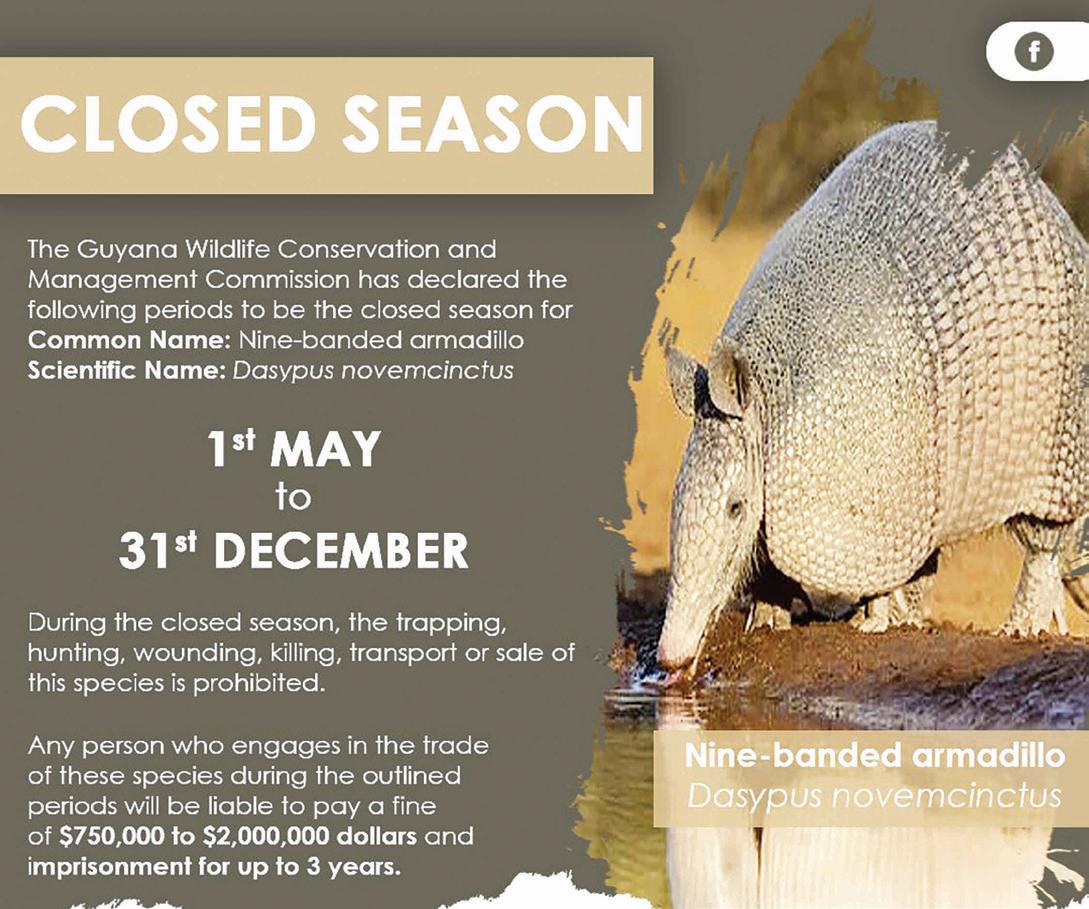
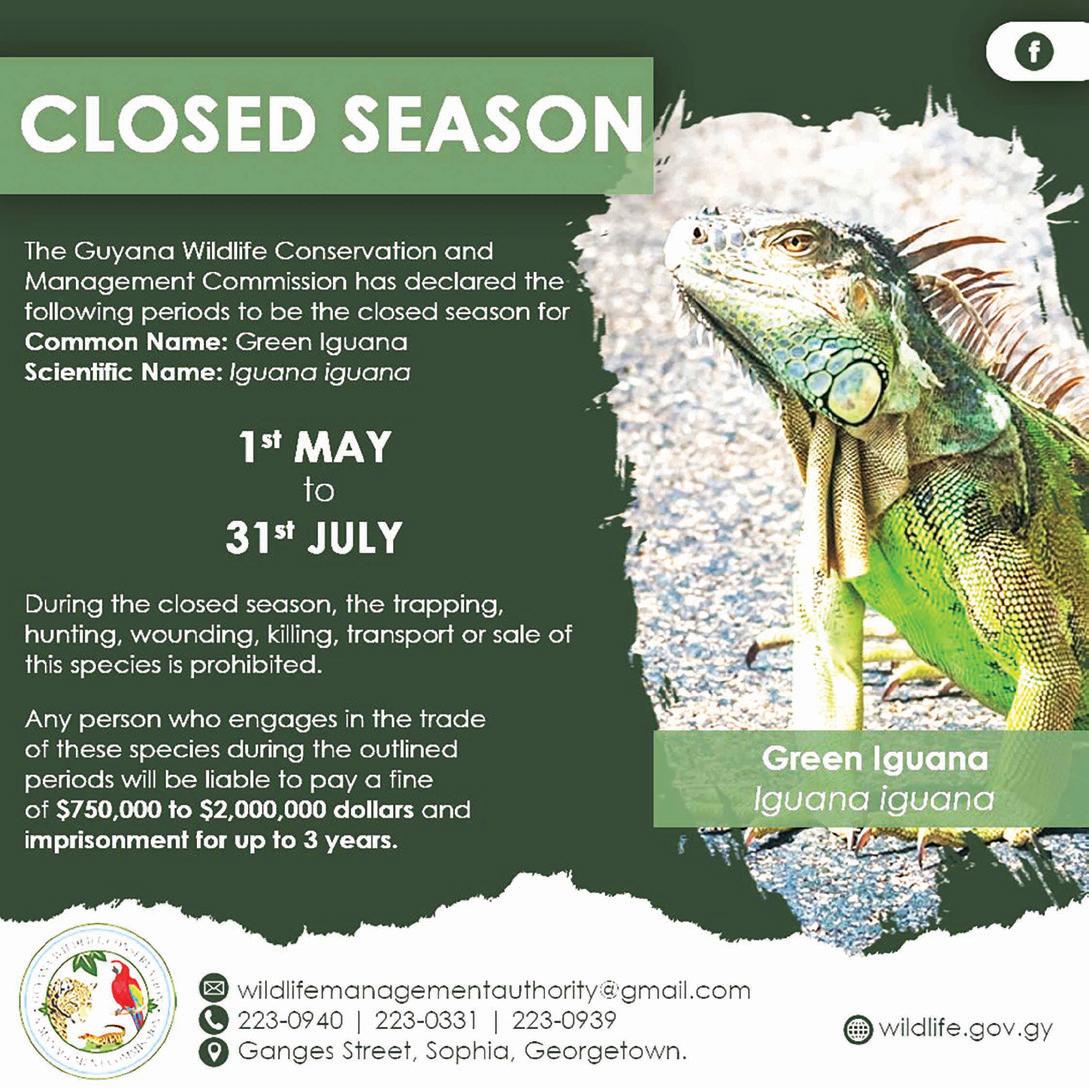
warns of closed season ban on hunting several wildlife species
backdam killing Henry boys murder trial opens in Berbice High Court with 45 witnesses
am sorry for the family’s loss” – manslaughter convict tells court …jailed for 25 years
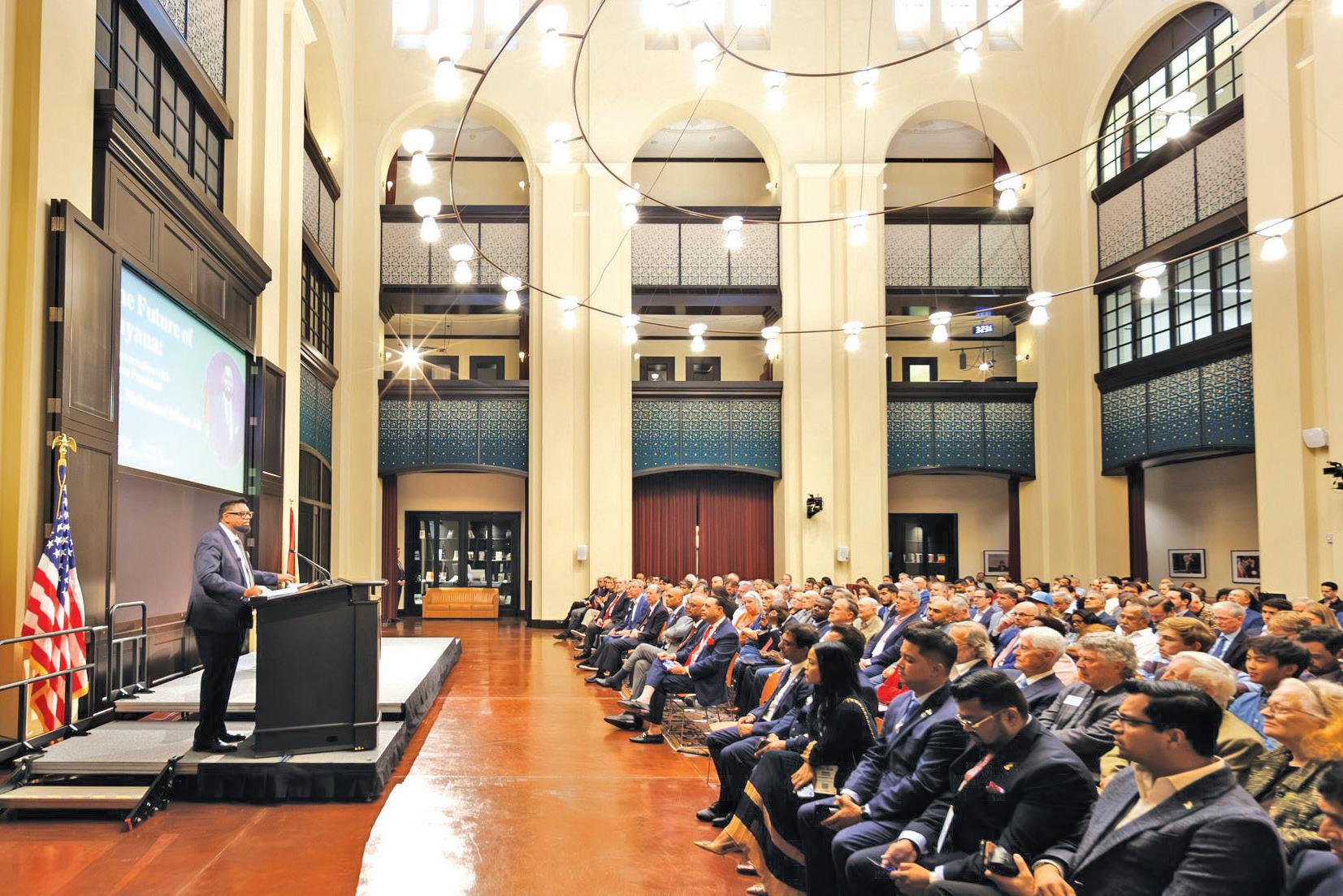
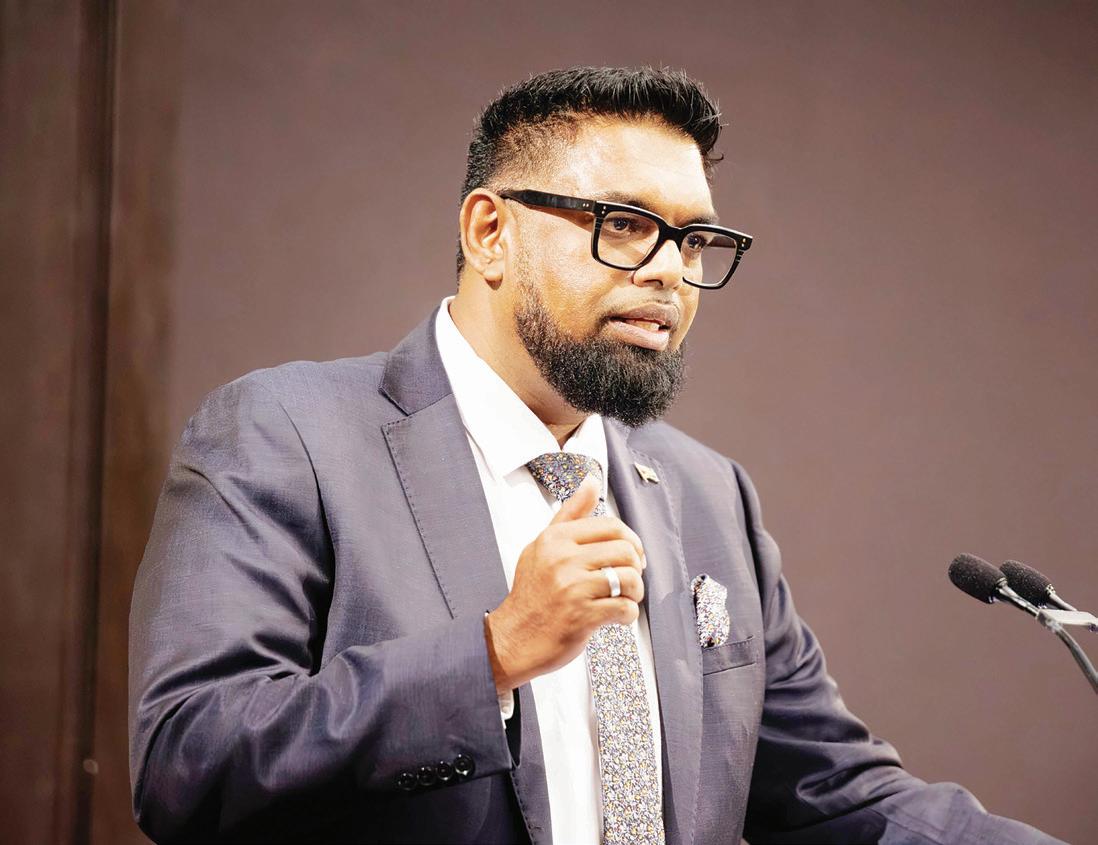
President Dr Irfaan Ali delivering the keynote remarks on “The Future of Guyana” and the future of energy
Rice
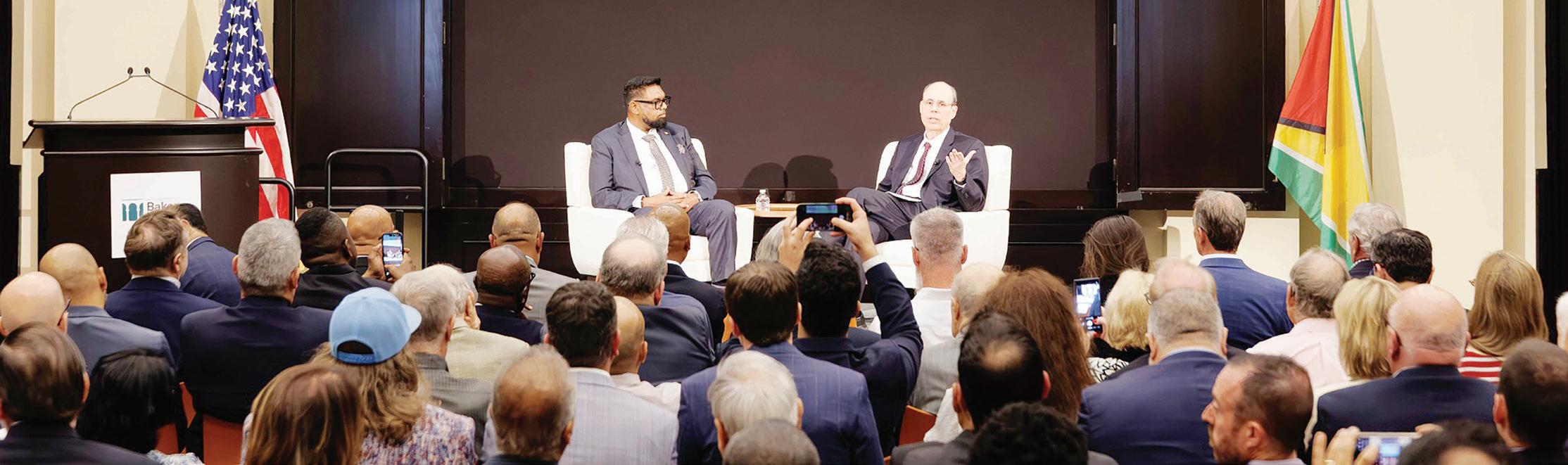
Houston, Texas (Photo: The Baker Institute Center for Energy Studies)
Guyanese urged to take up fully-funded Indian scholarships …as
opportunities remain underused
Guyanese were on Tuesday encouraged to take greater advantage of fully-funded scholarship and cultural exchange opportunities being offered by the Government of India, as officials highlighted the longstanding educational and developmental ties between the two countries during Indian Arrival Day observances at Highbury, East Bank Berbice, Region Six (East BerbiceCorentyne).
The calls were made by Second Secretary of the High Commission of India in Guyana, Suman Singh, and Guyana’s High Commissioner to India, Dharamkumar Seeraj, during activities marking the 188th anniversary of the arrival of the first East Indians to Guyana.
Addressing the gathering at Plantation Highbury, Singh said the Indian Government continues to offer a wide range of educational and cultural programmes aimed at strengthening ties with Guyana while creating opportunities for young people.
“Every year we have 50 full scholarships which we want students from Guyana to avail benefit from,” Singh said.
She explained that the scholarships cover fields including engineering, medicine, agriculture, information technology and performing arts.
“And I would urge every parent and other ambitious young persons here to avail the benefit and educate and avail all the benefit from India which we have through scholarship schemes,” she added.
Singh said the opportunities extend beyond traditional academ-
ics and include the Know India Programme (KIP), ITEC professional training courses, yoga certification programmes and cultural training initiatives.
She also highlighted activities being conducted through the Swami Vivekananda Cultural Centre, including classes in yoga, music, dance, kathak and Hindi language instruction.
“So the Swami Vekanan Cultural is your centre now. Whether you wish to learn instruments, you wish to speak the language, or you wish to simply sit and listen to the stories all the way from India’s epics,” she stated.
Underused
Meanwhile, Seeraj said many of the opportunities being made available by India are not being fully utilised by Guyanese.
In an interview with this publication following the event, he said awareness remains one of the main challenges.
“One of the issues that was raised by the Second Secretary was the fact that the uptake on the scholarship programmes that are available, by and large, has not been 100 per cent,” Seeraj explained.
“So, I think it’s one of awareness and knowing what is available. So I’ve advised people to check on the webpage.”
According to Seeraj, the scholarships are fully sponsored and are offered in a wide variety of disciplines.
“The Government of India is making these scholarships available in the different fields – for culture, for academic programmes, in very, very diversified fields, in agriculture, in engineering, in medicine, and in IT also,” he said.
He added that Guyana has already benefited significantly from Indian-trained professionals and expertise, particularly within the rice industry.
Seeraj pointed to the work of Guyanese plant breeder Dr Mahendra Prasad, whom he described as an Indian-trained scientist who has played a major role in the development of new rice varieties in Guyana.
“The rustic variety, which is an extra-long grain variety, was developed by Pawar, who is an Indian scientist,” Seeraj said.
“And from that variety, we are now doing cross-breeding by the plant breeder Mahendra to develop some other type of extra-longgrain variety.”
He explained that Guyana’s rice sector continues to benefit from ongoing collaboration with Indian agricultural institutions and international research bodies.
“Our relationship with India is very strong in relation to plant breeding and different aspects of rice culture and rice management,” he noted.
Seeraj also pointed to technological cooperation in areas such as fertiliser development, highlighting the introduction of nano fertilisers from India.
“The nano-fertiliser, basically, the plant gets the nutrient that it needs at a smaller volume than you would apply using traditional granular-type fertiliser,” he explained.
“With nano-fertiliser, you could put it in your pocket, take it to the field and apply it to one acre of
land.”
According to Seeraj, such technologies can help reduce transportation and application costs for farmers while improving productivity and efficiency within the rice industry.
During his feature address, Seeraj also reflected on the relationship between Guyana and India, describing both countries as nations shaped by colonialism and now pursuing economic and cultural advancement.
He noted that many Guyanese of Indian descent are now reconnecting with their ancestral roots through travel and cultural programmes.
Seeraj encouraged Guyanese to explore opportunities such as the Know India Programme, which allows participants to visit India on fully sponsored cultural visits.
He also praised the preservation of Indian cultural traditions in Guyana despite the gradual loss of language over generations.
“Our wedding ceremonies, Hindu weddings, Muslim weddings, different types of weddings – we retain those cultures,” he said.
The event at Highbury commemorated the arrival of the first East Indians to Guyana in 1838, when indentured labourers arrived after a nearly five-month journey from India.
Organisers said the annual observance serves not only as a tribute to the sacrifices of the ancestors but also as a reminder of the enduring cultural, educational and developmental ties between Guyana and India.
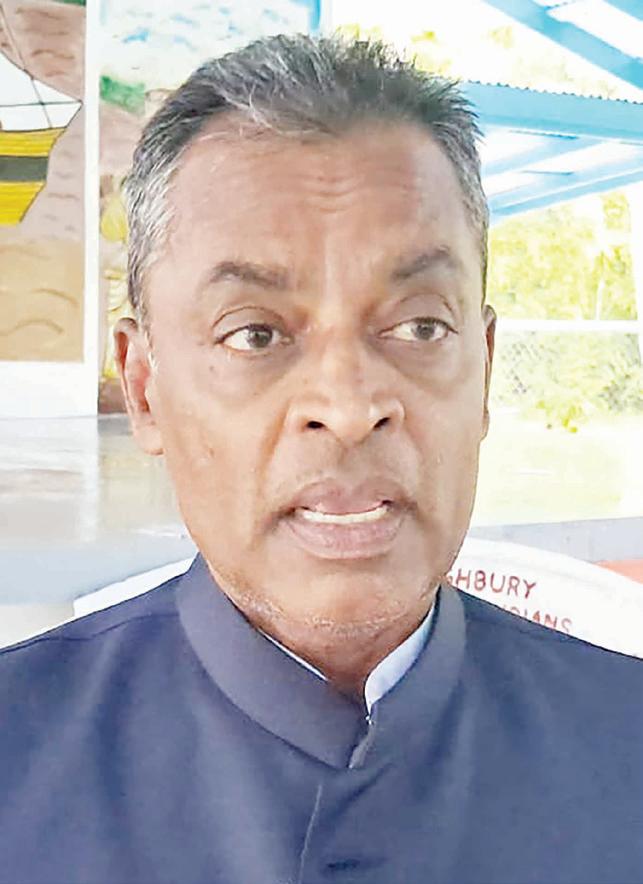
Guyana’s High Commissioner to India, Dharamkumar Seeraj
Second Secretary of the High Commission of India in Guyana, Suman Singh
BRIDGE OPENING
The Berbice Bridge will be closed to vehicular traffic on: Thursday, May 7 –07:00h–08:30h and Friday, May 8 – 08:00h–09:30h
FERRY SCHEDULE
Parika and Supenaam departure times – 05:00h, 10:00h-12:00h, 16:00h, 18:30h daily.
WEATHER TODAY
Light morning showers are expected, with sunny skies by midday and clear skies at night. Temperatures are expected to range between 23 degrees Celsius and 30 degrees Celsius.
Winds: North-Easterly to East-North-Easterly between 3.57 metres and 5.81 metres.
High Tide: 07:28h and 20:07h reaching maximum heights of 2.36 metres and 2.18 metres.
Low Tide: 13:36h reaching a minimum height of 0.87 metre.
Guyana positioning itself to capitalise on opportunities in Western Hemisphere – Pres Ali
tunities, something which Guyana is readying itself to capitalise on by building out the infrastructure and systems not just for national use but also to meet regional demand.
bouring countries is intricately linked, especially in the area of energy security.
Guyana is being posi-
gion, where you have strategic gas exploration, we now must rethink this strategy… It is time we in the Western Hemisphere maximise and
“This investment also allows us to leapfrog Guyana, leapfrog our competitiveness, our human capital, our industries, our governance system, and our efficiency level at a much faster rate than if we were to follow a straight-line approach. Because you can’t position yourself to compete in this sector if your country does not demonstrate to the world that you’re applying the output of this sector to improve your own efficiency and competitiveness,” the Head of State noted.
“We have the ability of improving their competitiveness by leaps and bounds. But for that to occur, we have to have the revenues to build the infrastructure, to build the port facilities, to build the roads, to build the bridges, to build the transmission lines that will interconnect the energy potential. And that is exactly what we are doing now. Because we know that while geography is our advantage, it cannot be our advantage if we don’t have the integration of the markets, the integration of the infrastructure, and the interconnectivity of the system,” he stated.
Further recognising
tioned to capitalise on potential opportunities that will come as the region avoids future fallouts from crises around the world.
Delivering a presentation hosted by the Baker Institute’s Center for Energy Studies, Rice University in Houston, Texas, earlier this week, President Dr Irfaan Ali cited the impact that the ongoing war in the Middle East has had on investments there.
“One of the things we have learnt the last three years in the world is not only about the production of energy, but also how much of that energy you can consume yourself to add value and create a multiplier effect within your countries. Whether it’s data centres, processing plants, or the petrochemical industry, it’s creating the multiplier effect… We have also seen how exposed the US investment and other investment from this hemisphere were and continue to be in data centres in the Middle East, whether in Qatar or the UAE [United Arab Emirates], with no redundancy,” he noted.
According to President Ali, the region already has the potential and resources to meet its demands, as he called on countries in the Western Hemisphere to channel their resources here.
“Today, with Brazil, Guyana and this re-
optimise our potential in creating a common system with common infrastructure that would allow us to grow together in a secure environment,” he posited.
This, according to the Guyanese leader, would open up tremendous oppor-
Unlock market potential
Already, he pointed out Guyana, blessed with geography, is seeking to unlock the market potential in the landlocked northern Brazil.
President Ali believes that the future of the two neigh-
Guyana’s role as an important catalyst in pushing regional growth across borders, President Ali went on to highlight the country’s efforts in becoming a major transport and logistics hub in the region.
President Ali participated in discussions on the future of energy at Rice University’s Baker Institute in Houston (Photo: The Baker Institute Center for Energy Studies)
President Dr Irfaan Ali speaking at Rice University’s Baker Institute
The decision by the Mayor and City Council (M&CC) to publicly warn motorists against parking on pavements across Georgetown is necessary and long overdue. What should be a basic matter of public courtesy and legal compliance has instead become a growing display of indiscipline, recklessness and disregard for public infrastructure and pedestrian safety.
Across Georgetown, pavements and walkways intended for pedestrians have increasingly been turned into makeshift parking lots for private vehicles, vending spots and heavy-duty trucks. Sidewalks are cracked, drainage covers are collapsing, and pedestrians — including schoolchildren, senior citizens and persons living with disabilities — are being forced into roadways to avoid obstructed paths. This is both inconsiderate behaviour and lawlessness.
The M&CC is correct in reminding the public that the law already addresses this issue clearly. Sections 9 and 10 of the Municipal and District Councils Act prohibit driving, wheeling or placing vehicles and other objects on pavements and footpaths. Yet despite these legal provisions, violations continue openly and repeatedly, often with little regard for the damage being done or the danger being created.
Far too many motorists behave as though public spaces exist solely for their personal convenience. The mentality that a pavement can be mounted simply because parking is difficult or because a delivery must be made reflects a troubling lack of civic responsibility. Taxpayers collectively bear the burden when roads, parapets, drainage covers and sidewalks are destroyed through careless misuse.
The Ministry of Public Works has already confirmed that investigations into damage along Aubrey Barker Road and Diamond Back Road revealed that the destruction was not caused by defective construction but by improper use. Heavy-duty trucks and machinery, never intended to rest on pedestrian structures for extended periods, have contributed to cracking and collapse. The result is costly repairs, traffic disruptions and serious public safety concerns.
What is perhaps most frustrating is that this damages occur even as government and municipal authorities continue investing millions of dollars into improving infrastructure throughout Georgetown and surrounding communities. Sidewalks, drainage systems and road networks are being upgraded to modern standards, yet some individuals appear determined to undermine these efforts through sheer negligence and selfishness.
There can be no justification for parking heavy-duty vehicles on pedestrian walkways or blocking public access routes. Operators who continue to do so despite repeated warnings should face the full brunt of the law. Penalties must move beyond warnings and advisories. Consistent enforcement, substantial fines, towing operations and recovery of repair costs should become standard practice against offenders who damage public property.
Importantly, accountability must not stop with truck operators alone, as private motorists who casually mount pavements to avoid parking difficulties are equally contributing to the culture of disregard that now threatens public safety and urban order. Every time a vehicle blocks a sidewalk, it sends a message that pedestrians matter less than driver convenience.
At the same time, authorities must continue pursuing longterm solutions to Georgetown’s growing parking challenges. Vice President Dr Bharrat Jagdeo’s acknowledgement that increased economic activity requires expanded parking infrastructure is an important recognition of reality. The planned creation of designated parking areas for heavy-duty vehicles and the proposed expansion of parking capacity in Georgetown are necessary initiatives that deserve support.
However, the existence of parking shortages does not excuse illegal conduct. Development challenges cannot become a licence for disorder. Civilised societies function when laws are respected and public spaces are shared responsibly. The burden cannot fall entirely on government to continuously repair infrastructure damaged by irresponsible behaviour.
Pedestrians have rights. Children walking to school have rights. Elderly residents navigating city streets have rights. Persons with disabilities who depend on accessible pathways have rights. Those rights should never be sacrificed because motorists choose convenience over legality and common decency.
The Public Works Ministry and the M&CC’s warning must therefore mark the beginning of stronger and more visible enforcement. Public awareness campaigns are important, but enforcement is what ultimately changes behaviour. If motorists know there are real consequences for illegally occupying pavements and damaging infrastructure, compliance will improve.
Respect for public infrastructure is ultimately respect for the people who use it. Until that principle is widely understood and enforced, efforts toward modernisation will continue to face unnecessary setbacks caused not by lack of investment, but by lack of discipline.
Dear Editor, In the tapestry of modern leadership, few figures stand out with the clarity and conviction of President Dr Mohamed Irfaan Ali. As the Head of State of Guyana, President Ali has demonstrated a remarkable blend of vision, dedication, and compassion that has resonated not only within Guyana’s borders but also across the global community.
President Ali’s rise to the highest office in Guyana was marked by perseverance and a deep-seated desire to serve his country. With a background in academia and public service, he brought to the presidency a wealth of experience and an unyielding focus on development and inclusion. The last general and regional election was a testament to the trust and hope the Guyanese people placed in him, and it signalled a new era of optimism and opportunity.
At the heart of President Ali’s leadership is his vision for a Guyana that is prosperous, inclusive, and sustainable. Recognising the nation’s unique position as an emerging leader in energy, agriculture, and natural resources, he has championed policies that seek to harness these strengths for the benefit of all citizens. Under his stewardship, Guyana has witnessed an intensified drive toward economic diversification, infrastructure development, and investment in education and healthcare.
His tenure has coincided with unprecedented economic transformation in Guyana. As global interest
in Guyana’s energy sector grows, his Administration has prioritised responsible resource management, transparent governance, and opportunities for local businesses and entrepreneurs. Support for innovation and small enterprises has enabled many Guyanese to pursue their goals and participate in national development.
One of his defining qualities is his relentless advocacy for national unity and the inclusion of “One Guyana” for all Guyanese, regardless of background. He has bridged political, ethnic, and social divides to foster a cohesive national identity founded on respect and mutual understanding. Through targeted programmes and policy reforms, his Government has worked to ensure equal access to education, healthcare, and employment, thereby laying the foundations for enduring harmony and shared prosperity.
President Ali’s leadership is distinguished by his commitment to environmental stewardship and sustainable development. Cognisant of Guyana’s responsibility as a custodian of one of the world’s largest rainforests, he has advanced bold initiatives to protect biodiversity, mitigate the impacts of climate change, and promote green technology. His efforts have garnered international recognition, positioning Guyana as a leader in climate action and sustainability.
Beyond policy and progress, President Ali’s tenure is defined by his compas-
sionate approach to leadership. He is known for his accessibility, genuine concern for the welfare of every citizen, and unwavering dedication to uplifting marginalised communities. Whether through direct engagement with youth, empowerment of women, or support for rural development, he has consistently demonstrated that the true measure of leadership lies in service to people.
Understanding that the future of Guyana rests in the hands of its youth, President Ali has prioritised educational reform and investment in skills development. New initiatives have broadened access to quality education, enhanced technological literacy, and fostered a culture of innovation and critical thinking among young people.
Through GOAL online scholarships, mentorship programmes, and international partnerships, his administration has opened doors for the next generation to excel on a global stage. President Ali’s Government has made significant strides in healthcare, extending services to remote communities, modernising medical facilities, and implementing preventative health campaigns. His emphasis on holistic well-being is reflected in policies that address mental health, nutrition, and community-based care, ensuring that every Guyanese has the opportunity to live a healthy, dignified life.
President Ali’s diplomatic acumen has elevated Guyana’s standing in the international arena. By fostering constructive relation-
ships with regional neighbours and global partners, he has positioned Guyana as a respected voice on trade, security, and environmental protection. His advocacy for South-South cooperation and his support for multilateral engagement have enabled Guyana to play a proactive role in shaping the future of the Caribbean and beyond.
I also celebrate the legacy he is building – a legacy of progress, compassion, and promise. His achievements thus far serve as inspiration, not only for the people of Guyana but for all who believe in the power of principled leadership to transform societies. The journey ahead is filled with challenges and opportunities, but with President Ali at the helm, the nation stands poised to achieve its highest aspirations.
May President Ali’s leadership continue to be guided by wisdom, integrity, and an unwavering commitment to the well-being of Guyana and its people. As Guyana forges ahead on its path to prosperity, unity, and sustainability, the world watches with admiration and hope. His dedication is a beacon, illuminating the way toward a brighter, more inclusive future. The Guyanese flag symbolises the people of Guyana.
May President Dr Mohamed Irfaan Ali’s vision and service inspire generations to come. Your leadership demonstrates a clear and forward-thinking vision.
Yours sincerely, Sherwood Clarke
Giant icebergs drift past in Canada’s Iceberg Alley: A person looks out at a large iceberg grounded in the harbour in Pouch Cove, Newfoundland, Canada, May 4, 2026 (Reuters/Greg Locke photo)
President Ali’s regional food initiative drive is on target
Dear Editor,
During his first term in office, Guyana’s ninth Executive President, Dr Mohamed Irfaan Ali’s initiative for the member states of Caricom, known as “25 by 2025”, is meant to reduce the region’s more than $10 billion annual food import bill by 25 per cent in 2025. President Ali’s underlying goal is to improve regional agricultural production, productivity, and investment in infrastructure.
Though viewed as an ambitious goal by many, it will no doubt increase food production and, hence, food security in the region, especially among the smaller countries. Although originally slated for 2025, the
goal has been transitioned with a renewed focus and interest to achieve food security and self-sufficiency by 2030.
While much progress has been made, climate-related challenges and, in some cases, natural disasters such as hurricanes, floods, and droughts have necessitated the change in timing. President Dr Ali›s vision for reducing the region›s food imports centres on his serious commitment and dedication to transforming Guyana, with its huge landmass and oil resources, into a global leader in food security and the breadbasket for the Caribbean.
His Excellency’s lead-
ership is fully supported by a trustworthy and specialised team comprising the Minister of agriculture, Zulfikar Mustapha, and technical experts in Guyana and several countries. The primary objective is for member-Caricom states to embark on a comprehensive national agricultural development strategy that prioritises high-value cash crops, mega-farms, and climate-smart technologies.
To accelerate and quicken this plan, the Ali Administration has significantly increased resources from an $18.4 billion allocation for agriculture in 2020 to a historic high of $104.6 billion in the 2026 budget to fund critical infrastructure,
including the building of farm roads to markets, agriculture processing facilities, improved seeds and grains, and the revitalisation and modernisation of traditional sectors like rice and sugar.
Today, Guyana is not only building infrastructure to accommodate its agricultural expansion programme but is also growing more food. By 2025, the country has achieved 88 per cent of its food production targets with non-traditional crops. It has successfully completed its first major commercial shipment of cassava chips and mango pulp to Antigua and corn, soya, and poultry to Barbados.
Guyana’s agro-processed items, including jams, jel-
lies, and coconut milk, have doubled in the last few years, and the country is on track to become the Caribbean’s Food Capital in just five years of President Dr Ali’s tenure. Its exports have been largely driven by its massive investments in infrastructure, resulting in increased production in all sectors. Guyana is now considered the only nation in the region to be self-sufficient in all key categories.
While some of the smaller islands in the region, including St Kitts and Nevis and St Vincent and the Grenadines, are struggling to reach their targets, due in part to unavailability of land, Guyana has become one of the top perform-
ers, followed by Barbados, Belize, Jamaica, and Suriname. However, by late 2024, the region has shown outstanding progress with a 25 per cent increase in food production.
Thanks to the extraordinary and superb leadership of President Dr Irfaan Ali, Guyana, with one of the highest growth rates in the world hovering around 45 per cent of GDP, has emerged as the only self-sustainable food producer in the Caribbean despite regional and global supply chain disruptions. This has been a remarkable achievement.
Yours sincerely, Dr Asquith Rose
Helicopter’s inadvertent flight into instrument conditions
Dear Editor,
Most people believe helicopter accidents happen because something fails: an engine, a rotor system, a critical component. But in many cases, nothing breaks at all. The aircraft is fully functional right up to the moment of impact.
What actually fails is the Pilot’s ability to remain orientated when visibility disappears. That is the quiet danger behind what safety groups like the United States Helicopter Safety Team describe as the “56 seconds to live” scenario when a Pilot flying by sight enters cloud or poor weather and rapidly loses control due to spatial disorientation.
The human body is simply not designed to fly without visual reference. When the horizon disappears, the inner ear begins to send false signals to the brain.
A Pilot can feel level while actually turning, feel a climb while descending, or feel stable while entering a tightening spiral.
Without disciplined reliance on instruments, the brain accepts these false sensations as truth. That is how control is lost – not dramatically at
first, but subtly, quietly, and then all at once. What many people don’t realise is that this trap does not just catch inexperienced Pilots. It has taken highly experienced, high-time professionals, Pilots with thousands of hours who have flown the same routes repeatedly.
Experience, in fact, can sometimes make it worse. Confidence builds over time, and with it comes a dangerous level of comfort. “I’ve seen worse,” “I know this area,” and “Let me just continue a little further.” These are not reckless thoughts; they are human ones. But they are also the exact thoughts that begin the chain of events.
In the crash that claimed the life of Kobe Bryant, the National Transportation Safety Board found that the Pilot, though experienced, became spatially disoriented after entering poor visibility. The helicopter did not fail; the human system did.
Helicopter Pilots are particularly vulnerable to this type of accident. The ability to fly low, slow, and manoeuvre precisely creates a false sense of control in marginal weather. It encourages the
belief that you can stay below the clouds, ease forward carefully, or “work your way through”. And often, for a while, you can. That’s what makes it so dangerous. The aircraft gives you just enough capability to delay the decision to turn back until the point where visual reference is completely gone and the situation becomes unrecoverable.
This is where constant IFR training becomes not just important but essential. Instrument flying is not natural. It is a learned
discipline that must be practised continuously. The ability to trust instruments over your own senses, to stabilise the aircraft without outside reference, and to make immediate, correct decisions under pressure – these are perishable skills. If they are not kept sharp, they will not be there when you need them most. Investigations by the National Transportation Safety Board have repeatedly shown that even experienced Pilots lost control in these situations, not be-
cause they lacked skill but because they lacked current, instinctive instrument discipline in that critical moment.
The truth is, the “56 seconds” is not really about time. It’s about the decision that starts the clock. Most of these accidents begin calmly, with a simple choice to continue just a little further into deteriorating conditions. There is no panic at first, no sense of immediate danger – just a gradual loss of margin until there is none left.
In the end, survival in aviation is not about confidence or experience alone. It is about discipline and preparation. The safest Pilots are not the ones who believe they won’t get into trouble but the ones who train for the moment they will. Because when the horizon disappears, you don’t rise to your experience; you fall back on your training.
Yours sincerely, Capt Miles Williams Former GDF/Special Forces/Military Pilot
THURSDAY, MAY 7, 2026
00:00 Sign Off 06:00 TVG Devotional Hour
Evening News (RB) 08:00 Movie - The Ultimate Gift 10:00 Stop Suffering
TVG Music Break 12:00 News Break 12:05 The Truman show 14:00 Not the right Friend 15:30 Cartoons 16:00 Indian Soaps 17:00 The Young & The Restless 18:00 Documentary: Nat Geo Animals 19:00 The Evening News 20:00 Stop Suffering 20:30 TVG Music Break 21:00 Grey’s Anatomy S9 E8 22:00 The Rookie S2 E18
Modern Family S3 E2
Modern Family S3 E3
Page Foundation
◄ CXC Questions
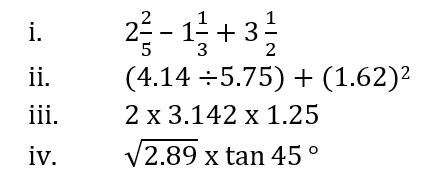
1. Using a calculator, or otherwise, determine the EXACT value of:
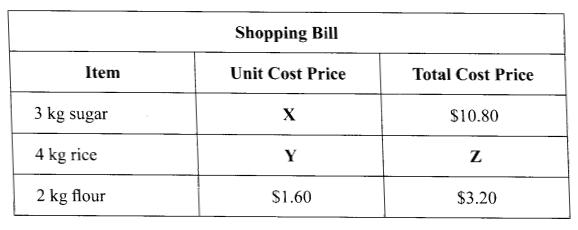
2. The table below shows a shopping bill prepared for Mrs Rowe. The prices of some items are missing.
i. Calculate the value of X, the cost of 1 kg of sugar.
ii. If the cost price of 1 kg of rice is 80 cents MORE than for 1 kg of flour, calculate the values of Y and Z.
iii. A tax of 10% of the cost price of the three items is added to Mrs Rowe’s bill. What is Mrs Rowe’s TOTAL bill including the tax?
3. Given that a= 4, b =2 and c = —1, find the value of:
a – b + c 2ab
4. A bottle contains 500 ml of orange juice. Write an expression for EACH of the following: The amount of juice left in the bottle after pouring out i. p ml ii. q glasses each containing r ml
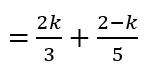
5. Write as a single fraction, as simply as possible
6. Four mangoes and two pears cost $24.00, while two mangoes and three pears cost $16.00.
i. Write a pair of simultaneous equations in x and y to represent the information given above. ii. State clearly what x and y represent.
7. Factorize completely:
a2 – 12a 2x2 – 5x + 3
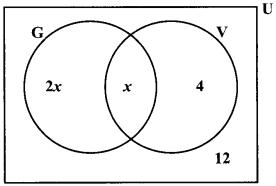
8. The Venn diagram below shows the number of students who play the guitar (G) or the violin (V) in a class of 40 students.
i. How many students play neither the guitar nor the violin?
ii. Write an expression, in terms of x, which represents the TOTAL number of students in the class.
iii. Write an equation which may be used to determine the total number of students in the class.
iv. How many students play the guitar?
9. Using a ruler, a pencil and a pair of compasses, construct triangle ABC with AB = 9cm, angle ABC = 90° and BC = 6 cm.
i. Measure and state the size of angle BAC.
ii. On the diagram, show the point D such that ABCD is a parallelogram.
10. The table below is designed to show values of x and y for the function y =x2 – 2x – 3 for integer values of x from –2 to 4.
i. Complete the table for the function y = x2 – 2x – 3. ii. On graph paper, plot the graph of y = x2 – 2x – 3 using a scale of 2cm to represent 1 unit on the x-axis and 1 cm to represent 1 unit on the y-axis.
iii. On graph paper, draw a smooth curve passing through the points on your graph.
iv. Complete the following sentences using information from your graph:
a. The values of x for which x2 – 2x – 3. = 0 are _______ and _______.
b. The minimum value of x2 – 2x – 3 is ________.
c. The equation of the line of symmetry of the graph of y =x2 – 2x – 3 is _________________________.
By Olive SeniOr
Birdshooting season the men make marriages with their guns My father’s house turns macho as from far the hunters gather All night long contentless women stir their brews: hot coffee chocolata, cerassie wrap pone and tie-leaf for tomorrow’s sport. Tonight the men drink white rum neat. In darkness shouldering their packs, their guns, they leave We stand quietly on the doorstep shivering. Little boys longing to grow up birdhunters too Little girls whispering: Fly Birds Fly.
Questions
1. Choose one important image and describe how it influences the reader’s response to the poem.
2. Describe the attitude of the speaker.
3. Identify one figurative device in the poem and discuss its effectiveness.
Centre your story around the last person who still knows how something is done.
WORD SEARCH
Guyana-Venezuela border controversy
Venezuela claims at ICJ Guyana’s
Essequibo was taken in “colonial
fraud”
…says does not recognise ICJ’s authority despite participating in case
Professor Makane Mbengue told the Court that the arbitral process in Paris was nothing more than “the weaponisation of the nascent machinery of international arbitration”. He argued that the award was “the poisoned fruit of a poisoned tree”, imposed under imperial coercion.
“Whether dispossession is achieved by direct Governmental decree, as in Chagos, or through a tribunal corrupted by imperial influence, the result is the same – territory is wrested from a state through the exercise of colonial power, dressed in legal clothing to lend it an air of legitimacy it does not deserve,” Mbengue said.
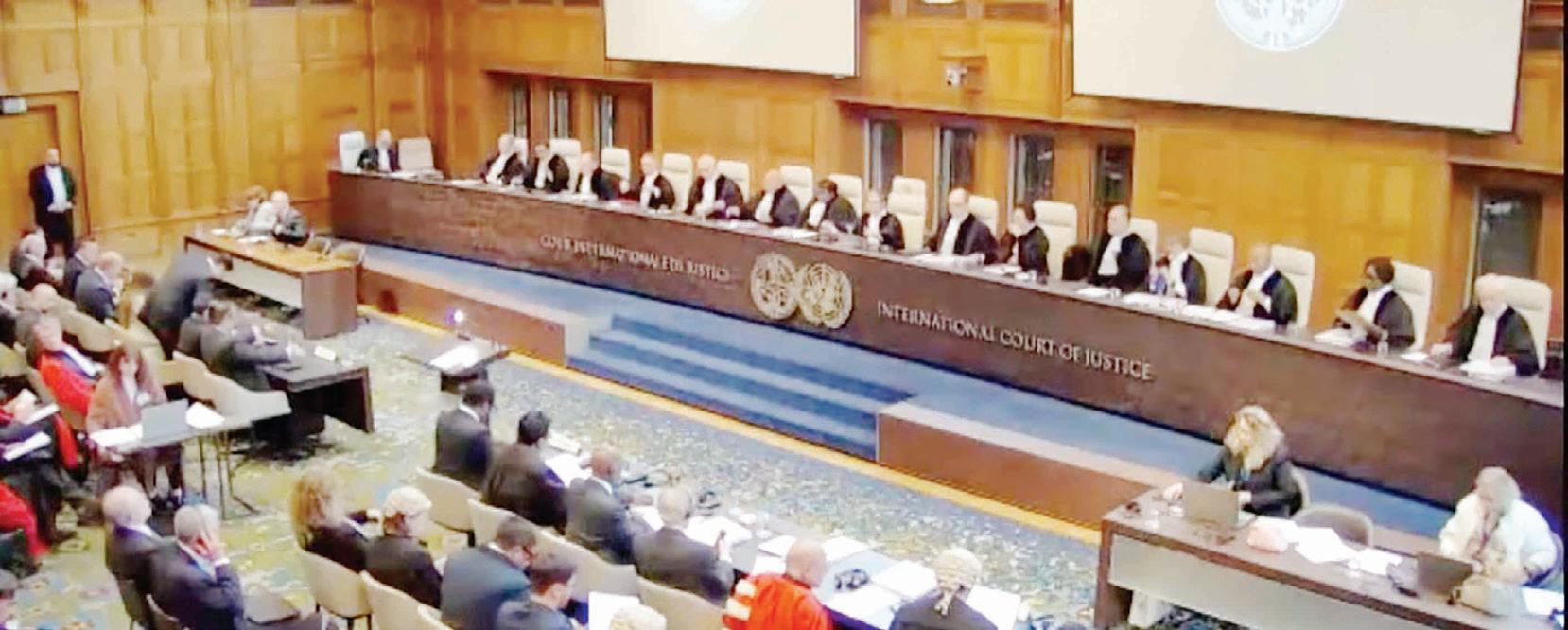
Continuing to claim Guyana’s Essequibo region, Venezuela on Wednesday again emphasised to the International Court of Justice (ICJ) that the court has no authority to decide on the 1899 Arbitral Award that established the boundary between the two countries, as it was formed through ‘gunboat diplomacy’ and is a fraudulent colonial imposition concocted by the United States and Britain.
Venezuela maintained that Essequibo was owned by the Spaniards and that it took to relooking at the agreement shortly before Guyana became independent because it felt the time was right and asked the court to recognize the 1966 Geneva Agreement as the true framework for resolving the controversy.
“Venezuela has never consented to submit this dispute to the jurisdiction of any court or arbitral tribunal. This has been un-
equivocally reaffirmed domestically. In the consultative referendum held on 3 December 2023, the Venezuelan people clearly expressed their rejection of submitting this dispute to the Court’s jurisdiction. This confirms it. It reflects a consistent course of action in terms of sovereign will,” Agent of Venezuela Samuel Moncada said on Wednesday morning in Caracas’ opening oral arguments.
Moncada, who is also the Permanent Representative of Venezuela to the United Nations, told the highest UN judicial body that his country repeats that it “does not accept the jurisdiction of the International Court of Justice, which was erroneously imposed in the 2020 judgement, and respectfully rejects its jurisdiction to hear and decide this dispute.”
He argued that the decolonisation process that took place after World War II created an appropriate international framework in which both independent republics that had been stripped of their territories by empires and colonised nations could initiate claims for compensation or restitution for damages suffered at the hands of the great powers.
“The United Nations and its Decolonisation Committee provided a platform through which many countries could negotiate with the colonial powers within the framework of international law and without the threat of force, with the aim of restoring their historical territorial rights,” he said.
“…In 1962, our Foreign Minister, Marcos Falcón
Briceño, raised Venezuela’s claim to the Essequibo region of Guyana for the first time, specifically before the United Nations Decolonisation Committee. This led to negotiations resulting in the 1966 Geneva Agreement, which remained in effect between Venezuela and Guyana until energy interests prompted a change in the Guyanese Government’s position in 2015. The Geneva Agreement is therefore a quintessential instrument of decolonisation. As Guyana gained independence, Venezuela began to lay the groundwork for the return of its territory that had been colonised by the British Empire.”
Exhaustive proceedings & accepted by Venezuela
When Guyana made an oral presentation on Monday, its representatives underscored that the 1899 Arbitral Award, which established the boundary between then-British Guiana and Venezuela, was the product of exhaustive proceedings and accepted by Venezuela for decades.
“For six decades, Venezuela fully respected and complied with that Award and that Agreement. Throughout that period,
Guyana positioning itself...
He said, “We are now building out the infrastructure to support this advantage so that Guyana’s [geographical] position allows us to be that maritime hub and air hub for South America and the Caribbean.”
According to the Head of State, these efforts complement the country’s unprecedented transformation and align with the Government’s push for economic diversification – all of which are being propelled by revenues from Guyana’s burgeoning oil and gas industry.
In fact, the Government has been investing in roads, airstrips, and health facilities in the hinterland, connecting Indigenous communities to essential services that have eluded them for decades. Those investments, President Ali said, are now unlocking Guyana’s untapped eco-tourism poten-
tial, while simultaneously improving the quality of life for communities in remote regions.
The Guyanese leader pointed out that his Government is focused on long-term, wealth-creating investments rather than short-term cash transfers.
“We prefer to invest in opportunities that create wealth, in the development of human capital and infrastructure, and in social safety nets that allow our people not to lose their own capacity to be innovative, hard workers, and builders, rather than waiters,” the President stressed.
Nevertheless, as Guyana moves forward with this new development model, President Ali called on the Baker Institute, an American think tank that functions as a centre for public policy research, to
partner with the country in building out a diversified and resilient economy.
“We’re interested in being a model, a small country that did it right, that shared the wealth, that protected its environment, and that built a diversified economy strong enough to survive the energy transition through energy balance… There is no better place to have this discourse than in an academic institution where research and development, data, and analytical skills are sharpened to help policymakers make the best possible decisions.”
“Partner with us, study us, and let the world watch us together. Hold us accountable because we are trying something hard. We’re trying to be a petro-state that does not become a petro-dominated economy,” the Guyanese leader declared.
it never protested or challenged the award,” Foreign Affairs Minister Hugh Todd had pointed out.
“It is Guyana’s submission that the 1899 Award is, without question, legally valid and binding on the parties,” he also stated.
Guyana’s agent and former Foreign Affairs Minister Carl Greenidge had on Monday taken the judges through a concise history of the territory as he made reference to maps posted and other historical documents.
Guyana’s position is that the Dutch were the first Europeans to establish themselves in what is now Guyana, founding the colony of Essequibo in the early 1600s, before the British later inherited and administered the colony.
Greenidge detailed there was no Spanish or Venezuelan administration in the territory now claimed by Venezuela.
Greenidge reminded the Court that Guyana’s post-Columbian history began with the arrival of the Dutch in 1598. By 1616, the Dutch had established the colony of Essequibo, built Fort Kykoveral along the Mazaruni River, and begun administering lands stretching westward toward the Orinoco. In 1621, the Dutch West India Company assumed control of the colony, and by 1744, the administrative seat had shifted to Fort Zeelandia. These developments, Greenidge argued, demonstrate that Essequibo was firmly under Dutch control long before Venezuela emerged as a state.
He also argued that Venezuela itself pushed for arbitration in the 19th century after failed negotiations with Britain, eventually leading to the 1897 Treaty of Washington and the 1899 Award.
He said Venezuela, in its exasperation with the British, sought support from the United States and asked it to use its influence to push Britain toward arbitration over all the land lying between Essequibo and the Orinoco rivers. He added that, according to the historical record before the Court, it was Venezuela that insisted on arbitration and brought the United
States into the process to help secure Britain’s agreement after failing to obtain it on its own.
Greenidge further noted that, with US support, Venezuela achieved the arbitration arrangement through the 1897 Treaty of Washington and at the time “celebrated” it as a major diplomatic success, expressing strong appreciation for the United States’ role. He said Venezuela maintained this position for decades without challenging or questioning the treaty but now argues the opposite before the Court, claiming it was unlawful and invalid.
Attacked legitimacy of 1899 Arbitral Award
Throughout Venezuela’s arguments on Wednesday, its representatives attacked the legitimacy of the 1899 Arbitral Award, portraying it as a colonial instrument dressed up as law.
Professor Makane Mbengue told the Court that the arbitral process in Paris was nothing more than “the weaponisation of the nascent machinery of international arbitration”. He argued that the award was “the poisoned fruit of a poisoned tree”, imposed under imperial coercion.
“Whether dispossession is achieved by direct Governmental decree, as in Chagos, or through a tribunal corrupted by imperial influence, the result is the same – territory is wrested from a state through the exercise of colonial power, dressed in legal clothing to lend it an air of legitimacy it does not deserve,” Mbengue said.
Turning to the Geneva Agreement, Venezuela’s counsel emphasised that the 1966 treaty was designed to move beyond the arbitral award and establish a process of negotiation between sovereign equals.
“The Geneva Agreement was the two States’ answer to this history. Where the 1899 Award imposed a boundary dictated by imperial compromise, the Agreement substituted a framework built; that, Mr President, is the real issue in this case,” he said.
He claimed that that “colonial injustice” prevailed to form the 1899 Arbitral
Award, and insisting that the Geneva Agreement requires negotiation, not litigation, to resolve the controversy, Professor Andreas Zimmermann underscored that Guyana had failed to engage with the substance of the agreement.
Caracas’ counsel repeatedly claimed that Guyana’s reliance on the arbitral award ignores the treaty’s broader mandate for a mutually acceptable settlement.
Zimmermann pointed to the drafting history, noting that both Venezuela and the United Kingdom had considered options such as joint administration of the disputed territory. He stressed that the agreement’s title – “to resolve the controversy over the frontier” – was deliberately broader than a mere dispute over the arbitral award.
Professor Antonio Remiro Brotóns closed Venezuela’s morning session by situating the Geneva Agreement in its historical context. He reminded the Court that the treaty was signed just months before Guyana’s independence, with the aim of preserving good neighbourly relations and avoiding a winnertakes-all outcome.
Professor Azaria pointed to Venezuela’s fear as the reason it challenged the award decades later, saying there “is not only overwhelming evidence of Venezuela’s fear as to Great Britain’s attitude towards her during this period” alongside only then getting “overwhelming evidence that Venezuela’s fear was well founded and that she only was able to obtain evidence that the award was invalid in the second half of the twentieth century.”
“It is these overall factual circumstances of the case brought by Guyana, Mr President, that simply do not allow the interpretation that Venezuela ever renounced its right to invoke the invalidity of the 1899 Award. Venezuela was in a position to challenge the award when she obtained evidence of its invalidity. That time coincided with the period of decolonisation, which enabled Venezuela to challenge the award through peaceful means and negotiations,” she said.
Professor of Public International Law Christian Tams MalletPrevost’s memorandum, a document Venezuela has relied on to suggest wrongdoing in the 1899 arbitration. He said that while Guyana says “this is all a fantasy of a biased old man, written up decades later and ‘uncorroborated . . . in any other documents’”, it is “plainly incorrect”.
International Court of Justice public hearings on Wednesday
Looking…
…atDevious Delcy’s deceit
Hopefully to the surprise of no one in our Government, when it was the turn of Devious Delcy’s hired shills to present Venezuela’s legal arguments on their concocted “Border Controversy” at the World Court, they came out with guns blazing!! But why should we expect anything different from a bunch of international gangsters who REFUSE to accept the jurisdiction of the ICJ – an organ of the UN which Venezuela supports with a group it launched??!! That rejection was vehemently reiterated early on in Venezuela’s turn at the podium!! And their first hired gun ominously WARNED the August panel of international jurists that if they uphold the validity of the 1899 Arbitral Award, the controversy’s gonna remain unresolved!!
Meaning – of course, as they’ve been saying all along – they’re only gonna accept a decision in their favour!! So what kind of “justice” is Devious Delcy talking about on the Essequibo border? The shotgun type – my way or the highway”?? And for good measure, this particular shill ostentatiously wore a lapel pin showing Venezuela’s purported map that includes the Essequibo!! Delcy’s excuse – that she grew up from a tyke to her present precarious presidency weaned on the idea that Essequibo is Venezuela’s – doesn’t hold for that shill, does it?? He’s from Africa!! So your Eyewitness can only conclude he was following orders—yet another dig at the ICJ’s justice!!
Another shill purported to hark back to the colonial era when Venezuela first raised the controversy: “The colonial appropriation of the United Kingdom cannot, within the normative framework of decolonisation, result in a legal title for Guyana against Venezuela. VENEZUELA SUPPORTED GUYANA’S INDEPENDENCE!!”
Can you imagine such a crock of sh*t?? Supported Guyana’s independence?? So the invasion, annexation and subsequent occupation of our half of Ankoko Island in February 1966 by Venezuelan troops was support for our independence?? Evidently, according to the fella, “Guyana, in a mix of amnesia and greed, has sought to take over from the United Kingdom and has become a usurper itself!!”
But what about the Geneva Agreement – which they insist is the binding guide for their position?? It clearly states that once the attempts to work out a negotiated settlement have been exhausted, the UN Secretary-General can opt for one of the UN Charter’s menus of dispute settlement – including referral to the ICJ!! Seems they’ve been struck dumb by that clause – since it completely demolishes their rejection of the Court’s jurisdiction!!
Bottom line – it’s a slam dunk; we’re gonna win. The trouble is, while rulings of the ICJ are binding and without appeal, they’ve got no way to enforce them—relying instead on the UN Security Council.
Maybe they’ll authorise another American rendition?? …at provocations
Here we go again!! While the GDF tries to keep their reporting on armed provocations from across the Venezuelan border low-key, after the attack that resulted in one rank wounded, they went ahead and launched another on Wednesday!! Thankfully, there were no casualties this time – but clearly not for lack of trying!! The first attack was on Monday when we made our initial oral argument to the ICJ in Brussels; the second came when the Venezuelans made theirs.
Your Eyewitness has warned time and again that the Venezuelans always assume that our desire not to answer their provocations arises from a sense of fear, rather than a mature willingness to allow the judicial process at the ICJ to deliver justice impartially!! In his not-so-humble opinion (after all, he’s been proven right so many times before!!), the GDF gotta tell it as it is so the jurists can take note of Venezuela’s “wrong and strong” attitude!!
They’re actually being disrespected!!
…at a new word
Your Eyewitness came across the word “sonder”, which he believes is needed in this cynical age. Sonder reminds us that every person you see has their own life story in which they are the most important person!!
GDF patrol comes under fire again along Cuyuni River
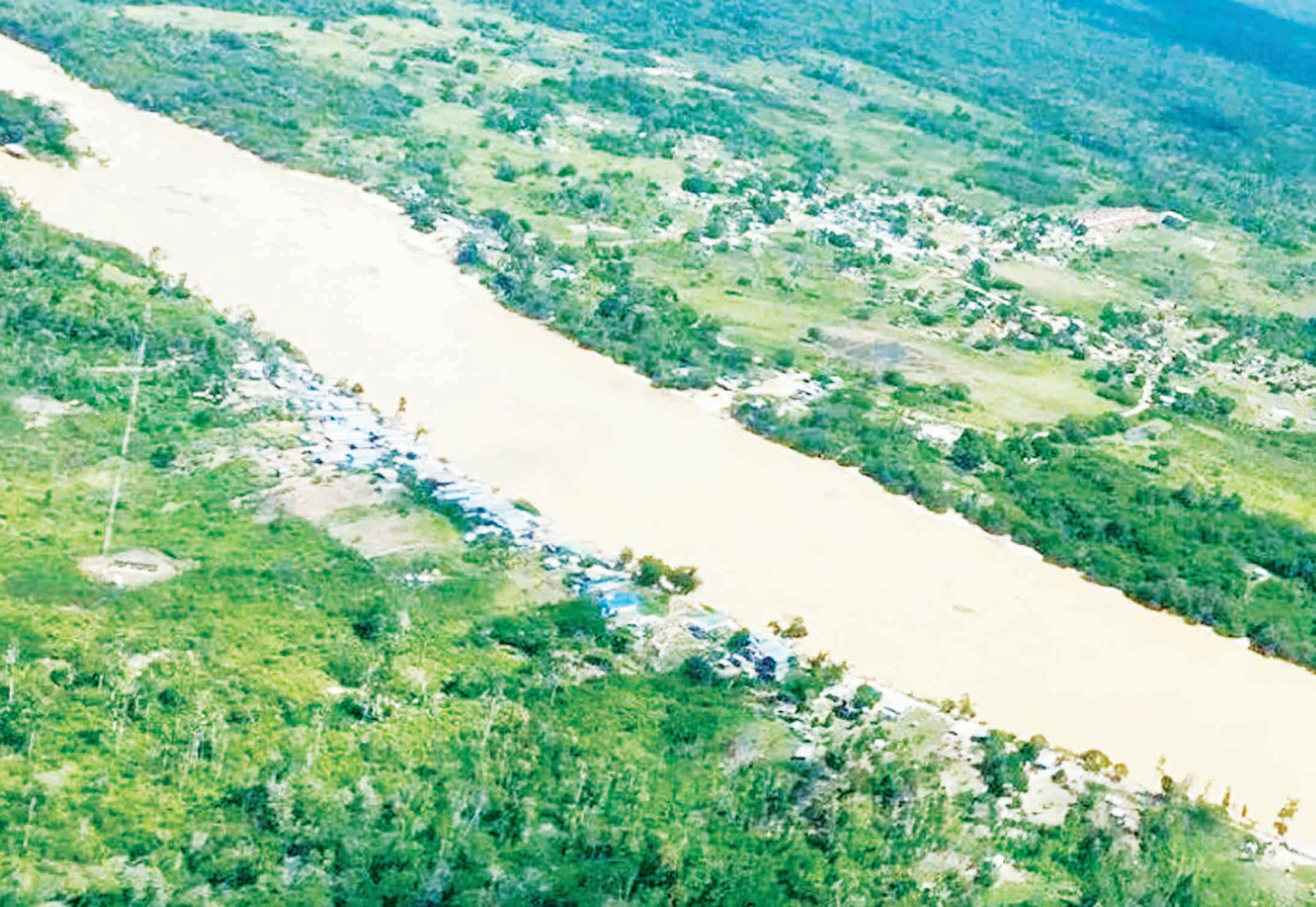
Mere days after a lance corporal attached to the Guyana Defence Force (GDF) was shot and injured in a shootout in the vicinity of Black Water, close to the Venezuelan border, the GDF reported that one of its patrols encountered hostile fire twice on Tuesday while conducting border security operations in Region
Seven (Cuyuni-Mazaruni).
The GDF stated that both incidents occurred in the Cuyuni River at approximately 16:10h and 16:50h, respectively, at known locations. “On each occasion, the patrol, escorting civilian vessels, responded in accordance with operational procedures and safely manoeuvred out from the area without injury
to anyone,” the law enforcement body stated in a release to the media.
However, the GDF stated that it continues to maintain a sustained operational presence along the western border and remains committed to safeguarding Guyana’s territorial integrity and the security of its border communities.
On Monday, GDF personnel escorting three civilian boats transporting personnel and cargo from Makapa to Eteringbang at about 11:30h in the vicinity of Black Water came under fire, thus resulting in Lance Corporal Troyland Douglas being injured.
Similar incidents have previously occurred along the same stretch of river. In February 2025, multiple soldiers were injured when another GDF patrol came under heavy gunfire from suspected armed groups during a supply mission between Eteringbang and Makapa.
Several ranks sustained gunshot wounds in that engagement, which was later
confirmed by both Police and military sources.
In May 2025, the GDF reported that troops conducting riverine patrols along the Cuyuni River were targeted in multiple shooting incidents by armed men believed to be operating from
Over 2000 speeding drivers prosecuted – Traffic Chief …Police Inspector named “chief speedster” with 61 tickets
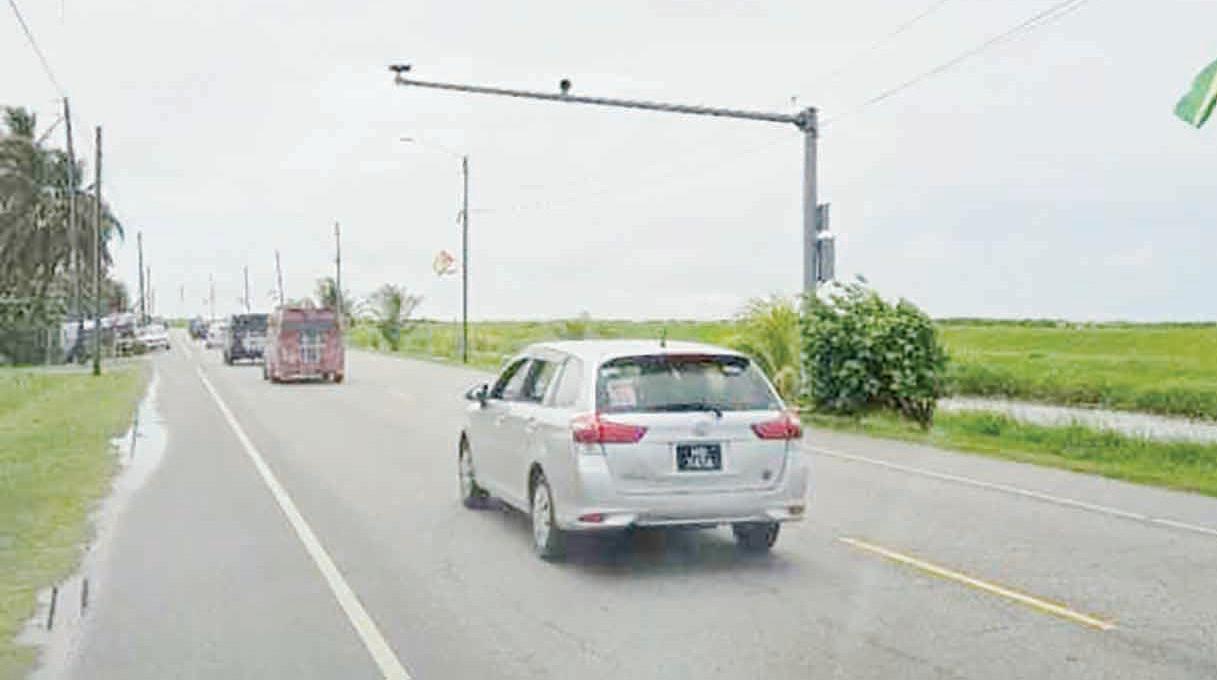
Following the rollout of the Government’s Safe Road Initiative System (SRIS) back in April 2025, more than 2000 errant drivers have been prosecuted for speeding offences to date.
This was according to Traffic Chief Assistant Commissioner of Police Mahendra Singh during an interview with the Department of Public Information (DPI), where he added that the “chief speedster” was identified as a Police Inspector with 61 tickets to his name. He is being prosecuted for the offences.
“I can tell you that there was one specific driver for the offence of dangerous driving flagged 13 times, on 13 different occasions. He was charged and placed before the Georgetown Magistrates’ Court for eight of those dangerous driving matters. He will be going to court shortly again for the others,” Singh stated.
In addition, he noted that more than 1200 cases of dangerous driving have been recorded.
“Then I’ll tell you that each week in the Georgetown and Sparendaam Magistrates’ Courts, we have multiple cases filed and being heard for dangerous driving. The sys-
tem is working; that system is a plus for us, and it helps us to achieve smart traffic management,” the Traffic Chief added.
Guyana’s drive to improve road safety has recorded a significant milestone, with more than 51,000 e-tickets issued since the rollout of the initiative to strengthen traffic enforcement and reduce road fatalities.
The system was designed with safeguards to prevent bias and compromise while ensuring violations are detected and addressed efficiently.
“This safe road initiative is technologically driven. It is one that has at its core safeguards built in to prevent any biases, any interference, or any form of compromise.” More than $205 million has been collected from fines, with over 52 per cent of the 51,000 tickets issued paid by offenders.
The system is currently active along major corridors, including the Heroes Highway, the Mandela-toEccles interlink, the East Coast Public Road, and parts of Region Three, where noticeable reductions in serious and fatal accidents have been recorded.
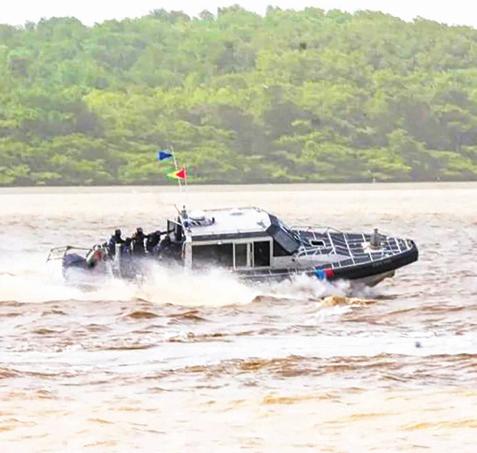
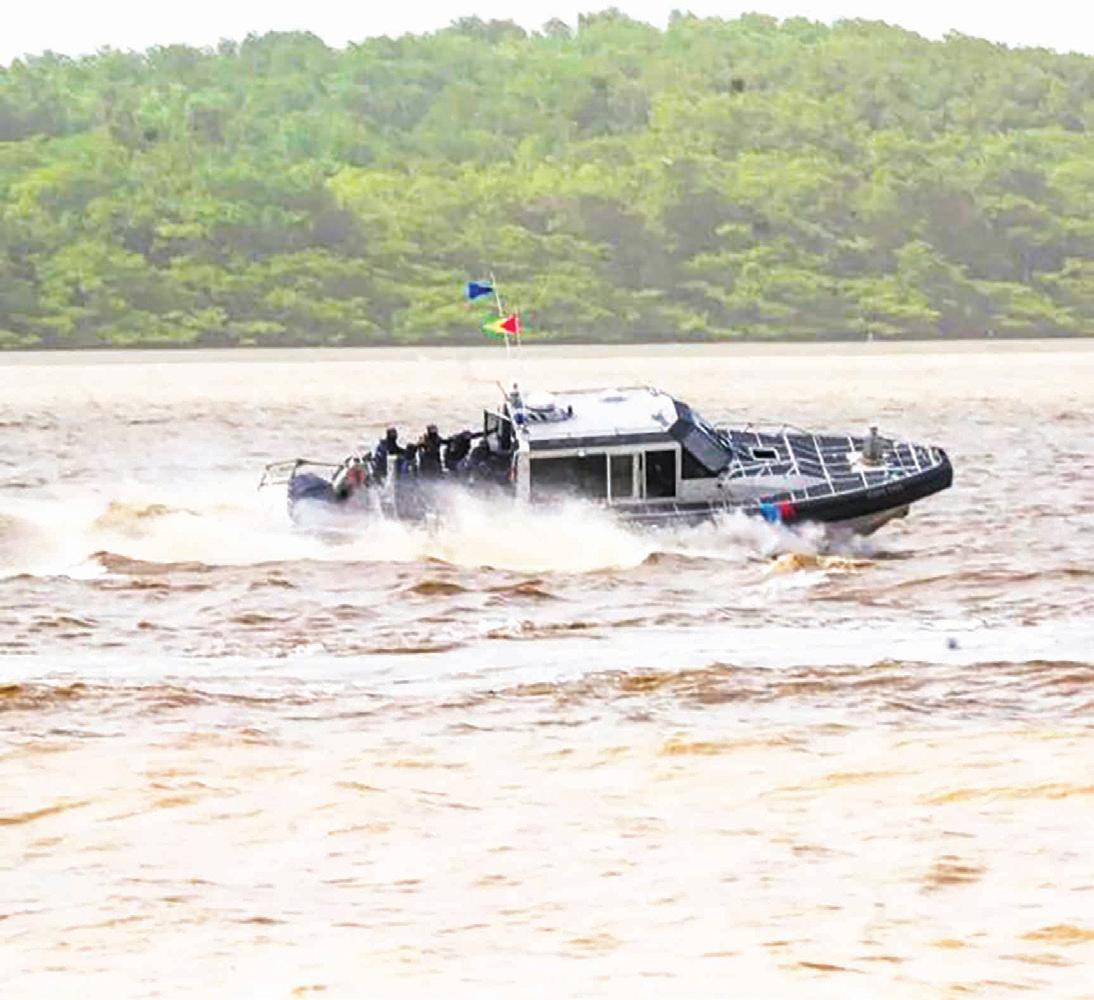
A GDF boat on patrol (file photo)
Cameras installed in Region Three
The Guyana-Venezuela border in the Cuyuni River the Venezuelan bank. The army confirmed that troops returned fire and that no injuries were reported in that specific exchange.
Not all projects require full Environmental Impact Assessments – EPA
The Environmental Protection Agency (EPA) on Wednesday issued a clarification on how it determines whether a proposed project requires a full Environmental Impact Assessment (EIA), amid recent public commentary on the issue.
In a statement released on Wednesday, the agency rejected claims that environmental studies are waived arbitrarily, noting that each application undergoes a structured screening process. According to the EPA, decisions are based on several factors, including the nature of the activ-
ity, its location, the materials involved, and potential risks to the environment and public health.
The agency explained that under the Environmental Protection Act, an EIA is required when a project is likely to have significant environmental impacts. These impacts are assessed to determine whether they are major, complex, long-term, widespread, uncertain, or difficult to control.
Where potential risks can be effectively managed through permit conditions and regulatory measures, a full EIA may not be re-
quired. However, the EPA stressed that this does not equate to automatic approval of a project, nor does it allow companies to operate without oversight.
The statement also addressed the role of public notices, describing them as part of the legal process. Such notices inform the public of the EPA’s screening decision and provide a 30-day window for appeals to the Environmental Assessment Board.
“This is transparency, not secrecy,” the agency stated.
For projects involving the transportation of chem-
icals and equipment, the EPA said it evaluates factors such as spill risks, transport routes, emergency response preparedness, and public safety measures. Even if approved, such projects remain subject to strict environmental and safety requirements, including monitoring and compliance obligations.
The EPA further highlighted the distinction between a determination that an EIA is not required and the separate decision of project approval, which may still involve detailed regulatory conditions.
The agency reaffirmed
its commitment to lawful and science-based decision-making, stating that its approach is intended to
safeguard human health and the environment while ensuring proper regulation of all projects.
No pavement parking – City Hall issues warning
The Mayor and City Council (M&CC) have issued a public notice prohibiting parking on pavements across Georgetown, citing safety concerns and ongoing damage to public infrastructure.
In a statement released on Wednesday, the council reminded citizens that pavements are reserved for pedestrian use, including children, the elderly, and persons with disabilities. It said parking in these spaces creates obstructions and forces pedestrians onto roadways, increasing the risk of accidents.
The council also referenced the Municipal and District Councils Act, Chapter 28:01, Sections 9 and 10, which make it unlawful to drive, wheel or
place vehicles and other objects on pavements and footpaths. The law prohibits leaving any vehicle, cart or similar item on streets, parapets or pavements.
The notice comes amid concerns about damage to recently constructed sidewalks and drainage covers.
On May 5, the Public Works Ministry stated that investigations found that sections of infrastructure along Aubrey Barker Road in Georgetown and Diamond Back Road, East Bank Demerara, were damaged due to improper use rather than construction defects.
According to the Ministry, the walkways are designed to support pedestrian traffic and light residential use, including cars and SUVs accessing properties. While they can accom-
modate short-term parking for light vehicles, the
Ministry said heavy-duty trucks and industrial machinery have been using the structures for extended periods.
It warned that excessive weight can cause cracking and collapse of drainage covers, creating safety risks and leading to repair costs and traffic disruptions. Operators of heavy-duty vehicles have been urged to use alternative parking locations and avoid mounting sidewalks when delivering materials. In cases where access is unavoidable, temporary protective measures such as steel plating were recommended.
The Ministry also indicated that persons responsible for damaging public infrastructure could be required to cover repair costs,
adding that sustained upgrades depend on proper public use.
In April 2025, Vice President Dr Bharrat Jagdeo said expanding parking facilities is necessary as economic activity increases. He noted that Government is developing designated areas for heavy-duty vehicles and exploring solutions to increase parking capacity in Georgetown.
Plans include upgrading roadside parapets with concrete pavers to create additional parking space, with a target of about 10,000 spaces in the capital.
The M&CC is urging residents and motorists to comply with the law and adopt safer parking practices to protect pedestrians and preserve infrastructure.
Diaspora in special position to benefit from high-return investments in Guyana – Pres Ali
The Guyana Government is looking to unlock financing within the diaspora to drive a number of largescale national projects, with President Dr Irfaan Ali promising strong returns on those investments.
He made this declaration during a recent discussion at the Baker Institute for Public Policy, an American think tank housed on the campus of Rice University in Houston, Texas. The armchair discussion was themed on ‘The Future of Guyana’.
According to President Ali, his Government is creating attractive investment opportunities, and the Guyanese diaspora is better positioned to capitalise on these.
“Our diaspora is in a special and unique position… But now I think [we have to look at] how do we unlock their financing? How do we create opportunities for their investments, and I think that is what is exciting for them. And we are on a path of launching a few important projects of national importance for national security that we believe they could invest in with a very good return,” the Guyanese leader noted.
These remarks by the president come just weeks after the Guyana Government issued a preliminary call for investors to support two major projects in the country – the cooking gas bottling plant and
fertiliser facility, which will utilise natural gas that will be brought onshore via the Gas-to-Energy (GtE) Phase Two Project at Wales, West Bank Demerara.
In the invite for Preliminary Expressions of Interest (EoIs), the Government made it clear that preference will be given to Guyanese investors, including those in the diaspora, to be part of the entities that would be set up for these energy projects.
This is in keeping with previous commitments by the Government to ensure that Guyanese citizens, both here and abroad, have a stake in major projects and actively participate in the country’s development.
For the Guyana Ammonia and Urea Plant Inc (GAUP), which is pegged at US$300 million, the Government is targeting investments with a cap of US$5 million per investor.
Additionally, the Guyana Gas Bottling and Logistics Company Inc. (GGBLC), which is estimated at US$40 million, has a cap of US$1 million per investor. However, it was noted that interested parties may indicate the maximum amounts they are willing to invest for both projects.
According to the EoI invite that was issued last month, investors can assume a Government guarantee of 10 per cent annual return on both projects. Moreover, both GAUP and
GGBLC will be private companies and not publicly traded entities.
It was further explained that this is only a preliminary Expression of Interest. Based on the response, Government will then structure appropriate details of the investment and make a formal call for investments.
The deadline for submission of interest will be May 15, 2026, and proposals must be sent to the National Procurement and Tender Administration Board (NPTAB).
Construction proposals
Only earlier this year, the Guyana Government received 10 proposals each for the construction of the GAUP and GGBLC facilities.
Prime Minister Brigadier
(Ret’d) Mark Phillips told the Guyana Times three weeks ago that the evaluation teams were being set up to review the proposals and shortlist the bidders for the construction of the gas bottling and fertiliser plants.
Among the 10 regional and international firms that submitted Engineering, Procurement, and Construction (EPC) proposals for the ammonia and urea plant was United States-based Lindsayca Guyana Inc – the company that is constructing the highly anticipated Gasto-Energy (GtE) project at Wales.
Also interested are Trinidad-based Phoenix Welding & Fabricating Inc.; Ideal Engineering Services Inc, a locally registered company in con-
sortium with Nigeriabased Montego Upstream Services Ltd; Northern EPC Alliance (NEA), Lee Kieswetter Heavy Civil (LKHC), and Valour EPC of Canada; China CAMC Engineering Co (CAMCE), China National Chemical Engineering Co (CNCEC), and Dubai-based East Consulting Engineering Company (ECEC); China Railway First Group Co. Ltd and SEDIN Engineering Co Ltd; Hualu Engineering & Technology Co Ltd and China National Machinery Import & Export Corporation; China Wuhan Engineering Corporation Limited; Japan-based Morimatsu, Arkad SpA of Italy, and Netherlandsbased CC7 Europe; and Kalpataru Projects International Limited out of
India.
According to the EPC document, interested companies will enter into a public-private partnership model, via the Guyana Ammonia and Urea Plant (GAUP) company, to manufacture 300,000 tonnes of fertiliser per annum, using no more than 20 million cubic feet per day (MMCFD) of gas. The project, which is expected to be ready by 2027/2028 when the Gasto-Energy Phase Two will come on stream, will manufacture and sell fertiliser with the aim of lowering fertiliser prices for Guyana and the broader region, including Northern Brazil and the Caribbean.
On the other hand, EPC proposals for the cooking gas bottling facility in Guyana were received from: local company, Guygas in a joint venture with Makeen Energy out of Denmark and the Indian-headquartered Ramco Industries; Lindsayca Inc.; Trinidadbased Massy Gas Products; Sol Guyana Inc. – part of the Caribbean-operator, Sol Group; French-owned, Rubis Guyana Inc.; Indianbased Divyan International Inc (Guyana); Gas Zipa SASESP (Columbia) JV Fix It Depot and Standard Energy Company; Gate Ventures and Consulting Guyana Inc. in consortium with Propak Systems Lited (Canada) and Makeen Energy (Denmark); ILF Consulting Engineering Inc.
TURN TO PAGE 14
President Dr Irfaan Ali during the armchair discussion at Rice University’s Baker Institute for Public Policy in Houston, Texas
New $233M wing at Sophia Primary School commissioned
…to reduce overcrowding
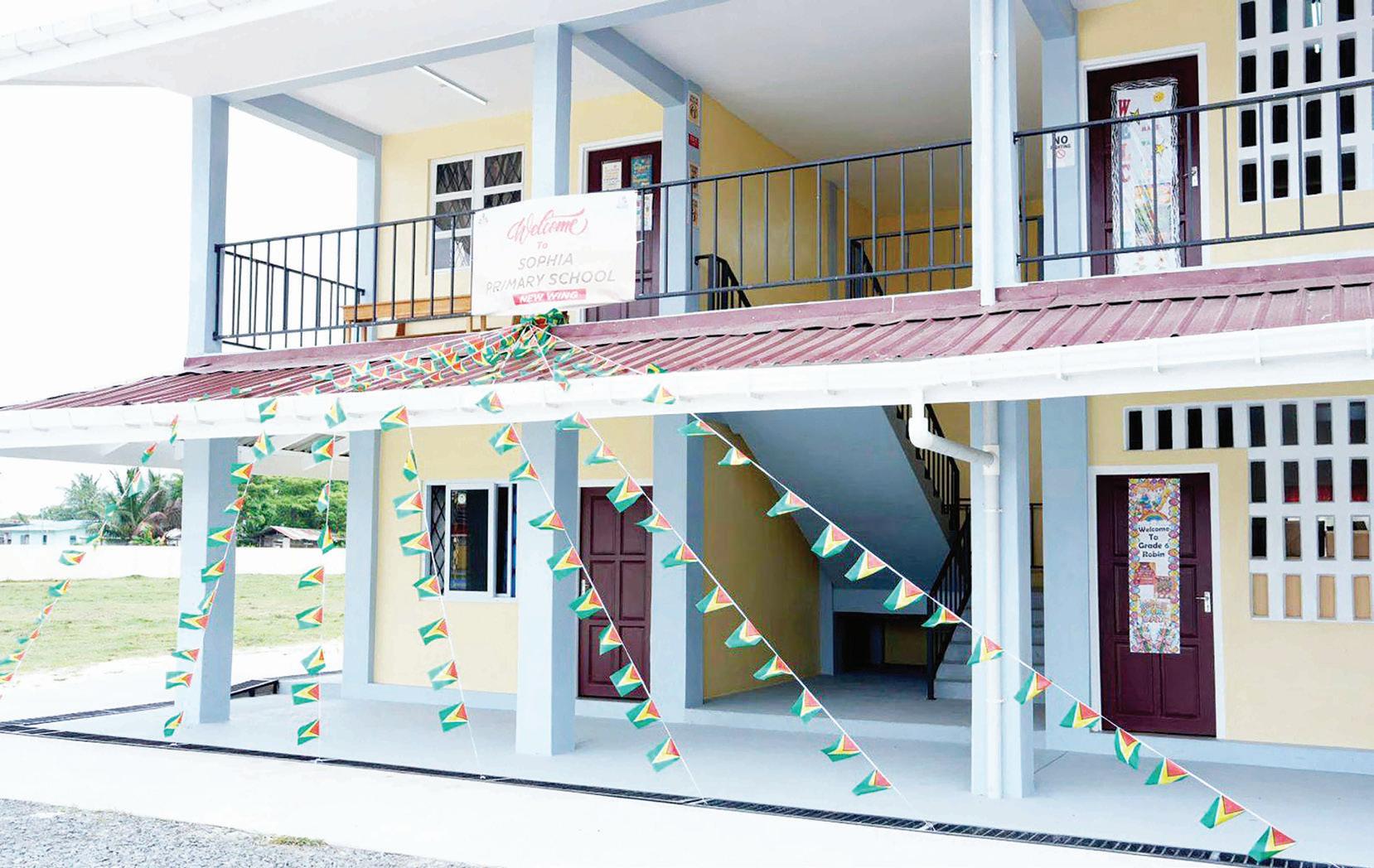
The new wing of the Sophia Primary School, which was constructed at the tune of $233 million, was officially commissioned on Wednesday and will play a key role in addressing overcrowding at the school.
The new facility comprises nine new classrooms, a headteacher’s office, two washroom blocks, and an auditorium.
The new wing was commissioned by Education Minister Sonia Parag, who related that the new block will bring comfort and convenience to both teachers and pupils. “You’ve gotten a whole new facility to ensure that you’re not packed up like sardines in a class... now you can be in a learning environment with space.”
The Minister emphasised the importance of individuals playing their part in
maintaining this infrastructure and keeping environments clean.
“You are the ones who have to leave the legacy for the next generation that will be going through these hallways and these classrooms. Therefore, you have to treat your facility with care and consideration. That means that you don’t deface the walls. It means that you don’t disregard the property that will ensure that you get an education, and you leave that legacy for someone else to be able to thrive in. It’s very important that we care for what we have and our environment.”
She, nevertheless, charged the pupils and teachers to keep the school’s environment – inside and out – clean. “It is upon us to take pride in our environment. It is upon us, when we leave this country, that we
can say with conviction and with pride that our country is a clean country. But it starts with us. It starts with each one of us. And it starts with all of you. If you see someone later, tell them it’s wrong. Tell them to pick it up.”
The Minister also touched on the issue of violence and bullying in schools, urging everyone to play their role in eradicating these issues. “We have to keep our spaces safe. And it starts with us. It starts with the leadership. It starts with the students. And you will leave your mark in that way.”
On this note, the Minister had recently revealed that schools could soon see a more structured national approach to tackling bullying.
Schools will see the distribution of a standard document aimed at being the first step in developing anti-bul-
lying policies, and ideally laws, in the future. “When I thought of launching the anti-bullying initiative or having that consultation with the public, it was to get from the public and different stakeholders their recommendations on solutions,” Parag had stated. Meanwhile, Minister
Parag back in January reported that more than 33 new schools are slated to be commissioned in 2026 as the Government continues to focus on delivering universal education to every child in Guyana.
She added that significant resources have been directed towards closing long-
standing gaps in access to education, particularly in hinterland and rural communities, where students often had to travel long distances or remained at home due to the lack of nearby schools.
Overcrowding has also been reduced as new facilities come on stream.
Venezuela tells ICJ...
“As for Mallet-Prevost’s position, the memorandum confirms points he made in a private letter written in late October 1899, around three weeks after the award was rendered. In that letter, identified by Venezuelan researchers after the publication of the memorandum, Mallet-Prevost made the same core point; he said, ‘The decision was forced upon our arbitrators,’” Professor Tams posited.
Discredited document
International Law
Professor Philippe Sands, for Guyana, had discredited the document’s reliability, saying the original has never been produced, its contents were
published only after MalletPrevost’s death, and its allegations were uncorroborated. Guyana’s case is that the memorandum is not evidence capable of undoing a binding award.
He described Venezuela’s central evidence memorandum as “a giant red herring”, riddled with inaccuracies, and “it is long on fantasy and short on facts. This is the stuff of a novel. It is not the stuff of a pleading before this Court.”
Professor Sands noted that the memorandum, allegedly written decades after the arbitration, contains demonstrably false claims, including a supposed dinner conversation with Lord
Russell before he was even appointed to the tribunal.
“Not a shred, nothing at all. Mr Mallet-Prevost’s claim of a secret Anglo-Russian deal is a concocted fantasy,” Sands argued.
“In the years since 1962 Venezuela has used it repeatedly to generate heat and smoke, but no light and no illumination… While the allegation of a secret Anglo-Russian deal is outlandish, it is also instructive, for it starkly demonstrates the unreliability of the claims made in the memorandum, which by way of speculation and nothing by way of substance. It’s long on fantasy and short on facts; it lay dormant for 13 years after its publication,” he said.
Diaspora in special...
India in collaboration with MAHAPREIT (Mahatma Phule Renewable and Infrastructure Technology Limited) and BB Energy (BBE) and Dec Ogeco (Ogeco) (Singapore).
Based on the EPC document, the proposed GGBLC, under the same public-private partnership model, will bottle, transport, and distribute cooking gas for domestic use. The objective of GGBL is to lower the price of domestic cooking gas.
Through the GtE Project, the Guyana Government is looking to significantly low-
er the price of cooking gas by piping natural gas from offshore operations to the Wales site where the NGL facility and power plant are currently under construction and will utilise the rich gas from ongoing oil operations in the Stabroek Block offshore Guyana. Already, some 250 kilometres of 12-inch pipelines have been laid to bring the gas onshore by this yearend. However, only 40 per cent of the pipeline’s capacity will be used by this first phase of the GtE Project to gas up the power plant and NGL fa-
cility. To this end, the Government is now moving ahead with Phase Two of the Gas-to-Energy project to utilise the remaining 60 per cent capacity of the pipeline to bring additional gas onshore. The GtE Phase Two will see the construction of another 300 MW power plant and NGL facility at the Wales location. With the remaining natural gas available, the Government is planning to set up the gas bottling and fertiliser projects at the Wales site.
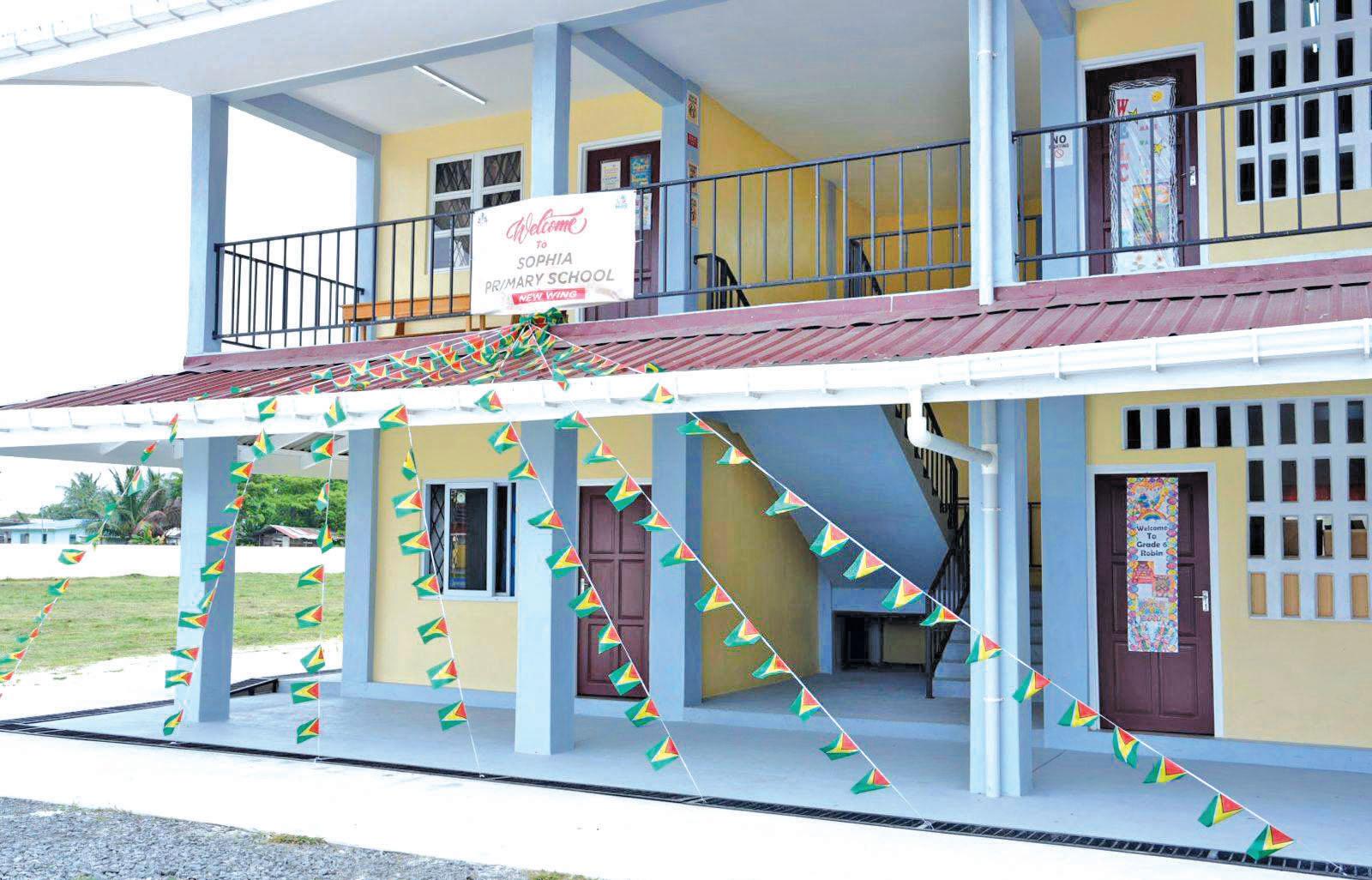
A pupil of the Sophia Primary School being assisted to cut the ceremonial ribbon to open the new wing on Wednesday
A section of the new block of the Sophia Primary School
Global Transport Summit in Germany Edghill joins talks on funding resilient infrastructure
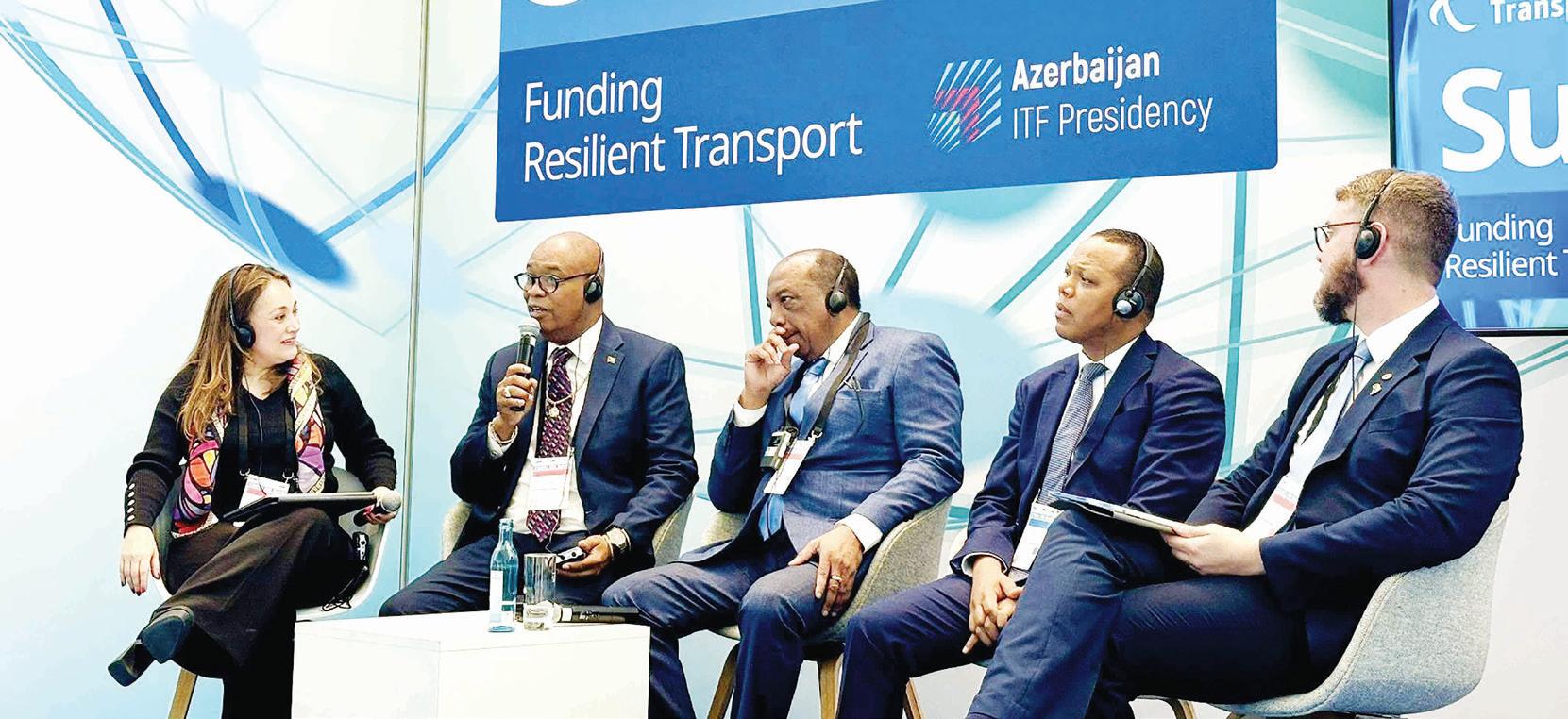
Public Works Minister Juan Edghill is currently representing Guyana as an honorary guest at the 2026 Annual Summit of the International Transport Forum (ITF), which is being held in Leipzig, Germany.
The summit, which is the premier global event for transport policy, will be held from May 6 to 8, 2026, under the theme “Funding Resilient Transport” and brings together over 1000 delegates, including transport Ministers from across the globe, industry leaders, and policy experts.
The discussions are centred on the second phase of a strategic trilogy of transport resilience – specif-
ically addressing physical infrastructure, digital connectivity, and the mobilisation of financing for future-proof transport sys-
tems.
As Guyana undergoes an unprecedented infrastructure transformation, Edghill’s participation un-
derscores the country’s commitment to aligning its domestic development with global standards of safety, efficiency, and sustainability.
During the three-day summit, country development topics in which Guyana has an interest include infrastructure resilience, financing strategies, and digital transformation. These topics encapsulate the Government of Guyana’s infrastructural trajectory, which is premised on resilience and sustainability.
Minister Edghill has since participated in a panel discussion with the Dominican Republic and Brazil, where the focus was on funding resilient transport. He is expected to participate in several high-level Ministerial roundtables and bilateral meetings to further
Welder arrested for attempting to dispose of ganja during Police operation
Astrengthen Guyana’s international partnerships in the transport and public works sectors.
The International Transport Forum is an inter-Governmental organisation with 66 member countries that acts as a strategic think tank for transport policy.
The annual summit remains the world›s most significant venue for discussing the advancement of the sector and ensuring that global transport systems remain resilient in the face of economic and environmental challenges.
Essequibo Coast teen accused of theft remanded to prison
Nineteen-year-old
Eford Holder from Dartmouth Village, Essequibo Coast, Region Two (Pomeroon-Supenaam), was on Monday remanded to prison for allegedly robbing a 61-year-old businessman.
Police stated that the suspect stole a quantity of items from Rabindra Sankar’s Dartmouth, Essequibo Coast business on April 13.
Holder appeared before Magistrate Ravindra Mohabir at the Charity Magistrate’s Court on Monday, where the charge was read to him.
Remanded: Eford Holder
He pleaded not guilty to the indictment after the Administration of Justice Act (AJA) was applied. He was, nevertheless, remanded to prison until June 17.
Unlicensed driver
fined $60,000; taxi driver hit with $200,000 DUI fine
Twenty-seven-yearold Cleevon George, a miner from Hoppie Street, Dartmouth Village, Essequibo, Region Two (Pomeroon-Supenaam), was on Monday slapped with a $60,000 fine or faces three months in jail for driving without a licence and driving an uninsured motor vehicle.
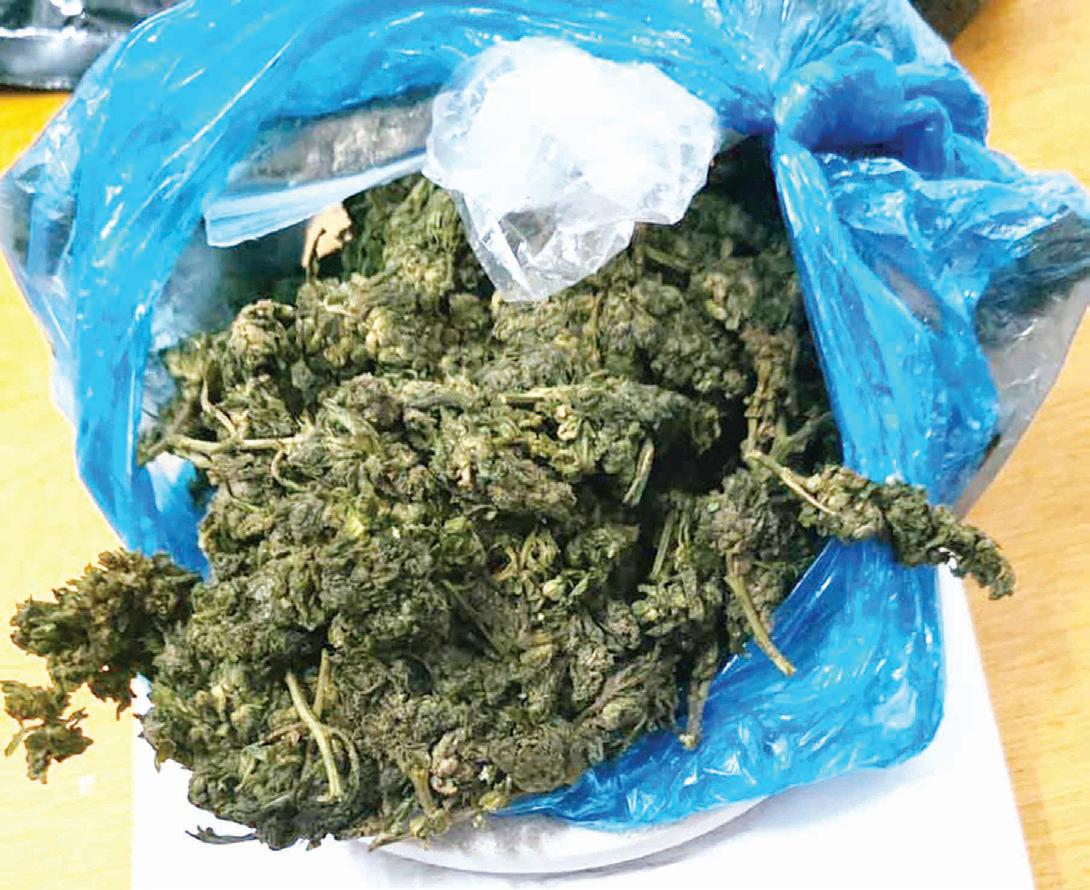
welder was taken into custody following the discovery of a quantity of cannabis during a riverine patrol on Tuesday in the vicinity of First Avenue, Bartica, Essequibo River, Region Seven (Cuyuni-Mazaruni).
Police stated that during the exercise they intercepted a wooden vessel with four occupants, including a 33-year-old welder from the Bartica Housing Scheme who was
seen trying to dispose of three black parcels into the river.
The parcels were, however, retrieved, and upon inspection, a quantity of cannabis was found.
The occupants were ar -
rested and escorted to the Bartica Police Station, where the ganja was weighed and amounted to 362 grams. The welder remains in Police custody as investigations continue.
He was reportedly arrested on Monday, April 20, 2026, during a Police operation along the Charity Public Road, Essequibo Coast.
During his appearance on Monday at the Charity Magistrate’s Court before Magistrate Ravindra Mohabir, he pleaded guilty to both charges and was fined $30,000 on each charge or faced an alternative of three months’ imprisonment.
Meanwhile, Jair Robeiro, 22, a taxi driver from New Road, Essequibo Coast, was charged with driving under the influence of alcohol. He was arrested on April 28, 2026, along the Charity Access Road, Essequibo Coast. He also appeared at the Charity Magistrate’s Court and pleaded guilty to the charge when it was read to him by Magistrate Ravindra Mohabir. As such, he was fined $200,000 or faces an alternative of three months’ imprisonment.
Fined: Cleevon George Fined: Jair Robeiro
The cannabis found during the operation
Minister Edghill and other officials at the summit
Public Works Minister Juan Edghill during a panel discussion with the Dominican Republic and Brazil
2020 backdam killing Henry boys murder trial opens in Berbice High Court with 45 witnesses
More than five years after the mutilated bodies of teenage cousins Joel Henry and Isaiah Henry were found in the backdam at Cotton Tree, West Coast Berbice, Region Five (MahaicaBerbice), two men on Wednesday went on trial before a 12-member jury at the Berbice High Court for their murders.
Anil Sancharra,
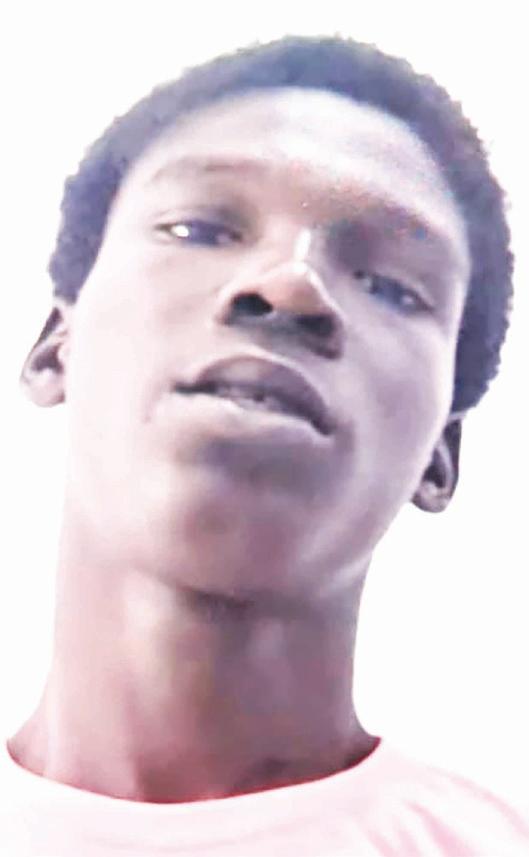
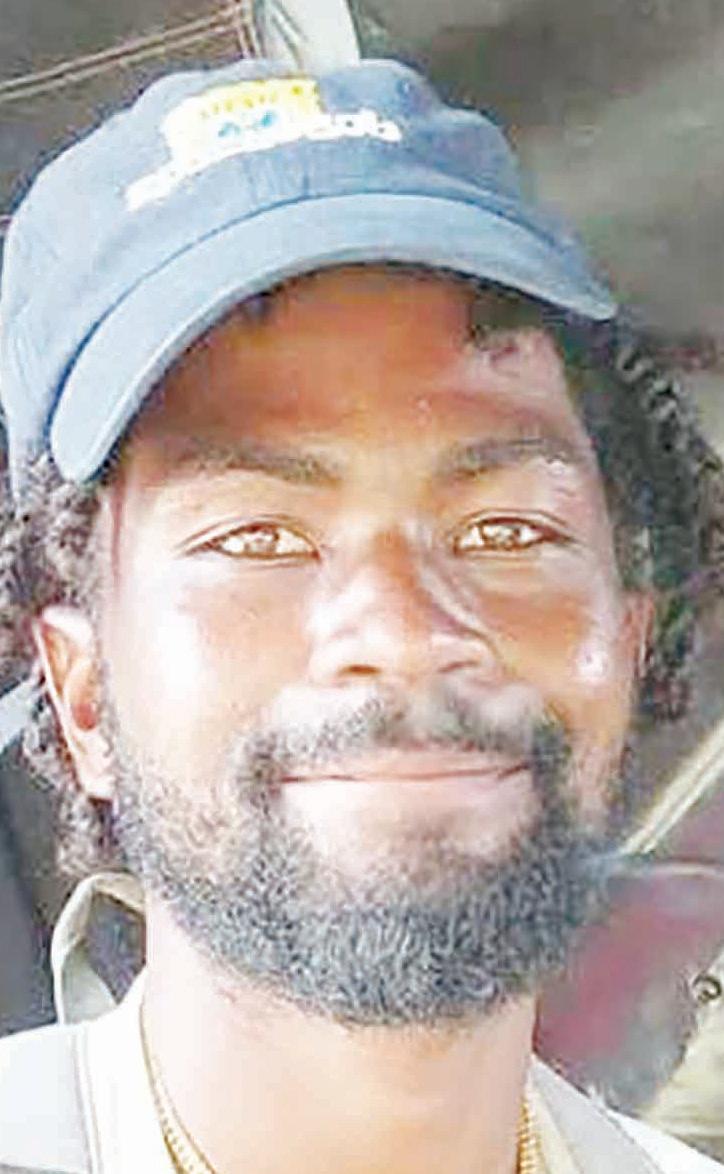
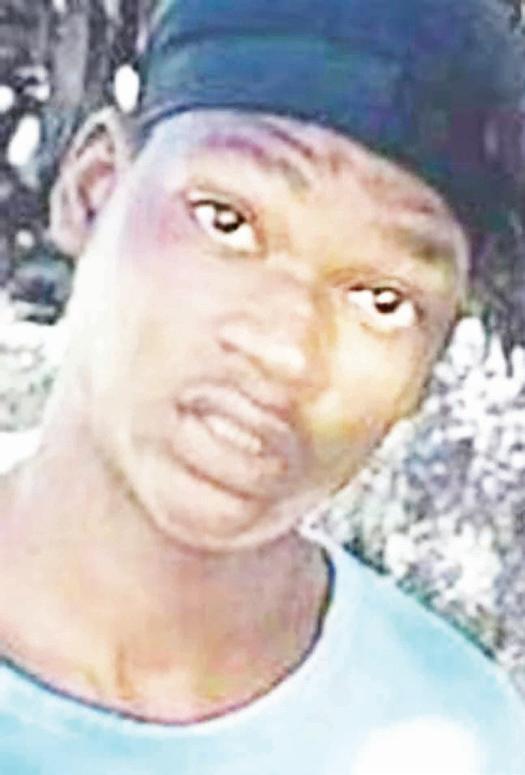
called “Dan Pole” and “Rasta”, 37, of D’Edward Village, West Coast Berbice, and Vinod Gopaul, called “Magga”, 38, of Yakusari, Black Bush Polder, Corentyne, both pleaded not guilty when the indictments were read before Justice Simone Morris-Ramlall.
The State is alleging that between September 5 and 6, 2020, the two men
murdered 19-year-old Joel Henry and his 16-year-old cousin, Isaiah Henry.
The case is being prosecuted by state counsel Marisa Edwards, while the accused are being represented by attorney-at-law Dr Dexter Todd of Dexter Todd and Associates.
In opening the State’s case to the jury, Edwards said the two cousins left home on September 5, 2020, and failed to return, prompting relatives and residents to form a search party. She told the jury that the state will seek to prove that the two accused used cutlasses to chop the teenagers before dumping their bodies in the backlands, where they were later found.
The State is expected to call 45 witnesses during the proceedings, including 16 Police Officers, three close family members of the deceased teenagers, 20 persons from the surrounding communities, five additional witnesses and a pathologist.
The killings of the Henry cousins had sparked national outrage, days of protests and calls for justice after their bodies were found bearing multiple chop wounds.
Initially, three men had been charged in connection with the murders: Gopaul; Sancharra; and Akash Singh, called “Monkey”. However, it was later reported that Singh became a key prosecution witness during the preliminary inquiry.
The state is expected to call its first witness today. The trial is expected to last until the end of the month.
“I am sorry for the family’s loss” – manslaughter convict tells court …jailed for 25 years
Twenty-eight-year-old Keno Lampkin, also known as “Cuz”, was on Wednesday sentenced to 25 years’ imprisonment for the 2023 death of Kevin Seraphin, who was fatally stabbed during a violent altercation at a party in Linden.
The sentence was handed down by Chief Justice Navindra Singh at the Demerara High Court on Wednesday, following Lampkin’s manslaughter conviction last month. Lampkin was represented by attorney-at-law George Thomas, while the state’s case was led by prosecutors Geneva Wills and Christopher Belfield.
In presenting mitigating factors, Thomas urged the court to consider that his client had been 25 years old at the time of the offence and was under the influence of alcohol and “his testosterone”, although he acknowledged that this did not excuse the incident.
Thomas argued that the confrontation stemmed from a verbal exchange involving the deceased and another individual, which escalated into violence. He also asked the court to take into account Lampkin’s favourable probation and prison reports, which indicated that he was not known to be violent and had willingly participated in rehabilitation programmes while on remand.
According to Thomas, the matter represented his client’s “first and hopefully last” involvement in criminal proceedings.
When given an opportu-
nity to address the court before sentencing, Lampkin expressed sympathy to Seraphin’s relatives but continued to maintain his innocence.
“I am sorry for the family’s loss,” Lampkin told the court while insisting he was not responsible for the killing.
Meanwhile, emotional victim impact statements were presented by members of Seraphin’s family, who detailed the devastating toll his death had taken on them.
Yolanda James, the dead man’s sister, described the loss of her brother as traumatising and said his death had left a deep void within the family. She described Seraphin as caring, supportive, and family-orientated, while pleading with the court for justice.
Seraphin’s mother, Paula Booker, also addressed the court, describing her son as her first child and a provider who always ensured his family was cared for.
Booker said the grief of losing her son had permanently changed her life and affected her health, including significant weight loss.
In outlining aggravating factors, Prosecutor Wills argued that Seraphin had been attempting to defend his wife on the night in question when he was violently attacked by several men. Wills told the court that the deceased sustained severe incisive wounds, reflecting the brutality of the assault. She further argued that Lampkin’s continued insistence on his innocence demonstrated a lack of ac-
countability.
The prosecutor urged the court to impose a sentence that would send a strong message of deterrence and demonstrate zero tolerance for violent offences.
In delivering the sentence, Chief Justice Singh noted that Lampkin had failed to accept responsibility for the killing, raising concerns about his prospects for rehabilitation.
The Judge also emphasised that the sentence followed a full trial, noting that there must be a distinction between offenders who plead guilty and those who require the court to conduct a lengthy trial before conviction.
Justice Singh said the court adopted a starting point of 25 years imprisonment. Four years were deducted due to Lampkin’s favourable prison report and participation in rehabilitation programmes while on remand.
However, the Judge said Lampkin’s credibility was undermined after he changed his version
of events during the trial. Justice Singh also questioned the sincerity of the apology offered to the family, noting that the accused still denied responsibility.
The court found no additional mitigating factors and added four years due to the severe impact the killing had on Seraphin’s relatives. Lampkin was ultimately sentenced to 25 years’ imprisonment, with the court ordering that the time he spent on remand be deducted from the sentence.
Last month, after several hours of deliberations, a 12-member jury returned a unanimous verdict acquitting Lampkin of murder but found him guilty of manslaughter by an 11–1 majority.
Lampkin, of Central Amelia’s Ward, Mackenzie, Linden, had been on trial for the fatal stabbing of Seraphin during what prosecutors described as a rapidly escalating confrontation at a party in August 2023.
Evidence presented during the trial revealed that the incident began after Seraphin’s girlfriend was allegedly slapped by another man at the gathering. Seraphin reportedly intervened and struck the individual with a bottle, sparking a wider fight involving several persons.
The court heard that the man involved was allegedly part of a gang-affiliated group, and one member of that group reportedly had a prior dispute with Lampkin, who was also present at the party.
Witnesses testified that Seraphin later became in-
volved in the violence and stabbed one of the men with a bottle, causing him to fall into a nearby culvert. The confrontation subsequently intensified as multiple individuals joined the attack.
According to the prosecution’s case, Seraphin was then assaulted with bottles, pieces of wood, and other objects before being forced into the culvert, where several men reportedly prevented him from escaping.
Witnesses testified that Lampkin was seen entering the culvert armed with a knife. During the brawl, Seraphin sustained a stab wound to the chest.
Although the injured man managed to escape the culvert, he collapsed shortly afterwards and was lat-
er pronounced dead at the Linden Hospital Complex. A post-mortem examination conducted by Government Pathologist Dr Nehaul Singh on August 24, 2023, determined that Seraphin died from perforation of the heart and lung due to a stab wound to the chest.
Lampkin was arrested on September 14, 2023. During police questioning, he denied involvement in the killing, reportedly stating, “I didn’t murder anybody,” and “I didn’t bore anybody; I wasn’t involved in the incident.”
He was subsequently identified during an identification parade on September 16, 2023, and formally charged two days later.
Jailed: Keno Lampkin, also known as “Cuz”
Dead: Kevin Seraphin
Dead: Joel Henry and Isaiah Henry
From left: Anil Sancharra and Vinod Gopaul appeared virtually in court on Wednesday
Mahdia dorm fire compensation case Chief Justice questions duress claims; ruling set for June 18
Acting Chief Justice Navindra Singh on Wednesday raised questions about claims that settlement agreements signed by relatives of victims of the 2023 Mahdia Secondary School dormitory fire were executed under duress, as the compensation case returned to court.
The matter centres on agreements signed in July 2023 between the state and families of the 13 girls of the 20 children who died in the dormitory blaze. Under those agreements, compensation was paid and accepted. However, the applicants have since moved to challenge the validity of those settlements.
Appearing for the applicants, attorney Darren Wade argued that the agreements are invalid on the basis that they were
GWCMC warns of closed-season ban on hunting several wildlife species
The Guyana Wildlife Conservation and Management Commission (GWCMC) has issued a reminder that the closed seasons for several wildlife species came into effect on May 1, 2026, during which hunting, trapping, wounding, killing, or sale of these animals is strictly prohibited.
In a notice dated May 6, 2026, the Commission listed the affected species as the brown capuchin, capy-
bara, green iguana, marmoset, nine-banded armadillo, and Kappler’s armadillo.
The GWCMC reiterated that no person is permitted to engage in any activity involving these species during the closed-season periods. The restriction is part of the country’s wildlife management framework aimed at regulating use and supporting conservation efforts.
Earlier this year, the Commission had announced the 2026 open and closed
seasons for wildlife, stating that the measures are intended to balance sustainable use with the protection of vulnerable species, particularly during breeding and recovery periods.
The GWCMC has warned that violations of wildlife regulations carry significant penalties, including fines and possi-
ble imprisonment, and has urged hunters, traders, and members of the public to comply with the established seasonal rules.
The Commission has also encouraged the public to remain familiar with the wildlife schedule for 2026 as enforcement agencies continue monitoring compliance across the country.
signed under duress, with families allegedly pressured into accepting the terms without the benefit of independent legal advice.
Wade submitted that the circumstances surrounding the signing, particularly involving Indigenous families from hinterland communities, were coercive. He contended that the applicants were effectively compelled to sign the agreements, raising constitutional concerns beyond a standard contractual dispute.
Representing the State, King’s Counsel Darshan Ramdhani rejected the claim, arguing that duress had not been properly pleaded and, in any event, had not been established in law. He maintained that duress requires clear evidence of illegitimate pressure, which he said was absent from the applicants’ case.
Ramdhani further submitted that the agreements remain legally binding, emphasising that compensation was not only offered but also accepted by the claimants. He argued that once a settlement is executed and funds are received, it cannot be set aside simply because parties later become dissatisfied with the outcome.
During the hearing, Justice Singh repeatedly questioned Wade on the basis of the challenge, particularly in light of the timeline. He noted that the agreements were signed and monies disbursed in July 2023, yet the legal challenge was brought more than a year later.
The Judge indicated that this delay, coupled with the acceptance of compensation, raised doubts about the credibility of the claim that the agreements were signed under duress.
Justice Singh also ques-
tioned the inconsistencies in Wade’s submissions, especially regarding the sequence of events surrounding the signing of the agreements and the payment of compensation. He noted that aspects of the oral arguments did not align with the written submissions before the court.
At one point, the Chief Justice intervened, halting the proceedings and stating, “I don’t tolerate nonsense in my court,” as he expressed dissatisfaction with the clarity of the presentation.
The exchanges in court were to determine whether the circumstances described by the applicants meet the threshold for duress in law.
Ramdhani argued that for duress to be established, there must be proof of illegitimate pressure that effectively removes a party’s free will. He maintained that no such evidence had been properly advanced and that the applicants’ pleadings were insufficient. Wade, however, insisted that the context in which the agreements were signed, including the vulnerability of the families and language barriers, must be taken into account. He argued that the matter should not be treated as a purely commercial contract dispute but as one engaging constitutional protection.
Wade asked to make further, brief submissions during the hearing, but the Chief Justice ruled that the application before the court was too vague and declined to allow it.
The matter was subsequently adjourned, with Justice Singh indicating that he will deliver his ruling on June 18. This is the second date that was given for ruling in this case. The matter, originally scheduled for a ruling in September 2025, was refixed for November 19, 2025.
The case is being heard alongside a related matter, D elphia Toney et al vs the Attorney General . Both actions involve 10 primary applicants represented by Wade, while the State is represented by King’s Counsel Darshan Ramdhani and I Bacchus.
The legal proceedings commenced on March 23, 2025. The case arises from the deaths of 20 girls in the Mahdia Secondary School dormitory fire. A teenager has since been charged for the fire and the deaths of the 19 students and a fiveyear-old boy. She was committed to stand trial in the High Court in February 2025.
Some of the victims of the Mahdia fire
Brazil’s President Lula to discuss economy, security with Trump at White House
US President Donald Trump will host Brazilian President Luiz Inácio Lula da Silva at the White House on Thursday for talks on tariffs, other economic issues, and combating organised crime.
The two leaders have had a strained relationship since Trump returned to office, and the visit will be closely watched for signs of a breakthrough in disputes over tariffs and other issues.
Last year, the US imposed a 40 per cent tariff on Brazilian goods, in addition to a separate 10 per cent
tariff. Trump later lowered the rate, but the trade dispute had damaged relations between the US and South America’s largest economy.
Trump also intervened in Brazilian politics last July when he wrote a letter to Lula asking that criminal charges be dropped against former Brazilian President Jair Bolsonaro.
A close Trump ally, the far-right Bolsonaro was convicted last November of leading an attempted coup and sentenced to 27 years in prison. Lawyers for Bolsonaro appealed the conviction.
Trump cited the Bolsonaro case as one factor in his decision to increase tariffs on Brazil.
The leaders held their first meeting of Trump’s second term in Malaysia last year.
They also met briefly on the side-lines of the United Nations General Assembly in New York in September.
Trump praised Lula in his UN speech, a sign the leaders were seeking to iron out their differences.
“He seemed like a very nice man,” Trump said. “We had excellent chemistry.”
(Excerpt from BBC News)
T&T: Port Health Office opens to ease marine operations
The marine sector has secured a longpushed operational fix in Chaguaramas with the opening of a dedicated Port Health Office at CrewsInn, a move stakeholders say will cut red tape and tighten oversight at one of the country’s busiest yachting hubs.
The facility opened on April 29 with a ribbon-cut-
ting ceremony, ending a years-long push by the Marine Services Association of Trinidad and Tobago (MSATT) to establish a permanent Port Health presence in the north-west peninsula.
That push intensified during the COVID-19 pandemic, when health clearance became mandatory for both cruisers and local vessels.
Operators relied on remote declarations and certificates, a system they said created delays and inefficiencies.
MSATT argued that a physical office was essential not only for public health compliance but also for the smooth functioning of the marine and yachting sector, which supports tourism inflows and a network of ancillary services in Chaguaramas.
The new facility now allows Port Health officers to conduct inspections, process clearances and enforce protocols in real time, reducing waiting times for vessels entering Trinidad and Tobago waters and improving coordination between agencies.
The development comes as the government pushes broader reforms in the maritime sector, including the live testing of the Sail Clear system in Chaguaramas.
The electronic platform allows yacht operators to submit Customs declarations before arrival, replacing manual paperwork and cutting processing time from several hours to minutes.
(Excerpt from Trinidad Guardian)
St Lucia: Profanity-laced jazz performances raise concerns
Concerns have been raised after performers used explicit language on stage during the opening weekend of the Saint Lucia Jazz and Arts Festival.
One incident took place on opening night in Marchand, and another occurred at Soufriere Jazz during Artiste 1T1’s performance of his hit song Best Friend, which includes the F-word. These moments sparked discussion about the boundaries of public performances at events attracting a wide audience, in-
cluding families and young people.
Although these incidents appear isolated, they have caught the attention of Tourism Minister Ernest Hilaire and Martin James, CEO of the Eastern Caribbean Collective Organisation for Music Rights.
James pointed to Saint Lucia’s Criminal Code, specifically sections 501, 507, and 508, which set clear limits on conduct in public spaces, including stage performances.
“These provisions explicitly prohibit the use of pro-
Cuba blasts “dangerous” US threats of military action against island
Cuba’s top officials blasted a growing litany of US statements and threats of military action against the Caribbean island, calling them dangerous and an international crime alongside an ongoing US oil blockade that has vastly restricted fuel shipments amid a devastating energy crisis.
Cuban Foreign Minister Bruno Rodriguez characterised the US as “hinting at a military action” to “liberate” Cuba, saying it was hypocritical and cynical in a post on social media late on Tuesday, in which he cited decades of US sanctions
against the island’s government as the root cause of its economic and social woes.
“The threat of a military attack and the aggression itself are international crimes,” Rodriguez said.
US Secretary of State Marco Rubio told reporters earlier on Tuesday that the status quo in Cuba was unacceptable, adding the US would address it, though he did not provide a timeline.
Rubio’s statements were accompanied on Tuesday by a post on social media showing the US embassy’s chief of mission in Havana, Mike Hammer, walking alongside Rubio and General
Frank Donovan, of the US Southern Command, which oversees US operations in the Caribbean region.
Another photo posted Tuesday by the US military showed Rubio shaking hands with Donovan while standing before a map of Cuba.
The Trump administration has vastly ramped up pressure on Cuba this year, halting shipments of oil from Venezuela – long Cuba’s top supplier – and threatening to slap sanctions on any country supplying Cuba with oil. (Excerpt from Reuters)
9 buildings destroyed by fire in Dominica’s capital
Amajor fire in the capital of Roseau has destroyed nine buildings, causing widespread damage in the early hours of Wednesday.
Emergency crews responded overnight as flames spread rapidly through parts of the city, engulfing multiple structures before firefighters
brought the blaze under control.
Among the buildings destroyed was the office of Joshua Francis, leader of the United Progressive Party.
Authorities say the full extent of the losses is still being assessed, but the impact on businesses and residents is expected to be sig-
nificant.
The cause of the fire is not yet known, and investigations are ongoing.
Images from the scene show extensive destruction, with several buildings reduced to rubble and smoke lingering over sections of the city hours after the fire was extinguished.
(Antigua Newsroom)
J’ca: National Lab workers call for Director to step down amid “bullyism”
fane, indecent, or obscene language, as well as any act or expression that may be deemed offensive in a public setting,” he explained. “It is concerning to note that during the opening of Jazz on the 30th, one of the performers openly used profanity as part of his performance delivery.”
He said incidents like these underscore the importance of setting clear boundaries for performers from the outset and that these expectations must be included in their contracts. (Excerpt from St Lucia Times)
Workers at the National Public Health Laboratory in Kingston staged a lengthy protest on Tuesday, accusing the Director of National Laboratory Services, Dr Marlene Tapper, of creating a hostile work environment.
Gathered in the lab’s parking area with placards, employees demonstrated from morning into the afternoon, claiming they felt victimised and uncomfort-
able on the job. The protest disrupted key services, including blood testing, as staff halted operations in what they described as necessary industrial action.
According to workers, tensions escalated after Dr Tapper reportedly issued a memorandum announcing plans to rotate approximately 30 staff members across different roles, including positions for which they said they lacked training or experience.
When contacted for a comment on Wednesday, Dr Tapper briefly responded, saying, “Good morning and goodbye,” before ending the call.
One employee, who requested anonymity, alleged that staff were intimidated by individuals aligned with the director. She also claimed there was a physical incident involving a staff member responsible for workplace safety.
“Earlier today was a clear example when the person who is supposed to be responsible for the safety of staff pushed people down because she was coming into the building,” the employee said.
Protesters are calling for Dr Tapper’s removal, arguing that her leadership has demoralised staff and created a stressful environment unsuitable for sensitive tasks such as infectious disease testing.
(Excerpt from Jamaica Observer)
Trinidad’s Minister of Health, Dr Lackram Bodoe (centre), along with Government officials, at the ribbon-cutting ceremony to officially launch the new office
Buildings destroyed by the fire in Roseau, Dominica
Employees gather in front of the National Public Health Lab in protest against what they describe as bullying
OIL NEWS
US oil prices rebound as investors assess prospects for Middle East peace deal
US crude futures rose about US$1 in early trade on Thursday, rebounding from the previous day’s losses, as investors assessed prospects for a Middle East peace deal.
US West Texas Intermediate crude futures gained 80 cents, or 0.8 per cent, to US$95.88 a barrel as of 22:23 GMT after climbing as high as US$96.33 earlier in the session.
The benchmark contract slid about seven per cent on Wednesday on optimism about a possible end to the war in the Middle East, with reports the United States and Iran were nearing an initial peace deal.
A source from mediator Pakistan and another source briefed on the mediation said an agreement was close on a one-page memorandum that would formally end the conflict.
Iran said on Wednesday it was reviewing a US peace proposal that sources said would formally end the war while leaving unresolved the key US demands that Iran suspend its nuclear programme and reopen the Strait of Hormuz.
An Iranian Foreign Ministry spokesperson cited by Iran’s ISNA news agency said Tehran would convey its response. US President Donald Trump said he believed Iran wanted an agreement. (Excerpt from Reuters)
3 killed in latest US strike on suspected drug boat in eastern Pacific
The US military launched another strike Tuesday on a vessel suspected of transporting drugs in the eastern Pacific Ocean, killing three men.
In a social media post, US Southern Command said its Commander, Gen Francis L Donovan, ordered a ”lethal kinetic strike” on a boat it alleged was operated by ”designated terrorist organisations” and ”was engaged in narco-trafficking operations”, but without providing evidence. It also included unclassified video of the strike.
The Trump Administration’s campaign of blowing up alleged drug-trafficking vessels in Latin American waters has persisted since early September and have killed at least 190 people in total.
Despite the Iran war, the strikes have ramped up again in recent weeks, showing that the administration’s aggressive measures to stop what it calls ”narco-
terrorism” in the Western Hemisphere are not letting up. The military has not provided evidence that any of the vessels were carrying drugs.
In Tuesday’s attack, SouthCom once again said it had targeted the alleged drug traffickers along known smuggling routes. It posted a video on X showing a boat cruising along the water before a huge explosion left the vessel in flames.
President Trump has said the US is in ”armed conflict” with cartels in Latin America and has justified the attacks as a necessary escalation to stem the flow of drugs into the US and fatal overdoses claiming American lives. But his Administration has offered little evidence to support its claims of killing ”narco-terrorists”.
Critics, meanwhile, have questioned the overall legality of the boat strikes. (Excerpt from CBS News)
Around the World
Iran considering US proposal to end war, official says
US news outlet Axios reported on Wednesday that the White House believes it could be closing in on a 14-point memorandum of understanding with Iran.
A senior member of Iran’s parliament dismissed it as a ”wish list”, while a Foreign Ministry spokesman said Tehran would share its views of a US proposal with Pakistani mediators.
Pakistan’s foreign minister said his country was ”endeavouring to convert this ceasefire into a permanent
end to this war”. President Donald Trump said the US has had ”very good talks with Iran in the last 24 hours” and that a deal is possible.
In its report, Axios describes the memorandum as a one-page, 14-point memo which could set a framework for more detailed nuclear negotiations.
Among the provisions it lists are a suspension on Iranian nuclear enrichment, the lifting of sanctions, and the restoring of free transit through the Strait of Hormuz.
It cites two US officials and two other sources – all unnamed – whom it describes as briefed on the issues. These sources are reported as saying that many of the terms laid out in the memo would be contingent on a final agreement being reached.
The Reuters news agency reported that two sources briefed on the mediation between the US and Iran had confirmed the information initially reported by Axios, but the proposal has not been publicly outlined.
Responding to the Axios
report, Ebrahim Rezaei, the spokesperson of the Iranian Parliament’s national security and foreign policy commission, wrote, X: ”The Americans will not gain anything in a war they are losing that they have not gained in face-to-face negotiations.”
He also said Iran ”has its finger on the trigger and is ready” and warned that if the US did not ”surrender and grant the necessary concessions”, Iran would ”deliver a harsh and regret-inducing response”. (Excerpt from BBC News)
Israel bombs Beirut’s southern suburb as it targets Hezbollah Commander
Israeli forces have bombed Beirut’s southern suburbs and claim to have assassinated Malek Balou, a Commander of Hezbollah’s Radwan Force.
“Israeli warplanes launched an attack, targeting Ghobeiri” in the southern suburbs, Lebanon’s state-run National News Agency reported, as a loud explosion and extensive damage were reported from the area.
Israeli Prime Minister Benjamin Netanyahu confirmed the attack, saying he and Defence Minister Israel Katz had instructed the army to carry out the attack.
“Radwan terrorists are responsible for shooting at Israeli settlements and harming [Israeli army] soldiers. No terrorist has immunity –Israel’s long hand will catch every enemy and murderer,” Netanyahu said in a post on
Ted Turner, media mogul who revolutionised TV news by launching CNN, dies at 87
Media mogul Ted Turner, who pioneered the mo-
dern 24-hour news culture when he launched the CNN channel, has died at the age of 87, the network has announced.
In 1980, Turner launched Cable News Network as the first dedicated rolling news channel, which soon became a central part of the media landscape.
US President Donald Trump paid tribute to him as ”one of the greats of broadcast history, and a friend of mine”.
Current CNN CEO and Chairman Mark Thompson described Turner as ”the giant on whose shoulders we stand, and we will all take a moment today to recognise him and his impact on our lives and the world”.
(Excerpt from BBC News)
Zelenskyy accuses Russia of spurning a ceasefire proposed by Kyiv
Ukraine accused Russia of flouting a Kyiv-proposed ceasefire on Wednesday by carrying out dozens of battlefield assaults, air strikes and drone attacks in what President Volodymyr Zelenskyy described as Moscow’s ”obvious spurning” of peace. Zelenskyy had floated the
cessation, starting on May 6, in response to Russia’s own proposed ceasefire from May 8 to 9 to coincide with its World War Two victory commemorations.
In a statement, Zelenskyy said Russia – which did not confirm its adherence to Ukraine’s proposal – had committed 1820 violations by
late morning on Wednesday.
On Monday, Russia’s defence Ministry had warned that it would respond to Ukrainian attacks during victory celebrations with a ”massive missile attack” on the Ukrainian capital Kyiv. Officials in the north eastern region of Sumy said four people had been killed, inclu-
ding two female workers at a kindergarten hit by a drone, though children were not present.
Another person was killed when a house was struck by a drone, and a man was killed by a mine thought to have been dropped by Russian forces. (Excerpt from Reuters)
Telegram. “We promised to bring security to the residents of the north – this is how we do it, and this is how we will continue to do it!” he added.
Hezbollah has not yet responded to the Israeli claim.
Al Jazeera’s Obaida Hitto, reporting from Tyre, said the evening attack took place at a time of calm in the southern suburbs of the Lebanese capital. He said there were many people who returned to the southern suburbs after the beginning of the ceasefire, and videos showed streets had been filled with people.
(Excerpt from Al Jazeera)
British crew member in need of urgent medical care amid suspected hantavirus
outbreak on cruise ship
ABritish crew member is in need of urgent medical care, and a passenger from the UK remains in a critical but stable condition following a suspected outbreak of hantavirus on a luxury cruise ship in the Atlantic Ocean.
Three people have died, and medics on Monday were scrambling to evacuate two others from the MV Hondius, which set off in March from southern Argentina carrying 149 people from 23 countries. The crisis emerged late on Sunday after the World Health Organization (WHO) said it was investigating a suspected outbreak.
The luxury cruise ship was stranded off the coast of Cape Verde after several people felt ill, forcing crew and passengers to isolate on board.
On Monday the WHO said seven cases of hantavirus – a disease primarily
found in rodents – were either confirmed or suspected as the stricken ship was held off West Africa with mostly British, American and Spanish passengers on board.
The WHO said: “As of 4 May 2026, seven cases (two laboratory confirmed cases of hantavirus and five suspected cases) have been identified, including three deaths, one critically ill patient and three individuals reporting mild symptoms.”
The cruise operator said in a statement on Monday that two staff members – one British and one Dutch – were continuing to show “acute respiratory symptoms”, one mild and one severe, and required urgent medical care.
The ship may instead continue to Las Palmas or Tenerife, but no final disembarkation point has been finalised. (Excerpt from The Guardian)
Ted Turner speaks at an event in 2016 in Atlanta, Georgia [Getty Images]
SUDOKU
HOROSCOPES
Overreacting will get you into trouble. Put on the brakes, listen, back away and sort through your differences before you allow yourself to lambaste someone for something you have little to no proof of.
Press forward with anticipation and a solid plan. Confidence is knowing what you can do and how to prevent situations from running amok. Trust your instincts over what others say or do.
Embrace what life offers. A change will be a rebirthing that satisfies your soul. It’s been a long time coming, and you don’t want to miss a beat. Choose a vibrant path that offers freedom.
Keep a low profile and bypass those who stand in your way. Look for and create opportunities that suit your needs. You can’t work at maximum efficiency if you aren’t getting back the returns you deserve.
Focus on helping others. What you learn and who you encounter will change your perspective regarding how you respond, react and resolve sensitive situations.
Focus on learning. Take your time, back away from pushy people and make revisions only when necessary. It’s up to you to ask questions, review options and move forward with confidence.
Work in conjunction with someone who understands what you are up against and how you want to move forward. Communication requires patience and thoughtfulness if you want to get results you don’t regret.
Don’t force your ideas or plans on others. If you want something done, do it yourself. Take control, and you’ll find a way to reach your destination without conflict.
Put your energy into home improvements that make your life easier. Let desire and change go hand in hand until you feel comfortable in your surroundings and with your circle or community.
Stop, look, listen, review and reconfigure your plan of attack. Let your intelligence and experience lead the way. Your ego and confidence will encourage you to disregard those trying to lead you astray.
Look at your financial situation, the job market, and upgrading your skills and income. A change at home will help you take better care of yourself and your possessions.
Do your research. The information someone offers will be slanted to benefit them, not you. Participate in events that give you a real-time view of what’s necessary and possible.
“Catches win matches” is probably one of the oldest and most overused sayings in cricket. But it couldn’t have been truer on Wednesday. Punjab Kings (PBKS) dropped three catches and missed a stumping; Sunrisers Hyderabad (SRH) dropped two but held onto most of the important ones. The final result? SRH, despite a maiden Cooper Connolly century, marched on to defeat PBKS by 33 runs and displace them at the top of the points table.
Travis Head (38 off 19) and Abhishek Sharma (35 off 13) got SRH off to a flying start. Heinrich Klaasen (69 off 43) and Ishan Kishan (55 off 32) made use of the missed chances, smashing quick fifties, while fit-again Nitish Kumar Reddy provided the finishing touch with 29 not out off 13 as SRH finished on 235 for four.
SRH had never lost defending a 220-plus tar get in the Indian Premier League (IPL), and that stat remained intact. Connolly – who had two lives – smashed his maiden centu ry in any format, finishing unbeat en on 107 off 59 balls, but got little sup port from the rest as PBKS were handed a third straight defeat. With the win, SRH are now lead ing the table with 14 points, while PBKS remain on 13.
Travishek at it again SRH came into the game with a powerplay run rate of 11.75. They went at 13.16 on Wednesday evening, amass ing 79 in the first six overs. There is no shifting of gears
Connolly ton in vain as batting muscle fires SRH to top of table
Cooper
Connolly was the lone fighter for PBKS as he got to a century
with Travishek – they were at it almost from the getgo. Abhishek defended the first ball of the innings off Arshdeep Singh, and then effortlessly lofted the second ball over extra cover for a six. He then lay into Marco Jansen, who was given the new ball, going for six, four, six, zero, and four. Head, a
overs, but Lockie Ferguson got PBKS back, inducing a top edge of Abhishek’s blade that spooned straight up, with Shreyas Iyer doing the rest coming in from mid-off. Head, though, rattled along as SRH ended the power play on a high.
Punjab Butterfingers Kings
chances – two drops and a missed stumping – on nine, 18 and 19. Klaasen should have had his first single-digit score of the season, but he was dropped on nine. They made PBKS pay.
Kishan was hardly at his fluent best; he had a control percentage of just 65.43 but hung on. After the ear-
the last ball of the innings.
PBKS’ top-order malfunctions PBKS had never won in Hyderabad in their last eight attempts. To change that, their top order had to fire. They didn’t. Pat Cummins’ superb captaincy saw Priyansh Arya fall in the first over. He signalled mid-on to go back to the rope, telegraphing a full ball. Instead, he bowled a bouncer angling away from Arya, who was lulled into a pull, which he only mistimed to deep backward square leg, where Eshan Malinga took a lovely catch running and diving forward. Reddy struck with the first ball of his spell, getting Prabhsimran Singh to topedge a fuller ball straight up, with Cummins running back from mid-on and taking another good catch. Prabharya was gone in seven balls. Iyer punched Reddy through covers first ball but skewed a hard-length Malinga delivery to mid-off. Marcus Stoinis salvaged PBKS’ power play to an extent, taking them to 57 for three after six, but the damage had been done.
Conolly 107*, rest 86
In his maiden IPL season,
Sunrisers Hyderabad (20 ovs maximum)
Connolly had already looked the part, and he shone again, even as the rest of the PBKS batters struggled. He hit Cummins for a four and a six in the power play and went back-to-back fours against Malinga. Once Stoinis fell, caught behind off Shivang Kumar, Connolly ensured he batted through. He got support from Suryansh Shedge for a bit, but once Shedge and Shashank Singh fell in quick succession, Connolly was left alone. He reached his fifty off 34 balls. The required rate by then had crossed 16. The SRH bowlers also made life tough by bowling slower balls into the surface, while the two left-arm spinners, Harsh Dubey and Shivang, curbed the run flow with Jansen not finding his timing.
Connolly raced through the 70s with two sixes against Malinga and reached his century in the final over, with a falling sweep against Shivang over backward square leg. While Connolly finished unbeaten on 107, the second-best score of the PBKS innings was 28, and that proved to be the difference. (ESPNcricinfo)
Abhishek Sharma
c Iyer b Ferguson 35
ing an 88-run stand with Klaasen in eight overs. Vyshak for three straight
While the focus was on
over hitting. He started the
tonking Ferguson over deep
high, dumping Vyshak for a to fine leg before falling off
Travis Head c Jansen b Chahal 38
Ishan Kishan † c Suryansh
Shedge b Arshdeep Singh 55
Heinrich Klaasen c Jansen
b Vyshak 69
Nitish Kumar Reddy not out 29
Extras (b 2, lb 2, w 5) 9
Total 20 Ov (RR: 11.75) 235/4
Did not bat: Salil Arora, Ravichandran Smaran, Pat Cummins (c), Shivang Kumar, Eshan Malinga, Sakib Hussain
Priyansh Arya c Malinga b Cummins 1 Prabhsimran Singh † c Cummins
b Nitish Kumar Reddy 3 Cooper Connolly not out 107 Shreyas Iyer (c) c Cummins b Malinga 5 Marcus Stoinis c †Ishan Kishan b Shivang Kumar 28 Suryansh Shedge c Abhishek Sharma b Cummins 25 Shashank Singh c Nitish Kumar Reddy b Sakib Hussain 4 Marco Jansen c Dubey b Shivang Kumar 19 Vijaykumar Vyshak not out 1
Extras (nb 2, w 7) 9
Total 20 Ov (RR: 10.10) 202/7 Did not bat: Lockie Ferguson, Arshdeep Singh Fall of wickets: 1-4 (Priyansh Arya, 0.6 ov), 2-4 (Prabhsimran Singh, 1.1 ov), 3-23 (Shreyas Iyer, 3.2 ov), 4-63 (Marcus Stoinis, 6.4 ov), 5-110 (Suryansh Shedge, 11.4 ov), 6-119 (Shashank Singh, 12.3 ov), 7-187 (Marco Jansen, 19.1 ov)
Bowling O - M - R - W Pat Cummins 4 - 0 - 34 - 2 Nitish Kumar Reddy 2 - 0 - 11 - 1 Eshan Malinga 4 - 0 - 36 - 1 Sakib Hussain 4
Harsh Dubey 2
Ishan Kishan played another blistering knock
Heinrich Klaasen scored another 50
Pat Cummins landed an early blow
Torpedo’s Linden Town Week Swim Meet…
Dolphin Speed Club race away with top honours
Dolphin Speed Swim Club tallied an impressive 510.5 points to emerge Club Champions when the Torpedo Swim Club of Linden staged its Linden Town Week Swim Meet at the Toucan Mall Swim Pool in the mining town to mark the town’s 56th anniversary celebrations.
Some seven clubs participated in the successful meet where 76 races were held in several age categories, where hosts Torpedo had to settle for second position after gaining 481 points, finishing ahead of third-placed Sea Otters Swim Club with 377 points.
Following the podium finishers were fourth-placed Mafra Swim Club on 154 points, ahead of Orca Speed Swim Club with 152.5 points and Dorado Swim Club with 98.5 points, and the cellar position was taken by Silver Sharks Aquatic Swim Club, who were on 47 points.
The various Champion Swimmers were Six and
Under Boys Champion Reheem McLean of Torpedo Swim Club, Six and Under Girls Champion Kitana Parsram of Orca Swim Club, 7-8 Boys Champion Alonzo Simon of Mafra Swim Club, 7-8 Girls Champion Keyana Welcome of Mafra Swim Club, Eight and Under Boys Champion Eshwar Roopnarine of Dolphin Speed Swim Club, Eight
and Under Girls Champion
Adelaide Roberts of Sea Otters Swim Club, 9-10
Boys Champion Chianand Roopnarine of Dolphin Speed Swim Club, and 9-10
Girls Champion Aria McKoy of Sea Otters Swim Club.
In other results, 11-12
Boys Champion Malakhiy Patokie of Dolphin Speed Swim Club, 11-12 Girls
Champion Rebha Lachhman
Austin, Gonsalves hit centuries as Reliance Hustlers end
Mark Austin and Mark Gonsalves hit stroke-filled centuries to help Reliance Hustlers Sports Club beat Cosmos Cricket Club by a resounding 158-run margin on Monday at the Brian Lara Cricket Academy in Trinidad and Tobago.
It was Hustlers’ third and final match on their maiden trip to the twin-island republic.
Austin, the former Essequibo Inter-County opening batsman, struck 102 and retired hurt, while Gonsalves also retired hurt after making 101.
The Essequibo-based team Reliance Hustlers galloped to a massive 279-3 at the end of the 30 overs while the Cosmos Cricket Club boys were all out for 121 in the final over. Hustlers had won the toss and opted to take first knock.
Austin and vice-captain Narendra Madholall shared a steady 55-run opening stand. Madholall
made 18 before Austin and Gonsalves put on a pulsating 193-run second-wicket partnership.
Nathan Persaud contributed 21 not out for the visitors.
When the Trinidadians batted, Dave Mohamed scored 20 as off-spinner and skipper Trevis Simon grabbed two runs off one over.
There was one wicket apiece for Bheesham Seepersaud, Austin, Eknauth Persaud, Zachariah Madholall and Mark Gonsalves Sr supporting Simon.
Austin was named Player of the Match.
Meanwhile, this was the only 30-over fixture. In the two T20 matches, Hustlers defeated Munroe Cricket Club by one run and then Transbrokerage XI by five wickets.
Simon took the opportunity to thank his fellow players for their commitment to travel to Trinidad
and Tobago and hailed their effort on-field as well, winning all three games.
He was grateful to the organisers in Trinidad and Tobago, especially Beesham Sagar, and similar sentiments were echoed to the people back in Guyana for their support in making this historical trip a success.
Azim Bassarath, Vice President of Cricket West Indies and President of the Trinidad and Tobago Cricket Board, met the two teams before the encounter. He congratulated them for having such a wonderful initiative and encouraged Reliance Hustlers to visit and play cricket on an annual basis.
Sports journalist, analyst and commentator Brij Parasnath was also at Brian Lara Cricket Academy and told the players to enjoy the game and stay in Trinidad and Tobago. Parasnath is a Trinidad-based Guyanese and has been in the media since 1985.
Club, 15-17 years Boys Champion Zidan John of Torpedo Swim Club, 15-17 Girls Champion Shareefah Lewis of Sea Otters Swim Club, and the 18 years and over Boys Champion Paul Mahaica of the Dolphin Speed Swim Club.
The Youngest Male Swimmer was three-yearold Josiah Denny of Torpedo Swim Club, Youngest Female Swimmer, five-yearold Kitana Parsram; the Oldest Male Swimmer was 22-year-old Chaill Goddette of Sea Otters Swim Club; and the Oldest Female Swimmer was 22-year-old Latisha Blair.
of Orca Swim Club, 13-14 Girls Champion Akiesha Pulmeyere of Torpedo, 1314 Boys Champion Jelani Oding of Sea Otters Swim
The event, which was sanctioned by the Guyana Amateur Swimming Association (GASA), was used as a Time Trial for the Goodwill Games to be held in Trinidad and Tobago in August.
The coordinator of the swim meet, Mary ChungPhillips, informed us that based on feedback, it is expected to be an annual Linden Town Week event. She noted several sponsors donated trophies, medals and food hampers, which ensured that the meet was a success. These include the Linden Fund Canada; Joann Dhanpaul and Family; the Toucan Mall; Neville “Zipper” Johnson; Nazeema and Lenworth Warner; Trim Brothers John and Grenville, aka “Bonny”, and Avery (Sr); Ryan Lewis and Family; McRae’s Hardware Store; Colin Rodney and Sons; Dr Deon Anderson; Omali Dare; Linden Mayor and Town Council; and the Torpedo Swim Club.
GFA Knockout tournament… North Stars romp to victory as semi-final spots decided
The group stage of the Georgetown Football Association (GFA) Nalico/Nafico Senior Men’s Knockout Tournament concluded on Tuesday evening at the Plaisance Community Ground with North Stars and Vengy Football Club (FC) securing important results ahead of the semi-final round.
North Stars produced the more dominant performance of the night, defeating Motherland FC 4-1 behind a hat-trick from Charles Chester. Shaquan Deen handed North Stars the advantage in the eighth minute before Lonsdale George equalised for Motherland in the 24th minute.
However, Chester quickly shifted momentum back in North Stars’ favour with two goals in the space of three minutes, scoring in the 27th and 30th minutes to give his side a comfortable 3-1 lead at halftime. He later completed his hat-trick in the 60th minute to seal the victory.
In the other encounter, Vengy FC booked their place in the semi-finals after battling to a scoreless draw against Pele FC. The result was enough to see Vengy advance from Group Four, while Pele were eliminated from contention.
The tournament featured 12 teams divided into four groups of three, with
only the group winners advancing to the semi-finals, which are scheduled for today, Thursday, May 7, at the same venue.
According to the final standings, East Veldt FC topped Group One with four points and a goal difference of six after recording one win and one draw. Camptown FC finished second on four points as well but with an inferior goal difference, while Northern Ranger FC ended without a point.
Group Two was dominated by Riddim Squad FC, who secured a maximum of six points from two matches and a goal difference of eight. Order and Discipline FC finished second on three points, while Genesis ended pointless.
Beacon FC emerged winners of Group Three with six points from two victories. North Stars FC finished second on three points despite Tuesday’s win over Motherland FC, who lost both of their matches.
In Group Four, Vengy FC advanced with four points following one win and one draw. Black Pearl FC finished second with one point, while Pele FC also ended on one point but with an inferior goal difference.
The semi-final fixtures will see Eastveldt take on Beacon FC in the first semi-final tonight at 19:00h, while Riddim Squad will
take on Vengy in the second semi-final at 21:00h. The third-place playoff and final are set for Saturday, May 9, at the same venue.
Dolphin Speed Swim Club reigned supreme at Torpedo’s Linden Town Week event
Reliance Hustlers Sports Club team strike a pose at the Brian Lara Cricket Academy
MCYS/East Bank Inter-Village
Football… Grove tackle Agricola; Herstelling battle Kuru Kururu in tonight’s semis
The battle lines have been drawn, and it’s all to play for when the semi-finals of the inaugural Ministry of Culture, Youth and Sport (MCYS)/East Bank Inter-Village Football Tournament are contested tonight (Thursday) at the Eccles EE Ground.
Organised by Sports Extra, this tournament has rekindled the competitive flame of football on the East Bank, with the final four now in the mix, having commenced with 12 villages. Grove, led by their Captain Domini Garnett, who has scored in all three of their matches so far and has six goals, the most by any player, will put all on the line when they face Agricola in the first semi.
Grove have been clinical in their matches to date, defeating Circuitville (7-2), Upper Soesdyke (2-0), and Kaneville (3-0) and will be aiming to maintain this record against Agricola, which did not have such an easy time reaching this stage.
The Agricola lads suffered a 1-3 loss in their opening match at the hands of Kuru Kururu but rebounded to beat Mocha by a similar scoreline before moving on to win an epic clash against Swan in their quarterfinal, 5-3 in extra time.
The task at hand for both villages would be victory, which is the only path forward. Garnett will depend on the Padmore
siblings – Kevin Jr and Devon, Rayfield Hilliman, Akeem Jarvis, and Jamal Cordis to secure a place in Saturday’s final.
Agricola’s charge for a similar result will centre around the likes of Shemar Sampson, Demanie Cort, Jamal Fiffe, Solomon Austin, Samuel Garnett, and Dennis Alexander, who have all registered goals for their village.
Tonight’s feature game will see Kuru Kururu, boasting a record of three wins in as many matches, coming up against a determined Herstelling side. The SoesdykeLinden Highway-based Kuru Kururu team has won against some of the more seasoned villages in Agricola, Mocha (2-1), and Upper Soesdyke
GCF hosts Girls’ Chess Camp in Region 3
The Guyana Chess Federation (GCF) reached a significant milestone on Saturday last as the Guyana Women in Chess Community (GWICC) successfully launched its Girls’ Chess Camp in Region Three. Hosted at the National Track and Field Center (NTFC), Leonora, West Coast Demerara (WCD), the event drew a vibrant crowd of 21 girls and educators from local institutions, including Leonora Secondary School and Qayyim Academy.
Between 10:00h and 15:00h, the stadium was transformed into a hub of strategic learning, signalling a bright future for female representation in the sport.
The workshop welcomed both newcomers and experienced players. While the girls and their teachers were introduced to the fundamentals, those already familiar with the game received advanced training. The one-day event was a resounding success; by its conclusion, every female had mastered the rules and was playing confidently. Each participant was given a booklet for beginners detailing chess rules and basic checkmate and tactics so
that they can continue to learn on their own.
Led by Mrs Marcia Lee, the participants were taught the basics of chess, including checkmate and other tactical elements. Mrs Lee was aided in the coaching by Candidate Master Taffin Khan, Woman Candidate Master Jessica Callender, and Nellisha Johnson.
According to a missive, the GWICC aims to increase the number of girls and women in chess in Guyana. Over the years, the number of girls playing the sport has increased significantly within the federation.
The GCF wished to thank Rouge Salon and Spa, Mrs Suparna Narine, and Mrs Harrison for providing lunch, snacks, and beverages for the event.
In line with its mandate to decentralise the sport, the GCF has launched its expansion initiative in Region Three. The Federation aims to empower schools to establish their own chess clubs as a cornerstone of their extracurricular programming.
As such, they issued an open invite to all schools within the region to participate in
their comprehensive training programme, designed to provide students with a robust foundation in the game.
Building on the success of the Girls’ Camp, the GCF will host its Youth Chess Training this weekend, May 9 and 10, at the Leonora Stadium. Open to both boys and girls, these sessions will run from 10:00h to 15:00h daily. This initiative will introduce students to the world of chess, specifically designed to sharpen critical thinking and strategic reasoning.
The GCF noted that it invites all Region Three schools to register their allotted number of participants; registration forms are currently available through school administrations or via the GCF’s official Facebook page.
The GCF in collaboration with the Ministry of Education (MoE) is introducing the game to schools in its chess-in-education drive as a model for strategic thinking and competition among students. As such, the GCF extended gratitude to the Ministry of Education and the Unit of Allied Arts for their support towards the programme.
by a similar score.
They’ll want to preserve this run and will depend on their most experienced player and leading scorer, Mervin “Munro” Joseph, who has scored a goal in each of their wins so far. He will hope to get support from Leroy Evans, Kevin Scott, and Seith Adams, among others.
Herstelling started their campaign on a high when they blanked Lower Soesdyke 2-0 but were jolted in their next game by Swan 1-4 before rebounding to upstage Timehri on Tuesday night
4-0 via kicks from the penalty mark after a 0-0 stalemate in regulation and extra time and will fancy their chances of booking a place in the final.
They have been putting in the work and have been seeing positive results. They’ll now have to step it up another notch in order to be in the final and will turn to their Captain Jonathan Conyers, Malcolm Hendricks, Johenni Mendoza, Candel Hazel, Jose Vasquez, Jesus Perez, Eleaezer Vandez and Andri Gomez to deliver another win and place in the
championship match. Fans are encouraged to come out and support their teams, as admission is free.
Organiser, Sports Extra, has expressed gratitude to the MCYS; Office of the Prime Minister; Ministry of Housing; National Sports Commission (NSC); Bounty Farm Ltd; Fitness Express; Star Rentals; Trophy Stall; NAMILCO; and Republic Bank for their partnership, which has made this tournament possible. Xerum vollene ssimpossi dit exere venis
VNet to power “Track Point Time Out” at One Guyana T10 Tapeball Blast
The Caribbean’s most lucrative tapeball tournament is set for a tactical shake-up as VNet Technologies Inc partners with FL Sport to debut the “Track Point Time Out” in its upcoming fourth edition.
Named after VNet’s flagship asset tracking and fleet management service, the feature will grant teams a 90-second strategic window at the conclusion of the eighth over in each innings.
This high-stakes pause is designed to allow Captains and Coaches to recalibrate and finalise their blueprints for the final two overs, which often determine the outcome of the fast-paced T10 format.
Safraz Sheriffudeen, Chief Executive Officer of VNet Technologies, noted that the partnership feels like a homecoming, as the company’s connection to the event dates back to the inaugural year, when they competed as the V-Net Vipers, reaching the final at the National Stadium, Providence, before falling to Eccles All-Stars. Sheriffudeen expressed pride in supporting the tournament’s evolution after witnessing its rapid growth nationwide.
TrackPoint is a state-of-theart, easy-to-use asset-tracking and fleet-management service that gives you a user-friendly way to detect and monitor your vehicles’
location and activity.
The system helps you identify ways to cut costs and improve response time, security, and customer service.
Tournament Director John Ramsingh welcomed the integration of the Track Point brand, suggesting that the timeout adds a sophisticated layer to the competition.
“This new feature will add a competitive touch to planning and execution,” Ramsingh said. “In a format as rapid as T10, having that moment to breathe and strategise could be the difference between winning a national title and going home early.”
The stakes for the 2026 Blast have never been higher, with organisers announcing a significantly bolstered prize pool. In a move to reward consistency, every team reaching the quarterfinal stage or beyond is guaranteed a cash pay-out.
Financial incentives begin at $25,000 for losing quarterfinalists and rise to $500,000 for zonal winners. The ultimate prize at the National Finals stands at a staggering $2,000,000 for the champions, with the runners-up taking home $1,000,000.
Beyond the domestic rewards, the four teams that qualify for the national finals will earn the distinction of representing Guyana at the upcoming Global
Registration is scheduled to go live this Friday, May 8, and officials are urging interested squads to act immediately to secure a spot in the 80-team, straight-knockout competition.
The entry fee is set at $35,000 per team.
To ease the process, Singh clarified that teams do not need to submit their full player lists at the time of registration. Instead, a phased approach will allow squads to be finalised closer to their specific zonal start dates.
The tournament is scheduled to bowl off on the weekend of August 8-9 in Berbice with a 16team cap.
The action will shift to the East Bank/West Demerara and Essequibo zones before a brief hiatus to accommodate the Caribbean Premier League (CPL).
Following the CPL conclusion, the tournament resumes in Georgetown and the East Coast, culminating in the national grand finale on October 11.
For the first time, the final will be hosted at the brand-new Anna Regina National Stadium in Region Two.
The tournament MVP is set to receive $150,000 and a motorbike, while the leading runscorer and wicket-taker will each walk away with $100,000 and a new television.
Herstelling’s scorers from the penalty mark (from right): Malcolm Hendricks, Candel Hazel, Jose Vasquez and Andri Gomez
A glimpse of the Girls’ Chess Camp at the Leonora Stadium last Saturday
T10 Tapeball Blast.
Tournament Director John Ramsingh (left) and CEO of VNet Technologies, Safraz Sheriffudeen
Guyana Basketball Federation (GBF), in collaboration with the Ministry of Culture, Youth and Sport (MCYS), will stage the highlyanticipated Independence 3x3 Championship on May 17 at the Cliff Anderson Sports Hall (CASH), Homestretch Avenue, Georgetown.
receive $200,000, while the third-place finisher will pocket $100,000. Additionally, the tournament’s Most Valuable Player (MVP) will earn a cash prize of $25,000.
The competition will showcase talent from across the country, with four Lindenbased clubs, Amelia’s Ward Jets, Retrieve Raiders, Victory Valley Royals and Block 22 Flames, set to compete against Georgetown sides Ravens, Colts, Pacesetters and Eagles.
Rounding out the field are a combined Berbice team and Guyana’s National U23 team, both expected to add further intrigue and competitiveness to the tournament.
finals. The winners of those encounters will then move on to the championship game, while third place will be determined based on standings accumulated on the FIBA 3x3 platform.
Beyond the Independence festivities, the tournament also carries significant importance for the GBF’s long-term international ambitions.
The federation views the championship as a critical opportunity to fine-tune preparations for Guyana’s national teams ahead of upcoming appearances at the Central American and Caribbean Games and the Commonwealth Games.
The one-day tournament will feature 10 of the country’s top teams battling for supremacy and a lucrative winners’ purse of $300,000 in what is expected to be one of the marquee sporting events on the Ministry’s Independence calendar.
The championship forms part of a wider series of
sporting activities being hosted throughout May as Guyana celebrates 60 years as an independent nation. The Ministry of Culture,
and Sport has thrown its full support behind the tournament, covering all prize monies for the event.
The second-place team will
According to the tournament format, the 10 teams will be divided into two groups, with the top two teams from each pool advancing to the semi-
Guyana is set to make its debut in 3x3 basketball at both events, marking another major milestone in the continued development of the sport locally.
St Stanislaus clinch girls’ title; Brickdam through to boys’ final
The 11th edition of the Janet and Cheddi
Windball Cricket Championship, organised by the National Sports Commission (NSC), Ministry of Culture, Youth and Sport (MCYS), recently continued at the National Gymnasium in Georgetown.
Girls’ Division
In a highly-anticipated matchup that lived up to
expectations, St Rose’s High School won the toss and elected to bat on a night filled with strong support from parents and vocal supporters.
St Rose’s posted 63-2 from their allotted overs, with Tanuja Singh finishing unbeaten on 25. Bowling for St Stanislaus College, Natalya Stoll returned figures of 1-4, while Kishana Thorn claimed 1-6. In reply, Saints chased
down the target in just 4.4 overs. Deondra Benjamin led the charge with an unbeaten 30, while Evangelina Singh contributed 22 not out.
Darshini Lallbeharry was caught for 10. Reya Sookraj picked up 1-10 for St Rose’s.
Gratitude was extended to the parents, students, and school officials, including ASTP representatives Francina Green and Clavon Monchoir, and most importantly to the
National Sports Commission and the Ministry of Culture, Youth and Sport for once again providing the opportunity for Guyanese youth to showcase their skills.
Boys’ Cheddi Jagan Division
Meanwhile, in the Cheddi Jagan Boys’ Division, a new champion will be crowned after defending champions St Rose’s High School failed to reach the final.
St Rose’s won the toss and invited Brickdam Secondary to take first strike. Brickdam responded strongly, posting 89-2, led by Garren Newton with 48 and Prosper Jacobus with 26. Jorryn Payne was the pick of the bowlers for St Rose’s, taking 2-10. In reply, St Rose’s were restricted to 32-1, with Zeeshawn Mahdeo scoring 18 and Derick Hing finishing unbeaten on 12. Brickdam Secondary will now await the outcome of the match between Houston Secondary and St Stanislaus College, which was under protest.
Youth
Guyana’s Travis Belgrave attacks the basket during the Caribbean Clash Lite Quest in Suriname
Shelroy Thomas in action for Guyana at the Caribbean Clash 3x3 Lite Quest in Suriname
Jagan
Janet Jagan Windball Cricket-Georgetown winners 2026, St Stanislaus, alongside parents and teachers