







dwayne Jacobs


BY MICHAEL YOUNGE
The government of Guyana and COPA Airlines have finally sealed a deal that will see the latter entering the local aviation industry, providing affordable airlift from Guyana to Panama commencing on July 11.
The international carrier is positioning itself to provide this service twice weekly after government took the bold decision to waiver the visa requirements to enter this country from Panama, Costa Rica and Peru. Additionally, the airline will also play a part in marketing ‘Destination Guyana’ as a major route in South America for persons desirous of travelling within shorter timeframes around the world.
Speaking at the event, COPA Airlines Vice President Sales Guillermo Gomez Wilches said the company considers this decision to enter the local market as one of its “most important achievements in 2014” thus far. He said in the world, COPA Airlines is recognised for

its leadership and international connectivity, punctuality and quality of service, boasting one of the youngest and most modern fleet in the industry.
“It is the beginning of new opportunities for tourism, commerce and southern exchange between this beautiful country (Guyana) and the rest of the region. Guyana is a dream come through for us and a great achievement. Also with this decision, we expect to contribute significantly to the development of the local Guyanese industry
and to provide Guyanese with the safest possible travel to all destinations,” he remarked at a simple ceremony held at the International Convention Centre, Lilendaal, Greater Georgetown.
The COPA vice president for sales also expressed excitement that Guyana has now become the airline’s 68th destination and 30th country that it travels to, noting that there are plans to further develop the Guyana to Panama route later in the current arrangement.
Meanwhile, act-

ing Tourism, Industry and Commerce Minister Irfaan Ali lauded the airline for its decision to partner with Guyana as he appeared upbeat about the potential of the new business decision made to have positive socio-economic benefits for the people of Guyana. He did not fail to point out the importance of the private sector as he alluded to the whopping Gy$35 billion in investments already made, positing that the growth of the sector depended on more than the Marriott and the expansion of the Cheddi Jagan
International Airport.
“It is my hope that the incentive and fiscal regime surrounding tourism in Guyana will be modernised to reflect the confidence the private sector is placing on tourism, and to reflect the changes that are necessary in the policy framework to position it at a place where tourism is a centre piece for development,” he told the gathering.
Cognisant of benefits
Addressing the overtures made in this respect, Foreign Affairs Minister Carolyn Rodrigues-Birkett spoke
of the ties established with Argentina and Mexico through the establishment of embassies here. She admitted that government was cognisant of the potential trade, tourism and commerce benefits that could flow from Panama as well, as she welcomed COPA Airlines. As expected, she reflected on how the agreement came into fruition with COPA Airlines, but not before laying her major announcement bare before the audience that Guyana “reached out to the airline and tried to


To contact: Guyana Times International
New York Office
106-15 Sutphin Blvd, Jamaica NY 11435
Email: guyanatimesnyint@gmail.com
Tel no: 718-658-6804
Preferred method of contact via EMAIL Guyana Office
Ruimveldt, Georgetown, Guyana.
Tel no: (592) 227-0704, 227-0709. Fax (592) 225-8696, 227-0685
Email: guyanatimesint@gmail.com
The Caribbean has historically been an area that has both benefitted and suffered from migration: most of its present population were brought in from outside the region to provide labour on plantations after the indigenous peoples were decimated or wiped out. With the severe level of underdevelopment imposed by the colonial powers, from the 20th century, outward migration provided a vent for the seething masses.
While there was some inter-territorial migration, especially from the smaller islands into more prosperous territories like Trinidad and Tobago, in the main, the flow of population was directed towards the metropolitan centres.
This trend, which accelerated after WWII, has never really been severely reduced, much less reversed. Initially, the underlying push and pull factors were primarily economic: the colonies had few economic opportunities, while the metropoles needed cheap labour. It was a vicious circle that defined “underdevelopment”: the colonial powers insisted that all industries be located in their countries so the colonies were restricted to producing primary products which, by definition, could not generate sufficient profits to pay large salaries or wages. The migration of unskilled labour was the export of one more “primary product”.
While Guyana did have its share of post-war emigration to Britain, Canada and the U.S., the numbers paled in comparison to those from Jamaica or Barbados. But beginning from the 1970s the tempo picked up to the U.S. after that country loosened its immigration laws, while Britain tightened theirs in the preceding decade.
This also coincided with the inexorable collapse of the Guyanese economy under the PNC’s cooperative-socialism experiment. The rate of illegal migration eclipsed the legal migration from this period and was helped immeasurably by the policy of the U.S. to allow illegal immigrants to be sponsored by their U.S. born children.
By the 1990s, the phenomenon had become so structurally embedded into the society that it had proven impossible to reverse. While there are many who bemoan Guyana’s very high rate of emigration by tertiary graduates (the figure of 85 percent is regularly touted) the comparable figures from Jamaica and even Trinidad are not very far off.
Yet, the latter has decreased its “push factors” very significantly, to a point where it has recently been given the status of a “developed country”. With the continued gloomy economic news emanating from that country in addition to Jamaica and Barbados, their emigration rates are expected to inch upwards once again.
While the emigration from the Caribbean has led to the well documented “brain-drain”, there has been a growing recognition and acceptance of the positive side of the migration coin, in that remittances from the departed citizenry now routinely surpass significantly, the flow of foreign direct investments into the region. This has led to calls for mechanisms to harness these funds for more sustainable developmental initiatives than consumer spending. But there can be other positive benefits harvested to the local developmental efforts which can maybe more effectively challenge the major push factor: comparatively low local wages.
For instance, the level of remittances suggest that the emigrants have done well economically in their new homelands and while this might make them less willing to re-migrate, if there are suitable investments identified to them in their “native lands” they might be willing to invest.
These investment vehicles have been used very effectively by other diasporas, especially in the Eastern European countries, China and India. At present, there is an ongoing project sponsored by the International Office for Migration (IOM) to map the overseas Guyanese community, but it is our position that the effort must be much more focused on investment opportunities.
Simultaneously, there has to be a more concerted effort by the administration to counter the slew of negative news on Guyana being purveyed by the sensationalist yellow tabloids originating in Guyana and consumed by overseas Guyanese, who might conclude the investment risks here are too high.
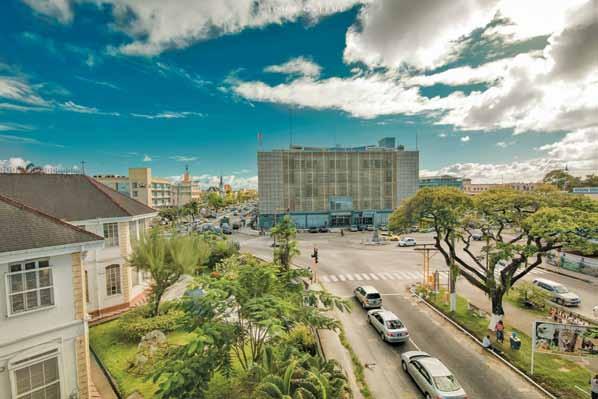
The star performer in agriculture was clearly the rice industry in 2013, having scored a record-breaking production level, achieving the equivalent of more than 535,000 tonnes, a 27 percent increase over the 2012 figure of 423,000 tonnes.
Production per regions stands as follow: Region Two (99,062 metric tonnes [mt]); Region Three (56,360mt); Region Four (24,972mt); Region Five (207,509mt); and Region Six (147,652mt). Again Region Five is the highest producing region.
This was the first time ever that a Caribbean country recorded more than 500,000 tonnes of rice in a calendar year. This also made Guyana one of the larger producers of rice in the Americas.
More than 200,000 acres of land was under cultivation in 2013, making it also the first time, cultivation acreage exceeded 200,000. Yield overall was five tonnes per hectare (ha,) again, for the first time in Guyana’s history. In 2010, the yield was about four tonnes per ha and in the late 1980s and early 1990s, yield was between two and three tonnes per ha.
The success of the industry is an acknowledgment of the enthusiastic participation of the farmers of Guyana, both small and large. They persevered un-

der difficult weather conditions, and learnt to work with climate change to successfully improve their yield and production. In 2013, farmers confronted the challenge of a drought and paddy bug infestation during the first crop and heavy rainfall in the second.
Farmers invested in improving the capacity in the industry by procuring more than 1000 tractors and 90 combines during the year. Millers continued their investment by building mills, and increasing drying and storage capacity for paddy. In 2013, the drying capacity across the country increased by 2269mt per day, while storage capacity increased by 27,678mt.
Region Six, the region most deficient in storage capacity accounted for 16,965mt of this increase in storage, while significant investment were also made in Regions Two and Five.

Guyana’s rice export for 2013 amounted to about 395,000 tonnes. Approximately, 58 percent of the rice was exported to Venezuela with other significant buyers being Europe, Jamaica, Trinidad and Tobago and other Caribbean countries.
The government’s support to the industry was strong in 2013. When farmers faced high prices for urea, an important commodity in their fertiliser regime for crop production, government invested approximately Gy$400 million to procure urea from Venezuela and, worked in collaboration with the Rice Producers Association (RPA), and made it available to the farmers at about Gy$5000 per bag.
As the first crop advanced, farmers were being charged between Gy$7000 and Gy$10,000 for a 48kg bag of urea. Such an intervention saved farmers more than Gy$300 million per crop.
In addition, government also made other inputs into the industry to provide support to farmers. These included, the supply of pronto to farmers to combat the high levels of paddy bug, VAT exemption to farmers for tractors and spares, and investment in drainage and irrigation infrastructure among others, the Government Information Agency (GINA) said.
Former beauty
queen Carol Ann Lynch appeared before Chief Magistrate Priya SewnarineBeharry on Wednesday, charged for the second time for the murder of her husband – Farouk Razack.
Lynch stood silently in the courtroom as Chief Magistrate SewnarineBeharry read the indictable charge to her. It stated that on May 7, 2007 at 106 Ireng Place, Bel Air Park, Georgetown, she murdered Razack.
Lynch was represented by Attorney Latchmi Rahamat who told the court that in 2007, her client was charged for the same offence and the matter was later discharged by the then City Magistrate Gordon Gilhuys who said there was not sufficient evidence for a prima facie case to be made out against her.
The attorney then added that no new evidence has been found and the charge is still being laid against Lynch for a second time. Rahamat then requested that the

matter remain before the chief magistrate to expedite the trial. Lynch was remanded to prison and is expected to make another court appearance on February 5.
Lynch’s arraignment comes one day after she turned herself over into the hands of the police. She was reportedly on the run for a number of years.
Razack’s body was found in his Ireng Place, Bel Air Park home about 08:30h on May 7, 2007 with a wound to his head and marks around his neck. At that time Lynch had just returned home after taking their daughter to school.
The National AIDS Programme Secretariat
(NAPS) has finalised the National Stakeholders Consultation on HIV 2020. This is according to NAPS Programme Director, Dr Shanti Singh.
Under the eightyear national strategic plan for HIV 2013-2020 (HIVision2020), there are five priority areas – coordination, prevention, care, treatment and support, and strategic information and integration, Dr Singh told Guyana Times International in an exclusive interview.
HIVision2020 will be rolled out shortly via three-year detailed operational plans. This would be done by the University of the West Indies’ health economics unit who are expected in Guyana on January 28 to commence working on this with the local team.
The strategic plan, Dr Singh added, is designed to place Guyana on a trajectory, to eliminate HIV, while reducing the social and economic impacts of the infection and AIDS and improving the lives of infected persons. NAPS
is working assiduously to meet the March 31 deadline for submission of the estimated number of persons living with the virus for 2013.
Prevention
“We’ve seen an intensification of the work that has been done among the key population, that is among the female commercial sex workers and men who have sex with men; in 2013, we recommenced services to prisoners after a little gap.”
Dr Singh explained that prevention packages would have been made accessible countrywide in 2013, in addition to treatment and screening services formerly available only in Region Four. This is a huge achievement for NAPS, as it continues the 75 HIV counselling and testing sites across the country. Dr Singh noted that there was no national week of testing in 2013 in observance of World AIDS Day, owing to inclement weather conditions, but all regions offered the services continuously through their testing sites.
In another remarkable achievement, there was an estimated 98 percent

coverage of pregnant HIVinfected women, while the 183 Prevention of Mother to Child Transmission (PMTC) sites are functional countrywide.
Treatment
In the area of treatment, the mobile units used to service the hinterland were handed over to the regions’ health facilities.
“That transition process showed a positive response in its growth and response from communities with support from REOs [regional executive officers] and health officers.”
She added that capacity building and train-
ing is ongoing to ensure sound, safe and quality treatment is being extended to all patients across the length and breadth of Guyana.
The director added that Guyana was recognised as one of the few countries in Latin America, where the population has universal access to treatment at a time when 70 percent of infected Guyanese were eligible. A second client satisfaction survey is to be completed in a few months and should be made available in mid 2014.
Guyana is on track to achieve many of its HIVrelated goals; however, challenges that are surfacing daily are making it difficult to meet deadlines. Much progress has been made on achieving zero discrimination on HIV/ AIDS.
In light of sex workers’ concerns about discrimination in treatment, Dr Singh said, “We have trained health workers, who are ready and willing to serve every human being.” She added that every person has the right to medical treatment, and health services are there for everyone.

University and technical/vocational students will benefit from a series of training seminars on proper practices associated with construction technology, organised by TCL Guyana Inc (TGI), in conjunction with fellow TCL Group subsidiaries Trinidad Cement Limited (TCL) and Readymix (West Indies) Limited (RML).
The training initiative got off to a successful start with the initial seminars held between January 17 and 20. The first session was a TCL Learning Academy cement and concrete technology seminar on Friday at the University of Guyana, which was facilitated by TCL Group civil engineer Avaleen Mooloo and coordinated by TCL Customer Excellence Officer Andira Kowlessar.
TGI Marketing Representative Eric Whaul, who organised the events, explained that the “primary objective of these seminars is for cement users to understand the right techniques and best practices

involved in construction.”
In explaining the strategy of targeting mainly young persons who are new to the industry, Whaul said, “If we get these young people to learn the right way of doing things when it comes to cement and concrete, then we’ll achieve something major in Guyana.”
The second seminar was held on Saturday at the Government Technical Institute, where more than 100 technical/vocational students from institutions across Guyana were enlightened about aspects of construction technology by TCL facilitator Romol Bereaux.
Building boom Whaul said the number of students who attended this TCL Learning Academy seminar was testament to the “building boom”, which has overtaken Guyana in the past few years. He stated that across Georgetown and other parts of Guyana, major construction work is taking place, which explains the vast interest of many young people in the building industry today. “It’s a very lucrative business.”
While Bereaux’ seminar was in progress, Austin Rodriguez and Sanish Maharaj of concrete manufactur-

er RML were conducting a seminar for Ready
Mix concrete operators at the TGI boardroom in Lombard Street. Present were representatives from Dipcon, BK International and Toolsie Persaud Ltd. Rodriguez, RML’s technical services manager, spearheaded the presentation, discussing topics like proper techniques involved in concrete batching, the process of delivering concrete, and concrete processing on site. The value of this seminar was lauded by those present.
“I deal with batching concrete and I came here to learn more about it. This was a very important training seminar,” said Dipcon civil engineer Sohan Bridjlall.
TGI also took its training initiative to the airwaves on Monday, with a live television programme entitled “Concrete – Best Practices”, featuring Whaul, Rodriguez and TGI Plant Manager Mark Bender on the National Communications Network (NCN).

Leader of the mission team from the United Nations (UN) Office for Disarmament’s Regional Centre for Peace, Disarmament and Development in Latin America and the Caribbean (UNLIREC), Juliet Solomon on Monday presented the report on a legal study conducted to Legal Affairs Minister Anil Nandlall.
The document contains a comprehensive assessment of Guyana’s obligations, internationally under treaties and agreement, in respect of firearms, ammunition and explosives.
In June 2013, Home Affairs Minister Clement Rohee had reported that Guyana was working in the context of international cooperation with the UN body to address the question of stockpiling firearms and ammunition, and how to deal with over accumulation of those which are obsolete. UNLIREC will guide Guyana on how to dispense with firearms, as well as securing stock piles in ways that are in keeping with certain international standards.
“We have received a copy of that report which would have chronicled all of Guyana’s obliga-
tions under various treaties in relation to this. In addition to that, a training session is being held for members of the army and police force, who are being trained to operate a machine which was donated, the purpose of which is to destroy arms and ammunition no longer in use. That training session is to commence this week and once our officers are equipped to operate the equipment, the destruction will commence,” Minister Nandlall stated
The UN mission has donated a hydraulic shears and a small arms ammunition burning tank to be used for the destruction of obsolete and surplus weapons, ammunition and explosives in Guyana.
The legal affairs minister also explained that the training sessions would assist with regards to the implementation of the recently approved Firearms (Amendment) Bill, as well as the Evidence (Amendment) Bill.
The main purpose of the Firearms (Amendment) Bill is to create new offences in relation to possession and trafficking of components of a firearm. The prosecution of those
types of offences would require expert evidence to be given, identifying alleged components of a firearm or ammunition as being exactly that. This testimony must come from a person who is duly qualified and who would be deemed an expert by the court. Additionally, the amendment to the Evidence Act increases the category of experts whose certificates or analysis can now be admissible in the court of law. Among the authorities listed in the bill are ballistic and fingerprint experts, and the analysis or certificate of scientific officers who are attached to the Guyana Forensic Laboratory.
“So far as these certificates touch and concern firearms, ammunition and explosives, we have requested from this very organisation, UNLIREC, assistance to train our personnel in the field of ballistics, fingerprints and any other area of activity which may be relevant in helping the state to establish a case of possession of firearms and ammunition and or explosives or any criminal offence which involves the use of firearms and ammunition and or explosives,” Minister Nandlall said.
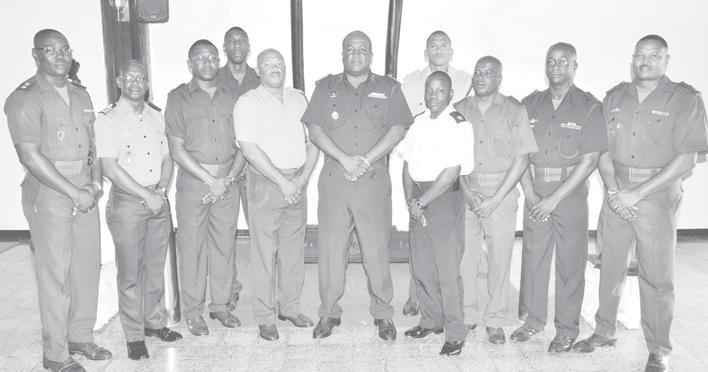
Commander-inChief President Donald Ramotar has approved the promotion of 88 officers and 260 other ranks of the Guyana Defence Force (GDF), the army confirmed last Friday.
Chief-of-Staff, Brigadier Mark Phillips made the announcement in accordance with the Defence Act Chapter 15:01 of 1977. The promotions took effect from January 1. According to a GDF statement, 42 officers and 96 other ranks were confirmed in their rank while 46 officers and 164 ranks were elevated in rank.
Leading the promotions list are Lieutenant Colonels Sherwin Anderson and Godfrey Bess who were confirmed in their rank. Lieutenant Commander Orin Porter of the Coast Guard was promoted to acting commander, while Majors Dwain Jervis, Trevor Bowman and Kenlloyd Roberts have been promoted to the rank of acting lieutenant colonel.
In addition, four majors, including one female, have been confirmed in their rank, while substantive captains Dwayne Carter,
Mark St Claire, James Fraser, Julian Archer and Drumson Mc Caulay have been promoted to acting majors. Seventeen acting captains, including three females, are now confirmed in their rank, while Substantive Lieutenant Jocelyn Mc Allister has been promoted to the rank of acting captain with effect from January 1, 2012.
Ten other substantive lieutenants, including one female, are now acting captains. Ten acting lieutenants have been promoted to sub-
stantive lieutenant, while 10 second lieutenants have been promoted to acting lieutenant.
In the Coast Guard, acting lieutenants (CG) Nigel Backer and Wayne Richmond have been confirmed in their rank, while substantive sub lieutenants Paul Castello and Travis Morgan have been promoted to acting lieutenant (CG) and seven acting sub lieutenants have been confirmed in their rank.
Further, the GDF said Midshipmen Derrick
Johnson, Rudolph Singh and Rondel Douglas are now acting sub lieutenants. In the GDF Reserve, Substantive Captain Earl Edghill has been promoted to acting major, while 10 second lieutenants have been promoted to acting lieutenant.
Two hundred and sixty other ranks have been promoted. Of this number, 96 have been confirmed in their rank, while 164 have been elevated in rank. Heading this group is Staff Sergeant Christopher
Harmon, who has been promoted to acting warrant officer class two.
Warrant officers class two; Dwayne Layne, Marcia Williams, Sherlock Rigby, Dyanor Wilson, Leyland Liverpool and Hesley Craig were confirmed in their appointment.
The remaining 253 other ranks were promoted through ranks ranging from acting warrant officer class two, to acting lance corporal.
Other promotions in the Coast Guard saw Substantive Petty
Officer Dexter Fraser being elevated in rank to acting senior petty officer. Meanwhile, three acting petty officers were confirmed in their rank, while five substantive leading ratings are now acting petty officers. Six acting leading ratings are now confirmed in their rank. Additionally, three substantive able ratings have been promoted to acting leading ratings while five acting able ratings have been confirmed in their rank.
Ordinary Rating, Collis Parkinson has been promoted to acting able rating/substantive able rating and four other ordinary ratings have been elevated to the rank of acting able rating.
Soldiers confirmed in their rank have earned the substantive (Sub) in that rank, after previously holding the acting rank.
At a simple badging ceremony, the recently promoted senior officers were decorated with their new badges of rank by Brigadier Mark Phillips, who was assisted by Deputy Chiefof-Staff, Colonel Kemraj Persaud.

In light of the damning allegations of police torture and other abuses, Home Affairs Minister Clement Rohee on Saturday held what was described as an open and sincere discussion with senior officers of the Guyana Police Force.
The meeting with Police Commissioner Leroy Brumell, all divisional commanders and other officers, was aimed at reviewing the 71 recommendations for the improved working of the Guyana Police Force, which were compiled by the Disciplined Forces Commission of Inquiry in 2004.
According to a police statement, the highly interactive session was held at the Police Officers’ Training Centre, Eve Leary. Also participating were Director of Public Prosecutions Bibi Shalimar AliHack; Police Complaints Authority Chairman, retired Justice Cecil Kennard, and members of the civilian-based Strategic Management Department of the police force.
Intense discussions
“Intense discussions,

in a sincere and open manner, were held with the view to analysing developments that had taken place within the force in terms of the implementation of the recommendations, and to garner additional recommended actions on the way forward,” the statement said. Rohee, the statement noted, highlighted the work of the Special Select Committee established by Parliament, which reviewed the Disciplined Forces Commission report on the police force, with specific focus on its recommendations on implementing the advised
changes, which were taken on board during the discussions.
During the presentation by the force, and arising from the interactions, a high level of appreciation was expressed for the work already done in effectuating most of the 71 recommendations.
The Guyana Police Force is presently compiling a working document, inclusive of all the applicable recommendations made during the one-day session, in keeping with its thrust to ensure that the Disciplined Forces Commission’s recommendations are implemented.

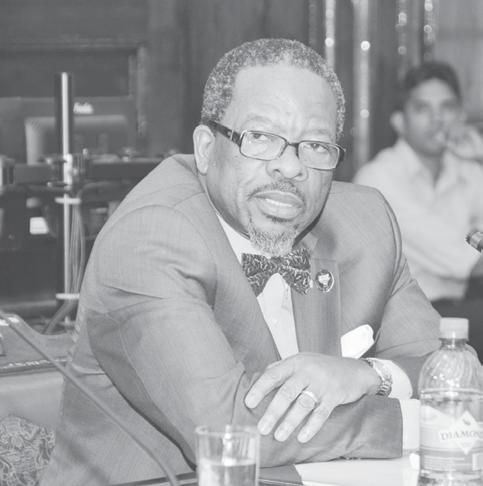
Guyanese-born U.S. professor on Caribbean security, Dr Ivelaw Griffith said the forging of greater partnership in the local and international arenas might be an answer to some of this country’s security challenges.
Dr Griffith at the time was conversing during a high-profile meeting with U.S. Ambassador D Brent Hardt and Members of Parliament (MP) in the Parliament chamber on Tuesday.
Dr Griffith was told that Guyana continues to be plagued by traditional security challenges as references were made to issues surrounding resources, porous borders, corruption and the security forces’ inability to execute their duties.
Building partnership
Dr Griffith said building greater partnership can be a means of addressing security challenges. It was explained that through partnership, Guyana can fill the gaps by securing the necessary resources.
“Resources are not infinite, resources are limited but it is also true that the challenges on the security landscape are not limited to one country, hence, there is necessity for partnership,” he explained.
According to the Guyanese-born professor, the government of Guyana cannot address matters of security alone, thus it is important for the private sector to step in and take up responsibility.
Lack of monitoring
Alliance For Change (AFC) member Trevor Williams contended
that the lack of monitoring of resources are major impediments in Guyana’s security sector. According to him, it is not necessarily an issue of finance, but one that speaks to the lack of institutional capacity.
Considering Guyana’s geographical location, Williams said the country is among key transshipment points, and security forces must maximise and generate resources to combat transnational crimes and other criminal activities, thereby enhancing the level of security.
He was backed by A Partnership for National Unity (APNU) MP Renis Morian, who said the effective use of communication can also remedy security problems facing Guyana.
Dr Griffith, in his response, said there might be cases where the requisite technologies are provided for effective communication; however, the human capacity to capitalise on the resources is lacking, due to the lack of training in the area of information technology.
In keeping with the topical issue of resources, APNU frontbencher, Dr Rupert Roopnaraine alluded to the recent dispute between Guyana and Venezuela when an armed Venezuelan naval ship evicted a U.S. oil explorer from Guyana’s waters.
Additional attention was drawn to the New River Triangle matter in which the Natural Resources and Environment Ministry through the Guyana Geology and Mines
Commission (GGMC) issued Permission of Geological and Geophysical Survey (PGGS) to Muri Brasil Ventures Limited; a move that would have paved the way for the issuing of a maximum of 18 prospecting licences for rare earth elements, bauxite, gold and diamond.
Considering Guyana’s porous borders and recent occurrences, Dr Roopnaraine said the country should maximise on diplomatic resources to safeguard itself, in the area of border security.
Not unique
In response, Dr Griffith said maritime and territorial issues are not unique to Guyana, positing that it is often a concern of many nations across the hemisphere. It was posited that most nations do not have the ability to single handedly take military action, hence “military cooperation” becomes critical.
AFC members Valerie Garrido-Lowe and Cathy Hughes; APNU’s Vanessa Kissoon, and Christopher Jones; and People’s Progressive Party/Civic (PPP/C) representative Joseph Hamilton were among parliamentarians that contributed during the forum.
Apart from being a professor of political science, Dr Griffith serves as provost and senior vice president at York College of the City University of New York. His notable achievements there include growing the full-time faculty by 30 percent over four years, re-organising the academic division into three schools and enhancing the research and scholarly climate by creating a Provost Lecture Series and a companion Distinguished Scholars Lecture Series.
In addition to addressing security issues, Dr Griffith will be building partnership with the University of Guyana, the University of the West Indies, the Fort Valley State University and the University of Puerto Rico.
He is in Guyana on an official visit upon the request of the U.S. embassy. After leaving Guyana on Tuesday, his next official visit is set for Trinidad and Tobago.
Dear Editor,
This month marks the 64th year of the People’s Progressive Party (PPP), the first as well as the largest multi-racial and progressive mass movement that awakened the political consciousness of Guyanese in particular and Caribbean nationals in general.
To this day, the PPP still remains the oldest, bestloved, and most cohesive political party in this country. Demonstrating effective leadership ever since it was founded in January 1950, it has the distinction of winning every free and fair election held since 1953 under both electoral systems – first-past-the-post (1953-1961) and proportional representation (1992-2011). The party’s 1953 main aim was a commitment to a redistributive economic programme intended to reduce poverty –which has remained a key pillar ever since.
The PPP won three consecutive general elections under the first-past-the-post electoral system in 1953, 1957, and 1961 and won the major-
ity of votes at the 1964 general election under the newly-introduced proportional representation system, but this constitutional coup prevented it from forming the government.
When the party was removed from office, its 19571964 programme brought the country to the second wealthiest in the English-speaking Caribbean after Trinidad and Tobago, with its own university, good healthcare and education system, and sound industrial and agricultural programme. It was categorised with the more developed countries (MDCs) in the Caribbean with Barbados, Jamaica, and Trinidad.
Since then and after almost 30 years since 1964, the party triumphed (with the help of a “Civic” component, hence PPP/C) at winning an outright majority at the first ever free and fair elections held in 1992.
At the time of the 1992 change, Guyana’s per capita income at US$410 was the lowest in the 13 Caribbean Community (CARICOM)
states and the country ranked as one of the three poorest nations in Latin America and the Caribbean, the others being Bolivia and Haiti.
However, the PPP/C government slowly brought the country back and has won every general election since. Today, with the per capita at well over US$8000 and with eight consecutive years of positive economic growth at over five percent annually, Guyana is indeed the envy of the other CARICOM states, despite political setbacks.
How did this happen? In a word – leadership. An anatomy of the party’s philosophy, programme, and history shows that one key reason for such ongoing success essentially lies with its leadership principle.
True leaders are those who, through their deeds, lead by serving others. They must walk the talk. Party leaders have demonstrated true leadership over the years through influencing and followership.
Dr Laurence J Peter, developer of the ‘Peter Principle’,
maintains that: “Many are called leaders by virtue of their being ahead of the pack or at the top of the pyramid, and that is one definition of the word leader. But being out front or on top denotes only position and not the qualities of leadership. There is a significant difference between being in charge and being a leader.”
Eschewing violence and firmly believing in democratic principles, the PPP/C has an ultimate purpose of seeing all Guyanese prosper, progress, and live in peace and harmony. The creation and embodiment of this effective purpose has differentiated the party from all others. Against this backdrop, the party’s earlier slogans of “Peace, Progress and Prosperity” and “For Honest and Progressive Government” hold true to this day.
The late great PPP/C founder-leader Dr Cheddi Jagan was one political leader whose life story – up from modest beginnings to holding the highest office in Guyana through honest means – provided an effective backdrop
for admiration and the sound economic, social, and governmental changes he advocated and implemented during his tenure in the short-lived 1953 government and the 1957-64 and 1992-97 years.
Even the British and Americans acknowledged at the height of the 1962-64 turmoil that he was the ablest leader in Guyana.
As noted earlier, the PPP/C won every election since Dr Jagan’s death in March 1997 without him at the helm for the first time since the 1953 general election. Such performance represents superior leadership qualities and is aptly described by Walter Lippman (1889-1974), a U.S. liberal political commentator, when he said: The final test of a leader is that he leaves behind him in other men the conviction and the will to carry on.
Sincerely,
Lal Balkaran, MBA, FCMA, FCGA, CGMA Internal Audit, Risk and Corporate Governance Consultant
Dear Editor,
The establishment of the US$4 million Chinese shipyard located at Coverden, on the East Bank of Demerara has managed to capture the attention of many individuals in Guyana. Prime Minister Samuel Hinds expressed his overall delight for the establishment of the facility and further expressed his enthusiasm for the construction of the barge.
The project was a great indication of Guyana’s accomplishments. The overall establishment and eminence of the facility should inspire Guyanese busi-
nessmen and women to aim for and adapt higher standards when undertaking small or large projects.
I call attention to the condition of the fishing wharf at Meadow Bank. Several calamities have taken place over the year, fortunately none of which have managed to cause serious injuries or death.
The poor infrastructure of the facility makes it a risky and hazardous place for people to traverse. Moreover, the overall presentation of the wharf appears cluttered and disorganised. It is absolutely necessary
for this facility to undertake a much-needed face lift.
Another situation that should be addressed is the current state of roads that were in fact recently upgraded. The individuals responsible for road maintenance need to be questioned and if it is a matter of providing better guidance and expertise, then so be it.
As time goes by, many of these pot holes become more and more threatening to both drivers and pedestrians and it is therefore crucial for this matter to be immediately addressed.
Dear Editor,
I commend Food for the Poor Guyana and the Amerindian Affairs Ministry for their efforts to complete and furnish the dormitory at the Sand Creek Secondary School located in Region Nine. Sand Creek Secondary School was built with intentions of providing education to students from both Regions Nine and Eight. When it comes to managing schools in remote areas, the process of providing meals and sleeping quarters is often the least of our worries and there are in fact other areas of concern that we should place emphasis on.
I recall a few months ago, a 15-yearold student from a secondary school on the Essequibo Coast discovered that she was four months pregnant. As we all know, the importance of education is quite often expressed by the government and also recently by the Amerindian Affairs Minister Pauline Sukhai who declared the need for students in hinterland locations to embrace educational opportunities in order to better equip
themselves with the skills and knowledge to later contribute to the overall development of Guyana.
There are now approximately 13 schools established in the hinterland area and many of them comprise of a standard two storey building consisting of a dozen classrooms, laboratories, administrative offices, computer rooms, home economics and industrial arts divisions and a dormitory.
Nevertheless, there will always be the need for more schools to be established within hinterland areas. In fact, government is expected to construct a new school at Kato, Region Eight which is expected to accommodate more than 100 students.
Investments in education often require insight, patience and financial commitment. It is for this reason that people who bolster education and contribute to the development of such learning facilities should always be acknowledged.
Respectfully, Simone Perreira
A popular saying states that a job that is poorly done is a job that must be done twice. The outstanding and timely manifestation of the
establishment of the Chinese shipyard should be used as a guide and a standard for us Guyanese to follow by. We must be proficient
when undertaking any task, since it will ensure that the job is done right the first time.
Yours truly, Surrendra Sukhdeo

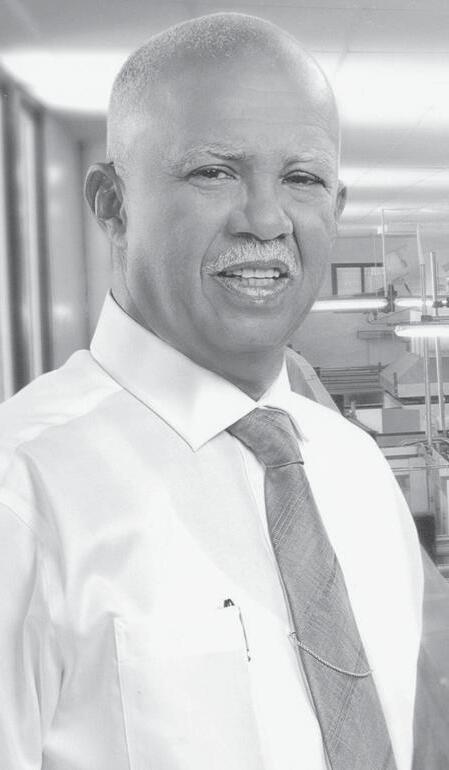
Beverage giant Banks DIH posted Gy$2.543 billion in after-tax profits last year, a marginal decline of Gy$15 million compared to the Gy$2.558 billion achieved in 2012.
The company’s profit before taxes was Gy$3.862 billion, compared to Gy$3.700 billion the preceding year, an increase of Gy$162 million, Banks DIH Chairman Clifford Reis said in his chairman’s report to be delivered at this weekend’s annual general meeting.
According to Reis, included in the after-tax profit for the previous year was the one-off gain of Gy$167 million arising from the disposal of the Camp Street property to the conglomerate’s banking subsidiary. After deducting the impact of that gain, the company’s profit after tax increased by Gy$152 million or six percent.
Reis said his report comes against a backdrop of continued sluggish global economic recovery and tensions which continue to be manifested across the globe, especially in those areas which are prime petroleum producers.
He said as a result of comprehensive planning and prudent management of resources, the overall performance of the group improved, with an operational profit before taxes of Gy$5.340 bil-
lion compared to Gy$4.966 billion in 2012, a seven percent increase of Gy$374 million. Profits after taxes for the group attributable to shareholders grew from Gy$2.812 billion to Gy$2.930 billion, an increase of Gy$118 million or four percent.
Capital expenditure
Meanwhile, within the year under review, Reis said the com-
pany continued with the implementation of the brewery modernisation programme, which is the second phase of its strategic capital investments for the period. Included in this programme to improve production capacity and availability were major capital works within the brewhouse and cellars’ operations, including the installation of Wort Kettle, CIP Plants, Brewhouse Control Systems, BOTEC software upgrade and the new Unitanks.
Reis said the installation and commissioning of the new 1.7 megawatt Hyundai generator to satisfy increased demand, and a new Cleaver Brooks boiler to increase steam generation for the production areas were started in the 2012/2013 period and will be completed within this year.
In terms of construction work, the Stabroek Sports Bar was opened for business in October 2012 and works were done on the sales office and the credit and internal audit departments.
Further, Reis said over the past five years, shareholders’ equity value increased from Gy$13.721 billion to Gy$21.558 billion, a 57 percent spike of Gy$7.837 billion. Shares are currently being traded at Gy$20.00 per share.
Veteran private sector executive
Clinton Williams has been appointed chairman of the Guyana Geology and Mines Commission (GGMC) as the commission ramps up its management structure to improve organisational efficiency.
According to a release from the Natural Resources and Environment Ministry, Rickford Vieira has also been confirmed commissioner of the commission.
Challenges Natural Resources and Environment Minister Robert Persaud said the new appointments will address the challenges facing the mining sector in enhancing its operation.
The Natural Resources and Environment Ministry also pointed out that there will be a continuous review of the operation of the organisation and other critical appointments will be made shortly.
Clinton Williams, a seasoned private sector executive, is chief executive officer/director of Guyana National Industrial Company Incorporated, having been with the company since the time of privati-
sation in 1995.
Williams is an industrial engineer and holds both first and second degrees in mechanical/industrial engineering. He is a member of a number of international professional associations in the shipping and engineering fraternity and has completed a number of publications, research projects and reports in this capacity, inclusive of a strategic plan for the Shipping Association of Guyana in response to the Caribbean International Development Agency (CIDA) Caribbean Regional HRD Programme for Economic Competitiveness.
He has also completed a number of consultancy assignments for a wide range of industries in Guyana and the wider Caribbean, including the shipping, engineering and manufacturing sectors.
Vast experience
Williams has a postgraduate certification in project management and vast experience in comparative management systems, energy conservation, project evaluation and preparation, strategic port pricing and private sector partnerships for small and medium size enterprises.

ggmc's
A professional engineer, Clinton Williams was a member of the team of experts which formulated the National Development Strategy for Guyana, particularly in relation to the strategies for the transportation and manufacturing and engineering sectors.
Appointed commissioner Vieira holds a master’s of engineering, (mining engineering) 1997 from the University of British Columbia, Vancouver, Canada and a bachelor of engineering (mining engineering), 1994 from the University of Guyana.
He is also an engineer with extensive experience in project management, production management, field exploration, site rehabilitation, environmental

By Anu Dev
“There is nothing like returning to a place that remains unchanged to find the ways in which you yourself have altered.” – Nelson Mandela
Now don’t get me wrong after you read the quote above. It’s not as if I spent the last 27 years on Robbins Island. Or even that I was locked away for the four months I was away in Trinidad – with armed guards patrolling the perimeter of the UWI Medical School! But I’ll tell you what: like prisons, medical schools (and all schools for that matter) are also institutions that seek to impart a new way of looking at the world on its inmates. And they have more than a few things in common.
There are no guards clanking on bars to wake you up (I’ve seen this in prison movies, in case you’re wondering!) in medical school but those early classes that are mandatory pretty much have the same effect on you. And if you detect a note of chagrin in that sentence, it’s quite heartfelt – coming from a person who enjoys a late morning snooze. So you end up, after four months, waking up early.
impact assessment, environmental management planning, environmental monitoring, closure and decommissioning plans, feasibility studies, mineral inventory estimation, mineral processing plant design, rehabilitation and re-vegetation of mined out lands, mine plans and a training instructor for mining and environmental studies.
Vieira was also an independent environmental consultant for several mining projects in Guyana and Suriname and lectured part-time at the University of Guyana in the Department of Mining.
He has several publications in scientific journals including the Journal of Cleaner Production, the International Journal of Environmental Health Research, and the Health, Safety and Environmental Quarterly.
Meanwhile, Minister Persaud remains optimistic that these appointments will continue to build on the record breaking declaration of 481,102 ounces for 2013, surpassing the previous highest level of 455, 918 ounces in 2001; which included the declarations of both Omai and small scale operators.
I’ve also heard about the prison “slop” – and seen it in the aforementioned movies – and I’ll tell you something. The people who run cafeterias in medical schools probably graduated from the same culinary institutions as their compatriots in the correction facilities. So, I’ve ended up pretty much doing my own cooking. Not that I have anything against cooking – in fact, I happen to actually like the experience. I can let my creativity pour forth in the kitchen.
But when you return home to your dorm room and have to whip up your vittles, it does take the sheen off even the old favourites. So I’ve resorted to cooking pounds of puttanesca and gallons of dhal and sequestered them in my fridge. And you appreciate like you’ve never done before, the effort your mother made to whip up all those concoctions (effortlessly, you’d thought!!!) to deal with your finicky eating habits. So yes, I can emphasise with Mr Mandela when he conceded that you are inevitably altered by institutional rules and regulations.
So how was it to return to a place that was unchanged? Well I’ll tell you…it wasn’t that unchanged. The four lane exit from the airport’s coming on nicely and there was a new hotel near the stadium. I thought they should’ve put up a facade around the roof, though – the present one makes the place look too ordinary from the outside. See…I told you I’ve changed. Moving around Trinidad (which could fit into half of my native West Coast Demerara) that’s so oriented towards tourism makes one much more aware of the amenities demanded.
But I’ll tell you what hasn’t changed – the garbage situation. I’ve written before about my school bus manoeuvring through the flotsam and jetsam from floods that have receded; and almost retching on my way to Queen’s.
But this time, in my newfound freedom where I could go shopping, the old revulsion was intensified from seeing gorgeous new malls rising from the same garbage. But this time, I was much more outraged –at the Mayor and City Council, at the people dropping their garbage so nonchalantly and at all the political gamesmanship.
But one thing that was unchanged was the love from my family, friends and old nexuses. I dropped in to the birthday of an old school friend and was able to re-connect to most of the old gang. Like me, they’ve moved on…but the old bonds are still there.
So unlike what Tom Wolfe said, you CAN go back home.
Full-service business solutions provider Digicel Business is the winner of the coveted ‘Avaya Partner of the Year’ award.
The award was presented on Thursday, January 16 at the Avaya Partner Connection Day event held in San Juan, Puerto Rico. The award ceremony, which marked the end of a week of conferences and seminars, was held to recognise and award 2013’s best partners and collaborators of Avaya Inc, a global provider of business communications and collaboration systems.
Avaya’s Managing Director for the Caribbean and Central America, Jose Fernandez, lauded Digicel Business’

achievement saying; “We would like to congratulate Digicel Business on its award as Best Business
Partner for the Caribbean and Central America region. This award exemplifies Digicel Business’ com-
Amid numerous cases of the smuggling of Guyana’s wildlife, some of which have been prohibited, government is considering tabling a wildlife import and export bill, which it hopes will provide a national framework and mechanism to govern the international trade of all species of wildlife in Guyana.
Natural Resources and Environment
Minister Robert Persaud in a recent interview with the National Communications Network (NCN) said an intensive public awareness campaign is planned to raise awareness of the issue which potentially impacts the lives of thousands of Guyanese. Several Guyanese had been cited in the past for exporting some of the country’s wildlife.
Meanwhile, Persaud said the Management and Conservation Regulations (WMC) is a key tool in government’s effort to effectively regulate the sector.
Technical and legal experts conducted interviews with stakeholders and submitted a report on the consensus positions reached by EPA and relevant stakeholder agencies on outstanding issues. The first draft was then prepared and circulated to relevant stakeholders (government agencies, NGOs, wildlife exporters, trappers and transport associations, community development officers and relevant toshaos).
Feedback
The second draft of
the regulations was prepared based on feedback from the said stakeholders.
The revised regulations were advertised in local newspaper, requesting comments on the document from the general public. A second stakeholder consultation was held and a third draft was prepared and submitted.
In addition, the draft regulations were circulated to the members of the EPA board for review. All comments were addressed by the legal expert and re-submitted for EPA’s approval. The regulations were gazetted and tabled in Parliament, where it gained the full support of the House at the January 16 sitting.
The regulations and guidelines will enable the development of systems, including penalties and mechanisms for enforcement for the management of local wildlife, Minister Persaud said.
“As it is now, people would complain that it’s over hunting, over fishing, disrespect for spawning seasons for fish, giving other species time to procreate… sometimes if you travel along roadways in our hinterland, you would see containers upon containers of ice boxes and when you check these boxes they would contain wild meat. So you had these unchecked and certainly disruptive practices that have been taking place for a number of years; it had gotten out of control.”
The regulations will address these issues, as well as the needs of those indigenous communities which traditionally utilise various wildlife species, he added. The regulations also deal with the export of wildlife and exotic plant trade, said Minister Persaud.
The rules will see those who engage in any aspect of the wildlife trade being subjected to licensing and certification requirements as it deals with domestic trade regulation, as well as broader wildlife management issues; however, it does not make provisions for the regulation of international trade of wildlife.
mitment and dedication to meeting all of our customers’ needs in the multiple lines of business that
we bring to the market.”
A division of Digicel Group, Digicel Business delivers value and innovation, enabling people to work better together and to connect with their customers, suppliers and communities. Digicel Business said it “partners with businesses to maximise the potential of technology to solve intricate business and technical challenges”.
This year, Digicel Business was nominated in four categories, including Best Marketing Partner of the Year, Best Project of the Year, and Best Sales Executive of the Year. In 2012, Digicel Business won the Best Project of the Year award for the Digicel Contact
Centre and the Sales Executive of the Year award went to Digicel Business Enterprise Account Manager Duwayne Watson.
“We are delighted with the recognition from Avaya. We have been very focused on expanding our technical integration capabilities and the broad range of technologies we can offer to our customers in Caribbean and LATAM markets and we see this award as total endorsement of that strategy and recognition of how Digicel has evolved from a mobile telecommunications provider into being the leading business solutions provider in the region,” Digicel Business Solutions CEO Tom Carson said.


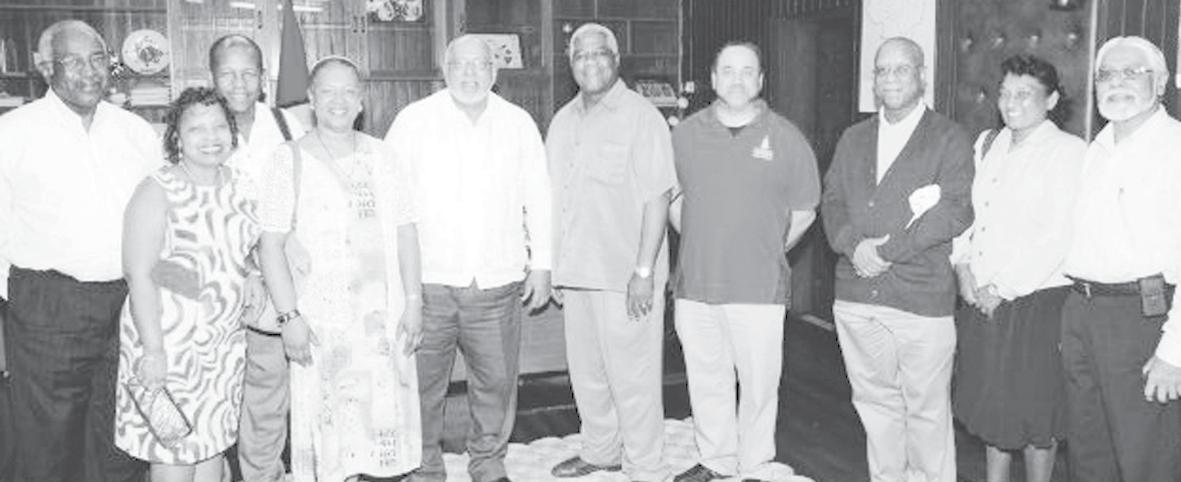
Members of the Howard University Medical Association who are on a five-day visit to Guyana, on Monday paid a courtesy call on President Donald Ramotar at the Office of the President.
Team member, Dr Fredrick Cober, described the meeting as very productive.
Dr Cober told the Government Information Agency (GINA) the various ways in which the association of medical professionals, many of whom have decades of experience, could be of service to Guyana.
“The president was very receptive to many of our ideas and made some
good suggestions of his own,” Dr Cober said.
The doctor, a paediatrician, said the association’s trip to Guyana was a success, and expressed amazement at the loca-
tions they were able to visit such as the Kaieteur Falls, saying, “We most definitely will return to Guyana”.
Guyana hosted the 2014 reunion of the as-
sociation from January 16 to 21. The delegation, of 44 Washington, DC-based medical practitioners that included Guyana’s own David Aubrey Gooray, a Howard

fessional and academic ties with the medical staff at the Georgetown Public Hospital Corporation (GHPC) and its members also hosted a special event in honour of Dr Martin Luther King at the Pegasus Hotel.
Founded in 1867, Howard is a private, research university that comprises 13 schools and colleges. Students pursue studies in more than 120 areas leading to undergraduate, graduate and professional degrees.
University graduate from Essequibo, delivered Continuing Medical Education (CME) lectures over two days; January 17 and 18 at the Guyana International Conference Centre (GICC).
The team also explored the forging of pro-
Since 1998, the university has produced two Rhodes scholars, two Truman scholars, a Marshall scholar, 30 Fulbright scholars and 11 Pickering fellows.
Howard also produces more on campus AfricanAmerican PhD recipients than any other university in the U.S.
UNAIDS and civil society partners, in collaboration with the organisers of the XX International AIDS Conference have jointly announce a global call for nominations for the 2014 Red Ribbon Award.
According to a release, the award, which will be presented at the XX International AIDS Conference in July 2014 in Melbourne, Australia, honours community-based organisations for their contributions in response to the AIDS epidemic.
Winning a Red Ribbon Award is highly coveted by community organisations around the world. In 2012, more than 1400 nominations were received.
The award not only brings a deserved spotlight on the most inspiring and innovative community responses, it also highlights the crucial importance of the community response to HIV and helps communities advocate for their involvement in the response to HIV with local, national and global leaders and decision-makers.
The biennial award will be given to 10 organisations that have shown outstanding community leadership
and action on HIV. The five award categories are: Prevention of sexual transmission; prevention among and by people who use drugs; treatment, care and support; advocacy and human rights; and stopping new HIV infections among children and keeping mothers alive.
Each recipient of the award will receive US$10,000. Representatives of each winning body will present the work of their organisation, their priorities, the challenges they face and their approaches to community engagement at the XX International AIDS Conference from July 20-25 in Melbourne, Australia, where the Red Ribbon Awards will be presented.
Nominations will be accepted from December 1, 2013 through January 31. Submit nominations on-line at www.redribbonaward.org, where further information can be found.
Community-based organisations (CBOs) working to halt and reverse the spread of HIV are encouraged to apply. The Red Ribbon Award 2014 is funded by The Joint United Nations Programme on HIV/AIDS and Irish AID.
The bodies of the pi-
lot and a load handler were removed from the dense jungle in the Mazaruni even as local air carrier Trans Guyana Airways (TGA) announced that it will be seeking international assistance to help with the investigation into the plane crash that occurred Saturday last.
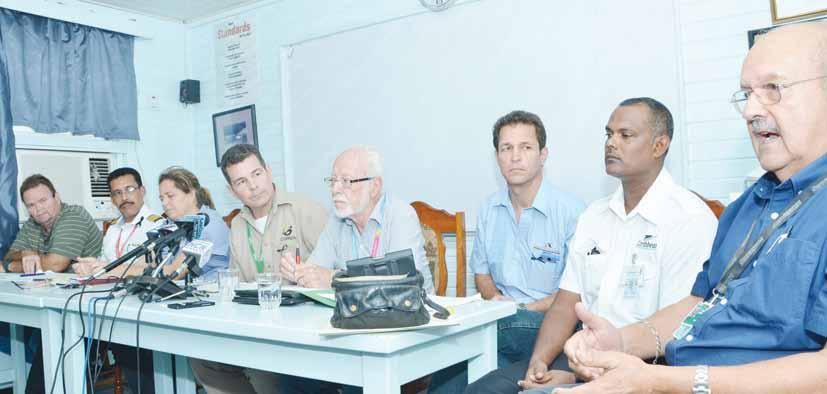
The announcement was made on Tuesday at a special press conference held by the TGA management team at the Ogle International Airport (OIA).
TGA Chief Executive Officer Michael Correia said his company will do everything possible to determine the cause of the accident that resulted in the death of Canadian pilot Blake Slater and local load handler Dwayne Jacobs.
This process, he said has begun. “We are fully cooperating with the local civil aviation authorities and we will request whatever international assistance may be required,” he added.
Search and rescue
Correia told the media conference that it took a little over 24 hours to locate the aircraft
and another few hours to remove the bodies of the two dead men. On this note, he is recommending better helicopter support and advanced technologies to rappel a search and rescue team.
Questioned as to whether there was any suspicion that the aircraft was overloaded, Correia said this was never the case. He noted that the aircraft weighed 2800 pounds and contained seven drums of diesel.
Correia said the flight was
taking fuel from Olive Creek to Imbaimadai, a regular operation.
According to him, the company will be seeking answers about why the Emergency Locator Transmitter (ELT) was not activated on impact to allow the Search and Rescue (SAR) team to pin-point the precise location, where the plane crash-landed.
Compensation Meanwhile, as it relates to compensation for the victims, TGA’s Chief Finance Officer

Nicole Correia said both the pilot and loader are covered by insurance. She said the families of the victims will be able to access the scheme within a year’s time.
In clarifying whether the company has sought to reach out to any of the victim’s family members, the chief financial officer said that both families were contacted and were told of the incident.
The company, she said, stands ready to support both families financially and oth-
erwise and have been in constant contact with them.
The body of pilot Slater was found strapped to his seat while cargo loader Jacobs was discovered outside of the aircraft on Monday. He was not far away from the wrecked aircraft.
The aircraft, a single engine, 13-seater Cessna Caravan with registration number 8R-GHS had disappeared out of the sky about 10:56h on Saturday.
The last contact with the pilot of the aircraft was a “Mayday” (emergency call) which was transmitted to another aircraft within the area at the time. The aircraft had departed for Imbaimadai about 10:54h after overnighting at Olive Creek.
Location
The plane was spotted on Sunday about 12:35h after an estimated 11 hours of searching by a GDF helicopter. The area is said to be in the vicinity of the Marikina Mountain.
The bodies of the pilot and cargo loader were taken out of the jungle late Tuesday morning. They are at a mortuary awaiting post-mortem examinations.

The Gy$32 million e-governance project which is being piloted and implemented by the government of Guyana is on track and is scheduled to be completed by April this year, before officially being handed over in August,
despite several challenges faced at various levels of the advanced stages of its roll-out.
In fact, the minor

setbacks have resulted in Guyanese being able to benefit from a highly technological and advanced e-governance project that will revolutionise the manner in which government offers critical services to the public, while reducing tremendously the time associated in accessing information and doing business with the government.
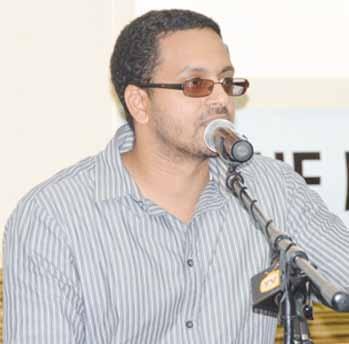
This is the position of the project manager Alexei Ramotar, who also fended off several attacks and misinformation being spread about the project and his competence to carry it to completion.
Personal attacks
Ramotar, in an exclusive interview on Television Guyana’s (TVG 28) flagship ‘Current Issues and

Analysis’ show, explained that he had no problems with questions being asked about the project by any stakeholder in society, including parliamentarians.
He did, however, express disappointment at what appeared to be personal attacks being made on his credentials and a project which would advance the information communication technology sector of Guyana.
“We have had a few delays in which we have changed technologies,” he explained, stating that other challenges to this component of the overall project ranged from adverse weather conditions and the “usual project issues”.
“We have pushed it back, the handing over to August 2014. However, we expect all the parts to be finished by April 2014, we are on track for that and the April to August period is where we will be doing a lot of testing, and optimisation of the network and so forth. These are very standard things that happen in telecoms,” he stated.
Asked whether that decision was expected to cost the taxpayers of Guyana any additional funds, he responded in the negative, stating that the project was well within its budget. He opined that there appears to be a lack of understanding about the project, its design and the overall complexities that implementing such a diverse project would entail, on the part of some critics.
Minor challenges
Meanwhile, Ramotar has revealed that there is another component to the overall project which is the dense wavelength
division multiplexing aspect that comes at a cost of US$5 million. Some setbacks were experienced with this part of the project, and the shortcomings are currently being addressed. This component of the initiative aims to provide Internet access.
He said that there was no problem with the overall design of this aspect of the project but rather there were some challenges experienced in the roll out, mainly the laying of the fibreoptic cables in some communities. Ramotar explained that when those problems were noticed, swift action was taken to ensure that they were corrected and advice sought on possible remedies that would not impact the expected completion of the initiative significantly. A thirdparty consultant from Venezuela, who worked in DWDM fibre projects has also given expert advice on the design of the project.
The Venezuelan consultant, he disclosed, is expected to come up with recommendations on solutions that after working through the November to December period on the project.
Experience, qualification
Ramotar, who appeared fully knowledgeable of all aspects of the project he is managing, said he was competent to complete the job. He is the holder of master’s degree in computer science from the University of Waterloo and also has a first degree from the University of Guyana. Additionally, he has extensive experience in the field, having worked at the Guyana Sugar Corporation and Digicel Guyana.
He has since denied being the recipient of a Gy$3 million salary per month and revealed that while that type of salary is offered to man similar projects in the developed world, he gets Gy$650,000. There are no additional benefits and entitlements that come with the job.
Ramotar has not objected to any of the questions asked by the A Partnership for National Unity (APNU) in Parliament, but offered that the project is fully transparent and open for all to see.
The Region 10 Democratic Council (RDC) will be embarking on a move to have its objectives for 2014 implemented shortly, according to Regional Chairman Sharma Solomon.
He said the region’s public works budget of Gy$197 million will focus mainly on areas such as roads, bridges and drainage and irrigation. Other areas budgeted for include health and education.
As opposed to the 2012 and 2013 programmes, which, he noted, focused on empowering and educating communities, Solomon said this will be the year for implementation. He noted that the council remains concerned over the poor quality of work carried out by contractors in riverine areas of the region such as Kwakwani, Ituni, and Aroaima.
Poor infrastructural works executed at Phase Three Amelia’s Ward is also a particular area of concern that will be given much attention, the regional chairman related. He

added that the RDC is prepared to ensure that Amerindian communities within its jurisdiction are given the necessary attention.
He said the shaping of this year’s budget was based on consultations held with various communities. It will include more infrastructural works and will also focus more on agriculture and welfare, according to Solomon.
“The mandate outlined for 2014 is implementation, that is the objective of the Region 10 Democratic Council… it is expected that all the policies and initiatives that were approached in 2012 and
2013 are implemented. Those approaches will include the August 21 agreement – the council remains firm and committed on that, the aspects of the agreement, to ensure that the people of Region 10 receive a television station, as well as the advancement of an economic programme that will ensure that people are given a chance at development which will improve their lives,” he noted.
Acknowledging that more works could have been executed last year, if more attention was given to delinquent contractors, he noted that this year the RDC will be paying more attention. It will also be looking into areas of concern for some, who complained that they are not being paid fairly. Solomon emphasised that the regional administration intends to impose penalties on contractors who do not measure up to quality standards.
“The four areas that were recognised as reasons for work not being executed are… late releases by central government, delinquent

contractors, the rate of payment by the administration to contractors and… central government not releasing the contracts directly
under the administration,” he said. An economic drive for local businesses within the region is also on the RDC’s agen -
da for 2014. The drive, Solomon stated, is expected to create employment for approximately 300 persons.





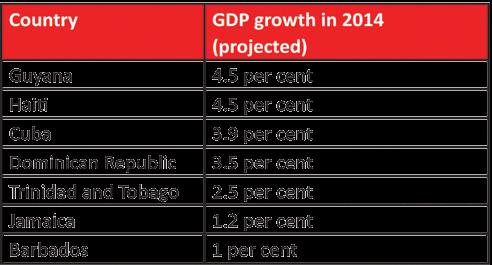
Like last year, the United Nations’ annual World Economic Situation and Prospects (WESP) report 2014 projects that Guyana will take the lead in economic growth for Latin America and the Caribbean, followed by Haiti.
Both countries are projected to grow by 4.5 percent this year. The report said that Guyana grew by 4.6 percent in 2013, while Haiti was pegged at 3.5 percent. Guyana has experienced seven years of consecutive economic growth.
Overall in the Caribbean region, growth is projected at 3.3 percent for this year. Last year, growth for the Caribbean region was estimated at 2.4 percent in 2013, slightly slower than in the last
two years.
Latin America and the Caribbean are expected to hasten their growth to 3.6 percent and 4.1 percent in the next couple of years, up from 2.6 percent in 2013, according to WESP.
The report attributes the positive growth in 2014-2015 to sound macroeconomic policies, resilient domestic demand and the gradual recovery in developed economies. However, it warns that economic growth remains subject to growth in other economies, mainly the euro area, the United States and China, which is now growing at a slower pace than in previous years.
In 2013, although the region experienced growth, economic expansion was uneven. South America led with 3.2 per-
cent growth in gross domestic product (GDP) in 2013, up from 2.5 percent in 2012, due to a rebound in Argentina and Brazil.
Slow down
By contrast, in Mexico and Central America, economic activity is estimated to have slowed down to 1.5 percent in 2013 from four percent in 2012, in part because the Mexican economy has faced structural constraints and GDP growth decelerated significantly to only 1.2 percent.
WESP is produced at the beginning of each year by the UN Department of Economic and Social Affairs (UN/DESA), the United Nations Conference on Trade and Development (UNCTAD) and the five United Nations regional commissions.

EU Ambassador to Guyana, Robert Kopecký and ChildLink Programme
Director Omattie
Madray on Monday signed a grant contract
to implement a project titled “Empowering Children in Difficult Circumstances”. The grant involves the support of a maximum of €200,000 and
will be funded from the European Instrument for Democracy and Human Rights (EIDHR) 20122013 country allocation for Guyana. The overall objec-
A report by the Economic Commission for Latin America and the Caribbean (ECLAC) in December last puts Guyana’s economic growth close to WESP’s projections, that is 4.6 percent in 2014.
With regards to the economies of Latin America and the
Source: UN
Caribbean, ECLAC said they are projected to expand by 3.2 percent in 2014, which is higher than the 2.6 percent from the end of 2013, a Government Information Agency (GINA) release said.
ECLAC stated in its annual preliminary overview of the Economies of Latin America and the
Caribbean for 2013 that less buoyant external demand, greater international financial volatility and falling consumption were the factors determining the more modest economic performance of countries in 2013, which brought down the three percent estimate put forward by the commission in July.
tive of the actions by ChildLinK is to strengthen policies, practices and approaches to ensure social welfare services to prevent and protect 12,650 children from sexual violence by December 2015.
Further, the activities foreseen under the grant supplement work done already by ChildLinK under two previous grants totalling €180,000, were funded from previous EIDHR call for proposals put out by the EU Delegation in Guyana.
Human rights
Ambassador Kopecký

highlighted that, “Human rights are one of the core values of the European Union and its member states, going like a silver thread through its many, if not all, activities. The European Instrument for Democracy and Human Rights provides the possibility to support civil society projects in this area also in Guyana. The rights of vulnerable groups, especially children, are particularly important in this regard and the ChildLinK proposal convinced us. We look forward to a successful implementation that we perceived to be fully complementing the government of Guyana’s priorities, activities and intervention in this area.”
Madray explained that, “the project seeks to protect children, specifically children who are at risk of sexual violence through the ‘Tell Campaign’ and children who have been sexually violated, through comprehensive services in three child advocacy centres.
“This initiative has been developed in partnership with the Human Services Ministry –Childcare and Protection Agency, Forward Guyana and ChildLinK Inc, and funded by the European Union, UNICEF and
other local donors. The European Union grant will over the next two years staff and equip the centres, build the capacity of the staff and increase advocacy to stop the abuse of children.”
ChildLinK Inc, a local non-governmental organisation (NGO), was established in 2009 and its mandate is to work with its partners towards a Guyanese society where every child has the right to grow up in a safe and secure family and community.
The European Instrument for Democracy and Human Rights (EIDHR) is a selfstanding financing instrument that provides assistance for the promotion of democracy and human rights worldwide and specifically aims at assisting civil society to become an effective force for political reform and defence of human rights.
The European Union launches regular calls for proposals under this initiative.
It is envisaged that this latest EU grant will complement the work already undertaken and ChildLinK will be working along closely with its partners over the next two years towards the effective roll out of the activities foreseen under the intervention.
In recognition of the need to tabulate, certify and announce accurate results of elections in a timelier manner, the Guyana Elections Commission (GECOM) is exploring the possibility of embarking on a pilot project in which automatic scanning and tabulation machines could be used in a future election.
Accordingly, a team of representatives of the DELIAN Project, an independent, nonprofit organisation registered in Canada, and the U.S., visited GECOM last week Monday and conducted a demonstration on the use of automatic ballot scan and tabulation technology.
According to a release from the commission, the DELIAN team comprised of former chief executive officer of the International Foundation of Electoral Systems and DELIAN’s Advisory Board Chairman Jean-Pierre Kingsley, who served as the chief electoral officer of Canada from 1997 to 2010; DELIAN Board of Director Chairman John Hollins, who was chief electoral officer for the Province of Ontario form 2001 to 2008, and Managing Director Allan Best.
The DELIAN Project was created in 2011 as a philanthropic entity by the Canadian elections technology firm Dominion Voting Systems (DVS). The DELIAN

Project procures and donates electoral technology to emerging and growing democracies. DELIAN is a signatory to the United Nations Global Compact, and recently joined the Clinton Global Initiative.
At the demonstration, it was pointed out that the DELIAN Project could donate up to 25 paper-based, automatic ballot scan and tabulation machines to Guyana for a future election. Each machine can handle roughly 1000-1250 voters on a typical polling day. The automatic ballot scan and tabulation system could be deployed on a pilot basis at up to 25 polling stations at a fu-
ture election, as selected by GECOM.
The procedure for using the automatic ballot scan and tabulation system involves the voter simply using pen and paper to mark his/her intent on the ballot, and the voter’s ballot paper being confidentially scanned and dropped into a sealed ballot box.
Efficiency
At the close of polls, results are tabulated and the statement of poll is printed and shared with polling station officials, and then sent to the returning officer through a secure, electronic medium. In the case of an unclear mark,
the ballot scan and tabulation machine returns the ballot to the voter for review and correction, if desired. Finally, the returning officer electronically collates and tabulates poll results received from the multiple machines to rapidly and accurately produce consolidated poll results. Of importance, it must be noted that the ballot paper can be used to complete an audit trail if a manual recount becomes necessary.
During their three-day visit to Guyana, the DELIAN Project representatives also met with the People’s Progressive Party/Civic,
(PPP/C), the A Partnership for National Unity (APNU) and the Alliance For Change (AFC). They also visited Leguan and Wakenaam islands to get a feel of the type of terrain in which the machines could be put to use in any pilot project. Guyana’s election laws do not currently provide for the use of electronic voting systems. Hence, the laws would have to be amended accordingly, should there be agreement between GECOM and the bona fide political parties pertaining to any introduction of the automatic ballot scan and tabulation systems in Guyana.
Witnessing the demonstration which was conducted in the GECOM boardroom were GECOM chairman, Dr Steve Surujbally, commissioners Sandra Jones and Arun Mangar, acting Chief Election Officer Calvin Benn, acting Deputy Chief Elections Officer Keith Lowenfield and technical staff from the commission’s Information Technplogy Division. Subsequent to its visit to Guyana, the DELIAN Project team conducted another demonstration to a wider audience during the seventh annual general meeting of the Association of Carribean Electoral Organisations (ACEO), which was held under the chairmanship of Dr Surujbally in Paramaribo, Suriname on January 16-17.


- says he is fearful for his life and that
The main witness in the alleged baton rape controversy who gave a detailed account of what he saw while at the Timehri Police Station lock-ups on the night Colwyn Harding was allegedly brutally beaten by ranks is now living in fear and feels that he has become a target.
Stephon Joseph Phillips, also called “Muslim”, of Soesdyke/ Linden Highways told this publication that he is fearful for his life and that of his 17-year-old son who was also brutalised by ranks on the night in question.
The man explained that after he gave a statement to the lawyer about the injustice meted out to Harding, he decided to let the public know about the incident.
He said that he went
to one of the daily newspapers who promised not to publish his name and photo, when he opened that particular paper on Saturday morning, he realised that they had broken their promise – an action that puts him at risk.
He recalled that about 22:00h on Friday evening, he was at home when he saw a car drive into the street next to his home and park.
After some time, he called a taxi and it used another entrance to collect him.
Phillips said after the taxi collected him, the parked car drove off, thus, he instructed the driver to follow it.
The car, he stated, subsequently stopped at a bright spot where he saw two armed men looking like police ranks step out.

“I wanted to know what they doing around my house… I thought I was in danger… I had to send away my son… I didn’t want him to go through what I experience with police over the years… I was beat-

The Youth Entrepreneurial Skills Training (YEST) programme, an initiative under the aegis of the Culture, Youth and Sport Ministry continues to impact favourably on youths across Guyana, through its technical and vocational skill areas offered at the residential Kuru Kuru Training Centre, the non-residential Sophia Training Centre, and the Smythfield Dropin Centre at Vryman’s Erven.
In 2013, 250 persons from the 10 administrative regions graduated from the Kuru Kuru Training Centre; 120 from the Sophia Training Centre; and 50 from Smythfield, joining the more than 2430 others who would have benefitted since the introduction of the programme in 2000, according to the Government
Information Agency (GINA).
During a recent press conference, Culture, Youth and Sport Minister, Dr Frank Anthony highlighted that the programme has seen tremendous success over the past years.
“A lot of these students, sometimes you would see them drop out of school and these three facilities are giving them a second opportunity at getting a skill and becoming employable,” he said.
Youths between the ages of 16–25 years are trained in skills such as welding and fabrication, information technology, garment construction, business studies, carpentry, electrical installation, joinery, masonry, motor mechanics and plumbing. They also benefit from remedial English and math-
en many times after they accused me of stealing….
“My hand, feet, face, abdomen all over have marks of violence to prove the amount of blows I got from them,” he charged.
He added that he has been receiving several calls from unknown persons threatening him.
“When I answer they say you nah dead yet…. You guh dead… you start it and it now begin… you guh dead,” he said.
He said every time he answered the phone, two distinct voices were on the other end of the line – voices that he is familiar with but cannot put a face to.
Reminiscing on the night of the incident, he stated that he was in a cell when he saw police ranks dragging and tugging Harding.
Phillips added that
they brutalised him because he responded to the way a female rank was abusing him.
“The female rank was abusing Harding, calling him gay… and a thief man and he made a snide remark about the rank’s mother,” he explained.
Soon after, Phillips added, a corporal, along with others, started to assault Harding with the batons.
After they were done, he explained that his cell was opened and as such, he went to Harding’s cell where he rescued him and took him to his.
It was then Harding made the disclosure about the baton rape.
“He told me that he got to carry up this matter far and that the corporal got to pay fuh what he did to him…,” he said.
Phillips also said that he has been listening to
the news and believes that the man is speaking the truth, recalling him to be in immense pain on the day he was taken into custody.
On Friday, officials of the Georgetown Public Hospital Corporation (GPHC) disclosed that Harding did not inform the institution about being sexually assaulted.
Officials said that the institution was unaware of Harding being sexually assaulted until the matter was reported in the media last week.
Last Thursday, Police Commissioner Leroy Brumell, during a press briefing, stated that the Office of Professional Responsibility (OPR) is investigating the alleged assault committed on Harding, hence, several ranks have been questioned, but have all denied the allegations.

ematics.
At the New Opportunity Corps (NOC), Guyana’s only juvenile correctional facility, 135 students are benefitting from the same curriculum as that offered at Kuru Kuru since 2012; while at the latter learning facility, 32 students acquired their driver’s licences, after successfully completing their driver’s education examination, conducted by the Police Traffic Department during 2013.
Speaking further, Dr Anthony stated that the programme is playing a pivotal role in helping young people acquire skills for employment purposes, adding that the centre can expect major developments in 2014, such as the introduction of computer repairs, and expansion of the institution to accommodate more students.
‘University of Guyana: Perspectives on the Early History’, a book compiled by former Vice Chancellors Harold A Drayton, Alan Earp and Dennis Irvine was launched on Thursday at the Umana Yana, Georgetown, as celebrations of the institution’s 50th anniversary continue.
Speaking at the launch was Dr Paloma Mohamed, head of the Centre for Communications Studies and chairperson of the UG Central Planning Committee for the 50th anniversary. She said the university’s jubilee was a remarkable milestone, particularly for those who have worked tirelessly over the years to see the tertiary organisation flourish. Dr Mohamed said
past and present students of the university should be proud. She stressed that without the significant contributions of the past chancellors, vice-chancellors and lecturers, the university, which was established in 1963, would not be what it is today, noting that much more improvements are in the pipeline.
History
Also speaking at the book launch was acting Vice-Chancellor Phillip Da Silva, who officially declared the book launched. In lauding the book, he said reading the stories written, “it’s like reliving a part of history”. Da Silva noted that the book , published by the University of Guyana Guild of Graduates, Ontario, Canada, contains a wide range of
information on the University of Guyana that one can learn and share with others. He urged the gathering to vicariously get a firsthand experience of the university and to take a deeper look from the inside rather than just the outside of the structures “and making assumptions”.
With only 75 copies of the historical text available, persons were urged to visit the university’s library to get their copies at a cost of Gy$4000. The event was attended by staff and students of the university, and members of the diplomatic corps, among others. The book launch is among many activities planned for UG’s 50th anniversary. Celebrations will last one year, from October 2013 to October 2014.
CGX Energy Inc has announced that its wholly-owned subsidiary, CGX Resources Inc, has obtained an injunction order from Guyana’s Commercial Court restraining Repsol Exploracion from proceeding with the 30 percent farm-out of the Kanuku Petroleum Prospecting Licence to RWE Dea AG, pending the determination of arbitration proceedings filed late last year.
On December 23, CGX Energy announced the commencement of arbitration proceedings under the rules of the London Court of International Arbitration against Repsol in connection with the expiry of the Petroleum Prospecting Licence (PPL) covering the Georgetown Block.
CGX Energy Chief Executive Officer Dewi Jones said the company was pleased with the decision of the commercial court and will continue to work towards pro-
tecting the interests of its shareholders by pursuing this claim against Repsol. Consortium
CGX and Repsol were part of a consortium that owned the Georgetown Block PPL, which was operated by the latter company.
CGX publicly announced on December 23 that it was proceeding with arbitration against Repsol with respect to the Kanuku licence offshore Guyana.
CGX Energy Cochairman, Dr Suresh Narine noted that when the Georgetown Block partners decided to cease drilling and plug the Jaguar 1 well, due to safety considerations, CGX Energy immediately indicated its intention to continue exploring the Georgetown Block.
“This is because we strongly believe in its prospectivity, as we indeed strongly believe in the prospectivity of the Guyana-Suriname basin,” he said. “This latest
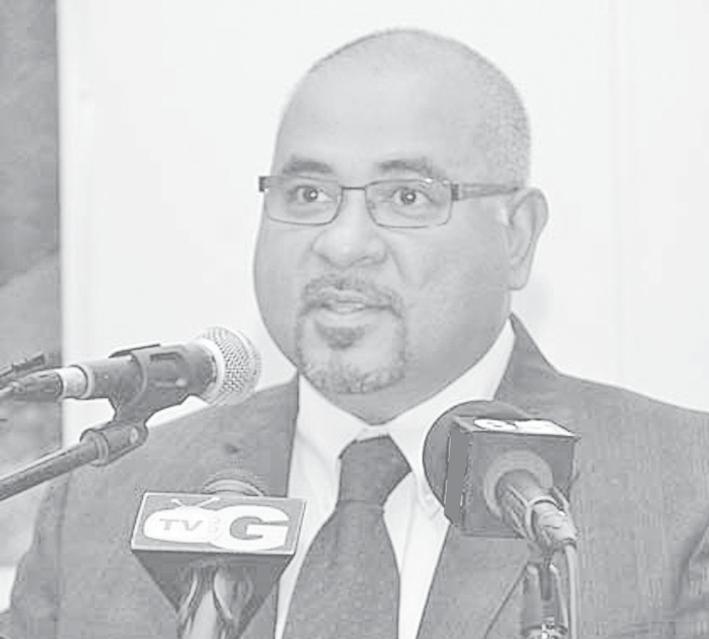
step with the courts in Guyana seeks to further protect our shareholders’ rights with regards to the results uncovered by the Jaguar 1 well.”
CGX expressed its interest in continuing in the licence with or without Repsol in accordance with the terms of the Joint Operating Agreement (JOA). Repsol, in turn, unilaterally decided not to pursue renewal of the licence and then seek a
Food For The Poor (Guyana) Inc
Last Friday donated large quantities of medical supplies and equipment to medical institutions such as the West Demerara Regional Hospital, the Regional Health Office, Berbice Regional Health Authority, and the Linden Hospital Complex.
Present at the handing over ceremony were Chief Medical Officer (CMO), Dr Shamdeo Persaud; Food For The Poor (Guyana) Chairman Kent Vincent; and representatives from the West Demerara Regional Hospital and the Linden Hospital Complex.
Vincent said whenever the organisation gets medical supplies and equipment, they are distributed in various parts of the country so that all Guyanese can enjoy the benefits of proper healthcare. The CMO stated that the generous donations from Food For The Poor have given the health sector of Guyana another boost.
He pointed out that the items donated are essential and sometimes

critical to providing a high standard of healthcare service.
“All of the items have met the criteria of the policies,” Persaud stated, adding that “all the items here are in sync” with the receiving facilities. He spoke of the Health Ministry’s focus on maternal health and pointed to the donations of the infant cots and birthing beds as critical.
Dr Persaud also added that the health sector is growing, noting that Guyana is seeing many more doctors and
es graduating. Some of the items donated were over-the-counter drugs, aspirators, surgical beds, infant cribs, IV poles, and other hospital accessories. The CMO called on Guyanese society to take better care of their health and to make use of the medical facilities, not only when their condition has worsened, but at all times.
The representatives from the various beneficiary medical institutions expressed their gratitude for the various items donated.
new licence on its own.
Dr Narine had said then that Repsol allowed the jointly held Georgetown licence to lapse contrary to its obligations as operator of the block, and then in bad faith immediately applied for sole ownership of the Kanuku licence covering essentially the same area as the Georgetown licence, thereby excluding CGX’s shareholders from their rightful stake in the li-
cence.
Important decision
On December 30, 2013, Repsol announced that it had reached agreement to farm out 30 percent of the Kanuku licence to RWE Dea, despite CGX’s legal challenge. However, regulatory approval from the Guyana Geology and Mines Commission (GGMC) had not yet been procured.
In view of Repsol’s announcement of an intended farm-out, CGX sought injunctive relief in Guyana to prevent Repsol from farming out the licence until the court of arbitration had ruled on the matter.
On Friday, Justice Rishi Persaud, sitting in the Commercial Court in Guyana, granted an injunction order upon CGX’s ex parte application, restraining Repsol from proceeding with its announced farm-out pending the hearing and determination of the arbitration proceedings.
“This is an important
decision as it not only ensures that no moves can be made by Repsol before the matter is resolved and therefore, prevents the situation from becoming complicated, but also it sends a strong message internationally that the legal landscape in Guyana is one which is in accordance with international law and that all companies can rely on a robust legal system to protect their operations and investment,” said Dr Narine.
Resolution
Dr Narine said CGX is highly motivated to speedily resolve the issue so that it and its partners can expeditiously continue to pursue activities designed to realise the goals of its shareholders and the government and people of Guyana, namely, to find commercial quantities of petroleum in the basin.
“It is, therefore, open to Repsol to negotiate a satisfactory and speedy conclusion to this issue,” added Dr Narine.
Foreign Affairs
Minister Carolyn Rodrigues-Birkett made a two-day visit to Guatemala at the invitation of her counterpart, Luis Fernando Carrera Castro, on January 15-16.
The local envoy discussed tourism, sugar and handicraft, the Foreign Affairs Ministry said in a statement.
Guatemala Sugar Association President Fraterno Vila expressed a keen interest in working with Guyana in the sugar sector.
Himself a private miller and farmer, Vila has more than 35 years’ experience in sugar and owns one of the most efficient and productive companies in the sugar sector.
According to the ministry, he guided Minister Rodrigues-Birkett on a tour of his operations. Guatemala is the fourth largest sugar exporter in the world and third in terms of efficiency and productivity. Guyana will continue to engage Guatemala in cooperation on this sector.
Guatemala also boasts a developed

handicraft industry, which is closely linked to the tourism sector. At a meeting with officials from these two sectors, assistance was offered to Guyanese women in particular, as Guyana seeks to develop its handicraft industry.
Guyana and Guatemala established diplomatic relations in 1992, but bilateral relations have not been very active. In an effort to strengthen these relations, Minister Rodrigues-Birkett had invited Minister
to Guyana and
he paid a working visit in August 2013. During her visit, Minister RodriguesBirkett and Minister Carrera signed an Agreement on Political Consultations which would provide a mechanism for Guyana and Guatemala to develop coordinated positions on several matters, as well as allow regular exchanges on issues of common interest on the regional and international agendas. Minister RodriguesBirkett was accompanied by Foreign Service Officer Jevon Rodrigues.
The atmosphere at the Anna Regina Community Centre ground in Region Two on Monday was one of much enthusiasm and a kaleidoscope of colours, as the region’s Mashramani activities kicked off with the children’s competition.
Hundreds of children from various nursery, primary and secondary schools converged at the community centre ground to witness and participate in the dramatic poetry and calypso competitions.
Mashramani is being celebrated under the theme “Cultural folklore: Celebrating 44”. Welcoming the audience of children, teachers, visitors and government officers was Regional Education Officer Baramdai Seepersaud. The education officer said the activity is sponsored by the Department of Education in collaboration with the Region Two administration. He stated that the competition focuses on bringing the Mash theme alive and fostering togetherness among schools in the region.
Declaring the children’s competition open was Regional Executive Officer Sunil Singh, who encouraged the students to give of their best in
the competition. He reminded them that the best performers at the various categories will be representing Region Two at the national competition to be held in Georgetown at a later date.
First to take to the stage were students from Reliance, Anna Regina, Lima Sands, Cotton Field, Marias Lodge, Abram Zuil, Hampton Court, and Danielstown nursery schools in the dramatic poetry competition.
The tots dished out such competitive performances, the judges had a difficult task deciding the winners. Copping the first place was Anna Regina Nursery, followed by Danielstown Nursery in second and Lima Sands Nursery in third.
In the calypso competition for nursery schools, Anna Regina was declared the winner, while in the primary school age eight to 10 calypso contest, Mainstay Lake emerged as the champion with “People In Society”.
The competition attracted hundreds of persons. More are expected to converge at the Anna Regina Community Centre ground for the continuation of the children’s competition.
The US$10 million Georgetown Sanitation Improvement Programme (GSIP) is moving apace, Guyana Water Inc (GWI) Project Manager Orin Brown disclosed during an exclusive interview with Guyana Times International.
It is anticipated that the Inter-American Development Bank (IDB) and the government of Guyana-funded project will be completed long ahead of its May 2014 deadline.
The project is approximately 80 percent completed. In accordance with the project design, 12 pump stations should have been installed by the end of 2013; however, the GSIP team successfully installed all 24 pump stations in December.
“We have rehabilitated them to a modern standard, each being fitted with two need submersible pumps, one will be on duty and the other on standby in the event of failure,” Brown explained.
Delivery mains Additionally, under this component, more than four kilometres of the 5.5 kilome-

tres of delivery mains have been installed, in the vicinities of Forshaw and Peter Rose streets; Light and Fifth streets; Hadfield and Smyth streets and Quamina, Camp and Waterloo Streets.
Currently, the contractors are in the process of installing six kilometres of force mains (hydraulic/ring mains) which are considered to be the arteries of the sewage system. According to Brown, this aspect is 60 percent complete.
“We are on schedule and within the budget and we are confident
that the project will be completed successfully,” he posited.
It is anticipated that this first component of the GSIP project, which is designed to modernise the sewage network will benefit approximately 50, 000 persons.
However, the repair of roads which were tampered with to facilitate the first component of the project is not yet completed.
Brown told this publication that consultants are assessing the situation, adding that the inclement weather is contributing to the delays. He said GWI regrets any inconvenience caused.
Component two focuses on strengthening GWI’s operation. As a result, an Asset Management Strategy is being formulated to effectively manage the upgraded network.
This component includes the staging of seminars for hotels and restaurant owners. It was explained that these entities depend heavily on the sewage network, like all other entities, but create grease straps by pumping fats into the sewage networks, which is severely affecting the network.
School workshops Workshops for primary and secondary schools within the city will also be conducted, with major attention given to proper sanitation and hygiene. Brown said the third component of the project includes an energy efficiency pilot study.
It was explained that inefficient electromechanical equipment will be removed from 12 pumping stations and replaced with energy-efficient equipment.
Through a Mexican consultant, GWI is expected to experience a significant drop in the amount of energy consumed by the listed pumping stations.
Meanwhile, the fourth component is being executed with assistance from the Health Ministry. During this aspect of the programme, there will be mass administration of DEC tablets for the next five years to reduce the prevalence of filaria in the region. Currently, health workers are distributing DEC tablets in Georgetown and on the East Coast and East Bank of Demerara. This is the second of five cycles of distribution.
The blackoutplagued electricity sector is expected to get a boost with the completion of the US$30 million power plant under construction at Vreeden-Hoop, West Bank Demerara.
It is expected to increase power capacity in Demerara from a current 87 megawatts to 106 megawatts, the Government Information Agency (GINA) said.
Prime Minister Samuel Hinds, along with Guyana Power and Light (GPL) Chief Executive Officer, Bharat Dindyal, Chairman Winston Brassington, Project Coordinator Lennox McGregor and Divisional Director Narvon Persaud inspected works ongoing at the power station last Friday.
During the visit, Prime Minister Hinds expressed satisfaction with the progress that has been made despite the challenges the contractor encountered.


work in progress at the Vreed-en-Hoop power station
The Region Three plant is expected to begin commercial operations by July, and will be connected to nearby power stations. Persons residing as far as Berbice are expected to benefit.
Prime Minister Hinds said the needed equipment is on site and buildings are going up. He add-
ed that there is a lot of work still to be done, but generally works are improving.
Chief Executive Officer of the power company Bharat Dindyal disclosed that technically, 98 percent of the materials needed for the construction are on site, but due to challenges with storage, the rest of the materials
are being stored at the John Fernandes Wharf.
Dindyal pointed out that thus far, 20 percent of the plant is complete.
A new port is also being constructed at the northern side of the plant to receive fuel and part of that contract was awarded to BK International. Behind schedule
This project is behind schedule due to challeng-
es in terms of the foundation being laid. The CEO explained that the soil at the construction site is very poor and almost 900 piles, the longest GPL has ever used, had to be driven under the foundation, and these were difficult to acquire.
“When the contractor came here, as soon as the equipment came off the dam, it started to
sink and they started to dump sand and the sand would be disappearing overnight… eventually they had to bring in geotextile materials to allow for some consolidation,” Dindyal added. Rain and high tides have also stalled works. The chief executive officer said a revetment wall will be constructed around the perimeter of the site and two pumps will also be installed to drain water. There were also some delays with the Golden Grove and North Ruimveldt sub-stations which are currently under construction, and the expansion at the Onverwagt power plant.
Dindyal added that there were some issues with the contractors who made some claims for additional payments, which are in excess of US$3 million. These claims are currently being processed and these works are expected to be completed by March.
United States Ambassador to Guyana D Brent Hardt Friday evening placed in the spotlight, the tremendous impact the President’s Emergency Plan for AIDS Relief (PEPFAR) has had on Guyana’s health sector.
Speaking at a reception held at his Cummings Lodge residence to welcome members of the Howard University Hospital Medical Association, the ambassador said the PEPFAR programme has been “instrumental in boosting Guyana’s response to the HIV/AIDS epidemic”.
It was explained that partnerships which evolved between the Guyana government and non-governmental institutions have allowed for the rapid expansion of voluntary counselling and testing facilities. This move, he emphasised, now gives Guyanese the opportunity to know their HIV status, faster and easier.
Pregnant women
“Treatment for preg-

nant women to prevent mother-to-child transmission has been effectively and efficiently distributed.” It was owing to the resounding success of the programme that the United States Congress unanimously renewed funding for the initiative.
“With President Obama’s signature of the
PEPFAR Stewardship and Oversight Act of 2013, the United States has reaffirmed our commitment to the global struggle to eradicate this disease,” Ambassador Hardt told his distinguished audience with pride.
Channelling the world’s attention to noncommunicable diseases
The National Assembly endorsed the Land Surveyors (Profession) Bill 2013, clearing the way for the establishment of A Land Surveyors Board.
The People’s Progressive Party/Civic (PPP/C), A Partnership for National Unity (APNU) and the Alliance For Change (AFC) arrived at a welcomed consensus, following a brief debate last Thursday.
In presenting the Land Surveyors (Profession) Bill 2013 for the second reading, Natural Resources and Environment Minister Robert Persaud told the House that the surveying sector has been grappling with serious issues, which the bill will address when it becomes law.
Contribution Persaud argued that while the surveying sector has been contributing significantly to the nation’s development, it is currently unable to meet the demands of the public and private sector, as Guyana’s economy continues to evolve.
It was further pointed out that the shortage of land surveyors has resulted in persons infil-
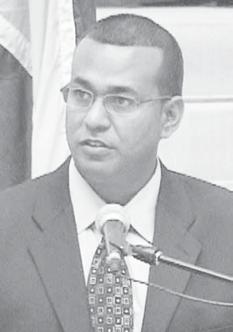
Minister Robert Persaud
trating the sector illegally. “… we found too over time there have been complaints about the quality of work, complaints about ethics and even complaints about persons professing and presenting themselves as land surveyors… and they have been misleading individuals and that has led to a whole host of other problems.”
The five-man Land Surveyors Board will address many of these problems. The board will consist of the commissioner of the Guyana Lands and Surveys Commission (GLSC), three land surveyors with at least 10 years of local experience and one other person. Additionally, the board will prescribe any ad-
ditional qualifications necessary for registration as a land surveyor, adopt procedures for the review and approval of the courses of study in land surveying at institutions of higher education based on prescribed educational requirements and examine the qualifications of persons holding a certificate of competency in land surveying and desiring to practice in Guyana.
Registration
The bill also paves the way for the registration and licensing of land surveyors and the overall regulation of the sector.
Minister Persaud made it clear that penalties have been attached for persons who act in contradiction of the laws governing the sector.
APNU parliamentarian Rupert Roopnaraine said the bill is a step into the right direction.
“It’s worth noting that the 2013 bill breaks new grounds in setting out the laws in which land surveyors are expected to develop some similarity.” Roopnaraine told the House that the bill will also address the legion of vexatious issues surrounding land tenure in Guyana.
strengthen our professional relationships and advance that goal,” said an optimistic Hardt.
He told his attentive audience that it is the continuous involvement of American groups and organisations such as the Howard University that helps the country to progress in the medical field.
The Howard University Hospital Medical Association is currently in Guyana collaborating with more than 150 local healthcare professionals for the staging of a medical education programme that seeks to examine key issues and current research in areas such as diabetes and hypertension.
(NCDs) is a timely intervention, he said, positing that significant strides have been made in addressing communicable diseases on the international stage.
Strengthen relationship “I am confident that through exchanges such as this, our countries can continue to
Landmark decision “This landmark decision is often cited as a turning point in the Civil Rights movement of the 1960s, which led to the emergence of Dr Martin Luther King Jr and the passage of the Civil Rights Act of 1965,” he added.
Howard University Hospital Medical Association Chairman Phillip H Omohundro MD, said it was a pleasure to be in Guyana. He has pledged the association’s support to the people of Guyana in the medical arena. In addition to members of the Howard University Hospital Medical Association, ministers of government, members of the diplomatic corps, and members of the Guyana Women Miners Organisation were also in attendance, among other persons.
The Howard University situated in the heart of Washington, DC, was founded in 1867. It is one of the oldest historically black universities in the United States. Alluding to the successes of the world renowned university, the U.S ambassador pointed out that distinguished alumni include the Supreme Court Justice Thurgood Marshall, who “famously argued in 1954 in Brown versus Board of Education that ‘separate but equal’ was unconstitutional”.
All of the National Industrial and Commercial Investments Limited (NICIL) finances remain up to date, since the entity merged with the Privatisation Unity in 2002, head of the entity Winston Brassington said.
Brassington in a recent interview told this publication that he is pleased that the public is now able to have the audited financial statements for NICIL, as a company, up to date in Parliament.
NICIL, he said too, has published all of its financial statements on its website, with 2013 being an exceptional year as it included revenue from the sale of the Guyana Telephone and Telegraph Company (GT&T).
He said the entity entered into a contract in 2012 for the sale of GT&T, with 20 percent interest for US$30 million and US$25 million being paid up front, which will be reflected in its financial statements.
However, that money is held in a deposit account but the issue regarding the money is

before the court. NICIL cannot touch it and do anything with it pending the court matter.
Having never collected any dividends from the Berbice Bridge Company Inc, the annual report states that in 2012, NICIL sold all of its shares to the National Insurance Scheme (NIS) for Gy$950 million. By the end of 2012, the company had also invested almost Gy$3 billion in the Atlantic Hotel Inc, which is building the Marriott Hotel.
As at the end of 2012, NICIL received US$25 million for the sale, with the remaining US$5 million payable in two years. The directors for NICIL, at the end of 2012 were Finance Minister, Dr Ashni Singh; head of the Presidential Secretariat, Dr Roger Luncheon; Finance Ministry Budget Office Director Sonya Roopnauth; Amerindian Affairs Ministry Permanent Secretary Nigel Dharamlall; and Brassington.




By Svetlana MarShall
The non-passage of the AntiMoney Laundering and Countering the Financing of Terrorism (Amendment) Bill 2013 and Guyana’s subsequent blacklisting has helped to drive up foreign exchange rates, Citizens Bank and Banks DIH Chairman Clifford Reis told the institu-
tion’s Annual General Meeting on Tuesday at the Georgetown Club.
He also said that new and innovative models are required in the financial and banking sectors to combat the negative effects of the 2008 economic crisis that continue to manifest themselves.
In 2013, the global economy grew more slowly than expected, re-
cording a 2.5 percent increase, as the recovery from the Great Recession of 2008 remains fragile, owing to the continued recession in many European countries and the slowdown in emerging market economies, particularly Brazil and China.
Reis told shareholders at the bank’s 19th AGM that the economic meltdown continues to


take a toll on the banking sector, even as regulators attempt to cushion the impacts and implement various systems to prevent a reoccurrence.
For Guyana, this situation is compounded by the fact that the nation is currently on the regional blacklist for inadequate money laundering legislation. After months of warnings, warring and missed deadlines, legislators are yet to reach consensus on the AntiMoney Laundering and Countering the Financing of Terrorism (Amendment) Bill 2013. In late December, the bill was deferred to a special select committee for a second time. The country faces further sanctions from the Caribbean Financial Action Task Force (CFATF) and the Financial Action

Task Force (FATF) in February and May respectively if the legislation is not passed in the National Assembly by that time.
Far-reaching implications
“The Anti-Money Laundering and the Countering Financing Terrorism Bill, this enactment is certainly not restricted to the confines of the banking system in Guyana, but has farreaching implications and consequences for everyone globally regarding non-compliance,” the Banks DIH chairman said.
He further opined that the legislation will reshape the manner in which the banking and financial sectors conduct business. Guyana’s failure to pass the legislation, coupled with the domino effects from the economic meltdown, has influenced the upward movement of the exchange rates, he added.
According to him, the new economic chal-
lenges may push governments to adopt more protectionist approaches to safeguard their financial and banking sectors. However, this will affect the global banking industry’s ability to exercise that required flexibility to enter new markets and sustain their operations in others. Overall, Guyana’s banking system remains sound and stable, with commercial banks yielding higher levels of profits and capital, Reis stated. The capital adequacy ratio remains well above the prudential benchmark of 8.0 percent.
Notably, the Bank of Guyana continues to capitalise on the auction of treasury bills as a monetary tool to mop up the excess liquidity in the sector. At the end of the financial year, Gy$84.9 billion in treasury bills were outstanding with commercial banks holding Gy$73.8 billion or 86.9 percent.
woo them” to come here.
At this point, Rodrigues-Birkett announced that several steps were taken during the negotiation to encourage COPA to ply the Guyana to Panama route.
“One has to do with visa waiver arrangements. I think that as a small country like Guyana with just 16 missions abroad, we don’t have the resources to be issuing visas if we are going to encourage people from countries where we don’t have missions to visit Guyana.”
Citizens of Peru, Panama and Costa Rica are now able to spend up to 90 days here without a visa, which is part of
what the minister said was a plan by her ministry to have reciprocal visa arrangements with all South American countries.
Shorter timeframes Guyanese will also have the opportunity to access a wide range of connecting flights to the U.S., Canada and UK through COPA Airlines at shorter timeframes.
Present at the ceremony to launch the new route were Private Sector Commission Chairman Ronald Webster, Guyana Tourism and Hospitality Association President Kit Nascimento, Georgetown Chambers of Commerce President Clinton Urling and several tourism and aviation stakeholders.




By Tisha BosTon
One of the most common birth defects is cleft lip. Cleft lip refers to an opening in the lip that occurs during early fetal development. Recent studies from the Centres for Disease Control and Prevention (CDC) estimated that in the United States 4,437 babies are born with cleft lip (with or without a cleft palate), each year. The term ‘cleft palate’ refers to an opening in the roof of the mouth and it is less common than cleft lip. The lip and the palate develop separately; hence, the reason why a baby can be born with a cleft lip, but without a cleft palate. Cleft lips are also more common in Asian, Latino, and Native American babies than in other ethnic groups.
During pregnancy, the lip forms between the fourth and seventh weeks; however, if the tissues forming the lip do not join completely, the result is an opening in the upper lip. This opening can occur on one side of the mouth, which is called a ‘unilateral clefting’ or on both sides of the mouth i.e. a ‘bilateral clefting’.
Cleft lip can be diagnosed during preg-
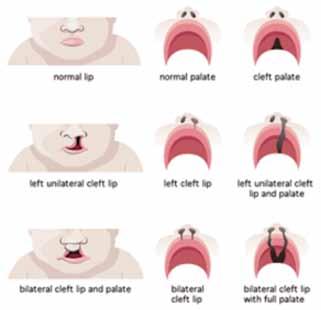
nancy via ultrasound. However, the extent of cleft lip can only be confirmed until after birth. Fortunately, cleft lip is treatable through surgery. It is recommended that this surgical procedure occur during the first twelve months after birth. Surgery does not only correct the appearance of cleft lip, but it also helps with other problems associated with cleft lip; these are: feeding problems, hearing problems, dental abnormalities, and speech difficulties.
Although cleft lip is thought to be caused by a combination of genes and other factors that include environmental exposures, maternal diet, and medication usage, the
genuine cause or causes of cleft lip still remain unknown. Nonetheless, the CDC is currently working on the National Birth Defects and Prevention Study to further understand the causes and risk factors for birth defects such as cleft lip. Here are two interesting findings so far:
Women who smoke during pregnancy are more likely to have a baby with an orofacial cleft than women who do not smoke.
Women with diabetes diagnosed before pregnancy have been shown to be at an increased risk of having a child with a cleft lip, with or without cleft palate.

President Donald Ramotar on Monday commissioned a new school building, described as a world-class facility within the complex of the Ptolemy Reid Rehabilitation Centre (PRRC) on Carmichael Street, Georgetown. The building was constructed by the government of Guyana at the cost of over Gy$50 million.
Ministers, Dr Ashni Singh and Priya Manickchand were also present at the commissioning of the building which was named the 'Harold B Davis Special School' in honour of Harold Davis, one of the longest serving chairmen of the PRRC’s board who passed away last year at the age of 88.
Delivering the feature address, President Ramotar said that as deliberate policy, one of the main objectives of his political party and government is to lift the quality of life of all Guyanese. This is demonstrated by the fact that Guyana is one of the few, if not the only, Caribbean country, that dedicates approximately 30 percent of its national budget to the social sector.
“The most important factor for our development is not only the nat-
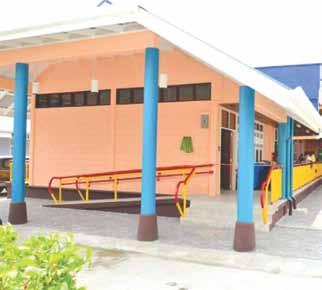
ural resources that we have… the most important factor for development is our people, that is why we are constantly striving to improve the human capital of our country,” the head of state said.
He explained that resources in Guyana are not unlimited and there is always a struggle to meet competing demands and making tough decisions on what should be considered priorities.
Nevertheless, a lot of emphasis has been placed on education over the years, because it has been proven that some of the most developed countries are not necessarily
those with the most natural resources, but the most educated population.
In terms of training, the president informed that through the Labour Ministry’s Board of Industrial Training (BIT), opportunities are created for young people who for various reasons, were not able to complete their secondary education.
Through this programme, life skills and vocational training are provided free of cost, and many of the beneficiaries of this programme have gone on to acquire higher education, while others ventured out into small businesses.
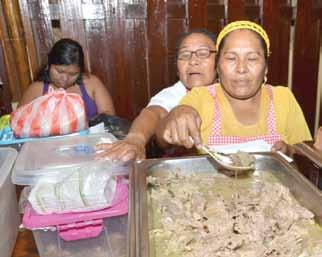
Tuma Sàlà’, a Patamona word meaning “Come let us eat”, is the first Guyanese indigenous cuisine restaurant.
The restaurant was officially launched on Saturday afternoon at the Umana Yana but will open its door on February 1, 2014 at the corners of Campbell Avenue and Middleton streets, Campbellville.
The restaurant was made possible through a partnership deal.
Speaking at the
launch, one of the founders Michael Patterson said the construction of the eating house cost Gy$3.5 million. Patterson said with the launch, he hopes that it will continue to increase tourism in Guyana and contribute to the Guyana’s economy.
Natasha George, Evelyn Felix, Ovid Williams and Lolita Williams are the other co-founders of the oneof-a-kind eatery.
They all look forward to a long and suc-
President Ramotar said that the PRRC facility is extremely important because it will be addressing the needs of a category of people who are sometimes seen as disadvantaged; however, he noted that this should by no means hinder them from reaching their full potential.
He encouraged the use of technology to make more effective, the delivery of education to children with special needs, and assured of his government’s full and continued support towards the PRRC.
“Science and technology has moved tremendously over a fairly short
period of time and it is continuing to develop and change people’s lives in maybe fundamental ways, the most important thing is to make it accessible to the ordinary man; it should not remain only for the benefit of those who can afford it,” the president said.
cessful business career. The restaurant will not only embrace rich authentic Amerindians cuisine but will also feature craft jewellery and ornaments.




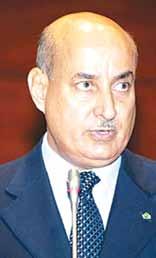
Guyana will be the host of the largest Islamic conference as it partners with the Islamic Organisation for Latin and the Caribbean (OIPALC) and the Islamic Education, Scientific, and Cultural Organisation (ISESCO).
OIPALC and ISESCO have agreed to partner with the Central Islamic Organisation of Guyana (CIOG) for the staging of the Islamic Conference in Guyana on February 9.
Under the theme “Promote the initiative of the custodian of the Two Holy Mosques in dialogue between different faiths and cultures of Latin America and the Caribbean”, Islamic leaders will strive to present Islamic culture and its role of improving the correct understanding of Islam. Additionally, they will open dialogue between other cultures and religions for peaceful co-existence.
The conference is expected to attract more than 35 leaders from
Roraima Airways Inc has launched its Wedding Couples Application process as it prepares to the stage the annual Wedding Expo, popularly known as “The Race to the Altar”.
‘The Race to the Altar’ competition culminates in the winning couple being offered an allexpense paid wedding, a feature which was added to the six-year-old expo last year.
According to a release from the company, couples desirous of entering the competition must complete and return the application forms after which they will be in-
Latin Caribbean Islamic organisations, in addition to officials from the Islamic Development Bank and the Kuwaiti Islamic Affairs Ministry. ISESCO Director General Dr Abdulaziz Othman Altwaijri will be in attendance, as well as Under Secretary of the Islamic Affairs Minstry of Kuwait Dr Adel AlFalah.
President Donald Ramotar, Prime Minister Samuel Hinds, ministers of government, members of the Diplomatic corps and leaders of local Islamic organisations are also expected to be in attendance during the grand opening ceremony.
OIPALC is an arm of ISESCO in Rabat, Morocco. Additionally, ISESCO is also an arm of the Organisation of the Islamic Conference. OIPALC is made of 35 countries within Latin America and the Caribbean. The last conference was held in Chile in February 2013. ISESCO was founded by the OIC in May 1979. ISESCO is one of the largest international Islamic organisations and specialises in the fields of education, science and culture.
It aims to promote and consolidate cooperation among member states of OIC in the fields of education, science, culture and communication. Additionally it develops applied science and the use of advanced technology within the framework of Islamic values and ideals.
terviewed then asked to participate in a series of exciting competitive activities.
The finalists will be arrived at through a process of elimination and the public will have an opportunity to judge the proficiency of the couples. The closing date for the submission of applications is January 28.
The annual Wedding Expo is a collaborative initiative involving the principal host Roraima Airways and various other private sector organisations. The public is invited to the launching of Wedding Expo 2014 on January 31, at the Roraima Duke Lodge.
Atale of frustrated love, family ties, and the immigrant experience during the last quarter of the 20th century and the first few years of the new millennium.
In this debut novel, author Pradeep Persaud, a world traveler (as you will be if you read this book) takes you on a romantic odyssey spanning thirty years while telling the story of Abhi and Pam, two childhood friends with an unrelenting attraction for each other.
Beginning in Guyana, this extremely fast read carries readers to New York City, then California and Canada, with stints in Mexico and Europe, before climaxing on a secluded beach off the coast of Thailand.
Readers will enjoy following Pam and Abhi around as they enter adulthood, embark on successful careers, and pursue a complicated romance, all against the backdrop of notable events from the era: the end of the Cold War, El Nino, the birth of the internet, the dot-com bubble, and 9/11 with its catastrophic effect.
The central narrative begins in the summer of 1975 when adolescent Abhi returns with his parents from New York City to his native Guyana and falls in love with his former childhood classmate, Pam, who he hasn’t seen in five years. As the two ramble through the countryside and seaside together they have a wonderful time, but sinister images ap-

pear, like the turningup of a dead dolphin’s head on the beach, which casts a shadow throughout the book .
As that pivotal summer ends, the pair separate, each going their own way, though they never stop thinking about each other. Pam emigrates to the United States, settling on the
West Coast and working as an electrical engineer through the dotcom boom, while Abhi remains in New York City and works on Wall Street as an investment banker. Almost two decades passes before the two reconnect, then magic happens. As if racing to make up for the lost time, the two
former classmates embark on a passionate love affair.
But…what awaits them?
Persaud adds suspense–which, becomes unbearable–as he weaves a posterior timeframe into the text where readers encounter an adult Abhi in the year 2004–2005 suffer-
ing amid diminished circumstances. Persaud then slowly reveals the series of misfortunes that brought his protagonist so low.
During this trying period, Abhi imagine himself to be the unwilling participant of a reality TV program which simply put, some readers might not get. The descriptions of Abhi’s wretched existence are powerful enough though; his outbursts directed toward the all-seeing producers, cameras, and audience members might prove a minor distraction from the main love story for some.
Abhi’s volatile relationship with his father, Tulsi, is another bright spot. Along with Tiny, his forgetful friend, Tulsi always has another moneymaking scheme in the works. He is probably the most entertaining and resilient character and his obsession with the longevity of the Cuban leader ties nicely into the title of the book.
A novel of rare wit and humor, ‘Fidel Castro is Dead’ is not a simple boy meets girl story. Instead, it is comprised of several complex layers including the hand of fate. As the story unfolds, you realize the book is a series of vignettes about life itself, with all its glory, pathos, irony, and struggle for survival as well as a dash of philosophy.
Persaud skillfully produces realistic dialogue and substantial character development. Told in both the
second and third person points of view, this travelogue has vivid lyrical descriptions of places visited– “Vines of Karaila entwine then strangle wooden fences.” New York comes alive startlingly well with its skyscrapers and stinking underbelly. So much so that the City assumes the importance of a character in the book.
Peppered with many memorable scenes, e.g. chucking birds on the shell banks in Guyana, night skiing in Lake Placid, etc., this novel contrasts the simple life in the homeland with the comparative opulence of America where “everyday is Christmas.” Some scenes will drive you to tears while others will have you bubbling with laughter. If the scenes of romance don’t sweep some overboard, the love scenes will grip them by the throat. Persaud keeps his chapters short and ends them well. Those who are looking for something unusual, or a book with a soul, should immediately pick up this book.
Summary, ‘Fidel Castro is Dead’ is not a boring novel. It is available in ebook format or paperback on Amazon.com.
Author Pradeep Persaud is also the creator of the educational website: www.guyanatimestables.com.
Reviewer, Sharmistha Bhattacharya, holds an M.A. in English Literature and currently resides in Chandigarh.
T here might be a window of opportunity for Caribbean rum products to make greater strides within the United States market.
Barbados Industry Minister, Donville Inniss, disclosed “that as recently as last November”, he lobbied before the U.S. Congress on behalf of local rum manufacturers to “level the playing field”, as the rum industry has been under immense pressure due to the high level of taxes imposed on their items going into the United States.
He said this was further compounded by the fact that the U.S. administration provides a subsidy to the industry which they call a ‘cover over’, where U.S. rum manufacturers, in particular Puerto Rico and the U.S. Virgin Islands, receive a high level of subsidies, thus placing local rum products at a disadvantage.
Speaking at phase two of the Rums of Barbados Master Mix Competition on Monday, Inniss stated that “in order to achieve this it means that we must [always] have products that are export
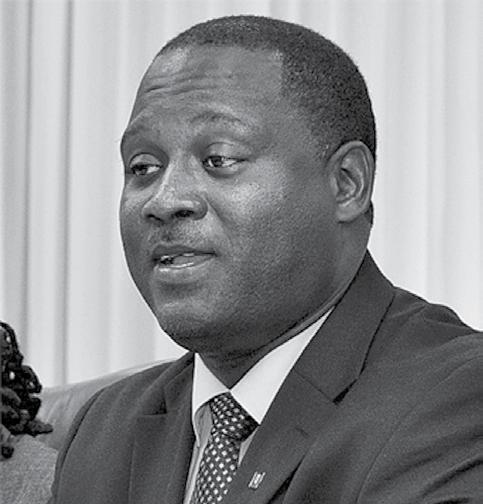
ready”.
He said: “…It means that greater attention must not only go to what is in the bottles, the quality of the rum therein, but also the style of the bottles, the labelling, all of those things that capture the eye readily. And, I want to commend those who have worked so diligently over the last couple of years to ensure that Barbados’ rum is well packaged and appropriately labelled, [so] that we can really now truly hold our own with any spirit coming from any part of the world.”
Commending organ -
isers of the competition for utilising local resources, Inniss emphasised that there was an abundance of talent in Barbados “that we are really beginning to harness”.
He told participants: “I really want to urge you the mixologists to continue the good work you are doing. You are at the forefront, you are the ones that the tourists interact with more readily, you are the ones who ought to know the history of rum and should be able to sell that story to the tourists who come before your bars…” (BGIS)
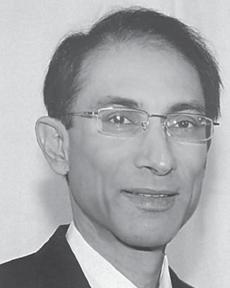
Dr Vivian Srinivas Rambihar, a 1969 Guyana Scholar, is a world renowned cardiologist based in Toronto, Canada and one of the foremost thinkers in the world today, with ideas transforming medicine, science and society globally.
He is a pioneer in “Chaos and Complexity Science”, which the celebrated Stephen Hawking says will be the new science for the 21st century. Dr Rambihar has also been a pioneer in ethnicity and health disparities; being among the first in North America to raise awareness of the high rates of premature heart disease and diabetes in South Asians and other populations. He is currently working on global grass roots engagement for change in all populations and specifically in improving health across the South Asian diaspora.
Born in 1951 in Beterverwagting, East Coast, he attended Queen’s College from 1962, excelled in math and physics and was awarded a Guyana Scholarship in 1969, which entitled him to study for a profession, free of all fees and ancillary expenses. He taught mathematics at Queen’s College for a year, then uncertain of a career choice, went to Canada to study math and physics while considering a career in medicine.
He entered the University of Toronto, where he obtained his BSc in two years – a shorter time than the usual period of three years for a degree. In 1975, at the young age of 23, he graduated from the McMaster University Medical School. He continued further studies at McMaster where he completed cardiology training, following this with sub-specialist training at the Toronto General Hospital.
He progressed rapidly in his profession
and soon held the position of president of the Medical Staff and, member of the Board of Governors and Medical Advisory Committee at Scarborough General Hospital. He is an adjunct professor of Medicine at the University of Toronto and is extensively involved in research, teaching and community outreach.
Dr Rambihar’s exemplary work in the field of cardiology is prominently featured in his Alma Mater’s McMaster University website headed “Profiles of the Founders of McMaster Cardiology”. His daughter Dr Sherryn Rambihar has followed in his footsteps training in cardiology at McMaster 30 years after he started.
He remains true to his East Indian heritage and is actively engaged in the East Indian community. He served on the Board of OSSICC, the Ontario Society for the Study of Indo Canadian Culture and other community organisations. He helped to start the Indo-Caribbean World newspaper in Toronto.
As Health Co-Chair for GOPIO, the Global Organisation for People of Indian Origin, he helped establish a Health Summit in New York City in 2010, after advocating for GOPIO to extend its mandate to health.
At the 20th Anniversary Convention of GOPIO in New York in August, 2009, Dr Rambihar warned that the South Asian community is at risk if it does not address health issues now.
This warning comes on the 50th anniversary of the first report of excess and premature deaths of Indians settling abroad, which has gotten worse all across the diaspora since. (They underlined World Health Organisation predictions that most of the world’s heart disease and diabetes will be in India by 2015, affecting young people in the prime of their lives. This will cause US$237 billion in lost productivity in India over the next ten years, and proportionately similar across the South Asian diaspora.)
Dr Rambihar has proposed that the Ministry of Overseas Indian Affairs in New Delhi co-
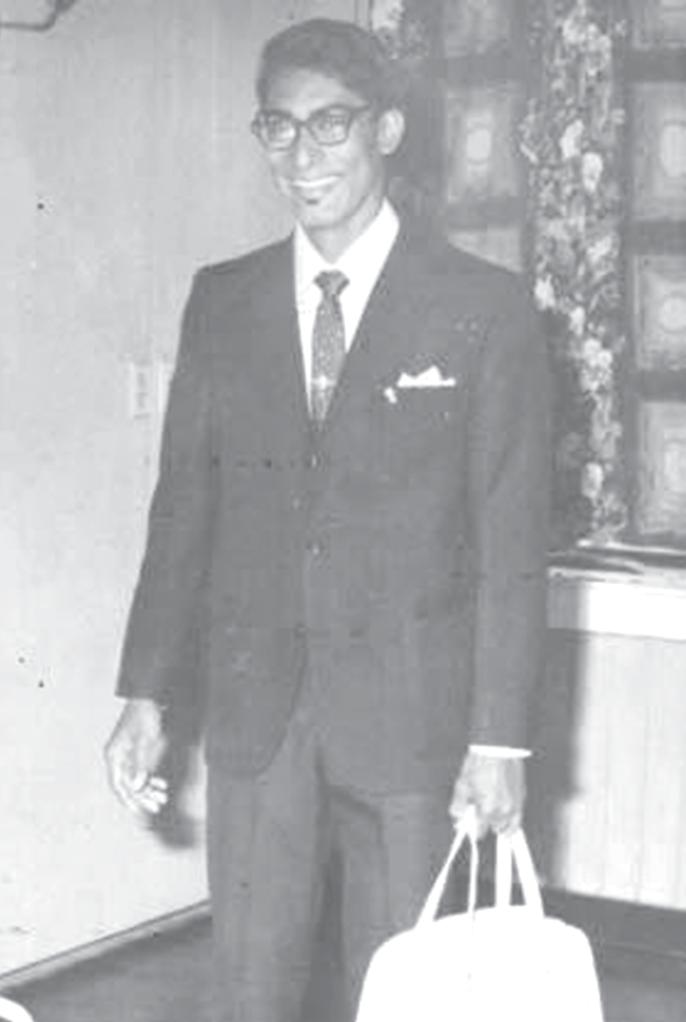
ordinate the response to the health crisis across the diaspora. He considers this an Urgent Call to Action, with diabetes and heart disease an epidemic that risks the economic future of India and the diaspora, based on WHO (World Health Organisation) data. He advocates novel and grassroots approaches like using community, religious and social occasions for health we can all start now, while awaiting policy and other changes.
Dr Rambihar invites Indians to do much more for health, starting earlier, because of our sensitivity to and higher levels of risk factors for heart disease and diabetes at an earlier age, especially with early family history. He emphasises the tremendous value of using the extensive South Asian networks to improve health.
The doctor’s efforts address health for all within our diversity. After pioneering research showing ethnic health differences, he had the courage and conviction to bring the taboo subject of diversity and health to attention. His 2010 American Heart Journal editorial “Race and Ethnicity: A New Challenge for Cardiology for the 21st Century” and other publications, changed the way we envisage health. His Health Promotion initiative started in the 1980s filled an unmet need, as did his
Valentine’s Day for Heart Health initiative, now over 25 years. The Valentine’s Global Heart Hour invites us to turn on hearts like we turn off lights for Earth Hour. His scholarly publications and books usually break new ground, such as “South Asian Heart: Preventing Heart Disease”, “Tsunami Chaos and Global Heart,” and “Chaos from Cos to Cosmos: a new art, science and philosophy of medicine, health…and everything else,” republished later as “Chaos 2000 from Cos to Cosmos: Making a New Medicine”, a tribute to James Gleick’s landmark book “Chaos: Making a New Science”.
At the Guyana Awards Gala held on May 26, 2007, Dr Rambihar was honoured with the Community Service Award. He was among ten winners, recognised for their “special contributions…toward the promotion and development of Guyana, Guyana’s heritage and culture, as well as acknowledging the achievement of excellence by Guyanese individuals and community.”
He was one of the first recipients of the Newcomer Champion Award, which was presented by the Government of Ontario, Ministry of Citizenship and Immigration. The awardees were
Dr Rambihar has been the recipient of numerous awards for his outstanding work. He was awarded the prestigious CCS (Canadian Cardiovascular Society) 2007 Segall Award of Merit for his “significant contribution to the prevention of cardiovascular disease or to the promotion of cardiovascular health in Canadians.” CCS Awards are granted for excellence in research, teaching, exemplary care, prevention of cardiovascular diseases and overall career contribution.
The award he cherishes most, however, is the “Guyana Scholar Award” in 1969, without which he would not have been able to study medicine.
The Rambihar family is an example of leadership and success through education and hard work. Six of his siblings attended Queen’s College and 3 of them taught there for a year. His brothers Brian and Compton also became doctors, with Brian now a leader in medicine, lecturing widely across the United Kingdom.
Dr Rambihar credits the family’s success to his mother Iris, who provided guidance and wisdom, despite not be-
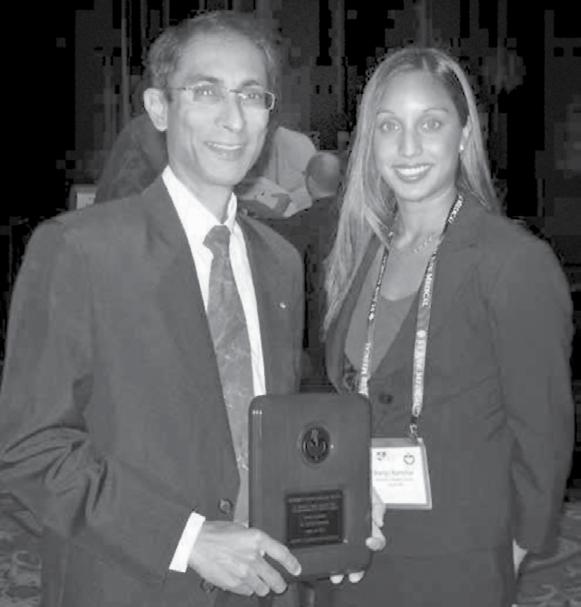
named on Canadian Multiculturalism Day. Dr. Rambihar was honoured for “his involvement in the social, cultural and health needs of newcomers for 25 years and is a passionate activist for the health rights of newcomers”.
ing able to pursue higher education herself. Dr. Rambihar credits his achievements to his wife Perdita, and their three children, who have all followed him in medicine.
Dr Rambihar was inspired by his father William, who worked through illness to become a headmaster and subsequently an Education Officer with the Ministry of Education in Guyana. He was in the first graduating class at the University of Guyana, working fulltime during the day and attending classes in the night, while raising eight children. He was much appreciated and inspired others with his extensive volunteer activities and community development. (First published in Horizons 2011)
The Indo-Canada Chamber of Commerce (ICCC) honoured him with the Award of “Humanitarian of the Year”. The presentation was made at the ICCC Annual Gala held on Saturday June 14, 2008, in the presence of about 1000 distinguished guests and members. The award was presented on behalf of the Chamber by India’s Minister of Science, Technology and Earth Science, Hon. Kapil Sibal and Canada’s Minister of Human Resource and Skills Development, Hon. Monte Solberg.
Karasabai is an Amerindian village located in South Pakaraimas, Region Nine. The community is accessible by land and air. It has a population of approximately 1,600 whose main source of income derives from agriculture. Meat (beef and mutton), peanuts and cassava by-products such as farine and cassareep are its primary products.
The village has a nursery and primary school, health centre, two health posts, an RDC admin building, police station, teacher’s quarters, guest house, village office, shop and churches.
Karasabai is made up of Makushi tribe members. Over the years the village has benefited from many hinterland projects. Some of these development projects include presidential grants, which were instrumental in the formation of a village shop, and capital projects with contributions of 4x4 pickups, tractors, boat and engines, a village market building and much more.
The village is already buzzing with activities as it prepares for the influx of visitors who will be enjoying a series of activities such as cultural presentations (dancing and singing), horse riding, donkey riding, cassava bread baking, farine parching, fire lighting, tomma cooking, cotton spinning, football, just to name a few.
With its panoramic sceneries, mountain ranges and pulsating Makushi culture, Karasabai is worth a visit.(Guyana Times Sunday Magazine)
walk a tiny track and take in the scenic mountain range at karasabai
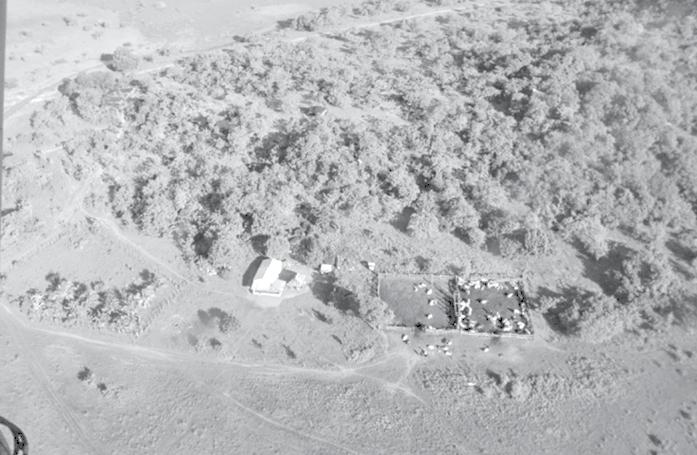

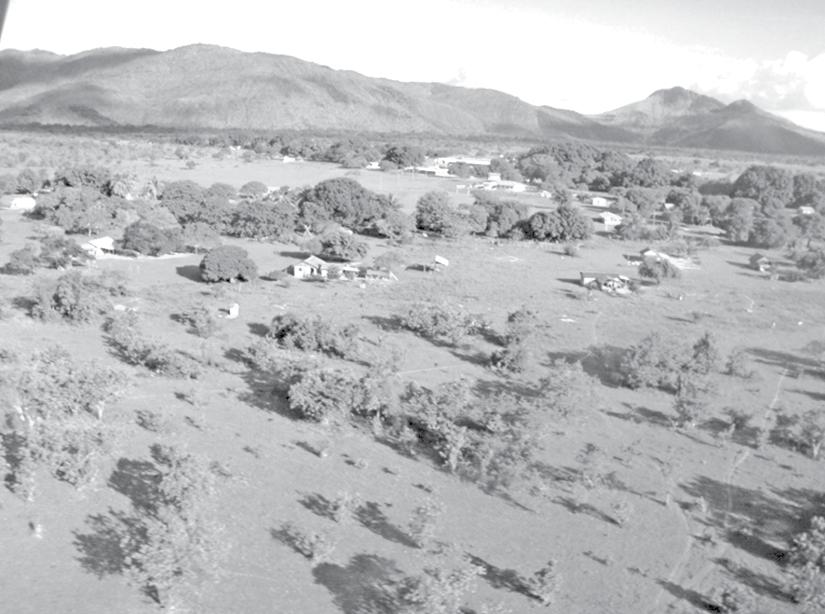
Fifteen chutney artistes are expected to create a whirlwind on January 25 at Bath Settlement Community Centre ground, West Coast Berbice as they vie not only for the coveted title of Chutney Monarch, but a place to represent Guyana at the International Chutney Soca Monarch in Trinidad and Tobago.
The international competition is slated for February 15 at Skinner Park, San Fernando with at least 15 persons vying for TT$2 million and the title. The 15 talented artistes are all ready to compete for the first time on the West Coast of Berbice.
The reigning chutney monarch, Roger Hinds, also called “Young Bill Rogers” will defend his title with his tune “Ge Me Mo Chutney”.
The finalists include Pooran Seeraj with her tune “Under the Maaro”, Steven Ramphal with “Indian Queen”, while Joel Pharous also called “Prince JP” will dish out “Indian Drums”.
Also entering the competition are two Aamir Khans; the first performing “GT and Trini Girls” while the second will perform his entry “Leave Me Alone”. Danny Bholaram also called “Dante” will be singing “Wedding Crasher” while Uuvin Sukho called Waterflow will be performing “Leh Me Talk to You” and Berbician, Bunty Singh is expected to get the crowd support with “Me Wife Quarelling”.
Goonwattie Persaud will take to the stage with “Boy You are the One for Me”, while Paramdai Willi also called “Vanita Willi” will be performing “Tremble It”.
Savitri Li aka “Lady P” will sing “Celebrate” with Fiona Singh performing “Blow”. Another Berbician, Haresh Singh entered the competition with “Chutney in Guyana” while Michelle Gobin will sing “Young Gal” and topping off the list is veteran Chutney Singer, Harvey Gobin with “Sangina Darling”.


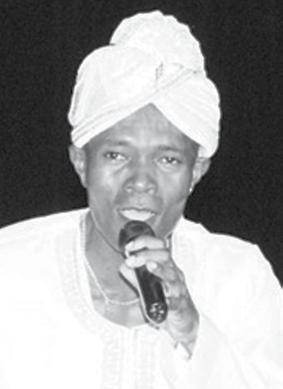






Q: What do you call a clean idiot?
A: Soap on a dope.
Q: Why does a stone sink in water when you thrown it in?
A: Because it does not know how to swim.
Q: What did Cinderella say when her photos didn’t arrive?
A: "Someday my prints will come."
All the passengers are seated on a plane out on the tarmac and the stewardess announces “We’re just waiting for the pilots.”
The passengers look out the window and see two men dressed as pilots walking towards the plane. Both men are using guide dogs and appear to be blind. There are murmurs among the passengers, and some believe it is a joke.
The men board the plane and go into the cockpit. More concerned murmurs and uneasy chuckles from the passengers. The plane taxis normally to the runway and begins its takeoff.
As passengers look out the window they realise they are nearing the end of the runway. The entire passenger cabin begins screaming but the plane lifts off just before the end of the runway.
The passengers calm down and chuckle to themselves.
In the cockpit, the pilot turns to his co-pilot and says “You know, one day those people are gonna scream too late and we’re all gonna die!”
The eighth-graders will be presenting Shakespeare's Hamlet in the church basement on Friday at 7 p.m. The congregation is invited to attend this tragedy.
Remember in prayer the many who are sick of our church and community.
Don't let stress kill you — let the church help.
Bertha Belch, a missionary from Africa will be speaking tonight at Calvary Memorial Church in Racine. Come tonight and hear Bertha Belch all the way from Africa.
A new couple arrives in the neighbourhood and the husband notices that the guy next door comes onto his balcony, sits down and looks out, every time the guy’s wife starts singing, then go back in immediately after she stops.
“Why do you always go to the balcony when your wife starts singing?” he asks when they eventually meet.
His neighbour replies, “So that no one would think I’m beating her.”
Tourist guide at zoo: "Ladies and gentlemen, this is the elephant, the largest animal to roam the lands. Every day the elephant eats three dozen bunches of bananas, six tons of hay, and 2, 000 pounds of assorted fruits... Madam, please don't stand near the elephant's backside... Madam, PLEASE don't stand near the elephant's backside ... MADAM ... MADAM ..., too late; George, dig her out."
This is a story about four people named Everybody, Somebody, Anybody and Nobody. There was an important job to be done and Everybody was sure that Somebody would do it. Anybody could have done it, but Nobody did. Somebody got angry about this, because it was Everybody's job. Everybody thought Anybody could do it, but Nobody realised that Everybody wouldn't do it.
It ended up that Everybody blamed Somebody when Nobody did what Anybody could have done!
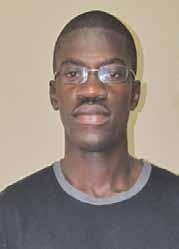
Noted for his skilful use of pencils to create lifelike drawings, artist Darnell Wilson is well on his way of becoming one of Guyana’s notable artists.
In an interview with Guyana Times Sunday Magazine, Darnell said he has been artistic as long as he can remember.
After graduating from St. Rose's High, Darnell attended the Guyana Technical Institute and then Burrowes School of Art.
“I have always loved being artistic. I had a box full of drawings and some books too. One I still have. Being artistic is somewhat in the family also because I have two cousins who are artists,” he noted.
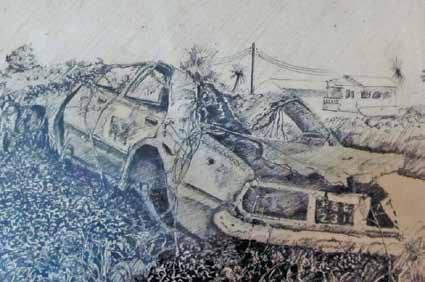
The artist’s stated his inspiration comes from emotions and sometimes he is moved to draw because of the beauty of an object. He enjoys painting “things that have an expression or an action.”
Darnell also has a knack for creating miniature sculptures such as model bikes and cars.
Once he made a small clay sculpture of his grandfather.
“I received many contracts to make pieces for Guyexpo and one time I made a logie for Indian Arrival day. For me, art is a form or relaxation, it eases my stress, puts me in a different world that I don't even realise until you snap me out of it. It allows me to have things my way,” Darnell disclosed.


Through his artwork, Darnell revealed, he paints hidden messages on pertinent issues affecting the world. He also enjoys painting about the simple pleasures of life and the loss of those pleasures.
“Technology is partially killing art in Guyana. Things can be done much faster and cheaper with a computer. How many sign boards and pictures are hand- painted these days? We need more rewarding competitions and publicity. If it was possible for people to make a living as an artist, it would drastically improve the art industry in Guyana. Personally to have a job like that would be a dream come true,” he declared.
The artist encouraged youths who want to pursue studies in art, to keep practicing and be determined to develop themselves despite challenges.
Darnell’s most recent paintings can be viewed at the ongoing Ninth National Drawing exhibition at Castellani House.
For more information on the artist’s work, email xceptionallycreative@yahoo.com or call 666-9719.
(Guyana Times Sunday Magazine)

By Dmitri Allicock
Ameasure of success of a school must be how far and to what heights students’ progress, and how widely and deeply they remember those formative years and outstanding faculty. By such a measure, the Mackenzie High has achieved great indeed under the administration of formidable principal John Joseph Cummings.
On September 11, 1959, the 1946 Echols High was renamed Mackenzie High School and the new campus of MHS was declared opened on Purpleheart Street, Mackenzie by Balram Singh Rai, then minister of education and community development.
The structure was financed by the Demerara Bauxite Co. (DEMBA) and built by Sprostons Construction Company to the architectural design of Messrs Mence and Moore, and provided the community with its first secondary school.
MHS aspired to emulate Guyana’s best – Queens College in Georgetown. It was a privilege to be a student of this school where high standards were encouraged at all times with equipped
classrooms, great teachers, supplies, manicure lawn and landscape, cleanliness and sharp looking students who enjoyed the comforts of a modern North American style high school, 65 miles up the Demerara River. My entire family of six siblings, and my mother, attended this institution.
Guyana’s Prime Minister, Sam Hinds, who served as president of Guyana in 1997, said this regarding MHS: “My first trip to Mackenzie was in 1960, as a member of a group of boys from Queens College who visited the new MHS during its first year... After graduation, I spent the formative years of my working life in the bauxite industry. Linden is therefore my home town too, as much as, if not more than, any other place.”
Dr Rudolph Grant, professor of New York University, and a former teacher at MHS, proudly recalled: “During August of 1960, I applied for a teaching position at MHS. In Sept 1961, two other UWI graduates joined me as new members. The late John Cummings, who became principal and the late Eirene O’Jon, a brilliant historian and educator, made their mark. It was a period of tran-
sition. Couchman, the Blairs, Corbin, the Edwards, Allicock, Thomas, Figueira, to name a few, were encouraged not to stop studying. And besides all the Mathematics, Chemistry, French and history they learned, they made sure to remember that lesson. DEMBA provided scholarships, and parents, in important ways, contributed to the school success, Today, graduates of MHS have distinguished themselves all over the world. The teachers too, moved ahead. Critchlow, Pallackdarry, Haddad, Siegfred, Wharton and others left for overseas Universities. It was exciting, those times. Many mouths were fed and many minds in many parts of Guyana were educated with the help of DEMBA

employees. I am sure you would like to join in thanking all those who, in those relatively early years contributed.”
Prior to the establishment of the ‘A’ level classes, students who qualified to enter the sixth form had to seek admission to Senior Secondary Schools in Georgetown such as Bishop's High School and Queen's College to write their ‘A’ levels. DEMBA offered scholarships to those students who qualified for entry to those schools.
John Joseph Cummings soon joined the teacher staff of MHS in 1961, having attended Tutorial High, the Government Teachers Training College and the University of the West Indies where he obtained an honours degree in History. John Cummings represented a special time of transformation of education in the community and is symbolic of the best times for MHS.
Cummings’s exemplary service and magnetic personality rewarded him with the historic appointment of being the first Guyanese-born principal on March 1, 1965. This day was also significant for Cummings and his wife Beryl, as their daughter Carleen was born earlier that morning. This enabled him to proudly announce her birth at the commencement of school that morning.
His appointment of principal followed head teachers/principals E.U. Wilson and Eddie Gunraj (1946-1952), Milroy Victor (1952), Dr Dennis Craig (1956), D.D. Sim (19561960) and William Ogle (1960-1965).
Cummings served in several social and cultur-
al organisations in the Mackenzie area. He was Assistant Secretary of the Watooka Management Club, Chairman of the Friends of MHS, First Vice President of the Upper Demerara Football Association and Secretary of the Sherwood Court Ancient Order of the Foresters.
Under his administration, four new classrooms were added to the build-
dren. On October 26, 1971, he was returning from Georgetown on the Linden/Soesdyke Highway when a reckless driver caused his vehicle to crash. He died five days later on November 1, 1971, at the Mackenzie Hospital as a result of his injuries. He was just 39 years old.
The overwhelming shock and grief was felt by the entire school and com-

ing. GCE Advance Level classes were introduced in 1966 and the first students, Daniel Baker and Lennox Richardson completed their ‘A’ levels with major successes. The second group of students included my sister; Joycelyn, Daphne Casey, Johnnie Wilson and Irwin Allicock, who had transferred from Preston High School, were also equally successful.
Cummings was also a loving father and found great pleasure in his chil-
munity. Scores of staff and students cried openly with painful emotions still remembered onto this day. Bus loads of students and staff journeyed to the east coast of Guyana where dear Cummings was lovingly laid to rest. I was privileged as a Form One student to be selected to attend the funeral.
With the tragic loss of MHS icon, Cummings left a void in the hearts and minds of the students to fill.

Guyana made an indelible mark at the annual Barbados music awards, now coined the Barbados Music, Fashion and Film Awards, which was held last weekend.
A barrage of talent from the land of many waters hit the stage at the prestigious Lloyd Erskine Sandiford Centre in Barbados at what has become a must-see event on the Bajan entertainment calendar.
A contingent of Guyanese talent–Lisa Punch, Ernesta Nelson and Travis Bowen–created quite a stir at the
packed hall of creative arts enthusiasts and practitioners.
The Nation headlined that Lisa was the “Punch Line” at the event, belting out a powerful rendition of “Secret Admirer”, serenading the receptive front row attendees as she descended the stairs to access an intimate connection with her admirers.
Ernesta delivered one of her soca hits to the delight of the receptive audience while Travis Bowen, the winner of Gold Coast Record Talent Search in Guyana, courtesy of Guyana Fashion Week, was a breath of fresh air performing
an Enrique Iglesias pop hit. Dream come true
He was received with much enthusiasm and he is now being groomed, in Barbados, for international work and a record deal. “This is a dream come true for me and I must thank Guyana Fashion Week and Gold Coast Records for this opportunity,” Bowen said.
In the fashion department, Sonia Noel lived up to her reputation, presenting a stunning line up of Caribbean signature ensembles and separates that proclaimed that Guyana is a significant stakeholder in the development of the Caribbean fashion industry.


To top it off, she was awarded a Regional Lifetime Achievement Award for her contribution to fashion in the Caribbean. Her line was highly appreciated and indeed, prompted extensive interest from entrepreneurs in carrying her line at their shops."It is a great feeling to be appreciated for your work", said Noel.
Regional integration
The Barbados music awards opened up its ambit to include fashion and film, all part of a regional campaign of integrating the region through the creative industries and ultimately promoting the Caribbean brand as an alternative on the global agenda.
Guyana truly represented at this occasion, and certainly proved that its talent and creative energies can make a distinctive mark on the international scene and are a force to be reckoned with.
Ronnie Morris, producer of the award showcase and a director of Guyana Fashion Week, was elated about the inclusion of Guyanese style and asserts “this is just a beginning of remarkable things to come, in terms of collaborating with Guyanese artistes.”
He also commended Sonia Noel for facilitating the growth of dynamic inter-regional networking endeavours in this hemisphere. Brutal Tracks and Mystic were also in attendance. Mystic was scheduled to perform, but was unwell.

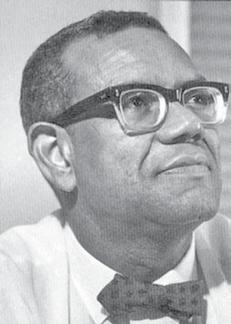
By PetamBer Persaud
(Extract of an interview with Dr. Ian McDonald, January 2011, Georgetown, Guyana.
McDonald is a prizewinning poet, novelist, playwright, columnist and editor. He has to his credit six collections of poems. He has won the
Guyana Prize for Literature on three occasions. He also won the Royal Society of Literature prize for best regional novel with his first and only novel, “The Humming-Bird Tree”. “Selected Poems” was shortlisted for Royal Society of Literature Ondaatje Prize.
His most recent collection of poems, “The comfort of all things”, won the 2012 Guyana Prize.)
PP: A. J. Seymour was a poet, anthologist, editor, publisher, broadcaster, cultural historian and literary enabler.
He was born in 1914 and when he died in 1989, he had done a great service to the literature of the Caribbean and
Guyana. In fact, he had a hand in the shaping of Guyanese Literature. Your thoughts on the man.
IM: I am delighted to talk about AJ. He was a great, great Guyanese. He was very dear friend of mine. I knew him for many, many years since I first arrived in Guyana in 1955 to the time when he died in 1989. Right away I would like to read something I wrote in the introduction of this book ‘A.
J. Seymour, Collected Poems, 1937-1989’ that sorts of sum up, well nothing can sum up Arthur Seymour because as you rightly said in the beginning he had so many attributes:
‘His overall contribution to the cultural tradition of Guyana and the Caribbean is truly astonishing. I do not think the younger writers and academics grasp it fully.
The AJS bibliography compiled by the National Library in 1974 was already 100 pages long and since then must have doubled in length. This amazing man’s work contains poems, historical publications, reviews, broadcasts, essays, addresses, entries in anthologies, forewords, lectures, talks, pamphlets, memories, sermons, eulogies, magazine work and books in such profusion that one would be excused for thinking this was the record of a school, not one

man alone.
A truly amazing man, and as you rightly said, a truly amazing man who shaped the literature of Guyana, and the shaping of Guyanese culture and the shaping of the minds of Guyanese for independence.
He founded the journal Kyk-over-Al in 1945. And remember the first set of Kyk in its initial contribution lasted from 1945 to 1961, all those issues were very important in the shaping of Guyanese literature and culture and therefore the emerging nation. A very important figure AJ.
PP: Talking about culture, he was involved in History and Culture Week which I understand help to evince a sense of pride of nationhood in Guyanese. We have already said a lot about the man and his accomplishments. What about his formative years, those years that nurtured the man for greatness?
IM: I did not know him then but I’ve talked a lot with him about his formative years and there is no doubt that he was brought up from an early age to love reading, to love writing and to love literature. Oh, he loved to read. He started reading poetry from very young and started writing poetry from very young. One thing I want to emphasis is that running through all this is that Arthur Seymour was a very good poet. And he wrote an enormous amount of poems, much of it very good.
I remember after he died I went through his papers and found no less than 550 poems. In his ‘Collected Poems’, which I helped edit, there are just over 220 or 228 poems so he wrote many more than are captured in this book. He was always writing poetry whatever else he was doing. He wrote a great deal of religious poetry and he is perhaps Guyana and the Caribbean foremost religious poet. We must not lose sight that among all his other attributes as editor, publisher and enabler he was a poet.
PP: An amazing output. The first poem in that collection, ‘turn these pages’, he said, ‘turn these pages, gently/for in them you see the wilful marriage/ of heart’s best blood to brain’s keen accuracy/… turn these pages gently,
for in them lie precious things’. Of note, Seymour was always writing… a poem for every event, passage of time, every occasion, every visit, every visitor to Guyana, every important person…a poem for everything and every event…
IM: One of the things I will never forget, one that moved me tremendously, when you talked about a poem for every event, one of the vivid memories I have was on his last birthday, his 75th birthday on the 12th of January 1989, you know he died later in the year…
PP: Christmas Day 1989.
IM: Yes, but I will never forget, he had written a small poem on the morning of his birthday and he read it to a small group of us, and I remember that voice, oh, he so loved poetry, and he read it, he was on the veranda on North Road, Bourda, and the wind was blowing so gentle, it was a lovely day, a lovely Guyanese day, he sat there and said:
Bless Father God, I pray, The gift of my birthday,
This milestone – I alive At age seventy-five.
Bless, Holy Spirit, bless With Thine own holiness
All that I do and say As from Thy will today
And Jesus Christ Thy son May all His Grace be done
…That brought out the religiousness of his poetry and you are right, he was always writing poetry, only that morning…
PP: Marking that milestone…
IM: But that was not all. His delivery was touching; you know he said it in that beautiful voice of his.
PP: Quoting from the introduction of that very collection what you said about his work, you said that ‘He began in an era when everything was still to be done…’ He was a pioneer.
Pageantry in Guyana has been considered a forum where girls become ladies and are prepared to be ambassadors of their country. One such pageant with an early history of producing top performers at an international level is the Miss World Guyana pageant.
Today, Natasha Martindale takes charge of the local administration of this celebrated event, bringing her years of expertise to the table in hopes of producing winners and breaking the drought within the Miss World Guyana climate.

It was in 1966 when Guyana graced the Miss World stage for the first time in history. It was such an achievement for Guyana when Umblita Van Sluytman was called into the semi-finals. She did not advance to the top seven, but competing for the first time and making it to the semi-finals was an accomplishment worthy of celebration.
The following year, hoping to achieve something more than a semifinalist spot, Shakira Baksh did not fail to deliver. At the end of the pageant, she was named second runner up to Peru’s Madeleine Hartog Bell.
In 1968, Guyana once again tasted success as their representative Adrienne Harris placed among the top seven. This became Guyana’s third consecutive placement in the Miss World pageant.
In 1969, Pamela Patricia Lord secured a top 7 placement where she would later finish as third runner up in Miss World 1969.
In 1970, Jennifer Diana Evan Wong continued the streak for Guyana, as she finished as a semi-finalist at the

end of the Miss World pageant. This is the first time since 1966 Guyana placed outside the top 7.
In 1971, Guyana continued their impressive placement in the Miss World pageant, as their representative Nalini Moonsar finished as third runner up to Miss World 1971. This was the sixth consecutive placement for Guyana since their debut, but after 1971 Guyana did not compete in the pageant.
In 1988, Guyana returned to the Miss World stage but did not place. Since then Guyana has competed in and out of the pageant but with no success. However Natasha Martindale, who has been involved in pageants since 1995, hopes to change this.
Natasha’s first direct experience with pageantry was by way of spearheading a marketing campaign sponsoring several pageants over a period of time, Queens of Queens, Miss Bartica,

Miss Diwali, Miss African Heritage, Miss Talented Teen/ Miss Millennium and many others, on behalf of her employer Acme Photo.
“With the exposure I am happy to say that I was truly inspired by the talented young ladies and have had the chance to work with and felt quite rewarded seeing them blossom during the time they spend pursuing various crowns and later becoming professional women and mothers,” she mentioned.
Now under Natasha’s new administration as franchise holder and national pageant director for Guyana, the Miss World Guyana pageant is being revamped.
In organising the pageant, Natasha stated that her job is to assemble a great team of persons who are passionate, committed and talented and which has an enduring
love for Guyana as well as being united in seeing Guyana being crowned the next Miss World. The next step, she pointed out, is to identify the stakeholders- partners, officials and sponsors- who share the same values and commitment.
The main focus of the pageant, Natasha noted, is the contestants. The pageant process is intended to give opportunities to all who are eager and willing to participate. The objective is not only to promote their beauty and talent but an opportunity for them to grow in every

area of personal development as a result of their participation.
Equally as important, Miss World Guyana is on a mission to promote civic engagement through its ‘Beauty with a Purpose’ segment. Contestants will be paired with civic organisations to raise awareness on the issues and causes affecting their
communities.
Now accepting applications for Miss World Guyana 2014, Natasha disclosed that this year’s pageant would be a cultural extravaganza.
“Personally, I would like it to be an event for us all to experience togetherness and unity as a people during our month of Independence. We first crowned our representative to Miss World, Umblita Van Sluytman, May of 1966 who was also known as the ‘Independence Queen’. It so happens that I accepted the franchise on May 26, 2013. This in of itself is very symbolic and therefore you can expect too, many Independence queens being crown Miss World Guyana. The search is on to find contestants that will exude all the beauty and values we hold dear to our heart. They must be intelligent, caring, competitive, determine, talented, articulate, and of course beautiful,” Natasha cited.
The franchise holder expressed that in order for Guyana to win a Miss World pageant, a “national effort” is needed.


For more information on the pageant visit Missosology Guyana on Facebook. (Guyana Times Sunday Magazine)
Her advice to potential candidates is, “Be the change you need to see in the world. Be prepared to lead by lending your time, energy and your voice to civil engagement projects. Be a beauty of purpose and unveil your true potential by preparing to share your talents with our Guyanese community and the world. It is a known fact that the Miss World pageant is unlike any other pageant in the world. It prepares beautiful young women for the world at large with a focus on humanitarianism. Becoming a contestant in the Miss World Guyana pageant should be an honour as it is one of the few jobs a young woman can have that changes her life as she become a national symbol for Guyanese women everywhere as well a role model in and out her community and country.”



Known for her bespoke and creative designs, designer Marcie De Santos has proven to be a force to reckon with in the fashion industry. Now, she is preparing to showcase her talent at the New York Fashion Week Fall/Winter 2014.
Marcie started designing more than five years ago. She always had a passion for unique clothing, so she started by designing for herself and soon realised that she had a flair for designing.
She specialises in cotton and linen garments, enhanced by unique and exquisite fabric painting. She
prides herself in the uniqueness of the colour blends that she uses. Her target is mainly women whose desire is to exude femininity in unique, exuberant, eyecatching styles.
The Guyana Fashion Week (GFW) 2008 was her debut runway show where she presented her line ‘Contours’, which won her the award for the most promising designer. She continued to impress at GFW 2009 with her line ‘Mosaique’ and in 2010 with ‘Rhapsody in Grey’.
Her talent and impressive showings did not go unnoticed; she was featured numerous




times in the local and international media.
In 2009, Marcie was a member of the Guyana’s delegation led by CEO and founder of GFW, acclaimed designer Sonia Noel, which participated in the 13th Ningbo International Fashion in Ningbo, China, one of the biggest fashion and trade fairs worldwide.
In 2011, she showcased her talent regionally through participation at the USVI Fashion Week, and the Bridgetown Barbados Fashion Weekend in October, and in the Antigua and Barbuda Fashion Weekend in November. April of the following year saw her participating in the Tobago Fashion Weekend. Her work received excellent feedback at all regional runway shows.
Her latest line, ‘Evolution’, debuted at the Tobago Fashion Week 2013. This line was later showcased at the Dominicana Moda 2013 in the Dominican Republic, through the sponsorship and support of Caribbean Export.
Despite her schedule and the competitive na-


ture of the fashion design business, Marcie ensures that she finds time to give back. She is a permanent fixture in various charity shows and events organised by GFW.
Marcie is currently the treasurer of the recently formed Guyana Fashion Design Council, which is gearing to significantly move the Guyana fashion industry forward. (Guyana Times Sunday Magazine)



Born Marissa Deodat, originally from Georgetown, Guyana and raised in Aranguez, San Juan, Trinidad, she was always surrounded by some of the greatest talents in the industry from yesteryear right through to modern day Soca and Chutney. Music is her passion and her passion is her life.
At the young age of sixteen, Marissa’s talent was recognised by fellow Chutney Soca artist, Terry Gajraj, a living legend in the industry. Terry’s belief in her potential never faded. Over the years, the two have worked together on numerous projects and continue to do so.
Her smash hit of 2013 from Maha Studios, “Aap jaisay koi” made it to number one in Trinidad. An accomplishment that very few can add to their records. Since then, she has performed nationwide with the industry’s top artists. She has also proven herself as a woman of the community, offering her talent and time to numerous charitable events.
In November 2013, 'Sexi Marissa', as her stage name goes, collaborated with 'Fashions By Renu', currently the premier Guyanese design company. She took her talent to a whole new level and showed off her modelling skills.
2014 promises to be the year that Sexi Marissa makes her permanent mark on the industry. Her brand new release from Maha Studios, “Doh rock it so slow”, is dominating the air and the singing sensation has already announced her participation in the 2014 Chutney Soca Monarch competition in Trinidad.

Siegfred Lyken and Joseph Bakker acted briefly as principals. The following year in 1972, Clifton McDonald (1972-1983) was appointed the principal. During his 11 years, the student enrolment increased substantially and more classroom space became available when the new building, LICHAS, was opened on July 6, 1975.
In 1974, Alfie Collins became the first student to be awarded a Guyana scholarship based on his
GCE ‘A’ level performance. Following in Collins’ footsteps, were James Kranenberg and Nigel Blair who were awarded scholarships in 1981 and 1985 respectively.
In 1976, MHS came fully under government control with the advent of free education. The curriculum and uniform have changed over the years as changing times have also affected the school. Yet, the school has registered outstanding performances in swimming
IM: I think that is a very good phrase, if I might say so. Yes, he was a pioneer.
PP: Continuing, ‘The work that is done at the beginning of anything…is least seen but it is the most important part’.
IM: He was that, he was the foundation, he built the foundation of so many things that we are enjoying now.
PP: Added to that and very instructive were his five volumes of autobiographies by which he hoped to inspire others, some academics at the university, to carry on his work.
IM: Well, I don’t think there is anyone who has
taken on his role, multivaried, but many people have followed on from him. And, of course, we must remember Arthur use to say he was nurturing writers far greater than himself. If I must say, Petamber, he would have been proud of you. Your contribution to Guyanese literature over the past few years is quite remarkable – two television programmes on literature, two columns in the local press, editing The Guyana Annual, coordinating literary events and a host of other things…you are to be thanked and congratulated. And I say again, Arthur would have been proud of you.
Responses to this author telephone (592) 2260065 or email: oraltradi-
from page 38
as well as track and field at inter- school, national and invitational levels. Vocational subjects such as Food and Nutrition, Clothing and Textile, Technical Drawings were added in December 1979. These fine attributes of character building is perhaps why that after 68 years MHS is still worthy of those great values that will preserve and guide it through challenges ahead.
(Guyana Times Sunday Magazine)
tion2002@yahoo.com
What’s happening:
• “An Introduction to Guyanese Literature” is now available from the above contacts, Austin’s Book Service and at the National Library.
• It’s here: A Hall of Fame for the Literary Arts & the National Library Distinguished Lecture Series to be delivered by Dr Jacqueline deWeever – National Library, Wednesday January 15, 2014
“See More Poetry” Theatre Guild, Sunday January 12, 2014, at 7 pm in commemoration of Seymour birth centenary. (Guyana Times Sunday Magazine)

The second phase of the Caribbean Community (Caricom) Trade and Competitiveness Project on Harmonisation and Standardisation of Administrative Practices and Procedures (CTCP) was launched in Barbados on Monday, with a senior Barbados government minister emphasising the need for Caricom to be successful, in order for the region to “successfully confront a globalised world economy.”
Energy Minister Darcy Boyce spoke at the launch of the initiative that has brought together government and other stakeholders to discuss how the Canadafunded CTCP, which began in 2007, would continue to assist regional nations in meeting their commitment to facilitate the free movement of goods, services and people throughout Caricom.
Boyce said that following the launch of the national dimension of the CTCP in February 2012, Barbados had submitted its review to the Guyana-based Caricom Secretariat a year later.

Canada’s High Commissioner to Barbados Richard Hanley, said the Caricom Trade and Competitiveness Project is one of many initiatives supported by his country, that in 2007 announced it would support the region’s development with the allocation of Cdn$600 million in development assistance.
Increased opportunities
“The gradual progression of work undertaken through this project will result in a more integrated Caribbean,
creating increased opportunities for the average Caricom citizen,” he said, adding that this included the right for Caricom nationals to travel, live and work in a CSME state of their choice.
“However, the benefits from the establishment and operation of the CSME will not materialise unless there’s full implementation and effective operation of the CSME,” he warned.
Programme Manager of the Caricom CSME Unit Ivor Carryl, said that the project was

deemed necessary because “we discovered that, having reached agreements at the community level, often, the process by which agreements are given effect on a day-to-day basis was never taken to its logical conclusion.”
He added that, “the person who is a wage earner doesn’t care that the treaty says he has a right…what he’s interested in is when he turns up at a place of government, he can get the facilitation that is required.”
Carryl said that because each member state “retains the right to implement the arrangements in its own image, it interprets the Treaty (of Chaguaramas) and implements the arrangements as such.
“The consequence being, one could end up with 12 different arrangements for every agreement. And, if this is going to be an effective single market, than the operators in the market would expect that the arrangements would be as harmonised as possible.” (Caribbean News)
In a concerted effort to address growing concerns over a drug find contained in goods manufactured in Trinidad and Tobago, the twin island republic’s Minister of Trade, Industry and Investment, Senator Vasant Bharath, met on Monday morning with senior executives of the Trinidad and Tobago Manufacturers’ Association (TTMA) and exporTT Limited.
Lengthy discussions were held on implementing measures that will mitigate against such reoccurrences, while in no way inhibiting trade, and ensuring that the reputation of local manufacturers is protected from unscrupulous criminal elements.
Further discussions were held on the certificate of origin with a possibility of more rigorous verification exercises by Customs and Excise, in instances when the commercial shipment is being exported by an agent other than the manufacturer.
Another meeting will be held later in the week with an expanded group, including representatives of the Trinidad and Tobago Chamber of Industry and Commerce (TTCIC) and the Comptroller of Customs. It is expected that at this meeting, a robust plan of action will be developed with a view for immediate implementation to protect the country’s local manufacturers and the country’s international image.
The ministry of trade, industry and investment, through its agency exporTT Limited, confirmed that the shipment in question was not exported by a local manufacturer, Trinidad Juice Company Limited and reaffirmed its commitment in supporting the legitimate operations of all local manufacturers. (Excerpted from TT Newsday)

With the backing of the overwhelming majority of New Yorkers, Mayor Bill de Blasio has to deliver on fixing the abuses of the NYPD’s ‘stop-and-frisk’ practices. New Yorkers are waiting to see what he will do to fulfill his campaign promise to reform stop-and-frisk. His first step should be to drop the appeal of ‘Floyd vs. City of New York’, a move he promised to make many times on the campaign trail. Floyd is the landmark class action lawsuit challenging the New York Police Department’s ‘stop-and-frisk’ practices as unconstitutional and discriminatory—an argument that Federal District Court Judge Shira Scheindlin agreed with in a courageous and laudable decision that was appealed by the Bloomberg administration prior to leaving office.
In finding the NYPD liable for unconstitutional, racially discriminatory stop-and-frisk practices, the District Court ordered both a court-appointed monitor to oversee re-
forms and a joint remedial process that brings all the stakeholders to the table to come up with solutions. The court’s remedial order is a starting point for long-overdue reform and can provide the new mayor and commissioner with concrete tools to figure out how to make stopand-frisk work for the police department and the communities they serve.
Candidate De Blasio has said that the legal decision finding the stopand-frisk practices unlawful is correct and that he will move away from Bloomberg-era policing tactics. He has also said that he will work with the court-appointed monitor. These are great signs. He must implement the requisite reforms, and his experienced police chief, Bill Bratton, will not only need to keep in lock step with him, but he must lead the charge. It is only then that minority neighborhoods will feel that government is thinking about them.
I have always advocated that racial profiling can only be successful if
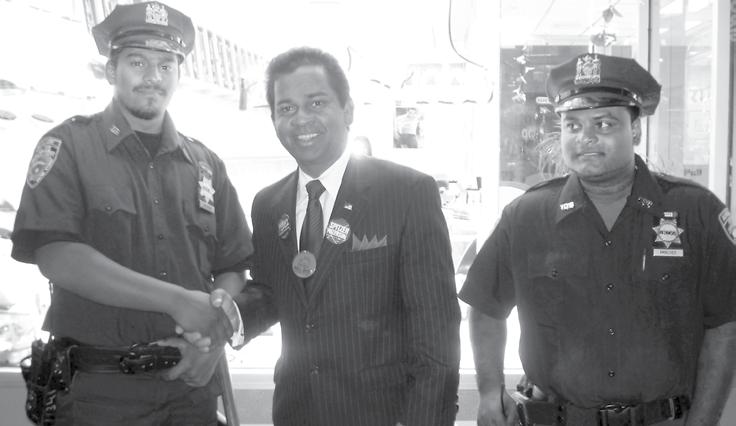
there is a genuine partnership between the police and the communities they serve, and a joint remedial process can only build community relationships with police and break down decades of mistrust. Police officers can serve the communities they hail from.
Nelson Mandela was right when he said that no one is born hating another person based on his race. The system must be accommodating to include everyone pursuing
the common goal of alleviating crime. A quota driven system has no place in this.
Constitutional policing increases public safety, and enhances an impregnable partnership between police and communities. Citizens in high-crime neighborhoods are more likely to report crime and cooperate with the police if they know complaints are fairly investigated, bad cops are punished and police are in their neighborhood to
prevent crime, not to target young people going to school or work.
The few rotten police officers can be weeded out or get the necessary assistance needed to be good police officers. Monitoring police officers and regular audits can identify troubled officers and misconduct before a police shooting or other critical incident occurs via a centralised data collecting system. Supervisory audits must identify whether stops, frisks and
searches were based on the law, and not on an officer’s particular whims and prejudices.
The Floyd trial showed that bias is ingrained at the highest levels of the NYPD, with some leaders viewing innocent behaviors by certain civilians as inherently suspicious. New leadership must see that officers are trained on the correct law and make sure they know that stopping the “right people” (NYPD officials’ code for black and Latino men) is a form of racial profiling. They should follow steps taken by other police departments, including the Los Angeles Police Department under Bratton’s leadership, and incorporate tools to recognise unconscious bias into police department training.
The Civilian Complaint Review Board must also practice unbiased and independent investigations in its review of complaints against police officers, and not be beholden to the officer’s version only.





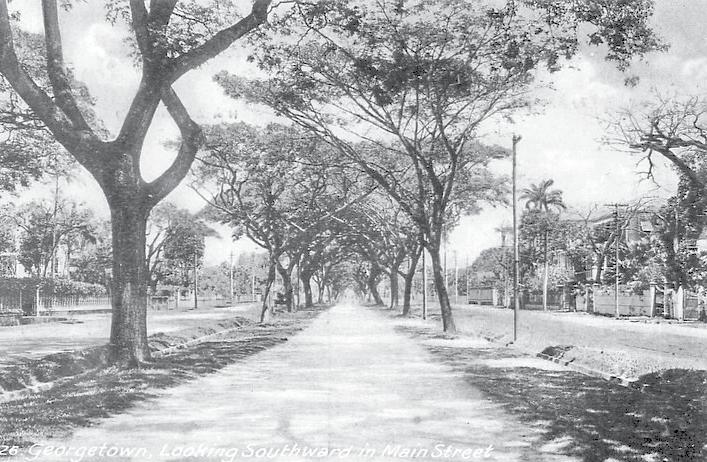
The 2014 National Trust of Guyana calendar, which highlights one aspect of our multi-religious heritage, features several ecclesiastical stained glass windows adorning some of our historical churches. The innovative almanac also provides a brief description of the church and its windows; information which, at the time its design concept was proposed and adopted in 2012 at the Trust, was lacking, and had to be researched.
Stained glass is considered to have a thousand-yearold history. It adorns ecclesiastical and other significant buildings in several parts of the world. Considered an art or craft, stained glass has covered Christian church or monastery windows since the 4th and 5th centuries. This art form has come down over the centuries to influence colonial Christian societies, leading to its presence among Guyana’s ecclesiastic architecture.

message, punishment, pepper, governor, cook, league, mustard, admission
Explanation: Each of the words can be preceded by a military rank to form a phrase (in reverse order also). (Private) message, (Corporal) punishment, (Sergeant) pepper, (Lieutenant) governor, (Captain) cook, (Major) league, (Colonel) mustard, (General) admission


WorldTeach is a non-profit, nongovernmental organisation founded by a group of Harvard students in 1986 in response to the need for educational assistance in developing countries. Since its inception, WorldTeach has placed thousands of volunteer educators in communities throughout Asia, Latin America, Africa, Eastern Europe and the Pacific and Guyana.
WorldTeach programme in Guyana was first established through the efforts of Roger Arjoon, a former Rhodes Scholar and Guyanese citizen working in finance in New York City, and a member of the Board of Directors of WorldTeach. Arjoon was acutely aware of Guyana’s needs and was pivotal in making the primary contact between the Ministry of Education and WorldTeach.
The organisation was established in Guyana

teach, they live and interact with their communities for a year and during that time have done many things including participating in festivals and celebrations to starting extracurricular activities for their students.
In an interview with Guyana Times Sunday Magazine, WorldTeach representative Cara Abel said the volunteers really enjoy being part
to End of Service representatives from the Ministry of Education work together with the Field Director to ensure the smooth and successful operation of the program. They provide constant support and training. Primarily we work with Ms. Donna Chapman, Deputy Chief Education Officer, who is a wonderful resource and is passionate about education and work-

during the 2005-2006 school year, and has partnered with the education ministry to help meet the academic needs of the country. WorldTeach also provides an excellent opportunity for cultural exchange as the volunteers all derive from different backgrounds and become valuable parts of the communities they live in.
The programme was temporarily suspended 2009 but was later restarted and now is celebrating its 7th academic year, 2013-2014, of service this year.
WorldTeach volunteers teach in secondary schools throughout the country. Volunteers usually teach math or sciences, but have had opportunities to teach other subjects based on their strengths. These volunteers do not just
of the Guyanese community. “The cultural exchange aspect of the program is exciting for both the volunteers and the community they live and work in.”
Over the years WorldTeach has sent volunteers to well over 25 schools throughout the country in almost every region. Each year, dependent on the size of the volunteer group and the needs of the schools, the Ministry of Education assigns 2 or 3 volunteers to each school. Cara mentioned that WorldTeach relies on the ministry to know where its volunteers will be the most useful.
“We partner with the Ministry of Education who identifies the places where our volunteers are needed; mainly when there is a shortage of teachers. They are excellent to work with; from Orientation
ing with WorldTeach. We immensely appreciate her help,” Cara mentioned.
Cara noted that this year there are currently six volunteers in Guyana. Past years have seen groups between 10 and 45 volunteers. She hopes that for the coming year there could be a larger group.
“The six ladies (volunteers) in-country are amazing people who are thoroughly enjoying living and teaching in their school communities. Our aim is to assist the Ministry of Education in with the needs it has in secondary schools. We have been working mainly in teaching Math and Sciences but currently we have a volunteer teaching English and also one who taught geography. We look to help the Ministry of Education to fill in voids it may have and to offer
our strengths as options for teaching,” she disclosed.
WorldTeach is a unique organisation in that it offers placements to applicants from college graduates to 65-yearolds. To be a WorldTeach volunteer, each applicant must go through the application process, interview and successfully complete the in-country orientation. All of its volunteers have a college degree and an interest in service, so it knows that the quality of their volunteers’ work can be held to a high standard.
The organisation is looking forward to continue assisting in the education system in Guyana wherever the Ministry of Education needs it the most. Currently, with a huge emphasis on literacy development, Cara pointed out that WorldTeach hopes to recruit and train volunteers to work in the primary schools with students in remedial literacy programs. For more information on the organisation visit WorldTeach Guyana on Facebook. (Guyana Times Sunday Magazine)
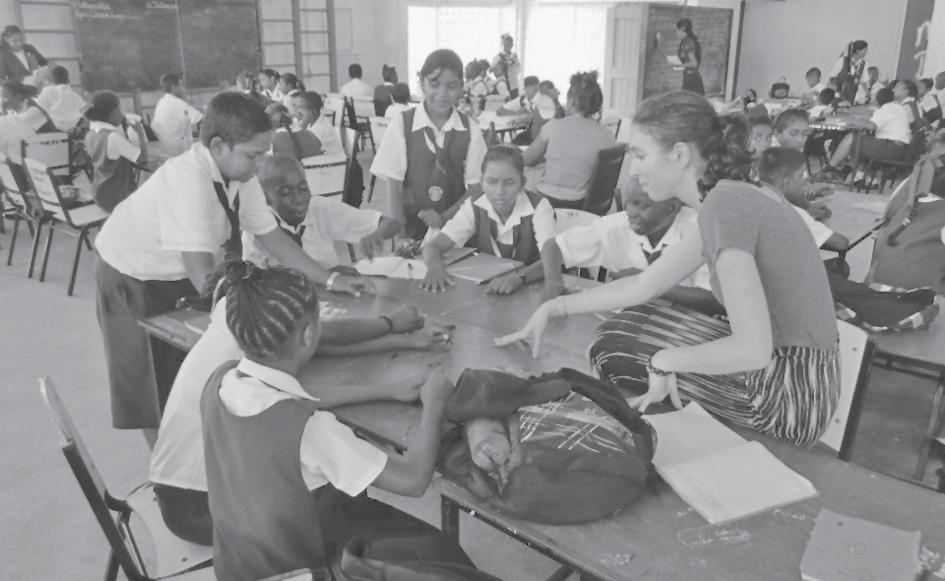

Actress Deepika Padukone, who has been romantically linked with her ‘Ram-Leela’ co-star Ranveer Singh, says that she is very much single.
Apparently, Deepika, who turned 28 on January 5, spent her birthday with Ranveer and they were spotted together in New York.
In an interview recently, she had denied rumours of a relationship with Ranveer, but evaded the question on the issue this time saying that all this talk is not true. When asked if she was single, she said, "Yes ...yes. You are happy (now)," she told reporters.


Megastar Amitabh Bachchan says at 71 he finds dancing "incongruous", but nevertheless, he enjoys it only if the retakes are within "tolerable limits".
Amitabh was last seen on the silver screen in ‘Satyagraha’ and is currently shooting for his upcoming film ‘Bhootnath Returns’, a sequel to the 2008 horror comedy film ‘Bhootnath’.
"It’s been a while, since I shook my body to dance on camera. Now at 71, it does seem incongruous. But truth be told, it's exceedingly enjoyable, so long as the number of takes are within tolerable limits," Big B posted on his blog.
He also appreciated the work of choreographer Ganesh Acharya, and said that he is the "one that has created some of the most unusual moves in the movies, and the one whose dance moves look incredibly graceful, despite his enormous girth".
Amitabh then said Acharya informed him that he was one of the group dancers in his 1990 film ‘Agneepath’ during the sequence where he takes Lord Ganesha for immersion. (TOI)
Earlier, the actress sidestepped queries on Ranveer on filmmaker Karan Johar's chat show ‘Koffee with Karan’ when she was prodded about her supposed boyfriend and instead asked, "Am I dating him ?"
Sometime back, the pictures of Ranbir Kapoor and his rumoured girlfriend Katrina Kaif were published by the magazine. And now Deepika's pho-

Newcomer Daisy Shah, who is making her debut as Salman Khan's leading lady in forthcoming film ‘Jai Ho’,
Actress Bipasha Basu, who is reportedly dating Harman Baweja, refused to speak on her relationship status, but said that she will have a typical Bengali wedding.
"Whenever I get married it will be a Bengali wedding. If I won't have a Bengali wedding my mother won't come. She has warned me. So, I am going to have a Bengali wedding for sure," Bipasha, known for films like ‘Jism,’ ‘Corporate’ and ‘No Entry,’ told IANS.
"But the only condition is that nobody will dance at my wedding, everybody will only exercise," added the 35-year-old, a fitness freak who has launched the third volume of her fitness DVD titled 'Unleash'.
Her ex-beau John Abraham recently got married to Priya Runchal, an investment banker.
tos with Ranveer are going viral, but the actress is not worried about the pictures getting published. "It doesn't matter as it is part of what I do. When the issue releases I will buy the copy to read it," she said. (TOI)
Alia Bhatt, who has lent her voice to a song in her upcoming film ‘Highway’, says if she fails as an actress, she will turn to singing
When director Imtiaz Ali asked her to croon a number in ‘Highway’, she jumped at the idea.
describes her co-star as an ‘emotional person’, who is often misunderstood as being ‘impulsive’.
"He is a very wonderful human being and people think that he is very impulsive, and that he gets very angry. I would say that it's not his anger, but his love, which he wants to express because he is a very emotional person," the 28-year-old told reporters Saturday.
Daisy was a background dancer until Salman spotted her.
‘Jai Ho’ is set to release Jan. 24. (TOI)

When asked about her views on John's wedding, she said: "I am not answering that." (TOI)
"I am not a singer...I think I am a bathroom singer. When I was asked to sing, I was excited and thought of trying it (singing) out. A.R. Rahman sir was very patient with me. If I fail as an actress, I will become a singer," Alia told reporters.
When the team of ‘Highway’ was travelling since it is a road movie, Alia would often sing Rahman’s song ‘Jiya Re Jiya’. That's when Imtiaz thought of exploring her singing talent.
Music maestro A.R. Rahman told her to practice and that if she learns singing for two years, she could have her album.
According to Alia, who is geared up for the highway journey in a deglam avatar with Randeep Hooda, both acting and singing are difficult.

"I am just two films old when it comes to acting and it's my debut as a singer with ‘Highway’. For me both are difficult," she said. (TOI)

Actor-producer John Abraham, who has bought a stake in the Hockey India League team
Delhi Waveriders, says he decided to become a co-owner as he wanted to be more than just a face and contribute to important team decisions.
"Being just an actor and endorsing the team would mean just sitting in the dugout or probably in the stand wearing dark glasses or dancing to an item song. That's exactly I didn't want to do. I wanted to practice and play with the team, decide the strategy and pick players," the 41-year-old said.
"The WAVE group approached me and said they want me to be a part of the Hockey India League and endorse the Delhi Waveriders. We both came to a conclusion that I need to co-own the team to run it and do more than just being a face," he added.
John is also producing a film on football titled ‘1911’, which revolves around two popular football clubs Mohun Bagan and East Bengal.
The film will be directed by Shoojit Sircar and goes on floors in October this year. (TOI)
Hollywood star Ryan Gosling says he never thought of pursing an acting career, but feels grateful for making a mark in the industry.
The 33-year-old actor has starred in several hit movies like ‘The Notebook’, ‘Crazy, Stupid, Love’, ‘The Place Beyond The Pines’ and ‘Gangster Squad’, reported Contactmusic.
"I never thought about being a film star. But I came further than I ever thought. I have done incredibly well. I have had the same manager from the age of 14 and the same agent since I was 16," Gosling said.

"Now I can repeat and work again with the directors I like," he added. (TOI)

Dwayne Johnson has bought his housekeeper Esperanza a new Ford Edge.
The former WWE wrestler turned actor took to Twitter saying that for 10 years, she has cared after their home with the love of a mama and an eagle's eye, TMZ.com reported.
He wrote on the micro blogging site that he just surprised her with a new ride, with a hashtag saying "we love you". (TOI)
Keira Knightly has admitted that she is tired of her characters dying in movies and she has now decided to take a "fun" part in ‘Jack Ryan: Shadow Recruit’.
She said that she got to the end of ‘Anna Karenina’ and realised that she had either been dying in every film or something horrific was happening to her character, the Mirror reported.
The ‘Never Let Me Go’ star insisted that she wanted to do something where that didn't happen.
Knightly added that her upcoming film is wonderful and a "totally pure Hollywood entertainment", which she fancied, and that her ‘Can A Song Save Your Life’ 'Laggies' are incredibly positive and fun. (TOI)


Julia Roberts still swoons over her husband after 11 years of marriage.
The ‘August: Osage County’ star

C"ugly" on her show.
The 80-year-old joked
about the seven-monthold North as part of her latest stand-up comedy.
According to radaronline.com, Rivers told her audience: "That baby is
ugly...I've never seen a six-month-old so desperately in need of a waxing."
When Kim first revealed a photo of her child on social media in mid-December, she was inundated by comments that she had waxed the baby's perfectly groomed brows.
The 33-year-old then took to Twitter to defend North's appearance.
River's joke is unlikely to go down well with Kim's fiancé, rapper Kanye West, who is very protective about his daughter. (TOI)
‘I don't rate my talent’ - Jennifer Lawrence
Oscar-winning actress Jennifer Lawrence does not think she is a good performer.
The ‘American Hustle’ star always thinks she has "got away with it" when she gets a good review for her performances, reported Contactmusic.
"I always feel like I'm pulling the wool over everyone's eyes about my acting. When I get good reviews I think 'Alright-got away with another one.' I watch my performance and I think,

'Yeah, it's sort of alright,' but then when I read the reviews I don't quite get what the big deal is, I really don't," she said. After a busy 2013, the
23-year-old beauty, who is believed to have reconciled with on-and-off boyfriend Nicholas Hoult, is hoping this year is much quieter so far. (TOI)
Actress Scarlett Johansson is in no hurry to tie the knot with fiancé Romain Dauriac.
The ‘Her’ star got engaged to Dauriac, a journalist, in the summer of 2013, reported Digital Spy.
"I'm busy planning ‘Avengers 2’ right now. That's my main focus. I've never been a big planning kind of person," she said.
can't believe it's been over a decade since she wed cameraman Dany Moder---with whom she has nineyear-old twins Phinnaeus and Hazel and six-year-old Henry---and still feels as though the couple are in the Honeymoon phase.
She said: ''11 years feels like 11 minutes. It's just gone by in the blink of an eye. It's really only all these kids in our house that show that a lot of time has gone by. Otherwise it feels like, you know, me buckling and swooning still.''
The 46-year-old screen icon has slowed down her career since becoming a mother and refuses to let her children watch her movies, including family film ‘Mirror, Mirror’, in which she plays an evil queen who bullies Snow White, played by Lily Collins. (TOI)

"I'd never share it with anybody, but I think more than anything, I feel really fortunate to have had this amazing year professionally. And I think when all that smoke settles I'll be able to (plan)," she said. Johansson, 29, recently shifted to Paris with fiancé. (TOI)
Chat show host Oprah Winfrey will produce a new movie titled ‘Selma’, based on the life of Martin Luther King.
The 59-year-old has confirmed she will help produce the upcoming film, which will see David Oyelowo, who played her son in ‘The Butler’, play the historical figure.
The film tells the story of a group of black marchers who attempt to walk from Selma, Alabama, to nearby Montgomery in order to gain the right to vote in 1965. However, the protesters find themselves in the crosshairs of the police, reports contactmusic.com.
Winfrey will co-produce the movie with Brad Pitt. (TOI)

B y T reisT on J oseph
Queens College is looking to score high grades with their School Based Assessment (SBA) project for physical education with a volleyball tournament which kicks off today at the school’s auditorium.
The tournament is being sponsored by NEW GPCLimacol. The tournament will be starting from 10:00hrs, featuring ten house teams from within the school which should make for intense competition as the class contesting the Caribbean Secondary Education Certificate (CSEC) will have different roles to play in order to pull off a successful knockout tournament.
Speaking with the physical education teacher of Queen’s College Tyson English, Guyana Times International Sport learnt why the students chose volleyball but also understands the type of molding such projects can have on the students. “They would have selected volleyball based on the fact that volleyball is a part of the culture of Queen’s College. You would find that we’re not only trying to expose those CXC students just to sports in general, but we’re looking at the aspect of them being able to plan, organise and execute…” English noted.
Meanwhile looking at the

tournament itself, English shared his view on what he expects from the students. “For the students participating as players I’m expecting them not only to use the opportunity to play the sport of volleyball but to also use the opportunity to develop whatever skill or hidden talent they might have. Apart from that it allows them to have some recre-
ation which is lacking in schools today in the form of sport.
“In terms of the organising committee I expect them to have fun first of all and for them to ensure that whatever they would have planned and prepared that they execute them to the fullest of their capability,” English told this publication.
However, in terms of scoring high grades when the tournament is over, the students will have to meet some guidelines that English pointed out to Guyana Times International Sport.
“They are expected to comprise a portfolio that portfolio should comprise a reflection from each child whether the tournament was a positive one or negative, it doesn’t matter but they have to give their own reflections.
“They are expected also to provide pictures, videos to show as proof that this tournament actually happened and they are expected to give an overview of the entire project from the inception, planning, the day of execution and they are going to give more or less an overview which will be marked by the physical education teacher and those scores will be sent to CXC,” English revealed.

The Trinidad and Tobago men and women national 7s rugby teams were scheduled to fly out to Las Vegas, USA on Wednesday to participate in the Las Vegas Invitational 7s rugby tournament from 2325 January.
The Calypso Warriors are registered to play in the Las Vegas Invitational men and women Elite 7s division. This division is for national teams not in the IRB HSBC World Sevens Series tournament and top professional and select sides from around the world.
He pointed out the invitational while separate from the prestigious IRB World Sevens Series USA 7s, is an excellent opportunity for the TT players.
According to Figaro the TT players “will benefit no end” while at the same time being able to watch the world’s best sevens players and national teams compete in the USA 7s--round four of the International Rugby Board (IRB) HSBC World Sevens series in Las Vegas. (TT Guardian)
The TT women will battle with teams from Canada, Japan, France and the USA, while the men will face national teams from Belgium, Mexico, Chile, Peru, Cayman Islands and select sides from Canada and USA. Kerchelle Hinkson, Mark Roberts and Aasan Lewis will make their international 7s rugby debut in Las Vegas. TT Rugby Football Union (TTRFU) president Leslie Figaro, said the Las Vegas Invitational is a premier tournament.
The Berbice Cricket Board’s (BCB) junior selection committee under the chairmanship of Leslie Solomon has named a junior cricket squad for the 2014 inter-county season that would commence training shortly under the Junior Elite training programme.
The squad is divided into three sectionsUnder-15, Under-17 and Under-19- and would be trained by a panel of qualified cricket coaches, including Michael HylesFranco, Winston Smith and Albert Smith.
Chairman of the BCB Special Events Committee and Public Relations Officer, Hilbert Foster, stated that more cricketers would be added to the squad based on performances in upcoming junior tournaments.
Members would be involved in physical fitness sessions, while coaches would also work with them to correct any personal problems in their cricket.
A one-day cricket development seminar would also be organised by the Special Events Committee along with a social skills seminar.
Members of the squad are reminded to keep in
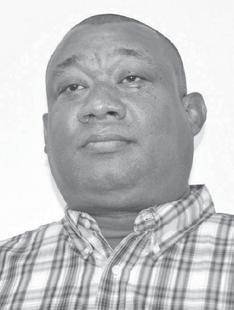
good physical condition and to do a lot of individual training during the rainy season until the Junior Elite Training Programme starts.
The BCB, Foster stated, would start its junior tournaments – Under-15 Inter-club and Interzone, Under-17 Interclub and Inter-zone and Under-19 Inter-club and Inter-zone- as soon as the weather improves.
Below are the members of the various 2014 squads.
Elite Under-15:
Yashpaul Shewtahal, Hemchand Singh, Kris Ramnarine, Saheed Khan, Kevin Sinclair, Junior Sinclair, Malcolm Mickle, Ezekiel Kempadoo, Karaan Rajpaul, Renaldo Rowe, Joshua Clifford, Emanuel Seecharran, Besham Surujnarine,
Jason Permaul, Keith Semple, Javed Karim, Kevin Anderson, Bharrat Bhopal, Joshua Bartrum, Brandon Stewart, Garfield Benjamin and Steve Deonarine.
Elite Under-17: Ritesh Omrow, Suraj Dookna, Kevindra Persaud, Rabindranauth Roopchand, Randy Wade, Brandon Persaud, Javid Seecharan, Adrian Sukhwa, Joshua Harrichand, Totoram Rajaram, Azam Khan, Jaleel Jofer, Devon Rambarose, Shumar Jack, Jason Johasen, Matthew Hardial, Veramootoo Senwansane, Robert Barrington, Sylus Tyndall, Enoch Carmichael, Steve Deonarine, Joshua Gobin and Bramdat Singh.
Elite Under-19: Shimron Hetmyer, Sharaz Ramcharran, David Latchaya, Derek Narine, Hakeem Hinds, Askay Homraj, Nick Ramsaroop, Leon Andrews, Avishkar Sewkarran, Arif Chan, Nial Smith, Grisean Grant, Nicholas Cameron, Balchand Baldeo, Brandon Prashad, Daniel Lewis, Kassim Khan, Gavin Moriah, Deon Esau, Viendra Gooniah, Parmanand Ramdhan and Navendra Permaul.
By Rajiv Bisnauth
Three emerging West Indies cricketers, opening batsmen Shimron Hetmyer and Tagenarine Chanderpaul and left-arm spinner Gudakesh Motie say consistency will be their main aim during International Cricket Council (ICC) Under-19 Cricket World Cup in the United Arab Emirates (UAE).
The three Guyanese are among the 15-member squad announced by the West Indies Cricket Board (WICB) on Saturday. They were part of the regional Under-19 side that played the Bangladesh Under-19 team in a seven-match one-day series in Guyana last October and also part of the team for the return series in Bangladesh.
However, that series was short-cut after the WICB withdrew from the tour for safety and security reasons, following an explosion near the team hotel in Chittagong.
Meanwhile, in exclusive interviews with Guyana Times International Sport, the players say they are elated with their selection, adding that consistency will be their watchword during the tournament. “It is a great feeling to represent West Indies at a youth world cup. And all I am looking for is to stay focused and live up to the expectations,” Hetmyer
Hetmyer, a left-handed opener, who plies his trade with the Young Warriors Cricket Club in Berbice, added, “I want to use this tournament to develop my game; it’s a big step in my career, so I am looking forward to it.”
Chanderpaul, who along with Motie was encamped with the national senior squad, preparing
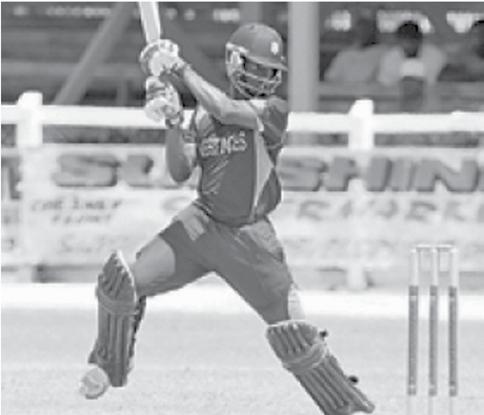
for the upcoming WICB’s NAGICO-sponsored Super50 competition starting next week, said he is looking forward to the tour.
“I am thrilled to be named in the West Indies U-19 World Cup team; I am really looking forward to the series and want to make Guyana and the region proud,” said Chanderpaul.
On the other hand, Motie said his expectations of the tour are high, as his aim is to use it to take his game to the next level.
“I’m really looking forward to it, because bowling on different turfs will definitely help me to improve on my game and move to the next level,” he said.
The three joined the rest of the squad on Tuesday in Barbados for a one-week camp at the Sagicor High Performance Centre, before departing for Dubai.
The team will be led by Jamaican off-spinning all-rounder Ramaal Lewis, while vice-captain is Nicholas Pooran, the left-handed wicket-keeper/batsman from Trinidad and Tobago (T&T). Head coach is Roddy Estwick.
This year’s tournament will feature 16 teams in four groups. The Windies have been drawn alongside South Africa, Zimbabwe and Canada in Group C. Their opening preliminary match is against the Proteas on February 14 at the Dubai International Stadium.
The second match is on February 16 against Zimbabwe at the Sheikh Zayed Stadium in Abu Dhabi, while the third game is two days later against the Canadians at the Sheikh Zayed Stadium Nursery Ground One.
The full squad reads: Ramaal Lewis (Jamaica; captain), Nicholas Pooran (T&T; vice-captain), Fabian Allen (Jamaica), Tagenarine Chanderpaul (Guyana), Bryan Charles (T&T), Tristan Coleman (Jamaica), Jonathan Drakes (Barbados), Shimron Hetmeyer (Guyana), Jerome Jones (Barbados), Ray Jordan (Windward Islands), Brandon King (Jamaica), Preston McSween (Windward Islands), Marquino Mindley (Jamaica), Gudakesh Motie (Guyana) and Jeremy Solozano (T&T).
St John’s, Antigua
– The West Indies Cricket Board on Saturday announced the provisional 30-member squad for the ICC World T20 tournament in March and April. West Indies are the defending world champions in this format. They won the title with victory over Sri Lanka in the final at the R Premadasa Stadium back in October, 2012.
The ICC World T20 will be played in Bangladesh from March 16 to April 6.
The Windies will play all their preliminary round matches at the
Sher-e-Bangla Stadium in Mirpur. They open against India on March 23 and two days later take on one of the ICC Qualifiers.
The third match will be against Australia on March 28, followed by a clash against Pakistan on April 1. The semi-finals are slated for April 3 and 4, with the grand final on April 6.
Hard-hitting allrounder Christopher Barnwell and left-arm spinner Veerasammy Permaul are the only two Guyanese in the 30-man squad.
The squad reads:

Executives of the Upper Demerara Football Association (UDFA) are challenging the move by the Guyana Football Federation (GFF) to suspend them, stating that “the entire process is riddled with violations”.
Several executives of the UDFA were slapped with heavy suspensions on Friday by the GFF, for allegedly acting in contravention of the constitution.
The move to impose the penalties on the UDFA stemmed from the association’s choice to play the final of the GT Beer yearend competition despite the GFF Congress passing a ruling that no other final should be played, but the Banks Beer Knockout Cup, which was hosted on January 1.
During a press briefing on Tuesday in the boardroom of the Critchlow Labour College, president of the UDFA, Sharma Solomon, said the association is prepared to challenge “the reckless and unconstitutional decision of the GFF since the en-
tire process is riddled with violations of the rules that guide the conduct of the business of the GFF”.
He said the executives of the UDFA were never charged and placed in front of the Disciplinary Committee where the right to be heard would have been given based on Article 56 of the GFF constitution.
“Article 56 speaks to the judicial bodies. Where is the Disciplinary Committee? Where is the Appeal Committee? Since members of the executives were never charged and placed in front of the committee, this constitutes a major infraction of the rules of the organisation,” he added. The most severe penalty was handed down to Solomon, who was given an eight-year suspension, while every executive member of the association, including GFF second vice-president Collie Hercules will serve a fiveyear suspension.
Despite the recent development, Solomon said the UDFA will continue with its mandate to pro-
mote football within its jurisdiction since the body is not in receipt of any document confirming that the executives have indeed been suspended.
“The UDFA wishes to strongly register its concern as to the quality of leadership given by the president [Christopher Matthias] and General Secretary [Noel Adonis] of the GFF, while recognising that the general secretary and president respectively served in esteemed positions prior to their present posts,” Solomon stated.
“Their performance at this juncture brings into question what quality of service they may have given to the taxpayers of this country as we see the breaking of the GFF rules to satisfy the political machination of a group at the expense of the UDFA and the people of Linden,” said Solomon. The suspensions mean that the executives in question will not be allowed to participate in any football-related activities for the said period.
Christopher Barnwell, Sulieman Benn, Tino Best, Samuel Badree, Darren Bravo, Dwayne Bravo, Johnson Charles, Kevon Cooper, Sheldon Cottrell, Fidel Edwards, Rayad Emrit, Andre Fletcher, Chris Gayle, Jason Holder, Delorn Johnson, Nikita Miller, Sunil Narine, Ashley Nurse, Veerasammy Permaul, Kieron Pollard, Denesh Ramdin, Ravi Rampaul, Kemar Roach, Andre Russell, Darren Sammy, Marlon Samuels, Krishmar Santokie, Lendl Simmons, Dwayne Smith and Chadwick Walton. (WICB Media)

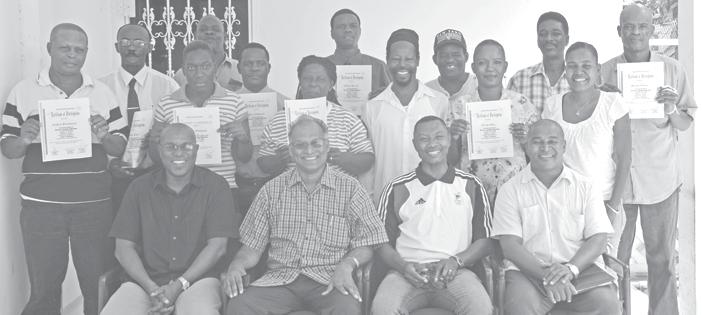
By Treiston Joseph
The Guyana
Amateur Boxing Association (GABA) started the year with a knockout blow after successfully hosting a judges and referees programme on Sunday following a visit from International Amateur Boxing Association (AIBA) qualified referee/ judge James Beckles.
The course, which lasted the duration of five days at the Guyana Olympic Association (GOA) headquarters in Kingston, has made Guyana one of the first Caribbean countries to implement and train personnel to operate the new computerised 10-point system of AIBA, according to Beckles.
Among the first
“Guyana is among the first Caribbean countries to have used and to have trained on this new computerised 10-point system, countries such as Jamaica and Aruba are having difficulty with it and it is nice to know that your referees worked the system and got it correct,” Beckles stated.
Guyana now has 14 qualified judges/referees and president of the GABA Steve Ninvalle
was pleased with the success of the workshop.
“Today I think boxing has scored a knockout in Guyana, it is very important we have such seminars because we need to widen our information base, we are also happy that every time we have such programmes [we] add to our females.
“However, we need to make sure that we are constantly being fed information so that we can develop, so I want to congratulate all the participants on their success,” Ninvalle stated.
Further, Ninvalle revealed that with the Goodwill games coming up, an invitation was sent to Cuban boxers to participate. He also invited Beckles to return for the Goodwill games scheduled for February 14.
Relevance
Secretary of GABA Shawn Richmond at the final day of the seminar noted the relevance of Guyana learning the new system.
“The relevance of this course is quite high because we are able to build capacity and brings us to a global capacity in boxing.
“For us to reach the highest level in boxing our referees/judges and
boxers should be aware of high standards and with this I see a progressive onward movement,” Richmond mentioned.
Director of Sport Neil Kumar, who has been in full support, believes that the programme will take Guyana to the next level, while revealing that GABA will be in for a new ring, as he congratulated the participants.
Challenge Meanwhile Beckles issued a challenge to GABA to ignite the flames of the Caribbean Amateur Boxing Association (CABA) championships, which has been non-existent for four years.
Participant of the course Elton Chase thanked Beckles for his knowledge and said he hoped that he (Beckles) would return soon.
Beckles was presented with a plaque of appreciation from the participants by Romona Agard.
Participants were Nicola Yhap, Paulette Nurse, Romona Agard, Leonard Wilson, Wayne Harris, Mark Drakes, Jermaine Craig, Eustace Cuffy, Colin Waddle, Marcelle Dainiels, Nigel Hope, Keith Norville, Richard Braithwaite and Elton Chase.

By RavendRa Madholall
Canada-based Guyanese Deo Samaroo returns as president of the Scarborough Cricket Association (SCA) after being re-elected unopposed on Sunday when the Annual General Meeting was held at the Agincourt Community Centre.
The Guyanese has been at the helm of the association for the past four years, and has assured that he and his executives will continue to work hard for the betterment of the game.
Long-serving treasurer Vish Jadunauth has also committed to ensure rapid growth particularly with the addition of the T20 competition.
Apart from Budhave Anandjit, who was vying for the presidency, but failed to challenge Samaroo, only Mahesh Raghuram did not seek re-election for his secretary position. Bisham Singh has been re-
tained as the vice-president. Eon Gunraj will serve in the capacity as the secretary now with Mohammed Ahmed as his assistant while Shiv Persaud is once again the registrar/statistician and the veteran Richard Ramlall as the Public Relation Officer. The two ground coordinators are Usman Patel and Abdool Quddoos-Khan as the head and assistant respectively.
Meanwhile, Jadunauth noted that the team of executives has been very proactive to ensure steady development of cricket in the Scarborough League.
“I want to congratulate everyone for being elected again and Samaroo for retaining the position. We at the SCA have one thing in common, to promote the game and also to ensure we have good competitions and organisations. Yes, the guys had done well in 2013, but we [are] expecting to have a better year,” Jadunauth stated.
Since the formation of the association, focus has been predominantly on the 50, 40-over and under-19 cricket, but Jadunauth announced that a T20 competition would be officially inaugurated this year.
“We just want to keep improving in all aspects of the game and I think the T20 version will definitely see some good turnout of fans, and I am sure the players themselves will be glad to have this form of the game being introduced,” Jadunauth indicated.
Last November, the association held its annual presentation and award ceremony at the Eastown Banquet Hall, where a large number of players received trophies, plaques and other incentives for their outstanding, individual performances, and according to Jadunauth, that was one of the SCA’s highlights as the association commemorated 33 years of existence.
Trinidad and Tobago’s lone representative at the International Cycling Union (UCI) World Cup in Guadalajara, Mexico, Kwesi Browne, finished in a credible ninth place in the Men’s Keirin event on Saturday night.
Browne, who made his debut at this leg of the World Cup series, rode valiantly to hold off some of the world’s best riders in this tightly contested event. After progressing through the opening rounds and winning his repechage heat,
the Arima Wheelers cyclist lined up against 2013 Olympic Keirin bronze medallist Simon van Velthooven (New Zealand), Benjamin Edelin (France), Lewis Oliva (Great Britain), Joachim Eilers (Germany) and Matthijs Bucli (Netherlands).
However, the promising athlete was edged out on the line and then forced to face the starter in the 7-12 final, which rode off at 11.15 pm.
In this race, Browne squared off against van Velthooven, Edward Dawkins (New Zealand),

Francecso Ceci (Italy), Cristos Volikakis (Greece) and Benjamin Edelin (France). He went on to finish third in the 7-12 final and ninth place overall. Beating him to the line were Van Velhooven and Volikakis respectively.
The effort was still highly commendable and impressive from the World Cup debutant.
In the earlier stages, Browne placed fourth in Round One Heat Four and was forced to contest the repechage heat.
The Round One
repechage saw Browne win his race and advance to the semi-finals. Sunday's proceedings in Guadalajara concluded the final of three legs of the 2013/ 2014 World Cup season, which began in Manchester, England, and continued in Aguascalientes, Mexico.
The next major meet on the global track cycling calender will be the World Track Cycling Championships which rides off in Cali, Colombia, on February 26-March 2. (TT Newsday)
Struggling to contain his excitement, veteran captain and driver of Jamaica's Sochi 2014-bound bobsled team, Winston Watts, is hoping that the team's return to the Winter Olympics will inspire a new generation of bobsledders and breathe new life into a sport that has not always enjoyed the Jamaican spotlight.
Watts also made it clear that the team will not be satisfied with simply making up numbers at the marquee winter sport event.
"We are not going there to bring up the rear, I hate losing. We are all going there to work hard, and if we execute, you will see a good result," Watts said.
The former army man came out of retirement to steer
Jamaica back into the Winter Olympics---a stage they have missed since 2002, following successive qualifications after the nation's historic appearance in Calgary in 1988--an appearance lionised by 1993 Disney comedy 'Cool Runnings'.
The 46-year-old, who learnt of the team's qualification in the early hours of Monday, is hoping that their latest success will trigger greater support for the sport here.
Serious team
"In terms of impact, we want the business community to see that the Jamaica bobsled team is serious like other athletes are, and I would want them to come on board so that we can dominate the world like track and field. It can
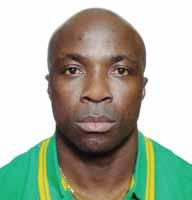
happen, we have the athletes, we just need the help," Watts told Jamaican media from his Evanston, Wyoming home and training base.
"It's just a lot of emo-
The West Indies Cricket Board (WICB) appears to have called an emergency meeting to discuss proposed changes to the International Cricket Council (ICC), which some officials in the region believe could have devastating consequences for West Indies cricket.
The proposed changes are contained in a working paper for a revamped ICC, which will come before members as early as the quarterly meeting in Dubai on January 28 and 29.
A WICB release said the board of directors met by teleconference and discussed the issue on Monday and were scheduled to reconvene, again by teleconference, Wednesday to continue the discussion.
"We have not set the date for our next ordinary meeting, but an emergency meeting may be called," declared WICB director, Baldath Mahabir, in an earlier interview.
"This is very serious as with West Indies playing second-tier cricket, we may lose interest among the fans and this could prove detrimental."
Two-tiered system
The WICB release lists the issues being discussed as ICC group structure governance, financial model, bilateral cricket and ICC events.
The ICC working paper is proposing that Test cricket be played under a two-tiered system in which England, India and Australia will not be demoted, while teams like West Indies and New

a wicB release said the board of directors met by teleconference and discussed the issue on monday.
Zealand would find themselves in the second tier.
"Anytime you have a situation where people are looking to divide and rule it could never be good. Looking at the proposals, this is a situation where power-broking and sharing will go to three of the members, and this cannot be healthy," said Mahabir, giving his personal view.
"We are at a point where we need to expand the game, and bringing a model that is not inclusive would do damage to the sport down the road. This model would only lead to monopolising of the sport, and I cannot see how this could be good for cricket."
Another major recommendation is that the major power brokers of the revamped ICC be England, India and Australia.
Former New Zealand captain, Martin Crowe, has criticised the proposals, arguing that it would not be good for West Indies who have been showing signs of returning to their glory days.
"Cricket is cyclical, and to ask the West Indies to play second-
tions," Watts continued. "The last qualification was in 2002, and I knew we didn't have the funding, and we have been going through this crisis for many years now. We really scraped through to qualify."
He added: "As Jamaicans, we are dedicated to whatever we put our hearts to, and that is what myself and my teammates did with little or no funding, and we are all very emotional right now."
The 1994, 1998 and 2002 Olympian, who shared that he was home when he heard the news of the team's qualification, said the other team members---Marvin Dixon, Wayne Blackwood and coach, Wayne Thomas---were all extremely excited about the qualification.
He also had a message to the team's millions of supporters across the world.
"We won’t give up, and I would love for you guys to back us to the very end. We are diehearted like Usain Bolt and our other great Jamaican athletes, so we are there to do our best and represent Jamaica. It's a different sport, and it's very hard, but just bear with us and share in this with us," said Watts.
The team is expected to arrive in Sochi on February 5 ahead of the February 7 Opening Ceremony of the Sochi Winter Olympics. The team will compete in the two-man bobsled competition, which will take place on February 19 and 20. (Jamaica Gleaner)
The Guyana Boxing Association (GBA) has revealed that Jamaica is the only county that has so far confirmed participation at the upcoming International Goodwill boxing championship, organised by the GBA in collaboration with the Guyana Olympic Association (GOA).
tier cricket will be unfair. They had ruled the sport for quite a while and now, although they are not doing that, they have shown glimpses of getting back over the last year," Crowe told Cricinfo. (Jamaica Gleaner)
Billed for February 14-16 at the Cliff Anderson Sports Hall, the three-day event is slated to attract boxers from Guyana, Jamaica, Trinidad and Tobago and St Lucia.
However, according to GBA president Steve Ninvalle, only Jamaica
and Guyana have confirmed their participation, while officials are awaiting word from their counterparts in Trinidad and Tobago and St Lucia.
Ninvalle stated that boxers from Barbados were also invited to compete at the event, but they opted out since two competitions are billed around the same time on that island.
The GBA boss indicated that each country was invited to produce a team of seven boxers, inclusive of one female to compete at the event.
Ninvalle further divulged that the GBA will be using the event as
preparation for the country’s boxers who would be competing at the South American championship, which is slated for March in Chile.
“Right now the Guyanese boxers are in training and they are expected to be encamped shortly,” Ninvalle said.
The Jamaican team, which is expected to arrive in Guyana on February 13, comprises head coach Carl Grant, coach Godfrey Collins, lightweight Patrick Sahadeo, light welterweight Anthony Clarke, welterweight Kestna Davis and middleweight Michael Gardner.


By Rajiv Bisnauth
Over 65 of the country’s top horses will be in action on Sunday when the Kennard Memorial Turf Club (KMTC) stages the rescheduled Boxing Day horse race meet at the club’s track, Bush Lot Farm, Corentyne, Berbice.
Wednesday noon was the deadline for the submission of entrants, and according to a secretary of the KMTC, Niketa Ross, 66 entries are confirmed for the seven-race card.
Some of top jockeys from Canada, Jamaica, Trinidad and Tobago, U.S.A. and Barbados are expected to compete with their local counterparts from noon.
The meet is scheduled for January 26 at Bush Lot Farm, Corentyne, Berbice. It was slated for January 19 after the original Boxing Day meet was postponed due to the inclement weather.
While there are some changes to the programme, the feature race remains for A and Lower horses. However, the prize money for the

a
winner has been reduced to Gy$1 million.
The co-feature race will now be for horses categorised F1 and Lower for Gy$400,000 over six furlongs.
Other events billed for the day are the G3 and Lower for a Gy$300,000 winner’s purse over six furlongs.
The H and Lower and the Three-year-old race for Guyana bred horses will run over seven and six furlongs respectively. Both races carry a winning tag of Gy$250,000.
Rounding out the ros-
ter is the J3 and Lower and J1 and Lower over six furlongs. The winners will be collecting Gy$150,000 and Gy$200,000 respectively.
The race is being conducted under the rules of the Guyana Horse Racing Authority (GHRA) and those rules would be rigidly enforced.
Those horses not properly registered will not be allowed to participate in the day’s proceedings.
Admission to the venue is Gy$1000 for adults and Gy$500 for children.
By: Rajiv Bisnauth
Scotia Bank continued its relationship with the Berbice Cricket Board by pumping Gy$250,000 into the hosting of the seventh annual Berbice Cricket Board academy and one of the board’s educational programmes.
The presentation ceremony was held in the studio of NCN, Homestretch Avenue, Georgetown on Tuesday. The educational programme will be the hosting of an essay competition for secondary school students on the topic “Berbice Cricket at 75 years”.
Meanwhile, Chairman of the BCB Special Events committee, Hilbert Foster stated that the cricket academy will be held at the Area H ground, Rose Hall in July. The one week academy will benefit sixty young cricketers from the under-13 to under-19 levels where special emphasis would be placed on batting, bowling, fielding, wicket keeping and physical fitness. The young cricketers will also be involved in several lectures on top-

ics of interest includes the importance of discipline and education, the history of cricket, public speaking, the history of Berbice Cricket among other topics.
Foster further indicated that the BCB is confident that at the end of the academy that the young cricketers would be in a better position to not only be role models to others but be successful on the cricket field. The coaches for the academy are Michael Hyles and Winston Smith.
Further, the top three winners for the es-
say competition will receive prizes. Prior to the handing over ceremony, Foster expressed gratitude to Scotiabank and its Marketing Manager Jennifer Cipriani for investing heavily in Berbice cricket. Cipriani in handing over the sponsorship, hailed the BCB as an outstanding organisation. She praised the board for its wide range of activities and programmes, stating that the bank is pleased to be associated with the development of cricket and the promotion of education for youths.


By: Rajiv Bisnauth
The Rest combination put in a disciplined bowling performance on Tuesday evening to beat the National X1 by 32 runs in the of first of two practice matches slated for the Guyana National Stadium under lights.
Led by fast bowler Keon Joseph (3-27) and leg spinner Amir Khan (3-37), the National X1 were bundled out for 218 in 47.2 overs despite Shivnarine Chanderpaul’s impressive half-century.
The left-handed Chanderpaul top scored for the National X1 with a 121ball 77, inclusive of five fours and a six. However, the rest of the side’s batting failed to build on Chanderpaul’s effort with only Robin Bacchus (26), Royston Crandon (25) and West Indies middle-order batsman Narsingh Deonarine, who recently returned from New Zealand (21), being the other significant contributors.
Earlier batting first, the Rest combination posted 250-
Limacol CPL Chief Executive Officer Pete Russel (left) is in deep conversation with Amazon Warriors Team Manager Omar Khan (right) and Kieran Foley, Limacol CPL director, at a reception on Wednesday evening during the officials’ visit to Guyana.
6 in their 50 overs. Out-offavour batsmen Sewnarine Chattergoon and Rajendra Chandrika hit contrasting half-centuries. Chandrika made 62 off 77 deliveries with four fours and a six, while the former West Indies opener Chattergoon hit an 86-ball 55, inclusive of four boundaries.
The pair was supported by the diminutive Vishal Singh (49) and the hard hitting Jonathan Foo (22).
National skipper

Christopher Barnwell was the best bowler on show for the National X1, capturing 4-44. Spinners Royston Crandon and Veersammy Permaul had figures of 1-44 and 1-55 respectively. The second match will take place on Friday at the same venue from 13:30hrs.
The games are part of preparations for the senior national cricketers who are preparing to compete in the West Indies Cricket Board (WICB) NAGICO Super50

tournament, starting January 30 in Trinidad and Tobago.
All of Guyana’s games in the Super50 competition are day/night fixtures. Captained by West Indies Twenty20 allrounder Barnwell, the Guyana team will be aiming for their 10th regional 50-over title, the last of which was won in 2005.

Back then, Guyana defeated Barbados in near darkness in the KFC Cup final at the GCC ground, Bourda in Georgetown on the strength of a Sewnarine Chattergoon’s career-best hundred.
The tournament will feature hosts Trinidad and Tobago, Guyana, Barbados, Jamaica, Windward Islands, Leeward Islands, Combined Campuses and Colleges (CCC) and International Cricket Council (ICC) affiliate side Ireland. Guyana will open its quest for honours against Ireland in a Zone A

match on January 31. The other two teams in Zone A are Jamaica and defending champions Windward Islands. The Guyanese will then play Jamaica on February 4, before taking on the defending champions on February 8.
Guyana’s full 14-man squad reads: Robin Bacchus, Trevon Griffith, Leon Johnson, Shivnarine Chanderpaul (vicecaptain), Narsingh Deonarine, Christopher Barnwell (captain), Ramnaresh Sarwan, Royston Crandon, Assad Fudadin, Anthony Bramble (w/k), Devendra Bishoo, Veerasammy Permaul, Ronsford Beaton and Paul Wintz.
The Guyana Table Tennis Association (GTTA) will serve off their na tional league lat er this month at venues across Guyana which is expected to last

The tour start in round-robin format before heading to the knockout stages, will be a team tournament divided into three divisions (A, B and C) with the deadline to submit full teams being on January 29.
Each team is allowed the maximum of two entrants in each division with each entrant having at least three members. However, no one player will be allowed to play for two teams in one division or in separate divisions. Teams will have to pay an entrance fee of two thousand dollars (Gy$2000) per team.
Meanwhile there will be a technical meeting to draft the opening rounds of the tournament on January 29 at the Cliff Anderson Sports Hall as the first second and third teams will receive trophies and monetary incentives in all events.