





Guyana’s economy remained strong in 2013
President Donald Ramotar; Finance Minister, Dr Ashni Singh; and Head of the


The A Partnership for National Unity (APNU) has once again called for the Guyana Sugar Corporation (GuySuCo) board to be revamped.
Opposition Leader David Granger told a press conference on Friday at the coalition’s Hadfield Street headquarters that the corporation has fallen on tough times due to poor management.
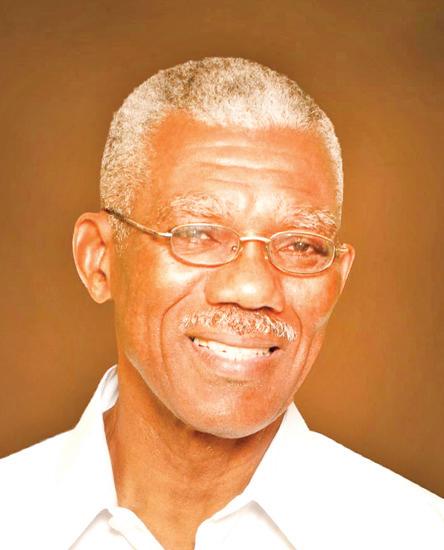
“I would have a board of people who know about sugar and who are committed to running an enterprise along economic lines, I wouldn’t have a pack of politicians there, a lot of political appointees,” he said. Nevertheless, he said GuySuCo should review its labour relations, pointing to the scores of industrial actions by workers over the past few years.
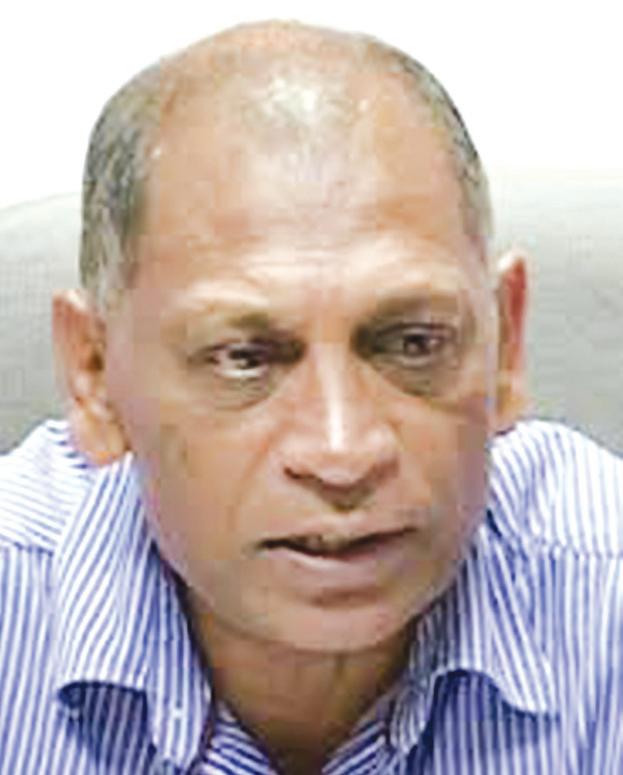
Last year, the Alliance For Change (AFC) also called for the firing of the GuySuCo board.
AFC leader Khemraj Ramjattan said the corporation has failed Guyana miserably and changes should be made from management downward.
“It is time to turn the board of GuySuCo on its head since they do not know what it takes to lead GuySuCo,” Ramjattan said.
In the 2013 national budget, government gave the corporation $1 billion to help in the implementation of its modernisation plan; however, the Skeldon Sugar Factory remains a major obstacle.
The life of the current board ended on December 31, 2013 and a new board is expected to be appointed this month.
Agriculture Minister, Dr Leslie Ramsammy, when asked about whether GuySuCo Chief Executive Officer (CEO) Paul Bhim will remain in his post, had said that decision has not yet been determined.
He, however, assured that the new team being considered will help to move the industry forward and place the corporation in a better financial position.
Dr Ramsammy said the corporation is currently looking at a different business plan.
He said all of these issues are expected to be addressed this year, with the appointment of a new board.
Amid all of its production and financial woes, GuySuCo has been functioning under the guidance of a board of directors whose term expired in October – one that seems not to be capable of turning around the industry. The life of the board was extended to December 31, 2013.

Man knifed eight times over

An old grievance among friends has left one man nursing at least eight stab wounds and an almost severed left arm during an attack on Friday evening in the vicinity of Avocado Square, East Ruimveldt, Georgetown. Alex McPherson, 23, of Lot 169 East Ruimveldt, Georgetown remains in the Intensive Care Unit of the Georgetown Public Hospital and is said to be in a stable, but serious condition.
According to information reaching Guyana Times , McPherson left home about 18:00h with the intention of collecting an item from a friend at Back Road, but on his way, he was attacked and stabbed by one of this friend’s acquaintances.
Based on reports, the alleged attacker, Jamal (only name given), who was subsequently arrested, had an issue with one of McPherson’s friends sometime back.
Sudamia (only name given), a relative of the injured man, told this publication that she saw him a few minutes before he was attacked.
She claimed that McPherson and the attacker have no issue but from all indications, the attack was more or less a “payback”. She explained that a few months ago, a friend of the injured man and the attacker had an issue which led to the intervention of McPherson.
During the intervention, McPherson and the suspect had an exchange of words but the matter was finished.
She added that they were at home when they heard about the incident and went to the scene, but by that time, he was already taken to the Georgetown Public Hospital.
Upon arriving at the medical facility, she added that nurses and doctors were preparing McPherson for an emergency surgery.
The relative said the young man is in a semi-conscious state but they are optimistic that he will pull through. The police are investigating the matter.

The Demerara Harbour Bridge will be closed to vehicular traffic on Sunday, January 5 from 05:00h-06:30h
The Berbice River Bridge will be closed to vehicular traffic on Sunday, January 5 from 07:00h-08:30h.
Countrywide: Thundery showers are expected to prevail during the day with partly cloudy conditions in the evening. Temperatures are expected to range between 23 degrees and 27 degrees Celsius.
Winds: East north-easterly to easterly at 3.6 metres per second.
High Tide: 07:20h and 19:40h reaching maximum heights of 2.65 metres and 2.66 metres respectively.
Low Tide: 13:12h reaching a minimum height of 0.59 metre.







By Michael younge

The standard of living in Guyana continues to be improved significantly while the levels of poverty are on the decline as the country’s economy continues to register strong economic growth despite the challenges posed by an unstable political environment and other extraneous financial challenges.
This is the position of Finance Minister, Dr Ashni Singh, who explained that the ruling People’s Progressive Party/Civic (PPP/C) administration are extremely proud of the gains made, but has certainly not lost sight of the “struggle” to continuously develop Guyana’s economy.
Dr Singh was speaking during an exclusive interview on Current Issues and Analysis aired on Television Guyana, Channel 28.
He said that all Guyanese must take credit for the performance of the economy
over the last decade as they too played a part in ensuring that the levels of productivity remained high by keeping the wheels of industries turning.
He said the economic accomplishments of Guyana cannot be easily downplayed, noting that by any measurement they are “stellar” and “outstanding”.
Dr Singh maintained that the overall five per cent on average growth rate recorded over the last six years is inextricably linked to the development of households and individuals, explaining that the signs of personal development can be found in every nook and cranny of Guyanese society.
“This achievement has been by no stretch of our imagination an accidental one,” he reported, while boasting that in 2013, the government con-
tinued to manage the economy prudently, rolling out responsible macro-economic policies and demonstrating mature fiscal management of resources.
Speaking ahead of the presentation of his third budget under the Donald Ramotar administration due later this year, the finance minister said that inward foreign direct investment remained strong over the past year with the other coordinates of good economic performance sustaining the buoyancy.
Dr Singh said that loans to the private sector continued in 2013 with all of the other key macroeconomic fundamentals remaining on a favourable trajectory while further explaining that interest rates were on the decline as well as inflation.
“The last two years have not been without challenge, least of which is the political environment in the country,”
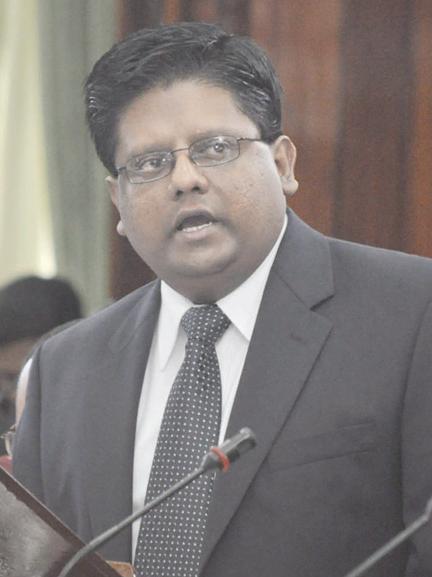
the minister stated, while further opining that “this political reality has proven to be a test to our constitutional and legislative framework and a stern test to the work of the legislature and how this work affects the executive.... As a government, we have not been daunted by this reality since it exists.”
“We are unprepared to let it slow our intention to grow and develop Guyana,” he insisted, noting that most if not all of the positions adopted by the opposition on economic matters have posed a threat to the transformation of the economy as they were “inimical to economic growth”.
The finance minister admitted that despite the politicking by the parliamentary opposition parties on clear-cut issues, there has been incremental improvements and in some cases, massive advancements in the lives of the ordinary citizens.




Sunday Times Editor: Tajeram Mohabir
Tel: 225-5128, 231-0397, 226-9921, 226-2102, 223-7230 or 223-7231. Fax: 225-5134
Mailing address:
238 Camp & Quamina Streets, Georgetown
Email: news@guyanatimesgy.com, sales@guyanatimesgy.com
Within days of the beginning of the new year, the major parties in the country – the People’s Progressive Party/Civic (PPP/C) and the A Partnership for National Unity (APNU) – expressed dissatisfaction with the present political conjuncture.
Clement Rohee, newly-elected general secretary of the PPP/C, outlined the rules of engagement his party believes could move the process forward: “Confrontation and threats must give way to dialogue, and the good of the country should remain paramount in all our political engagements and discourse.”
Substantively, he offered quotations from each of the PPP/C presidents from 1992 to demonstrate their regimes were all on one page when it came to the goals of engagement: “The creation of a free and democratic society within the broad framework of a national democratic state based on the principles of national sovereignty, a tri-sectoral economy, good governance, rule of law, and a working class orientation.”
He reminded Guyanese that to create such a state, a decision had been taken by the PPP/C to work towards the creation of a “broad left, progressive and democratic nationalist front, comprising representatives of all sections of the working people, farmers, intellectuals, professionals, the business community, non-governmental organisations (NGOs) and all Guyanese who share a common vision of the national democratic choice”.
In APNU’s statement, seemingly a response, since it followed Rohee’s enunciation, there was a call for a more restricted “social contract”. The latter would involve the major sections of society – including the government, opposition, trade unions, private sector and civil society – to seek agreement on a broad national programme to move the country forward.
More specifically, APNU called for the PPP/C government to “undertake and continue tripartite talks with workers’ and employers’ organisations in order to promote heightened production and productivity; establish, in accordance with the Charter of Civil Society for the Caribbean Community (Caricom),…a framework for genuine consultation among the social partners…; and buttress the mechanisms for tripartite consultation, in accordance with International Labour Organisation (ILO) Convention Number 150 on Labour Administration, 1978”.
While the two proposals differ on the specifics of how to move forward, they both agree that the political status quo is unsatisfactory – the workers and their interests must be integral to any modus vivendi and that engagement must be based on the premises of dialogue.
These are not inconsequential agreements especially the last, since “dialogue” implies an acceptance of “give and take”. Rohee quite properly brought up the tripartite talks that had been initiated by President Donald Ramotar at the beginning of his term of office.
In these talks, the leaders of the political parties were accorded parity as far as their proposals were concerned, but the Alliance For Change (AFC) attempted to hijack the process through political blackmail and destroyed whatever trust had been engendered between the two major parties.
We do not have to repeat the sordid details that led to the tragic denouement at Linden. If there is to be a new beginning at “dialogue”, the opposition parties must understand that the government cannot be asked to abandon its constitutionally defined duties.
Take, for instance, the budget talks that are imminent and can form the basis of the first tripartite talks (as they did initially). The government has been mandated to craft the budget and as the courts have reaffirmed, this is an integral aspect of their being elected to form the executive.
Even if the government was to explicitly accept the premises of the “new” social contract proposed by APNU – which from its actions it implicitly always has – it must ultimately have responsibility for what is included in the budget.
The people of Guyana have been the victims of the political impasse occasioned by the new configuration in the National Assembly that is dominated by the one-seat majority of the combined opposition. APNU will have the opportunity “to put its money where its mouth is” as far as a “new social contract” when the budget talks begin.

The north-eastern U.S. has been hit by a major winter storm, with 53 centimetres (21 inches) of snowfall recorded in one town in Massachusetts. Thousands of flights have been cancelled as heavy snowfall moved eastward from the Midwestern states. The New York and New Jersey governors have declared a state of emergency, urging people to stay indoors. It is a similar situation in Boston.
These tubers enjoyed the snow in Boston Red Sox's Fenway Park (BBC)
Dear Editor,
In a letter published in a local newspaper on December 23, written by Vishnu Bisram, the writer raised certain issues which require a response.
In that letter, Bisram purports to polemise on the electoral chances of the People’s Progressive Party/Civic (PPP/C) at the next elections and expresses the view that the PPP/C is labouring under some delusion about winning those elections.
He argues that among the bases for this delusion are that the PPP/C has neglected its constituency, many officials have erred, the PPP/C’s campaign style is lewd, and PPP/C officials are guilty of arrogance without any action taken against these officials by the party.
Bisram has demonstrated a genuine and deep-seated lack of understanding of the role, function and ideology of the PPP/C. The PPP/C is, and from its inception, has always been a mass-based political movement dedicated to be the vanguard of each and every struggle to remove the working people from the chains of exploitation and poverty.
The party has also always sought to forge racial unity among our people and to remove class domination and discrimination in any form or fashion in our country. To achieve these objectives, the PPP/C has used, and will continue to use, a sci-
entific approach as an interpretive tool in its analysis.
From its tried and tested foundational principles, the PPP/C has never and shall never resile. In the pursuit of its objectives, the PPP/C sees executive government merely as a means towards an end and not the end itself.
It is our view that, while we are in government, it makes it a little easier to achieve these ends. But whether in or out of government, those goals shall continue to be pursued. In this regard, we rely on our record over the last 60 years to vindicate us.
Therefore, Bisram’s reduction of the PPP/C to an electoral machinery, merely interested in the winning of elections, is a profound error, which forms the genesis of every erroneous assertion he makes and flawed conclusion he draws thereafter in his missive.
For example, he argues that the PPP/C will not attract multi-racial support even if it increases public servants’ salaries. As a working-class party that has struggled valiantly for over 60 years for a liveable wage for workers, the PPP/C will never utilise salary increases as a political token to workers anywhere.
We will always strive to pay the highest wage possible, provided that the economy can sustain it and the treasury can af-
ford it.
The notion peddled that the party does not understand the reality on the ground is one that is said of political parties everywhere. The fundamental truth is that political activism is always a work in progress. The PPP/C recognises this reality and, through its party machinery, is constantly engaged in such endeavours.
Admittedly, the same way that political gains are made while a party is in government because it is able to deliver goods and services, similarly, political losses are suffered when goods and services are not delivered or when officials, through no fault of their own, have to refuse demands, both reasonable and unreasonable, of political constituents because the treasury cannot afford it.
Arrogance and neglect are the resultant rebuke. These are realities which all political parties in government must bear.
The criticism levelled in respect of the campaign style employed at the last elections is one that has validity. Both President Donald Ramotar and I have made statements recognising that mistakes were made in this regard. Public commitments have been made not to repeat these errors.
Bisram credits the People’s National Congress (PNC) in not deluding itself in thinking that it can win multi-ra-
cial support. According to him, “It fished where there were schools of fish…. The PPP/C, on the other hand, fished where there were no fish, wasting bait and losing its cast-net.”
As is stated above, one of the goals of our party is to strive to bring racial and working class unity among our people. From the pursuit of this goal, we shall never depart.
Unlike the PNC, we will never engage in ethnic and racial campaigning. We will continue to persevere to unite our people. So to Bisram, we plead guilty and we say that we will continue to fish where you think there is no fish even if we have to waste more bait and lose more cast-nets. As the oldest and largest political party in Guyana, we owe that to our country and our people. The luxury of an alternative is simply not available to us.
Unlike the PNC (A Partnership for National Unity [APNU]) and the Alliance For Change (AFC), we are not political fishermen. We are nationalist politicians championing the every cause of all of our people. Governmental power is simply a conduit through which we do this. It is not our ultimate destination.
Yours faithfully, Clement James Rohee
General Secretary PPP/C
Dear Editor,
I, Roshan Khan, Chief Executive Officer/Founder of RK’s Guyana Security Services, has always endeavoured to be most honourable, most professional, most caring for humanity and my general staff. I always work hard to ensure that my ranks at all levels are fully covered by the National Insurance Scheme (NIS) for their personal benefit and that of their families.
But more so, I go as far as to provide each rank with a $1 million Accidental Life Insurance plan on a 24-hour basis, with coverage on and off the job, which is not cheap.
I totally understand the pains of Surendra Lall, our armed guard in New Amsterdam who complains that he cannot collect his NIS benefit. In a conversation with him, he agrees that he knows that his NIS is paid up to date. But he cannot understand why his claim is not in the system.
I then conducted an indepth personal inquiry and found that there was a serious bureaucratic blunder coming from my office management, and because of this, I, as chief executive officer/ founder, accept the responsibility for his annoyance and even non-payment by NIS. Under the circumstances, the claim never reached the NIS. The NIS is not at fault here.
I found that my officer in charge of NIS at our headquarters would collect the NIS forms, re-send it to the divisional head for the ranks to sign, and return it to us at headquarters, and then it is
stamped and returned again to be taken to the NIS office in the area. This is nonsensical. They never thought of changing or quickening the system over the years. Claims would now be expedited. Forms have to come to us signed by the claimant, stamped by us at headquarters and processed, and then quickly returned to the division for forwarding to the NIS office. In this way the processing would be expedited and the ranks should be paid quickly.
As one who fully complies with NIS, this is most annoying, and hence, my reasons for upgrading the processing system for my ranks. It is usual for me to go after the NIS with fire and brimstone for its delays. But in fairness, in this case, it is my system’s fault, and hence, I accept responsibility, as in the end the buck stops with me. It usually takes two to three months for anyone to collect anything from NIS. To go through the process would further inconvenience Lall. The company will not pay as it contributes substantially to the NIS, but I personally undertake to pay to Lall the sum NIS would have paid him, taking into consideration the normal rules and formalities of paying, and it would be done within seven days, after seeking consultation from the NIS.
I take comfort in the fact that the complainant never made accusations on his wages, which our company always pays – fully approved governmental wages
or higher; reliability of payment; payments of overtime; or remittances to the Guyana Revenue Authority (GRA) or NIS office – just that he could not get his NIS benefit.
Lall said he never made a complaint to the Kaieteur News and is shocked that it was published there. According to him, this article in the Kaieteur New was unauthorised. The Guyana Chronicle dealt with the issue in a most professional manner, and even asked for our side, to which I gave incorrect information at the time, but to which I now apologise and this response stands as the truth. I thought it might have been a fault of the NIS and not my people. Even the NIS deserves my apology at this time.
The Kaieteur News, as usual, is always one-sided, poor in journalistic ethics and knowledge of journalism. It again failed to contact the undersigned to ask for his opinion, as in several occasions in the past.
It is a new year, and the Kaieteur News needs to mature, grow up, and do things properly. Stop being sluggish and devoid of journalistic ethics and knowledge, or stand forever as a tabloid of trash, as it is perceived to be internationally. They always like nasty bold headlines, to feed their sick egos.
The undersigned can be contacted for further information on this or any other issue.
Sincerely, Roshan Khan
Dear Editor,
A source disclosed to me that there was no rainfall when the Airy Hall, Essequibo Coast breach occurred. Instead, a rice farmer reportedly tampered with the main conservancy dam and the water started to gush through the dam, causing erosion and flooding in some 200 acres of young rice on the southern section.
This matter was reported to the regional administration before the breach took place about three weeks ago, according to rice farmers, but the administration failed to act in a timely manner, which caused the flooding. The northern section has a dam which separates the northern section from the southern section of the rice estate. The northern section can be seen to be dry with no rice being flooded or affected.
The regional administration misled the government and the Agriculture Ministry when it stated that the flooding was caused by heavy rainfall. The next day, a contractor without any kind of heavy duty machines and knowledge of construction to seal the breach was mobil-
ised.
The work was poorly done, primarily with marsh causing the dam to be washed away overnight for the second time, flooding the entire southern section going towards the housing areas. A second contractor was hired to drive piles alongside the main canal with revetment to seal the breach, as the main canal water could have swamped the entire village of Airy Hall.
The area most affected is the southern section of Airy Hall from the main canal to the frontlands. This would result in the loss of some acreage, if the water is still on the young rice. Every effort should be made to dig the main canal and build the embankment wider and higher to control the water at a minimum level, so it cannot overtop the dam or cause erosion. The rice industry in Essequibo is probably the most integrated of all sectors, be it economic or social, as it permeates across the entire fabric of our county.
These farmers who are affected by this flooding depend on the input of suppliers and banks to provide them with
Dear Editor,
A 37-year-old man recently met his demise after he lost control of his motorcycle and ran into a utility pole. He subsequently succumbed at the Fort Wellington Hospital.
The man was said to have just left a wedding party when the incident occurred. Individuals also confirmed that he was, in fact, also under the influence of alcohol.
Many people fail to realise that it just takes one shot of alcohol to affect someone’s judgment, impair their vision, and hinder their ability to function sensibly. Furthermore, it has been well documented that impaired drivers are 11 times more likely to cause accidents on the roadways, than those who are not under the influence.
Additionally, I am extremely curious to know of the individuals who knew of the
man’s intoxicated state and yet allowed him to get on his motorcycle. As his associates they should not have allowed him to leave.
His death in many ways must be attributed to his drinking buddies and the host of the wedding as well. It is for this same reason that many countries have laws that prohibit the selling or offering of alcohol to already drunk people.
In today’s society, we must all play a role when it comes to minimising the chances of accidents caused by drunk driving.
Moreover, it should be the responsibility of our police officers to comb popular drinking spots for potential Driving Under the Influence (DUI) suspects. Those found guilty of consuming alcohol with intentions of getting behind the wheel should be dealt with accordingly.
The negatives of driving under the influence are extremely straightforward, yet people continue to put their lives at risk. Driving under the influence causes impaired vision, reduces one’s ability to react quickly, reduces concentration and vigilance; inflicts drowsiness, affects the processing of information, hinders one’s ability to multitask, and causes individuals to believe that they are invincible. If we wish to make 2014 a better year as it relates to road safety, then it is necessary for us all to play a more responsible role. Drunk drivers should be prevented from getting behind the wheels by all means and potential DUI drivers must be warned and dealt with accordingly.
Yours truly, Muneshwar Budhan
The 911 telephone service needs
the necessary agro-inputs and working capital to produce paddy. There are many instances where farmers are exposed to flooding and bad dams in this region to the extent of extinction, but no one will gain from this if the industry collapses.
There should be a concerted effort from the regional administration to halt such a situation in the future as this one. Indeed, the industry continues to play no small role in feeding a sizeable proportion of the Guyanese population. The multifaceted role of rice in the country’s economy touches every citizen. Through rice, the economy secures a sizeable part of the country’s foreign exchange. In the final analysis, development does not come about by making or understanding statements of principles and policies. It comes about because those who are selected to manage the region must be willing to do the work day and night and not to abuse state vehicles during working hours .
Yours faithfully,
Mohamed Khan
Dear Editor, I am happy with the denouncement made by Home Affairs Minister Clement Rohee regarding the current 911 emergency phone system. However, what many of us have to realise is that it is not only the technical aspect of this situation that needs to be addressed, but also the culture itself that us Guyanese have been nurturing for quite some time.
Not so long ago, I called the Plaisance Police Station, East Coast Demerara to make a report about a party at a private school in Better
Hope that was disturbing the community. However, there was no answer. I had a similar encounter once again when I called the La Penitence Police Station to report another matter.
This situation of late response and no response by emergency units is preposterous and unacceptable. Many citizens have grown weary of this culture and as a result often resort to their own measures for addressing a situation which they taxingly tried to report to the relevant authorities in order for the matter to be dealt with the right way. It is understood that the implementation of the 911 emergency services was only recently established and so setbacks are likely to be encountered. However, with that said, it may be wise to undertake a few trial runs in order to test the effectiveness of the system and to further determine what could be done to better the system.
The response from 911 services should, at all times, be prompt and reliable.
Sincerely, Alexia Greene




Afew months ago, I saw the documentary “Sicko”. It’s directed by Michael Moore and compared the American healthcare industry with that of other nations. The Americans are finally grappling with universal health insurance...now dubbed “Obamacare”.
Even though I was horrified by the revelation that insurance companies in the U.S. have warped the healthcare system to such an extent that it’s geared towards churning out billions of dollars in profits instead of providing healthcare, I was even more troubled by the section of the movie that detailed Hillary Clinton’s healthcare reform proposal of 1993.
I was astounded that her opponents were willing to spend over US$100 million just to discredit her proposal. But most of all, I was disappointed in how even she could be paid off (US$854,462 the movie claims) to remain silent.
After I’ve completed my medical studies, I’ll be entering the ‘real world’. I’ll
have to work within a system, and if that system is flawed or unfair, I’ll either have to accept things as they are, or make a move to bring about change. But it’s very difficult to be the lone voice speaking out. It engenders a feeling of powerlessness in not being able to change something that one knows can cause harm.
It shook me to the core to see how someone like Hillary Clinton, so passionate about something as vital to her as healthcare, could be so effectively muzzled and reduced to introducing her husband at ‘Easter Egg Rolls’. And the revelation that even she had a price that she could be bought off with left an even bitterer aftertaste.

The movie forced me to put myself into the shoes of the doctors, the insurance victims, the politicians and think about what I might have done had I been in their position. And then I started thinking about my future and what I could do to avoid being swept away by the money-making mentality that seems to have gripped medicine.

Looking around our amphitheatre, I realised that my fellow students were also deeply affected by the movie but in various different ways. Some seemed especially troubled by the stories of persons being turned away by insurance companies. The experience certainly made me do a lot of introspection and analyse why exactly I was so shaken by the silencing of Hillary in particular.
There’s always this unequal distribution of power working within a system and when those with entrenched interests and power don’t want to make changes, it’s difficult to turn
the tide. In Hillary’s case, the powerful healthcare industry’s US$100 million fear mongering efforts to torpedo her proposal was unassailable.
I just hope that I can make the right decisions when confronted by tough choices. Something as rigorous as studying medicine changes you. I’ve already had to make adjustments. I hope that at the end of the process, I can still recognise myself and most of all that I can stand up for what I believe is right when it truly matters. I’ll have to set limits that I’ll never cross, based on my personal valuesystem.
It isn’t worth being rich if the price is a guilt-ridden conscience that keeps me awake at night. To play my part in effecting change in a mercenary system, I plan on volunteering my services to the poor and powerless during some of my free time and I can encourage my fellow physicians to do the same. While we mightn’t be able to accomplish a complete revolution in the system, we can do our little part at the individual level. Every little act adds up. Who knows? If there are enough of us taking innovative steps, we might just be able to reform our small part of the world.


Be conscious of the language you use during play
Children do not learn language by having an adult continually asking them to name various items. Children learn by hearing words and linking them to things. So it is a good idea to feed language into play, rather than asking your child to name every toy they are playing with. Adding language is an easy thing to do and can be done in all types of different situations, not just play. You can comment on what the child sees, commentate on what your child is doing, or expand on what they have said For example:
Child: "Car".
Adult: "That’s right, it’s a car, a fast car"; or
Adult: "That’s right, it’s a car, a red car and there is a blue car".
Child: "Cat".
Adult: "Yes, the cat is climbing", (gesture the actions, and emphasise the key words cat and climbing).
The other way to add language is to describe what your child is doing during play
For instance, if your daughter is playing with her dolls in the dolls' house, give a little commentary:
Jane: "Dolly".
Dad: "Dolly’s going in the house".
Jane: "Sit".
Dad: "Dolly’s sitting down."
Jane: "Drink."
Dad: "Dolly’s got a cup, she is drinking tea, drink tea."
Jane: "Tea".
Dad: "Yes, dolly is drinking tea… and now she is eating cake".
Avoid asking a question
The temptation here is to ask a question, such as “what is dolly doing” or “what is dolly drinking”. This immediately puts the emphasis on the child, and they then have to stop their play and respond.
By just commenting, you are not putting any pressure on your child to communicate so the play is more relaxed. The child is also able to play on their own terms and control the game.
Have a shared focus
The above examples show the importance of having a shared focus. This is important because not only are you giving the child a point of reference when you talk about things, but the child is learning listening and using attention skills.
These skills are vitally important for the child when they attend school and the early years are key years for developing these skills. The best ways to develop these skills is to spend time with your child, talk and play with child, and have a shared focus. (WikiHow)

The Home Affairs Ministry rec-
ognising the spike in crime has intensified programmes within the security sector to arrest the situation.
These initiatives include the “I Paid a Bribe” and others that facilitate the use of online technology.
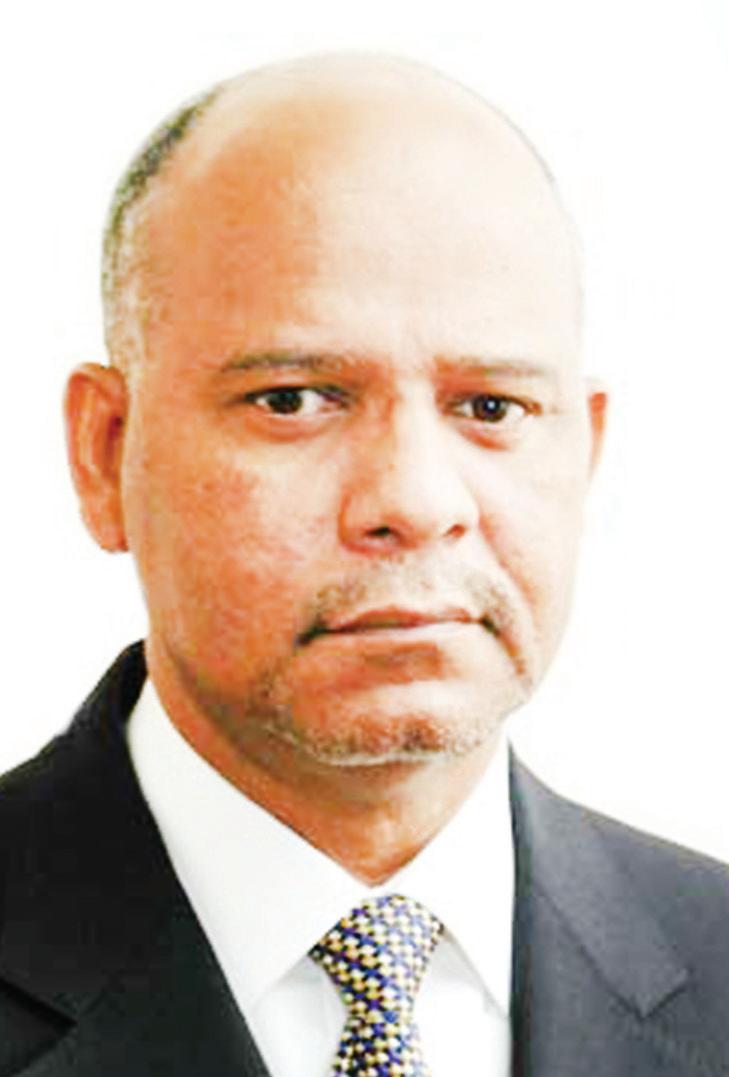
Home Affairs Minister Clement Rohee at an end-of-year press conference on Friday acknowledged the importance of the Internet and computer security to the national security and the economic well-being of the country.
“Many of our citizens, businesses and government agencies are now connected to the Internet and are using information technology to provide goods and services, pursue educational opportunities, conduct business and maintain social contacts around the world,” he noted.
Security measures
As a result, the National Computer Incidents Response Team (NCIRT) was established and commenced operations last August. It is tasked with improving the cyber security preparedness and response of the government of Guyana through proactive security measures and information sharing mechanisms.
“Thus far, this unit has been provided with local and overseas training in the development of capabilities in cyber security incident handling,” the minister said, explaining that in 2014, NCIRT will be expanding its activities to provide a wider variety of services for government agencies, the business community and citizens at large.
Rohee went on to say that the online programmes have been created to improve service delivery to the public.
The Online Crime Reporting System (OCRS) allows citizens to report crime to the Guyana Police Force by using cellphones, computers and other
Internet connected devices.
“Citizens who have witnessed a crime or have information on any crime, can use their cellphones, BlackBerry devices, tablets and computers to send images, sound recordings, videos, text messages, emails and even website URLs to the police,” the minister noted.
He explained that those desirous of remaining anonymous are able to do so.
The home affairs minister disclosed that since the launch of the system in 2012, it has seen moderate success with a total of 149 reports received in 2013. These reports were investigated and prosecutions were conducted where necessary.
Then there is the “I Paid a Bribe” website, which was implemented as an anti-corruption measure. Rohee stated that this initiative is designed to allow citizens to anonymously report on the website, on the nature, pattern, types, location and frequency of corrupt actions.
“We at the ministry believe that the concept will highlight areas of systemic corruption within public sector agencies and provide the basis for government to make organisational and other interventions to reduce the scope for corruption in agencies which deliver services to the public,” said Rohee.
Cases
The minister explained that since its launch in May 2013, there has been a total of 58 reports made against employees in nine government agencies. These reports were forwarded to the relevant agencies for them to conduct their own individual investigations and take appropriate action.
According to Rohee, the police force is now using the Integrated Crime Information System (ICIS) to gain access to large amounts of data from various locations, using the crimemapping system.
“Crime maps can be used to integrate crime data with demographic and neighbourhood information, so that spatial patterns of crime can be unlocked and areas of concerns identified. Crime mapping will assist law enforcement in allocating their resources more efficiently and effectively; in other words, facilitate a move from reactive policing to proactive policing,” he stressed.
The home affairs minister further stated that in an effort to produce crime maps, the ministry has purchased a satellite image of Georgetown and surrounding areas.
“We have also contracted a GIS consultant to digitise this image. In 2014, the Ministry of Home Affairs will be able to give additional support to the Guyana Police Force by providing the agency with up to date webbased crime maps based on information collected by the ICIS,” he stated.
Apensioner was on Friday afternoon killed after he came into contact with the wheel of a sand truck in the vicinity of the Demerara Harbour Bridge, Peter’s Hall, East Bank Demerara. The accident occurred about 14:45h.
Balram Singh, 64, called “Cop” of Elpaso, Bagotstown, succumbed to his injuries on his way to the Diamond Diagnostic Centre.
According to information received, the now dead man was sickly and walked around with a stick which he used for support. As he walked, he would normally hold on to anything in his path as additional support.
However, on the day of the accident, he was seen walking along the Peter’s
Hall Public Road and when in front of the A-Z Pharmacy, he attempted to cross the road while the traffic was at a halt. He reportedly did not use the pedestrian crossing, but rather chose to manoeuvre himself around the vehicles.
While doing so, he reportedly took a brace on the front left side wheel of a sand truck which was heading to Georgetown.
Being a right hand driven vehicle, the driver was unaware that Singh was bracing onto the wheel and pulled off when the traffic light changed.
An eyewitness told Guyana Times that as the driver accelerated, the man got tangled with the wheel, resulting in him spinning once and then landing in

the middle of the road. It was then the driver realised that something was wrong. Persons also called out to him to stop.
As the driver came out of the cabin, he saw the man lying underneath the truck. From reports received, Singh was bleeding and was unable to speak.
The eyewitness said public-spirited citizens, along with the truck driver managed to pull Singh from under the vehicle, placed him in a minibus and whisked him off to the Diamond Diagnostic Centre.
The worried truck driver was seen talking to the nephew of the dead man, a customs broker. The driver was asked to visit the
Providence Police Station, where he gave a written statement.
When Guyana Times visited the home of the dead man on Saturday, his nephew’s wife contacted her husband, who in turn reportedly instructed her not to speak to the media.
The woman then instructed other relatives not to divulge any information about the accident, claiming that the media are not the “police”.
This publication understands that the now dead man was not supposed to be walking around due to his illness, but he managed to leave the house unknown to relatives.
The police are continuing their investigations.


Late Chief Liberian Gillian Thompson was remembered as a front runner in the promotion of literacy in Guyana as she was laid to rest on Saturday. Her funeral service held at the Trinity Methodist Church was attended by hundreds.
The audience heard heart rendering tributes from Assistant Chief Education Officer Donna Chapman, literary enthusiast Petamber Persaud and well known journalist Francis Quamina Farrier.
Thomson, 44, was described as a warm and loving person whose joy and passion was to see children read, and to help them in their studies.
This, the speakers said, she did as though she was the mother of the children who visited the National Library.
Thompson of North Ruimveldt met her demise
in a gruesome manner on Christmas Eve Day after a car slammed into a bus belonging to National Library at the corners of North Road and Shiv Chanderpaul Drive, Georgetown. Thompson, who was in the front passenger’s seat of the minibus suffered several serious injuries and died almost immediately.
The impact sent the woman flying through the windscreen of the minibus. She then got stuck between the vehicle and the concrete bridge. The driver of the car Odeda Underwood was subsequently charged for causing death by dangerous driving, among other charges.
The Ministry of Home Affairs has expressed grave concern at the number of accidents taking place around the country and has announced measures to curb reckless and drunk driving.
Ray Bacchus, 38, was on Friday placed on $150,000 bail when he appeared at the New Amsterdam Magistrate’s Court on a rape charge.
Bacchus is accused of committing the offence on August 28, 2013 at New Amsterdam.
The court was told that he had sexual intercourse with a girl under age 15.
Bacchus is expected to be back in court on February 3 when the police are expected to present a report. The accused has denied committing the crime during the police investigations.


Narine Dat Sookram, who was born in Berbice, Guyana, now living in Kitchener, Ontario, Canada has beaten the odds of being listed in the Who’s Who in the World in the 2014, 31st edition.
The collection provides concise, accurate biographies of renowned individuals from around the world, representing virtually every major field of human endeavour.
Within this publication, readers will find Nobel Prize winners, innovators/inventors, authors, athletes, academics, judges, fashion professionals, and entertainers. They will also find royalty, captains of industry, political and religious leaders and many others whose noteworthy and profound contributions are showcased in this volume.
This indispensable research tool includes professional and personal data unavailable in any other source, offering researchers a unique insight into the lives of the world’s most notable personalities. There is simply no other source like it according to the information provided on its website.
When Sookram was ask what it feels like to be included in the Who’s Who in the World, he said: “I feel like I am on top of the world, it’s always nice to be recognised in the mainstream.”
Sookram, who has been involved in ‘everything’, from a business owner, non-profit charity, to producing a week-

ly community West Indian Radio programme and the prestigious Caribbean Dream Concert has become a role model among his peers.
Sookram said that the thing that keeps him going is his passion to maximise his potential. “It’s not always about winning, but doing your very best every time is what matters. Crossing the finishing line is the key,” he said.
When he was asked what keeps him grounded, he said, “I have a family, a wife and daughter that is.
"Though I wear many hats in my professional career, I am a family man. I have always been that way. I like the role of being a father and a husband. That’s where I ‘shine’ the most I think. What a lot of people don’t know about me is that I do spend a lot of time in the kitchen and I love to shop for groceries, because it gives me the opportunity to make a healthy choice.”
When he was asked to give some tips to others who may want to make the most of their lives, he said, “The key point in life is to have a goal, but most importantly working towards that goal will be something to keep an eye on.
"It’s like living for a purpose, because when we do, life becomes more meaningful. And when we don’t have a goal we are like a chicken without head, we are running around, but don’t know where we are going.”
Sookram is the recipient of over 100 awards, including some of the most prestigious: The TIAW World of Difference Award, 2013; The Governor General Caring Canadian Award; Canada’s Top 25 Immigrant, 2013; The Denny Statue for the Arts; Mohawk College Alumni of Distinction; Famous People of Guyanese Heritage Inclusion; Encyclopaedia Inclusion and many more.
Sookram’s writes a weekly column in the Berbice edition of the Guyana Times on Mondays.
By Vishnu Bisram
The (Guyanese) Toronto-based Voice of Vedas (VoV) spiritual centre made a hefty donation of Cdn $5000 to the Humber River Hospital and also doled out smaller grants to other worthwhile charities as the spiritual organisation closed out the year on a high in its svea (charitable) activities.
The VoV is led by Guyanese Canadian, Dr Budhendranath Doobay, who has established renal clinics in Guyana to help poor victims of renal failure.
Dr Doobay, at a recent banquet in Toronto, expressed his appreciation to members, volunteers, devotees and sponsors who have
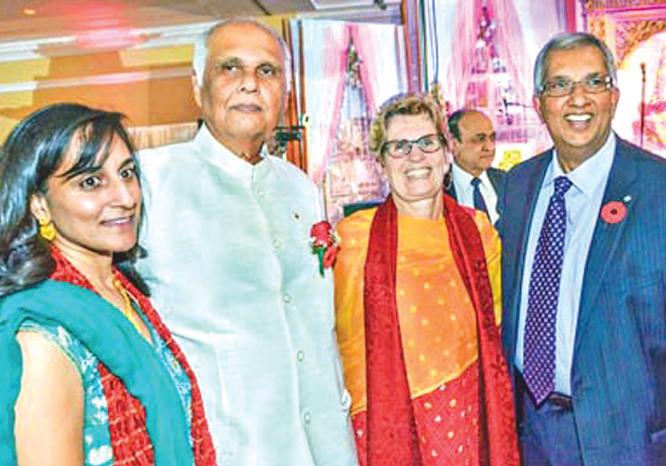
made significant contributions over the year to help the mandir to achieve its ongoing objectives of service to all.
It was noted that the VoV is constructing a Hindu
museum and has already established a senior citizens' centre that caters to many Guyanese and other nationals. Plans are in place to expand Anand Bhavan, the seniors' residence.
The VoV is also tied to a plan to erect a monument in honour of fallen Canadian soldiers on its property. The VoV also commits to develop a stronger global care outreach programme in Guyana, including building additional Doobay renal centres and other projects.
A fundraiser was recently held to assist the VoV with its planned programmes, particularly global medical outreach and the Canadian Museum of Hindu Civilisation in addition to the Humber River Hospital that performed special surgeries on several children flown from Guyana.
The VoV is applauded by the Guyana government and the public for its humanitarian activities.
AHindu leader wants Europe to welcome Roma brothers and sisters with open arms if they decide to migrate, fleeing discrimination and poverty in Romania and Bulgaria.
Hindu leader Rajan Zed, in a statement in Nevada, U.S.A., said that since Romanians and Bulgarians could work anywhere in the European Union (EU) starting January one, host nations should be more sympathetic to Roma coming from these countries and give them all the help they needed to settle down. Zed, who is president of Universal Society of Hinduism, argued that Europe needed to wake up

and shed apparent xenophobia on Roma issues. Instead of demonising, marginalising, dehumanising and persecuting Roma; Europe should do something concrete to end Roma apartheid. European politicians
needed to exhibit a strong will, commitment, intention and responsibility to bring concrete and lasting results on the reality of the Roma population, instead of just weaving dreams in capital boardrooms.
Zed further said that Europe’s religious leaders and religious groups, especially His Holiness Pope Francis, should take-up the cause of Roma people and raise the issue of their continuous maltreatment; as “religion taught us to plead for the oppressed, stand with the poor, and seek justice for those whom God loved and too often the world overlooked”.
The alarming condition of Roma people was a so-
cial blight for Europe and the rest of the world as they reportedly regularly faced social exclusion, racism, substandard education, hostility, joblessness, rampant illness, inadequate housing, lower life expectancy, unrest, living on desperate margins, language barriers, stereotypes, mistrust, rights violations, discrimination, marginalisation, appalling living conditions, prejudice, human rights abuse, racist slogans on Internet, unusually high unemployment rates to name a few, Zed stated.
References to Roma people in Europe, who number around 15 million, reportedly went as far back as ninth century CE.

...to race
One of the most dispiriting things your Eyewitness encounters (as someone who comments on the news) is the fixation some people have with “race”. Sad truth is “race” was created 500 years ago as a device to enslave us physically and then mentally. Now, you might think if race refers to physical features and if those features were always there...then “race” was also always there, no?
You couldn’t be further from the truth. It’s not the physical features that matter...it’s what those features are taken to mean, as far as behaviour is concerned. And this is the issue, isn’t it? We can see that people from every one of the so-called races pretty much exhibit the same range of behaviour as everyone else. There’s the “good, bad and the ugly” in every “race”. Beggar-men, thieves, etc...
So when some people keep on using “race” in the physical sense, they are actually doing the work of those who may still want to keep us down – the ones who invented “race” in the first place. Eusi Kwayana is one of those folks who keep harping on “race” and the year had barely begun when he had a race-letter published in the Stabber News. And as sure as night followed day, there was a follow up on the same theme by another race-baiter, Abu Bakr.
Interestingly, the latter called for a media regulator to keep out letters that derogate “Africans”. Who the heck are Africans? Nelson Mandela just reminded us that the millions of “whites” in South Africa are Africans. Yet from the pens of Kwayana and Bakr, they keep on using the old physical characteristics that kept us down. There are people who put down other people...whether they are black, white or green. Let's tell it like it is.
Kwayana talked about one “Indian” defending “Africans”. But while he was using a physical description for “Africans” – he had to be using a different set of markers to exclude this individual. In the gamut of physical features of those who are called “African”, this particular individual would count as one. And this shows us another negative feature of those who are fixated on race: they exclude more than include.
And this cannot be good for Guyana. Kwayana has been keeping up this “race” talk since the 1960s. Even Forbes Burnham threw him out of the People’s National Congress (PNC) for his extremist views on the subject. Rather than the media regulator excluding only the fixation on “Africans” as advocated by Bakr...it should go after all the “race-obsessed”.
Abolish race talk in 2014!
...to writing
Sport and Culture Minister Dr Frank Anthony took some heavy (verbal) body blows from writer Ruel Johnson last year. Incidentally, you have to admit that the Guyana Prize Committee has a very thick skin collectively. Even though they were also subjected to a heavy barrage from Johnson, they yet awarded him a prize recently. Dr Anthony hasn’t followed suit up to now.
But an opportunity has just presented itself. After the revelations uncovered by Johnson’s onslaught, Dr Anthony announced that the people who were running the Guyana Press – who Johnson savaged – decided that there should be a permanent editorial board. A paid permanent editorial board. The fly in the ointment is that the opposition keeps chopping out the funding for the press board.
Now since (a) Johnson knows so much about publishing; (b) agrees with the opposition slashes; and (c) once applied for the position of editor to the press, we believe Dr Anthony should offer him a position on the board.
For free, though. The publicity should be enough for Johnson.
...to tradition
And here we thought we were in a free market economy...You know? Where the market decides the allocation of funding. But Dr Anthony’s impressing upon businesses to support the Mash floats.
Wouldn’t this be distorting the free enterprise system?

SSpecial invitees and the media, all stood in front of the building as the rotary was spun and the names of the winners were called.
Three lucky persons were the winners of fine pieces of diamond and sapphire jewellery.
First prize winner, Malika Kissoon, received a bracelet while the second and third prize winners, H Rambaran and Barattie Mattai, received a necklace and ring respectively.
The annual promotion was opened to anyone who spent $25,000 at any of the jewellery stores.
The owner of the jewellery establishment, Steve Narine, thanked his customers for participating in the promotion, stating that there will be something different at this year’s event.
“Deyseh labour pains are the worst kinda of pain but me don’t believe that. Me can bear the pain of making seven more children... but na the pain of getting my foot cut out again. Dis is the worst kind of pain,” Kamlawattie “Seema” Lionel said.
The 25-year-old woman's foot was amputated last Sunday at the New Amsterdam Hospital following a vicious stabbing by her husband.
Lionel was attacked and stabbed by her husband after she refused to reconcile a relationship which she had ended with him.
The last injury, a stab went through her leg. “The knife went through and through meh foot... meh coulda feel it on the other side... was only the knife head you could have seen,” she said.
The housewife is now having difficulty coping with the reality that she has lost a leg. “I can’t accept it, I have one child and now I am a single parent. I am healthy and it is kinda shocking.”
Despite having her leg amputated, Lionel is thankful to the doctors at the New Amsterdam Hospital for their diligent work in saving her life.
The incident took place on December 22 at Port Mourant, Corentyne when she was approached by her

reputed husband after she had just stepped out of her mother’s yard to visit a relative.
According to Lionel, she was approached by Shamwar Approo. “He ask me, ‘Seema you na gone take meh back?’, ‘Seema you na like meh?’, ‘Seema why you left meh so long?’... you get other man?’”
Cruel
But she refused his invitation, something he did not take lightly.
The woman said she heard her reputed husband saying “well take this” and he reportedly started to stab her in her abdomen.
“He pulled out the knife and give me two jooks, on me belly... me didn’t see the knife,” Lionel alleged.
According to the mother of one, for years she had been living in an abusive relationship and had left home on several occasions, but in December, she felt that “enough was enough”.
She told Guyana Times that whenever she was abused by her husband, she would leave home for two to three days to stay with her mother. “I would go by my mother and stay there and he would come and hug meh and kiss meh and tell meh sorry,” she explained.
That was the cycle for the past seven years. “Sometimes, he would even cry and tell me sorry and I would go home back. This time I made up my mind though,” she said.
Approo was recently placed on a bond to keep the peace after the couple appeared at the Albion Magistrate’s Court.
According to Lionel, since she had moved to her mother’s home, she received reports that her husband was lurking around; carrying a knife and a bottle suspected to contain a poisonous substance.
Police are searching for Approo who has not been seen since the incident.
Less than a month since bandits invaded the Western Union Branch at the Demerara Harbour Bridge Mall, gunmen again struck on Saturday afternoon, carting off an undisclosed sum of money from the business and its customers who were at the time transacting business.
According to information received, the three armed men invaded the business about 15:00h, forcing the two staff and at least three
customers to lie on the floor and relieved them of their valuables, including mobile phones, money and jewellery.
A source told Guyana Times that the robbery was executed the same way it was done in December; leaving investigators to believe that the same group of men carried out the robbery.
Three men armed, this time with real guns, reportedly joined the line under the pretext of transacting busi-
“Often times, people don’t realise how much their lives are changing and improving... there is no doubt in my mind that the circumstances of the people of Guyana have been improving several years under this PPP/C administration,” he said.
On this note, he made reference to the success of the government’s housing, mining, information communication and technology, education and health policies in fast tracking improvements in the lives of Guyanese.
Investment confidence
“I believe we are at a point where investment confidence is at its highest in the history of the country,” he said as he again condemned the wanton rejection of the Amaila Falls Hydro Power Project and the Anti-Money Laundering and Countering the Financing of Terrorism Amendment Bill.
He said Guyanese can expect the creation of more jobs this year despite the “dooms day” and “negative” posturing of some opposition stakeholders, pointing out that the country continues to attract investments.
Dr Singh has also expressed the view that while improving the standard of living of the people here is most times seen by many as a task solely for the ruling administration; it is the collective responsibility of all stakeholders.
“Improving one’s circumstances requires the conditions which we have tried to create as a government, but it also requires sustained personal effort.
"The struggle for human betterment is really a never ending struggle... we should in fact continue the struggle to improve our own circumstances and the aggregate circumstances of our country,” he said.
International surveys
Asked whether government is concerned about the damming and in some instances brutally critical international surveys about Guyana’s economic performance and overall human development, the minister said that these do not discourage government from working to create more development nor do these findings wipe away the achievements and quantum leaps made.
Recently, Transparency International and the World Bank in separate reports made troubling disclosures about the country’s economic development, which contrast sharply with the picture being painted by the government.
These reports have been touted as gospel by the opposition political parties and used to either embarrass the government or score political points.
The finance minister during the interview condemned what he called the selective reference to these reports and studies with the aim of misleading the Guyanese public, creating low morale and uncertainty in the country.
“We have an unfortunate circumstance in Guyana that sometimes those who are competing for political space are very selective and not nearly as objective as they should be in making reference in particularly international reports. The authoritative institution for assessing economic performance is the International Monetary Fund, the IMF,” he said.
Economic performance
“If you want to speak of macroeconomic performance, we can’t ignore that other report which incidentally comes from the authoritative institution for assessing economic performance, that is to say the IMF, that was recently released and if you examined the conclusion, the IMF last assessment of Guyana’s economic performance, you will see in fact, that that institution arrived at extremely favourable conclusions about Guyana’s economic performance,” he said.
He said that the IMF was under no illusions about the challenges being faced as it identified these correctly.
“Now our political detractors find it convenient of course to ignore that report, you don’t see that report making headlines, or engaging their attention. But that report exists and interestingly, if you were to examine what the IMF says about Guyana, and contrast it with
from page 3
what the same institution applying the same bench marks and the same standards has been saying over... small developing economies such as those in the Caribbean... you will see in fact that the favourable observations that they make about Guyana take on an even greater significance,” he insisted.
All are involved
The finance minister has also explained that strong economic performance in the country is not only something the government can claim credit for, or for which the government alone is deserving of credit, but rather is as a result also of investors putting up their capital, workers going to work and producing competitively everyday so output can be increased, profitability can be increased and investment can grow.
“So we shouldn’t as a nation be grudging in acknowledging the strong performance of our country. It’s to the credit of the workers of Guyana, it’s to the credit to the investors of Guyana and it is to the credit of our government that this economic growth is being achieved,” he said.
“So every time the opposition is disparaging of the economic growth, they’re not only being disparaging of the government, they’re being disparaging of every single worker that wakes and goes to work and works hard all day.
"They’re being disparaging of the Guyanese householder who has been saving so they can invest in their own home contribution to job creation...” Dr Singh reasoned.

ness but after spending some time, two of them brandished their guns and ordered the customers to lie face down on the ground.
Fearful for their lives, the staff members handed over an undisclosed sum of money to the bandits who ran through a back gate of the mall, jumped on their motorcycle, and made good their escape.
They were seen heading in the direction of Bagotstown Housing Scheme.

SUNday, jaNUary 5, 2014 | gUyaNatimeSgy.com
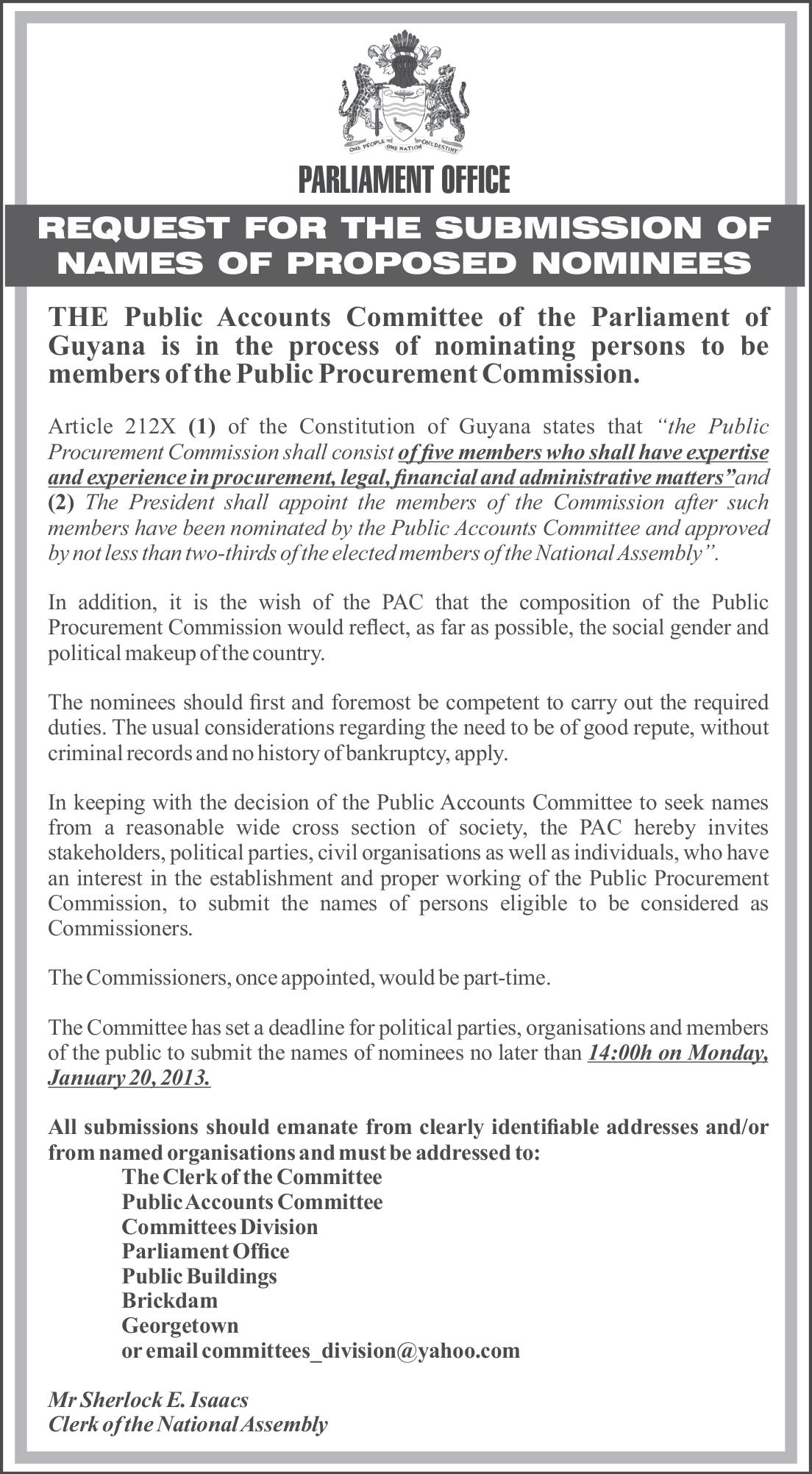
As investigations continue into the murder of Monica “Malika” Adams, 23, of 932 Second Street, Dazzle Housing Scheme, East Coast Demerara; investigators confirmed that the woman was stabbed at least 18 times.
The suspect, Paul Scotland, 27, of Mahaica, East Coast Demerara, is expected to be charged for the murder on Monday when he makes a court appearance at the Cove and John Magistrate’s Court.
He is in custody at the Cove and John Police Station. Scotland was described as an abuser and a very aggressive and jealous man.
Berserk
On Friday, about 19:00h, the man went berserk, stabbing the woman to her neck, arm, head, back and face. The incident

occurred at the home of the victim’s mother in the presence of her two children, brother and a cousin.
One of the Adams siblings, Charles Elliot, 16, who received injuries af-
ter he rushed to the aid of his sister, was admitted a patient at the Georgetown Public Hospital.
On his hospital bed, the young man recalled watching television with his now dead sister, another brother, a cousin and the woman’s two children when Scotland rushed into the house and attacked his sister.
He added that the front door was opened and the man took the opportunity to enter the house. He disclosed that his sister and Scotland had been separated for almost a year. Their union of five odd years has brought forth two children who stay with their mother.
He said that the furious man grabbed his sister by her hair and dragged her to the back of the yard where he stabbed her with a knife that he probably collected from the kitchen.
He said he attempted to ward off the man from his sister, but the man retaliated by chasing him with the knife.
The devastated young man went on to say that he managed to run into the house, but was again confronted by the man.
Due to the screaming of the children and the commotion, Scotland retreated and escaped from the scene.
Elliot then went to a neighbour’s house and called his elder brother. The neighbours, he said, came to their assistance and took them to the Georgetown Public Hospital where his sister was pronounced dead on arrival.
The brother related that his sister lived at Mahaica for a while before moving to Dazzle Housing Scheme where she spent some time with her reputed husband before they separated.
Their separation came as a result of the constant abuse that the woman reportedly had to endure on a daily basis.
After their separation, Scotland would try to contact the woman but she always ignored his calls or if she answered, she would tell him that it was over.
This, he did not take likely and threatened to kill her. She never took heed of his threats, claiming that she was safe with relatives.
Guyana Times understands that on Friday, the woman’s phone was bombarded with calls from an unknown number and she had reason to believe that it might have been Scotland; thus, she did not answer.

Satiricus wasn’t as ebullient as he usually was about the New Year. He’d realised that a new year meant being one year older. And his body was beginning to tell him that “older” meant aches and pains. Satiricus wondered when some local politician would come up with a local version of Obamacare – taking care of all health worries.
He knew Guyana already had free health care. But he knew too, as Prezzie pointed out, government hospitals and clinics were terrible when it came to keeping records on drugs. They were always running out while other locations were overflowing.
And what did Prezzie suggest be done? That the government workers keep better records!!! Satiricus fell on the floor laughing when he heard that. Sure! When it snows in Georgetown.
So you could imagine Satiricus’ delight when he heard about the elegant solution offered by that great leader of the KFC – Rum Jhaat. In a revolutionary insight, Rum Jhaat said that the problem wasn’t record keeping and knowing what drugs were in stock. No Siree! The problem was buying too much drugs. If you didn’t buy so much at one time, then you wouldn’t need to keep records. Satiricus reeled in wonder at this incisive insight.
But how would the doctors get the drugs when the patients were dying on their beds and operating tables? Well this was solved by an even greater insight by Rum Jhaat: the “Just-in-Time” inventory system introduced by the Japanese to manufacturing in the 1970s. Just don’t have warehouses full of parts... order them so they arrive just in time when they’re needed. You save money and time – not to mention making record keeping obsolete!
And how would the drugs appear “just in time”? Well here again, Rum Jhaat had the solution which shows what a great leader he is. Go back to the days of the People’s National Congress (PNC) when drugs (and everything else, such as flour) had to be brought in by traders in suitcases! We don’t need big companies to bring in drugs – the small man (with a suitcase) could become a real drugs man.
And what about those drugs that needed to be refrigerated? Heck no problem, according to Rum Jhaat. Have you forgotten ice boxes and coolers? If we could trust them to keep our beer cool when we go to cricket why not our drugs when we are dying? Isn’t beer even more sensitive than drugs? And you ask how would the traders know when to fly in with the drugs with the patients on the operating table?
What a silly question, thought Satiricus since that was already covered by Jhaat-o-care. Every drug trader and doctor would have a satellite phone to be in direct contact. This was the age of instantaneous communication, no? And how would the drugs get here from foreign? “Jeez,” wondered Satiricus, “Does Rum Jhaat have to spell out everything?”
The drug traders would charter private Lear Jets to fly them in.
Duh!!!
Haiti’s pride of place in history unquestionable – Caricom secretary general
Caribbean Community (Caricom) Secretary General, Ambassador Irwin LaRocque, has extended congratulations and best wishes to Haiti on the occasion of its 210th anniversary of independence celebrated on Wednesday.
In a congratulatory message to President Michel Martelly, the secretary general said that Haiti’s pride of place in history was unquestionable.
Alluding to the purpose, valour and resilience with which the Haitians have faced daunting challenges and natural disasters, and their march towards social and economic development, Secretary General LaRocque assured President Martelly that Haiti was not alone and that it could count on the solidarity of fellow Caricom member states.
The text of the message reads:
“It is with great pride and pleasure that, on behalf of the Caribbean Community (Caricom), I extend to the people and government of the Republic of Haiti congratulations and best wishes on the celebration of two hundred and ten years as an independent nation.
Haiti’s pride of place in history is unquestionable and perhaps at no time is this fact as deeply felt as on the annual occasion of its independence day. This is a day that is etched in the hearts and psyche of Haitians as the day when dignity, courage and the inexorable quest for freedom, equality and betterment that reside in the human spirit soared triumphantly in Haiti, searing an indelible mark on the trajectory of
human civilisation.
The spirit and virtues of this historic achievement have consistently motivated the people of Haiti over their two hundred and ten years of independence.
In the face of daunting and trying challenges and natural disasters they have never wearied, responding with purpose, valour and resilience. In this forward march towards its social and economic development, Haiti is not alone. Its government and people can count on the solidarity of the fellow member states of the Caribbean Community.
The Caribbean Community extends fraternal greetings to the government and people of Haiti on this most auspicious occasion and best wishes for the republic’s continued progress.”
uri Brasil Ventures
MInc on Saturday announced that it has made a decision to no longer pursue its geographical and geophysical survey following the permission granted by the Guyana Geology and Mines Commission (GGMC) to do so.
The company in a release said the decision was made on December 30, 2013, pointing out that although the process was legal and transparent; the decision was due to the misinformation, prejudice and hostility to this proposed survey by persons and agencies fostering an adverse investment climate in Guyana.
Permission
The Natural Resources and Environment Ministry has come in for heavy criticism since disclosures were made that Muri Brasil Ventures was granted Permission for Geological and Geophysical Survey (PGGS) to be conducted in South East Berbice for several types of minerals. Permission was granted on November 7, 2012.
The locally registered company had said it was never issued a prospecting licence or mining licence, but expressed the hope of acquiring the relevant documents to facilitate mining if the study proves to be feasible.
“These kinds of exploration activities cost millions of U.S. dollars which can only be sourced as exploration investments from outside of Guyana.
“No such investments would be available if the investor is given no assurance that he will be granted prospecting licences. The investor takes a risk. If he or she is not assured of a potential return, investment capital will dry up and so will Guyana’s mining indus-
try,” the company had said.
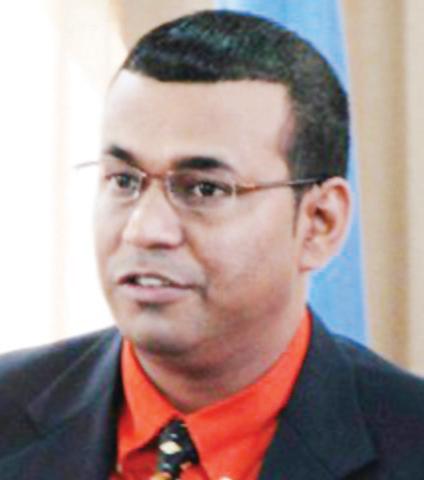
A Partnership for National Unity (APNU) Member of Parliament Joseph Harmon had called on Natural Resources and Environment Minister Robert Persaud to step down, contending that he had misled the National Assembly.
Debate In response, Minister Persaud had produced an excerpt of the transcript from the sector committee meeting which was held in the Parliament building. The document was produced by the Parliament Office of Guyana.
When asked by Harmon whether leases were issued for lands in the New River Triangle, Minister Persaud responded in the negative.
“As of 11:25 am today, I am advised by the manager of the Land Management Administration Section of the GGMC that no mining permit licences or any permission be given for mining in the area you have outlined. I want to make that categorically clear.”
Persaud had also thrown out a public challenge to those who have been criticising his actions regarding
the issuance of the PGGS for the New River Triangle area, saying he was willing to debate anyone on the issue as to whether he sold out the country or broke the law.
“… any group, be it the media, environmental group or be it any political party, I am willing to enter into a public debate and let them set it up any place, any time with any one, on all the issues raised because what we have and what we’ve done, we are proud of. Its consistent with our laws and whatever we do in the sector, we do it because it’s in the best interest for Guyana’s development.”
The natural resources minister pointed out that there has been a lot of misrepresentations of what is happening in the sector.
He said that there are some who still believe that everyone should live in an antagonistic atmosphere and so when persons are in “talks with others over investments, they think you are selling out”.
South-east Berbice has long been an area of interest to miners. In the 1970s, the late Chris Barron of the UK did enormous work in mapping the terrain in that area, some of the toughest in the country, including the Muri Mountain area.
In 1976, he led a UN supported survey team to the area which identified phosphate and rare-earth bearing carbonitate, sylvine and other minerals.
Muri said it would like to thank all of those who supported this project and who are in support of the development of Guyana.

Two-year-old Jasmine Joseph of Isseneru Village, Mazaruni, Region Seven, who was attacked by a puma close to her house two Fridays ago, has been removed from the Intensive Care Unit (ICU) of the Georgetown Public Hospital and is now in the Paediatric Ward.
Hospital officials on Saturday confirmed the news while stating that the child is being treated for an infection in the head. The infection stemmed from the injury she sustained from the attack.
Joseph was taken to the medical facility just after 15:00h on December 27 and a CT scan was performed on her to determine the extent of injuries she had received to the head.
Officials say the child has shown signs
of improvement and the hospital is ecstatic about the good news. Nevertheless, the nurses and doctors are closely monitoring her condition.
Initially, it was reported that the child was in the yard while her mother and other relatives were attending to household chores when they heard the child screaming. As they looked out, they saw the animal dragging the child into the bushes.
Another version suggested that the child was left with her aunt by her grandmother, so that she can attend a church service close by.
While at the church service, Agatha Joseph, the grandmother, reportedly heard loud screams coming from across her daughter’s home and thought that the children might have been playing and fell into the water; thus she sent someone to check.
After a few minutes, the person returned with the badly injured child, who was rushed to the Isseneru Health Centre where she was treated and was subsequently medivaced to Georgetown.
Guyana Times was told that the child was also attacked by a jaguar sometime ago. The house where the child was attacked is surrounded by bushes which might be the main reason for the attacks.
The puma, however, was reportedly killed by an uncle who went to the child’s rescue.
Ihave read much in local papers about the role of the private sector. Much of it is not complimentary. It is said that they are selfish, corrupt, bribe-oriented, money-oriented, greedy, and such things.
In the commentaries, we throw away the baby with the bath-water. It is easy to dump it all into the nearest trench. We know from experience that it is easy to condemn, with nothing except bitterness behind our criticism of those we accuse of selfishness. It is obvious that there are those in the private sector who deserve this lashing. But we must always seek balance.
I shall make bold to mention just a few names of people from the private sector who have done a great deal to change lives: Hemraj Kissoon (A H & L Kissoon); Sattaur Gafoor (Gafoor’s); Edward B Beharry (Edward B Beharry and Sons); and Poonai Bhigroo (Poonai’s Pharmacy in Rose Hall Town).
There are also Vijay Cipriani, Balram Shane, Aubrey Blackman, Ramesh Maraj, Mohamed Raffik, Mohin Nandpersaud, Oumdeo Ramdeo, Deo Persaud, Isaac Sarjoo, David Anthony Fraser, and many others.
In Corentyne alone, it would take this entire column to name those private sector (or businessmen and women) who have come forward with tangible help for deserving causes. May they be blessed, for blessings they deserve richly. They give not for profit, but profit from giving.
One quick example: My administrative officer, the excellent Ramdat Nandkisore (now that is a man who served well and was discarded like used tissue) suggested that we get a new stage for
the University of Guyana Berbice Campus (UGBC). It took us all of a mere six hours to get the money and material for a $1 million stage.
And we asked people from Upper Corentyne alone. There was no need to ask anyone else! The stage is still there, used just recently to graduate students from UGBC. I have never stood or sat on that stage without saying quiet thanks to Nandkisore and to those businessmen and women who gave us that stage.
In Berbice, we have joined hands to form a cordon around the less fortunate: the elderly, the disabled, the poor, and the disenfranchised. And we have had fabulous cooperation and partnership.
From the Guyana Police Force (Stephen Merai, Lyndon Alves, Eon Amsterdam, Jairam Ramlakan, Yonette Stephens, Michael Newland and many other good cops); from the community policing group and neighbourhood policing ranks; from Regions Five and Six health and health care professionals; from UGBC; from religious and civic leaders; from the chambers of commerce; from members of the legal profession, and so on. So many have come forward in their numbers.
But we hear and read little praise for the private sector. Because like all tiny folk we look upon them with envy and demand from them more and more. The more we ask, the more they run away from us –not because they do not want to assist, but because of the manner in which we approach.
Our habit is to call a whole pack of businessmen and women, wine and dine them, tell them of their social obligations (as if they did not know), talk at them in high-flown words, and then dismiss them with the expectation that they will give us free access to their pockets and profits.
I can say with the simple truth that I have never asked any businessman or woman for assistance for a poor but bright child and have been turned away. Ever! If I approach you with the kind of official arrogance that we are so good at, you will listen, nod, and then forget about me the moment I turn away. The thing is the approach. Genuine humility works! People read insincerity easily; they resent arrogance deeply. Also, in seeking help, we need to be specific about what we request. People would be more willing to help people than they would be to help institutions. And it should never be a oneway street. You contribute, and you shall be honoured in specific ways. And help may not always be in cash, but in experience, expertise, in time. Confucius said: “Do not give them fish. Teach them how to fish.” Let the private sector teach us how to be profitable. We do not have to wine and dine the private sector at fancy hotels. All we need to do is approach with humility, ask for specific things for the good of others. Like our young children.
The Guyana Police Force’s investigative capabilities would be greatly enhanced, and very soon, as the state-ofthe-art forensic laboratory at Turkeyen is nearing completion.
Home Affairs Minister Clement Rohee disclosed that the laboratory, which is approximately 90 per cent into its schedule, is expected to be completed by February.
The building, which should have been completed in April 2013, was held up as the primary contractor, Courtney Benn Contracting Services experienced setbacks.
However, the equipment and other items for the laboratory have been procured and installation
will commence this month, but only following the installation of uninterrupted power supply to the building, Minister Rohee said. The staff too for the laboratory have been hired.
The director of the laboratory, who was recruited in October 2013, is now developing an operational activity table from the lab’s strategic plan, Minister Rohee said.
The $840 million laboratory was launched under the Citizen Security Programme (CSP), initiated by the government and the Inter-American Development Bank (IDB).
This programme has three components: institutional modernisation of the Home Affairs Ministry, Community
Action Component (CAC), and modernisation of the Guyana Police Force (GPF), which includes strengthening of its forensic capability. In 2013, a bill was laid in the National Assembly to amend the Evidence Act to provide a legal person for the laboratory.
The Evidence Bill, which was introduced by the home affairs minister to the National Assembly, was voted down by the parliamentary opposition in June. Legal Affairs Minister Anil Nandlall, on December 13 re-tabled the Evidence (Amendment) Bill, in the National Assembly, which seeks to expand the range of documents/ reports that can be admitted as evidence.



Guyana’s water sector experienced an unprecedented expansion in the amount of Guyanese accessing potable water. This was achieved through the investment of approximately $2.7 billion in capital works and water sector infrastructure.
The Government of Guyana has invested US$12.3 Million in the Linden Water Supply Rehabilitation Programme (LWSRP) which will soon result in the completion of two new Water Treatment Facilities serving the people of Linden with safe,
potable water. Works on the two new water treatment plants are scheduled to be completed in 2014.
Country-wide, in excess of 100,000 people benefited from improved water service and water quality; 20,000 persons benefited from new water service on the Coastland, Linden and the Hinterland.
Government investment also extended to the Sanitation System in Georgetown in the form of the US$10.0 Million Georgetown Sanitation Improvement Programme (GSIP) which achieved a major milestone in 2013: a significant reduction in the amount of sewage overflows within the Capital City. Amerindian communities remained a priority for the Government with key investments in the provision of water at Matthew’s Ridge -Region 1, Ituni and Rockstone -Region 10, Port Kaituma –Region 1 (where 2 new wells are being drilled), Santa Rosa – Region 1 (Paurima and Batavia- Region 7, Kurukabaru and

Paramakatoi – Region 8 and Rupertee and Baitoon- Region 9; At Lethem, 2 new wells have been successfully completed and will be put in operation in the first quarter of 2014, thus providing an improved service to the residents.
Guyana’s water sector also benefitted from the upgrade of 1500 service connections and installation of in excess of 20km transmission and distribution mains and the continuation of a Non-Revenue Water Programme to reduce wastage.
GWI has taken a leading role in the advancement of Integrated Water Resources Management (IWRM) as articulated in its Strategic Business Plan and specifically directed towards sustainable water resources management. GWI executes IWRM within a framework of key activities aimed at effective assessment of the water resources in Guyana, referring to quantity, quality, demand, vulnerability to climate change, institutional, legal and management framework.
On the Coastland, new wells will be completed and put in operation at Mon Repos, Hope, Eccles, Providence, Uitvlugt
among others.
The project for the construction of new water treatment plants to serve Cornelia Ida to De kinderen (WCD), Diamond –Herstelling (EBD) and Goed Banana Land, Sheet Anchor to No 19 (East Berbice) in addition to the expansion of treatment capacity at Sophia and Central Ruimveldt in Georgetown is scheduled to commence in the second half of 2014. Rehabilitation of 24 Sewer Stations will continue in 2014, as well as the distribution of medication to eliminate the spread of tropical diseases and the implementation of an energy efficiency pilot project to aid in the reduction of high energy consumption under the Government of Guyana’s Georgetown Sanitation Improvement Programme.
These programmes are critical to the continued success of the Nation’s Water Sector and serve as a beacon of Government’s commitment to improving the quality of life in Guyana.
Importantly the subsidy for Old-Age Pensioners will continue in the New Year as Government’s focus on alleviating poverty remains strong.



* Re-organising the Customer Services Department to improve efficiency and promote quality customer service



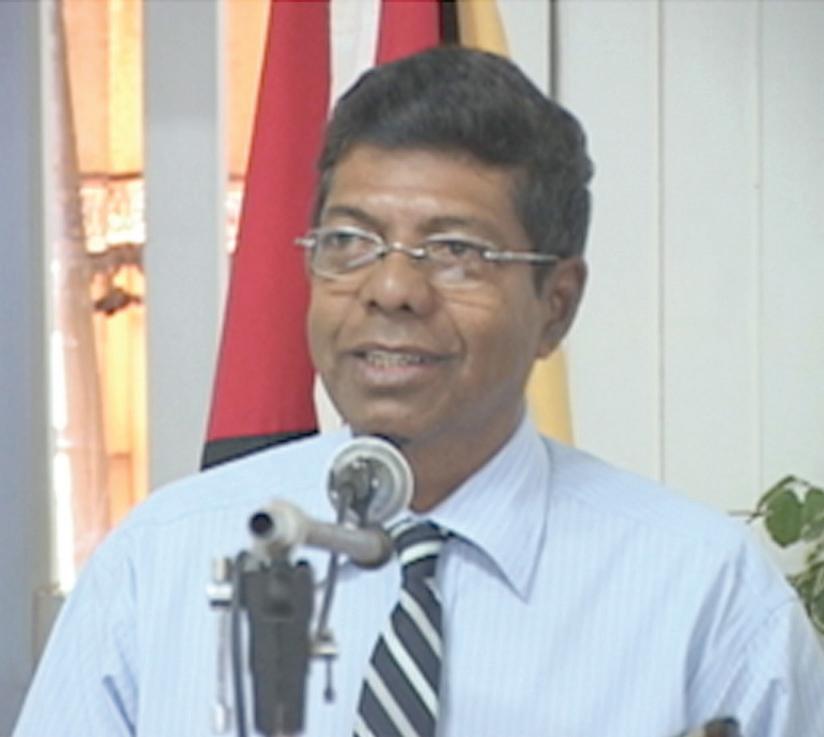
2013 was a year of positive changes for Guyana Water Inc and these will set the path for future growth and viability of the company. The consequential benefits could not be realized without the immense support and contribution of our customers and employees. Key achievements included:
* Surpassing the 2012 revenue performance
* Obtaining an unqualified audit report as a result of robust financial management and corporate governance
* Launching a Data Verification Exercise which will be completed by mid 2014, with the objective of ensuring an accurate customer Billing System which will engender customer confidence and willingness to pay water rates
* Expansion of the metering programme so that more customers pay according to what they actually consume
* Successfully implementing an Energy Saving Programme which has already resulted in energy cost reductions and will be expanded in 2014.
* Commencing the implementation of Non-Revenue Water (NRW) Strategies and Business Plan to reduce Commercial and Physical losses. This will be the main focus in the New Year and will become institutionalized at all levels of the organisation.
* Achieving a high implementation rate of new pro-


jects both on the Coastland and Hinterland to ensure expanded access to water, increase in treated water coverage and provision of higher level of service to customers
In 2014, GWI will focus on Strategic initiatives aimed at transforming the quality of service provided to our customers country-wide and will include:

(1) Monthly reading of meters and billing of metered customers,
(2) Piloting of state-of-the-art technology to aid in the metering programme,
(3) Innovative strategies to enhance revenue collection especially through public education programmes and community outreaches and
(4) A new Tariff Harmonisation Structure is expected to be implemented.
I urge every GWI customer to partner with the utility as we strive to go beyond mere service delivery and seek to significantly improve level and quality of service to all our valued customers.
Website: gwiguyana.com
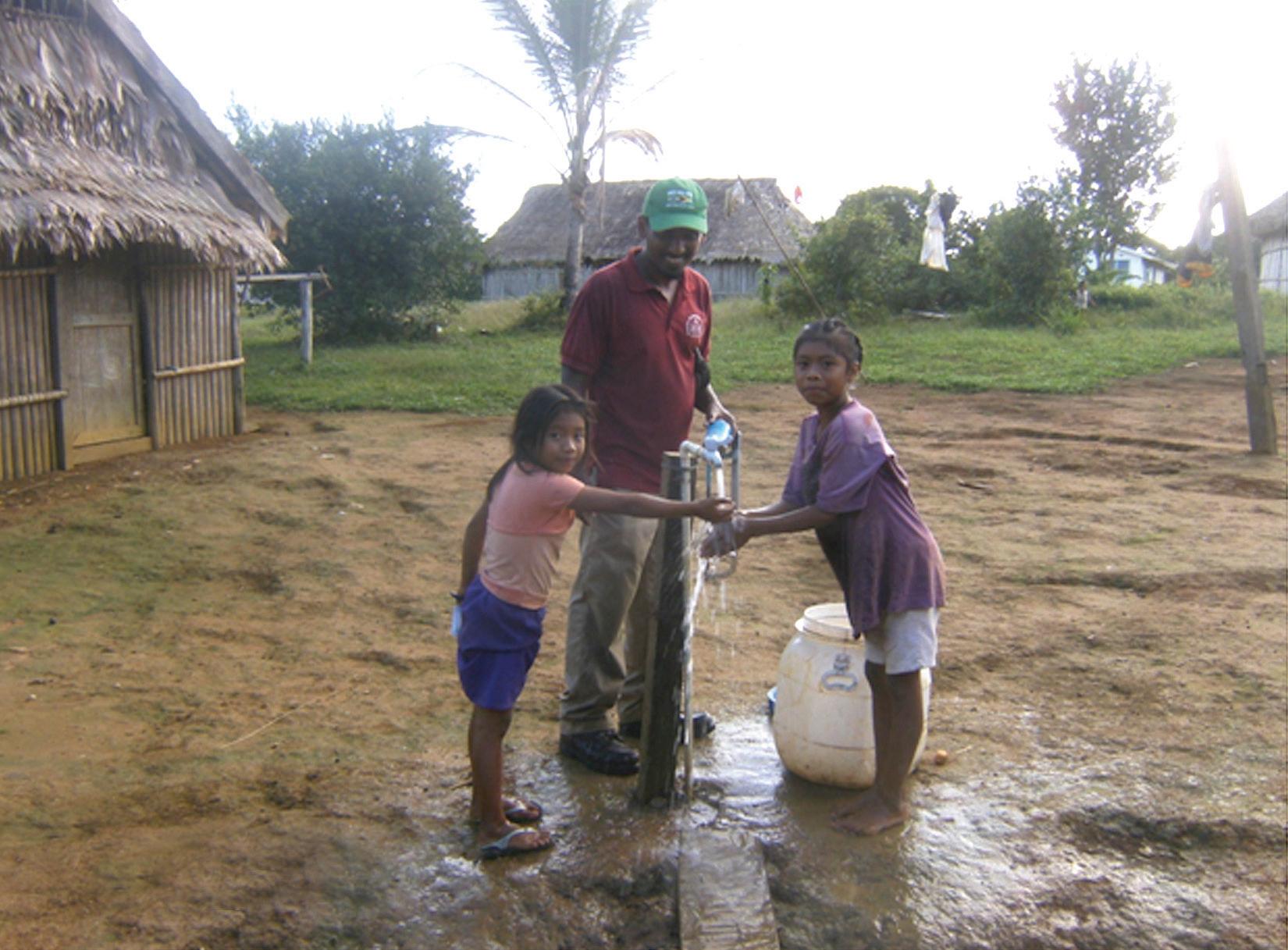

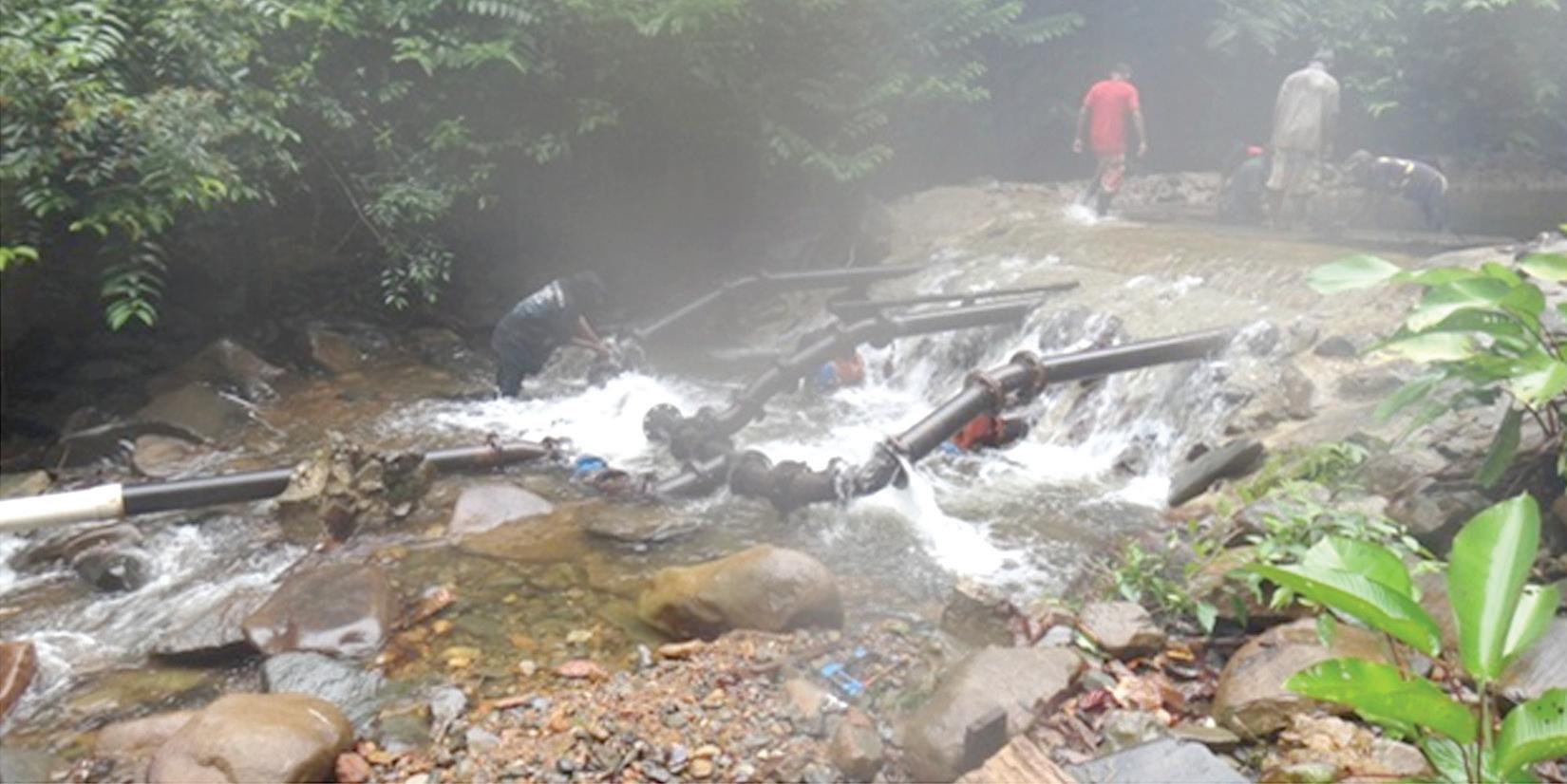

Peru should consider legalising marijuana, the former head of the country’s National Drug Control Commission has said. Uruguay recently became Latin America’s first nation to legalise the marijuana industry, encouraging its neighbours to follow suit. Former director of the Peruvian National Drug Control Commission
(DEVIDA) Ricardo Soberon appealed to the government to consider the legalisation of marijuana in an interview.
“We must open the debate with Carmen Masias, the President of DEVIDA, and the Peruvian Medical School. Let’s open a forum that deals, first and foremost, with the health issues and secondly with safety and
the implications of its [marijuana] use,” Ricard Soberon told news website Terra. He said that the legalisation of the marijuana market could be a solution to the illegal drugs trade in Peru.
“The possibility of removing the criminal element from the cannabis trade – a drug that is a lot less dangerous than others – is the answer to 50 years of repeating the same strategies with no results,” said Soberon.
In December, Soberon applauded the Uruguayan decision to legalise both the sale and production of the drug, calling it “a good experience.” Later that month, Uruguayan President Jose Mujica signed into law the legislation that will bring the production and sale of marijuana under state control. (Excerpt from RT News)
Arevised version of the controversial Cayman Islands Data Protection Bill is due to come before the Legislative Assembly in 2014. The initial bill, which was reviewed in public consultation, was eventually sent back to the drawing board after less-than-positive feedback from individuals and the business community.
The Data Protection Draft Bill, 2011, was similar to legislation approved in the 1990s by the European Union and the United Kingdom, seeking
to regulate the processing of personal data to ensure those records are maintained fairly, accurately and kept from those with no right to see them.
The proposal also has major implications for the territory’s Freedom of Information Law and how journalists, writers and artists can make use of personal information.
“Data protection is aimed principally at giving effect to the rights to privacy in relation to data while ensuring that certain exceptions are allowed,” stated a memoran -
dum attached to the draft bill, which was released in early September 2013 for public comment.
The Data Protection Bill would apply to everyone in the Cayman Islands, public and private sector alike, as well as entities outside the islands that have certain data processing functions here.
The Human Rights Commission, headed by chairman Richard Coles, reviewed the bill late in 2012 and reported on it to the Legislative Assembly.
(Excerpt from cayCompass)

The failed pipeline behind the first massive marine-based oil leak that has affected the south-western coastline of Trinidad may not have undergone major inspections
for almost two decades, a confidential report commissioned by state-owned Petrotrin has shown. The preliminary investigation and report, which was submitted to the seniors at
Petrotrin on December 24, also showed evidence of poor maintenance, which the report said resulted in more than 7000 barrels of oil being leaked into the Gulf of Paria on December 17.
The report was ordered after the December 17 oil spill which started off Petrotrin’s Pointe-a-Pierre base, but then spread rapidly to other areas of the south-western peninsula. Details of the report surfaced Friday, a day after a highpowered Petrotrin team, speaking to the media after meeting with the National Security Council, said two of the 11 leaks found since the first occurred at Pointe-aPierre were acts of sabotage and had since been reported to the police.
The investigation into the first leak found that a failed connection between an oil tanker and a barge at Point-a-Pierre leaked 7453 barrels of bunker fuel into the sea, which subsequently triggered the massive oil spills along the south-western coastline that are still affecting residents in several communities, with La Brea being the worst hit.
(Excerpt from Trinidad Guardian)
Criminal gangs in Brazil have set fire to four buses and attacked a police station in the north-eastern city of Sao Luis, authorities say. They say the order for the attack came from gang leaders arrested at the notorious Pedrinhas penitentiary, where at least 59 inmates died last year.
“The attacks are in reaction to recent measures to curb jail violence,” said the
Maranhao state government.
A six-year girl who was inside one of the buses suffered severe burns. “Her mother asked the criminals not to harm the children, but they showed no mercy and set fire to the girl,” a relative told O Globo newspaper. Three other people were injured in the attacks, which took place on Friday night in the outskirts of Sao Luis. A police station was
also attacked, with several shots fired from a passing car. “We know who is behind this and it is only a matter of hours before we arrest them,” said Maranhao state Security Secretary Aluisio Mendes. Extra troops had been deployed across the city, he added. Local gangs were blamed for similar attacks in the Maranhao state capital earlier last year.
The lead attorney representing the Antigua Labour Party’s challenge to registration and proposed boundaries changes, Anthony Astaphan SC, is warning a repeat of the 2009 elections debacle could occur if the “uncertainty” over the electoral process remains.
Speaking on Friday’s Voice of the People Programme, the senior counsel described the situation as a looming “crisis.” “ There is going to be a major problem because of the uncertainty surrounding the
delineations of the boundaries and the finality of the register of electors and if we go into the elections with these uncertainties, you can rest assured whoever loses the elections is going to challenge the entire elections by way of election petitions,” he said.
He said the uncertainties arise because “We are in January, we (ALP) have (two) appeals, (government) has an appeal of the case of supervisor of elections, which, when I suggested to them we get all three cases
heard immediately, their response was that, that is not urgent…There will be an electoral crisis if these appeals are pending at the end of February and the House is supposed to dissolve in March or April.”
Astaphan is therefore suggesting, he, along with the lawyers representing the boundaries commission, electoral commission and the attorney general “cooperate” to find amicable solutions to the matters as early as possible. (Excerpt from Antigua Observer)
The businessman implicated in the recent seizure of a bulletmaking machine, more than 3000 rounds of ammunition, and items used to make bullets, was Thursday offered bail in the sum of J$300,000.
The accused, Oneil Schrouder, was offered the bail following an application by Queen’s Counsel K Churchill Neita in the Corporate Area Resident Magistrate’s Court. Schrouder, a 34-year-old automotive finishing trad-
er of Chains Roads, in Mandeville, Manchester, was taken into custody after he turned himself into the police following the find at the port of Kingston on November 28 last year.
Along with the machine and nine millimetre bullets, gun powder, lead bars, weight, targets and other items, relating to the making of bullets were allegedly discovered among the shipment.
Schrouder’s name and address were reportedly on
the label of the barrels and boxes in which the items were discovered. He has been charged with breaches of the Importation of Dangerous Explosives Act, the importation of prohibited goods, and making a false declaration. During the bail application on Thursday, Neita told Senior Magistrate Judith Pusey that his client had purchased the goods in the United States to set up his own shooting range and had no criminal intentions.
(Excerpt from Jamaica Observer)

While there are in excess of 900 temporary teachers in the public service, officials of the Barbados Union of Teachers (BUT) say they have been given the assurance that teachers will be not affected by government’s
retrenchment efforts at this time. Word of this came from the BUT’s President, Pedro Shepherd and General Secretary, Herbert Gittens, during a press conference at Solidarity House Friday afternoon.
The interaction with
members of the media came after the executive of the BUT met with members to allay their fears and discuss the planned public sector layoffs, which are expected to start a week after the next school term commences.
“I believe teachers were more relaxed and more comfortable today, having heard from the Barbados Union of Teachers over the last few days and certainly at the beginning of this meeting, that we have been given the assurance by the minister of finance that teachers are not going to be affected at this time. And once they were told that, I believe they felt very comfortable that they will be in the classroom on Monday doing what they are accustomed doing, and that is teaching the nation’s children,” he said.
(Excerpt from Barbados Advocate)

Majid al-Majid, alQaeda’s commander in Lebanon, has died in custody in a Beirut hospital, Lebanon’s army says. The Saudi, who led the Abdullah Azzam Brigades and was on Saudi Arabia’s most-wanted-terrorists list, was arrested in Lebanon recently.
An army general told
Associated Press the militant died of kidney failure. The group has carried out attacks across the Middle East and claimed a bomb attack on Iran’s Beirut embassy in November that killed 23 people. The Iranian cultural attaché was among the dead.
A Lebanese army statement said Majid al-Majid
died in a military hospital in Beirut on Saturday, as he was receiving medical treatment. Security sources said he had gone into a coma suffering from kidney failure. He was believed to have required dialysis for the condition. It was only on Friday that the Lebanese authorities said that DNA tests had confirmed his identity.
Defence Minister Fayez Ghosn earlier confirmed the commander was being held by army intelligence in Beirut and was “being interrogated in secret”. He refused to say when and how the arrest took place. However, a Lebanese security source told the Reuters news agency that he had been captured with another Saudi militant and had been living in the southern city of Sidon. (Excerpt
Israel and the Palestinians are making progress towards a “framework agreement” to guide their talks on a formal peace deal but still have some way to go, U.S. Secretary of State John Kerry said on Saturday. Speaking after extensive, separate talks with Palestinian and Israeli leaders, Kerry sounded somewhat hopeful about the chances of ending the conflict, despite misgivings voiced recently by both sides and a lack of tangible signs of movement.
On his 10th visit to the region in a year, Kerry is trying to establish what U.S. officials call a “framework” of general guidelines for an accord, with details to be filled in later. “I am confident that the talks we have had in the last two days have already fleshed out and even resolved certain kinds of issues and presented new opportunities for others,” he said after meeting Palestinian President Mahmoud Abbas.
“We are not there yet, but we are making pro-
gress,” Kerry told reporters in Ramallah, seat of Abbas’ government.
Since arriving in the region on Thursday, Kerry has spent about eight hours each with Abbas and Israeli Prime Minister Benjamin Netanyahu, whom he met again in Jerusalem on Saturday.
U.S.-brokered Israeli-Palestinian peace talks resumed last July after a three-year halt, with Kerry leading the push despite widespread scepticism about a successful outcome.
(Excerpt from Reuters)
Face-to-face talks between rival parties in South Sudan have been delayed, government and rebel delegations said, dashing hopes of a swift ceasefire to end raging battles and risks of all-out civil war.
South Sudan information minister, Michael Makuei, part of the delegation to the talks in Ethiopia’s capital Addis Ababa, as well as the rebel’s spokesman, Yohanis Musa Pouk, said the two sides would not meet on
Saturday until an agenda had been drafted by negotiators and agreed by both sides. It was not clear when they would be completed. Makuei confirmed that the two leaders of the delegations met briefly late on Friday, although proper talks had not begun.
“They met,” Makuei told AFP, adding that teams were now “waiting to hear the way forward” from the negotiators, who are from the regional East African IGAD bloc of nations. “The heads of the two
delegations need to agree on an agenda... maybe tomorrow or after tomorrow,” Pouk told AFP.
On Friday, the two sides held preliminary meetings before the official start of negotiations in a bid to end nearly three weeks of conflict, Ethiopia’s Foreign Ministry said. Dina Mufti, a spokesman for the ministry, said that representatives of the government and rebel groups were meeting in the country’s capital, Addis Ababa. (Excerpt from Al Jazeera)
One opposition activists was killed and scores of ballot booths set alight on the eve of Bangladesh’s election as opposition began enforcing a 48-hour general strike.
Police said the activist was killed on Saturday in the northern town of Patgram during clashes with governing Awami League supporters.
The private online newspaper Bdnews24 reported that more than 100 polling booths were burned
across the country. But the country’s chief election commissioner Kazi Rakibuddin Ahmad said the attacks would not derail the polls and that alternative arrangements were being made in the affected areas.
“We are worried as you are about it,” he said. “We’ve asked for strengthening law enforcement.” The Bangladesh Nationalist Party, which is boycotting Sunday’s polls, called the Saturday
The Iraqi government has lost control of the strategic city of Fallujah, west of Baghdad, eyewitnesses say.
Al-Qaeda-linked militants now control the south of the city, a security source told the BBC. An Iraqi reporter there says tribesmen allied with al-Qaeda hold the rest of Fallujah. Fighting there erupted after troops broke up a protest camp by Sunni Arabs in the city of Ramadi on Monday. They have been accusing the Shia-led gov-
ernment of marginalising the Sunnis.
The recent fighting in Fallujah and Ramadi has pitted government troops on the one hand and the Islamic State of Iraq and the Levant (Isis), which is affiliated with al-Qaeda, and Sunni tribesmen on the other. Local Sunni Arabs have been angered by they perceive as discrimination by the government of Prime Minister Nouri Maliki.
They also say their minority community is being targeted by anti-terrorism measures implemented to stem the surge in sectarian violence. Late on Saturday, eyewitnesses said al-Qaeda militants were in evidence on the streets of Fallujah, riding pick-up trucks mounted with anti-aircraft guns. Reuters news agency said saying troops were shelling parts of the city to try to retake it. Iraqiya state television quoted Maliki as saying: “We will not back down until we end all terrorist groups and save our people in Anbar.” (Excerpt

BP has won permission to drill in the clear waters off Greenland, just three and a half years after abandoning similar plans to apply for a licence in the aftermath of the Deepwater Horizon blowout. Greenpeace said it beggared belief that a company with BP’s chequered track record
would be allowed to work in one of the world’s most fragile environments.
The British oil company confirmed that it had won a licence to work on the Amaroq concession off the coast of north-east Greenland – its first permit in or around that country. The government in Nuuk
boasted that the presence of big oil companies would accelerate the chances of striking oil but even some energy executives have warned of a potential disaster because of the difficulties of dealing with a spill around ice.
“BP and our partners ENI and Dong Energy are pleased to have been awarded block eight in the northeast Greenland licence round, an area amounting to 2630 square kilometres,” said BP in a statement.
“North-east Greenland is a long term play, and we expect several years of careful planning before exploring this challenging and interesting region. We look forward to working with the BMP (Greenland’s bureau of mines and petroleum) and partners to develop a 2D seismic work programme,” it added. (Excerpt from The Guardian)
Holidaymakers heading to Taupo, Turangi or Australia have been urged to make sure they’re fully immunised after a measles outbreak. More than 230 people have been traced after being potentially exposed when a teen dancer returned from a hip-hop competition in Sydney with the measles.
As the 18-year-old South Auckland girl rallies from her sickbed, health authorities have revealed another Auckland girl who had been in contact with the infected
strike in another attempt to torpedo a contest which is already sure to be won by Prime Minister Sheikh Hasina’s Awami League. Awami League candidates, or their allies, are running unopposed in 153 of the 300 parliamentary seats. The strike comes after BNP leader Khaleda Zia issued an appeal to voters to “completely boycott” what she called “a scandalous farce” and accused the government of placing her under house arrest. (Excerpt from Al Jazeera)
teen is in isolation and undergoing tests.
A further 10 people from two extended families in Taupo and Turangi, including four dancers who competed at the World Supremacy Battlegrounds tournament, have confirmed cases of the measles. Another family member was put in isolation Saturday.
Public health officials have warned people to check their immunisation if they intend visiting Australia where several states are in the grip of a measles epidem-
ic. Auckland Medical Officer of Health Dr Catherine Jackson said: “If people are heading overseas these holidays it will pay to check you’re immune. If you’re not immune and you’re travelling it’s a good idea to get immunised before you go.”
A similar warning is being sounded by the Bay of Plenty and Lakes District Medical Officer of Health Dr Neil de Wet, who said anyone under 45 should make sure immunisations were up to date, especially if living in or visiting Taupo or Turangi.
(Excerpt from NZ Herald)
Coastal areas in the south and west of the UK have been swept with waves of up to 10 metres (30 feet) high, causing flooding and destruction. With around a hundred flood warnings active on Saturday, the country could yet expect more severe storms.
Gale force winds accompanied by monster waves, twice the height of a doubledecker bus, eroded Britain’s Atlantic coast on Friday. Dozens of houses were flooded, piers damaged, roads and
railway tracks, including major ones, affected.
At Heathrow several flights had trouble landing because of the wind, while connections to and from Gatwick were hampered by the bad weather. More than a hundred flood warnings were issued by Environment Agency Saturday morning. Four of those were severe. That was one-fifth Friday’s rate. However weather forecasts for the coming days say it is not yet time to relax.
“We certainly do have
worse to come, we know that we’ve got another band of weather coming in on Sunday [today] which is going to bring along what we call fluvial flooding, that’s flooding to the rivers,” The Telegraph cited warning from Chris Bainger, spokesperson for the Environment Agency.
The areas of particular risk pinpointed by the agency included the Devon and Cornwall coastlines, Dorset, the Welsh coast and the Scilly Isles. (Excerpt from RT News)

The Culture, Youth and Sport Ministry with its three-component portfolio, which is considered very important to the country’s socio-economic growth and development, has had a very successful year.
With a budgetary allocation of $2.5 billion for 2013, subject minister, Dr Frank Anthony, during a press briefing on Friday reported that the ministry was able to push sporting activities to greater heights, heighten awareness of Guyanese culture and to continue providing activities to elevate the nation’s youths.
For 2013, over 430 young Guyanese were trained and certified through the Youth Entrepreneurial Skills Training Programme (YEST) that continues to offer skill training and entrepreneurship, to enhance the employment potential of young people who have left the formal school system, and need to be gainfully occupied.
This programme targets youths throughout the 10 administrative regions for participation in technical vocational skills at the residential Kuru Kuru Training Centre (KKTC) at Soesdyke, the non-residential Sophia Training Centre, Georgetown, and the Smythfield Drop-in
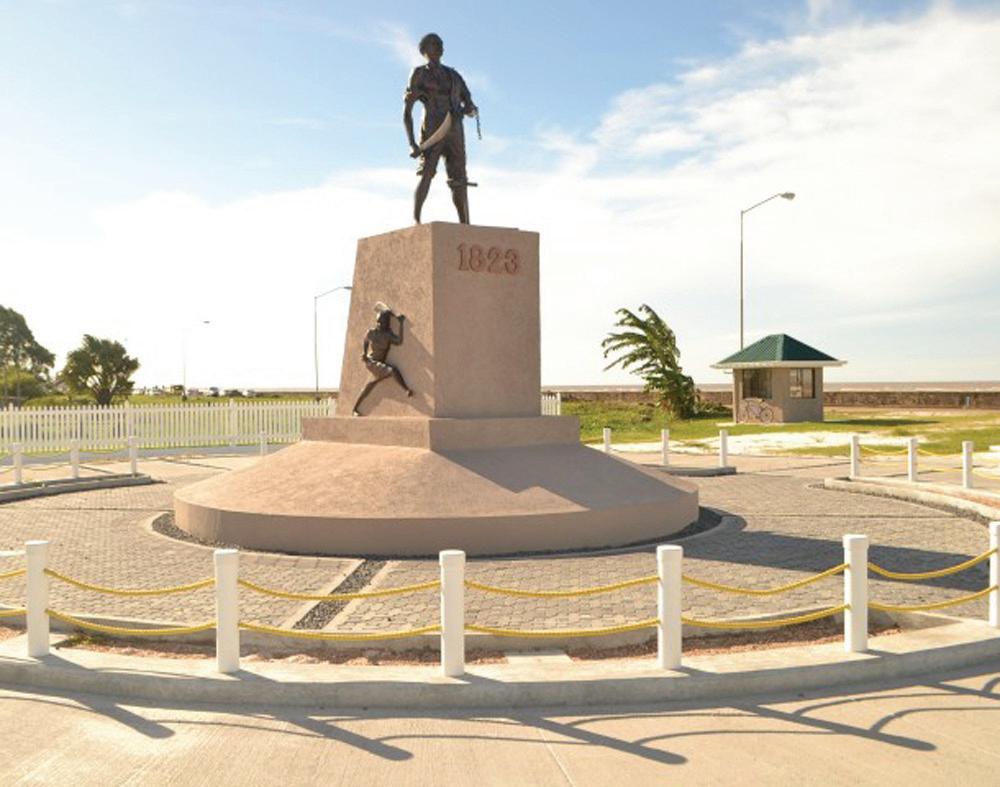
Centre at Vryman’s Erven, New Amsterdam. Areas of training offered include
welding and fabrication, garment construction, information technology, business
studies, carpentry, electrical installation, joinery, masonry, motor mechanics and plumbing.
At KKTC, 32 students acquired their driver’s licence after successfully completing their driver’s education examination which was conducted by the Police Traffic Department. Plans are also in place to introduce computer repairs at the institution.
Minister Anthony stated that the ministry, through a collaborative effort with the Canadian government was able to recruit a volunteer who has assisted in developing a “master plan” for the institution, the first draft of which was presented to the


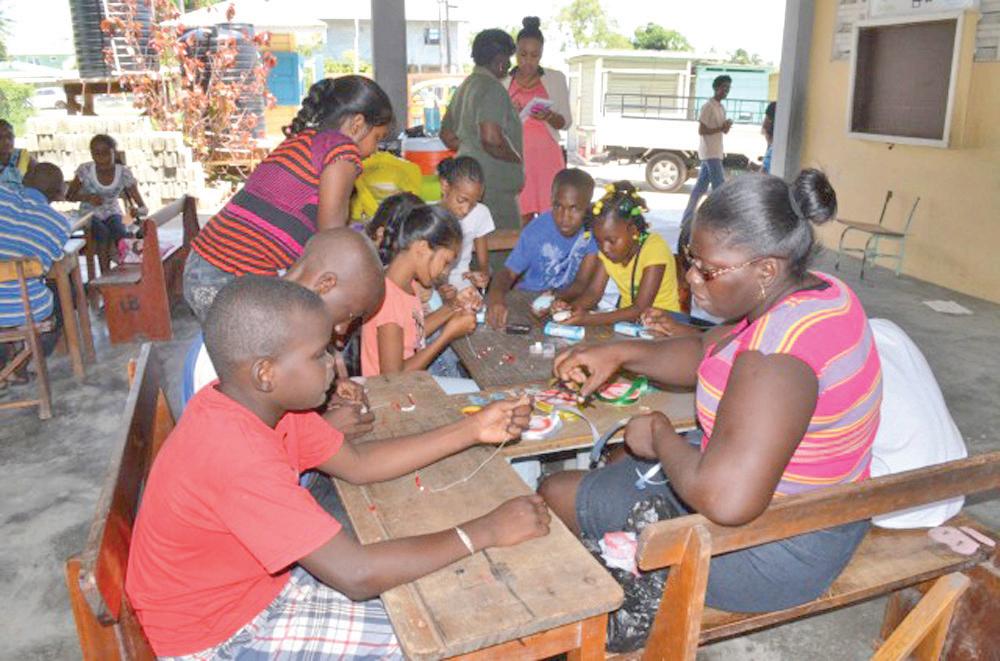
children, touching areas such as civic education, and special sports camps in areas such as cycling, football and cricket, and swimming which targeted over 3000 children.
gramme.
ministry during 2013.
The New Opportunity Corps (NOC) also graduated its second batch of 115 students for 2013, as compared to 19 who graduated in 2012. Contracts were also awarded for rehabilitation of the institution’s living quarters.
Despite the many challenges, Minister Anthony said that the institution saw great success in terms of student performance from those attending the Johanna Cecelia Secondary School with as many as five passes at the Caribbean Secondary Examinations Council (CSEC) examinations.
More than 700 youths received bronze, silver and gold awards for participating in the President’s Youth Award Republic of Guyana (PYARG) programme which has been proving very successful over the years. Youths are allowed to complete lengthy periods of meaningful involvement in community service, adventure, skills training, physical recreation and moral education.
The annual event organised by the ministry during July – August continues to attract thousands of youths. For 2013, a total of 10,000 youths were given the opportunity to participate in different activities that taught them new things in a fun way.
These camps were held in all 10 administrative regions and targeted 7000
The ministry also held several extensive consultations in each of the 10 administrative regions in an effort to craft a national youth policy that addresses the specific needs for youth development, in areas such as youth health and wellbeing, growth and development issues, sexual reproduction, employment, and micro-financing and business operations. The document was drafted and this year, the ministry will be making recommendations and seeking the approval of Cabinet before taking it to Parliament.
In 2013, the ministry also sought to further enhance the national volunteer platform and has been engaging various communities, and more city schools to encourage volunteerism among young people.
In 2013, the Culture Ministry continued its endeavour to promote and sustain the rich and diverse culture that Guyana possesses.
There were several activities, including lectures and exhibitions, to mark the 250th anniversary of the Berbice Slave Revolt, and the 175th anniversary of Indian arrival in Guyana.
The 1823 monument, located between Carifesta Avenue and Sea wall Road, was also unveiled to commemorate the 190th anniversary of the East Coast Demerara slave revolt, while the design of a monument to commemorate the arrival of the first East Indian immigrants was selected.
Also, the ministry launched the first National Theatre Art School at the National Cultural Centre and in 2013; the institution graduated its first batch of 37 persons, 24 of whom gained distinctions.
The National School of Dance expanded, with branches opening in Regions Two, Five, Six and 10, allowing for more persons to access programmes being offered. Efforts are now focused on revising the curriculum of the dance school so that persons can be certified at the end of the pro-
The National Music School has also improved, with the addition of more instruments; while the Burrowes School of Art continues to train and certify students in such disciplines as drawing, painting, sculpture, textile designs, art appreciation and graphics. The national drama, music and song festivals have also provided platforms for local artistes.
Digitisation project
The National Archive in collaboration with UNESCO launched the first phase of its digitisation project for which it has been able to purchase microfilm equipment.
In 2013, The National Museum, the Museum of African Heritage, the Walter Roth and the Dutch museums continued to host a number of exhibitions.
Apart from the local displays celebrating Guyana’s Republic anniversary, independence and other national holidays, the National Museum held a special exhibition with exhibits from Paris which dealt with slavery around the world. In collaboration with the Education Ministry, the museum also the launched its mobile services from which 66 schools benefited.
Mashramani 2013 was yet another success with thousands of locals and foreigners flocking the streets of Georgetown to witness this rich, grand embodiment of Guyanese cultural festivity. Later in the year, Mash 2014 was launched with the usual preview of costumes.
Guyana also participated in Carifesta XI which was held in Suriname in August, where a 60-member contingent had the opportunity to showcase Guyana’s rich and diverse culture through literary, performing, visual and culinary arts, arts and crafts, music, and fashion.
The fountain at the 1763 monument was restored and the Enmore Martyrs’ Monument was fenced.
The year also saw the ministry publishing 20 books in the Guyana Classics series, bringing the number published thus far by the Caribbean Press to 65. In addition, several other books were also published on Guyana’s history and former presidents’ speeches.
BY VISHNU BISRAM
Italy and most of Europe are relatively safe when it comes to violent crime (unlike say in Guyana or South Africa) as I discover from my travels and studies.
There are/were no kick down door robberies in Europe like what took place under the People National Congress (PNC) regime during the 1980s and there are no ethnically targeted robberies; and the Italian government does not send its forces to kill people like what happened during the reign of the PNC dictatorship or ethnic robberies (take back your gold, as Forbes Burnham implored during the 1980s).
But other crimes (robberies) are very prevalent throughout Europe.
Guyana is well known for its choke and rob (physical assaults and robbery, hold ups, pickpocketing, purse snatching, break-ins, armed robberies, car thefts, carjacking and phone grabbing, among others). As a poverty-stricken country, one has come to accept those kinds of crimes and take precautions.
Crimes and visitors
But even so, they are difficult to avoid, especially when in Georgetown and one reads of crimes (some violent) being perpetrated on visitors. But one would not expect these kinds of crimes to be more rampant in developed countries, particularly popular tourist cities like Rome, Naples, Florence, Paris and New York, where the criminals boldly ply their trade often in front of the police.
One would think that police in a developed country would be on the prowl to deter crimes, especially in tour-
ist havens. But not so in some European cities – like in Guyana, they may be overwhelmed or just plain fed up with the justice system or they leave the criminals alone as in Guyana because they get a cut of the proceeds. In New York, the police go after even petty crimes.
My latest experience with robbery was in Italy (after being a repeated victim in minority neighbourhoods in South Bronx, Harlem and Brooklyn, for example) and at all of its major cities – Rome, Naples, Milan, Florence, Venice and Pisa – with the criminals bolder in some cities than others.
Theft is more prevalent in Rome and Naples (home of mafia activities) than other cities with the victims being tourists and the perpetrators of the crime from the minority ethnic groups, unfortunately leading to a similar perception as in America.
Collusion with police
In Naples, as in Guyana, elements of the police work in tandem with the criminals sharing the loot – according to those I spoke with. Sicily (Palermo) has less pickpockets, but more organised crime than other cities.
As tourism flows are decreasing in Italy, unemployment is rising and more and more people are turning to criminal activities as a source of income. Most immigrants are not into criminal activities. For example, South Asian and Black African (Somalis, Sudanese, Eritreans and Cape Verdeans) immigrants are engaged in odd and ends to make an honest living.
They are not into the pickpocketing enterprise and are also not victims. But people are careful and watchful of
(Arabic) North Africans and Gypsies from Romania; unfortunately, the nefarious activities of a few hurt the image of the others leading to negative stereotyping – somewhat similar to America and throughout the Caribbean.
In Naples, as in Guyana, the pickpockets rob people in front of the police. Complaints to the police make no difference.
I even accused the police officials of being part and parcel of the criminal operations and had to be pulled away before I get locked up for protesting a righteous cause.
People swore to me that the police worked with the criminals seeing them in action right in front of the station.
Too many tourists are victims of crime in Italy, especially by pickpockets. But people still keep going because of the spiritual aspects of the country.
Profitable enterprise
Criminals operate right in front of the door of the church. And the pickpockets have a profitable enterprise in front of St Peter’s basilica, in fact, in front of any religious institution.
The criminals have no respect for the pope or God. Purse-snatching and pickpocketing are rampant in Vatican Square. Thieves target those they know are foreigners.
I should note that when I was an exchange student on a scholarship in Rome in 1985, pickpocketing was not an issue. I walked around safely not worried about my pocket or being held up. But today, Rome is a pickpocket haven. If you are not constantly on guard, you will have something stolen.
Every city I went at every

hotel or train or bus ride and every store I visited, people told stories of being a victim of a pickpocket or their luggage taken from right under their nose. Orientals stand out with the criminals knowing they are foreigners and they are targeted followed by Americans and Indians; European Whites are less of a target.
The criminals are experts at their trade, better than any in Guyana or those I encountered in New York or South Africa. The criminals are not as violent as say in Johannesburg or Cape Town or Durban where they rob and cut up and or kill people; I literally saw two Polish girls got
cut up in the heart of Cape Town shopping district when they refused to give their purses to thugs; crime is uncontrollable in South Africa with tens of thousands of murders every year.
Tourist destination
But with the European government promoting the country as a tourist destination, it should take measures to deter pickpockets. The ordinary people in the streets of Naples, as in Guyana, know the criminals. The police also know them but they do nothing.
If one is travelling to Europe, and you should because there is so much to see
and learn about, take precautions with your luggage and your wallet and travel documents. Have a money belt that fits under your clothes in front of you and avoid crowded locations even in front of religious places; pickpockets have no respect for anyone, not even God.
I should note that I did meet some honest and goodhearted people throughout my travel especially among South Asian immigrants.
I felt great taking snacks to them daily at various locations as they sold items in the streets advising me where to visit and who to avoid so as not to be a victim of pickpockets.










(Dec. 22Jan. 19)
Helping others will benefit you down the line. You will learn a lot from those working with fewer resources. Your altruism will elicit praise. If you remain focused, you will find fulfilment.

(Jan. 20Feb. 19)
Don’t isolate yourself; loneliness will lead to depression. Surround yourself with close friends who will provide support and help lift your spirits.

(Feb.20March 20)
The way you handle people today will inspire admiration. See to any pending paperwork. Tie up loose ends so that you may begin new projects. Your enthusiasm for your ideas will draw interest.

(March 21-April 19)
New friends and partnerships are likely to form if you get involved in a cause or activity. Family members may be able to help clarify a personal situation that is causing you concern. Your giving spirit will invite many new possibilities.

(April 20May 20)
Think before you speak today. Thoughtless communication will get you into trouble. You must maintain objectivity if you want to find solutions to the issues that are bothering you.

(May 21June 20)
Your intuition will be strong today, so act fast to implement new ideas. Misinterpretation is likely if you are imprecise in your communication, which could create obstacles.
By Bernice Bede Osol

(June 21July 22)
If you choose to nitpick today, you will meet with the same treatment from others. If you’ve been difficult lately, you can expect a rude awakening. Such confrontations could lead to a falling-out.

(July 23Aug. 22)
You stand to profit if you have the capital on hand to make a quick investment. Socialising will lead to a friendship that may help you in the future. Make changes to your appearance.

(Aug. 23Sept. 22)
Researching real estate may be a good idea. A lucrative long-term investment can be secured. Making changes to your surroundings will be to your advantage. Your advice will be valued.

(Sept. 23Oct. 23)
You can improve your confidence through a selfimprovement initiative. Don’t avoid exercising. Movement is integral to maintaining your health. Make a new routine to help keep you fit.

(Oct. 24Nov. 22)
There will be many distractions today, and if you try to do everything, you will accomplish nothing. You must make careful choices. Communicate effectively to get the support you need.

(Nov. 23Dec. 21)
You’ll be feeling wild and crazy today. Don’t gamble, or you will lose. Impulse spending will have frustrating consequences later on. Burn off your energy with physical activities.
sunday, january 5, 2014

Dentures provided in 72 hours from as low as $4500. Contact Dr B Stuart, 209B Charlotte St, Lacytown. Tel: 225-5034

Available: Fresh long-stemmed roses, fresh dried and silk floral arrangements, gift items, bridal boutiques and wreaths. Nesha’s Flowerland. 78 Church Street (opposite St George’s Cathedral). Tel: 227-3553/225-3315

Chicken Hatchery (Robbins), 28,000 eggs capacity, fully ready, $5.5M or CREDIT available TEL: 227-3939 6214000
Diesel Generator, 3 cylinder Lister
Pitter (England) key start, 15,000 watts $595,000 cash. Tel: 227-3939, 6214000
Generac Generator 15,000 watts, portable, $475,000 cash. Tel: 227-3939, 621-4000
CLARKE forklifts 3 pcs - 2000, 3000, 4000Lb, lifting capacity $350,000 AND UP. TEL: 227-3939, 621-4000
DIESEL Generator silent 28,000 watts
SDMO John Deere engine, missing Fuel Pump, Panel, Avr $850,000 cash Tel: 227-3939, 621-4000
SALE 40” TO 73” SOME WORKING AND OTHERS NEED CHECKING. ALL SOLD







Georgetown (Between Cummings & Lights Sts) Tel: 225-1540, 6228308, 655-3105. Email: balwantpersaud@ yahoo.ca


Land for sale ½ Acre residential at


Suriname Astrology Palmist and Djuka Healing, the most powerful spiritualist in the world, are you suffering from the following problems (any religion) love, marriage, family, health business, husband and wife relationship, property, court, children, promotion, visa, pregnancy, education, depression, job, sexual, jealousy, enemy, money, drinking ? Also you can have all evil forces destroyed such as black magic, witchcraft, voodoo, obeyah etc and give powerful protection. We also do upliftment for clearing of land, dredging operations strictly in the interior. For private and confidential service call 674-2112.
Dutch Spiritual work. Unite lovers, get rid of evil, enhance prosperity, good luck baths and charm bowu guards, etc. Phone: 220-0708, 612-6417, 687-5653

bedroom house, CC Eccles. Call 669-1178
kitchen for restaurant purpose. Contact Accomplished Restaurant & Bar. Lot 9 W ½ Lamaha Street. Call 684-5976 or 684-3371


President Donald Ramotar on Saturday visited the Marriott Hotel construction site at Kingston, aback of the National Centre for Education Resources Development (NCERD), accompanied by Finance Minister, Dr Ashni Singh and other high-ranking officials, including head of the Privatisation Unit, Winston Brassington.
President Ramotar, who toured the building, including some model rooms, was impressed with the pace and quality of construction on the project.
“It has really set another standard for construction in our country, and we are looking forward to an early open-

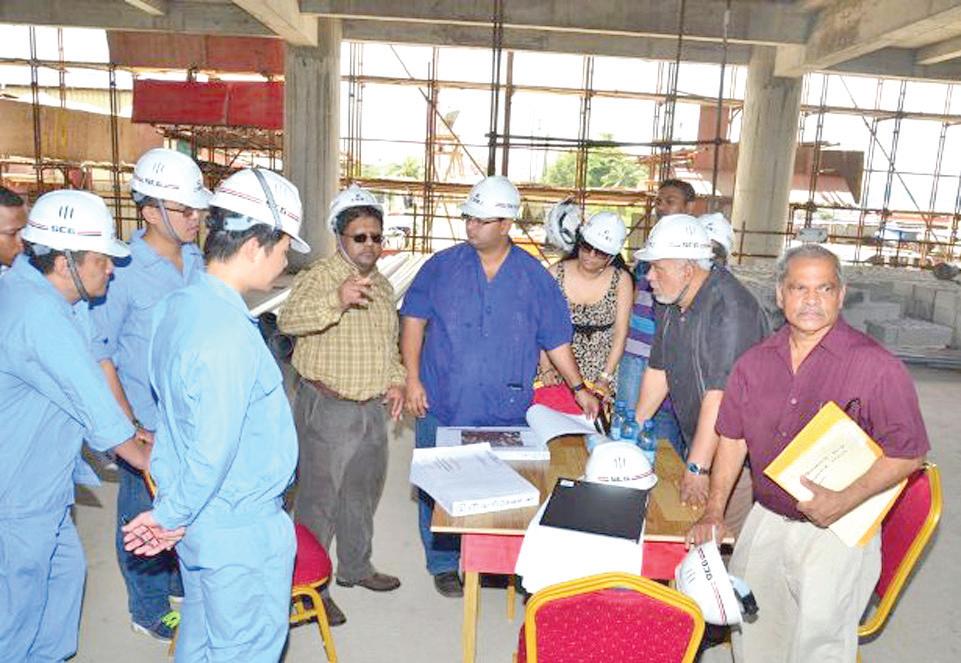
ing as possible so that we can develop our tourist industry,” the head of state said. The Marriott Hotel is on target for an August 2014 commissioning, and President Donald Ramotar said such infrastructure would go a very far way in advancing Guyana’s economic development, and improving the livelihood of Guyanese.
The Marriott will boast 197 rooms, a large ballroom, conference centre, casino, nightclub, restaurant, a concrete walkway and all other amenities of a world-class hotel.
When completed, it will provide employment for close to 500 Guyanese.
The US$51 million project was launched in 2011.
No drugs, alcohol in “Fast & Furious” star’s fatal crash – coroner
No drugs or alcohol were found in the bodies of “Fast & Furious” actor Paul Walker and his friend Roger Rodas after the fiery car crash that killed them in November, a coroner’s report released on Friday said.
The report included an early account of the accident from the Los Angeles Sheriff’s Department, dated December 1 – the day after the crash, saying the Porsche Carrera GT driven by Rodas was travelling at “an unsafe speed, approximately 100 plus mph”.
“combined effects of traumatic and thermal injuries”, and Rodas from “multiple traumatic injuries”, the report said.
Walker was in the process of filming “Fast & Furious 7” at the time and production was halted a few days later.
One experienced cook; one female bartender with experience in making cocktails; two waitresses. Contact Accomplished Restaurant & Bar. Lot 9 W ½ Lamaha Street or call 684-5976 or 684-3371
Call 611-1018. Handy man to do store runs and to and basic cleaning. Apply to Guyana Variety Store Tel: 227-3939 Body work man to spray motor cycles. Apply in person Guyana Variety Store Tel: 227-3939

Both Walker, 40, and Rodas, 38, tested negative for alcohol, and drugs including cocaine, opiates and marijuana were not detected, said the report from the Los Angeles County coroner’s office.
But a sheriff’s spokeswoman said the investigation into the accident has not been completed and there was no definitive finding on the car’s speed.
Both deaths were ruled accidents. Walker died from
Universal Pictures said last month that the release of the seventh instalment in the highly lucrative franchise would be pushed back by nine months to April 2015. Walker will appear in the film. (Reuters)

Paul Walker
Alicia Keys and BlackBerry Limited will cut ties at the end of January, just one year after the Grammy-winning singer songwriter was hired as a “global creative director” for the struggling smartphone maker.
The Canadian company on Thursday confirmed the singer’s upcoming departure. The move comes as BlackBerry retreats from the consumer market to focus on
businesses, governments and other large organisations.
“BlackBerry and Alicia Keys have completed our year-long collaboration,” the company said in an emailed statement. “We have enjoyed the opportunity to work with such an incredibly talented and passionate individual.”
Keys was hired when the company launched its longdelayed BlackBerry 10 devices in January of last year.
The new phones were
seen as BlackBerry’s last chance to win back market share lost to Apple Inc’s iPhone and devices using Google Inc’s Android technology. But sales flopped, triggering billions of dollars in losses and forcing BlackBerry to slash its staff.
In recent months the company has tried and failed to sell itself. The chief executive who hired Keys has left, along with many of his senior executives.
In her BlackBerry role, Keys contributed to a collaborative project encouraging fans to submit photographs that later appeared in music videos tied to her tour.
Shortly after taking the job, some tech blogs noted a tweet from her verified Twitter account that appeared to have been sent from an iPhone. Keys said at the time her account had been hacked. (Reuters)
Mohammad Hafeez made the most of his good batting form, and a benign pitch, to score a fluent half-century that helped Pakistan earn a comfortable draw in Abu Dhabi after being set a target of 302 from 67 overs. His 101-run stand with Ahmed Shehzad, in 31 overs, effectively closed the door on Sri Lanka after Suranga Lakmal had provided an early breakthrough.
Hafeez was unbeaten on 80 when the teams decided to shake hands, right at the start of the mandatory overs.
Hafeez may have missed out in the first innings after making a confident start, but he was in no mood to cede advantage to the bowlers here. His first boundary was a neat straight drive through midoff off Lakmal. His second was even better – as Rangana Herath tempted him with a flighted delivery, he responded by stepping out and caressing it through covers. No violence, just placement.
That was also an early statement from the batsman against Sri Lanka’s best bowler. Herath, afterall, had been instrumental in sparking a Pakistan collapse while chas-

Mohammad Hafeez broke his half-century drought
ing 168 in Galle in 2009. The pitch in Abu Dhabi, though, neutralised the Herath threat, with the grass keeping the soil bound and ensuring it was still a good surface for batting on the fifth day.
As the initial seam movement disappeared, Hafeez comfortably leaned into his drives, kept the strike rotating and ended his 12-innings long wait for a Test half-century with a couple of boundaries off Sachithra Senanayake.
Sri Lanka 1st innings 204 Pakistan 1st innings 383
Sri Lanka 2nd innings
FDM Karunaratne b Junaid Khan 24
JK Silva c †Adnan Akmal
b Junaid Khan 81
KC Sangakkara c Younis Khan
b Bilawal Bhatti 55
DPMD Jayawardene c Asad
Shafiq b Bilawal Bhatti 0
LD Chandimal c Rahat Ali
b Junaid Khan 89
AD Mathews* not out 157
HAPW Jayawardene† not out 63
Extras: (b-4, lb-7) 11
Total: (5 wickets dec; 168.3 overs) 480
Fall of wickets:1-47 (Karunaratne, 15.1 ov), 2-146 (Sangakkara, 48.6 ov), 3-150 (DPMD Jayawardene, 50.1
ov), 4-186 (Silva, 61.3 ov), 5-324 (Chandimal, 108.6 ov)
Bowling: Junaid Khan 36-393-3, Rahat Ali 38.3-9-920, Bilawal Bhatti 36-8-1462, Saeed Ajmal 49-10-115-0, Mohammad Hafeez 9-1-23-0 Pakistan 2nd innings (target: 302 runs)
Khurram Manzoor c †HAPW Jayawardene b Lakmal 8 Ahmed Shehzad lbw b Herath 55 Mohammad Hafeez not out 80 Younis Khan not out 13
Extras: (lb-1, nb-1) 2
Total: (2 wickets; 52 overs) 158
Fall of wickets: 1-24 (Khurram Manzoor, 6.3 ov), 2-125 (Ahmed Shehzad, 37.3 ov) Bowling: RAS Lakmal 13-143-1, RMS Eranga 11-0-38-0 (1-nb), HMRKB Herath 21-837-1, AD Mathews 2-0-9-0, SMSM Senanayake 5-0-30-0
A century was there for the taking and that generated some academic interest with the possibilities of a result fading, but it was not to be.
Positivity
Hafeez’s positivity had an effect on Shehzad, the debutant, too. Shehzad had been circumspect in the first few overs, then dropped the anchor while Hafeez made all the moves, before opening up against Angelo Mathews with an on-the-up drive through the covers.
He registered his first half-century off the last ball of the second session, but was trapped lbw by Herath early in the last session. There were no surprises thereafter as Younis Khan and Hafeez saw off the last few overs with ease.
Herath bowled 21 of the 52 overs by Sri Lanka but returned with just one wicket, highlighting the plight of bowlers on a strange pitch that refused to respond. His ineffectiveness mirrored Saeed Ajmal’s, who had gone wicketless in 49 second-innings overs, as only three wickets went down in the last two days.
With the batsmen appearing in no trouble whatsoever, Sri Lanka would have wondered about the timing
of their declaration. The focus on the fifth morning was on what approach Sri Lanka would take. They were leading by 241 at the start of the day and with five wickets in hand, were expected to ramp up the rate to give their bowlers enough time to bowl Pakistan out. However, Angelo Mathews and Prasanna Jayawardene didn’t show any urgency for runs and quietly nibbled away at time, scoring at a rate of less than three - only 60 came in 20.3 overs.
Pakistan, who have only once chased down more than 300, weren’t in a rush either. The third new ball was available after 12 overs in the morning session but Misbah-ul-Haq chose to hold it back denying the batsmen a chance to go after the harder ball.
Prasanna Jayawardene marked his return to Test cricket after a year-long gap with his fifth Test half-century. He pulled the first ball he faced from Bilawal Bhatti - a gentle bouncer - to the fineleg boundary, also registering the century of the partnership. That was his only four of the morning as he scored just 15 runs in 62 balls until the declaration.
Lucky Mathews’ first scoring shot was a pull as well, an unconvincing one off Junaid Khan, and he was lucky that the top-edge landed short of the deep square leg fielder. But he followed it up with two boundaries with the same shot off Bhatti, his lesser pace not quite posing the same challenge as Junaid’s.
Mathews scored another brace of fours through fine leg in Junaid’s last over of his spell, but then laboured to his 150, only managing to find the boundary two more times.
Mathews, despite his reluctance to set the pace, did ensure a remarkable turnaround for Sri Lanka after they had conceded a 179-run first-innings lead. (Cricinfo)
orld number one
WRafael Nadal survived a second-set wobble to beat Gael Monfils 6-1 6-7 (5-7) 6-2 to win the Qatar Open in Doha.
The Spaniard was in inspired form in the opening set, taking it in just 23 minutes. But although Monfils led 3-0 in the second set, Nadal fought back before the Frenchman edged the tie-break.
Monfils was then broken at 1-2 in the decider and Nadal held on to win his 61st career title.
Nadal, who had struggled at times in some of his matches this week, was well on top in the first set

as Monfils looked shellshocked.
However, the Frenchman, who had looked the better player on his way to the final, upped his game from
the start of the second set with some powerful groundstrokes but saw his advantage disappear as Nadal regained his composure to get back into the match.

orld number one
WSerena Williams successfully defended her Brisbane International title with a 6-4 7-5 win over second seed Victoria Azarenka.
The 32-year-old American, who won 11 tournaments in 2013, lost her serve twice in the second set but broke back three times to triumph in 98 minutes.
It was her 14th win in 17 meetings with Azarenka, whom she beat in last year’s US Open final for her 17th Grand Slam.
The year’s first Grand Slam, the Australian Open, begins on January 13.
Williams is a five-time champion in Melbourne but has not won the title since 2010.
The straight-sets defeat of Belarusian Azarenka, 24, ex-
tended her run of successive victories to 22 and ensured she went through the tournament, in which she beat world number four Maria Sharapova in the semi-finals, without dropping a set Victory in Brisbane was the perfect start to the new year after her impressive record in 2013, in which she won 78 of her 82 matches and had a career-best run of 34 consecutive wins, which was ended by Sabine Lisicki in the fourth round at Wimbledon.
Elsewhere, Serena’s sister Venus Williams, seeking her first title for more than a year, lost 6-2 5-7 6-4 to Ana Ivanovic in the final of the ABS Classic in Auckland, ending hopes of both sisters winning a WTA title in the same week for the first time in 15 years. (BBC Sport)
New Zealand innings M Guptill c Bravo b Holder 81
J Ryder c Ramdin b Bravo 47
K Williamson c Ramdin b Best 47
R Taylor run out (Holder/ Narine) 49
Brendan McCullum c Bravo b Narine 14
C Anderson not out 17
L Ronchi b Bravo 9
Nathan McCullum not out 9
Total: (for 6 wickets; 50 overs) 285
Extras: (5-lb, 6-w, 1-nb) 12
Fall of wickets: 1-56 (Ryder, 14.2 ov), 2-144 (Williamson, 31.4 ov), 3-203 (Guptill, 41.4 ov), 4-232 (BB McCullum, 44.2 ov), 5-253 (Taylor, 46.5 ov), 6-267 (Ronchi, 48.5 ov)
Bowling: J Holder 10-2-581, T Best 9-0-70-1, Dwayne Bravo 7-0-35-2, N Miller 100-47-0, S Narine 10-0-471, N Deonarine 4-0-23-0
But in the tie-break, a misplaced lob by Nadal gave Monfils a 4-2 advantage and he held onto that lead to force a decider.
After the excitement of the second set, the third set failed to live up to expectations and a Monfils error, when a forehand went long, put Nadal 3-1 up.
Nadal saved four break points in the next game and from then on he did enough to win his first title in Doha and give him the perfect boost ahead of the Australian Open, which starts on January 13.
It is also the first time the 27-year-old has won his opening tournament of the year. (BBC Sport)
Williamson used his feet adeptly, regularly moving across the stumps to manoeuvre the ball around.
By the time Williamson was dismissed in the 32nd over, top-edging a pull to the keeper, New Zealand had moved to 144-2, setting the stage for the lengthy list of power-hitters to follow. Ross Taylor & Co. weren’t at their absolute best but had the freedom to swing the bat around without worrying about the wickets column, which led to 92 being scored in the final 10 overs.
West Indies’ chase began with Walton’s run-out in the first over, and took another hit when the other opener, Johnson Charles, also fell
West Indies innings (target: 286) C Walton run out (Williamson/Ronchi) 0 J Charles c Southee b McClenaghan 0 K Edwards run out (B McCullum/Ronchi) 24 L Simmons c Guptill b Williamson 43 Dwayne Bravo not out 43 N Deonarine c Mills b N McCullum 3 D Ramdin not out 17
Total: (for 5 wickets; 33.4 overs) 134
Extras: (3-lb, 1-w) 4 Fall of wickets: 1-0 (Walton, 0.4 ov), 2-2 (Charles, 3.4 ov), 3-62 (Edwards, 14.3 ov), 4-83 (Simmons, 21.4 ov), 5-92 (Deonarine, 24.5 ov) Bowling: T Southee 5-1-21-0, M McClenaghan 6.4-1-30-1, K Mills 2-0-10-0, C Anderson 2-010-0, Nathan McCullum 10-030-1, K Williamson 8-0-30-1
for a duck, flicking to fine leg. Simmons and Kirk Edwards briefly kept West Indies in it, but Edwards’ run-out sucked the momentum out of the chase.
With a drizzle arriving around the 15th over, New Zealand turned to their spinners to quickly get through to the 20-over point. They hastened the speed of the game, but lowered the pace of scoring and when Simmons holed out to midwicket for 43 in the 22nd over, the chase was essentially lost. West Indies pottered around for 12 more overs, before the rain became heavy enough to quicken what would have been a drawn-out defeat.
(Cricinfo)
England plumbed new depths even for this bleak Ashes tour as they staggered to 23-5 and then 155 all out before Australia’s batsmen built an intimidating lead in the fifth Test.
England’s bowlers reduced the hosts to 140-4 in the final session in Sydney but, with a deficit of 311 and counting, the damage had been done as a 5-0 Ashes whitewash moves closer.
England lost captain Alastair Cook to the second ball of the day, and three more batsmen before the first hour was up, as their lowest score against Australia - 45 at this ground 127 years ago - looked under threat.
That unwanted record was avoided but ignominy was not as an Australia side which had been 97-5 just 24 hours earlier took a first-innings lead of 171.
Horrors England’s day was only minutes old when the horrors began, Cook leaving an inswinger from Ryan Harris to be plumb lbw.
Ian Bell should have gone to the next ball only for Shane Watson to drop a straightforward chance at first slip, but nightwatchman James Anderson followed shortly afterwards when he edged Mitchell Johnson to a diving Michael Clarke at second slip.
A score of 14-3 became 17-4 when Kevin Pietersen pushed out with hard hands at Harris to be safely held by Watson, and Bell - after taking 42 minutes to get off the mark - completed the hour of woe when Peter Siddle produced a beauty to take the outside edge.
With a target of 127 to avoid the follow-on, there

Johnson was
on target during the final Test
was the genuine prospect the match could be over within two days.
Ben Stokes, taker of six wickets in Australia’s first-innings 326 and almost the sole sunbeam in a winter of unremitting gloom for England, triggered ironic cheers when he became the first batsman of the top seven to reach double figures.
Debutant Gary Ballance followed suit despite being struck flush on the helmet grille by Johnson, but when Nathan Lyon found turn and bounce to have him caught behind for 18, England had only managed to limp to 62-6.
Resistance
The determined Stokes provided dogged resistance to add 49 for the eighth wicket with Jonny Bairstow.
But the wicketkeeper poked a poor drive to short mid-on the ball after George Bailey had been placed there to fall for 18, and Stokes followed five balls later when he shouldered arms to have his off stump knocked back by
Siddle for a plucky 47.
Debutant Scott Borthwick edged a wide one to third slip for one and, while Stuart Broad clouted an unbeaten 30 in company with Boyd Rankin, who made 13, it was token stuff.
Johnson, Harris and
Siddle ended with three wickets apiece, a fitting reflection of the strength and depth of this Australia bowling unit.
Anderson got rid of David Warner lbw for 16 with a clever piece of bowling from round the wicket and had Watson caught behind for nine as England’s seamers toiled in the warm evening.
Broad did well to have Clarke caught behind for six and Stokes saw Smith edge a good ball to Cook at first slip, but Chris Rogers compiled another diligent half century, including seven off a single shot thanks to four careless overthrows from Bairstow.
Bailey gave fortuitous support to end on 20 not out as Rogers made an unbeaten 73.
With the highest fourthinnings run-chase on this ground 288 and England’s batting in disarray, Australia remain green-and-gold favourites to seal their fifth crushing victory of the series.
Australia 1st innings 326
England 1st innings
Cook lbw b Harris 7
Carberry c Lyon b Johnson 0
Anderson c Clarke b Johnson 7
Bell c Haddin b Siddle 2
Pietersen c Watson b Harris 3
Ballance c Haddin b Lyon 18
Stokes b Siddle 47
Bairstow c Bailey b Siddle 18
Borthwick c Smith b Harris 1
Broad not out 30
Rankin b Johnson 13
Extras: (3-nb, 5-w, 1-lb) 9
Total: (all out; 58.5 overs) 155
Bowling: Harris 14-5-363, Johnson 13.5-3-33-3, Siddle 13-4-23-3, Watson
3-1-5-0, Lyon 15-3-57-1
Fall of wickets: 6 (Carberry),
8 (Cook), 14 (Anderson), 17 (Pietersen), 23 (Bell), 62 (Balance), 111 (Bairstow), 112 (Stokes), 125 (Borthwick), 155 (Rankin)
Australia 2nd innings
Rogers not out 73
Warner lbw b Anderson 16
Watson c Bairstow b Anderson 9
Clarke c Bairstow b Broad 6
Smith c Cook b Stokes 7
Bailey not out 20
Extras:(9-lb) 9
Total: (for 4 wickets; 30 overs) 140
Bowling: Anderson 10-4-362, Broad 7-1-26-1, Rankin 6-0-25-0, Stokes 5-0-361, Borthwick 2-0-8-0
Fall of wickets: 27 (Warner), 47 (Watson), 72 (Clarke), 91 (Smith)
Manchester City survived a scare at Ewood Park as they hung on for a replay against Championship side Blackburn Rovers in a pulsating FA Cup clash, which ended 1-1.
Last year’s beaten finalists looked on course to reach the fourth round when Alvaro Negredo fired them into the lead before half-time.
But Scott Dann deservedly levelled for Rovers and City had to play a nervous last nine minutes, including stoppage time, with 10 men after defender Dedryck Boyata was sent off for his second booking near the end.
A replay was probably not on the wish-list before kick-off for City boss

The game ended in a 1-1 draw
Manuel Pellegrini, who already has a crowded fixture list in January that includes both legs of his side’s
Capital One Cup semi-final with West Ham.
But he will be grateful to still be in the draw for

Michael Schumacher
F1 legend Michael Schumacher’s manager has warned about “invalid” health reports, after one was quoted as saying his life was no longer at risk.
Schumacher remains “critical but stable” in hospital in Grenoble after a skiing accident.
A statement from Sabine Kehm said reports not from managers or doctors “must be treated as pure speculation.”
The statement also rejected reports a camera fixed to Schumacher’s ski helmet had not been handed over voluntarily.
The German champion, who retired in 2012, is in a medically induced coma after suffering head injuries during a fall in the resort of Meribel last Sunday.
His helmet cracked on impact when he hit a rock while skiing off-piste.
Privacy
The Sabine Kehm statement read: “Michael’s condition remains critical but stable. We would like to clearly stress that any information regarding Michael’s health not coming from the doctors treating him or from his management must be treated as invalid and pure speculation.”
“The family cares only for Michael’s health.”
On Friday, some media quoted Schumacher’s friend, former F1 driver Philippe Streiff, as saying that he had been told by the Schumacher family doctor, Gerard Saillant, that Michael’s life was no longer in danger.
the next round after seeing a spirited Blackburn side threaten what would have been a huge upset. (BBC Sport)
The Kehm statement continued: “Michael’s helmet camera was voluntarily given to the investigating au-
thorities by the family. That this should have been done against the wishes of the family is untrue.”
Investigators in France are examining the camera.
The authorities are hoping the device may reveal clues about the circumstances of the accident, although it remains unclear whether the camera was switched on at the time.
Police also interviewed Schumacher’s teenage son, who witnessed the crash.
The management statement concluded by saying: “In consultation with the doctors treating Michael, it is not expected that there will be any press conference before Monday.
“We ask you to respect the continued privacy of the family.”
Vigil
On Friday, fans held a vigil outside the French hospital treating the former champion to mark his 45th birthday, holding a one-minute silence in the afternoon.
Schumacher has had two operations to remove blood and pressure from his brain.
Doctors have ruled out giving a prognosis for his condition in the coming days and months.
But it is medically possible for someone to spend several weeks in an induced coma and make a full recovery.
Michael Schumacher won seven world championships and secured 91 race victories during his 19-year career.
The driver won two titles with Benetton, in 1994 and 1995, before switching to Ferrari in 1996 and going on to win five straight titles from 2000. (BBC Sport)
By Rajiv Bisnauth
It is largely a year filled with disappointment for Guyana’s cricket both on and off the field.
Had it not been the return of international cricket after a two-year absence, and the performance of the franchise team, Guyana Amazon Warriors, which finished runners-up, the inaugural Limacol Caribbean Premier League (LCPL) T20 tournament and veteran West Indies batsman Shivnarine Chanderpaul’s achievements, it could largely be a year best forgotten.
There were clashes with officials who found themselves frequently at the courts. This was coupled with election worries and conflicts of interest.
While on the field, apart from one extraordinary individual performance, the respective cricket teams failed tremendously.
In part one of the reviews,
Guyana Times Sport looks at the off field matters which have definitely placed local cricket in an even more perilous state.
Boards At the level of the officials vying for control of the board, it is really a matter of the right to rule. Whatever nobler motives they may proffer, we have seen enough to conclude with considerable justification that the whole affair was no more than an unseemly power struggle.
It had little if anything at all to do with salvaging local cricket from the quagmire into which it has sunk.
The year started off with an administrative rift between county boards and the local governing body for cricket.
Unfortunately, the situation remains the same at the
end of 2013. It further deteriorates with the elections of the Demerara Cricket Board (DCB) and subsequently the Guyana Cricket Board (GCB).
However, the sad news is that anonymity continues to hover over the identity of those persons who were reportedly elected to serve.
To date, the board has failed to reveal the identities of those who have been given the mandate of running the entity that has been the centre of public concern.
The board had told Guyana Times Sport in September that the decision not to release the names is not a clandestine move to keep the public in the dark, but rather it is linked to several pending court cases.
Elections
Observers say that elections were held so as to ensure that there was some amount of validity to the GCB elections and so that there could have been a quorum to facilitate the local governing body’s elections.
The Essequibo Cricket Board (ECB) was the other board that voted at the GCB Annual General Meeting (AGM).
The Berbice Cricket Board (BCB) did not participate in the elections after they claimed that the board had not received any official notification from the GCB with respect to the AGM and elections.
This sparked more controversy, despite the fact that the election was witnessed by two directors of the West Indies Cricket Board (WICB).
The Guyana government back in February had condemned the WICB for sending two directors to witness recent general elections of the GCB.
Head of the Presidential
Secretariat and Cabinet Secretary, Dr Roger Luncheon accused the WICB of disregarding the ruling of the High Court, which had issued an injunction, stopping the elections from taking place.
Endorsement
Further, the WICB endorsed the current GCB as the administrators of cricket in Guyana and slammed the Cricket Administration Bill currently before Parliament.
While expressing the need to see the game being managed in a proper way, the WICB clearly stated that it cannot support the dissolution of the existing GCB. They also expressed concern over aspects of the new constitution drafted during the process.
The WICB, while not wanting to dictate constitutional reform of any of its members, wants any changes in the running of any member

organisation be done in the proper way, following its laws and that of its parent body, the International Cricket Council (ICC), which is against government involvement and dictates in the sport.
The GCB said the aim is to have all the county boards coming together for one common aim – that of getting Guyana’s cricket to where it belongs.
Further, it said school cricket is also high on the agenda. However, an entire year has passed and not muchwas done.
The Guyana Court of Appeal unanimously upheld the appeal filed by the GCB and instructed the initial trial judge, acting Chief Justice Ian Chang, to issue the order nisi sought by the cricket board to quash the decision to disband the GCB.
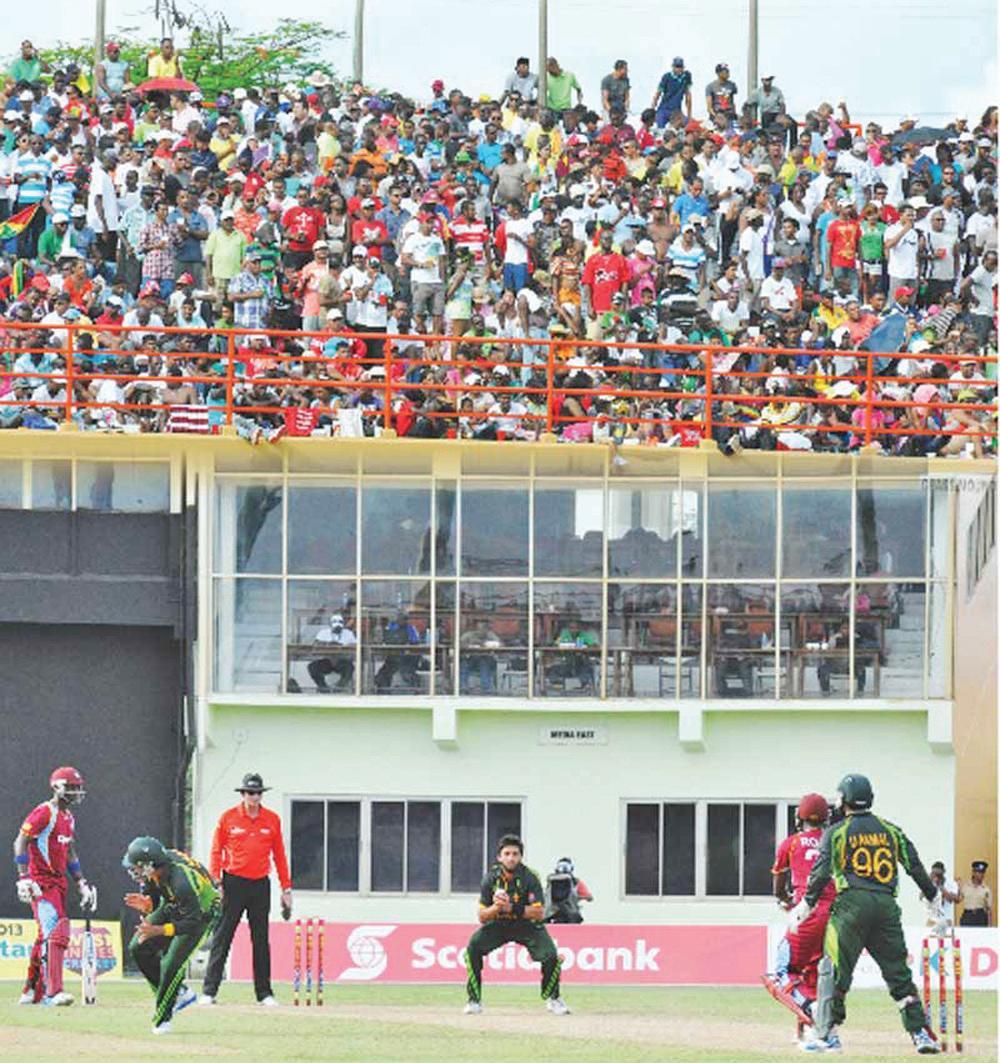
Acting Chancellor Carl Singh said the court also made short thrift of another decision by Justice Chang in another case, which was to the effect that the GCB was a legal non-entity and could not bring legal proceedings.
The Court of Appeal agreed that the GCB was a private entity which received no government funding to carry out its objectives.
The Court of Appeal further ruled that the GCB could lawfully institute the proceedings which was before the court and was entitled to be heard.
International cricket Guyana hosted the first two One Day Internationals between Pakistan and the West Indies on July 14 and 16.
Prior to those two games, Guyana had not hosted international matches in close to two years as a result of the dispute between the GCB and the government of Guyana following the body's controversial elections in 2011.
The last international game played here was between the same opponents on May 5, 2011.
The second reading of the Cricket Administration Bill that would seek to establish the GCB and county boards as corporate bodies was on November 8 deferred.
The bill was listed on the Order Paper for its second reading when the 63rd sitting of the National Assembly of the 10th Parliament reconvened.
The bill was tabled by government last December in a bid to end the impasse over the national game. It provides constitutions for the GCB, the Demerara, Berbice and the Essequibo cricket boards and is divided into five parts, with one schedule giving respective boards the powers to effectively manage the affairs of local cricket.
The bill was the subject of much discussion by critical stakeholders within the cricketing fraternity, and was reviewed by a Special Select Committee of the National Assembly.
The Special Select Committee comprises four members of the A Partnership for National Unity (APNU), one member from the Alliance For Change (AFC) and four members of the ruling People’s Progressive Party/ Civic (PPP/C).
The members of the select committee are Christopher Jones, Joseph Harmon, Basil Williams and Dr Rupert Roopnarine of APNU; Kemraj Ramjattan of the AFC; and Odinga Lumumba, Attorney General Anil Nandlall, Sport Minister, Dr Frank Anthony and Neil Kumar for the government.
Cricket bill petition
Subsequently, on December 12, the political opposition again showed their disregard for the public’s voice, denying sections of the public their right to petition, and to be heard in the National Assembly.
The opposition voted
against a petition presented by government on behalf of the constituent members and stakeholders of cricket, which requested that the National Assembly expedite the passage of the Guyana Cricket Administration Bill 2012, Bill Number 31 of 2012.
The petitioners, who numbered more than 30, said that they were convinced that expediting the bill was the only solution to resolve the cricket crisis, and to preclude the possibility of cricket being used as a conduit for laundering money.
Even before the petition was formally put to the House, Williams, objected to it being admitted and claimed that not only did it violate the Standing Orders with its language, but that the officials named are not in the House to represent themselves and further the matter is before the courts.
In the petition, it is argued
that there is no legitimate executive committee of the GCB and charged further that the assets, including funds of the GCB and the assets of the DCB, have been transferred to private individuals without authorisation.
The petitions argued also that there is an apparent collusion between the WICB and the GCB.
In the end, the motion was read, and following dissention, it was put to the vote with 32 for and 32 against and was therefore not carried.
Cricket had its demons in 2013, which manifested itself in the division among cricket officials, much to the detriment of the game and fans.
One hopes that this new year will bring positive changes and our cricket administration and team will once again be a force to be reckoned with.
Organisers of the Rising Sun Turf Club have rescheduled today’s one-day horse race meet to February 23. The race meet was slated to be held at the club’s track, Arima Park, West Coast Berbice, from 12:30 hours, but recent rainfall left the venue in a waterlogged state, leaving the organisers with no choice but to postpone the event.
poned due to the inclement weather.
Meanwhile, the Kennard Memorial Turf Club Boxing Day horse race meet has now been set for January 26 at Bush Lot Farm, Corentyne, Berbice. It was slated for January 19 after the original Boxing Day meet was post-
The organisers indicated that entries will be closed on January 19. No late entries will be accepted.
President of the KMTC, Cecil Kennard, told this publication on Saturday that there will be no changes from the original programme.
Eight races are billed for the day with over $9 million in prizes to be distributed. The feature race will run for a mile for a top prize of $1.5 million.
Other events billed for the day are the D3 maiden and E Lower for $600,000 over seven furlongs; the Threeold West Indies bred maiden
and Guyana bred open for a $600,000 winner’s purse.
The J3 and K, G1 and Lower, Two-year-old Guyana and West Indies bred and J1 and Lower races will run at a distance of six furlongs. The winning purses for those four races are $150,000, $400,000, $400,000 and $200,000 respectively.
Rounding out the roster is the I and Lower over seven furlongs with the winner collecting $250,000. The race is being conducted under the rules of the Guyana Horse Racing Authority (GHRA) and, according to Kennard, the rules of the local governing body would be rigidly enforced.
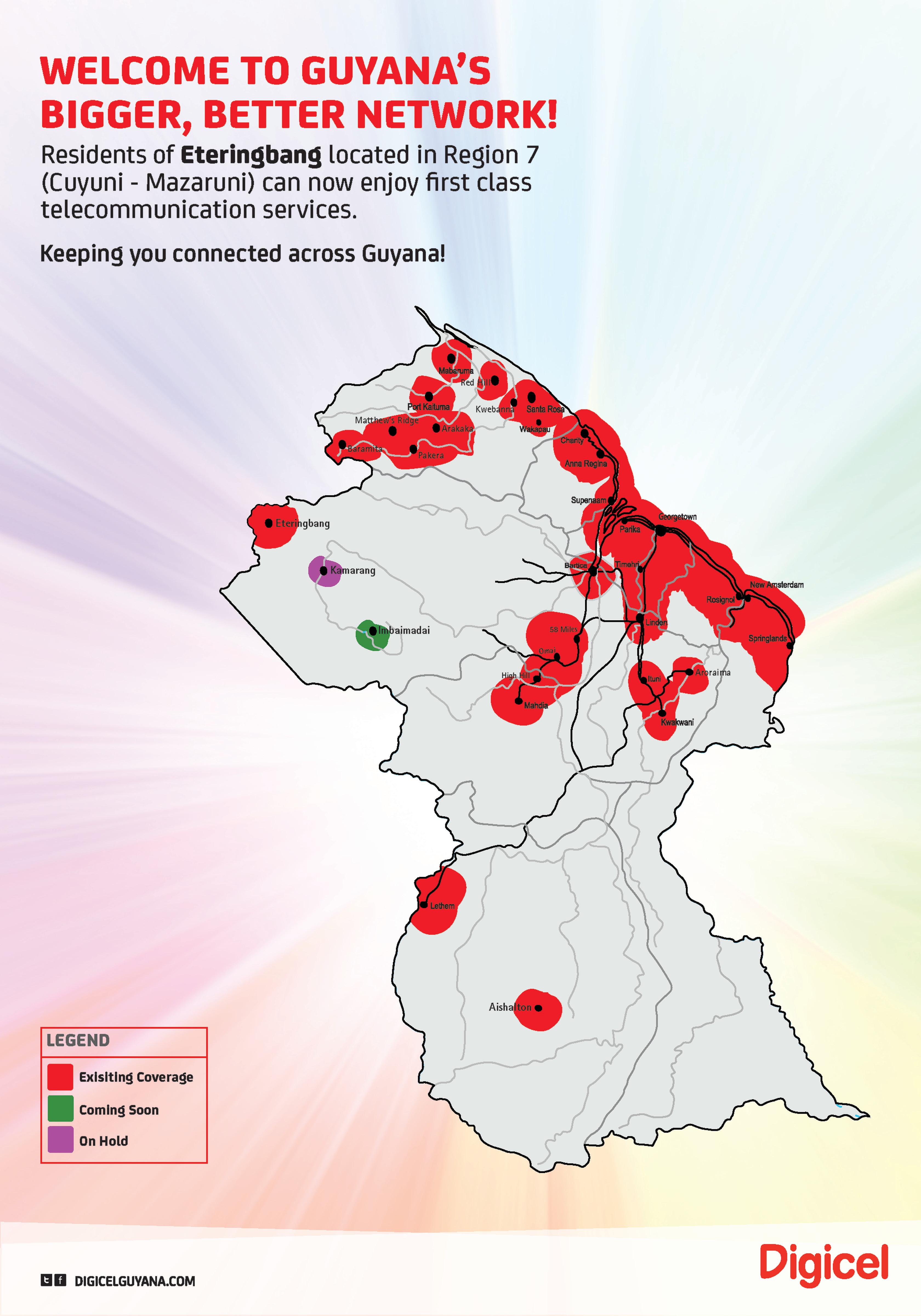



Worries over the weather spoiling the first ever ODI in Nelson were eased when the sell-out crowd was greeted by blue skies and bright sunshine on Saturday morning. The rain did arrive, but only after the match was well out of West Indies’ reach and ended up curtailing a massive mismatch, the sort of ODI which cries out for shortening.
New Zealand finished on 285, two more than what they plundered in Queenstown, though this time they had the full 50 overs and produced a more conventionally paced innings. It was a combined effort from New Zealand’s batsmen, with each of the top four making 47 or more, though only Martin Guptill went on to a half-century, top scoring with 81.
It’s hard to see how an injury-hit West Indies squad could compete in this series. They already have a lengthy list of sidelined players, and there was an addition when Ravi Rampaul was ruled out with a finger injury. That meant the visitors are without at least six first-choice players and were down to 12 available players.
While the bowling, at least, is of international standard, the current batting does not measure up. Chadwick Walton, a man with a List A batting average of 16, opened the innings and was promptly run-out for a duck in the first over. Even with Walton absurdly high in the order, Dwayne Bravo came out at No. 5 - at least one, and possibly two, spots higher than he would in a strong
line-up. Lendl Simmons is the only player with an average above 30, and the rest of the specialist batsmen have little international experience.
It was two of their most experienced players, however, who put down two sitters off Jesse Ryder early in the innings, Jason Holder the unlucky bowler on both occasions. First, Denesh Ramdin somehow missed the most straightforward of chances for a wicketkeeper and a couple of overs later, the captain Bravo - on his day, one of the most electric fielders in the world - let through a simple chance above shoulder height at slip.
Even with those basic fielding mistakes, West Indies did a reasonable job early on. Holder gave nothing away, conceding only nine off his fiveover spell, including two maidens to a struggling Guptill, who plodded to 2 off 29 deliveries as he searched for form.
At the other end, Tino Best was mostly wayward, and received some punishment from Ryder, who played a range of flamboyant strokes in a chance-filled 47 at nearly a run-a-ball.
Guptill started to grow in confidence after spending time in the middle, and the release finally came when he pummelled Bravo over longoff for a six in the 17th over. He had been eight off 40 before that shot. With the spinners coming on, Guptill and new batsman Kane Williamson worked the bowling to score above five an over without taking much risk.
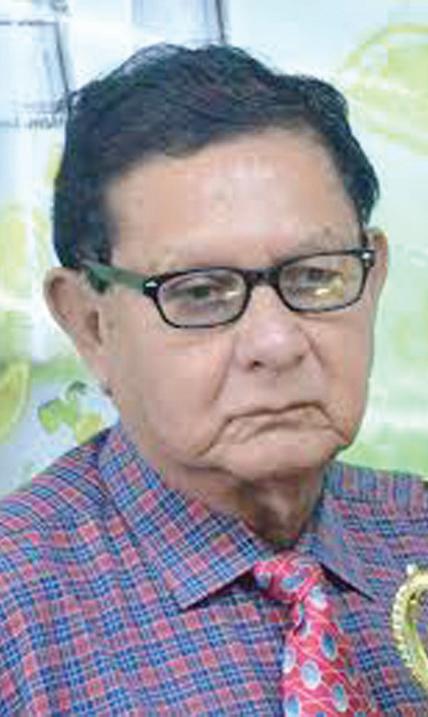



With the centre set to open this year, the minister envisions the resource centre becoming an institute of higher learning in the field of sport where athletes and coaches can qualify themselves.
“Eventually what we want to
create an institute of sports which is very important, because I think a lot of people look at Jamaica and think of the success that Jamaica has had in the area of sport, but they [Jamaica] have been providing systematic training for people
in the area of sports.
“So they have a school where people go to school and all they’re taught is sports; we see this institution that we are starting here as a resource centre growing and evolving into an institute of sport where they can have a certificate, a diploma and eventually Bachelor's degree,” Dr Anthony revealed at the media briefing.
However, the minister provided the immediate goals for the resource centre once it is open to the sporting fraternity.
“The intention here is that we want to provide a space where national associations can meet where we can have regular educational sessions because we feel that we need to educate people on the various sporting disciplines.
"Sports is not just as a lot of people feel that it’s just a simple recreational thing, it’s a very scientific thing and we need to educate people in this direction. That facility which is based in Woolford Avenue would be utilised to teach sports per say,” Dr Anthony noted.
Meanwhile, the resource centre will boast a library, computers with internet access and classrooms for training sessions. According to Dr Anthony, the facility will be opened “soon”.