



“There
is no clash between cultures,” ISESCO director general says See story on page 15

APNU confines Kissoon to backbench with no explanation Bourda shopkeeper wanted for cocaine in achar Rice industry pioneer Kayman Sankar dies Region 10 unveils Mash plans House approves new constituency for ERC



The National Assembly on Monday evening cleared a motion to add a new representative group to the structure of the Ethnic Relations Commission (ERC). Both sides of the House voted to have the motion passed and praised the work of the appointive committee, headed by Dr George Norton. The new group will be referred to as Culture/Ethnic. Its three nominal representatives from the three main eth-
nic groups – Indian, African and Amerindian – will be made from a list of nominees of 183 non-governmental organisations (NGOs) working in ethnic and religious areas. The three nominees will be elected to serve on the ERC, through the National Assembly. The ERC had comprised representatives from seven different constituencies – the three main religions (Hinduism, Islam and Christianity); labour; the pri-
vate sector; youth; and women affairs organisations. The number of commissioners for the ERC will now move from seven to 10.
In presenting the motion to the House, Dr Norton said that the committee worked tirelessly to come to the conclusion that a new group should be added to the organisation’s structure. He said that committee was tasked with identifying, consulting and receiving nominations of
appropriate bodies for the appointment of various members of the ERC. The committee was also tasked with recommending to the House, a consensual mechanism for the appointment of members of the ERC. The decision to create this new group was birthed from this.
People’s Progressive Party/ Civic (PPP/C) frontbencher and Agriculture Minister, Dr Leslie Ramsammy, in his contribution, said the govern-



ment supports the motion. Dr Ramsammy, who once served as a member of the appointive committee, said that he was pleased with the progress made, especially since it opened up avenues for more NGOs to participate.
However, he urged that the committee should work assiduously to meet with the organisations, to have their nominees and later have the new persons appointed.
PPP/C Chief Whip Gail Teixeira, herself a former committee member, said she supported the change in the structure of the ERC. Teixeira noted that while the inclusion of many organisations was a great step, the fact that the committee also sought to add credible NGOs was an even greater achievement.
She, too, urged the committee to work fast to have the persons nominated, so that the work of the ERC can continue. She believes that all the work put in to have the ERC operational is a move in the right direction.
She added that she hoped that the 10th parliament would be different from previous ones, pointing out that during the Eighth and Ninth parliaments, monies for the ERC were blocked.
She also urged the committee chairman to ensure that the committee works to better other commissions such as the Women and Gender Equality Commission, Rights of the Child Commission, and the Local Government Commission.
Alliance For Change (AFC) MP Valerie Garrido-
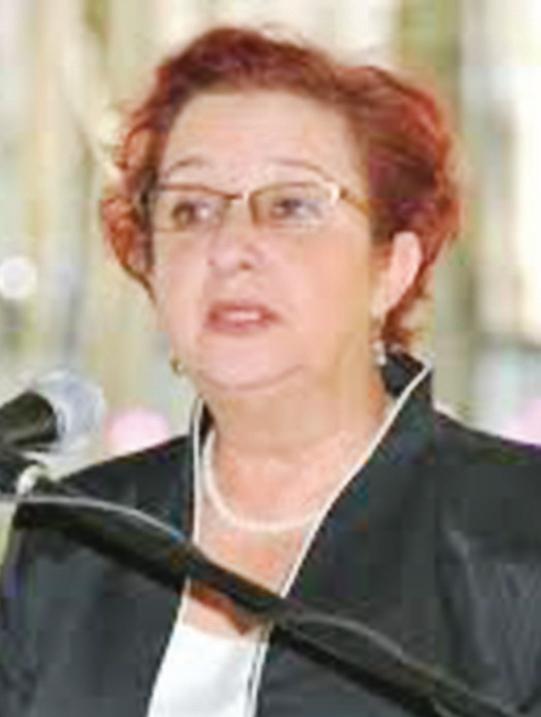
Lowe, in her contribution, stated her party’s support for the motion.
The AFC MP explained that the task of the committee was a tedious one. She explained that hundreds of letters were sent out to various NGOs, to ascertain whether they were active or not and to get feedback on the creation of the new Culture/ Ethnic group.
Garrido-Lowe said the response from most of the NGOs were slow, which contributed to the committee taking a lengthy time to complete its tasks.
The AFC MP further said Guyana is known to have six races, but the mixed offspring of interethnic unions should be recognised as a separate race. The AFC MP said all of these groups are Guyanese and, therefore, should have some representation.
The ERC, a constitutional body established under the Herdmanston Accord, has been functioning without commissioners and a chairman for some time. While staff is attached to the commission, there is little known about the work they have been doing.
The opposition, during the 2012 and 2013 national budget debates, had cut funding for the constitutional body, but this was later restored through a court order. It works with persons and agencies to promote harmonious ethnic relations.
The commission also deals with complaints, promotes training in racial harmony, and fosters a sense of security among all ethnic groups.


On Monday, it was the Organisation of American States (OAS); on Tuesday, it was the Caricom Community –all calling on Guyana’s legislators to pass the amended Anti-Money Laundering and Countering the Financing of Terrorism (AML/CFT) Bill as the country faces further sanctions internationally.







In a statement issued from its Liliendaal-based secretariat, Caricom said it was concerned by the continuing delay in Guyana’s progress towards implementing recommendations to address deficiencies in its anti-money laundering regime.
Actions
“Caricom calls on all parties involved in the process to take all necessary actions without further delay to have the necessary reforms implemented.” The regional grouping said it remained deeply concerned that failure to pass the bill in Parliament could result in action by the Caribbean Financial Action Task Force (CFATF), which could have an adverse impact on the Guyanese economy and by extension, the Caricom region as a whole.
“Any action that reduces the ease or increases the cost of processing international financial or trade transactions will adversely affect trade and financial flows in the region, retard the regional integration enterprise, limit the opportunities for growth in Guyana and the region, and result in hardship for the people of Guyana . Caricom, therefore, urges that this matter be speedily resolved, by enacting the relevant legislation, in the interest of the people of Guyana and the community.”
On Monday, the OAS
struck a similar tone with its secretary general, José Miguel Insulza, calling for the timely approval of the bill, which he said would bring the country up to standard on these matters.
The secretary general, who has been following related events in Guyana, noted the legislation would make the country compliant with the requirements of the CFATF, thus preventing unnecessary damage to the nation’s financial stature.
“The secretary general, therefore, calls upon the political parties and other stakeholders to exercise cooperation and understanding in bringing this issue to closure,” the OAS said in a statement.
Insulza mentioned that democracy and good governance are hallmarks of the organisation and, therefore, “the OAS stands ready to support the Guyanese authorities in their pursuit of political dialogue and consensus building, especially on matters of national importance”. Further, he offered the cooperation and the support of the OAS, through the Inter-American Drug Abuse Control Commission (CICAD), to the process that is currently under way in the Parliament of Guyana.

The critical amendments to the current Anti-Money Laundering and Countering of the Financing of Terrorism (AML/CFT) Act are needed to make Guyana compliant with its international obligations. However, with the country’s blacklisting by the Financial Action Task Force (FATF) looming, the bill is said to be “on pause”.
Government’s chief whip, Gail Teixeira, who chairs the parliamentary special select committee considering the amendments, said the government’s best efforts to bring the substantive amendments, to which no objections were raised, for consideration were rejected on Monday.
“We are now on pause for 24 hours or 48 hours,” she said, during an interview with Guyana Times. She explained that the opposition voted down a motion proposed by the government to ensure that the February 13 deadline of CFATF is met.
Teixeira argued that the government members of the committee had even proposed that the amendments and recommendations made by A Partnership for National Unity (APNU) on Sunday at the eleventh hour be brought as the subject of another bill to the House after they were fully considered by the committee. She pointed out that these amendments, which were not within the committee’s remit, were badly articulated and drafted. “In some cases, they are conflict-
ing with the principal act and are clashing with each other,” she explained. The draftsmen attached to the Legal Affairs Ministry could not have completed work on the amendments proposed by the opposition by the time the committee was scheduled to meet on Monday at noon.
Only last Friday, western diplomats here said they welcomed the willingness demonstrated by all parties to move Guyana toward compliance with international AML/CFT standards, including updated legislation and enhanced investigative capacity.
“To that end, we have met with all stakeholders, including those from government, opposition, civil society, and the private sector on many occasions since 2012. Our governments are, and will continue to be, actively engaged to support effective implementation of AML/CFT legislation and prosecution of money launderers and financers of terrorism. We encourage all stakeholders to work together to finalise AML/CFT legislation and ensure its effective implementation in order to prevent and combat money laundering and terrorist financing, as well as to avoid the serious consequences that would arise from blacklisting by the FATF.”



Editor: Nigel Williams
Tel: 225-5128, 231-0397, 226-9921, 226-2102, 223-7230 or 223-7231. Fax: 225-5134
Mailing address: 238 Camp & Quamina Streets, Georgetown
Email: news@guyanatimesgy.com, sales@guyanatimesgy.com
Even though the Financial Action Task Force (FATF) might be imposing sanctions on us for not complying with their directives on controlling our financial flows that might possibly be used for money laundering or the financing of terrorism, we are really in the backwaters of world finance when it comes to “real” money. And at this time it might just be a blessing.
With the financial system of most countries liberalised during the last three decades, under the ministrations of the International Monetary Fund (IMF) and its “Washington Consensus” free market fundamentalist approach, capital amounting to billions, and conceivably trillions, can now move quite seamlessly and at the click of a computer mouse between countries. The theory, of course, is that this is a good thing, since the money would be seeking greater yields and the latter would be a consequence of better economic performances.
That was the theory. In practice, it bumped up against the urge to make profits through speculation and the attendant “animal spirits”, as John Maynard Keynes called it. In the 1990s, for instance, vast sums of money from western banks flowed into the booming economies of Far East Asia, including Malaysia, Korea and Thailand, etc.
The economies boomed even more vigorously and everybody was happy. Until, that is, it appeared to some that the boom might be slowing down. The money suddenly changed direction and there was nothing most of the countries could do about it, since capital controls had been abandoned under the liberalisation mantra. The IMF, presumably formed to prevent the kind of meltdown that occurred, refused to intervene and a collapse ensued.
While some countries in that region did in fact take an oath not to depend on the IMF, but to rather accumulate enough reserves to see them through bad patches, they and the rest of the liberalised world did not give enough weight to the effect policies of the U.S., which effectively issues the world’s reserve currency, can have.
These policies, designed to steady its own economy, inevitably have repercussions on other economies. The EU is another strong determinant of financial flows that could cause boom or bust financial flows. This is especially true in those countries that have been dubbed “Emerging Economies” (EM) – such as China, India, Brazil, etc.
After the financial meltdown in the U.S. and the EU in 2008, they both followed an “easy money” policy –especially the U.S. that in effect pumped vast amounts of money into the financial system. This policy of the U.S. Fed was known as “Quantitative Easing” (QE). This policy had two interrelated effects: it forced interest rates to the floor – effectively below zero in some instances – and so encouraged investments abroad into the emerging markets. All would have been well if the money had been directed into concrete productive investments, but as in the the previous East Asian fiasco, much of it was speculative.
After a bit of clearing of its institutional throat, which sent strong signals that financial volatility was a certainty through manipulation of QE, the Fed in late 2013, declared it would “taper” or decrease the easy money QE policy. And in the last six weeks we have had what amounts to a repetition of the East Asian crisis in the EM. Cumulative outflows totalled $33.3 billion over the past 15 weeks, with China (-US$1.14 billion), India (-US$0.64 billion), Brazil (-US0.63 billion) and Russia (-US$0.60 billlion) reporting the largest outflows just last week.
While there has been a great deal of talk of the BRICS economies and other EMs “stumbling” recently, the role of the Fed with its “QE taper” has not received the attention it deserves as a partial cause of that weakness.
The lesson for us in Guyana, for the day when our financial markets might attract “hot money”, is that we cannot ignore the need to have a judicious amount of capital controls. Even the IMF concedes this today.



Govt has kept its part of the bargain; citizens of Lethem should do no less
Dear Editor,
There is the question if the government subsidises, how should it subsidise? If you think of it, if the unit rate is subsidised by, say, one-third, then a large household or commercial operation that takes, say, 500 or 1000 or more units, is enjoying a subsidy that is, in quantity, 10, 20 or more times the subsidy to the 50 units which a low-income household may take. There are arguments that if there is to be subsidy, it could be better in the form of a smallor no-charge on the first 10 to 30 kWh consumed. In that way, each and every consumer enjoys an equal quantity of subsidy.
Hence, our position in these small hinterland locations, being aware that many households are not yet into a regular cash-economy, is to provide the first 15 kWh at absolutely no charge. This could be compared to the approximate 9 kWh for households, with the 65-watt photo-voltaic systems. Also, 15 kWh, at a price of $100 per kWh, is a grant of $ 1500 per month, $18,000 per year, and a bit more, as explained before.
This grant of $18,000 (and more) each year, is enjoyed by every customer, and compares well with the $20,000 assistance, each year, granted to all old-age pensioners on the GPL grid, in whose name the meter is listed.
Note that, in Lethem, households which choose to burn more electricity than the no-charge 15 kWh base, say 30, 45, or 60
kWh/month, would be billed $1500, $3000, or $4500 per month, at average costs of $50, $67 and $75 per kWh, respectively.
This is the situation with the large majority of consumers. On the question of being fair to large consumers, it should be kept in mind that they too enjoy the initial grant, and also the subsidy that remains even at $100 per kWh.
They have the right, in law, as everywhere in Guyana, to choose to selfgenerate at any time, if they judge that they will be better off doing so: without seeking permission, only registering after being set up. As indicated earlier, large houses and businesses, at current prices, are enjoying subsidies up to $1 million per year. Any business or ‘big house’ that finds subsidised electricity essential for its survival, is not being built on a sound basis, and is rather ‘mining’ the subsidy.
I hope that Parker, after studying this letter, would see wisdom in changing his position. I cannot imagine Carl A Parker could expect that the subsidy to Lethem would be increased indefinitely. Citizens at other locations would need subsidies too! Citizens at Mahdia and Port Kaituma are abiding, from the inception, with the pricing of no-charge for the first 15 kWh and $100 for every additional kWh, for a 24/7 service.
And other communities at Moruca, Mabaruma and Matthews Ridge are calling for a 24/7 service, and Kamarang, too, as I heard
just a week ago. They must be ready, too, to abide with the policy to receive 24/7 electricity supply.
Lethem has been getting more than it should – if this is maintained, more so, if it is increased, there would be less money to provide an appropriate subsidy to other developing communities across our hinterland. Our hinterland electrification programme would be greatly slowed down. There has always been the questions before us as to whether we are not proceeding too rapidly.
If Lethem customers hold on to Parker, the government would be greatly delayed in getting to 24/7 electricity supply in the centre of villages like AnnaiAranaputa, Aishalton and Karasabai. I can feel the growing desire for such in those villages. Lethem customers would not be fair to their fellow citizens in those villages.
If there is no return to our policy in Lethem, the electricity supply, at some point, would be limited by the subsidy, with the likelihood – as has occurred – of cutting back the hours of electricity, and of finding in October or November that all of the subsidies are gone, and the electricity company faces being shutdown altogether.
That would not be a situation under which to live, much less grow. The continued growth of Lethem would be curtailed! Electricity customers would be better off, coming into accord. Parker, should be encouraging them to do so, as they promised.
Even as we engage in this debate, the government is pursuing a number of possibilities to stay ahead of electricity demand in Lethem and the Rupununi, and is in talks with private investors and multi-lateral agencies about renewable energy, restoring Moco-Moco, and constructing a hydro-power station at Wamakaru (3.2 MW, and networks for about US$21 million, providing power in about 2020).
A basis for all this is that any such development should not bring greater burdens to the nation’s treasury. We expect that average costs of generation would be lower than costs based, as now, on petroleum products. However, it would be good, if not essential, as we go ahead, to have the assurance that beneficiaries in Lethem, and the Rupununi, in general, would be willing to pay what is required. I have no doubt that we Guyanese can build for ourselves the better life of which we are worthy, and not by looking for more subsidies –subsidies have to come from somewhere, anyhow – but, rather, by facing up to the requirements and working to meet them. And we must all have the faith, as we in the People’s Progressive Party/Civic (PPP/C) have always had, that with our earnest work, we would be as successful as other people around the world!
Sincerely, Samuel
Hinds Prime Minister/ Parliamentary Affairs and Energy Minister
Dear Editor,
In another section of the press, Freddie Kissoon chastised Speaker Raphael Trotman for not accepting that Parliament is “the government” (the state) and as being “supreme over the Executive” as well as “the judicial branch”. A response was not published. These ideas are contrary to the theories of governance propounded by leading political science scholars.
On the one hand, Freddie describes the People’s Progressive Party/ Civic (PPP/Civic) as a dictatorship, but on the other hand is calling for the establishment of a dictatorship of the opposition. He lectures the Speaker to allow the opposition to use its one-seat majority to run the government – unheard of in any country. The winning party runs the government in every democratic society.
Freddie urges Trotman to ignore the executive branch and the court and make an agreement on be-
half of the state with the U.S. government through its Ambassador D Brent Hardt. This concept that has no precedent and is nowhere suggested in the Treaty of Vienna or Westphalia reflects on the concept of state and sovereignty.
In all of the countless political science texts I read, I never came up with any evidence that Parliament is supreme over the Executive. It is the latter that runs the country’s affairs and makes treaties with other countries.
Different countries have varying levels of supremacy of its legislative branch, as per their individual constitution. In England, for example, Parliament is supreme and its laws or statutes are usually not questioned except if it violates natural rights.
Ditto Ghana! In India, the court asserts the power to question Parliament and the Executive, and often hauls the executive and
members of Parliament before it, or instructs them what to do when there are issues of national importance.
In England, the court has avoided political issues and does not meddle in parliamentary business. In the U.S., certain issues are considered “political” and court views them as “not justiciable”, and when those types of issues come before it, the court informs the Legislative or Executive branch to sort it out between themselves.
In general, in a functioning democracy, like the U.S., for example, the three branches of government (Legislative, Executive and Judiciary) are co-equal and there is a balance of power with checks and balances.
In any democracy, when there is a dispute about which branch has a certain power, the court becomes the final arbiter of the conflict (interpreter of the law). Even Pakistan, when it was a dictatorship, accepts this
Dear Editor,
The Guyana Tourism Authority (GTA) wishes to clarify that the upcoming Rupununi Music and Arts Festival is not being hosted by the authority or the Tourism, Industry and Commerce Ministry.
The two entities are lending their support and endorsing the inau-
gural activity, which is being hosted by the event’s Coordinator Bob Ramdhani and Collin Edwards.
Further, this information was relayed during a protracted media interview on February 7, with the coordinator and the GTA Director Indranath Haralsingh, and this clar-
ification was made in a release issued on February 10 by, said Authority.
We thank you for your continued support and coverage.
Kind regards, Chevon Singh, Communications Officer

principle of the supremacy of the judicial branch – it has the power of judicial review. The final court’s ruling cannot be challenged in a democracy.
In a dictatorship, anything goes, as the ruler is supreme and has absolute power like what took place under Forbes Burnham. In a democracy, the Legislative branch (Parliament) makes the laws and the Executive branch (presidency) carries out the law. The Parliament does not run the country. In England, the Speaker does not ignore the prime minister and run the country, making agreements with President Barack Obama.
In general, people view the executive and or the ruling party as the government (in charge of the state). Other states also accept the ruling party and executive branch as the government (acting on behalf of the state). And governments make treaties and agreements with other governments not with the
legislative branch.
This does not preclude parliaments from having agreements with or extending courtesies to other parliaments. Ditto judicial branches! But the government has to accept the agreement if it involves matters over the state (sovereignty).
Parliament to parliament agreement is a completely different concept that does not have to involve the state.
The idea that Parliament is “the government” and can make agreements with other states is wrong and does not exist in any country.
The Speaker cannot make an agreement with the U.S. government as he is not cloaked with such power.
And on the Leadership And Democracy (LEAD) project, as I penned before, both the ambassador and the government need to sit down and work out an acceptable solution that will not violate Guyana’s inherent sovereignty or disrespect the government.
On the issue of judicial
power, in the U.S., if the executive branch does not enforce the ruling of the court, it will be in contempt and the court could order the arrest of those in contempt, including the president. It almost happened to Richard Nixon and or members of the executive when he (they) initially refused to enforce a judicial ruling and then backtracked and carried it out.
Acting Chief Justice Ian Chang made a ruling on the budget. Whether the opposition likes the ruling or not, it must abide by it until such time as it is set aside or stayed, if challenged. Everyone is bound by the ruling and politicians cannot publicly criticise the judge –they can be disciplined by Parliament for bringing the body into disrepute. One branch of government cannot attack the other in a functioning democracy.
Yours truly, Vishnu Bisram
Dear Editor, The Home Affairs Ministry commends the effort of the Mosquito Hall Community Policing Group (CPG) members and Police Constable 19536 Elvis Jones, who were on patrol
on February 1, and arrested Radesh Guyadeen who was wanted for the murder of Mandram Manouar in the year 2003.
The accused was on the run for 10 years.
Congratulations to the
members of the Mosquito Hall Community Policing Group!
Clement Rohee, Home Affairs Minister, Home Affairs Ministry

“Just wait a minute. I promise – I’ll do it later.” “Aw Mom, do I have to??”
“Angie doesn’t have to do this; why do I have to?”
How many times have you heard these refrains or something similar when you ask or tell your children to do a chore around the house?
Chances are it has been often. Children can be pros at procrastination, excuses, resistance and refusal when it comes to chores, causing much concern among parents and conflict between children and their parents.
From the child’s point of view
Why do children resist doing chores? Part of the explanation rests with the very nature of children. Young children and teens are:
Lacking in judgment. Most young children have no idea how much work is involved with the running of a household.
Impulsive. They want what they want when they want it. Working at activities that are not immediately gratifying to them is not inherently on their agenda.
Self-absorbed and concerned mainly about themselves and their own needs. They do not naturally consider the needs and expectations of others.
Doing chores willingly requires mature judgment, less impulsivity and more awareness of others’
perspectives and needs. Children are not born with these traits; they develop gradually as children grow and mature. Part of your job as parents is to socialise your children during the 18 or 20 years that they live with you by helping them to develop these mature qualities. Therefore, it should not be a surprise, and perhaps you should accept and expect, that they resist helping at home.
Is it worth the struggle?
Insisting that chores be completed can feel like a never-ending battle. Because it can feel like you are constantly reminding, nagging, or imposing consequences just to get your children to follow through, you may decide to let chores slide. It becomes easier in the short run to do the jobs yourself.
Children, often unrelenting in their resistance, can wear parents down. Parents may be reluctant to engage in continuous struggles for fear of damaging their relationship with their children. Or they may feel guilty asking their children to help; after all, children are so busy with all the other demands on them from school, peers and extra-curricular activities that you may be reluctant to add to the pressures. Or parents may believe their little ones are too young to take on responsibilities, not realising how capable their youngsters actually can be.
Even though it is more difficult at the time to persist in having children do chores, research indicates that those children who do have a set of chores have higher self-esteem, are more responsible, and are better able to deal with frustration and delay gratification, all of which contribute to greater success in school. Furthermore, research shows that involving children in household tasks at an early age can have a positive impact later in life. In fact, the best predictor of young adults’ success in their mid-20’s was that they participated in household tasks when they were three or four.
Doing chores gives a child the opportunity to give back to their parents for all you do for them. Children begin to see themselves as important contributors to the family. They feel a connection to the family. Holding them accountable for their chores can increase a sense of themselves as responsible and actually make them more responsible. Children will feel more capable for having met their obligations and completed their tasks.
One of the most frequently cited causes of over-indulgence stems from parents doing too much for their children and not expecting enough of them. Not being taught the skills of everyday living can limit children’s
ability to function at age appropriate levels; for example, five-year-old Sara goes to kindergarten and is one of the few students who has no idea how to put on and button her own coat. Or Sam, age seven, goes to a friend’s house for dinner but does not know how to pour juice for himself. Or fast forward to Beth who at age 18 goes away to college not knowing how to do her own laundry. By expecting children to complete self-care tasks and to help with household chores, parents equip children with the skills to function independently in the outside world.
With only so many hours in a day, parents need to help children decide how to spend their time and to determine what is most important. If you let children off the hook for chores because they have too much schoolwork or need to practise a sport, then you are saying, intentionally or not, that their academic or athletic skills are most important. And if your children fail a test or fail to block the winning shot, then they have failed at what you deem to be most important. They do not have other pillars of competency upon which to rely. By completing household tasks, they may not always be the star student or athlete, but they will know that they can contribute to the family, begin to take care of themselves, and learn skills that they will need as an adult.
(centerforparentingeducation.org)

BY KATHRYN HATTER
Once a teenager ad-
vances to the point where he’s ready to enter the job market with part-time employment, he’ll be competing and interacting with others on a whole new level. To help prepare him for success, instil strong job etiquette to guide him through both the hiring process and the actual work environment. With these skills, your adolescent has a better chance of succeeding.
Step one
Discuss standard etiquette that serves your child both personally and professionally. Standard etiquette includes punctuality, speaking clearly, listening attentively and observing basic hygiene so clothing and personal appearance look neat, advises the Binghamton University Career Development Centre website.
Step two
Apply standard etiquette guidelines to the interview process to help your teenager understand how to conduct himself during a job interview.
Encourage your teenager to learn basic information about the company prior to interviewing. Provide guidelines for dressing appropriately for an interview. Ensure that your teen arrives about 10 minutes early to the interview, shakes hands confidently, maintains eye contact and speaks directly during the interview.
Step three
Guide your teen to follow up after the interview, sending a thank-you card and calling the interviewer within a week after interviewing to demonstrate initiative and interest.
Step four
Encourage your teen to put his best foot forward in the workplace after receiving a job offer and starting a job. Remind him to follow dress codes for the work place, wearing neat and clean clothing or uniform, advises the University of Washington-Bothell website. He should project a positive and confident attitude. Tell him to arrive on time for a work shift, ready to work hard.
Step five
Help your teenager see the importance of respecting his supervisor and boss and working effectively with co-workers to ensure that he succeeds in the workplace. The workplace team needs strong and efficient members, willing to work hard for the good of the company and the customer. Encourage him to communicate effectively, speaking clearly and listening closely to others.
Step six
Remind your teen to follow workplace rules to get along with others and perform his job correctly. Often a workplace has specific rules regarding the use of technology and electronic devices – ensure your teen understands the importance of following these guidelines.
Step seven
Instruct your teen about the correct way to ask for time off or to submit notice of resignation, in accordance with workplace policies. Failure to follow these rules inconveniences others and may lead to an employer providing a less-than-positive reference. (Global Post)
with no explanation – only Granger, Ali know real motive, MP says
BY MICHAEL YOUNGE
APartnership for National Unity (APNU) did not inform long-standing parliamentarian Vanessa Kissoon, ahead of Monday’s sitting of the National Assembly that she was demoted and her seating arrangements changed within the coalition group.
As a matter of fact, Kissoon confirmed being only informed upon her arrival at Parliament Buildings at noon. The news caught her off guard, it would appear.
Speaking with Guyana Times on Tuesday evening from her home in Linden, Region 10, Kissoon explained that no reasons were proffered by APNU’s Chief Whip Amna Ally or its Chairman David Granger for the decision to make her a backbencher.
She said that she did not inquire either at that moment as it did not appear important to her as there were more pertinent matters to be addressed during Monday’s sitting which required her attention.
Kissoon, who was appointed a member of Parliament back in 2006 on the People’s National Congress Reform One Guyana (PNCR1G) platform, said that she was in the National Assembly to serve the people of Guyana and represent those who elected her in Region 10.
Placement
She does not believe that her placement within the group, though worrying, would affect the quality of her representation nor her ability to articulate the need for good governance and reforms.
“It matters not where I am seated. My voice will still be heard. I will still represent the Guyanese people. If you know me, I am here to serve and to sound my voice regardless of where I am. I am still a member of the Assembly and that’s important,” she told Guyana Times
Asked whether she had any problems with the leadership of the APNU which could have triggered the decision, the Kissoon responded in the negative, explaining that even if there were problems, she was “unaware”.
“That question should be directed to those people who rearranged the seating which would be the chief whip and the opposition leader,” she insisted throughout the interview.
Kissoon admitted, during the interview, that she was not certain about the protocols that would govern reassignments of seats in the APNU coalition. She opined that she was not aware either whether it was a decision that should have been communicated formally.
Additionally, she explained that since the decision to make her a backbencher, Guyanese have been calling to inquire about the situation and the circum-

stances surrounding the decision.
“I have gotten calls from abroad, the region and people here. The tones of most of the calls is to offer strength and solidarity to me and to encourage me to press on and do the people’s work,” she said humbly.
She denied having any knowledge whether her affiliations with other long-standing PNCR member Aubrey Norton would have triggered the decision by the top brass of APNU.
She also denied that she was ever disciplined or spoken to about her performance, which she opined, has been of a high standard in Parliament. A lot of women have also been expressing concern about the decision as well.
Meanwhile, Region 10 Chairman Sharma Solomon expressed similar sentiments on the matter. He praised the contributions of Kissoon, but stopped short of saying that he was disappointed over the move.
Contributions
“Ms Kissoon is and will remain one of the leading women in Parliament and that will remain. The region is very proud of her and her contributions as well as representation of the people of this country,” he said during an invited comment on the matter.
Solomon also pointed this newspaper in the direction of the APNU to seek clarity on the decision as he claimed that he was not informed of it before hand as an executive of the main party in the APNU coalition, which is the People’s National Congress Reform.
“The motive behind what was done in Parliament should be solicited from the people who made the change... we have no knowledge why it occurred,” he reiterated.
But while all of the other members of the APNU who were women appeared silent on the decision, People’s Progressive Party/Civic (PPP/C) member of Parliament Priya Manickchand expressed concern over Kissoon’s placement and apparent demotion.
“I am in further distress by the new configuration on the opposition side where another male, probably a good sound male, is elevated to the frontbench but a woman is
placed far behind where she was and (she) should have been... that causes me worry,” she said as she referred to the Kissoon’s dilemma.
She also decried the decision of the coalition to trample upon the traditional conventions and parliamentary practices which saw the deputy speaker post being held by a woman. She noted that frontbencher Deborah Backer was not replaced by a female but another male.
“I believe when women are in positions of leadership, we can influence good change... so I am pleased that you have joined us,”
Manickchand told newly-appointed member of Parliament Dr Karen Cummings on Monday.
“I am disappointed that the opposition missed an opportunity to demonstrate their belief in equality and their professed desire to see women in power by not replacing their deputy speaker with a woman,” a stern-looking Manickchand had said.
She warned that it was a sad day for women rights and gender equality in Guyana because of the opposition’s message, actions and their undertones.
“Every little demotion, like we have seen here today, really dent our progress as a gender,” the minister said.
APNU's chief whip had advised the minister to “mind her own business” while heckling on the floor.
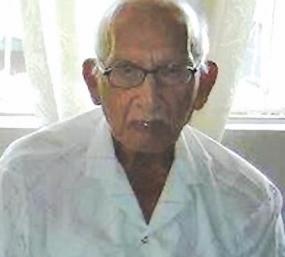
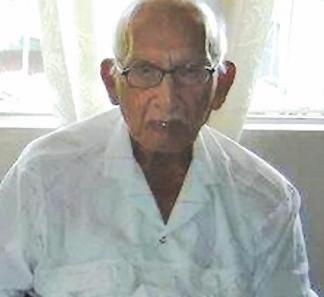
Popular Essequibo businessman and rice farmer Kayman Sankar died on Tuesday evening after years of prolonged illness.
His death was confirmed by his daughter Sattie Ramlall. Sankar was 87 years old at the time, and according to Ramlall, he passed away around 18:30h at his Hamilton Court, Essequibo Coast home.
According to the grieving woman, her father had been bed-ridden due to old age; however, she did not divulge any further information on his condition.
Ramlall said while her family is deeply saddened by her father’s death, it is something they knew would have happened.
“We are coming to grip with his passing, we knew this would happen eventually but it’s a little hard knowing now that he is actually gone,” she told Guyana Times a few hours after his death.
The woman said the family is holding on to their religious faith to guide them through, adding that the support of well-wishers has been overwhelming.
Ramlall said that there could never be enough words to describe her father. She alluded to the fact that within hours of his death, con-
Kayman Sankar
dolences began pouring in from persons all across Guyana.
“My father was a great soul, just ask anyone in Essequibo and they will tell you how their existence is only because of Kayman Sankar. He did a lot for his people,” she said. Sankar was born in June 1924 at Cornelia Ida, West Coast of Demerara, and was the eldest of five siblings. He married his wife Seraji when he was 17 and she was a mere 13 years old.
Their lasting union bore three children, two daughters and a son. The man leaves to mourn his 84-year-old wife, children, eight grandchildren, nine great grandchildren and many well-wishers.

The Customs AntiNarcotics Unit (CANU) has issued a wanted bulletin for the arrest of Dawn Roberts in connection with the large quantity of cocaine found in achar on Saturday at the Cheddi Jagan International Airport (CJIA).
Anyone who has information on her whereabouts can contact CANU at 2273507. Roberts’ address was given as 9 North Road, Bourda where she operates a shop.

On Monday, the couple who was apprehended at the CJIA with the cocaine appeared before Chief Magistrate Priya Sewnarine-Beharry on a charge of possession of narcotics for the purpose of trafficking. U.S. citizen Winston
Blake, 77, and his Guyanese accomplice Sadika Neola Odie, 38, of Lot 186 Thomas Street, Kitty, Georgetown pleaded not guilty to the charge.
The 20 kilograms of cocaine were discovered when anomalies were spotted during the scanning of the couple’s luggage raised red flags and caused CANU ranks to question the outgoing passengers who were headed to the John F Kennedy Airport, New York on BW Flight 526.
This publication was told that upon the arrest of the couple, they told ranks that someone had given them the achar as presents for persons in the U.S. The cocaine was wrapped
Aman appeared in court on Tuesday before Chief Magistrate Priya Sewnarine-Beharry at the Georgetown Magistrates’ Courts to answer charges of being in possession of a firearm and ammunition without being the holder of a licence.
Keon Kelvin, 25, of Lot YY 8 North La Penitence, Georgetown, a labourer by profession, was charged after it was alleged by the Guyana Police Force that on Friday February 7, in the vicinity of North La Penitence,
Georgetown, he had in his possession a 9mm pistol. It was also alleged that on the day in question the accused had in his possession five live rounds of 9mm ammunition. The defendant pleaded not guilty to both charges.
Prosecutor Michael Grant noted that from information received, the accused was contacted and he led ranks to the address where he resides. During a search conducted, the said articles were discovered and the accused was then told of the offences and subsequent-
ly arrested. However, investigations have not yet been carried out.
Attorney Paul Fung-A-Fat said that his client was not aware of the articles found, and the defendant was never found with the said articles in his possession but later found out that the ranks had found the items mentioned in the charge at his home. On these grounds, he pleaded with the chief magistrate for bail to be granted.
Bail was refused and the defendant is expected to return to court on February 25.

in brown tape and shaped to mimic seeds in the tamarind achar. Blake was intercepted with 9.6kg, while Odie was intercepted with 10.45kg, Guyana Times was informed.
CANU Prosecutor Oswald Massiah said Odie has a U.S. visa, and is well known for travelling. He added that, in a statement received, the defendant said she was offered the sum of US$10,000 to transport the substance, but was only given US$400 and the plane ticket which she accepted.
The couple were refused bail, and the case was transferred from the Georgetown Magistrates’ Courts to the Providence Magistrate’s Court for February 14.
PI continues for man on Old Year’s Night murder charge
The accused who shot and killed his 20-yearold ex-lover on Old Year’s Night appeared in the Georgetown Magistrates’ Courts on Tuesday before Chief Magistrate Priya Sewnarine-Beharry as more witnesses testified in the case. It was alleged that on December 31, 2013, in the vicinity of the Kentucky Fried Chicken sidewalk on Water Street, Georgetown, at approximately 09:00h, Jermaine Maynard, 40, of Leopold and Cross streets, Werk-en-Rust shot Clarissa Matthews, 20, of Lot 2284 North Ruimveldt Housing Scheme to the back of her head. Matthews was pronounced dead at the Georgetown Public Hospital.
Ranks from the Guyana Police Force testified on their actions in the case on Old Year’s Night and leading to January 6. One witness noted that on the day in question, he was vending on London street when he heard a loud bang that sounded as though a gun was being fired off.
He later noticed that a large crowd was following a man, so he mounted his bicycle and pursued the accused where upon meeting him, the accused pointed a gun to him and demanded his bicycle to make an escape. At this point in his testimony, he positively identified the man who accosted him as the accused.
Attorney George Thomas noted that all of the witnesses identified the accused by the sling on his arm, while stating that there are many persons in this country with a sling on their arm. As the case draws near to a conclusion, all that is left is for the witnesses to be cross examined by the defence, before determinations are made. The accused is expected to make another court appearance today.

...by an old hand
You’ve got to hand it to Adam Harris. The old propagandist from the Burnham dictatorship is a pro when it comes to putting a spin that’ll push his present master’s line. And that line is to “oppose, expose and depose” the PPP/C – as was said so pithily by the now Speaker of the House, Raphael Trotman. Of course, at that time, Trotman was hoping to become Leader of the PNC, just as the “mo fyaah; slow fyaah” was launched.
Harris’ present master is Glenn “the Mook” Lall, and as we’ve exposed earlier in the column, the fella is fed up with the present opposition not taking to the streets – and he’s weighing his options to take the plunge himself. Lall would love to have Guyana blacklisted by the CFATF. Fellas like him know that whenever there are shortages – in this case it’ll be of foreign currency – they can always cash in. Happened before and they’re hoping it’ll happen again. Black Money!
The opposition’s been going on at a rate about the government inserting all sorts of clauses into the AML/CFT Bill, to get more power. So Dr Luncheon pointed out what had been obvious since 2009: “CFATF has dictated and will continue to dictate the Anti-Money Laundering Bills of the world of states that are specifically treaty bound under the FATF, so let’s put to rest that perspective.” If you have a problem, go speak to CFATF.
So Adam the propagandist calls Roger Hernandez, Financial Advisor of CFATF, and asks him: “Did you dictate the changes to the AML/CFT Bill?” And reports in its usual screaming headline: “CFATF denies dictating Anti-Money Laundering Amendment”. What the heck else did they expect the man would say? But the Muckrakers knew what the answer would be – they just wanted to publish the headline, knowing that most people don’t read the fine print.
What did the man actually say? “The legislation has not been dictated by the CFATF, draft versions of the legislation were submitted for review by the CFATF to assess compliance with outstanding recommendations and a response was sent to the authorities.”
So what do you call the “outstanding recommendations” from an organisation that’s already recommended sanctions – blacklisting by the world’s financial institutions – for not “complying”, if not “dictating”?? Fact of the matter is that CFATF is a subset of FATF and FATF is the baby of G20 and now most of the countries of the world.
When they make you an offer, you can’t refuse. In the business the Mook is engaged in, he should know a lot about such offers.
...on polls by AFC
Khemraj Ramjattan is one of those fellas who whistles in the dark believing it’ll keep jumbies away. Problem is – the jumbies and spirits are all inside him. And we’re not even talking about the spirits he imbibes continuously. We’re talking about the fears that he has about his party going the way of the dodo.
The AFC’s right now a party in shambles. Its Chairman Nigel Hughes is just stumbling from one scandal to another – with each scandal revealing some fatal flaw in the man’s character. So he forgot to tell anybody – even Ramjattan –that he was the Company Secretary to Sithe?
So how does he explain that he sold a property for $26 million, while there was a lien for the same amount on the property? Without telling the purchaser? But in addition to Hughes’ travails, where is Nagamootoo or Gerard Ramsaroop, et al?
We know that the Donkey Cart economist walked over to the APNU.
...against Commissioner of Info
The MuckrakerKN juxtaposed the salary of Commissioner of Information Ramson against the fact there’s been no application for information under the Freedom of Information Act. So whose fault is that?
Wasn’t it the opposition who was claiming the government was withholding information?

The stage is set for Republic Bank’s Mashramani Panorama 2014 as the financial institution has renewed its sponsorship for the sixth year.
The competition, which is slated for Sunday, February 16, promises to display Guyana’s best in steel pan music at the National Cultural Centre. Sixteen bands will be featured in the competition in two categories, the large band and the school band, with the main highlights being the seven-a-side jazz ensemble, pan duet and senior and junior solos.


Satiricus was, as usual, confused. After all, master strategist GrainJa, leader of WAPNU, PEENC and of the entire band of oppositionists, had just made some moves in the Law-Making-Body (LMB). Satiricus was quite aware that GrainJa had been suckled by the great Kabaka himself – and with that master strategist, nothing was what it seemed on the surface. Of course, all of the Kabaka’s moves had all backfired – but that was neither here nor there, thought Satiricus, when it came to his acolytes following his purple path.
Culture, Youth and Sport Minister, Dr Frank Anthony received the $2.8 million cheque from Republic Bank Marketing and Communications Manager Michelle Johnson at the ministry’s Main Street office. He emphasised that the need for long-term support of Mashramani events, and commended the bank for its effort in enhancing culture in Guyana.
“Republic Bank has been with us as a steady
partner, and because of this known sponsorship, we are able to now invest in the art and develop it even out of the competition,” Minister Anthony stated.

Since the bank started operations here six years ago, significant growth has been made in steel pan music in Guyana: more bands are around playing steel pan music, and the bands
are now coming from all over the country.
“Six years ago if you looked back, most of the bands were concentrated in Georgetown. We have been able now to shift bands outwards.”
Meanwhile, Johnson noted that over the years, the competition has grown, and this has encouraged Republic Bank to continue sponsorship of the annual competition.
“There’s a lot we have seen coming out of it, and we look forward to sponsoring it and being a part of it in years to come,” Johnson pledged.
The funds garnered for Mashramani competitions by the ministry goes towards purchasing steel bands for communities, and over the past six years, six communities benefitted for a steel band each.
The important thing was that the Kabaka was a chess player, and by golly, GrainJa was going to move his players on the board. But Satiricus was struggling to figure out where Granger was going with the moves he’d made Monday night in the LMB. Here it was, he’d just lost a queen...and Debbie was not one iota less than that. Fast on her feet, cutting wit, astounding grasp of the rules of the LMB, versed in security matters and any other portfolio like foreign affairs thrown at her – why, everyone was looking to see who GrainJa would replace her with!
But it became clear that GrainJa thought Debbie was irreplaceable when it came to filling even one of her roles. It would take multitudes. GrainJa would now himself take care of Debbie’s foreign affairs portfolio: the King would replace the Queen. But he’d be assisted by one of the court helpers – a female unknown named Sell Man. But Sell Man wouldn’t occupy the Queen’s seat in the front bench. That would be taken by Bull (sh*t) Can... but he wouldn’t be a queen.
Debbie’s Queen role on the big throne would now be played by Base-ill, which everyone, including Satiricus, thought would’ve been filled by Omna Wally. Now Satiricus thought he understood GrainJa’s move here. Base-ill was from the old PEENC and GrainJa needed to buy him off to fend off attacks from GreenBridge. But what about Omna? Weren’t women going to be miffed to have their ranks depleted, in this age of gender awareness? Satiricus brow became furrowed.
Aha, thought Satiricus, that’s why the master strategist GrainJa had brought in that female doctor to fill Debbie MP spot!! What a master stroke! No one would realise that she was just a place-holder and didn’t bring any substance to the table!!! And more importantly, she’d be beholden to GrainJa, the King. His handmaiden, so to speak.
And the strategist hadn’t even been finished with his moves. In the night of the long knives, he’d moved Kiss (too) Soon, who thought she could be Queen and had been acting up accordingly, back to being a pawn on the back bench. “That’ll teach her and Solo Man a lesson!” thought Satiricus. “For backing North Ton”.
But while GrainJa was busy making his chess moves, he hadn’t realised GreenBridge and his supporters had checkmated him by making him the fall guy for FATF imposing sanctions on Guyana.
He’d be losing corn and husk.

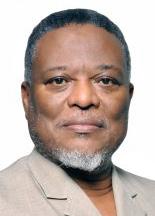
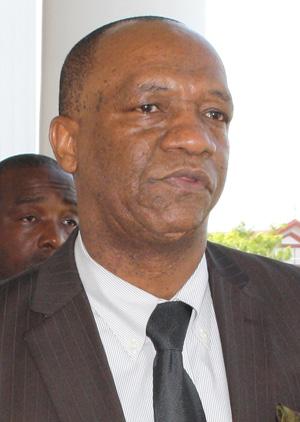
Prime Minister Samuel Hinds on Monday disclosed that an independent third-party expert has been asked to examine the government’s ambitious US$32 million e-governance project and make recommendations for its satisfactory completion at the earliest time.
Hinds’ comments were contained in his response to written questions from A Partnership for National Unity (APNU) Member of Parliament Joseph Harmon on cost overruns related to the E-Government Project and the resume and salary of the project manager, Alexei Ramotar, the son of President Donald Ramotar.
He also informed the National Assembly that the project has not experienced “extensive delays,” as was be-
ing reported.
“The E-Government Project unit aimed for an April 2014 completion date. However, this has been extended for August 2014,” the prime minister said in his written response.
In January 2012, the WiMax and EVDO networks were changed to an LTEAdvanced network. This change allowed for a lower cost core network and the savings were used to move from 30 WiMax/EVDO sites to 54 LTE-Advanced sites, thus providing better high-speed coverage in major populated areas such as Linden, New Amsterdam, Georgetown, Anna Regina, and Port Mourant/Albion.
Additionally, it allowed for the establishment of a new site at Lethem, but this resulted in two months of delays since additional site surveys and designs were carried out. It was also pointed out that in October 2012, the LTE Tower foundation was designed by the Public Works Ministry and the contractor, Huawei. The creation of this design delayed the project by one month.
“Additional delays stemmed from difficulty
of procuring piles, adverse weather conditions, and the provision of electrical access to the sites. By no stretch of the imagination can these delays be considered extensive,” Prime Minister Hinds stated.
Under the E-Government Project, the Information Communication Technology (ICT) infrastructure necessary to provide the government with the ability to provide better services to Guyanese is being built.
The project aims to provide government-to-government communication, government-to-citizen access to information and services, and government-to-business communication. A fibre-optic link will be created between Moleson Creek, Georgetown
and Parika. Additionally, a fibre ring within Georgetown has been set up to allow for a more efficient communication system, while a highspeed microwave link will be installed between Moleson Creek, Georgetown and Charity and another between Linden and Georgetown. The microwave network will be an active backup to the fibre network thereby making way for high-speed communication between government offices throughout the country.
In his response, the prime minister contended that there must have been some confusion between the E-Government Project and the Dense Wavelength Division Multiplex (DWDM) Long-Haul Fibre Project. The DWDM project is connecting Guyana to Brazil via the Lethem road with a fibre network utilising DWDM technology. “Neither relies on the other for success and neither was conceived with the other in mind, but they are complementary.”
But even the DWDM project is well within its budget, Hinds said. While it has been estimated at a cost of US$5 million, approximately US$600,000 still remains.
“Since this project is the first of its kind for Guyana, it has encountered some challenges which were unknown, which have created delays,” he said, noting too that the project is being executed using local contractors and labourers.
Cummings Electrical, Dynamic Engineering, Dax Contracting Services, Bovell Construction and MMC are the companies that were awarded various sections of the project.
Additionally, the improper handling and installation of the fibre cables have resulted in some lengths of cable being damaged. “In addition, road wash always and the building
of the new four-lane road on the East Bank of Demerara, as well as vandalism, have significantly contributed to the delays of approximately two years in implementing this project.”
Guyana moved to initiate the project following serious
disruptions in international communications to and from Guyana for approximately three weeks in 2007, which caused the country to be virtually cut off from the world.
The project is designed to have a high-speed, high-capacity terrestrial fibre network, which links into Brazil’s network and by extension, the world’s.
Responding to Harmon’s second question, the prime minister disclosed that Ramotar has a master’s in computer science from the University of Waterloo, a bachelor’s degree in computer science, graduating with a distinction from the University of Guyana, and “over a decade of work experience.” It was pointed out too that he was employed as the project manager in 2010 before his father became president.



The Princess Fun City Entertainment Centre is hosting two months of free tours for schools across Guyana through its ‘School Tour Programme’.
This is a collaborative effort between Fun City and the Education Ministry to give students a break from their academic curriculum. The programme began in February 1 and will last until March 31; however, the first tour will be on Thursday this week.
While some 50 schools have already expressed interest in the programme, management at Fun City is en-
couraging all schools, both private and public, from nursery to secondary, to take advantage of this opportunity.
According to Princess Fun City Entertainment Centre Marketing Manager Ali Williams, the tours will be done during the course of the week from 09:00h to 15:00h.
She noted that approximately 400 students are expected on Thursday and will be given unlimited access to the Fun City Arcade and the movie theatres.
Williams explained that Fun City has been working along with the Education Ministry to feature topical is-
sues on their billboard for the ministry. She noted that while the entertainment centre has made contact with most of the schools, they have not been able to get most of them in the outskirt of Georgetown.
The marketing manager added that Fun City is always doing grand things and this is just an extension of their social outreach. “We want to give back to Guyana, we want to show that this is not only a money-making venture and we want children to benefit from our Fun City,” Williams stated.
In addition, the entertainment centre has done pro-
grammes for the less fortunate just last year, and at the end of this school programme will move on to another institutive which will see another section of society benefitting from its services.
Reward
Not only are school given a fun-filled day to add ‘icing on top of the cake’, the fun centre will also be awarding one lucky school at the end of the programme with computers. The arcade is a packed entertainment centre with over 80 games including 7D cinema, 3D graphics, dancing, street fighting, gifts, bowling, racing and much more. This one of a kind theatre caters for children ages two to 10.
Meanwhile, the two movie theatres have seating capacities of 186 and 93 respectively and feature the latest in children, Bollywood and Hollywood movies.
During the tours, the theatres will be featuring animated movies for the younger children and PG13 for the much older children. Schools interested in being a part of the programme can contact Princess Fun City Entertainment Centre on 265-7212.
President Donald Ramotar said that leaders within the Caribbean and Latin American need to take a stand against all social issues that affect people, as he urged them to work to eradicate poverty.
He made the call while addressing religious leaders and organisers at the launch of the Ninth Conference of Leaders of Islamic Cultural Centres in Latin America and the Caribbean, at the Guyana International Conference Centre on Sunday evening.
President Ramotar had urged leaders that while they seek to attain their objective of fostering unity among the faith-based groups, they should also pay close attention to the many social plagues that are responsible, in part, for the weakening of society.
Ramotar said that poverty, injustice, hunger and inequality continue to take centre stage in many of these societies. And although Latin America and the Caribbean
has made significant strides in tackling some of these issues, there still remains an urgency for leaders; both in the religious and political realm, to work together.
“The inequality that exists in this region; Latin America and the Caribbean continues to be the most unequal region in the world as far as the distribution of income is concern. And not only that, politicians and government officials must care about this. This must be a central concern of every regional, international and local leader,” he said. He continued: “We cannot do these things alone, we need their participation.”
According to the presidents, based on reports, 85 of the richest people in the world have more wealth when compared with the wealth owned by the bottom three billion people globally.
This, he described as “somewhat criminal” and a sure
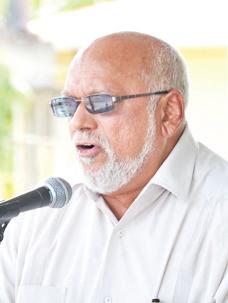
President Donald Ramotar
“remedy for disaster”, pointing out that the inequality was condemned by International Monetary Fund (IMF) head Christine Lagarde.
“She tactfully said that one of the things that would be holding back the further development of society is the unequal distribution of wealth in the world,” the president related.
President Ramotar had himself made the bold step in
this regard, when last week; he along with a delegation of government officials attended the second summit of the Community of Latin American and Caribbean States (CELAC) in Havana, Cuba.
He was among 33 heads of government attending the meeting to work around areas that would help to resolve the many global issues.
Held under the Theme “Eradication of hunger, poverty and inequality in Latin America and Caribbean States”, it was reported that fruitful discussions emanated from the meeting. President Ramotar also participated in the signing of a declaration, designating Guyana and the rest of the Caribbean and Latin America, a zone of peace.
The Community of Latin America and Caribbean States (CELAC) was created in 2011, with the aim of deepening Latin American and Caribbean integration.
Lethem residents say no to electricity tariff hike

APartnership for National Unity (APNU) Member of Parliament (MP) Sydney Allicock on Monday petitioned the National Assembly for the Lethem Power Company Inc to rescind its recent decision to hike electricity tariffs.
In his request for the petition to be read for a first time in the National Assembly, Allicock said the increase comes at a time when the power company has been badly managing its resources. As he called for an investigation to be launched into the operations of the company, he contended there are cases of malpractices.
He told the House that the people of Lethem and by extension, Region Nine are not shying away from their responsibility; however, they believe that the payments of electricity tariffs should be done in a strategic manner.
Currently, an across the board structure is in place for all consumers in the region, but Allicock said this should not be the case, contending that there are great variations regarding the incomes of residents. According to the APNU MP, different levels of payments should be made to meet the pockets of the poor. The company, he said, should strike a balance.
Without any objections, the petition was read for the first time by Clerk of the National Assembly Sherlock Isaacs. According to the petition, the community of St Ignatius is required to pay electricity for the distribution of potable water to its residents.
In 1995, residents were required to pay $1200 per month for the consumption of electricity. Prior to the increase, the electricity bill was paid for by the Regional Democratic Council of Region Nine.
According to the petition,

since 1995, the Lethem Power Company has continuously increased the electricity tariff over the years with residents respectfully accepting the increases, despite their economic difficulties.
The last tariff structure was designed to give consumers the first 15kw free. However, consumption of an additional 30kw results in consumers paying $45 per kWh while consumers who consume more are required to pay $55 per kWh.
However, in the first week of January, residents received a letter from the power company indicating that they are now required to pay $75 per kWh; effective January 1. This new tariff structure represents a 54.6 per cent increase. This increase comes although there has not been any dramatic increase in the cost of electricity.
No consultation
This move by the Lethem Power Company was considered disrespectful as residents were not consulted before the increase took effect. This imposition would put the residents of Lethem and neighbouring communities at a disadvantage. The petition, which was signed by more than 300 persons, called for the company to meet with residents to determine what is affordable and implement a system which reflects the various categories of consumers and their ability to pay.
In response to the petition, Prime Minister Hinds said taking into consideration the potential of Lethem to develop, the government of Guyana directed a grant of approximately $700 million to install a Moco Moco Hydro in 1999.
“When we established the company, we made it clear that the operations would be governed by the cost, the cost would be set that the operations including maintenance.” However, the Moco Moco Hydro suffered a massive failure due to landslide in 2004.
Currently, electricity in Lethem and neighbouring communities is supplied through diesel generation. The prime minister told the House that the government has been putting systems in place to ensure that communities served by the company receive 24 hours of electricity; however; the operating cost, which is largely carried by government, has increased. In 2011, the operation cost stood at a $109 million.
“It is an unconscionable act,” the prime minister told the House, contending that the signatories of the petition might not have taken time to scrutinise the situation in its entirety.
“All through the years our position has been that we will advance electrification in the hinterland, we will cover capital costs of all the operations, including maintenance.”
Refuting claims that no consultation took place before the new tariffs were imposed; the prime minister stated that he visited Region Nine twice in 2009 to address residents on the increase and other issues. On both occasions, he said residents agreed that the increase was necessary and “It was accepted.”
By Samuel Sukhnandan
The Community Development Council (CDC) has launched a community-based project, which is being piloted in Farm on the West Coast Demerara.
CDC Director Philomena Sahoye-Shury said the project is aimed at helping communities to become more selfsufficient and at the same time, develop a spirit of entrepreneurship among residents.
Sahoye-Shury told Guyana Times on Monday that she hopes to take the project to other communities soon.
According to her, the CDC is working with Farm residents, to look at a cost effective way of baking fresh bread. Box ovens, using two coals pots, are being used in the project. This old method of baking, she said, will help the community to save money, since they will not require gas for baking. The CDC director noted that apart from providing income for the community, it will also create business for persons selling coal. “While the project is not in full bloom, it has start-
ed and we will get there,” she added.
The CDC is providing all the cooking materials free of cost to help kick-start the project. These materials include flour, sugar, lard, butter, yeast and in some cases pans. Sahoye-Shury said she is optimistic about the project and looks forward to it becoming successful and replicated throughout the country. “It’s going to take time, but once the baking is on the hill, many of the people selling bread will be in trouble.”
Income generation
Asked what the project will do for these communities, the CDC director said it will help to create a small income, which could be used for developmental projects. She explained that every week a team in the community is given the responsibility to do
By Jumo Paul
The long awaited Education Bill which will enable mayor reforms in the education sector will be tabled in the House before month-end, Education Minister Priya Manickchand said.
The legislation when comes into force will repeal the current Education Act and allow the Education Ministry to adopt a more modern and hands-on approach to various issues impacting the sector.
The bill, among other things seeks to address issues such as private schools licensing, requirements for persons to be employed as a teacher and students admission age at the nursery level.
The legislation has benefited from a series of consultations hosted by the ministry and stakeholders include teachers, parents and owners of private school.
In February 2013, Minister Manickchand had indicated that the bill would seek to change the mandatory admission age for students. As it stands, the current age for a child to be admitted in nursery school is three years, nine months. However, with the passage of this legislation, the age will be modified to three years, three months. Despite this level of education not being compulsory, most children in Guyana begin their academic education at this tender age.
Presently, a child can enter a public nursery school at age three years if the child will be at least three years, nine months by December of the year. Children who are born after March 31 are required to wait until September of the next year to commence formal education.
However, before the new age requirement is instituted, the Education Ministry will be making the necessary preparations to facili-

tate the change, Minister Manickchand explained. The two-year education programme at the nursery level is intended to afford pupils a learning environment conducive to their physical, social, emotional, and intellectual development.
Currently, persons can be employed as acting teachers with three Caribbean Secondary Education Certificate (CSEC) subjects at grades one to three at the general proficiency level. If persons do not have a grade three or higher in
English Language, they must have grades one to three in five other subjects. Acting teachers are usually employed in the Hinterland regions where there are severe difficulties in attracting qualified teachers to fill vacant posts.
The new Education Bill will however modify the prerequisite requirements for persons desirous of becoming teachers.
With regards to private schools, the bill will seek to bring them up to the standard of state institutions.
Work on the Education Bill started under former Education Minister Henry Jeffrey, and after the 2006 elections, it continued under Minister Shaik Baksh, but was stuck at the attorney general chambers for a long time.
When Manickchand assumed the education minister portfolio after the 2011 elections, she restarted the consultation, and after more than eight years of consultation, there is a promise to have the bill tabled in the House before month-end.
the baking. Different teams will be given different days to bake and sell the bread. The money garnered from these sales will then be used for community projects. This could include repairs to bridges, community centres or initiatives deemed important to that community.
Apart from this, SahoyeShury told Guyana Times that the project is aimed at helping community members to improve their standard of living by becoming entrepreneurs. She believes that the project has huge potential to assist communities in their own development. The CDC director noted that in the end, citizens should help to contribute more meaningfully to the development of their communities.
She recalled that the CDC had piloted an agriculture project with the support
of the Agriculture Ministry some years back, which proved somewhat successful, but not to the extent that they were looking to accomplish. The CDC, through the ministry, had distributed seeds to many communities, to promote the keeping of kitchen farms. Sahoye-Shury said while the project has taken some root in many rural communities, for others, it was not that successful.
“We are trying at the CDC to make people little entrepreneurs… with the seed project, some people did well, but some of them were lazy,” she added. On that note, Sahoye-Shury said that while some persons want to get ahead, some are reluctant to do things to improve themselves. She noted that doing things the “old fashion” way can never be wrong. The community activist said if peo-
ple start planting their own kitchen gardens, they would save money and if communities start working together, Guyana will be a happy country.
“If Guyana could only think community and have that community-spirit, some of them won’t have to depend on government for nothing,” Sahoye-Shury asserted. Currently, there are approximately 400 CDCs across Guyana, in Regions Two, Three, Four, Five, Six, Seven, Eight and 10. The CDC falls under the Office of the President. It was created by the late president, Dr Cheddi Jagan with the aim of bringing people together and helping to create projects that would assist them in developing their respective villages. The CDC motto is “Uniting communities across Guyana”.



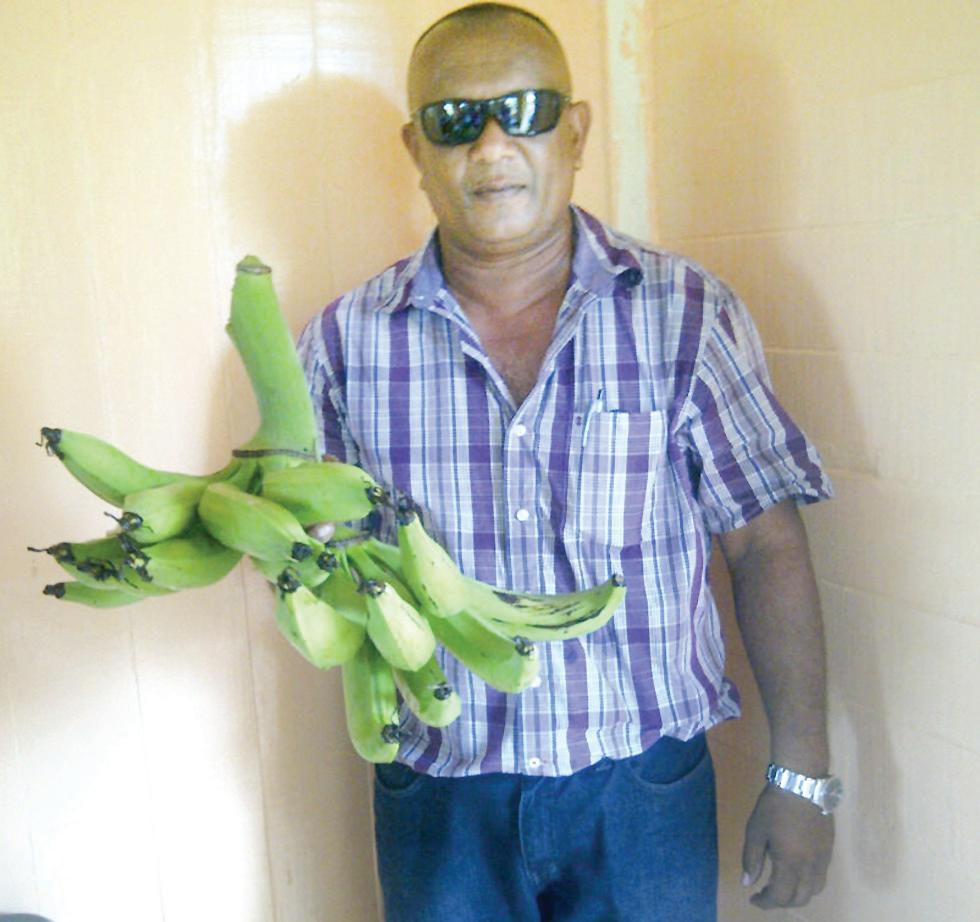
Popular Essequibo businessman and rice miller Roopan Ramator, also known as “Foul Cock”, has invested approximately $15 million in the establishment of a plantain factory that will soon produce Rooster plantain chips.
Ramotar, who is the largest rice farmer on the Essequibo Coast, has over two hundred acres of farm at Hackney Canal, Lower Pomeroon River, where he cultivates thousands of plantain plants.
The farmer, who cultivates plantain on a large scale, said he intends to make full use in terms of getting added value from his farm.
The chips will be circulating on the shelves of the local markets in Georgetown, Parika and the Essequibo Coast.
Ramotar said the name Rooster is linked to his popular call name Fowl Cock.
He said the project is expected to commence in two months at his Land of Plenty complex on the Essequibo Coast. The busi-
nessman also disclosed that plantain flour will also be produced under the Rooster brand.
Ramotar said his vision is to have the best plantain chips on the local market, pointing out that the factory is being set up by two Canadian volunteers Yvon Bertrand and John Mc Donald, who are both food processing experts.
The businessman said all the factory equipment is at the business' location and will soon be installed. He said he decided to enter the chips business to change people’s eating habits.
The factory will create jobs for scores of persons on in the Pomeroon River and the Essequibo Coast.

Afour-year, 5.02 million euros project to assist Caribbean Community (Caricom) member states to move towards renewable energy technologies is the focus of discussion over the next two days at the Caricom Secretariat headquarters, Guyana.
Representatives of member states and other key stakeholders in the community’s energy sector are charting the way forward for a renewable energy and energy efficiency project funded by the German government through its Deutsche Gesellschaft für Internationale Zusammenarbeit (German Society for International Cooperation) (GIZ).
The Caricom-German Government Renewable Energy and Energy Efficiency Technical Assistance (REETA) project will explore the use of solar energy, wind power, bio-energy, and hydropower for energy cost savings in many areas including for businesses and households.
The REETA project will also seek to build capacity in the private sector for implementing renewable energy and energy saving measures, and will also support the Caricom energy programme and regional organisations involved in sustainable energy development.
GIZ Resident Director
for the Caribbean Marina Meuss pointed out that the REETA project was the outcome of long-term cooperation in energy in the region.
The project will be administered from the Caricom secretariat and all member states will have an opportunity to identify areas to be supported through the project.
Many Caricom countries have commenced various sustainable energy efforts and the REETA project will build on these, as well as build on the achievements of the Caribbean Renewable Energy Development Programme (CREDP) which was implemented in two phases during the period 2003 to 2013.
In brief remarks on behalf of Caricom Secretary General Irwin LaRocque, Caricom Secretariat External Trade Director David Hales said that the CREDP was a watershed energy initiative which has produced a significant positive impact in the region.
Together, the CREDP and REETA projects amount to 15.7 million euros, making the government of Germany the single largest contributing partner to Caricom’s sustainable energy development. Hales expressed appreciation to the government and people of Germany for their support to the community’s efforts to transform its energy sector.
“There is no clash
director general says – at conclusion of Islamic conference
The curtains came down on the ninth Conference for Leaders of Islamic Cultural Centres in Latin America and the Caribbean Tuesday evening, with a well-received lecture and sodturning and tree planting ceremony at the University of Guyana’s Turkeyen Campus.
Students of the university, sections of the Muslim community and other invitees packed the Education Lecture Theatre (ELT) as Director General of the Islamic Educational, Scientific and Cultural Organisation (ISESCO), Dr Abdulaziz Othman Altwaijri delivered the much-anticipated lecture on “Dialogues of Cultures and Building a New World Order”. His many insightful statements saw participants nodding their heads in agreement and cheering occasionally.
Dr Altwaijri told the gathering that intercultural dialogue helps members of different faiths understand each other. He said there should be no conflict between religious organisations, since, although there may be differences with regard to practices, the reli-
gions are generally similar.
“There is no clash between cultures and civilisations. The clash is always from those ignorant people who instigate these ideas in these societies and fuel them with falsification,” he declared, to loud rounds of applause.
The general secretary called on leaders of religious faiths to join hands in a concerted effort to save humanity.
Addressing the issue of the new world order, Dr Altwaijri said as long as intercultural dialogue is contributing to the advancement of world peace and the spreading of values of peaceful co-existence, there will be profound changes to international relations.
Failed order
He noted that proper dialogue can alter the course of events, towards readdressing the imbalances that affect people globally, thereby re-establishing the balance of power and ensuring that normalcy and peace are restored.
Dr Altwaijri informed participants that the current world order was created on the premise that
“superpowers had come to some agreement after World War II”. He said it has failed to address the challenging crisis that places international peace and security at great risk. He further pointed out that the current order has failed to take the necessary measures needed to deter persons from violating international laws, committing war crimes, and violence against humanity.
Dr Frank Anthony, who was also present at the event, concurred with the director on every issue raised. He pointed out that many persons have been so affected by social injustice, they have almost become immune to it. This immunity, he said, has prevented them from speaking out. “Because of that, sometimes our voices are not heard and things are not corrected,” he said.
Officials, including UG Vice Chancellor, Dr Jacob Opadeyi and other participants, were later invited to witness the sod turning and tree planting exercise outside the ELT building by Dr Altwaijri, signalling the setting of a new horizon for the university and the ISESCO.



wednesday, February 12, 2014| guyanatimesgy.com
BY SVETLANA MARSHALL
The Art Williams and Harry Wendt Aeronautical Engineering School is currently celebrating 21 years in operation and is pondering the idea of offering an airplanes 2 training programme, taking the institution and its students to the level of large turboprop and jet aircraft training.
Currently, the school offers Licence Without Type Rating (LWTR) training which is done over a threeyears ab-initio programme in aircraft engineering, for acquisition of licences in categories A, C, X or R via the airplanes 1 training programme. Additionally, modular training is done for persons with over three years' experience in aviation.
Art Williams and Harry Wendt Aeronautical Engineering School Executive Manager Nalini Chanderban said with support from FedEx and the Flight Safety Foundation (FSF) (The school is a full member of FSF), the institution is seeking to acquire an airbus A310. It was explained that the acquisition of the A310 would pave the way for the school to offer airplanes 2 training which includes at least 240 hours of practical training inclusive of A checks and C checks, in addition to theoretical training. She said the FSF is assisting the school to acquire an aircraft that is no longer in use, noting that if an air-
bus A310 is donated to the school, there will be need for expansion and even establishing training classrooms and workshops at other locations such as the Cheddi Jagan International Airport (CJIA).
“There will be need for more premises, the airplane would not be able to come into Ogle so we might need to look at setting up operations at CJIA, where that aircraft can be housed and workshops set up,” she explained.
In addition, Chanderban underscored the importance of having sufficient finance to offset such an initiative, asserting that a feasibility study will have to be done.
“We would definitely have to get a solid financial foundation for such a venture.”
High demand
Although Guyana only has Category One Aircraft, the executive manager of the aeronautical engineering school pointed out that there is a high demand for engineers to be licensed to repair aircraft more than 5700kg.
“I mean Guyana has small planes and our graduates fulfil the local job market, but there are still jobs are out there for the jets and advanced fly-by-wire aircraft.”
Meanwhile, the school is collaborating with the University of Guyana for the establishment of a degree programme in aircraft maintenance engineering. After completing three years of theoretical and practical training at the Art Williams and

Harry Wendt Aeronautical Engineering School, the partners are planning to have students complete a degree programme at the university.
Technicalities regarding to the time span of the programme are currently being worked out. It is the intent of both the university and the engineering school that the programme will be on par with international programmes.
The existing relationship between the two institutions involves a diploma in technology (aeronautical engineering). This arrangement in place allows for graduates of the aeronautical school to complete a diploma in technology, (aeronautical engineering) at the faculty of

technology and for a diploma in mechanical engineering.
In 2006, the Art Williams and Harry Wendt Aeronautical Engineering School was nominated as the school of Caricom by the Caribbean Aviation Safety and Security Oversight System (CASSOS).
Accreditation
Additionally, the school is accredited and certified by the Guyana Civil Aviation Authority (GCAA), CASSOS, the Jamaica Civil Aviation Authority (JCAA), the Civil Aviation Safety Authority of Suriname (CASAS) and the Trinidad and Tobago Civil Aviation Authority (TTCAA).
The school is also approved under the rules and regulations of the International Civil Aviation Organisation (ICAO) Document 7192, Part D1. “In 2006, we became the first tertiary institution in Caricom to have ISO 9001:2008 Quality Management Systems Standards,” said a proud Chanderban. The Trinidad and Tobago Bureau of Standards certified the
school on July 24, 2006.
“That puts us on the global market, so we are not only training persons for an internationally recognised licence, but giving them quality training.”
During the airplanes 1 training for the acquisition of LWTR, students are mandated to pass all theoretical subjects over a three-year period and simultaneously execute 2000 practical hours of on-the-job training.
Hands on experience
“With every theoretical subject there are associated projects so you will have hands on experience,” she added. Only when completing all examinations and practical, students are registered to do the licensing examination at the GCAA.
With the pass mark set at 75 per cent, Chanderban said the engineering school recorded 81 per cent full passes in 2013. With a population of 123 students, the school has been attracting students not only from Guyana, but from Antigua, St Vincent, Barbados, Trinidad and
Tobago, Jamaica, Suriname, Grenada, and even Angola. LIAT (1974) Limited is the first international airline to commence the students attachment programme with three avionics students and four mechanical students in June 2007. Additionally, the airline in 2008 sponsored six students from St Vincent, Barbados and Antigua for the ab-initio programme.
“These six students returned to LIAT on October 30, 2011, with all six licensed in airframe and engines and five with additional avionics licences. One of these students, Dorian Nicholas, who was nominated by this school, was awarded the International Federation of Airworthiness Whittle Scholarship.” LIAT has continued to support the programme by sponsoring another five students who are currently in year three of the programme.
The engineering school also has a vibrant marketing strategy which highlights the positives to be derived from attending the institution, and the availability of good payment plans.
The Art Williams and Harry Wendt Aeronautical Engineering School housed in the Hangar of Caribbean Aviation Maintenance Services Limited at Ogle, was founded by Captain Malcolm Chan-a-Sue, MS and Colonel Charles Hutson in 1993. It was named after the pioneers of aviation in Guyana, Arthur James (Art) Williams and Herman Edgar (Harry) Wendt, both pilot-mechanics. When the school began operations in 1997, it had a population of just seven students.
The school has successfully graduated 107 students with aircraft maintenance engineer’s licences, since the start of the ab-initio programme in 1997.
Caribbean Container Incorporated (CCI) Managing Director Ronald Webster has found himself entangled in legal proceedings over the transfer of shares between companies.
According to an advisory published on the Guyana Association of Securities Companies and Intermediaries Incorporated (GASCI) website, the Guyana Securities Council (GSC) has filed legal action against Webster for attempting to transfer shares from one of his companies to another.
The court action is seeking to cancel the transfer of the shares.
“The claim seeks to set aside, among other things, the transfer of shares in Caribbean Container Inc to Demerara Holdings Inc
and any benefits which may flow therefrom,” the advisory stated.
Along with CCI and Demerara Holdings Inc, the advisory also named Technology Investments and Management Inc as one of the companies controlled by Webster.
The action by the GSC is yet another against companies which failed to comply with the regulations of the Company Act Laws of Guyana.
Last month, the GSC sent out an advisory indicating that the Guyana Stockfeeds Inc has not paid any dividends to its shareholders as it claims in its Interim Report for January-June 2013.
According to the report which was published in the Stabroek News on September 20, 2013, some $80,285,557
were paid in dividends for the financial year 2012; however, shareholders have complained to the GSC that this was not done.
The company’s attorney had confirmed to the GSC that no dividends were paid to the shareholders for the financial year 2012. The council said that it had written the company in November last year, advising that they correct the report and disseminated it as was done with the incorrect report, but this was not done.
It was subsequently disclosed that Stockfeeds cannot pay any dividends because of a court case it has pending. According to one of its shareholders, the company has several matters pending in court, including one which bars it from paying any dividends to the shareholders.
The Caribbean Development Bank (CDB) on Tuesday said regional countries experienced average economic growth of 1.5 per cent last year, as compared with 1.2 per cent in 2012.
But the CDB said the region was likely to record average economic growth by 2.3 per cent in 2014.
“Led by Guyana, Haiti, and Suriname, growth is expected for all 19 BMCs (Borrow Member Countries), with most again set to grow by one to three per cent. The recovery in regional tourism is expected to strengthen with the anticipated faster growth in the U.S. and a return to growth in the euro area as well as expectations of improved airlift and reduced fuel costs resulting from further declines in commodity prices."
Growth
The CDB said this recovery, together with global Foreign Direct Investment (FDI) growth projected at around 10 per cent in 2014, should have further spin-off benefits for construction and oth-
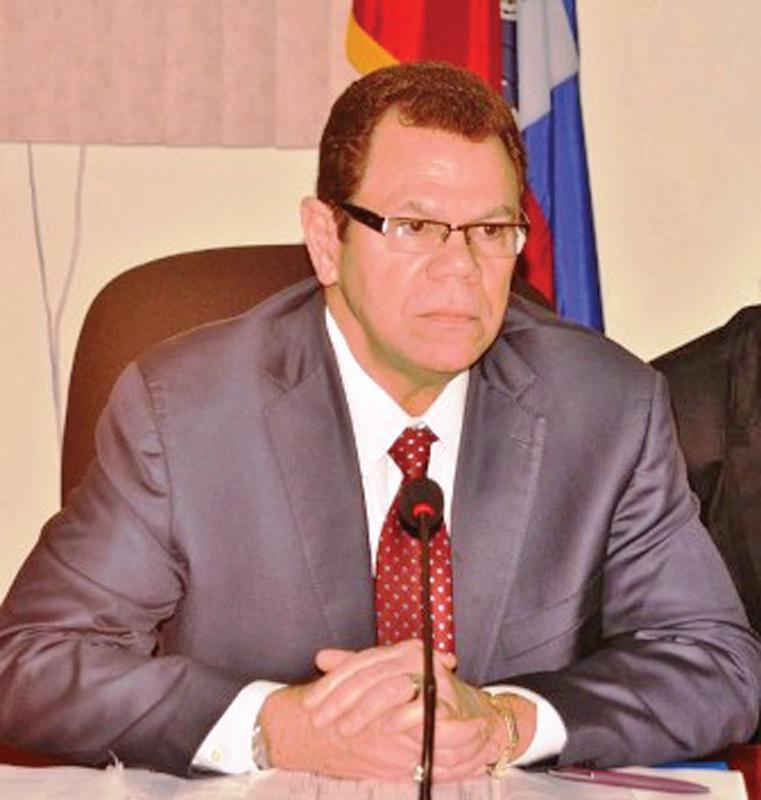
er real sector activity. In an “Economic Review and Prospects” for the bank’s borrowing member states, the Barbados-based financial institution said rising incomes and employment in advanced economies, coupled with renewed FDI flows, contributed to solid growth in construction activity and continued recovery in tourism in most of the Caribbean.
It said the expansion in
construction activity was linked to the combined effects of significant public investment in critical economic infrastructure, growth in private residential construction and significant FDI-driven tourism-related development. In the tourism sector, stayover arrivals increased across destinations, as the recovery in key U.S. and euro area markets continued. “The exceptions were

Antigua and Barbuda, The Bahamas, Barbados, Dominica, Grenada, and St Vincent and the Grenadines, where airlift challenges and high intraregional travel costs affected visitor arrivals,” the CDB noted.
Loan approvals
In reference to its own activities, the CDB said it recorded a strong recovery in loan approvals and disbursements in 2013. According to the sustained improvements in global growth and the strengthening of regional economic performance, as well as improved efficiencies and strengthening of internal controls, provided the backdrop for the turnaround in bank operations during the year.
Loan approvals totalled US$139 million, up 34 per cent from US$104 million in 2012. Similarly, total disbursements amounted to US$186 million in 2013, some 60 per cent above disbursements of US$116 million in 2012. The bank’s interventions in human resource development in its borrowing member countries (BMCs) continue to
promote the development of the skills and competencies required to foster growth. This emphasis is consistent with CDB’s commitment to expanding the pool of Caribbean citizens capable of leading productive lives in an internationally competitive environment.
Education, agriculture
The investments in education and training in 2013 were, therefore, channelled in two complementary pathways for economic growth and competitiveness.
First, CDB continued to support the improvement in the quality of basic education, so that graduates can successfully transition to higher education and training opportunities or acquire skills for entry level employment. Approximately US$24.5 million was approved for both Antigua and Barbuda and Haiti to enhance instructional effectiveness and expand opportunities for children to complete primary and secondary education. Second, US$22.8 million was approved for post-secondary and tertia-
ry education in Anguilla and the University of the West Indies’ Open Campus programme.
Agriculture represents an important vehicle for reinvigorating regional economic growth, while reducing unemployment and poverty rates. As part of a broad strategy to encourage the expansion of traditional export crops where viable markets exist, strengthen agro-tourism linkages, and promote the development of non-traditional high-value products, the CDB has been emphasising agricultural research and development and building climate resilience.
In this regard, the bank approved a US$625,000 grant to the Caribbean Agricultural Research and Development Institute (CARDI) for the development of an integrated disease management programme for controlling Black Sigatoka disease in Dominica, Guyana, St Lucia, and St Vincent and the Grenadines.
The disease has the potential to devastate the banana and plantain industries in the region.















Those who love you deserve your attention. If something is seriously bothering you, now is the time to clear it up. Problems will continue to grow if you neglect them.

By Bernice Bede Osol

(June 21July 22) (Jan. 20Feb. 19) (Dec. 22Jan. 19)
Refrain from sharing your secrets. Organise personal paperwork or deal with unfinished projects to put an accomplished feel on the day. Relaxation in the evening will be rewarding.

Keep your anger at bay. You risk overreacting if you take constructive criticism too seriously. Find an enjoyable activity that will help you stay calm and out of trouble.

Speak up if you feel someone is withholding important information from you. Getting all the facts and asking the right questions could have a positive effect on your future.

(Aug. 23Sept. 22)
(July 23Aug. 22) (Feb. 20-March 20)
Devote time to your favourite hobby or one of your many talents. Someone who comes from a very different background will inspire you.

(March 21-April 19)
Don’t damage your reputation by revealing secret information. In order to avoid a problem with your friends or relatives, be very careful what you say to whom.

(April 20-May 20)
A change of scenery will go a long way toward reducing your stress. Avoid people and situations that are getting you down, and plan a pleasurable outing with friends or family.

(May 21June 20)
Reflect on your past and think about what you want and need out of life to begin the process of making your dreams come true. No one else can do this for you.
Do something physical to relieve your boredom. Rather than dwell on your problems, check out your community for activities that interest you. You will be pleasantly surprised at what you discover.

(Sept. 23Oct. 23)
You may feel disappointed with the way your life is going. Don’t let your fears prevent you from reaching your goals. Take positive steps to make personal improvements.

(Oct. 24Nov. 22)
Today will be a success if you devote your energy and enthusiasm to a cause you believe in. You will make new friends with your pleasant attitude and desire to help.

(Nov. 23Dec. 21)
Attend to unfinished business. You must sort through personal documents carefully in order to avoid a costly mistake. If you offer assistance to someone who needs it, you’ll receive similar treatment.

Dentures provided in 72 hours from as low as $4500. Contact Dr B Stuart, 209B Charlotte St, Lacytown. Tel: 225-5034

Shalom Driving School. Lot 2 Croal Street. Call 227-3835, 227-3869, 622-8162 and enjoy 20% discount

It's a 'Once upon a time Valentine' at Nesha’s Flowerland. Order your Cinderella & Sleeping Beauty rose arrangements. We have roses in all colours; rainbow roses, sexy red; vendella white and much more. Teddy bears and chocolates also available. Order before February 7, 2014 and get special discounts. Delivery service available. Nesha’s Flowerland – A place where your fantasy becomes your reality. Phone: 225-3315 or 227-3553

Agricultural tractors and machinery; single and 4-wheel drive: Massey Ferguson, Ford, John Deer, New Holland and Fiat. Also available spares parts for these machines. Phone: 619-4483, 601-7883, 2266325
Spare parts for 1-2-3-4 and 6 cylinder diesel engines for Lister, Pieter, Kobota, Perkins, Veutz, Fiat, John Deer, Case IH, Cummings, Bedford and Leyland Daf. Also all middles of diesel generators: super silence and open air from 3KVA- 600KVA. Contact Rams Auto Spares on telephone 226-6325, 227-1454, 6194483 and 685-3568
Cheap earth. Delivery available to spot - ECD and WBD. Call 627-9977 or 698-0182
Clean garden earth and builders waste. Also Bobcat rental, excavating, clearing and leveling. Call 6160617 or 663-3285

wednesday, february 12, 2014

Da Silva’s Optical. For Your Eyes Only, Look Better See Better. Phillip A Da Silva OD, Shannon L Da Silva OD, Natalie Da Silva OD. 248 South Road, Bourda. Phone: 227-3529, Linden: 444-6376, Corriverton: 339-3536, Meten-Meer-Zorg: 275-0322, Grand Cayman Islands: (345) 943-1515 for the perfect trendy touch.

EXECUTIVE 2 STOREY BUILDING; 3 BEDROOMS WITH ALL MODERN CONVENIENCES. MEADOW BROOK GARDENS. CONTACT MR NARINE ON 696-8230
Two storey wooden building. Bare Root. Phone: 687-5653
We buy cash any land in Parfaite Harmonie. Call: 675-7292
Property for sale at 48 Light Street, Alberttown (between third and fourth streets) Contact Ram on telephone: 619-4483 685-3568 and 226-6325.
One unfurnished three-bedroom flat concrete house with concrete fence at Parfaite Harmonie. Call 231-0821 or 643-4740.

Suriname Astrology Palmist and Djuka Healing, the most powerful spiritualist in the world, are you suffering from the following problems (any religion) love, marriage, family, health business, husband and wife relationship, property, court, children, promotion, visa, pregnancy, education, depression, job, sexual, jealousy, enemy, money, drinking? Also you can have all evil forces destroyed such as black magic, witchcraft, voodoo, obeyah etc and give powerful protection. We also do upliftment for clearing of land, dredging operations strictly in the interior. For private and confidential service call 674-2112. Get your home or business spiritually clean to enhance good luck and prosperity. Telephone: 687-5653
Cleansing of spiritual problems of all kinds. Powerful Ifá protection against evil. Get help to overcome problems with love, relationships, legal, sexual, pregnancy, business, sickness, jobs, enemies, work, money. Call 592-6901824 from 10:00-16:00h Email:anewlife@live.com






Land to buy in Parfaite Harmonie. Call: 675-7292
One Bedford Truck. Call 627-9977 or 698-0182
Experienced female Office Clerk and maid between the ages of 20-35 years to work in Trinidad. Applicants must be single and posses a valid passport. Call or text +18687456214 for more information.


Amid complaints of continually being molested by the police, the teen who on January 29 staged a roof top protest on Robb Street over what he believed was the failure of the justice system, may finally get his day in court, as his file is with Police Complaints Authority Chairman, retired Justice Cecil Kennard.
Briefly speaking on the subject, Kennard said he received the file on Friday and was in the process of reviewing it. The young man had staged a protest on the roofs of the Stabroek News and the Police Consumers Co-op Society, Robb Street, Georgetown after he claimed he was raped by ranks stationed at the Stabroek Outpost following his arrest for prostitution.
The teen told Guyana Times on Saturday that after two identification parades, he was unable to positively identify the perpetrators since he believes that the wrong policemen was put in the lineup. He added that the first parade consisted of eight police ranks and the second had 14, but these ranks, he noted, were not from Georgetown, hence his difficulty in identifying his assailants.
The young man suggested that the police commissioner inspect the records at the Stabroek Outpost to ascertain which police officers were on duty the night that he was allegedly sodomised. The teen also accused the police ranks of covering for each other.
walking in the vicinity of Demico House when he was approached by two police ranks who told him that it was an offence to walk on the streets at such a late hour.
Upon hearing this, he used some amount of indecent language against the ranks and was asked to visit the police outpost pending charges.
The teen recalled that upon reaching the station about 23:00h, he was asked to wait in a backroom. Subsequently, a police rank entered and took off the lights. He added that the said policeman placed duct tape over his mouth and proceeded to commit the heinous act.
Continued harassment
“He telling me how he loves me and one set of thing… when he finished, two others come in the room and do the same thing,” said the teen. He added that he was released after the sexual assault and he confided in a fellow sex worker who took him to the Brickdam Police Station and then to the hospital where he was examined by medical professionals.
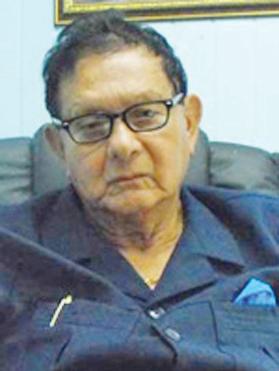
He recalled that a few nights ago, one of the officers, who committed the act, went in search of him but he hid after hearing the said officer making enquiries about him. He said if the right persons are brought before him, he will be able to positively identify them. He believes that because of his sexual preference, he is being discriminated against. Recently, Police Commissioner Leroy Brumell told media operatives that the Director of Public Prosecutions Bibi Shalimar Ali-Hack will review the case involving the young man and forward her recommendation to the force. He said: “I must mention that Beyonce did not identify any of the police ranks, but we are still continuing investigations.”
Immigration & Visa Services We handle all Canadian, USA and UK immigration and visa matters. Self sponsorships, holiday/visitor’s visas, work permits, students visas, family, class, immigration forms, embassy enquiries, appeals for refused cases, US green card lottery, business class waivers, pardons, etc. Get your visa approved. High success rate. Balwant Persaud & Associates. Certified Immigration Consultants, 68 Sixth Street, Alberttown, Georgetown (Between Cummings & Lights Sts) Tel: 2251540, 622-8308, 655-3105. Email: balwantpersaud@yahoo.ca

Professional Key Shop, 125 Carmichael Street, Georgetown. Phone: 225-3923, mobile: 621-3249.
We cut any type of key, service and repair all types of locks. Get your extra key today.

lAND FOR SAlE
EXECUTIVE 2 STOREY BUILDING; 3 BEDROOMS WITH ALL MODERN CONVENIENCES; FUNISHED/ UNFURNISHED. MEADOW BROOK GARDENS. CONTACT MR NARINE ON 696-8230.
2 Modern Apartments located in Campbellville; hot and cold water etc. Call 219-4535 House located at Lamaha Gardens; hot & cold water. Call 219-4535
Are you suffering from abnormal behaviors, addictions, stresses, or psychosomatic sickness? Feeling suicidal, low self-esteem, loneliness, unloved, anger, conflicts and relationship problems? For appointments call 592-621-0552 from12:0018:00h Email: healthworldhc@ gmail.com VEhIClES FOR SAlE

JUST ARRIVED: TOP QUALITY RECONDITIONED VEHICLES; TOYOTA NOAH; TOYOTA VOXY; TOYOTA IST (NEW SHAPE); SUZUKI SWIFT; DAIHATSU MOVE (660CC); MERCEDES BENZ C200 KOMPRESSOR; COROLLA AE100 WAGON; HONDA CRV RD4; LAND CRUISER (FULLY LOADED); MAZDA PROCEED 4WD EXTRA-CAB PICK-UP; TOYOTA HILUX 4WD EXTRA CAB PICKUPS - 3RZ, 5L, 3L SOLID
DEFFERNTIAL; MITSUBISHI CANTER TRUCKS 4 TONS FREEZER; 3 TONS OPEN TRAY; 2 TONS 4WD; 3 TONS DUMP TRUCK; NISSAN ATLAS 2 TONS OPEN TRAY TRUCK. PRE-ORDER YOUR UNITS EARLY AND GET THE BEST PRRICES. FULL AFTER SALES SERVICES AND FINANCING AVAILABLE. DEO MARAJ AUTO SALES, 2 CHIMNEY ROAD, CHATEAU MARGOT, ECD. 624-0762, 220-5177. A NAME AND SERVICE YOU CAN TRUST. 4x4 Nissan Titan fully powered Immaculate condition $3.5 M. No reasonable offer refused. 622-7740 2004 Toyota Raum. Price $2.150M. Call 657-1796 or 626-9590
Toyota Hilux 4x4 Extra cab pickup. Excellent condition, $3M. Phone: 6490707 or 264-2682


He explained that he was
He claims that up to Saturday morning about 03:30h, he was harassed by a member of the Guyana Police Force who went to Carmichael and Church streets to collect one of his clients. “He tell me that if I don’t reach Brickdam by the morning, I will take what I get on the road… he said he would send people with guns and is every night they come around here and harass we.”
The three officers who were on duty during the period of the alleged rape have all been placed under close arrest.
The Region 10 Mashramani planning committee is in the process of organising several cultural events, as part of the regional calendar of activities to mark the 44th Republican status of the country. The Region 10 Democratic Council (RDC) will be sending a 50-strong contingent to participate in the national costume and float parade in Georgetown on February 23.
The second annual “Mash Bash”, a cultural event, is expected to be held in Linden on February 23, and will feature music, a costume float parade, and food, cultural and sporting activities.
This event, according to planning committee member Maurice Butters, is aimed at giving Lindeners and other Region 10 residents who may not have the opportunity to travel to Georgetown for the national Mashramani
celebration and float parade, a chance to participate in something significant. On the Mackenzie shore, the Mash Bash is expected to commence at Amelia’s Ward, while at Wismar, the festivities are scheduled to kick off at the Bayroc and Christianburg community centre grounds.
In addition, there will be an east versus west Mashramani float competition, with floats depicting the essence of the Wismar and Mackenzie communities. The celebration will culminate at Co-op Crescent, Mackenzie.
Additionally, members of the committee related that there will be a culture fest, along with sporting activities such as a domino competition, fishing, five-a-side football, and swimming.
Novelty events will include egg-and-spoon races, a greasy pig competition, buns
and drink eating competitions. Prizes will be up for grabs.
For the artistically inclined, arts and crafts will be featured at the Linden museum, in addition to cultural items like national songs and calypsos. The planning committee is calling on food handlers, business entities and stakeholders to come on board.
The traditional flag raising ceremony will be held on February 22 at the Mackenzie Sports Club (MSC) ground. On February 25, an art competition, as well as a symposium, along with the singing of national songs and the celebrating of folklore will be held at the Egbert Benjamin Centre, Mackenzie.
Among the other activities will be a jouvert on March 1, followed by a wet fete on March 28, and a Linden road parade on March 2.
The alleged killer of the well known biker Kirk Davis appeared in court on Monday before Chief Magistrate Priya Sewnarine-Beharry at the Georgetown Magistrates’ Courts for further proceedings of his preliminary inquiry (PI). Randy Jagdeo, 28, of Lot 159 Third Street, Alexander Village, Georgetown was accused of shooting Kirk Davis, 30, at his Eccles, East
Bank Demerara home on September 3, 2013.
Ranks from the Guyana Police Force continued to testify against the accused as to what evidence was actually received and what they did with the evidence they collected. One rank, who was deemed an expert on firearm and ammunition, gave evidence about what he did on the day in question. Jageo’s attorneys Mark Waldron and Roger
Yearwood cross examined the witnesses after they were finished testifying so as to prove the innocence of the accused.
The preliminary inquiry continues because of the absence of other witnesses, but Chief Magistrate Priya Sewnarine-Beharry noted that the PI will possibly end on the next appearance of the accused. The matter is adjourned for Feburary 27 at 10:00h.
In recent weeks, the importance of a cricket nation’s international performance has run secondary to the capacity of its board to deal shrewdly, even secretly, to secure a greater share of the money flowing into the game. The coup completed at the ICC board table in Singapore on Saturday placed Australia in exclusive company alongside India and England, the “big three” now effectively grasping the sort of influence and financial strength that will leave the rest beholden to their whims.
So what irony that in the same instant Cricket Australia were placing themselves at the very top of the game’s decision-making, the national team was battling rain and a cramped timeframe to prepare as adequately as possible for a bout with South Africa, the finest team of the age but a minor player in the new shape of world cricket’s governance. Unlike the boardroom tussle, this conflict will be played out in full public view, with the hosts holding many of the aces.
Chief among these is the inherent advantage of playing on familiar soil, a fac-
tor that grows evermore influential with each passing year of cramped schedules, jumbled formats and commercial thinking. Not so long ago, India were chastised for wounded talk of “wait until we play you at home”, but the emerging trend of the past 12 months has been that near enough to every team has taken up something of this attitude, for reasons financial as much as practical. In the words of one former administrator, “ultimately what matters most for all your stakeholders is to win at home”.
Scheming Australia certainly followed this dictum during back-to-back Ashes bouts, planning, scheming and preparing during a series lost in England to mete out fearful revenge in the southern hemisphere. Theirs was a triumph in every sense, not only sweeping Alastair Cook’s tourists on the field but causing all manner of chaos for them off it, with a casualty list now including three members of the touring team plus the coach, Andy Flower.
Yet that series is now

considered by Australia’s captain Michael Clarke and coach Darren Lehmann to be little more than a pleasant starting point for what they hope will be a far longer run of victories, against all comers and in all conditions. Lehmann likes to say such success is vital “if we’re going to get to where we want to go”, namely to the top spot on the global rankings that

recall the attributes of the great Australian team that had begun to decline by then, namely their mental strength in replicating the command performances of Brisbane, Adelaide, Perth, Melbourne and Sydney in such destinations as Nagpur, Colombo, Bridgetown, Dhaka, and Johannesburg.
It is a standard to which he and Lehmann again aspire, following the accumulation of a horrid away record last year - seven defeats from nine Tests.
Challenge
not least because in South Africa they find an environment not too far removed from their own. If India’s turning pitches can seem like playing on the moon, South Africa’s fast and seaming decks are more like venturing from Sydney to Brisbane at the outset of the summer, albeit with a nine-hour time difference thrown in.
South Africa currently possess. That supremacy has been built upon a subversion of the home-ground notion, for Graeme Smith’s side have become much admired for being capable of performing to a high standard anytime, anywhere. Nothing speaks to this quite so strongly as their unbeaten record overseas since 2006, a run outlasting even their string of victories at home. Ricky Ponting’s underrated 2009 tourists were the last team to beat South Africa anywhere.
Clarke is old enough to
“The fact that not many teams have won away in the last couple of years is what makes it a greater prize, a greater challenge,” Clarke said. “My view is you want to win every game you play, whether I’m playing in Australia or playing in South Africa or the West Indies or India, you want to have success. But it’s obviously extremely hard to win away from home and I think the last couple of years you’ve seen that across the board.
“If we want to get back to being No. 1 in the world, we have to have success away from home, we have to beat the best teams, and as tough a challenge as it is we’re excited about it.”
Clarke and his team have plenty of reason to think they can measure up to the task,
“It’s probably going to be easier for us to adapt to these conditions, but there’s always a home-ground advantage,” Clarke said. “You’ve got crowd, you’ve got family, you’ve got friends, you’ve got the comforts of if you’re playing in your own state you stay in your own house. The food, the hotels, you know the grounds, you know the change rooms - there’s so much that comes with playing in your own backyard. Hence why it’s so hard to have success away from home. To be the best team in the world you’ve got to be able to adapt.”
In Mitchell Johnson, Ryan Harris, Peter Siddle and Nathan Lyon, Australia have a bowling attack more than capable of making such an adaptation. Clarke will not want for willing and skilful practitioners in the field, eager also to test themselves against opponents not quite so familiar as England became over the course of 10 Tests. (Cricinfo)

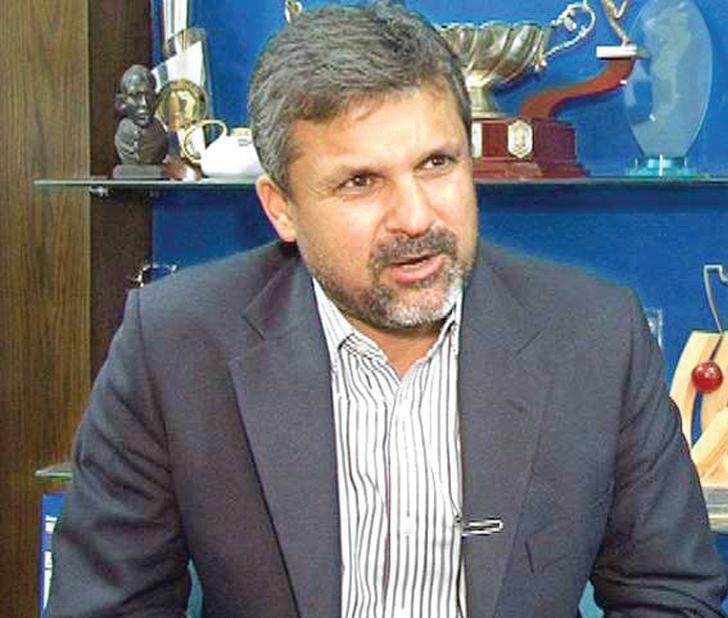
Amid a slew of changes to Pakistan cricket, Moin Khan has been named the new head coach of the national side. The decision was taken at an eightmember management committee meeting, a day after PCB chairman Zaka Ashraf was dismissed and the board of governors dissolved.
Moin will replace Dav Whatmore, whose contract expires this month. He had been appointed team manager before the tour to Zimbabwe in August 2013 but had recently been replaced by Zakir Khan.
In other major changes, Aamer Sohail’s appointment as chief selector last week was denounced, and former Pakistan cricketer Azhar Khan was put in charge of an interim selection committee.
The committee, headed by newly reappointed PCB chairman Najam Sethi, also endorsed Mohammad Akram’s two-year contract as Pakistan’s bowling coach. A new fielding coach was also appointed, with Shoaib Mohammad put in charge for the Asia Cup and World Twenty20.
When Ashraf was in charge of the PCB, he had appointed Sohail as director game and development national cricket academy and given him an additional charge of chief selector. But the Sethi-led PCB denounced a majority of the decisions taken by Ashraf since Ashraf came to power last month.
“The management committee decided in principle that any decision which lacks transparency or due process shall not be ratified,” said Sethi while briefing the press in Lahore after a five-hour meeting.
“(Since) PCB service rules were not followed in the decision to appoint him [Sohail] … further, the re-
David Haye insists he remains in the dark about whether or not he will return to the ring.
The 33-year-old former world heavyweight champion put his future on hold after he underwent a fivehour operation in Germany to repair severely ruptured tendons in his right arm in November.
The surgery forced him to withdraw from his keenly-anticipated grudge match with fellow Brit Tyson Fury and he admitted at the time that his career could be over.
However, the Bermondsey-born fighter is refusing to give up on a return, although he admits there is no timescale on a potential comeback.
He said: “You talk to 10 doctors, 50 per cent say you can make a recovery and 50 per cent say, ‘no you’re done, you’ll never be able to throw a punch again otherwise your arm will fall out of its socket’.
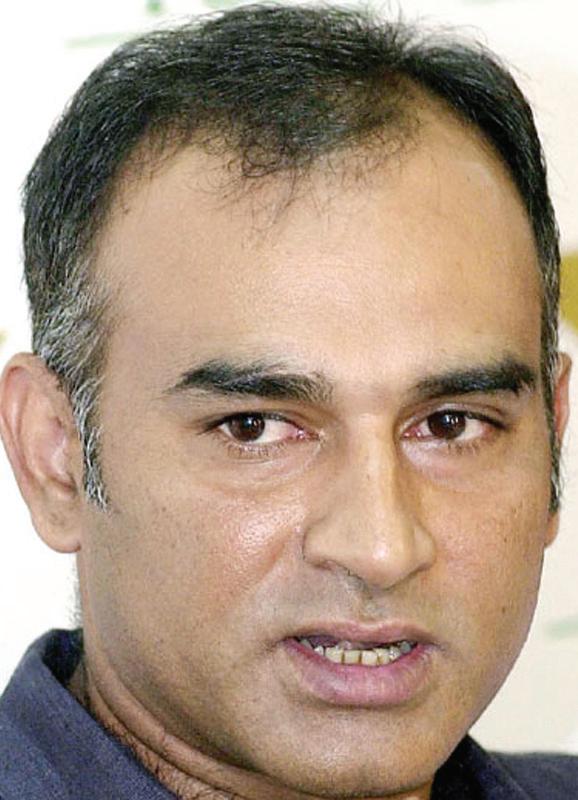
cord reflects that Aamer Sohail was never issued a letter of appointment for any post in PCB, therefore he held no post in PCB.
“The appointments of Mr Basit Ali (coach of regional cricket academies in Karachi) and Mr. Mohammad Ilyas (chief selector of junior teams and the women’s national team) were not in accordance with PCB Services Rules. Their appointments are declared as void abinitio, null and void.”
Apart from these major cricketing changes, the committee also took several administrative decisions including the appointment of the advisory Committee on Regional Affairs comprising representatives of Regions, and another committee on Cricketing Affairs comprising former captains and former chairmen of PCB.
Though the PCB advertised three coaching positions including head, batting and fielding coach, the management committee scrapped the batting coach position. It has decided to introduce a new role called chief cricket consultant, filled by former captain Zaheer Abbas - also a managing committee member, has been named to travel with the team to supervise the batting department.
(Cricinfo)
“It’s just down to how the rehab takes, I’m doing that
every day, I’m doing the best I can. No one knows how long it’s going to take, no one knows how it’s going to heal.
“At the moment I can’t throw a punch, so hopefully in a few months I’ll be able to throw one, but you never know.
“I can’t say 100 per cent yes or 100 per cent no, I’m just taking every day at a time. I won’t know anything for a good few months yet. My shoulder’s bad enough that I can’t even run yet.
“That shows you how far away I am from being able to punch. It’s going to take a little while, but I’m working hard on the rehab.
“I’ve just got to be patient and keep a low profile, and when I do have news, good or bad, I’ll let everyone know. Best-case scenario my arm gets back and it’s just as good as it was before it busted.
“And then I think I’ve got a lot left I believe, I think I’ve got a few more good fights left in me, if this arm can get back on track.”

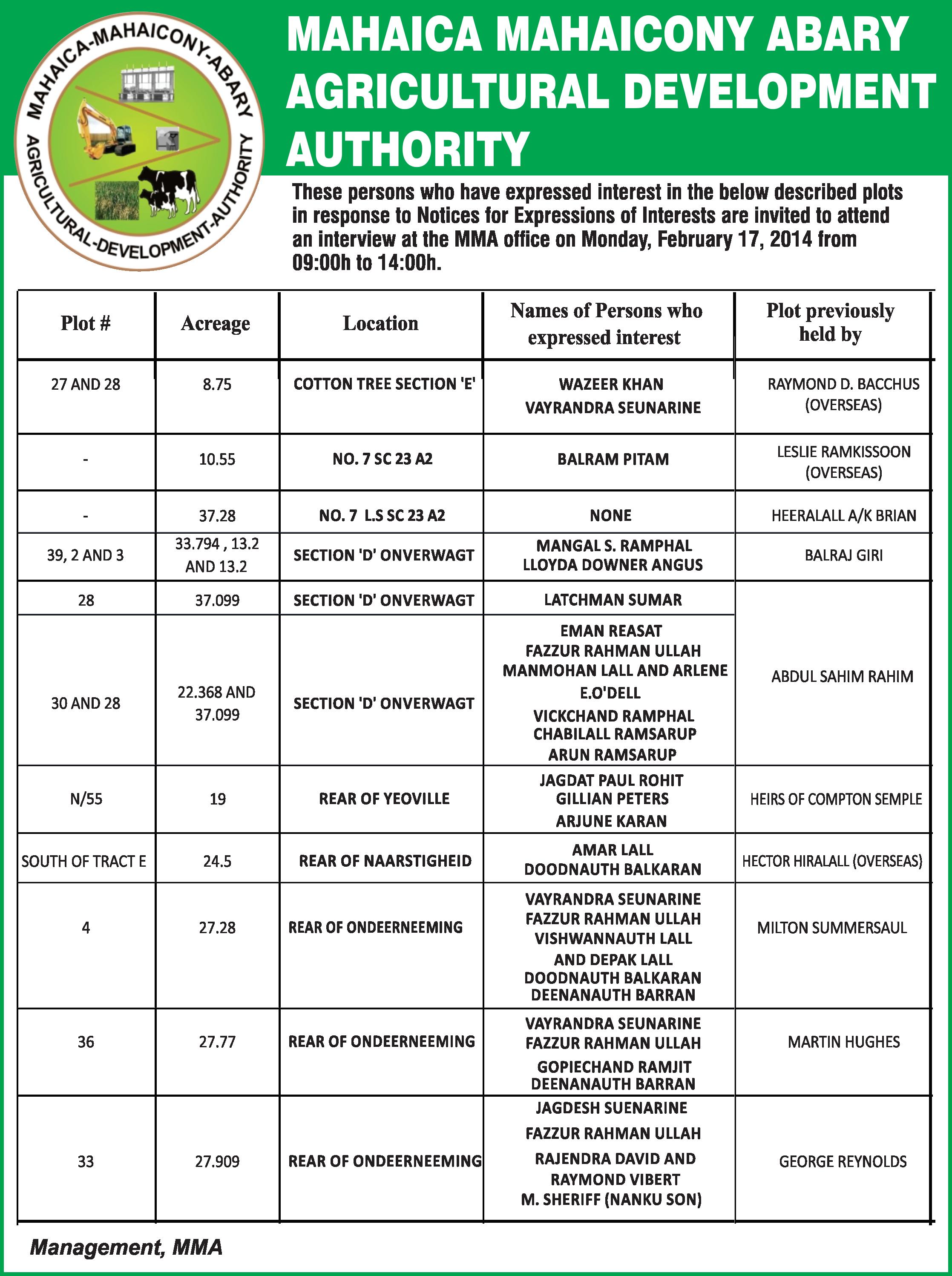
By Rajiv Bisnauth
Retired Chancellor of the Judiciary, Justice Cecil Kennard has resigned as first vice-president of the Guyana Horse Racing Authority (GHRA) with immediate effect.
Kennard tendered his resignation on Tuesday to GHRA President Vic Ouditt, just three days after he was unanimously voted into the position.
Meanwhile, in the wake of his resignation, Kennard in an exclusive interview with Guyana Times Sport on Tuesday, said having lost the presidency, he was not inclined to accept any other position in the GHRA, given the current circumstamces.
He described these current circumstances as “the attitude of some members of the GHRA” during Sunday’s general meeting, as well as the “voting process”, all of which he said contributed to him making the decision to quit.
“There are two reasons: one is the behaviour of some members present at Sunday’s meeting. Their attitude was quite atrocious, quite unbecoming, and that atrocious behaviour was displayed in the presence of Culture, Youth and Sport Ministry Deputy Permanent Secretary Steve Ninvalle, and I thought it was very disrespectful,” Kennard said.
“Another reason is, as I said in my opening remarks, there are two clubs (the Port Mourant Turf Club and the Ryan Crawford Memorial

Turf Club), which have not paid their affiliation fees for 2013, and I expressed the opinion that they should not be entitled to vote.
“Even if they had paid at the beginning of the meeting, I would not have been annoyed, but no efforts were made to pay, so I felt that the fact that they did not pay and were permitted to vote, was quite improper and illegal, and therefore I do not intend to be a part of what I will consider an illegality,” Kennard said.
He added that he would not comment on whether the election was fair and transparent. “I will leave that for the public to decide, so I will not comment any further as to whteher the president was elected fairly or not,” he said.
Support
Despite his resignation, Kennard said he remains supportive of the development of horse racing in

He also called on the new body to ensure that the sport is properly managed and for an early passage of the horse race legislation.
Ouditt, who was elected president when the sport was resuscitated, did not seek re-election in 2011, after he had expressed outrage with the attitude of some GHRA members. However, he got the thumbs-up from members on Sunday with 10 votes, as against eight for Kennard.
Ouditt will serve in the post for one year until the next annual general meeting.
The meeting was attended by six race tracks, along with horse owners, trainers and other stakeholders.
The Kennard Memorial, Port Mourant, Ryan Crawford, Budhan’s, Bush Lot and Rising Sun Turf clubs were part of the voting process at Sunday’s meeting.

The 10th annual Rose Hall Town Youth and Sports Club (RHTY&SC), Busta, Champion-of-Champions cricket tournament for the top cricket clubs in Berbice will bowl off on Saturday at four venues in the Ancient County.
The tournament, hosted by the RHTY&SC and is sponsored by the Guyana Beverage Company under its Busta brand.
The tournament will involve Upper Corentyne, RHT Gizmos & Gadgets, Albion, West Berbice, Young Warriors Universal DVD,

Blairmont Community Centre, Port Mourant, Karibee Rice and Universal Solution Bermine.
For Sunday’s games, Rose Hall Town Gizmos and Gadgets will host Upper Corentyne at the Area ‘H’ ground; Albion Cricket Club will be home to West Berbice; the Port Mourant Cricket Club will host a
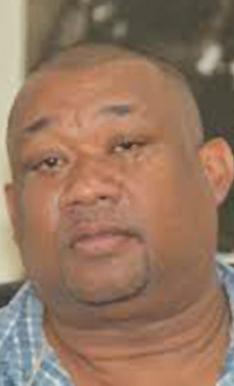

youthful Bermine Cricket Club, while Young Warriors Cricket Club will be the host for the clash between Blairmont.
Meanwhile, secretary/ Chief Executive Officer of the RHTY&SC Hilbert Foster said that all arrangements are in place for a highly successful tournament.

“Despite the absence of several top players, the tournament will definitely be of a high standard with the likes of former West Indies opening batsman Sewnarine Chattergoon, former national wicket keeper, Delbert Hicks, national middle-order batsman Rajiv Ivan,” Foster said.
He added that several promising under-19 players will have the opportunity to perform at the first division level.
The semifinals will be played on the February 22, while the date and the venue for the final will be announced later.
The winner of the tournament will receive $100,000 and a trophy, while the runner-up will take home $50,000. The finals will also be broadcasted live on NCN Radio.
All matches start at 09.30h and teams will be outfitted in Busta T/Shirts provided by the sponsors.
Jumbo’s New Year’s “Sweet Stakes” set for Sunday – over 100 horses confirmed to compete

The Port Mourant Turf Club (PMTC) will come alive on Sunday when Jumbo Jet Auto Sales, in collaboration with the PMTC, stages what is being dubbed the New Year’s “Sweet Stakes” horse race meet.
The one-day activity has already attracted over 100 of the country’s top thoroughbreds, which will be competing for millions of dollars in cash and trophies, beginning at noon.
Seven highly anticipated races are carded for the day, with the feature D1 and Lower fetching the highest
first prize of $1 million. That race will be run over 1500 meters.
The main supporting race is for 3-year-old Guyana and West Indies bred animals, competing at 1200 meters for a top prize of $600,000.
The winner of the 4-yearold Guyana and West Indies bred horses event (1500 meters) is guaranteed $500,000, while the same cash prize is at stake for the champion horse in the E1 and Lower (1200 meters).
Other races on the agenda are the G1 and Lower (1200 meters/$400,000 first prize), I and Lower (1000
meters/$250,000 first prize), and the I and Lower (1200 meters/$200,000 first prize).
According to information emanating from the organising team, all systems are in place for a highly competitive day of racing, featuring the leading horses, jockeys and stables. Reports out of Berbice are that the track is in excellent condition and participating stables from that part of the country have been working tirelessly over the past few weeks to get their animals in top shape for Sunday’s highly anticipated showdown.
Athree-man team from the 75th anniversary committee of the Berbice Cricket Board (BCB), headed by Chairman Hilbert Foster, Malcome Peters and former West Indies batsman Basil Butcher, on Friday paid a courtesy call on Sport Minister Dr Frank Anthony at his office.
The delegation informed
the minister of the massive plans the BCB has in place to observe their Diamond Jubilee anniversary, including the hosting of approximately 20 cricket tournaments at all levels and 50 major programmes and activities throughout the ancient county.
Minister Anthony congratulated the BCB on their stewardship of the game
in the ancient county and pledged the Ministry’s support towards the board’s anniversary celebration.
Foster expressed gratitude on behalf of the 75th anniversary committee to the minister for the meeting and for his commitment.
The committee is also expected to meet with acting Tourism Minister Irfaan Ali shortly.
The independent panel investigating cycling’s doping past has appealed for witnesses to come forward with information.
Dick Marty, chairman of the Cycling Independent Reform Commission (CIRC), says the panel’s main aim is “not to punish doping offenders”.
It has powers to reduce sanctions against witnesses who give evidence.
Lance Armstrong said in November he would testify with “100% transparency” at any future inquiry into doping.
The former cyclist wants assurances he will be treated fairly after admitting in January last year he took performance-enhancing drugs during all seven of his Tour de France wins.
The CIRC was set up by the International Cycling Union (UCI) in January to investigate historic doping in cycling and allegations that the UCI, cycling’s governing body, has been involved in previous wrongdoing.
“The primary purpose of our investigation is not to

punish doping offenders but to learn from the past so we can help ensure a better future for cycling,” said Marty.
“We will treat all witnesses fairly and so I urge anyone in the cycling community with information that can help our investigation to come forward.
“We have much work to do over the coming year and I hope, with the cooperation of the cycling family, the sport has a unique opportunity to learn lessons and regain trust.”
In a statement, the CIRC said the main focus of the investigation would be to “determine the processes
and practices in professional road cycling that allowed the culture of doping to perpetuate over a sustained period of time, in particular to discover the main providers and facilitators of doping in cycling in the period 19982013.”
Brian Cookson, who became UCI president in September last year, announced shortly after he was elected his intention to set up an independent commission tasked with investigating doping in cycling.
“Today marks an important step in understanding the past and restoring the credibility of our sport,” he said.
“The Cycling Independent Reform Commission will not only help us learn from the past, but will also play an important role in shaping our future processes and practices.
“It is essential that the Commission is left to get on with its investigation on a completely independent basis and I have ensured that all the structures are in place to allow this to happen.” (BBC Sport)

All-rounder Yuvraj
Singh’s limited over prowess secured him a place in India’s 15-member squad on Tuesday for the World Twenty20 in Bangladesh next month.
One of the cleanest strikers of the ball and more than a handy left-arm spinner, Singh, 32, was instrumental in India’s triumph in the inaugural World Twenty20 in 2007
where he hit England paceman Stuart Broad for six sixes in an over.
Though he could not cement his place in the test squad, Singh, 32, was also the architect of India’s 50over World Cup 2011 victory at home where his allround exploits earned him the player of the tournament award.
Singh was not part of the Indian 50-over squad in

New Zealand which lost the five-match series 4-0.
Stuart Binny, son of former India all-rounder Roger, was also named in the squad to be led by Mahendra Singh Dhoni who would be seeking his third world title in Bangladesh.
Off-spinner Ravichandran Ashwin and all-rounder Ravindra Jadeja are expected to share the spin workload even though the selectors included a third spinner in leggie Amit Mishra.
India begin their World Twenty20 campaign against 2009 champions Pakistan in Dhaka on March 21.
Squad: Mahendra Singh Dhoni (captain), Shikhar Dhawan, Rohit Sharma, Virat Kohli, Suresh Raina, Yuvraj Singh, Ajinkya Rahane, Ravindra Jadeja, Ravichandran Ashwin, Bhuvneshwar Kumar, Mohammed Shami, Stuart Binny, Amit Mishra, Mohit Sharma, Varun Aaron. (Reuters)




"In the wake of the Mudgal committee report, do you think the auction should go on?" That was the first question posed to Venky Mysore, the Kolkata Knight Riders chief executive, who was addressing a media conference to announce a tie-up with global giant SAP on Tuesday in Bangalore. Mysore excused himself from responding, But later during the briefing he said: "franchise sport is here and going to stay."
Mysore might have spoken on behalf of the rest of the seven franchises: despite a damning report on corruption in the IPL by the Justice Mudgal committee, there was nothing today at the auction venue to suggest the BCCI was bothered.
The flags of all eight teams fluttered on a muggy Tuesday
as franchise owners, heads and officials, former India captains and international coaches slipped in with big smiles to re-acquaint themselves with their friends in the IPL fraternity. The celebrity factor came when Preity Zinta (one of the owners at Kings XI Punjab) crossed paths with fellow Bollywood star Juhi Chawla, wife of Jay Mehta, the coowner of Knight Riders. There was whispered speculation over whether an injured Shah Rukh Khan would make it for the auction. International media, specifically from the UK, were curious as to what kind of interest franchises had in Kevin Pietersen.
In that respect the buildup to what has become one of the most watched events on TV was no different to previous years. But as far as the
auction goes there are quite e few differences compared to the last big auction, which happened in 2011. Then there were 10 teams, compared to eight now. Then the squads were bigger than the maximum size, enforced this season, of 27. The biggest change this time is the inclusion of uncapped Indian players in the auction - a move supported by most of the franchises.
Impact
Another change that will impact the way teams plan their auction strategy is the depletion in the pool for quality capped Indian players in the wake of retentions by teams. "In 2011 the total number of players retained was 12. This time it is 24," the franchise head of an IPLwinning franchise said. "More players have been retained
and most of them happened to be top-class (Indian) players. The net effect of all this, just by virtue of supply and demand, means there is always a challenge for Indian capped players. The ones who have been retained are the better Indian players. That group has always remained small."
After managing a team for six years, franchise officials say they have learned it isn't always necessary to chase a big name. "Franchises have also become a lot more mature," the franchise head said. "You can always form a team with a talent supporting cast. Teams like Rajasthan, Punjab and Hyderabad have shown you can be competitive without really having a huge name in the team."
Does that mean marquee names like Virender Sehwag, Yuvraj Singh, Michael Hussey
and Jacques Kallis might not attract a huge attention? The talking point about these stars is they are no longer young and no longer carry the matchwinner tag, which they once wore proudly on their sleeves.
Demand
A coach disagreed. "They will have a lot of demand," he said. "When you are thinking of these players a lot of people are saying they are not playing any more international cricket and they are not in form. But when you are picking somebody for Twenty20 the guy does not need to score a hundred for you. The expectations are completely different.
"You are looking for somebody who can give an explosive start, you are looking for somebody who can build
emerara Distillers
DLimited (DDL), under the internationally renowned Soft Drink Pepsi, has renewed its sponsorship of the Rose Hall Town Youth & Sports Club (RHTY&SC) under-19 and intermediate teams for another year.
The partnership, which is now in its 11th year, started in 2004 when Pepsi replaced the Guyana Telephone and Telegraph (GT&T) Company, which opted to sponsor the club’s Anti Drug and Pro Education campaigns.
The Pepsi sponsorship package is worth $220,000, with the team set to also receive 30 Pepsi t-shirts. Funds would be used to cover the cost of transportation, umpiring fees, balls, cricket gear and meals.
Club Secretary/Chief Executive Officer (CEO)
Hilbert Foster, speaking at the presentation ceremony, which took place on Friday at the company’s head office, hailed the productive and successful relationship between DDL and the entity.
Positive results
Calling the relationship a producer of positive results, Foster thanked DDL for their continued support and belief in Guyana’s “leading” youth and sports club.
Foster indicated that the sponsorship has helped the club to mould the careers of players’ like Assad Fudadin, Abdel Fudadin, Dominic Rikhi, Askay Homraj, Shemaine Campbell, Plaffina Millington, Clinton Pestano, Khemraj Mahadeo, Delbert Hicks, Shawn Pereira, Shailendra
Shameer, Brandon Prasad, Erica Hashley and Shabika Gajnabi among others.
DDL Pepsi Brand Manager Larry Wills, in handing over the sponsorship cheque, re-stated his company’s pleasure in being associated with the RHTY&SC.
“This club’s record of achievement speaks for itself, and I would like to congratulate the Rose Hall Town Pepsi team for successfully representing the Pepsi brand on and off the field.”
The Rose Hall Town Pepsi under-19 team in 2014 is being led by Nicholas Cameron, with Homraj as his deputy, while West Indies female all rounder Campbell will be in charge of the intermediate team. Her deputy is Devin Baldeo.
an innings in the middle or somebody who can finish the game. From a cricketing point of view, when a known name is walking into the middle the pressure comes automatically."
Barring Delhi Daredevils, all the franchises have retained between one and five players. This means franchises will enter the auction with differently sized purses. Mumbai Indians, Chennai Super Kings and Rajasthan Royals are the three teams who have retained the maximum of five players. These three teams will only have Rs 21 crore at their disposal. Royals have always worked on a small budget and have tried to derive maximum benefit. That strategy has worked for them and they are bound to continue utilising it.
(Cricinfo)