Closure of Bartica sub-office affecting gold declaration
Alex Griffith’s shooter to be charged GRC appeals for more assistance
Free movement in Caricom has improved – Foreign Affairs Minister Guyanese crushed by container in Canada
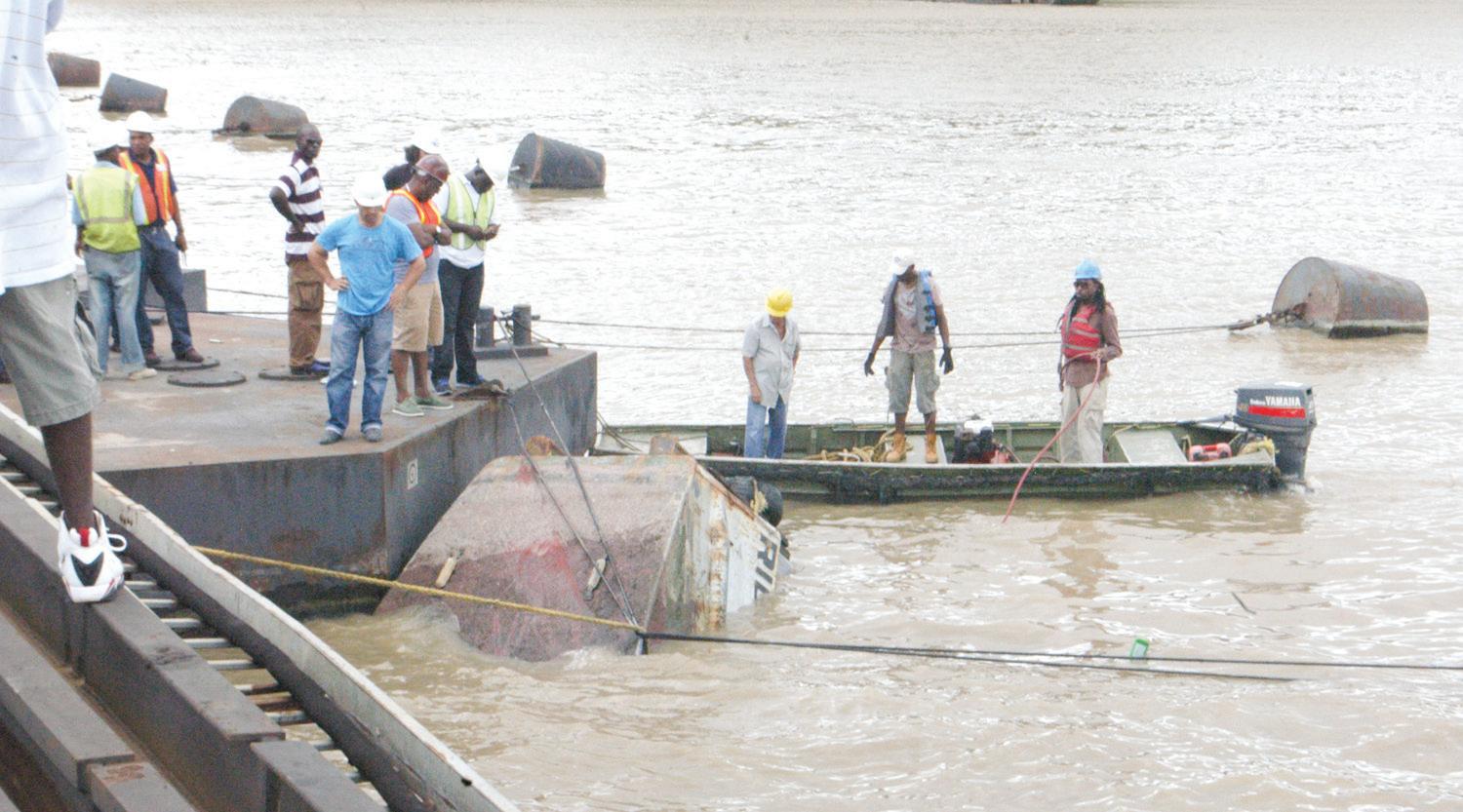
The vessel Rickford L 2 being retrieved from the Demerara River on Saturday (Photo by Marceano Narine)
Closure of Bartica sub-office affecting gold declaration
The closure of the sub-office of the Guyana Gold Board (GGB) in Bartica could be one of the reasons for the reported drop in the declaration of gold here, Guyana Gold and Diamond Miners Association (GGDMA) President Patrick Harding said.
Speaking recently at the Omai Wharf in Linden, Region 10, where reporters were briefed on the US$86.8 million Karouni Gold Project being executed by Troy Resources Guyana Inc, an Australian-based mining company, Natural Resources and Environment Minister Robert Persaud said there has been a drop in gold declaration. He said while gold mining op-
erations continue, there has been a “slow down” in sales to the GGB and other legitimate entities when compared to 2013.
Minister Persaud had called on Harding to take note, stating that small and medium scale miners must maintain the “good track record”.
Approximately 136,240 ounces of gold were declared between January and April, whiles during the same period last year, some 151,758 ounces were declared.
Harding told Guyana Times that, while the GGDMA has not yet addressed their members on the issue of declaration as raised by the Minister, he encouraged the miners to continue to declare their gold to the GGB and legitimate buyers.
However, Harding noted that there may be several reasons the declaration of gold has dipped, including due to the closure of the Bartica sub-office of the GGB.
“That is just part of the reason and, while we always encourage our members to do the right thing so that Government can get
its royalties, the closure of the sub-office has become a real inconvenience to miners wishing to declare their production,” said Harding.
The GGB’s sub-office in Bartica was closed last month following allegations of members tampering with gold bought from miners. It is believed that millions of dollars in diverted taxes and royalties were being lost due to the alleged scheme. The Natural Resources Ministry has since launched an investigation into the matter.
Harding reasoned that Bartica is the hub of mining activities and closing the sub-office posed many problems for miners, including security concerns. He added that miners may feel the need to sell their gold to the closest buyer, rather than taking the risk of travelling all the way to Georgetown to declare.
It was noted, too, by Harding that it may be tempting for miners to sell their gold to unregistered buyers. “The registered buyers have to pay a two per
cent tax and so their buying price would be lesser so as to recover that tax,” he said.
Meanwhile, Harding reiterated that the aim of the GGDMA is to continue to keep its gold production up and to encourage members to embrace advanced technology for improving gold recovery.
ETI
wins impromptu speech competition
Essequibo Technical Institute (ETI) students on Friday beat their competitors to emerge champions in the Inter-Secondary School Impromptu Speech Competition.
The competition, which was part of Independence Day activities, was held under the theme, “Youths Have A Voice and That Voice Must Be Heard”. Aside from ETI, Anna Regina Multilateral Secondary and Abram Zuil Secondary Schools participated in the competition.
The students had three minutes to speak on a topic that was given to them.
Winning the Best Speaker’s prize was Stacy Peters of ETI with 183 points; Suanna Singh of Anna Regina Multilateral Secondary came in second with 181 points; while Bibi Wazeeda Yassin of Abram
Zuil Secondary, with 147 points, copped the third spot.
Region Two Culture, Youth and Sport Officer Herald Alves commended the quality of the competition and urged the youths to stand up, make their voices heard and get more involved in community activities.
Alves said the region’s Culture Department has thus far in the year held several community-based youth activities along the coast and the Pomeroon River. Meanwhile, a moment of silence was held in observance of the passing of teacher and youth volunteer Natasha Peters, who was a strong supporter of the development of young people in the region.
Alves also extended gratitude to the Region Two Education Department for supporting the competition.
The closure of the Guyana Gold Board’s sub-office in Bartica could be one of the reasons for the reported drop in the declaration of gold here, GGDMA President Patrick Harding says
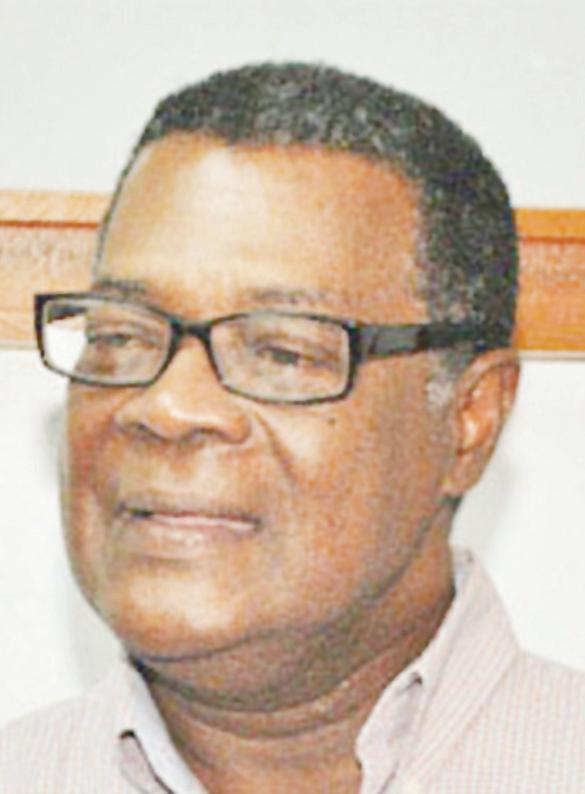
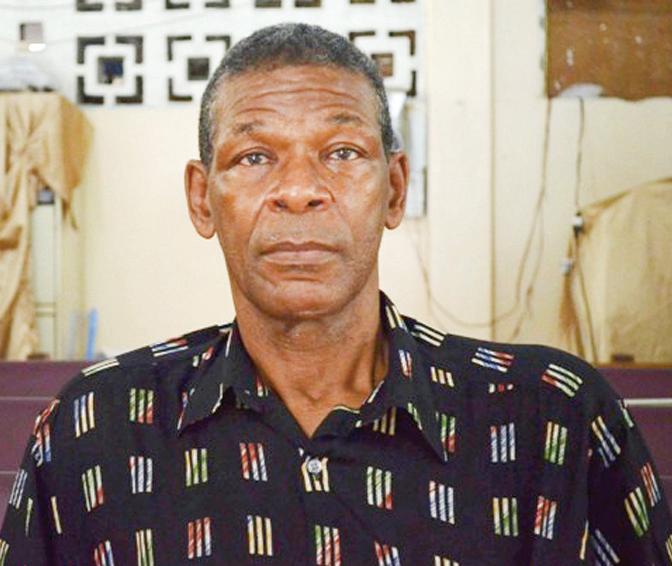
GGDMA President Patrick Harding
Stacy Peters of the Essequibo Technical Institute (ETI) collects her winning prize from a regional official
GRC appeals for more assistance
The Guyana Relief Council (GRC) is making a special appeal for corporate Guyana to make more donations to the entity which will assist in its drive to provide more assistance to the vulnera
ble and needy who are victims of various forms of disasters.
Wind: East north-easterly between 4.48 metres and 4.92 metres per second.
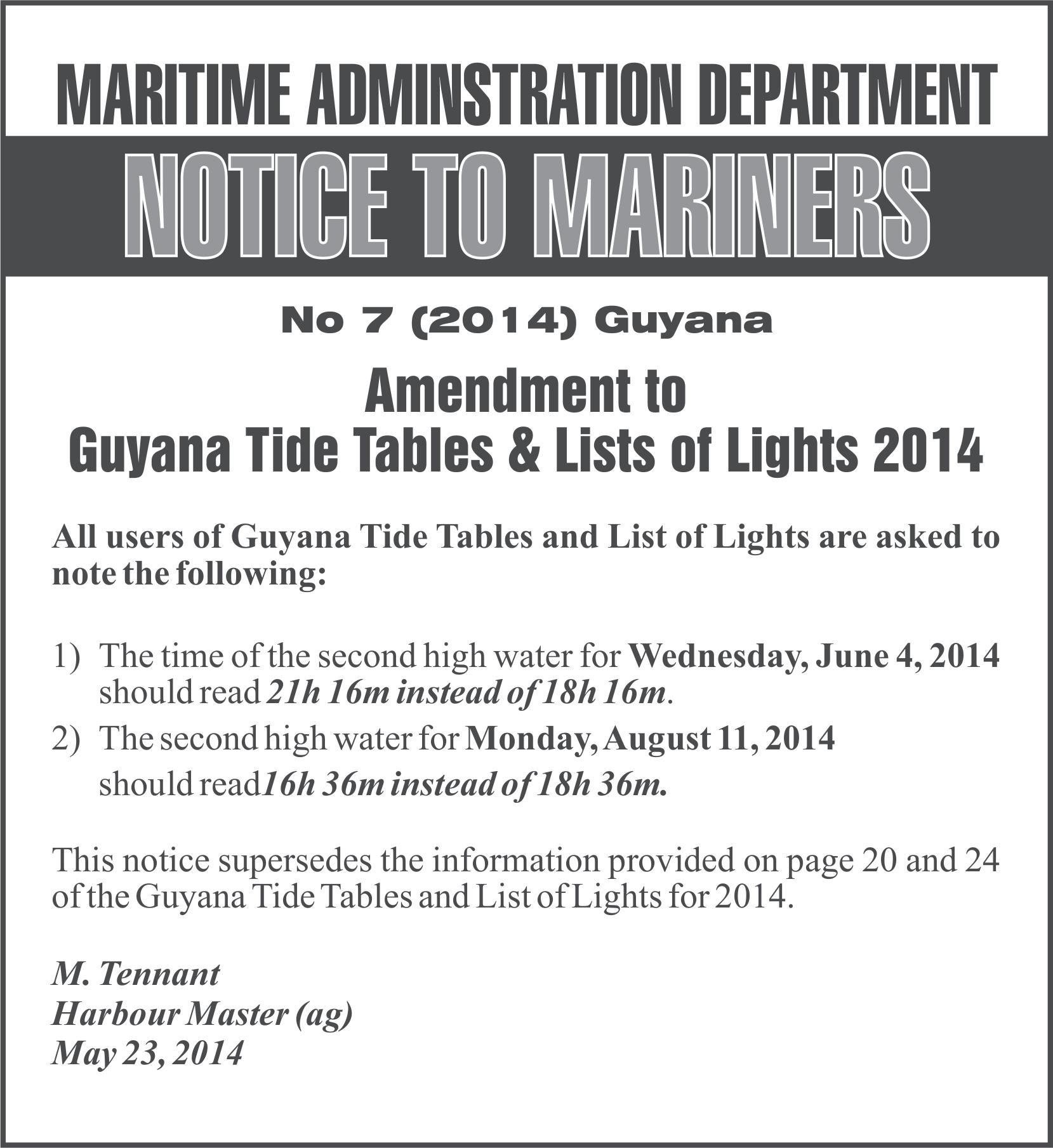
High Tide: 05:45h and 18:16h reaching maximum heights of 2.65 metres and 2.49 metres respectively.
Low Tide: 11:45h and 23:57h reaching minimum heights of 0.59 metre and 0.75 metre respectively.
The Council’s Chairperson Yvonne Hinds, speaking with the Guyana Times, explained that the GRC is willing to accept donations in the form of cash or kind because it is unable to muster enough resourc
es to make the impact that it wants in terms of providing victims of disasters with the level of support they need.
Hinds’ call for more businesses to get on board comes as the GRC is celebrating its 20th anniversary and is engaged in a series of activities aimed at reflecting on the de
velopment of the organisation and the quality of service it has provided over the past two decades.
Hinds admitted that while the government plays a significant role in lending financial assistance to the GRC, there is desperate need for the entity to attract more financing to undertake other projects that could transform the lives of disaster victims.
“We need businesses to be bold and to approach us... corporate Guyana doesn’t come and say, ‘Look, you take this. We know you do good work, so take this’,” she said.
Hinds’ wants a change in the culture where businesses could recog -
nize the importance of building long term and consistent partnerships with the GRC, as she recognized the assistance given by the overseas Chapter of the entity.
The Miami Chapter contributes over $1 million to the entity, which usually keeps it afloat, Hinds reported. Apart from this assistance, the GRC has had a long history of raising funds all year round via raffles and dinners, as well as auctions.
She recognized the sterling contributions of various businesses and individuals that have been provided interim assistance to the GRC when major disasters strike.
She said that the GRC was appreciative, nonetheless, of the response
from certain businesses whenever they are called upon to render immediate or urgent assistance.
Meanwhile, the GRC is also making a special appeal for more volunteers to come on board to be part of a dynamic type of individuals dedicated to providing service to humanity.
Hinds said it was necessary for a larger human resource complement to be developed to render assistance to the less fortunate. She was proud of the gains made over the last 20 years as the entity continues to achieve its mandate.
This mandate has expanded from providing assistance to those affected by fire only to include other disasters, the Chairperson confirmed.
The Guyana Relief Council (GRC) is appealing to corporate Guyana to make more donations to the entity as it seeks to provide assistance to victims of various forms of disasters
WEATHER: Thundery showers can be expected in the morning and early afternoon hours with light showers over coastal regions and near inland locations. Temperatures are expected to range between 24 degrees and 28 degrees Celsius.
Sunday Times Editor: Tajeram Mohabir
Tel: 225-5128, 231-0397, 226-9921, 226-2102, 223-7230 or 223-7231. Fax: 225-5134
As the new Bharitiya Janata Party (BJP) Government begins its five-year term in India, it is perhaps opportune to consider how the media can “fix” a negative perception of an institution. It also occurred here in Guyana to the PPP Government by the Opposition media.
Sanskrant Sanu, an IT specialist, pointed out how Western news outlets routinely described Prime Minister Narendra Modi and the BJP as a “right-wing Hindu-nationalist” in practically every news report. This is problematic for a couple of reasons. Firstly, it is not clear that the label “right” and “left” so easily apply to Indian politics and do not map clearly to Western political categories.
Certainly no economically right-wing politician in the West would declare in their first major address after being elected that the “the new Government is completely dedicated to the poor” as Modi did in his first meeting of the BJP parliamentary committee.
Nor is the label “Hindu-nationalist” entirely impartial, particularly since it is used pejoratively. British Prime Minister David Cameron, recently wrote in The Church Times, the leading Anglican newspaper, “I believe we should be more confident about our status as a Christian country, more ambitious about expanding the role of faith-based organisations, and, frankly, more evangelical about a faith that compels us to get out there and make a difference to people’s lives.”
Now, it is worth remembering that Britain is not officially secular. It has a state religion and an official Church, the Church of England. Their head of state, the Queen, is also head of the Church. Despite Prime Minister Cameron’s clear espousal of Christianity, and its centrality, both legally and restated by him, in the conception of their nation, the Conservative party is not routinely called a “Christiannationalist party”. To make this contrast even clearer, let us imagine that Prime Minister Modi made the statement:
“I believe we should be more confident about our status as a Hindu rashtra, more ambitious about expanding the role of Hindu organisations, and, frankly, more evangelical about spreading Hinduism to make a difference to people’s lives.”
All hell would break loose if Modi were to say this. However, this is just a restatement of Prime Minister Cameron’s statement about Christianity and Britain. But for some reason, Prime Minister Modi apparently has to be tagged as a “Hindu nationalist” in every press report while Cameron is not tagged as a “Christian nationalist”.
An even clearer example is George Bush Jr, who made no bones about his faith as a born-again Christian. Bush explicitly loosened the purse strings so that federal money could flow to “faith-based” organisations. But he was not routinely described as an evangelical Christian in every news report.
There is a misconception, however, that Bush was somewhat unique in modern American presidents. Every US President, Republican or Democrat, publicly avows his Christian faith. Bill Clinton was Southern Baptist, a conservative Christian denomination and attended church every week till he went to college. He could “quote scripture with the best of them.” Jimmy Carter was a self-described evangelical born-again Christian. Obama also avowed “I am a Christian. I have a deep faith.”
Despite affirmation of (Christian) faith being practically a pre-requisite to be President of the United States, presidents are not tagged by their religion in every press report. It should be questioned when Prime Minister Modi continues to be tagged as such.
Another reason the “Hindu nationalist” tag is misleading is that the term “Hindu” is used by the western media, knowing that their audience conceived it as a “religion” in the western, Abrahamic sense of an institution: with “a Book, a God, a Prophet and a Creed”. In fact, Hinduism is a way of life that accepts different spiritual paths to a realisation of the Divine, by whatever name it is called.
In that sense, Hinduism is absolutely “secular”.
1st Anniversary!
AFC lies and deception
Dear Editor,
The interminable misinformation, gossips and rumours continued unabatedly on a television station in Berbice. On May 24, Dr Veersammy Ramayya maintained his form and dexterity in those areas after a few weeks absence.
He claimed that the new dispensation in Parliament is now affording Guyanese an opportunity for the first time to see how a government operates. He has to be speaking on behalf of himself since he is now an MP and now has an idea about that.
Since 1992 each and every budget debate has been openly aired on TV as well as commented on by the media, so there is no dearth of information. What he has failed to highlight is the fact that the new dispensation has exposed the true nature and objectives of the AFC which is to assist APNU to make this country ungovernable and to carry out their personal vendettas.
They have realised that they will never be able to form a government on their own so they are willing wait for the crumbs from APNU’s table and to achieve political relevance by their cohabitation with APNU.
Like his leader, he has a genuine grievance with East Indians who want to migrate to the USA. He said that the East Indians cannot wait to get their US visas and insulted them by
telling them that they want to leave Guyana because “the grass is dry”.
As a citizen of the US why is he grazing on dry grass? Guyanese in the PNC days were willing to get away via “the back track” route by paying up to $20,000 US dollars, but now almost everyone is getting five- and 10-year visas and they are returning home! Is it because the grass is dry?
People who are migrating permanently are doing so mainly to be reunited with their families. Guyanese returning home on holidays are greatly impressed by the economic development taking place!
However, at the end of the programme he admitted that “Guyana is paradise and it should remain like that”! I think that the truth has a way of forcing itself out! The same happened with Khemraj Ramjattan when he admitted that the combined opposition are making trouble for our country!
Ramayya then talked about VAT reduction but failed to inform his viewers that many essential items are zero-rated. He failed to tell them also about the millions of dollars he received as a duty free concession on his expensive Prado. How can anyone drive an expensive duty free Prado and preach about tax cut?
Once again Ramayya wanted to give the impression that every commuter
crossing the Berbice Bridge has to pay $2,200. If a simple calculation is done it will be seen that a hire-car passenger in effect will only pay $275 and that a minibus passenger will only pay around $79 to cross the Bridge. (Divide 2,200 return fare by 8 and 28 passengers return, respectively.)
Is this the exorbitant bridge fare the AFC and APNU are talking about?
If passengers are being ripped off then that is not being done by the Berbice Bridge Company! He admitted at one point that the Bridge saved time and money and that there is no corruption as used to happen at the ferry crossing, but he later asked Berbicians, “What has the Bridge done for you?”
Lastly, Ramayya tried to smear the impeccable character of the Father of this nation by insinuating that Dr Cheddi Jagan sold out to the PNC Government when he gave “critical support” and that now the PPP/C Government is lambasting the PNC. But he cannot besmirch Dr Jagan’s great act of patriotism and selflessness.
What he again fails to explain to his viewers is that when Dr Jagan gave critical support to the PNC in 1975, it was for the good of this nation and to protect its territorial integrity- Venezuela was claiming two-thirds of Guyana’s territory. Dr Jagan changed his political
stance from “non-coperation and civil resistance” to critical support of the PNC because he said that it was the patriotic duty of the PPP to do so!
This great and selfless leader was robbed by the PNC election after election and yet he co-operated with the PNC for the sake of this country. When will the AFC give critical support for the sake of this country?
Even as we are on the verge of being internationally blacklisted through the non-passage of the AntiMoney Laundering and Countering the Financing of Terrorism Bill, the AFC has adamantly refused to support the Government! Yet AFC Leaders like Ramjattan and Nagamootoo claim to be “disciples” of Cheddi Jagan! What hypocrisy!
The AFC’s donations have dwindled drastically to the point of where the AFC leaders are begging weekly on television for money, but the well-wishers have realised that they were feeding a nest of vipers and that their monies are being deftly misappropriated.
Berbicians are now aware of the true nature of the AFC leaders and are waiting patiently for the next election!
Yours sincerely, Haseef Yusuf AFC Councillor, Region Six
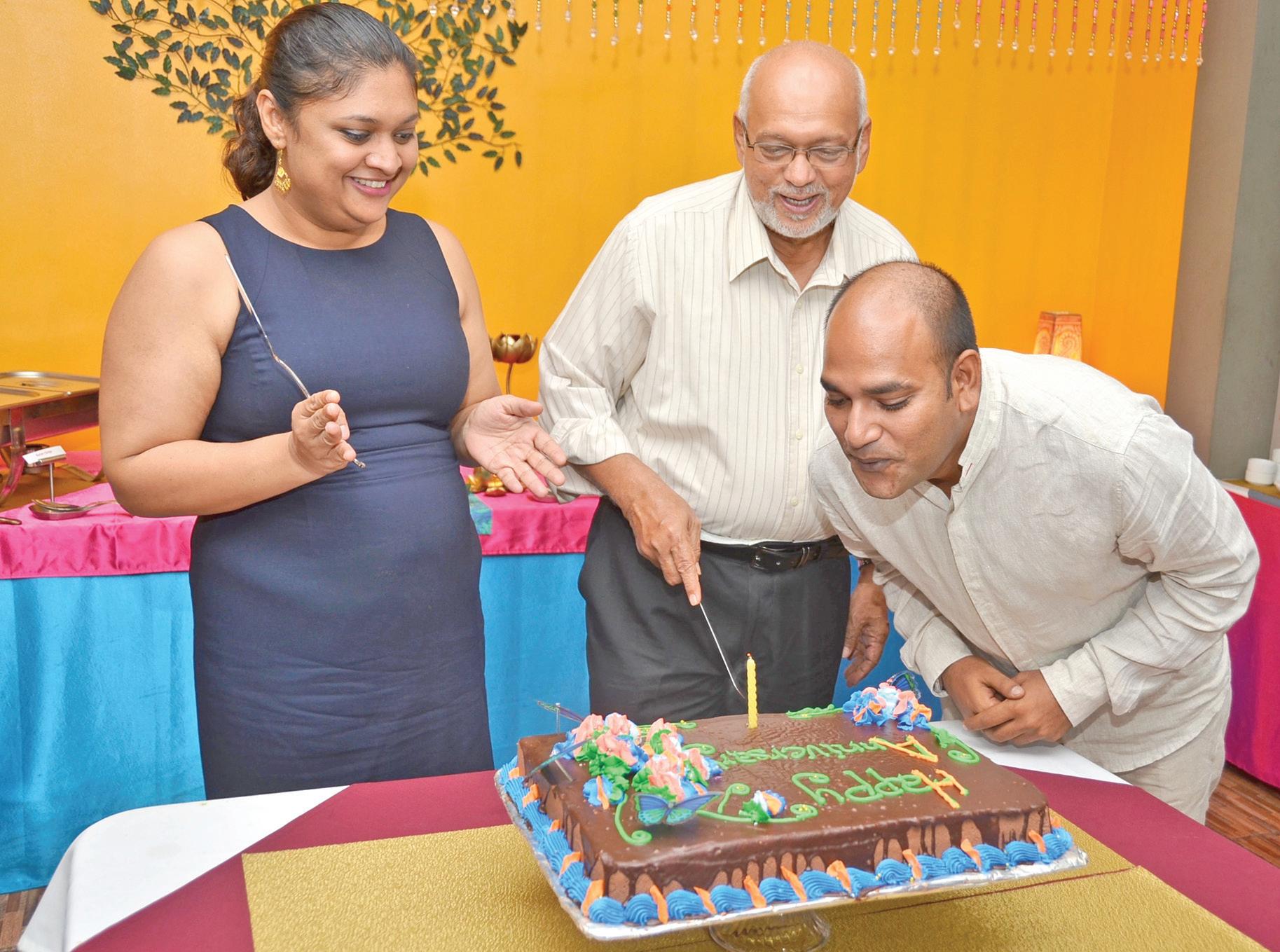
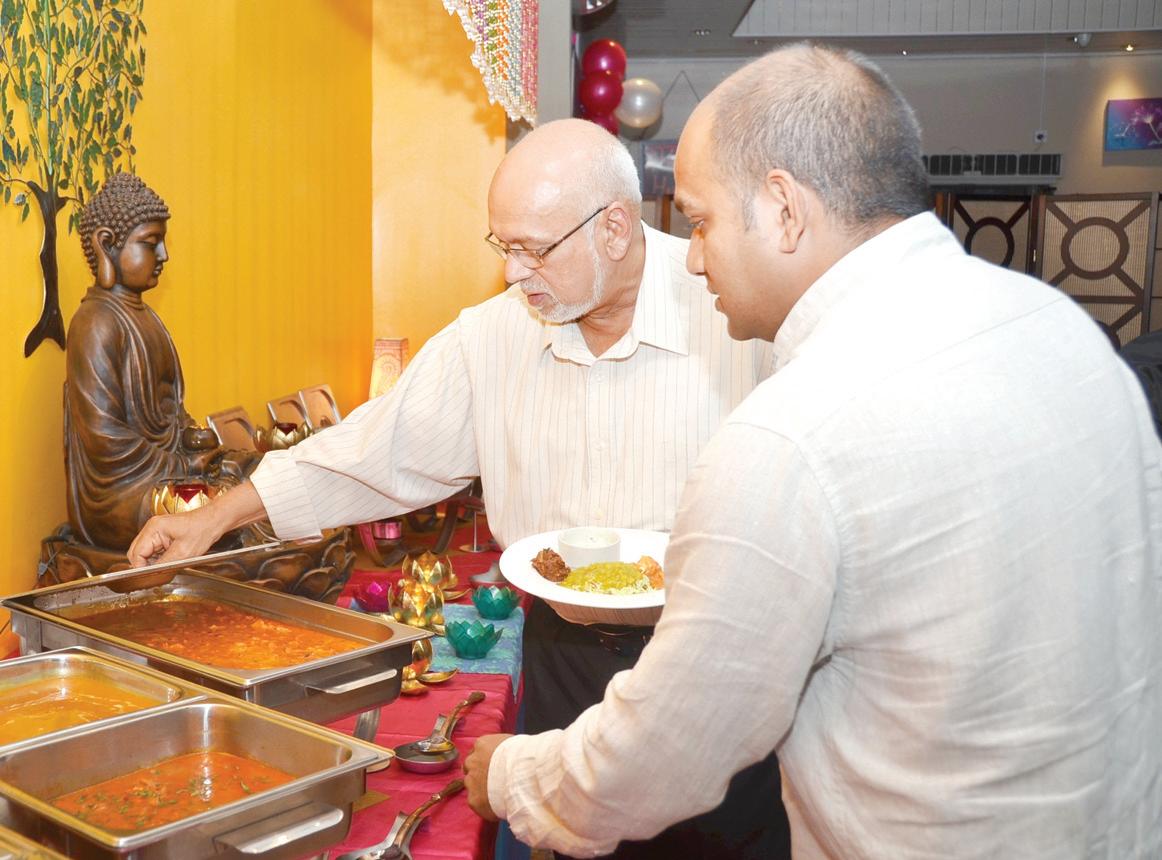
Aagman Indian Restaurant Managing Director, Dr Raj Rishi Meena blowing out the candles as President Donald Ramotar and Education Minister Priya Manickchand look on Happy
Food prices rise for first time since 2012
The May 2014 Issue of Food Price Watch finds that international prices of food increased by four per cent between January and April 2014, putting an end to the declining trend of food prices sustained since August 2012.
The thematic section of this report discusses the role that food prices and food shortages may have on food riots, a term widely used but poorly defined, and partially reflecting decades of overlooking the food-to-conflict nexus.
Prices remain in sight of their all-time peak, some 16 per cent below their historical record in August 2012.
International prices of wheat and maize increased sharply during the last
quarter, in contrast with generally declining prices of rice. In the case of wheat, such a steep price increase has not occurred since the months leading to the historical peak in the summer of 2012.
Increasing weather concerns and import demand — and, arguably, to a lesser extent, uncertainty associated with the Ukraine situation — explain most of the price increases. These increases have taken place despite bumper crops in 2013 and continued projections of record grain harvests and stronger stocks expected for 2014.
Domestic prices saw their usual fluctuations, with grain prices remaining mostly stable between
January and April 2014.
This issue also highlights the role that food price fluctuations can play in food riots. During the food price hikes of 2007 and 2008, dozens of violent episodes were reported across the world, and others have since followed.
Casualties associated with such episodes—popularly known as “food riots”— in Argentina, Cameroon, Haiti and India, to cite a few, made world headlines. There have been violent episodes also associated with low prices, such as those involving coffee producers in Vietnam (or cotton producers in Burkina Faso). These episodes reminds about the close relationship between food insecurity and conflict.
Alex Griffith’s shooter likely to be charged
The cadet officer accused of shooting 15-year-old Alex Griffith in the mouth earlier this month is expected to face criminal charges.
Police Complaints Authority (PCA) Chairman Cecil Kennard told Guyana Times on Saturday that he has completed his investigations into the matter involving the teen, and the file has been sent for review by the Office of the Director of Public Prosecutions (DPP).
Kennard said he has analysed more than 34 comprehensive accounts of what transpired in the form of written statements. He explained, too, that 16 exhibits, related to the horrific incident, were seen and considered as evidence.
Kennard also explained that the three other Police ranks that were with the officer at the time of the incident are likely to face disciplinary charges for breach of the Police’s Standard Operational Procedures (SOPs).
“The DPP is now expected to make recommendations on the way forward,” Kennard said, explaining that he has dedicated a significant portion of his time analysing the circumstantial evidence provided following the matter.
Kennard opined that all of the bases were covered and evidence provid -
ed to make his analysis easier of this specific case when compared with the scanty information initially provided in the Colwyn Harding probe.
He said that it is interesting to note that a thorough investigation was already done by the Office of Professional Responsibility (OPR) before the file reached his desk for review this time round.
Kennard’s comments come at a time when calls were being made by several advocacy groups for
the Police to deal with this most recent case with greater urgency.
Griffith, who resides at East La Penitence, also joined protest demonstrations and picketing exercises organised to advocate for justice to be served over the last three weeks.
He has also received assistance from various groups which sympathised with him after reports reached the media of the shooting reportedly committed by an officer of the Guyana Police Force.
The Guyana Human Rights Association (GHRA) has also condemned the shooting, describing it as another example of police brutality and the use of excessive force.
On May 15, Griffith was rushed to a private medical institution to reopen stitches for the wound created after he was shot in the mouth by a Cadet Officer in the East La Penitence area on May 1.
Marcel Griffith, the lad’s mother had said she was taking the necessary precautions to have her son treated since the opening could be detrimental. While she awaits justice for her son, the mother claimed he is recuperating, but slowly. Griffith confirmed that her son is still having difficulties speaking clearly and hopes that he gets back his voice.
The May 2014 Issue of Food Price Watch finds that international prices of food increased by four per cent between January and April 2014
Alex Griffith
Page Foundation
Anu Dev
“The surest way to corrupt a youth is to instruct him to hold in higher esteem those who think alike than those who think differently.”
― Friedrich Nietzsche
But old Nietzsche would’ve known that most youths don’t actually need anyone to “instruct” them to go with the crowd. Peer pressure’s always been around. No one specifically is actively pressuring us: we just feel pressured because we think, “Everyone else is doing it, why shouldn’t I?” For some people, the desire to just fit in is really powerful and they can end up doing things that they really wouldn’t have liked doing if left to their own devices.
And it’s not always huge things -- like feeling pressured to use drugs -- it can be things like choosing to only listen to the type of music your friends do, or to put off studying so you don’t look like you’re ‘trying too hard’ so you’ll be one of the ‘cool kids’.
And it’s a slippery slope. What started off as just put-
Pressured
ting off homework becomes not doing homework at all, and then leads to skipping classes. And then who knows what? Slinking off to the Princess cinema to look at the latest X-Men while CXC’s have to be written?
But the influences our peers have on us don’t always have to be negative. If we’re surrounded by classmates or co-workers with good work ethics, we could be influenced to adopt a similar work ethic. If we’re surrounded by people who are always striving to be better and to do better, we could be motivated to do as they do -to be better at whatever we want to be.
And “better” doesn’t have to be slogging at books -how’d you think I got to improve my sweep shot?
So maybe instead of surrounding ourselves with ‘slackers’, we need to choose our companions wisely, to choose people that can
have a positive influence on us instead of those who might lead us down paths that might be bad for us. Meaning you’re not actualising the potential you’re born with. We call it “gunas”.
And we should also try to be positive influences to the people around us. There are always people who will look to you as an example of what should be done -- your son or daughter, a younger sibling, even a friend. Hey! Think of it -- you’re not only being influenced -- you’re also influencing others. You’re a subject with agency and all that jazz.
So take the time to think about the type of person you want to be today, five years from now, and even 10 years from now. Then evaluate whether you’re that person now or if you’re even on the path to becoming that person. C’mon now...be honest.
It’s nice to make plans and to decide that you’ll
start working on being that person next week or tomorrow. But the truth is you have to start right away, or as soon as possible. It’s no wonder that tomorrow never comes for some of us, because every day we’ll keep saying tomorrow.
Take a quiet moment to think about whether the things you do, or the things you want to do are things that you truly want or whether it’s what everybody else is doing. Don’t be afraid to flow against the tide, to be your own person, to captain your own destiny.
Go out and find your own music, find your own sense of style and read whatever books you enjoy. There’s a whole world out there to experience, so why limit yourself to only what everybody else is doing?
Start by picking friends that want to go in the same direction with you.
When your child says, “I don’t fit in” (Part two)
BY JAMES LEHMAN
This is the time to be a coach and teacher to your child. Coaches reinforce and remind children of skills that have already been aquired. Teachers help children identify and develop the skills they need to solve an individual problem. I think being a teacher is one of the most precious things we are to children. It’s a powerful thing to be able to help your child identify and solve his or her problems, because you’re giving them a tool that will aid them the rest of their lives.
You also need to continue setting limits even if your child is feeling bad or down. Let them know you still expect them to carry out their responsiblities and complete their tasks. If they’re upset after school, just say, “Well, take a few minutes and then let’s get started with homework.” They can feel bad for a certain amount of time, but then they have to start their homework or clean their room. The key is, don’t let them be crippled by feeling bad, and don’t treat them like they’re a cripple.
Another valuable lesson is to function appropriately no matter how you feel. Yes, it’s important to feel the feelings, but it’s also important to do something positive about them. Here’s the truth: we all have to do what we have to do no matter how we feel.
The limit-setting function of a parent is very important during these times. You can be loving and concerned, but it’s up to you to keep this problem in perspective. Your child is going to make the problem huge, so you have to be the one to say, “Yeah, that’s tough,” and then
bring it down to its right size. And its right size is, “It really hurts when this happens, but it happens. And even when we’re feeling this way, we still have to do our homework. We still have to talk nicely to our little brother. We still have to clean our room, we still have to eat dinner.”
That way, your child is still being responsible and still keeping up with the tasks in his or her life.
7 Tips to Help Your Child
1. Try Not to Overreact When Your Child Comes to You
When your child goes to school and gets picked on, you feel powerless as a parent. It frightens you, it makes you angry, but really, it’s a sense of powerlessness that you’re experiencing. You do everything you can to protect yourself in life, but when your child goes to school and gets hurt, you’re vulnerable too. The feeling of powerlessness is a personal feeling and it’s a devastating one. Many parents lose their objectivity when their child tells them they’re being excluded, picked on or bullied. The technique for the parent here is to go take five minutes and calm down, talk it through with others if you can, work it out, but don’t overreact in front of your child.
Don’t get me wrong, it’s very normal for parents to feel powerless and it’s very difficult for them not to overreact to that feeling. But understand this: when you feel powerless, your first response is not always the best response. In fact, there are generally two kinds of reactions when people feel powerless: one is stick their head in the sand, and the other is to strike out. Know that neither one is helpful to a kid. to be continued
Free movement in Caricom has improved – Foreign Affairs Minister
The free movement initiative within the Caribbean Community (Caricom) has improved over the years, resulting in more people migrating within the region to find better opportunities.
This is according to Guyana’s Foreign Affairs Minister Carolyn RodriguesBirkett, who pointed out that the initiative has been one of the highlights of the community.
The Minister noted that more than often, persons misconstrued free movement to mean that anyone could move anywhere at any time.
Another major issue facing the community is the confusion with free movement and hassle-free movement, Rodrigues-Birkett said, explaining that while they are both linked, they are not the same.
The Minister said, on the one hand,there are skilled persons who are qualified for the Caricom Single Market and Economy (CSME) Certificate, which allows them to travel to any member state under the CSME programme and work without having to apply for a work permit in those countries.
She disclosed that since this Skilled Certificate Programme was implemented in 2006, and that she has approved over 4000 applications in Guyana.
The Minister said the system seems to be working out for Caricom, since the complaints have significantly reduced over the years.
“The complaints we received were from some nationals indicating that they had to reapply in a couple of those countries… and we have raised that issue at the level of the Caricom Secretariat as well, but more recently, at least in the last
Foreign Affairs Minister Carolyn Rodrigues-Birkett
year or so, we haven’t had any complaints about that,” she said.
Rodrigues-Birkett said she does not keep a record of the persons granted applications, but noted that she has approved some 40 applications from Caribbean nationals.
The Minister explained that there are several skilled professionals, such as pilots and engineers from other Caricom countries, who are working in Guyana.
“I think we have quite a healthy in-flow of people working in our country as well,” she explained.
Nevertheless, the Minister pointed out that mostly university graduates and professionals are the ones applying for the certificate, but she noted that this does not mean when they apply for the certificate, they will leave.
“Some people just apply for it to have it so if they need to go on a short-term consultancy, they have it,” she said.
The Minister stated that, contrary to popular belief, Guyana does not have a high rate of migration for teachers and nurses. In fact, she emphasised that there are minimal cases where persons from these professions apply
for the CSME Certificate.
On the other hand, the Minister explained, there are unskilled persons, or those who do not qualify for the CSME Certificate, and who in some cases for whatever reasons are treated harshly at some airports.
She recalled an instance when she had travelled as a regular passenger and was stopped in Trinidad and Tobago, and had to go through a barrage of security processes, which were very fatiguing.
The Minister stated that discussions were held with the Trinidadian authorities and now there is less hassle in the process.
Rodrigues-Birkett stressed that such issues can only be dealt with if they are reported.
“In certain cases, we have intervened and we have had matters resolved,” she stated. The Minister highlighted that while most countries around the world have provided for a limitation of US$10,000 to declare, Trinidad and Tobago has a limit of only $US5000, and most persons are not aware of this.
She again referred to a case where a Guyanese had 90 per cent of his money taken away because he did not know about the declaration limit.
“You must ensure you read these forms properly… we cannot tell the Trinidadian Government to change their law, but Guyanese must be aware and in this day and age, we hope that persons, especially business people, are moving away from using cash.
“Our people must be aware of that or else they could have their monies taken away, like in a few cases,” said the Minister.
Guyanese crushed by container in Canada
AYork Region family is devastated after hearing a beloved son, father, brother and husband was killed Friday in an early-morning industrial accident in Vaughan, Canada.
Dead is Deodat Khemraj, 51, originally from Wakenaam. Khemraj of Markham, who drives for Mississauga Shipping Company IBL Transportation, was reportedly inspecting the container he was to pick up at a Doney Crescent Lot near Keele Street and Highway 7 about 07:00h Friday morning when he was crushed to death.
The man’s father, who was at the accident scene, said he heard his son was crushed and there was blood all over the place.
“They wouldn’t allow me to see him,” the father told yorkregion.com at the scene. “He was probably inspecting the trailer.”
Other family members soon arrived and were upset that they were not allowed to see the body that was out of sight, but only metres away.
The victim’s brother,
Herdat Khemraj, said he received a call about 07:30h about the accident.
“Right now, we’re just lost for words. He has passed away. We don’t know what’s going on. Police officers are doing their part,” said Herdat Khemraj, 52. “I just got news there was an accident and that’s where it is right now. My mother is in shock, she can’t believe her son is gone.”
Just after he finished speaking, a van arrived outside the gates of the company with the dead man’s mother and two of his sisters.
One was heard crying, “Oh God, I just want to see the body, what he looks like, please”. But York Regional Police and the Coroner would not allow family members to see the man’s body.
It was removed in a Police van about 10:30h and taken to the Centre for Forensic Sciences at Keele Street and Highway 401.
Details of what happened are still unclear at press time, as the investigation is ongoing and is being conducted by the Labour Ministry. Ministry officials
were on site investigating Khemraj’s truck and talking to company representatives. Company representatives at the scene had no comment.
A man who identified himself only as the owner of the company refused to provide a comment or his name. He was seen talking to Labour Ministry investigators and Police officers at the scene.
The dead man’s wife and two children, a teenager aged 17 or 18, according to his grandfather, and another son about five or six years old, appeared shocked as they looked through the gates at the accident scene. They were silent as they stood amid relatives and were comforted by aunts and uncles. Like her sistersin-law and father-in-law, the man’s wife wanted to see his body, but was denied from doing so.
Herdat Khemraj said he will begin preparations for his younger brother’s funeral, saying it will be about a week before he can gather all the relatives of the extended family together for a service.
(Cambridge Times)
The truck of Deodat Khemraj, 51, is seen in the background in a lot at Doney Road in Vaughan. Khemraj was killed in an industrial accident near Keele Street and Highway 7
Eyew tness SNAFUS…
...in traffic
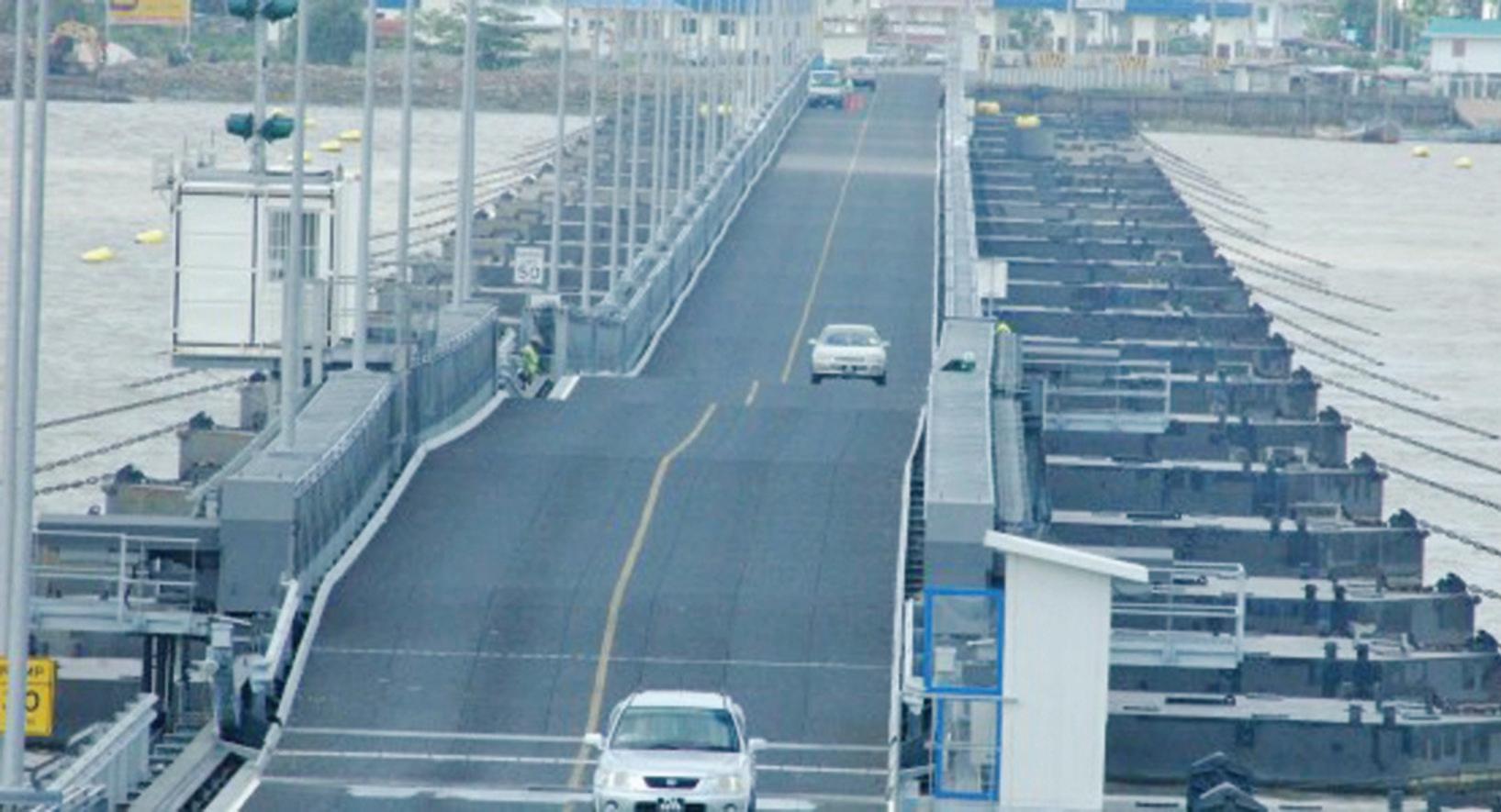
This newspaper reported that last Friday morning, there were “snafus” on the Demerara Harbour Bridge. They led to massive traffic snarls for miles on the West Bank Public road in both directions. While the headline alluded to a similar snafu on the East Coast, there was no elaboration. But like the one on the Bridge, it led to thousands of commuters boiling in road rage. Which would explain the increased fender benders and worse.
What the heck were these “snafus”? And for that matter, what the heck are “snafus” to begin with? Your Eyewitness is pleased to enlighten you, dear readers, about this profound commentary on the human condition. All that in a single word, “snafu” -- which is actually an acronym -- SNAFU. It came out from army slang during the cataclysmic World War II. It stands for: “situation normal -- all f**ked up”.
Really. The default situation for us humans, we are informed, is to be all screwed up...messed up... or f**ked up. And that describes the traffic situation last Friday perfectly, doesn’t it? Not just on Friday... but anytime anything out of the ordinary occurs that causes traffic to be heavier than normal. Remember Cricket World Cup? Or Limacol CPL or any of the concerts at the Stadium?
On Friday morning, all it took was a tractor running into a truck in the incoming lane. You’d suppose with the structure in place since 1978 -- 36 years ago -the Bridge authority would’ve had an emergency drill to deal with this contingency, wouldn’t you? Not in Guyana. The motto here is: SNAFU. It shouldn’t have taken more than 10 minutes to allow the traffic in front and behind the accident to be evacuated and for the truck to be towed off. Instead, all we had were dozens of traffic cops and Harbour Bridge employees furiously gesticulating and yelling into cellphones.
Over on the East Coast, the SNAFU manifested itself because there was a Caribbean Development Bank meeting at the Convention Centre at Liliendaal. That’s right...a Bank that’s given us billions and billions for development -- including for roads -- witnessing that our traffic Police still can’t manage the movement of less than 50 cars (?) for these guests.
Now it’s not that the traffic department doesn’t have bodies. Probably because of the “fringe benefits” -- second only to “customs” -- the enrolment of traffic cops seems to be oversubscribed. They’re everywhere.
It’s just that the top brass seems to accept SNAFU as their default setting.
...at City Hall
And talking about SNAFU as a default setting, the paradigmatic case of that in Guyana, of course, has to be at City Hall. Some talk about the “progress” in the City because of all those multi-storeyed buildings shooting up everywhere. Well, have you ever looked at a dung heap over the course of days? Pretty white “jumbie umbrellas” spout like crazy in the dung. Overnight.
We’re not going to go over the sordid -- and laughably puerile -- details of what’s unfolding in the Gothic structure. It’s termite-infested and crumbling walls are a graphic metaphor of that. We’d like to look at what the good burghers of Georgetown accept SNAFU and the default setting? Surely they want better, no?
Look at all the pretty houses springing up in the perimeter -- to complement the commercial structures in the core. These people have seen better. Isn’t it time for them to storm City Hall and eject that excrescence named Green?
... with Opposition
The testimony of Eusi Kwayama illustrates most graphically the ultimate consequences of the SNAFU default setting of the Opposition. The PNC and its spawn APNU was born in the sowing of confusion, murder and mayhem. Their recalcitrance on AML/CFT demonstrates they have not changed. Beware!!
Aagman Restaurant celebrates first anniversary Guiana Shield devises plan to achieve Aichi targets
The exquisite Aagman Indian Restaurant on Friday completed its first year in operation, celebrating the milestone with a grand dinner.
Aagman Restaurant opened on May 26 last year on Sheriff Street, Georgetown, providing Guyanese with a wide range of Indian cuisine.
Upon arriving, guests were welcomed with warmth by employees, who escorted them to their seats.
The men were temporarily separated from their female partners as the two groups spent hours conversing on common topics, as they were served light drinks and delicious Indian appetisers.
However, some of the couples who persisted were placed together as they relaxed, enjoying soothing music in the background. Most of the attendees were Indian businessmen with thriving businesses.
President Donald Ramotar arrived at the event much to the anticipation of the other guests, joining Education Minister Priya Manickchand, who was already there.
After some two hours mingling and chit-chatting
around the room, a beautifully decorated cake was cut by Minister Manickchand and Managing Director of the Restaurant, Dr Raj Rishi Meena.
In brief remarks, Meena told the gathering that he faced many challenges over the past year, but managed to overcome them with the support of his staff and customers.
He expressed gratitude to those who contributed to the business in the first year, noting that with their continued support, the restaurant will grow from “strength to strength”.
President Ramotar congratulated Meena and his staff on reaching the important milestone, pointing out that the investment reflects the proprietor’s confidence in the economy.
On a lighter note, he added that Guyana is multi-ethnic country and food plays a big part in defining its culture. “Food has added richly to the variety of our culture and that is the beauty of it,” he stated.
After other brief addresses and photo-ops, the guests feasted on the delectable, authentic Indian dishes in buffet style.
To avoid landscape fragmentation and loss of habitats for biodiversity, an action plan has been developed to protect the biological corridors and transboundary conservation within the Guiana Shield eco-region.
The agreed Regional Action Plan is important in light of the fact that wildlife and habitats know no boundaries; that issues in one country can impact another; and that connectivity of habitats becomes ever more important given the effects of climate change.
“Corridors and connectivity are key to maintaining biodiversity and promoting ecosystem resilience. I congratulate the Guiana Shield countries and partner organisations who are advancing a challenging agenda to achieve the Aichi Biodiversity Targets through the further development of corridors and transboundary conservation,” Convention on Biological Diversity’s Executive Secretary Braulio Ferreira de Souza Dias said.
The Guiana Shield, one of the most intact ecosystems in the world, is increasingly under pressure from development and extractive industries.
Twenty-six protected areas management professionals and international biodiversity experts participated in a workshop on biodiversity corridors in the Guiana Shield to streamline support for the achievement of the Aichi Biodiversity Targets.
The workshop was
held at the Iwokrama International Centre for Rainforest Conservation and Development in Kurupukari, from May 21 to 23. The participants shared their experience and best practices on biodiversity corridors and developed a Regional Action Plan to facilitate biodiversity corridors and achieve the Aichi Biodiversity Targets.
Call for support
The Regional Action Plan calls on Governments and partner organisations to support efforts to better manage and monitor small and medium-scale gold mining, including promoting best practices for biodiversity conservation and water resources management, and encourage the further development of transboundary marine protected areas in the Guiana Shield through ongoing initiatives such as Marine Mammals Conservation network.
The Plan also seeks to
create synergies with existing global and regional platforms in order to take advantage of efficiencies of scales efforts and momentum, develop and strengthen linkages with collaborative connectivity projects, organise a technical database that allows identifying and prioritising transboundary corridors, and strengthen and facilitate academic research (university research cooperation and other research institutions) into connectivity science.
Participants pledged their support to work together to fulfil the actions outlined as initial steps toward developing transboundary cooperation and achieving the Aichi Biodiversity Targets in the Guiana Shield.
Natural Resources and Environment Minister Robert Persaud reiterated that the approach taken in Guyana toward conservation is to collaborate with stakeholders and relevant organisations such as the United Nations Development Programme and the World Wildlife Fund (WWF).
The Minister emphasised that Guyana is making headway toward achieving Aichi Biodiversity Targets 11 and 16. “Our economic well-being and prosperity and our peoples livelihood depend on a functioning, sustainable and viable extractive sector,” he said.
The Guiana Shield includes Brazil, Colombia, French Guiana, Guyana, Suriname and Venezuela.
Natural Resources and Environment Minister Robert Persaud
Dr Raj Rishi Meena helping President Ramotar to some of the delicacies
President Donald Ramotar conversing with some of the guests at the dinner anniversary
Breaking bad
Satiricus had just seen the pilot episode of the TV hit series “Breaking Bad”. A well meaning chemistry schoolteacher, is caught in the downward spiral of the modern middle class. Hospital bills, phone bills, electricity bills, mortgage payments and all the other demands of even a small family takes its toll on the poor schmuck. The final straw is when his Neanderthal boss on his evening clerical job at a car wash demands he actually wash cars.
He snaps and stumbles into making meth with a former student to bring in some big bucks. He was “breaking bad”. Satiricus was reminded of this when he saw the reaction of his buddies after he read the headline: GPL made $30 billion last year and on the path to “breaking even”. Suresh went into a white rage, which was unusual for him. His default setting was “que sera, sera” -- whatever will be, will be. “Breaking even?” he sputtered. “This is too blasted much.”
“Wasn’t this the same company that had to get billions in subsidy in last year and this year’s budget?” he practically screamed at the other fellas gathered at the back street bar.
“Tek it easy, Budday!” said Satiricus solicitously. “You gon get a heart attack, if you carry on so.”
“Tek it easy, me arse!” responded Suresh heatedly. “Look around. Like
you don’t notice is blackout we in?”
“Boy, we get so much blackout nowadays, I just happy when we get light once in a while,” said Satiricus.
“Sato, dat is de problem wid you,” said Cappo, looking at Satiricus sternly. “You does tek all kinda sh*t.”
“But what you want GPL to do?” pleaded Satiricus. “Now they breaking even maybe things gon get better?”
“Better me arse!!” yelled Suresh” glaring at Satiricus. “Is everyday I paying more for current which I don’t even get!”
“The bankers just said Caribbean electricity costs are very high,” observed Teacher Samad. “And Guyana is the highest of them all.”
“Well leh me tell all-a-yuh something,” said Cappo quietly, as he leaned over on the table. “I ain’t payin’ no mo.”
“So what you gon do??” inquired Mikey. “Go back to bottle lamp?” “Not me!” replied Cappo, with a determined look on his face. “I done wid dat punishment. I gat a GPL chap who gon fix me meter.”
There were loud gasps around the table. “But what if they ketch you?” asked Satiricus. “They could throw you in jail.”
“And I joinin’ Cappo,” said Suresh. “Wha is the name of de GPL fella?” Satiricus realised his old buddies had decided to “break bad”.
APNU embraces PPP [Public Private Partnership] ...but says taxpayers should bear burden of lower Berbice Bridge tolls
By Alexis Rodney
Finance point man of A Partnership For National Unity (APNU) Carl Greenidge says Government should absorb some of the debts incurred by private investors in the Berbice River Bridge so as to facilitate the lowering of the tolls.
He said, too, that the party has no problem with the Public Private Partnership (PPP) model of development, noting that it is something that was explored when the People’s National Congress (PNC) was in power.
Greenidge made the comments during an interview with this newspaper as he addressed the PPP model, through which the Berbice Bridge Company Inc (BBCI) and the Marriott Hotel project were executed.
Greenidge said his party has no underlying issues with the PPP agreement that Guyana has adopted, but rather with the «discriminatory practices» surrounding its execution.
Greenidge, who himself was at Guyana’s Finance Minister during the PNC Government, said the Government at that time had been involved in examining PPP projects.
“We have no problem with the (Amalia) Hydro Falls Project; in general, we don’t have a problem with Public Private Partnerships. We don’t have a problem with private investment; we have a problem with the details of the arrangement,” said Greenidge. He claimed that there is no arrangement of “consequence” carried out in Guyana by the Government, which he claimed is a flaw.
It has been disclosed that the Bridge Company had assets of $8.9 billion of which $400 million was invested by equity shareholders, with the remaining $8.5 billion
coming from interest bearing debts.
These are 950 million
Preference Shares with a return rate of 11 per cent and redeemable at increasing percentages after 15 years; Subordinated Loan Stock – $1,250 million, repayable in 2026; Bonds Tranche 1 –$3,050 million, at nine per cent maturing 2013; Bonds Tranche 2 – $2,525 million, at 10 per cent maturing 2017; and Loans – $450 million. As a result, the company has to pay over $800 million annually in interest alone.
Some commentators have suggested that the Government take over the $8.5 billion debt and reduce the tolls by accepting lower or no interest on the loans. In effect, it was pointed out, the Berbice Bridge would be «nationalised» and the taxpayers of Guyana would be subsidising the commuters of the bridge.
Greenidge, however, concurred with the proposal for the Government to assume the debt. “What essentially we are saying is that if you take the private sector off some of the responsibilities, and take on part of that burden, then the burden of the toll could be spread over a longer period.
“It could be borne in part by the taxpayers initially and the burden of those already faced by the difficulties can be ameliorated,” Greenidge said.
PPP
A PPP involves a contract between a public sector authority (government or one of its arms) and a private party. The private party provides a public service or project and assumes substantial financial, technical and operational risk in the project.
In most types of PPPs, the cost of using the service is borne exclusively by the users of the service and not by the taxpayer.
In other types, capital investment is made by the private sector on the basis of a contract with Government to provide agreed services and the cost of providing the service is borne wholly or in part by the Government.
Government contributions to a PPP may also be in kind, notably the transfer of existing assets. In projects that are aimed at creating public goods like in the infrastructure sector, the Government may provide a capital subsidy in the form of a one-time grant, so as to make it more attractive to the private investors.
In some other cases, the Government may support the project by providing revenue subsidies, including tax breaks, or by removing guaranteed annual revenues for a fixed time period. In the case of the Marriott, the Government built a sewer system and provided seed money in the form of a loan which is to be repaid.
Greenidge claimed that
there are problems associated with the financing and overall arrangements of the Berbice Bridge. He said the country has found itself in a situation where monies from the National Insurance Scheme (NIS), the institution responsible for citizens’ future, were “pumped” into the Bridge project.
The NIS, however, purchased the preferential shares of the now defunct CLICO, long after the Bridge was built.
He said while the Bridge continues to rake in millions, Government and its representatives on the board have waived the NIS’ dividends. He said that in such a situation, the financially starved institution is now being denied income.
However, the equity holders, which include Demerara Distillers Limited (DDL), the Beharry Group of Companies, NEW GPC INC and NIS, have also never received a cent in dividends from their $400
million investment.
This is the risk equity owners face.
Effective partnership
Chairman of the Private Service Commission (PSC)
Ramesh Persaud has said that the issue brewing out of the motion passed by the parliamentary Opposition recently for the reduction of the Berbice River Bridge toll raises the question about sanctity of PPPs.
Persaud said that when a situation, such as the one raised in the National Assembly arises, it creates a bother to the Commission, which has an interest in the affairs of private investors.
He said the Commission would very much appreciate some amount of commitment to the contract between the major players in the project.
On the issue of the Berbice Bridge and its tolls, Persaud noted that the BBCI will have to look at that issue on its own. He said a motion of such nature threatens the issue of whether Government
and the State are sticking to their promises made to private investors.
“It worries us that the rules of the game are changing in the middle of the game. For me, it’s not the Berbice Bridge or the toll is the major issue; it’s if we are going to partner with the Government or the State to have private businesses be a part of these investments; the rules of the game cannot change,” said Persaud.
The motion to have the tolls reduced at the Berbice Bridge was recently passed in the National Assembly by the two opposition parties, despite Government’s objection.
Public Works Minister Robeson Benn had argued that Government could not support the motion, since it would go against the rules of PPP agreements. As Greenidge pointed out, to lower the tolls, the Government would have to take over the tolls and taxpayers would have to fund the subsidy.
Chairman of the PSC Ramesh Persaud says the issue brewing out of the motion passed by the parliamentary Opposition to reduce the Berbice River Bridge toll raises the question about sanctity of PPPs
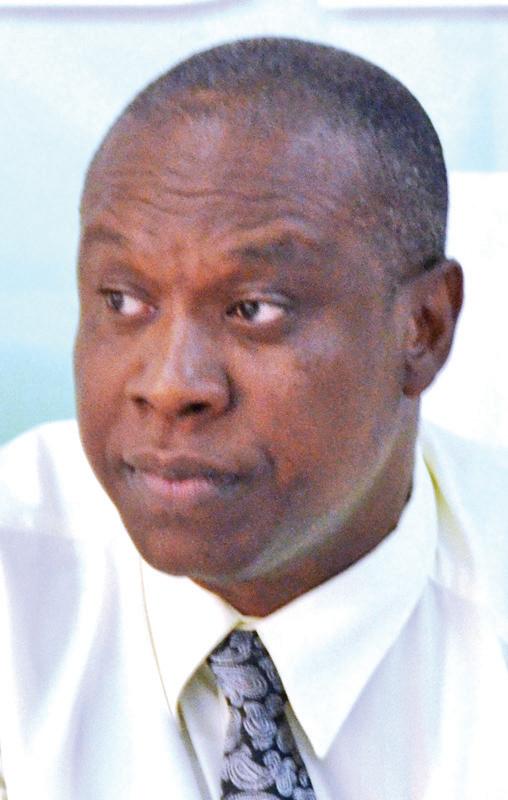
APNU Financial Spokesman Carl Greenidge
India and the Caribbean: Separated by distance, connected in spirit
Though many Caribbean Indians today identify with their current nationality, their spiritual connection, notwithstanding the separation by distance, reverberates in India.
Their culture is much celebrated, forming an integral part of the Caribbean’s rich cultural tapestry.
On Saturday, Trinidad
celebrated its “Indian Arrival Day”, much as Guyana had done on May 5. Indians were also shipped to Dutch speaking Suriname, French speaking Martinique and Guadeloupe, and the other islands of the British West Indies.
The majority of the immigrants came from the then United Provinces (now Uttar Pradesh and
Bihar) and other North Indian states, as well as some Madras from the Tamil and Teluguspeaking regions of Southern India.
The Indentureship system ended in 1917. Some 90 per cent of the immigrants who came were Hindus.
When the first batch of East Indians arrived in Guyana onboard the Whitby in 1838, they brought with them their various customs and traditions, foremost of which was their moral compass in life: their religion.
Guyana Times interviewed Swami Aksharananda on Television Guyana (TVG) Channel 28, who is the Principal of the Saraswati Vidya Niketan (SVN) High School and Raviji Maharaj, Head of the Hindu Prachaar Kendra in Trinidad, to reflect on Hinduism in the Caribbean.
Hinduism, it was observed, is one of the world’s oldest established religion and has survived the test of time, remaining ever relevant in a rapidly changing world.
According to Swami Aksharananda, this unique trait, which had defied the ravages of time, suppression and misrepresentation, is rooted in the principles of religion, mainly its natural ability to adapt to changes, while simultaneously maintaining contextuality.
He pointed out that unlike other systems of belief that folded in the trauma of change, Hinduism, which is more than 2,500 years old, survived as it possesses the ability to change, transform and reinvent itself, much in a manner similar to how ‘Mother Nature’ changes to maintain balance.
Constantly evolving
This constantly evolving quality, he said, is governed by the Hindu Trinity of Brahma (the Creator), Vishnu (the Sustainer) and Mahesh (the Destroyer of Negative Qualities).
Raviji, who along with Swami Aksharananda, were the first from the Caribbean to study Hinduism at the ancient Banaras Hindu University in India, supported the position, noting that for something to remain relevant, it has to be creative, sustained and free of negative tendencies. It was pointed out that, in Hinduism, the three functions are in consonance.
He said this sums up the infiniteness, relevance, adaptability and continuity of the system of belief called Sanatan (eternal) Dharma (way of life).
This is the spir-
the villages; we were not that strange as we were in the city.”
Raviji said his visit to the motherland was a “call from within”.
“In my case, I felt there was a natural yearning for connection with India. In any case, my grandfather always talked about going back to India, but my father never allowed him to go back,” he said. “That narrative was in the house, but the desire to fulfill a need I felt was the only reason I wanted to go to that spiritual land.”
it that has maintained the flame of Hinduism in the Caribbean, Swami Aksharananda said, making specific reference to Guyana and Trinidad and Tobago.
Swami Aksharananda,
Speaking of his upbringing, Raviji, said his father, who was a spiritual leader, instilled in him the values of community spirit, and though he was not a perfect individual in his younger days, he drew much of his inspiration from global peace icon Mohandas Karamchand Gandhi and valiant Indian patriot Subhas Chandra Bose. He too recalled that his first journey to India was a nostalgic moment, not only for him, but all his fellow villagers in
who has visited India more than once, said the Hindu culture practised in the Caribbean, is almost identical to those in the Bhojpuri Belt of Uttar Pradesh and Bihar.
Speaking about his first visit to India in 1970, he said, he was amazed at the similarities.
Stark similarities
“On arriving at the villages, I couldn’t help but to remark on the stark similarities of so many things, the way people walk, the way people talk, the way they sat, the groups they had together; it was amazing to see the stark similarities and in
Trinidad.
“When I was going to India, villagers came to the airport, it impacted the airport so much that when I went on the plane the air hostess (there must have been an empty space in First Class) asked me to come to First Class and must have thought I was some big Guru, and I said ‘no’! I’m just going to study, but villages emptied out because I was going to Indi,” he said.
Speaking directly to these sentiments, Swami Aksharananda said: “India is never out of us, we might be out of India, but India is never out of us.”
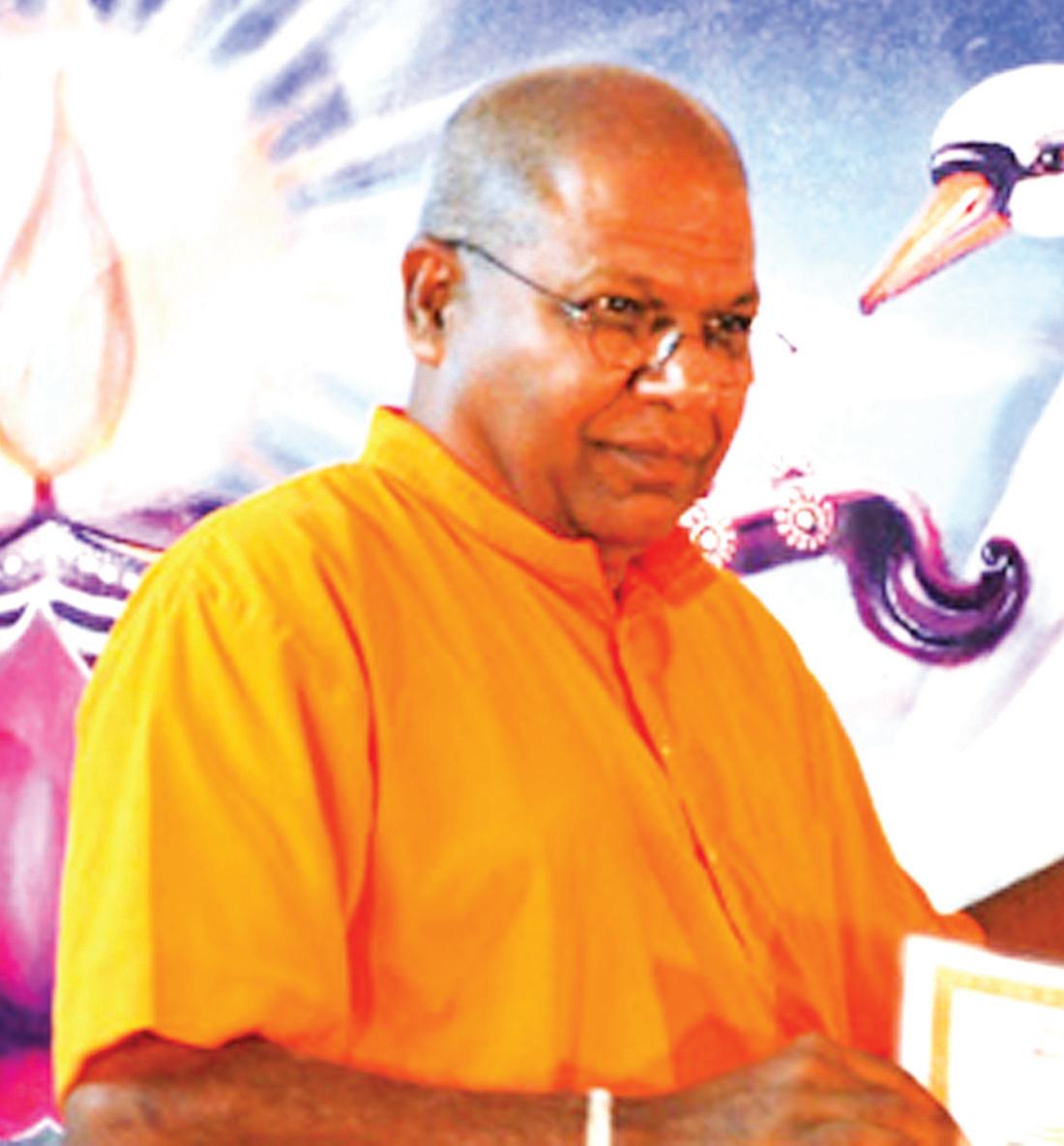
Swami Aksharananda
Truth Simply the
Social media
Professor Daizal Samad
An old and true friend wrote and expressed concern about the invasiveness of these social media “tools” that are so popular these days. He lives in Virginia in the USA. Many of us have tried to avoid these tools. Frankly, most of us are somewhat timid of these new things, while many of us avoid the placing of ourselves so glaringly in the public eye for all to see.
We wish our lives to remain private, not because we have things to hide but because we insist that there is a part of us that ought to remain outside of the public gaze. Social media like “Facebook,” “Twitter”, “LinkedIn” and so on are very useful. They keep us connected to the outside world, and they facilitate easy, efficient, and relatively cheap communication with those we know or like or love. Gone are the days when people separated from each other by oceans have to wait for weeks to get news by traditional post—letters written by hand, placed in envelopes, sealed, and postage stamp pasted on the right hand side of envelopes.
Now, news is sent and received almost instantaneously. And we have the pleasure of actually seeing the person on our screens and actually hearing their voices. We get news of birth and deaths, marriages and divorces, successes and failures almost immediately. The emotional value of this is inestimable.
And yet, my old friend in Virginia has a good point. Social media is invasive, since we put so much about ourselves out there for scrutiny by the curious and sometimes lecherous and predatory gaze of the public.
Apart from the ease with which we expose ourselves, we need to ask WHY is it that we need to place ourselves under such scrutiny. First, we put up our pictures (and the pictures of our children!) with a certain innocence. In our innocence, we do not see what someone else may see: an unintentional seductiveness,
and unintended invitation for unwanted attention.
In our uncritical minds, we still think of pictures as belonging to private photo albums. The sophistication of the mind has not caught up with the advances in technology.
Second, there is a part of all of us that needs to feel important, central, in focus. Most of us lead very ordinary lives. In fact, I have seen too many people who reduce human life to ingestion, digestion, material accumulation, and defecation.
To relieve that reduction, we want to be on a screen — the computer screen becomes as the TV screen. We post up our pictures, unwittingly (and sometimes happily) accepting “compliments” from strangers who say: “Wow!” or “Beautiful” or “I want some of that!” Slowly, we begin to look forward to this type of attention. We want more and want more, more frequently. So we expose more and more of our outer and inner selves, with greater and greater frequency. We run the danger then of becoming exhibitionists while suffering the delusion that it is all photo-album private. Also, no one can really reach out and touch us on the Net, right? Wrong!
Several children have committed suicide that have been traced to online bullying. Adults are not invulnerable either. To be candid, I would never post or allow to have posted on these media sites a picture of my young daughter unless firm security protocols were in place. But even the US State Department could not help itself from being hacked. And neither could e-bay.
That said, I know of wellmeaning parents who have posted up pictures of young girl children, but who take extreme care to monitor who is looking, what comments are being made, and what is being conveyed. I know of more parents in Guyana who have no idea of the computer nor the Internet and nothing at all of the potential perils of social media.
In our country, the great majority are still stumbling around exploring the ways to use computer technology. Even the young who appear to pick up quickly HOW to use the technology can seldom tell us how it works, and they seldom have the intellectual sophistication to recognise potential dangers.
On the other hand, many of the older generation have the wisdom to know some of the ugly ways of the world, but have no idea of how to boot up a computer much less manipulate the mechanics of the technology.
US promises expanded cooperation with the Caribbean
In proclaiming June 2014 as National Caribbean-American Heritage Month, US President Barack Obama said on Friday that the US is expanding cooperation with the region to promote social justice, grow prosperity throughout the Americas, and create new educational opportunities for young people across the Caribbean basin.
“Caribbean-Americans are part of a great national tradition, descendants of hopeful, striving people who journeyed to our lands in search of a better life. They were drawn by a belief in the power of opportunity, a belief that through hard work and sacrifice, they could provide their chil-
dren with chances they had never known. Thanks to these opportunities and their talent and perseverance, Caribbean Americans have contributed to every aspect of our society -- from science and medicine to business and the arts. During National CaribbeanAmerican Heritage Month, we honour their history, culture, and essential role in the American narrative.
“It is also a time to renew our friendship with our Caribbean neighbours, with whom we share both an ocean and a history. To this end, the United States is expanding cooperation with our Caribbean partners as we promote social justice, grow prosperity throughout the Americas, and create new educational opportunities for young people across the Caribbean basin, as well as for Caribbean Americans in our own communities. We are also working to advance commonsense immigration reform that will allow future generations of Caribbean Americans to share their talents with our Nation.
“As America celebrates our Caribbean heritage, let us hold fast to the spirit that makes our country a beacon to the world. This month, let us remember that we are always at our best when we focus not on what we can tear down, but on what we can build up. And together, let us strengthen the bonds that hold together the most diverse nation on earth,” the proclamation read.
Obama encouraged all Americans to celebrate the history and culture of Caribbean Americans with appropriate ceremonies and activities.
Younge’s take Building trust under the new dispensation
There is an urgent need to build trust among political parties in Guyana under the new dispensation or the country’s overall development will remain in limbo and subject to all sorts of undue blows.
This inescapable truth was recognised and endorsed by former President Bharrat Jagdeo, who had warned that building trust was the only method through which an “inclusive governance system” could be put into train to deal with socio-economic and political issues.
He warned then that “violence and threats should give way to dialogue, and the development of our country should remain paramount in all of our political discourse”.
Jagdeo had indicated that “consistent with this thrust towards inclusive governance will be the fashioning of a new political culture” as he cautioned that it cannot be contrived, or rushed but must be allowed to find its natural fit within our body politic.
Sadly, the main political parties operating in Guyana then did not heed Jagdeo’s advice. This further undermined the development of an agreed mechanism to build trust, particularly among political parties.
Today, Guyana is suffering because of the failure of these political parties to put their differences aside and put Guyana first.
Six years after Jagdeo’s utterances, there seems to be no change in the political status quo as the Opposition parties appear now more bullish and determined to have things their way or no way at all.
This development has exposed the ingenuity in the opposition’s call for “shared executive power” and “shared governance” made the then Opposition Leader Desmond Hoyte and his successor Robert Corbin.
The Opposition as a single unit has also made replete with examples of failed attempts to form board alliances and partnerships with other stakeholders of similar interest.
It was the PNC itself that changed its name at least four times over the last two decades in an attempt to convince Guyanese that a “contrived or rushed” form of inclusive governance could last and work.
One wonders what happened to the boisterous One Guyana Platform and Reform components of that body. It is no secret that most of these attempts to re-engineer a cordial and positive political force collapsed because of distrust, betrayal and antagonism among the leaders of the various factions.
The Opposition’s refusal to change course
and engage the ruling party in meaningful discourse and dialogue is detrimental to the forward movement of Guyana and its people. It is also severely undermining the birth of the new political culture and building of trust that Jagdeo had spoken about which cannot be “contrived” or “forced”.
The Opposition’s recent attack on various projects is worthy of examination. Or was it that they were rejected because they emanated from the ruling party and would have signalled a shameful defeat of the Opposition and its politics of pessimism?
The chaos in the Parliament and the grandstanding has seen a worsening of the parliamentary state of affairs.
The Opposition leader’s politics of ransom has also exposed the increased lack of trust in the political system and has reduced the future of Guyanese to “give me that and then I will agree to give you that”.
This is certainly not compromise but blackmail and President Donald Ramotar is well advised never to negotiate under duress or negotiate with people who are employing “black market” tactics to get results. Because of the Opposition’s stubbornness, Guyana will likely be blacklisted for failure to pass simple but significant amendments to its Anti-Money Laundering and Countering the Financing of Terrorism Act of 2003.
The Opposition must allow trust, in the words of Jagdeo, “to find its natural fit within our body politic”. This will strengthen the cohesive fabric of the society and provide the adhesive glue for long-term peace and stability in the country. It would also lessen opportunities for those in our midst who use buzzwords such as “alienation” and “marginalisation” to advance their own agenda of dividing and exploiting our people.
The Opposition must again reiterate its intention to join forces with the Government and find innovative ways to work together to solve problems.
This must be pursued within an enhanced framework for political cooperation encompassing the principles of increased meaningful contacts, the identification and implementation of an agreed agenda of national issues and greater scope for the participation of civil society in the decision-making process.
It is hoped that President Ramotar will soon meet with all the parliamentary parties so that they can hammer out the modalities of this framework of cooperation.
US President Barack Obama
China PM Li Keqiang rings Narendra Modi with offer of “robust partnership”
Chinese Premier Li
Keqiang on Thursday called up Prime Minister Narendra Modi and expressed his Government’s desire to establish a “robust partnership” with India. Modi, on his part, expressed “keenness” to work closely with China on all “outstanding issues”.
Li is the first foreign leader to call up Modi after he was sworn in. Chinese Foreign Minister Wang Yi is coming to Delhi on June 8, and could become the first foreign minister to visit India after the new government took over.
Modi, as Chief Minister of Gujarat, had visited China in November 2011, much before the West started engaging with him. Modi and Li spoke through interpreters for about 25 minutes.
The Chinese Leader “congratulated Modi on his victory in the recent general elections and conveyed the Chinese government’s desire to establish robust partnership with the new government of India for further development of relations between the two nations,” the Ministry of External Affairs (MEA) said.
Modi noted that China “was always a priority” in India’s foreign policy, and welcomed “greater economic engagement” between the two countries. He underlined his government’s resolve to utilise the full potential of “our strategic and cooperative partnership with China and his keenness to work closely with
the Chinese leadership to deal with any outstanding issues in bilateral relations by proceeding from the strategic perspective of our developmental goals and long-term benefits to our peoples”, the MEA said.
The two leaders agreed to keep up frequent high-level exchanges and communication.
Modi also thanked Li for his earlier message of felicitation, and extended an invitation through him to President Xi Jinping to pay a visit to India later this year.
China had formally greeted Modi, and sent a special message through Indian Ambassador to Beijing Ashok K Kantha during Kantha’s meetings with Wang and State Councillor and Special Representative for the border dispute, Yang Jiechi.
Li had greeted Modi immediately after he was sworn in as
Prime Minister, saying China viewed India as a “natural cooperative partner”, and was ready to work with the new Indian government to take their strategic cooperative partnership to a “new level”.
Modi and Xi will have an opportunity to meet during the BRICS (Brazil, Russia, India, China and South Africa) summit, to be held in Brazil in July. Meanwhile, US Secretary of State John Kerry became the first leader to call up the new External Affairs Minister Sushma Swaraj.
Kerry said the US looked forward to “re-energize ties” with India. Swaraj also got calls from her counterparts in the UK, Australia, Canada, Israel, South Africa and the UAE. (AP)
Around the World
US Congresswoman congratulates Modi on elections victory
United States Congresswoman Tulsi Gabbard, the first Hindu elected to Congress, has extended congratulations to the newly elected Indian Prime Minister Narendra Modi following his recent elections victory.
“I recently spoke with Narendra Modi by phone and congratulated him and the Bharatiya Janata Party for winning a majority vote in India’s Lok Sabha,” Gabbard said in a statement.
“This election was an extraordinary achievement for the 550 million Indians who voted over the course of six weeks in some 930,000 polling locations. I look forward to working with Mr Modi and other members of the Indian government toward our mutual goals of peace, stability, and economic growth in the Asia-Pacific region,” the statement said.
Gabbard added that “a partnership between the world’s two largest and greatest democracies is necessary for us to successfully address the many global challenges we face, including economic growth, bilateral trade, the environ-
Civil organisations call on USA to end anti-Cuba actions
Civil rights organisations are calling for the US government to immediately stop the planning of violent actions forged and financed from Miami, Florida against Cuba.
The request, for which a news conference was convened, takes place after the Caribbean island’s media published the news of the detention there on April 26 of four Cuban citizens settled in the mentioned southern Florida city, who intended to execute terrorist actions against military facilities of that country.
Detainees Jose Ortega Amador, Obdulio Rodriguez Gonzalez, Raibel Pacheco Santos and Felix Monzon Alvarez began now to study and mod-
el their plans since mid-2013 in their travels to Cuba.
During the meeting with reporters in Miami, speakers repeated their demand to the administration of President Barack Obama to free Gerardo Hernandez, Ramon Labañino and Antonio Guerrero, the three Cubans who remain in US prisons for fighting terrorism.
A release from the National Committee to Free the Cuban Five recalled that Hernandez, Labañino and Guerrero still remain in prison, and all of them were “condemned at a rigged trial held in Miami, for monitoring and preventing terrorist attacks against Cuba”. (Prensa Latina)
ment, terrorism and security”. Gabbard has been the United States Representative for Hawaii’s second congressional district since 2013. She is also a Vice-Chair of the Democratic National Committee. (worldhindunews.com)
US Congresswoman Tulsi Gabbard
Prime Minister Narendra Modi
Modi extended through Premier Li Keqiang an invitation to President Xi Jinping to pay a visit to India later this year
Passage of AML/CFT Bill not enough – Finance Minister
By Michael younge
Finance Minister, Dr Ashni Singh said that the passage of the AntiMoney Laundering and Countering the Financing of Terrorism Amendment Bill (AML/CFT) in the National Assembly alone will not suffice to undo the damage already done to the image of the country and the integrity of its financial system internationally.
Dr Singh was speaking during the Under the Microscope Programme aired on Television Guyana (TVG) Channel 28 on Friday evening.
The Minister said the Opposition political parties must end the blame game and take full respon-
sibility for the quagmire they have put Guyana in by their continued refusal to give parliamentary support to the amended legis-
lation, which is still languishing at the level of a Special Select Committee of the National Assembly.
“What is especially wor-
rying, is that the mere passage of the legislation will no longer suffice to resolve this problem, the advisory is there already, the damage is already done,” said the Finance Minister.
He said that the David Granger-led Opposition understands fully the consequences which lie ahead for Guyana as long as it fails to enact the necessary legislation to become compliant with the recommendations put forward by the Caribbean Financial Action Task Force (CFATF).
The Finance Minister said that the advisory issued by CFATF and Guyana’s referral to the Financial Action Task Force (FATF) is regrettable and could have easily been averted, had the Opposition parties demonstrated the political will to pass the requisite legislation.
He advised that the advisory issued will be received by regional and international institutions which fall under the jurisdiction of the CFATF, including banks, private sector businesses and other commercial entities that are linked to the financial sector.
Clear
Dr Singh said the advisory was also clear, in that, it called on its members to take further action to protect them against Guyana and to engage in more due diligence when handling transactions emanating from Guyana.
“This is very bad,” he argued, while explaining that it means that the cost of doing business will be significantly increased. Dr
Singh also advanced the argument that the advisory could also cripple investors’ confidence in Guyana, while also retarding the growth of remittances and foreign inflows.
He pointed out that those who were eager to do business with Guyana will now “think twice” because the country will now be listed as one of the destinations that are not doing enough to fight money laundering, drug trafficking and terrorism.
The Finance Minister also expressed concern that the advisory could see financial institutions experiencing hardships in conducting international transactions, which could also undermine the “ease” with which business is done and capital transferred from one place to another.
“When an investor sees that Guyana is subject to sanctions by CFATF and that there might be international banks that are unprepared to do business with Guyana, that investor inevitably will have second thoughts about coming to invest in Guyana,” the Dr Singh said.
No scaremongering
He rejected arguments that Government was involved in scaremongering and was crying wolf over nothing.
“Well, you could scarcely call this nothing, speak to the banks which are experiencing difficulty, speak to the businesses who find that making a routine payment now takes much longer. But the Opposition was disparaging and dismissive of the consequenc-
es and the gravity of these consequences that might arise from this eventuality,” said the Minister. He opined that the matter of passing the legislation should not be made into an issue of “political barter or horse trading”, contending that the legislation is of far too much importance to the financial sector for the Opposition to “hold the country at ransom”.
“They want to shove down this country’s throat legislation that is unconstitutional in order for the AML/CFT Bill to be passed in the National Assembly,” said Dr Singh. “You cannot hold the whole nation at ransom to force the President’s arm.”
The Minister maintained that “it will take a lot of work to convince the international community that we are worthy of a favourable review” at their next meeting.
Meanwhile, the member states of UNASUR have reiterated their commitment to the prevention and fight against money laundering and the financing of terrorism and in this regard support the Government of Guyana in its efforts to approve legislation on this issue.
UNASUR in a statement said the strengthening of the institutional structures of Guyana for the prevention and fight against those crimes would be in conformity with the recommendations of the International Financial Action Task Force (FATF) and the regional organ of the Caribbean (CFATF) and of South America (GAFISUD).
Series of activities planned for GPSU’s 91st anniversary
The Guyana Public Service Union (GPSU) is celebrating its 91st anniversary with the commencement of a week of activities, beginning in Linden today.
The events held under the theme, “Rights at work – Ending Poverty and Inequality”, are part of a countrywide observance.
The week of activi-
ties will commence with a church service and brunch at the Watooka Club, Mackenzie, starting at 09:30h, with a sermon by Pastor Selwyn Sills. This will be followed by a domino competition, featuring female and male teams from Linden and Georgetown. Prime Minister Samuel Hinds is expected to attend the
event. The curtains will come down on the week of activities on June 8.
Established on June 8, 1923, the GPSU is a registered non-governmental organisation (NGO). It is a recognised and established trade union which represents and negotiates for public servants rights, working conditions, and wages and salaries.
Finance Minister Dr Ashni Singh
Operator dies after vessel capsizes in Demerara River – probe launched into incident
By Bhisham mohammed
The family members of 58-yearold Seepersaud Roopchand of Lot 4056 West Minster, Parfait Harmonie, West Bank Demerara are now mourning his demise after the vessel he was in capsized in the Demerara River around 11:45h on Saturday.
Roopchand, a Tug Operator attached to the Demerara Harbour Bridge (DHB), died minutes after the tragedy struck. His body was discovered some 200-300 meters away from the overturned vessel.
He was pronounced dead on arrival at the Diamond Diagnostic Centre, East Bank Demerara, despite desperate attempts to revive him.
As a result, a full and in-depth probe has been launched to ascertain the circumstances which may have led to the boat capsizing and the man’s subsequent death.
Roopchand reported for work at 06:00h to facilitate an early inspection at Span 8 of the DHB by members of the Board and the General Manager. That inspection, Guyana Times understands, lasted for about two hours.
Speaking at a press briefing called shortly after the incident, General Manager of the Bridge Rawlston Adams said he was initially told that an engineer observed that the tug Rickford L 2 had capsized and that Roopchand was being swept downstream.
He stated that a maintenance boat was procured
immediately, which is equipped with safety equipment, and the man’s body was pulled up after some time.
Adams confirmed that officials attempted CardioPulmonary Resuscitation (CPR) on Roopchand, but to no avail. It was at that point he was rushed to the Diamond Diagnostic Centre where he was pronounced dead by a medical practioner, he added.
Investigation launched
The Police, Adams added, were contacted and have since launched an investigation into the matter. The Maritime Administration Department (MARAD) has also launched an investigation.
Adams further stated the Roopchand was employed with the DHB since July 2013.
Meanwhile, Transport
and Harbour Minister Robeson Benn expressed profound sadness over the incident and extended sympathy to the man’s family members.
While investigations are in its preliminary stages, he has instructed the Administration of the Bridge to offer as much assistance to the family of the dead man as possible.
Benn was not sure why Roopchand was not wearing a life jacket at the time of the incident, nor could the Minister say why he was unable to grab on to one of the safety rings that were on board the 20-foot vessel.
Minister Benn, however, noted that at the time of the incident, the current of the water was heavy and going downstream.
With respect to any possible compensation, Benn stated that while the Bridge Administration is obligated
to its workers, it is too early to make such a pronouncement. Once the investigations are completed, he said
he was in capsized. He said he went straight to the scene where he met with the Minister and General Manager. His brother, he said, moved from Cayenne to Guyana a few years ago. While here, he had his own boat, but recently started to work with the DHB.
The devastated brother is calling on the relevant authorities to investigate the matter thoroughly, claiming that his brother was an experienced boat captain.
Roopchand leaves to mourn a son, wife and five siblings, along with his mother.
Meanwhile, traffic came to a halt for about 30 minutes as the vessel was being retrieved. A heavy-duty crane owned by John Fernandes Limited was used to pull the tug from
the Bridge Aadministration will take the appropriate decision.
Mohan Roopchand, a
Demerara when he received a call from Bridge officials. They told him that his brother died after the tug
the Demerara River, immediately after which engineers were seen inspecting various components.
IRO President urges Opposition to put aside differences
Inter Religious Organisation (IRO)
President, Reverend Ronald Mc Garrell is appealing to the members of the combined Opposition to lay aside their differences and do what is best for Guyana.
Reverend Mc Garrell, speaking on the issue of the non-passage of the Anti Money Laundering and Countering the Financing of Terrorism (AML/CFT) Bill, said that all Guyanese stand to suffer as a result of the Bill’s non-passage.
“As Guyanese, whatever is going to happen, obviously it will affect all of us. In the short run, there are things that will happen that we may not like, but we have to look at the long run,” he said.
Mc Garrell added that if the issue continues to be unresolved, then consequently all kinds of difficult situations in the line of transact-
ing business, and furthering investments will present themselves.
“It will create massive problems. From a religious perspective, we all need to think of the story of Noah’s ark, we are all in the same boat and whatever happens will affect us all,” said Mc Garrell.
Reverend Mc Garrell reiterated his call to the elected leaders to come together and find common ground on how this issue should be resolved in a timely manner.
“They should come together with the cooperation of religious leaders and let’s work out something that can save this country. This is a blessed country, God has blessed this country in many ways, I feel the Government and the Opposition should come together in our Parliament and find common ground on which they can resolve this issue, tak-
ing into consideration that the entire country can be affected,” he noted.
Deep impact
The Reverend also spoke of the long-lasting impact the non-passage of this Bill can
have on generations to come.
“We don’t know how long this can stretch out for; this can affect some investments that are on stream and some that may not come again. We need to take all these facts into consideration so
that consequently we can do what’s right for Guyana,” Mc Garrell urged.
He added that Guyana is currently at a very crucial stage of national development as it has seen significant economic growth in recent years and the AML/ CFT Bill should be dealt with forthwith if continued progress is everyone’s agenda.
In spite of regional, international and local voices, the Opposition stubbornly refuses to support the passage of a CFATF compliant Bill. In so doing, they have now put in danger our country’s financial system.
At the 39th Meeting of the CFATF held from May 26 to 29 in Miami, Guyana was subject to a review, as a result of the National Assembly not passing the AML/CFT Bill, and being referred to the Financial Action Task Force (FATF), the parent body of CFATF.
CFATF issued a public statement informing the world that Guyana poses serious risks to the international financial system, and called upon the rest of the world to take measures to protect their systems from those risks.
Measures that will be implemented against Guyana include the requirement of enhanced due diligence; introducing enhanced reporting mechanisms or systematic reporting of financial transactions; refusing the establishment of subsidiaries or branches or representative offices in Guyana, or otherwise taking into account the fact that the relevant financial institution is from a country that does not have adequate AML/CFT systems; and limiting the business relationships or financial transactions with Guyana or persons in the country, among others.
brother of the dead man told media operatives that he was at his work site in Eccles, East Bank
IRO President, Reverend Ronald Mc Garrell
Minister Robeson Benn and other bridge officials at the site on Saturday afternoon
The capsized boat in the river
(Dec. 22Jan. 19)
Take any opportunity you get to show the special people in your life how you feel. Be generous with your compliments and considerate with your actions.
(Jan. 20Feb. 19)
(Feb.20March 20)
You can ease someone’s discomfort or stress by being readily available to lend a helping hand. Your consideration and caring attitude will be greatly appreciated and returned. Put your best foot forward. This is a great day to mingle. Gather a group of friends together and take part in an activity that offers adventure and excitement. Romance is in the stars.
(March 21-April 19)
Take on added responsibility if it will help an older friend or relative. Arrange to bring together people who have the expertise to get a job done fast and efficiently.
(April 20May 20)
You may be confused by the actions of another, but don’t let it bother you. Align yourself with people who share your goals and passions in order to succeed.
(May 21June 20)
You will be intrigued by an interesting new way of doing things. Be open to the changes and challenges happening around you, and act on the opportunities you discern.
By Bernice Bede Osol
(June 21July 22)
You will feel vulnerable and uncertain if someone doesn’t see things your way. Your feelings will be hurt easily if you get into an argument. Remain composed and don’t reveal personal information.
(July 23Aug. 22)
(Aug. 23Sept. 22)
Don’t share information that may incriminate you. An unsavory situation must be handled diplomatically. Save yourself some grief by keeping your distance from anyone acting conspicuous. The possibility for romance is high. You can form a new relationship or nurture one you cherish. If you share your passion and your concerns with a loved one, you should be able to make a difference.
(Sept. 23Oct. 23)
Don’t push your luck when dealing with partners. Don’t try to shirk your responsibilities or complain about them. Instead of feeling pressured, use this opportunity to prove your capabilities.
(Oct. 24Nov. 22)
Expose your creative ideas to others, and the insight you receive will lead to your success. Experienced individuals in related fields can help you make things happen.
(Nov. 23Dec. 21)
Be extra cautious when dealing with financial or legal matters. Get all the facts. You could miss valuable information if you don’t ask the right questions.
Peanuts
Calvin and Hobbes dilbert
arCHie
CAPRICORN
Council passes no-confidence motion against Matthias
The General Council of the Guyana Football Federation (GFF) on Saturday reconvened and successfully moved a no-confidence motion against president of the GFF, Christopher Matthias, and Vicepresident Keith O’Jeer.
Matthias was absent from the meeting, but this publication understands that a letter was personally dispatched to him, informing him of the reconvening of the Congress at the Water Chris Hotel in Georgetown.
After the no-confidence motion was passed, the Council installed first Vice-president of the GFF, Ivan Persaud, to take over the reigns of local football in the interim, while the names of the other members of the Interim Management Committee (IMC) will be disclosed shortly.
Full support
Efforts by this publication to contact Matthias for a comment on the latest development proved futile, as calls to his cellular phone were restricted.
According to the IMC, a letter would soon be sent to Matthias informing him of the decision taken by the Council, which is due to convene shortly and plan the way forward for the sport.
Those sharing the head table on Saturday were President of the Women’s Football
fill post in the interim
Christopher Matthias
Association, Vanessa Dickenson, Secretary of the East Bank Football Association, Franklin Wilson, General Secretary of the Georgetown Football Association, Odinga Lumumba, and President of the Referees’ Council, Alfred King.
Several other high level football officials were also at the forum and supported the motion. Among them were representatives of West Demerara FA, East Bank FA, East Coast FA, GFA, Referees’ Council, the Coaches’ Association and the Women’s Football Association.
The members have outlined several reasons for their decision to call for Matthias’ head, including the misuse of funds and the lack of accountability among others. They also accused Matthias of operating in contravention of the articles of the consti-
tution.
The group further said that they were adhering to the statutes of the constitution which give them the powers to carry the motion.
Wilson, a former GFF president, said that June 1 had been tentatively identified as the date when affiliates should have reconvened, but that specific date was not assertively decided upon.
He said that the decision of the aggrieved group would be forwarded to FIFA and CONCACAF for ratification and guidance.
Meanwhile, Lumumba referred to the occasion as historic and a positive move for the sport. “Football has suffered for over 20 years for a variety of reasons despite our best effort to move the sport forward.
He said he has been among those agitating for a change from the former administration, but is now forced to admit that the change appeared not to be for the good of the sport.
No consensus
At the last Ordinary Congress on April 26 at the Regency Suites, there was also a no-confidence motion against the incumbent, which led to the recovening of the Congress within 45 days.
The Congress, observed by CONCACAF’s Director of Legal Affairs Marco Leal, FIFA’s
GUYTRAC
The highly anticipated GUYTRAC 20/20 knockout cricket competition on the Upper Corentyne bowls off today with 10 matches at five venues. The competition will start with 20 teams that are affiliated to the Upper Corentyne Cricket Association (UCCA) and is expected to be completed
within one month. The final and third place playoff will be played at the Crabwood Creek Ground at a date to be announced. The matches for today are: At Number 70 ground: Number 70 Cricket Club versus Number 47 Pioneers and Number 72
All Star against Number 70 Young Star in the second game at the same ven-
ue. At Crabwood Creek ground, Number 64 Fighting Marines will take on C.W.C Rising and Number 69 Red Rose will play Number 72 Cut and Load. At the Number 43 ground, Number 43 Scorpion and Number 68 Turn will match skills, while game two on the same ground will see GUYTRAC XI taking on Number 48
Developmental Officer
Howard McIntosh and CONCACAF’s Legal Advisor Bruce Blake, was a heated one from the onset as the leading local football executives sat down to discuss the state of affairs with regards the game’s administration.
The reconvening of the Congress was arrived at by Matthias, who sought to settle the differences between the discontented associations, following a walking out and subsequent returning of six associations during the Congress.
These associations were the Georgetown Football Association (GFA), Guyana Football Coaches Association (GFCA), East Coast Football Association (ECFA), National Women’s Football Association (NWFA), Guyana Football Referees Council (GFRC) and East Demerara Football Association (EDFA).
The associations withdrew after the no-confidence motion against Matthias, which was filed by the EBFA and seconded by the ECFA, was discarded following a 9-9 tie at the voting.
It is understood that the no-confidence motion did not follow the protocols required for the filing of such, as it did not state a reason for the motion, nor did it contain a letterhead or returning address.
20/20 bowls off today
Challengers. At Number 69 Vikings ground, the home team will come up against Young Royals, while game two will see Number 73 Young Warriors playing Springlands. At Number 71, Corriverton will host Number 70 M.Y.O, while Number 71 Cricket Club will take on Skeldon in the second game.
Kevin Paul joins Amazon Warriors for Limacol CPL – four U-19 players confirmed
By Rajiv Bisnauth
Talented Everest Cricket Club fast bowler Kevin Paul has been confirmed as the fourth and final Under-19 player to join the Guyana Amazon Warriors squad for the second Limacol Caribbean Premier League (CPL).
This was confirmed on Saturday by Manager of the Guyana Amazon Warriors, Omar Khan.
Paul joins West Indies Under-19 opener Tagenarine Chanderpaul, Demerara left-arm fast bowler Daniel Basdeo and Essequibo allrounder Kemo Paul as the Under-19 players in the squad.
This year, each franchise team consists of a squad of 19 players, comprising two pre-selected playersone West Indies Franchise Player (WIFP) and one International Franchise Player- (IFP), selected by the franchise, as well as four Under-19 players from each playing franchise.
The Warriors have retained 10 players from last year’s edition and are among the favourites to lift the title this year.
The players retained are: Pakistan all-rounder Mohammad Hafeez, New Zealander Martin Guptill, Trinidadians, offspinner Sunil Narine, opening batsman Lendl Simmons and wicketkeeper Denesh Ramdin, Jamaican Krishmar Santokie and Guyanese Christopher Barnwell, Steven Jacobs, Veerasammy Permaul and Trevon Griffith. The formidable combination of these retained players forms the nucleus of the team, and with the retention of the core players, the Warriors will look forward to building a stronger, wellknit unit.
New Zealander Corey Anderson has been named as the Guyana Amazon
Warriors’ International Franchise Player. The allrounder, who caused a stir by hitting the fastest ODI hundred against West Indies, has replaced former Pakistan captain Mohammed Hafeez as the International Player.
Newcomers
The newcomers are Guyanese Leon Johnson, Ronsford Beaton, Robin Bacchus and Trinidad and Tobago fast-bowling allrounder, Navin Stewart. Missing from last year’s squad are: Ramnaresh Sarwan, Narsingh Deonarine, William Perkins, James Franklin and Keon Joseph.
This year’s tournament commences on July 11 and ends on August 17, with Guyana hosting three of the 30 matches to be played.
Jamaica’s Tallawahs won the inaugural tournament when they defeated the Guyana Amazon Warriors by seven wickets in the final in Trinidad and Tobago on August 24. They will defend their title against the St Lucia Zouks, Trinidad and Tobago Red Steel, Antigua Hawksbills, Guyana Amazon Warriors and Barbados Tridents.
Majority of the Warriors squad will assemble from July 2 for an encampment period under the watchful eyes of head coach Roger Harper and team mentor Curtly Ambrose.
Guyana Amazon Warriors comprises Sunil Narine, Mohammad Hafeez, Lendl Simmons, Denesh Ramdin, Martin Guptill, Krishmar Santokie, Christopher Barnwell, Veerasammy Permaul, Ronsford Beaton, Navin Stewart, Steven Jacobs, Leon Johnson, Robin Bacchus, Corey Anderson, Trevon Griffith Tagenarine Chanderpaul, Kemo Paul, Daniel Basdeo and Kevin Paul.
Tagenarine Chanderpaul Kemo Paul
England v Sri Lanka, 4th ODI, Lord’s…
Buttler ton in vain as Malinga holds nerve
Jos Buttler produced arguably England’s greatest one-day innings - his first ODI hundred and the fastest for the country - but Sri Lanka clung on to level the series at Lord’s in a contest that became gripping during the latter stages of the chase.
Buttler’s 61-ball century, eclipsing the 69-ball record of Kevin Pietersen, brought England’s requirement down to 12 off the final over, but Lasith Malinga held his nerve as Chris Jordan holed out and Buttler was run out for 121 off 74 with two balls of the innings remaining.
He had come to the crease to join Ravi Bopara with England listing on 1115 in the 29th over with the innings having included just four boundaries. They proceeded to add 133 in 16.2 overs to bring the equation down to 62 required off the last six when Bopara top edged a sweep off Ajantha Mendis.
But Buttler responded by taking 20 off the next
over - bowled by Nuwan Kulasekara - including two skimming sixes over extra cover. Jordan dug out singles and twos where he could, scampering manically between the wickets, although it was basically down to Buttler who reached his hundred with a brace off Mendis. The force was with England but a single to Buttler off the first ball of the final over ate up a priceless delivery, especially when no runs were scored as Jordan was dismissed next ball at long-on. It was a breathless finish to a match that was seemingly dribbing to a rather soporific conclusion. England needed to achieve their highest chase on home soil to seal the series after Sri Lanka posted 300-9 but for more than half the chase there was barely a whimper. Sri Lanka would have struggled to accept this match slipping away although some of their bowling and fielding slipped under pressure.
SCORE BOARD
Sri Lanka Innings
Dilshan b Anderson 71
K Perera c Jordan b Gurney 19 Sangakkara st Buttler b Tredwell 112
M Jayawardene c Anderson
b Gurney 7
Mathews c Anderso b Jordan 30
Thirimanne c Ballance
b Anderson 16
Priyanjan c Morgan b Gurney 9 N Kulasekara b Jordan 0 Senanayake c Cook b Gurney 12
A Mendis not out 4
Malinga not out 0
Extras: (1-nb, 16-w, 3-lb) 20
Total: (for 9 wickets; 50 overs) 300
Bowling: Anderson 10-1-60-2, Gurney 10-2-55-4, Root 6-0-400, Jordan 10-0-67-2, Tredwell
Cook lbw b Malinga 1 Bell c M Jayawardene b Malinga 7
Ballance c Sangakkara b A Mendis 42
Root c A Mendis b Mathews 43 Morgan st Sangakkara b Senanayake 12
Bopara c Thirimanne b A Mendis 51
Buttler run out (Malinga) 121
Jordan c Dilshan b Malinga 5 Tredwell not out 1
Anderson not out 0
Extras: (1-nb, 3-w, 6-lb) 10
Total: (for 8 wickets; 50 overs) 293
Bowling: N Kulasekara 100-81-0, Malinga 10-2-52-3, Mathews 7-1-30-1, Senanayake 10-0-49-1, A Mendis 10-060-2, Priyanjan 3-0-15-0
Fall of wickets: 3 (Cook), 10 (Bell), 94 (Balance), 107 (Root), 111 (Morgan), 244 (Bopara), 290 (Jordan), 292 (Buttler)
But they ultimately claimed victory and for much of the game it was another display of their resilience. Conditions were markedly different from Old Trafford yet it was still another striking turnaround having been bowled out for 67 three days ago led by Kumar Sangakkara’s first hundred at Lord’s.
Sangakkara and Tillakaratne Dilshan added 172 for the second wicketSri Lanka’s third best stand for that wicket in ODIs - to form the backbone of the total. Although England fought back in the final 10 overs, a final-ball boundary by Mendis enabled Sri Lanka to cross the psychological 300 marker: England had only ever chased down
more than 300 twice in their ODI history.
Sangakkara’s innings will not get him a spot on the honours board - that is reserved for Test hundredsbut it did tick off one of the missing milestones in an illustrious career.
His previous best at Lord’s in any format was 65 and he needed 13 balls to get off the mark but then progressed silkily to his hundred off 95 deliveries. The first of his 14 boundaries, a hook against Chris Jordan, did not come until his 27th ball but it was the three in a row he took off Joe Root that really launched his innings.
When he was stumped off James Tredwell in the 43rd over he left to a standing ovation. (Cricinfo)
Programme confirmed for...
DeRoop had moved to the courts to challenge a decision made by the Guyana Cup Fever organisers to disqualify Score’s Even from participating in the event, after they had refused to register the horse, claiming that the event is not for ‘A’ Class animals.
More so, the principal concerns that led to the decision to debar Score’s Even from participating in the Guyana Cup Fever, was the fact that other horse owners
had threatened to opt out of the race meet, citing unfair competition, because of the pedigree and experience of the animal.
DeRoop, in an invited comment on Saturday, expressed disappointment at the decision made by the PMTC not to have an A Class race.
Score’s Even subsequently returned to competitive racing last Sunday where she whipped a top field of animals to take the feature
race. The Three-Year-Old Guyana and West Indies bred horses will gallop over 1500 metres for the $1M first prize on offer.
The D3 and Lower horses will also run over six furlongs and will see the champion horse taking home a winners money of $800,000.
The race for G1 and Lower horses has a winning purse of $600,000, also over six furlongs.
The I 1 and Lower six fur-
SportEditor Letter to the
UDCA phantomrejectsDCB
Dear Editor,
As has become the norm, pronouncements by the phantom Demerara Cricket Board (DCB) are fraught with inaccuracies and dishonesty and are clearly designed to mislead the Courts and the public.
The latest escapade of the DCB is an article carried in the daily newspapers of May 31, stating that “the Demerara Cricket Board is withholding authentication of the elections of the Upper Demerara Cricket Association (UDCA) and is recording its strongest objection to the recent announcement of the elections purported to be that of the UDCA”.
Of significance is the fact that the UDCA is not and has never been a member of the DCB and the DCB has absolutely no jurisdiction for cricket in Upper Demerara at the present time.
The UDCA has, for over 10 years, made numerous attempts to be affiliated to the DCB in order to be recognised as a cricket association, take part in competitions in Demerara and to receive funding and cricket equipment. For reasons only known to the phantom DCB, the UDCA’s application for membership has, on every occasion, been rejected.
The UDCA has been in existence since 2000, has a membership of 18 clubs, a constitution and an Executive Committee in place. It represents an area that has over 40,000 citizens of Guyana.
Many national cricketers at the various levels, including Dr Vincent Adams, Mark Grenville, Lambert Blackman, Anthony Rigby and Vibert Johashen have come from the Upper Demerara region.
There was a concerted lobbing by the Stakeholders of Guyana Cricket including the Berbice Cricket Board (BCB), Georgetown Cricket Association (GCA) and the East Coast Cricket Board (ECCB) for membership by the UDCA to the DCB.
This found favour with the Parliamentary Special Select Committee (Guyana Cricket Administration Bill 2012) and the Bill now provides for the inclusion of the UDCA in the DCB.
To strengthen our claim that there is no legal DCB Executive Body, we are reminded that Justice James BovellDrakes had ruled that both factions of the DCB were injuncted and were restrained from performing any act or function of the DCB.
This matter is currently before Justice William Ramlall.
In January 2013, Justice Diane Insanally issued an injunction blocking the DCB elections on January 25, 2013 or any other date until the matter is heard and determined by the court. This matter is also currently before the Justice William Ramlall.
However there is a group of persons unknown to the DCB constituent members and the public pretending to be the DCB Executives.
This group of persons has no legal or moral right to represent the DCB or pronounce on the elections of the UDCA.
We can only assume that the sudden interest in the affairs of the UDCA by this phantom group pretending to represent the DCB has to do with the constitutional voting rights that have been conferred on the UDCA through the Guyana Cricket Administration Bill 2012.
A patent inaccuracy within the dubious DCB release is the reference of a purported injunction that the UDCA has against Roger Harper and Bissoondyal Singh. There is no such injunction.
The only injunction that the UDCA has is the one granted by Justice Brassington Reynolds in Action Number 468W/2010 that the East Bank Demerara Cricket Association (EBDCA) from administering or in anyway interfering with cricket in the Upper Demerara region.
longs event has a winning prize of $325,000, while the other six furlongs event is for animals classified J1 and Lower, which will see the winner’s pocketing $250,000.
There are two five furlongs races, one for TwoYear-Old Guyana bred horses and the other for TwoYear-Old West Indies bred horses. The winning purse is set at $350,000 and $500,000 respectively.
The deadline for registration is July 20.
We are convinced that the persons who proclaim that they are officials/representatives of the DCB and the Guyana Cricket Board (GCB) are fearful of the holding of legal and transparent elections to the extent that they had sought a court action to stop the passage of the Cricket Administration Bill even though they participated in the process.
In the meantime, Guyana’s cricket under illegal stewardship continues its rapid and ignominious descent. With heavy losses and bottom-of-the-table positions for Guyana at all levels of Regional Cricket Competitions, we sincerely hope that fresh elections in accordance with the Guyana Cricket Administration Bill 2012 are held post haste to usher in decent and competent cricket administrators capable of reversing the slump in Guyana cricket.
Jos Buttler scored the fastest ODI century for England but fell short at Lord's
Tel: 225-5034
YELLOW PAGES
sunday, june 1, 2014
sunday, april 27, 2014
Get your home or business spiritually clean to enhance good luck and prosperity. Telephone: 687-5653
Healthworld Holistic Centre offers clinical psychotherapy for suicidal thoughts, attempted suicides, depression, stress, mood disorders, psychotic disorders, homicidal thoughts, hallucinations, loneliness, conflicts, anger management, relationship & sexual problems, paranoia and much more. Call +592-621-0552 and make that appointment now before it’s too late. 12:00-6:00PM. Mondays-Fridays. Email: healthworldhc@gmail.com
business class waivers, pardons, etc. Get your visa approved. High success rate. Balwant Persaud & Associates. Certified Immigration Consultants, 68 Sixth Street, Alberttown, Georgetown (Between Cummings & Lights Sts) Tel: 225-1540, 622-8308, 655-3105. Email: balwantpersaud@yahoo.ca
Cleansing of spiritual problems of all kinds. Powerful Ifá protection against evil. Get help to overcome problems with love, relationships, legal, sexual, pregnancy, business, sickness, jobs, enemies, work, money. Call 592-690-1824 from 10:0016:00h Email:anew-life@live.com
Dutch spiritual healing in removing evil spirits, bad luck, evil, sickness, spells, reuniting lovers and prosperity to businesses. Call: 612-6417, 220-0708, 687-5653.
Suriname Astrology Palmist and Djuka Healing, the most powerful spiritualist in the world. Are you suffering from the following problems (any religion) love, marriage, family, health, business, husband & wife relationship, property, court, children, promotion, visa, pregnancy, education, depression, job, sexual, jealousy, enemy, money, drinking? Also you can have all evil forces destroyed such as black magic, witchcraft, voodoo, obeah, etc and give powerful protection. We also do upliftment for clearing of land, dredging operations strictly in the interior. For private and confidential service call 674-2112.
Spiritualist loves your problem! Love, prosperity, business, illness, removes bad luck & evil. Removal of black magic etc. Phone: 674-8603.
HEPHZIBAH MINISTRIES. 24hrs miracle line - 322-5081/337-4510/3374259/337-4021/337-3070/3375103 For healing, deliverance, financial difficulties, marriage issues. Call now. Jesus cares.
One furnished house in immaculate condition at Lamaha Gardens suitable for residence and office. US$2,500 (AC, hot & cold, parking etc). One modern 3 bedroom apartment at Campbellville US$1,300 (AC, hot & cold, parking
Spacious 8-bedroom top flat; 3 bathrooms; 2 balconies; light & water negotiable. US$2,500 monthly. Lot 3233 Dr Miller Street, Triumph, ECD next to Republic Bank proposed building site. Phone: 220-2254/2202130/624-7111.
Seven-room bungalow. Ideal for students, groups, short & long term rental - Triumph, ECD. Phone: 2202130/624-7111/622-7097. Self contained apartments, fully furnished. Phone: 220-2130/6247111/622-7097.
JUST ARRIVED: TOP QUALITY RECONDITIONED VEHICLES; TOYOTA NOAH; TOYOTA VOXY; TOYOTA IST (NEW SHAPE); SUZUKI SWIFT; DAIHATSU MOVE (660CC); MERCEDES BENZ C200 KOMPRESSOR; COROLLA AE100 WAGON; TOYOTA HIACE MINIBUS RZ; PITBULL-STYLE FREEZER VAN; LAND CRUISER (FULLY LOADED); MAZDA PROCEED 4WD EXTRA-CAB PICK-UP; TOYOTA HILUX 4WD EXTRA CAB PICKUPS - 3RZ, 5L, 3L SOLID DEFFERNTIAL; MITSUBISHI CANTER TRUCKS 4 TONS FREEZER; 3 TONS OPEN TRAY; 2 TONS 4WD; NISSAN ATLAS 2 TONS OPEN TRAY TRUCK. PRE-ORDER YOUR UNITS EARLY AND GET THE BEST PRICES. FULL AFTER SALES SERVICES AND FINANCING AVAILABLE. DEO MARAJ AUTO SALES, 2 CHIMNEY ROAD, CHATEAU MARGOT, ECD. 624-0762, 220-5177. A NAME AND SERVICE YOU CAN TRUST.
Nissan Titan, very good condition leather interior, fully loaded $2.5M negotiable. Call: 620-1026.
BMW 525i, M body kit, excellent condition, low mileage, price negotiable. Call: 620-1026
21 SPORTS
Knight Riders vs Kings XI, IPL 2014, final, Bangalore…
The best bowling vs the best batting
They have already met three times this season, but there remains a sense that Kings XI Punjab versus Kolkata Knight Riders hasn’t really happened yet. The tournament hasn’t yet witnessed a genuinely explosive meeting between its two best sides. Today’s final might just prove to be that match.
None of the three previous meetings had a comparable context. Seven seasons into the IPL, Kings XI Punjab have finally put together a truly formidable side and have reached their first final. Kolkata Knight Riders, after a lukewarm start, have pulled off eight successive wins to reach their second final. It’s a massive day for both sides. There’s no way, you’d think, that this match will have the low-key feel of their previous meetings.
Knight Riders hadn’t really kicked into gear or even figured out their best combination when they lost a low-scoring game in Abu Dhabi. Kings XI weren’t really themselves either in Cuttack or even during the first Qualifier in Kolkata, particularly when they were chasing with one eye on the Duckworth-Lewis equation.
Those three meetings, however, established one thing: Knight Riders were consistently keeping Kings XI’s batsmen in check. Knight Riders didn’t let Kings XI score 150 even once, and were the only side to successfully defend a total against them.
How long can that continue, though? After his 122 in Friday’s Qualifier against Chennai Super Kings, Virender Sehwag joined Glenn Maxwell and David Miller on the list of Kings XI batsmen with more than 400 runs for the season. Between them, these three have only
scored one half-century in three games against Knight Riders; in their last meeting on Wednesday, none of them got into double figures. Something, surely, has to give.
Something, you feel, must give, considering the venue for the final. Batsmen love the true bounce and the tiny boundaries at the Chinnaswamy Stadium, and Kings XI, despite not being at their very best, made 198 the last time they batted here. That 198 was one of seven 190-plus totals, including four in excess of 200, for Kings XI this season.
Knight Riders, on the other hand, have only one 170-plus total this season. It is a stat that would normally show a batting side in poor light, but in this case it’s a reflection of how good their bowling has been, since Knight Riders have chased 10 times in 15 matches and they haven’t had to chase too many massive targets.
Given their opposition, however, there is always a chance they will be called
upon to do so, or called upon to post a mammoth first-innings total on a flat pitch. How will they respond to such a call? How will the rest of their batting cope if Robin Uthappa - who has made ten successive 40-plus scores at the top of the order - doesn’t give them the start he usually provides?
Watch out for...
Akshar Patel had a fantastic Ranji Trophy season for Gujarat, with bat and ball, but no one expected he would play anything more than a bit-part role for Kings XI Punjab. As it has turned out, Akshar has been one of only four players who have featured in every single match for them, and has performed so well he is now in India’s ODI squad. Akshar has easily been Kings XI’s best bowler - with 17 wickets and an economy rate of 6.19 - and, when called upon, a composed presence in the lower middle-order. He bowled brilliantly in the first Qualifier against Knight Riders - taking two wickets and giving away just 11 runs in his four overs - and a strong finish to the season could put him among the frontrunners for the Emerging Player award.
Sunil Narine has given up a chance to be part of West Indies’ squad for their Test series against New Zealand just to play this one match, and get through four overs of bowling. Those four overs, though, always make a huge difference to Knight Riders’ fortunes. Against Kings XI, however, he’s not been as much of a force this season, apart from their first meeting in Abu Dhabi, where he had figures of 3-24. In his other two matches against Kings XI this season, he had combined figures of 8-0-60-1. Having made a difficult decision to play the final, Narine will hope he can make a big impact. (Cricinfo)
Sunil Narine, who will play this match at a considerable personal cost, will hope to better his last two displays against Kings XI Punjab
Glenn Maxwell’s brutal batting has been a driving force being Kings XI’s success this year
All set for Media XI, Enmore O-40 clash today
– Tiger Sports confirms sponsorship of trophies
Tiger Sports of Old Road, Enmore, East Coast Demerara, has come on board in support of the Media XI/Enmore Over40 T20 match today by being the exclusive sponsor of all the trophies.
At a simple ceremony at its location on Saturday, representative of the business entity, Ato Singh, presented the five trophies to Enmore Over-40 skipper Anil Persaud and Media XI player, Avenash Ramzan.
Apart from the winner and runner-up trophies, there will be individual awards for Man-of-theMatch, Best Bastman and Best Bowler. Singh said that Tiger Sports, which is the leading outlet for sports gear and trophies on the East Coast of Demerara, has been doing its part in giving back to society.
He expressed the company’s pleasure at being associated with today’s game, noting that he expects a very competitive match since both teams seem raring to go at each other.
Both Persaud and Ramzan thanked Tiger Sports, which is owned and operated by former national wicketkeeper/bastman Sheik Mohamed, for its
kind gesture, adding that both teams are prepared for today’s showdown, which is expected to bowl off at 14:00 hours.
After their clash against the Georgetown Cricket Scorers and Umpires Association was rained out at the innings break on Monday at the GCC ground, Bourda, the Media XI, in their quest to remain
an active unit, took up the offer to face the Enmore side.
The East Coast side will be led Persaud, who recently emerged as the second leading wicket-taker in the Demerara Cricket Board’s Over-40 20/20 competition, playing for East Coast Jaguars.
The squad also includes former national wicket-
keeper/batsman and former national selector, Sheik Mohamed, attacking opener Eon Abel, and all-rounder Jacob Persaud, whose lower-order hitting and brisk medium-pace could play a crucial role. Also slated to turn out for Enmore is Ramo Malone, whose exploits in the softball arena in well documented.
The Media boys will once again look to the in-form opener John Ramsingh for a solid start, as he is partnered by attacking lefthander Rajiv Bisnauth at the top.
The middle-order, which was a huge disappointment on Monday, will look to rebound with the likes of Daniel Singh, Avenash Ramzan, Keon Blades,
skipper Calvin Roberts and Sean Devers all hunting some much needed runs.
The left-handed Ravi Persaud, who made a solid 24 in partnership with Ramsingh (32) to help revive the innings on Monday, will certainly hope to continue with his form.
The bowling will hinge around new ball pair Roberts and left-armer Kizan Brummell, mediumpacers Ishaka Jackman, Esan Griffith, Rueben Stoby and Blades, and spin twins Devers and Persaud.
The Media squad reads: Calvin Roberts (captain), John Ramsingh, Sean Devers, Daniel Singh (wk), Ravi Persaud, Avenash Ramzan, Rajiv Bisnauth, Esan Griffith, Duncan Saul, Clifton Ross, Ishaka Jackman, Kizan Brummell, Reuben Stoby, Keon Blades, Imran Mohamed and Calvin Marks.
The Enmore O-40 square reads: Anil Persaud (captain), Sheik Mohamed (wk), Eon Abel, Ramo Malone, Jacob Persaud, Jagdesh Persaud, Shameer Shahib, Vijai Dass, A. Khan, Asif Khan, Hemraj Pillay, Satesh Panday, Ganeshram Emamally and Ganeshram Dayaram.
Digicel ends coaches' workshop in Essequibo
As preparations intensify for its fourth annual Schools football championship, Digicel, in a determined move to ensure the general improvement of the game, on Friday last hosted the final in a series of coaches' workshops, this time at Dartmouth on the Essequibo Coast.
The workshop, which took place at Chic Paris Hotel, was attended by coaches, teachers and students from participating schools, including Aurora, Eight of May, Cotton Field, Charity Abrams Zuil and Wakapoa.
Facilitators of the workshop, Ivan Persaud and Andrew Hazel, of the Guyana Football Coaches Association and referee Victor Fowler conducted both theoretical and practical sessions over the two-day period on a va-
riety of aspects of the game which from the general reaction of the participants was long overdue and welcomed.
Hazel, a former goalkeeper, lectured to the participants on the rudiments of becoming a top flight goalkeeper, while he also conducted practical demonstrations on the various techniques of goalkeeping and these two sessions received full focus from all the attendees, especially the practical display at the Devonshire Castle Community Centre ground.
Persaud, among the most qualified coaches locally, also held the firm attention of the participants when he demonstrated techniques on how to defend and attack in game scenarios, while his theoretical teachings received the full focus of participants as well.
Among the presentations made by Persaud was the role of the coach, respect for the coach, hydration and nutrition, injury prevention and treatment, team and game management and environment and safety, while Fowler, who hails from the same community, spoke on the laws of the game.
Also in attendance at the workshop for the duration of the two days was VicePresident of the Essequibo Football Association Andre Blackman, who said that the further development of the sport hinges directly on such workshops and technical exposure.
Blackman praised the work being done by Digicel, adding that its importance and timing cannot be understated or trivialised.
“What is missing from this
community are programmes such as these, we’ve not had persons with such expertise coming to this communi-
ty and conducting seminars such as this one on a consistent basis and I feel that this workshop will go a far way in not only equipping the coaches and teachers with the relevant technical and tactical skills, but also helping to improve the standard of play among the players going forward,” Blackman stated.
He welcomed the initiative of Digicel and urged that the company and other interested members of the business community and even the Guyana Football Federation join forces and organise more workshops of the same nature to help lift the standard of the sport in Essequibo.
Also at Friday’s Workshop was Tournament Co-ordinator Lavern FraserThomas, who first thanked the participants on behalf
of the company for finding the time and demonstrating keen interest in wanting to improve their knowledge of the sport and more importantly their willingness to share that knowledge with the students.
Fraser, who has a wealth of experience in sport both as a player and administrator, reminded the participants that they stand to benefit not only in improving their skills in the sport, but also in life generally since aspects such as learning how to solve problems and resolving conflicts are not only restricted to sports, but life as well.
According to FraserThomas, the workshop is the final one to be hosted by the company, before the launch of the tournament on June 6 in Linden.
Independence softball tournament postponed
Organisers of the Independence 10/10 softball cricket festival were forced to postpone today’s grand day/night event because of continuous rainfall on the West Coast Berbice corridor.
This publication was informed on Saturday by chief coordinator Abel Seetaram that the organising committee will meet sometime today to fix a new date for the event.
The event was originally scheduled for last Sunday,
but was further delayed after the Guyana Police Force refused to give the necessary permission.
The police cited the People’s Progressive Party/ Civic (PPP/C) grand horse race meet, which was held last Sunday, as the reason for permission not granted.
According to the coordinators of the event, the competition will see over $200,000 up for grabs and is open to teams across Guyana.
The one-day tournament will be played on a knock-
out format with the quarterfinals, semis and final being played under floodlights. It was also disclosed that spectators can expect lots of side attractions, including cheer leaders, one-man-band, dancers, tassa and African drumming, steel pan music and much more.
There will be cash and trophies for the winning team, runner-up, third place and the man-of-the-series. The man-of-the-match in the final, best bowler and best batsman will also receive trophies.
Tiger Sports representative Ato Singh (centre) presents the winner’s trophy to Enmore skipper Anil Persaud (second right) and Media XI player Avenash Ramzan. Displaying the runner-up and Man-of-the-Match trophies are Tiger Sports’ staff, Priya Narine (left) and Haseena Mohamed
Some of the participants of the Essequibo workshop pose with facilitators of the workshop, Ivan Persaud and Andrew Hazel, seated on either side of Tournament Coordinator, Lavern Fraser- Thomas
FIFA faces fresh corruption claims
FIFA is facing fresh allegations of corruption over its controversial decision to award the 2022 World Cup to Qatar.
The Sunday Times has obtained millions of secret documents - emails, letters and bank transfers - which it alleges are proof that the disgraced Qatari football official Mohamed Bin Hammam made payments totalling $5m to football officials in return for their support for the Qatar bid.
Qatar 2022 and Bin Hammam have always strenuously denied the former FIFA vice-president actively lobbied on their behalf in the run up to the vote in December 2010.
But, according to emails obtained by the Sunday Times and seen by the BBC, it is now clear that Bin Hammam, 65, was lobbying on his country’s behalf at least a year before the decision.
The documents also show how Bin Hammam was making payments direct to football officials in Africa to
allegedly buy their support for Qatar in the contest.
Qatar strongly deny any wrongdoing and insist that Bin Hammam never had any official role supporting the bid and always acted independently from the Qatar 2022 campaign.
When approached by the Sunday Times to respond to their claims, Bin Hammam’s son Hamad Al Abdulla declined to comment on his behalf.
Although the vast majority of the officials did not have a vote, the Sunday Times alleges Bin Hammam’s strategy was to win a groundswell
of support for the Qatari bid which would then influence the four African FIFA executive committee members who were able to take part in the election.
The Sunday Times also alleges that it has documents which prove Bin Hammam paid 305,000 Euros (£250,000) to cover the legal expenses of another former FIFA executive committee member from Oceania, Reynald Temari.
Temarii, from Tahiti, was unable to vote in the contest as he had already been suspended by FIFA after he was caught out by a Sunday Times sting asking bogus American bid officials for money in return for his support.
But the paper now alleges that Bin Hammam provided him with financial assistance to allow him to appeal against the FIFA suspension, delaying his removal from the executive committee and blocking his deputy David Chung from voting in the 2022 election. (BBC Sport)
Froch knocks out Groves to retain world titles
Carl Froch knocked
George Groves out with a huge right hand in the eighth round of their rematch, in front of a British-record 80,000 fans at Wembley Stadium. In doing so, Nottingham’s Froch retained his IBF and WBA super-middleweight titles and erased the controversy of their first encounter. Froch, 36, won in Manchester last November via a controversial ninth-round stoppage - but there was no room for debate this time.
Having built a lead
By Rajiv Bisnauth
Eight races have been confirmed for the Port Mourant Turf Club (PMTC)/Digicel Classic rescheduled horse race meet, slated for July 27.
The meet was originally scheduled for last Sunday at the club’s race track, Corentyne, Berbice, but was rescheduled to facilitate the People’s Progressive Party/ Civic (PPP/C) pre-Independence Cup at the Rising Sun Turf Club (RSTC).
The ‘C’ Class event will be the feature race over one mile and will see the horses
in an often cagey fight, Froch floored the challenger towards the end
galloping for a first prize of $2.8M.
However, Secretary of the PMTC, Chattergoon Ramnauth, told this publication on Saturday that the organisers have not considered an A Class race, since horse owners have voted against having that event.
This has not been the first time that the PMTC has denied entry for A Class animals. The club had denied entry to A Class animals in the last Guyana Cup Fever, which had subsequently led to a legal challenge mounted by one horse owner, Dennis DeRoop.
YBG’s Berbice conference tips off
The Youth Basketball Guyana (YBG) tipped off its Corentyne zone/ Regional Conference of the National School Basketball Festival (NSBF) on Friday at the Port Mourant Training Centre Hard Court where JC Chandisingh Secondary topped Port Mourant Training School.
JC Chandisingh played up-tempo basketball and
cruised to a 42-25 win over Port Mourant who was unable to get going from the field while playing lackluster defence.
Kevin Deolall had a game-high 16 points for JC Chandisingh, while Simon Fraser had 11 points and eight rebounds in the win.
Lanvangt Fraser had a team-high 14 points, while Muaaz Inshan contributed
nine points in the half-hearted effort.
The NSBF Regional Conference, which is sponsored by Digicel Guyana, Edward B. Beharry and Company Limited and Banks DIH, will see action continue in the Berbice Conference on Wednesday with Central Corentyne taking on Manchester from 15:00 hours at the same venue.
Dennis DeRoop
The JC Chandisingh players pose before the game
Mohamed Bin Hammam
of the eighth, rendering Groves unconscious. (BBC Sport)
Carl Froch rendered George Groves unconscious in the eighth round
Council passes no-confidence motion against Matthias
– Persaud to fill post in the interim
Interim President of the GFF Ivan Persaud (seated third right), with other members of Congress at the reconvening at Water Chris Hotel on Saturday
The General Council of the Guyana Football Federation (GFF) on Saturday reconvened and successfully moved a no-confidence motion against President of the GFF, Christopher Matthias, and VicePresident Keith O’Jeer.
Matthias was absent from the meeting, but this publication understands that a letter was personally dispatched to him, informing him of the reconvening of the Congress at the Water Chris Hotel in Georgetown. After the no-confidence motion was
passed, the Council installed first VicePresident of the GFF, Ivan Persaud, to take over the reigns of local football in the interim, while the names of the other members of the Interim Management Committee (IMC) will be disclosed shortly.
The best bowling vs the best batting
Guyana loses West Indies/New Zealand Test match
The West Indies Cricket Board (WICB) on Saturday advised that following engagement with the Government of Guyana on matters pertaining to the Cricket Administration Bill in Guyana, the parties have not been able to find a mutually agreeable resolution.
The WICB said in a statement that it has serious reservations that the Cricket Administration Bill, which was passed in the Guyana National Assembly, thrusts the administration of cricket in Guyana from an independent body to the Government of Guyana.
This, the WICB views, as undesirable and inconsistent with International Cricket Council (ICC) tenets, said the statement.
The WICB said it sought an undertaking from
President Donald Ramotar that the bill not be signed into law until these matters are resolved.
The Board gave its commitment that once President Ramotar provided such an undertaking all arrangements in Guyana will be kept in place.
Regrettably, the WICB said it has not received such an undertaking from President Ramotar.
As a consequence, the WICB said it was left with no option but to relocate the third Test between West Indies and New Zealand from Guyana. The WICB is currently considering alternative venues and the new venue of the Test will be announced on June 2. The dates of the Test – June 26 to 30 – remain.
The WICB said it regrets having to take this course of action and seeks the understanding of cricket fans and stakeholders in Guyana.
The WICB added that it will continue to review all matters pertaining to cricket in Guyana.
Guyana Amazon Warriors Team Manager Omar Khan Kevin Paul
President Donald Ramotar
Knight Riders vs Kings XI, IPL 2014, final, Bangalore…
Clash of the best! Kings XI captain George Bailey and Kolkata Knight Riders skipper Gautam Gambhir with the Pepsi IPL trophy