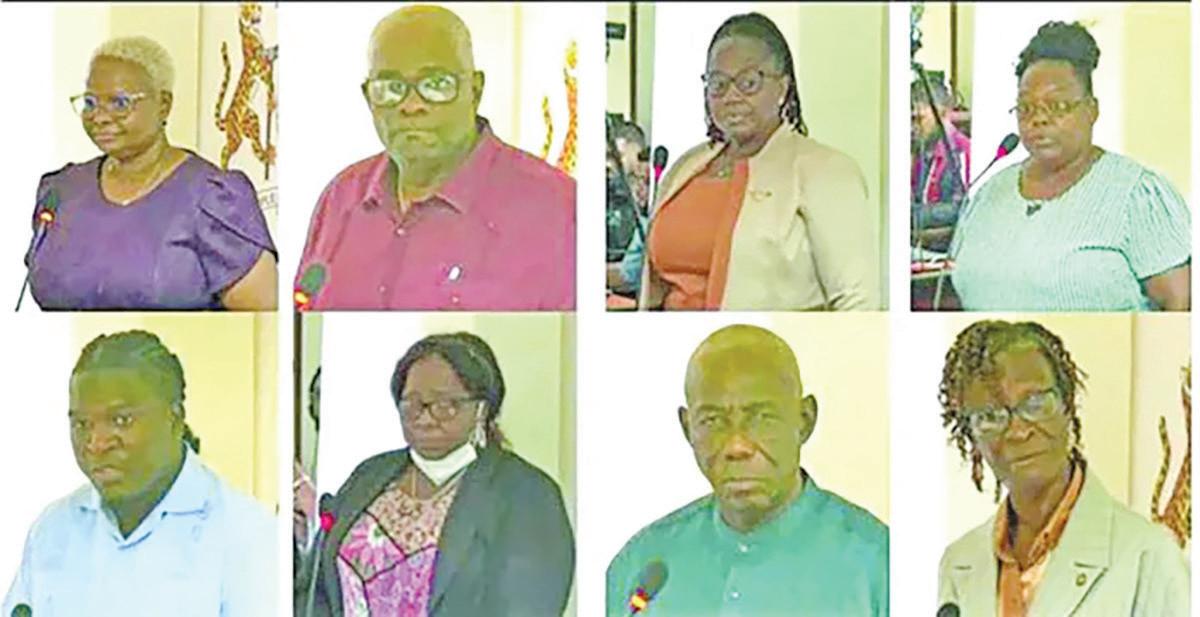
After temporary ban on heavy-duty trucks Rupununi Miners Association begins repairs on damaged roads
Partnership, financing & innovation at fore of building Caribbean’s disaster resilience
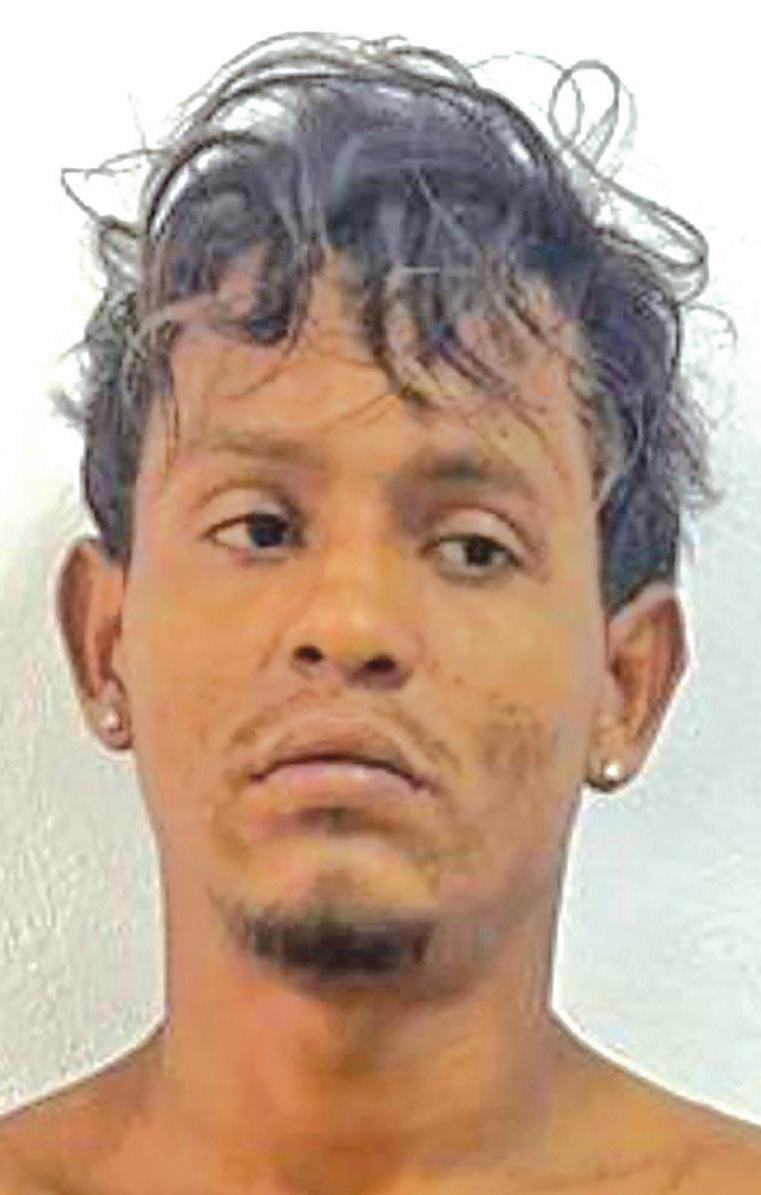
Venezuelan jailed for 18 months for illegal gun possession
1st female firefighter from Pomeroon blazes trail for village youth
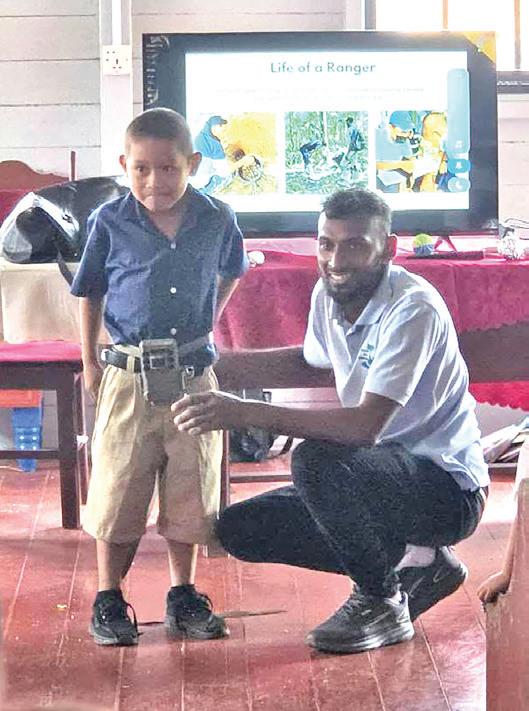
World Sea Turtle Day outreach engages Region 1 students in conservation efforts Page 9
BRIDGE OPENING
JUNE 17, 2026
Gas-to-Energy Project
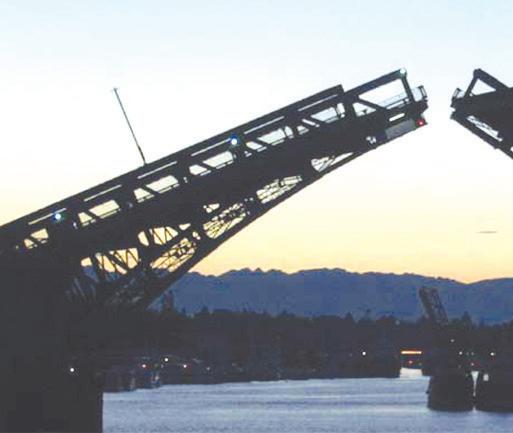
The Berbice Bridge will be closed to vehicular traffic on: Wednesday, June 17 –05:25h–06:55h and Thursday, June 18 – 06:15h–07:45h
FERRY SCHEDULE
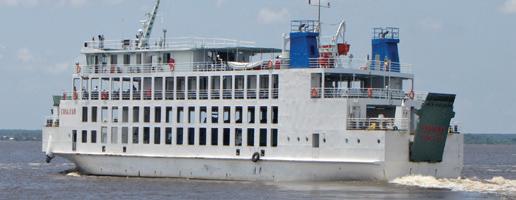
Parika and Supenaam departure times – 05:00h, 10:00h-12:00h, 16:00h, 18:30h daily.
WEATHER TODAY
Thundery showers are expected during the day and at night. Temperatures are expected to range between 23 degrees Celsius and 28 degrees Celsius.
Winds: North-Easterly to East-South-Easterly between 1.78 metres and 3.57 metres.
High Tide: 05:54h and 18:30h reaching maximum heights of 2.72 metres and 2.52 metres.
Low Tide: 12:00h reaching a minimum height of 0.50 metre.
TT-Guyanese consortium to operate, manage NGL plant
Trinidad and Tobagobased Phoenix Park Gas Processors Limited (PPGPL) and local partner GuyGas Inc came out as the first-ranked firms for the Operations and Maintenance (O&M) of the Natural Gas Liquids (NGL) Plant in Phase One of the Gas-to-Energy (GtE) Project.
The Office of the Prime Minister, which has responsibility for the energy sector in Guyana, announced in a statement on Tuesday that following a competitive public procurement and evaluation process, Cabinet has given its no-objection to the commencement of negotiations with these two firms for an O&M arrangement regarding the NGL operations.
According to its website, PPGPL is a leading natural gas processing, fractionation, and NGL marketing company in Couva, Trinidad. On the other hand, GuyGas Inc is a 100 per cent Guyanese-owned family business located in the Land of Canaan, East Bank Demerara, and based on information from its website, it is the only Guyanese company in the country that bottles and distributes cooking gas, or Liquefied Petroleum Gas (LPG).
These two companies were selected from five proposals received and assessed by an evaluation committee against administrative, technical, and financial criteria. The proposal led by PPGPL, with GuyGas Inc as the local partner, ranked first overall, achieving the leading technical assessment together with the most advantageous cost-benefit commercial offer.
In Tuesday’s missive, it was explained that the intended arrangement covers O&M Core Services and the Long-Term Maintenance Plan for the Phase One NGL Plant, with PPGPL and GuyGas Inc (local partner), to be finalised through negotiation.
Based on the proposal, PPGPL, a regional natural gas liquids operator with established experience, will serve as the lead O&M operator, while GuyGas Inc will participate as the local partner, supporting local content and the transfer of skills and capacity to Guyanese workers.
The NGL Plant forms part of the highly-anticipated integrated Gasto-Energy Project located in Wales, West Bank
Demerara, where associated gas will be piped onshore from the Stabroek Block to produce cleaner, lower-cost energy for Guyana, alongside the recovery of propane, butane, and pentanes plus for domestic and export markets.
According to the missive, engaging an experienced operator is intended to ensure the plant is run safely, reliably, and efficiently from start-up, which is targeted for the first quarter of 2027 (Q1 2027).
The Office of the Prime Minister had previously reported that German firm Siemens Energy was selected in early 2025 as the O&M operator for the 300-megawatt combined-cycle power plant and the balance of plant (BOP) as well as auxiliary facilities. Siemens
Energy will hold overall responsibility for coordinating operations and maintenance across the integrated facility, with the NGL Plant operations integrating into that framework.
“A central objective of the engagement is the development of Guyanese personnel. The arrangement is structured to maximise Guyanese employment at the facility and to provide for a deliberate transition through which the maximum number of Guyanese will progressively operate and maintain the plant over time, supported by structured training, mentorship, and the transfer of skills from the experienced operator to the local workforce,” the OPM missive detailed.
Nevertheless, as the
Guyana Government engaged in negotiations with these two firms to iron out the contract details, it was noted that prior to the signing, the agreement would be subject to further technical and legal due diligence reviews – including by the Ministry of Legal Affairs and the Attorney General’s Chambers – to confirm that the commercial terms, benchmarks, and arrangements are reasonable and consistent with best practice and with comparable arrangements in the sector.
Meanwhile, the OPM also used the opportunity to clarify that this contract would only be for the operation and maintenance of the NGL plant in phase one of the GtE project.
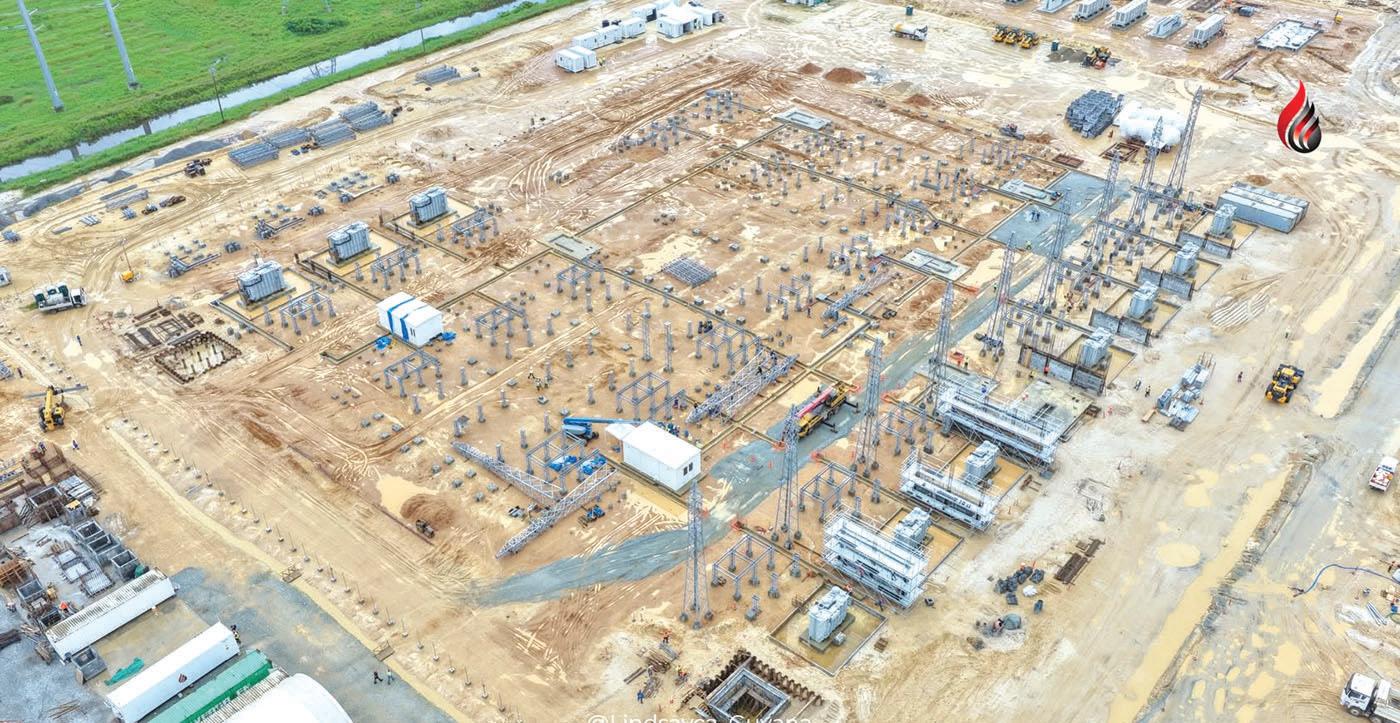
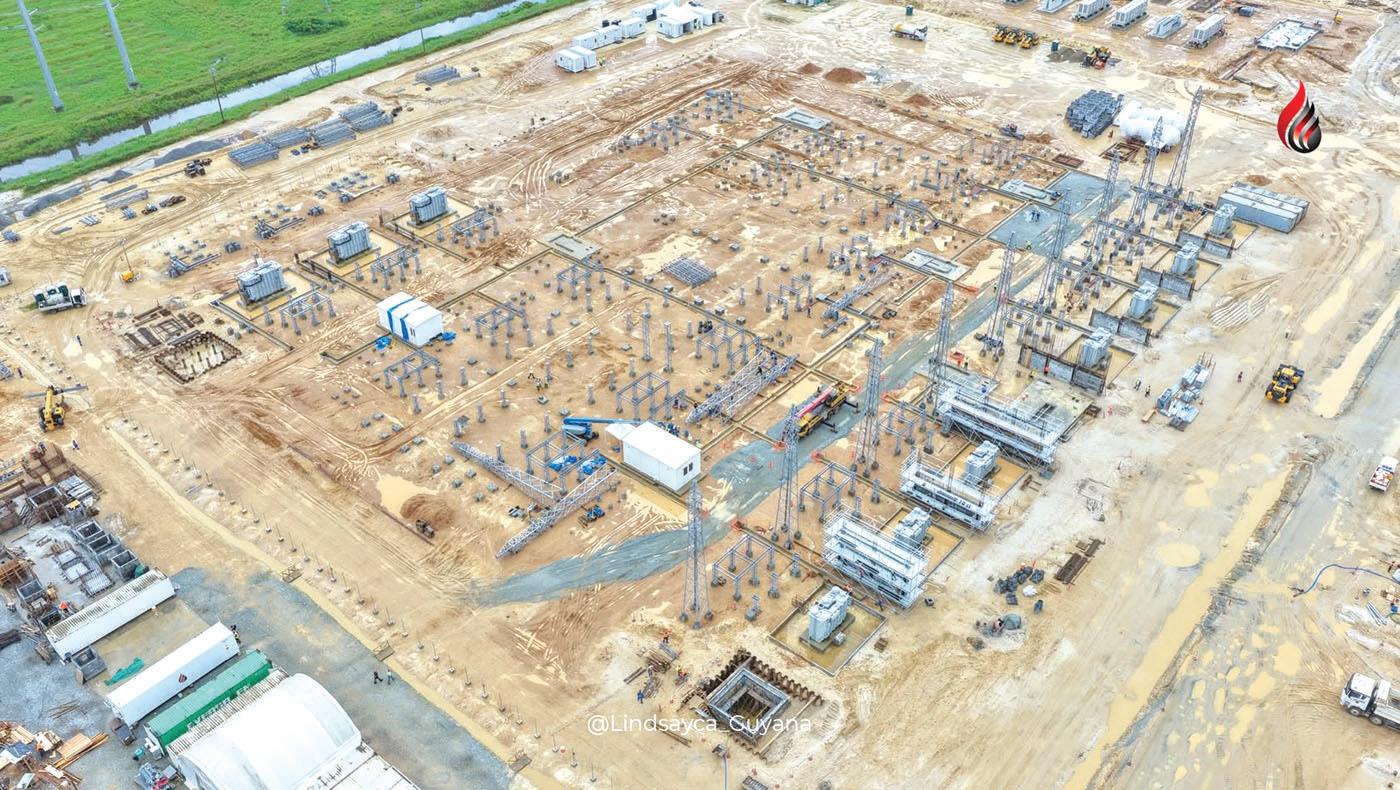
Works ongoing at the Gas-to-Energy Project site at Wales, West Coast Demerara, where a 300-MW power plant and NGL facility are being built out
World Sea Turtle Day is a reminder of the responsibility shared by Governments, communities and citizens to protect some of the planet’s most vulnerable species. In Guyana, the educational outreach Region One (Barima-Waini) activities focused on sea turtle conservation, highlighting an equally-important reality: the long-term success of conservation efforts depends not only on laws, protected areas and scientific research but also on educating young people about the value of biodiversity.
Environmental stewardship is not a concept that develops overnight, as it is cultivated through knowledge, awareness and experience. Introducing children to the importance of wildlife conservation at an early age helps shape attitudes and behaviours that can endure throughout adulthood. When students learn about ecosystems, endangered species and the interconnectedness of nature, they are more likely to develop a sense of responsibility toward the environment and a greater appreciation for the natural resources that sustain communities and economies.
This approach is particularly relevant in Guyana, a country internationally recognised for its rich biodiversity and its commitment to environmental protection. Home to vast forests, extensive river systems, unique wildlife and globally significant ecosystems, Guyana possesses natural assets that are both a national treasure and a global resource. The country’s development strategy has increasinglyemphasised the importance of balancing economic advancement with environmental sustainability, recognising that biodiversity conservation is not an obstacle to progress but an essential component of it.
Sea turtles are an important part of that biodiversity, and their presence contributes to the health of marine ecosystems, and their survival is closely linked to the condition of coastal habitats. Protecting these species therefore extends beyond safeguarding a single group of animals; it is about preserving ecological balance and ensuring the resilience of coastal environments that support numerous forms of life.
Educational initiatives focused on conservation play a vital role in achieving those objectives. Young students who are exposed to environmental issues gain an understanding of how human activities can affect wildlife and habitats. More importantly, they learn that individual and community actions can make a difference. Such lessons encourage responsible environmental practices and help foster a conservation ethic that can influence future generations.
The importance of environmental education is reflected in Guyana’s broader conservation agenda. Over the years, the country has demonstrated a willingness to champion biodiversity protection on both national and international stages. Protected areas have expanded, community-based conservation programmes have grown, and partnerships among Government agencies, local communities and conservation organisations have strengthened efforts to preserve critical ecosystems.
This commitment has also been evident through Guyana’s leadership in advancing global discussions on biodiversity conservation. The establishment of the Biodiversity Alliance is one such example. What began as a platform to encourage international cooperation and support for biodiversity protection has grown significantly and now includes 125 member countries. The alliance reflects a growing recognition that biodiversity loss is a global challenge requiring collective action and shared responsibility. Guyana’s role in promoting such an initiative underscores the country’s determination to place environmental protection at the centre of sustainable development discussions.
Conservation policies and protected areas can only achieve lasting success when communities understand their importance and actively support them. This is where environmental education becomes indispensable. Teaching children about biodiversity, ecosystems and conservation creates informed citizens who are better equipped to participate in protecting the natural heritage around them.
The value of these efforts extends beyond environmental outcomes, as the population that understands biodiversity is more likely to appreciate the economic, cultural and social benefits derived from healthy ecosystems. Tourism, fisheries, agriculture and climate resilience all depend, to varying degrees, on the protection of natural resources. Conservation education therefore contributes to environmental sustainability as well as to national development.
Building that future requires investment in the next generation’s understanding of the environment. Educational activities that introduce children to wildlife conservation, ecosystem protection and biodiversity awareness epitomise an important step in that direction.
As global environmental challenges continue to intensify, the need for informed and environmentally conscious citizens becomes increasingly urgent. Efforts to engage young people in conservation should therefore be encouraged and expanded. Protecting biodiversity is ultimately about protecting the future, and that future is strengthened when children are taught from an early age to value, respect and safeguard the natural world that surrounds them.
Balancing technology and human capital in the age of AI
By Dr Denarto Dennis
In the study of modern economic divergence, identifying the precise mechanisms that lift nations out of poverty is a complex statistical and analytical challenge. In the quiet halls of the Institute for Sustainable Development at the University of the West Indies, Mona, my comprehensive 2015 macroeconomic PhD thesis, supervised by Professor Anthony Clayton, sought to isolate these variables by examining paired developing states – comparing the Dominican Republic and Haiti, Botswana and Zimbabwe, and, crucially for our context, the Cayman Islands and Jamaica. By analysing extensive time-series data, the research quantified how governance, macroeconomic resilience, microeconomic efficiency, and resource allocation dictate national prosperity.
Out of this rigorous econometric analysis emerged the resource-induced poverty-reducing economic condition, commonly referred to as the RIPREC model. While originally formulated to explain historical development trajectories and the long-run diminishing returns to isolated capital investments, the mathematical conditions of the RIPREC model offer a highly prophetic lens for today. As the modern world grapples with the exponential advancement of artificial intelligence (AI) and complex analytics, the RIPREC framework perfectly models the impending socio-economic shocks awaiting nations that fail to balance technological adoption with human capital development.
At its foundation, the RIPREC model posits that sustainable development and poverty reduction are inextricably linked to the relative rates of progress between two vital resources: a nation’s human capital stock and its technological
stock. Assuming that investments in both areas yield specific multiplier effects, the framework mathematically explores what happens when the rates of progress between these two critical areas of societal wealth diverge. The model identifies three primary scenarios that act as roadmaps for a nation’s economic destiny.
The first scenario is technological displacement, a reality the model identifies as the AI prophecy. In this situation, the rate of progress in the technology stock is markedly greater than that of the human capital stock. The framework’s core relationship dictates that if technology outpaces the population’s skills and education, the society risks becoming worse off. This creates profound structural displacement. A workforce ill-equipped to utilise rapidly advancing tools becomes isolated, leading to diminishing returns on technological investments because the human capital base cannot absorb or leverage the new capacity.
In 2015, this was observed in economies that imported heavy industrial technology but failed to educate their populace. Today, this is the exact paradigm threatening the global labour market as AI and automation scale exponentially. For Jamaica, a contemporary example looms over our vital business process outsourcing sector. As generative AI and automated customer service platforms become highly capable, a sudden influx of this technology without a massive, simultaneous upskilling of our local workforce to manage, audit, and direct these automated systems will lead to mass structural unemployment rather than an economic evolution.
Conversely, the model outlines a second scenario: brain drain. If human capital progresses at a rate significantly higher than the technologi-
cal stock, the economy fails to provide the infrastructure and opportunities required to utilise its educated populace. The RIPREC model highlights that this imbalance leads to mass migration of a nation’s most skilled talents or severe underemployment.
A highly educated workforce trapped in a technologically stagnant economy represents a tragic misallocation of resources. Historically, Jamaica is intimately familiar with this phenomenon. For decades, our robust educational institutions have produced world-class nurses, engineers, and educators. However, when local technological and economic infrastructure fails to match their capabilities, these professionals are inevitably pushed towards the United States, the United Kingdom, or the Cayman Islands to find environments in which their high human capacity is adequately supported by advanced technological infrastructure.
The optimal condition — the RIPREC steady state — occurs when the rates of progress in human capital and technology are approximately equal and sufficiently robust. Instead of viewing one resource as superior to the other, the modelling dictates a straightforward but profound principle: For a society to achieve this perfect balance, the rate at which human skills and education progress must precisely mirror the rate at which technological capacity advances.
The AI Shock: A Predictive Validation of RIPREC
The prophetic nature of the RIPREC model is most evident when applied to the current integration of AI into the broader economy. AI represents a massive, sudden acceleration in technological capacity. From automated manufacturing to advanced judicial analytics and
algorithmic decision-making, the technological stock of modern nations is surging upwards at an unprecedented pace. If the multiplier effect of AI on the economy is to be fully realised without catastrophic social fallout, the RIPREC model dictates that investments in human skills and education must immediately scale to restore parity. If policymakers fail to respond, we will enter a pronounced displacement scenario. The model warns that a rapid divergence in which technological growth simply outstrips human skill development will not simply stall economic growth; it will actively increase the incidence of poverty through labour displacement.
Global Implications of the RIPREC Model
While highly applicable to Jamaica’s local context, the RIPREC framework serves as a profound warning for the entire global labour market as AI scales exponentially. On an international scale, the model predicts the widening chasm between nations that are prepared for the AI revolution and those that are merely consumers of it. Developing nations that eagerly import advanced automated tools without overhauling their domestic educational frameworks are setting the stage for severe economic isolation.
Globally, the integration of these tools threatens to replicate the historical mistakes of 2015, where economies imported heavy industrial technology but entirely failed to educate their populace to manage it. The international implication is a newly stratified global economy. Countries that achieve the RIPREC steady state will command massive wealth generation and increasing returns to scale.
The June Criminal Session of the Berbice Assizes of the Supreme Court of Judicature officially commenced on Tuesday, with a ceremonial parade that marched from the Central Police Station to the Berbice High Court (Radio Eve Leary photo)
UG opens China Book Corner World Sea Turtle Day outreach engages Region 1 students in conservation efforts
The University of Guyana (UG) on Monday unveiled its China Book Corner, a donation from the Embassy of the People’s Republic of China in Guyana aimed at strengthening cultural and educational exchanges between the two countries. Speaking at the ceremony, Vice Chancellor (VC) Professor Paloma Mohamed-Martin highlighted the longstanding partnership between Guyana and China, noting the significance of the relationship and the opportunities it presents for learning and collaboration. Mohamed-Martin also spoke about the value of embracing cultural and linguistic differences, describing them as opportunities for growth and understanding.
“The language barrier, and I will say ‘barrier’ in euphemism, in inverted commas – is an opportunity for us not only to learn a different language, which is rooted in very old traditions, but also to learn about a culture and a people that are truly remarkable,” she added. Mohamed noted that the launch acknowledges China’s achievements and the importance of fostering a deeper understanding of the country among Guyanese students and citizens. She said such understanding is cultivated through books, conversations, cultural exchanges, food, travel and the relationships formed between people. Mohamed expressed delight at the opportunities be-
ing created to strengthen these connections and emphasised that learning from China’s accomplishments is an important part of that process.
Shared values, similarities Meanwhile, Chinese Ambassador to Guyana, Yang Yang, stated that the books reflect the shared values and similarities between the two nations. According to her, “From these books, we can see that although China and Guyana are far apart and differ greatly in size and population, we share much in common. Both of us put people first. We care about improving people’s lives and their happiness.” She noted a recent initiative announced by President Dr Irfaan Ali, proposing a weekly family day that would close Main Street in Georgetown to create space for family gatherings, describing it as “a perfect idea”.
“Both of us have suffered from invasion and colonialism. That is why we treasure hard-won development opportunities. How to find a new engine of growth? How to build innovation? How to balance economic development with environmental protection –these are questions confronting us,” she said. She added that the books serve as a space for reflection and learning and that the books help readers slow down, calm down and think more deeply. She noted that the books being introduced at this time are all
in English, adding that in the future they may also be available in Chinese. She described the content as rich and varied, explaining that some books tell stories about how Chinese leaders govern the country and how a nation of over one billion people has pursued modernisation. Others, she said, highlight how China has lifted hundreds of millions of people out of poverty, village by village. She expressed hope that the books would help readers gain a fuller understanding of China – not only its achievements, but also its challenges.
She further added, “We all have diverse cultures. Guyana has six peoples. People from different backgrounds celebrate each other’s festivals. China has 56 ethnic groups. We often say ethnic groups should be as tightly united as pomegranate seeds. Inclusiveness and unity are key spirits in both Chinese and Guyanese cultures. These commonalities lay a solid foundation for mutual understanding and learning.”
The Ambassador encouraged students to view the China Book Corner as a space for reflection and discovery. “I hope you will see the China Book Corner as a small garden of ideas. When you feel tired or curious, come and browse. When you open a book, it is like opening a door. Behind that door is a dear friend – China. China is waiting to shake your hand, give you a hug, and move forward with you.”
In observance of World Sea Turtle Day 2026, the Protected Areas Commission (PAC), through its Shell Beach Protected Area team, hosted an educational outreach activity aimed at raising awareness about sea turtle conservation among students in Region One (Barima-Waini).
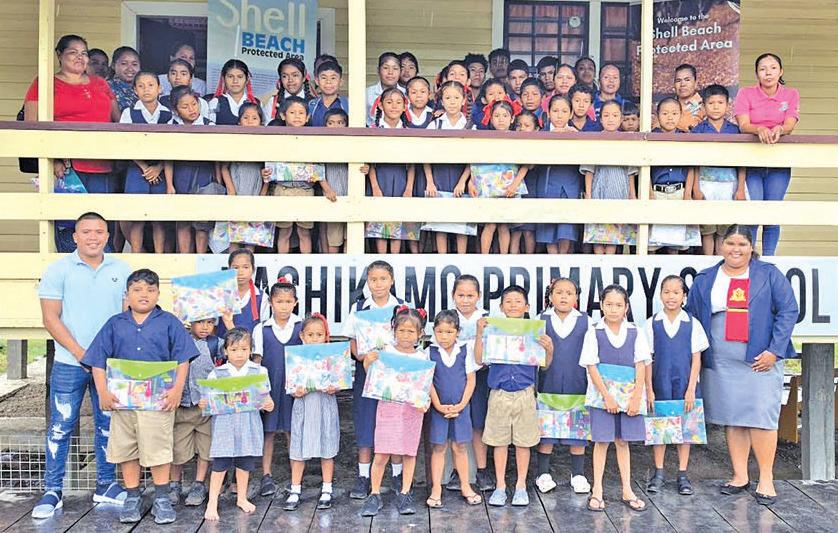
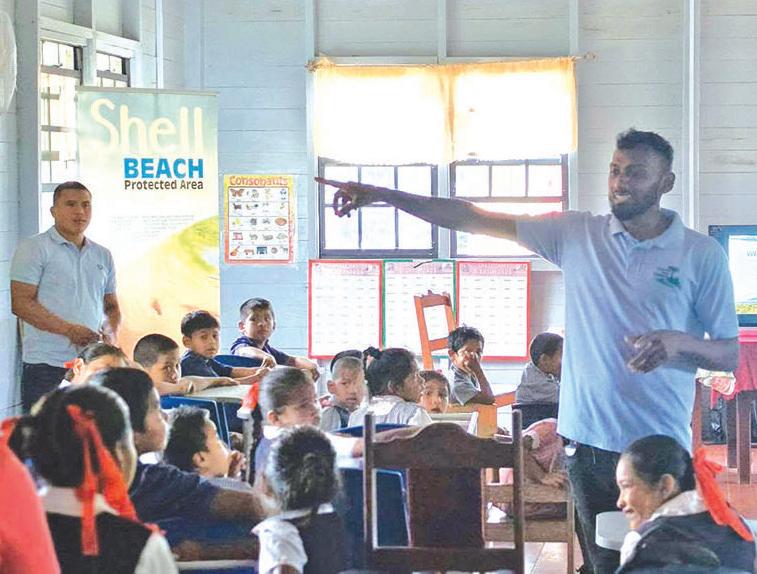
The event, dubbed “Turtle Talk”, was held at Kachikamo Primary School in Three Brothers Village and brought together students from Kachikamo and St John’s Primary Schools. The session was facilitated by Shell Beach Protected Area rangers as part of ongoing efforts to educate young people about the importance of protecting Guyana’s coastal ecosystems.
During the activity, students learned about the four species of sea turtles that nest along Shell Beach, one of the most significant nesting sites in the region. Rangers explained the ecological importance of sea turtles and the role coastal habitats play in maintaining healthy marine environments.
The presentation also highlighted the major threats facing sea turtle pop-
Balancing technology and...
Meanwhile, nations trapped in the first scenario will face devastating structural displacement, forced to grapple with a massive, economically isolated underclass that cannot participate in the modern digital economy.
Transforming Education for the Future
The implications of the RIPREC model for our schools, colleges, and universities are urgent and transformative. To avoid the technological displacement trap, our educational institutions must abandon legacy models of passive, rote learning that were designed for an industrial era. Instead, they must implement highly engaging, volume-heavy, and collaborative instructional methodologies — such as structured cooperative learning strategies
— that prioritise adaptability and complex problem-solving.
For primary and secondary schools, this means moving beyond simple computer literacy. Curricula must shift towards teaching the underlying logic of systems, including prompt engineering, data analytics, and foundational algorithmic thinking from an early age. Mathematics, critical thinking, and technical literacy must be taught with unprecedented rigour to ensure students are masters of technology rather than passive users. At the college and university level, the focus must shift to interdisciplinary agility and lifelong learning. Higher education must be recalibrated to produce graduates who can synthesise human expertise with machine intelligence, emphasising skills that AI cannot
easily replicate – such as ethical judgement, high-level strategic planning, and complex interpersonal coordination.
Furthermore, the model suggests that academic institutions must forge deeper, more responsive partnerships with the private sector. By actively monitoring technological trends, colleges and universities can align their specialised training programmes with the actual needs of a rapidly changing economy, ensuring that the human capital we produce is always calibrated to the current technological frontier.
Strategic Imperatives: Governance and Prosperity
Maintaining this delicate balance requires resilient governance, and fostering this equilibrium requires a stable macroeconomic environ-
ment, adherence to the rule of law, and institutions that prevent extractive rent-seeking. Without these foundational pillars, even massive influxes of cutting-edge technology will fail to reduce poverty, as the resultant economic gains will inevitably be hoarded by a privileged minority.
As the architecture of the modern economy transitions towards advanced analytics and machine intelligence, the RIPREC model stands as a vital economic compass. It serves as a stark reminder: technology alone does not cure poverty. Sustainable prosperity is only forged when a society commits equally to the rigorous, continuous elevation of its people.
(Jamaica Observer)
(Dr Denarto Dennis is a consultant statistician and associate professor.)
ulations, including habitat loss, pollution and poaching. Through interactive activities and practical demonstrations, students were introduced to simple actions
that individuals and communities can take to help protect nesting beaches and support conservation efforts.
Chinese Ambassador to Guyana, Yang Yang and UG Vice Chancellor Paloma Mohamed-Martin, along with senior members of UG and a UG student representative
PAC’s team at an educational outreach aimed at raising awareness about sea turtle conservation among students in Region One
Foundation
Percentages of an amount
A percentage of an amount can be calculated by writing the percentage as a decimal or a fraction and then multiplying it by the amount. There are different methods you can use to calculate a percentage of a quantity.
For example, what is 35% of 60?
Method 1: The one percent method
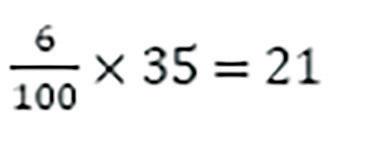
Find 1% first by dividing the amount by 100 and then multiply this by the amount.
Method 2: The decimal multiplier method
Write the percentage as a decimal and then multiply the amount by this decimal.
35% = 0.35
60 × 0.35 = 21
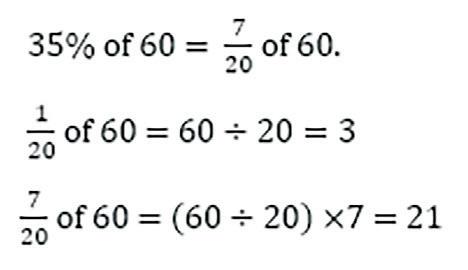
Method 3: Using equivalent fractions
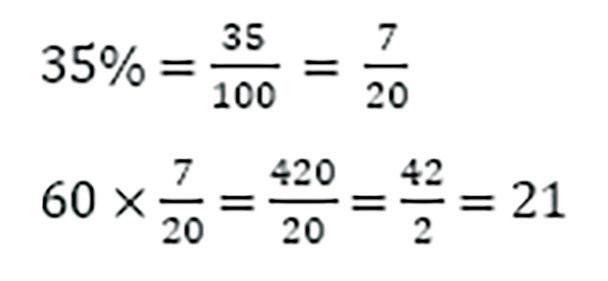
Write the percentage as a fraction in its simplest form and then multiply the amount by this fraction.
Alternatively you can calculate the fraction of the quantity like this,
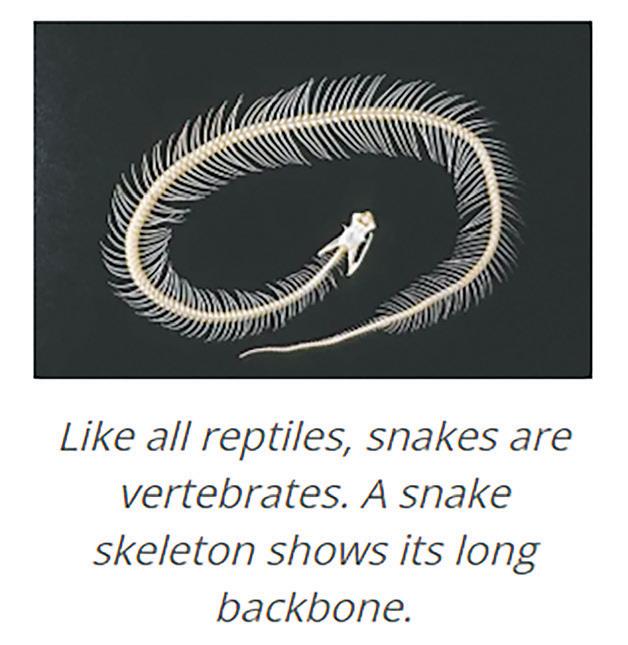
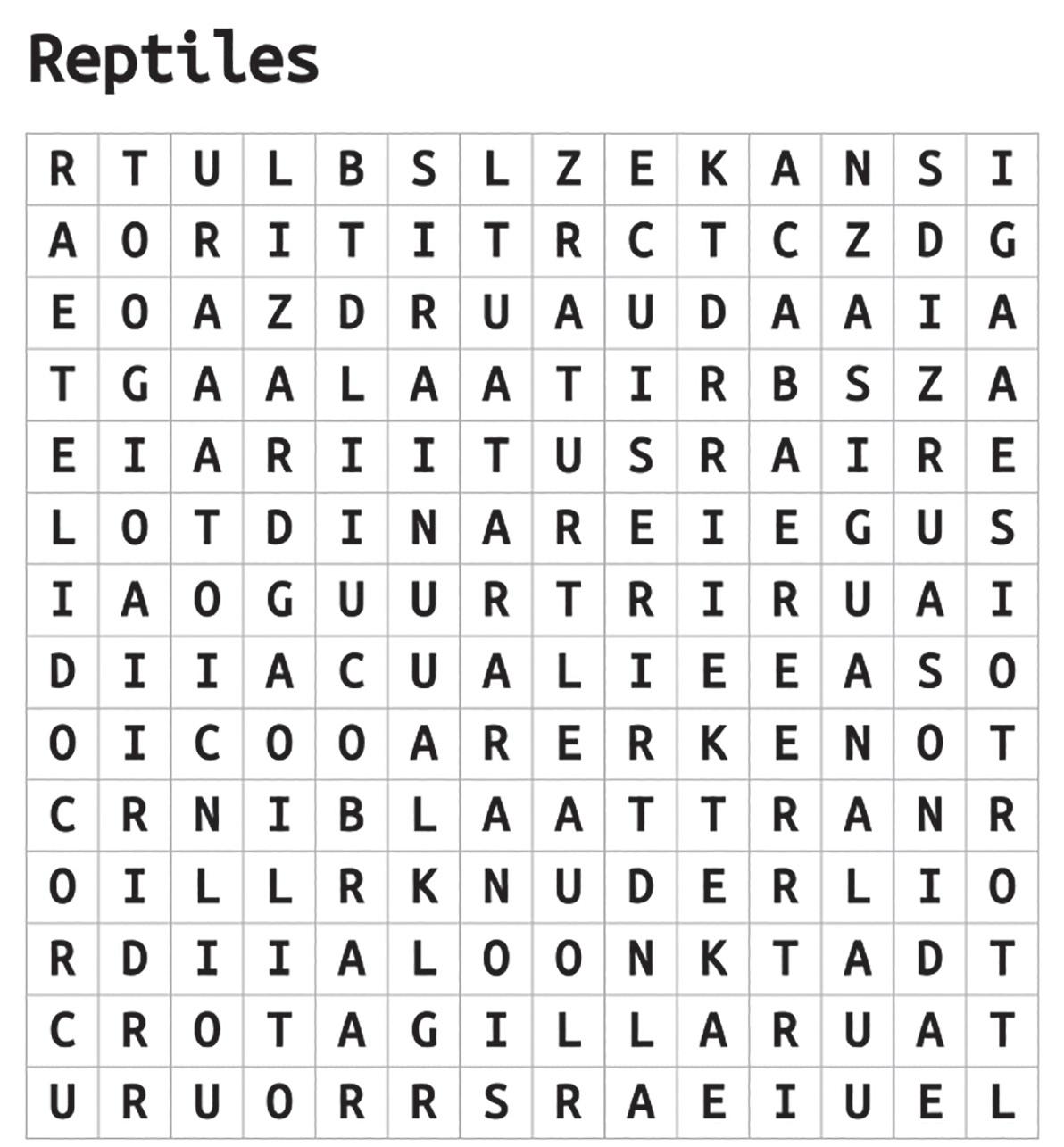
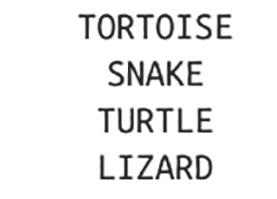
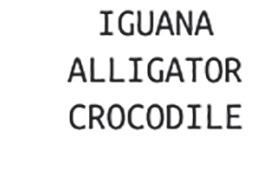
Areptile is an air-breathing animal that has scales instead of hair or feathers.
Reptiles have lived on Earth for more than 280 million years. Scientists consider them to be the ancestors of birds and mammals.
Over the years many kinds of reptiles have become extinct. The dinosaurs are wellknown reptiles that became extinct about 65 million years ago. Today there are more than 12,000 species of living reptile. They include snakes, lizards, turtles, alligators, crocodiles, and tuataras.
Reptiles are found all over the world, except in very cold areas. The greatest number and variety are in the hot, humid tropics. Snakes and lizards live in many different kinds of places. They can live on land, in trees, in underground tunnels, or in water. Most turtles live in water but spend some time on land. Tortoises live only on land. Alligators and crocodiles spend most of their time in water, but they can make short
Method 4: Building up an answer from simple percentages
Using simple percentages, you can build up to the answer to the question.
This question could be broken down into the following steps.
10% of 60 = 6 (To find 10% we divide by 10)
5% of 60 = 3 (5% is half of 10%)
30% of 60 =18 (30% is three lots of 10%)
35% of 60 = 18+3 =21 (30% plus 5%)
Methods 1 and 2 lend themselves to questions where a calculator is allowed.
Methods 3 and 4 lend themselves to questions where calculators are not permitted.
Practice
Use each method to solve the following:
Find 25% of 120 km
Find 23% of 700
Find 10% of 450 kg
Find 78% of 410
Find 16% of $300
Find 61% of 720
trips on land. Tuataras are found only on a few rocky islands of New Zealand. They live in underground burrows during the day and come out to feed at night.
Reptiles are cold-blooded animals. This means that their body temperature changes when the temperature around them changes. Most reptiles are inactive during winter. This is called hibernation. Some are inactive during parts of the summer. This is known as aestivation
Most reptiles are meat eaters. Some reptiles follow their prey, while others hide and wait for the prey to approach. Certain snakes shoot venom, or poison, into their prey. A few lizards and turtles eat only plants. Most reptiles lay eggs. The number of eggs laid differs among reptile species. Some lay just one egg. Others can lay up to 200. It usually takes about 60 to 105 days for the eggs to hatch. Certain snakes and lizards give birth to live young.
Most reptiles take at least a year to
mature. Unlike mammals, reptiles may grow throughout their lives. Some reptiles live longer than any other vertebrates. Many species of reptile can live for more than 20 years in zoos. Certain turtles have lived for more than 100 years.
By PATTIANN ROGERS
There is at least one eye for everything this afternoon. The algae and the yeasts, invisible to some, for instance, are seen by the protozoa; and the black-tailed seeds of tadpoles are recognized on sight by the giant, egg-carrying water beetle. Brook trout have eyes for caddisfly larvae, pickerel for dragonfly nymphs; redfin shiners bear witness to the presence of flocks of water fleas.
The grains of the goldenrod are valued, sought out, found by the red-legged grasshopper who is, in turn, noticed immediately by the short-tailed shrew whose least flitter alarms and attracts the red-crowned eye of the white-winged hawk. There is an eye for everything. The two-lined salamander watches for the horsehair worm, as the stilt spider pays sharp attention to midge fly, crane fly. The cricket frog will not pass unnoticed, being spied specifically by the ringed raccoon, and, despite the night beneath the field, the earthworm, the grub and the leafhopper larva are perceived by the star-nosed mole. So odd, that nothing goes unnoticed. Even time has its testimony, each copepod in the colony possessing a red eyespot sensitive to the hour, the entire congregation rising as one body to touch the afternoon where it exists above the pond. And I have an eye myself for this particular vision, this continuous validation-by-sight that's given and taken over and over by clam shrimp, marsh treader, bob cat, the clover-eating honeybee, by diving teal, the thousand-eyed bot fly, the wild and vigilant, shadow-seeking mollusk mya. Watch now, for my sake, how I stalk. Watch how I secure it. Watch how long and lovingly, watch how I feed.
(Source: Poetry [January 1988])
Hide something from your reader until the end of your story.
(Adapted from Britannica Kids)
Partnership, financing & innovation at fore of building Caribbean’s disaster resilience
…as Guyana prepares to host CDM14 in December
Prime Minister (PM)
Brigadier (Retired)
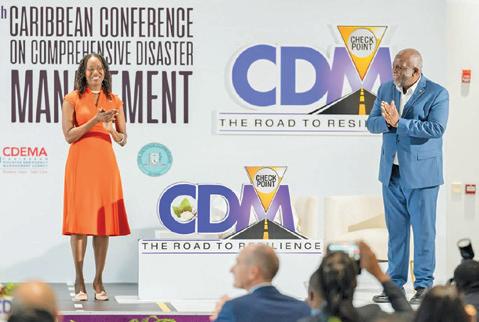
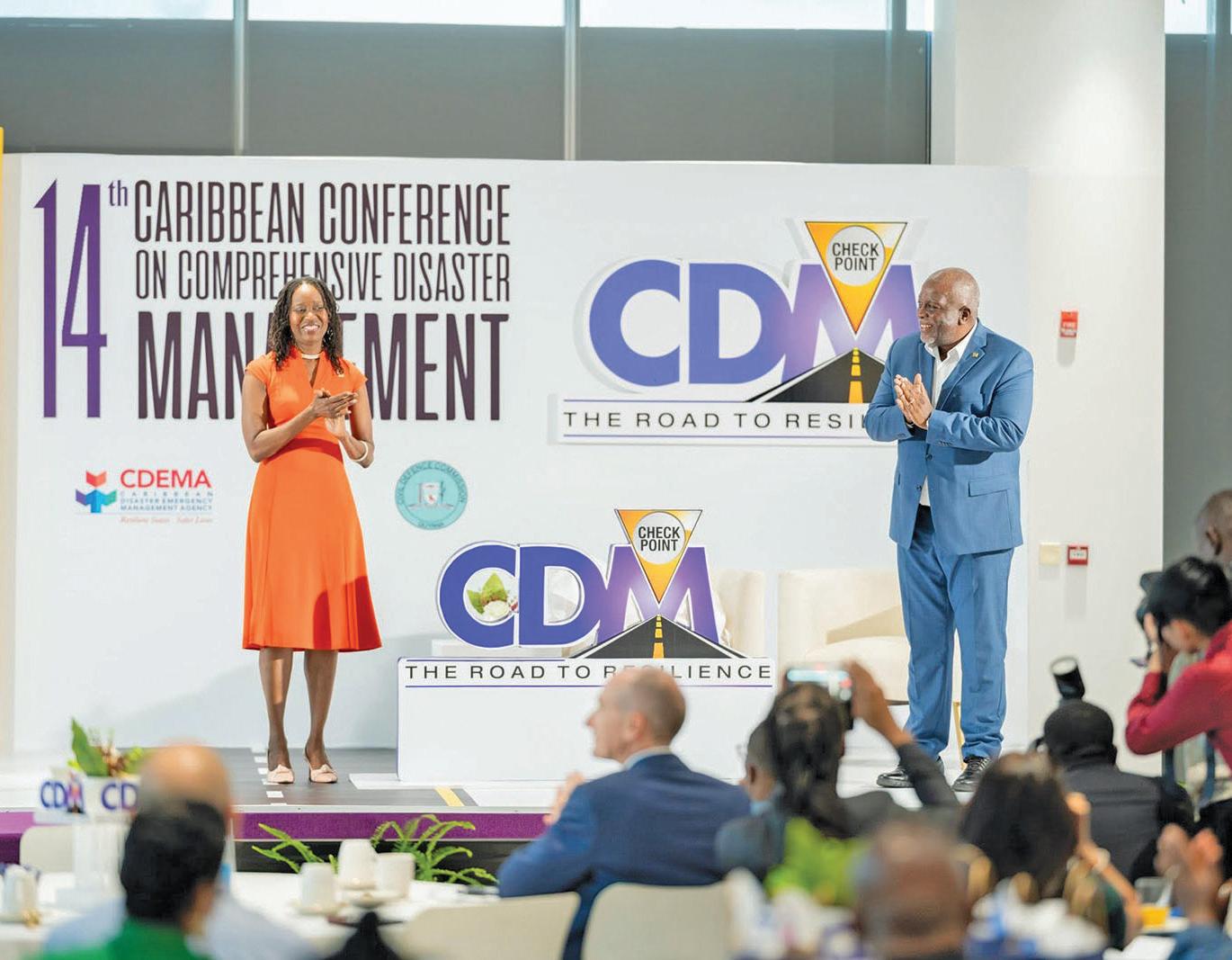
Mark Phillips has underscored the importance of regional collaboration in strengthening resilience at a time when the Caribbean is confronting a rapidly-changing environment and increasingly-complex risk landscape. He made these remarks on Tuesday at a partnership breakfast and launch of the 14th Caribbean Conference on Comprehensive Disaster Management (CDM14), which will be held in Guyana from December 7 to 12. Bringing together the region’s best minds and strongest partners, the upcoming conference will be held under the theme, “CDM: Road to Resilience; Checkpoint 2026, Resilient Sectors, Sustainable Communities, Safer States.
Addressing the gathering at the Partnership Breakfast and Launch event at the Pegasus Suites and Corporate Centre in Georgetown, PM Phillips explained that the idea of a “checkpoint” is deliberate as it prompts the region to pause and take measure of where its stands regarding the readiness of various institutions and the soundness of financing that would support them when the next shock arrives. “It is a useful checkpoint that helps us record our progress and name the gaps that remain with a commitment to closing them on a clear timeline. The theme set for December points to the outcome we are working toward, ensuring our sectors and communities can absorb a shock and keep
functioning so we can keep our people safe,” he asserted. According to the PM, while the conference is set for December, the work on positioning resilience as a development and economic priority must start today. He noted that while in the past, disaster management was only activated after an event occurred, he emphasised that resilience now sits at the centre of how a country is run and touches various aspects of its economy, infrastructure, security and long-term development. With the windows in which decisions must be taken are narrowing, and the cost of acting late rises with every passing season. PM Phillips, who has oversight of the local disaster management sector, underscored the importance of having the systems and infrastructure in place to withstand destructions caused by disasters.
Emergency response facilities
Drawing the conversation home, he pointed out that for Guyana, a low-lying state with majority of its population on the coastline, resilience and development are intertwined and cannot be secured without the other. To this end, he added that Civil Defence Commission (CDC) has been working on enhancing its capabilities in several areas with support from the national budget for a broad range of disaster risk management programmes. This year, the CDC will move to implement the Oil Pollution Act and advance new disaster risk management legislation. The National Oil Spill
Continuity Plan will also be updated and the Multihazard Early Warning Systems will be expanded through geographic information systems (GIS), satellite data and information and communications technology (ICT).
“A Gas-to-Energy (GTE) Emergency Response Contingency Plan is in development and new emergency response facilities at Lethem and Mahdia, as well as the multi-purpose bonds in Georgetown, will be brought into full operation. Investment in the CDC’s people runs through everything, because systems are only as strong as those who operate them,” the PM noted. These and other measures, according to Phillips, gives Guyana a more complete legal and operational footing for the risks that accompany an expanding economy, while also laying the foundation for the December conference, which he stressed requires regional participation. “It is pertinent to note that no country secures resilience on its own, and no single budget can finance it. This is where partnership becomes essential, and it is why this morning’s programme places financing at its centre. Capital for resilience does its greatest work when it is well prepared in advance of disaster. Regional risk pooling and prearranged finance allow a country to respond and recover quickly, sparing its people the long delays that follow when resources have to be assembled from scratch,” he added. On this note, PM Phillips
lauded the presence of the Caribbean Development Bank (CDB) and the Caribbean Catastrophe Risk Insurance Facility — Segregated Portfolio Company (CCRIF SPC), stressing that partnership, including with the private sector, also extends to shared standards, joint exercises, and knowledge exchange among nations.
Emerging technologies
Also emphasising the importance of approaching resilience from a strategic Government development and economic imperative was Executive Director the Caribbean Disaster Emergency Management Agency (CDEMA), Elizabeth Riley.
“It must shape how we plan, invest, and govern. This is especially important as development financing becomes more constrained and official develop-
ment assistance declines. Maximising available resources, strengthening disaster-risk financing and embedding resilience into investment decisions will be critical to safeguard development gains.” Against this backdrop, the CDEMA Head stressed that the upcoming CDM14 will provide wide-raging areas for examination including the adoption of technology in building out the region’s resilience. “It is an opportunity to examine progress, identify remaining gaps and align around practical actions that accelerate recovery outcomes. It will also explore how emerging technologies including artificial intelligence (AI) can strengthen decision-making, risks analysis and preparedness while ensuring that planning remains grounded in strategic foresight and long-term thinking,” the CDEMA Head
posited.
Similarly, Director General of CDC Guyana, Colonel (Ret’d) Nazrul Hussain, also highlighted the importance of innovation as well as youth participation in building out regional resilience. “We invite you to deepen your commitment through CDM14, to fund innovation, co-develop climate smart infrastructure and be active architects of a more resilience Caribbean economy. We also affirm the indispensable role of our youth. The generation that will inherit the climate future must also help to shape the climate response. CDM14 will provide meaningful platforms to elevate youth leadership, to amplify innovative thinking, and to ensure the voices of tomorrow are present in the decisions being made today,” Hussain stated.
TT-Guyanese consortium...
Additionally, it was further pointed out that this contract does not include the supply and bottling of LPG, the sale and marketing of remaining NGLs, or the development of other NGL storage and offloading facilities, which are being advanced through separate processes.
GuyGas is among 10 other firms that submitted proposals earlier this year to design, build and operate a cooking gas bottling company in Guyana.
The model Gas-toEnergy Project remains a cornerstone of the Guyana Government’s strategy to
deliver reliable, affordable, and cleaner energy to citizens, while building local capacity and creating opportunities across the energy value chain.
Phase One of the GtE Project will see the NGL facility coming on stream in the next few years while the power plant is expected to be operationalised by this year end.
Already, some 250 kilometres of 12-inch pipelines have been laid to bring the gas onshore. However, only 40 per cent of the pipeline’s capacity will be used by the GtE Project to gas up the power plant and NGL fa-
cility, bringing 50 million standard cubic feet per day (mmscfd) of dry gas. With the pipelines having the capacity to push as much as 120 mmscfd of gas, the Government is moving ahead with Phase Two of the Gas-to-Energy Project that will utilise the remaining 60 per cent capacity of the pipeline to bring additional gas onshore.
GtE Phase Two will see the construction of another 300-MW power plant and a second NGL facility also built at the Wales site and slated for completion by 2030. FROM PAGE 3
Prime Minister, Brigadier (Retired) Mark Phillips with CDEMA Executive Director Elizabeth Riley at the launch of CDM14 to be held in Georgetown on December 7-12, 2026
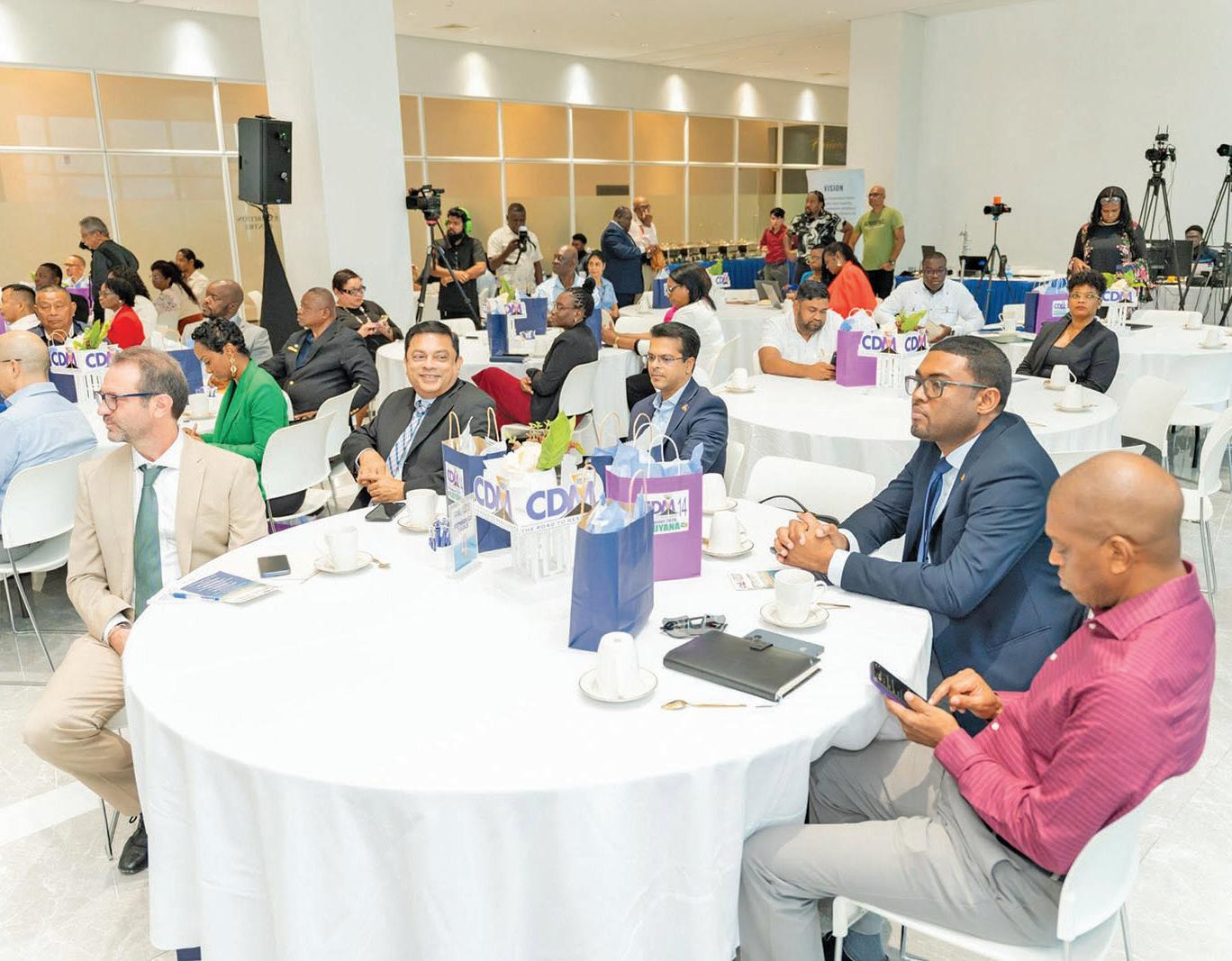
Stakeholders at Tuesday’s partnership breakfast and launch of the 14th Caribbean Conference on Comprehensive Disaster Management
Venezuelan jailed for 18 months for illegal gun possession
A26-year-old
Venezuelan national has been sentenced to 18 months in prison after pleading guilty to unlawful possession of a firearm without a licence. Luis Eduardo Lepaje Chacon, a labourer of Prospect, East
Bank Demerara (EBD), was charged with Unlawful Possession of Firearm Without Licence contrary to Section 16(2)(a) of the Firearms Act, Chapter 16:05. Chacon was arrested on last Thursday and was
charged on Monday. He appeared before Magistrate Dylon Bess at the Diamond Magistrates’ Courts, where the charge was read to him in English and translated into Spanish. He pleaded guilty and was sentenced to
18 months’ imprisonment.
The charge stemmed from an investigation conducted by police in Regional Division 4 ‘B’ following the discovery of a suspected firearm at Prospect Housing Scheme, EBD. According to police, ranks received information that a man had entered a business establishment and was later seen with what appeared to be a firearm.
Acting on the report, police went to Prospect Housing Scheme and made contact with Chacon. Further investigations led officers to a construction site in the area, where a search was carried out. During the search, ranks discovered a black pistol with an empty magazine concealed at the location.
Police also found several cellular phones and a Rambo-type knife during the operation.
World Sea Turtle Day outreach...
According to the PAC, the outreach forms part of the broader conservation programme being implemented at the Shell Beach Protected Area. These efforts include protecting nesting habitats, conducting
anti-poaching patrols, monitoring nests and hatchlings, and working closely with local communities to strengthen stewardship of the northern coastline.
The Commission noted that environmental educa-
tion remains a key component of conservation work, helping to foster greater awareness and encourage responsible environmental practices among younger generations.
By engaging students at
What’s with…
…all the AK-47s??
The AK-47 – short for “Automatic Kalashnikov” – is the most popular assault weapon in the world. With over 100 million in circulation, it’s the go-to weapon of guerrillas, militants, and revolutionary movements –not to mention criminal gangs – ever since its invention by Kalashnikov after WWII. So the news that 33 of these deadly babies were intercepted in two shipments in the last month should be of great interest to the authorities!! Cause for every interception, we gotta assume there were 10 that slipped through our oh-so-porous borders. That these last interceptions passed through our wharves in GT is even more alarming!!
In the far end of the reign of gang terror between 2002 and 2008, your Eyewitness remembers – with alarm – those 30 AK-47s that had disappeared from the GDF armoury at Camp Ayanganna in early 2006. But soon showed up in the hands of the various criminal gangs that had declared war on the Guyanese State in general – and the PPP Govt in particular!! Your Eyewitness has no qualms about raising alarm bells at this time – because this many assault weapons floating around can only signal some organised groups behind them!! He even remembers during the 1980s when military men freelanced with their “long guns” to terrorise PPP supporters as kick-down-thedoor bandits!! The PNC was behind THEM!
FROM PAGE 5
an early age, the PAC hopes to build long-term community support for sea turtle conservation and ensure that Guyana’s nesting beaches remain protected for future generations.
The Commission also expressed appreciation to the students, teachers and community members who participated in the event, emphasising that collective action is essential to safeguarding the country’s marine biodiversity.
World Sea Turtle Day is observed annually to promote awareness of sea turtle conservation and the challenges facing sea turtle populations around the world.
Now, these weapons aren’t cheap – with each costing at least US$1000 – or GY$216,000!! Secondly, these weren’t from the usual Eastern European sources – they were made in the USA!! Now you may be asking how come the USA’s manufacturing a Russian-origin weapon –when its own army totes around its vaunted native M-16s, which are churned out by its own military complex, thank you!! Well, after the US slapped sanctions on Russia and its satellites, the good ole US free market sprung into action, and right now there’s at least five manufacturers of AK-47s in the land of the free and home of the brave!! The essence of free enterprise, of course, is if there’s an itch, you can make money by scratching it!!
But back to what may be afoot here. We know about the small-time youthful criminal gangs that would use guns to conduct robberies and Gaza and Gully beefs!! Then there’s the political gangs – like the now-departed Fineman Gang – that conduct terroristic raids to make a political point! And finally, the large-scale criminal gangs like the one that was run by Roger Khan!! Your Eyewitness however, thinks we’re now seeing a new type of gang –the transnational gang that combines aspects of the preceding three!!
With the Yanks putting pressure on Venezuela’s Wild West border region, we should’ve expected some of their gangs migrating here – along with their refugees!!
Get them!!
…the Parliamentary Committees?
With the Parliamentary Committees formed – and now chaired, let’s see how the Opposition will use its opportunity to govern!! After all, the four Parliamentary Sectoral Committees (PSC) – Economic, Foreign Affairs, Social Services and Natural Resources – were formed after the PNC bludgeoned the PPP and demanded to be included in “governance”. These committees cover the ENTIRE gamut of governmental activities and are constitutionally mandated to SCRUTINISE the latter in real time!!
Half of the PSCs are chaired by the Opposition in a rotating arrangement – and they have great leeway in setting the agenda of their committees. But the Opposition ain’t really interested in “shared governance”, are they?? What they want is to monopolise governance to loot the public treasury!! To use the PSCs to keep the PPP on the straight and narrow takes time to summon Govt officials and grill them on areas of national concern.
But, Dear Reader, that means work and research! Which is like garlic to Count Dracula!
…Norton?
Just when your Eyewitness thought PNC leader Aubrey Norton would’ve been responding to WIN’s reality check at the last Elections, he started foaming at the mouth –and writing daily letters to the press – on an atrocity the PNC committed in 1964.
Shouldn’t he be apologising?
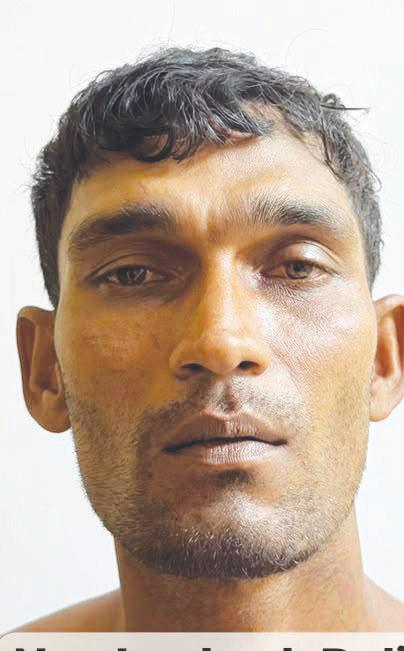
Jailed: Luis Eduardo Lepaje Chacon
The gun that was found by Police
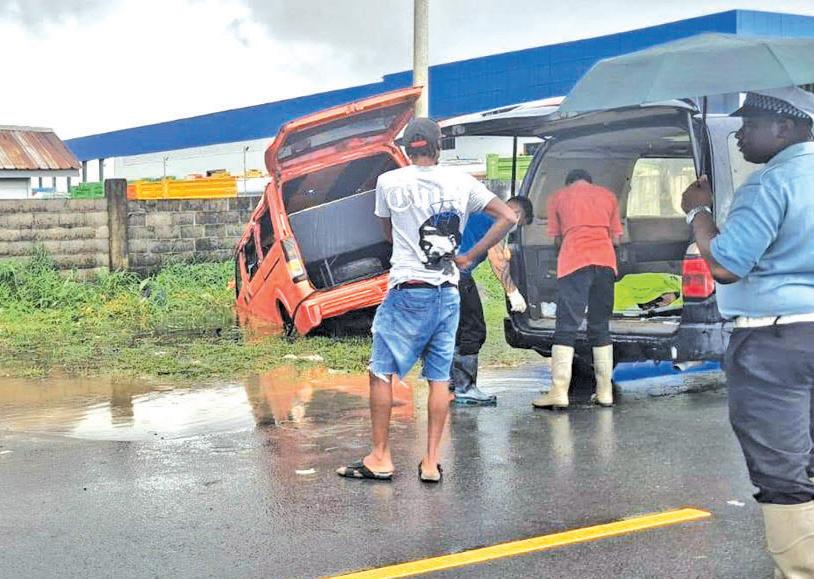
Teacher dies after minibus overturns while overtaking another vehicle …3 children among 6 injured
A30-year-old teacher attached to Dolphin Secondary School lost her life on Tuesday morning following a road accident along the Diamond New Interlink Road, East Bank Demerara (EBD). Dead is Tineka Hicks of Great Diamond, EBD. According to the Guyana Police Force (GPF), the accident occurred at about 08:30h and involved minibus BAH 4679, which was being driven by a 52-yearold resident of Diamond. The vehicle was carrying seven occupants at the time. Initial investigations revealed that the minibus was proceeding north along the western driving lane of the Diamond New Interlink Road during heavy rainfall, and while the driver was attempting to overtake another vehicle, he allegedly lost control of the minibus.
The vehicle subsequently toppled onto its right side, skidded in a north-westerly direction and came to a stop in a drain on the western side of the roadway.
Several occupants sustained injuries as a result of the crash, but Hicks was reportedly pinned inside the minibus. Emergency Medical Technicians (EMTs) responded to the scene, and Hicks was examined by a doctor who pronounced her dead at the scene. Her body was later escorted to Memorial Gardens Funeral Home, where it is awaiting a post-mortem examination (PME). The six other occupants, comprising three students and three adults, were taken to the Diamond Regional Hospital. They
were examined by doctors, treated for their injuries and subsequently discharged. Police said two breathalyser tests were administered to the driver, and no trace of alcohol was detected in his system. The driver remains in police custody as investigations continue. Meanwhile, Education Minister Sonia Parag visited the relatives of Hicks on Tuesday and extended condolences on behalf of the ministry. In a statement, the Ministry said Hicks was on her way to work when the accident occurred.
“Minister Parag and the entire Ministry of Education family extend our deepest, most heartfelt condolences to Ms Hicks’s loved ones, her colleagues, and her students. Her
dedication to her classroom and the lives she touched will not be forgotten,” the statement noted.
Dead: Tineka Hicks
The scene of the fatal accident on Tuesday (NCN photo)
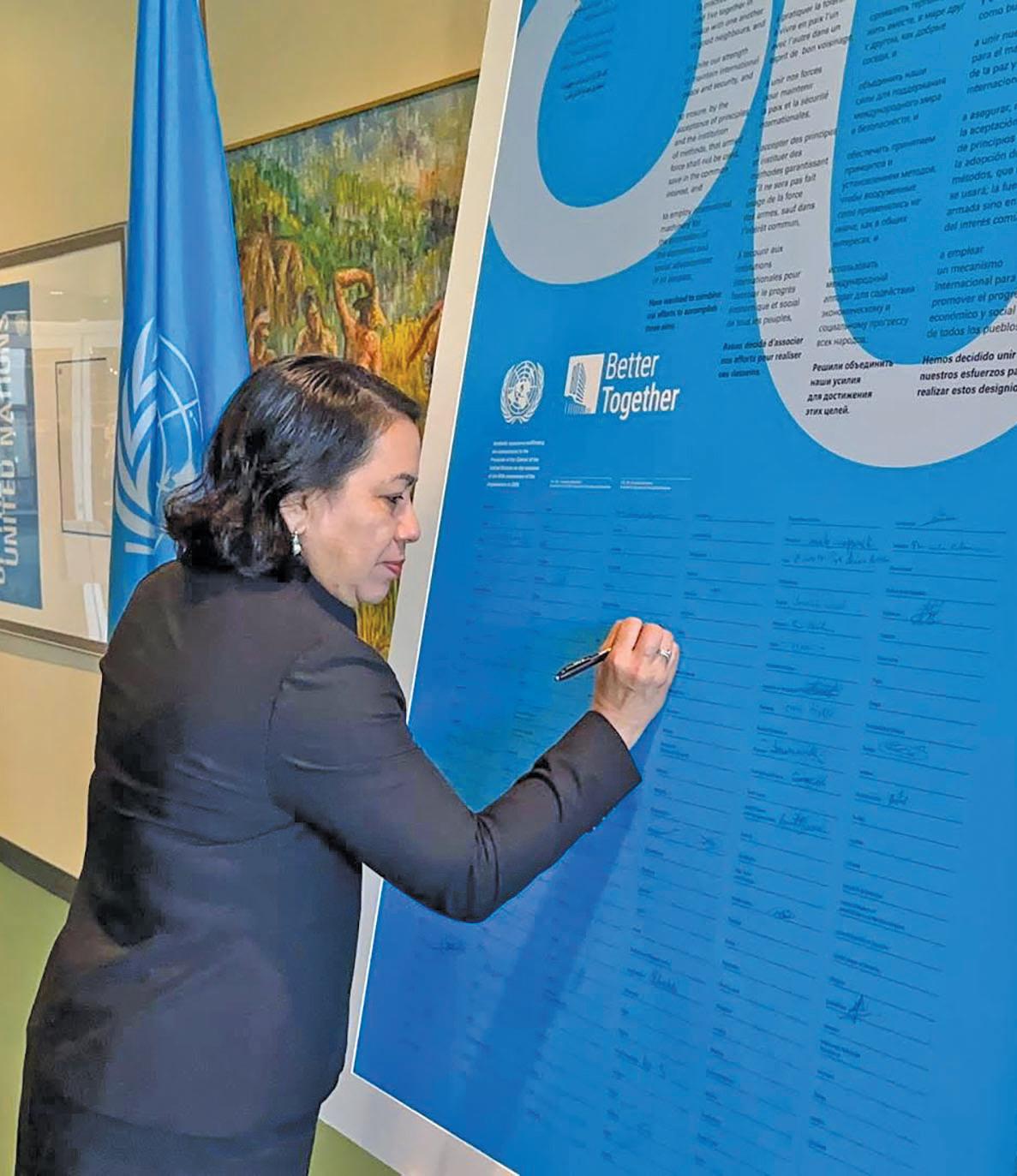
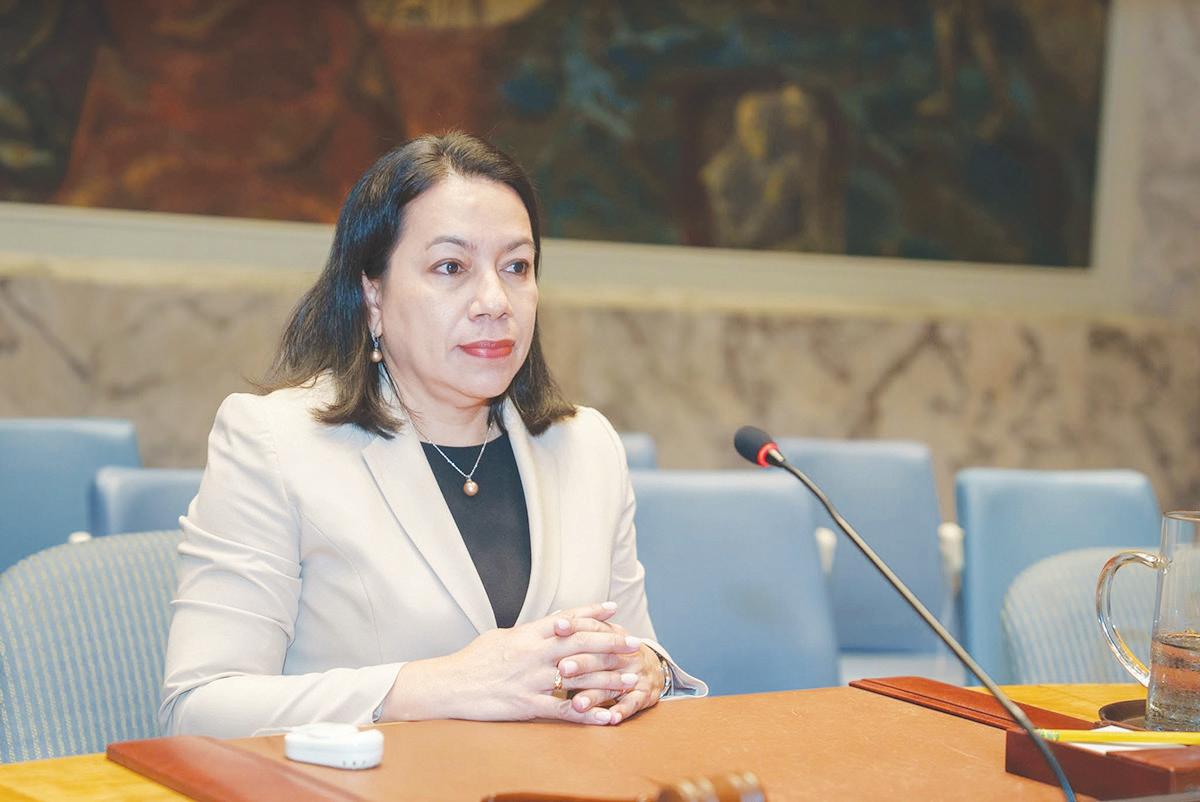
Guyana’s UN Secretary-General nominee set for key dialogue with Member States
Guyana’s nominee for the position of SecretaryGeneral (SG) of the United Nations (UN), Ambassador Carolyn Rodrigues-Birkett, is scheduled to participate in an informal interactive dialogue with UN Member States on Thursday, June 18, as part of the official selection process for the organisation’s next leader. The announcement was made by the
Permanent Mission of Guyana to the UN, which noted that the engagement will begin at 10:00h and will be livestreamed on the UN WebTV platform. Ahead of the dialogue, Rodrigues-Birkett, who currently serves as Guyana’s Permanent Representative to the UN, said she looks forward to presenting her vision and engaging with Member States, civil society and the wider international
community. “As I embark on this journey seeking to be the next United Nations Secretary General, I begin the process with an informal interactive dialogue with the membership of the United Nations on Thursday, 18 June 2026,” Rodrigues-Birkett stated. She described the dialogue as an important component of the selection process and pledged to maintain a consultative approach if entrusted
with the role. “I am eager to share my vision, engage with the membership, civil society and wider international community, and commit to maintaining a similar consultative posture once entrusted with the responsibility of serving as the world’s chief public servant,” she added. The dialogue comes days after President Dr Irfaan Ali announced that Guyana would formally nominate RodriguesBirkett for the position upon the completion of the tenure of current UNSG António Guterres on December 31, 2026. In announcing the nomination on June 13, President Ali said the decision followed extensive consultations and reflected Guyana’s growing influence within the international community. RodriguesBirkett has served as Guyana’s Permanent Representative to the UN since 2020. During that period, she played a leading role in advancing Guyana’s positions on international peace and security, including during the country’s tenure on the UN Security Council. Prior to her current role, she served as director of the Food and Agriculture Organization (FAO) Liaison Office in Geneva between 2017 and 2020. She also held ministerial portfolios in Guyana, serving as Minister of Foreign Affairs from 2008 to 2015 and Minister of Amerindian Affairs from 2001 to 2008.
President Ali said the Government believes Rodrigues-Birkett possesses the experience, diplomatic skills and leadership required to lead the UN at a time when the organisation faces challenges ranging from conflict prevention and climate change to food insecurity and humanitarian crises. If elected, RodriguesBirkett would become the first woman to serve as UNSG since the organisation’s establishment in 1945. She would also be the first national from the Caribbean to hold the position. Under the UN Charter, the SG is appointed by the General Assembly upon the recommendation of the Security Council. A candidate must secure at least nine votes from the 15-member Security Council and must not be vetoed by any of its five permanent members before being recommended for appointment by the General Assembly.
Ambassador Carolyn Rodrigues-Birkett
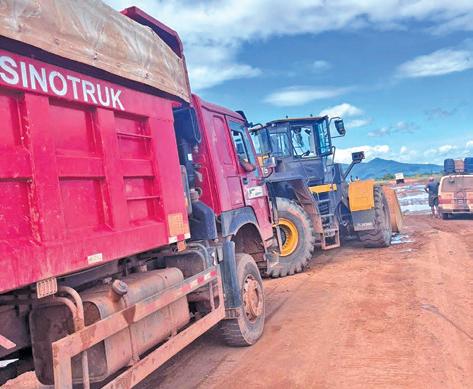
After temporary ban on heavy-duty trucks Rupununi Miners Association begins repairs on damaged roads
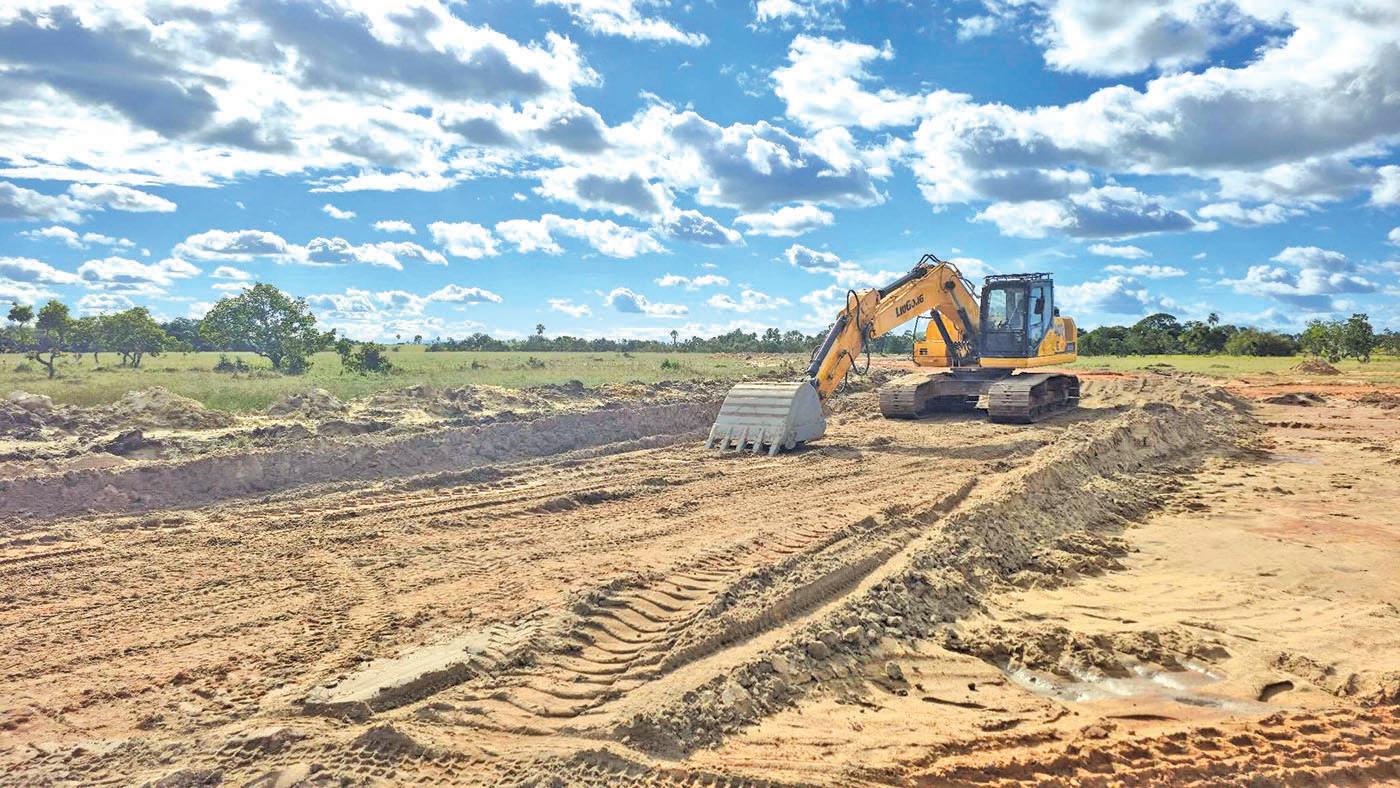
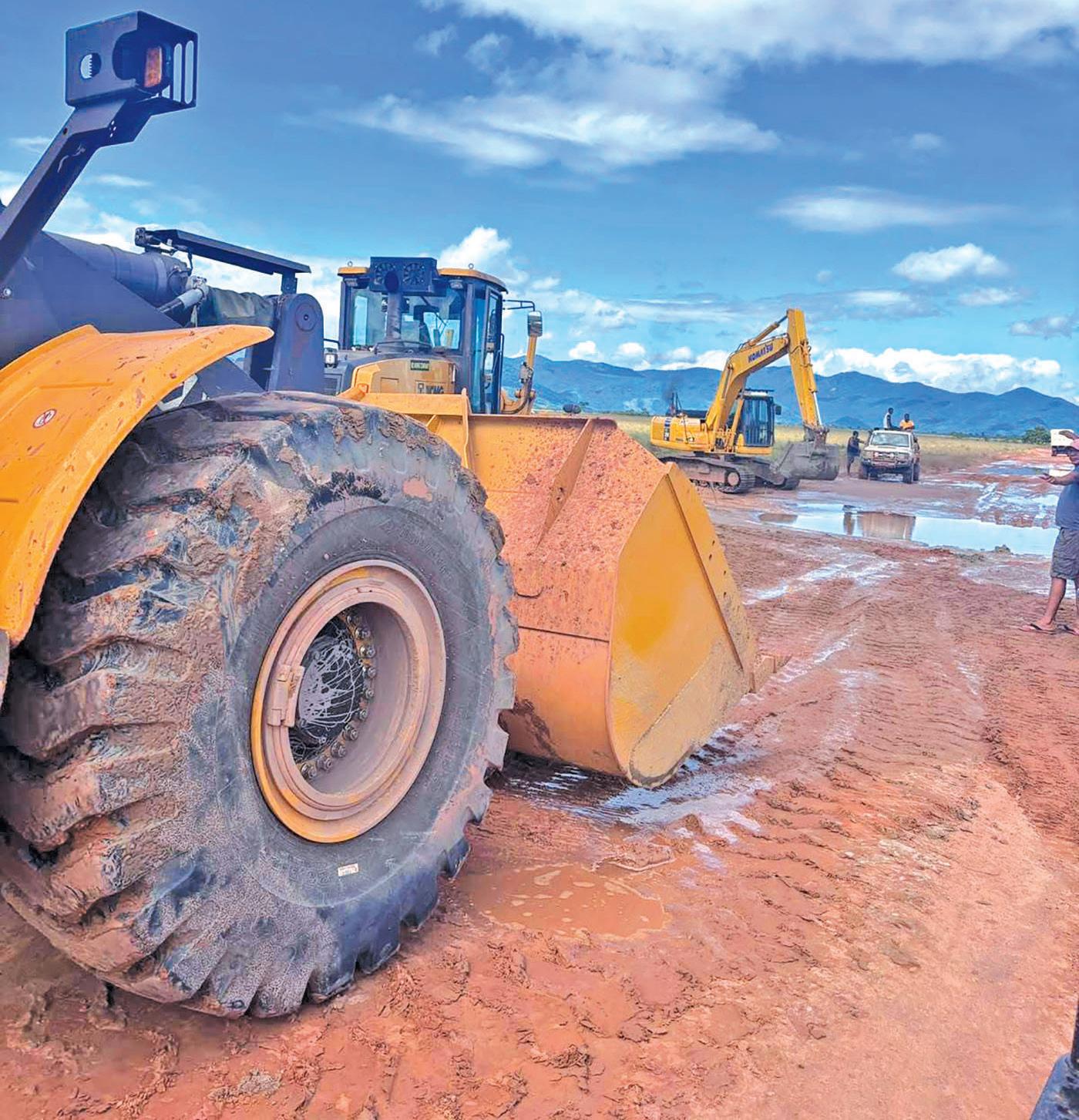
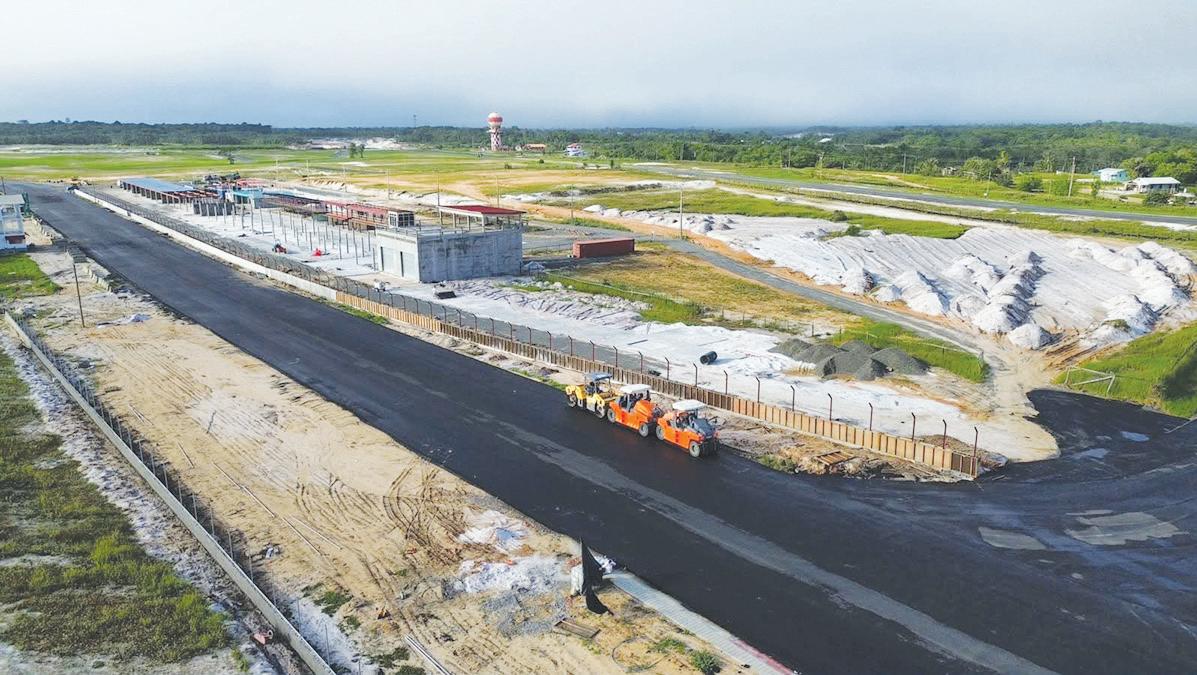
Efforts to restore sections of the damaged road network in South Rupununi, Region Nine (Upper Takutu-Upper Essequibo), are now underway, with the Rupununi Miners Association (RMA) deploying heavy-duty equipment to carry out repairs.
concerns that continued use of the roads by heavy-duty trucks was causing significant damage to critical transportation links connecting communities to schools, health facilities, businesses and other essential services.
The issue escalated af-
According to an update from the region, two sets of heavy machinery are currently working to address damaged sections of the roadway. The temporary repairs have already improved accessibility, allowing small vehicles to traverse the affected areas with greater ease.
The repair works come days after residents of South Rupununi secured a temporary ban on heavy-duty trucks using sections of the region’s road network amid concerns about extensive road deterioration.
On June 10, the South Rupununi District Council (SRDC) announced that heavy-duty vehicles would not be permitted to use the affected roads temporarily, following an urgent meeting involving Natural Resources Minister Vickram Bharrat, regional officials, representatives of the Regional Democratic Council (RDC), the Guyana Geology and Mines Commission (GGMC), the Rupununi Miners Association, and SRDC Chairman Nicholas Fredericks.
Residents had raised
ter residents confronted truck operators in an effort to draw attention to the deteriorating condition of the roads. The SRDC had reported that tensions increased following allegations that some residents were treated disrespectfully during the encounter.
Following discussions among Government officials, regional authorities and community representatives, it was agreed that heavy-duty trucks would be temporarily barred from using the affected roads while rehabilitation efforts progressed. Small vehicles were permitted to continue using the routes.
At the time, the RDC had committed to deploying two excavators to begin repairs on damaged sections between Katoonarib and Sawarab. The RMA also pledged to provide two additional excavators to support the rehabilitation works.
The latest update confirms that the association has followed through on that commitment, with machinery now actively engaged in repairing damaged sections of the roadway.
The restriction on heavy-duty vehicles is expected to remain in effect until repairs have advanced sufficiently and authorities, together with community representatives, determine that the roads can safely accommodate such traffic once again.
Road repairs being carried out in South Rupununi, Region Nine (Michael Thomas photos)
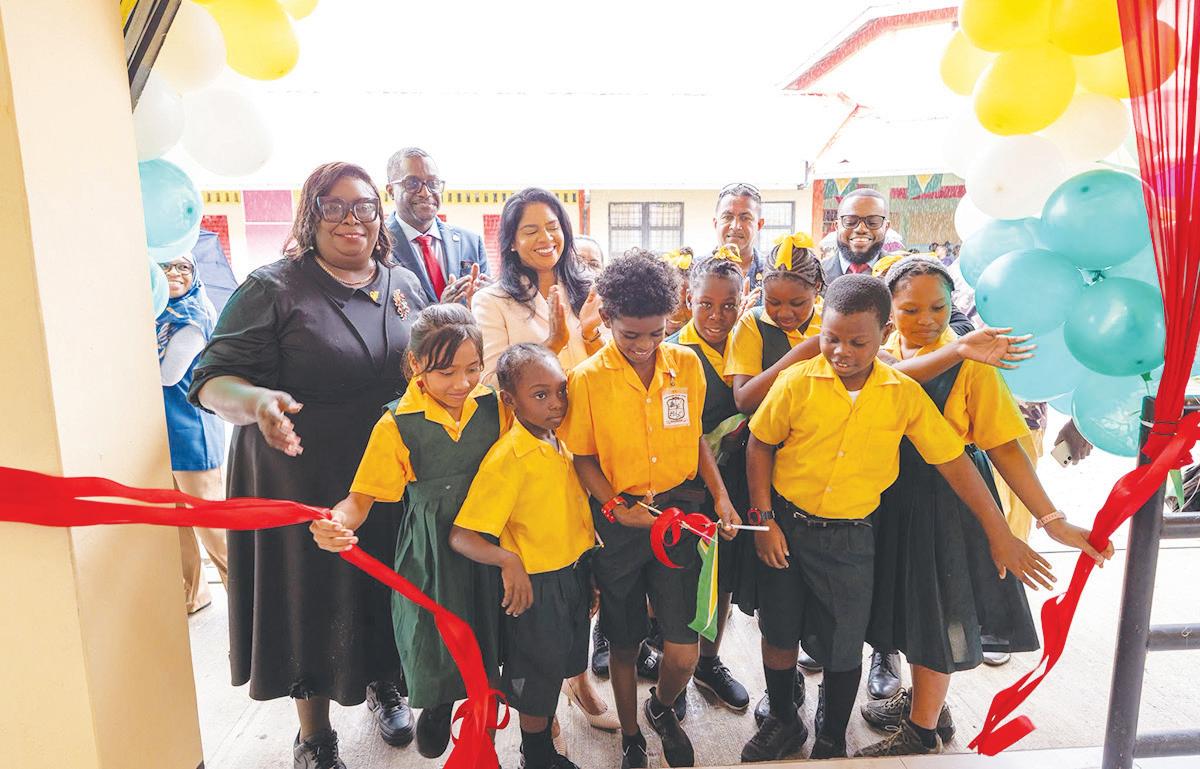
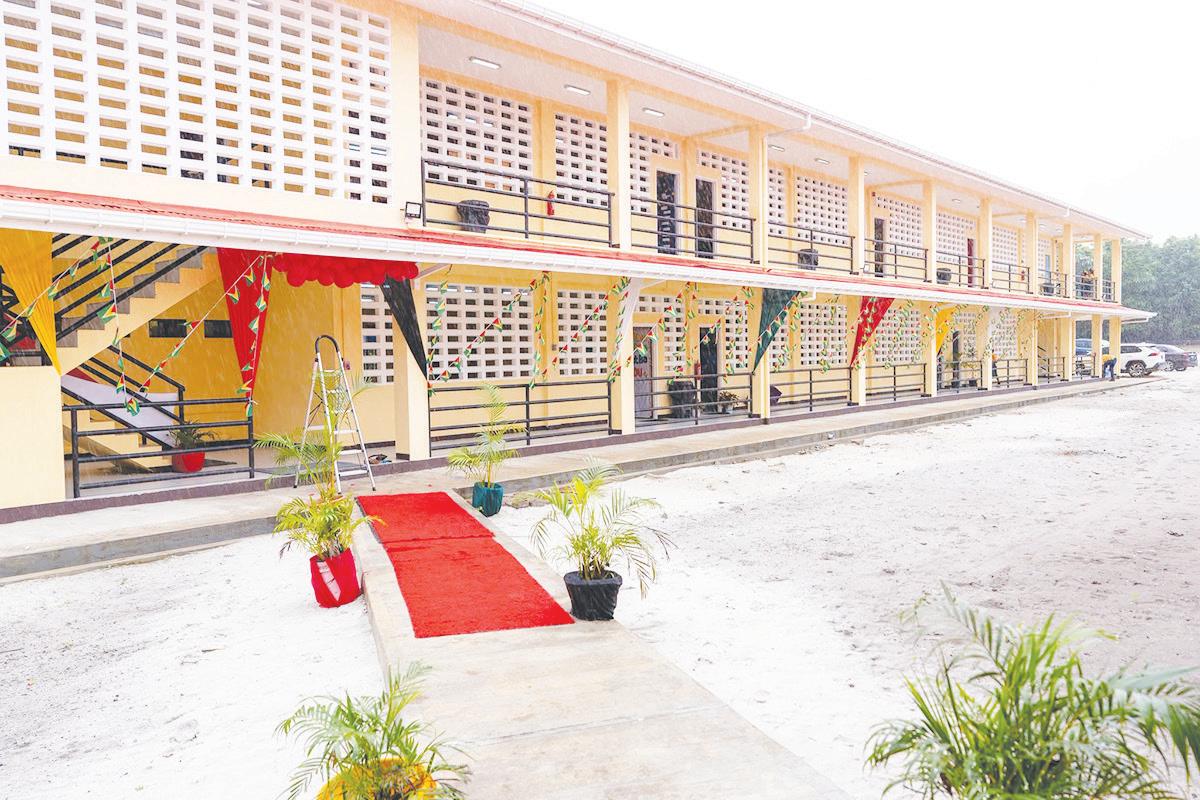
$177M new wing eases overcrowding at Yarrowkabra Primary
…to enhance learning for 200 pupils
The learning environment at the Yarrowkabra Primary School on the Linden-Soesdyke Highway has been significantly enhanced with the addition of a brandnew wing to accommo -
date the growing population at the institution. The new section, constructed to the tune of $177 million, is already accommodating some 200 pupils from Grades Four to Six in the eight additional classrooms since March. The wing also features a canteen, staff office and a dedicated Special Education Needs and Disabilities (SEND) room to support inclusive learning. Speaking at the commissioning ceremony of the new wing on Tuesday, Education Minister Sonia Parag underscored the importance of this new addition to the Yarrowkabra Primary School to improve not just the learning but also teaching environment. “Creating an environ -
ment that is conducive to nurturing our children so that they can be what we always use as a phase – ‘the future of our country’… we have to put these things in place. Because if you’re having overcrowding at a school, it means that teachers is teaching a classroom of far more than what is supposed to obtain. It means that children would not be comfortable in that environment. It means that learning would suffer or be disrupted because of that,” Parag explained.
According to the Education Minister, the Government has been investing heavily in the last five years to expand educational infrastructure and increase access to quality learning opportunities across the country. These investments, she pointed out, are already reaping the benefits. “The investment in education cannot be overstated; it cannot be underscored enough. Thirtysomething schools were built in the last four years alone, giving access where there was absolutely no access to an education… and this year, we will be commissioning far more than 18 schools.”
With these investments, Minister Parag stated, “We will be achieving universal secondary access in Guyana because of the fact that we have invested and we’re investing in these infrastructures in areas where we are geographically challenged so that children can have access to an education. Because why? Because education is the core of any nation’s development.”
The Yarrowkabra Primary School was initially designed to accommodate 250 learners, but with increased enrolments due to the expansion of surrounding communities, the school now has a student population of approximately 415 –which poses a number of challenges. According to the Regional Education
Officer (REO) of Region Four (DemeraraMahaica), Keane Adams. The commissioning of the new wing will significantly reduce the overcrowding and provide a more conducive environment for teaching and learning.
The REO further welcomed the new facilities that the additional wing will now accommodate, especially a music room and the SEND room. These, she added, will ensure learners, regardless of their abilities or circumstances, have access to not just an affordable education but expansive learning facilities. Meanwhile, the addition of this new wing comes on the heels of a series of interventions made by the Region Four Regional Democratic Council (RDC) with support from the Education Ministry, to enhance the Yarrowkabra Primary School.
Over the past year alone, there were repainting works, repairs to lighting systems, improvements to water supply, repairs and extension works on the fence, works on a secondary entrance and sanitary facilities, widening of the entrance to accommodate vehicular access and the construction of an external classroom shed.
“I’ve made it clear that in Region Four we will be people-centred and service-orientated and development-focused. In that spirit, I’m pleased to indicate our intention to support the installation of Starlink internet connectivity for this new wing. In today’s rapidly evolving world, internet access is no longer a luxury but an essential educational tool that connects our students to knowledge, innovation, and opportunities far beyond the walls of the classroom,” Region Four’s Regional Executive Officer Juan Edghill Jr said during briefing remarks at Tuesday’s commissioning ceremony.
Education Minister Sonia Parag and other officials join pupils at the Yarrowkabra Primary School to commission the new wing
The brand-new $177M new wing at the Yarrowkabra Primary School
Election 2020 fraud trial
Court receives all regional recount statements, Region 4 General Election records
The trial in the 2020 elections fraud case resumed on Tuesday with the continuation of testimony from the Registrar of the Supreme Court, Sueann Lovell, during which all of the Statements of Recount (SoRs) for the Regional Elections were lodged, while the SoRs for the General Elections were completed up to Region Four.
Lovell was the only witness for the day when the case continued before acting Chief Magistrate Faith McGusty at the Georgetown Magistrate’s Court. Lovell had first started giving testimony in May before the trial was adjourned. During her first appear -
ances, Lovell would have verified and lodged all of the original Statements of Poll (SoPs) for the March 2, 2020 General and Regional Elections.
There were a total of
2339 polling stations, resulting in 2339 SoPs and 2339 SoRs for the General and Regional Elections, respectively.
The SoPs and SoRs are a crucial part of the trial,
where nine persons currently stand accused of attempting to rig the results of the elections.
Those charged include former Chief Elections
Officer Keith Lowenfield; Deputy CEO Roxanne Myers; former Region Four Returning Officer Clairmont Mingo; former A Partnership for National Unity + Alliance For Change (APNU+AFC) Minister Volda Lawrence; former APNU+AFC Chief Scrutineer Carol SmithJoseph; and former Guyana Elections Commission (GECOM) employees Enrique Livan, Sheffern February, Michelle Miller, and Denise BobbCummings.
Lovell has been the gatekeeper of the original SoPs and SoRs since January 2021, when the High Court ordered the GECOM to transfer all original SoPs and SoRs from the 2020 elections to the custody of the High Court for safekeeping and as official evidence. The documents were delivered to the High Court by former Chief Elections Officer Keith Lowenfield, in the presence of GECOM Chairperson Claudette Singh.
Lowenfield is one of the defendants currently charged in the case.
The documents were ordered to be handed over given that the Representation of the Peoples Act (ROPA) allows the Chief Elections Officer (CEO) to destroy all elections documents after a 12-month period has elapsed.
During her last appearance, Lovell testified to the strict chain of custody that the documents were under. Subsequent to the court’s possession of the documents in May 2021, copies of the original SoPs and SoRs were made and handed over to the Director of Public Prosecutions (DPP) and the Guyana Police Force (GPF) as evidence in the election’s fraud case.
During the handing over of the copies to the police, an audit process was conducted to ensure that the copies handed over were an exact match to the original documents held by the registrar.
The trial continues today.
Cane harvester slapped with rape charge, granted $250,000 bail
Charged: Lookesh Daljit
A38-year-old cane harvester accused of raping a relative was on Tuesday granted $250,000 bail when he appeared before the Blairmont Magistrate’s Court.
Lookesh Daljit, also called “Willy”, of Blairmont, West Bank Berbice, Region Five (Mahaica-Berbice), appeared before Magistrate Michelle Matthias on an indictable charge of rape.
It is alleged that on June 11, Daljit engaged in sexual penetration with a woman without her consent while in Region Five.
When the charge was
read, he was not required to enter a plea.
According to the prosecution, the investigations have been completed, and the State is ready to proceed. The prosecution did not object to bail when the issue was raised.
Magistrate Matthias subsequently granted Daljit bail in the sum of $250,000 and ordered that he remain at least 50 feet away from the virtual complainant. The court warned that any breach of that order could result in his bail being revoked and him being remanded to custody pending the determination of the matter.
Daljit was also instructed to attend all future court hearings.
The matter was adjourned to June 29.
It had been reported that the alleged incident occurred at the woman’s home in Berbice. The woman alleged that she was asleep when she awoke and discovered Daljit inside her room.
The alleged attack was subsequently reported to the Police, and an investigation was launched, leading to Daljit’s arrest and charge.
The election fraud accused
Ramsammy’s Ruminations
Guyana consults on social media for children –banning or restriction?
YTough talks on AI, ethics, misinformation must be had – McCoy on Regional Media Summit in Guyana
Westerday, the Government of Guyana launched a national consultation in respect of regulating or banning children’s use of social media. The Government has signalled that it might prefer not to ban children’s use of social media but to regulate its use in order to prevent abuse and negative impacts. The Government from the outset has acknowledged the benefits of the World Wide Web and social media, including educational opportunities. However, the Government also acknowledges the well-established dark side of the web, which has proved to be detrimental to the welfare of children.
There is overwhelming support for such regulations. Guyanese, like their counterparts in other countries, overwhelmingly support regulations for children’s use of social media. The launching of consultations represents another promise kept. VP Jagdeo had indicated that the Government will introduce legislation to deal with this issue this year. Ruminations commends the Government on keeping its promise to act in the interest of our children.
Even as Guyana begins the process of introducing regulations on children’s use of social media, the Prime Minister of the United Kingdom on Monday announced a social media ban for under-16s after the House of Lords backed legislation to accomplish this. The peers in the House of Lords passed an amendment to the Government’s Children’s Wellbeing and Schools Bill – a wide-ranging set of laws currently making its way through the UK’s parliament. At the beginning of March, the UK Government launched consultations asking the British public how they want to protect young people online. The UK laws, in addition to blocking teenagers from apps like TikTok and Instagram, include measures like overnight social media curfews, restrictions to “addictive” features like infinite scrolling and autoplay, and blocks to stop children from using chatbots.
The UK is following Australia, which became the first country in the world last December to ban the use of social media by children. It has been six months since Australia banned children’s use of social media. Many other countries are in the process of regulating children’s use of social media. The acceleration of the movement towards regulating social media use by children comes amid mounting concerns over the impact of social media on children’s health and safety.
As Guyana consults, one important question is what punishment would extend to families and children when restrictions are not obeyed. Australia presents a practical approach – families and children will not be punished. Instead, the tech companies will be punished if they do not take reasonable action to prevent children from bypassing the rules.
Other than Guyana, and outside of Australia, the UK, and France, other countries that are presently in the process of restricting use of social media include Austria, Brazil, Canada, China, Denmark, Germany, Greece, India, Indonesia, Malaysia, Norway, Poland, Portugal, Slovenia, Spain, Türkiye, and America.
Ruminations urges that Guyana follow the regulatory pathway and not be tempted in a hasty banning exercise. There can be absolutely no doubt that children are exposed to the dark side of the web and that we need to protect children. There can be no doubt that children can abuse the use of social media and that children can become exposed to the addictive side of social media. Yet, we must acknowledge that there are many good things that social media brings to society and, particularly, our children. It is for this reason that before Guyana or any country takes the absolute “ban” pathway, we need the social scientists to do more studies to show the negative impact.
As we decide on a way forward, Ruminations urges a balanced approach, involving education, regulation, and parental involvement. We must teach and empower our children to navigate social media responsibly. Schools and parents must play important roles in educating children about social media safety techniques, recognising harmful content, and understanding the effects of excessive screen time. While banning might seem like a quick fix, outright banning, as opposed to regulations to hold social media platforms accountable and to empower teachers and parents to play a role in children’s use of social media, is a more practical way forward. It is a case of not throwing out the baby with the bathwater.
Ruminations urges that a major part of the legislation on children’s use of social media must be holding social media platforms accountable for creating safer environments for children. Governments and regulators must work with tech companies to implement strict age verification mechanisms, ensure the absence of harmful content, and provide tools to help users manage screen time that prioritises children’s well-being. Hopefully, Guyana’s legislation will weigh both the benefits and risks of social media. Ruminations believes we can protect our children from the negative impact of social media while preserving the benefits such as education and building digital literacy. Whatever the legislation, we must not side-line the responsibility of parents and guardians.
As Guyana consults, Ruminations urges Guyanese and our MPs to consider the words of the UN High Commissioner for Human Rights, Volker Türk: “Online harms to kids’ safety, privacy and wellbeing result from design choices and business practices that undermine safety, including addictive design features such as infinite scroll, autoplay, and persistent notifications.” A major component of Guyana’s regulatory laws on social media use by children must be dedicated to the tech companies. The starting point in addressing the negative impact of social media on our children must be directing tech companies to be more responsible.
Ruminations’ contribution, therefore, as Guyana consults, is a plea for Guyana to address the issue of how platforms are designed and operated to better protect children’s rights and safety. We can do so by regulatory laws, not by the simple banning fix. Should platforms be unwilling to address their designs which target children through addictive programmes, then a restrictive regulatory environment would be forced to adopt banning.
ith just a few months to go before Guyana hosts a major regional media conference, Minister within the Office of the Prime Minister, Kwame McCoy, says the gathering must confront difficult and urgent questions surrounding regulation, ethics and the evolving role of journalists.
The Caribbean Broadcasting Union (CBU) is inviting broadcasters, innovators, journalists, content creators and media leaders from across the region to Guyana for its 57th Annual General Assembly and 37th Media Awards, scheduled for August 17-19, 2026.
Held under the theme, “Caribbean Media and Artificial Intelligence,” the assembly will bring together regional stakeholders to examine the future of Caribbean media amid the rapid advancement of artificial intelligence and emerging technologies.
The event is set to provide a platform to discuss the next chapter of the Caribbean media landscape while exploring the opportunities and challenges presented by AI.
During the launch of the event on Tuesday, McCoy remarked that many of the issues confronting the regional media landscape will be addressed at the gathering.
McCoy also highlighted Guyana’s ongoing efforts to strengthen food and energy security while expanding regional and international connectivity through major investments in infrastructure and transportation.
He noted that the country continues to demonstrate global leadership in climate action, sustainable development and biodiversity preservation, proving that economic advancement and environmental stewardship can coexist.
According to the minister, these initiatives form part of a broader national vision aimed at building a modern, inclusive and innovative Guyana that is prepared to confidently engage with the challenges and opportunities of the 21st century. He said it is from this position of confidence that Guyana welcomes the Caribbean Broadcasting Union.
“We do not claim to have all the answers. Rather, we are confident that at this important juncture in our shared history, many of the answers to the issues confronting our region will emerge through partnership, dialogue and collective action. The conversations that will unfold in August will no doubt be
rich, sometimes challenging and always necessary,” McCoy said.
According to him, the regional media conference must examine difficult questions relating to regulation, ethics, media sustainability, misinformation, technological adaptation and the evolving role of journalists and broadcasters.
“[This media conference] will require us to examine difficult questions about regulation, ethics, media sustainability, misinforma-
tion, technological adaptation and the evolving role of journalists and broadcasters in our society. But I am confident that Caribbean media practitioners have never shied away from the difficult conversations that must be had among us in the Caribbean. Indeed, the history of Caribbean media is one of resilience, creativity and adaptation,” he stated.
McCoy further noted that media institutions have weathered political
changes, technological revolutions, economic upheavals and natural disasters, consistently evolving into stronger and more responsive institutions serving the needs of the public.
He said artificial intelligence would similarly challenge the industry while creating opportunities for growth and innovation.
“[this media conference] will also create opportunities to expand access to information, strengthen public engagement, improve efficiency and amplify Caribbean voices in ways previously unimaginable. The responsibility before us, therefore, is not to fear change. It is to shape it, to ensure that technological advancement serves humanity, to ensure that innovation strengthens democracy, and to ensure that the Caribbean is an active and influential participant in shaping how emerging technologies are developed, governed and applied,” he said.
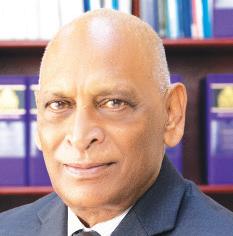
Dr Leslie Ramsammy
Minister within the Office of the Prime Minister, Kwame McCoy
WEDNESDAY, JUNE 17, 2026 | GUYANATIMESGY.COM
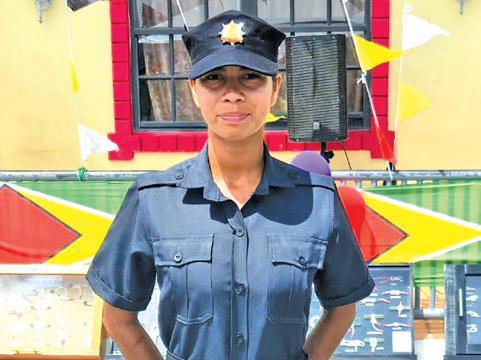
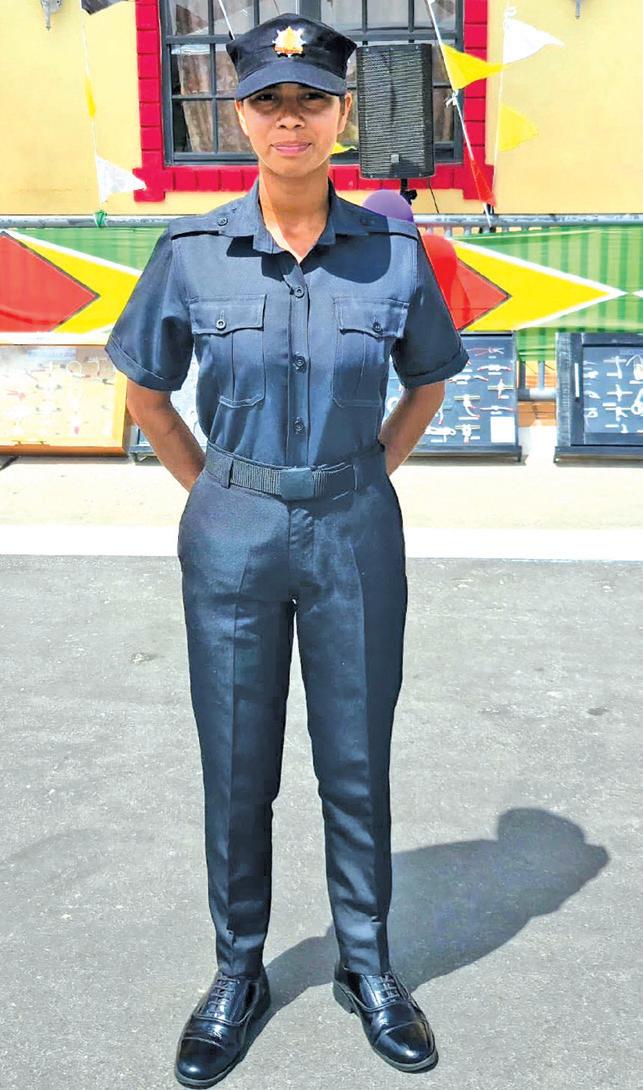
1st female firefighter from Pomeroon blazes trail for village youth
For many young people growing up in remote communities, dreams can seem far beyond reach, but for firewoman Kelise Williams, that was not her reality.
According to the Guyana Fire Service (GFS) in a social media post, she was a determined young woman from the small Amerindian village of Jacklow in the Upper Pomeroon River, where she was taught perseverance and hard work can transform a childhood dream into reality. Today, she proudly stands among the newest recruits of the GFS and holds the distinction of being the first female firefighter from her village.
Her journey began at Jacklow Primary School, where she paddled by boat each day to attend classes. Despite the challenges of living in a remote riverine community, she remained commit-
ted to her education. Her dedication earned her a place at Anna Regina Secondary School, where she successfully passed seven subjects at the Caribbean Secondary Education Certificate (CSEC) examinations.
After secondary school, she pursued training in Cosmetology and Office Administration, gaining valuable skills for the workforce. Yet, deep within her heart, she knew her true calling was firefighting. Since childhood, she had dreamed of serving others and helping people during emergencies and times of need. For Kelsie, her hope is to inspire young females who may feel discouraged to assume careers like firefighting because it is often viewed as a man’s profession. She posited, “I want young girls to know that they can achieve anything they set their minds to and should never fear
stepping into places where they can grow, succeed and make a difference.”
The path to becoming a firefighter was not easy. She described her stint in training as mentally and physically demanding, with early mornings, late nights, rigorous drills, and moments of complete exhaustion. Nevertheless, she refused to quit, believing that success requires hard work, perseverance, and sacrifice.
Reflecting on her experience, she credits the supportive instructors and fellow recruits who encouraged her throughout the training process. Her story is an inspiring example of courage, determination, and service, proving that no dream is too distant when one is willing to work for it. “Never be afraid to pursue your dreams and make a difference.” (Guyana Fire Service)
Firewoman Kelise Williams
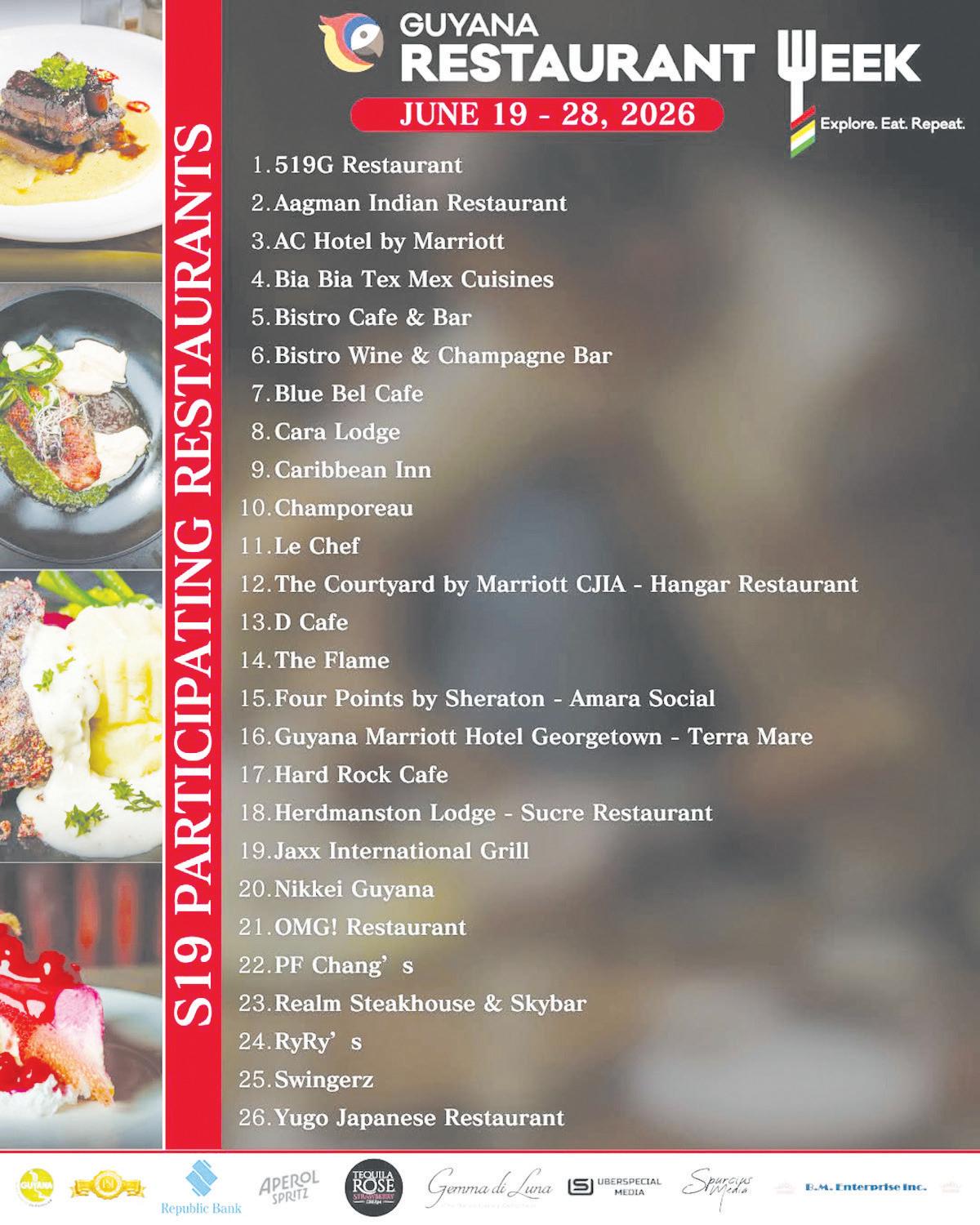
26 restaurants join Guyana Restaurant Week
The Tourism and Hospitality Association of Guyana (THAG) has officially launched the 19th season of Guyana Restaurant Week (GRW), with 26 restaurants participating.
The 19th edition of Guyana Restaurant Week was launched on Monday at an event held at the AC Marriott Hotel.
A total of 26 restaurants are participating in this edition, which runs from June 19 to 28.
Speaking at the launching ceremony, President of the Tourism and Hospitality Association of Guyana (THAG), Mitra Ramkumar, highlighted how this signature event supports the local economy, especially with the growing number of visitors coming to Guyana.
He outlined how participating restaurants recognize the need to adopt eco-friendly culinary practices that reduce waste, support local farmers, and pro-
tect the planet—principles aligned with International Sustainable Gastronomy Day, observed on June 18. He stated that sustainability in everything they
do as an industry is a key focus and a hallmark of THAG, and this aligns with the tourism industry and Guyana Restaurant Week.
“This year, participat-
ing restaurants are grouped into categories based on their offerings, with the lowest package available at $3000…. lunch starts at $3000 for the silver tier, $4000 for gold, and $5000 for platinum. I think that is affordable and inclusive of taxes.”
Speaking on the platinum option, he noted that patrons have several choices available.
“The platinum option, which is a three-course lunch, depending on time and preference. It gives both restaurants and patrons the ability to choose. That is why we added three different tiers. The same applies for dinner: the silver starts at $4000 or $5000, and the platinum ranges from $8000 to $10,000 depending on the restaurant.
That is why I encourage you to visit Guyana Restaurant Week’s website, choose your restaurants, and see what is being offered and at what price.”
Also delivering remarks at the event was Head of the Guyana Tourism Authority, Kamrul Baksh, who emphasized the important role that restaurants and gastronomy play in the government’s vision for the Orange Economy.
He noted that Guyana’s culinary heritage is a key asset that can contribute to economic growth, cultural preservation, and tourism development. Baksh also encouraged stakeholders in the hospitality sector to participate in an upcoming consultation aimed at shaping the future of the country’s culinary industry.
The 26 participating establishments in this year’s Guyana Restaurant Week are 519G Restaurant, Aagman Indian Restaurant, AC Hotel by Marriott, Bia Bia Tex-Mex Cuisine, Bistro Café & Bar, Bistro Wine & Champagne Bar, Blue Belle Café, Cara Lodge, Caribbean Inn, Champoreau, Le Chef, The Courtyard by Marriott CJIA – Hangar Restaurant, The Flame Café, Four Points by Sheraton –Amara Social, Guyana Marriott Hotel Georgetown – Terra Mare, Hard Rock Café, Herdmanston Lodge – Sucre Restaurant, Jaxx International Grill, Nikkei Guyana, OMG! Restaurant, PF Chang, Realm Steakhouse & Skybar, RyRy’s, Swingerz, and Yugo Japanese Restaurant.
WEDNESDAY, JUNE 17, 2026 | GUYANATIMESGY.COM
Following four days of thrilling, high-level hockey action, two blockbuster clashes were scheduled for the Guyana National Stadium at Providence on Monday night as the curtains came down on the Guyana Hockey Board’s (GHB’s) Diamond Jubilee Cup.
When the dust settled at the East Bank Demerara venue, it was the Georgetown Cricket Club (GCC) Elite Women and Pepsi Hikers’ Men who took home top honours in convincing fashion.
The women’s final took centre stage first, featuring an unbeaten GCC Elite and Hikers’ Women, who had been seeking revenge for a 10-0 loss against the same opponent earlier in the competition.
Rebecca Ferreira wasted no time in stamping GCC Elite’s authority with a strike in the very first minute of the women’s final. Alana Chung pushed the lead to 2-0 in the 14th before Hikers’ Maria Munroe gave her side some hope of equalising with a goal in the 19th minute.
However, GCC’s dominance was not to be contained as a Gabriella Xavier goal in the 26th and a converted penalty corner from Abosaide Cadogan just before halftime extended the lead to 4-1 by the break.
GCC Elite, Pepsi Hikers reign supreme at Diamond Jubilee Cup
In the second half, Cadogan completed her treble in the 38th and 43rd minutes while Princessa Wilkie added another in the 32nd. Ferreira and Chung both sealed their braces in the 58th minute,
resulting in a 9-1 victory for GCC Elite.
Old Fort Top Form brought an exciting challenge to the Pepsi Hikers in the men’s final, but ultimately the Hikers’ experience showed through in
their 4-2 triumph.
Shane Samuels got the ball rolling in the fifth minute, and Robert France found the nets in the 28th for Pepsi Hikers’ 2-0 lead at the half. Old Fort Form showed some fight in the second half with goals from Omar Hopkinson and Nkosi Saul in the 36th and 50th minutes, but it was a little too late as Samuels completed his brace in the 36th, in addition to a Trumaine Cole strike in the 47th, which handed the Pepsi Hikers a comfortable win.
While Old Fort Inferno’s Carolyn Deane was adjudged Most Valuable Player (MVP) for the women’s division, Pepsi Hikers’ Jamarj Assanah was hailed as the men’s MVP.
Perera century leaves West Indies Academy under pressure
Pulindu Perera struck a magnificent century as Sri Lanka Emerging seized complete control of the second FourDay match against West Indies Academy on Day Two at the Mahinda Rajapaksa International Cricket Stadium in Hambantota.
Resuming the day at 37 without loss in reply to West Indies Academy’s first-innings total of 232, the Sri Lankan batsmen dominated proceedings with a series of substantial partnerships that frustrated the visitors’ bowling attack.
Perera was the standout performer, compiling a superb 145 from 188 deliveries. His innings, which lasted 287 minutes, featured 14 boundaries and a six and laid the foundation for Sri Lanka Emerging’s imposing total. The left-hander combined with opening partner Ravindu Rasantha to add a solid opening stand after the pair had safely negotiated the final overs on the opening day.
Rasantha provided excellent support with a patient 60 from 126 balls, striking six fours as the hosts steadily erased the deficit. Following his dismissal, Asitha Wanninayake continued the momentum with a composed 60 off 102 deliveries, including eight boundaries.
Although West Indies Academy managed to claim a few wickets during the middle session, Sri Lanka Emerging remained firmly in control. Sahan Kosala
contributed 38 before falling to Zishan Motara, while Sharujan Shanmuganathan remained unbeaten on 33 at stumps.
Anjala Bandara added valuable late-order runs and was unbeaten on 48, ensuring the hosts finished the day in a commanding position.
At the close of play, Sri Lanka Emerging had advanced to 430 for four from 97 overs, establishing a lead of 198 runs with six wickets still in hand.
For West Indies Academy, Motara was the most successful bowler with two wickets, while Raneico Smith and Giovonte Depeiza claimed one wicket apiece. However, the visitors struggled to contain the Sri Lankan batsmen on
a day largely dominated by the home side. With six wickets remaining and a sizeable lead already secured, Sri Lanka Emerging will look to build an even more formidable first-innings advantage when play resumes on Day Three.
The victorious GCC Elite Women’s team receive their prize from Assistant Director of Sport, Franklin Wilson
Pepsi Hikers took top honours in the men’s division
Centurion Pulindu Perera
Tage, Joseph named in Windies Test squad
…Imlach to lead Select XI
Cricket West Indies will be his first Test squad ing the tours of India and on June 12 and runs until June 22, with those players who competed in the whiteball series in Jamaica joining on June 15.
Tagenarine Chanderpaul is one of two Guyanese in the West Indies Test squad to face Sri Lanka
The camp is focused on technical development, match-specific training, fitness conditioning and team-building activities. The programme also provides the coaching staff with an opportunity to assess player readiness and fine-tune plans ahead of the series against Sri Lanka and the final home series against Pakistan.
Speaking about the camp, Sammy said, “This is a key component of our preparations heading into the series, providing players and coaches with valuable time to enhance and improve the skills we want to see sharpened, based on the areas we need to focus our attention on when facing this opponent. It also gives us the opportunity to put clear objectives and plans in place for the conclusion of the
summer against Pakistan. Additionally, the four-day warm-up game prior to the series provides the chance for some of our test hopefuls to play in high-intensity action and create the avenue for more competition within the squad ahead of the upcoming and future series,” he added.
Tevin Imlach will captain the 13-man WI Select XI in the four-day warm-up match against Sri Lanka from June 18-21 at the Coolidge Cricket Ground in Antigua.
West Indies Test Squad vs Sri Lanka: Captain Roston Chase, Vice-
WI
West Indies vs Sri Lanka Test Series Schedule: Warm-up Match (June 18-21): WI Select XI v Sri Lanka @ Coolidge Cricket Ground, Antigua
First Test (June 25-29) @ Sir Vivian Richards Stadium, Antigua
Second Test (July 3-7) @ Sir Vivian Richards Stadium, Antigua
Veteran Coach Alan Walls takes charge of Guyana basketball
The Guyana Basketball Federation (GBF) has announced the appointment of highly respected international basketball coach Alan Walls as the new head coach of the Guyana Men’s National Basketball Team as
preparations intensify for the upcoming FIBA AmeriCup 2029 Caribbean PreQualifiers, scheduled for July 8-12 at the Cliff Anderson Sports Hall in Georgetown. Walls, a CanadianAmerican dual citizen, brings
an impressive résumé spanning more than three decades of international basketball experience.
His extensive coaching and basketball operations background has taken him to 17 countries across five conti-
Racquet Hall on course for completion next month – Ramson Jr
Dubbed the “Racquet Hall”, a new addition to the National Racquet Centre compound on Woolford Avenue, Georgetown may soon open its doors, according to Sport Minister Charles Ramson Jr. The new building will cater to the disciplines of badminton and table tennis, as was announced by the Minister back in October 2022.
Sharing an update on its construction during a recent event, Ramson Jr admitted that while there is no definite commissioning date as yet, the venue will be ready next month.
The Sport Minister shared with media operatives, “As far as the Racquet Hall is concerned though, we are very close to opening now. We’ve just got some minor thing we want to do, just to make sure that it’s exactly the way that we want it. So, we’re aiming to open that, let’s say at the end of July.”
“By the third, we’re aiming to open Anna Regina, and by the end of July, we’re aiming to open the Racquet Hall, but I’m not going to set a date firmly on that until we know that these minor things that need to be done are completed,” he went on
to state. Ramson Jr was open about the hurdles they encountered with the building, disclosing the challenges that have hindered its completion.
“They had some small leaks along the way, which were difficult to identify because of the radiant barriers that we put on the roof. And so, that effectively covers the entire bottom part of the roof, so it’s hard to identify where the leaks were coming from,” Ramson Jr divulged.
“So, we want to make sure things like that get solved before we open.”
The Sport Minister went on to discuss the new racquet hall’s features, which was constructed to international standards.
“The guys who were installing the track, they were the ones
who installed the flooring. So, the flooring is world-class flooring,” the Minister explained. “The folks who are playing there, especially the badminton players, they’re really going to get a benefit from that because it’s that international type of flooring that we put there.”
“And all of the indoor facilities, we’re aiming to have that multipurpose flooring there too,” Ramson Jr further noted.
The addition of the Racquet Hall is likely to ease the traffic at the National Gymnasium, which currently houses both badminton and table tennis amongst several other disciplines. The National Racquet Centre, on the other hand, currently houses facilities for lawn tennis and squash.
nents, where he has played a pivotal role in developing national programmes, building competitive teams, and guiding athletes at the highest levels of the sport.
The appointment marks a significant step forward for the GBF as it seeks to elevate Guyana’s standing within regional basketball and secure advancement along the qualification pathway for the 2029 FIBA AmeriCup.
GBF President Michael Singh expressed confidence that Walls possesses the experience and leadership required to guide Guyana through the challenging competition ahead.
“Alan Walls is exactly the kind of leader we need as Guyana sets its sights on the AmeriCup,” Singh said in a statement.
“His track record of taking national programmes from Malta to Mongolia to El Salvador and making them competitive at the FIBA level speaks for itself. He’s built systems, developed players, and won. We believe he can do the same here.”
Walls most recently served as head coach of the Malta Men’s National Team, where he enjoyed notable success on the international stage.
Under his guidance, Malta secured a runner-up finish at the 2022 FIBA Championship for Small Countries before capturing a silver medal at the 2023 Games of the Small States of Europe.
His international coaching credentials also include national team head coaching appointments with the Malta
Basketball Association (2022-23), El Salvador Basketball Federation (2016-17), Mongolian Basketball Association (2013-14), and Kenyan Basketball Federation (2013).
In addition, he has served in consulting capacities with the basketball federations of Turkey, Romania, and Palestine between 2005 and 2011.
Walls’ coaching philosophy is supported by a strong academic foundation. He holds a master’s degree in sport and exercise science from the University of Northern Colorado, complementing decades of practical experience in athlete development, performance management, and programme building.
Beyond his national team accomplishments, Walls has enjoyed a diverse coaching career across multiple professional leagues in the United States, Guatemala, El Salvador, Mongolia, and Mexico.
He has also worked within the collegiate ranks as an NCAA Division III assistant coach and served as camp director for FIBA’s Children of the World Basketball Camp during the 2010 FIBA World Championships in Turkey.
His contributions to the sport extend beyond coaching. Walls is the founder
of TheHoopVine.com and 3x3HQ.com, platforms dedicated to basketball development and education, and has extensive experience as an international athletic director at American schools throughout Central America.
Based in Charlotte, North Carolina, Walls will divide his time between the United States and Guyana as he begins assembling the national team roster and coaching staff in preparation for the crucial pre-qualifying tournament.
The official schedule and matchups for the FIBA AmeriCup 2029 Caribbean Pre-Qualifiers are expected to be announced by FIBA Americas in the coming weeks.
Captain Jomel Warrican, John Campbell, Tagenarine Chanderpaul, Joshua Da Silva, Justin Greaves, Kavem Hodge, Shai Hope, Amir Jangoo, Alzarri Joseph, Shamar Joseph, Brandon King, Anderson Phillip, Kemar Roach, and Jayden Seales.
Select XI vs Sri Lanka: Captain Tevin Imlach, Joshua Bishop, Jonathan Drakes, Karima Gore, Alzarri Joseph, Brandon King, Kirk Mckenzie, Keemo Paul, Kemol Savoury, Ojay Shields, Nial Smith, Gilon Tyson, and Kevin Wickham.
Both Shamar Joseph and Alzarri Joseph return to the Test team after periods of injury
The Racquet Hall is on course for completion soon
New Men’s National Basketball Head Coach Alan Walls
Young all-round
Tilleya Madramootoo has achieved a major milestone in her cricket career after being selected by the Guyana Amazon Warriors for the 2026 Women’s Caribbean Premier League (WCPL), following the conclusion of the player draft and retention
The Guyana Amazon Warriors have finalised their 10-member regional core for this year’s tournament, blending experienced campaigners with emerging talent as they prepare for the competition, which will be staged from September 5 to 17 at Kensington Oval in Barbados.
For Madramootoo, the draft selection marked a dream come true.
“Honestly, I was shocked. I couldn’t believe it at first; it felt unreal, and I had to keep asking to make sure that it had actually happened,” she told Guyana Times Sport exclusively.
The talented all-rounder revealed that sharing the news with her family made the achievement feel even more special.
“When I told my parents, they were so excited for me and expressed how proud they were, and that was when it really started to sink in. That moment made me truly appreciate everything that had gone into this journey. I was extremely grateful for the opportunity to be part of such a prestigious tournament, and it is a moment I will never forget.”
Representing her home franchise is an opportunity Madramootoo does not take lightly.
“Representing the Guyana Amazon
Warriors means a lot to me because it is a franchise that represents home, passion, and pride,” she explained. “It is a huge honour to be given the opportunity to represent this team, and I want to do so with pride by giving my best on the field and contributing positively to the team’s success. Most importantly, I want to make my country, the franchise, and our supporters proud.”
Madramootoo credited her parents and coaches for playing pivotal roles in her development as a cricketer.
Madramootoo expressed, “The most influential people in my cricket journey would have been my parents.” My parents have been my biggest source of support from the very beginning. They have made countless sacrifices, always believed in me, and encouraged me to continue chasing my dreams, even during the challenging moments.”
She also acknowledged the guidance she received from her coaches throughout her career.
“I also have to give credit to my coaches, who have guided me throughout my journey and helped me develop not only as a cricketer but also as a person,” she related to this publication. “They have shared their knowledge, pushed me to improve, and helped me grow in confidence. I’m truly grateful to ev-
eryone who has supported me along this journey because each person has played an important role in shaping the player I am today.”
Looking ahead to her debut WCPL campaign, Madramootoo is eager to make an impact and continue her development at the highest regional franchise level.
“I’m hoping to showcase my skills, competitiveness, and the hard works I’ve put into my game,” she said. “I want to contribute positively to the team in whatever role is required of me and give my best on the field. As an all-rounder, I’m looking forward to contributing with both bat and ball whenever the opportunity comes, while continuing to learn and grow throughout the tournament.”
She added, “This is a great opportunity for me to challenge myself, gain valuable experience, and make a meaningful contribution to the team’s success.”
Madramootoo’s inclusion highlights the Guyana Amazon Warriors’ continued commitment to nurturing local talent while building a squad capable of challenging for WCPL honours. As the countdown to September begins, the young all-rounder will be aiming to seize her opportunity on one of the Caribbean’s biggest cricket stages.
Minister Edghill inspects ongoing upgrades at South Dakota Circuit
As the South Dakota Circuit at Timehri readies for the Guyana Grand Prix next month, Minister of Public Works Bishop Juan Edghill paid a visit to the facility on Tuesday.
Major upgrades have been taking place at the venue over the past few months as part of a commitment made by President Dr Irfaan
Ali to ensure that the venue is up to par ahead of the third leg of the GT Challenge de las Américas, scheduled for July 11 and 12. As such, Minister Edghill, accompanied by Guyana Motor Racing and Sports Club (GMR&SC) executives and staff of the Special Projects Unit, conducted a walk-through of the Timehri
venue.
Chief amongst the projects at the South Dakota Circuit is the major paving work which has since been completed alongside upgraded spectating areas and the construction of a food court, as well as the provision of parking spaces.
“We are actually checking on preparedness as Guyana gets ready to host a major motor racing event. The President, Dr Irfaan Ali, himself, has taken a lead, working with GMR&SC to ensure this event is a success. The Ministry has engaged three teams to execute the works. Today, we’re practically three weeks ahead of the game to see what’s happening and to know what interventions we need to make, and we will probably do another pit stop to see how that is going,” Minister Edghill shared in a statement during the visit.
President of GMR&SC, Mohamad Roshandin, expressed his satisfaction with how works are progressing, stating, “The Ministry has already repaved the sections that needed to be done, and that is up to standard. I must thank the Ministry and the Government for putting the extra effort to get this done.”
Further, notwithstanding interruptions by the inclement weather, the works are well advanced with the necessary systems to ensure the project is completed in time for the motor racing event.
The GT Challenge de las Américas event is set to put Guyana on the motorsport map, regionally, with several luxury cars expected to feature in the weekend’s race.
A look at the paving works at the South Dakota Circuit, carried out by the Public Works Ministry
Public Works Minister Juan Edghill in deep discussion during his visit to the South Dakota Circuit
Malteenoes Sports Club member and new GAW Women pick, Tilleya Madramootoo