










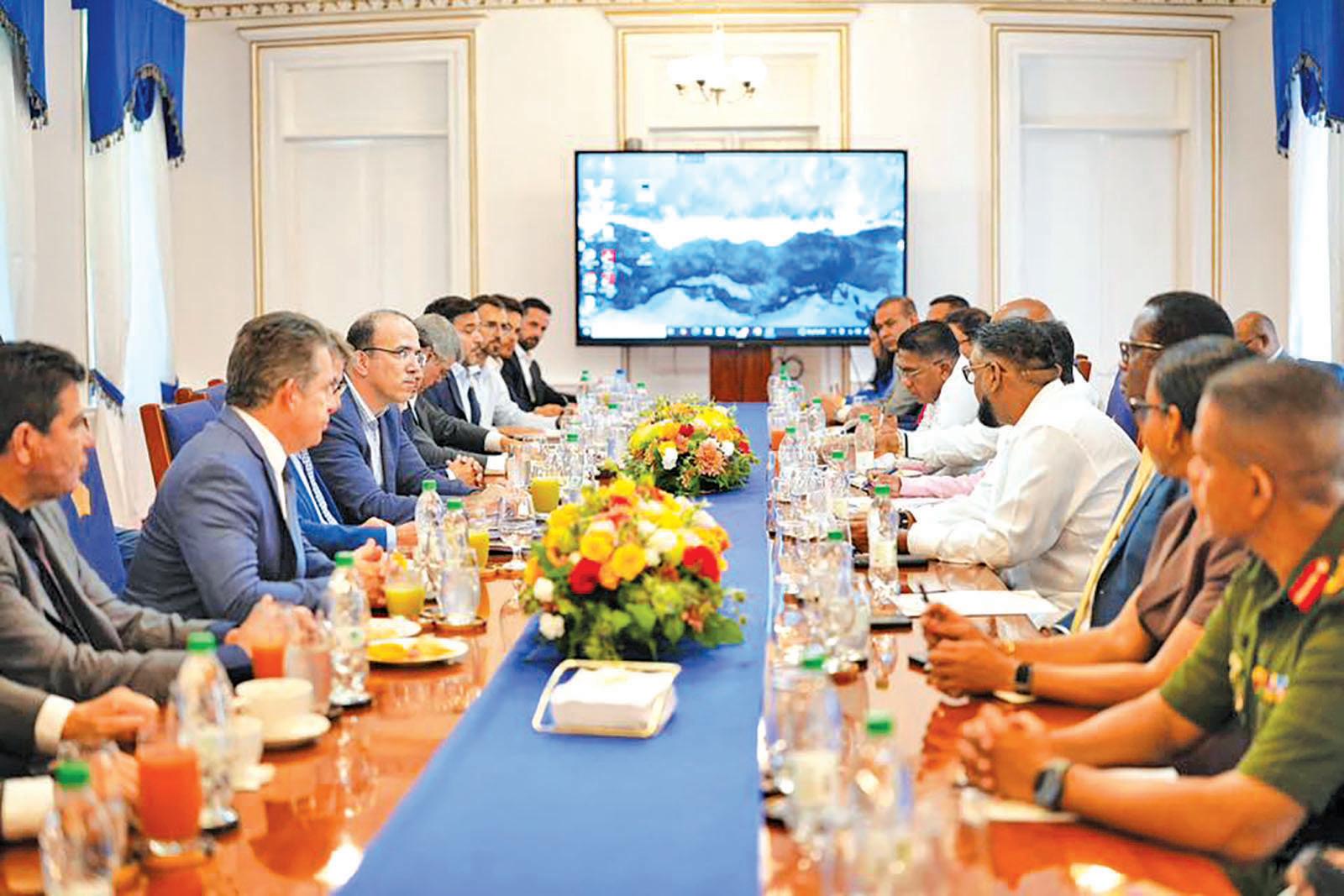
President Dr Irfaan Ali and First Lady Arya Ali host a cocktail reception for the Guyana Energy Conference and Supply Chain Expo participants on Monday evening. The expo begins today at the Marriott Hotel


“I
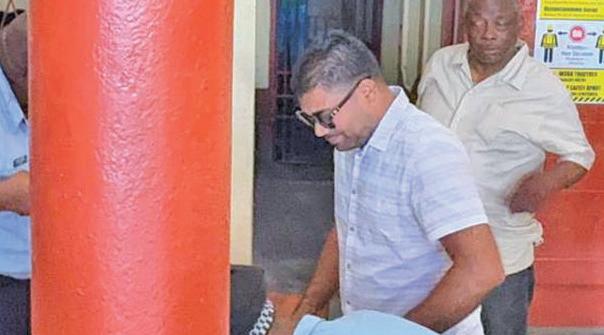
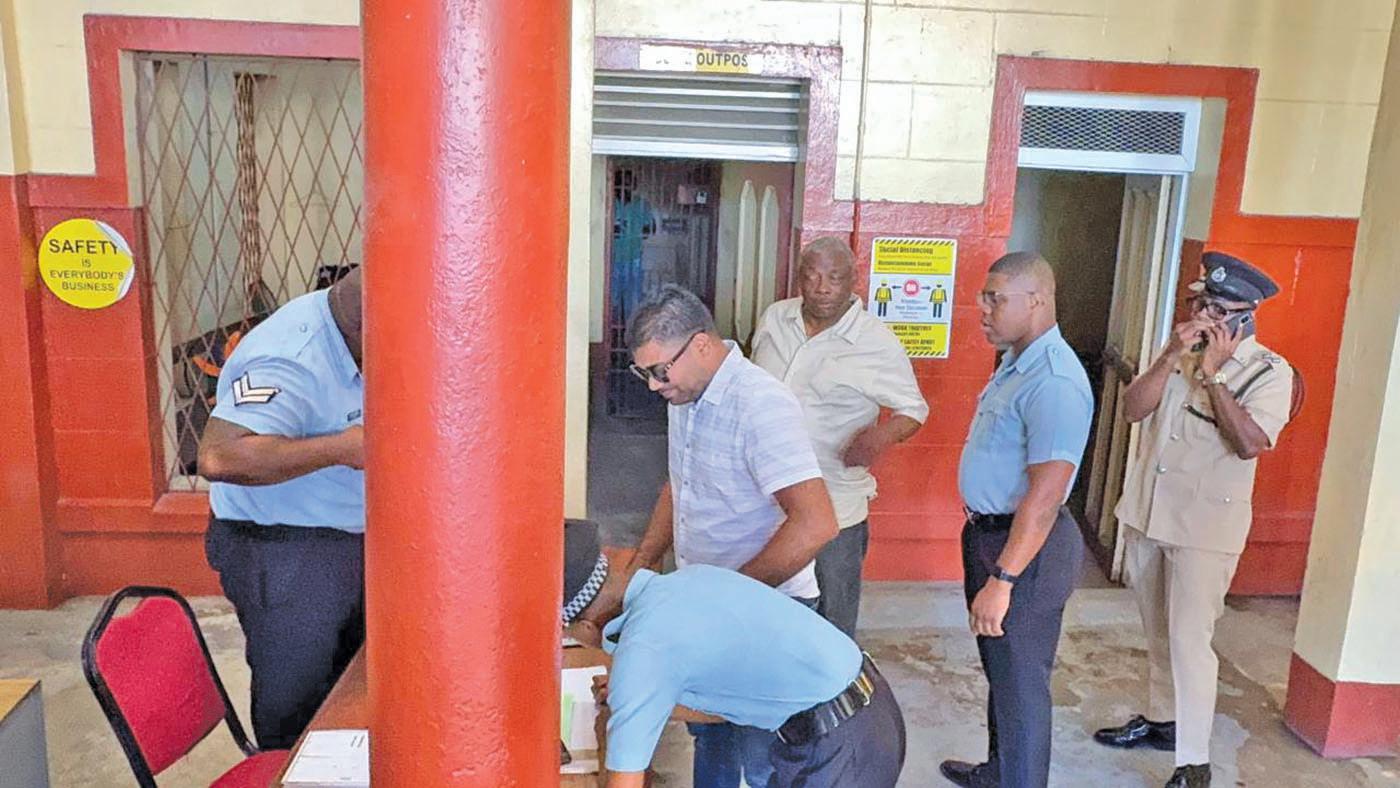
United States (US)indicted Azruddin Mohamed faced a stern judicial warning on Monday following a dramatic morning at the Georgetown Magistrates’ Courts. An arrest warrant had been issued and he was taken into custody before challenging it before the Chief Magistrate. The court warned that his bail could be forfeited if he is late for any future hearings. The warrant was issued at about 09:05h on Monday by Principal Magistrate Judy Latchman after Mohamed failed to appear for the 09:00h continuation of his extradition committal proceedings. “As it relates to Azruddin Mohamed, he is very disrespectful, and an arrest warrant was issued for him. He has to be punctual; everyone else is punctual…,” Magistrate Latchman declared when the matter was called and he was not present in court. Azruddin and his father, Nazar Mohamed, both indicted in the US on several financial
crime-related charges, are each on $150,000 bail pending extradition committal. Azruddin Mohamed arrived at court about 30 minutes after the warrant had been issued, prompting as his attorney’s made an application before Chief Magistrate Faith McGusty seeking to have the warrant recalled. Attorney, Roysdale Forde told the court his client has no history of being absent or late for hearings. According to Forde, Mohamed contacted him earlier, indicating he was unwell. According to the lawyer, upon attempting to leave for court, he discovered that two tyres on his vehicle had been slashed. He maintained there was no attempt to frustrate or obstruct the court process. Forde claimed that attempts were made to inform the Magistrate that Mohamed had arrived but was unable to have an audience with the Magistrate. State Prosecutor Glen Hanoman, appearing virtually, argued that Chief Magistrate McGusty did not have jurisdiction to re-
call the warrant. Hanoman contended that the warrant must be addressed by the same Magistrate who issued it and that whatever decision Magistrate Latchman made should stand. He maintained that the matter must return before her and that Mohamed should remain before the court until then. He further suggested that Mohamed had been dis-

respectful to the court and said he did not support recalling the warrant. During exchanges in court, Chief Magistrate McGusty emphasised that Magistrates are not to act based on feelings. She stated that courts operate on law and procedure, not emotion and expressed surprise at the allegation that the issuing Magistrate had refused to exercise her authority to see counsel or engage in discussion after Mohamed arrived. She noted that she did not wish to be involved in the matter, but since the application was brought before her, she was required to deal with it. At one point, she questioned whether any remand order had been signed and whether Mohamed had ever previously appeared before that court. As conflicting accounts emerged regarding whether Magistrate Latchman had declined to grant an audience with the attorneys, Chief Magistrate McGusty adjourned proceedings for 30 minutes to allow the State Prosecutor to confirm the position. Ultimately, the matter was referred back to Magistrate Latchman for determination. When proceedings resumed before Magistrate Latchman via virtual platform, Mohamed apologised for his late arrival and began offering an explanation. However, technical difficulties disrupted the hearing, preventing the Magistrate from properly hearing his submissions.
The Principal Magistrate indicated that the matter would continue in person. Appearing before Magistrate Latchman in person later in the day, Mohamed acknowledged his absence. “You were absent this morning,” the Magistrate told him.
“Yes, I was,” Mohamed replied. He claimed that upon waking he allegedly discovered two tyres on his vehicle had been damaged and told the court he is currently dependent on a driver due to insurance issues affecting his vehicles. The Magistrate reminded him that he had previously been late and had been warned that “9 o’clock is 9 o’clock.” “The wheels of justice must continue to turn, in a timely matter and it will under my watch”. Magistrate Latchman made it clear that punctuality was not optional. “On this court’s watch, the wheels of justice will continue to turn in a timely manner,” she said. When Mohamed insisted that he had just reasons for his lateness, the Magistrate responded, “In your mind, your reasons are just. But the wheels of justice must continue to turn.” She then issued her strongest warning of the day. “At this point in time, I am very much inclined to rescind your bail and remand you,” she said, adding that she would do so to guarantee his attendance at future hearings. “I will not tolerate your excuses,” the Magistrate warned.
Meanwhile, state prosecutor Terrence Williams expressed concern that repeated disruptions could significantly prolong the proceedings. He indicated he was troubled by the potential for the matter to stretch out for years if not tightly managed and urged that the process not be allowed to drift. He cautioned against allowing anything to affect the justice being served.
Despite the stern exchanges, Magistrate Latchman ultimately decided against forfeiting Mohamed’s bail. “At this point in time, I will temper justice with mercy,” she said, before withdraw-
ing the warrant. However, she made it clear that the leniency would not be repeated.
“Do not let this happen again,” she cautioned, indicating that on the next occasion she would rescind bail and remand him to prison. The case has been adjourned to Thursday for an update on the medical condition of Nazar Mohamed and for continuation. For now, Mohamed remains on $150,000 bail, but Monday’s events made it clear that any further delay could result in his immediate remand as the court seeks to ensure that, as Magistrate Latchman repeatedly emphasised, “the wheels of justice must continue to turn.” Azruddin Mohamed and his father, Nazar Mohamed, have been indicted in the US on several financial crime-related charges, including allegations of fraud and money laundering. The father-son duo has been involved in business operations in Guyana and abroad. The extradition of Azruddin Mohamed and his father is being pursued under the Guyana–United Kingdom (UK) Extradition Treaty, which remains in effect in Guyana under Section 4(1) (a) of the Fugitive Offenders Act, Cap. 10:04, as updated by Act No. 10 of 2024. The formal request for their extradition was submitted by the US Government on October 30, 2025. The Mohameds, along with their business interests, were sanctioned by the US Treasury Department’s Office of Foreign Assets Control (OFAC) on June 11, 2024. The sanctions were imposed for allegations of large-scale corruption, including gold smuggling, money laundering and bribery, with investigations indicating attempts to evade more than US$50 million in taxes owed to the Guyanese Government. In addition, a grand jury in the US District Court for the Southern District of Florida has indicted the father-son duo on 11 criminal counts, including wire fraud, mail fraud and money laundering primarily linked to the export of gold by their company, Mohamed’s Enterprises, to the US. If convicted, most of the charges carry a maximum prison sentence of 20 years and fines up to US$250,000. The money laundering charge carries a potential fine of US$500,000 or an amount equivalent to the value of the laundered assets.

The Berbice Bridge will be closed to vehicular traffic on: Tuesday, February 17 –16:35h-18:05h and Wednesday, February 18 – 05:00h-06:30h.


Parika and Supenaam departure times – 05:00h, 10:00h-12:00h, 16:00h, 18:30h daily.




Sunny conditions are expected during the day. Clear to partly-cloudy skies are expected at night. Temperatures are expected to range between 22 degrees Celsius and 30 degrees Celsius.
Winds: North-Easterly to East North-Easterly between 3.13 metres and 4.92 metres.
High Tide: 16:53h reaching a maximum height of 2.71 metres.
Low Tide: 10:28h and 22:50h reaching minimum heights of 0.61 metre and 0.50 metre.










Astrong sense of conscience formed the basis of President Dr Irfaan Ali’s address during his attendance at the Maha Shivratri 2026 festival. He said that constancy and consciousness are two of the most important themes highlighted by the festival, describing them as essential reminders drawn from spiritual teachings. According to the President, true spiritual development is not possible without both conscience and consciousness, and society must reflect on whether these values are being lost. The Head of State stressed that consciousness goes beyond spirituality alone, explaining that spirituality cannot thrive where there is hunger, anger, social decay, war and other negative forces. He noted that spirituality is often narrowly defined as God-consciousness but said it requires deeper accountability and moral awareness. “But God consciousness and God fearing comes with a lot more than spirituality - God consciousness is our ability to recognise that there is a superior understanding, there is a superior valuation and there is a superior evaluation on our every action and our every move. That leads us to who we are and what is expected of us first as human beings,” he stated. Addressing young people and emerging leaders, the President urged reflection grounded in history and struggle rather than convenience. “To the young people and everybody who are coming up, we must evaluate our connection with things based on history, based on struggles, not based opportunistically on a moment in time. When you want to know how great your parents were, don’t evaluate them on one little coil you have today… Go back to the conscience of a mother that carried you for nine months. Go back to the conscience of a father whose greatest joy was to pat you on your back or to rub your head to make you fall asleep,” he said. He further explained that consciousness involves a broad understanding of history and society. He pointed out that when the ashram was first established, it came at a time when the presence and expression of Hinduism was being pushed out of mainstream society, noting that there was a period when conversion to Christianity was effectively required for entry into the civil service. He described this as a historical reality that can-

not be ignored and said the point was not political but structural in nature. Referencing his affiliation with the People’s Progressive Party (PPP), he said, “The most constant organisation has always been and I am very proud that I am part of this organisation, the People’s Progressive Party. In our history there was a period when the consciousness of this party was questioned.” Meanwhile, he underscored its link to conscience and lasting spiritual awareness. “Constancy is directly related to conscience, because the consciousness and awakening of the spiritual being in us today is of very little use if it is only awakened today. Today is just but a reminder that
that conscience exists and that consciousness exists so we can take it through the rest of the year and the rest of our life. So, I remind myself and I remind all of us of this festival,” he said.
Humility, limits of human strength
He also highlighted the significance of Lord Shiva in Hindu belief, describing the deity as a symbol of creation, preservation and dissolution. He said the festival provides an opportunity to contemplate the cycle of life and renewal and to acknowledge the divine source of all power.
Maha Shivratri, he stated, reminds humanity that ultimate authority over life and death rests with the Divine. In that recognition,
he urged humility and an understanding of the limits of human strength. President Ali also pointed to the religious practices associated with the observance, including fasting, prayer, meditation and the chanting of sacred mantras. He said these acts represent spiritual discipline and devotion, while offerings in temples symbolise love and surrender. Additionally, he underscored the moral teachings associated with Lord Shiva, particularly the values of detachment from excess and commitment to righteousness. He said the festival serves as a reminder of the need for generosity in a world where wealth and hardship exist side by side.



Editor: Tusika Martin
News Hotline: 231-8063 Editorial: 231-0544, 223-7230, 223-7231, 225-7761
Marketing: 231-8064 Accounts: 225-6707
Mailing address: Queens Atlantic Industrial Estate Industrial Site, Ruimveldt, Georgetown Email: news@guyanatimesgy.com, marketing@guyanatimesgy.com
As Guyana advances through an era of unprecedented economic expansion, the preservation of Indigenous culture and language must indeed remain of national importance. The recent articulation of a 2026 agenda centred on cultural preservation and language revival by Amerindian Affairs Minister Sarah Browne-Shadeek indicates an important and timely recalibration of focus within the broader national development framework.
Expanded infrastructure, improved access to education, and growing digital connectivity have reached hinterland communities that were once isolated from the coastland economy. These advances create pathways to prosperity and inclusion. Yet progress measured solely in economic indicators risks overlooking the intangible wealth embedded in language, oral tradition, craft, and customary knowledge. Cultural heritage is the foundation to development.
Indigenous identity in Guyana is deeply rooted in lived tradition, stories shared by elders, artisanal skills honed over generations, agricultural practices adapted to local ecosystems, and spiritual narratives that bind communities together. When such knowledge is not transmitted, it disappears irretrievably. Language loss, in particular, carries consequences beyond vocabulary; it erodes worldview, philosophy, and collective memory.
The renewed emphasis on cultural continuity echoes an understanding that preservation is not a passive exercise. It requires active investment, structured programming, and intergenerational engagement. Youth empowerment and cultural revival are mutually reinforcing objectives. Young people equipped with education and opportunity are better positioned to lead their communities. At the same time, grounding that empowerment in cultural awareness ensures that advancement does not translate into assimilation or detachment from heritage.
The visibility of Indigenous identity within national institutions affirms belonging and pride. Cultural expression in public life signals to younger generations that heritage is neither outdated nor marginal but central to Guyana s evolving story. In a society as diverse as Guyana s, national unity is strengthened when each community sees itself reflected in leadership and public discourse.
It is important to recognise that the institutional groundwork for Indigenous advancement has been laid over decades. Successive Administrations under the People’s Progressive Party have strengthened the Ministry of Amerindian Affairs, advanced land titling initiatives, and embedded legislative protections. The present focus on cultural revival builds upon that institutional base rather than replacing it.
This evolution in priorities shows maturity within public policy as early phases of development necessarily emphasised legal recognition, administrative capacity, and infrastructure. As those foundations solidify, attention can shift towards safeguarding the less tangible, though equally vital, dimensions of community life. Cultural preservation is a natural next step in a continuum of empowerment.
Language revival initiatives, in particular, merit careful planning and sustained funding. Documentation projects, curriculum integration, teacher training, and community-led workshops can ensure that Indigenous languages are not confined to ceremonial occasions but remain living mediums of daily communication. Partnerships with cultural practitioners and village councils will be essential to maintain authenticity and community ownership. The forthcoming 2026 fiscal framework provides a chance to align budgetary allocations with these strategic objectives.
In fact, cultural heritage can contribute meaningfully to sustainable development as traditional knowledge informs environmental stewardship, biodiversity conservation, and climate resilience, areas in which Indigenous communities have long demonstrated expertise. Craft industries and cultural tourism, when managed responsibly, offer avenues for income generation that reinforce rather than dilute identity.
As Guyana continues to chart its course on the regional and global stage, safeguarding Indigenous identity affirms a pledge to inclusive nation-building. The emphasis placed on language revival and youth empowerment for 2026 signifies a positive phase towards ensuring that progress carries forward the wisdom of the past. Guyana s development story will be most compelling when it demonstrates that economic growth and cultural endurance move forward together, each reinforcing the other, and both enriching the national character.
By Dr ryan reDDie
When I was in high school, discipline meant structure, order, and clear boundaries. There were consequences, yes, but the cultural climate was different. Authority was rarely questioned, and social influences were not as relentless or invasive as they are today. The time in which we now live is a different dispensation. Something has gone terribly wrong with this generation — or perhaps more accurately, something has gone terribly wrong with the systems shaping this generation.
We have become a nation that increasingly glorifies violence, disrespect, and crudeness. From music and social media to community conflicts and political rhetoric, our children are immersed in environments saturated with aggression and performative bravado. Schools are not isolated from this reality; they are mirrors of it.
Yet, in many Jamaican schools, the first response to misconduct remains suspension.
While suspension has its place in extreme circumstances – particularly when safety is compromised – the routine and reflexive use of out-ofschool suspension represents a dated and myopic response to what is fundamentally a systemic problem. Those of us entrusted with educating Jamaica’s children must resist knee-jerk reactions. Research from across the world demonstrates that exclusionary discipline does far more harm than good.
It is time we confront the evidence.
What research says about suspension
1) Suspension does not improve behaviour:
A growing body of international research shows that suspension fails to correct be-
havioural problems in the long term.
The American Psychological Association (APA) Zero Tolerance Task Force (2008) concluded that exclusionary policies such as suspension and expulsion do not improve school safety or student behaviour. Instead, they are associated with increased disengagement and a higher likelihood of repeated infractions.
Similarly, longitudinal studies in the United States and Australia have found that students who are suspended are significantly more likely to be suspended again, creating a cycle of exclusion rather than rehabilitation.
In the United Kingdom, research from the Institute of Education (University College London) revealed that exclusion often exacerbates behavioural problems by reinforcing feelings of alienation and resentment.
In essence, suspension removes the child from the learning environment but rarely addresses the underlying cause of the behaviour.
2) Suspension increases dropout and delinquency risks: One of the most troubling findings in global research is the link between suspension and the so-called “school-to-prison pipeline”.
A landmark study found that even one suspension in Grade 9 significantly increased a student’s likelihood of dropping out of high school. In the United States, students who are suspended are up to three times more likely to enter the juvenile justice system.
In South Africa, research on exclusionary discipline similarly found that suspended students were more likely to become disengaged from formal education and gravitate towards antisocial peer networks.
When a student is suspended for extended periods, they are often unsuper-
vised during school hours. In communities already struggling with crime and gang recruitment, this is a dangerous gamble.
In Jamaica, where youth violence remains a national concern, can we afford policies that increase the likelihood of dropout and delinquency?
3) Suspension harms academic achievement: Education researchers consistently report that suspension correlates with lower academic performance.
The Organisation for Economic Co-operation and Development (OECD), in its Programme for International Student Assessment (PISA) findings, has shown that schools that rely heavily on punitive discipline tend to have poorer overall academic outcomes. Students who are suspended miss critical instructional time, fall behind in coursework, and struggle to catch up.
A child removed from school for five or 10 days does not merely lose those days. They lose continuity, momentum, and connection.
We must ask: Are we disciplining in ways that protect learning or in ways that sabotage it?
A deeper issue: Hostile school environments
It is equally troubling that in some cases educators themselves contribute to hostile learning environments through verbal abuse, physical intimidation, or humiliating language.
Global research on school climate underscores a simple truth: Learning cannot take place in a hostile environment.
Studies from Finland, Canada, and Singapore — countries consistently ranked among the top in educational performance — show that positive teacher-student relationships are one of the strongest predictors of academic success. Emotional safety is foun-
dational to cognitive growth. When students experience humiliation or fear, the brain’s stress response is activated. Neuroscience research demonstrates that chronic stress impairs memory formation and executive functioning — precisely the skills required for learning.
Learning is an art, and its delivery must be precise. Discipline delivered through degradation does not produce respect; it produces resistance.
The myth of ‘toughness’ There remains a persistent belief that strict punitive measures are necessary to maintain order. However, countries that have shifted away from zero-tolerance approaches have not experienced chaos. In fact, they have seen improvements.
• Restorative justice (New Zealand and Canada): New Zealand pioneered restorative justice practices in schools, particularly in addressing youth offending. Instead of automatic suspension, students engage in mediated dialogues with affected parties. The focus is accountability, empathy, and repairing harm. Research shows reductions in repeat offences and improved school climate.
Canadian provinces implementing restorative practices report decreases in suspensions and improvements in attendance and academic performance.
• Positive behavioural interventions and supports (PBIS) — United States PBIS is a structured, evidence-based framework that teaches expected behaviour explicitly and reinforces them positively. Schools implementing PBIS have reported significant reductions in disciplinary referrals and suspensions. The emphasis is on proactive rather than reactive discipline.
Dear Editor,
I heap accolades on Sonia Parag, Minister of Education, for announcing the implementation of Biometric Systems, in an effort to improve accountability in the education sector, particularly at the levels of Primary and Secondary. Like she said, it is not about punishing teachers, and on this note, I quickly iterate, that even if it is about ‘punishing’ teachers, it begs the question of ‘why’. It means, in all likelihood, if there is a ‘fear’ factor, it is simply because teachers, even if just a few, are guilty of some sort of professional misconduct that must be dealt with.
In support of Minister Parag, and by way of informing, I remind all that both students and teachers need to be ‘live’ in class, to maximise learning. This is obvious, but never really checked upon in
terms of finding out the effect when this ‘norm’ is not adhered to. For example, a recent survey revealed that over six million students in athe United States (i.e., one in every eight) missed more than 15 days of school, during the 2013–14 school year. Further, attendance data shows that 27.0% of teachers (i.e., one in every four) missed more than 10 days of school within the same year, with this percentage going as high as 49.0% and 75.0%, in Nevada and Hawaii, respectively (U.S. Department of Education, 2016). So, we all need to absorb the reality that when students and teachers are absent from school, regardless of the reasons for these absences, it presents significant barriers to equitable and effective instruction, undermining stable learning environments and in-
hibiting student success—the implications of which can be profoundly detrimental and far-reaching. I add further that the body of literature out there, clearly shows that teacher absenteeism significantly disrupts student learning, leading to lower academic achievement—particularly in math and reading—and increased behavioral issues. Frequent absences break instructional continuity, often resulting in unassigned work or less qualified substitutes. Ten, or more, absences in a year can significantly reduce student performance.
The Ministry of Education therefore is doing the right thing, that is “moving ahead with the introduction of biometric attendance systems for schools.” She expressly stated that “… the initiative is aimed at strengthening accountabil-
ity and improving learning outcomes rather than penalizing teachers.” She also pointed out that the whole thing will not be ‘overnight’ and that it will be ‘uniform’ in order to put all school on the same playing field. Already “… the ministry has issued standard specifications to guide schools in procuring biometric systems, ensuring compatibility and durability,” since the equipment must be compatible with the Education Management Information System (EMIS). Also of good note is that “… where schools are unable to finance the system, the ministry may provide support to ensure a uniform implementation process.”
I repeat, that this is the way to go, as education is vital and there must be accountability, if not too much will be wasted in finance and personnel. I mean,
since “… teachers (are already signing) in and out manually and their professional responsibilities extend beyond classroom hours to tasks such as planning and administrative duties…” then simplifying the process and making it foolproof should be welcomed. In fact, I love the way she prefaced everything, explaining that “… significant public investment in education must be matched by improved outcomes, noting that absenteeism or lost teaching time undermines efforts to raise matriculation rates and student performance…. we can’t, as a nation, speak about wanting matriculation rates to be better… and then you’re not seeing the results.”
Editor and Readers, biometric technology provides administrators with irrefutable proof of attendance for accurate and auditable re-
porting. In addition, administrators can be provided with period-by-period attendance records in real-time, quickly identifying teachers and students who are not in the appropriate classrooms. In this modern era, the integration of technology into the educational environment has become standard, driven by social changes and the diverse demands of the education sector. Gone are the days of manual attendance tracking, as this is too prone to vulnerabilities, such as signature fraud, where one person signs in on behalf of another. Biometrics eliminates these weaknesses by identifying individuals in an automated and precise manner, ensuring that only authenticated persons are counted.
Yours truly, HB Singh
Dear Editor,
The debate is not whether the bridge would legally revert to the State at the end of the concession “for free.” The real issue is what it would cost taxpayers between now and then if a toll-free system were implemented.
Without the benefit of the most recent financial statements (2024 or 2025), let us examine the 2020 financial statements, which are publicly available, for the purposes of demonstration — to determine whether the Government made a sound financial decision.
What are the variables?
The first and most important variable is that the bridge toll was eliminated in 2025 as a matter of Government pol-
icy. Once tolls were removed, Government would necessarily have to provide subsidy equivalent to the revenue that was previously collected from those tolls.
Now, using the 2020 figures — which were not even reflective of peak revenue performance, given COVID and the preceding period of economic stress — let us assume for demonstration that tolls were eliminated in 2020 and that the concession agreement expires in 2027/2028, approximately seven years later.
Under that scenario, Government would have had to provide cumulative subvention of approximately $9.45 billion over that period.
Meanwhile, the total debt
on the books as of 2020 was less than $5 billion.
That comparison alone answers the question. It therefore makes economic and financial sense to activate takeover of control of the bridge company — retire the debt obligations to bondholders and lenders, settle the preference shares, and negotiate a terminal payment with common shareholders, whose residual value is materially weakened by an accumulated deficit of approximately $1.65 billion on the books.
In this illustration, the notional saving relative to continued subsidy exposure is approximately $4.45 billion.
Importantly, Government is not purchasing “value”
in the sense critics imply; Government is purchasing control of the concession structure and retiring the debt burden in order to eliminate future subsidy exposure.
That represents consolidation of control of strategic infrastructure, elimination of recurring fiscal exposure, and alignment with a policy that benefits at least 200,000 citizens who rely on the crossing.
As for the new bridge, that discussion should be grounded in net economic benefit analysis — both retrospectively over the last 20 years and prospectively within the context of Guyana’s structural transformation. The Deepwater Port, the GuyanaBrazil corridor, and the Lethem road network will significant-
• Social-Emotional Learning (SEL) – Global Meta-analyses of social-emotional learning programmes, conducted across multiple countries, show improvements in behaviour, academic achievement, and emotional regulation. Children cannot regulate what they have never been taught to regulate.
So what is the way forward for Jamaica?
Suspension should not be abolished entirely. In cases involving serious violence or immediate safety threats, temporary removal may be necessary. However, it must be used sparingly and strategically — not reflexively.
Here are research-backed solutions Jamaica should consider:
1) Restorative discipline models
Instead of asking: What rule was broken and what punishment is deserved? We should ask: Who was harmed? How
can the harm be repaired? How can we prevent recurrence?
This approach builds responsibility rather than resentment.
2) In-school intervention centres
Rather than sending students home, schools can implement structured in-school suspension with counselling, academic support, and behavioural reflection activities. Students remain supervised and continue learning.
3) Increased guidance counsellors and school psychologists
Many behavioural issues are rooted in trauma, poverty, family instability, or exposure to violence. Research across Brazil, the United States, and the UK shows that access to school-based mental health professionals reduces behavioural incidents.
We cannot discipline trauma out of a child.
4) Teacher training in classroom management
Professional development
in de-escalation techniques, culturally responsive pedagogy, and trauma-informed care is critical. Educators must be equipped not only with subject knowledge but with relational intelligence.
5) Parental and community engagement
Behavioural change is sustained when families and communities are involved. Schools cannot function in isolation from the social ecosystem shaping children.
6) Clear national policy reform
The Ministry of Education should consider revising disciplinary frameworks to prioritise inclusion, prevention, and rehabilitation over exclusion.
A national imperative
We must find a way to discipline our students without having them out of school for extended periods. Exclusion may feel decisive, but research shows it is often counterproductive. If we continue to suspend at high rates, we risk deepening the very social
problems we seek to solve.
Jamaica’s future depends on the intellectual and moral formation of its youth. Schools must be sanctuaries of structure and safety – not pipelines of exclusion.
This is not a call for leniency. It is a call for wisdom. Discipline must be corrected. Correction must educate. Education must be restored. Suspension, used sparingly and strategically, may have its place, but as a primary tool, it is outdated. The evidence is clear.
If we are serious about reducing violence, increasing academic performance, and building a stronger Jamaica, we must move beyond kneejerk reactions and embrace evidence-based reform. The question is not whether we can afford to change our disciplinary approach.
The question is whether we can afford not to.
(Jamaica Observer)
(Dr Ryan Reddie is dean of discipline at Papine High School)
ly alter the volume and value of commerce passing through Guyana. Infrastructure decisions must be evaluated within that growth trajectory, not in isolation.
For context, the Berbice Bridge was originally constructed under a Public-Private Partnership model with a heavily leveraged capital structure — approximately 84% debt and 16% equity. That financial architecture has always carried structural vulnerability. Once tolls were removed, the eco-
nomics of the concession fundamentally changed.
The debate, therefore, is not about whether the bridge would legally revert to the State at the end of the concession “for free”. The debate is what it would cost taxpayers between now and then under a toll-free regime.
The arithmetic is straightforward.
Yours respectfully, Joel Bhagwandin
00:00 Sign Off
06:00 Cartoons
07:00 Evening News (RB) 08:00 Movie - Pinocchio (2022) 10:00 Stop Suffering 11:00 Nature Programme 12:00 News Break 12:05 The Lego Movie (2014) 14:00 The Lego Movie 2 (2019) 16:00 Indian Soaps
17:00 The Young & The Restless
TVG Music Break
Teaching the Truth in Love
The Evening News
Stop Suffering
Movie - When Calls the Heart (2013) 22:00 Tom Clancy’s Jack Ryan S4 E5 23:00 The Outpost S3 E9 TUESDAY, FEBRUARY 17, 2026


When you divide, you have to know which number is the dividend and which number is the divisor The dividend is the number to be divided. The divisor is the number that goes into the dividend. The answer, called the quotient, is the number of times the divisor can go into the dividend. If there is something left over when you are finished, you call that the remainder.
Set up 251 ÷ 2 this way 2√251
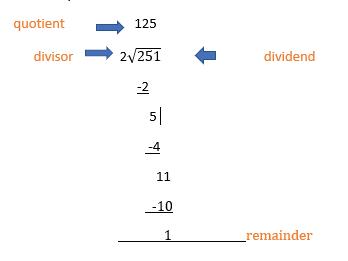
Begin by looking at the highest place value in the dividend, the digit on the left side. Can that number be divided by the divisor? In this case, the answer is yes, 2 ÷ 2 = 1. Put the 1 above the line as the beginning of the quotient. Since 1
Memory boxes are delightful keepsakes that hold a world of memories within them.
You will need
* Wooden jewellery box
* Bright alphabet stickers
* Acrylic paint
* Paintbrushes
* Paint sponges
* Glue
How to make
Step 1: Paint the box white and then leave it to dry. You may want to apply several coats to cover the box fully.
Step 2: Stick your alphabet stickers onto the top of your box as desired.
Top Tip: For a longer lasting finish, use some strong glue to fix in place.
Step 3: Using some sponges, paint some bright shapes to bring your box to life.
Step 4: Your personalised memory box is complete!

x 2 = 2, place this 2 under the 2 in the dividend. Next, subtract 2 – 2 = 0. Now carry down from the dividend the digit in the next place value, 5. Can 5 be evenly divided by 2. This time the answer is no, but there are two 2s in 5. So write 2 in the quotient, and subtract again. Keep repeating these steps until you get to the last digit in the dividend. How many times can 11 be divided by 2? 11 ÷ 2 = 5, with 1 left over. The 1 is the remainder.
Remember :
When dividing, always begin on the left side of the dividend.
Exercises 1) 5√90
2) 2√41
3) 12√60
4) 4 √400
5) 11√87

Store whatever you wish in it. (Adapted from hobbycraft. co.uk)


By Artress BethAny White
hornworm hooked beneath a lean green tobacco leaf undulating
black back bowed and hooked swaying to pick that leafing for dip, chew, and piping infant of commerce nurtured, suckered foliage lucred link in chain tobacco, ’bacca backbreaking hallowed smoke cook these hands, this body the rhythm of days: tobacco they once stripped, cured now chew, and then spit
(Source: Poetry [May 2021])



“I am in charge, I will do it my way” –witness
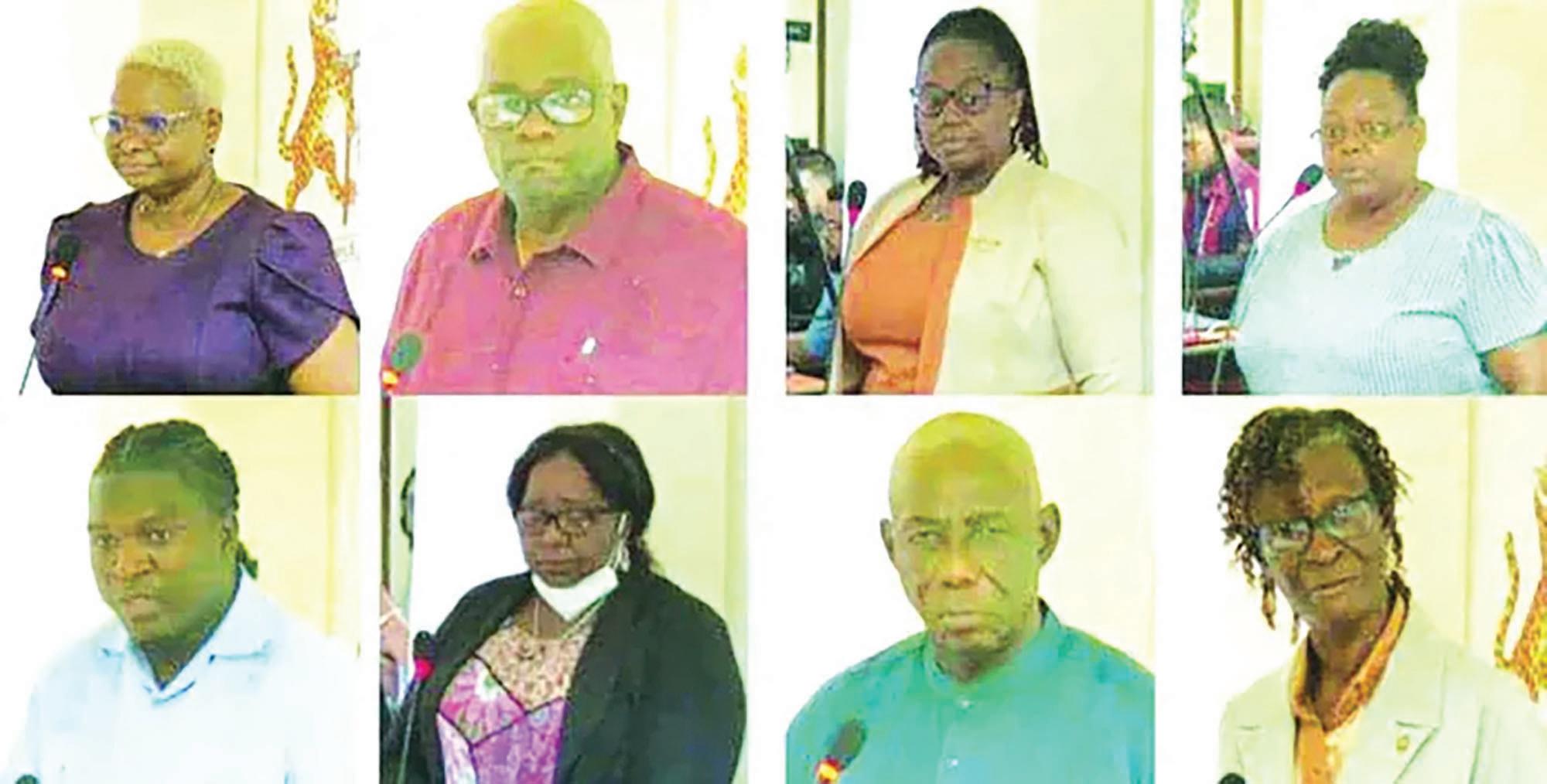
One of the People’s Progressive Party/ Civic (PPP/C) elections agents, Sasenarine Singh on Monday recalled how Returning Officer Clairmont Mingo grew hostile and declared “I am in charge, I will do it my way” before instructing party representatives and observers that Region Four (MahaicaBerbice) election results would be from a spreadsheet instead of the Statements of Poll (SOPs), from the March 2, 2020 General and Regional Elections.
Singh gave this testimony as the election fraud trial continued before Magistrate Faith McGusty at the Georgetown Magistrates’ Courts after a two-month pause. Singh recounted how tabulation of the Region Four results was done without incident up until the completion of some 421 of the 879 SOPs, but it was at this point that the situation started to take a turn for the worse.
According to Singh tabulation stopped at that point but when it resumed the situation suddenly became hostile. Singh recounted that it was expected that the tabulation would resume with the SOPs, and though
this was initially agreed to, Mingo later returned to inform observers and election agents that it was his way or the highway.
“I observed Mr. Mingo, and when we came back into the room, I observed a different person. Mr. Mingo started to bang his hands on his desk extremely loud and said “I am in charge, I will do it my way and I am instructing my staff to start calling the numbers,” Singh noted.
Spreadsheet with numbers
“He spoke very clearly, very authoritative, and the staff started reading the numbers. The process he explained we would do we did not do. The staff started reading from a piece of paper and they started plugging in numbers. It was like a spreadsheet with lots of numbers. It was definitely not an SOP. An SOP is a big piece of paper with many columns… This spreadsheet was a piece of paper printed from a computer. The paper that the GECOM Staff was calling from was a piece of paper with lots of numbers on it, nothing but numbers. The SOP has a narrative about location. The paper they were calling from was
just numbers, numbers, numbers.”
Mingo is among nine persons jointly charged with conspiracy to commit electoral fraud in relation to the tabulation of votes for Region Four following the March 2, 2020 General Elections.
Aside from Mingo, others charged include former Chief

Elections Officer (CEO)
Keith Lowenfield, Deputy CEO Roxanne Myers, former A Partnership for National Unity + Alliance for Change (APNU+AFC) Minister Volda Lawrence, APNU+AFC Chief Scrutineer Carol Joseph, and former Guyana Elections Commission (GECOM) employees Enrique Livan, Sheffern February, Michelle Miller, and Denise BobbCummings.
Among the offences these defendants are accused of committing are: misconduct while holding public office; presenting falsified documentation; and planning to manipulate Guyana’s voters by presenting an inaccurate vote total. These charges stem from attempts to rig the 2020 Elections in favour of the then-ruling APNU/ AFC.
“Total chaos”
Singh had begun giving testimony in the case last November before the case was adjourned. Resuming his evidence, Singh described what he termed “total chaos” at the Ashmins Building from March 4, 2020 as efforts were made to complete the tabulation of 879 SOPs for Region Four.
He testified that after 421 SOPs were “completed, tabulated and ascertained,” the process shifted.
According to Singh, Mingo indicated that, in the interest of time, he would have staff extract figures from documents in their possession and present the results in spreadsheet format. However, the proposal was met with loud objections.
“It was total chaos. I observed total chaos and shouts of ‘no, no, no, no’ — calls for ‘SOPs, SOPs,’” Singh told the court. “The place was very loud, extremely loud. The word was ‘no.’ That was the dominant word.”
He said representatives
from several political parties and observer groups were present, including members of the PPP/C, The New Movement (TNM), A New and United Guyana (ANUG), The Citizenship Initiative (TCI) and Change Guyana, as well as several diplomants and international observers.
Singh said that when the tabulation exercise resumed in a reorganised setting at Ashmins, access to the building had changed and police were heavily present.
“The whole map of this place had changed. Access to the front door wasn’t there anymore… Total isolation,” he said, adding that “lots of policemen in brown clothes” were on site.
Numbers did not reflect SoP figures
Singh recalled Nigel Hinds stood and questioned the disappearance of the balances beyond the initial 421 SOPs. According to Singh, Mingo reacted forcefully.
Singh told the court that as the numbers were called and populated on a screen, he began comparing them with the carbon copies of SOPs in his possession.
“The numbers did not reflect what was on the carbon copy of the Statements of Poll that was in our possession,” he said.
He cited one example of vividly remembering an SOP from ballot box 4076.
“The number was 80 for APNU, but when I looked at the carbon copy SOP that we got from the Presiding Officer it showed APNU/ AFC 50, so it went up 30 votes,” Singh testified.
“What I also observed was that the number called out indicated a reduction of the PPP number by 30. The difference between the SOP given to me and the spreadsheet inflated the APNU by 30 and reduced that number allocated to the PPP by 30.”
He was clear that the trend began after the first
421 SOPs had been tabulated. “It was from 422 onwards that is where the trend started to develop,” Singh stated.
As the discrepancies continued, Singh said he drew the attention of members of the diplomatic community who were present.
“I started to show the US ambassador and the British ambassador the carbon copies of SOPs in my possession to show them the variation to what was showing up on the screen,” he told the court.
“A Stabroek Market brawl”
He also noted that the figures continued to be read rapidly, noting that “on average they were calling five SOPs in a minute; it was rapid, rapid, rapid,” Singh noted.
Earlier in his testimony, Singh said he was informed via telephone that a declaration had been made upstairs, although he remained in the tabulation room. “I was told that a declaration was made upstairs but I didn’t hear it. I was in the tabulation room at all times. I read it via the media,” he said.
He also described heated exchanges outside the building, likening the atmosphere to “a Stabroek Market brawl,” with “oral matches” between political figures.
During Singh’s testimony attorney for the defendants Nigel Hughes objected to Singh’s citing the SOPs and numbers he saw calling for the laying over of the carbon copy SOPs from the PPPC, which is expected to be done during the testimony of the PPPC Elections party agent, Zulfikar Mustapha, which is still to come.
Meanwhile the trial continues today with a voire dire during the morning session and testimony from a witness, Alisha Mohammed during the afternoon session.
The motorcyclist who died following a late-night collision on Amelia’s Ward Public Road on Saturday afternoon in Linden was allegedly travelling at a fast rate of speed at the time of the accident, according to police. Trevor Daniels, of Kairuni along the Linden-Soesdyke Highway, succumbed to his injuries on Sunday afternoon while receiving medical treatment, one day after the crash. Police in Regional Division 10 (Linden) reported that the accident occurred at about 22:40h on Saturday and involved motorcar, PXX 5812, driven by a woman of Central Amelia’s Ward and motorcycle, CP 8031, which Daniels was riding. Initial enquiries indicate that Daniels was proceeding east along the northern side of the roadway when the motorcar exited a northern parking lot and entered the public road, resulting in a collision with the front of the motorcycle. Investigators have alleged that the motorcyclist was travelling at a fast rate of speed at the time. As a result
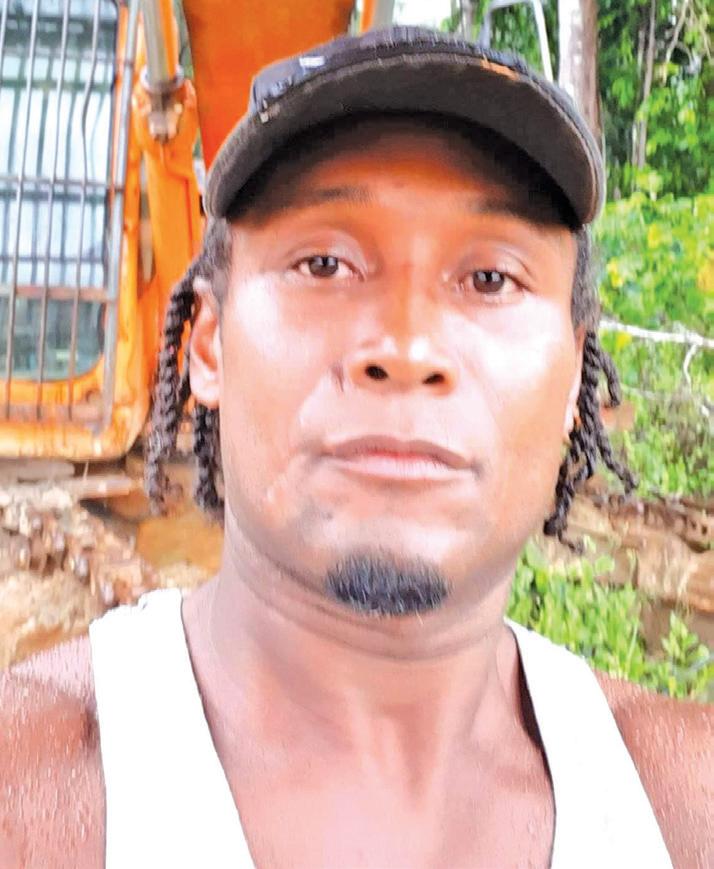
of the impact, Daniels was thrown onto the roadway and sustained severe injuries. Public-spirited citizens transported him in an unconscious state to the Linden Hospital Complex, where he was examined and admitted in a critical condition.
Police said he later succumbed to his injuries at about 17:30h on Sunday. A breathalyser test conducted on the driver of the motorcar showed that there was no alcohol in her system.
Investigations are ongoing
The fatal crash comes amid repeated warnings from traffic officials about excessive speeding, particularly along public roads and other highway corridors. In recent months, senior traffic ranks have cautioned that speeding remains one of the leading contributors to serious and fatal accidents across the country, especially during late-night hours when roads are less congested, and drivers tend to increase speed. Police and other officials have consistently urged motorists and motorcyclists to adhere to speed limits and exercise greater caution when approaching junctions, entrances and exits from parking areas, noting that splitsecond decisions at high speeds often result in devastating consequences.



So what’s happening with the case against former cop Calvin Brutus who’s been facing since late 2024 some off (very odd!!) charges for corruption regarding the $500 MILLION he had in bank accounts and another $300 MILLION he owned in assets like houses, etc!! Last your Eyewitness heard was in early January the case was called before Magistrate Magusty but was postponed to Jan 22 – then a numbing silence!! What gives?? The case epitomised the rot that had set into the Police Force for decades and has resulted in it becoming one of the least trusted institutions in the country!! Folks trust them less than politicians – which is like saying they’re lower than a snake’s belly!!
Now, your Eyewitness would be foolish indeed if he were to condemn the entire Guyana Police Force. Surely in an organisation of some 4500 men and women who’ve literally been given the power of life and death over their fellow citizens, some of them gonna abuse those powers. And in Guyana we don’t have to “imagine” what forms that harassment take, do we?? Police “harassment” has been part and parcel of Guyanese life ever since the Police Force was formed in 1839!! It wasn’t no coincidence this was the very next year following the abolition of slavery, was it?? Did you think they were told to “serve and protect” those folks who’d been treated like animals for the preceding two hundred years??
Their job was to protect the SYSTEM and the whites who ran the system!! Up to independence most of the officers were whites, weren’t they?? During the riots in the run-up to independence the name of British Police Commissioner, Peter Owen, struck fear in the ordinary people. And that attitude never really changed. Burnham picked up right where the British left off and he ensured an enlarged Police Force was personally loyal to him. All those who didn’t want to toe his line, it was “off with their heads”!!
So, the natural propensity of folks to abuse their power was coupled with the free reign Burnham gave the Police to harass folks who opposed him. Many policemen were even part of the “kick-down-the-door-bandits” squads up to the late eighties – until Hoyte brought in his “hang-em-high” policy!! The GPF that the PPP inherited in 1992 had been corrupted through and through.
Fearing a political backlash, rather than immediately launching a root-and-branch revamping and reorientation of the GPF, they patted the heads of the top brass as they attempted to implement some reforms. In the PNC return between 2015 and 2020 Granger reversed all of that by subverting the entire leadership structure of the GPF.
Brutus, and his excesses, is an inevitable consequence of that policy!!
It ain’t easy being in politics in Guyana nowadays!! Used to be since folks voted mostly racially, it was already a foregone conclusion as to who’d win – that just depended on the colour of the various noses in the horse race!! But now things are different: the noses are almost equal in number – which created a dilemma to the old order. Suddenly, you gotta be nice to everybody since the least missteps could cost you those crucial fence sitters’ noses!!
Norton and his PNC just couldn’t appreciate this change and kept on trying to cash a cheque that had long been overdrawn at the (vote) bank!! He lost out to Sanction Man who kept things simple: he offered bribes to all races to support him!! With everything hanging out in social media - since the content’s available to everyone with a smartphone – meaning EVERYBODY – Norton literally had the ru=g pulled from under his feet!!
Ain’t no coming back – even if Sanction Man keeps his appointment in Miami!!
…in Old Blighty
Americans always had a thing for the Brits after they threw out old George III back in 1776. Seems that King Charles’s brother – Duke Andrew – mined that weakness. Even as Epstein mined his personal weakness for young girls!!

Republic Bank (Guyana) Limited has announced changes to its residential mortgage offerings, including financing of up to $60 million at an interest rate of five per cent, as part of efforts to support homeownership in Guyana.
On Monday, the bank said in a release that the move comes in response to the Government’s housing agenda outlined in the 2026 Budget. The institution stated that it is now offering mortgages up to G$60 million at five per cent, with no lending ceiling for residential mortgages. According to the bank, no ceiling means there is no limit to the amount customers can borrow for residential purposes.
The bank also outlined its existing low-cost mortgage structure saying that loans of up to $9 million attract an interest rate of 3.50 per cent. Amounts above $9 million and up to $20 million are offered at 4.25 per cent, while loans above $20 million and up to $30 million carry a five per cent interest rate.

Additional features of the mortgage packages include extended repayment terms, monthly amortised payments and financing of up to 100 per cent.
This announcement on Monday follows a recent adjustment by Demerara Bank Limited, which on February 14 disclosed that it increased its residential housing loan ceiling from $30 million to $40 million while maintaining an interest rate of five per cent per annum on a reducing balance. The revised limit took effect on February 9. Under Demerara Bank’s updated structure, loans of up to $4 million attract an interest rate of 3.5 per cent per annum; $4,000,001
to $9 million, 3.7 per cent; $9,000,001 to $15 million, 4.5 per cent; and $15,000,001 to $40 million, five per cent.
Demerara Bank said the change reflects higher construction costs driven by increases in materials, labour and contractor services. The bank stated that the expanded ceiling is intended to align financing with current market conditions and to allow borrowers to access larger sums without exceeding the established interest rate tiers.
Both institutions indicated that the adjustments are aimed at expanding access to residential financing as demand for housing continues to grow.

The Institute of Private Enterprise Development (IPED) has officially launched a new invoice Financing Loan Product specifically aimed at supporting businesses operating in Guyana’s oil and gas sector and other productive industries. This initiative was designed strategically to provide short-term working capital to companies with verified invoices but are awaiting payment.
In a press release on February 16, it was released that the financing product targets registered businesses that holds executed contracts and outstanding invoices. By offering access to immediate funds, the initiative seeks to bridge the gap between service delivery and payment settlement, allowing companies to meet contractual obligations and conduct business without interruptions.
As Guyana’s economy continues to expand, particularly through oil and gas, there has been a rise in the creation of small and medium scale businesses, where some have faced

cash flow challenges while waiting payment from major contractors. IPED’s new facility is intended to address these interruptions by easing cash flow challenges and helping businesses become and remain financially stable.
The product offers three financing categories. Category one offers up to 80 percent of the invoice value, category two up to 90 percent of collateral value and the third category offers an unsecured financing of up to 2.5 million. These options provide flexibility. These options pro -
vide flexibility to businesses based on their financial needs and capacity.
According to IPED, the initiative is expected to increase local participation in the oil and gas value chain while also supporting growth in other sectors in the economy the organization remains committed to promoting, economic resilience, private sector development and entrepreneurship. Eligible businesses are encouraged to contact IPED for information on the application procedure and eligibility requirements.



Coastal Rim Properties (CRP) has announced on Monday the launch of TAJ Dream Ogle, it’s the second major real estate development in Guyana, in partnership with NBA Hall of Famer and global business leader Hakeem Olajuwon as Co-Developer. To ensure inclusive participation in Guyana’s rapidly expanding property market, and as a direct response to national pricing initiatives, all Guyanese citizens, both locally resident and within the diaspora, will be immediately eligible for a US$100,000 or ($20 million GYD) discount on any unit reserved within the first 60 days of launch. For units starting at US$250,000, applying the US$100,000 reduction will result in the units being sold for US$150,000. This initiative, the company said, is specifically designed to create an accessible luxury condominium for Guyanese families,

in our country’s growth. TAJ Dream Ogle’s commitment to accessible homeownership for Guyanese at home and in the diaspora reflects deep social responsibility and demonstrates confidence in our people and our future.” The pric-
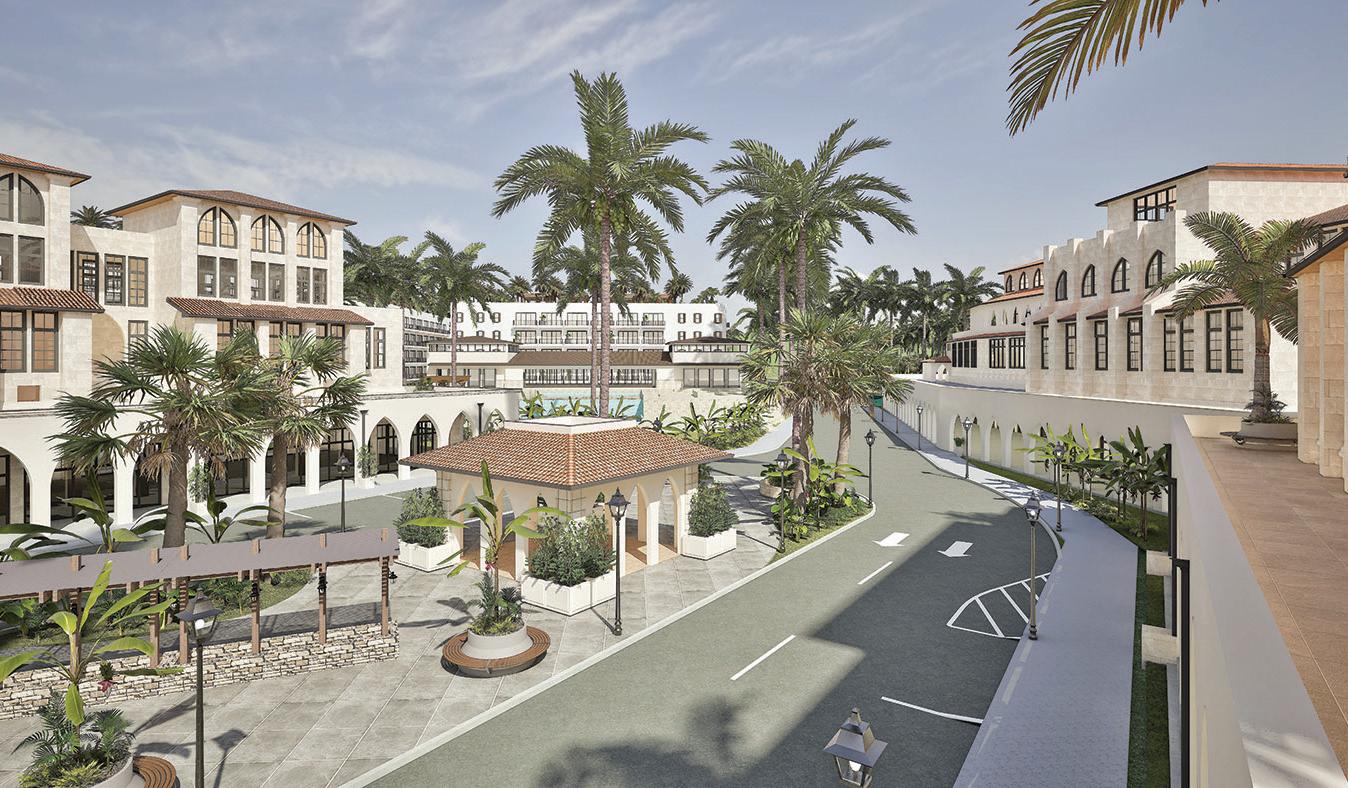
young professionals and returning diasporans before broader international demand accelerates pricing. According to Tourism, Industry and Commerce Minister, Susan Rodrigues, “This Guyanese-first approach is exactly the private sector leadership we need at this pivotal time in our development. Under the leadership of His Excellency, President Dr Mohamed Irfaan Ali, who has made it clear that prosperity must come to every Guyanese home, our citizens must be given every opportunity to participate
ing initiative, the company added mirrors recent national leadership on making high-quality hospitality and lifestyle experiences more accessible for citizens.
The Hon. Susan Rodrigues recently championed a policy encouraging hotels to adopt capped nightly rates to benefit visiting and local Guyanese alike. This national effort to moderate pricing in the hospitality sector underscores a broader commitment to inclusive access, and TAJ Dream Ogle’s condominium discount represents the real estate sector’s comple-
mentary response to those same national priorities. According to NBA Hall of Famer, Hakeem ‘The Dream’ Olajuwon, “The Government of Guyana has cultivated a stable, investor-friendly climate characterised by significant infrastructure expansion, pro-development policies, strengthened governance and measurable improvements in public safety metrics. Strong macroeconomic fundamentals reinforce TAJ Dream Ogle not only as a sound investment opportunity, but as a safe and secure community for families, professionals and long-term residents.” “TAJ Dream Ogle represents the next chapter of Guyana’s urban evolution,” said Giovanni Mola, Principal of Coastal Rim Properties in Guyana. “What we are building goes beyond simple residences. We are building a globally competitive, climate-resilient, walkable community that answers the call for accessible, world-class living for Guyanese at home and abroad. This project reflects our confidence in Guyana’s leadership, its economic trajectory and its people.”
For more information and details persons can visit www.TajGuyana.com.
merindian Affairs
AMinister, Sarah Browne- Shadeek has said cultural preservation and language revival will be among the ministry’s key priorities for 2026, as efforts intensify to safeguard Indigenous identity amid Guyana’s rapid development.
Speaking on the Starting Point podcast, BrowneShadeek said while economic and educational opportunities are expanding across the country, equal attention must be given to preserving Indigenous heritage.
“I’m really excited to be a part of the implementation of the projects for empowering women, culture, language revival,” the minister said, adding that she is “big on culture.”
The minister noted that cultural identity remains central to Indigenous communities and warned that knowledge not passed on risks being permanently lost.
“I would have said before that if I should, or when I die, if I don’t teach anybody something that I know, it dies with me,” she stated. “And, you know, we’re lost.”
Browne- Shadeek said her commitment to cultural preservation is deeply personal, rooted in her upbringing in a traditional Indigenous household.
“My very first house, my parents built, it was a troolie house,” she recalled. “In my grandparents’ house, I enjoyed learning handicraft, learning to make crafts, farming, and listening to stories.”
She described evenings without electricity, when elders would share traditional stories.
“At that time, we had no electricity… we would be under maybe a flambeau. And they would tell us stories about the kanaima, about the watamuma, about cassava muma,” she said.
Those experiences, she explained, shaped her identity and continue to influence her approach to leadership.
“It feels like when I am [in Parliament], there’s always a piece of home with me,” Browne- Shadeek said, referring to her practice of wearing Indigenous jewellery and traditional pieces during public appearances.
The minister said symbolism plays an important

role in representation and cultural pride, particularly for younger generations.
“It’s important when we teach our young people, our young children, a part of who we are,” she said.
Browne-Shadeek indicated that while previous PPP administrations focused heavily on structural and legislative milestones, including the strengthening of the ministry and land titling initiatives under former ministers such as Carolyn Rodrigues and Pauline Sukhai, her tenure will place stronger emphasis on youth empowerment and cultural continuity.
“I think that most of the heavy lifting would have already been done,” she said, expressing gratitude to former ministers who laid the institutional foundation.
“But I still have to make my name, leave my legacy.”
That legacy, she suggested, will be tied to ensuring Indigenous youth remain connected to their cultural roots while positioning themselves to benefit from expanding national opportunities.
“I’d like to see us move in terms of our young people being empowered, making up, taking opportunities, and also where we would have lost our culture, that we ensure that we keep it alive, because this is important to us,” Browne- Shadeek said.
Guyana’s rapid economic transformation in recent years has brought increased infrastructure, education access, and digital connectivity to hinterland communities. Further details on specific programmes and budget allocations for language revival and cultural initiatives are expected to be rolled out during the 2026 fiscal year.


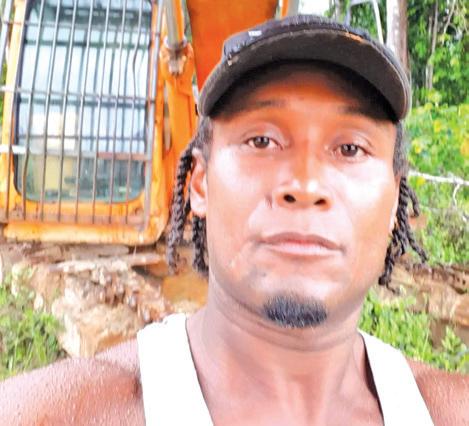
A21-year-old overseas-based Guyanese died on Monday afternoon following a collision between an unregistered motorcycle and a motorcar along the Number 64 Public Road, Corentyne, Berbice, Region Six (East Berbice-Corentyne) police have confirmed. Dead is Jadheo Bhimsingh of Number 63 Village, Corentyne. Police said the accident occurred at about 13:00h and involved an unregistered motorcycle, bearing engine number, JH25C4002 7M003943, which was proceeding south along the eastern lane at a fast rate of speed. Bhimsingh, who was unlicensed, was also riding without a safety helmet.

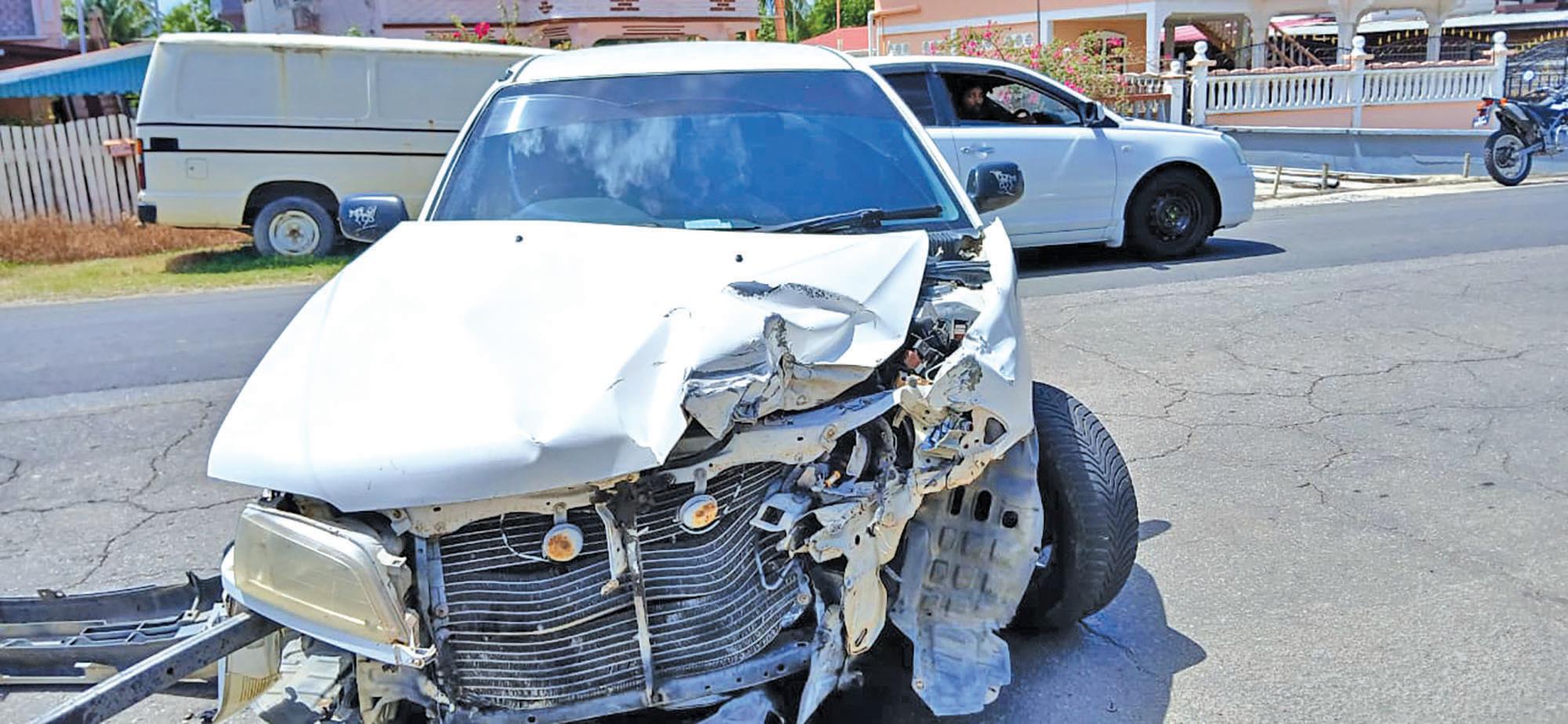

Investigators reported that the motorcycle collided with motorcar, PKK 5792, which was travelling along the western lane and was being driven by a 60-year-old resident of Number 64 Village, Corentyne. The impact of the collision caused the motorcyclist to fall onto the eastern grass parapet, where he sustained injuries about his body. Public-spirited citizens responded and transported the injured rider to the Number 75 Regional Hospital, where he was pronounced dead on arrival. Police said a breathalyser test conducted on the driver of the motorcar recorded readings of seven and eight micrograms of alcohol per 100 millilitres (μg/100 ml) respectively. The driver has since been taken into custody and is assisting with ongoing investigations.

“I’m
Two families of Mocha, East Bank Demerara (EBD), squatting area are beginning a new chapter after receiving Governmentallocated house lot. Posts shared on social media by the recipient’s expressed gratitude for the swift notification, allocation and support they received during the process. Single mother Victoria Dandrade expressed that living at the back dam was uncomfortable and she was very glad to have received the opportunity to be allocated a new house lot. “I have two kids and I’m a single mother, and I’m very happy that I now have a piece of land. I grew up in Mocha and have been

living at the dam for the past two years with my children. I also grew up
here with my father. I received about eight calls and they kept calling and encouraging me to come out,” one recipient said. Meanwhile, another recipient, Leron Griffith noted that although the process took some time, they were still very grateful for the outcome. “So far, it’s been great for me. I can’t really explain how great this is. The process itself was the highlight for me. It took about five to six years and was not always good, but it all worked out in the end, and I am thankful for that,” the recipient stated. Meanwhile in November of 2025 Guyana Times had reported that the Housing Ministry, through the Central


Housing and Planning Authority (CH&PA), continues the regularisation
of the Arcadia (Mocha) squatting area, offering security of tenure and bringing relief to dozens of families. The CH&PA had commenced the processing of ownership documents with the issuance of Allocation Letters and Agreements of Sale on November 27, 2025, continuing the exercise on November 28. At the time, Director of Community Development Gladwin Charles presented ownership documents to several beneficiaries. Occupation of the Arcadia area reportedly began over 10 years ago, with a noticeable increase in squatting activities between 2015 and 2020. Following necessary groundwork, CH&PA
began regularisation in 2024. Survey works were completed in early 2025, providing the foundation for allocation, planning and document issuance. Of the 104 lots containing structures, 68 are occupied. To date, 36 of the occupied lots have met the eligibility requirements for allocation and processing of Agreements of Sale. This ongoing intervention is part President Ali’s Operation Clear-Up, a national initiative designed to ensure that families residing in informal settlements that can be regularised are transitioned into secure, sustainable and fully formalised communities.

TUESDAY, FEBRUARY 17, 2026

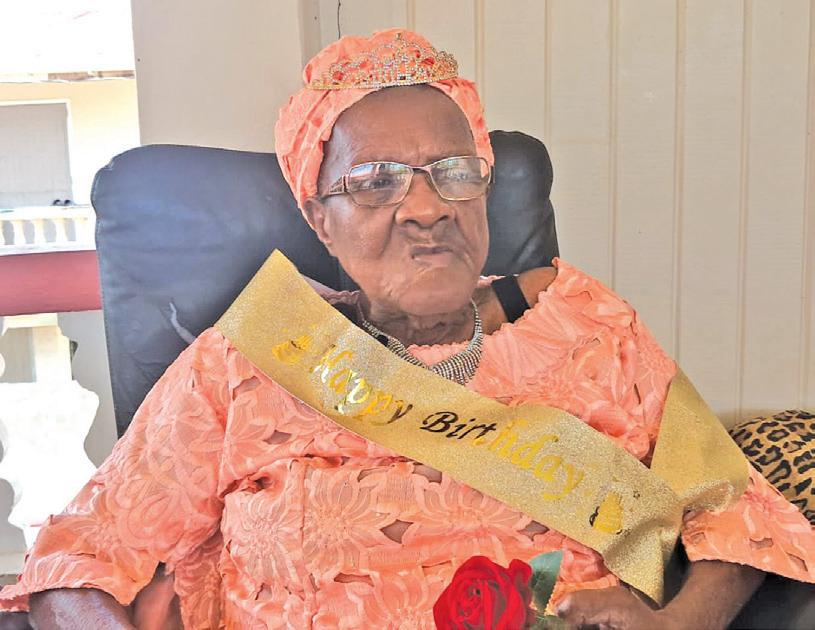
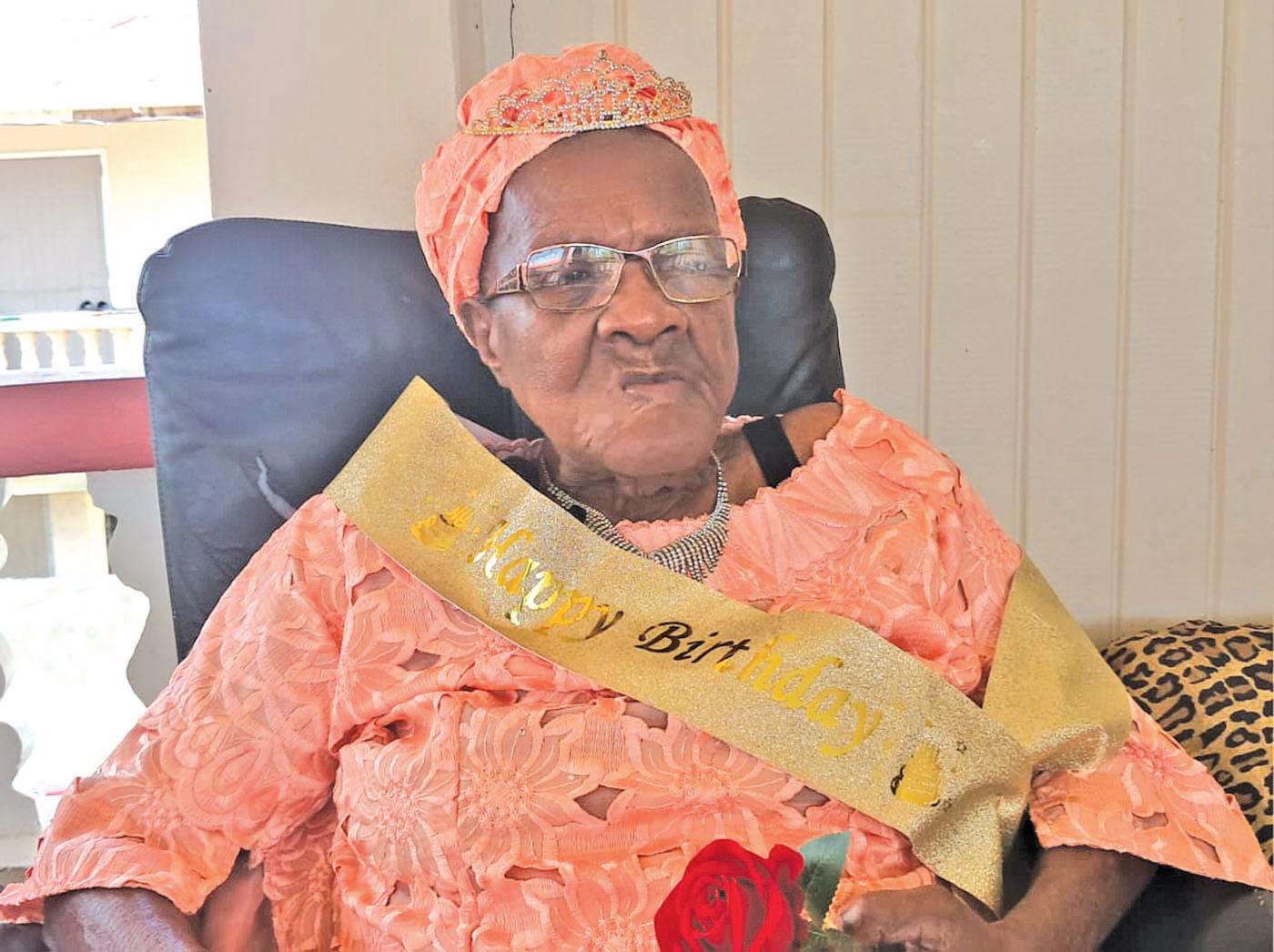
There was no hesitation when Beatrice Elizabeth Burnette Johnson, affectionately known as “Cousin Vye,” was asked about her milestone on Monday.
“I have a birthday,” she said with a smile. “One hundred… I know it’s one hundred.”
On February 16, 1926, Cousin Vye was born in Lichfield Village, West Coast Berbice, the same community she still calls home today
at Lot 20 Lichfield. On Monday, surrounded by neighbours and well-wishers, the centenarian marked 100 years of life shaped by faith, work, migration, and an unbreakable bond with her village.
A devoted member of St Jude’s Anglican Church, Cousin Vye credits much of her joy to church life and community fellowship. Reflecting on her youthful days, she recalled simpler pleasures.
“Going to church…singing, laughing with your neighbour…there are so many little things… a lot, a lot of little things,” she said.
Growing up in Lichfield, she witnessed a dramatic transformation over the decades.
“Today it’s not the days like long ago…we have so many different things today.” Among the changes she highlighted were new schools, a developed church, and a playground, clear

Massy Stores (Guyana) Inc, in partnership with the Agriculture Ministry, has officially launched the sale of locally produced Vannamei shrimp from the Onverwagt Prawns Project, now available at Massy Stores locations across the country. The Onverwagt Prawns Project is projected to produce over 360 tonnes of shrimp annually and is part of the Ministry’s strategy to expand the national shrimp industry, generate income for local farmers and reduce reliance on imported seafood. Assistant Vice-President (VP) and
General Manager (GM) of Massy Stores (Guyana) Inc, Christpen Bobb-Semple, emphasised the importance of public-private collaboration in advancing national development. “Our partnership with the Ministry of Agriculture demonstrates how public policy and private sector collaboration can translate vision into tangible outcomes,” he said. “By supporting initiatives such as the Onverwagt Vannamei Shrimp Project, we are contributing to Guyana’s nonoil economic diversification, strengthening local value chains, and provid-
ing consumers with greater access to high-quality, locally sourced food.”
The launch also emphasises Massy Stores’ ongoing efforts to promote Brand Guyana and support local enterprise development, the company said in a release. The supermarket chain continues to provide dedicated retail space for Guyanese products and has partnered with the Ministry on initiatives like the Agriculture and Innovation Entrepreneurship Programme, which connects local producers to nationwide market access.
signs, she noted, of progress in the village she has seen evolve for a full century.
Though rooted in Lichfield, ‘Cousin Vye’s married and moved to Mackenzie in Linden, where she worked for several years before eventually returning home. She also spent time in the United States, working and building her life before resettling permanently in Guyana.
Before retirement, she worked for many years do-
ing domestic work, while also building her own skills as a beautician and seamstress, trades that supported her family.
She spoke of labour work and domestic work, explaining that she worked for others while also maintaining her own household responsibilities.
“That’s what I used to do… You do your own work at home,” she said.
A mother of seven, three boys and four girls,
‘Cousin Vye’ today has two surviving children. Her family tree now extends to 18 grandchildren, 44 great-grandchildren, and 12 great-great-grandchildren. She has also endured the pain of loss, including the passing of children and a grandson in recent years.
When asked about her own parents, she recalled that her mother lived into her 90s, possibly 97, while her father died at around 67.
In lighter moments, ‘Cousin Vye’ shared her simple culinary preferences. “Rice,” she said when asked about her favourite food. “Rice and fish.” She laughed as she remembered that her grandfather had been a butcher, and so meat was once a staple in her younger days. Through changing times, from colonial-era village life to modern Guyana, ‘Cousin Vye’ has remained grounded in faith, family, and community.
“One hundred,” she repeated proudly. “I know it’s one hundred.”

Representatives of Kuwaiti conglomerate Royal Group met with Chief Investment Officer (CIO) for Guyana and Head of the Guyana Office for Investment (GOInvest), Peter Ramsaroop on Monday to discuss potential investments in the country’s healthcare and pharmaceutical sectors. The meeting took place on the eve of the annual Guyana Energy Conference and Supply Chain Expo (GECSCE), highlighting growing international interest in Guyana’s investment landscape beyond the oil and gas industry. Royal Group’s engagement comes as the Government of Guyana prioritises expanding healthcare capacity, modernising drug supply and distribution systems, and reforming regulatory frameworks. The initiatives aim to increase lo-

cal access to medicines, strengthen health security, and reduce reliance on
imports, supporting the broader transformation of the national health system.
President Dr Irfaan Ali has consistently underscored healthcare and pharmaceuticals as key components of his Vision 2030 agenda. He has called for investments in domestic capacity for healthcare delivery, as well as in the storage, production and regulation of essential medicines in line with international standards. Private investment is expected to complement Government plans, which include multi-billion-dollar projects for hospital expansion, specialised medical services and pharmaceutical manufacturing.
Officials say these efforts will strengthen the country’s health architecture while building a self-sustaining system. Senior Minister within the Office of the President with re -
sponsibility for Finance, Dr Ashni Singh, said the diversification into health-related industries forms part of a strategy to ensure balanced economic growth. He highlighted that such investments support human capital development, technology transfer and longterm economic sustainability.
Ramsaroop was joined by Director of Economic Affairs Arvinda Ramcharan and Foreign Service Officer Natala Anderson during the discussions. Government officials said engagements like these are part of a broader strategy to attract international partners aligned with national priorities, job creation and economic resilience.
The Public Utilities and Aviation Ministry has issued a Request for Proposals (RFP) for the design, construction and financing of two new municipal airports in Regions Six (east Berbice-Corentyne) and Nine (Upper TakutuUpper Essequibo). Under the National Competitive Bidding (NCB) procedures outlined in the Procurement Act 2003, qualified firms are invited to submit pro-
posals for the Engineering, Procurement, Construction, and Financing (EPC+F) of a Code 3C Municipal Airport at Rose Hall, Canje, Berbice, Region Six. The Ministry is seeking proposals for a Code 4E Municipal Airport in Lethem, Region Nine, a transformative undertaking expected to position the Rupununi as a key aviation gateway connecting southern Guyana to Brazil and the wider Latin American market.
The facility will be capable of accommodating larger aircraft, expanding cross-border commercial activity and passenger traffic, a Department of Public Information (DPI) report stated.
Complementing these flagship projects, the Ministry is also inviting bids for the rehabilitation and upgrading of priority hinterland and coastal airstrips under Lots 1–4. These works will improve flight safety, re-
The Small Business Bureau (SBB) on Friday hosted a training session on bid document preparation, targeting small businesses seeking to access Government contracts. The session, held on February 13 was organised in collaboration with the National Procurement and Tender Administration Board (NPTAB) and the World Trade Centre (WTC) Georgetown. A total of 115 small businesses participated. According to the SBB, the training guided participants through key stages of the tendering process, including how to interpret bid documents, meet compliance require-
ments and structure submissions. The session focused on practical exercises aimed at improving participants’ ability to prepare responsive bids.
Chief Executive Officer (CEO) of SBB, Mohamed Shazim Ibrahim, said strengthening procurement readiness among small businesses is critical. “Access to Government contracts can significantly transform small enterprises. By equipping entrepreneurs with the knowledge to prepare compliant and competitive bids, we are expanding their opportunities for growth and long-term sustainability,” he stated. Participant Robert Forrester said the session provided
clarity on common challenges in bid preparation. “They gave us a very comprehensive overview of the things and the pitfalls that you need to look for in the bid preparation process, especially when you are dealing with compliance, how it’s structured. You need to ensure that you fulfil all relevant documents,” Forrester said. The initiative forms part of the Government’s efforts to strengthen small and medium-sized enterprises (SMEs) through training, market access and capacity building. The SBB said it will continue to pursue partnerships aimed at increasing small business participation in public procurement.
liability and year-round access for remote communities, ensuring better support for medevac services, commerce, and essential government operations. Acquisition of RFP documents begins Thursday, February 19, 2026. Pre-
proposal conferences will be held on February 27 and March 4, 2026, at the Ministry’s headquarters, 55 Main Street, Georgetown.
All proposals must be submitted in sealed envelopes to the Chairman of the National Procurement and Tender Administration Board (NPTAB), Ministry of Finance, by the stipulated deadlines in March and April 2026. Late or electronic submissions will not be accepted.


Housing development across five emerging communities in Region Six (East Berbice Corentyne) is moving into an accelerated phase, with infrastructure works advancing at Moleson Creek, Number 74 Village, Hogstye, Overwinning and Providence as the Government pushes to clear thousands of pending allocations and ensure allottees can access their lands within the shortest possible time. Housing Minister, Collin Croal said significant investments supported by both Government funding and financing from the Saudi Fund, are being injected to bridge longstanding gaps between land allocation and infrastructure delivery, while positioning the region for sustained residential expansion. Speaking on the sidelines of a Housing Ministry outreach in Region Six, Croal said the developments form part of a broader strategy to eliminate the longstanding backlog of pending allocations while simultaneous-
ly rolling out infrastructure in newly designated housing areas. He explained that the Ministry is working to ensure that persons who were allocated house lots in previous years can gain access within this year, noting that bridging the gap between allocation and infrastructure delivery remains a top priority. At Hogstye, the Minister disclosed that more than 300 house lots were allocated and infrastructure works are now 98 per cent complete. He committed that by the first week of March, allottees who were allocated lands in that scheme prior to this year will be able to access their lots. The near-completion of works there marks one of the most advanced new housing developments currently underway in the region. Over at Overwinning, Croal said infrastructure works had already commenced as part of a major allocation rolled out last year aimed at reducing the Region Six backlog. He acknowledged that in the past, lands were some-
times allocated before infrastructure was in place, creating long waiting periods for beneficiaries. The Ministry, he said, is now working to bridge that gap, ensuring that allocations and infrastructure development occur within the same timeframe so that beneficiaries can move toward construction sooner.
Moleson Creek is also poised for significant advancement, with infrastructure works to be financed through funding from the Saudi Fund. Croal revealed that projects for both Moleson Creek and Overwinning are expected to go out to tender within a month, signalling accelerated development in those communities. The investment is intended to fasttrack access to serviced lots in the eastern corridor of the region.
Development at Number 74 Village and Providence are likewise progressing and according to the Minister infrastructure works represent a substantial financial com-

mitment, explaining that on average it costs approximately $5 million in first-phase development to prepare a single lot. This includes clearing, road construction, drainage and other essential groundwork, before utilities such as electricity and water are installed. Final road net-
works are typically completed after occupancy begins. Croal emphasised the scale of the Government’s housing drive, pointing out that over the last five years more than $250 billion has been invested nationally in the housing programme. For 2026 alone, $159 billion has been budget-
ed for housing development, with the Minister expressing confidence that the allocation will be fully expended before year-end as projects accelerate. Region Six currently has an estimated backlog of approximately 8,000 pending applications. Croal reaffirmed the Government’s commitment to significantly reducing that figure before the end of the year and clearing the existing backlog prior to the September elections. While new applications continue to enter the system, he said priority is being given to addressing long-standing allocations and ensuring beneficiaries receive fully serviced lots rather than allocation numbers alone.
“We are committed to ensuring we are able to deliver,” the Minister said, underscoring that the focus remains on translating allocations into accessible, infrastructure-ready communities across Moleson Creek, Number 74, Hogstye, Overwinning and Providence.
Guyana is set to host the Greatness 2: The Rise of an Empire Camporee, a gathering of Seventh-day Adventist Youths from all across the Caribbean. Eight years after the inaugural camporee in 2018, thousands of Pathfinders and Master Guides are set to come to these shores at the Loo Creek Campsite from March 31 to April 5, offering a unique blend of faith, fun and fellowship in the great outdoors. For the Caribbean Union Conference (CARU), hosting the camporee in Guyana is a recognition that Guyana can deliver an event that is seamless, inspiring and memorable. Eld. Lennox Jason, the Youth and Public Campus Ministries Director of the Guyana Conference of Seventh-day Adventists (GUYCON), told this publication that with direct collaboration with CARU’s Youth Ministry Department, the country has once again been tasked with planning, coordinat-
ing and executing the programme, the accommodation for the international guests, overseeing activities and ensuring that every detail reflects the excellence expected from a regional event of this magnitude. “The experience that we had in hosting the first “Greatness” camporee is being used to produce something better than what was accomplished in 2018; what worked well, we are building on it and what did not work, we are discarding. Therefore, the blueprint is being used as a guide,” the Youth Director said. Preparation of the Loo Creek campsite is well underway, with expanded facilities, improved water storage, additional toilets and baths, fully equipped stage and auditorium to host a diverse range of events. From morning devotions, to the nightly worship services, from drama presentations about the life of King David, to pure SDA Youth talent, seven exciting honours and chal-
lenges to keep them active. Greatness 2 promises to meet the physical, social, mental and spiritual needs of every Pathfinder, Master Guide and Visitor in attendance. Director Jason encouraged in his message to all in attendance, “A camporee of this magnitude would only happen once in the lifetime of a pathfinder, since it is scheduled to occur every 4 – 5 years. Therefore, I encourage you all to make lots of friends from every country, participate in as many events/activities that you are able to, attempt all seven honours, enjoy the story of King David and prepare to be drawn closer to God. Have fun!”
Adding to the excitement is the Salcah and Webmaays (SAW) Marching Band, a youth led and youth dominated band chosen to represent the Guyana Conference with pride and precision.
For the band members, being selected is both an honour and a tremendous responsibility. Band member Dneka Williams expressed the responsibility that lies on the band’s shoulders, noting that they aren’t only representing themselves but their country and conference. She explained that band rehearsals for such a momentous occasion differs from that of regular weekly practice. She emphasised that much more work is being put in to greatly represent the nation. “We’re not just representing ourselves at CARU, we’re representing Guyana, we have a strong sense of pride and responsibility because beyond our musical talent we are aiming to show that Guyana has talent in the drum corps world, in the musical world. And we plan to carry ourselves just as we perform. So, on and off of the drill square, the performing set, we know we’ll be representing Guyana. So, it will reflect our culture and values,” said Williams.
Band Commander Kenford Lewis, a veteran of the first Greatness camporee, described the honour of being chosen as a testament of the band’s growth and dedication.
“Greatness 1 is where I would have been given most of my exposure as a musician, as a band member,” Lewis explained. “Being selected as part of the band for Greatness 2 means a lot to me. It shows that all the hard work we’ve put in over the years has paid off. After being out of order for so long, we really got ourselves back on track about three years ago at STAND Camporee. From then until now, everything we’ve accomplished has been amazing. To be chosen for Greatness 2 is truly an honour.” The SAW Marching Band will play key roles during the camporee, including the opening parade, ceremonial presentations and band displays, adding colour, rhythm and excitement to every moment. Their performance is
not just music; it is a declaration of national pride and the talent of Guyanese youth on a Caribbean stage.
Moment to remember With anticipation building and preparations in full swing, the excitement is palpable. From the carefully planned campsite to the disciplined SAW Marching Band, every aspect of Greatness 2 reflects dedication, pride, and the joy of fellowship. As Pathfinders and Master Guides arrive from across the Caribbean, they will participate in challenges and ceremonies as well as they will experience friendship and faith be guided by the values of the Seventh-day Adventist Church. The camporee also aligns with President Irfaan Ali’s call for greater involvement of religious organisations in shaping the nation’s youth and producing well-rounded students and responsible citizens.

Six passengers were killed on Monday in a bus crash on a federal highway in south-eastern Brazil, federal and São Paulo state officials said, and another 45 injured people were sent to local hospitals for medical treatment.
The crash, on the BR153 federal highway, occurred early in the day near the city of Marilia, São Paulo state firefighters said in a post on X. The condition of the injured passengers was not immediately disclosed.
Brazil’s Federal Highway Police said in a statement that the bus was carrying farm work-
ers from the north-eastern Maranhao state to the southern Santa Catarina state to harvest apples.
Preliminary information pointed out that the
vehicle left the roadway and turned over after, the Police said, adding the causes of the crash will be investigated.
(Reuters)
Garbage has begun to pile up on street corners in the Cuban capital of Havana, attracting hordes of flies and reeking of rotten food, in one of the most visible impacts of the US bid to prevent oil from reaching the Caribbean’s largest island.
State-run news outlet Cubadebate reported this month that only 44 of Havana’s 106 rubbish trucks were able to keep operating due to fuel shortages, slowing garbage collection.
After hundreds of Ecuadorean inmates were killed in prison riots in 2021 and 2022, President Daniel Noboa made restoring order in jails one of the central pillars of his security strategy when he took office in 2023.
While the Government has sharply curbed the number of riots, figures revealed in a Reuters investigation show prison deaths are reaching levels not seen since the height of the unrest.
Deaths of inmates almost quadrupled year-onyear in 2025 due to both violence and natural caus-
es, including a tuberculosis outbreak, according to the figures obtained by Reuters through a freedom-of-information request to the Interior Ministry. Deaths attributed to violence alone also rose fourfold from the year before.
Of the 1220 inmates who died in 2025, at least 206 were killed during gang clashes and other violence, up from 46 the previous year, according to the figures. It was the highest number since 2021, when 328 inmates died.
The other deaths last year were attributed to illness, suicide and other undetermined causes — a 256
per cent increase from the 285 recorded in 2024. The Government has not released comparable figures for 2021, 2022, or 2023. Neither Noboa’s office nor prison agency SNAI responded to requests for comment about the increase in deaths during 2025. In its response to the freedom-of-information request, the Interior Ministry said the sharp increase in deaths “even compared to historically critical periods such as 2021” could “without proper technical context”, create “distorted perceptions of institutional management”.
(Excerpt from Reuters)
“It’s all over the city,” said Jose Ramon Cruz, a local resident. “It’s been more than 10 days since a garbage truck came.”
In other towns on the island - home to around 11 million – residents took to social media to warn of the risks to public health.
Cuba’s communist Government has implemented rationing measures to protect essential services in a country that was already suffering from severe
Cardboard boxes, used bags, plastic bottles and rags have piled up on street corners across the seafront capital, as some residents sorted through the waste looking for scraps they could re-use, while motorists, pedestrians and bikers are forced to circumvent the imposing heaps.
shortages of food, fuel and medicine.
The national oil supply has fallen off dramatically in two months.
Venezuela – once Cuba’s top supplier – effectively stopped sending shipments in mid-December. Mexico’s government also said it was halting shipments after Washington threatened tariffs against countries that send supplies to Cuba.
A Russian newspaper last week reported that Russia was preparing to send crude and fuel cargoes to Cuba in the near future, without giving a specific date. (Excerpt from Reuters)
Pressure is growing on the Venezuelan Interim Government to free the remaining political prisoners being held in the country.
A pressure group campaigning on detainees’ behalf, Foro Penal, said on Sunday that it had been able to verify that 444 political prisoners had been released since US forces seized Venezuelan leader Nicolás Maduro last month.
But hundreds more remain behind bars, according to a tally kept by Foro Penal, even though the Trump Administration has pressured Venezuelan officials to speed up their release.
Activists say the health of some relatives who have gone on hunger strike to demand the release of their loved ones is quickly deteriorating.
According to a pressure group, 10 persons went on hunger strike on Saturday to demand that their relatives, who are being held at Zona 7 in the capital, Caracas, be freed.

They have been holding a vigil outside the Police detention centre since January 8, when the head of Venezuela’s National Assembly, Jorge Rodríguez, first announced that “a significant number” of prisoners would be freed as a goodwill gesture to demonstrate what he said was the interim Government’s will “seek peace”.
While the Trump administration has praised Venezuela’s interim government for the progress it has made so far, activists with-
in the South American country have denounced delays and a lack of transparency in who is being freed.
They cite the case of Opposition politician Juan Pablo Guanipa as evidence that those released are not “really free”.
Guanipa was released on February 8 after eight months in jail, only to be seized again hours later for allegedly breaking the conditions of his release. He has since been placed under house arrest. (Excerpt from Reuters)
The addition of former Democratic Labour Party (DLP) Minister of Finance Chris Sinckler is among several changes to the Cabinet of Barbados.
Sinckler not only becomes a Senator and Senior Minister in the Mia Mottley Administration, he also takes over the portfolio of Minister of Foreign Affairs and Foreign Trade, previously held by Kerrie Symmonds. Michael Lashley, who also served in successive DLP Administrations, was given the portfolio of Legal Affairs and Criminal Justice.
Attorney General Wilfred Abrahams, who, along with Mottley was sworn in last week, greeted President Bostic before his colleagues took their oaths.
While Santia Bradshaw remains Deputy Prime Minister and Leader of Government Business in the House of Assembly, she is now Minister of National Beautification,

Environment and Fisheries.
Adrian Forde, who formerly held that portfolio, is Minister of People Empowerment and Elder Affairs as Kirk Humphrey received a promotion to Senior Minister (coordinating infrastructure) and Minister of Transport and Works. Symmonds is again responsible for Energy, Business Development and Commerce and as Senior Minister, will coordinate the productive sector.
In her address, Mottley said the Cabinet represented a team for the changing times, which were differ-
ent to when they were first elected in 2018. Among other changes – Kay McConney is the Minister of the Public Service and Talent Development; Indar Weir, Minister of Public and Private Investment; Gregory Nicholls, Minister of Home Affairs and Information; Dr Shantal Munro-Knight, Minister of Agriculture, Food and Nutritional Security; and Senator Shane Archer is the Minister of State in the Prime Minister’s Office with responsibility for Youth and Culture.
(Excerpt from Nation News)
The main Opposition People’s National Party (PNP) of Jamaica on Monday urged Caribbean countries to provide a principled and compassionate response to the ongoing situation in Cuba as the country counters the latest actions of the United States that are fuelling a humanitarian crisis in that Caribbean country.
In a statement, the PNP said that as external pressures intensify and continue to adversely affect the daily lives and well-being of the Cuban people, it is both appropriate and necessary for the Region to re-
spond with understanding and solidarity.
The PNP said that Cuba has made immense contributions to the Caribbean and that it is deserving of support as it faces mounting humanitarian and economic challenges.
“Our shared history and regional bonds require that we act with empathy, fairness and respect for sovereignty,” the PNP said, noting the importance of regional and international engagement grounded in international law, non-interference and peaceful cooperation.
“The Caribbean has al-
ways upheld these fundamental principles, and at this time, Caricom (Caribbean Community) and countries across the region and beyond must stand firmly in defence of them so that dialogue, stability and peaceful coexistence can prevail,” the PNP said.
US Secretary of State, Marco Rubio, said that economic reforms could offer the Cuban Government a path to easing US pressure even as the Donald Trump Administration’s oil blockade pushes the island deeper into crisis. (Excerpt from CMC)


China s oil imports from Russia are on track for all-time high of over two million barrels per day in February as India is withdrawing from Russian spot purchases and supply is now heavily discounted for Chinese independent refiners.
China is set to import 2.07-2.08 million barrels per day (bpd) of oil from Russia this month, according to data from Vortexa and Kpler cited by Reuters.
The figure would be a new record high and significantly higher than the 1.7 million bpd estimated imports of Russian oil to China in January.
The US sanctions on Russian producers Rosneft and Lukoil, and the US pressure on India to cut back, or as the White House wants, to halt, imports of Russian oil, have dragged discounts for Russian crudes to the widest in years.
The flagship Russian grade Urals, which was previously flowing to India, is now priced at between US$9 and US$11 a barrel below benchmark ICE Brent for January/February deliveries to China, traders tell Reuters.
Discounts widened further early this month after the US and India reached a trade deal, in which lower US tariffs for Indian goods are dependent upon India slashing its purchases of Russian oil.
While India is looking to appease the US Administration with lower spot purchases and State refiners suspend activity in Russian barrels, Chinese refiners have stepped in to gorge on the cheap crude.
That s especially true for the so-called teapots, the independent refiners in the Shandong province, which have not shied away from any sanctioned supplies in recent years, including cargoes from Iran, Russia, or Maduro s Venezuela.
With Venezuelan sales now controlled by the United States and done via top international traders, discounts of Venezuelan crude have narrowed relative to Brent. But the discounts have widened for Russia s crude, which China s independent refiners are not turning away. (Excerpt from Oilprice.com)
“Tender
Oscar winner Robert Duvall, a versatile actor who made lasting impressions in a range of parts from starring to supporting roles like the napalm-loving colonel of “Apocalypse Now” or the spectral Boo Radley in “To Kill a Mockingbird,” has died at age 95, his wife said in a Facebook post.
The actor, who played Tom Hagen, a lawyer for the Corleone family, in “The Godfather” and its first sequel, and starred in the TV miniseries “Lonesome Dove,” died peacefully on Sunday, according to the statement, which did not give a cause of death.
Iran’s Foreign Minister met with the United Nations nuclear watchdog chief on Monday, ahead of talks between Washington and Tehran aimed at resolving a nuclear dispute, with few clear signs of compromise from either side and the threat of US military action looming.
Washington, which joined Israel in a wave of air strikes on Iran in June, has ordered a second aircraft carrier group to the Middle East in the latest standoff with Tehran, in addition to other US warships and aircraft that have already been deployed.
Adding to the tension, Iran began a military drill on Monday in the Strait of Hormuz, a vital international waterway and oil export route from Gulf Arab
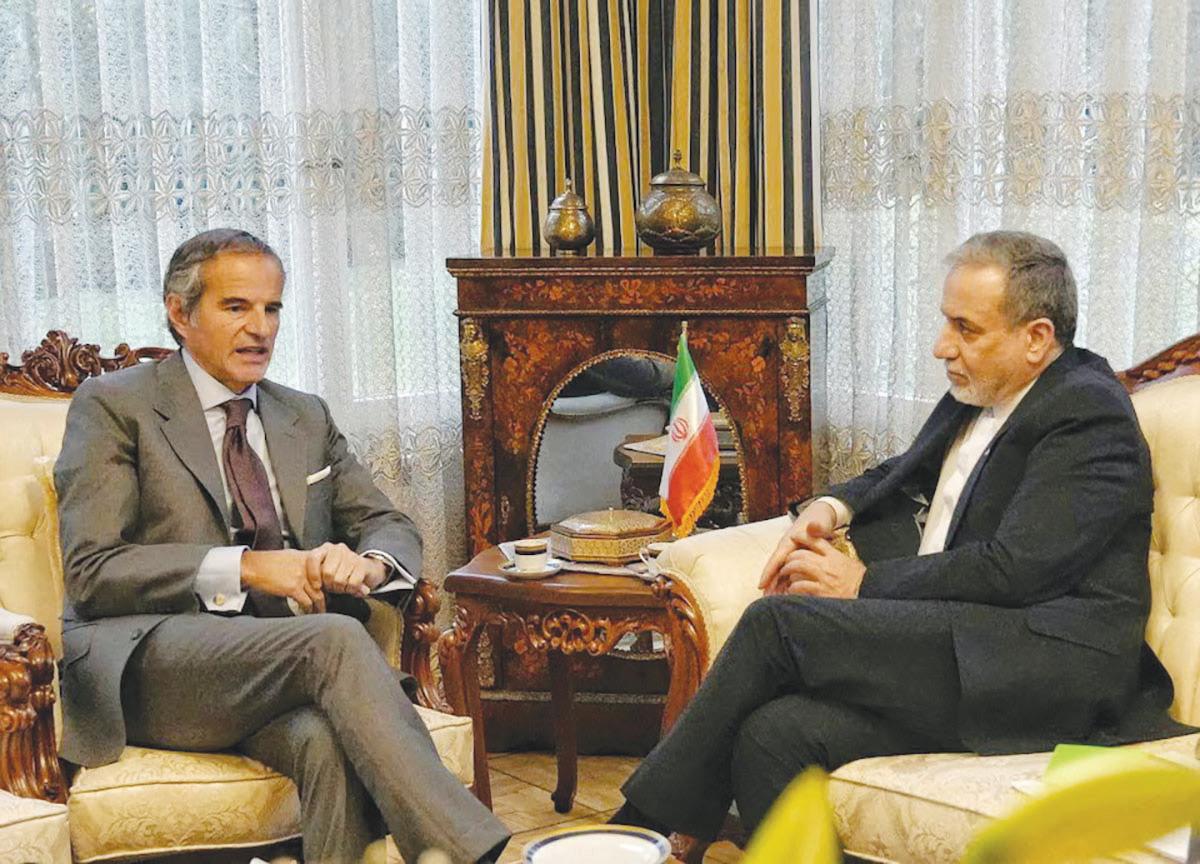
States, who have been appealing for diplomacy to end the dispute.
The US and Iran renewed negotiations earlier this month hoping to
tackle their decades-long dispute over Tehran’s nuclear programme, which Washington, other Western States and Israel all believe is aimed at building nuclear
arms. Tehran denies this.
Tehran says it is only willing to discuss curbs on its nuclear programme in exchange for sanctions relief and won’t accept zero uranium enrichment. It says its missile capabilities are off the table.
Speaking during a visit to Hungary on Monday, US Secretary of State, Marco Rubio said reaching a deal with Tehran would be hard.
Iran’s Foreign Minister Abbas Araqchi said he was in Geneva to “achieve a fair and equitable deal”. Iran has repeatedly threatened to close the Strait of Hormuz in retaliation against any attack, which would choke a fifth of global oil flows and send crude prices sharply higher. (Excerpt from Reuters)
The US Departments of Energy and Defence on Sunday for the first time transported a small nuclear reactor on a cargo plane from California to Utah to demonstrate the potential to quickly deploy nuclear power for military and civilian use.
The agencies partnered with California-based Valar Atomics to fly one of the company s Ward microreactors on a C-17 aircraft without nuclear fuel to Hill Air Force Base in Utah.
Energy Secretary Chris Wright and Under Secretary of Defence for Acquisition
and Sustainment Michael Duffey were on the C-17 flight with the reactor and its components, and hailed the event as a breakthrough for US nuclear energy and military logistics.
This gets us closer to deploy nuclear power when and where it is needed to give our nation s warfighters the tools to win in battle, Duffey said.
President Donald Trump’s Administration sees small nuclear reactors as one of several ways to expand US energy production.
(Excerpt from Reuters)
The Kremlin on Monday flatly rejected accusations from five European countries that the Russian State had killed Alexei Navalny two years ago using toxin from poison dart frogs, but his widow said the truth had finally been proven.
Navalny, President Vladimir Putin’s most prominent domestic critic, died on February 16, 2024, in the “Polar Wolf” penal colony north of the Arctic Circle about 1900 kilometres (1200 miles) northeast of Moscow. He was 47.
His death, which the
Russian state said was from natural causes, occurred a month before Putin was re-elected for a fifth term in a landslide vote which Western nations said was neither free nor fair due to censorship and a crackdown on opponents.
Britain, France, Germany, Sweden and the Netherlands said on Saturday that analyses of samples from Navalny’s body had “conclusively” confirmed the presence of epibatidine, a toxin found in poison dart frogs in South America and not found naturally in Russia. (Excerpt from Reuters)
FDuvall, the son of a Navy admiral and an amateur actress, grew up in Annapolis, Maryland. After graduating from Principia College in Illinois and serving in the US Army, he moved to New York, where he roomed with Dustin Hoffman and befriended Gene Hackman when the three were struggling acting students.
After working on a variety of television shows, Duvall made a strong impression even in small roles, such as his first movie part as the mysterious recluse Boo Radley in “To Kill a Mockingbird.”
(Excerpt from Reuters)
Duvall played forceful leaders such as Lieutenant Colonel Bull Meechum in “The Great Santini” and the title character in “Stalin,” as well as broken-down and fallen characters in “Tender Mercies” and “The Apostle.” He won awards for both types of roles.
rench Police searched the Arab World Institute in Paris on Monday as part of a probe into its former head, ex-Culture Minister Jack Lang, and his links to late convicted US sex offender
Jeffrey Epstein, prosecutors said.
France’s National Financial Prosecutor (PNF) said in a statement that the Arab World Institute was among several locations being raided.
Prosecutors this month opened a preliminary investigation of Lang and his daughter Caroline on suspicion of tax fraud following the release of documents on Epstein in the US.
Lang, who was Culture Minister under late Socialist president Francois Mitterrand, resigned this month from the Arab World Institute, which he had led since 2013. (Excerpt from Reuters)
Drone-fired missiles have hit a market in central Sudan s Kordofan region, killing at least 28 persons and wounding dozens of others, a rights group says.
Emergency Lawyers, a group tracking violence against civilians, said in a
statement on Monday that drones bombed the al-Safiya market in the town of Sodari in North Kordofan state.
The bombing on Sunday occurred when the market was packed with people, exacerbating the humanitarian tragedy , it said, add-
ing that the number of casualties is likely to rise.
The attack occurred when the market was bustling with civilians, including women, children and the elderly, the group said.
The repeated use of drones to target populated areas shows a grave disre-
gard for civilian lives and signals an escalation that threatens what remains of daily life in the province. Therefore, we demand an immediate halt to drone attacks by both sides of the conflict, the statement said.
(Excerpt from Al Jazeera)







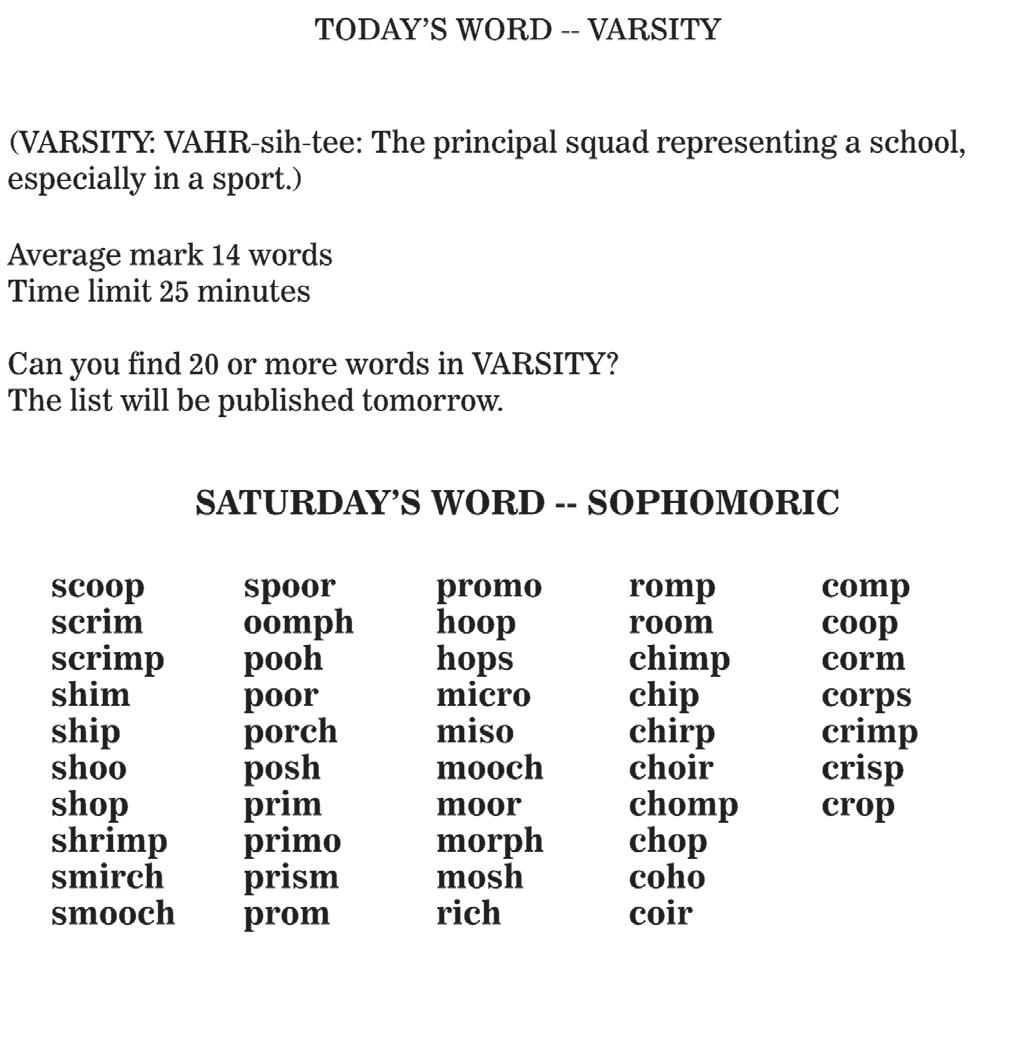
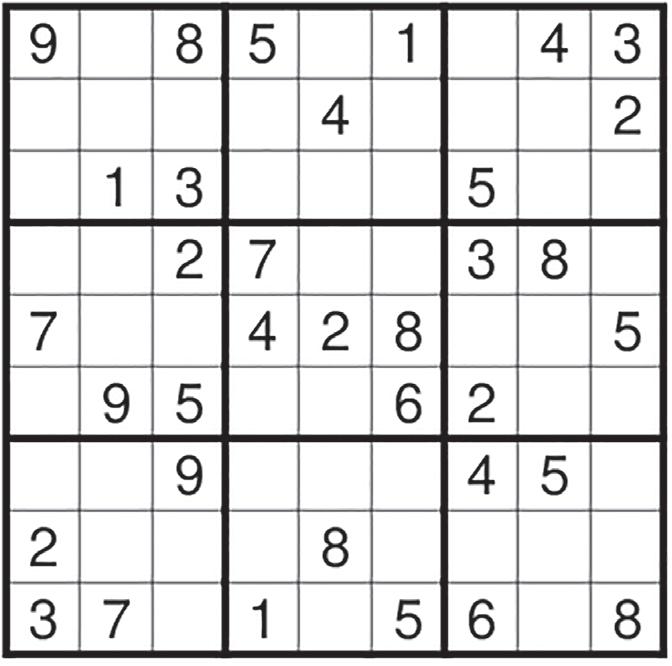





Put enthusiasm behind your plans and initiate the changes that will make your life less stressful. Saying a kind word or offering a helping hand will make you and those you aid feel good.


Explain how you feel or what you expect, and it will help you gain insight into the changes you can implement. Avoid anger while striving to promote peace.


Refuse to let your emotions interfere with your productivity and doing what’s right. Set standards, maintain equality and stick to a reasonable budget.


Explore the possibilities and use your charm and consideration to enlist the help of others. When in doubt, honesty is the best policy. Self-improvement will be well-received.


Plan your actions, live and learn, and refuse to let anger and frustration ruin your day. Focus on what’s possible, do your research and put in the effort and time necessary to reach your goal.


Pay attention to what’s happening around you, and you’ll benefit from what you observe. Take the plunge and say what’s on your mind and what you intend to do next.


Weigh the pros and cons, and proceed with a clear head and a plan in place. Social and networking events are favored if you put your best foot forward, presenting and promoting what you can do.


Less pushiness and more charm will get the job done. It will take thought, work and discipline to achieve what you set out to do. A domestic change that eliminates stress or tension is in your best interest.


Keep working toward a goal that is liberating and offers healthy benefits. Don’t let your emotions call the shots when common sense is what’s necessary. Choose self-improvement.




Take a moment to rethink the past, present and future. When one door closes, another will open. Look for the silver lining, and you will find the perfect fit for your personal or professional pursuits.
Let your interests, work ethics and principles lead the way, and you’ll discover alternatives that speed up your daily routine. If you want or need help, donÕt be afraid to ask for it.


Interacting with professionally like-minded people will help you gain momentum and insight into the best path forward. Put a plan in place and use kindness and consideration to move forward.






Sri Lanka survived an early onslaught to qualify for the 2026 T20 World Cup Super Eights, leaving Australia right at the exit door and hoping for a miracle.
The returning Captain, Mitchell Marsh and the returning-to-runs Travis Head were brutal in taking Australia to 104 in the first 50 legal deliveries, but some spectacular fielding and spin bowling helped Sri Lanka take 10 for 77 off the last 70 balls.
In front of a partying full house in Pallekele, Sri Lanka’s two most prolific batters, Pathum Nissanka and Kusal Mendis, brought out both the axe and paper cuts to slice through the chase. Nissanka, who had earlier dropped Glenn Maxwell and then dismissed him with a stunner, went on to score an unbeaten hundred and take Sri Lanka home with two overs to spare.
In the absence of Matheesha Pathirana, who walked off with a calf injury in his first over, the Sri Lankan spinners contributed six wickets to go with excellent closing from Dushmantha Chameera. Australia’s lead spinner Adam Zampa, among the best T20 spinners of all time, took no wicket and was lucky to go for only 41 in his

four overs.
Marsh, Head stun Sri Lanka
In a proper alpha move, Marsh walked back into the XI at the expense of Australia’s highest run-getter in the tournament – Matt Renshaw – and immediately got down to showing why. Head, who had not scored a T20 fifty since the last Indian Premier League (IPL), matched him shot for shot. It looked like Australia were back to their best after the blip against Zimbabwe.
On top of that, Pathirana pulled up lame after sending down his fourth legal delivery, leaving Sri Lanka scrambling for options. Marsh, usually the powerhouse, also showed finesse in waiting for the ball to arrive and punch-
Australia
(20 ovs maximum)
Mitchell Marsh (c) lbw
b Hemantha 54
Travis Head c PHKD Mendis
b Hemantha 56
Cameron Green st †BKG
Mendis b Wellalage 3
Tim David c Hemantha
b PHKD Mendis 6
Josh Inglis † c Wellalage
b Chameera 27
Glenn Maxwell c Nissanka
b Hemantha 22
Marcus Stoinis c Theekshana
b Chameera 4
Cooper Connolly c Perera
b Theekshana 3
Xavier Bartlett run out
(†BKG Mendis) 0
Nathan Ellis not out 0
Adam Zampa run out
(PHKD Mendis/†BKG Mendis) 1
Extras (nb 1, w 4) 5
Total 20 Ov (RR: 9.05) 181
Fall of wickets: 1-104
(Travis Head, 8.3 ov), 2-110 (Cameron Green, 9.6 ov), 3-116
(Mitchell Marsh, 10.4 ov), 4-130 (Tim David, 12.4 ov), 5-160 (Glenn Maxwell, 16.1 ov), 6-174
(Josh Inglis, 17.5 ov), 7-177 (Cooper Connolly,18.3 ov), 8-180
(Marcus Stoinis, 19.3 ov), 9-180 (Xavier Bartlett, 19.5 ov), 10-181
(Adam Zampa, 19.6 ov)
Bowling O-M-R-W
Dushmantha Chameera 4-0-36-2
Maheesh Theekshana 4-0-37-1
Matheesha Pathirana 0.4-0-3-0
Dasun Shanaka 1.2-0-16-0
Dushan Hemantha 4-0-37-3
Dunith Wellalage 4-0-33-1
Kamindu Mendis 2-0-19-1
Sri Lanka (T: 182 runs from 20 ovs)
Pathum Nissanka not out 100
Kusal Perera c Ellis b Stoinis 1
Kusal Mendis † c Connolly b Stoinis 51
Pavan Rathnayake not out 28
Extras (w 4) 4
Total 18 Ov (RR: 10.22) 184/2
Did not bat: Dasun Shanaka (c), Kamindu Mendis, Dunith Wellalage, Dushan Hemantha, Dushmantha Chameera, Maheesh Theekshana, Matheesha Pathirana Fall of wickets: 1-8 (Kusal Perera, 1.2 ov), 2-105 (Kusal Mendis, 12.2 ov)
Bowling O-M-R-W Xavier Bartlett 2-0-22-0
Marcus Stoinis 4-0-46-2
Nathan Ellis 3-0-32-0
Cooper Connolly 3-0-27-0
Adam Zampa 4-0-41-0
Glenn Maxwell 2-0-16-0
ing the spin of Maheesh Theekshana through covers off the back foot for two of five consecutive fours. There was no relief around outside the power play as Head got stuck into legspinner Dushan Hemantha’s first over. Early into the ninth over, the hundred had come up and both imposing batters had reached fifties.

Cameron Green’s wretched tournament continued as he got stuck and then walked past one from Dunith

Hemantha, Wellalage hang in Hemantha, under immense pressure from Head’s hitting, kept tossing the ball up, trying to turn it big, and eventually got one wide of Head’s reach, resulting in a catch at long-off. The ledger was lopsided: 20 runs off eight balls, but the wicket gave Sri Lanka an opening in the door that had seemed shut.
Wellalage for 3 off 7. When Marsh played back to a full ball from Hemantha in the 11th over, Sri Lanka had two open ends to go after. The first ball Josh Inglis got was a ripper, turning from leg and past his bat, but Mendis missed the stumping.
Still, at 127 for 3 in 12 overs, the main death bowler down, three big hitters still unbeaten, Australia held all

the aces.
Everyone chips in Kamindu Mendis, the ambidextrous marvel, took over left-arm spin to get rid of Tim David in the 13th over, caught at long-off. Australia took a breather and then Maxwell started to go in the 15th over, taking 15 off Kamindu. Runrate back over 10.
To make it worse, Nissanka dropped a skier from Maxwell in the 16th. Just when it began to look ugly, Nissanka, at backward point, went more than two metres in the air to intercept a Maxwell reverse sweep off Hemantha.
Chameera rose to the occasion with special death bowling from around the wicket. A sharp bouncer got rid of Inglis; his 27 off 21 since the first-ball reprieve didn’t do much damage.
Theekshana came back from a nightmare power play to bowl the 19th over and deny Marcus Stoinis the strike. He had Cooper Connolly caught off the slog sweep and then bowled three dots at Xavier Bartlett.
Chameera bowled a noball in the last over, but still conceded only four for the wicket of Stoinis off a slower legcutter. Only 21 came in the last four, only six in the last two.
Nissanka, Kusal Mendis dovetail Stoinis opened the bowling with Bartlett and got rid of Kusal Perera in his first over with a change of pace into the pitch, but Australia showed they were not quite adept at bowling slower ones with the new ball. Nissanka took full toll of the pace on the
ball, and did not let Connolly settle when he came on in the fifth over. Sri Lanka scored 61 in the power play, Nissanka dominating the scoring with 38 off 20.
One over of no boundaries outside the power play, and then Zampa reopened the floodgates with two long hops bookending his first over. Mendis hit four fours in two overs of spin to go past Nissanka and be the first one to get to his half-century.
Zampa, Nathan Ellis, and Maxwell bowled overs 10, 11 and 12 without a boundary, and then Stoinis got the wicket of Mendis in the 13th to leave Sri Lanka needing 77 off 47.
Endgame Any hopes Australia might have had of mounting a comeback were dashed instantly. Pavan Rathnayake started with two fours off the first two balls, a check drive above cover and a dab past the diving wicketkeeper. Zampa put together a decent over, but Nissanka ruined it by charging at him and lofting him back over his head.
In the next over, he took apart Stoinis with a backfoot punch down the ground for four and a dismissive pull for a six that sent the already-dancing crowd into raptures. Nissanka was 72 off 41 when Sri Lanka needed 41 off the last five, but he decided to have himself a party after Rathnayake survived two close calls against Maxwell. He pumped Ellis, who didn’t bowl a lot of slower balls, for two sixes before ending Zampa’s horror night with 15 off the 18th over. (ESPNcricinfo)

Athe first team to win the men’s T20 World Cup three times. Italy ran them far too close for comfort at Eden Gardens, eventually bowled out for 178 in pursuit of 203. They were 1 for 2 after Jofra Archer’s first over, but destructive innings from their Australian-born allrounders Ben Manenti and Grant Stewart – who hit 11 sixes between them – made England sweat throughout the second innings.
For the second time
off the final five overs, leav ing Italy with an imposing target to chase. It looked miles off at 22 for 3, but Manenti and Justin Mosca added 92 for the fourth wicket to keep Italy in the hunt. Both men fell in quick succession during a collapse of 4 for 24 through the middle overs, but Stewart’s late blows –including consecutive sixes during a 21-run Adil Rashid over – took the game deep. That left Italy needing 30 off the final two overs – an equation that looked possible if Stewart could

innings at this World Cup –while hitting Jacks for 4, 6, 6, 4. But when he picked out long-on attempting a fifth boundary in a row, Italy’s

the world, but Buttler and Phil Salt have both been short of their best. Here, Buttler miscued to mid-off for the second time in three days and Salt picked out deep square leg after a brisk start, leaving England’s openers with 114 runs between them across eight innings.
Jacob Bethell got stuck after the power play before
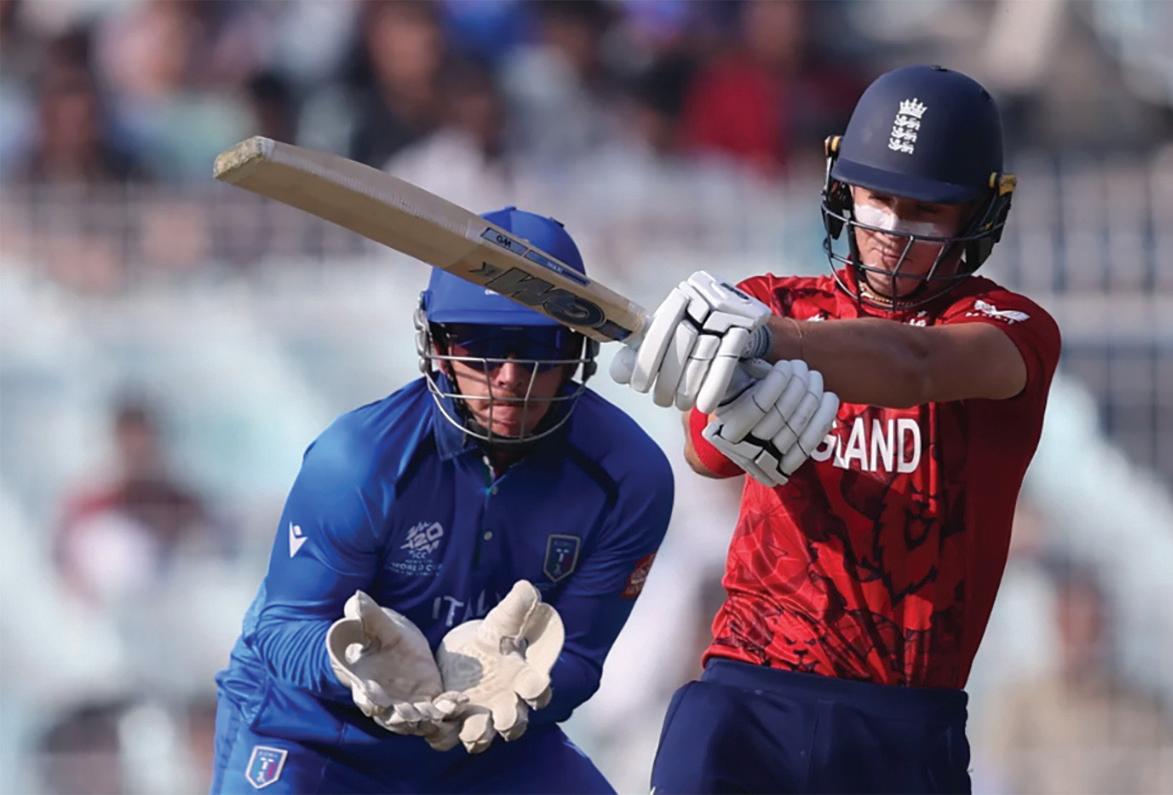
hopes faded.
Mosca never quite got away during his 43 off 34, and Curran’s double-strike in the 16th over seemed to have put the game to bed. Stewart launched Archer over long-off then top-edged him for six before trading blows with Jaspreet Singh in Rashid’s final over, but Curran held his nerve to close out England’s win.
Italy chip away England broke through the 200 barrier in a T20 World Cup match for the first time in almost a decade, but their innings was anything but convincing as they wobbled their way to 114 for 5 after 14 overs. Italy’s spinners bowled tightly through the middle overs, and they took wickets at regular intervals thanks to some excellent catching in the deep. There was a compelling case before this tournament that England had the strongest opening partnership in
hauling a slog-sweep to deep backward square for an uncharacteristically-sluggish 23 off 20, before Brook edged JJ Smuts’ left-arm spin behind attempting to hit a third consecutive boundary. When Tom Banton picked out midwicket off a Crishan Kalugamage drag-down, England were struggling at 105 for 5.
Jacks out of the box
Jacks is an opening batter by trade, but has been recast as a number seven since Brook took over as Captain last summer, and continued his impressive form in India. He had 14 off nine balls when a Kalugamage misfield kept him on strike for Manenti’s final two balls, and he belted both for six to get England’s innings moving – much to Manenti’s visible frustration.
Curran followed suit with a brace of leg-side launches off Kalugamage
before picking out cover, but Jacks pressed on, bringing up 50 with the second of a
the last T20 World Cup as they changed the balance of their side, but runs no such

pair of sixes in Stewart’s final over. It was only the second time an England number seven has scored a T20I half-century.
Jacks was dropped midway through England’s run to the semi-finals at
risk this time around. He is England’s second-highest run-scorer at the tournament, behind Bethell, while only Shimron Hetmyer and Ishan Kishan (10 each) have hit more than his nine sixes. (ESPNcricinfo)
Guyana’s senior men’s basketball team will host their counterparts from Grenada in a threematch series from March 6 to March 8 at the Cliff Anderson Sports Hall, as preparations intensify for upcoming regional competitions.
According to a release from the Guyana Basketball Federation (GBF), the engagement with the Grenada national basketball team follows Guyana’s recent participation in the Nations Cup in Suriname, where the Guyana men’s national basketball team finished behind the host nation, but ahead of French Guiana in the tri-nation series held in Paramaribo.
The upcoming home series forms part of what the Federation describes as a packed calendar of activities for 2026, with a clear focus on preparing the men’s programme for this year’s FIBA Men’s Caribbean Championship.
GBF President Michael Singh noted that consistent regional exposure was critical to the team’s development.
Singh stated that the series would provide the men’s side with much-needed competition as they continue to build cohesion and sharpen their execution ahead of the regional tournament, noting that early preparation is essential to achieving meaningful results on the Caribbean stage.
He further highlighted the importance of the Federation’s broader programme, explaining that the GBF is working deliberately to create balance between domestic and international commitments, while also ensuring equal attention is given to both the


men’s and women’s game.
Singh pointed out that hosting international opponents in Guyana not only benefited player development but also helped to stimulate local interest in basketball, providing fans with opportunities to witness high-level regional competition firsthand.
The GBF President also disclosed that preparations for the Grenada tour are already
underway, with the Federation expected to announce additional plans in the coming weeks for both the men’s and women’s national teams as part of its long-term strategic agenda.
The March series is anticipated to serve as a key benchmark for the national programme, as Guyana continues its push toward regional competitiveness and sustained growth in the sport.
In a major boost for the incumbent leadership of the Guyana Motor Racing and Sports Club (GMR&SC), a powerhouse group of Surinamese drag racers has officially endorsed Mahendra “Raj” Boodhoo for re-election as President.
The endorsement, issued on February 14, 2026, marks a significant moment of crossborder sports diplomacy, as top competitors from the neighbouring republic signalled their desire for continuity in Guyana’s motorsport administration.
The joint statement was signed by prominent figures in Suriname drag racing, including Michael Namchand, Tony Namchand, and Raymond John. The group noted that their frequent visits to the drag strips in Guyana have made the country a “second home” for their teams.
“The passion of the Guyanese fans is unmatched, and we have always enjoyed the thrill of competing on your soil,” the racers stated, highlighting the deep-rooted synergy between the two nations’ racing fraternities.
The core of the endorsement rests on the infrastructural progress made under the current

Raymond
executive. The Surinamese contingent specifically praised Boodhoo’s commitment to the development of a new international-standard drag strip, describing the project as a “game-changer” for the sport.
The veteran racers emphasised that modern facilities were no longer a luxury but a necessity for the sport’s evolution in the Caribbean.
“We aren’t just looking for a place to race; we are looking for a facility that allows us to push our machines to the absolute limit safely and professionally,” the statement read.
The endorsement concludes
The Kitty Square Mall National Under16 Rapid Chess Championships, hosted by the Guyana Chess Federation (GCF), held on Sunday, February 15, 2026, at the Christ Church Secondary School, saw a long day of competitive, tactical moves and excellent play.
Candidate Master (CM) Sachin Pitamber successfully retained his title, while Kataleya Sam emerged as the new U-16 girls’ champion.
Thirty-four boys and nineteen girls competed for top honours in the one-day Championships.
In the Open Category, CM Pitamber delivered an outstanding unbeaten

young Sam carried the momentum from her recent U-14 championship victory into the competition. She demonstrated a remarkable blend of readiness, composure, calm, skill, and mental power against her opponents to finish
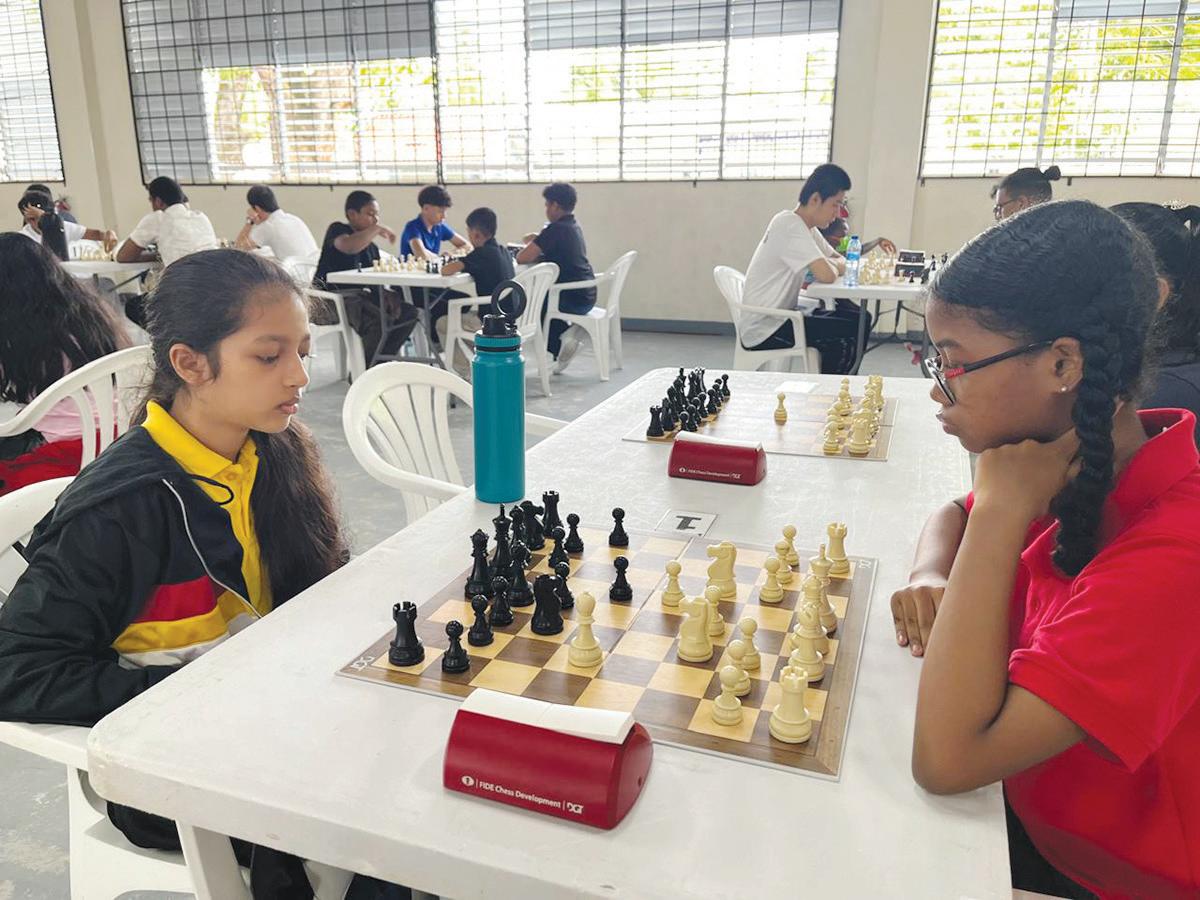
performance to win with a perfect seven points after seven rounds of fast-paced competition. Building on his momentum from recent Grand Prix successes, he displayed remarkable consistency, composure, and strategic gameplay throughout the tournament. Drawing on those experiences, he confidently defended his title as his opponents struggled to keep pace with his sharp preparation and accurate endgame techniques.
In second place was Aquilani Swaminadha, who finished with six points, demonstrating his growing skills with notable wins against Omar Shariff in the fifth round and Alexander Zhang in the sixth round. Swaminadha s only loss was against CM Pitamber in the third round.
In third place was the prolific Zhang, who finished with five points. He demonstrated his years of experience in chess, despite losses in the fourth and sixth rounds against Pitamber and Swaminadha, respectively.
with a call for the GMR&SC membership to maintain the club’s current trajectory. The racers expressed a clear desire to compete on the new strip under Boodhoo’s “continued leadership”, citing his “drive to take Guyana’s motorsport scene further than ever before”.
As the GMR&SC elections approaches, this highprofile support from regional stakeholders adds a significant dimension to the campaign, highlighting the impact of Guyanese motorsport policy on the wider Caribbean racing community.
Abel Fernandez Ciria, coming off a successful U-14 tournament, also finished with five points. However, due to the tie-break rules, he placed fourth. His losses came in the fourth and fifth rounds against Arush Ramnarine and Zhang, respectively.
Rounding out the top five finishers was Nicholas Zhang, who finished with five points, also due to the tie-breaker calculation. No stranger to the chessboard, he competed skilfully and fiercely despite losing in the third round to his sibling, Alexander, and the sixth round to Pitamber.
In the girls category,
with six points, having lost her final round against Rebha Lachhman. Sam s overall performance was enough to secure her the title.
In second place was Parnita Kishun, who finished with a strong five points. Despite setbacks in the third and sixth rounds, she held her own with the poise of being an experienced player, drawing on her experiences to navigate the field and finish as the runner-up.
Emma John also concluded the tournament with five points, securing third place after the tie-breaker rules were applied. The 2025 U-14 girls champion displayed excellent technical skills throughout the day, maintaining a high level of play despite tough losses to Sam in the fourth round and Kishun in the sixth round.
Rebha Lachhman finished in fourth place with five points due to the tiebreaker rules. Lachhman, no stranger to the competitive arena, played consistently throughout the tournament despite losing in the second and fourth rounds. In the final round, she played an unconventional but brilliant game, which secured her a victory against the new U-16 female champion.
Securing fifth place on a tie-breaker, Chelsea Harrison finished with a solid five points. Despite setbacks in the third and fifth rounds, she remained a formidable competitor, displaying a gritty and consistent style of play in the competition.
In addition to the main prizes, special prizes were awarded to the top performers in the younger age groups. Aquilani Swaminadha and Kataleya Sam were recognised
as the Best U-14 players. In the U-12 category, Javier Devanand and Divya Persaud, the current U-12 Girls Champion, earned the honours as the top players, while Mark Defreitas and Malia Thompson took home the best U-10 prizes, respectively.
Notable performers in the open category included Aiden and Arian Tinnie, Jacob McDonald, and Shariff. Meanwhile, the girls category saw Alesa Williams, Divya Persaud, Axela Vieira, Varsha Pooran, and Andrina Matthews secure their spots in the top 10.
Prizes were presented to the players during a simple prize-giving ceremony by Sabeita Hardeo, the proprietor of Kitty Square Mall. Gratitude was extended to Chief Arbiters John Lee and the assistant arbiters Kim Shing Chong, Ethan Lee, Keron Sandiford, Kishan Puran, Italy Ton-Chung, CM Taffin Khan, and Joshua Gopaul, who worked together to ensure that all games were played in accordance with the rules and regulations through their collaborative hard work and supervision.
The Chess Federation also expressed its gratitude to the sponsor, Kitty Square Mall, for being one of the GCF s trusted sponsors and always coming on board in helping with the development of chess in Guyana.
In addition, thanks were also extended to Christ Church Secondary School, for providing the venue. For more information on the Guyana Chess Federation or on how to become a chess club member, interested persons can visit the official website at guyanachess.gy.

There were no surprises in store at the Queen’s College Ground on Sunday afternoon as the University of Guyana (UG) Turkeyen Campus and the Government Technical Institute (GTI) went twofor-two with victories in the inaugural MODEC Tertiary Education Football Tournament.
In the first match of the double-header, the University of Guyana ran riot against the Guyana Industrial Training Centre (GITC), in an 18-0 schooling. Sherwin Evans led the way with six goals in the 39th, 48th, 52nd, 59th, 65th and 69th minutes followed by the next best marksman, Ronaldo Sobers with four goals in the 41st, 83rd, 88th and 90th.
Earlier, Josiah King had broken the ice early in the seventh minute, while Jaleei Alcindor doubled the lead by the sixth minute. Before GITC could blink, Romeo Bradford extended UG’s lead two minutes later, going on to complete his
brace in the 40th minute.
Also adding their names to the scoresheet for UG were Deandre Anderson (10th), Kerron Spencer (62nd, 89th) and Montell Mc Almont (80th).
Later on, a team effort from the Government Technical Institute (GTI) resulted in a 5-2 victory over Texila American University. Texila got ahead first as an early brace off the boots of Adolf Adietbella in the 6th and 11th minutes shook up GTI’s defence.
However, Damario Webb pulled one back in the 13th minute and a successful penalty shot taken by Kevin Davis in the 30th, levelled the playing field once more. Thereafter, it was GTI’s game with David Augusta (32nd), Alton Fraser (39th) and Keron Semour (61st) pitching in with one goal each for the win.
The MODEC Tertiary Education action will continue today, Tuesday, February 17 in Essequibo and Berbice. At the Iman Bacchus Ground in
Essequibo, hosts Essequibo Technical Institute (ETI) and the Leonora Technical and Vocational Training Centre (LT&VTC) will meet for their return match at 11:00h. Meanwhile at the Scotts
he West Indies
Ting International Cricket Council (ICC) Men’s T20 World Cup 2026 with a com manding
Ground in New Amsterdam, Berbice, the University of Guyana Tain Campus will look to upstage Upper Corentyne Industrial Training Centre (UCITC) from 16:00h; that match will be followed by a clash
“GT3
between New Amsterdam Technical Institute (NATI) and Port Mourant Technical Institute (PMTI), scheduled for 18:00h.
The participating teams include University of Guyana Turkeyen,
UG Tain Campus; Cyril Potter College of Education (CPCE); Government Technical Institute (GTI); Linden Technical Institute (LTI); Port Mourant Technical Institute (PMTI); New Amsterdam Technical Institute (NATI); Mahaicony Technical Institute (MTI); Essequibo Technical Institute (ETI); Upper Corentyne Technical Training Centre (UCTTC); Texila American University (TAU); Guyana School of Agriculture (GSA); Leonora Technical and Vocational Training Centre (LT&VTC) and the Guyana Industrial Training Centre (GITC).
The teams in the tournament will be competing for a $300,000 grand prize to be given in kind for a school project. The second-, third- and fourth-place finishers will pocket $200,000, $100,000 and $50,000 for the same purpose. The tournament is also being supported by MACORP, Demerara Mutual, and Banks DIH under its Powerade brand.
can fill a hole. I wouldn’t necessarily call it a hole,
son in the squad has something that they ute to team wins,” he
served special praise for

nine-wick et victory over Nepal national cricket team on Sunday, delivering a clinical performance that underlined their growing confidence in the tournament.
Led by Captain Shai Hope, the Caribbean side showcased both depth and balance as they dismantled Nepal with efficiency. The result not only secured qualification, but also reinforced their status as serious contenders for the title.
Speaking after the match, Hope praised the strength and versatility of his squad.
“Firstly, that goes to show how strong our squad is. When you call upon anyone in the team, you have someone who
er Matthew Forde, whose impact continues to grow since returning from injury during the tour of New Zealand.
Hope gushed, “Matthew has been incredible for us in the powerplay in the last few series, all the way from New Zealand when he came back from that injury. So, it’s great to have him back. He’s been bowling really well and then you can see what he can do in the back end with the bat as well. So, he’s a very good all-round player and is someone that could be a very impactful player in any team.”
Forde’s contributions with both ball and bat once again highlighted the all-round depth that has become a hallmark of the
West Indies’ campaign.
While qualification for the Super Eights brings satisfaction, Hope made it clear that the mission was far from complete.
“That was a great feeling. That’s what we set out to do from the jump. When we got on the plane to come here, that was our first step. We all want to lift the trophy, but there’s a process to get there,” the Windies T20 skipper explained.
The Captain emphasised the importance of continuous improvement as the tournament intensifies.
“Playing our best cricket; hopefully, we can continue to peak and keep growing as a strong unit in all departments. And when the time comes, those crunch times come, we can always seize those moments and ensure we’re on top.”
The West Indies will close out their group-stage campaign against Italy national cricket team on Thursday, February 19, from 01:30h local time. With a Super-Eight berth already secured, the fixture offers another opportunity for West Indies to fine-tune combinations and build momentum ahead of the knockout phase.
If Sunday’s performance is anything to go by, the Caribbean side appears to be hitting its stride at just the right time.
As the Guyana Motor Racing & Sports Club (GMR&SC) prepares for its Annual General Meeting on February 21, the conversation has shifted from the track to the economy.
Local business leaders are now publicly endorsing incumbent President Mahendra “Raj” Boodhoo, citing his leadership as the catalyst for a new era of “sports tourism” in Guyana.
Enzo Matthews, a prominent figure in the local business and hospitality community, has come forward to highlight the tangible financial impact of Boodhoo’s international strategy.
Matthews reflected on the success of the GMR&SC’s launch of the GT3 Series last November, noting that even a small taste of international-spec racing yielded massive returns for his hospitality ventures.
“I had a hospitality park for the last November race meet,” Matthews explained. “That was just two GT3 cars on show that day and it was

a success for my hospitality business. So, imagine the scale when we have 15+ GT3 cars at South Dakota this July for the GT Challenge de las Américas.”
According to Matthews, the current momentum is entirely credited to the “big and wider vision” of Boodhoo. He argues that the club’s current trajectory has set the bar so high that it has effectively redefined what is possible for Guyanese motorsport.
“No one can come close to this vision right now,” Matthews stated. “If you want to top what is happening, you’d practically have to bring Formula 1 to Guyana. This sport has a golden opportunity to grow, and the tourism parts lead to direct business for various sectors, especially the hospitality sector.”
The endorsement comes at a time when the GMR&SC is positioning the South Dakota Circuit as a regional hub for high-end racing. With the GT Challenge de las Américas scheduled for July 11-12, the club anticipates a massive influx of international teams and spectators, providing a much-needed boost to hotels, transportation services, and local vendors.
“I would like to throw my support behind Mahendra Boodhoo for re-election,” Matthews concluded. “We need to ensure this vision continues for the benefit of the sport and the country’s economy.”



The Republic Bank Caribbean Premier League (CPL) on Monday confirm that an agreement has been reached for the tournament to return to Jamaica in 2026, marking a highly-anticipated homecoming for CPL cricket on the island.
This is on the heels of Jamaican Minister of Culture, Gender, Entertainment and Sport, Olivia “Babsy” Grange revealing that a Jamaican franchise will make its return to the regional showpiece, via a social media post a few days prior.
As such, the CPL confirmed that the 2026 season will see the return of a Jamaica-based franchise, with four matches scheduled to be played at the iconic Sabina Park – one of the most historic and celebrated cricket venues in the world.
This announcement follows productive and collaborative discussions with the Government of Jamaica through the Ministry of Culture, Gender, Entertainment and Sport and the Ministry of Tourism, resulting in CPL matches being staged in Jamaica for the first time since 2019.
CPL Chief Executive Officer (CEO) Pete Russell welcomed the agreement and highlighted its significance for the tournament.
“We are absolutely thrilled to be bringing the CPL back to Jamaica in 2026. Jamaica has a rich cricketing heritage and an unmistakable energy that makes it one of the most special destinations in the Region. The return of a Jamaican franchise and matches at Sabina
Park is something fans have been calling for, and we’re delighted to be working closely with the Government of Jamaica to make this happen.”
The return of the CPL is expected to deliver a substantial economic boost to Jamaica, with significant benefits across the tourism, hospitality, and transportation sectors and for small and medium-sized enterprises. The tournament will attract thousands of visiting fans, players, officials, and international media, driving increased hotel occupancy, local spending, and employment opportunities.
Beyond its economic impact, CPL’s return will provide a powerful platform to showcase Jamaica to a vast global audience. The tournament’s 2025 combined digital and broadcast viewership surpassed one billion for the second consecutive season, offering unparal-
leled international exposure for Jamaica’s culture, vibrancy, and sporting heritage.
The reintroduction of a Jamaican franchise also reinforces the island’s deep cricketing legacy and its ongoing commitment to elite sport and entertainment. It creates new pathways for local talent, strengthens regional sporting ties, and enhances Jamaica’s reputation as a premier host destination for worldclass events.
Minister Grange welcomed the return of the CPL and its wider impact on the country.
“The Government of Jamaica is pleased to welcome the Caribbean Premier League back to our shores. This event goes beyond cricket – it supports economic growth, promotes our culture on a global stage, and inspires our young people through sport. We look forward to hosting players, fans, and partners in 2026 and delivering an unforgettable CPL experience rooted in Jamaican excellence.”
Jamaican Tourism Minister Edmund Bartlett said, “The return of CPL to Kingston represents more than just worldclass sporting ac-

tion — it signals a renewed wave of energy for our urban tourism strategy. We are committed to showcasing fresh experiences, vibrant city offerings, and even more compelling reasons for visitors to choose Jamaica as their destination.”
The Government of Jamaica looks forward to welcoming the CPL family back to Jamaica in 2026, celebrating cricket, culture, and community.
Cricket West Indies (CWI) President, Dr Kishore Shallow, said: “Everyone at Cricket West Indies is delighted to see CPL cricket returning to Jamaica. The island holds a special place in Caribbean cricket, having produced some of the finest players in our history and generations of passionate supporters who continue to inspire the game. The return of a franchise to Sabina Park, one of the Region’s most iconic venues, is an important moment not only for the tournament but for cricket across the Caribbean, and we look forward to seeing the new team entertain fans and strengthen the bond between the players and the people of Jamaica.”