…warns of threat to Guyana-Suriname trade …fees could spark price
Pres Ali positions Guyana as strategic hub for Qatar amid Middle East conflict
M&CC gives businesses
up, comply with
Police seize ‘Molly’, ganja on Essequibo Coast Guyana ranks among Caribbean’s best in maritime security competition
Workplace safety non-negotiable – Labour Minister …as “Putting Safety First” national campaign launches Passenger gives birth midair during CAL flight to New York
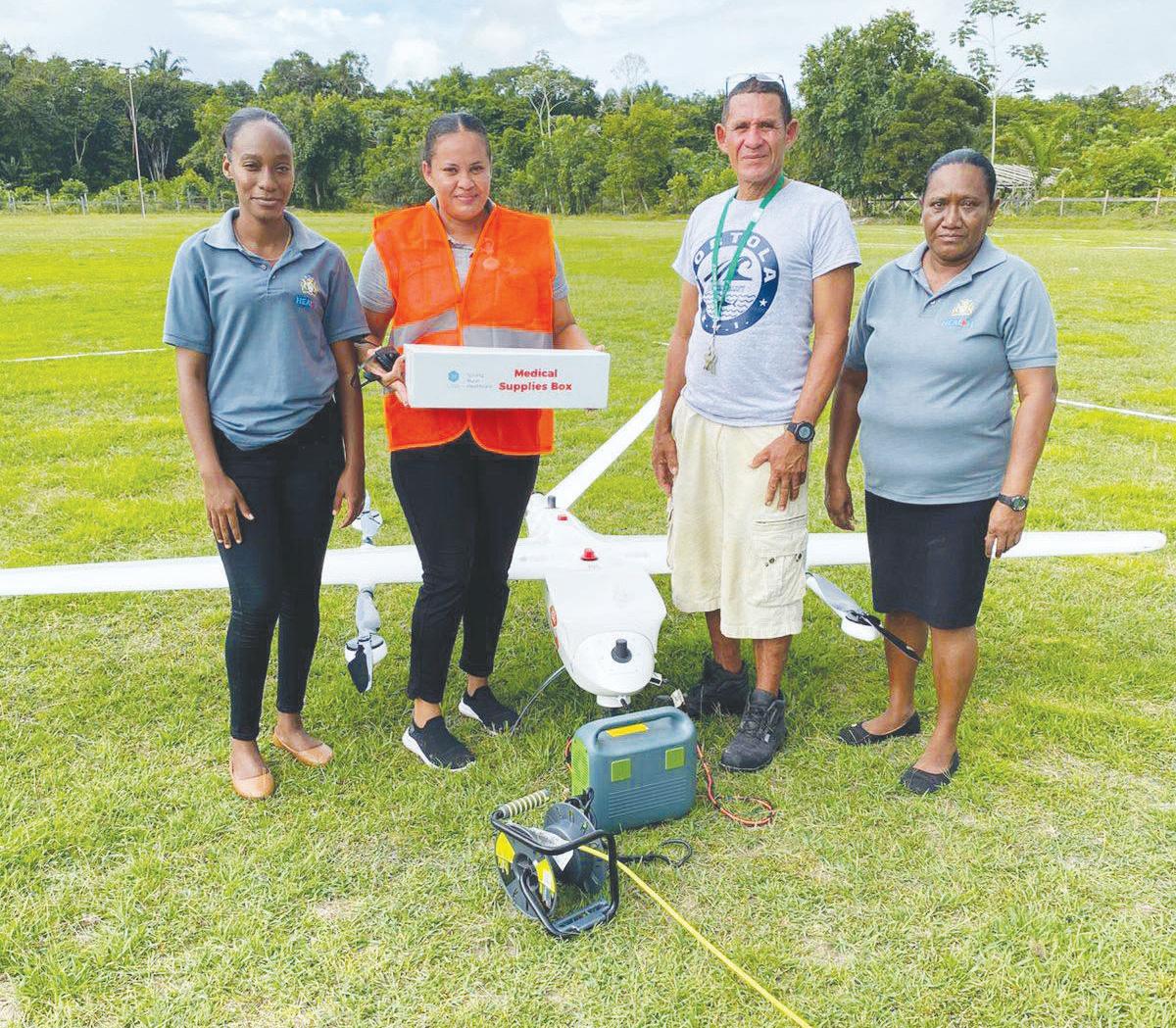
Drones to be deployed soon to boost healthcare delivery in Reg 9 – Pres Ali
Within months, the Government will be deploying drones to enhance healthcare delivery across Region Nine (Upper Takutu-Essequibo). This was announced by President Dr Irfaan Ali over the weekend as he addressed residents during the commissioning ceremony of the new Karasabai airstrip. “We have already upgraded your clinic here into a full medical facility. In a few months, you will see drones leaving Lethem and landing on your airstrip if you need emergency blood or emergency medical supply,” he explained. “That is where we’re taking the country,” he added.
Earlier this year, the Health Ministry started testing drone delivery systems in Wiruni, Ituni and Malali - remote communities in Region 10 (Upper DemeraraBerbice). Those test flights were designed to assess how drone technology can support healthcare delivery, particularly in remote and hard-to-reach areas, by enabling faster and more reliable transportation of medical supplies.
Regional Health Officer (RHO), Dr Gregory Harris, had welcomed the initiative, noting that it presents a prac-
tical and efficient method for ensuring essential medical supplies reach communities in a timely manner, especially where traditional access can be challenging. The use of drones in healthcare was first announced by President Ali in August 2025. He had explained that this innovative programme is set to be one of the first of its kind in the Caribbean and puts Guyana at the forefront of tech-integrated healthcare in the region.
Increased surgeries, improved access
Meanwhile, addressing Karasabai residents, President Ali detailed how his administration’s investments in the region’s healthcare systems are delivering real results for citizens of Guyana and neighbouring Brazil. “In 2020, because you did not have access to health centres, health clinics, and specialised services, only 25,000 persons were served in 2019. At the end of 2025, because of the investment
we have made in this region, we have delivered health service to 62,000 persons,” the Head of State highlighted. He said this was made possible by the Government’s investment in some 22 all-terrain vehicles (ATVs), 13 ambulances, five SUVs, four minibuses, as well as canters, motorbikes, boats and engines to increase access to healthcare across the region. Training of healthcare professionals was also enhanced under his leadership, President Ali noted. “Between the period 2020 and 2025, whether in dental service, community health workers, nursing assistants, medical lab technicians, the hybrid professional nursing, nursing assistants, physician training, all these training, we, in the last five years, have trained more than 500 of your children, your citizens in Region Nine in health care services. These are the facts,” he posited. The President said a major feat for healthcare in the region is its ability to conduct surgeries at local health institutions, reducing the need for citizens to be medevacked to the capital city for care.
“In 2020, in Lethem, we did approximately 189 surgeries, most had to be medevacked to Georgetown.
At the end of 2025, we did 987 surgeries here at Lethem in Region Nine. And guess what? Our service has become so good that almost 400 persons from Brazil also benefited here in Guyana,” President Ali remarked. He added that between 2015 and 2020, in Aishalton, another community in Region Nine, zero surgeries were performed. In the first quarter of 2025, a total of 15 surgeries were conducted in Aishalton. The President said similar success stories are occurring in other villages, including Karasabai. “For the first time in Karasabai, in the second quarter of 2025, we had 11 surgeries right here in Karasabai,” he noted. In providing a further breakdown, President Ali zoned in on the area of ophthalmology. He said between 2015 and 2019, there were no ophthalmology surgeries in the region whereas in 2022, 37 were conducted. This number increase over the years with 43 conducted in 2023 and 117 in 2024.
The President also outlined that under his Government, the availability of drugs in the region was significantly increased. “Between 2015 to 2019, under the APNU/AFC (A Partnership for National
Unity/Alliance For Change) Government, availability of drugs in this region was 45 per cent. Today, in this region, we have more than 90 per cent availability of drugs,” he noted. In fact, he contended that “people used to die because they did not have access to vaccines”. Today, in addition to having more vaccination sites in the region, the Government has also invested in cold storage units for the doses. President Ali highlighted that his Government also invested in oxygen generation in the region, another boost for Region Nine healthcare. “Between 2015 to 2019, we had zero capacity, zero cylinder of oxygen could be produced here. My friends, at the end of 2024, 1,050 small cylinders and 2,100 large cylinders of oxygen was produced right here in Region Nine,” he outlined. According to President Ali, healthcare was also boosted through the Government’s investment in telemedicine. A total of 130 sites have been set up across the country and the Ministry of Health has already said it plans to develop 50 additional locations in 2026 as part of the Government’s continued investment in modernising and strengthening healthcare delivery across Guyana.
File photo: Testing drone delivery systems in Wiruni in Region 10 (Upper Demerara-Berbice) in January (Health Ministry photo)
BRIDGE OPENING
The Berbice Bridge will be closed to vehicular traffic on: Tuesday, April 7 –
06:35h–08:05h and Wednesday, April 8 – 07:10h–08:40h.
FERRY SCHEDULE
Parika and Supenaam departure times – 05:00h, 10:00h-12:00h, 16:00h, 18:30h daily.
WEATHER TODAY
Sunny conditions are expected throughout the day interrupted by light rain showers in the earlyafternoon hours. Clear to partly-cloudy skies followed by light rain showers are expected at night. Temperatures are expected to range between 23 degrees Celsius and 30 degrees Celsius.
Winds: East North-Easterly to Easterly between 3.58 metres and 5.81 metres.
High Tide: 07:07h and 19:37h reaching maximum heights of 2.50 metres and 2.30 metres.
Low Tide: 13:10h reaching a minimum height of 0.74 metre.
Suriname imposed Corentyne River fees “most regrettable” – Finance Minister …warns of
threat to Guyana-Suriname trade
Finance Minister Dr Ashni Singh has described Suriname’s decision to impose fees for the use of the Corentyne River as “most unfortunate and most regrettable,” warning that the move could stymie trade and undermine long-standing economic relations between the two countries, even as Guyana moves to address the issue through diplomatic channels.
Speaking with this publication on the issue on Sunday, the finance minister stressed that the imposition of such fees runs counter to the interests of both countries, warning that any action that restricts movement along the Corentyne River risks slowing trade and weakening the economic relationship between Guyana and Suriname. He maintained that the development is “not in anybody’s interest,” noting that both nations stand to benefit far more from deeper cooperation than from measures that could hinder commercial activity.
President Dr Irfaan Ali recently disclosed that charges imposed by Suriname for the use of the Corentyne River were affecting Guyanese operators, particularly in the timber and quarry sectors. The Head of State questioned the fairness of the arrangement, pointing to the long-standing access enjoyed by Surinamese businesses operating in Guyana, and stressed the importance of ensuring that cross-border trade remains predictable and equitable.
The president reiterated that Guyana’s vision for relations with Suriname is rooted in deeper economic integration, describing the two countries as a natural extension of each other’s economic space.
Seamless cross-border trade
Meanwhile, Minister Singh explained that the goal is to allow seamless cross-border trade, where businesspeople can move goods and services freely, pointing to scenarios where farmers can transport produce to markets across the river, and contractors can source building materials from either country depending on cost and availability, as part of a broader push to strengthen regional cooperation and expand opportunities for both populations.
Against that backdrop, the finance minister pointed out that Guyana has been actively pursuing closer economic ties with Suriname, including discussions on the construction of a bridge
across the Corentyne River to facilitate the movement of goods and people. He noted that such initiatives are intended to unlock economic opportunities and deepen regional integration, making the imposition of new charges particularly disappointing as they run counter to the very objective of fostering seamless cross-border trade.
The Minister further emphasised that the matter is being addressed at the highest level of Government, with President Ali leading efforts to engage Surinamese authorities with a view to resolving the issue. He reiterated Guyana’s commitment to working closely with all parties involved, underscoring that the Government remains focused on achieving a solution through dialogue and established diplomatic channels.
Removing barriers to trade
He further underscored that Guyana’s approach to regional cooperation is grounded in removing barriers to trade and creating opportunities for businesses to operate seamlessly across borders. The Minister pointed out that the vision is one where a farmer or vendor can transport produce to markets on either side of the river, or where contractors can source materials from whichever country offers the most competitive prices, noting that such ease of movement is central to strengthening economic ties. Against this backdrop, he said the
Government is “very disappointed” with the latest development but remains committed, at the highest level, to working closely with all parties involved to resolve the matter.
Private sector bodies have also weighed in on the issue, with differing tones on how it should be addressed. The Suriname-Guyana Chamber of Commerce (SGCC) has urged continued dialogue between the two countries, calling for a “timely, amicable and mutually beneficial resolution” to avoid uncertainty in cross-border trade.
Vice President of the Upper Corentyne Chamber of Commerce and Industry, Mohamed Jaichand, warned that the charges could significantly increase the cost of transporting materials such as sand, stone and lumber, with direct implications for riverain communities.
The Berbice Chamber of
Commerce and Development Association (BCCDA) has described the move as a “significant escalation,” cautioning that the river remains a lifeline for communities such as Orealla and Siparuta and that the fees could disrupt economic activity.
The Central Corentyne Chamber of Commerce (CCCC) has gone further, labelling the charges “arbitrary, unreasonable and without legal basis,” while calling for urgent intervention.
At the national level, the Private Sector Commission (PSC) has said the measures pose real and immediate challenges to Guyanese businesses and urged that while dialogue remains the preferred approach, the country must be prepared to respond strategically if necessary.
Meanwhile, the Georgetown Chamber of Commerce and Industry (GCCI) has warned that the issue must be resolved before any further progress is made on joint initiatives such as the proposed Corentyne River bridge, while the Shipping Association of Guyana (SAG) cautioned that the introduction of such fees without consultation could disrupt trade and undermine commercial relations.
Guyana has already lodged a formal protest over the issue, with authorities indicating that engagement with Suriname is ongoing through established diplomatic channels.
The introduction of the Anti-Bullying Reporting System in November 2025 had signalled a shift in the approach to student welfare, placing structured accountability and accessibility at the centre of efforts to combat bullying in schools. In the months since its launch, measurable progress has emerged, underscoring the system’s value as a mechanism for meaningful intervention and support.
The number of reports recorded to date, alongside the significant proportion already addressed, shows a system that is functioning with purpose and responsiveness. More importantly, it demonstrates a growing level of confidence among students and parents in coming forward. The act of reporting, often hindered by fear or uncertainty, is being steadily normalised. This alone signifies a crucial advancement, as early reporting is key to preventing escalation and protecting those affected.
Timely responses to reported incidents have begun to reshape the experience of students who face bullying. The presence of a defined process, one that includes investigation, engagement with all parties, and case-by-case resolution, has introduced a sense of fairness and structure. Students are no longer left to navigate these challenges in silence or isolation. Instead, a support system now exists that acknowledges their experiences and seeks to address them in a balanced and constructive manner.
Equally impactful has been the system’s ability to generate insight into the patterns and prevalence of bullying across the country. The identification of trends related to gender and regional distribution provides a clearer understanding of where attention is most needed. This level of visibility allows for more targeted interventions, ensuring that resources are directed to areas and groups most at risk. In practical terms, this enhances the protection available to students by enabling proactive rather than reactive responses.
The integration of these findings into a broader policy development process further amplifies their significance. Data gathered through the reporting system is being combined with perspectives from national consultations, creating a comprehensive and informed foundation for long-term strategies. This alignment between evidence and engagement ensures that the evolving policy framework is both grounded in reality and reflective of the lived experiences of those within the education system.
A notable outcome of the consultation process has been the depth of stakeholder participation. Parents, teachers, and students have contributed candidly to discussions, highlighting both challenges and potential solutions. This collaborative approach has strengthened the overall response to bullying by reinforcing the idea that responsibility extends beyond the classroom. The role of the home environment, particularly in shaping attitudes toward respect and authority, has been brought into sharper focus. Reinforcing positive values at home complements the interventions taking place within schools, creating a more consistent and supportive environment for students.
Students themselves have played a meaningful role in shaping the direction of these efforts. Their contributions point towards a preference for restorative and developmental approaches, including communitybased activities and structured engagement. Such suggestions highlight a shift away from purely punitive measures, favouring instead strategies that encourage accountability, empathy, and personal growth. For students who have been affected by bullying, this approach offers not only protection but also the possibility of healing and improved peer relationships.
The operational framework supporting the reporting system has also contributed to its early success. The involvement of welfare officers, guidance counsellors, and parents ensures that each case is addressed holistically. This multi-layered response allows for a deeper understanding of underlying issues, whether they stem from behavioural challenges, social pressures, or environmental factors. As a result, interventions are more nuanced and better suited to achieving lasting outcomes.
In addition, efforts to extend engagement beyond the reporting mechanism have reinforced its impact. Outreach initiatives and discussions within schools and communities have raised awareness and encouraged preventative action. Recommendations for expanded extracurricular activities point to practical ways of reducing the conditions that often give rise to bullying. By fostering inclusion, teamwork, and positive social interaction, such programmes contribute to a healthier school culture overall.
Since its launch, the Anti-Bullying Reporting System has begun to transform how bullying is addressed, moving from fragmented responses to a more coordinated and informed strategy. For students, this translates into greater visibility, stronger support, and increased confidence that their concerns will be taken seriously. The progress achieved within a relatively short period suggests that the foundation has been effectively laid.
Sustained commitment will be essential in building on these gains.
How did we get here? Let the children play
By Offniel lamOnt
The Caribbean, known for its beaches and climate, now faces serious health challenges. Over half of adults and a third of children are overweight or obese, according to the Caribbean Public Health Agency (CARPHA, 2020). Surveys confirm obesity is widespread among all ages, putting future generations at risk.
The children’s right to health and play
The United Nations Convention on the Rights of the Child guarantees every child the right to the “highest attainable standard of health” and to “play and recreational activities” suitable for their age. Yet, these essential rights are repeatedly overlooked due to growing educational pressures, city living, and commercial forces. To address these neglects, we must examine how quality education, specifically through physical education (PE), supports lifelong health. UNESCO’s International Charter of Physical Education, Physical Activity (PA) and Sport acknowledges that recognising these rights is critical for quality education and lifelong health.
Addressing these challenges requires distinguishing PE from coaching. Coaching prepares individuals or teams for competition, while PE is a structured curriculum that develops movement, social skills, confidence, and lifelong healthy habits in all students. Physical education should be a core component, with Governments using UNESCO’s guidelines to
reform curricula. This distinction sets the stage for understanding the broader systemic health challenges facing young people in the Caribbean.
Today’s health challenges are systemic and varied:
? Physical inactivity is dangerously common, with fewer than one in three Caribbean teens meeting the World Health Organisation’s recommendation of 60 minutes of daily moderate-to-vigorous activity. Immediate action is needed.
? The rise of ultra-processed products, sugary drinks, and unhealthy fats in diets, accelerates the development of health risks and requires prompt intervention.
? Most cities lack safe, accessible play spaces, limiting children’s activity and compounding health risks.
Balance: A child’s right and our responsibility
In schools, academic priorities overshadow the need for PE, reducing activity and implying that play is secondary. This separation of development areas is a systemic issue endangering balanced childhood growth.
Excess academic pressure or unstructured leisure blocks can affect childhood growth. Physical activity boosts cognitive skills, mood, social abili-
ty, self-esteem, and resilience. It is a vital, non-negotiable part of education, necessary to prevent a generation from facing chronic health issues.
Solutions for the Caribbean
1. Make PE mandatory, supported by trained teachers, resources, and regular evaluation. Update curriculum standards, invest in teacher training, fund equipment and facilities, and set a minimum weekly PE hours requirement. Monitor participation and outcomes, and engage school leaders, parents, and community partners for lasting support.
2. Ensure Ministries work quickly and together to integrate play and healthy habits into every child’s day.
3. Urgently provide safe, accessible play spaces in all communities, with a particular focus on low-income and urban areas. Allocate Government resources, seek health grants, and partner with local businesses and NGOs. Mobilise community groups and sponsors to maintain safe play spaces in the long term.
4. Ban ultra-processed products from schools, require daily movement programmes, and conduct regular inspections, with clear standards and prompt consequences for non-compliance.
Provide administrators with immediate support for implementation.
5. Promote daily play and physical activity for every child – beyond sports – to protect their well-being now and in the future.
This urgency makes it clear: delays and inaction could produce irreversible consequences, affecting far more than just health.
Now is the time for action. Demand concrete programmes and policies that put children’s health, play, and development first. Insist on measurable goals such as reducing childhood obesity by 10 per cent in the next decade and ensuring all schools provide at least 120 minutes of structured PA per week. Track clear benchmarks and share progress to inspire collective change. Raise your voice – call on our leaders, educators, and parents to act without delay. Our children’s future depends on immediate action. Join us and champion every child’s right to play and thrive.
(Offniel Lamont is a Sports Medicine Physiotherapist and Public Health Youth Advocate with Healthy Caribbean Youth (HCY), Jamaica Health Advocates –Youth Arm (JHAYA) and Fix My Food Jamaica (UNICEF Jamaica)
Miss Bartica Regatta 2026 Novita Pawelae, along with first runner-up Benyerlin Hernandez and second runner-up Trinesia Roberts and other contestants of the pageant, on Sunday night (Miss Bartica Regatta Pageant/Facebook)
Strengthen our laws and support systems after Isabella’s tragic death
Dear Editor,
I write to you as a student currently pursuing a certificate course in social work, with the GOAL scholarship to further my education and better serve my community. The horrific death of sevenyear-old Isabella Dabadial at the hands of her mother is a tragedy that has deeply affected me, not only as a Guyanese but as someone training to be part of the very system that should have prevented this.
First, my deepest condolences to the father, Kirwayne Dabadial, to the grandmother Lalita Bridgelal, and to all who loved Isabella. No words can undo the pain of losing a child in such a violent manner. I also extend my sympathy to young Ethan, who must now carry the trauma of witnessing his sister’s death. May the family find comfort in Scripture: “The LORD is nigh unto them that are of a broken heart; and saveth such as be of a contrite spirit.” (Psalm 34:18, KJV)
To any parent or caregiver reading this who feels overwhelmed: Please know that you are not alone. If you are experiencing despair, financial hardship, or thoughts of harming yourself or your children, reach out immediately. Speak to a neighbour, a relative, a pastor, or call the Childcare and Protection Agency (CPA) hotline at 227-0979 or the Ministry of Human Services at 227-7070. There is no shame in asking for help. Your children need you to
take that first step. If you know someone who seems withdrawn or in crisis, do not wait, check on them, bring food, offer to watch the children, or help them contact a social worker. As Jesus said, “Come unto me, all ye that labour and are heavy laden, and I will give you rest.” (Matthew 11:28, KJV)
Regarding social work and legal reform: This case reveals glaring gaps in our frameworks. Sarah Shivpersaud reportedly expressed frustration, financial distress, a recent separation, and a history of domestic abuse. Yet no structured support, no home visit, no crisis counselling, no emergency assistance, reached her before Sunday morning.
First, we need a national, well-funded social work infrastructure that proactively identifies at-risk families. Our current system is reactive, understaffed, and often only appears after a child dies. Every community should have trained social workers conducting wellness checks where there are known risk factors: previous domestic violence reports, parental mental health concerns, or sudden economic hardship.
Second, Guyana’s laws must evolve. The Protection of Children Act and the Domestic Violence Act are valuable, but enforcement remains weak. We should mandate that police flag homes with repeated domestic violence calls for automatic social work follow-up.
Additionally, we need legal provisions for temporary holding and assessment when a parent exhibits suicidal or homicidal ideation, before a tragedy, not after.
Third, we must legislate for accessible mental health crisis intervention. The mother reportedly messaged the father with a 15-minute ultimatum. A crisis hotline with mobile response teams could have intercepted that moment. No parent should feel that killing her children and herself is the only escape from despair.
I am completing a certificate course in social work because I believe prevention is possible. My goal is to earn the certificate, so I can pursue advanced training, through an accredited online degree programme, to
help build a stronger, more responsive social safety net in Guyana. But scholarships and individual effort are not enough. We need political will, public investment, and legal reform. As Scripture says, “Learn to do well; seek judgment, relieve the oppressed, judge the fatherless, plead for the widow.” (Isaiah 1:17, KJV)
Isabella’s death is not just a family catastrophe; it is a systemic failure. Let her memory compel us to build a Guyana where no child is ever left so dangerously unprotected.
“Sport can serve as a powerful catalyst for peace, inclusion, and international development” – UN
Dear Editor, Sports serve as a powerful channel for social transformation. Even in the midst of war and hostilities sports has the ability and scope to connect communities across borders and generations, reducing isolation among marginalized groups, and create space for dialogue, solidarity, and mutual respect. Sports provide that invisible bridge that often translates to tangible and meaningful cooperation among nation states. In light of its holistic reach, unparalleled popularity and foundation of positive values, sport is ideally positioned to contribute towards the United Nations’ objectives for development and peace. As a result, 6 April is observed globally as the International Day of Sport for Development and Peace (IDSDP) by the UN General Assembly. This year’s theme is “Sport: Building Bridges, Breaking Barriers.” The adoption of this Day signifies the increasing recognition by the UN of the positive influence that sports can have on the advancement of human rights, and social and economic development. This year’s theme also underscores sports uniqueness to foster connection, inclusion and peace in an increasingly fragmented world. The United Nations declares that the 2026 International Day will highlight evidence-based approaches and best practices demon-
strating how sport contributes measurably to the 2030 Agenda for Sustainable Development, particularly in advancing health, gender equality, reduced inequalities, and peaceful, inclusive societies. Through dialogue, partnerships, and shared experiences, IDSDP 2026 will reaffirm sport’s role as a strategic tool for building bridges between people and breaking down barriers to inclusion, leaving no one behind. Athletes and sports officials often carry the weight and hope of their nations. Many of us can remember when Jamaica qualified for the 1998 FIFA World Cup. This significant and historic feat brought a nation together. Regardless of the social indicators which often serve as dividing points the entire Jamaica stood united with our Reggae Boyz. There is a sense of national pride that comes with seeing your country’s flag hoisted at international meets as well as hearing the national anthem being played.
CARIFTA Games
The CARIFTA Games is the annual sporting event that features many different athletic competitions. Those competitions include track and field, middle distance track competitions, spring races, hurdle races as well as many jumping, throwing and relay events. The CARIFTA Games were founded by the Caribbean Free Trade Association. The games were first held in 1972
when Austin Sealy, then president of the Amateur Athletic Association of Barbados, inaugurated the CARIFTA Games to mark the transition from the Caribbean Free Trade Association (CARIFTA) to the Caribbean Community (Caricom). The main idea that the founder has for the CARIFTA Games is to use this event as an instrument of improving relations among Caribbean countries in which English was the primary language. The games are usually held over the course of three days, and during the period of Easter, and during that period more than 150 separate competitions are held. The CARIFTA Games serves as a vehicle for regional integration, cooperation, peace and inclusion for countries within Caricom.
Football for the Goals (FFTG) is a United Nations membership-based initiative that provides a platform for the global football community to engage with and advocate for the Sustainable Development Goals (SDGs). It is an opportunity to build on football’s powerful and influential reach and for football organizations to work together to become agents of change by aligning messaging, strategies and operations with the aspirations of the SDGs. This initiative inspires and guides the world of football from grassroots clubs and NGOs to professional leagues and in-
ternational confederations to build on existing sustainability approaches and to implement SDG-related strategies that lead to behavioural change. Members also use their visibility and outreach power to raise the profile of the SDGs through amplification and advocacy. As the international community commemorates the International Day of Sport for Development and Peace we must urge global governments to invest more funds in developing and nurturing the youngsters in their pursuit of sports. There must also be a renewed focus to realign physical education in our schools with the United Nations Sustainable Development Goals. Unfortunately, too often physical education is viewed as an afterthought and not much attention or resources are placed in this area. There needs to be a recalibration of physical education in our schools with that of national development and the pursuit of peace. Governments also need to share with the citizenry the plans for national development. Development is a consultative process that all stakeholders within a society must be engaged in. People are the real wealth of a nation. The basic objective of development is to create an enabling environment for people to enjoy long, healthy and creative lives. Development should not only be viewed as a topdown model. Development
is about building partnerships and therefore a bottom- up model approach is also useful. This must be intentional and the global governments must buy into this vision. The mindset and culture of a people must be interrogated in the pursuit of development. Athletes are national treasures and should be treated as such.
9. What is the LCM for 12, 18 and 24? (A) 6 (B) 54 (C) 24 (D) 72
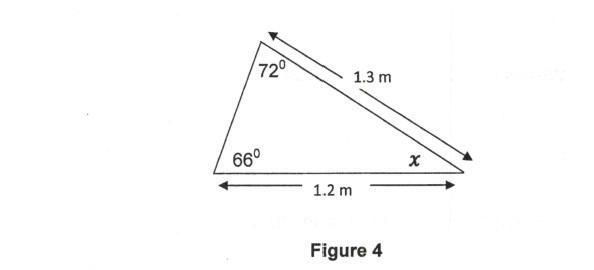
10. The value of the angle marked X in Figure 4 is (A) 138° (B) 42° (C) 66° (D) 72°
So soothing! Create a colourful abstract acrylic painting for beginners by using this paint smearing technique.
Supplies/tools
Acrylic paint set Pearlescent acrylic paint Canvas Craft stick
Directions
Step 1: Squeeze a vertical line of paint on the full length of canvas.
Step 2: Repeat step 1 with different paint colour to the right of the previous paint line.
Step 3: Repeat step 2 until the canvas is fully covered.
Step 4: Slowly drag craft stick back and forth across canvas, working top to bottom. Dry overnight.
Step 5: Display this mesmerising work of art on your desk or wall! (Adapted from crayola.com)
By Matthew Shenoda
The linen wrapped to make a chevron pointed toward earth like an arrow that flies by day to the gold-rooted foot that makes the earth its dominion. The blushed sky of arrival frames the face of the fructuous one. Your body filled with grain and a sprouting that resists pestilence.
Green of the interior manifesting fire in the lake of the mouth held slake only by the skin of your body.
(Source: Poetry [April 2026])
Write a survival guide for aliens who want to live on Earth.
Pres Ali positions Guyana as strategic hub for Qatar amid Middle East conflict
resident Dr Irfaan Ali
Phas pitched Guyana as a strategic hub for Qatar amid the ongoing conflict in the Middle East, particularly the attacks on energy infrastructure in the Gulf Cooperation Council (GCC), a political and economic union of six Arab states, Bahrain, Kuwait, Oman, Qatar, Saudi Arabia, and the United Arab Emirates.
He made the offer on Monday during an official phone call with His Highness, Amir Sheikh Tamim bin Hamad Al Thani of Qatar.
According to a brief statement from the Office of the President, the Guyanese Head of State expressed full solidarity of the people of Guyana to the State of Qatar.
The statement outlined that President Ali “assured the Amir that we condemn completely all attacks on Qatar and the members of the GCC and assured the Amir that Guyana stands strongly in support of Qatar.”
“The President also offered Guyana as an important destination from a geographic and market position for Qatar, noting the longterm damage to infrastructure and the impact on their economy caused by the ongoing conflict,” the statement added.
Qatari media reported that during the call, President Ali also affirmed Guyana’s readiness to provide support and assistance to the State of Qatar in confronting the current circumstances.
International media reports that a number of energy infrastructure such as refineries, oil fields, gas plants and ports, has been damaged by missiles and strikes during the ongoing war.
Last month, Qatar said Iranian missile attacks on the Ras Laffan Industrial City, the country’s main gas facility, have caused “significant damage”.
QatarEnergy, the world’s largest liquefied natural gas (LNG) producer, said that several other LNG facilities had also been attacked, “causing sizeable fires and extensive further damage”.
The Ras Laffan complex, located 80km (50 miles) northeast of Doha, is the world’s largest LNG production facility and produces about 20 percent of the global LNG supply, playing a major role in balancing both Asian and European markets’ demand for the fuel.
Collaboration
Meanwhile, during the phone call, the two sides also discussed long-term initiatives which included investments, food security, energy security and technology aimed at expanding collaboration through partnership.
“His Highness, the Amir expressed his gratitude to President Ali and the people of Guyana for their constant support to the people of Qatar and expressed Qatar’s deep interest in broadening partnership in investment, human capital development, technology, food security and other critical infrastructure,” the statement noted.
Over the years, Guyana and Qatar have strengthened ties since diplomatic relations were established 1996.
Guyana has made it clear that as it continues along its transformational journey, it views Qatar as an important partner.
“Guyana seeks to benefit from the best practices that underpin Qatar’s rapid economic growth, particularly its forward-looking diversification strategy as outlined in the National Vision 2030. By learning from Qatar’s model of strategic investment in critical sectors such as healthcare, infrastructure, technology and education, Guyana aims to replicate a similar commitment to building a robust, diversified and sustainable economic future,” Prime Minister Mark Phillips had emphasised in December 2025 during a reception hosted by the Embassy of Qatar in Georgetown to commemorate Qatar’s National Day.
In fact, the PM had emphasised that Qatar’s expertise, particularly in liquefied natural gas production and marketing, offers valuable insights as Guyana continues to expand its natural gas capabilities.
Current projects and programmes here that the State of Qatar is engaged in include the recent Production Sharing Agreement (PSA) signing by QatarEnergy
for offshore oil exploration, a Qatari medical convoy to perform specialised surgeries in Guyana, the
Georgetown Seafront Resort and Convention Centre project by Qatar Investment Authority and environ-
mental partnership via the Low Carbon Development Strategy (LCDS), among others.
Workplace safety nonnegotiable – Labour Minister
…as “Putting Safety First” national campaign launches
As Guyana observes Occupational Safety and Health (OSH) Month, Labour and Manpower Planning Minister Keoma Griffith, has reaffirmed the Government’s commitment to ensuring the safety, health and well-being of all workers, while announcing the commencement of a national campaign aimed at strengthening workplace standards. In a message to mark the observance, the Minister emphasised that workplace safety must not be treated as optional. “It is important to understand that this is not a privilege, but rather, it is a standard that must be upheld at all times. Our nation now stands at a pivotal moment in its development. Our economy is expanding, new industries are emerging and opportunities are growing at an unprecedented pace,” he stated. April is recognised as OSH Month in Guyana, with a focus on promoting safer workplaces through awareness, training and compliance. The observance culminates on April 28, internationally recognised as World Day for Safety and Health at Work. The Minister noted that the observance is not merely symbolic, but serves as a
critical reminder that worker protection must remain a national priority. “Every worker, regardless of sector or occupation, has a fundamental right to a safe and healthy working environment,” he said.
Highlighting the human impact of unsafe working conditions, he added that the realities of workplace accidents and occupational illnesses continue to affect workers and their families, not only globally, but within communities in Guyana as he believes that behind every incident is a person, a fami-
ly, a future that is impacted. He stressed that Guyana’s approach to occupational safety and health must be “proactive, preventative and people-centred.” The Minister further disclosed that Guyana’s 2026 observance aligns with the global focus of the International Labour Organisation (ILO), which continues to advocate for safer and more resilient workplaces. “As Guyana moves forward, we remain committed to embracing international best practices and strengthening our systems to meet the demands of a modern and rapidly evolving workforce. In keeping with this commitment, I am pleased to announce the commencement of my Ministry’s national campaign, ‘Putting Safety First,’” he announced.
Behavioural change
According to the Minister, the campaign is designed to go beyond awareness and drive meaningful behavioural change across workplaces nationwide. It will focus on strengthening knowledge, encouraging compliance, and fostering a culture where safety is treated as a shared and non-negotiable responsibility.
Labour and Manpower Planning Minister Keoma Griffith
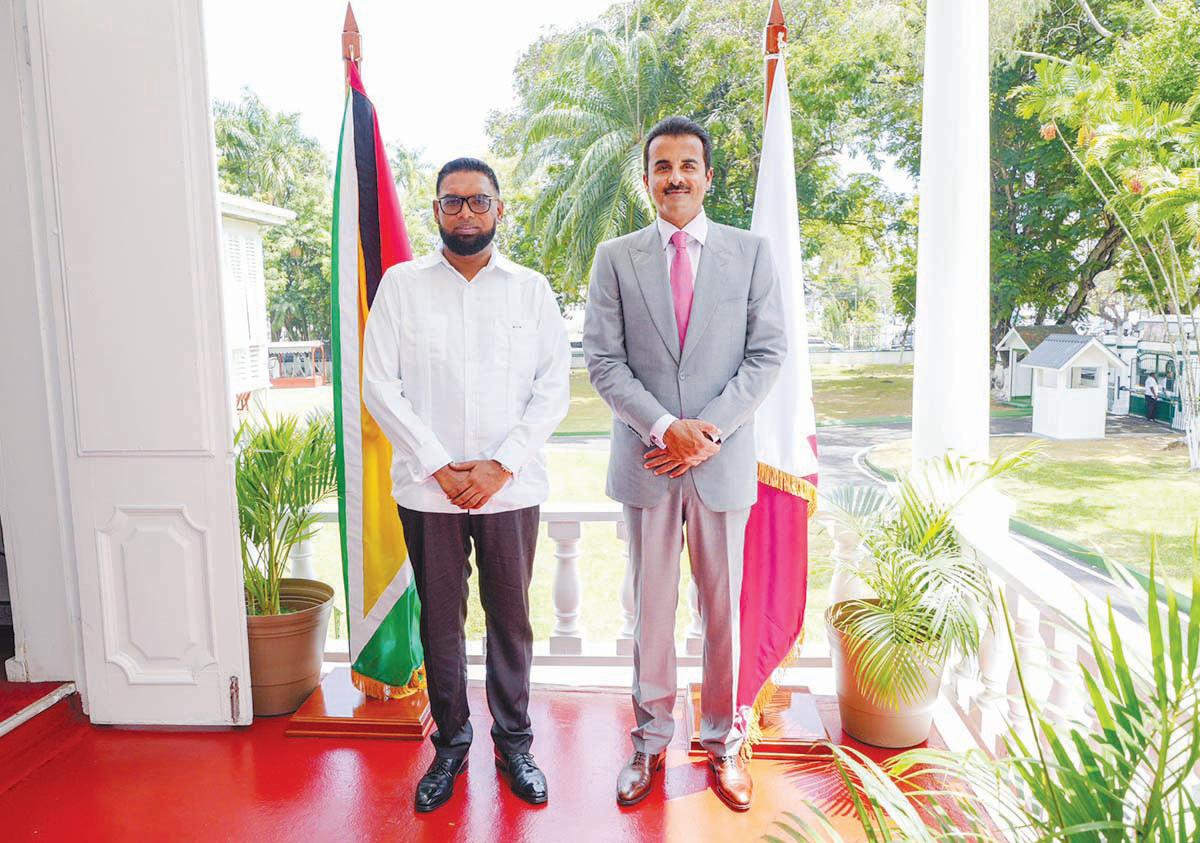
President Dr Irfaan Ali and His Highness Tamim bin Hamad Al Thani engaged in a high-level telephone conversation on Monday morning
Showdown… …today??
On Easter Monday, just as your (pious?) Eyewitness was about to step outside to take a gander at whether the young’uns were observing Easter by flying their kites, he read the following post by President Trump on his Truth Social media: “Tuesday will be Power Plant Day, and Bridge Day, all wrapped up in one, in Iran. There will be nothing like it. Open the F*****’ Strait, you crazy bastards, or you’ll be living in Hell. Just watch. Praise be to Allah.” All he could do was exclaim in amazement “What the heck!!??” Well, it was another word than “heck” …but this being a family newspaper and all….
Now today (Tuesday) is the deadline the President had given the Iranians for lifting their blockade of the Strait of Hormuz – which was having a calamitous ripple effect on the global economy – and MAGA goals!! But your Eyewitness thinks the expletive-laden outburst –unique in the history of presidential announcements –came out of his frustration (to put it mildly) over events following the Iranian downing of a US F-15 fighter jet in southwestern Iran last Friday. We know the first casualty of war is the “truth” – to give the utterer the advantage – so we gotta take announcements from both sides with more than a grain of salt!!
The US line is that the pilot and his WSO – (Weapons Systems Officer) had ejected and had to be rescued – which would mean inserting rescuers into Iran – on the ground!! But it’s from here the stories get rather contradictory, to say the least. The Govt friendly Fox News said “The pilot was quickly rescued by the Combat Search and Rescue (i.e., CSAR) and the specialised Black Hawks) helicopters ferrying him back to safety were hit, but managed to make it to Kuwait — despite trailing visible black smoke… An A10 Warthog that crashed Friday was involved in providing cover for the rescue teams searching for the pilot”. The story gets murkier on how the WSO – who’d moved five miles away into mountainous ground – was rescued. Part of the confusion centres on since he was just miles from where the Iranians are thought to be storing their enriched uranium at Isfahan – whether this was a “Boots on the ground” mission to exfiltrate the uranium!!
The bottom line is that two of the huge transport MC-130 planes carrying two AH-6 Little Bird rescue helicopters landed on an old airstrip, but got stuck and had to be destroyed. The Iranians claim they blew them out of the sky!! A De Havilland Canada Dash 8 was now sent in, but couldn’t bring back the helicopters and these had to be destroyed! The Iranians say the Little Bird helicopters were destroyed when they shot down the MC-130s!!
So, what’s on today’s agenda??
…of kites
So, your Eyewitness eventually did go outside to observe the kites flying – and was pleased that the Big Guy had held off with the downpours that have folks thinking of Noah and his Ark!! Now if you were to tell someone in the States to “go fly a kite!”, he wouldn’t be so pleased!! In fact, he’d be downright insulted. What you’ve told him was to leave – basically you didn’t want him around – mostly ‘cause he’s irritating or annoying the heck out of you!!
Anyhow, while we have a different take on kite-flying, today most Guyanese are either going out to “fly a kite” or telling their kids to do so!! And in the latter case, some parents ARE telling the kids to get out of their hair!! So, Dear Reader, did you ever wonder why we’re the only country in the world to fly kites at Easter other than Bermuda – that also has a British heritage.
This should be researched – and romanced! – to become the basis for us promoting our dear Mudland and lure in those tourists!!
…on Generals
Seems Secty of War Pete Hegseth has fired as many US Generals as Iran lost through bombings!!
Equalising the playing field??
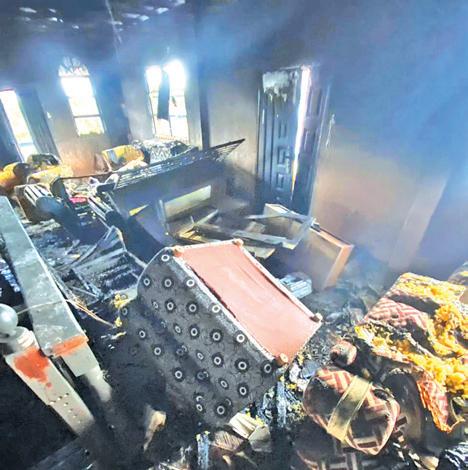
Fire guts inside of S&N Convenience store in Sophia
…2 vehicles damaged
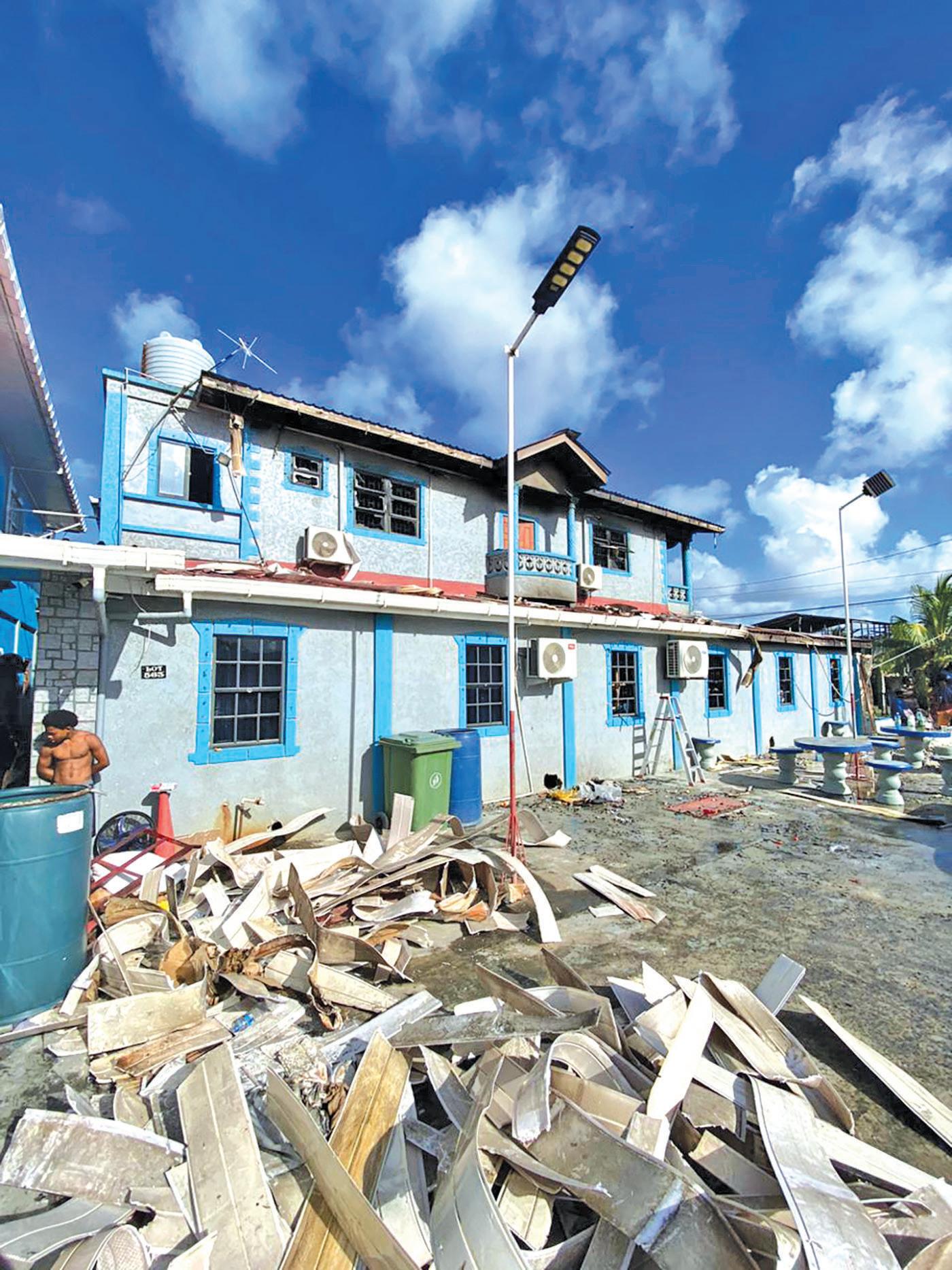
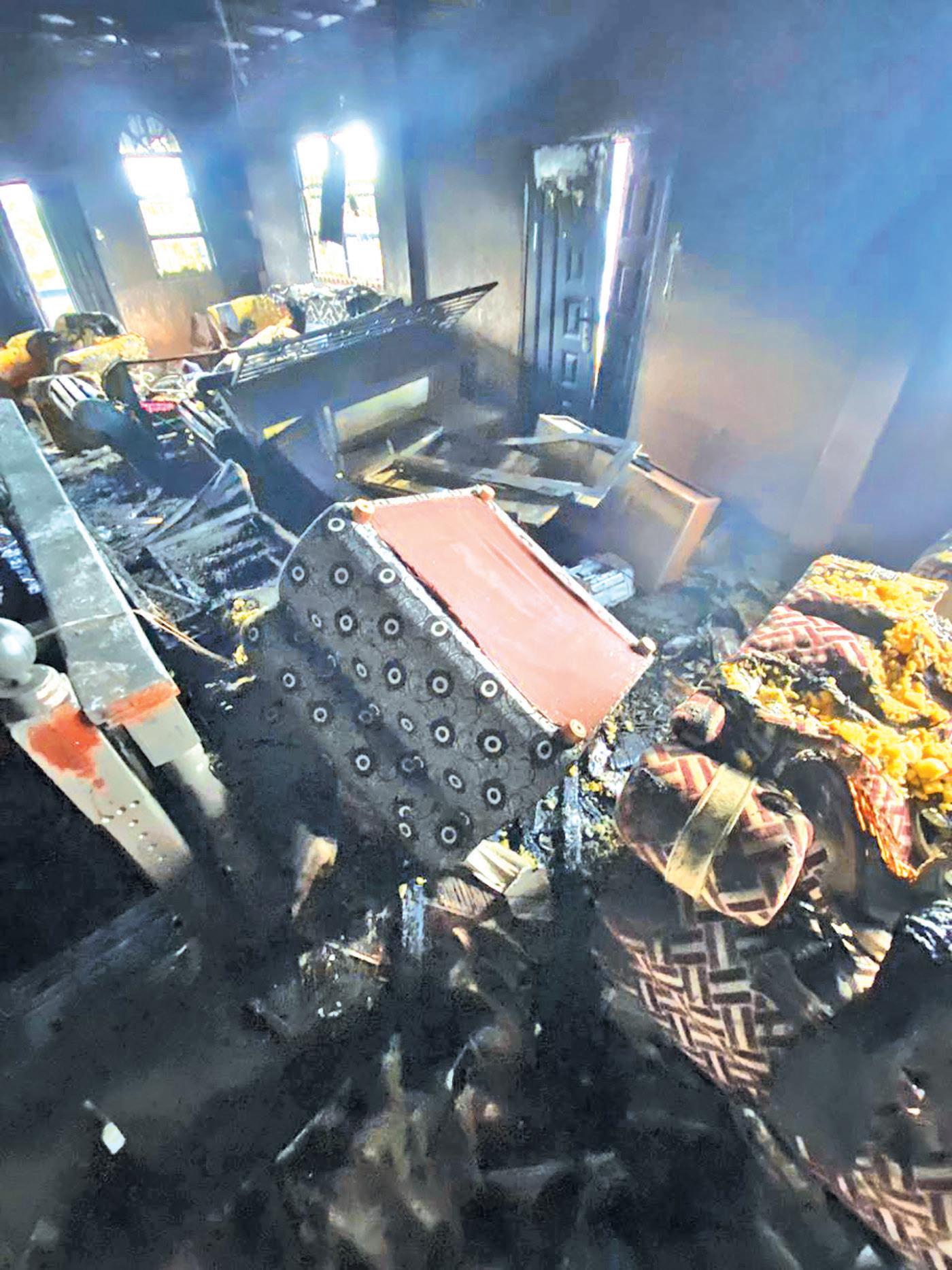
Some $60 million in losses was recorded following a fire, believed to have been caused by a low-voltage electrical issue, at S&N Convenience Store, D Field Sophia on Monday.
This was disclosed by one of the proprietors, Charlene Lindie.
Speaking with this publication, Lindie explained that she was at home at about 09:30h preparing a meal, when she noticed the lights flickering
According to her, the building, which consists of two sections, the supermarket and a bond (storage area), was affected, with the bond being vastly destroyed.
Lindie recalled that while she was in the kitchen straining rice, she observed house lights flickering and shortly after, she noticed smoke coming from the front section of the building.
Acting quickly, she first evacuated her mother, who is a stroke patient, from the house, then alerted others in the area and rushed to
turn off the main electrical switch in an effort to prevent the fire from spreading.
However, by the time this was done, the flames had already intensified.
Despite efforts by nearby persons to contain the blaze using water, the fire continued to spread rapidly.
Fire service tenders arrived approximately 30 minutes after the fire began.
“I saw the smoke and immediately ran outside shouting ‘fire, fire.’ I then ran back to turn off the main switch so the fire wouldn’t spread, but by the time people came with water to help, it was already getting bigger…due to the smoke now, everybody, they had to pull back enough people so they couldn’t go to throw the water. But if the fire truck had reached in time, the building would have been saved,” she related.
Additionally, two vehicles parked in the lower flat of the building were also damaged during the incident which were rushed out from the scene.
Passenger gives birth midair during CAL flight to New York
ACaribbean Airlines passenger traveling to New York from Jamaica went into labor and gave birth over the weekend just as the flight was landing. In a press release, the airline said Caribbean Airlines’ Flight 005 was on its final approach from Kingston, Jamaica, to New York City just before noon on Saturday when the mother went into labor.
When the aircraft landed, both the mother and the newborn were attended to by medical personnel and the crew followed procedure, the airline said.
According to air traffic controller audio obtained by CBS News, a ground controller then said the child should be named “Kennedy” because the flight landed at John F. Kennedy International Airport.
In a March 2020 study by the National Library of Medicine, between 1929 and 2018, 74 infants were born on 73 commercial flights, of whom 71 survived delivery.
According to its website, Caribbean Airlines allows pregnant passengers to fly without medical clearance up to the end of their 32nd week of pregnancy but does not accept passengers after the 35th week.
Caribbean Airlines did not immediately respond to NBC News request for comment. (NBC News)
“The airline commends the professionalism and measured response of its crew, who managed the situation in accordance with established procedures, ensuring the safety and comfort of all onboard,” the airline said in the press release. “Caribbean Airlines also confirms that no emergency was declared during the flight.”
Outside the S&N Convenience bond scorched by fire Inside the S&N Convenience bond
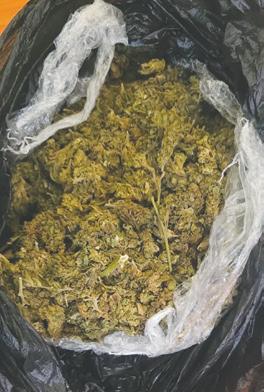
Police seize ‘Molly’, ganja on Essequibo Coast
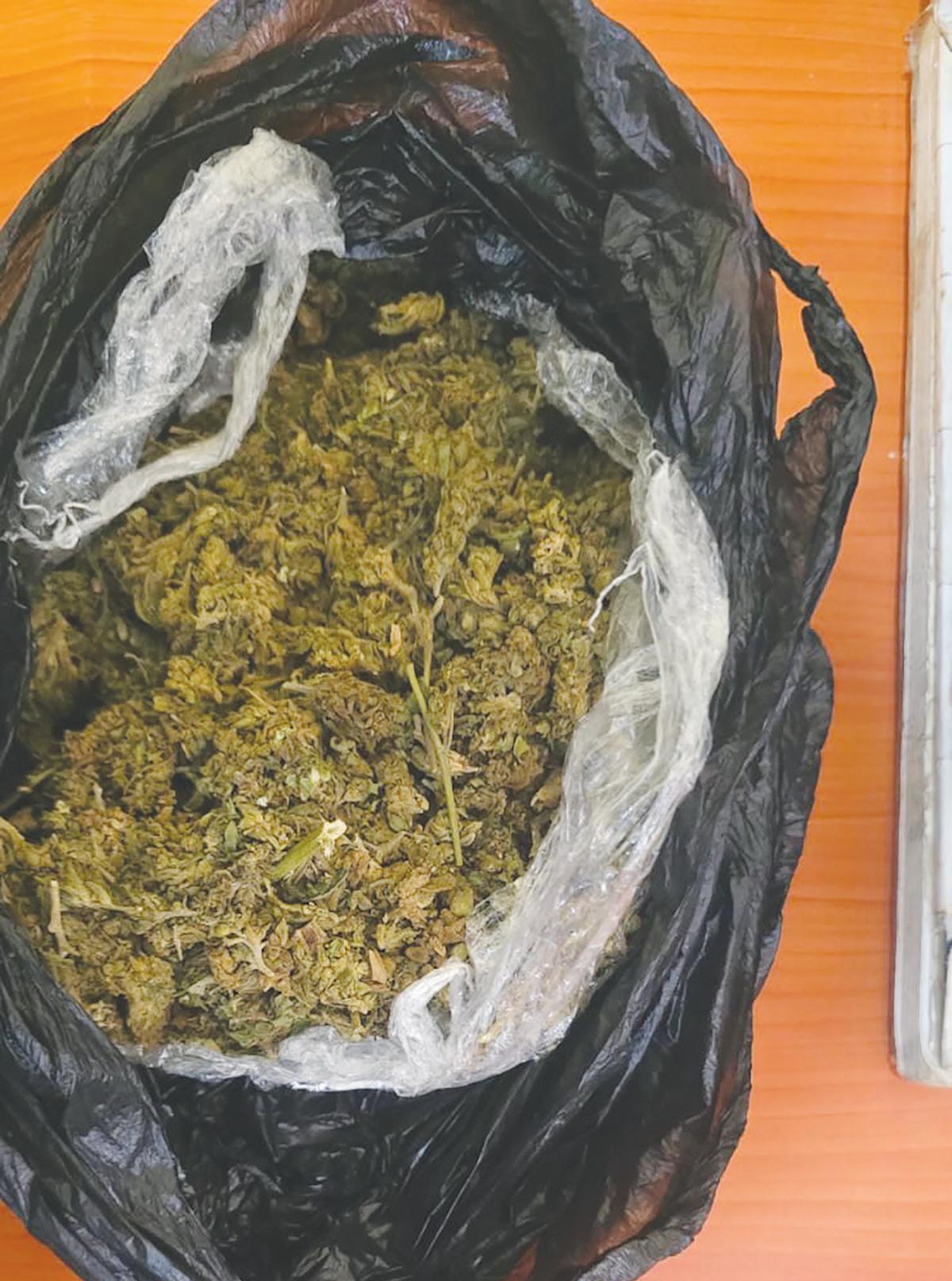
Police in Regional Division Two are investigating a ganja and “Molly” find following an incident at Charity Backstreet, Essequibo Coast, (PomeroonSupenaam) on Saturday afternoon. According to reports, ranks were conducting a mobile patrol around 14:30h when they observed a 23-year-old labourer from Dartmouth Village standing between two stalls in the area. As officers approached, the man allegedly discarded a black plastic bag and a smaller whitish bag onto the roof of a nearby shed. The items were retrieved by police and examined in the presence of the suspect. Investigators reported that the bags contained plant materials believed to be cannabis, including leaves, seeds and stems.
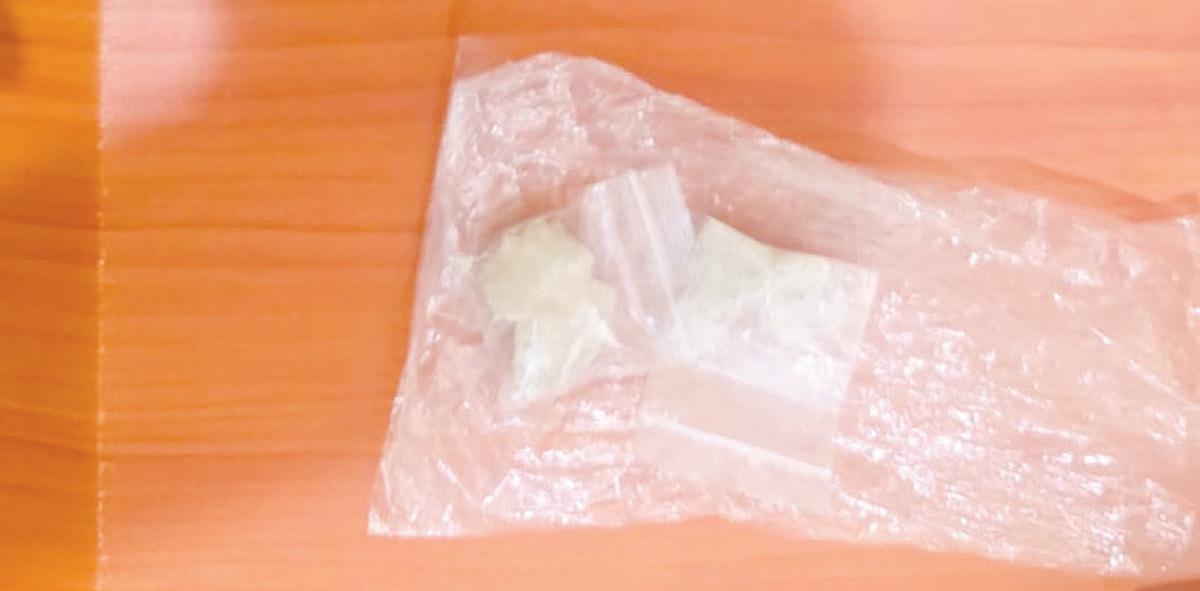
Two transparent zip-lock bags containing crystal-like substances suspected to be
methylenedioxymethamphetamine (MDMA), commonly referred to as “Molly,” were also found. The man was arrested at the scene and taken to the Charity Police Station along with the narcotics.
Police said the substances were weighed in his presence, with the cannabis amounting to 230 grams and the suspected MDMA totalling six grams. The suspect remains in custody pending charges.
Karasabai Secondary School
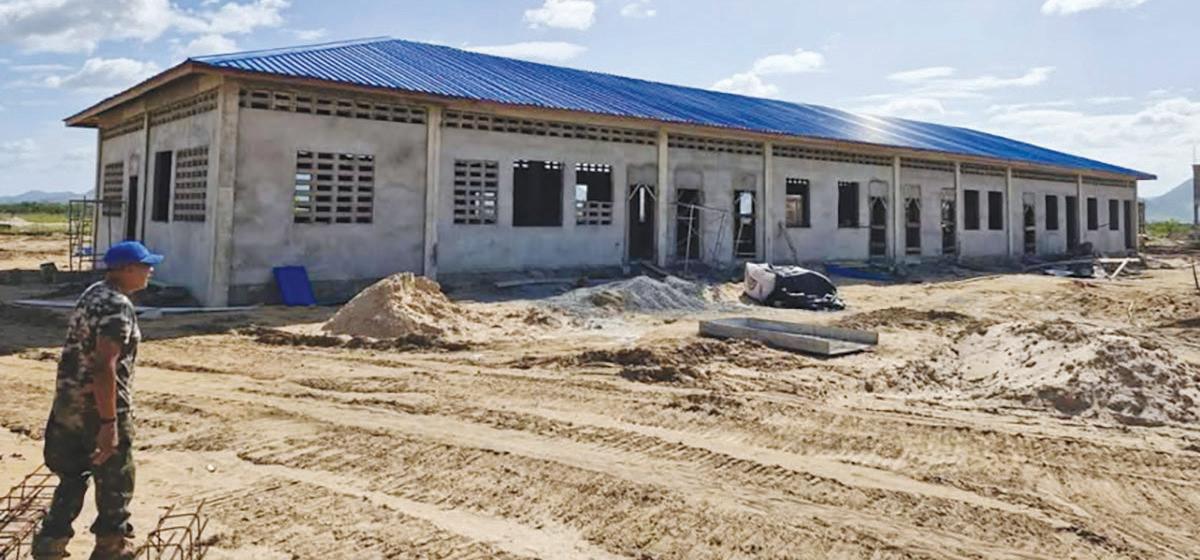
Govt warns of liquidated damages if delays on project persist
As works continue more than two years after the sod was turned for the construction of the $1.7 billion Karasabai Secondary School in Region Nine (Upper TakutuEssequibo), President Dr Irfaan Ali has warned that liquidated damages will be applied if delays persist. "We talked to the consultant, the consultant said that because of weather and other issues, they have three-month extension. After that, its liquidated damages," the Head of State said during the commissioning ceremony of the new airstrip in Karasabai
over the weekend. The project was awarded to Avinash Contracting in 2022, with completion expected within two years.
Village Toshao, David Albert, told another section of the media in January 2026 that the project was about 70 per cent completed. The modern school complex is expected to be fitted with 10 buildings. These include the main teaching block and allied lecturing facilities, modern science laboratory for Physics, Chemistry and Biology, Technical and Vocational Education and Training (TVET) centres, combined Home Economics
and cafeteria area, teachers’ quarters and an outdoor sitting forecourt. Once completed, the facility will house 500 students in the classroom, and 250 students in the dormitories. This means students will no longer have to traverse rough terrain daily to receive an education. Students in the Karasabai subdistrict from communities such as Tiger Pond, Cracrana, Tsushima, Kokshebai and Yurong Paru are currently either not receiving a secondary education or are being educated in primary tops, a secondary department in a primary school.
The drugs that were found at Charity Backstreet, Essequibo Coast, (Pomeroon-Supenaam)
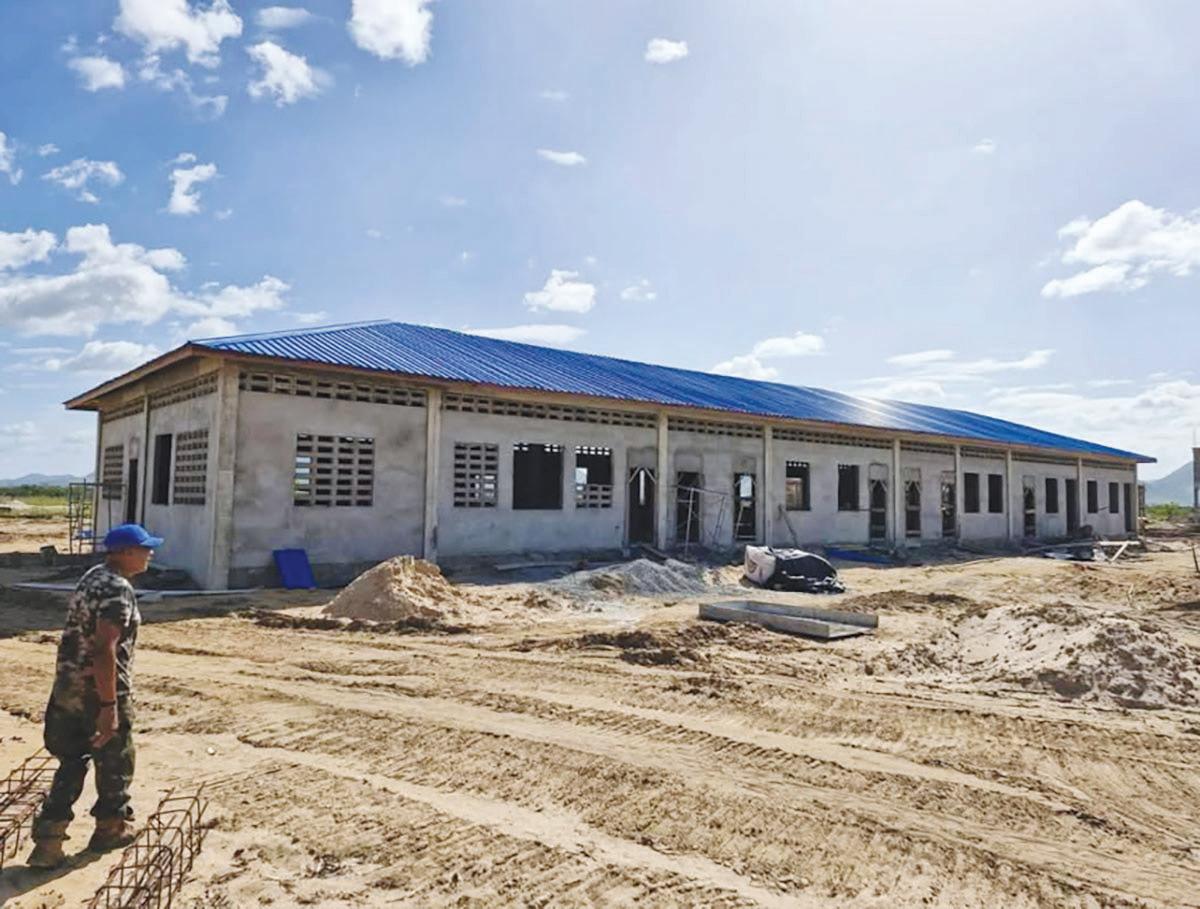
Construction of the $1.7B Karasabai Secondary School (Photo taken February 2025)
Guyana ranks among Caribbean’s best in maritime security competition
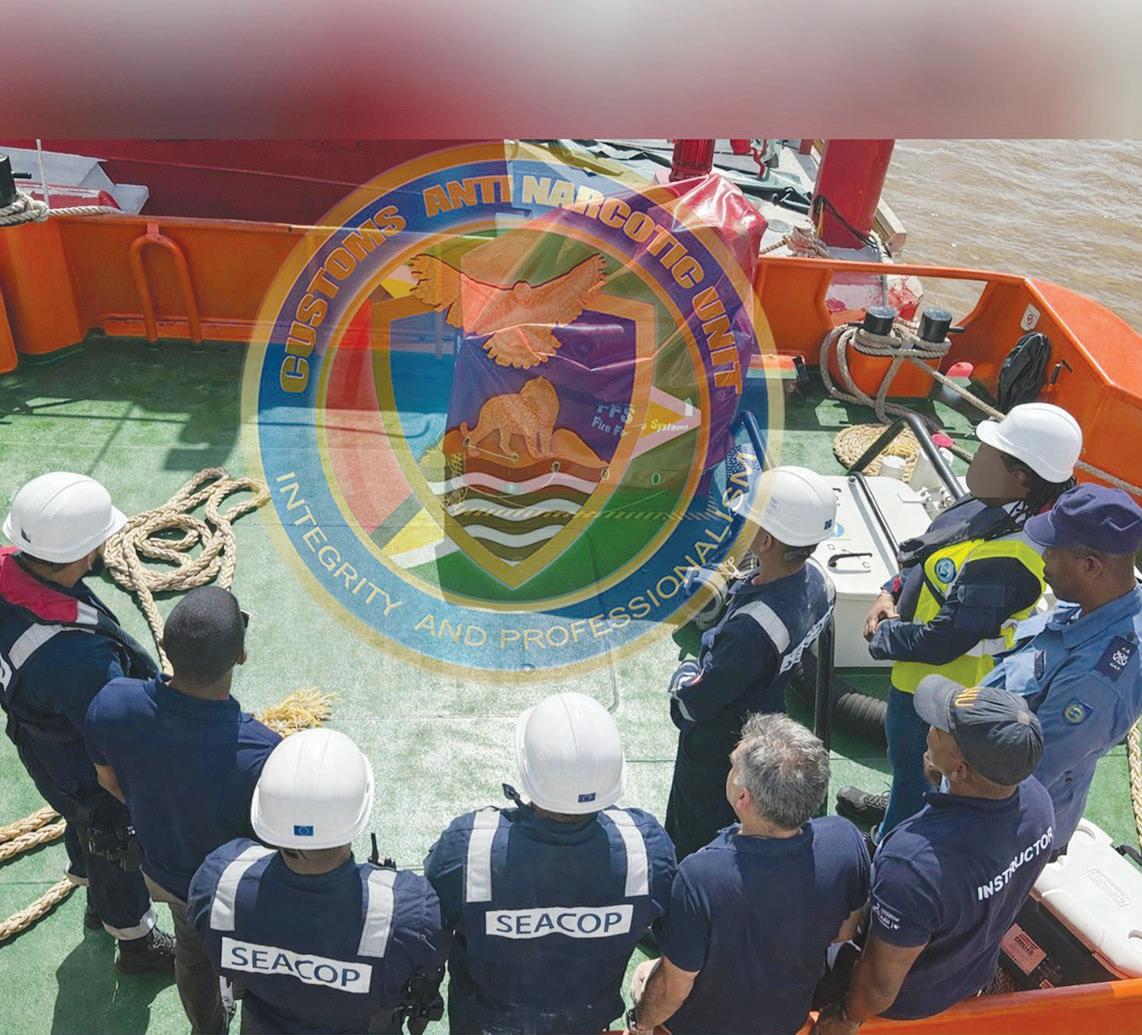
Guyana has earned a third-place ranking in the latest SEACOP Joint Maritime Control Unit (JMCU) Caribbean Competition, scoring 72 out of a possible 80 points, equivalent to 90 per cent. The result places the country among the region’s stronger maritime enforcement performers, tied with Saint Kitts and Nevis and trailing Barbados and Trinidad and Tobago, which both recorded 75 points.
The country’s showing was led by a joint team comprising officers from the Customs Anti-Narcotic Unit (CANU), the Guyana Police Force (GPF), and the Guyana Defence Force (GDF) Coast Guard. Their performance reflected coordinated operations and adherence to established maritime enforcement procedures during the assessments.
In a press release on Monday, it was stated that the competition is part of the European Union-funded
Seaport Cooperation Project (SEACOP), which focuses on strengthening maritime security capacity across the Caribbean. It evaluates the ability of participating units to conduct vessel searches in high-risk scenarios, particularly in efforts to detect and prevent the movement of illicit goods, including narcotics.
The release stated that Guyana’s results indicate a solid level of preparedness in executing structured vessel searches and maintaining compliance with international enforcement standards.
The evaluation process used an 80-point framework designed to measure several operational components, including safety procedures, tactical execution, communication and teamwork, decision-making under pressure, and compliance with legal protocols.
Other participating countries included Suriname, Jamaica, and Antigua and Barbuda, reflecting contin-
ued regional engagement in maritime security initiatives. The competition also serves as a platform for improving coordination among Caribbean law enforcement agencies and promoting consistent operational standards.
Officials note that Guyana’s placement is linked to ongoing efforts to strengthen maritime enforcement through training programmes, inter-agency collaboration, and intelligence-driven operations. The performance highlights the country’s role in regional security efforts aimed at addressing transnational organised crime.
The SEACOP JMCU Competition remains a key mechanism for assessing readiness and encouraging the exchange of best practices among maritime units. Guyana’s position in this year’s rankings signals continued progress, with scope for further advancement in future assessments.
M&CC gives businesses 7 days to clean up, comply with waste disposal rules
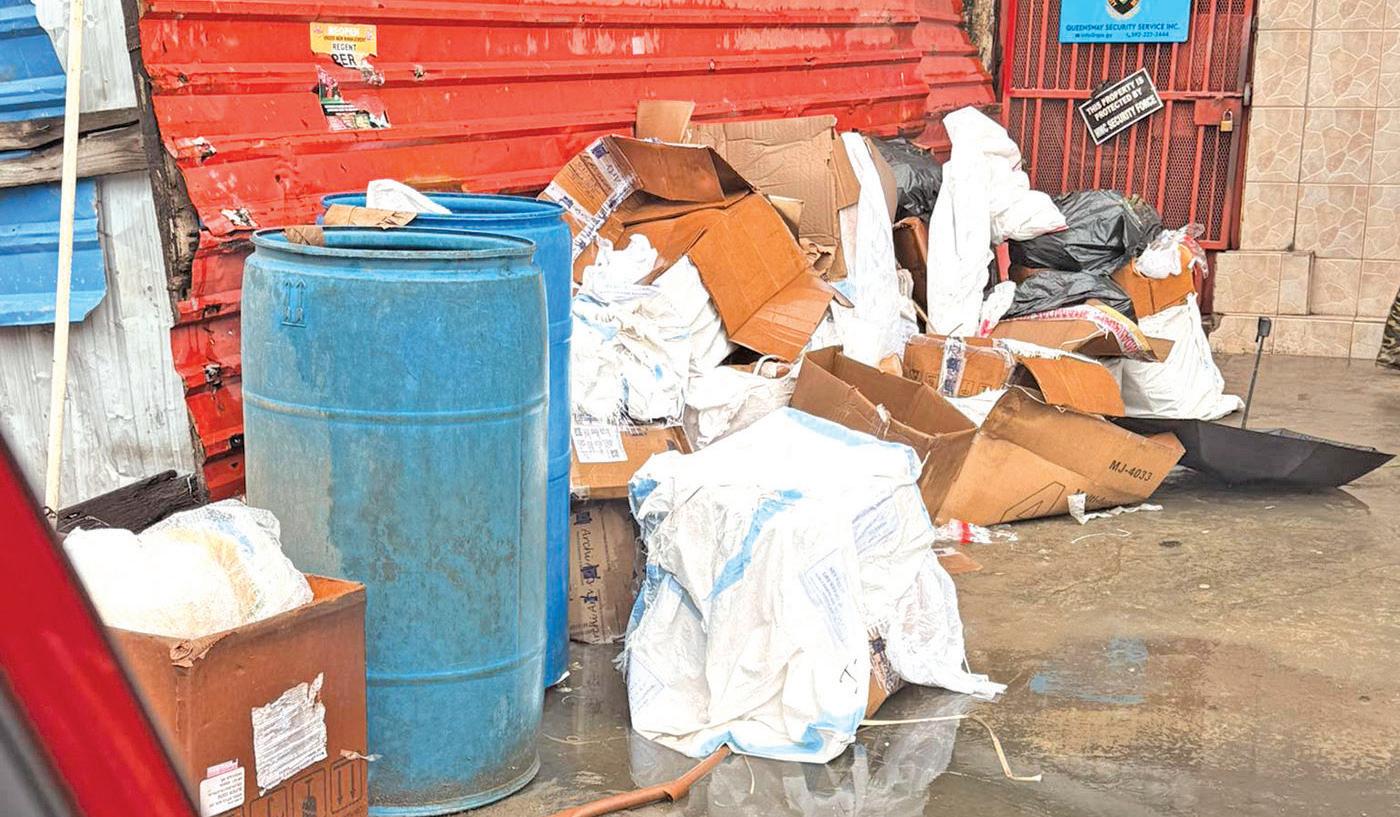
Some of the garbage that was disposed of by businesses along Regent Street and surrounding areas
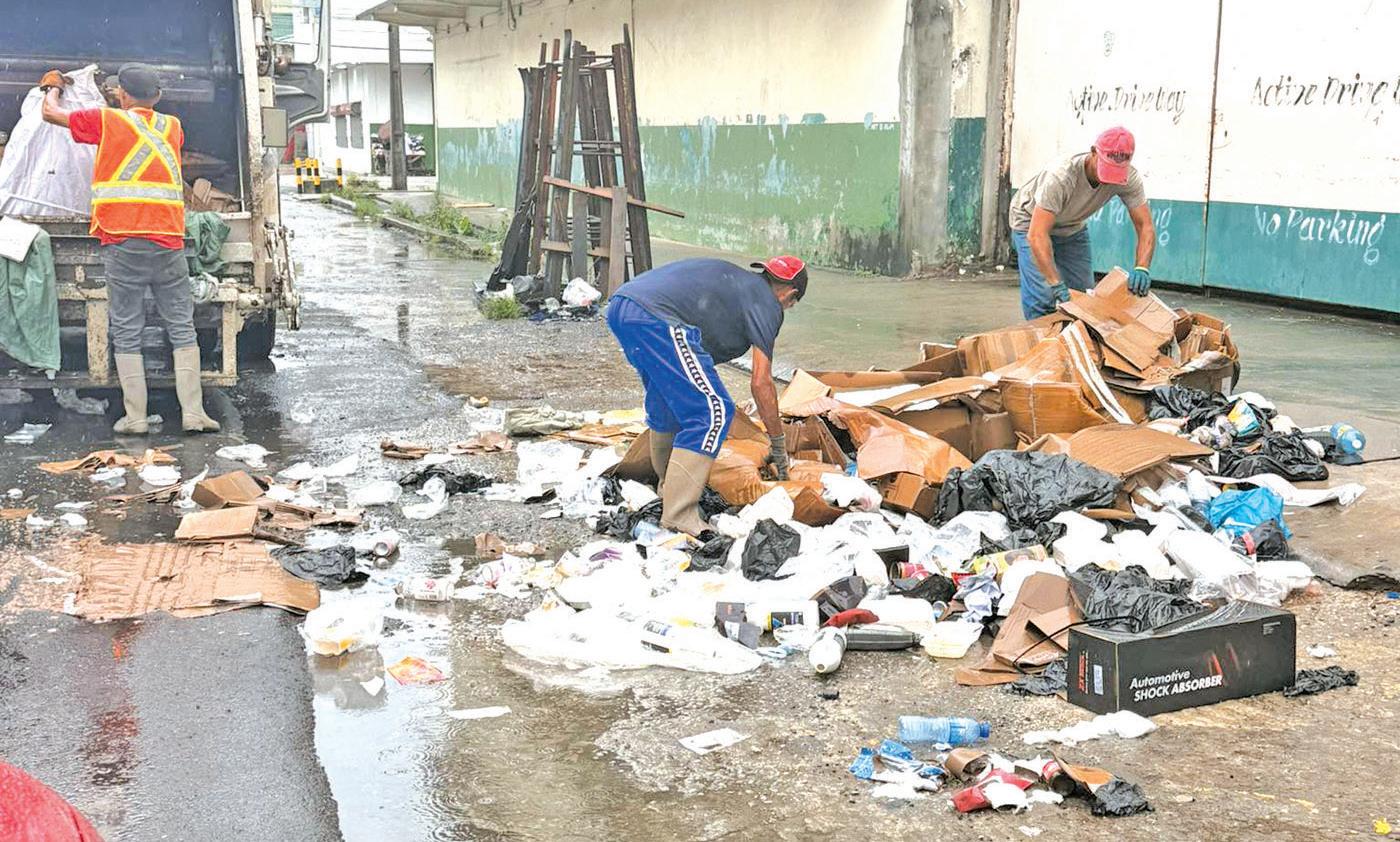
Plagued by what was described as an eyesore, Regent Street, Georgetown presented a messy scene, as several business fronts were littered with garbage over the weekend.
Speaking with this this publication, Solid Waste Manager for the Mayor and City Council, Walter Narine, said that strict policing will be taken within one week, as such practices are not tolerable.
He stated that most store owners were responsible for the littering and emphasized that businesses are required to have 12-cubic receptacles. However, he indicated that some leniency will be given, as consultations with business owners are expected to begin on Tuesday.
“Well, the problem is, each business is supposed to have a 12-cubic receptacle, and that’s the problem right there. None of the businesses in central
Georgetown has a 12-cubic receptacle. All of them have a makeshift drum or a box, and that is the problem. So, at the end of the business day, they just put everything outside and leave it in the gutters, and that can’t be acceptable. None of them has the proper receptacle. All of them have makeshift ones. You should see it, because they’re so cramped with commodities, they don’t have space for garbage.”
City Council by-laws require businesses to use covered, movable receptacles, which should be metal or metal-lined in some areas.
In Georgetown, business premises are generally expected to use bins of a designated capacity (historically around 12 cubic feet, though modern wheelie bin standards are increasingly adopted). Businesses must not dispose of commercial waste in public sidewalk bins or litter bins. It is the responsibility of each busi-
ness to have a contracted, authorized waste collector or to use approved landfill sites.
“The City Council has to go after this. First, I would prefer them to have consultations, call them in block by block, have meetings
with them, reiterate the law, and then give them some amount of time to equip themselves. I think that’s the best approach.
But these particular business people who have been doing this, just imagine, they are huge busi-
ness people with household names.”
Remaining firm in the council’s intention to address the issue, Narine said they will do everything in their power to engage businesses.
He noted that while some may assume that improper waste disposal in public spaces is being done by small businesses, it is in fact being carried out by well-known, reputable establishments.
Solid Waste Manager for the Mayor and City Council, Walter Narine
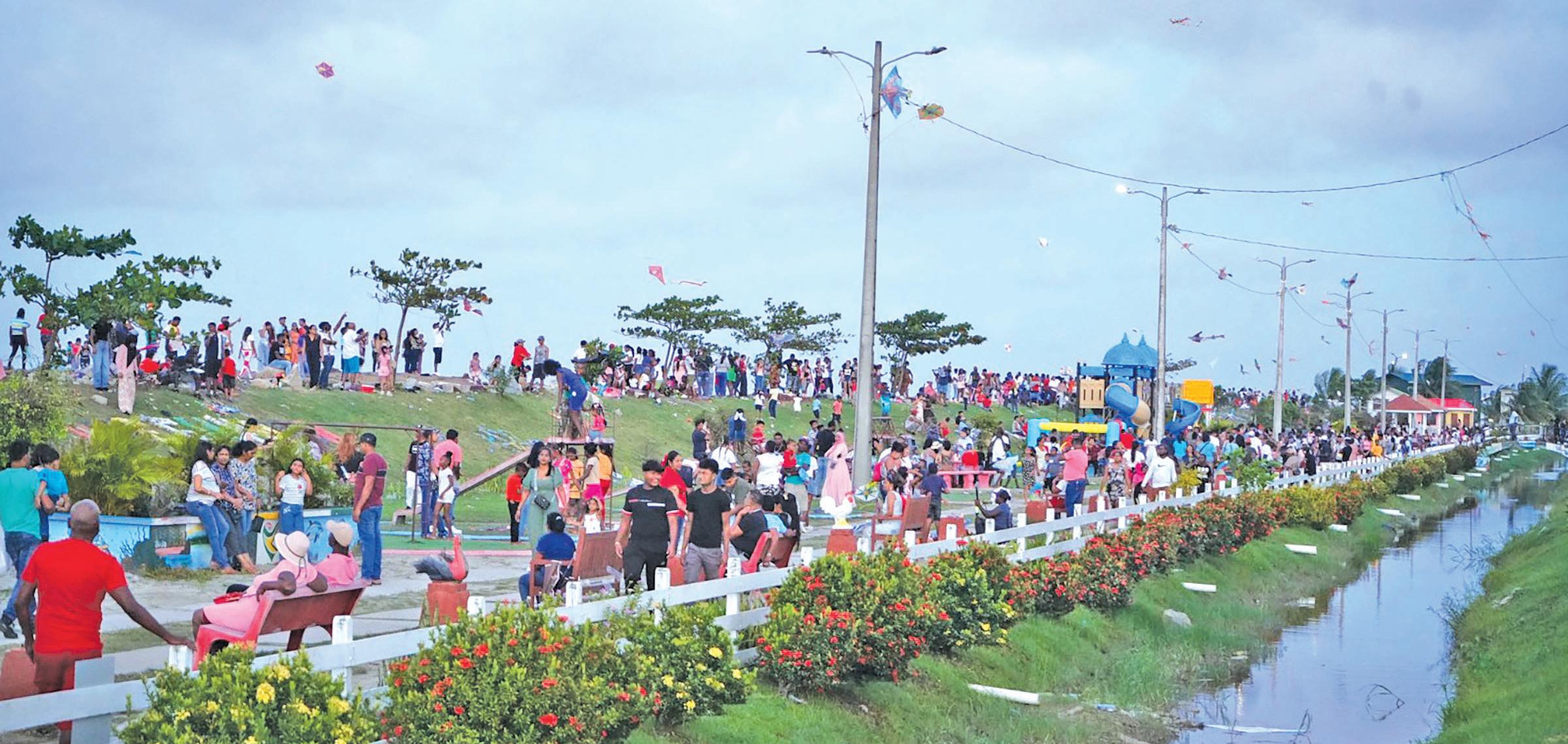
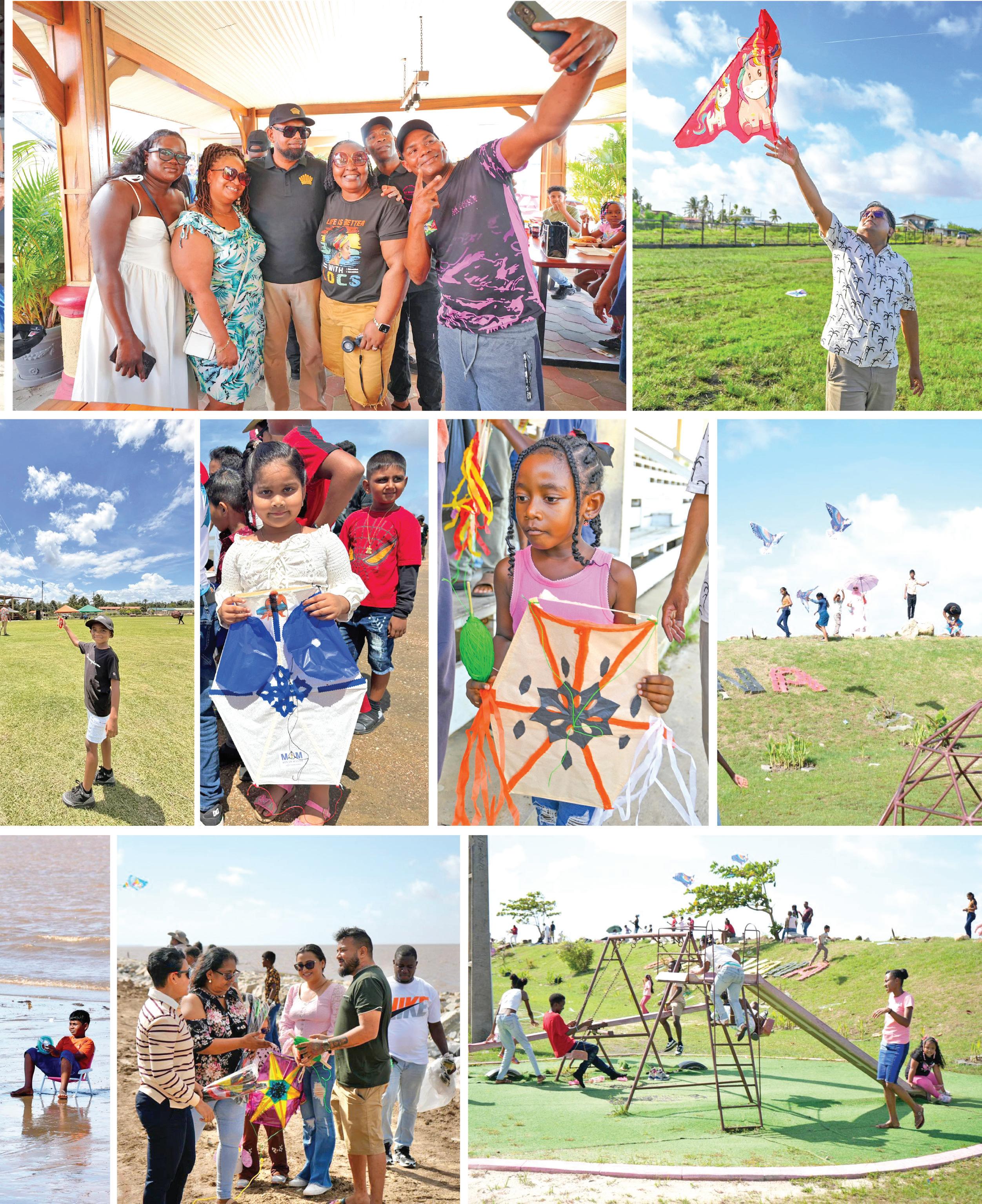
Scenes from Easter
Easter 2026 celebrations
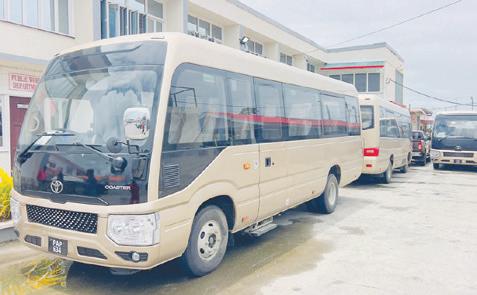
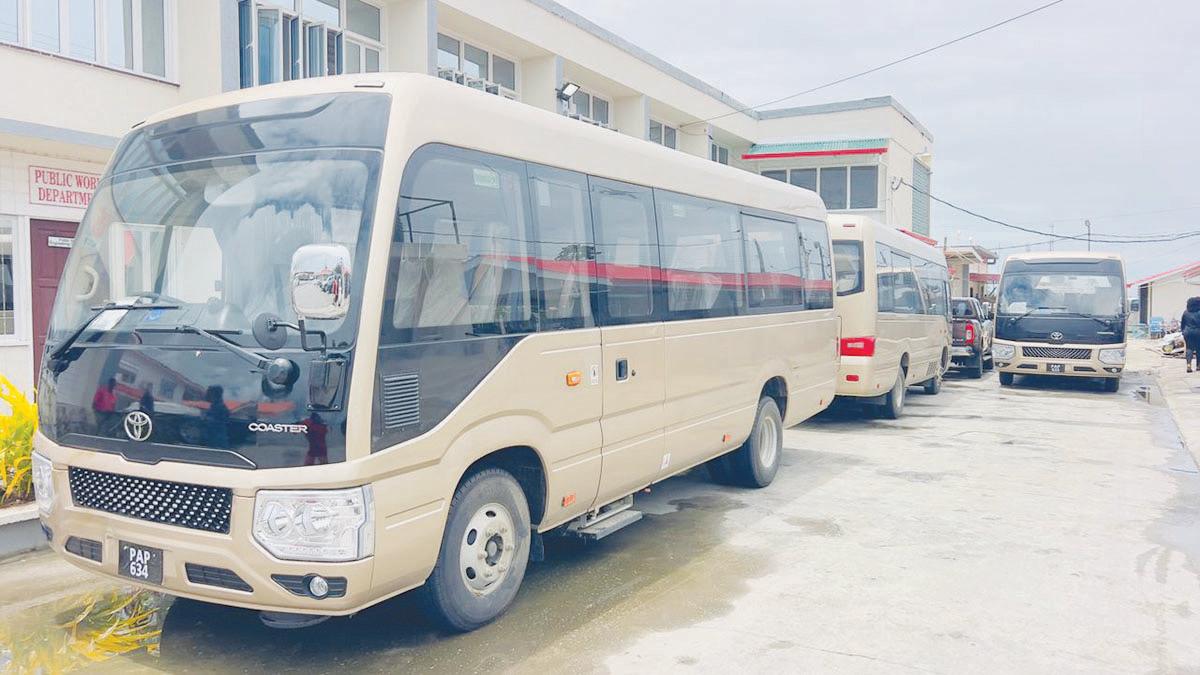
3 new school buses to ease transport strain for Region 6 students
Students across Region
Six (East BerbiceCorentyne) are set to benefit from improved access to education with the introduction of three new school buses, a move aimed at easing transportation challenges for those in riverain and far-flung communities while reducing the financial burden on parents. Regional Executive Officer (REO) Narindra Persaud said this is part of the Government’s continued efforts to ensure that students across the region are able to attend school without placing additional financial strain on their families. He noted that since the reintroduction of the cash grant, emphasis has also been placed on improving access to education, including transportation support where needed. Speaking at a recently held Regional Democratic
Council (RDC) meeting, he explained that one of the buses has been assigned to Orealla, marking the first time the riverain community will benefit from a dedicated school transport service, while another will supplement an existing route serving students travelling from Yakasary to JC Chandisingh Secondary School. The third bus will serve students from the Upper Corentyne, includ-
ing those from Crabwood Creek, who currently travel long distances to attend schools such as Berbice High School and other institutions along the coast. The introduction of the additional buses is expected to significantly reduce travel time and transportation costs for students and their families, while improving attendance and punctuality, particularly for those residing in remote communi-
ties where access to reliable transport has long been a challenge.
Meanwhile, the issue of education delivery and support formed part of discussions at a recent meeting of the Regional Democratic Council’s Education Committee held in New Amsterdam. Despite the importance of the meeting, no councillors were in attendance. Nevertheless, the committee achieved a quorum and proceed-
ed with its deliberations. During the RDC meeting, Regional Chairman Junior Basant spoke of the importance of councillors actively participating in committee meetings, stressing that such forums provide an opportunity not only to raise concerns but also to propose practical solutions. He urged members to come prepared with recommendations and courses of action that can lead to meaningful resolutions.
The committee also examined several issues affecting the education sector, including the need for enhanced student supervision and discipline, increased awareness programmes to address social challenges, and greater collaboration with law enforcement and community stakeholders. Discussions also touched on strengthening technical education, including support for specialised training programmes.
M&CC gives businesses...
“They have household names, and they can’t have a proper receptacle, that’s what you see out there. But there are other businesses that have taken responsibility by hiring private, farm-based collectors who provide bins for them. All we’re asking is for them to equip themselves with adequate receptacles.
“Basically, even one receptacle is not enough, because you have customers coming in, buying commodities, removing wrappers in the store, and then the businesses have to dispose of it.”
He also called on the Private Sector Commission (PSC) and Georgetown Chamber of Commerce and Industry (GCCI) to engage
businesses on the matter.
“They’ve got to do something. They have to get themselves together. The PSC needs to speak to its members, get them to come together, adopt a block, rent a skip bin or something, and take care of the garbage, because it’s overwhelming the system right now with the amount of waste being produced.”
Recently, GCCI and EPA have urged businesses to stop illegal dumping, citing severe environmental risks.
Just last week, Attorney General (AG) and Legal Affairs Minister Anil Nandlall directed his focus toward community members, strongly urging citizens to recognise their
roles in keeping their communities clean and preventing littering.
This came on the heels of flooding experienced on coastal areas as a result of heavy rainfall, littering and other contributing factors. The AG was among several Cabinet members who were accompanied by Neighbourhood Democratic Council (NDC) and Regional Democratic Council (RDC) councillors and community leaders and visited several flood-affected areas on the East Coast of Demerara (ECD), Georgetown, East Bank Demerara (EBD) and West Coast Demerara (WCD) among other communities.
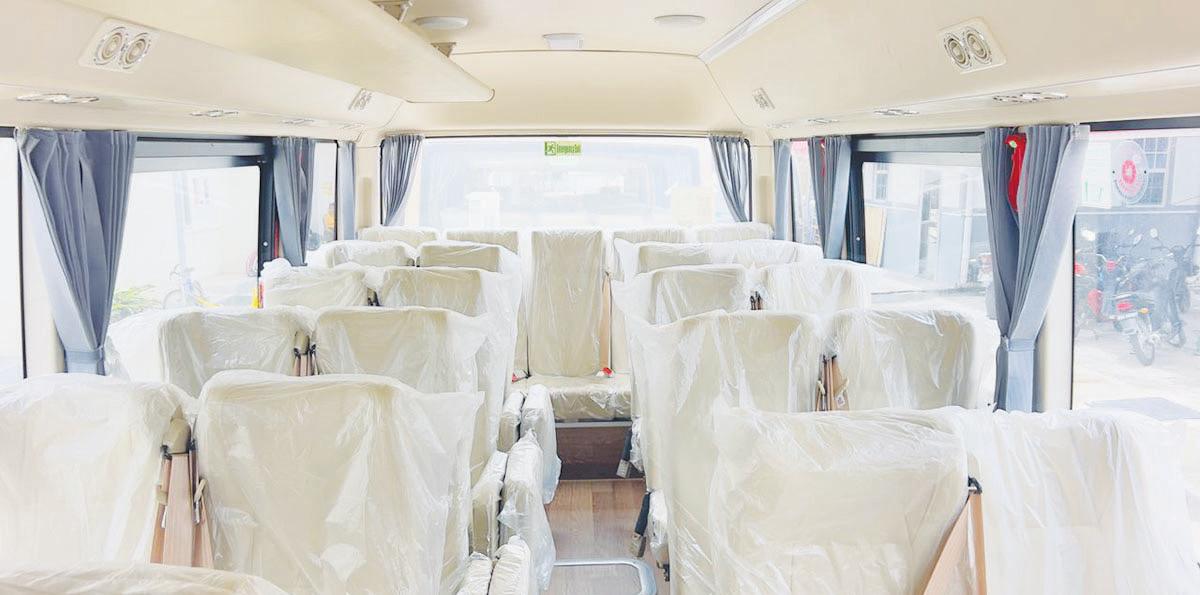
The three new school buses
Suriname-imposed Corentyne River fees
Charges could spark price hikes, hit river in livelihoods – Orealla-Siparuta Toshao warns
The imposition of fees for vessels using the Corentyne River could trigger a “chain reaction” of rising costs affecting livelihoods in riverain communities, according to Toshao of Orealla-Siparuta, Laurence Vandenburg, who warned that the move stands to impact everything from transportation to the price of sand and lumber in Orealla and Siparuta. Vandenburg explained that even before the issue was publicly raised by President Dr Irfaan Ali, operators along the coast had already begun feeling the effects, with sand dealers contacting him after being informed by Surinamese authorities that fees would be applied to vessels transporting sand along the Corentyne River. He said those businesses immediately signalled concern, noting that any additional cost per trip would affect their operations and profit margins.
According to Vandenburg, the introduction of the fees is likely to set off a ripple effect across the supply chain, as businesses seek to offset increased transportation costs. He explained that coastal operators have already begun requesting reductions in the price per tonne of sand, a move that would place pressure on suppliers in Orealla and Siparuta, and ultimately affect the wider market.
“It will have a long chain
reaction,” he said, warning that the impact would extend beyond individual businesses to consumers and communities. He noted that the effects would also be felt in the transportation sector within the villages, where residents rely heavily on boat services to travel along the river. Vandenburg, who operates a boat service himself, explained that current fares range between $3,500 and $5,000, and any increase in operating costs would inevitably be passed on to passengers. “If my expense goes up, that means the fee for passengers will have to go up also,” he said, noting that such increases would place additional strain on residents already trying to manage daily expenses. For communities such as Orealla and Siparuta, he stressed, the Corentyne River is not just a route for commerce but a
vital link for transportation and daily life, with residents depending on it to access goods, services and opportunities beyond the villages. As such, any additional cost imposed on its use would have far-reaching consequences for both businesses and ordinary residents. Vandenburg explained that the added fees could significantly increase the cost of key materials coming out of the riverain communities, particularly sand and lumber. He noted that sand is currently sold at about $2,500 to $2,600 per tonne, but warned that with the imposition of fees, that price could climb to $3,000 or more as operators absorb higher transportation costs. He added that lumber prices are already elevated, with certain species selling for over $300, and cautioned that any additional charges on vessels would further
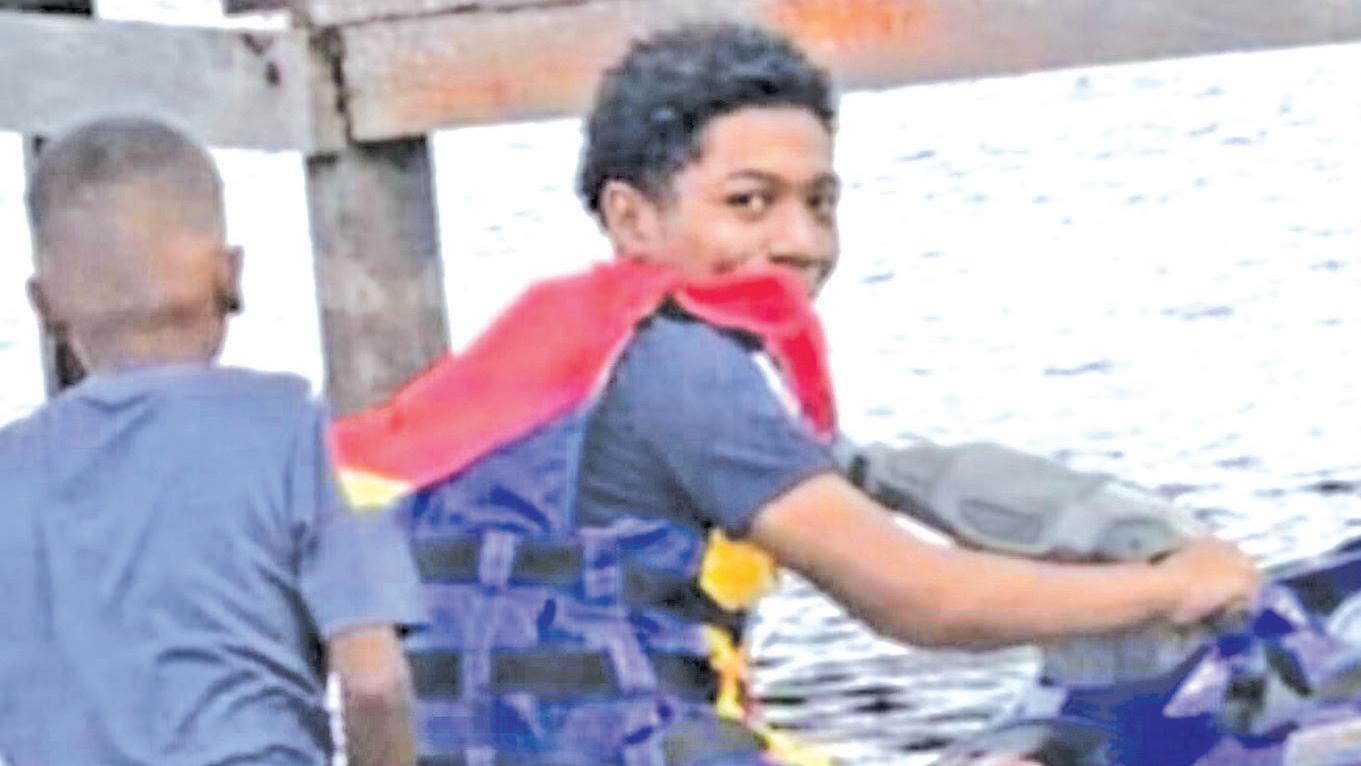
Teen feared drowned during outing at Essequibo Coast lake
A15-year-old boy lost his life on Monday at Hot and Cold Lake, located at Sand Pit/ Red Village, Region Two (Pomeroon-Supenaam).
Feared drowned is Arif Azeez, a student of Madina Academy, Cotton Field and of Adventure Village, Region Two. Reports are the incident occurred at about 16:30h at Hot and Cold Lake in Onderneeming, Essequibo Coast. According to preliminary inquiries, Azeez had visited the lake around midday with four friends ages 23; 22; 30 and 35, for a recre-
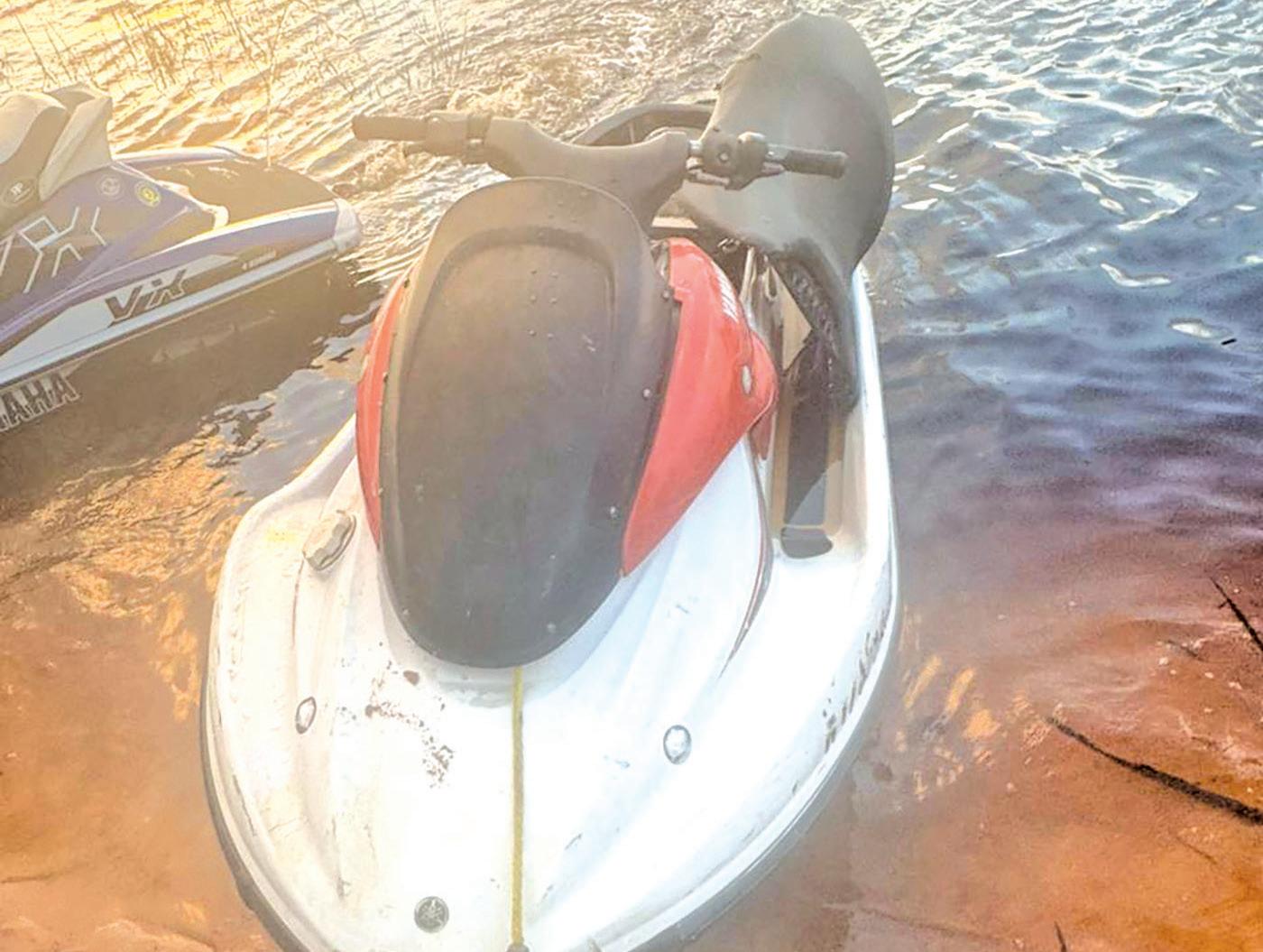
ational outing using two Jet Ski boats. Azeez was operating a red-and-white Jet Ski, while his 23-year-old friend was on a blue Jet Ski. One of the friends told police that while riding along the shoreline, Azeez’s Jet Ski began running low on fuel. Azeez reportedly told his friend to continue while he attempted to manage the remaining fuel. At about 16:00h, the friend observed Azeez maneuvering in a zigzag pattern before falling headfirst
into the water approximately 50 feet from the eastern shoreline.
The friend, who was around 300 feet away, immediately went to assist, raising the alarm and entering the water, but was unable to locate Azeez.
A search was subsequently launched by Azeez’s father, Abzal Azeez, along with friends and family, using boats. Up to press time, he was not located.
drive up prices across the construction sector, affecting builders and consumers alike. He further explained that the impact would extend to workers in the backdam, including those involved in sand extraction and logging, whose livelihoods depend on the movement of these resources along the river. Vandenburg noted that for communities like Orealla and Siparuta, income generated from sand production, particularly white sand, plays a key role in sustaining village operations, making it difficult to simply reduce
prices to absorb additional costs. “We won’t be able to lower our price… it’s a village we’re running,” he said, pointing out that the revenue supports community needs and services. Vandenburg also warned that enforcement by Surinamese authorities could further complicate the situation, noting that operators who fail to comply with the new requirements risk having their vessels detained. He described the authorities as strict in their oversight of river activities, cautioning that such measures could disrupt operations for those transporting
goods along the Corentyne River. He has since called for engagement between the Governments of Guyana and Suriname to address the issue, emphasising the importance of maintaining strong business relations between the two countries. Vandenburg warned that the implications could be felt across multiple sectors, from transportation to construction, as well as by ordinary residents who rely on the river for their daily needs, underscoring the urgency of finding a balanced and mutually beneficial solution.
Workplace safety non-negotiable...
He explained that efforts will include inspections, compliance measures, training initiatives and public education programmes, all aimed at improving workplace conditions. However, he stressed that responsibility for safety does not rest solely with the Government.
“Employers must ensure that proper systems, equipment and training are in place to protect their workers. Employees must adhere to established safety protocols and remain vigilant in their daily tasks. Trade unions and workers’ representatives must continue to advocate for safe working conditions and support the enforcement of standards,” he said. The Minister
underscored that workplace safety is deeply rooted in culture. “Occupational safety and health are, at its core, about culture. It is about creating environments where safety is not an afterthought, but a fundamental part of how work is done,” he stated. Throughout the month, activities will focus on key areas such as hazard identification and prevention, proper use of protective equipment, workplace training and both physical and mental well-being.
Looking ahead to April 28, Guyana will join the international community in observing World Day for Safety and Health at Work, reinforcing the importance of preventing workplace accidents and dis-
eases. The Minister also urged reflection on those affected by workplace incidents, noting that their experiences highlight the importance of continued vigilance, education and enforcement. As Guyana continues to develop, he reaffirmed the Government’s commitment to building a labour sector that is not only productive, but safe and resilient. “I urge all employers, workers and stakeholders to use this month as an opportunity to recommit to the principles of occupational safety and health. Let us work together to strengthen our systems, improve our practices and foster a culture where safety is embedded in every workplace,” he said.
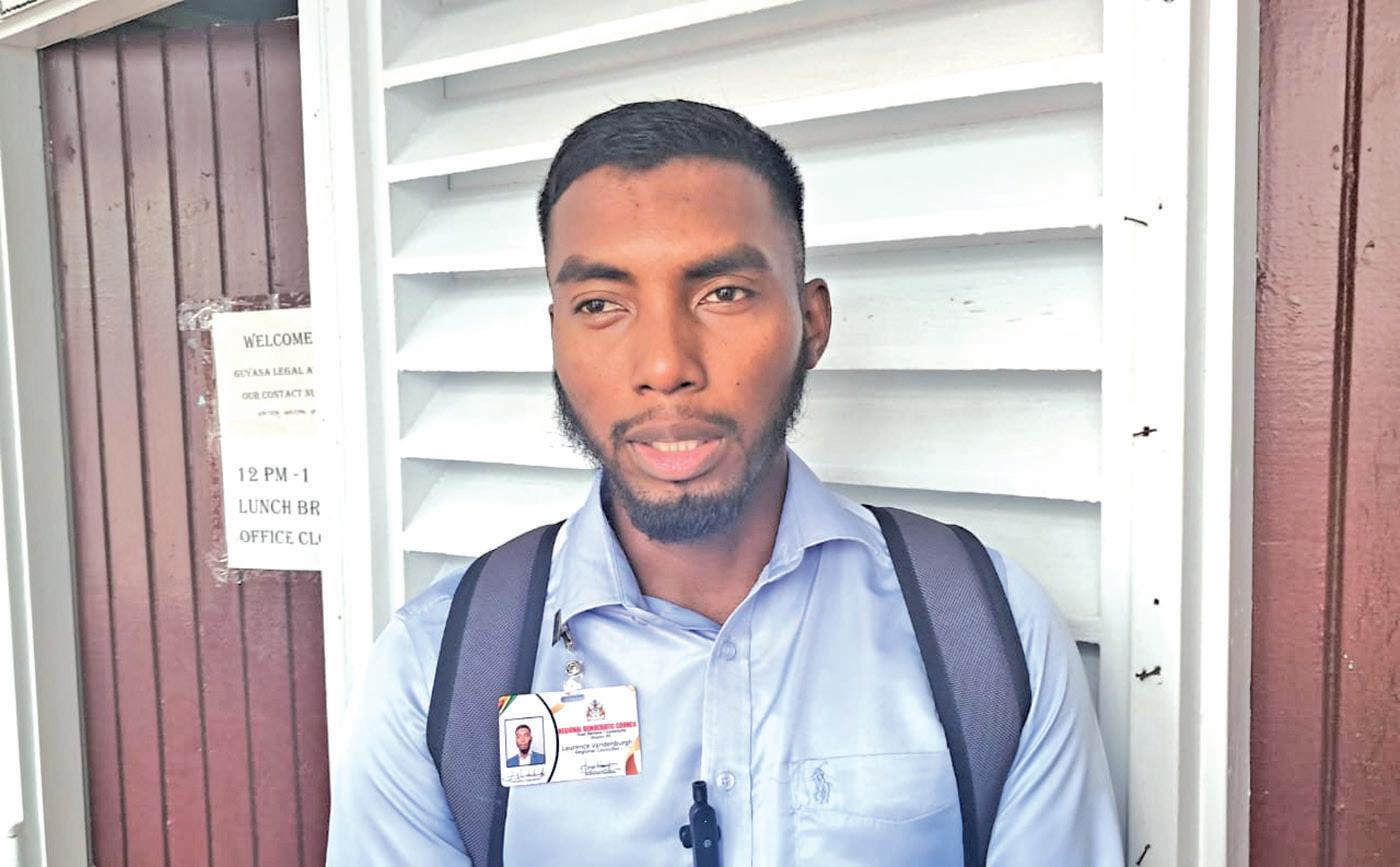
Toshao of Orealla-Siparuta, Laurence Vandenburg
Feared drowned: Arif Azeez
The jet ski on which the teen was riding at the Hot and Cold Lake, located at Sand Pit/Red Village, Region Two (PomeroonSupenaam)
2 voir hearings wrap up in 2020 election fraud trial
Trial in elections fraud case continued before Magistrate Faith McGusty at the Georgetown Magistrates’ Courts last week with the conclusion of proceedings into two voir dire relating to the admissibility of evidence against co-defendants Denise Babb-Cummings and Enrique Livan. The rebuttal witnesses were called in Livan’s matter, while the completion witnesses were called in Babb-Cummings matter.
Magistrate McGusty is now expected to hear from the lawyers on if they wish to make any written submissions before ruling on the voir dire proceedings.
Another voir dire involving evidence against former Region Four Returning Officer (RO)
Clairmont Mingo, is also still scheduled to proceed. Babb-Cummings, Livan and Mingo are three of nine co-defendants currently facing 19
charges of conspiracy to commit electoral fraud for the events that occurred following the March 2, 2020 General Elections. The other co-defendants include former Chief
Elections Officer (CEO)
Keith Lowenfield, Deputy CEO Roxanne Myers, former A Partnership for National Unity + Alliance for Change (APNU+AFC) Minister Volda Lawrence,
APNU+AFC Chief Scrutineer Carol Joseph and former Guyana Elections Commission (GECOM) employees Sheffern February, and Michelle Miller.
Among the offences these defendants are accused of committing are misconduct while holding public office; presenting falsified documentation; and planning to manipulate Guyana’s voters by presenting an inaccurate vote total. These charges stem from attempts to rig the 2020 Elections in favour of the then-ruling APNU/AFC.
The charges arose out of events that unfolded during the tabulation of votes in Region Four, the country’s largest electoral district. The controversy over the handling and dec -
laration of results in that region triggered a political and constitutional crisis that extended for five months, drawing regional and international scrutiny. The impasse ended after a national recount and a series of legal challenges, culminating in the swearing-in of Dr Irfaan Ali on August 2, 2020. The elections fraud trials first commenced on July 29, 2024 and was initially being heard by Magistrate Leron Daly. The trial was expected to run from July 29 to September 13, 2024. However, a series of delays and deferrals ensued and the matter was eventually brought before the court of now acting Chief Magistrate Faith McGusty, who continues to preside over the matter.
Murders, sexual offences among 20 cases concluded in Berbice, Essequibo Assizes
Eight matters in the Berbice October 2025 Assizes and 12 matters in the Essequibo October 2025 Assizes were disposed of in the first quarter of the year, with several matters still ongoing as the assizes continues. The Berbice Assizes continues until June, while the Essequibo Assizes remains in progress until May. In Berbice a further four cases were nolle prosequi and discontinued by the Director of Public Prosecutions (DPP). In one instance a simple larceny and possession of firearm and ammunition without licence case was discontinued due to an inability to locate the main witness, while three matters for sexual offences were discontinued after the com -
plainants declined to testify. In Essequibo nine matters were nolle prosequi by the DPP after complainants submitted statements indicating they did not wish to proceed with their matters. Of these matters, three were for sexual offences, four were for attempted murder, one for manslaughter and one for causing grievous bodily harm with intent to murder. In Berbice, State Counsel Marisa Edwards prosecuted the eight cases before Justice Deborah Kumar-Chetty. Of the eight matters two were murders, two were attempted murders, three were sexual offences and one was for the offence of embezzlement by a clerk or servant. In one of the murders trials the accused
was found guilty by a jury verdict and will be sentenced in April. The other accused pleaded guilty to the offence of murder in the furtherance of a robbery and was sentenced to life imprisonment with parole after serving 20 years. In one of the attempts to murder, the accused pleaded guilty to the alternative count of felonious wounding and was sentenced to 15 years and six months. He was ordered to continue alcohol rehabilitation and anger management while in prison. The other accused was acquitted by unanimous jury verdicts on both counts. In one the three sexual offence cases, the accused who pleaded guilty to the offences of Rape and Assault Causing Bodily
Harm was sentenced to 12 years and eight months imprisonment on the first count and three years and four months on the second count. The sentences will run concurrently. Of the two other matters, one accused was acquitted by a jury verdict. The complainant in the other matter testified that she did not wish to give evidence and the trial judge directed the jury to return a formal verdict of not guilty. In the embezzlement matter, the accused was found unanimously guilty and will be sentenced on April 30. Four matters were nolle prosequi by the DPP; one for the offences of Simple Larceny, and Possession of Firearm and Ammunition without Licence because the main witness could not be lo -
cated and three cases of Sexual Offences in which the complainants declined to testify. Meanwhile, State Counsels Caressa Henry, Fenton Budhram, Rodley Mathoo and Aleria Heywood presented the 12 matters in the Essequibo Assizes with two matters before Justice Priscilla Chandra-Hanif and 10 matters before Justice Fidela Corbin-Lincoln. The 2 matters before Justice Chandra-Hanif were for the offences of murder and Rape of A Child under 16 Years. The accused in the murder pleaded guilty to the lesser offence of manslaughter and was sentenced to 11 years and 8 months imprisonment after the Court made deductions for the guilty plea and mitigating factors. This sentence will run concurrent with a previous sentence of life imprisonment with parole after 20 years imposed on him in another trial. The accused for the offence of Rape of A child under 16 Years also pleaded guilty and was sentenced to 10 years imprisonment.
Of the 10 matters presented before Justice Corbin-Lincoln, five were for murder, three for sexual offences and one each for the offences of manslaughter and attempted murder with an alternative of felonious wounding. ln four of the five
murders, the accused all pleaded guilty. One accused is awaiting sentence in May for murder while three others pleaded guilty to the lesser offence of manslaughter; one of them was sentenced to 11 years imprisonment after the Court made deductions for his plea and mitigating factors. The other two had their sentences deferred. In the one other case, the jury returned a unanimous guilty verdict. Sentencing of the accused has been deferred. In the one manslaughter cases, the accused was found guilty by jury; and his sentence has been deferred. The accused in the one matter for the offence of attempted murder with an alternate count of felonious wounding, pleaded guilty to the alternate count and was sentenced to 10 years. This sentence will run concurrently with a previous sentence imposed on him for the offence of murder. ln one of the three sexual offences matters, the accused pleaded guilty to the offence of Rape of A child under 16 years. He was sentenced to nine years and eight months imprisonment after the Court made deductions for his plea. The accused in the other two matters were both acquitted by unanimous jury verdicts.
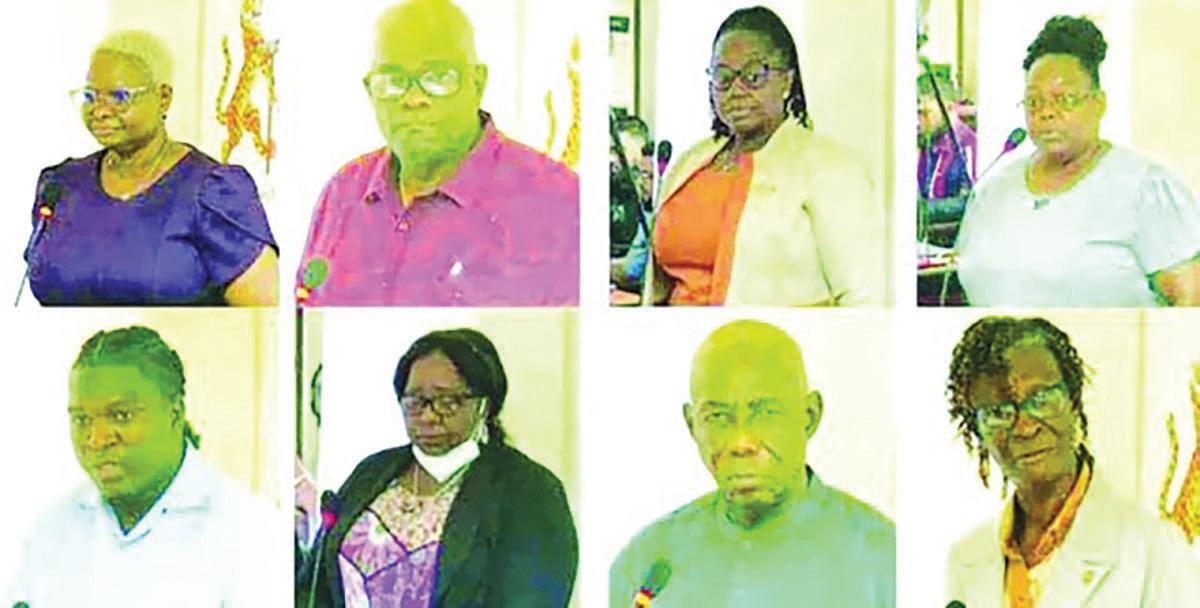
Top row, from left: Volda Lawrence, Keith Lowenfield, Denise Babb-Cummings, and Michelle Miller. Bottom row, from left – Enrique Livan, Sheffern February, Clairmont Mingo, and Carol Smith-Joseph [Some of the individuals facing charges in relation to electoral fraud]
Justice Deborah Kumar-Chetty
Justice Fidela Corbin-Lincoln
Justice Priscilla Chandra-Hanif
Why this matters now
Every year on April 7, the world observes World Health Day, a reminder that health is not just a personal issue; it is a fundamental human right. The 2026 theme, “Together for health. Stand with science”, highlights a critical message: strong health systems depend on trust in science, collaboration, and informed decision-making.
Yet for many people, access to timely, high-quality health care is not guaranteed. Across low- and middle-income countries, including Guyana, barriers such as cost, distance, limited services, and delayed care continue to affect health outcomes (World Health Organisation, 2023).
The question we must ask is simple: Can everyone access the care they need, when they need it?
What does “health as a right” mean?
The concept of health as a human right means that every person should have access to essential healthcare services without financial hardship. This includes preventive care, treatment, rehabilitation, and health promotion (WHO, 2023).
Health is not only the absence of disease. It includes physical, mental, and social well-being. When access to care is unequal, health outcomes become unequal.
In practical terms, this means that where you live, how much you earn, or who you are should not determine whether you receive care.
The reality in Guyana Guyana has made sig-
HEALTH TIPS
Health is a right, not a privilege – what it means for Guyana
…Why access to care, prevention, and equity must be at the centre of our health system
nificant progress in expanding healthcare services, particularly in Infectious disease treatment, chronic disease management, maternal health, and vaccination. However, challenges remain.
People living in remote or hinterland regions may face long travel times to reach health facilities.
Some communities experience shortages of healthcare workers or limited access to specialised services. Delays in diagnosis and treatment are still common, especially for chronic diseases.
These gaps are not unique to Guyana but addressing them is essential for improving population health.
Why prevention is central to health equity
Many of the diseases discussed in this series – diabetes, hypertension, stroke, kidney disease, cancer, and infections –share a common pattern: they often develop silently and are detected late.
Preventive healthcare changes this pattern. Routine screening, early diagnosis, vaccination, and health education reduce disease burden and improve outcomes (Maciosek et al, 2010).
Prevention is also more cost-effective than treatment. It reduces hospital admissions, complications,
and long-term disability.
A health system that prioritises prevention promotes equity.
Barriers that still exist
Despite progress, several barriers continue to affect access to care. These include:
•Financial constraints
•Geographic distance
•Limited awareness
•Fear and stigma
•Delays in seeking care
For example, many people delay testing for conditions such as STIs, TB, or cancer due to fear or embarrassment. Others may not seek care until symptoms become severe.
These barriers contribute to late diagnosis and poorer health outcomes.
The role of primary healthcare
Strong primary healthcare systems are the foun-
dation of equitable health access. Primary care services provide the first point of contact for individuals and communities.
When primary care is accessible and well-resourced, it enables early disease detection, management of chronic conditions, and delivery of preventive services.
The World Health Organisation emphasises that strengthening primary health care is one of the most effective ways to achieve universal health coverage (WHO, 2023).
Health is more than hospitals
Health is influenced by more than medical care. Factors such as housing, education, employment, nutrition, and environment all play a role. These are known as the social determinants of health (Marmot et al, 2008).
For example, overcrowding increases the spread of infections like TB. Poor diet contributes to diabetes and heart disease. Stress and economic pressure affect mental health.
Addressing these broader factors is essential for improving health outcomes at a population level.
The role of communities and individuals
While health systems are critical, individuals and communities also play an important role. Seeking care early, attending regular check-ups, following treatment plans, and adopting healthy behaviours all contribute to better outcomes.
Communities can support health by promoting awareness, reducing stigma, and encouraging positive health practices.
Health is a shared responsibility.
Moving towards universal health coverage
Universal health coverage means that everyone receives the health services they need without financial hardship. It is a global priority and a key goal of public health systems worldwide (WHO, 2023).
Achieving this requires:
•Investment in health systems
•Training and retention of healthcare workers
•Strengthening infrastructure
•Expanding access to services
•Improving health education
For Guyana, continued progress in these areas will be essential for ensuring equitable access to care.
Why this matters for the future
Health systems that prioritise equity and prevention are more resilient. They are better prepared to respond to emerging challenges, including infectious disease outbreaks, chronic disease burdens, and environmental threats.
Investing in health today protects future generations.
Health should not depend on where you live, what you earn, or how quickly you can access care. It is a fundamental human right.
On this World Health Day, the message is clear:
Check early. Seek care. Support each other.
Health is a right for everyone, everywhere.
References 1. World Health Organisation. Universal Health Coverage and Health Systems Strengthening. WHO; 2023.
2. Maciosek MV, Coffield AB, Edwards NM, et al. Prioritising clinical preventive services. Am J Prev Med. 2010;38(1):1-12.
3. Marmot M, Friel S, Bell R, et al. Closing the gap in a generation: health equity. Lancet. 2008;372(9650):1661-1669.
T&T PM presses Caricom on SG reappointment process
Trinidad and Tobago
Prime Minister Kamla Persad-Bissessar has renewed calls for transparency from Caricom over the reappointment of Secretary General Carla Barnett, warning that her Government will continue to challenge what it describes as an improper process. She has also threatened to withhold funding from Trinidad and Tobago for the regional organisation.
In a Facebook post, Persad-Bissessar said that Trinidad and Tobago remained committed to Caricom but would not relent until what she termed a “surreptitious and odious” process was fully explained. She argued that the appointment carries implications for the country’s economy, security, regional integration, and foreign affairs over the next five years.
The Prime Minister stated that the Government has formally objected to the reappointment, maintaining that it was not conducted in accordance with Article 24 of the Revised Treaty of Chaguaramas, which requires formal consideration by the Conference of Heads
of Government. She referenced correspondence sent on March 25 by Minister of Foreign and Caricom Affairs, Sean Sobers to Caricom Chairman Terrance Drew, outlining Trinidad and Tobago’s objection.
According to the Prime Minister, the proposed reappointment was not included on the provisional agenda of the 50th Regular Meeting of the Conference of Heads of Government, held in Saint Kitts and Nevis, and was not addressed during plenary discussions. She claimed the matter was in-
stead raised during a Heads of Government retreat, from which some Member States, including Trinidad and Tobago, were excluded through their authorised representatives.
Persad-Bissessar said that further letters were dispatched on March 31 to both Drew and Barnett, seeking details on how the matter was introduced, what communications were shared with Member States, and whether any decisions were circulated after the retreat.
(Excerpt from Trinidad and Tobago Guardian)
Venezuela’s Government, Opposition may cooperate to safeguard US assets
Venezuela’s Government and its political Opposition are seeking to coordinate their legal defence of the oilrich country’s United States assets, after Washington’s official recognition of interim President Delcy Rodriguez raised questions about who could represent the country in US courts.
Lawyers for Rodriguez’s Government and the Opposition asked Manhattan-based US Magistrate Judge Sarah Netburn on Monday to pause for 45 days a case in which creditors are seeking to seize funds linked to state oil company Petroleos de Venezuela (PDVSA) while they determined who would represent Venezuela’s interests.
The letter signalled potential cooperation between the Opposition and Rodriguez’s Government in the safeguarding of US assets, including Houstonbased oil refiner Citgo Petroleum from creditors, including holders of debt issued by PDVSA and Venezuela’s Government, companies whose Venezuelan assets were expropriated, and victims of acts of alleged terrorism.
Venezuela’s Information Ministry, which handles media requests on the Government’s behalf, did not immediately respond to a request for comment.
Relations between the Opposition and Venezuela’s socialist government have long been acrimonious. The Opposition has con-
trolled US assets including Citgo since 2019, when Washington first imposed sanctions on PDVSA in a bid to pressure now-jailed President Nicolás Maduro to leave office.
Washington in March recognised Rodriguez as Venezuela’s leader, following the capture of Maduro by US forces. She is now preparing to take over the boards of PDVSA’s US subsidiaries, including Citgo, Reuters reported on April 1, citing four persons close to the preparations.
The US recognition of Rodriguez’s Government prompted Netburn to ask the parties to the lawsuit to clarify who had authority to represent Venezuela in court. (Excerpt from Reuters)
Vizsla Silver confirms 9 dead workers after abduction at Mexican mine
Canadian miner
Vizsla Silver on Monday confirmed the death of nine of its 10 workers who had been abducted in Concordia, in the Mexican state of Sinaloa, in late January.
In February, the Mexican attorney general’s office said it had found 10
bodies in the municipality, identifying five at the time.
Two more workers of the Vancouver-based miner were later confirmed dead, while three remained missing.
The workers were abducted from a silver mine in an area that the security authorities say was
under the control of “Los Chapitos”, a faction of the Sinaloa cartel led by the sons of former drug lord Joaquin “El Chapo” Guzman.
Vizsla Silver said it continues to cooperate fully with Mexican authorities in their ongoing investigation. (Reuters)
US Democratic lawmakers visit Cuba, call on Trump to “bring the rhetoric down”
Two Democrats from the US House of Representatives visited Cuba last week, the first such delegation to go to the island this year since US President Donald Trump imposed a de-facto oil blockade in a bid to bring Cuba’s communist-run Government to its knees.
Congressional representatives Pramila Jayapal, a leading member of the progressive wing of the Democratic Party, and Jonathan Jackson, a Democrat with a long interest in Cuba, said they had come to “see the suffering that is happening on the ground” as a result of Trump’s fuel embargo, which they called “an illegal blockade of energy supplies”.
The lawmakers’ visit comes at a time of unprecedented tension in the decades-long frosty relationship between the United States and Cuba. The Trump Administration has closed the
tap on remittances to Cuba, threatened to slap tariffs on countries that provide oil to the island, and placed it on a list of nations that sponsor terrorism.
“This is the most sanctioned part of Planet Earth right now, just 90 miles off our shores,” Jackson told a small group of reporters at a privately-owned hostel near Havana’s waterfront. “Let´s bring the rhetoric down. People are suffering. And they are suffering
for no good reason.”
The lawmakers said their five-day trip, which ended on Sunday, included meetings with President Miguel DiazCanel, Cuban lawmakers and top officials at Cuba’s Foreign Ministry. Both nations have acknowledged they have begun talking, though few details of those discussions have been made public. (Excerpt from Reuters)
“JACDEN hasn’t broken any law” – Jamaican
Opposition Leader Mark Golding says based on the facts made available to him, he has seen nothing to suggest that JACDEN Limited has broken any laws, but nevertheless, JACDEN boss Dennis Gordon will step aside from the Public Accounts Committee (PAC) and the Shadow Cabinet with immediate effect, pending the completion of ongoing investigations.
“This situation with JACDEN has emerged in the public domain within the context of the many serious findings of maladministration at
Opposition Leader
the University Hospital of the West Indies (UHWI) in the Auditor General’s report,” Golding said in a statement Sunday.
“I believe it is essential that we consistently demonstrate our party’s commitment to high standards of probity in public affairs, and due respect for the spirit of the Leadership Code of Conduct that our Members of Parliament (MPs) and senators have all signed.”
The People’s National Party (PNP) President said Gordon has, as is appropriate, recused himself from the
PAC hearings considering the matter, and the PNP’s integrity commission will look into the matter closely and provide its recommendations. He said in coming to the decision, he is reiterating that, “I am not aware of anything which suggests Mr Gordon or JACDEN has breached any law”.
“Furthermore, JACDEN’s dialysis machines are now providing life-saving services to Jamaica’s renal patients at a lower cost than otherwise available in the marketplace,” Golding said. (Excerpt from Jamaica Observer)
PM Browne writes to international groups to observe general election
Antigua and Barbuda
Prime Minister Gaston Browne has written to three regional and international organisations requesting that they send representatives to observe the general election, the date for which he is expected to announce later this week.
In his letters to the Guyanabased Caribbean Community (Caricom) Secretariat; the Organisation of American States (OAS) and the Londonbased Commonwealth Secretariat, Browne wrote it was his intention, to today, Tuesday, April 7, 2026, to announce the date for the holding of general elections to elect a new government.
Browne, who is seeking a fourth consecutive term as Prime Minister, said that in these circumstances the Antigua and Barbuda Government “would welcome the presence of an Electoral Observer Mission,” adding that “all customary facilities
Antigua and Barbuda PM Gaston Browne
and courtesies accorded to previous Electoral Observer Missions will be extended”.
Governor General Sir Rodney Williams, acting under Section 60 (1) of the Constitution and on the advice of Prime Minister Gaston Browne, dissolved the Parliament paving the way for the General Election five months ahead of the constitutional deadline.
The election is expected to be a straight fight between the ruling Antigua and Barbuda
Labour Party (ABLP) and the main Opposition United Progressive Party (UPP). One political party, the Democratic National Alliance (DNA) has already announced that it will not be fielding candidates in the elections.
In the last general election which was held on January 18, 2023, the ruling ABLP won nine of the 17 seats with the others going to the UPP and a lone independent candidate. (CMC)
Caricom Secretary General, Dr Carla Barnett
Jonathan Jackson (D-IL) and Pramila Jayapal (D–WA), Opposition lawmakers from the US House of Representatives, pose for a photograph on the seafront boulevard Malecon, in Havana, Cuba, April 4, 2026 (Reuters/Norlys Perez photo)
OIL NEWS
Oil prices extend gains as Trump sharpens rhetoric on Iran
Oil prices extended gains today as US President Donald Trump heightened his rhetoric against Iran, threatening stronger action if the country fails to reopen the Strait of Hormuz, a key global oil transit chokepoint.
Brent crude futures rose 57 cents, or 0.5 per cent, to US$110.34 a barrel by 1202 GMT, while West Texas Intermediate (WTI) crude futures were up US$1.26, or 1.1 per cent, at US$113.67.
Trump has threatened to rain “hell” on Tehran if it fails to comply with his deadline of 8 pm EDT today to reopen the strait. “They could be taken out,” Trump warned, pledging further action if a deal is not reached.
Responding to a US proposal through mediator Pakistan, Tehran rejected a ceasefire and said a permanent end to the war was necessary, and pushed back against pressure to reopen the strait.
Iranian forces effectively shut the Strait of Hormuz after US and Israeli attacks began on February 28, disrupting a waterway that typically carries about 20 per cent of global oil flows.
“Clock-watching is now playing almost as big a role in oil markets as the fundamentals themselves in the run-up to Trump’s ultimatum deadline,” said Tim Waterer, chief market analyst at KCM Trade.
“The potential for a ceasefire deal offers some counterweight and could spark a relief move lower if it gains traction, but persistent supply worries from the Hormuz chokepoint and damaged energy facilities are keeping the floor under prices.”
On Monday, Iran’s Revolutionary Guards halted two Qatar liquefied natural gas tankers and directed them to hold position without providing explanations, sources told Reuters. However, shipping data has shown limited vessel movement through the strait since last Thursday.
The United Nations Security Council is expected to vote today on a resolution to protect commercial shipping in the Strait of Hormuz, but in significantly watered-down form after veto-wielding China opposed authorising force, diplomats said.
The attacks in the region continued as explosions were heard in the Syrian capital, Damascus, and surrounding countryside today after Israelis intercepted Iranian missiles, Syrian State TV reported.
Saudi Arabia said on Tuesday it intercepted and destroyed seven ballistic missiles launched towards its Eastern Region, with debris falling near energy facilities, according to the Defence Ministry.
The conflict has pressured global crude markets, with spot premiums for US WTI crude surging to record highs as Asian and European refiners scramble to secure replacement supplies amid disrupted Middle Eastern flows.
Saudi Arabia’s state oil company Aramco raised the official selling price of its Arab Light crude to Asia for May delivery, setting a record premium of US$19.50 a barrel above the Oman/Dubai average.
Adding to supply concerns, Russia on Monday said Ukrainian drones attacked the Caspian Pipeline Consortium’s terminal on the Black Sea, which handles 1.5 per cent of global oil supply. Russia reported damage to loading infrastructure and storage tanks.
The Organisation of Petroleum Exporting Countries and allies (OPEC+) agreed on Sunday to lift oil output quotas by 206,000 barrels per day (bpd) in May, though the increase will be largely notional as key members cannot boost production because strait closures are curbing exports. (Reuters)
Emergency jabs after 100 children die of suspected measles in a month in Bangladesh
Bangladesh has launched an emergency vaccination campaign after a fast-spreading measles outbreak is suspected of killing more than 100 persons, mostly children, in what may be the country’s most lethal wave of the disease in recent history.
The campaign, which began on Sunday, comes amid more than 7500 suspected measles cases since March 15, according to health ministry data.
More than 900 of these cases have been confirmed –a sharp increase from 2025, when just 125 measles cases were recorded over the entire year, local media report.
While Bangladesh has long vaccinated children against the highly contagious disease, the recent outbreak has exposed gaps in its programme, raising concern.
”Vaccines are foundatio-
nal to child survival,” Rana Flowers, the UNICEF representative in Bangladesh, said in a statement on Sunday, adding that the current measles outbreak was ”putting thousands of children, especially the youngest and most vulnerable, at serious risk”.
(Excerpt from BBC News)
Around the World
Iran rejects ceasefire as Trump says entire country can be “taken out”
Iran said on Monday it wanted a lasting end to the war with the United States and Israel, and pushed back against pressure to reopen the Strait of Hormuz while US President Donald Trump warned the country could be ”taken out” if it did not meet his deadline tonight to reach a deal.
Responding to a US proposal through mediator Pakistan, Tehran rejected a ceasefire and said a permanent end to the war was necessary, the official IRNA news agency reported.
The Iranian response consisted of 10 clauses, including an end to conflicts in the region, a protocol for
safe passage through the Strait of Hormuz, lifting of sanctions and reconstruction, the agency added.
Trump, who has threatened to rain ”hell” on Tehran if it did not make a deal by 8 pm EDT tonight to open the Strait of Hormuz, a vital route for global
energy supplies, rejected the Iranian response and said his deadline was final.
At a news conference, Trump said Iran could be ”taken out” in one night ”and that night might be tomorrow night,” referring to tonight. He vowed to destroy Iranian power plants
and bridges, brushing off concerns that such actions would be a war crime or alienate Iran’s 93 million people.
Without an agreement with Tehran, Trump said, ”Every bridge in Iran will be decimated” and ”every power plant in Iran will be out of business, burning, exploding, and never to be used again”.
Iran’s top joint military command in turn said Trump was ”delusional” and called Trump’s warnings ”rude, arrogant rhetoric and baseless threats,” according to a statement by spokesperson Ebrahim Zolfaqari on State TV.
(Excerpt from Reuterws)
UN expected to vote on watereddown Hormuz resolution today
The United Nations Security Council is expected to vote today on a resolution to protect commercial shipping in the Strait of Hormuz, but in significantly watered-down form after veto-wielding China opposed authorising force, diplomats said.
Oil prices have surged since the United States and Israel struck Iran at the end of February, unleashing a conflict that has run for more than five weeks and seen Tehran largely close the Strait, a vital energy artery.
Efforts by Bahrain, the current chair of the 15-member Council, to secure a resolution have involved multiple drafts seeking to overcome opposition from China, Russia, and others. The latest iteration, seen by Reuters, drops any explicit authorisation of the use of force.
Instead the text, ”strongly encourages States interested in the use of commercial maritime routes in the Strait of Hormuz to coordinate efforts, defensive in nature, commensurate to the circumstances, to
contribute to ensuring the safety and security of navigation across the Strait of Hormuz.”
It says such contributions could include ”the escort of merchant and commercial vessels,” and the text also endorses efforts ”to deter attempts to close, obstruct or otherwise interfere with international navigation through the Strait of Hormuz”.
Crude and condensate exports from most Gulf countries have fallen as the US-Israel war with Iran effectively shuts the Strait of
Hormuz.
Crude and condensate exports from most Gulf countries have fallen as the US, Israel war with Iran effectively shuts the Strait of Hormuz.
Diplomats said the watered-down version had a better chance of passing, but it remained unclear if it would succeed. It requires at least nine votes in favour and no vetoes from the five permanent members – Britain, China, France, Russia, and the US. (Excerpt from Reuters)
Romanian court lifts judicial controls against Andrew Tate, pending investigation
ARomanian court on Monday lifted all preventative judicial control measures against internet personality Andrew Tate and his brother Tristan pending a criminal investigation on accusations of human trafficking, among others.
In December 2022, Romanian anti-organised crime prosecutors detained the brothers for a criminal investigation, initially holding them in Police custody
for months as a preventative pre-trial measure. The Bucharest court of appeals relaxed the measure to house arrest in 2023 and later to regular check-ins with the Police.
The brothers, both former kickboxers with dual US and British citizenship, have denied all wrongdoing.
On Monday, the Bucharest court ruled to remove the obligation of regular check-ins. The ruling is final and cannot not be ap-
pealed, the court said.
”This decision confirms what we have argued consistently from the beginning, the case was built on questionable evidence,” the Tates’ lead defence lawyer Eugene Vidineac said in a statement.
The Bucharest court of appeals ruled against sending the Tates to trial in 2024 and sent the case back to Prosecutors after removing several pieces of evidence that were ”deemed
inadmissible”, including initial testimonies from their alleged victims from the file. Prosecutors are still investigating the first case, but in 2024 they began a second criminal investigation against the Tates and four other suspects on suspicion of forming an organised criminal group, human trafficking, trafficking of minors, sexual intercourse with a minor and money laundering. (Excerpt from Reuters)
Artemis II breaks Apollo 13 record for farthest human travel from Earth
NASA’s Artemis II mission has broken the record for the farthest human travel from Earth.
The four astronauts on board the Orion spacecraft surpassed the previous record of 400,171km (248,655 miles) on Monday at 15:58 GMT. The record was set by Apollo 13 in April 1970.
The mission, which is travelling around the far side of the moon, is due to reach
its maximum distance of roughly 406,788km (252,760 miles) from Earth at 23:07 GMT.
The mission will journey around the moon in a flyby, during which the crew will spend more than six hours analysing and documenting lunar surface features. The Orion capsule will then head back to Earth in a “free-return trajectory”, a return trip that will take about four
days.
The astronauts began their landmark day with a message from the late Jim Lovell, who took part in the Apollo 8 and 13 missions and recorded the message shortly before his death.
“It’s a historic day, and I know how busy you’ll be, but don’t forget to enjoy the view,” Lovell said.
“Welcome to my old neighbourhood. I’m proud to
pass that torch on to you as you swing around the moon.”
Travelling around its far side, the astronauts will witness previously hidden lunar territory.
One image sent back by the crew showed the moon’s Orientale basin, a massive crater that before had only been viewed by orbiting cameras on uncrewed missions.
Despite the technological advancements since the Apollo
era, NASA still relies on the eyesight of its astronauts to learn more about the moon.
“The human eye is basically the best camera that could ever or will ever exist,” Kelsey Young, the lead scientist for the Artemis II mission, told the AFP news agency. “The number of receptors in the human eye far outweighs what a camera is able to do.”
(Excerpt from Al Jazeera)
Emergency personnel work at the site of a projectile impact, as the US-Israel conflict with Iran continues, in Haifa, Israel, April 6, 2026 (Reuters/Shir Torem photo)
SUDOKU
HOROSCOPES
Start decluttering, pay it forward and lower your overhead. A heart-to-heart talk will help set new living standards that offer less stress. Avoid crowded venues and taking on physical tasks that are unrealistic.
Look for the good in everyone and everything. Gratitude is your ticket forward. Master the art of peace over chaos, and the universe will align with what you are trying to achieve.
It’s what you do that matters. Emotional blackmail, stretching the truth and blaming others for your shortcomings will backfire. Take time to reflect on the past, and let it go.
Think before you act. Problems will arise if you are negative or overbearing. Choose to be forgiving and objective and to look on the bright side of life. The vibe you release will determine what you receive in return.
A quick reaction will lead to damage control. When in doubt, ask questions. Take control, and use your imagination. Choose your battles wisely and your friends for who they are and what they stand for.
Focus on what you can do to even out the playing field and to bring about positive change. Keep your rhetoric simple, truthful and easy to understand. Sticking to detail and being precise will simplify matters.
Choose to socialize, network and get to know newcomers in your life better. Listen more, and you’ll gain insight into what others want and what you will receive in return.
Let your mind, intelligence and awareness lead the way. Walk away from pushy people looking to derail your confidence. Choose to expand your skills, experience and qualifications, and shoot for the stars.
You’ll have to step outside your comfort zone if you meet with opposition. Keep life simple, show kindness, dedication and loyalty, and proceed with the intent to live up to your promises.
Put emotions aside and recognize what’s factual and what’s fictional. Someone will try to take advantage of you or separate you from your cash if you are too accommodating.
Stop, look around you, assess your situation and don’t fear making a reverse maneuver. A simpler alternative is within reach if you are rational and willing to compromise.
You have plenty to gain if you research and map out a path forward that is dedicated to a beneficial outcome. Avoid temptation, indulgence and letting others dictate what your next move is.
ARCHIE
Indian Premier League
Washout gives KKR 1st point after Bartlett’s new-ball burst
Kolkata Knight Riders (KKR) got their first points of Indian Premier League (IPL) 2026, but without a victory against their name after their home clash against Punjab Kings (PBKS) was washed out on Monday night. Desperate for a win after starting the campaign with two losses on the bounce, KKR were reeling against the swing of Xavier Bartlett and were 25 for 2 in 3.4 overs when drizzle stopped the game.
It soon turned into heavy rain with gusts of wind and the entire ground went under white covers. From 7:48pm IST, when the players went off the field, the spectators waited until 11pm when play was called off.
PBKS top the table for now as the only team with five points; three teams are on their heels with four points each.
Rain stopped at around 10:30pm, and hopes of a shortened game lingered briefly as the covers started
to come off, but with plenty of water coming off the covers and accumulating near the boundary areas, it was not possible to get the field ready in time for a five-overs-a-side
contest.
KKR’s struggles with the bat continued after their Captain, Ajinkya Rahane, surprisingly chose to bat. They were also without their
spin twins of Sunil Narine and Varun Chakravarthy; the last time KKR had played a match without either was back in 2019. While Narine was unwell, Varun
had injured his left hand while fielding in their previous game, against Sunrisers Hyderabad. Varun was seen in the dugout with strapping on his hand.
Arshdeep Singh started well for PBKS, swinging the ball both ways in the first over, before Bartlett took over with his hooping outswingers. He beat Finn Allen three times in a row with outswing at the start of the second over before extracting his outside edge to send him back for six. Next ball, he drew a thick edge from Cameron Green that went for four, and he then pounded in another zippy outswinger that kissed Green’s outside edge for another caught-behind.
In just three balls, KKR had slipped from 12 for 0 to 16 for 2 as Rahane watched from the other end. It had drizzled a bit through that period of action, and the umpires called for the covers in the fourth over.
The only reason for the KKR faithful to cheer was when franchise co-owner Shah Rukh Khan was shown on the big screen and when he later appeared on the balcony to wave to the fans. (ESPNcricinfo)
Arteta calls for perspective as Arsenal look to avoid slump
When Arsenal face Sporting in their Champions League quarter-final first leg on Wednesday, there will be much more riding on the game than just a knockout match in Lisbon.
For many, this is where the Gunners need to show back-to-back defeats, against Manchester City in the Carabao Cup final and the damaging loss to Southampton in the FA Cup quarter-final, will not leak into their European and Premier League campaigns.
Arsenal have been tagged as the ‘nearly men’ under Mikel Arteta with three successive second-placed finishes in the Premier League in the last three seasons.
But the Gunners have played a ruthless style of football this season, which has seen them establish a nine-point lead in the Premier League, reach the final of one cup competition and, depending what happens in two legs against Sporting, at least
time this season
the quarter-final stage of the two other cup campaigns they began.
Their style of play has been questioned at times, but now it is the team’s mentality that is coming under the spotlight.
The Gunners have been so impressive this season that their defeats by City and Saints are the first time they have lost successive matches this campaign, while the loss on the south coast was just the fifth of the season.
But, with the Champions League and Premier League the top
prizes for the Gunners, this is where Arteta needs to show the pain of coming so close in precious campaigns is not going to overwhelm his side as they look to win their first major trophy since 2020.
“Have some perspective about how difficult it is what we have done until now,” said Arteta, when asked how he and the team prevent a longer run of defeats.
“Feel the pain, feel the emotion, and use it to be better and improve.”
The Spaniard said his team are “very clear” why
they lost to Southampton and believes they did not deserve to beaten.
“This is football and we got punished for things that are related to our identity,” he said. “These are things we need to defend in the strongest possible way.”
The Gunners boss said Arsenal are “hungrier than ever” and that the defeats do not change the importance of the last-eight match against Sporting.
“If we had won the game, this is the quarter-finals of the Champions League, it doesn’t get much better,” he added.
“We worked so hard throughout the season to be at this stage in the competition. We are going to play an opponent that we know about their records and what they have done.”
Arsenal will be wounded beast Sporting boss Borges
The reason there is so much worry the nine-point gap is not enough to stop City chasing Arsenal down in the Premier League is
that Pep Guardiola’s side seem to have found form and their rivals are having to juggle injuries to key players.
City produced two of their best performances of the season when they defeated Arsenal 2-0 at Wembley and thumped Liverpool 4-0 in the FA Cup at the weekend.
During the international break, 11 Arsenal players withdrew from their national teams with injury issues and Arsenal are going to be without Bukayo Saka and Jurrien Timber for the match.
Centre-back Gabriel Magalhaes came off with a knee issue against Southampton on Saturday, while Captain Martin Odegaard is building up his fitness after his own injury issues and was substituted after an hour.
Sporting Head Coach Rui Borges does not think the fact Arsenal have lost their last two matches will make much of a difference.
“They will be like a wounded beast,” he said.
“They will be more focused, more willing to show their collective and individual capacity.
“It will make things more difficult for us that they have not had the best two last matches. But Arsenal will be facing a very motivated team in us.
“We believe we can do something extraordinary, something that has never been done by Sporting.”
The Portuguese side have never reached the semi-finals of the Champions League and are looking to heap pressure on the Gunners.
Arsenal goalkeeper David Raya echoed the sentiment of the Sporting Coach, saying his side are going to use the disappointment of recent results to turn things around.
The Spaniard said: “We just have to use that fuel and pain we had after the game to pick it up for the rest of the season. It starts against Sporting. That is the most important game.” (BBC Sport)
Before taking on Sporting, Arsenal have lost back-to-back games for the first
PBKS may have felt that the rain cost them a point
Funding, perception hindering growth of archery in Guyana
The dream of producing world-class archers in Guyana continues to face significant hurdles, according to Courtlee Rodrigues, President of Golden League Archery and national archery coach at the University of Guyana (UG).
Rodrigues points to a long-standing cultural perception as one of the major obstacles.
“Perception of sports as a way to earn a living in Guyana has been bleak for many years,” he explained. “Archery, being a lesser-known and shorter-existing sport in the country, suffers from this as well.”
Unlike more traditional disciplines, archery does not yet enjoy wide -
spread recognition or confidence as a viable professional pathway. Rodrigues noted that interest in athletes and sports tended to intensify only during Olympic seasons, when
national pride peaks. Outside of those moments, sustained public and corporate support often dwindles.
Financial constraints further compound the
challenge. Archery is an equipment-intensive sport, and the cost of entry is steep. A basic starter bow can cost approximately $40,000, while an Olympic-style bow may reach as high as $800,000.
For many aspiring athletes, these expenses are prohibitive.
“Archery is a team sport, but not necessarily a team-played sport,” Rodrigues said.
While competitors shoot individually, their success depends heavily on a support system that includes coaches, physiotherapists, proper training facilities, specialised gear, and adequate nutrition. However, the limited perception of sport as a professional pursuit narrows the level of support
athletes receive.
Funding, when available, does not always flow smoothly. Rodrigues highlighted bureaucratic bottlenecks and lengthy technical processes that sometimes delay or restrict athletes from accessing financial assistance owed to them. These administrative challenges can stall progress at critical stages of development.
As a result, many talented archers are forced to treat the sport as a hobby rather than a career.
“Guyanese archers either shoot for fun or are only able to compete up to a certain level,” Rodrigues said. Those fortunate enough to secure sponsorships are able to travel internationally and gain valuable competitive ex -
GMR&SC adds female class to April 11 Dexterity and Auto Expo
The Guyana Motor Racing and Sports Club
(GMR&SC) has added a dedicated female class for its upcoming Dexterity and Auto Expo, with registration ongoing.
The event, scheduled for April 11 at the National Track and Field Centre parking lot in Leonora, West Coast Demerara (WCD), is already attracting growing interest from competitors and enthusiasts.
Organisers say the addition of a female category represents a meaningful step towards ensuring that more women feel welcomed and encouraged to compete.
A club spokesperson noted that fostering female participation was a key priority for the organisation.
“Motorsport has traditionally been male dominated, but we want to change that narrative. It’s important for us
to create opportunities where women feel comfortable entering and competing, and the female class is one of the ways we’re doing that,” the spokesperson said.
The spokesperson added that the initiative aligned with the club’s wider vision of making motorsport more accessible to a diverse audience.
“Inclusivity is critical to the growth of the sport. We
want to ensure that anyone with an interest –regardless of gender – has a pathway to get involved.”
Sponsored by ENET, GuyOil, and Castrol, the Dexterity and Auto Expo will combine competitive driving with fan engagement activities. Registration is currently open at the club’s Thomas Lands office and online, with organisers encouraging early
sign-up as interest continues to build.
Unlike traditional racing formats that emphasise speed and engine power, the dexterity competition will focus on precision, control, and technical skill.
Participants will be required to navigate a series of obstacle courses designed to test manoeuvrability and accuracy.
Organisers indicated that six to seven course configurations are being considered, with competitors aiming to complete each in the fastest possible time.
Classes will follow a structure similar to endurance racing categories – 0-1500cc, 1501cc-1600cc, 1601cc-2000cc, and unlimited – with separate divisions for cars and motorcycles, in addition to the newly-introduced female class.
Beyond the dexterity competition, the event will feature a range of motorsport attractions, including racing challenges, motorcycle stunt riding, competitive go-karting, and drifting exhibitions.
An auto expo will follow the competition, providing patrons with an opportunity to interact with drivers and view a variety of vehicles up close.
Admission is set at $2000, with gates opening at 16:00h.
RFA Senior Women’s League kicks off April 11 with zonal format in Rupununi
The Rupununi Football Association (RFA) is set to launch its Senior Women’s League on April 11, with a double-header at the Wadapana Ground in Lethem.
In an invited comment, RFA Public Relations Officer Norbert Salty told Guyana Times Sport that it was a competition designed to accommodate the region’s vast geography while promoting women’s football.
The opening fixtures will feature Central Rupununi teams, with Gladiators FC taking on Martin’s Netrockers, followed by Saints FC against 7K United on the same day in Lethem. The league is scheduled to run until June, with matches to be played across multiple venues throughout the Rupununi.
Rupununi, teams are further divided into North A and North B zones. North A includes 3 Hills FC, Paiwomak FC, All Stars Blazers and Challengers FC, while North B comprises Yakarinta FC, Basin FC, Strikers FC, and Legends FC.
To manage travel and participation across the expansive region, the RFA has divided the competition into four clusters – South Rupununi, Central Rupununi, East Central Rupununi, and North Rupununi. Teams within each cluster will compete against each other in the opening round.
At the conclusion of the cluster phase, the top three teams from each zone will advance to the playoff stage, where cross-cluster matchups will be contested in a knockout format to determine the champion.
The Central Rupununi cluster will feature Netrockers FC, Saints FC, Gladiators FC and 7K United. In the North
The East Central Rupununi cluster will include Kanuku Warriors FC, Jaguars FC, Hiowa Undertakers FC and Moco FC. Meanwhile, the South Rupununi cluster will see participation from Potaro Sky Kings FC, Shiriri FC, Koshardin FC, and Snipers FC.
The second round of fixtures is scheduled for April 18 in the North Rupununi cluster, featuring 3 Hills FC against All-Star Blazers, and Paiwomak FC versus Challengers FC.
Matches will be staged at a number of community grounds across the Rupununi, including the Wadapana Ground, Kwatamang Ground, Annai Community Ground, Basin Ground, Kwaimatta Ground, Yakarinta Ground, Hiowa Ground, Nappi Ground, and Moco Moco Ground. Additional venues include Potarinau Ground, Shulinab Ground, Awarewaunau Ground and Sand Creek Ground.
A total prize pool will be distributed at the conclusion of the tournament, with the champions set to receive $500,000, second place $300,000, third place $200,000 and fourth place $100,000. Individual awards will also be presented for the highest goal-scorer, best goalkeeper, and Most Valuable Player.
posure. However, such sponsorships are rare. Most local archers must juggle work or academic commitments alongside training. “Instead of being paid to do what they’re good at – shooting – they have to work and study and shoot when they can,” Rodrigues emphasised.
Despite these challenges, Rodrigues remains hopeful. He believes that with improved perception, streamlined funding systems, and stronger corporate backing, Guyana has the talent to produce world-class archers. For now, however, the sport’s growth depends on shifting mindsets and building sustainable support structures that allow athletes to focus fully on their craft.
Members of Golden League Archery
Female participation can also be expected at the Dexterity and Auto Expo
Paiwomak FC will be participating in the RFA Senior Women’s League
CARIFTA Games…
Solomon’s near-record run brings medal count to 6 on final day
Guyana’s medal hunt at the CARIFTA Games in Grenada continued on the third and final day, with Olivia Solomon securing gold in the girls’ Under-17 800 metres at the Kirani James Stadium.
Solomon, who is based in the United States, delivered a strong performance in the afternoon session to clock 2 minutes, 10.76 seconds, earning Guyana its fourth gold medal of the championships. She finished ahead of Grenada’s Annalisa Brown, who took silver in 2:14.40s, and Haiti’s Aisha Wajid, who claimed bronze in 2:14.96s.
Earlier in the day, Guyana’s Jarel Campbell narrowly missed out on a podium finish in the boys’ Under-17 long jump final. Campbell registered a best
leap of 6.44 metres on his opening attempt, but was unable to improve on that mark across his remaining jumps. His final attempt measured 6.43m, leaving him in fourth place.
Trinidad and Tobago’s Michal Paul won the event with a jump of 6.93m, while Jamaica’s Talshawn Edwards (6.71m) and Saint Lucia’s Randall Monroe (6.60m) secured second and third respectively.
In the middle-distance events, Guyana’s Bryson Anderson placed seventh in the boys’ Under-17 800 metres final, recording a time of 2 minutes, 1.67 seconds. The race was won by Sint Maarten’s Nahjah Wyatte in 1:53.26s. Meanwhile, in the boys’ Under-20 800 metres final, Guyana’s Javon Roberts
finished just outside the medals in fourth place,
clocking 1 minute, 52.13 seconds. Trinidad and Tobago’s Kiile Alexander took gold in 1:50.38s, followed by Grenada’s Nicholas Frederick (1:51.22s) and Jamaica’s Joel Morgan (1:51.72s), who claimed silver and bronze respectively.
In the full distance events, Guyana’s Ebo Mc Neil was good enough for a seventh-place finish in the Boys’ U20 5000m event. Mc Neil stopped the clock at 16 minutes, 31.08s. Barbados’s Luke McIntyre surged to the top of the podium with a 15-minute, 42.51 run. US Virgin Islands’ Ayden Cintron (16:03.61) and Trinidad and Tobago’s Jeremy Samaroo (16:07.34) placed second and third.
Over in the sprints, Tishawn Easton clocked 21.00s to finish fifth in the boys’ U20 200m event. Jamaica’s Sanjay Seymour took the gold in that event with 20.63s while Miles Outerbridge of Bermuda (20.67s) and The Bahamas’ Eagan Neely (20.73s) completed the podium.
Thereafter, Guyana closed their participation in this year’s games with a fifth-place finish in the U20 boys’ 4x400m relay. The quartet of Tishawn Easton, Kaidon Persaud, Skylar Charles and Javon Roberts combined their efforts for a 3-minute, 13.67 run.
Barbados took the gold in 3 minutes 05.49s for a new CARIFTA record while Jamaica (3:06.79) and Trinidad and Tobago (3:10.64) completed the podium.
As such, Guyana ended their 2026 CARIFTA Games campaign with six medals, four of which are gold. Malachi Austin copped gold in the boys’ U20 400m; Tianna Austin also struck gold in the female version of that event. That duo later combined their efforts alongside Tishawn Easton and Akeelah Dover for a recordbreaking run and gold in the U20 Mixed 4x400m relay. While Olivia Solomon added Guyana’s fourth gold medal on Monday, Jermaine Shepherd copped silver in the U17 1500m event and Javon Roberts got his hands on bronze in the Boys’ U20 1500m run.
Guyana defeat Barbados to secure U15 series triumph
Guyana sealed the Cricket West Indies (CWI) Rising Stars Under-15 50-over Bilateral Series with a commanding 37-run victory (DLS) over Barbados in the fifth and final match at the Albion Sports Complex on Monday. In a contest once again disrupted by rain – a recurring theme throughout the series – Guyana produced a disciplined all-round performance to secure a 2-0 series triumph in what proved to be a stop-start five-match encounter. With overs reduced to 20 per side, Guyana posted a competitive 115-7 after batting first. Asgarally Nabbie led the charge at the top of the order
tone for the innings. Gautam Dhanraj added a brisk 16 from just five deliveries in a late cameo, while Lomar Seecharan contributed 16 and Ravid Fredricks chipped in with 13 as Guyana built useful partnerships despite regular wickets.
Barbados’ bowlers kept their side in contention, with Shiv Sahadeo (2-14), Michael Bend (2-20) and Liam Sealy (2-29) sharing six wickets between them to prevent the hosts from breaking away.
However, Guyana’s bowlers rose to the occasion in emphatic fashion when Barbados began their chase. Seecharan returned to haunt the visitors with a su-
perb spell of 4-5 from three overs, dismantling the middle order and effectively ending the contest. Leon Reddy supported well with 2-18, while Brandon Grimmond and Johnathon Barry picked up a wicket apiece to maintain the pressure.
Despite a fighting 30 from Shawnico Sargent and contributions of 11 each from Shaquan Parris and Charles Wood, Barbados struggled to build sustained momentum and closed on 79-9 from their 20 overs — well short of the revised target under the Duckworth-Lewis-Stern (DLS) method.
The victory capped a resilient campaign for Guyana in a series heavily affected
by persistent rainfall, which saw limited play and multiple interruptions across the five fixtures. While only two matches produced decisive results, Guyana made their opportunities count, demonstrating depth in both the batting and bowling departments.
The series provided valuable exposure for the region’s emerging talent, with several players showing promise despite the challenging weather conditions. For Guyana, the 2-0 series win marks a positive step forward in their youth development pathway and a fitting reward for their consistency in difficult circumstances.
Olivia Solomon celebrates her gold-medal finish
Team Guyana ended the 2026 CARIFTA Track and Field Championships with is medals (Photo credit: Run It)
Most Valuable Player (MVP) of the series, Nathan Bishop, receives his accolade
Olivia Solomon celebrates her gold-medal finish
Guyana Captain Lomar Seecharan receiving the series winner trophy