






The Berbice Bridge will be closed to vehicular traffic on:
Sunday, May 31 – 16:35h–18:05h and Monday, June 1 – 17:10h–18:40h


The Berbice Bridge will be closed to vehicular traffic on:
Sunday, May 31 – 16:35h–18:05h and Monday, June 1 – 17:10h–18:40h
Parika and Supenaam departure times – 05:00h, 10:00h-12:00h, 16:00h, 18:30h daily




Thundery showers are expected during the day and at night. Temperatures are expected to range between 23 degrees Celsius and 29 degrees Celsius.
Winds: East-North-Easterly to Easterly between 2.23 metres and 4.47 metres.
High Tide: 16:31h reaching a maximum height of 2.44 metres.
Low Tide: 10:06h and 22:14h reaching minimum heights of 0.63 metre and 0.79 metre.










…Pres Ali credits drainage upgrades for rapid draining …closely monitoring heavy rainfall impact in Region 8
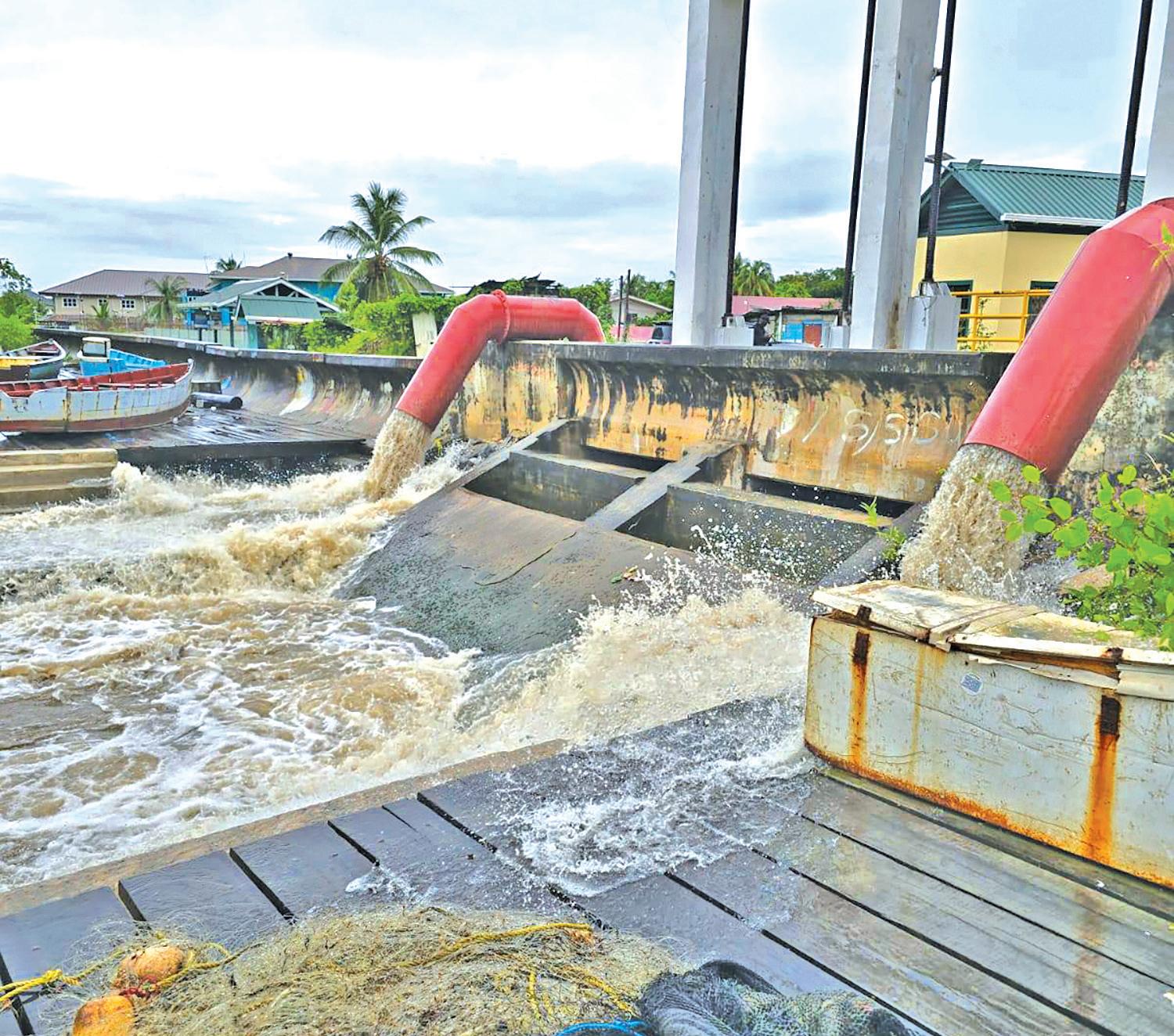
loodwaters receded across Georgetown on Tuesday following heavy rainfall, with officials reporting that water levels began to recede within hours due to effective drainage pump operations. Significantly, the Bloomfield and Whim kokers, in
resources were operated at optimal capacity in order to manage excess water and reduce flooding impacts across affected communities.
On the ground
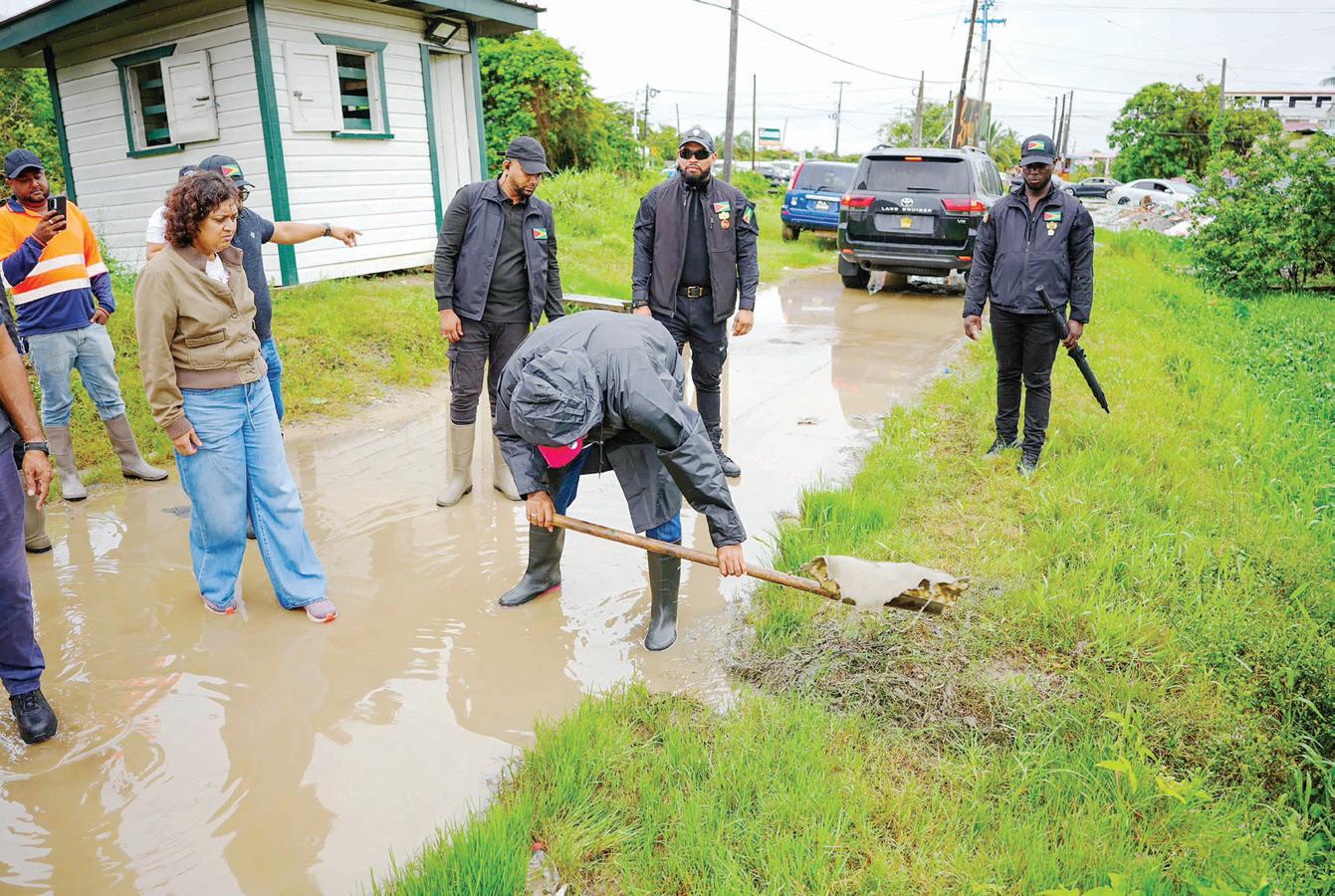
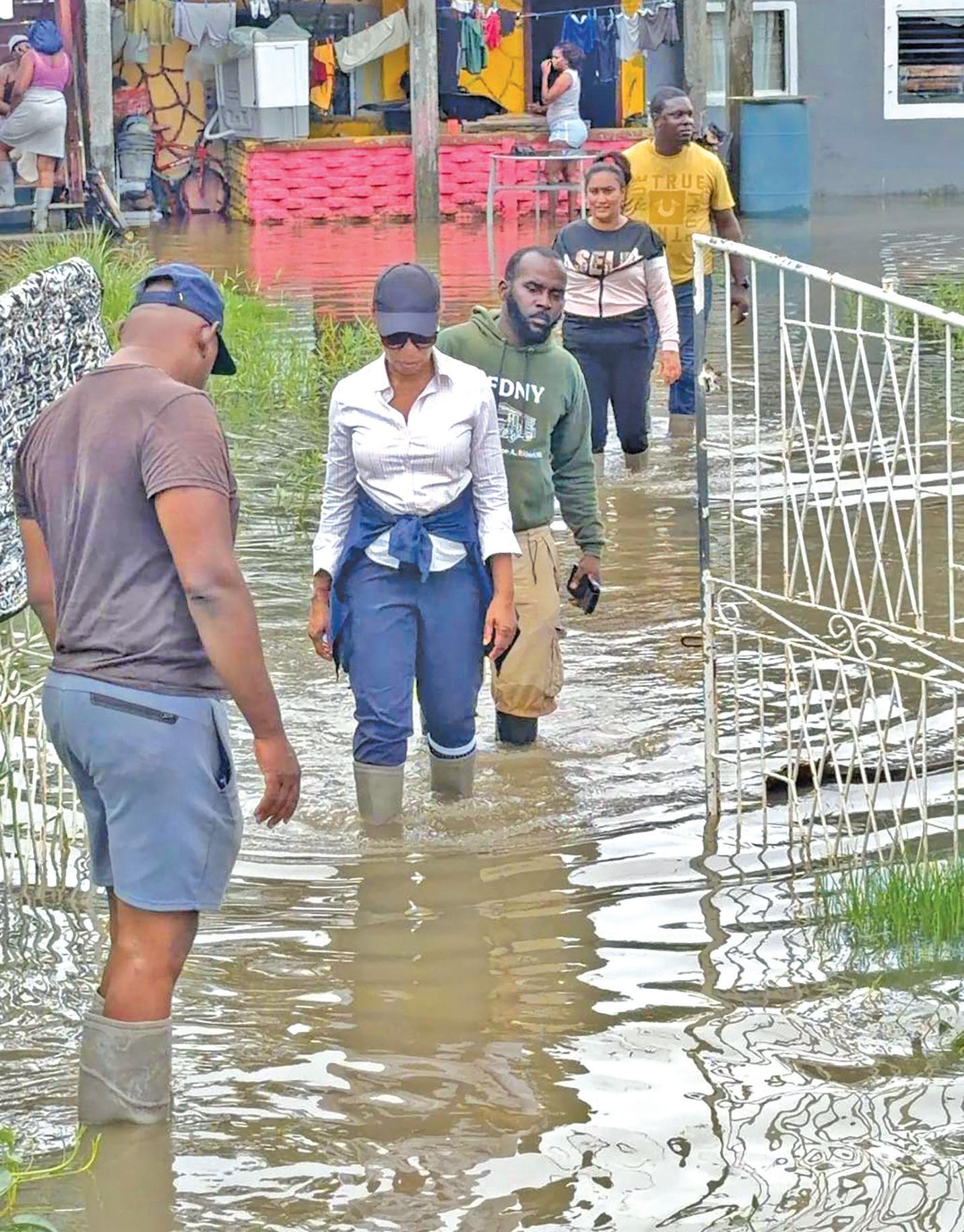
Speaking during a walkabout convened by President Dr Irfaan Ali, Ministers
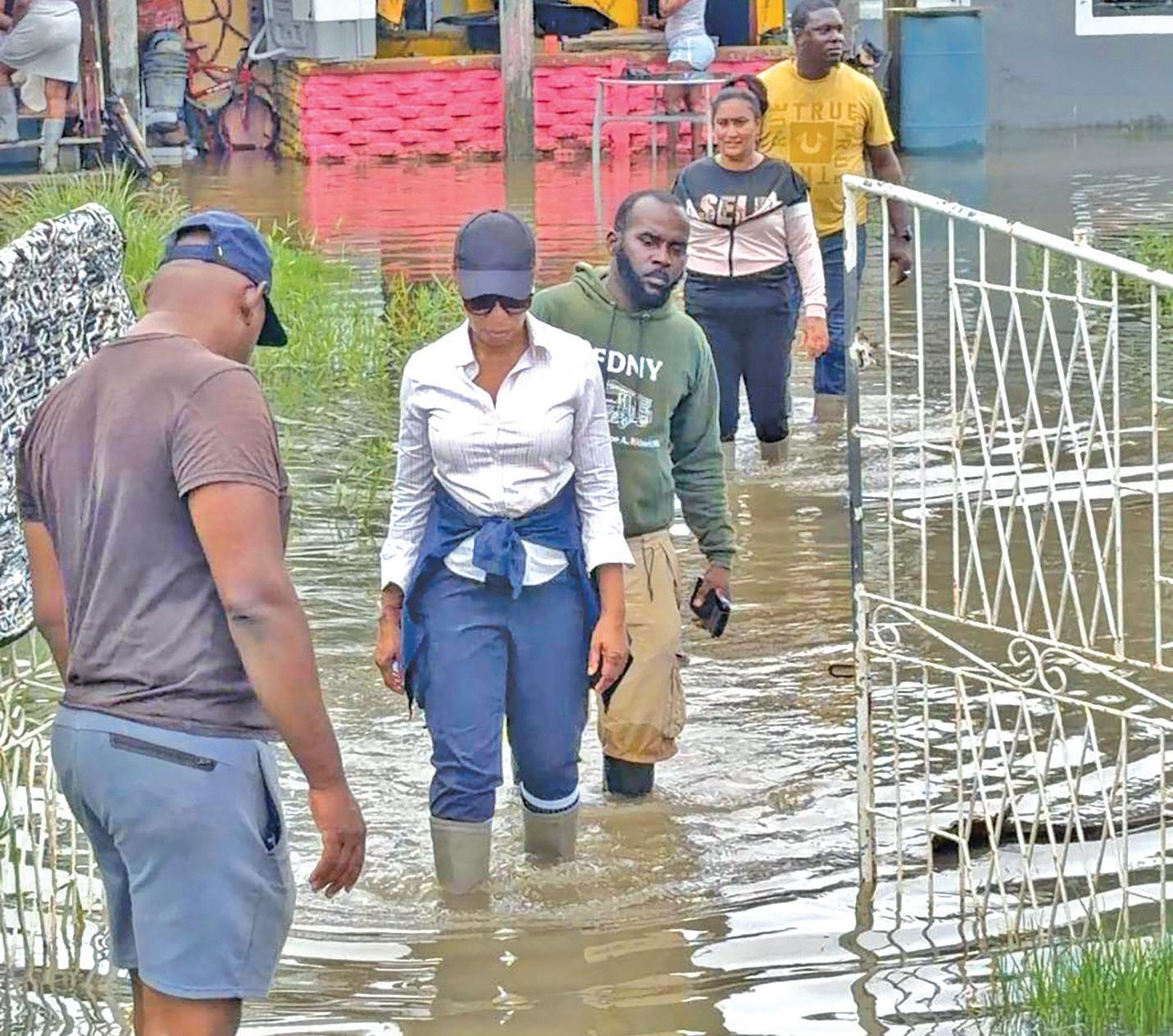
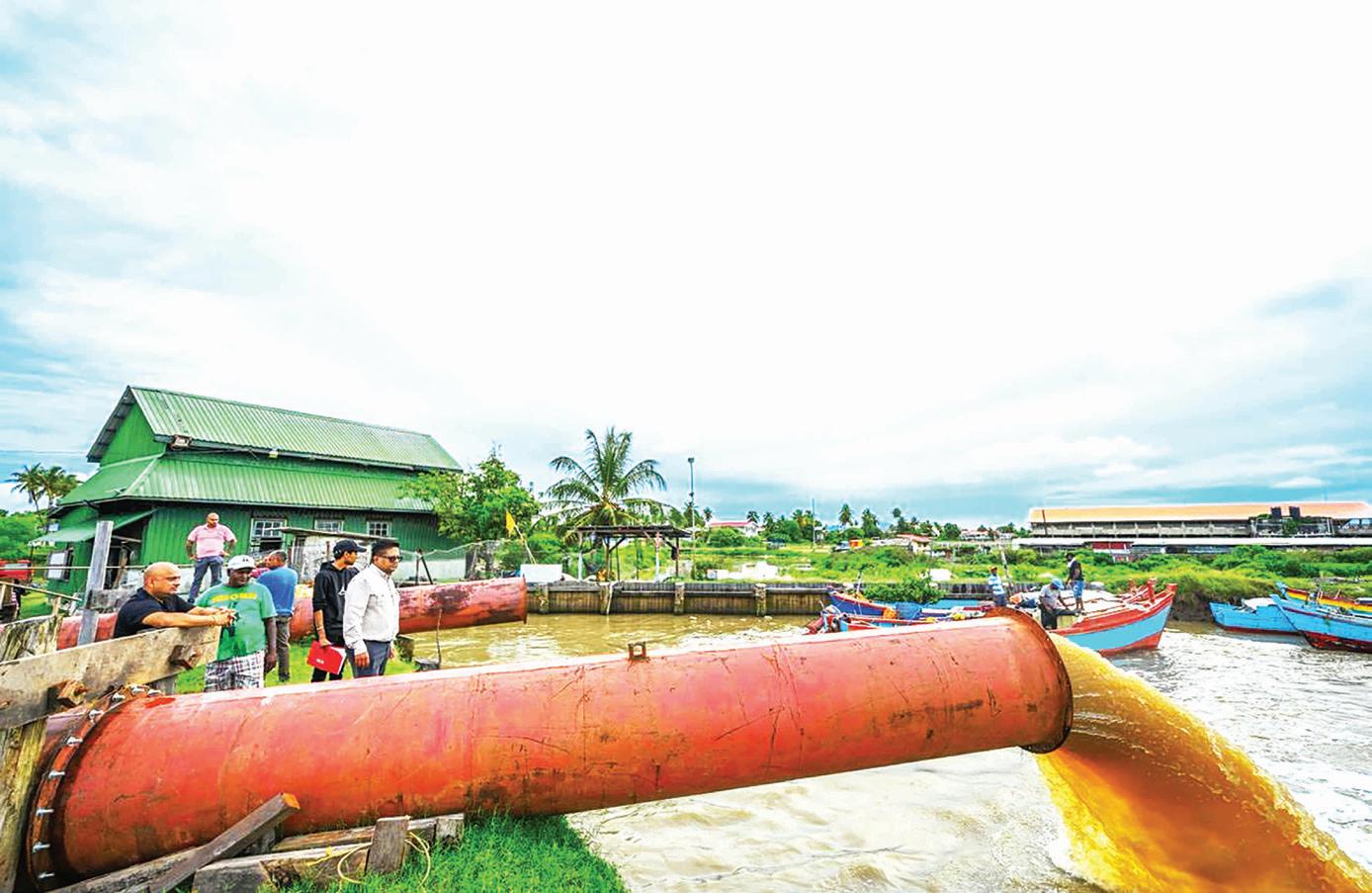
were deployed across various parts of the country to assess the situation. He also met with regional officials across the country. The head of state said that investments made in drainage over the years have contributed significantly to the water receding quickly.
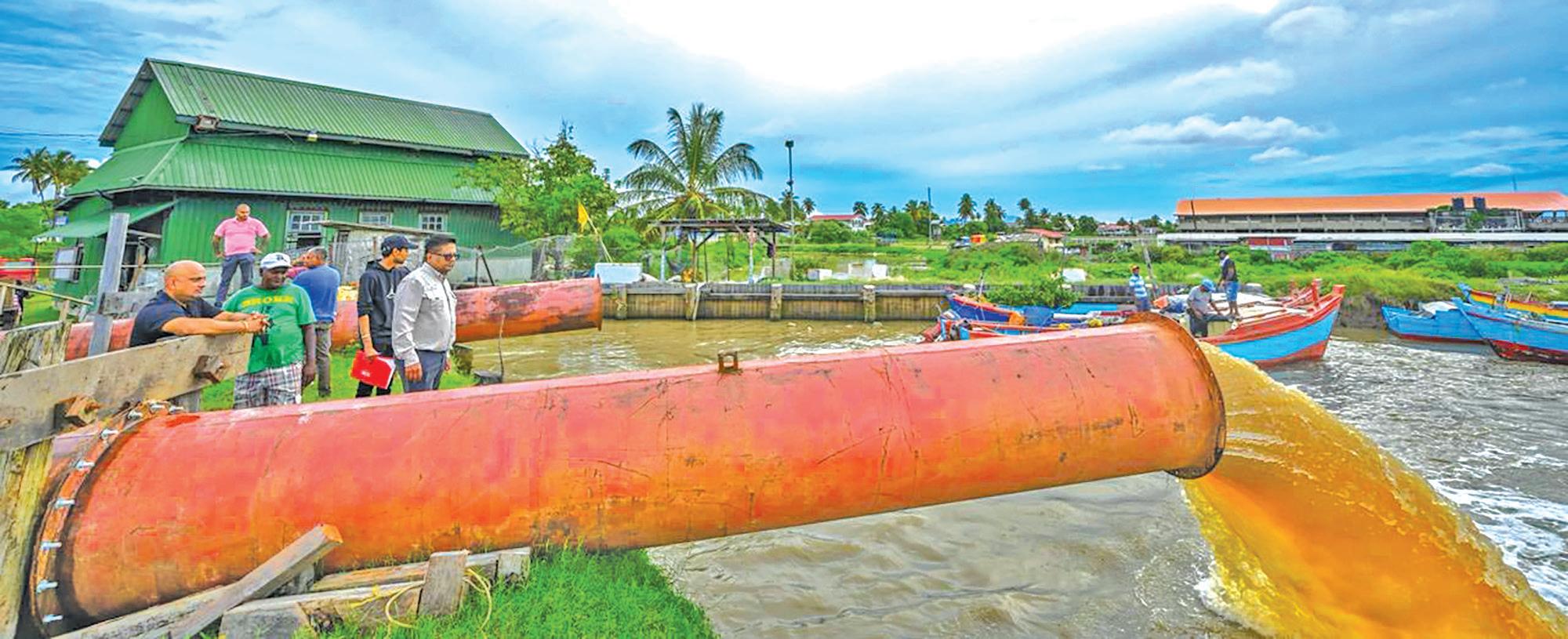
Berbice, Region Six (East Berbice-Corentyne), were operating at full capacity, with pumps helping to regulate water levels and support affected communities.
This was reported by several Government Ministers and agency heads who were on the ground assessing flood-hit areas and engaging with residents.
The Agriculture Minister who took to the streets to meet with residents provided an overall report on the update. He said that coastal regions recorded in excess of 112 millimetres of rainfall from as early as Saturday morning into the day, resulting in heavy, high-intensity rainfall over a short duration.
This led to water accumulation in several areas, including Montrose, Plaisance, Success, and the vicinity of Liliendaal and Ogle on the East Coast of Demerara.
Flooding was also reported in Canal No. 2 Polder in Region Three, as well as parts of Region Six.
Efforts were swiftly made to ensure that all available drainage infrastructure and
He noted that one of the challenges is that “in the highlands, in the savannah areas, and in the wetlands, the rain has been continuous, so there’s a lot of water that needs to pass through the system and a lot of water that has to come through the main drainage canal. Luckily the investments we have made over the years with the new dams and the drainage and the pumps that we have installed would have helped tremendously.”
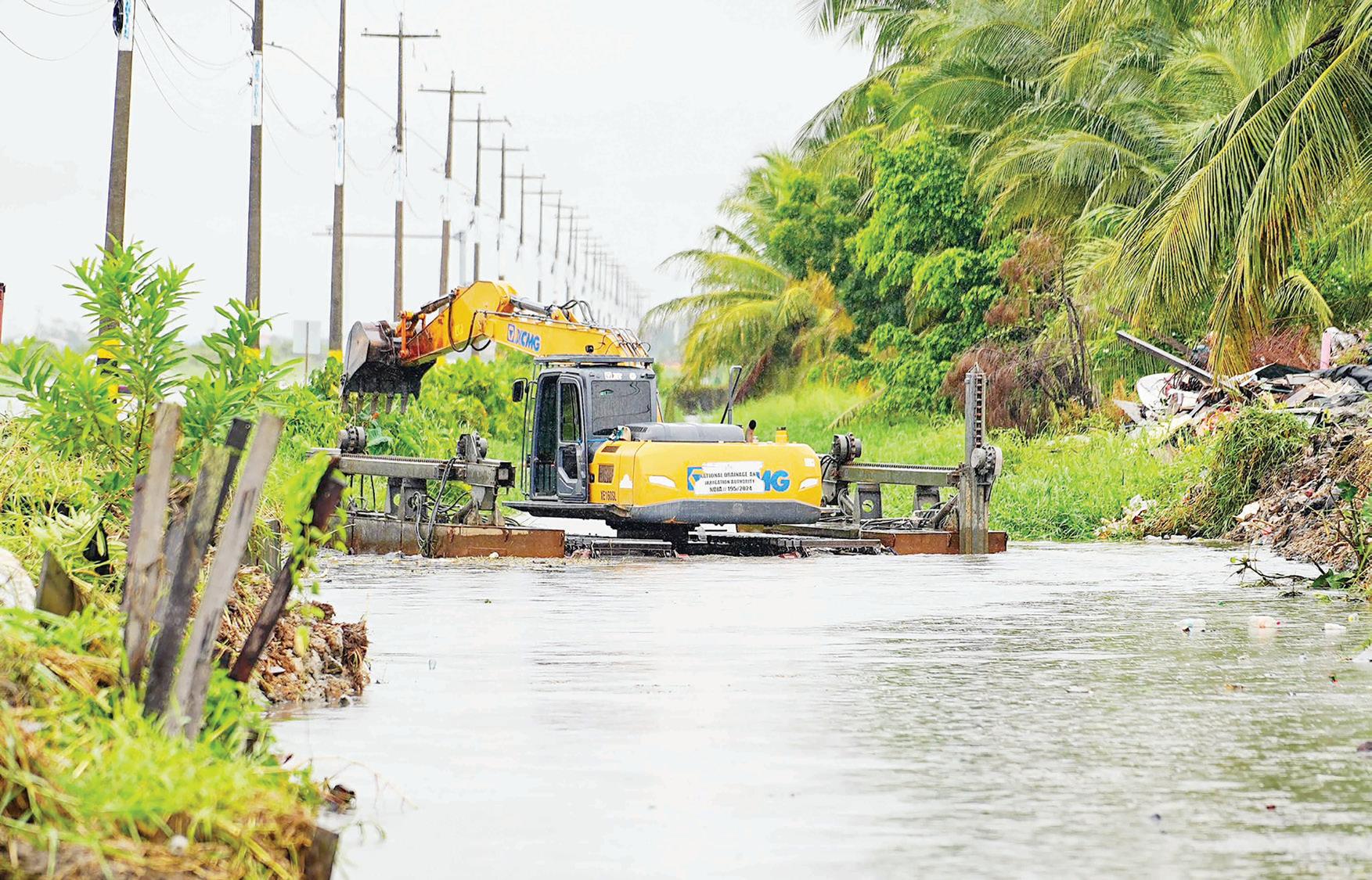
He pointed out that the National Drainage Irrigation Authority, along with numerous Ministries, was deployed in the fields to ensure that any challenge and bottleneck in the system was cleared so that there was maximum drainage.



Editor: Tusika Martin
News Hotline: 231-8063 Editorial: 231-0544
223-7230,223-7231,231-0544, 225-7761
Marketing: 231-8064 Accounts: 225-6707
Mailing address: Queens Atlantic Industrial Estate Industrial Site, Ruimveldt, Georgetown
Email: news@guyanatimesgy.com, marketing@guyanatimesgy.com
In a very studied and calculated move, our most significant 60th anniversary national commemoration ceremony of our independence was held at Fort Island in the Essequibo River. President Ali was signalling our continuous possession of Essequibo for almost four centuries by raising our Golden Arrowhead at the spot where the Dutch had moved to defend their sovereignty over Essequibo, which is being threatened by Venezuela.
Back in 1679, Dutch Governor Abraham Beekman had ordered the construction of a fort on the island – to protect their settlements that had started upriver since 1621 – from threats by the Spanish. Significantly, it was then called FLAG ISLAND to announce Dutch sovereignty over the entire landmass drained by the Essequibo River and its tributaries such as the Cuyuni and Mazaruni. The wooden fort was largely completed by 1687, and later, in 1743–1744, the Dutch went on to construct the brick fortress known as Fort Zeelandia –the ruins of which remain on what we now call “Fort Island” –that became the capital of the Dutch colony of Essequibo. This was passed on to the British and then onto us at Independence on May 26, 1966.
President Ali did not mince words on the existential threat to our independence posed by Venezuela, coterminous with our independence: they invaded and occupied our half of Ankoko Island only months before. “60 years of sovereignty, and still, our territorial integrity is under assault. Venezuela has not relented, it has not restrained itself, and it has not respected the binding orders of the world’s highest court,” said the President. Alluding to the continuous assaults by succeeding Venezuelan regimes and their refusal to accept the jurisdiction of the ICJ that flowed out of the Geneva Agreement, which it reiterates it signed to settle the controversy, President Ali emphasised the following:
“This is not the language of a neighbour; this is not the language of international law; this is not the language of peace. That is why tonight my language cannot be ambiguous. The Essequibo is Guyana’s. It has never been Venezuelan, nor was it ever Spanish, and for more than a century and a quarter since the 1899 Arbitral Award settled its boundary, Guyana has indisputably included Essequibo. It is and will remain Guyanese.”
The Venezuelan response – in a statement published by Foreign Affairs Minister Yván Gil – was instantaneous and, typically, recalcitrant. It insisted, “Venezuela categorically rejects the provocative and delusional statements” of President Irfaan Ali, which “constitute a falsification of historical and legal truth”. It reiterated that Venezuela “does not and will not recognise the (World) Court’s jurisdiction to resolve this territorial dispute…(and)…it will never renounce its historical rights over the Essequibo region and will continue to defend them through the appropriate diplomatic, political, and legal channels.”
The statement, however, was quite disingenuous since it simultaneously announced unequivocally, “Guyana has an obligation to sit down face-to-face with Venezuela and negotiate directly a solution in accordance with international law and the mechanisms established in the 1966 Geneva Agreement.” Meaning that it rejects the interpretation of the ICJ – a neutral institution – of the Geneva Agreement’s stipulations to institute a legal settlement to the controversy created by Venezuela.
In view of its intransigence, the latest armed attack from the Venezuelan bank of the Cuyuni Border River last Friday, May 29, on a GDF patrol escorting civilians – in which one soldier was wounded – cannot be seen as coincidental. Earlier in the month – May 4th – one soldier had been wounded in another attack. The attacks began last year when, on February 19, before our Republic Day commemoration, an attack wounded six of our soldiers, who had to be medevacked to the city for treatment. Later on, on May 15, just before our Independence Commemoration, three attacks were made in identical circumstances on GDF patrols.
We must see the Venezuelan actions for what they are: part of an unremitting hybrid war now being conducted by acting President Delcy Rodríguez to seize Essequibo after their paper “annexation”. The ICJ’s judgement will not stop them.
By Jason Burke
In 1972, the great German novelist Heinrich Böll described the campaign of violence launched by the Red Army Faction (RAF) since its foundation two years earlier as a war of “six against 60 million”. The writer was vilified for the phrase, accused of sympathy for bombers and murderers.
But Böll had highlighted the most important factor in the eventual defeat of the group, of whom one of the last surviving alleged members, a 67-year-old called Daniela Klette, was sentenced last week to 13 years in prison for armed robberies.
At the time Böll was writing, the RAF’s bombings, abductions and shootings had brought about the most acute crisis of West German democracy since the Second World War. Dozens were killed, more injured, wanted posters and police checkpoints went up all over the country, and huge state resources were devoted to counter-terrorism. Sporty small BMW cars were so favoured by the group that they were dubbed BaaderMeinhof Wagen, a reference to the RAF’s most famous founder leaders, Andreas
Yet, less than a decade later, the Guardian’s correspondent in West Germany was writing of a new “atmosphere of peace and relaxation”. The RAF’s violent campaign to bring radical, revolutionary transformation to the country was over, they wrote. It was “the terror that died more with a whimper than a bang”.
This verdict was premature, but not by much. Meinhof had taken her own life in jail in 1976; Baader died similarly a year later. A “second generation” of the Red Army Faction committed ever more indiscriminate attacks that aimed more to free its members from prison than advance the global struggle against imperialism and capitalism. In the event, most joined their incarcerated comrades behind bars. A “third generation” would continue a desultory campaign for another decade or so. Among its alleged members was Klette. Activists across Europe and beyond have portrayed Klette as a hero of the battle for global and local social justice. She is “a kind of grandmother heroine for the extreme left”. Dr HansJakob Schindler, a German
expert on terrorism, told the BBC. In court, Klette claimed her trial was politically motivated and said she remained committed to the fight against “capitalism and the patriarchy”. Supporters in the public gallery shouted slogans. Others debated whether the sentence was too harsh or the trial intended not only to condemn a self-proclaimed left-wing extremist but also an entire left-wing movement.
On the right, Klette’s sentence has been deemed too lenient, even though she also faces trial for alleged involvement in three attacks in 1990 and 1994: a failed bombing in front of a bank, a shooting at the US embassy in Bonn and a 1993 bombing at a prison.
Much criticism has been directed at the inability of courts to try Klette for membership of the RAF because any alleged offences occurred too long ago and at authorities for somehow allowing her to live apparently undisturbed in a bohemian neighbourhood in Berlin for 30 years. That German laws prevent police from using the facial recognition technology that a journalist deployed to eventually identify Klette has prompted in-
credulity.
Such concerns echo issues raised in the 1970s, a similarly polarised decade to our own. They are understandable, but now they miss the point. The conviction of Klette marks an endpoint in the German state’s successful battle with the RAF.
This may have taken more than half a century, but it’s worth examination because it offers important lessons in how the fight against terrorist networks can and should be dealt with.
One reason for the eventual defeat of the RAF was that senior officials finally realised that to give way to its blackmail would simply encourage more terrorist attacks. A new specialist police unit trained and equipped to resolve hostage takings and hijackings raised the stakes for putative attackers and gave decision-makers a vital tactical option.
A second was that, though there were instances of unconstitutional and illegal repression, the state’s response remained broadly within the law, and successive governments made sure terrorist offences were dealt with through the criminal justice system.
By Ryhaan Shah
We have looked at the positive impact that good diet, regular exercise and a healthy mindset can have on us as we age. We cannot stop the ageing process; it’s a natural development that we all experience, but ageing does not mean that we will inevitably or eventually become ill.

Getting older does increase the risk for certain chronic conditions like diabetes, stroke, heart attack, arthritis and certain mental illnesses like dementia. However, maintaining a healthy lifestyle is known to reduce the risk of such illnesses significantly.
Looking at ageing solely as a disease that leads to illness and decline perpetuates ageist stereotypes which can cause family members or healthcare providers to misinterpret or ignore treatable health issues.
In the broadest terms, ageing occurs because of the passage of time, and it occurs at various levels: biological, molecular, functional and even social. Our ability to stay healthy or recover from an illness depends on our entire system working well together.
Keeping physically fit is one of the most effective ways for us to recover from illness. It boosts the immune system, reduces systemic inflammation, and rebuilds lost muscle mass, allowing us to bounce back faster from hospitalisations or infections while maintaining our precious long-term independence.
A single session of moderate-to-vigorous physical activity – walking, cycling, or swimming, for instance – provides immediate benefits for our health.
This includes better sleep and feeling rested, less anxiety, and reduced blood pressure. In the long term, regular exercise improves our brain health, reduces the risk of depression and diseases such as dementia, and also lowers the risk of heart disease, stroke and type 2 diabetes.
Maintaining baseline fitness before or during the early stages of an illness significantly alters our recovery trajectory. Regular movement improves our immune system and our white blood cell circulation and enhances the body’s ability to resist infectious diseases, and fit elders have been known to develop and retain stronger antibody responses to vaccinations.
Illness often involves periods of bed rest, which can lead to rapid muscle loss and frailty. However, even a basic fitness level gives the body a reserve that will help to stave off severe physical decline and disability during recovery.
For older adults recovering from surgery or acute illness, physical activity helps improve our joint mobility, which prevents the stiffness that can come with prolonged rest, and it also helps to quicken our rehabilitation.
Altogether, being fit and healthy before an illness means that we are more likely to recover from that illness. Fitness provides more energy for recovery, as does having a good diet, a proper weight, and restful sleep. These work together to provide the resources for recovery.
A health setback does not have to be fatal just because we are older. With support from family and friends and the right medical care, we can look forward to living for years to come.
I have just had my annual medical check-up. My doctor prescribed an ECG and blood tests to check my heart attack risk, cholesterol levels, my kidney and liver function, and a test that would indicate any risk of developing type 2 diabetes.
This annual check-up gives me peace of mind, and while, happily, the results indicate no current health issues, I do continue to take my daily medication for hypertension.
At a private lab, the tests cost $42,000, and I have advocated in a previous column for the government to provide a free, annual check-up for every elderly person in our nation. President Irfaan Ali wants his government to be able to provide world-class health care for every citizen. This is a very worthwhile goal, and caring for the elderly who have worked at all levels of our society and provided various services to the nation should be a priority.
Nelson Mandela stated it best when he said: “A society that does not value its older people denies its roots and endangers its future.” He believed that caring for the elderly is a fundamental obligation of a state that honours the generation that built the foundations for democracy.
We have just celebrated the golden jubilee of our independence from colonial rule. It is exactly this generation, who are now 70 and older, that not only witnessed this important life-changing event, but many stayed through the hard times and contributed to the nation’s development.
While ageing is not optional, how we manage this change at a personal and national level can help to improve the quality of life for the elderly and even save lives in the process.

Dear Editor,
Please allow me the opportunity to congratulate Hon Vice President Dr Bharrat Jagdeo, MP, on hosting the recent regional outreach in Region Six and, more importantly, on the excellent organisation of the event.
During my visit to the University of Guyana Tain Campus, where the outreach was held, I witnessed thousands of residents gathering in a peaceful and orderly manner to have their concerns heard and addressed. It was evident that this was not merely an outreach for persons to voice complaints but rather a forum that reflected the spirit of one family. Despite their eagerness to have their matters addressed, everyone remained disciplined and respectful throughout the day.
In many instances, when we see gatherings of such magnitude, we often expect confusion, noise, disagreements, and even confrontations. However, this was certainly not the case in Region Six. The people demonstrated remarkable discipline,
patience, and respect for one another. I therefore extend my congratulations to the residents of Region Six, as well as the few persons from Region Five who attended, for displaying unity, love, and peace throughout the event.
I encourage everyone to continue fostering that same spirit of togetherness in our daily lives and interactions.
The Ministers and their respective teams who attended did an excellent job engaging with members of the public, listening attentively to their concerns, and ensuring that matters which could be addressed immediately were dealt with, while other issues were referred to the relevant agencies and regional officials for follow-up action.
The newly appointed Regional Executive Officer was also very approachable. I observed numerous residents engaging him on issues affecting their communities, and he took the time to listen carefully and provide guidance.
The Regional Health Department was fully rep-
resented, and many individuals with concerns regarding healthcare services and facilities were given advice and assistance. Efforts were also made to identify ways in which the system could be improved.
Parliamentarian Zamal Hussain and his team were actively involved throughout the outreach, helping to ensure that everything proceeded smoothly and that residents were directed to the appropriate departments and officials to address their concerns.
This outreach was most welcome, as it demonstrated that the people of Region Six are not only prepared to voice concerns and frustrations affecting the region’s development but are also willing to work together in unity and harmony toward solutions. It highlighted the fact that regardless of the challenges people may face, they can be addressed through cooperation, understanding, and collective effort.
I urge the regional administration not to wait solely for future Ministerial
or Vice Presidential outreaches but to continue engaging residents by visiting communities throughout the region, listening to their concerns, and maintaining regular contact with the people. Such engagement will strengthen relationships with residents and enhance service delivery across the region.
Once again, I congratulate Vice President Bharrat Jagdeo and his team, the various Ministers and their teams, and the Region Six Administration for hosting a well-organised and productive regional outreach. Hon Vice President, the residents of Region Five would warmly welcome a similar outreach in our region at the earliest opportunity so that their concerns may also receive attention. We look forward to such a visit. Let us continue to work together in unity, peace, and love for the betterment of our people and country as we strive to build One Guyana.
Kind regards, Abel Seetaram
The legacy of this decision remains evident today. Prosecutors have carefully and sensibly insulated Klette’s alleged offences from any political background. This contrasts dramatically with the treatment of Palestine Action in the UK, where the unjustified and politicised deployment of terrorism laws is entirely counterproductive.
The RAF was primarily defeated by popular revulsion at its violence. Disillusionment was rapid and widespread, even among supporters. A poll in 1971 found that about a fifth of West Germans saw the group’s actions as political, not criminal. A year later Meinhof was betrayed while hiding out in an apartment she thought was safe. Defections and internecine arguments proliferated as the RAF turned in on itself.
The reality was that by the 1980s it had become an anachronism. The group’s roots lay in the mass protest movement of the late 1960s. Its members had decided that marches and votes were insufficient to achieve the radical revolutionary transformation they sought, so they turned to violence. But they were wrong. Their bombs and bullets did nothing to advance progressive causes.
Like elsewhere in Western Europe, eventually many of the demands
raised by those who took to the streets were partly met. Abortion and divorce laws were reformed or passed, voting ages lowered, funds funnelled into further education, sclerotic hierarchies questioned for the first time, and youthful celebrities in music, sport, and even politics gained new prominence.
Together, these factors meant that well before Klette became involved in radical activism, activists were looking to win change within the democratic system, not to destroy it. This, they believed, was the way to secure nuclear disarmament, the protection of the environment or to pursue new more narrow interests of specific communities. Those that continued to pursue “revolution” attracted satire – think Rick from The Young Ones (1982-4) –not a mass following.
In short, democracy worked, defusing violence, addressing grievances and channelling mobilisations into more productive, less divisive, less damaging forms. The robberies for which Klette will go to prison had nothing to do with the struggle for social justice or the battle against imperialism or capitalism.
Böll’s portrayal of six against 60 million was exaggerated, but perceptive nonetheless. The RAF were a handful of individuals, the most extreme element
of a radical fringe. Their actions did great harm to progressive causes in West Germany and internationally. Far from romanticising its supposed armed struggle, Böll was exposing its fundamental failing.
(The Guardian)
(Jason Burke is the author of The Revolutionists: The Story of the Extremists Who Hijacked the 1970s and the Guardian’s international security correspondent.)


Ebola is one of the world’s most feared diseases. Not only are its symptoms very serious, but there is also no specific cure. Ebola has killed between 44 and 90 per cent of the people it infects, and recently, there has been another outbreak in the Democratic Republic of the Congo.
To understand how it spreads and how dangerous it can be, scientists study data from previous outbreaks.
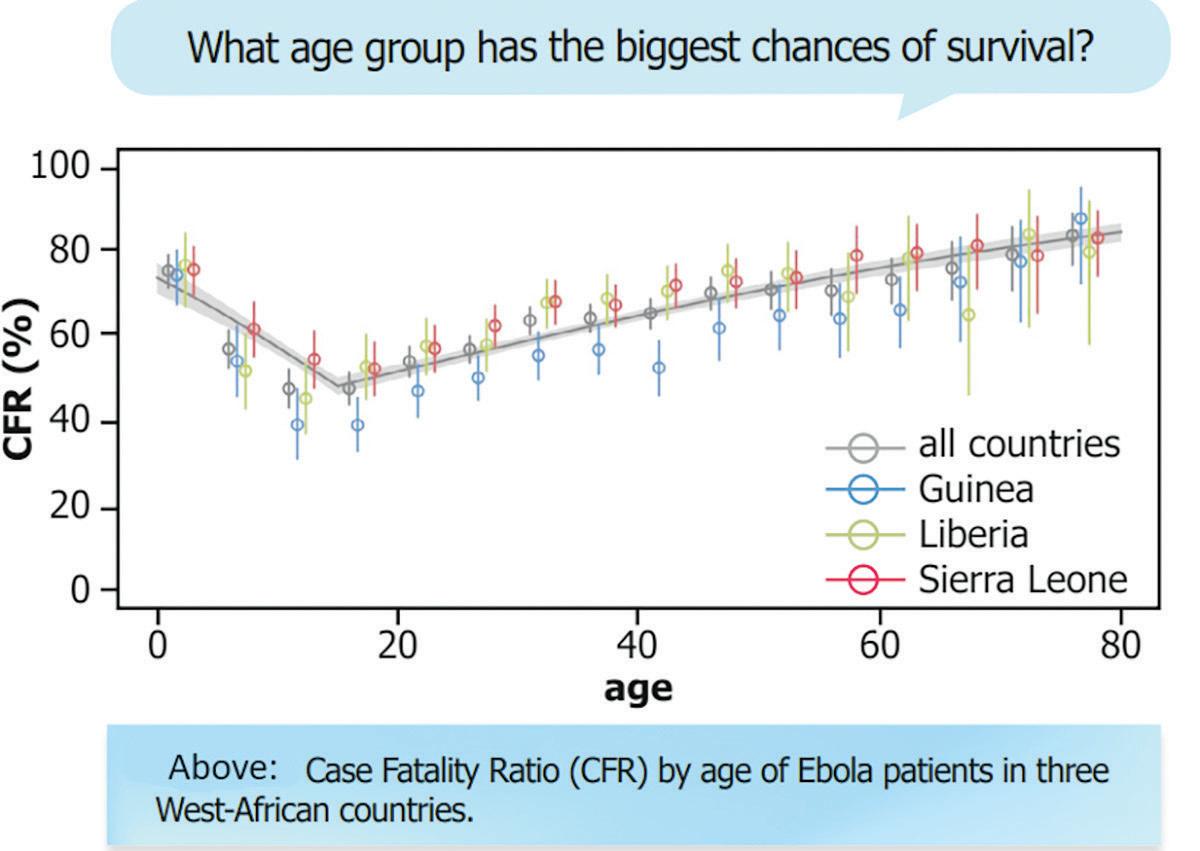
The case fatality ratio (CFR) is the proportion of people who die from a disease among everyone who becomes infected.
Why is this measure important? Well, it doesn’t only show how severe a virus (or other pathogen) is; it also helps scientists plan disease control efforts and evaluate new treatments.
During the last Ebola outbreak in West Africa, the largest in history, the three most affected countries –Sierra Leone, Guinea, and Liberia – reported 28,616 con-
firmed, probable, and suspected cases and 11,310 deaths.
Throughout this outbreak, CFR estimates varied greatly. Why? Which factors influ-
questions scientists wanted to answer.
Scientists analysed data from thousands of Ebola cases reported to the World Health
the 2013–2016 outbreak. The data included information such as age, sex, where the patient lived, when symptoms appeared, whether the patient

ence survival? These were the

survived, and whether they

were treated in a hospital. To make the results more reliable, scientists focused only on confirmed cases.
They used maths and computer models to study how factors like age and sex affect survival. They also examined CFR by district and by hospital to look for outliers – places with unusually high or low death rates. Scientists compared the CFR predicted by their models with the actual observed CFR to find any important differences. They also adjusted their models to account for differences between cases, such as age and when symptoms began.
The overall CFR among the 8413 confirmed cases in the three West African countries was 63 per cent.
Age had a strong influence on survival. Teenagers and young adults had the best chances of surviving, while children under five and adults over 75 were at the greatest risk of dying.
Hospitalisation was another important factor. As many as 93 per cent of patients who were not in a hospital died from the disease.
When scientists compared the overall average CFR with
symptoms are also more likely to seek hospital care. At the same time, some patients may die before reaching a hospital, which could make CFR appear lower in hospital data. Scientists tried to reduce these problems by carefully selecting which cases to include in their analysis.
The fact that age affected survival in all three countries suggests this is a real biological pattern. However, although there were differences between patients treated in hospitals and those who were not, scientists cannot be sure that hospital care alone explains this.
The study found that CFR varied widely between districts and hospitals. Even after adjusting for many factors, some differences remained. However, the models were able to explain much of the variation between hospitals, suggesting that differences in care may not be the main reason for survival differences.
At the time of this outbreak, there was no specific cure for Ebola, and treatment mainly focused on managing symptoms. Since then, scientists have developed new treatments that can help peo-
the CFR in each district and hospital, they found many differences. Even after accounting for factors like age and timing of illness, some districts and hospitals still had higher or lower CFRs than expected.
Estimating CFR might seem simple, but it is actually very difficult during an outbreak. This is because of biases – situations where the data does not represent all cases equally. For example, burial teams are more likely to identify people who have died, and severe cases are more likely to be reported. This can make CFR appear higher than it really is.
Patients with more severe
ple survive Ebola, especially if they are given early. This shows how scientific understanding continues to improve over time, even after outbreaks have ended.
This study shows that it is important to look at both details and the bigger picture when drawing conclusions. Sometimes, what seems like an obvious explanation may not be correct.
Even though scientists could not find one clear reason for the differences in survival, their work is still important. It helps us better understand how diseases spread and affect people – and it brings us closer to improving care in the future.

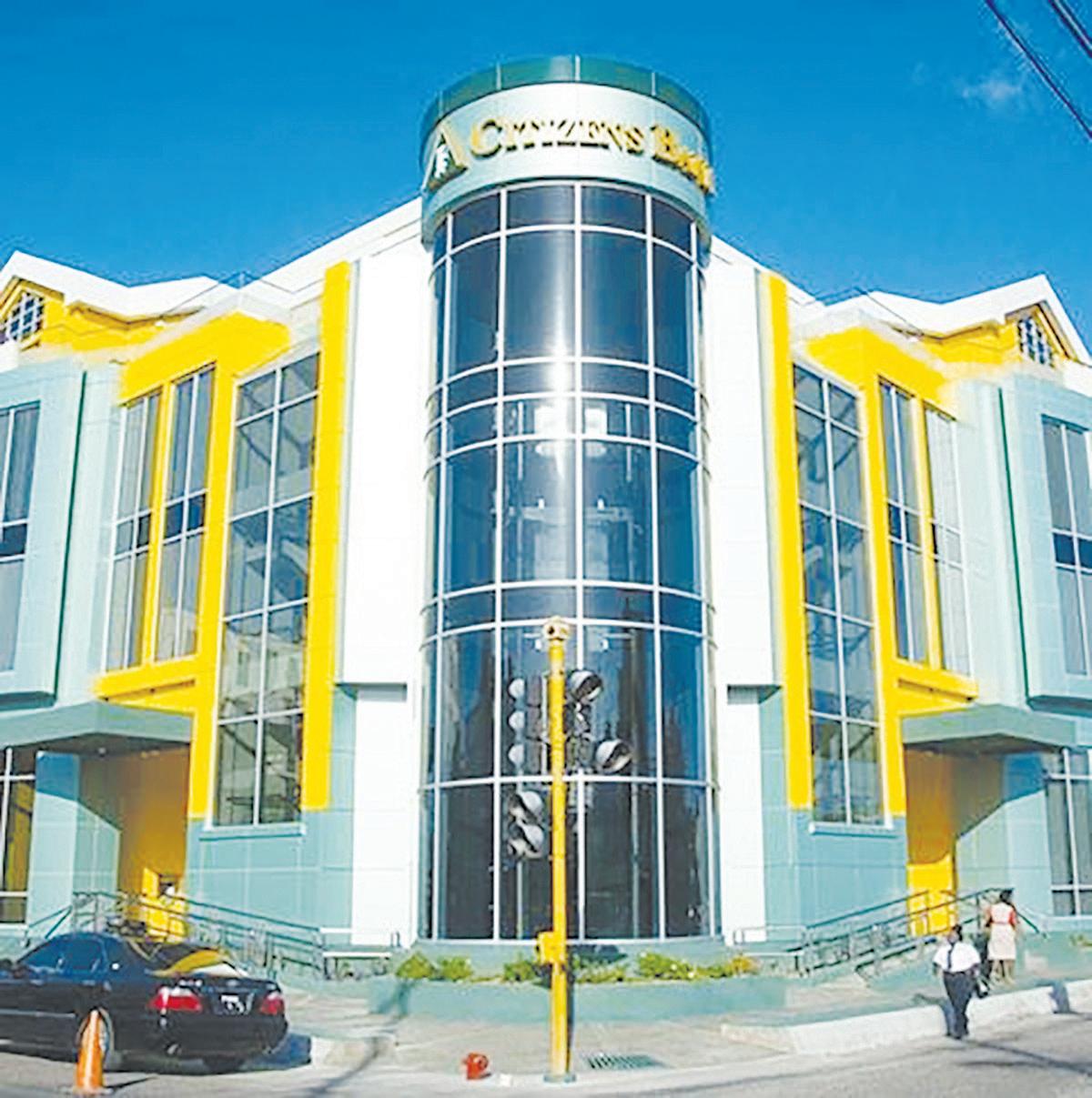
Citizens Bank
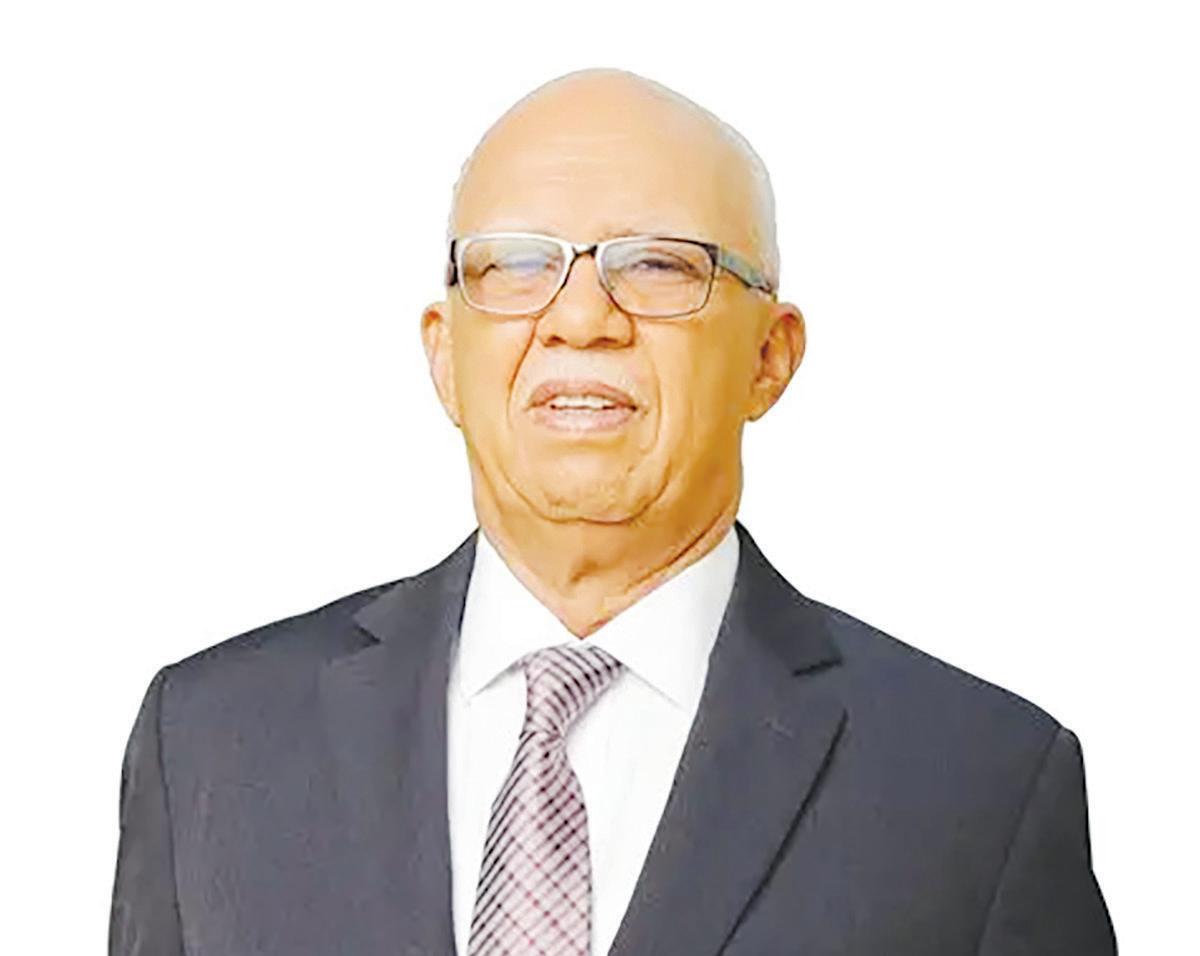
Guyana Inc has delivered a solid financial performance for the first six months of the 2026 fiscal year, which, according to Chairman Clifford Reis, reflects the financial institution’s continued balance sheet growth and improved earnings.
Profit after taxation for the period ended March 31, 2026, was $1,340.7 million, compared to $1,199.4 million for the corresponding period in 2025, representing an increase of $141.3 million, or 12.0 per cent.
The bank’s interest income for the six-month period totalled $3.5 billion, while interest expense amounted to $208.2 million, resulting in net interest income of $3.3 billion, compared to $2.9 billion for the prior period.
Other income of $615.2 million contributed to total net income before non-interest expenses of $3.9 billion, an increase of $355.6 million, or 10.0 per cent, over the correspond-
ing period last year.
Moreover, operating expenses were $1.5 billion, reflecting a 7.0 per cent increase year-over-year, primarily attributable to higher personnel costs and inflationary pressures on goods and services. Net impairment on financial assets totalled $97.2 million, consistent with the bank's prudent approach to credit risk management.
The Bank's financial position remains robust. Net loans and advances increased to $71.8 billion at March 31, 2026, from $62.8 billion at March 31, 2025, evidencing continued expansion in the lending portfolio. Net investments stood at $48.1 billion, compared to $46.2 billion in the prior year, while total deposits grew to $130.1 billion, up from $118.9 billion, reflecting sustained customer confidence and strong liquidity.
Additionally, the bank's Board of Directors has approved an interim dividend of $2.50 per share, compared to $2.25 per
share for the corresponding period in 2025, reflecting a prudent capital management strategy aimed at supporting future growth and preserving balance sheet strength.
Chairman Reis noted that with Guyana's economy projected to grow by 15.7 per cent in fiscal 2026, driven by continued expansion in the oil sector and sustained growth across non-oil industries, this favourable macroeconomic environment presents significant opportunities for the Bank.
“Citizens Bank Guyana Inc remains well positioned to capitalise on these opportunities and anticipates a satisfactory performance for the remainder of the fiscal year, with a continued focus on enhancing shareholder value,” the Chairman noted.
Reis also used the opportunity to extend appreciation to the bank’s valued customers for their continued support, to the management and staff for their dedication and professionalism, and to the shareholders and fellow directors for their ongoing cooperation and assistance.
Citizens Bank Guyana Inc is a 51-percent owned subsidiary of Banks DIH Limited.
Only earlier this month, the Banks DIH Group reported a profit after tax of some $4.113 million recorded for the first half of the 2026 financial year. This $4.113 billion unaudited profit after taxation attributable to the

shareholders reflected an increase of $269 million, or 7.0 per cent, over the $3.844 billion recorded in 2025.
It was further reported that the group's third-party revenue was $29.355 billion, compared to $27.582 billion for the corresponding period in 2025 – a growth of $1.773 billion or 6.4 per cent.
The mid-year report
also showed the group's unaudited profit before taxation was $6.967 billion, representing an increase of $350 million or 5.3 per cent when compared to $6.617 billion in 2025.
Meanwhile, revenue generated by Banks DIH Limited in the first six months of this year amounted to $25.139 billion, compared to $23.734
billion in 2025 – a growth of $1.405 billion, or 5.9 per cent.
Additionally, the unaudited operating profit before taxation for Banks DIH Limited was $4.974 billion, compared to $4.711 billion in 2025, and reflected an increase of $263 million, or 5.6 per cent.

Police have recaptured Lusignan Prison escapee Adrian Damder, ending a manhunt that began after he fled the correctional facility earlier this month.
Damder, 34, of Graham Street, Better Hope, East Coast Demerara (ECD), was arrested during an operation at Goedverwagting, ECD, at about 00:20h on Saturday.
According to the Guyana Police Force (GPF), ranks acted on information received and went to the location where they contacted and arrested the escapee. He is currently in custody at the Sparendaam Police Station as investigations continue.
Damder had escaped
from the Lusignan Prison sometime between 08:00h and 16:00h on May 17. At the time of his escape, a manhunt was launched by law enforcement ranks and the Guyana Prison Service (GPS), which had appealed to the public for assistance in locating him. Damder had been on remand since January 14, 2026, on two counts of threatening language. He was accused of threatening to harm his father. Reports indicate that on the day of the escape, Damder had completed taking a bath and requested permission from a prison officer to hang his towel in the sun. He was reportedly allowed into the
prison compound unsupervised and allegedly used the opportunity to scale a fence before making his way behind the new female prison facility currently under construction.
Investigators believe he then climbed a second fence, gaining access to a dump site from where he escaped. Prison officials reportedly only became aware of his disappearance during a roll call later that evening. Following the incident, the GPS launched an internal investigation. Several prison officers were reportedly placed under close arrest and questioned as part of the probe into the circumstances surrounding the escape.
In April 2024, Keon Webster and Kareem Douglas escaped while being transported to Lusignan Prison. The pair, who were reportedly handcuffed together, fled after jumping from a prison vehicle as it arrived at the facility. Both men were subsequently recaptured in the Stabroek Market area.
Similarly, in April 2022, Keanon Harry and Kevin Velladares escaped from a Guyana Prison Service vehicle while being transported from Linden to Lusignan Prison. Velladares later turned himself in at the Brickdam Police Station, while Harry surrendered at the Leonora Police Station one day later.
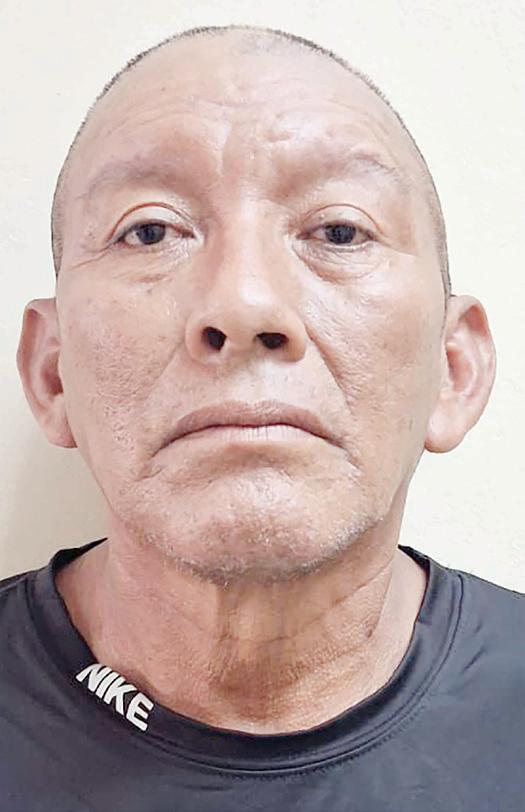
Two Central Rupununi, Region Nine (Upper Takutu Upper Essequibo) men were fined after pleading guilty to separate charges of driving while their breath alcohol levels exceeded the legal limit.
Fitzpatrick Raphael, a motorcyclist of Moco-Moco Village, and George Gildarie, a motor lorry driver of Lethem, appeared before Magistrate Omadatt Chandan at the Lethem Magistrate’s Court on Friday.
Both men were charged
under Section 39(1) of the Motor Vehicles and Road Traffic Act, Chapter 51:02, which prohibits operating a motor vehicle while the level of alcohol in a person’s system exceeds the allowed legal limit. During the court proceedings, the charges were read; they both pleaded guilty. Following their admissions, Magistrate Chandan imposed a fine of $50,000 on each offender. In default of payment, they will serve five weeks’ imprisonment.
Apossession of
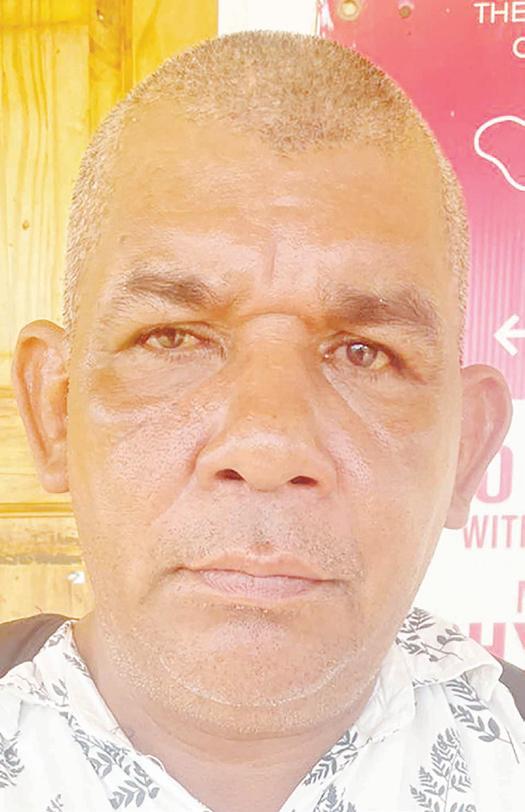
Jarod Granville, of Henrietta, was charged with possession of 23.5 grams of cannabis. The offence

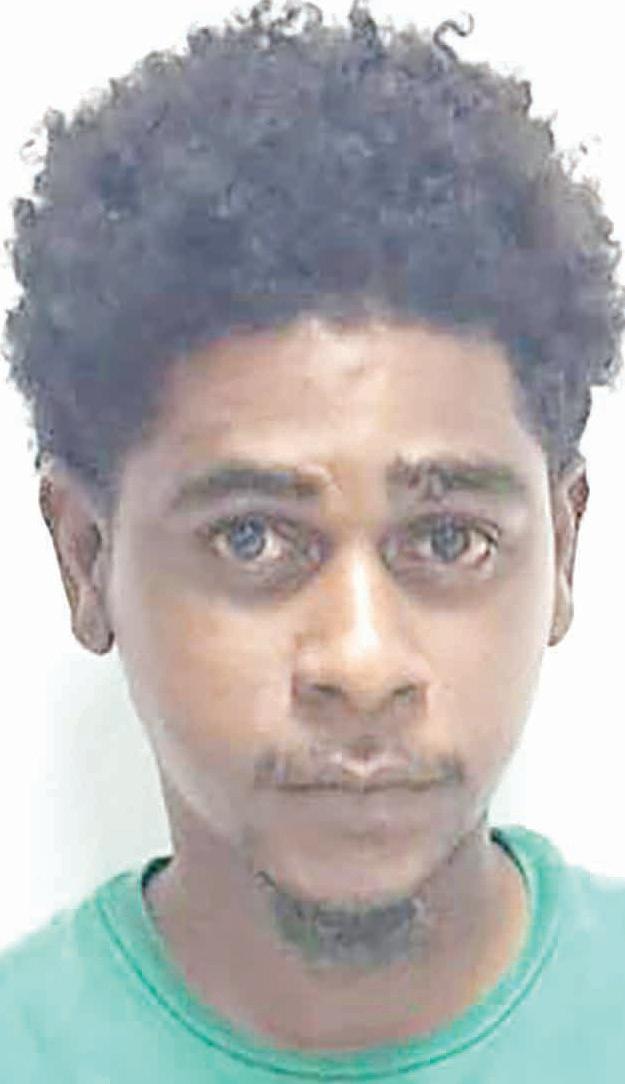
was allegedly committed at Public Justice and was laid under Section 4(1)(a)(i) of the Narcotic Drugs and Psychotropic Substances (Control) Act, Chapter 10:10.
Granville appeared before Magistrate Ravindra Mohabir on Thursday, when the charge was read to him. He pleaded not guilty to the allegation and was granted $150,000 bail. As part of his bail conditions, Granville is required to report to the Anna Regina Police Station on the last Friday of every month pending the outcome of the matter.
The case was adjourned to June 12.

In Guyana, for well-known reasons, our population is not an academic term!! Now, determining populations of people has a looong history!! In Exodus, it’s written that God himself told Moses to take a census in the Sinai desert! And we discovered His reason from the words of the Big Guy himself – from behind burning bushes. According to Exodus, “When you take the census of the people of Israel, then each shall give a ransom (half a shekel) for his life to the LORD…that there be no plague among them.” God gotta be paid for not launching plagues and such – as a kind of tithe?
Thousands of years later – around the time Jesus was born – we hear, “In those days, Caesar Augustus issued a decree that a census should be taken of the entire Roman world.” By then, there were all sorts of reasons for these censuses – going back to King David, who conducted his census to determine how large an army he could raise!! The Romans held a census to determine how much tax they could impose to run their empire!!
Well, the British – who fancied themselves succeeding the Romans – followed suit and held censuses in all their colonies – including us in dear Mudland!! These were held every ten years after they combined the three colonies into British Guiana in 1831! Our population then was 93,000. A century later in 1931 – with over 250,000 indentureds entering and remaining – we’d only grown to 310,000. There gotta be more deaths than births!! By 1960, when our reasons for looking at censuses started to become political since they signalled how the votes might be split, we didn’t just look at the total numbers – 560,000 – but the ethnic breakdown!! By 1970 we’d jumped to 710,000 but flattened by 1980 to 760,000, then in 1991 dropped to 723,000 because of massive migration!! Burnham’s riggings made ethnic breakdowns irrelevant, but now the Indian numbers – even reduced since the 1980s’ 50 per cent – were still enough to get the PPP over the hump!! The PNC’s 42 per cent of the vote in 1992 mirrored the African/mixed percentage!! In the new millennium, the 2002 census showed only 751,000 – with migration unabated and Indians inexorably slipping to 43 per cent! 2012’s 746,000 showed the trend increasing, with Indians now 39 per cent – and no group having a majority!! With the game now to attract from outside the tribe, the PPP was checkmated in 2011 and then lost in 2015.
Well, this year, the 2022 Census revealed that our population actually grew to 878,674. With the PPP rationally using the oil revenues to launch a development programme where ALL ETHNIC SHIPS HAVE BEEN LIFTED!! Ethnic breakdowns are now irrelevant!! Hallelujah!!
…electric theft?
One nugget the IMF team that last visited left us in their report is that a whopping 25 per cent of our generated electricity is lost in transmission!! Imagine that!! A substantial portion of that is due to the physics of electricity moving through electric wires at high voltages – and losing some of that energy through heat. The longer the distance, the greater the heat and loss – and unfortunately, we’re a very large country – unlike islands like Barbados and TT! It’s for this reason that the Government’s gonna be spending so much money on transmission lines from the Wales GtoE plant that’s being built.
But in Guyana there’s another loss – as far as the bottom line is concerned – in that there’s substantial theft of electricity by customers! Announced last week by the Minister at 12 per cent!! While there’s individual theft, there are certain communities notorious for having illegal connections!! Often it’s with the connivance of bribed GPL workers bypassing the meter.
Laying new transmission lines ain’t gonna solve this source of electricity loss!!
…moving ahead?
One neoliberal mantra dominating the economics of the present world order is “rising tides will lift all ships”. But the analogy sends a false message that we will automatically rise.
Actually, we gotta paddle our own canoe!!



APartnership for National Unity (APNU) executive member, Ganesh Mahipaul, on Friday, admitted that the party has no legal recourse to recall the regional Councillors who recently defected from the party and publicly joined the People’s Progressive Party/Civic (PPP/C).
Speaking during the People’s National Congress Reform (PNCR) weekly press conference on Friday,
Mahipaul faced questions about what the party plans to do about the conundrum it finds itself in over the four regional Councillors that were appointed by the party but no longer support the party.
Earlier this month, APNU Regional Councillors Ravoldo Birbal, Sheikh Yaseen, Prince Holder and Gangadai Lloyd were part of a seven-member exodus from the PNCR and its coalition party, APNU. Holder is
APNU’s singular Councillor for Region Two, while Lloyd is one of four APNU Councillors in Region Three, and Birbal and Yaseen are Councillors in Region Four, where APNU has nine seats.
Mahipaul explained that while in the case of a Member of Parliament (MP) there are provisions for the appointed members to be recalled by the representative of the list, in the case of regional Councillors the party is powerless in doing any-
thing about the situation. According to Mahipaul, all the party can do is ask the defected Councillors to resign and then hope they do so voluntarily.
“There is recall legislation for Parliamentarians… (but) when it comes to the regional Councillors, there is no recall legislation, so we cannot move to recall them. And we did express in the public space that we expect them to resign. You can’t say that you are removing your-
self from a political party and expressing interest to go to a political party, and you’re sitting on the strength of the political party that you left,” Mahipaul said.
“You cannot hold onto the seat and say you’re serving people, and the people who put you there, so to speak, are people who are not aligning with the political direction that you want to move with. There is no law that speaks to removing them, so we cannot do anything legal-

ly in my humble view.”
Mahipaul confirmed that thus far none of the Councillors has taken up the party’s request to resign.
The exit of the sitting Councillors was a major blow to the PNCR ahead of the Local Government Elections (LGE), which are expected to be held later this year.
The recent seven-member exodus from the PNCR and its coalition included former APNU MPs Rickly Ramsaroop, Shurwayne Holder, and Dinesh Jaiprashad. Regional Councillors, Ravoldo Birbal, Sheikh Yaseen, Prince Holder, and Gangadai Lloyd.
This latest exodus from the PNCR party is part of a sustained year-on-year brain drain from the PNCR that has taken place since the party came under the leadership of current leader Aubrey Norton. Holder’s exit was accompanied by the departure of APNU City Councillor Robert Maison and preceded by the departure of PNCR Executive Mervyn Williams, who strikingly made his resignation announcement during a live airing of the party’s weekly programme “Nation Watch”, which he hosted for a number of years.
The thinning of the herd has included the resignation of many long-standing stalwarts, including former general secretary the late Amna Ally, who resigned in 2025 shortly before her death.
Many criticised Norton for not attending Ally’s funeral.
Former Georgetown Mayor Patricia Chase Green and City Councillor Trichria Richards resigned in 2023 ahead of the local government elections that year. They both debut as members of the PPPC. Longstanding party member Ronald Backer and party treasurer Fiaaz Mursaline resigned in 2022.
Youth activists Thandi McAllister and Brian Smith resigned in 2021. Former General Secretaries Geeta Chandan-Edmond and Dawn Hastings-Williams resigned those positions in 2022 and 2024, respectively.



There are some in Guyana who make an automatic equation between economic power and political power. The real world is not so simple… even if we may wish to be simplistic. Utilising and extending some concepts formulated by the Italian theorist Antonio Gramsci, I suggest there is a reservoir of power in civil society which may be relatively autonomous from the state. This power is exercised through the hegemony the dominant group within civil society – in post-independence Guyana, the Creole elite – established over the minds of the populace. This dominant group may, but does not necessarily always, also control the state or economy.
Hegemony can be seen as “the moral and philosophical leadership a dominant group seeks to establish in a society, through the active consent of the major groups in the society.” These moral and philosophical ideas shape people’s perceptions and, consequently, their activities. In a nutshell, they form the basis of the popular culture and narratives, which the populace accepts as “common sense”. These ideas and values are disseminated by religious groups, the schools, the political groups, the cultural activists, the law and the media and all of the other socialisation mechanisms of the society.
We can understand how this hegemonising process operates by looking historically at our colonial period when “creole culture” was formed. The British White Colonial Bureaucracy controlled the state, while the planters and other Whites controlled the economy and civil society. Viewing their interests vis-à-vis the masses as coincident, the three power centres cooperated in imposing a unified worldview to make the slave or free African/coloured actively accept his condition of subservience. Thus, sparing the funds and anxiety, which would have been necessary with the older coercion mechanisms. The slave had to be convinced he was a “savage” who had to be “civilised”. Consumption patterns and family structures were encouraged, which ensured that he would always be at subsistence levels. We can cite many examples from the array of socialisation institutions mentioned earlier, but the dissemination of religious beliefs exemplifies the process well.
The approved religion was Christianity, with its activities funded by a combination of state, planter and private resources. The problem was not Christianity per se, but the manner in which it was interpreted by Whites and taught to the Africans. Firstly, the African indigenous religions in which they saw and worshipped the Divine in its creations, such as rivers and trees, were derided as “animism”. Secondly, intent generally was never the avowed salvation of the ‘souls’ of the Africans but the creation of a pliable workforce. Thirdly, Christianity was made into a “white” religion in which the Black African would always be second class; Jesus would always be blonde and blue-eyed … and he was in the image of God!
The fact that Africans had a link with Christianity preceding that of the British, or of Western Europe for that matter, was ignored. The fact that Africans had greater legitimacy in asserting that Jesus was Black was ignored. Historically advanced Egypt was denied being part of “savage” Africa. Rewards of the hereafter were stressed, and the blessedness of the meek and poor were extolled. Never mind that the white preachers and their sponsors were neither noticeably meek nor poor. Even though the British admitted the accomplishments of Islamic culture, in Spain, for instance, they would not concede that this was an African achievement and that Africans were exposed to Islam even before Indians and that many African slaves – Fulanis, for example – were Muslims.
Now, one important aspect in hegemonic relations is that once the main purpose of the hegemon has been achieved [the willing acceptance by the dominated of the unequal power relations], the hegemon will be willing to make innocuous compromises depending on the specific circumstances. Thus, after the Christianising experience was duplicated in all aspects of culture by the schools, etc., and the framework of the debilitating Creole culture was created, “suitable” coloured and Black ex-slaves were accepted on the lower rungs of “society”, along with some elements of African culture – drumming, dancing, some food, etc. This African element increased noticeably in the twentieth century. Creole culture is thus, by and large, an Afro-Saxon culture, which the overwhelming majority of African Guyanese accept as theirs. As Rex Nettleford has noted, this culture was very much in place by the time the indentured Indians arrived. (to be continued)

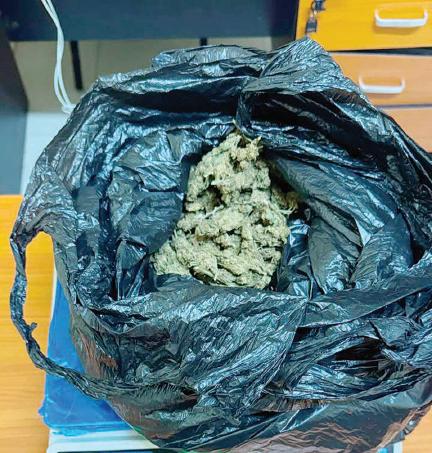
Police in Regional Division Eight are investigating the discovery of a quantity of suspected cannabis found during an operation conducted at School Street, Mahdia, Region Eight (Potaro-Siparuni), on Saturday.
According to Police, the discovery was made between 05:10h and 05:50h while ranks were carrying out searches in the area.
During the exercise, officers found a large black plastic bag concealed between two car tyres among shrubs and plants. The bag
contained leaves, seeds and stems suspected to be cannabis.
Further searches led to the discovery of two additional bulky black plastic bags and one transparent plastic bag containing several small transparent Ziploc parcels. All of the packages contained leaves, seeds and stems suspected to be cannabis.
The narcotic was taken to the Mahdia Police Station, where it was weighed and amounted to 745 grams. No arrests have been made in connection with the discovery.
A25-year-old labourer from Charity Back Street, Essequibo Coast, Region Two (Pomeroon-Supenaam) has been sentenced to two years’ imprisonment after pleading guilty to a simple larceny charge. Vellon Tobin, also known as “Bullseye”, appeared before Magistrate Ravindra Mohabir at the Charity Magistrate’s Court on Monday. Tobin was charged with simple larceny, contrary to Section 164 of the Criminal Offences Act, Chapter 8:01. The charge alleged that he stole rice and sugar, property belonging to Dindyal Narine, a businessman of Charity, Essequibo Coast.

The offence was reportedly committed between May 18 and May 19, 2026, at Charity Back Street, Essequibo Coast. During the court proceedings, Magistrate Mohabir presided via Zoom. The charge was read to Tobin, and he was not initially required to enter a plea because the case was being heard on indictment. The prosecutor subsequently applied for the matter to be dealt with under the Administration of Justice Act. The application was granted by the court, after which Tobin pleaded guilty to the offence. Following his guilty plea, Magistrate Mohabir sentenced Tobin to two years’ imprisonment.


The French Ambassador to Guyana, Olivier Plançon, says his office in Georgetown is working to enhance the visa application and issuance process in the country.
He made these remarks on Friday at the Private Sector Commission’s (PSC) Annual General Meeting, where he acknowledged the difficulties associated with
the visa process. “Believe me, we are working to ease applications in Guyana,” Ambassador Plançon assured. He explained that the topic of visas is a sensitive issue in Europe, particularly for the Latin America and the Caribbean region, given the prevalence of trafficking and transnational crimes here.
However, the French
diplomat recognised that Guyana is not a crime exporter but an exporter of opportunities given the country’s rapid economic growth.
“Please also be mindful of the fact that the Schengen visa is a gateway to no less than 27 countries, and our visa policy has to be coordinated with all of them, actually. That being said, we are constantly striving to



streamline the visa issuance process, and we are well aware that improvements are needed and expected,” Ambassador Plançon noted.
The opening of the French Embassy in Georgetown last September paved the way for the submission and processing of Schengen visa applications in Guyana, something that was long being pushed for. Previously, Guyanese wanting to obtain a Schengen visa would need to travel to neighbouring Suriname to complete the application process.
During a recent interview with the News Room, the French Ambassador disclosed that while the long-term goal is visa-free travel between the two countries and the wider European Union, the number of Schengen visas issued has doubled since the opening of the embassy here last year, moving from about 150 to now some 350.
Air connectivity
Nevertheless, during his remarks at Friday’s PSC event, Ambassador Plançon noted that Guyana and France are connected through that country’s overseas territories in South America and the Caribbean.
To this end, he lamented the lack of connectivity between the two countries – a gap which he says will soon be bridged with a new airline route across Guyana, Suriname and French Guiana.
“I would like to commend the efforts of a local airline which is working to establish a route between Georgetown, Paramaribo and Cayenne. Actually, this is a must and a step in the right direction… We would be very happy if we could bridge this gap between the Frenchspeaking and the Englishspeaking Caribbean,” the French diplomat asserted.
In the same breath, however, Ambassador Plançon admitted that there are still challenges ahead that cannot be overlooked. He stressed that trade between Guyana and France remains limited, particularly due to connectivity issues. He said, “The absence of a deep-water port in Guyana is a barrier to exchanges between Guyana and Europe, as well as the weakness of air connectivity.”
Regardless of this, the French diplomat is convinced that the ties between Guyana and France, and
the wider Europe as well, will continue to grow stronger in the coming years. He noted the imminent delivery this year of a patrol ship by a French company, OCEA, is a symbol of the strengthened cooperation and growth of relations between the two countries.
Back in 2024, the Guyana Defence Force and OCEA inked an agreement for a €39.5 million (US$42 million) patrol vessel that will be used to enhance the army’s efforts to protect Guyana’s sea assets and sovereign territory.
Private sector collaboration
According to Ambassador Plançon, “The decision to open an embassy in Georgetown was driven by several key factors that underscore our desire to develop a future-orientated relationship between our two countries. Strengthening our trade and investment relations and developing and promoting economic and sustainable development are priorities for us.”
Meanwhile, France is also looking to enhance commercial ties with the business community in Guyana. In fact, over the last year, the relationship between the PSC and French institutions grew significantly following key engagements and partnerships that created new opportunities for Guyanese businesses and international collaboration.
In March last year, the PSC led a massive delegation to Europe to seek out opportunities. The visit resulted in the signing of two Memorandums of Understanding (MoU) by the PSC: one with the French private sector body and the second with the French Foreign Trade Advisors.
TURN TO PAGE 18








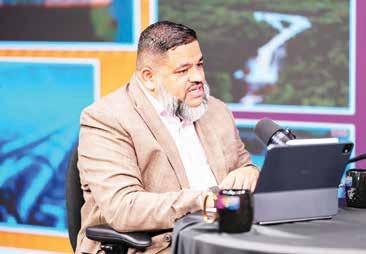
The Georgetown Public Hospital Corporation (GPHC) is recording double-digit suicide watch admissions on a daily basis, according to Chief Executive Officer (CEO) Ravi Rambarran, who has said that the institution has also seen an increase in attempted suicide cases following recent incidents. GPHC CEO Robbie Rambarran, who spoke on the recent Starting Point podcast, expressed that it is overwhelming for the corporation.
“It’s quite an overwhelming number of patients that we have on a daily basis that are on suicide watch. Yeah, it’s quite a number. And it’s in the double digits on a daily basis that are admitted and are placed on suicide watch.”
He added that these figures have always been high, but the institution has seen an increase in patients attempting suicide.
“There were increased patients being admitted. So, after they saw and heard what happened, more people decided that they’ll do it too. And it’s unforeseen, so it’s a difficult one to manage.”
On January 18, 22-yearold Marissa Eastman, who was six months pregnant, died after jumping from the third floor of a ward at GPHC. Eastman, of La Parfaite Harmonie, West Bank Demerara (WBD), Region Three, had been admitted earlier that day after relatives raised concerns about her behaviour.
On February 26, a 70-year-old patient died after jumping from the second-floor male surgical ward of GPHC. The man had been hospitalised for several weeks and was reportedly under suicide watch at the time of the incident. He succumbed to injuries sustained in the fall.
Yielding great results
When asked if mental health counselling has helped in any way, Rambarran reported that it has been yielding great results; however, family support for suicide victims continues to be a struggle. “Yeah, certainly the counselling is working because a lot of those patients, after counselling and speaking to the doctor, get better.
And this is sometimes something that is really absent prior to these patients becoming patients of attempted suicide: that there is not enough support, especially family support. Almost every one of our patients has complained about family support.”
“Once they are in our care and we start talking to them and get the doctors to work, the social worker gets the family involved, and we have conversations and assign them to doctors or social workers directly where they can receive counselling. It’s been working.” According to

him, mental health remains a serious issue, and what happened to those patients was unfortunate.
“We wish we could save every patient, not just mental patients, and especially patients who die from those circumstances. It is sometimes not easy for us to deal with. I know I sometimes break down listening to some of the stories. My doctor, Stacey, was just reminding me on my way over that I should not cry in an interview. She said the last time I had an interview with Kiana, I cried. I can’t remember. But
sometimes we are very passionate about what we do, and we are human, and some of the things that are said really break us.”
Infrastructural challenges
Meanwhile, Rambarran recalled an incident in which a patient who had inflicted self-harm to the neck was taken to theatre and successfully underwent several hours of surgery, during which his life was saved. He explained that the patient was subsequently placed in a secure room under nursing supervision. However, while the attending nurse briefly left to retrieve a blood pressure monitoring device, the patient reportedly escaped through an open window. Rambarran said the incident highlighted ongoing infrastructural challenges, noting that windows in such wards had not been barred due to safety concerns, particularly in the event of emergencies such as fire evacuations.
He added that while security enhancements such as window bars present risks in emergency situations, the hospital has had to imple-
ment certain measures in response to repeated incidents, despite the operational challenges they may create.
“There were three deaths, I believe, in a very short period of time, and we don’t want this to be the reason. We had to find ways of improvising how we put the grills on in the event of an emergency so that they could be easily removed but not so easily removed that someone could remove them. So, we barred the windows in some corridors, enhanced patient monitoring, put patients in isolated wards, and assigned staff, a PC or nurse, to remain with them at all times. We even had to ensure that if staff are leaving the room, they call someone to come in because of that recent tragedy.” He further reported that the hospital has also worked on improving policies and clinical procedures, including training staff in more advanced methods of patient care.
(If you or someone you know is experiencing emotional distress or thoughts of suicide, contact the National Suicide Prevention Lifeline on 915 for assistance.)

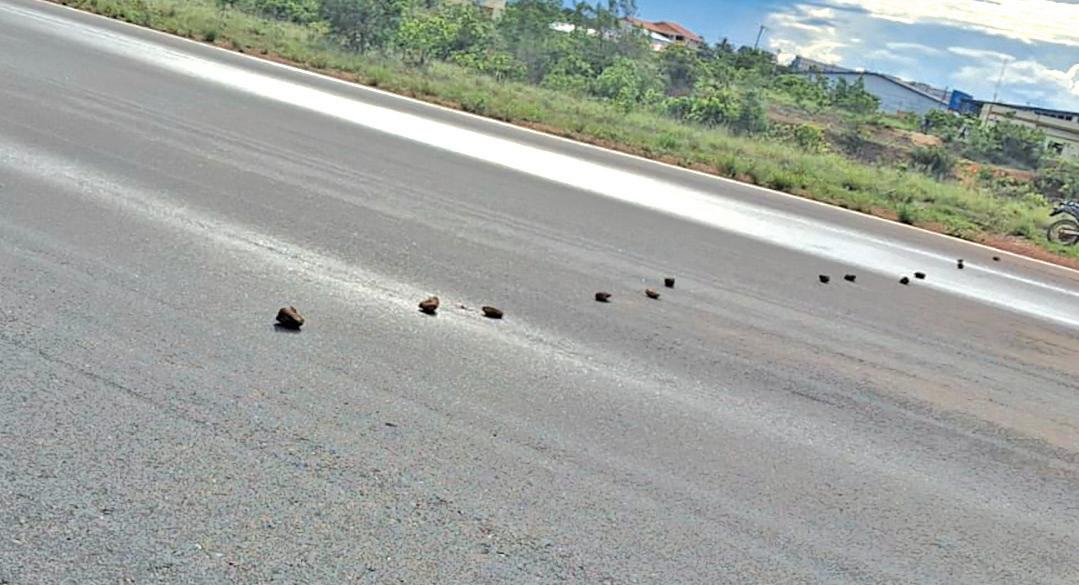
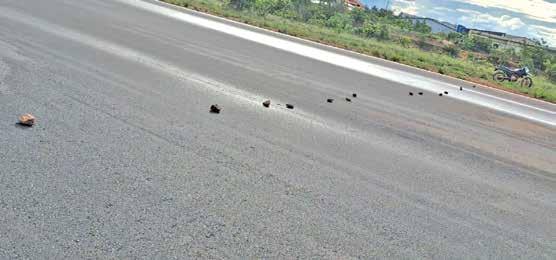
The Guyana Civil Aviation Authority (GCAA) has condemned the deliberate placement of rocks on the runway of the Lethem Aerodrome, Region Nine (Upper TakutuUpper Essequibo), describing the act as a serious threat to aviation safety and the lives of passengers, crew members and other persons who depend on air transport services in the region.
In a statement issued on Saturday, the GCAA said it was alarmed by the incident and confirmed that it is working closely with the Guyana Police Force, which has launched a formal investigation.
GCAA is urging members of the public with infor-
mation about the incident to assist investigators.
According to the GCAA, placing objects on an active runway poses a significant risk to aircraft operations and could have resulted in serious consequences.
The Authority also reminded the public that such actions constitute criminal offences under the Civil Aviation Act 2018.
Section 83(1) of the Act states that any person who trespasses on land forming part of an aerodrome, or causes an animal to trespass on such land, commits an offence and is liable on summary conviction to a fine of $1 million and imprisonment for six months.
Additionally, Section 86
makes it an offence for any person to intentionally interfere, or attempt to interfere, with air navigation within Guyana. Those found guilty are liable on summary conviction to a fine of $3 million and imprisonment for two years.
The Director General of the GCAA strongly condemned the incident.
“The deliberate placement of rocks on the runway of the Lethem Aerodrome is a reckless and irresponsible act that directly compromised aviation safety and endangered the lives of all persons who depend on air operations at this aerodrome. The GCAA will not tolerate any conduct that undermines the safe-
ty and security of civil aviation in Guyana, and we are firmly committed to ensuring that those responsible are brought to justice,” the Director General stated.
The GCAA is also en-
couraging the public to treat aerodromes as safety-critical infrastructure and to report any suspicious activity or threats to airport operations to the relevant authorities or anonymously
through the Authority’s hotline at 608-4222.
The Authority said the safety of the travelling public remains its highest priority as investigations continue.

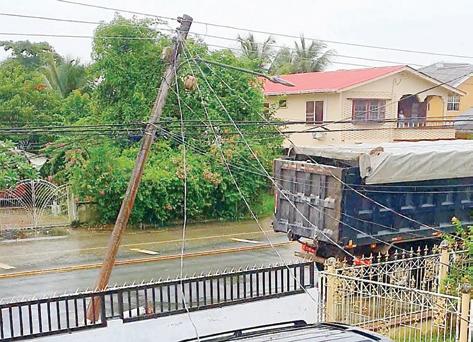
Several households and business at Third Avenue and surrounding areas in Diamond, East Bank Demerara (EBD) were hit with power outages on Saturday morning after a truck reversing on the road struck a utility pole and damaged the Guyana Power and Light Inc’s (GPL) power lines as well as a motor vehicle that was parked nearby. The incident occurred at approximately 09:30 hours as the truck was reversing out of a yard along Third Avenue and made contact with the distribution network and also struck a utility pole. According to GPL, “The impact resulted in damage to the pole and the dislodgement of associated hardware, causing electrical arcing and damage to a nearby customer’s vehicle. Fortunately, no injuries were reported. The driver subsequently fled the scene.”
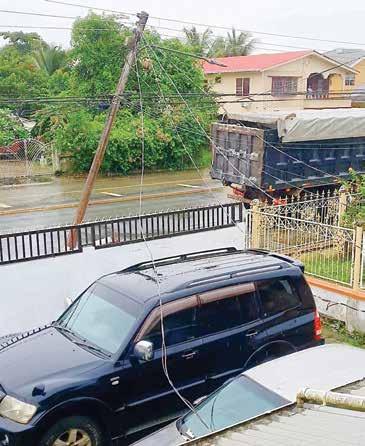
Guyana Times was told that at the time of the incident, a GPL team was nearby conducting work and tried to get the attention of the driver before he hit the powerlines. Upon realising what transpired, the driver drove off with the truck. However, GPL has since made contact with the owner of the vehicle, Anson Charles, who has provided
information to assist with the investigation. The matter has been reported to the Diamond Police Station, and efforts are ongoing to locate the driver.
Up to press time, inves-
The Guyana Police Force (GPF) is investigating the death of a Police Sergeant of Airstrip Road, Non Pariel, East Coast Demerara (ECD), who reportedly died by suicide. Dead is Bachan Singh.
Based on Police reports, Singh attempted suicide on Saturday, May 23, at about 14:00h at his home. He was
subsequently taken to the Enmore Regional Hospital, where he was admitted as a patient in the High Dependency Unit (HDU).
However, Singh succumbed on Friday, May 29, at about 22:00h while receiving medical care at the ECD hospital. According to Police, a bottle suspected to have contained a poisonous
substance was found at the location.
Singh’s body was examined, and no marks of violence were seen. Investigations are ongoing.
(If you or someone you know is experiencing emotional distress or thoughts of suicide, contact the National Suicide Prevention Lifeline on 915 for assistance)
Longstanding party member Ronald Backer and party treasurer Fiaaz Mursaline resigned in 2022.
Region 10 Executives, and former Parliamentarians Jermaine Figueira and Vanessa Kissoon, both also resigned in 2025, as did former Executives and Parliamentarians James Bond, Amanza Walton-Desir,
and Natasha Singh Lewis.
Former Region Four Regional Chairman Daniel Seeram and Vice-Chairman Samuel Sandy also resigned in 2025, when they both endorsed the PPPC.
McAllister, ChandanEdmond, Figueira, and Bond have all also crossed the floor and joined the PPPC. Hastings-Williams and
Natasha Singh-Lewis have joined the United Statessanctioned and indicated Azruddin Mohamed’s We Invest in Nationhood (WIN) party, which won 16 seats in Parliament in the September 1 elections, and WaltonDesir has formed her own party, the Forward Guyana Movement (FGM), which won a single seat at the GRE.

tigators were still trying to locate the driver.
“Dangerous and irresponsible behaviour” Nevertheless, GPL has condemned this “dangerous and irresponsible behaviour,” which it said not only disrupted service to customers but also posed a serious risk to members of the public. “The company treats incidents of this nature with the utmost seriousness and will pursue, as it has done in the past, all available avenues to ensure that those responsible are held fully accountable,” the missive from the power company noted. GPL is once again strongly urging drivers and equipment operators to exercise extreme caution when operating near electrical infrastructure. It noted that the increasing frequency of these types of incidents is deeply alarming and unacceptable since they continue to place lives at risk and compromise the reliability of the electricity network. The power company added, “Members of the public are reminded that even minor contact with GPL’s infrastructure can have severe and far-reaching consequences, including service interruptions, damage to property, and potential injury or loss of life. Vigilance and responsible conduct on the road are therefore absolutely critical.”
Only back in April, an engineer at a road construction site at Dennis Street, Sophia in Georgetown, was arrested by police after a heavy-duty machinery damaged a key transmission line and caused
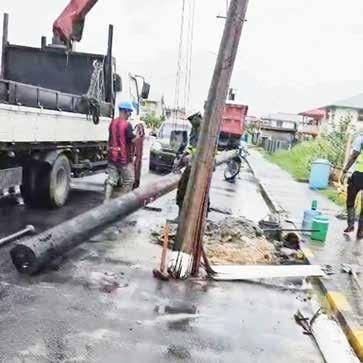
nearly 10 hours power outage across the Demerara County. Days later, GPL issued a strongly worded letter to the construction company – China Railway First Group (Guyana) Incorporated to recover more than $30.6 million in repair costs. The power company informed the Project Manager of China Railway First Group, Ma Qiang, that they had 14 days to settle the amount of $30,645,189. GPL had pointed out that the incident represents a serious breach of safety and operational requirements. The power company reiterated that any works conducted in proximity to electrical infrastructure must be executed in strict compliance with established safety standards, including required clearance distances and proper coordination with GPL. Meanwhile, these actions come as GPL intensifies efforts to hold persons accountable for
damaging its infrastructure. In recent years, there have been mounting concerns about the repeated damage to utility infrastructure especially by road construction works as well as by vehicular accidents. During a hearing before the Public Utilities Commission (PUC) back in March, PUC Chairman Dr Nanda Gopaul had called for those persons responsible to be held financially accountable for the damages they caused. In response, GPL’s Team Leader, Kesh Nandlall, had explained that the power company has been working with the Police Force to ensure those offenders face legal action. “There was a lot of charges being meted out to these contractors… we have a team of guys that are working very closely with the police. So, when we have these incidents, we act immediately,” Nandlall had told the Commission.
Additionally, the French are also working with the European Union (EU) Delegation in Guyana to boost ties between the European Chamber of Commerce and the Guyanese private sector.
In fact, the French diplomat disclosed that since the opening of the embassy in Georgetown, there has been heightened genuine interest from French companies regarding the Guyanese market. Currently, there are about 10 French companies
operating diverse sectors in Guyana, including aerospace, transportation, logistics, engineering, oil and catering.
Moreover, the Ambassador added that the embassy has supported about 20 other French companies that have a strong interest in investing in Guyana. There are also efforts ongoing to organise a French business mission to Guyana later this year in collaboration with the local private sector.
“France offers a highly business-friendly environment… France has internationally recognised expertise across strategic sectors, including aerospace, with global leaders such as Airbus, Thales, and Safran; agriculture; agri-food… Together, these strengths create significant opportunities for Guyanese businesses seeking partnerships, investment, innovation and access to the broader European market,” he noted.

“The report so far is that the water is receding at a rapid pace, but there are some critical areas that are disaster zones, especially in Regions Nine and Eight. For those areas, we have already made a commitment that we are going to intervene to support the communities, support the villages, and support the families but, importantly, also to quickly restore critical infrastructure, what needs to be rehabilitated, areas that have been cut off, restore livelihoods, and support communities across the country in cleaning supplies and so on wherever it is necessary.”
Importantly, the head of state said that an assessment was also done on health centres across the country.
“We have a 90 to 99 per cent stock level of all critical drugs that may be needed when you have these heavy rainfalls. So this morning, as I said, the cabinet and regional officials met, and we are now all across the country in the fields looking at the situation.”
4.5 inches of rainfall
Meanwhile, the Agriculture Minister, providing rainfall statistics, added, “The rain that we have had over the last 24
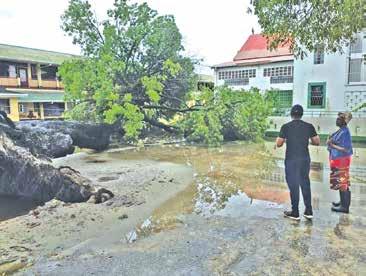
hours, according to the Hydrometeorological Office, is over 4.5 inches. The rainfall was very intense, and because of that we have had a number of areas underwater. We are seeing that the water is receding rapidly because of the investment we have made over time in pumps, excavators, and sluices. We are now seeing that water is draining very fast, and I am hoping that within the next few hours most of these areas will be drained.”
He urged members of the public to desist from littering.
“I also want to ask residents to desist from throwing garbage into drainage canals and interlocking drains so
that we can maintain a free flow of water. When garbage is dumped in these areas, it impedes drainage. I also urge residents to work with the authorities – the NDCs, RDCs, NDIA, the Ministry of Local Government, and the Ministry of Public Works –so that we can work collectively to ensure proper drainage.”
Zulfikar also highlighted that, according to the Hydrometeorological Office, prevailing weather conditions are expected to continue, requiring continuous monitoring and maintenance of all systems currently in place.

Cabinet update on flooding
Meanwhile, Labour manpower and planning Minister Keoma Griffith, who was traversing through the flooded waters, committed to the resident the Government’s support to them.
“We are committing to residents that we will offer hygiene and cleaning support. What is most important is that, based on the rainfall, the water is receding, and this is a trend we have seen across communities. This is because of the investment we have made in our system.”
Home Affairs Minister Oneidge Walrond also noted that the Government’s intervention efforts are already yielding visible results.
“We have just concluded an entire walkthrough of Georgetown looking at how the flooding has affected residents. One thing is clear: the interventions made by the Government are reaping benefits. I think residents were very happy to see the Government on the ground,” she said.
Minister within the Culture, Youth and Sport Ministry, Steven Jacobs, shared similar sentiments, noting that the visit provided a clearer understanding of conditions affecting citizens.
“We are assessing the
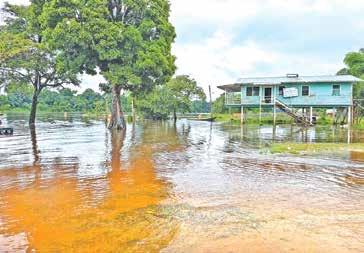
conditions on the ground and getting a true understanding of what is happening.”
Improper waste disposal of garbage
Meanwhile, Local Government and Regional Development Minister Priya Manickchand, who traversed several neighbourhoods, described witnessing what she called a “disturbing sight” involving improper waste disposal contributing to drainage blockages.
She said an individual had reportedly left construction waste along a roadway, which contributed to clogged drains in the area.
“These are some of the
challenges we are facing. Someone carrying out construction work has left building waste here, clogging drainage and making the place unsightly. This cannot happen, and you are going to see tough action taken. Citizens should not behave this way, and enforcement will follow,” she said.
In Region Eight (PotaroSiparuni), Government in a statement on Saturday evening said it is closely monitoring areas affected by heavy and unusual rainfall in the region and has been receiving regular updates from regional officials who are deployed and are assessing affected communities.

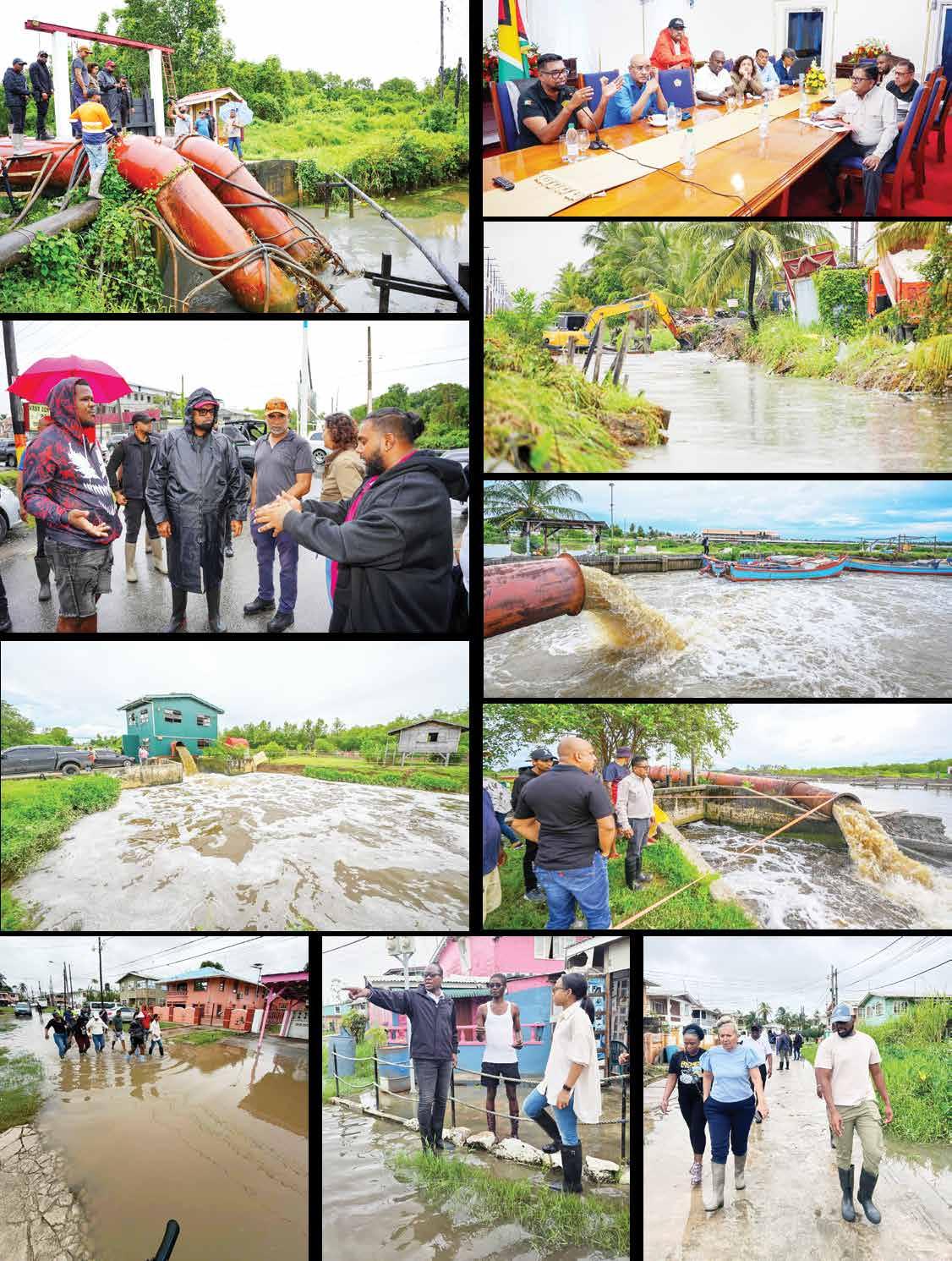
Scenes from the flood assessment on Saturday as heavy rainfall causes flash floods in several communities



Maternal deaths at the Georgetown Public Hospital Corporation (GPHC) have declined significantly this year, with Chief Executive Officer Robbie Rambarran reporting that the institution has recorded two deaths so far, compared to 11 during the corresponding period last year, while highlighting ongoing improvements within the public health system.
Rambarran made the disclosure while speaking on Starting Point Podcast on Saturday while noting that the majority of cases in both years were classified as indirect maternal deaths, linked to underlying comorbidities rather than direct obstetric complications.
“A major impact I’ll attribute is on maternal death. You can see that there has been a significant improvement over the last year; so far for this year we only had two deaths, and both are indirect deaths. Last year we had 11, of which most were indirect deaths. Indirect
deaths are not really maternal complication deaths but other comorbidities that have developed,” he said.
Rambarran said the improvements did not happen without deliberate restructuring and planning. He explained that during his years at GPHC as a stores coordinator, he frequently emphasised the importance of prioritising three key areas within the institution, the emergency room, the maternity department, and supplies and logistics, noting that these were often the most scrutinised areas by the public.
Key priority
He added that upon returning to the hospital’s leadership, he identified the maternity department as a key priority, resulting in a complete restructuring of the unit, including changes to leadership, staff operations, shift systems, and oncall arrangements. Physicians, he said, are
now assigned directly to specific units within the department to strengthen oversight and patient monitoring.
“So there is more direct monitoring of the department, rather than before when people were on call in teams. They are still in teams on call, but they previously did not have direct responsibility for a unit, such as the labour ward, prenatal, or postnatal areas, and would wait on a call. But now they are assigned to these areas, so they have to know everything that is going on there. That has been the fundamental breakthrough for us – getting the staff in place and holding them accountable,” he said.
He described the reforms as a major turning point, noting that infrastructural changes included expansion of the maternity ward and improvements aimed at making the facility more comfortable, including air-conditioning across the maternity department.

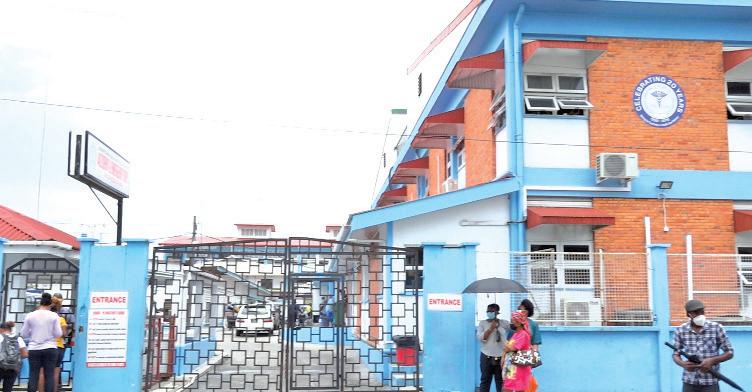
Rambarran said the upgrades have significantly improved patient comfort, to the point where, in some cases, patients reportedly prefer to remain in the ward.
He added that some patients have even compared the facility to a hotel, joking that they are reluctant to leave because of the quality of care and amenities, including meals, though he acknowledged that this presents certain operational challenges.
He further stated that the hospital has invested heavily in specialised equipment for patient tracing and monitoring. These upgrades, combined with staff realignment and ongoing training, are aimed at improving clin-
ical outcomes. Rambarran added that international partners, including Mount Sinai and Northwell Health, are working alongside the institution to support staff training and capacity building.
He also explained that GPHC has invested approximately $85.2 billion over the last five years, excluding 2026, much of which has been directed toward staffing.
“We have a high payroll, approximately a billion dollars a month. We have over 2500 staff, and we are still short, but we have highly technical skilled staff, and with all the salary increases over the last five years, we have really raised the
wage. But in terms of where it is impactful, you can see where the impact is in a lot of training, postgraduate training,” he stated. He added that 21 postgraduate training programmes are currently underway at the hospital in collaboration with the University of Guyana and international institutions including McMaster University, the University of Calgary, and Vanderbilt University.
Rambarran said these initiatives are aimed at strengthening specialised care delivery and improving patient outcomes through training and modernised equipment.

Billions of dollars’ worth of gold is still being extracted illegally from Brazil’s Amazon rainforest, a study by non-profit watchdog Greenpeace found, despite efforts by President Luiz Inacio Lula da Silva to crack down on wildcat mining.
Lula pledged, upon taking office in 2023, to eliminate illegal gold mining from Indigenous lands and protected areas after years of expansion encouraged by farright former President Jair Bolsonaro. Last year, Brazil’s Federal Police seized a record 447 kilograms of illegally mined gold.
But as gold prices hit record highs amid intense geopolitical instability, the Greenpeace study found that miners have adapted by using permits from places with no mining activity to falsify the origin of illegally mined gold.
Greenpeace analysed 187 forest areas with gold mining permits issued by the

Brazilian mining agency ANM near Indigenous lands and protected areas in the Amazon and found that 98 of them showed no signs of mining.
Still, so-called “ghost permits” from those areas were used to justify the sale of 26.8 metric tonnes of gold worth an estimated $3.88 billion between 2018 and March 2026.
Reuters flew over two of the permitted areas in the dataset and verified that, despite paperwork for huge
output from surface mining, there was no activity to be seen. Six minutes away by air, journalists spotted a large active illegal operation in a protected area.
It was not clear where all the gold backed by so-called “ghost permits” originated, but researchers and investigators believe much of it is extracted from protected areas and Indigenous lands, such as the Kayapo people’s territory in Para state. (Excerpt from Reuters)
Seven months after Hurricane Melissa tore through sections of western Jamaica, recovery efforts continue in George’s Plain, where an estimated half of all homes sustained major storm damage and many families are still awaiting repairs.
Residents of George’s Plain are now working alongside volunteer teams, learning construction and repair skills while helping to restore damaged homes, churches and community spaces.
Among them is Jerry, whose family was directly impacted by the hurricane after his mother’s roof was destroyed during the storm. Following the rebuilding of his family’s home, Jerry began volunteering with Adventures Relief and now serves on teams repairing homes and restoring church-
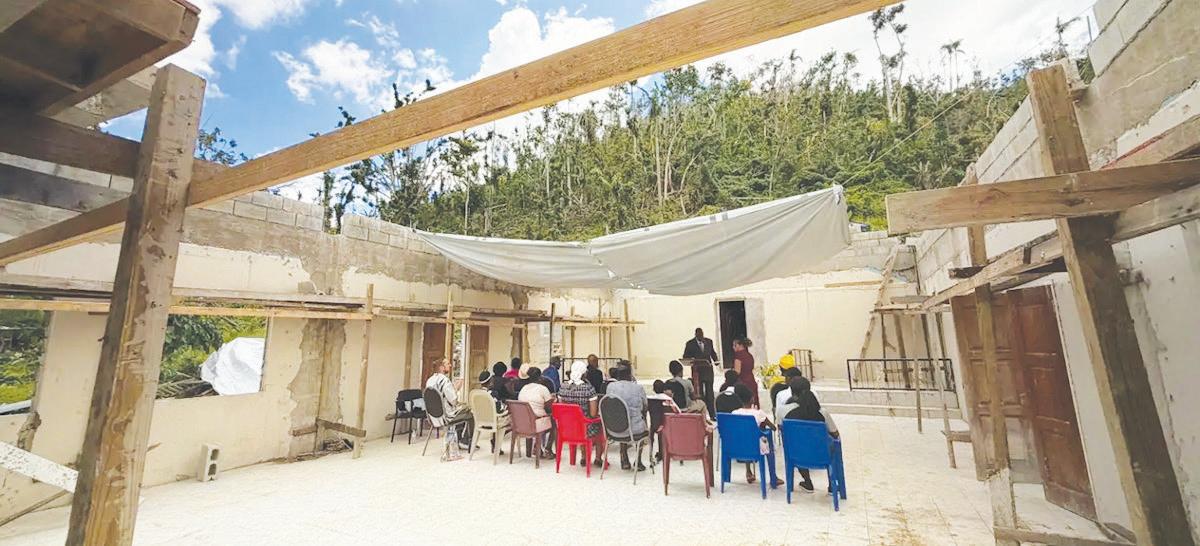
es across Westmoreland.
His transition from recipient to volunteer reflects a broader trend emerging within the recovery effort, as residents take a more active role in helping neighbours rebuild and recover.
The work has been supported through a partnership between Adventures Relief and BridgePoint Foundation, organisations focused on providing practical assistance and long-term recovery sup-
port to communities affected by the hurricane.
Founder of the BridgePoint Foundation, Laura Butler, said recovery extends beyond physical repairs.
“Recovery is not only about rebuilding structures,” Butler said. “It’s about restoring dignity, strengthening communities and reminding families that they have not been forgotten.” (Excerpt from Jamaica Observer)
Antigua and Barbuda (A&B) welcomed hundreds of visitors from across the Caribbean this month, including more than 360 travellers from Guadeloupe who arrived by ferry this week, according to the A&B Tourism Authority.
The tourism body said the arrivals formed part of ongoing efforts to strengthen regional travel and increase connectivity between
Caribbean destinations.
In a social media post on Friday, the authority also highlighted the visit of a group of more than 50 travellers from Trinidad and Tobago earlier in May.
Photos shared by the tourism authority showed visitors being greeted upon arrival, participating in activities and attending events during their stay.
Tourism officials said
Haitian women’s rights advocates used the approach of Mother’s Day to call on authorities to provide urgent protection and assistance to women displaced, impoverished and traumatised by gang violence, arguing that mothers have become some of the most vulnerable victims of the country’s worsening security crisis.
During a May 29 press conference at the International Lawyers’ Office (BAI, its French acronym), activists said thousands of women have been forced from their homes, lost their livelihoods and endured abuse as armed groups continue expanding their control across the Port-au-Prince
metropolitan area and other parts of the country.
The appeal comes as Haiti faces one of the largest displacement crises in its modern history. More than 1.4 million people have been uprooted by gang violence, according to the United Nations, while women and children account for the majority of those displaced. Human rights organisations have repeatedly documented sexual violence, including rape and gang rape, being used by armed groups as tools of terror and social control.
The organisations emphasised that Mother’s Day should be more than a celebration. They said it should also serve as a moment to
recognise the suffering of women who have been disproportionately affected by insecurity and displacement. They urged the Government to strengthen protection mechanisms, expand emergency assistance programmes and develop long-term solutions for displaced women and survivors of violence.
According to the United Nations, women and children made up more than half of Haiti’s 1.4 million internally displaced people as of May 1. UN Women has also warned that nearly half of all women and girls in Haiti are expected to need humanitarian assistance. (Excerpt from The Haitian Times)
Attorney General (AG) Wilfred Abrahams has declared that gangs do exist in Barbados and warned that anyone who joins, assists, harbours or associates with them could face lengthy prison sentences of ten to 25 years.
Speaking during a debate yesterday on the Criminal Gangs Prevention And Control Bill, 2026, Abrahams dismissed any suggestion that gangs were not a local problem.
“There are gangs in Barbados,” he told Parliament, noting that the Government, the judiciary, the Barbados Bar Association and other stakeholders involved in consultations on the legislation all
accepted that reality.
“If you belong to a gang, associate with a gang, engage in gang-related activities, harbour or conceal, or facilitate or encourage persons in gang-related activities, you will go to jail,” he said.
Abrahams later confirmed that harbouring a gang member would carry a sentence of between 10 and 25 years’ imprisonment upon conviction.
The AG’s comments followed an extensive presentation by the Minister of Legal Affairs and Criminal Justice, Michael Lashley, who described the proposed legislation as a “landmark” bill, and one that would provide law enforcement with a
critical new tool in the fight against organised crime.
Lashley said the legislation emerged from years of consultation involving the Citizen Security Advisory Council, legal professionals, victims of crime and other stakeholders. He noted that research conducted among prison inmates had revealed that some individuals admitted being gang members, associating with gangs or participating in gang-related activities.
The Minister stressed that the legislation was designed not only to punish criminal behaviour but also to protect communities and strengthen public safety.
(Excerpt from Nation News)
Colombia’s Foreign Ministry has accused Ecuador’s President of “deliberate interference” in its forthcoming election after he promised a rightwing candidate he would lift tariffs.
Daniel Noboa framed his conversation with Colombian Presidential hopeful Abelardo de la Espriella on Friday as one with an Administration-inwaiting, saying the two had “reached an agreement” on trade and security.

they remain committed to expanding transportation links and creating experiences aimed at encouraging repeat visits from regional travellers.
The latest arrivals come as A&B continue efforts to grow intra-Caribbean tourism and promote the destination within neighbouring markets. (Excerpt from Antigua Newsroom)
Colombia heads to the polls on Sunday to elect a new President in an atmosphere of intense political polarisation.
The outcome of the election could redefine which countries the Latin American nation aligns itself with and how the Government intends to tackle drug gangs amid spiralling violence.
Left-wing President Gustavo Petro, who is un-
able to seek re-election, has repeatedly sparred with his US counterpart Donald Trump over a number of issues, including drug trafficking and American intervention in the region.
Noboa, a staunch ally of the US President, has taken a hard line on drug-related violence and has joined a US-led alliance aimed at fighting cartels.
Ecuador has gradually imposed tariffs on imports from Colombia since
January, citing what it described as Bogotá’s failure to secure their shared border. Its geographical location – sandwiched between Colombia and Peru, the world’s largest producers of cocaine – has turned Ecuador into a key transit country for the illicit drug. Petro’s Government has denied the accusation and responded with economic measures of its own.
(Excerpt from BBC News)
Iran has reasserted its control over the Strait of Hormuz, warning that foreign commercial and military vessels will be targeted if they do not comply with regulations governing passage through the strategic waterway.
The announcement on Saturday came after the United States signalled that President Donald Trump was close to a decision on a potential deal with Iran, but Tehran denied an agreement had been reached.
“The management of the Strait of Hormuz is exercised with full authority by the Armed Forces of the Islamic Republic of Iran,” the operational headquarters of Iran’s armed forces, Khatam al-Anbiya Central Headquarters, said in a statement reported by Iranian media on Saturday.
“All ships, commercial vessels, and tankers are only required to travel through the designated routes and

obtain permission from the Islamic Revolutionary Guard Corps [IRGC] Navy. Any violation of these regulations will seriously jeopardise the security of their traffic,” it added. Iran also issued a warning to foreign military forces operating in the area, saying any attempt to interfere with maritime management or shipping movements would trigger a response.
On Friday, Trump met with advisers in the White House Situation Room and said a “final determination” on a possible deal with Iran would soon be made. But no statement followed the meeting.
US sources had told the AFP news agency the deal was waiting on Trump’s sign-off, but he made no decision after Friday’s meeting.
(Excerpt from Al Jazeera)
Buckingham Palace was handed emails six years ago that would have shown that Andrew Mountbatten-Windsor was sharing confidential government information while a trade envoy, according to court documents.
It has emerged that an archive of 30,000 emails, containing information about the former prince's controversial financial dealings, was given to the Lord Chamberlain, the most senior officer in the Royal Household, in 2020.
The emails had been taken from a personal business contact of the former Prince Andrew.
When asked about what happened to the emails, Buckingham Palace said: "Since there is an ongoing police enquiry concerning Mr Mountbatten-Windsor, it is not possible to provide any comment on these matters."
Last week, Thames Valley Police issued a fresh appeal for people to come forward with information, following MountbattenWindsor's arrest on suspicion of misconduct in public office.
But a search of court documents has revealed that a large cache of emails relating to MountbattenWindsor's finances had al-
ready been sent to Palace officials, years before the current enquiries began.
The emails had been the subject of a legal dispute, and documents from a High Court judgement in April 2021 show that a "copy of the archive" had been provided for the "Lord Chamberlain in May 2020".
In June 2022, a subsequent High Court ruling refers to an email, dated 10 July 2020, saying the emails had been "delivered to Buckingham Palace".
The contents of the archive, with emails up to June 2013, are not fully known. (Excerpt from BBC News)
The rapid spread of Ebola in the Democratic Republic of Congo has created a "deeply alarming" situation, the medical charity Médecins Sans Frontières (MSF) has warned.
Speaking two weeks on from the outbreak being declared, MSF Deputy Director Dr Alan Gonzales said never before had "so many cases" been recorded so soon.
His comments came as the head of the World Health Organization (WHO), Dr Tedros Adhanom Ghebreyesus, visited the eastern Congolese province of Ituri – the worst-hit area – to oversee virus contain-
ment efforts.
There are now more than 1000 suspected Ebola cases in the DR Congo and at least 246 deaths. Neighbouring Uganda has reported nine confirmed cases and one death.
"Two weeks after the declaration of the Ebola disease outbreak in Ituri Province, the situation is deeply alarming," Gonzalez said in a statement on Saturday.
"Never before has an Ebola outbreak recorded so many cases so soon after its declaration," he said, stressing his teams on the ground were "witnessing a response that has not
yet caught up to the rapid spread of the epidemic".
"The reality today is that nobody knows the true scale and severity of this outbreak. New suspected cases are being reported daily, yet hundreds of samples remain untested."
Gonzalez added that containment efforts and humanitarian aid deliveries were being delayed by "major constraints", including border and airport closures.
The WHO has repeatedly warned that ongoing conflict in the DR Congo was also significantly hampering the Ebola outbreak response. (Excerpt from BBC News)
The US is ready to restart attacks on Iran if a deal cannot be reached, Defense Secretary Pete Hegseth said on Saturday, as negotiators from Washington and Tehran worked to bridge major differences blocking an agreement.
"Our ability to recommence if necessary...we are more than capable," Hegseth said in Singapore.
"Our stockpiles are more than suited for that, both there and around the globe, so we're in a very good place," he added.
Hegseth, speaking at the Shangri-La Dialogue, Asia's premier forum for defence leaders, militaries and diplomats, said the US has not turned its back on the AsiaPacific region despite being engaged in conflict with Iran.
"We can do two things at one time. We're su-

per-charging our defence industrial base so that we're building 2X, 3X, and 4X the munitions very soon to ensure that all of our (operations) plans are properly funded throughout the world," he said.
The Pentagon chief said President Donald Trump was "patient" and wants to make a "great deal" that en-
sures Iran does not get a nuclear weapon.
The war launched by the US and Israel on February 28 has killed thousands, mainly in Iran and Lebanon, and caused global economic pain by pushing up energy prices due to Iran's effective closure of the Strait of Hormuz. (Excerpt from Reuters)
Ameteor explod-
ed off the coast of Massachusetts on Saturday, causing a loud boom to be heard throughout the state Saturday afternoon, according to WBZTV chief meteorologist Eric Fisher.
It was heard around 14:11h Eastern Time, with people describing a sudden bang that rattled windows, startled pets, and even shook some homes. Dozens of phone calls came into the WBZ-TV newsroom reporting a loud explosion heard around Boston and as far as Ipswich and Johnston, Rhode Island.
Satellite lightning data from the National Oceanic and Atmospheric Administration showed a signature consistent with a meteor around the same time the boom was reported. The data also showed that the meteor probably entered the atmosphere over the South Shore near Boston.
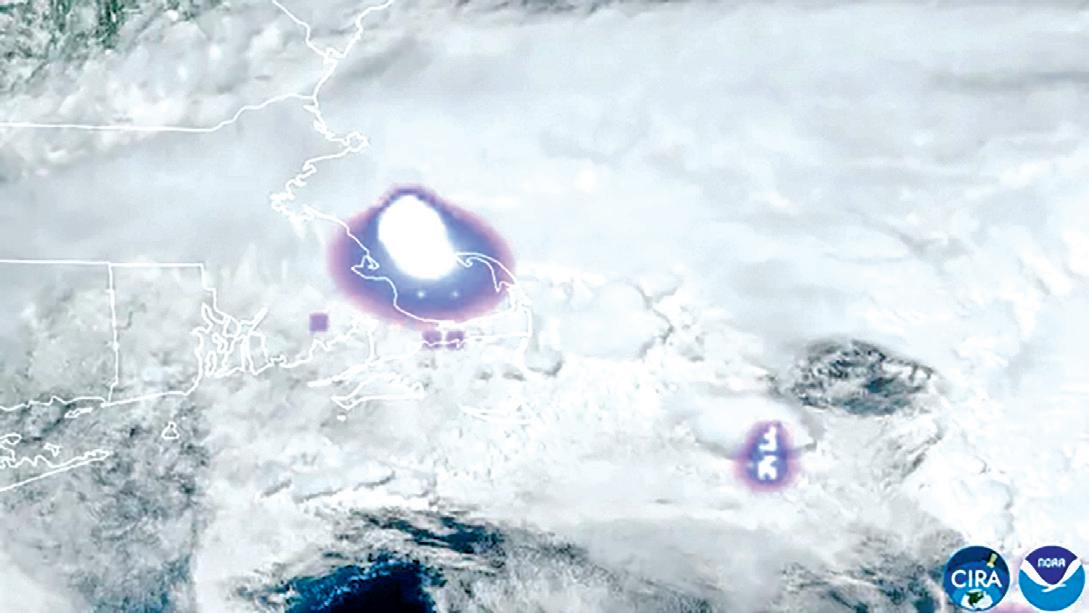
There are no reports of where the meteor landed.
Most meteors burn up harmlessly in the atmosphere, but larger objects can occasionally survive long enough to create the brilliant fireballs and booming shock waves that grab people's attention.
Saturday's event is the latest in a string of high-profile fireballs reported across North America this year. In March, a meteor exploded over Ohio, producing a sonic boom heard across multi-
ple states.
Just days later, another fireball over Texas generated a powerful shock wave and scattered meteorites across the Houston area, including one fragment that reportedly crashed through the roof of a home.
The Massachusetts boom also comes just a day after residents across South Carolina reported a mysterious blast that many initially mistook for an earthquake. (Excerpt from CBS News)
Atruck overturned in eastern Afghanistan on Saturday, killing 18 persons on board, including 10 children, a provincial official told Agence France-Presse.
Deadly traffic crashes are common in Afghanistan, due in part to poor roads after decades of conflict, dangerous driving and a lack of regulation.
The vehicle was carrying Afghan families returning from Pakistan, where they had been living, according to Abdul Malik Niazay, spokesperson for
the governor of Laghman province.
“Eighteen people (have died), including 10 children, five women and three men. In addition, 29 people have been injured,” the spokesperson said.
The accident happened on the road between Jalalabad in eastern Afghanistan and the capital Kabul.
Authorities in Pakistan have toughened their stance on Afghan migrants and refugees in their country – causing an outflow that often includes families
travelling with their belongings in trucks. Since the start of the year, 447,400 Afghans have returned from Pakistan, according to figures from the United Nations High Commissioner for Refugees and the International Organization for Migration. Last August, a collision between a bus carrying Afghan migrants returning from Iran and two other vehicles in western Afghanistan killed 78 persons, including 19 children. (Excerpt from The Guardian)











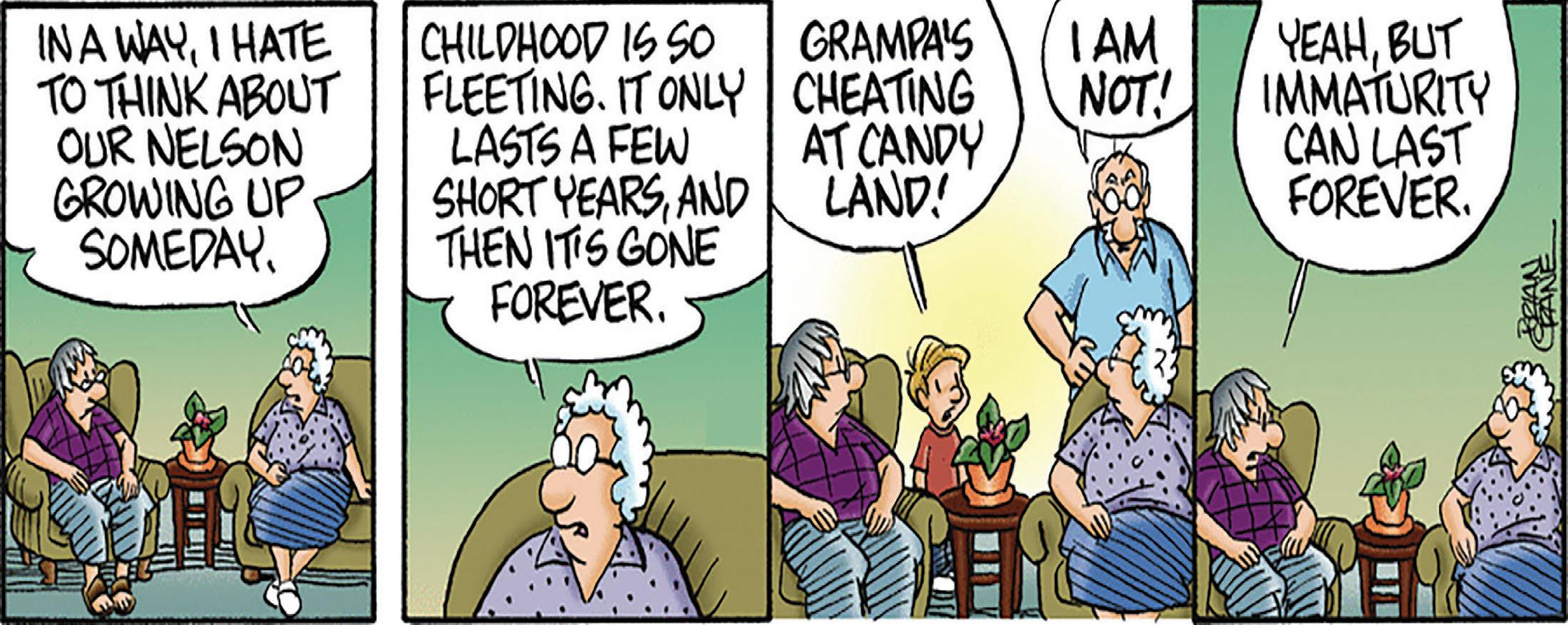






TAURUS (April 20May 20)


GEMINI (MAY 21June 20)


CANCER


VIRGO (Aug. 23Sept. 22) (March 21April 19)
Say no to temptation and to those trying to push you in a direction you don’t care to go. Your best interests will come from investing more time and money in yourself, your future and your long-term goals. Simplifying your life will help you lower your overhead, leaving more time and money to pour into comfort and convenience.
Channel your energy into looking and feeling your best. Designate more time to family, friends and pampering yourself. Declutter your space to make room for new hobbies or entertaining loved ones. A little romance will bring you closer to someone you want to spend more time with.
A change will energize you. Opening conversations with people of interest will help you discover someone or something that has a positive impact on your life and prospects. Offer a unique perspective, and you’ll be able to take control of a project that excites you. Don’t take health risks or pay for someone else’s mistakes.

LEO (July 23Aug. 22)


LIBRA (Sept. 23Oct. 23)

SCORPIO (Oct. 24Nov. 22)


CAPRICORN (June 21July 22)
A secretive approach to what’s happening in your life will stop outsiders from interfering. Ask more questions, show interest in what others do and take the attention off yourself and your intentions. Put more time and effort into health and well-being and feeling good about how you look and what you can contribute. Romance is favored.
Don’t sit at home alone when you have so much to offer. Set up get-togethers. Initiate talks and social events that mix projects or pastimes you enjoy. Your leadership abilities will shine through, and you’ll attract plenty of interest in who you are and what you can do, but don’t promise more than you can deliver.
Take a back seat and observe. Gather information and knowledge that help you understand what others expect or want from you before you engage in negotiations or commit to something prematurely. Take time out to rejuvenate and consider what your purpose is and how to achieve your objective. Domestic problems will surface if someone nearby initiates undesirable changes.
Gather information, talk to experts and be direct about what you want to do next. Refuse to let stressful situations build up. It’s better to handle matters swiftly than to let them fester. Avoid taking on too much or letting overindulgence put you in harm’s way. Trust your instincts, not someone trying to take advantage of you.
Move about. Visual effects will have an impact on your perspective and encourage you to do what’s right and best for yourself. Anger is a waste of time. Put your energy where it counts and will help you excel. Doing well is the best revenge when someone disappoints you. Choose peace, love and romance over discord and chaos.
SAGITTARIUS (Nov. 23Dec. 21)


A change will be invigorating if you don’t take on more than you can handle physically or financially. Whether you alter your lifestyle, fix up your surroundings or start a new hobby, it will pump you up and make you feel good about what you accomplish. An emotional discussion will bring you closer to someone you love.
Listen and observe. Your loved ones’ grievances require your attention if you want to avoid being blamed for an oversight on your part. Set a budget for home improvements that will make your life more convenient and leave you more time for fun. A commitment will encourage greater stability and bring you closer to someone special.
AQUARIUS
(Jan. 20Feb. 19) (Dec. 22Jan. 19)


PISCES
(Feb. 20Mar. 20)

Don’t waste time and energy on revenge when looking for and taking advantage of opportunities needs your attention. Finding a new way to use your skills will promote greater cash flow. Using your voice as an influencer will help you in more ways than one. Put more onus on getting ahead, not bringing others down.
Take time out to do something that makes you happy. Refuse to let the decisions and changes others make disrupt your plans. Distance yourself from anyone who puts you down or criticizes how you do things. You need to build confidence if you want to get ahead. Choose personal growth and self-improvement, and you’ll find your bliss.







Paris Saint-Germain (PSG) became just the second team to win back-to-back Champions League titles after rallying to beat Arsenal following a penalty shootout in Budapest, Hungary, on Saturday.
Arsenal defender Gabriel Magalhães smashed the decisive penalty over the crossbar to give PSG a 4-3 win in the shootout after the teams finished level at 1-1 following the end of extra time at the Puskas Arena.
For Arsenal, who ended their 22-year-drought to win the Premier League this season, the wait goes on to claim a first European crown.
PSG joins Real Madrid, which won three successive titles between 2016 and 2018, as the only team to successfully defend the Champions League since the competition was rebranded in 1992.
Overall, PSG is the 10th team in European Cup history, dating back to 1955, to win consecutive titles.
The win also propels PSG boss Luis Enrique to a place among Europe’s alltime coaching greats.
The Spaniard, who also led Barcelona to the title in 2014–2015, is just the fourth coach to win three or more European Cups, after Carlo Ancelotti (five) and Bob Paisley, Zinédine Zidane and Pep Guardiola (three each).
He has moulded a team that is simply too good even
for the best the continent has to offer. That includes an Arsenal team that topped the first stage of the Champions League with a perfect winning record, finishing 10 points and 10 places ahead of PSG.
That mattered little at the Puskás Arena as the French champion reaffirmed its status as the dominant force in European soccer.
“It’s even more special because we knew before the match how difficult it would be,” Luis Enrique said. “I think it’s deserved over the course of the whole season, even if the final was very closely contested.”
After demolishing Inter Milan 5-0 in last year’s final, PSG endured a tougher foe as Arsenal sat deep and relied on the best defence in the competition.
Just as in their only previous final 20 years ago, Arsenal took an early lead. Marquinhos’ attempted clearance rebounded off Arsenal winger Leandro Trossard and into the path of Kai Havertz, who ran through on goal from near halfway before unleashing a shot from a narrow angle that found the roof of the net.
But just as in that final against Barcelona, Arsenal were pegged back in the second half. After frustrating the holders for close to an hour, Arsenal’s defence was finally breached when Cristhian Mosquera brought down Khvicha Kvaratskhelia in the pen-
alty area.
After a VAR check and sizable delay, Ballon d’Or winner Ousmane Dembélé sent David Raya the wrong way from the penalty spot to tie things up.
Despite Arsenal recording just 26 per cent possession over the course of the contest – the lowest in a Champions League final since records began in 2004, according to Opta –PSG couldn’t find another goal before a shootout was needed.
It was the first final to go to a penalty shootout since Madrid beat neighbours Atlético Madrid 10 years ago to win the first of those three titles.
Eberechi Eze also missed an earlier spot kick, but Raya saved from Nuno Mendes to keep Arsenal level.
Lucas Beraldo scored the last of PSG’s spot kicks, meaning Gabriel had to convert to take it to sudden death. But he blasted high over the bar into a section of PSG fans, who erupted in celebration along with their new two-time champion team.
It was a familiar sight as Marquinhos got his hands on the trophy for a second time and raised it aloft in the centre of the field as gold confetti dropped and fireworks went off.
French President Emmanuel Macron posted his congratulations on X – “A new star is shining over Paris!” – and told PSG players they were “mak-

ing all of Europe dream. France is proud.”
The next target for PSG will be to emulate Madrid’s three in a row under Zidane. And with a starting line-up in Budapest with an average age of less than
24, Luis Enrique has built a team that has the potential to dominate for years.
“It’s crazy, it’s crazy. We’re going to enjoy it first, and after that we’re going to work and work again because we want more. We
are really hungry. We are a young team, and we know we are really ambitious. So next season we have to go again,” PSG midfielder Désiré Doué told broadcaster TNT Sports. (ESPNFC)
Heavy rainfall across the country, including at the Port Mourant Turf Club, forced the cancellation of Sunday’s Independence horse race meeting, marking yet another washout at the East Berbice venue.
According to the revised programme, eight races were scheduled for the day, with close to GY$10 million in cash and prizes up for grabs.
The feature event, the Independence Cup, carried a purse of GY$1,875,000 and was set to attract horses competing in the C-Class and lower division over a distance of 6.5 furlongs.
The cancellation comes as horse owners, trainers and jockeys continue preparations for the country’s premier horse racing event, the Guyana Cup, which is scheduled for August 23 at a venue to be confirmed.
With the Port Mourant
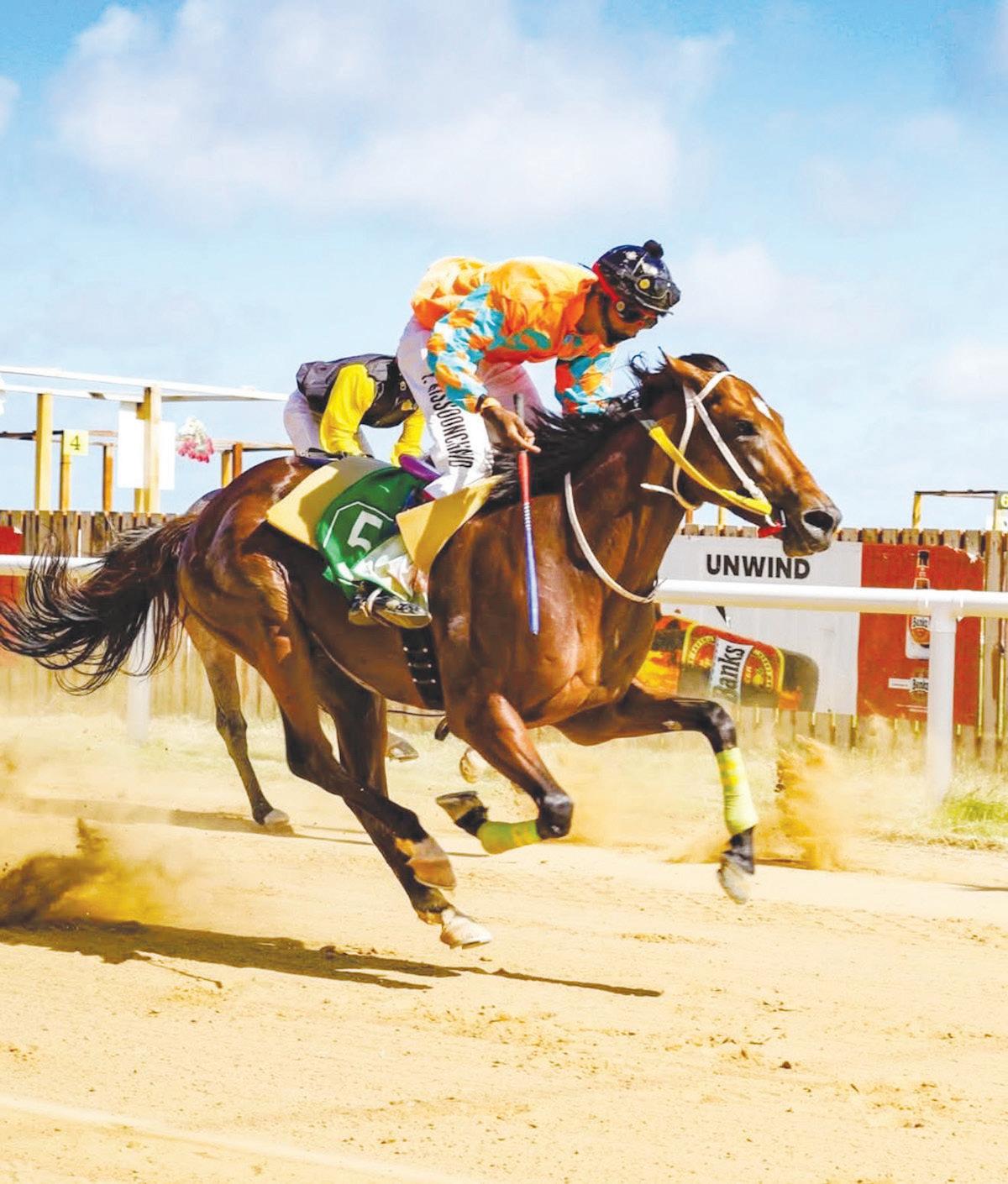
meet now called off, competitors will have additional time to prepare their horses for the highly anticipated Guyana Cup, which
traditionally attracts the nation’s top thoroughbreds and some of the biggest purses in local racing.
Arafat Minhas made his One Day International (ODI) debut memorable by becoming the first Pakistan bowler to take five wickets in his maiden appearance in the format. His sensational figures of five for 32 from 10 overs orchestrated his side's comprehensive five-wicket win over Australia in the first ODI at Rawalpindi.
The 21-year-old leftarm finger spinner used his variations with great guile on a pitch that offered plenty of purchase to the spinners to bundle out Australia for 200. Their run chase brought another youngster, Ghazi Ghori, a wicketkeeper-batter, to the limelight as he stitched a sturdy 127-run stand with Babar Azam.
Despite sweltering conditions, Pakistan Captain Shaheen Afridi had been encouraged to bowl first because of the dryness in the pitch. Pakistan, to make the most of it, played four spinners and just the two pacers, and that they wrapped up the visitors' innings with 35 balls spare for a meagre total was an indication that all went according to the plan.
Australia were dealt a blow before the toss as the experienced Adam Zampa was ruled out of the contest due to neck spasms and had to be replaced by Tanveer Sangha, who would go on to bowl very tidily. A good total would have put Pakistan's batting capabilities to the test, as three of their top four shared a handful of matches between them, having debuted in the format just the last ODI series in Bangladesh.
Australia started steadily with their makeshift opening pair of Matthew

Short and Alex Carey finding boundaries in the first half of the opening powerplay. While Carey took his time to settle, Short crunched Haris Rauf for two consecutive fours through the off-side boundary in the second over. Soon Carey smoked Afridi for fours, but his stay at the crease was cut short in the seventh over as Abrar Ahmed had him caught at slip with a beautiful flighted delivery in what was the spinner's first over.
Afridi introduced Minhas from the other end, and the pair bowled in tandem until the 16th over. It took a while for Minhas to nail his line and length, but once he found the rhythm, he tore through Australian batting. It all came crashing down for them in his fourth over as he pushed the ball with his arm with great deception to have Josh Inglis and Marnus Labuschagne trapped in front.
The two were removed in the space of three balls in the 14th over. While Labuschagne was undone with the flatter trajectory of the ball because of which he was late to bring
his bat down in time to negotiate a fuller delivery on the back foot, Inglis missed the reverse sweep. The ball of the match, however, was bowled in his next over as a ripping delivery that pitched back-of-thelength on middle and leg struck the top of Cameron Green's off-stump to leave Australia 68 for four.
A 55-run partnership between Short and Matt Renshaw arrested the collapse as both went on to score half-centuries. While they steadied the innings by milking the spinners around the dial and picking up odd boundaries, they were allowed an opportunity to get back into the match as Afridi removed the spin duo of Abrar and Minhas from the attack.
Shadab Khan, who was playing his first ODI since the 2023 World Cup, was smashed for a boundary on the first ball as he gave away 12 runs in his first over. He never found his rhythm and proved to be the most expensive bowler in the innings with none for 54 from eight overs. He had also gone wicketless in his last three matches, all
during the World Cup in India.
With Australia gaining momentum, Afridi returned to Minhas, and the move worked as he beat Short with the pace and turn. Minhas dragged his length back and put a few extra kph in his delivery as Short charged at him to provide enough time for Ghori to dislodge the bails. Later, a sharp leg-break by Abrar from around the wicket smashed into Renshaw's off stump as Australia's hopes of setting a challenging total started to fade.
Pakistan used all four spinners, the other being Salman Ali Agha, who bowled five overs, but none got the ball to turn as sharply as Minhas did. He was brought back for his final two overs at the start of the third powerplay and completed his five-wicket haul with another stinging delivery that turned sharply after pitching on the middle stump to bowl Nathan Ellis. This was also the first time that he had taken five wickets in a List A match.
Matt Kuhnemann had faced 15 balls in his ODI career before this match.
His 40-ball vigil annoyed Pakistan, who peppered him with short balls. He stitched partnerships of 34 and 20 with Renshaw and Ellis as he made 24. He was the last man to fall. Afridi and Rauf performed the final rites with a wicket each.
Australia were quick to introduce spin, as early as the fourth over, and they tasted success right away as Maaz Sadaqat holed out to deep midwicket off Kuhnemann. The wicket belonged to Short as much as it did to Kuhnemann, as he did well to take a clean catch along the boundary. He was in action again, this time at long off, when Sahibzada Farhan failed to connect cleanly with Sangha's tossed-up delivery. The ball seemed to be following him, and there was a close chance later in the innings off Kuhnemann's bowling when Babar mistimed a drive to short cover. With the ball dying onto him, Short tried to pluck it, diving low to his right, but third umpire Richard Kettleborough ruled it had touched the ground. Babar was on 28 off 48 at that time, and he went on to score 69 off 94.
Being the only experienced batter in the top four, Babar had to display his batting prowess in these tough batting conditions, with the pitch continuing to deteriorate and offering more turn and uneven bounce to the bowlers.
He sliced Ellis for a boundary earlier in the innings but later traded his at-
tacking instincts for more composure on the crease. Ghori, who made his maiden half-century only in his second ODI, duly supported him. His 65 off 92 was also his highest List A score. Babar and Ghori had the luxury of playing dots in the absence of the scoreboard pressure, and they seemed content with rotating the strike. The pair picked up boundaries occasionally. They shifted gears towards the end of their partnership as Ghori launched Ellis down the ground for boundaries and Babar smashed the first six of the match off Renshaw before a glorious inside-out drive off Labuschagne. Inglis was encouraged to introduce the part-time spin of Short, Renshaw, and Labuschagne by the excessive turn in the pitch, but it did not do much to derail the partnership.
As soon as he reached his 38th half-century in the format, Babar mistimed a loft down the ground, but he was put down by Kuhnemann. He eventually fell to Ellis' slower ball as he was bowled by a delivery which kept low. Ellis accounted for Ghori in his next over, and Labuschagne removed Agha as he missed an audacious slog sweep with six runs needed. But Pakistan strolled to the finish line with 45 balls to spare, and they were, fittingly, taken over the line with a gigantic six down the ground by Minhas, who made 18 not out off 17. (ESPNcricinfo)
Pakistan 202 for five (Babar 69, Ghori 65) beat Australia 200 (Renshaw 61, Short 55, Minhas 5-32) by five wickets
The Cricket West Indies Masters Association (CWIMA) has announced a 16-member West Indies Over-60 squad for the 2026 IMC Over-60s World Cup, which will be played in Mississauga, Ontario, Canada, from August 9 to 23. The tournament is expected to feature some of the best veteran cricketers from around the world and will provide another platform for master's cricket to showcase its continued growth internationally.
Leading the Caribbean side will be captain Zamin Amin, who heads a squad made up of players with extensive experience representing their countries, regional teams, clubs and previous West Indies Masters outfits in international competition. According to CWIMA, the selected players will carry the rich cricketing traditions of the Caribbean into a competition featuring the world's top Over-60 teams. The squad comprises Zamin Amin (captain),
Anthony Boyke, Narine Bidhesi, Rajendrasammy Chetana, Deonarine Deyal, Rajendra Dilraj, Fareed Hosein, Hafiz Mohamed, Harry Narain Heeralall, Keith Seale, Ken Mayers, Anthony “Tony” Small, Balwant Roy Singh, Shivnath Seeram, Steve Linton, and Victor Patrick. David Ramsingh and Emmerson Jordan have been named as reserves. Team management will be led by manager Raj Singh, while Alexio Daley will serve as physical therapist.
CWIMA Secretary Roy Singh expressed confidence in the team's ability to compete on the international stage and highlighted the significance of the tournament being hosted in a country with a large Caribbean community.
“Canada 2026 presents an exciting opportunity for the West Indies Masters to compete against the best Over-60s teams in the world. With Canada being home to a strong Caribbean diaspora and passionate cricket commu -
nity, we look forward to representing West Indies Masters cricket with pride, discipline, and competitiveness,” Singh stated.
He added that the selected players had demonstrated both commitment and the ability to perform at a high level and expressed confidence that they would represent the region well on and off the field.
The team is expected to begin preparations in the coming months as it builds toward the global tourna-
ment. Beyond the pursuit of international honours, the World Cup will also celebrate the enduring appeal of cricket and the camaraderie that masters cricket continues to foster among players across the world.
CWIMA also acknowledged the support of sponsors, families, volunteers and the wider cricket community, noting that further details on preparations, sponsorship opportunities and fundraising initiatives will be announced in the weeks ahead.
Parmeshwar Ram has been appointed captain of Guyana's Under-19 cricket team for the upcoming Cricket West Indies (CWI) Regional Under-19 Tournament, which is scheduled to be played in Antigua from July 7 to 23.
The announcement was made by the Guyana Cricket Board (GCB), which also named Romario Ramdeholl as Vice Captain of the 23-member squad selected for the regional competition.
The squad comprises Justin Dowlin, Jonathan Mentore, Shamar Apple, Joshua Budram, Darwin Joseph, Dhanesh Persaud, Micah Amsterdam, Parmeshwar Ram, Romario Ramdeholl, Adrian Hetmyer, Razam Koober, Yannick Newton, Gilbert Griffith, Feaz Baksh, Richard Ramdeholl, Dave Mohabir, Thierry Henry, Khush Seegobin, Gibran Yacoob, Emmanuel Lewis, Jayhayden Rohler, Darrius Pearson, and Shazim Mohamed.
Guyana will be guided by Head Coach Kumar Bishundial, Assistant Coach Antony Adams, and Manager Nazeer Mohamed, who will oversee the team's preparations and campaign during the regional tournament.
The competition will bring together the region's most promising young cricketers as they compete
for re gion al hon ours and an op portu nity to further their develop ment within the West Indies crick et pathway.
Parmeshwar Ram has been appointed captain of Guyana's Under-19 cricket team for the upcoming Cricket West Indies (CWI) Regional Under-19 Tournament
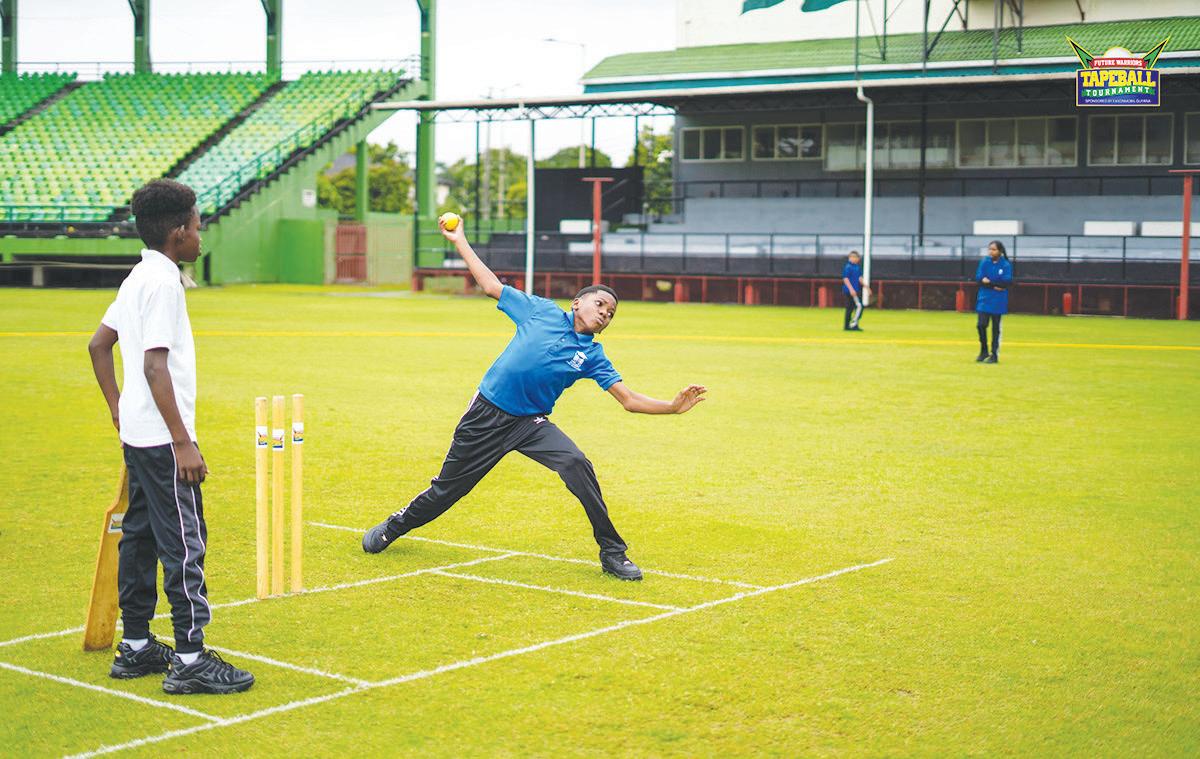

ing the squad, the GCB congratulated the selected play ers and expressed confidence in the team's ability to perform strongly against the best Under-19 talent from across the Caribbean.
Guyana will be aiming to make a significant impact when the tournament bowls off in Antigua in July.
Defending champions Grove Primary were eliminated from the Demerara leg of the Future Warriors Tapeball Tournament on Saturday as Chateau Margot Primary produced a composed performance to secure a place in the semi-finals at the National Stadium, Providence.
Despite persistent rainfall affecting several parts of Region Four, play was successfully completed at Providence, where the venue's drainage system allowed the tournament to proceed once conditions improved. By the end of the opening day, Chateau Margot, Stella Maris, West Ruimveldt and Rama Krishna had emerged as the four remaining teams in the competition.
The biggest result of the day came in the quarter-finals when Chateau Margot ended Grove's title defence. Grove posted 53 for three from their allotted eight overs after Anderson Peters top-scored
with 22. Chateau Margot responded confidently, reaching 54 for four with an over to spare. Captain Brandon Billey led the chase with an unbeaten 22 from 14 balls to guide his team into the final four. Chateau Margot will now face Stella Maris Primary in one of the semi-finals. Stella Maris, champions of the inaugural edition, booked their place with a 13-run victory over Enterprise Primary. After posting 46 for six, with Delmar Mansell contributing 17, Stella Maris restricted Enterprise to 33 for five. Jared Joseph played a key role with the ball, claiming two wickets for six runs from one over.
In the other quarter-final matches, West Ruimveldt Primary advanced after defeating School of the Nations. Steven Orie struck an unbeaten 21 while Jermaine Tracey added 18 as West Ruimveldt reached 61 for two from eight overs. School of the Nations struggled in reply and finished on 39 for three.
Rama Krishna Primary also secured an impressive victory to reach the semi-finals. Shiv Singh made an unbeaten 21 from 15 deliveries to help his team post 60 for one before their bowlers dismantled Comenius Primary for 21 for seven to complete a comprehensive win.
The tournament also featured participation from Camille's Academy, Supply Primary, La Grange Primary, ISA Islamic Primary, MetenMeer-Zorg, Winfer Gardens, St Pius and Redeemer Primary. The competition continues on Sunday morning with the semi-finals scheduled to begin at 10:30h, followed by the third-place playoff and the final. The Demerara champion will earn a place in the Champion of Champions final against the winners of the Berbice and Essequibo zones, which will be contested later this month at Albion and Anna Regina, respectively.
Swan United FC and Timehri United FC booked their places in the final of the Guyana Football Federation (GFF) Elite League Playoff Qualifiers after recording semi-final victories on Friday night at the National Training Centre (NTC), Providence.
The two teams will now meet in the championship match today, Sunday, May 31, from 15:00h at the same venue, with both clubs aiming to move a step closer to securing a place in Guyana's top-tier football competition.
In the opening semi-final, Swan United defeated Soesdyke Falcons FC 4-2 in an entertaining encounter.
Murphius Andrews opened the scoring for Swan United in the 20th minute before Terrelle Glasgow responded four minutes later to bring
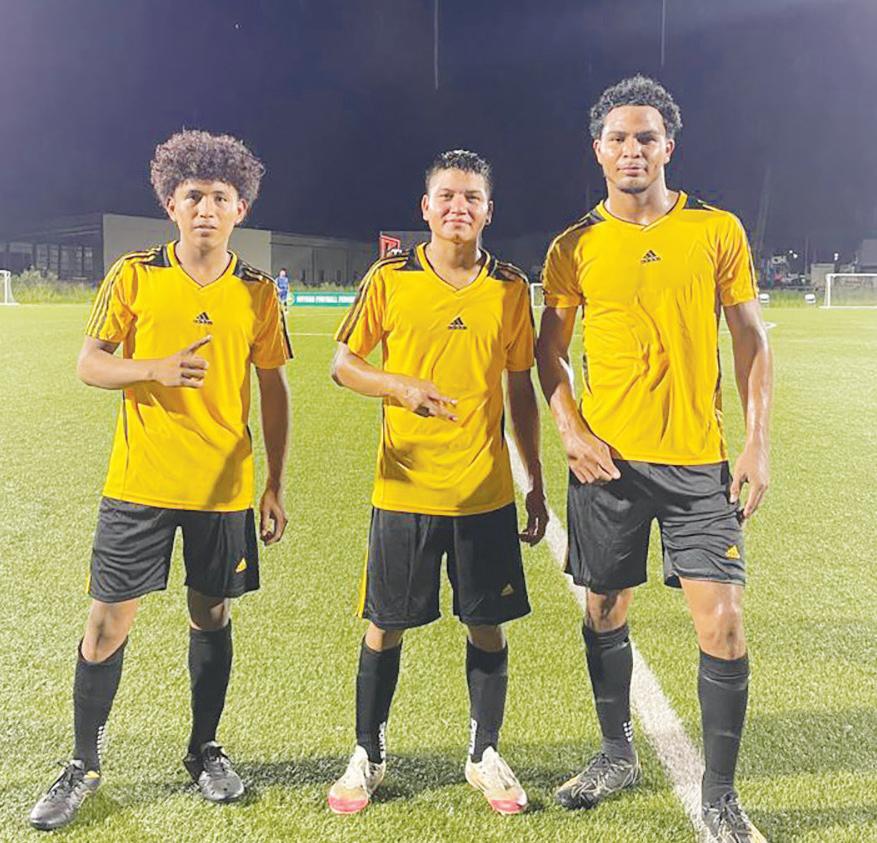
Soesdyke level at 1-1.
Swan regained the lead through Christov Roberts in the 35th minute and carried a 2-1 advantage into the halftime break.
The Falcons continued
to fight and found another equaliser in the 56th minute through Kelly Brown. However, Roberts struck again in the 65th minute to restore Swan United's lead before Abram Webb
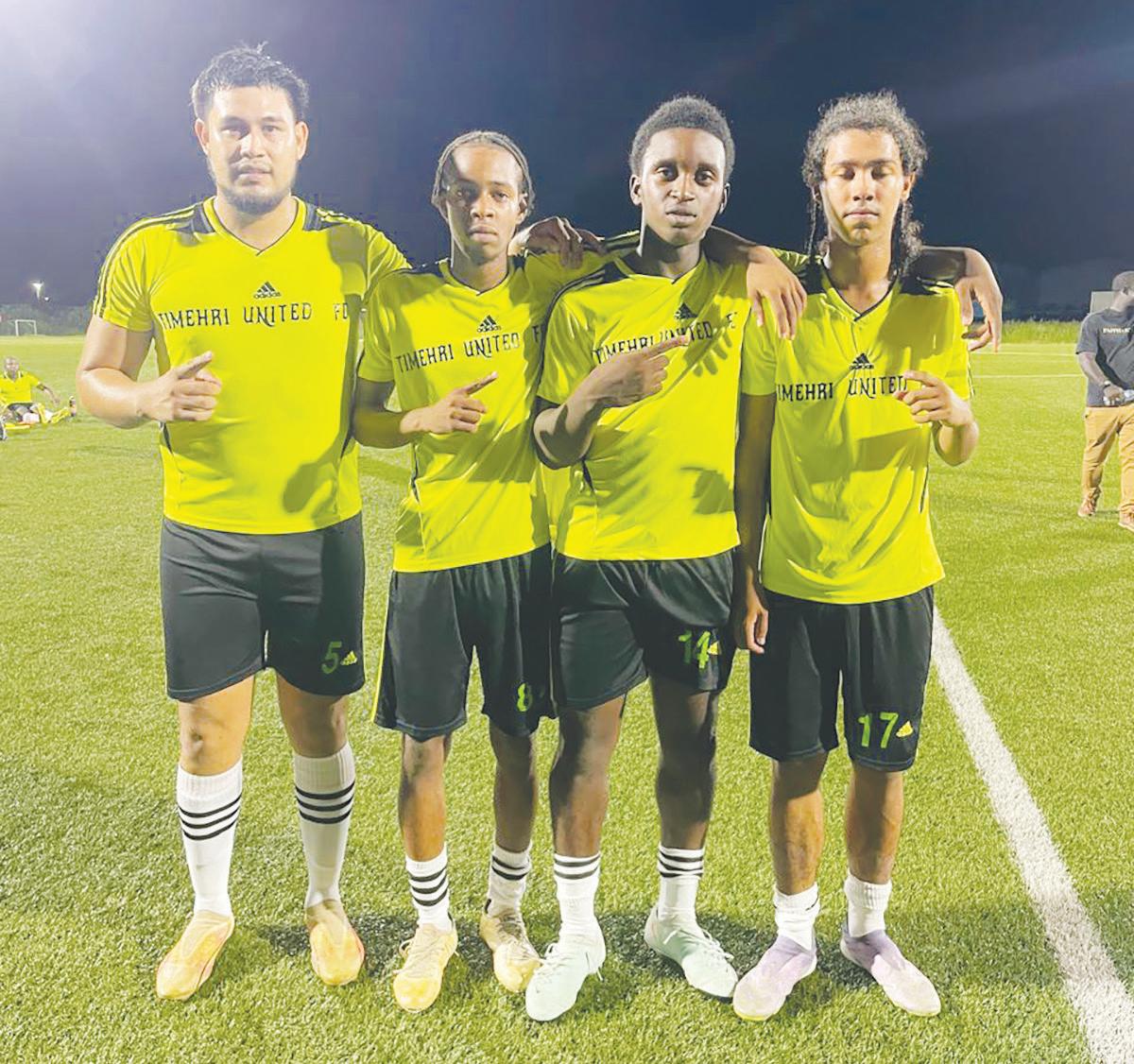
sealed the victory with a late goal in the 85th minute. The result completed a strong performance by Swan United, who advanced to the final after overcoming a determined Soesdyke outfit.
In the second semi-final, Timehri United FC produced a commanding display to defeat Herstelling Raiders FC 4-2.
Nyon Barron gave
Timehri United the lead just before halftime in the 44th minute and doubled his tally one minute into the second half. Joseph Desvettico extended the advantage in the 52nd minute before Leon Evans added a fourth goal in the 61st minute to put Timehri firmly in control. Herstelling Raiders mounted a late response through Jose Vasques in the 83rd minute and Jesus Perez in stoppage time, but the comeback effort came too late as Timehri United secured their place in the final. With both teams producing four-goal performances in the semi-finals, Sunday's final is expected to be a closely contested affair as Swan United and Timehri United battle for playoff supremacy and continue their pursuit of Elite League qualification.

The round-robin stage of the Youth Basketball Guyana (YBG) Regional Championships concluded on Friday with victories for Bishops High School A, School of the Nations, Tutorial High School and Plaisance Secondary, while playoff action across all regions is set to begin later this week.
At the Cliff Anderson Sports Hall (CASH) in Georgetown, Bishops High A defeated Chases Academic 33-22 in the opening game of the Geo City regional competition. Kemol Pickering produced an outstanding allround performance to earn
Player of the Game honours with 15 points, 13 rebounds and seven steals. Jonathan Nazier supported with six points and 11 rebounds, while Eli Archer added six points and six rebounds. For Chases Academic, Sirr Sampson recorded a game-high 20 points along with 15 rebounds and four blocks in a losing effort. The closest contest of the evening saw School of the Nations edge Bishops High B, 30-29, after overtime. The teams were locked at 29 points apiece at the end of regulation before School of the Nations secured the narrow victory. Hong Yang was named

Player of the Game after scoring 13 points and grabbing four rebounds. Rasheed Burrowes contributed eight points and four rebounds, while Julian Yang chipped in with five points and four rebounds.
Ethan Henry led The Bishops High B with nine points and 11 rebounds.
Tutorial High then secured a one-point victory over Brickdam Secondary, prevailing 28-27 in another tightly contested encounter. Xavier Scott earned Player of the Game honours with eight points, 10 rebounds and four blocks,
while Julian Charles topscored for Tutorial with 16 points and six steals. Brickdam's Dontavion Denny battled hard in de feat, finishing with 10 points and 15 rebounds. Meanwhile, in the East Coast Country Regional competition, Plaisance Secondary defeated Golden Grove Secondary 29-24. Christopher Ram led the winners with 14 points, four rebounds and five steals to claim Player of the Game honours, while Trevor James added five points and eight rebounds.
Shane Archer scored 14

The Guyana Table Tennis Association (GTTA) Independence Tournament continued at the National Gymnasium over the weekend with Sherwin Sahadeo claiming the C-Class Open Singles title on Friday evening, while several players booked places in finals and title deciders in other categories as competition intensified.
Sahadeo emerged champion of the C-Class Open Singles after a series of hard-fought victories. He first defeated Dhanesh Persaud 3-2 in the quarter-finals before edging Vibert Williams by the same margin in the semi-finals. In the final, Sahadeo outlasted Youdestir Persaud 3-2 to secure the championship.
Persaud had reached the final after defeating Abraao DeOliveira 3-1 in the quarter-finals and overcoming Kayden
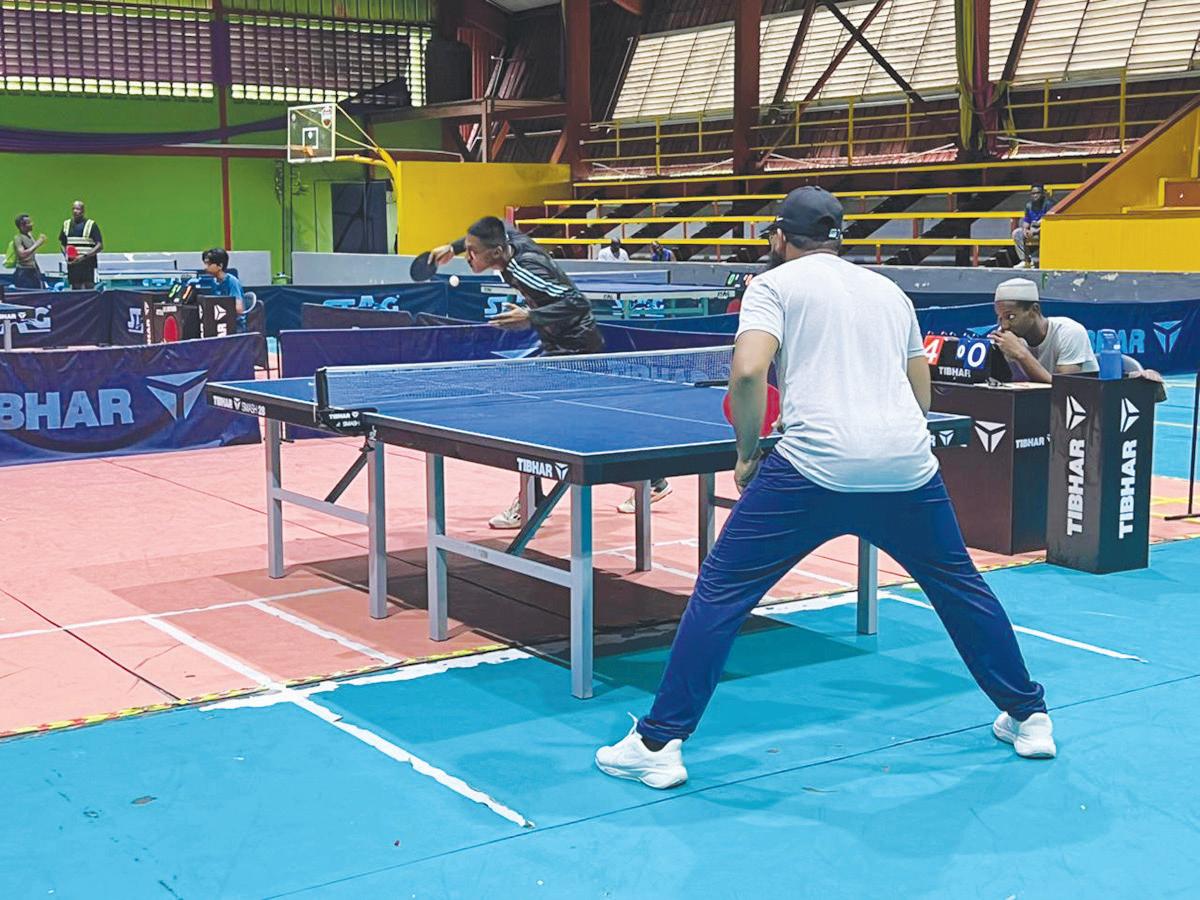
Meusa 3-2 in the semi-finals. Vibert Williams and Kayden Meusa were the other semi-finalists after defeating Akeem Hall and Samara Sukhai, respec-
tively, in the last eight. In the B-Class Open Singles competition, the field was narrowed to the semi-final stage. Malachi Moore defeat-
ed Dhanesh Persaud 3-1, Umar Percival overcame Nevaeh Clarkston 3-0, Winston Duff beat Jerone Brown 3-0, and Kayden Meusa dis-
patched Jaden Trotman 3-0. Colin France, Vibert Williams, Akeem Hall and Colin Wong also advanced with victories over Vivek Bassoo, Owan Wills, Abraao De Oliveira and Sherwin Sahadeo, respectively.
The semi-final pairings were set as Moore versus Percival, Duff against Meusa, France against Williams and Hall against Wong.
Action resumed on Saturday with the Under-15 Boys' Singles event producing its finalists. Kayden Meusa advanced after defeating Vivek Bassoo 3-1, while Abraao DeOliveira secured his place in the final with a straight-sets 3-0 victory over Cristiano Jacobis. The championship match between Meusa and DeOliveira was yet to be completed.
In the Women's Doubles knockout competition, Samara Sukhai
and S Damon progressed to the final, where they were set to face A Robinson and S Barkel. Robinson and Barkel booked their place in the title match after defeating Nevaeh Clarkston and F John 3-2 in the semi-final.
The Junior Doubles knockout event also moved into the final stage. Colin Wong and Malachi Moore reached the championship match with a 3-0 semi-final win over A Garraway and A Robinson, while Akeem Hall and Kayden Meusa advanced by defeating Samara Sukhai and A Hopkinson 3-1. The final between Wong and Moore and the Hall-Meusa pairing remained to be played.
The tournament concludes today, Sunday, at the National Gymnasium with several champions still to be crowned across the remaining categories.