







Sunday March 29 – No closure and Monday, March 30 – 14:40h–16:10h.


Sunday March 29 – No closure and Monday, March 30 – 14:40h–16:10h.




Light to thundery showers are expected during the day, gradually easing to cloudy skies overnight. Temperatures are expected to range between 23 degrees Celsius and 29 degrees Celsius.
Winds: North-Easterly to East North-Easterly between 2.68 metre and 4.91 metres.
High Tide: 14:27 reaching a maximum height of 2.37 metres.
Low Tide: 08:01h and 20:27h reaching minimum heights of 0.95 and 0.79 metre.










...M&CC blames staff shortage for failure to open key sluices
“Fighting to ‹possess› streets he [Mayor Alfred Mentor] will never patch or fix, next to road shoulders he will never weed and ‹want› state land and buildings that have been left to become dilapidated and haven’t been occupied for years, but can’t open the damn Kokers when the tide is low.”
– Priya Manickchand
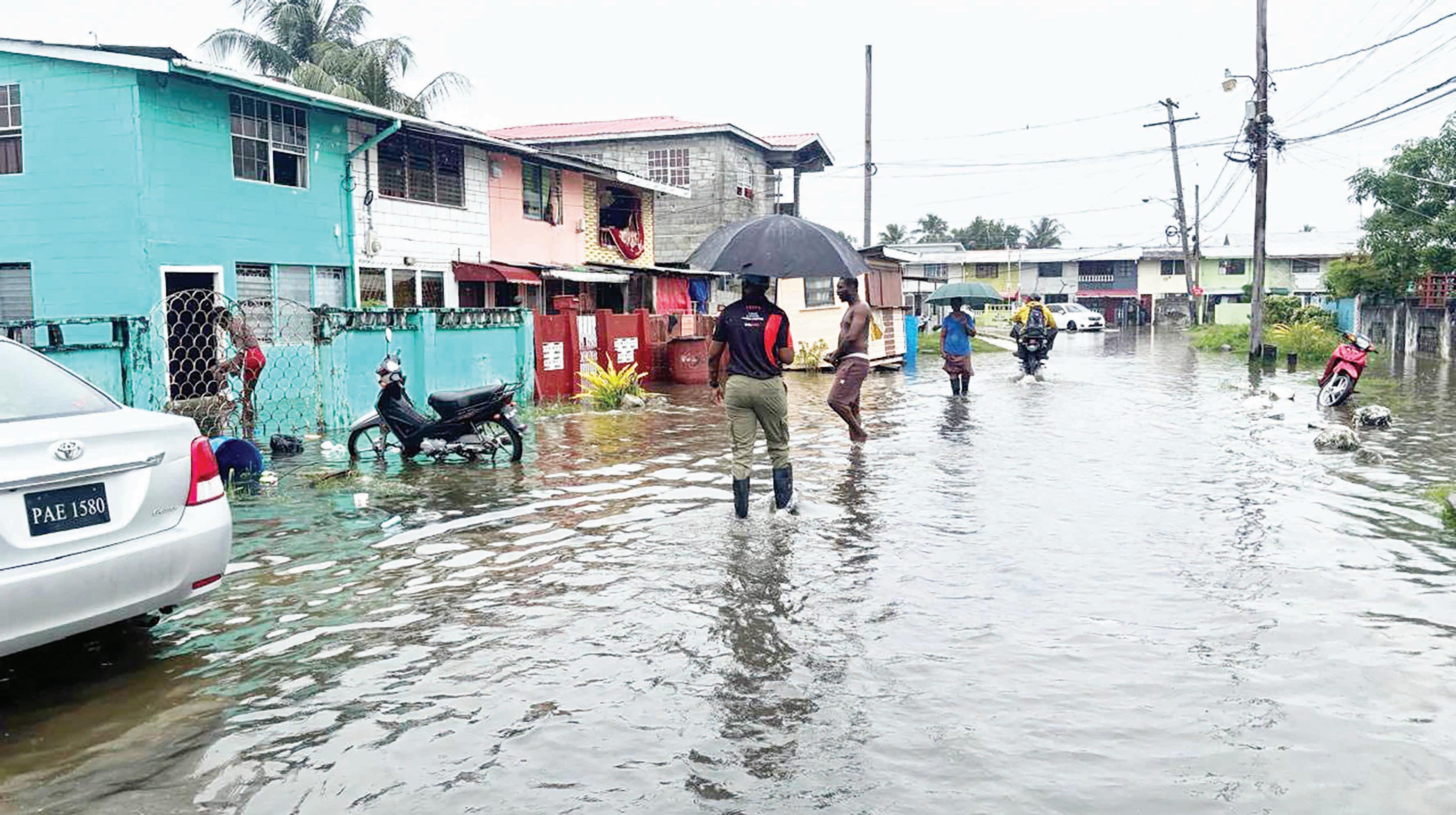
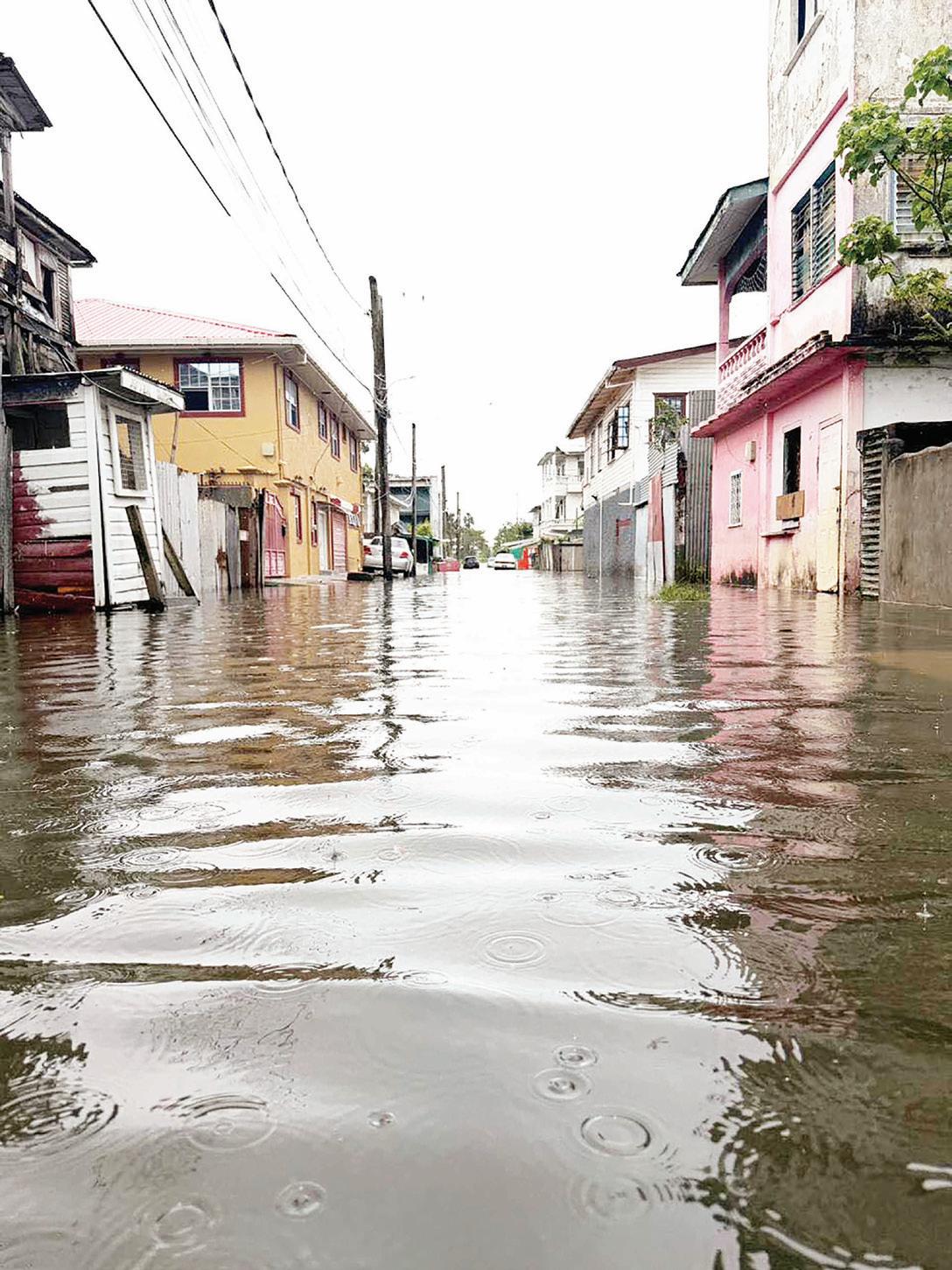
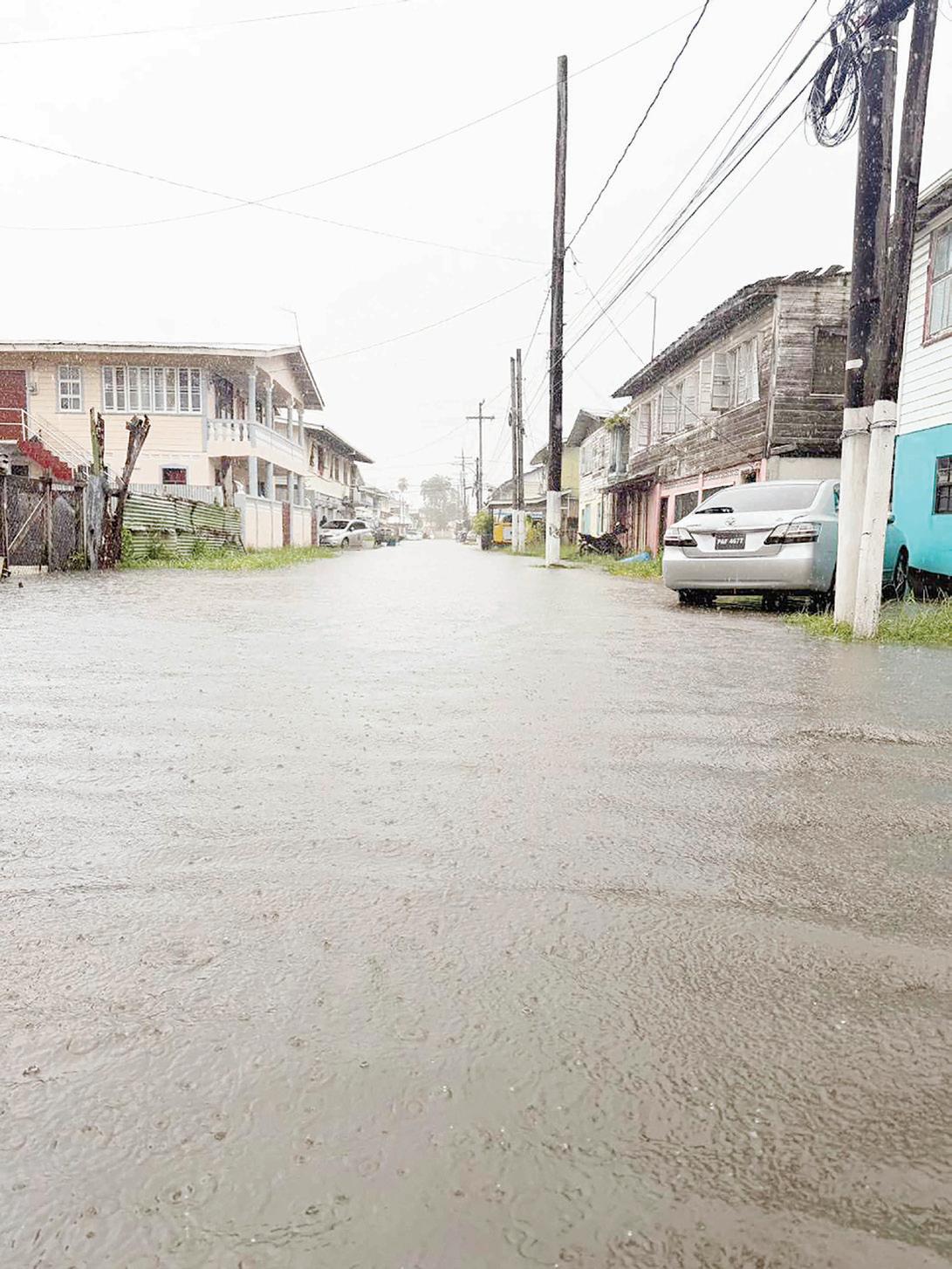
Following persistent heavy rainfall overnight on Friday into Saturday morning, several areas
that the Cowan Street sluice in Kingston was not opened during low tide on Saturday morning.
“Cowan Street sluice was
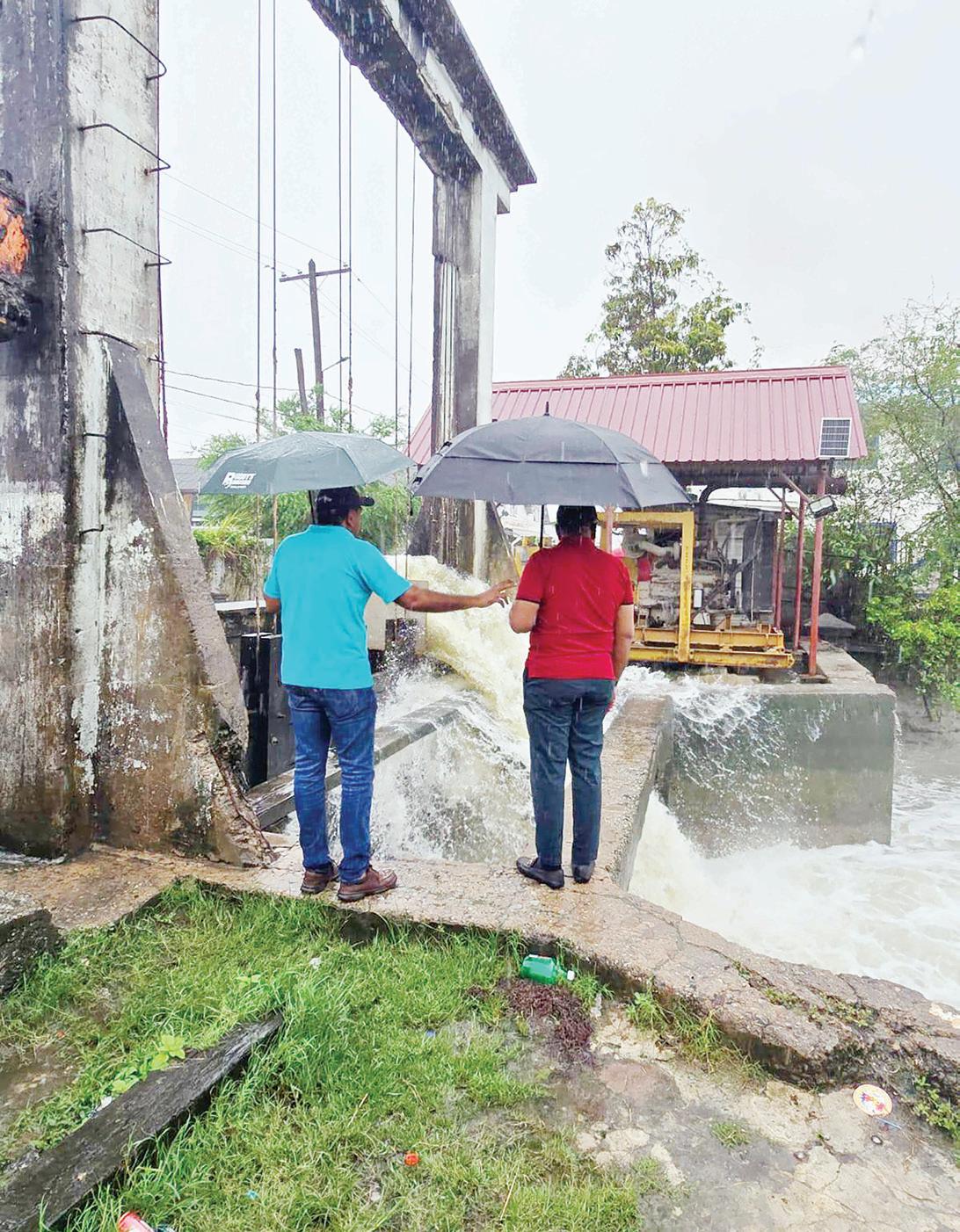
across Georgetown were underwater – a situation that the Government is blaming on the Mayor and City Council (M&CC).
Georgetown and other coastal regions across Guyana have experienced varying levels of floods as the Hydrometeorological Service issued a “severe weather” advisory, warning citizens of flooding, especially in low-lying areas, due to the excessive rainfall.
While all the drainage structures were eventually operational throughout the coast, including Georgetown, on Saturday, some Government Ministers say the inundation in certain areas in the capital could have been avoided had City Hall been more proactive.
Local Government and Regional Development Minister Priya Manickchand, in a Facebook post, disclosed that the M&CC failed to open one of the city’s major sluices to allow the water that accumulated on land overnight to drain.
She shared a message that was sent to her from one of her staff indicating

visited at 6:17AM… and was found to be closed despite the tide being low. City engineer [Colvern Venture] was contacted, who had to mobilise operators, by which time the inland water pressure on the door made opening difficult. Effort to contact the city Mayor [Alfred Mentore] was unsuccessful,” the message detailed.
M&CC’s inability
According to Agriculture Minister Zulfikar Mustapha, this situation highlights the inability of the Georgetown M&CC to properly manage the city’s affairs, especially at such a critical time when the city experiences 3.5 inch-
es of rainfall overnight. “I was shocked when we visited Cowan Street [and] the sluice was closed although the tide was very low, and that shows that there is some serious problem because they are not monitoring the situation,” Mustapha pointed out. He noted that this is not a new situation with the ministry’s National Drainage and Irrigation Authority (NDIA) having to step in and send operators at the various pump stations across the city to assist with the operation. Nevertheless, the Minister implored agencies to intensify monitoring efforts across the country.



Editor: Tusika Martin
News Hotline: 231-8063 Editorial: 231-0544
223-7230,223-7231,231-0544, 225-7761
Marketing: 231-8064 Accounts: 225-6707
Mailing address: Queens Atlantic Industrial Estate Industrial Site, Ruimveldt, Georgetown
Email: news@guyanatimesgy.com, marketing@guyanatimesgy.com
Ethnic identity, which has played an outsized role in our history, is often understood as something fixed, rooted in ancestry or biology. However, sociological perspectives challenge this view by emphasising its social and relational nature. The concept of intersubjectivity, together with the theoretical framework of the French sociologist Pierre Bourdieu, provides a more nuanced explanation of how ethnic identities are formed, lived, and structured within society. By linking intersubjectivity with Bourdieu’s concepts of habitus, field, and cultural capital, ethnic identity can be understood as both collectively produced and unequally organised. And as such can and should be reappraised in our evolving One Guyana.
Intersubjectivity refers to the process through which individuals create shared meanings through social interaction. From this perspective, ethnic identity does not exist inherently within individuals; rather, it emerges through ongoing communication, cultural practices, and mutual recognition. In a society such as Guyana, ethnic categories like Indo-Guyanese and Afro-Guyanese are not simply demographic labels but are continuously reproduced through shared experiences, traditions, and social distinctions. Practices such as the celebration of Phagwah or Emancipation Day illustrate how communities collectively reaffirm their identities through ritual and cultural expression. These shared activities sustain a sense of belonging by reinforcing common meanings across generations. By sharing these expressions, the boundaries between our ethnic groups can become less rigid.
While intersubjectivity explains how ethnic meanings are created, Bourdieu’s concept of habitus explains how these meanings become internalised. “Habitus” refers to the durable dispositions individuals acquire through socialisation, shaping how they perceive and act in the world. In the Guyanese context, repeated participation in cultural practices, language use, and community life leads individuals to embody ethnic identity as a natural and taken-for-granted way of being. Thus, what begins as shared, intersubjective meaning becomes ingrained in everyday behaviour, making ethnic identity feel stable and selfevident. Again, by all ethnic groups sharing in public socialisation institutions like schools, commonalities rather than differences can be emphasised.
However, identity formation does not occur in a vacuum. Bourdieu’s notion of field highlights that social life is organised into structured arenas, such as politics, education, and culture, where individuals and groups compete for power and recognition. In Guyana, ethnic identities are deeply intertwined with the political field, where party affiliation has historically aligned with ethnic belonging. These alignments are not merely individual choices but are shaped by shared understandings of representation and loyalty, which are themselves intersubjectively constructed. At the same time, the field reinforces these identities by rewarding certain forms of collective alignment, thereby stabilising ethnic divisions over time. The present thrust of the PPP to overtly include all ethnic groups in mobilisation for development is disrupting these divisions.
Furthermore, Bourdieu’s concept of cultural capital reveals how cultural differences associated with ethnic identity are unevenly valued. Cultural capital includes language, knowledge, styles, and competencies that confer social advantage. In Guyana, different ethnic groups possess distinct forms of cultural capital, such as linguistic styles, religious knowledge, and cultural practices. However, institutions such as schools and workplaces often privilege certain forms over others. This can limit social mobility, and as such, the Governments' present valorisation of all religious, cultural and locational differences is going a long way towards creating a more egalitarian society.
Taken together, intersubjectivity and Bourdieu’s framework provide a comprehensive account of ethnic identity formation. In the context of Guyana, this combined approach reveals that ethnic identity is not simply inherited but is continuously produced, embodied, and negotiated within a complex social and political landscape. By consciously accepting this reality, the Government’s programmes are therefore not utopian but realistic in creating a One Guyana. Those elements that hark back to stressing some sort of ontological reality to ethnic identity are holding back our progress.
In conclusion, understanding ethnic identity requires moving beyond essentialist explanations toward a relational and structural analysis. The theories mentioned above highlight that ethnic identity is at once a product of interaction, a feature of lived experience, and a key dimension of social inequality. These can be overcome through targeted interventions such as the ones the Government is unfurling.
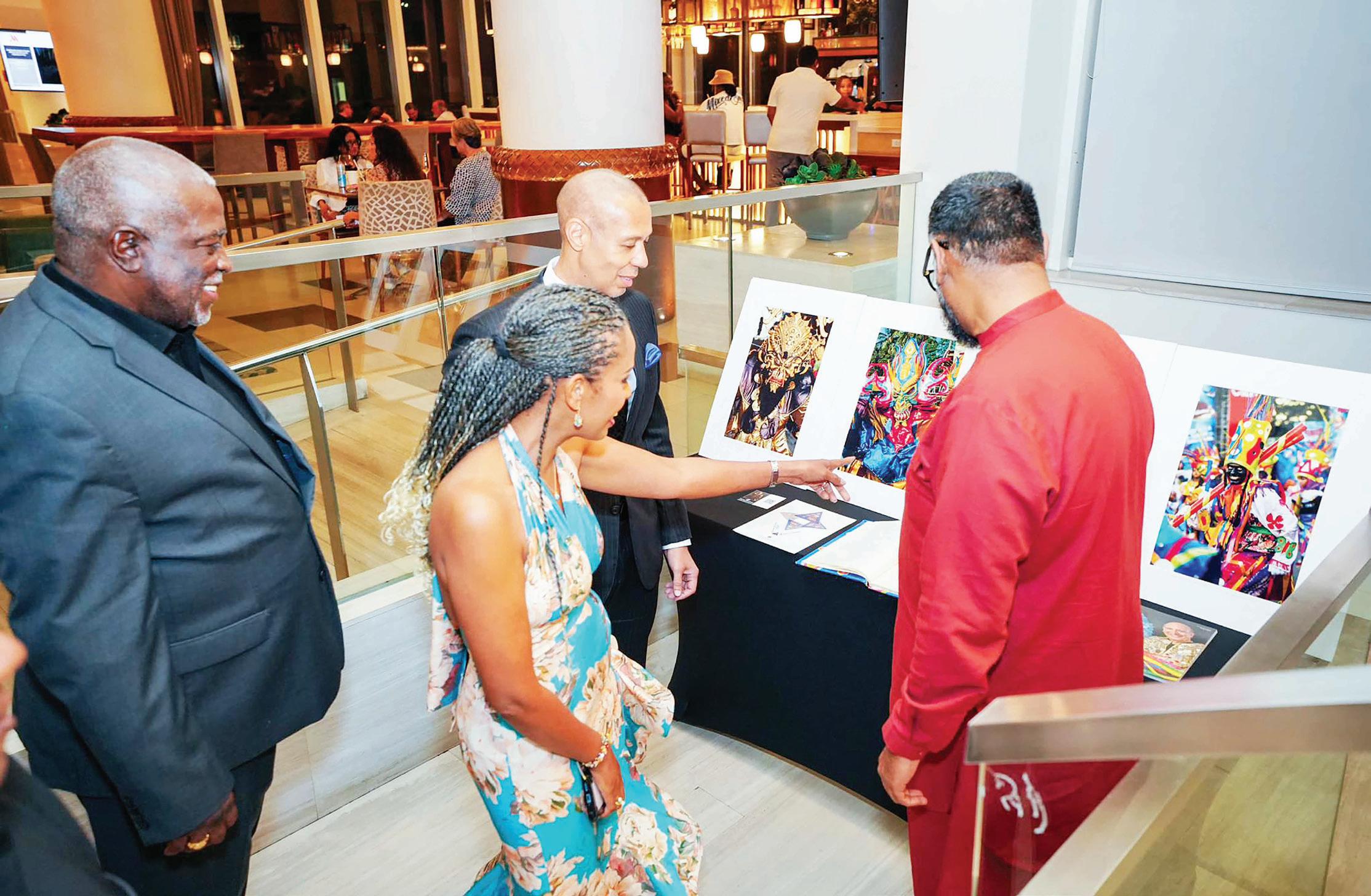
By MohaMMed al-hasheMi
The Strait of Hormuz is the only major commercial artery on earth named after a God. The name derives from “Hormoz”, the Middle Persian rendering of “Ahura Mazda” – the Zoroastrian deity of wisdom, light, and cosmic order. This is not poetic licence; it is an etymological fact. The ancient Persians did not simply build a trade route here. They consecrated it.
A place named after the God of order has become the single point where global order faces its greatest vulnerability. Through these waters – 167 kilometres (km) long and 39 km wide at the bank’s narrowest point – pass an estimated 30,000 vessels per year.
They carry not only a fifth of the world’s seaborne oil and liquified natural gas but also the urea needed for the fertilisers that grow its food, the aluminium that constructs its infrastructure, the helium that cools its semiconductors, and the petrochemicals that sustain its pharmaceutical and manufacturing base.
The Strait of Hormuz is not an oil chokepoint. It is the aortic valve of globalised production – and like any valve, when it fails, the entire circulatory system collapses.
Nine hundred years of toll collection
In the eleventh century, an Arab chief named Muhammad Diramku – Dirhem Kub, Dirham minter – left Oman and crossed the Gulf to found the Kingdom of Hormuz on the Iranian coast. He was a merchant prince, not a warrior, and he understood that power in this geography flowed from controlling the gap between civilisations.
By the 15th century, Hormuz had become one of the great emporium-states of the mediaeval world. Merchants from Egypt, China, Java, Bengal, Zanzibar, and Yemen converged on a single island port. Venetian explorer Marco Polo visited twice. During the Ming Dynasty, Chinese admiral Zheng made it the final destination of his treasure fleet. Every civilisation that understood maritime trade eventually found its way there. Each arrived at the same insight: Control the gate, collect the toll.
The Portuguese showed up in 1507. Admiral Afonso de Albuquerque understood that whoever holds this chokepoint holds everything between India and the Mediterranean. He seized the port with seven ships and 500 men.
In 1622, Persia’s Shah Abbas I (Abbas the Great) captured Hormuz with English naval support. The British eventually dominated. In 1951, the British Navy imposed a blockade on the strait to pressure Iranian Prime Minister Mohammad Mosaddegh to reverse his decision to nationalise the Iranian oil industry, which had a large British stake. In doing so, Britain executed the same manoeuvre Albuquerque had pioneered four centuries earlier. The blockade lasted more than two years and contributed directly to the CIA-backed coup against Mosaddegh in 1953.
During the Iran-Iraq War of 19801988, the importance of the Strait of Hormuz once again came to the spotlight. Between 1984 and 1987, 546 commercial vessels were attacked, and more than 430 seafarers were killed; oil continued to flow – albeit at higher insurance premiums.
That precedent may have encouraged the 2026 belligerents to believe partial closure was sustainable. The difference between the 1980s and today is not military capability but actuarial architecture: The modern insurance system has proven capable of closing the strait more tightly than any Navy.
Muhammad Diramku’s emirate was the mediaeval equivalent of an aortic valve, controlling flow between the heart of Asian production and the body of Mediterranean consumption. Nine hundred years later, the anatomy has globalised, but the physiology remains identical.
The commodity architecture
The standard characterisation of the Strait of Hormuz as an energy corridor is flawed. The transportation of oil and liquefied natural gas accounts for about 60 per cent of its regular traffic.
A closure inevitably triggers cascading failures across a number of industries, including agriculture, manufacturing, construction, and semiconductor production.
More than 30 per cent of the world’s trade in ammonia, nearly 50 per cent of urea, and 20 per cent of diammonium phosphate – all key for the fertiliser and agriculture sectors – are transported through the strait. Some 50 per cent of global sulphur, a key component of metal processing, is also exported through this narrow passage.
Vessels carrying a third of the world’s helium, used in various technologies from semiconductors to MRIs, go through the strait as well. Nearly 10 per cent of global aluminium and a significant chunk of plastic produced in the Gulf also pass
through.
The Strait of Hormuz is also a major thoroughfare for food supplies for Gulf countries, which are highly dependent on food imports.
All of this data reveals systemic fragility; not just in the region, but also in the world.
Unlike oil, fertiliser cannot be rerouted; there are no pipelines for ammonia or urea. When the strait closes, the nitrogen supply chain simply stops. Synthetic nitrogen fertilisers feed roughly 48 per cent of the global population. The mid-April deadline for Northern Hemisphere nitrogen application means disruptions in March translate directly into lower yields in September.
Aluminium potlines, once shut down, do not restart quickly – the metal solidifies in the cells, requiring weeks of controlled procedures and incurring substantial additional cost.
For the more than 100 million people in and around the Gulf, money cannot buy food security when the physical route is closed. Saudi Arabia imports more than 80 per cent of its food. Qatar imports 85 per cent. The Gulf is wealthy, but it is structurally dependent on a single 39km passage for survival.
The stress test
The crisis that began on February 28 is structurally unique. It is the first time the Strait of Hormuz is closed, and there is a real risk of Bab al-Mandeb (“the Gate of Tears”), a narrow passage on the Red Sea, following suit, if the Houthis choose to add pressure on the global economy in support of their Iranian allies. If that happens, it would mean that two of the world’s three critical maritime chokepoints would be shut down at the same time.
The Suez Canal blockage of 2021 was a single-point, six-day disruption. The COVID-19 pandemic was a demand shock. The Ukraine war disrupted specific commodities through specific corridors. The current conflict has shut down the arterial system itself. (Excerpt from Al Jazeera)
Dr Mohammed Al-Hashemi is the Director of Strategy, Performance, and Partnerships at Qatar Leadership Centre. He previously served as Secretary for Diplomatic Affairs and Communications to Qatar’s Prime Minister and Minister of Foreign Affairs and as Vice President for Strategic Relations and Director of Public and Government Affairs at ExxonMobil Qatar
By Ryhaan Shah
There is a wonderful African saying that goes, “When death finds you, may it find you alive.” Being alive, in this sense, would likely mean that we have lived our best life and are prepared for the inevitable finality.
Famed Italian artist Leonardo da Vinci said, “As a well spent day brings happy sleep, so life well used brings a happy death.”

His life was very well used, and he continues to live on through his most famous work, the iconic Mona Lisa painting. But is there such a thing as a happy death?
At our age, we find ourselves attending the funerals of peers, colleagues and relatives, people who have played some role in our lives and for whom we grieve even as we remember the qualities that will always make them memorable.
It is often said that funeral services and rituals are done for the comfort of the living, for those of us who have to come to terms with the loss of a loved one, and as we grow older, the reminder of our own mortality can sometimes become quite challenging.
The loss of a beloved spouse or partner is often the most difficult to accept and can lead to feelings of loneliness and even impact negatively on our physical and mental health.
While it is normal to feel sad or even lost after someone close to us dies, if the mourning period goes on so long as to become distressing, it can become unhealthy and take a toll on our physical and mental well-being.
While we may want to deal with our grief alone and in quiet solitude, it is important to note that complete withdrawal because of profound sadness is not always the best option at this time. It is best to stay connected with loved ones and your community and don’t refuse professional help if those around you feel it’s necessary.
While some, like da Vinci, may feel they have lived a full life and accept the passing years knowing the finality is a natural conclusion, others experience fear at the idea of dying. Here is where religious faith often helps.
We are a nation of believers, whether we be Hindu, Christian or Muslim, and there is no doubt that a strong spiritual foundation helps us to find peace when facing the idea of dying. Some studies show that such faith, along with prayers, can actually reduce stress, which can do much to help us manage age-related illnesses.
Islam views death as a natural transition from our temporary earthly existence to an eternal afterlife. For believers, the soul is taken in a peaceful separation. This is not so dissimilar to Christian beliefs which also view death not as an end but as a transition to eternal life in God’s presence with promised redemption through belief in the Lord Jesus Christ.
The Hindu belief in reincarnation makes death a transition from one body to another, a transition driven by one’s karma, the ultimate goal being to achieve moksha, which is the liberation from rebirth.
Any such faith helps with anxiety and depression, and as we age, many of us find meaning and purpose by shifting our focus to our spiritual growth and wellbeing. Much of our anxiety, too, is not only about the idea of death but also about how we will die, fearing pain, suffering, and becoming a burden to loved ones.
We all hope for a happy death, a dignified death where we will die peacefully at home. This may not be possible for everyone, especially if we are dealing with serious conditions like cancer or heart disease.
While faith, prayer, and counselling can all help in such situations, we often have to find our own way of coming to terms with our finality. This is not easy for anyone, but being surrounded by loved ones and getting assurances that all will be well with those we leave behind can undoubtedly be a comfort at such a difficult time.
Death, they say, is the great leveller. We may have been a good and caring mother to our children and grandchildren; a Nobel Prize laureate; a scholar, farmer, or janitor – whatever job we held or role we played, it is not, in the end, our social standing or status that is important but how well we lived our life.
This is how we will be remembered, and it would do us well to look at ageing as a gift of years for spiritual and personal growth rather than as a stage for decline.

“I’m calling on all responsible agencies; we must take this issue seriously. We must continue to monitor the situation of the rainfall. According to our Hydromet office, the rainfall will continue. We are monitoring it, and we are working around the clock to minimise flooding,” he noted.
Staff shortage
Efforts to contact the city engineer were futile, but in an interview with Demerara Waves Online News on Saturday, Venture cited staff shortages, including pump attendants, and clogged drains/culverts due to the dumping of solid waste as issues that compounded the floods in the city. He indicated that a request was put in for 10 additional staff members for his department, but these vacancies have not been filled.
This situation comes on the heels of the Georgetown Mayor threatening legal action in order to take back control of 22 streets in the city from the Ministry of Public Works.
The streets in question, both commercial and residential, were gazetted as public roads on March 20, 2026, by the Public Works Ministry under the Roads Act.
During an extraordinary meeting on Friday that was attended by APNU councillors, Mayor Mentore proposed a resolution to write to the Public Works Minister, Juan Edghill, and the Attorney General, Anil Nandlall, to resolve the issue. It was also decided during the meeting that the matter would be sent for le-
gal advice.
However, Minister Edghill contended that he acted lawfully, responsibly and in the public interest, dismissing the Mayor’s claim that central Government has “seized” the council’s assets. Edghill reminded us that roads are public infrastructure and not private property owned by municipal bodies.
The Minister said what occurred was the reallocation of responsibility within the statutory framework, not an acquisition of property. He further dismissed claims that there was no consultation, reminding that in his previous engagements with the city council as well as by public pronouncements, the Government had appealed to the M&CC to upkeep, maintain, and manage these streets diligently and in the best interest of residents and businesses, but these pleas were ignored.
According to Edghill, central Government owes a duty to the public in such circumstances to do that which is necessary to remedy this situation, as these roads have been wholly neglected, are in disrepair, and in some cases are hazardous to public use.
The Public Works Minister argued that the Mayor’s position is a fundamental misinterpretation of the Municipal and District Councils Act, Cap. 28:01. The Act expressly defines a “council road” as any road other than a public road. This is decisive. Once a road is lawfully designated as a public road, it ceases, by op-

eration of law, to be a council road. He said the notion proffered by Mentore that these roads remain permanently within the Council’s jurisdiction is wholly misconceived.
Edghill pointed to section 274 of the Act, upon which the Mayor relies, which clearly states that the Council’s powers are subject to other written laws, one of which would be the Roads Act, Cap. 51:01. This critical limitation subjects the municipal authority over roads to the broader national legal framework.
The Roads Act, Cap. 51:01, vests responsibility for public roads in the Minister of Public Works, including the authority to designate and manage such roads. According to the Minister, this power is not subject to or limited by the city council under any other law. Therefore, the Minister, on behalf of the central Government, has the lawful authority to take over and
designate any road as a public road.
Failure Nevertheless, in a Facebook post on Saturday, Minister Manickchand called out the Georgetown M&CC over its failure to properly manage the city’s drainage but desire for control of the roads.
“Fighting to ‘possess’ streets he will never patch or fix, next to road shoulders he will never weed and ‘wanting’ state land and buildings that have been left to become dilapidated and haven’t been occupied for years, but can’t open the damn Kokers when the tide is low,” the Local Government and Regional Development Minister declared.
Nevertheless, Government engineers were in the field all day on Saturday, monitoring the pump stations and sluices to ensure they are manned and will operate on a 24-hour basis.

SUNDAY,
00:00 Sign Off 06:00 TVG Devotional Hour 07:00 Ramayan EP 6, 7, 8
09:00 David Persaud Religious Program
09:30 Movie - Gupt: The Hidden Truth (1997) 12:30 Movie - Soldier (1998)
15:00 Movie - Karz: The Burden of Truth (2002)
18:00 TVG Music Break
18:30 Week-in-Review
19:00 Supergirl S5 E9
20:00 The Flash S2 E16
21:00 Shadowhunters S3 E19
22:00 Movie - Night School (2018)

Have you ever thought about how easy it is to recognise people you haven’t seen in a while? Well, humans are good at something called social memory. It is when we can recognise and remember people in our social circles even after many years apart. Humans can remember faces and names for decades. We can also remember information about people. For example, whether a person was nice or mean. Our social memory helps us develop relationships and navigate social situations. It can also help us avoid harmful interactions.
But where did this ability come from? It turns out that other animals can also remember individuals. But we don’t know the extent of their abilities.
Chimpanzees and bonobos are our closest living relatives. They have complex social circles. They also form friendships and communities. A good social memory could help them do this. We already know apes can remember
familiar individuals for years. Unfortunately, we don’t know how familiar they need to be. We also don’t know if apes can connect social information with the individuals they remember.
Scientists wanted to know which specific features of
social memory are unique to humans and which we share with apes. So, they tested the ability of apes to remember familiar individuals. This helped scientists better understand the evolution of social memory.


Scientists tested social memory in 26 chimpanzees and bonobos. They lived in three locations: Edinburgh Zoo (Scotland), Kumamoto Sanctuary (Japan), and Planckendael Zoo (Belgium).
They showed the apes a pair of images on a screen for three seconds, and used an eye-tracker to measure which image they were looking at and for how long (Fig. 1). Then, they showed apes paired images of former groupmates they hadn’t seen in a while versus strangers (individuals they had never seen before).
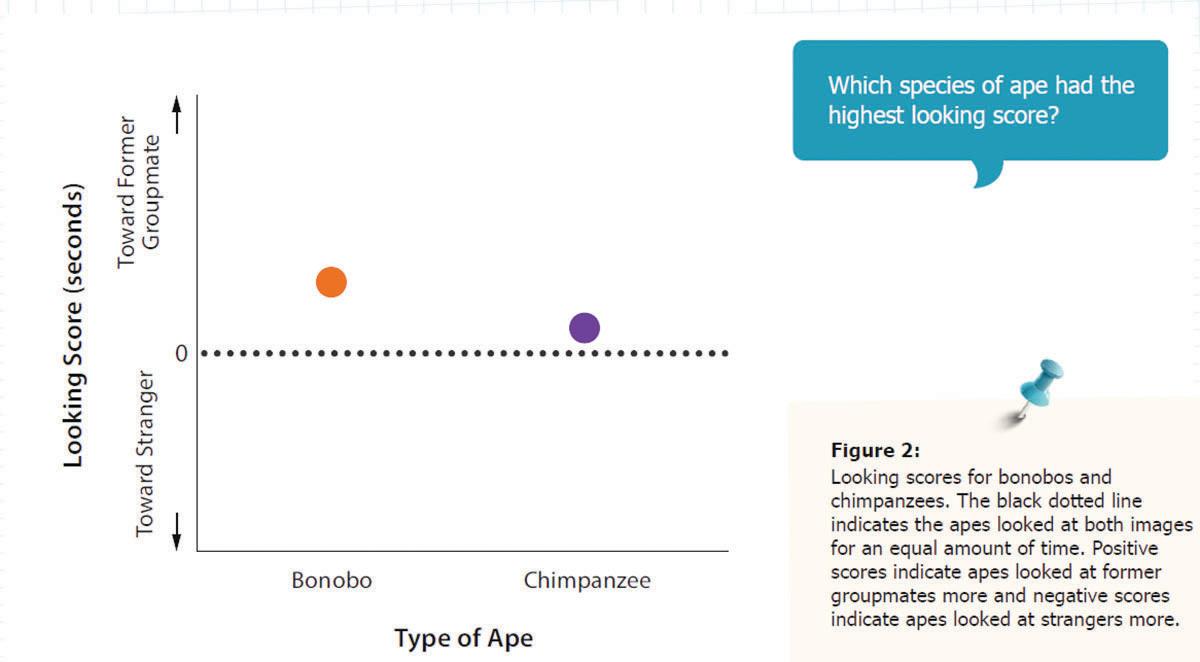
They decided to only include trials where the apes looked at both images. That way the scientists would know the apes were comparing the images to see which they recognised. Then they calculated a looking score for each trial. The score was the difference in time they looked at each image. (That is, they subtracted the time they looked at the stranger from the time they looked at the familiar ape.) Scientists then used statistics and a model to

see if there were differences in looking at each image.
There were also caretakers to tell them about positive and negative interactions between groupmates. They found out which apes were more friendly with each other, which were more dominant, which were less friendly with each other, and how long the individuals had been separated. With all this information, scientists looked to see if there were any resulting differences in scores. They also compared the scores of apes from the different locations.
like elephants, sheep, and seals can recognise individuals. But most of them have memories that only last a few years. Now we know apes have really long memories compared to other animals!
Apes don’t just remember individuals. They also seem to remember the quality of their relationships. They looked longer at individuals they had positive interactions with. This memory may help strengthen social relationships. In the future we would like to look at more populations of apes. It would also be helpful to look at different ages of apes.
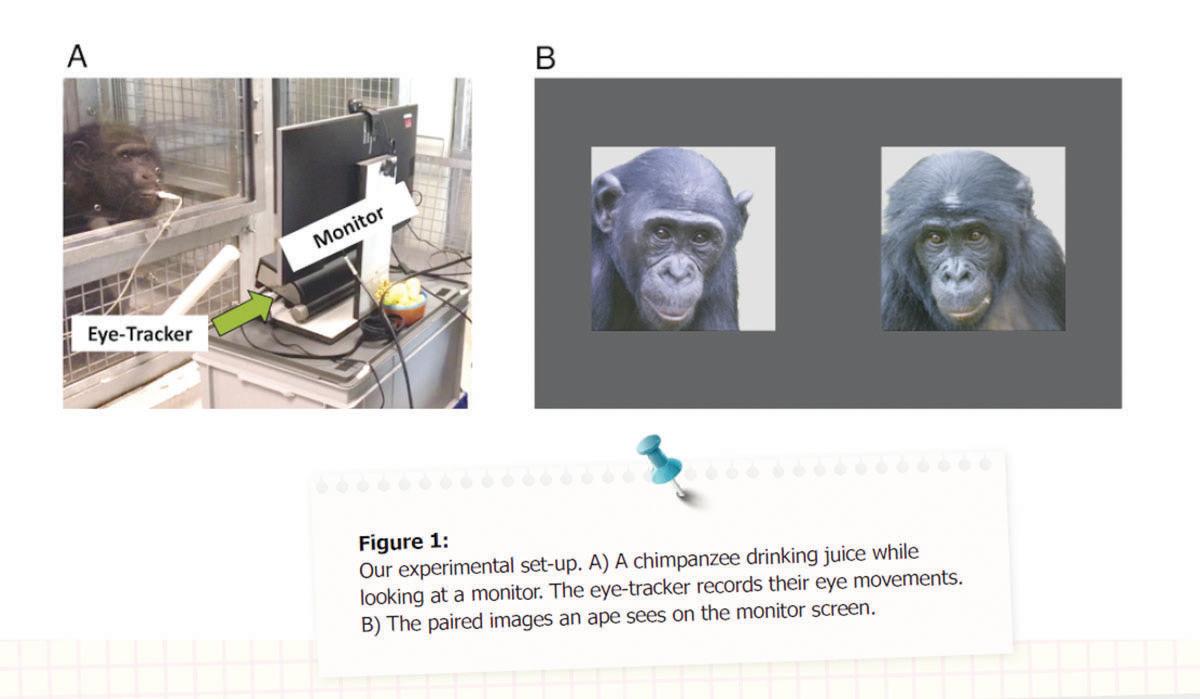
Apes spent 14 per cent longer looking at former groupmates than at strangers (Fig. 2).
They found that apes also spent longer looking at groupmates who they had more positive interactions with, and they saw that the amount of time the apes had spent apart didn’t matter.
One bonobo could still recognise her groupmates up to 26 years later.
The apes from Kumamoto Sanctuary looked longer at the images. Kumamoto apes have done these types of experiments before. So, they were probably used to the procedure.
We could see if social memory varies in young and old apes. Humans and other great apes share the trait of longterm social memory. This means that social memory may have been present six–nine million years ago. This is when the last common ancestor of humans and chimpanzees and bonobos lived. Social memory may have helped early humans form relationships. It could also have helped cooperation and cultural development. This would have been important as humans were spread out and saw each other less often.
Chimpanzees and bonobos have long-term social memory like humans. However, all great apes are endangered due to
Apes seem to remember groupmates they have interacted with in the past. And they can do it after up to 26 years apart! Other animals
threats such as poaching and deforestation.
Understanding their social lives helps us see the true impact of these threats.

Attorney General (AG) and Legal Affairs Minister Anil Nandlall has directed his focus toward community members, strongly urging citizens to recognise their roles in keeping their communities clean and preventing littering. This comes on the heels of flooding experienced in costal areas as a result of heavy rainfall, littering and other contributing factors. The AG was among several Cabinet members who were accompanied by Neighbourhood Democratic Council (NDC) and Regional Democratic Council (RDC) councillors and community leaders and visited several flood-affected areas on the East Coast of Demerara (ECD), Georgetown, the East Bank of Demerara (EBD) and the West Coast of Demerara (WCD) among other communities.
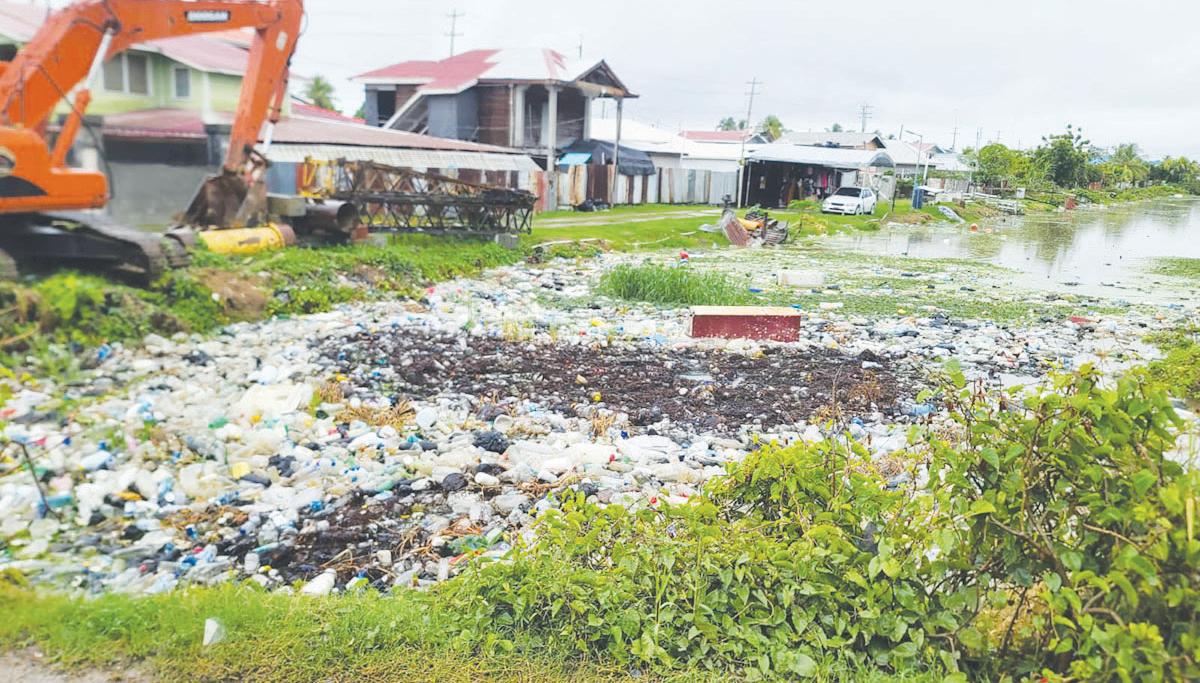
During these visits, the team was able to identify a number of factors that contributed and that will continue to contribute to the flooding unless they are addressed. These include permanent blockages of drains by residents, the insufficient expansion of drains to accommodate water volume, the wanton dumping of garbage into drains and canals and, in many cases, the blockage of drainage culverts. Work has already begun to address many of these issues.
The main issue underlined by the AG was the act of citizens dumping garbage into drains. Using this as the basis of his argument, he reminded residents that the responsibility is not solely on Central Government officials; the first responsibility lies with the people themselves.
“While the NDCs, RDCs and Central Government are obliged to accept responsibility for these problems, citizens must do likewise and understand that they must play a greater part. After all, they are the ones most affected,” he said. Not only did he regard the act of littering as irresponsible, but he also emphasised that it is unlawful.
“The dumping of garbage in drains and drainage canals by citizens is both callous and criminal. The blatant refusal to clean the small drains in front of their homes is reckless and irresponsible. These
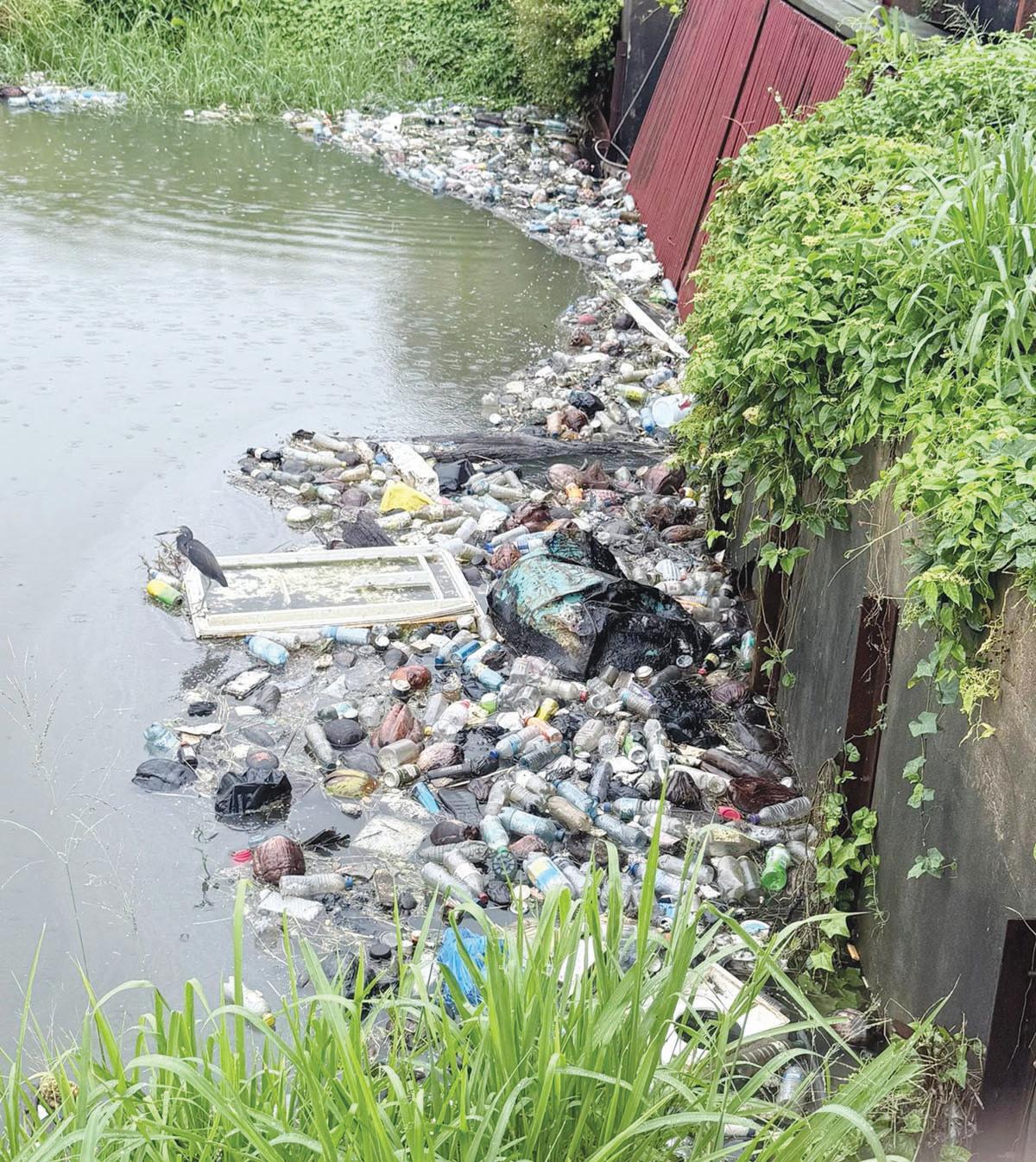
are two of the main causes of flooding. For the avoidance of doubt, the rates and taxes that are paid are wholly insufficient to finance all the services required.”
He stated that if the Government were to move toward ensuring greater funding for littering cleanups, funded directly from taxpayers’ money, it would likely upset many people. He added this context to emphasise his point. “…the situation is far from perfect, but it would improve appreciably if citizens played a greater and more active role in cleaning their immediate surroundings.” Traversing flooded streets in rubber boots and a raincoat, Local Government and Regional Development Minister Priya Manickchand visited several communities across the East Bank and Georgetown that were heavily affected by the persistent overnight rainfall. The views shared by the AG were also similar to those of Minister Priya Manickchand. During her visits to flood-hit communities on Saturday, the Minister recorded a series of garbage blocking several passageways, especially at koker sites.
“Different places… same problem”
In fact, the Minister used her Facebook page to voice her disappointment at what she observed. “Different plac-
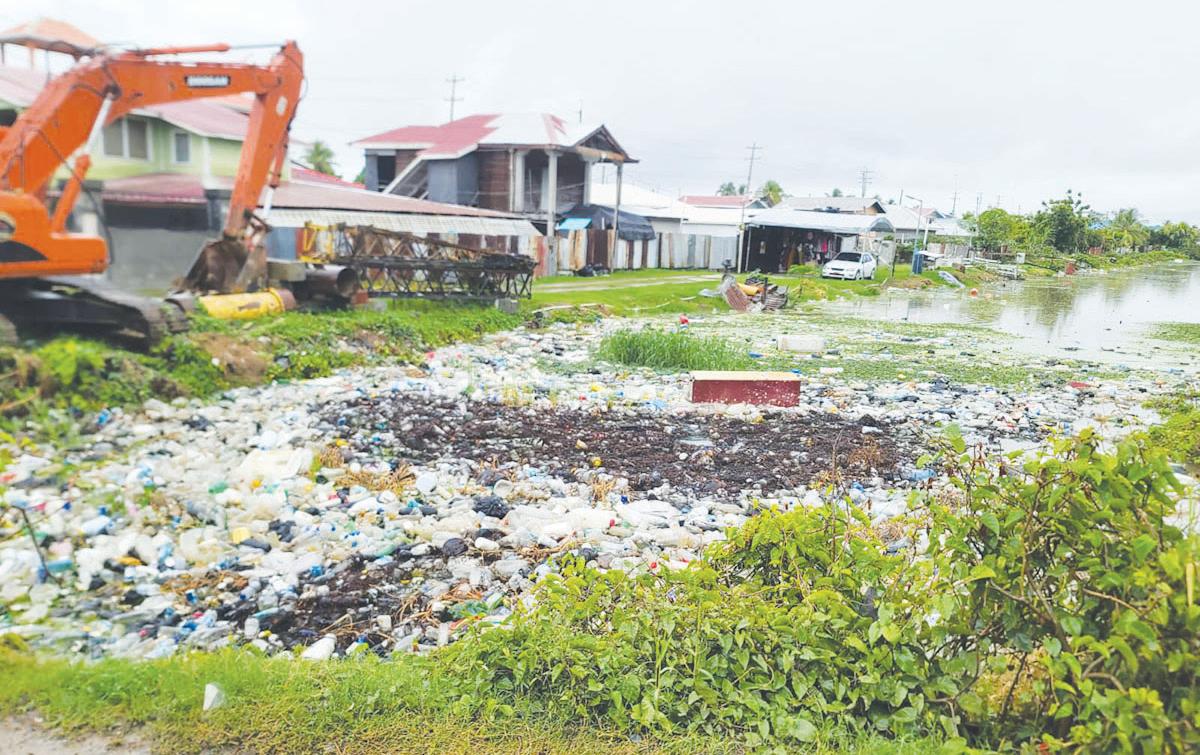
es… same problem. This simply CANNOT continue. Let’s have that serious conversation with action and consequences,” the Minister stated. Manickchand engaged with residents as they spoke about challenges they faced as a result of the flooding. She assured residents that their issues would be addressed through follow-up community meetings, to be held once rainfall subsides and conditions allow for detailed planning and intervention. While speaking at the site visits, the Minister called on motorists to take precautions when traversing flooded streets, particularly Norton Street,
Georgetown, where water was splashing into residents’ homes. The Minister’s walkthrough included communities in Bagotstown, Region Four (Demerara–Mahaica) and Region Three (Essequibo Islands–West Demerara), as well as areas across Georgetown, including North and South Ruimveldt, Albouystown, Kingston, and sections of Norton Street and Bent Street. At each location, she examined the extent of flooding, assessed drainage systems, and consulted local officials and residents.
Manickchand also commented on the impact of the relentless overnight rainfall, saying that “it’s been heavy, relentless rainfall all night, and citizens know that. Many areas are under water, and we are checking to ensure that across the country, the NDCs, RDCs, chairmen, overseers and REOs have been deployed so that everything that needs to work is working.” Amidst this, she expressed satisfaction with current response efforts while noting the limitations posed by the country’s low-lying geography.
Manickchand emphasised the Government’s commitment to responsive governance and proactive intervention, stating that efforts will continue to ensure the safety and well-being of all residents in affected areas. Residents highlighted issues such as blocked drainage caused by construction and garbage accumulation, which the Minister con-

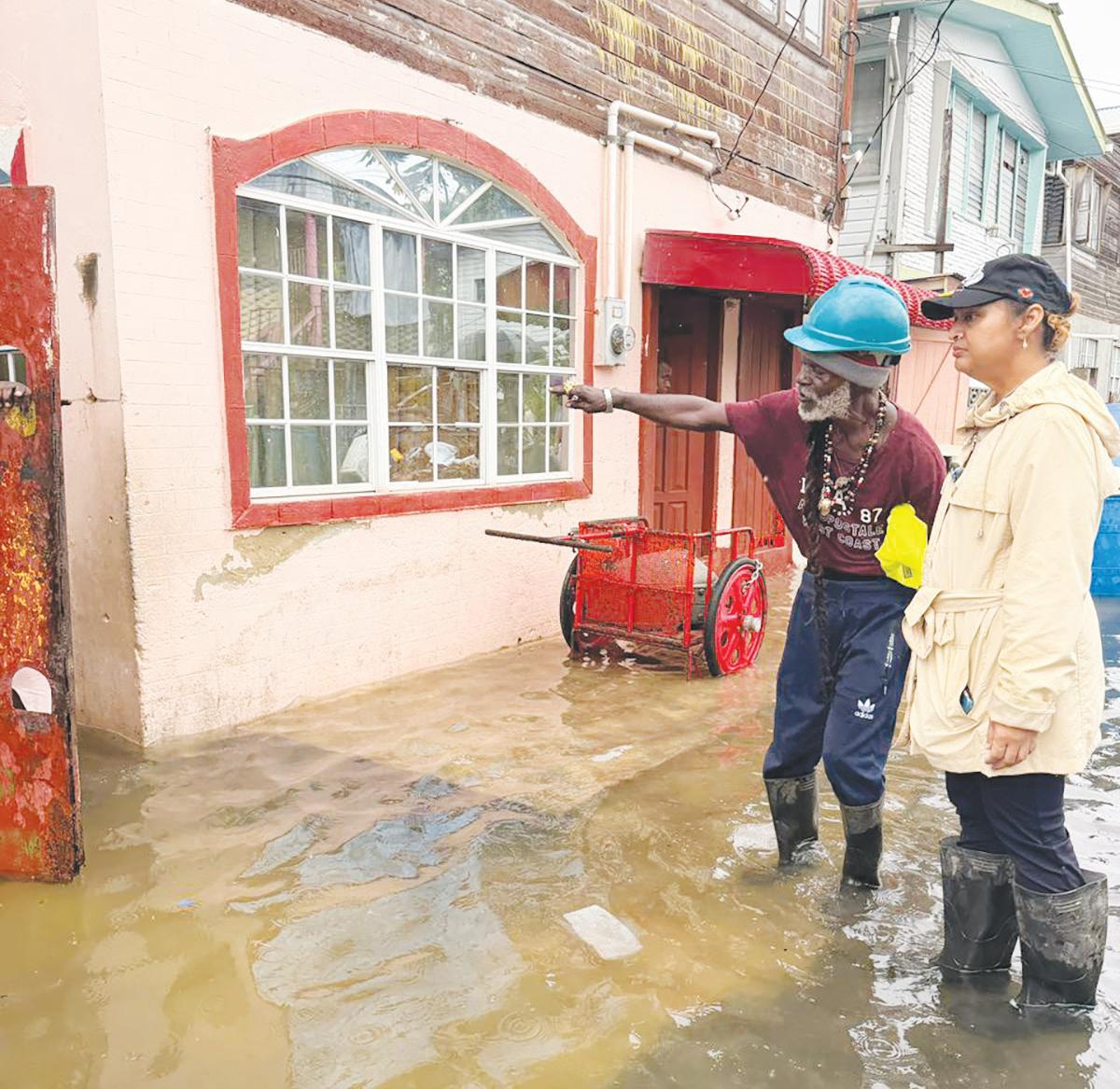
Local Government and Regional Development Minister Priya Manickchand speaking with a Georgetown resident
firmed must be addressed. Meanwhile, Public Works Minister Juan Edghill, who was also present during the assessment, spoke about previous works undertaken to prevent flooding and expressed satisfaction with their effectiveness. “While we’re assessing what needs to be done in terms of accelerating pumping and ensuring sluices are functioning to remove water, Georgetown can only hold a certain amount of rainfall per day. I am happy that these interventions have held up. People could get in and out… the drainage is much improved.”




As a knock-kneed kid in short pants, your (then callow) Eyewitness was taught that we had two “rainy seasons”; May–June and December–January, with spill overs at the margins. But here he is in March, and like the past few years, he’s experiencing the heaviest rainfall in decades!! He was out on Friday, and his car’s wipers –swivelling away like demented banshees – couldn’t clear the deluge away for him to see the road!! And this had been going on since the beginning of the week!! Respite had been promised by the weatherman by afternoon!! Well, once again that fellow proved to be clueless; since Friday night into Saturday morning, the deluge INCREASED to Noah-like conditions!!
And predictably, the meteorologists informed us that the ground had become “waterlogged” and we should expect flooding!! Hello??? Flooding’s ALREADY here, and we should be working on permanent relief, no?? Maybe raising our yards by the four or five feet our coastland is under sea level?? Your Eyewitness happened to pass by the Chateau Margot chimney site on the East Coast that was purchased by the Trini Massey for another of their supermarkets – and it seems they’ve gotten the message on going five feet up for the entire property!!
Frankly, from where your Eyewitness sits – in a canoe in his front yard!! – He sees no relief from the coming floods. We’re caught between the Devil, represented by flooding, and the deep brown Atlantic that we’ve been assured is rising due to melting ice caps and glaciers!! In the past, we’ve had proposals to leave GT to sink beneath that said Atlantic and move our capital to higher ground.
Burnham had talked about moving it to the North East District – which we now rather prosaically call Region One!! Of course – as with all of Burnham’s great ideas –the matter never left his scribbled notepad, much less the “drawing board”!! Right now, Pressie’s already launched Silica City in the “Hill and Sand Belt” off the Linden Highway. Maybe that Government office building that seems to be stuck at the steel-girder phase might be moved there??
Anyhow, your Eyewitness feels that the entire coastland doesn’t have to be abandoned to the Atlantic waves. Since we’ve built our houses on stilts – thanks to the foresight of those Dutchmen, who knew more than a thing or two about lowlands and flooding! – the raising of yards makes sense! So, what’s gonna happen to the roads that’ll be under water?? They’ll become the bottom of canals and make us put Venice to shame!!
Ole Kenny Rogers proffered some sound advice when he crooned, “You gotta know when to hold it and know when to fold it.”
It’s time to fold on flooding!!
…GT’s decrepitude
When it comes to GT’s steady decline into garbage and decay, the PPP just can’t win – up to now! Controlled by the PNC since Burnham became Mayor in 1959, the PPP that took over the Central Government in 1992 has ever since been blamed for GT’s abominable condition into which it had been allowed to fall!! While they were the ones that controlled the taxes and spending, the PPP was blamed since GT was also the seat of Government!!
Well, after spending over $19 billion since 2020 on what became temporary facelifts that quickly reverted to flits – and still being blamed – the PPP has decided that enough is enough!! They’ve had Central Govt take over 22 of GT’s major streets and also the long-deserted eyesore that was the Constabulary Training Complex!!
“Hostile takeover!!” screams the M&CC. But the Govt pointed out it’s already taking care of the streets while the M&CC collects taxes!! And since the complex was owned by “the colonies of Demerara and Essequibo” – it’s state land!!”
…to Suriname
As predicted by your Eyewitness, the “wrong and strong” Surinamese gave us the finger after Pressie sent them a polite diplomatic note concerning their outrageous charging of fees to use the Corentyne River to transport goods!! Bun dem!!

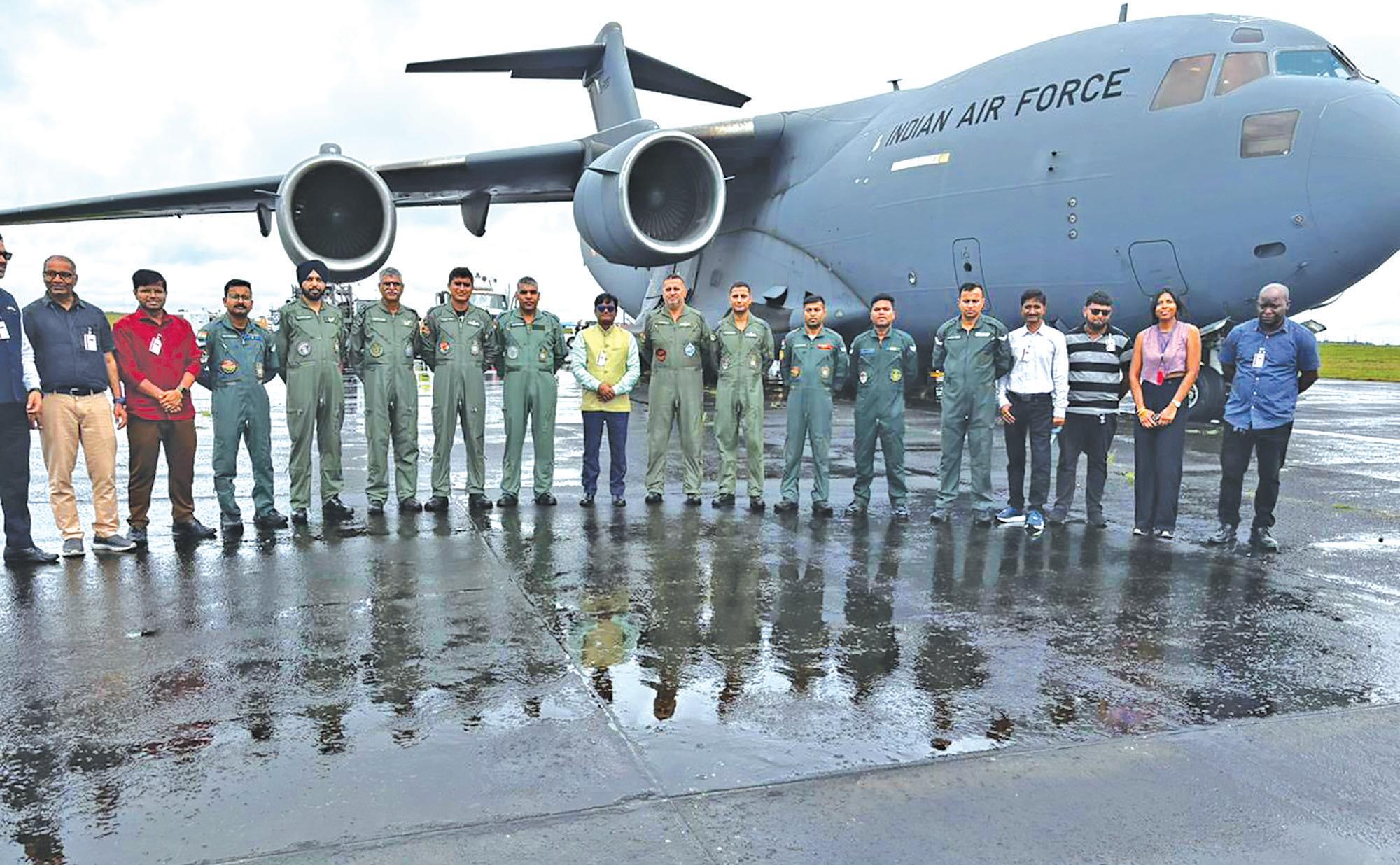
An Indian Air Force C-17 Globemaster aircraft touched down yesterday at the Cheddi Jagan International Airport (CJIA), carrying a brandnew Hindustan 228 aircraft that will be integrated into the Guyana Defence Force (GDF) to further strengthen the army’s Air Corps capabilities.
The aircraft was delivered by Indian manufacturer Hindustan Aeronautics Ltd (HAL), which had previously delivered two Dornier HAL228 aircraft for the GDF almost two years ago. A second C-17 Globemaster aircraft is scheduled to arrive today, bringing a second H-228 aircraft.
In a post shared by the
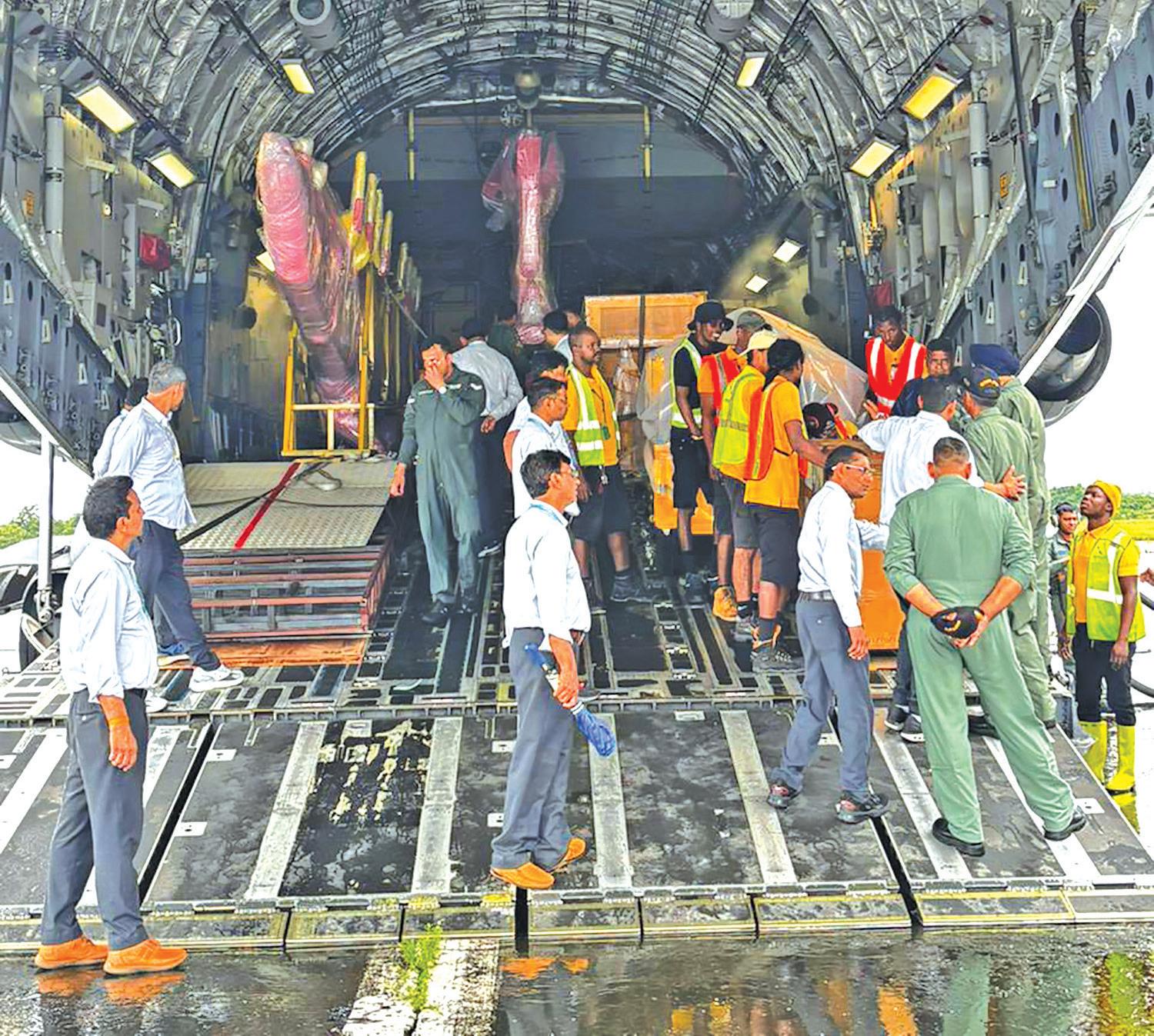


Indian High Commission in Georgetown, it was noted that this latest deal reinforces the robust and growing partnership between India and Guyana.
“This initiative builds upon India’s earlier provision of two HAL Dornier 228 aircraft to Guyana in 2024 under a line of credit, reflecting the deepening cooperation and
shared commitment of both countries towards strengthening aviation infrastructure and regional connectivity,” the High Commission stated.


Hindus in Guyana, along with over a billion others across the world, last Thursday celebrated Ram Naumi – the birthday of Sri Rama, the seventh incarnation of Lord Vishnu, the preserver of the manifested universes. He is particularly popular in the Indian diaspora descended from indentured labourers (Girmitiyas) shipped out during the nineteenth century to British, Dutch and French colonies in the Caribbean, South Africa, Mauritius, Fiji, etc. While he, along with Lord Shiva, is a pan-Indian deity, his life resonates at several other levels with Girmitiyas, especially his banishment from his homeland and his wanderings in the jungles.
The story of his exploits was captured in the first century BC in the Sanskrit text, Ramayana, which in the ensuing millennia was retold – and indeed reinterpreted – in a number of regional languages. For us in Guyana, where the vast majority of indentureds originated in North India’s Bihar and Uttar Pradesh, the Ramcharitmanas (the exploits of Rama) written by Tulsidas in the common tongue of Avadhi in the 16th century was the most accessible Hindu text for those who settled on and off the plantations.
In his life, Ram exemplified the ideal man – the “Maryada Purushottam” – providing a model for the Hindu immigrants to emulate as they attempted to structure their lives to transcend the Procrustean strictures of the indentureship contract in the “total institution” that was the plantation. From this perspective, Ram was not only the personification of God who could be worshipped but also a human hero whose life they could try to emulate. Interestingly then, Vishnu’s eighth incarnation, Sri Krishna, is most commonly worshipped during the “pujas” of ordinary Hindus rather than Sri Ram.
Because of our immersion in the West for almost two hundred years, and in its hegemonising educational and other institutions of socialisation, nowadays it is not appreciated enough that there are fundamental differences in the notion of a “hero” as conceptualised by the Western canon and that of Indian civilisation. Untangling these differences in perspective should offer some insight into the habitus of the Hindu Girmitiyas that intersubjectively lingers to a lesser or greater degree in their descendants.
The Indian hero is a dharma-centred hero – aligned with the cosmic and moral order of the universe. His personal desires are secondary to duty and may suffer, sacrifice, or even appear passive but remain righteous. For example, Sri Ram unprotestingly accepts his exile even though it’s unfair because he prioritises honouring his father’s word over his own rights as heir apparent. His greatness, then, comes from obedience, restraint, and moral perfection, not rebellion.
On the other hand, the western hero, like, say, Homer’s Achilles, is an individual-centred hero often defined by personal courage, achievement, and agency who challenges authority or breaks rules if they seem unjust. His success is tied to action, victory, and transformation of the world where he fights injustice directly and questions or overturns systems to earn admiration for assertiveness and independence.
The Indian hero sees conflict as part of a cosmic moral order and will act only when dharma requires it, not out of ego or ambition. His use of violence is controlled, justified, and reluctant. We see this when Ram fights his nemesis Ravana, who abducted his wife; only after all moral avenues fail and even in battle, he follows rules of righteous warfare. The western hero, like Achilles, on the other hand, is often defined through conflict which simply provides an opportunity for self-expression or glory. As such, violence can be more individualistic and emotionally driven.
In Sri Ram’s life, the Hindu sees there is an emphasis on selfmastery, discipline, and inner purity by the hero, who must conquer the self before the world. Sri Ram is calm, composed and rarely driven by anger, whereas the Western hero, like Achilles, has internal struggles, flaws like anger, and emotional turmoil so that his growth comes from overcoming personal weaknesses. The overcoming of their personal imperfection emphasises “authenticity” and individuality, whereas the Indian hero, like Sri Ram, is more about moral perfection, writ large.
The internal struggle of the Indian hero is therefore one of personal desire vs the moral law of dharma, and he will sacrifice love, power, and happiness for dharma. Rama’s toughest moment comes in the modern, much-criticised episode, when he tragically sends Sita away to uphold public morality. Unlike him, Achilles is defined by anger, and moral restraint is overridden by emotion and vengeance.
Will Hindus stand for Dharma rather than individuality in Guyana today?


The planned establishment of a Guyana Development Bank, backed by an initial US$100 million seed fund, could mark a major shift in how Micro, Small, and Medium-Sized Enterprises (MSMEs) access financing in Guyana, according to Guyanese economist Richard Rambarran, who has described the initiative as one of the more significant financial sector measures announced under Budget 2026.
Speaking during a recent discussion on contemporary development issues emerging from the first quarter of 2026, Rambarran said the proposed institution has the potential to address longstanding barriers faced by small businesses, many of which have historically struggled to secure credit from traditional commercial banks.
Among the features highlighted by Rambarran are the Government-announced financing options of up to $3 million at zero interest and with no collateral requirements, as well as additional support for ventures requiring larger sums.
He said such a move represents an important intervention in a financial landscape where smaller businesses often find themselves excluded or disadvantaged when seeking capital to start or expand operations.
“That represents an extremely important point within the context of Guyana,” he said, noting that many entrepreneurs have long faced either high borrowing costs or outright difficulty in accessing loans.
“We’re now seeing that MSMEs, who historically have had to pay higher interest rates when being giv-

en products or, in a general sense, been unable to access credit from any of the institutions, are now being placed at the forefront,” he added.
Rambarran said the Guyana Development Bank would not only provide easier access to financing but
could also help create a more enabling environment for entrepreneurship and private sector development.
New wave of entrepreneurs
He described the initiative as one capable of bringing “an entirely new wave of entrepreneurs” into the eco-

nomic system by removing some of the obstacles that have traditionally prevented smaller operators from accessing formal financing.
“This really catalyses, once again. I use the word ‘catalyse’ because it truly is the fundamental of the economic growth story we’re seeing here. This represents an entirely new wave of entrepreneurs that can be roped into the entrepreneurial system,” he said.
In addition to smaller loans, Rambarran said Budget 2026 also outlined another layer of financing support for businesses seeking more substantial backing.
“A further announcement was made on the front of the Guyana Development Bank that if you want to move to $7 million in financing, the Government will co-invest with you and help to bear some of that financial risk for the venture,” he said.
According to him, this type of shared-risk arrangement could be especially useful for new or growing businesses operating in areas the Government considers important to national development.
“Now what we see here is a product where you are not the sole risk-taker, and if your business or your enterprise falls within the ambit of what the Government is prioritising to be able to catalyse growth, then you are going to receive this extra funding,” Rambarran stated.
Commercial banks have no risky lending.
In examining the issue of access to finance, Rambarran argued that the conversation in Guyana has for too long focused almost exclusively on commercial banks, even though such institutions are not structurally designed to take on large volumes of high-risk lending.
He said this is one of the reasons why many small and emerging businesses often struggle to secure the support they need.
“If we think about the discussion on access to finance, historically, we have really placed a lot of emphasis on commercial banks, and they have been in the spotlight,” he said.
But, he cautioned, commercial banks operate under a different model and must be careful about where they place depositors’ funds.
“By structure and by definition, a commercial bank does not necessarily lend itself towards risky lending, because a commercial bank at the end of the day is an intermediary of funds,” he explained.
Rambarran added that it would be dangerous for banks to heavily expose their portfolios to risky ven-
tures, since that could undermine financial stability.
“You won’t want that a commercial bank goes and lends 60 to 70 per cent of its portfolio into a very risky venture or into a number of risky ventures, because that is actually the crux of a collapse or a financial crisis through a bank run when people realise that the commercial banks are lending their monies out in that way,” he said.
Fill a market gap
Within that context, he said, the Guyana Development Bank is intended to help fill a market gap that has persisted for years, especially in relation to the MSME sector.
While acknowledging that some commercial institutions have introduced products aimed at supporting entrepreneurs, Rambarran said the broader financial architecture in Guyana still requires strengthening if small businesses are to play a larger role in national growth.
He pointed to existing efforts by private financial institutions but maintained that these have not been enough on their own.
“We do see some institutions trying, for example, GBTI launching GBTI Grow, and so on. We do see institutions trying, but more is really needed to help to kickstart the MSME sector in building an internationally competitive private sector,” he said.
The economist said the planned development bank should therefore be viewed not as an isolated policy announcement but as part of a wider attempt to deepen Guyana’s financial sector and make the economy more supportive of entrepreneurship, innovation, and business expansion.
He said the Guyana Development Bank announcement should be considered alongside plans to reform the capital markets and establish a junior stock market, which he also described as important for deepening the financial system.
“Access to finance will really change as a result of this institution,” he said, adding that Government involvement in such a mechanism often becomes necessary where market gaps or failures have prevented sectors from growing to their full potential.
He said the initiative reflects an effort to ensure that development is not confined to larger players but is also extended to smaller enterprises that often have ideas, products, or services but not the financing needed to scale up.
In that regard, he said the institution could become one of the more transformative business measures announced in Budget 2026.
Concerns are mounting from traffic officials that traffic fines are no longer serving as an effective deterrent, as road safety stakeholders warn that repeat offenders continue to flout the law, contributing to accidents and fatalities across the country. The issue was highlighted during the latest broadcast of ‘Road Safety and You’, where officials underscored the growing gap between existing penalties and current economic realities, arguing that the system must evolve to curb reckless driving. Chairman of the Guyana National Road Safety Council (GNRSC) Earl Lambert, during the televised show, pointed out that fines, which were once considered significant, have lost their impact over time.
“I remember when $7,000 was the fine… but we haven’t moved beyond the $7,000, and salaries have actually tripled. So, some people see it as a small piece,” Andrews said. “You find that they’re offenders with 50 and 60 tickets and they’re not even paying it.” According to Lambert, the failure to adjust fines in line with income growth has emboldened a culture of non-compliance, with some drivers repeatedly violating traffic laws without fear of meaningful consequences. The problem, he noted, is compounded by dangerous driving practices such as overtaking multiple vehicles at once, speeding and ignoring road signs, behaviours that have been linked to recent fatal accidents.
“We need to put the blame where it is,” he said, referencing a recent crash in which a driver reportedly overtook several vehicles while approaching a turn. “Why wasn’t the driver observing the five Cs?” Traffic officers on the programme maintained that systems to detect and penalise violations are already in place, includ-

ing speed cameras and electronic ticketing. Officer-inCharge of Traffic in Regional Division Three (Essequibo Island-West Demerara), Superintendent Maniram Jagnanan explained that these technologies are designed not only to enforce the law but to promote safer driving habits. “The system is there… it is there to preserve life,” he said. “As long as you go over the required speed limit, you’re being issued with your ticket electronically.”
Enforcement alone cannot solve
However, he stressed that enforcement alone cannot solve the problem, noting that driver behaviour remains a critical factor. “When we leave this country and go overseas, we respect all laws and regulations. Why can’t we start at home?” Jagnanan questioned. Meanwhile, Traffic Inspector at the Kitty Police Station, Georgetown, Inspector Lindon Williams highlighted ongoing challenges with the demerit point system, noting that while it is designed to penalise repeat offenders, gaps in implementation have limited its effectiveness.
“We have found ourselves in a bottleneck…some amendments are needed,” Williams explained, adding that the system is being reviewed to make it more “strong and seal-tight.” He also pointed to issues such as unlicensed drivers, who can-

not be penalised under the demerit system, as well as widespread violations among
minibus operators and motorcyclists. “Every day, we receive reports of different
offences… and the police can only do so much,” he said.
Just recently, the Guyana Police Force (GPF) had intensified efforts to curb dangerous driving through the rollout of the Safe Road Intelligent System (SRIS), a network of smart surveillance cameras installed along major roadways. The system, which is a national road safety strategy, is designed to automatically detect traffic violations, including speeding, failure to wear seatbelts, use of mobile phones while driving and driving in restricted lanes. Mounted on
poles at strategic locations such as the Sheriff-Mandela Highway and other high-traffic corridors, the cameras operate around the clock and are equipped with multiple functions, allowing them to monitor different types of offences simultaneously. Once a violation is detected, the system captures the vehicle’s registration number and generates an electronic ticket (e-ticket), which is then processed by the relevant authorities. This reduces reliance on manual enforcement and limits opportunities for human interference.


Acting Indian High Commissioner Manoj Kumar was at the Timehri airport to receive the C-17 Globemaster upon its arrival and welcome the crew along with HAL officials. He commended their professionalism and dedication.
“The induction of these aircraft is expected to sig-
nificantly enhance Guyana’s civil aviation capabilities, particularly in improving accessibility and connectivity across regions. This development marks yet another significant step forward in strengthening India–Guyana cooperation in civil aviation and deepening bilateral ties,” the High Commission noted
in the post.
Over recent years, Guyana and India have been deepening bilateral defence cooperation, which includes increased training opportunities and the acquisition of key defence assets such as aircraft.
In March 2024, the Guyana Government signed a Line of Credit (LOC) agree-
ment, valued at US$23.27 million, with the ExportImport Bank of India (EXIM Bank) for the procurement of two aircraft.
The following month, two new Hindustan 228 aircraft were delivered by HAL. They were assembled here by the HAL team and subsequently handed over to the Guyanese
army. These aircraft are tailored for performance and adaptability. With high payload capacity, economic fuel consumption, long-distance endurance, high cruising speed, and ease of maintenance, they are designed for a range of critical missions, including surveillance, search and

rescue, maritime patrol, and transportation.
At the commissioning of the aircraft in November 2024, the GDF’s Chief of Defence Staff, Brigadier Omar Khan, described the Hindustan 228 aircraft as a transformative asset. He had underscored that the new aircraft significantly enhance the GDF’s operational readiness, enabling swift and effective responses to a wide range of situations.
“The multi-role capability of these aircraft allows us to optimise resources and provide more comprehensive defence and security coverage for our nation,” the Army Chief had affirmed.
The acquisition of the India-made Hindustan 228 aircraft also demonstrated the expanding relationship between the GDF and the Indian Armed Forces. This was highlighted when Brigadier Khan visited India in November 2024 and held discussions with top Indian defence officials, including Defence Secretary Rajesh Kumar Singh; Chief of Defence Staff General Anil Chauhan; Chief of Army Staff General Manoj Pande; Chief of Naval Staff Admiral Dinesh Tripathi; and Chief of Air Staff Air Chief Marshal Amar Preet Singh.
Those high-level meetings focused on strengthening the existing partnership and exploring new avenues for training, capacity building, and access to advanced defence technologies.
As part of the visit, Brigadier Khan explored major military industrial complexes in Pune, Kanpur, and Delhi, gaining first-hand insights into India’s advanced defence manufacturing capabilities. This visit underscores the commitment of both nations to deepen defence ties and pursue future opportunities for collaboration within the military sector.
Meanwhile, only in December last, the GDF commissioned two new Bell helicopters. The rotary-wing aircraft, bearing registrations 8R KNU (Bell 429) and 8R AKA (Bell 407), were acquired through a 2024 US$16 million deal with Bell Textron Inc. Earlier in the year, the army commissioned a new Tecnam P2012 aircraft in July 2025. The newly built twin-engine multi-role aircraft was acquired from the Italian manufacturer for the tune of 2.9 million euros.
Nevertheless, in the 2026 budget, the GDF received a $50.4 billion allocation, some of which will go towards the acquisition of additional critical assets, including in the maritime division, as the army continues to strengthen its capabilities.







The People’s Progressive Party (PPP) has postponed its annual Babu Jaan observance, which honours the party’s founder and former President, Dr Cheddi Jagan, as well as his wife, former President Janet Jagan, which was scheduled for today (Sunday), citing persistent inclement weather.
In a statement, the party said the observance, which was set for today at Babu Jaan in Port Mourant, Corentyne, had to be called off due to adverse weather conditions affecting several parts of the country. The PPP noted that a new date for the event will be announced, while expressing regret for any inconvenience caused to supporters and the wider public.
Coastal Guyana’s current spell of persistent rainfall comes amid a severe weather period flagged by the Hydrometeorological Service from March 26 to March 30. Hydromet’s forecast for March 29 also pointed to cloudy skies, frequent or intermittent showers and rainfall of up to 10 to 30mm, while the Caribbean Regional Climate Centre’s March to May 2026 outlook has
The Babu Jaan site at Port Mourant holds deep historical and political significance for the PPP, as it is the resting place of the party’s founder and Guyana’s former President, Dr Cheddi Jagan, as well as his wife, former President Janet Jagan. Each year, the party hosts the observance to mark Jagan’s life’s work and enduring contribution to Guyana’s political development, drawing supporters from across the country.
The observance has also served as a key platform for the party’s leadership, including General Secretary Dr Bharrat Jagdeo, to address a range of national and political issues. While rooted in honouring Jagan’s legacy, speeches at Babu Jaan have often emphasised party unity and discipline, highlighted government policies, and responded to current national concerns.
The PPP has indicated that the observance will proceed once weather conditions improve, with a new date expected to be announced in the coming days.

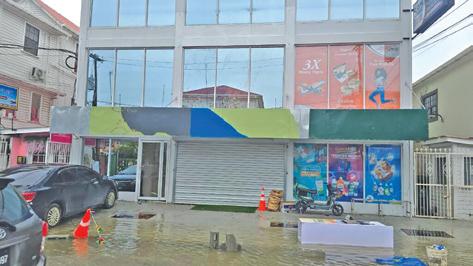
The Central Housing and Planning Authority (CH&PA), through its Enforcement Department, has issued two cease and desist orders to the operator of an illegal supermarket on Middle Street in Georgetown.
According to the CH&PA, the entity, located at 92 Middle Street, is operating without the necessary approvals in violation of the Town and Country Planning Act, Cap. 20:01, Laws of Guyana. The supermarket is operated by Chinese nationals.
On Friday, officers from the Enforcement Department visited the es-
was found open and conducting business as usual.
As a result of the continued non-compliance, a second cease and desist order was served yesterday by members of the Enforcement Department.
The authority noted that more than two months ago, when construction activity was observed at the building, the agency made adequate enquiries with both the owner of the property and the tenants.
Despite those efforts, however, no information regarding the intended use of the building was provided to the CH&PA, an agency within the Ministry of
directives issued.
“CH&PA wishes to remind property owners and businesses that all commercial operations must receive the necessary approvals in keeping with the provisions of the Town and Country Planning Act,” the authority noted.
This move comes after the CH&PA had to take decisive enforcement action to stop unauthorised construction works for an unlawful bridge that provided access from property 1211 EE Eccles to the Haags Bosch Four-Lane Highway earlier this month.
CH&PA had said that the owner had previously been

tablishment and served an order, instructing the operator to immediately cease the illegal operation.
However, when officers returned to the location on Saturday, the establishment
Housing.
Nevertheless, the authority said it will continue to monitor the situation and will take further legal action on Monday should the operator fail to comply with the
issued a contravention notice and cautioned to desist from the unlawful construction but failed to comply. It added that permission was sought by the owner to operate a Chinese restaurant,

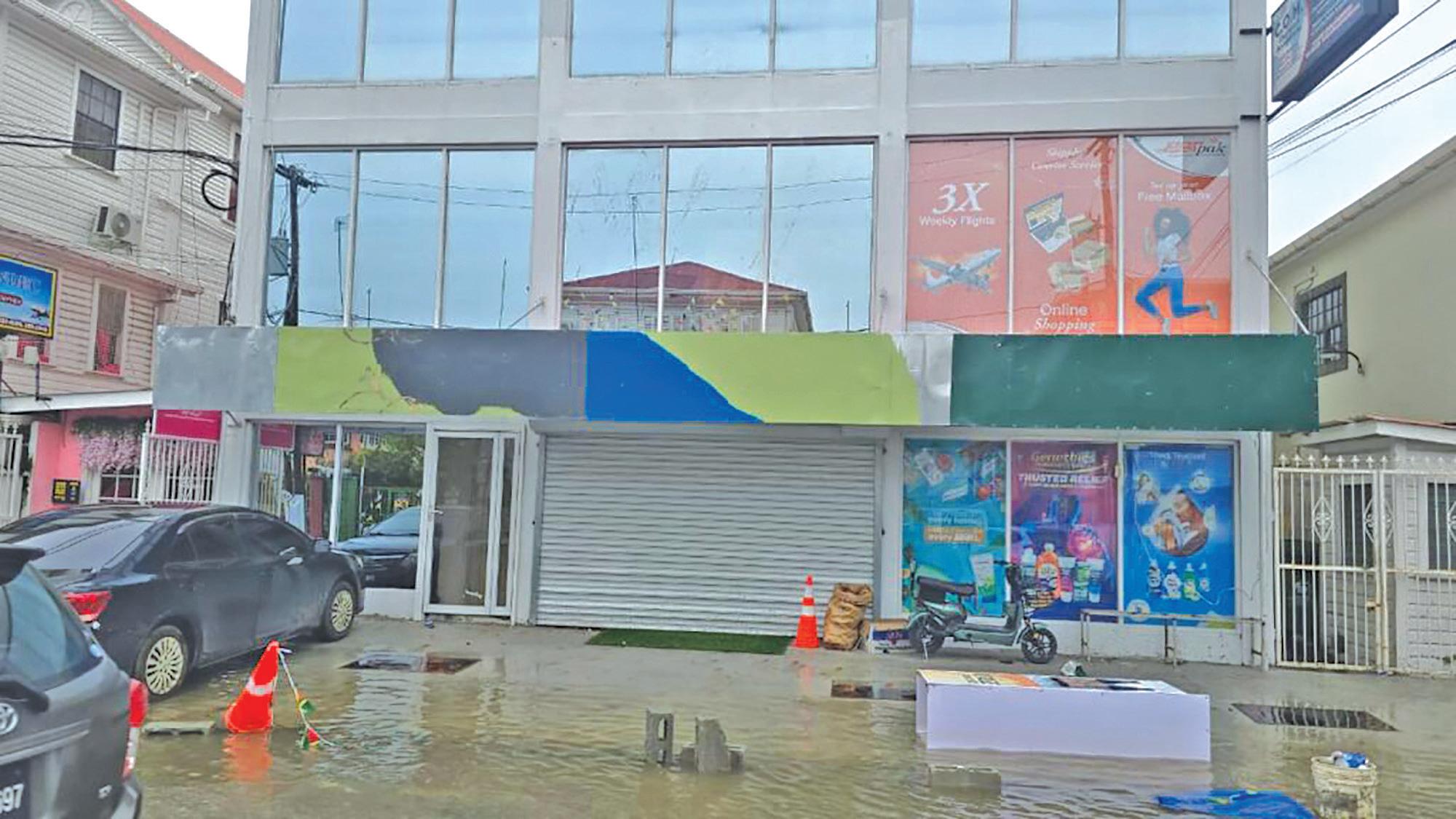
but this was not granted.
CH&PA had also previously had to take enforcement actions for a proposed supermarket on Brickdam Street and Brummel Place, Georgetown.
In a September 2025 statement, the CH&PA said an inspection conducted by its Enforcement and Compliance Department confirmed that construction commenced without seeking approval from the relevant
regulatory agencies. In fact, it was noted that no planning permission was ever issued for the development, nor is there any application pending before the authority.
The proprietor of that building was formally served with a Notice of Contravention in accordance with the Town and Country Planning Act, Cap. 20:01, ordering the immediate cessation of all unautho-
rised works.
At the time CH&PA had firmly reminded businesses, developers, and property owners that the authority is the first point of engagement for all construction and commercial development permits. It further emphasised adherence to zoning laws and planning regulations is not only mandatory but critical to safeguarding orderly and sustainable development.

MARCH 29, 2026 | GUYANATIMESGY.COM





SUNDAY, MARCH 29, 2026 | GUYANATIMESGY.COM








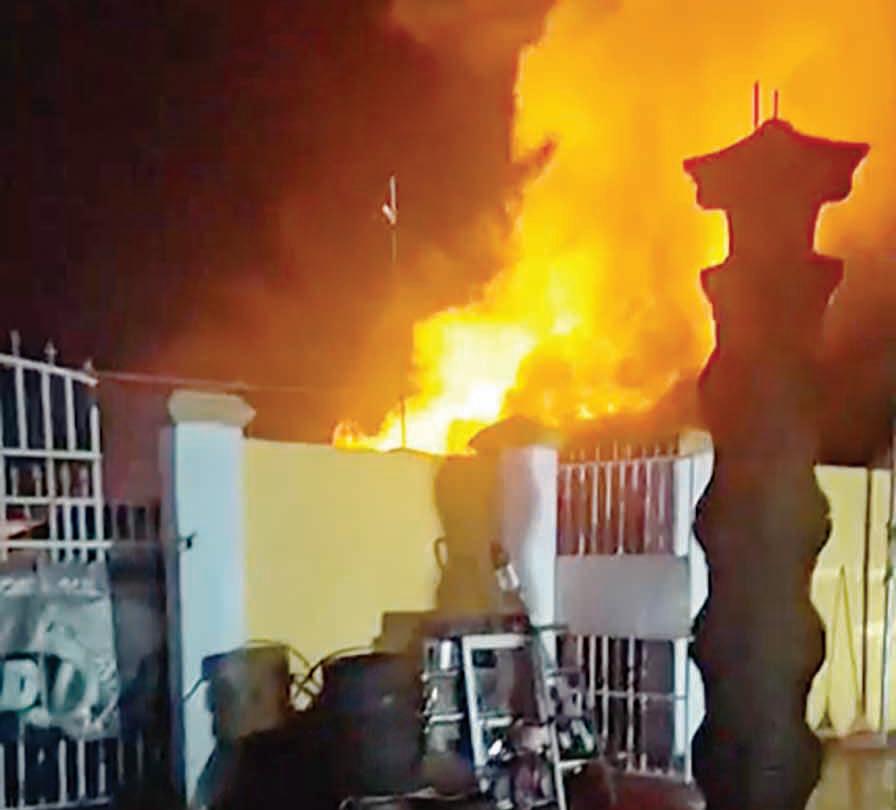

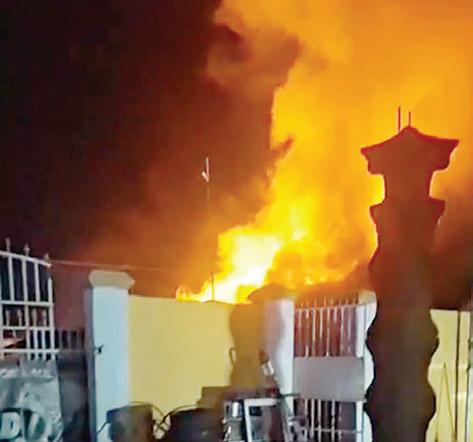
Aminimart in Haslington North, East Coast Demerara, was destroyed by a fire of unknown origin on Saturday evening. The circumstances surrounding the blaze remain unclear. Residents reported seeing the building engulfed in flames, and while there were claims that other structures within the yard may have been affected, this could not be independently verified. There were no immediate reports of injuries.
Up to press time on Saturday, officials from the Guyana Fire Service (GFS) had not issued a statement on the incident. Police have also not released any information. This is the second fire reported in the village of Haslington within a matter of days. Just about a week ago, a blaze of unknown origin destroyed sec-
tions of a betting shop in the community. According to information from the Guyana Police Force, the fire started at approximately 05:30h on Monday. Preliminary investigations revealed that the 37-year-old female operator had secured the business at around 16:30h on Sunday before retiring to bed. At about 05:30h on Monday, she was alerted by a relative that the building was on fire. Upon checking, she observed the structure engulfed in flames.
The GFS responded promptly and was able to extinguish the blaze, preventing the building from being completely destroyed. However, the interior of the establishment, along with several monitors and other electronic equipment, sustained significant damage. The value of the losses has not yet been determined.


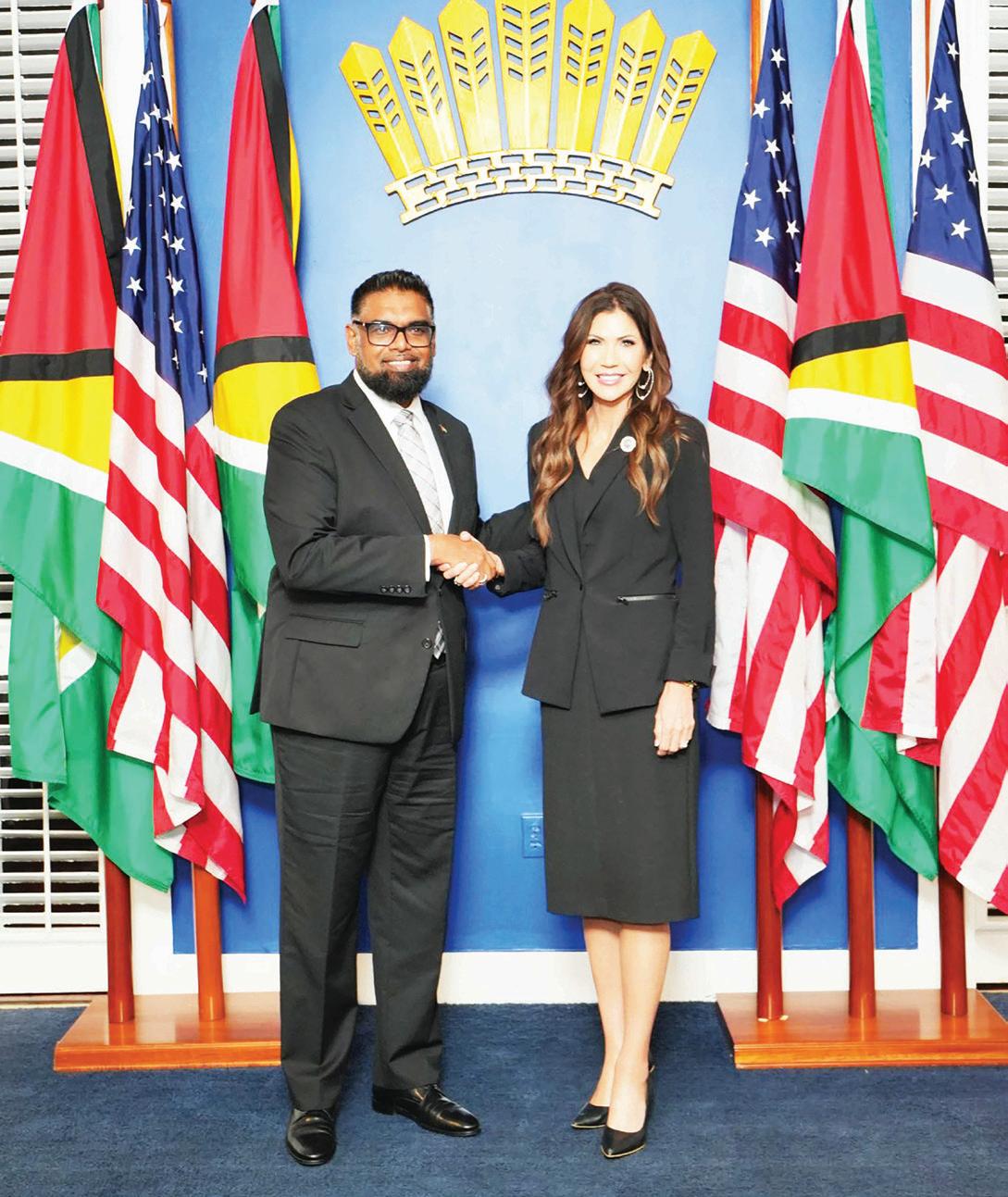
Commander in Chief of the Armed Forces, President Dr Irfaan Ali, has said that his recent high-level engagement with United States Special Envoy Kristi Noem was focused on a wide spectrum of security-related matters.
Former Secretary of the US Homeland Security Special Envoy Noem and her team were in Georgetown last week to advance the Shield of America’s agenda.
According to President Ali, her visit was part of a commitment that was made earlier this month by the US Government at the Shield of the America Summit held in Doral, Florida.
“After the meeting at Doral, there was a full commitment that there would be greater engagement with all the stakeholders. [Tuesday’s] meeting was part of that commitment of the continued en-

gagement,” the Guyanese leader told reporters on the side-lines of an event on Thursday.
The Head of State added that the “engagement focused on every aspect of national [and] regional security, and that includes economic security, energy security, food security,

transport security…and, of course, support for our hardcore security infrastructure and architecture to protect our development and protect the region.”
Guyana is among 12 Latin American and the Caribbean (LAC) countries that agreed to work with the US Government to address drug trafficking and other illicit activities in the region.
In a Facebook post following the high-level discussions on Tuesday, the US Embassy in Georgetown said the officials reaffirmed the enduring partnership between the two countries.
“Their discussions focused on joint efforts to disrupt cartel and transnational criminal activity, strengthen border security, discourage illegal immigration, and promote economic opportunity,” the US Embassy said in the social media post. “Thanks to the Trump Administration’s leadership, we are building a safer, more secure, and more prosperous future in our region.”
Meanwhile, during the meeting, President Ali presented Special Envoy Noem with a Dillon Craig painting depicting Guyana’s national bird, the Canje Pheasant, alongside the iconic Harpy Eagle.
Members of the Cabinet and senior members of the Joint Services also attended the high-level engagement, the Office of the President said in a separate Facebook post.
Noem was appointed as the Special Envoy for the Shield of the Americas.
The Guyanese Head of State was among only two Caribbean leaders invited by President Donald Trump to the March 7 summit in Florida.
President Ali, along with leaders from Argentina, Bolivia, Chile, Costa Rica, the Dominican Republic, Ecuador, El Salvador, Honduras, Panama, Paraguay, and Trinidad and Tobago, joined President Trump to sign a proclamation, committing to the dismantling of cartels and foreign terrorist organisations operating in the Western Hemisphere.
During an interview on the side-lines of the summit, the Guyanese leader declared Guyana’s unequivocal support for the strong actions and direct approach being taken by the US to crack down on drug cartels and transnational crimes that have plagued the Western Hemisphere for decades.
“We support the strong action on drug cartels. We’ve supported the charter to deal with transnational crime, especially the narco-terrorism and these cartels. We have to agree first that this is a challenge to the region, and we have an approach now that is direct and one that seeks to take the region out of the stain of criminality, cartels, and drugs,” President Ali had stated in an interview with Fox News’ Aishah


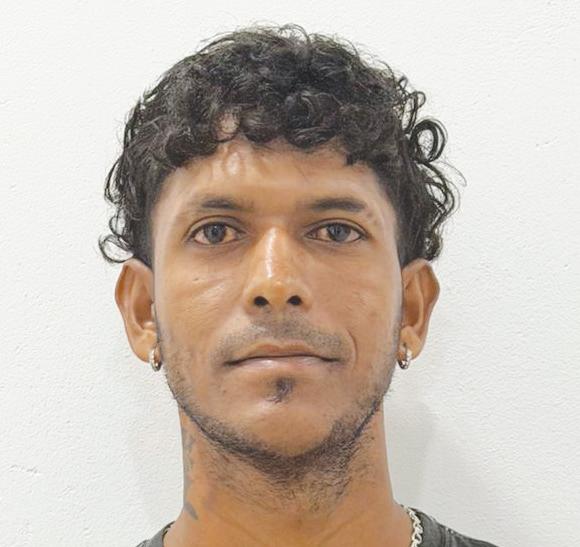
The Guyana Police Force has issued a wanted bulletin for Adrian Edwards Hartman, also known as “Redman”, in connection with the killing of a gold miner in Region Eight (Potaro–Siparuni).
Hartman, 41, whose last known address is Dr Charlie Housing Scheme,
Soesdyke, East Bank Demerara, is wanted for the murder of Rowell La Cruz, called Kabaloo. The incident occurred on March 10, 2026, at Siparibacka in the Iwokrama Protected Area.
It was reported that 32-year-old La Cruz, of Warapoka Village, North West District, Region One (Barima–Waini), was beaten to death over the alleged theft of gold at a mining camp along the Siparuni River. During the incident, two other men were also injured.
According to Police reports, La Cruz and another male worker, both employed at a dredging operation, were in the camp’s kitchen when they were approached by three men who accused them of stealing gold from a sluice box. The

Haiti’s Provisional Electoral Council (CEP) has approved 282 political parties and coalitions to participate in upcoming elections, marking a step forward in a long-delayed process unfolding amid deep insecurity and political uncertainty.
The list, published Thursday, March 20, after a 10-day registration period that ended on March 12 –and which saw 320 organisations register – includes most major political parties and platforms. However, notable absences include the Parti Haitian Tèt Kale – the party of former President Michel Joseph Martelly – as well as the Résistance Démocratique (RED) platform led by former officials allied with the late President Jovenel Moïse.
Among the parties cleared to participate are Fanmi Lavalas of former President Jean-Bertrand Aristide, the Organisation du Peuple en Lutte (OPL), Pitit Dessalines, Les Engagés pour le Développement (EDE) led by former Prime Minister Claude Joseph and
Ayiti An Aksyon (AAA) of former Senator Youri Latortue, among others.
Authorities have not explained why PHTK and RED were excluded. Efforts by The Haitian Times to reach party representatives were unsuccessful.
The electoral council said parties not yet approved have until April 2 to complete their registration, meaning the list could still expand.
“The Provisional Electoral Council reaffirms its commitment to conducting an inclusive and impartial electoral process, with full independence and transparency,” the council said in a statement.
The next phase of the electoral calendar includes voter registration from April 1 to June 29, followed by candidate registration from April 13 to May 15. Campaigning for the first round of legislative and Presidential elections is scheduled to run from May through late August.
(Excerpt from The Haitian Times)
men were then taken to a nearby watch camp, where they encountered another individual.
Police stated that the suspects, who were armed with a handgun, cutlasses, and a mattock handle, dealt the men several blows to their bodies, causing injuries, before leaving the area.
The injured men were later assisted by public-spirited citizens and taken to the riverfront. However, La Cruz succumbed to his injuries while being transported, and his body was subsequently taken to a nearby camp.
Police later visited the scene, where the body of the miner was found lying motionless with visible marks of violence. The body was escorted to the
Linden Hospital Complex Mortuary, where he was pronounced dead on arrival.
Meanwhile, the two other injured men, a 36-yearold of Beterverwagting, East Coast Demerara, and Fair View Village, North Rupununi, and a 25-yearold miner of Paramakatoi Village, North Pakaraimas, were taken to separate medical facilities, where they were treated and admitted.
Investigations are ongoing as Police continue efforts to locate and apprehend Hartman.
Anyone with information about Hartman’s whereabouts is asked to contact the Police on 911 or the following numbers: 227-1611, 268-2328, 2682329, 226-3411, 225-8196, or 227-1159. Persons may
also report to the nearest Police station. Police have assured that all information received
will be treated with strict confidence as efforts continue to apprehend the suspect.
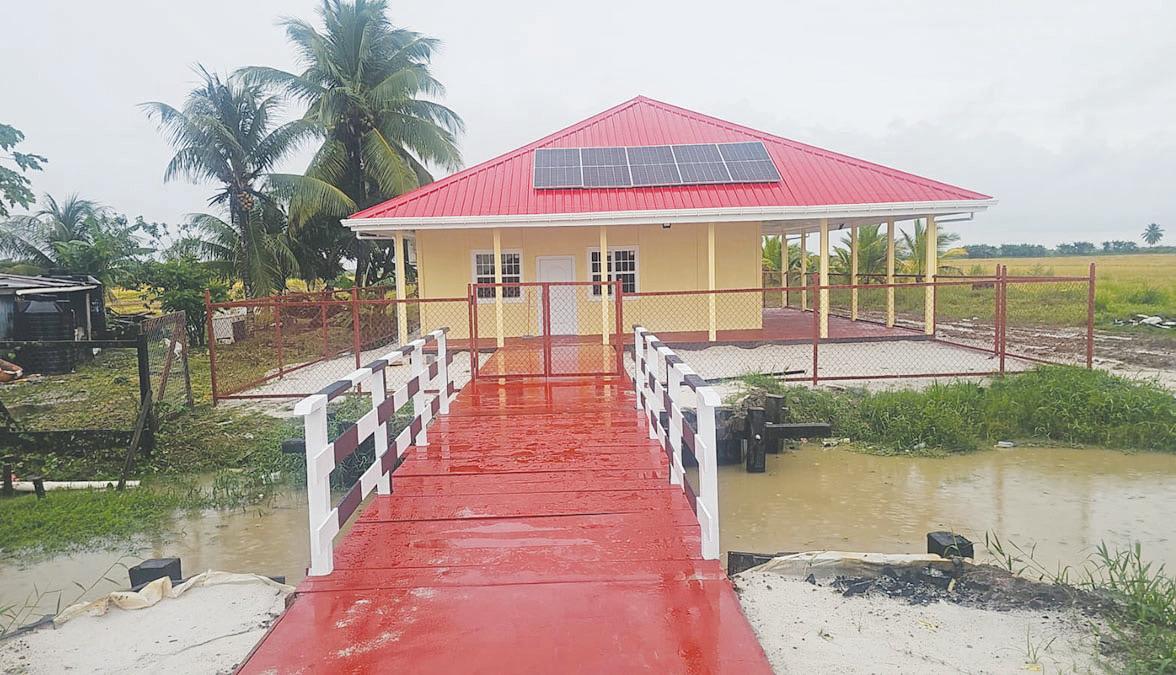
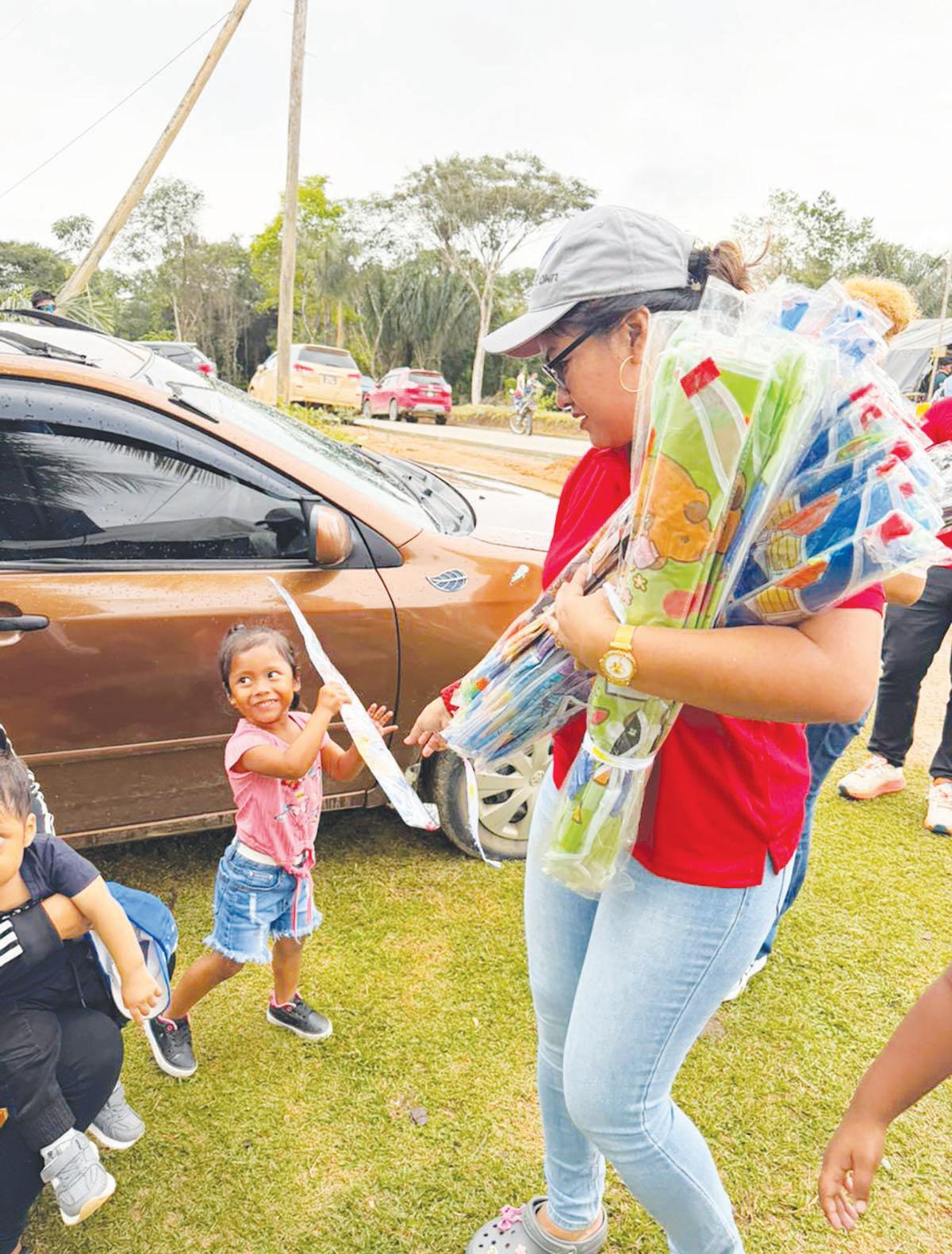
Acommitment made by President Dr Irfaan Ali to the people of Hague, West Coast Demerara, has been fulfilled
(President Dr Irfaan Ali/Facebook)






Permanent Secretary of the Education Ministry, Shannielle Hoosein-Outar, has commended Project Elevate for its focus on literacy development, student wellness, leadership and parent involvement, while also highlighting the ministry’s appreciation for its ongoing partnership with the US Embassy in Guyana in advancing programmes that benefit students, families and communities. HooseinOutar delivered the remarks on Saturday on behalf of the minister of education, Sonia
Parag, at the closing ceremony for Project Elevate: Mind & Book Team-Up at Mon Repos Primary School.
Project Elevate, led by the 2025 cohort of the US Department of State Youth Ambassadors Program, is a four-week literacy initiative designed to strengthen reading and comprehension skills among grade five students.
The programme also integrated activities aimed at promoting mental health awareness, physical wellness and leadership development among participants.





The Windstar Cruises vessel Star Seeker, a newly launched allsuite luxury yacht, is scheduled to make its inaugural call to Antigua and Barbuda on Sunday as part of its first sailing season.
The 224-guest yacht is expected to arrive at port at 10:00h, with a traditional plaque exchange ceremony planned to mark the milestone visit. Media representatives have been invited to cover the event, with boarding set for 09:30h. pending security clearance.
Star Seeker represents a major addition to Windstar’s fleet, having been officially delivered in December 2025 as the company’s first purpose-built vessel in its Star Class series. The ship began service shortly after, launching its inaugural Caribbean season following a transatlantic maiden voyage and christening in early 2026.
Designed for small-ship,
high-end cruising, the yacht accommodates 224 passengers across 112 all-suite cabins, most featuring private verandas or floor-to-ceiling windows. The vessel also carries approximately 130 crew and is equipped with amenities including multiple dining venues, a spa, open deck spaces and a water sports marina platform.
Industry reports describe Star Seeker as part of a broader expansion by Windstar Cruises, aimed at offering more intimate itineraries to destinations often inaccessible to larger cruise ships.
The Antigua call forms part of the yacht’s inaugural Caribbean itinerary, which highlights smaller ports and culturally immersive experiences across the region.
Sunday’s visit is expected to draw attention from tourism and maritime stakeholders as Antigua and Barbuda continues to position itself as a key desti-
Some industrial court
Judges have been accused of seeking to procure extensions in office by delaying their judgements.
The allegation was made by lawyers for trade union activist and former Oilfield Workers’ Trade Union (OWTU) branch secretary Anthony Dopson in a request under the Freedom of Information Act (FOIA) sent to the court’s President, Heather Seale, last week.
In the correspondence obtained by Guardian Media, attorney Aasha Ramlal, of Freedom Law Chambers, said that Dopson was concerned with the timely delivery of judgements by the court.
She suggested that both the state and litigants were affected by such a purported practice and requested the disclosure of the names of the Judges whose tenure is due to expire within the next year and the number of outstanding judgements from each of them.
She also sought the disclosure of the matters before the court’s General Services and Essential Services Divisions for which judgements have been reserved for more than six months.
Ramlal gave Seale 30 days in which to respond to the request before she files a lawsuit on Dopson’s behalf. (Excerpt from Trinidad Guardian)






Just days after alleging that the Guyana Civil Aviation Authority (GCAA) restrictions were threatening its operations, Air Services Limited (ASL) has added four new aircraft to its fleet, bringing its total to 50. Chairman Captain Ahamad Mazahar Ally had accused the GCAA of informal instructions to halt flights to Matthews Ridge, Region One (Barima–Waini) and suspending a pilot, citing daily loss -


es of up to $5 million. The GCAA maintained its actions were precautionary and legally mandated, following an incident at the runway on Sunday last.
The four new aircraft, each valued at approximately US$3.5 million, are
are in active service, covering areas such as passenger transport, agriculture, and other aviation operations.
Fixed-base operation
During an interview with this publication Mazahar Ally revealed plans for expansion at

outfitted with features including minibars, stylish seating, and premium accommodations and are tailored for private and highend trips. Each aircraft is equipped with a lavatory and executive seating for nine passengers but can also be configured to carry up to 13 passengers in a standard layout. The aircraft arrived from Panama and the United States.
“This growth means that, regionally, we are able to reach more foreign locations quicker and more comfortably. We are expecting to add another two of this type once everything checks out and goes well,” a company representative stated last week.
In terms of overall capacity, the company noted that while it now owns approximately 50 aircraft, including planes and helicopters, about 28 aircraft
Timehri.
“We are also planning further at Timehri to open up a fixed-base operation… This is mainly for the storage of our aircraft, and we are looking further into private jets as well. We are aiming to complete this by the end of the year.”
He added that the facility is already secured, with financing in place, and that engineers are currently finalising designs.
“The facility will cost between US$25 million and US$30 million, as extensive work is required, including construction of the hangar, tarmac, apron, and overall setup.”
He further revealed that the space, currently in its building phase, will be equipped to assist aircraft, particularly foreign carriers, that encounter issues such as punctures or other maintenance prob -
lems.
The facility will provide parking, meals, transportation, and other essential services to accommodate passengers and crew transiting through the region on private carriers. Additionally, airlines facing operational challenges
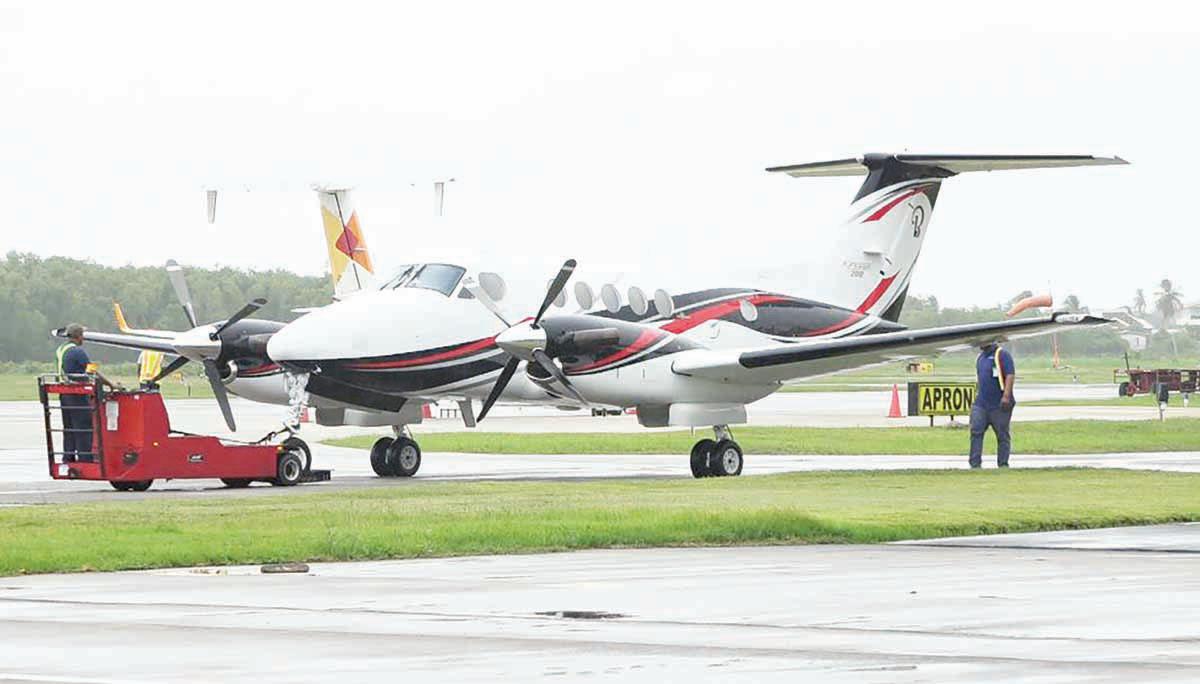
will be able to utilise the facility for support and to return their aircraft to service.
Meanwhile, lending his perspective, Chief Executive Officer Tarick Ramnarase reflected on the company’s history and growth over the decades,
linking it to the company’s exponential growth.
He explained that ASL has been operating for over 60 years and was a major force at the aerodrome long before his time.
“I was told that the tower used to be very small, and where we are standing was once swamp. To see it evolve today and to now have machines like these in Guyana is truly significant. It is the first of its kind in the country, and very soon this will be geared towards executive flying only,” he stated.


Oprah Winfrey, influential American media figure, once said that women should think like queens, unafraid to fail, as failure is simply another stepping stone to greatness.
“Women and girls can do whatever they want. There is no limit to what we, as women, can accomplish.”
Professor Dr Paloma Mohamed-Martin is certainly proving that sentiment, as she remains steadfast in her belief that perfection is a continuous process and that work must continue to persist if perfection is wanted. After bringing the curtains down on her six-year tenure as Vice Chancellor (VC) of the University of Guyana (UG), MohamedMartin maintains that sustained effort will be necessary for the university to continue its journey toward excellence.
Professor Mohamed-Martin holds a Ph.D. and is a full professor of behaviour and communications at UG. She also serves as an adjunct professor of cultural diplomacy at Trent University. Notably, she is the eleventh VC and the first woman to lead the university in its 60-year history, as well as the first female VC appointed in the Anglophone Caribbean.
This publication spoke with the VC about her achievements and her plans for the future as she prepares to step down. When asked about her most significant achievements, she emphasised collective progress over personal accolades.
“I think there could be hundreds of things that we were able to effect during the last seven years. The most defining is not an easy question. There are many things outside of the obvious – accreditations, buildings, rapid expansion to the regions, policies, and a relatively strong rise and growth in student numbers [amongst others]. But the herculean task of reforming important back-end systems, which are often intangible, I hope will leave a legacy of systems integrity, fiscal discipline and technological agility that can be perfected and built upon.”
Many were surprised by her decision not to continue in the role and explanation of her choice. Professor Mohamed-Martin said both professional and personal factors played a part, noting that globally, many VCs are increasingly choosing to step away voluntarily. She emphasised that she identifies first as a sci entist and teacher and has been unable to fully engage in aca demic work due to the demands of administration. She warned that being unable to teach and mentor students could result in a broader loss, particu larly in developing future generations of highly trained individuals.
“My family will also lose more than they already have, and I will, in my old age, be unful filled and unhap py. It’s time to re turn to the things that brought me home and to UG 19 years ago – to teach. Being Vice Chancellor is nei ther here nor there;

it will always have a term limit. You never cease to be a teacher.”
More to be done
When asked whether she believes her work is complete, she maintained that there is always more to be done. “Nothing is ever complete in life, but we must be able to pass the baton. Using metrics from our graduate exit surveys, which assess teaching, services, amenities and overall student experience. We moved from 2.50 in 2020 to 4.1 in 2025 on a scale of one to five. That is good progress, but there is more to be done.”
She added that research output and visibility have significantly improved, contributing to the university’s steady rise in international academic rankings.
“We still have a way to go to reach the top 100. That’s the next five-year target. UG will get there.” Speaking on her experience, she reflected on the absence of female mentorship in her journey. “I had no peer, no female mentor or model who was a Vice Chancellor, and no gendered reference point. The challenge was to figure it out the best way I could. That will never be the case again for any other woman in the region venturing into these waters.”
Meanwhile, Mohamed-Martin reflected on the state of the university when she assumed office. Mohamed noted that nearly every aspect required attention. “That’s a complex question that cannot be answered simplistically. Everything needed attention, and some things always will. Previous Vice Chancellors would have started work that we were able to build upon, and we must acknowledge that.
However, there were stubborn problems that resisted change, particularly within backend service systems, which had been largely neglected.” She explained that while universities are often judged primarily on producing graduates, critical internal systems had to be strengthened.

These included reducing late grades, improving student services and responsiveness, enhancing the quality and training of academic staff, updating the pension fund system, expanding career fairs, creating inclusive policies for underserved communities, linking students with employment opportunities, strengthening counselling services and establishing an Occupational Health and Safety (OHS) office. Looking ahead, the skies are clear for MohamedMartin as she remains committed to striving for perfection, noting that she will first attend to some personal matters before seeing what the future and the will of the Lord have in store for her.
A28-year-old labourer was on Friday granted $1.5 million bail after appearing before the Anna Regina Magistrate’s Court on a charge of rape of a child under the age of 16.
Bissoon Sookraj, also known as "Boyo", of Better Success Backstreet, Essequibo Coast, was charged with the offence, contrary to Section 10 (3) of the Sexual Offences Act, Chapter 8:03.
Sookraj appeared before Magistrate Ravindra
Mohabir, where the charge was read to him.
The court heard that the alleged offence was committed against a female juvenile in November 2025, at Better Success, Essequibo Coast.
He was not required to enter a plea, as the matter is indictable.
Bail was granted in the sum of $1.5 million on the condition that Sookraj report to the Anna Regina Police Station every Friday and be prohibited from making con-

tact with the virtual complainant.
The case was adjourned to April 9.


A43-year-old hire car driver from Golden Fleece, Essequibo Coast, has been charged with driving while his breath alcohol level exceeded the legal limit.
Bhoopaul Roy, of Golden Fleece, appeared before Magistrate Ravindra Mohabir at the Anna Regina Magistrate's Court on Friday.
The charge stems from an incident that allegedly occurred on March 21, along the Suddie Public Road. Police stated that the offence was committed contrary to Section 39A (1) of the Motor Vehicle
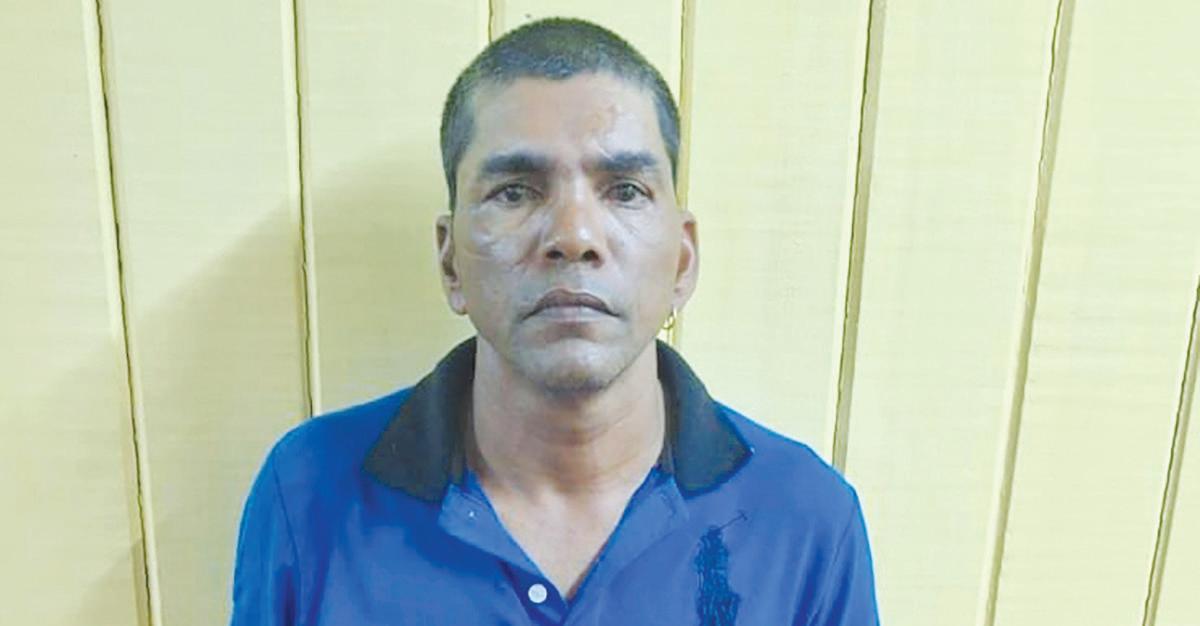
and Road Traffic Act, Chapter 51:02, as amended by Act 17 of 2022.
When the charge was read, Roy pleaded not guilty, and bail was granted in the sum of $500,000. The matter was adjourned to April 17.


Two sailboats that went missing while carry-
ing humanitarian aid from Mexico to Cuba have been located by the Mexican Navy, and their crews are safe, officials and organisers said on Saturday.
A maritime surveillance aircraft spotted the sailboats on Friday approximately 80 nautical miles (148 kilometres) northwest of Cuba, the Mexican Navy said in a statement.
The crews reported they were in good health but had been slowed by unfavourable weather conditions, particularly adverse winds. A Mexican naval ship is now escorting the vessels to ensure their safe arrival in Havana, the Navy added.
The two boats are part of a convoy seeking to deliver food, medicine, baby formula and other supplies to the Caribbean’s largest island amid a US blockade on shipments of oil and other supplies that has worsened power outages and led the state to ration services.
“The vessels are continuing their journey to Havana,” a spokesman for the Nuestra America Convoy told Reuters. “The convoy remains on track to complete its mission – delivering urgently needed humanitarian aid to the Cuban people.”
The sailboats went missing after leaving Mexico’s Isla Mujeres last Saturday and had been expected to ar-
rive in the Cuban capital between March 24 and 25.
The US Coast Guard initially told French press agency AFP on Friday that the boats had been found but later recanted its statement, saying a search was still underway, prompting confusion.
The Nuestra America –“Our America” in Spanish –coalition includes nearly 300 organisations from more than 30 countries, among them non-governmental groups, unions, political parties and lawmakers.
The group has already delivered approximately 20 tonnes of aid by air and by sea to Cuba, including food, medicine, solar panels and bicycles. (Reuters)

Barbados Port Inc (BPI) has been announced as the winner of the Inter-American Committee on Ports (CIP) Maritime Award of the Americas for Digital Transformation.
The award, administered by the Secretariat of the CIP of the Organisation of American States (OAS), recognised the BPI for its outstanding work to develop and implement a Port Community System (PCS).
Designed in-house by the Digital Innovation and Development team, the PCS has been touted as the most significant digital initiative at the port. It went
into operation at the start of 2025 and has been credited for optimising port operations through better data exchange and improved coordination between port stakeholders.
The BPI said it has also improved service quality, serving as a single access point for cargo tracking, vessel tracking, digital processing of manifests and delivery orders, and electronic payments. The national Maritime Single Window component facilitates electronic information exchange between ships and ports, and the Trade Information Portal provides essential trade-relat-
ed information to improve the ease of doing business and support compliance with national and international trade requirements, all crucial to enhanced port efficiency.
Chief Executive Officer of BPI, David Jean-Marie, commended the team, stating, “We are very proud of the work done to activate this digital platform. The system improves trade facilitation, operational efficiency, and supply chain transparency while enhancing the port’s competitiveness and sustainability within the Caribbean maritime sector.” (Excerpt from Barbados Today)

The risk of an expanded Iran war grew yesterday as Yemen's Iran-aligned Houthis launched their first attack on Israel since the start of the conflict, even as additional United States forces reached the Middle East.
Speaking before the strike, Secretary of State Marco Rubio said the US expected to conclude military operations within
weeks, although a new deployment of US Marines started arriving in the region. The Houthis said they would continue their operations until the "aggression" on all fronts ended.
Iranian President Masoud Pezeshkian spoke to Pakistan's Prime Minister Shehbaz Sharif, whose Government hosts a meeting with the Turkish and Saudi Foreign Ministers to-
day to seek to ease regional tensions.
But there is no sign of an immediate diplomatic breakthrough, and the war, launched with US and Israeli strikes on Iran on February 28, has spread across the Middle East, killing thousands and hitting the world economy with the biggest-ever disruption to global energy supplies.
(Excerpt from Reuters)
European allies are publicly and privately telling American diplomats that Russia is directly and materially helping Iran's war efforts beyond what the US will publicly acknowledge, sources tell CBS News.
The Europeans are also continuing to argue that the war in Ukraine, the largest land war in Europe since World War II, is intertwined with the war in Iran due to the cooperation between Russia and Iran.
A United Kingdom official told CBS News that Russian–Iranian defence co-
operation has ballooned in recent years, and Iranian technological advancement is now visible in the attacks in the Middle East. The UK assesses that Iran has not only transferred Shahed drones to Moscow for use on the battlefield in Ukraine but also production know-how to Russia, which has helped Iran refine its drone warfare. The UK official could not confirm a recent transfer of hardware to Iran by Russia.
France's Foreign Minister Jean-Noël Barrot publicly described the relationship between Russia and Iran as
"two-way cooperation".
"There are reasons to believe that Russia is now supporting Iran's military efforts, which appear to be directed in particular at American targets," Barrot said Thursday.
Earlier this week, Ukraine's President Zelenskyy said in a social media post that his country had "irrefutable evidence" that the Russians are providing signals intelligence and electronic intelligence capabilities to the Iranian regime. (Excerpt from CBS News)

Large protests against the Trump Administration are taking place in cities across the US, marking the third iteration of No Kings rallies that have previously drawn crowds into the millions.
Organisers say they are protesting against policies imposed by US President Donald Trump, including the war in Iran, federal immigration enforcement and the rising cost of living.
"Trump wants to rule over us as a tyrant. But this is America, and power belongs to the people – not to wannabe kings or their billionaire cronies," organisers said.
Trump allies have previously denounced the No Kings protests as the "hate America rally" and accused participants of being linked to the far-left Antifa movement.
Throughout the day on Saturday, demonstrations will take place in nearly every major US city, including New York, Washington, DC, and Los Angeles.
Rallies have already started in Washington DC and other cities, with throngs of people marching into the nation's capital from neighbouring Arlington, Virginia.
Three Journalists and nine paramedics were killed in southern Lebanon yesterday as the US–Israel war on Iran intensifies.
An Israeli attack on their clearly marked press vehicle in southern Lebanon killed Fatima Ftouni and her brother and colleague, Mohammed, of Al Mayadeen and AlManar’s Ali Shuaib on the Jezzine Road.
Four precision missiles hit the vehicle, Al Mayadeen said.
Other Journalists were wounded in the attack, and one paramedic was killed as ambulances were also reportedly targeted.
The World Health Organization said that eight other paramedics were killed yesterday and seven others wounded in five separate attacks on healthcare in southern Lebanon.
The Israeli military ac-

knowledged the strike that killed the Journalists, claiming Shuaib was embedded within a Hezbollah intelligence unit and had been tracking Israeli troop positions in southern Lebanon. It also alleged he had been distributing Hezbollah propaganda.
Al-Manar, his employer, described him as one of its most prominent war cor-
respondents, having covered Israeli attacks on Lebanon for decades.
Israel, which has killed more than 270 Journalists in Gaza, often alleges that the reporters it targets are members of or are linked to armed groups without providing evidence. (Excerpt from Al Jazeera)
An elderly man has been charged with obtaining money by means of false pretence after allegedly collecting $150,000 to facilitate the acquisition of a United States visa.
Detectives assigned to the Manchester Police Division charged 72-yearold Paul Suckie, otherwise called “Shacka”, a farmer, following a failed trans-
action between April and June 2024.
Reports from the Police indicate that between April and June 2024, Suckie allegedly collected a total of $150,000 from a woman with the agreement that he would procure a visa on her behalf.
Protesters have been lining the steps of the Lincoln Memorial and have packed the National Mall.
Like in previous iterations of No Kings, protestors hold up effigies of Trump, Vice President JD Vance and other officials in the Administration, calling for their ousting and arrest.
The last No Kings rally in October drew crowds of nearly seven million people nationally.
Several US states mobilised the National Guard, but organisers have maintained that the events are peaceful. (Excerpt from BBC News)
Twenty-two migrants have died off the Greek coast after spending six days in a dinghy bound for Europe, the Greek coastguard has said.
Twenty-six survivors, including a woman and a child, were rescued by a European border agency vessel on Friday. Two of them were taken to hospital in Heraklion on the island of Crete.
The migrant boat had left the port of Tobruk in eastern Libya on March 21, news agency AFP reported, citing a coastguard spokesperson. Poor weather and a lack of food and water contributed to the deaths, the coastguard said.
Greece, along with Italy, receives a large number of undocumented migrants via the Mediterranean, often from nearby Turkey and northern Africa.
Many of these crossings occur in the summer, when there is less likely to be bad weather.
"During the journey, the passengers [of the dinghy] lost their orientation and re-
A report was subsequently made to the Police, prompting an investigation into the matter.
On Wednesday, March 25, Suckie was arrested by the Police. He was later interviewed and formally charged in connection with the incident. His court date is being finalised. (Jamaica Observer)
However, after making the payments, the woman reportedly received conflicting accounts from Suckie and did not receive the promised visa.
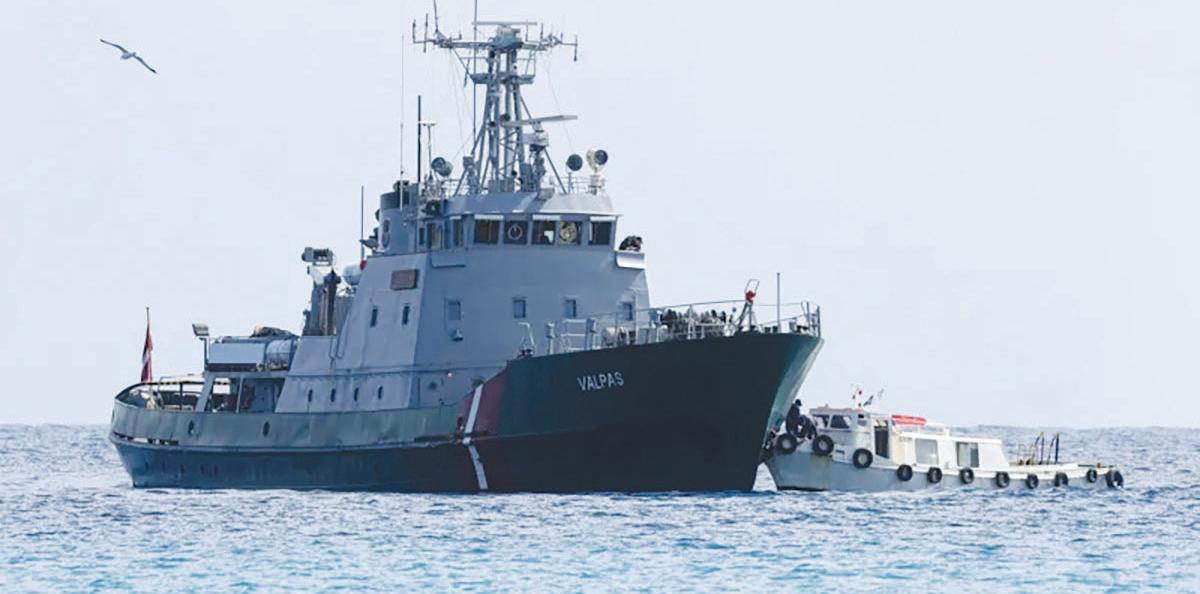
mained at sea for six days without water and food," the Greek coastguard said.
The boat was eventually stopped 53 nautical miles from Ierapetra, a city on Crete's southern coastline.
Greek authorities said two men from South Sudan, aged 19 and 22, had been arrested on suspicion of people trafficking.
They are now under investigation for "illegal entry into the country" and "negligent homicide".
The coastguard said that 21 of the survivors were from Bangladesh, four were from South Sudan and another was from Chad.
But the journey can be perilous, especially in bad weather, while people smugglers often overcrowd boats without adequate supplies or lifejackets.
At least 103 people were considered dead or missing in the eastern Mediterranean in 2025, UNHCR figures show.
In December, 17 migrants were found dead inside a boat which had been taking on water and had partially submerged near the Cretan coast. (BBC News)
At least 41,696 arrived in Greece by sea in 2025, according to the UN's refugee agency UNHCR. More than 4000 have so far arrived this year.
















ARIES
(March 21April 19)




TAURUS (April 20May 20)

GEMINI (MAY 28June 20)

CANCER
(June 21July 22)


LEO (July 23Aug. 22)




VIRGO (Aug. 23Sept. 22)

LIBRA (Sept. 23Oct. 23)

SCORPIO (Oct. 24Nov. 22)

SAGITTARIUS

(Nov. 23Dec. 21)



Plan a playday with someone you love to be around. Love, peace of mind, and a chance to relax and rejuvenate will give you the strength to posture yourself for the upcoming week. Let your happy face and your ability to make others smile lead the way, and something good will transpire. Make romance a priority.
A physical reaction to a shift taking place will require restraint. Slow down, consider the outcome before you launch your response. Patience and thought will determine how you manage to get the highest return. Letting spontaneity take over will result in mixed emotions and a shift in how someone feels about you. Choose to nurture, not test love. Fix what’s dragging you down. Work alone, spend time and energy on fixing what clouds your vision and stands between you and your aspirations. Simplify and prioritize your actions and words, and you’ll regain focus and the ability to use your strengths and connections to target what’s inviting and in your best interests. Romance is favored.
If you want others to respond favorably, practice what you preach. Dedicate more time to building a solid foundation and adapting what you have and know to fit your changing lifestyle. Keep your emotions hidden and let your intellectual outpouring be the deciding factor of how others respond and support you. Choose self-improvement over criticizing others.
Design your routine to meet your demands. Take responsibility, gather information that helps coordinate your time and effort, allowing you to establish the best results. Look at every angle and use your wisdom and intelligence to guide others in a positive direction. Your input will encourage lucrative opportunities. Romance is in the stars, and a commitment looks promising.
Share your feelings, intentions, and emotions openly, and you’ll eliminate any chance of being misinterpreted or perpetrating events that can have a negative influence on your reputation or position. Exhibit kind gestures along with honesty and integrity, and you’ll mastermind your way into the hearts of those you encounter throughout your day. Romance is favored.
Before implementing a personal change, do your homework. Refuse to let your emotions influence your choices or come between you and someone you care about. A give-and-take attitude in search of equality will help you maintain the status quo and solidify the best path forward. You’ll discover a unique outlet for your skills, attributes, and expertise.
A new venue will stimulate your senses and give you plenty to digest. Travel, educational pursuits, and meeting new people will spill over into how and where you reside. Hosting an event or using your personal space to build something new and exciting will encourage strong ties to someone who shares your interests. Romance is on the rise.
Live in the moment, have fun, and something magical will transpire. Love and personal growth are on the rise and will help you adjust to a changing pattern unfolding around you. Less talk and more action will help you evolve into the person you aspire to be. A positive change at home will change your perspective regarding commitment.

(Jan. 20Feb. 19) (Dec. 22Jan. 19)
Listen to suggestions, and opportunities will follow. A change to how you earn or use your money will turn into a profit. Protect yourself and your good fortune from those eager to take advantage of you. Put your ego aside and posture yourself for success. A change of plans will introduce you to someone or something of interest.
AQUARIUS


PISCES
(Feb. 20Mar. 20)

Apply pressure where it counts. You can turn something you enjoy doing into a new beginning. The people you encounter and the way you market or promote what you can do will have an impact on your schedule and your earning potential. Make strategic moves and plans that will support being able to follow your heart.
Explore the possibilities. Accept invitations that can help you make new acquaintances and try your hand at developing new skills, a healthier lifestyle, or discover a niche you didn’t know existed. Step outside your comfort zone and you’ll discover what you can do to support yourself and to build a better infrastructure. Self-improvement and personal growth are favored.





After Jacob Duffy made his best Josh Hazlewood impersonation on Indian Premier League (IPL) debut, Devdutt Padikkal, who had replaced him as the Impact Sub, took centre stage as Royal Challengers Bengaluru (RCB) kicked off their title defence with a drubbing of Sunrisers Hyderabad (SRH) at the Chinnaswamy Stadium.
Duffy bowled a nerveless spell, taking the new ball and delivering four overs on the trot to come away with 4-0-22-3, including the wickets of Abhishek Sharma and Travis Head. Duffy then put his feet up in his dressing room while Padikkal ripped the heart out of SRH's attack with a high-intent 61 off 26 balls. Virat Kohli did his thing and knocked off a 50 of his own as RCB mowed down 202 with six wickets and 26 balls to spare.
Ishan Kishan had marked his IPL captaincy debut with 80 off 38 balls, but Duffy and Padikkal combined to put that in the shade.
On the opening day of the very first season of the IPL, in 2008, a certain Brendon
McCullum from the south of New Zealand set the Chinnaswamy alight. On the day the IPL turned 19, another player from the south of New Zealand caused a stir at the Chinnaswamy.
After sussing out the conditions early – the new ball wasn't swinging for long – Duffy kept hitting a hard length and kept attacking the stumps to discomfit SRH's heavy-hitters. Abhishek, Head and Nitish Kumar Reddy were out, failing to control their pull shots off that length. During those early exchanges, some balls also stopped on batters, and Duffy used that to his advantage.
When Rajat Patidar said "Jacob" was in RCB's bowl-first XI at the toss, many would have assumed him to be Jacob Bethell, who was coming into the IPL on the back of a splendid century against India in the T20 World Cup semi-final. Instead, it was Duffy who got the nod and made it a debut to remember.
Kishan countered Duffy's strikes, racing away to a 27-ball 50. In the recent past, IPL captaincy has forced some India batters to dial down their aggression, but Kishan continued to bat with the freedom that was central to India winning the T20 World Cup earlier this month.
When the ball was doing a bit early doors, he started with a classical cover-driven four off Bhuvneshwar Kumar in the powerplay and then hit T20 mode when he lined up Abhinandan Singh, the other RCB debutant, for 30 off 13 balls. When RCB went to spin in the form of Krunal Pandya and Suyash Sharma, Kishan lined them up as well.
It felt like RCB would need something special to stop Kishan, and that something special came via a one-handed screamer
River’s View Football Club (FC) and Potaro Strikers have booked their places in the final of the Bartica Easter Regatta 2026 knockout tournament following semi-final victories on Friday night at the Bartica Community Centre Ground.
Playing under wet conditions, River’s View overcame Lazio FC 3-1 in the opening semi-final to secure their spot in Tuesday’s decider. McQuain Smith handed River’s View an early advantage with a fifth-minute strike, but Lazio responded in the 12th minute through Mario Perreira to level proceedings. River’s View regained control just before the halftime whistle when Marco Walcott found the back of the net in the 43rd minute. They maintained their momentum in the second half,


from Phil Salt near the point boundary at the end of the 16th over.
Aniket Verma then produced a knock that was just as electric as Kishan's. He faced 18 balls and sent seven of those disappearing to the boundary. Aniket wasn't just about power. When Bhuvneshwar floated a slower, shorter knuckle ball, Aniket held his shape for long enough and ramped it over the keeper. After clearing the fence four times, he holed out in the penultimate over of the innings while attempting his fifth six.
Jaydev Unadkat struck in his first over when he removed Salt for eight, but Padikkal and Kohli then got together and turned the chase into a cakewalk. By the time their partnership ended at 101 off 45 balls, RCB's asking rate had dropped to eight.
Padikkal, who was picked ahead of RCB's new recruit Venkatesh Iyer, dashed out the blocks, hitting three fours and three
sixes off his first 11 balls. He carried on to bring up his fastest IPL 50, off 21 balls.
After the match, Kohli said that he had originally planned to attack SRH's bowlers, but after watching Padikkal middle almost everything, he decided to sit back and anchor the chase. Kohli got to his own 50 off 33 balls and then rushed RCB home with a sequence of six, four, four, four off Harshal Patel in 15.4 overs – the quickest any team has successfully chased a target of 200-plus runs. RCB left SRH's six-man attack, nursing economy rates ranging from 9.5 to 17.5. No Hazlewood? No problem for RCB. No Cummins? Plenty of problems already for SRH.
Summarised scores: Royal Challengers Bengaluru 203 for 4 (Kohli 69*, Padikkal 61, Payne 2-3). 5) beat Sunrisers Hyderabad 201 for 9 (Kishan 80, Aniket 43, Duffy 3-22, and Shepherd 3-54) by six wickets. (ESPNcricinfo)
The Massy Under-18 Schools’ Football Tournament has been temporarily halted after persistent rainfall forced the postponement of this weekend’s Round Two fixtures, which were scheduled to be played at the Queen’s College ground.
Organisers, the Petra Organisation, confirmed the decision on Saturday morning, citing unplayable conditions following several days
of heavy rain. The postponement interrupts what has been an increasingly competitive tournament, with teams from across the country vying for advancement to the next stage.
According to an official statement, efforts are already underway to reschedule the affected matches.
The Petra Organisation indicated that the fixtures are tentatively set to be played on Wednesday, April 1 and
Thursday, April 2, pending final confirmation.
The release noted that a definitive update will be provided on Monday, March 30, once conditions are reassessed and logistical arrangements are finalised.
The delay comes at a crucial stage of the competition, with Round Two expected to play a key role in determining which teams progress further in the tournament.
with Nicholas Collison sealing the result in the 69th minute to complete a composed performance. In the second semi-final, Potaro Strikers defeated Beacon FC 2–0 in a disciplined outing. After a scoreless first half, Daniel Gardner emerged as the difference-maker, scoring twice in quick succession in the 53rd and 61st minutes to guide his side into the final.
The tournament, played in a Super Eight knockout format, began earlier in the week at the same venue. On Wednesday night, River’s View advanced with a win over Mil Ballers, while Lazio got the better of Agatash United.
Thursday’s fixtures saw Beacon defeat Rising Stars and Potaro Strikers overcome Wolves United to complete the semi-final line-up. The final is set for


Defending Cricket
West Indies (CWI)
Regional Four-Day champions, the Guyana Harpy Eagles were put through their paces recently as they wrapped up a series of intense trial matches at the Everest Cricket Club Ground, with skipper Tevin Imlach reflecting on a challenging but insightful exercise ahead of the 2026 regional season.
With the 2026 edition of the CWI Regional FourDay Tournament set to bowl off on April 12 in a short-
io.”
However, the conditions proved sterner than anticipated. According to Imlach, the pitch at Everest offered more assistance to the bowlers than expected, making life difficult for the batsmen.
ened format featuring fewer teams, Imlach said the practice games were designed to reacclimatise players to the demands of red-ball cricket.
“The objective for those games was really to give the guys an opportunity to test their skills,” Imlach explained. “Because of the weather in Guyana, preparation can be challenging, and most of the players have been involved in white-ball cricket – T20s and 40-over matches. So it was important to put them back into a challenging red-ball scenar-

The National Archery Federation of Guyana is hosting its highly anticipated national games today, reaffirming its mandate to promote the sport locally and develop world-
“Unfortunately, the batters didn’t necessarily live up to expectations, and the pitch was a lot more challenging than we wanted for a trial or practice game,” he admitted. “It didn’t fully give us what we wanted in terms of assessing the batting, but the guys would have taken something from it.”
Despite the struggles with the bat – which affected both senior and junior players – the trials served a broader developmental purpose. The sessions provided an opportunity for emerging talents to stake their claim and demonstrate their growth over the past few
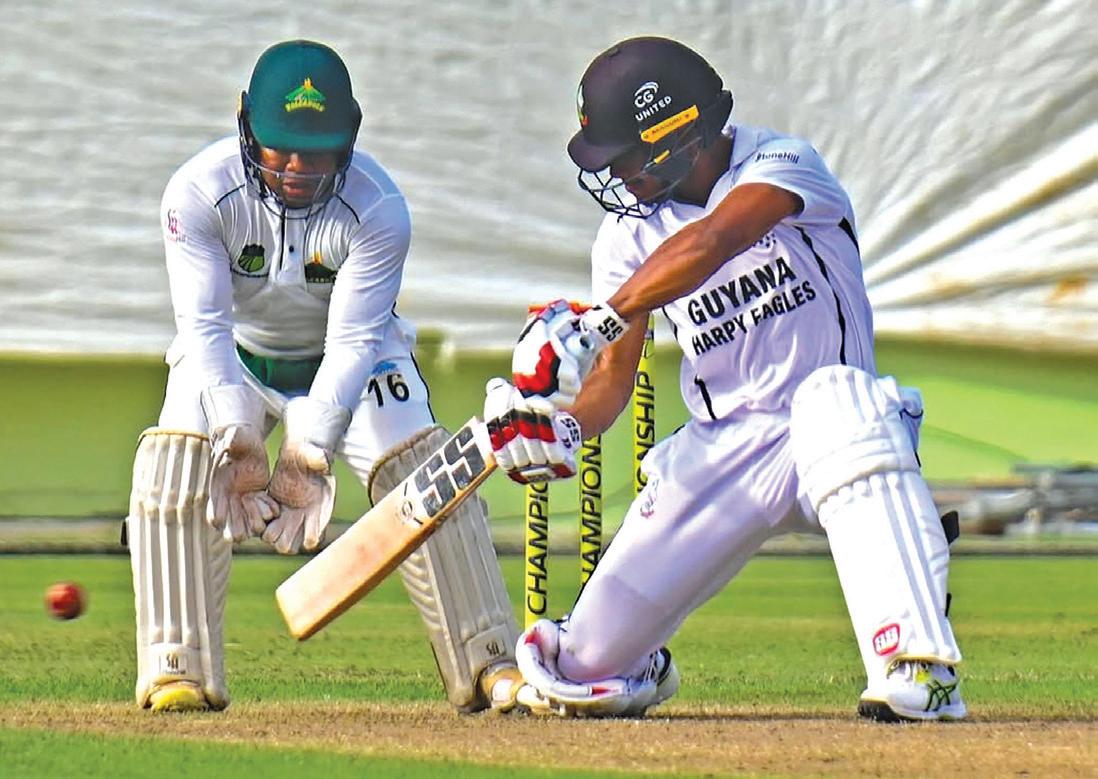
seasons.
“There were definitely some good young players on show, some that I’ve never seen before,” Imlach noted. “There’s clear talent and potential there. I won’t single out names, but a few of the young fast bowlers were very impressive, and some of the young batters showed glimpses as well.”
The skipper emphasised that while immediate performances may not have met
expectations, the long-term outlook for Guyana’s cricket remains promising.
“It’s about moulding that talent and keeping them around long enough to develop into what’s required at this level,” he said. “There’s definitely a bright future for Guyana cricket.”
As the Harpy Eagles prepare to defend their title in a revamped Regional FourDay Tournament, the focus will now shift to fine-tuning
class athletes capable of competing on the international stage.
The event is being staged at the Sophia Exhibition Centre from 09:00h and has drawn archers from across the country. Among the clubs participating is Golden League Archery, whose members are expected to feature prominently throughout the competition.
President of Golden League Archery, Courtlee Rodrigues, emphasised the extensive preparation undertaken by the club in collaboration with the recently appointed national coach, Coach Lula, along with supporting coaches Nolan Grey and Jeewanram Persaud.

“Our team is working along with the national coach to prepare our athletes. We ensure they are ready by doing drills and mental and physical training as well as scoring and form training. Strong basics make strong statements. And we first master the basics at Golden League Archery. Then, we make statements,” Rodrigues said.
He noted that the national games are among the most significant events on the local archery calendar, as they serve as a pathway for athletes to advance to
regional and international competitions.
“These events showcase national talent drawn from all corners of the country and ensure the matriculation of archers into regional games, world games and many other internationally recognised competitions. Archery Guyana’s national games are Guyanese archers’ link to the Olympics,” he stated.
Rodrigues added that while medal prospects are strong within the club, the primary focus remains on character development and teamwork.
“I expect our athletes to have a great time and learn from the experience. Medals are nice, but at Golden League Archery we focus on character above all else. We are stronger together, and that only works if the ‘together’ part is taken seriously,” he said.
The competition will see a blend of seasoned medal contenders and firsttime indoor national participants, promising a day of high-level performances, sportsmanship, and spirited camaraderie as Guyana’s top archers take aim at national glory.
Rain delays Exchange Cup 2026 start; new kick-off set for Monday at Providence
The start of the Exchange Cup 2026 has been delayed after heavy rainfall forced the postponement of its opening day, which was scheduled for Saturday at the Guyana Defence Force (GDF) Ground. Coordinator Vurlon Mills confirmed that the tournament will now begin on Monday (March 30) at the Guyana Football Federation (GFF) National Training Centre, with the revised start time to be announced.
The youth tournament, organised by the Vurlon Mills Football Academy Inc
(VMFA), was initially set to run from March 29 to April 1 and is expected to feature a packed schedule of 62 matches across four days. Despite the weather setback, organisers are expected to proceed with the condensed format once play gets underway.
The Exchange Cup 2026 has been positioned as a key developmental initiative aimed at bridging the competitive gap between local youth football and the wider Caribbean. The competition will bring together elite youth academies and clubs from Guyana, Trinidad
and Tobago, Antigua and Barbuda, and St Lucia.
According to the organisers, the tournament is designed to expose local players to varying styles of play and higher levels of competition while fostering cultural exchange. The academy noted that such opportunities are critical in helping young footballers understand the demands of regional football and improve their overall development.
The initiative also forms part of a broader long-term strategy to strengthen football pathways in Guyana and the Caribbean.
combinations and sharpening skills in the weeks leading up to the April 12 start. With a blend of seasoned campaigners and emerging prospects, Guyana will be aiming to adapt quickly to the new-look competition and once again assert their dominance in West Indian first-class cricket.


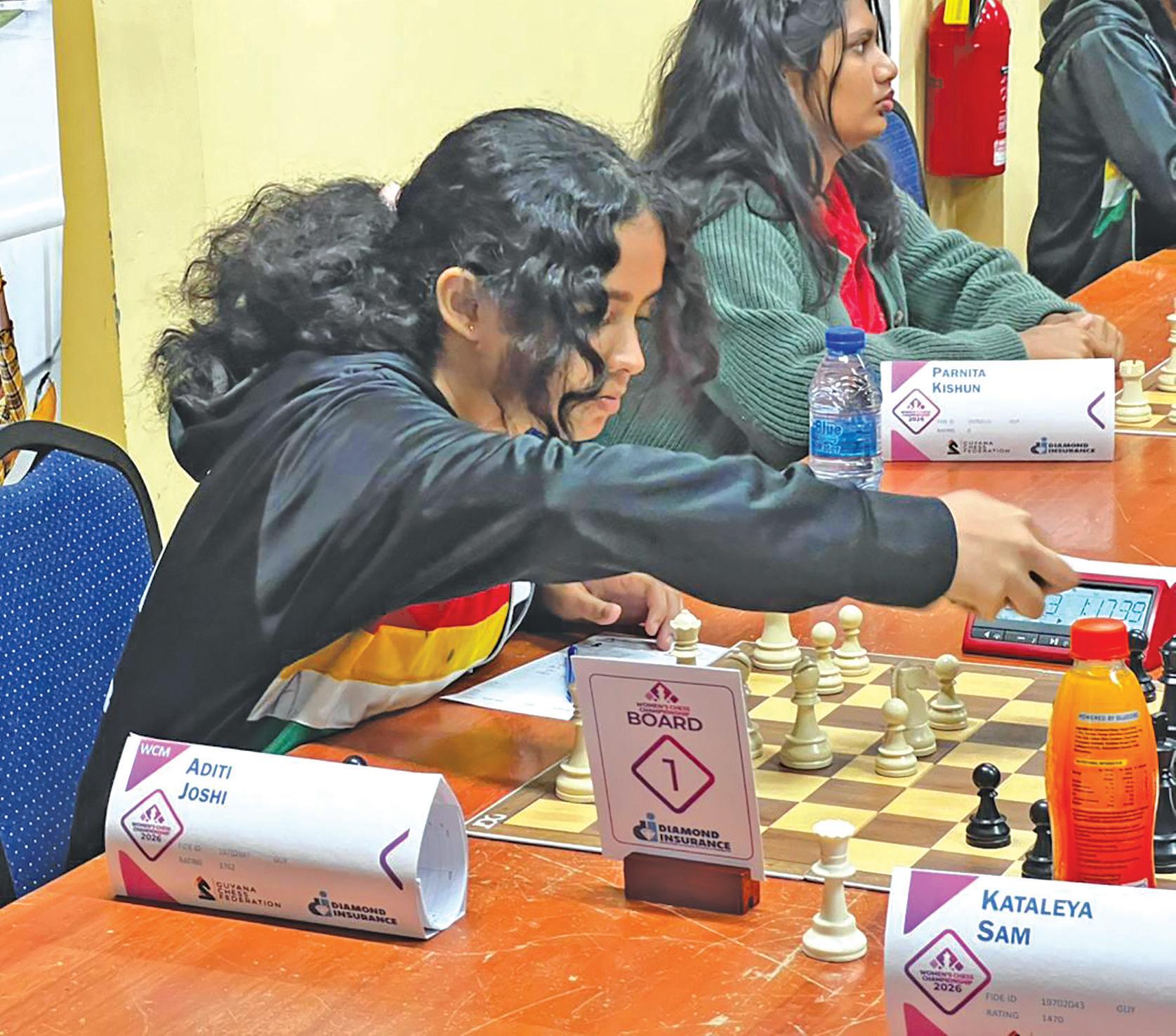
Sixteen-year-old Candidate Master (CM) Sachin Pitamber and Woman Candidate Master (WCM) Aditi Narayan Joshi were crowned national champions when the Guyana National Chess Championships concluded on Saturday following the ninth and final round at the National Racquet Centre, Woolford Avenue, where players turned out despite heavy morning showers to complete their matches.
Pitamber secured the Open title with 7.5 points to dethrone defending champion CM Taffin Khan, while Joshi retained the Women’s title with a similar tally to claim back-to-back championships. The tournament, played over the last three weekends, was sponsored by Jumbo Jet in the Open division and Diamond Insurance in the women’s category.
Pitamber’s title-winning run was built on a steady and disciplined campaign across the nine rounds. He opened with a key victory over Kyle Couchman and followed up with a draw against Keron Sandiford before registering successive wins against Zhang Alexander and Ronuel
Greenidge. His tournament gained further momentum with a critical round six victory over FM Anthony Drayton, one of the pre-tournament favourites, which placed him firmly in control of the standings.
Although he drew with Rolex Alexander in round eight, Pitamber entered the final round in a strong position and confirmed the title with a win over Jaden Taylor in round nine. His consistent scoring across the tournament ultimately proved decisive as he finished clear at the top with 7.5 points.
Behind him, Couchman secured second place on seven points after a strong showing that included a crucial round seven victory over Khan. FM Anthony Drayton also ended on seven points but placed third on tie-breaks. Khan, who entered as the top seed and defending champion, had to settle for fourth on 6.5 points after being held to a draw by Sandiford in the final round, confirming his loss of the title.
In the Women’s Championship, 16-year-old Joshi once again demonstrated her class, producing a dominant performance from the opening round. She began with victories over Parnita Kishun and Italy Tonne-Chung before continuing
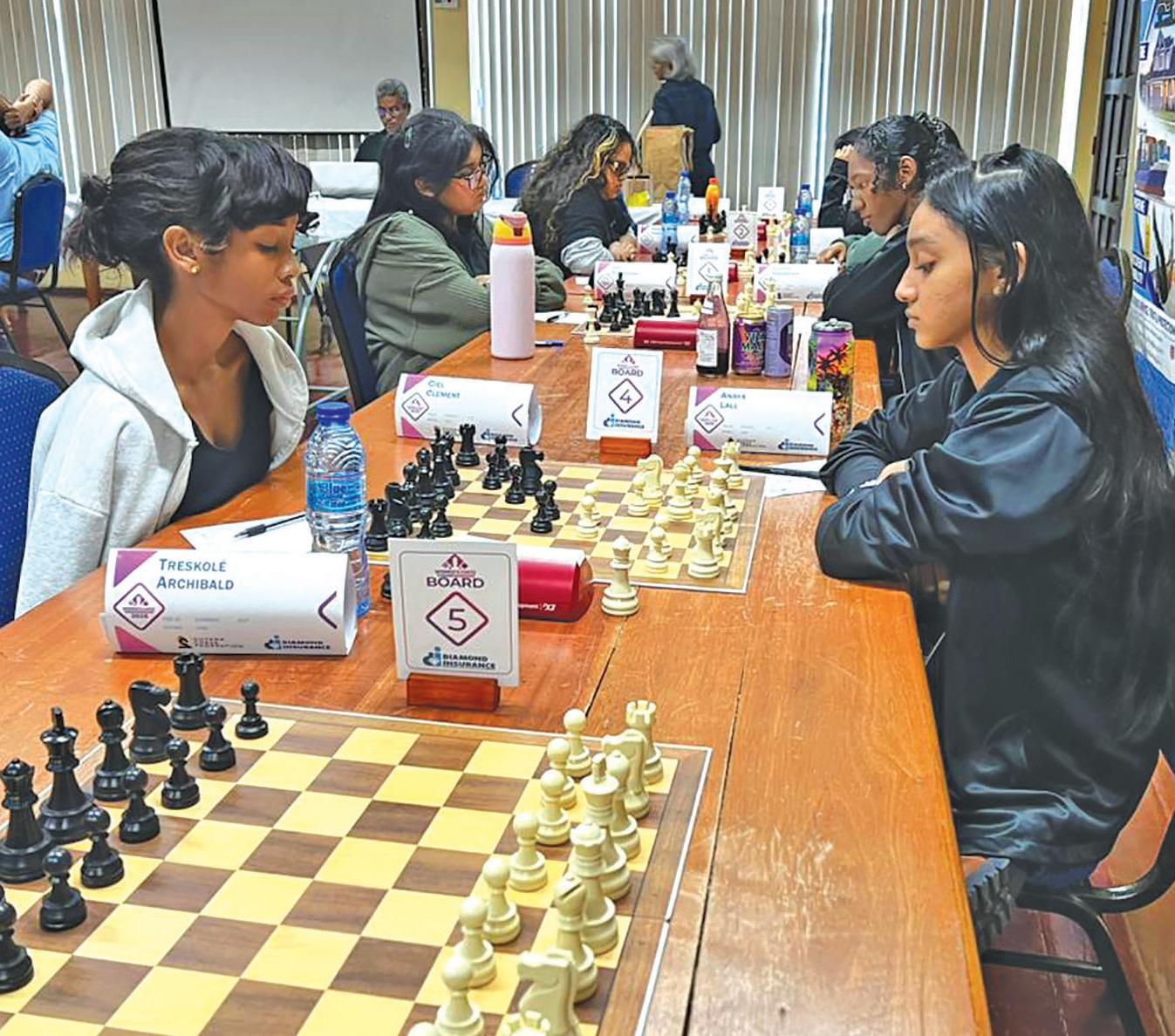
her winning run against Anaya Lall and Treskole Archibald. She maintained control through the middle rounds with additional wins over Sana Sreebalakumar and Ciel Clement, establishing a clear lead in the standings.
Joshi’s approach in the latter stages was measured, as she secured draws against fellow title contenders WCM Jessica Callender and WCM Sasha Shariff, ensuring she remained ahead of the chasing pack. In the final round, she played to a draw against Kataleya Sam, a result that confirmed her title defence with 7.5 points.
Shariff finished second with seven points after a consistent campaign, including a final round win over Kishun, while former national champion Callender placed third on 6.5 points following her victory against Tonne-Chung in the last round. Other notable results in the final round saw Lall and Clement drawing their encounter, while Sreebalakumar was awarded a win by default against Archibald.
The final round in the open division also featured Couchman defeating Zhang Alexander, Drayton overcoming Leslie
Campbell, and Greenidge registering a win against Rolex Alexander, results which ultimately shaped the final podium positions.
At the conclusion of nine rounds, the final standings were as follows:
Open Championship (Top 10):
1. CM Sachin Pitamber – 7.5 pts
2. Kyle Couchman – 7 pts
3. FM Anthony Drayton – 7 pts
4. CM Taffin Khan – 6.5 pts
5. Keron Sandiford – 5.5 pts
6. Rolex Alexander – 3.5 pts
7. Jaden
Chris Dehring, Chief Executive Officer (CEO) of Cricket West Indies (CWI), has unveiled an ambitious plan to position the Caribbean as a hemispheric hub for cricket, announcing the development of a state-of-the-art high-performance centre in Antigua and Barbuda.
Speaking at the CWI First Quarterly Press Conference of 2026 on Friday, Dehring outlined a bold vision to tap into the rapidly expanding global sports economy, which he valued at US$2.3 trillion.
“The global sports industry is today sitting at 2.3 trillion US dollars,” Dehring said. “The fastest segment – or should I say the larg-
est segment – of that growing global sports industry is sport tourism at 700 billion.”
He emphasised that sport tourism extends far beyond travelling fans attending matches. Instead, it increasingly includes investment in elite training infrastructure – high-performance centres and academies – that attract international teams for pre-season camps and specialised preparation.
“What really has come about is an asset class –things like high-performance centres and academies,” Dehring explained. “Regions such as the UAE have dominated the world of cricket, where touring teams
are scheduling pre-season camps in these places.”
However, he noted that geopolitical instability in parts of the Middle East has created hesitation among some touring teams, opening what he described as a strategic opportunity for the Caribbean.
“Unfortunately for our brothers and sisters in the UAE, they now have a war taking place and reluctance there. Unfortunately for them, it is actually an opportunity for the Caribbean,” he said.
In partnership with the Government of Antigua and Barbuda, CWI plans to construct what Dehring called the first “true high-tech, state-of-the-art” cricket
high-performance centre in the region. The facility will be built on a 20-acre property in Antigua that CWI now fully controls.
“We have a 20-acre property that we have gotten 100 per cent control of this year, and we’re going to make that happen starting this year,” Dehring announced. “Our plans are very advanced. Funding is very advanced.”
The project aims to transform the Caribbean into a premier destination for international cricket teams seeking worldclass training facilities in the Western Hemisphere.
Beyond serving regional players, the centre is expected to attract overseas teams for pre-season preparation,
rehabilitation programmes, coaching education, and youth development initiatives.
By positioning cricket infrastructure as a driver of sport tourism, CWI is seeking to diversify revenue streams beyond matchday earnings and broadcasting rights.




Australia powered to a 103run win over West Indies, despite Stafanie Taylor's century.
Opener Phoebe Litchfield topscored with 77, and five other teammates reached the 40s as Australia made 341 in St Kitts. It was a record women's one-day team total in the Caribbean.
After sweeping the three-game T20I series, the tourists then restricted the West Indies to 238 for eight from their 50 overs in the first of three one-dayers.
With the result beyond doubt, the interest late in the game was whether Taylor could score her first one-day tonne against Australia.
She made 105 not out from 129 balls, bringing up the century with a boundary off Georgia Wareham in the 47th over. Her knock, featuring 10 fours and a six, was Taylor's eighth one-day international century and her first since 2021.
But her nervous 90s nearly ended in disaster – she went for a quick single on 91, and Taylor would have been run out had Wareham's throw at the stumps been accurate.
Despite Taylor's century, Wareham was named player of the match for her 42 from 21 balls, batting at No. 7, with five fours and two sixes.
Wareham also took one for 39 from 10 overs, while Kim Garth removed the openers on the way to 3 for 37 from her 10.
At 166 for one in the 24th over, Australia might have had ambitions of an even greater total, but they lost three for 20 in six overs, including Litchfield, who was caught at long-off. Nicola Carey and captain Sophie Molineux, who again played as a specialist batter and went in at No. 4, rebuilt the innings with a stand of 91, although Molineux struggled for fluency.
Carey fell one run short of a maiden One Day International (ODI) half-century when she missed a reverse sweep against Afy Fletcher.
It was a recast Australian oneday team, with five changes from the XI that beat India at the start of this month in Hobart.
Beth Mooney's late withdrawal with quad tightness meant Tahlia Wilson was brought in for her ODI debut. Wilson was impressed with the gloves, with the highlight being her sharp stumping of Aaliyah Alleyne off Garth.
Summarised scores: Australia 341 (Litchfield 77, Carey 49, Molineux 49, Perry 44, Fletcher 3–83) beat West Indies 238 for eight (Taylor 105*, Garth 3-37) by 103 runs. (ESPNcricinfo)