Young Guyanese director brings nostalgic “small days” to big screen
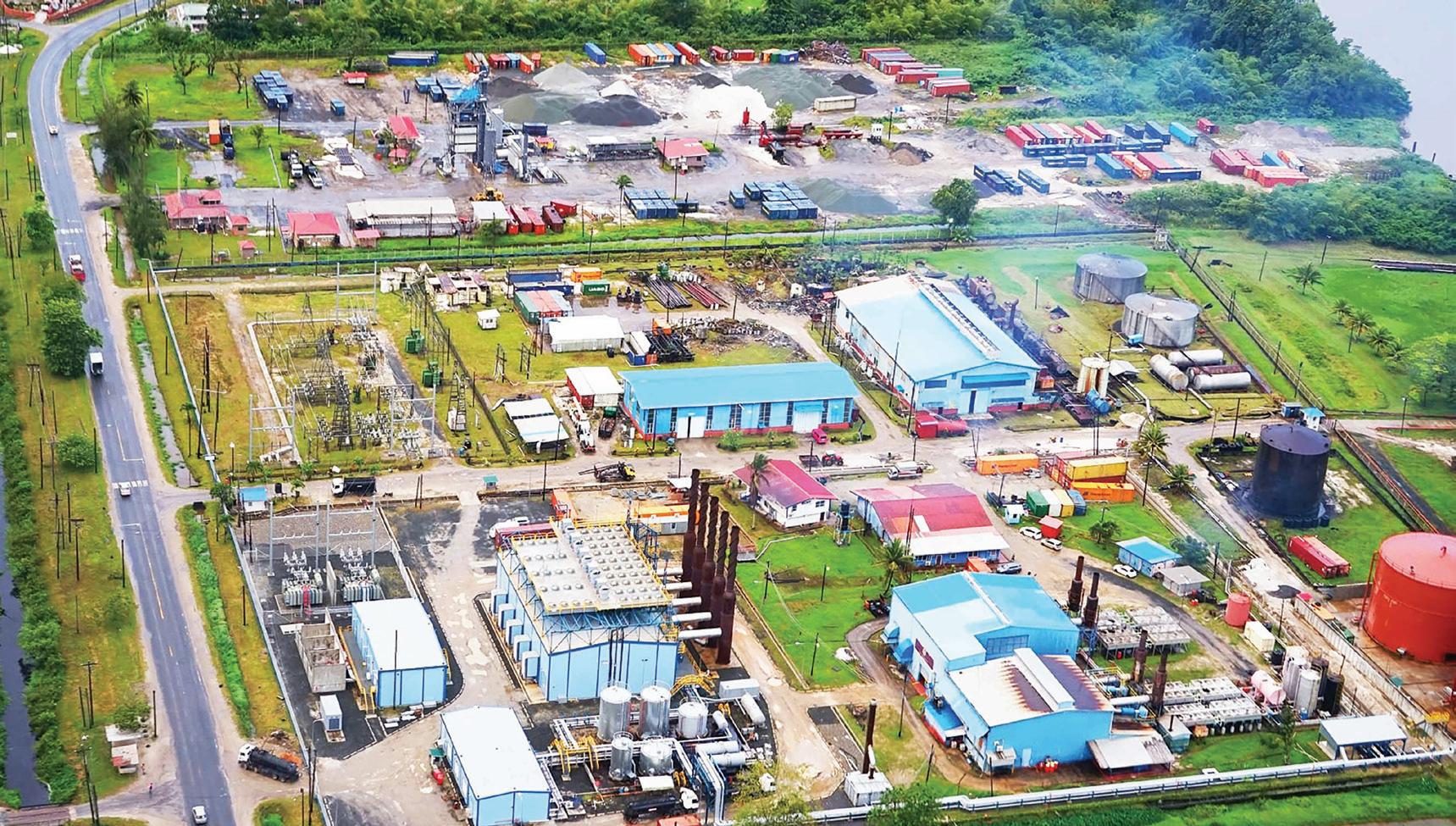
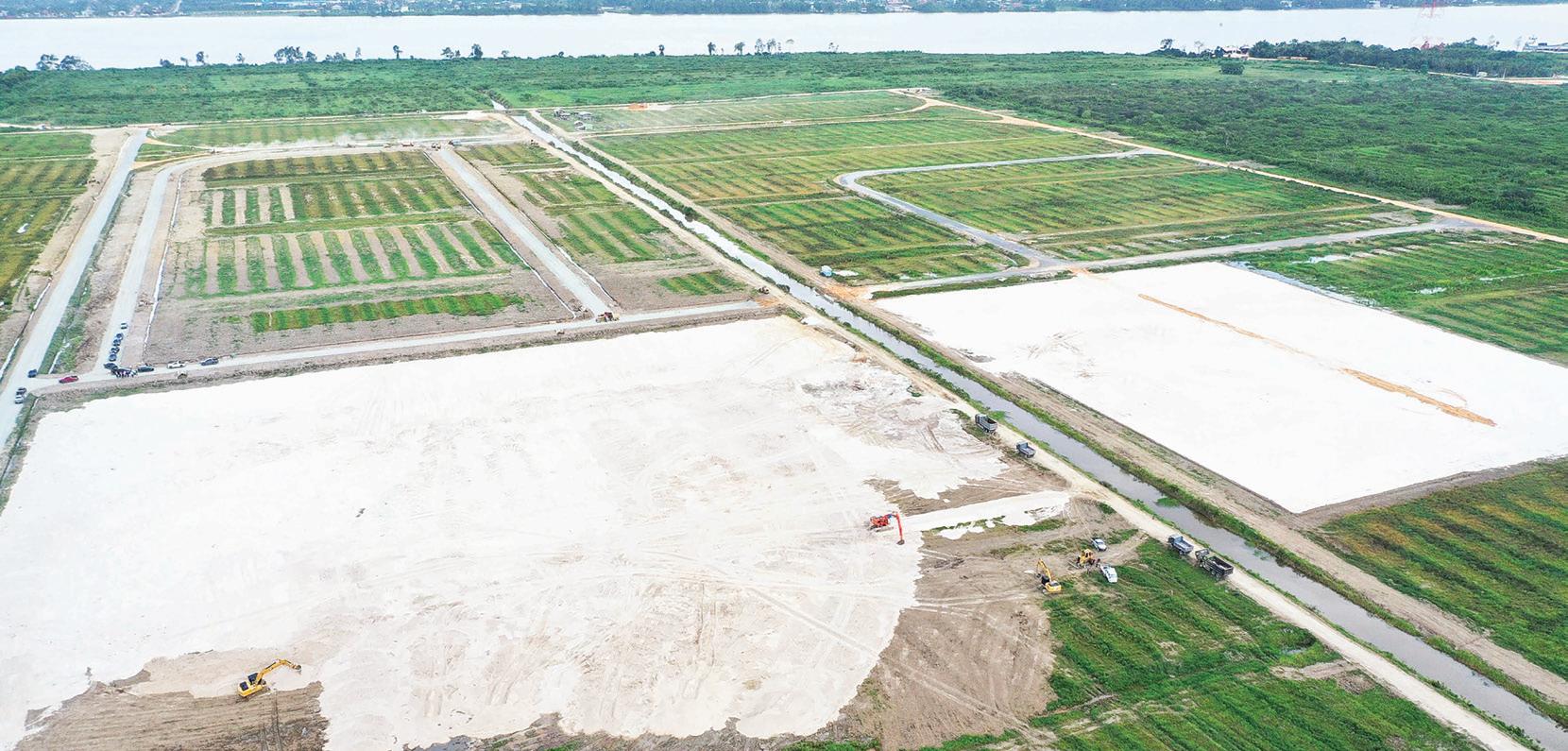
Prospective homeowners to identify house lots at Wales Phase Three by end of May – Min Croal
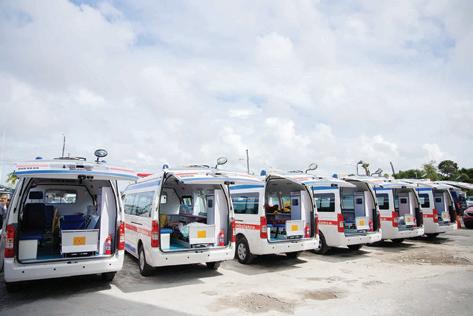
MoH hands over 6 ambulances to support regional hospitals
UMAMI products hit T&T market through deal with Massy
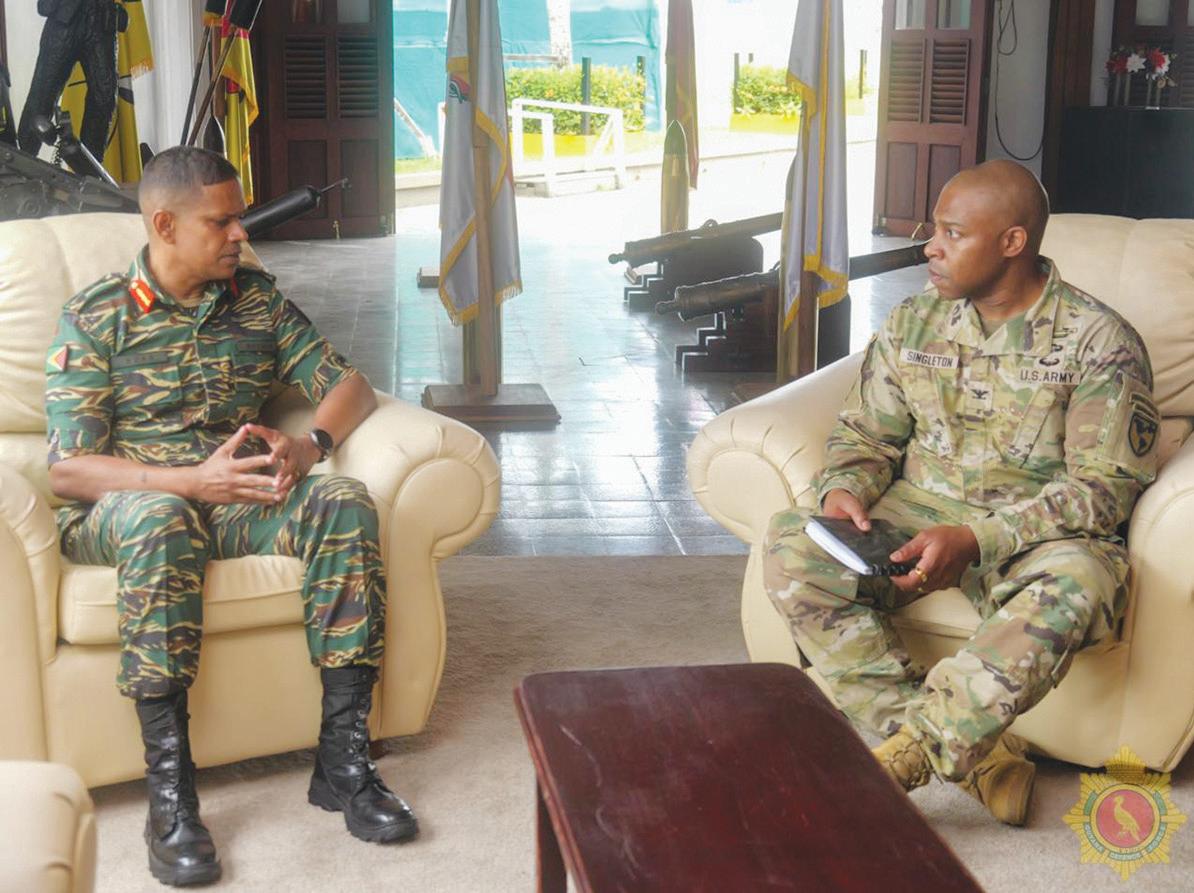
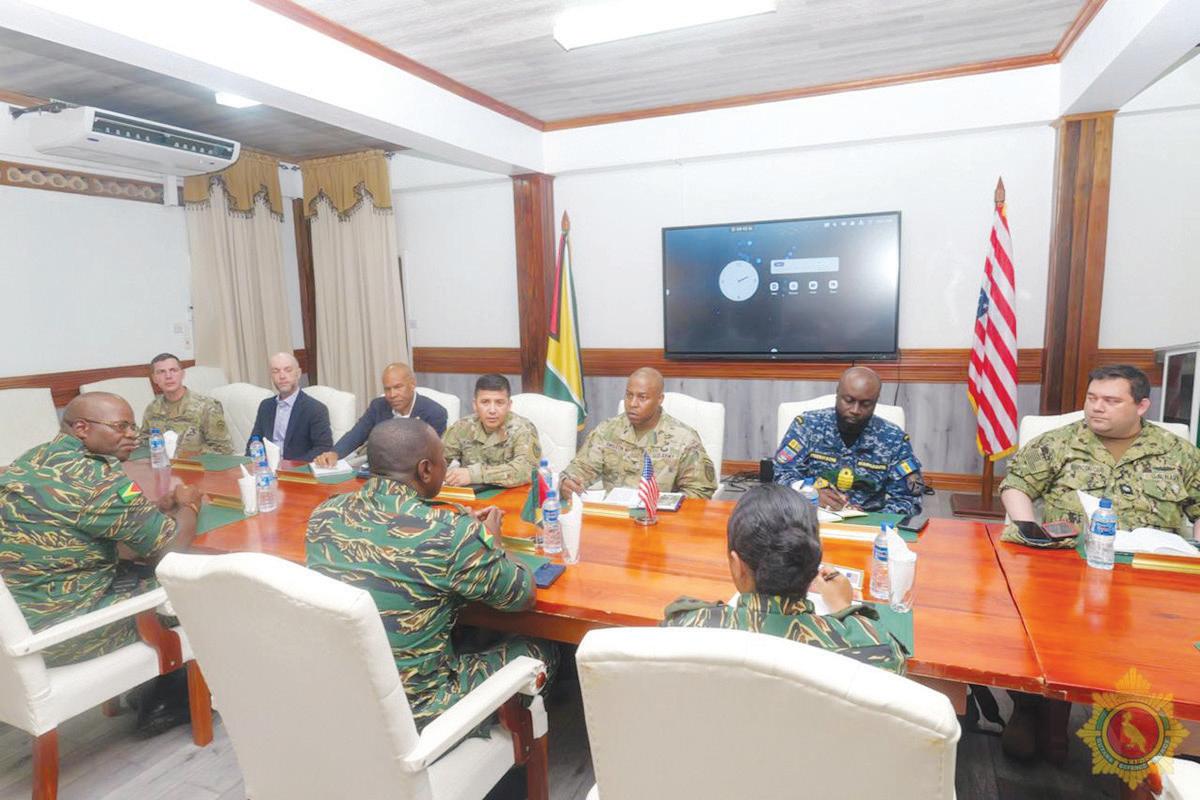
GDF, int’l military partners commit to strengthening ties through training, collaboration
WEATHER TODAY
Thundery showers are expected during the day and at night. Temperatures are expected to range between 23 degrees Celsius and 29 degrees Celsius.
Winds: North-Easterly to East North-Easterly between 3.12 metres and 6.25 metres.
High Tide: 14:29h reaching a maximum height of 2.29 metres.
Low Tide: 08:03h and 20:30h reaching minimum heights of 1.05 metres and 0.85 metres.
Guyana seeks to expand partnerships with IDB in energy, transport & diversification
The
Guyanese Government is looking to expand its partnership with IDB Invest – the private sector arm of the Inter-American Development Bank, eyeing support for investments in areas such as transport, energy infrastructure and diversification.
Finance Minister Dr Ashni Singh made these remarks on Saturday as the 2026 Annual Meetings of the Boards of Governors of the IDB and IDB Invest continued in Asunción, Paraguay.
Delivering remarks at the forum, Dr Singh lauded the expanding role of IDB Invest, following its capitalisation, in supporting the private sector in Guyana.
According to him, Guyana “...looks forward to increased engagement to support rapidly emerging investment opportunities.” These include areas such as transport and energy infrastructure, accelerating productive diversification and competitiveness, unlocking trade opportunities, and deepening regional integration.”
To this end, Singh encouraged the expanded use of instruments such as equity and local-currency financing to enhance the bankability and scale of projects for financing. He further noted that the IDB Lab’s continued focus on innovation, entrepreneurship, and scalable private-sector solutions is essential for economic diversification and long-term resilience.
Dr Singh pointed out that the annual meetings provide a valuable opportunity to review progress, address shared challenges, and reaffirm the development priorities of the Latin American and Caribbean (LAC) nations.
He further lauded the IDB Group for its achievements in 2025, highlighting the increased approvals and net financial flows from the IDB Group into Guyana, including a policy-based loan in the human services sector, supporting reforms that benefit some of the country’s most vulnerable populations.
“We underscore the importance of policy-based lending as a flexible and effective development instrument, which Guyana has successfully applied across many areas over the years, such as justice reform, competitiveness, financial sector strengthening, and human services. We also emphasise the importance of tailoring lending instruments to national circumstances, including greater use of country systems to strengthen ownership, efficiency, and sustainability,” Dr Singh added.
Nevertheless, he reaffirmed Guyana’s strong support for the IDB Group and
its reform agenda, noting that the completion of these reforms and the capitalisation of IDB Invest, as well as the replenishment of IDB Lab, will position the IDB Group as an even stronger and more responsive partner for the region.
Guyana currently serves as Chair of the Caribbean Constituency –The Bahamas, Barbados, Guyana, Jamaica, and Trinidad and Tobago – and during his presentation at the Second Plenary Session of the 2026 Annual Meetings on Saturday, Dr Singh submitted the Caribbean Statement for the record.
While commending the progress made by the bank and highlighting that in 2025 the institution moved decisively from reforms to implementation, the finance minister reiterated his calls for the regional financial institution to expand and “tailor its lending instruments to country context’ and for the bank to ‘recognise and use local systems”.
“The countries in the Caribbean region remain among the most vulnerable in the world to more frequent and extreme natural disasters, external shocks, and global economic volatility. Our access to resources and financing remains limited, while our fiscal space remains tight to support our development agendas, and for these reasons, we welcome a bigger and better bank with relevant and appropriate support for our countries. Even as our countries continue to demonstrate resilience, we require flexible financing tools, stronger private sector engagement, and targeted interventions to overcome structural constraints that hamper growth and support resilience,” Dr Singh explained.
He further contended that the decisions endorsed during Saturday’s session, whether as independent sovereign nations or collectively as a region, will no doubt determine whether countries
can turn their collective challenges into opportunities for further accelerating economic growth, increased regional trade, and making sufficient investment in climate-resilient infrastructure for the sustained development of the LAC region.
Minister Singh then pointed out that the convergence between the region’s development priorities and the IDB Group’s mandate continues to present ample opportunity for partnership. Against this backdrop, he reiterated that the IDBG remains a highly valued and the largest development partner for the Caribbean – a partnership that the region is committed to strengthening.
Turning his attention to disaster risk instruments, Dr Singh told the gathering that as a disaster-prone region, the Caribbean welcomes the bank’s new Disaster Risk Management Action Plan for 2026-2030, which emphasises prevention, preparedness, resilient recovery, and financial protection through innovative tools such as contingent credit facilities, catastrophe insurance, and climate-resilient financing instruments.
According to Dr Singh, these tools will be critical in helping Caribbean countries strengthen fiscal resilience and improve preparedness for future shocks.
Dr Singh is accompanied in Paraguay by the Executive Director in the Caribbean Office of the IDB, Navita Ramroop, as well as the Director of Projects, Bernard Lord, and Senior Economic and Financial Analyst, Ronette Hetsberger.
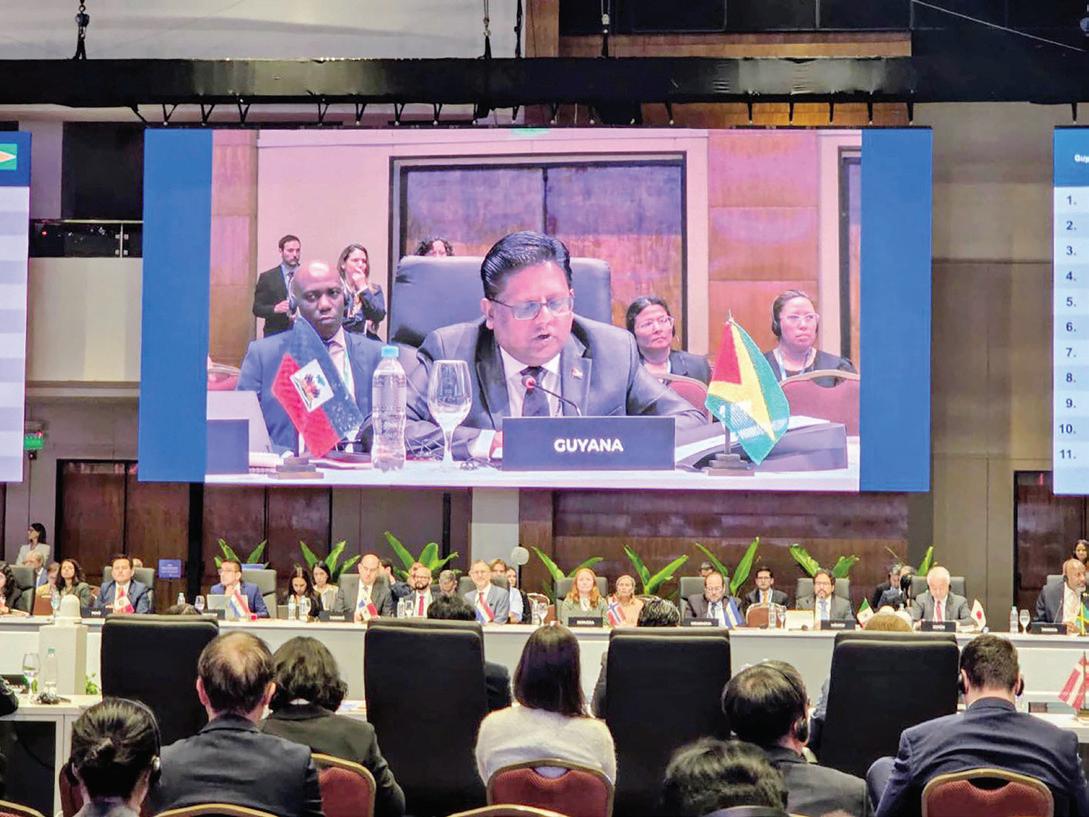
Senior Minister with Responsibility for Finance, Dr Ashni Singh, delivering remarks at the IDB Annual Meetings in Paraguay on Saturday
Over the last few decades, there has been much handwringing about the state of reading in our country. Things had gotten so bad, according to some, that we were witnessing its actual demise. One would have heard (since we presumably do not read) that we were not alone in this predicament: the developed countries had conducted reams of research to demonstrate the declining place reading occupies in the lives of citizens.
The usual suspects were identified – TV, video games, smartphones, and all the other gadgets that compete – and had evidently displaced books to occupy our spare time. It would seem we were following an inevitable trend.
But what was that trend? At its most fundamental level, reading was simply a revolution in communications that occurred several thousand years ago when mankind invented writing. Before that, we humans had been communicating via speech for thousands of years since we started walking on two feet. Writing and reading were not immediately, much less enthusiastically, embraced. We note Plato’s record (in writing!) of Socrates’ complaint 2500 years ago that writing would weaken memories and the power of reasoning and questioning. In acknowledgement of such critiques, the elements of the oral tradition – memorisation, rhetoric, and recital – were preserved over the millennia.
The invention of the printing press nearly 600 years ago further revolutionised communication by making books –rather than laboriously written manuscripts – much more easily available to everyone in society. This created its own storm of protests: would the great unwashed masses have the discipline to imbibe the processes of thinking to make use of the knowledge contained in the books? We invented schools and libraries – not to mention popularisers called “magazines” and “newspapers” – to accomplish that task. Reading became part and parcel of our tradition: books signified “civilisation”. It is useful to remember it was not always so.
But the increased efficiency of books to transmit information created its own inexorable impetus. Before long, we were plunged through the invention of the telegraph and the telephone in the 19th century into the present revolution in communications represented by radio, movies, TV, computers, the internet, etc. And we return to the question of the fate of reading in an era of instantaneous digital communications.
Our intent in outlining the changes in communication methodologies or technologies is to emphasise the inevitable nostalgia engendered when we move from one dominant form to another. The point we want to make is that we cannot remain stuck in the past: when it comes to human affairs, change is inevitable. In grappling with the technique of communication, we cannot lose sight of the intent of communication. Contrary to the popular aphorism, we cannot afford for the medium to become the message.
Human advances and success have been based on our ability to communicate knowledge gained by one generation to succeeding generations in ever-increasingly faster ways. This is salutary in view of the exponential growth in our knowledge base. Rather than decrying the reduced prevalence of reading and insisting like Socrates about retaining the oral tradition, we have to marry the old tradition of books and reading to the new vistas open to us. It is perhaps ironic that the newer modes of communication may revive the foundations of the older oral tradition. If the reading of books decreases, to cope successfully with the explosion of information in the modern world, as mediated by artificial intelligence (AI), we may have to review our take on memorisation.
Mid last year, the Ministry of Education launched the “New and Revised National Literacy Programmes”, which were supposed to be the most comprehensive and ambitious literacy initiative in the nation’s history to revive reading. Our educational system will have to become au fait with the potential of the new technologies and combine them with the benefits of reading.
After all, even the advice of ChatGPT has to be read. The secret is not to insist on rote memorisation of arcane facts but on the ability to reason with and manipulate those facts that are now available literally at our fingertips.
Under President Ali, Guyana achieved immense global acclaim
Dear Editor,
At both of his swearing-in ceremonies, in August 2020 and again in September 2025, President Dr Mohamed Irfaan Ali’s pledge to the nation to advance Guyana’s interests and make it a fully recognised country at the international level has come full circle when President Donald Trump invited and personally greeted him at the Shield of the Americas Summit in Doral, Miami, Florida, on March 7, 2026.
As seen in the pictures, President Dr Ali was one of two leaders from the larger CARICOM states to join a coalition of nations dedicated to promoting freedom, democracy, peace, security, and regional cooperation in the Caribbean and the Western Hemisphere.
According to President Trump, it was a shared commitment to dismantle the drug cartels and transnational criminal organisations and ensure peace and stability in the region.
President Trump respectfully thanked President Dr Ali for attending the summit and said he looked forward to working with him to strengthen economic, political, and security ties with Guyana in the future.
President Trump also praised the Guyanese Head of State for his superb and excellent leadership in the region, especially in the areas of reducing the region’s food imports, enhancing regional self-sufficiency, infrastructure development across the region, improved security against narco-trafficking, en-
ergy cooperation, and democratic governance.
As Guyana’s ninth executive President, His Excellency Dr Irfaan Ali is the fourth Head of State to formally meet with a President of the United States. Forbes Burnham, who was the first, met with President Lyndon Johnson at the White House on the July 26 1968. Twenty years later, President Desmond Hoyte met with President Ronald Reagan on September 13, 1988, and Dr Cheddi Jagan met with President Bill Clinton on August 30, 1993.
However, it is important to point out that President Dr Ali’s meeting with President Donald Trump marked a significant shift in relations with the United States, in that, unlike the other Heads of State, his visit was not categorised as an ad hoc meeting.
In fact, his meeting with Trump evolved into a more significant and consistent long-term strategic partnership aimed at reinforcing relations between Guyana and the United States, focusing primarily on regional peace and stability and reducing or ending the illegal trans-shipment of drugs to and from the region – issues President Dr Ali has pioneered since taking office.
His Excellency has been credited with significantly improving Guyana’s economic and political relationship with the United States, transforming it into a trusted and dependable partnership that is rooted in shared interests. Over the last five years, President Dr Ali has worked very closely with US mili-
tary personnel to upgrade and augment Guyana Defence Forces’ capability after several threats by Venezuela’s former President Nicolas Maduro to annex the oil-rich Essequibo region, which comprises two-thirds of Guyana’s territory.
However, the US and its allies, as well as Brazil and the CARICOM states, have reaffirmed their full support for Guyana’s sovereignty and for the Caribbean as a “Zone of Peace”, a resolution adopted in 2014 by the 33 states of the Community of Latin America and the Caribbean (CELAC) to promote regional integration, sovereignty, political dialogue, and non-intervention.
Guyanese at home and in the Diaspora are proud of President Ali, who during the last five years has cultivated a high level of diplomatic relations in the Caribbean, Latin America, and the international community of nations, including the United States. He has received praise from several world leaders, including the Secretary of the US State Department, Mr Marco Rubio, for his courageous and steadfast leadership in promoting regional peace and global stability.
Guyana’s Head of State has emerged as a world leader, significantly elevated Guyana’s international standing, and transformed it into a widely recognised global partner. Under his leadership, Guyana has achieved immense global acclaim.
Yours sincerely, Dr Asquith Rose
A regional strategic oil reserve should be catered to
Dear Editor, Guyoil’s decision to maintain current prices at the pump brings up the subject of strategic oil reserves. Globally, many key oil producers have set up reserves that allow them to cater to shortfalls in supply that would cause affordability issues within their economies.
As a new oil-producing nation that is also vulnerable to the oil shocks that occur, such as the current one that has sent oil prices soaring, we
must also consider the need for a strategic oil reserve that can buffer our economy and the region from future oil supply issues.
To achieve this, our country will need to partner with other regional oil and gas producers to incorporate forecasted local and regional demand and supply, as well as supply chain risks, to carry out the cost-benefit analysis of a regional storage facility that can meet the requirements of a strategic oil reserve.
It is an analysis worth doing to achieve the implementation of a strategic oil reserve that caters to both local demand and regional demand at the CARICOM level. A joint plan developed and implemented by the oil-producing countries in our region will help provide the regional economic stability needed for our continued prosperity over the long term.
Best regards, Jamil Changlee
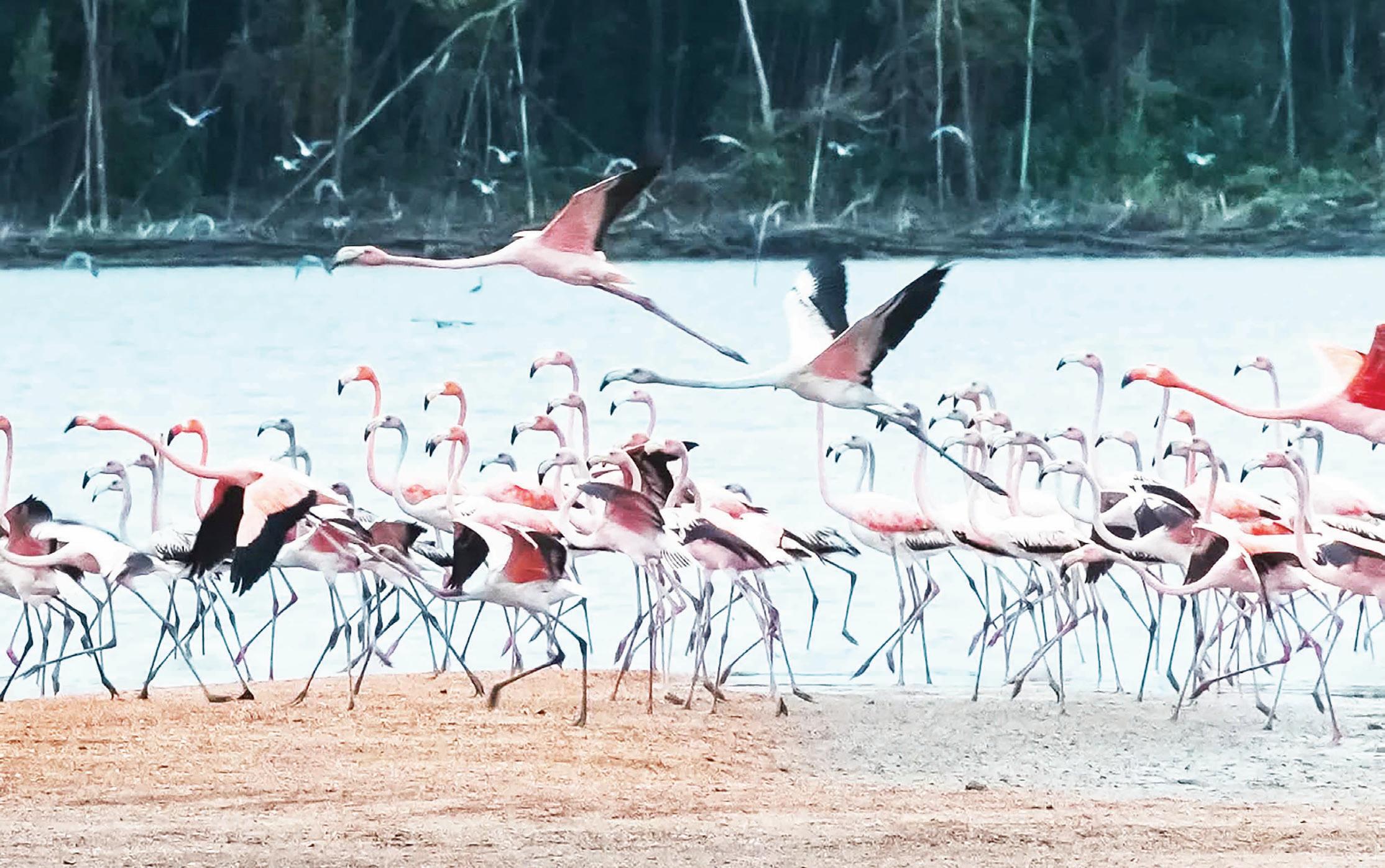
After years of attempting to get a proper shot, Kevin Somwaru captured this breath-taking photo of a flamboyance of flamingos in the Waini Point area, Region One (Barima–Waini)
LIVING TO BE 100
By Ryhaan Shah
It’s a fact that more people are living to 100 years and beyond. Much of this has to do with better health care and with many of us choosing to live healthier lives.
Here in Guyana, we have our fair share of centenarians.
In February, Mrs Eileen Walrond of South Ruimveldt became our latest centenarian.
Mrs Ina Ellis of East Ruimveldt turned 101 in January, and Mrs Eileen Bunbury celebrated her hundredth birthday at her Plaisance home. She credits her long life to her Christian values and is thankful to have lived to see five generations of her family.
Mr Lorip McDonald, of Tucville, is now 102 years old. His simple philosophy of life is “You live, do what is right, and the Lord will direct you.” He found purpose in life by standing up for others and using his voice to help people when he served as a politician. He has found that a life lived with purpose grows richer with time.
For Elizabeth Milner of Suffolk, UK, “veggies and chocolate” are the key to her long and healthy life. She celebrated her 104th birthday last December, and Josie, of York, is 102 years old. She took up dancing at age 60 and credits her new hobby for her longevity.
There are some 14,000 centenarians living in Canada, and their stories about achieving a long life place importance on the joy of living.
At age 101, Betty sees happiness as a choice. “I don’t know what’s really to complain about. I went through life staying happy,” she said.
The centenarians all found joy in each day. Betty enjoyed cheating at solitaire, and Jean, 100, played the piano. Clementina, 101, had fun gambling, and Joyce, 100, continued to write stories and watch her grandchildren in music concerts.
Family was central to their lives, and they enjoyed spending time with their children, grandchildren and greatgrandchildren. Several of the women stated that raising their children was the biggest accomplishment of their lives.
In the United States there are about 97,000 centenarians, and among them is Mary, who was born in Wisconsin in 1923. She was a teacher, and when she retired in 1986, she embarked, along with her daughter, on travels abroad which took them to Ireland, Turkey, Greece and a cruise through the Panama Canal.
Aside from her active and engaged lifestyle, when asked about her secret to longevity, Mary’s response was very simple: chocolate. Whether it’s a piece of dark chocolate or a chocolate dessert, this sweet treat has been her faithful companion throughout her years.
If you have noticed that most of the centenarians featured are women, you have picked up on the statistic that fewer men reach the age of 100. Apparently, they more often succumb to chronic illnesses and diseases. However, as more men try to follow good dietary habits and remain more physically and mentally fit, that statistic will likely change.
Among the men who reached 100 and beyond is K Madvahan, who was a noted Indian freedom fighter. He lived to be 101. He joined the Salt Satyagraha (Salt March) and was arrested and jailed for six months. That was the beginning of his active involvement in politics.
His autobiography “Payaswiniyude Theerangalil” (On the Banks of River Payaswini) is considered a valuable document of a transformative epoch in modern Kerala history.
New Yorker George Abbot lived to age 107. He was a noted theatre producer and won Tony Awards, a Pulitzer Prize and an Academy Award and was inducted into the American Theatre Hall of Fame.
Samuel Odulana Odugade I died at age 102 in 2016. He was the 40th Olubadan of Ibadan and is also reputed to have been the oldest living monarch in Nigeria.
His career included serving as an army officer in World War II, working as a clerk and teacher and entering politics in 1959. In 2007, he was crowned Olubadan of Ibadan at the age of 93.
American folk artist Grandma Moses, who picked up a paintbrush at age 78, lived to be 101. She started painting when arthritis forced her to give up embroidery, a lifelong hobby. She didn’t give in to her condition but simply found joy in another pursuit for which she is well remembered. Hers is the kind of ingenuity and tenacity that mark most of the stories told by those who live to be 100.
American fashion designer Diane von Furstenberg, who is 79, says, “Ageing is out of your control. How you handle it, though, is in your hands.”
Orangestein deadly crash
Dear Editor,
The recent newspaper article, “Father, baby perish in Orangestein crash”, highlights a deeply troubling incident that exposes the consequences of reckless driving and poor enforcement of traffic laws. According to the Police, the truck driver’s actions were unbelievably reckless.
What happened was the driver decided to turn a vehicle meant for transportation into a weapon of death. This tragedy underscores the urgent need to address both individual negligence and systemic issues in road safety enforcement.
Who in their right mind attempts a U-turn across a highway like that with active traffic? That’s the kind of manoeuvre that gets people killed, and tragically, that’s exactly what happened here: a father and a three-month-old baby were dead on the road. It’s beyond irresponsible; it is criminal and must be treated as such by the prosecuting authorities.
And honestly, this raises a bigger question: who is actually enforcing the traffic code in Guyana? If trucks, cars, and minibuses are casually pulling U-turns across a main road near a shopping area, that suggests either poor road design, inadequate enforcement, or drivers acting with impunity without fear of consequences.
Do any drivers now respect the traffic Police? This is the consequence of years of an attitude of “Leave a thing for yourself, boy, nah. “ The roosters are now coming home; we are quickly approaching the point of outright road usage dysfunctionality.
Yes, the Police say the motorcyclist was allegedly speeding and overtook on double solid lines, which is also dangerous and illegal. But that doesn’t make the truck’s manoeuvre acceptable.
No vehicle, especially a large commercial vehicle, should be swinging across traffic lanes like that, especially near a mall entrance where visibility and traffic flow are unpredictable. Could he not have backed in and allowed his front to face the road so he could have seen both sides of the traffic?
This situation shows a total systemic failure:
1) Poor traffic control around commercial entrances
2) Weak enforcement of road rules
3) No margin for error when motorcycles are involved
And the result? A family destroyed. A baby died. A mother in surgery. What makes it even more frustrating is that this type of crash is preventable, but it is now happening so often in Guyana that the statistics show we are killing more of our people on the
road than from murders in close environments.
The entire system has turned on its head. Basic traffic discipline and proper road management could stop tragedies like this from happening in the first place. Why are we all in such a hurry? A five-minute delay to line up our truck to see both sides of the traffic from the front could have saved lives.
People should not be dying because someone thought, “I’ll just cut across the road quickly.”
That’s not a minor mistake; it’s lifeand-death negligence. Unfortunately, those who are suffering the most are the poor and the working class, a class of people that Dr Cheddi Jagan fought and struggled for generations. Is this how we want to remember his work in the month of Cheddi Jagan? When will it end? Where is the systematic fix? When is the systemic fix happening?
As a final point to reflect on, can we imagine that we, as a society, have just collectively ended the life of a child who might have been a world-class petroleum engineer who would have been guiding our nation proudly to better benefit from our natural wealth below the sea? What a waste of an innocent child’s life!
Yours sincerely, Sasenarine Singh
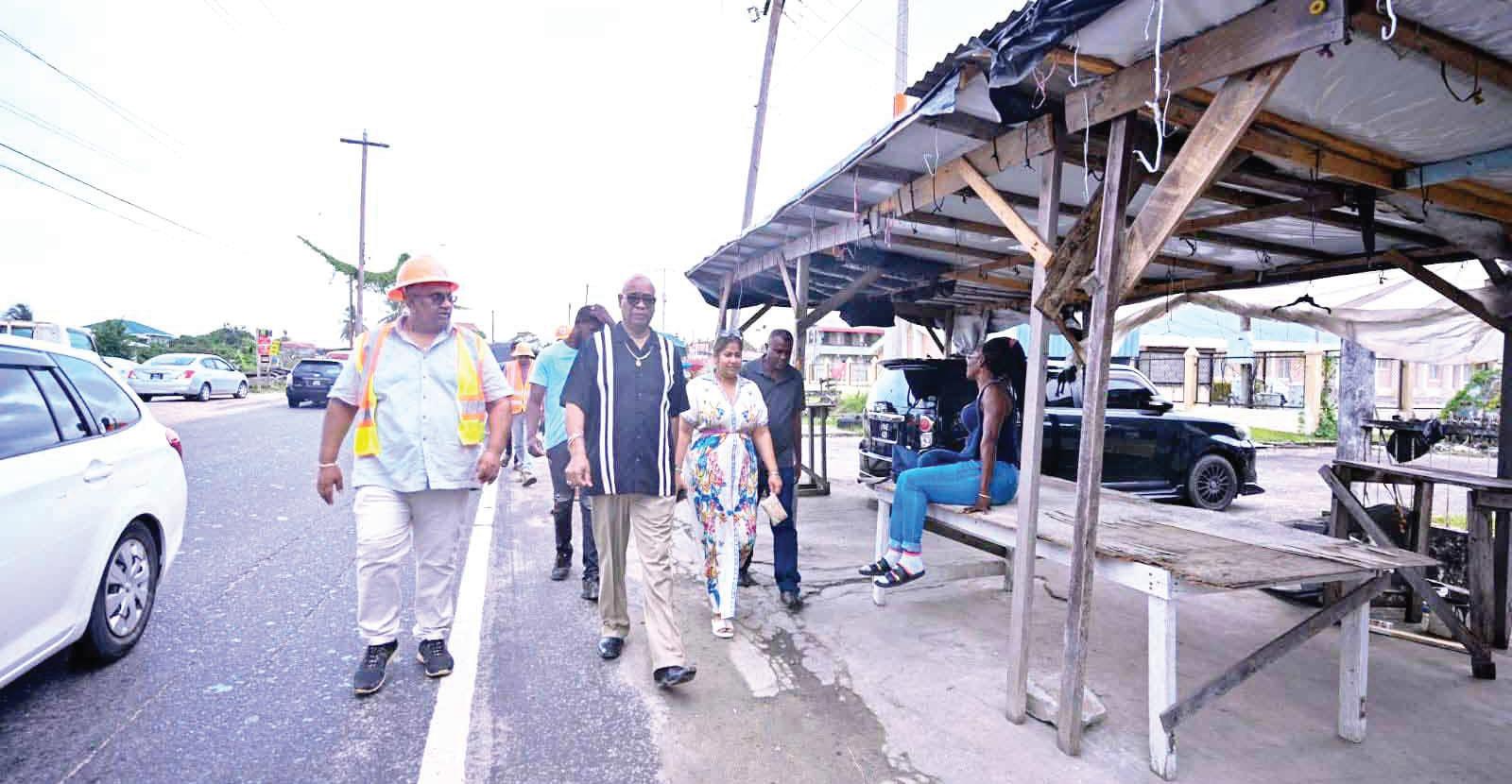
Big plus for Buxton vendors
Dear Editor, I am thrilled to read that “Works are set to begin on the new tarmac for the relocation of Buxton vendors”. It is bound to add to the quality of life for these vendors, as well as enhance the village overall. This move is really a follow-up from that still-remembered November 2025 engagement when, at that time, the PPP/C made a commitment to build a market tarmac within the vicinity of the Buxton-Foulis Neighbourhood Democratic Council (NDC).
After arranging the various logistical factors, the Ministry of Public Works has now announced that it is set to go ahead and build this new tarmac that will accommodate some 59 vendors plying their trade along the railway embankment at Buxton, East Coast of Demerara.
The details from Minister Juan Edghill show that “the development of this tarmac will allow for the orderly relocation of vendors, thereby clearing the major road artery to enable the current contractor to proceed with construction works in the area for the advancement of the East Coast Demerara Road Expansion Project.”
Minister Edghill clearly pointed out that “after the construction of the tarmac, the relocation exercise will not displace any vendor,” noting that it will in-
stead enhance everyone involved, since amenities (which include washroom facilities and lighting) will now be featured to ensure the security and comfort of all the vendors.” Simply put, this is a step-up big time.
Overall, in that area, works have commenced on the site with contractors, China Railway First Group (CRFG), beginning the clearing of the identified land along the Buxton Line Top, next to the Buxton-Foulis NDC, for the new tarmac to be built for vending. This was made possible through collaboration with the Neighbourhood Democratic Council (NDC) and the Regional Democratic Council (RDC) to ensure a suitable and accessible location for vendors who will have to relocate.”
As we are all aware, the East Coast Demerara Road Expansion Project is one of the country’s major infrastructure undertakings aimed at improving traffic flow, reducing congestion, and enhancing road safety for thousands of commuters who travel along the corridor daily.
I remind all that such a project was recently completed for vendors at B Field Sophia, as they look to widen the road network there as well. We all need to face the reality of a changing Guyana under this current PPP/C Administration as it continues invest-
ment towards a modern Guyana, on par with the rest of the world.
A quick word on how essential this tarmac market is might help for a deeper grasp and appreciation of what is about to unfold. First, properly surfaced and planned asphalt commercial areas provide significant benefits for businesses, customers, and operations. Tarmac is mostly favoured for its durability, smooth finish, and ability to handle heavy, high-volume traffic.
With this as a foundation, there will be ensuing improved efficiency and accessibility, as these modern structures facilitate easy, all-weather access for customers, employees, and logistics. They also allow for efficient transport, enabling quicker delivery turnarounds. Then, in terms of amenities, there will be the necessary efficient drainage and water management, which is essential in any market setting. We all appreciate that properly installed tarmac prevents mud and standing water, providing a clean environment even during heavy rainfall. More positives can be added, but my points for being supportive of this venture and anticipating it are more than enough.
Kudos to the enablers.
Yours truly,
Hargesh B Singh
Plight of rice farmers
Dear Editor,
The plight of the dedicated rice farmers now raises fear and doubt about their future in the rice industry.
Lo and behold, most of the rice millers are dictating that the price is now between $2500.00 and $2700.00 per bag, a lamentation and a tragedy for the national circumstances of the rice farmers in Guyana.
The last crop, with the aid of the executive of Guyana, had the sum of $300.00 added to $3000.00; the prevailing crop is now being harvested, and the rice farmers are in doubt whether to leave the crop in the fields to rot or to receive the pittance from the millers to pay their outstanding debts accrued for
their inputs into their planting.
In light of this, there has been no intervention to aid the rice farmers in this moment of urgent and grave need despite knowing the cost and sacrifice of rice cultivation.
The millers are getting richer and happier whilst the farmers remain in the fields with the sweat on their brows in the hot sun, working and suffering without aid or assistance to enhance their welfare or increase household income.
I thought it fit to bring this matter and issue to the attention of the nation that some citizens may raise their voices for aid and improved resources and finance so that rice farmers may be able
to balance their budget at the end of this crop.
These conditions cannot be allowed to prevail at a time when Guyana is actively promoting guaranteed food security.
My sympathy goes out to the hard-working rice farmers in excess of 50,000 that dominate the fields, producing 800,000 tonnes of rice, whilst GuySuCo produces less than 80,000 tonnes but receives large grants and subsidies in billions from the Government of Guyana.
Yours sincerely, Jailall Kissoon, Attorney-at-Law
How Can We Turn Ocean Water into Renewable Energy?
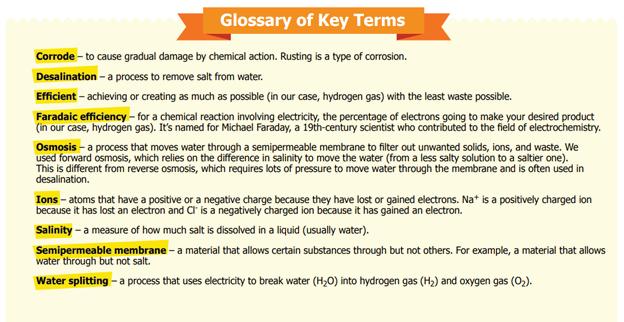
WFor osmosis to occur, one of the solutions needs to be saltier than the other. This difference in salinity causes water to flow from the less salty solution through the membrane to the saltier solution. That is why if you put a grape in the ocean, it will shrivel up – the water leaves the grape because the ocean is saltier. They combined this process with water splitting to make hydrogen from saltwater.
device was 100 per cent for hydrogen. When they tried to split saltwater without osmosis, the faradaic efficiency for hydrogen dropped down to only 50 per cent.
This research shows that it is possible to create hydrogen from seawater using osmosis – and, better yet, that we can do it efficiently. We know that saltwater cannot be split into hydrogen gas as efficiently as pure water because we get a much lower faradaic efficiency. Without osmosis, the saltwater causes side reactions that make water splitting happen less efficiently.
hen you think of renewable energy, you probably think of solar and wind. These resources can definitely give us energy, but not always and not everywhere. Some places are not sunny or windy enough –and nowhere is sunny and windy all of the time. That’s why scientists think hydrogen is an exciting type of renewable energy. They can make it using solar and wind energy, store it, and use it anywhere and anytime!
To make hydrogen, scientists use a process known as water splitting. In this process, electricity transforms water (H2O) into hy-
drogen gas (H2) and oxygen gas (O2). Water splitting requires pure water without any extra bits like dirt particles that might cause problems. These impurities can corrode the materials used to split the water. But pure water is uncommon since 97 per cent of the Earth’s natural water is salty. So currently, before it can be split, water needs to be purified using expensive desalination techniques.
So, scientists wondered: What if we could use seawater without cleaning it first?
To solve this problem, they wanted to use osmosis to take the water out of the salty ocean and use it to make hydrogen.
Osmosis happens when water moves through a special filter called a semipermeable membrane. This membrane lets water pass through but blocks other things, like salt.
A device was created that can perform water splitting and osmosis at the same time. Saltwater stays outside the device, while a salt solution inside pulls fresh water through the membrane. The membrane blocks harmful salt ions that would normally interfere with hydrogen production.
Once the clean water moves inside, electricity splits it to produce hydrogen gas.
The next step is to improve the design and lower the cost of the device, having tested new metals and finding that nickel and stainless steel work even better. These metals are also much cheaper than platinum. Researchers also want to explore other membrane materials to make
The device ran for two days. During this time, measures of how much phosphate escaped the device and how much Cl– got inside, and the amount of hydrogen gas created were recorded. For comparison, a water-splitting device was run directly in saltwater without osmosis.
The osmosis water-splitting device worked really well. At the end of the twoday period, scientists measured the total amount of hydrogen created by the device and compared this value to the amount of hydrogen they expected the device to make. This comparison is called the faradaic efficiency. A high faradaic efficiency tells us that the water-splitting reactions occurred without any unexpected side reactions. The faradaic efficiency for the osmosis water-splitting
our device more efficient. With a growing population and growing energy demands, renewable energy has become essential. The osmosis water-splitting device is a new approach to making renewable energy a reality. It will make hydrogen production more affordable by avoiding expensive water purification processes. It will also help make renewable energy a possibility anywhere in the world. You can also help reduce the use of non-renewable energy resources by conserving energy at home. You can: Turn off lights when you leave a room Use energy-saving LED bulbs
Take shorter showers
Walk, bike, or carpool when possible
GPL forges ahead with groundwork for new transmission lines
The foundation works to install the new 69- and 230-kilovolt (kV) transmission lines from the newly constructed Goedverwagting Substation on the East Coast of Demerara (ECD) all the way to Berbice are currently underway.
As part of its expansion and development plan, the Guyana Power and Light (GPL) Inc is undertaking a US$422 million (approximately G$90 billion) project to expand and upgrade the country's transmission and distribution networks. These works will see new infrastructure being built to facilitate the distribution of power from the highly anticipated Gas-to-Energy (GtE) project to the national grid.
The power from the GtE project, which is expected to deliver some 300 megawatts (MW) by the end of this year, will be dispatched to the Goedverwagting Substation, where it will be
added to the national grid and then further transmitted via the new lines. Team Leader of the Executive Management Committee at GPL, Kesh Nandlall, told Guyana Times that the foundation works are ongoing to facilitate the installation of new 69-kV and 230kV transmission lines.
"These transmission lines will be moving power from Goedverwagting to Berbice, and they are made up of transmission lines 69kV and 230-kV, as well as numerous substations. So, the lines are not up physically as yet, but we've ordered the materials. They are doing the pile driving; then they're going to do the pile capping, and then they will put up the monopoles or towers to string the lines to transmit power to Berbice," Nandlall noted.
The multi-million dollar contract was signed in April 2025 for these works. The project is divided into
three lots: Lots One and Three were awarded to PowerChina for a combined total of US$256.7 million,
Substation to a new substation that will be built at Williamsburg, Region Six (East Berbice–Corentyne). Meanwhile, another 167 km of 69-kV double-circuit transmission lines will be established to replace existing infrastructure along the railway embankment, linking substations along the ECD all the way to Columbia in Mahaicony, where a new substation will also be set up. The new substations at Columbia and Williamsburg are among five new substations that will be built as part of the project, which also includes the upgrade of the Kingston substation in Georgetown – all aimed at improving power transmission efficiency and accommodating future growth throughout the country.
Electricity corridor In order to facilitate the installation of these
So, that 230-kV line will also have its own corridor," Nandlall explained.
According to the GPL Head, this new road network in the back lands is specifically for GPL to allow access for maintenance works. "All of this will be exclusively for GPL because you're going to have a high-voltage line running there. Also, we're going to have to have maintenance for all these things, so that road is a GPL corridor; it’s an electricity corridor we're building on a road. The power line will be on one side so our vehicles can drive when we need to go and do any maintenance," he noted. Previously, Nandlall had stated that they would be using smart equipment to take power to Berbice and drop it off at strategic locations along the way – all in preparation for a 2030 smart grid.
is driven not only by growth in the consumer base but mostly by the rising power demands of existing consumers. In 2020, the stateowned power company had a registry of some 201,000 customers, but that figure has since risen to 244,000 –an increase of 21 per cent. Currently, GPL's generation output stands at 1485 gigawatt-hours (GWh) compared to 903 GWh in 2020. According to Nandlall, this 65 per cent increase was due to a number of interventions over the last five years to bolster supply to meet the soaring energy demands and keep pace with the country's expanding economy.
More than 186 MW of firm capacity was installed from the 46.5 MW at Garden of Eden, the 28.9 MW at Columbia, the 36 MW power ship in the Berbice River, and another 60 MW power ship in the Demerara
while Lot Two was awarded to Kalpataru for US$156.5 million. Among these works is the installation of some 155 kilometres (km) of 230kV double-circuit transmission lines, which will interconnect the Goedverwagting
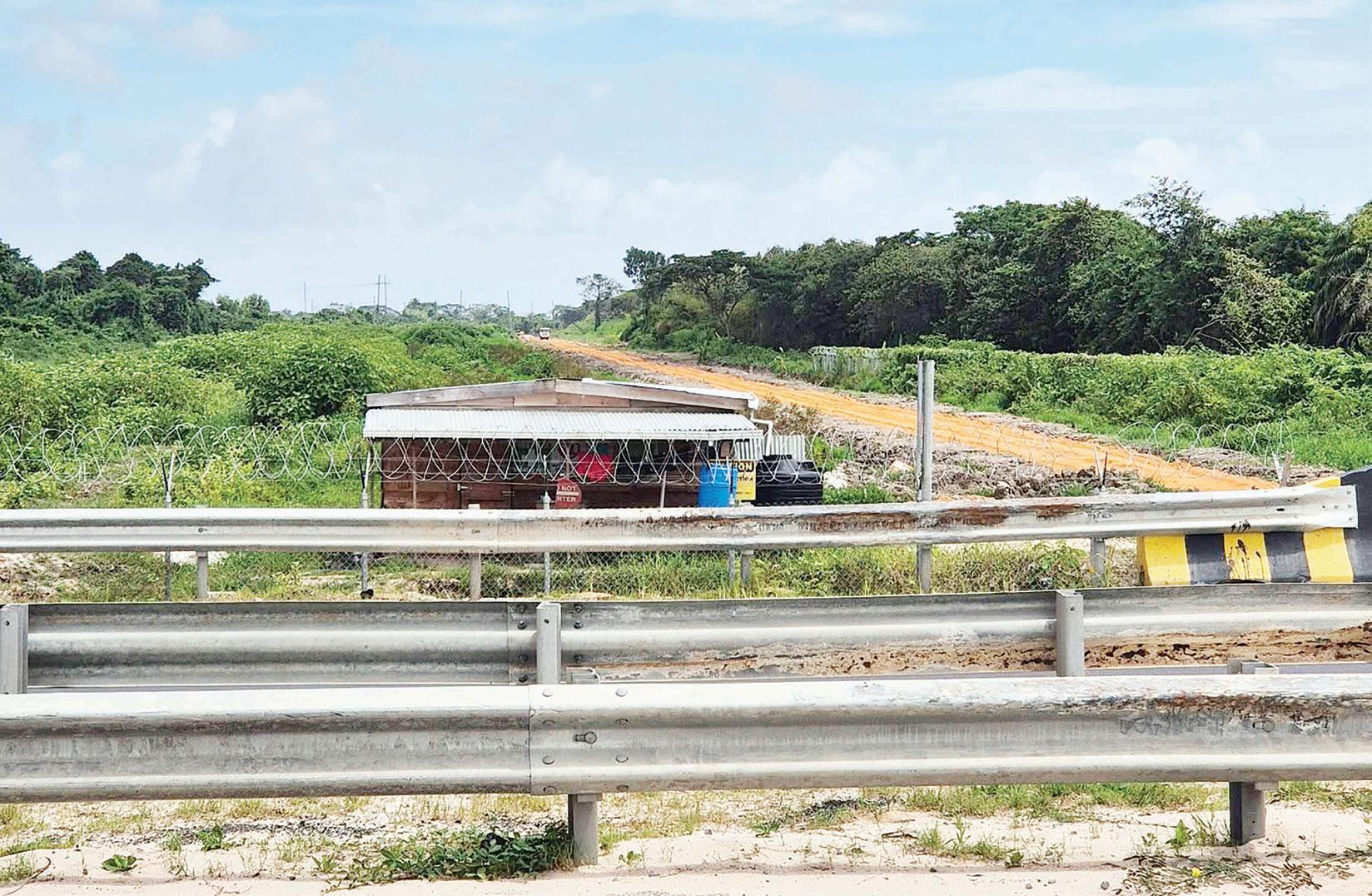
new transmission lines, a new road network is being developed from the Goedverwagting Substation in the back lands along the East Coast corridor heading to Mahaicony in Region Five (Mahaica–Berbice).
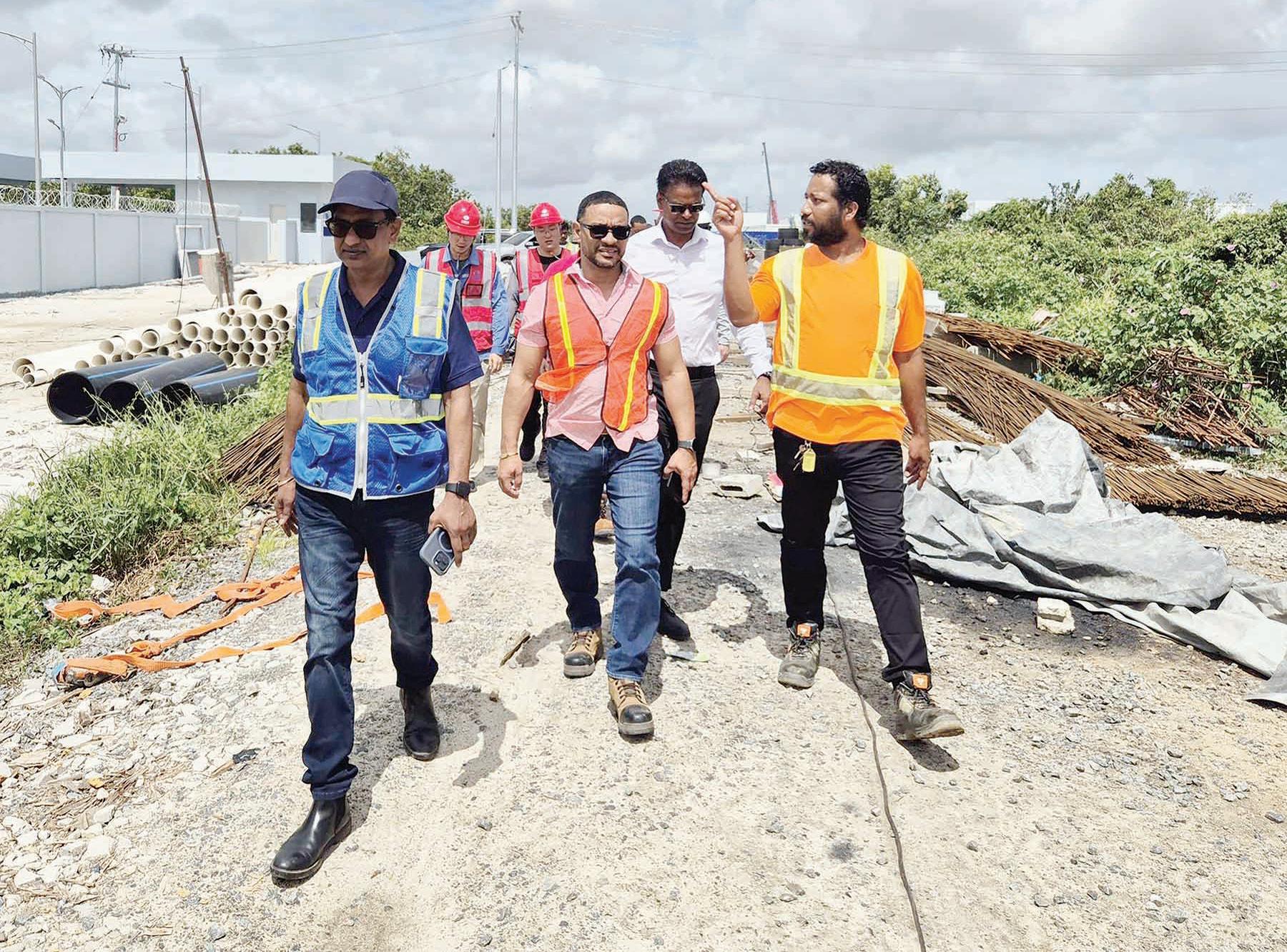
On Friday, the GPL head led a high-level team to inspect the progress of what he describes as the “electricity corridor”. The team conducted a site visit near the Goedverwagting Substation, where the access roads are being built by the Housing Ministry's Central Housing and Planning Authority (CHPA).
"We have a 69-kV line on the Railway Embankment. That line has to be removed so that the four-lane [railway] road can be completed. So, we are building a new access road to replace those lines with both the 69-kV and 230-kV. The 230-kV line will run up to Hope, where it will then divert south and continue east to Berbice.
Electricity demand
Just last month, the GPL head noted that the country's demand for electricity is projected to surge by an astonishing 600 per cent over the next five years. Peak demand is now at 236 MW. By 2030, we estimate it to be 1650 MW or one gigawatt [GW], with 650 MW of peak demand output that we'll have to have generation in place [to meet] ... that means a 600 per cent increase in our generating capacity from now to 2030," Nandlall revealed during a panel discussion at the 2026 edition of the Guyana Energy Conference and Supply Chain Expo (GECSCE) held in Georgetown.
The current 236-MW peak demand is a significant growth from 2020, when it stood at 120 MW – representing an almost 100 per cent increase over the last five years. The GPL head explained that this increase
River. These are complemented by a further 18 MW of solar added to the grid. Moreover, the DemeraraBerbice Interconnected System (DBIS), the country's primary grid that links the western Demerara system and the eastern Berbice system's generating facilities, currently has approximately 260 MW of firm capacity available. According to Nandlall, this figure is likely to spike to around 285 MW this year.
"We have to now equip ourselves to bridge that gap until the end of the year when the Gas-to-Energy Project will come onstream," Nandlall stated, adding that this is where the GtE project will play a significant role.
The Guyanese Government has touted this model initiative as the country's answer to both reliable and cheap electricity, with prices set to be slashed by half when it comes on stream later this year.
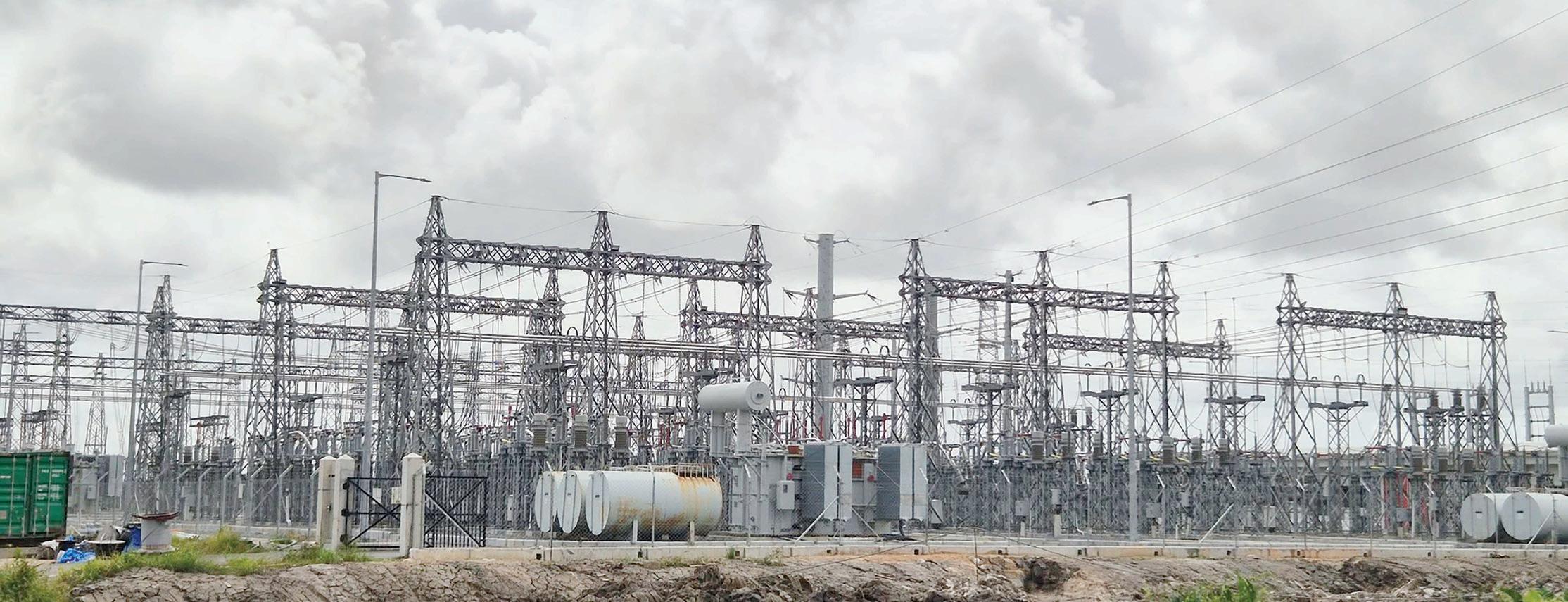
GPL Head Kesh Nandlall and other officials during the site visit on Friday
Opposing…
…for opposition’s sake
Your Eyewitness must’ve written about this topic literally dozens of times – but he still can’t quell the intense feeling of disgust and disbelief when these letters appear in the press calling on us to “save the planet” by not only not drilling for oil under our waters but not even using the associated gas!! Now your Eyewitness has nothing against saving the planet!! After all, he inhabits the said planet and would suffer whatever doleful fate that’s predicted by producing and using fossil fuels!!
But he’d rather hug a tree – which, as President Ali regularly reminds the world and us at home, is conserving more than any other country on planet Earth, and which sucks up that nasty carbon dioxide that fossil fuels produce when burnt!! While the exact numbers aren’t available, your Eyewitness is willing to swear that there gotta be at least 1000 trees for EACH Guyanese to hug –as our contribution towards saving OUR planet!! So why shouldn’t we be allowed to use our fossil fuels without getting a guilt trip?? After all, methane’s a worse pollutant than carbon dioxide, and cattle farts and belches produce at least five per cent of global warming – yet there are no calls to ban cattle rearing!!
Now, there’s nothing wrong about citizens scrutinising the actions of their Governments, innit?? But shouldn’t there be some rhyme and reason to the scrutiny – beyond selling newspapers and feeding egos? Now obviously there are some well-meaning sods out there, but your Eyewitness frankly believes that in the grand scheme of things, since that change was engendered during the Industrial Revolution for 250 years – and we received absolutely NONE of the consequent development – we should think about Numero Uno for once – us Mudlanders! Let’s note that it’s the NOW developed countries dragging their feet on fossil fuels being phased out!!
So, your Eyewitness was pleased as Pres. Trump receiving Maria Corina’s Nobel Peace Prize when he saw that TEN bids were received for constructing that urea plant over in Wales!! The gas-to-shore pipelines end there, of course, and gonna power the 300MW generators to boost our industrialisation drive!! The urea plant – to give a shot in the arm to our agricultural drive – also uses the petroleum-associated gas. Your Eyewitness is hoping that the critics of our fossil-fuelled development are choking at the further news that the setup’s gonna be duplicated over in Berbice soon!!
Fact of the matter is this is the same chattering class that opposed the Amalia Falls Hydroelectric Project about a decade ago – and along with the APNU and AFC DID manage to derail it!!
Even though it didn’t produce an ounce of carbon dioxide for the 165KW of electricity it would’ve generated!!
…debt??
One of the US’ founding fathers famously said, “A penny saved is a penny earned,” and this was supposed to be one of the pillars of the “American Way”!! But somewhere along the line since 1776, it appears a new guiding mantra became the standard – especially when it came to the Government!! By the 1960s, not only did they not talk about “pennies” and saving. It became MILLIONS of dollars and spending!!
To signal concern about overspending by the Government then, one powerful senator cautioned, “A billion here and a billion there… pretty soon, you’re talking about real money!” Now mind you, at that time our ENTIRE budget was about US$60 million!! Well, today, the US is still in a world of its own when it comes to spending money!!
Their national debt’s nominally some US$39 trillion –with US$100 trillion being closer to reality! When you’re talking about TRILLIONS, does it matter??
Gotta be real fun when all you’ve gotta do is print pieces of paper, call them “dollars”, and the world gives you goods!!
…Mash
Your Eyewitness almost fell off his chair when he read that the chief proponent for leaving our fossil fuels under the Atlantic just denounced the last Mash as “lawless and a public nuisance”!!
Is she Mrs Scrooge?? Bah! Humbug!!
GPF’s drivers’ theory to be integrated into digital school platform
– to become accessible to 5th-form students as part of curriculum
Fifth-form students across Guyana, for the first time, will be able to access and pursue their driver theory curriculum directly through the digital school platform, thus ensuring they graduate from secondary school fully equipped with essential road safety and roaduse knowledge.
This historic landmark initiative was the focus of a strategic meeting held on Friday involving several stakeholders, including the Ministries of Home Affairs, Education, and Labour and Manpower Planning, as well as the traffic department of the Guyana Police Force (GPF).
Education Minister Sonia Parag, in a social media post, stated that beyond empowering youth, this transition also modernises the professional advancement process for members of the GPF by moving all promotional testing to a transparent and efficient digital environment.
“This collaborative effort reflects the Government’s commitment to equipping both our students and our workforce with the modern digital tools necessary for success in a rapidly evolving nation,” she added. During the high-stakes meeting, however, discussions focused on ensuring that the system is inclusive and accessible, particularly for users with lower literacy levels, while also addressing stakeholder representation and the key operational requirements needed for implementation. This initiative will establish a centralised and transparent digital record that links training and examination outcomes to national identification and biometric systems.
A source told Guyana Times that the drivers’ theory is already accessible online, and it is just a matter of integrating the programme into the digital school platform. A roll-out timeline has not been decided on, but the GPF, he noted, is working with all stakeholders to ensure its successful implementation.
The Guyana Digital School is part of the
Government’s push to modernise the education sector and build a skilled workforce to support national development.
At its official launch back in December 2025, President Dr Irfaan Ali said that the school is a gateway to digital learning and an enabler of essential skills for students, particularly those who face challenges accessing traditional schooling.
“Importantly, the digital school will have a comprehensive digital library with all the textbooks our students require for CSEC (Caribbean Secondary Education Certificate) and other examinations. Children across CARICOM, as well as in Guyana, will now have access to these resources.” He further highlighted that students will have access to all textbooks for Caribbean Examinations Council (CXC) and other examinations, not only in Guyana but also across the wider CARICOM region, ensuring standardised learning opportunities throughout the Caribbean.
“No student will be left behind due to lack of textbooks. Every investment we make is designed with our CARICOM brothers and sisters in mind because we are one,” the President said. Prime Minister (PM) of Barbados Mia Amor Mottley praised President Ali’s vision, saying it provides Caribbean children with the tools to learn, grow and succeed.
“Whether in the coastlands or hinterlands of Guyana, Barbados, St Kitts, or St Lucia, children now have access to learning at their fingertips. This is a momentous day for education across the region,” she said. Grenada’s PM, Dickon Mitchell, also congratulated Guyana, noting the platform’s potential to improve student performance and ensure equitable access to technology and guidance. “I have instructed our Minister of Education to ensure Grenada is actively involved in this initiative. I am confident it will transform education delivery across CARICOM,” he added.
Education Minister Sonia Parag, Minister of Labour and Manpower Planning Keoma Griffith and Home Affairs Minister Oneidge Walrond
Traffic Chief Mahendra Singh and other senior officials at the meeting
The continuing Venezuelan threat
Even as all eyes are on the Middle East as the US/Israel and Iran slug it out with missiles, all is not quiet on our western front.
The Government of Delcy Rodriguez in Venezuela strongly condemned our announcement of a three-dimensional seismic exploration campaign in our Atlantic waters within our Exclusive Economic Zone (EEZ). Their communique sees us conducting “…unilateral exploration activities over part of the maritime spaces that are pending delimitation, in open contravention of fundamental principles of international law.” This clearly demonstrates that in their border controversy over Essequibo, Rodriguez is following the antagonistic line of her predecessor that insists Essequibo and the waters off its shore are theirs.
Directly after taking office in 2013, Maduro seized the “Teknik Perdana”, conducting a deep-water seismic survey for Texas-based Anadarko Petroleum, hired by our Government. This was long before Exxon’s strike in 2015 but AFTER a discovery off French Guiana in 2011. A week after Exxon struck oil, Maduro issued a decree claiming our entire EEZ. It was then a low-hanging fruit for Mad Maduro’s domestic political challenges, which he would buttress with his referendum and annexation of Essequibo. It remains one for Delcy Rodríguez, who still has to be cautious of Chavistas within the regime who consider her rapprochement with the US as a “betrayal”.
That relationship continues to be strengthened with almost daily announcements of new areas of cooperation. On the same day as the protest on our seismic survey, in the US District Court for the Southern District of New York, the Dept of State reiterated Pres Trump’s declaration from the week before at the Shield of the Americas summit, his recognition of Delcy Rodriguez as the sole head of state authorised to act on behalf of Venezuela in the US. Rodriguez responded very expansively to her countrymen: “This is not recognition of a person or a Government; it is recognition of a country, so that the country can recover its way of life, can breathe again in terms of services, health, and education.” She played to local sentiments by urging national unity, stating that. {…the current effort must be for the political, economic, and social health of the country. All organisations have a place here.”
Our concern, of course, has to be what all of this means for us vis a vis Venezuela’s undiluted revanchist ambitions. In December 2023, we suggested establishing a military base in Essequibo manned by specialised troops, to which the US forces would have access through a defence treaty between our countries. But we cautioned, “We cannot only shelter under the US wing by band-wagoning: the US will pursue its own interest, and this might not align precisely with ours at various times.” Even though the US has declared support for our ICJ initiative and Exxon’s exploitation of our oil offers some measure of security, we cannot be complacent.
There are several competitive strategies available to small states facing coercion by their stronger neighbour: denial, cost imposition, attacking their strategy and political system. We are already doing a good job of attacking Venezuela’s strategy of annexation in the ICJ, which should be handing down a decision soon. Because it is widely accepted that it will be in our favour, the Venezuelans have pre-emptively announced their rejection of the ICJ’s jurisdiction, even as they continue to make submissions. The Americans, however, have legitimised their political system after removing Maduro, but this will remain tenuous if domestic conditions do not improve significantly and elections are held.
We can deepen our ongoing denial and cost imposition strategies. As a small nation – even though we now have oil revenues buttressing our Consolidated Funds – we need to deploy our defence budget in a manner that is best suited to the theatre in which we could be engaged – and not only from Venezuela. Because of the overwhelming size of the Venezuelan land, air and sea forces, while we should maintain our present conventional forces, enlarging them to counter Venezuela is not a viable option. We will have to think outside the box to cause them to think twice before attacking us. In a phrase, we will have to rethink doctrine and force structure.
We should formulate a strategy of denial and cost imposition – with the limited aim of changing Venezuela’s decision-making calculus and thus their strategic behaviour. Our Essequibo terrain favours this denial strategy since unlike Venezuela, our goal is not to occupy their territory.
SUNDAY, MARCH 15, 2026
00:00 Movie - Madea’s Witness Protection (2012)
02:00 Movie - A Family Affair (2024)
04:00 Movie - The Commuter (2018)
05:45 Daily Quran Recitation
06:00 Sunday Morning Devotion
07:40 Ramayan EP 1 and 2
09:00 David Persaud Religious Program
09:30 Movie - Minions: The Rise of Gru (2022)
11:00 Movie - Megamind (2010)
12:30 Movie - Megamind vs. The Doom Syndicate (2024)
14:00 Movie - Inside Out (2015)
15:40 Movie - Inside Out 2 (2024)
17:20 Movie - Easter Land (2019)
18:30 Week-in-Review
19:00 TVG Music Break
19:30 Supergirl S5 E7
20:30 Link Show 38
21:30 The Flash S2 E14
22:30 Shadowhunters S3 E17
23:30 TVG Music Break
Ravi Dev
MoH hands over 6 ambulances to support regional hospitals
– as Govt continues to modernise healthcare in Guyana
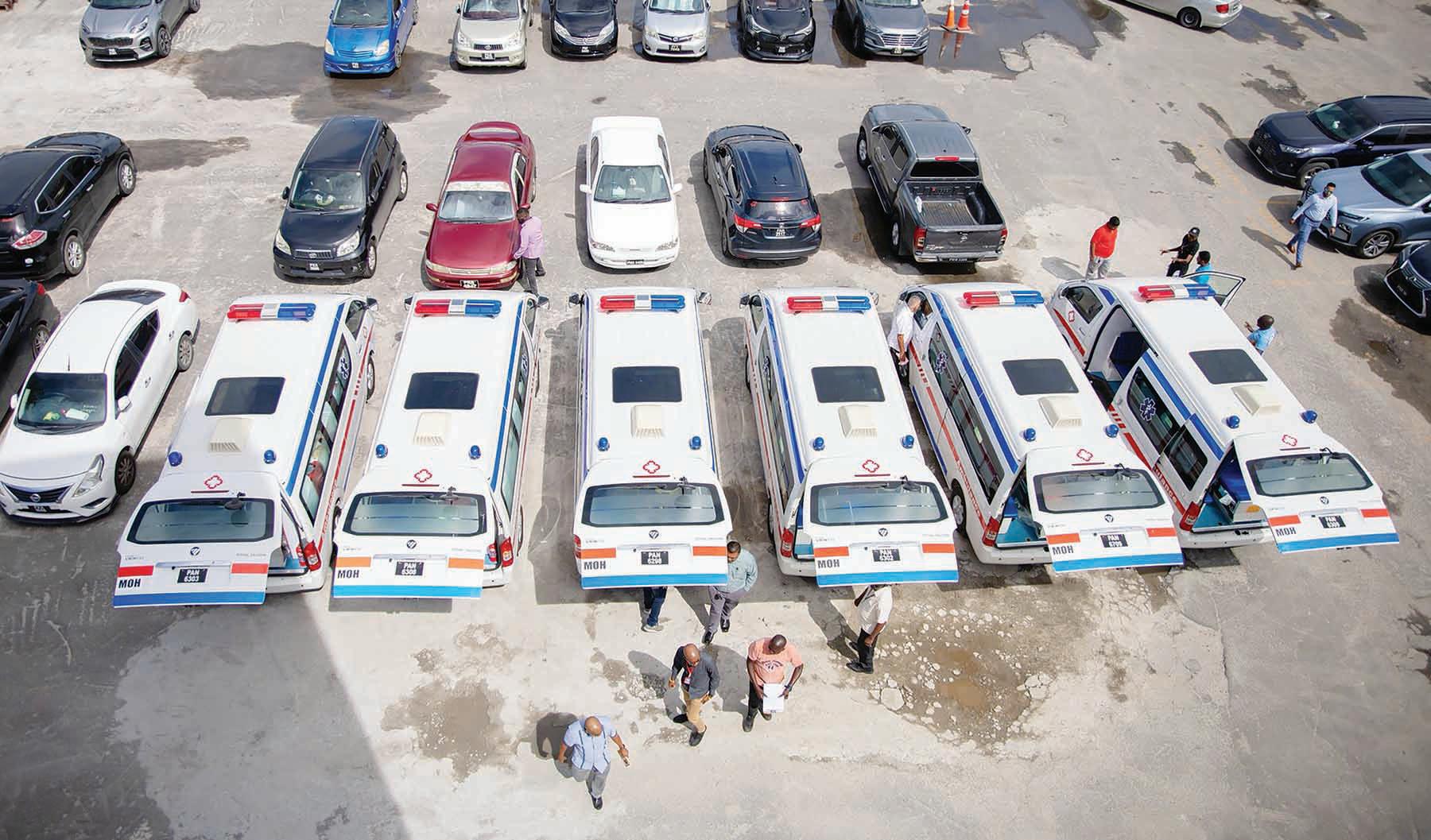
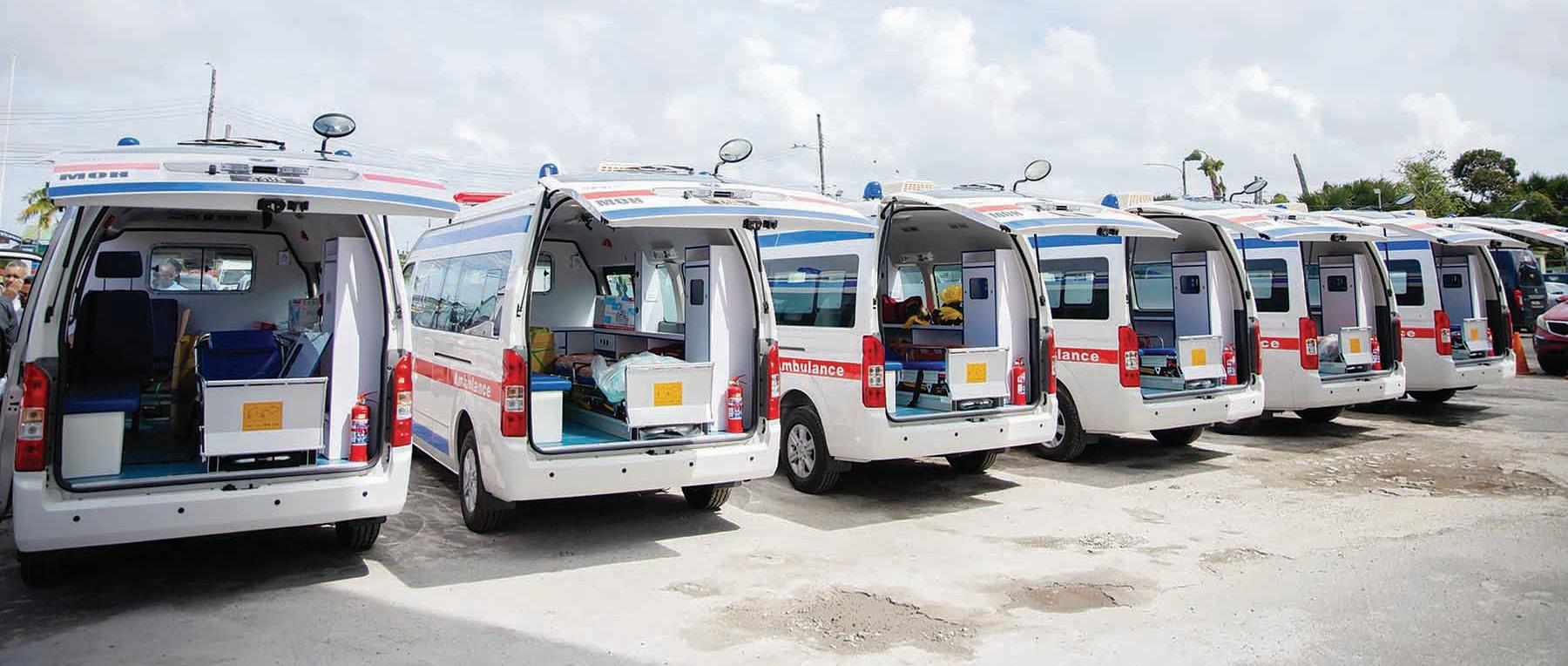
The Ministry of Health handed over six ambulances to support the operations of the coun-
try’s newly commissioned regional hospitals on Friday. The ambulances will serve the Lima Regional Hospital
Enmore Regional Hospital (Region Four), Bath Regional Hospital (Region Five) and the Number 75 Village Regional Hospital (Region Six).
These facilities were recently opened as part of the Government’s ongoing efforts to modernise and ex-
pand Guyana’s healthcare system. Each ambulance was procured at a cost of $18 million and will strengthen emergency response capabilities while improving the safe and timely transportation of patients requiring urgent medical care. This investment forms part of the Government’s continued commitment to strengthening healthcare infrastructure and improving access to quality health services across Guyana.
Present at the handing over were Director General Vishwa Mahadeo; Director of Regional Health Services Dr Cerdel McWatt; Senior Operations Manager
Neurological Rehabilitation Centre for patients with brain and spinal injuries, along with a modern oncology centre for comprehensive cancer care, which is budgeted at $1.1 billion. To boost diagnostic and treatment capabilities, $3.1 billion is designated for new medical equipment.
This includes installing an MRI scanner, a CT scanner, and a cardiac catheterisation laboratory at GPHC and expanding the telemedicine network to another 50 remote communities. Importantly, the Government will start incorporating artificial intelligence (AI)-based diagnostic
Michael Gouveia; and Regional Health Officer and representatives of respective regions. The Government has set aside $161.1 billion in 2026 to further modernise the country’s healthcare system with the aim of expanding medical infrastructure, improving access to modern equipment and medications, strengthening the healthcare workforce and providing patient-centred care across all regions.
In 2026, $24 billion will be allocated for the construction of a new Paediatric and Maternity Hospital, as well as six regional hospitals in Moruca, West Demerara, New Amsterdam, Bartica, Kato and Lethem. Additionally, $1.5 billion will improve the Georgetown Public Hospital Corporation (GPHC) and finish new polyclinics in Campbellville and Industry. Furthermore, $12.6 billion is set aside for building, renovating and maintaining health facilities across the country.
The Government also plans to create a National
systems to enhance clinical decision-making and improve healthcare outcomes. A significant part of the health budget, $34.9 billion, will finance the purchase and delivery of drugs and medical supplies while upgrading the national supply chain.
In addition, five new regional drug distribution centres will open in Mabaruma, Onderneeming, Williamsburg, Lethem and Bamia. These centres will benefit from a modern, technology-driven inventory management system to ensure accountability and reduce shortages. A key project for 2026 is the continued rollout of the Electronic Health Records (EHR) System. This system aims to fully digitise patient information and boost service efficiency. With $764 million allocated, this system, already launched at the Festival City Polyclinic, will enable online booking, digital medical histories, and data sharing across facilities.
The ambulances at the Ministry of Health on Friday
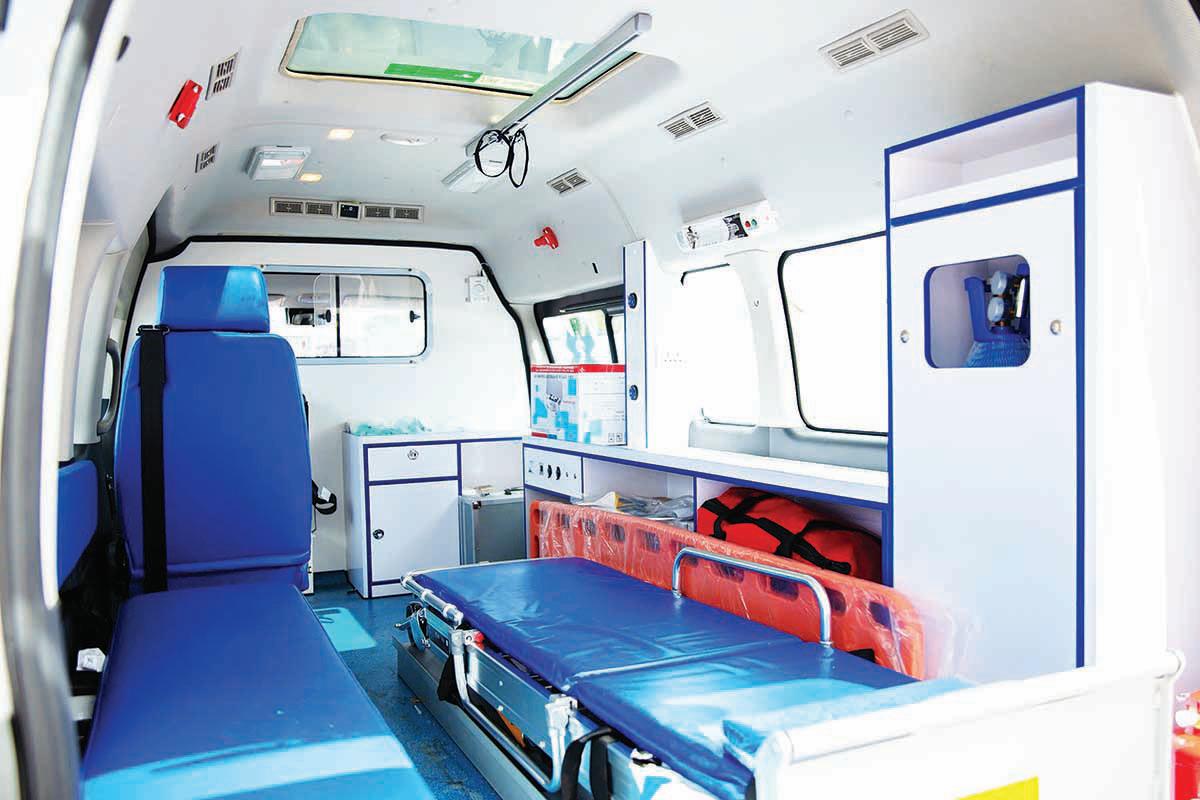
The interior of one of the ambulances
The ambulances that will be supporting regional hospitals
GPF ranks honoured after completing Spanish Junior Leaders Courses
Ranks attached to the Guyana Police Force (GPF) who completed the Spanish Course and Junior Leaders Courses One and Two were recognised for their achievement at a prize-giving ceremony on Friday at the Officers’ Training Centre, Eve Leary. At the ceremony, the Force’s Training Officer, Senior Superintendent Sonia Herbert, reminded the ranks that the knowledge gained must now be demonstrated in the ranks’ conduct as they go about their duties.
She also reminded the ranks that they must lead by example as they go about their duties to ensure that integrity is upheld while carrying out their mandate. Additionally, she reminded the ranks that as they carry out their duties, they must demonstrate professionalism in their interactions with the public and apply the knowledge and skills acquired to better serve the country. During the course of the ceremony, awards were given to outstanding students in the course.
The awards for the Junior Leaders Course:
First place – Lance Corporal Andries
Second place – Lance Corporal Fowler
Third place – Lance Corporal McCurdy
The awards for Junior Leaders Course 2:
First place – Corporal Azore
Second place – Corporal Farnum
Third place – Corporal Vaughn
The awards for the Spanish course:
First place – Sergeant Jordan
Second place – Constable Cummings
Third place – Corporal Allen
The Most Improved Student Award was given to Corporal Bernard, while the valedictorian address was given to Sergeant Jordan.
The Junior Leaders Courses One and Two comprised 24 students in each course, while the Spanish course consisted of 16 students.
Ranks who completed the Junior Leaders Courses One and Two with their superiors
Valedictorian Sergeant Jordan (left) receiving her award
First-place awardee in the Junior Leaders Course Two, Corporal Azore (left) collecting her trophy
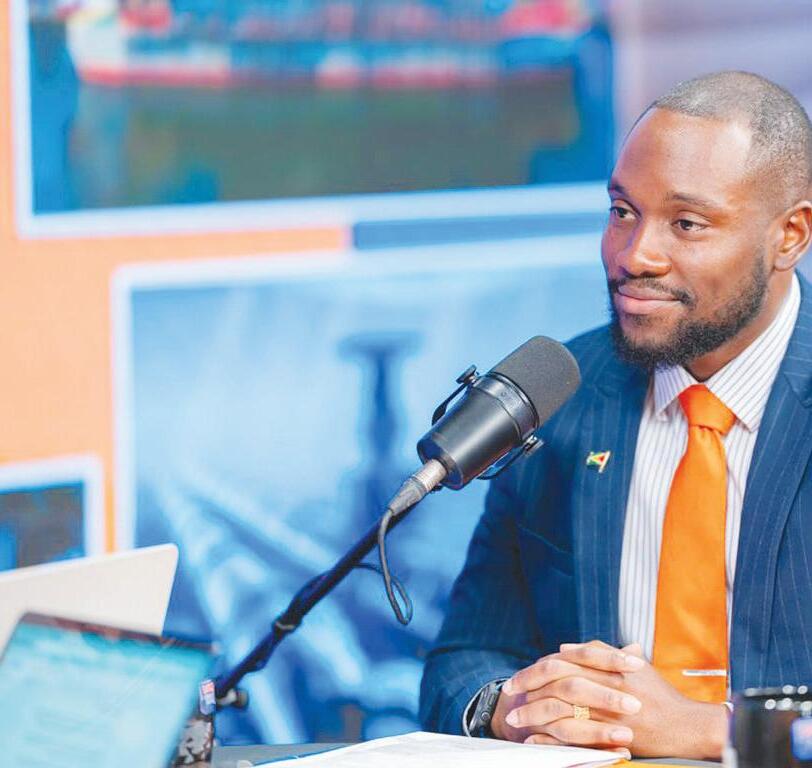
Over 1800 persons employed through Labour Ministry’s job bank – Min Griffith
– urges persons to register to access opportunities
The Labour Ministry has supplied nearly 3000 individuals with employment opportunities in the last five years through its job bank, and with more than 16,000 positions available, individuals are encouraged to get registered in order to tap into these prospective jobs.
Labour and Manpower Planning Minister Keoma Griffith made these calls during an appearance on this week's edition of the Starting Point podcast.
He explained that this service, which is managed by the Ministry's Central Recruitment and Manpower Agency, operates like a regular commercial bank, where individuals go to the job bank to either seek employment or offer job opportunities.
"Employers are able to come and register jobs. They come and say, 'We have a hundred vacancies, and this is what we're looking for.' Employees can come to the bank and say, 'These are my qualifications, and I'm looking for a job. This is what I can offer,'" he noted.
According to Griffith, the recruitment agency screens these individuals and then matches them with suitable jobs.
"In the last five years, we've been able to register 16,922 vacancies with the job bank. In terms of individuals seeking jobs and positions, we've been able to place 2960 of them," he noted.
Of those individuals matched with jobs, approximately 1837 of them are still actively employed.
The Labour Minister is imploring more Guyanese to get registered with the job bank so that they too can be placed with employment opportunities.
"[If] you're looking for work, please come to the job bank. Tell us what you have to offer, and we will try to match you with a suitable job so that you can be productive and contribute to Guyana... I assure you, there are many opportunities for jobs," he asserted.
For some time now, there have been concerns about the shortage of skilled labour in Guyana. In fact, with the
country experiencing a construction boom, contractors have been complaining bitterly about finding workers –something which Griffith said they have been addressing.
"Since I've become Minister, simple individuals who have been in construction [say], 'Oh, Minister, I really want some workers.' I said, 'Okay, no problem. Come into the Ministry on XYZ day.' And we've been able to supply them with workers," he noted.
Through the job bank, the labour Ministry has also been able to provide workers for a shipping company, as well as small businesses that needed cashiers. In fact, last December, the Ministry organised a massive job fair in Region Three (Essequibo Islands–West Demerara) to get some 1000 workers for the model Gas-to-Energy (GtE) Project at Wales, West Bank Demerara, where works are being fast-tracked in order to meet the year-end deadline.
"All work is honest work. There is no need to discriminate against what kind of job it is... The possibilities are endless. You can have a job as a cashier, or it goes all the way up to working on one of Guyana's premier development projects, the Gas-toEnergy project. So, there's a lot [of opportunities] to be taken," the Minister stressed.
Nevertheless, Griffith is calling on businesses to get registered with the Ministry's job bank so that they can widen the opportunities available to individuals seeking employment, as he pledged to ramp up awareness efforts for this facility.
"There is a little more awareness that can be done of the job bank, which is something that we intend to continue to do... But I also want to take this opportunity to call on the private sector to support the job bank. Let us know when you have opportunities available so that we can match skilled and competent individuals to your employment," he emphasised.
Individuals or companies interested in joining the job bank can contact the Labour Ministry or visit its website.
Minister of Labour and Manpower Planning, Keoma Griffith
ERC expands Harmony Club to Kamarang Primary – engages Reg 7 stakeholders
In an effort to further strengthen its youth outreach programme, the Ethnic Relations
Commission (ERC) launched yet another Harmony Club on Thursday, this time at Kamarang Primary School
in Region Seven (CuyuniMazaruni) during one of its outreaches. The outreach also included a stakeholder
engagement with community leaders and residents at the Kamarang Community
Centre. Leading the team were Commissioners Ras Khafra, Pandit Krishn Sharma, Ashton Simon and Norris Witter.
The Harmony Club initiative, implemented in collaboration with the Education Ministry, seeks to introduce young learners to the values of tolerance, mutual respect and appreciation for diversity. By creating a structured platform within schools, the programme encourages students to develop attitudes and behaviours that support peaceful co-existence and national unity. The principal of Kamarang Primary School, Alex Crammer, welcomed the establishment of
signed to promote tolerance, inclusion and respect for diversity. The programme began in 2025 with five primary schools in Georgetown participating in the pilot phase and continues to expand nationwide.
The introduction of the initiative in Region Seven follows the successful establishment of Harmony Clubs at schools in Mahdia and Micobie recently.
In addition to the school engagement, the commissioners and ERC team met with village leaders, residents and representatives of the Guyana Police Force (GPF) during a stakeholders’ meeting at the din-
the club, noting that its activities will be supported by class teachers. Moreover, the Learning Resource Coordinator attached to the Ministry of Education for Region Seven, Rebecca Reid, expressed strong support for the initiative and highlighted its value in shaping positive attitudes among young people.
“The Harmony Club provides a meaningful space where students can learn to work together, listen to each other and develop the attitudes that promote peaceful co-existence,” she said. During the launch, the ERC Commissioners underscored the importance of initiatives that build understanding and break down barriers that may lead to discrimination.
“We found that division exists in Indigenous communities, even though you may not see many other Guyanese from different backgrounds. There are still differences, and so the Harmony Club initiative was developed to prevent conflict,” Commissioner Ras Khafra noted. Thirty students will participate in the Kamarang Primary Harmony Club and will serve as “Harmony Ambassadors”, engaging in interactive sessions de-
ing hall of the Kamarang Community Centre. The forum brought together representatives from the villages of Kamarang/ Warawatta, Kako, Jawalla, and Waramadong, including several Toshaos and deputy Toshaos. Participants shared perspectives on social cohesion within their communities and offered constructive recommendations on addressing local challenges. Community members also called for more frequent engagements by the Commission to strengthen awareness and dialogue on issues of national harmony. Commissioner Norris Witter emphasised the importance of collective responsibility in fostering peace and understanding across Guyana.
“In a society like Guyana, with a population of over eight hundred fifty thousand, the ten commissioners would not be able to effectively promote peace and harmony without the support of each and every citizen,” he outlined.
Such engagements, in keeping with the ERC’s mandate, are vital in ensuring that community perspectives are integrated into national strategies aimed at promoting harmony and good relations across all regions of the country.
Students and teachers at the launch of the Harmony Club
Commissioners of the ERC
Community members during an engagement with the ERC
Stronger political will for women’s leadership needed – Dr Persaud urges
– underscores rising harassment, online abuse & robust backing to secure women’s full political participation
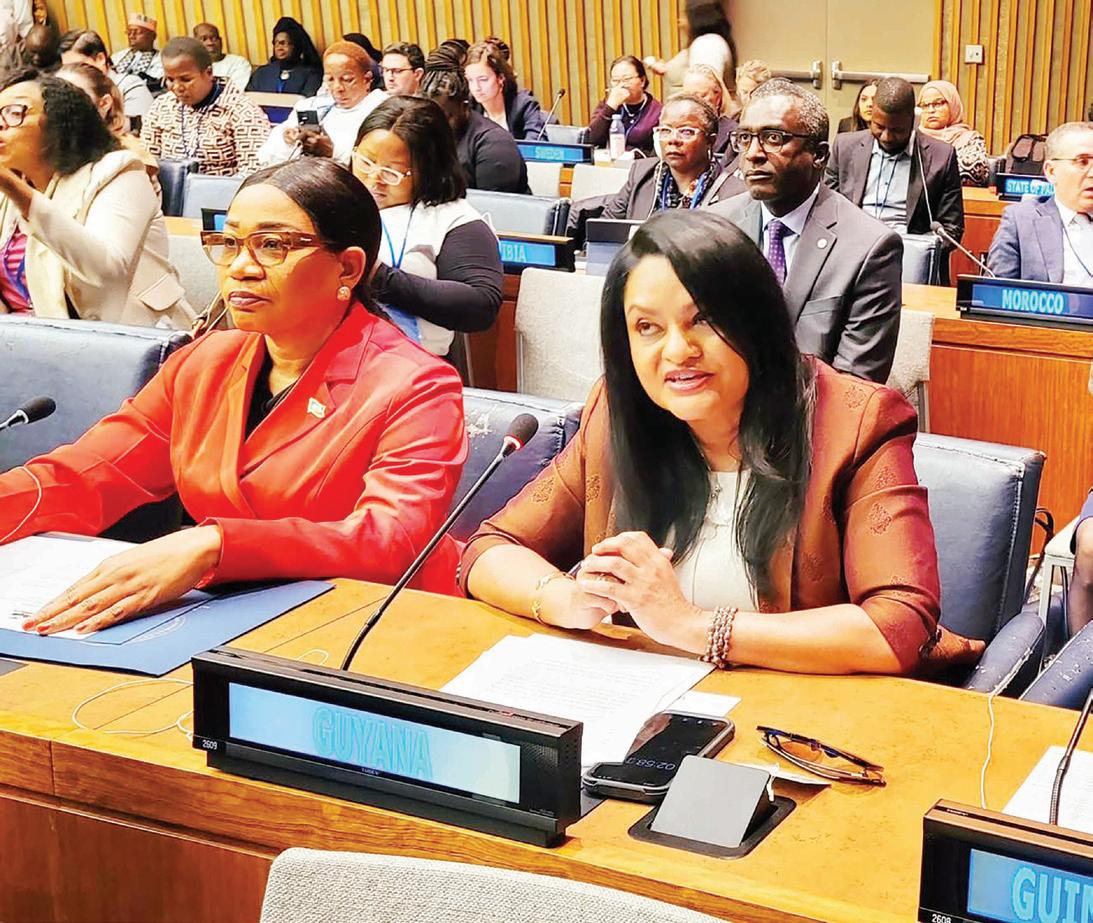
Human Services and Social Security Minister Dr Vindhya Persaud called for stronger political support for women’s participation and leadership within political parties, while also addressing the rising harassment, social media abuse, and violence faced by women in political life. She made the call during the general discussion at the 70th session of the United Nations Commission on the Status of Women (CSW70), saying it is evident that gender parity in Parliament will not occur through natural progression alone.
“International and public pressure to secure equal spaces for women can be an effective means of ensuring they take their seat at every table. We must all develop a consciousness in seeking women’s equal representation at every level and in every forum. We, women and men, must be deliberate and decisive. Quotas have contributed to the modest increases we are seeing; however, they are only part of the solution.” Dr Persaud further emphasised that more important than quotas are the presence of genuine political will within parties and systems that support the political aspirations of women.
She noted that women must be equipped with the necessary education, skills, community support, financial resources and an enabling political environment to fully participate in public and political life. She highlighted Guyana’s progress in women’s political representation, noting that the country’s track record has improved significantly over the years. While the law requires a minimum quota of 30 per cent women on politi-
cal party candidates’ lists for elections, 39 per cent of current Parliamentarians are women, and 37.5 per cent of ministerial positions across various sectors are held by women. Dr Persaud also observed that more women are increasingly joining political parties, reflecting a growing engagement of women in the country’s political landscape.
“International and public pressure to secure equal spaces for women can be an effective means of ensuring they take their seat at every table. We must all develop a consciousness in seeking women’s equal representation at every level and in every forum. There must also be pushback against harmful cultural and social norms that discriminate against women.” She added that the work is ongoing and the trajectory is positive.
“Chair, the impact of women’s absence from Parliamentary and leadership roles is felt acutely in the conflicts raging across the world today. While political, economic and defence considerations dominate peace negotiations, too often the humanitarian, health, education, and sexual and gender-based violence impacts are minimised in discussions.”
Furthermore, Dr Persaud offered a fresh perspective on what the benchmark should be: ‘Women must move beyond stereotypical, nurturing portfolios and be able to serve equally in any sector. Quotas below 50 per cent should be seen as the floor, not the ceiling. The Commission on the Status of Women (CSW70) must galvanise countries to take this discussion beyond the confines of conference rooms and achieve tangible results.”
Human Services and Social Security Minister Dr Vindhya Persaud
Prospective homeowners to identify house lots at Wales Phase Three by end of May – Min Croal
– contractors urged to speed up works ahead of May-June rainy season
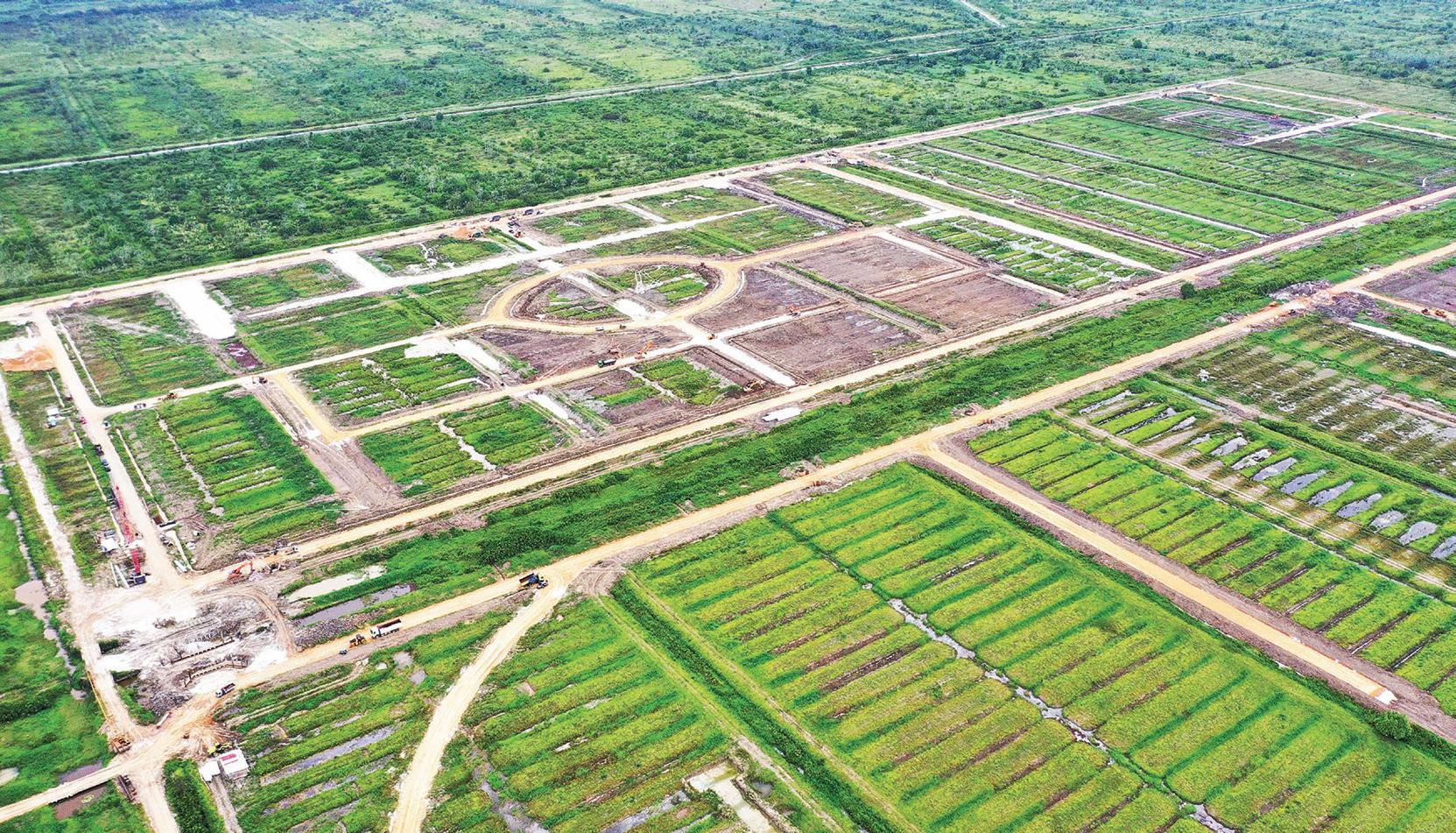
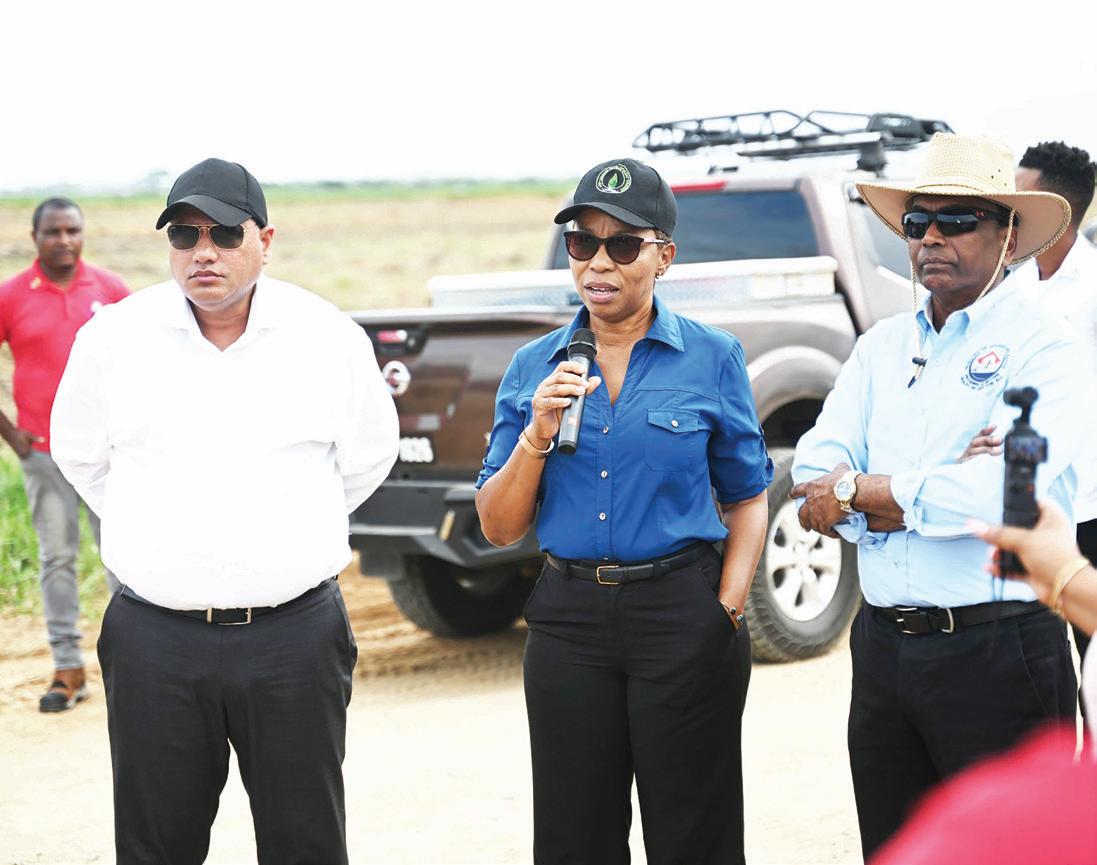
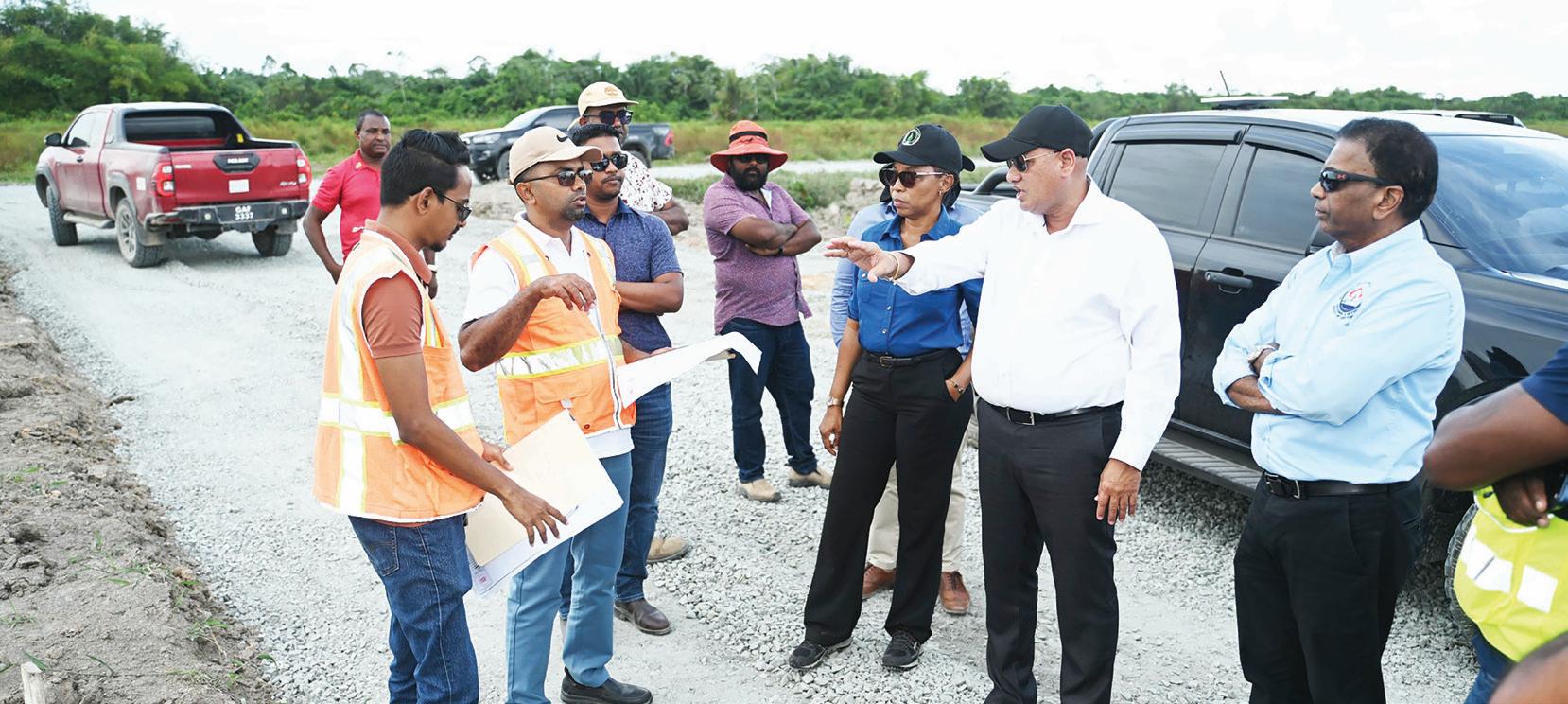
Ongoing infrastructure works in Phase Three of the Wales Housing Development, West Bank Demerara (WBD), are expected to be completed by the end of May, according to Housing Minister Collin Croal. Minister Croal made this announcement during a visit to several areas of Phase Three, includ-
ing Laurentia, Catherina, Lorenzo, Viva La Force and Vriesland.
Works being executed include the construction of access bridges and culverts
and the installation of water distribution networks, all of which form part of the initial stage of preparing the lands for residential development. Approximately
15 contractors are currently engaged in the first phase of infrastructure development in the area. Providing an update on the progress of the project, Croal explained that the Ministry is working toward having the lands ready for prospective homeowners by the end of May.
“We want to see that by the end of May all persons should be able to identify their lots in the Phase Three areas. For those lots
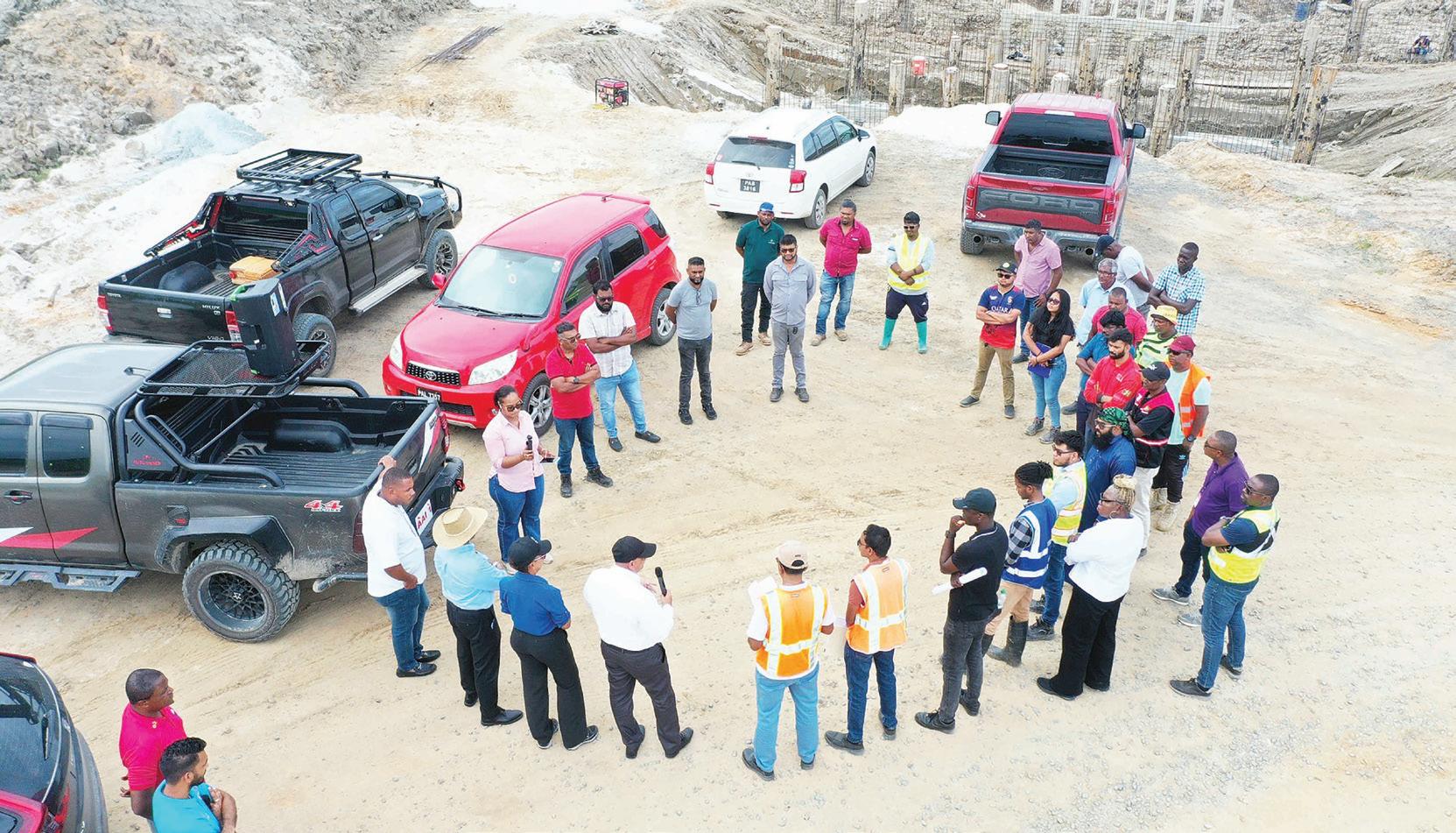
Development. In addition, the Minister within the Housing Ministry, Vanessa Benn, who accompanied Minister Croal, encouraged contractors to maximise the current favourable weather conditions to accelerate works, particularly ahead of the typical May-June rainy season.
“We are now in March and moving closer to the May-June rains. We have good weather now, so please
that are completed ahead of time, we will move to conduct the surveys so that persons can begin seeing their lots even earlier,” he noted. The Minister added that while some access challenges were experienced during the initial stage of the development, most of those issues have since been resolved and works are progressing satisfactorily.
Further, he highlighted that the development forms part of the massive housing rollout in Wales, noting that the Government will continue to expand the area as more lands become available.
“We will continue working as we acquire more lands from NICIL (National Industrial and Commercial Investments Limited). As we acquire more lands, we will continue development for future allocations,” he stated. To date, over 3500 house lots have already been allocated within the Wales Housing
push as much work as possible – but without compromising quality,” she urged.
Minister Benn also reminded contractors of the significance of the project to thousands of Guyanese families.
“What you are doing here is Guyana’s development. It is about ensuring people have access and the opportunity to build their homes. The work you do must ensure that future homeowners have proper roads and access when they begin construction,” she added. The Wales Housing Development continues to play a major role in the Government’s national housing programme aimed at expanding access to homeownership for thousands of Guyanese families. Also, as part of the inspection team were Permanent Secretary Bishram Kuppen and Senior Engineer Anthony Ragnaught, along with other technical staff and engineers overseeing the project.
Minister Vanessa Benn engaging contractors in the presence of Minister Croal and other officials
Officials at the Wales Phase Three site on Friday
Ongoing work on the land
MARCH 15, 2026 |
MARCH
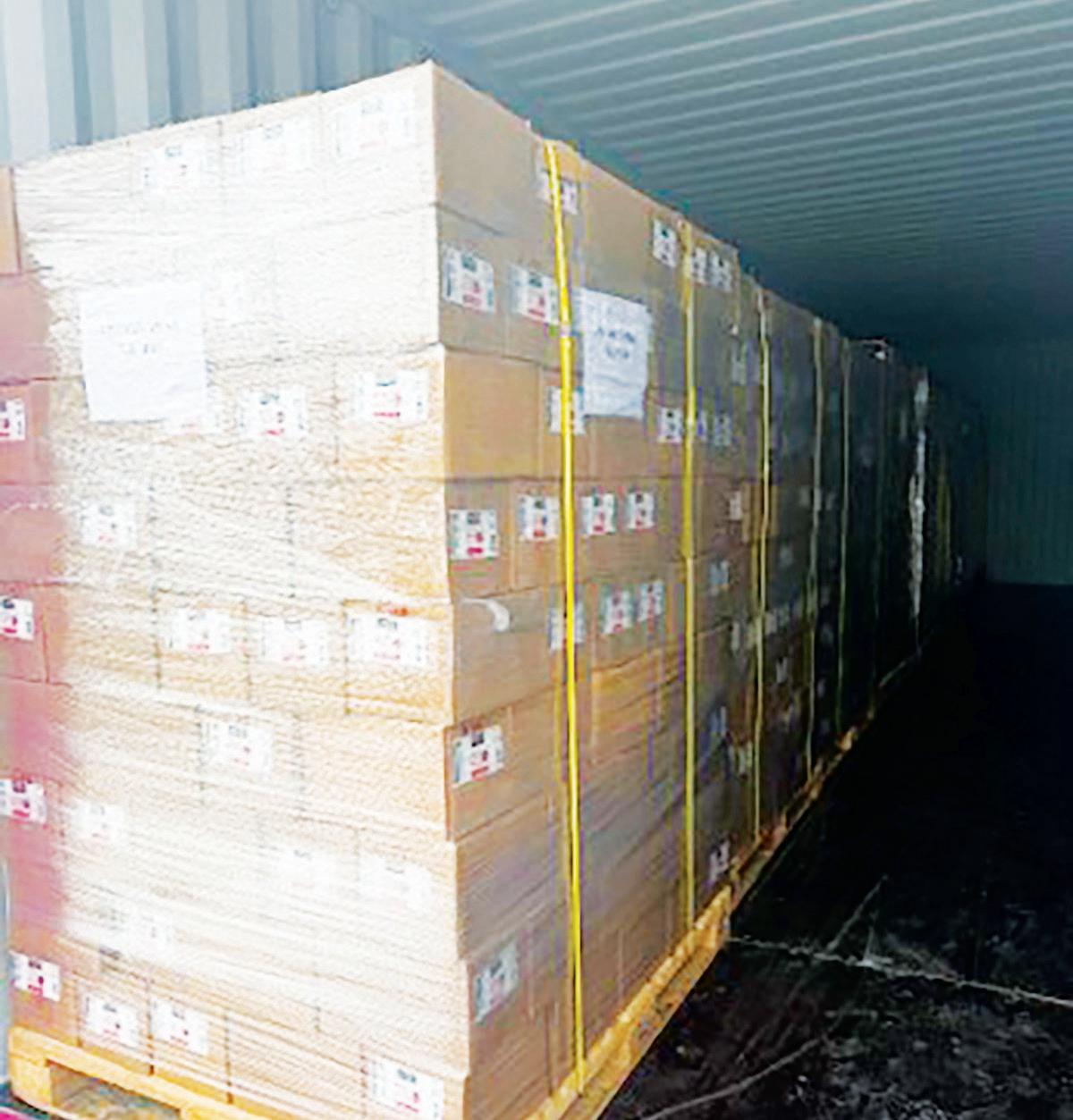
UMAMI products hit T&T market through deal with Massy
The Guyanese-branded UMAMI premium sauces and condiments have entered the Trinidad and Tobago (T&T) market through a strategic distribution partnership with Massy Distribution, marking a significant step in the company's Caribbean expansion.
Under the arrangement, Massy Distribution will distribute UMAMI's range of sauces across T&T through its established retail, grocery, and food service channels, making the Guyanese brand available to consumers throughout the country for the first time.
The move reflects the growing momentum of Caribbean regional trade and highlights the increasing presence of Guyanese manufactured
products in key CARICOM markets.
President Irfaan Ali, in welcoming the development, noted that the expansion of Guyanese agro-processed products into regional markets demonstrates the tangible impact of Government policies aimed at strengthening local manufacturing and exports.
He emphasised that the removal of corporate taxes on agro-processing was intended to stimulate investment, expand production capacity, and position Guyana as a competitive supplier of value-added food products within the Caribbean.
Director at UMAMI, Chris Persaud, stated that "Trinidad and Tobago has one of the most dynamic and sophisticated food markets in the Caribbean."
"Partnering with Massy Distribution allows us to enter the market with a trusted regional leader that understands both the retail landscape and the preferences of Caribbean consumers. We are excited to bring the UMAMI brand and our distinctive flavours to Trinidad and Tobago."
Executive Vice President for Massy Integrated Retail Ambikah Mongroo stated that the company is pleased to introduce the UMAMI brand to consumers in Trinidad and Tobago.
"Massy Distribution is committed to bringing high-quality Guyanese products to the market, and UMAMI's range of sauces represents an exciting addition to our portfolio. We believe Trinidad and
Tobago consumers will appreciate the authentic Guyanese flavours and quality that the brand delivers," she related.
UMAMI has established a strong reputation in Guyana and abroad for producing high-quality sauces using carefully selected local ingredients and modern food manufacturing facilities and standards.
The company's product portfolio includes a range of sauces and condiments designed to complement Caribbean cuisine and contemporary food trends. The expansion represents an important milestone for the company as it continues to scale its manufacturing capabilities and grow its export footprint across the Caribbean region.
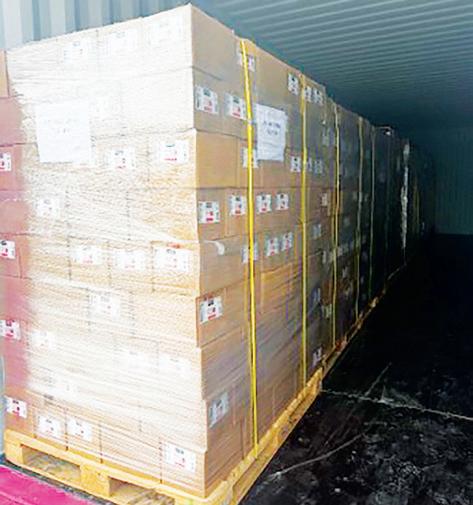
UMAMI premium sauces and condiments loaded and ready to sail
By Mishael henry
If someone told you that it was possible to step into a time machine and return to what many Guyanese describe as the era of “small days”, you might have looked at them with an inquisitive look but still dismissed the idea as impossible.
Yet, 20-year-old Carissa Van Doimen has found a way to bring that nostalgic classroom experience back to life through the creation of her debut Guyanese film, set to be showcased at MovieTowne Guyana, titled “Small Dayz”.
“Small Dayz” is about a young woman stepping into university life and back into her past while navigating campus with a diverse circle of friends, all on a raw and intimate journey to discover who she truly is.
The film, Van Doimen highlighted, will feature brand-new faces in the Guyanese theatre space, creating an arena for a new generation of actors. It is set to premiere on April 2, 2026, and will run in theatres for seven days, with the final showing on April 8.
Taking her place behind the camera in the director’s seat, a
difficult at first, but throughout the course of time, I do believe that I grew to love the people I was working with. They truly embodied passion and resilience in a way that we could easily reflect off each other on the days that were really hard. We always hyped each other up. We were always there for each other,” she explained.
Diving deeper into the film itself, she explained that the tears, sweat, and challenges eventually paid off. For a specific time, cast members would have woken up early, spending gruelling hours just to capture scenes that she would deem up to par standard for wider audiences.
This became easy for her, especially because of the joy she experienced while bringing the project to life.
“Altogether, this film was one of the best projects I have had the pleasure of working on… it was the first time I was able to truly embody concepts that I saw play out in my mind. Notwithstanding, it did have its challenges. There were days when I couldn’t get things out of the way. I wanted to create them, and on those
this film. She pulled me through those moments. I am extremely grateful for her, and without her, I don’t know if we would have such a successful film,” she stated, giv-
is difficult would be an understatement. Some days you don’t know what you’re doing. Some days you feel like you’re a fraud or like you will never get any of these things
ously and supported through funding and investment, it could grow into an industry where people feel seen and represented.
According to her, that vision
ing honour to her co-director –Anastacia Shako Van Tull.
What many moviegoers may not realise when they walk through the doors of MovieTowne is that Van Doimen also took on several tion process. Along with directing, she helped with makeup, ensured tained, and even contributed
done in time. But I think what really inspires and keeps me going is the grace of God.”
Putting God first
“First, God gets me out of bed every morning. God lets me know that I can do anything that I put my mind to, and it really grounds me and helps me get through the day and keep that energy and pace. It is definitely a risk to take on such an undertaking because it can become burdensome. It can become heavy at times, but I think that’s what really helps me to get through.”
Leaning more into her faith, one of the key factors that kept her head above water while undertaking this grand task of filming, Van Doimen noted that her beliefs continue to guide her journey as a filmmaker.
“Christ is my Lord; He pushes me to go through these things, and I am extremely grateful that He sees my potential and pushes me in the right direction. For anyone out there with a dream that seems extremely big, something that feels like you’ll never get through, I think what helps me stay rooted is remembering that this is not only about me – it’s bigger than me.”
She further noted that if filmmaking in Guyana is taken seri-
continues to keep her grounded, as she believes the dream she is pursuing is bigger than herself and worth pushing through the challenges for. Working with a young cast was also a significant part of the experience, and Van Doimen said one of her biggest goals is to see them grow from the opportunity.
“My goal for this young cast is to see them bloom like flowers. I want them to be the biggest thing. I want them to never let shame and doubt dull their light because this cast has the potential to reach the greatest heights. I want them to see that filmmaking is possible, and I want them to inspire generations to come.”
Just as she has brought the concept of a “time machine” to life through her storytelling, Van Doimen also hopes other Guyanese creatives will take bold steps in exploring new ideas and topics.
“My wish for Guyanese creatives is that they stray away from common ideas and comedic backgrounds that sometimes handle heavy themes. Guyanese culture tends to parade around stories that are dark, sometimes removing the merit and reality of hardships and trauma. I hope that people can feel a sense of belonging and connection through this project.
The cast of “Small Dayz”
Carissa Van Doimen at an engagement
Guyanese director Carissa Van Doimen
109 vendors relocated from La Grange –Bagotville corridor to designated tarmac
– selling on roadways will no longer be permitted, Edghill warns
As the Government moves to relocate 109 vendors who currently occupy space along the La Grange–Bagotville corridor, West Bank Demerara (WBD), Public Works Minister Juan Edghill will proceed without interference from outside parties. Following efforts to relocate the vendors, some individuals attempted to derail the process, thus forcing the Minister to address the matter.
He clarified that several individuals who were not on the Ministry’s verified list appeared and demanded spaces, attempting to disrupt the exercise. He added that the 109 vendors who were previously photographed and officially documented by the Public Works Ministry will be accommodated in the relocation effort. However, Edghill on Saturday related that farmers from Canal Nos. One and Two Polders, along with other vendors from different communities, gather
at the location in question on Sundays to sell their produce but emphasised that the area should not be used as a market.
He also noted that there were three stalls with more permanent structures that had been placed directly on the carriageway.
The Minister added that
a technical team had previously conducted a full walkthrough of the area previously to document all vendors operating there. During the exercise, officials photographed stalls and collected details including names and contact numbers. That process, he said, resulted in a list of 109 verified vendors.
“So, all the persons whose names are not among the 109 cannot have their issues addressed today. I am finding spaces for the 109 persons who have been documented, and when we are finished with that, the NDC [Neighbourhood Democratic Council] will be able to advise if they would like to see additional spaces allocated elsewhere for other persons who may be selling,” the Minister said.
“This is not a hustle where everybody can come and decide that they must get a spot,” he added. However, Edghill noted that complaints have since been raised by individuals
claiming that they were not treated fairly or that they were not included on the list.
“We are dealing with 109 persons that can be verified, and that is what we are working with,” he reiterated. Meanwhile, the Minister revealed that a designated tarmac area is currently being constructed nearby to facilitate the vendors’ relocation, with the aim of having the space ready in time for Sunday’s market day.
“When they finish selling on Sunday, they will collapse their tables and stalls, and we will continue to im-
prove the roadway to a more durable, all-weather surface,” he explained. Edghill emphasised that selling directly on the roadway will no longer be permitted once the relocation process is completed. He added that the relocation effort is intended to ensure that the contractor can proceed with the roadworks while also allowing vendors to maintain their livelihoods.
The Minister also noted that the Ministry would have conducted its own independent verification process rather than relying on lists from community groups, the NDC, or
other interested parties. Edghill maintained that the Government will not be pressured into adding individuals who were not documented.
“Even if persons make noise, spread false propaganda, or misrepresent what is happening, we will not be blackmailed or manipulated into giving anyone a spot simply to keep the peace,” he stated. He added that the list of 109 vendors may be further reduced as authorities verify cases where multiple individuals from the same household may have been registered separately.
Public Works Minister Juan Edghill
GDF, international military partners commit to strengthening ties through training, collaboration
The Guyana Defence Force (GDF), along with the Western Hemisphere Institute for Security Cooperation (WHINSEC) and the Regional Security System (RSS), has committed to further strengthening cooperation in professional military education and training, particularly in support of the continued development of non-commissioned officers across the region.
This decision was made following a recent engagement with Chief of Defence Staff Brigadier Omar Khan and delegations from WHINSEC and RSS. Brigadier Khan was accompanied by Colonel Kenlloyd Roberts. However, the delegations were in Guyana to support the delivery and conclusion of the NonCommissioned Officer Professional Development Course (NCOPD), which was hosted by the GDF.
The engagement underscored the importance
of sustained partnerships in advancing professional military development and strengthening cooperation among regional and international security partners. The WHINSEC delegation, led by Commandant WHINSEC Colonel Eldridge R Singleton, included Command Sergeant Major WHINSEC Command Sergeant
Major Roberto H Alvarez; Deputy Commandant, Non-Commissioned Officer Academy First Sergeant James E Bustamante; and Brigade Command
Sergeant Major, Security Assistance Training Management Organisation (SATMO) Command Sergeant Major Jones. Representing the RSS were Director of Training
Lieutenant Commander Brian Roberts and Deputy Chief of Staff, Belize Defence Force Captain (Navy) Mark Peterson. Additionally present were representatives from the United States Military Group (US
MILGP), including Chief US MILGP Commander Christopher Bernotavicius; Deputy Chief US MILGP Lieutenant Colonel David Garcia; and representatives of the US Embassy.
Meanwhile, during the engagement, Colonel Singleton also indicated that the GDF and the RSS are welcome to engage both WHINSEC and the William J Perry Center for Hemispheric Defence Studies in future security and defence-related initiatives.
Regional prison leaders assemble in Guyana for senior correctional officers’ conference
– to use forum to share solutions, strengthen regional partnerships
Senior prison officials and correctional leaders from across the Caribbean are expected to gather in Guyana from Monday for one week aimed at strengthening collaboration and shaping the future of correctional services in the region.
The Guyana Prison Service (GPS) Senior Correctional Officers Conference 2026 will be held from March 16 to 21 under the theme “Fostering Growth, Driving Synergy, and Securing the Future of Corrections”. The event will bring together senior prison officials, regional partners and local stakeholders to discuss training, innovation and the ongoing transition of prison systems from traditional penal models to modern correctional frameworks. Speaking on the programme “Prison in Focus”, Deputy Director of Prisons Kevin Pilgrim explained that the conference represents the largest gathering of its kind since the initiative began in 2021 and reflects the service’s commitment to collaboration.
“It is an exciting conference for 2026. It is our largest conference since we would have started in 2021,” Pilgrim said, noting that the event grew out of retreats previously held by the service. He noted that while prison services across the Caribbean face similar challenges, the forum will provide an opportunity for leaders to share solutions and strengthen regional partnerships. Pilgrim said the event will also highlight Guyana’s ongoing efforts to transition towards a
correctional system focused on rehabilitation and reintegration. “Just like no man is an island, no service is an island,” he said, adding that the conference was designed to bring correctional leaders together as the service continues. Head of Strategic Management, Rae Dawn Corbin, revealed that participants from 14 countries are expected to attend the conference, including several heads of correctional services and senior Government officials. “Basically, 14 regional par-
ticipants from 14 countries,” Corbin said, noting that the conference will also include “the Honourable Minister of Peace and National Security from Jamaica” along with several heads of prison services. Corbin noted that one of the key highlights will be a roundtable session involving heads of prison services, where participants will examine collaborative approaches to addressing regional issues within correctional institutions. “The truth of the matter is we all face
the same challenges,” she explained, adding that the conference aims to produce practical solutions and actionable plans rather than simply facilitating discussion. The conference agenda will include an opening ceremony, a corrections expo, stakeholder collaboration forums, networking sessions, workshops and think-tank discussions.
Participants will also take part in a tour of the Lusignan Prison, where officials will showcase ongoing infrastructure developments and modernisation efforts within the GPS. In addition, two programmes developed in collaboration with the University of Guyana (UG), a Correctional Leadership Programme and a Mental Health Programme are expected to be launched during the conference. Officials say these initiatives are intended to strengthen professional development for correctional officers both locally and across the region.
The conference will conclude with a wrap-up session and formal dinner, with organisers hoping the event will further position Guyana as
a key contributor to correctional reform and cooperation within the Caribbean. In recent years, the GPS has undergone significant reforms aimed at modernising the country’s prison system and shifting its focus from a traditional penal approach to a correctional model that emphasises rehabilitation and reintegration. Part of that transformation includes major infrastructure upgrades at the Lusignan Prison, where several new facilities have been constructed to enhance security, inmate classification, and rehabilitation programmes. The Lusignan facility is among the locations being showcased to regional delegates attending the conference. Authorities have also been working to update the country’s legal framework governing prisons. The Government has indicated that plans are underway to replace the decades-old Prison Act of 1957 with modern legislation that places greater emphasis on rehabilitation, structured inmate programmes, and reintegration into society.
Chief of Defence Staff Brigadier Omar Khan and Commandant WHINSEC Colonel Eldridge R Singleton in discussion
Top international military partners during an engagement
The officials on the Prison in Focus programme
Construction of 400-acre commercial zone in Wales progressing despite initial delays
Major infrastructural works are currently underway to develop the commercial zone at the Wales Housing Development, West Bank Demerara (WBD), with about nine contractors executing works valued at approximately $4.9 billion. The commercial zone, which spans more than 400 acres when completed, will accommodate key facilities, including a truck park and an auto zone, creating a dedicated space for heavy-duty machinery and related com-
mercial activities. During a site visit on Friday, Housing Minister Collin Croal noted that while the project experienced some initial delays due to access challenges, the Ministry is satisfied with the overall progress being made.
“We are pleased with the progress of work thus far. There were some challenges with access which delayed the start of works, but overall, we are satisfied with how the project is advancing,” Croal added. In addition, the Minister within the Housing Ministry, Vanessa
Benn, highlighted the importance of the commercial zone in supporting structured economic activity within the wider housing development.
“We are pleased to be here in this commercial zone. This area is important because we want to ensure that persons who own heavy-duty machinery and equipment have a coordinated space to operate. We are working to ensure that where commercial activities are taking place, there is a dedicated auto zone.” She added that proper zon-
ing is critical when planning for expanding communities, noting that the Ministry is taking a strategic and focused approach to develop-
ment as populations continue to grow.
The Wales Housing Development is one of the Government’s major hous-
ing initiatives aimed at creating sustainable communities with integrated residential, commercial and economic spaces.
The commercial zone being developed
Ministers Collin Croal, Vanessa Benn and other officials engaging contractors at the construction site
T&T PM assures security pact with US won’t affect sovereignty
Trinidad and Tobago (T&T) Prime Minister (PM) Kamla PersadBissessar yesterday described the security benefits obtained from her recent US trip, where T&T signed onto the US-led Americas CounterCartel Coalition alongside several Latin American states and Guyana, as a shield for the people of T&T.
However, she is assuring that this arrangement will not affect the country’s sovereignty.
Persad-Bissessar detailed the security and business meetings arising from the US event – and she blamed the People’s National Movement (PNM) for “doing nothing” on crime.
The PM noted that on March 7, US President Donald Trump “hosted select leaders from across the western hemisphere, including T&T” at the ACCC Summit.
Extending deep gratitude to Trump for including T&T in a historic coalition, PersadBissessar said, “T&T stands proud to be part of a new part-
nership, a strategic alliance designed to confront cartel violence through coordinated security, intelligence sharing and joint operations across the Americas. Our continued partnership with the US – and others across the hemisphere – can only augur well for T&T, especially in this very critical areas of crime and security.
Persad-Bissessar said T&T’s crime crisis cannot be solved in isolation.
“The dangers posed by illegal drugs, illegal firearms, and organised gangs
aren’t local problems. They are part of a transnational criminal system stretching from South America through the Caribbean into North America. These networks move cocaine, heroin and synthetic drugs through our waters and ports. In return, illegal firearms and illicit money flow back into our communities... This issue isn’t just a local problem. It’s a hemispheric challenge requiring an international response.” (Excerpt from Trinidad Guardian)
Haitian asylum seeker found dead days after ICE monitoring release in Pittsburgh
AHaitian asylum seeker was found unresponsive at a Pittsburgh bus shelter days after she was released from jail and placed under electronic monitoring by the US Immigration and Customs Enforcement, WTAE Pittsburgh confirmed Friday.
Daphy Michel, 31, died on March 2 after maintenance workers discovered her at a bus shelter, according to Port Authority Police. Officers attempted life-saving measures, including CPR, an automated external defibrillator, and Narcan before she was transported to UPMC Presbyterian Hospital in critical condition. Doctors later told her family she suffered cardiac arrest. The Allegheny County Medical Examiner has not released an official cause of death.
Michel’s brother, Carlo Michel, who spoke to WTAE,
said he learned of her death when a hospital contacted him asking if he recognized her name.
Michel had been held nearly six months in the Washington County Jail in Washington, Pennsylvania, on a $10,000 bond.
Court records show a neighbour reported in
September that Michel was experiencing significant mental health episodes. Her preliminary hearing was postponed seven times while she awaited a mental health evaluation, according to the Washington County Public Defender’s Office.
On February 26, a Judge dismissed two misdemeanour charges of harassment and threats.
Carlo Michel said he expected his sister to be released shortly afterward.
“At the court, I saw my sister. I saw Daphy. She wasn’t having any problem,” he said through an interpreter in an interview with Pittsburgh’s Action News 4.
Instead, he received a call from a doctor on March 2, informing him that she had died. (Excerpt from The Haitian Times)
Caribbean exams enter digital era with CSEC
The January 2026
Caribbean Secondary Education Certificate (CSEC) examinations, which were administered in full electronic and hybrid formats, have been hailed as a “landmark achievement” that “demonstrated that digital examinations delivery is not only viable, it is the future” of the region. That conclusion was delivered by Caribbean Examinations Council (CXC) registrar and CEO Dr Wayne Wesley during a virtual press
conference on Friday to discuss the results of those examinations.
According to the CXC head, there were also “positive experiences from the countries where these examinations were conducted with both electronic and hybrid delivery”.
Noting that this did not mean “there weren’t any challenges or room for improvement” Wesley assured that “none of these issues compromised the integrity of the January 2026 examinations”.
In the meantime, CXC remains concerned about the level of non-attendance at exams.
Urging candidates to “at least turn up”, Manning said: “We want to encourage that for those candidates sitting exams in May-June, please. If even if it is that you’re feeling unprepared, we are encouraging you, and we are saying that you may be more prepared than you realise. So it’s important just to show up,” she said. (Excerpt from Jamaica Observer)
B’dos: Serial killer gets at least 3 decades behind bars
Aself-confessed killer who murdered three people, including his mother, in a series of gruesome and remorseless attacks over a five-week period, has been sentenced to life imprisonment with eligibility for release after 33 years.
Ramario Antonio Roach, of Ocean Breeze, River Bay, St Lucy, was charged with the slayings of Tyrone Austin on December 18, 2018, his mother, Joanne Roach, between January 18 and 21, 2019, and Dr Sarah Sutrina between January 20 and 22, 2019. He was 18 years old at the time.
He pleaded not guilty to murder on all three counts
but admitted to manslaughter by reason of diminished responsibility, which was accepted due to his psychiatric report. Roach has been diagnosed
with schizophrenia and cannabis use disorder.
Justice Laurie-Ann Smith-Bovell sentenced Roach to 35 years for killing Austin and to life imprisonment with a 40-year and 60-year tariff for the slayings of his mother and Dr Sutrina, respectively. In her ruling, the Judge highlighted the evidence presented by the psychiatrist regarding the manslayer’s retained responsibility for the killings. She outlined that Roach’s “level of culpability was high and that despite your mental illness, you were aware of what you were doing”.
(Excerpt from Barbados Today)
A&B pushes for gender-sensitive climate action at UN Forum
Director of the Directorate of Gender Affairs Jamie Saunders has delivered a compelling case before a United Nations meeting for gender equality to be fully aligned with the ambitions of climate finance.
He made the point during a side event featuring a prestigious panel of speakers on Advancing Climate Justice through Gender-Responsive Climate Finance. He used the opportunity to outline the Government’s policy on this very issue and shared his views on how inclusive climate financing can serve as a powerful tool in advancing gender equality.
Citing a broad range of examples as to what needs to be done, he pointed to the standout initiatives where Antigua and Barbuda is demonstrating leadership in advancing climate justice through the principle of gender-responsible climate finance. He stated gender responsiveness is integrated into the country’s climate governance architecture and its updated Nationally Determined Contributions (NDCs) as a matter of policy.
While contributing to the discussions, Saunders further detailed other initiatives that he said were advancing gender-responsive climate action in strengthening community
resilience, support women’s leadership in agriculture and climate adaptation, and expand training and outreach across vulnerable communities.
Meanwhile, Minister of State in the Ministry of Works and Housing and Leader of Government Business in the Senate, the Hon. Shenella Govia, described her participation in CSW80 as a truly moving and rewarding experience. She noted it was important for Antigua and Barbuda to stand alongside other nations in sharing progress and collectively seeking solutions to accelerate the advancement of gender equality. (Excerpt from Antigua Newsroom)
Japan to equip St Lucia hospital with new beds, defibrillators, ECG machines
The Owen King EU Hospital is set to receive a donation of new medical equipment thanks to Japan’s Grant Assistance for Grassroots Human Security Projects programme.
The hospital will receive 12 medical beds, two automated external defibrillator machines and two electrocardiogram machines, which officials say will help alleviate “ongoing bed shortages and enhance care delivery”, allowing patients to receive more timely assistance.
The equipment will be placed in the general wards, the Intensive Care
Unit, and the Accident and Emergency Department, with procurement expected to take place in the coming month, officials said.
During a ceremony held to sign a memorandum of understanding for the initiative, Ambassador of Japan Akima Umezawa, highlighted his Government’s commitment to supporting initiatives that enhance access to healthcare in Saint Lucia and emphasised the importance of disaster and emergency risk management for islands.
Expressing gratitude for the partnership
and donation, Damian Greaves, Chief Executive Officer of the Millennium Heights Medical Complex (MHMC), said, “Today’s signing represents more than the formalisation of an agreement, it is a reflection of the shared commitment between our nations to advancing human security and strengthening community health systems, particularly at the level where care most directly touches people’s lives.”
An official commissioning ceremony to mark the partnership is also expected to take place at a later date. (St Lucia Times)
Prime Minister Kamla Persad-Bissessar makes a statement about her participation in the Shield of the Americas Summit
Daphy Michel, a 31-yearold Haitian asylum seeker
Ramario Antonio Roach
OIL NEWS
Kharg Island, struck by US, key hub for Iran's oil exports
KAround the World
Russia exploiting Iran war, Zelenskyy says after fresh bombardment
Ukrainian President Volodymyr
Zelenskyy has accused Russia of attempting to exploit the war in the Middle East to cause "even greater destruction" in his country.
He said Ukraine needed air defence systems regardless of what was happening elsewhere. The US-Israeli war with Iran has led to many air-defence missiles being expended fending off retaliatory attacks.
Zelenskyy's comments came after Russia launched another massive aerial bombardment overnight into Saturday in which at least five people were killed.
About 500 drones and missiles were launched during the latest wave of Russian strikes, he said. Though most were intercepted, they caused casualties and damage across the country, he added.
Four people were killed
in the Kyiv region and many more injured in the latest strikes, Ukrainian officials have said.
Later, a Russian strike on a residential area near Zaporizhzhia reportedly claimed another life and wounded 18 people.
The 430 drones and 68 missiles do not constitute the largest Russian bombardment Ukraine has seen, but it is among the more sizeable ones launched in recent months.
Zelenskyy wrote on social media: "Russia will try to exploit the war in the Middle East to cause even greater destruction here in Europe, in Ukraine."
The Ukrainian leader noted that the attacks were a reminder to Kyiv's partners that air defences were a "daily necessity" for Ukraine, urging them to supply more as quickly as possible. (Excerpt from BBC News)
harg Island, where US forces on Friday destroyed military targets, is the hub for 90 per cent of Iran's oil exports and has long been seen as a key vulnerability that would provoke a severe response by Tehran if attacked.
President Donald Trump said on social media that the US "totally obliterated every MILITARY target" on Kharg and threatened that oil infrastructure could be targeted if Iran continues to interfere with shipping in the Strait of Hormuz.
Iran, which ramped up oil output in the run-up to the February 28 launch of the war by Israel and the US, has continued to ship oil at a rate of 1.1 million to 1.5 million barrels per day, TankerTracker.com and Kpler data show.
Markets were watching for any sign that the strikes had damaged Kharg's intricate network of pipelines, terminals and storage tanks. Even minor disruptions could further tighten global supply, adding pressure to an already volatile market.
"You take out Kharg infrastructure, then you take two million bpd [barrels of oil per day] out of the market for good – not until the Straits get fixed," said Dan Pickering, chief investment officer for Pickering Energy Partners.
Iran's armed forces said Saturday that any attack on Iran's oil and energy infrastructure will lead to attacks on energy infrastructure owned by oil companies cooperating with the US in the region, Iranian media reported.
Iran has all but shut shipping through the Strait of Hormuz, through which 20 per cent of global oil flows, mostly to Asia. (Excerpt from Reuters)
France returns sacred talking drum looted from Côte d’Ivoire over 100 years ago
Asacred artefact looted by French colonial authorities more than a century ago has been returned to Côte d’Ivoire in one of the most significant cultural restitutions to a former French colony in years.
The Djidji Ayôkwé, a talking drum confiscated in 1916 by French administrators, landed at 08:45h on Friday at the airport in Port Bouët on the outskirts of the economic capital, Abidjan. It was handed over to Ivorian officials in Paris earlier this month after being removed from the Quai Branly –Jacques Chirac Museum.
Aboussou Guy Mobio, the chief of the AdjaméBingerville community, said: “After a long stay away from this land, it is returning to its own people, and it is an honour for us and a relief to welcome it. This is the missing
piece of the puzzle that is returning today … Receiving this sacred instrument is a relief, but it is also another form of connection with our ancestors who were very close to this instrument.”
The French President, Emmanuel Macron, promised to return the drum in 2021, but it took four years of discussions and lobbying for the French Parliament to ratify and approve the decision.
Côte d’Ivoire’s minister of culture and Francophonie, Françoise Remarck, thanked President Alassane Ouattara and Macron for what she called “a historic day”.
Sylvie Memel Kassi, a former director of the museum and founder of the TAPA Foundation for Arts and Culture, said the drum’s return to Ivorian soil paved the way for more restitution.
Trump rejects efforts to launch Iran ceasefire talks, sources say
President Donald Trump's Administration has rebuffed efforts by Middle Eastern allies to start diplomatic negotiations aimed at ending the Iran war that started two weeks ago with a massive US-Israeli air assault, according to three sources familiar with the efforts.
Iran, for its part, has rejected the possibility of any ceasefire until US and Israeli strikes end, two senior Iranian sources told Reuters, adding that several countries had been trying to mediate an end to the conflict.
The lack of interest from
Washington and Tehran suggests both sides are digging in for an extended conflict, even as the widening
war inflicts civilian casualties and Iran's closure of the Strait of Hormuz sends oil prices soaring.
US strikes on Iran's Kharg Island, the country's main oil export hub, on Friday night underscored Trump's determination to press ahead with his military assault. Iran's new Supreme Leader, Mojtaba Khamenei, has vowed to keep the Strait of Hormuz shut and threatened to step up attacks on neighbouring countries. The war has killed more than 2000 people, mostly in Iran, and created the biggest-ever oil supply disruption as maritime traffic has halted in the Strait of Hormuz, through which a fifth of the world's oil is transported. (Excerpt from Reuters)
Pakistan strikes Afghan base after its President warns “red line” crossed
Pakistan has carried out strikes on an Afghan military facility in Kandahar after Taliban drones targeted civilian areas and military installations across the country.
The strikes on Saturday came after Pakistani President Asif Ali Zardari condemned the overnight drone attacks, warning Kabul it had “crossed a red line by attempting to target our civilians”.
Pakistan’s military said the drones, described as locally produced and rudimentary, were intercepted before reaching their targets, though falling debris wounded two children in Quetta and civilians in Kohat and Rawalpindi.
A security source told the AFP news agency that airspace around the capital, Islamabad, had been temporarily closed when the drones were detected.
Islamabad said the Kandahar facility had been used both to launch the drone attacks and as a base for cross-border rebel activity.
The exchange marks the sharpest single escalation yet in a conflict that has been building since late February, when Pakistan launched military operations against what it said were Pakistani Taliban fighters sheltering on Afghan soil.
Islamabad also accuses
Kabul of harbouring fighters from the ISIL (ISIS) group’s Khorasan province affiliate. The Taliban Government has denied both charges. The drone attacks followed Pakistani strikes on Kabul and eastern border provinces in Afghanistan overnight on Thursday into Friday. The Pakistani attacks killed four people in the capital, women and children among them, and two more in the east.
Pope Leo moves into papal residence eschewed by Pope Francis
Ten months after taking office, Pope Leo XIV on Saturday finally moved into his apartments in the Vatican's Apostolic Palace, a historic papal residence that his predecessor had eschewed.
"This afternoon, Pope Leo XIV will take possession of the apartment in the Apostolic Palace, moving, with his closest collaborators, into the spaces previously used by his predecessors," the Vatican
said in a statement.
Leo, the first US Pope, decided to move into the apartments in the wake of his May 8, 2025, election as head of the world's 1.4 billion Catholics.
But after being abandoned under the late Pope Francis, who chose a more modest dwelling elsewhere in the Vatican, they required extensive renovation.
During the interim, the 70-year-old Leo continued
staying at the Palace of the Holy Office, near the Vatican, where he had lived as a cardinal.
The large apartment he has moved into includes bedrooms, a chapel, a vestibule, a library, an office, a dining room and a room from which the pontiff recites the Angelus prayer every Sunday through a window overlooking St Peter's Square.
Francis had shocked tra-
ditionalists when he decided on his election in 2013 to live in a simple apartment in the Santa Marta guesthouse in the Vatican, where he remained until death.
The gesture was acclaimed by supporters of a humble Pope but attracted criticism from conservatives, who accused him of divesting the papacy of a sacred element.
(Excerpt from CBS News)
A man walks amid rubble in the aftermath of a strike amid the US-Israeli conflict with Iran.
(March 21April 19)
TAURUS (April 20May 20)
GEMINI (MAY 28June 20)
(June 21July 22)
Slow down, observe what’s happening around you, and sidestep any drama that’s unfolding. Consider your concerns and what you can do to help. Engage in volunteer work or join an organization that shares your beliefs and offer your time and skills. Participation will lead to new beginnings and connections that go beyond work. Romance is on the rise.
Distance yourself from emotional mayhem. A change will do you good. Consider learning something that can help you divert your skills in a new direction. You’ll feel a drive to reinvent yourself or to change your lifestyle to satisfy your needs. A chance to give back to someone or something instrumental in your life looks promising.
You’ll face both the negative and the positive today. Be quick to eliminate what’s not best for you and implement what is. Refuse to let persuasive individuals coerce you into something that benefits them more than you. Do your due diligence and choose the path that soothes your soul. Personal growth and romance are within reach.
Act, speak up, and make a difference. Refuse to get into a physical altercation; use your intelligence to outsmart anyone who gets in your way. Your strength is in your ability to convince others to see things your way. Opportunity knocks, and being present, aware, and ready to make a difference will pave the way to interesting prospects.
Live and learn. Take a tactical approach to knowledge. Experience is the best teacher, and participating can help you cut corners. Trust and believe in your ability to make things happen and to take a leadership position. Travel, reunions, and communication will lead to a unique adventure and opportunities. Physical improvements, health, and romance are on the rise.
VIRGO (Aug. 23Sept. 22)
Size up your relationships and consider who is a benefit or liability. A change of heart can help you align yourself with those who share your opinions and desire to make a difference. Talks will be the telltale sign that indicates how and where you want to live. Leave nothing to chance, choose what makes you happy.
LIBRA (Sept. 23Oct. 23)
Drum roll, step into the spotlight, and charm your way into the hearts of whoever’s listening. High-energy, sound ideas will win you access to those who can help you achieve your objective. Social events will open doors, and sincerity and discipline will help you hit a home run. Personal gain and love are on the rise.
SCORPIO (Oct. 24Nov. 22)
SAGITTARIUS (Nov. 23Dec. 21)
AQUARIUS
(Jan. 20Feb. 19) (Dec. 22Jan. 19) LEO (July 23Aug. 22)
PISCES
(Feb. 20Mar. 20)
You’ll need to rely on your quick wit and intellectual superiority to ward off those using emotional manipulation to try to reroute you. Trust your instincts, take your position, and hold tight regardless of what others choose to do. Create your own opportunity, and you will gain respect and the confidence to pursue your goals.
Take care of unfinished business, money matters, health concerns, and domestic issues. Avoid temptation, overspending, and unhealthy practices. You have plenty to gain by focusing on creative endeavors, self-improvement, and nurturing relationships that are essential to your happiness and peace of mind. A kind gesture, offer, or suggestion will segway into a romantic endeavor.
Don’t kid yourself into thinking that everyone feels or thinks the same way you do. Listen, observe, and bide your time. He who holds the most knowledge will be in the best position. Choose to use your intelligence to your advantage regarding investments and projecting trends that can influence how you earn a living.
Emotions, high energy, and the desire to bring about positive change will help you spiral forward with strength and courage. Domestic changes will come to light, making your life easier. Share your vision, and the feedback you receive will support your long-term plans. A new look will boost your ego, and a romantic gesture will offer unique rewards.
A little charm will go a long way when trying to impress someone. Stick to your script and be sure to follow through with any promises you make today. Engage in outings that give you a platform to promote your plans. Participation will help you gain a foothold in prestigious places. Build a good support team and thrive.
Peanuts
Calvin and Hobbes
Pickles
Archery Guyana on Friday announced that Brandon Cummings and Ravish Singh will be flying the Golden Arrowhead at IV South American Youth Games Panama 2026 in archery.
Cummings will compete in the Individual Recurve category, while Singh will take on his opponents in the
Individual Compound category. Both athletes have been engaged in an intensive training programme under the guidance of World Archery Level Two Certified Coach Ryan McKinnon, who will accompany the athletes to Panama to provide technical support and mentorship throughout the Games. The archery competition
All WI T20
CDuo to represent Guyana in archery at IV South American Youth Games in Panama
is scheduled for April 15–18, 2026, and will be held at the Estadio de Tiro con Arco at the Ciudad Deportiva Irving Saladino in Panama City.
The Games are expected to bring together more than 1500 athletes from 15 National Olympic Committees of the Organización Deportiva Suramericana (ODESUR),
representing countries including Argentina, Bolivia, Brazil, Chile, Colombia, Ecuador, Paraguay, Peru, Uruguay, Venezuela, Suriname, and host nation Panama, among others.
These Games serve as a major multi-sport platform for the region’s emerging athletes and promote excellence, friendship, and the Olympic spirit.
In preparation for the
event, Cummings and Singh have been undertaking focused training sessions aimed at sharpening their technical execution, mental focus, and competition readiness. Their preparation reflects Archery Guyana’s continued commitment to developing athletes capable of competing at the highest regional and international levels.
The Board of Directors of Archery Guyana also wishes
to express its sincere appreciation to President Godfrey Munroe and the Executive Committee of the Guyana Olympic Association for their support in facilitating the country’s participation in these Games. The Association looks forward to travelling alongside the other disciplines that will represent Guyana and proudly showcasing the nation’s talent on the international stage.
World Cup squad
back home safely – CWI
ricket West Indies (CWI) on Saturday stated that all players and members of the Team Management Unit (TMU) who were part of the West Indies Men’s squad at the ICC Men’s T20 World Cup in India have returned home safely.
In a release to the media, CWI stated that following the previously outlined challenges relating to cancellations of chartered flights coordinated by the International Cricket Council (ICC), commercial travel was successfully secured for the members of the squad last week.
“The final group of players and support staff completed their journeys over the past several days and have now safely arrived at their respective destinations as of Saturday, March 14, 2026.”
However, CWI extends its sincere appreciation to the ICC, regional cricket boards, and other stakeholders who assisted in facilitating the safe return of the team.
“We also thank West Indies fans and the wider cricketing community for their concern and well-wishes.”
It reiterated that the well-being and safety of our players and staff remain paramount, and the CWI is grateful that the matter has now been brought to a safe and satisfactory conclusion.
On March 3, it was reported that the charter flight, intended to transport both the West Indies and South African teams, was repeatedly delayed.
After completing play, the West Indies squad remained in India for nine days awaiting travel.
However, ongoing uncertainty surrounding the ICC-organised charter, as a result of global tensions and aviation regulations, made the situation increasingly distressing.
In the interest of the well-being and safety of its players and support staff, Cricket West Indies advised the ICC that it was no longer prudent to continue waiting on the charter arrangements, which remain uncertain.
As such, multiple approaches had been made through CWI, players, and other partners, in coordination with the ICC, to secure commercial travel to facilitate the squad’s safe return.
Some players and staff had departed while the others were scheduled to travel out on Tuesday, March 10, and Wednesday, March 11, 2026.
Tevin Imlach XI Spinners rock Nandu XI as match ends in draw
Adramatic shift un folded on Day Three in the Harpy Eagles' practice match as Matthew Nandu XI suffered a major batting collapse, yet the con test ultimately finished in a draw after Tevin Imlach XI’s second innings response.
Resuming the day in a strong position at 110 for 2 in 58 overs, Matthew Nandu XI looked well placed to build a commanding total. However, the innings unrav elled as the middle and low er order failed to withstand sustained pressure from the opposition spinners. From that promising start, the side slumped to 164 all out in 81.2 overs, losing eight wickets for just 54 runs.
The main resistance came from Kemol Savoury, who produced a determined knock of 63 from 146 deliveries, striking four boundaries and two sixes. Savoury showed patience and composure at the crease, attempting to anchor the innings while wickets continued to fall around him.
Earlier, Zeynul Ramsammy contributed 32 runs before being bowled, but once he departed, the batting line-up struggled to contain the spin attack.
Tevin Imlach XI’s bowlers dominated proceedings, with their spinners leading the charge. Richie Looknauth was particularly
added 22 before both fell as the innings began to lose momentum. Lower down the order, only brief contributions followed as the spin duo tightened their grip on the game. Despite the late surge from Tevin Imlach XI and their success with the ball, time ran out for either side to force a result. With no further play possible to produce a decisive outcome, the match concluded in a draw.
As preparations continue for the upcoming regional season, the Guyana Harpy Eagles will return to action in another practice encounter, with the second match scheduled to be played at Everest from March 17–19.
The fixture will provide the squad with another valuable opportunity to fine-
tune combinations and build momentum ahead of competitive cricket.
The Harpy Eagles enter the new campaign with an impressive record, having firmly established themselves as the dominant force in West Indies firstclass cricket. The Guyanese side are the reigning West Indies Four-Day champions, capturing the last three consecutive titles and an outstanding eight of the past ten championships.
With such a proud record to defend, the upcoming practice match is expected to play an important role in sharpening both bat and ball as the team continues its preparations to maintain its regional supremacy.
Richie Looknauth had a solid outing
The West Indies T20 Squad
Brandon Cummings (on left) and Ravish Singh (on right)
The Jumbo Jet Auto Sales National Open Chess Championships and the Diamond Fire Insurancesponsored National Chess Championships got underway on Saturday at the David Rose Special School.
In the National Open Championship, defending champion CM Taffin Khan stands ready to face a formidable field of senior and junior challengers who have shown their experience and tactical brilliance throughout the qualifiers to secure their spots in the top nine.
To retain his title, Khan must fend off seasoned play-
ers FM Anthony Drayton, CM Ronuel Greenidge, Keron Sandiford, Rolex Alexander, Jaden Taylor,
and Leslie Campbell. Simultaneously, he faces the junior titans, including U16 Open Champion Candidate Master Sachin Pitamber, reigning National Junior Champion Kyle Couchman, and the determined Alexander Zhang, all of whom are eager to claim the championship.
On the women’s side, a unique drama unfolds as defending champion WCM Aditi Joshi faces a gruelling double-edged challenge. Not only must she defend her prestigious title against a relentless field of challengers, but she is also locked in an intense battle
$1.7M up for grabs in Linden Town Week Inter-Ward Football Championship
– Tournament kicks off on April 24 with teams from 6 wards
with her academic examinations.
Standing in her way are former champions WCM Sasha Shariff and WCM Jessica Callender, both determined to reclaim their former glory. They are
joined by seasoned veterans Treskolé Archibald, Ciel Clement, Anaya Lall, and Italy Tonne-Chung. Adding to the pressure is the formidable young chess prodigy Kataleya Sam, the reigning U14 and U16 Girls’ Chess Champion, while rising stars Parnita Kishun and Sana Sreebalakumar wait in the wings, eager for the chance to dethrone WCM Joshi.
A total of 20 players is locked in battle, including the defending champions, fighting to retain their respective titles, while a pool of determined opponents is threatening to unseat them.
The first four rounds of the nine-round Round Robin tournament will take place this weekend before
20 players locked in battle for Jumbo Jet/Diamond Fire National Chess Championship titles
concluding over the next two weekends. The tournament features a classical time control of 90 minutes per player plus a 30-second increment per move.
The Federation expresses its sincere gratitude to the sponsors for coming on board to support the development of chess in Guyana, and special thanks to the David Rose Special School for always providing the venue for our tournaments. All boards for each category will be live-streamed on lichess.org by John Lee, FIDE Arbiter and Technical Director for the Guyana Chess Federation. Results and pairings will be published on Chess-results. com.
The Linden Town Week Inter-Ward Football Tournament will see the winners walking away with $1 million while the runners-up will bag $400,000, and the third-place winner will get $200,000. The fourthplace finisher will collect $100,000.
The tournament will commence on Friday, April 24, 2026, with the finals on Friday, May 1, 2026, at the Bayroc National Stadium.
The teams participating in the event will attend a briefing at the Bayroc National Stadium on Friday, April 10, where the tournament booklet and rules will be distributed.
At the launch, the co-director of the Kashif and Shanghai Organisation, Kashif Muhammad, informed the ward representatives, “We all know that football is Linden’s main sport, and with that, we decided to round up some finances and keep football going in Linden. We reached out to the UDFA and decided to collaborate to do this inter-ward event, where we will have six wards. They are Amelia’s Ward/Kara Kara, Central Mackenzie/ South Mackenzie and Mines, Silvertown/West Watooka and Canvas City, Blueberry Hill/Alleys/
Valleys/Christianburg, Half Mile/One Mile/Scheme, and Block 22/Wisrock. We think this encompasses all the footballers in Linden.”
Muhammad reflected on what inspired the Kashif and Shanghai Organisation to return to promoting football in Linden and said that when the Bayroc National Stadium was opened by President Irfan Ali, “I was really impressed by the football game that was played between the Georgetown Football Association and counterparts UDFA. Nice football, beautiful passes, the guys’ condition was relatively good, and I was truly impressed. And because of that, we realised that we don’t want football to die because everyone is excited.”
He informed all that
“We have a beautiful facility, the Bayroc Stadium, and very soon, within the next two months, I would say, we will have the Mackenzie Stadium opened, and the Honourable Minister of Sport Charles Ramson Jr said that football would be played at both places. In fact, the UDFA League would be played at both venues.”
Long-time associate of the K & S Organisation, Franklyn Wilson, opined, “The Kashif and Shanghai Organisation, which, of
course, is a household name in Linden, would have taken up the challenge to bring back competitive football in Linden, which has been held by the UDFA. The KS held discussions with the UDFA; it’s a partnership, more or less. I think Town Week would have provided the ideal platform to relaunch competitive football in Linden.”
Representing the UDFA was its treasurer, Kevin DeJonge, who said the UDFA sees this as a jump start for them and their domestic football programme. He expressed that the association supports the initiative to team up with the K & S organisation.
DeJonge, looking ahead, offered, “Outside of the Bayroc Stadium, we know the Mackenzie Sports Club will be coming on board, and this will add a lot to what we want to do because immediately after this, we will be looking at getting our league in place. We will be getting our knockout competition and focusing on our youth development football.
This is just a part of what we plan as we are looking forward to the support of the public. The inter-ward is an all-inclusive competition. We are excited and looking forward to bigger and better things.”
JS Racing Stables’ duo Mapa Do Brasil, Companheiro Leal, and Stormy Victory are the three horses confirmed for today’s (Sunday, March 15) feature race at the Kennard’s Memorial Turf Club.
The trio is expected to battle it out across nine furlongs, and the winner will be rewarded with a $2 million cash pay-out.
JS Racing Stables announced themselves with multiple good outings across various horse racing venues in Guyana, and this has been a happy hunting ground for them. Mapa Do Brasil won the Boxing Day feature and is expected to provide another grand running.
The big horses will have their eyes locked on August 23, 2026, for the Guyana Cup. The more immediate assignment will be the Easter Cup, which is set for April 5 at the Port Mourant Turf Club.
The Easter Cup will be the second nomination day for the Guyana Cup, and some of the horses will be warming up at the Kennard Memorial Turf Club for the major races looming.
Among the other horses that will be in action are Grande Rainha, Frontline Warrior, Qurbaan’s Kingdom, Full Liberty,
Stolen Money, among others.
There is a race for H Class horses, which will see the winner claiming $450,000 and a trophy at a distance of seven furlongs.
The three-year-old Guyanabred maiden event will see the winner walking away with $350,000 and a trophy in the six-furlong event.
The J Class seven-furlong race has a pole position of $350,000 and a trophy.
The race for K Class and lower horses carries a winning purse of $350,000 over six furlongs.
There is also an event for L Class maiden horses, which will see the animals racing for a top purse of $350,000 and a trophy, running at six furlongs. The event will be held under the rules of the Kennard Memorial Turf Club.
These races are being run under the rules of the Kennard Memorial Turf Club. If there are fewer than five horses entered for any event, the club reserves the right to cancel or reframe the said event or reduce the prize money after consulting with the horses’ owners.
Five horses must start before a third prize is to be paid. Seven horses must start before a fourth prize is to be paid. If only four horses start, the prize mon
Mapa Do Brasil has good memories at the Kennard Memorial Turf Club
Co-Director of the Kashif and Shanghai Organization, Kashif Muhammad, other officials and representatives for the teams at the launch
Defending champion WCM Aditi Joshi
Seasoned player FM Anthony Drayton
“Nationals” has consistently elevated athletes from school level to world-class standards – Min Jacobs
The National Secondary Schools Track and Field Championships brought together more than 1500 student-athletes from across the country to showcase their talent in various disciplines over three days of intense competition.
At the end, President’s College successfully defended their championship after some fierce competition from Linden’s dominant schools.
Speaking at the conclusion of the event on Friday evening, the Minister within the Ministry of Culture, Youth and Sports, Steven Jacobs, commended the standard of competition and the role the championships continue to play in developing elite athletes.
“This competition is now in its 66th year. It has taken different forms over time in relation to secondary schools, but these nationals have consistently elevated ath-
letes from the school level to world-class standards,” Jacobs said.
He pointed to several athletes who have emerged from the system and gone on to represent Guyana on the international stage, including Emmanuel Archibald and Tiana Springer.
According to Jacobs, the performances at this year’s championships also demonstrated that many young athletes are recognising the opportunities that sport can provide.
“We had at least one person qualifying for the games, but generally you are seeing the talent, and these young people understand that now is the best time for them in relation to opportunity,” he said.
The Minister also highlighted Government initiatives aimed at supporting athletes, including the launch of a new elite training programme designed to pre-
gle person – are equipped with the necessary skills, not only for the work environment but also the social skills that play a major role in society,” he noted.
pare competitors for the Olympic Games.
“There is a light at the end of the tunnel because you have full Government support and full Government backing. We’ve spoken about opportunities in relation to facilities, and we have just launched an elite programme for athletes to prepare them for the Olympics,” Jacobs explained.
He stressed the broader value of sport beyond competition, noting that athletics plays a key role in building character and social development among young people.
“It is important for parents and coaches to understand what sports does in building morale and shaping the final product for society,” he said.
Jacobs added that as Guyana continues to develop and transform, investment in young people remains essential.
“We want to make sure that our human resources – our kids, our elders, every sin-
The Minister commended the athletes for their performances and expressed appreciation to parents and coaches who contributed to the success of the championships.
“Over 1500 athletes participated in this national championship, and that says a great deal. It is an opportunity to meet the young blood of Guyana. I am very proud of them. They competed over a two-day period and did exceptionally well,” Jacobs said.
He also thanked parents and coaches for their continued support of the athletes, emphasising that their contributions are vital to the country’s sporting development.
The championship once again highlighted the depth of athletic talent within Guyana’s secondary school system and reinforced the role of school sports as a pathway to national and international success.
InSync Therapeutics hosts highperformance speed camp for footballers
InSync Therapeutics has officially launched its inaugural Speed Camp, a high-performance training initiative designed to help footballers enhance speed, acceleration, and overall athletic performance.
The three-day camp commenced on Friday at the National Training Centre and will culminate today, Sunday, March 15.
The InSync Speed Camp introduces selected athletes to evidence-based training
methods commonly used in elite sporting environments to improve acceleration, explosive power, and sprint efficiency. Through structured drills, biomechanical assessments, and performance testing, participants will learn how to generate force effectively, accelerate efficiently, and move optimally on the field.
Athletes will also gain exposure to modern sports performance technologies used in professional football
to assess and monitor athletic development.
Managing Director of InSync Therapeutics, Neil Barry, emphasised the significance of introducing cutting-edge technology to football performance in Guyana.
“We will be using timing gates and ForceDecks technology, which are very new to Guyana. This levels the playing field, allowing our athletes to train like the best so they can perform like the best. After this camp, we
expect to see a new generation of footballers developing right here in Guyana.”
In addition, the technical director of the Guyana Football Federation, Bryan Joseph, highlighted the long-standing partnership with InSync Therapeutics and its impact on athlete development.
“This collaboration has evolved beyond strength and conditioning and rehabilitation. We are now collecting data on athletes’ per-
formance – an area that was previously beyond our capacity. With this data, we can benchmark against international standards and ensure our athletes are performing at their optimum level.”
Jerome Harrigan, a player with the Guyana Defence Force Football Club, shared his experience of participating in the programme.
“The Speed Camp is exciting. It’s a learning process that is teaching me bet-
ter running posture, and it’s something I plan to continue applying.”
The Speed Camp is hosting a small, carefully selected group of footballers to provide a focused training environment with individualised feedback and coaching. Beyond on-field sessions, the programme also includes nutrition, recovery, and hydration stations, giving athletes a holistic understanding of performance optimisation.
Training sessions on the opening day
Athletes at the podium
Minister Steven Jacobs awarded a trophy to a young athlete