The Berbice Bridge will be closed to vehicular traffic on:
Sunday, June 21 – 08:50h-10:20h and Monday, June 22 – 09:45h–11:15h.
BRIDGE OPENINGS FERRY SCHEDULE
Parika and Supenaam departure times – 05:00h, 10:00h-12:00h, 16:00h, 18:30h daily
WEATHER TODAY
Thundery showers are expected during the day, followed by light to thundery showers at night. Temperatures are expected to range between 24 degrees Celsius and 30 degrees Celsius.
Winds: East North-Easterly to East South-Easterly between 2.68 metres and 4.92 metres.
High Tide: 09:25h and 21:58h reaching maximum heights of 2.34 metres and 2.30 metres.
Low Tide: 15:26h reaching a minimum height of 0.88 metre.
“Moral
Brahma Kumaris celebrates 50 years in Guyana
As Guyana continues to undergo unprecedented economic transformation, President Dr Irfaan Ali has emphasised
representing 50 years of service, dedication, spiritual teaching, personal transformation, and community upliftment in Guyana. It also
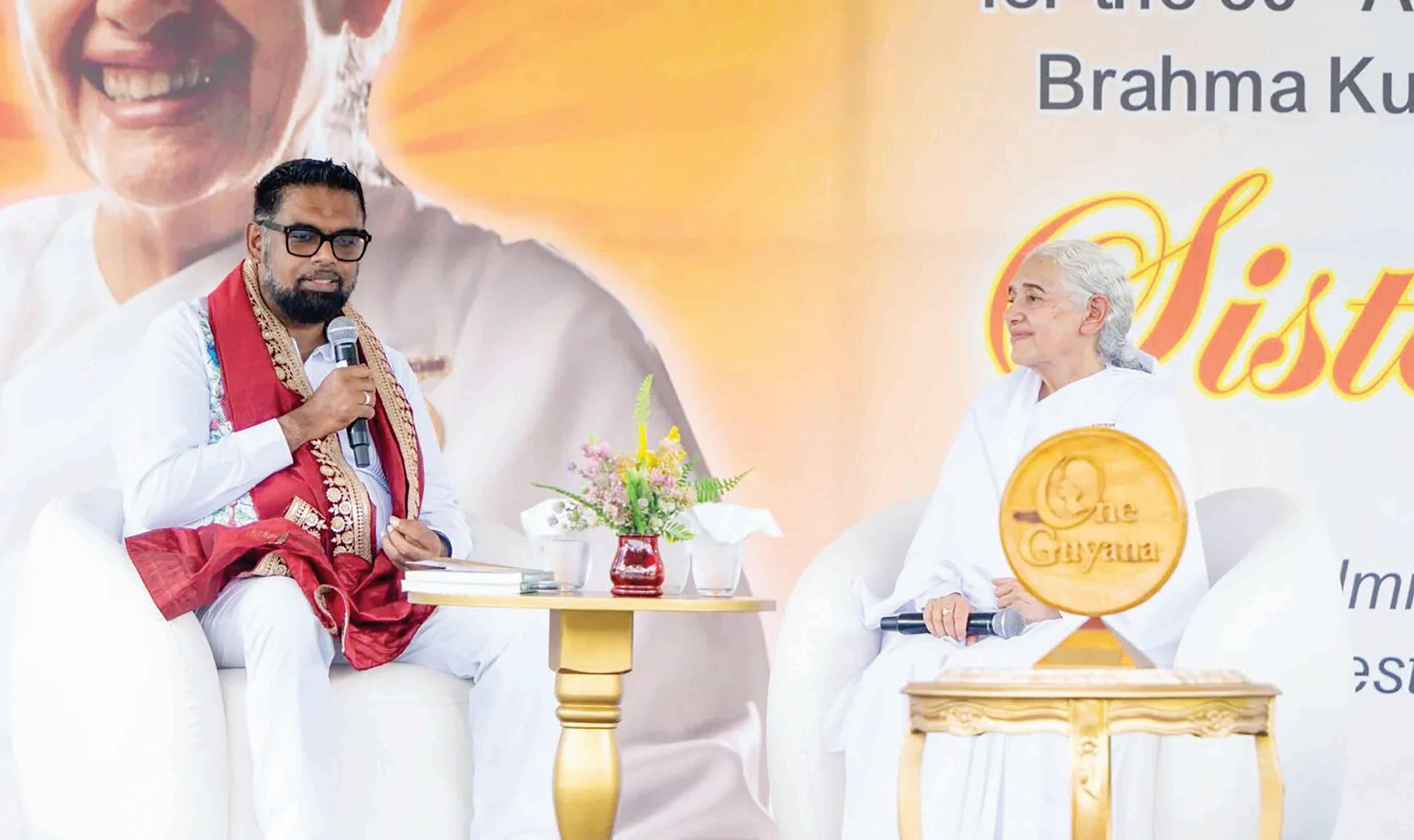
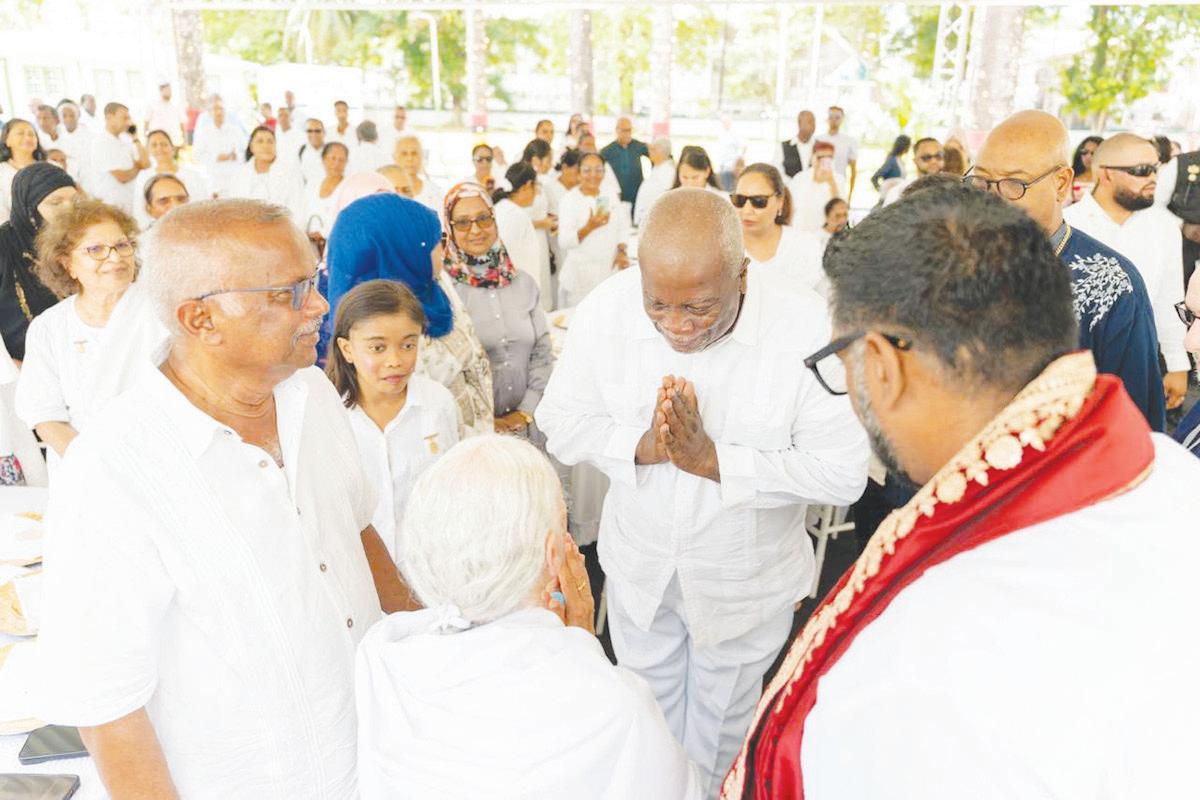
that equally important to the country’s progress is the morals and values of its people. “The moral health of a nation is every bit as important as the economic health. A society cannot thrive on prosperity alone. It must also be nourished by integrity, compassion, self-discipline, kindness and respect,” he stated. According to President Ali, organisations such as the Brahma Kumaris help to cultivate these values among the people. The Head of State made these remarks on Saturday during an event held on the lawn of State House to celebrate 50 years of Brahma Kumaris in Guyana. The Brahma Kumaris is a worldwide spiritual organisation dedicated to personal transformation and world renewal through the power of meditation and spiritual values. Saturday’s event, held under the theme “One Guyana, One Future: The Power of Conscious Leadership,” also welcomed internationally-respected spiritual leader Sister Jayanti, whose early work helped establish the Brahma Kumaris presence in Guyana.
President Ali noted that this milestone celebration is a significant achievement,
represents, he added, half a century of helping Guyanese
discover the power of inner peace, meditation, self-reflection and positive thinking. “For five decades, the Brahma Kumaris have quietly but steadily contributed to the spiritual and moral development of our nation. Their work has touched countless lives and has helped many individuals navigate the challenges of modern life with greater balance, resilience and purpose. Today, we see the fruits of that labour in the many individuals whose lives have been enriched by the teachings and practices of Brahma Kumaris,” he stated. The Guyanese Leader further stated that the work of the Brahma Kumaris demonstrates that genuine progress requires both material advancement and spiritual growth. He noted that the
strength of a nation is not measured only by the infrastructure it builds, but also by the values it cultivatessomething which he underscores is even more relevant today as Guyana embarks on this new era of prosperity and development. “We are witnessing a period of unprecedented national development, but as we celebrate material progress, we must also recognise that a nation can build highways, but it must also build character. A nation could construct buildings, but it also must construct values. And a nation can accumulate wealth, but it must also cultivate wisdom. Development must therefore be measured not only by what we build around us, but also by what we build within ourselves.”
Character, values & consciousness “A nation's true progress is therefore incomplete if it is confined to the material alone. It must also be reflected in the character, values and consciousness of the people. It is precisely this inner dimension of development that gives meaning and direction to our material achievements,” the President stated. The Head of State went onto note that his ‘One Guyana’ aspirations is closely aligned with the philosophy of the Brahma Kumaris. “The teachings of the Brahma Kumaris remind us that every human being possesses an inherent dignity that transcends race, religion, ethnicity, political affiliation, or social status. They encourage us to see humanity in one another.
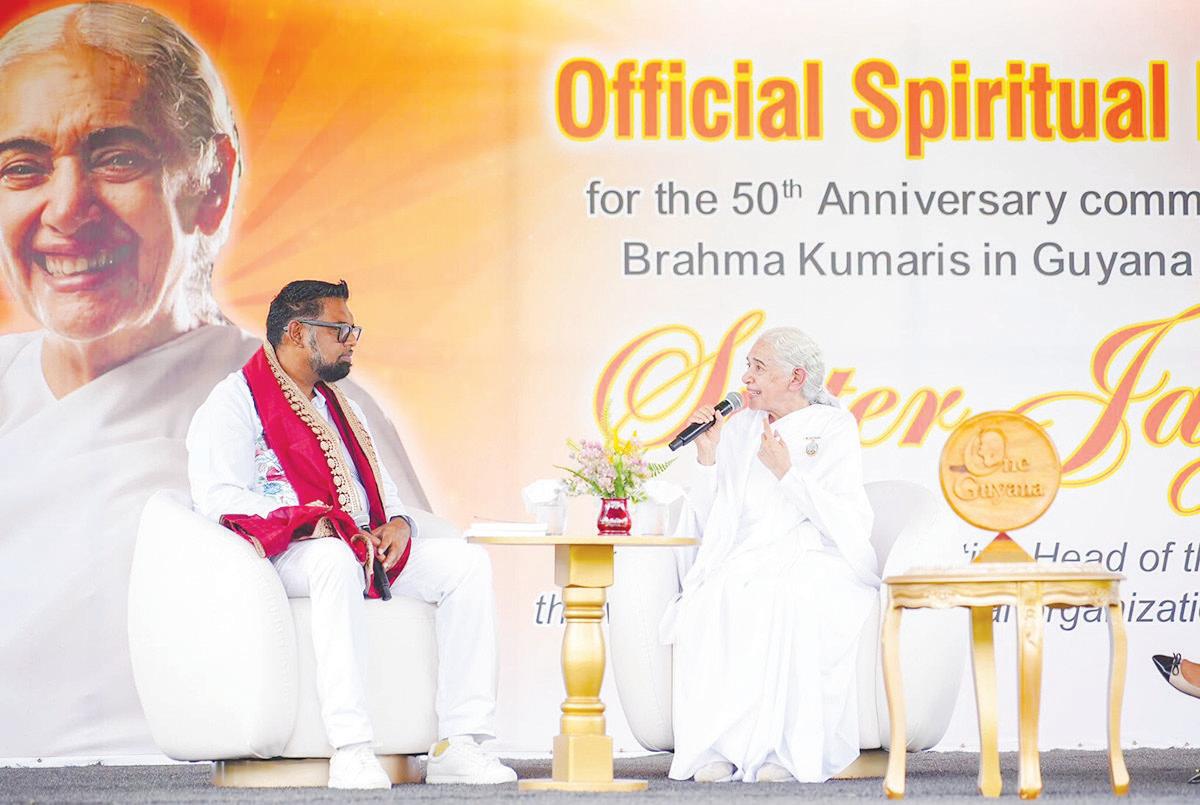
President Dr Irfaan Ali engaging in a spiritual discourse with Sister Jayanti during Saturday’s celebration of 50 years of the Brahma Kumaris in Guyana Prime Minister Mark Phillips greets Sister Jayanti during
There is a very contentious debate being conducted in the newspaper pages and social media as to what exactly constitutes a “massacre”. As with all abstract nouns, massacre points to a particular lived experiences of persons that have been given social meaning. The debate brings the old philosophical distinction made by Searle between what he calls “Brute Facts vs. Institutional Facts”. The former being physical realities that exist completely independent of human opinion like Mt Roraima or crude oil. Institutional Facts on the other hand are social realities that only exist because we collectively agree they do (eg, money, citizenship, or massacres). They are socially constructed and their nature is examined through a field of study called “Social ontology”.
The question for the interlocuters of the debate as to whether the May 25 events at Wismar in 1964 constitutes a “massacre” to satisfy the perspective of Social Ontology. This posits from concrete historical observations that massacres begin with the systematic unmaking of a human group’s social existence prior to, during, and after their physical attacks. Viewed through social ontology, a massacre is never just a collection of spontaneous individual murders, for instance. It is a highly-structured institutional event made possible by rewriting the social status of the victims. In Wismar, then, we have to ask whether the leaders of the group that attacked the other group sought to show that the latter were in some way, shape or form lesser beings. That they are guilty by association through group membership of behaviour that are deserving of condign punishment through murder, rapes, or other attacks.
The first step in called ontological degradation or dehumanisation in which the perpetrators alter the status function of the victims. So, in Wismar while the attacked target group might have been counted as neighbours preceding the attack, they are now defined as parasites, murderers, greedy, and generally not worthy of being treated as humans. We see this psychology playing out in Gaza and Lebanon by the Israelis. This shift turns murder from a crime into a perceived institutional chore or act of social purification. Philosophers call this onticide – the killing of the victim's social being before their physical heart stops beating.
The second move is that of practicing radical "groupism" through the destruction of singularity or individuality. A massacre forces a transition from a world of individuals to an absolute dichotomy: the "we-group"(the pure, historical subjects) versus the "enemy-group" (the threatening objects). Individual traits – such as being a doctor, a child, or a friend – are erased. The victim's physical body is viewed purely as a node of an explicitly-targeted collective entity to be violated and exterminated.
From the actions of the perpetrators, we see the imposition of collective intentionality and spatial dominance that rejects the implied rationale of humans living together as a community. A massacre relies on a perversion of collective intentionality. Instead of cooperating to build public institutions and infrastructure, the perpetrators align their shared mental states towards a joint goal of erasure of the target group’s entire existence including their homes and livelihood. The widespread destruction of the target groups’ homes is not a coincidence: the ontology of the massacre extends to physical architecture to ensure the targeted group's way of life becomes structurally impossible to revive.
What we see playing out right now in the public sphere between those who are documenting the events of May 25 and those who deny it was a massacre is the operation of epistemic objectivity after the fact. Once a massacre is concluded, its social ontology shifts into memory, law, and documentation in what is called “bureaucratic inscription”. This is achieved through state declarations, manifestos, or media spin or denials where perpetrators try to solidify a social reality where the massacre was a "necessary defence."
On the other hand, survivors fight back in a counter ontology using document acts (such as COI Reports, tribunals, and historical archives) to forcefully classify the event as a massacre. This turns an unacknowledged historical trauma into an epistemically-objective, globally-recognised crime.
Youth Ambassador Pageant 2026
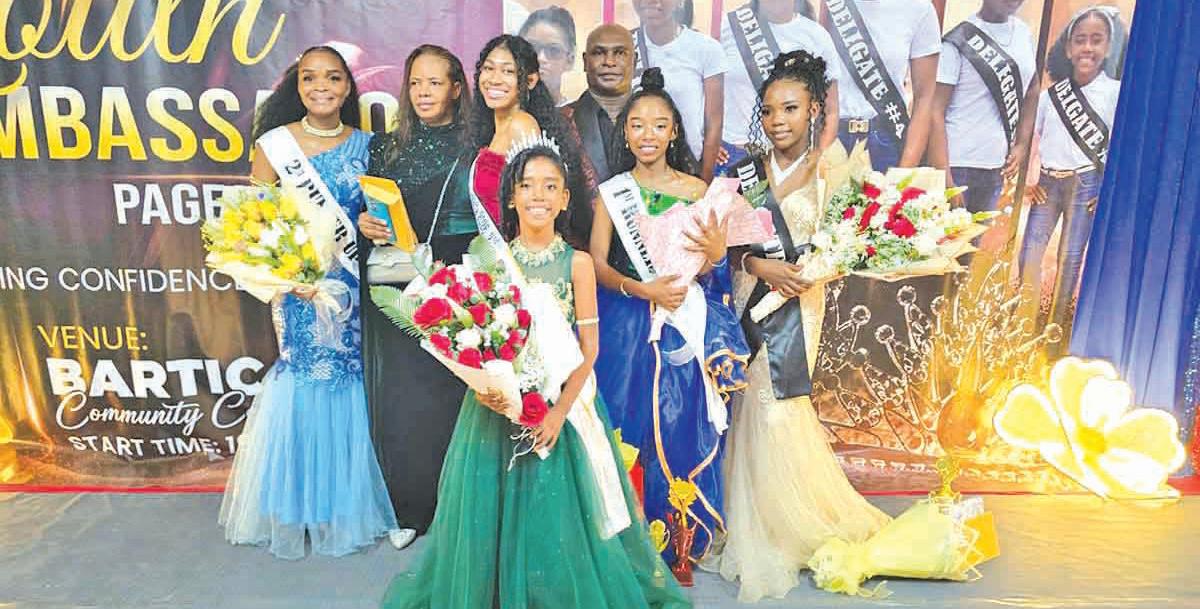
Regional Police Division Seven's Youth Ambassador Pageant 2026 concluded on Friday evening at the Bartica Community Centre, with Traneice Austin emerging as Youth Intelligence Queen 2026. Austin also captured several special awards, including Miss Multimedia, Miss Congeniality, Best Introduction, Best Talent, Best Professional Wear, Miss Elegance and Best Presentation. She is flanked by Assistant Commissioner D Moore, Commander of Regional Police Division 7, First Runner-Up Devena Spencer, and Second RunnerUp Sasha Williams following the crowning ceremony. The event featured six contestants competing in multiple segments, alongside cultural performances by youth groups, students, and members of the Guyana Police Force (GPF photo)
Carolyn Rodrigues-Birkett for United Nations Secretary General
Dear Editor,
There are moments in the life of a nation when political affiliations, ethnic backgrounds, and ideological differences must give way to a greater cause.
The candidacy of Ambassador Carolyn Rodrigues-Birkett for the position of Secretary-General of the United Nations is one such moment.
Having listened carefully to Ambassador Rodrigues-Birkett articulate her vision, qualifications, and aspirations for the future of the United Nations, I am persuaded that she possesses the experience, temperament, intellect, and diplomatic credentials required to lead the world's most important international institution during one of the most challenging periods in modern history.
As Guyanese, we should view her candidacy not through a political lens, but through the lens of national pride and global opportunity.
Ambassador Carolyn RodriguesBirkett's story is remarkable. From the small Moruca Santa Rosa, an Indigenous village in Region One Barima-Waini this Indigenous woman rose through determination, education, and public service to become Minister of Amerindian Affairs, the country's first Indigenous Minister of Foreign Affairs, and subsequently Guyana's Permanent Representative to the United Nations for several years from 2022 to present. Few individuals seeking the office of Secretary-General can claim such a distinguished record of service at both the national and international levels.
Her journey is not only an inspiration to fellow Guyanese but also to our Indigenous peoples, women, and citizens of developing countries across the globe. It demonstrates that leadership, excellence, and vision are not confined to the world's most powerful nations but can emerge from small states whose voices have historically been underrepresented and taken with the seriousness it deserves in international affairs.
Throughout her diplomatic career, Ambassador Rodrigues-Birkett has demonstrated an unwavering commitment to dialogue, cooperation, international law, sustainable development, and the peaceful resolution of disputes. These
are precisely the qualities required of a Secretary-General at a time when the world faces geopolitical conflicts, climate change, economic inequality, migration crises, food insecurity, and growing distrust in international institutions. What makes her candidacy particularly compelling is her unique understanding of both the developed and developing worlds. Coming from a small developing state, she understands firsthand the challenges confronting nations that are often the most vulnerable to external shocks yet possess the least influence over global decision-making. At the same time, her years in governance and engagement with world leaders, diplomats, and international organizations have provided her with a sophisticated understanding of global governance and diplomacy.
For Guyana, her candidacy represents a historic opportunity. Regardless of our political differences, every Guyanese home and abroad should rally behind one of our own who has earned international respect through competence, professionalism, and service. Her success would not merely be a personal achievement but a defining moment for our nation and a powerful demonstration of Guyana's growing influence on the global stage.
I also believe the Caribbean Community (CARICOM) has a unique opportunity and responsibility to champion her candidacy. For decades, CARICOM has consistently advocated for multilateralism, climate justice, sustainable development, respect for international law, and the interests of small states. Ambassador Rodrigues-Birkett has been an effective advocate for these very principles. Her election would ensure that the concerns of small island and developing states are represented at the highest level of the United Nations.
Beyond the Caribbean, I do believe and urge countries of Latin America, South America, Africa, and the wider Global South to carefully consider what her leadership would represent. The developing world has long argued for greater equity, inclusion, and representation within international institutions.
Supporting Carolyn RodriguesBirkett would be a tangible expression of
that principle.
Her candidacy presents an opportunity to elevate a leader who understands the realities of developing nations, not from academic study alone, but from lived experience. She appreciates and understands the challenges of poverty, debt burdens, climate vulnerability, unequal access to development financing, and the ongoing struggle for fair representation in global affairs.
These perspectives are urgently needed within the leadership of the United Nations.
Importantly, Ambassador RodriguesBirkett possesses one of the most valuable qualities required of any SecretaryGeneral: the ability to build consensus. The office demands a leader capable of bridging divides, fostering dialogue, and bringing nations together around shared goals. Throughout her distinguished career, she has consistently demonstrated professionalism, diplomacy, and an unwavering commitment to constructive engagement.
At a time when many citizens around the world are questioning the effectiveness of international institutions, the United Nations requires leadership that can inspire confidence, strengthen cooperation, and restore faith in multilateralism. Carolyn Rodrigues-Birkett offers exactly that kind of leadership.
As a Guyanese, I am proud of her accomplishments. As a former Member of Parliament, I recognize the significance of her candidacy for our country. As a citizen of the world, I believe she possesses the qualifications and vision necessary to lead the United Nations into a new era of relevance, inclusivity, and effectiveness.
I therefore wholeheartedly endorse Ambassador Carolyn Rodrigues-Birkett's candidacy for Secretary-General of the United Nations and call upon all fellow Guyanese, people of, CARICOM, Latin America, Africa, and all nations that believe in a fairer and more representative international order to lend their voices and support to her historic bid.
The world would be well served by her election.
Yours respectfully,
Jermaine Figueira
Former Member of Parliament
The love of a grandfather
By Ryhaan Shah
Most of us who are grandparents know the joy that grandchildren bring to our lives especially as they grow up and start to navigate their world which is much different to the times in which we grew up. While there is change – such as the new technological age – there are values and traditions that continue to act as a bridge and a stabilising anchor to families and to society as a whole.
Grandfathers – whether aja, nana, or grandpa – often serve as that anchor for most families. They offer unconditional love, pass down rich family history, and act as a calming, mentoring presence that can help children build deep resilience and provide them with a sense of belonging. They stand as the root for many families.
Because they are often the bridge between the past and the present, their knowledge of ancestral history and cultural traditions can solidify their grandchildren’s heritage and sense of belonging.
It is often through the stories of their personal experiences that their grandchildren learn where they come from and get a real connection with their history. They offer a reference of a different time and this is where their grandchildren get a sense of their identity and roots, vital building blocks for every child’s development as a confident, self-assured person.
This kind of multigenerational bonding in families can create a strong and united family support system. While parents are often busy with work and focus on the daily discipline of their children, grandfathers can offer not only childcare support but have the time and emotional space to provide unconditional affection and a listening ear to their grandchildren.
Here in Guyana, there is a significant incidence of father absenteeism in some families and this is where grandfathers can step in to be the male role model, and a confidante and mentor especially for the boys in the family who most often model the behaviours and attitudes learned from male family members.
A grandfather’s lifetime of experience is often distilled as wisdom gleaned from a lived reality and first-hand knowledge, especially from the world of work, all of which can help their grandchildren navigate difficult choices and help them view challenges from a broader perspective.
Many grandfathers leave a lasting legacy of financial education for their children and grandchildren, instilling values of saving, investing, and practical economic planning for the future.
Their stories of overcoming hardships teach younger generations patience, perseverance, and critical thinking even as they are instrumental in passing down cultural heritage, moral values, and life lessons – such as hard work, patience, and resilience – across generations.
In a country that is undergoing rapid development and progress, such advice and teachings are critical for the success of both families and the nation as a whole. Many families trace their progress through the work, entrepreneurship, and financial acumen of their grandfathers who were often the ones who built the foundation for the family’s entry into business or professional life – and this often from scratch and without much, or any, formal education.
The presence of grandfathers – both maternal and paternal –provide rootedness, stability, and a whole lot of wisdom garnered from life experience, and their importance to family life has long been recognised by the major religions of the world.
The Bible speaks to the responsibility of passing down and leaving a lasting legacy of faith and godly wisdom and, in Proverbs 17:6 and 13:22, highlights the joy that grandchildren bring to family life.
In Hinduism, the grandfather acts as the emotional backbone, spiritual guide, and custodian of dharma within the extended family. He transitions from being the household provider to an elder statesman, imparting ancient wisdom, family values, and religious heritage to his grandchildren.
For Muslims, a grandfather holds a status that is practically equal to a father. He is deeply respected as a spiritual anchor, family historian, and source of unconditional love. Grandfathers are highly revered, and grandchildren have a religious duty to honour and respect them as elders.
It is said that grandfathers are teachers without classrooms and protectors without armour. They don’t just tell stories but live them with their grandchildren. Children who grow up knowing a grandfather who was always present, especially during challenging times, speak of feeling loved and deeply cherished.
Today, when we salute fathers on Father’s Day, we should also remember and offer our thanks to our grandfathers and most especially to those who are filling the role of both father and grandfather in homes where the father is absent. Happy Father’s Day to you all.
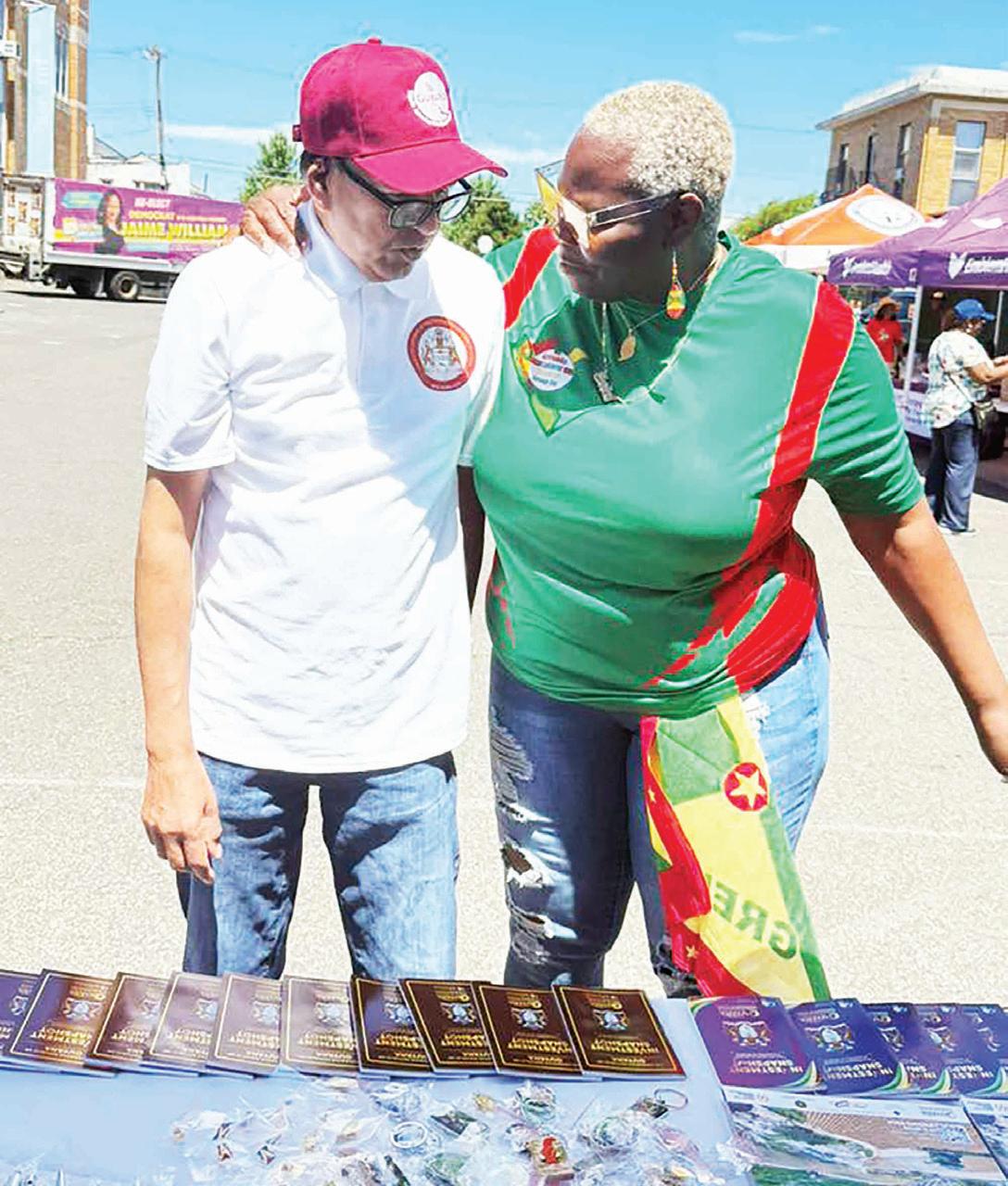
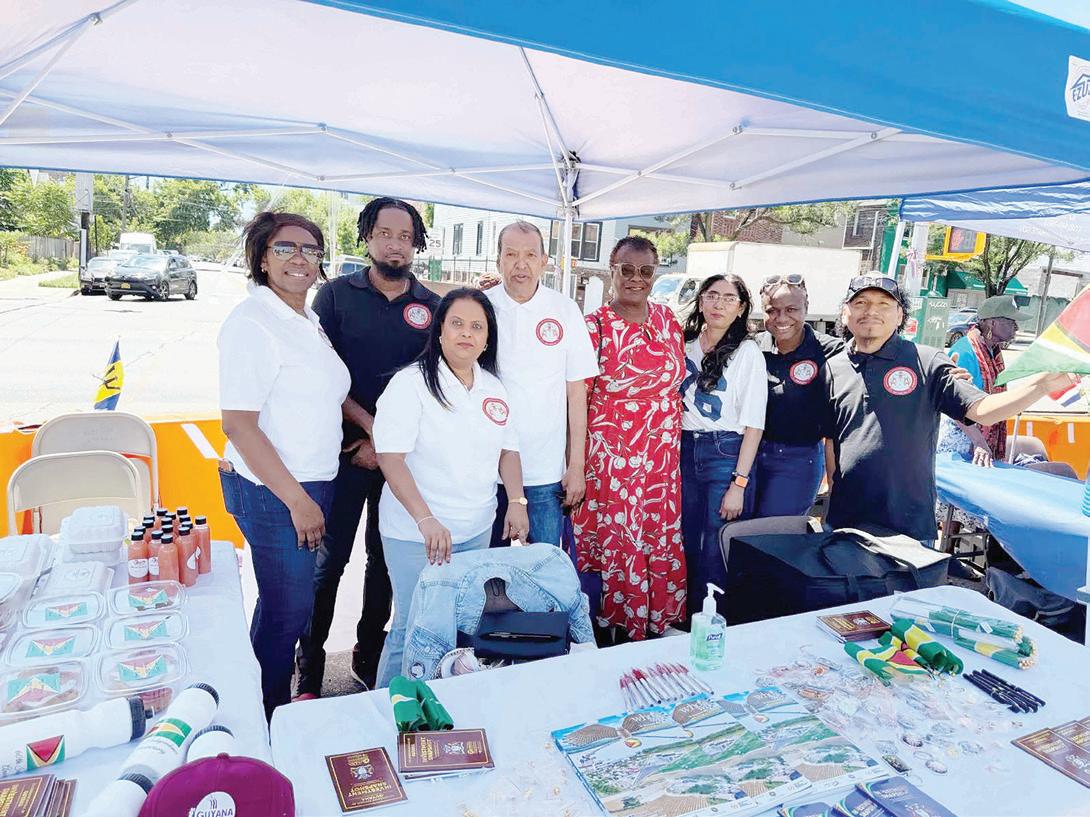
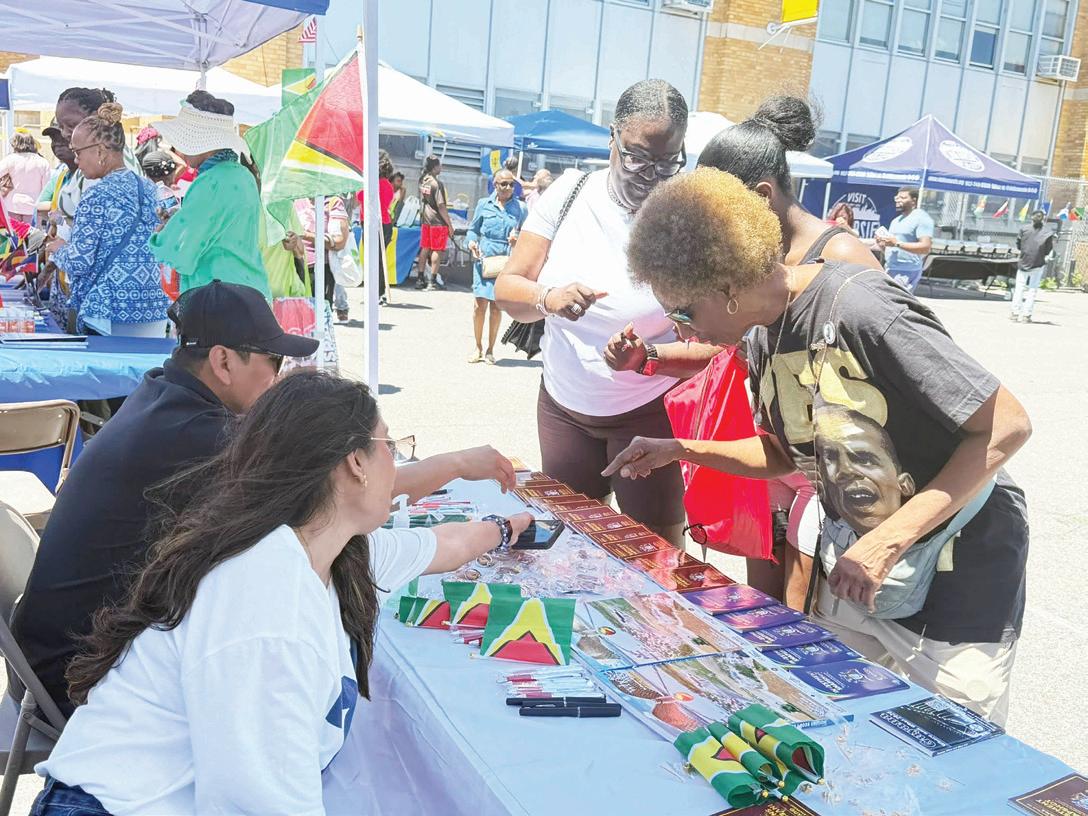
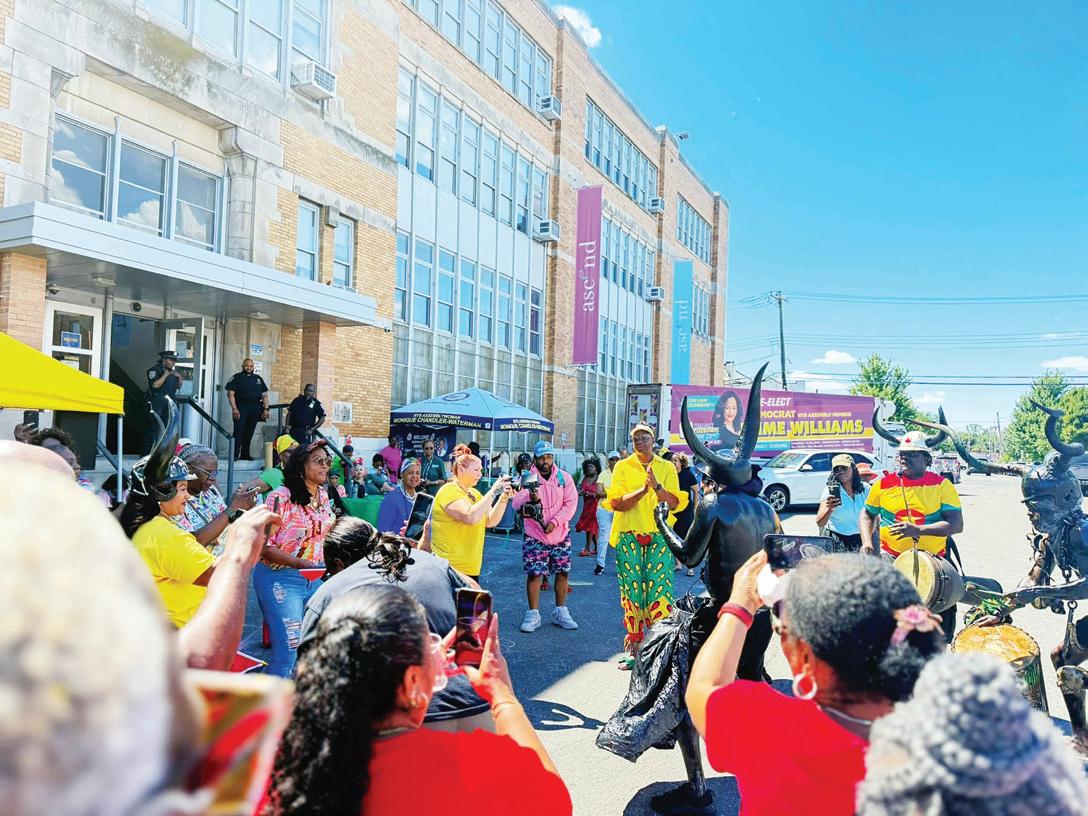
Guyana consulate engages Diaspora at Caribbean heritage celebration
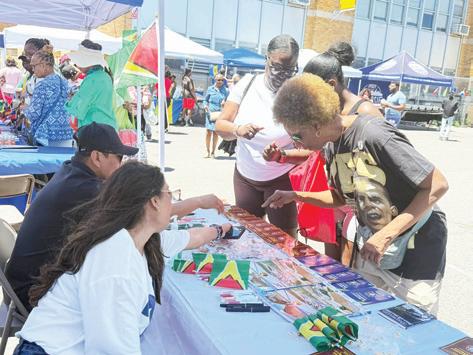
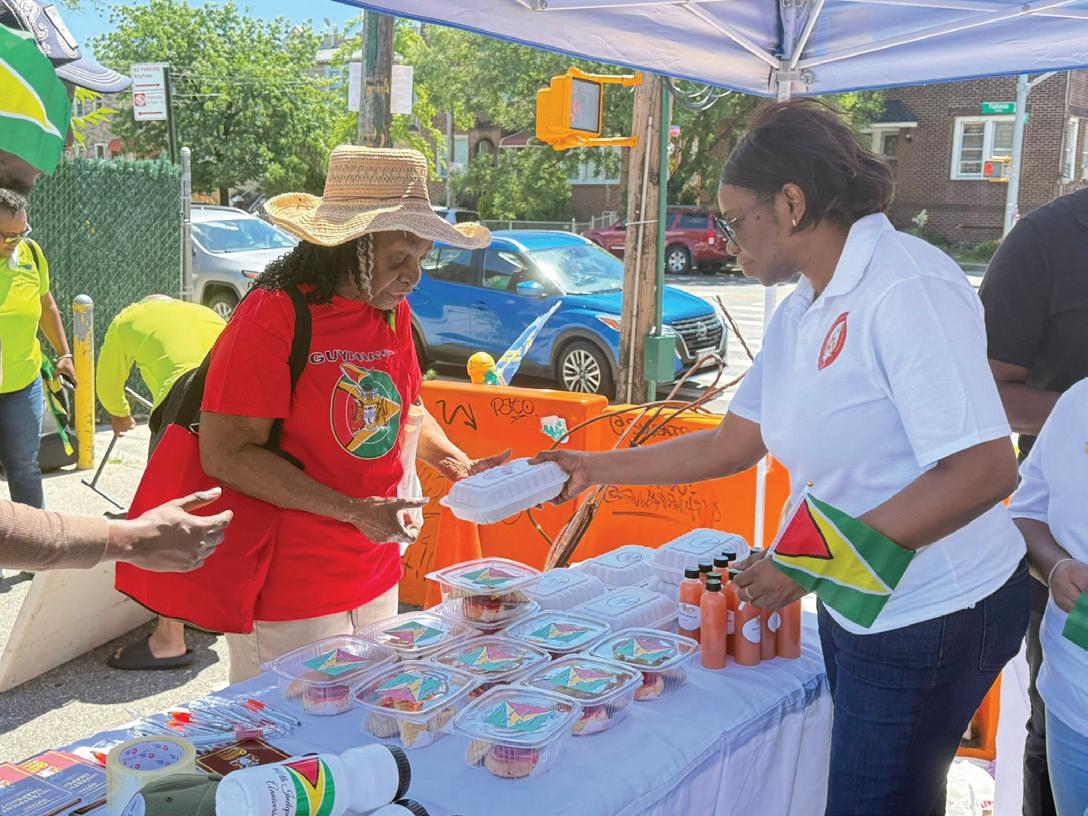
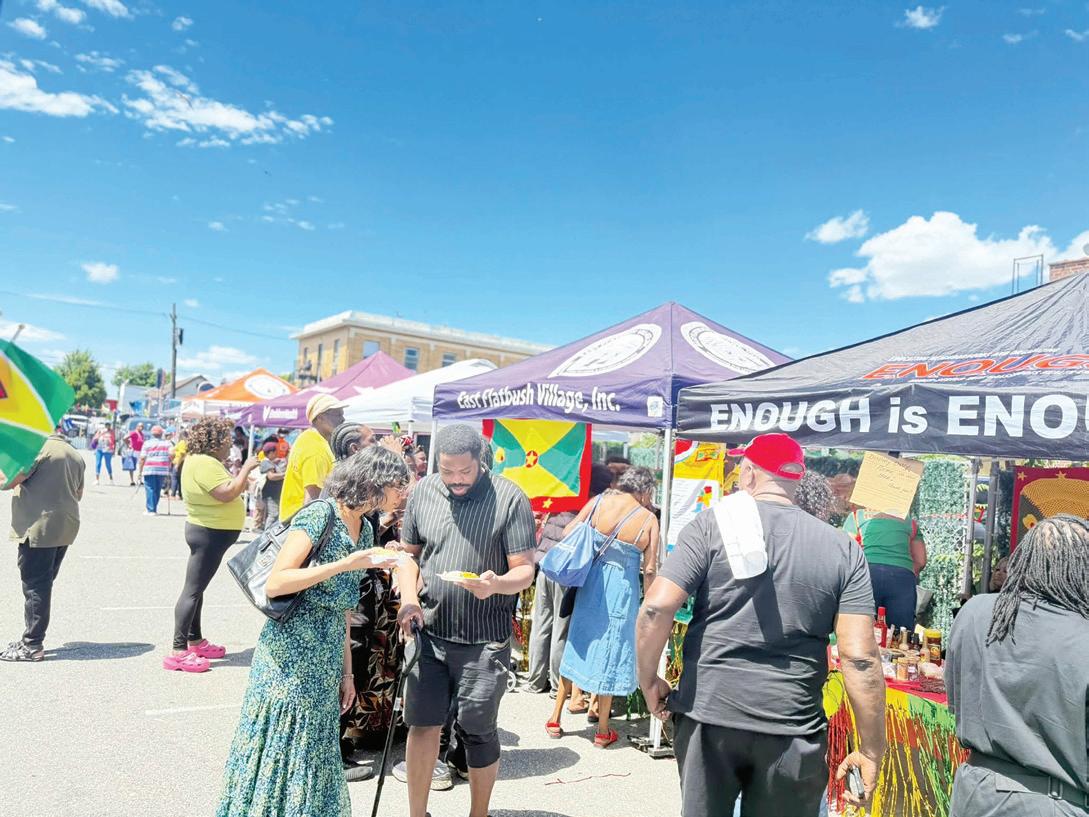
The Consulate General of Guyana in New York participated on Saturday in the Annual Caribbean-American Heritage Celebration titled
“Taste of the Caribbean, Celebrating Diversity, History and Traditions of the Caribbean,” held along Flatlands Avenue in Canarsie, Brooklyn. Throughout the event, consular staff engaged with members of the Guyanese diaspora and other attendees. The Consulate provided information and respond-
ed to enquiries related to tourism, investment opportunities, and remigration to Guyana, among other services.
The participation formed part of the Consulate’s ongoing outreach to Guyanese nationals and Caribbean communities in the United States (US).
Annual Caribbean-American Heritage Celebration held along Flatlands Avenue in Canarsie, Brooklyn
Page Foundation
How can blue-green algae remove plastics from our water?
We can genetically engineer them
Microplastics are tiny pieces of plastic that end up in rivers and oceans. They are hard to re -
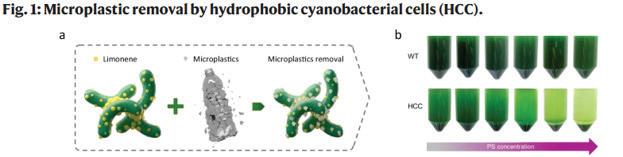
lent. Many plastics also repel water. When we put our cyanobacteria in water with microplastics, the plastic stuck to the cells. The cells and plastic formed
move because they are so small. We wanted a better way to clean them up. We used genetic engineering to change cyanobacteria, a type of algae-like microorganism. We made the cells produce limonene, a natural oily chemical. Limonene made the outside of the cells more water-repel -
heavy clumps. The clumps sank to the bottom. We found that our cyanobacteria removed over 91% of the plastic in one hour. We also found a way to turn the leftover cells and plastic into new, useful materials. Have you ever seen a plastic bottle floating outside in the wa -
ter? While this is bad for the environment, there is more to the problem. When plastic sits in the sun and water, it breaks into tiny pieces called microplastics. These pieces are smaller than a grain of rice. Some are even too small to see.
These tiny plastics are everywhere. They are in the ocean, in the soil, and even in the water we drink. Fish and other animals and humans accidentally eat them, which can make them sick. Many wastewater treatment plants can remove big plastic pieces, but very small pieces can slip through.
Filters can help, but they can clog and cost a lot. They also make new waste that needs safe storage. Wastewater can also have extra nutrients like nitrate, which is harmful to water systems. We wondered, could we use nature to help us? Some microorganisms make sticky layers that can trap particles, but this process can take a long time.
We focused on cyanobacteria. They are algae-like microorganisms that use sunlight like plants do. We wanted to see if we could engineer them to help us. Could these engineered cyanobacteria remove microplastics fast? Could they also help with nitrate? And could they help us reuse the captured plastics? First, we grew two kinds of cyanobacteria in the lab.
The normal strain was our control. We used genetic engineering to produce a second strain. We changed the genes so the cells would produce limonene. This is an oily chemical that smells like
oranges. Limonene acts like a tiny oily layer on the cell surface that repels water.
Most plastics also repel water, so we hoped the cells would stick to the plastics. For each kind of cyanobacteria, we mixed the cells with tiny plastic beads made of polystyrene, a common plastic. We mixed the samples and then waited about one hour. If the cells grabbed the plastics, we expected to see clumps sink.
We also measured how cloudy the water looked, because cloudier water meant more particles still floating. We then used different microscopes to look closely at the plastics and the cells. We checked whether plastic stuck to the cell surface. We also tested larger pieces of other common plastics.
Next, we tested real-world water We added microplastics to surface water and wastewater samples We repeated the mixing and checking steps In the wastewater tests, we also measured
clumps, and many plastic pieces ended up in the clumps that sank. In wastewater, nitrate levels dropped after the cells grew. What about the plastic films we made from the collected material? Some of these films stretched more and were harder to tear than our plastic-only control films. We think our engineered cyanobacteria worked well because they made microplastics clump and sink. The microplastics stuck to our engineered cells more than to the normal cells. As the clumps grew bigger, they became heavier. Then they sank to the bottom. This made the microplastics much easier to collect than trying to filter every tiny piece. It also mattered that our method worked in real water, not just in the lab. Surface water and wastewater contain many other particles. We still saw sinking clumps, even with that extra mess. The wastewater results showed another benefit. Wastewater often contains extra ni -
nutrients, like nitrate, before and after the cells grew Afterwards, we collected the material that sank cyanobacteria cells plus plastics. We used it to make thin plastic films.
Finally, we tested how strong and stretchy those films were. Our engineered cyanobacteria removed microplastics quickly. In one hour, we removed about 91 per cent of the polystyrene beads. The normal cyanobacteria removed much less.
The clump sank and pulled the microplastics down. The water with engineered cells also looked clearer. Under the microscope we saw many plastic beads attached to the engineered cells. We also saw the engineered cells stick to larger pieces of other plastics. The normal cells did not stick as strongly to plastic.
In surface water and wastewater, our engineered cells still formed
trate, which can harm water systems. The cyanobacteria in our tests removed nitrate while they grew, so they could work on two problems at once. We also liked that we could reuse what we collected. Instead of storing the captured plastics, we turned the clumps into new films with useful properties.
Microplastics are tiny, so it is best to stop them before they reach water. There are many ways you can help. Use fewer single-use plastics. Pick up litter before it breaks into smaller pieces. Skip glitter. Avoid facial or body scrubs with plastic beads. Wash clothes only when needed and clean the dryer lint trap. If you can, use a laundry filter or wash bag to catch any microplastic fibers. Small changes can keep a lot of microplastics out of rivers and oceans .
(Adapted from sciencejournalforkids)
Pres Ali challenges local aviation operators to invest in regional carrier
…commissions Jags Aviation’s HAL Dornier 228 aircraft
…calls on Indian plane manufacturer to set up office in Guyana
President Dr Irfaan Ali is calling on operators in the local aviation industry to pool together their resources in order to set up a regional carrier to tap into the market within the Caribbean. He made these remarks during the commissioning ceremony of the Jags Aviation Inc’s Dornier 228 aircraft on Saturday evening. According to the Head of State, this newest addition to the company’s fleet represents the continued ascent of Guyana's aviation sector – something which he believes has the potential to sore even higher and further.
“Jags Aviation is now a household name in Guyana and its associated aviation services.
It is a local company that I believe has the potential to become more than a local carrier. And indeed, I believe that our aviation players should come together to look towards developing a regional carrier, because Guyana's ambitions now seem limitless. We have to get the heads together and come up with a plan that is viable and sustainable,” President Ali declared. He pointed out that Guyana must not be a responsive market but should be setting its own standards and setting the trajectory of aviation for the region. He said it is for this reason that his Government established a dedicated Ministry of Aviation to advance opportunities like this.
In fact, President Ali pointed out that transforming Guyana into a regional aviation hub is the first pillar in the 10-point plan his Government has es-
tablished for the local industry.
“This vision is to see Guyana position itself as a premier aviation gateway, linking the Caribbean, South America, North America and Africa. We'll do so through strategic investment in airport infrastructure, air traffic management system, expanded airline connectivity, drone technology…. Guyana will strengthen its role as a regional transportation and logistics centre,” the Guyanese Leader stated. That plan also includes the building out of new terminals and municipal airports, as well as modernising hinterland airstrips – all of which are already underway. The establishment of a world-class aviation school to not only serve national needs but the region is also on the cards.
Upgrade air navigation
There are plans also to upgrade the country’s air navigation and air traffic management as well as strengthened its safety and regulatory oversight and the digitisation of aviation services and operations – all of which will see the latest technology being used. “Together, these 10 priorities represent a bold flight path for Guyana's aviation sector. They're designed to connect communities, support tourism, facilitate trade, strengthen national integration, attract investment and position Guyana as one of the most dynamic aviation markets in the region. The vision is clear. A modern aviation sector allows Guyana not merely
to participate in global growth, but to soar alongside it,” the Guyanese Leader stated. To this end, President Ali pointed out that the commissioning of the two new aircraft was significant, especially at a time when domestic travels is on the rise with more persons from the hinterland travelling as well as increased foreign visitors who want to explore the interior regions of the country. He lauded Jags Aviation for not only recognising this market potential but making the investments to capitalise on the opportunities. He also commended the company for investing in its human resources as well. “Indeed, this commissioning ceremony is another chapter in a remarkable journey of growth for Jags Aviation… The message is unmistakable. BK is spreading its wings. Jags Aviation is taking flight. The company is climbing to high altitudes, expanding its reach, increasing its capacity, and positioning itself for the opportunities that lie ahead. This growth reflects Brian's entrepreneurial prowess, his willingness to invest, and his confidence in Guyana's future,” President Ali stated. Back in March, Indian manufacturer, Hindustan Aeronautics Ltd (HAL), delivered two brandnew Dornier HAL-228 aircraft for Jags Aviation – a subsidiary of the BK Group of Companies, owned by local businessman, Brian Tiwari. This comes some two years after HAL had previously built two similar aircraft for the Guyana Defence Force (GDF). With growing local interests, both from the public and private sectors, in these aircraft, President Ali called on the Indian manufacturer to formally establish their footprint in Guyana to serve the Caribbean and South America region. “I think HAL and India is now placed to the test… we are demonstrating our confidence in buying, yes, but we want you to establish a commercial hub and a service hub for HAL here in Guyana. And now that you've seen the pri-
vate sector in Guyana backing a policy decision, the ball is in your court.
“But you have to put skin in the game. You have seen our interests. You have seen that we were willing to walk this journey with you. HAL needs to establish formally its footprint in Guyana for the Caribbean and
“Moral
They encourage us to replace anger with understanding, division with cooperation, and negativity with hope. At the heart of the ‘One Guyana’ vision is the belief that our diversity is a source of strength rather than division,” he contended. Moreover, President Ali stated that the work of the Brahma Kumaris contributed significantly to this process of inner transformation amongst Guyanese, making an invaluable contribution to the promotion of yoga, meditation, mindfulness, emotional resilience and personal well-being. “The practice of meditation is no longer regarded as something reserved for spiritual seekers alone. Today, it is widely recognised as an important tool for strengthening mental and emotional well-being. Similarly, yoga has become a powerful means of promoting physical health, mental balance and holistic wellness.” “The Brahma Kumaris have been among the pioneers in introducing and promoting these practices in Guyana, helping individuals from all walks of life to improve their quality of life and cultivate a greater sense of inner peace. For this, they deserve our gratitude and admiration,” the Guyanese Leader noted.
Human consciousness
Meanwhile, sharing her sentiments, Sister Jayanti, who serves as the Additional Administrative Head and represents the Brahma Kumaris of the United Nations (UN) in Geneva, spoke about how human consciousness is driving everything that happens around the world. She noted that lies within the consciousness are qualities such as kindness, the compassion, the dignity, the respect, the empathy, the love, the purity of intention, and the joy of human life. All of these however, are being influenced by various factors in the world, she explained. Sister Jayanti contends that inner awareness is the foundation of evaluation and this, she believes, will drive the change that is needed amongst humanity.
“Humanity has to evolve from its current state of selfishness, in which it's ego, anger, and greed that drive everything we do, and come back, evolve back again to that original state of inner purity… I believe that not only is there huge chaos in the world, but I believe we carry the key to be able to find that inner governance of spirit that's going to allow us to have proper governance and an orderly world, a world
filled with dignity, love, respect and harmony,” she stated. According to Sister Jayanti, many individuals are carrying peace in their hearts and if all of them can come together, then change can be widespread.
“Whenever there's been anything that's happened that has transformed the world to a better place, it's begun with one. From one to a few, and from few, a minority, there's been an impact. When my mind is peaceful, my discernment capacity is far more refined, and I'm able to make choices and decisions that can impact my life and the lives of others in a positive direction. “When we accept that this is how the world is and always will be, well that’s what we’ll get. But if we create that vision of a better world together, and we hold that vision in our hearts and we exemplify that vision in our life, then yes, together, definitely not only a better Guyana but a beautiful world for all is possible,” Sister Jayanti stated. Saturday’s event at State House also featured a public spiritual discourse between President Ali and Sister Jayanti. Among those in attendance at the event were visiting Brahma Kumaris from Holland, the United States (US), United Kingdom (UK), India and across the Caribbean.
South American market. You have to build this sector here. You have to join us here. We are not your marketers. We are your partners,” President Ali declared.
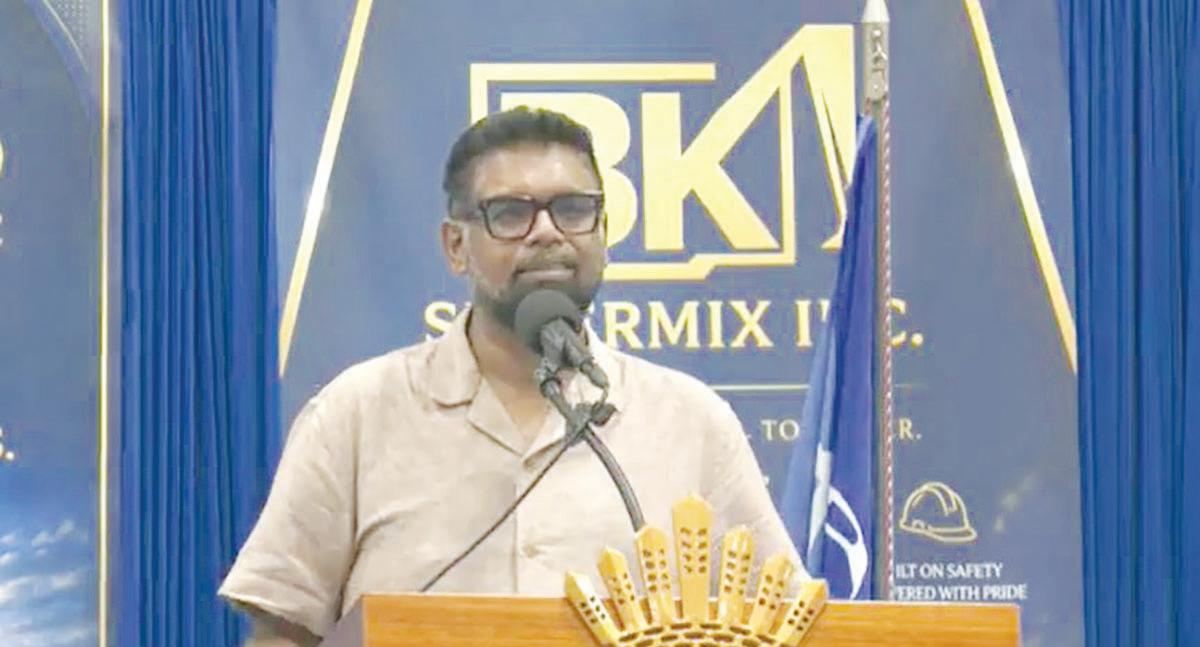
President Dr Irfaan Ali
The two new Dornier HAL-228 aircraft that was commissioned by Jags Aviation on Saturday evening (NCN photo)
“Thank God for saving my life” – man, teen injured as vehicle smashes into wash bay
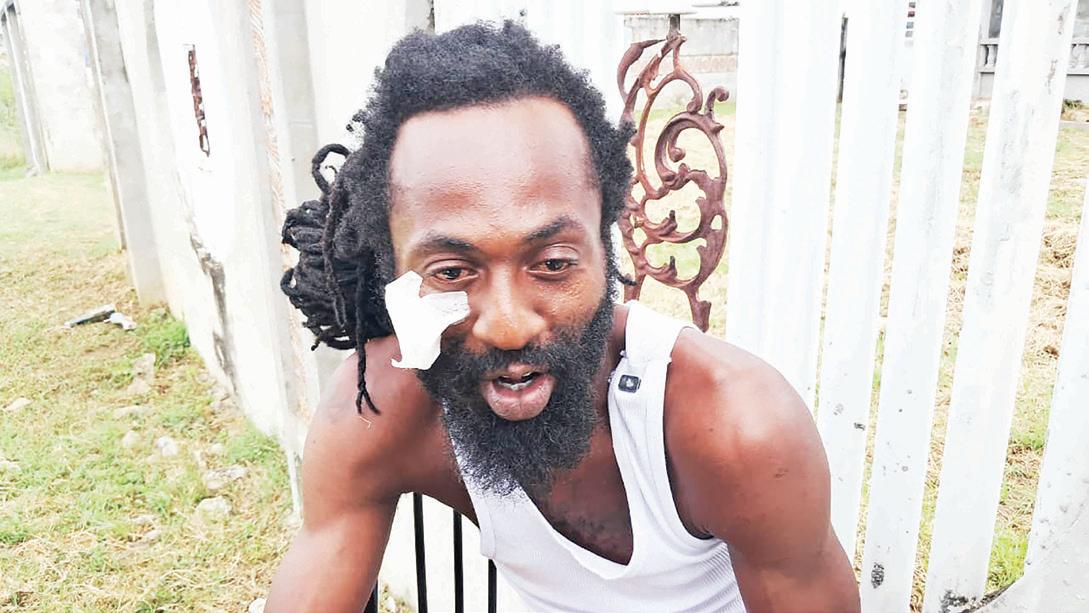
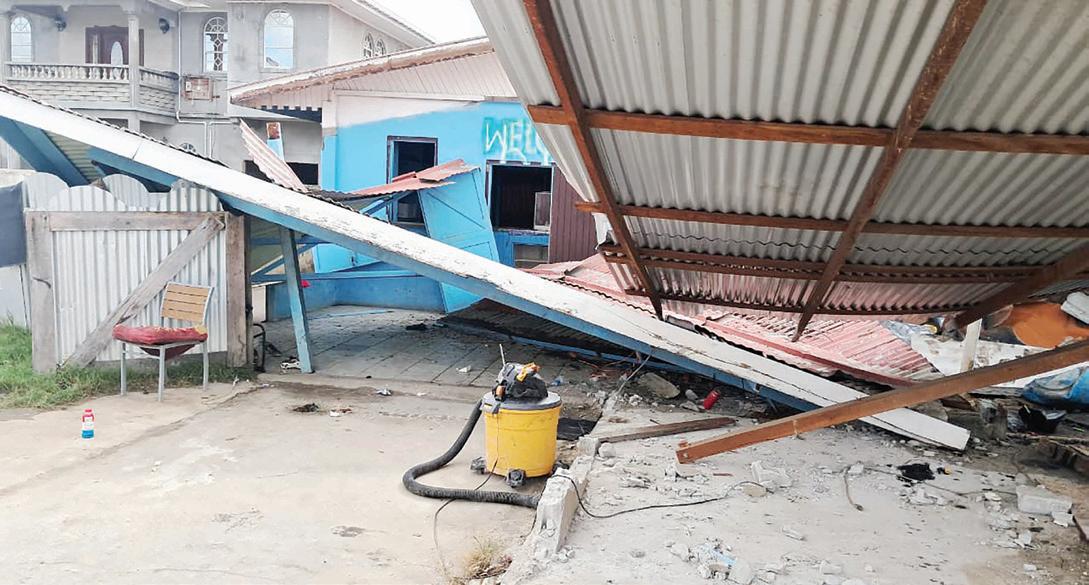
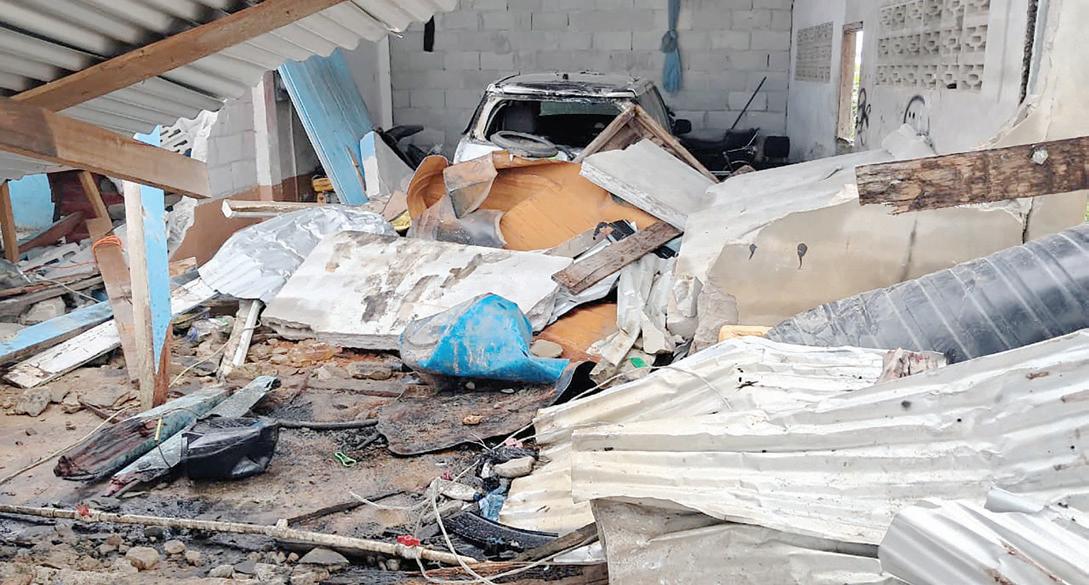
Abusinessman and a 16-year-old girl were injured on Friday night after a vehicle crashed into a wash bay and adjoining building at Number 30 Village, West Coast Berbice (WCB), Region Five (Mahaica-Berbice). The
Also injured was a 16-yearold, who said she was sitting in the yard while her brother was under the shed when the terrifying scene unfolded. “When I peeped, the car was tumbling, coming towards us,” the teenager recalled. She said she imme-
crash occurred at about 21:30h when the vehicle reportedly ploughed into the property, demolishing sections of the structure and trapping itself beneath debris. Business owner Kevin McKenzie, who operates the wash bay, was at the premises with relatives when the incident occurred. He sustained injuries to his face and leg and was taken to the hospital for medical treatment. Recalling the ordeal, McKenzie said he lost consciousness following the impact. “I ended up getting blackout. I didn't know what was happening,” he said.
diately shouted a warning to her brother as the vehicle hurtled in their direction. “I end up shouting and telling him to run,” she said. According to the teen, she was struck by debris while attempting to escape.
“The vehicle hit the shed, and the wood flicked out and hit my foot,” she explained.
The teenager sustained a sprained left foot and remained in pain on Saturday.
Uncertainty
McKenzie said the crash has left him facing physical pain as well as uncertainty about how he will earn a
living while recovering. “I can't work now. I have to go back to the hospital and see what's going on,” he said. The businessman, who depends on the wash bay for his livelihood, said the situation has been particularly difficult given his responsibilities at home. “I feel bad. I can't move. There's nothing I can do right now,” he said while adding, “I just look after myself, my children and my mother. That would be real bad if I can't do anything.” McKenzie said he is uncertain what the coming weeks and months will bring as he recovers from his injuries and assesses the damage to the business. “I don't know what the next three months or seven days will be
left behind, the businessman remains grateful that no lives were lost. “Thank God for saving my life,” he said.
In addition to the structural damage, McKenzie said several items used in the operation of the wash bay were damaged. These include a water pump, generator and other equipment used to wash vehicles. He noted that materials he had purchased for planned upgrades to the business were also affected. However, he was unable to provide an estimate of the losses, explaining that he had not yet conducted a full assessment of the damage. His brother’s car, which was also parked there, received extensive damage.
like, but God knows, because most of the time when you're in an accident, you can't do the same things you used to do before,” he said. Despite the injuries and the extensive destruction
McKenzie explained that his brother was out of town and left the vehicle there for safekeeping until his return. Police are investigating the circumstances surrounding the crash.
…Local Government Elections?
Gecom – we’d been assured – was working diligently for months cleaning up the voters’ list so that it could run the next Local Government Elections (LGE) – due by November!! But now we’re hearing about aspects of the LGE legislation that gotta to be amended – and because this doesn’t look likely before November, LGEs might have to be postponed!! There was rare unanimity of views about this possibility from the two sources who’re usually diametrically opposed – GECOM’s CEO Vishnu Persaud and Opposition Commissioner Vincent Alexander!! The stars must be in alignment!!
The latter threw shade – as he usually does at the PPP when he pointed out, “I get the impression that some people are not keen on local government. They like the situation as it is!” But that could also be just as applicable to now “Minority Opposition Leader” (MOL) Aubrey Norton!! He was badly mauled and defanged by Sanction Man’s WIN at the last General Elections when the newbie – with OFAC sanctions over his head like a dark monsoon cloud – still captured enough votes to become Leader of the Opposition (LOO). WIN announced that they’d be competing in every constituency at the LGEs – which must’ve caused Norton’s (political) life to flash before his eyes!! Since the PPP’s been giving the PNC’s old base the full-court press in handing out goodies like house lots, etc, if WIN follows up with its depredations on the old PNC base, LGEs might just sound the death knell on Aubrey’s career – such as it’s been!!
Now there are sore losers and there are SORE losers!! Sure, no one likes losing – and gets miffed when they do. The homily that “it ain’t about winning or losing but just about running the race” falls flat for ‘most everyone. But surely Norton’s been examining why he lost and is pulling up his socks. There’s always a tomorrow to fight another day!! Politics ain’t no game of Checkers – and even in Checkers you play to win. Problem is those who backed Norton for PNC leader thinks he should be all “brute force and ignorance”!! But he ain’t shown any inclination to go down that road no mo – even though he’s had to concede to Black Pudding Man’s call for street protests!! But Norton knows this time na laang time like 1997 when Guyana wasn’t of any strategic importance to the US and Desmond Hoyte could execute his “slow fyaah, mo’ fyaah” strategy. This time around the US has to protect Exxon’s interest which goes far above corporate interests!!
So what’s Norton to do about the LGE?? Well as Alexander implied – let the LGE be postponed and wait for his nemesis Sanction Man to be outfitted for that orange Jump Suit!!
…fall before pride?
In the poem “Ozymandias”, Shelly reflected on the folly of rulers who believe they’re gonna live forever –and treated their subjects like so much scum to fulfil their oversized egos. “Ozymandias” was actually Ramses II of ancient Egypt and the poet was looking at his massive statue fallen in ruins in the sands of the desert – but with his characteristic sneer still visible on his stone lips.
“Nothing beside remains. Round the decay/ Of that colossal Wreck, boundless and bare/ The lone and level sands stretch far away.” The poet then quotes the ironic inscription: “My name is Ozymandias, King of Kings;/ Look on my Works, ye Mighty, and despair”!! But even in the time of Ramses wasn’t it said, “Vanity of vanities…All is vanity”?
So what brought on your Eyewitness’s bleak reflection on the delusion of leaders about their mortality? Mostly the Little Caesars in Govt offices!
They should know that Pressie’s patience is running thin – and their day of reckoning is nigh!!
…Oil?
As your Eyewitness predicted yesterday, the jury’s still out on whether the truce signed between the US and Iran to keep the Strait of Hormuz open will last – because of Israel’s intransigence.
Hormuz’s closed again!!
The damaged WCB wash bay
Injured: Business owner Kevin McKenzie
“You have the power to say no” – Minister urges students to resist peer pressure
...as Sexual and Reproductive Health Symposium concludes
ducation Minister
ESonia Parag on Saturday urged students in Bartica, Region Seven (Cuyuni-Mazaruni), to resist peer pressure and make independent choices, warning that behaviours such as vaping and alcohol consumption can lead to ad-
diction and have a negative impact on health, education, and future opportunities. She made the remarks as the Ministry of Education and Ministry of Health, in partnership with the United Nations Children’s Fund (UNICEF), the United Nations Population Fund
(UNFPA), and other United Nations (UN) agencies, concluded a two-day Sexual and Reproductive Health (SRH) Symposium at Bartica Secondary School, Region Seven. The initiative, now in its second year, concluded after two days of interactive sessions with dozens of sec-
ondary school students.
The exercise, which commenced on Friday brought together students and education stakeholders from Bartica Secondary and Three Miles Secondary schools. Centred within the national Health and Family Life Education framework, the
initiative focused heavily on student empowerment, providing safe, structured spaces for young people to openly discuss puberty, menstrual health, teenage pregnancy, gender-based violence and healthy relationships. Parag attended the symposium and challenged students to understand the biological realities of their development while building deep internal resilience against negative societal pressures.
Adolescent development
Addressing the core theme of adolescent development, the Minister demystified the emotional and physical changes young people experience, explaining how internal biological changes directly influence their daily well-being. “It is vital for both our young men and young women to understand that as you grow, your body undergoes profound chemical changes,” Parag explained, adding that “these internal shifts happen within the brain and across the body, directly contributing to your emotional, psychological and physical experiences. This is a natural biological process that you cannot stop, but understanding it is the true beginning of your self-confidence and person-
al identity.” The Education Minister also issued a strong warning about the dangers of peer pressure, specifically highlighting harmful habits such as vaping and alcohol consumption, which she said can lead to life-altering addictions that undermine health, education and future opportunities. “You do not need to be cool by giving in to peer pressure,” she stressed. “If you think vaping looks cool, you may want to vape. But how many of you understand that you have the power to say no to certain things? No one needs to be like someone else and destroy their own body. How many of you know that all of these things can turn into an addiction?” As part of the Government’s plan to address adolescent health and long-term well-being, Parag briefed students on the dangers of the Human Papillomavirus (HPV), how it spreads and the fact that the virus is the primary cause of cervical cancer, one of the leading causes of death among women worldwide. She noted that the disease is preventable through vaccination and highlighted that the Government of Guyana provides the HPV vaccine free of cost to protect young people before exposure.
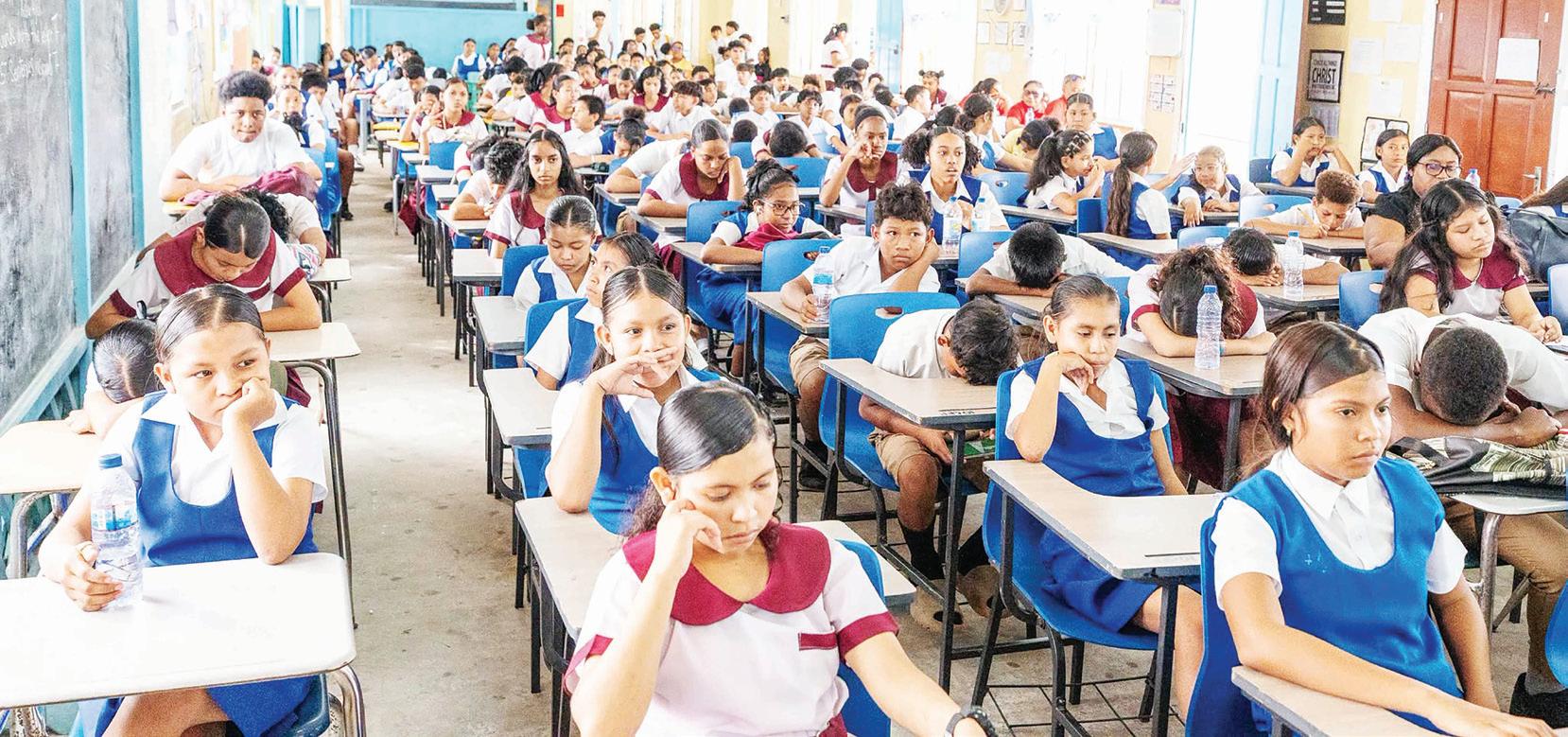
The Education Ministry and Health Ministry, in partnership with UNICEF, UNFPA and other United Nations agencies, hosted a two-day Sexual and Reproductive Health (SRH) Symposium at Bartica Secondary School, Region Seven
Looking behind massacres
Aubrey Norton, joined by some other individuals from the African-Guyanese community, continues rejecting the term “massacre” to describe the May 25 atrocities at WismarChristiansburg. He uses the word “disturbances”. Last week, in my column “Wismar Massacre: What’s in a name?” I noted that “all Guyanese who want us to go forward more harmoniously – have to interrogate the group psychology which allowed, as the COI said, “a total section of a community (to be) attacked, outraged and subsequently had to be evacuated. Nearly all their property was maliciously destroyed, while the majority of their erstwhile friends and neighbours either took part in the destruction or stood idly by.” This week, I “interrogate the group psychology” of the African-Guyanese community at that time emphasising that we should not engage in a fruitless “blame game” but rather learn from our history.
The use of a particular word to describe an event is one that should connote the actions of note in the event. In Wismar, it was the sudden and widespread violence inflicted on the IndianGuyanese community by their African-Guyanese neighbours who “came down like the wolf on the fold”. The Commission – as does Norton – used the term “disturbances”. This is a favourite euphemism – along with “riots” - used by the British to preserve their legitimacy by suggesting a mere temporary breakdown of order to be quelled rather than unmasking systemic factors in operation.
These “disturbances”, however all have a political nexus that must be analysed. In the colonial era where the state and British capital were coincident, the word was used to describe workers’ strikes protesting their working conditions which were then put down by the “leaden argument” that killed dozens. In 1905, in Georgetown, “riots” by the urban lumpen elements received the same condign treatment. In the 1960s the competition to succeed the British took a dangerous ethnic turn when Burnham broke the unified national PPP when he mobilised AfricanGuyanese to oppose the PPP that was left with an overwhelming Indian-Guyanese base. And precipitated new “disturbances”.
By framing the political struggle as an ethnic one, the PNC exploited the historic grouse of African-Guyanese that IndianGuyanese was the cause of their relative deprivation having “undercut” their wage demands. Burnham also exploited what we defined as the “African Security Dilemma”, by emphasising the Indian-Guyanese numerical advantage under universal suffrage. Ironically, mobilising along ethnic lines was defined as a devious “Indian” strategy simply because the Hindi – read “Indian” – term “Aapan Jhaat”, vote for your own” was in the public domain. The economic progress of the Indian-Guyanese community, which retained its immigrant economic drive, was also identified as a threat to African Guyanese since, if they also acquired political power, African-Guyanese – in the contemporary words of future Nobel Prize winner Arthur Lewis – could be “exterminated”.
This fear had been explicitly raised since the 1920s when the possibility of Guyana becoming an “Indian Colony” was raised as a means to secure new immigrant labour. In 1945, Critchlow somersaulted on an earlier call for universal franchise, because of the fear of Indian-Guyanese numbers. Burnham identified these fears when he was a law student in London in 1946 when he wrote to his sister Jessie “I feel strongly about the Indian attitude, but the time has not come yet for me to broadcast those feelings and muddy the waters.”
This feeling of being a people under existential economic and political siege by Indian-Guyanese was exploited in Wismar in May 1964 by the local PNC Legislative Member Robert Jordan, after an elderly African-Guyanese couple were murdered aback of Buxton in the midst of widespread tit-for-tat violence on East and West Coast Demerara. Social reality was solidified to define Indian-Guyanese as singular and therefore all complicit in the conspiracy to exterminate Africans. This framing justified the “condign” treatment of a massacre as a “necessary defence”.
On naming the Wismar May 25th events, the Legislative Assembly was convened on the same day. Burnham alluded to widespread coastal violence and, blaming the PPP for initiating it, callously noted: “action causes reaction and that what may start as an act of bravado may snowball into a holocaust”. A week later, in the same forum he declared: “…one notes the massacres and lawlessness on the West Coast and Wismar.” He admits there was a “massacre” at Wismar on May 25 but falsely equates it with what occurred across Guyana over the course of over three months.”
Norton is dangerously playing “follow the leader”.
Ravi Dev
Fathers often leave lasting footprints in the lives of their children and this is achieved through lessons taught, sacrifices made and every milestone shared, as they guide their children along life’s journey, leaving
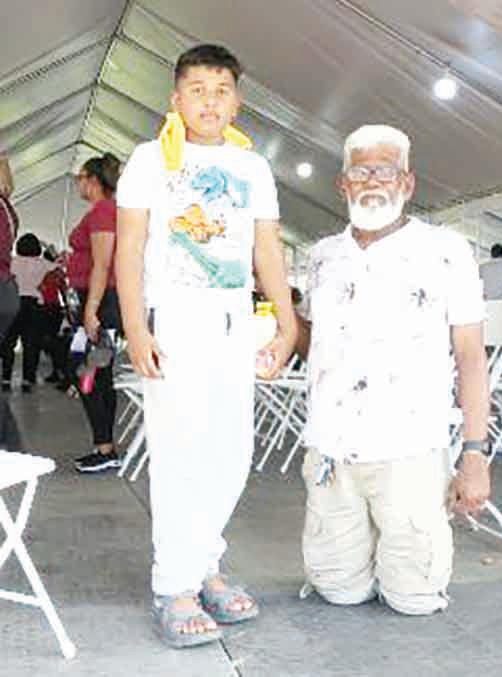
not take away his ability to lead. Today, as a father of five, Haniff’s story stands out among the many residents who attended the recent Region Three outreach, serv
that time can never erase. But what happens when a father loses the very feet that carry those footsteps? For 67-year-old Siddiqi Haniff, that question became a reality more than four decades ago. Years of heavy cigarette smoking led to severe health complications that resulted in the loss of both of his legs. Yet while the illness took away his ability to walk, it did
His journey serves as a reminder that the true measure of fatherhood is not found in the steps a man takes, but in the path, he creates for those who follow him. It proves that a father’s greatest footprints are not made on the ground, but in the hearts of those he loves.
Life-changing consequences
This publication caught up
with Haniff during the outreach, where he reflected on fatherhood, resilience and the life-changing consequences of smoking. Getting into the heart of the matter, he recounted his long struggle with cigarette addiction.
“I used to smoke very heavily. In fact, in 1990, I began experiencing some pain in my calf when I walked. I went to Georgetown Hospital and saw a doctor, who examined me, reviewed my habits, and informed me that I was suffering from a condition called Buerger’s disease. It is very rare in Guyana.” Buerger’s disease is a rare condition that causes inflammation and blockage of blood vessels, primarily in the arms and legs and is strongly associated with tobacco use. Haniff explained that his condition was relatively rare in Guyana at the time and believes it was largely caused by years of heavy smoking. He said smoking caused his arteries to harden and narrow, restricting blood flow throughout his body.
According to him, the situation was further complicated as his blood became thicker making circulation even more difficult. As a result, his arteries struggled to supply enough blood to his muscles when they were active, leading to persistent cramps and other complications that eventually contrib-
uted to the loss of both of his legs.
“The doctor encouraged me to stop smoking. I had never seen anything like that before. He told me I could lose my legs. I found it very difficult to stop smoking. I felt that I could never quit. I was very addicted to it. Eventually, I lost both my legs. After that, I managed to quit smoking.”
According to Haniff, he paid a heavy price for being reluctant to give up the habit. However, he said he never allowed the loss of his legs to define him.
“But even though I lost my legs, I always tell myself one thing, life goes on. I also re mind myself that God does not give anyone a burden heavier than they can carry.”
No burden to others
Despite the challenges, Haniff said he made a conscious decision not to become a burden to others.
“So I told myself I’m not going to be wheelchair-bound or bedridden. I am going to make myself, instead of being someone who depends on others, an asset instead of a burden. I had always been doing sign painting and similar work, so I continued with that business. With the help of family and friends, I am managing quite well.” When asked how important family support had been throughout his journey as a
ther, Haniff said it played an important role in helping him continue providing for his children. “Well, by the time I lost my legs, my children were teenagers. With the help of family and friends, I managed to take them through school and everything. As you can see, my daughter here works with Guyana Water Inc, and we are doing quite well.” Amidst it all, Haniff said his journey through marriage, fatherhood and life has been both fulfilling and rewarding. “I’ve had two marriages, and all my children are well trained, well respected and they live good lives.”
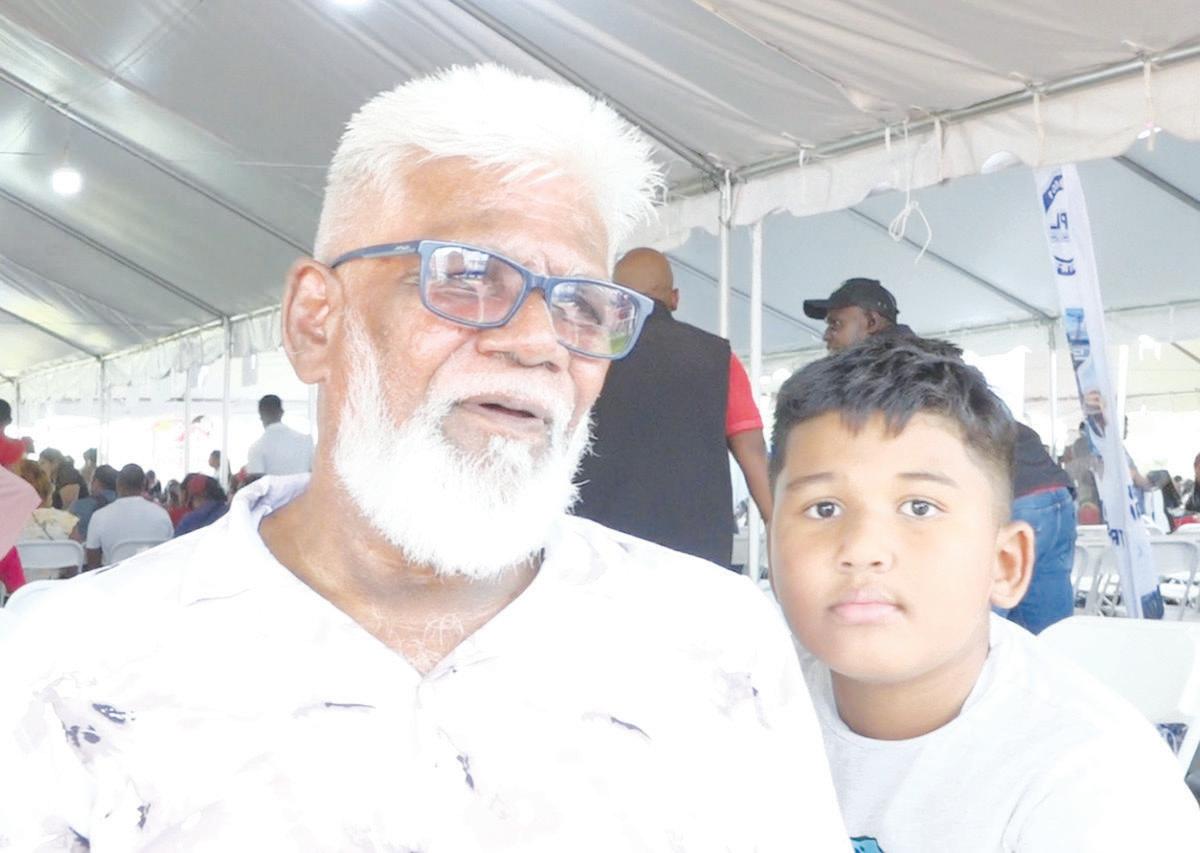
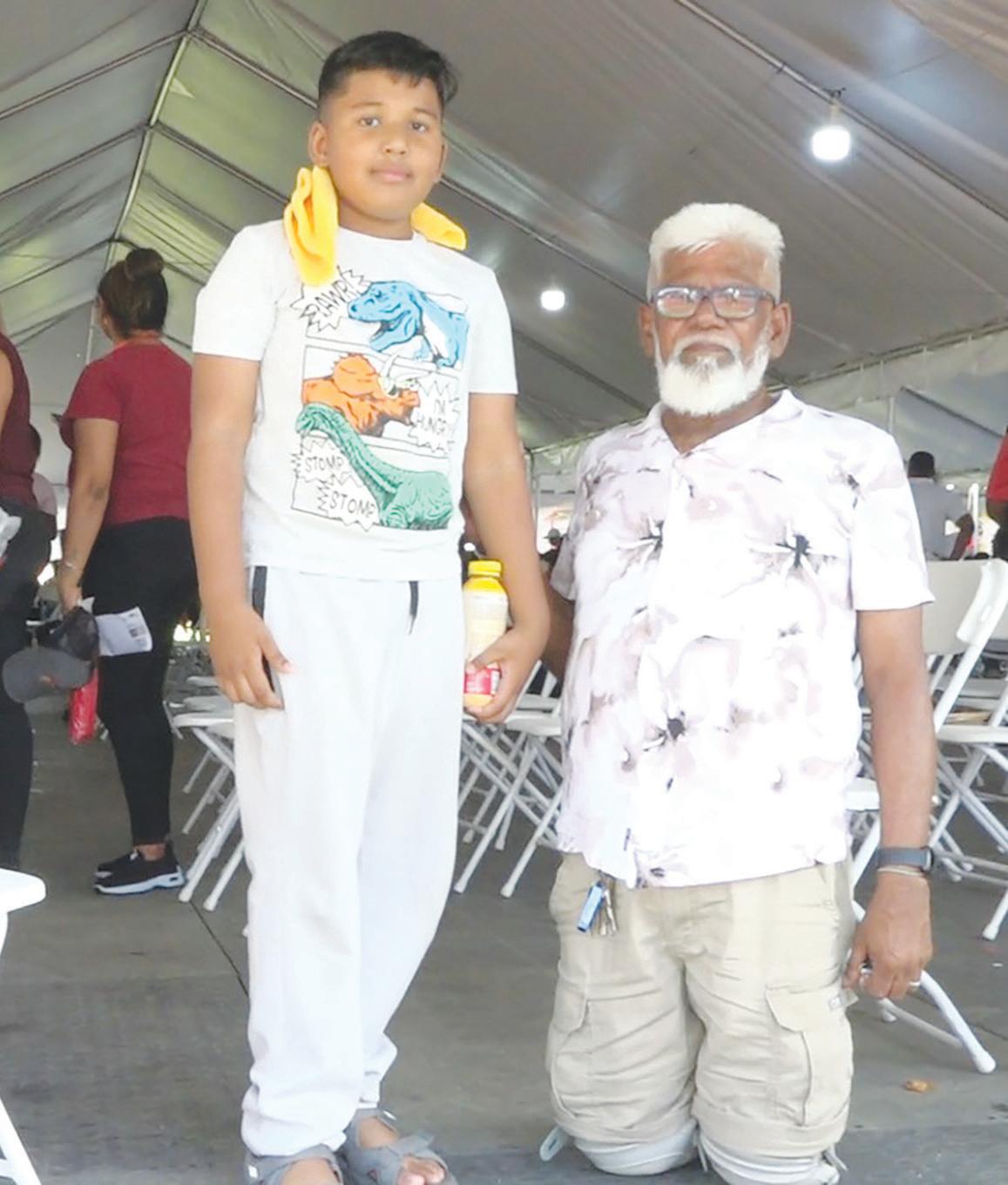
67-Year-Old Siddiqi Haniff and his grandson at Government outreach in Region 3 on Friday
Saddiqi Haniff
Love for his son fuels father’s call for LGBTQ anti-discrimination laws
Harold Hopkinson, conquered the motor rac ing and sharp-shooting arenas, now has his sights set on rallying fellow par ents and the state to sup port the removal of an outdated law that discrim inates against gay men in Guyana, and the pas sage of an
calling for a collective re -
tion protections for lesbian, gay, bisex ual and transgen der (LGBT) persons. Hopkinson’s mission is driven entirely by his love for his son, Quincy, a 47-year-old medical profession al, who now resides overseas. In his mes
security executive, pointed out that he believes some of the “brain drain” Guyana is experiencing is linked to dis -
“We must stand against these discriminatory laws and pass leg -
criminatory laws against the LGBT community. He said it is painful knowing that his son felt compelled to leave Guyana because of legislation that still criminalises intimacy between same sex partners.
“It hurts deeply that he felt he had to leave Guyana because of our country’s outdated laws criminalising intimacy between men,” Hopkinson said, adding that such laws do not reflect Guyanese values. “They rob us of bright, hardworking people like my son.” Hopkinson is
islation that reflects our national values,” he urged.
“Guyana is growing fast, and it is time for our country to also grow in fairness and respect for all people, including our gay citizens,” he added. His message is featured in Guyana Together’s fifth video release to commemorate Father’s Day. In the message, Hopkinson, a father of seven, also reflected on his bond with Quincy.
“I love my son and I am very proud of him,” he said. “He reminds me a lot of myself, we share the
same sense of humour, we are both artistic, and we can fix almost anything.”
Guyana Together’s fifth video complements four other videos launched from 2023 to 2025. The campaign’s first video features a young lesbian, Krystal Trim, and an ally, Eusebia Liverpool, who has been a mother figure in Trim’s life since her biological mother passed away when she was a teenager. The second video features Guyanese model and pageant queen Kristal Inshan and her gay best friend, fashion designer Avinash Narine, and captures support through friendship. The third video features sister Kaisha Davis and her transgender brother Tarique. Their love and support transcend a mere sibling relationship, as it has cemented an everlasting bond of trust. The campaign’s fourth video featured 80-year-old grandmother Romanie Viola Simpson and Hollister. Hollister was assigned male at birth and now identifies as a transgender woman. Simpson’s message highlights her love, protection and support for Hollister, who lost her mother at a tender age. The video spotlights the duo’s relationship and how they both value each other. All the Guyana Together videos capture real stories of immeasurable love and support from family and friends for gay and transgender Guyanese from all walks of life.
Guyana Together
Guyana Together is a grassroots campaign aimed at growing public support and understanding for LGBT people and calling for the repeal of the country’s colonial-era law criminalising samesex intimacy. The campaign brings together leading business voices, faith leaders, and over 200 Guyanese organisations, while elevating the voices of everyday Guyanese people who believe in respect for their fellow gay and transgender citizens.
Harold Hopkinson
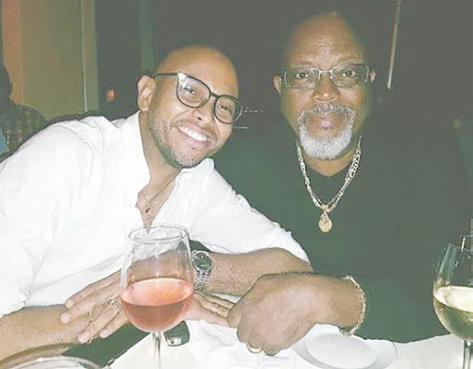
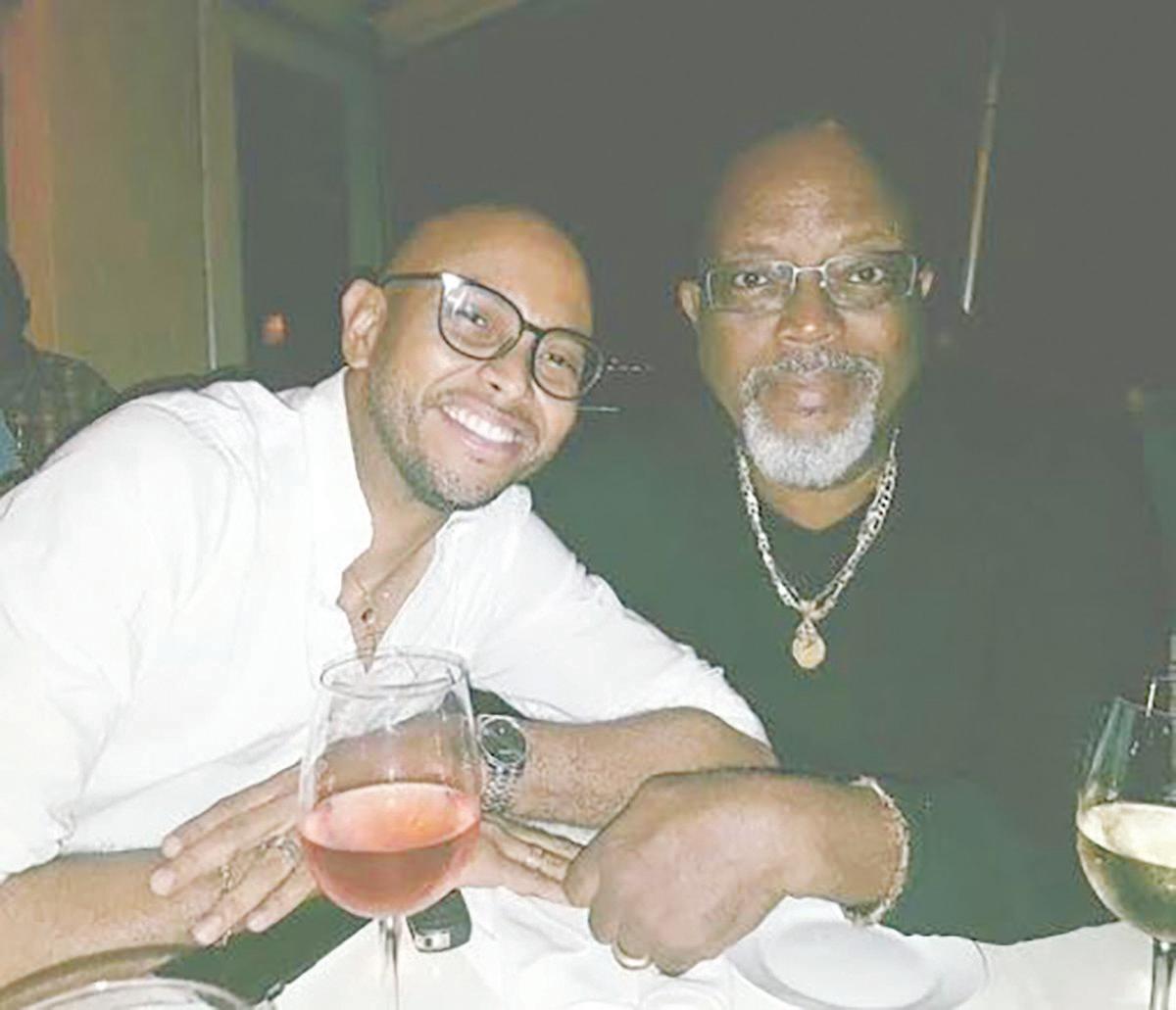
Quincy (left) with his father, Harold Hopkinson (right)
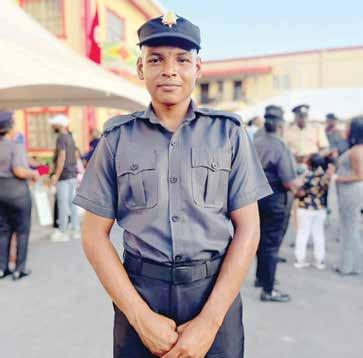
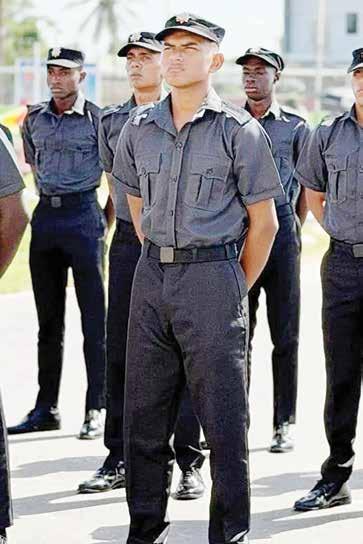
The Village of Mainstay/ Whyaka Village, Essequibo Coast, Region Two (PomeroonSupenaam) is celebrating the achievement of two of its sons, Anderson Williams and Ovid Baird, who recently graduated as firefighters and joined the Guyana Fire Service (GFS). Their success is the result of determination, hard work and a deep commitment to serving their country and communities. Ovid Baird grew up in Lake Mainstay, where he was raised by his grandparents. He attended Lake Mainstay Primary School before moving on to Anna Regina Secondary School, where he earned the qualifications that opened the door
to a career in the GFS. His interest in firefighting developed after completing a oneweek Auxiliary Firefighting Training Programme. He later spent a year assisting in controlling small fires within his community. This experience inspired him to pursue firefighting as a profession.
Ovid chose this career because he wanted to serve his country, save lives and make a positive impact in his community. He describes the training as challenging but rewarding, teaching him discipline, teamwork, resilience and perseverance. Similarly, Anderson Williams’ journey reflects dedication and determination. A former student of Cotton Field Secondary School, he always dreamed of becoming a firefighter and served as an Auxiliary Firefighter as well. With the unwavering support of his loving parents, Anderson credits them, who worked on the farm to help support him throughout training. When asked what advice he would give to his peers he posited that they should believe in themselves. “I would like to encourage the youths out there to take up every opportunity they get and believe in themselves; once you believe in yourself, anything
As newly minted firefighters, both young men hope to grow professionally, serve with integrity and inspire other youths from
else is possible,” he said.
Mainstay/Whyaka Village to pursue careers dedicated to national service and community development (Feature written by Guyana Fire Service)
New fire fighter, Ovid Baird
New fire fighter, Anderson Williams
“Me get it for my protection” – man tells police after being caught with illegal gun
A63-year-old man from Perseverance, Essequibo Coast, Region Two (PomeroonSupenaam) is under investigation after police discovered a .45 pistol and ammunition concealed inside a ceiling light fixture at his home on Saturday. According to police, at about 10:30h on Saturday, ranks from Regional Police Division No 2, led by a senior officer, went to the residence of the man, also known as “Monkey Harry,” after receiving information that prompted a search of the premises. Police said the man was found sitting in his living room and was informed of the purpose of
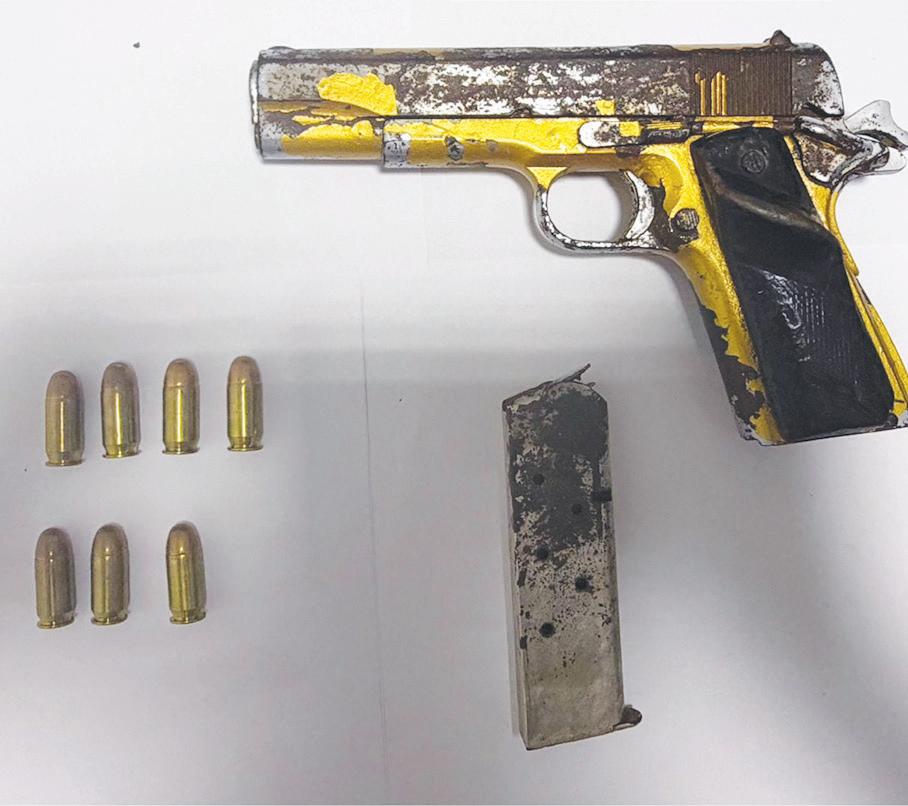
the visit. He subsequently consented to a search of his home for narcotics, firearms and ammunition. During the operation, a detective sergeant searched a bedroom located in the north-eastern section of the house. While examining a ceiling light fixture, the officer discovered a white T-shirt concealed inside. Wrapped in the shirt was a gold, black and silver-coloured .45 Colt pistol, along with a magazine containing seven matching live .45 rounds of ammunition.
Investigators noted that part of the firearm’s serial number appeared to have been tampered with. Police said the man admitted ownership of the firearm and ammunition.
Three Miles, Bartica moves closer to running water access
He reportedly told ranks, “Me get robbed three times, me get it for my protection.” The suspect was taken into custody and escorted to the Anna Regina Police Station along with the firearm and ammunition. Investigations are continuing.
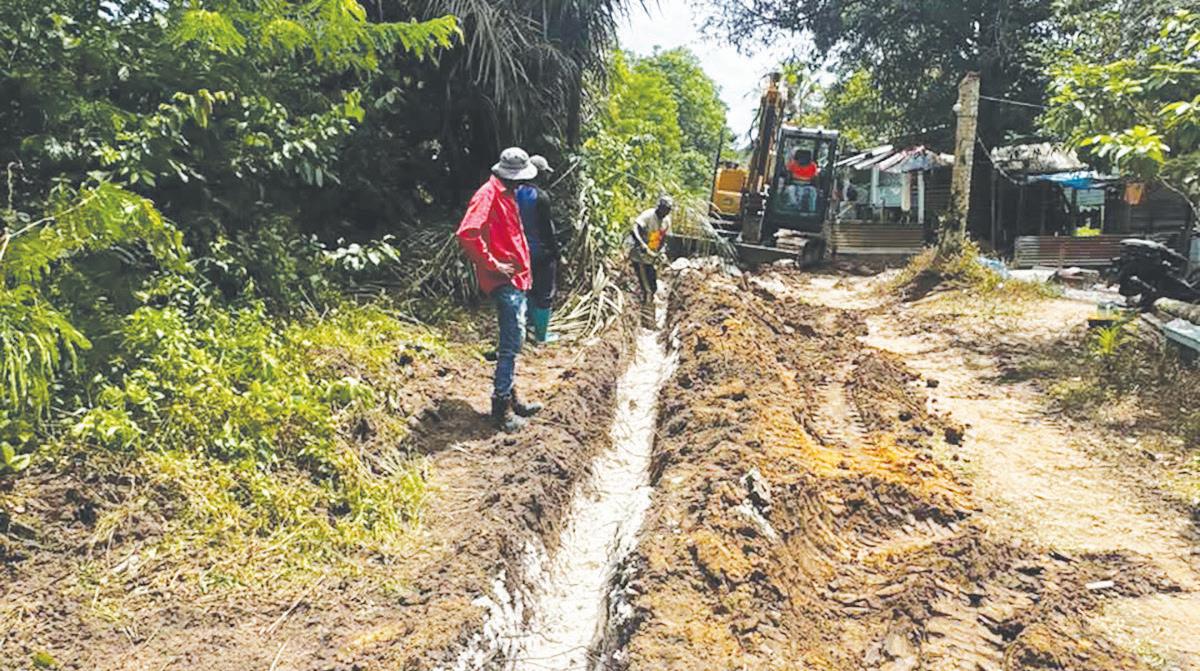
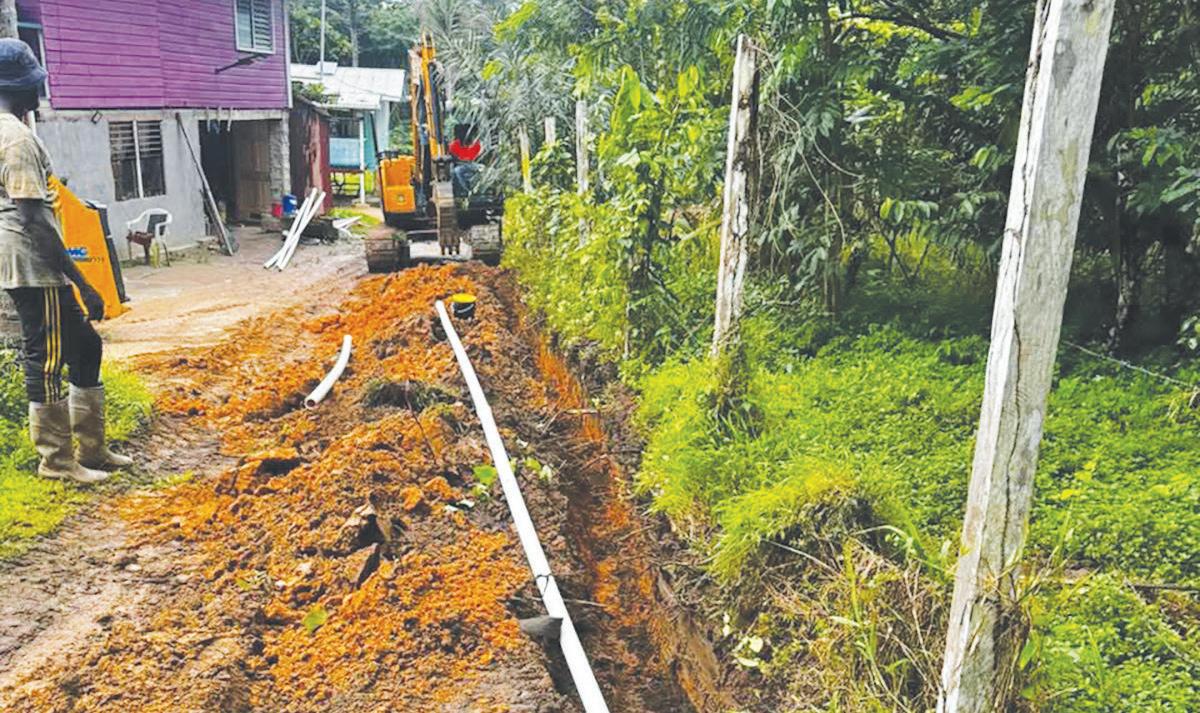
Residents of Three Miles, Bartica, Region Seven (Cuyuni-Mazaruni) are closer to receiving access to running water as the installation of water distribution pipes has officially begun in the community.
According to a social media post from the Region Seven Regional Democratic Council (RDC), the pipe-laying proj-
ect commenced and is expected to be completed within the next two weeks. The RDC noted that the project is expected to improve the quality of life for community members by enhancing access to a reliable water supply. Once completed, households in the area will be able to connect to the water distribution network.
The gun and ammunition that was found
“You have the power to...
“When we started administering vaccines in different parts of the country and screening women, we discovered that many women had pre-cancerous cells,” Minister Parag explained. “But with that vaccine, you can stop that from progressing. It’s important for our young people to know.”
Institutional support
Turning her attention to institutional support, the Minister emphasised that a lack of resources should never stand in the way of a child’s right to education. She praised the ongoing national menstrual hygiene initiative, noting that the
First Lady’s menstrual hygiene programme, which began by raising funds and donating sanitary napkins, particularly to girls in hinterland communities, has been so impactful that the Government has now formally integrated and budgeted for it. She said this commitment ensures that the programme not only reduces period-related absenteeism but also promotes good health and hygiene among adolescent girls. The Minister also linked menstrual health to the broader fight against gender-based discrimination and violence, arguing that young men must be active and supportive partic-
ipants in the conversation rather than contributors to stigma. “These are conversations that should be happening today and tomorrow because they are real and they are important.”
Parag encouraged students to look within themselves for motivation and to always speak up and ask questions. “Looking outside for motivation, you’ll never find it. Where does motivation come from? It comes from inside. If you rely on yourself and you want to be happy, make sure that you’re happy and not disappointed. Make sure you use your voice and ask questions. It doesn’t matter how silly the question
may seem, ask it.”
“Period Walk”
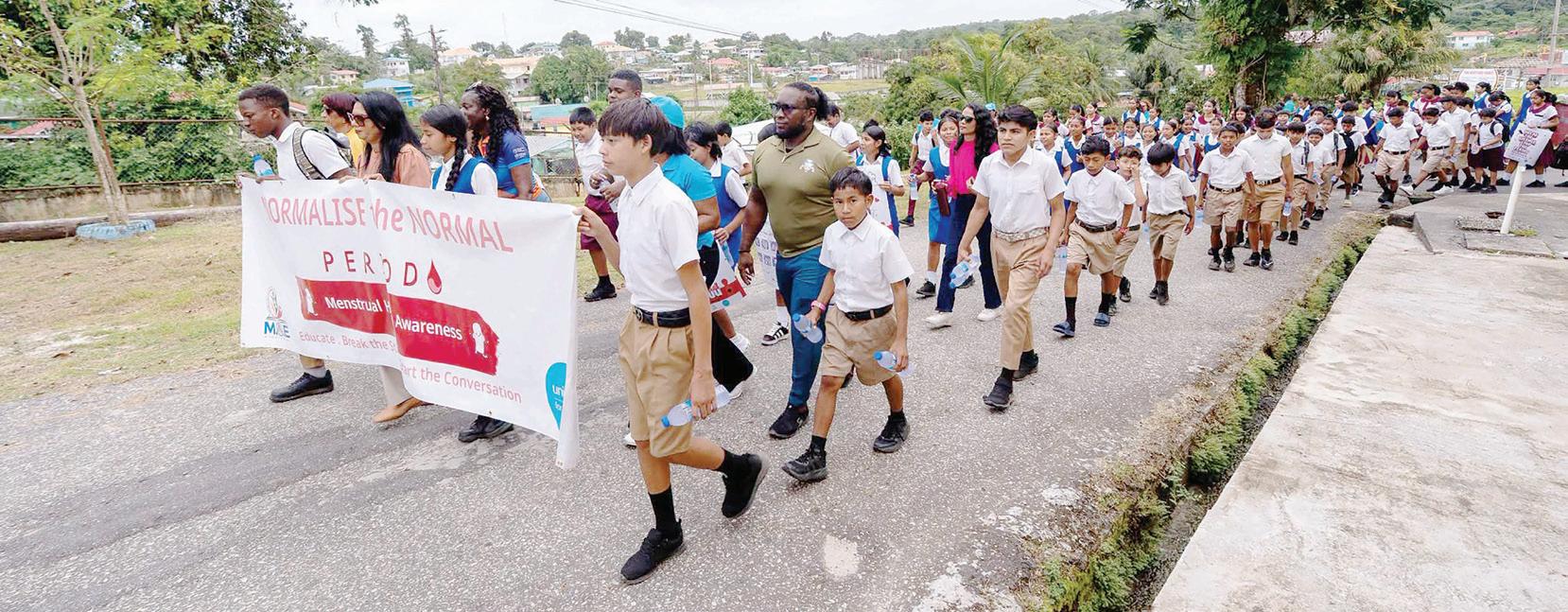
As a high-visibility component of the symposium, students, policymakers and international partners took to the streets of Bartica for a public awareness “Period Walk,” marching through the town chanting, “Break
the silence, stop the period shame!” to confront menstrual stigma and taboos. The forum concluded with participating students from both secondary schools signing an adolescent health empowerment pledge. The enlarged posters will be permanently displayed in the schools, serving as daily reminders of students’ commitments to making informed and positive health choices. The symposium received collaborative support from UN Women and the Pan American Health Organisation/World Health Organisation (PAHO/ WHO), with vital funding and assistance provided by the Government of Canada.
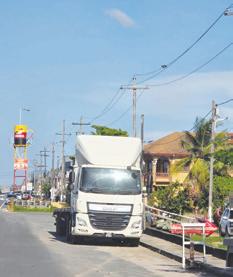
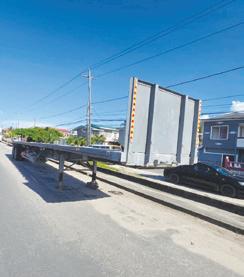
Removal notice issued for trucks, trailer on Mon Repos Public Road
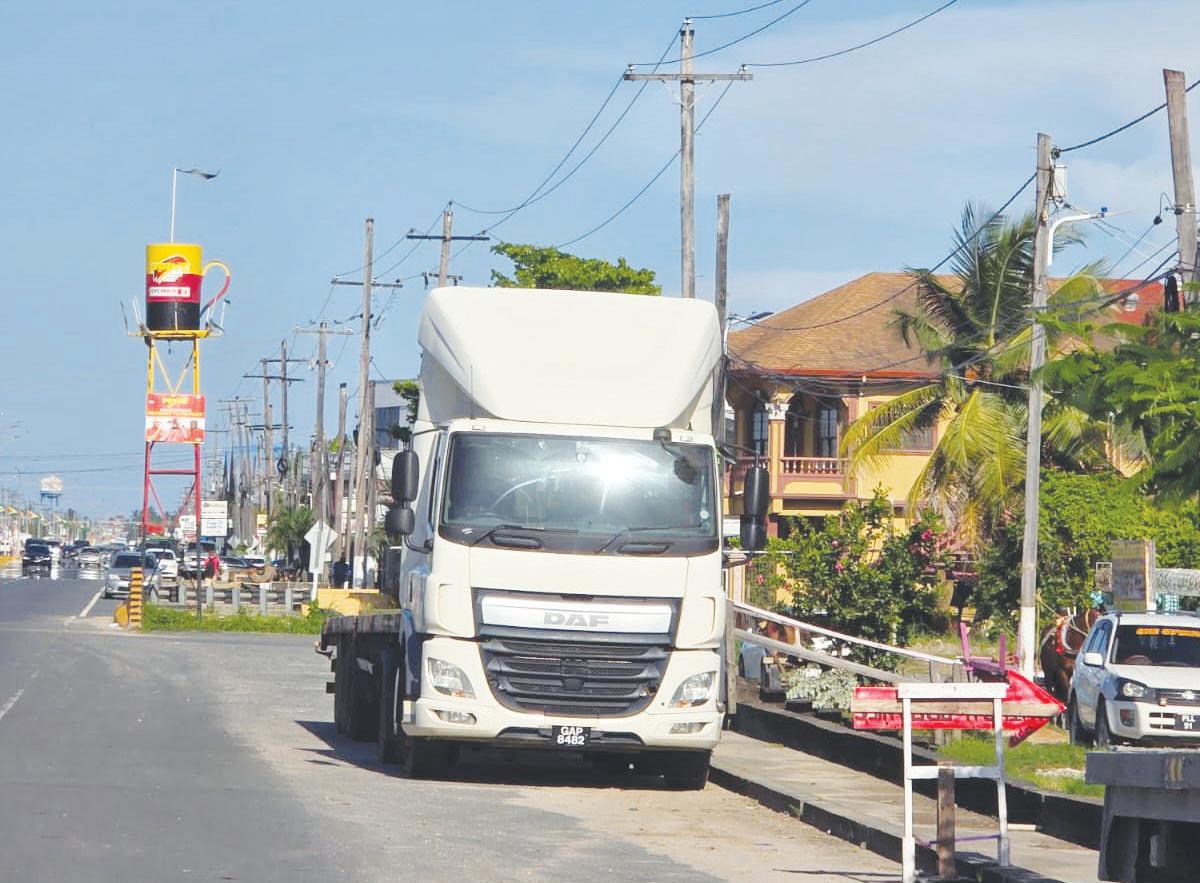
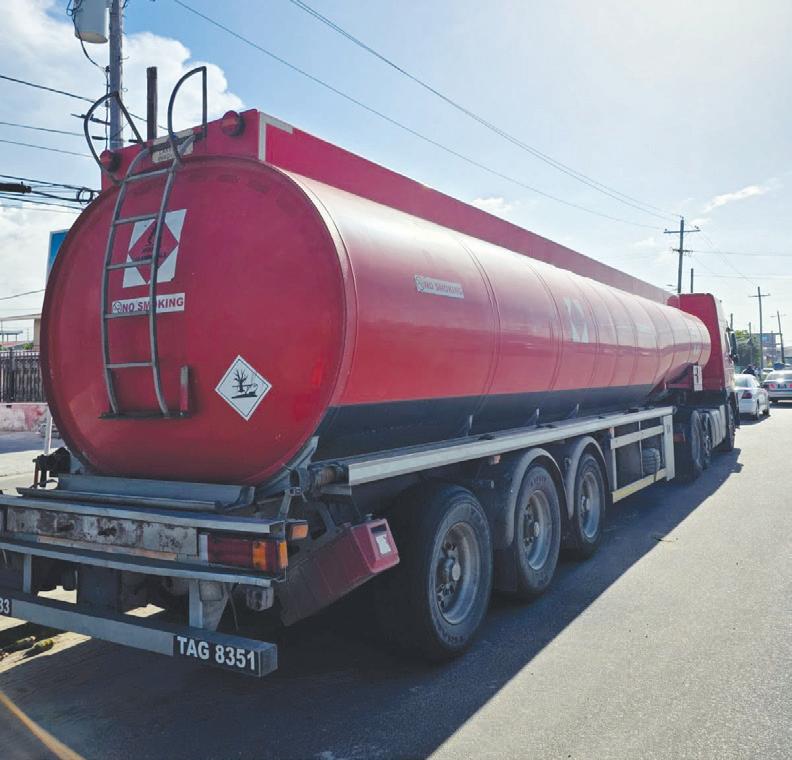
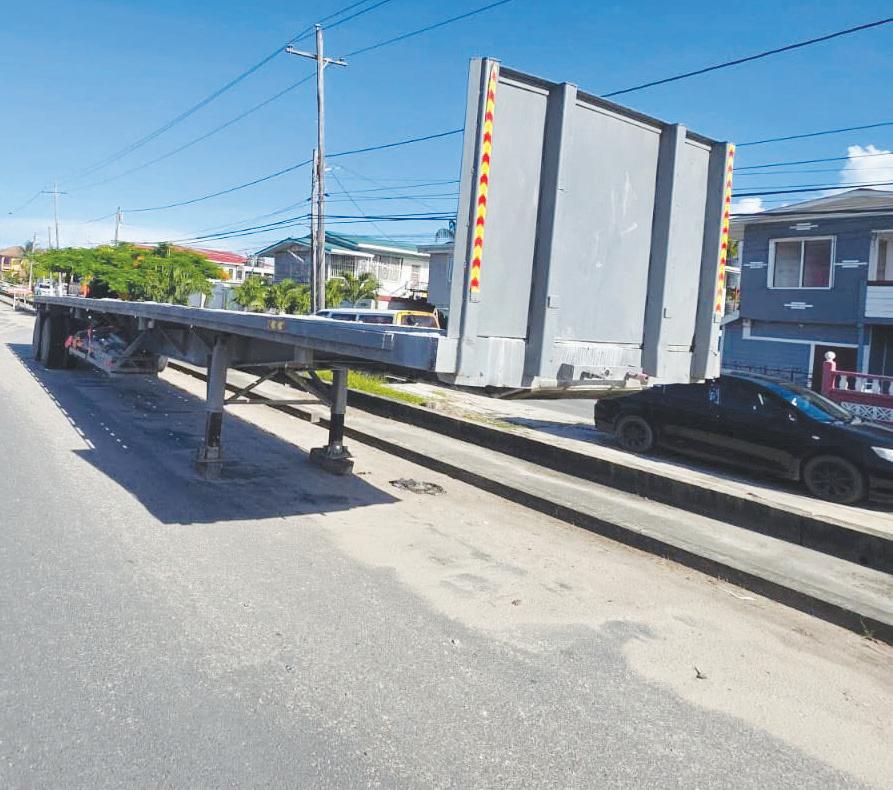
The Public Works Ministry has issued an immediate removal notice to the owner(s) of a vehicle and trailer currently situated along the Mon Repos Public Road, East Coast Demerara (ECD). In a social media post, the Ministry stated that the owner is required to re-
move the items without delay. It warned that failure to comply will result in the Ministry intervening to have the vehicle and trailer removed.
The notice further stated that individuals who repeatedly relocate their property from one location to another, or continue to disregard
official removal notices, risk having their property seized by authorities. According to the Ministry, while Government is not seeking to permanently withhold property, all costs associated with any removal carried out by the Ministry will be the responsibility of the defaulting owner. It added that owners wishing to reclaim seized items must first visit the Ministry to settle outstanding removal costs before upliftment is permitted. The Ministry also reiterated its call for public cooperation in keeping roadways clear and safe for all users. Similar enforcement notices have previously been issued by the Ministry and other agencies as part of ongoing efforts to address derelict vehicles and obstructions along major roadways across the country.
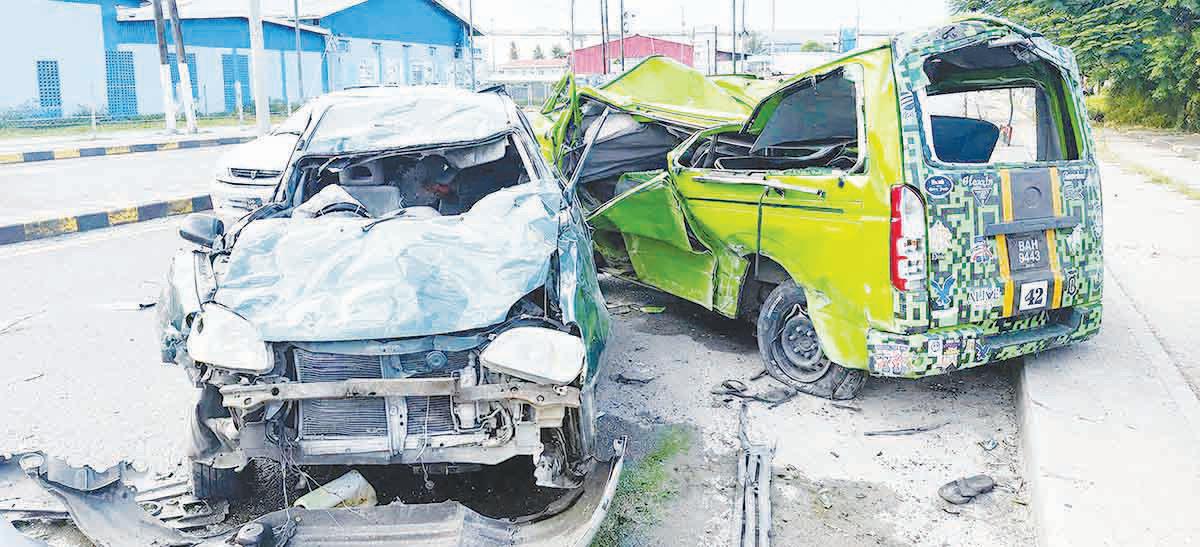
1 dead, several injured in crash at Providence
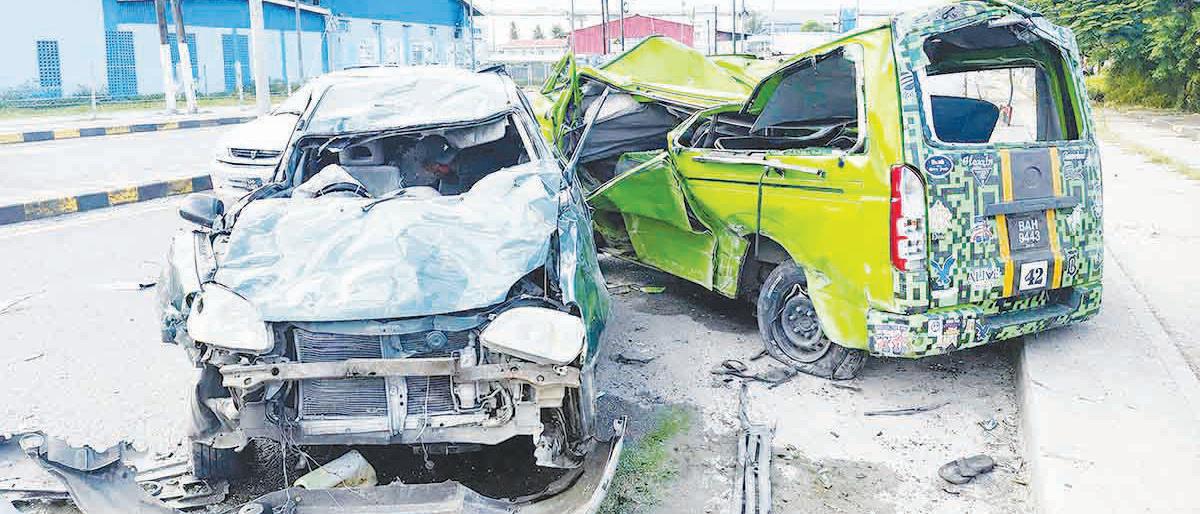
One person has died and several others injured after a minibus toppled several times before slamming into a car in front of the Guyana National Stadium, Providence.
Based on video footage
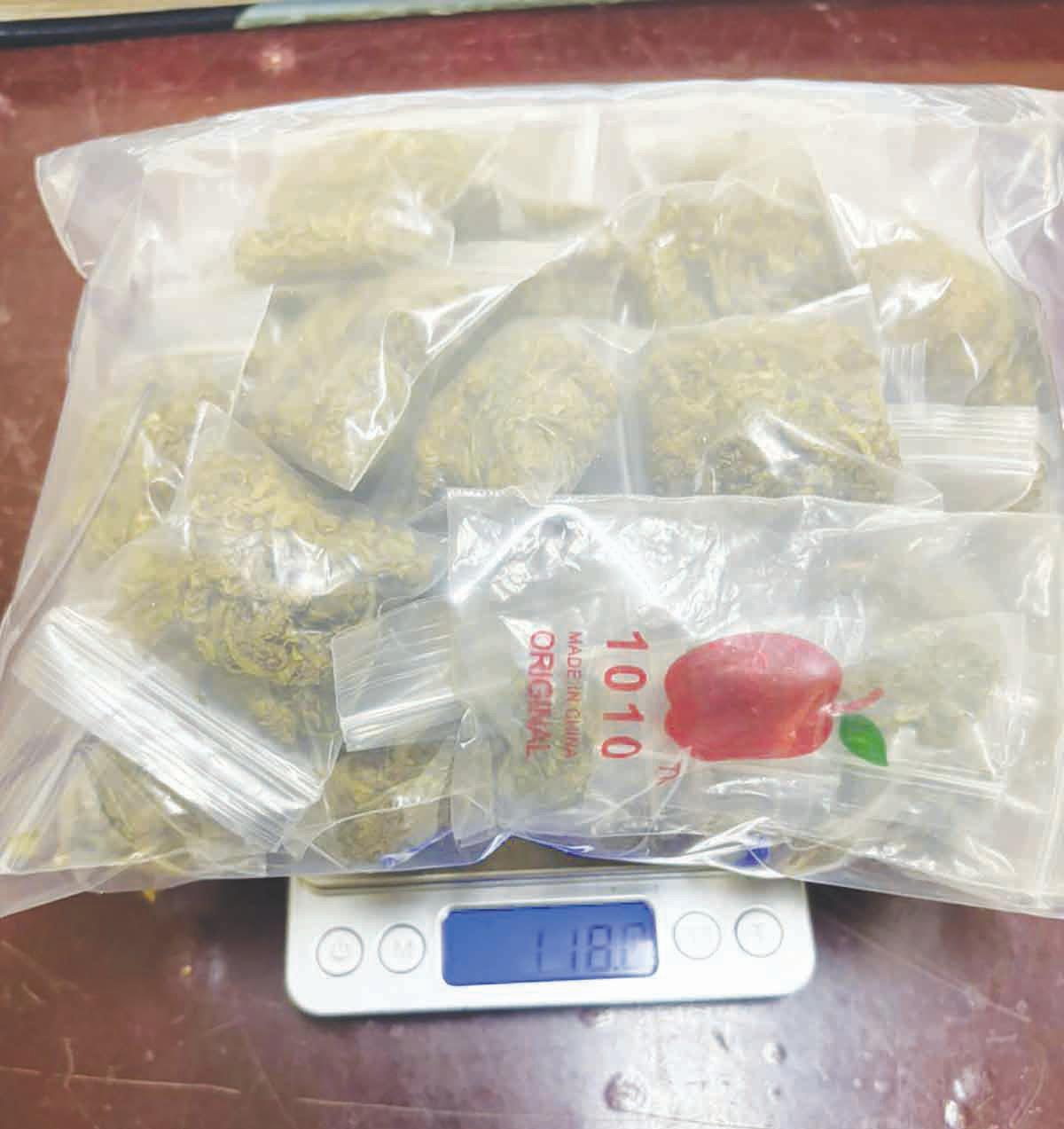
Ganja found hidden in cardboard box at wash bay
Police in Regional Division Three found a quantity of suspected cannabis during an operation conducted on Saturday at Westminster Last Bridge, West Bank Demerara (WBD). According to police, the discovery was made between 17:00h and 17:15h during an exercise in the area. Ranks searched a flat structure located south of a wash bay and found a brown cardboard box containing leaves, seeds and stems suspected to be cannabis.
Public spirited persons rushed to the aid of the injured persons but one person succumbed to his injures. (More details in Monday’s edition)
released from a nearby surveillance camera, the Route 42 minibus can be seen approaching at a fast rate of speed as a canter truck attempted to switched lanes. This caused a collision with the minibus flipping into a pole on the median along the roadway before colliding with a car travelling on the eastern side of the roadway.
The narcotic was taken to the La Parfaite Harmonie Police Station, where it was weighed and amounted to 118 grams before being lodged. No arrests have been made. Police said investigations are ongoing.
The ganja that was found at the wash bay
The scene of the accident
ERC engages in regional dialogue on religious freedom
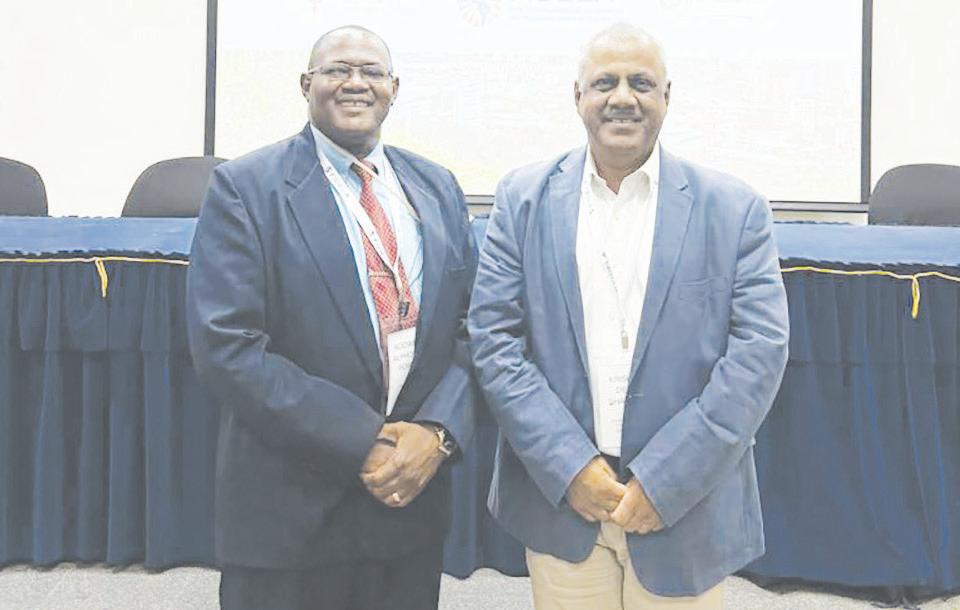
The Ethnic Relations Commission (ERC) participated in the Ministerial Dialogue and Inter-Religious Forum convened by the Interreligious Forum of the Americas (FIDELA), held in Panama City, Panama. The forum, held from on Friday and Saturday brought together Ministers of Government and senior religious leaders from member states
of the Organisation of American States (OAS) to discuss issues relating to religious affairs, freedom of religion and worship, interfaith collaboration, human rights and approaches to addressing intolerance. Guyana was represented by ERC Commissioners Pandit Krishn Sharma and Reverend Rodwell Porter. In joint remarks, the Commissioners said the
engagement was meaningful, citing the value of discussions on religious tolerance and freedom of worship. They noted that the exchange of ideas, presentations and dialogue contributed to a broader understanding of mechanisms to reduce intolerance and promote religious freedom. The ERC said its participation aligns with its mandate to promote ethnic harmony
and good relations among all Guyanese, while encouraging respect for the country’s religious diversity. The dialogue also provided an opportunity for the Commission to compare experiences with peer institutions across the region and identify practices that could support interfaith understanding and social cohesion in Guyana.
ERC Commissioners Reverend Rodwell Porter and Pandit Krishn Sharma at the Ministerial Dialogue and Inter Religious Forum convened in Panama City, Panama
Iran says it has closed Strait of Hormuz over Israeli attacks in Lebanon
The Iranian military says it has closed the Strait of Hormuz again over Israel's attacks on southern Lebanon – although the US military has disputed the claim.
Iran said deadly Israeli strikes in Lebanon were a breach of Tehran's agreement with the US to end the war.
The US-Iran deal includes the reopening of the Strait of Hormuz –a shipping channel through which about 20 per cent of the world's oil and liquefied natural gas passes.
After Iran's statement, a US Central Command spokesperson, Tim Hawkins, told media outlets that "traffic continues to flow", with US forces "monitoring the situation to ensure this remains the case" and that "Iran does not control the Strait of Hormuz".
Later on Saturday, US VicePresident JD Vance departed Washington for direct US-Iran talks in Switzerland on Sunday. He told reporters he hoped to make progress "on the nuclear issue" and on the "Lebanon ceasefire issue".
Asked about clashes between Israel and Hezbollah and Israeli air strikes in southern Lebanon, Vance said: "Things are actually getting better there, and things are slowing down a little bit."
"It's going to be something we're just going to have to continuously manage to ensure that Israel and Lebanon are both safe and secure. That's fundamentally the goal of this, to make the whole region safe and secure," he said.
Iran's foreign ministry spokesman Esmail Baghaei said his country would be "demanding that the other side fulfil its commitments".
Pakistan's Prime Minister Shehbaz Sharif will attend the start of the talks, his office told the BBC. Pakistan has acted as a mediator throughout the war, and hosted a previous round of negotiations between the US and Iran in its capital, Islamabad, in April. Earlier this week the US and Iranian presidents signed an initial agreement aiming to end the war, including in Lebanon, with immediate effect. It includes a commitment to further talks to reach a final deal over the next 60 days. On Saturday, US President Donald Trump posted on social media that the US could impose its own tolls on shipping in the Strait of Hormuz if the US and Iran did not reach a negotiated deal. (Excerpt from BBC News)
In this picture obtained from Iran's ISNA news agency, vessels are seen anchored in Bandar Abbas along the Strait of Hormuz (AFP via Getty Images)
TAURUS (April 20May 20)
GEMINI (MAY 21June 20)
CANCER
VIRGO (Aug. 23Sept. 22) (March 21April 19)
Don’t deny yourself the right to explore, create and find your happy place. Dance to the beat of your own drum while engaging in playful activities that spark your imagination.
Size up your situation and your schedule, and rearrange your calendar to meet your demands. The plan is to ease stress and tension and to set boundaries with those who eat up your time.
Don’t deny yourself the chance to pick up additional skills to accommodate what you want to pursue. Change begins with you. Take pride in what you do, and reach for the stars.
Set goals, but be honest with yourself regarding what you can and can’t handle. Don’t hesitate to call in an expert or downsize plans. Pay attention to those you love.
LEO (July 23Aug. 22)
Speak and act passionately. Show your concern, and make suggestions. Listen carefully and work as a team player; success will be yours. A little charm will go a long way. Learn from experience.
Strive for personal and financial growth. Use your memory and intelligence to outmaneuver anyone who challenges you. Consider different applications for your knowledge, experience and physical skills.
LIBRA (Sept. 23Oct. 23)
SCORPIO (Oct. 24Nov. 22)
SAGITTARIUS
(Nov. 23Dec. 21)
CAPRICORN (June 21July 22)
Be careful what you share. Someone will be quick to replace what you say with their own interpretation. If you plan to implement change, then oversee every aspect to avoid costly mistakes.
An open mind will help you understand possibilities. Participating in an event that offers insight and a unique perspective regarding what you can do to help will bring you in contact with someone of interest.
Pay more attention to how you look and feel and to fine print and details surrounding financial obligations, contracts and medical issues. Certain projects will be time-consuming.
It’s up to you to set high standards and to create opportunities. Set your sights on what excites you most, and use your intelligence, connections and energy to outperform anyone who tries to compete with you.
AQUARIUS
(Jan. 20Feb. 19) (Dec. 22Jan. 19)
PISCES
(Feb. 20Mar. 20)
Put your paperwork in order and any unfinished business to rest. Lowering stress is a surefire way to improve health and get back to the best version of yourself.
Participating in conversations and events that bring you in contact with people from different backgrounds will spark your imagination and encourage you to rethink how you want to move forward.
ARIES
Peanuts
Calvin and Hobbes
Pickles
It is Joe Root or bust for England at The Oval, as it was so often in the final days of his previous stint as Captain. Root became the second man to reach 14,000 Test runs early in his unbeaten innings of 75, but, barring 54 from Harry Brook, found precious little support. He will return today knowing that he represents England's only hope of pulling off a world-record run-chase.
New Zealand will need only five more wickets to wrap up what would be only their eighth Test win in England and their
Root stands firm, but Henry, Jamieson put New Zealand on course for Oval victory
first since the World Test Championship final five years ago. It would be a deserved win, after an even first day and three dominant ones since, and would set up the prospect of a series decider at Trent Bridge
England's side could look very different for the third Test, with the prospect of Ben Stokes returning as Captain increasingly likely. Stokes was nearly 300 miles away from The Oval, making 95 for Durham against Northamptonshire, as England slipped to 40 for 3 in pursuit of 463; he is not the player he once was, but his absence still weakens
New Zealand were not as ruthless as they might have been on the fourth day: they added only 110 runs to their overnight score for the loss of seven wickets, and their firm grasp on the match briefly loosened after tea when Brook raced to a characteristically-adventurous 50 from just 33 balls.
But Matt Henry bowled an impeccable second spell of 1 for 10 in six overs to restore control. With Tom Blundell again up to the stumps, both Root and Brook successfully overturned lbw decisions on review thanks to inside-edges, but were unable to score freely, and Henry roared in celebration when Brook edged to Daryl
Mitchell at slip via the tip of Blundell's glove.
It was Kyle Jamieson who did the early damage with a double-wicket maiden leaving England reeling at 13 for 2. Emilio Gay was given a life when put down by Blundell in Henry's first over, but chipped tamely to forward square leg for 11, and Jacob Bethell was trapped on the front pad by a ball that seamed in sharply.
Root reached his latest landmark when he nudged Henry into the covers for a scampered single, and struck two crisp boundaries in Nathan Smith's first over to hint at a recovery. But Ben Duckett fell immediately after, flapping at a pull off Will O'Rourke which looped up to short midwicket off the toe, leaving England 40 for 3 and deep in the mire.
Brook led the charge after tea, sauntering down to launch Jamieson over mid-off in trademark style; Root ticked over at the far end, repeatedly gliding and steering boundaries away behind square. But Tom Latham's plan to dry Brook up worked to perfection, and Jamieson's late wicket of James Rew, trapped lbw on review, underlined New Zealand's position of dominance.
It capped a difficult debut for Rew, who managed 39 runs across his first two
innings in Test cricket and missed three opportunities behind the stumps. Jamie Smith is expected to return from paternity leave in Nottingham next week to keep wicket and whenever Rew is next seen in Test cricket, it may well be as a top-order batter on this evidence.
Jofra Archer's two-wicket burst was the highlight of the second morning, and he would have had a wicket with his first ball of the day if Brook had held onto a diving catch at slip off Mitchell's outside edge. Instead, he struck an over later when Brook who had moved to second slip moments earlier held onto a far simpler chance off centurion Henry Nicholls.
Root nearly gave Blundell a reprieve when he
juggled a chance at leg slip off Josh Tongue's bowling, only for Rew to react well to scoop up the rebound. Archer bowled eight of the first nine overs from the Pavilion end and repeatedly tested New Zealand's batters, earning further reward when first-innings centurion Glenn Phillips was well held by Bethell in the gully.
Smith joined Mitchell and tucked into Bethell's left-arm spin before lunch, hoisting consecutive balls over wide long-on and through deep midwicket for six then four. He tucked in again when England curiously declined to take the second new ball for the
81st over, hauling Matthew Fisher through long leg. Mitchell had reached 50 with the first of three boundaries in a Root over before lunch, but fell soon after on the scoop. England then belatedly took the new ball and ran through the tail, with Fisher removing Jamieson (bowled) and Smith (caught slogging) before Sonny Baker had Henry slicing to extra cover. It was the fourth consecutive bowling day for England's inexperienced attack, who were left in no doubt after 183.3 overs in the field about the step-up in intensity at Test level. (ESPNcricinfo)
Undav fires Germany to 2-1 win over Ivory Coast and place in the knockouts
Deniz ?Undav scored two goals off the bench as Germany pulled off a thrilling comeback to beat Ivory Coast ?2-1 in their World Cup Group E match on Saturday, securing their place in the knockout stage for the first time since they won the title in 2014.
After having two goals disallowed in the first half, Germany did not lose focus and used ?intricate passing to find their way while the West Africans produced their dynamic brand of attacking football ?in a wild Group E clash.
Undav levelled the score with a controlled, volleyed finish ?in the 68th minute and struck again when he received a pass on the turn, before swivelling and ?firing home a ball that Yahia Fofana had no chance at stopping.
The versatile striker now has nine goals in his last ?eight matches.
Simon Adingra had a late chance for Ivory Coast, but he failed to get a shot off in the area before Germany charged back down the field and Fofana blocked a low shot from Nathaniel Brown.
Ivory Coast had opened the scoring in the first half when ?Franck Kessie slotted home a rebound off a shot by Amad Diallo
on a play created when Yan ?Diomande charged down the left side and sent in a cross.
With more than 100,000 people of German ancestry living in Toronto, ?Julian
Nagelsmann s men enjoyed ?plenty of support, but were a frustrated group at the interval with nothing to show for their eight attempts on goal.
Germany looked to have opened the scor-
ing when midfielder Aleksandar Pavlovic rose to meet a short corner in the 25th minute, but was deemed to have fouled Fofana in the process.
The ruling left Pavlovic with ?his hands atop his head ?in disbelief while Fofana ?received some attention after the collision and the partisan German crowd made their disdain for the referee's decision known.
Shortly after it was Ivory Coast who finally broke through with Kessie's goal. The West ?Africans have scored in their last seven matches at the tournament the longest such sequence ?on the ?global stage in their history.
Germany once again put the ball in the back of the net, but their celebrations were cut short as the referee determined that Jamal Musiala had fouled Odilon Kossounou in the build-up.
Germany top Group E with six ?points and ?are through to the last 32 while Ivory Coast remain on ?three after two matches. Ecuador and Cura ao were scheduled to meet in Kansas City later on Saturday.
Germany will close out the group stage against Ecuador on ?Thursday in New Jersey while Ivory Coast face Cura ao in Philadelphia. (Reuters)
Germany's Aleksandar Pavlovic, Felix Nmecha and Waldemar Anton celebrate with teammates after the match (IMAGN IMAGES via Reuters/John E Sokolowski)
Harry Brook and Joe Root got together with England in big trouble (PA Images via Getty Images)
Kyle Jamieson rocked England early in the fourth innings (PA Images via Getty Images)
The Rainforest Water brand, under the umbrella of Banks DIH Limited, has officially recommitted as the official hydration partner of the One Guyana T10 Tapeball Blast for a fourth consecutive year.
This renewed partnership ensures the extension of the tournament’s signature “Rainforest Water Break” in every match, a feature that has become synonymous with the tournament’s matchday structure. The extension underscores the burgeoning market value of grassroots tapeball in Guyana, a format that has rapidly transitioned from a recreational
Rainforest Water recommits as hydration partner for One Guyana T10 Tapeball Blast
way to give back to the communities that support them while actively promoting a healthy, active life-
He added that the tournament has grown exceptionally well, and the brand is thrilled to keep the athletes refreshed as the stakes
pastime into a highly-structured, lucrative sporting property.
Basant Ramsarup, Brand Manager for Water Beverages at Banks DIH Limited, emphasised that the corporate giant’s sustained investment aligned with a broader mandate of community development and wellness.
Ramsarup noted that this was the fourth year the brand has walked hand in hand with the tournament, stating that the partnership perfectly mirrored the brand’s core philosophy.
For Banks DIH and Rainforest Water, the commitment is more than just branding on a boundary board, it serves as a vital
Tournament Director John Ramsingh welcomed the renewal, framing Rainforest Water as a foundational pillar of the competition’s ethos.
Ramsingh stated that Rainforest Water was a household brand in Guyana, and having them return for a fourth season spoke volumes about the mutual value of the relationship.
He further explained that their continued presence was monumental for the tournament’s operational growth and sustainability, providing a sense of stability that allows organisers to scale up their ambitions year after year.
Those ambitions are reflected in a heavily-restructured, high-stakes 2026 season, featuring a revo-
Brobbey, Gakpo double delight as slick Netherlands dismantle Sweden
An early double from Brian Brobbey, two more in the second ?half for Cody Gakpo and a late goal from Crysencio Summerville helped the Netherlands cruise to an impressive 5-1 win over Sweden ?at the World Cup on Saturday.
The Dutch delivered the performance Coach Ronald Koeman had demanded after conceding near the end of regulation in a disappointing opening 2-2 draw against Japan and underlining the team’s credentials as among the favourites to go far in the tournament.
Koeman said he knew this was an important game, but the players’ performance showed they ?did not feel the pressure after the opening draw.
“So, there was more pressure to win this match. We knew it was a ?must-win,” Koeman said. “But I didn’t feel any tension. As a coach, you can feel how people are working after ?a first match like that and what the players’ input is. Then you know things are on the right track.”
Brobbey – chosen ahead of record ?scorer Memphis Depay – repaid Koeman’s faith with two goals in the opening 17 minutes to give the Dutch the early initiative and another two from ? Gakpo in a seven-minute spell after the break put the match out of reach.
His first came when he flicked the ball to Tijjani Reijnders, who found Gakpo racing down the left flank to set up the Sunderland striker for a tap-in.
Brobbey struck again when Denzel Dumfries
swung in a perfectly-weighted cross that he simply directed past ?Sweden goalkeeper Kristoffer Nordfeldt with an outstretched leg.
Sloppy Sweden
After being criticised for how he used his bench against Japan, Koeman got it right against ?Sweden also with his injection of Summerville, who scored one and had a hand in two others after entering the match for the second half.
The Swedes – full of ?optimism after ?crushing Tunisia 5-1 in their opening match – gave the ball away too easily and could not contain the Dutch attack.
Graham Potter’s side played with more urgency following the first hydration break, but it was never good enough against a ruthless Dutch side who converted their chances.
Potter pledged his team would learn from the harsh result, acknowledging his side got off to a poor start from which they could not fight back despite creating opportunities once they were ?behind.
“They hurt us in the wide ?areas,” Potter said. “The first goal ?was from a long
lutionised prize purse that guarantees financial windfalls even at the regional levels.
Teams reaching the zonal quarter-finals are assured of $25,000, with scaling rewards that culminate in a $500,000 prize for zonal champions before they even cross into the national bracket.
The eventual national champions will secure a life-changing $2,000,000 purse, with the runners-up taking home $1,000,000. Additionally, the top four national finalists will earn qualification berths to represent Guyana at the International T10 Tapeball Tournament scheduled for late October.
Individual accolades are equally heavy, with the tournament’s Most Valuable Player (MVP) set to claim $150,000 and a new motorbike, while the leading run-scorer and wicket-taker will each pocket $100,000 alongside new television sets.
With the tournament structure locked in, organisers have issued an urgent directive to regional teams to secure their spots immediately rather than delay
registration to tinker with squad selection.
Ramsingh stressed that registration operates on a strict first-come, first-served basis, noting that captains frequently jeopardise their entries by overthinking their line-ups during the initial window.
To guarantee a spot, teams must pay the $35,000 entry fee now, which secures their franchise slot and grants them logistical flexibility to finalise their 15man rosters closer to their respective zonal start dates.
The entry caps will be rigidly enforced to maintain the integrity of a dense schedule.
The Berbice, East Bank/West Demerara, and Essequibo zones are strictly capped at 16 teams each, while the combined Georgetown/East Coast Demerara zone will accommodate a maximum of 32 teams.
Registration forms can be accessed via the tournament’s official social media handles or by WhatsApp at +592 635-2235.
The tournament caravan kicks off with the Berbice Zone on August 8-9, across four premier venues in-
cluding the Port Mourant Community Centre Ground, No 69 Ground, and the Welfare Ground in Canje, before concluding with the zonal finals at the Albion Sports Complex on August 9.
The action then moves to the East Bank/West Demerara leg on August 15-16, followed by the Essequibo Zone on August 22-23.
In a strategic scheduling move designed to avoid clashing with regional cricket priorities, the tournament will observe a complete hiatus during the Caribbean Premier League (CPL) window, ensuring local fans can engage with the premier T20 tournament without domestic scheduling conflicts. Action resumes postCPL with the Georgetown/ East Coast Demerara leg on September 26-27 and October 3-4, leading into the national grand finale on October 11, 2026.
In a historic first for the competition, the final will be hosted at the Anna Regina National Stadium in Region Two, bringing elite-level tapeball directly to the cricket-passionate demographic of the Essequibo Coast.
ball we didn’t deal with very well. We got off to not a great start in the first period.
“It was one of those things we will learn a lot from. Sometimes, you have to ?have these experiences. I didn’t think it was that kind of game, but we have to learn from ?it.”
Viktor Gyokeres presented ?the main danger for Sweden early on with a free kick and curling effort that tested Dutch goalkeeper Bart Verbruggen.
Yasin Ayari had a chance to get Sweden back into the game, but could not control the ball with his chest with only the goalkeeper to beat.
Substitute Anthony Elanga pulled one back in the ?59th minute ?of a free-flowing game, but it proved only a consolation for Sweden rather than sparking a ?fightback, and the Dutch rout was complete when Summerville slalomed his way to the edge of the box and finished neatly in the final minute.
The Netherlands top Group F with four points ?and Sweden stayed on three after two matches. Japan and Tunisia were scheduled to meet in Monterrey later on Saturday. (Reuters)
Babb continues dominance with landmark Linden Classic victory
Shakeel Babb continues to make waves on the One Guyana Bodybuilding Competition Tour, cementing his place among the country’s rising bodybuilding stars after becoming the first-ever Linden Classic champion.
The historic victory adds to an already-impressive season for Babb, who previously captured the Battle of the Rising Stars 2 Novice Competition title. With two victories now under his belt, the talented bodybuilder has established himself as one of the most dominant competitors on the circuit, drawing attention from fans and fellow athletes alike.
Despite the significance of the achievement, Babb remains humble about his success.
“I’m not very sure of my feelings towards this in par-
ticular,” he reflected. “Across both competitions, my focus was mostly on maintaining my discipline leading up to them and expressing it on stage, as well as taking on the new experiences and challenges. Seeing the other participants’ efforts and emotions be expressed as well. Just being a part of that moment. That’s what I loved about the competition.”
Babb credits much of his success to the support he has received throughout his journey and his commitment to continual growth.
“Overwhelming support from even the most unexpected of sources, as well as the willingness to learn and have fun,” he said when asked about the key factors behind his winning streak.
While his victories may suggest a dominant path to
the top, Babb acknowledged the quality of competition he faced at the Linden Classic. Although he strives to bring his best regardless of who shares the stage with him, several competitors stood out.
“I try to bring out my best regardless of who’s on the stage with me; however, those who I had most particularly noted were #11 Raheem and #18 Ryan of the bodybuilding classes and my friend, Akini Mars, whom I went head-to-head with in the Classic Physique overall,” Babb explained.
As the bodybuilding community turns its attention to the Essequibo Classic scheduled for September 13, many are wondering whether Babb’s reign will continue. Yet the newly-crowned champion appears more focused on personal growth and enjoying the experience than on maintaining a winning streak.
“My goal was mainly to have fun, observe what the fruits of my three-day prep would bear and to see who would be participating,” he said of his mindset heading into competition.
With history already made in Linden and momentum firmly on his side, Shakeel Babb’s journey is quickly becoming one of the most compelling stories in Guyanese bodybuilding.
Linden Classic champion Shakeel Babb
Netherlands’ Brian Brobbey in action with Sweden’s Isak Hien (Reuters/Pedro Nunes photo)
Basant Ramsarup (left), Brand Manager for Water Beverages at Banks DIH Limited, and John Ramsingh of FL Sport
Atimely half-century for Sophia Dunkley followed by a boundary blitz from Freya Kemp and Dani Gibson propelled England to a 38-run victory over Scotland and maintained their unbeaten start to the Women's T20 World Cup.
Dunkley made good on her return to the England side with 57 off 37 balls after being called up at number three for her first match of the tournament because of Captain Nat Sciver-Brunt's calf injury. That gave Kemp and Gibson an excellent launchpad for their unbroken sixth-wicket stand
Dunkley, Kemp, and Gibson star as England win 3 in 3
worth 61 off just 21 balls as the hosts reached 200 for 5 on a glorious summer's eve-
Kirstie Gordon, the former England arm spinswitched allegiances back to Scotland ahead of this World Cup, started well with a wicket first ball on her way to 2 for 30. But her side were far less assured in the field than they had been in their spirited seven-run defeat to West Indies earlier in the week with a spate of errors costing them.
Facing a huge task, Scotland started their pursuit brightly enough, matching England in the power play, but two wickets in nine balls to Sophie Ecclestone put her side on the
Gordon causes early headaches
Just as they had against West Indies, qualifiers Scotland made early inroads on the opposition. Gordon tossed the very first ball of the match up outside Amy Jones' off stump and her half-hearted drive looped up to extra cover, where a diving Megan McColl gleefully snatched the offering low to the ground as it dipped just in front of her.
They very nearly had another when Dunkley, on four in the third over, swept Kathryn Bryce to short fine leg and Priyanaz Chatterji got her left hand to what
SCOREBOARD
England Women (20 ovs maximum)
Amy Jones †c McColl
b Gordon 0
Danni Wyatt-Hodge c KE
Bryce b Gordon 7
Sophia Dunkley c Rainey
b KE Bryce 57
Alice Capsey b Rainey 40
Heather Knight c Gordon
b Chatterji 25 Freya Kemp not out 39
Dani Gibson not out 30
Extras (lb 1, w 1) 2
Total 20 Ov (RR: 10.00)
ov), 5-139 (Heather Knight, 16.3 ov)
Bowling O-M-R-W
Kirstie Gordon 4-0-30-2
Gabriella Fontenla 2-0-18-0
Kathryn Bryce 4-0-42-1
Katherine Fraser 3-0-44-0
Hannah Rainey 4-0-30-1
Priyanaz Chatterji 3-0-35-1
would have been a spectacular diving catch. But she spilled the ball as she went to ground and Dunkley proceeded to launch the second ball after that over wide long-on for six.
Gordon was not brought back into the attack until after the power play and she struck first ball again. Danni Wyatt-Hodge had been reduced to a supporting role as her great friend Dunkley found her rhythm and was on 7 off 11 balls when she reached for a short ball outside off and ended up chipping to Kathryn Bryce at mid-on.
Dunkley steps up Dunkley had been overlooked for the first two matches of the tournament after a lean summer in which she made just 98 runs across six T20I innings against New Zealand
and India with a top score of 26. But her early reprieve seemed to ignite something as she struck three fours in four balls off the next over, from Gabriella Fontenla and another off Kathryn Bryce. By the end of the power play, Dunkley was unbeaten on 47 off 25 balls and England were 51 for 1. She continued to ride her luck as a rash of fielding errors spread through the Scotland camp. She brought up her half-century off 33 balls cutting a wide one from Chatterji through point. Dunkley's innings came to an end shuffling across her stumps to slog-sweep Kathryn Bryce, but picking out Hannah Rainey on the boundary at deep backward square.
England find their finishers Alice Capsey contributed a 25-ball 40 before she was
bowled by a beauty on the top of off stump from Rainey, who came into the Scotland XI to replace injured left-arm seamer Rachel Slater. When Heather Knight picked out short fine leg off Chatterji, a fresh combination met at the crease and lit up the night.
The Kemp-Gibson union was what England had been waiting for while both had struggled through last year with back stress injuries. With England 139 for 5 in the middle of the 17th over, the pair set about peppering the boundaries to propel their side to the 200-mark for only the fifth time by any side in T20 Women's World Cup history, but the fourth time at this edition.
Kathryn Bryce conced ed 20 off the 18th over as Kemp bookended a four off a full toss with sixes down the ground and slog-swept into the stands. Then Gibson stepped in next over, bowled by Gordon, with back-toback fours followed imme diately by a jaw-dropping 86-metre maximum straight down the ground and into the second tier of seating. Gibson closed out the in nings with her sixth bound ary in 11 balls to lay down the marker for Scotland's re ply.
Too much to do
Ecclestone nailed her lengths and claimed her 150th wicket in T20 Internationals (T20Is) when she pegged back Kathryn Bryce's middle stump while she attempted to sweep.
Darcey Carter, who had scored a half-century while battling cramp against West Indies, was looking solid once more until Ecclestone
took the pace off one which turned sharply to beat the bat and crash into leg stump. Gibson and Kemp combined again to remove McColl, who picked out Kemp just inside the deep square leg boundary. Then Sarah Bryce produced a promising 34 off 24 highlighted by an ice-cool backcut over point for six off Lauren Bell. But when she holed out to Gibson at deep midwicket off Smith, it ended up being Scotland's highest score. Pippa Sproul, who came into the line-up for Ailsa Lister, was run out off the last ball of the match.
Smith and Bishop shine, but Sri Lanka close in on victory
Resuming their first innings on 173 for 4, Sri Lanka extended their advantage thanks to valuable contributions from Dinesh Chandimal, Sonal Dinusha and Milan Rathnayake before being bowled out for 281 in 70.4 overs.
Chandimal, who resumed on an unbeaten half-century, continued to anchor the innings before Keemo Paul finally broke the partnership, dismissing him for a well-crafted 74 from 144 deliveries that included nine boundaries. Paul was again among the wickets when he helped keep Sri Lanka from posting an even larger total.
Dinusha also frustrated the West Indies Select XI attack with a determined 36 before he was dismissed by Alzarri Joseph. Lower-order batsman Rathnayake added a useful 41 from 57 balls as Sri Lanka secured a first-innings lead of 76 runs.
For the hosts, Guyanese bowlers Nial Smith and Paul led the fightback. Smith finished with four wickets while Paul claimed three, ensuring the Sri Lankan innings was brought to a close before it could completely take the game away.
Facing a significant deficit, the West Indies Select XI struggled from the outset in their second innings. Reduced to 24 for 3, the hosts were immediately under pressure as Sri Lanka's bowlers exploited favourable conditions.
Opener Akeem Auguste offered resistance with a patient 46 from 83 balls, but wickets continued to tumble around him. The struggles of Tevin Imlach also continued, with the wicketkeeper-batsman managing just four runs before being dismissed.
The innings was revived briefly by an explosive counterattack from Joshua Bishop. The all-rounder blasted 68 from just 42 deliveries, striking five fours and five sixes in a
fearless knock that lifted the total and gave the hosts a fighting chance. However, once Bishop fell, the innings quickly unravelled and the West Indies Select XI were bowled out for 199 in 45.2 overs.
Sri Lanka's bowling effort was spearhead - ed by Asitha Fernando, Prabath Jayasuriya and Dinusha, who each claimed three wickets to dismantle the home side's batting line-up. Set 124 runs for victory, Sri Lanka made a confident start to their chase and reached 30 for 1 in eight overs by the close of play. With only 94 more runs required and nine wickets remaining, the tourists are firm favourites to complete victory on the final day and conclude their warm-up preparations on a positive note.
ri Lanka moved to the brink of victory in their lone warm-up match against the West Indies Select XI after a strong all-round performance left them needing just 94 runs with nine wickets in hand heading into the final day.
Joshua Bishop provided a counter punch
Nial Smith picked up four wickets
Freya Kemp in action
Sophia Dunkley of England celebrates her fifty
The opening day of the Essequibo Zone in the ExxonMobil-powered Future Warriors Tapeball Tournament for Primary Schools produced a spectacle of high-octane grassroots cricket on Saturday, culminating in four teams securing their spots in the semi-finals at the Anna Regina National Stadium. Defending champions
CV Nunes, Charity, Mainstay Lake, and Lima Sands advance in Future Warriors Tapeball
in today’s final-four showdown are Charity Primary, Mainstay Lake Primary, and Lima Sands Primary, following an intense day of knockout action that tested the grit of the Region’s finest young cricketers.
The quarter-final stage saw defensive bowling masterclasses, clutch boundary-hitting, and clinical run chases as the initial field
of 16 schools was whittled down to the final four.
The defending champions sent a clear message to the rest of the field with a dominant all-round perfor-
eight overs.
The champions made light work of the target, blasting their way to 37-2 in 4.4 overs to secure a comprehensive eight-wicket victory.
Charity Primary showcased their chasing credentials in a high-stakes encounter against Suddie Primary, navigating a tricky target with poise.
Suddie managed to post 52-6, giving their bowlers something to defend.
mance as Sparta Primary struggled to break the shackles against a disciplined CV Nunes bowling attack, grinding their way to a modest 36-7 in their allotted
However, Charity’s top order played with freedom and intent, ticking off the required runs inside six overs to finish at 56-2 and seal a comfortable eight-wicket win.
Beyond booking a spot in the national “Champion of Champions” tournament against Demerara winners West Ruimveldt and Berbice champions St Therese Primary, all four semi-finalists have guaranteed themselves comprehensive cricket equipment bags, agility kits, and electronic scoring tablets to boost their school’s sports programme.
The tournament concludes today at the Anna Regina National Stadium with the semi-finals, followed immediately by the third-place playoff and the grand final.
Admission is entirely free to the public.
Mainstay Lake’s batting unit stepped up big to outbat Onderneeming Primary as they chased 54 in 6.2 overs, while Lima Sands posted a massive 88-2 and restricted Riverstown Primary to 36-6.
Berbice High, Tutorial Academy claim Region 6 YBG regional titles
rebounds. He was named Player of the Game and Most Valuable Player (MVP) for his effort.
Kesney carried the scoring load for Berbice High, while Carlson Mattheson and Dontrell Ross provided important support. Mattheson finished with six points and 11 rebounds, while Ross added six points and seven rebounds to help his team close out the win.
Skeldon Line Path remained competitive throughout the contest, with Kellon Lyte scoring 11 points and Joel Sukhram adding eight points in the losing effort.
In the girls’ final, Tutorial Academy held off JC Chandisingh 13-9 to take the championship.
Jada Alexander was named Player of the Game after producing six points and eight rebounds in a solid allround performance.
Afiyah Hytmiah also played a key role for Tutorial Academy, contributing five points. For JC Chandisingh, Shaqueena Collins led the way with five points and four rebounds.
The Region 6 “Ancient” Regional formed part of YBG’s wider school basketball programme. The regionals are sponsored by Edward B Beharry Ltd, G-Boats Inc, the National Sports Commission, the Education Ministry, and Banks DIH Ltd.
Tutorial Academy held off JC Chandisingh 13-9 to take the girls’ championship
Berbice High defeated Skeldon Line Path Secondary School 34-28 to secure the regional title
A Tutorial Academy player attempts a shot at the basket during their final against JC Chandisingh
A scene from the boys’ final between Berbice High School and Skeldon Line Path
One of the many big hits on Saturday at the Anna Regina National Stadium
Muhammad Khan took 5-3 in two overs for CV Nunes Primary in the quarter-final against Sparta Primary
Essequibo Islands, St Stanislaus record wins in Beharry U19 Schools T20
Essequibo Islands
Secondary and St Stanislaus College recorded victories on Saturday as the Beharry Group of Companies U19 Schools T20 competition continued, with matches following the official opening ceremony at the Uitvlugt Ground, West Coast Demerara (WCD).
The tournament had already bowled off last weekend in Essequibo, but Saturday’s ceremony formally opened the competition. Nicholas Fraser of the Ministry of Education’s Allied Arts Unit, Guyana Bank for Trade and Industry’s Pernell Cummings, Sterling Products Marketing Manager Dellon Lynch and zone coordinator Azizi Christiani all delivered remarks of encouragement and inspiration to the young cricketers before play con-
tinued.
In the Zone Two (Region Three and Seven) semi-final, Essequibo Islands
Secondary produced a dominant performance to defeat Tuschen Secondary by 179 runs.
chose to bowl, Essequibo Islands posted a commanding 211-5 from their 20 overs. Navendra Persaud led the innings with an unbeaten 52 from 57 balls before retiring hurt, hitting five fours and one six. He re-
Sent in to bat after Tuschen won the toss and
ceived strong support from Aarav Sukhram, who made
44 from 32 balls, including four fours and two sixes. Dennis Crossman add ed a quick unbeaten 14 from eight balls late in the innings, while Essequibo Islands also benefited heav ily from 81 extras, including 62 wides and 18 no-balls.
For Tuschen, Marraseh Fredrics was the pick of the bowlers with 2-27 from four overs, while Jumol Morris took 2-29, and Daniel Ramdeo claimed 1-35.
Tuschen’s chase never gained momentum as they were dismissed for 32 in 10.3 overs. Rick Baldinvick top-scored with seven, while Fredrics made six. Extras contributed 15 to the total.
Essequibo Islands were sharp with the ball, with Demarcus Thomas taking 3-6 from three overs and Fayed Baksh claiming 3-4 from two overs. Sukhram completed a strong all-round
ing sent in to bat, reached 89-9 from 13.2 overs. Peter Khan was the main contributor with 34 from 42 balls, striking six fours, while Lateef Moffat added nine. Extras again played a major role, with New Central receiving 45.
Noel Nihal was outstanding with the ball for St Stanislaus, finishing with 4-4 from three overs. Jessie Craig also made an impact, taking 2-0 from two deliveries, while Aaron Persaud and Ishan Haricharan picked up one wicket each.
In reply, St Stanislaus reached 93-6 in 16 overs.
Haricharan anchored the
chase with an unbeaten 40 from 45 balls, hitting three fours. Antonio Forde supported with 16 from 21 balls, while Nihal returned to help finish the match unbeaten on five.
New Central High fought back primarily through Brandon Brown, who took 3-20 from four overs. However, Haricharan’s steady innings guided St Stanislaus through the chase and sealed a four-wicket victory.
The competition continues over the coming weeks with action slated for the various zones across the country.
A Tuschen Secondary player goes for a pull shot during their match against Essequibo Islands at Uitvlugt Ground, West Coast Demerara
Essequibo Islands posted a commanding 2115 from their 20 overs
Some of the participating teams at the official opening ceremony of the competition on Saturday