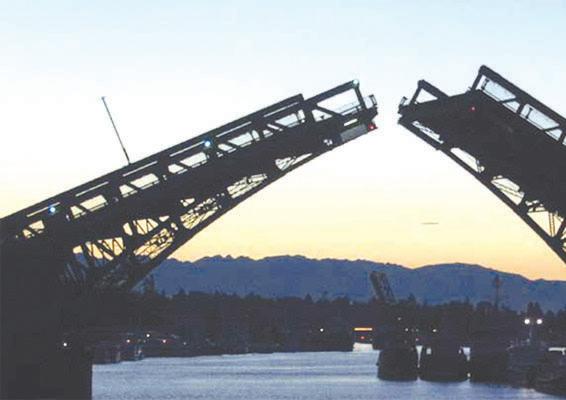
The Berbice Bridge will be closed to vehicular traffic on:
Sunday, July 5 – 07:25h–08:55h and Monday, July 6 – 08:10h–09:40h
BRIDGE OPENINGS FERRY SCHEDULE
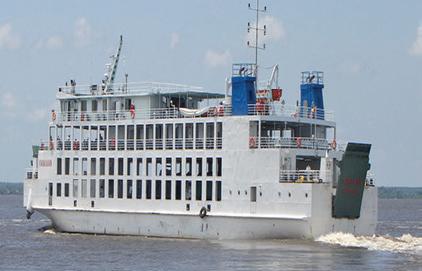
Parika and Supenaam departure times – 05:00h, 10:00h-12:00h, 16:00h, 18:30h daily
WEATHER TODAY
Early morning thundery showers are expected to give way to light showers during the day, followed by thundery showers at night. Temperatures are expected to range between 23 degrees Celsius and 29 degrees Celsius.
Winds: East-North-Easterly to South-Easterly between 1.78 metres and 3.12 metres.
High Tide: 07:51h and 20:19h reaching maximum heights of 2.51 metres and 2.43 metres.
Low Tide: 13:51h reaching a minimum height of 0.73 metre.
“This
is a Govt you can trust” – Pres Ali
…as over $403M distributed to Region 2 rice farmers
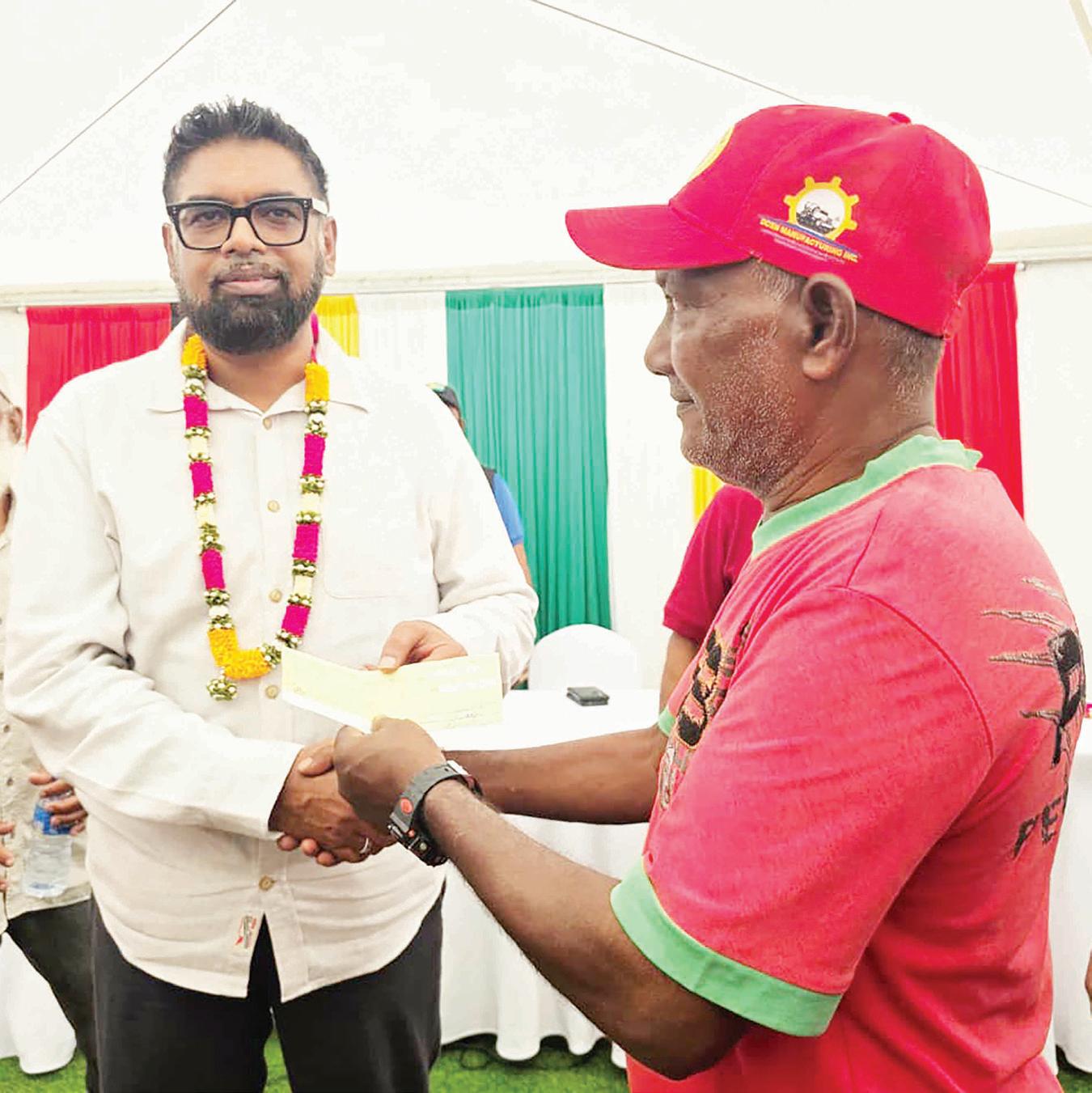
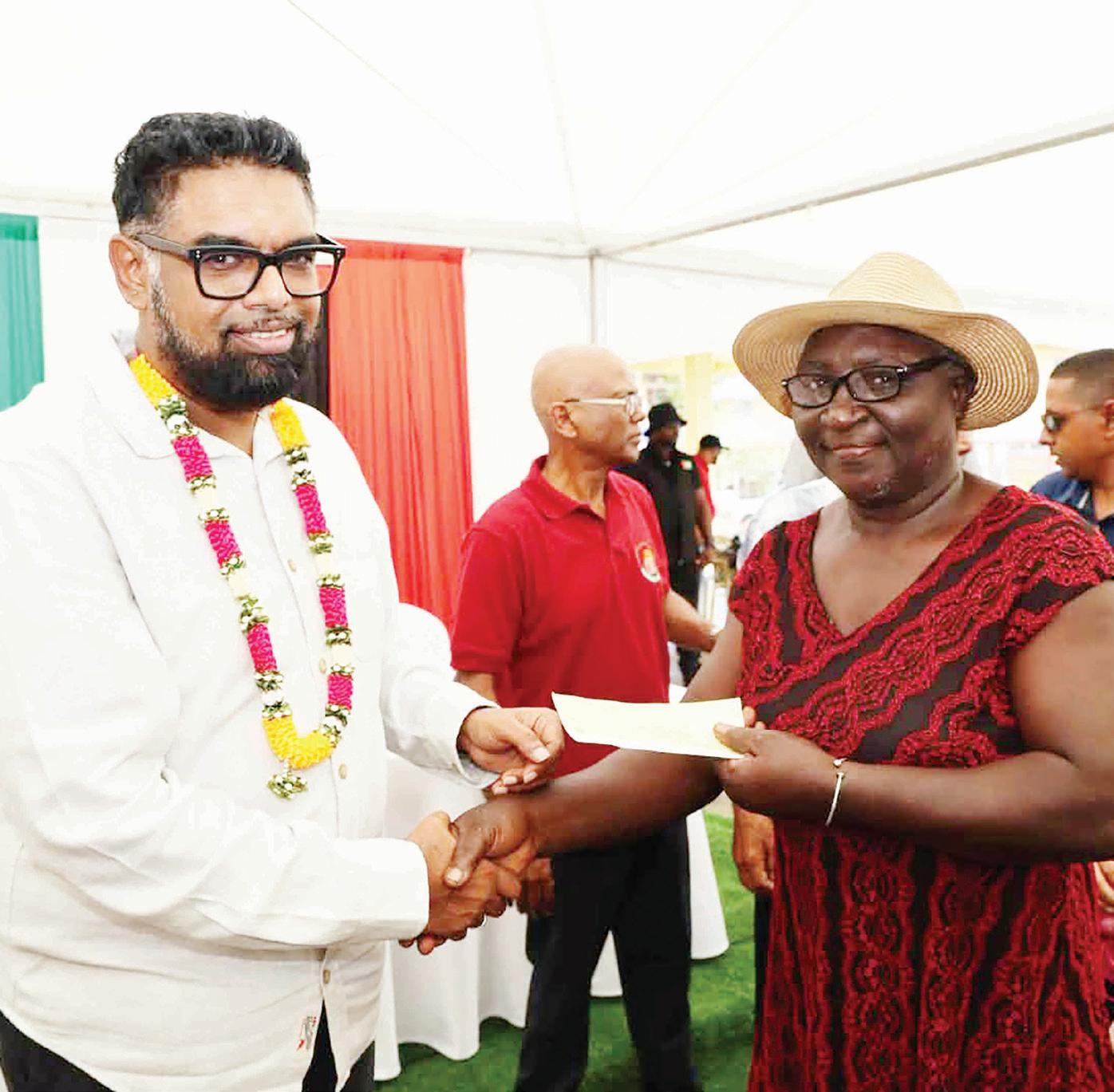
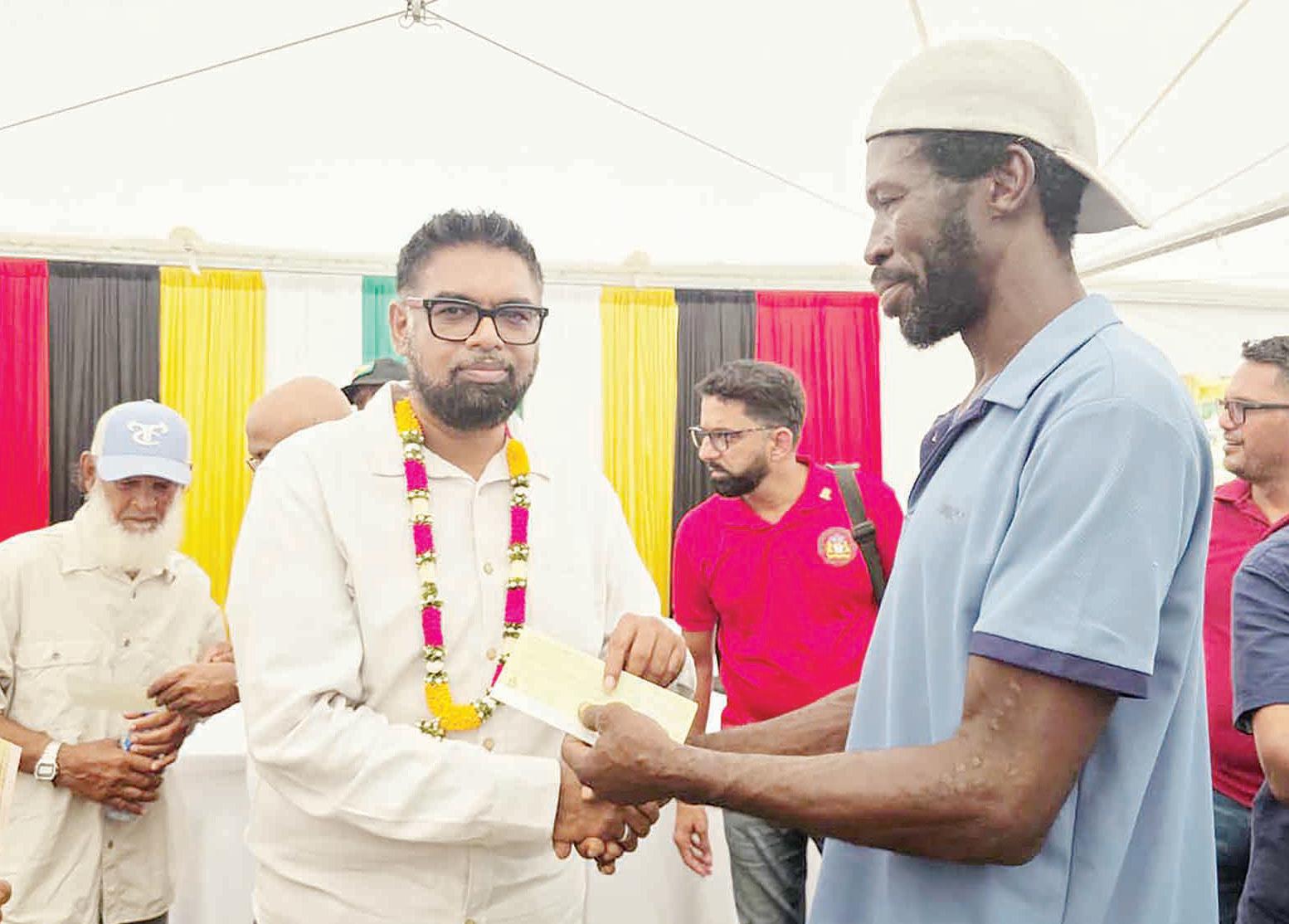
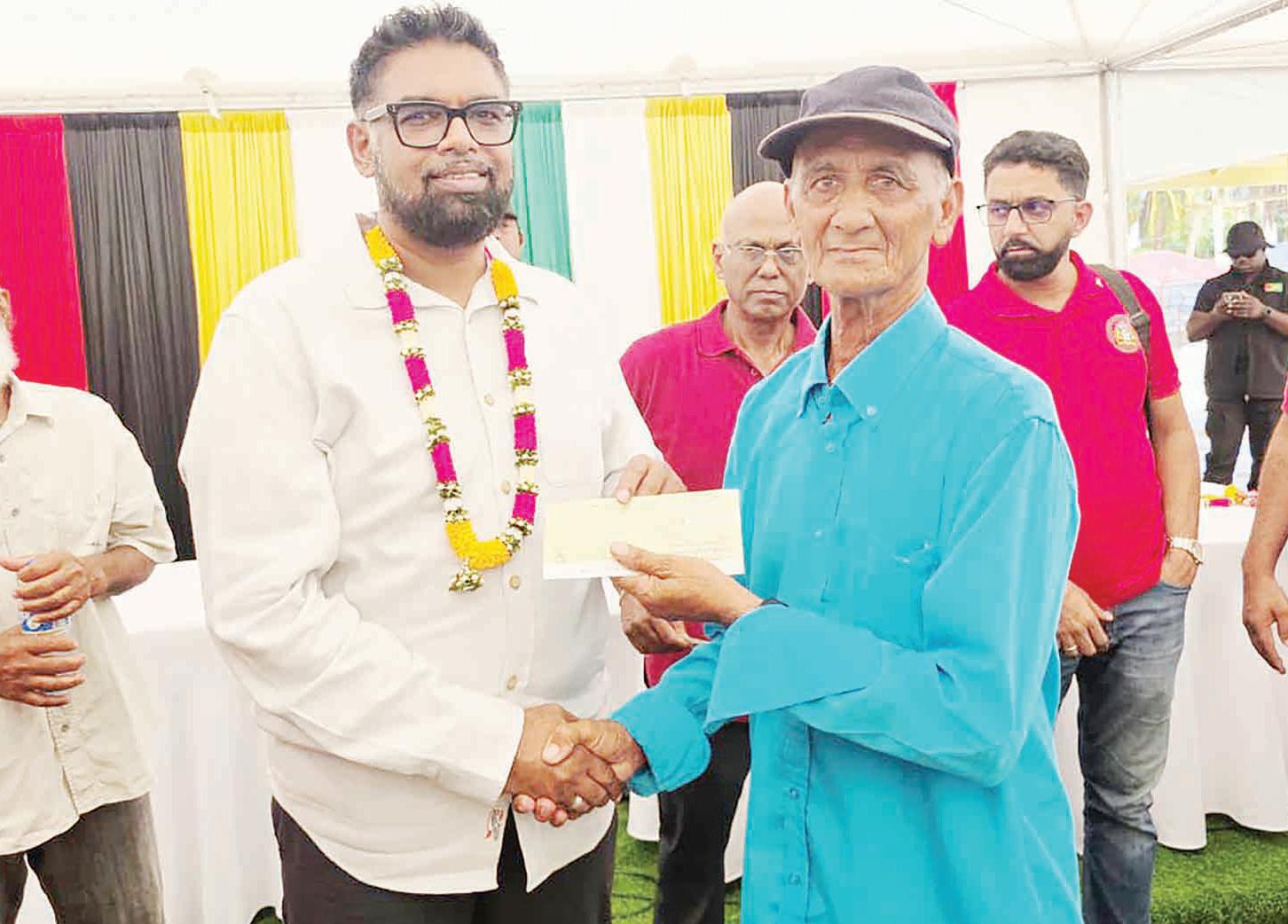
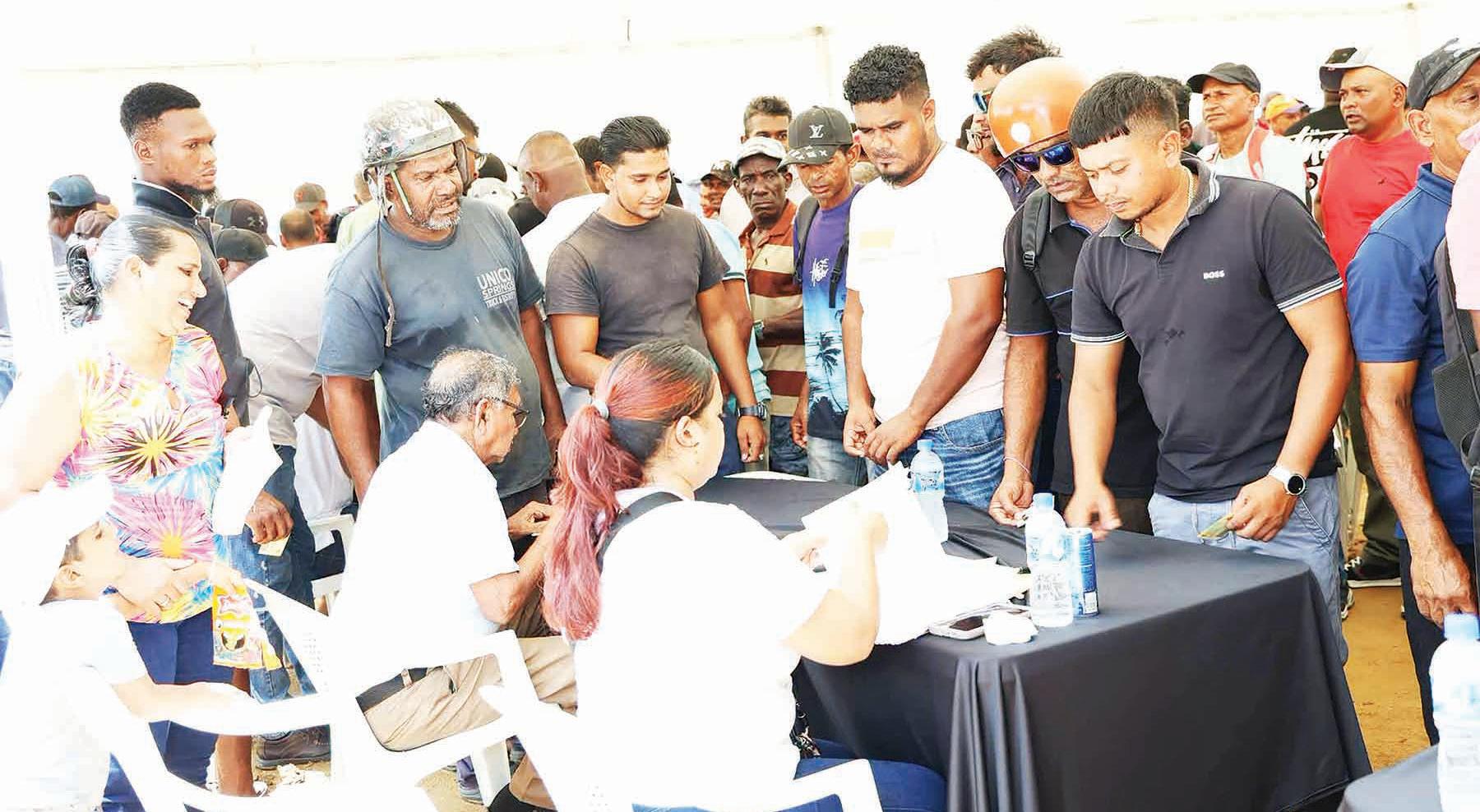
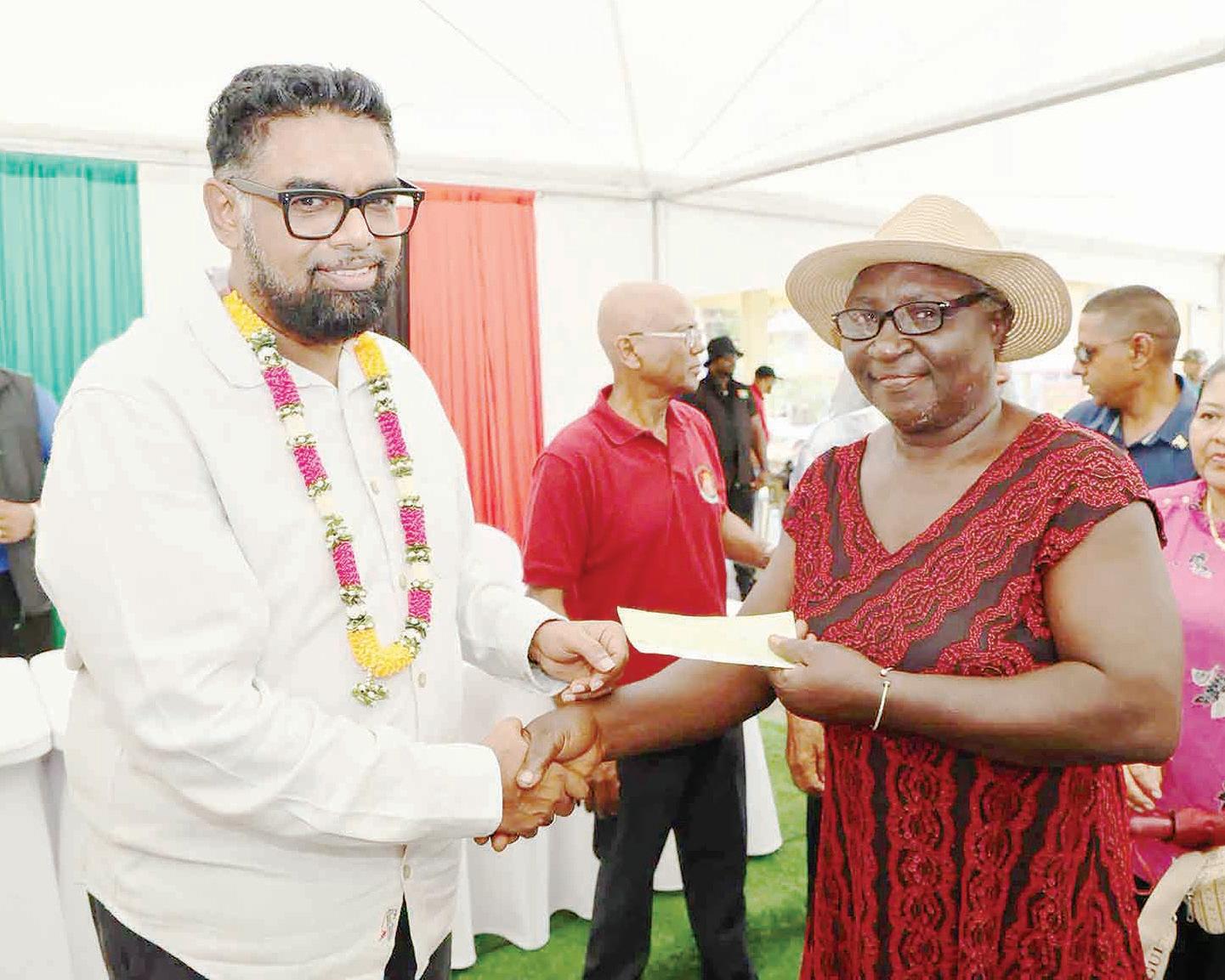
ver $403 million was distributed to rice farmers in Region Two (PomeroonSupenaam) on Saturday as the Government fulfilled a commitment made to the sector earlier this year, with President Dr Irfaan Ali assuring farmers that his administration will continue investing in initiatives to ensure the long-term viability and profitability of rice production. The Region Two distribution is part of a nationwide $3 billion subsidy programme for rice farmers. This initiative is in keeping with a commitment made by President Ali in April following consultations with farmers across the country. From those consultations, it was agreed that rice farmers cultivating 50 acres or less will receive $15,000 per acre, while those cultivating more than 50 acres will receive $10,000 per acre. More than 5100 rice farmers cultivating over 235,000 acres of rice across Guyana are set to benefit.
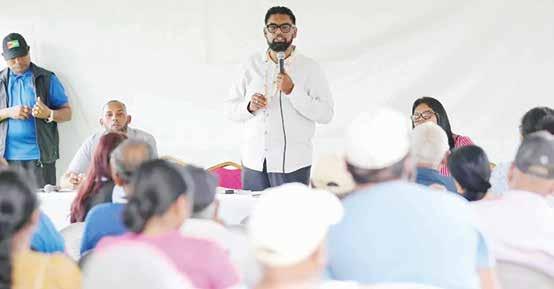
Addressing hundreds of farmers during the distribution exercise held at the Anna Regina Town Council’s compound, President Ali said the initiative was another demonstration that the Government continues to honour its promises.
“This is a Government you can trust. This is a Government that continues to work alongside you. This is a Government that has demonstrated respect to you,” the President declared. He added that the PPP/C Administration has consistently stood by rice farmers through direct investments and policies aimed at strengthening the agriculture sector. President Ali outlined several measures implemented since the Government returned to office, including the removal of VAT on electricity and water, transportation support for paddy, expanded ferry services to the Essequibo Coast and increased investments in drainage and irrigation infrastructure. The President also announced a series of additional initiatives to further strengthen the rice industry, including the
rehabilitation of farm access dams into all-weather roads, the expansion of drainage and irrigation systems, the opening of new agricultural lands in Region
tives,” he assured farmers. Moreover, to address the issue of oversupply, the Government has announced its intention to construct a massive drying floor and
Two and the construction of a modern drying and storage facility.
“Today, we can say to you with great clarity that whatever agriculture initiative you have, this Government would back those initia-
storage facility along the Essequibo Coast over the next five years. Some $1 billion has been budgeted this year for the construction of a massive drying floor and storage along the Essequibo Coast, which would have
the capacity to store some three million bags of paddy.
Drone technology In an effort to reduce production costs and address
labour shortages, President Ali said the Government is exploring the use of drone technology to assist especially small farmers with fertiliser application and crop spraying.
President Dr Irfaan Ali engaging rice farmers and handing over cheques during the distribution exercise on Saturday
With us celebrating the 60th anniversary of our independence from Britain after centuries of colonial rule, it should be noted that it was widely accepted by our early political leaders that we had to “decolonise” our institutions, especially those of governance. The ideological attempts to peel off the effects of colonialism in the Caribbean ranged from Marxism in the 1940s, which was dominant in Guyana, to Black Power in the 1960s and 70s. But after the 1980s, the battles petered out with the end of the Cold War, and we supposedly arrived at “the end of ideology”.
However, that notion was quickly disabused as the old Liberal paradigm showed cracks in the new millennium. One radical synthesising critique was presented then by the Latin American theorist Aníbal Quijano, which he called the “Coloniality of Power”. He demonstrated that while “colonialism” might have ended, its structural features, dubbed “coloniality”, remain firmly in place. Quijano posits that we were all conscripted by a European-defined “modernity” that began in 1492 with the conquest of the Americas. It developed and extended the structures of power, control, and hegemony that emerged during the era of colonialism. He posits that the coloniality of power takes three forms: systems of (racial) hierarchies, systems of knowledge, and cultural systems.
Race was created to justify the enslavement of Africans using Christian myths, including a “Great Chain of Being” with God on top, followed by his angels, then mankind with whites on top and Blacks at the bottom. Other groups like Indians and Chinese were placed in intermediate positions – for which they fought to maintain their subaltern status. Remember the newly minted lawyer Gandhi insisting that as a “Caucasian” he shouldn’t be treated like a “Kaffir” in South Africa?! Race still matters and complicates our relationships with other groups wherever we Girmitiyas/Indentureds were shipped. It is ironic that in Guyana we are still fighting while Whites remain on top.
Quijano asserts that in addition to racial classification and slavery, “The other process was the constitution of a new structure of control of labour and its resources and products.” The global racial/ethnic hierarchy of Europeans and non-Europeans was an integral part of the development of the capitalist world-system. That included transitional forms such as indentureship, in which the control of labour was guaranteed without the moral opprobrium of slavery. The Girmit/indentured person, then, is an important cog in the extension of coloniality from slavery. It represents the contradictions inherent in the myth of “free labour” from slave labour in the “accumulation by dispossession” stage of capitalism.
The “systems of knowledge” should be especially relevant to the academics at our local university. Quijano writes, “Europe’s hegemony over the new model of global power concentrated all forms of the control of subjectivity, culture, and especially knowledge and the production of knowledge under its hegemony.” How do we break out?
The third element of coloniality of power is the creation of cultural systems that revolve around a Eurocentric hierarchy and that enforce Eurocentric economic and knowledge production systems. We all ape Eurocentric norms in which we will invariably be second-class.
We therefore all live within a multiplicity of colonialities: conquest and modernity, race, the nation, sexuality, motherhood, the hegemonised mind, etc For us to have a clear idea as to what we hope to accomplish for our people, we need to appreciate the constraints at the individual, group, state/nation and global levels For instance, why should we look down racially/ethnically at other groups when we ourselves are suffering from that scorn from others through hierarchies of race? Shouldn’t we fight for equity and equality of opportunity for all groups in each country we live in, plus gender justice and environmental sustainability?
Flight to the metropolitan countries is not the answer: we can see the contradictions playing out in nativism and racism. As the western-dominated world system crumbles after 200 years, “natives” fleeing its contradictions in the periphery will gravitate to the metropoles to face a seething, anti-immigrant machinery that combines racist populism with arbitrary applications of the rule of law.
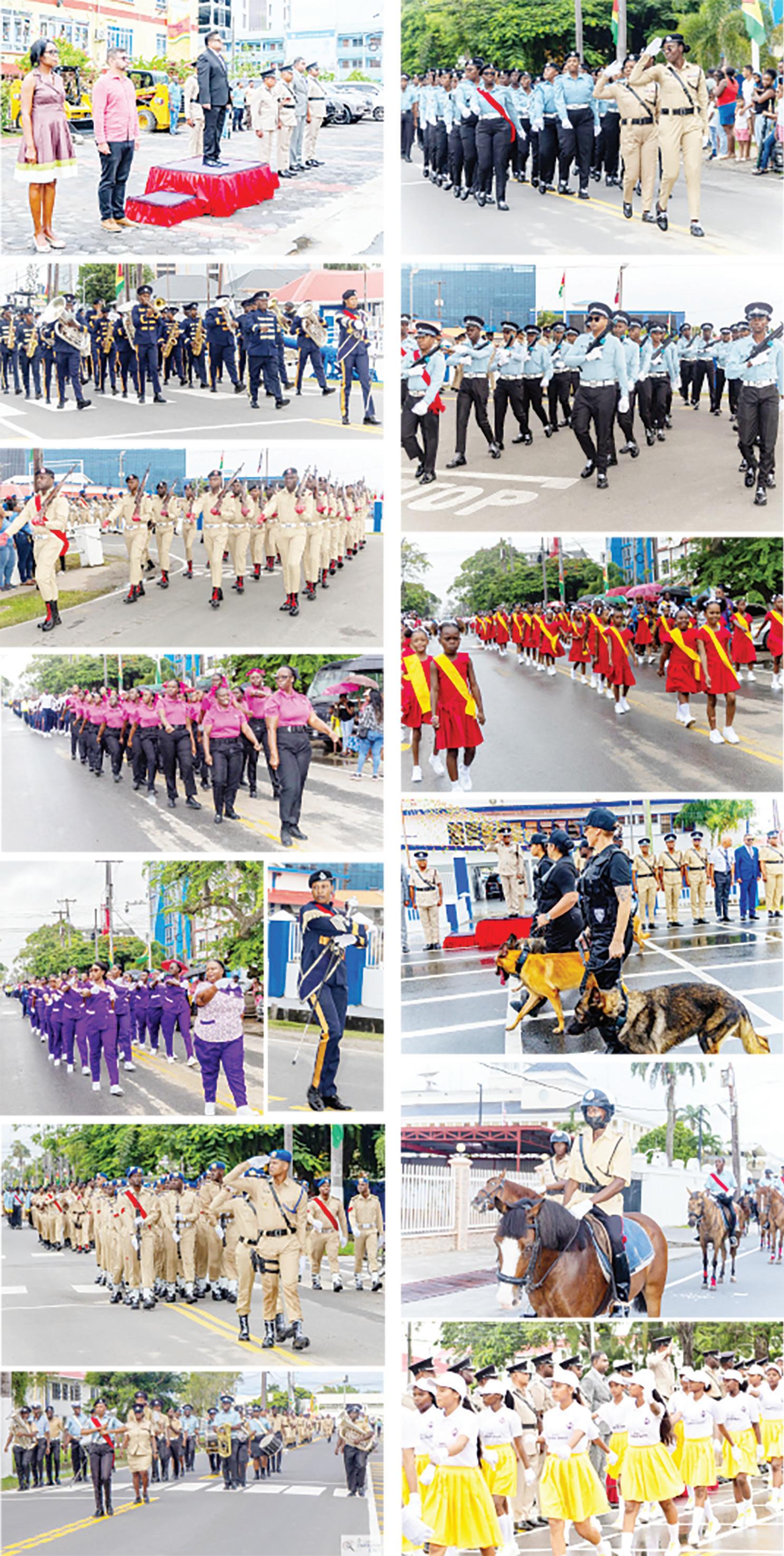
Scenes from the Guyana Police Force’s 187th Anniversary Route March (GPF photos)
By Ryhaan Shah
THE LONGEVITY EXERCISE Draw inspiration from Ballot Box Martyrs!
Anumber of news articles caught my eye recently.
One in Vogue magazine reported on the benefits of what is called the longevity pose: deep squatting.
In many cultures –particularly across Asia – this kind of squatting is part of daily life. People eat, socialise, and casually rest in a squatting position. But in the West, we have given up this classic position in favour of sitting in chairs, a norm which could mean that we are missing out on some very important health benefits.
Many health experts recommend squatting several times a day, and it is they who go as far as to call deep squatting “the longevity pose”.
Squatting is considered the ultimate “longevity pose” because it builds lower-body strength, protects joint mobility, and maintains the functional independence required for everyday life. Regular squatting mimics sitting and standing, preventing age-related muscle loss and significantly reducing our risk of falls.
There is actual science behind this recommended exercise. A well-known European study found that our ability to lower ourselves to the floor then stand up without using our hands is strongly linked to our mortality risk. Those who are better able to perform this exercise can usually expect to have a longer life span.
Squatting engages muscles in our legs – hamstrings, glutes, and calves – as well as our lower back and the core of our body, all of which helps to improve our cardiovascular fitness and bone density.
Deep squats help to maintain flexibility in our hips, knees, and ankles and work to ward off stiffness and conditions like osteoarthritis.
The exercise is simple. Stand with your feet apart – hipwide should be comfortable – and with your hands on your waist or stretched out in front of you at shoulder height, simply bend your knees. Go down as far as is comfortable and hold the pose for as long as is comfortable. It could be a couple of seconds or a minute. Then stand up straight and repeat as many times as you feel comfortable; it could be two or three, or eight times or more.
Try to do this exercise two or three times each day and you should start to feel some benefits in strength, balance and flexibility. It costs nothing but a little time, and it could help improve your overall health and fitness level.
Perhaps Colin Cole of Shropshire, UK, might have been doing much squatting during his life, for he has just celebrated his 107th birthday. A BBC report says he was at Dunkirk and the D-Day landings, having joined the Royal Air Force just before World War II broke out in 1939.
He served as an air-sea rescue pilot and, after the war, became a teacher and specialised in helping children with special educational needs.
Another British man, Bill Kober, is 98 and does 40 pressups every day. According to the BBC, Mr Kober, of Suffolk, sees age as just a number. Without fail, he does 20 press-ups in the morning and 20 in the evening.
“Only in my later years have I realised that I’ve got this ability, and so I do it because I’m able to and, as they say, use it or lose it, and I don’t want to lose it,” he said. “I want to be as fit as I can be.”
The key to the perfect push-up, according to Bill, is “a good straight back which gives you a nice tight buttock”. Press-ups can improve your upper body strength and core stability and, over time, can also help improve your ability to do everyday tasks.
Like Colin Cole, Bill also served in the army and then worked in the building trade before spending 28 years working in a factory. He has always been active because of the hard, manual labour and said, “But doing press-ups is what is keeping me breathing well. I do it until I can’t do any more. And then I get up and relax, and that’s it.”
He is looking forward to celebrating his 100th birthday like Lilian Pike, who lives in the Isle of Man. She says the key to longevity is to “keep fit, eat properly, and don’t drink too much alcohol”.
According to the BBC, she has been participating in a weekly exercise class for the past 20 years and attributes her health and long life to simple healthy habits.
These stories show that the recommendation that we keep active helps us stay fit and healthy as we grow older. It’s a matter of eating right and, maybe, doing a few squats each day.
Dear Editor,
The present ballot box fraud case must conclude with consequences.
On July 16, we will be commemorating the brutal murder of our two exemplary comrades, Bholanauth Parmanand and Jagan Ramessar. These two young men were ruthlessly and brutally gunned down as they were among their villagers who were struggling for free and fair elections in Guyana.
On that fatal day, July 16, 1973, 53 years ago, Bholanauth Permanand and Jagan Ramessar were shot and killed by a Guyana Defence Force officer.
Guyanese were fully aware of the People’s National Congress’ wicked approach to National and Regional Elections, specifically, their heinous intentions to rig them.
Investigations by the Justice Dhanessar Jhappan Commission of Inquiry revealed the high likelihood of a PPP victory if the elections were run in a free and fair manner. The commission cited the massive public meetings held by the People’s Progressive Party and the overwhelming public display of support for Dr Cheddi Jagan as evidence of this. The PNC, in order to ensure their victory by any means necessary, deployed the security forces, both army and Police, to all parts of the country.
In addition to the regular strength at the Police stations in Berbice, a battalion was deployed from the Guyana Defence Force under Captain Johnson. The PNC was fully prepared to rig the 1973 National Elections.
Captain Johnson had his headquarters in the compound of the Central Police Station in New Amsterdam.
Captain Johnson’s men were further broken up into smaller groups, and a platoon under the command of Lieutenant Henry was sent to the Upper Corentyne on June 7, 1973.
The section consisted of two Sergeants, three Corporals, five Lance Corporals and nine Privates, that is, 20 men, including Lieutenant Henry. The platoon pitched camp at No. 51 Backdam and remained there until June 19, 1973. From there, they went to Plantation Skeldon, remaining there until June 27, 1973, when they moved on to No. 63 and bivouacked on the beach. On July 14, 1973, they left No. 63 Beach and set up camp in the compound of the No. 51 Police Station. They had with them self-loading rifles, submachine guns, tear-smoke grenades and steel helmets.
Bholanauth Parmanand and 18-year-old Jagan Ramessar were shot by armed agents of the PNC dictatorship at No. 63 Village,
Corentyne, during the 1973 elections while peacefully protesting the illegal removal of the ballot boxes from the place of poll at the end of voting. Berbicians were protesting the PNC/Army hijacking of the ballot boxes.
Yours truly worked on that polling day at West Demerara Secondary School in Pouderoyen as we were coming out at 05:30h. I recalled seeing GDF soldiers crawling along the roadside with their guns.
A physical manifestation of the PNC’s heinous intention to terrorise the population was unleashed in the form of thugs, Police and the army.
It is not by chance that Private London of the Guyana Defence Force in 1999 was later known to Guyanese as “Blackie”! He was one of the masterminds among the criminal gangs that terrorised the Guyanese people. “Blackie” was killed in a shootout with the Police, and the PNC draped his coffin with the national flag and gave him a PNC farewell funeral.
On July 16, 1973, with Corporal Collins; Privates McKenzie, Layne and London (Blackie) of the Guyana Defence Force; Sergeant Ross; and Police Constable Seecharran of the Police Force, Lieutenant Henry took along with him tear smoke, grenades, respirators, steel helmets, two submachine guns, rifles and bayonets. He himself was armed with one of the submachine guns. Corporal Collins had the other.
The PNC thugs with all their armed might descended on the Corentyne with the clear intention to take full control of the ballot boxes and remove the representatives of the other three political parties from around the ballot boxes.
Bholanauth Parmanand was killed, and his dear wife and four children had to endure the death of the breadwinner of their home as their loving husband and father was ripped away from them in the most brutal manner possible.
Young Jagan Ramessar was shot and killed, and the army threw him in their vehicle and drove him around as he was kicked and stamped upon. He was paraded to send a message of fear and threats to the people in Berbice.
Approximately five hours later, after his corpse was unspeakably desecrated, he was taken to New Amsterdam Hospital, where he was pronounced dead on arrival. Jagan Ramessar, only eighteen years old, was brutally murdered, and his parents and other relatives are today still crying.
Parmanand’s immediate family and his comrades, 53
years later, still vividly recall the unbelievably brutal and monstrous debacle that was the 1973 elections.
My Dear Comrade Rishi Ram Motie and his friends tearfully recounted for me what they witnessed on that fatal day. Motie suffered a broken nose. His body was black and blue as he was cuffed and kicked. Scores of persons were badly beaten and threatened. Families were humiliated and separated. Rishi Ram Mote was a genuine activist with the PPP.
During the campaign before July 16 it was clear that the People’s Progressive Party meetings attracted massive support while the PNC had a sprinkling of people. Motie, as he sobbed, told me that when the election results were announced and the PNC was the winning party, nobody accepted the results. The PNC terrorists continued to terrorise the Berbicians as hundreds of people fled their homes and went across to Suriname, while others went into hiding for weeks and months. As a result, thousands of Berbicians and other Guyanese were forced to leave Guyana.
Guyanese must never forget that many eminent persons such as Dr Walter Rodney were assassinated and murdered during the dark days of the PNC rule. Today, we must draw strength, unite and work together for the maintenance and further development of the democracy we now enjoy.
We must ensure that Bholanauth Parmanand and Jagan Ramessar are remembered, that their sacrifices which inspired us to rally with Comrade Cheddi Jagan’s People’s Progressive Party continue to motivate us to protect the hard-won democracy we enjoy today.
We must never forget
that the Guyana Elections Commission was fully under Burnham/PNC control. Several attempts were made to rig the elections by the PNC rulership in the year 2020. However, through the stewardship and guidance of Dr Bharrat Jagdeo, our country united, and with the assistance of international observers, democracy prevailed, and the PPP obtained its rightful position as the ruling party of our country to date.
As we are preparing for Local Government Elections this year, let us work resolutely to ensure free and fair elections.
All the alleged riggers who are before the court for the shameful events that unfolded after the 2020 elections must face the full force of the law. It is indeed most shameful to know that the PNC/APNU riggers who kept their knees on our people’s throats for five long months are still awaiting trial for their attempt to steal the Government.
Guyanese must be united against rigged elections. We must, with one voice, call upon the Judicial Service Commission (JSC) to ensure that these unscrupulous riggers are placed before the court and face lawful justice for their heinous acts against democracy and the Guyanese people.
Seven years of waiting for justice is far too long. This unacceptable delay defaces the memory of these brave Guyanese that gave their lives for democracy. The JSC must act now!
Let us never forget the ballot box martyrs! Guyana must unite to ensure that our democracy, won with the lives of many brave souls, remains forever strong.
Yours sincerely, Neil Kumar
TVG Devotional Hour 07:00 Ramayan EP 48, 49, 50 09:00
Page Foundation
Do Lakes Breathe?
Lakes may seem quiet and still, but they host bustling ecosystems where organisms produce and consume greenhouse gases, influencing Earth’s climate and the global carbon cycle. Carbon is present in the cells of every organism and in two powerful greenhouse gases that trap heat in the atmosphere: carbon dioxide and methane.
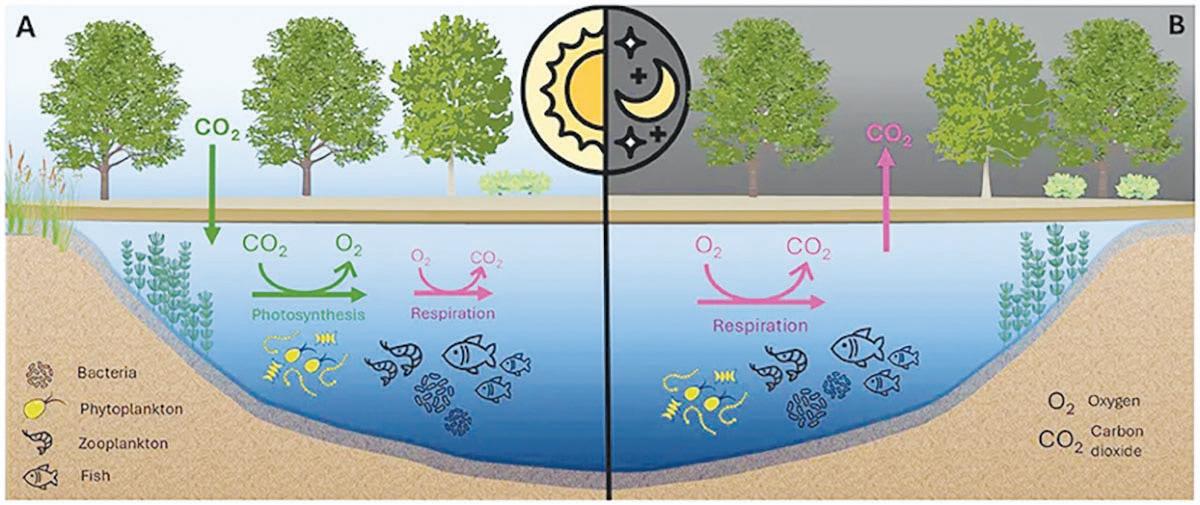
Like us, most organisms living in a lake –from the tiniest bacteria to the biggest fish – use oxygen (O 2 ) for their life functions. This process is called aerobic respiration. Some tiny organisms, called phytoplankton, can make their own food by photosynthesis using the sunlight that penetrates the water, just like plants do on the land. During photosynthesis, organisms use sunlight, carbon dioxide, and wa -
ter to produce oxygen and energy-rich compounds, which they use for their growth. Therefore, phytoplankton play two important roles in lakes: they help replenish oxygen levels in the water and they form the base of the lake
tosynthesis stops and organisms only do aerobic respiration, consuming oxygen and releasing carbon dioxide.
Carbon dioxide (CO 2 ) is produced by aerobic respiration during the day and night, but it is con -
only. Aerobic respiration and photosynthesis happen within each drop of lake water and affect the oxygen levels and the carbon cycle of the whole lake.
Have you ever stepped into a lake or pond and seen bubbles come up?
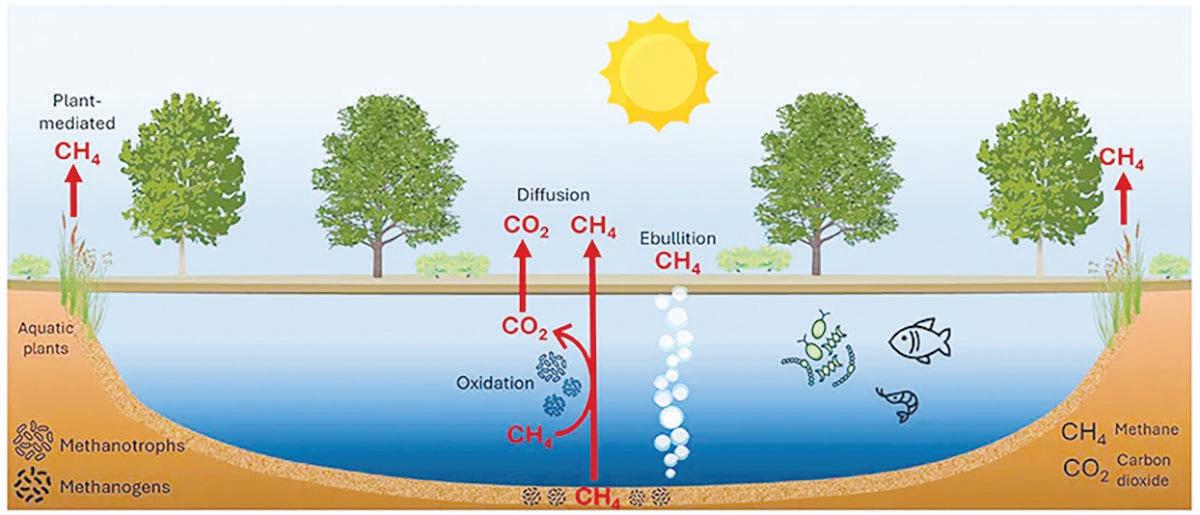
In the muddy sediments at the bottom of the lake where there is no oxygen,
duce methane. Methane is another strong greenhouse gas that is even more powerful at trapping heat than carbon dioxide. The methane produced by methanogens can bubble up directly to the surface, can dissolve in the water column and be released at the lake surface, or can be transported through aquatic plants into the at -
food chain. At night, when there is no sunlight, pho -
during daylight hours
tiny organisms called
mosphere. In the lake’s water column, there are other tiny microorganisms (called methanotrophs) that consume most of the methane in zones that contain oxygen, in a process called methane oxidation. Through methane oxidation, methanotrophs acquire carbon and energy from methane for their growth and release carbon dioxide. Therefore, they work as natural methane filters, helping reduce the amount of methane released from lakes.
All the mentioned processes affect the total amount of carbon present in the lake. Scientists track these processes to determine if a lake is giving off more carbon to the atmosphere than it takes in (a source) or if it takes in more than it gives off (a sink). Determining this involves measuring how much carbon is going into the lake, how much is produced and consumed inside it, how much is released to the atmosphere, and how much is stored in sediments. This process is called assessing the lake’s
carbon budget.
Lakes play a significant role in the global carbon cycle. While they can store carbon in their sediments, they can also act as carbon sources, releasing important amounts of carbon dioxide and methane into the atmosphere. In fact, scientists learned that most lakes are natural carbon sources.
Human activities are changing the natural carbon budget of lakes. Pollution from farms and cities or deforestation can disrupt this balance, usually leading to increased greenhouse gas emissions. For example, when sewage from cities is released into water bodies without being cleaned, aquatic organisms use the organic matter for respiration and methane production. Deforestation and agriculture can lead to more nutrients entering lakes, increasing photosynthesis and the amount of organic matter, which can lead to more carbon dioxide and methane. In both cases, increased production is likely followed by increased emissions of these greenhouse gases.
Climate warming is another disturbance that has complex effects. A phenomenon called positive feedback can happen: a warmer climate leads to higher respiration and methane production in lakes, which leads to more greenhouse gas emissions, boosting warming even more.
Understanding the carbon processes of lakes is necessary for their conservation and management. If we protect lake ecosystems and reduce human impacts on them, we can help slow down climate change while preserving these ecosystems for future generations. So, next time you are at a lake, remember: it is a living, breathing ecosystem that plays a crucial role in the Earth’s carbon cycle and climate.
(Adapted from Frontiers For Young minds)
sumed by photosynthesis
certain
methanogens pro -
No agreement for Suriname to solely finance Corentyne Bridge – Govt
…rejects unilateral shift
…says no bridge financing discussions took place on May 15
The Guyanese Government has rejected claims by Suriname that it had been informed previously about the Dutchspeaking nation's plans to solely finance the planned bridge across the Corentyne River that would link the two neighbouring countries.
"Contrary to the impression now being conveyed publicly, Guyana has never been informed through the established bilateral mechanisms that the Government of Suriname intended to assume sole responsibility for financing the bridge. Had such a proposal been formally advanced, Guyana would have considered it through the appropriate diplomatic and technical channels. No such proposal has been presented," Minister of Foreign Affairs and International Cooperation Hugh Todd clarified in a statement on Saturday evening.
This was in response to Suriname's Foreign Affairs Ministry saying on Saturday that the financing of the bridge has already been a fixed part of the bilateral consultations between Suriname and Guyana for some time.
The Surinamese Ministry claimed that the matter was discussed during several engagements between President Dr Irfaan Ali and President Jennifer GeerlingsSimons, even as recent as the virtual meeting held between the two Heads of State on May 15, 2026.
"During the latest discussions, Suriname clearly indicated its intention to assume responsibility for the financing of the bridge over the Corantijn River. It was also emphasised that, given the scale and strategic importance of the project, time
is needed to carefully assess the various financing options and to arrive at a sustainable and responsible financial structure," the Surinamese Foreign Ministry stated.
No bridge financing discussions
Responding to these claims, however, Minister Todd contended that the May 15 engagement between the two Presidents was convened at the height of the severe flooding affecting parts of Suriname – which Guyana offered to assist with by deploying a technical team from the Ministry of Agriculture, including specialists in drainage and irrigation, to support response efforts as well as to make available portable pumps and other technical expertise to assist in mitigating the flooding.
"Guyana wishes to categorically state that in the meeting held on May 15, there was no discussion on financing of the bridge or a
signal of departure from the collaborative approach that has guided the project from its inception," the Foreign Minister stated.
He reminded us from the inception in this initiative, the proposed Corentyne River Bridge has been conceived as a joint project. Todd further pointed out that given the structure's cross-border character, it has always been understood by both Governments that the planning, financing, construction, operation and management of the bridge would be matters for joint consideration and agreement.
According to the Minister, this was reflected and confirmed in Suriname's statement, which acknowledged that the Joint Technical Working Group has been mandated to continue discussions on the financial, technical, and operational aspects of the project.
"This is itself confirmation that financing has always been recognised as a matter requiring joint deliberation and agreement, rather than a unilateral determination by either party," the missive from Todd detailed.
He went on to recall that dedicated bilateral discussions on the construction of the Corentyne River Bridge were formally advanced following the conclusion of the Memorandum of Understanding in 2020 between the Governments of Guyana and Suriname during the administration of then-President Chandrikapersad Santokhi. Since that time, both Governments have consistently proceeded on the basis that the bridge is a shared strategic undertaking requiring joint planning and imple-
mentation.
"In keeping with that common understanding, Guyana and Suriname had jointly engaged prospective development partners with a view to securing financing for this important regional infrastructure project. Those joint efforts were premised on the recognition that the bridge serves the economic and social interests of both states and should therefore be developed as a genuinely bilateral initiative."
"If the Government of Suriname has reconsidered its position on the financing arrangements, the appropriate course is not to communicate such a significant policy shift through public statements. Matters of this nature should first be raised directly with the Government of Guyana through the established bilateral framework, thereby allowing for a constructive exchange of views and a considered response," Minister Todd posited.
Nevertheless, he reiterated that Guyana remains firmly committed to the realisation of the Corentyne River Bridge and continues to believe that the project should proceed on the basis of transparency, mutual respect, consultation and decisions reached jointly by both Governments.
According to Todd, the Government of Guyana stands ready to continue discussions in good faith through the agreed bilateral mechanisms with a view to advancing this transforma-
tional project for the benefit of the peoples of Guyana and Suriname.
It was previously agreed that both Guyana and Suriname would share the cost of the bridge construction, which was initially pegged at some US$300 million, in a 50-50 arrangement. The proposed Corentyne River bridge was designed as a high-span structure that will run approximately 3.1 kilometres, connecting Moleson Creek in Guyana to South Drain in Suriname, with a landing on Long Island in the Corentyne River, where a commercial hub and tourist destination will be established. That free zone will see major infrastructural development such as hotels, recreational parks, entertainment spots, tourist attractions, malls and farmers’ markets.
This joint bridge project is one of the first agreements that were signed between
Ali and
in their August 2020 cooperation pact. At the time, both leaders underscored the critical role the bridge across the Corentyne River would play in advancing cooperation and creating more opportunities for development for the two nations. Since then, both Guyana and Suriname have settled on the Chinese construction company, China Road and Bridge Corporation (CRBC), as the preferred contractor to build the new bridge. Meanwhile, stakeholders, including the Private Sector, have recognised that this proposed infrastructure would play a critical role in advancing cooperation, trade, tourism, and traffic between Guyana and Suriname, replacing the current ferry service between the two neighbouring countries.
President
former Surinamese President Chandrikapersad Santokhi
Guyana's Minister of Foreign Affairs and International Cooperation, Hugh Todd
Suriname's Minister of Foreign Affairs, International Business and International Cooperation, Melvin Bouva
“This is a Govt you can...
He also encouraged crop diversification, noting that the Government is prepared to support farmers interested in onion cultivation, livestock production and other agricultural ventures to create additional sources of income. Meanwhile, Agriculture Minister Zulfikar Mustapha said the grant distribution reflected the Government’s commitment to delivering on promises made to farmers.
“Today is about trust; it is about accountability and more importantly, it is about keeping a promise made to the people of our country,” Mustapha said.
The agriculture minister recalled that during consul-
tations with rice farmers in April, President Ali listened to concerns about rising production costs and global
market uncertainties before committing to the per-acre cash grant.
“He [President Ali] did
not make excuses. He did not make promises for another day. He gave his commitment that the Government would stand with the rice farmers,” Mustapha stated. According to the minister, the agriculture sector has undergone unprecedented transformation since 2020, with Guyana now leading CARICOM’s food security agenda. He noted that rice production increased from approximately 550,000 tonnes in 2020 to 825,000 tonnes last year, while the first crop of 2026 has already produced approximately 414,000 tonnes, placing the industry on course to achieve another strong production year. FROM PAGE 3
Sending…
…a (football) message
While you, Dear Reader, may suppose that your Eyewitness has nothing on his mind but politics, he will have to disabuse you of that notion by telling you that if you were doing ANYTHING else last Friday night but looking at the Argentina-Cape Verde game in the World Cup final 32 playoff – then you should flagellate yourselves in contrition while doing a hundred Hail Marys!! It was not just a football game but an aweinspiring display of national pride as the lowly-ranked Cape Verde Blue Sharks (#64) faced the Argentinian #1-ranked juggernaut with their GOAT – greatest of all time!! – Captain Messi!!
Now at first glance you’d think that was a mismatch!! After all, Cape Verde was a bunch of nondescript volcanic islands off West Africa – with just half a million people!! They’d been settled by Portuguese from the 1500s – when they dragged African slaves to do all their heavy lifting in agriculture from a barren soil!! They’d done the same with Madeira – from where the Brits brought our “Portuguese” after slavery ended here!! And yes! - We had some immigrants from Cape Verde – Cabo Verde in Portuguese! – Who we dubbed “Sanantone” Portuguese since they’d come from one of the islands – Saint Anthony or Santo Antão in Portuguese!!
And it wasn’t just to Guyana they’d gone to escape their poverty, but to the US and several European countries. And it was because of this diaspora that they were able to field the formidable team that gave them their historic World Cup qualification last year – the 50th anniversary of independence from Portugal!! They had something to prove for their independence – and they did it in such style that their name is now on the lips of the 1.3 BILLION viewers worldwide that officially made the game the most-watched fixture of the 2026 World Cup!!
Mainstream football fans first took notice when Cape Verde held European champions Spain to a goalless draw on their group’s World Cup opener on June 15. They then drew 2-2 with inaugural World Cup champions Uruguay, and in their final group game against Saudi Arabia, played out another goalless draw, qualifying them for the knockout rounds!!
But it was their do-or-die approach against incumbent world champion Argentina that proved their mettle – even though they lost 3-2. They might’ve lost, but they didn’t get beat!! They walked off that ground as peers to the FIFA #1 team in the world. Goalkeeper Vozinha had been incredible all tournament long. 40 years old, playing in the second division of Portugal and went out and playing like a GOAT every game!!
Argentina might have won this game, but Cape Verde won everyone’s hearts and respect!! How about a Guyana cricket team??
…send Sanction Man a message
While there’s been all sorts of loose talk about Pressie refusing to entertain the presence of Sanction Man in his immediate surroundings – much less meetings! – US Ambassador Theriot didn’t mince any words about her Government’s stand on the matter!! On the occasion of celebrating their historic 250th anniversary of their declaration of independence from the Brits, she firmly announced that the LOO Sanction Man hadn’t been invited!! He was persona non grata!!
And it’s this stance that Guyanese should appreciate –even more than the Yanks!! After all, it’s OUR country that was ROBBED OF SOME FORTY BILLION DOLLARS in taxes –when Sanction Man and his Daady smuggled TONNES of gold through the US!! They broke US laws – and the Yanks are rightfully outraged!! So why shouldn’t Pressie be just as outraged?? It’s OUR money that was STOLEN!!
That Sanction Man might’ve been friends with Pressie before sanctions were imposed by the US OFAC – that is even more grounds for appreciating Pressie’s principled stand!!
…a message to Luddites
It appears there are some among us who fear development – like the Luddites of yore who broke factory machinery that was “taking away people’s jobs”! History shows that after an initial industrialisation imbalance, jobs will match people!!
Patient feedback system launched to strengthen accountability in healthcare
The Government has launched a new patient feedback system aimed at improving accountability and service delivery across Guyana’s public healthcare sector, just hours after President Dr Irfaan Ali announced plans for the initiative during the commissioning of the $230 million Regional Medical Distribution Centre at Onderneeming, Region Two (Pomeroon-Supenaam).
Speaking at the commissioning ceremony on Saturday, President Ali said the Government would introduce a patient feedback portal linked to the national pharmaceutical supply chain, allowing patients to report their experiences in accessing medication. He explained that information submitted through the system would be transmitted directly through the accountability chain to the
Minister of Health.
“That is the level of accountability we’re building in the system,” President Ali said. Later on Saturday, the President announced on his social media page that the Patient Feedback System had been introduced as part of the Government’s efforts to continuously improve the quality, accessibility and efficiency of healthcare services.
The system allows patients to share their experiences after visiting a healthcare facility by scanning a QR code displayed on posters at health institutions or by completing a short online feedback form. According to the Government, the process can be completed in less than one minute and may be done anonymously or with the patient’s identity disclosed.
The platform is also accessible at any time from
any location. In the post, the head of state said patient feedback will help identify strengths and areas requiring improvement within the health system, enhance service delivery and patient care standards, support data-driven decision-making across healthcare facilities and strengthen accountability and responsiveness.
The Government is encouraging members of the public to use the system, noting that every response will contribute to improving healthcare services for patients and communities throughout Guyana.
Illegal drone report triggers GCAA security investigation at Soesdyke-Linden
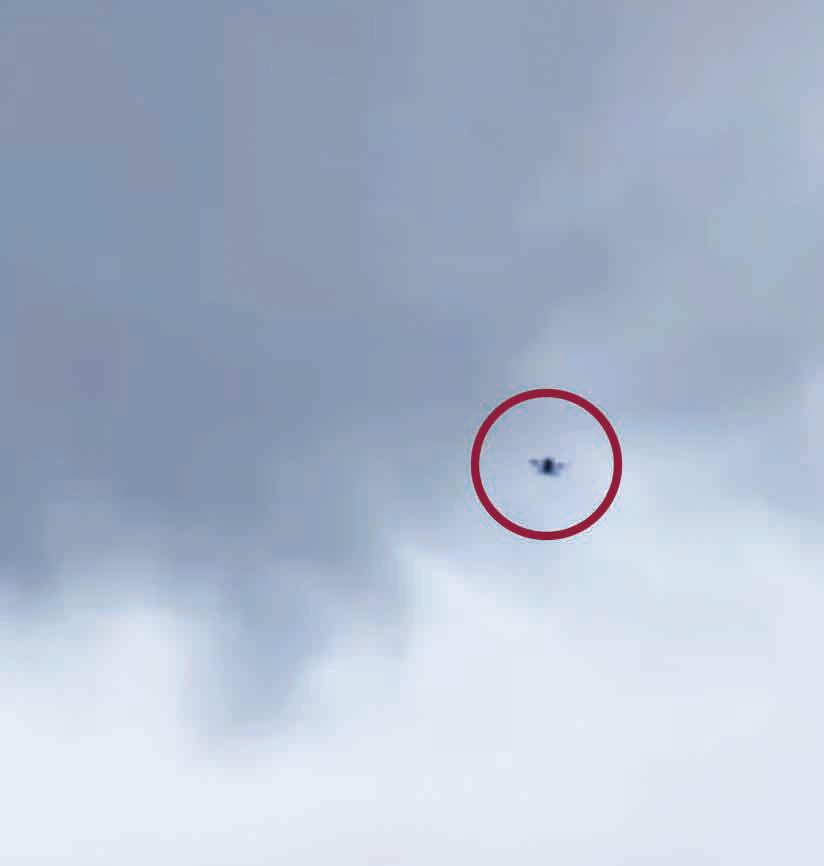
The Guyana Civil Aviation Authority (GCAA) has launched an investigation into the alleged illegal operation of an unmanned aerial vehicle (drone) in the vicinity of the Soesdyke-Linden area and is appealing to the public for information.
In a statement issued on Saturday, the authority said it received the report through its “See Something, Say Something” programme and is treating the matter as part of a security investigation.
The GCAA is urging drone owners and operators, pilots, farmers, residents and anyone with information about the alleged activ-
ity to contact the authority on 592-608-4222 or report the matter to the nearest police station.
Persons may also submit information anonymously through the GCAA’s “See Something, Say Something” programme.
GCAA reminded the public that drone operations in Guyana are governed by the Civil Aviation Act 2018 and its associated regulations. It warned that operating a drone without the required authorisation from the GCAA is an offence and may result in enforcement action, including the seizure of the aircraft, fines, suspension of permits and prosecution.
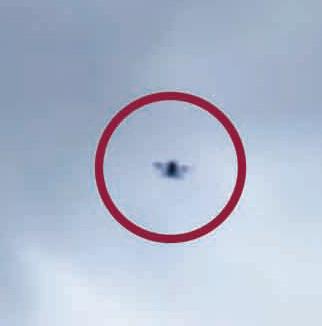
The drone that was spotted in the vicinity of the SoesdykeLinden area
Looking at roots
Bhookh na jaane baasi bhaat (Hunger knows no stale rice)
neend na jaane tooti khaat (Sleep knows no broken cot)
preet na jaane jaat kujaat (Love knows no barriers of caste)
Bhokpuri poem
Iwas sent to live with my Nana and Nanie at the age of six and a half, a decade after India had been granted independence and not long after our 1957 elections that would augur the split of our country and the village of Uitvlugt that was my world. Even though it was simply a move to another section, it could as well have been to another village. Even in a single section, “East was East and West was West and never the twain did meet.” Their second and last child, my aunt, had been married off in Dec 1957, and my mother decided I could assist with chores for the “old people”. “Yuh guh fetch watah fuh dem” was how it was phrased even though water now came through a standpipe half a block away, rather than, as in the past, from the irrigation water canal some distance away. This practice was not uncommon, and in fact three of my Nanie’s friends in the weeding gang in which she worked at Plantation Uitvlugt also had grandsons living with them.
In my Nana’s home, India was a living presence, none of that “Area of Darkness” Naipaul was to write about. India was vibrant and palpable as my Nana – born in 1896 – and friends would gather daily to conduct arcane exegeses and argue the philosophy of the “Ramcharitmanas”, chant the martial ballad of “Alha Udal” and sing the story of young Krishna in the “Prem Sagar”. All of this was woven into the struggle for India’s independence, which they had followed avidly in the local press – conveyed by Hari, who could also read English. Its influence on the current political struggle in British Guiana could not be missed. Hadn’t the now political rivals, Jagan and Burnham, flown to India to meet Nehru after their Government had been ousted four years ago?
But for my Nana, his father, Rambishun, was his main connection to a living India. Nineteen-year-old Rambishun had arrived alone from India in 1888 to work on one of the sugar plantations of British Guiana – Plantation De Willem on the West Coast of Demerara. He had no way of knowing he had arrived during one of the deepest and most prolonged depressions in the sugar industry. The working conditions of the indentured and time-expired workers became even more abysmal at the same task rate of one shilling as in 1838. Rambishun completed his five-year indenture but did not exercise his option of returning to India to his wife and child. He passed away in 1944 when he was 76, and WWII would soon end. My mother, then engaged to be married at fifteen, remembers him always wondering about his family in India. My Nana and Nanie were full of stories and anecdotes about his life and times, which they would regularly recount.
The last ship bringing indentured labourers to Guyana, the SS Ganges, had arrived in 1917 with 26 persons bound for my village of Uitvlugt, and a few of them were still living at the end of my street 40 years later. A friend’s grandfather from the adjoining street reminded us regularly that he had fought in WWI’s disastrous Mesopotamian Campaign with the British Indian Army by periodically marching around the village with his staff across his shoulder. In 1938 my Nana and some friends had travelled to Georgetown to participate in the celebrations of the 100th anniversary of the arrival of Indians to Guyana and the 50th anniversary of his father’s arrival.
One of my grandparents’ favourite stories was trotted out whenever I complained about some bruise or nick I may have suffered while performing a chore on our farm. I was regaled about how “the old man” had dealt with a deep gash on a finger while cultivating his rice field adjoining the new WC railway line near his logie. He simply went to a rail, placed his injured finger on it and lopped off the damaged portion. I was in awe of Rambishun ever after and pestered my Nana for more details. Years later I would appreciate his single-minded insistence on “getting the job done” if a person or a people wanted to move on.
His motto seemed to be, “I work, therefore I am.”
Firefighters trained to investigate fires, build court-ready cases
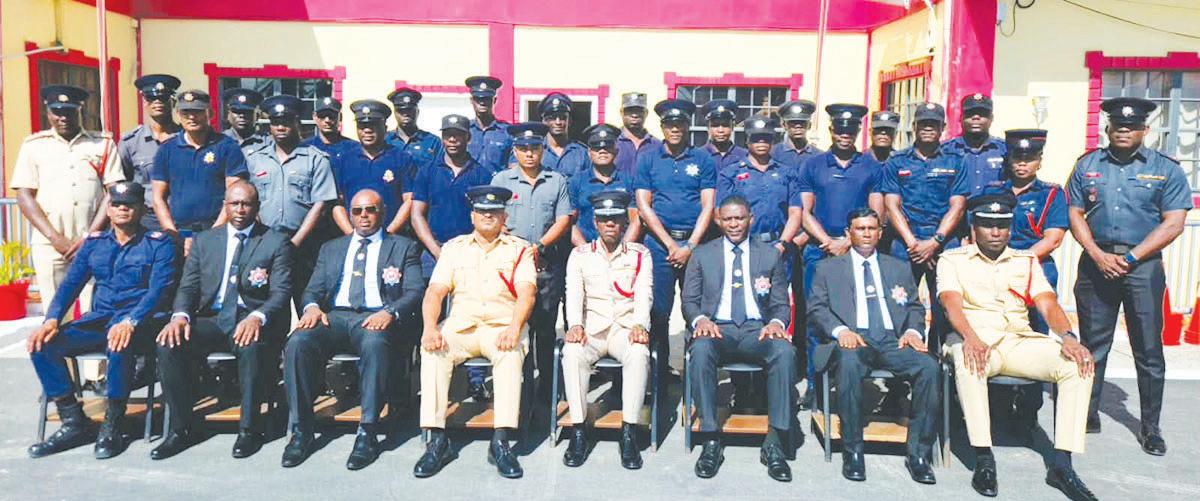
Firefighters have completed specialised training in the fundamentals of fire investigation, equipping them with the skills to investigate both small and large fires, preserve fire scenes and collect and document evidence for use in court proceedings.
The Basic Fire Investigation Training Programme concluded on Friday with a closing ceremony at the Guyana Fire Service (GFS) Training School in Leonora, West Coast Demerara.
According to the GFS, the programme’s practical component marked another milestone in its ongoing collaboration with the Trinidad and Tobago Fire Service, aimed at strengthening regional partnerships and enhancing the investigative capacity of firefighters.
Lead Investigator and Assistant Divisional Officer Ishmael Noel thanked Chief Fire Officer Gregory Wickham
for recognising the need for specialised fire investigation training. He also expressed appreciation to the government and prime minister of Trinidad and Tobago for facilitating the initiative, which enabled the two fire services to collaborate in building professional expertise.
Chief Fire Officer Gregory Wickham, in his remarks, thanked the Government of
Guyana for investing in the professional development of firefighters through the programme. He also commended the participants for their commitment and encouraged them to apply the knowledge and skills gained to strengthen the fire service’s investigative capabilities and improve service delivery.
The GFS said that with the successful completion of
the basic phase, the firefighters are now better equipped to conduct professional fire investigations that support public safety. The Intermediate Fire Investigation Training Programme is scheduled to begin in September 2026 as the Guyana Fire Service continues its efforts to develop highly trained fire investigators.
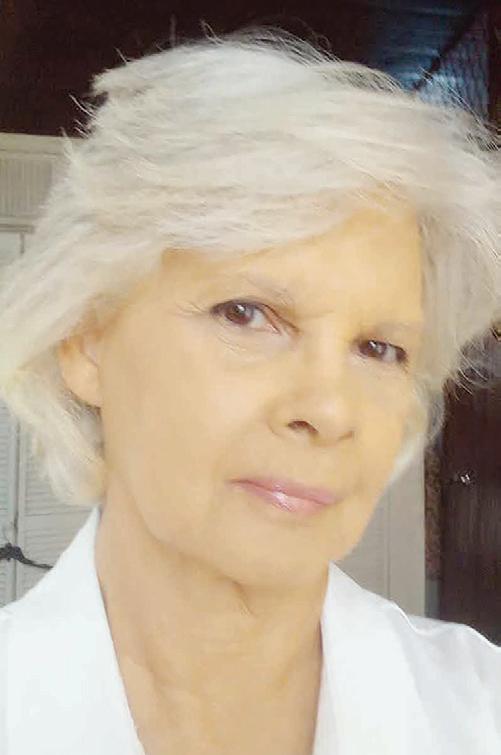
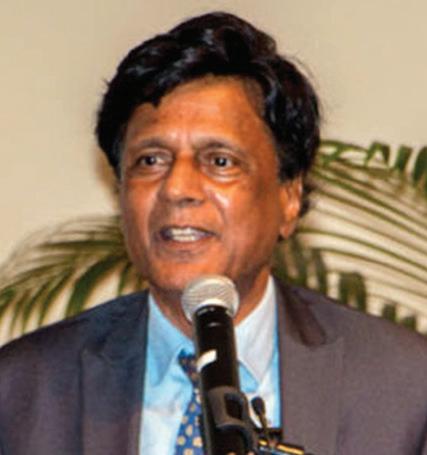
Ravi Dev
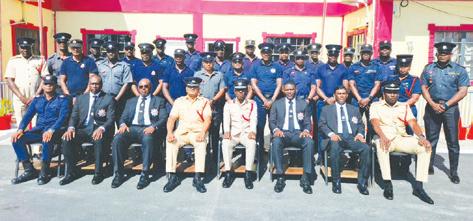
Firefighters who completed the training programme, along with trainers and senior fire service officials
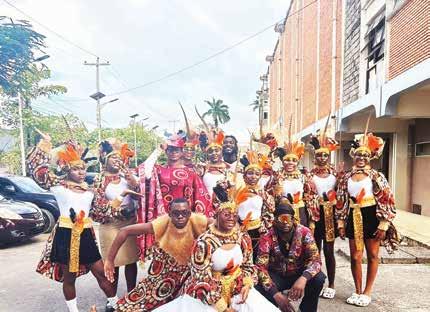
When the stage feels the sole of countless feet and showcases synchronised pointed toes, back-to-back afro dance performances, and electrifying Caribbean rhythms, there is only one word that comes to mind: legacy. And legacy is exactly what Unique Arts Dance Legacy is celebrating as the renowned dance company marks its 17th anniversary in grand style with a vibrant Caribbean-themed production.
Kelton Jennings, a creative dancer and director of the dance group, explained that the group is aiming to take between 20 and 25 participants to Suriname this year, contingent on the success of its fundraising event, Kaya, scheduled for Saturday. He noted that the fundraiser is currently the group’s only confirmed source of funding, explaining that the initiative came together rather spontaneously. According to him, students who had recently returned from Jamaica, along with those who had just completed their
Caribbean Secondary Education Certificate (CSEC) examinations, approached him expressing a strong desire to participate in another programme.
He said the pro duction, titled “KayaUniting the Caribbean”, will feature a blend of Guyanese, Jamaican and Surinamese cul tural elements woven into one performance. He described it as a team effort aimed at unit ing the Caribbean through dance and storytelling. He ex plained that travelling to Suriname is relative ly inexpensive, noting that transportation costs are rel atively low and that it is also easier to bring Surinamese participants to Guyana. As a re sult, he said it is easier to orga nise exchanges and collabora tive activities with participants
there than with countries that require air travel, which is significantly more costly.
“Most of my travel is with young people, so what I normally do is get their parents to accompany them to experience it as well. It’s always been a large contingent,” he said. He further explained that the production is deeply rooted in collaboration and cultural unity. “I want to basically see uniin the Caribbean we are the same. Dance is a universal language, and so is our African culture; it’s similar. Barbados, Jamaica, and Guyana – we celebrate the same Emancipation; our stories are different, but we have one common goal. This production is about unity: uniting the Caribbean, uniting dancers, uniting ideas and uniting culture. It has been that way for quite some time, but we really want to bring it togeth-
er,” he said. He added that he already has plans for expanding the initiative next year, with hopes of staging a Caribbean tour from early July to the end of August, conducting workshops across the region.
“There’s Masquerade in every single Caribbean country, and there’s an origin behind it. It’s one common goal, so it’s about unity. Everything is the same –we just have to come together. People don’t always understand how strong we can be when we unite as dancers, cultural ambassadors and even journalists. Once we come together, it is beautiful. That’s my message right now: I really want us to unite and stop tearing each other down,” he said. He said that while he is not suggesting people should not be independent, there are times when individuals believe they are better off on their own. However, he stressed that true beauty emerges through collaboration and shared experiences. He explained
that he has experienced the value of working with others for many years and enjoys collaborating, learning about dance, culture, and different people and personalities, all of which have contributed to his personal growth. He added that many of the stories behind his work, including the inspiration for Kaya, came from conversations with older people who shared their life experiences, struggles and successes. “So, I embed that into my dance, so it’s more storytelling,” he said. Regarding Kaya, he confirmed that the production will be held this Saturday at the Queens College Auditorium. Admission is $2500, and the event will feature a well-stocked bar and cultural food. He noted that while they may not be able to offer cuisine from every Caribbean territory, there will be a blend of cultural influences, with Guyanese and Surinamese elements featured. The cast will include performers from Guyana and Jamaica
Estage carries a quiet anticipation as each footfall draws closer to an expectant audience whose eyes are fixed on the runway, waiting to witness fashion brought to life in its highest form.
modelling because she has always enjoyed expressing herself through her appearance and the way she carries
Silent storytelling
However, as the hands of the clock moved over the years, lessons came along the way for her, and she realised that modelling is not about the clothes being worn but also about confidence, presence and the ability to tell a story without words. She said that walking the stage and presenting outfits is, in essence, a form of silent storytelling.
“The people who are viewing have to feel your energy and your story, and you are not saying a word. So I just wanted to explore that seriously, and that is what prompted me to get into modelling,” she said.
elling and looking for opportunities to gain experience. I saw it as a really good opportunity, a space to learn, grow and actually be around designers and creatives who put in a lot of real work. What really caught my attention was how it brings together different designers and creatives into one singular space,” she said.
She said the experience made her feel that modelling is less of a performance and more of a platform for growth and self-expression, where individuals can develop while also being seen and appreciated. She added that, as humans, learning is a continuous process.
“They can start very simply: prac tise posture, learn how to walk confi dently, and get comfortable in front of a mirror or camera. I would encourage them to stand in front of a mirror and speak good things about themselves. Look at your reflection and only speak positively. Maintain good posture, act like everywhere is the runway – be cause everywhere can be the runway. Whether you are walking to the shop or anywhere, walk as if you are on a runway… Turn everything into a run way. It also helps to watch profession als and stay consistent with how you present yourself daily,” she said.
This year, 20-year-old Denesea Freeman had the opportunity to experience this for the first time at the ORIGINS fashion show in Guyana on Friday night over the weekend.
This year’s ORIGINS show opened on Friday at the Railway Courtyard, ushering in three nights of fashion, creativity, culture and culinary experiences, as some of the country’s leading designers showcased their latest collections.
The festival is one of several initiatives spearheaded by the Tourism, Industry and Commerce Ministry to advance Guyana’s Orange Economy in collaboration with the Office of the Prime Minister and the Culture, Youth and Sport Ministry, with a focus on strengthening the country’s creative industries and promoting local talent.
Thirty designers are participating in this year’s festival, with 10 designers showcasing each night.
This publication caught up with Freeman, who related that she got into
The model, who began her journey in pageantry, explained that there is a very thin line between the two and that one often evolves into the other in some form. She added that this also played a role in her interest, as she has always enjoyed putting herself together from a young age.
“I cared about how I looked and how I felt in my clothes, and that carried into how I model today because I am already comfortable with expressing myself visually and being aware of my posture and my presence.”
Second chance
In fact, this opportunity did not come easily, as she faced trials and error along the way.
“I applied the first time, which was last year, and I didn’t get through. I was quite disappointed as well. I felt like, you know what, I’m probably not good enough to model at ORIGINS. Someone encouraged me to try again this year, and I went to the casting. I tried, and I got in. So, I became part of ORIGINS after getting into mod-
She encouraged young people interested in modelling, both girls and boys, not to wait for the “perfect” opportunity, explaining that such a moment may never come. Instead, she urged them to build themselves from wherever they are in life.
She emphasised that confidence, discipline, and how one carries oneself are just as important as walking a runway. According to her, consistency plays a key role in growth, and with time, opportunities will increase.
She also addressed aspiring male models, noting that there are fewer men in the industry, possibly due to stigma, but encouraged them to remain consistent, be true to themselves, and understand that the sky is the limit.
She also gave tips and insights on how young boys and girls can develop their modelling skills from a young age.
Regarding her wardrobe for the event, she said she is wearing piec es from several designers, includ ing Hashim Ali (Nachele Designs), Roger Gary, Dexter Gardener (Falcon Designs), Delayna Scott, Mwanza Glenn and Wanza Designs. She added that each de sign reflects the individual cre ativity of the designers and de scribed it as an honour to wear their work.
When asked where she sees herself over the next five years,
Denesea Freeman ORIGINS 2026 Model
$230M Medical Distribution Centre Opens in Region 2
…as Pres Ali pledges end to public hospital medicine shortages
Residents across Region Two
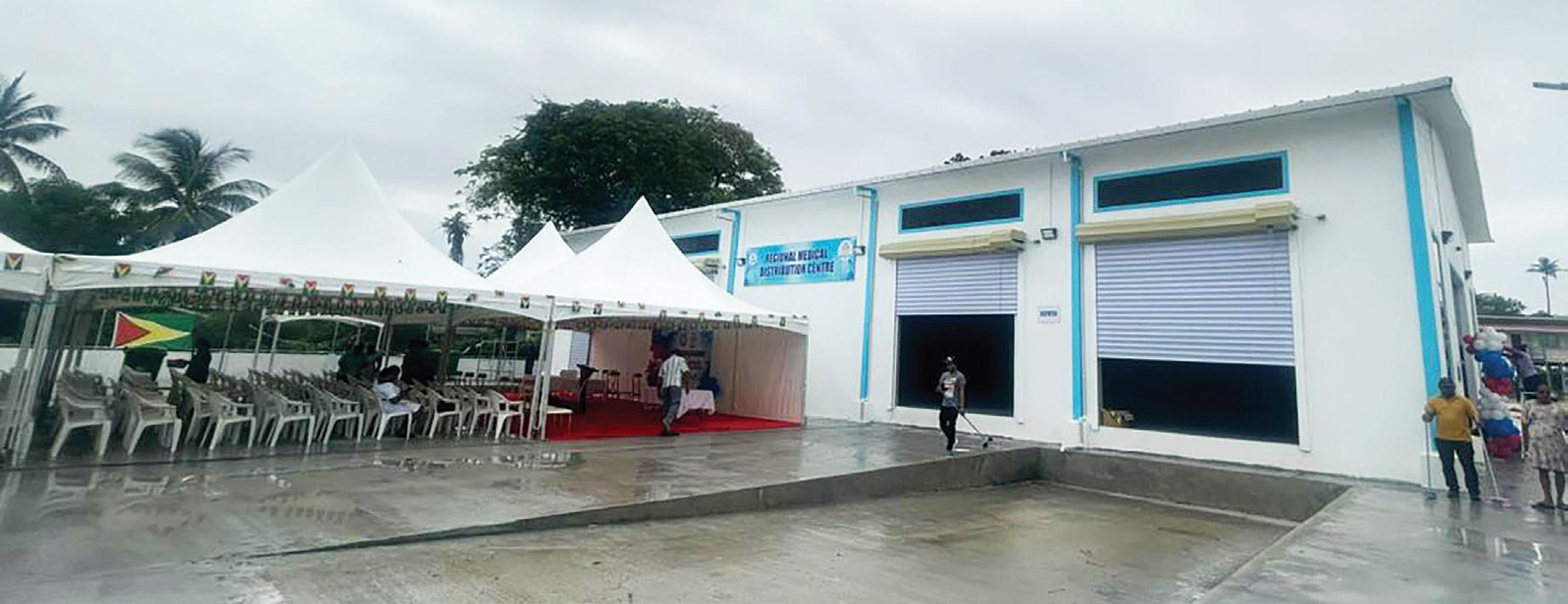
(PomeroonSupenaam) are set to benefit from improved access to essential medicines following the official commissioning of a new $230 million Regional Medical Distribution Centre at Onderneeming on Saturday.
President Dr Irfaan Ali, who commissioned the modern facility, said the investment is part of the Government’s strategy to modernise Guyana’s healthcare system through digital innovation and decentralised services.
President Ali explained that the distribution hub will improve the storage and delivery of medicines, ensuring health facilities throughout the region maintain adequate pharmaceutical supplies. He noted that communities in remote areas, including the Pomeroon, will receive medications more efficiently through enhanced logistics and inventory management systems. The facility is equipped with advanced digital technology that enables real-time monitoring of medicine stocks, helping health officials improve accountability, minimise shortages and streamline distribution.
“For too long, our healthcare system, particularly in regions outside the capital, has been plagued by logistical challenges. This facility changes that in a dynamic way. It allows us to stock sufficient quantities of medicines to meet the specific needs of this region,”
President Ali said, adding, “And when I say the specific needs of this region, I mean all of Region Two, in all the health centres, health clinics, and health outposts all across…and even a section of Region One.” He said that the centre is a culmination of years of planning and a key aspect of strategy to ensure that health clinics and hospitals have more timely access to the medicines they need to save lives. Ali said Guyana’s public healthcare system is undergoing a major transformation aimed at ensuring patients no longer have to purchase essential medication from private pharmacies because of shortages at public health facilities. Speaking about the Government’s investment in strengthening the country’s pharmaceutical
supply chain, the President reflected on the challenges that plagued the health sector during the 1980s, when public hospitals frequently lacked essential medication.
“There was a period in Guyana’s history in the 1980s when our public health system faced severe constraints,” President Ali said. “Old timers will recall a time when visiting a public hospital meant facing a stark reality.” He recalled that while basic medication such as paracetamol might have been available, many other essential drugs were often out of stock, forcing patients to seek medication privately. According to President Ali, the Government is now ensuring that all approved medication is available within the public healthcare sys-
tem through a scientifically managed procurement process. He explained that a scientific board is responsible for reviewing and approving all medicines to be used in public health facilities. “We are putting all of the medication in the system,” he said. “We have a scientific board that is clearing all the medication that Guyana will use in our public health care system.” He stressed that doctors working within the public healthcare system will only be permitted to prescribe medication from the approved list, as those are the drugs the Government is investing in to provide free of cost to patients.
“Those days are over.” President Ali declared that the era of patients be-
ing forced to purchase medication privately because of shortages at public facilities must come to an end. “Those days are over. We refuse to accept a situation where a patient at a public health facility has to go to a private pharmacy to procure medication simply because the medicine is not available within the public health facility in their area,” he said. He described the establishment of the medical distribution centre as a significant step towards decentralising the country’s healthcare supply chain. Rather than storing large quantities of medication in a single central facility, regional drug bonds will ensure medicines are located closer to the communities they serve. “We do not want a situation in which billions of dollars of drugs are lying in our main bond while outlying regions and communities are short of these drugs,” he said. “We do not want a situation in which drugs expire in the bond whilst clinics and hospitals are in need of those very drugs.”
Directly accountable He warned that Regional Health Officers (RHOs) and regional leadership will now be held directly accountable for managing the new facilities. “They have no excuse, because they have their own facility now that must be managed,” President Ali said. “I’m putting all those in the system on notice that you will be held accountable.” Alongside the physical infrastructure, the Government is also digitising the country’s healthcare system through a modern inventory management platform capable of tracking every box and bottle of medication across the public health network. “We are partnering with a global expert to establish an AI (artificial intelligence)-powered system that will provide us with real-time data to guide our decision-making,” President Ali announced. He said the digitised system will improve forecasting, reduce waste, prevent medicines from expiring in storage and enable health officials to respond more quickly to emerging disease trends.
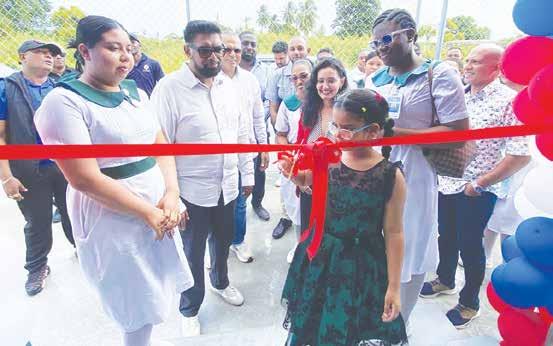
President Dr Irfaan Ali at the ribbon-cutting ceremony on Saturday
Cold storage, agro hubs: new opportunities on horizon for Region 2 farmers
With plans to build a modern drying and storage facility, farmers across Region Two (Pomeroon-Supenaam) are being encouraged to explore crop diversification in order to yield more value from their farmlands. This call was reiterated by President Dr Irfaan Ali on Saturday during a community meeting at Affiance, Essequibo Coast, where he engaged residents, including farmers. During the meeting, one farmer suggested that a cold storage facility be built on the coast to encourage more farmers to diversify their crops. In response, President Ali in-
formed residents that there are already plans to construct such a facility.
“We will invest in that. So, if we can get a hundred people to do one acre of peppers each… you’ve got a hundred acres of peppers. We will build a cold storage because they got peppers to store. And then, we keep it when the market is good and we put it in the system. We want to support you in crop diversification,” he declared. The Guyanese leader pointed out that when Government makes such huge investments like this to benefit farmers, they expect those beneficiaries to be consistent
in not only their production but also in pricing to consumers. “If we want to build long-term success, we have to build a win-win situation where you know that you have a consistent price for your product, and we know we have a consistent supply for the product. So, once you have a consistent supply and a consistent price, then the thing will work.”
“We can’t build this school storage, and then when we get to the market, one month the pepper is $60 a pint and the next month it’s $300 a pint. Remember, it’s a business model. So that is what we have to sit down
$230M Medical Distribution...
Using dengue as an example, the president explained that instead of relying on manual reports from health facilities, officials will be able to identify potential outbreaks by analysing medicine consumption patterns in real time. President Ali added that the data-driven system will generate location-specific forecasts, automatically identify slow-moving pharmaceutical stock before it expires and dynamically adjust ordering quantities based on actual demand rather than historical trends. He also announced plans to incorporate drone technology into the healthcare network, allowing medicines and medical supplies to be delivered quickly to riverine and other difficult-to-access communities. “So you will see in the months ahead of us that from this facility we
may launch drones that will take emergency medical supplies and vaccines and also directly to the Pomeranian and other communities. Why? Because some of these facilities are not equipped to stock very sensitive supplies, maybe even antivenom. And the time to administer that is what separates survival from death. With the integration of drone technology, we will be able to deliver that at a faster pace.” Additionally, Minister of Health Dr Frank Anthony described the new centre as a significant boost to Region Two’s healthcare supply chain. He explained that the facility has the capacity to store nearly all medications required by the region and revealed that future upgrades will include specialised cold storage for vaccines and other temperature-sensitive phar-
maceuticals.
Medical training centre
Dr Anthony also highlighted the expansion of healthcare services in Region Two, noting that the region now has more than 80 doctors. He further announced plans for a new medical training centre and said the Health Ministry, in partnership with the University of Guyana (UG), has launched an 18-month pre-medical programme to prepare more students for careers in medicine. Teaching facilities are also expected to be established at the Lima Regional Hospital to support clinical training.
“There is no excuse. We want more doctors coming from Region Two to serve the people of Region Two,” the Minister stated.
and work out. We have to diversify and we have to invest in the infrastructure that will support diversification. And we’re going to do that, but you also have to help us from the other end,” he emphasised.
Already, President Ali has detailed plans for the build-out of a number of farms to market-access roads across the Essequibo Coast to support farmers as well as the construction of the new $880 million Charity Multipurpose Wharf that will be a major hub for moving goods and commerce in the Essequibo region. These are complemented by the more than $403 million that was distributed to rice farmers in the Pomeroon-Supenaam region on Saturday as part of a previous commitment to support the sector countrywide. According to the Head of State, the Government intends to build an agro-industrial hub in Region Two, and there are enormous opportunities for residents and farmers to tap into. He further
suggested swine production, livestock and egg production as some areas with potential in Essequibo.
Young people
Moreover, the Guyanese leader went on to call on young people across the region to also look into new opportunities within the agriculture industry. “We want to work with young people, whether you have an idea on agro-processing or whether you have an idea on farming with technology, drone technology. We want a group of young people to come up and say, ‘You’ve come together and formed a consortium with 10 of you inside, and you buy the drones, and we will train you in the management of the drones. So, then you can apply the fertiliser by drone for small rice farmers,” the President stated. He added, “Why are we investing so heavily in this region? It is because we understand the potential of this region. We understand the importance of this re-
gion, and that is why we’re investing at a household level and at a community level.” President Ali noted too the launch of the highly anticipated Guyana Development Bank (GDB) will open up financing access for persons in the region who already have a small business to expand or are interested in setting up a new one. This new facility will make available financing of up to $3 million interest-free and collateral-free to beneficiaries. As part of this initiative, the Government will also offer coaching and mentorship services to better position beneficiaries for success. The Government has already laid the legislation in the National Assembly for the formal establishment of the new stateowned financial institution and has pledged some $40 billion (US$200 million) for this facility. Approximately $20 billion (US$100 million) has been set aside in Budget 2026 for the bank when it comes into operation this year.
President Dr Irfaan Ali engaging residents during a community meeting at Affiance, Essequibo Coast, on Saturday
Over 1000 fisherfolk take to Guyana’s waters daily – Agri Minister
Over $263 million has been invested in fisheries-related projects in the region. Two over the past five years, as the Government continues efforts to modernise the sector and improve the livelihoods of fisherfolk, Agriculture Minister Zulfikar Mustapha announced on Friday. Speaking at the National Fisherfolk
Day 2026 celebration at Charity, Essequibo Coast, Region Two (PomeroonSupenaam), Mustapha said the investments are part of a wider strategy to strengthen fisheries through improved infrastructure, safety systems, aquaculture and financial support.
The event, held under the theme “Celebrating
and Empowering Fishers’ Contribution to Food Safety and Security”, brought together fisherfolk, industry stakeholders and residents. Mustapha said Region Two remains one of Guyana’s key fishing regions, with 246 fishing vessels and approximately 1050 fisherfolk operating daily across its landing sites.
“This day provides us
with an important opportunity to recognise the invaluable contribution of our fisherfolk. Region Two stands proudly as one of Guyana’s most vibrant fishing regions. From Charity to Hampton Court, from Lima to Cullen, from the Pomeroon to the Essequibo Coast, the work of our fisherfolk feeds thousands, supports livelihoods, generates valuable export earnings and supports Guyana’s food security agenda, including CARICOM’s 25 by 2025+5 initiative,” the Minister said.
He said the figures represent families whose livelihoods depend on the industry and whose work contributes to national development. According to Mustapha, since 2020 the Government has prioritised the revitalisation of the fisheries sector by upgrading landing sites, improving safety measures, expanding aquaculture and creating more opportunities for fish-
erfolk.
He disclosed that 14,596 fisherfolk across the country, including 705 from Region Two, have received a combined $2.189 billion in direct cash assistance. Registered fisherfolk also received $150,000 cash grants in both 2022 and 2026 to help offset rising operating costs. The Minister also highlighted the expansion of freshwater cage aquaculture, noting that 46 systems have been established in Regions Four, Five, Six, Seven, Nine, and 10.
Four of those systems are located in the Region Two Indigenous communities of Capoey, Mashabo, Lake Mainstay and Bethany, benefiting more than 2200 residents through investments exceeding $72 million. On infrastructure, Mustapha said more than $1.518 billion has been invested nationwide in the rehabilitation and construction of landing sites,
wharves and cold storage facilities. He also pointed to several measures aimed at modernising the industry, including the installation of vessel monitoring systems to improve safety at sea, the removal of duties on outboard engines of up to 150 horsepower (HP), zero-rated taxes on key fishing inputs, digital registries for fisherfolk and vessels, the expansion of brackish-water shrimp production, and investments in aquaculture feed production through the Mon Repos Feed Mill. Additional works are also underway to upgrade the Anna Regina Aquaculture Station and develop new fingerling and grow-out facilities in Regions Seven and Nine.
National Fisherfolk Day is observed annually to recognise the contributions of Guyana’s fisherfolk to food production, economic development and the sustainable management of the country’s fisheries resources.
Keisha Gibbons emerged as the first-place winner of the Guyana Oil Company Limited (GuyOil) 50th Anniversary Jingle Competition. GuyOil recognised the outstanding creativity and musical talent of the first, second and third place winners of its 50th Anniversary Jingle Competition during a prize presentation ceremony held at its Head Office Boardroom in Georgetown on Friday. The competition is part of the activities commemorating GuyOil’s 50th anniversary. The company invited members of the public to create
original jingles celebrating the company’s legacy, values and commitment to “Excellence in Service”.
Following a rigorous judging process, the winners were announced as first place, Keisha Gibbons, winning $300,000; second place, Joel Weeks, winning $250,000; and third place, Venus Messiah, who won $150,000. During the ceremony, General Manager (GM) Molly Hassan congratulated the winners and thanked all participants for their enthusiasm and exceptional contributions.
“The creativity and passion demonstrated through this competition have been truly inspiring. These entries reflect not only musical talent but also the strong connection that Guyanese have with the GuyOil brand. As we celebrate 50 years of service to the nation, we are proud to
support and recognise local talent,” Hassan said.
The winning jingles were played during the ceremony, giving attendees an opportunity to experience the
creativity that earned each participant top honours.
The Jingle Competition is one of several initiatives being held as part of GuyOil’s 50th anniversary
celebrations, reaffirming the company’s enduring commitment to innovation, customer engagement and excellence in service.
Winner of GuyOil’s Jingle Competition, Keisha Gibbons
Winners: first place, Keisha Gibbons; second place, Joel Weeks; and third place, Venus Messiah
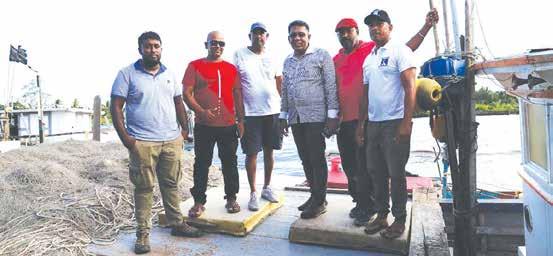
Agriculture Minister Zulfikar Mustapha shares a light moment with some Region Two fisherfolk on a boat at Charity
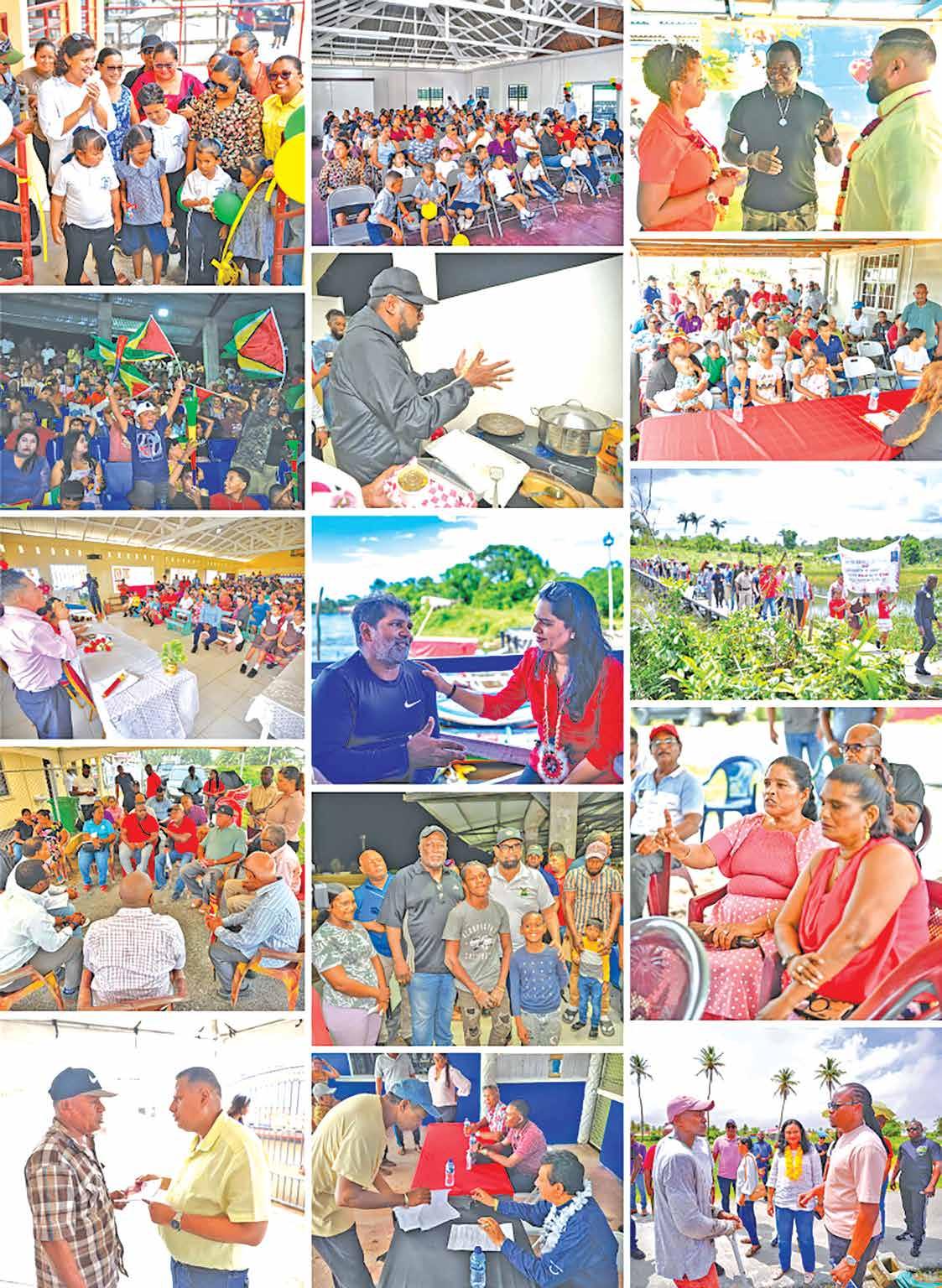
Scenes from the Cabinet’s outreach to Region 2
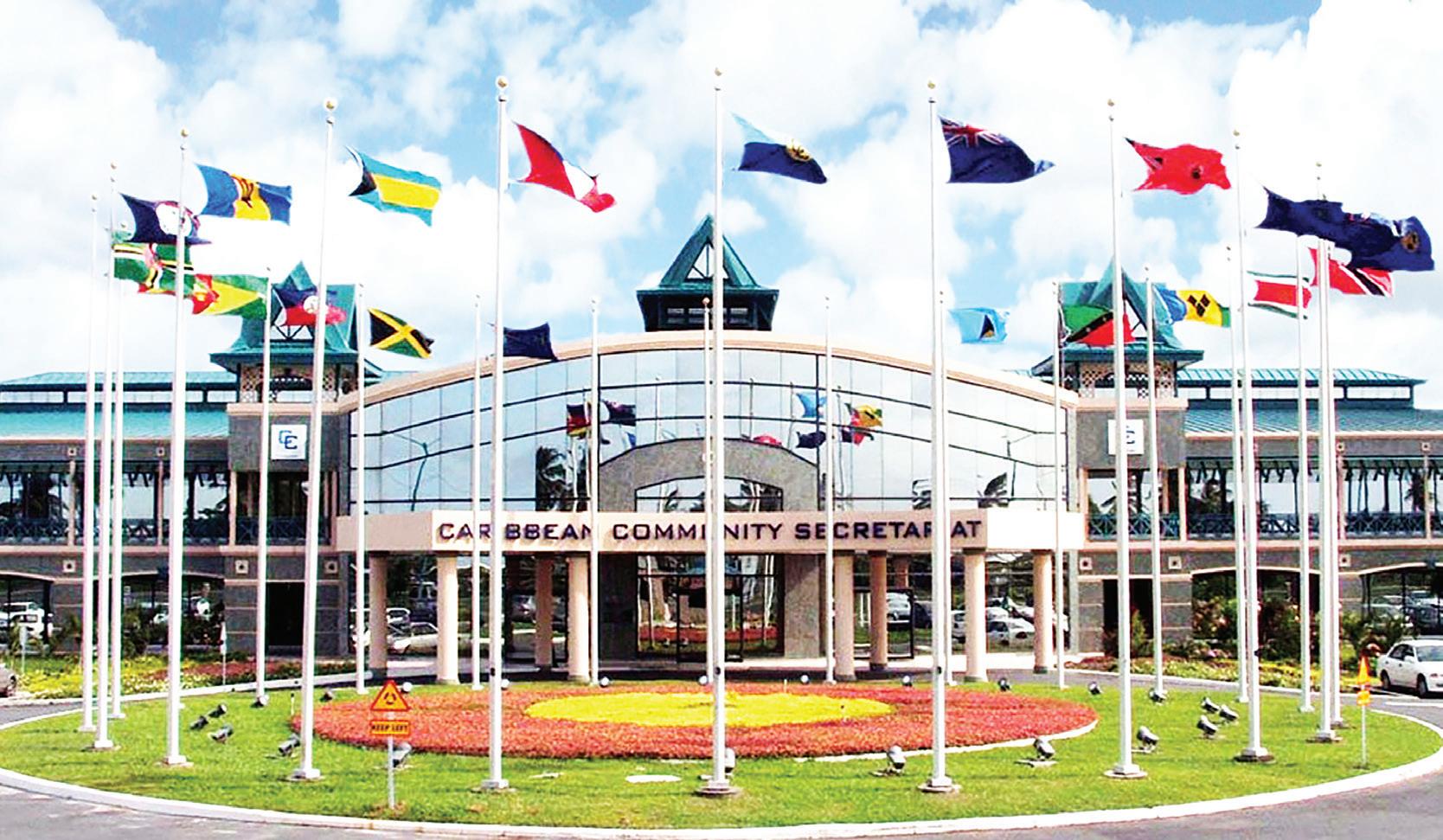
CARICOM Day commemorates the treaty establishing the Caribbean Community and Common Market (CARICOM) and is observed annually by all CARICOM countries, though not necessarily on the same date of the year.
The establishment of the Caribbean Community and Common Market was the result of a 15-year effort to fulfil the hope of regional integration, which was born with the establishment of the British West Indies Federation in 1958. The
Federation, the government of Trinidad and Tobago proposed the creation of a Caribbean Community, consisting not only of the ten members of the Federation, but also of the three Guianas and all the islands of the Caribbean Sea - both independent and non-independent.
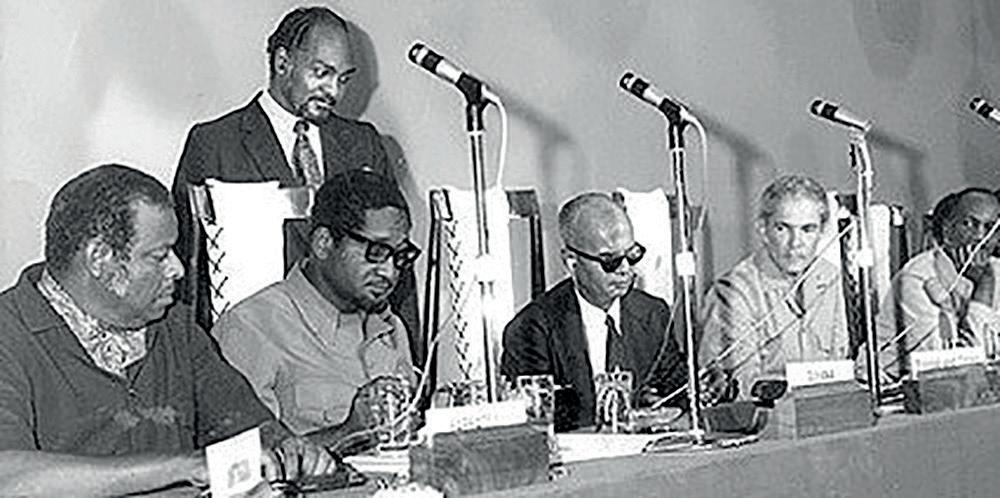
To discuss this concept, the prime minister of Trinidad and Tobago convened the first Heads of Government Conference in July 1963, and attended by the leaders of Barbados, British Guiana, Jamaica and Trinidad and Tobago.
At this conference, the participating leaders of the four Caribbean countries all spoke clearly of the need for close cooperation with Europe, Africa and Latin America.
In July 1965, talks be-
territories in the region to participate in the association was achieved later that year with the entry of Dominica, Grenada, St. Kitts/Nevis/
West Indies Federation ended in 1962 but its end may be regarded as the real beginning of what is now the Caribbean Community.
With the end of the Federation, political leaders in the Caribbean made more serious efforts to strengthen the ties between the islands and mainland by providing for the continuance and strengthening of areas of cooperation that existed during the Federation.
Further, Jamaica and Trinidad and Tobago both attained independence in August that year and with it the power to control their own domestic and external affairs.
In announcing its intention to withdraw from the
tween the premiers of Barbados and British Guiana and the chief minister of Antigua on the possible establishment of a Free Trade Area in the Caribbean resulted in the announcement of definite plans to establish such a Free Trade Area. In December that year, Heads of Government of Antigua, Barbados and British Guiana signed an agreement at Dickenson Bay, Antigua, to set up the Caribbean Free Trade Association (CARIFTA).
The new CARIFTA agreement came into effect on May 1, 1968, with the participation of Antigua, Barbados, Trinidad and Tobago and Guyana. The original idea to permit all
Anguilla, Saint Lucia and St. Vincent in July, and of Jamaica and Montserrat on August 1, 1968. British Honduras (Belize) became a member in May 1971.
At the seventh Heads of Government Conference in October 1972, Caribbean leaders decided to transform CARIFTA into a Common Market and establish the Caribbean Community of which the Common Market would be an integral part.
At the 8th Heads of Government Conference of CARIFTA held in April 1973 in Georgetown, Guyana, the decision to establish the Caribbean Community was brought into fruition with the consideration of Heads of Government of the draft
legal instruments and with the signing by 11 members of CARIFTA (the exception being Antigua and Montserrat).
The Accord provided for the signature of the Caribbean Community Treaty on July 4 and its coming into effect in August
Vincent which signed the Accord would become full members of the Community by 1 May 1974.
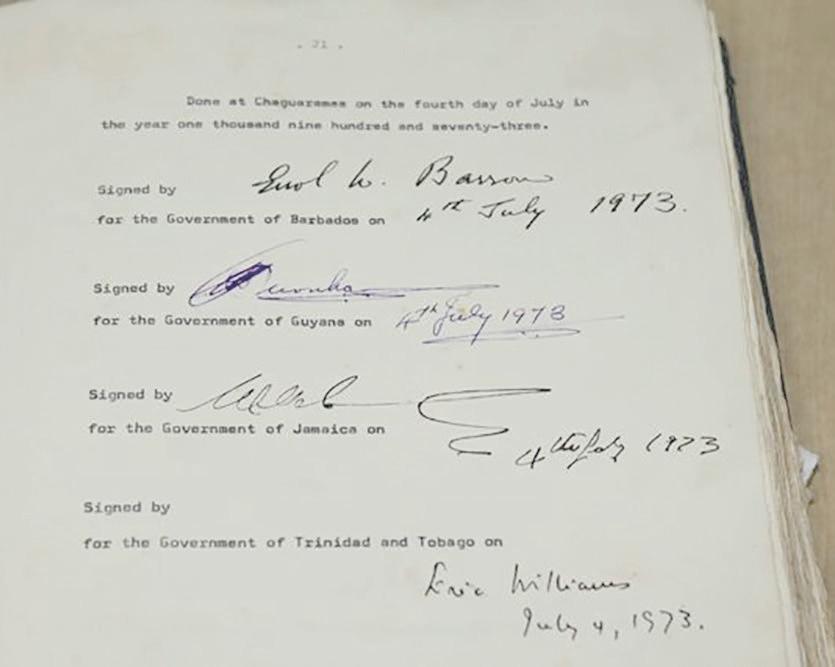
The Caribbean Community and Common Market was established by the Treaty of Chaguaramas, which was signed by Barbados, Jamaica, Guyana
1973, among the then four independent countries: Barbados, Guyana, Jamaica and Trinidad & Tobago.
The Georgetown Accord also provided that the other eight territoriesAntigua, British Honduras, Dominica, Grenada, Saint Lucia, Montserrat, St. Kitts/ Nevis/Anguilla and St.
and Trinidad & Tobago, and came into effect on August 1, 1973. Subsequently, the other eight Caribbean territories joined CARICOM.
The Bahamas became the 13th Member State of the Community on July 4, 1983, but not a member of the Common Market.
In July 1991, the
British Virgin Islands and the Turks and Caicos became Associated Members of CARICOM, followed by Anguilla in July 1999. The Cayman Islands became the fourth Associate Member of the regional grouping on May 16, 2002, and Bermuda the fifth Associate Member on July 2, 2003. Suriname became the 14th Member State of the Caribbean Community on July 4, 1995.
Haiti secured provisional membership on July 4, 1998, and on July 3, 2002 was the first French-speaking Caribbean State to become a full member of CARICOM.
Leaders signing the Treaty of Chaguaramas on July 1, 1973. From left: Errol Barrows (Barbados), Linden Forbes Burnham (Guyana), Dr Eric Williams (Trinidad and Tobago), and Michael Manley (Jamaica)
The original Treaty of Chaguaramas
Ingredients
Bakes
3 1/2 cups all-purpose flour + 1/2 cup more for kneading
4 1/2 tsp baking powder
1/2 tsp salt
1/3 cup white sugar
2 tbsp unsalted butter, softened, but not melted
1 1/3 cup water, more as needed
Oil for frying
Saltfish
2 pounds boneless, skinless saltfish
1/2 cup yellow onion, chopped
3 large garlic cloves, minced
1 wiri wiri pepper or scotch bonnet
1 cup fresh tomato, chopped
1 tsp tomato paste
2 sprigs scallions
6 tbsp oil for cooking
Instructions
For bakes
Mix flour, baking powder, salt, and sugar together. Rub butter into flour mixture. Add water to flour and knead to form a stiff and smooth dough ball. Add flour as needed to bring the dough together. Pinch off golf ball-sized pieces of dough and roll in palms of hand to make smooth. Place in a greased plate. Cover with a damp paper
1 pound fresh corn masa or 1½ cups masa mix
4 tablespoons all-purpose flour
2 teaspoons baking powder
1 teaspoon salt
1/4 cup water
3 large chicken breasts
1 teaspoon dried oregano,
2 cups red onion, divided
jalapeño pepper, deseeded, sliced
1/4 cup white vinegar
towel. Allow to sit for one hour minimum.
Heat oil for frying. Flour surface and roll each dough ball to 1/4-1/8 inch thickness. Place dough in hot oil. Use spoon to pour oil over each piece of dough as this will help it puff up.
For saltfish
Fill the pot with enough water to cover saltfish. Boil for 5-6 minutes. Drain and fill with clean water. Boil another 5-6 minutes. Drain and flake fish with a fork. Set aside.
Heat frying pan with oil. Add onion, garlic, hot pepper and cook until onions are translucent. Add tomato paste, saltfish and seasonings. Cook a couple of minutes then add chopped tomatoes. Let cook 5-6 minutes until tomatoes have melted into fish. Garnish with scallions.
Salt and freshly ground black pepper, to taste
Vegetable oil for frying
Tortilla Press
Masa
Mix masa, flour, baking powder, salt and water until soft and masa holds together.
Divide masa and shape into 11/2 inch balls. Place ball of masa in-between 2 sheets of parchment paper in the center of a tortilla press and flatten. Heat oil in a large frying pan and fry until lightly browned, but not crisp.
Chicken
Season chicken breasts with salt, pepper and ½ teaspoon oregano. Boil in enough water to cover chicken for 20 to 25 minutes or until cooked. Remove from water, cool and shred. Reserve chicken broth.
Onions
Bring reserved broth to a boil, add onions, jalapeño pepper, vinegar and1/2 teaspoon oregano. Remove from heat, cover and set aside for 10 minutes. Drain, reserve onions and pepper. Place inflated fried corn round on a serving plate, press down slightly to flatten. Top with shredded chicken, onions and jalapeño pepper.
Ingredients
1/2 pound salt fish, steamed fresh ackee soaked, or tinned ackee
1 medium onion, chopped
1 small sweet pepper (yellow/red or green), julienned
1 medium tomato, chopped
2 cloves of garlic, minced
1 teaspoon scotch bonnet pepper, chopped finely (omit if you don’t want the dish spicy)
2 stalks scallion, chopped
1-2 tablespoons extra virgin olive oil
Salt and pepper to taste
Directions
Heat oil and sauté onion, garlic, scallions, tomatoes, scotch bonnet pepper and sweet pep per until tender, about five to six minutes. Add flaked saltfish, fresh or canned ackee and black pepper. Toss lightly; cover and allow to stand over low heat for about 2 minutes.
Ingredients
5 green plantains (peeled), diced
5 tablespoons butter (or 5 tablespoons olive oil)
2 red onions , sliced ¼ cup white vinegar
4 tablespoons vegetable oil
Cold water
Salt
Directions
In a bowl, combine the onions and vinegar. Add a pinch of salt. Set aside.
In a large saucepan, boil the plantain in water with 2 pinches of salt, until very tender, about 20 to 30 minutes. While cooking plantains, heat the vegetable oil in a Dutch oven.
Sauté the onions and vinegar (being careful not to burn, as vinegar may splash in oil). Set aside.
Once plantain is tender, drain and place in a large dish. Add the butter or olive oil, and 2 tablespoons of the onion mixture.
Begin crushing the plaintains with a po-
Ingredients
2 pounds goat or sheep meat
4 cloves garlic, minced
1 Tablespoon whole cloves, crushed
2 Onions, cut up
1 Tablespoon mace
1 Teaspoon Accent/MSG
Herbs and chible (local name for scallions and thyme)
1 ‘hot’ green pepper, whole
Salt and pepper to taste
3 oz. Fresh marjoram or oregano
11/2 cups Flour
tato masher by gradually incorporating cold water until obtaining a velvety
To serve, add the onions mixture on top with fried cheese and eggs.
3-4 Tablespoon Browning/caramel colouring
Directions
Cut the meat in 2-inch cubes, being sure to leave the bones in. Wash the meat in salt water and place in a large saucepan (large pot). Cover with cold water, bring to boil,
simmer covered for 5 minutes. Skim fat and continue simmering covered until meat is slightly tender. Add remaining ingredients; add boiling water as necessary. When meat is tender, combine 11/2 cups flour with enough water to make a smooth paste and stir enough of this mixture into the stew to give desired thickness, add some browning for colour. Half cover the pot and let it continue to simmer until meat is done.
purée.
Venezuela's death toll rises
On Saturday the Government of Venezuela raised the official death toll to 2954 and said nearly 30,000 officials have been deployed, alongside 3281 international rescue workers, to help people affected by the quakes.
More than 16,000 persons are homeless, according to official figures. Some are living in official shelters and others in tent encampments. An unofficial but widely used tally of the missing stands at just over 41,000.
The field hospital, part of the US State Department's co-
ordination with several groups providing aid in Venezuela, has treated some 400 patients so far, said its medical director Peter Holz, including surgeries that are set to number nearly 30 by Saturday evening.
"In the beginning it's all trauma from the earthquake; then we will have follow-up surgical visits," Holz said as he stood inside the hospital's pharmacy, erected over what is normally a baseball field.
Gradually the Samaritan's Purse 100-person team will hand over operations to local doctors, either continuing to
operate at the field site or integrating all their equipment and supplies into local clinics where they will remain for good, he said.
"It will develop more into a community health centre," Holz added. "There are a lot of sad stories, but also a lot of hope in the midst of all of it."
Civilians of all stripes –including survivors, family members, volunteer paramedics and foreign rescue teams – have descended on disaster areas since the 7.2- and 7.5-magnitude quakes struck on June 24. (Excerpt from Reuters)
Cuban Embassy accuses US of pressuring Govts over UN vote on Cuba embargo
The Cuban Embassy in Antigua and Barbuda has accused the United States of pressuring Governments around the world to oppose debate at the United Nations on the decades-old US embargo against Cuba, describing the policy as a violation of international law and a humanitarian crisis.
In a statement published Saturday, the embassy cited a recent article by The Nation newspaper, which it said alleged that US Secretary of State Marco Rubio instructed American embassies to lobby host Governments to prevent discussion of the
embargo during the upcoming United Nations General Assembly session.
According to the embassy, the reported directive forms part of a broader effort by Washington to silence international criticism of its sanctions policy toward Cuba.
The embassy argued that the overwhelming majority of countries oppose the embargo, noting that the UN General Assembly has voted for 31 consecutive years to condemn the US policy.
It also claimed that US sanctions have obstructed humanitarian assistance, including food, medicine
and other essential supplies, by discouraging shipping companies, insurers and logistics providers from transporting goods to Cuba.
The statement referenced reported delays involving a World Food Programme donation and medical supplies approved by UNICEF, arguing that the sanctions have had severe humanitarian consequences.
The embassy called on the international community to continue opposing the embargo and what it described as efforts to prevent debate on the issue at the United Nations. (Excerpt from Antigua Newsroom)
US refuses to renew USMCA trade agreement
The United States has announced that it will not renew a trilateral trade agreement covering $1.6 trillion of trade between the US, Mexico and Canada, one day before the agreement was due for its first joint mandatory review.
A statement from the US trade representative, Ambassador Jamieson Greer, on Wednesday said the US would not agree to renew the trilateral agreement, also known as USMCA, “in its current form”.
“The United States will continue to engage with Mexico and Canada to address the Agreement’s
shortcomings and our trade deficits with these countries. However, the Agreement remains in force pending resolution of these issues or until the Agreement’s termination,” the statement read.
It added that the US will meet Mexico during the week of July 20 for a third round of bilateral negotiations related to the USMCA joint review.
Mexican Economy Minister Marcelo Ebrard told a news conference on Wednesday that his country wants to help address US concerns about job losses and trade deficits.
“There is no difference that I can identify between
Pierre urges renewed commitment to stronger Caribbean on CARICOM Day
St Lucia Prime Minister and Chairman of the Caribbean Community (CARICOM) Philip J Pierre has called on citizens to recommit to regional unity and cooperation, saying the 15-member bloc must renew its efforts to build a stronger, fairer and more prosperous future amid mounting global challenges.
In his CARICOM Day 2026 message, Pierre said CARICOM remains rooted in the belief that its member states can accomplish more collectively than individually.
Pierre acknowledged that the region continues to face climate pressures, economic uncertainty, food and energy challenges, security concerns and the need to create greater opportunities for young people. Despite those challenges, he said
the Caribbean has consistently demonstrated resilience.
The CARICOM chairman said the Community’s focus must now be on renewal, with the aim of building a stronger, fairer, safer and more prosperous Caribbean.
He also urged member states to deepen regional integration by improving transportation and connectivity, strengthening food and nutrition
security, advancing the CARICOM Single Market and Economy, embracing digital transformation and supporting innovation.
Pierre used the occasion to encourage young people to play an active role in shaping the region’s future.
He concluded by urging Caribbean citizens to recommit to the founding principles of CARICOM.
(Excerpt from St Lucia Times)
Keiko Fujimori declared winner of Peru's Presidential election
Right-wing candidate Keiko Fujimori has been declared the winner of Peru's tight Presidential election, nearly a month after the vote took place.
Fujimori won 50.135 per cent of voters' support in the runoff, held on June 7, to 49.865 per cent for left-wing candidate Roberto Sánchez – a margin of less than 50,000 votes, figures certified by Peru's electoral court show.
Her election, coinciding with the election of Abelardo de la Espriella in Colombia, marks a shift towards the right in Latin American politics.
Fujimori said she would assume the role of President "with responsibility, humili-
ty and a deep sense of duty".
"Each day of this transition process is an opportunity to listen, engage in dialogue and arrive prepared at the start of the new Government," she added, with what appeared to be a nod to her thin mandate.
Sánchez, 57, has alleged
the runoff election had been "seriously compromised" and threatened legal action, arguing that strong support for Fujimori among Peruvian voters abroad was a sign of irregularities.
After the result was declared on Friday, his party appealed against the electoral court's proclamation, calling for the vote to be nullified.
While Sánchez, a former Foreign Trade Minister, stood on a platform of broad economic reforms, Fujimori benefited from concerns over crime and political instability dominating the race. Her swearing-in ceremony is expected to take place on July 28. (Excerpt from BBC News)
T&T Govt cracking down on abuse of diplomatic passports
Mexico, the United States and Canada that is so big that we cannot resolve it,” said Ebrard, who joined a virtual meeting with Greer and Dominic LeBlanc, the Canadian minister responsible for US-Canada trade.
“We wouldn’t allow our [car-making] industry to be at a disadvantage,” Ebrard said, adding, “I’d say that has been the main point of discussion with the United States in all these talks: protecting our automotive industry.”
LeBlanc also said Canada would continue to address Trump’s tariffs on his country’s steel, aluminium, cars and lumber. (Excerpt from Al Jazeera)
The Government of Trinidad and Tobago (T&T) has announced a sweeping review of diplomatic passports and is set to claim one belonging to another former Prime Minister (PM).
PM Kamla PersadBissessar confirmed that Dr Keith Rowley will also be asked to surrender his diplomatic passport after the state found hundreds of people were holding the documents despite not meeting the required criteria. The announcement came a day after former PM Stuart Young said he was instructed to return his diplomatic passport.
Responding to questions from Guardian Media yes-
terday, Persad-Bissessar said the review was prompted after international partners raised concerns about the issuance and possible abuse of diplomatic passports.
“The Government was requested by our foreign counterparts to look into the issuance and abuse of Trinidad and Tobago-issued diplomatic passports,” PersadBissessar said.
“Upon investigation, it was revealed that 985 persons possess diplomatic passports despite most of these persons not meeting the criteria for holding these passports.”
She stressed that the exercise was not directed at
any one individual but represented a broad administrative overhaul.
She explained that some current holders would instead receive official passports, others would revert to ordinary passports, while a smaller number would retain their diplomatic passports because they continue to qualify.
The PM also rejected suggestions that the changes amounted to punishment.
“This is not a downgrade or any indication of wrongdoing by anyone who is being affected. It is simply corrective action being taken,” Persad-Bissessar said. (Excerpt from Trinidad and Tobago Guardian)
Keiko Fujimori
Prime Minister of Saint Lucia and CARICOM Chairman Philip J Pierre
A drone view shows rescuers working at the site of collapsed buildings in the aftermath of the June 24 earthquakes
Around the World
Ukraine hits major oil terminal in Russia’s St Petersburg
Amajor oil terminal in Russia’s second city of
St Petersburg in the north-west was struck overnight by Ukraine, President Volodymyr Zelenskyy has said.
He described it as key “infrastructure that generates revenue for Russia’s war”. Ukraine also said a major Russian naval base in the region was hit.
St Petersburg Governor Aleksandr Beglov said the city was under a “massive” drone attack, admitting the oil terminal was hit. He reported no casualties.
Ukraine has recently in-
tensified its long-range drone attacks on Russia’s critical energy infrastructure, causing widespread fuel shortages. Kyiv says nearly 43 per cent of Russia’s oil refining capacity has been “disabled” as a result.
The claim has not been independently verified.
Ukraine says Russian oil and gas facilities are legitimate targets as Moscow relies heavily on fossil fuel exports to continue its war effort.
Russian President Vladimir Putin – who last week made a rare admission of fuel shortages caused
by Ukrainian attacks – on Saturday signed into law a bill aimed at boosting supplies to the domestic fuel market.
Zelenskyy said on Saturday morning that the targets hit in St Petersburg and the surrounding region were about 850 kilometres from Ukraine’s border.
The extent of the damage was not immediately clear, but a video posted by the Ukrainian president showed a drone flying towards a target and a huge column of black smoke billowing from the area after the strike.
(Excerpt from BBC News)
Pope Leo spends July 4 at migrant cemetery, meets with US Ambassador
Pope Leo XIV, who has sparred with the Trump administration over its immigration crackdown, spent the Fourth of July on Saturday in the epicentre of Europe’s migration debate to honour the tens of thousands of people who have died trying to reach Europe to find freedom and prosperity.
While the United States marks the 250th anniversary of the Declaration of Independence with rallies, parties and fireworks, the US-born pope travels to the Sicilian island of
Lampedusa to pray at a migrant cemetery and celebrate a solemn Mass for the island’s residents and newest arrivals.
Later on Saturday, he got into the July Fourth spirit with a visit to the residence of the US Ambassador to the Holy See, Brian Burch, a rarity for popes who usually don’t call on Ambassadors.
The US Embassy said Burch gave Leo a commemorative baseball, an apple pie and a US World Cup jersey.
Leo confirmed he was rooting for the US team, the embassy wrote on X, add-
ing that the two discussed “American efforts to pursue peace, religious freedom and the need for moral clarity and courage around the world.”
In making the visit on this particular Saturday, Leo was sending a powerfully symbolic message to the US and Europe of the Christian obligation to uphold the dignity of every human being, migrants and the most vulnerable especially, while reminding the US that it was founded by immigrants. (Excerpt from CBS News)
Kim JongUn observed naval destroyer cruise missile launch, weapons tests
orth Korean lead -
Ner Kim JongUn observed the test firing of a strategic cruise missile and evaluations of anti-ship, anti-submarine and air defence systems aboard the naval destroyer Kang Kon, state media KCNA reported on Sunday.
The tests were conducted on Friday as part of an assessment of the newly built warship’s combat systems. They included checks of target-detection and information-processing capabilities, integrated firepower systems, naval guns, automatic cannons and electronic warfare equipment, KCNA said.
Kim was briefed on the vessel’s weapons evaluation programme before watching the strategic cruise missile launch and other tests, according to the report.
KCNA said Kim hailed recent advances in weapons development and called for further efforts to expand North Korea’s war deterrence and combat capabilities.
He ordered officials to complete trials of the Kang Kon and commission the destroyer into naval service within two months, KCNA said.
Late last month, North Korea commissioned the 5000-tonne destroyer Choe
Hyon and announced plans to deploy the Kang Kon, a vessel of the same class, as part of a broader naval modernisation drive.
Kim has called for the construction of two warships of the class every year over the next five years and also outlined plans for larger 10,000-tonne warships.
The Kang Kon was repaired last year after partially capsizing during a launch ceremony.
North Korea has increasingly highlighted naval development as it seeks to bolster what Kim has described as the weakest branch of its armed forces.
(Excerpt from Reuters)
Trump to mark US 250th anniversary with campaign-style rally on National Mall
US President Donald Trump will mark the country’s 250th anniversary on Saturday with a political rally on a fenced-off National Mall in Washington, capping a weeks-long celebration that has been widely described as divisive.
Washington’s annual July 4 celebration typically draws hundreds of thousands of people. Visitors this year must contend with stepped-up security, possible thunderstorms and a record-breaking heatwave that has forced organisers to cancel several parades and other events around the area.
Crowds were sparse at first but have swelled in recent days, forcing visitors to wait in entrance lines that stretched several blocks. Gift shops and restaurants at the
Smithsonian Institution museums near the event reported near-record sales on Friday, said Frank DiGiovine, a Smithsonian executive.
As the temperature on Saturday afternoon reached 102 degrees Fahrenheit (39 degrees Celsius), people near the
Lebanon’s Aoun calls
National Mall lined up at security checkpoints to access prime viewing spots for a fireworks display that was not due to start for several hours.
“It’s just part of the deal I signed up for,” said Glen Solander, 60, a software engineer visiting from Sioux Falls, South Dakota.
on US to keep “always standing beside” his country
Lebanese President Joseph Aoun has called on the United States to stand by Beirut following a landmark agreement between Lebanon and Israel, mediated by Washington.
In a congratulatory message to President Donald Trump marking the US’s 250th Independence Day, Aoun urged Washington to “keep always standing beside Lebanon’s right and just causes, its institutions, army and people”.
He added that he hopes that Lebanon could “turn the page on wars … and open a new page of hope, peace and stability”.
The US Embassy in Lebanon also said in a post on X that it is “with great pride that we stand with the people of Lebanon as they forge a brighter future – one of peace, prosperity and promise long overdue.”
Last week, Israel and Lebanon signed a USbacked framework deal intended to permanent-
ly end the conflict with the Hezbollah armed group that is continuing in southern Lebanon.
The agreement includes calls for the disarmament of Hezbollah, a gradual Israeli withdrawal from southern Lebanon and the deployment of the Lebanese army to the area, beginning with two pilot areas.
But Hezbollah has rejected the deal, which does not set out a timetable for an Israeli withdrawal.
(Excerpt from Al Jazeera)
Archaeologists uncover ancient Byzantine city in Egypt’s western desert
Archaeologists in Egypt have uncovered a well-preserved Byzantine-era city in the western desert.
The fourth-century quarters had residential and religious structures, including a basilica-style church in the Dakhla oasis. Archaeologists also found coins, pottery fragments and tools.
Separately, 18 ancient tombs were discovered at Marina el-Alamein, near Alexandria, which includes rock-cut and limestone tombs, pottery and a granite sarcophagus.
The tourism and antiquities ministry said the first discovery reveals details of daily life, urban development and economic activities when Egypt was part of the Byzantine Empire.
The unearthed quarters included north-south thoroughfares intersected by eastwest streets, forming open
squares and public spaces, said Hisham el-Leithy, secretary general of the supreme council of antiquities.
A basilica dating back to the mid-fourth century stands at the settlement’s head, overlooking its main streets, along with remains of two watchtowers to safeguard the outskirts, according to Mahmoud Massoud, who chairs the archaeological mission.
The oasis, located in Egypt’s western province of New Valley, is on Unesco’s tentative list, a step away from being added to the agency’s world heritage list.
A heavily fortified structure with thick defensive walls and many houses consisting of reception halls and vaulted roofs were found in the area, Massoud added.
Among them were the house of Tisous, a church deacon, which dates to the second half of the 14th century. Archaeologists believe it
served as a house church before the construction of the city’s basilica.
Archaeologists also uncovered bread ovens, kitchens, grinding tools and bronze coins bearing portraits of Byzantine emperors, Latin inscriptions and Christian symbols.
A group of gold coins unearthed dated to the reign of Roman emperor Constantius II, who ruled between 337 and 361, were found, the ministry statement said.
Diaa Zahran, head of the Islamic, Coptic and Jewish antiquities department, said they found a collection of about 200 pottery fragments which would have been used as writing material. The fragments, known as ostraca, have inscriptions detailing commercial transactions, correspondence and other details of daily life, according to Zahran. (Excerpt from The Guardian)
Barricades are placed near the US Capitol at sunrise as day breaks ahead of Fourth of July celebrations, marking the 250th anniversary of US independence
North Korean leader Kim Jong Un oversees the test of key weapons in North Korea
ARIES
(March 21April 19)
TAURUS (April 20May 20)
GEMINI (MAY 21June 20)
CANCER
LEO (July 23Aug. 22)
Distance yourself from trouble or those trying to talk you into something you don’t want to do. A creative outlet will spark your imagination and encourage you to turn something you enjoy doing or learning about into a valuable commodity. Volunteer work that addresses a cause that touches you emotionally will change how you manage your time.
Don’t make unrealistic promises or ask for more than others can offer. Pay more attention to detail, how you look and feel, and creating and sustaining your lifestyle and personal happiness. Think big, but don’t go over budget or start projects that present impossible challenges. Open, honest communication is essential if you want to reach your objective.
Focus on learning, preparing and perfecting what you want to pursue. Implement changes that require your time and energy and are not dependent on outside influences. Choose your words carefully, and verify facts before you share information. A home-improvement project that makes your life easier will encourage you to host more events. Romance is on the rise.
Let your mind wander and your creative imagination take you on a journey that sheds light on how to achieve your dreams. Remaining dedicated and loyal and staying one step ahead of the crowd will position you for success. A change to how you handle your investments, cash flow and important papers will be necessary to avoid losses.
Take one step at a time. Don’t force matters that are unstable. Get everything in place, and go the extra mile to ensure your success. Spend more time and money preparing yourself and your talents to reach your desired goals. Watching someone you look up to will offer insight into unique ways to manufacture what motivates you the most.
VIRGO (Aug. 23Sept. 22)
LIBRA (Sept. 23Oct. 23)
SCORPIO (Oct. 24Nov. 22)
CAPRICORN (June 21July 22)
Keep your eyes on money management. Look over documents that require attention. Make sure your finances and legal matters are updated. Paying attention to detail will put your mind at ease and help you relax and enjoy time with your friends and family. A social event that encourages physical activity will boost your morale.
You’ll be drawn to unique individuals who offer both enrichment and a learning experience that will help you curb unnecessary habits. You are overdue for a change, but that doesn’t mean you should invest in something that benefits someone else more than it does you. Lay down ground rules and take responsibility for your actions. Romance is favored.
Indulge yourself in travel, social events or learning something new and exciting. Stretch your imagination, and put together a plan that helps you use your skills and experience, and you will connect with people who inspire you to follow through with your plans. A partnership will change how you view prospects and enhance your goals.
SAGITTARIUS (Nov. 23Dec. 21)
Change things up at home to help you explore new possibilities and to use your imagination to elaborate on ideas and plans you want to pursue. Someone who interests you personally or professionally will warm up to the idea of collaborating with you if you approach them with an opportunity that comes your way. Romance is highlighted.
AQUARIUS
(Jan. 20Feb. 19) (Dec. 22Jan. 19)
PISCES
(Feb. 20Mar. 20)
Push for what you want. Dreaming won’t get you to the finish line. Take heed of what others do and say, but take control of your destiny. Don’t skirt issues or leave out important details. How you handle others will affect how well you do. When an opportunity surfaces, put your heart into making it happen.
Put your ideas and plans into motion. Turn your surroundings into a workspace dedicated to bringing in extra cash. Invest more time and money in yourself and what you enjoy doing most. Visit a place or person that lifts your spirits by offering positive affirmations. An opportunity will come your way if you reach out to past associates.
Fact-check your resources before following through with your plans. Networking events will encourage you to explore new possibilities. Share your feelings and intentions with someone of interest, and you’ll find out where you stand. Sign up for activities that help you function better and encourage a healthy and active lifestyle. Avoid risks that can result in injury or illness.
Peanuts
Calvin and Hobbes
Pickles
SKusal Mendis, Dinusha make Sri Lanka’s day in Antigua
Indies had got off to a reasonable start, putting on 33 for the first wicket.
would have been gutted to have fallen eight runs short of a maiden Test tonne to go with his maiden Test 50.
ri Lanka batted a touch over two sessions on day two before eventually declaring on 549 for nine, while the West Indies, in their response, ended the day on 58 for one, trailing by 491 runs, with Brandon King the only batter to fall.
John Campbell was at the crease on 31 off 77 with Kavem Hodge (six off 41) alongside him, as they
in his field over view. The fielder was Udara, who himself had been dropped owing to a similar bit of confusion in the slips cordon on day one.
The one chance Sri Lanka took ironically came courtesy of some excellent catching, as Asitha Fernando got King nicking behind and Kamindu Mendis at second slip held on to a low chance. Prior to that scalp, the West
Twelve of those runs came in an expensive Wijesundara over as King took on the debutant in style. Wijesundara was perhaps guilty of striving for movement with the fuller ball, something which Campbell also capitalised on later with a sumptuous inside-out drive for six. But aside from that, for the most part, Sri Lanka gave little away as they produced a disciplined outing with the ball, one that they know should have produced more wickets.
The day as a whole, however, belonged to Sri Lanka, who built on the platform set on the opening day to rack up a further 211 runs on day two. Leading their charge was the pair of Kusal Mendis and Dinusha, who put on a stand of 143 off 246. Both passed fifty along the way, though Dinusha
Most of the runs were scored in a 114-run afternoon session, echoing the pattern of the previous day. The morning session was much more of a slow burn – just 64 runs were scored – but crucially Sri Lanka went wicketless. This laid the platform for the aggression showcased after lunch, particularly in the first hour when a Kusal-led onslaught saw Sri Lanka rack up 69 runs in a 12-over spell.
An attempted scoop off Jayden Seales signified the shift in gears; it fetched a boundary, but it could have spelt his demise had a backtracking Shai Hope managed to hold on after getting his gloves on it.
Kusal made the most of the fortuitous break as he picked up Alzarri Joseph for a flicked six over backward square leg the very
Morocco’s ruthless touch, street smarts show evolution into top team
Morocco’s evolution into a top football nation was no better exemplified than their comprehensive 3-0 win, opens new tab, over Canada in the World Cup last 16 on Saturday as they absorbed pressure before inflicting three hammer blows on their opponents. Morocco took 50 minutes to break the deadlock as Azzedine Ounahi scored twice and Soufiane Rahimi added a late third but never looked flustered nor deviated from their plans.
ity in attack to take those opportunities when they come along. It is the kind of “big team energy” that sets the top teams apart, and Morocco have discovered it. There have been several other examples in this World Cup, including Brazil’s performance against Japan and England’s comeback victory over the Democratic Republic of Congo.
next over before ramping a cut over the slips a couple of balls later. The introduction of Roston Chase made little difference as Kusal gave him similar treatment, twice using his feet to loft him down the ground.
And Kusal was gearing up for more when his salvo was cut short when he played on, attempting another scoop, this time off Anderson Phillip.
The rate of scoring understandably dipped following his dismissal, but Dinusha managed to stitch together a stand of 36 off 64 with Rathnayaka, before he too fell for 92 off 166.
The breakthrough came from an unexpected source, as West Indies captain Chase dug deep into his bowling options to bring on Hodge and his slow leftarm spin. He was greeted by two boundaries - the first a reverse slap behind point and then a pull through midwicket. The third ball though was on a length and held a touch in the surface, enough to see Dinusha close the face of the bat too early, as the ball popped up off a
Sri Lanka 1st Innings
Nishan Madushka c King
b S Joseph 6
Lahiru Udara c S Joseph
b AS Joseph 188
Dinesh Chandimal c King
b S Joseph 1
Kamindu Mendis st †Hope
b Greaves 84
Dhananjaya de Silva (c)
c Campbell b Seales 33
Kusal Mendis † b Phillip 69
Sonal Dinusha c King
leading edge for a straightforward take at cover.
After the tea interval, Prabath Jayasuriya and Rathnayaka were given free reign to score quick runs, which brought about an entertaining, if chaotic, passage of play. Both batters were quick to swing the blade and to their credit it brought about a 20-run stand.
Once Rathnayaka fell, top-edging a sweep, the debutant Wijesundara showed some intent as well – notably clubbing Hodge over deep midwicket – but another top-edge brought his brief innings to a close, and with it came the declaration.
Earlier in the day, the West Indies continued their poor showing in the field, letting off Kusal after he edged through to first slip for a regulation chance. Campbell moved to his left and seemed to have pouched, but the ball slipped through his grasp. Kusal was on 23 at the time, and he certainly ensured he made the most of the second life granted to him.
(ESPNcricinfo)
Canada was on top in a frenzied opening and created several chances to score but was wasteful and made to pay. By contrast, Morocco had four shots on target in the 90 minutes and netted from three of them, economical in their chance creation but clinical with their finishing.
you are on top, that will cost you.”
“As well as we played, Morocco bent a little bit but did not break,” Canada coach Jesse Marsch told reporters. “The smallest details in a match can make a big difference. And if you do not take your chances when
It is a hallmark of a top team that Morocco are able to soak up the pressure placed on them, not panic and trust that chances will come their way.
More than that, they believe they will have the qual-
Morocco were World Cup semi-finalists four years ago, but this is an arguably better team, more balanced and with more attacking threats.
The win over Canada took them to number six on the world rankings, and a team brimming with talent has worked out the street smarts needed to go deep into major tournaments.
(Reuters/Nick Said)
b Hodge 92
Milan Rathnayaka c Greaves
b Chase 15
Prabath Jayasuriya not out 17
Isitha Wijesundara c Campbell
b Seales 14 Extras (b 1, lb 14, nb 7,
Sri Lanka are in command at the end of day two
Kusal Mendis did well during his innings
Morocco’s Brahim Diaz and teammates celebrate after the match (REUTERS/Hannah Mckay)
Mbappé keeps cool as France survive furnace against Paraguay
Kylian Mbappe converted a second-half penalty as France sweated through a suffocating Philadelphia furnace and wrestled their way out of a brutal scrap with Paraguay to snatch a 1-0 win on Saturday, setting up a World Cup quarter-final against Morocco.
Mbappé's 19th World Cup goal in as many appearances ensured there would be no repeat of Paraguay's shock elimination of fourtime champions Germany – or Cape Verde's near-miracle against Argentina the previous day – as France survived a contest their opponents repeatedly dragged into murky waters.
"We knew what kind of match we were going to have. If we have to get our hands dirty, we can do that. We can play ugly football.
They thought we would turn up in tuxedos, but we were there," said Mbappe.
"Even at that game, we were better than them. That's their football – there is no right or wrong way to play the game. They tried to get at us that way, but we won."
Despite Aurelien Tchouameni's last-gasp withdrawal with a muscle injury, France looked prepared for the scrap, dominating the ball before turning frustration into urgency after the break to set up a repeat of their semi-final against Morocco four years ago.
Paraguay had hoped to avenge their 1998 last-16 defeat by eventual champions France, settled by Laurent Blanc's golden goal, but their minimalist approach was again left unrewarded.
France made one change from the side who beat Sweden 3-0, with Manu Kone replacing the injured Tchouameni alongside Adrien Rabiot in midfield, while Paraguay set up in a defensive 5-4-1.
Antonelli follows up sprint win with British GP pole
Formula One leader
Kimi Antonelli was too fast for Ferrari and dealt another stinging blow to Mercedes teammate George Russell as the Italian seized pole position for the British Grand Prix on Saturday after winning an earlier sprint race.
His closest title rival Russell qualified only fourth at a windy Silverstone, behind Ferrari's Charles Leclerc and seven-times world champion Lewis Hamilton.
Leclerc was 0.175 of a second slower than the 19-year-old, whose fifth pole of the season extended Mercedes's record of securing the top slot at all nine grands prix so far in the campaign, but he was ahead of Hamilton for the first time since Miami in May.
"It was a very tidy lap, a lap where I put everything together," said Antonelli of his best time of one minute and 28.111 seconds set after going out first for the final run on the fast, sweeping circuit.
"It was very tricky with the wind because it was very
gusty and unpredictable."
Leclerc back ahead of Hamilton
Antonelli won the 17-lap sprint ahead of Hamilton, a record nine-times winner at Silverstone in a career that started in 2007, to go 43 points clear of Briton Russell in the standings.
Winner of five races in a row until Hamilton ended the streak in Spain last month, Antonelli has taken the sport by storm in his second season and appeared to have the measure of the experienced Russell in front of what is sure to be the biggest crowd of the year.
"It's not going to be easy because I have two Ferraris behind me and, for sure, they will work together," Antonelli said of the challenge he will face on Sunday.
"Their pace is good, but ours was strong in the sprint. Hopefully we can keep that for tomorrow and do a good race."
Leclerc said it was good to get back to speed on a Saturday.
"It has been a few tough races when the feeling was not quite right, struggling to
put everything together," he said.
"There has been so much work behind the scenes to get back that feeling. This was the first time I had it back. I have struggled to be consistent, but it is a good start."
Isack Hadjar qualified fifth for Red Bull, ahead of McLaren's reigning world champion and last year's winner Lando Norris.
Red Bull's four-times world champion Max Verstappen will line up seventh, with McLaren's Oscar Piastri eighth and the Racing Bulls pair of rookie Arvid Lindblad -- on his home debut -- and Liam Lawson completing the top 10 places.
Russell, who started the season as title favourite, had a torrid afternoon -- smashing his car's front wing when he speared wide across the gravel on the entry to Luffield and into the barriers in the first phase of qualifying.
He returned to the pits for a front wing change and managed to salvage the session, which saw Hadjar go fastest.
"That was very weird. I've never locked up there in my whole career," said Russell of the incident.
The Briton was a provisional second after the first round of flying laps in the final session but could not improve his time as the Ferraris went faster, his hopes of a first home Formula One win now looking more distant.
Alpine's Franco Colapinto also lost control in the first phase, the Argentine's car bouncing backwards across the grass after a high-speed spin at Becketts.
There was then a 15-minute delay between Q1 and Q2 as marshals cleared up the track and scattered gravel. (Reuters)
by against a Paraguay side who defended ruggedly.
Neither side managed a shot on target before the break, with Rabiot, Kone and Ousmane Dembele all trying their luck without reward, while Julio Enciso offered Paraguay's lone threat at the other end.
For France, it was turning into a test of patience, but they pressed on after the interval and finally broke through when substitute Desire Doue, on for Bradley Barcola, was tripped in the box by Diego Gomez.
With temperatures reaching 39 degrees Celsius (102.2°F), France found clear openings hard to come
After a VAR review, referee Ilgiz Tantashev awarded the penalty, and Mbappe coolly converted in the 70th minute, wrongfooting
Jhon Arias scored the only goal as Colombia beat Ghana 1-0 in sweltering conditions in Kansas City on Friday to reach the World Cup last 16, continuing a quietly impressive campaign that has established them as dangerous outsiders.
Arias struck in the 14th minute, guiding home a cross from substitute Luis Suarez, and Colombia's disciplined defence did the rest as Nestor Lorenzo's side extended their unbeaten run and booked a meeting with Switzerland in the next round.
Colombia had largely flown under the radar at the tournament, despite going undefeated against Portugal, Uzbekistan and DR Congo to top Group K.
Their breakthrough on Friday came from two players who had not been expected to combine, as Suarez, thrust into action after Jhon Cordoba was forced off with an apparent groin injury in the eighth minute, delivered a pinpoint cross to the back post where Arias had somehow drifted unmarked.
With time and space to pick his spot, Arias calmly guided the ball into the bottom corner to hand his side a deserved lead.
The stadium felt more like Barranquilla than Kansas City as tens of thousands of Colombia supporters turned the clash with Ghana -- a team ranked 60 places behind them -- into a de facto home game, giving the South Americans a level of support rarely seen so far from home.
The stands were a writhing, dancing sea of yellow jerseys, twirling scarves and black-and-white sombrero vueltiao hats that many used to fan their faces in the oppressive 30 degrees Celsius (86°F) heat.
“Dream come true”
They bounced in unison, roared their team forward with every attack, and regularly broke into chants
Orlando Gill for his seventh goal of the tournament, putting him level with Lionel Messi and one behind the Argentine talisman in the all-time list.
Nerves crept in when Mike Maignan was finally called into action in the 90th minute, making his first save of the game as Paraguay, provocative until the end and hunting for fouls around the box, tried to turn the final minutes into chaos.
France then faced another sweaty spell in stoppage time after Mbappe was denied twice in quick succession by Gill, leaving Les Bleus to close out the win the hard way. (Reuters)
of "Vamos Colombia! Esta noche tenemos que ganar!"
(Let's go, Colombia; tonight we have to win).
They need not have worried. Colombia were the better team by some distance.
"I don't have the words to describe this moment," said Colombia midfielder Gustavo Puerta. "It's a dream come true.
"I think we've shown it game after game. This is a team that plays with its heart, that plays with its soul. We go after every ball as if it were the last."
Luis Diaz had numerous scoring chances. He fired into the side netting in the first half, then celebrated what he thought was the game's second goal early in the second half when he slotted home Arias's cross, but it was disallowed for offside.
"We need to stay grounded, take it step by step, remain calm and keep improving," Diaz said. "That's what football -- and life -- is all about. So, I'm very relaxed, focused on working for what's ahead, and getting some rest, which is going to be extremely important."
Lorenzo's men continued to push for a second goal, and Ghana goalkeeper Lawrence Ati-Zigi, who was excellent all night, made one terrific save after another in the dying minutes
as Colombia's fans cheered every one of their team's touches of the ball.
“The best team won” Antoine Semenyo was Ghana's biggest attacking threat, yet Colombia's disciplined defence denied him a clear sight of goal.
"They controlled much better the game," said Ghana coach Carlos Queiroz. "The passing, the movements, and doing that, they damaged our fitness and our ability to recover the ball and try to go forward.
"We tried to go forward, tried to create opportunities, but for any reason, the last pass, the last service, was not with the quality that was necessary in this case. So, I think the best team won."
Los Cafeteros became the fourth South American team to reach the last 16, joining surprise package Paraguay, who stunned Germany, along with Brazil and Argentina, both of whom survived scares of their own.
Colombia plays the Swiss on Tuesday in Vancouver.
The match also marked the first time in tournament history that both teams were forced to make a substitution before the 15-minute mark due to injuries, as Ghana right back Marvin Senaya limped off with a hamstring injury in the 13th minute. (Reuters)
Ghana's Lawrence Ati Zigi in action with Colombia's Luis Suarez (IMAGN IMAGES via Reuters/Jay Biggerstaff)
Mercedes' Andrea Kimi Antonelli celebrates after qualifying in pole position (REUTERS/Andrew Boyers)
France's Kylian Mbappe celebrates scoring their first goal (REUTERS/Omar Aziz)
Final 4 confirmed as KFC Schools Basketball Festival heats up
The road to championship glory intensified over the weekend as the 19th KFC National Schools Basketball Festival resumed with an exciting slate of quarterfinal action, producing dominant performances, thrilling finishes, and the confirmation of the semi-final line-up in both the Under-14 and Under-18 divisions.
With the tournament continuing over the weekend, several schools strengthened their championship credentials through impressive victories at the National Gymnasium.
In the Under-14 category, Skeldon Line Path edged St Rose's High 36-33 in one of the day's closest encounters. Kellon Lyte and Araf Wazidally shared team-high scoring honours with 12 points each, while Eshmael Coodluck contributed seven points and six rebounds. St Rose's was led by an outstanding double-double from Jonathan Sullivan, who finished with 17 points and 10 rebounds.
Kwakwani Secondary secured a convincing 37-19 victory over The Bishop's High behind a balanced team effort. Trayon Hopkinson recorded 12 points, six rebounds and four steals, while Kwayson Bethune added 10 points, five rebounds and six steals. Jermain Sampson also scored 10 points. Sameer Roopnarine
led Bishops' with 12 points.
One of the tournament's most dominant displays came from Hururu Secondary, who overwhelmed St Stanislaus College 78-13. Crandon Beckles delivered a spectacular all-around performance with 35 points, 13 rebounds and 10 steals to record a triple-double. Josiah Archer supported with 21 points and five rebounds, while Marvelon Forde added 12 points, five assists and six steals. Nathan Baptist led St Stanislaus with eight points and 12 rebounds.
The final Under-14 quarterfinal saw Good Hope Secondary hold off Queen's College 18-15 in a defensive contest. Javier Matthews paced Good Hope with nine points and seven rebounds, while Michael Humphrey scored six points for Queen's College.
The Under-18 competition also produced several commanding performances.
President's College cruised past St Ignatius Secondary 50-13, powered by Mattaniah Fordyce's 13 points. Ricardo Ramdhial added 10 points and four rebounds, while Terron Mohabir chipped in with nine points. Despite the defeat, St Ignatius' Anson Heliger battled hard for five points and 11 rebounds.
St Rose's High booked its semifinal place with a 31-23 victory over
Covent Garden Secondary.
Chazaiah Bernard dominated with 19 points and nine rebounds, while teammate Malachi Atwell contributed six points. Covent Garden received seven points each from Aron Cooper and Donnie Copp. Queen's College advanced after defeating The Bishop's High 32-28. Deshawn Gurrick led the winners with 12 points, while Nathan Morris finished with six points and four rebounds. Bishops fought until the final whistle behind Tierre McIntosh's 11 points and four rebounds and Kemol Pickering's 10 points and seven rebounds.
The final Under-18 quar-
Dave’s West Indian Florist & Groceries backs West Indians Over-60s for World Cup
Dave’s West Indian Florist & Groceries has joined the West Indies Over-60s Cricket Team as a kit sponsor for the IMC Over-60s Cricket World Cup, which will be played in Canada from August 9 to 23, 2026.
The sponsorship was announced by the Cricket West Indies Masters Association (CWIMA), which said the support will assist the team as it prepares to represent the region on the international masters cricket stage.
CWIMA said the backing from Dave Narine and his businesses is another strong show of support from the West Indian business community. Dave’s West Indian Florist is located at 11407 Liberty Avenue, South Richmond Hill, New York, and serves the area with floral arrangements, gifts, and West Indian products.
Narine was also recognised by CWIMA as a consistent supporter of sport in the community, particularly senior cricketers who continue to represent the West Indies.
“This support means a great deal to the players and the organisation," said Roy Singh, secretary of the Cricket West Indies Masters Association. “Masters cricket continues to grow internationally, and sponsorships like this help ensure
that our players are properly supported as they prepare to compete against the best Over-60s teams in the world.”
The West Indies The over-60s squad will be Captained by Zamin Amin. The squad also includes Narine Bidhesi, Anthony Boyle, Rajendrasammy Chetana, Deonarine Deyal, Rajendra Dilraj, Harry Narain Heeralaa, Fareed Hosein, Steve Linton, Ken Mayers, Hafiz Mohamed,
Victor Patrick, Keith Seale, Shivnath Seeram, Anthony “Tony” Small and Balwant Roy Singh.
Raj Singh will serve as manager of the team, while Alexio Daley will travel as physical therapist.
CWIMA said it is looking forward to a strong showing from the West Indies Over60s in Canada and thanked the sponsors, supporters, families and cricket fans who continue to support West Indies Masters cricket.
terfinal featured another impressive showing from Kwakwani Secondary, who defeated New Amsterdam Multilateral School 50-43. Tyreek Sampson led the scoring with 17 points and seven rebounds, Marlon Mendonca added 15 points and five rebounds, and Simeon Sinclair contributed 13 points and four rebounds. New Amsterdam's Samuel Welcome produced a strong double-double with 19 points and 11 rebounds, while Tyrese Archer added 13 points and seven re-
Green dominates post-Father's Day cycle event in Berbice
National cyclist Andre “Padlock” Green continued his strong return to competitive road racing with a commanding victory in the Post-Father's Day cycle event held in New Amsterdam, Berbice, on Sunday, June 28.
The event, organised by the Flying Ace Cycle Club of New Amsterdam, was staged for cyclists from Region Five and Region Six. Green produced a dominant ride in the 10-lap race, taking control of the contest and eventually lapping the field on his way to victory.
The race started in front of Level Up Bar at the junction of Charles Place and Republic Road, New Amsterdam. The riders moved along Republic Road, turned into Vryheid Street, then Main Street, before heading through New Amsterdam into Stanleytown. From there, they turned at Tacama Turn and returned along Republic Road to complete the circuit, with the finish also at the starting point.
New Amsterdam Mayor Wainwright McIntosh sent the cyclists on their way after leading them in a ceremonial one-lap ride around
the town.
Green and Mario Washington set the early pace, moving to the front from the start. However, Green later broke away and remained in control for the remainder of the race.
Washington finished second, while veteran cyclist Jaikarran Sookhai placed third.
Sookhai also topped the veterans’ category. Deon “Snow Cone” David finished second among the veterans, followed by Syborne Fernandes in third and Franco Crawford Senior in fourth.
Green also claimed all the prime point prizes available during the event.
Several special prizes were presented at the end of the race. Veterans Errol Rose and Franco Crawford Senior were recognised, while Keon Budhan, who travelled from Mahaica to participate, also received a special prize. Rose was specially acknowledged for his long involvement in athletics, cycling and sport in general.
Ten-year-old cyclist Franco Crawford Junior was also presented with a special prize.
the event.
VACANCY
Flying Ace Cycle Club founder, president and coach Randolph Roberts coordinated
He thanked the sponsors who supported the race, including Mayor McIntosh, A. Ally and Sons, Jamal King of Clean Wear Laundry, JS Supermarket, Fix IT Electronics, Prem and Vanessa Karran, and contractor Shazam Sattaur, among others.
bounds.
The 19th KFC National Schools Basketball Festival is sponsored by KFC, Edward B Beharry & Company Ltd, G-Boats Inc, the Ministry of Culture, Youth and Sport, and the Ministry of Education.
Andre “Padlock” Green (left) continued his strong return to competitive road racing with a commanding victory in the post-Father's Day cycle event held in New Amsterdam, Berbice
Dave Narine handing over the sponsorship cheque to Zamin Amin, Captain of the Over-60s team for the World Cup in Canada
Action at the KFC National Schools Basketball Festival
Defending champions Annai, President’s College among teams through to Girls U15 semi-finals
Defending champions Annai Secondary, President’s College, Waramuri Secondary and Marian Academy all secured wins on Saturday to advance to the semi-finals of the Blue Water Shipping Girls U15 National Championship 2026. All quarterfinal matches were played at the National Training Centre, Providence, where the four schools booked
their places in the final four. The semi-finals and final are scheduled for Sunday, July 5, at the same venue.
Annai Secondary continued their title defence with a 2-0 win over Mahdia
“Making world-class facilities...
“We’ve already placed an application in to CPL to host the Women’s CPL here at this ground next year,” he disclosed to the thousands of supporters gathered at the stadium.
Also delivering remarks at the stadium’s commissioning was Sport Minister Charles Ramson Jr, who described the venue as a symbol of togetherness.
“This is our achievement; our achievement on behalf of the people of Guyana and the people of Essequibo. A few days ago, right at this stadium, there was a massive storm that ripped off the top of this roof. We were able to replace that roof in just a matter of days. And I want Essequibo to know, and I want all of Guyana to know, and the world to know that no storm will ever stop the Guyanese people and the will of our people to succeed,” Ramson Jr expressed.
“This stadium is a symbol, a symbol of what we can do together.”
“The nay-sayers will come, the critics will come, and they will come, and they will play on your emotions, but I want you to see that when the People’s Progressive Party sets a plan, we make a promise and a commitment; we will see that plan, commitment and promise through and bring it to life, just like we did with this National Stadium,” the subject Minister later added, referencing flak that was given during the construction of the Guyana National Stadium at Providence.
On the other hand, Minister within the Sport Ministry, Steven Jacobs, struck an ironic note, sharing, “Let us open our arms and receive the blessings from the Almighty; he’s blessing us in all his glo-
Secondary. Thais Charles and Sherine Ewell were on target for the defending champions, who remained in contention for another national title.
FROM PAGE 32
ry because we’re opening a new stadium, and that is something that is significant to us as a people.”
“This evening we’re opening a very important piece of infrastructure for Region Two. What I can say to you is that you will continue to have international activities here as we strengthen His Excellency’s vision in pushing sports tourism. This will not only give young athletes a chance to upskill themselves; this will stimulate economic activities for every single young businessperson here in Region Two. This is what we want to do as Government and we’ll continue to do that; we’ll continue to put you first,” Jacobs went on to state.
Essequibo on top in first official match
The first official clash at the Anna Regina National Stadium saw an all-Essequibo XI defeating a line-up of big names in a combined Demerara/Berbice XI.
Captain of the Combined XI, Shemroy Barrington, won the toss and opted to bowl first, and an ensuing barrage of maximums, mainly off the bat of Guyana Amazon Warriors ace Quentin Sampson, saw
the Essequibo XI posting 143-5 in their 10 overs.
Sampson smashed an entertaining 42 off 12 balls, while Ricardo Adams went toe-to-toe, hitting 43 in 21 deliveries. David Williams added some impetus in the death overs with 24 off 11 to get Essequibo up to a competitive total.
President’s College also moved into the semi-finals after a 3-0 victory over Abram Zuil Secondary School. Neisa Lewis, Dilma Edwards and Sadie Misir scored for President’s College in a clinical perfor-
mance.
Waramuri Secondary kept their championship hopes alive with a 3-0 win over the New Central High. Zabits Harris and Darwina Boyal were listed among the goal scorers for Waramuri.
Meanwhile, Marian Academy edged Wauna Primary 1-0 in a close contest. Ella Fernandes scored the lone goal to send Marian
WYoung all-round standout Jonathan Van Lange was the pick of the combined bowlers, snaring 2-27 from his two overs, while Devon Lord claimed 1-18 and Kevin Sinclair 1-21 from the same complement of overs.
In reply, the combined batters never really got going, slumping to 115-6 in their 10. Sinclair opened with a brisk 32 off 16 balls while Van Lange smashed a scintillating 20 off seven. Kevlon Anderson added 18 off 12, but it was not enough as the Combined XI lost by 28 runs to the home side.
Essequibo Captain Antony Adams led from the front with the ball, returning an impressive 2-5 from one over while Ricardo Adams and Ronsford Beaton claimed 1-13 and 1-21, respectively, from two overs each.
Academy into the semi-finals. The competition will conclude with the semi-finals and final at the National Training Centre.
FIBA Referee Workshop sets stage for AmeriCup Caribbean Qualifiers
ith just days remaining before the start of the FIBA AmeriCup 2029 Caribbean Pre-Qualifiers, the Guyana Basketball Federation (GBF) is ensuring every aspect of the tournament is held to international standards, beginning with the officials who will oversee the games.
On Monday, July 6, the GBF will host an intensive referee workshop at the Guyana National Bureau of Standards' Training Room One, bringing together between 12 and 30 locally selected referees for a full day of instruction designed to elevate the standard of officiating ahead of the highly anticipated regional tournament.
The workshop, which runs from 09:00h to 19:00h, will be conducted by respected FIBA Referee Instructor Felipe Valenzuela of Chile. Renowned for his work in developing officials across the Americas, Valenzuela
will guide participants through the latest FIBA refereeing principles, mechanics, and performance expectations, ensuring local officials are fully aligned with the governing body's modern approach to officiating.
The programme forms part of FIBA's strategic initiative to strengthen its National Federations through education and technical development.
Among its key objectives are aligning referees with FIBA's global game philosophy, identifying and preparing potential future FIBA-certified officials, and reinforcing the refereeing trends outlined in the FIBA Referees Manual.
Sessions will begin at 10:00 am, with a two-hour lunch break from 13:00h to 15:00h, before concluding at 19:00h.
The intensive schedule reflects the importance FIBA places on quality officiating, particularly at major international events.
The workshop comes at a pivotal moment for Guyanese basketball. From July 8 to 12, Guyana will welcome 10 Caribbean nations to the Cliff Anderson Sports Hall for the FIBA
AmeriCup 2029 Caribbean Pre-Qualifiers, marking the country's return as a host of elite international basketball for the first time since 1994.
The tournament will feature two groups of five teams, with only the winner of each group advancing to the next stage of the AmeriCup qualification process. More than 250 players, coaches, and officials are expected in Georgetown for the five-day competition, making it one of the largest basketball events ever staged in Guyana.
With the quality of officiating expected to face close scrutiny, the referee workshop represents a significant investment in the tournament's success.
Rather than serving solely as hosts, Guyanese referees will have the opportunity to play an integral role in delivering a competition that meets FIBA's exacting standards.
President of the GBF Michael Singh has consistently stressed the federation's commitment to staging a first-class tournament, and the investment in referee education underscores that vision.
The workshop is being coordinated by GBF Technical Director Sileena Arjune and represents another important milestone as Guyana continues to establish itself as a leading destination for international basketball in the Caribbean.
FIBA referee instructor Felipe Valenzuela of Chile
Thais Charles and Sherine Ewell (in photo) were on target for the defending champions
Zabits Harris and Darwina Boyal scored for Waramuri
Neisa Lewis, Dilma Edwards and Sadie Misir scored for President’s College
Another look at the on-field action during the Essequibo XI vs Demerara/Berbice combined
Story and PhotoS by Jemima holmeS
Rdream. Now, with unwavering determination from the Ministry of Culture, Youth and Sport (MCYS) and, by extension, the Government of Guyana, the edifice stands at the heart of the Essequibo Coast, ready to open the region to the rest of the Caribbean and the world.
ain reared its ugly head, but the only thing dampened was the outfield beyond the boundary line, as the spirits of the Essequibo people remained joyful, resolute and optimistic, relishing the commissioning of their very own international sport facility, touted to be transformational for the region.
The Anna Regina National Stadium, just a few years ago, was nothing more than a community ground and an ambitious
As the heavens opened prior to the feature event, a blockbuster match pitting the Shivnarine Chanderpaul XI against the Brian Lara XI, the Essequibo people and those from further afield braved the heavy downpour, enjoying the music and overall joyous atmosphere at the stadium’s commissioning. They were eventually rewarded as the West Indian legends, alongside President Dr Irfaan Ali, took to the outfield, taking photos and sharing heartfelt moments with fans and supporters.
Earlier in the evening, the Head of State also stood tall in the relentless downpour, delivering a powerful address to citizens, especially those of the Essequibo Region, who, in years gone by, would travel miles to witness international cricket.
“For too many Essequibians, loving cricket came with a heavy price. It demanded bus fares, boat fares, meals, accommodation and valuable time away from work and family. Many
parents simply could not afford to take their children to witness international cricket. Many talented young players never experienced watching the game live at the stadium, nor did they experience playing under lights,” the Head of State related. “Today, the children of Region Two can dream without first calculating transportation cost, today parents can cheer from their own region; today Essequibo takes its rightful place on Guyana’s sporting map.”
“But this stadium was never intended to serve cricket alone. This is a facility that will create opportunity for many other sporting events and activity. As we did in Region 10, as we did in Region 4 and as we are
doing in Region Six, we are making world-class facilities accessible to every single citizen,” Ali added about the venue’s inclusivity.
President Ali further declared, “The skies may have threatened us, the wind may have howled, the recent squall may have tried to postpone this historic moment, but destiny cannot be delayed. Not even nature can stop what was meant for Essequibo.”
As he highlighted the venue’s international capacity, based on its ICCapproved lighting, President Ali detailed another highly rated feature, sharing, “Tonight, we are given another test, and that is the test of the drainage of this ground, and tonight, once
the rain stops, you will see one of the fastest draining grounds in the world at action. So, it is, therefore, a tremendous honour for us all to have this beautiful gathering. Tonight, we are celebrating not only the opening of a stadium; we are celebrating the beginning of something new. We are celebrating the investment in Region Two, a piece of infrastructure that could transform the tourism ecosystem.”
Giving some insight into the future plans for the venue, President Ali divulged its being a hosting venue for the Over-40 Men’s World Cup whilst making another major announcement.
Guyana Amazon Warriors welcome new Anna Regina Stadium
The Guyana Amazon Warriors (GAW) have welcomed the opening of the new Anna Regina Stadium, describing the facility as another important step in Guyana’s development as one of the Caribbean’s leading cricket destinations.
The franchise said it is looking forward to playing at the new venue in the future, noting that the stadium presents an opportunity to take top-level cricket to Essequibo and connect with supporters in that region.
According to the Warriors, bringing world-class cricket to the people of Essequibo would be a significant moment for the franchise, as it seeks to share the Warrior spirit with fans across Guyana.
The addition of the Anna Regina Stadium also expands Guyana’s growing list of international-standard cricket venues. The franchise said the facility will create more opportunities to host elite cricket while also helping to inspire young players from across the country.
The Warriors also congratulated President Dr Mohamed Irfaan Ali and the Government of Guyana for their continued investment in cricket infrastructure. The franchise said those investments have strengthened Guyana’s position as one of the Caribbean’s premier homes of cricket and as a destination capable of hosting major international events.
In its statement, the franchise said it is looking forward to creating lasting memories at Anna Regina Stadium and
sharing the excitement of elite cricket with the people of Essequibo in the years ahead.
The Warriors also noted the anticipated opening of the Palmyra Stadium in Berbice, which is expected to further add to Guyana’s growing number of internationally rec-
ognised sporting venues. GAW will be in action later this month in the ExxonMobil Guyana Global Super League, which is scheduled to run from July 23 to August 1. Tickets are available at the local box office and online.
Quentin Sampson entertained his fellow “Essequibians” with a 12-ball 42
Thousands of citizens overflowed the stands and side-lines at the Anna Regina National Stadium for its commissioning
President Dr Irfaan Ali braves heavy showers to deliver the feature remarks at the Anna Regina National Stadium