The Berbice Bridge will be closed to vehicular traffic on:
Sunday, July 19 – 07:30h–09:00h and Monday, July 20 – 08:05h–09:35h.
BRIDGE OPENINGS FERRY SCHEDULE
Parika and Supenaam departure times – 05:00h, 10:00h-12:00h, 16:00h, 18:30h daily
WEATHER TODAY
Thundery showers are expected during the day, followed by cloudy skies at night. Temperatures are expected to range between 23 degrees Celsius and 30 degrees Celsius.
Winds: East-North-Easterly to Easterly between 2.68 metres and 4.47 metres.
High Tide: 08:00h and 20:22h reaching maximum heights of 2.54 metres and 2.47 metres.
Low Tide: 13:56h reaching a minimum height of 0.72 metre.
American businesses being positioned to tap into investment opportunities in Guyana -
as US-Guyana trade exceeds US$25B in last decade
With the aim of expanding economic ties between Guyana and the United States, the US Government is positioning the Private Sector to tap into the vast investment opportunities available in Guyana across multiple industries, including energy and infrastructure.
These remarks were attributed to Deputy Secretary of State Christopher Landau, who recently addressed the US-Guyana
Investment Enabling Forum hosted by the Business Council for International Understanding (BCIU) in partnership with the US Department of State at the US Institute of Peace in Washington, DC, on Friday.
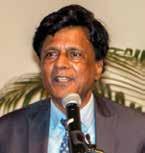
At that forum, Guyana was represented by a team led by Finance Minister Dr Ashni Singh. The event brought together senior US and Guyanese officials, as well as Private Sector leaders, to advance progress on the business environment, energy, and infrastructure.
In a statement following the investment forum, the Landau underscored the US efforts to strengthen investor confidence and expand US commercial engagement in Guyana.
"As Guyana's economy continues its unprecedented expansion, the United States is positioning American businesses to lead in energy, infrastructure, and other sectors central to the country's growth," the statement detailed.
To facilitate this, the US Government reaffirmed its commitment to ensuring that it supports American companies wherever they invest by cutting red tape, expanding access to financing, and creating the conditions for durable, high-quality investment.
Contending that US companies offer high standards, transparent financing, and quality workmanship, the Department of State noted that a strong US-Guyana economic partnership is a strategic priority for the Donald Trump Administration.
"Deepening these ties
strengthens supply chains, advances energy security, and builds a more stable and prosperous hemisphere that delivers lasting benefits for American workers and businesses alike. When US companies execute projects in Guyana, Guyanese communities can expect them to be built to last," the State Department stressed.
Bilateral trade
Similar sentiments were expressed by Guyana's
Finance Minister during the investment forum.
According to Dr Singh, Guyana considers its relationship with the US to be special – one that is rooted not only in shared values but also in shared interests. In fact, he disclosed that the US remains Guyana's largest source of Foreign Direct Investment (FDI) and the country's leading trade partner.
"Over the last decade, bilateral trade between the
two nations exceeded US$25 billion, with more than half of that occurring in the last two years alone," the finance minister posited.
Looking ahead, Dr Singh reiterated that President Dr Irfaan Ali and his Government remain committed to strengthening and expanding Guyana's partnership with the US, including through deeper investment, trade, and commercial ties.
He further emphasised that Guyana would like more US companies to invest here and to not just do business in the country but also with Guyanese companies.
Moreover, Minister Singh also extended appreciation to the Deputy Secretary of State and his team for facilitating the investment forum and for their active ongoing engagement and continued support. He also commended the BCIU for their work in organising and arranging this valuable event.
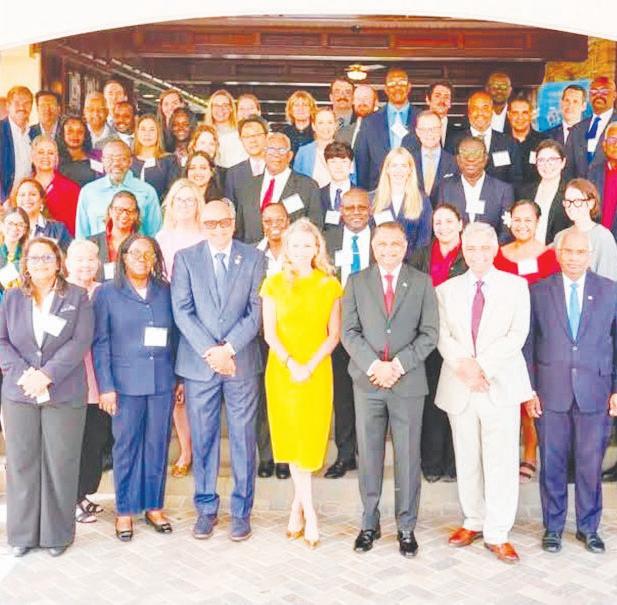
The Guyanese delegation engaged in bilateral talks with the US Deputy Secretary of State Christopher Landau on the margins of Friday’s investment forum held in Washington, DC
Finance Minister Dr Ashni Singh led a Guyanese delegation at the US-Guyana Investment Enabling Forum held recently in Washington, DC
Governments are usually judged by the projects they build-roads, bridges, hospitals, schools, and stadiums. In Guyana’s oil era, there is certainly no shortage of those, but demanding cash grants, the opposition complains that the poor cannot eat roads. However, in addition to infrastructure, the government is also working to create a nation of entrepreneurs rather than a nation dependent on government handouts.
That distinction matters. The easiest thing an oil-rich government can do is spend, but building entrepreneurs is much harder. It requires persuading citizens that the greatest opportunity is not simply to work for the government or to secure a subcontract from the existing supply chain, but to create businesses that employ others, develop new products, and compete beyond Guyana’s borders.
To its credit, the government has increasingly embraced that philosophy. The grants to small businesses, financing initiatives, training programs, support for agro-processing, encouragement of technology ventures, and promotion of youth entrepreneurship all point in the same direction. They represent an understanding that oil wealth, by itself, creates very little. It is what citizens do with that wealth that ultimately determines whether a country prospers or merely enjoys a temporary boom.
This marks a significant departure from Guyana’s traditional economic model. For generations, economic advancement meant obtaining a government job, joining a state corporation, or finding employment with one of a handful of dominant private firms. Entrepreneurship was often seen as something undertaken only when “regular” jobs could not be found. That mentality made sense in a poor economy with limited capital and few opportunities but not in today’s Guyana.
Oil revenues have unleashed construction, logistics, hospitality, information technology, transportation, manufacturing, agriculture, and professional services on a scale unimaginable just a decade ago. Every new highway, shore base, hotel, and industrial estate creates dozens of opportunities that the government itself cannot possibly exploit. Those opportunities belong to private citizens willing to identify needs and fill them.
The challenge now is ensuring that Guyanese-not just foreign investors-become the principal beneficiaries of this economic transformation. That requires an entrepreneurial class capable of thinking beyond contracts and concessions. Too often, local business discussions still revolve around winning government tenders or servicing multinational corporations. There is nothing inherently wrong with either. But neither should become the ceiling of our ambition. The real prize lies in building companies that export software instead of simply importing it; manufacture products instead of merely distributing them; process agricultural commodities instead of shipping them raw; and develop technologies that others are willing to buy. That is how small countries like Singapore became prosperous.
If entrepreneurship is truly to become the second pillar of Guyana’s development, bureaucratic obstacles must disappear with the same urgency as old buildings. A young entrepreneur should not spend months navigating permits, licenses, and approvals while opportunities evaporate. Access to financing must continue becoming broader than connections or inherited wealth. Regulation must facilitate enterprise rather than suffocate it.
The government is creating these conditions, but citizens must create the wealth. That distinction is fundamental. Yes, oil belongs to the nation, but prosperity cannot permanently flow from the Treasury. It must eventually flow from factories, farms, laboratories, software companies, engineering firms, restaurants, tourism operators, and thousands of small and medium-sized enterprises that owe their existence to the imagination of Guyanese rather than to the generosity of the state.
There is also a political dividend that deserves more attention. A nation of entrepreneurs is a nation with a broader middle class, a stronger tax base, and citizens who are less dependent on whichever party occupies office. Independent businesses produce independent citizens. Economic self-reliance has always been one of democracy’s strongest foundations.
For all the political battles that dominate our headlines, this may ultimately prove to be the administration’s most consequential policy choice: facilitating the country’s greatest resource sitting all along in the imagination, ambition, and enterprise of our people. That is why encouraging entrepreneurship is not simply good economics. It is perhaps the wisest political investment this government can make-and one that future administrations, regardless of party, would do well to preserve.
I remain
committed to transparency, accountability & rule of law
Dear Editor,
I have taken note of the latest allegations made by fugitive offender Azruddin Mohamed concerning my son’s lawful business activities. I reject these allegations unequivocally. They are false, misleading and unsupported by credible evidence.
Azruddin Mohamed continues to make wild and unsubstantiated allegations while serious allegations of misconduct involving him remain the subject of public scrutiny.
Last week, I issued a public statement addressing what I believe to be the reasons behind the continued attacks on my son. Rather than responding to the issues I raised or presenting credible evidence to substantiate the allegations, the same accusations have once again been repeated through social media and the public domain.
The public deserves to understand the background to this matter. It is my view that these attacks began after my son made the decision to pursue his own independent path. Since then, he has been subjected to repeated public allegations and attempts to damage
both his reputation and his business. Despite these attacks, he has remained focused on conducting his affairs lawfully, professionally and independently.
My son’s business affairs are entirely separate and independent. Like every other citizen of Guyana, he is entitled to engage in lawful business activities without being subjected to harassment, intimidation or politically motivated attacks on his character.
All of my son’s mining lands were acquired through the lawful procedures established by the relevant authorities responsible for the allocation of mining properties. Those allocations were made by the competent agencies acting within their statutory authority, and his business operations are conducted within the legal framework governing the mining sector.
Every Guyanese has the right to apply for gold-mining properties, provided they comply with the law, pay the required fees and make the necessary investments. That right is available to all citizens on equal terms. My children have been engaged in medium-scale mining for several years. Their participation in the sector has been
conducted openly and in accordance with the applicable laws and regulations.
It is also a matter of public record that fugitive offender and members of his family collectively hold mining rights over properties that exceed the combined holdings of all of my children. Yet, despite that fact, allegations continue to be directed solely at my family.
Azruddin Mohamed has alleged that mining properties connected to my children are being leased to foreign companies. That allegation is false. Significantly, despite making such a serious accusation, he has failed to identify a single foreign company or produce any evidence to support that claim.
If Azruddin Mohamed genuinely believes that any law has been broken by me or any member of my family, then the proper course of action is clear. He should submit whatever evidence he claims to possess to the competent authorities so that they can investigate and, if warranted, take the appropriate action. That is how the rule of law functions.
Repeated allegations made through social media, political platforms or public commentary are no substi-
tute for evidence. Public accusations do not constitute proof, nor should they be used to convict individuals in the court of public opinion.
I remain committed to transparency, accountability and the rule of law. I have complete confidence in the institutions of this country and will not be distracted from my responsibilities by attacks directed at me or my family.
The Guyanese people deserve better than a relentless stream of allegations intended to inflame public opinion and distract from the issues that truly matter. They deserve facts, not speculation; evidence, not rhetoric; and responsible public discourse grounded in truth and due process.
I, therefore, urge the public to reject misinformation, insist on facts, and allow the relevant institutions to perform their functions independently and without political interference. The truth is established through evidence, due process and the rule of law, not through repeated public accusations.
Sincerely,
Zulfikar Mustapha Minister of Agriculture
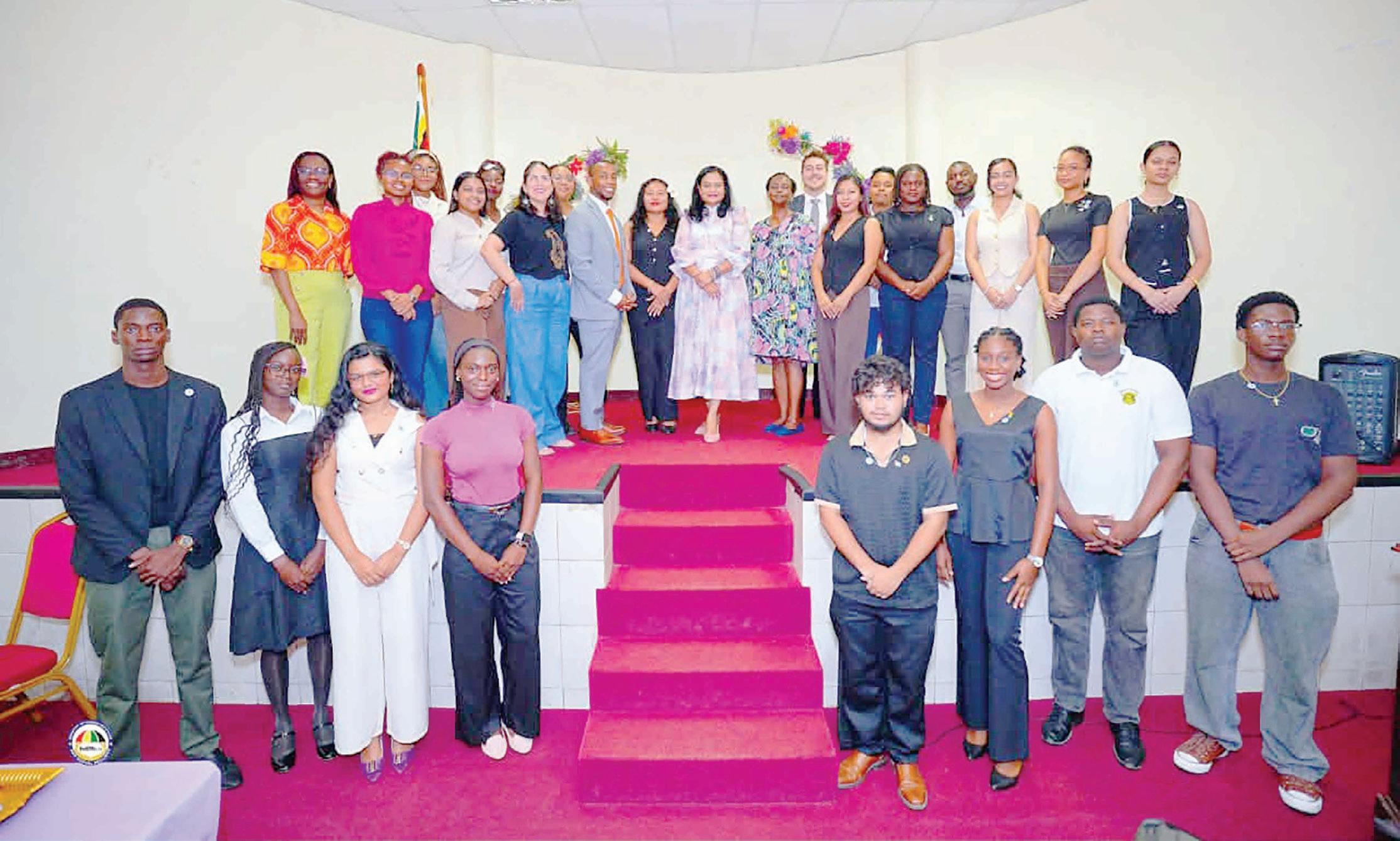
Some 35 participants graduated from the Human Services and Social Security Ministry’s Young Influencers Programme on Saturday at the during a ceremony held at the Police Training Centre Auditorium in Georgetown. In addition, 50 new young people were inducted into the program
Tapping into age and experience
By: Ryhaan Shah
Not every senior citizen wants to retire and take it easy. Some would prefer to keep working, whether out of financial necessity or by choosing to continue their careers or jobs because they feel they still have much to contribute.
According to the United Nations, the global population of those 65 and older will reach 1.5 billion by 2050, nearly double the figure for 2020. With this coinciding with declining birth rates, it is becoming viable for workplaces to think about programmes and policies that would extend the employment of senior workers facing retirement.
Some older women in Guyana wish to continue to work, mostly out of financial necessity. They report that most employers are reluctant to hire them even on a part-time basis, perhaps because of both age and gender discrimination. While employers might feel that younger people could work more efficiently and for longer hours, they overlook the experience and dedication that older employees bring to the workplace.
With better medical care on the rise, seniors are healthier, able, living longer, and defying some of the more conventional views about ageing. And with our economy set to continue its expansion in the coming years, there could be room for employing seniors who are able, knowledgeable, and willing to work.
Along with our new oil wealth and rapid infrastructural development, there is also local population growth; business expansion in numerous sectors; a rise in tourism and new investments; and a just-announced decline in our unemployment figures.
Given this scenario, there is surely room for both the Public and Private Sectors to consider keeping seniors on staff or filling vacancies in expanding businesses with able and experienced employees, focusing on four key areas: providing flexible work arrangements and access to lifelong learning (especially new technology training), ensuring fairness in hiring policies, and promoting a wellness and preventative care culture within the organisation.
Businesses that offer flexible working hours are more attractive for senior workers, and keeping employees in the workplace rather than rushing them to retire actually saves on employee turnover. It also retains the experience and knowledge of the older employees who can help train new workers in company culture and policy, especially if the business is expanding and setting up new branches or shop fronts.
This kind of reverse mentoring that pairs senior executives with millennials is already being used in developed countries. Age discrimination often correlates with digital exclusion, and while the programme helps seniors improve their tech and AI skills, it also helps to retain younger employees.
By keeping senior employees on the job, there are benefits for both the business and the employee who, by staying mentally and physically active, improve their health and their sense of self-worth and well-being.
The elderly will continue to remain healthy and active for longer as our medical system focuses more on disease prevention rather than on treating age-related conditions that occur due to lack of information and wellness programmes.
Countries like Japan and Singapore help seniors stay healthy with coordinated policies that combine healthcare, housing, urban design, and social and workplace engagement.
Business and society need to toss the stereotypes about ageing and stop underestimating the capacity of older people. There are many stages of ageing, and while some seniors want to be at home with their grandchildren or take up a hobby, there are others who would prefer to continue to work.
Of course, some employees will continue to choose to retire and leave the workforce, but the goal for business and government is to remove barriers so that those who can or must work can do so productively and securely. The benefits, as outlined, are clear, and one of the most important benefits for the elderly who stay employed is the sense of purpose it provides, which always translates into having a healthier population.
While Guyana might have the usual negative views of the elderly, there is no lack of seniors who continue to work, some of whom are very prominent and visible business and professional people. Messrs Hemraj Kissoon and Sattaur Gafoor, for example, are still at the helm of their respective businesses, and there are numerous other examples of seniors who are choosing to stay on the job.
The idea of seniors being employed is nothing new to our work culture, and with Guyana’s rapid economic growth, there should be serious attention given to programmes that would tap into the knowledge and experience of those of us who wish to continue contributing to our national development.
Rajkumari Singh (1923–1979): Her Influence on Literature, Culture & Activism in Guyana
The impetus for this virtual programme grew directly from our webinar on Mahadai Das a few weeks ago. Throughout that discussion, Rajkumari Singh’s name arose continuously, sparking our deep curiosity about her life and monumental legacy. So, who was this remarkable woman, and how did she rise to become one of Guyana’s most influential Indo-Guyanese writers, poets, playwrights, educators, broadcasters and cultural activists? As a pioneering voice for the descendants of indentured Girmitya Indian labourers, Singh is widely recognised as the first published Indo-Caribbean woman writer. Beyond her own creative work, she shaped the future of Caribbean literature through her leadership of the Messenger Group, mentoring iconic younger writers and artists such as Mahadai Das and Rooplall Monar. The following are excerpts from the 315th edition of an Indo-Caribbean Cultural Centre’s (ICC) Thought Leaders’ Forum (7/06/2026). The ZOOM programme was chaired by Shakira Mohommed and moderated by Shalima Mohammed, both from Trinidad. There were four speakers in the program. The topic was “Rajkumari Singh (1923 – 1979): Her Influence on Literature, Culture, and Activism in Guyana”.
Varuna Singh said in summary: “As the son and the third child of Rajkumari Singh, I wish to reflect deeply upon her profound legacy within the cultural and political landscape of Guyana. Born into an influential lineage of advocacy and the arts, my mother dedicated her life to cultivating a unique space for Indo-Caribbean creative expression. She believed implicitly that our community’s historical narratives, particularly the experiences of Indian indentured labourers, required preservation and celebration through serious literary works. Despite facing massive physical challenges due to childhood polio, her resilience never wavered. Her home on Lamaha Street be-
came an open sanctuary, a bustling cultural centre where young, emerging minds could freely explore their artistic identity. Through her own writing, she sought to elevate our history into global literary circles, challenging existing frameworks while simultaneously fostering a unified Guyanese nationalism that fully integrated Indian identity.”
Janet Naidu said in summary: “I want to express my deepest gratitude for the immense impact Rajkumari Singh had on my personal development as a young writer growing up in Guyana. During the early 1970s, her residence served as a vital intellectual oasis that nurtured a generation of brilliant, emerging Indo-Caribbean talents. She actively encouraged me to explore my poetic voice, providing the vital space and mentorship needed to capture the essence of our shared experiences. Her own iconic literary works, such as her poignant poetry about the realities of plantation life, showed us how to transform marginalisation into a source of immense cultural pride and artistic excellence. Even after migrating to Canada, the foundational lessons I absorbed under her guidance provided immense solace and inspired me to establish spaces for diaspora writers. Her legacy is that of a bold visionary who taught us that our stories matter, and her enduring influence remains beautifully woven into the very fabric of modern Caribbean literature.”
Dr Vibert Cambridge said in summary: “We must critically evaluate Rajkumari Singh’s pivotal role in constructing a foundation of cultural confidence during Guyana’s crucial post-independence era. She subscribed to the essential proposition that true political independence could not exist without a robust, self-assured cultural identity that transcended deep-seated ethnic divisions. As a brilliant educator, broadcaster and leader, she utilised radio plays and public programmes to instil a sense of collective belonging among
the Guyanese populace. Her innovative initiatives bridged traditional cultural expressions with modern socialist consciousness, advocating for working-class unity across different racial lines. By examining her extensive contributions to public broadcasting and regional arts, we recognise her as a vital opinion leader who helped shape the national consciousness. Her work proved that acknowledging our diverse ancestral struggles could nourish rather than divide a nascent nation, establishing a standard for cultural activism that continues to guide our academic and historical research.”
Henry Muttoo said in summary: “My time spent as a member of The Messenger Group under Rajkumari Singh’s mentorship was entirely transformative for my career in the performing arts. She possessed a rare, remark-
able ability to spot raw talent and provided us with rigorous encouragement to refine our crafts, whether in drama, dance or poetry. Her approach to theatre was incredibly lively and polemical, using the stage to actively confront gender oppression and social inequalities within our society. She challenged us to look beyond conventional boundaries and to create authentic Caribbean theatre that reflected the true complexities of our landscape. Her unwavering belief in the power of integrated national culture gave young artists like me the confidence to pursue creative paths globally. We carry her fierce passion for artistic integrity and social justice within our work, keeping the flame of her extraordinary cultural revolution alive.”
By Dr Kumar Mahabir & Shalima Mohammed, MBP
Rajkumari Singh
Janet Naidu Dr Vibert Cambridge
Varuna Singh Henry Muttoo
Page Foundation
A Changing Ocean: The Impact Of Co2
Earth’s atmosphere contains many gases.
Some of these gases trap heat from the sun, warming the planet like a greenhouse. These are called greenhouse gases.
The greenhouse effect helps keep Earth’s climate stable and allows life as we know it to exist. One of these gases is carbon dioxide (CO₂), which occurs naturally in the atmosphere.
However, human activities – such as burning fossil fuels and cutting down forests –have increased the amount of CO₂ in the air. Scientists have found that this is causing Earth’s temperature to rise.
The ocean helps balance this increase by absorbing some of the extra CO₂. But this creates another problem: it is changing the chemistry of seawater.
The ocean is a big soup of chemical elements, including carbon, which is essential for marine life. In seawater, carbon exists in several forms, including carbon dioxide (CO₂), carbonic acid, the bicarbonate ion, and the carbonate ion. These forms are important for maintaining the ocean’s natural balance.
Rising CO 2 Levels
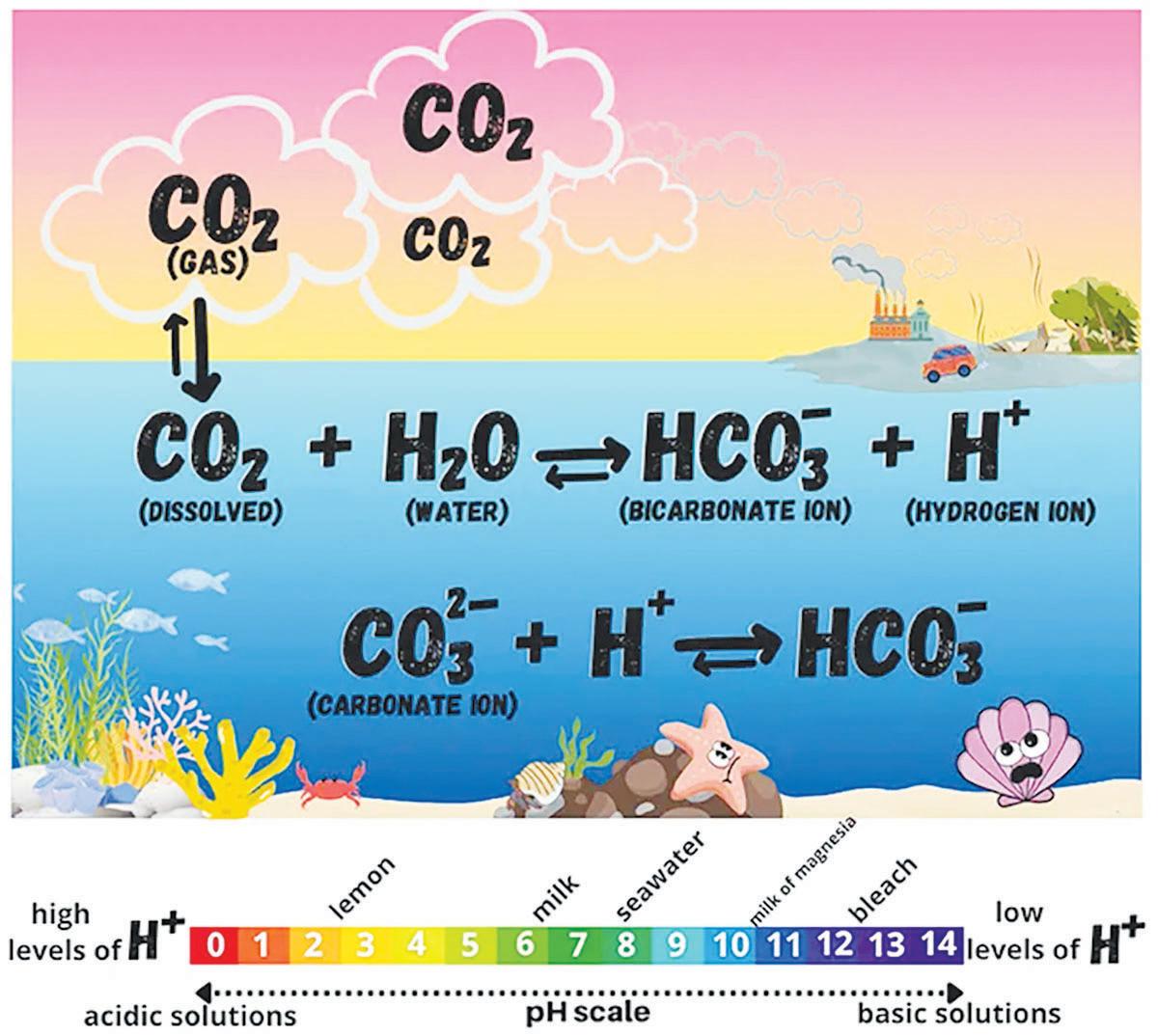
As atmospheric CO₂ levels rise, more of this gas is absorbed by the ocean at a similar rate. This is a problem because it changes the chemistry of seawater, making it more acidic.
Over the last decade (2014–2023), the ocean has absorbed about 26% of the CO₂ produced by human activities. When CO₂ dissolves in seawater, it reacts with water to
form new compounds and releases hydrogen ions. These reactions increase the number of hydrogen ions in the water.
What
Is Ocean Acidification?
Scientists measure acidity using pH. The more hydrogen ions present, the lower the pH and the more acidic the water becomes. A decrease in ocean pH caused by human activity is known as ocean acidification, and it poses a serious threat to marine life.
When carbon dioxide (CO₂) dissolves in seawater, it reacts with the water (H 2 O) and forms the bicarbonate ion (HCO 3) and releases hydrogen ions (H+). More H+ lowers the pH, making the water more acidic.
This process, called ocean acidification, can damage the shells and skeletons of
marine organisms. Ocean acidification is now measurable using highprecision instruments and computer models. These tools show that the ocean’s natural balance is changing across the globe. The effects of increased CO₂ are already visible in many marine organisms.
Marine Life at Risk
Many sea creatures –such as clams, sea snails, sea urchins, and starfish – are at risk. These organisms are known as calcifiers because they build shells or skeletons using calcium carbonate. They combine calcium and carbonate ions (CO 2 ) from seawater to create these hard structures.
their internal balance. This extra effort can slow growth and weaken muscle development. Many species are especially vulnerable during their early life stages. Even if adult organisms survive, their young may not develop properly, leading to declining populations over time.
Some organisms, however, may benefit from higher CO₂ levels. Seagrasses and certain types of algae use CO₂ and sunlight to produce energy, so increased CO₂ can boost their growth. However, in some cases, this can lead to harmful effects, such as increased toxin production in certain algae, which can affect marine life and humans.
The effects of ocean
In more acidic conditions, calcium carbonate begins to break down. As a result, calcifiers must use more energy to build and maintain their shells, weakening their overall health. Over time, structures like coral reefs and shellfish beds become more fragile and break down more easily.
This damage is especially noticeable in pteropods, tiny sea snails often called sea butterflies. These delicate animals are an important food source for many marine species, meaning their decline can affect the entire food web.
Ocean acidification also affects other marine life. Like humans, marine organisms must maintain stable internal conditions to survive. In more acidic water, some species struggle to navigate or find food, while others must use extra energy to maintain
acidification extend beyond individual species to entire ecosystems. Changes in the number and variety of organisms can disrupt food webs. If one species declines, others that depend on it for food may also be affected, creating a ripple effect throughout the ecosystem. Over time, these changes can alter marine life and impact humans. A decline in ocean species can lead to reduced seafood supplies and affect livelihoods. To reduce these impacts, CO₂ emissions must be lowered, and ocean conditions must continue to be monitored.
Scientists around the world are studying ocean acidification and working to find solutions to protect marine ecosystems for the future.
(Adapted from Frontiers for Young Minds)
Linden to Lethem Road Project Negotiations ongoing for Mabura Hill to Kurupukari section – Edghill
As work on the first section of the Linden to Lethem Road Project nears completion, the Guyana Government is already moving towards the next phase, with discussions currently underway to advance the Mabura Hill to Kurupukari section.
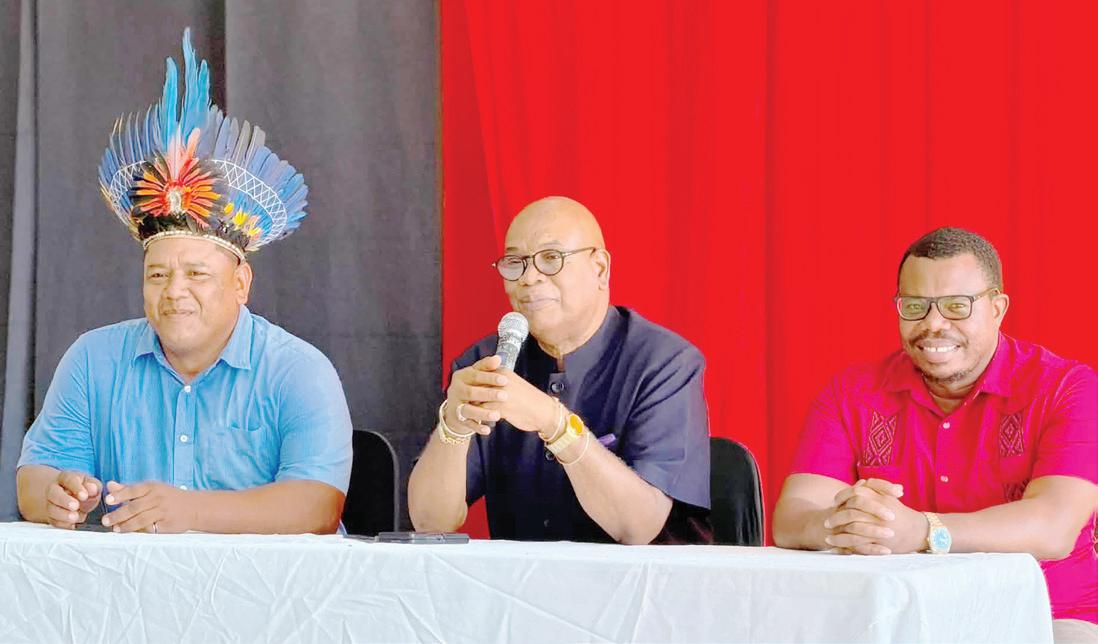
This was revealed by Public Works Minister Juan Edghill during the Regional Toshaos’ Meeting held in Region 10 (Upper DemeraraBerbice) on Friday. According to Edghill, talks have already commenced on the next phase of the road project, which extends 30 kilometres (km) from Mabura Hill towards Kurupukari.
“We are now negotiating to continue from Mabura Hill towards Kurupukari. The first 30 kilometres are being discussed right now, and we are continuing that,” the Minister told the Department of Public Information (DPI).
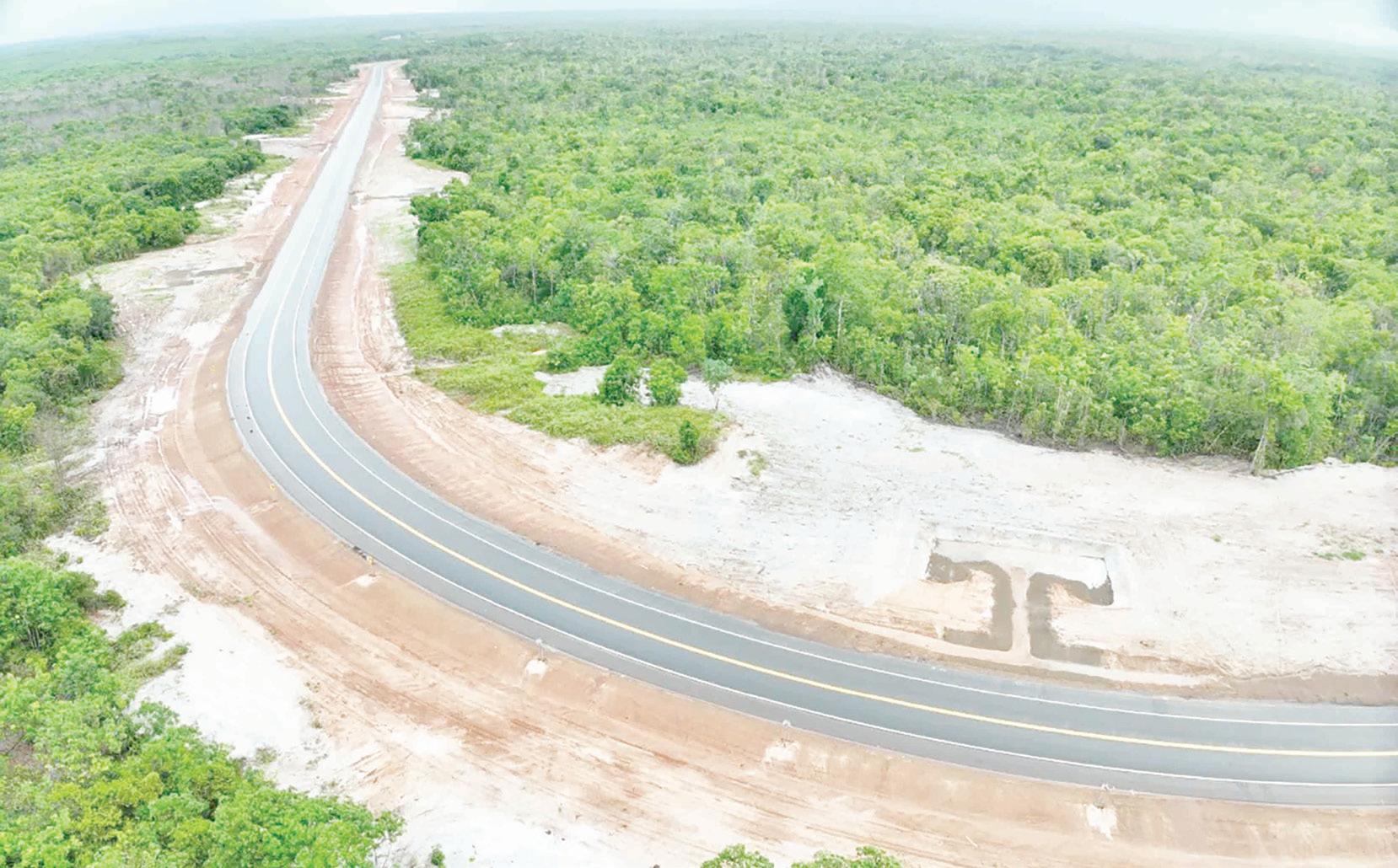
Currently, work is ongoing on Phase One of this major hinterland transport corridor, with some 121 km of asphalt road being built from Linden to Mabura Hill in Region 10. These works are being carried out by the Brazilian-based contractor, Álya Construtora, a company specialising in civil works, heavy infrastructure projects, and road development in complex environments.
Contacted on Saturday to
clarify whether the negotiations for the new phase are with the same Brazilian contractor or a new company, the Public Works Minister opted not to divulge this. He indicated to the Guyana Times that once the negotiations are finalised, the details will be made public.
Kurupukari Bridge
Nevertheless, Edghill also announced that preparations are advancing for the construction of the Kurupukari Bridge. He said 48 bridges have already been completed along the Linden to Lethem corridor, while the proposed Kurupukari Bridge is expected to span between 700 and 800 metres.
“This is the next big project that we are going with,” the Minister added.
Previously, there were talks of using sections of the now-decommissioned Demerara Harbour Bridge (DHB) to connect the Kurupukari crossing. However, subsequent studies have found that this was not feasible. Taking into consideration the heavy rapids, rocks, and the need to accommodate extra-long grain trucks and trailers from neighbouring Brazil, the Government has since decided that a new highspan fixed concrete bridge will have to be constructed at Kurupukari.
Bridging the Kurupukari
crossing is a major component of the highly anticipated Linden-to-Lethem road project.
Phase One
Back in April, it was reported that the 121-km Phase One section was 86 per cent completed, with 100 km of the new road already fully paved with asphalt.
Minister Edghill told this newspaper on Saturday that the Government expects the contractor to wrap up work by the August 2026 deadline.
“There has been no extension of time to the contractor for the completion of the 121km Linden to Mabura Hill Road... My instructions are for them to get to 100 per cent completion,” the Public Works Minister related on Saturday.
The first phase from Linden to Mabura Hill is being done at a cost of US$190 million and is funded through the Caribbean Development Bank (CDB) via a US$112 million loan, a grant of £50 million (US$66 million) from the UK Caribbean Infrastructure Fund (UKCIF), and an input of US$12 million from the Guyana Government.
President Dr Irfaan Ali had previously hinted at tapping into the £3 billion available under the United Kingdom Export Finance (UKEF) to possibly fund the remaining section of the all-weather road upgrade.
In fact, back in January, former British High Commissioner to Guyana Jane Miller had revealed that the Guyanese Government was already in discussions with a number of British companies on this critical road project.
“It’s very exciting. So, we’ve got a couple of [UK] businesses that are in discussions with the Government at the moment in terms of doing some of the further sections [on the Linden to Lethem
Road Project],” Miller told the Guyana Times in January prior to her departure after ending a four-year tenure in Georgetown.
She added that “the utility and the benefits from that road section that we are constructing [would] only really materialise when it becomes a full road corridor, all the way from Brazil to the Atlantic coast. So, we’ve been very much encouraging that the whole trade corridor is completed. I know there are other export finance agencies also working with the
Government. So, we’re in discussions at the moment, and I look forward to the day when I can drive from Georgetown to Lethem smoothly with a bridge over the Kurupukari River in the Essequibo River. So yeah, there are lots of discussions going on at the moment.”
Currently, this road network is being utilised by an estimated 50,000 travellers who transport goods from the coast to the inland regions of Guyana and even into neighbouring Brazil. The previous condition of this
road posed significant challenges for commuters and transport operators. Heavily laden lorries frequently toppled off the roadway, and deteriorated bridges required manual alignment of boards for crossings, often with unsafe outcomes.
However, when completed as an all-weather road, this crucial piece of infrastructure will significantly improve connectivity, reduce travel time, and open up new commercial and trade opportunities, especially between Guyana and Brazil.
Public Works Minister Juan Edghill and other officials during the meeting in Region 10 on Friday
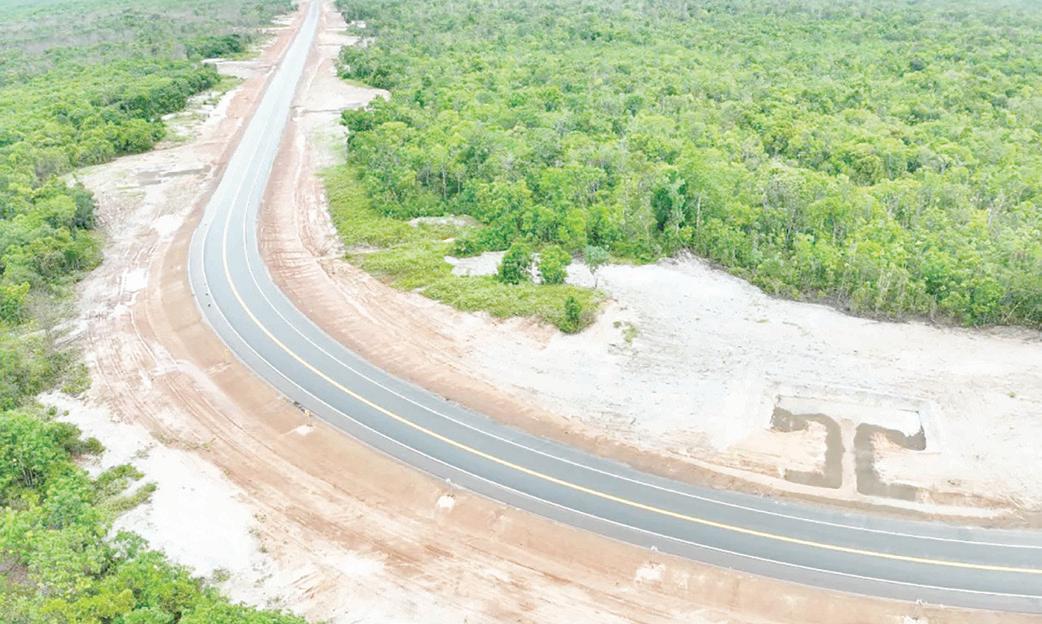
A fully paved section of the Linden to Mabura Hill road
Vendor attempting to dispose of ganja arrested
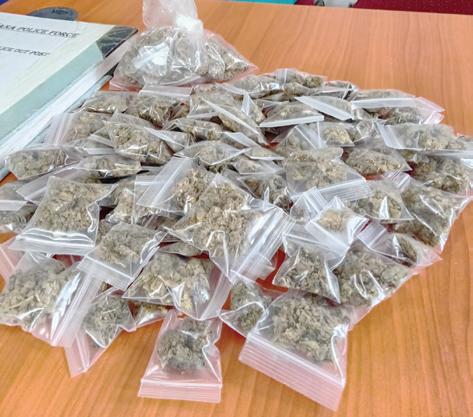
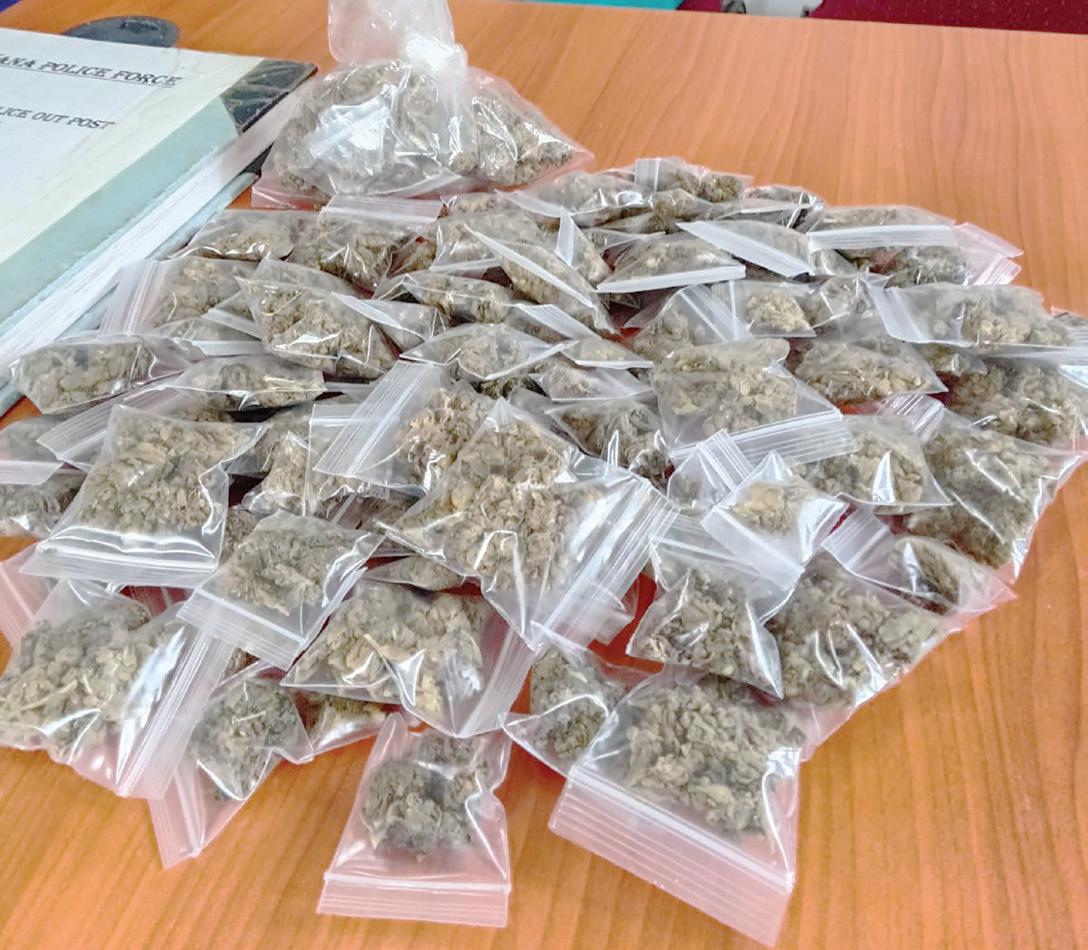
A47-year-old vendor from Castello Housing Scheme, who was seen attempting to dispose of a black plastic bag containing a quantity of ganja, was arrested on Friday during a Police operation. Based on reports, Police, acting on information received, conducted an intelligence-led operation at Castello Housing Scheme, Georgetown, where they observed the suspect throwing a bulky black plastic bag over a fence. The bag was subsequently retrieved and
searched in the presence of the suspect, during which a quantity of cannabis was found.
The suspect and the suspected cannabis were tak-
en to the East La Penitence Police Station, where the ganja was weighed and amounted to 30 grams. He remains in custody as investigations continue.
Lethem youth charged with illegal motor racing
Twenty-year-old
Samuel Austin of Tabatinga, Lethem, Region Nine (Upper TakutuUpper Essequibo) was fined $80,000 on a prohibited motor racing charge.
Austin, who was the rider of the Brazilian-registered motorcycle QZN 5E94, appeared before Magistrate Omadatt Chandan at the Lethem Magistrate’s Court on Friday.
He pleaded guilty to the charge and was fined $80,000, while his driver’s licence was also suspended for 12 months.
Passing…
…of the Greatest
In cricket, there are statistics, and then there’s Sir Garfield Sobers!! Statistics belong to scorekeepers, but Sobers belonged to mythology. When the sad news hit your Eyewitness that the great man had passed, he didn’t think about batting averages or wickets. He remembered the stories!! Every generation has them. "I was there when..." or "My father swore he saw..." because Sobers has always occupied that curious space where history becomes folklore!!
The modern game, with its hordes of analysts, are gonna have nervous breakdowns trying to classify Sobers!! Was he a batsman? Absolutely!! A bowler? For that, you gotta ask, “Which kind?” Fast-medium? Left-arm orthodox? Wrist spin? Yes, to all!! A slip fielder? One of the sharpest!! An all-rounder? Well, to your Eyewitness that description now seems insulting. Calling Garfield Sobers an all-rounder is like calling Leonardo da Vinci someone who "could sketch"!!
Today's players spend careers specialising. Sobers specialised in refusing to specialise!! If his Captain needed pace, he delivered pace. If the pitch wanted spin, he became a spinner. If wickets were falling, he batted. If catches needed taking, somehow the ball found him. One suspects that if rain had interrupted play, he would’ve sauntered over and drained the field!!
His famous six sixes in an over have become part of sporting folklore – but even that feat underplays him. It wasn't just that he could hit six balls over the boundary. It was that spectators arrived expecting something extraordinary!! And Garfield Sobers delivered almost whenever he walked onto a cricket field!!
We West Indians saw him as more than a cricketer. In an era when our countries were fighting for independence, Sobers strode into the world's grandest cricket grounds as though colonial history had never existed!! Your Eyewitness saw him sauntering out with Khanai at Bourda – both with their shirt buttons open and their collars up!! Exuding confidence!!
The Aussies admired him. The Brits respected him. Even opposing bowlers, after being dispatched repeatedly to the boundary, were smiling wryly in reluctant admiration. It’s difficult to hate someone who appears to be playing cricket with the carefree delight of a schoolboy on a beach.
Perhaps that’s his greatest legacy. He reminded us that genius needn’t look tortured. It can (gap-toothedly) grin!! It can improvise. It can make the impossible appear so effortless – everyone briefly believes they too could do it –until they pick up a bat!! Your Eyewitness imagines, heaven has hurriedly marked out a cricket pitch. The angels have been arguing who gets the new ball, while the saints are already jockeying for places in the slips. St Peter has made Garfield Sobers Captain and quietly stepped aside!!
The scorebook, after all, was never large enough to contain Garfield Sobers. Legends live beyond the boundary!!
…or retaining the World Cup?
Well, even as a cricket fanatic, your Eyewitness gotta admit that football's the biggest thing in sport – and today’s World Cup match between Argentina and Spain will pull an audience that will make cricket look like tiddlywinks!! Argentina are the current world champions – having three titles!! So, they’ve been there before – especially with their star player Messi, who shows he wants to go out with a bang!! He’s shown at 39; he’s still a game-changer!!
Now that doesn’t mean Spain gonna be pushovers – no siree bob!! That win against France was a joy to behold!! Your Eyewitness predicts Spain’s gonna dominate the ball, control territory, and try to wear Argentina down!! But Argentina will counter by staying organised, surviving difficult spells, and then striking with ruthless efficiency under the direction of Messi!!
It’s possible that Spain are the better footballing side, but Argentina are the better tournament team!! On Sunday, that tiny distinction gonna be enough for Argentina to retain the World Cup!!
…no mo SBA’s
AI has just made CXC announce they’re gonna have to scrap those School-Based Assessments (SBAs) that were supposed to supplement the exams that were criticised for encouraging rote learning!!
How to now check whether it’s AI or the kid??
The ganja that was retrieved by the Police
Charged: Samuel Austin
CANU intercepts 519.49kg of narcotics in 1st half of 2026
- 35 illegal firearms, 699 rounds of ammunition also seized
The Customs
Anti-Narcotic
Unit (CANU) on Saturday reported that between January and June 2026, the unit intercepted a combined total of 519.49 kilograms (kg) of illicit narcotics, 35 illegal firearms, and 699 rounds of ammunition across multiple operational areas nationwide.
Narcotics Seizures
In a social media post late Saturday, CANU stated that the total volume of narcotics seized during the reporting period represents a 272.4 per cent increase compared to the same period in 2025, when 139.5 kg were recovered.
The seized substances comprised four categories: cannabis, cocaine, crystal methamphetamine, and ecstasy (MDMA).
Cannabis remained the highest-volume substance seized, totalling 357.28 kg, a 28.2 per cent year-overyear increase. The largest single-month cannabis seizure occurred in March 2026, when 176.01 kg were intercepted.
Cocaine was the highest-value narcotic seized during the period. The 159.93 kg seized represent
a 272 per cent surge over the 42.97 kg recorded for the same period in 2025, driven by major interdictions in January (92.4 kg) and May (45.6 kg). At international retail prices, the cocaine alone carries an estimated value of US$15.99 million in the United States and €12.79 million across European markets.
Crystal methamphetamine was recorded in CANU’s seizure statistics for the first time, with 1.89 kg intercepted, the overwhelming majority (1.82 kg) being seized in April 2026. This marks a significant and concerning development in Guyana’s domestic drug landscape.
Ecstasy (MDMA) seizures totalled 380 grams, with detections recorded in January and May 2026, reflecting an increase in distribution frequency compared to the single seizure event recorded for the same period in 2025.
International Valuation of Seizures
The combined seizures carry a total estimated domestic street value of GY$339,383,500. At the international level, these narcotics represent an estimated wholesale value of approximately US$5.72 million, with potential retail values reaching US$20.02 million in the United States and €16.02 million across European markets.
Geographic Distribution
A geographic analysis of seizure locations identifies the Cheddi Jagan International Airport (CJIA) as the primary point of interdiction, accounting for 35 per cent of all seizures during the reporting period. This is consistent with historical trends, with CJIA serving as a critical node for transnational trafficking attempts, particularly involving cocaine concealed in outbound passenger luggage and air freight. Additional seizures were recorded at land border crossings, along maritime
routes, and during targeted community operations in Regions Three, Four, and Nine.
Firearms & Ammunition
Seizures
Alongside narcotics, CANU recovered a total of 35 illegal firearms and 699 rounds of ammunition during the first half of 2026, in comparison to eight firearms and 76 rounds seized during the same period in 2025.
Rifles dominated the firearm seizures, accounting for 23 of the 35 weapons recovered (65.7 per cent), followed by six shot -
guns and seven handguns. The ammunition profile was similarly weighted toward high-powered weaponry, with 504 rounds of 7.62×39mm calibre, the standard round for AKpattern assault rifles, accounting for the bulk of recovered rounds.
Meanwhile, the Director of the unit, James Singh, stated, “The seizure data for the first half of 2026 reflects the unwavering commitment of every CANU officer to our core mandate.” The surge in cocaine seizures, the record recovery of illegal firearms, and the first-ever seizure of crystal methamphetamine on Guyanese soil are clear signals that transnational organised crime is deepening its footprint in Guyana. CANU will continue to deploy intelligence-led strategies to deny criminal organisations access to our communities and our markets.”
Preparing to leave India
As an adult, I would be the one to trace the details of Rambishun’s journey, starting from a copy of my Nana’s birth certificate, which I found while rummaging through his papers. His “father’s name” was declared to be “Rambishun”, and below that, No. 39043; “Allan Shaw 1888”. This was standard information provided for the children of immigrants born in the colonies: the number was a unique one for Rambishun’s ship “pass” to the Allan Shaw, the ship that had brought him to British Guiana in 1888. The pass of each immigrant would have all the details recorded about him in India. The passes for each ship are bound together in one crumbling volume and filed in the National Archives of Guyana. There, I was able to confirm, sometimes rectify, and give certainty to so many details that had been passed on orally from Rambishun to his son, daughter-in-law, and his granddaughter, my mother.
As part of the emigration laws, he had to appear before a magistrate and declare that he was emigrating willingly. However, he had been registered at the Barrackpore sub-depot, more than 300 miles from his village of Ishmailpur, where he had been brought by train on July 27, 1888. The Arkatiya should have registered him closer to Ishmailpur – at Patna, for instance – but Rambishun did not want to register at any sub-depot close to home, where someone who knew him might inform his family. When I saw Rambishun’s “pass” at the National Archives for the very first time, I became very emotional: here in my hands, thanks to the bureaucratic imperatives of the British Empire, were the details of the life of Rambishun as extracted from him by some clerk in the atmosphere of a British court, all distilled on a single, crumbling page.
The Emigration Pass declared it was composed at the British Guiana Depot 2064 at Garden Reach in Calcutta and indicated he was proceeding to British Guiana. Each colony had its own depot – simple, one-storey buildings. He would have been transported the 20 miles from the Barrackpore train junction by boat along the Hooghly, passing under the Howrah Bridge. The document indicates that he was to await the ship “Allan Shaw” to receive its full complement of human cargo. The ship finally set sail down the Hooghly River into the Bay of Bengal on August 25, 1888. He had spent a month at the B.G. Depot in Calcutta, where many new relationships were initiated –including some couples who decided they would proceed as married.
And there I learnt that Rambishun’s father was named “Bhooidhar”, which had never been mentioned in all his stories. Even in my generation, one does not refer to one’s parents by their names: Rambishun would have been asked by my Nana about his Aja. Rambishun’s age was given as 19, and his caste was “Kurmi”, but his wife’s name was left blank. It would be the beginning of his erasure of her and his son. It also described him – five feet, two inches tall, with a wart on the right side of his nose and a scar on his thigh. My mother confirmed the wart.
Rambishun became impatient for the trip to start: he wanted to return with money to see his son live comfortably. He had been examined medically and given several changes of clothing when he entered the depot at 16 Garden Reach in Calcutta. He remembers thinking he and the others looked like prisoners, especially with the guards preventing absconding. But since he was fed adequately and allowed to sleep, he adjusted to the routine and strengthened the friendships he had formed on the rail trip to Barrackpore. He was amused at the discomfort of the “upper” castes having to be served food from a single pot and eat in the same line as “lower castes”.
Finally, after another medical examination, they were given another set of clothing along with a tin tag with their number, a plate, a cup, and a blanket before they boarded the Allan Shaw to sail down the Hooghly River and into the Bay of Bengal. The three sails billowed in the wind as the sailors were kept busy following the barked orders to control them. The emigrants were allowed to remain on deck to take a last look at the land they were leaving behind. Many wailed as the mangrove trees in the Sundarbans of the Hooghly disappeared. Interestingly, they would espy similar mangroves when they finally reached British Guiana.
Ravi Dev
Sonia Noel turns page on 30 years in fashion with new book, men’s collection
It is no easy feat to remain relevant for three decades – let alone continue inspiring people across generations. But that is exactly what Guyanese fashion design er, author, speaker, philan thropist and empowerment coach Sonia Noel is cele brating as she marks 30 years of style, purpose and impact with a yearlong series of events, including a book launch, international recognition, awards, keynote presentations and humanitarian initiatives spanning Guyana and beyond.
committed to excellence.
Since the official launch of her 30th-anniversary celebrations at the Canadian High Commissioner's Residence in Guyana and the launch of her new book in New York, Noel has embarked on an inspiring journey that reflects not only three decades in fashion but also a lifetime dedicated to empowering others through confidence, leadership, education, and humanitarian service.
The celebrations began in New York, where Noel launched her latest book and held a successful book signing.
In fact, her new publication has already received rave reviews from readers, many describing it as inspiring, practical, and transformational.
Her celebration continued in Atlanta, where she delivered the keynote address at the Georgia Caribbean American Heritage Coalition Gala. During her presentation, Noel shared her journey of perseverance, purpose, entrepreneurship, and faith while encouraging attendees to embrace their unique calling and use their gifts to positively impact others.
At the gala, Noel received a prestigious award recognising her 30 years of outstanding contributions to fashion and humanitarian service. She also hosted another successful book signing, giving supporters the opportunity to engage with her personally and receive signed copies of her latest publication.
Reflecting on Noel's contribution, Monica Trotz, Chairman of the Georgia Caribbean American Heritage Coalition, said Noel's time, energy and unwavering commitment ensured everything came together seamlessly, adding that it was a privilege to work alongside someone so passionate about serving
"I just wanted to sincerely thank Sonia for the outstanding job she did. Her professionalism, dedication, creativity, and willingness to collaborate made a tremendous difference. I truly appreciate the time, energy, and commitment she gave to ensure everything came together so successfully. It is always a blessing to work with someone who is passionate about serving and committed to excellence."
The journey then took Noel to Washington, DC, where a group of women hosted a special celebration in her honour. During the gathering, she reflected on the lessons from her book, spoke about the importance of intentional living, and encouraged attendees to pursue lives of purpose, confidence, and service.
Most recently, Noel was honoured by the Guyanese Girls Rock Foundation in New York, where she received the Woman of Inspiration Award in recognition of her outstanding leadership, commitment to fashion, philanthropy, and community development over the past three decades.
During the ceremony, she was also presented with three official citations from New York City officials, recognising her contributions to fashion, entrepreneurship, humanitarian work, and the empowerment of communities locally and internationally.
In addition to her latest publication, Noel continues to receive remarkable feedback for her transformational Vision Life Book, which helps individuals intentionally design every area of their lives.
Robin Corte of The Netherlands shared her experience:
"This Vision Life Book is not just a guide. It is a life compass. It brings structure, insight, knowledge, and purpose to every area of life, from mission and health to relationships, finances, and service. I felt my path unfolding step by step.
Sonia Noel
Sonia Noel turns page on 30 years in fashion...
collection fulfils a promise she made to her male supporters during her 30th anniversary celebrations.
"I am more excited about my new men's collection than any collection I have created in years because this is the first time I have poured so much love, creativity, and intentional design into
shirts for men. I made them a promise that they would be a priority during my 30th anniversary celebration, and I intend to keep that promise."
Speaking on her 30th anniversary celebrations, Noel said she is embracing this chapter of her journey and views every experience as part of the legacy she hopes
to leave behind.
FROM PAGE 14
"I am enjoying this season of celebrating 30 years of style, purpose, and impact. Every plan, every experience, whether planned or unexpected, is part of my preparation for the legacy I will leave behind. To God be the glory."
collection in November I am profoundly grateful for this experience and wholeheartedly recommend the Vision Life Book to anyone ready to shape their life with intention, power, and spiritual clarity."
Noel says testimonials like these continue to affirm her mission of helping people become the best version of themselves.
The celebrations now return to Guyana with Threads of Freedom, a special pre-emancipation experience on Thursday, July 23, from 16:00h to 19:30h at Black Magenta, Georgetown Club, Camp Street. This event will feature Sonia Noel Designs' newest Afrocentric collection, created especially for the Emancipation season.
The complementary event will feature Sonia Noel Designs' newest Afrocentric collection, created especially for the Emancipation season. Guests will also have the opportunity to attend Noel's first official book signing in Guyana, purchase signed copies of her latest book, meet the designer, and celebrate culture, creativity, freedom, and empowerment.
The next major event will be How Money Works, a financial literacy experience taking place on Saturday, July 26, in collaboration with Kevin and Tracey Ploche, bringing practical financial education to participants seeking to improve their financial future.
Preparations are also underway for the next “Confidence Becomes You” programme, which begins next month. The internationally recognised personal development programme continues to transform lives by helping participants develop authentic confidence, discover purpose, and maximise their potential.
Participants will also have the opportunity to enrol in the Confidence Becomes You VIP Experience, which offers deeper coaching, mentorship, accountability, and an enhanced transformational journey.
Registration also remains open for Designers Quest 2026, Noel's initiative dedicated to discovering and
developing emerging fashion talent.
Registration closes on August 14, with in-person auditions taking place in Georgetown on August 8 and Bartica on August 12. The competition officially begins on August 15, and aspiring designers throughout Guyana are encouraged to apply before the deadline.
Looking Ahead
The remainder of Sonia Noel's 30th anniversary celebrations promise an exciting series of local and international events that continue to celebrate fashion, purpose, leadership, culture, and empowerment.
Upcoming highlights include activities surrounding New York Fashion Week; a special event at the Embassy of Guyana in Washington, DC; participation in activities surrounding the Congressional Black Caucus; engagements in Barbados, the St Rose's Reunion, a National Blood Drive on August 21, Food and Fashion in Saint Lucia, Las Vegas, and Suriname; and upcoming visits to Ghana, South Africa, and Nigeria as she continues building bridges through fashion, education, culture, and empowerment.
Another major milestone during the anniversary year will be the launch of Sonia Noel Designs' exclusive men's collection, scheduled for November during the International Men's Day celebrations.
The collection has already generated outstanding reviews following exclusive previews at recent events, where respected personalities including Kamrul Baksh, Director of the Guyana Tourism Authority, and renowned broadcaster Russel Lancaster proudly wore Sonia Noel Designs. Their enthusiastic response has further heightened anticipation for the official launch in November.
Reflecting on her new collection, Noel described it as one of her most meaningful creations in recent years, explaining that it marks the first time she has devoted so much love, creativity and intentional design to a men's clothing line. She said the
Sonia Noel Designs' exclusive men's shirts ahead of the official launch of the designer's first men's
Lightning has struck at St Mary’s Primary School, with two of its brightest young minds delivering exceptional performances at this year’s National Grade Six Assessment (NGSA) under the guidance of Tashauna Tang.
Among the school’s standout performers are Rosaria Giselle Manohar, Tianna Higgins, and Priyanka Roberts, whose dedication, discipline, and determination helped them achieve outstanding results and secure their next steps in education.
Monohar copped the top spot with 481.81 marks, earning her a space at Queen’s College, while Higgins secured 480.77 marks and will attend The Bishop’s High, and Roberts with 478.05 marks, which earned her a spot at St Rose’s High.
For the top student, she earned 122.91 in Mathematics, 120.03 in English, 119.03 in science, and 119.82 in Social Studies.
The young achiever, who was chosen as the valedictorian for her school’s graduation, told this publication in a tele-
phone interview that preparation was a major part of her journey, as she documented her goals and the steps needed to achieve them from an early age.
“The examination was pretty much like any other exam, like all the other Mathematics exams, but it was a little intense because I
achieving that goal.
“It was a great dream. I dreamt of going to Queen’s College since I was in Grade Three, probably, and I was really happy when I found out that I had achieved it,” she said.
To make that dream a reality, Rosaria said she remained committed to her studies and
was feeling nervous. Overall, it was like any normal examination,” Manohar said.
She explained that success required consistency, sacrifice, and a willingness to push through challenging moments.
“In preparation, I would revise a lot. When I came home, I did extra lessons in the afternoon, and my class teacher also kept us back and did remedial work with us. Sometimes it was kind of exhausting, but I kept going. I looked at where I came from and where I was now. The preparation process wasn’t a smooth road, but it wasn’t all that rough because I eventually got used to it,” she added.
For Manohar, the dream of attending the prestigious Queen’s College began taking shape from Grade Three, and she remained focused on
constantly reminded herself of her goal.
“Since Grade Three, I was revising constantly. I had textbooks that I would use to revise, and I kept reminding myself to stay humble and always look for the positive side,” she explained.
The young scholar also credited her success to the unwavering support of her family, particularly her parents, who encouraged her throughout the journey.
“My whole family supported me in general, but my mother and father were really there for me, especially my mother; she always told me that she knew I had potential and that I needed to focus on my studies and use education as more of a hobby – something that I could enjoy,” she added.
Rosaria Manohar receiving the top award from Miss Tang
ahead, Manohar encouraged other students preparing for major examinations to remain focused, even when the journey becomes difficult.
This publication also caught up with Higgins, who is set to go to Bishops High School after attaining 480.77 marks. She said her success was built on months of preparation, especially with the support and guidance of her mother.
“When it became close to the exam – and even way before that – my mom would sit down with me, and we would study the areas where I was weak; we would focus on those areas, then go back through all the subjects and do a full review. Every day, early in the morning and late at night, we would
study together, and she would question me on the topics we had learnt,” she added.
Higgins said Mathematics was one subject she particularly enjoyed because it challenged her to think creatively and approach problems from different angles.
“Mathematics is all about thinking outside the box and finding different ways to solve a problem. I personally like it because it can be easy, and sometimes it gives you a little trick – and I love a little trick,” she said.
The young scholar’s passion for problem-solving also aligns with her future ambition of becoming a lawyer, a career she believes requires similar skills.
“I want to become a lawyer. Mathematics is about solving problems, and if you’re defending someone, you have to look at both sides of the story and figure out what happened. It is basically like solving a crime and defending the person completely,” Tianna explained.
Reflecting on the examination experience itself, Tianna admitted that she felt a mixture of emotions when the big day arrived.
“Honestly, I was ner -
vous. I was nervous, but I was also a bit excited,” she said.
While the journey required sacrifice, Tianna said she remained focused on her goal despite the difficult moments.
“I didn’t really cry, but I did feel sad sometimes because I had to stay up all night studying and things like that,” she recalled.
However, those sacrifices were worth it, as Tianna now looks forward to continuing her academic journey and maintaining her high standards at secondary school.
Tianna also encouraged other students preparing for major examinations to remain committed
and push through chal lenges.
“I want to remain above my 90 percentiles when I get to secondary school, keep working harder, and continue trying to suc ceed, even when things get hard; you just have to remember your goal and keep working toward it,” she advised.
American businesses being...
Guyana's delegation attending the forum also included Foreign Secretary at the Ministry of Foreign Affairs and International Cooperation Robert Persaud; Guyana's Ambassador to the US Samuel Hinds; Chief Investment Officer of GoInvest Dr Peter Ramsaroop; Counsellor in the Caribbean Executive Director's Office at the Inter-American Development Bank Navita Anganu-Ramroop; and Advisor to the Embassy of Guyana in Washington, DC, Wazim Mowla.
Bilateral talks
Meanwhile, on the sidelines of the investment forum, Minister Singh and Deputy Secretary of State Landau held bilateral discussions to reaffirm the strong US–Guyana part-
nership and advance shared economic priorities.
During the engagement, the Deputy Secretary lauded Guyana's continued economic growth and underscored the importance of expanding bilateral trade and investment to help the Guyanese Government create future economic success for the benefit of its people.
"They agreed that US Private Sector capital, expertise, and technology could unleash a wave of investment opportunities in all sectors of the economy, including agriculture, critical minerals, energy, infrastructure, and housing," the spokesperson at the US Department of State, Tommy Pigott, stated after the meeting.
Moreover, Deputy Secretary Landau, in a social post on X, lauded the
Guyana Government's ambitious plans to promote economic growth in both the energy and non-energy sectors, such as mining and agriculture, as well as its commitment to ensuring that such growth benefits the Guyanese people now and in the future.
"It was a real pleasure to meet with Finance Minister [Singh], Foreign Secretary [Persaud], and their distinguished delegation... I was struck by something the minister said – no matter what goods or services a business is offering, from oil rigs to banking to sandwiches, demand in Guyana will always outstrip supply. Our Administration looks forward to fostering partnerships between Guyana and the US Private Sector," the State Department official said.
Looking
Priyanka Roberts
FROM PAGE 16
Tianna Higgins
Tianna Higgins
Minnovators are now empowered after an intense four-day STEM experience focused on drone technology, surveying, geospatial sciences and innovation facilitated by Dragonfly
Drones and Geospatial Solutions at its third annual Drone Kids/Drone Girls Summer Camp. Reflecting Dragonfly’s commitment to increasing female participation in STEM, 50 per cent of this
year’s cohort were girls, reinforcing the programme’s mission to ensure young women are equally represented in the technologies shaping Guyana’s future.
The free programme brought together young in-
novators aged 12 to 16 from across Guyana, providing hands-on exposure to drone operations, GPS technology, surveying principles, mapping, geospatial sciences and the growing role of drones across industries, including agriculture, mining, environmental monitoring, infrastructure and the energy sector.
Since its launch, the programme has introduced well over 150 young people to drone technology and STEM, continuing to build a pipeline of future innovators across Guyana. This year alone, the camp received almost 100 applications for just 50 available spaces.
In response to the overwhelming interest, Dragonfly expanded the cohort to sixty (60) participants.
Throughout the fourday programme, participants learnt from local and international industry professionals. Representatives from the Guyana Civil Aviation Authority (GCAA) introduced students to drone regulations and safe operations, while partner organisation Ocean Aero showcased autonomous marine technology and how unmanned systems support
offshore operations, environmental monitoring, and data collection beneath the ocean’s surface, as well as their work in Guyana.
Altomaxx Offshore introduced campers to careers in commercial drone operations, environmental monitoring, mining, surveying and the oil and gas sector.
Founder of the Dragonfly Solutions Group, Brian Smith related, “When we entered the drone industry, we recognised a gap, not in talent but in exposure.
Many young people simply did not know these career opportunities existed. Three years later, that mission remains the same. We want every child who comes through this programme to understand that technology is not something they simply use; it is something they can build careers around.
One of the things I am especially proud of this year is that half of our participants were girls. If we have inspired even one child to dream bigger because of this programme, then we have achieved something truly meaningful.”
As title sponsor, Republic Bank (Guyana) Limited reaffirmed its commitment to
investing in youth development and education by making the programme.
Dragonfly also recognised the invaluable contribution of its sponsors, collaborators and community partners, whose collective support made it possible to deliver the programme completely free of charge.
Their financial support, refreshments, branding support, logistics, educational sessions and technical expertise helped create an engaging and memorable experience for every camper.
Smith added, “This programme is a true example of what can happen when the private sector, industry professionals and community partners come together with a shared vision. Because of their support, more than 50 students accessed a unique STEM learning experience at absolutely no cost. We are sincerely grateful to every sponsor, collaborator and volunteer.”
Looking ahead, Dragonfly plans to expand the programme beyond Georgetown, creating greater access to STEM education and emerging technologies for young people across Guyana.
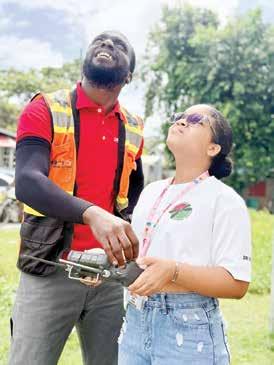
Three participants controlling a drone
Founder of the Dragonfly Solutions Group, Brian Smith, and one of the participants
The participants at the completion of the summer camp
By Andrew CArmiChAel
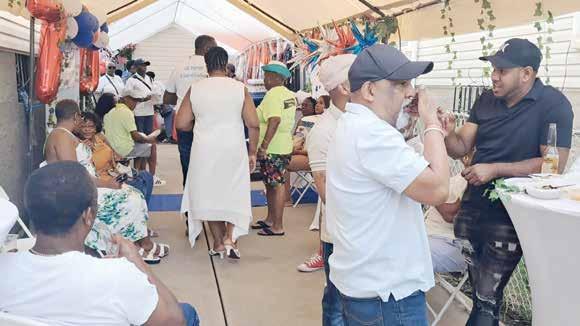
On a warm Saturday afternoon in Queens, New York, United States of America, the aroma of freshly grilled fish mingled with the sound of laughter as old friends embraced, shared memories, and reminisced about a place that, for many of them, changed the course of their lives.
They came from different parts of Guyana and from different graduating classes. Some first walked through the gates of the Port Mourant Training Centre (PMTC) more than five decades ago, while others enrolled years later. Their careers eventually took them across Guyana and thousands of miles away to North America, but despite the passing of time, they remain bound by a common experience.
For the members of the Port Mourant Training Centre New York Alumni Association, an annual fish fry is far more than a social gathering. It is a celebration of an institution that they say equipped them not only with technical skills but also with the dis cipline, confidence and work ethic that enabled them to build successful careers both at home and abroad.
As Guyana prepares to mark the 70th anniversary of the institution next year, the alumni gathering also served as a reminder of the enduring legacy of a school that has quietly shaped generations of craftsmen, techni cians, engineers and industry leaders.
For many of those in attendance, returning each year is about hon ouring that legacy and ensuring that today’s apprentices receive some of the support that they themselves once benefited from.
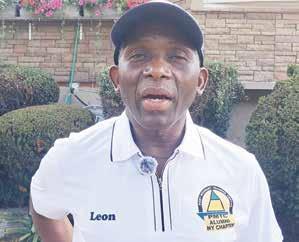
Public Relations Officer Leon Cossou, himself a former apprentice, explained that although alumni gather to reconnect, their primary purpose is to give back.
“We aim to give back to the school for the well-being of the apprentices.”
The organisation, now celebrating its tenth anniversary, traces its roots to a major reunion held in Guyana in 2016. Since then, members have continued meeting annually in New York while
ing programme, expenses that were once fully covered by Guyana Sugar Corporation (GuySuCo) but which many parents are now required to bear.
“We’re doing this to alleviate expenses from the parents,” Cossou explained.
The association has also donated tools and other equipment over the years and recently held a fundraising activity in Guyana as part of the build-up to the institution’s
ing sponsored by the Diamond Sugar Estate. During his four years there, he specialised in electrical and instrument repair mechanics and graduated as the recipient of the prestigious Watson Award, presented to the top apprentice in his batch.
After spending several years working in Guyana, he migrated to the United States in 1997, where he eventually joined the New York City Transit Authority.
Leading that effort is the Port Mourant Training Centre New York Alumni Association, which has spent the past decade raising funds to assist students currently enrolled at the school.
close ties with fellow graduates in Guyana and Canada.
Their fundraising has produced tangible benefits for current students.
Each year, proceeds from the event are used to purchase sports uniforms and other necessities for apprentices entering the train-
70th anniversary celebrations. Those funds are expected to finance another project at the school once administrators determine their greatest need.
For Cossou, however, supporting today’s apprentices is deeply personal.
He entered the Port Mourant Training Centre in 1984 after be-
Today, he serves as a supervisor overseeing repairs to subway trains, work that, he says, would have been difficult to secure without the technical foundation laid at Port Mourant.
Reflecting on his apprenticeship, Cossou said the curriculum extended well beyond textbooks and classrooms.
“Our basic training at GuySuCo Training Centre gives you handson machining, bench work, auto mechanic and these kinds of skills,” he said.
Those practical competencies, combined with instruction in electrical and electronic systems, matched the requirements needed to enter New York City’s transit system.
“Once you have those requirements that transit needs, then you’re able to get a job,” he explained.
Although he later earned a university degree in Operations Management in New York, Cossou said it was the combination of that
education and the technical skills acquired at Port Mourant that allowed him to advance into supervision.
“I’m glad that I have that background because what I chose to do once I came here has done me a great favour in life,” he said.
For Cossou, that experience is precisely why the alumni association remains committed to supporting each new intake of apprentices.
The institution that once invested in their futures, he believes, deserves the same commitment from those whose lives it helped transform.
After hearing Leon Cossou speak about giving back to the institution that helped shape his future, it becomes clear that his story is far from unique.
Scattered throughout the crowd were men whose lives had followed remarkably similar paths. They entered the Port Mourant Training Centre as teenagers from sugar estates across Guyana, learnt a trade, developed a discipline that extended beyond the workshop, and eventually built careers that carried them far beyond the boundaries of the industry that first brought them together.
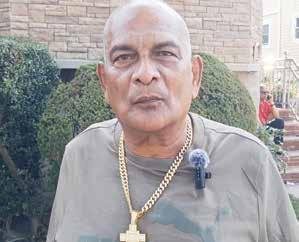
Among them was Stephen Mangal, who entered the training centre in 1975 through the Skeldon Estate.
Choosing agricultural mechanics, he immersed himself in a fouryear apprenticeship that combined classroom instruction with practical field experience before graduating in 1980.
Former students of the Port Mourant Training Centre (PMTC) and now members of the alumni association
Leon Cossou
Stephen Mangal
Christopher Vasconcellos
Friends and past students of the training centre
22 FEATURE
He returned to Skeldon Estate as an agricultural mechanic, where he would spend almost three decades maintaining equipment vital to estate operations before migrating to the United States in 2009.
Looking back, Mangal says the greatest gift the institution gave him was not simply technical knowledge but the confidence and discipline to approach life and work professionally.
“I learned a lot from training school,” he reflected.
He said the institution also taught him valuable interpersonal skills that stayed with him throughout his working life.
“It taught me how to approach people and how to talk to people.”
Those lessons, he said, enabled him to provide for his family.
“It helped me a lot… it support ed my family.”
His career may have been spent in grease-covered workshops and among heavy agricultural ma chinery, but Mangal speaks of those years with unmis takable pride.
“It was always a pleasure to do the work. I liked the field.”
Asked whether his life would have unfolded the same way without the Port Mourant Training Centre, his answer came without hesita tion.
“No.”
He explained that, like many young men from sugar communities at the time, his options after secondary school were limited.
The apprenticeship pro gramme, he explained, gave him a recognised trade, stable employment and, ultimately, the ability to build a better fu ture for his family.
Meanwhile, for Christopher Vasconcellos, whose apprentice ship began three years later in 1978, the story followed a differ ent path but arrived at much the same destination.
cipline, responsibility.”
Unlike many vocational schools that simply teach a trade, he believes the Port Mourant Training Centre prepared young people for adulthood itself.
That, he insists, explains why so many of its graduates succeeded wherever life took them.
When asked whether another institution could have produced the same result, Vasconcellos smiled before offering perhaps the most memorable reflection of the afternoon.
“Port Mourant Training Centre makes you a man… It teaches you life in a way no other school does.”
Those words echoed far beyond his own experience.
As conversations continued among the alumni, it became increasingly clear that while gradu-
more recent years, young women, were introduced to a culture of discipline, responsibility and professional excellence that would shape the rest of their lives.
Perhaps that explains why, almost seven decades after the first apprentices walked through its gates, the Port Mourant Training Centre continues to occupy such a special place in the hearts of its graduates.
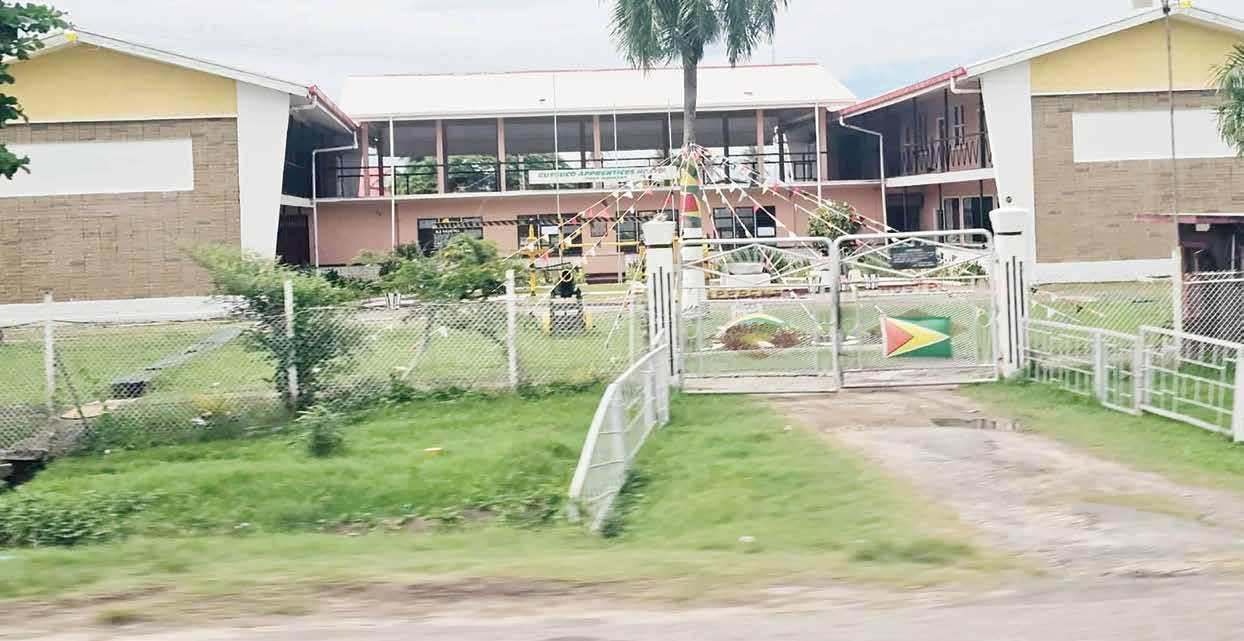
Established in 1957 by Booker Sugar Estates, the institution was created to train the skilled craftsmen needed to support Guyana’s expanding sugar industry. Following the nationalisation of the industry in 1976, it became part of GuySuCo, but its mission remained largely unchanged: to produce highly skilled technicians capable of keeping one of the coun-
business – both in Guyana and overseas.
Yet numbers alone tell only part of the story.
Its true legacy is measured by the lives it has transformed.
Former Region Six Chairman David Armogan captured that legacy during the institution’s 58th graduation ceremony in 2019 when he reflected on the achievements of former apprentices.
“It is not difficult to find someone who is an executive in an organisation outside of Guyana that passed through the Port Mourant Training Centre.”
He then offered what many graduates regard as one of the greatest tributes to the institution.
“That alone tells you the level of training that you can get here.”
Meanwhile, speaking with
reputation Armogan described. For decades, similar stories have unfolded quietly wherever former apprentices settled. Some remained in Guyana and became the skilled craftsmen who maintained factories, workshops and field equipment across the sugar industry. Others accepted positions with public utilities, engineering companies, manufacturers, mining operations, and construction firms. Many migrated, taking with them technical skills that enabled them to compete successfully in industries throughout the Caribbean, North America, Europe, and beyond.
It is perhaps that remarkable record that convinced President Dr Irfaan Ali that the legacy of the Port Mourant Training Centre should not merely be preserved but expanded.
In outlining the Government’s vision for technical education, the President announced:
After qualifying as an auto electrician, he worked briefly in Guyana before migrating to the United States with his family.
Today, nearly four and a half decades later, he owns Chander Auto Repairs in Harlem, where he has spent almost 45 years building a reputation as an automotive technician and entrepreneur.
Although thousands of miles now separate him from Port Mourant, he says the foundation of his success was laid long before he reached New York.
“The training from there played a big part in my life.”
But when asked exactly what made the institution different, his answer moved beyond technical instruction.
“They train you about life, dis-
Friends and past students of the training centre
as teenagers had given them far more than a certificate.
It had given them a foundation upon which entire careers and, in many cases, entirely new lives were built.
Those sentiments were echoed repeatedly throughout the reunion.
Although the men gathered had entered the Port Mourant Training Centre in different years, studied different trades and eventually pursued different careers, their reflections pointed to a common conclusion. The institution had become much more than a technical school. It had become a place where young men and, in
its classrooms and workshops, combining academic instruction with practical industrial training before returning to sugar estates across Guyana or pursuing careers elsewhere. Along the way, the institution developed a reputation for producing graduates whose skills, discipline and professionalism opened doors far beyond the communities from which they came.
Today, after 63 graduation ceremonies, the Port Mourant Training Centre has produced at least 3492 qualified apprentices, many of whom have gone on to distinguished careers in engineering, manufacturing, mining, utilities, transportation, construction, and
paths.
Mangal devoted almost three decades to the sugar industry before migrating to the United States.
Cossou carried the technical skills acquired at Port Mourant into the New York City Transit Authority, where he now serves as a supervisor.
Vasconcellos transformed his apprenticeship into a successful automotive repair business that has served customers in Harlem for almost 45 years.
Each story is different, yet each began in the workshops and classrooms of the same institution. They are living examples of the
“Our plan is to establish an expanded Guyana Technical Training College right here in Port Mourant, incorporating the old Port Mourant Training School but expanding it with the National Oil and Gas Institute...”
The statement recognised that while Guyana’s economy is changing rapidly, the qualities that made the Port Mourant Training Centre successful –technical competence, practical experience, and disciplined training – remain as valuable today as they were nearly 70 years ago.
That commitment became even clearer when President Ali commissioned the first phase of the new training complex in February 2024.
Describing the significance of the project, he said,
“This is $2.6 billion invested in the future of our country.”
His vision extends well beyond the needs of the sugar industry. It is one in which Port Mourant evolves into a centre for preparing Guyanese to excel in oil and gas, manufacturing, construction, hospitality and other emerging sectors while preserving the tradition of technical excellence that made the institution one of the country’s most respected training schools. For the former apprentices gathered in New York, that vision is not difficult to understand.
Long before Guyana became one of the world’s fastest-growing economies, the Port Mourant Training Centre had already demonstrated that when young people are given the right training, discipline and opportunity, there is virtually no limit to what they can achieve.
Govt unveils design for US$156M Mahaica–Abary 4-lane highway
- as bids for project set to open on August 1
The Public Works Ministry on Friday engaged stakeholders to discuss the design for the upgraded Mahaica to Abary Road at the Mahaicony
nisms, were among the topics discussed.
The earmarked four-lane highway, which has an expected 20-year lifespan, will be divided into three lots.
focuses on briefing the beneficiaries on the development intentions until a contractor is identified. He noted that once a contractor is engaged, the team will return to present traffic management plans, as the operational aspects will arise when that engagement occurs.
While emphasising that development within the region is crucial, stakeholders raised concerns about potential property or private land acquisition, the drainage system, and the preservation of railway structures that are considered monuments and artefacts. In response, the consultant added that options to keep the structures will be explored, emphasising that these
Technical and Vocational Training Centre.
The team, led by subject Minister Bishop Juan Edghill, briefed residents, business owners, religious community leaders, motorists, and other stakeholders on the project overview, its design, and the proposed work. Environmental and social concerns, as well as grievance redress mecha-
Initial works will be executed in Lots One and Two, which entail rehabilitative work.
The upgraded thoroughfare will feature widened lanes with a median, light fixtures, a raised crosswalk, crossing signage for pedestrians and animals (cattle), rumble strips, and junction improvements.
Edghill told the meeting that the initial consultation
bridge structures will not be discarded.
The Minister added that whatever is done will have to be signed off by the hydrologic engineer at the National Drainage and Irrigation Authority (NDIA). He reminded those gathered that these concerns have been raised across the country and have been successfully addressed.
"So, while there must be
some inconvenience, it is for the long-term good, and it will definitely help with the development of your region. I've been doing this for some time, so I'm fully aware of what can arise. If, for any reason, in order to get this road completed, we have to use anyone's private property, you will not be disadvantaged. The constitution provides that you are given fair market compensation."
This vital project ties into the Government's wider vision of improving and expanding the nation's transport network. By seamlessly linking communities, reducing travel times, and expanding economic corridors, these countrywide developments are designed to enhance the standard of living for all citizens and build a highly competitive, modern economy for the future.
Back in October 2025, it was reported that the Government would use part of a US$156 million loan
from the World Bank to provide consultancy services for the reconstruction of the existing road network on the East Coast DemeraraMahaica Bridge to Abary Bridge Road Corridor.
The project was approved in early 2025 by the World Bank and is geared toward supporting Guyana in its quest to upgrade and rehabilitate the country's road infrastructure. It will focus
on enhancing the country's transport network in selected regions to allow for better-equipped infrastructure that could withstand natural hazards while providing safer and more reliable movement for persons.
Bids for the project are expected to open on August 1, 2026, at the National Procurement and Tender Administration Board (NPTAB).
Public Works Minister Bishop Juan Edghill addressing stakeholders
The Guyana-based Canadian-funded Justice Education Society (JES) project was praised for its contribution to the criminal justice system and Indigenous communities in Guyana. Director of Public Prosecutions (DPP) Shalimar Ali-Hack expressed delight at the impact of the project during the closing ceremony recently, marking the project’s achievements over the past ten years since JES commenced its operations. A Memorandum of Understanding (MoU) was signed between the Home of Affairs and the Global Affairs Department of the Government of Canada for
the start-up of JES in 2022. The DPP recalled her first meeting with the officials from JES and highlighted the need for training for all parties within the criminal justice system, including investigators, prosecutors and the judiciary.
“When only one of these parties is trained, then we have difficulty with the others. I know that they would have found it strange that my request and recommendations were never only for the prosecutions...but prosecutions won’t be successful without good investigations and a judiciary that understands the law...I have seen improvements in the systems in the GPF (Guyana Police Force), including the recording of caution statements, the storage of exhibits, the Investigation Planning and Supervisory Forms, and
the conduct of the investigations gained through the training.” In more tangible ways, JES has provided the GPF with storage containers to store exhibits; without these, the DPP noted that the prosecution would not have the exhibits in court because they could not be found by the Police or were damaged. She expressed her profound gratitude to JES for introducing and providing the recording equipment for taking caution statements.
“These two have made drastic improvements in the investigations and prosecutions of criminal charges.” In addition to the equipment, JES also provided the GPF and the Ministry of Health with sexual assault evidence collection kits called “rape kits”. Touching directly on the benefits to the judiciary, the DPP recalled the role played by former Chancellor of the Judiciary, Madam Justice Yonette Cummings, who was instrumental in implementing virtual courts to ensure speedier court hearings in the hinterland communities. Prior to this, the hinterland courts sat once or twice per month.
Throughout the past five years, the JES Project has also concentrated its programme on the improvement of Indigenous communities, mainly in Regions One to Nine, where community outreach meetings were held and the DPP’s office participated. Ali-Hack noted that because of these outreaches, there are improvements in Police responses to reports of crime in the Indigenous communities, and more importantly, that more crimes are now reported. “There are more reports than there used to be before the training started. These are all tangible improvements I have seen, and I’m happy to have been a part of this justice improvement.”
In keeping with its hallmark of “Strengthening Justice for Women, Girls and Indigenous People in Guyana”, Police ranks, teachers and health workers in Indigenous communities were trained on cultural sensitivity. JES’s country representative Lisa Thompson related that its focus was on supporting the institutionalisation of a trauma-informed, gender- and culturally sensitive approach to the application of justice for the Indigenous people and improving their knowledge of the laws in relation to Sexual and Gender-Based Violence (SGBV). Through JES’s support and partnership, the communities of Santa Rosa in SubRegion One, the Macushi Research Unit at Bina Hill, North Rupununi, and the Wapichan Wizzi Women’s Movement in South Rupununi have been able to develop over 60 public education and information audio and video messages aimed at fighting SGBV. These were done in Wapichan, Macushi and English and are used by various village councils, civil society and community advocates. Head of Development Cooperation at the Canadian Embassy Adam Loyer noted that since the implementation of the JES Project in 2022, his government was pleased to have contributed to the advancement of knowledge, both at the institutional and community levels, as it pertains to combating sexual and gender-based violence in Guyana. JES has trained over 2000 persons at community and institutional levels. Beneficiaries include 23 Judges, 20 Magistrates, 70 Police Prosecutors and State Counsel, and 550 Police Officers. While at the community level, JES worked in collaboration with 13 village councils and over 75 Indigenous communities in Regions One and Nine.
A section of the gathering at the closing ceremony
Officials at the JES closing session
GPF mulls 400% mark-up for illegal parking of heavy-duty vehicles countrywide
Tlooking to ramp up fees for illegal parking of heavy-duty vehicles across the country by 400 per cent.
Singh said the current fixed penalty of $5000 for of-
fences such as illegal parking, leaving a vehicle in a dangerous position, or obstructing traffic is no longer serving as an effective deterrent.
He explained that the proposed increase would see the fine rise to $50,000. "The current $5000 fine is more like a parking fee... so we recommend a $50,000 fine," Singh said.
Under the existing system, motorists found parking illegally or obstructing roadways can be issued fixed penalty tickets, while more serious offences, including parking on pavements or causing significant obstruction, may result in vehicles being clamped or towed.
In fact, City Hall strictly prohibits parking on sidewalks in Georgetown, and errant vehicles are actively clamped and penalised. Singh made the comments during the recent announcement surrounding the introduction of 400 vehicle clamps, which will be used as part of a wider enforcement effort against traffic violations.
Only two days ago, the Public Works Ministry an-
National zoo temporarily closed as planned improvements get underway
The Guyana Zoological Park will be temporarily closed to the public as preparatory works begin to support planned improvements at the facility.
This was announced by the Protected Areas Commission (PAC) in a brief statement on Saturday.
According to the Commission, "The zoo holds a special place for many Guyanese, and these preparatory works are an important step in improving conditions for the animals in our care and preparing the site for future improvements."
While it was not indicated how long the closure will last, the PAC further explained that this move was necessary to ensure the safety of visitors, staff, and the animals while these initial works are undertaken.
The Commission assured that animal welfare will remain the highest priority throughout this period, and every effort will be made to ensure the continued care and well-being of the animals during the closure.
"We appreciate the public's patience and understanding as these important works are carried out, and we will continue to provide updates as works progress," the PAC stated.
The commencement of preparatory works comes months after President Dr Irfaan Ali announced that investments have been made to commence the Georgetown Zoo and Botanical Gardens transformation project.
"I am pleased to announce
that the Georgetown Zoo and Botanical Gardens transformation project will commence with an investment that will make it the pride of South America," the Head of State said back in April at the opening of the Guyana-China Friendship Park in Region Three.
According to the Guyanese leader, this investment will focus on recreation, education, biodiversity, awareness, tourism, and equality of urban life second to none in the world.
He said the project will be connected to the green walkway of the city, the architectural heritage walkway of the city, the cultural heritage walkway of the city, the commerce walkway of the city, and the waterfront walkway of the city.
"This investment will see the full rehabilitation of gardens and water systems, modern zoo infrastructure, improved animal care and containment, visitor facilities and accessibility upgrades, education spaces, security and operational systems, elevated bridges, pathways, and landscape restoration. Because
of the size and complexity of this site, the project will deliver a fantastic facility that will make it a strong value for money investment," the President stated.
In June 2025, Japanese oil and gas company MODEC revealed its partnership with the Protected Areas Commission for the rehabilitation of two animal enclosures in Guyana's Zoological Park – a $4.5 million investment.
Works were completed on the first enclosure, which houses the black caiman, spectacled caiman, and giant river turtles. The second enclosure will house macaws, potoos, agouti, Spix's guan, and a tiger heron. These works were part of the broader Zoo Rehabilitation Project.
Previously, the Government indicated plans for a drastic upgrade of the zoo and botanical gardens, which are part of the national development and beautification agenda. Already, enhancement and beautification projects have been undertaken across the capital city.
nounced that 400 heavy-duty vehicle clamps would be officially handed over to the Guyana Police Force. These were handed over on
Saturday. The pieces of equipment are expected to target errant drivers who continue to disregard the government's repeat-
ed calls to stop transporting overweight material and cargo, as well as illegally parking heavy-duty vehicles along major roadways.
Public Works Minister Bishop Juan Edghill said the procurement of the 400 clamps represents a major step in strengthening enforcement against overloaded trucks and illegally parked heavy-duty vehicles across the country.
During a social media post, the Minister expressed satisfaction that the equipment had arrived and that the procurement process had been completed, warning operators that stricter enforcement measures were now being implemented. He cautioned that operators of overloaded trucks and those who park vehicles illegally on public roads and road shoulders will face immediate consequences. Specifically, trucks carrying more than the legally prescribed limit of 15 tonnes per axle, in keeping with existing regulations, will be clamped, detained, and subjected to legal action.
Govt vows tougher actions against illegal use of Guyana's maritime flag
The Government of Guyana plans to intensify its crackdown on fraudulent ship registries and defend the integrity of the Guyana flag, even as it continues the pursuit of bringing Captain Suniel Kumar to justice for alleged maritime fraud.
"Guyana maintains a closed ship registry, and the Government is prepared to invest the financial and technical resources required to preserve the integrity and reputation of the national flag," Minister of Public Utilities and Aviation Deodat Indar affirmed as he addressed the Second Annual Global Maritime Security and Sanctions Enforcement Symposium in St John's, Antigua and Barbuda, from July 13 to 15, 2026, Indar's Ministry said in a statement.
Government, he said, speaking at a symposium attended by representatives from more than 100 countries, brought together officials from the United States (US) Department of State, the Office of Foreign Assets Control (OFAC), the International Maritime Organisation (IMO),
the CARICOM Secretariat, and registries from Liberia, Cyprus, Sierra Leone and Honduras, among others, and understands the importance of international cooperation. Indar also highlighted that Guyana's enforcement successes were achieved through collaboration with partners across the maritime community and pledged continued cooperation.
"With the continued support of the International Maritime Organisation and the wider maritime community, Guyana is strengthening its systems to identify and prevent the registration of vessels suspected of engaging in illicit activities," he said. Indar stated that coordinated enforcement initiatives have yielded notable successes in curbing maritime fraud involving vessels unlawfully bearing Guyana's flag. Among the most prominent cases was the MT Skipper, intercepted off Venezuela's coast in December 2025 after evidence revealed its fraudulent registration. Similarly, in April 2026, authorities detained the
MT Majestic X.
The Minister of Public Utilities and Aviation singled out alleged perpetrator Captain Suniel Kumar, described as a lead figure in fraudulent registry activities across more than 14 countries, and he vowed to bring him to justice for crimes that have tarnished this country's maritime image. "The Ministry is actively engaging all relevant local and international law enforcement agencies to bring Captain Suniel Kumar – a lead perpetrator of fraudulent registry activities – and those of his ilk to account," he said. And while fraud prevention is central, Guyana also aims to expand its legitimate maritime trade. Indar explained that the Government is encouraging citizens and companies to register vessels under the Guyana flag, thereby strengthening the national fleet and supporting economic growth. Minister Indar was accompanied by Captain Stephen Thomas, Director General of the Maritime Administration Department (MARAD).
The Guyana Zoological Park
raffic Chief and Assistant Commissioner of Police
Mahendra Singh has hinted that the Guyana Police Force (GPF) Traffic Department is
Traffic Chief Mahendra Singh and Public Works Minister Bishop Juan Edghill during the handing over of the heavy-duty clamps
A demonstration of how the clamps work
Minister Deodat Indar and officials at the symposium in St John's, Antigua
ARIES
TAURUS (April 20May 20)
GEMINI (MAY 21June 20)
CANCER
LEO (July 23Aug. 22)
VIRGO (Aug. 23Sept. 22) (March 21April 19)
Consider the cost involved before you start a project or decide to spend on entertainment, projects or loved ones. Cap your spending. Look for deals, and oversee any costly changes you wish to pursue. Joint ventures will require using your imagination and discipline to find common ground. Nurturing a meaningful relationship will help bring you closer together.
Stop fretting over what you have no control over, and pour your energy into something that pays off. Working on self-improvement projects and surrounding yourself with people who encourage you to pursue what you know and love doing most will give you peace of mind. Recognize who is on your side, and distance yourself from those using pressure tactics to mislead you.
Emotional pressures will cost you. You’ll be torn between temptation and what you should actually do. Don’t let lovers, children or those you constantly try to please talk you into something questionable. Put your energy into fact-finding and mapping out a plan and budget that don’t cause stress and anxiety. Protect your health, meaningful relationships and financial well-being.
Rethink your goals, and adjust whatever no longer works for you. Emotions will surface, changing your perspective regarding lifestyle, love and what you long for. Don’t dismiss what’s happened or what’s holding you back. Change depends on your ability to let go of the past and embrace what encourages feeling good about yourself and your prospects.
A different environment will change your perspective, pique your imagination and offer insight into possibilities. Focusing on your dreams and having conversations with someone who makes you realize your potential will help you take a step toward a lifestyle change that offers convenience, comfort and a chance to create the happiness you desire. Stop procrastinating and start doing.
Review your financial situation. What comes in and goes out may require an adjustment if you intend to maintain your lifestyle. Do the legwork instead of relying on someone else to manage your assets, overhead and long-term plans. Making decisions before you share your intentions will help deter someone eager to take over from stepping in.
LIBRA (Sept. 23Oct. 23)
SCORPIO (Oct. 24Nov. 22)
CAPRICORN (June 21July 22)
Do something that sparks your imagination and brings you closer to the people you love, and the personal growth you experience will give you the push necessary to follow your heart and go after your dreams with a positive attitude and the intent to finish what you start. Negativity is the enemy; smile and do what makes you happy.
Visit a place that resonates with you and brings you peace. Fixate on achieving solidarity by getting to know and understand your needs. The process of recognizing your feelings and what you want — and following through with a plan and a budget you can sustain — will help build confidence and encourage you to reach for higher goals.
SAGITTARIUS (Nov. 23Dec. 21)
Refuse to let confusion and uncertainty take over. Deal with the pressure and bring about change. You have choices. Ignoring the problem solves nothing, but telling it like it is will help you eliminate a discrepancy you have with someone causing you grief. Don’t stress; take care of what’s bothering you, and take responsibility for your happiness.
AQUARIUS
(Jan. 20Feb. 19) (Dec. 22Jan. 19)
PISCES
(Feb. 20Mar. 20)
Talks can help you alleviate stress. Nothing will change if you don’t share your thoughts and feelings and offer compromises and incentives to ensure a better future. Listen to what others say and ask for, but don’t be too quick to agree to something that will weigh heavily on your mind over time. Meet in the middle or walk away.
Invest more time and money in yourself, your surroundings and your prospects. A healthy attitude can help you achieve what you set out to do, but negativity and letting outside influences take over will set you back. Don’t be afraid to embrace change and to do things differently. Following your heart will encourage you to put yourself first.
Interacting with people you can relate to will help you see your personal situation better and offer insight into the changes necessary to achieve peace of mind. Anger will cause stress and uncertainty, and pursuing positive change will reinforce your confidence and help you take responsibility for your happiness. Personal growth will teach you to put yourself first.
Peanuts
Calvin and Hobbes
Pickles
SUNDAY, JULY 19, 2026
England hold off France in all-time World Cup classic to win 3rd-place play-off
Bukayo Saka's hat trick helped England survive a dramatic second-half comeback to beat France 6-4 in Saturday's chaotic third-place playoff and secure their best finish at a World Cup since 1966.
England were 4-0 up at the break in Miami as a shambolic France side were dismantled through goals from Declan Rice, Ezri Konsa and two Saka strikes.
Both teams made seven changes following their semi-final defeats, but in his final match in charge after 14 years at the helm, Didier Deschamps introduced four substitutes at halftime, including Ousmane Dembélé and Bradley Barcola, in an attempt to trigger a response.
It began just three minutes after the restart. Michael Olise found Kylian Mbappé in space, and his first-time left-foot finish beat Dean Henderson.
Six minutes later, Mbappé turned provider, sending Barcola clear to finish inside Henderson's near post before Mbappé finished another France move to score his 10th
goal of the tournament and move him back ahead of Lionel Messi as the men's all-time World Cup goal scorer, with 22 goals.
Olise – whose seven assists in a single World Cup campaign is another record –missed a glorious chance to equalise, somehow side-footing wide from 12 yards out, before England finally steadied themselves.
Djed Spence burst into the box on the overlap and was brought down by Malo Gusto. Saka converted the 87th-minute penalty to become only the fourth men's player to score a World Cup hat trick for England.
There was still time for France to respond again as Dembélé cut in on his left foot to finish, but substitute Jude Bellingham had the final say, driving into the box before finishing from close range to secure a memorable win.
Bellingham's late strike made him the first Englishman to score seven goals in a single World Cup campaign.
The 10 goals were the most scored in a World Cup match since Hungary beat El Salvador 10-1 in 1982.
Over 70 entries confirmed for Emancipation Cup
More than 70 horses confirmed their entry for the Emancipation horse race meet at the Kennard’s Memorial Turf Club, set for Sunday, August 2.
Seven races are on the cards, in which 60 per cent of the races feature Guyanabred horses.
The Emancipation Cup will have a purse of GY$2 million, and the Emancipation Mile will have a pay-out of GY$1 million.
The Emancipation Nursery Stakes and Emancipation Sophomore Stakes will both have a pay-out of $700,000.
The feature race will be the Emancipation Cup, open to all threeyear-old and older horses.
West Indies batting coach Floyd Reifer remains confident the team's batting unit can bounce back despite disappointing performances in the last two OneDay Internationals (ODIs) against New Zealand.
The Caribbean side has been dismissed for 138 and 140 in the last two matches of the five-match series, allowing New Zealand to take a 2-1 lead. While acknowledging that the batting displays have fallen below expectations, Reifer believes the challenging conditions in Guyana have played a significant role.
"Obviously, the last two games we didn't bat to the best of our abilities, but the conditions were very challenging," Reifer said.
He pointed to the importance of winning the toss, explaining that batting first at the Guyana National Stadium proved especially difficult.
"Batting first in Guyana, it seems the toss is a major factor. We know the ball
Peter
Other races on the cards include the E Class non-winner open to F & G Class; the three-year-old Guyana-bred maidens and three-year-old Guyana-bred winners of one race; H Class and lower; J & K Class; L Class Open; and the two-year-old Guyana-bred maidens.
All races will run under the rules of the Kennard’s Memorial Turf Club. Entries for this race opened on July 7 and will close on July 19.
Notably, all stakeholders’ entry payments & signatures of trainers & jockeys on the entry form for the Kennard Memorial Turf Club Emancipation Cup Race Meet will continue at the Kennard’s Memorial Turf Club on July 19, with commentator John Rupert.
can spin a bit and the pitch can be slow. Then in the evening you get the dew factor, which makes it easier to bat."
Despite highlighting the conditions, Reifer stopped short of using them as an excuse.
"Whoever batted first on that pitch was always going to find it challenging to put a good score on the board."
"We still could have put up a better batting performance. We made 139, 138 and 140, and if we had gotten to anything over 200 or 210 runs, we would have made a game of it. There's really no excuse for the batting performances we've displayed over the last couple of games."
The former West Indies batsman also urged against judging the batting group solely on the recent results, noting that the team has generally performed well in the 50-over format over the past year.
"If we look back at the games we've played over the past year or year and a half, we've been batting really well in this format," he said.
With two matches still to play, Reifer believes the team has every chance of responding positively.
"We have two more games left in the series, and we're now heading to Barbados. Two bad batting performances don't make a bad batting side. I'm still confident in the guys, and the players are confident that once we get to Barbados we'll put together some good batting performances."
The teams now shift their attention to the fourth ODI, which will be played today in Barbados, with the first ball scheduled for 10:00h, as the West Indies look to level the series and keep their hopes alive.
Lewis Construction joins Over40s World Cup as silver sponsor
Peter Lewis Construction has signed on as a silver sponsor of the International Masters Cricket (IMC) Over-40s Cricket World Cup Guyana 2026, strengthening the Private Sector support for the international tournament scheduled for October 17 to November 1.
The competition, being organised in partnership with the Cricket West Indies Masters Association, will feature 16 international masters teams and is expected to attract players, officials, supporters and families from around the world.
Chairman of the organising committee Raj Singh welcomed the sponsorship, noting that the company’s support demonstrated confidence in Guyana’s ability to successfully host a major international cricket event.
Singh said Peter Lewis Construction’s values of hard work, reliability, quality and commitment to national development were closely aligned with the spirit of the tournament.
The company’s contribution will assist with the professional staging of the World Cup, which will include competitive cricket, community activities and opportunities to showcase Guyana’s culture and tourism product.
Organisers said Private Sector support was essential for an event of this size, with
sponsors helping to create opportunities for players, officials, volunteers, local communities and supporters to participate in the tournament.
The event is expected to generate strong local, regional and international interest through matches, related activities, media coverage, livestreaming and digital engagement.
Peter Lewis Construction is a Guyanese infrastructure and civil construction company specialising in road paving, resurfacing, rehabilitation and maintenance. It also undertakes drainage, sidewalk, curb and other supporting infrastructure works.
The company’s team has more than 100 years of combined industry experience and has built its reputation on quality workmanship, safety, reliability and professional service.
The organising committee and the Cricket West Indies Masters Association thanked the company for its contribution and said they looked forward to working with its representatives before and during the World Cup.
The tournament is expected to combine international cricket with tourism, community engagement and cultural activities while promoting Guyana as a destination for major global sporting events.
Natasha Budram (right), Operations Manager of Peter Lewis Construction, presenting the sponsorship cheque to Raj Singh (left), Chairman of CWIMA, whilst Peter Lewis himself is in the background along with other staff members of Peter Lewis Construction
Over 70 horses confirmed for Emancipation Cup
The English Team
West Indies batting coach Floyd Reifer
Guyana Under-19 produced a commanding all-round performance to secure their first victory of the Cricket West Indies Rising Stars Men's Under-19 50-Over Championship, defeating
Ram, Hetmyer star as Guyana U-19s crush Leeward Islands
the Leeward Islands Under19s by 121 runs. After winning the toss and electing to bat, Guyana posted a competitive 272 all out in 47.1 overs, built around impressive half-centuries from captain Parmeshwar Ram and Adrian Hetmyer. Ram led from the front with a fluent 79 off 82 deliveries, striking 10 fours and three sixes to provide his side with a solid platform at the top of the order. Hetmyer continued his rich vein of form, following up his previous 50 with another composed innings of 76 from 90 balls, which included seven boundaries and a six before being run out.
The Guyanese innings received a late surge from Emmanuel Lewis, who made an immediate impact in his first appearance of the tournament. Batting aggressively down the order, Lewis smashed 42 from just 23 balls to push Guyana to a formidable total.
For the Leeward Islands, Matthew Miller was the standout bowler with 4-45, while Kerique Mentore supported well with 2-51.
Chasing 273 for victory, the Leeward Islands never recovered after losing wickets at regular intervals and were eventually dismissed for 151 in 37.4 overs.
Kunal Tilokani offered the strongest resistance with a brisk 37 from 37 balls, while Lawshorn Bergan remained unbeaten on 31 from 45 deliveries, but the pair found little support from the rest of the batting line-up.
Guyana's bowlers
shared the spoils, with Dhanesh Persaud producing an outstanding spell to claim 4-31. Gilbert Griffith provided excellent support with 3-29 as the Guyanese attack wrapped up the innings to complete a convincing 121-run victory.
The result gives Guyana their first win of the tour -
nament and a timely boost ahead of their next fixture against the Windward Islands Under-19s on July 20. Montfort)
Westside to host Acado Golf Skills Tournament today
Westside Golf Course will stage the Acado Golf Skills Tournament today from
CLASSIFIED
ADS
Superior Woods Inc. is inviting applications for the following positions: Moulder Operator (3), Heavy-Duty Equipment Mechanic (4), Mill/Resaw Operator (3), Forklift Operators — (5), Labourers — (10). Location: Yarrowkabra, Linden-Soesdyke Highway. Contact: 642-3828/ 6262138. Email: superiorwoods.gy@ gmail.com.
Superior Blocks and Pavers is inviting applications for the following positions: Blocks Machine Operator (3), Forklift/Front-end Loader Operator (3), Labourers — (6). Location: Yarrowkabra, Linden-Soesdyke Highway. Contact: 642-3828/ 6262138. Email: vickash@superiorblocksandpavers.com
ELEGANT CABS COOKING GAS PICK UP AND DELIVERY AVAILABLE 24 HRS 226-4277, 231-1454, 231-1494
13:00h to 15:00h, offering beginners of all ages an opportunity to learn and compete in a welcoming environment.
The skills-based competition will feature separate categories for women, men and children. Participants will compete for trophies, Acado product hampers and bragging rights, while golf clubs and balls will be provided.
A small entry fee will apply, and every registered player will receive a complimentary lunch. The event will be followed by a live viewing of the FIFA World Cup Final at the course’s restaurant and entertainment area.
The tournament forms part of the partnership between the Guyana Golf Association and Nexgen Golf Academy, which continues to introduce golf to persons of different ages and abilities through free introductory training and recreational
competitions.
The organisers said the event is intended to show that golf can be accessible and affordable. Westside Golf Course, located just off the Crane Roundabout on the Schoonord Highway, is Guyana’s only public golf facility that does not require membership.
The course welcomes beginners, families, schools and visitors, allowing persons to learn and enjoy the sport without joining a private club.
The Acado Group has supported several sporting, educational and youth initiatives across Guyana, with particular attention placed on programmes that benefit women and children. Its sponsorship of the tournament continues its involvement in community and grassroots development.
Persons interested in participating can register by calling 645-0944 or visiting Westside Golf Course.
Westside Golf Course will stage the Acado Golf Skills Tournament today from 13:00h to 15:00h, offering beginners of all ages an opportunity to learn and compete in a welcoming environment
Adrian Hetmyer recorded back-to-back 50s
Parmeshwar Ram led from the front
Argentina to defend World Cup title against Spain in blockbuster finale
Argentina and Spain were supposed to settle a score in Qatar earlier this year, in the Finalissima between the champions of South America and Europe, before US-Israeli strikes on Iran forced the match to be cancelled. On Sunday in New Jersey, they will finally meet with rather more than ceremonial silverware at stake.
The World Cup final offers football's grandest stage a deliciously odd pairing: Argentina, all pulse, fire and Lionel Messi, against Spain, the European champions who appear to treat chaos as an administrative error and have turned control into something close to an art form.
It is South America v Europe, passion v precision, a match threaded with curious personal history, from the touchline to La Masia, where Barcelona's greatest graduate, Messi, will face teenager Lamine Yamal, the academy's dazzling young heir.
Argentina are back in the final four years after their cathartic triumph in Qatar, when Messi finally lifted the trophy in a breathless win over France. Back then, with Messi aged 35, another World Cup final seemed fanciful. Now 39, he is still bending time, defenders and probability.
Argentina's campaign has been less a smooth title defence than a pilgrimage through suffering. With 17 members of their 26-man squad having been part of the 2022 triumph, Lionel Scaloni's side have reached the final the hard way: beating Cape Verde in extra time and surviving nerve-shredding clashes with Egypt, Switzerland and England.
They have played at times like a team with their hearts on the toe of their boots, powered by Messi's goals, assists and flashes of sorcery. Each intervention has added anoth-
er page to the never-ending argument over whether he or Brazilian Pele is the greatest footballer in history.
If Argentina have had the air of Rocky Balboa staggering through another round, Spain have arrived looking more like cool operators who know where the exits are.
Unbeaten in 37 matches, Spain can win their second World Cup, after 2010, and break the international unbeaten record set by Italy between 2018 and 2021. They arrived in North America as the bookmakers' favourites after winning the European Championship and have largely carried themselves like a side that sees pressure not as danger, but as a meeting already scheduled.
Their route has seemed carefully mapped, as if everything before the semi-final was part of the warm-up. Under Luis de la Fuente, who has coached many of the squad since their teenage years in Spain's youth system, they have developed a level of collective understanding that can make opponents feel trapped in a beautifully lit room with no doors. France will understand that feeling well.
Wild Invention
Spain's passing and positional play can suffocate, but within the machinery there is wild invention too, and most of it comes from Lamine.
The winger, who enchanted the European Championship as a 16-year-old, has spent his short career shredding age records and expectations. Since making his Barcelona debut at 15, he has invited comparisons with the most famous product of La Masia – the man facing him on Sunday.
Messi and Lamine are also linked by one of football's strangest viral images: Messi, as a young Barcelona play-
er, pictured bathing baby Lamine. What once looked like a quaint curiosity now feels like an omen drafted by a particularly playful scriptwriter.
When asked whether Messi’s talent had been passed on to Lamine that day, like the Midas touch, Lamine’s father replied: “Who’s to say it wasn’t the other way round?”
The connections continue on the bench. Scaloni will face De la Fuente, who was his tutor on the Spanish Football Federation coaching course nearly a decade ago. The pupil now meets the teacher with the World Cup at stake.
The final may also be shaped by the conditions. The New Jersey pitch has not been kind to possession teams, with coaches and players complaining about its quality during the tournament. That could complicate Spain's rhythm and invite Argentina into the kind of broken, emotional contest they relish.
The weather may add another layer of intrigue. A hot and humid day is expected, with temperatures around 30 degrees Celsius (86 degrees Fahrenheit), and it will be only Spain's second match in an open-air stadium at this World Cup. Wildfire smoke from Canada has also blanketed parts of the U.S. Midwest and Northeast with hazardous air, raising concerns with more than 80,000 fans expected at the final.
For Spain, the task is to keep the match clean and controlled and play it to their patterns. For Argentina, it is to turn discomfort into theatre one more time.
At the centre of it all stands Messi, trying to ensure that what could be his last World Cup match ends not as a farewell, but as one final act of mastery. (Reuters)
Defending champion Kyle Couchman successfully retained the National Junior Chess Championship title after drawing with Sachin Pitamber in the decisive ninth and final round on Saturday morning at Olympic House, Liliendaal.
The Ennermech-sponsored championship concluded with Couchman finishing unbeaten on 8.5 points from nine rounds, half a point ahead of Pitamber, who placed second on eight points. Aditi Joshi secured third with 6.5 points after defeating Aiden Tinnie in the final round.
Knowing that a draw would be enough to secure the title, Couchman and Pitamber shared the point on board one in the tournament's marquee encounter. The result ensured the defending champion remained atop the standings after leading for much of the competition.
Elsewhere in the final round, Alexander Zhang defeated Javier Davenand to finish fourth overall on 5.5 points, while Joshi's victory over Tinnie cemented her place on the podium. Kataleya Sam received a walkover against Matthew Singh, and Jeremy Cole and Nicholas Zhang drew their encounter.
Nicholas Zhang finished fifth with four points, followed by Sam on 3.5 points. Singh and Cole each ended on three points, while Tinnie and Davenand completed the standings with 1.5 points apiece.
The championship featured nine rounds of competition from July 13 to 18, with the country's leading junior players battling across six days at Olympic House. Throughout the event, Couchman consistently produced strong performances to remain unbeaten and successfully defend the national title.
Couchman retains National Junior Chess Championship title
Defending champion Kyle Couchman (left) successfully retained the National Junior Chess Championship title after drawing with Sachin Pitamber (right) in the decisive ninth and final round