Never give up – top NGSA achievers share lessons behind their success
Guyanese charged for NYC firebomb attacks on places of worship, businesses
Cutlasswielding bandits steal motorcycle from Venezuelan Cuban worker dies after high-pressure hose hit him at construction site
CARICOM calls on Venezuela to arrest perpetrators of attacks on Guyanese security forces
JULY
The Berbice Bridge will be closed to vehicular traffic on:
Sunday July 12 – 15:00h–16:30h and Monday July 13 – 16:00h–17:30h
BRIDGE OPENINGS FERRY SCHEDULE
Parika and Supenaam departure times – 05:00h, 10:00h-12:00h, 16:00h, 18:30h daily
WEATHER TODAY
Thundery showers are expected during the day, easing to light showers in the evening and at night. Temperatures are expected to range between 22 degrees Celsius and 30 degrees Celsius.
Winds: East-North-Easterly to East-South-Easterly between 1.78 metres and 4.02 metres.
High Tide: 14:59h reaching a maximum height of 2.41 metres.
Low Tide: 08:26h and 20:45h reaching minimum heights of 0.64 metre and 0.81 metre.
Mining declarations up by 25,000 ounces in 1st half of 2026
…Bharrat attributes increase to crackdown on illegal mining
The Guyana Government’s efforts to streamline the mining industry and crack down on illegal activities have yielded results, with gold declarations increasing by 25,000 ounces during the first six months of this year. Natural Resources Minister Vickram Bharrat made this revelation during an appearance on the recent episode of the Starting Point podcast.
“I’m happy to say that in 2026, we have reached our budgeted target of gold declaration for the half-year period… I think it’s 233,000 ounces. We have reached that target, which is about 25,000 ounces more than last year from the same period,” the Minister indicated. According to Bharrat, the industry had not recorded such outstanding performance since 2016, when large companies such as the Guyana Gold Fields and Troy Resources were actively operating here. Since then, there had been a dip in declaration until 2024, when a slight increase was recorded compared to the previous year. In 2025, there was an increase of some 52,000 ounces in production for the entire year.
The Natural Resources Minister noted that, “…last year, ending of June, we were 25,000 below what we have now. Right now, we’re close to 240,000 ounces that has been declared over this period of time. Mind you, the weather conditions [were] not favourable to us.”
Zero-tolerance & illegal mining
Nevertheless, Minister Bharrat attributed this midyear increase in gold declarations to the Government’s serious crackdown, which heightened earlier this year, on miners and mining companies that did no or limited declarations last year.
“We had caused not to renew some of their licences and permits,” the Natural Resources Minister stated. “We had to blacklist some of the non-nationals, whose declarations were very low or non-existent. They cannot come back in the country and engage in the mining sector. And we have
been on a serious campaign since then – a zero-tolerance approach to illegal activities in the mining sector.”
Only last month, the Natural Resources Ministry seized more than 15 pieces of mining equipment, including engines, excavators and pumps after errant miners in the North-West District (NWD) area in Region One (Barima-Waini) failed to adhere to proper mining practices. This was followed by the Ministry, through the Guyana Geology and Mines Commission (GGMC), shutting down six illegal operations within the Mazaruni Mining District in Region Seven (Cuyuni-Mazaruni) in June. The six illegal mining sites were operating within a quarry area, leading to the arrest of 38 people. Several pieces of equipment and machinery used to support the unlawful activities were also seized.
Hefty fine According to Bharrat, those who want to recover the seized equipment would have to pay a hefty fine.
“I can tell you, the fine is not an easy fine… If we find you’re mining illegally, we will seize your equipment because you’re engaging in illegal activities. You want it back, you will pay a fine. We will quantify the amount of gold that you produce. And based on that, you will be fined. And worse yet, if you have not been selling the gold to a [legal] buyer, you may face even further prosecution. So, we have been on this serious campaign. And I think because of this, we are seeing
the results now. We are, for the first time in about nine years, that we have actually reached our half-year budgeted target,” the Natural Resources Minister stated. In fact, backed by significant investments in the mining sector and strengthened Government efforts to curb unlawful practices, the Guyana Government ex-
citizen [within the mining sector is involved],” Ali stated. This, the President explained, will broaden financial participation and access to various mechanisms for many Guyanese, thus enabling financial inclusion at every level. He added that it will also ensure that Guyanese retain ownership of the opportunities within
pects gold declarations to rise to 510,450 ounces this year.
National mining company
Meanwhile, as the mining industry continues to see improved performance, the Guyana Government is looking to ensure that locals, especially small- and medium-scale miners, benefit. Just last month, President Dr Irfaan Ali announced plans to set up a national mining company – comprising small, medium and large Guyanese miners – to take up large-scale opportunities in Guyana.
“We’re going to come together, create a consortium, buy the best technology, do all of the technical work and move towards creating a world-class mining company owned by Guyanese, built by Guyanese, in which every
the local mining sector.
“Instead of having large miners from around the world taking up the largescale opportunity, we’re going to come together…[and develop the] national mining company that involves all of the large, medium, and small-sized miners and every Guyanese family,” he stated. For years, foreign companies from around the world have been coming to Guyana and taking up largescale mining. In Region Seven – one of the country’s main mining districts – Aurora Gold Mine (AGM) Inc, which is the only largescale operating gold mine in Guyana, has been acquired by China-based Zijin Mining. Across the CuyuniMazaruni region, there are currently some 2524 active mining properties.
The release of the 2026 National Grade Six Assessment (NGSA) results has rightly been greeted with celebration.
Twenty students sharing the top position and the country’s strongest overall performance on record are achievements worthy of recognition. They reflect the efforts of students, parents, teachers and the Ministry of Education, as well as years of sustained investment in schools, teacher training and educational resources.
But the real significance of these results extends far beyond which child earned a place at Queen’s College or the Bishops’ High School. They are a glimpse into whether Guyana is preparing itself to survive the day when oil is no longer enough. Oil has transformed Guyana with astonishing speed. Within just a few years, Government revenues have multiplied, public infrastructure is expanding, private investment is booming and economic growth has consistently ranked among the highest in the world. Yet history offers a sobering lesson. Countries do not become permanently prosperous because they discover oil. They become prosperous because they transform temporary resource wealth into permanent human capital.
The NGSA results are one of the earliest indicators of whether that transformation is actually happening. For decades we have suffered from a chronic shortage of skilled workers. Engineers, doctors, scientists, accountants, software developers, technicians and teachers frequently migrated overseas. Many of those who remained often worked in systems constrained by limited resources. Today, our country has something previous generations never enjoyed: the financial means to invest heavily in its people. The question is whether it is doing so effectively.
This year’s improved NGSA performance suggests encouraging progress. Better literacy and numeracy outcomes imply that interventions introduced after the COVID-19 learning losses, expanded teacher training, improved learning materials, school feeding programmes and investments in educational infrastructure are beginning to bear fruit. That matters enormously because an oil economy creates opportunities that extend far beyond petroleum.
Every offshore platform requires engineers. Every new hospital requires doctors and nurses. Every manufacturing plant requires technicians. Every digital Government system requires programmers and cybersecurity specialists. Every modern financial centre requires accountants, economists and lawyers. Every research laboratory requires scientists. The greatest mistake we could make would be assuming that imported expertise can indefinitely substitute for local talent.
Foreign specialists are valuable. They transfer knowledge and fill immediate gaps. But no nation has ever become sustainably developed by outsourcing its intelligence. Eventually the people designing Guyana’s infrastructure, managing its sovereign wealth, operating its industries and conducting its scientific research must increasingly be Guyanese.
That journey begins long before university. It begins in primary schools and continues by strengthening Mathematics and Science instruction, increasing technical and vocational education, expanding research capacity at the University of Guyana, encouraging innovation and entrepreneurship, investing in artificial intelligence and digital technologies, and creating an education system that rewards creativity rather than rote memorisation.
We must recognise, however, that not every child will become an engineer or physician – and that is perfectly acceptable. A successful oil economy depends just as much on electricians, welders, heavy equipment operators, mechanics, plumbers, surveyors, software technicians, agricultural scientists and skilled artisans. Educational success should therefore be measured not simply by NGSA scores but by whether every student eventually acquires skills that create productive, rewarding careers.
There is another reason these results deserve careful attention. Oil revenues will eventually decline. “Oil doesn’t spoil,” boasted T&T’s Eric Williams – but as his country found out, it does run out. Whether that happens here in 30 years or 50, our petroleum reserves are finite. The education provided to today’s eleven-year-olds, however, will continue generating economic value throughout their working lives. Knowledge appreciates itself. Oil depreciates.
Future historians may well conclude that Guyana’s greatest oil discovery was not in the Stabroek Block. It was in its classrooms. If today’s record NGSA performance signals the emergence of a generation better equipped to innovate, compete and lead, then the country is making the smartest investment possible. Because when the last barrel of oil is eventually pumped, Guyana’s greatest national asset will not be beneath the Atlantic Ocean. It will be walking into secondary schools this September.
Devotees participate in singing and dancing during Day Three of the Hare Krishna Festival at the International Society for Krishna Consciousness (ISKCON) Study Centre on Lot 1 UG Road. The five-day festival has brought together devotees from more than 10 countries, with participants from across the diaspora joining local worshippers in one of the movement’s largest celebrations in Guyana (
Hinds and Lall – not so funny men
Dear Editor, Azruddin Mohamed, a man wanted by the United States law enforcement authorities to face criminal prosecution in that country upon indictments alleging serious criminal conduct, recently published a video hoping to “make waves” by holding out that he had discovered that His Excellency President Ali had a farm somewhere along the Soesdyke-Linden Highway. In that video Mohamed held out that the extent of the farm was 150 acres and, in the fashion of a property consultant/real estate appraiser, put forward values on buildings and on the extent of development on that property.
Having arrived at a global figure on what he presumes to be the level of investment in the President’s farm purely in an unfounded, unjustified and speculative way, the wanted man Azruddin Mohamed then, referring to what he considered to be the President’s salary, queried how the President was able to fund his investment. Ironically, it is a similar question that the people of Guyana ask of Azruddin Mohamed: “How and from where were you able to amass such significant wealth, amounting to billions?” President Ali has made a public disclosure on the source of funding for his investment, which he says was through loans from financial institutions. In a public presentation the President made the following key points:
(a) His farm could not
have been discovered by Azruddin Mohamed because he was well aware of the existence of the farm. There being no denial or refutation of the President’s disclosure, one is left to conclude that Mohamed went to the President’s farm with his drone (and probably accompanied by a bevy of half-naked Venezuelan women) purely with a malicious motive, calculated to tarnish the reputation and image of the President and with the vain hope that he could gather the company of the President and drag him into his (Mohamed’s) own sorry mess.
An Afro-Guyanese, recently, in my view, correctly noted that Mohamed’s video disclosure evidenced his response that if he had to face the likelihood of extended incarceration in the United States without help from the PPP, then in that circumstance he would do anything in his power to drag the President and the Government down with him.
(b) The President disclosed that Azruddin Mohamed’s assertion that his farm covered 150 acres was a wicked, deliberate and malicious lie. Many are of the view that such malice, misrepresentation and distortion could only come from a mind that had not a care for truth and honesty.
(c) Having questioned the President’s financial capabilities to meet the demands of expenditure on his investment, notwithstanding the wicked, cunning and malicious intent evident in the speculative nature of Mohamed’s enqui-
ry, the President disclosed that he sought financial support for his agricultural pursuits by securing loans from financial institutions. To the reasonable mind, that explanation ought to be seen as a reasonable and acceptable answer and would be so seen by most men of reason and understanding.
Enter David “the Black Moses” Hinds and his “blacker than black” brother Gabriel “the iceberg spotter” Lall. It was pathetic to watch two grown men, patently full of scorn, prejudice and bias towards President Ali, other PPP leaders and the PPPled Government generally, engage in what they would want described as a healthy conversation about President Ali but which was one dripping with criticism and bile and in which they found humour in their own speculative, false and fabricated narrative.
Gabriel Lall, whom I believe is a Catholic Christian (or so he says), repeated Azruddin Mohamed’s wicked and false assertion that the President held 150 acres of farmland, but then David Hinds played the President’s video statement during his programme with Lall. I am certain that Gabriel Lall heard the President say that the extent of his farm was not even half of what Azruddin Mohamed said it was. Gabriel Lall did not dispute the President’s assertion but, more significantly, as a Catholic Christian who should be a firm believer in truth and honesty, said not
a word to correct himself. In keeping, however, with his bitter, poisoned disposition towards the President, Gabriel (not the angel) Lall, with reference to the President’s disclosure of having taken loans to fund his investment, wants His Excellency to provide him with the details of his loan application, the details of his loan process, and the details of his guarantors. Hearing this, I felt how presumptuous and insolent this “dying for attention” man can be, especially when I heard him say that the President has a “doooty” to make such disclosure. Well, His Excellency told the people of Guyana that he has made full disclosure to the Integrity Commission, the statutory body to which he owes such a duty.
During his ramblings with David Hinds, in a moment of utter nastiness, Gabriel Lall wanted to know the ethnic makeup of the other land owners along the highway. Lall can easily gather this information by checking the APNU/AFC land give-away records. However, these were the kinds of interventions by Lall that caused David Hinds to bob his head up and down as if to goad Gabriel on. The worst, however, came from David “the Black Moses” Hinds, who quoted the President as saying that he sold chicken to Bounty Farm and that when the Guyanese consumer found the price of chicken very high, such a circumstance had to be laid at the door of President Ali.
Latchman Singh photos)
THE JOYS OF AGEING
By Ryhaan Shah
Enough of all the advice about diet and exercise and taking our medications as we grow older. Those are vital to our health and wellbeing, but there’s much more to ageing and ageing well. There’s something being referred to as our “joy span” which comes with the emotional and psychological freedom of growing older.
We now have the fullest confidence to be ourselves without caring much about external validation, i.e., what people think. We are wise enough to let go of daily trivialities that might bring on stress and have the good sense to enjoy the small, daily joys of living.
Retirement has opened up a new chapter in our lives. Gone are the daily slog and stress of work, and for those who have prepared financially for retirement, there is now the freedom to pursue hobbies and rediscover talents that have been pushed aside for too many years.
Ageing is a natural part of life; it happens to everyone. How we approach it, however, can make a world of difference to our mental and physical wellbeing. Even small shifts in our thinking, such as seeing ageing as growing into a new stage of life rather than losing our youth, can transform the way we feel about ourselves and the world.
American writer and activist Betty Friedan summed it up best with her words: “Ageing is not lost youth but a new stage of opportunity and strength.”
By embracing a positive mindset, we can focus less on physical changes that make us frailer and look instead at making the most of this new stage in our lives.
One of the most powerful things we can do for ourselves is to shift our attention from what has become difficult and lean into what is still possible. Optimism is one of the best “drugs” around. It lowers stress, improves resilience and can even improve our chances of recovering well from illnesses. Just being happy gives us better health and longer lives.
Understand that optimism is not about ignoring challenges we face but about recognising what is still possible. This helps us reframe challenges as manageable rather than overwhelming.
An active, curious mind is one of the keys to staying vibrant. Whether it’s mastering a new language, taking up painting, reading beloved books, or navigating new technology, lifelong learning strengthens the brain and keeps life exciting.
Creative outlets, such as art and crafts, gardening, or cooking, can provide both enjoyment and a sense of accomplishment. Trying something new, no matter how small, keeps the mind open to new possibilities and supports healthy ageing.
Human connection is essential at every stage of life, but it becomes especially meaningful as we age. Strong social bonds are consistently linked with better health and emotional wellbeing.
While continuing to participate in family or community activities builds a sense of belonging and helps us feel valued and uplifted, isolation can harm our health and mood since it can lead to depression and a sense of defeat.
Gratitude is viewed as one of the simplest ways to cultivate a positive mindset. By focusing on what we appreciate, we shift attention away from limitations toward abundance. Expressing thankfulness to family, friends, and carers for their kindness and support can actually boost our happiness, and expressing gratitude for each day through our respective religious beliefs and spirituality can provide much joy and peace of mind and help us embrace each day with confidence.
Having a purpose gives life meaning, and, with the end of careers and jobs, our purpose often evolves and takes new forms of “work”, whether it is keeping a garden, joining a sports club, volunteering at your church, starting a consultancy, or even helping to tutor your grandchildren in their schoolwork.
These are all healthy choices that would keep us both mentally and physically fit and keep us actively engaged with our family and community. They strengthen our resilience and give balance to our everyday life.
This, along with activities like walking, stretching and yoga improve our physical health and boosts our mood by releasing endorphins, those happy hormones that block discomfort and pain and promote a feeling of wellbeing.
Pairing exercise with healthy eating provides a holistic approach to our health, and caring for the body, mind and spirit supports physical health, emotional wellbeing and overall happiness.
By staying engaged, nurturing wellness, building connections, and practising gratitude, our lives can feel rich and rewarding, especially as we discover that ageing is not about slowing down but about living with more purpose, joy, and freedom.
Democracy demands evidence, not endless allegations
Dear Editor,
One of the defining features of any healthy democracy is the existence of a strong and effective opposition. Governments must never be immune from scrutiny, and those entrusted by the electorate to serve in opposition have both a constitutional right and a democratic obligation to question, investigate, and challenge the actions of those in office.
However, that responsibility carries with it an equally important obligation to distinguish between suspicion and proof, allegation and evidence, political rhetoric and established fact.
Recent public statements concerning President Irfaan Ali’s private farm have generated public interest, headlines and intense political discussion. If there are legitimate concerns regarding compliance with the law, financial disclosures, procurement, environmental approvals, taxation, or any other matter of public interest, those concerns deserve to be examined through the appropriate constitutional and legal mechanisms.
But in a nation governed by the rule of law, accusations alone cannot become convictions in the court of public opinion.
Guyana has travelled this road before.
In the period leading up to the 2015 General and Regional Elections, the then opposition, I included, mounted a vigorous campaign centred on allegations of widespread corruption within the incumbent administration. The Guyanese people were repeatedly assured that once
in Government, evidence would be uncovered, those responsible would be prosecuted, and several ministers and public officials would ultimately face imprisonment.
Upon assuming office, the APNU+AFC Government established institutions and strengthened investigative mechanisms, including the Special Organised Crime Unit (SOCU) and later the State Assets Recovery Agency (SARA), both of which were vested with significant investigative and legal powers to examine allegations of financial crimes, illicit enrichment, and the recovery of state assets.
Yet, despite years of investigations, extensive state resources, and broad statutory authority afforded to these agencies, the sweeping allegations made during the campaign did not culminate in the widespread criminal convictions or imprisonment that many Guyanese had been led to expect. While various investigations were undertaken and some matters proceeded through the courts, the broader political narrative advanced during the campaign was never matched by equivalent judicial outcomes.
This historical experience offers an important lesson for every political actor, regardless of party affiliation.
In a constitutional democracy, allegations may trigger investigations, but they are not substitutes for evidence. Suspicion may justify scrutiny, but it cannot replace proof. Political speeches may influence public opinion, but they cannot replace the rigorous eviden-
Hinds and Lall...
FROM PAGE 4
The video record of what President Ali said is still available online. Anyone who reviews it will find that President Ali in his video publication never said he sold chicken to Bounty. The President simply referred to Bounty as one of the established entities in that area that was aware of the existence of his farm.
David Hinds is deliberately lying and unjustly and with malicious intent attributing to the President what he never said. Hinds called on Gabriel Lall to comment, and sheep-like and appearing not to want to be in disagreement with David Hinds, Gabriel Lall agreed that the cause for the high price of chicken should be laid at the President’s door. Both men, David Hinds and Gabriel Lall, found their falsification and distortion funny and humoured themselves. Lall, however, went further; he wanted to know what the President was doing in busi-
ness. To this, David Hinds reacted almost orgasmically. One should ask Gabriel Lall, who pretends to be encyclopaedic in his knowledge, whether he knows of the business pursuits of the King of England and of the monarch’s connections to the Duchy of Cornwall, an estate that includes large tracts of land, farms and investment properties.
The entire appearance of Hinds and Lall was just a nasty, vile political attack on President Ali. Thankfully, most Guyanese ignore David Hinds as a failed politician, while for most people, Gabriel Lall’s incoherence and scatter-brained conversations carry no appeal, and he generates little interest among the people of Guyana, who every day see their President working dedicatedly to improve their lives.
Yours sincerely, Selwyn Persaud
tiary standards required by the courts.
That is precisely why every allegation, whether made against President Irfaan Ali, a Government Minister, an opposition parliamentarian, or any public official, must ultimately be tested against verifiable facts, documentary evidence, independent investigation, and due process.
The Guyanese people deserve better than a political culture where every accusation is immediately treated as proof of corruption before any competent authority has had the opportunity to investigate the facts. Such an approach weakens public confidence in democratic institutions and risks reducing accountability to little more than political spectacle.
Equally, public office should never shield anyone from legitimate scrutiny. Presidents, ministers, parliamentarians, and public officials must all be held to the highest standards of integrity and transparency. Where credible evidence exists, investigations should proceed professionally, independently, and without fear or favour. If wrongdoing is established by the courts, accountability must follow.
Conversely, where allegations remain unsupported by credible and verifiable evidence, fairness and justice require restraint. The presumption of innocence is not a political convenience; it is a fundamental principle of democratic governance and the rule of law.
Guyana stands at a pivotal stage in its development. Our unprecedented economic transformation presents extraordinary opportunities, but it also demands a higher standard of political leadership. Citizens expect serious debate about improving healthcare, education, public security, constitution-
al reform, infrastructure, youth employment, economic diversification, and ensuring that the nation’s growing wealth benefits every Guyanese.
An opposition earns credibility not by the volume of its accusations but by the quality of its evidence and the strength of its policy alternatives. Likewise, a Government earns public trust through openness, accountability, and a willingness to answer legitimate questions with transparency.
As our democracy continues to mature, political discourse must mature with it. Guyana cannot afford a politics driven by emotion, speculation, suspicion, or innuendo. It must be guided by facts, evidence, and the impartial application of the law.
The lesson from our recent political history is clear: allegations may capture headlines, but only evidence secures convictions. Political narratives may excite supporters, but only facts withstand judicial scrutiny.
The Guyanese people deserve a politics that rises above personalities and embraces principles; one where truth prevails over speculation, institutions prevail over theatrics, and evidence, not assumption, remains the ultimate measure of accountability.
For in the end, democracy is not strengthened by who shouts the loudest. It is strengthened by who proves their case.
That is the standard worthy of Guyana, and it is the standard to which every political leader, regardless of party, should willingly submit.
Yours respectfully, Jermaine Figueira Former Member of Parliament
Page Foundation
The Earth is made of minerals, and things made from minerals are all around you. Anything that contains batteries or wires or any type of metal came from minerals. There would be no smartphones or computers without minerals! Some minerals are so important that countries call them “critical”.
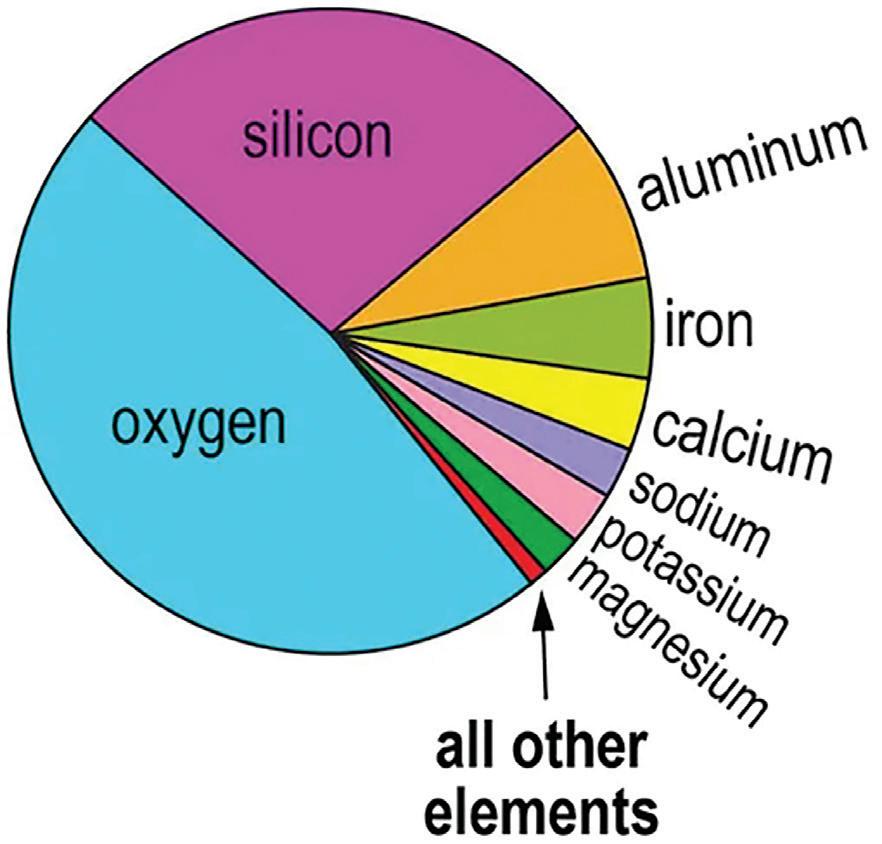
To understand why some minerals are “critical”, you first need to understand what a mineral is. Minerals are made of elements. Elements are the chemical building blocks of minerals. There are 118 known elements. Every mineral is made from one or more of these elements. Some elements, such as oxygen and silicon, are very common.
Most elements are much rarer. Have you ever heard of the element neodymium? Even if you have not, you probably use it every day. Neodymium is an important part of smartphones and other electronic devices such as headphones. Minerals are made of elements connected to each other in a pattern. Each mineral has specific elements in a specific pattern. Think of the elements as building blocks with different colours. You can arrange the blocks in an organised pattern or rearrange the same blocks to make a completely different pattern. Or you
can use different colours of blocks in different patterns. There are many possibilities. It is the same for minerals. Each type of mineral has a unique combination of elements and the way they are arranged.
For example, diamond and graphite are made of the exact same element: carbon. But they are totally
between layers of carbon atoms when you write with a pencil. Other minerals are distinct in both composition and the pattern of their elements.
What Makes a Mineral “Critical”?
Imagine that you are in charge of a country. You want everyone in your coun-
in rocks, such as granite. Lithium is special because it stores energy in rechargeable batteries. It is used in phones, computers, electric vehicles, and some medicines. Fun fact: lithium is lighter than water!
Copper: Copper forms near some types of volcanoes. It is special because it conducts electricity and
different minerals because the carbon atoms are arranged in different ways. In diamond, carbon atoms are packed very tightly together to create the hardest mineral on Earth. In graphite, carbon atoms are in layers that you can break apart just by pressing on them, making it one of the softest minerals. Graphite is in pencils. You break the connections
try to have enough food, medical care, transportation, and technology such as phones and computers. All of these require minerals. What do you do if your country has enough of some of the minerals you need but not others? A mineral is “critical” if it is needed to make important things but a country does not have a good supply of it. The definition of critical minerals A mineral that a country decides is essential for its economy and security but that it does not have enough of, so it must rely on other countries to supply the mineral. is not a scientific one. It is based on how people need and use minerals. Different countries have different lists of minerals that are “critical” for them.
The United States [4], Canada, and the European Union have similar lists of critical minerals. There are some differences because the geology of each region is different. This means that some countries have enough of some minerals, but other countries with different geology do not have enough of these minerals or do not have a good way to get them. Most countries’ lists have about 50 critical minerals (and elements). Here are some “superstars” that appear on every list:
Lithium: Lithium forms in salty desert lakes and in some minerals that form
is soft enough to make thin wires. Copper is used in electrical wires, wind turbines, motors, and circuits. Fun fact: when copper reacts with the atmosphere, it turns green!
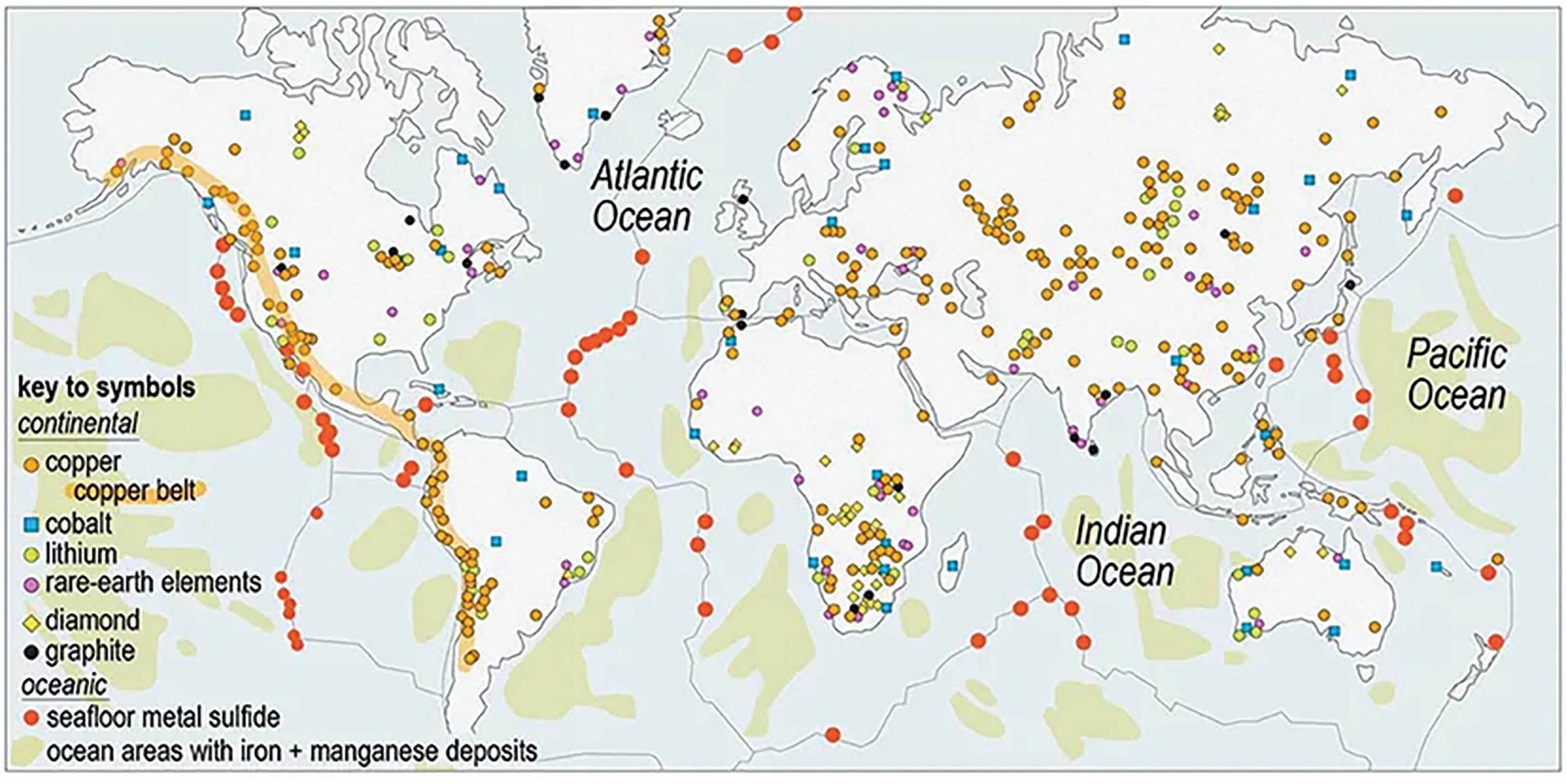
Cobalt: Cobalt forms where hot fluids dissolve metals from rocks in continents. It is special because it makes lithium batteries more stable and longer-lasting. Cobalt is used in phones, computers, and electric vehicles. Fun fact: cobalt was named by German miners who thought the element was a “goblin” that harmed other metals such as silver. We all use many different minerals in our daily lives. Without minerals, we would not have smartphones or computers. We would not be able to use energy from the sun or wind. Human health depends on minerals used to grow food and create medicines. Countries that do not have enough of the critical minerals they need must get them from other countries, meaning countries depend on each other for critical minerals. Your smartphone might contain lithium from Australia, cobalt from central Africa, copper from Chile, and rare earth elements from China. So, as you can see, critical minerals connect the world!
(Adapted from Frontiers for Young Minds)
Locations of some major mineral deposits in the continents and oceans
Elements of a smartphone
The eight most common elements in the outermost layer of the Earth
CARICOM calls on Venezuela to arrest perpetrators of attacks on Guyanese security forces
Following a series of attacks on members of the Guyana Defence Force (GDF) over the past few months, Caribbean leaders are now calling on the Venezuelan Government to arrest the perpetrators.
This was one of the outcomes from the recent 51st Regular Meeting of the Conference of Heads of Government of the Caribbean Community (CARICOM) held in Gros Islet, Saint Lucia, last week.
“The Heads expressed concern over the fact that Venezuela’s territory was being used to attack Guyanese security personnel who are operating within Guyana’s sovereign territory and expressed their expectation that the Government of the Bolivarian Republic of Venezuela will apprehend the perpetrators and place them before the judicial authorities in Venezuela,” a joint communiqué on the high-level regional engagement detailed.
This call from the regional leaders comes on the heels of isolated attacks on the Guyanese military as well as civilians while traversing the Cuyuni River, which borders the neighbouring Spanish-speaking nation.
Only on May 29, a GDF officer was shot and injured during an exchange of gunfire along the Cuyuni River while performing a border security operation.
It was reported that a GDF patrol, escorting civilian commuters in accordance with established operational procedures, came under hostile fire from the Venezuelan shore. The patrol responded in keeping with operational protocols and successfully ensured the safe passage of all civilians.
However, one rank was injured during the incident and was immediately administered first aid before being medically evacuated (MEDEVAC) to Georgetown for further treatment.
That incident was the second attack record that month. On May 4, GDF troops patrolling the Cuyuni River came under gunfire from unknown persons from Venezuela’s side, resulting in at least one soldier sustaining two gunshot wounds to his leg.
During a May 22 press conference, Commander-inChief of the Armed Forces, President Dr Irfaan Ali, had told Guyana Times that additional security assets have been deployed along
the country’s western border with Venezuela.
“We have two new assets and other assets that we are deploying to further enhance security there. But we are confident about protecting our sovereignty and our borders,” the Head of State told this newspaper, while adding that Guyana is also responding to the attacks with a blend of diplomacy, intelligence, and enhanced military readiness.
“We have addressed this with our allies. We have addressed this diplomatically with Venezuela. We have addressed this from a national security standpoint. We have placed greater assets… We are using our intelligence and information from allies to see whether there is a pattern and whether it was linked to particular circumstances,” President Ali had noted.
Tensions between Guyana and Venezuela escalated throughout 2025 due to multiple armed attacks in the Cuyuni region. The incidents involved Venezuelanbased armed men firing upon Guyanese military patrols and personnel, including those escorting election officials.
In February of last year, armed Venezuelan men at-
tacked a GDF patrol boat on the Cuyuni River, injuring six soldiers. The GDF returned fire, and the attackers retreated. In May 2025, armed men from the Venezuelan shore launched three separate attacks on GDF troops conducting riverine patrols; no Guyanese soldiers were injured during these attacks.
Then last August, a Guyanese Joint Services patrol escorting election officials and ballot boxes was fired upon from the Venezuelan side of the Upper Cuyuni River. No one was harmed, and the team successfully completed its mission.
These attacks come as the International Court of Justice (ICJ) is expected to deliver a ruling on the decades-old border controversy case between the two neighbouring South American nations.
Venezuela has been making spurious claims to more than two-thirds of Guyana’s landmass – the entire Essequibo region and a portion of the country’s Exclusive Economic Zone
(EEZ), where over 11 billion barrels of oil equivalent (BOE) have been found and production as well as other exploration activities are ongoing.
Back in 2018, Guyana approached the World Court, seeking a final and binding settlement of the 1899 Arbitral Award, which establishes the boundaries with Venezuela. After years of hearing from both sides, which concluded in May, the ICJ is now deliberating on its decision – likely to be delivered later this year or early 2027.
Unequivocal and unwavering support
In fact, during last week’s CARICOM meeting, regional leaders were updated on the latest developments in the Guyana-Venezuela controversy. They noted that the public hearings on the merits in the case concerning the Arbitral Award of 3 October 1899 were held in May and comprised two rounds of oral argument by Guyana and Venezuela.
Heads of Government further noted that the Court
will in due course deliver its judgement on the matter, which will be final and binding on both parties, thus bringing the longstanding search for a resolution of the controversy to an end.
“Heads of Government reaffirmed their full support for the ongoing judicial process as the means for resolving the controversy peacefully, finally and in accordance with international law, and reiterated their unequivocal and unwavering support for the maintenance of the sovereignty and territorial integrity of Guyana,” the communique stated.
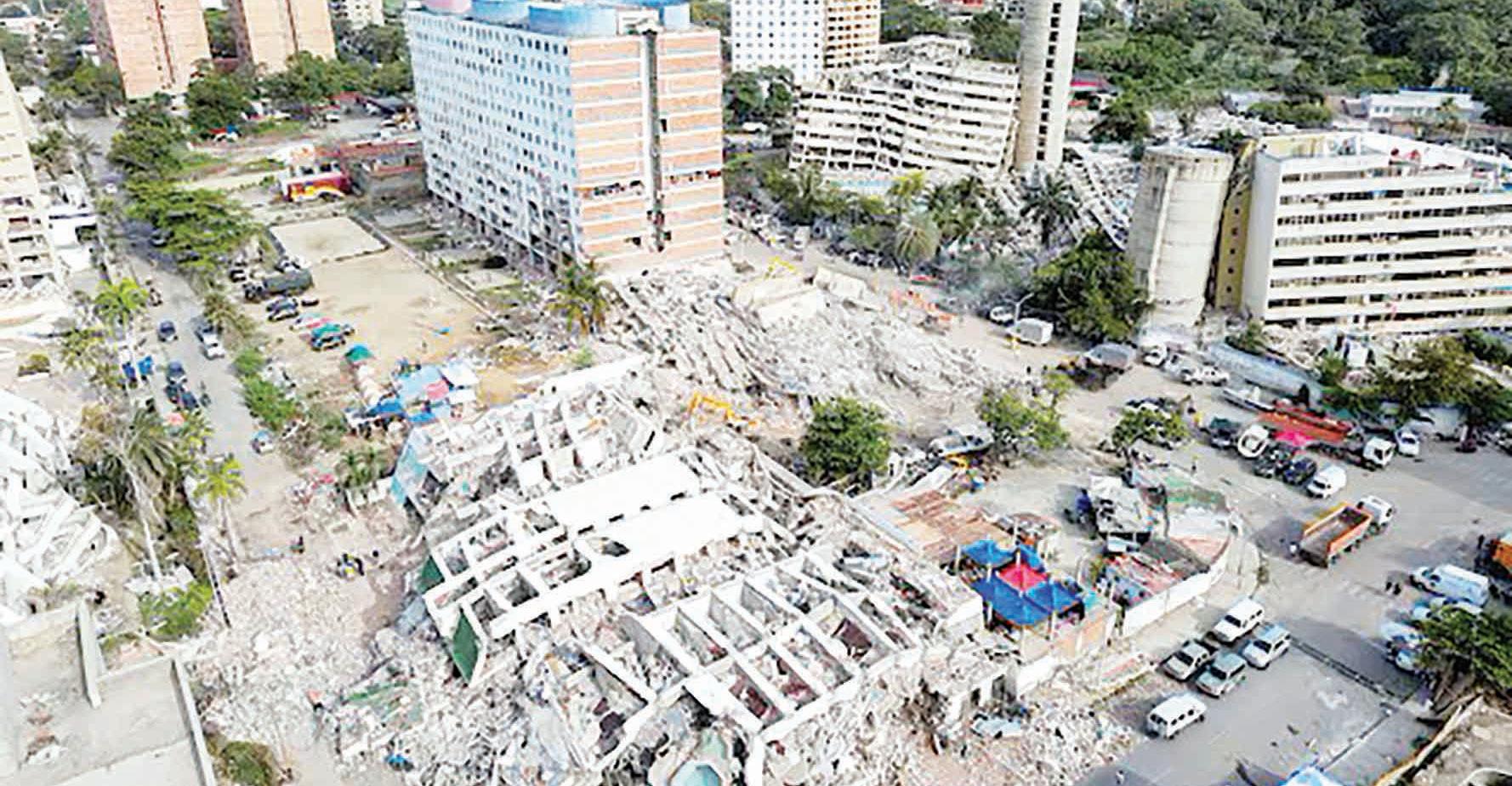
Meanwhile, despite the aggression from Venezuela, Guyana has shown solidarity with its western neighbour following the 7.2- and 7.5-magnitude earthquakes on June 24, which caused extensive damage near the country’s capital.
In fact, Guyana coordinated a regional humanitarian response, sending a shipment with 88 containers of various relief supplies to Venezuela last week, including donations from several other CARICOM nations.
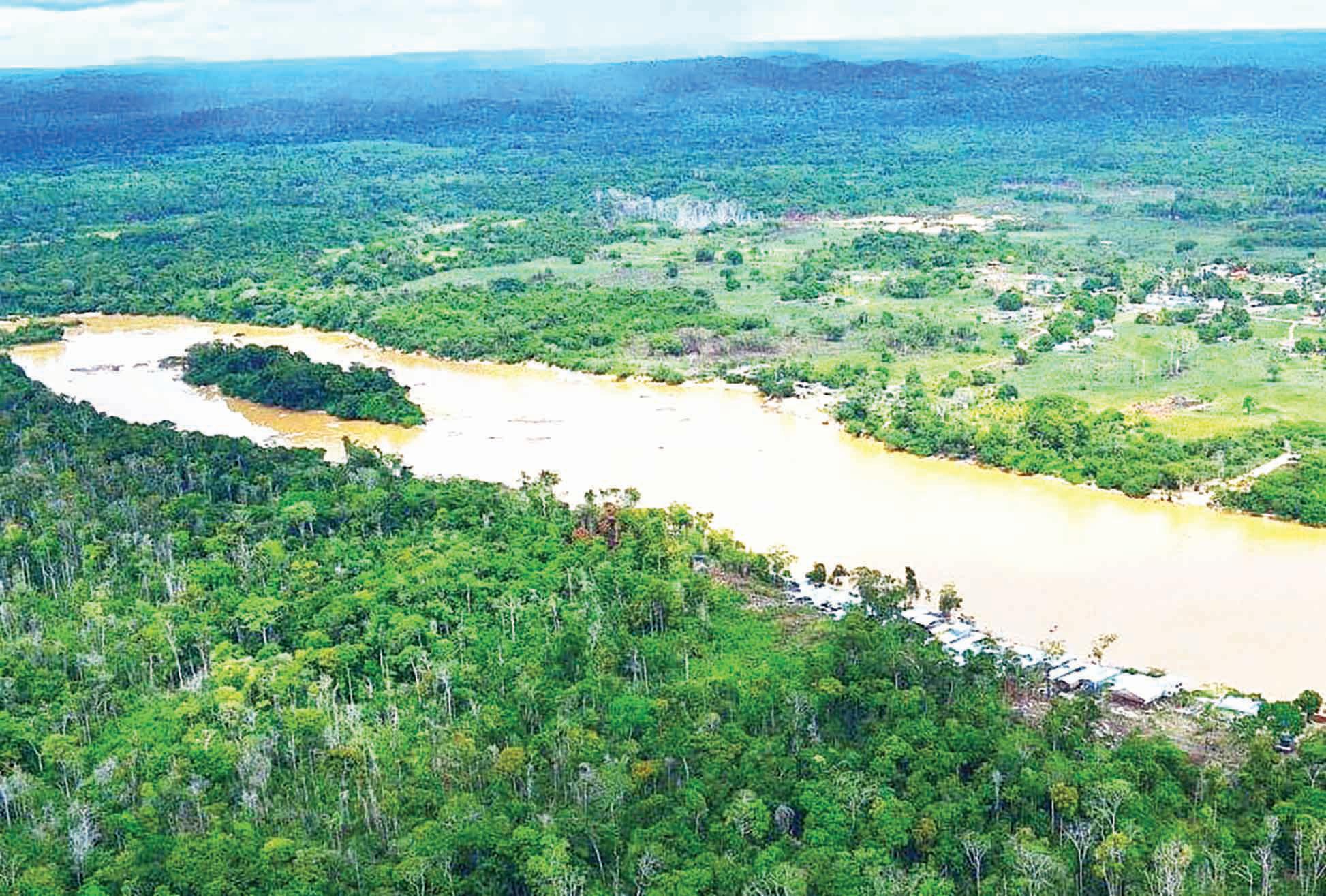
A section of the Cuyuni River that borders Venezuela
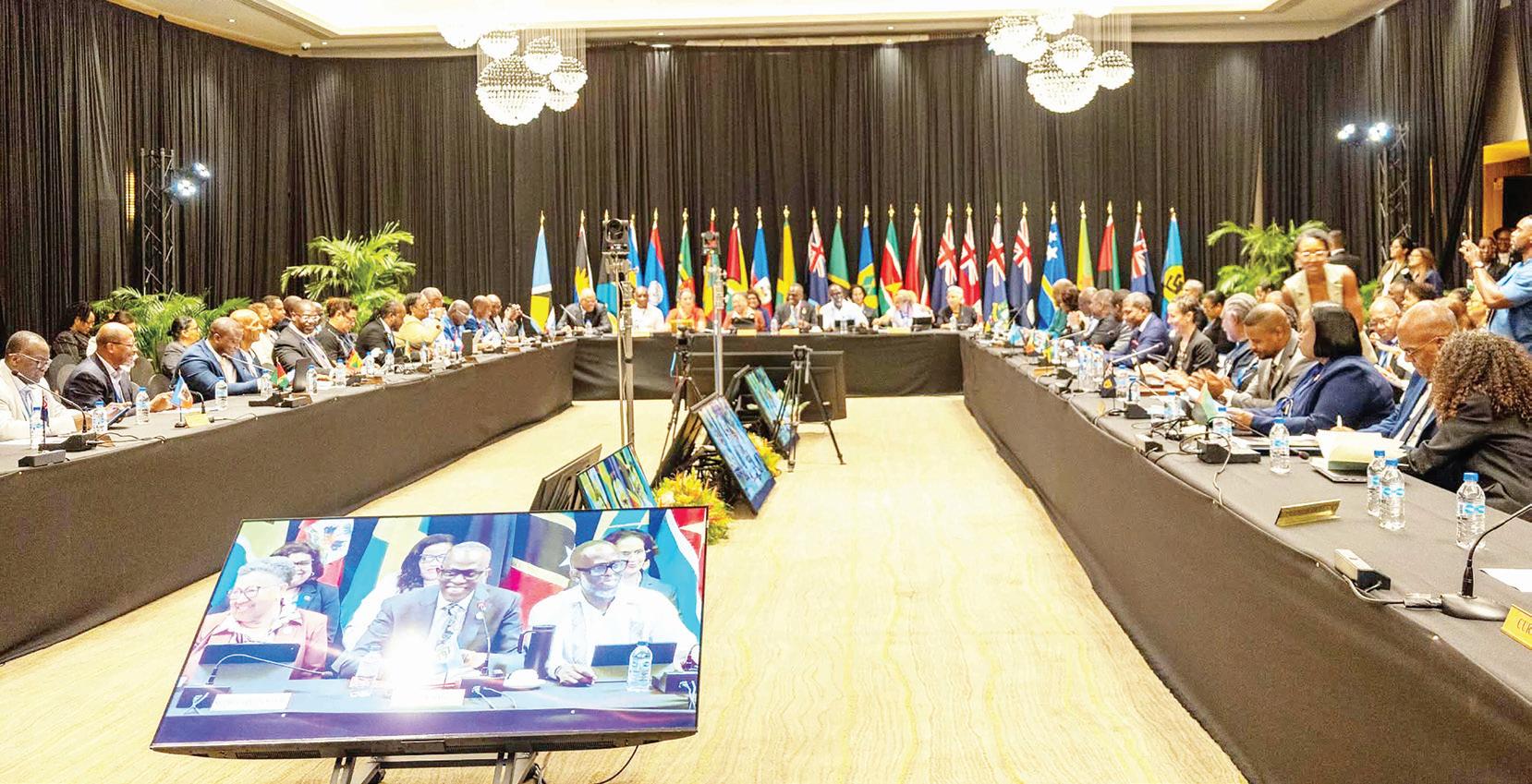
Regional Leaders at the 51st CARICOM Heads of Government Meeting held from July 5 to 8 in St Lucia
Cuban worker dies after high-pressure hose hit him at construction site
A25-year-old Cuban national died on Friday after he was struck by a high-pressure hose while carrying out construction work at Providence, East Bank Demerara (EBD). Dead is Yuviosmar Galindo Cardona. Police in Regional Division Four B are investigating the fatal industrial incident, which occurred at about 09:45h on Friday.
According to preliminary investigations, Galindo Cardona was operating a high-pressure hose attached to a cement machine during construction works when he reportedly lost control of the equipment. The hose then swung and struck him to the head. The injured worker was taken to the
Georgetown Public Hospital Corporation (GPHC), where he was pronounced dead on arrival. His body was later escorted to a funeral home, where it remains pending a post-mortem examination (PME).
Police investigations into the circumstances surrounding the incident are ongoing. The death comes amid continued concerns over workplace safety in Guyana’s construction sector, with the Labour and Manpower Planning Ministry urging employers and workers to place greater emphasis on occupational safety and health measures. In June, the Labour and Manpower Planning Ministry urged employers in the construc-
tion industry to work more closely with occupational safety officials as part of efforts to reduce workplace accidents.
Senior Occupational Safety and Health (OSH) Officer Darwin Borne said the Ministry’s “Putting Safety First” campaign was aimed at increasing awareness among employers and workers about their responsibilities under the OSH Act. Borne said the Ministry was conducting inspections, training sessions and awareness programmes across the country, particularly in response to the increased activity within the construction sector. He noted that the campaign was designed to address hazards associ-
ated with the country’s infrastructure expansion by promoting stronger safety practices and accident prevention.
The Ministry’s OSH Department has also been conducting construction seminars and inspections across the regions, providing guidance to workers and employers on workplace safety requirements. Earlier in April, Labour and Manpower Planning Minister Keoma Griffith raised concerns over workplace safety statistics, reporting that 13 lives had been lost due to workplace incidents between January and April 2026, while another 64 non-fatal incidents were recorded during the same period.
TURN TO PAGE 10
Going…
… higher with NGSA
Wow!! That’s all your Eyewitness could exclaim when he heard that in the latest NGSA results, TWENTY kids received EQUAL SCORES!! That’s unique in the annals of our country’s history – going back over 80 years when “country scholarships” earned kids a place in Queen’s or Bishops!! Apart from feeling sorry for the kid that got just a few questions wrong and is now being rated 21 in the country – he could only marvel at the phenomenon of educational whizzes at the CSEC and CAPE levels trickling down to the primary level of 11-year-olds!! After all, it wasn’t just these high fliers that did so well, but the entire cohort, across the board.
The percentages of passes – getting more than 50 per cent correct in the tests – rose overall into the 60s!! We still got a way to go… but your Eyewitness gotta acknowledge that the Ministry’s efforts that have been put into raising performances appear to be paying off!! We now gotta keep preaching “Onwards, upward may we ever go!!” in the classrooms!!
But your Eyewitness sobered up when he read the Education Minister’s caveat that – “as usual” – the test scores were not raw scores but had been “standardised”. Uh…uh!! A standardised mark takes into account how difficult the paper was and how other students performed. So if we take the mathematics exams for the last two years and last year’s paper was relatively easy to this year’s, a raw score of 70 per cent may place a student only around the middle of the class last year but among the top performers this year!! Standardisation asks: “How well did this student perform compared with everyone else who wrote this examination?” Rather than “How many questions did the student answer correctly?”
Now standardisation doesn’t mean that marks are assigned arbitrarily or according to some quota. No, siree, Bob!! If the entire cohort – this year, 157,056 kids – performs exceptionally well, many students can still receive very high standardised scores. Likewise, if performance is generally weak, standardisation cannot turn poor performance into excellent performance!! So let’s consider the scores to be the fairest – as far as placing kids in the secondary schools that have different minimum marks for entry. But one sticking point is the Ministry of Education has never fully published the exact mathematical formula used to convert raw scores into standardised scores…leading to some headscratching in some quarters!
And that – of course – brings up your Eyewitness pet gripe over the years!! Our Ministers have consistently promised raising the performance of ALL secondary schools up to the level of Queens and Bishops. But while there’s been some progress, we still got a far way to go!! Hence the excitement over the toppers!!
…for values
Most folks today wouldn’t remember, but there was a time when all Guyanese “recycled”: not just their soda (“sweet drinks”?) bottles but also rum bottles – which at that time outnumbered the former! The recycling drive didn’t come from any Government pushing “environmentalism”, but from the mundane fact it was cheaper for the “beverage industry” to pay folks to return the glass bottles than to buy new ones!
With the advent of plastic bottles, these cost so little it ain’t worth the while for manufacturers to purchase empties. And this practice resulted in the non-biodegradable plastic bottles polluting the environment as it presently does –including clogging canals!. But in the US, they’ve solved the problem by mandating a five-cent consumer deposit on beverage bottles – redeemable when the bottle is returned!
With the slogan “Don’t trash ‘em – cash ‘em!”, their environmental problems were solved. There the purchasers have to place the plastic bottles in “recycle bags”!! And those dumped in garbage bins in the streets are collected by scavengers – for the return of five cents!!!!
…road smarts?
Last night your Eyewitness encountered a Policeman directing traffic at a roundabout!! Doesn’t this destroy the whole point? Your Eyewitness believes ALL drivers ought to have a one-week refresher course on roundabout protocols!!
20-year-old found buried in shallow grave in Mahaica backyard
The search for a missing 20-year-old woman ended tragically on Friday after her body was discovered buried in a shallow grave at the back of a residence in Chelsea Park, Mahaica, East Coast Demerara, prompting a murder investigation by Police.
Dead is Kerriana Standford, of Ann’s Grove, East Coast Demerara. Police said the alleged murder is believed to have occurred on Friday, July 3, at about 20:00h.
According to preliminary investigations, Standford had visited the home of a 24-yearold porter from Chelsea Park before she disappeared.
Acting on information received during the investigation, Police went to the Chelsea Park property on Friday, where they discovered the body of a woman buried in a shallow grave at the back of the residence.
Police said that further information led investigators to Enmore, East Coast Demerara, where the suspect was located and arrested. He was escorted to the Mahaicony Police Station and remains in custody.
Standford’s body was taken to the
Mahaicony Cottage Hospital, where a doctor pronounced her dead-on arrival. It was later transferred to Bailey’s Funeral Home, where it is awaiting a post-mortem examination. Investigations are ongoing.
Cutlass-wielding bandits steal motorcycle from Venezuelan
A22-year-old
Venezuelan national was robbed of his motorcycle during an armed attack at Sparendaam, East Coast Demerara, in the early hours of Friday.
According to police, the robbery under arms occurred at about 04:00h on Friday.
Preliminary investigations revealed that the vic-
tim was riding home on a motorcycle with another man when they were confronted by two males travelling on another motorcycle.
Police said one of the suspects, who was reportedly armed with a cutlass, dismounted and confronted the victims. During the encounter, one of the victims engaged the armed suspect
in a scuffle.
The suspect managed to mount on the victims’ motorcycle, while his accomplice rode the motorcycle on which they had arrived. The two suspects then escaped in an eastern direction on the two motorcycles.
Police said no arrests have been made and investigations are ongoing.
Cuban worker dies after...
Griffith said the figures highlighted the need for stricter compliance with health and safety protocols and called for a shift towards prevention rather than responding after accidents occur. He said the Government would continue strengthening enforcement and ex-
panding the capacity of the occupational safety inspectorate. Between 2020 and 2025, the Labour Ministry conducted 6186 OSH inspections across high-risk and low-risk sectors, reaching more than 27,000 workers nationwide.
The latest incident follows other recent workplace tragedies, including the April 2026 collapse of a three-storey building under construction at Atlantic Gardens, East Coast Demerara (ECD), which resulted in the death of carpenter Radish Domingo, 46, and injuries to several other workers.
Mining declarations up...
In 2025, small- and medium-sized miners declared approximately 94,000 ounces of gold. This is in addition to the 165,000-ounce declaration made by the Chinese-owned large-scale gold operator. Currently, the Oko West Gold Project in Region Seven is being built out by a Canadianbased gold mining company, G Mining Ventures (GMIN). The Oko West Gold Project is currently in its construction phase, with the company aiming to complete these works by the third quarter of 2027 before transitioning
into full-scale operations with a production target of 350,000 ounces of gold annually.
However, the introduction of the national mining company in Guyana could see local stakeholders being actively involved in similar large-scale operations. Previously, the Guyana Government had approached the Guyana Gold and Diamond Miners Association (GGDMA) for them to explore putting together a local consortium to take over the abandoned Troy Resources large-scale
operations in Region Seven. The Australian-based mining company had ceased operations here in 2023, and the Government subsequently terminated their licence, taking over ownership of the abandoned mining property. With the closure of the Troy Resources operation, a portion of the previously licensed area was subdivided into 27-acre parcels and allocated to local small miners under a structured arrangement. Nearly 100 small miners are currently operating in that area.
Dead: 20-year-old Kerriana Standford
My greatgrandfather Rambishun
As my great-grandfather
Rambishun recounted to the coaxing of my very persistent mother when she was a child, he was married at a very young age. He guessed he was probably around six and the bride about three from a village quite some distance away from his village of Ishmailpur, between Patna and Gaya in Uttar Pradesh. Contact had been made by a relative who had married into the girl’s village and chose “a good Kurmi girl”. Even though so very young, Rambishun could recollect the girl’s parents visiting his home to perform a “tilak” (engagement) ceremony. Gifts were exchanged, and the promise of marriage made binding. His father and friends later travelled with him as a “bariaat” in bullock carts to perform the marriage ceremony at the girl’s home; one of his young nephews was the “saibala’. He was going to see her now for the very first time and did not even know her name. They were received in a “janwaas” house where the bariaat rested before the wedding was performed by the Brahmin purohit (priest) of the in-laws.
Rambishun returned alone to his home after the wedding ceremony until it was decided years later that he and his “dulahin” were “of age” – that is, the marriage could be consummated. Rambishun was about 15 and the bride 13. A “gauna” ceremony was then performed, and the girl, whose name he finally discovered was Rajdai, was brought to Rambishun’s home to live with his extended family in their compound.
Rambishun recounted that Rajdai was a very good wife who worked with him in the vegetable plot the family owned just outside the village and also in the plots of rice and sugar cane they cultivated some distance away. She was a very good mother, young as she was: one of her brothers had a baby to whom she was very close back in her village. According to Rambishun, she worked as diligently as any of the other women: she was a good Kurmi wife, he said proudly. However, his mother and his bhowgies (sisters-in-law) really mistreated her – she could do nothing right in their eyes. This was particularly true of his mother, to whom he could not say anything, much less reproach.
Within two years Rajdai gave birth to a baby boy. As was his family’s custom, they named him after Sri Ram – Ramsamujh. They made a great fuss over the baby, and his father-in-law brought gifts of gold from his village. But his mother’s and bhowgies’ attitudes towards his wife remained as hostile as ever. While they did not get to spend much time with each other, they were able to discuss the situation when they worked side by side in the fields. As the seventh and youngest son, it was unlikely he would ever get his own plot of land to farm. Rajdai was very unhappy. What to do?
The critical incident that stood out in my mother’s memory of Rambishun’s account was pretty much the straw that evidently broke Rambishun’s back. It was the day that his mother refused to allow Rajdai to eat all day, and she was forced to eat a raw “bhanta bigan” (round eggplant). Rambishun could bear it no longer. He had heard about individuals who had left the village and had gone to work in far-off places and returned to live in style. They were recruited by Arkatis (recruiters) who usually frequented crowded locales on the lookout for likely prospects.
And on a visit to a village fair some distance away, soon after his wife had been so cruelly treated by his mother, Rambishun encountered an Arkati who was recruiting men and women to work in Damru Tapu (Demerara Island). The man described the work in glowing terms, but Rambishun did not need much persuasion. He returned home and spoke to Rajdai. After much discussion he convinced her that he would go abroad alone because it might be dangerous for the baby. And in any case, after five years he would return with enough money to buy some land so that they could live independently by themselves. She would be in charge of her own home. He would then be 24 years old, and they would be able to make a good life with their son.
Unlike many accounts of Arkatis kidnapping recruits for the sugar colonies, this was not the case with Rambishun – or any other ancestor – and is not part of our family lore.
Ravi Dev
By Tamica Joseph
Though most chil-
dren in Guyana sit the National Grade Six Assessment (NGSA) at 11 or 12 years old, the 2026 top-performing pupil of Genesis Early Childhood Education Centre (GECEC), Ethan Henriques, rewrote the script with his exceptional academic ability. A soft-spoken youngster, Ethan
was just eight years old when he wrote the 2026 NGSA in April, and notwithstanding his short stature, Ethan had a big achievement when the Education Ministry released the NGSA results on Friday. He celebrated his ninth birthday in June. At only nine years old little Ethan obtained a place at Queen’s College after earning an impressive 482.69 marks. Out of a maximum possible score of
484.52, little Ethan attained 99.62 per cent, placing him among Guyana’s highest-performing pupils. His score also placed him alongside the final nine students on this year’s top one per cent list, which featured just 159 pupils nationwide and included a whopping 20 pupils who achieved perfect scores. Genesis Headteacher Dion Penville explained that Ethan’s extraordinary abili-
ty was evident from the mo ment he arrived at the school as a four-year-old. Though Ethan was supposed to enter nursery school at that age, he instead started in Grade Two, given his advanced level at the time.
“The nursery entrance test was a walkover for him,” she shared.
“He was already talking about photosynthesis, other plant processes and other prithen,” the head teacher re called.
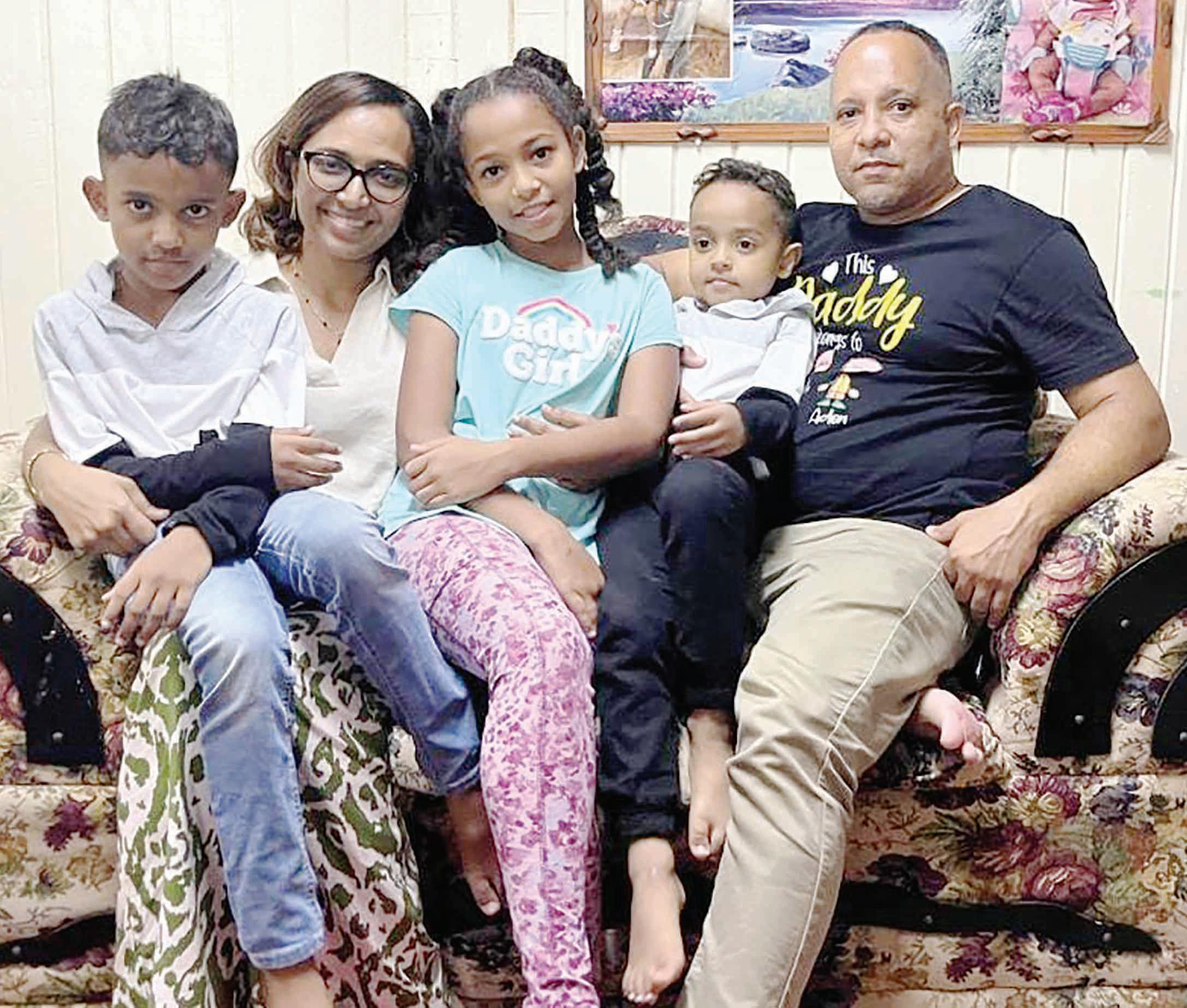
After starting out in an advanced class, Ethan consistently continued to excel throughout the years, topping his class in his end-of-term exams most years. The decision to place young Ethan directly into Grade Two was made jointly by the school and his parents after they recognised that he was already working well beyond the level expected for his age. At the time his sister, Adina, was also entering Grade Two, so it seemed the perfect fit. Adina, who also wrote this year’s NGSA, earned 475.38 marks and secured a place at West Demerara Secondary School. She has been his biggest supporter, sharing classrooms, lessons and this year’s NGSA journey with him. Although they will now attend different secondary schools for the first time, she told this publication she will always be proud of him. Adina shared how her brother’s intellectual achievements have been a point of pride for her over the years.
“I would always boast about him. He topped the class in Grade Three, Grade Four, Grade Five and Grade Six. I’m proud and happy that he got a school that he wished for and he worked hard for,” she said. In addition to the school and his sister, Ethan’s achievements are being celebrated by his parents, Amrita and Timothy Henriques. His
couraged him to sit with her. She taught him to write and read,” Amrita recalled of Ethan’s learning over the years. Their mother explained that Ethan’s academic development started long before he entered the classroom. “He was saying his ABC backwards by the age of two. By five to seven, he was doing multiplication in his head up to his 20 times table. He was fixated on what was happening… he has always been performing consistently well throughout school,” Amrita noted.
Exceptional
His father recalled that during the COVID-19 pandemic he worked from home while caring for the children. “I was fortunate to be able to stay at home and work from home while taking care of the children. During that period, it was a learning experience. Ethan was eager to learn,” he recalled.
Reflecting on his son’s performance, he said, “The children would have been very studious and paid attention to their work, and they’ve always been A students. Ethan was exceptional. He has good retention, so he does well. He remembers well and is very focused, and they work hard.” Despite Ethan’s exceptional academic ability, his parents insist he enjoys a normal childhood.
TURN TO PAGE 20
For Raul Adams, writing the best letter in the 2026 National Grade Six Assessment (NGSA)was not a race against time but rather an opportunity to allow his creativity to flow.
Adams emerged as the top performer in the letter-writing component of the English Paper Two examination at the 2026 NGSA, impressing examiners with his ability to structure his thoughts, communicate clearly and bring his words to life.
The examination task required candidates to imagine that their family was planning a camping trip and that they were allowed to invite a friend. Pupils were asked to write a letter explaining why their friend should join the adventure.
For Adams, a student of St Sidwell’s Primary School,
the achievement was about making those closest to him proud.
Speaking confidently with this publication about his preparation process, Adams explained that his accomplishment was the result of dedication and determination.
“I’m a very hard-working, ambitious young man,” Adams said. “When I was writing, I just wanted to make my parents proud.”
His success, however, did not happen overnight; he explained that his love for writing was strengthened through additional support, including an online writing workshop conducted by his teacher, who helped him develop his skills in composition and letter writing.
“Keep your confidence up”
The young writer admitted that creating a strong
piece of writing does come with challenges, including moments when ideas do not immediately come together.
“Sometimes I get writer’s block. For example, if they ask you to give three reasons for something [specifically in the exam], sometimes I can only think of one reason,” he explained.
However, Adams said he learned to overcome those moments by staying focused and continuing to put the point of his pen into action.
He recalled that his parents played a major role in helping him improve, especially during the early stages of his writing journey.
“My parents supported me a lot. At first, I wasn’t good at writing letters or compositions, but then my dad wrote one, and I learnt from it,” he said.
Despite the pressure of examinations, Adams said
writing remains something he enjoys, and he encouraged other students to believe in their abilities.
“Keep your confidence up. If you think you’re not working hard enough, you’ll have to work harder,” he advised.
With his strong foundation in writing and his determination to continue improving, Adams is already
then I remembered that I should continue doing it and keep pushing, and I guess that did show with the results,” she told this publication.
She also recalled the disappointment she sometimes felt when her performance in quizzes did not meet her expectations but said the encouragement from her teachers and parents helped
riod.
“I look up to him because during the time when I was studying, he would stay up with me. He always has my back; he is kind, and with my family, he always dedicates time. He is very hard-working, and that inspires me,” she explained.
Gurcharran also highlighted the important role played by her mother in
Raul Adams, who emerged as the top performer in the letter-writing component of the English Paper Two examination at the 2026 NGSA reading his letter at the exam’s results announcement ceremony at the Arthur Chung Conference Centre on Friday
looking ahead to the next chapter of his academic journey.
Challenging but rewarding Meanwhile, for Kaitlyn Gurcharran, success at the 2026 National Grade Six Assessment did not come without sacrifice.
Behind her achievement as one of Guyana’s top-performing pupils were a series of early mornings, late nights, and moments of doubt but with firm family support.
Reflecting on her preparation with this publication, the young student of Mae’s Under 12 Primary said that the journey was challenging but rewarding.
“It was very hard having to wake up early and sleep late, but I pushed through it with the grace of God, of course, and with the help of my family, friends, and my teachers,” she shared.
Despite the pressure of preparing for one of the most important examinations in her academic journey, Gurcharran said she developed perseverance, especially during moments when she questioned whether she could continue.
“When I had to wake up early, I used to think that I should just not do it, but
her overcome those challenges.
“When I would get much more wrong in a quiz than I thought I would, I would want to just give up, but then my teachers, my mom, and my dad would remind me that when you fail, you can get back up and do much better. That’s probably what kept me going and helped me face those challenges.”
Looking ahead, Gurcharran already has her sights set on a career in the financial sector, inspired partly by her interest in Mathematics and the example set by her father.
“I find that I really like Mathematics and I’m good at it, so I would like to be a bank accountant or something in a bank when I grow up,” she said.
However, she was quick to point out that her dream is one she developed for herself.
“It’s strictly my dream, but I’ve seen how my father works, and it inspired me a bit.”
Her father, Shawn Gurcharran who is the Chief Executive Officer of Guyana Bank for Trade and Industry (GBTI), has played a significant role in her development, especially during the demanding preparation pe-
helping her achieve her goal.
“My mom helps a lot. She is always there for me and supports me through everything, especially when things get difficult.”
For the young achiever, receiving her results brought a mixture of relief and gratitude after weeks of uncertainty.
She admitted that she became worried after hearing that some students received calls about their performances.
“After the exams, I had to wait so long, and the anxiety would have built up over time, but I remembered that I just had to keep trusting God. I would pray every night, and then the day came. I heard a lot of people got the call, but I didn’t, so I began to worry. But then when the results came out, I realised that I did very, very well, and I really just want to thank God for that.” Her advice to other students is simple: “Never give up.”
“I would tell them that no matter what you do, if you fall down, make sure you get back up and thank God that you got back up. And if you’re still up and you didn’t fall down, still thank God no matter what you do, because you’re up.”
Raul Adams NGSA top performer, Kaitlyn Gurcharran
Before The Reckoning could become the most personal story he had ever shared with the public, veteran Guyanese playwright and director Ronald Hollingsworth first needed the approval of the woman who had lived it with him. The memoir lays bare the triumphs that shaped his career but also the failures that nearly destroyed his marriage. It recounts how the pressures of theatre, education and ambition drove him to the brink of losing everything, including becoming involved in a relationship that would have resulted in a child outside of his marriage.
For more than four decades, Hollingsworth has balanced two callings, education and theatre. Although widely recognised across Guyana, he admits that many people know his name but have never had the chance to put a face to the celebrated playwright, director, and educator whose work has helped shape the country’s theatrical landscape. Hollingsworth began his professional career as a teacher in Guyana more than 40 years ago before expanding his role in education as a lecturer at the Cyril Potter College of Education.
There, he also served as drama coordinator within the Education Ministry’s Unit of Allied Arts, becoming one of the founding members responsible for developing the programme.
At the same time, Hollingsworth was building a name for himself in theatre. What began as an interest during his school years evolved into acting and directing at the Theatre Guild of Guyana, where he initially staged productions drawn from English literature. His creative direction shifted after witnessing the impact of playwright Harold Bascom’s Guyanese productions, which demonstrated that local stories could resonate just as deeply, if not more, with audiences than traditional English plays.
Ironically though, Hollingsworth never set out to pursue theatre. While attending Allen’s High School, he frequently returned after classes to pick up his then-girlfriend, who was a member of a theatre group led by his mentor. Noticing his regular visits, he was invited to join the group. Rather than placing him on stage, the veteran director encouraged him to observe rehears-
als, allowing him to learn the craft of directing by watching productions unfold and offering feedback. The experience sparked a passion for theatre that would shape the course of his life, that was where the spark for writing and stage directing began.
Hollingsworth explained that media professionals played an important role in encouraging him as a playwright by consistently reviewing his productions and recognising the quality of his work. He even credited the Guyana Times for its strong work in journalism and seeking to uncover stories such as the one he has to tell.
“You guys give us time like you’re doing right now. There are people in the media who are very interested in finding out about this other side of the economy, this other side of a nation –the creative side. Every production I staged would be reviewed, and over the years they kept saying that Till the Final Place was one of my best.” Despite the professional success, the greatest struggle was taking place at home.
“My wife was only 21. When theatre started to kick up steam and my name was out there, my plays were do-
ing well, everything was working; I started slipping into a different kind of person that she could not recognise. She couldn’t recognise the man she had married. That stress came upon my marriage. At one time it got so bad. That’s why I put it in the book as a reckoning for me. I had to come very clean on this. I was going to have a child outside of the marriage. I wrote about it in the book. I wouldn’t tell you what happened – you’ve got to read the book for yourself.”
“People are like, ‘Wow, I don’t believe all of this,’ because a lot of people knew my wife. I have to say this, though. My wife passed away in January this year. I was glad she was able to read the
book.” For Hollingsworth, her approval meant everything.
“When she read the book, I had to get her blessing to write about her in it. I was glad that she was able to reconcile everything. She looked at me and said, ‘Boy, you remember all these things?’ I didn’t even know she had forgotten and put all that aside just to let me do what I do best. That chapter – Deep Trouble in My Domestic Domain – grips me every time I try to read it. I can hardly find the words even now.”
Hollingsworth officially showcased The Reckoning on Saturday during a Wine and Sign event at the Theatre Guild of Guyana.
As part of the event, he also showed clips from the original stage productions of several of his plays, including Watch the Ride, Marriage After Death, My Second Wife, Viagra, and Grandad’s Day Out. The Reckoning is also available for purchase on Amazon, where the hardcover edition retails for approximately US$25 and the paperback for about US$22.99. However, patrons attending Saturday’s Wine and Sign event will be able to purchase copies for GY$4000 at a discounted price. He added that one of his main goals is to encourage members of the public and corporate sponsors to purchase copies for schools so that more young people can benefit from the book.
Global Hare Krishna Study Centre devotees in Guyana for 5-day spiritual festival
Amilestone celebration is underway at the Hare Krishna Study Centre in Georgetown as devotees from all across the diaspora commemorate a decade since the establishment of the centre while also reflecting on two decades of the movement’s presence in the city. The five-day festival, hosted by the International Society for Krishna Consciousness (ISKCON) at its Study Centre on Lot 1 UG Road, brings together devotees from more than 10 countries for what organisers describe as one of the movement’s most significant celebrations in Guyana. Shanta Vigraha Das, a member of ISKCON who travelled from Trinidad and Tobago for the occasion, spoke with this publication about how the anniversary marks several important milestones for the organisation.
His father explained, “For some of us academics comes easily. I think he’s one of those fortunate individuals. His normal childhood activities aren’t impaired in any significant way because of that.” As a matter of fact, his mother, Amrita, explained that Ethan himself is particularly inclined to pick going out and doing his extracurricular activities over staying in and doing schoolwork.
“He says school is enough from nine in the morning to three. That’s it. He doesn’t want to do extra classes… he will come, get the homework over in five minutes. He does football; he does farming; he plays cricket. We have a farm in the back, so they would go out and plant, so apart from academics, he has all of that,” she explained.
“We’re celebrating 10 years since this project was established in Georgetown and 20 years since the project actually started. We have a beautiful five-day programme,” he explained as today marks day five of the celebration. The celebrations also coincide with the 20th anniversary of Georgetown’s annual Ratha Yatra (Festival of Chariots), 50 years of ISKCON’s presence in Guyana, 60 years since the movement was established in New York and Guyana’s 60th indepen-
dence anniversary. The international nature of the celebration has also brought together devotees from several countries, including Ghana and Nigeria, who travelled to Guyana to participate in the festivities.
One Nigerian devotee, HH Bhakti Vasudeva Swami, explained to this publication that his journey into the Hare Krishna movement began more than four decades ago after searching for answers about inequality and human existence. “I got attracted to these teachings because I had many questions about the differences in human society, why some people are born rich while others are born poor, deaf or blind”, he recalled.
He said those questions remained unanswered until he encountered the writings of ISKCON founder AC Bhaktivedanta Swami Prabhupada in 1983.
“I read two of his books that same night, and all my questions were answered. That was the beginning of my journey, and I have now been serving as a fulltime priest for the past 42 years.” One senior devotee, Hari Chakra Prabhu, explained that while chanting is rooted in religious practice, modern scientific research has also explored its broader benefits. Hari Chakra Prabhu is a dedicated devotional musician and spiritual teacher within the International Society
for Krishna Consciousness (ISKCON). Known for his engaging kirtans, he tours globally with his group, “The Spiritual Warriors”, bringing Hare Krishna traditions to various festivals and outreach events.
“Our central practice is the chanting of the Hare Krishna maha mantra. While many see it purely from a theological perspective, there have also been scientific studies examining its effects,” he said.
According to him, research has suggested that regular chanting may help reduce anxiety, stress and depression while improving attention span and even assisting those struggling with insomnia.
“The purpose of chanting is ultimately to develop pure love for God. But researchers have also found that it can positively influence mental well-being and emotional health.” The celebrations continue throughout the weekend, with organisers inviting members of the public to participate in the remaining activities. Daily programmes had included devotional singing, cultural presentations, free vegetarian meals, health booths, family activities, children’s entertainment and the traditional chanting of the Hare Krishna mantra. The festival, which began on Wednesday, concludes today with the annual Ratha Yatra celebrations.
Secondary school at young age
Although thrilled by his success, the family admits they do have concerns about him entering secondary school at such a young age.
“Our main concern is that he is so young and his sister isn’t there. They’ve always been in the same class together, going to school and coming home together. They’re like twins, just two years apart. So, it’s a little bit concerning… but he seemed to think that he could manage it on his own,” Amrita said. The parents were also full of praise for GECEC, saying the school’s encouragement helped Ethan thrive without unnecessary pressure. The headteacher believes Ethan’s success reflects more than academic bril-
liance.
“He loves to participate in extracurricular activities. He is also very polite, and he helps his classmates when they are struggling to understand concepts,” she said.
“I am extremely proud of the achievement. Keep aiming high and let no one look down on you because of your age, but be an example in word, conduct, faith, spirit, purity and love,” was her message to him. Looking back on his years at the school, she said, “His time at Genesis was well spent. He was well known due to his achievements, so everyone admired him. He made the best of it.”
Basking in excitement
For Ethan, he is still basking in the excitement of receiving his results. “We just opened a computer, and
when I saw ‘Queens’, I was just staring at the screen, trying to see if it read something else. My little brother was screaming; my mom was screaming. Then my dad came home and he was proud,” Ethan shared in an interview with Guyana Times. While many children dream of attending Queen’s College, Ethan believes dreams alone are not enough. “I just did my best. All the children would want to get QC, but no wishes could get to QC. It’s the effort and the discipline to do your best. That’s what earns you the high score,” he imparts.
With his natural inclination for learning, it comes as no surprise that his favourite subject is Mathematics. For him, he loves the challenge that it brings. “Sometimes it’s just com-
plicated, and it pushes my brain to higher heights. And even though every time I do maths, I finish it really fast. So, no maths is too hard for me except those complex equations I haven’t learnt yet,” he said confidently.
Ethan says he enjoys “two things, play and make mischief with my brother”. He also likes playing football and chess. Asked how it felt to be one of the youngest pupils ever to sit the NGSA, he pondered if he might perhaps be the youngest sitting pupil yet and joked that perhaps there needs to be a global record of it.
“I felt very happy, and I also felt like the people from the Guinness World Records should just come fly to Guyana and give me a couple certificates,” he joked.
Looking ahead to life at Queen’s College, Ethan said,
“I look forward to having academic success, making new friends.”
For Ethan’s parents, however, advice to parents of gifted children is to allow them to shine. “Allow them to shine. Encourage them. No pressure. There’s no pressure. Let them have that balanced life. You must have them enjoy playing outdoors… and just be children. There’s no doubt that, yes, you must have to encourage them and you must have time to help them to grow and spend that time, but no pressure to say, ‘Oh, you have to do this and you have to get this by this age.’ Everybody shines differently. Everybody has their own season. Everybody has a time when it’s theirs. Encourage them and allow them to just work at their own pace,” Amrita said.
Day three of the Hare Krishna festival (Latchman Singh photos)
Sod turned for $528M East Ruimveldt Market upgrade
The East Ruimveldt Market is set to undergo a major rehabilitation following the turning of the sod by Local Government and Regional Development Minister Priya Manickchand on Saturday.
The project is part of the Government’s ongoing investment in modernising
said the rehabilitation was not only about upgrading the physical structure of the market but also about responding to the concerns and challenges faced by those who depend on it for their livelihoods.
She recalled visiting the market on February 18, where she met with vendors
sign based on the needs of vendors and the wider community.
Under the new design, the market will feature 237 stalls, an increase of 24 stalls compared with the current layout. The expansion is expected to allow more vendors to be accommodated while improving
markets across Guyana, with the aim of creating safer, more accessible and economically active public spaces.
Addressing vendors and residents gathered at the site, Minister Manickchand
and observed the conditions under which they operated.
“From that visit, we knew something had to be done,” the Manickchand said, explaining that the Ministry subsequently worked with consultants to develop a de-
the organisation of the facility.
The upgraded market will also include a dedicated block for food vendors, salons and tailoring businesses. Additionally, a youth training centre for tailoring
will be established, along with parking facilities capable of accommodating more than 50 vehicles.
Designated spaces will also be provided for roadside vendors who currently operate around the perimeter of the market.
Manickchand said construction will be carried out in phases to reduce disruption to business operations. She explained that several options are being considered to allow vendors to continue operating during the rehabilitation, including the use of prefabricated container stalls and phased occupancy of completed sections of the market.
“We don’t want anyone to miss even a day of work,” she said, while stressing that efforts would be made to ensure vendors continue earning throughout the construction period.
The Ministry is targeting completion of the rehabilitation project within four months.
During the engagement, vendors raised questions regarding stall sizes and arrangements during the construction period. Officials explained that the new stalls will range in size from seven feet by eight feet to 24 feet by 14 feet, with a height of 15 feet compared to approximately 10 feet under the current design.
Minister within the Culture, Youth and Sport Ministry, Steven Jacobs, said the project is part of
the Government’s plan to strengthen communities through improved public amenities.
“This is the first of many to come... What we will continue to do is build stronger communities. We want to make sure every community has the amenities to be strong... We will continue to answer the call,” Jacobs said.
He added that contrac-
vided into five lots, with five contractors assigned responsibility for the completion of each lot.
Earlier this year, the Government had pledged to standardise markets nationwide, ensuring that all facilities comply with modern standards of safety, sanitation and infrastructure.
Markets slated for works this year include East Ruimveldt, Albouystown,
tors would be held accountable for ensuring the timely completion of the works.
Meanwhile, Labour and Manpower Planning Minister Keoma Griffith also welcomed the commencement of the project, describing it as an investment that would benefit generations of residents while reaffirming the Government’s commitment to serving the community.
The rehabilitation contract was awarded through the public tender process in keeping with the Public Procurement Act at a cost of $528,370,300.
The project has been di-
Rose Hall, Number 79, New Amsterdam, Mahdia, Lethem, Mackenzie, Port Kaituma, Suddie, Leonora, Zeelugt, Vreeden-Hoop, Tuschen, Mon Repos, Rosignol, Palmyra, Port Mourant, Bath, and Soesdyke.
Also attending the sod-turning ceremony on Saturday were Permanent Secretary Miguel ChooKang; project manager with responsibility for markets Anjanie Ramlall; Georgetown Town Clerk Candace Nelson; former Mayor Patricia ChaseGreen; vendors; contractors; and members of the public.
Guyanese charged for NYC firebomb attacks on places of worship, businesses
Aman accused of carrying out a string of Molotov cocktail attacks in New York City had a pending arrest for allegedly threatening to cut a man’s head off.
Yogesh Sayrange, 36, appeared in federal court Thursday in connection with the June 25 firebombing of a smoke shop on Fulton Street in Brooklyn.
According to prosecutors, Sayrange admitted to the attack, telling investigators, “Yes, I f-ing firebombed them. They’re Muslims, scum and terrorists.”
Authorities believe Sayrange is responsible for seven arson incidents since late June, most of them targeting houses of worship, along with several commercial locations.
The latest attacks occurred Wednesday night in Queens.
Police said Sayrange allegedly threw a Molotov
cocktail at the front door
Surveillance video appeared to show him speaking with a group of men outside the
church before lighting and throwing the device.
Federal prosecutors said that before the attack, Sayrange asked the men, “Do you want this institution to be turned into a
mosque?”
The incendiary device bounced off the church door and exploded on the ground, causing no damage to the building.
Investigators said
Sayrange then travelled to a Kingdom Hall of Jehovah’s Witnesses on 78th Street in Woodhaven, where he allegedly threw a second Molotov cocktail. That device also bounced off the building and exploded on the ground without causing damage.
A third incident was reported nearby at an ambulette company on Rockaway Boulevard in Cypress Hills. Mechanics working late said a firebomb landed in the parking lot.
“We heard like a little bang. I go outside. The floor was on fire,” one witness said.
No injuries were reported in any of the incidents.
Authorities arrested Sayrange shortly afterward and recovered two additional Molotov cocktails from his bag. According to prosecutors, when asked about the unused devices, he replied, “I had two more in my bag.
I was going to finish the job.” Federal prosecutors said Sayrange, a Guyanese national, was living in the United States illegally after protections he received upon arriving in the country as a child expired. Prosecutors said he told investigators he had a pending application to renew his Deferred Action for Childhood Arrivals, or DACA, status.
Court records show Sayrange also has two pending criminal cases. He was arrested June 12 in Manhattan for allegedly threatening someone with a metal knuckle knife and arrested again June 16 in Queens for allegedly waving an axe at a man and threatening to cut off his head. He was ordered held without bail.
Investigators continue to examine whether bias or religious hatred played a role in the attacks. (Eyewitness News ABC7)
of Iglesia Bautista El Mesias on 75th Street in Ozone Park at about 11:35h.
Guyanese Yogesh Sayrange
The ceremonial sod-turning ceremony for the upgraded $528M East Ruimveldt Market
President Dr Irfaan Ali joined cricket fans at the Guyana National Stadium, Providence, on Saturday evening to soak up the atmosphere during the opening One-Day International of the West Indies home series against New Zealand. Surrounded by cheering supporters, the President took in the action from the stands, sharing in the excitement as Guyanese rallied behind the regional team (President Dr Irfaan Ali/Facebook)
Region 3 young professionals build hightech poultry project with Govt support
Agroup of young professionals in Region Three (Essequibo Islands-West Demerara) has launched and expanded a technology-driven poultry project aimed at increasing local production and promoting modern agricultural practices in Guyana.
The initiative, known as Demerara Chicken Inc, was established by about 20 professionals who responded to President Dr Irfaan Ali’s call for greater involvement in modern agriculture. The project began with a trial produc-
tion cycle of 20,000 birds in a state-of-the-art tunnel-house facility and is now preparing to increase output to 35,000 birds.
President Ali, in a social media post, said the project represents a model for innovative, efficient and sustainable poultry farming, while highlighting the role of young entrepreneurs in strengthening food security and creating new economic opportunities. The project was developed through a partnership between the young professionals and the Government,
with the participants collectively investing 10 per cent of the project’s cost.
One of the participants explained that President Ali engaged professionals from Region Three, including lawyers, doctors, engineers and pharmacists, to discuss opportunities in modern agriculture.
“His Excellency, Dr Mohamed Irfaan Ali, the President of the Cooperative Republic of Guyana, reached out to various professionals across the region… and he had a sit-down breakfast
with us where he explained to us the various modernised agricultural techniques that could be taken so that our life could become better,” the participant said.
The group said the tunnel-house poultry system was among the agricultural technologies that generated the most interest due to its controlled environment and improved production methods. The first production cycle recorded a 2.8 per cent mortality rate, which participants described as a successful outcome for the trial phase.
“We started on a trial phase last month with 20,000 birds. It was a success. We had 2.8 mortality overall for the entire cycle,
which was extremely good for us,” another participant said. The project is expected to move into full production capacity within the next two weeks, with 35,000 birds planned for the next cycle. Participants said the technology differs from traditional poultry-rearing methods by allowing birds to be raised in a more controlled environment, improving efficiency and supporting food security efforts.
“In relation to national food security and mitigation of hunger across the world, I think our experience with this company is one that is second to none due to the fact that the rearing technology has been greatly different from the actual way of rear-
ing chicken,” one participant said. A female participant, who is also a mother of two, said the initiative provides an additional source of income for young professionals.
“Being a young professional, we really welcome this project. This is an added income,” she said. The group said Government support was critical to bringing the project to fruition.
“Without the intervention of the Government, this project would not have been possible. So I’m very much thankful,” one participant said. The initiative is part of efforts to encourage investment in agriculture through the adoption of modern technologies and increased participation by young entrepreneurs.
Natural Resources Minister Vickram Bharrat has set a timeline for the Ghanaian company, Cybele Energy, to pay off the US$17 million signing bonus for the S7 oil block that it was awarded offshore Guyana.
“I say safely, the ending of July will be the absolute cut-off date,” Bharrat declared during an appearance on the Starting Point podcast, where he was asked about the timeline for the oil company to settle the outstanding payment.
Just last month, the Natural Resources Minister had told reporters that Cybele had racked up nearly US$4 million in default interest after failing to pay the signing bonus on time.
The Guyana Government signed the Production Sharing Agreement (PSA) in December 2025 with the Ghanaian company – a deal which stipulates the payment of a US$17 bonus within 30 days. Failure to make that payment triggered financial penalties under the PSA.
“There is an accrued interest of, I think, about $4 million right now…which will take the signing bonus
from US$17 to above US$20 million,” Bharrat had told reporters on the side-lines of an event last month.
At the time, the Minister had explained that the Government had extended the timeline for the payment of the oil block bonus at the request of the company but cautioned that the failure to meet the newly agreed timeline could result in Cybele losing the oil block.
However, during his recent appearance on the Starting Point podcast, Bharrat explained that while Cybele had submitted a work programme with guarantees from potential investors and the African Export-Import Bank (Afreximbank), the company has since encountered some issues with securing the investments. This, he added, was communicated to the Government by the company earlier this year.
“They would have indicated to us that they’re having a few issues with their investor, but they’ve also indicated recently that they are signing a new agreement, which I believe maybe as we speak, that agreement is being signed with another investor, and that they will
be in a position to pay the signing bonus.”
“So, right now, our legal team basically is in contact with them to ensure that they are in compliance with the agreement, or otherwise we will have no other choice than to suspend or to cancel that agreement. They have indicated to us that they need about two to three weeks more. We have been very lenient,” Bharrat stated.
Show leniency
In fact, the Natural Resources Minister went on to defend the Government’s decision to show leniency to the Ghanaian oil company. The first being the fact that Cybele has already set up a local office and employed a number of Guyanese, including a country manager who is a young female Guyanese.
Additionally, the company has also paid their licence fee and their en-
vironmental bond to the Guyana Geology and Mines Commission (GGMC) and the Environmental Protection Agency (EPA), respectively.
“So, they would have already paid over US$2 million in licence fees and other fees, which is due by all oil companies that sign agreements with us… So, they have already paid up all of these fees. They’ve already set up the office. They’ve already employed and trained a number of Guyanese. So, the Government is in a sense of being a bit lenient because of these factors and because you want to show investors’ confidence too in Government and in Guyana. And because of that, some amount of leniency, I must say, would have been given to them,” Minister Bharrat stated.
Firstever auction Guyana’s firstever auction of offshore oil blocks
was unveiled in December 2022 by President Irfaan Ali. After several extensions and adjustments to the fiscal framework, the auction concluded with six bidders submitting 14 offers for eight of the 14 available blocks.
Cybele Energy emerged successful in winning Block S7, a shallowwater block located approximately 50 kilometres (km) from ExxonMobil’s prolific Liza One and Two fields. The block is estimated to hold at least 400 million barrels of recoverable oil, with seismic data suggesting that the “oil fairway runs directly through S7 toward Suriname”.
Founded in 2012 and headquartered in Accra, Ghana, Cybele Energy is led by Chief Executive Officer (CEO) Beatrice MensahTayui, one of Ghana’s most influential businesswomen. The company has expanded operations beyond Ghana into Africa, the United States (US) and the Caribbean. Cybele describes itself as committed to sustainability, innovation and responsible energy practices. Its projects range from offshore exploration to integrated engineering solutions, with partnerships that include Well Expertise of Norway (acquired by Elemental Energies).
US developer pushes ahead with 1200-home Guyana developments
Two major residen-
tial developments valued at more than US$500 million are moving into vertical construction near Georgetown as United States (US)-based developer Coastal Rim Properties Inc (CRP) advances plans for more than 1200 homes across Ogle and Diamond.
The projects, TAJ Dream Ogle and TAJ Diamond, represent CRP’s first ground-up communities in Guyana and are being developed in partnership with NBA Hall of Famer Hakeem Olajuwon.
The projects are being led by principals Nicola and Giovanni Mola. According to the company, at TAJ Dream Ogle, a 1000-unit master-planned community, site preparation works are progressing, with road corridors about 70 per cent complete and surveyor layouts and elevations approximately 85 per cent finished, according to the company.
Drainage works have also advanced, with trenches along the northern and
southern boundaries of the site fully backfilled.
Construction crews have started installing the storm drainage system using large-diameter high-density polyethylene (HDPE) piping. The project’s two-storey site office and conference facility is substantially complete, while the steel structure for a storage and logistics building has been erected. Meanwhile, the company said construction has started on homes at TAJ Diamond, a 218-unit residential community located on Guyana’s East Coast Demerara (ECD). The company reported that first-floor steel columns and beams have been installed on the first 15 houses. Foundations and slabs are being poured, underground plumbing is being installed, and blockwork has started on several units. Both developments are using US-manufactured, climate-treated structural steel designed for Guyana’s coastal environment. CRP said safety briefings and en-
gineering inspections are being conducted daily at both construction sites.
TAJ Dream Ogle is located in the Ogle corridor, within close proximity to
International
quarters, MovieTowne and Giftland Mall.
When completed, the development is expected to in-
clude more than 1000 condominium units, a retail town square and a five-star hotel with a hospitality training institute. The first residential buildings and the initial
retail phase are expected to be completed in spring 2027, with additional phases to follow.
“Every week on site tells the same story. Momentum,” Nicola Mola said. “What began as a vision for a new standard of living in Guyana is now rising out of the ground. We built these communities to international standards because Guyanese families, and the diaspora who have invested their belief in this country, deserve nothing less.” Guyana has seen increased investment in construction and real estate since oil production began offshore in 2019, with developers targeting residential, commercial and hospitality projects around Georgetown and other urban areas.
CRP, which has operated for more than five decades, has developed more than 6000 residential units and over 1.5 million square feet of commercial space across the western US and Hawaii.
Ammo possession charge dismissed after prosecution fails to prove case
ACorentyne River chainsaw operator who spent more than seven months before the courts on a charge of unlawful possession of ammunition has been discharged after a magistrate ruled that the prosecution failed to prove its case beyond a reasonable doubt. Rajiv Singh, called “Issac”, 36, of Orealla Village, Corentyne River, Berbice, was on Thursday discharged by Magistrate Tuanna Hardy at the conclusion of a trial into an al-
legation that he unlawfully possessed 25 live 12-gauge cartridges without holding a firearm licence. In delivering her ruling, Magistrate Hardy found that the prosecution had failed to establish the offence beyond a reasonable doubt and dismissed the charge. The decision followed a trial that was conducted over several hearings between June 23 and July 9, during which the prosecution called six witnesses before closing its case. Both the prosecution
and the defence subsequently made oral submissions before the magistrate reserved and later delivered her decision. During his closing submissions, Defence Attorney Vinay Punwasi mounted a number of challenges to the prosecution’s case, arguing that the evidence presented was insufficient to sustain a conviction.
Punwasi objected to the prosecution’s reliance on an alleged oral statement said to have been made by Singh. The attorney also
challenged the admissibility of aspects of the prosecution’s evidence, arguing that there had been a failure to establish the proper legal foundation for its admission. Punwasi further submitted that ranks from the Customs Anti-Narcotic Unit (CANU) involved in the operation were not equipped with body-worn cameras, leaving no independent electronic record to corroborate the circumstances surrounding the alleged oral statement.
After considering the
evidence and submissions from both sides, Magistrate Hardy ruled that the prosecution had failed to prove the charge beyond a reasonable doubt and dismissed the matter. Singh had originally been arrested on November 30, 2025, and was later charged with possession of ammunition without a licence in force, contrary to Section 16(2)(a) of the Firearms Act.
The charge alleged that he unlawfully possessed 25 live 12-gauge cartridges without being the holder of
a valid firearm license. He first appeared before Magistrate Hardy at the Mibicuri Magistrate’s Court on December 2, 2025, where he pleaded not guilty. Bail was refused at that hearing, and he was remanded to prison.
The matter was subsequently transferred to the Springlands Magistrate’s Court before eventually returning for trial. Singh was granted bail in the sum of $300,000 on December 18, 2025.
Ogle
Airport, ExxonMobil Guyana’s head-
Venezuela quakes death toll rises to 4333; 16,740 injured
A drone view shows the remains of an apartment building after twin earthquakes struck La Guaira
The death toll from the two earthquakes that struck Venezuela on June 24 has risen to 4333, National Assembly President Jorge Rodriguez told reporters on Saturday, announcing that the distribution of housing to those affected will begin next week.
Meanwhile, 315 of the dead have not yet been identified, the official said.
The official tally of injured remained unchanged at 16,740, while 6462 per-
sons have been rescued and about 17,000 have been left homeless.
Rodriguez said acting President Delcy Rodriguez will allocate the first 200 homes to those affected next week but did not give any more details.
Rodriguez also said that 856 buildings were affected, of which 190 either collapsed completely or suffered structural collapse.
According to the Government’s preliminary
estimates, 25,000 homes are needed. Authorities have already identified around 40 plots of land, totalling about 584,000 square metres, for housing projects in Osma and Chuspa.
Rodriguez said search operations are continuing, saying, “As long as there is life, there is hope. We still have one or two sites where the situation remains uncertain, active sites where we are searching for survivors.”
(Reuters)
A&B signs 7 healthcare agreements in China to strengthen health system
The Government of Antigua and Barbuda (A&B) has taken a major step toward advancing the nation’s healthcare system with the signing of seven landmark cooperation agreements between the Ministry of Health, Wellness, Environment and Civil Service Affairs and Hangzhou Normal University and its affiliated hospital during an official visit to the People’s Republic of China.
The agreements were signed by Health, Wellness, Environment and Civil Service Affairs Minister Michael Joseph, who is currently leading a delegation
in China. The partnership is expected to deepen collaboration in medical education, specialist healthcare, research, telemedicine, and healthcare innovation, while strengthening the capacity of Antigua and Barbuda’s healthcare system.
Minister Joseph welcomed the partnership, describing it as a transformative opportunity for the country’s healthcare sector.
The Minister also emphasised the long-term benefits of knowledge sharing and professional development.
Accompanied by the medical director of the Sir Lester Bird Medical Center, Dr Shivon Belle-Jarvis, and
A&B’s Ambassador to the People’s Republic of China, Clement Antonio, he further noted that the agreements align with the Government’s commitment to improving healthcare access and outcomes for all citizens and residents.
The collaboration is also expected to facilitate scholarship opportunities for Antiguan and Barbudan students pursuing medical education, support joint research initiatives in chronic disease management and diagnostic innovation, and promote closer cooperation between healthcare institutions in both countries. (Excerpt from Antigua Newsroom)
549 earthquakes felt in Jamaica in 2025, says PIOJ
The number of seismic activities recorded by Jamaica’s Earthquake Unit in 2025 was 549 compared to 633 in 2024.
This is according to the 2025 edition of the Economic and Social Survey Jamaica, a publication of the Planning Institute of Jamaica (PIOJ).
The survey found that over 50 per cent of the recorded events (280) were local, while 22.2 per cent, or 122, were near. Local events occur on the island and in close offshore areas, while near events occur within approximately 100.0 km of Jamaica’s coast.
Cuba suffers 2nd island-wide blackout in 1 week amid fuel blockade
Cuba has reported its second nationwide blackout in less than a week, plunging the island into darkness shortly before evening.
On Friday, the Union Electrica de Cuba, the stateowned utility in charge of the electrical grid, announced that the outage began at 16:30h local time.
No explanation was given for the blackout. But it follows a similar power failure on Monday, bringing the total number of island-wide outages to four since the start of the year. Two other total blackouts struck in March.
Outages are not uncom-
mon in Cuba, where the electricity infrastructure is increasingly aged. Much of the system dates to the Cold War period, between 1960 and 1980.
But the problem has intensified since January, when United States President Donald Trump effectively severed Cuba’s supply of foreign oil.
Already, Cuba has been under the longest-running trade embargo in modern history. Since the 1960s, the US has largely barred trade with the island, which sits roughly 140 kilometres – or 90 miles –from its shores.
Since taking office for a
second term, though, Trump has sought to trigger regime change on the communist-led island.
Shortly after Maduro’s removal, Trump announced that Venezuela would no longer send oil or money to Cuba. His Administration has continued to control Venezuelan oil exports in the months since.
Since then, only a single Russian oil tanker has reached Cuban soil — but that was in March.
The Trump Administration, meanwhile, has blamed mismanagement in the Cuban Government for the blackouts. (Excerpt from Al Jazeera)
T&T PM praises US partnership after dental mission
Prime Minister (PM) Kamla PersadBissessar has praised the strong relationship between Trinidad and Tobago (T&T) and the United States, saying the partnership continues to deliver tangible benefits in healthcare and other key sectors.
Speaking yesterday at the closing ceremony of the US Dental Readiness Training Exercise at the Dental Hospital of the Eric Williams Medical Sciences Complex, Persad-Bissessar thanked the US Government, the US Embassy and US Southern Command for their continued support.
She described the exercise as another example of the “enduring partnership” between the two countries, built on mutual respect, shared democratic values and a commitment to improving the lives of citizens.
The PM said the collaboration extends beyond healthcare to security, disaster preparedness, education, trade and energy, adding that it continues to evolve
while delivering measurable benefits to both nations.
Persad-Bissessar pointed to previous joint initiatives, including the 2025 visit of the USNS Comfort, which provided specialist consultations, surgeries, professional training and capacity-building opportunities for thousands of persons.
She also thanked the US for donating medical equipment to the Port-of-
Spain General Hospital and the San Fernando General Hospital, saying the equipment strengthened diagnostic capabilities and improved patient care.
She also credited support from the US Centers for Disease Control and Prevention and other agencies with helping to strengthen T&T’s public health system. (Excerpt from Trinidad and Tobago Guardian)
Haiti clears 316 political parties ahead of long-delayed elections
HThe PIOJ said the strengthening of the country’s seismic network continued with the upgrading of equipment which supports the National Data Centre and the upgrading of GPS stations. It also includes the installation of 12 sensors for the citizen network to promote community-based seismic monitoring and improve the mapping of ground shaking across the island.
Eight seismic stations were repaired, two of which were damaged during the passage of Hurricane Melissa last October.
There were seven felt events, all of which occurred on the mainland and ranged between magnitudes 3.1 and 4.2 on the Richter scale.
The PIOJ said sustainability in the power supply system was improved through the upgrade of the solar system power storage capacity with three new high-capacity lithium batteries.
To support the public awareness programme, the Earthquake Preparedness Guidelines for Places of Worship were prepared through collaboration among the Earthquake Unit, ODPEM and other partners.
In addition, over 45 communication and media-related activities were hosted, and six seismic intensity surveys for felt earthquakes were conducted. (Jamaica Observer)
aiti’s Provisional Electoral Council (CEP) has officially approved 316 political parties to participate in the country’s long-delayed elections, advancing preparations despite continued uncertainty over the election calendar, funding and the security conditions needed to hold the vote.
The electoral council announced on July 9 that it approved 316 of the 320 organisations that submitted registration applications in March. According to officials, in compliance with a June 2 electoral decree, only four parties were rejected: the National Movement for the Prosperity of Haiti (MONAPHA), the
Nationalist Christian Party of Haiti (PNCH), the Liberal Republican Party–Centrist Bloc (LR Bloc Centriste) and Haiti Tomorrow Together (AYIDA).
“This publication marks a key step in the implementation of the electoral process and follows the review of applications submitted by political organisations in accordance with the legal framework,” the CEP said in a statement.
The announcement highlights both progress and persistent questions surrounding Haiti’s electoral process. The country already has one of the Caribbean’s most fragmented political systems, and previous attempts to reduce the number of reg-
istered parties have repeatedly sparked controversy.
Earlier this year, the CEP proposed a measure requiring political parties to demonstrate broader national representation before participating in elections, arguing that Haiti’s hundreds of political organisations complicated the process, governance and coalition-building. The proposal drew criticism from several parties that viewed the measure as restrictive. The approval of 316 parties reflects how little that political landscape has changed, even as authorities continue preparing for the country’s first elections in a decade.
(Excerpt from The Haitian Times)
Prime Minister Kamla Persad-Bissessar visits the United States Dental Readiness Training Exercise at UWI’s Dental School
Around the World
US seeks free Hormuz access from Iran as talks focus on strait
Iran’s Foreign Minister Abbas Araqchi and his Omani counterpart on Saturday discussed arrangements for the safe passage of ships through the Strait of Hormuz, as Washington seeks a public pledge of free, secure transit.
US President Donald Trump said on Friday the US and Iran had agreed to continue talks despite an escalation of hostilities this week, while also declaring an end to the ceasefire between the two countries.
No attacks were reported on Friday or Saturday, however. A senior Iranian source told Reuters that Iran, the US, Qatar, and Pakistan had agreed to negotiate in a call that mediators were trying to arrange for Saturday while Araqchi is in Oman.
It was not immediately clear whether the efforts were successful, but Araqchi and Omani Foreign Minister Sayyid Badr Albusaidi “exchanged views on appropriate mechanisms for the safe passage of ships through the
Strait of Hormuz”, in accordance with the ceasefire deal, according to a statement from the Iranian foreign Minister.
Oman’s state news agency later said that Omani and Iranian negotiators would continue talks “at the technical and political levels”.
Oman is helping to mediate an end to a war that has destabilised the Gulf and raised prices around the world since the US and Israel launched airstrikes on Iran on February 28.
(Excerpt from Reuters)
Bull gores runner in face at Spain’s bull run festival; 12 others hurt
Arunner was gored in the face, and many more were fortunate to not be seriously injured during a chaotic bull run at Spain’s San Fermin festival on Saturday.
The six bulls and accompanying steers charged through crowds of thrill-seekers who packed the narrow street course in Pamplona. The huge animals knocked down bodies to the cobblestones, and stumbling runners caused several pileups during the two-and-a-halfminute run from the pen to the bull ring, where bullfighters will kill the bulls lat-
er in the day.
One runner was pierced by a horn in the face, while 12 more persons needed medical treatment for an assortment of knocks, according to the University of Navarra Hospital.
A black bull broke away from the pack early in the 957-yard run and ploughed into a group of people, smacking one full in the side of the face with a horn. It was not clear if that was the moment of the goring.
Many runners appeared completely unaware when bulls were breathing down their necks and, instead of
trying to gore them, just shoved them out of the way.
Saturday was the fifth morning run of the eight-day festival in northern Spain.
This year’s festival comes 100 years after the publication of Ernest Hemingway’s novel “The Sun Also Rises”, whose publication launched the San Fermin festival to international fame.
The last death at San Fermin’s bull runs occurred in 2009, but gorings and broken bones are common, partly due to the large number of novice bull runners and foreign tourists who join the experienced locals. (CBS News)
Iran’s supreme leader calls for revenge for father’s killing
Iranian Supreme Leader
Ayatollah Mojtaba Khamenei has called for revenge for the death of his father and predecessor Ali Khamenei.
Vengeance was the “will of the nation”, he said in a written statement read out on state TV. It was his first public message since his father’s funeral ceremonies began this week.
His father was killed in an air strike on February 28, the first day of the USIsraeli war against Iran.
Many Iranians taking part in funeral ceremonies over the past few days carried placards calling for the killing of US President Donald Trump, who on Saturday warned that any such plans would see the US
“decimate and destroy all areas” of Iran in response.
Ali Khamenei was buried in his home city of Mashhad on Friday.
His son has not been seen in public since before the war and is rumoured to have been disfigured in the strike
which killed his father.
But his statement on Saturday was uncompromising.
“We pledge to avenge the blood of the martyred leader and all the martyrs of these two wars from the criminal and disgraced killers,” he was quoted as saying.
“The matter depends neither on my personal existence nor on that of other officials. Whether we are present or not, it will come to pass.” (Excerpt from BBC News)
Thousands gather in Srebrenica to mark 31 years since genocide
Thousands have gathered in Bosnia and Herzegovina to mark 31 years since the Srebrenica genocide, as leaders and activists worldwide use the anniversary to call on people to fight dehumanisation.
On Saturday, mourners, survivors, foreign dignitaries and religious leaders gathered at the SrebrenicaPotocari Memorial Center to commemorate those who were killed in 1995. People took part in the annual peace march before 10 newly identified victims were buried.
Bosnian Serb forces overran the eastern Bosnian town of Srebrenica on July 11, 1995, killing more than 8000 Bosnian Muslim men and boys over several days. Srebrenica had been declared a protected “safe area” by the United Nations Security Council two years earlier.
Denis Becirovic, Chairman of the Presidency of Bosnia and Herzegovina, said honouring those who were killed was crucial to maintaining stability.
Every year on July 11, newly identified victims are
buried at the SrebrenicaPotocari Memorial Center, as investigators continue to search for the remains of people buried in mass graves in surrounding areas.
More than a thousand victims remain missing following the genocide, which is widely recognised as the worst atrocity committed in Europe since the Holocaust during the Second World War.
More than 100,000 persons were killed during the Bosnian War between 1992 and 1995. The conflict fol -
lowed the dissolution of Yugoslavia, triggering a series of ethnic conflicts and wars of independence among the Balkan states that had previously formed a single country.
“The United Nations this week remembered the genocide in Bosnia – the 8000+ Muslim men and boys killed in Srebrenica in July 1995. The leaders of the genocide were convicted. The perpetrators of Israel’s genocide in Gaza remain at large,” Roth said on X. (Excerpt from Al Jazeera)
Russia launched missile and drone attacks on Ukraine on Saturday, killing seven persons and wounding dozens more, officials said, as President Volodymyr Zelenskyy called for diplomatic efforts to ensure Kyiv secured weapons more quickly.
Kyiv awaited supplies of air defence munitions amid a shortage that has left it exposed to Russian attacks.
Two glide bombs hit a crowded area in the north-
ern city of Sumy, a frequent Russian target, killing five people and injuring 30, authorities said.
One bomb hit a bus stop, and pictures showed a yellow bus with one of its sides ripped off. Other pictures posted online showed damage to apartment building facades.
Glide bombs also injured 10 in the southeastern city of Zaporzhzhia, the regional governor said.
Two people were killed and another wounded earli-
er in the day by a missile strike on the southern port city of Odesa.
Zelenskyy, speaking in his nightly video address, said Ukraine needed its allies to ensure weapons supplies were provided more promptly.
“I am preparing changes in Ukraine’s diplomatic efforts. We need a new level of cooperation with our partners to ensure that agreements on arms supplies are fulfilled,” Zelenskyy said. (Excerpt from Reuters)
Nigeria says army killed 300 bandits in Zamfara
Nigerian soldiers killed more than 300 members of kidnapping and cattle bandit gangs in the north-western state of Zamfara this week, according to a Government official.
Government troops targeted the gangs in the Gummi district in a two-day operation that “led to the elimination of more than 300 terrorists”. Zamfara’s information commissioner, Mahmud Muhammad Dantawasa, said in a statement.
Gangs made up of cattle rustlers and jihadists have terrorised communi-
ties in northern and central Nigeria, where they raid farmers’ land, steal cattle and kidnap people for ransom. They also impose levies on farmers who want to access their own land in protection rackets.
Jihadists and criminal gangs have been cooperating in recent years, according to security analysts, who say their mutual interests align. Criminal gangs have become widespread in impoverished rural Nigeria, while jihadists continue to wage a 17-year insurgency in the north of the country. Both are invested in a weak central Government.
Residents of Gummi said soldiers and local vigilantes had launched a campaign on Wednesday night against about 1000 bandits who had stolen livestock.
“The soldiers and the vigilantes killed more than 300 bandits in the fight which raged all night and the following morning.” Abubakar Muhammad told Agency France-Presse.
Troops had tried to launch an assault on the bandits’ camp two weeks ago but were outnumbered and were forced to withdraw, residents said. (Excerpt from The Guardian)
Bosnian Muslims bury a casket containing the remains of victims of the 1995 Srebrenica massacre in the memorial cemetery.
Calls for the assassination of Donald Trump were heard at funeral ceremonies for Ayatollah Ali Khamenei in Mashhad
ARIES
TAURUS (April 20May 20)
GEMINI (MAY 21June 20)
CANCER
LEO (July 23Aug. 22)
VIRGO (Aug. 23Sept. 22) (March 21April 19)
Don’t settle for less than what you want. Express your concerns if opposition surfaces. Having a positive attitude and being willing to compromise will help you put your plans in motion. Avoid situations that lead to emotional mayhem. Anger won’t solve problems, but meeting in the middle will help ease a stressful situation.
Pay attention to what’s unfolding around you. Don’t take an unnecessary risk. Avoid crowds, scammers and those trying to mistreat you. Stick close to home and take care of unfinished business, projects and your own well-being. Start home improvements that offer comfort or convenience. Invest more time and money in yourself and your future.
Put more effort into learning and expanding your interests. Don’t be tempted by lofty offers or those trying to talk you into overindulgence. Focus on self-improvement, not destruction. Try helping others, and you’ll gain perspective regarding what lifestyle you want to claim as your own. The decisions you make are critical; it’s sink or swim.
Say no to those trying to get you to take a risk. Stick to what and who you know best, and use your intelligence to navigate your way through any sticky situations you face. It’s OK to say no and to take time to rejuvenate. Trust your instincts, and you’ll avoid negativity and poor decisions.
Turn limitations and setbacks into something fresh, exciting and uplifting. It’s up to you to generate the type of life you want to live. Surround yourself with positivity and people who lift you up instead of bring you down. Let your creative juices flow, and you’ll find your happy place. Diversity will help you gain respect and support.
Take the high road. Refuse to let anyone lead you astray or take advantage of your vulnerability. Avoid joint ventures, going into debt or buying into someone else’s dream. Keep your plans simple, and proceed alone. Risks will not turn out as planned. Don’t compromise your health or emotional wellness. Know when to say no and move along.
LIBRA (Sept. 23Oct. 23)
SCORPIO (Oct. 24Nov. 22)
CAPRICORN (June 21July 22)
Take flight, experience life, discover what’s possible and start the process of change. Let go of what’s not working for you anymore and replace it with a little excitement and adventure. Do your homework, and be direct and ready to react to whatever comes your way. It’s time to tango instead of sitting on the sidelines.
An open mind will lead to a receptive heart. Communication will help you gain access to new possibilities. Refuse to let negativity or anger stand between you and something or someone you want in your life. Be reasonable, but don’t lose sight of your destination. Roll the dice and see what transpires. Romance is in the stars.
SAGITTARIUS (Nov. 23Dec. 21)
Listen, negotiate and change only what’s necessary and affordable. Back away if someone tries to use emotional manipulation. Take hold of whatever situation you face, and make decisions that reflect what’s best for you. Domestic improvements will lead to solutions that lighten your vulnerabilities and encourage happiness. The time you spend alone will be a reawakening that pays off.
AQUARIUS
(Jan. 20Feb. 19) (Dec. 22Jan. 19)
PISCES
(Feb. 20Mar. 20)
It’s OK to take a break, reflect and find your happy place. Opportunity comes from doing what’s best for you. Someone you encounter will push emotional buttons. Listen carefully, be direct, find out what’s in it for you and proceed with confidence. Trust your instincts, and manufacture the scenario that suits your lifestyle best.
Choose a diverse course of action. Change may be necessary, but so is security. Don’t overspend or promise more than you can deliver. Being honest, having integrity and keeping a positive attitude will bring hope for a brighter future. Opportunity is apparent if you apply for a position that offers financial and personal growth. Update your resume.
Home is where the heart is. Enjoy your space; fill it with the people you care about, host an event and be the one to bring people together. Personal satisfaction is derived from doing the right thing and helping others. Participation and communication will lead to a better understanding of what’s possible and inviting. Romance is on the rise.
Peanuts
Calvin and Hobbes
Pickles
Buttler, Brook brilliance ensures England bulldoze India 4-0
It took India an hour and a half to reach the Utilita Bowl on Saturday lunchtime, and they must have wished that they had never made it. Jos Buttler and Harry Brook, England captains past and present, clouted 233 in just 103 balls – a record second-wicket partnership – to secure a 4-0 series win that took England to the top of the ICC’s T20I rankings, displacing the world champions.
India’s six-mile journey from their Southampton hotel to the venue took them 90 minutes due to heavy traffic, delaying the toss by 45 minutes. They spent the early afternoon stuck on roads, and Shreyas Iyer chose to bowl first on another. He has now won seven tosses but nothing else as India’s captain; England started fast and got even faster to post their third-highest T20I total.
Buttler had not reached 40 in 18 T20I innings since last September but roared back to form with a 51ball century that felt like a throwback to his 2018-22 peak: his first 50 took him 34 balls, his next just 17. He celebrated with a thumbs-up towards the England dressing room and a look towards the heavens after thumping
In a significant investment in the future of Guyanese cricket, Cricket West Indies (CWI) official partner Unicomer (Guyana) Inc has reinforced its commitment to grassroots development by donating GY$500,000 to the Malteenoes Sports Club (MSC) Cricket Academy while giving young cricketers a memorable opportunity to interact with West Indies stars.
The initiative, dubbed “The WI Experience at Courts”, was held on Thursday at the Courts Mega Store on Main Street, where 20 aspiring cricketers from the Malteenoes Sports Club Cricket Academy met and engaged with four members of the West Indies team – Guyanese internationals Shamar Joseph, Gudakesh Motie and Keemo Paul, along with Ackeem Auguste.
The event formed part of efforts to bridge the gap between youth cricket and the international game, allowing the young players to gain valuable insights from athletes who have successfully progressed through the regional cricket system.
Beyond the inspirational interaction, Unicomer (Guyana) Inc made a tangible contribution to the academy’s future by presenting the GY$500,000 cheque to
Axar Patel over square leg for six to reach 100.
Brook’s ball-striking was even more outrageous. He reached 50 in 19 balls, his fastest in T20Is, and his hitting over the off side was incredibly pure: five of his eight sixes flew over deep extra cover and long-off. From 85 off 35 balls after 16 overs, the only surprise was that he failed to reach three figures, as India’s seamers finally found the blockhole.
India fell behind the required rate immediately and never caught up with it.
Ishan Kishan made 56 but could not get beyond fourth gear, and Tilak Varma’s bright 53 was too little, too late, as Sam Curran closed a clinical win out. India’s most productive over, the 18th, brought 16 runs after England had shown their ruthlessness with five overs of 20-plus.
Buttler ends his drought Buttler endured a wretched T20 World Cup earlier this year, and while he scored runs consistently at the IPL, his highest score for losing finalists Gujarat Titans was only 60. He is much closer to the end of his career than the start and will be 38 when the next
T20 World Cup is played in late 2028, prompting doubts over his place in T20Is for the first time in his career.
He showed a glimpse of his form with 36 off 21 at Trent Bridge in the third T20I, but this felt like a statement innings from the moment that he got down to scoop his seventh ball for four off Prasidh Krishna. He reverse-slapped Arshdeep Singh for four, then swatted his next ball for six, before passing Brook the baton as England accelerated through the middle overs.
Buttler had 72 off 44 when Prince Yadav returned to bowl the 15th over and reached his hundred seven balls later; he crunched four consecutive boundaries – four, six, six, four – off Prince, then hauled Axar for a towering
the Malteenoes Sports Club. The funding will support the continued growth and development of the club’s youth cricket programme, which has played an important role in nurturing young talent.
The academy participants had the opportunity to ask questions, receive advice on improving their game, and interact with the West Indies players in a relaxed setting, creating an experience expected to leave a lasting impression on the youngsters.
Expressing its appreciation for the initiative, the Malteenoes Sports Club highlighted the importance of exposing young cricketers to role models who have reached the highest level of the sport.
“Having 20 of our Malteenoes Sports Club Cricket Academy kids meet West Indies stars Shamar
Joseph, Gudakesh Motie, Keemo Paul and Ackeem Auguste was a moment they’ll never forget. With this sponsorship it will give a boost to our academy programme, which will go a long way in strengthening grassroots cricket. We’re proud to be part of bridging the gap between our youth and the international arena,” the club said in a statement.
The initiative underscores the growing emphasis on developing the next generation of cricketers through meaningful partnerships between the corporate sector and the sport. By combining financial support with direct engagement from current international players, programmes such as “The WI Experience” aim to inspire young athletes while providing clubs with the resources needed to continue developing future West Indies representatives.
six. He was dropped on 101 by Suryansh Shedge at deep cover and made him pay, drilling back-to-back sixes off Shivam Dube before holing out for 131.
Brook’s brilliance It is hard to believe that Brook ever batted as low as No. 5 in T20Is, let alone as recently as mid-February. He gave Brendon McCullum credit for his promotion to No. 3 midway through the T20 World Cup, but it is Brook himself who has made it work so well: across seven innings in the role, he has averaged 72.4 with a strike rate of 192.55.
Brook played with relentless attacking intent after Phil Salt’s early dismissal; when he charged at his first ball, India burnt a review
on an optimistic caught-behind appeal. He had a life of sorts off his fourth ball, as a back-tracking Dube made a total hash of a high chance at short third, then belted Prince’s next two balls over the square-leg boundary for six.
He punished both Axar and Shedge whenever they missed their length – and several times when they didn’t – and it took some excellent death bowling from Arshdeep and Prasidh to deny him a second T20I hundred. He was dropped again on 91 by Ishan Kishan at deep square leg but could only manage twos off the final two balls to finish 95 not out.
Insipid India
Access is a long-standing issue at the Utilita Bowl, which is served by a single-lane road and struggled to cope with Saturday’s capacity crowd on a sweltering summer’s day. Hampshire did not comment, but the delayed toss was both a source
of embarrassment and a warning sign ahead of the venue’s first Ashes Test next summer.
India’s preparation was clearly disrupted by their abbreviated warm-up, but Iyer’s warning shot at the toss – that he did not want to see any players “sulking” – was a reflection of a team whose confidence has been dented by recent results. They were a mess in the field, with three drops and several mis-fields, and needed to pull off the second-highest chase in T20I history.
It was always a long shot. Sanju Samson, recalled after Vaibhav Sooryavanshi’s false start in international cricket, cracked two early sixes but chipped to cover-point; Kishan holed out to give Adil Rashid a wicket in his 150th T20I; and Varma edged behind the ball after reaching 50. It meant that, for the first time in a T20I series of four or more games, India ended winless. (ESPNcricinfo)
Matthews, Grimmond hail composed approach after recordbreaking stand sinks Ireland
West Indies Women Captain Hayley Matthews and opening partner Realeanna Grimmond praised their composed approach after producing a dominant opening stand that guided the Caribbean side to a convincing nine-wicket victory over Ireland Women in the opening One-Day International.
The pair shared a match-winning 258-run opening partnership as West Indies chased down Ireland’s 269 with ease, finishing on 270-1 in just 38.4 overs. Matthews led the way with a magnificent unbeaten 159 from 123 balls, while Grimmond narrowly missed out on a maiden ODI century with an impressive 91 from 107 deliveries.
Although falling just nine runs short of three figures, Grimmond said she was proud of her contribution to the team’s victory.
“I felt like it was a real proud moment for me to get to 91. I’m a bit disappointed that I didn’t get to the 100, but I’m still proud of my performance,” the young opener said.
The 258-run partner-
ship laid the perfect platform for one of the West Indies Women’s most dominant ODI run chases, and Grimmond credited the pair’s calm approach throughout the innings.
“To be honest, not really, but I think we handled the situation really good because we started off really well and we just had the cruise getting into the middle overs. We didn’t have to rush anything because we were already on top,” she explained.
Matthews echoed those sentiments, highlighting the importance of a strong start during the Powerplay before maintaining the scoring rate without taking unnecessary risks.
“I feel like we had a good start in the power play and that gave us the opportunity to just play each ball on its merit through every single over,” the West Indies Captain said.
“I think what was really good is we kept picking up boundaries right throughout the innings and finding a way to keep the scoreboard ticking over, which was pretty helpful and gave us the opportunity to not
have to take too much risk.” Matthews reserved special praise for her opening partner, acknowledging Grimmond’s role in setting the tone for the successful chase.
“I think as a group, being able to chase down 270 was pretty cool, especially for the loss of one. I think big up yourself. Kudos to you for setting that tone with me at the top,” Matthews said in a post-match exchange with Grimmond.
The Captain also reflected on what the partnership meant beyond the individual milestones, emphasising that the team’s success remained the priority.
“Overall, I think the two of us together – I’m pretty proud of what we were able to achieve today. Most importantly, helping the team get a win and get two more points on the board for the championship.”
Matthews’ unbeaten century, coupled with her earlier figures of 3-52, earned her the Player-ofthe-Match award, while Grimmond’s mature innings signalled her growing importance at the top of the West Indies batting order.
Unicomer representative alongside MSC and WI cricketers
Jos Buttler and Harry Brook added a record 233 runs for the second wicket (AFP/Getty Images)
SUNDAY,
Bellingham's double fires England past Norway into World Cup semis
Jude Bellingham scored twice, including the extra-time winner, as England ground out a 2-1 win over a battling Norway side at Miami Stadium on Saturday to reach the World Cup semi-finals for the fourth time.
The teams were locked up 1-1 at the end of regulation time after Andreas Schjelderup had opened the scoring for Norway with a wonder strike in the 36th minute and Bellingham skipped into the area to equalise just before halftime.
Three minutes into extra time, though, Morgan Rogers fired a long-range shot at the Norwegian goal that Orjan Nyland could only parry, and Bellingham stole in to bury the rebound, delighting the white-shirted fans in the crowd of 64,478.
England will face Argentina or Switzerland in Atlanta on Wednesday in their fourth semi-final in their last five major championships, looking to stay on course for a repeat of their sole World Cup triumph of 1966.
Norway will feel they deserved more out of the game, even if England kept Erling Haaland scoreless for the first time in his last 16 matches for his country, and will exit their first World Cup in 28 years with heads held high.
Perhaps because of the stifling heat, the first half was a cagey affair, but Norway exploded into life when Julian Ryerson crossed for Haaland to head the ball at goalkeeper Jordan Pickford in the 35th minute.
A minute later, Patrick Berg stripped Harry Kane of possession near halfway and released Schjelderup down the left, the winger turning makeshift England full-back Ezri Konsa inside out before crashing a shot-cum-cross into the net.
England were rattled, and Norway took full advantage with Alexander Sorloth hitting a rising drive over the bar and Martin Odegaard drilling in a low shot that Pickford parried
Guyana qualifies for inaugural FIFAe Continental Championship
Guyana will make its first appearance at a FIFAe Continental Championship after qualifying for the inaugural eFootball Mobile competition, scheduled for Mexico City, Mexico.
The national team will travel to Mexico on August 28 to compete against the leading teams from across the Concacaf region. The qualification represents Guyana’s first opportunity to compete at this level of FIFA’s official football esports competition.
Guyana’s five-member eFootball Mobile squad comprises Christian Harris, Jeremiya Johnson, Jaekwon Chase, Ricardo Sukra, and Ronalhdo Sobers. Veteran competitor Harris and rising player Johnson have been credited for providing important performances and leadership during the country’s FIFAe Nations League campaign.
Daniel Idal serves as the programme’s esports operations lead, providing operational coordination and media support.
Guyana Football Federation (GFF) President Wayne Forde said the achievement demonstrated the federation's commitment to creating new avenues for football development.
“The Guyana Football Federation is pioneering new pathways for the development of football in our country. Through esports, we are creating structured opportunities for young Guyanese to develop their talents, compete interna-
tionally and proudly represent the Golden Arrowhead,” Forde said.
“This is an important part of our vision to build a modern and dynamic football ecosystem that prepares our young people for the future.”
Introduced in 2026, the FIFAe Continental Championships serve as new regional stages within FIFA’s international esports pathway for eFootball Mobile, eFootball Console, and Rocket League.
The highest-performing national teams from each region advance from the qualifying stages of the FIFAe Nations League to their respective continental championships. There, teams compete for regional honours and further advancement within the wider FIFAe international structure.
GFF Head of Esports Martin Massiah described Guyana’s qualification as a defining moment for the local programme.
“We are building a pathway through which talented Guyanese players can com-
pete, represent their country and succeed internationally,” Massiah said.
“Our ambition is to establish Guyana as a recognised force in football esports throughout the Caribbean, the Concacaf region and, ultimately, the world.”
The qualification follows several developments within the GFF’s Esports Division. Guyana has established a national eFootball Console squad, increased its participation across multiple gaming platforms and recently formed its first national Rocket League team.
Additionally, two Guyanese have completed the FIFAe Referee Certification Programme and are now certified to officiate in esports competitions.
According to the GFF, these initiatives form part of a long-term strategy to establish structured player pathways, identify emerging talent and provide opportunities for boys and girls from across Guyana to represent the country in international esports.
away.
They should have doubled their lead in the 44th minute when they briefly had a two-on-one inside the England half, but Sorloth decided not to pass to Haaland, and the defenders recovered their ground to snuff out the danger.
Quality Equaliser Norway would regret their profligacy in stoppage time at the end of the half when Bellingham conjured up an equaliser of
real quality from Anthony Gordon's clever ball across the edge of the box.
Bellingham took one touch to steer the ball into the area and another to take him past a defender before turning to whip it across goalkeeper Nyland into the far corner of the net.
The remainder of the half was all England, with Kane getting the ball into the net again only to be adjudged offside, a decision confirmed by VAR.
VAR was again called upon 10 minutes into the second half when Torbjorn Heggem thought he had put Norway in front from a corner, his goal scratched off for a shove by Haaland on Elliot Anderson.
Norway's introduction of pacey winger Oscar Bobb in the 67th minute triggered another period of dominance, with England fortunate not to concede when David Moller Wolfe headed the ball over Pickford and on to the bar.
England's right-wing substitute Bukayo Saka then came close to help-
ing his team take the lead with a dangerous cross that flashed across goal in the 78th minute, but Norway were soon back on the attack.
Saka, though, carved out another great chance in the 87th minute when he got to the byline and fired a low cross across the box that none of his teammates were able to get to.
England substitute Djed Spence caught Nyland napping in possession towards the end of normal time, but the second half was destined to finish goalless.
VAR was to intervene once more after Bellingham's second goal to rule out an extra-time penalty awarded to England for a foul on Eberechi Eze.
Haaland, unable to add to his tournament tally of seven goals, was substituted at halftime of the extra period, and although Norway poured forward looking for an equaliser, England held on to match their progress to the last four at the 1966, 1990 and 2018 World Cups. (Reuters)
Skeldon Line Path, New Amsterdam Secondary receive cricket balls
Skeldon Line Path Secondary and New Amsterdam Secondary have each received nine red cricket balls to assist with preparations for the upcoming national schools’ cricket competition sponsored by the Beharry Group of Companies.
The donation was made through the “Cricket Gear for Young and Promising Cricketers in Guyana” initiative, coordinated by Anil Beharry of Guyana and Kishan Das of the United States of America.
Skeldon Line Path Secondary headmaster and former Region Six Deputy Regional Executive Officer Imran Ally received the balls on behalf of the schools and expressed appreciation for the support.
The project’s organisers also commended the Beharry Group of Companies for its investment in the national schools’ tournament, noting that the competition could help identify new cricket tal ent across Guyana.
The initiative seeks to support promising male and female cricketers while en couraging young people to become involved in sport and remain focused on dis cipline and education. Over the years, several beneficiaries have pro gressed to represent Guyana and the West Indies at various levels.
To date, 106 players from Guyana’s three coun ties have directly benefit ed from cricket equipment and financial assistance. The support distributed includes 43 bats, 42 pairs
of batting gloves, 38 pairs of cricket shoes, 22 pairs of batting pads, 25 thigh pads, six helmets, wicketkeeping equipment, gear bags and other items. Many other players have benefited indirectly through donations to schools, clubs, cricket boards and community organisations.
Among the previous beneficiaries are the Essequibo Cricket Board, Demerara Cricket Board, Pomeroon, Leguan and Wakenaam cricket committees, the Town of Lethem, Malteenoes Sports Club, Georgetown Cricket Club, Tucber Park Cricket Club, Port Mourant
Joseph and young cricketers Nehemiah Hohenkirk, Shamar Apple, Thaddeus Lovell, Adrian Emmanuel, and Makhaya Jones. The project has so far received or purchased GY$786,146 in cash and a wide range of cricket equipment, including uniforms, shoes, batting pads, bats, gloves, helmets, stumps, balls and gear bags. Former national wicketkeeper-batsman Sheikh Mohamed also donated equipment valued at more than GY$600,000. All monetary contributions are used to purchase equipment requested by beneficiaries when the required items are not already available. New and used equipment is distributed free of cost, with talent, discipline and commitment to education among the qualities considered when select-
The organisers also work with club officials and other cricket stakeholders to identify talented players nationwide. Progressive, well-managed clubs with active youth programmes are also eligible to receive assistance.
Beharry and Das thanked the many individuals, businesses, cricket clubs and organisations in Guyana and overseas that have supported the venture. They also expressed appreciation to the media for continuing to promote the project. Distribution will continue across the country. Anyone interested in contributing can contact Beharry on 623-6875 or Das on +1-718-664-0896.
Skeldon Line Path Secondary Headmaster and former region Six Deputy Regional Executive Officer Imran Ally (left) received the balls on behalf of the schools from Anil Beharry (right)
Ronalhdo Sobers (right)
England's Jude Bellingham (right) celebrates scoring their second goal with England's Harry Kane and John Stones (REUTERS/Mike Segar)
Guyana's campaign in the Cricket West Indies (CWI) Rising Stars Men's Under-19 50Over Championship got off to a disappointing start after they suffered a 24run defeat to Trinidad and Tobago in the opening round yesterday at the Liberta Sports Club in Antigua and Barbuda.
After winning the toss, Guyana captain Parmeshwar Ram opted to field first, a decision that initially paid dividends as the bowlers combined to dis-
Guyana's batting falters in Rising Stars Championship opener
miss Trinidad and Tobago for 167 in 40.5 overs.
Leading the charge was off-spinner Joshua Budhram, who produced a devastating spell to finish with outstanding figures of 4-9 from 3.5 overs. He received excellent support from Dhanesh Persaud, Romario Ramdeholl, and Micah Amsterdam, who each claimed two wickets to keep the Trinidadian batsmen under constant pressure.
Despite the regular breakthroughs, Trinidad
and Tobago found resistance through Christian Lall, who top-scored with a composed 53 off 70 deliveries, striking five boundaries. Tariq Richards contributed 31, while Christiano Ramanan added 33, but neither batsman was able to convert their starts into substantial innings as Guyana's disciplined bowling attack wrapped up the innings.
Chasing a modest target of 168, Guyana's reply got off to the worst possible start as both openers were dismissed early, leaving the score at 10-2.
Middle-order batsmen Yannick Newton and Shamar Apple attempted to revive the chase with valuable contributions of 23 and 28, respectively, injecting
some momentum into the innings. However, wickets continued to tumble at regular intervals, preventing Guyana from establishing the partnerships needed to overhaul the target.
Vice-captain Romario Ramdehol fought a lone battle, compiling a patient unbeaten 41 from 82 balls, but found little support from the other end as Guyana was eventually dismissed for 143 in 34.3 overs, falling
24 runs short.
Trinidad and Tobago's bowling attack shared the spoils, with Daniel Holder, Amrit Pittiman, and Daron Dhanraj each claiming three wickets to seal the victory.
Despite the loss, Guyana will take encouragement from the impressive bowling display, particularly Budhram's match-best
spell, as they look to rebound in their second Group match.
Guyana will next face Jamaica on July 13 as they seek their first victory of the tournament.
Guyana claim dominant win over Dominica after second-quarter swing
GFF grants conditional approval for 12th “Keep Your 5 Alive” tournament
The Guyana Football Federation (GFF) has granted conditional approval for the 12th edition of the “Keep Your Five Alive” Football Tournament, with matches scheduled to begin on Tuesday, July 14, at the Cliff Anderson Sports Hall (CASH).
This year’s tournament will expand its focus on youth development by incorporating school participation, while continuing to stage its women’s championship. The GFF said these additions are expected to strengthen grassroots football and create more opportunities for players across Guyana.
However, the approval is subject to the organisers satisfying all requirements before and throughout the competition. These include
submitting the prize money or a sponsor’s letter of commitment, paying the required levy and security deposit, and using GFFapproved match officials.
The organisers must also provide adequate security and medical safeguards and comply with the Federation’s operational and financial reporting requirements.
Five matches are scheduled for the opening night, with Corinthians facing Kitty Hustlers, North Ruimveldt opposing Tiger Bay, Albouystown meeting Young Stars, Sparta taking on Madrid, and Goal Is Money battling East Coast All Stars.
The action will continue on Thursday, July 16, with six matches. Mocha Family will play Ztekk Family,
Team Immaculate will face Get There, Kingston United will meet Team Cruel, North East will oppose Chase Family, Bent Street B will tackle Pike Street Sophia, and Back Circle will come up against Gaza Squad.
Another five encounters are set for Friday, July 17. Herstelling will face Make it Happen, Team Spirit will play Laing Avenue, Festival City will meet Broad Street, Leopold Street will battle Kingston Allstars, and Bent Street A will oppose Unity Ballers.
The GFF extended best wishes to the tournament’s organising committee and said it looks forward to another successful edition that promotes football development and positive community engagement throughout Guyana.
Guyana delivered a dominant win over Dominica, 53-68, on July 11, 2026, at the Cliff Anderson Sports Hall (CASH) in Georgetown in this Group Phase game of the FIBA AmeriCup 2029 CBC Pre-Qualifiers. The visitors held the early advantage, leading after the opening quarter, but Guyana seized control by halftime and steadily widened the gap over the final two periods. The hosts ultimately finished with a 15-point margin, putting the game to bed with a strong second-half performance.
Turning point
The decisive swing arrived late in the second quarter with 2:24 left when Guyana’s Brandon Andrew Bento converted a fast break driving layup to tie the game at 24-24. Up to that moment, Dominica had maintained a narrow 24-22 lead.
From 2:48 remaining in the second quarter to 9:51 left in the third, Guyana outscored Dominica 7-2, turning a two-point deficit into a 24-29 advantage. Dominica struggled to find their rhythm, connecting on just one-of-seven from the field during that stretch.
Game heroes
Stanton Rose was the Game Hero for Guyana, finishing with 20 points in 30:22 and a game-high efficiency of 23. The guard knocked down 11-of-14 from the line, adding eight rebounds, five assists, four steals, and a +20 plus/minus as Guyana converted key stretches into lasting control.
Kevin Mickle provid-
ed a crucial boost with an 11-point, 11-rebound double-double, four steals, and a +19 in 33:42, while Umar Rashid contributed 10 points, nine rebounds, four steals, and two blocks in 33:42. Kevon Wiggins added 16 points and fuelled the decisive run that broke the game open. On the other side, Ethan Boland was Dominica’s top performer with 13 points on five-ofeight from the field, along with three rebounds and one steal in 27:35.
Runs
Guyana’s most significant run came in the final quarter, when they outscored Dominica 13-0 from 8:26 to 5:55 remaining, turning a 50-47 lead into a commanding 63-47 advantage. Wiggins led the charge with seven points, including two field goals and two free throws during this stretch. That run sealed the deal.
Biggest leads
Dominica’s largest lead was six points, achieved twice: first with 2:42 left in the opening quarter (14-8) and again with 7:46 remaining in the second quarter (20-14). Guyana’s biggest lead reached 19 points with 3:51 left in the fourth quarter (49-68), a margin that matched the final score. Despite the loss, Dominica held the lead at multiple points in the first half.
Time spent leading Guyana spent 21 minutes and 39 seconds leading during the game. Dominica led for 15 minutes and 44 seconds, while the score was tied for two minutes and 37 seconds.
Guyana’s defence and timely scoring runs proved too much for Dominica, as the hosts controlled the pace and delivered a statement in front of their home crowd. With this result, Guyana takes a step forward in the group phase, while Dominica will look to regroup for their next game. (FIBA Americup)
Action between Guyana and Dominica at CASH
The Guyana Football Federation (GFF) has granted conditional approval for the 12th edition of the “Keep Your Five Alive” Football Tournament, with matches scheduled to begin on Tuesday, July 14, at the CASH
Joshua Budhram claimed four wickets for Guyana
Romario Ramdeholl top-scored for Guyana
JHernandez smashes track record to secure GT Challenge pole
uan Diego Hernandez set a new overall track record at the South Dakota Circuit as the number four NACent Racing entry secured pole position for the opening race of the GT Challenge de las Americas – Guyana Grand Prix.
Hernandez, driving the McLaren 720 GT3 X in the GTS Turbo class, produced a blistering lap of one minute, 10.397 seconds during Saturday’s Q3 shootout. He shares the car with Tatiana Calderon.
The Guatemalan driver lowered his own track record of 1:11.664, which he had established during Friday’s final practice session, by 1.267 seconds.
Solly Betesh and Luis Ramirez will start alongside the NACent Racing pair after qualifying second in the number 44 GTS car with a 1:10.528. Their time was only 0.131
seconds slower than Hernandez’s record lap.
Gustavo Ortega secured third position with 1:10.618, while Will Redford took fourth after clocking 1:11.256. Zachary Boodram completed the top five with 1:11.264, finishing only eight-thousandths of a second behind Redford.
William Martin was the fastest GTS Light driver in the final shootout, placing sixth overall with 1:12.420. Harry Foster
final shootout set positions one through 10, while places 11 to 21 were determined by the combined times from the first two sessions.
Marcos Vento will start 11th after recording 1:13.378 in the preliminary round.
Alfredo Najri and Jimmy Libre qualified 12th in their V8 entry with 1:13.607, followed by Carlos Hernandez in 13th. Guyanese drivers Calvin Ming and Ed
Pead will start 14th and 15th, respectively, while Rameez Mohamed will line up 17th in the other GTS Turbo entry.
Danny Harrison was placed at the back of the 21-car field after his number 1300 car was found to be underweight and was disqualified from qualifying.
The starting order for Race One remains provisional and is subject to any further post-qualifying penalties.
Newton wins inaugural KEEP Fit Series criterium
Aaron Newton of KFC Evolution/ Foundation won the inaugural Kaieteur Attack Racing Cycle Club KEEP Fit Series criterium at the National Park on Saturday morning.
Newton led the field home in the 30-lap open race, which was staged on the park’s inner circuit and completed in one hour, nine minutes and 22 seconds.
Alex Mendes finished second, while Newton’s KFC Evolution teammate Christopher Griffith secured third place.
Paul Choo-wee-nam crossed the line in fourth, followed by Jaikarran Sukhai in fifth and Julio Meville in sixth.
The race marked the start of the Kaieteur Attack Racing Cycle Club’s KEEP Fit Series.
Approximately 20 cyclists from different clubs, age groups and categories across Guyana competed in the event.
The overall winners
Part of the action on Saturday morning at the National Park
Aaron Newton (left) of KFC Evolution/Foundation won the inaugural Kaieteur Attack Racing Cycle Club KEEP Fit Series criterium at the National Park on Saturday morning
Part of the action during the CELAC Supersport & Superbike qualifying session (Newsroom photo)
Juan Diego Hernandez, driving the McLaren 720 GT3 X in the GTS Turbo class, produced a blistering lap of one minute and 10.397 seconds during Saturday’s Q3 shootout (Newsroom photo)
Juan Diego Hernandez set a South Dakota Circuit record to secure pole for NACent Racing in the GT Challenge de las Americas – Guyana Grand Prix opener
NZ vs WI ODI Series
Carty, Hope lead West Indies to 7-wicket win over New Zealand
By Michelangelo JacoBus
Keacy Carty narrowly missed a century while Captain Shai Hope produced an unbeaten half-century as the West Indies defeated New Zealand by seven wickets in the opening One-Day International (ODI) at the National Stadium, Providence, on Saturday.
Chasing 268 for victory, West Indies reached 268 for three in 48.5 overs, with Carty scoring 95 and Hope finishing unbeaten on 87. Their crucial 131-run partnership for the third wicket ensured the hosts took a 1-0 lead in the five-match series.
Carty struck 10 fours and two sixes during his 112-ball innings, while Hope faced 92 deliveries and counted four fours and four sixes. Sherfane Rutherford provided the finishing touch with an unbeaten 22 from 16 balls.
There was no stage during the run chase when West Indies appeared to lose control. John Campbell was dismissed for 11 with
the score at 28 before Ackeem Auguste and Carty added 64 for the second wicket.
Auguste made a patient 38 from 58 balls before he was sharply caught behind by Tom Latham off Jayden Lennox at 92 for two.
Carty and Hope then took the game away from New Zealand, carrying the total to 223 before Carty was caught by Nathan Smith off Michael Bracewell in the 44th over, just five short of a fifth ODI century.
Hope and Rutherford completed the chase without further loss. Jacob Duffy, Lennox and Bracewell claimed one wicket each for New Zealand.
Earlier, debutant Vitel Lawes and fast bowler Alzarri Joseph combined for seven wickets as New Zealand were bowled out for 267 in 49.5 overs.
The 19-year-old Lawes impressed with three for 54 from 10 overs, while Joseph re turned in the closing stages with an explo sive spell to finish with four for 41 from 8.5 overs.
New Zealand had built a solid foun-
again on Monday for the second of three matches at Providence, another day/night fixture which bowls off at 14:30h.
Vitel Lawes celebrates one of his wickets (AFP/Getty Images)