Berbice duo seriously injured after vehicle slams into GPL pole
Over $2M worth of ganja destroyed along Berbice River “Whether dead or alive, just bring them home”: families cling to hope 2 weeks after MV Barima disaster
Chairman of the ExxonMobil Guyana GSL Sir Clive Lloyd, in the presence of Guyana Amazon Warriors Captain Imran Tahir and Guyana Amazon Warriors Women players Latoya Williams and Tilleya Madramootoo, presented the cheque
Shepherd, Misha Goodchild, and
The Berbice Bridge will be closed to vehicular traffic on:
Sunday, August 2 – 6:30h–8:00h and Monday, August 3 – 07:10h–08:40h.
BRIDGE OPENINGS FERRY SCHEDULE
Parika and Supenaam departure times – 05:00h, 10:00h-12:00h, 16:00h, 18:30h daily
WEATHER TODAY
Sunny skies briefly interrupted by midday thundery showers are expected during the day, followed by clear skies at night. Temperatures are expected to range between 23 degrees Celsius and 31 degrees Celsius.
Winds: East-North-Easterly to Easterly between 2.23 metres and 4.02 metres.
High Tide: 08:11h and 20:30h reaching maximum heights of 2.56 metres and 2.55 metres.
Low Tide: 14:03h reaching a minimum height of 0.71 metre.
COMMODITIES
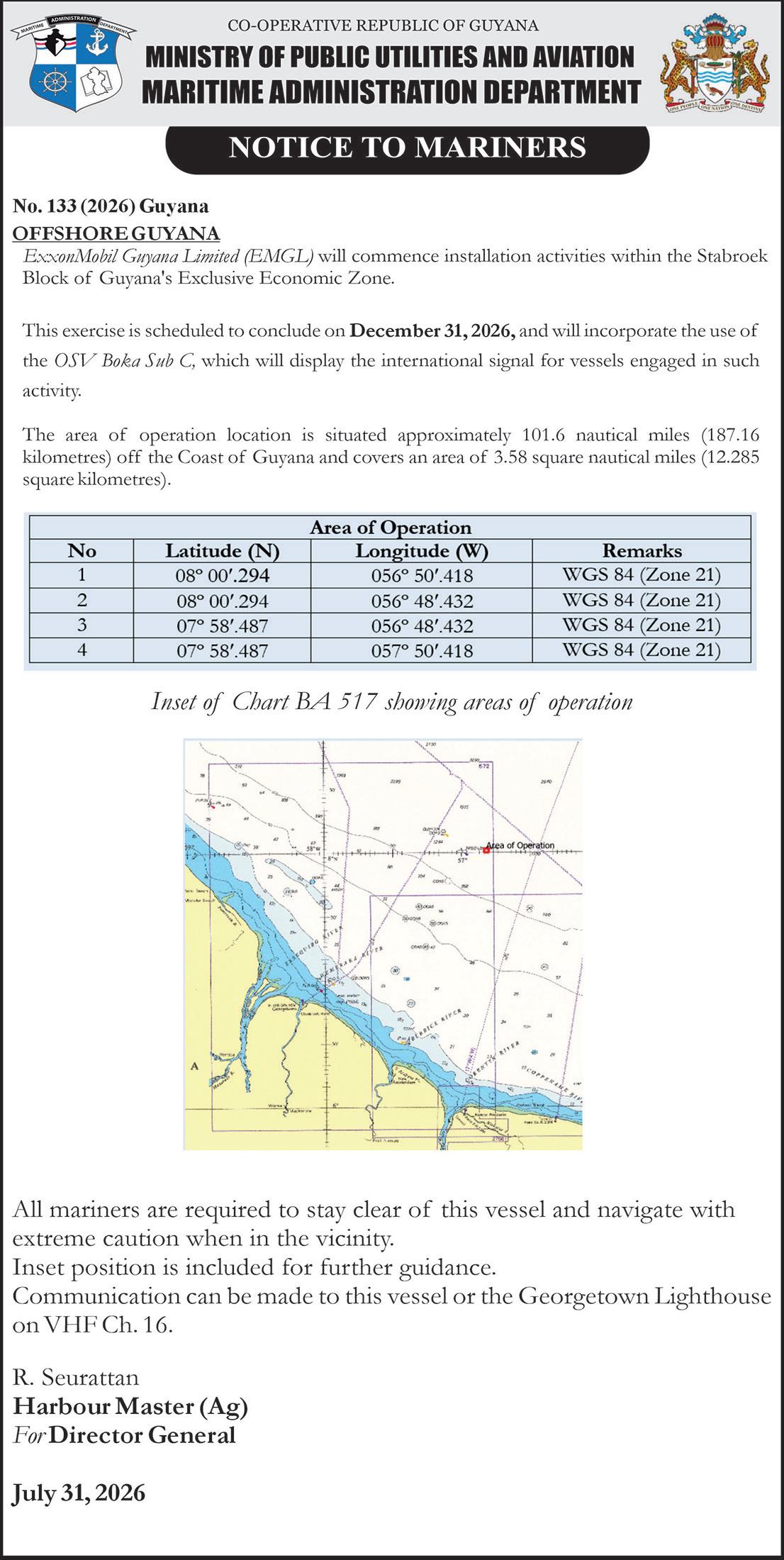
Govt calls for EoIs to salvage sunken MV Barima
The Guyana Government has decided to move ahead with the salvaging of the MV Barima, which capsized and sank off the Essequibo Coast two weeks ago, and has opened up the tender process for specialist companies to undertake the task.
The Maritime Administration Department (MARAD), under the Ministry of Public Utilities and Aviation, is inviting qualified and experienced marine salvage contractors to submit expressions of interest (EoIs) for the salvage of the motor vessel Barima.
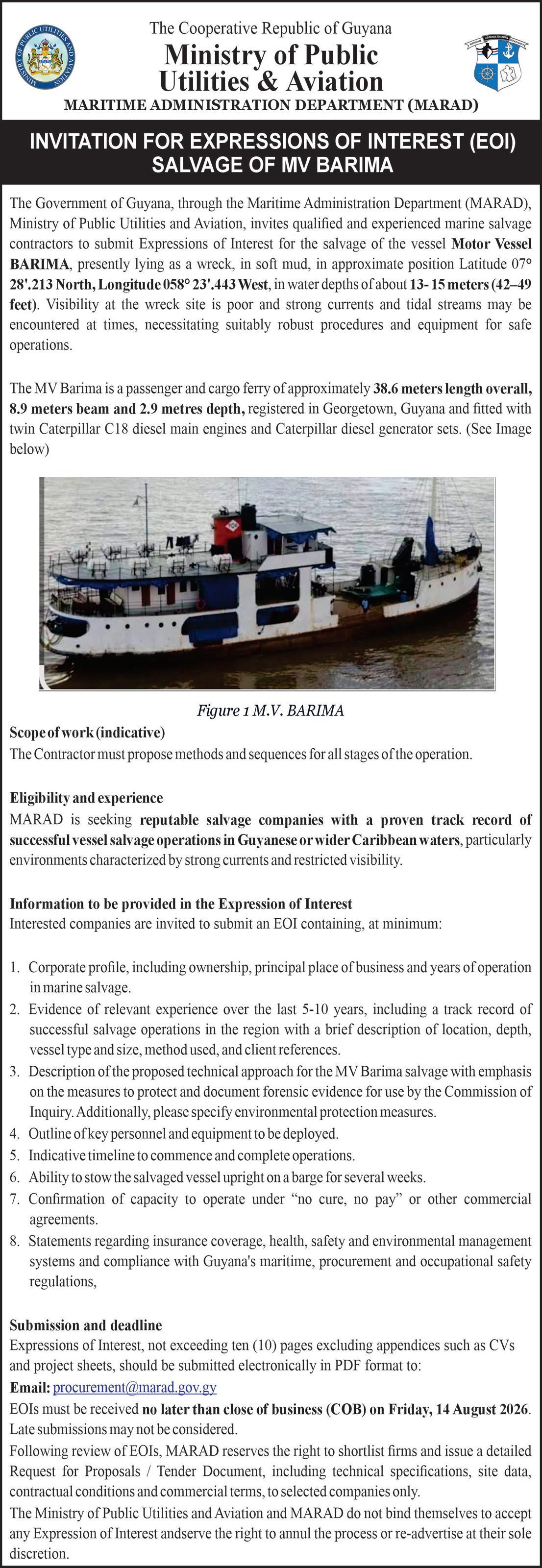
In the advertisement published on Saturday, MARAD explained that the MV Barima is a passenger and cargo ferry of approximately 38.6 metres in length overall, 8.9 metres in beam, and 2.9 metres in depth, registered in Georgetown, Guyana, and fitted with twin Caterpillar C18 diesel main engines and Caterpillar diesel generator sets.
According to the department, the vessel is presently lying as a wreck in approximate positions Latitude 07° 28′.213 North, Longitude 058° 23′.443 West, in water depths of about 13-15 metres (42-49 feet).
"Visibility at the wreck site is poor, and strong currents and tidal streams may be encountered at times, necessitating suitably robust procedures and equipment for safe operations... The Contractor must propose methods and sequences for all stages of the operation," the ad detailed.
To this end, MARAD is seeking reputable salvage companies with a proven track record of successful vessel salvage operations in Guyanese or wider Caribbean waters, particularly environments characterised by strong currents and restricted visibility.
Interested and suitably qualified companies are invited to submit an EOI containing, at a minimum, a corporate profile, including ownership, principal place of business, and years of op-
clude: an outline of key personnel and equipment to be deployed; an indicative timeline to commence and complete operations; the ability to stow the salvaged vessel upright on a barge for several weeks; confirmation of capacity to operate under "no cure, no pay" or other commercial agreements; and statements regarding insurance coverage, health, safety, and environmental management systems and compliance with Guyana's maritime, procurement, and occupational safety regulations.
eration in marine salvage. Evidence of relevant experience over the last 5-10 years, including a track record of successful salvage operations in the region, with a brief description of location, depth, vessel type and size, method used, and client references, is also required.
Moreover, proposals must include a description
of the proposed technical approach for the MV Barima salvage, with emphasis on the measures to protect and document forensic evidence for use by the Commission of Inquiry (CoI) that was set up to probe the tragedy. Additionally, companies are asked to specify environmental protection measures.
Other details required from interested firms in-
Proposals, not exceeding 10 pages excluding appendices such as CVs and project sheets, are expected to be submitted electronically in PDF format to procurement@marad.gov.gy no later than close of business on Friday, August 14, 2026. MARAD says late submissions may not be considered.
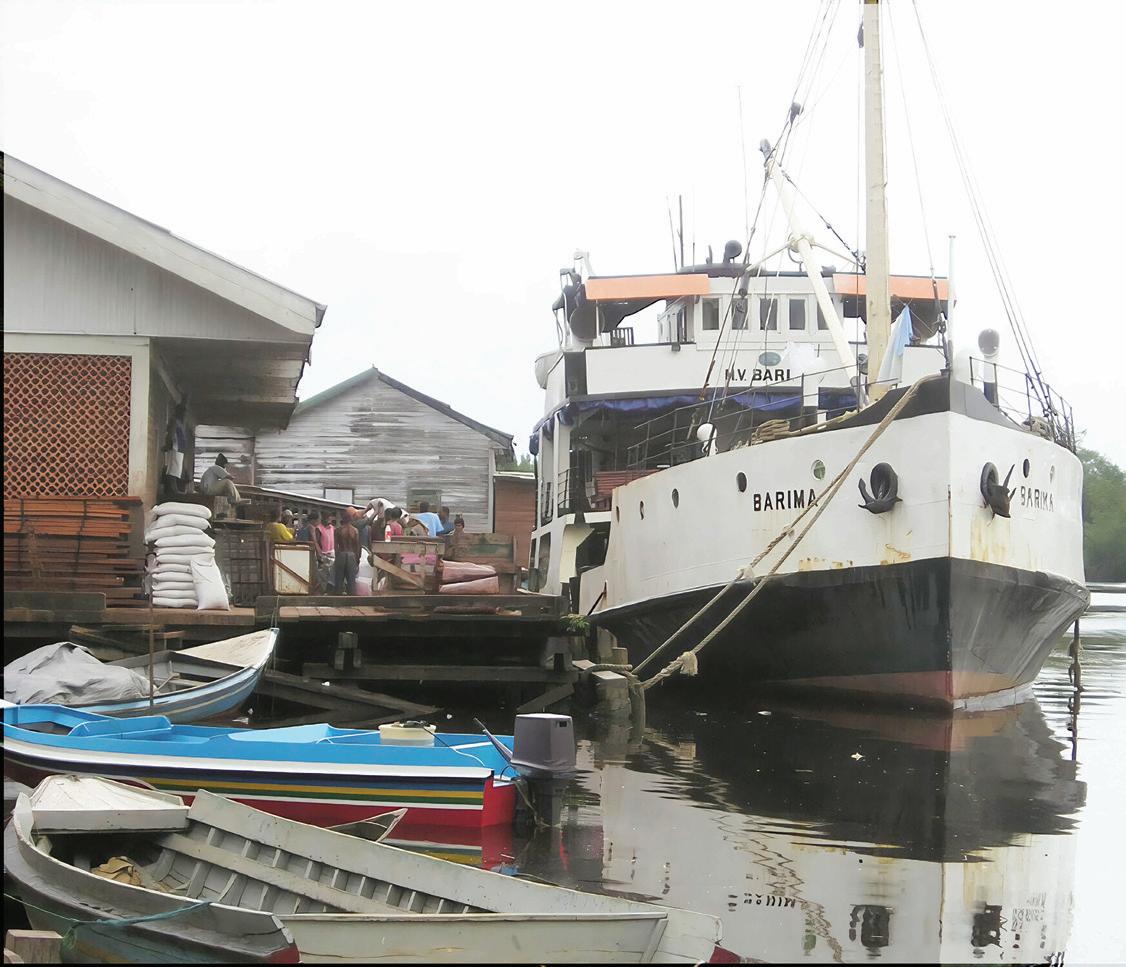
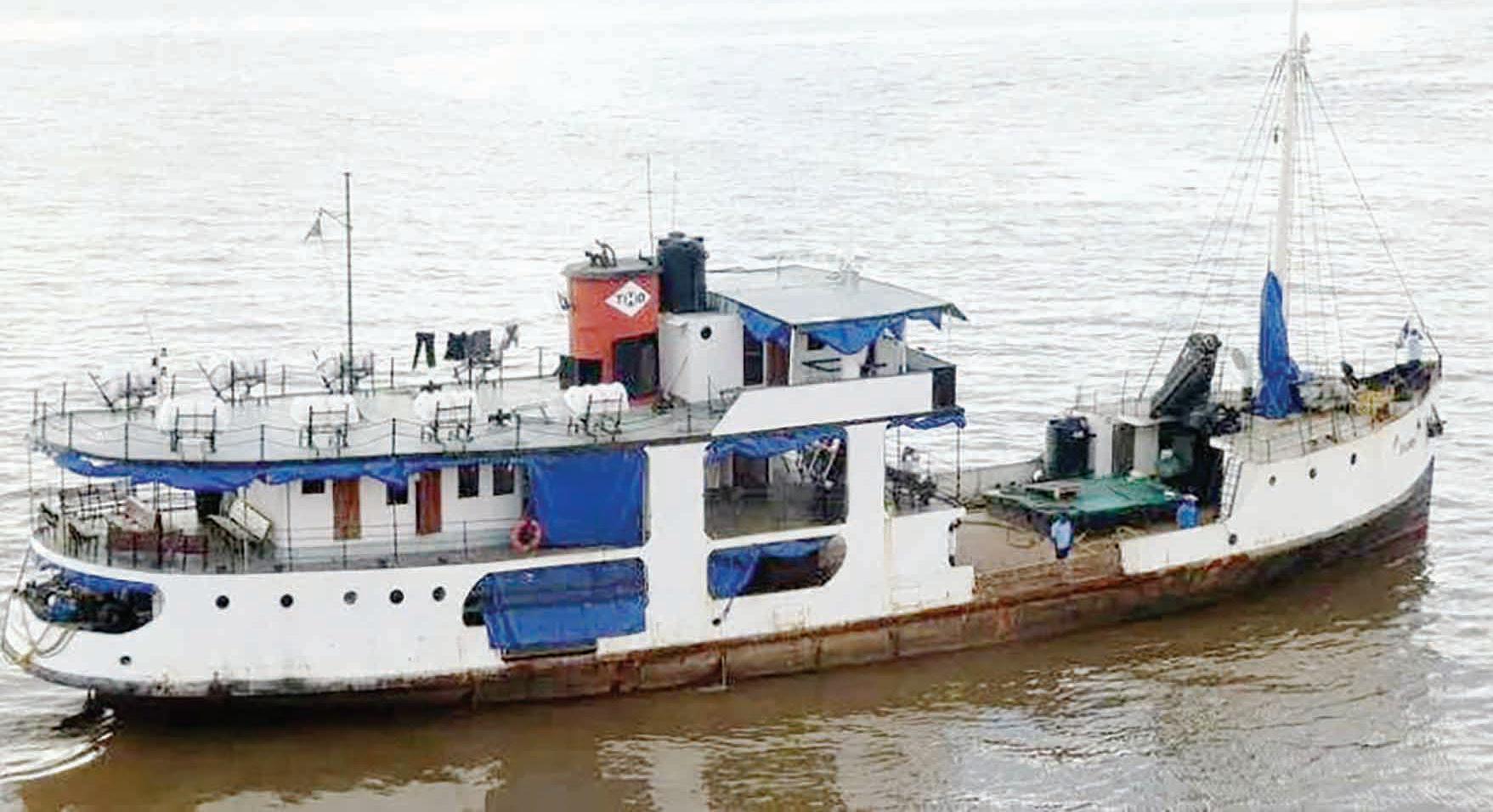
MV Barima
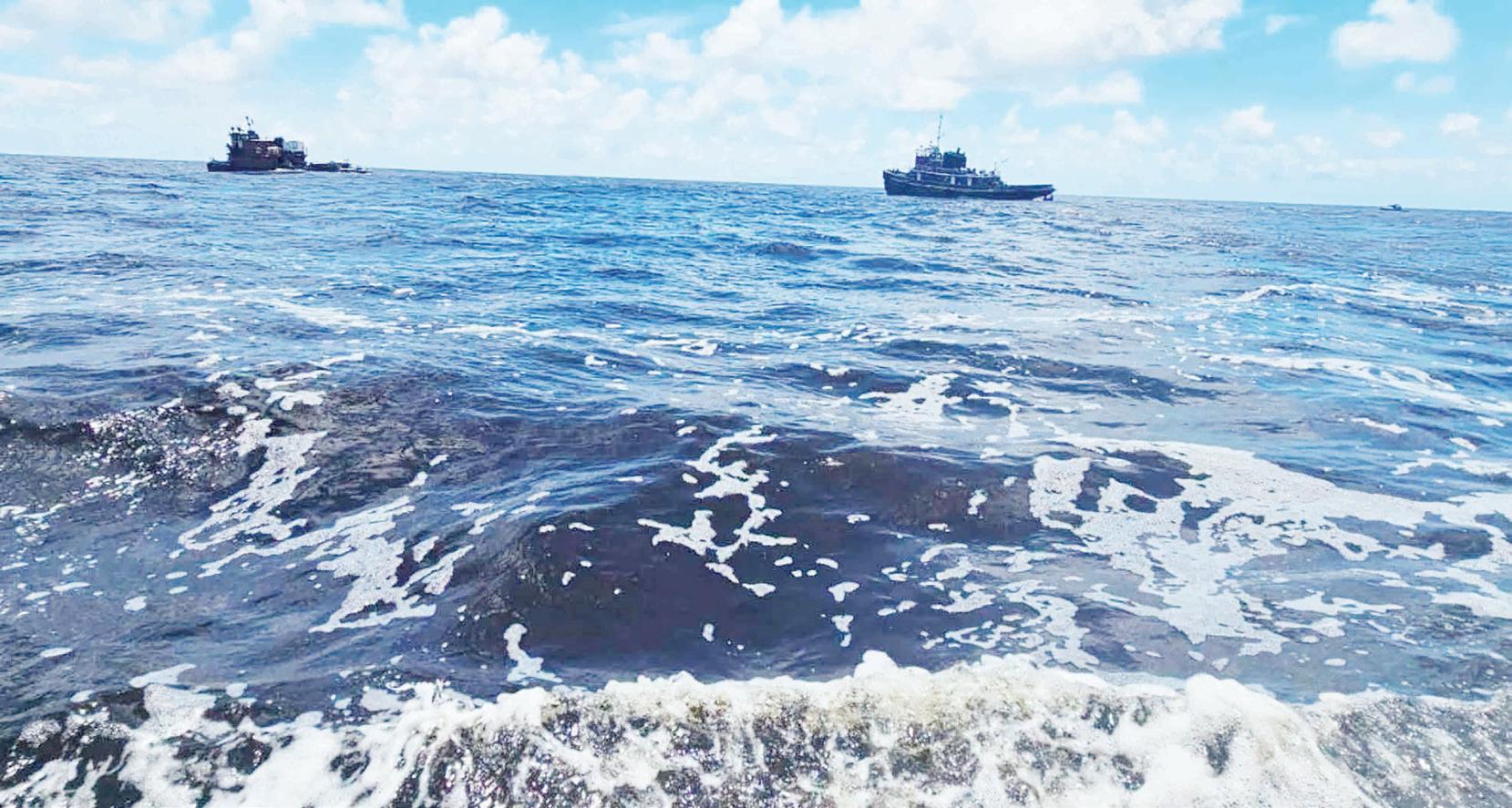
The area off the Essequibo Coast, where the MV Barima is lying on the seabed
Yesterday on August 1, we celebrated Emancipation Day.
After hundreds of years of crying on the banks of the rivers of this Babylon to which we were dragged, we were declared “free”. Yes, we remember the day slavery ended, and we honour the sacrifices of our African ancestors as we renew our commitment to justice and equality.
But every year the same uncomfortable question lingers. Were our people truly emancipated, or merely declared free? There is a distinction made between being free from bondage and being free to fulfil our suppressed potential. For generations after abolition, the descendants of the enslaved remained trapped by poverty, inadequate education, poor healthcare, and limited economics under a colonial system. Political independence in 1966 expanded our sovereignty, but economic liberation remained elusive.
Perhaps no period better symbolised that frustration than the decades of PNC rule and Burnham’s economic experiments. But since 1992, the PPP Governments, constrained by limited national resources, worked assiduously to transform the lives of ordinary citizens. Infrastructure had deteriorated, investment lagged, and talented young Guyanese migrated in their thousands, so progress was slow.
Today, the contrast could hardly be more striking. Powered by oil revenues, the Irfaan Ali PPP/C Administration has embarked upon the most comprehensive programme of national development in Guyana’s history. New highways, bridges, hospitals, schools, housing schemes, hotels, ports, energy projects, water systems and digital infrastructure are rising across the country at a pace unimaginable only a decade ago. Hinterland communities once regarded as peripheral are now increasingly integrated into national development. Thousands of scholarships are expanding access to tertiary education, while investments in healthcare and industrialisation seek to ensure that prosperity is not confined to Georgetown alone.
Critics dismiss many of these projects as political theatre or electioneering. They are entitled to scrutinise costs, question priorities and demand accountability. That is the duty of any democratic opposition. But criticism cannot erase reality. A nation that spent decades discussing development is now building it. This is not merely an argument over budgets or procurement. It is a contest between two visions of Guyana. One reflects the politics of scarcity, where Governments managed decline because resources were painfully limited. The other embraces the politics of abundance, where unprecedented revenues make possible investments that previous generations could scarcely imagine.
Oil did not create vision, but it created opportunity. The Government’s inclusive One Guyana programme demonstrates it is investing that opportunity wisely. Today’s roads and highways are connecting forgotten communities; today’s schools are churning out tomorrow’s innovators; today’s hospitals are prolonging lives, and today’s prosperity is reaching every race, region and social class. That is where Emancipation Day acquires new meaning.
The descendants of those who emerged from slavery possessed legal freedom but lacked the economic means to exercise it fully. Freedom without opportunity is an incomplete freedom. A citizen who cannot obtain a quality education, decent healthcare, secure employment or reliable infrastructure remains constrained by circumstances every bit as powerful as those imposed by history.
The oil economy offers Guyana a rare chance to break that cycle. If these revenues continue to finance broad-based development rather than narrow privilege, if every village, town and hinterland community shares in national progress, and if every Guyanese – African, Indian, Indigenous, Portuguese, Chinese and mixed – finds a place in this new economy, then August 1 may come to represent more than the abolition of slavery.
It may become the date on which we recognise that emancipation itself has finally been fulfilled. Our ancestors fought to remove the shackles from their wrists. Our generation has the opportunity to remove the shackles of underdevelopment. For the first time since 1838, Guyana possesses both the freedom and the means to complete the journey that emancipation began. That opportunity should not be squandered through cynicism, division or short-term politics.
The greatest monument we can build to those who were emancipated is not another speech. It is a nation in which freedom is measured not simply by what the law permits, but by what every citizen is genuinely able to become.
Happy Emancipation 2026!
Unravelling the murder charges in the MV Barima tragedy
Dear Editor,
The sinking of the MV Barima is an unprecedented tragedy which resulted from a series of unfortunate events, events which were caused by acts or omissions of the Goods Superintendent, the Captain, and his Chief Mate.
On July 18, 2026, at about 15:30h, the MV Barima departed the Kingston Wharf. At departure, the vessel was carrying unmanifested passengers, vehicles, and unsecured cargo. The Captain and Goods Superintendent had oversight of passengers and cargo; the vessel was overladen on both counts.
During the course of the journey, the vessel began to take on water. Concerns about the water were raised with the Captain by passengers; they were brushed off. No actions were taken; instead, the Captain, who was responsible for the safety of everyone on board, was observed imbibing and smoking cannabis while in charge of the vessel.
The Captain retired to his cabin, presumably under the influence, leaving the Chief Mate in charge of the vessel when it capsized and sank shortly after. The Chief Mate also abandoned his post, despite the hours of darkness, the tumultuous ocean, and his responsibility for manning the vessel.
He, like his Captain, was in his cabin, leaving the fate of all onboard to a mere deckhand.
No actions were taken by the Captain or the Chief Mate to alert innocent sleeping passengers of impending danger. They were literally sleeping on the job. Despite the vessel being equipped with life jackets, no steps were taken to rouse passengers or to distribute survival gear; incidentally, the Captain was rescued wearing a life jacket. Hours later, when he had been rescued, the Captain’s behaviour prompted alcohol and drug testing, which confirmed survivor accounts that he had been drinking and smoking onboard.
Rough seas were entirely foreseeable while traversing a known route in the Atlantic Ocean. Unsecured cargo shifting during rough seas was obviously capable, to trained and experienced seamen, of affecting the vessel’s centre of gravity and its stability. About nine nautical miles from shore, water and cargo, both on the deck where they ought not to be, led to the cargo shifting. The high number of tragic deaths which resulted from this catastrophe is a direct consequence of a series of failures, especially those of the Captain and Chief Mate.
The recently laid murder
charges have been the subject of much scrutiny from both the qualified and the unqualified. Indeed, in common law jurisdictions, the mens rea for murder in most cases is an intent to kill or cause grievous bodily harm. However, a principle which is decades old is the use of foreseeability by the prosecution to satisfy that element by proving indirect or oblique intent. If a person sets fire to the only exit of an occupied home to scare someone, they cannot claim they “didn’t mean to murder” if they foresaw that escape was virtually impossible.
In old English cases such as Regina v Doherty (1887) 16 Cox CC 306, where exceptions to specific intention were established, to R v Woollin [1999] AC 82, which is still being referenced in 2026 by English courts, the absence of specific intent does not undermine a charge of murder. As recently as 2014, a Captain of a vessel in South Korea was convicted of murder. The reasoning of the court was that although he may not have intended to kill the passengers in the ordinary sense, he knowingly abandoned them in circumstances where death was a virtual certainty and a foreseeable consequence.
Several English and Commonwealth authorities
consistently enunciate foreseeability, because it has been long established that malice aforethought implies that death would or might be caused.
The omissions of the persons charged in ensuring that the number of passengers and cargo were appropriate to ensure the safety of all onboard are crucial because of the glaring apparent risk of an overladen vessel in the ocean. The cargo was not secured, another obvious risk of shifting and the adverse impact on the balance of the vessel.
Deliberate actions of using intoxicants cannot be diminished. Failure to take any measures to protect the integrity of the vessel in light of water intake, coupled with failure to issue any warning to passengers and failure to radio in any distress call whatsoever, are all damning in their own right.
The deliberate act of leaving an unqualified, unauthorised deckhand to command the vessel speaks volumes to the lack of regard for the lives onboard the vessel. In this author’s view, death by drowning was a reasonably foreseeable consequence in all the circumstances.
Yours truly, Jamie Latchman
Prime Minister Mark Phillips and Minister within the Office of the Prime Minister Kwame McKoy joined members of staff in observance of the 188th Anniversary of Emancipation
THERE IS NO MAGIC TO LONGEVITY
By Ryhaan Shah
We have been taking note of the various ways recommended for a long and healthy life. They are simple everyday things that we just need to be aware of: how we move, eat, rest, relax, and connect.
Over the past months, we have learnt about the importance of regular exercise that is as simple as walking as far and as fast as you are comfortably able to do. This, along with a healthy diet of good protein, fats, and fresh fruits and vegetables, restful sleep, keeping up social connections with family and friends, and staying away from stress and anxiety, works together to maintain good health and well-being.
Also important are continuing to have a purpose, whether it’s a daily activity, reaching out to a friend, doing volunteer work, or helping your grandchildren with their homework; and the other, depending on our personal beliefs, is to continue to nurture our spirituality, whether it’s attending regular prayers or simply reading some uplifting poetry or motivational books.
The point of enjoying a long life is, of course, to live as well and as healthily as possible as we age. None of us want to have years of frailty and dependence, and to this end, taking the time to look after ourselves is critical.
Genetics do play a part in longevity. If our grandparents lived a long life, then we are more likely to follow that pattern. However, research shows that lifestyle also largely matters when it comes to longevity.
My father lived to age 98. Neither of his parents nor his seven siblings enjoyed that longevity. He was active and healthy until his very last year, perhaps because, since he was in his sixties, he took note of his cholesterol levels, remained active, and enjoyed freshly cooked meals with lots of fruits and vegetables and less meat, especially red meats like beef and mutton.
Dr Barzilai, a lecturer at Harvard Medical School, says, “Good health is surprisingly unglamorous. What matters most are the basics that people already know about but rarely execute consistently over decades. There is no magic to it.”
Movement is the closest thing people have to a “master signal”, he says. “It improves nearly every system at once, from insulin sensitivity to brain health to bone density. And cardiorespiratory fitness is one of the strongest predictors of mortality we have ever measured.”
This could mean pushing yourself to exercise even on the days when you don’t feel like it. “And everyday movement counts on its own,” the doctor says. “Breaking up long stretches of sitting with two to three minutes of light activity measurably improves glucose and blood pressure responses.”
For our diet, getting enough protein becomes more important, not less, as we age. “And avoid the large blood glucose spikes you get from refined carbohydrates eaten on their own, which in practice means anchoring meals with protein, healthy fats, and fibre,” says Dr Barzilai. Sleep is also fundamental to longevity because that is when the body takes care of essential maintenance-clearing metabolic waste from the brain, consolidating memory, and resetting the hormones that govern appetite and stress.
Experts recommend that we get seven to eight hours of sleep each night. Since research shows that consistency matters more than quantity, having a set time to go to bed and to wake up is something most of us can manage for our health’s sake.
Chronic stress is another issue that impacts us negatively. It is unhealthy for our immune system and heart, disrupts our sleep, and can accelerate our ageing process. The best antidote to stress is exercise. It is one of the best-known stress and mood interventions that we have.
Besides walking, squatting, or yoga, some resistance training such as lifting light weights and aerobic activity like fast walking, if we are able, can improve our overall health significantly.
Every one of these recommendations is important to our health and longevity, and the one that is most underrated and often overlooked is our social connectivity. While most of us take care of our physical health with exercise, nutrition, and taking our prescribed medications, we often neglect the importance of maintaining our friendships, which provide us, more often than not, with the conversations and laughter that are as vital to our well-being as diet and exercise.
The habits most strongly linked to living a longer, healthier life are some of the simplest: move regularly, eat well, sleep sufficiently, manage stress, stay connected to others, have a purpose, and nurture your spiritual well-being.
Revelations from the Barima Calamity
Dear Editor,
My delayed response to the Barima tragedy in Guyana is quite deliberate. In fact, it is my wont to allow emotions to settle before even attempting any kind of parsing. After all, feelings of empathy are what come, or should, naturally, when any sort of disaster strikes. Feelings can blind even basic observations to reality.
They are also tied to perceptions and suspicions. So yes, I commiserate with all the bereaving, but there is a lurking anger in me, stemming from the harsh and patent reality that the tragedy was and is being used by many to “drive” an “agenda of condemnation” directed at the Irfaan Ali-led administration.
My initial angst stemmed from the human standpoint that many key people became so politically ruthless and sclerotic and chose to submerge themselves opportunistically as opposed to being empathetic. Yet again I see that “opportunistic politics” is defining the Opposition and those of his type, as “loot” and “spoils of war” became the motivation, and not human commiseration and condolences. I question the actual existence and exhibition of humanness in the many who “fell hook, line, and sinker” for the Mohamed ruse. It was appalling. This kind of “political shoplifting” befits beasts.
Editor, my mind will perennially think upon that Saturday night, July 18, 2026, when tragedy descended upon the stateowned passenger vessel, the MV Barima, which capsized and sank off the Essequibo Coast while travelling from Georgetown to Port Kaituma. As it stands now, 73 bodies have been recovered, 76 rescued, and approximately 30 people are still missing at sea.
Now, the goal should still be to prioritise overt care and concern for the victims; certainly not hurling any immediate political or social accusations for gains. I firmly believe that one of the defining features of any human civilisation, at any given time, is that in national tragedies, we all need to preserve human dignity and completely desist from the “weaponisation of grief.”
What I have seen from the WIN Opposition baulks at the very core of humani-
ty. Grief is so deep and reflects the absolute shattering of meaningful bonds, while anger is often a protective mask, used to hide ulterior motives or even fake grief itself. Grief, I posit, can permanently reshape people’s lives and identities, as it impacts thoughts, physical health, beliefs, and daily functioning simultaneously. I am still hypnotically shocked at the ongoing opportunism manifested by so many “predatory politicians”, whose cohesion resides in hating the PPP/C.
I mean, who looks for an arsonist while victims are still in the burning house?
Editor, I tip my hat to all those who sought to join forces in bringing some measure of comfort and space to allow for mourning rather than making political noise or spawning media speculation. My basic view of many has been fortified, and I refer here to many political figures, Opposition groups, and representative bodies, namely the collective Parliamentary Opposition members, who immediately and spontaneously started accusing the ruling People’s Progressive Party (PPP) Administration of systemic negligence, delayed rescue operations, and structural failure following the sinking of the MV Barima. Their obsession is with “grabbing a gain” and not helping the wounded. Their biggest call is not on behalf of the bereaved, but for “heads” to be replaced. Shocking! It’s like “show me the will and last testimony” of my rich father, and let the “dead bury their dead.”
Look at the targets: Juan Edghill (Minister of Public Works), accusing him of gross negligence for allowing an 87-year-old decaying vessel to remain operational; Mark Phillips (Prime Minister); Priya Manickchand (Cabinet Minister); Deodat Indar (Cabinet Minister); and even Dr Irfaan Ali (President) and the Vice President (Dr Bharrat Jagdeo), accusing the lot of heading a regime rife with incompetence and mismanagement.
This is a classic case, where in a country’s darkest hour, the bedrock for partisan point-scoring is rampant. But I submit that this moment is revealing that more and more citizens are building trust in those who
are showing shared grief before demanding answers.
At this juncture it is best for the PPP/C Government solely to coordinate help, even if and when the Opposition is desirous of “lending a hand”. Trying to compete against or subverting Government help betrays a subversive mindset. After all, Government coordination remains a critical necessity during national disasters, even when Opposition parties or political rivals launch independent relief efforts.
While non-Government and Opposition-led initiatives provide valuable grassroots resources, a single, central Government authority is required to prevent chaotic duplication of efforts, manage airspace and hazardous logistics, and ensure equitable aid distribution based on needs, rather than on political affiliation. We all know that when multiple political factions deploy resources during a crisis, a centralised Government framework is essential to maintain order: it’s not rocket science to appreciate that disasters require strict management of communication frequencies, airspace for rescue helicopters, and transport corridors that only a sovereign Government can legally enforce.
Then independent or Opposition groups often focus aid on their specific voter bases or easily accessible urban centres, whereas a central Government is mandated to reach remote or marginalised populations.
The presence of Opposition-led aid operations introduces distinct complexities that emergency managers must navigate: This is no time for politicisation of aid, as disaster zones
can become backdrops for political manoeuvring, where competing factions prioritise photo opportunities and public relations over structural, long-term relief. So, I condemn the motive and modus operandum of Azruddin Mohamed and his WIN people. I equally condemn former Public Works Minister David Patterson and indigenous leaders like Romario Hastings and Chris Debideen. The list can go on. All these are trying to obscure the response of the People’s Progressive Party Government.
Look at the extent. In terms of “Search, Rescue, and Recovery”, the Guyana Defence Force Coast Guard, alongside Private Sector maritime partners, is still scanning over 2100 square kilometres of the Atlantic Ocean.
The Government has already brought in specialised deep-sea divers and naval assets from regional and international allies, including France, Brazil, and Trinidad and Tobago, to bolster aid operations at the wreck site. This has redounded to the rescue of 76 individuals, while recovering more than 70 bodies. Then we must not forget that when all is settled, there will be a five-member independent international commission of inquiry, chaired by Justice Godfrey Philip Smith, to investigate the systemic and operational causes of the disaster.
I intend to make more comments on this tragedy, but for now, my compassion for the loss and my grief naturally lead me to self-heal for a while.
Yours faithfully, Hargesh B Singh
Ramayan EP 60, 61, 62
David Persaud Religious Program
Movie - Johnny Puff: Secret Mission (2024)
Page Foundation
AI and the Environment
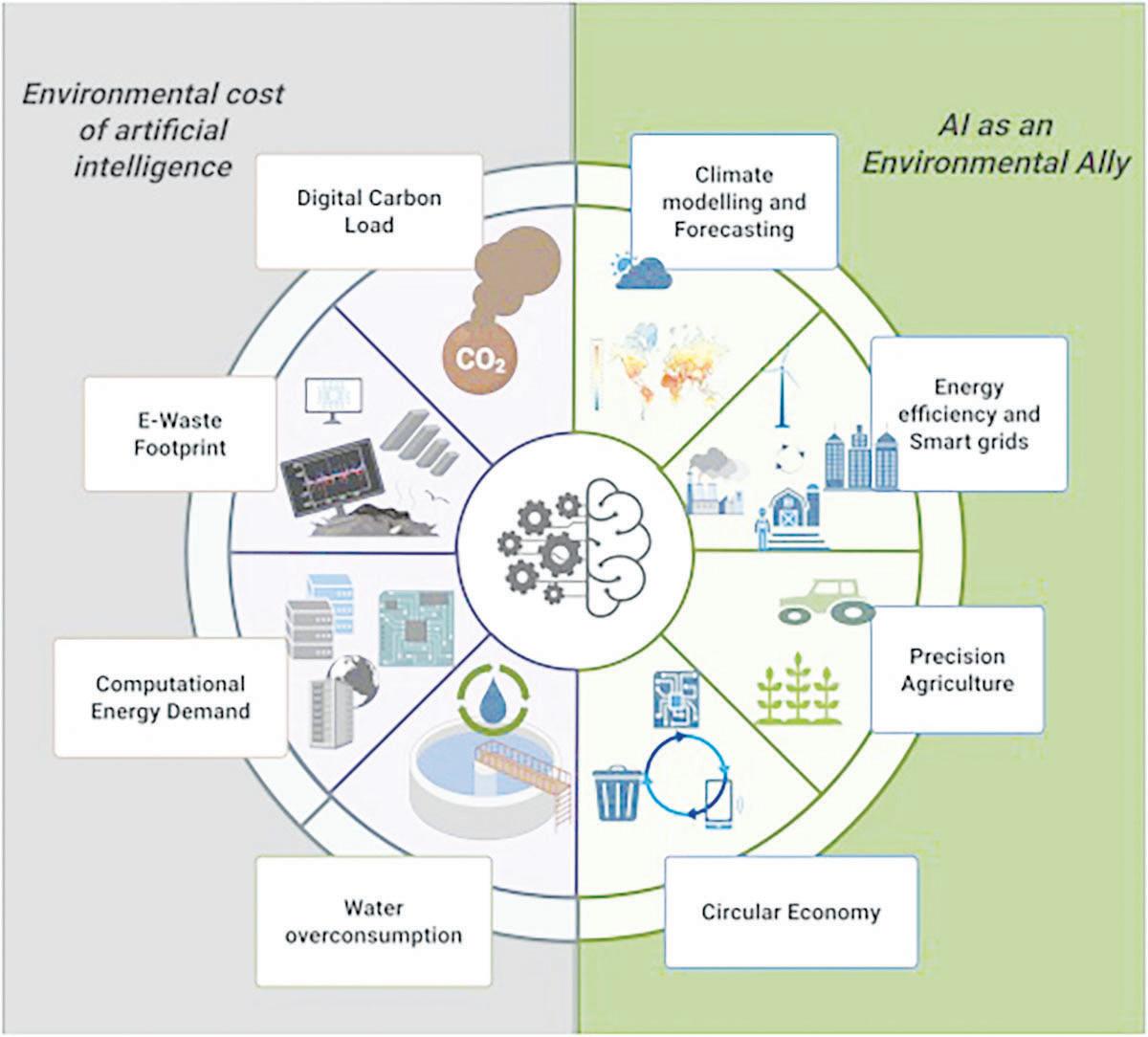
Artificial Intelligence (AI) uses powerful computers to learn from data and make predictions or create new content (like text or images). Training and running (“using”) these systems happens mostly in data centres – large buildings full of servers that need lots of electricity and cooling. As AI grows, so does the number and size of data centres, which affects energy use, water use, materials, and e-waste.
AI models require a lot of electricity to “train” and run, especially large models like those used for chatbots and image generators. AI models are housed in massive data centres – essentially huge warehouses filled with computers. In 2024, data centres in the USA used around 200 terawatt hours of electricity, which is roughly the annual energy usage of the whole of Thailand!
All those powerful computers in data centres
create a lot of heat. To keep them from overheating, data centres use huge cooling systems, and these systems often rely on freshwater
In 2022, Google used 19.5 million cubic metres of water to cool its data centres. That’s 19,500,000,000 litres of water (a lot!) and a 20 per cent increase on its 2021 usage. The UK Government has estimated that by 2027, global AI use will require up to 6.6 billion cubic metres of water per year – roughly twice the amount the entire UK’s households consume in a year.
The computers and servers that power AI require rare metals like lithium, cobalt, and rare earths that need to be mined. These go on to be used in components like special graphics processing units (GPUs). That causes considerable environmental impacts, particularly as in many cases, the minerals are toxic and are being mined in countries where there are no protections for miners'
health and safety. When these devices break or are replaced, they add to electronic waste (e-waste). E-waste can leak
2022 UN study, 78 per cent of the planet’s e-waste ends up in landfills or unofficial recycling sites, that’s a big addition to an already huge
harmful substances like lead and mercury into the soil and water. By 2030, an estimated 1.2 million to five million tonnes of e-waste will have been produced by AI. And given that according to a
problem.
Rapid data-centre growth can strain local power grids and compete for water in dry regions, prompting careful planning about where and how facilities are
built. Data centres are large buildings, and they need to be sited carefully – ideally in places where there are plentiful supplies of water and energy so that they don’t end up competing with local communities for these essential resources.
The Upsides of AI AI isn’t just part of the problem – it can also be part of the solution. Many scientists are working on ways for AI to help reduce energy waste, improve recycling, and support new climate-friendly technologies. For example, AI can help power grids use energy more efficiently and optimise farming to reduce pesticide use.
In specific activities –like writing or illustrating –a recent study found that AI systems can emit between 130 and 1500 times less CO₂e (carbon dioxide equivalent) per page of text than a human working on the same task. However, these figures don’t take into account all the real-world effects. AI is not always a substitute for human work. Large language models effectively try to predict the most likely word to follow the next, based on their learning of huge amounts of human-written text. “Hallucinations” –where AI makes up “facts” or gives answers to please the user – are common.
Saving energy
AI can help manage power grids by predicting when and where energy is needed most. For example, starting in 2016, Google used its DeepMind AI to reduce the energy used for cooling its data centres by 40 per cent
Reducing waste
AI can be used to
Tracking deforestation AI can analyse satellite images to track deforestation in real time. This helps conservation groups and Governments know where to focus their efforts to protect forests. For instance, Global Forest Watch, in partnership with Google Earth Engine, monitors forest cover in near real time and uses AI to create deforestation heatmaps. GFW’s AI tools have almost 90 per cent accuracy, and have helped reduce illegal logging by 22 per cent in key areas, like the Amazon rainforest.
Predicting natural disasters
By analysing weather and climate data, AI can help predict natural disasters like floods and wildfires, giving communities more time to prepare and stay safe.
Reducing emissions
A study by the World Economic Forum found that AI could reduce greenhouse gas emissions by 1.5 per cent to 4.0 per cent across global industries.
Sustainable Farming AI can help farmers use water and pesticides more efficiently. Drones and sensors can gather data on crops, and AI can tell the farmer exactly how much water or fertiliser to use and where, reducing waste and protecting the soil. This has led to some farms reducing their water usage by up to 25 per cent through the use of AI-powered smart irrigation systems while boosting crop yields by 20-30 per cent.
So as we’ve seen, AI is transforming how people live and interact – but it’s important to understand and manage its environmental impacts so the technology
improve recycling and waste management. AI-powered sorting robots can identify different types of materials in a pile of rubbish, making recycling more efficient.
can benefit the planet and its people responsibly.
(Adapted from Better Planet Education)
Strong oil, non-oil sectors drive Guyana's economic expansion – IMF
…says Guyana’s economic outlook “highly favourable”
Driven by strong oil and non-oil activity, the International Monetary Fund (IMF) says Guyana's economy continues to grow rapidly – a performance that is supported by prudent economic management. This was among the findings following the conclusion of the IMF's 2026 Article IV Mission. According to the concluding statement, the country continues to record one of the fastest-growing economies in the world.
"Guyana's economy continues to expand at a very rapid pace, supported by robust oil and non-oil activity," the Fund stated. The IMF went on to note that the country has a positive economic outlook that is supported by expanding oil production, sustained public investments and continued growth across the non-oil economy.
"The economic outlook remains highly favourable," it says. The fund reported that Guyana's real Gross Domestic Product (GDP) grew by over 19 per cent in 2025, after averaging nearly 40 per cent growth during the two previous years. Oil production exceeded expectations by sur-
passing 900,000 barrels per day by the end of 2025 – an impressive 35 per cent increase over last year, with similar volumes achieved in the first half of 2026. Even more encouraging is the resilience of the non-oil economy, which the IMF highlighted continued at about 14 per cent, led by the construction sector and meaningful contributions from agriculture, mining and manufacturing.
"These trends broadly continued in the first half of 2026, though some sectors were affected by heavy rainfall," the Fund stated, adding that robust growth was also seen in a stronger labour market, with unemployment down to 6.2 per cent at the end of last year. Inflation was relatively contained at 3.3 per cent in 2025 but edged up by mid-2026 due to higher energy and food prices on the global market.
Fiscal position and policies
Moreover, the IMF noted that Guyana's fiscal and external positions improved in 2025, as oil revenues more than compensated for weaker non-oil revenues. The overall fiscal deficit narrowed to 5.5
Resource Fund (NRF) are strengthening external and fiscal buffers, while large investments in infrastructure, education and healthcare are supporting the diversification of the non-oil economy. Additionally, tight monetary conditions have helped maintain price and exchange rate stability, while fiscal measures have cushioned nearterm price pressures. Despite this, however, the fund warns the Government to be cautious.
"These policies, together with the continued strengthening of governance frameworks, have helped sustain
per cent of GDP, while strong credit growth continued to support household consumption and business investment. While foreign exchange (FX) demand remained elevated because of import-intensive private investments, rising oil production and declining oil-related service imports strengthened the external position.
The Fund further commended the Government for maintaining prudent fiscal and monetary policies while also implementing its Low Carbon Development Strategy (LCDS) 2030, which focuses on economic diversification, resilience and sustainability. It went on to add that the deposits in the Natural
strengthen Guyana's fiscal and external accounts as additional oil projects become operational and existing developments mature. In the same breath, however, the IMF warned that risks remain balanced amid global uncertainty.
macroeconomic stability, support growth, and advance national development priorities. Available indicators do not point to clear signs of overheating or resource-driven competitiveness pressures. However, strong wage growth and wage-based real exchange rate indicators warrant close monitoring," the IMF advised.
Future outlook
In fact, even with a "highly favourable" economic outlook, the Fund cautioned about overheating risks. Looking ahead, it says stronger export earnings and increasing inflows into the NRF are expected to further
"Risks around the nearterm outlook are broadly balanced in the context of elevated global uncertainty. On the upside, further oil discoveries would continue to improve growth prospects, and construction growth and strong public investment may support higher-than-expected short-term non-oil growth. Higher oil prices would further improve fiscal and external accounts, but could also intensify overheating pressures, leading to real exchange rate appreciation beyond the level consistent with a balanced expansion of the economy, with oil price volatility adding to fiscal risks. Adverse climate shocks may also negatively impact the economy," it stated.
Nevertheless, the IMF went on to laud the Government's sustained fiscal discipline, noting that the country's debt remains among the lowest in the hemisphere, with a low risk of debt distress. If oil prices remain persistently high, the Fund recommended that a larger share of oil revenues be saved while maintaining investments in productivity-enhancing projects and targeted support for the vulnerable.
Moreover, the IMF staff
urged the improvement of targeted subsidies and the gradual phase-out of broad price-mitigation measures over time to preserve price signals. The IMF also welcomed ongoing efforts to strengthen governance, improve transparency, modernise public financial management, reinforce anti-money laundering and anti-corruption frameworks and enhance oversight of the extractive sector.
The Fund further recognised Guyana's commitment to climate resilience and economic diversification through investments in renewable energy, climate-resilient infrastructure, agriculture, and human capital, noting that these initiatives will help improve competitiveness, lower energy costs, and sustain inclusive economic growth over the long term.
This report followed the IMF staff team, led by Ms Lusine Lusinyan, concluding the 2026 Article IV Consultation after holding discussions virtually and in Georgetown from July 20 to 31. During the mission, the team met with Finance Minister Dr Ashni Singh; Central Bank Governor Dr Gobind Ganga; Minister of Parliamentary Affairs and Governance Gail Teixeira; Attorney General (AG) and Minister of Legal Affairs Mohabir Anil Nandlall; senior Government officials; representatives of the private sector; commercial banks; labour unions; and other stakeholders.
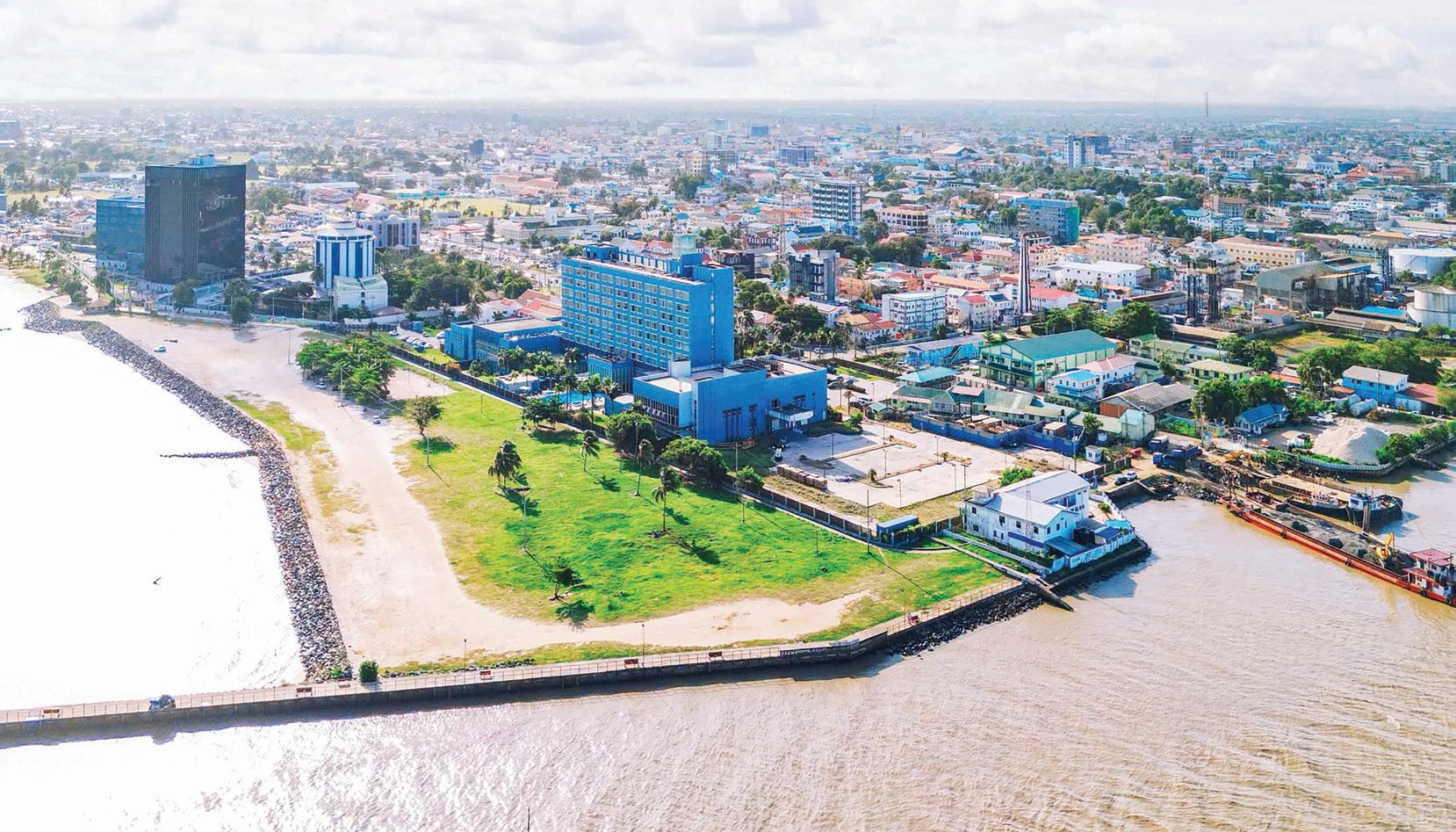
Aerial of downtown Georgetown, Guyana (IMF photo)
GDF Corporal under close arrest over missing AK-47 at Camp Stephenson
ACorporal attached to the Guyana Defence Force and seconded to Base Camp Stephenson in Timehri, East Bank Demerara, was placed under close arrest following the disappearance of an AK-47 rifle with a loaded magazine.
Based on reports received, the soldier, who resides in Timehri and was on standby, had signed for the firearm and ammunition mid last week. However, the authorities realised that the weapon and magazine had not been returned, thus
prompting an investigation.
The rank was immediately taken into custody for interrogation. Based on reports reaching this publication, the Corporal reported that he had misplaced the weapon but could not remember when he had set it down.
A team from Camp Ayanganna was deployed to Timehri along with members of the Guyana Police Force to investigate the matter. Up to late Saturday, the Corporal remained under close arrest.
Bartica man slapped with $210K fine for traffic offences
Forty-four-yearold Clifford Speede from Five Miles Housing Scheme, Bartica, Region Seven (Cuyuni-Mazaruni) was, on Friday, fined $210,000 for driving under the influence of alcohol and breach of a condition of prescribed fitness.
Speede appeared before Magistrate Caressa Henry at the Bartica Magistrate's Court, where both charges were read to him. As such, he pleaded guilty and was fined $200,000 for exceeding the prescribed alcohol limit and $10,000 for breaching a condition of prescribed fitness.
The fines amounted to a total of $210,000, with three months' imprisonment in default of payment.
What…
…say the wailing Jeremiahs?? Well, well, well!! After another year of sniping, bitching, and whining by the Opposition and their troglodytes of the PPP Government’s handling of the economy in general – and the spending of the oil money in particular – they were just knocked on their hindquarters by a blow from an unexpected source – the IMF!! Now, while it’s become routine for the Opposition to cherry-pick reports from international agencies – like Transparency International, whose local contacts are their camp – and as such invariably bash the PPP Government’s performance, the IMF comes into the picture with no strings attached!!
Every year, they send a team into countries to conduct what’s called an “Article IV Consultation” that evaluates their economic performance measured against an elaborate set of metrics!! It’s an in-person follow-up to continuous monitoring of member countries by the IMF staff. The team can demand reports and have questions answered from the highest levels of the responsible heads of our economic institutions – such as the Central Bank, the Ministry of Finance, etc.
And what did the report from the June visit reveal?? Enthusiastic endorsement of the Government programme – across the board – that’s what!! Contradicting claims by the wailing Jeremiahs that our GDP growth – making us the fastest-growing economy in the world – was only due to our oil strike, the report said, “Encouragingly, broad-based growth in the non-oil economy continued at about 14 per cent, with construction remaining the largest driver, and agriculture, mining, and manufacturing also contributing meaningfully.” So, they’ll still kvetch about a 14 per cent nonoil growth rate??!!
And what about the continuous trumpeting of some report using outdated data that our unemployment is OVER FIFTY PER CENT?? Said the report, “…robust growth was also reflected in a stronger labour market, with unemployment down at 6.2 per cent by the end of last year”!! Now let’s remember that “unemployment” refers to those who’re LOOKING for work…and therefore excludes all those nonworking millionaires who depend on money from furrin –and cash grants!!
Looking ahead, the team opined, “The non-oil economy is projected to broaden by about 7 per cent on average over the next five years as the Government continues its ambitious plans to address infrastructure and developmental needs”!! And most significantly, they emphasised the point just made by Exxon – as they’ve now recouped their investment, we should soon be getting our full 50 per cent of profits! They also commended the Government’s policies that have supported “rapid accumulation” of substantial NRF balances – and one of the lowest debt-to-GDP ratios in the hemisphere!! So much for the Opposition bemoaning the Government’s borrowing program!!
While noting the need for increased audit capabilities on governance, the IMF team said they welcomed ONGOING efforts to further enhance public sector transparency and service delivery!!
Take a bow, President Ali!!
…say Sanction Man now??
Now that the highest court in our land has handed down its judgement on Sanction Man’s frantic efforts to hold back the OFAC sea of indictments in Miami that guarantee him an orange jumpsuit in a federal penitentiary – the matter is back on the Georgetown Magistrate’s Court docket! He’s been told that hearings will now resume September, after the August holidays!
So, your Eyewitness wonders what’s going through the fella’s mind as he contemplates all the festivities going on around him on EMANCIPATION!! Must be thinking how many years the jury in Miami will put him away for!?! But he should be thankful that he wouldn’t be in chains for a lifetime…as was the case with our forefathers!!
He should also meditate on the reason for modern incarceration – time to correct the error of his ways that got him snagged in the first place!
Maybe he can confess about the taxes he evaded to our GRA – and pay them off.
…about UG leadership?
For too long our sole tertiary educational institution – UG – has been a retreat for the PNC’s brain trust. If not overtly, for sure, covertly!! But with the end of the present VC’s tenure, time to clean house!!
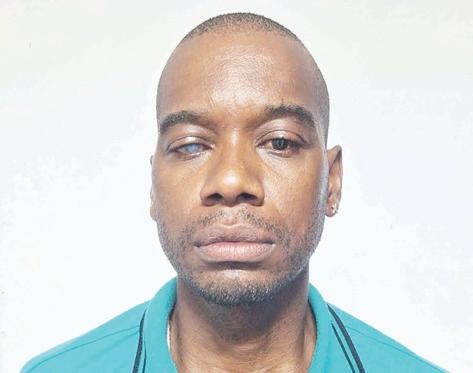
Charged: Clifford Speede
Berbice duo seriously injured after vehicle slams into GPL pole
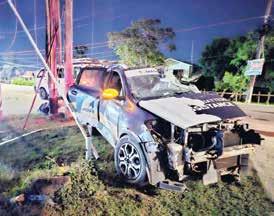
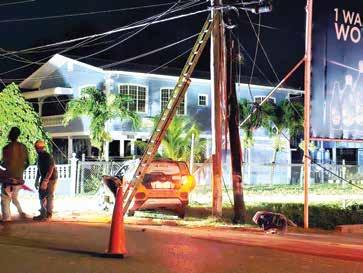
Acar belonging to Massy Motors collided with a utility pole on the Palmyra Public Road in East Canje on Friday night, leaving two men in critical condition at the New Amsterdam Public Hospital. According to Police sources, the accident occurred at about 23:30h and involved motor vehicle PYY 5455, driven by a 40-year-old resident of Number Two Village, East Canje, Berbice. Also in the vehicle was a 41-year-old of the same village.
According to reports, the vehicle was proceeding along the Palmyra Public Road when the driver reportedly lost control, crossed driving lanes, and slammed into the utility pole. The impact of the collision left the vehicle extensively damaged, with its front end torn away, the roof crushed and the driver’s side badly mangled. The force of the crash also caused significant damage to the utility pole.
Police who responded to the scene found both oc-
cupants unconscious inside the wrecked vehicle. They were removed from the vehicle and rushed to the New Amsterdam Public
ser test.
Police sources further indicated that investigators have identified a CCTV camera in the vicinity of the
Hospital, where doctors treated them for head injuries and internal bleeding. Both men remained in the hospital’s Accident and Emergency Unit under observation up to the time this report was prepared. Due to the driver’s injuries, investigators were unable to administer a breathaly-
crash and are seeking to review the footage as part of their investigation into the circumstances surrounding the accident. The damaged vehicle has since been impounded and is expected to undergo an examination by a licensed certifying officer. Investigations into the latenight crash are continuing.
The scene of the accident on Friday evening
The wrecked vehicle
Arriving at the Plantation
The depot at Georgetown was almost a replica of that at Garden Reach in Calcutta: a number of elongated huts housing the indentured labourers before they were shipped off to the specific sugar plantation to which they were “bound”. It was on the periphery of Kingston, north of the lighthouse and east of the battery of cannons that had once guarded the Atlantic approach into the Demerara River – hence “Battery Road”, which led Rambishoon to it from Water St. In modern times, it housed the NCERD offices east of the Marriott Hotel. Since every Indian indentured labourer into Guyana passed through this site, we have long called for it to be declared a heritage site.
But back to Rambishoon and his Allanshaw cohorts, who were all inspected by a doctor, and those who were ill would have been admitted into the “hospital” or, more accurately, an isolation facility to contain contagious diseases. The office of the Agent General overseeing the indentureship process and the fair enforcement of the indentureship contract was also located here. One James Crosby – who had been fiercely protective of the immigrants’ rights since 1858 – had passed away some eight years before but had become so beloved by the Indians that they conferred his name on the office. Rambishoon passed muster and was assigned to Plantation De Willem, twelve miles across and west of the nearby Demerara River. “De Willem” was scrawled on the right of his emigration pass.
He and 26 others – 16 men, six women, and four “infants” (actually children under 12) – bound to De Willem, along with 24 to neighbouring Uitvlugt and 17 to De Kendren plantations, were made to retrace their steps to the wharf near where they had landed. This time, they entered the “Steamer” – as the steam-engine ferry was called – to cross to the west bank of the mile-and-a-half Demerara River. They landed at Plantation Vreed-en-Hoop – the very plantation where John Gladstone had initiated the “Coolie Experiment” fifty years before that brought 239,000 Indians to British Guiana and half a million to the West Indies.
They were driven the 11 to 14 miles to the plantations in horse carts drawn over the red, burnt-earth “Public” Road that ran parallel to the Atlantic Coast – hence the name “West Coast Demerara”. He would observe the green, perfectly flat terrain that so much resembled the environs of his native Ishmailpur. The stark difference was the continuously traversing bridges across canals that led to sluices into the ocean behind a raised, earthen dam. The canals, he would soon discover, originated miles inland to drain and divide plantations. Ramshackle cottages forming “villages” of mainly the descendants of freed enslaved Africans adjoined the Public Road – an increasingly joined presence of time-expired Indian indentureds who continued to work on the plantations. He could see the chimneys of the “grinding” sugar factories a mile inland to his left.
When the horse carts passed Uitvlugt, the one with immigrants assigned to that plantation turned left into the road leading to the factory, as did Rambishoon’s a mile later when it reached De Willem. The third continued on to De Kendren, three miles down the road. As Rambishoon’s batch continued on the dirt road flanked by canals on both sides, he saw carefully laidout uncultivated fields. He later realised that the ocean dam, the public road, and these fields protected the cane cultivation behind the sugar factory from saltwater.
Finally, they passed several lines of barracks or logies, with the De Willem sugar factory and its tall chimney spouting smoke a short distance further south. Rambishoon’s and the other adults’ names were recorded by a clerk, assisted by an Indian immigrant who acted as interpreter; he was now officially conscripted into his five-year indentureship. The interpreter took him to one of the logies that had ten rooms – each 10 feet by 15 feet, fronted by a six-foot-wide passage with an open earthen “chulha”, or stove, next to a door – and assigned him one. He was given some utensils and a week’s supply of groceries – replicating the shipboard rations – which would be deducted from his weekly wages for a year. The said wages as an adult male were 24 cents, or a shilling, daily on the completion of an assigned task that would be defined by an overseer as capable of being completed in a day. It was decided that Rambishoon would be harvesting or “cutting” cane for six days weekly.
Govt calls for EOIs to...
Following the review of EOIs, MARAD reserves the right to shortlist firms and issue a detailed Request for Proposals/ Tender Document, including technical specifications, site data, contractual conditions, and commercial terms, to selected companies only.
According to the ad, the Public Utilities and Aviation Ministry and MARAD do not bind themselves to accept any EoI and reserve the right to annul the process or re-advertise at their sole discretion.
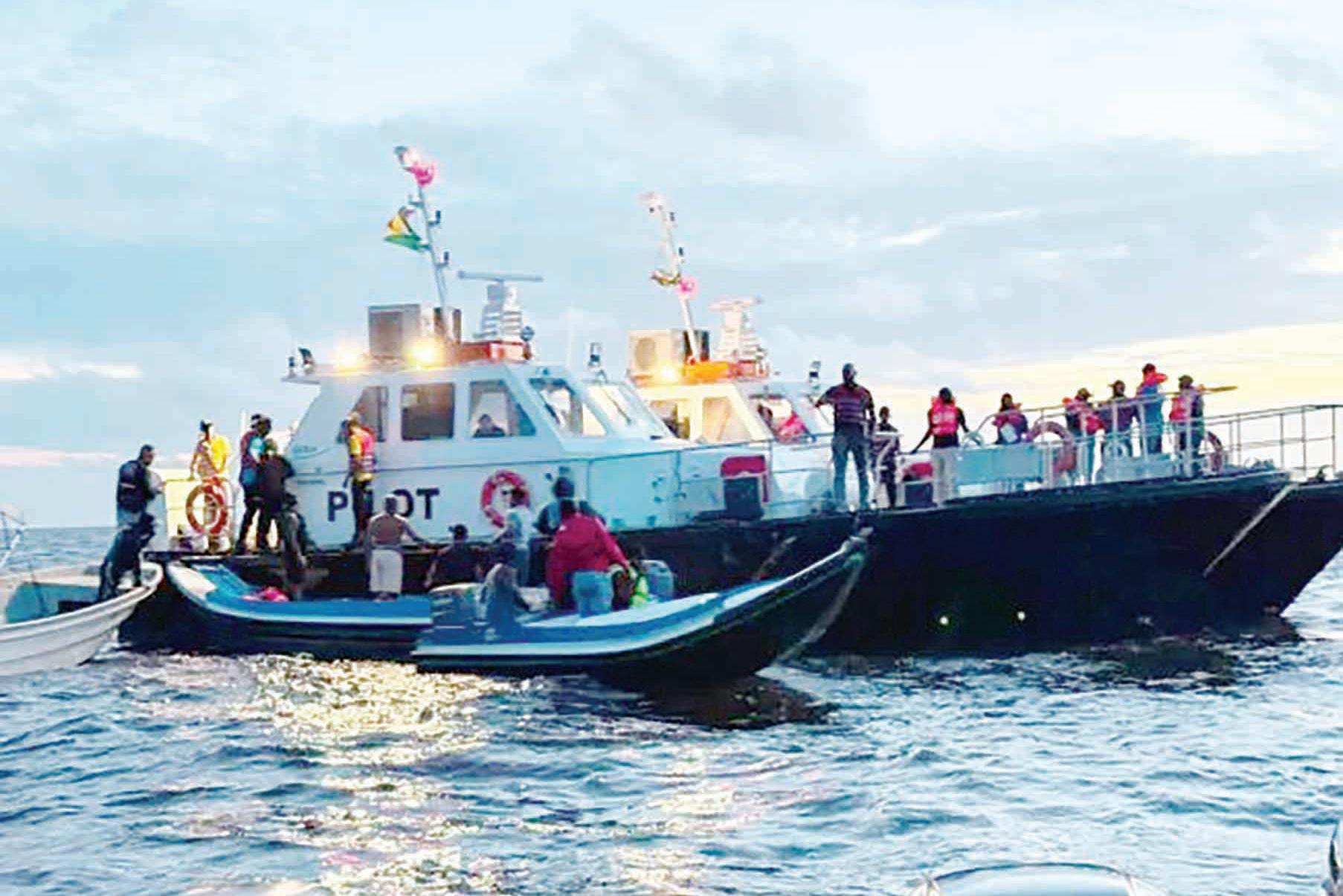
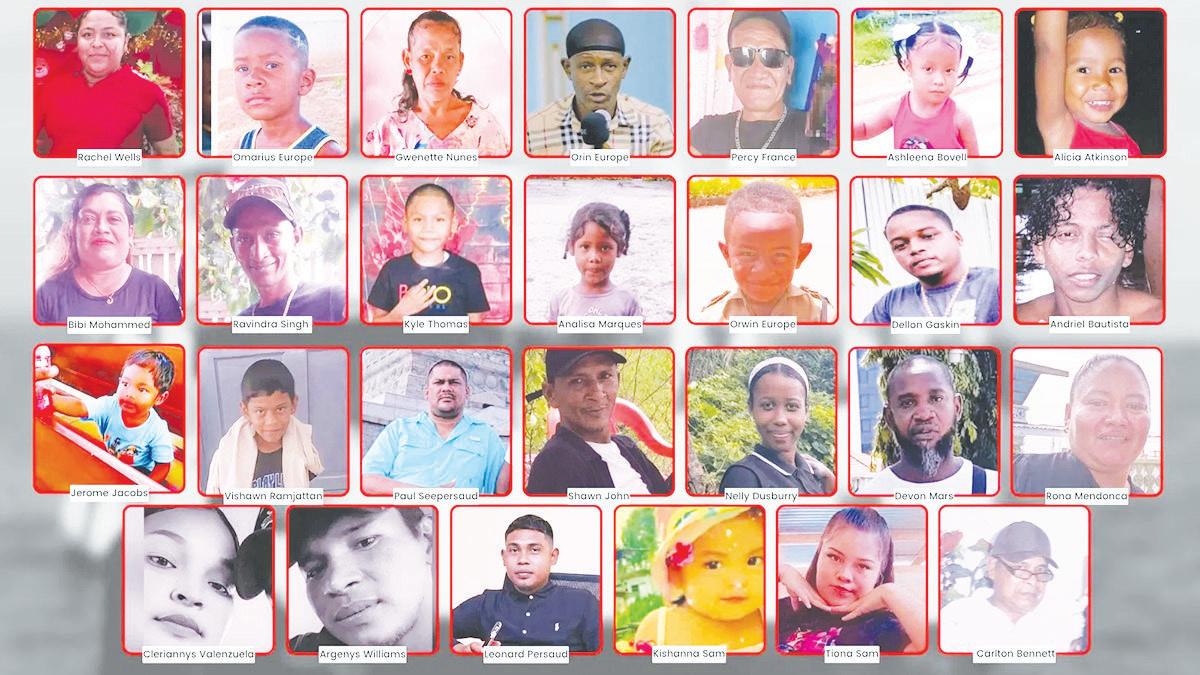
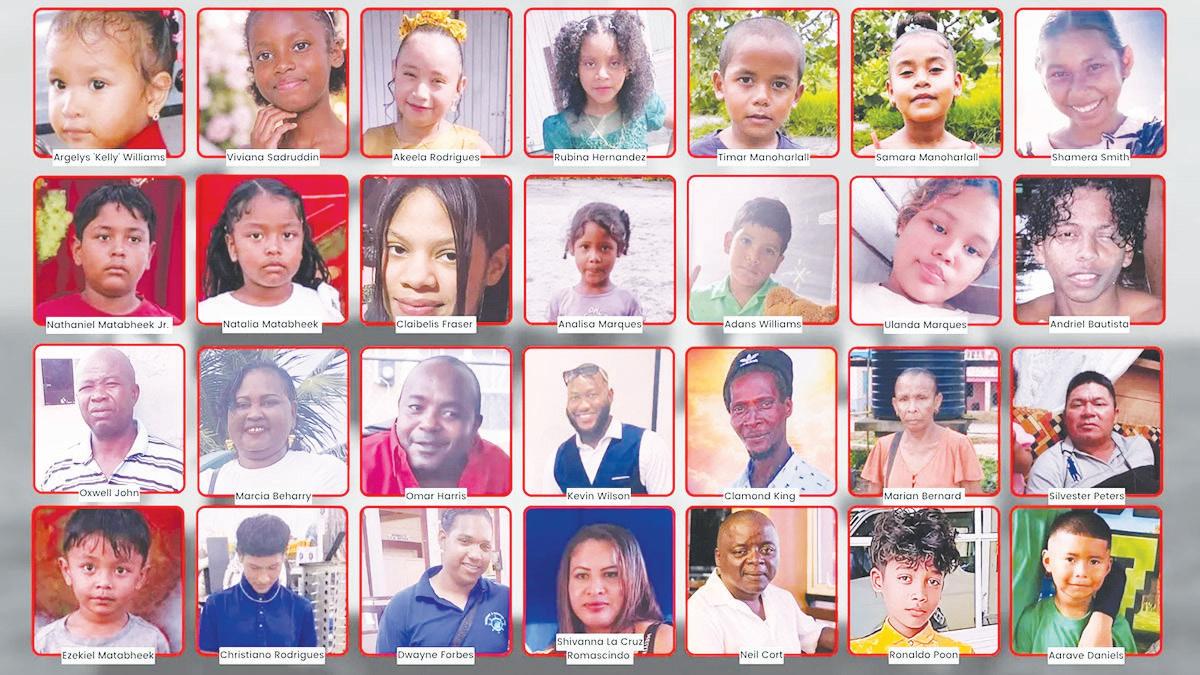
MV Barima was en route to Port Kaituma, Region One (Barima-Waini), with 179 persons onboard when it capsized and sank off the Essequibo Coast on the night of Saturday, July 18.
While at least 76 persons survived the horrific boat accident, 73 have been confirmed dead, and another 30 are still missing. Efforts to reposition the sunken vessel, which is lying on the
seabed about nine miles off the Essequibo Coast, were futile, and the Government committed to engaging the families of those missing persons on whether to salvage the ferry or preserve the site as a memorial.
In fact, President Dr Irfaan Ali held one-on-one engagements with survivors and families of the victims from this tragedy last week, both at Mabaruma in Region One and in Georgetown.
At a press conference last week, Prime Minister (PM) Brigadier (Ret’d) Mark Phillips, who is leading the national response operation, revealed that the diving operations were suspended.
PM Phillips subsequently told Guyana Times on Friday that the team of divers from the French Guiana Army, along with those from the Brazilian Navy and the Trinidad and Tobago Coast Guard, which had deployed maritime as -
sets and personnel to support the local operations, had since departed Guyana.
“They already concluded their work [here] and went home... So, no diving is taking place now. We already identified the wreck, and that location is marked. So, anytime we have to go in the area, we don’t have to search. We know the location,” the PM indicated to this publication.
Since arriving in Guyana on Monday, July 20, the team of French divers has executed approximately 15 diving operations on the sunken ferry, which is lying on the seabed about nine miles off the Essequibo Coast. They have reported that the weather and the environmental conditions are making it dangerous for them to get into the ferry.
Initially, there were efforts to right the vessel into a floating position and get it closer to shore in order to gain better access inside, but those attempts proved
futile.
PM Phillips had previously explained that as the days go by, the vessel is “sinking deeper and deeper into the mud”, making recovery efforts more difficult.
Nevertheless, the search and recovery operations continue, but the 18 assets, both sea and air, previously deployed have been reduced.
“We still have boats out there patrolling the area, and we have aircraft flying over from time to time. But the assets have been scaled down,” PM Phillips told this newspaper on Friday. Meanwhile, President Ali on Friday established an audit team to undertake a comprehensive review of the safety and compliance standards governing marine vessels operating in Guyana. This is in addition to a Commission of Inquiry (CoI) already launched to probe the MV Barima tragedy.
Ravi Dev
Over $2M worth of ganja destroyed along Berbice River
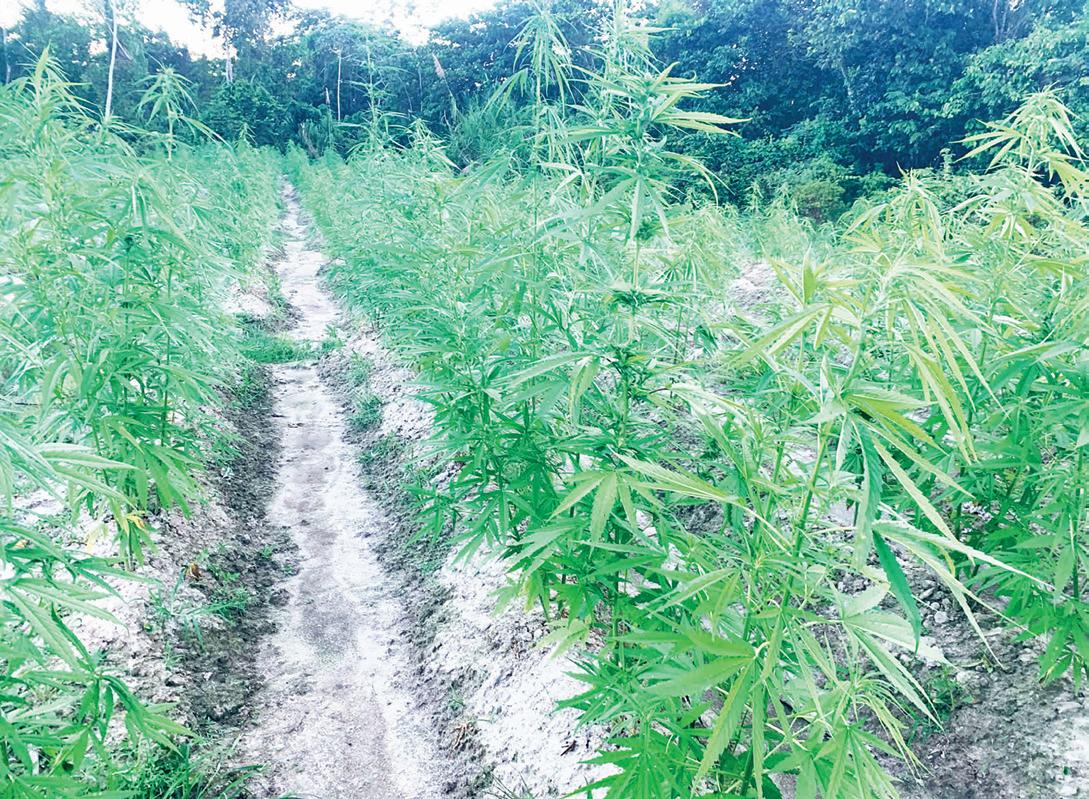
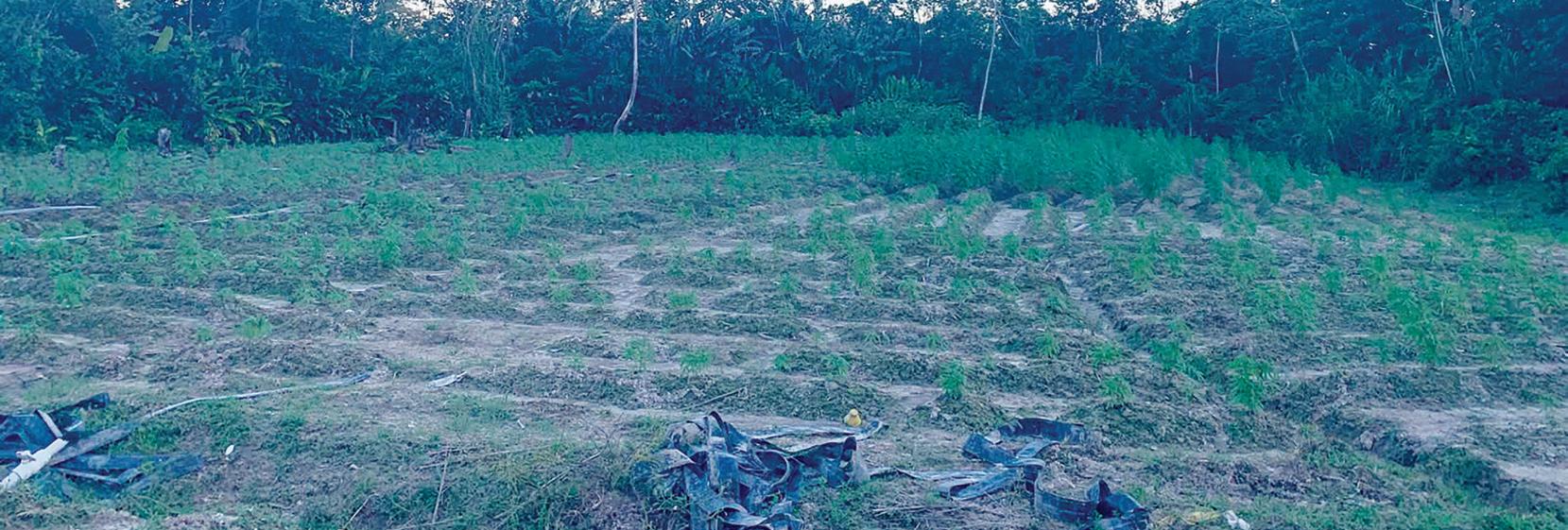
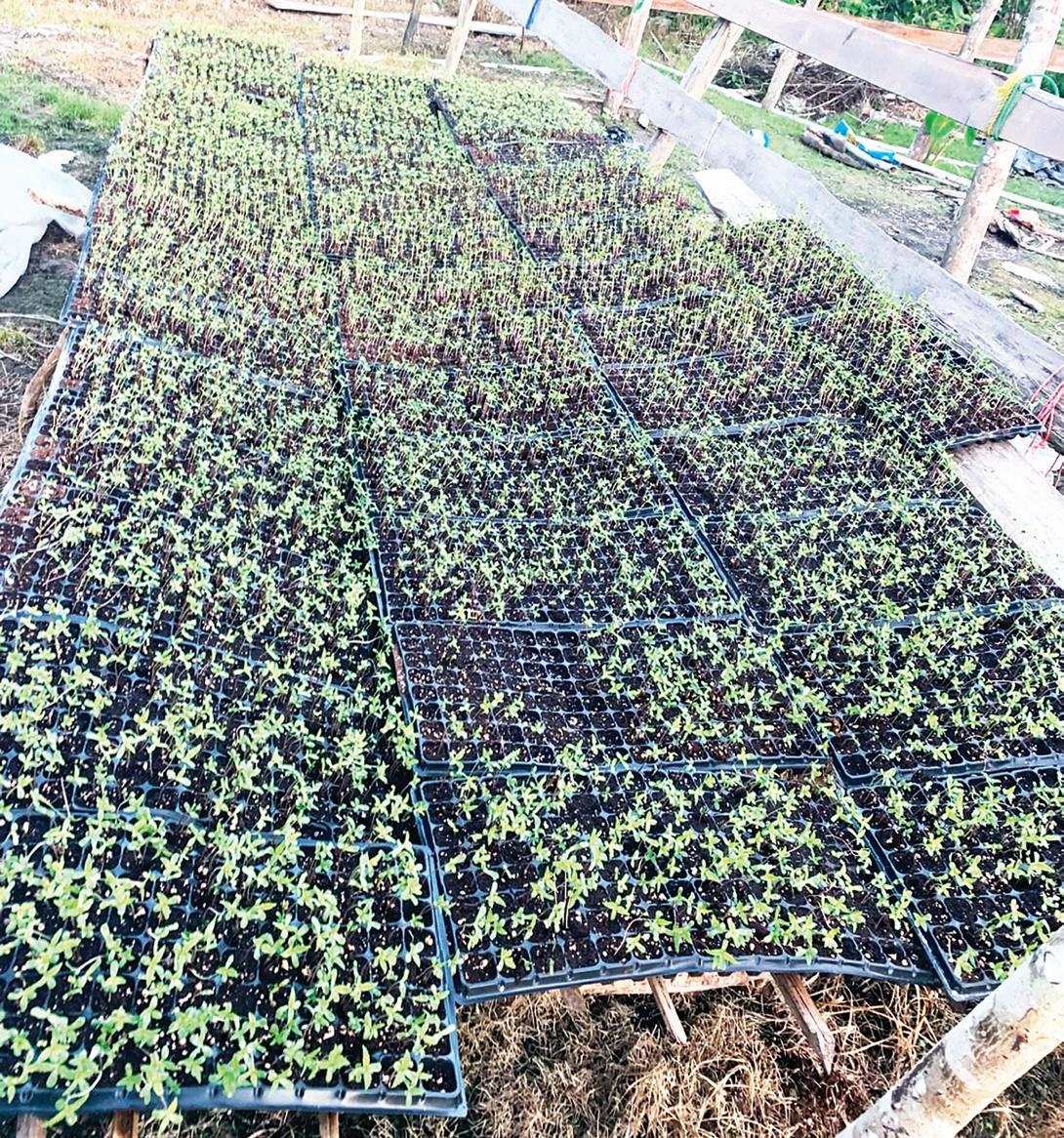
Ajoint drug eradication exercise at Friendship Sandhill Village and Wiruni Savannah, Upper Berbice River, on Thursday has resulted in the destruction of over $2 million worth of ganja. Police stated that during the exercise at Friendship Sandhill Village, one field measuring approximately two acres, containing 10,000 cannabis plants, was discovered. The plants ranged between two and four feet in height. In addition, a makeshift camp and a nursery containing approximately 4140 cannabis seedlings were also found.
at
ered a drying camp measuring approximately 40 feet by 15 feet, containing a quantity of dried cannabis.
The cannabis plants, seedlings, dried cannabis, makeshift camp, and drying camp were destroyed by fire. No arrests were made, and the exercise was conducted without incident. Meanwhile, the estimated value of the narcotics destroyed is $2,395,316. Investigations are ongoing.
Additionally,
Wiruni Savannah, officers discov-
The cannabis plants before destruction
One of the fields being prepared for cultivation
Thousands of cannabis seedlings
The camp was set on fire
GPF makes services accessible with drivers’ exams, road safety campaigns
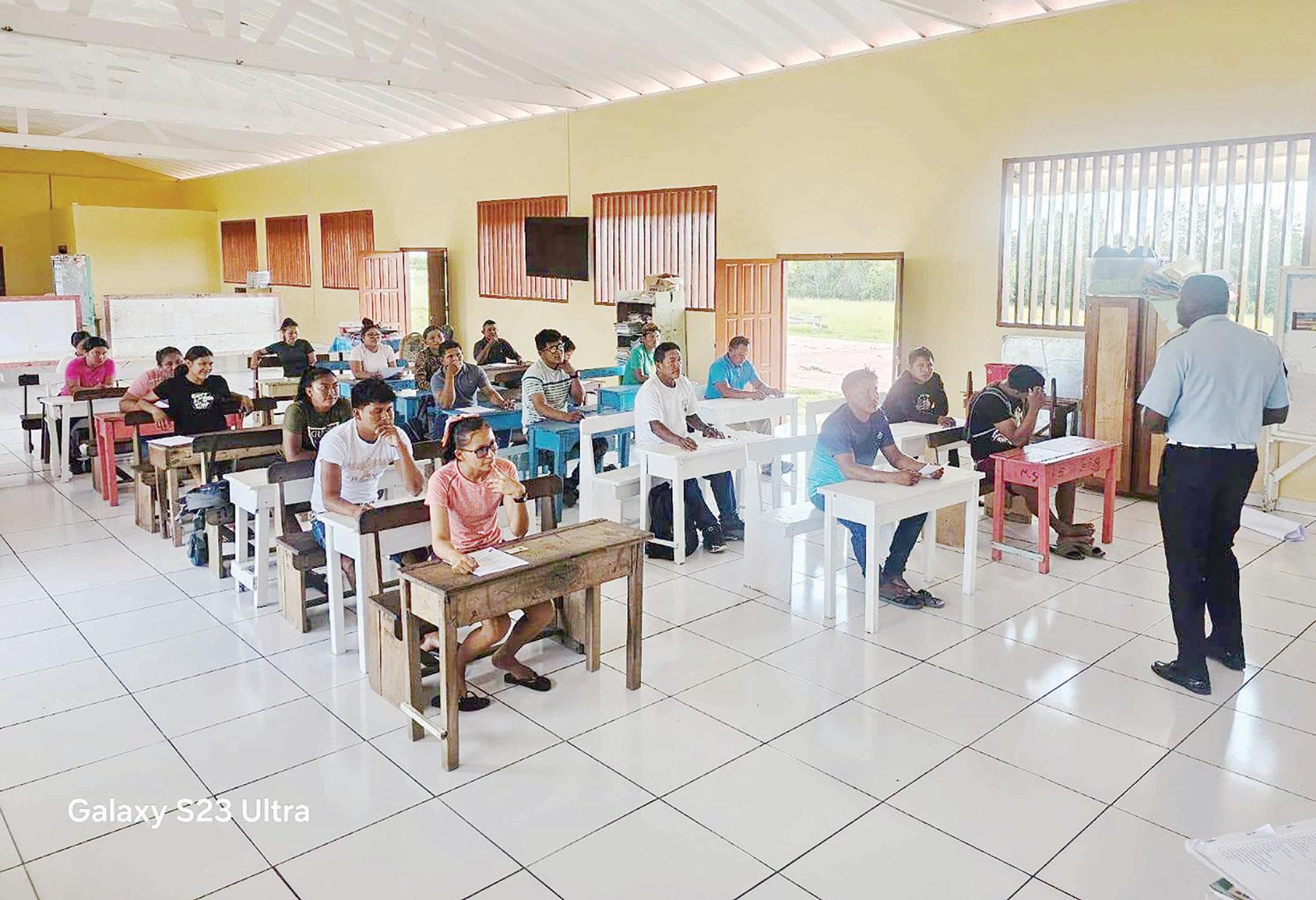
The Guyana Police Force (GPF) on Saturday conducted a community outreach in Rupunau Village, South Rupununi, Region Nine (Upper Takutu-Upper Essequibo), aimed at making essential services more accessible to communities across the hinterland.
As part of the outreach, a learner driver’s theoretical examination was administered to new applicants and rescheduled candidates who were unable to travel to Lethem to complete the examination.
Toshao Michael Wilson expressed his appreciation to
the GPF for bringing this important service directly to the village, noting that it greatly benefited residents.
He also thanked the ranks for their commitment, and said the community looks forward to similar initiatives in the future.
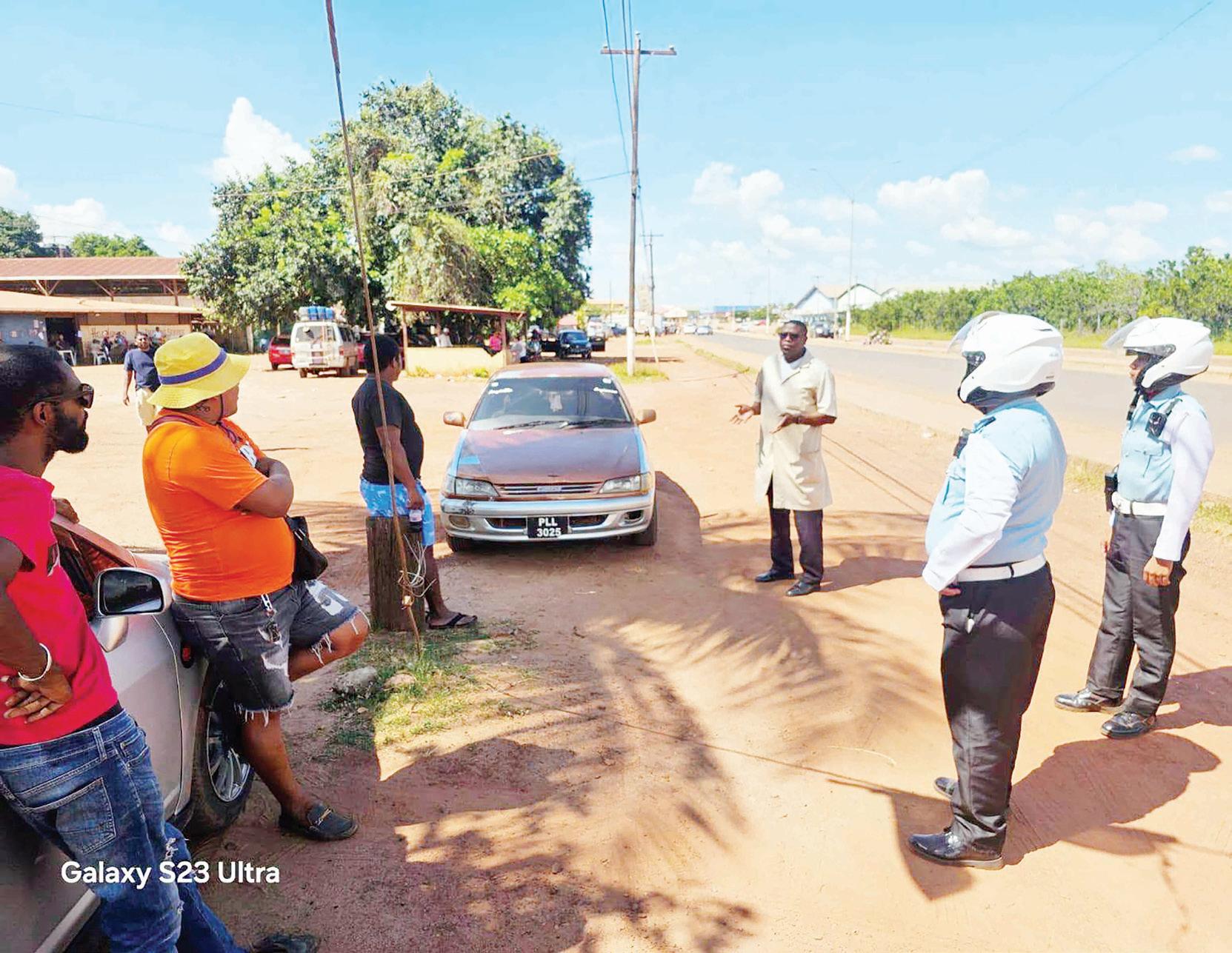
Meanwhile, on Friday, ranks attached to the Lethem Police Station Traffic Department conducted a road safety sensitisation exercise for motorists travelling throughout the Lethem Township.
The initiative focused on educating drivers about the importance of not stopping
within 30 feet of any corner while reinforcing key road safety practices.
Motorists were reminded to obey all traffic signs and signals, keep to the correct side of the roadway, use designated parking areas where available, and exercise patience and courtesy when sharing the road with other users.
Ranks also encouraged all road users to remain alert, vigilant, and responsible at all times, emphasising that safe driving habits play a vital role in preventing road traffic collisions and protecting lives.
Members of the GPF engaging residents
Residents of Rupunau Village, South Rupununi, Region Nine, taking the drivers’ exams
“Whether dead or alive, just bring them home”: families cling to hope 2 weeks after MV Barima
By Andrew CArmiChAel
Nearly two weeks after the MV Barima tragedy, relatives of three Berbicians who remain unaccounted for are holding on to hope, pleading for the vessel to be salvaged
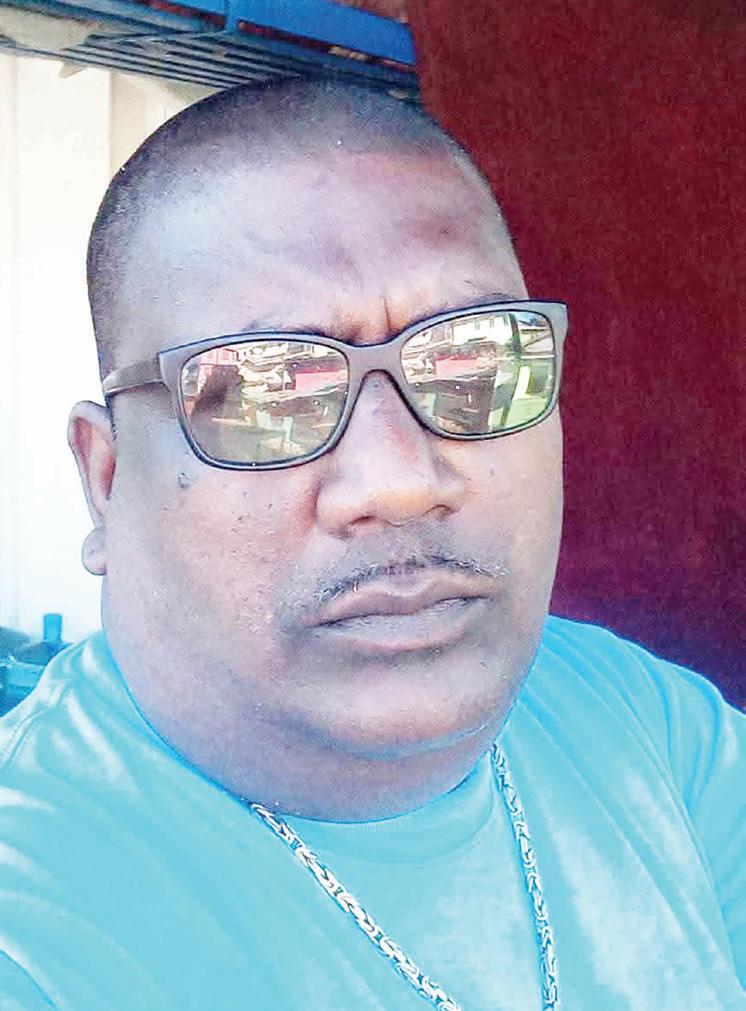
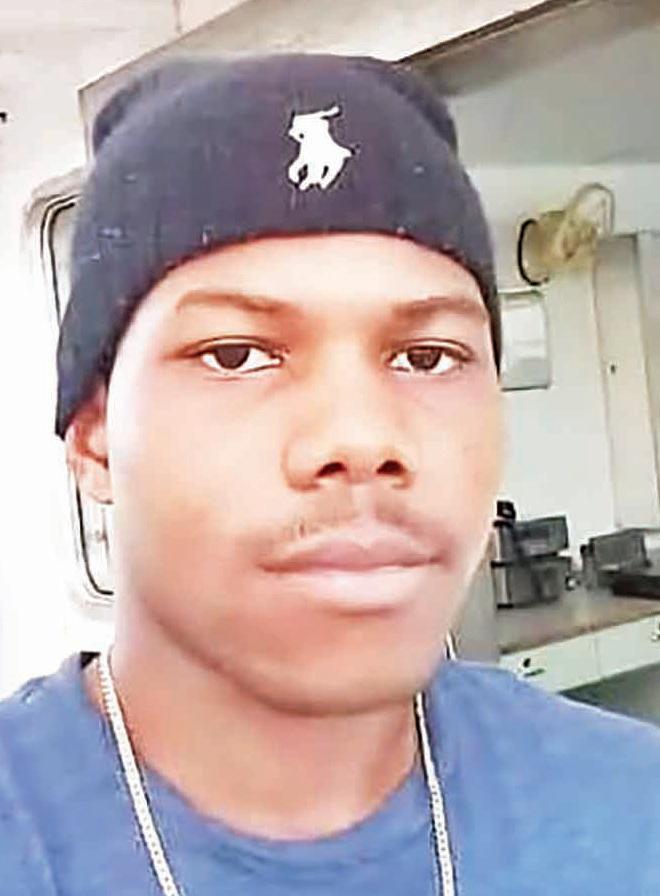
Raymond Sumra of Islington, Greater New Amsterdam; Rawle Frank of Number 42 Village, West Coast Berbice; and 22-yearold Antoine “Tony” Harcourt, originally of Leitchfield Village, West Coast Berbice, have not been found. For
and searched so that they and other families can finally get answers.
their families, the days since the tragedy have brought an agonising wait.
At Sumra’s Islington,
Greater New Amsterdam home, his uncle, Puran Grant, recalled his nephew talking about coming home and taking care of his mother. His goal was to purchase
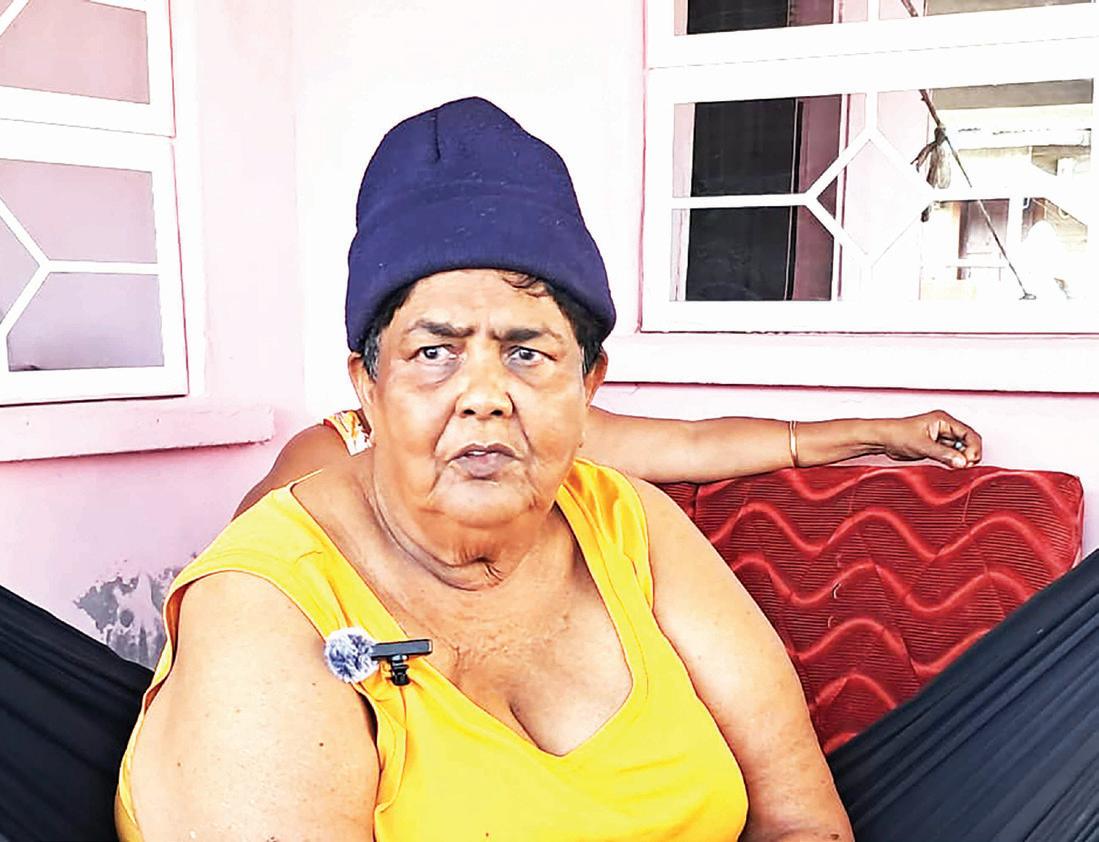
dent, Raymond has not returned. His mother, Rebecca Beatrice Sumra, still believes her son may be alive somewhere, waiting to be found.
a vehicle so he could take her wherever she needed to go. In addition, he wanted to complete the family’s home so they could live together.
Two weeks after the deadly MV Barima inci-
2026, when Raymond left, Grant received what would become their final telephone call.
He received a telephone call from Raymond at about 13:00h that afternoon. “Uncle Malik, I’m going out,” Grant vividly remembered his nephew telling him.
But Raymond was also thinking about what he would do when he returned.
disaster
Her hope persists even as the days pass without word of him. Rebecca also recalled that before Raymond left, she had urged him not to make the trip after he had reported to her that the vessel had encountered a mechanical issue prior to its last voyage.
That conversation now weighs heavily on the mother as she waits for the son.
According to Grant, his nephew spoke about plans to take better care of his mother, who has difficulties with mobility, hearing and eyesight.
Raymond wanted to get a vehicle so that his mother could be taken wherever she needed to go. He also spoke about completing work on the family home and living together with her.
Grant described his nephew as the favourite of them all, and recalled the close relationship they shared over the years. “I
Grant did not know then that it would be the last conversation he would have with his nephew before he disappeared in thin air.
Despite the passing days, he still believes Raymond could be somewhere wait-
Raymond’s relatives have also endured the emotional blow of mistakenly believing that he had already been found.
The uncle stated that at one time the family received information that a body believed to be Raymond’s was recovered.
“I don’t know who called us and said that they had found him. Even I was telling my family that we found him,” he recalled. The relief did not last.
Grant said a relative who examined the body believed to be Raymond noticed that the person had a tattoo. Raymond, he said, does not
used to live here; we sleep together until I get a job and I go away working,” he recalled.
Their bond continued even after Grant left for work, and he remembered the mischief they sometimes got into together. “We do a lot of things together, go into problems and come out back. Mother doesn’t even know about it,” he said.
The two remained in regular contact, and on July 18,
ing to be found. “To be honest, as I’m sitting here, I still believe he is somewhere,” Grant said.
Mother warned him not to go Raymond’s mother is holding on to the same hope. During an emotional interview with Guyana Times, the hopeful mother indicated that she has a feeling that her son may still be alive somewhere and is waiting to be found.
have one. The family was left waiting once again. “I’m not giving up any hope.”
Refusing to surrender to reality At Number 42 Village, West Coast Berbice, Esther Frank is also refusing to surrender hope that her son Rawle is alive. “Well, that’s how I feel; that he’s still alive. But I’m not giving up all hope,” she said.
Missing: Raymond Sumra Missing: Rawle Frank
Missing: Antoine “Tony” Harcourt
Rebecca Beatrice Sumra, mother of Raymond Sumra
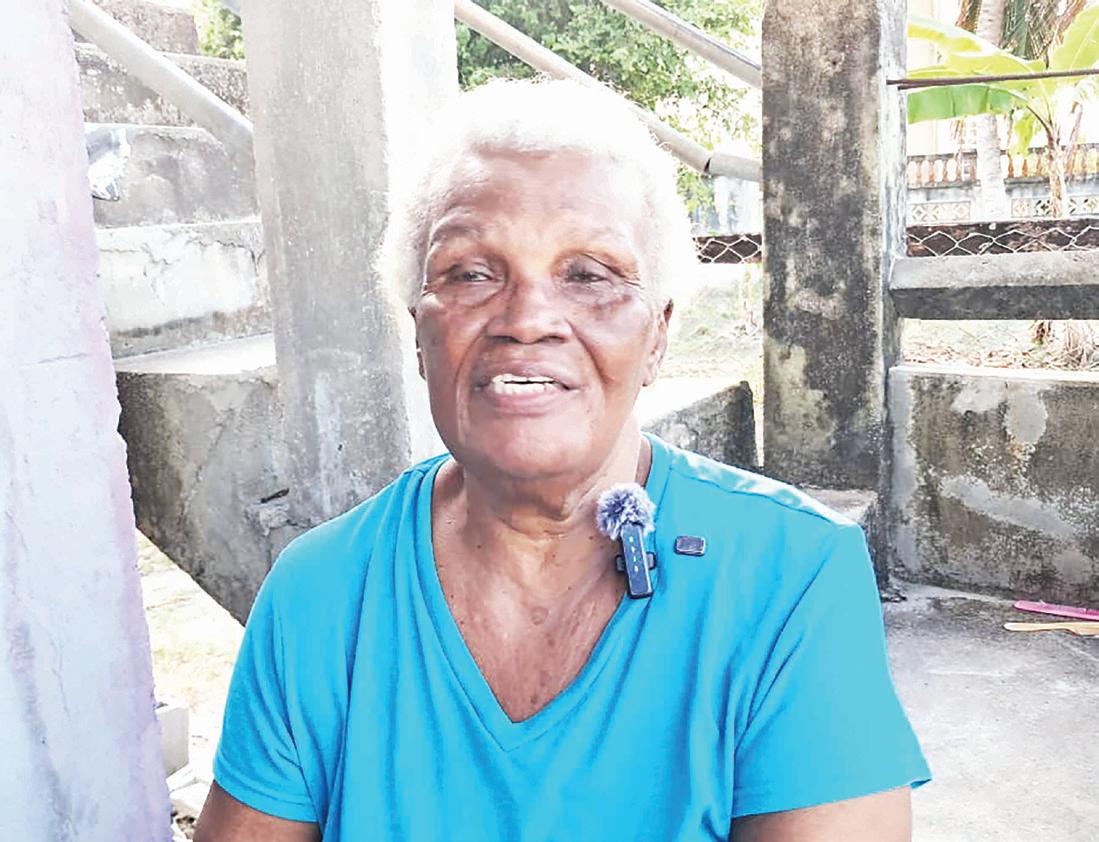
Grandmother of Antoine “Tony” Harcourt, Brenda Harcourt Elizabet
Esther Frank, mother of Rawle Frank
A rescue operation when the MV Barima initially went down
MV Barima Tragedy
GAW, ExxonMobil GSL donate $25M to support survivors, families affected
The Guyana Amazon Warriors (GAW), in association with the ExxonMobil Guyana Global Super League (GSL), on Saturday hand -
ed over a $25 million donation for the Hope, Empathy, Aid, Resilience, and Trust (HEART) Initiative, which was established to support survi -
vors and families affected by the MV Barima tragedy.
The HEART Initiative, established by President Dr Irfaan Ali, is intended
“Whether dead or alive...
The wait, however, has been difficult. “It’s hard. It’s hard. It’s hard because many times, I have to sit down and remember a lot of things.” Esther said.
She described moments when memories of her son become overwhelming, and she sits and cries before gathering herself and carrying on. “Because many times, I have to sit down and remember a lot of things. Cry and ease and go again. But, just to be strong,” she related.
Even the ringing of a telephone can stir hope. Esther admitted that many times when the phone rings, she hopes the news is about Rawle. But as the days pass, she continues to pray and tries to remain strong.
Her hopes are also pinned on efforts to salvage the MV Barima. Esther was among relatives who recently met with President Dr Irfaan Ali, and she said she was encouraged by what she heard about efforts to bring up the vessel.
“I pray that things work out with what he said,” she related. Esther wants those involved in the operation to seek whatever assistance is necessary to recover the vessel.
“Try the best. Anything and get help or assistance; bring up that boat. It will make everybody be satisfied,” she pleaded. And if Rawle is not found inside, she is still praying that one day he will return.
Whether dead or alive
Meanwhile, in Leitchfield
Village, West Coast Berbice, Brenda Harcourt is facing the uncertainty surrounding her grandson Antoine differently.
Brenda, 81, said she and “Tony”, as the family affectionately calls him, shared a good relationship. Whenever he was around, she recalled, he would pass through her yard.
Sometimes he would stop and call out to her: “Granny, what are you doing?”
“We had a good relationship,” she said.
But after two weeks without word that her grandson has been found, Brenda said she does not believe he is still alive. “Well, I don’t think so. As far as I understand, I don’t think he’s alive,” she said.
Her hope now is not necessarily for a rescue, but for an end to the uncertainty.
“Whether dead or alive… I would like to see him. If they would bring the body home for burial, you know, it will give us closure.”
She wants the MV Barima searched to determine whether Antoine or other missing persons remain inside. “I would prefer to check to see if bodies are still in the boat,” she said.
Salvaging the vessel
The possibility of raising the vessel has become particularly important to the families as they search for answers.
For the Grant family, they are holding onto the assurance of President Ali, who related that efforts are being undertaken to salvage
the MV Barima
to help families through the process of healing by bringing together humani -
FROM PAGE 14
According to Grant’s account of the meeting, the President indicated that the process could take between eight and 10 weeks.
“What he had told me [is] that he’s going to salvage the ship and bring it up. He [will] try his best to bring it up,” Grant said.
He said the assurance brought relief after relatives had heard discussions about the possibility that the vessel could remain underwater because of difficulties recovering it. The worried uncle does not support leaving it there without first trying to determine whether the missing bodies are inside.
“No, I don’t think that that is right to just leave the ship like that,” he said.
For the three Berbice families, salvaging the vessel could provide answers. But for Esther and Rebecca, hope extends beyond what might be found inside the MV Barima
They still believe their sons could be somewhere else, alive and waiting to be found. Brenda has begun preparing herself for a different outcome, but she too wants the waiting to end.
“Whether he is alive or whether he is dead, I would prefer to know that he is found,” she said. To date, with 179 passengers and crew members on board, 73 have been rescued while over 70 bodies have been recovered and some 30 are still missing.
Of those bodies recovered, almost all have been laid to rest, but five remain unidentified.
other forms of support for those affected.
Importantly, this assistance is not intended as compensation but as an expression of the nation's enduring commitment to stand beside survivors and bereaved families for as long as necessary.
On Tuesday, President Ali announced that he would establish a national body to coordinate, mobilise, and foster the necessary work of healing.
This initiative will be overseen by trusted and respected religious and civil society individuals drawn from across Guyana.
"We will offer the practical hands of service and provide a safety net of support and compassion so that no family affected by this tragedy will slip through," the President
the establishment of the HEART Initiative, which is aimed at assisting survivors of the MV Barima tragedy and the families of those affected.
The MV Barima disaster is one of Guyana's deadliest maritime tragedies, involving a passenger and cargo ferry that capsized off the Essequibo Coast on July 18, 2026.
The donation was made due to an agreement between the Guyana Amazon Warriors and ExxonMobil Guyana Global Super League that all proceeds from ticket sales for the final will be donated to educational and humanitarian relief efforts for families and individuals affected by the MV Barima tragedy.
As the curtains were pulled on the ExxonMobil Guyana GSL on Saturday,
tarian assistance, psychosocial and trauma counselling, social services, spiritual guidance, and
stated.
Ali expressed gratitude to the Guyanese people and called on all stakeholders to support
the cheque was handed over to the committee set up by President Ali at the National Stadium.
President Dr Irfaan Ali and other Government National Park during the annual Emancipation
Government officials engaged patrons at the Emancipation Day festivities on Saturday
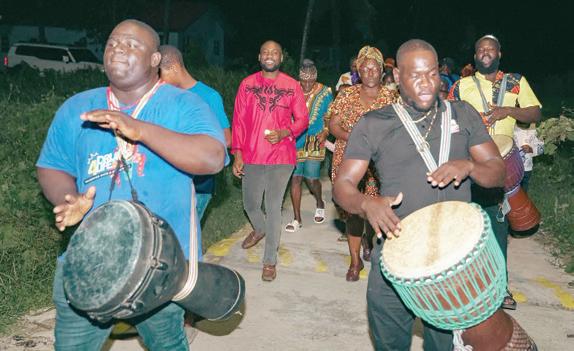
The unmistakable sound of traditional African drums filled the air along Main Street, Georgetown, drawing scores of onlookers as the Annual Emancipation Expo celebrated African heritage, culture, and entrepreneurship.
The avenue was transformed into a vibrant showcase of rich culture and
the well-articulated outfits to mixing the ingredients to make cassava pone or conkie, one cannot forget the contributions of our African ancestors.
Speaking with Guyana Times, Rosalyn, a maker of traditional African drums, explained the significance of the instruments and the power they hold in celebrat-
history, featuring beaded handcrafted jewellery, African clothing, and mesmerising paintings and sculptures. The highlight of the event was the tapping of the drums, which brought back distinct memories of what we were once taught about slavery and its abolition.
Good discussion over a tasty African dish served with mauby or mixed fruit juices also added to the atmosphere along Main Street. We cannot forget the incense, which brought the cultural history to life. The event, planned to remember and showcase our African ancestry, did justice to patrons who were not too stingy with their wallets, and to those who just went window shopping.
For many – both patrons and exhibitors – the annual event to celebrate our history is filled with untold stories. From the beating of the drums to weaving
ing African heritage and identity.
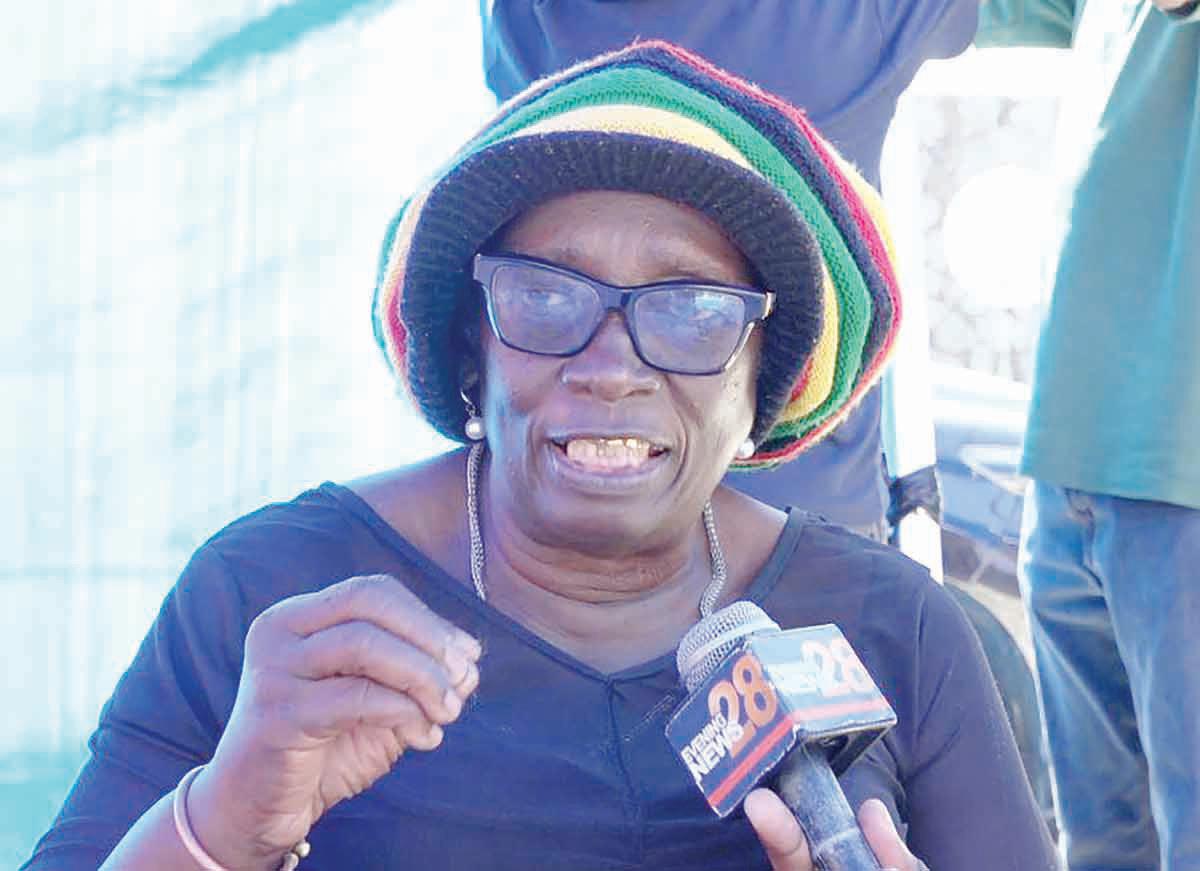
The rhythmic sounds of drums crafted from cow, sheep, or goat skins echoed along Main Street as anticipation built for this year’s Emancipation Day celebrations. However, the drumming was more than just a performance.
A woman identified only as Sister Rosalyn shared the history and significance of the African drum.
“So, the African drums are very, very, very, very sacred to the cultural heritage of the original people of this earth, which we call Africans. We’re actually abstracts of the original man, which is the melanated people, which we call Africans, and that covers every shade under the sun, from the red shade to the brown shade to the dark melanin. You name it, we’re all a part of one family.”
In simpler terms, Rosalyn explained that she
believes African drums are deeply connected to ancestry, identity, and spirituality. She said the instrument was used by forefathers as a sacred form of communication with ancestors.
She explained that, traditionally, the drum was used to express requests and connect with ancestral energies, adding that people would beat the drum when seeking guidance or making specific requests.
Rosalyn said she believes it is important for people to understand the connection
ative cannot work without positive to create electricity. We’re all a part of this energy force. So don’t fight it physically; balance it.”
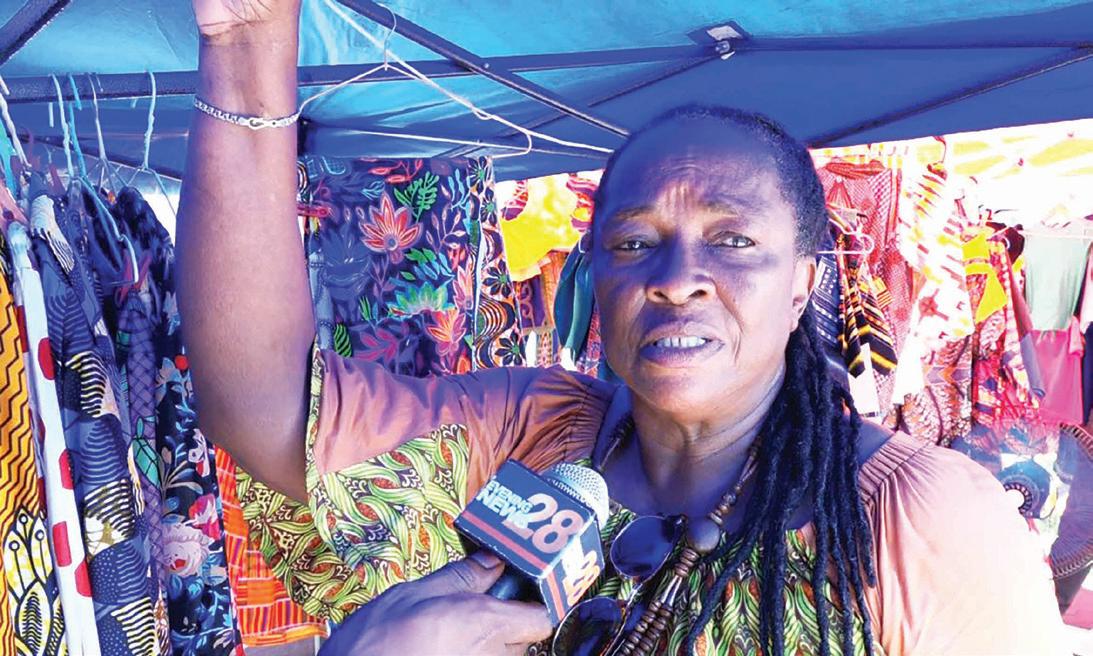
The drummers were not the only ones celebrating African culture. This publication also spoke with Patricia Hellwig, a local fashion designer, who showcased her business and explained how her handcrafted clothing helps preserve and promote African heritage.
“When I’m preparing for the Emancipation season, I
between the spiritual and physical aspects of life, noting that both positive and negative energies exist in the world.
She also added, “What I would like to say to my brothers and sisters at home and in the diaspora of this beautiful gem land called El Dorado City is we need to get more sacredly grounded. Stop trying to fight the battles of oppression, the battles of colonisation. Physically, it has to be a balance. You have to balance the spiritual with the physical. I’m talking to you; my whole skin is growing. The spiritual rules the physical. It cannot work by itself, nowhere. Just like neg-
get a wide range of African prints so that I can create head wraps. The head wraps, for me, are very, very important.”
In fact, she sources her African-print fabrics directly from Africa.
“I have someone who is in Africa, and she sends her things to Michigan, and I get the original fabrics from her. But I like to have my own pieces, you know, and when people come, they must see me in my clothing.”
Shifting gears to the cultural aspect, her focus was similar to Sister Rosalyn’s in that she also stressed the importance of the Emancipation celebrations.
“Emancipation is talking
about us as a people coming out of slavery and being emancipated. I would not say that we are fully free, but we’re getting there. As a people, if we do not know where we came from, we cannot know where we’re headed. So, I think culture is very important for Guyanese.”
She also strongly believed Afro-Guyanese should do more, particularly the older generation, to pass their culture on to the nation’s youth.
“A lot of Afro persons are not proud of who they are. They’re not proud of where they came from, you understand? So for me, it’s a deep, deep feeling. I think we should put more into our culture. Look, we’re here as Guyanese, and you have Africans and Nigerians coming here and making it such
like yourself, no one will love you. First, self-love. Teach your children selflove. Stop relaxing their hair. Stop putting them into all this nonsense. Some people think, ‘How could you dye your hair like that all the time? ‘I’m proud of who I am, and this gives me an identity. Don’t bleach your skin or change your hair. Be you. And if people see you being yourself and proud of who you are, you’ll get more respect.”
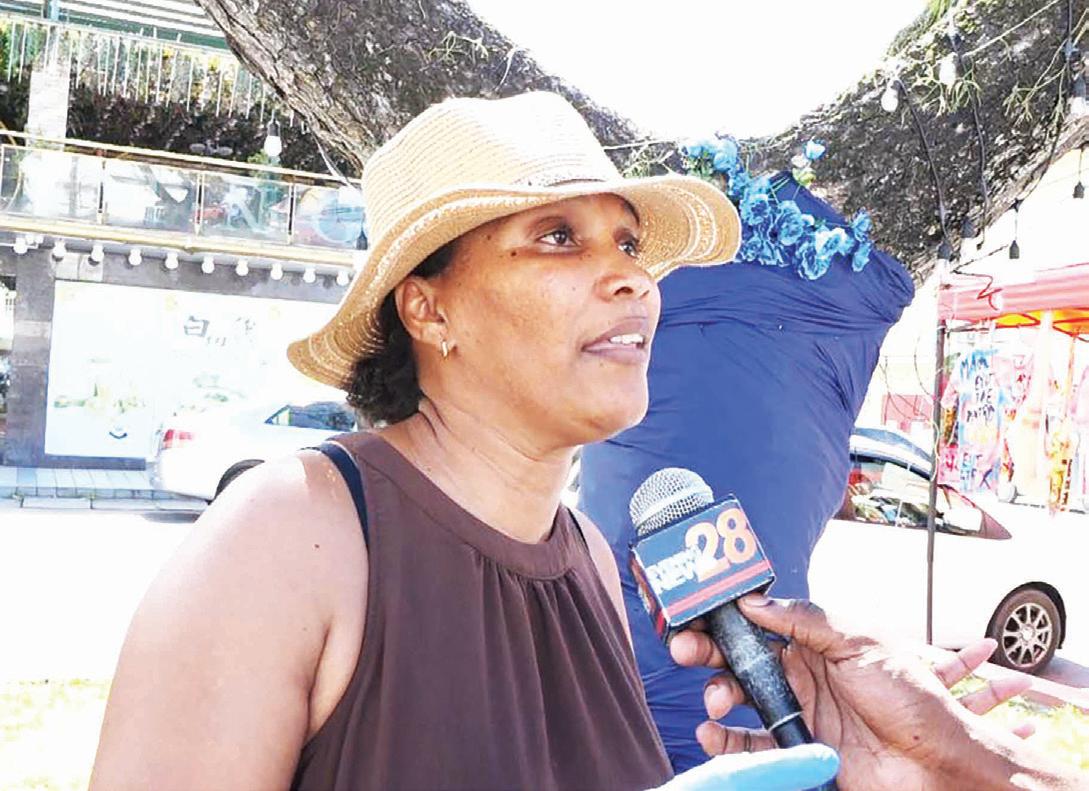
Food certainly wasn’t left out of the discussion. Chef Glennis Agard, who prepared a wide variety of traditional dishes ranging from conkie to pone and sugar cakes, had a lot to say about the key ingredients behind some of her African-inspired cuisine while also sharing a strong message with the public.
a big thing. Our own people are not seeing it the same way, you know? So, for me, it’s big. It’s deep.”
In fact, she also had a message for the youth.
“For the youths, I would say the first thing is you’ve got to be proud to be Black. If you’re not proud of being Black, if you’re not proud of your culture, no one would respect you. If you do not
“In this time of emancipation, I just feel so good because I’m not ashamed of my culture, the different types of food, and the different African wear. We Africans should be proud during this time because, remember, our fore parents struggled to get freedom. So, we all have to celebrate Emancipation and feel good during this season.”
Fashion Designer Patricia Hellwig
Sister Rosalyn
Chef Glennis Agard
The National Park came alive with bold African prints, colourful head wraps, and smiling families as the 2026 Emancipation Day celebrations unfolded, with garments acting as reminders of history and the enduring pride of African heritage.
The celebrations began well before the gates officially opened, with members of the African religious community gathering at the park for prayers and blessings, setting a spiritual tone for the day’s observances – this was according to the African Cultural and Development Association (ACDA).
From as early as 05:00h, the venue was already buzzing with activity as vendors arrived with their food, exhibitors set up their displays, and organisers made final preparations ahead of the official opening at 10:00h.
Families were welcomed with a free children’s village, where youngsters enjoyed face painting, drumming, poetry, storytelling, and complimentary meals while learning about African culture in an interactive setting.
By 13:00h, the main stage came alive with performances, featuring more than 26 acts that kept patrons entertained throughout the day. Even as the afternoon heat gave way to cooler evening temperatures, visitors continued streaming into the venue to catch the remaining performances, including appearances by artists from Jamaica.
The aroma of traditional African cuisine filled the air as vendors served a variety of dishes, adding another layer to the cultural experience.
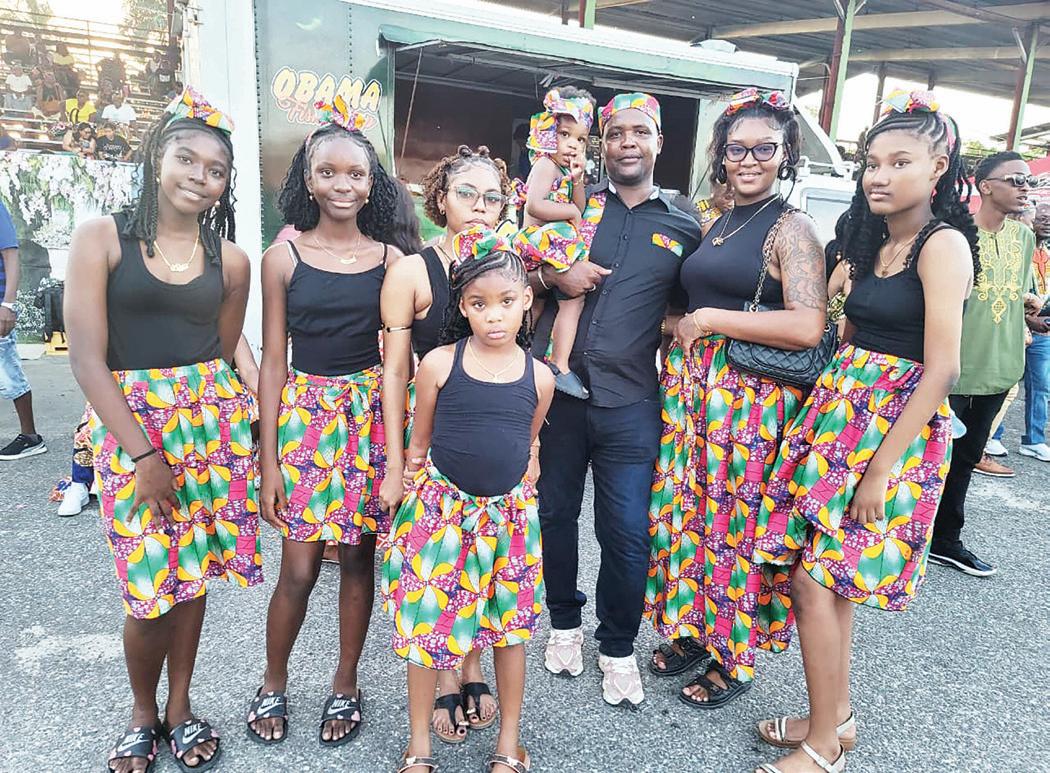
One of the most striking sights throughout the day was the number of young people proudly dressed in African attire, reflecting a growing appreciation for African heritage among the younger generation.
This year’s celebration also carried added significance as Guyana commemorated 400 years since the arrival of Africans in the
country.
Visitors were able to explore an educational display highlighting the 27 African ethnic groups brought to Guyana, tracing ancestral roots to present-day countries, including Nigeria, Angola, the Congo, and much more.
Guyana Times caught up with various families, who shared what this year’s Emancipation celebrations meant to them. Sofine Allen, who is expecting a child, said attending the event each year has become a tradition she intends to continue with her growing family.
“Every year I try to come out, and even my unborn child I’ll bring here too, because I always want to immerse myself and see the beautiful fabrics, clothing and patterns. I get inspiration for outfits for next year. I recently even purchased these earrings from a leather vendor. I personally don’t know how to make conkie and pone and these things. Eventually I will learn, but I always want to come out here and buy.”
For Allen, the celebration has a lot to do with family.
She said preserving culture for her upcoming generation is important, and believes traditions should be passed from one generation to the next. Allen added that she hopes to learn how to prepare traditional dishes such as conkie and pone from her grandmother before passing those skills on to her own children.
Another patron who came along to the festivities with a group of friends whom she considers family said her outfit was inspired by an African woman living in Guyana, who helped her embrace traditional African fashion.
“I wanted to do authentic African fashion, so I’m wearing a gele. It’s traditional to Nigeria. A Yoruba woman from Nigeria here in Guyana actually did it for me. This is an Ankara print. It is from a Cameroonian company, and so I just like to do the authentic thing. I don’t want to see Hawaiian prints and these floral prints
on Emancipation Day. I want people to know what they’re wearing. I want that when they ask me, ‘What are you wearing?’ I can tell them where it’s from and what it represents.”
According to her, “emancipation means freedom, and defending the freedom that our ancestors worked so hard for us to have. It means being free to talk about the things that matter to me, to be who I am as a Black woman.”
She said that, unlike in previous years when many persons opted for denim and T-shirts, more people are now recognising that African prints represent more than fashion – they are deeply connected to culture and identity.
She also praised attractions such as the face-painting activities, saying she was pleased to see the level of public participation and enthusiasm displayed throughout the event.
Guyana Times also caught up with the President of the African Welfare Convention, Haminston Wilson – one of Guyana’s oldest African organisations.
At the organisation’s booth, visitors browsed a variety of handcrafted items and African-themed books, all aimed at promoting African history, culture, and knowledge.
Wilson explained that the exhibits were intended to educate the public while encouraging a deeper appreciation for African heritage and identity.
He said emancipation remains one of the most significant observances for people of African descent, as it serves as a reminder of their history and the struggles of their ancestors.
According to Wilson, remembering one’s roots is essential, noting that people who forget where they came from are more likely to repeat the mistakes of the past.
He also encouraged African-Guyanese families to learn more about their culture and embrace it with pride.
“Well, I would say they should do everything with-
in their power to get to know the culture and live the culture. Now, when we see ourselves as who we should see ourselves, we would see ourselves as champions. We are not down there; we are up here as champions.”
“The African Welfare Convention is a place where we normally have courses teaching people to sew and other skills. So, out here, we feel that this is our place to
showcase who we are, what we have, and what we’re hoping to be in the years to come.”
As the sun began to set over the National Park, the rhythmic beat of African drums, the aroma of traditional cuisine, and the vibrant display of African fashion were present.
While this year’s Emancipation celebrations honoured the past, organ-
isers were already looking ahead.
Plans are underway for a major homecoming celebration next year, with hopes of welcoming internationally recognised figures of Guyanese and African heritage back to Guyana for what is envisioned as an even larger celebration of culture, history, and identity.
Families draped in African clothing during emancipation celebrations
Traffic congestion continues to be biggest obstacle to fire response – GFS
– clarifies firefighters receive constant training during station downtime
The Guyana Fire Service (GFS) reiterated that one of the major challenges faced by firefighters is traffic congestion, which can hamper them getting to the fire scene in a timely manner.
This was echoed by senior fire officer Rovin Thomas on Friday during a simulation exercise to showcase its preparedness to respond to fires.
“I would say the number one challenge we face is the congestion on the road. As much as we have sirens and persons will see these large trucks coming through with their sirens, some may still be of the opinion that, ‘Oh, they’re just putting on the siren because they want to get where they’re going fast.’
Traffic congestion, rush hour, peak periods – those are major challenges for us, especially on the East Bank and some parts of Georgetown. Those are our major challenges.”
However, he noted that improvements to firefighting infrastructure, including the installation of additional hydrants, have strengthened the fire service’s ability to respond to emergencies.
In addition, one of the myths addressed during the exercise was the perception that firefighters are inactive while stationed at their respective fire stations.
“So while some persons may be of the opinion that we’re in station and we’re not doing anything, firefighters are undergoing training. These exercises are not just pre-emptive exercises for today’s purpose only, but these are exercises that normally occur on a regular basis in
the fire service,” Senior Fire Officer Rovin Thomas explained.
Thomas said the GFS currently has access to more than 1,000 hydrants in Georgetown while also utilising alternative water sources such as canals and firefighting bowsers when necessary.
“Through Governmental intervention, we are fortunate enough to have hydrants being installed in and around Georgetown – many hydrants. Water is not a big issue for the fire service, and even if there’s a clogged drain and there’s not a hydrant in a particular area, we have our bowsers that normally respond to these calls. We have two appliances and, in some instances, two bowsers to support those appliances.”
He explained that bowsers, which are fire trucks equipped with large water tanks, can carry significant quantities of water during emergency responses, debunking another myth that fire tenders arrive at the fire scene without water. He mentioned that this is completely false and should not be regarded as true.
He stated that firefighters, upon reaching the scene, aim to find the closest source of water first.
“For those who don’t know, bowsers are the fire trucks that have the long carriage or the long tanker. Those bowsers carry 14,000 litres of water.”
To top it off, Thomas added that regular fire appliances carry between 450 and 500 gallons of water, with additional foam capacity used specifically for certain types of fires.
He maintained that the fire service is equipped and prepared to respond to different types of emergencies. Thomas also explained that the response process begins at the Fire Service’s control room, where emergency calls are received and dispatched to firefighters.
He said Georgetown currently has a three-minute response time, measured from the receipt of the call to the arrival of the appliance and the release of more than 50 per cent of its extinguishing medium.
Thomas said such exercis-
es are necessary to test the Fire Service’s readiness and correct misconceptions about firefighters’ operations.
“Such an exercise is important because it tests our response capability. It is nec-
ed that a call has been made. We cannot respond if we’re not aware. So once that call comes through to the fire service, we respond.”
“We have an in-house policy here: when in doubt, turn
be equipped with fire suppression systems.
According to him, the Fire Service’s mandate is to ensure buildings are safe while protecting lives and property from destruction caused by fires. As such, the agency has established safety protocols and recommendations for building construction.
“Buildings that are three floors and up must be fitted with a sprinkler system. Those are our recommendations. So, if you want to construct a building that is three floors and up and you submit your plans to the Fire Service, one of the key recommendations is that you must have a sprinkler system. Perhaps,
essary to have these exercises because oftentimes persons are under the perception that firemen just come to work, lie down, and sleep all day, and then they just go to fires and normally turn up late and do all these things. But let me clear up the myth. We can only respond to a call provid-
out. So even though we might think it’s a hoax call, our appliances will always turn out. Training is necessary.”
Thomas reiterated the importance of installing sprinkler systems in multi-storey buildings, noting that the GFS recommends that all buildings three stories and higher
subsequently, we will expand those recommendations, but sprinkler systems are very expensive, and the average person with a single-storey building might not be able to afford one. However, fireballs, fire extinguishers, and smoke alarm systems are recommended for smaller-scale buildings.”
National public consultations on model villages to commence on Monday
The Government will commence a series of public consultations on the development of model villages, engaging residents in several communities in Regions Two, Three, Four, Five, and Six beginning on Monday, August 3, 2026. The consultations are intended to provide residents with an opportunity to share their views, learn more about the Model Villages initiative, and participate in discussions on the proposed developments within their communities and will provide opportunities for direct engagement with President Dr Mohamed Irfaan Ali.
The first round of consultations will be held in Region Three on Monday, August 3, beginning at 09:00h at the Leonora Secondary School. Meetings will continue throughout the day in Zeelugt, Tuschen, Goed Fortuin,
Parfaite Harmonie, and Pouderoyen, culminating with a presentation on the proposed new Pouderoyen Market at 18:30h. Consultations will then move to Region Four (East Bank Demerara) on Thursday, August 6, with engagements scheduled for Kaneville, Grove and Diamond.
Residents of Region Four
(East Coast Demerara) will be engaged on Friday, August 7, through meetings in Melanie Damishana/ Non Pareil, Mon Repos, Good Hope, and Enmore. In Region Five, consultations are scheduled for Tuesday, August 4, in Bush Lot, Bath, and Hopetown. The team will then travel to Region Six on Saturday, August 8, for consultations
in Port Mourant, Rose Hall, Skeldon/Line Path, and New Amsterdam.
The final round of consultations will be held in Region Two on Monday, August 10, with meetings planned in Supenaam, Suddie, Charity, and Anna Regina. Residents from the respective communities are encouraged to attend the consultations and contrib-
ute to shaping the future development of their villages. The consultations form part of the Government’s broader Model Villages initiative, which seeks to create cleaner, greener, safer, and more resilient communities through improved infrastructure, public amenities and enhanced community participation.
The initiative builds on ongoing community trans-
formation efforts already underway across the country, including the model neighbourhood concept being implemented in Georgetown, as well as continued investments in the rehabilitation of sidewalks, public spaces, and other infrastructure to enhance the urban environment in areas such as Tiger Bay, Waterloo Street, and surroundings.
Scenes from the simulation exercise
Recreational Park at Brothers, East Bank Berbice, Region Six
A section of the Kingston Seawall Esplanade
Guyana to see more oil profits as ExxonMobil fully recovers US$55B investment
– Execs cite industry-leading development pace, high oil prices for accelerated recovery
United States (US) oil major ExxonMobil has fully recovered some US$55 billion that was invested in the Stabroek Block operations offshore, paving the way for Guyana to benefit from a larger share of the oil profits going forward. This was revealed by executives of the US energy giant during the company’s 2026 second-quarter earnings call on Friday.
“We’ve fully recovered the $55 billion of investment along with all the operating costs,” Senior Vice President (VP) and Chief Financial Officer (CFO) of ExxonMobil Neil Hansen indicated. Hansen attributed this acceleration of the investment recovery to the company’s execution of its projects at an industry-leading pace, lower development costs, operational performance, and high oil prices on the global market – a view shared by Exxon’s Chairman and Chief Executive Officer (CEO) Darren Woods.
“It’s a real success story in what we’ve achieved in Guyana, delivering...the production units faster than we had originally anticipated at a lower cost, running those assets above the investment basis. Obviously, the market prices have been higher than our base assumption. All that means more cash sooner, which is good for the project...good for Guyana and the people of Guyana,” Woods stated during Friday’s earnings call.
Back in March, the President of ExxonMobil Guyana Limited (EMGL), Alistair Routledge, told reporters that Guyana was already seeing an increase in revenues from the sale of its crude due to Middle East conflict, which saw a surge in oil prices on the global market. Routledge had explained that these high prices, if sustained, would result in the country getting a larger share of the oil profits since the costs for the company’s historical investments in the Stabroek Block operations are fully recovered.
ExxonMobil and its
co-venturers, Hess and CNOOC, had committed an investment of US$60 billion in the Stabroek Block operations. Under the 2016 Production Sharing Agreement (PSA), the Stabroek Block partners can recover costs expended on exploration, development and operation, including those accumulated historically, from up to 75 per cent of the gross revenues earned from the sale of oil produced offshore Guyana. The remaining 25 per cent of profits are shared between the Stabroek Block co-venturers (ExxonMobil, Hess, and CNOOC) and the Guyana Government. In addition to its roughly 12.5 per cent share of profits, the Government also gets an additional two per cent in royalties from the total revenues. Routledge had told reporters earlier this year that Exxon managed to bring down the cost bank to approximately US$5 billion, which would be fully recovered this year rather than in 2027, as was initially anticipated.
More cash flow
With the oil costs now fully recovered, ExxonMobil’s CFO pointed out that there would be two times the level of free cash flow by 2030 compared to what was seen just last year. “The way the contractor agreement works is we can recover that investment up to 75 per cent. After
that, the remaining production is shared 50/50 between us and the Government of Guyana. If you think about it, if you just stop today and there’s no additional investment, then more of your production and revenue is going to flow towards cash flow, again shared between us and the Government of Guyana,” Hansen posited.
According to the senior VP, even with the investment costs recovered, the cost recovery does not end since new capital spending and operating costs from future developments, such as new production assets and field expansions, will continue to build the cost bank and will have to be recovered in the future. However, he noted that the cost bank is unlikely to return to previous high levels.
“The reality is we have more investment. To the extent we have the investment come in and operating costs, they’ll still go into the cost bank. We’ll still recover that at that 75 per cent cap. There’s much less investment to recover. Given the level of production that we’re at, you’re unlikely to see that cost bank obviously be full again... Now that we’ve reached full recovery of that significant investment, more of our revenues will go towards free cash flow versus recovering cost and investment,” the Exxon CFO emphasised.
Currently, the US oil giant is operating four Floating Production Storage and Offloading (FPSO) vessels – Liza Destiny, Liza Unity, Prosperity, and One Guyana – producing approximately 900,000 barrels per day (bpd) in the Stabroek Block.
Exxon is now gearing up for its fifth development project – Urau, which will utilise the Errea Wittu FPSO. The vessel set sail for Guyana in June and remains on track for startup by the end of this year, increasing capacity by 250,000 barrels per day.
The oil major has already secured approvals from local authorities for its seventh project – Whiptail, which is
to come on stream in 2027. The Longtail development, which is the compa-
scheduled
ny’s eighth project here, is on the path toward a Final Investment Decision (FID),
while Exxon is already evaluating the potential for a ninth FPSO.
Vice President and Chief Financial Officer of ExxonMobil, Neil Hansen
Exxon’s chairman and chief executive officer, Darren Woods
56 solar mini-grids to be completed in hinterland communities by year-end
The Guyana Energy Agency (GEA) says that by the end of this year, approximately 56 solar mini-grids will be established in hinterland communities across Guyana as part of efforts to expand access to renewable energy.
This was revealed by the Chief Executive Officer (CEO) of the GEA, Dr Mahender Sharma, during the latest edition of the Energy Perspectives Podcast, titled "Powering Guyana's LowCarbon Future".
Dr Sharma said the minigrids will provide electricity to public and community buildings in hinterland areas, utilising solar photovoltaic (PV) technology supported by battery storage and small distribution networks.
"This year, we'll have about 56 solar mini-grids spread
across the hinterland communities. These mini-grids are usually drum-mounted solar PV panels with a small room for batteries and a small distribution network. We're taking power to public and community buildings," Dr Sharma explained.
He noted that the minigrid programme complements another initiative launched in 2023, which saw the distribution of more than 37,000 small solar home systems to residents in hinterland communities.
Previously, it was a solar panel with a charger that powered some lights and a fan and charged your mobile devices. But we're going beyond that with the policies that GPL has implemented, including the net billing policy. You and I can benefit from solar technology too," he said.
Dr Sharma said residents now have the opportunity to invest in solar energy systems for their homes, adding that the GEA has launched an awareness campaign to educate people on how they can incorporate solar technology into their households.
"We have the ability; we can invest in solar, and we started a campaign a few months ago to educate people on how you can integrate and incorporate solar panels in your own homes. We use an example: a five-kilowatt system, for example, will cost about $1.2 million. This will generate about $328,000 in value based on the energy that you get from the solar panels and the energy that you displace from GPL," he explained.
Using his own home as an example, Dr Sharma said he
has personally invested in solar technology and has seen a significant reduction in his electricity costs.
"I've done a slightly larger system, 20-kilowatt panels, and I've been able to reduce my electricity bills from about $80,000 to less than $20,000 a month. And anybody can do this now," he said.
Dr Sharma encouraged people to view solar energy as an investment rather than a cost, noting that it allows consumers to reduce their reliance on electricity supplied by the Guyana Power and Light (GPL).
He explained that excess energy generated by solar systems can be supplied back to GPL's network, with the utility installing bidirectional meters to measure energy inflows and outflows.
Meanwhile, the GEA says Guyana's renewable energy capacity is set to receive a major boost by the end of the year, with solar photovoltaic (PV) installations expected to bring the country's total solar capacity close to 50 megawatts (MW) as Government and Private Sector investments continue to diversify the national energy mix.
Dr Sharma made the announcement while responding to questions about Guyana's progress in renewable energy development and where the country currently stands at the midpoint of 2026.
"LCDS 2030 is the framework in which all of this is
happening," Dr Sharma explained, noting that Guyana's energy transition is being guided by efforts to reduce reliance on traditional energy sources while expanding investments in cleaner alternatives.
He said the country has been making significant strides in developing renewable energy capacity, with solar power forming a key part of that expansion.
"By the end of this year, with the completion of all of that, we'll have close to 50 megawatts of solar PV capacity," Dr Sharma said. He pointed to several ongoing investments contributing to this growth, including Private Sector initiatives and projects supported through the GEA and GPL.
One such investment in-
cludes a mining company that has developed almost 50 MW of solar capacity, while GEA's solar projects connected to GPL account for an additional 33 MW.
Dr Sharma also highlighted other major energy projects being advanced, including the Gas-to-Energy (GtE) Project, which he said will allow Guyana to utilise its indigenous natural gas resources to generate electricity and reduce the need for fuel imports.
"And that gas will displace the need for imports and will utilise an indigenous resource now, gas, an indigenous resource, to generate power," he said.
He noted that the GtE Project is not the only initiative being pursued, with the Government already announcing additional phases of the project to further expand generation capacity.
Beyond natural gas and solar development, Dr Sharma said Guyana is also advancing other renewable energy projects, including the Amaila Falls Hydroelectric Project, which is expected to add 165 MW of hydropower capacity to the national grid.
With investments across solar, hydropower, and natural gas, the GEA CEO said Guyana is moving towards a more diversified and sustainable energy system aimed at improving reliability while supporting the country's low-carbon development goals.
UG’s STEM Readiness Programme helping to build pipeline of new scientists
The Regional Accelerator for Science, Technology, Engineering and Mathematics (STEM) Students Readiness (RASSR) Programme began with a simple thought that prompted a series of questions. For years, the University of Guyana’s (UG) Vice Chancellor (VC) Professor Paloma MohamedMartin wondered what became of the exceptionally gifted students she encountered through her work with the Caribbean Examinations Council (CXC).
She wondered who was nurturing their talents after they left secondary school and whether they were being given every opportunity to fulfil their potential. Those questions ultimately inspired the creation of RASSR, a programme designed to identify, support and empower Guyana's future scientists, engineers, researchers and innovators. Those questions, she said, led to a broader reflection on how Guyana identifies and supports exceptional students.
“I honestly believe that we have geniuses among us. We spend a lot of time, as we should, dealing with vulnerable kids, but there's
the other side of the spectrum, the ones who are really, really talented and gifted, who I think we also need to find and nurture,” Professor Mohamed-Martin said. Through the RASSR, UG has sought to create a pathway for those students, ensuring that talent is recognised regardless of their location or background. The programme was established in 2022 through a partnership with UG and the Greater Guyana Initiative (GGI), which comprises ExxonMobil Guyana, Hess Corporation, and CNOOC Petroleum Guyana Limited.
It identifies high-performing secondary school students from all ten administrative regions and exposes them to intensive learning experiences in STEM. The programme focuses on areas including mathematics, chemistry, biology, physics, integrated science, technology, engineering, biodiversity and environmental stewardship, while also developing skills in critical thinking, leadership, teamwork and problem-solving. According to Professor Mohamed-Martin, one of the most important aspects of RASSR is ensuring that
students outside traditional centres of opportunity are not overlooked.
“I'm always very interested in making sure that not only children who are in an easy-to-reach area, like a geographic area, could benefit, but also students from everywhere. Once they had the talent and they showed the scores, then we could try to do it,” VC said. The VC explained that RASSR was also designed to help create a sustainable STEM pipeline by exposing students to the range of careers available in these fields.
“We were trying to find a way with GGI to direct resources straight to communities and to build a pipeline of new scientists who would stay in STEM,” she said. “If they showed an interest in it at an early age, we wanted to see if we could help them to understand all of the careers that could be there but also to help them to stay,” VC further stated.
Building such a programme, however, required commitment from a wide network of people within and outside the university. Professor Mohamed-Martin recalled that the early stages of the initiative required dedication, particularly as the programme was be-
ing developed during the COVID-19 period.
“The first year we did this, it was COVID, it was 2021... And I think we really worked on the good heart and passion and belief and courage of people within the university," she said. She credited the staff members, volunteers and supporters who helped transform the idea into a national initiative. “I cannot overstate the support of my own staff in my own office in the Department of Events, Conferences and Communications (DECC), in the Vice Chancellor's Office, in PACE (Philanthropy, Alumni and Civic Engagement), and of course, custodial staff,” she said.
Since its establishment, RASSR has continued to develop, with each cohort providing lessons that help strengthen the programme.
“We're now into our fifth year. Year after year, we learn, we iterate, we upgrade, we change,” Professor Mohamed-Martin said. Behind every student participating in the programme is a wider network of academics, mentors, volunteers and support personnel working to make the experience successful. For the VC, the greatest measure of
RASSR’s success is not only the experience students receive during the programme but also the paths they continue to pursue afterwards.
“It's joy, not pride,” she said, “to see that we actually have students who were accelerated, who came into this university at 14 and 15, and who are still here... To also see that they could feel the sense of service and commitment to come back, those who have graduated and work with the younger ones,” she shared. The programme has also recorded encouraging outcomes in retaining students within STEM fields.
“I'm really glad that we were able to keep as many as 79 per cent of students in STEM and 98 per cent of them in the programme in general,” Professor Mohamed-Martin said. Years after its first cohort entered the programme, RASSR is beginning to show the impact of investing early in talented students. For UG, seeing these young people remain engaged in STEM and return to support others has become one of the clearest signs that the programme is achieving what it set out to do.
UG Vice Chancellor Professor Paloma Mohamed-Martin addresses the second cohort of students at the opening ceremony of the Regional Accelerator for STEM Students Readiness (RASSR) Programme
Chief Executive Officer (CEO) of the GEA, Dr Mahender Sharma
One of the mini-grids in a hinterland community
Trump’s unofficial Venezuela advisor leaves role
An unofficial adviser to the Trump Administration who has played a leading role in shaping US Venezuela policy and multimillion-dollar deals to exploit the OPEC state’s vast oil resources has told Reuters he is no longer overseeing the portfolio.
In a role likened by current and former Government officials and business sources in the US and Venezuela to that of a Viceroy, Miamibased businessman Mauricio Claver-Carone reported to Secretary of State Marco Rubio, who has spearheaded Venezuela policy.
Though he held no for-
mal Government position, he emerged as one of the Trump Administration’s most influential players on Venezuela since the January 3 US raid that captured President Nicolas Maduro. He said his departure was voluntary, though multiple sources familiar with the matter say he was forced out in recent weeks.
During his tenure, ClaverCarone wielded heavy influence over decisions that could eventually be worth billions of dollars, from debt restructuring to oil deals.
Maduro was replaced by former Vice President Delcy Rodriguez, who has worked
closely with Claver-Carone and proved more compliant to US demands to open the country up to US business. Behind-the-scenes talks by Claver-Carone, who served briefly as Trump’s special envoy on Latin America early in his second term, were a large part of the Trump administration’s approach to post-Maduro Venezuela. The US has taken a domineering role in determining the future of the country’s energy sector while refraining from pushing for substantial political reforms or democratic elections anytime soon. (Excerpt from Reuters)
Tourist plane crashes in Peru, killing 13
Asmall plane carrying tourists has crashed in Peru, killing all 13 on board, according to local news reports and Peruvian officials.
The aircraft had been flying over the Nazca Lines archaeological site when it went down on Saturday. Eleven passengers and two pilots were on board.
The cause of the crash and the identities of the passengers are not yet clear.
The Nazca Lines are a popular tourist attraction and UNESCO World Heritage site in southern Peru that features ancient drawings in desert sand.
“Given the severity of the accident, there are no survivors. We have recovered four bodies so far,” Police Major Jorge Andrade said, according to AFP.
The crash happened around 13:00h local time in the Pueblo Viejo region after the plane departed from an airport in Pisco, Peru.
In a statement in Spanish posted online by the Municipalidad Provincial de Nasca, officials expressed “deep sorrow” for the accident and extended “heartfelt condolences to the families of the deceased”.
The statement said the plane belonged to local Peruvian airline Aerodiana.
The BBC has contacted
the airline for comment.
This isn’t the first plane to crash over the famed site in the last few decades.
In 2022, another small tourist plane crashed during a flight over the Nazca Lines site, killing seven on board.
In 2010, a tourist plane went down over the site, killing six persons on board. (BBC News)
At least 11 wounded by car bomb days before Colombia’s Presidential election
At least 11 persons have been wounded in a car bombing in Colombia, days before right-wing President-elect Abelardo de la Espriella is set to take office.
The detonation occurred in the city of Cucuta, which borders Venezuela, on Saturday, six days before de la Espriella is set to replace outgoing President Gustavo Petro, the country’s first left-wing leader. No groups immediately claimed responsibility for the attack. Several rebel groups, including the National Liberation Army (ELN) and dissident factions of the Revolutionary Armed Forces of Colombia (FARC), remain active in the area, as is the criminal group Clan del Golfo.
In a post on the social media platform X, de la Espriella said he condemned “in the strongest terms the cowardly terrorist attack carried out in Cúcuta against our National Police”.
“Terrorism will not intimidate Colombia or break Colombians’ determination to live in peace and security,” he said. For more than six decades, Colombia has grappled with an internal armed conflict, which has seen left-wing rebel groups, right-wing paramilitaries, Government forces and criminal groups clash for power.
The President-elect has long warned of an active assassination plot against him. He had initially sought to be sworn in at a military garrison in the conflict-hit department of Cauca. Petro did not authorise the plan.
He will instead be sworn in at the city hall in Bogota, in a ceremony set to include 11,000 soldiers and Police Officers.
(Excerpt from Al Jazeera)
T&T PM defends phone taps; “only
criminals, those suffering from
paranoia” worried
Trinidad and Tobago (T&T)’s Prime Minister (PM) Kamla Persad-Bissessar has dismissed public concerns that state security agencies are monitoring citizens’ private phone conversations, saying the only people worried about surveillance are criminals and those “suffering from derangement and paranoia”.
Responding to questions from Guardian Media about growing public unease over alleged state interception of communications, Persad-Bissessar said, “All law-abiding citizens are very supportive of the pro-
tective services’ efforts to combat crime.”
“The only persons who are worried are those who are involved in criminal activity and those suffering from derangement and paranoia.”
The PM was responding to questions from Guardian Media amid heightened public debate over privacy and state surveillance, following a series of high-profile Preventive Detention Orders (PDOs), a leaked audio recording from the state’s case against the Hadeeds and repeated Government assurances that interception powers are being lawfully
exercised. The issue has intensified in recent weeks, after the circulation of an audio recording purporting to capture a telephone conversation between businesswoman Star Sabga and relative Genevieve Hadeed, the wife of businessman Dominic Hadeed.
Police Commissioner Allister Guevarro has since ordered an investigation into the leaked audio to determine how it entered the public domain and whether any laws were broken in its recording or dissemination. (Excerpt from Trinidad and Tobago Guardian)
Haitian federation expands network across 6 countries in 1st year
Ayear after its founding, the Federation of Haitian Chambers of Commerce (FHCC) has brought together 14 Haitian Chambers of Commerce across six countries, an effort aimed at connecting Haitian entrepreneurs who have often worked through separate local networks.
Launched in July 2025, under the leadership of the Presidents of the Chambers of Commerce in Georgia, Orlando, Tampa, Southwest Florida, and South Florida,
the federation came together to share resources, coordinate programmes, and strengthen economic ties among businesses in Haiti and the diaspora.
During its first year, the federation, which represents more than 3000 businesses globally, held monthly virtual meetings and organised a trade mission to Atlanta.
Members also attended the Atlanta Black Chambers’ Go Global Conference, an event focused on international commerce and business development.
FHCC also introduced its Chamber Start Initiative, which is intended to help Haitian business leaders form or strengthen local Chambers of Commerce. The group has announced partnerships with Haiti Business Accelerator and Clark Atlanta University’s School of Business. In June and July, FHCC partnered with The Haitian Times and Dave & Buster’s on World Cup watch parties. (Excerpt from The Haitian Times)
US to make visa bond programme permanent for several Caribbean countries
The State Department is making permanent a pilot programme under which citizens from 50 countries, mainly in Africa, are required to post bonds to apply for a US visa, and it’s raising the cost as well, to as much as $20,000.
A draft notice published Friday in the Federal Register says a nearly year-long review “provided sufficient data” to suggest the bond program effectively enforces compliance with visa conditions, and would be made permanent.
The notice is to be formally released on Monday,
the day the program becomes permanent, and additional countries may be added to the list.
As of publication, the Caribbean countries Antigua and Barbuda, Cuba, Dominica, and Grenada are included, as well as Venezuela.
The pilot programme set the maximum bond amount at $15,000, with lower amounts of $5000 and $10,000 based on a consular officer’s discretion. The final regulation raises the maximum to $20,000 and removes the $5000 low-end payment.
The programme re -
quires holders of passports from the affected countries to pay the bond to be interviewed for business and tourist visas – known as B1 and B2 visas – to travel to the United States. The bond is refunded if the visa application is denied or, if granted, if the person adheres to the visa terms.
Critics have said it imposes an unnecessarily harsh burden on people from impoverished countries to visit family members or to pursue education or business opportunities in the US. (Excerpt from Antigua Newsroom)
The Federation of Haitian Chambers of Commerce convening with leaders representing Atlanta, Boston, and Philadelphia at the Embassy of Haiti in Washington, DC
The Nazca Lines are a group of extensive geoglyphs scraped into the desert in Peru
Forensic investigators and Police Officers examine debris at the site of a car bomb explosion near a Police station in Cúcuta, Colombia
Russia pounds Kyiv, kills 10 as Ukraine appeals for Patriot interceptors
Russia pounded Kyiv and the region in a heavy ballistic missile attack early on Saturday, killing 10 people, as President Volodymyr Zelenskyy warned that Ukraine had run out of interceptor missiles for its US Patriot air defence systems.
Zelenskyy said that Russia launched 35 missiles at Ukraine, including 27 ballistic missiles, and also 185 drones. Only one ballistic missile was intercepted, "simply because there are no interceptors for the Patriot system", he said.
More than a dozen explosions reverberated through the city during several waves of attacks, according to Reuters witnesses.
"Every package of ballistic missile interceptors saves the lives of our people. And every night without them results in more casualties," Zelenskyy said on the Telegram app.
With the war in its fifth
year, fighting is raging along about 1200 kilometres of front line. But Russian advances have slowed by more than half this year, and Ukraine has been launching strikes inside Russia, hitting its oil facilities, logistics sites and weapons production.
Ukraine was bringing back war to Russia, Zelenskyy said, adding that
his troops struck the infrastructure of three oil refineries in the Bashkortostan region and other targets that sustained Moscow's war effort.
Moscow and Kyiv both deny targeting civilians in the war launched by Russia's full-scale invasion of Ukraine in February 2022. (Excerpt from Reuters)
EU calls emergency meeting to discuss Ceuta migrant crossings
The European Union (EU) will hold emergency talks on Tuesday to discuss the migration crisis in Ceuta after tense exchanges between Spain and other member states.
Twenty-two member states issued a joint letter calling for co-ordinated action and the strengthening of the EU's external borders after some 60,000 migrants entered the Spanish enclave from Morocco.
Officials say almost all those who reached Ceuta on 30 July have returned, while deaths from the surge in crossings had risen to at least 67.
The EU members' letter
addresses concerns around "hybrid threats to create the perception that illegal entry into the European Union is possible", adding that the perception "would encourage further attempts, undermine confidence in our common migration policy and have repercussions for all Member States".
Leaders of the Netherlands, Finland and Belgium are among 22 signatures on the letter addressed to EU President Antonio Costa, President of the European Commission Ursula von der Leyen and Taoiseach Michael Martin, as Ireland currently holds the presidency of the Council of
the European Union.
While most had shown "support and solidarity", Sánchez said other European governments had chosen to attack Spain, "driven by prejudice, fake news, ignorance, or political interest", and pointed out that Ceuta was not part of the Schengen area.
The country's Interior Minister, Fernando GrandeMarlaska, said in a news conference on Saturday that the situation had almost returned to normal.
"Almost all of [the migrants] have already left Ceuta," he said, adding that businesses there had now reopened. (Excerpt from BBC News)
Palestinian children among those detained by
Israel in West Bank raids
Around the World
3 killed after bomb detonated at Moscow restaurant
At least three persons have been killed and 21 injured after a homemade explosive device was detonated at an Italian restaurant in Moscow, Russian state media quotes security officials as saying.
The blast happened at around 20:00h local time on Kudrinskaya Square near the city centre.
The National AntiTerrorist Committee (NAK) said a woman carrying the explosives tried to enter the restaurant but was stopped by a security
guard. The device detonated, killing the woman, the guard and a visitor to the restaurant.
The restaurant, located in one of Moscow's famous Stalin-era skyscrapers, had been holding a private function.
Witnesses said they saw people being brought out covered in blood after the explosion.
Initial reports said the blast happened in the establishment's kitchen, but the restaurant later put out a statement saying ev-
erything was ok inside and that "there was a problem outside".
Roads around the square were briefly closed.
Dozens of cyclists had been gathering nearby for an evening ride through the city, but the event was cancelled.
Video released by Russia's RIA news agency showed heavily armed law enforcement officers at the scene, which had been closed off to members of the public. (BBC News)
1st Australian mass mortality event suspected as deadly bird flu virus rapidly escalates among native birds
More than 80 dead and sick birds seen on rocks off the South Australian coast are suspected to be the first mass mortality event from the deadly H5N1 bird flu virus, only six weeks after the disease arrived in Australia.
Authorities reported on Saturday that helicopter surveillance had revealed 49 dead greater crested terns on Baudin Rocks, near Robe, as well as 35 more sick terns.
While some of the birds had been collected for testing, South Australia’s chief
vet Skye Freuan said it was likely the first mass mortality event from the disease.
South Australia also reported three suspected positive cases in other greater crested terns, including one inland at Monarto, suggesting the disease has begun moving away from the coast. The Monarto area is home to several poultry farms.
Three silver gulls were also suspected positive, SA authorities said, adding to the first silver gull found a few days ago and confirmed positive by the CSIRO earli-
er on Saturday. Freuan said there was “nothing we can do” to stop the spread of the disease, but that surveillance was working.
The news came at the end of a significant week in the development of the disease when numbers jumped by 20 in just a few days to the current total of 53. Australia was the last continent to have the unwelcome arrival of a disease that has killed millions of birds and mammals around the world. (Excerpt from The Guardian)
Famed climber Nirmal Purja among 10 climbers killed after Pakistan avalanche
SFeven Palestinians, including two children, have been detained by Israeli forces in overnight and predawn raids across the West Bank, according to Palestinian local sources.
Israeli settlers separately assaulted a Palestinian man and his wife on their own farmland on Saturday.
The couple was attacked in the al-Zarqa area of Beitillu, northwest of Ramallah, when a group of settlers stormed the farm where they were working, leaving both with injuries and bruising that required hospital treatment.
The latest settler attacks and raids by Israeli forces are a single day’s snapshot of activity now unfolding “in every direction” across the occupied West Bank, said Al Jazeera’s Nour Odeh, reporting from Ramallah.
Odeh said Israeli mili-
tary jeeps were roaming constantly through Ramallah on Saturday, as soldiers used tear gas inside a supermarket in the city. This level of everyday disruption, she said, has become difficult to separate from the settlement expansion driving it.
Settlers have erected another illegal outpost this week, Odeh added, the 12th such construction in the past
seven days alone. Saturday’s events fit a pattern that rights monitors have been documenting for months. Palestinian sources recorded more than 11,000 attacks by Israeli forces and settlers across the West Bank in the first half of this year alone, with Hebron, Ramallah and Nablus the worst affected.
(Excerpt from Al Jazeera)
amed British Nepali climber Nirmal Purja and nine other climbers were killed after being swept away by an avalanche on Pakistan's Broad Peak earlier this week, his expedition company said Saturday. Rescue groups are trying to find the bodies.
Karrar Haidri, the Vice President of the Alpine Club of Pakistan, confirmed the news.
Rescuers backed by military helicopters resumed the search Saturday for six members of a 10-member expedition who were swept away by the avalanche. Three of the four bodies found so far have been recovered, officials said.
A local Police official, Tahir Khan, said the remains of Omani climber Nathira Ahmed were being flown to the capital, Islamabad, while the bodies of American climber Mallory Geis and Nepalese
climber Bahadur Gurung remained at a hospital in Skardu, the main city in Pakistan's northern GilgitBaltistan region.
He said the search-andrescue efforts were ongoing despite fading hopes.
The team lost contact with their base camp Thursday after an avalanche struck Broad Peak as they attempted to scale the mountain, said Karrar Haidri, vice president of the Alpine Club of Pakistan, on Friday.
He said there has been no contact since then and that experienced Pakistani climbers and army helicopters are taking part in the search-and-rescue operation.
Broad Peak, at 26,401 feet, is the world's 12th-highest mountain. It lies in Pakistan's Karakoram range, home to five of the world's 14 peaks above 26,000 feet, attracting climbers from around the globe. (Excerpt from CBS News)
Firefighters work at the site of an apartment building hit by a Russian missile strike amid Russia's attack on Ukraine
Israeli soldiers raid a camp for Palestinian refugees near the city of Tulkarem in the occupied West Bank
Renowned mountaineer Nirmal Purja in 2019
ARIES
TAURUS (April 20May 20)
GEMINI (MAY 21June 20)
CANCER
LEO (July 23Aug. 22)
VIRGO (Aug. 23Sept. 22) (March 21April 19)
Talk less and do more. Your actions will give onlookers a chance to see what you can do. Stretch your imagination, put your skills to work for you and flesh out your ideas. What you start will change how you earn, spend or live your life. Embrace what you love, and discard any deadweight you’ve been carrying.
Don’t broadcast what you plan to do. Keep your life simple, abide by the rules and regulations, and put a minimalist mindset to work for you. Too much of anything will lead to trouble. You can enjoy yourself without indulging or buying into someone else’s agenda. Say no to those trying to dictate your next move.
Push forward with optimism. Use your imagination, follow your heart and have fun. Refuse to let your jealousy or emotional manipulation take precedence over kind words and offering a helping hand. What you give, you will get back. A change of heart will push you in a direction that satisfies your soul and opens doors to new beginnings.
Put what’s happening in context. Recognize your choices. Reach out to those who share your sentiments, and build a strong alliance you can count on. There is strength in numbers, and leading the way will put you in a position to get things done. Love, romance and making a difference are highlighted. Home improvements will encourage peace and tranquility.
Explore and expand your interests and plans. Choose to discover what’s available and to put the past behind you. Get your priorities straight and your plans in place, and look forward to what lies ahead. Don’t limit what you can do by dwelling on mistakes. Turn negatives into positives, and use your life lessons to achieve new goals.
Let your feelings determine your next move. Don’t allow anyone to lead you astray or preoccupy your time. Use your wisdom, experience and intuition to carve out what works best for you. Partnerships, commitment, love and romance are favored and will help you discover what’s meaningful. Your destiny depends on the decisions you make. Do what’s best for you.
LIBRA (Sept. 23Oct. 23)
SCORPIO (Oct. 24Nov. 22)
CAPRICORN (June 21July 22)
Hide out, be observant and assess your situation. Opportunities are present, but navigating your way to the best results will be difficult if you lack awareness regarding how your decisions affect others. Put your energy into bringing about positive change and offering options that resonate with the masses. Set up your surroundings to make your life less cumbersome.
Speak up, offer suggestions and lead the way. Social events will be entertaining and offer lively conversations that connect you to interesting people. Don’t hesitate to share your feelings with someone you want to spend more time with. Avoid trying to buy love. Let your affections lead the way. Romance is favored; make your intentions clear.
SAGITTARIUS (Nov. 23Dec. 21)
If you take a closer look at contracts, investments and medical issues, you’ll gain insight into how to enhance your life financially and physically. Don’t let emotions and anger block personal growth when it’s time to turn your dreams into something tangible. Put your energy where it can do some good and offer peace of mind.
AQUARIUS
(Jan. 20Feb. 19) (Dec. 22Jan. 19)
PISCES
(Feb. 20Mar. 20)
Look inward. You’ll waste your time if you try to change others or dwell on situations you have no control over. Find your bliss, and follow the path that makes you feel good about yourself. Participating in a makeover — or developing an interest in an art that appeals to you and offers physical, mental or financial benefits — will pay high returns. Romance is favored.
You’ve got more going for you than you realize. Shake off the negative, let go of the past and prepare to engage in positive ventures and activities. Financial gains are within reach. Update your resume, set up interviews and engage in events that bring you in contact with people who share your beliefs, concerns and goals.
Push anger aside and focus on truth, positive alternatives and being good to yourself and loved ones. Let common sense lead the way, and you’ll send a message that others can understand and relate to. Social events will help you open your heart to someone who can give you what you want and need in return. Romance is highlighted.
Calvin and Hobbes
Pickles
Confident Chase eyes series sweep against Pakistan
West Indies Captain
Roston Chase believes his team is exactly where it set out to be after a year of rebuilding, as the team prepares to face Pakistan in the second and final Test at Queen's Park Oval in Trinidad.
West Indies headed into the decisive encounter brimming with confidence after registering a convincing 90-run victory in the opening Test at the Brian Lara Cricket Academy. Another victory would seal the two-match series and continue their impressive run of results on home soil.
Speaking ahead of the match, Chase revealed that the team's current position is no accident, but the result of careful planning following the challenges of the previous year.
"Yeah, we're very confident. We're exactly where we want to be. After having
the year last year, we sat down, we planned and said that this is where we want to be. And as I said, we're exactly where we want to be. We want to level up."
The Captain stressed that despite the opening Test success, there will be no room for complacency.
"We want to just come into this second Test, not take anything for granted. Just go through the processes that we've sat down and talked about, the plans that we've talked about. We want to come and execute them to the best of our ability and look to get that second victory," Chase said.
There was also encouraging news regarding Chase's finger injury, which limited his bowling during the first Test. The all-rounder disclosed that his recovery is progressing well and he expects to
shoulder a greater bowling workload in the series finale.
"Yeah, it's getting better. Hopefully, I think I'll be ready to bowl by Sunday. I bowled two overs today. It still has a bit of pain. But I think by Sunday, I should be able to at least bowl probably four to five overs consistently."
Chase also outlined his long-term ambition of making the Caribbean one of the toughest places in the world for visiting teams, pointing to the importance of capitalising on familiar conditions.
"We're very blessed and very happy for the results that we've been having at home so far. But I want to make home our fortress, where we make it very difficult for teams to come to the Caribbean and beat us because they're our own conditions. We know them
5 Guyanese riders target podium finishes in Panama
Five Guyanese motorcycle racers will pursue podium finishes this weekend when they compete in the Autódromo Panamá Championship.
Guyana Motor Racing and Sports Club (GMR&SC) Vice President Alain Hopkinson and Kevin Persaud will lead the national challenge in the PreExpert 600cc and 1000cc classes, while Christopher Bridgmohan, Elwin Chase, and Jerry DaSilva will compete in the Novice category.
The GMR&SC has extended best wishes to the five riders as they seek to represent the country with distinction against some of the region’s leading competitors.
Hopkinson said the team also intends to support its Panamanian counterparts while showcasing the quality of Guyanese motorcycle racing.
“We are here to support our riding brothers from Panama as well as bring back trophies for Guyana and show the talent of Guyanese riders,” Hopkinson said.
The two-day championship programme began on Saturday, August 1, with technical inspections, practice sessions, and qualifying to determine the starting po-
sitions for Sunday’s races.
The paddock opened at 07:00h, followed by technical inspections for cars and motorcycles from 07:30h to noon. A mandatory meeting for drivers and riders was scheduled for 08:00h.
Competitors were expected to participate in two official practice sessions in the Novice, Moto 3 and Moto 4, Pre-Expert 600cc and 1000cc, Expert 600cc and 1000cc, and Street Legal categories. Saturday’s on-track programme was scheduled to end at 15:05h.
Sunday’s activities will begin with the paddock opening at 07:00h, while spectators will be admitted from 08:30h. Warm-up sessions and a mandatory competitors’ meeting will be followed by a pit party from 09:40h to 10:20h.
The official opening cer-
emony is scheduled for 10:30h, after which the championship races will begin.
The Novice and Moto 3 and Moto 4 categories will each contest two 10-lap races. The Pre-Expert and Expert 600cc and 1000cc divisions will each feature two 12-lap races.
The Street Legal category will include three seven-lap heats, while a driving experience session will be held during the midday break from 13:00h to 13:30h.
The awards ceremony is scheduled from 16:30h to 17:00h, with the championship weekend officially ending at 17:30h.
The Guyanese riders will be hoping to strengthen the country’s growing reputation in regional motorcycle racing and return home with trophies.
inside out and better than the opposition."
He added that the team has already begun establishing that identity and is eager to continue the trend.
"I think we want to really make home our vantage point, and we've been doing that well so far. So, as I said, we're looking to continue in the vein of form that we've been in and to take victory in this second game."
With confidence high following the opening Test triumph and the prospect of their Captain returning to a fuller bowling role, West Indies will be aiming to complete a clean sweep over Pakistan when the teams meet at Queen's Park Oval and continue strengthening their reputation as a formidable force on home soil.
Championship leaders face fresh challenges in Dakota 100 Round 2
The early leaders in the Guyana Motor Racing and Sports Club’s (GMR&SC)’s 2026 Endurance Championship will look to strengthen their positions when Round Two of the Dakota 100 is staged today at the South Dakota Circuit.
The meeting will begin at noon and will feature three segments of racing, starting with a 20-minute Toyota Vitz contest. A 15-lap motorcycle feature will follow before the day concludes with the headline 100-lap endurance race.
Chris Lall enters the second round as the overall championship leader after dominating the opening event.
Lall completed all 100 laps to secure overall honours and victory in the Enduro 1501cc1600cc category, making him the early favourite in the title race.
However, the father-andson combination of Mohamed Saifudeen Roshandin and Mohamed Shahabudin Roshandin is expected to provide another strong challenge. The pair completed 99 laps in Round One and will be aiming to overturn the narrow onelap deficit that denied them victory.
Mark Williams will also seek to extend his advantage in the Enduro 1601cc-2000cc division after taking the class win and finishing third overall in the opening round.
Williams is expected to
face renewed competition from Randy Moharally and Randel Singh, along with Richard and Reeyaz Hamid.
The Enduro 0-1500cc division is also expected to produce another closely contested battle. Zachary Persaud and Ryan Rahaman won the opening round after completing 97 laps, while Paul Jiwanram finished just two laps behind.
Nyron Maraj and Christopher Samaroo completed the podium and will also be hoping to close the gap during today’s action.
Competition in the Unlimited category is similarly tight. Kamal Seebarran and Shayne Seebarran collected maximum points in Round One after edging Ravin Ramoutar and Ryan Ramoutar on finishing position, with both teams complet-
ing 94 laps. Retesh Singh and Kenneth finished third after completing 92 laps.
Several competitors who suffered mechanical problems during the first round are also expected to return with improved machines, which could add further pressure to the current championship leaders.
With only one round completed, a strong result today could either strengthen an early title challenge or bring several competitors back into contention.
The endurance race will again test the drivers’ speed, strategy and reliability, while the Vitz and motorcycle events are expected to provide fast and close racing before the main feature.
Five Guyanese motorcycle racers will pursue podium finishes this weekend when they compete in the Autódromo Panamá Championship
Round Two of the Dakota 100 is being staged today at the South Dakota Circuit
West Indies Test Captain Roston Chase will be looking for backto-back test series victories
Pedro to coach 20-member Guyana squad at CFU under-14 Challenge Series
The Guyana Football Federation (GFF) has named a 20-member boys’ squad to represent the country at the 2026 Caribbean Football Union (CFU) Under-14 Challenge Series in Punta Cana, Dominican Republic.
Guyana will compete in Tier II, Group C, and will begin its campaign against Montserrat on Sunday, August 16. The young Golden Jaguars will then face Anguilla on Monday, August 17, before completing their group fixtures against the Bahamas on Wednesday, August 19.
Jamal Pedro will serve as Head Coach of the national team, marking his first assignment in charge of a Guyana side. Technical Director Bryan Joseph also played a key role in overseeing the team’s preparation.
The goalkeepers selected are Isaiah Pellew of Ann’s Grove United and Royston
Winter of Gladiators Football Club.
The defenders are Fabio Kowlessar, Isaac Taylor, Adiel Hamilton, Daniel Chesney, Teon Francis, Malik Sobers, and Dylan Kendall.
Gilbert Frank, Wyatt Fernandes, Dane Vancouten, Asher McInyre,
Wayshawn Forde, and Andrew Brown make up the midfield group.
The forwards are Cavon Peters, Dontay Kowlessar, Aaron Vasconcellos, Luzon Dos Santos, and Nash Moe.
The squad includes players attached to clubs and academies in Guyana, along with overseas-based
Couchman leads Guyana’s challenge at Pan American Youth Chess Festival
ational Junior cham-
Npion Kyle Couchman produced Guyana’s best performance at the 36th Pan American Youth Chess Festival, finishing with five points from nine rounds as the standard competition concluded on Saturday in Medellín, Colombia.
Competing in the Open Under-18 division, Couchman secured 34th place after recording four victories, two draws and three defeats. He ended the tournament strongly with consecutive wins over Colombia’s Sebastian Velez and Juan Ramirez in the final two rounds.
Couchman, rated 1962, also defeated Colombia’s Emmanuell Chaurra and Simón Carrillo. His draws came against Mexico’s Miguel Lopez, rated 2217, and Ronaldo Hernandez, rated 1727. His tournament performance rating was listed at 1955.
Women’s Candidate Master Aditi Joshi was Guyana’s next-best finisher, collecting 4.5 points to place 27th in the Girls’ Under-16 category. Joshi registered two victories, five draws and two defeats during the nine-round tournament.
She defeated Colombia’s Salome Acevedo and Ecuador’s Eva Nunez, while drawing with opponents from Colombia, Jamaica and Ecuador. Joshi closed her campaign with a draw against Ecuador’s Mariangel Zambrano.
Abel Fernandez also finished positively, scoring four points to place 97th in the Open Under-14 division. Fernandez won his final two matches against Colombia’s Gerard Montes and Peru’s Santiago Medina.
Aiden Tinnie scored four points and placed 73rd in the
National Junior Champion Kyle Couchman produced Guyana’s best performance at the 36th Pan American Youth Chess Festival, finishing with five points from nine rounds
Open Under-12 category. He registered victories over Jose Barrera of Venezuela and three Colombian opponents, including Nicolas Gaviria in the eighth round.
Alek Ubaldo-Singh accumulated 3.5 points for 110th place in the Open Under-14 division, while Divya Persaud finished with three points and secured 58th place in the Girls’ Under-12 category.
Alexander Zhang placed 100th in the Open Under-16 competition with three points, while Vir Narine and Jeremiah Jacobs also scored three points in the Open Under-12 category. Mark Defreitas collected three points in the Open Under-10 section.
Rebha Lachhman scored three points to finish 75th in the Girls’ Under-14 event,
while Emma John earned three points and placed 50th in the Girls’ Under-16 division.
Pranav Suman scored 2.5 points in the Open Under-8 category, with Sanjay Suman and Amaya Sharma ending on two points. Arian Tinnie finished with 1.5 points, while Jordon Jacobs scored one point.
The competition was contested over nine rounds under the Swiss system at the Coliseo de Combate Guillermo Gaviria Correa. Players received 90 minutes with a 30-second increment after each move. The festival ran from July 27 to August 1, and was organised by the Chess Confederation for the Americas and the Colombian Chess Federation.
footballers from the United States and England.
Kendall is attached to Bearsted Football Club in England, while Forde represents Potomac Football Club in the United States.
Brown is listed with Colorado Rapids Football Club Academy in the US.
Several locally based
players were selected from the Vurlon Mills Football Academy, while the squad also includes representatives from Fruta Conquerors, Ithaca Football Club, Buxton Stars, Pouderoyen Sports Club, Gladiators Football Club, and Ann’s Grove United.
The squad was selected following four months of preparation under the FIFA Talent Development Scheme. The programme is designed to identify promising footballers and provide them with a structured pathway towards regional and international competition.
The local programme brings together the country’s leading young male and female players for yearround training under the supervision of the GFF’s National Coaches Pool.
It currently includes a core group of approximately 24 players and a wider
training pool of about 30. While most participants are drawn from the coastal regions, the programme also provides opportunities for players from the hinterland and other parts of the country.
GFF President Wayne Forde praised Joseph, Pedro, the coaching staff and the players for their commitment during the preparation period.
Forde said the Talent Development Scheme had made a significant contribution to the team’s preparation and urged the players to represent Guyana with professionalism, discipline and respect.
The Federation also congratulated all the players who participated in the programme during the selection process and expressed confidence in Pedro as he prepares for his first national assignment as a Head Coach.
Guyana close Commonwealth Games campaign with relay season’s best
Guyana brought its 2026 Commonwealth Games campaign to an end on Saturday in Glasgow, Scotland, with the men’s 4x100 metres relay team recording a season’s-best time and Stafon Roach placing 10th in the men’s triple jump final.
The relay quartet of Akeem Stewart, Jackson Clarke, Noelex Holder and Shamar Horatio clocked 39.96 seconds to finish fifth in Heat One but did not advance to the final.
Stewart ran the opening leg before handing over to Clarke, while Holder handled the third leg and Horatio anchored the Guyanese team to the finish.
Nigeria won the heat in 38.46 seconds, ahead of Canada, which finished in 38.53, and Australia in 38.69. The three teams secured automatic qualification, while fourth-placed Kenya advanced as a non-automatic qualifier af-
ter posting 39.66 seconds. Guyana finished ahead of Togo, which also recorded a season’s-best time of 41.95 seconds. Papua New Guinea did not finish the race.
Meanwhile, Roach ended the men’s triple jump final in 10th position after producing a best effort of 15.64 metres during the opening round.
The Guyanese followed that performance with jumps of 15.61 and 15.58 metres but did not progress beyond the first three rounds of competition.
Jamaica’s Jordan Scott won the gold medal with a leap of 16.72 metres, while India’s Praveen Chithravel secured silver with 16.58. Selva Prabhu Thirumaran, also of India, earned bronze with an effort of 16.52 metres.
Roach’s appearance in the final and the relay team’s season’s-best performance completed Guyana’s participation at the Games.
Woods Inc. is inviting applications for the following positions: Moulder Operator (3), Heavy-Duty Equipment Mechanic (4), Mill/Resaw Operator (3), Forklift Operators — (5), Labourers — (10). Location: Yarrowkabra, Linden-Soesdyke Highway. Contact: 642-3828/ 6262138. Email: superiorwoods.gy@ gmail.com.
Blocks and Pavers is inviting applications for the following positions: Blocks Machine Operator (3), Forklift/Front-end Loader Operator (3), Labourers — (6). Location: Yarrowkabra, Linden-Soesdyke Highway. Contact: 642-3828/ 6262138. Email: vickash@superiorblocksandpavers.com
The GFF has named a 20-member boys’ squad to represent the country at the 2026 CFU Under-14 Challenge Series
Guyana’s Stafon Roach ended the men’s triple jump final in 10th position after producing a best effort of 15.64 metres during the opening round
Noel storms to 3rd CAC Gold with record-breaking 200m freestyle swim
Raekwon Noel captured his third gold medal of the centennial Central American and Caribbean Games after producing a record-breaking performance in the men’s 200-metre freestyle final in Santo Domingo, Dominican Republic.
The Guyanese swimmer touched the wall in one minute, 47.08 seconds, erasing the previous Games record of 1:47.19 established by Mexico’s Jorge Iga in Barranquilla, Colombia, in 2018.
Noel’s decision to withdraw from Friday’s men’s 100m backstroke proved beneficial after consecutive late nights caused by anti-doping testing procedures. The additional recovery helped
him return strongly and deliver another historic performance for Guyana.
Iga secured the silver medal in 1:47.95, finishing 0.87 seconds behind Noel, while Trinidad and Tobago’s Nikoli Blackman claimed bronze in 1:49.41.
Mexico’s Daniel Saborio placed fourth in 1:49.63, ahead of Venezuela’s Adanuriel Rosal, who clocked 1:51.31. Colombia’s Juan Manuel Morales finished sixth in 1:51.63, Honduras’ Gabriel Martinez was seventh in 1:51.87, Dominican Republic swimmer Mauricio Jose Arias placed eighth in 1:53.43, and Venezuela’s Winston Rodriguez was ninth in 1:54.00.
Earlier, Noel comfortably won
his preliminary heat in 1:52.43. Rosal was second in 1:54.36, while Costa Rica’s Alberto Vega finished third in 1:55.43.
Christian Serafeim of Honduras placed fourth in 1:57.40, followed by Haiti’s Raphael Grand-Pierre in 1:57.91, Kaeden Gleason of the United States Virgin Islands in 1:59.25, and Dominica’s Seif Hesham Elshekh in 2:08.20.
The victory followed Noel’s gold-medal performances in the men’s 200m individual medley and 200m butterfly.
He won the individual medley in 1:59.35, breaking the two-minute barrier and establishing new national and CAC Games records. Noel then clocked 1:56.82
Guyana fall 3-0 to Guatemala in CAC table tennis team opener
Guyana suffered a 3-0 defeat to Guatemala in the men’s team table tennis competition on Saturday at the Central American and Caribbean (CAC) Games in the Dominican Republic.
The Guyanese were unable to convert several competitive periods into victories, with Guatemala securing all three matches to complete the sweep.
Niran Bissu and Elishaba Johnson opened the contest against Luis Carrillo and Ian Morales in the doubles encounter. The Guyanese pair went down in straight games, losing 9-11, 6-11 and 5-11 for a 0-3 re-
sult.
National champion
Shemar Britton then faced Sergio Carrillo in the second match. Britton lost the opening two games 4-11 and 6-11 before responding with an 11-7 victory in the third. However, Carrillo regained control in the fourth game, winning 11-7 to complete a 3-1 triumph. Johnson returned for the third match against Morales and made a positive start with an 11-6 win in the opening game. Morales recovered to take the next three games 11-6, 11-2 and 11-6, securing another 3-1 victory and sealing the overall result for Guatemala.
The Guyanese men will return to action on Sunday against host nation the Dominican Republic as they seek to advance from the team stage of the regional competition.
Guyana’s men’s squad also includes Malachi Moore, while Chelsea Edghill and Jasmine Billingy will represent the country in the women’s events.
The players are expected to compete in the men’s team, singles and doubles competitions, along with the women’s singles and doubles and the mixed doubles events. The national team is being coached by Joel Alleyne.
in the butterfly to better the previous Games record of 1:57.03.
Meanwhile, Guyanese swimmers Ariel Rodrigues and Shareefah Lewis com peted in Heat One of the women’s 50m butterfly but did not advance.
Rodrigues finished third in 31.40 seconds, while Lewis was one-hun dredth of a second behind in fourth place with 31.41. Sint Maarten’s Aday Bourne won the heat in 30.95, narrowly ahead of Haiti’s Mayah Chouloute, who recorded 30.99. Aiyana Bourne of Sint Maarten placed fifth in 34.25.
Guyana women beat Jamaica as men suffer double defeat in CAC 3x3 basketball
Guyana’s women produced a strong finish to defeat Jamaica 15-8, while the men suffered losses to Puerto Rico and Haiti in 3x3 basketball action on Saturday at the Sports Malecón Park.
The women’s Pool D contest remained close during the early stages, with the
tributed four, including a deci sive two-pointer in the final minute.
Guyana shot
teams trading the lead before Guyana pulled away in the closing minutes.
Anaya Clemons led the victory with six points, including a key two-point basket that gave Guyana control and a buzzer-beating shot to complete the win. De Angelique
35 per cent from the field, compared with Jamaica’s 24 per cent. Chloe Wilson led Jamaica with three points, while Donae Brown and Miea Campbell scored two each.
The Guyanese men endured a difficult start to their Pool A campaign, losing
21-9 to Puerto Rico before going down 15-10 against Haiti. Puerto Rico controlled the opening encounter from the start and completed the victory in just under nine minutes. Angel Matias led the winners with 11 points, while Christian Hinckson was Guyana’s leading scorer with four.
Guyana showed greater resistance against Haiti, with Travis Burnett briefly levelling the score at 3-3 through a two-point shot. However, Haiti regained control behind Fitz Salvant, who finished with a game-high eight points. Akil Hughes scored three points for Guyana but suffered a serious throat and neck injury with 3:48 remaining. The game was stopped while he received medical attention before he was transported to hospital for further evaluation.
The Guyana Basketball Federation said it was awaiting an update on his condition.
Meanwhile, Guyana’s women were locked at 4-4 with hosts the Dominican Republic when their match was interrupted up to press time.
Raekwon Noel captured his third Gold medal of the centennial CAC Games
The Guyana men’s team suffered a 3-0 defeat to Guatemala in the men’s team table tennis competition on Saturday
Part of the Guyana women’s team. L-R: DeAngelique Waithe, Anaya Clemons and Jamaicy Ogle
The Guyana men’s 3x3 team
guyanatimesgy.com
Warriors pull off miracle to retain ExxonMobil GSL title
The third edition of the ExxonMobil Guyana Global Super League (GSL) concluded at the Guyana National Stadium, Providence, where defending champions the Guyana Amazon Warriors (GAW) won the toss and elected to bat first against the San Francisco Unicorns (SFU) in front of a packed home crowd.
The visitors made an immediate impact with the ball during the powerplay.
Veteran seamer Peter Siddle trapped Johnson Charles lbw for just two before Fabian Allen produced an excellent return catch in the following over
to dismiss the in-form Rahmanullah Gurbaz for eight. The Warriors’ top order continued to crumble as Siddle claimed his second wicket by trapping Shimron Hetmyer LBW for four before removing Mohammad Haris for six. At the end of the powerplay, the home side were reeling at 24 for four. The collapse continued when Anirudh Immanuel struck in his first over, bowling Mohammad Nabi for two before trapping Captain Rovman Powell lbw for another two. Gudakesh Motie then became Immanuel’s third victim, also falling LBW for two, leaving the
Warriors in dire straits at 27 for seven, after 8.1 overs. Matters worsened shortly afterwards when Romario Shepherd was run out, reducing the defending champions to 29 for eight.
After 10 overs, the Warriors were struggling at 34 for eight. Two overs later they had crawled to 49 for eight, with Immanuel completing a superb spell of three for seven from his four overs at an outstanding economy rate of 1.75.
The Warriors brought up their 50 in the 14th over before Matthew Forde provided the home supporters with a brief spark of resistance. He took 16 runs from a Fabian Allen over and shared a valuable 41-run partnership for the ninth wicket. Forde’s knock ended on 28 from 23 balls, including two fours and two sixes, when he was brilliantly caught at deep midwicket with the score on 70 for nine.
Imran Tahir was the final wicket to fall after making 11 from 11 deliveries, while Dwaine Pretorius remained unbeaten on 17 from 30 balls. GAW were eventu -
ally bowled out for just 85 in 18.5 overs after a disastrous batting display.
Defending a modest total of 85, GAW produced a remarkable bowling performance to keep their title hopes alive. Dwaine Pretorius and Gudakesh Motie provided the perfect start by removing both San Francisco Unicorns openers with the score on just six for two. Pretorius then struck again, dismissing Captain Hassan Khan for nine, as Shimron Hetmyer held a comfortable catch at mid-off. At the end of the power play, SFU were 38 for three with Oliver Peake looking well set at the crease.
Sanjay Krishnamurthi frustrated the Warriors with a patient nine from 23 deliveries before Mohammad Nabi eventually broke the resistance, with Hetmyer taking his second catch of the innings. After 10 overs, SFU appeared to be in control at 53 for four.
The match turned dramatically in the 11th over when Imran Tahir bowled Hammad Azam for one before dismissing Karima Gore with the very next delivery to leave
the Unicorns wobbling. Nabi then removed the well-set Peake lbw for 31 from 28 balls, an innings that included three fours and a six, before trapping Anirudh Immanuel lbw for a fourth-ball duck. The collapse left SFU reeling at 58 for eight after 12 overs, with the Warriors sensing an unlikely victory.
Pretorius returned to claim his third wicket by dismissing Fabian Allen for six from 15 deliveries, reducing the Unicorns to 72 for nine. With just seven runs required for victory, Shimron Hetmyer produced a moment of brilliance in the field, running out Stow for one to end the innings on 79. In remarkable fashion, GAW successfully defended just 85 runs to defeat the San Francisco Unicorns by six runs, retaining their ExxonMobil Guyana Global Super League title in one of the most dramatic finals in the tournament’s history. (Gerald Montfort)
Peter Siddle of SFU celebrates getting the wicket of Shimron Hetmyer of GAW during the ExxonMobil GSL T20 Final at the Guyana National Stadium, Providence, Guyana (Photo by Ashley Allen/GSL T20)
Fabian Allen and Oliver Peake of SFU celebrate the wicket of Rahmanullah Gurbaz of GAW during the ExxonMobil GSL T20 Final at the Guyana National Stadium, Providence, Guyana (Photo by Ashley Allen/GSL T20)