









WEATHER TODAY




Winds: East-North-Easterly to Easterly between 4.02 metres and 5.36 metres.
High Tide: 13:01h reaching a maximum height of 2.22 metres.
Low Tide: 06:32h and 19:02h reaching minimum heights of 1.07 metres and 0.94 metre.











Winds: East-North-Easterly to Easterly between 4.02 metres and 5.36 metres.
High Tide: 13:01h reaching a maximum height of 2.22 metres.
Low Tide: 06:32h and 19:02h reaching minimum heights of 1.07 metres and 0.94 metre.
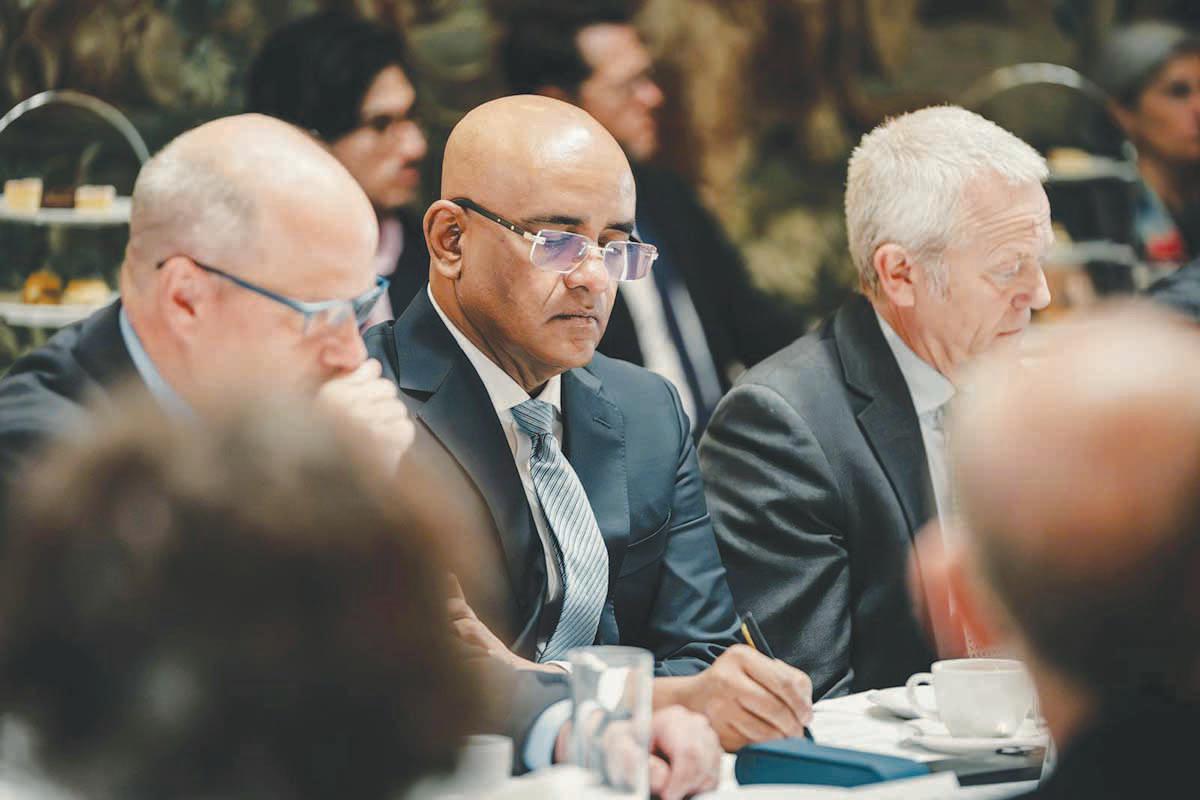
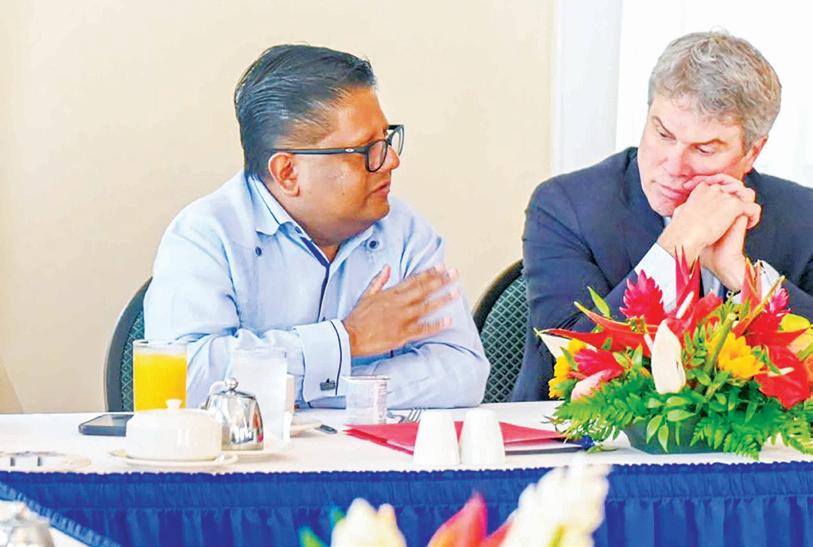
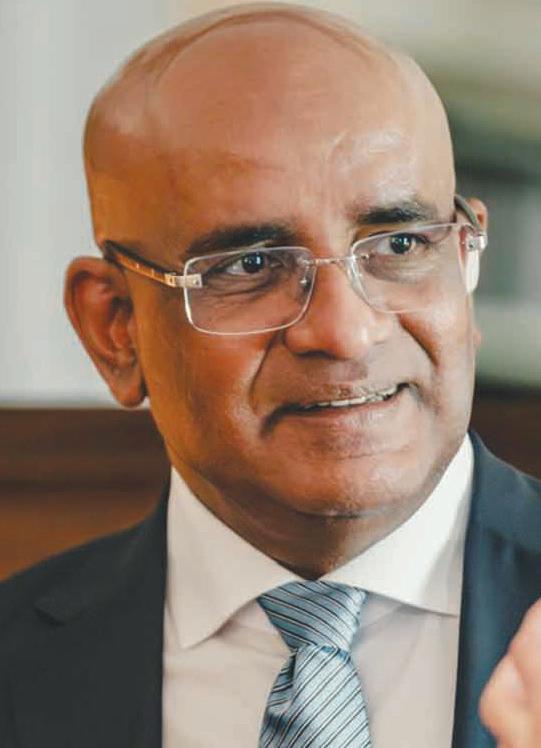
Vice President (VP) Bharrat Jagdeo on Saturday urged Commonwealth countries to make the most of new opportunities to access climate finance and advance development.
These calls were made as the VP joined a Commonwealth roundtable on the Declaration on Sustainable Urbanisation, which was adopted in Kigali back in 2022.
The roundtable, supported by The King's Foundation, brought together member states, along with experts and civil society organisations, to address how to manage rapid urbanisation while improving the quality of life, strengthening economic opportunity, and building resilience.
Commonwealth leaders have spoken repeatedly of its role as a platform for practical cooperation.
One example is the Commonwealth Climate Finance Access Hub – developed from work VP Jagdeo chaired and presented at the 2014 Commonwealth Heads of Government Meeting (CHOGM) in Colombo.
Twelve years later –and now headquartered in Mauritius – the Hub has helped mobilise nearly US$500 million in climate finance, supported over 100 projects, and deployed expert advisers across more than 15 countries.
Speaking after Saturday's roundtable session, VP Jagdeo said, "The progress of the Commonwealth Climate Finance Access Hub is welcome and important. It shows what can be achieved when countries are given practical support to turn homegrown ideas into investable projects."
"But the scale of today's climate and development challenges requires far more. Helping all our people to secure better lives now requires managing complexity at a speed and scale not seen before. We need new thinking, new tools, and a step change in how the international community supports developing countries and smaller states."
According to Jagdeo, who crafted the Low Carbon Development Strategy (LCDS) – Guyana's economic model for sustainable development – Commonwealth stakeholders focused on urbanisation during the session, that is, how to plan and build cities that are liveable, productive,
and attractive for investment and jobs. But he noted that the same challenges are seen right across all areas of development and that increasingly means the need for better data and applications that can use the data.
In fact, the VP referenced the recent India AI Impact Summit he attended in New Delhi in February, which brought together Heads of Government and leaders from major technology companies like Microsoft, Google, and OpenAI. There, Jagdeo said he saw how artificial intelligence is already strengthening planning and accelerating decision-making across the world.
"This presents a major opportunity – but only if it works for everyone. As I said today, if AI models are not trained on data from small and developing countries, it will not work for them."
"So, we must invest now – in solutions, both traditional and AI-driven – that support small countries and the developing world. The Commonwealth – home to about a third of the world's people – can play a leading role," VP Jagdeo stated.
Only back in February, the Guyanese VP raised similar concerns at the World Sustainable Development Summit (WSDS) in New Delhi – a global event hosted annually by The Energy and Resources Institute (TERI) that allows for dialogue on climate action, sustainability, and green development.
In his address at the WSDS, the VP had called on international stakeholders to develop frameworks to help small countries in the Global South to overcome their capacity gaps and AI for sustainable development and climate action.
"We have to...start thinking about how to help the smaller countries of the South, particularly in building small templates or approaches where they can bypass the reluctance or the gap in knowledge at the local level and use AI fully for development, including to help us solve climate issues," Jagdeo said.
According to the VP, there cannot be a conversation about sustainable development without bringing AI into the mix. "We can't say the focus of this summit is on transformation and not examine the challenge that AI will bring to sustainable issues," he stated.
Citing issues of size, lack of capacity, and other complexities, Jagdeo pointed out that many Global South countries, already grappling with technology gaps, are at risk of a new challenge with AI.
"India has great capacity... That is not so for many other countries in Africa, the Caribbean, and the Pacific, and so those countries cannot now suffer a new development challenge of compute and data divide." That will happen, and if we don't want that to hap-
pen, we have to work out templates...for those countries to follow so that they can organise their AI diffusion, because there’s hardly AI development in those smaller countries."
To this end, Jagdeo called on international organisations like TERI to assist Governments in these small countries to integrate AI into national development strategies, especially in areas of education and healthcare. These efforts, he underscored, are even more important at a time when there are reluctance and fear surrounding AI.
This past week, VP Jagdeo travelled to the United Kingdom (UK), where he had a series of high-level engagements. On Tuesday, he met with King Charles III at Dumfries House in Scotland. Jagdeo also participated in engagements with The King's Foundation, including the team supporting Guyana's programme to advance sustainable urban development, as well as representatives from across the Commonwealth, focusing on advancing sustainable development, low-carbon growth, and practical solutions for vulnerable countries.



Editor: Tusika Martin
News Hotline: 231-8063 Editorial: 231-0544
223-7230,223-7231,231-0544, 225-7761
Marketing: 231-8064 Accounts: 225-6707
Mailing address: Queens Atlantic Industrial Estate Industrial Site, Ruimveldt, Georgetown
Email: news@guyanatimesgy.com, marketing@guyanatimesgy.com
The Bretton Woods institutions of the World Bank and IMF were established after WWII to guide economic development in the developing world under the tutelage of the US. They were run on Keynesian principles – on the assumptions that markets need state guidance, whether to stabilise currencies and prevent panics (IMF) or to build the infrastructure necessary for economic development (the Bank). But with the ascendance of Reaganite and Thatcherite free-market economics in the West by 1980, the operating philosophies of both institutions changed. They began pushing laissez-faire policies, labelled in 1989 as the “Washington Consensus”.
Basically, these regurgitated the aims of classic 18thand 19th-century liberal economic policies as their guiding mantras – hence the term “neo-liberal”. The consensus was to be enforced by the World Bank and the IMF through the Structural Adjustment Programs (SAP) they could impose on the Third World because of the latter’s debt crisis. In 1989, the PNC under Desmond Hoyte accepted the ministrations of the IMF under an SAP, and this was inherited by the PPP in 1992.
John Williamson, the man who coined the term, explained: “The three big ideas [of the Washington Consensus] are macroeconomic discipline, a market economy, and openness to the world [at least in respect of trade and FDI].”
One critical commentator interpreted the application of the ideas thusly: “The ‘consensus’ prescribed budgetary discipline [a passion for eliminating deficits]; fiscal reform [favouring those who own most]; trade liberalisation [removal of tariff barriers by less developed countries without any compensation from the rich]; opening up to foreign investment [without rules or controls]; privatisation [public patrimony within the grasp of the powerful]; deregulation [weakening or removal of labour guarantees, social and environmental controls]; and absolute guarantees of the right to property and management of lesser affairs [excepting police involvement].”
However, the policies of the Washington Consensus failed to deliver on their promises, and by 2003, John Williamson was forced to concede, “The Washington Consensus is dead...The results have been disappointing, to say the least, particularly in terms of growth, employment, and poverty reduction... Countries ought not to have adopted the Washington Consensus as an ideology.” However, by that time, the tenets of the Washington Consensus were no longer confined to arcane provisos in IMF and World Bank programmes. They had become the pillars of a new regime of international law. They were embedded in the charter of the World Trade Organization, for instance – a quasi-judicial body as well as a regulator of international trade and much more besides. By 2008, the contradictions became so severe that the entire global financial system collapsed.
But in the rebuilding, the fundamental neoliberal premises were retained, especially regarding the fundamental role of “free markets”, which was expanded from the economic realm into the moral. All decisions were to be made by the market. This has led to a skewed distribution of wealth where the top twenty richest individuals are worth US$300 billion. Eight trillion – which is far more than all 54 countries in Africa (US$3.2 trillion). This disparity has led to a search for “new economic paradigms”, which should be of interest to us in Guyana as we ride the wave of our oil-fuelled development.
Recently, the UN Economic Commission for Latin America and the Caribbean (ECLAC), in collaboration with the venerable London School of Economics (LSE), held a conference that attempted to move beyond the old Washington Consensus toward what participants are calling a “London Consensus”. This is a more flexible, state-aware, and inequality-focused model of development that shifts from “liberalise and stabilise” to “transform, include, and future-proof”.
It recommends that we move from “markets know best” toward one that balances the roles of the state – which is supposed to look at matters like equity – and the market. As such, it rejects the idea that liberalisation and privatisation alone drive development. Instead, it emphasises a strong but smart state that actively shapes markets; industrial/”productive development” policies to steer sectors and innovation; and context-specific policies rather than one-size-fits-all rules. It would appear that the Irfaan Ali Government will become the poster boy of the “London Consensus” (to be continued).
Dear Editor,
As per the 2026 Guyana Budget, the country’s Health Sector was allocated G$161.1 billion, with the aim focusing on “... modernising services, expanding telemedicine, upgrading medical equipment, and enhancing drug distribution”. What was vital, and quite a precocious move, were the planned “key investments” – including AI-supported diagnostics, a national electronic health record system, and new regional hospital ambulances to improve patient care access.
All this came back to me as I followed the 152nd Inter-Parliamentary Union (IPU) Assembly in Istanbul, Turkey, where Minister Kwame McCoy really “... underscored that the PPP/C Government has already positioned itself to participate meaningfully in the global digital economy through sustained investments in connectivity and digital infrastructure over the past five years. “ As I said, and as the budget indicates, there will be a gathering momentum in this aspect of Medicare in Guyana.
In his charge, moving from the parochial to the global, McCoy insisted that “Parliaments must act now, as AI is reshaping governance since artificial intelligence is no longer a distant policy debate but a ‘present
governance reality’, therefore demanding urgent legislative action, as the window to shape AI governance is rapidly narrowing.” Compressing this, McCoy is simply but firmly asking that “... Governments move decisively to ensure that technological advancement is commensurate with responsive and accountable legislative frameworks.”
I have a strong conviction that Minister McCoy was building on what President Irfan Ali said just recently at a health seminar in conjunction with the Mount Sinai Guyana Healthcare Initiative. The Guyanese leader was emphatic that “Guyana’s vision of a worldclass health system cannot be achieved without the integration of artificial intelligence” and made it clear that the question was no longer about “whether” AI will shape healthcare, but “how” it will be structured, controlled, and integrated into the country’s development strategy.
So, at this 152nd InterParliamentary Union (IPU) Assembly, the Minister boldly stated that “artificial intelligence is no longer a future policy issue; it is a present governance reality shaping how citizens access information, services, and opportunities,” thus urging parliaments globally to “close the gap between
technological advancement and legislative responsiveness, ensuring innovation is anchored in democratic accountability. “ After all, Guyanese have a constitutional right to healthcare, established by Article 24 of the Constitution, which ensures free medical attention.
Editor, Guyana is in fasttrack mode in this modern era, as the country has already established three fibre optic submarine cable connections, expanded highspeed broadband nationwide, and licensed low-earth orbit satellite services to reach remote communities. McCoy detailed that “... these developments have shifted connectivity from a long-standing constraint to a strategic enabler for economic growth and AI integration.” I can add that, in addition, the Guyana Government has a continuous aggressive push to digitise public services, resulting in approximately 70 services now being available online, including tax systems, citizen registration, and public benefit programmes.
However, as the Minister warned, “... alongside opportunity comes risk, pointing to the growing threat of misinformation, data privacy breaches, algorithmic bias, and emerging harms such as AI-generated non-consensual intimate imagery (NCII).”
Hence, “Parliaments must move beyond general AI dis-
cussions to establish specific legal protections and ensure victim-centred remedies and enforcement mechanisms.”
I must mention that what came from both the President and the Minister is that Guyana’s healthcare, in a digital world, augurs well indeed, as the United Nations (UN), particularly through the World Health Organization (WHO), is strongly advocating for the integration of Artificial Intelligence (AI) in healthcare, viewing it as a transformative tool to improve global health outcomes, accelerate diagnostics, and achieve Universal Health Coverage (UHC) by 2030.
Additionally, the caveat from the Minister was timely, as the UN is emphatic that “AI must be developed and deployed ethically, securely, and equitably, prioritising human well-being and mitigating risks such as bias and data privacy breaches.”
Readers, Artificial Intelligence (AI) is indeed transforming global Medicare in areas such as clinical diagnostics and disease management, early detection of chronic diseases, and remote monitoring, among other domains, and Guyana will take its place globally.
Yours truly, Hargesh B Singh
By Ryhaan Shah
So, you no longer have to wake up early, beat the traffic to get to work, then do the reverse in the afternoon or evening to get home. You are retired and have time now to do anything or everything you want. Some of us approach retirement with this mindset and embrace this as a time of freedom to pick up that hobby or improve that game we have been longing to pursue.

We may already have a plan to learn to play the guitar, plant a garden, improve our chess or tennis game, or take our grandchildren out on regular fishing trips.
We wake up each day with a sense of purpose and continue to feel fulfilled with our lives, perhaps more so than when we were working away at our careers. However, there are a number of retirees who drift into despair. They may begin to feel irrelevant and that they are no longer needed. If most of their sense of self-worth is linked to their careers and to providing for their families, retirement could mean loneliness, loss of confidence, and depression.
Family and friends can help by ensuring they are always included in family outings and social events. If the depression is severe, however, there may be a need for therapy and medical intervention.
I do not believe that we have a high suicide rate among older adults in Guyana, where the tradition of the extended family and caring for our elders has not entirely disappeared. However, in the United States, for example, where the elderly can be living alone and without many social connections, suicides among the elderly stand at about 22 per cent. This is high when you consider that older adults comprise 16.8% of the population.
Albert Einstein, the greatest scientific mind of the 20th century, advised, “Do not grow old, no matter how long you live. Never cease to stand like curious children before the great mystery into which we were born.”
Research shows that older adults are often the happiest group of people. We have a strong sense of self because we know who we are and what truly matters to us. This selfacceptance can be liberating and can lead to greater confidence and greater satisfaction with our lives.
Many of us consider spending time with our grandchildren one of our greatest joys, as it allows us to experience the wonders of childhood without the typical pressures and daily responsibilities of parenting. This is often a special relationship for everyone involved: the grandchildren, their parents, and us.
With age comes the kind of experience that gives us a clearer view of what truly matters in our lives and life in general. Many older people enjoy a sense of independence and live life on their own terms without the need to impress others or conform to societal norms. It can make for indulgent eccentricities since we become less concerned about other people’s opinions.
“Old age is an excellent time for outrage,” said Maggie Kuhn, the American activist who founded the Panthers movement when she was forced to retire at age 65. “My goal is to say or do at least one outrageous thing every week.”
She is also credited for the witticism: “Speak your mind even if your voice shakes.” She lived to age 89 and was known and admired for her undying chutzpah.
She had that kind of fighting spirit and sense of wonder about the world that keeps us young at heart. Having a longer life perspective, we often have a clear sense of history and a wider view of the world. With this broad perspective on life, we can appreciate the bigger picture and choose not to “sweat the small stuff”.
There is no question that experience brings wisdom and a greater ability to cope with life in general – the good, the bad, and the ugly. We can focus on our well-being and prioritise selfcare since we often become more attuned to our health and make choices that support a more balanced and healthy life.
The joys of ageing include increased wisdom, a deeper appreciation for life’s simple moments, and more meaningful relationships with family and friends. We often have a greater sense of emotional control, less worry about others’ opinions, and more free time to pursue hobbies and passions.
With advances in modern medicine and increasingly better health care available locally, we can look forward to enjoying better health, greater independence, and a richer life experience with family, friends, and the world at large.

Investigations into the re-
cent collapse of a building under construction at Atlantic Gardens, East Coast Demerara (ECD), which claimed the life of a worker, are ongoing, with an assessment slated to be conducted on the materials used.
This was according to Labour and Manpower Planning Minister Keoma Griffith on Thursday, who related, “We’re waiting for Public Works to conduct an analysis of materials used, so the results of that analysis will impact the outcome of the investigation.”
The Labour Minister explained that incidents such as this are usually an intersectoral effort.
«It›s not just the Ministry of Labour. So, we are able to comment on the occupational safety side of it, but a part of that pertains to the type of materials that were used. So, that assessment has to be done by the Public Works Ministry, and we’ve already requested their assistance,” he told the Guyana Times.
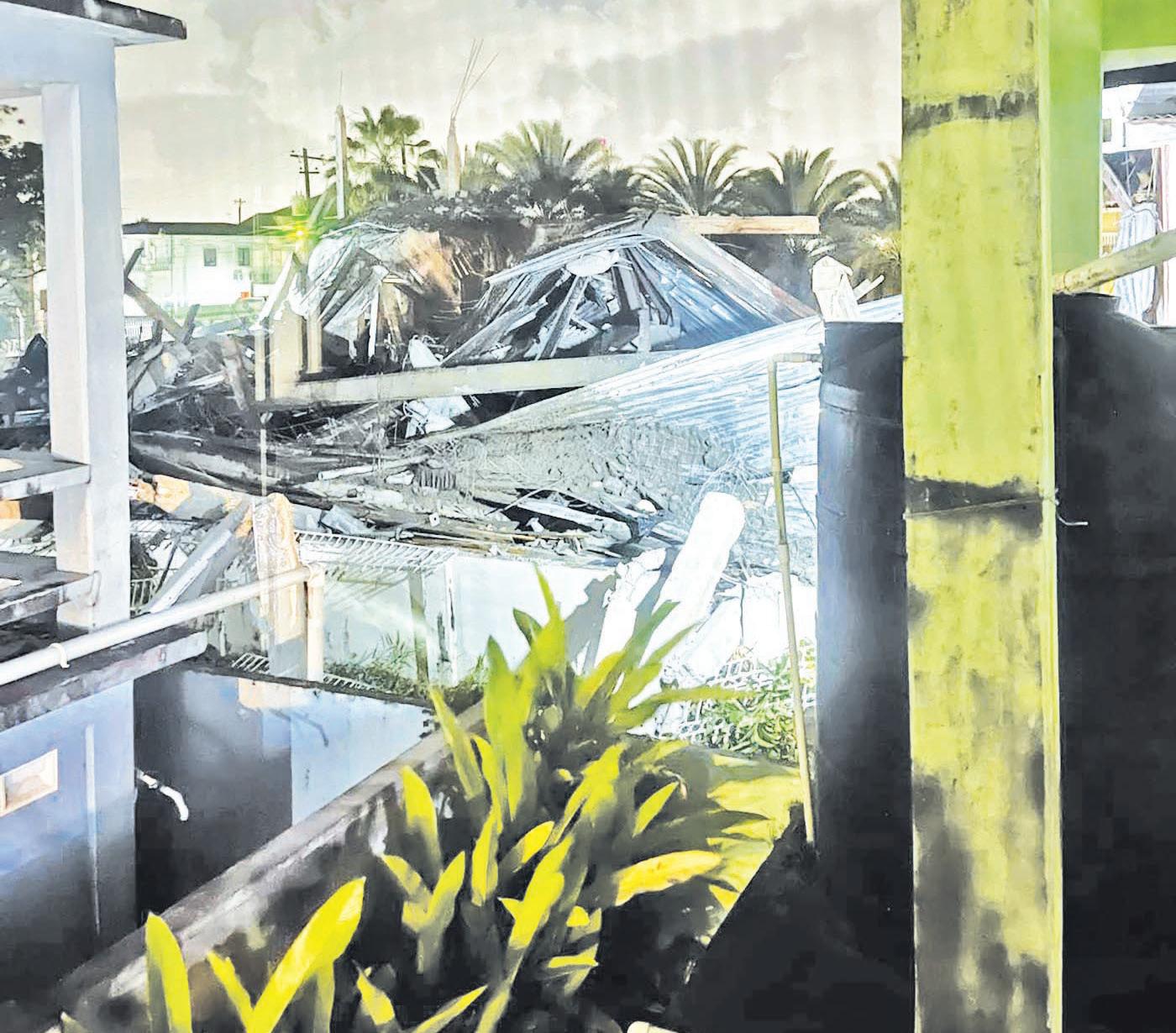
On April 15, at around 19:10h, the under-construction building came crashing down, trapping eight workers beneath the rubble. One of those workers, 46-year-old carpenter Radish Domingo of Mon Repos, ECD, was killed, while the others sustained injuries to their bodies.
The Guyana Police Force (GPF) reported that preliminary investigations revealed that the men were employees of a construction firm and were in the process of completing work on the roof when the structure collapsed.
The Police and the Guyana Fire Service (GFS) were summoned, and emergency personnel assisted in removing the trapped workers from the rubble and transporting them to the Georgetown Public Hospital Corporation (GPHC) and a private medical facility.
Domingo, however, was pinned beneath the debris. When he was eventually recovered and taken to the GPHC, he was pronounced dead on arrival.
Culture change
Minister Griffith expressed concerns about this latest workplace fatality, underscoring the importance of safety practices, especially in such high-risk environments. However, he recognised the monumental task ahead to get stakeholders to comply with safety practices.
“It will never be done overnight; it’s a culture that has to be changed. That is why for the rest of the year, we will be running a campaign of ‘putting safety first’, and we just hope our efforts will pick up traction and people will actually put their safety first,” he emphasised during a recent inter-
view with this newspaper.
Only earlier this month, he had reaffirmed the Government’s commitment to ensuring the safety, health, and well-being of all workers while announcing the launch of a national campaign aimed at strengthening workplace standards. He emphasised that workplace safety must never be treated as optional.
In fact, during a previous interview with this publication, Griffith had warned that operators and employers who fail to comply with health and safety regulations will face penalties.
The Labour Ministry, through its Occupational Safety and Health Department, has been working with stakeholders in various high-risk sectors, including construction and mining, to comply with safety regulations.
Awareness and penalties
According to Griffith, the model that his Ministry has
adopted is to bring awareness and then enforce penalties for non-compliance.
“We have given a lot of awareness from the
time I became Minister [in September 2025] ...and I can tell you that we are currently reviewing the practices, and where there is non-compliance, there will be measures that will follow, including penalties,” the Minister told this newspaper on March 25.
He added, however, that ‘This is an ongoing process. It’s not our intention to persecute anybody, so the process requires an investigation. We have to gather evidence, and based on the outcome of what has been gathered by the Health and Safety Department, that will dictate the outcome. But I can tell you where there are lapses and persons intentionally fail to follow the requirements; there will be measures that will be taken against them.”

00:00 Sign Off 06:00 TVG Devotional Hour 07:00 Ramayan EP 18, 19, 20 09:00 David Persaud Religious Program 09:30 TATA IPL LSG v KKR (Willow) 14:00 Movie - Luis and the Aliens (2018) 15:30 NBA Spurs v Trail Blazers (ESPN HD 1)) 18:00 TVG Music Break 18:30 Week-in-Review 19:00 Supergirl S5 E19 20:00 The Flash S2 E19 21:00 Shadowhunters S3 E21 22:00 Movie - Assassin’s Creed (2016)

Last Sunday, the community came together for an autism awareness walk, joined by Health Minister Dr Frank Anthony, highlighting the importance of understanding and supporting individuals on the autism spectrum.
What is autism?
We all have different ways of experiencing the world, and autism is one of those ways. Autism is a developmental condition that affects how people communicate and relate to others. Autistic people may also react differently to sounds, lights, smells, or textures.
It is common for people on the autism spectrum to have strong interests and enjoy doing certain things repeatedly. The word “spectrum” shows that every autistic person is unique, with different strengths, challenges, and talents.
Everyone with autism is different – just like everyone without autism.
Doctors figure out if someone is autistic by talking to them and their family and asking questions about how they learn, play, and interact. A diagnosis can help people get the support they need to do their best at school, work, and in daily life.
What is camouflaging?
Some autistic people feel different from others and may try to hide their autism or cope with challenges in ways that make them “fit in". This is called camouflaging.
Camouflaging is a bit like a chameleon changing its colours to match its surroundings. The chameleon is still there – it is just trying to blend in.
Examples of camouflaging include forcing your-

self to make eye contact or planning what to say before meeting someone new so you do not run out of conversation.
Everyone – whether autistic or not – camouflages sometimes. For example, you might act brave when you feel shy. But for some autistic people, camouflag-
ing happens all the time, and it can take a lot of effort.
Why do people camouflage?
Autistic people say they camouflage for different reasons. Some do it to make friends or feel accepted. Others do it at school or work so they are not treated
differently and can focus on what they need to do.
Some people camouflage more when meeting new people and less when they feel comfortable and accepted. Researchers have found different types of camouflaging strategies:
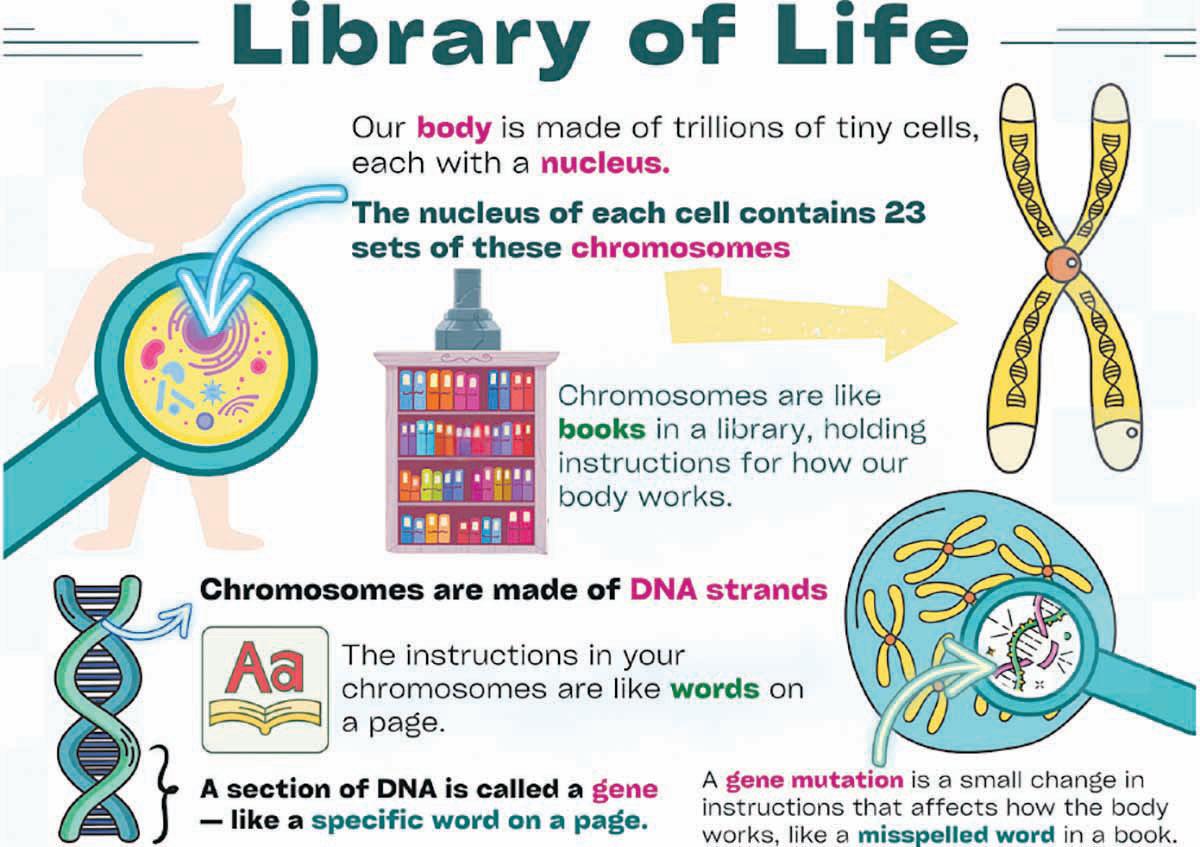
genome tells the body how to grow and function. You can think of the genome as a library. Humans have 23 pairs of "books", called chromosomes – one from each parent. Inside those books are "words", called genes, written in a special code called DNA.
•Compensation: finding ways around difficulties, like practising facial expressions
•Masking: hiding true feelings or copying others in
Scientists have discovered hundreds of genetic changes linked to autism. Each change is rare, but together they help explain


conversations
•Assimilation: trying to fit in, such as staying close to a group without joining in
Why is camouflaging important to understand?
Camouflaging can be helpful for some people, especially in social situations. But it can also be very tiring.
Many autistic people say that spending a whole day camouflaging leaves them feeling exhausted and needing time alone to recover. Some also feel like they are not being their true selves.
Because of this, many autistic people would prefer to be accepted without having to hide who they are.
How can genetics help us understand autism?
Scientists are still learning about autism, and one of the most important areas of research is genetics.
Genetics is the study of how living things are built. Every person has a complete set of genetic instructions, called a genome, in almost every cell in their body. This
why some people are autistic. Many of these changes happen by chance rather than being inherited.
Although doctors cannot diagnose autism using genetics alone, studying a person’s genome after diagnosis can still be helpful. It can give families more information and help doctors provide better support.
Looking ahead
There is still a lot to learn about autism. Researchers are continuing to study both genetics and behaviours like camouflaging.
For example, do boys and girls camouflage in different ways? Could this affect how autism is diagnosed? These are questions scientists are still exploring. The more we learn, the better we can understand autism – and support autistic people in being themselves.
(Excerpts from kids.frontiersin.org)
With more capital in hand, IDB Invest –the Private Sector arm of the Inter-American Development Bank (IDB) –is ready to expand its investment portfolio in Guyana, eyeing opportunities in an expanded range of sectors, including agribusiness, tourism, infrastructure, and telecommunications, among others.
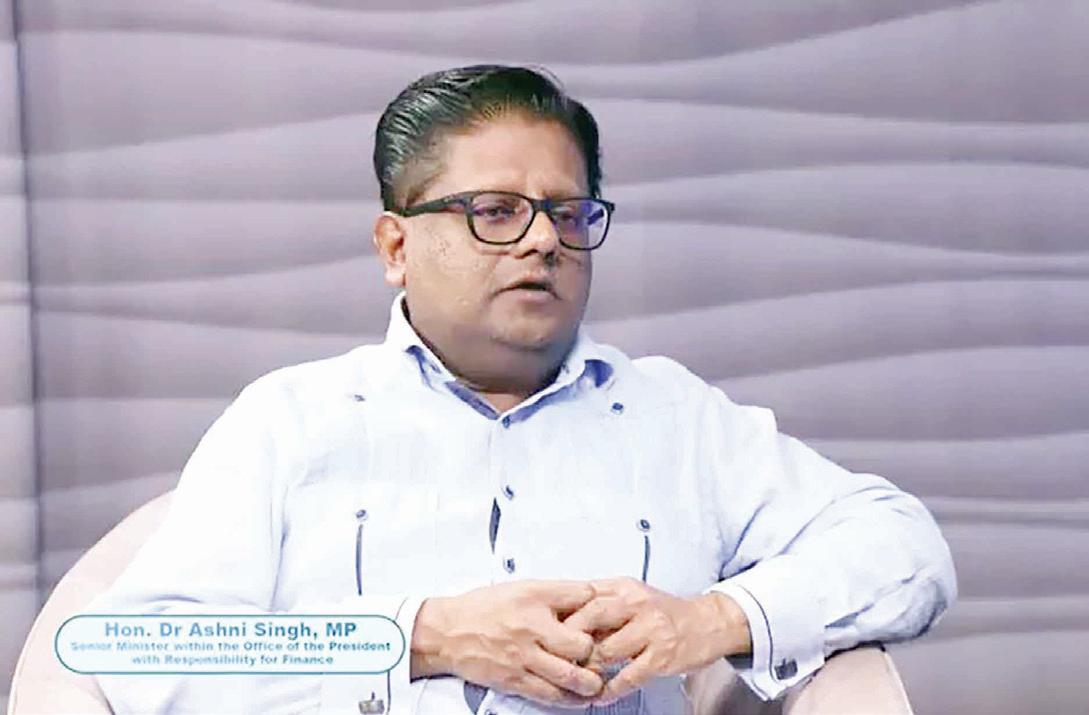
This is according to the Chief Executive Officer (CEO) of IDB Invest, James Scriven, during a special programme on the state-owned National Communication Network (NCN) on Friday evening, where he appeared alongside Senior Minister with Responsibility for Finance Dr Ashni Singh to discuss unlocking Guyana’s Private Sector potential.
“This is an economy that’s growing very fast... We, as a development institution, have a keen objective to diversify the economy. There are a number of sectors that are not being addressed directly... so those are the sectors where we want to engage particularly. And you think about agribusiness, you think about tourism, and you think about a number of physical infrastructure. Some examples of the opportunities that we’re looking at... the telecommunications business, data centres... the banking sector. But I think what you need to expect from IDB Invest is a wider range of industries in which we will engage,” he stated.
The IDB Invest’s plans to expand investments in Guyana come as the institution declared a capital increase at its annual meeting in Asuncion, Paraguay, last month. This, Scriven explains, allows the institution to double its capital and triple the number of businesses that it invests in.
New products
In fact, Scriven, who was recently on a two-day visit to Georgetown, had high-level engagements with President Dr Irfaan Ali and representatives from various Private Sector bodies in the country. Stemming from those engagements, the IDB Invest Head revealed that he has already set his sights on new opportunities north of
US$300 million in Guyana.
Moreover, Scriven further stated during the programme that the IDB is also looking to transition from its traditional long-term financing and introduce a wider range of products. Among these is local currency financing, which will see investments being made in Guyanese currency rather than United States dollars.
Additionally, the IDB has also implemented project preparation facilities to assist potential clients with projects, thus taking the burden from them and better positioning their proposals for success. Another important new product being rolled out by the institution is the capacity to become shareholders and provide equity to clients.
“IDB Invest is open for business. We are extremely optimistic about the future of Guyana. We will be investing disproportionately large amounts of money in this country. And I think that is the message [to the Guyanese Private Sector]. Please reach out to us. We’ve got an office over here. We’ve got a country manager over here. They’ll be more than welcome to receive business opportunities to be able to discuss. So, open for business, big money, local presence, and local content,” Scriven emphasised.
With these offerings on the table, Minister Singh is imploring the local Private Sector to capitalise on them. He pointed out that while the last five years have seen unprecedented economic growth in Guyana, the next five will bring even greater opportunities across all sectors-something that they need to position themselves to pursue.
“The next five years promise to be an equally extraordinary period of economic growth... And these developments, this exciting prospect, present incredible opportunities for enterprising Guyanese individuals and enterprising Guyanese businesses. Therefore, I urge Guyanese nationals and Guyanese companies to engage in serious introspection on what their respective
comparative advantages are, where they can position themselves to take advantage of the economic growth that will be occurring, and the economic opportunities that will be emerging.”
“You’re living in literally the most exciting period in our country’s history, and you’re living in an era of opportunity. I urge every single person who is an entrepreneur or who is considering becoming an entrepreneur to reflect on what you do best, what you think you can do competitively, and to prepare yourself to do it competitively, to enter the market and start producing whatever it is that you can do competitively and establish a business and grow your business,” the Finance Minister asserted.
This commitment by IDB Investing to further ramp
up its investment portfolio in Guyana is building on acceleration over the last five years. Prior to 2020, IDB Invest had only about four transactions totalling US$6 million in Guyana. However, in the last five years alone, IDB Invest has approved a whopping US$264 million worth of financing for Private Sector projects in Guyana.
These include the US$30 million Four Points by Sheraton Georgetown Hotel, for which IDB Invest provided approximately US$18 million in financing for its construction.
IDB Invest has also injected another US$29 million into Demerara Distillers Limited (DDL) to expand its milk and fruit juice production capacity, as well as to further boost production and diversifica-

tion of agro-processing operations.
Muneshwers Limited also benefited from US$14 million from the Private Sector arm of the IDB to procure a mobile harbour crane to increase port terminal capacity and expand its port and warehouse facilities.
Other companies that have received financing from IDB Invest include Unicomer Guyana Inc, US$45 million; One Communications, US$30 million; and the Institute of Private Enterprise Development (IPED) to the tune of US$60 million.


Your Eyewitness has gotten used to the powers-that-be keeping us posted on some of these “days” that have been set aside to observe one or another matter of significance to us common folks. So, he was a tad surprised when not a word was uttered about “World Malaria Day” –which had been identified by the UN to be commemorated on April 25!! Now, your Eyewitness remembers from his grandparents’ stories when malaria was a scourge in our country – not just in the “interior” where it’s still a problem – but all across the coast!! During WWII, DDT’s insecticidal properties were discovered, and it was used to protect the troops from malaria and typhus – spread by mosquitos and fleas, respectively – and its use was introduced in Guyana. Your Eyewitness can still remember those khakiclad men with their DDT tanks on their backs and nozzles spraying the mist around the houses in his village. Since then, they’ve discovered that DDT is carcinogenic and causes several medical problems, so it was banned in many locales!! But what he remembers even more vividly is his mother administering quinine “tea” – made by boiling the bark of the said tree! – to him and his siblings. She lined them up from big to small – so that by the time his big brother got his dose, the rest were reduced to bawling, quivering masses of hysteria!! Your Eyewitness was informed that nowadays they’ve got vaccines and the drug artemisinin to fight the scourge – which still kills over 600,000 globally every year!! Bill Gates – of Microsoft fame (and money) – and his wife Melinda’s foundation has spent millions – if not billions – to fund programmes to fight malaria – which is still massive in parts of Africa like Tanzania. Vaccines and bed nets impregnated with insect repellent, etc., are only some of their interests. With the salacious scandals still emanating from le affaire Epstein, you, Dear Reader might’ve noticed that Bill’s name was “called”!! Melinda – who divorced Bill in 2021 – said she was filled with “unbelievable sadness”, and her ex oughta explain. Bill denied any improprieties –and your Eyewitness, while not pronouncing on his guilt – hopes he continues to fund the anti-malarial projects!! Even if to staunch his reputational bleeding!!
Anyhow, back here on Mudland’s coast, with the rains increasing and our drainage degrading after the closure of our sugar plantations and concreting of yards, villages and towns, your Eyewitness thinks we oughta remember World Malaria Day!! Let’s heed its cautions and keep up with that pesky single-cell beast and its mosquito transmitter by educating ourselves about how it’s developing resistance to the drugs we create – as fast as we create them!!
The fight against malaria has to continue!!
…with the surveillance state
For decades, a standard trope in the entertainment world has been the wild-eyed “conspiracy theorists” who believe the Government’s out to “get them” and is listening to their every word – if not thought! In real life, many of them have retreated into the American wilderness, where they’ve cut off every communication with the rest of the world!! They were caricatured as wrapping their heads with aluminium foil to protect their “brain waves”!!
Well, your Eyewitness gotta admit (sheepishly) that he’s always snickered at these “kooks”!! But with the development of technology that can listen in on every conversation we have – through the ubiquitous (and ironically-named) smart-phone and so many other devices plugged into the internet – he ain’t rolling his eyes at the conspiracy theorists no mo!!
As we become more and more plugged into the cyber-world – which is now facilitated by AI that we are increasingly relying on to do our thinking - we gotta start wondering how much “agency” we have after fighting off slavery and indentureship!!
…with Suriname
Suriname continues its disrespect towards us. After signalling it was rethinking the draconian fees it imposed on Guyanese crafts traversing the Corentyne, it now says, “No relaxation of fees!!”
Your Eyewitness already advised cancelling our participation in the Corentyne Bridge!!


Police prosecutors from all Magisterial Districts in Guyana were urged to exercise people skills and to take a more humane perspective when dealing with complainants, especially those who have suffered from sexual and/or domestic violence. This was the sentiment of the Director of Public Prosecutions (DPP), Shalimar Ali-Hack, who delivered remarks at the recently concluded Justice Education Society (JES) training session titled “Applying a trauma-informed gender and culturally sensitive approach to
the application of justice” at the Police Officers’ Training Centre. Camp Street, Georgetown.
Ali-Hack told the prosecutors that their reactions to those persons who have been assaulted sexually can either encourage them to pursue justice or discourage them from pursuing the path of justice. As serving members of the Guyana Police Force (GPF), she reminded them of the important role their attitude and conduct have in this country.
“It’s a role you must not take for granted, and it’s a
role you must take seriously. In order for you to do your job, you need to be serious about it, and you need to equip yourself; you need to know what the law is, and you also need to have the ability to deal with persons with people skills. You have to be able to speak with persons in a manner that they feel that you have an interest in their matters... So as prosecutors, your attitude and conduct towards a person must be friendly; you must smile so that they can feel comfortable. Common courtesies are important,” the DPP added.
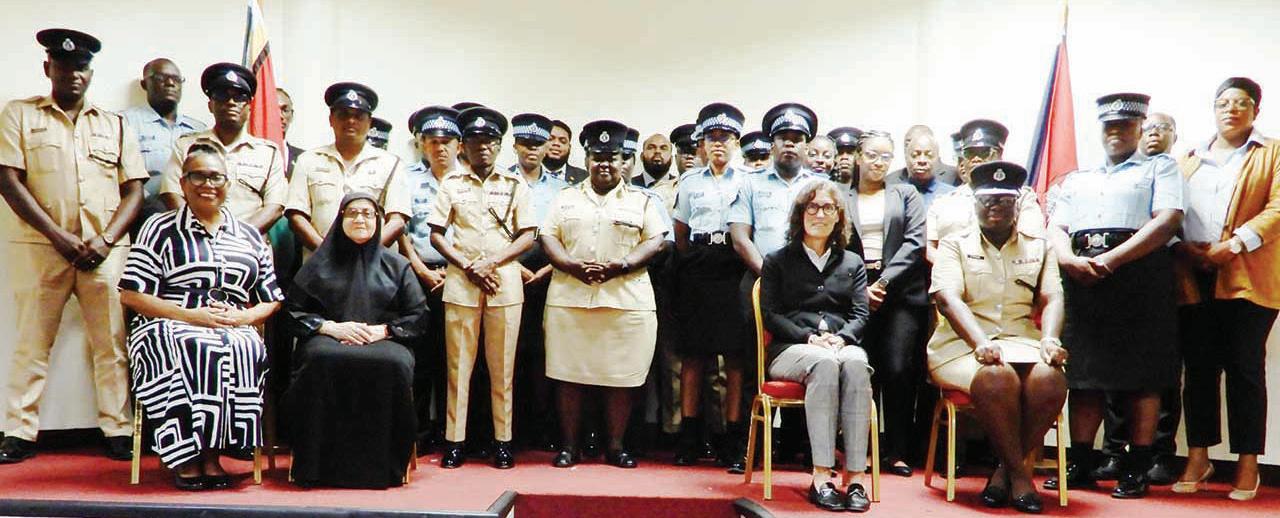
Speaking directly on the trauma experienced by complainants, she reminded the more than 35 participants to ensure that the complainants feel comfortable
in court.
“You have to understand that these persons have been traumatised, so I ask you, when they come to court to give their evi-

dence, you have to have the right attitude and the right conduct to make them feel comfortable giving their evidence. Witnesses in sexual offence cases have to be dealt with in a different manner from other criminal offences. After this training, we will all have to deal with cases with a fresh approach, be more understanding, be in a more informed position, and have a more humane perspective, yet at the same time, ensure that justice is done; justice must always be our focus.”
However, Senior Superintendent of Police Nicola Kendall, who spoke on behalf of Police Commissioner Clifton Hicken, reiterated the DPP’s sentiments, who added that cases are weakened not because the offence did not occur, but because the process failed.
“We often fail to properly understand and engage victims, particularly those who are most vulnerable. When victims are not treated with dignity, and when their statements are not carefully and professionally obtained, the integrity of the case is compromised from the very beginning,” Kendall stated.
She further noted that the training was both timely and necessary because it will have a direct impact on strengthening the case management framework and how cases are moved from the investigation process to successful prosecution in court.
She pointed out that a successful criminal case is not solely determined by the evidence collected but by how it is obtained, preserved, and presented before the court.
“For this reason, I emphasise the importance of a trauma-informed approach. This is not simply about being compassionate; it is about being effective. It ensures that victims are treated with respect, that their accounts are accurately captured, and that evidence is preserved from the earliest stage. In so doing, we strengthen the evidential foundation of our cases, improve committal success rates, and ensure that justice is not only pursued but achieved,” Kendall related. In its statistics on domestic violence cases, the GPF stated that in 2025, it recorded 796 such matters, and of those, 168 resulted in convictions. In 2024, it recorded 916 DV cases with 170 convictions.

s we approach the 60th anniversary of our independence, we reiterate that unquestionably, we, the citizens of Guyana, must see it as a “common venture” and have some commonality of outlook to survive, much less prosper in the modern world. At independence we inherited a state but not a nation, since the happenstance of our arrivals ensured that we had no common culture. The experience across the world has demonstrated that people do not identify with the state in a spontaneous, automatic manner – and that’s partially why Guyanese have clung to their ethnicities. The challenge would be to construct a “unity” of the peoples within the Guyanese state that does not seek to obliterate the diversities but is more receptive and accommodative of self-conceptions. One obstacle to such unity is the refusal to accept that diversity is not the opposite of “unity” (“homogeneity” is); rather, its opposite is “disunity”. The solution to the apparent dilemma is to accommodate diversity without fostering disunity.
Interestingly, Canada and Australia, two ex-British colonies, have taken the lead in redefining their “national” identity. In their understanding, multiculturalism is an official government policy that promotes cultural diversity, and the “national” is conceived as the space within which many (ethnically defined and even imagined) communities live and interact. Taking our cue from these states, it is proposed that we acknowledge the several roots of our culture and that rhizomatically nourish a multicultural nation. The Guyanese state has now adopted multiculturalism as a governmental policy response to a multicultural society, i.e., a society that is culturally pluralist. The policy response, “multiculturalism”, must be distinguished from the societal condition of being multicultural. Most countries are multicultural, but only a handful are multiculturalist. Multiculturalism must be seen as a set of principles, policies, and practices for accommodating diversity as a legitimate and integral component of society. This does not mean that the state has nothing to do with culture but that it does not privilege any one culture over others.
What is being suggested is that we move from the idea of a “national culture” as a site for identification to the shared practice of a political ideology as the basis for engendering such identification within the state. Rather than those who demand that all ethnic groups assimilate into Creole culture to become “one nation”, we propose that a feeling of “we the people” – of “Guyanese-ness” – can be engendered in the process of our conscious construction of a democratic state in which we all have an equitable stake.
We situate this construction of a national outlook within what can be seen as a project of democratisation – the creation of conditions where we are all treated as one, equally, by the state. Equality of opportunity, human rights, encouragement of diversity, due process, justice and fair play and rule of law may seem dry compared to the warmth of the blood ties of “nation”, but they can engender the unity of public purpose and the recognition of individual worth where all can be proud of their common citizenship. Citizenship of Guyana has to become something that has concrete meaning to all of us.
For Guyana, then, our ethnicities would be defined outside our “Guyanese-ness”, and to be African, Indian, or Amerindian-Guyanese would not be contradictory in any sense. The first part of our identity would be specific, while the latter is universalistic. The “national” will now be a space where ethnic communities can live and share. To be Guyanese would be to share public moral precepts – norms, values and attitudes – rather than necessarily shared cultural experience and practice. To the extent that they are shared, it is to be lauded, but it must never be at the imperative to jettison one culture. For instance, we Guyanese value our hospitable outlook and a good cook-up! A “good” Guyanese would be one who is loyal to this country and strives to practise the secular universalistic ideological values it extols.
Guyana is therefore at a critical moment where we are attempting to ensure that state power and benefits are equitably distributed amongst the several ethnic groups in our society, which is a precursor to the creation of the space necessary for such co-existence. Multiculturalism is not just about cultural practices: it is also a signifier of the power relations of the society to which we are all sensitive. When these are distributed equitably, the culturally embedded individual can experience the content of a national identity.

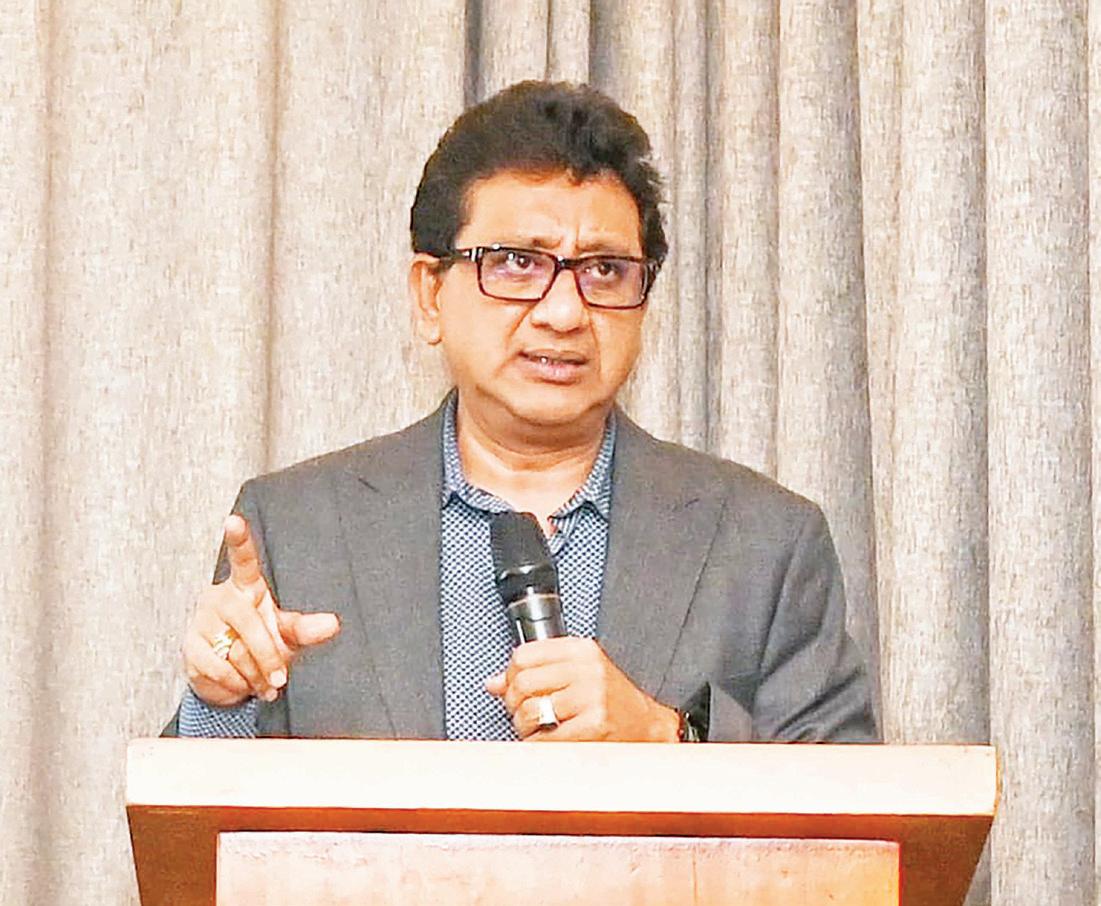
Attorney General (AG) and Minister of Legal Affairs Anil Nandlall has announced that Guyana has already commenced preparations for its 2027 Mutual Evaluation Peer Assessment Exercise, which will be conducted by the Caribbean Financial Action Task Force (CFATF).
Nandlall also revealed that a delegation from Guyana will travel to Trinidad and Tobago next month for a CFATF conference ahead of the assessment. Speaking during his weekly online programme “Issues in the News” on Tuesday, Nandlall underscored the importance of the assessment process, which evaluates countries’ compliance with international standards on anti-money laundering and countering the financing of terrorism.
“Yours truly is the Minister with responsibility for that sector. We have already begun our preparation for that mutual evaluation exercise that will take place next year,” Nandlall said.
“Later in the month of May, we will be going to a conference in Trinidad where we will update the CFATF on the work that we have done so far, and we will report to them our progress and what
we plan to do to ensure that we comply with all of our obligations to be ready for the 2027 assessment. It’s an ongoing process, so from May 24-28, we will be attending a conference in Trinidad.”
According to the AG, the Guyanese delegation will include representatives from several key agencies integral to the country’s compliance framework.
“The Guyana delegation comprises a very large number of bodies from Guyana: the Central Bank of Guyana, the Guyana Revenue Authority (GRA), the Guyana Gold Board (GGB), SOCU (Special Organised Crime Unit), the Guyana Police Force (GPF) and the Director of Public Prosecutions (DPP). A whole set of organisations normally attend these conferences because their agencies are part of the framework that must ensure we comply with these international standards,” Nandlall noted.
Guyana is a member of CFATF, which is the regional institution that monitors, evaluates and ensures compliance of countries in this hemisphere with international rules and regulations regarding anti-money laundering and countering the financing of terrorism.
CFATF plays a central role in ensuring that countries in the region follow global financial security standards. CFATF is an associate member of the Financial Action Task Force (FATF), the interna-
the Financial Action Task Force of the Caribbean and appraised to ensure compliance,” Nandlall explained. “If they are not compliant, they work with them to see that there is compliance, and if, for whatever reason,
tional body that sets the benchmark for anti-money laundering (AML) and countering the financing of terrorism (CFT).
The Mutual Evaluation Peer Assessment Exercise is the central mechanism used by the CFATF to assess how well its member countries are preventing money laundering and terrorist financing. Every few years, each member country undergoes a detailed assessment of its AML/CFT systems.
Nandlall explained that the evaluation occurs every three years and involves a comprehensive review of a country’s financial systems and legal structures.
“Every three years, each country in the region must undergo a mutual evaluation peer assessment exercise, where the country’s financial system, legal framework, law enforcement network and accountability architecture are all examined by a team assembled by
there is a refusal to comply or a failure to comply, then a penalty regime is activated.”
Nandlall recalled Guyana’s past challenges under a previous Administration, where the penalty regime had been activated against Guyana. However, with the change of Government, the country was restored to good standing.
“At one point in time, when the AFC/APNU (A Partnership for National Unity + Alliance For Change) used their oneseat majority Government, they caused that penalty regime to be activated against Guyana,” Nandlall recalled.
“In 2024, Guyana went through that exercise, and we acquitted ourselves with distinction. In fact, we topped the independent English-speaking Caribbean with the highest score. That was in 2024; in 2027, we are up for a review again.”










Tears flowing from his eyes at 35,000 feet was not some thing Captain Rawle Roberts expected. Yet, as the United Airlines Pilot guided his aircraft toward Guyana, cutting through the winds, something deeper was cutting through his heart. It was the memories of the very land that he had left in June of 1989.
Captain Rawle Roberts, a Pilot with United Airlines and a re tired member of the military, is Guyanese by birth. Having been away from Guyana for many years since the 90s, he recently returned, bringing with him a wealth of ex perience and a deep desire to give back to the land he still loves.



FROM PAGE 15

He continued: “So yes, I do miss it, and I will be coming back periodically to help as much as I can - to donate my time, give lectures, and support young people coming up in aviation. I broke down crying in my cousin’s office because it was just a picture of the Berbice River. I recognised the place instantly. My sister asked, ‘Why are you crying?’ and I said, ‘I don’t know.’ It was a surreal feeling flying back home for the first time a few days ago.”
Roberts also shared that his fascination with aviation began much earlier in childhood while growing up in Block 40, Stanleytown, Berbice. He recalled playing in the streets, rolling a tyre with a stick, and looking up in awe at aeroplanes passing overhead.
A few years later, he experienced his first flight from what was then Timehri International Airport on Guyana Airways to New York City. From that moment on, he said he was hooked on aviation, describing it as the start of a lifelong passion.
Highlighting the demands of the profession to Guyanese Pilots, Roberts explained that be-
coming a Pilot requires intense dedication and discipline.
“A significant amount of studying started in the military. I was a military Pilot, with many hours of work, including combat hours in Iraq and Afghanistan, and I transitioned from flying helicopters to fixed-wing aircraft. The studying process is absolutely intense. Sometimes it gets to the point where you doubt yourself – ‘can I do this? Am I ever going to understand this?’ But you have to trust the process and invest the time.”
Overcoming Fear
Only recently in Guyana, a Pilot died after an Air Services Limited (ASL) aircraft reportedly crashed shortly after taking off from Mahdia, Region Eight (Potaro-Siparuni).
The single-engine Cessna aircraft, bearing registration number 8R-YAC, was being operated by a Nicaraguan national, Captain Ryder Castello, who had approximately 20 years of flying experience.
Roberts addressed the fears such incidents may create among aspiring Pilots. However, he dis-


missed discouragement by emphasising safety statistics and perspective, stating:
“There will be incidents, and sometimes you see headlines about aviation accidents, but when you look at the percentages, they are few and far between. For those who want to pursue aviation, stay focused. Ask for help – that is one of the biggest things I can say. Reach out to people who have been there and done that.”
He also highlighted the wide range of benefits that Pilots can
achieve, using his journey as inspiration.
“It’s a hard road, but it’s rewarding. I had a chance to speak with Mr Egbert Fields about this, and I told him I’d be willing to donate as much time as possible to speak with young aspiring Pilots and show them that there is a way. Yes, it is difficult at times, but you have to trust the process and put in the work. If this is something you love, aviation is very rewarding – not just personally, but also financially for your family.”


Young Guyanese Lawyer
Saevion David-Longe says the legal profession is becoming increasingly central to shaping justice and driving national development, as the country’s evolving legal system creates new opportunities for practitioners to influence institutions and public policy.
Guyanese Lawyer Saevion David-Longe is a practising attorney with more than six years of experience in civil and commercial litigation. He obtained his Bachelor of Laws (LLB) from the University of Guyana and completed his professional legal education at the Hugh Wooding Law School under the Legal Education Certificate (LEC) programme.
To practise law in Guyana, one is required to hold an LLB from an accredited university, complete professional training at a recognised law school and be formally admitted to the Bar of Guyana by the High Court. David-Longe, in a recent statement, said his decision to pursue law was shaped by both intellectual interest and a sense of purpose. He has always been drawn to history and philosophy, particularly questions about justice, power and the organisation of societies, especially as they relate to injustice.
“The law appealed to me because it is where those ideas become practical and have real consequences. Practising in Guyana adds another layer of meaning, as its developing legal system offers opportunities for Lawyers to make a tangible impact, shape institutions and advance fairness. Witnessing injustice reinforced my desire to be part of the solution, and I was also inspired by the Caribbean tradition of
principled advocacy and the role Lawyers play in building a just society,” he said. The young Lawyer highlighted the importance of understanding the key areas of legal practice in Guyana. He noted that the main areas of law practised in the country include civil and commercial litigation, criminal law, constitutional and administrative law, property and conveyancing, and family law. He further explained
increasingly aware of how technology and artificial intelligence (AI) can support legal practice, particularly in areas such as research, drafting and case preparation.
“Courts have begun to give guidance on the responsible use of generative AI, making it clear that these tools can improve efficiency but cannot replace professional judgement or be used to generate evidence. Lawyers remain responsible for verifying accuracy, protecting confidentiality, and complying with their ethical duties,” he said. He said he sees the Guyanese legal profession gradually becoming more specialised and more technologically aware, with growing engagement in areas such as constitutional rights, environmental governance, energy and regulatory law. He added that there is likely to be an increased emphasis on professionalism, efficiency and ethical standards, alongside greater regional and international interaction. He further noted that Lawyers will play an integral role as the sector continues to

“As Guyana continues to develop, Lawyers will have an important role in strengthening institutions, safeguarding the rule of law, and supporting fair and sustainable development. The
possibility of Guyana having its own law school is encouraging, and I look forward to seeing more Guyanese Lawyers building their careers at home and throughout the Caribbean.” He advised that anyone seeking to study law in Guyana or the Caribbean should develop strong reading, writing, and critical-thinking skills early. He noted that students should be prepared for a demanding workload while also recognising that law school does not always reflect



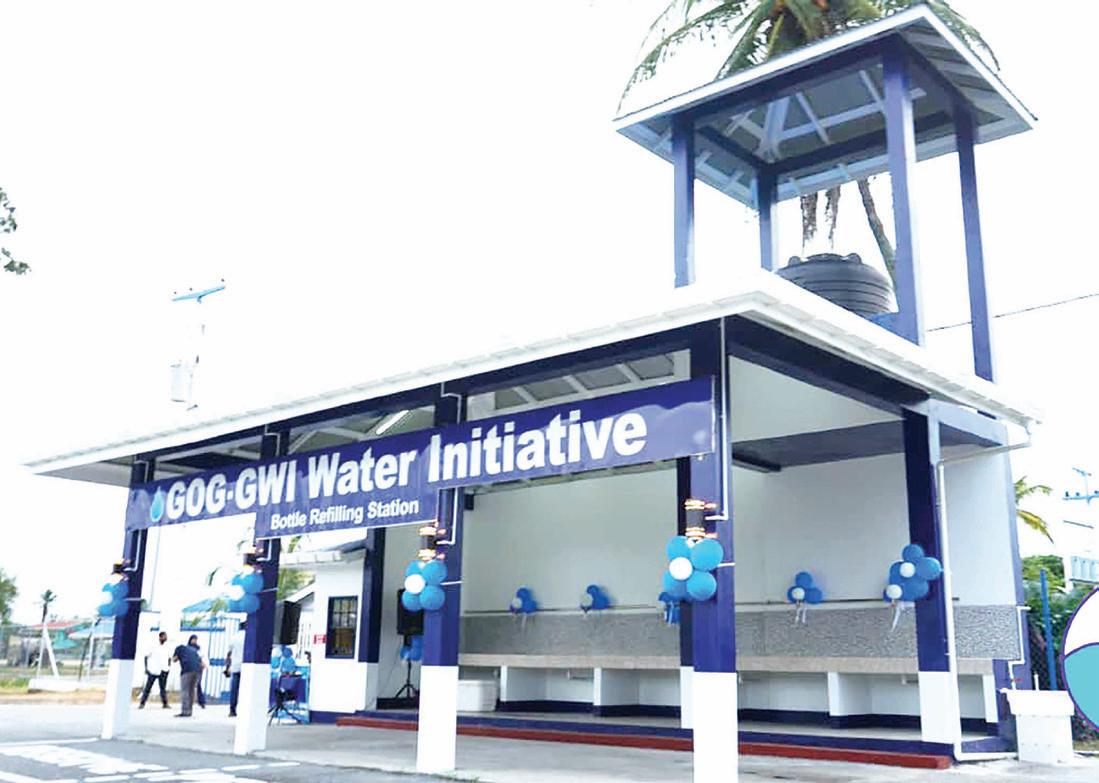
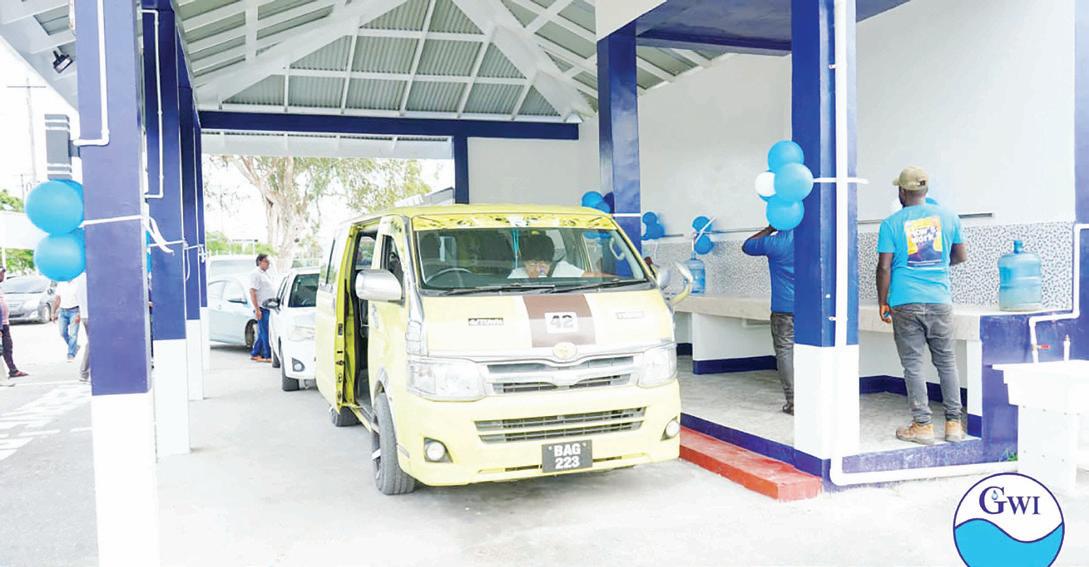
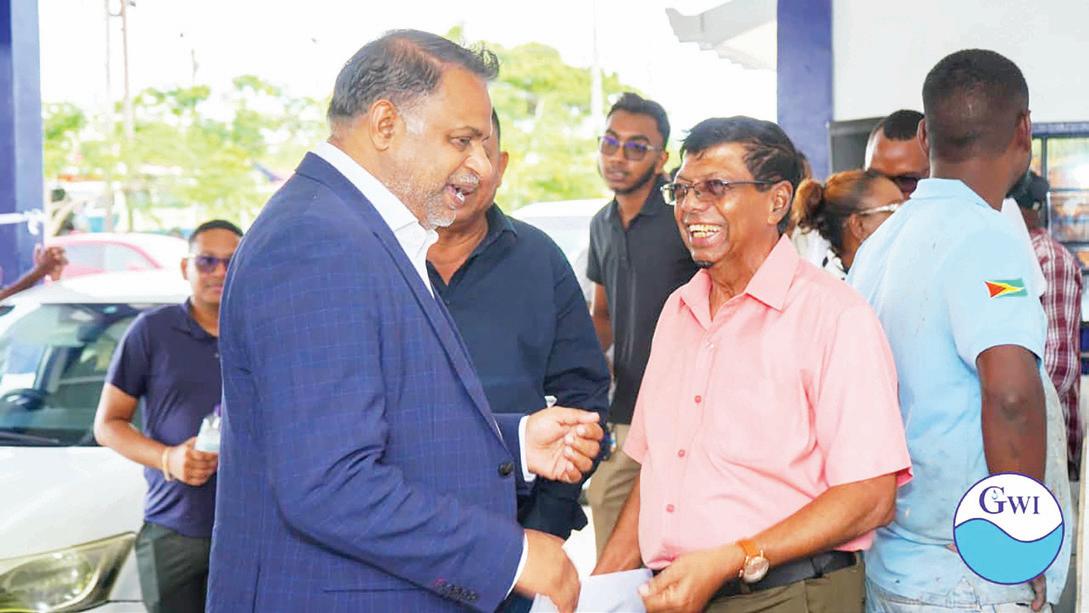
In an effort to improve access to clean, safe, and affordable water nationwide, the Pouderoyen Bottle Refilling Station, West Bank Demerara (WBD), was on Friday reopened, according to Guyana Water Inc (GWI).
The re-opening event brought together residents, community leaders, and other stakeholders to witness the launch of the upgraded facility. The station is now fully operational, featuring modern infrastructure designed to provide efficient and reliable service.
As part of GWI’s focus on accessibility and affordability, residents of Pouderoyen and surrounding communities can refill five-gallon water bottles for a nominal fee of $100. This initiative is expected to ease the challenge of accessing potable water, especially for households and small businesses.
Chief Executive Officer (CEO) of GWI, Shaik Baksh, highlighted that the Pouderoyen facility is one
of several refilling stations being introduced across administrative regions nationwide. He explained that these locations were selected based on factors such as water quality from treatment plants, availability of space, and ease of public access.
“They are all closely linked to water treatment plants to ensure that you are getting the best quality water. We are testing all the time to ensure that the water is safe, clean and of a high quality,” he told attendees.
In addition to Pouderoyen, similar stations are planned for areas including Lima, Region Two (Pomeroon-Supenaam); Vergenoegen and Wales in Region Three (Essequibo Islands-West Demerara); Grove and Caledonia (East Bank), Mon Repos and Bachelors Adventure (East Coast), Vlissengen Road and Mandela Avenue (Georgetown); Cotton Tree, Region Five (Mahaica-
Berbice); Sheet Anchor, Port Mourant and Queenstown in Region Six (East Berbice Corentyne); Central Bartica, Region Seven (CuyuniMazaruni); and Amelia’s Ward in Region 10 (Upper Demerara-Berbice).
However, Public Utilities and Aviation Minister Deodat Indar clarified that the initiative is not intended to compete with private water distributors but to improve access to potable water in line with the vision of President Dr Irfaan Ali.
“It is not our intention to compete with the Private Sector. When prices for simple commodities, which is a sovereign right, become very expensive for poor people or any person to have access to quality water, we have to step in as a Government,” he explained.
The Minister also assured the public that the water meets and exceeds standards set by the World Health Organization. “It is safe to consume. It is properly treated,” he affirmed. The Pouderoyen bottle refilling station will operate daily from 10:00h to 20:00h.








The Ministry of Health, in collaboration with the Pan American Health Organization/ World Health Organization (PAHO/WHO), has recognised eight hospitals across Guyana with “BabyFriendly” designations.
The designations were achieved as part of Phase
One of the Baby-Friendly Hospital Initiative (BFHI), a global programme launched by the WHO and the United Nations Children’s Fund (UNICEF) in 1991.
The initiative is aimed at protecting, promoting and supporting breastfeeding by ensuring maternity facilities follow evidence-based prac-
tices that improve infant feeding outcomes.
The hospitals recognised were the Oscar Joseph District Hospital and Suddie Public Hospital, both on the Essequibo Coast; St Joseph Mercy Hospital, Georgetown; Bartica Regional Hospital; Mahdia District Hospital; Lethem Regional Hospital;


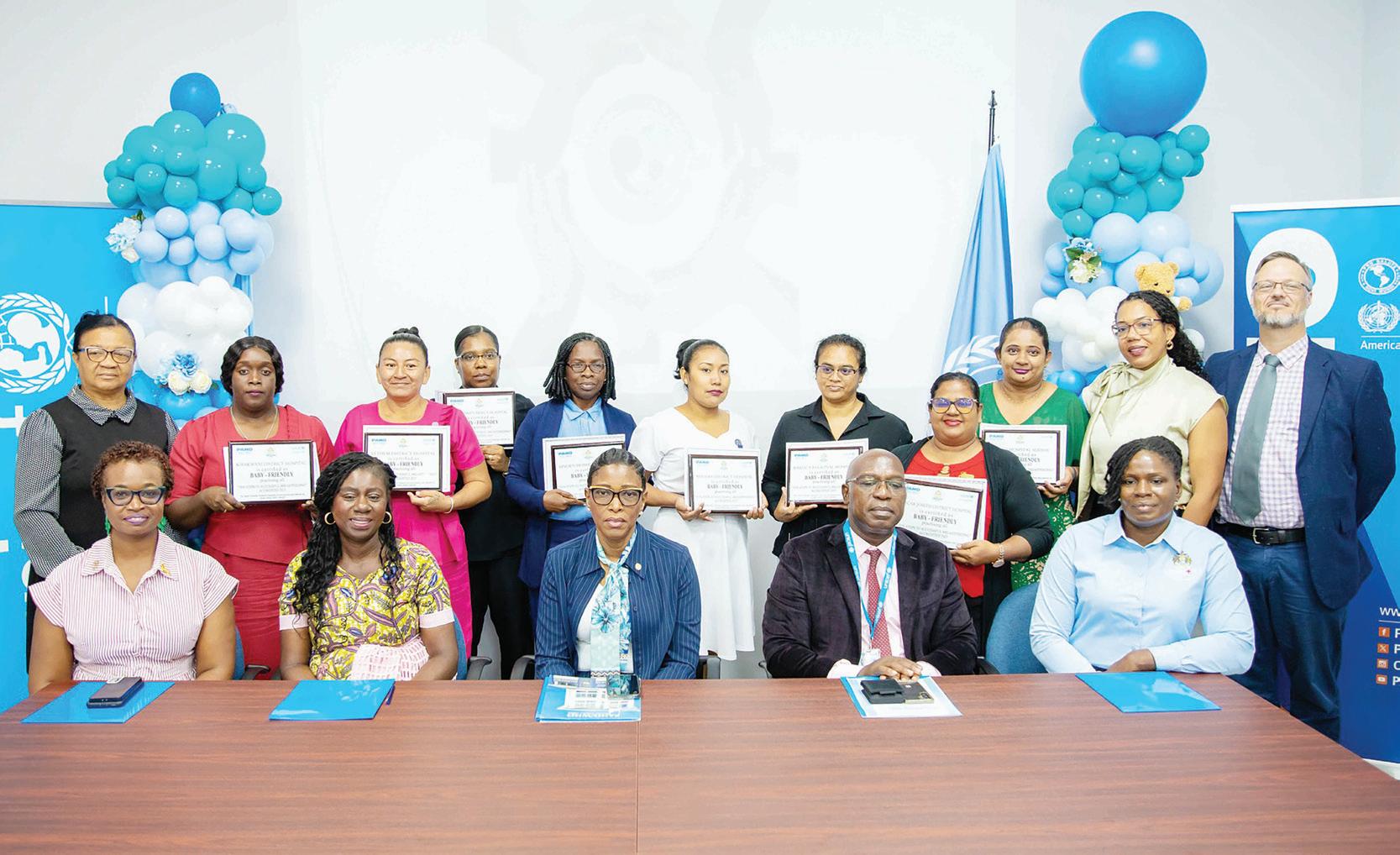
done during a ceremony on Friday evening at the PAHO Headquarters in Georgetown. Phase Two of

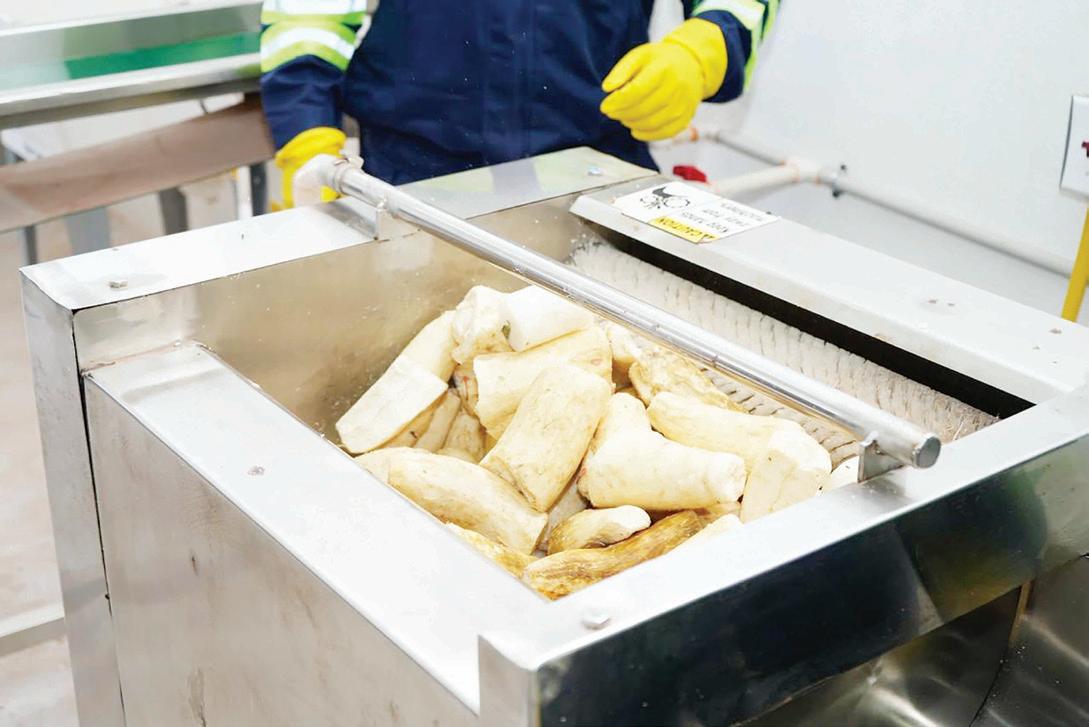
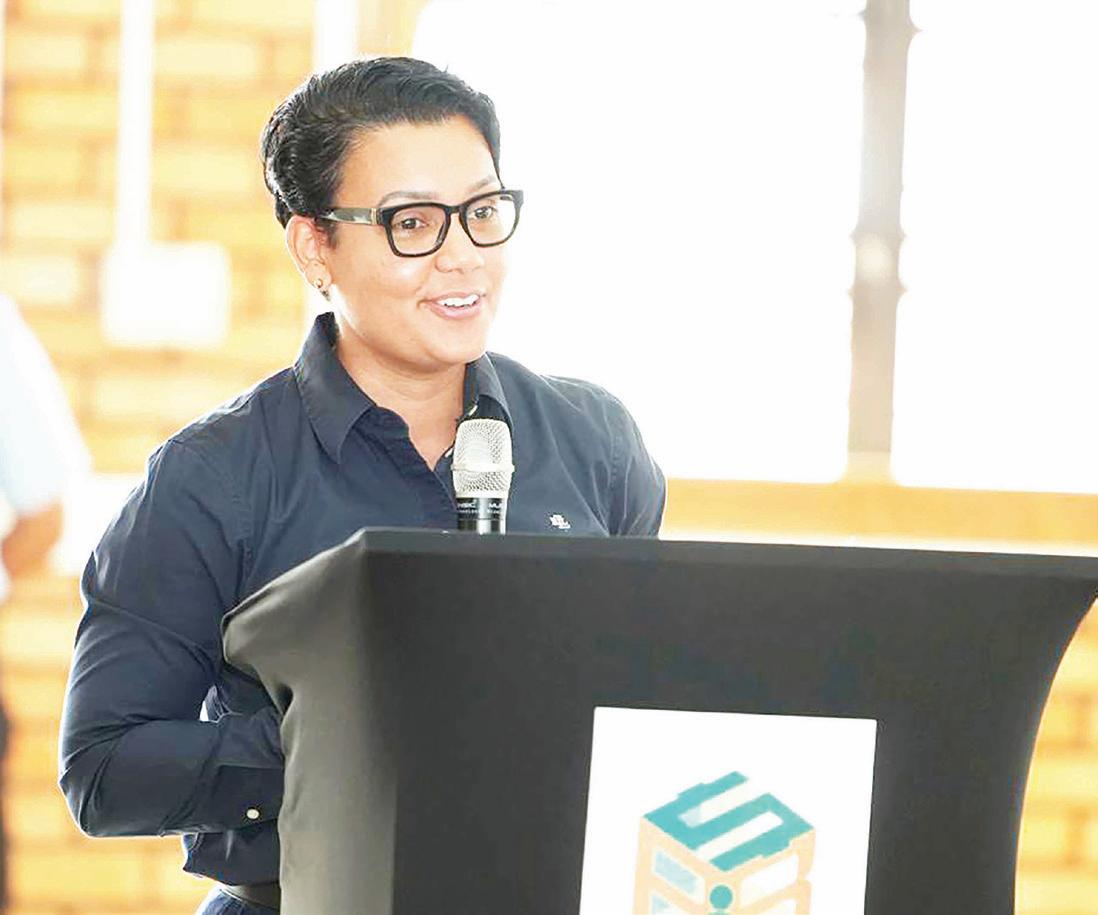
The Lethem Business Incubator Centre and Agro-Processing Facility in Lethem, Region Nine (Upper TakutuEssequibo), constructed at a whopping $181 million, was commissioned on Saturday by Minister of Tourism, Industry and Commerce Susan Rodrigues. This milestone represents a significant boost to entrepreneurship, agro-processing, and the growth of small businesses in Guyana’s hinterland regions.
The facility includes several pieces of equipment and a loading ramp for trucks. Minister Rodrigues described the investment as a transformative initiative
that will create new opportunities for innovation, enterprise development, and economic growth in Region Nine. The facility was de-
veloped by the Tourism, Industry and Commerce Ministry and implemented by the Small Business Bureau (SBB) and forms part of the Government’s

broader strategy to strengthen small- and medium-sized enterprises, expand economic participation, and unlock the productive potential of communities across Guyana.
«This incubator will transform how agricultural output is utilised in this region. Farmers will no longer be limited to selling perishable goods. With access to equipment such as dehydrators, blow moulding machines, auger packing machines, and industrial blenders, products can now be processed, preserved, and packaged to meet market demand,» Rodrigues stated.
She added that the facility is intended to serve as a launchpad for entrepreneurs, providing a dedicated space where value-added products can be developed, refined, and prepared for wider markets.
Further, she noted, the centre was designed to address a critical gap in the local production chain by giving agro-processors and small business owners ac-
cess to the infrastructure needed to improve product quality, extend shelf life, and increase market readiness.
Rodrigues also encouraged entrepreneurs, agro-processors, and small business owners in Region Nine to fully utilise the facility and take advantage of the opportunities it presents for innovation, expansion, and long-term growth. The facility is expected to play a critical role in supporting agro-entrepreneurship in Region Nine, strengthening local value chains, encouraging product development, and creating pathways for sustainable economic growth in the region.



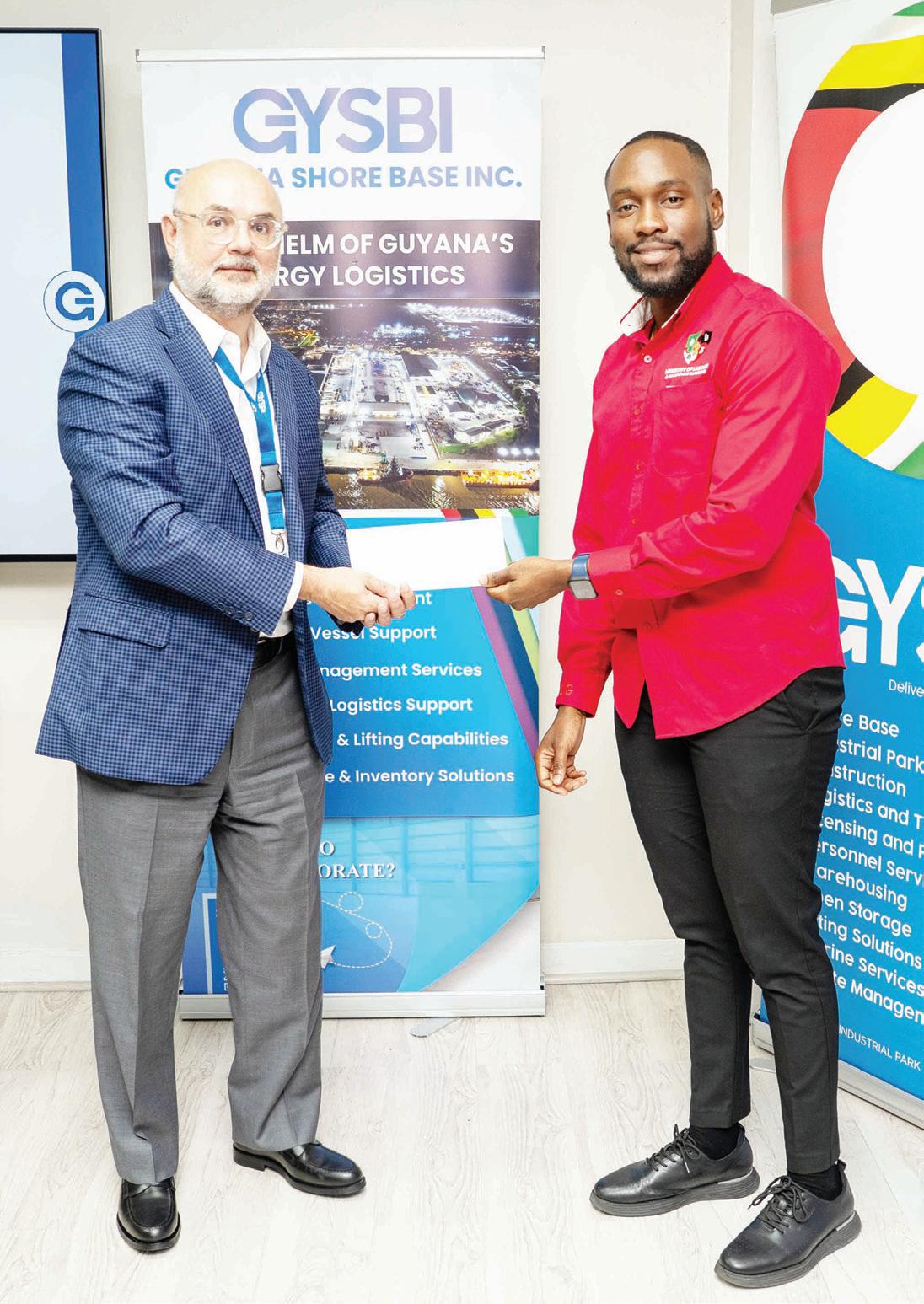
The Guyana Shore Base Inc (GYSBI) was recently commended for its robust safety standards, strong environmental stewardship, and commitment to local workforce development by Labour and Manpower Planning Minister Keoma Griffith during a tour of its facilities.
The visit formed part of activities marking the observance of Occupational Safety and Health (OSH) Month, recognised globally by the International Labour Organization in April.
The theme for this year’s observance is “Good Psychosocial Environments: A Pathway to Thriving Workers and Strong Organisations.”
During the visit, the Minister was briefed on the company’s comprehensive overview of its operations from Chief Executive Officer (CEO) Oliver Kassam, along with a detailed breakdown of GYSBI’s Quality, Health, Safety, Security, and Environmental (QHSSE) policies, processes, and systems presented by QHSSE Senior Manager Kurt Busuttil.
He was also informed about the company’s training programmes, including Human Performance and Safe Choice, and their associated performance metrics. In his remarks to the Leadership Team following the presentations, Minister Griffith underscored the importance of prioritising worker safety amid Guyana’s rapid economic expansion, noting that such observances are not symbolic but rather serve as an important national reminder that the protection of work-
not merely commendable; it demonstrates what can be accomplished when leadership, workforce, and safety culture move in unison. It reinforces the shared responsibility of Government and industry to ensure that every worker returns home safely,” he added.
The Minister further highlighted the company’s contribution to national development through its workforce composition, pointing out that approximately 95 per cent of its employees are Guyanese. “As Minister of Labour and Manpower Planning, seeing a workforce that reflects 95 per cent local labour is extremely pleasing and commendable. This is something we can proudly highlight as a country,” he added.
In addition to safety and labour practices, he also used the opportunity to acknowledge GYSBI’s environmental initiatives, commenting that its emphasis on environmental protection aligns with Guyana’s Low Carbon Development Strategy (LCDS).
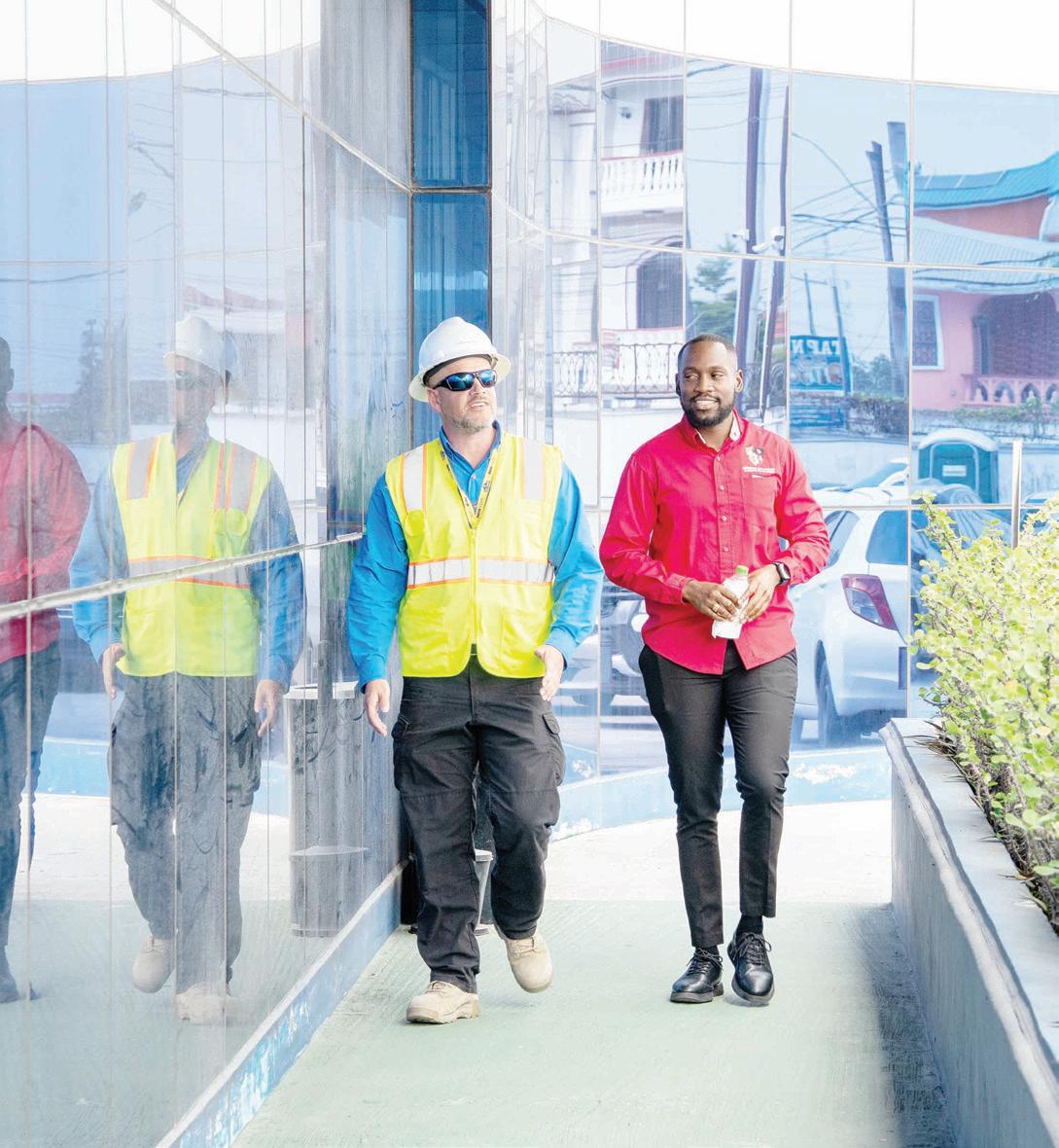
ers must remain a top priority.
He also commended GYSBI’s strong safety performance, noting the company’s achievement of over 2100 days, or more than nine million man-hours, without a Lost Time Injury (LTI).
“This achievement is
Meanwhile, the CEO expressed gratitude to the Minister for his visit and used the opportunity to reaffirm GYSBI’s commitment to maintaining high standards in safety, environmental management, and workforce development while continuing to support

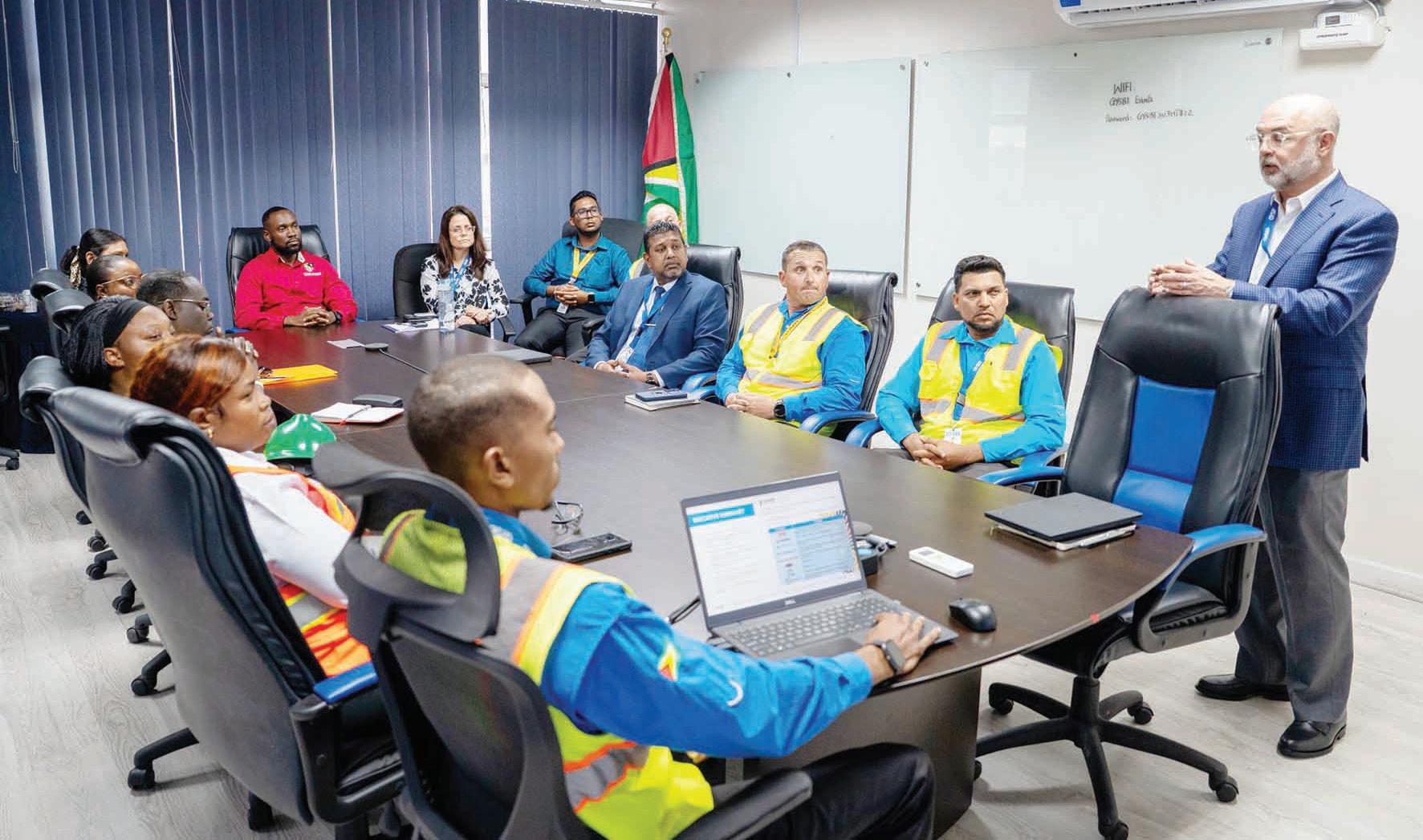
Guyana’s rapidly evolving energy sector.
GYSBI also donated to the Ministry to support part
of its OSH Month activities. The observance includes a national symposium, an OSH Village on Main Street, and a national walk scheduled for today, Sunday, April 26, 2026.
To ensure stronger outcomes in Mathematics over the next five years, Education Minister Sonia Parag has outlined a strategic plan that prioritises strengthening teacher training and improving literacy and numeracy.
ing taught, and how that is going to translate into the classroom. Delivery is important,” Parag said.
As it relates to improving literacy and numeracy rates, Minister Parag said this is non-negotiable as the two go hand in hand. She disclosed that, for the first time in 2026, the Ministry commenced its Literacy Assessment Programme for Grades Two and Four pupils.
The goal is for every pupil to be literate by Grade Four. According to Minister Parag, the Ministry will introduce its numeracy assessments for Grades Two and Four in 2027.
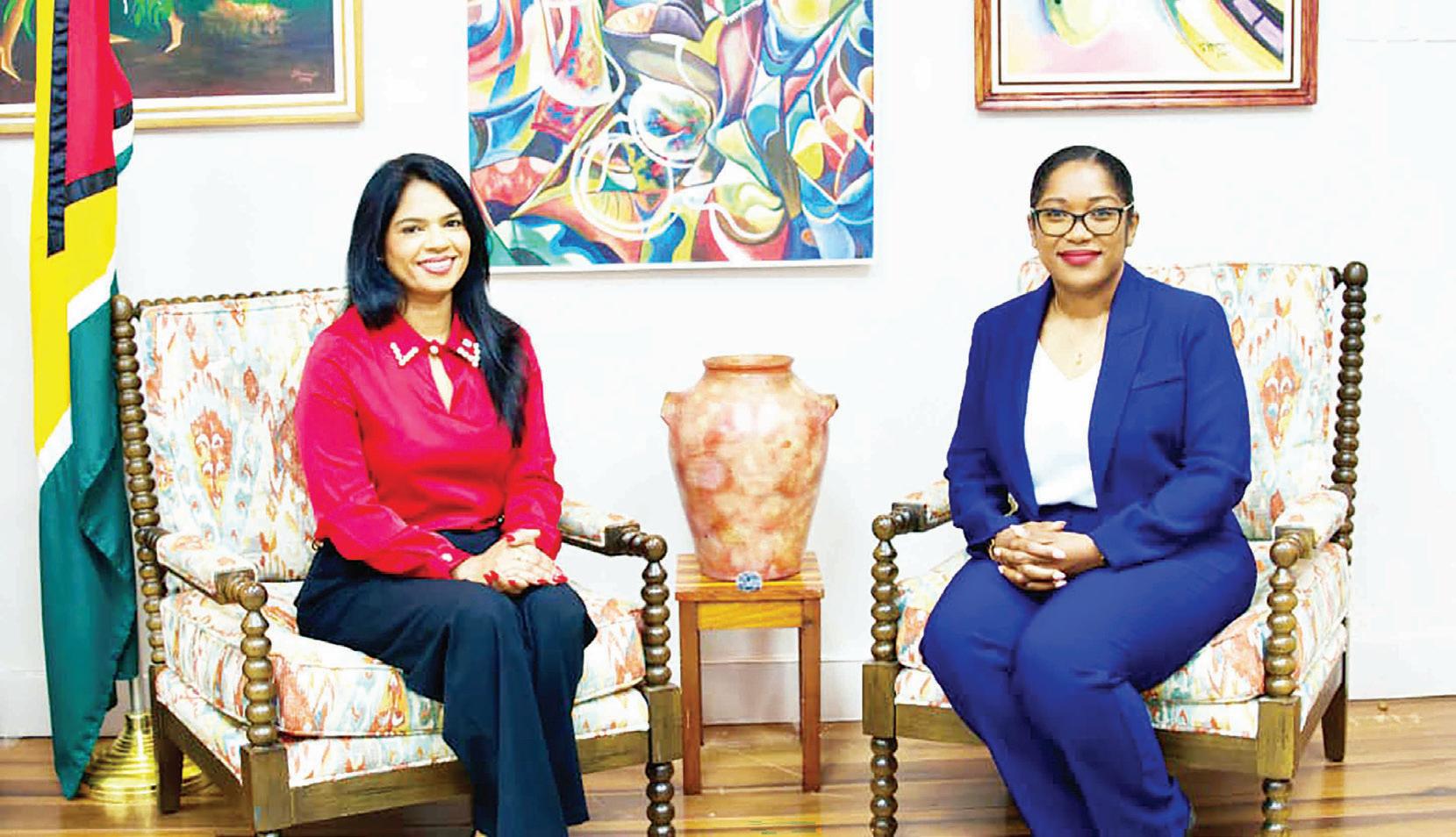
Speaking during a sitdown interview, Kiana Wilburg, Minister Parag said these long-term solutions will complement ongoing efforts to prepare children for the National Grade Six Assessment (NGSA) and the Caribbean Secondary Education Certificate (CSEC) examinations. Expounding on the measures implemented over the past few months, Minister Parag said there was robust training for Mathematics teachers to sharpen their assessment techniques. She indicated that this training will become more targeted and will include a review of the curriculum at the Cyril Potter College of Education (CPCE).
“We need to look and see what they’re [teachers] being taught, how they’re be-
The intensified training for teachers, as well as the focus on numeracy and literacy, will build upon the Mathematics Intervention Programme, which commenced in 2024 for Grades 10 and 11 students. The initiative included the distribution of past paper booklets, scientific calculators, and targeted teacher support through math monitors. This contributed to a 32 per cent pass rate in 2025, marking a five per cent improvement in student performance.

The Minister praised the programme’s innovative design, which saw significant expansion in reach and quality delivery in just six months. She noted that as of 2026, the programme has been more accessible to schools in the hinterland. “Regions One, Seven, Eight, and Nine gained about 18 Maths monitors from the programme.”
She also noted that hinterland schools benefited from improved access to digital learning tools, including smart boards in classrooms.
Parag also highlighted the December 2025 launch of the Guyana Digital School, which gives students free access to NGSA and CSEC Mathematics lessons, along with other subjects, through online registration.
This year, the Ministry also introduced “Maths Tents”, an outreach model that brings together stu-
dents from multiple schools at one location for focused instruction. Initially rolled out for NGSA pupils and piloted this year for CSEC students, these Saturday classes target key problem areas, such as consumer arithmetic, fractions, and construction.
The focus areas were identified through an analysis of Grade Five assessment results and mock examinations for Grades Six and 11, ensuring support is directed where it is needed most.
She also related that the instructors for each session are not the learners’ regular Mathematics teachers but specially selected educators who bring a fresh approach to explaining core concepts and strengthening understanding of the subject.
“I know for a fact that the schools I visited and the students I interacted with were very happy to have the
opportunity to get the extra lessons in Mathematics and to once again reinforce what they would have been taught in class.”
Since the examinations evaluate a child’s ability to comprehend a problem, outline their approach, and arrive at a solution, Minister Parag underscored that the math tents are deliberately structured to refine those competencies.
Beyond focused instruction, the official said “Math Tents” ultimately help reduce exam anxiety while spreading effective teaching practices across the system. With continued investment in the Mathematics Intervention Programme and other long-term education strategies, Minister Parag expressed confidence that Guyana’s overall Mathematics performance will see significant improvement over the next five years.

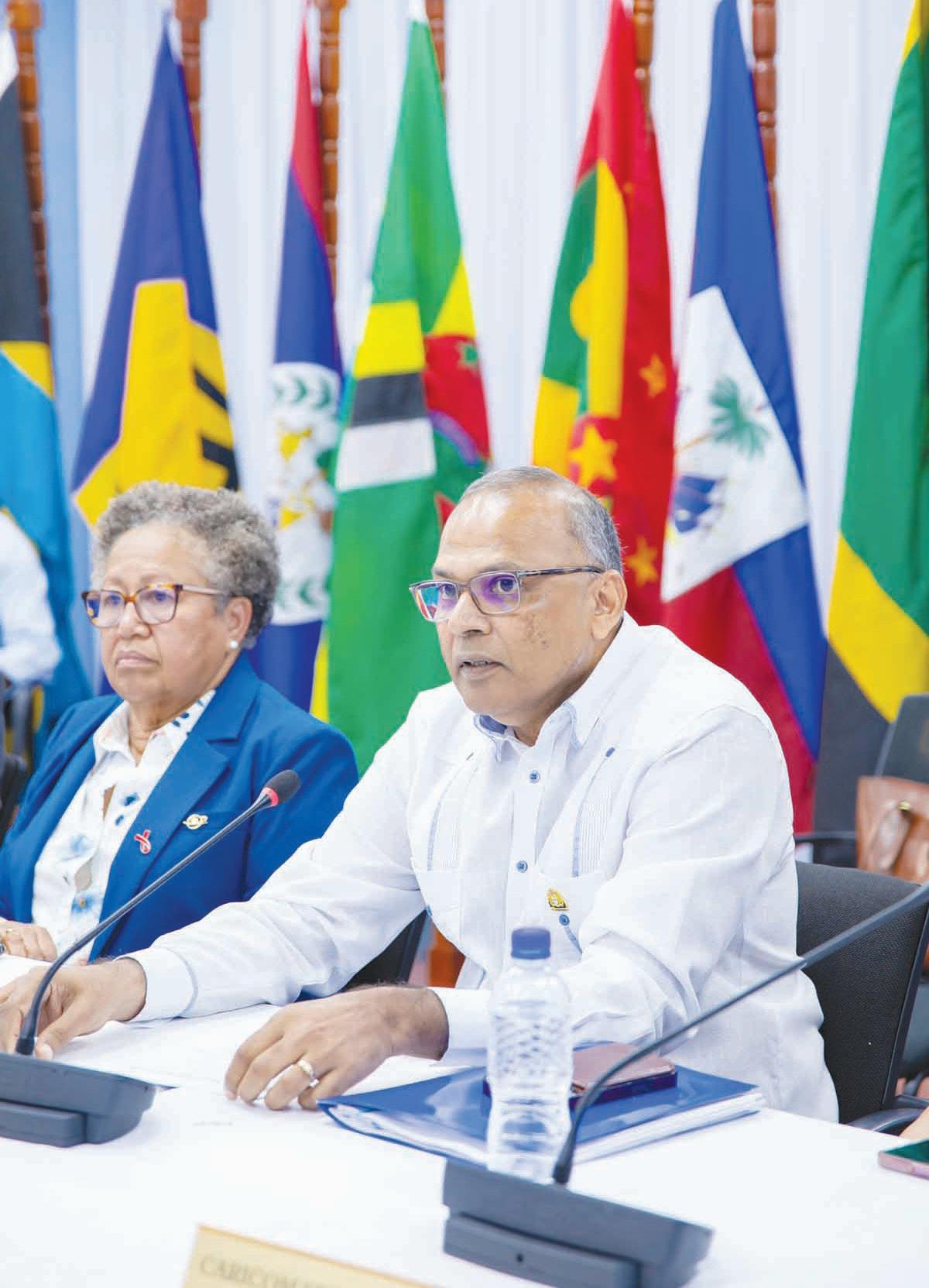
Guyana's Health Minister, Dr Frank Anthony, who is also the Chairman of the Council for Human and Social Development (COHSOD), has called for Caribbean countries to pool their medical expertise and resources in order to advance regional healthcare systems and improve outcomes for citizens across the region.
As individual member states of the Caribbean Community (CARICOM) continue to make advancements in speciality healthcare, Dr Anthony emphasised that regional systems can be strengthened by pooling medical expertise and resources to deliver more efficient, accessible, and high-quality care across the region.
He made these remarks during the 37th COHSOD meeting on Tuesday.
“While we have CARICOM as the regional organisation, I think a lot of times it's driven by the aspirations of the member states – what member states want. But I think sometimes what we need to look at is how we want to move as a region. We have to get all these different electronic health records in different countries talking to each other. That way, you'll have portability of data,” Dr Anthony stated.
Member states across the region already share common systems, including electronic health records, joint disease surveillance mechanisms, and coordinated public health reporting systems, among others, which can be further strengthened through greater cooperation.
He added that digital health is just one example of the opportunities available for regional collaboration, noting that Caribbean countries must begin identi-
start simply with biobanking, but we want to evolve it to a level where we can have the convergence of what we are seeing in biology and match that with computational science, which allows us to make better diagnoses. Rather than spending 10 to 15 years developing one particular medicine, that can be shortened to three or four years.”
“So you're gaining a lot of time while making precision medicine that can help to alleviate people's conditions. That’s where we want to go, and that’s why we believe it is important for people in the Caribbean to start thinking about this. Then we’ll see how we can grow this area together.”
Meanwhile, Dr Frank Anthony explained that Caribbean countries can benefit from sharing specialised medical capabilities rather than each nation attempting to develop all services independently.
fying areas where they can work together more effectively to strengthen integration across the region.
Further, the Minister related that discussions have revealed that while different countries possess varying capacities, these resources are not being adequately utilised, underscoring the need for better coordination and shared use of expertise.
One major way he foresees Guyana assisting in this vision is through its newly developed Human Leukocyte Antigen (HLA) testing capability.
Guyana is the first country within the Caribbean region capable of performing HLA testing, a specialised form of laboratory testing that is not yet widely available in other regional territories.
“Nobody in the Caribbean is doing HLA testing, and so transplant programmes in the Caribbean don't have to send their testing to Miami or elsewhere. We have now developed that capability in Guyana. We have all the equipment, and we are testing for our own programme. If there are other programmes in the Caribbean that need us to test for them, then we are very much capable of doing that. There are many other ways that we can collaborate.”
Meanwhile, the Health Minister also underlined the importance of biobanking.
Biobanking is the systematic collection, processing, and storage of biological samples for use in medical research and healthcare development; however, this can be further expanded across the region to support advanced diagnostics, research collaboration, and improved treatment outcomes.
“That's the future… What we are trying to do is
He noted, for example, that Jamaica may have capacity in neurosurgery, while Trinidad and Tobago may be better equipped for paediatric surgery, allowing for a more coordinated and effi-
cient regional approach.
He added that Guyana also possesses capabilities that can be shared, highlighting the country’s growing kidney transplant programme. However, he
pointed out that compatibility testing for organs has traditionally required samples to be sent overseas, such as to Miami, underscoring the need to build and utilise regional capacity in this area.
A45-year-old gold miner of Company Road, Buxton, East Coast Demerara (ECD), was taken into Police custody after he was accused of murdering a miner at Blackwater Backdam, Cuyuni River, Region Seven (CuyuniMazaruni) on Thursday evening.
Based on reports received, the incident took place at about 21:30h and resulted in the death of Moses Chapelle, called "Bizo". His age and address are unknown.
Preliminary investiga-
tions indicate that the deceased had returned to Blackwater Landing with another man after visiting a mining operation in the backdam. The two were reportedly imbibing in the vicinity of a shop when a loud explosion, suspected to be a gunshot, was heard.
Chapelle was reportedly seen collapsing shortly after, with what appeared to be blood on his back.
He was later transported with assistance from persons at the landing to the Puruni Health Centre, where he was
pronounced dead hours later. An examination of his body revealed a small circular wound to the left lower back region.
Police visited the scene where bloodstains were observed on the ground. Samples were collected for analysis as investigations continue.
The suspect remains in custody assisting with the investigation. The body of the deceased has been escorted to the Bartica Regional Hospital Mortuary, where it awaits a post-mortem examination.

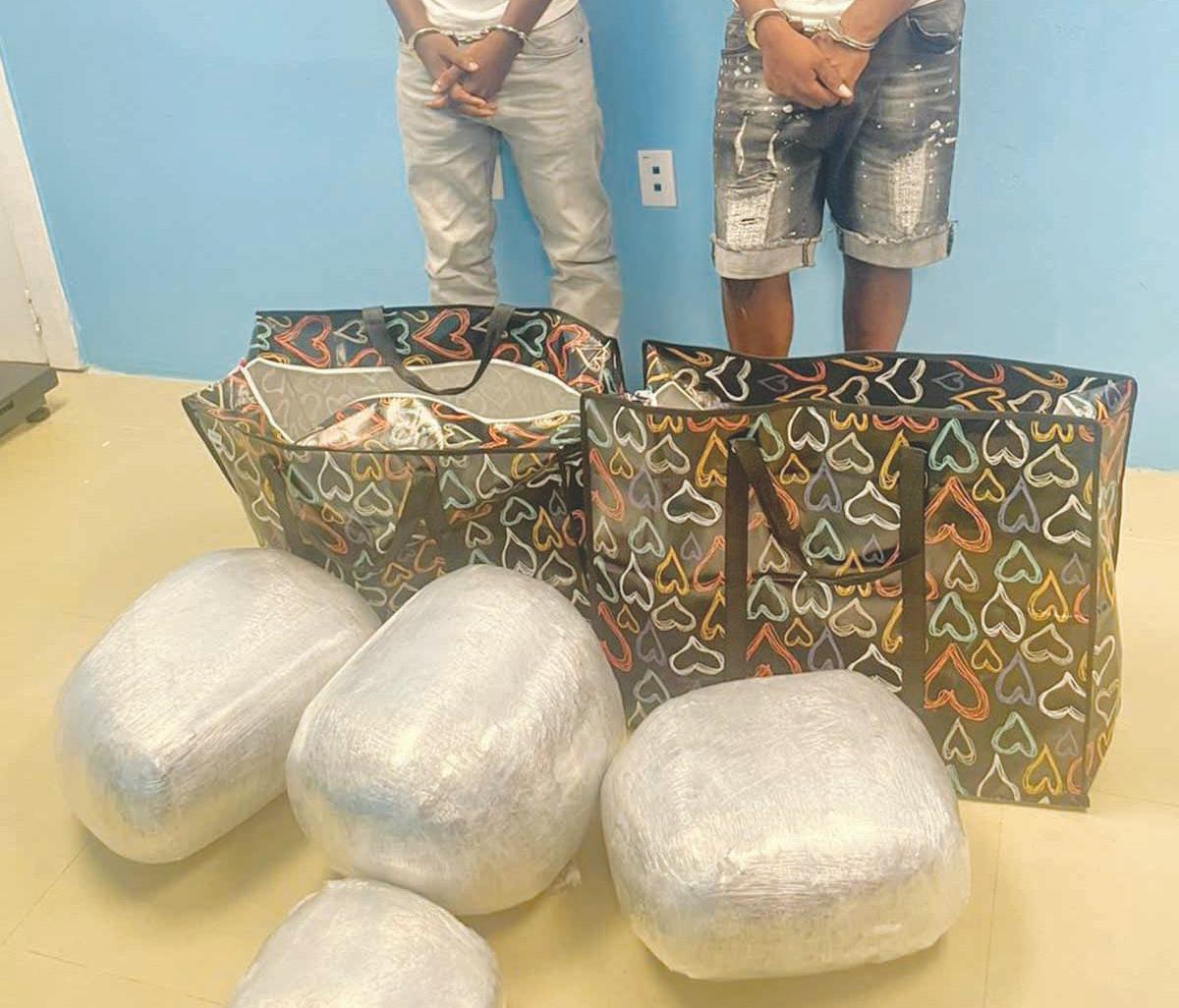
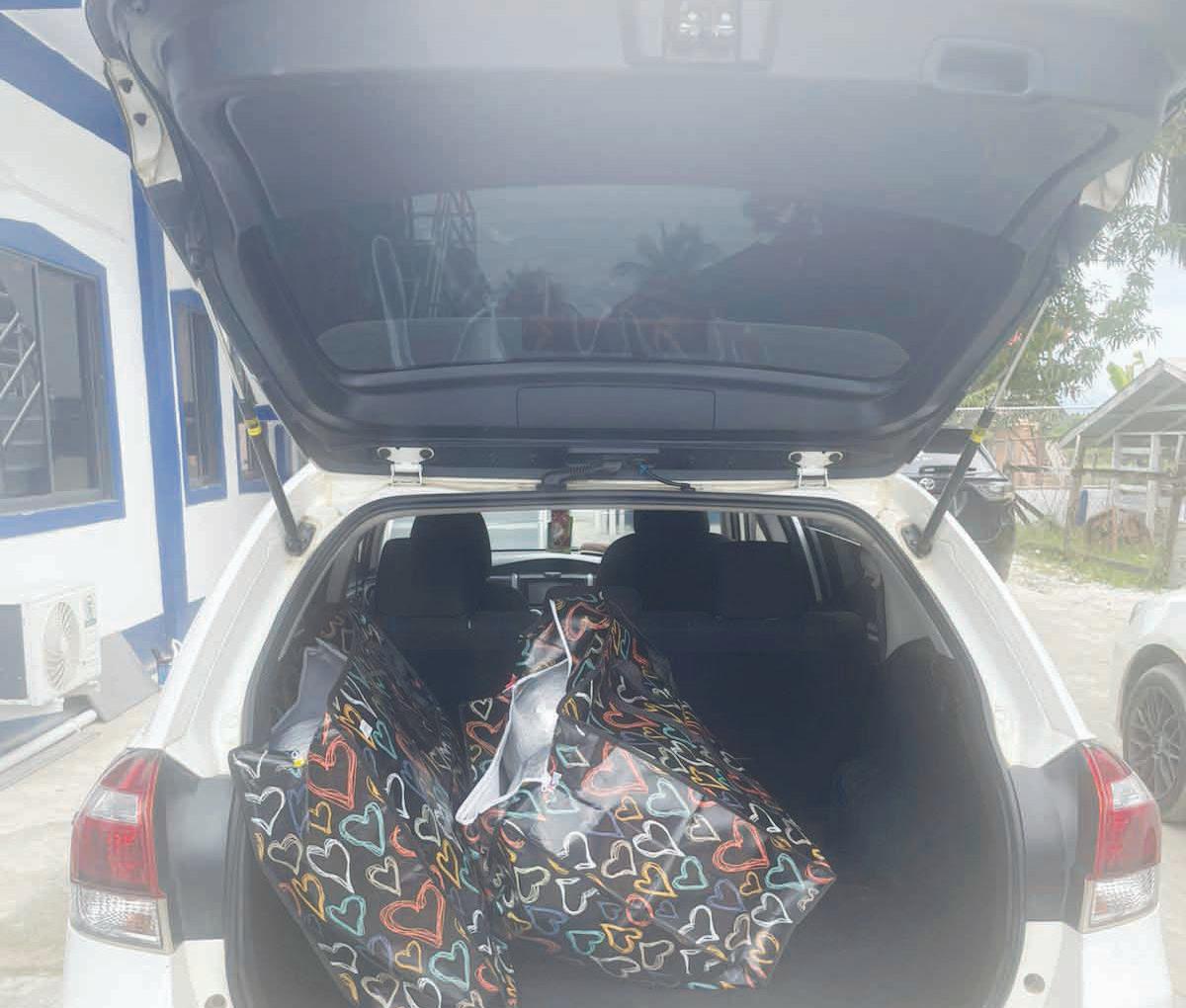
Two men from Berbice were taken into custody on Thursday following the discovery of more
than 45 pounds of cannabis during a targeted stop-andsearch exercise along the Weldaad Public Road, West
Coast Berbice (WCB). The operation, carried out at approximately 15:40h in Regional Division
Five (Mahaica-Berbice), resulted in the interception of a white Toyota Fielder waggon with two occupants.
Hours after robbing a business at Vryheid's Lust, East Coast Demerara (ECD), one of the alleged perpetrators was arrested while in possession of a firearm and an undisclosed sum of cash. Based on reports received, the incident on Friday involved a 27-year-old cashier from Mon Repos, ECD, a 28-year-old spray painter from Vryheid's Lust, and several customers at the business establishment.
Initial Police investigations indicate that the victims were inside the business when two men arrived on a black XR motorcycle, dismounted and
entered the premises. At the time, one of them was armed with a firearm and the other wielded a knife. During the robbery, Police said the gunman allegedly pointed the weapon at those inside, creating panic among customers. The 28-year-old spray painter was relieved of a cellular phone and a sum of cash, while the cashier was robbed of money belonging to the business.
The suspects then fled the scene on the motorcycle. However, public-spirited citizens attempted to pursue them, prompting the armed suspect to discharge several rounds. The gunfire resulted in dam -
age to two motor vehicles in the area.
The escape took a turn shortly after when the suspects were involved in a collision, causing the motorcycle to crash into a nearby drain. The men abandoned the vehicle and escaped on foot, leaving behind the motorcycle and a haversack containing cash. Police reports stated that responding ranks later recovered two spent shells at the scene, while the motorcycle was seized and lodged as evidence. Investigators also retrieved and reviewed CCTV footage from the business premises to assist with the probe.
Law enforcement officers, acting on routine procedures, conducted a search of both the individuals and the vehicle.
During the search, it was reported that four bulky parcels were found concealed in the trunk of the vehicle. The parcels, wrapped in transparent plastic, were found inside two multi-coloured shopping bags and contained a substance comprising leaves, seeds, and stems suspected to be cannabis.
The driver, identified
as a 28-year-old man from Timmers Dam, Angoy's Avenue, New Amsterdam, and his passenger, a 20-year-old labourer also from New Amsterdam, were immediately arrested. Both suspects, along with the motor vehicle and the suspected narcotics, were escorted to the Weldaad Police Station. There, the substance was weighed and amounted to 45.4 pounds.
The men remain in custody pending charges.
AIn a subsequent development later that night, Police conducted a search at the residence of a 27-year-old man from Plaisance, ECD, in connection with the robbery.
During a search of a bedroom in the suspect's presence, ranks discovered a firearm wrapped in cloth and concealed in a clothes basket. When questioned, the man reportedly admitted that he was not a licensed firearm holder and was arrested. The firearm has since been lodged, and the suspect remains in custody as investigations continue into the armed robbery.
37-year-old bodywork technician is nursing a gunshot wound to his chest after he was shot and robbed outside his Campbellville, Georgetown home in the early hours on Saturday. The incident occurred at approximately 00:40h at Delph Street, Georgetown, while the man was reportedly in his yard conversing with another individual. According to police, a lone male entered the yard and confronted the victim, pointing a firearm at him before snatching a yellow metal chain he was wearing at the time. The situation quickly escalated into a scuffle between the two men, during which the suspect discharged a round in the victim's direction, with the bullet striking him on
the left side of his chest.
Following the shooting, the suspect fled the scene on foot, heading south along Delph Street and managed to escape.
The injured man was assisted by nearby residents, who rushed him to the Georgetown Public Hospital Corporation (GPHC), where he was treated by doctors and admitted. His condition has been listed as stable.
Investigators who processed the scene recovered a 9mm spent shell, while CCTV cameras in the area were identified and are expected to be reviewed as part of ongoing efforts to identify the perpetrator. The suspect remains at large as investigations continue.
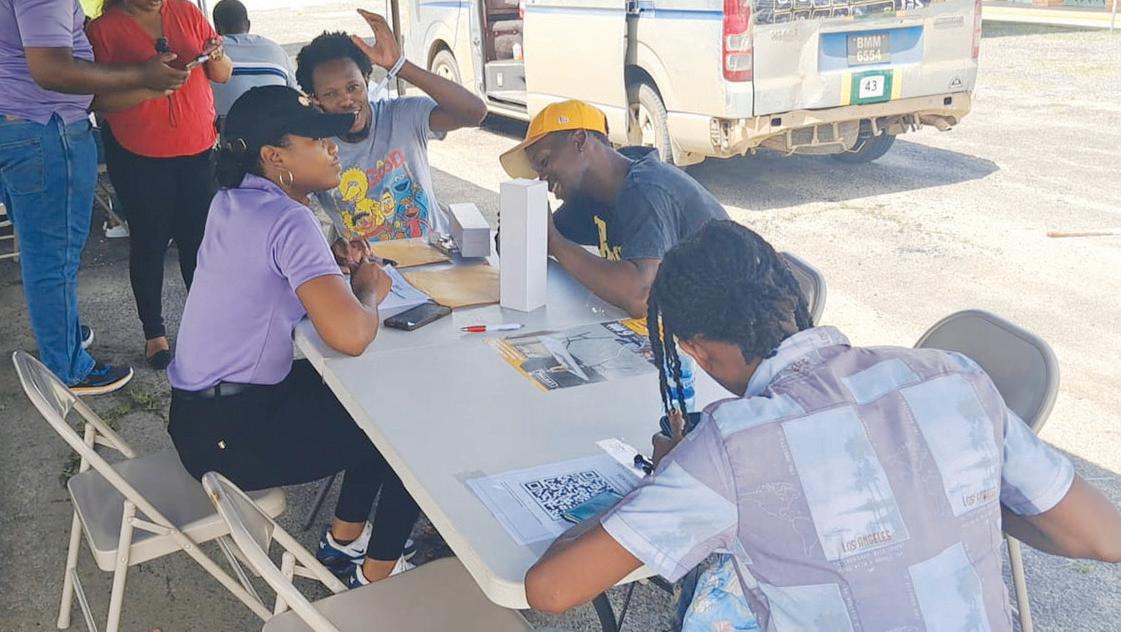
GMining Ventures, a Canadian-owned gold mining company, has announced plans to hire up to 2500 workers as construction advances on its Oko West Gold Project in Region Seven (Cuyuni-Mazaruni).
The company made the disclosure during a job fair on Saturday at the New Amsterdam Technical Institute (NATI) in Berbice, where it began engaging prospective employees as part of a nationwide recruitment drive ahead of the project's transition to operations by 2027.
The outreach forms part of the company's broader national hiring push, with talent acquisition lead, Kobe Cort, explaining that while
the event was hosted in Region Six (East BerbiceCorentyne), the initiative is targeting skilled and semiskilled workers from across the country.
He noted that institutions such as NATI and the Port Mourant Technical Institute (PMTI) continue to produce graduates with competencies aligned to the needs of the mining sector, making the region a strategic starting point for recruitment efforts.
The Oko West Gold Project, located in Region Seven (Cuyuni-Mazaruni), is currently in its construction phase, with the company aiming to complete this stage by the third quarter of 2027 before transitioning into fullscale operations.
As the project advances, the company is seeking to fill a wide range of positions spanning construction, mining, and hospitality. Cort said vacancies currently exist for general labourers, electricians, carpenters, masons, heavy-duty equipment operators, and truck drivers, as well as cooks, kitchen helpers, housekeepers, and camp attendants, among other roles, reflecting the scale and diversity of the operation.
He emphasised that many of the positions are immediately available, noting that once applicants have the required documentation in place, employment could be secured within a matter of weeks. Cort added that there

is an urgent need to fill roles, particularly in construction and camp operations, as well as for operators and drivers, as work on the project continues to intensify.
Addressing requirements for applicants, Cort noted that while certification is an asset, it is not always a requirement, particularly for persons with hands-on experience.
He explained that individuals who have worked in fields such as carpentry or masonry, even without formal qualifications, are encouraged to apply, as the company is prepared to provide on-the-job training to help develop and refine their skills.
Persons interested in joining the company can sub-
mit applications through its online platforms, including Facebook and LinkedIn, or visit its corporate office located at the Pegasus Corporate Suites in Georgetown.
Cort noted that the company maintains an open-door policy, allowing applicants to enquire about vacancies, submit documents, and receive feedback directly from the recruitment team.
G Mining Ventures is also expected to continue its recruitment outreach on Monday at the University of Guyana Berbice Campus Open Day and Job Fair, another major career event that traditionally attracts hundreds of students and job seekers, along with companies and agencies showcasing employment and training opportunities. The company's presence there is expected to further widen access for persons interested in the vacancies linked to the Oko West Gold Project. Meanwhile, Cort encouraged interested persons across Guyana to take advantage of the opportunities, describing G Mining Ventures as an equal-opportunity employer committed to fair and transparent hiring practices.
According to him, the company places strong emphasis on employee development and growth, positioning itself as a preferred choice for individuals seeking to build long-term careers in the country's expanding mining sector.
Parents must take early action when children show signs of developmental delays – autism specialist
– says parents should not adopt “wait and see” approach when milestones missed
Parents are being urged to act swiftly when children show signs of developmental delays, with an autism specialist warning that delaying assessment can limit the effectiveness of early intervention.
The call was made during an episode of “Disability and You”, where autism specialist Sonam Hassan outlined the importance of recognising early warning signs and seeking professional evaluation without delay.
“So, autism is a neurological neurodevelopmental disorder that affects social communication, their interactions and behaviours,” Hassan explained, noting that the condition affects how the brain processes and shares information.
She said early childhood milestones are critical indicators of a child’s development, particularly between birth and five years.
“A baby will make eye contact. A child with autism may not make eye contact. A baby may coo or make babbling sounds… an autistic baby may be more silent,”

Autism specialist Sonam Hassan
she said, adding that while these signs do not automatically confirm autism, they serve as early red flags.
Hassan stressed that parents should not adopt a “wait and see” approach when milestones are missed.
“If by that three to fouryear-old mark, we’re not hitting those milestones, we should definitely go for a diagnosis,” she stated. She further explained that diagnosis is not about labelling children but about understanding their needs and planning appropriate support.
“The diagnosis is further investigation into how we can help the child or how we can have a tracking process for them,” Hassan said.
The specialist highlighted that the diagnostic process in Guyana involves structured assessments at designated centres, where multiple professionals evaluate the child over a period of time. “It’s a comprehensive process,” she noted, explaining that “a trained psychologist, a diagnostician, will come and work with your child… and they actually give you a score of where
your child is and what level they are.”
According to Hassan, early intervention is critical, as children with autism benefit significantly from therapy and structured support at an early age. “Once you get that intervention, and once we get those therapies in, it makes such a big difference in their functioning in life,” she said.
She also encouraged parents to take an active role in their child’s development, especially when therapy services are involved. “Go home and practise," she advised, noting that parents can reinforce what is learnt in therapy sessions through daily interaction.
Hassan also addressed the emotional impact of diagnosis on parents, saying many experience both grief and relief.
“From the parents I’ve spoken to, they feel relief and grief,” she said, explaining that the grief comes from letting go of expectations while the relief comes from having clarity and direction.
However, she urged par-

ents not to blame themselves. “It wasn’t your fault,” she stated, adding that autism is largely genetic and not the result of parenting.
Hassan further called for greater inclusion of children with autism in society, saying attitudes must shift to accommodate different needs. “There has to be that paradigm shift in which we can change as well,” she
said, adding that inclusion benefits all children by teaching “flexibility, adaptability and tolerance". The specialist emphasised that awareness, early diagnosis, and consistent intervention remain key to improving outcomes for children on the autism spectrum. “Early intervention is the key,” she reiterated.
One year after 11-yearold Adrianna Younge’s death, her relatives continue to demand justice while holding onto the premise that she was killed under mysterious circumstances. The young girl’s body was found almost 24 hours after she went missing during an outing at the Double Day Hotel, Tuschen, East Bank Essequibo (EBE). Her body was found floating in the pool under questionable circumstances.
The discovery sparked fiery protests by angry residents and relatives, during which the hotel and the owners’ home were destroyed by fire. Little Adrianna had accompanied her grandmother and other relatives to the facility. One year later, her mother, Amecia Simon, spoke with Newsource, demanding justice for her daughter’s death. Speaking about her grief, Simon said she is trying to cope with the loss.
“Well, I wouldn’t say it’s easy. I would just say that I try to live with it because you have to live with the fact that she’s not here anymore, the fact that she was taken in such a gruesome way, and the fact that you’re not hearing or getting any closer to closure. I would give anything for her because she was humble and she didn’t deserve anything like this.”
The mother still be-
lieves that there was sufficient information available to hold individuals accountable, identify those involved and determine who took her and where she had been, but nothing was done. “Adrianna deserves justice. Yes, she deserves justice. The worst has already happened, but at this point, she deserves justice. Her parents deserve justice. Her siblings deserve justice. She was not in the pool, nor at the bottom of that pool, so it is impossible,” she stated.
Only recently, the Director of Public Prosecutions (DPP), Shalimar Ali-Hack, has recommended that a coroner’s inquest will be held into the child’s death – a decision that the mother welcomes and believes is her last hope to find closure.
But the mother claims that no official has reached out to her family notifying them of the development and that she only saw the information circulating in the media. “There was no formal no-
and watched and saw everything.
So, I think it should be done live; let everybody see, because there are so many unanswered questions and so many wrongs that took place there, and the police force protected the wrongdoing rather than assisting in finding my child. “ Recalling the tragedy of the scene, she further alleged concerns about the police response at the scene.
“And then the police that came there, they didn’t come to help us look for a missing
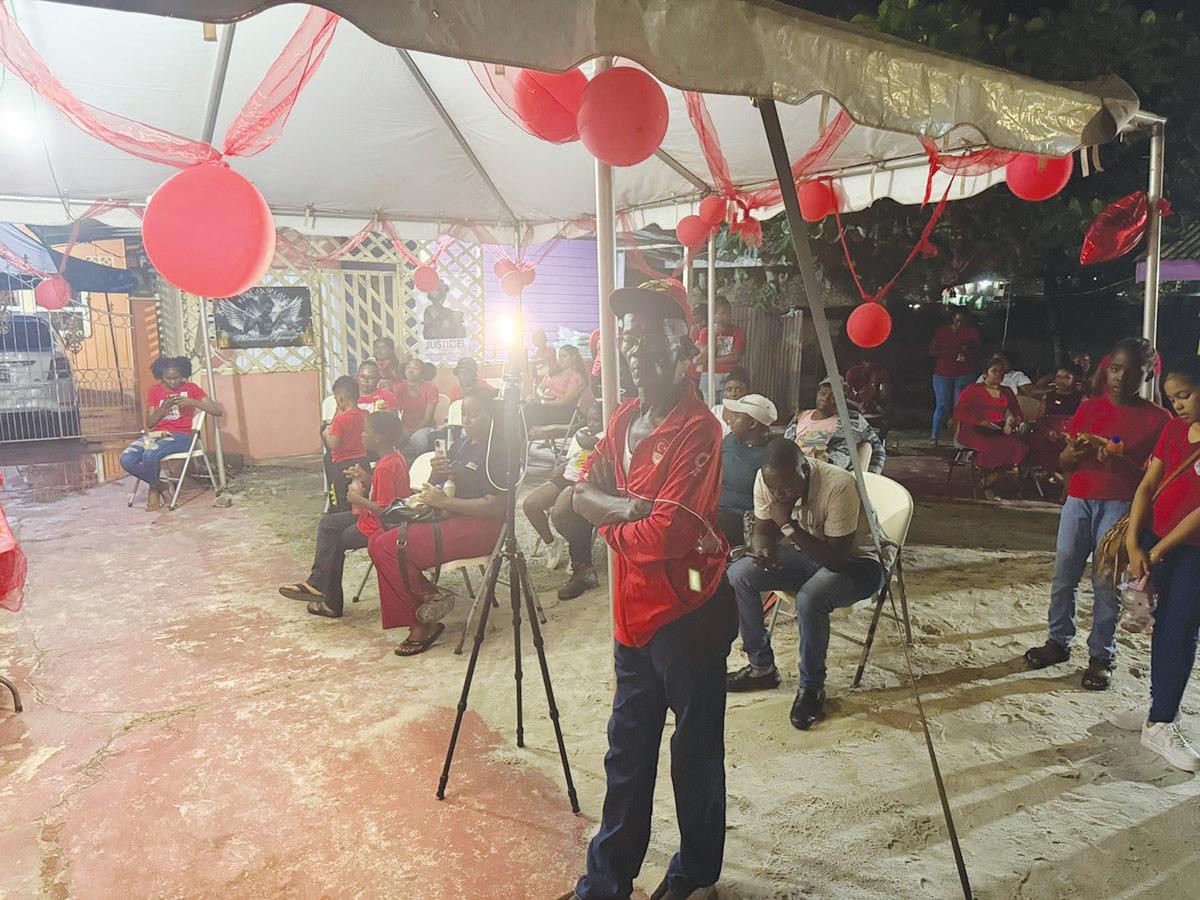
tification. I just saw it in the media. I was not officially informed; I only saw it online. So, I don’t know what the next step is. I think having it televised would be the best thing because the world stood
The grieving mother continues to raise several unanswered questions. “Who had her? Who called her? And regarding who called her, it can’t be a stranger because she is not a child who could be called away or taken by someone she does not know. Even if she drowned, where did she drown? Who drowned her? You know, because she wasn’t there. She wasn’t there.”
child. They came to protect a business that was operating while a child was missing.”
The grieving mother maintains that she is still seeking closure and justice for her daughter.
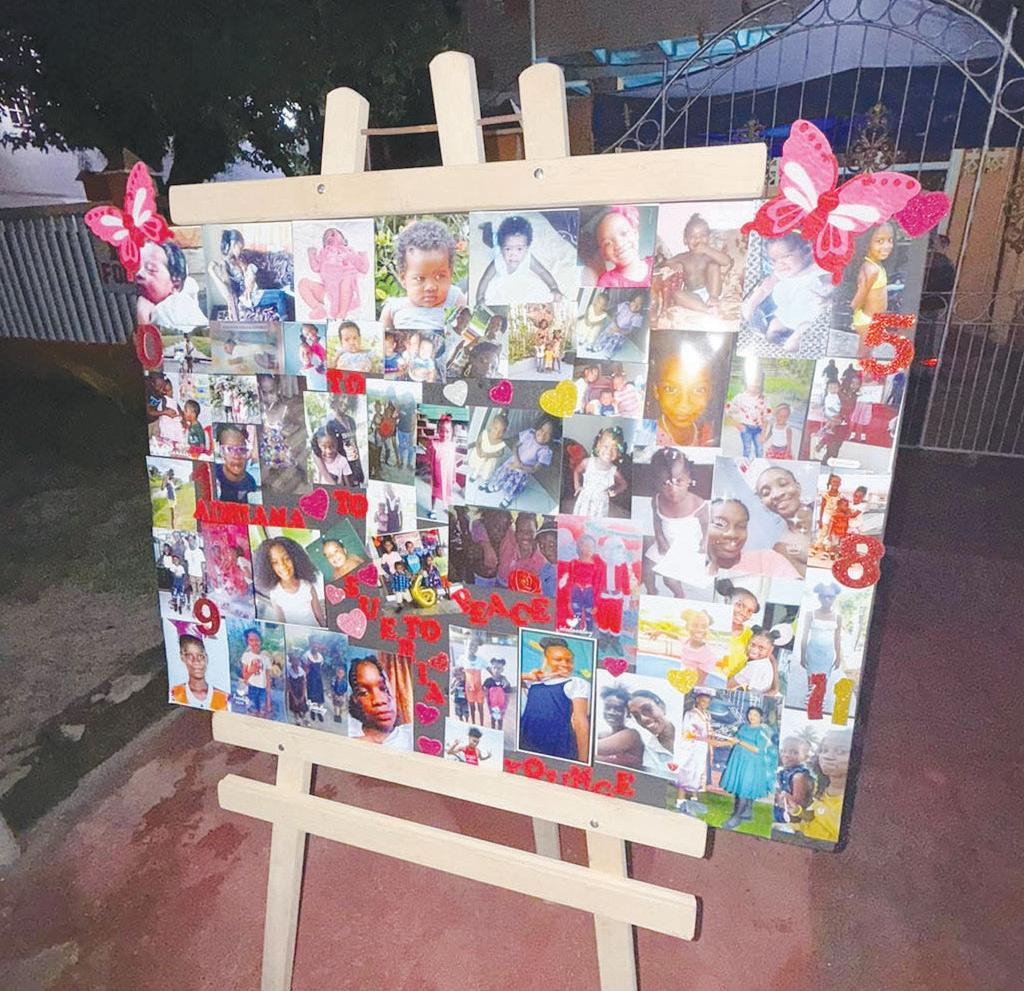
A detailed forensic autopsy, which included a CT scan and X-ray, conducted by three international pathologists, determined Adrianna’s cause of death to be drowning. However, the team of forensic experts could not determine where the drowning occurred, nor was it possible to establish the exact time of death due to the decomposition of the body.
There were initial suspicions surrounding the girl’s death after marks were observed on her body. However, the pathologists concluded during the forensic autopsy that the marks were consistent with water damage and that there was no sign of sexual assault or violence on the young girl’s body.
The nearly five-hour-long procedure was conducted last year by the Chief Medical Examiner (CME) of the State of Delaware, Dr Gary L Collins, who was selected by the Younge family, along with Barbadian experts Dr Shubhakar Karra Paul and Dr Glenn A Rudner of Mount Sinai Hospital in New York, both of whom were brought in by the Guyana Government.
In light of ongoing upgrades to Guyana’s road network, poor driving habits continue to pose a major safety risk, with the Chairman of the National Road Safety Council (NRSC), Earl Lambert, highlighting that many motorists have forgotten fundamental road rules. Speaking on a recent episode of the ‘Road Safety and You’ programme, Lambert said that even experienced drivers are contributing to unsafe conditions on the road.
“I know that there are a lot of folks who are driving, but sometimes they make mistakes,” he said, adding, “Those who would have gone through the tests for years now... you’re driving, and you would have forgotten certain things.”
Lambert explained that revisiting the driver’s manual will help to refresh motorists’ knowledge. “I’m using the programme to bring you up to speed on some of the things that you should know when driving, when using the road,” he stated.
Among the key concerns highlighted was the widespread disregard for traffic signs, even as new roadways and upgraded corridors introduce additional signage. “Just don’t drive by and don’t pay attention to them,” Lambert urged. “Because many times, we’re so taken up with what we’re doing that we don’t see these signs.”
He pointed to several locations, including the University Road, Sheriff Street and Conversation Tree junctions, where drivers often ignore clear instructions. “That sign tells you that you cannot turn around in the middle of the street or in an intersection... it’s simply saying that you cannot turn around there,” he explained.
Pedestrian safety also remains a pressing issue, particularly in school zones, where warning signs are frequently overlooked. “This sign warns of the likely presence of pedestrians nearby... it warns you to slow down, drive with extreme caution and watch for children,” Lambert further explained.
He added that drivers must also be mindful of pedestrian crossings ahead, noting, “You must yield to pedestrians on the crosswalk. Use caution, drive more slowly, and watch both sides of the street.”
With major infrastructure works underway across parts of the country, Lambert warned that construction zones present additional dangers if motorists fail to comply with traffic controls. “Orange warning signs tell you that workers, machinery, and barricades are just ahead. You may need to slow down and change lanes,” he said. He stressed that these measures are critical for protecting both drivers and road workers. “These signs are there to help everybody that is in that area,” Lambert noted, explaining that traffic control devices are used “to direct drivers or pedestrians safely through the work zone and to provide for the safety of the highway workers.”
The NRSC Chairman also addressed the improper use of road markings, particularly the illegal crossing of solid lines. “You may not cross these lines... to pass”, he explained, referring to double solid yellow lines, while noting that they may only be crossed when making a turn.
Lambert, however, cau-
tioned against poor turning practices, which he observed first-hand on local roadways. “You just don’t come... and then you want to turn left... you have to anticipate your turn,” he said, urging drivers to signal early and position their vehicles correctly.
“You let vehicles know that you’re making that turn... and you position yourself, and you make the turn,” he added.
As Guyana continues to modernise its road infrastructure, Lambert emphasised that driver behaviour remains a critical factor in ensuring safety. “You’re driving, and you would have forgotten certain things,” he reiterated, underscoring the need for motorists to revisit the basics.
Guyana has undergone a major transformation of its road network over the past several years, driven by increased economic activity, population growth, and expanding housing developments.
Since around 2020, successive infrastructure projects have focused on widening major corridors, constructing new highways, and improving community access roads to ease congestion and improve connectivity.
One of the earliest major upgrades in this recent wave was the East Coast Demerara (ECD) Road expansion, which
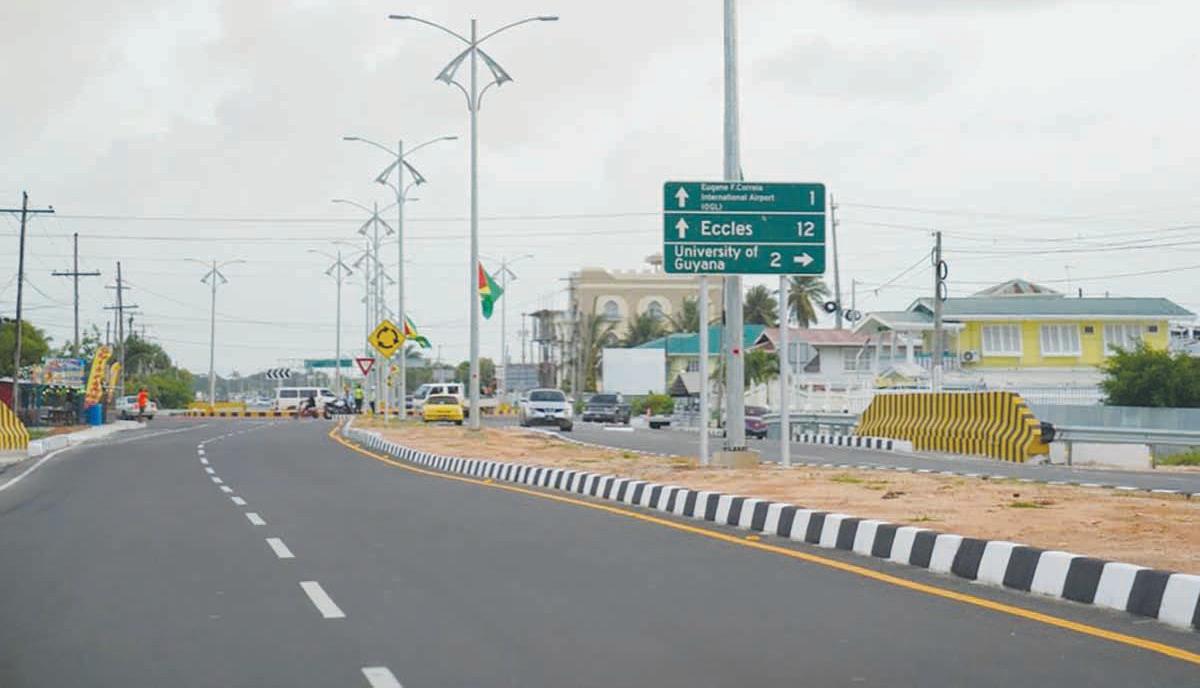
saw sections between Better Hope and Belfield upgraded and commissioned in 2020.
This momentum accelerated significantly after 2022, with the Government rolling out a broader transport strategy aimed at modernising the country’s road network. A key milestone came with the opening of the Ogle to Eccles Highway in 2025, a US$133.8 million project linking the East Coast and East Bank corridors.
At the same time, largescale upgrades have been ongoing along the East Coast, including a US$192 million road widening project from Sheriff Street to Mahaica. The project, which is expected to transform the corridor into a fourlane highway, was reported to be over 80 per cent complete by late 2025. Further investment has also been directed at
expanding community and access roads.
In 2024 alone, more than 370 roads across Demerara were upgraded at a cost of $3.1 billion, improving access in areas such as Eccles, Diamond, Enmore and several parts of Georgetown. Additionally, the Government announced a $14.4 billion programme to expand narrow East Coast roads into wider carriageways to accommodate increasing traffic volumes due to rapid development along the corridor. This month, President Irfaan Ali said projects such as the upgrading of the Aubrey Barker Road into a four-lane highway are part of a national transport master plan designed to improve connectivity, reduce travel time, and modernise Guyana’s infrastructure.
The United States has agreed to modify its sanctions on Venezuela to allow the South American country's Government to pay Nicolás Maduro's defence lawyer, backing off a restriction that had threatened to derail the drug trafficking case against the ousted Venezuelan President, a court filing showed on Friday.
Maduro, 63, and his wife Cilia Flores, 69, were captured from their home
in Caracas by US special forces on January 3 and brought to New York to face criminal charges, including narcoterrorism conspiracy. They have pleaded not guilty and are jailed in Brooklyn pending trial.
Maduro's lawyer Barry Pollack in February asked Manhattan-based US District Judge Alvin Hellerstein to dismiss the case because US sanctions were preventing the Venezuelan Government from paying his legal fees.
Pollack said that prohibition amounted to a violation of Maduro's rights under the US Constitution to the counsel of his choice.
Neither Maduro nor Flores can afford lawyers on their own, and the Venezuelan Government is prepared to pay their fees, their lawyers have said.
All criminal defendants in the US have constitutional rights regardless of whether they are US citizens. (Excerpt from Reuters)
At least seven persons were killed, and 20 were wounded following a suspected explosive attack in the southwestern province of Cauca, Colombia, according to regional authorities.
Governor Octavio Guzman said that an explosive was detonated on the Pan-American Highway in the El Tunel sector of Cajibio on Saturday. He condemned what he called an “indiscriminate attack” against the civilian population.
“There are not sufficient words for the pain we feel,” Guzman said in a social media post, demanding a “decisive, sustained” response from the Government
against the “terrorist escalation”.
A video shared by the Governor appeared to show the aftermath of the bombing, with ambulances on site and mangled vehicles and debris covering the road.
“Cauca cannot continue facing this barbarity alone,” he added, stating that other actions had also been carried out in El Tambo, Caloto, Popayán, Guachene, Mercaderes, and Miranda.
The deadly incident comes after a series of attacks on Friday, attributed to criminal groups formed by dissident members of the FARC rebel group, who split with the group following a landmark peace agree-
ment with the Government in 2016.
On Saturday, Minister of Defence Pedro Sanchez was convening a security council in Cali to assess the regional security situation when the latest attack occurred.
President Gustavo Petro responded to the deadly explosion by saying that powerful criminal groups are seeking to control the population through fear.
While details of the attack are still emerging, Petro appeared to blame a drug trafficker known by the alias Ivan Mordisco.
“I want the maximum worldwide pursuit against this narco-terrorist group,” Petro said. (Al Jazeera)
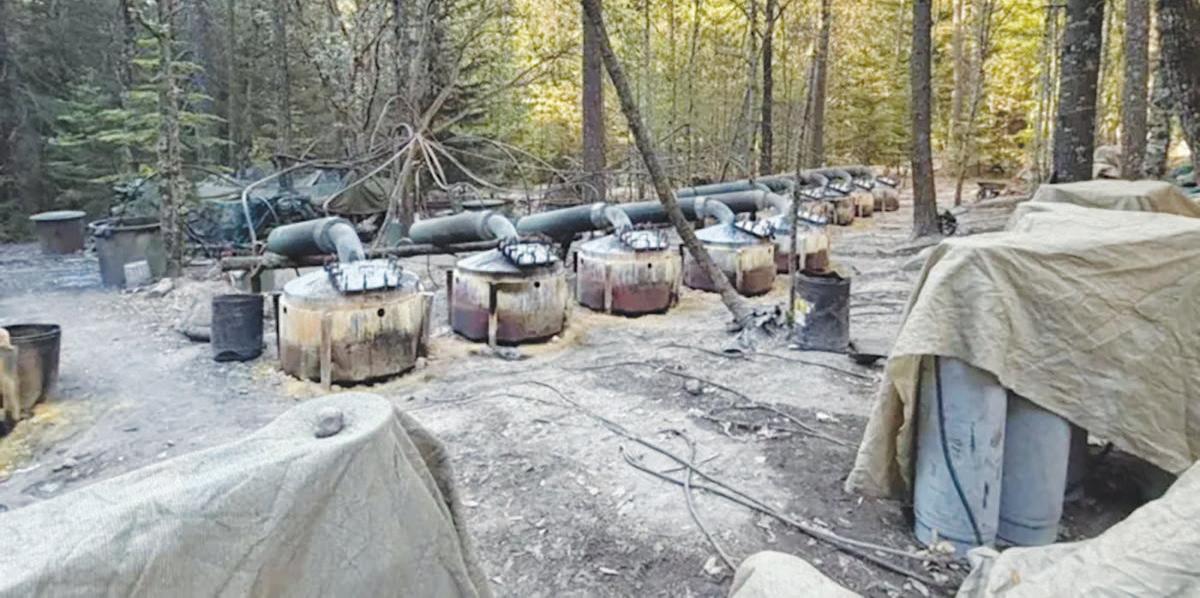
The Mexican Government says two US agents who died last weekend in a car crash had not been authorised to operate in the country.
The crash occurred on April 19, when a convoy returning from an operation targeting suspected methamphetamine labs in a remote, mountainous area veered off the road and plunged into a ravine. Two members of the Chihuahua State Investigation Agency were also killed, officials said.
The officials, who reportedly worked for the CIA, had taken part in a raid on suspected drug labs in the north-
ern state of Chihuahua before their vehicle skidded off a mountain road and exploded.
Following an investigation ordered by President Claudia Sheinbaum, Mexico's security Ministry said that they "neither had formal accreditation to participate in operational activities" nor had federal authorities been informed of their presence.
The incident comes amid at-times fraught relations between Mexico and the US on a number of issues, including counter-narcotics. She has been adamant that foreign officials can only operate on Mexican soil if given prior clearance by the fed-
eral Government and has insisted the Latin American nation's sovereignty should not be breached.
Mexico's security Ministry said on Saturday that immigration records showed one of the agents had entered the country as a "visitor", while the other had travelled on a diplomatic passport.
"Neither had formal accreditation to participate in operational activities within national territory," the Ministry said in a statement, noting that Mexican law prohibits foreign agents from taking part in operations without federal approval.
(Excerpt from BBC News)
Haiti’s fragile path toward elections faced new uncertainty this week as Prime Minister PM) Alix Didier Fils-Aimé and key political allies rejected a $250 million budget proposed by the Provisional Electoral Council (CEP), intensifying disputes over cost, control and the feasibility of holding a vote amid deepening insecurity.
The rejection underscores broader tensions shaping Haiti’s prolonged political transition. Nearly five years after the assassination of President Jovenel Moïse, the country remains without elected leadership, while armed groups control much of the capital and state institutions struggle to function. For
many Haitians, the debate over the election budget reflects deeper concerns about whether credible elections are possible under current conditions – and who ultimately controls the process.
In a statement issued April 20, about 15 political parties that are signatories of the National Pact for Stability and the Organisation of Elections – an agreement backing the current interim Government – described the proposed budget as "excessive", noting that the 2016 elections cost roughly $50 million.
“This budget is four times higher than the amount spent on the last elections,” the group remarked.
“Two hundred fifty mil-
lion dollars! That’s absurd! This is not an election for the United States,” the PM said. The CEP has defended the proposal, arguing that comparisons to 2016 are misleading. Those elections were partial and relied heavily on existing infrastructure and support from the United Nations Stabilisation Mission in Haiti (MINUSTAH). They also pointed to rising costs, including inflation, logistics and security needs.
Haiti’s inflation rate has climbed above 22 per cent in early 2026, according to official data, significantly increasing the cost of organising nationwide elections.
(Excerpt from The Haitian Times)
An Argentine appellate court has upheld a lower court decision for the assets of former Argentine President Cristina Kirchner to be confiscated in connection with a corruption conviction for which she is serving a six-year sentence, local newspaper La Nacion reported on Friday.
A court had previously ordered Kirchner and others convicted in the case to pay about $500 million in damages. Kirchner's attorneys had petitioned for the order to be thrown out.
Last June, Argentina’s Supreme Court banned the two-term former President and opposition leader from office and upheld a 2022 prison sentence for a fraud scheme that steered public road work projects in Patagonia to a close ally while she was President.

Kirchner has been serving the sentence under house arrest in her apartment in Buenos Aires, from where she has continued to lead her Peronist Justicialista party. Kirchner transferred var-
ious properties to her children in an advancement of their inheritance, according to La Nacion. They include hotels and apartments in southern Argentina. (Excerpt from Reuters)
Two Jamaican artisans from the Sandals Foundation’s Caribbean Artisan Collection Programme are set to showcase their work at this year’s New Orleans Jazz & Heritage Festival, running from April 23 to May 3.
In a release on Saturday, it was disclosed that Westmoreland natives Dana Baugh and Omar “Sheldon” Daley will be part of a five-member Jamaican craft team featured in the festival’s Cultural Exchange Pavilion, sponsored by Sandals Resorts and the Jamaica Tourist Board. Festival organisers have selected Jamaica as the country of focus, highlighting its music, food and art.

Baugh, founder of
Baugh, founder of BAUGHaus Design Studio, produces handcrafted porcelain tableware, planters and sculptural pieces inspired by everyday Jamaican life.
The release noted that proceeds from the sale of her work through the Sandals Foundation’s Caribbean Artisan Collection are reinvested into the development of other artisans.
Daley, founder of FIRSTSTRAW Company, is among the first crafters in the programme, having received product and business development training from Sandals Resorts’ retail team in 2018. A thatch straw weaver, taught by his mother, his work draws on traditions rooted in Taíno and African heritage, producing items such as bags, baskets and trays.
Executive Director of the Sandals Foundation, Heidi Clarke, said the initiative reflects investment in people and communities.
Donald Trump cancelled a planned trip by US officials to Pakistan for talks on the Iran war on Saturday, shortly after Tehran’s delegation had left Islamabad.
The US President said special envoy Steve Witkoff and son-in-law Jared Kushner would be wasting “too much time”, adding that if Iran wanted to talk “all they have to do is call”.
Earlier, Iranian Foreign Minister Abbas Aragchi held talks with mediator Pakistan, saying afterwards he had
shared Iran’s position on ending the war but was yet to see whether the US was “truly serious about diplomacy”.
Diplomatic efforts have stalled despite Trump’s extension of a ceasefire that had been due to expire on 22 April to allow talks to continue.
Both sides have been locked in a standoff over the Strait of Hormuz, with Iran restricting passage through the key shipping route in the wake of the US and Israel commencing strikes in February, as well as over Tehran’s nuclear ambitions.
The US has since increased its naval presence in the strait – through which roughly a fifth of the world’s oil supply passes – to block Iranian oil exports.
The White House had said the Iranians “want to talk” when the trip was announced on Friday, but Iran said there were no plans for a direct meeting.
Trump said the ceasefire would hold on Saturday despite hopes of another round of face-to-face talks fading.
(Excerpt from BBC News)

Russian drone and missile strikes across Ukraine killed at least seven persons overnight, including five in the city of Dnipro, Ukrainian local authorities have said.
Reports say that at least 34 people have been injured in the strikes, which lasted “practically all night”, according to the Dnipropetrovsk regional head, Oleksandr Hanzha. The bodies of four people were found in the ruins of a house destroyed in the attacks, and workers continued to search for bod-
ies on Saturday morning.
“The Russians have been hitting Dnipro and other cities and communities practically all night,” Hanzha wrote on Telegram. Fires reportedly broke out across the city as a result of the strikes and partly destroyed several blocks of flats, businesses and a private house.
Separately, another person was killed in a Russian strike in the region on Saturday afternoon, according to Hanzha, in the same residential area hit by the earlier attacks. Odesa and
Kharkiv were also targeted by drones, according to Ukraine, where at least three people were injured.
The overnight attacks came after a prisoner swap on Friday, in which Russia and Ukraine exchanged 193 service members. Periodic prisoner exchanges were one of the conditions of the US-brokered negotiations between Moscow and Kyiv. The talks have delivered no progress on key issues, preventing an end to Russia’s invasion. (Excerpt from The Guardian)
The US military launched a strike Friday on a boat accused of ferrying drugs in the eastern Pacific Ocean, killing two people, according to US Southern Command.
No US military forces were harmed in the operation, it said in a statement on X late Friday.
US Southern Command shared a video showing a boat floating in the water before an explosion left it in flames. It said it targeted the alleged drug traffickers along known smuggling routes.
The Trump Administration’s campaign of blowing up alleged drug-trafficking vessels in Latin American waters has killed at least 183 persons in total since September.

Other strikes have taken place in the Caribbean Sea. The military has not provided evidence that any of the vessels were carrying drugs.
The attacks began as the US built up its largest military presence in the region in generations and came months ahead of the raid in January that captured then-Venezuelan President Nicolás Maduro. He was
brought to New York to face drug trafficking charges and has pleaded not guilty.
President Trump has said the US is in “armed conflict” with cartels in Latin America and has justified the attacks as a necessary escalation to stem the flow of drugs into the US Critics have questioned the overall legality of the boat strikes. (CBS News)
An al Qaeda affiliate and Tuareg rebels claimed responsibility on Saturday for coordinated attacks across Mali, in one of the boldest operations insurgents have mounted in their campaign against the military-led Government.
Mali’s army said in a statement it had killed “several hundred” assailants and repelled the assault, which hit multiple sites in or near the capital, Bamako. It said a large-scale sweep operation was underway in Bamako, the nearby barracks town of Kati and elsewhere in the gold-producing country.
It was unclear how many soldiers or civilians
were killed in the attacks.
In a statement read out on state television on Saturday evening, the Government spokesperson, Issa Ousmane Coulibaly, said 16 people had been injured.
Coulibaly said the situation was completely under control in all affected areas. Bamako authorities announced an overnight curfew lasting three days.
Al Qaeda-linked Jama’at Nusrat al-Islam wal-Muslimin (JNIM) issued a statement, published by SITE Intelligence Group, claiming responsibility for attacks in Kati, on the Bamako airport and in localities further north, including Mopti, Sevare and Gao.
It also said the city of Kidal was “captured” in an operation coordinated with the Azawad Liberation Front (FLA), a Tuaregdominated rebel group. FLA spokesperson Mohamed Elmaouloud Ramadane earlier said on social media that its forces had taken control of positions in Gao and one of two military camps in Kidal. Reuters could not independently verify the JNIM and FLA claims.
“This looks like the biggest coordinated attack for years,” said Ulf Laessing, head of the Sahel programme at Germany’s Konrad Adenauer Foundation.
Britain’s King Charles will visit the US starting on Monday to mark America’s 250th anniversary – his first trip since his coronation nearly three years ago.
Buckingham Palace has said the visit “will celebrate the historic connections and the modern bilateral relationship between the United Kingdom and the United States. “But it comes at a time when the normally close relationship between the US and Europe is strained.
For decades, the US and the UK have enjoyed what
Winston Churchill called a “special relationship”.
President Trump visited the UK in September – enjoying a carriage ride with the King, an inspection of troops and a state banquet.
King Charles is a constitutional monarch with no power to decide British Government policy. But the royals, with their pomp and circumstance, bring a special kind of diplomatic firepower, and the king will no doubt do his best to navigate the currents in the relationship and quell the troubled waters.
But there are also risks
for Charles in visiting. Some US lawmakers are demanding that his brother Andrew Mountbatten-Windsor, formerly known as Prince Andrew, testify before Congress about his friendship with Jeffrey Epstein, which could be a source of embarrassment for the king in Washington.
Charles is expected to address a joint meeting of Congress and attend a beautiful banquet dinner at the White House. Charles and Camilla are also scheduled to visit New York City.
(Excerpt from CBS News)
Donald Trump – whose political career has been built, in part, on deriding the United States press – is set to attend his first White House Correspondents’ Dinner as President.
Saturday’s event continues a decades-long tradition, dating back to 1921. Still, the black-tie gala held in Washington, DC, remains a divisive event.
For years, detractors have argued its chummy approach to the presidency risks blurring the independence of the press corps.
Trump himself is one of the dinner’s critics. Until this year, Trump had refused to attend, appearing poised to defy a tradition of sitting Presidents dining at least once with the press corps during the annual event.
Since he launched his first Presidential campaign, Trump has taken a bellicose approach towards the media, issuing both personal attacks on journalists and lawsuits against news organisations for coverage he deems unfair.
His presence at
Saturday’s dinner has only heightened questions about the event’s role in the modern era.
Trump has previously declined five previous invitations to attend, across his first and second terms. Journalist organisations and rights groups, meanwhile, have called on the event’s host, the White House Correspondents’ Association (WHCA), to send a “forthright message” to the President about protecting the freedom of the press.
(Excerpt from Al Jazeera)
















TAURUS (April 20May 20)

GEMINI (MAY 28June 20)


CANCER

LEO (July 23Aug. 22)

VIRGO (Aug. 23Sept. 22) (March 21April 19)


Excess is the enemy. Indulgent behavior, overspending, and exaggerating situations will all lead to trouble. Focus on your well-being and achieving peace of mind and happiness. Exercise, diet, and whatever it takes to lower stress will be your saving grace. A healthy mind, body, and soul is your ticket forward. Choose love and romance over discord and chaos.
Put your energy into discovery and completion. Don’t let emotional manipulation mess with your mind or your plans. Know in your heart what’s best for you and refuse to let anyone interfere in what’s essential to your health and well-being. Set your plans in motion and don’t look back. Be true to yourself, choose what makes you happy.
Refuse to let your emotions get in your way. Expect someone to play mind games with you or try to interfere with your plans. Know your intentions and execute your plans accordingly. You have choices to make, and the right thing to do is to follow your heart and take responsibility for your happiness. Personal growth is highlighted.
Keep life simple. It’s time to regenerate, not ramp things up. Choose to spend your time with your besties or take time to pamper yourself. It’s a good time to catch up on correspondence or to declutter your space. Whatever you find comfort in doing, start the process. Selfimprovement will offer both health and physical benefits.
Press forward with enthusiasm, and you’ll drum up support. Keep your eyes and ears open, and you’ll gather interesting tidbits from those offering insight into something of interest. You get a different perspective regarding something or someone you were considering making a staple in your life. A partnership looks intriguing and is in your best interest.
Live and learn from your experience. Watch how others respond, and it will indicate what you should do next. Mixed emotions will surface if you don’t agree with what’s unfolding. Take your time, look at the big picture, and search for an alternative way to handle difficult situations. Use emotional energy to hone a physical skill.
LIBRA (Sept. 23Oct. 23)

SCORPIO (Oct. 24Nov. 22)


CAPRICORN (June 21July 22)
All eyes are on you. Do your best to sparkle and to charm your way forward. An interesting connection you make will change how you move forward and present your attributes. Socializing, travel, attending functions of interest, and being open with someone you meet will raise questions regarding your lifestyle and the personal change you want to make.
You’ve got plenty going for you, so stick to the script and stay on point regarding what you want, where you are heading, and who you want to align yourself with. Refuse to let anyone put words in your mouth or misinterpret what you are saying. Keep your facts straight, and focus on what you want to achieve.
SAGITTARIUS (Nov. 23Dec. 21)
Stick close to home, relax, and enjoy the ones you love. Refuse to let outsiders interfere in your personal life. Fixing up your space or adding apparatus or equipment on the premises that promotes something you enjoy doing will turn out to be your stress buster. Spruce up your looks and plan to engage in something romantic.


(Jan. 20Feb. 19) (Dec. 22Jan. 19)
Problems will arise if you confront a personal situation. You’re best to focus on something that doesn’t involve outside influences. Less talk and more action will help you declutter your life and offer you time to consider who is worthwhile and who cramps your style. A physical activity that challenges you will help you find peace.
AQUARIUS


(Feb. 20Mar. 20)

Review money management and set a tight budget. A residential or lifestyle change will help you lower your overhead and offer an incentive to address physical changes you want to make to lift your spirits and boost your confidence. Emotional matters will surface if you aren’t careful who you trust. Get the facts before you sound off.
Attend social events or make plans with someone who brings out the best in you. A good laugh will help you put things in perspective and give you hope for a brighter future. Distance yourself from things you can’t control and do what makes you happy. A new activity or group you join will encourage new beginnings.






Twelve days after defeating Rajasthan Royals (RR) by nullifying Vaibhav Sooryavanshi, Sunrisers Hyderabad (SRH) defeated them in spite of an astonishing innings from the boy wonder.
Sooryavanshi scored his second IPL hundred, getting there off just 36 balls, and struck a six every third ball before his dismissal. The rest of RR’s batting, however, struggled around him. Sooryavanshi made 103 off 37 balls, and his colleagues and extras combined to score 125 off 83.
It wasn’t clear at the innings break whether 228 for six would be enough for RR, on a day when Punjab Kings (PBKS) had broken the T20 record by chasing down 265 with an over to spare. It wasn’t, and this was because SRH were able to fire at both ends, whereas RR only went from one. A red-hot Jofra Archer dismissed Travis Head in the first over, but Abhishek Sharma and Ishan Kishan quickly took over, enjoying their share of luck in a match where the two teams combined to put down seven chances (there had

been nine drops in the Delhi Capitals-PBKS game). Individually, neither Abhishek nor Kishan matched Sooryavanshi for pace of scoring. Together, though, they comfortably outscored Sooryavanshi and Dhruv Jurel, who had put on RR’s biggest partnership – 112 off 62 balls for the second wicket. Abhishek and Kishan put on 132 off just 55, and when Donovan Ferreira broke their partnership, SRH needed just

nine an over in the last 10. They got home with an hour and a half to spare.
Sooryavanshi does his thing Praful Hinge had made an eye-catching debut in the reverse fixture, taking a match-winning four-for that began with the wicket of Sooryavanshi. On this day, Sooryavanshi had his revenge. He faced five balls of Hinge in the first over of the match, after SRH had chosen to bowl. First a dot – a play and a miss. And then six, six, six, six. Hinge began short and kept getting gradually fuller, and Sooryavanshi put everything away: a pull, a whip over backward square leg, and two clean, flowing hits down the ground.
It took until the last ball of the second over for Sooryavanshi to get on strike again, and now he was facing Pat Cummins – playing his first competitive game since the Adelaide Ashes Test in December –for the first time in his life. Cummins bowled a good short ball, angling across the left-hander and climbing, but Sooryavanshi picked the length in a flash and swatted it for another six, well in front of square. He had faced six balls and hit five sixes.
Sooryavanshi was never going to keep up that rate of scoring, but he didn’t slow down by much at all. He finished the powerplay on 51 off 16, along the way getting to a 15-ball half-century for the third time this season and getting to 1000 runs in fewer balls than anyone in T20 history. He had also enjoyed one major slice of luck, Aniket Verma putting him down off Eshan Malinga on the leg-side boundary when
he was on 32.
Sooryavanshi kept hitting boundaries at an absurd rate even when the fields spread, showing he could innovate to disrupt bowlers’ plans: a reverse-swat over backward point, for instance, forced left-arm wrist-spinner Shivang Kumar into a fuller, straighter follow-up that he launched over wide longon for six.
Another attempt at innovation – he opened up and shaped to reverse-scoop –led to his wicket off a Sakib Hussain yorker in the 14th over, but he had hit his Bihar teammate for six, four, six, before that to bring up his century. It was only his second-quickest century in the IPL – his maiden hundred, against Gujarat Titans last year, had come off 35 balls.
At only 15, he now has the second- and third-quickest centuries in the history of the IPL.
RR’s support cast goes missing
While the Sooryavanshi whirlwind raged at one end, SRH’s bowlers found life significantly easier at the other. Jurel struggled for fluency early on, and despite a late flurry of boundaries, only managed 51 off 35. Riyan Parag, enduring a miserable season, was out for seven off nine, bowled by a terrific Cummins yorker with late tail.
Cummins and Eshan Malinga used the yorker brilliantly at the back end of the innings, and only Ferreira (33 off 16) managed to break free of SRH’s postSooryavanshi shackles.
SRH cruise after Archer’s fiery start Archer produced a chance with the first ball of SRH’s innings, his pace, bounce, constricting line, and angle from over the wicket producing a nervy jab and edge from Travis Head. Jurel, diving left, put it down.
There were two plays and misses in the next three balls (one was adjudged wide) and then a bit of width that Head carved for six. But just when Jurel may have wondered how costly his miss would be, Archer bowled another Test match jaffa, squaring Head up, and this time the edge settled nicely in Jurel’s gloves.
The drama wasn’t done

yet; the last ball of the over was a searing bouncer, and Kishan, taking his eyes off the ball while looking to fend it away, edged it for six over fine leg.
That proved to be a bit of a sign in the early exchanges. There was luck early on for Abhishek too; an edge over slip in the second over off Nandre Burger and two missed chances –one from Shimron Hetmyer, who lost the ball in its flight, and one from Ravindra Jadeja, who put down a sitter – in the fourth and fifth overs.
Either side of those chances, the two lefthanders peppered the boundary, particularly by piercing or going over the off-side ring when the bowlers offered width. Some of this was down to mis-executed plans: Tushar Deshpande, for instance, looked to hide the ball away from their hitting arc with protection square and behind square on the off-side, but he didn’t quite find the line control on the day.
The presence of two lefthanders also meant RR went with the part-time offspin of Parag and Ferreira before either of their frontline spinners. By the time Ravi Bishnoi and Jadeja came on in the 11th and 12th overs, the match was nearly done, and they ended up bowling just an over each. Heinrich Klaasen (29 off 24) and Nitish Kumar Reddy (36 off 18) took SRH to the doorstep of their target before both fell late in the chase. (ESPNcricinfo)
Sunrisers
Pat Cummins 4-0-27-1
Eshan Malinga 4-0-38-2
Sakib Hussain 4-0-62-1
Shivang Kumar 2-0-31-0
Nitish Kumar Reddy 2-0-20-1
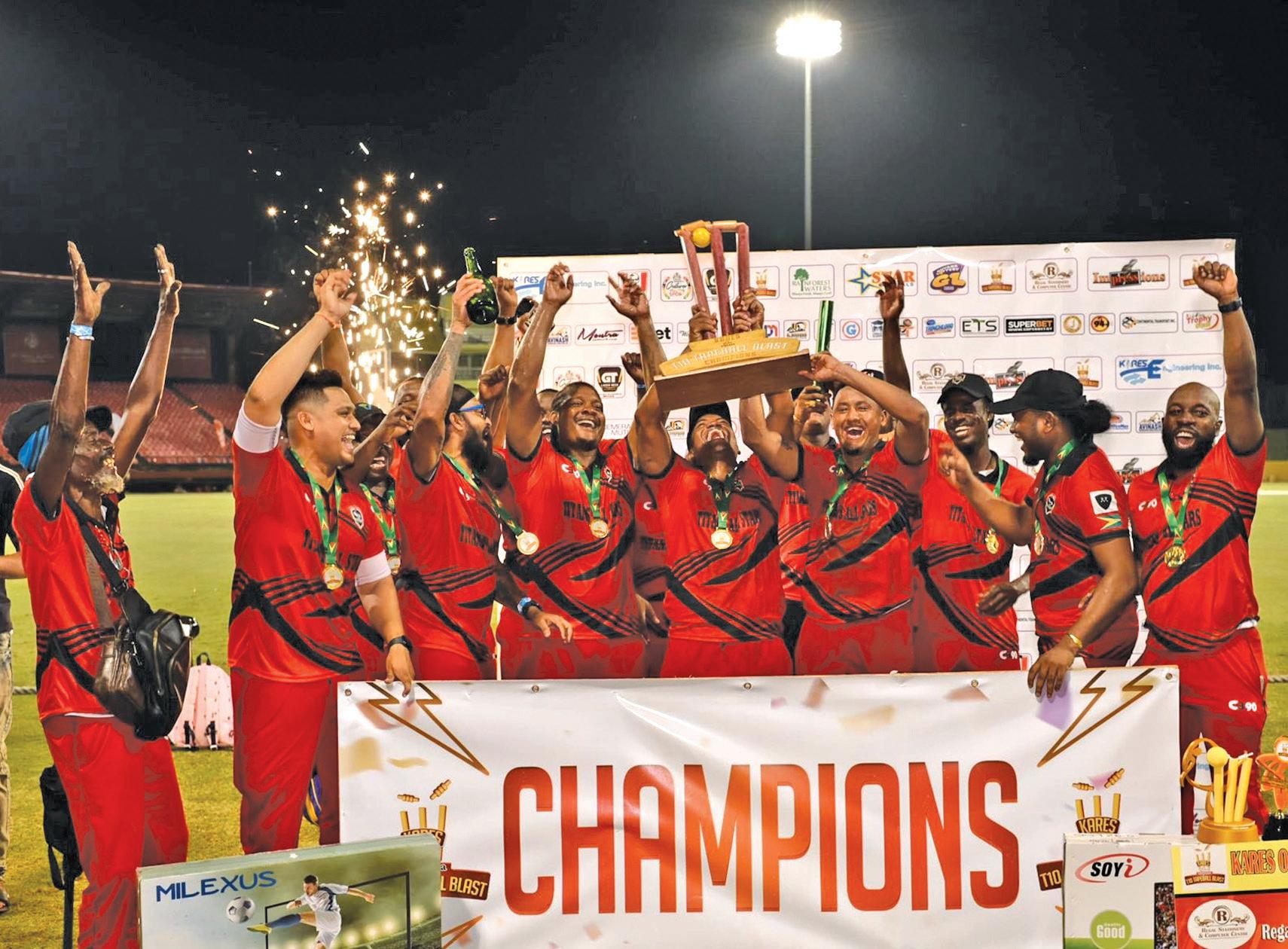
Cash incentives for the fourth edition of the One Guyana T10 Tapeball Blast have surpassed GY$8 million, as organisers move to further strengthen the grassroots tournament ahead of its 2026 staging.
The expanded prize structure will see increased rewards at both the zonal and national levels, with the overall champions now able to earn up to GY$2.5 million, while the runners-up will take home GY$1.5 million. Each zone winner will receive GY$500,000 and advance to the National Finals, where an additional GY$2 million will be awarded to the tournament winners and GY$1 million to the second-place finishers. The two losing semi-finalists at the National Finals will share GY$1 million.
In a new initiative aimed at broadening financial rewards, organ -
isers have introduced payouts for quarter-finalists for the first time. Teams eliminated at that stage will receive GY$25,000 each, while losing semi-finalists at the zonal level will earn GY$50,000, and the losing finalist will collect GY$200,000.
Tournament Director John Ramsingh said the initiative continues to focus on rewarding players and teams at every stage of the competition, noting that the tournament now boasts one of the highest cash pay-outs in the Caribbean. He added that regional interest in participating continues to grow.
Individual performances will also attract significant rewards. The Most Valuable Player will receive GY$150,000 along with a motorbike, while the top run-scorer and leading wicket-taker will each earn GY$100,000 and a television. Additional
prizes include GY$75,000 for the Player of the Final and GY$50,000 each for the best strike rate and best economy rate. Players leading in dot balls, sixes, and fours will also receive non-cash prizes.
Registration for the 80-team tournament is set to open in early May at a cost of GY$35,000 per team, with participants allowed to enter any of the four zones: Berbice, East Bank/West Demerara, Essequibo, and Georgetown/East Coast Demerara. The competition will retain its straight knockout format.
The tournament is scheduled to run from early August to mid-October, culminating in the National Finals at the Anna Regina National Stadium. Zone winners will also secure qualification for the upcoming Global T10 Tapeball tournament.
Royal Castle is set to stage its second annual ChickNRun
5K/10K/Walk/Run/Duathlon and Family Funday today, April 26 at the Scouts Association Ground on Woolford Avenue, Georgetown, with organisers promising a full morning of competition and family-orientated activities.
The event is scheduled to begin at 06:00h and will feature a range of races catering to participants of all ages, from five years old to over 50. This year’s edition will also introduce a new element to the local sporting calendar – the duathlon, a ride-run-ride-run format that is expected to add a different challenge for competitors.
Organisers have indicated that more than $600,000 in prizes will be up for grabs across the various categories, including awards for the best chicken costume and the best-performing school, alongside the traditional race prizes. In addition to the competitive aspect, the event will provide an opportunity for regional and international athletes to secure or confirm qualifying times using the Odyssey Timing System. The system will be managed by Odyssey Timings & Events, a Grenada-based company with experience in race timing and event management across the Caribbean. The event is being coordinated in collaboration with STRIDE592
and the Guyana Athletics Association.
According to organisers, the primary objective of ChickNRun is to encourage participation in fitness activities across all age groups while creating an inclusive environment that blends sport with community engagement.
The programme will also include food, games, giveaways, and other activities designed to appeal to families and spectators throughout the morning.
Royal Castle acknowledged the support of its main sponsors – Bounty Farms Ltd, Massy Distribution (Guyana), Banks DIH Holdings Inc, and Woodlands Hospital Inc – for their role in facilitating the event.
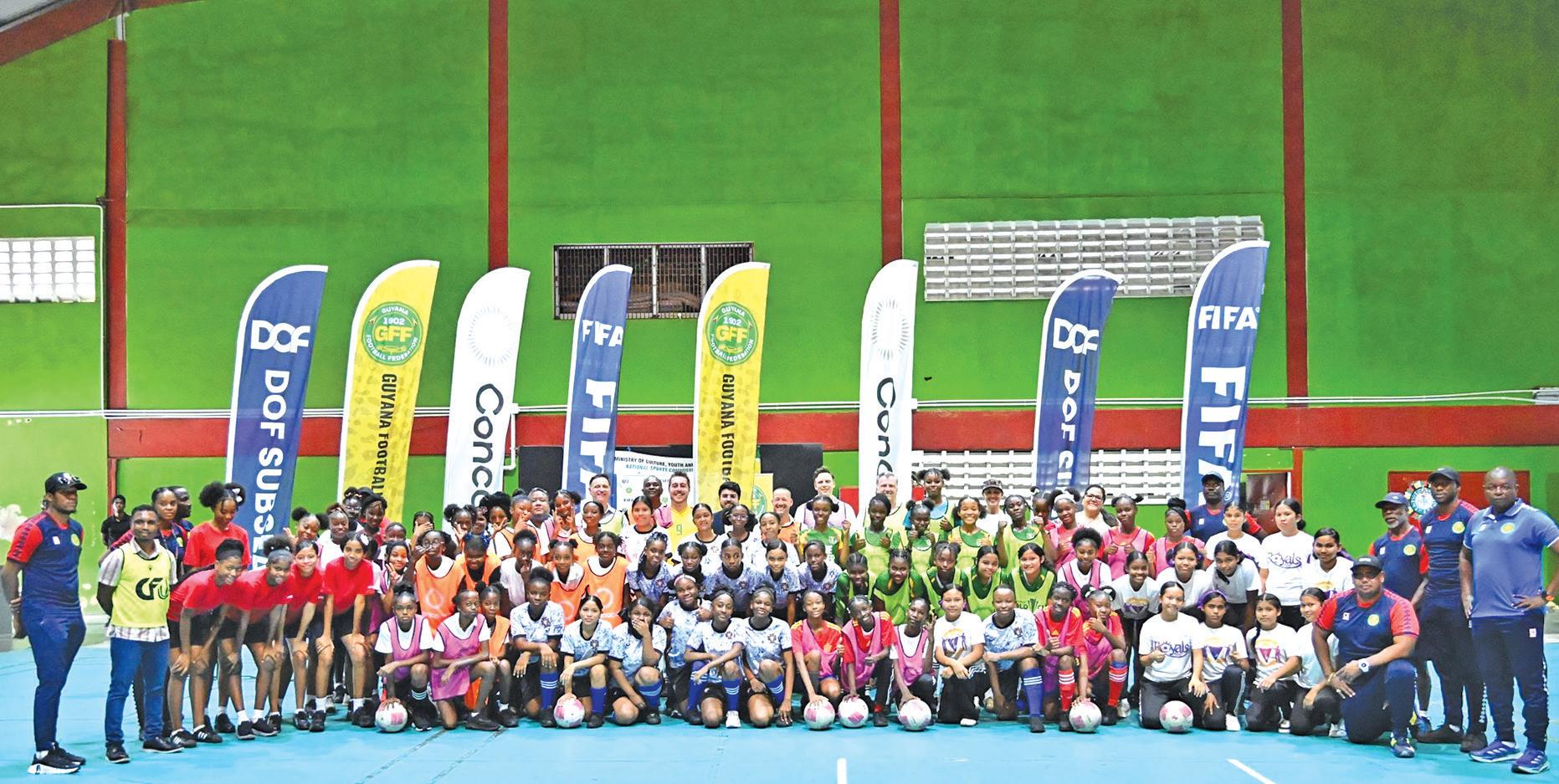
Several high-level officials and stakeholders were in attendance at the National Gymnasium on Friday, April 24, as the Guyana Football Federation (GFF) hosted a Girls’ Grassroots Festival to mark its new partnership with DOF Subsea.
The event formed part of ongoing efforts to promote the development of women’s football at the grassroots
level, with organisers using the occasion to highlight the importance of structured programmes for young female players.
Among those present were CONCACAF
General Secretary Philippe Moggio, Deputy British High Commissioner Liam McShane, DOF Subsea
Executive Vice President
North America Marco Sclocchi, Vice President
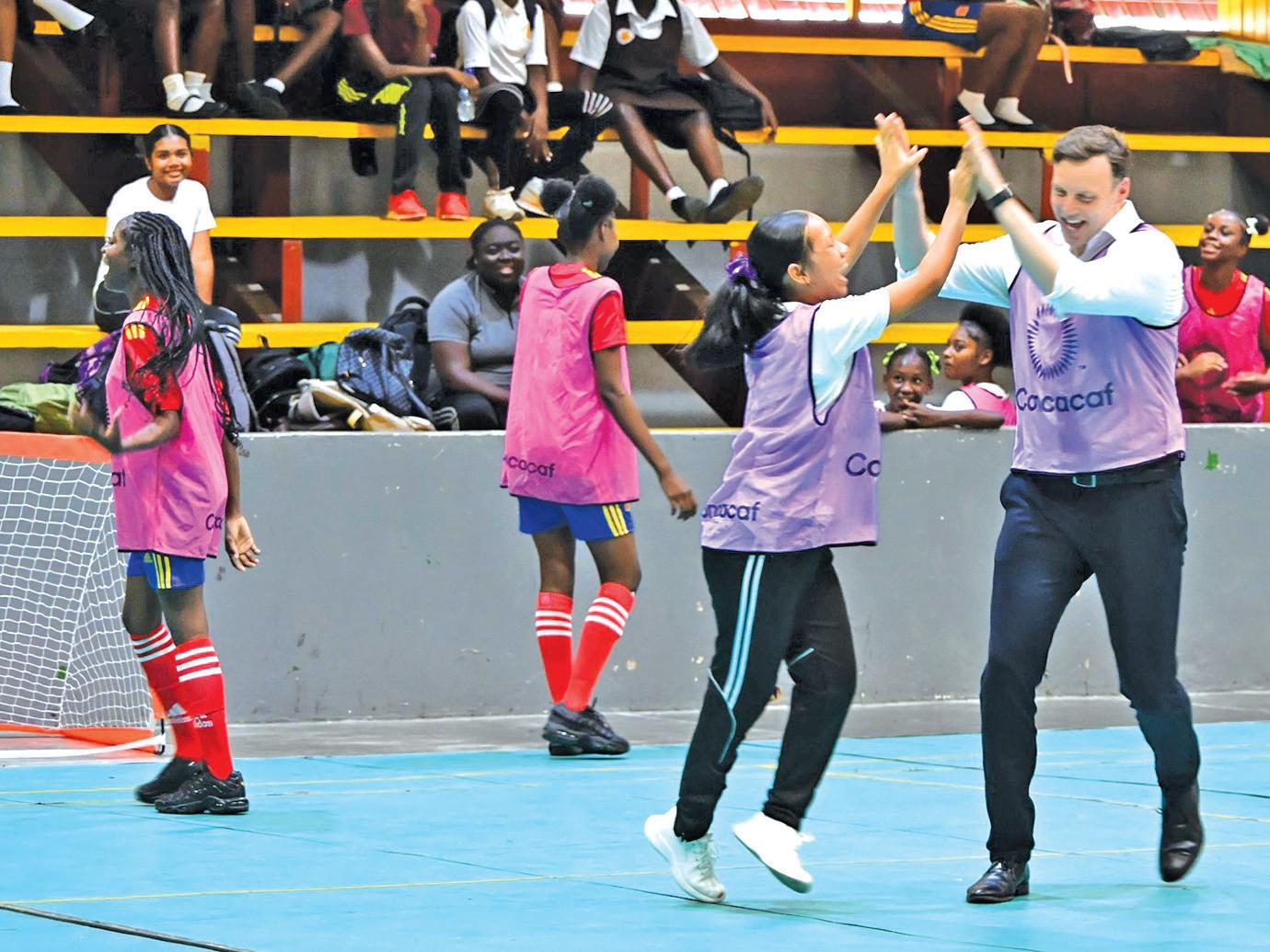
of Finance North America Samuel Shield, Caribbean General Manager Keith Lewis, and Branch Administrator Jesse Persaud.
Their attendance signalled broad institutional support for the initiative, which aims to expand opportunities for girls to engage in football and benefit from organised training environments.
The Girls’ Grassroots Festival brought together young participants in a developmental setting, reinforcing the shared objective of the GFF and its partners to strengthen the foundation of women’s football in Guyana.
The collaboration between the federation and DOF Subsea is expected to play a key role in creating sustainable pathways for female players, with a focus on long-term growth and increased participation at the community level.
All systems in place for long-awaited Port Mourant
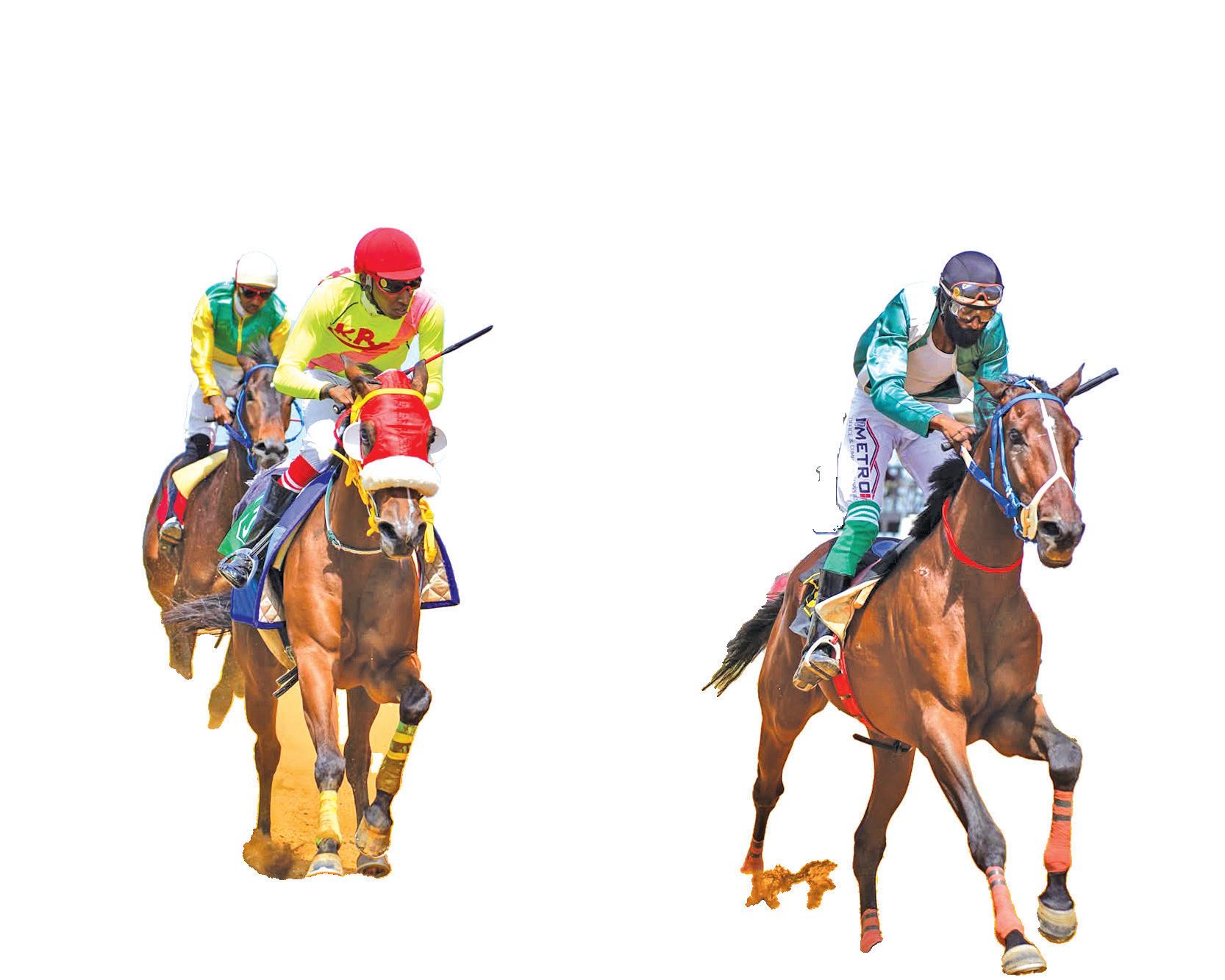
The much-anticipated Easter Cup horse race is set for today, April 26, at the Port Mourant Turf Club. After the inclement weather during the past month, the sun belted down on the Port Mourant track on the eve of the race.
Eight horses will be vying for the Easter Stakes, with Olympic Kremlin as the favourite for the feature showdown. JS Racing Stables will have Rei Da Brincadeira, Order and Progress, and Mapa Do Brasil, while Jumbo Jet/ Master Z will have Barbra and Stat.
Ritorna Vincentori will be Olympic Kremlin’s stablemate and partner in the feature, while Frontline Warrior of Jagdeo Racing
Stables will be the outsider vying for the $4 million purse, and the top horse will win $2 million.
This race day is of great importance, as it marks the second nomination day for the Guyana Cup, which is slated for August 23 at a venue to be announced.
A total of 11 races, including the jockey dash, are expected to take place.
Other races on the provisional programme include the Easter Sprint, open to all horses four years and older; the Three-Year-Old Imported; and the F Class and Lower, open to fourand five-year-old imported horses that have not raced within the last six months, as well as six-year-olds and older that have not raced for
over a year. Additionally, other races on the programme include the Three-Year-Old and Over West Indian Bred; the Open Three-Year-Old Native Bred; K/L Maiden; the H Class and Lower for West Indian-bred horses that have not won in Guyana in 2025; the ThreeYear-Old and Over I/J/K Class; the Open L Class; and the Jockey Dash. The sponsors for the grand event are Premium Asphalt, Big G Sawmill and Lumber Yard, KP Jagdeo General Contractors, OBL, Jumbo Jet, and AJM Forresters Lumber Yard and Building Supplies, among the seasoned sponsors, while Arka Supplies is the new sponsor.
Semi-final action in the Massy Under-18 Schools’ Football Tournament is set for Sunday at the Queen’s College Ground, where four teams will battle for places in the final.
The first semi-final is scheduled for 16:00h and will feature Chase’s Academic Foundation against Charlestown Secondary in Match 61. Both teams have shown consistent form throughout the competition and will be aiming to secure a spot in the championship match.
The second semi-final, set for 18:00h, will see Santa Rosa Secondary take on West Ruimveldt Secondary in Match 62. Santa Rosa, one of the standout teams in the tournament, will be looking to continue their strong run, while West Ruimveldt will be seeking to upset their opponents and advance.
With a place in the final at stake, both fixtures are expected to be competitive as the tournament moves into its decisive stage at the Queen’s College venue.
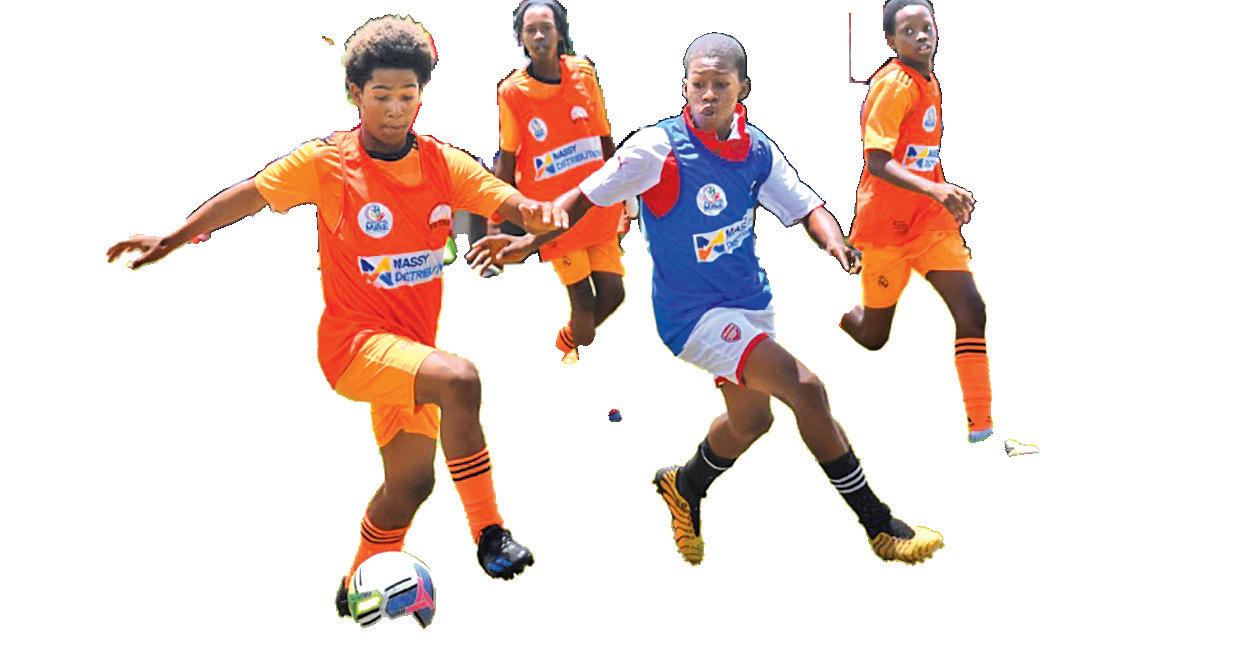
The Guyana Football Federation (GFF) has taken a major step toward developing women’s football locally after formalising a five-year partnership with DOF Subsea through the signing of a Memorandum of Understanding (MoU) on Friday at the World Trade Centre.
Under the agreement, DOF Subsea will contribute GY$40 million over the next five years to support the establishment and operations of the DOF–FIFA Arena Girls Football Academy, Guyana’s first dedicated academy focused on female football development.
The initiative forms part of the global FIFA Arena Project, which aims to install 1000 mini-pitches worldwide by 2031, targeting increased access to safe and inclusive football facilities, particularly in underserved communities. Guyana is among the first Caribbean nations to implement the programme, with two all-weather mini-pitches planned for Haslington, East Coast Demerara, and Retrieve in Linden.
Reigning champions Guyana Harpy Eagles (GHE) will look to tighten their grip at the top of the standings when they face the Windward Islands Volcanoes in the decisive third round of the West Indies Championship, with playoff places still up for grabs.
GHE have made a strong start to their title defence, winning both of their opening matches to lead the table with 43.2 points. They sit ahead of Trinidad and Tobago Red Force on 37 points, while the Jamaica Scorpions (29.6) and Barbados Pride (19.8) round out the top four heading into the final round of bilateral matches.
Under this year’s format, the team finishing first at the end of the series will advance directly to the final scheduled for May 17–20. The teams finishing second and third will meet in a playoff from May 10–13 to determine the other finalist, adding further importance to the upcoming fixtures.
Guyana captain Tevin

The academy will operate primarily from the Haslington facility and will deliver structured grassroots and technical training programmes for girls, alongside life skills development. The programme will follow the standards set by FIFA, Confederation of North, Central America and Caribbean Association Football (CONCACAF), and the Caribbean Football Union, with the long-term goal of producing players capable of
Imlach has cautioned against complacency as his side prepares for the Windward Islands clash at the Coolidge Cricket Ground, stressing the importance of staying focused on the immediate task.
“We will assess what that pitch looks like and then come up with our game plan. We focus on one game at a time because all we can control is what is in the present,” Imlach said.
Elsewhere, Trinidad and Tobago Red Force have made one change to their squad, with spinner Ricky Jaipaul replacing the rested Jayden Seales for their match against the Leeward Islands Hurricanes at the Antigua Recreation Ground. Red Force captain Joshua Da Silva expressed confidence in his team’s depth, noting that their performances so far have been solid despite their previous match ending in a draw.
“The cricket we’ve been playing is fantastic. We can’t fault the effort of the players. Even though we will miss Jayden, we have the depth to continue doing
representing Guyana internationally within the next five to six years.
GFF President Wayne Forde described the partnership as a key moment in the federation’s long-term vision, noting that it will create a structured pathway for young female players across the country.
He said the academy will serve as a central hub for weekly grassroots programmes, community football, school initiatives, and elite youth de-
velopment, while also thanking DOF Subsea for its support of what he termed a transformational project.
Executive Vice President North America of DOF Subsea, Marco Sclocchi, emphasised the company’s commitment to investing in youth through sport, stating that the initiative will help provide the facilities and structure needed to support the growth of young female players.
Philippe Moggio highlighted the regional importance of the partnership, noting that it reflects a longterm, structured approach to development and aligns with Concacaf’s efforts to expand opportunities for women and girls in football across the region.
Meanwhile, Minister within the Ministry of Culture, Youth and Sport, Steven Jacobs, underscored the Government’s support for the initiative, stating that it represents a meaningful investment in the future of young women and will be supported by ongoing infrastructure development, including a high-performance centre.
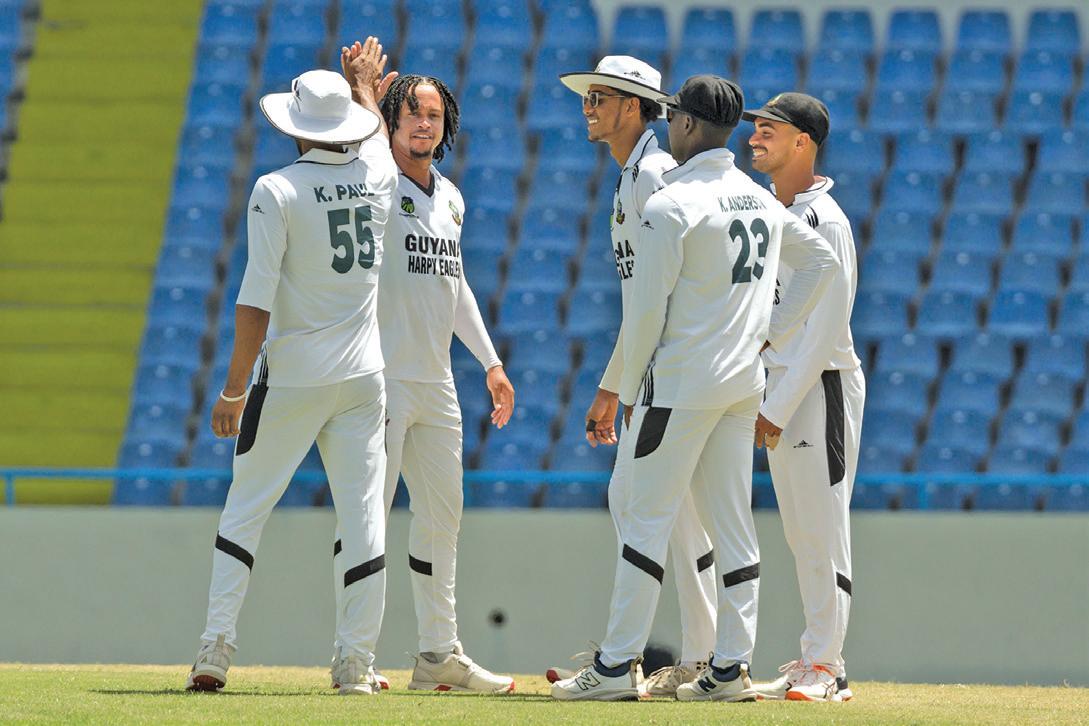
well,” Da Silva stated.
The Leeward Islands Hurricanes and Windward Islands Volcanoes remain mathematically in contention but face an uphill battle. With a maximum of 26 points available from a match, the Hurricanes can reach 36.8 points, while the Volcanoes can climb to 33.6. However, their chances are limited, particularly with Jamaica and Barbados set to face each other at Sabina Park, ensuring that at least one direct rival gains valuable points.
The Jamaica Scorpions have made two changes to their squad, bringing in Brandon King and
Alex Hinds to replace Ojay Shields and Jeavor Royal. Head Coach Robert Haynes highlighted the need for improvement in the field, particularly in catching, as they prepare for the crucial encounter.
“We must improve on the catching because we dropped a few chances that cost us. We also want more penetration from our fast bowlers with the new ball,” Haynes said.
Barbados Pride Head Coach Vasbert Drakes believes his team is progressing and could deliver a strong performance in the final round, though he acknowledged the need to ad-

dress their bowling concerns.
“We are improving with the bat, but we need to find ways to limit their opening partnership, which has been key for Jamaica,” Drakes explained.
Individually, Kevin Wickham leads the batting charts with 366 runs, followed by John Campbell with 298 and Kirk McKenzie with 290.
In the bowling department, Guyana’s Gudakesh Motie tops the wicket tally with 16 scalps, including two five-wicket hauls, ahead of Jayden Seales (13) and Peat Salmon (10).
All matches in the round are scheduled to begin at 10:00h local time.
Trinidad and Tobago Red Force will face Leeward Islands Hurricanes at the Antigua Recreation Ground; Jamaica Scorpions will take on Barbados Pride at Sabina Park, while Guyana Harpy Eagles will meet Windward Islands Volcanoes at the Coolidge Cricket Ground in what could prove decisive in shaping the race to the final. (CWI)



Alarge crowd braved overcast conditions on Friday evening to witness intense quarterfinal action in the Georgetown
zone of the Guinness “Greatest of the Streets”, as the championship semi-final line-up was confirmed following a series of closely
contested encounters.
In the Championship section, three of the four quarter-final matches required penalty kicks to determine
he Geo City region erupt ed with excitement on Friday, as the Youth Basketball Guyana (YBG) showcased some of the nation’s most promising young talent at the Cliff Anderson Sports Hall (CASH).
The evening’s action-packed pro gramme featured a se ries of commanding per formances and standout individual displays that kept spectators on the edge of their seats.
Chase Academy se cured a convincing 23–10 victory over School of Nations. Leading the charge was Sur Sampson, who de livered an impres sive all-round perfor mance with 15 points and eight rebounds to earn Player of the Match
St Rose’s High pro duced one of the most dominant perfor mances of the night, overwhelming The Bishop’s High B 51–8. Christian Williams spearheaded the offensive effort with 17 points and four rebounds, while Shaquan Callendar provided strong support with 15 points to seal the emphatic win.

In a closely contested encounter, Queen’s College edged The Bishop’s High A, 31–26, in a thrilling matchup. Darren Dublin proved instrumental with 14 points and four steals, while Deshawn Gurrick chipped in with 10 points to guide his team to victory.
The Geo City Regional continues to serve as a vibrant platform for youth development, highlighting emerging basketball talent while fostering discipline, teamwork, and sportsmanship among players.
The tournament is generously sponsored by Edward B. Beharry Ltd, G-Boats Inc, National Sports Commission, Ministry of Education, and Banks DIH Ltd, whose continued support plays a vital role in nurturing the next generation of basketball stars.
a winner. Island All-Stars edged Festival City 5–4 on sudden-death penalties after regulation time ended goalless, while Leopold Street also advanced from a scoreless affair, defeating Gold is Money 2–1 from the penalty mark. Bent Street B produced one of the standout performances of the
night, upsetting a star-studded Sparta Boss 2–1 on penalties following another 0–0 stalemate. In the only match settled in regulation time, New Bay Ballers defeated National All-Stars 2–1 to book their place in the semi-finals.
The result involving Bent Street B was particu-
Complete Results (Quarter-finals)
Guinness Plate Segment
Game 1
North East La Penitence v Broad St: 1–0
Game 2
Team Immaculate v Team Cruel Team Cruel won via walkover Game 3
East Coast All-Stars v Albouystown: 0–4 Game 4
Laing Avenue v Z-Tekk: 2–1
Championship Section Quarter-final 1
Festival City v Island All-Stars: 0–0
Island won 5-4 on sudden death penalty kicks Quarter-final 2
National All-Stars v New Bay Ballers: 1–2 Quarter-final 3
Gold is Money v Leopold St: 0–0
Leopold won 1–2 on penalty kicks Quarter-final 4
Sparta Boss v Bent St B: 0–0
Bent St B won 1–2 on penalty kicks
larly notable, as they, considered the less-fancied of the two Bent Street teams, held firm against a Sparta Boss unit once regarded as one of the most dominant forces in small-goal football.
Meanwhile, in the Plate segment, North East La Penitence secured a narrow 1–0 victory over Broad Street, while Team Cruel advanced via walkover against Team Immaculate. Albouystown delivered the most decisive result of the segment, thrashing East Coast All-Stars 4–0, and defending champions Laing Avenue overcame Z-Tekk 2–1 to progress.
With the quarter-final stage completed, the four losing teams from the Championship section will now join the four winners from the Plate segment to contest the next phase of knockout games on April 29. North East La Penitence will face Festival City, Team Cruel will oppose National All-Stars, Albouystown will meet Gold is Money, and Laing Avenue will take on Sparta Boss. In the Championship semi-finals, Leopold Street will clash with New Bay Ballers, while Island AllStars are set to battle Bent Street B for a place in the final.
The Carlton Wheelers Cycling Club is set to stage the Jude Bentley Memorial Cycling Race on Sunday, May 3, at the Inner Circuit of the National Park, with riders from across multiple categories expected to compete in tribute to the late cyclist.
The event, which is scheduled to start at 07:00h, will bring together competitors from a wide cross-section of the local cycling fraternity, with races planned in the Open, Masters Over-40, Masters Over-50, Category Four, Junior/Juvenile, Mountain Bike, Ladies, and BMX divisions.
Organisers have indicated that the race is intended not only as a competitive outing but also as a moment of remembrance, honouring the life and contribution of Jude
Bentley to the sport. Cyclists are being encouraged to participate in what is anticipated to be a competitive morning of racing on the National Park circuit.
A notable feature of this year’s event is that registration for the BMX category will be free, a move aimed at encouraging greater participation among younger riders and expanding involvement in that segment of the sport.
An entry fee of $2000 will be required for the other categories.
The Carlton Wheelers Cycling Club is expecting a strong turnout, with the event positioned as both a tribute and an opportunity for cyclists to test themselves in a structured race environment early in the day.


By Michelangelo JacoBus
Guyana’s “Green Machine” suffered a disappointing 9–5 defeat to Bermuda on Saturday afternoon at the Rugby Field, National Park, as a string of handling errors undermined an otherwise promising performance in their Rugby Americas North (RAN) XVs opener.
Despite being ranked higher than their opponents, Guyana failed to convert early dominance into points, with dropped balls and turnovers proving costly in the low-scoring encounter.
Backed by a sizeable crowd that included several former national players, the home side started strongly and looked in control during the opening exchanges. Powerful carries from Vallon Adams laid the platform for Lionel Holder to cross over in the 18th minute for the game’s only try from open play. However, the missed conversion left Guyana with just a narrow advantage, and it would prove to be their only scoring contribution of the contest.
Bermuda gradually settled into the match and relied on the accuracy of Brandon Sangster, who accounted for all of his team’s points with three successful penalty kicks. He first slotted a penalty in the 28th minute to reduce the deficit to 5–3, a score-line that remained unchanged until the halftime interval.
After the break, Sangster continued to capitalise on Guyana’s mistakes and territorial lapses. He put Bermuda ahead for the first time with a penalty in the 48th minute before adding another in the 62nd minute to extend the lead to four points. Guyana, meanwhile, struggled to build sustained attacking phases, with repeated handling errors halting their momentum much to the despair of fans.
Captain Rondell “Bull” McArthur acknowledged that his team’s mistakes ultimately cost them the match, noting that while the game was competitive, small lapses proved decisive.
“I think it wasn’t a hard game; it wasn’t easy as well, but we had some blunders here and there. It is a learning
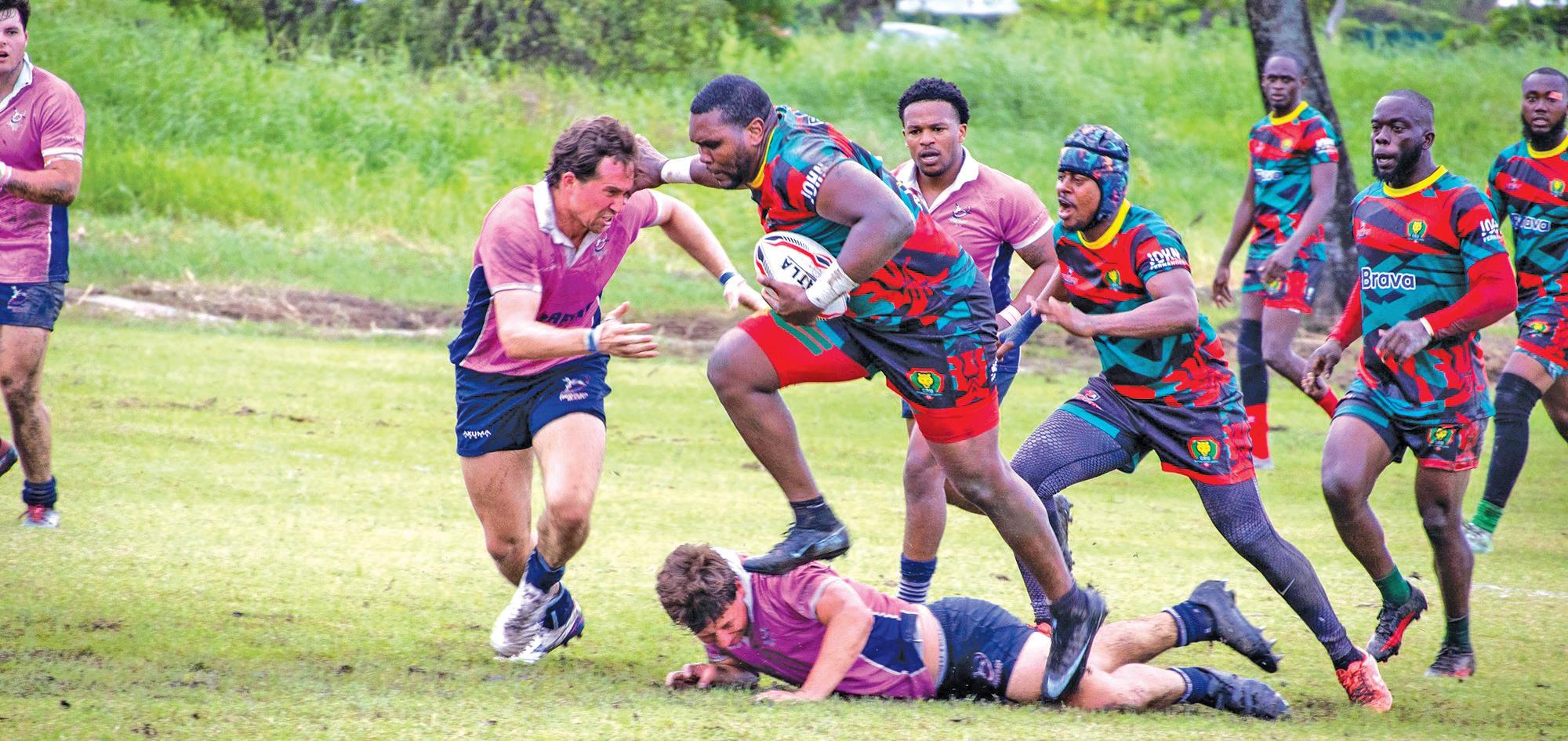
process for us, the team is building. We went ahead in the first half and came out with momentum, but we had some small errors that we have to clean up,” McArthur said.
He pointed to dropped balls as a major issue, explaining that turnovers and infringements disrupted the team’s rhythm. McArthur also cited the overcast conditions and the presence of several younger players in the line-up as contributing factors.
“Dropped balls mean turnovers. I guess the weather contributed and also some nerves from the younger players. We just have to work with them, bring them through the ranks, and I think we can do well,” he added.
The skipper emphasised that the team is currently in a rebuilding phase, with experienced players being phased out and younger talent being integrated into the squad. He
noted that increased game time will be key to developing confidence and consistency.
Looking ahead, McArthur stressed the need to improve technical execution, particularly under pressure, as Guyana prepares for tougher assignments in the coming weeks.
“We need to work more on the technical aspect. Fitness is important, but when you’re tired, you have to go back to the basics. You can’t go forward if you don’t know the basics, and that is something the coaches will be looking at,” he said.
Guyana will next travel to face Barbados on June 6 before returning home to take on Trinidad and Tobago on June 26, as they continue their campaign in the regional competition.
Guyana brought its campaign at the South American Youth Games in Panama City, Panama, to a strong close on Saturday, highlighted by a record-breaking gold medal performance from Deuquan Farrell in the Men’s 200m final. Farrell dominated the field to win in 21.18 seconds, setting a new meet record and eclipsing the previous mark established by Argentina’s Tomas Mondino in 2022. Ecuador’s Mateus Ledesma finished second in 21.24s, while Brazil’s Pedro Araujo took bronze in 21.74s. Guyana’s Gordon Thompson also impressed but just missed out on a podium spot, finishing fourth in 21.87s.
In the women’s 200m final, Angel Jeffrey narrowly missed a medal, placing fourth in 24.90s. Colombia’s Dayara Toppin secured bronze in 24.84 seconds, while Chile’s Roxana Rodriguez claimed gold in 24.10s and Argentina’s Olivia Conesa took silver in 24.33s.
Elsewhere, Nathaniel Samaroo endured a difficult outing in the shot put, finishing ninth with a best effort of 14.27 metres. Middle-distance runner Ebo McNeil delivered a determined performance in the men's 3000m, finishing sixth in 9 minutes 15.44s. Colombia’s Juan Otero won the event in 8:57.55. Guyana ended its athletics campaign on the podium, with the men's 4x400m relay team securing bronze in 3:20.46s. Colombia captured gold in 3:16.39, while Chile finished second in 3:18.39.
Overall, Guyana placed 10th at the Games, finishing with a total of seven medals – three gold, one silver, and three bronze – capping a competitive showing at the regional event.