Winds: East-North-Easterly to Easterly between 3.57 metres and 5.81 metres.
High Tide: 12:52h reaching a maximum height of 2.15 metres.
Low Tide: 06:23h and 18:59h reaching minimum heights of 1.18 metres and 0.99 metre.
“We don’t take lightly any threats to our sovereignty” – Pres Ali on Venezuela
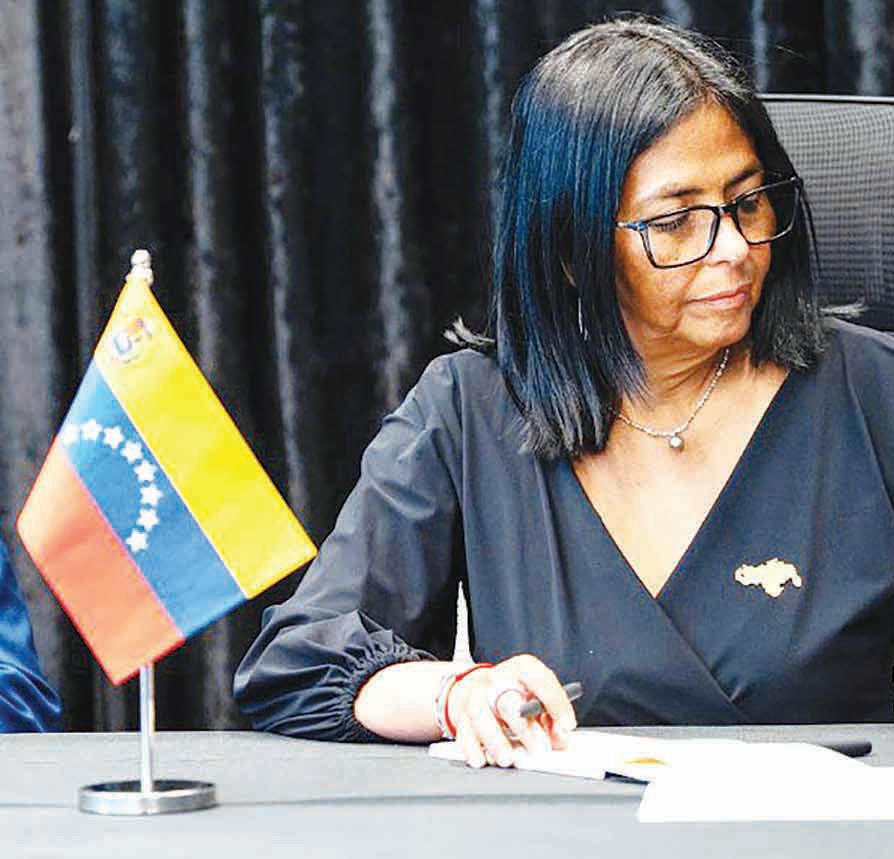
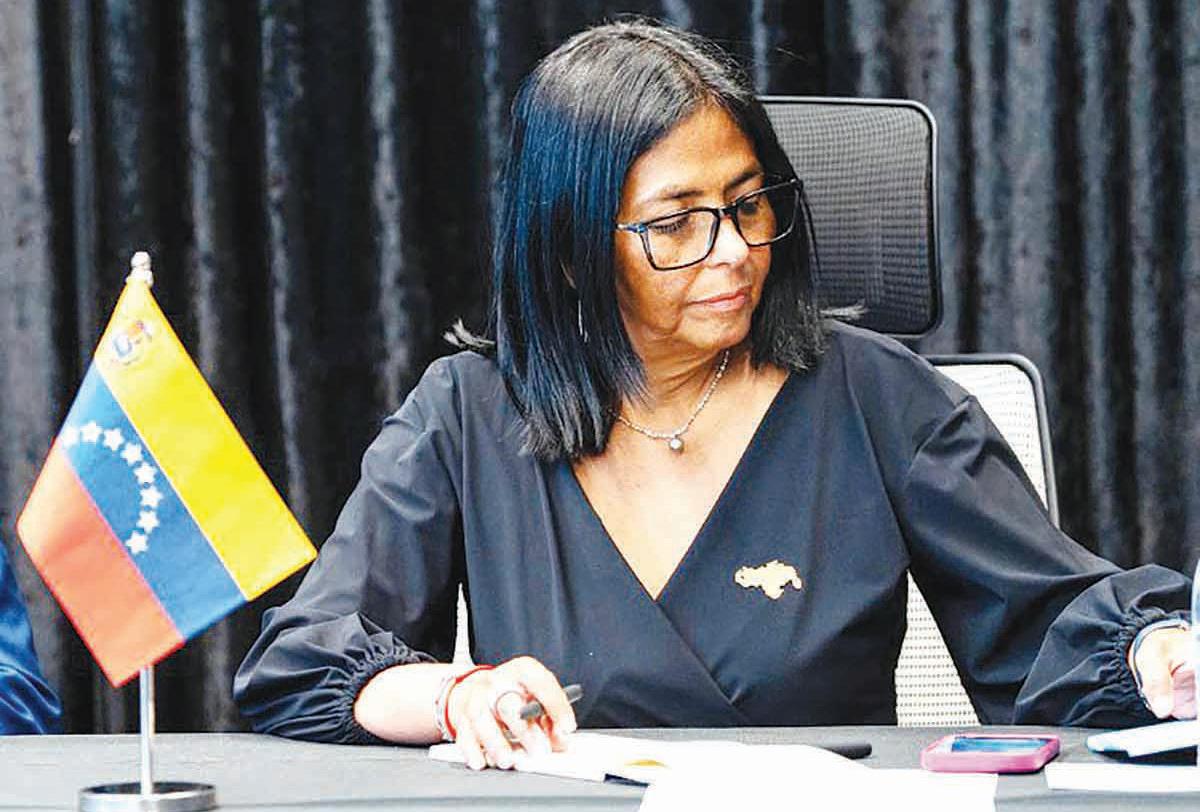
…acting Venezuelan President seen wearing brooch with Guyana’s Essequibo during Grenada visit
resident Dr Irfaan
PAli has reaffirmed Guyana’s commitment to upholding its sovereignty and territorial integrity against threats, especially from neighbouring Venezuela. “We don’t take lightly any threats to the sovereignty of Guyana,” the Guyanese leader told reporters on the side-lines of an event in Port of Spain, Trinidad and Tobago, on Friday. His remarks come on the heels of acting Venezuelan President Delcy Rodríguez wearing a brooch of her country’s map that included Guyana’s Essequibo region during a recent state visit to Grenada. This had
the entire Essequibo region.
“You can’t ‘take back’ what is not yours"
In response, the Guyanese Head of State declared firstly that, “…You can’t ‘take back’ what is not yours. Essequibo is Guyana's", adding that the border between the two South American nations was long settled in the 1899 Arbitral Award. President Ali explained that as a responsible national and regional leader, he is willing to work with any leader that shares the same values as Guyana.
“I am open to meeting any leader globally, any leader in this region, as a responsible
sparked widespread public outrage, especially among Guyanese stakeholders, who dubbed the action as the latest act of aggression from the Spanish-speaking nation.
Efforts over the past few days to reach out to the Ministry of Foreign Affairs and International Cooperation in Georgetown on whether any formal objection was or would be taken by Guyana in light of this recent development have been futile. The recent visit to Grenada, with whom Guyana shares close bilateral ties and are both member states of the Caribbean Community (CARICOM), which has long been supportive of Guyana’s borders and had in the past condemned Venezuela’s aggressive tactics, was Rodríguez’s first official overseas trip since assuming office after the ousting of former Venezuelan leader Nicolás Maduro. She told reporters that she opted to travel to St George’s because "…we have relations with Grenada… It’s a neighbour, very close to us.”
However, while in the Twin Island Republic to attend the Trinidad and Tobago Chamber of Industry and Commerce's Annual Business Meeting Outlook 2026/2027, President Ali was asked on Friday by a Trinidadian reporter whether he would meet with the new Venezuelan leader in light of Caracas’ spurious claims to more than twothirds of Guyana’s landmass,
leader. We know that the development of our countries [and] the development of our people are integrated, and we stand firmly on the side of democracy and the rule of law,” he asserted.
Thanked T&T for support
The Guyanese leader went on to use the opportunity to publicly thank
the Prime Minister (PM) of Trinidad and Tobago, Kamla Persad-Bissessar, for “her very strong words and her decisive position on Guyana and on our sovereignty [and] our territorial integrity. We value that deeply. We value our friendship with Trinidad and Tobago. We see Trinidad as a brotherly and sisterly country and part of that community; we value that greatly.” President Ali subsequently relayed these sentiments in person to the Trinidadian PM during a formal meeting on Friday afternoon in Port of Spain during which they discussed key areas of bilateral cooperation and agreed on a development, trade and economic agenda aimed at deepening ties and advancing greater integration between both countries.
Meanwhile, this latest act of aggression from Caracas comes as the border controversy case is pending before the International Court of Justice (ICJ). Back in 2018, Guyana approached the court, seeking a final and binding settlement of the 1899 Arbitral Award, which demarcates the boundaries between the two nations.
The case is fixed for oral arguments on the merits in May, after which the World Court would deliberate on its decision. But in furtherance of its spurious claims to more than two-thirds of Guyana’s landmass – the entire Essequibo region and a portion of Guyana’s Exclusive Economic Zone (EEZ), where over 11 billion barrels of oil equivalent (boe) have been found and production as well as other exploration activities are currently being undertaken offshore –Venezuela has been heightening its aggressive tactics towards Guyana over the years. Just over a year ago on March 1, 2025, there was an incursion into Guyana’s waters by Venezuelan naval vessels which threatened several oil vessels operating there, something which was widely condemned by the international community, including the United States. However, there was a belief that the January 3 capture of Maduro and his wife in Caracas by US troops to face criminal indictments in New York would have seen an ease in aggression from the Spanish-speaking neighbour. But just last month, Guyana had to reaffirm the country’s sovereignty over its maritime jurisdiction, telling Caracas that it has no legal rights to the waters off of Guyana’s coast.
This was after Venezuela had raised objections to a decision made by the Guyana government to advance a three-dimensional multi-client seismic exploration to gather data from a 25,000 square kilometre offshore area within Guyana’s EEZ.
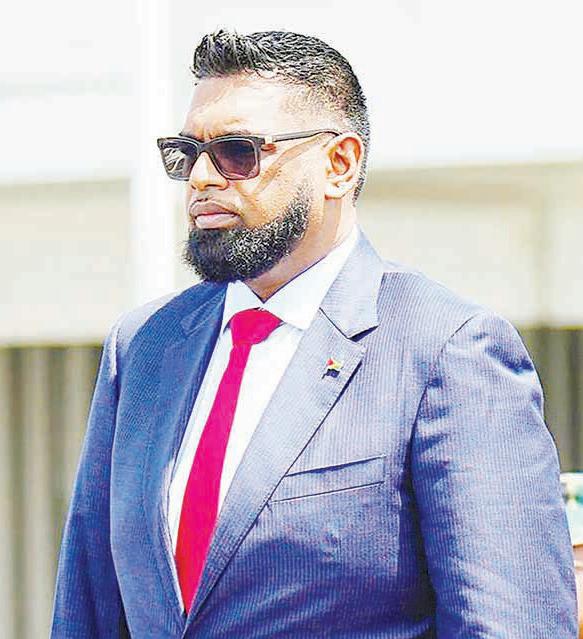
President Dr Irfaan Ali
Acting Venezuelan President Delcy Rodríguez wearing a brooch of her country’s map that included Guyana’s Essequibo region during a recent state visit to Grenada
Last Thursday, Delcy Rodriguez, who acceded to the presidency of Venezuela after President Nicolas Maduro was extracted by the US to Miami to stand trial for narcotrafficking, made her first foreign visit – to the island of Grenada, a member of Caricom. She said it was to commemorate the 49th anniversary of the establishment of official relations between the two countries. At a function to meet the press, along with Grenadian PM Dickon Mitchell, she ostentatiously wore a brooch on her left lapel that was a map of Venezuela but with our Essequibo appended.
This, of course, is even more egregious than when, in December 2022, the then St Vincent PM Ralph Gonsalves allowed himself to be photographed behind a similar representation at a function honouring Simon Bolivar. Upbraided when the image surfaced in 2024 before the Argyle meeting between Presidents Nicolas Maduro and Dr Irfaan Ali, he pleaded “innocent inadvertence”, and the matter was dropped. But the incident highlighted the provocative practice of the Venezuelans to flaunt their claim to Essequibo, especially when Maduro proceeded to hold a referendum on annexing – and then actually annexing – our territory against repeated ICJ warnings. CARICOM consistently condemned these moves, as recently as the Heads of Government meeting in July 2025, which PM Mitchell had been attending since 2022. Mitchell cannot now follow his fellow member of the Venezuelanled ALBA Initiative and plead “innocent inadvertence”. This behaviour betrays a wilful refusal to support a Caricom position.
But what makes the issue more than simply a faux pas on the Venezuelan provocation of Guyanese sensibilities and international protocols is that the two leaders sought to widen their approach to the issue of the maritime delimitation between the two territories to potentially include Guyana. Dickon ecstatically pointed out that the issue had been addressed using the formula of a bilateral agreement. Delcy Rodriguez was quick to seize the opportunity and pointedly announced, “I believe it is very important to emphasise that this is how differences between countries are resolved through bilateral, peaceful and political diplomacy. I believe we are set as an example in providing guidance in the face of all the disputes of this nature.”
This “bilateral diplomacy”, of course, has been the goal of Venezuela to settle their border controversy, and they have rejected – in the person of Delcy Rodríguez herself –the jurisdiction of the ICJ to do so under international law in accordance with the 1966 Geneva Agreement. Last year, before Maduro had been removed, Dickon Mitchell had proposed to him the establishment of a joint trilateral commission comprised of ten persons from Venezuela, Grenada and St Vincent to guide the process for demarcating maritime boundaries. A spokesperson for Mitchell had said, “It is a very important step as well because you cannot go about leasing out land to people without knowing where your boundary is; you cannot go about leasing out maritime space to people without knowing where your boundaries are.”
Last month, however, our Government had to issue a very strongly worded statement refuting a Venezuelan 11th March 2026 objection – led by Delcy Rodriguez – to our advancing a three-dimensional multi-client seismic exploration programme within our Exclusive Economic Zone (EEZ). The statement asserted, “The maritime areas in which the seismic survey will be conducted lie unequivocally within Guyana’s Exclusive Economic Zone and continental shelf, over which Guyana exercises sovereign rights… Accordingly, Guyana firmly rejects Venezuela’s attempt to characterise these lawful activities as occurring within “undelimited maritime areas”. Such claims constitute a deliberate misrepresentation of both the geographic and legal realities governing Guyana’s maritime jurisdiction. The Ministry therefore calls upon the Government of the Bolivarian Republic of Venezuela to refrain from issuing inflammatory and misleading statements that seek to undermine Guyana’s sovereign rights or discourage legitimate economic activity within Guyana’s maritime domain.”
However, rather than retracting her unfounded assertion, the acting President of Venezuela has become emboldened by her host’s cavalier approach towards the border controversy to implicitly reject our Caricom-supported recourse to the ICJ.
This cannot be allowed to stand.
Pres Ali fulfilling mandate entrusted to him; time Opposition stops 'whining' about insignificant things
Dear Editor,
In recent days, public discourse has been momentarily diverted by commentary surrounding the personal accessories of the Head of State, specifically, a watch he wears and its alleged value. These remarks, amplified through partisan social media platforms and echoed by figures within the Parliamentary Opposition, attempt to construct a narrative of impropriety based on speculation rather than substantiated evidence. Such engagements are not only juvenile and intellectually thin but ultimately distract from the very important and substantive national conversations that Guyana both deserves and urgently requires.
At its core, this infantile line of attack reflects a troubling deficiency in the quality of the majority political Opposition. Allegations of corruption, particularly in a modern democratic state, must be anchored in verifiable facts and credible documentation and pursued through appropriate institutional channels. To do otherwise is to reduce serious governance issues to conjecture and spectacle. It is, therefore, both ironic, absurd and most concerning when such claims emerge from quarters that themselves have faced credible scrutiny on matters of integrity at the international level. This contradiction weakens not only the argument being made but also the moral authority of those advancing it.
Our country today stands at a pivotal juncture in its
soon-to-be 60th year of independent history. The country is experiencing a period of accelerated transformation economically, infrastructurally, and socially. Across sectors such as energy, housing, healthcare, education, and public works, there is visible and measurable progress. This trajectory is not accidental; it is the result of deliberate policy direction, coordinated governance, and a leadership approach by the President and his team that has prioritised both national development and citizen engagement.
The President has distinguished himself not merely through policy execution but through his accessibility, humility, and grounded connection to the people. In contrast to more distant leadership styles of the not-so-distant past, his approach has been defined by visibility, simplicity, and a consistent presence among ordinary citizens. This combination of administrative action and personal relatability has contributed to a renewed sense of national optimism and confidence. It is, in many respects, a rare convergence of effective governance and authentic leadership.
However, the strength of any democracy is not determined solely by the performance of its Government but equally by the calibre of its Opposition. A functional Opposition is not an adversary for its own sake; it is an essential pillar of democratic accountability. Its role is to scrutinise, to challenge, and most importantly, to propose.
It must elevate national discourse by offering alternative policies, innovative solutions, and constructive criticism grounded in evidence and expertise.
What Guyana requires at this stage is an Opposition that engages the Government on matters of substance: What are the alternative strategies for improving education outcomes? How should healthcare delivery be strengthened and expanded? What innovative housing models can be introduced for low- and middle-income families? How will the youth be meaningfully integrated into the evolving economy? What reforms are necessary within the mining and agricultural sectors to ensure sustainability, greater improvement and equity? And critically, what is the Opposition’s comprehensive vision for the national economy in an era of unprecedented opportunity?
These are the questions that matter. These are the issues that impact the daily lives of citizens. And these are the areas where a credible, a sensible Opposition can make a meaningful contribution to national development.
Instead, we have an Opposition whose preoccupation with trivialities, personal attacks, speculative claims, and performative outrage signals a retreat from responsibility. It suggests a political posture more concerned with optics than outcomes, more invested in self-aggrandisement and self-preservation than public service. This is not only inadequate; it is
a disservice to the electorate and to the democratic process itself.
If there are legitimate concerns regarding governance, the Constitution provides clear mechanisms for redress. Evidence should be presented before the courts, investigations pursued through established institutions, and arguments made within the framework of law and due process. Anything less undermines both the credibility of the claim and the integrity of the system.
Ultimately, Guyana’s progress cannot be sustained by Government action alone. It requires a mature, disciplined, and forward-thinking Opposition, one that recognises its duty not merely to oppose, but to contribute. The time has come for a shift in posture: from rhetoric to policy, from accusation to articulation, from spectacle to substance.
The President, by all visible measures, is fulfilling the mandate entrusted to him, driving development, engaging citizens, and positioning Guyana for a future of expanded opportunity. It is now incumbent upon the Opposition to rise to the same standard of seriousness and purpose. Democracy demands no less.
It’s time to man up and stop whining about insignificant things like a watch and such.
Yours respectfully, Jermaine Figueira Former Member of Parliament
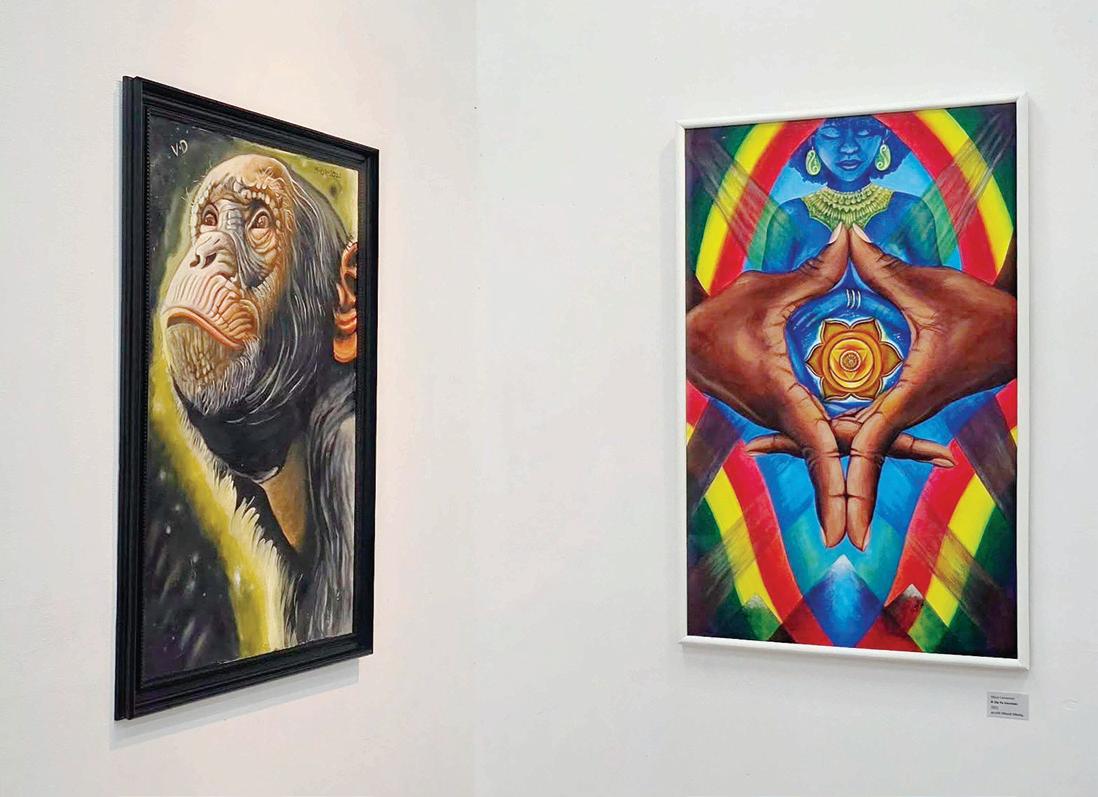
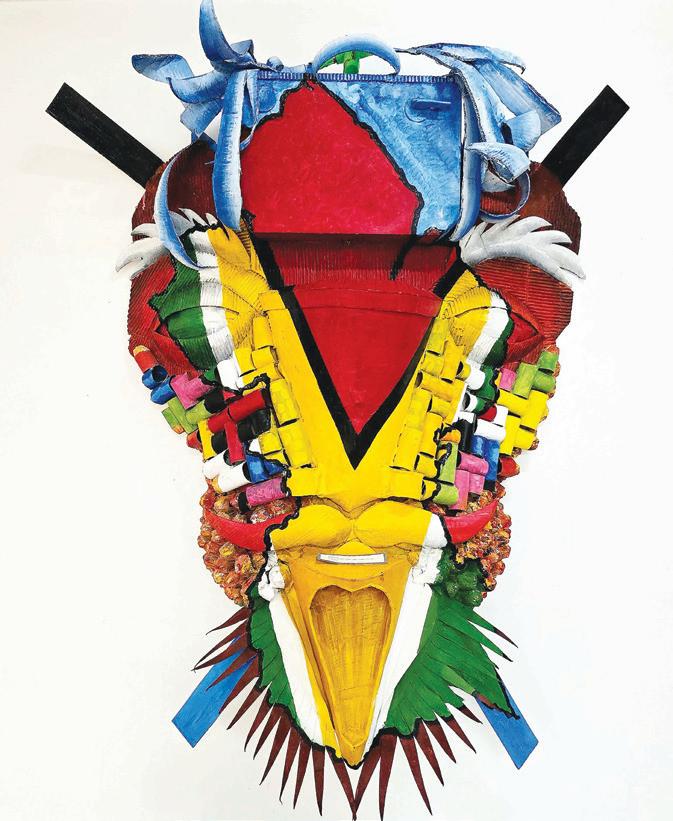
The ER Burrowes School of Art’s 50th Anniversary Exhibition was officially declared open on Friday evening at the Castellani House (Ministry of Culture, Youth and Sport/Facebook)
IT’S NOT “KUCH KUCH HOTA HAI”
By Ryhaan Shah
It was over twenty years ago that GIHA (Guyana Indian Heritage Association) hosted a group of our elders at a Sunday lunch. Part of the day’s engagement was listening to the stories they had to tell. One lady from the East Coast who was well into her 80s recounted the hard life they lived on the Enmore sugar estate: waking up before daybreak, walking to the backdam, working in the fields under the blazing sun, and then returning home to take care of the housework and children.
She rounded off her account with the statement: “It was no ‘Kuch Kuch Hota Hai.’” Everyone laughed. That was the Bollywood hit movie at the time, and we all understood what she meant: life was no song-and-dance story.
She was recounting what was lived history, and this is one of the reasons that stories from parents and grandparents are invaluable: they provide first-hand accounts and insights into the past that the younger generation would only learn from books, if at all.
The stories often highlight hard work and resilience and offer life lessons that speak to profound personal transformations. That grandmother recounting her story was at that time watching her grandchildren get an education and expect opportunities that will guarantee a life more comfortable than she ever had.
These narratives can range from overcoming hardships and surviving to navigating a life of challenges that include making a home and bringing up a family in difficult and, often, impoverished circumstances. Such tales strengthen intergenerational bonds.
We all have stories to tell of growing up in different times. Our grandchildren are growing up with technology at their fingertips, technology that is developing at a fast rate and changing our everyday lives. One wonders at the stories they will tell their grandchildren.
Engaging with grandparents or elderly parents is rewarding not only for the information gained about family history and the times they lived in, but for the elderly, this kind of interest can make them feel valued as part of their family and community.
Asking questions and listening to their recount of life when they were young can be a way to help keep them mentally alert and focused and, of course, unlock stories that can transcend generations. Such conversations support healthy ageing and nurture connections and relationships between the young and older generations.
It is well known that socialisation helps to support better physical, mental and brain health for our elders, and many of us find joy in sharing life stories and reminiscing about the past.
Storytelling is a part of every culture. It is an essential human engagement and is actually recognised all around the world as an experience associated with ageing. In fact, it is a powerful therapy for overcoming depression and loneliness among the elderly – just to have someone sit and listen to us talk about our lives.
It’s a way of transferring values, traditions, and lessons learned from experience to the younger generation by telling stories that speak of hard times, getting an education, speaking up against injustice, or even the funny stories about growing up in different times.
I set off every day to kindergarten armed with just a slate and pencil. The little ones today with their full backpacks will be hard put to understand what we could ever have learned. Well, I wonder, too, if we ever learned anything when our generation’s schooldays experience is compared to the pace, number of subjects, and amount of information that now make up a basic curriculum.
One wit quipped recently that the younger generation should respect their elders because “we graduated high school without the internet or Google or AI.”
Many stories focus on the transition from traditional life, such as the change from horses to cars and the introduction of electric lights, amenities that the younger generation take for granted.
Storytelling is also important to ageing as we come nearer to facing our mortality. There is often a need to impart whatever life lessons and wisdom we have learned or just need to share family stories so that our family history is not forgotten.
Listening to these stories not only preserves history but also fosters a deeper sense of understanding and empathy for the experiences of the elderly.
My father had a fund of stories from his youth. Some were funny and others quite distressing. Most family history is a mix of such narratives, stories that have shaped our own lives in myriad ways and, as that grandmother stated so succinctly, are never all “kuch kuch hota hai”.
SUNDAY, APRIL 12, 2026
Centenary observance of regional labour conference (Pt 1)
Dear Editor,
On April 6, 1919, a meeting was held at the Unique Friendly Society on Regent Street, where Hubert Nathaniel Critchlow proposed a resolution to establish a labour union. This was approved.
Two representatives of Bookers were also invited, and from them came the suggestion for the formation of an industrial council for settling disputes between the dockers and the Water Street employers. The threeman council met shortly afterwards and recommended the eight-hour day and certain wage increases.
The dockers’ protest sparked the formation of an organisation that extended past their own concerns. According to a letter published in the Argosy, the worldwide unrest among workers following the war – often covered by the Guyanese media – inevitably impacted the Guyanese working class.
The surge in membership requests for the BGLU reflected widespread revolutionary sentiment among workers nationwide.
In April 1919, Victoria (East Coast Demerara) approved the establishment of a local labour union branch. They followed suit; these were typical examples of the movement that led to the quick formation of a nationwide workers’ organisation.
All labour sectors participated, including tradesmen. The first President, M Hosanah, was a tailor, and membership even extended to residents of the Alms House and Old People’s Home, who were allowed to join the union.
The union originated as a friendly and burial society, connecting itself to one of
Guyana’s oldest social structures, known to the general population.
The BGLU engaged in frequent industrial actions, with numerous strikes and disputes in late 1919 and 1920 affecting sectors such as railways, the electric company, sawmills, sugar estates, the Argosy, and the docks.
Manual workers’ efforts were strong enough to secure benefits for Water Street clerks, despite the clerks’ lack of genuine support for the movement.
The inaugural annual general meeting in 1920 faced significant challenges, leading to a period in which the union was at risk of dissolution.
Although membership declined sharply from its highest point of 13,000 to only a few hundred, the union continued to operate as an advocacy group.
By 1923, the delegates attending the general conference could reflect on several years of meaningful progress.
One union campaign had led to the passage of a rent restriction bill early in 1922. In January 1923, rumours circulated that the Rent Act might soon be repealed, prompting the workers to get ready to renew their struggle should it become necessary.
The workers showed they intended to use the union for more than just wage negotiations.
A 1923 conference resolution proposed creating a voluntary group to advise against unnecessary court cases that could be resolved privately.
A primary issue was unemployment, prompting the organisation of a petition.
The BGLU’s boldest ac-
tion was organising the inaugural West Indian Conference in 1920.
Only the Trinidad Working Men’s Association was able to send representatives; although other territories indicated their willingness to participate, they were unable to attend.
The opportunity to form a unified West Indian labour movement was missed, although Guyanese workers closely followed events in Trinidad.
The Guyanese masses experienced a nationwide awakening, not just among urban workers in Georgetown.
The BGLU supported plantation labourers, but manager resistance restricted union activity on plantations.
Most East Indian labourers raised their concerns with Crosby and the Immigration Department, often seeking assistance from prominent Indian lawyers.
The arrangement required active involvement; Crosby and the Indian lawyers regularly met with large groups from plantations or areas experiencing grievances in Georgetown.
The entire plantation workforce frequently departed together, as occurred in 1917 and again in 1924 when workers from Ruimveldt left.
During the second event, rural and urban initiatives worked together with an inspiring sense of unity.
Four thousand Indians and Negroes started to march on Georgetown with flags, sticks, and their tools – some to meet Hubert
Nathaniel Critchlow at the BGLU office and others to the Immigration Department to complain about irregular wages.
In addition to forming the labour union, rural peasants initiated efforts to address mass welfare issues.
The chairman of the Victoria Institute remarked in April 1919 that “Georgetown looks to the East Coast to decide its political matters”, and the facts did bear out this situation.
The rural proletariat and peasantry used credit banks and agricultural societies as tools in their struggle, with village councils and chairmen’s conferences serving as platforms to voice their collective resolve against the planter class.
In February 1919, the attorney general alleged that A A Thorne, a workers’ representative in the Combined Court, sought to establish a group of Bolsheviks in a village under the leadership of the village chairman.
The West Bank Agricultural Society’s chairman responded that the Attorney General had used a Russian term and clarified that the issue concerned capital and labour, labour being represented by the Farmers’ Conference and the Village Chairman’s Conference.
The Regional Labour Movement is marking a significant milestone by commemorating the 100th anniversary of its Regional Labour Conference.
Sincerely,
Sherwood Clarke General Secretary CCWU
00:00 Sign Off
06:00 TVG Devotional Hour
SUNDAY, APRIL 12, 2026
07:00 Ramayan EP 12, 13, 14
09:00 David Persaud Religious Program
09:30 Indian Movie - Srikanth (2014)
11:45 Indian Movie - Auron Mein Kahan Dum Tha (2024)
14:15 Indian Movie - Rocky Aur Rani Kii Prem Kahaani (2023)
17:15 Movie - The Lost Treasure (2022)
18:30 Week-in-Review
19:00 Supergirl S5 E17
20:00 The Flash S2 E17
21:00 Shadowhunters S3 E19
22:00 Movie - The Gray Man (2022)
Page Foundation
Food for thought: the science behind dietary guidelines
Have you ever wondered why it is important to eat vegetables every day? It starts with nutrients. Nutrients are elements in foods that our bodies use to function. The more nutrients there are in our food, the better the food is for us. Some foods, like vegetables, have a lot of nutrients, so we call them "nutrient-dense". Since they say, "We are what we eat,” it is important that we eat loads of nutrients to keep our bodies and minds strong and healthy.
What are dietary guidelines?
Eating healthy foods throughout our lives helps us
to keep our bodies and minds strong, to live long healthy lives, and to prevent diseases. But how and why do we know what foods to eat most? To guide us, scientists, Governments, and other experts do a step-by-step review of the scientific evidence about food and health to develop dietary guidelines. Dietary guidelines provide us with advice on healthy eating. We can think of foods as delivery trucks that are filled with nutrients to deliver to our bodies. There are two groups of nutrients in foods: macronutrients, and micronutrients. Macronutrients, including carbohydrates,
protein, and fats, are the main components of foods and provide energy for us to move and function. Micronutrients, like vitamins and minerals, such as vitamin C, calcium and iron, are elements that our bodies need in small amounts for healthy growth and development. If our bodies do not get enough nutrients, we could get sick and develop diseases. The amounts of nutrients that our bodies need can be different depending on our activity level and age. For example, if you are an athlete and are very active, you may be required to eat more, because your body is working harder than the average person and using more energy. We can use dietary guidelines to guide us about what foods we should eat to get the required nutrients our bodies need to be active, healthy, grow, and prevent diseases.
How are dietary guidelines developed?
To develop dietary guidelines, a team of experts, including scientists, health professionals like dietitians and nutritionists, and people from the Government
work together. The expert team reviews the current scientific evidence for links between foods, dietary patterns, and health outcomes.
Bias and dietary guidelines
When we review all the
Members of the committee should not have any conflicts of interest. A conflict of interest is when a person’s interests may influence the dietary guidelines so it favours them. We know that some primary nutrition studies are biased if they are paid for
scientific evidence, it may not agree with our own opinions. If we ignore the scientific evidence and favour our own opinion, this introduces something called “bias”. We can reduce this type of bias by using the step-bystep systematic review method. Systematic reviews use all primary studies so that they can develop and grade all available evidence. To reduce bias, we also should develop dietary guidelines by a committee, not just an individual person.
by food companies to produce a result that favours their food or nutrient.
Why dietary guidelines are important for young people like you! Like we said before, our nutritional needs are different depending on our age, gender,
Calcium is important because, during growth spurts (when you grow really fast in a short time), like puberty, young people have a lot of muscle and bone development. Calcium is a building block for our bones. During growth, our bones require double the amount of calcium. If we do not eat enough calciumrich foods during growth, we increase our risk of developing osteoporosis (weak bones) later in life.
Likewise, iron is important during growth because of our growing blood supply. Iron is an important component of haemoglobin, a protein in red blood cells that transports oxygen around our bodies, which is the protein in our blood responsible for transporting oxygen from our lungs to our muscles.
Dietary guidelines give us a summary of the scientific evidence on healthy eating, which is turned into recommended servings of specific food groups each day. Therefore, it is critical that dietary guidelines are created using the best scientific methods with unbiased research evidence.
Glossary
Macronutrient: The main nutrients that make up the foods we eat, carbohydrate, fat, and protein.
Micronutrient: Small chemical substances found in foods that our bodies require in small amounts, such as vitamin A, vitamin B, vitamin C, calcium, iron, potassium, and zinc (just to
growth stage, and activity level. You now know dietary guidelines can tell us what kinds of foods and how much we need to eat to get all the nutrients our bodies need. Since young people are still growing and are very active, it is especially important for you to eat a nutrient-dense diet so that you can grow to be a strong and healthy adult. A nutrientdense diet contains foods that are high in nutrients, like fruits and vegetables and dairy foods, and fewer foods that are not high in nutrients, like soda and sweets. Two nutrients that are particularly important for young people are calcium and iron.
name a few!).
Diet: The kinds of foods that a person usually eats.
Bias (In Research): A liking or preference for or against an outcome or result, especially in a way considered to be unfair.
Conflict of Interest: A situation in which a person or company can gain personal benefit from actions or decisions made in their role.
Hemoglobin: A protein in red blood cells that transports oxygen around our bodies.
(Adapted from https://kids. frontiersin.org)
National clean-up exercise
“We need a better attitude toward
cleanliness
in Guyana” – PM at clean-up campaign …as
Government warns against littering, derelict dumping
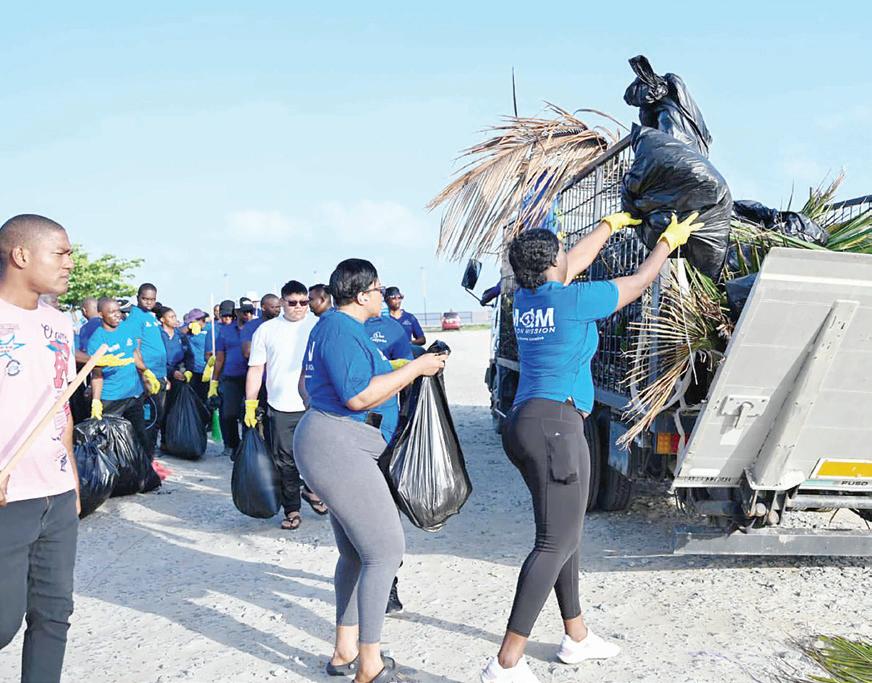
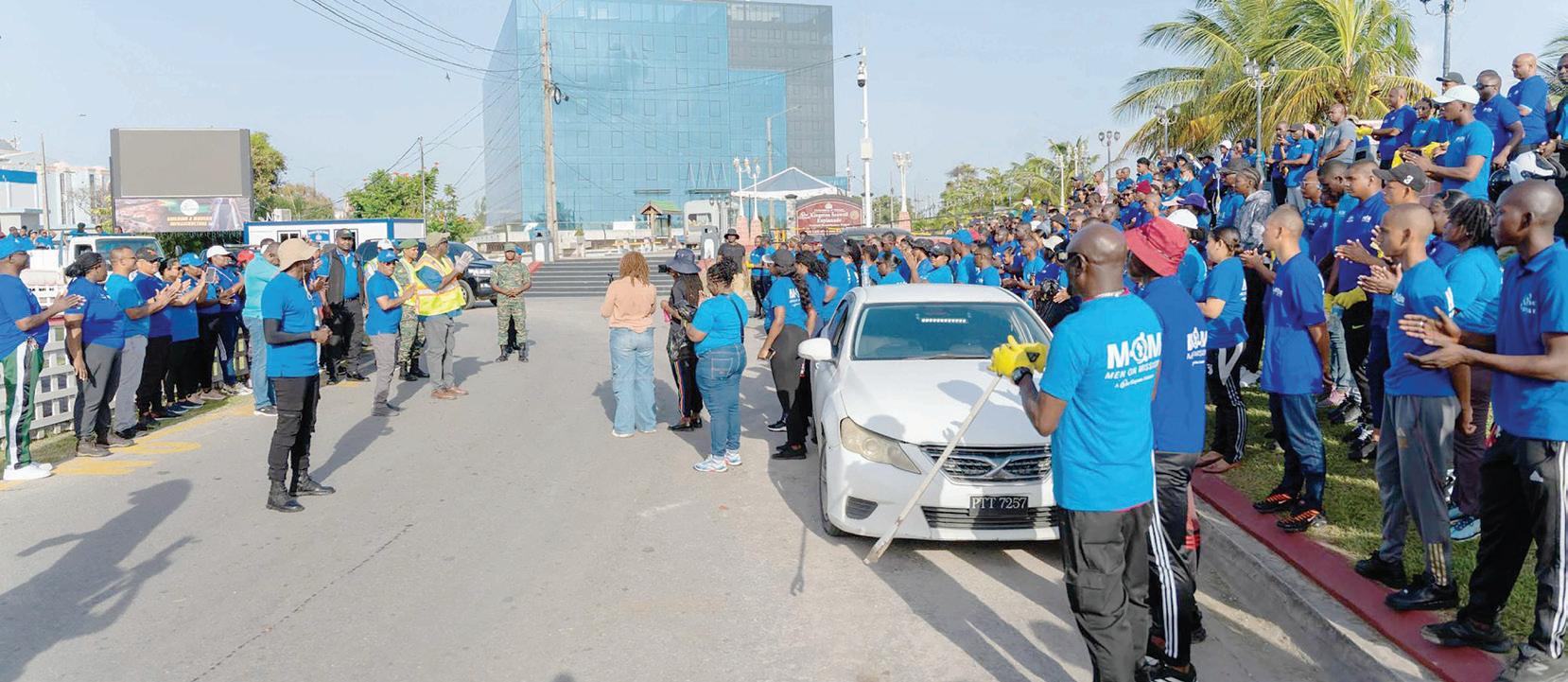
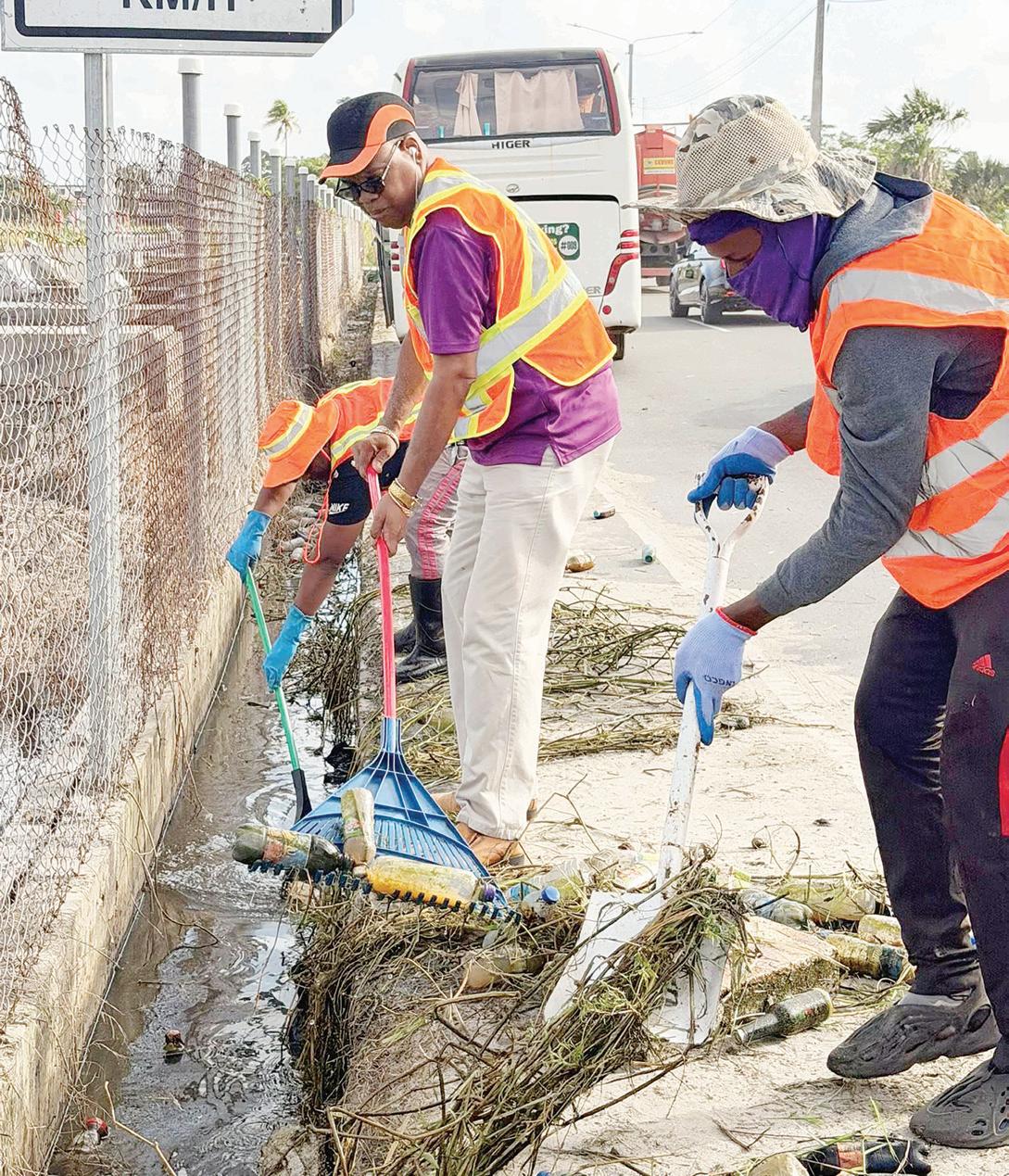
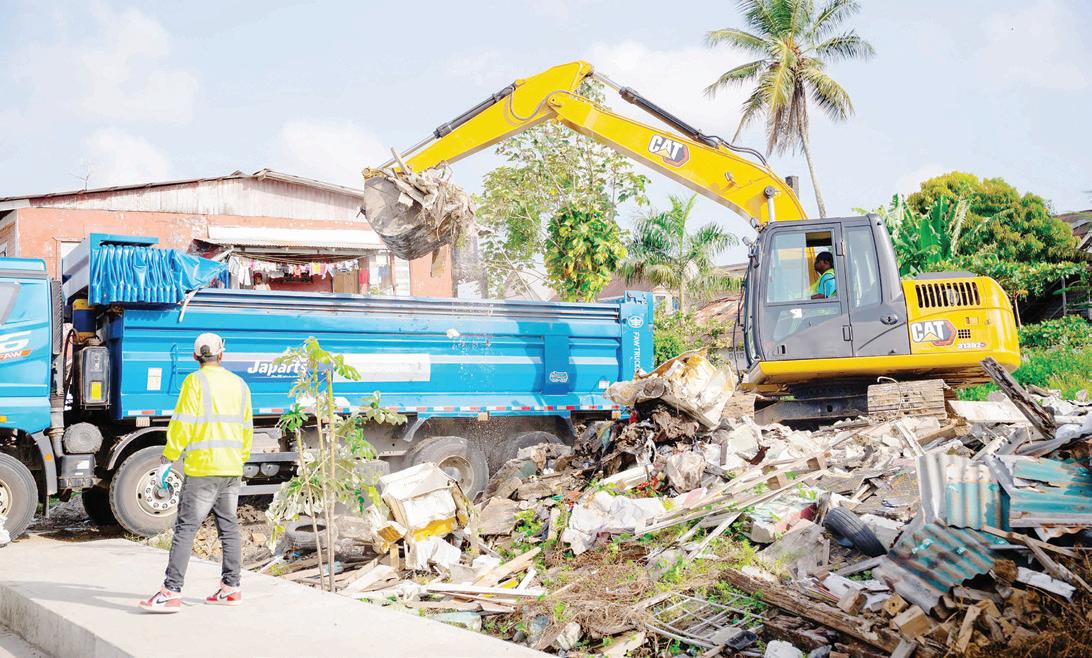
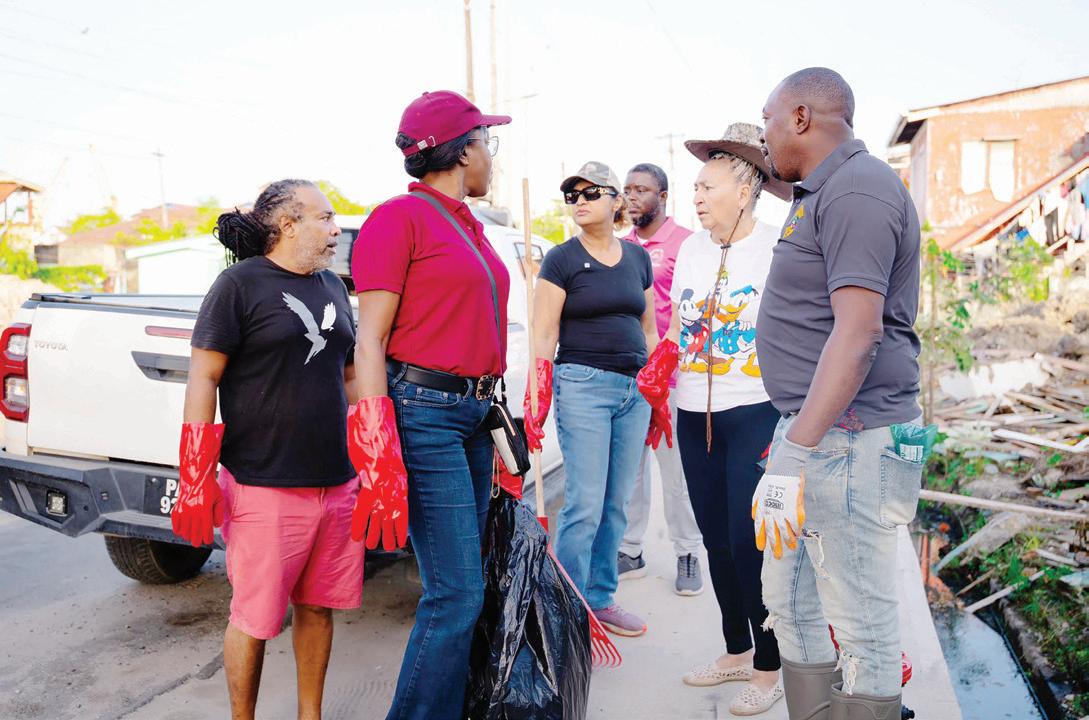
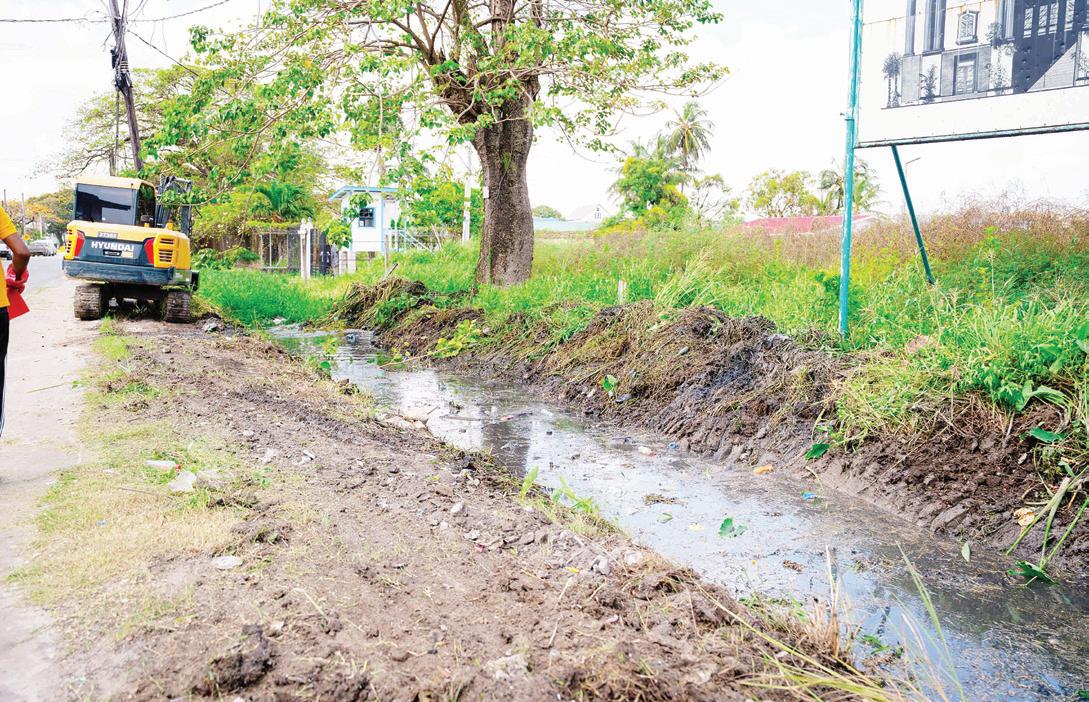
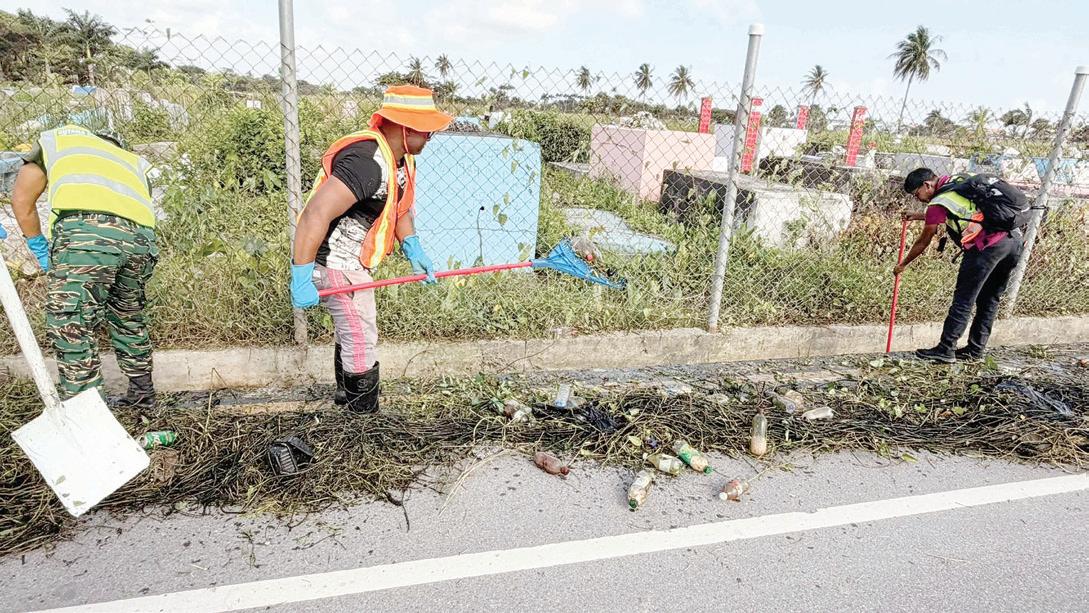
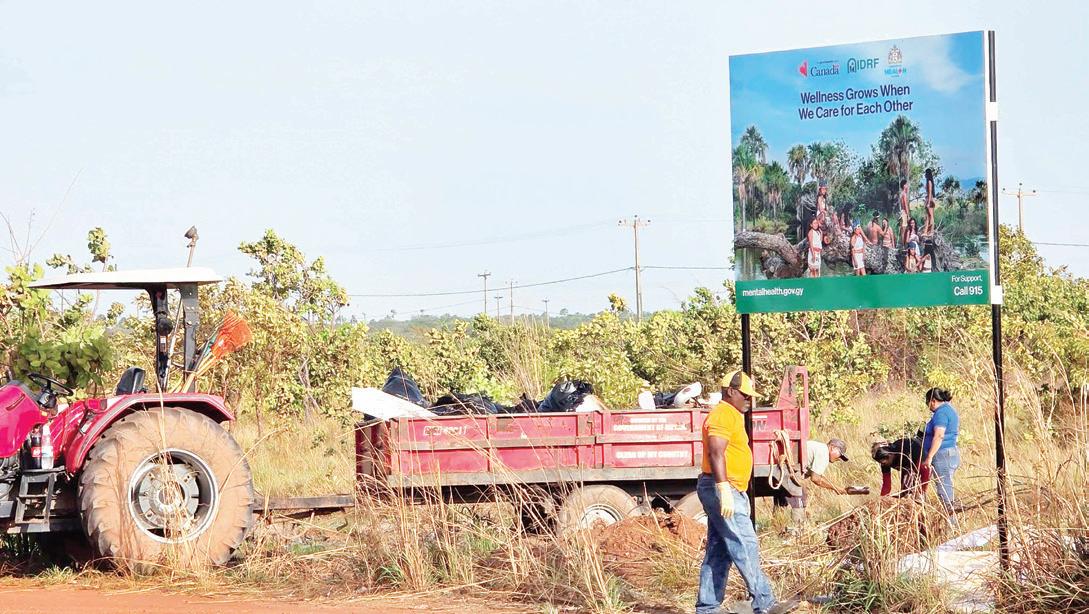
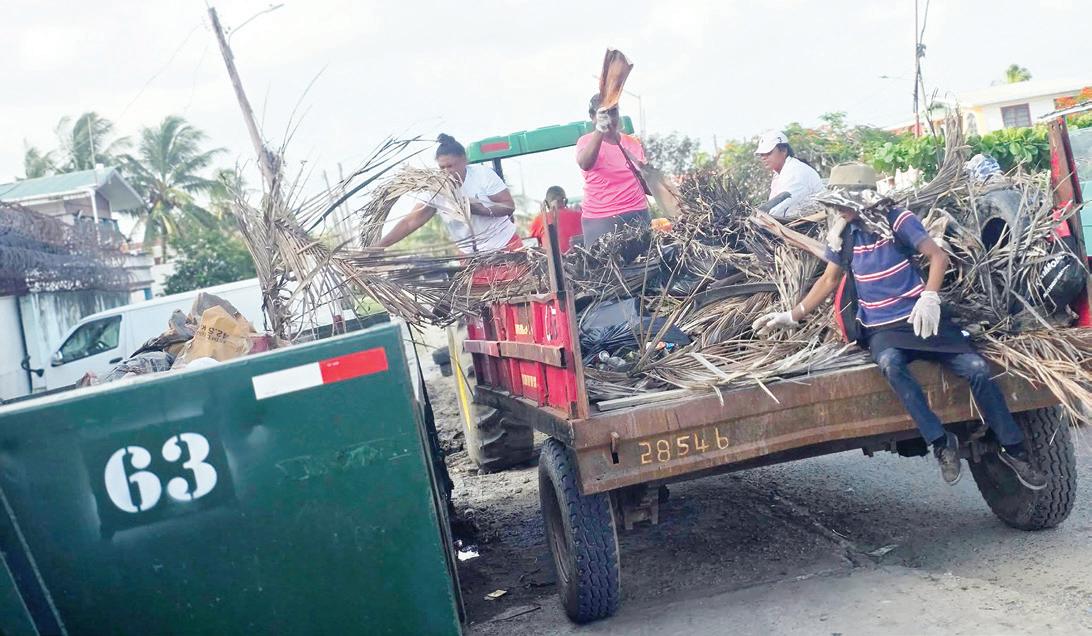
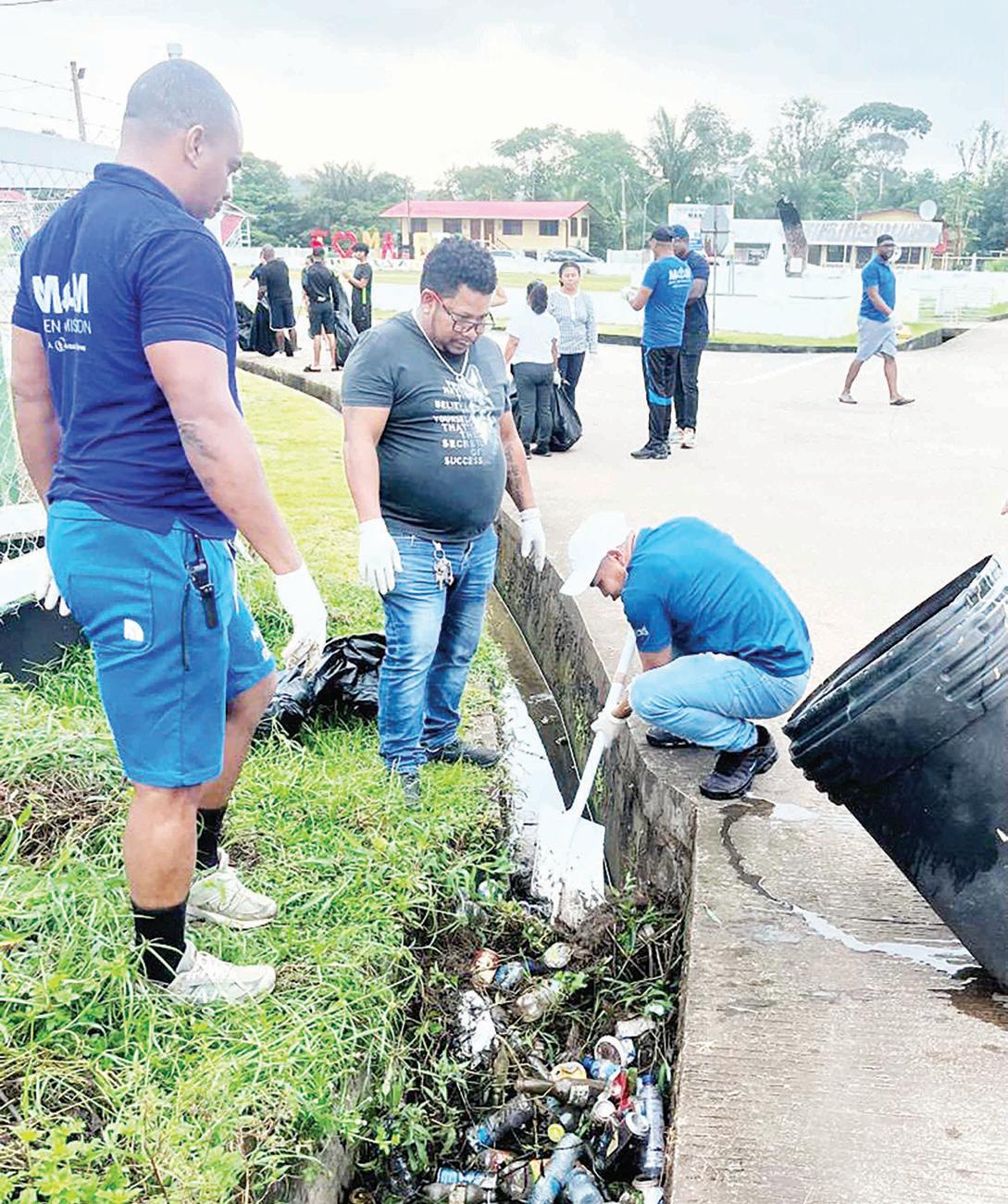
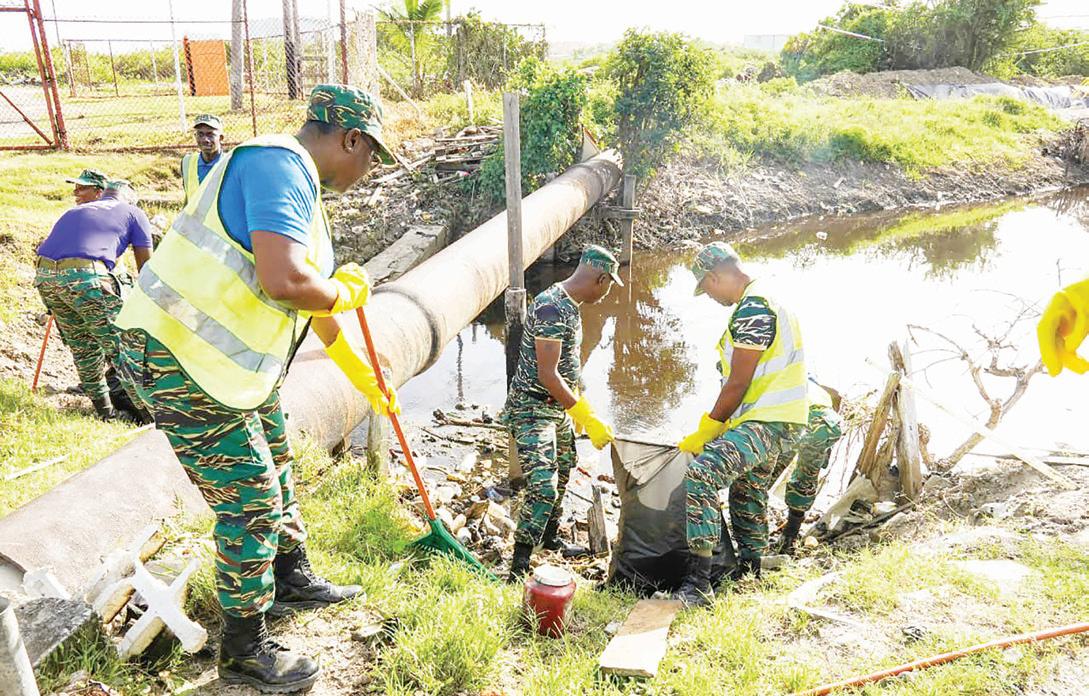
Armed with brooms, shovels and responsibility, volunteers across Guyana turned out in large numbers, demonstrating a collective push toward a cleaner environment. Various Ministries participated alongside members of the Guyana Defence Force (GDF) and other officials. The current
nationwide National CleanUp Exercise was launched in 2022 under President Irfaan Ali’s Administration. Present at one of the clean-up sites was Prime Minister (PM) Brigadier (Ret’d) Mark Phillips, who actively assisted in the exercise. He stressed that there must be a shift in attitude toward cleanli-
ness. “Everybody should know the importance. Georgetown needs cleaning, right? And in fact, many communities – we
icant challenge, emphasising that the exercise is not only about cleaning but also about promoting collective responsibility.
He explained that while agencies such as the City Council, Regional Democratic Councils (RDC) and Neighbourhood Democratic Councils (RDC) play important roles, every citizen must do their part. He urged individuals to keep their surroundings clean and ensure that waste is properly stored and disposed of. He added that if all citizens contribute, the country will see significant improvements in its environment. “This
need to clean our surroundings, [but] we need to have a better attitude when it comes to disposal, especially of solid waste,” he said. He also addressed the issue of careless garbage disposal.
“You know, people just cannot indiscriminately throw garbage anywhere they feel like. You have to get a garbage container and place it in a designated area where collectors can come and pick it up. We need to do better as people of Georgetown and people of Guyana,” he added. The PM noted that solid waste disposal remains a signif-
is a clean-up campaign, and the whole aim is to sensitise and make everybody aware that we have to work together for a cleaner Guyana,” he said.
Stop it
Meanwhile, Local Government and Regional Development Minister Priya Manickchand echoed similar sentiments while working along Sussex and Saffon Streets and
also along Smythe Street, Georgetown. “Sussex and Saffon Streets – I am in the city, and if [anyone passes on these streets, you can see garbage thrown on the
“We are going to have to move very quickly to a point where people are charged for this. This is not what we should look like anymore. This must
streets], this is being done by business owners. It is extremely irritating that we have to wake up at six o’clock to address this.” She warned that Sussex Street is not a dumpsite, while warning all businesses to stop hiring “junkies” to dispose of their garbage. She also pointed to the provision of strict laws to fight this issue.
be, if not the last, then one of our last clean-ups dealing with this level of mess being created by businesses. While we are all working toward a clean country, it is much better not to be a litterbug. We are cleaning up all across the country, and I thank this team for undertaking the effort,” she added.
Prime Minister Brigadier (Ret’d) Mark Phillips during nationwide clean-ups
Local Government and Regional Development Minister Priya Manickchand during nationwide clean-ups
Public Works Minister Juan Edghill during nationwide clean-ups
Going with…
…the US of A!!
Yesterday your Eyewitness wondered whether the Yanks were gonna put their money where their mouth was – and give their arch rivals (enemies?) the Chinks a run for their money here in our good ole Mudland!! For the longest while, your Eyewitness feared that while they were huffin’ and puffin’ and breathin’ smoke about the Chinks stealing their supper in Latin America and the Caribbean – he didn’t see them doing much, if anything, about it!! Where was their Belt and Road??
Well, it looks like they’ve finally woken up to the challenge – apart from pressuring countries like Panama to squeeze out the Chinese from their canal or taking out Mad Maduro and controlling Venezuelan oil through his ambitious lieutenant, Delcy Rodriguez!! Nothing wrong with that – because history’s shown that when you come right down to it, your friends gotta fear you a bit lest they take you for granted and sell you down the river!!
Back in the day – when they were fighting off the Commie challenge in these parts – after they’d squeezed the PPP out and installed Fat Boy Burnham in power, they plunked down some real cold cash to start our modernising drive by constructing the Georgetown to Linden Highway in 1968!! The plan was to take that all the way to Lethem and then into Brazil to open up the largest economy in South America to us. The Brazilians did their part by building a bridge across the Takutu River – but the Yanks lost interest when Fat Boy double-crossed them and flirted with the Commies!!
Well, looks like with their oil major Exxon striking it rich here, we’ve caught the attention of the Yanks once again!! It didn’t hurt that Trotman had given Exxon one hell of a sweetheart deal!! So now that the head of their EXIM Bank is visiting to check out the US$500M+ loan to kick-start our delayed industrialisation by funding 300MW of power generation, a fertiliser plant and a natural gas plant – he clearly liked what he saw!!
He offered the Government funding for the Deep Water Harbour off the mouth of the Berbice River that was always part of the plan with the Georgetown–Linden Highway!! Not only would we now be able to accommodate larger ships to transport all OUR agricultural products like soya, corn and rice that we would be shipping – but we’d be making oodles of money by offering the industrialists in Manaus, Brazil, a shorter and cheaper way to ship their products to their markets up north!!
In this way, the Yanks wouldn’t only be pipping the Chinks on an infrastructural project – but also have a say in them not shipping out Brazilian goods!!
Talk about having your cake and…!!
…the US space programme
Your Eyewitness has gotta admit, he was pretty chuffed about the Artemis splashdown off the coast of San Diego in the Pacific Ocean!! Hey… What can he say?? Here it was: we’ve been human for hundreds of thousands of years looking up at that orb in the night sky we call “the moon” – but only being able to see one side!! The rotation of the moon matched ours so that at no time was it possible to see the “back”!!
Even when Armstrong went on that “one small step for man; one giant step for mankind” walk back in 1969 –and we all knew where WE were on that day, don’t we??!! – it was on the side facing us!! For all we knew the other side could’ve very well been made of green cheese!! Well, now that the crew of Artemis did fly over – lord knows the engineering skills THAT took! – We know it’s the same as OUR side – filled with craters and all!!
Welcome home, Artemis!! Next stop, Mars??
…pushing around??
We were informed that Suriname has reneged on their years-old commitment to grant 150 fishing licences to Guyanese fisherfolk. The Minister of Agriculture says talks are “still ongoing”!! What the heck??
The Surinamese have gone fishing??
Over $1.7B in narcotics destroyed in major drug disposal exercise
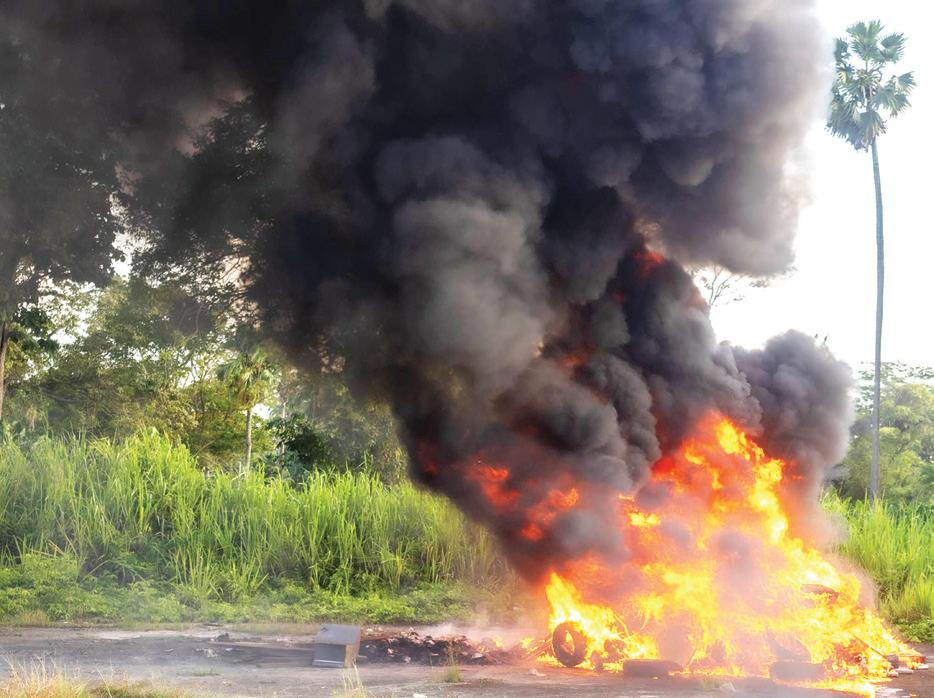
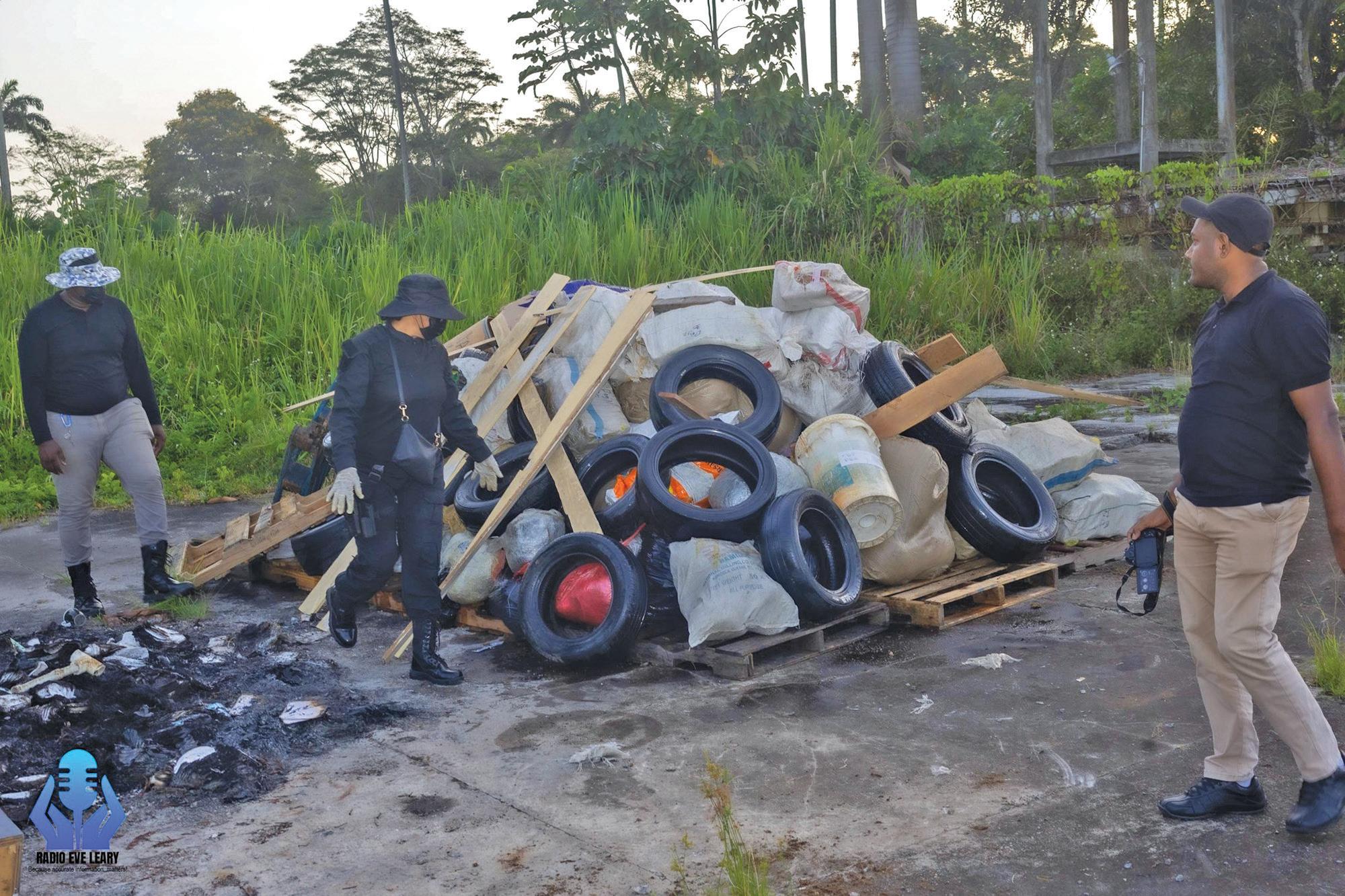
The Guyana Police Force (GPF) on Saturday carried out a large-scale drug destruction exercise, burning narcotics valued at more than $1.7 billion, which had previously been tendered as evidence in concluded court cases.
The exercise was conducted under the supervision of the head of the Narcotics Branch, Deputy Superintendent of Police Fiona Fredericks, as part of standard procedures for the disposal of illicit drugs no longer required for judicial purposes.
According to breakdown figures provided by Police, cannabis accounted for $738,195,125,
while cocaine represented $974,383,500, bringing the overall total to $1,712,578,625.
The exercise was also overseen by officials from the Guyana Forensic Science Laboratory (GFSL) to conduct quality control testing on the substances before their destruction.
Officials said that the exercise is part of continued efforts of the GPF to combat drug trafficking and ensure that seized narcotics, once they have fulfilled their evidentiary role in court proceedings, are permanently removed from circulation and prevented from re-entering society.
Just a few weeks ago,
the GPF destroyed $551 million worth of ganja at De Veldt, Upper Berbice River. During the eighthour exercise, two fields with a combined area of approximately seven acres, with about 640,000 cannabis plants, were discovered. The plants ranged between four and 10 feet in height.
In addition, one large drying area was also found with about 850 pounds of dried cannabis. The cannabis plants, dried cannabis, and drying area were all destroyed by fire. Police estimated the value of the narcotics destroyed to be $551,767,971. At the time of the raid, no arrests were made.
The narcotics being destroyed on Saturday
Police Reform… Again
A“We need a better attitude...
gainst the background of trenchant criticism by some members of the opposition demanding that the Guyana Police Force (GPF) be reformed to perform its job professionally and less violently, we note the announcement that a new batch of 101 recruits has been added to the force. They were drawn from three training campuses in Georgetown, Berbice, and Essequibo, the latter two being established in the new millennium. We heard about training in the new digital ecosystem, but were they imbued with the professionalisation we have been calling for since the 1990s but without any support from that quarter? We welcome their new epiphany.
The authoritarian nature of our GPF stems from its model being the Irish Royal Constabulary (IRC) rather than the London Metropolitan Police’s (LMP) benign “bobbies” when it was formed in 1839. The LRC, originally chosen as the model by local authorities in 1838, was discarded: it was too citizencentred. The IRC, on the other hand, was militarily centralised, heavily armed and ethnicised: it consisted mostly of Irish Protestants and English officers to ensure the imposition of order against the predominantly Catholic population. Its local mirror-image GPF was to “serve and protect” the colonial rulers against the Guyanese people. The authoritarian nature of the GPF is so embedded in its culture that nothing other than a complete overhaul and institutionalisation of new values will make any difference. This is a threshold necessary for reform encapsulated in a call for its name to be changed from a “Police Force” to a “Police Service”.
After the prison breakout of Feb 23, 2002, following PNCled protests after the 1997 elections, the crime tsunami had escalated exponentially into an open attack on the GPF itself. In May 2003, the National Assembly unanimously approved the appointment of a Disciplined Forces Commission (DFC). Its mandate was “to examine any matter relating to the public welfare, public safety, public order, defence or security, including the structure and composition of the disciplined forces and make recommendations, generally, with a view to promoting their greater efficiency and giving effect to the need in the public interest that the composition of the disciplined forces take account of the ethnic constituents of the population.”
The recommendations of the DFC are still relevant and can be the starting point for reforms in the present. Some have been implemented but not as complete and thoroughgoing as necessary. On the matter of ethnic representativeness, it declared: “…the allaying of ethnic security fears which stems from the predominance of Afro-Guyanese presence in the GPF must be addressed…but to ensure, in so doing, that no similar insecurity fears are caused in the Afro-Guyanese community.” As ROAR had proposed in its submission, the DFC recommended, “It should be an aim (of the GPF) to achieve a force representative of the ethnic diversity of the nation without employing a quota system.” It recommended: “Ethnically diverse recruitment and promotion panels…be employed as openly and extensively as possible.” Has the geographically diverse training schools helped?
As for dealing with Police excesses, it recommended that the Coroners’ Act be reviewed in its entirety to achieve its high ideals and remedy its current deficiencies and application. A coroner’s office should be administratively established to hold inquests or enquiries where the Magistrate or Magistrates of any Magisterial district cannot do so. The office should be staffed with Magistrates with national jurisdiction and should fall under the administrative superintendence of the Chief Magistrate. Coroners should be provided with investigative resources to reduce their dependence on Police investigations. This would enable them to conduct independent investigations.
Apropos the present criticisms by the PNC opposition, it was recommended that during training, emphasis should be placed on the use of the minimum force necessary; this is always to be preferred, even in confrontations with armed and dangerous criminals. Appropriate instruction and training should be given to Policemen about the circumstances under which they may resort to the use of the firearm. The Police Complaints Authority should be provided with an investigative team consisting of trained Police investigators who would be responsible and accountable directly to the authority. Further, it was recommended that attention should be paid to strengthening the Force’s investigative capabilities and to the establishment of a sound national criminal intelligence system.
Have these recommendations been implemented? It should be evident by now that without Police reform the undoubted economic progress we are experiencing will be illusory.
Derelict vehicles
Meanwhile, derelict vehicles were also identified as a major concern during the exercise. Public Works Minister Juan Edghill addressed the issue, noting that despite notices being issued, persons have been relocating derelict vehicles to other areas instead of removing them entirely. He pointed out that Hadfield Street has become a dumping ground for such items.
“What we have realised has happened is that when we give notice for people to move derelicts and caravans that are improperly placed, Hadfield Street has become the new dumping ground. It has become unpleasant to the eyes – everything that should not be here is now on this street. We have given notice. So this morning, I am announcing again: Hadfield Street, between Mandela Avenue and Cemetery Road, is not a dumping ground for derelicts and caravans!” he stated.
He warned that derelicts placed in the area will be removed permanently, and owners will be required to pay the full cost to retrieve them. The Minister further cautioned that individuals attempting to organise such activities are “pushing up the wrong alleyway”, adding that such behaviour will not be tolerated.
He stressed that persons cannot dump derelicts in front of others’ properties due to a lack of space and called for greater order and cooperation among citizens. Additionally, he made it clear that unauthorised vending along main public and access roads will not be allowed. He also warned that failure to comply after
notices are issued will result in the Ministry removing the derelict items.
“Well, this is what [will] happen when people don’t move. We have put up public notices and pictures on Facebook for two weeks. I hope that everybody across the main and access roads understands that we are working everywhere. If you need them, move them; if
not, we will move them, and you will have to pay to get them back, and you won’t be able to put them back on the road,” he said.
On Saturday morning members of the cabinet and head of the joint services, along with other Government officials and public-spirited citizens,
led by example during the clean-up in several areas around the city. Similar clean-up activities were being carried out across the country, with hundreds of citizens participating in the national effort to restore cleanliness and promote environmental responsibility.
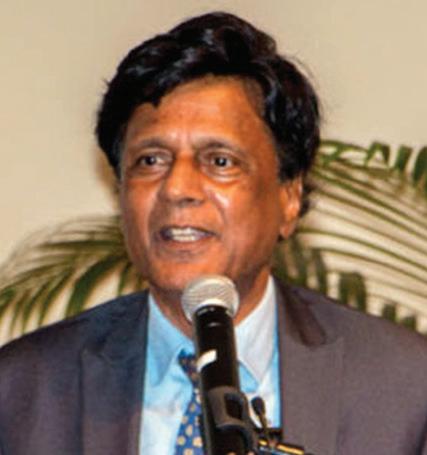
Ravi Dev
Gas-to-Energy Project
Enormous opportunities for light manufacturers, industrial development – Pres Ali …urges
T&T Private Sector to partner with
resident Dr Irfaan
PAli has encouraged the Private Sector of Trinidad and Tobago (T&T) to work along with its Guyanese counterpart and form consortiums that can take advantage of the massive opportunities that open up from Guyana’s gas projects.
The highly anticipated Gas-to-Energy (GtE)
Project at Wales, West Bank Demerara (WBD), includes a 300-megawatt (MW) combined cycle power plant and a Natural Gas Liquids (NGL) facility utilising the country’s rich natural gas resources that will be piped from offshore. The power plant is expected to slash electricity prices in Guyana by half when it comes on stream later this year, while the NGL
Guyanese
facility will treat the gas for commercialisation activities.
In fact, the Guyanese Government has established the Wales Development Zone (WDZ) – a 1400-acre area where a series of industrial activities would be set up. Plans are already in place for a fertiliser plant, data centres and a dedicated auto-truck park for logistics, among others.
Build partnerships and build consortiums
“There are going to be enormous opportunities for light manufacturers and industrial development here,” President Ali told stakeholders at the T&T Chamber of Industry and Commerce’s Annual Business Meeting Outlook 2026/2027 in Port of Spain on Friday. He added, “I hope that the chambers here and the Private Sector in Guyana can have an exploration as to how we build partnerships and build consortiums to make use of this industrial site that we are building out here to produce a whole different scale of products. The cost of energy will come down by half. Right now, we are looking at glass, cement, and steel. We’re also looking at the digital opportunities.”
Already, some 250 kilometres (km) of 12-inch pipelines have been laid to bring the gas onshore. However, only 40 per cent of the pipeline’s capacity will be used by the GtE Project to gas up the power plant and NGL facility, bringing 50 million standard cubic feet per day (mmscfd) of dry gas onshore. But with the pipelines having the capacity to push as much as 120 mmscfd of gas, the Guyanese Government is moving ahead with Phase Two of the GtE Project that will utilise the remaining 60 per cent capacity of the pipeline to bring additional gas onshore. This will see the construction of a second 300MW power plant and NGL facility at the Wales site, thus creating even more commercial opportunities.
According to Ali, “We are looking to test [the first GtE Project] and to prove to investors that we are a destination for investment in this area.”
Reimagining business structures
At the same time, however, the Guyanese Government is looking to further monetise the country’s vast gas resources with a second, much larger pipeline, landing this time at Berbice, where another massive industrial zone would be built out – unlocking another series of large-scale opportunities.
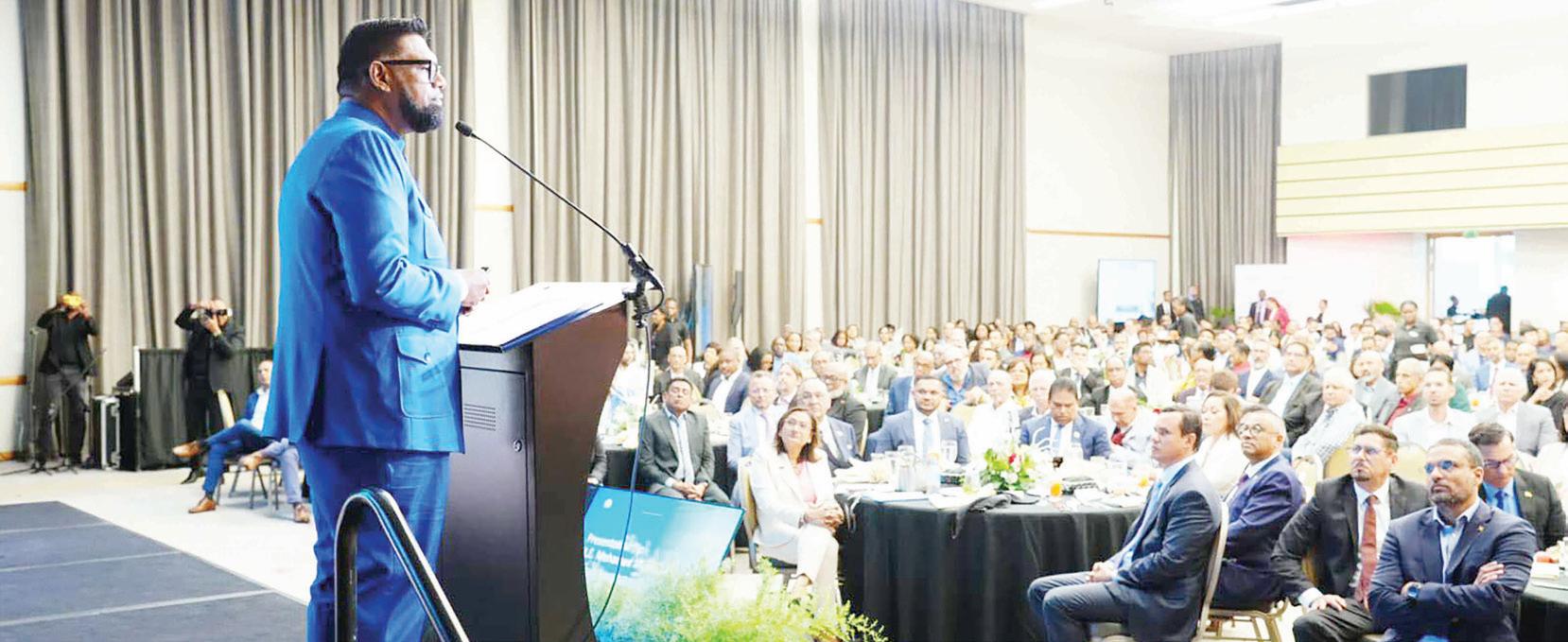
President Dr Irfaan Ali delivering the feature address at the Trinidad and Tobago Chamber of
Commerce’s annual business meeting in Port of Spain on Friday
Berbice man lying on road crushed to death by truck
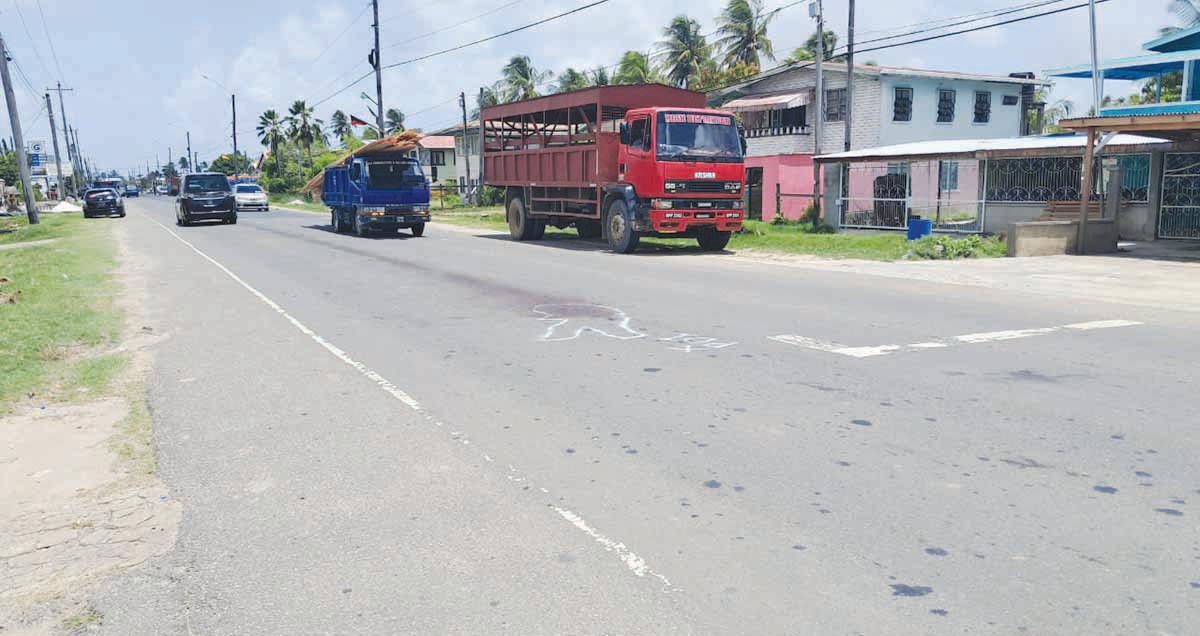
A53-year-old man lost his life on Friday evening after he was run over by a loaded paddy truck while lying on the roadway along Fyrish Public Road, Corentyne, Region Six (East Berbice-Corentyne).
Dead is Mark Songster, who had recently relocated to First Cross Street, Koker Dam, Fyrish, just two streets away from his former home at Section C Fyrish Road.
Police in the Albion Station District are investigating the fatal accident, which occurred at about 20:10h and involved motor lorry GYY 5720, owned by a 43-year-old woman and driven by a 43-year-old man, both of Black Bush Polder. The vehicle was reportedly transporting paddy at the time.
According to initial investigations, the lorry was proceeding west along the south-
ern driving lane at what Police described as a normal rate of speed when it came into contact with Songster, who was lying on the southern side of the roadway. The truck subsequently ran over the man, resulting in severe injuries to his body.
Public-spirited citi-
zens rushed to the scene and transported Songster to the Port Mourant Public Hospital, where he was pronounced dead on arrival.
The driver has been taken into custody and is assisting Police with their investigations. The motor lorry involved has been lodged at the
Albion Police station.
Police said a breathalyser test was administered to the driver, which recorded readings of 11 micrograms of alcohol in his breath.
Meanwhile, relatives revealed that Songster had only recently moved from his previous residence after his only brother returned to Guyana about a week ago and arranged for a close relative to assist in caring for him.
Previously, Songster lived alone. Villagers referred to him as an alcoholic. They said that he had promised to stop drinking as he moved to his new residence.
A cousin-in-law told this publication that Songster,
who was known to consume alcohol, had been at home throughout Friday until about 16:00h, but could not say what transpired after he left.
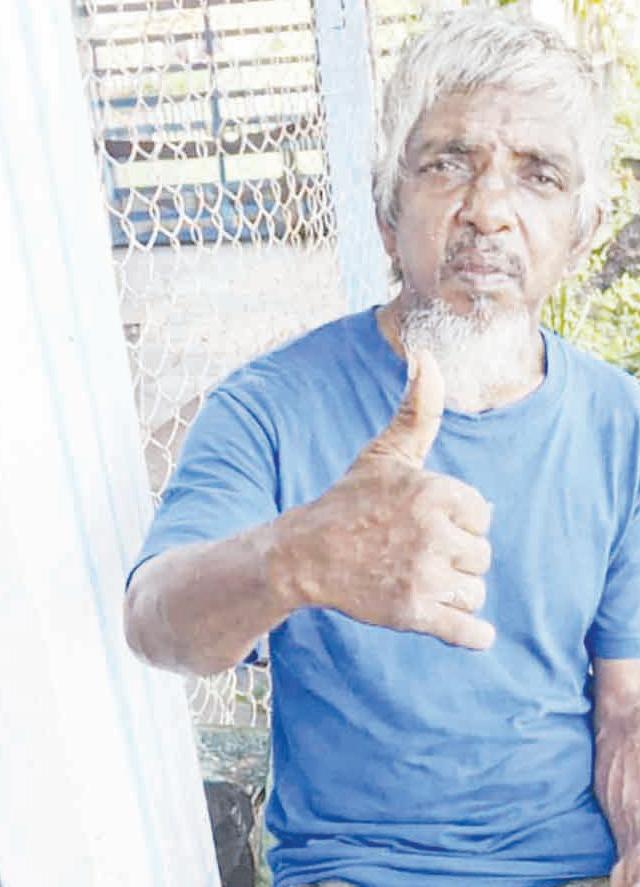
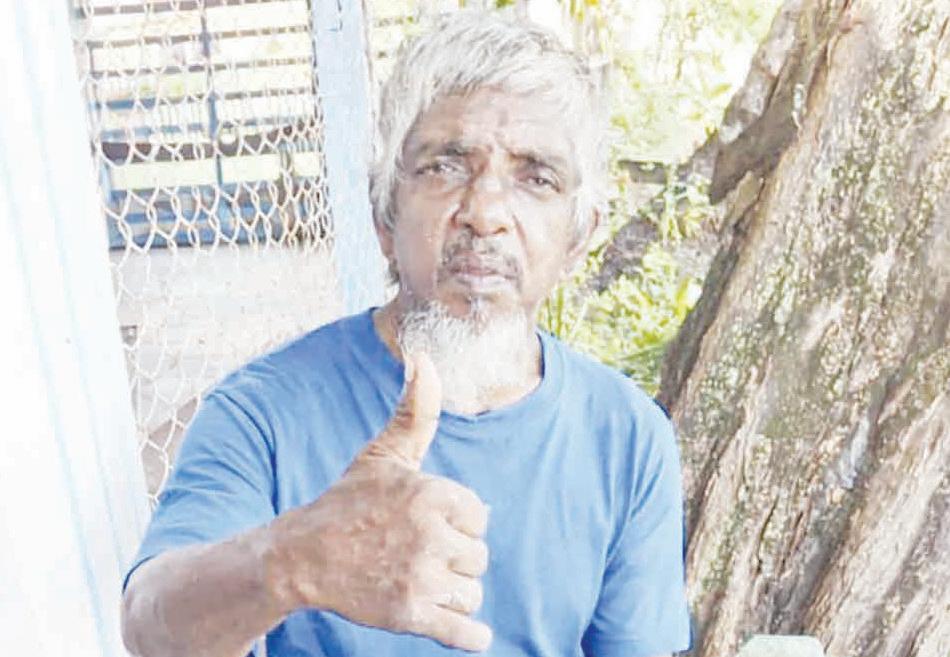
Dead: Mark Songster
The area where the accident occurred
SUNDAY, APRIL 12, 2026 | GUYANATIMESGY.COM
First Lady donates bus, commissions play park to support orphanage, youth development
First Lady Arya Ali has handed over a bus to Shaheed’s Boys and Girls Orphanage to support the institution’s transportation needs.
According to a post
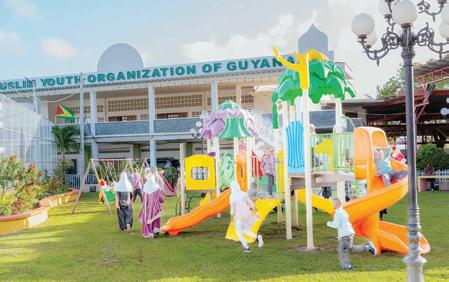
shared on her social media platform, the keys to a Toyota Hiace were officially presented during a simple ceremony held at the Muslim Youth Organisation (MYO)
ground on Woolford Avenue, Georgetown, on Friday.
The donation was made possible through proceeds raised from the Iftar Cafe initiative at the Ramadan
Village. The bus is expected to assist the orphanage by providing reliable transportation for children to attend school and participate in other activities.
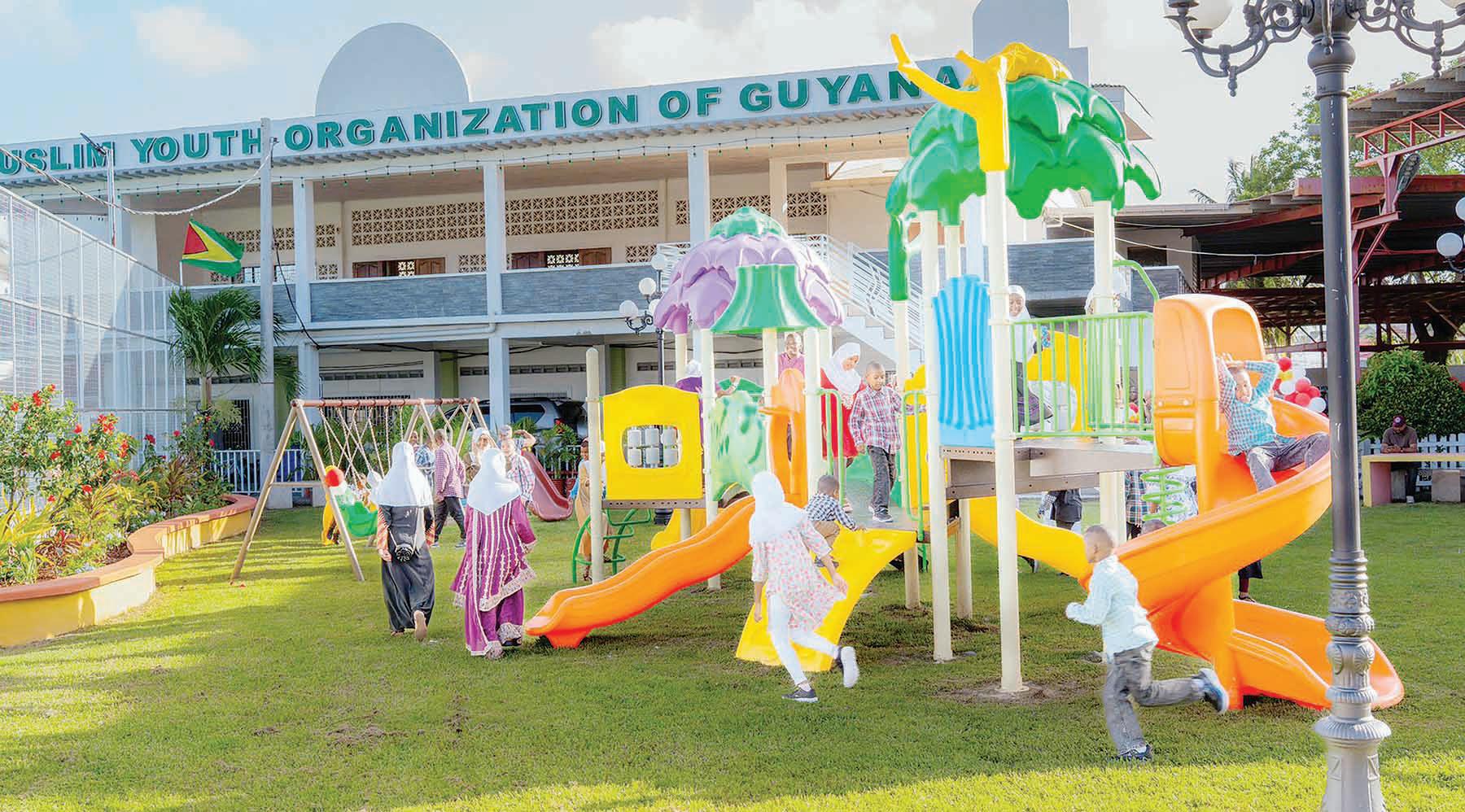
In addition to the donation, the First Lady, in collaboration with the Central Islamic Organisation of Guyana, also commissioned a new children’s play park
at the MYO ground. The facility is intended to provide a safe space for children to engage in recreational activities and social interaction.
Gunmen invade Eccles home; 3 Chinese nationals robbed
Three Chinese nationals were robbed at gunpoint on Friday afternoon after four men invaded their Eccles, East Bank Demerara (EBD) home, forcing them inside and ransacking the property before escaping with cash and valuables.
The robbery occurred at about 15:53h on Friday as the victims were returning home and exiting their motorcar in the garage.
Reports indicate that the men were suddenly confronted by four suspects, one of whom was armed with a handgun. The perpetrators then forced the victims into the house, where they proceeded to search both the upper and lower flats.
During the attack, the suspects escaped with $500,000, US$900, 1000 Mexican dollars, and 200 Hong Kong dollars, along with a Chinese identification card and other personal documents.
CCTV footage from the property has since been retrieved and is being examined as part of the ongoing investigation.
In a separate incident an hour earlier, two men were arrested during an intelligence-led operation at Mocha, East Bank Demerara, as investigators continue to probe recent armed robberies and break-and-enter incidents.
The suspects, a 22-yearold vendor of Barnwell North and a 21-year-old construction worker from the same community, were held between 15:00h and 17:00h on Friday.
They are being investigated in connection with a robbery under arms committed at a Chinese supermarket at Goed Fortuin, West Coast
Demerara, on Thursday, as well as a break-and-enterand-larceny at a dwelling house in Eccles on the same date. Following their arrest, the men were taken to the Providence Police Station, where they were questioned and subsequently placed into custody. Investigators have since reviewed CCTV footage from both incidents, which aided in identifying the suspects.
Over 12 years in jail for miner who killed co-worker
Aminer from Quarrie Village, Central Rupununi, Region Nine (Upper Takutu–Upper Essequibo), who admitted to fatally stabbing his co-worker during an altercation at a mining camp along the Puruni River, Region Seven (Cuyuni–Mazaruni), has been sentenced to 12 years and eight months’ imprisonment by the High Court.
Cane Vincent, 31, was sentenced by Justice Fidela Corbin-Lincoln at the Essequibo Assizes after pleading guilty to the lesser offence of manslaughter in the killing of 22-year-old Leonel Manuel Franco Beria, called “Frankie” or “Spanish”.
The fatal incident occurred during the early hours of April 18, 2024, at a workers’ camp at Paiyuki Backdam, Puruni River, Region Seven (Cuyuni–Mazaruni).
In delivering the sentence, the court applied a starting point of 22 years’ imprisonment, which was reduced after taking into account mitigating factors. These included a two-year deduction for Vincent’s good character, one year for his expression of genuine remorse, and six years and four months for his early guilty plea.
The Court ordered that time spent on remand be deducted from the sentence and directed that Vincent undergo drug rehabilitation and anger management programmes while incarcerated.
Vincent had initially been indicted for murder but, on
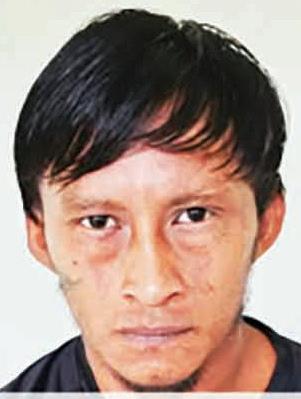
Jailed: Cane Vincent
February 17, 2026, pleaded not guilty to that charge and guilty to manslaughter. The matter was then adjourned for sentencing.
The prosecution was led by State Counsel Caressa Henry and Aleria Heywood, while Vincent was represented by defence attorney Tonza Sarrabo.
“Vincent bore me” According to the agreed facts, Vincent and Beria were co-workers employed as labourers on a gold mining dredge owned by Rannika Andrews and Charles Hutson.
On April 17, 2024, the men and other workers returned to their camp after work, had dinner together, and later began socialising before retiring to their hammocks.
At about 03:30h on April 18, 2024, Beria was heard shouting, “Vincent bore me!” Co-workers rushed to the scene and found him lying on the ground with multiple stab wounds to his back. Before dy-
ing, he repeatedly identified Vincent as the attacker.
Vincent reportedly fled the camp but was later found by other workers after several hours of searching. He was armed with a long stainless-steel knife and was restrained and handed over to the Police at the Puruni Landing.
In a caution statement, Vincent admitted to the act, telling Police, “Officer, yes, I stabbed him because he does trouble me.” He also disclosed that he had been consuming alcohol and smoking marijuana prior to the incident.
A post-mortem examination confirmed that Beria died from haemorrhage and shock due to multiple stab wounds, including injuries to vital organs.
In outlining aggravating factors, the State emphasised the seriousness of the offence, noting that the deceased was only 22 years old and died as a result of multiple stab wounds inflicted with a dangerous weapon.
Prosecutors also highlighted the prevalence of violent offences linked to alcohol consumption, urging the court to impose a sentence that would serve as a deterrent.
The court was told that Vincent and the deceased were co-workers who had
shared a meal hours before the incident, pointing to a breach of trust. The State further stressed that Vincent fled the scene and failed to render assistance to the injured man.
The prosecution also detailed the extent of the injuries, noting that the four stab wounds penetrated critical areas of the body, demonstrating significant force and violence.
Impulsive and excessive reaction
However, in mitigation, defence attorney Tonza Sarrabo argued that the incident was not premeditated but arose from a volatile, alcohol-fuelled environment. The Court heard that Vincent believed he was being provoked and may have been under threat, leading to an impulsive and excessive reaction.
The defence also highlighted Vincent’s background, noting that he grew up in modest circumstances in Quarrie Village and left school early due to financial hardship. He was described as a first-time offender who had demonstrated good behaviour in prison, participated in educational programmes, and expressed remorse.
Reports presented to the Court indicated that Vincent had no prior criminal convictions and had demonstrated
good behaviour while in custody at Lusignan Prison.
Prison officials reported no disciplinary issues, and he was said to have participated in literacy programmes and expressed willingness to engage in further rehabilitation.
A probation report detailed his upbringing in Quarrie Village, Central Rupununi, where he grew up in modest circumstances and left school early due to financial constraints. He later worked in mining areas and had been largely disconnected from his family for over a decade.
Vincent expressed remorse during interviews, stating that he was sorry for the incident and wished to apologise to the family of the deceased.
In balancing the aggravating and mitigating factors, Justice Corbin-Lincoln determined that a substantial custodial sentence was warranted but reduced the term significantly in light of Vincent’s guilty plea, remorse, and prospects for rehabilitation.
He was ultimately sentenced to 12 years and eight months’ imprisonment, with time already spent in custody to be deducted. That means Vincent has approximately 10 years and 9 months left to serve.
APRIL 12, 2026
“Lilawattie” pays $100,000 as larceny charge dismissed
…co-accused still at large
Orin Fraser, also known as “Lilawattie”, on Friday had a larceny charge dismissed after compensating the virtual complainant $100,000, even as the court raised concerns about his co-accused, who remains at large.
Fraser, of Princes and William Streets, Georgetown, appeared before Senior Magistrate Fabayo Azore at the Georgetown Magistrates’ Courts, where he had been charged with the offence of larceny involving a total
of $201,000. Particulars of the charge alleged that between March 20 and March 21, 2025, at Saffon Street and Independence Boulevard, Georgetown, Fraser, 22, together with another man identified only as “Abraham”, in court, stole the cash from Alex Layne.
When the matter was called, the prosecutor informed the court that the accused and the virtual complainant had reached an amicable settlement. Fraser then paid $100,000 in open court, and
the complainant informed the court that he no longer wants to proceed with the matter.
In light of the settlement and the complainant’s position, the charge against Fraser was formally dismissed.
However, attention then turned to the second accused, “Abraham”, who was not present in court. The prosecution indicated that despite efforts, his whereabouts remain unknown.
The Magistrate expressed concern over his absence and ordered that steps be taken to locate him and have him brought before the court to answer to the charge.
Fraser, meanwhile, continues to face multiple other criminal matters before the courts.
In one such matter, he was in July 2025 granted $80,000 bail after being charged with robbery involving violence. It is alleged that on April 10, 2025, at King Street, Georgetown, he robbed Melvin Marks of a cell phone valued at $78,000, a purse worth
$5000, and $15,000 in cash, totalling $98,000. The prosecution further alleged that personal violence was used during the commission of that offence. Fraser was not required to plead, as the charge is indictable.
Additionally, in September 2025, Fraser appeared before the court on separate allegations, including the theft of a motor car valued at $3 million, along with $45,000 in cash and a cell phone. In that matter, he pleaded not guilty, maintaining that the vehicle had since been returned and that partial restitution had been made.
During that same period, Fraser also admitted guilt to a separate offence of malicious damage to property committed at the Georgetown Public Hospital Corporation. The court heard that he damaged a computer monitor valued at $45,000. He was fined $50,000 for that offence, with an alternative sentence of two months’ imprisonment.
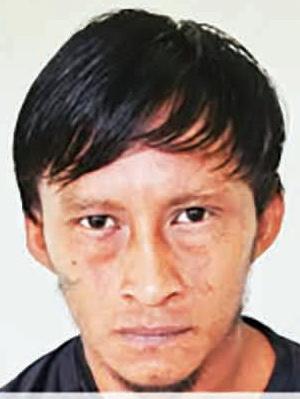
Orin Fraser, called “Lilawattie”
ASL plane crash Rescue teams to resume search today as tough terrain hinders efforts
The Guyana Civil Aviation Authority (GCAA) has confirmed that an accident investigator in charge, along with a team of trained investigators, has been dispatched to the crash site of an Air Services Limited (ASL) aircraft in the vicinity of Imbaimadai. On Saturday evening, the GCAA said the public utilities and aviation minister has identified the lead investigator to head the response team. The investigators are working alongside other agencies as part of the ongoing response operation. The Search and Rescue Coordination Centre remains fully operational and continues to provide logistical and operational support to the Guyana Defence Force (GDF) and all other agencies involved in the operation.
Pilot Captain Ryder Castello, a Nicaraguan national, was the only person onboard at the time of the crash. Reports are that the plane was heading to Imbaimadai, Region Seven (Cuyuni–Mazaruni). GCAA said the crashed aircraft is located on a steep escarpment, with dense tropical vegetation and rugged terrain significantly impeding
both ground and air access. The GCAA said recovery efforts are being heavily affected by these conditions. The Director General of the GCAA, Egbert Field, and the Chief of Staff of the GDF, Omar Khan, along with senior members of the GDF hierarchy, have been fully briefed and are receiving continuous updates on developments on the
ground. The Authority said all relevant agencies remain engaged and are overseeing a coordinated national response.
GDF special forces personnel are working to establish a viable access route to the crash site, which authorities say remains difficult to reach. The GCAA said the matter is being treated with urgency and serious-
ness. The aircraft involved is a single-engine Cessna 206, registered 8R-YAC, operated by Air Services Limited. It is reported that the pilot, Nicaraguan national Captain Ryder Castello, was the sole occupant and is feared dead. The flight departed Mahdia at approximately 08:10h on Friday on a cargo shuttle bound for Imbaimadai, with an expected arrival time of 08:40h. A flight progress check was initiated at 08:44h after the aircraft failed to report its arrival.
The GCAA said it initiated protocols for a missing aircraft involving a Cessna 208 operating along the Mahdia–Imbaimadai route, while search and rescue efforts ultimately focused on the suspected crash of the ASL aircraft. Weather conditions at the time were reportedly poor, with heavy rainfall and reduced visibility.
Search efforts led to the visual identification of the suspected crash site by aircraft from Trans Guyana Airways and a Britten-Norman Islander. Following this, a GDF rescue team comprising special forces and medical personnel was deployed to
the location. However, the team has not yet reached the crash site. The National Security Advisor to the President, Gerry Gouveia, said the terrain has slowed progress.
“[They have] not [reached the crash site] as yet. They are still there and still working on it. It is really, really tough terrain and very dangerous, so they are bucking in there for the night and will begin again in the morning. The helicopters have deposited them in there; now it’s for them to get to the crash site. They are not far away, but be-
cause of the terrain, they have not reached the site yet,” Gouveia explained. He added that the team is expected to resume efforts today.
The Aviation Operators’ Association of Guyana (AOAG) has expressed deep concern and sadness over the incident. In a statement, the association confirmed that a full-scale air search and rescue operation was launched, resulting in the rapid location of the aircraft. The AOAG noted that private aircraft operators across the country mobilised in support of the national response and described the effort as a coordinated aviation sector response. The association said it remains in communication with the GDF and continues to support ongoing operations. It also extended prayers and best wishes for the pilot’s recovery. The incident comes as the GCAA recently suspended ASL operations to Matthews Ridge in Region One (Barima–Waini) following an earlier incident at the runway. That suspension lasted a few days before the airline was allowed to resume operations, while the pilot involved was suspended for one month.
The crash site
Pilot Captain Ryder Castello, a Nicaraguan national
Sod turned for new $6.8B Bartica Regional Hospital
…to be completed in 24 months
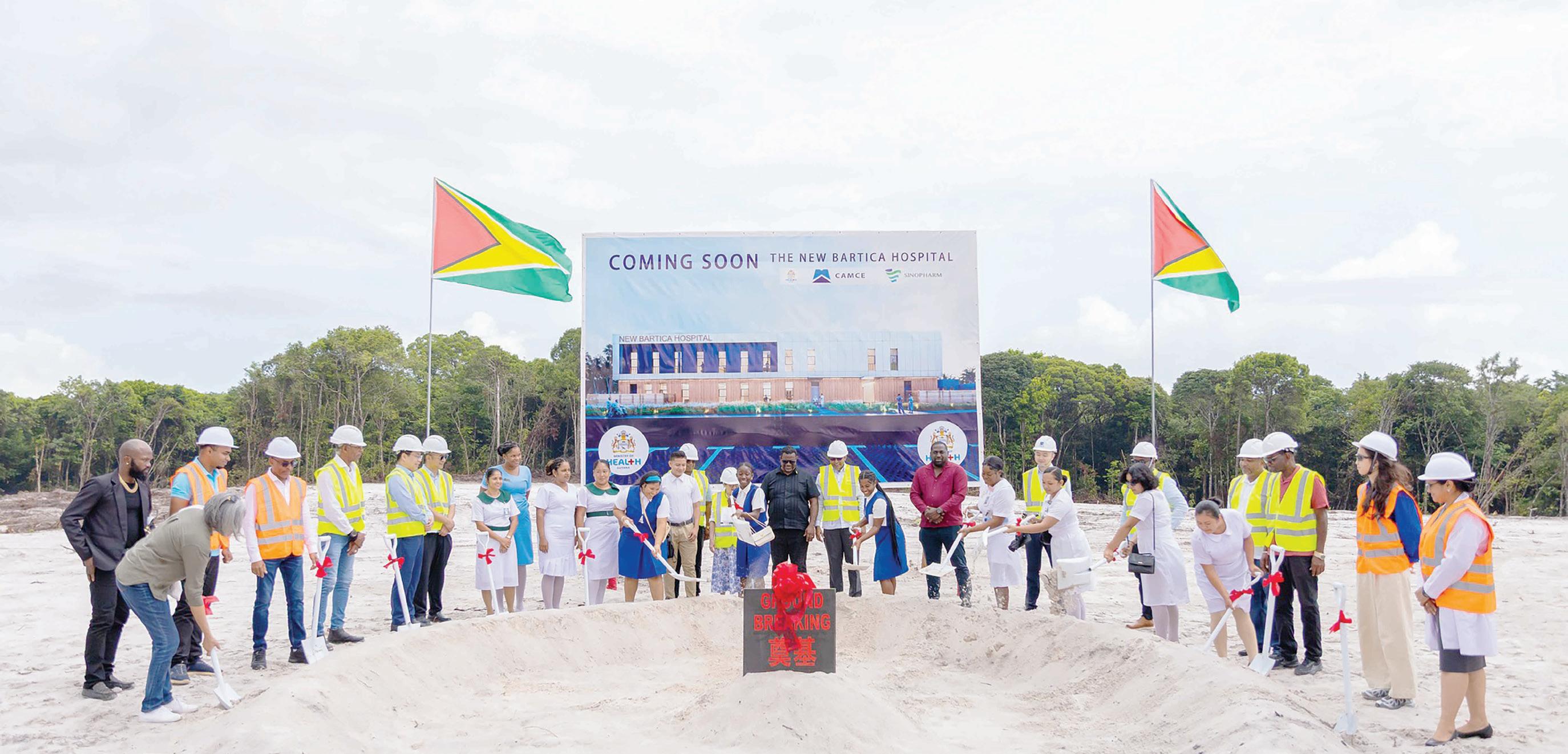
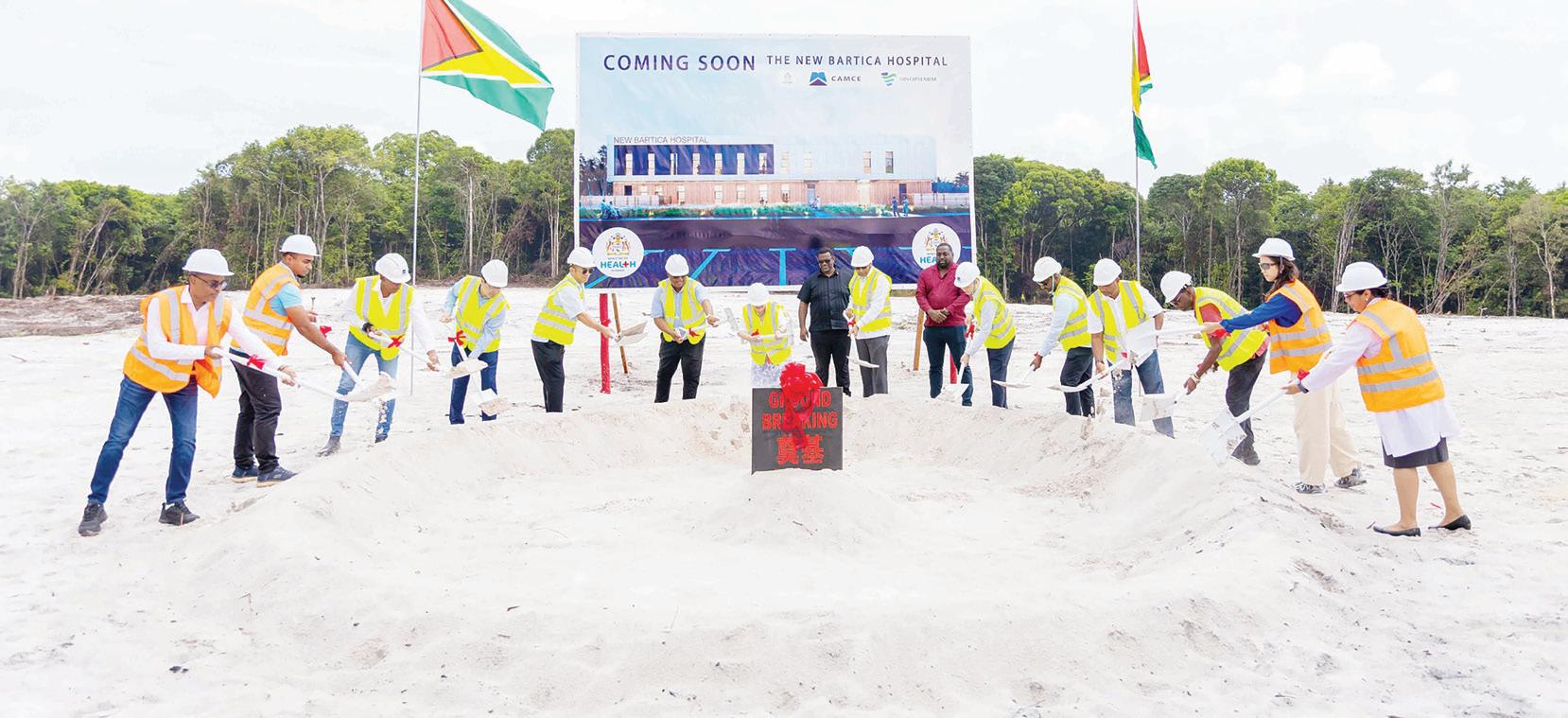
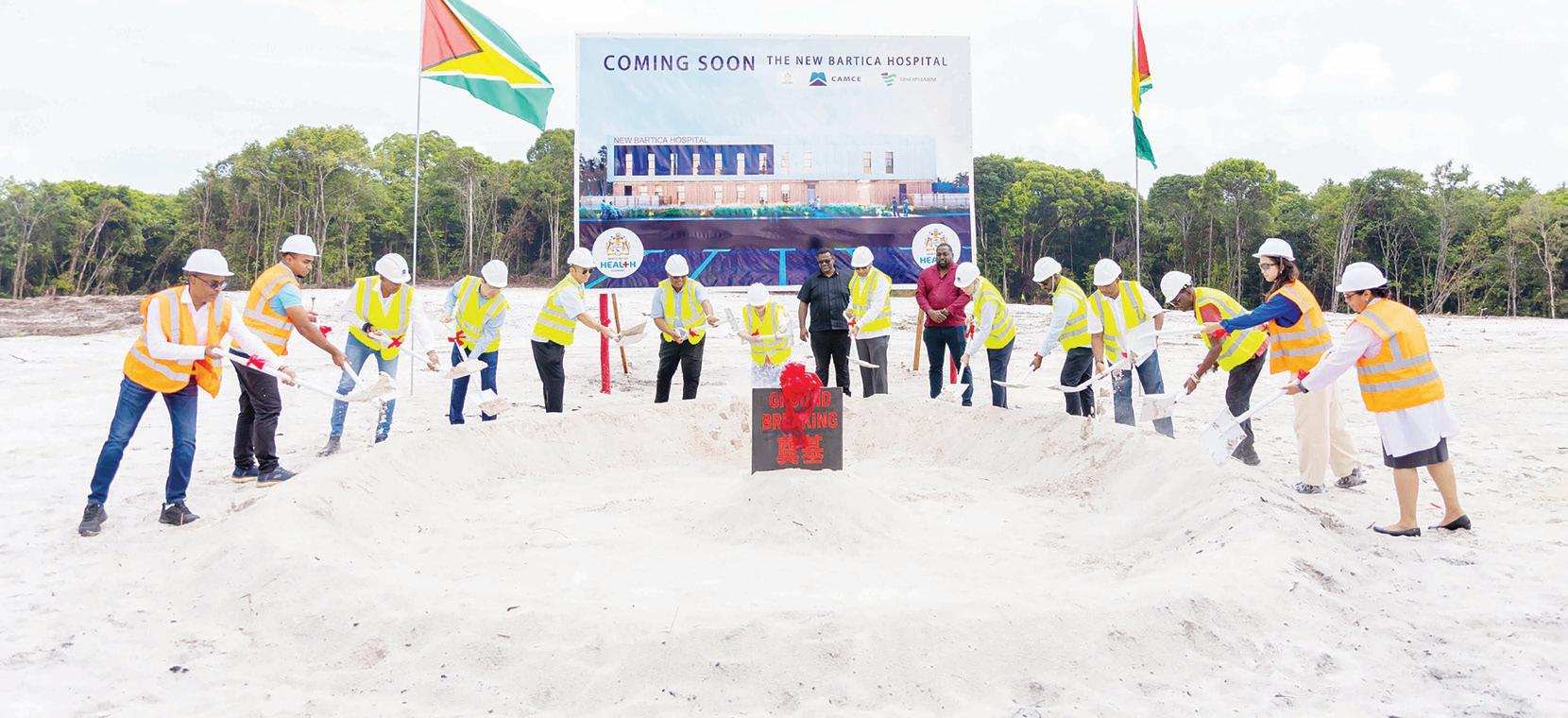
The Health Ministry on Saturday officially turned the sod for the construction of a new regional hospital in Bartica, Region Seven (Cuyuni–Mazaruni).
The facility, valued at approximately $6.8 billion, is part of the Government's ongoing investment in strengthening the country’s healthcare system and expanding services to underserved areas. The facility is expected to be completed in 24 months.
Once completed, the Bartica Regional Hospital is expected to significantly improve access to medical care for residents of Region Seven and nearby communities. The project aims to reduce the need for patients to travel
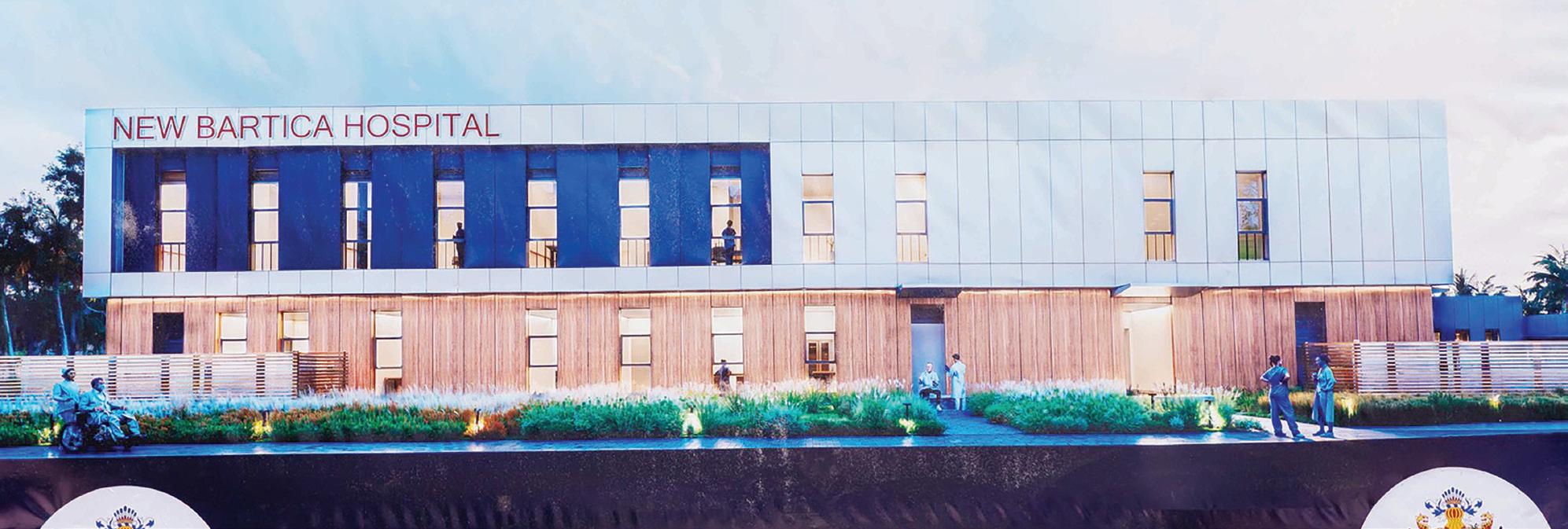
long distances to access specialised treatment. According to the Ministry, the hospital will be equipped with modern infrastructure to support a wide range of services. These in-
clude upgraded emergency care, enhanced diagnostic capabilities, surgical theatres, and dedicated maternal and child health services. Improved inpatient facilities are also planned as part of the development. The hospital is designed to deliver both primary and secondary healthcare services in a single location, allowing for more coordinated and efficient treatment.
Over the past five years, Guyana has significantly expanded its healthcare infrastructure, with a major focus on building several new regional hospitals across multiple regions.
Among these are Diamond Regional Hospital, Region Four (Demerara–Mahaica); Enmore Regional Hospital, East Coast Demerara; Bath Regional Hospital, Region Five (Mahaica–Berbice); No. 75 Village Regional Hospital, Region Six (East Berbice–Corentyne); De Kinderen Regional Hospital, Region Three (Essequibo Islands–West Demerara); and the Lima Regional Hospital, Region Two (Pomeroon–Supenaam).
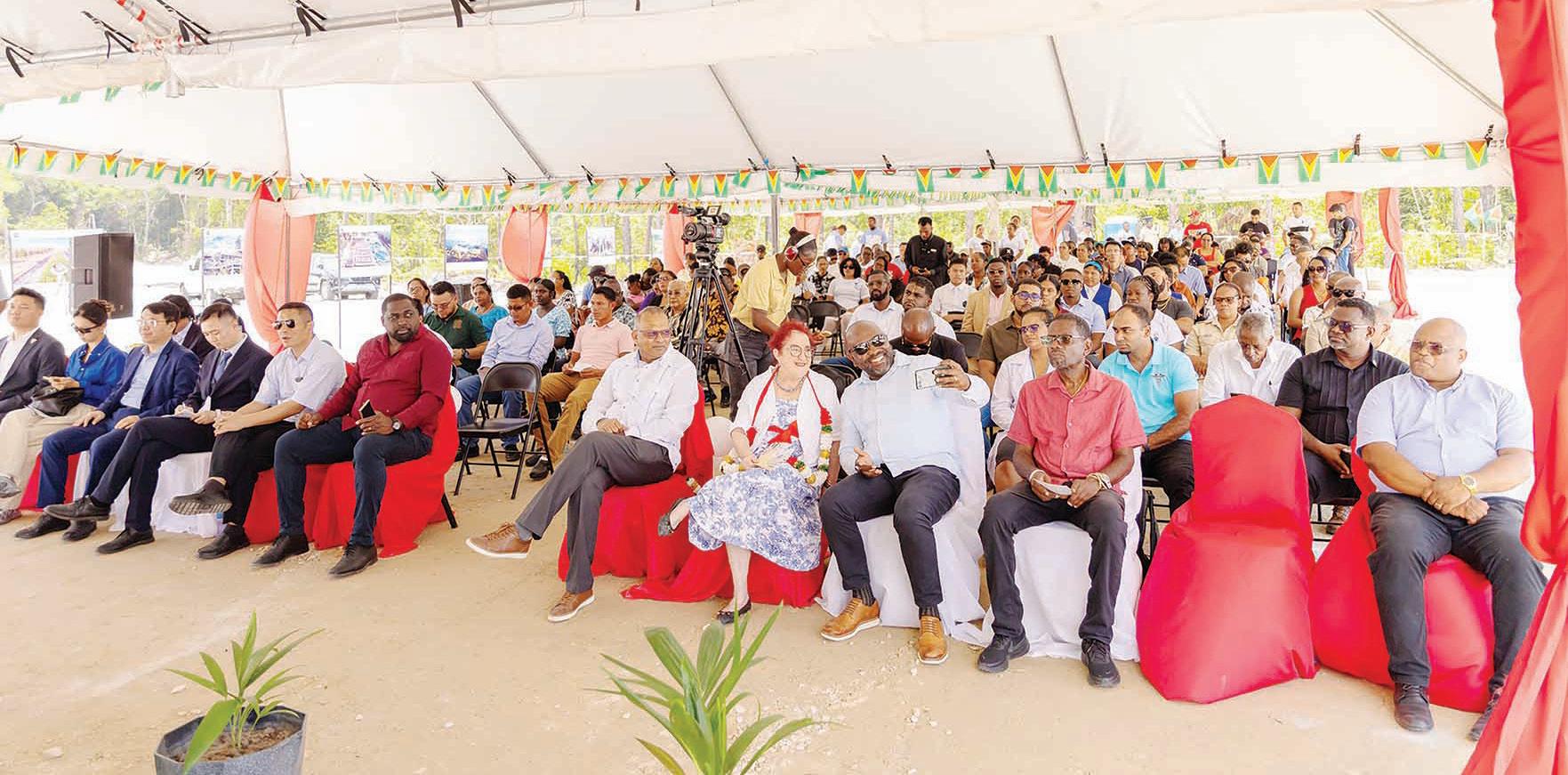
Health Minister Dr Frank Anthony and Governance and Parliamentary Affairs Minister Gail Teixeira among the gathering at Bartica on Saturday
Enormous opportunities for light manufacturers...
With these to come on stream, President Ali underscored the importance of partnerships with Guyanese and Trinidadian companies.
“In this region, the time is now for us to reimagine our business structures. Consortiums and partnerships are what the future requires because the future requires scale. The future requires diversification of risk. And that is what partnership and consortium allow us to do,” he told stakeholders during his feature address at the T&T Chamber’s Business Meeting on Friday.
The Guyanese leader pointed out that Trinidad’s energy maturity coupled with Guyana’s infrastructure can be leveraged to exploit opportunities in energy-intensive manufacturing, petrochemical synergy, digital and artificial intelligence (AI), refining and monetisation. He stressed that exploring new investments is critical, especially given the Twin Island Republic’s
diminishing oil and gas reserves.
“When you look at the reality of energy costs in Trinidad and Tobago and the policy agenda of where that will be in the future, it tells the manufacturers that you need, maybe, to invest a bit in other markets to mitigate the risk and also open up new opportunities. So, those things must be taken into consideration in building out the partnership,” the President stated.
Moreover, given the current geopolitical events around the world and the impact that the ongoing Middle East war has had on energy resources globally, Ali emphasised that the two Caribbean nations need to take advantage of the opportunities this presents and pool their resources to ensure energy security within the region.
“So, how do we coordinate our efforts in building out a shipyard, shipbuilding opportunities… How do we leverage the energy for this?
Now, let us not think that this is beyond us… Let us start the conversation. And then it leads to what would make it work? What are the incentives that will make it work? What are the global partnerships that would allow it to work?”
Future-proofing
According to the Guyanese head of state, such collaborations would allow Guyana and Trinidad to future-proof their respective economies by building advanced industries to meet the needs of the region. “We must not be afraid of complex problems or complex industries. The time has come for us to leverage our knowledge, buying knowledge where it’s necessary, and address complex opportunities. We have to remove ourselves from inward-looking policies and look at future-proofing our businesses and our economy. We have to look at how energy will power the future markets and allow us to position our-
selves [for] the future market…”
“We have to re-engineer our processes. We have to look at innovative opportunities, market twinning, and transport reliability. We have to look at seam-
less borders, smooth enough to build partnerships and strong enough to keep the bad actors out. We have to stop hiding under bureaucracy, and we have to realign our laws and policies and deal with the issues of
trade barriers. So, together, I believe if we are willing to make this step in a bold, creative and innovative way, we will be doing justice for the future generations and future-proofing our economy,” President Ali asserted.
Around the World
T&T Govt working with UK to get visa requirement overturned
The United National Congress (UNC) Government has been working consistently – up to a March meeting – to have the UK visa imposition overturned, says Foreign and Caricom Affairs Minister Sean Sobers.
And Sobers says it had cost the UK Government 65,000 pounds sterling to handle each claim by the floods of T&T asylum seekers over 2024 – and this was among the reasons for the visa imposition.
Sobers disclosed this while piloting a border security bill in Parliament yesterday.
This provides a framework for the collection, transmission, sharing, storage and regulation of Advance Passenger Information and Passenger Name Record concerning people enter-
ing, departing and transiting through T&T. It also operationalises the Caricom Advance Passenger Information System.
Information will be shared with international jurisdictions, including Interpol. The bill enables authorities to identify highrisk persons before arrival/ departure via the coordination of intelligence on individuals in human trafficking, narcotics smuggling, organised crime and terrorism.
The bill was passed with unanimous Government and opposition support.
Addressing queries about the Government’s actions on the UK visa issue, Sobers noted the UK’s position that its visa was introduced based on a significant increase in T&T nationals applying for asylum in the
UK, with the first trend in November 2024.
Sobers cited a January 2025 meeting of Caricom’s IMPACS agency and the UK’s Home Office and National Crime Agency, where UK authorities cited the dramatic increase in T&T nationals applying for asylum.
“...From an average of 15 to 20 persons monthly to 40 to 59 persons in the last few months of 2024,” Sobers said.
He added that UK concerns included a spike in the number of T&T asylum seekers from 240 to 350 annually – with over 100 applying in December 2024 alone. Asylum claims seemed opportunistic in nature, and most weren’t legitimate and therefore were denied. (Excerpt from Trinidad Guardian)
Brazil announces US partnership to intercept weapons, drug trafficking
he
TBrazilian Government has announced a new security partnership with the United States to combat criminal networks, as well as the illicit traffic of drugs and weapons.
In a social media post on Friday, Brazil’s President Luiz Inacio Lula da Silva called the deal a breakthrough.
“Brazil and the United States today established unprecedented cooperation between the Brazilian Federal Revenue Service and US Customs,” he wrote on social media.
“We will intensify the fight against international arms and drug trafficking through concrete actions.”
Some of those “concrete actions”, he said, will include “real-time data sharing, rigorous cargo tracking and joint operations to intercept illicit shipments”.
Separately, a statement from the Brazilian Revenue Service said the deal would result in the “continuous flow of information from US authorities to their Brazilian counterparts”.
The operation, according to Lula’s Government, will be called the DESARMA programme.
Brazil’s Finance Minister Dario Durigan hailed the collaboration with US Customs and Border Protection (CBP) as an “important step in strengthening international cooperation” against crime.
“This initiative will integrate intelligence and joint operations to intercept arms and narcotics trafficking, thereby reinforcing security and coor-
dinated action between the two countries,” he said on social media.
Friday’s deal is the latest collaboration inked between the administration of US President Donald Trump and a Government in Latin America.
Trump has been on a campaign to crack down on criminal networks throughout the Western Hemisphere, and he has reached out to regional right-wing Governments to join his “Shield of the Americas” coalition. (Excerpt from Al Jazeera)
US–Iran negotiations underway; Trump says Strait of Hormuz being cleared
US and Iranian negotiators held their highest-level talks in half a century in Pakistan on Saturday to try to end their six-week war as President Donald Trump said his military was starting the process of clearing the Strait of Hormuz.
The talks in Islamabad were the first direct US–Iranian meeting in more than a decade and the highest-level discussions since the 1979 Islamic Revolution.
The Strait of Hormuz, a major transit point for global energy supplies that Iran has
effectively blocked but Trump has vowed to reopen, is crucial to negotiations between the sides during a two-week ceasefire agreed last week.
Iran’s semi-official Tasnim news agency said the waterway remains among the main points of “serious disagreement” in talks between Iranian and US delegations in Islamabad.
The US military said two of its warships had passed through the strait and conditions were being set to clear mines, while Iran’s state media denied any US ships had transited the waterway.
“We’re now starting the process of clearing out the Strait of Hormuz as a favour to countries all over the world,” Trump posted on social media. US Vice President JD Vance, special envoy Steve Witkoff and Trump’s son-inlaw Jared Kushner flew in on Saturday and met Iranian Parliamentary Speaker Mohammad Baqer Qalibaf and Foreign Minister Abbas Araqchi for two hours before a rest, according to a source from mediator Pakistan. (Excerpt from Reuters)
Pope Leo criticises Iran conflict: “Enough with war!”
Pope Leo XIV offered his strongest condemnation yet of the war in Iran, appearing to take multiple veiled shots at President Trump on Saturday, speaking out against military actions “some adults proudly boast about”.
The rebuke, during a prayer vigil for peace at St Peter’s Basilica, comes days after the pope said it was “truly unacceptable” for Mr Trump to declare that “a whole civilisation will die” if the Strait of Hormuz remains closed.
“Enough with the idolatry of self and money! Enough with the display of force! Enough with war! True strength is manifested in serving life,” Leo said, speaking in Italian.
The pope did not mention Mr Trump by name during the service.
“I receive many letters from children from conflict zones: reading them, one perceives, with the truth of innocence, all the horror and inhumanity of actions that some adults proudly boast about. Let us listen to the voices of children!” the pope said. Leo also appealed for leaders to engage in meaningful negotiations to end the US-Israel war with Iran amid a tense two-week ceasefire.
“Certainly, the leaders of nations have compelling responsibilities,” Leo said Saturday. “We cry out to them: Stop! This is the time for peace! Sit at the tables of dialogue and mediation, not at the tables where rearmament is planned and death is deliberated!” (Excerpt from CBS News)
Brazil’s finance Minister, Dario Durigan, speaks next to the Brazilian Federal Police Director General, Andrei Rodrigues
ARIES
TAURUS (April 20May 20)
You hold the power of choice. Reach out and take what’s yours and head in a direction that will soothe your soul and make you feel good about the contributions you make and the outcomes you achieve. Don’t pay for others’ mistakes; choose to use intelligence, not cash, to win your battles, and you’ll far exceed your expectations.
GEMINI (MAY 21June 20)
Refrain from sharing personal or financial information. Someone will monopolize your time and take advantage of you if you let them. Look through every lens possible and listen intensely. Question what’s possible and get what you want in writing before you commit. Choose your battles wisely. Charm is your weapon. Use it fairly and with intelligence. Be first to stand up for what’s right. Truth is paramount if you want to maintain your position and reputation. Walk away from gossip and those who tempt you to indulge in excessive behavior. Look for solutions that benefit those less fortunate, and you’ll pave your way to a higher position. Leave nothing to chance or unfinished.
CANCER
LEO (July 23Aug. 22)
VIRGO (Aug. 23Sept. 22) (March 21April 19)
LIBRA (Sept. 23Oct. 23)
SCORPIO (Oct. 24Nov. 22)
CAPRICORN (June 21July 22)
Stop before things get out of hand or run amok. Use your intelligence to navigate your way through conversations that can influence how others perceive you. Check out what’s possible and put more energy into bringing about positive change. Recognition will be yours if you stand up for those who can’t. Speak from the heart. You can’t please everyone, but you can offer validity and tell the truth. Let your voice lead the way, and your passion shine through. An opportunity to share your story or to bring light to a situation will soothe your soul. Gather knowledge and experience, and support will be the byproduct of doing the right thing.
A change will be uplifting. Take time to clear your mind and to assess what’s happening around you. Join forces with likeminded people, and someone you connect with will bring out the best in you. Trust your instincts, and your words and actions will help you bring about positive change. Romance is on the rise.
What’s familiar is in your best interest. Keep life simple, affordable, and surround yourself with those who support your interests. A partnership will encourage strength and the backup you require to get things done on time. Gauge what’s doable and what isn’t. Put your energy into learning, exploring, and incorporating what aids you most into your daily routine.
Emotions and impulse will clash if you aren’t careful. Choose your words carefully and let your wisdom and experience lead the way. Opportunity is apparent, and time is on your side. Be gracious, humble, and alert, and you’ll bypass any problems or interference that might cramp your style. Choose peace and progress over uncertainty and chaos.
SAGITTARIUS (Nov. 23Dec. 21)
A change of heart will point you in a different direction. Look inward, assess, and confront your health, wealth, and contractual ties. A change will help clear your head and rethink your future. Home is where the heart is, and comfort will help you find your way forward. Stick to what feels right and works best for you.
AQUARIUS
(Jan. 20Feb. 19) (Dec. 22Jan. 19)
PISCES
(Feb. 20Mar. 20)
Keep your plans simple and affordable. Conversations will carry weight but also give rise to temptation, uncertainty, and stress. Step back and consider how you can participate without jeopardizing your health, reputation, or emotional well-being. A change of scenery or social networking will offer a unique perspective. Make comfort and peace of mind your goal. Choose peace. Get your financials on track and a plan in place. Refuse to let your emotions and desires take precedence when it comes to spending and saving. Put your energy into positive change, decluttering your space and life, and discovering what it’s like to live a peaceful, mindful life, and discover your emotional and financial safe place.
Intelligence and smart moves will save the day. Don’t share too much information or give others a reason to question you. A chance meeting with someone at a social event will lift your spirits and offer insight into options you had yet to consider. Collect your thoughts, rearrange your plans, and follow the protocol necessary to forge ahead.
Peanuts
Calvin and Hobbes
Pickles
Sanju Samson, Jamie Overton deliver first points for CSK
Sanju Samson’s first century for Chennai Super Kings (CSK) set up the team’s first win in the Indian Premiere League (IPL) 2026 and their first win at home after six successive defeats, stretching back to the previous season.
Samson flew out of the blocks in the power play, scoring 45 of CSK’s 61 runs in the first six overs. He had over 32,000 fans whistling at Chepauk when he reached his half-century off 26 balls. He had those fans whistling louder and chanting his name when he converted it into a 52-ball century.
A fifty from Ayush Mhatre, before he was retired, and a cameo from Shivam Dube took CSK up to 212 for 2. That total, however, appeared smaller when the Delhi Capitals (DC)’s openers Pathum Nissanka and KL Rahul blazed past fifty in the fourth over of their chase. CSK then struck thrice in the next three overs to send the chase spiralling out of DC’s control.
Though Tristan Stubbs battled with 60 off 38 balls, the mounting asking rate was too much to overcome. Jamie Overton’s four for 18, which included the prized scalp of Stubbs, was central to CSK’s successful defence.
After CSK was asked to bat first, Samson scythed the second ball he faced from debutant Auqib Nabi for four. He never let his attacking intent or enterprise let up in the powerplay, crashing a total of nine fours in 19 balls in the powerplay. In stark contrast, Ruturaj Gaikwad managed to find the boundary just once in 17 balls during this phase.
Gaikwad’s first-15-ball strike rate of 104.54 in four innings this season is the lowest among 20 batters who have opened at least twice.
When Gaikwad was itching to break free after the powerplay, Axar Patel darted one into the red-soil pitch and cramped the batter on the pull, having him splice a catch to deep midwicket for 15 off 18 balls.
Lungi Ngidi’s slower ball, which he developed during his time at CSK under Dwayne Bravo, has made a number of batters look silly in this IPL and the T20 World Cup prior to it. But when Ngidi pulled out the variation for the first time on Saturday, Samson picked it, held his shape for long enough and flayed it away past sweeper cover. When Ngidi responded with an on-pace short ball outside off, Samson opened the face of the bat and dinked it between the keeper and short third for four more.
But it wasn’t until the 11th over that he hit a six, which was also CSK’s first six on the day. When T Natarajan missed a yorker and bowled a full toss, Samson slugged him high and far over midwicket. In all, Samson took the left-arm seamer for 33 off 13 balls. It also included the edged four that brought him his hundred in the 18th over.
This was Samson’s fourth tonne in the IPL. Only Virat Kohli (eight), Jos Buttler (seven), Chris Gayle (six) and KL Rahul (five) have hit more hundreds than Samson in the league. DC could’ve cut Samson’s knock short on 52 had Nissanka not dropped a catch at long-off.
Mhatre raised his fifty off 27 balls but
was retired out after he managed only eight off his last nine balls. Samson and Dube then combined to push CSK past 210.
The presence of three right-handers in DC’s top three encouraged CSK to bring in left-arm finger-spinner Akeal Hosein as their impact player. Hosein, though, showed signs of early nerves, bowling two front-foot no-balls in the first over of the chase. One of the resultant free hits was swiped over midwicket for four by Nissanka. Hosein ended up conceding 20 runs in his two powerplay overs and didn’t return to bowl.
Nissanka also lined up left-arm seamer Khaleel Ahmed for a pair of fours and a six in the second over. Rahul moved to 18 off 10 balls before Khaleel stopped him in his tracks with a short ball into the pitch. Despite that, DC scored 61 in their first five overs.
At the start of the final over of the powerplay, Anshul Kamboj had Nissanka glancing the ball to Khaleel at short fine leg, but he shelled the chance. It didn’t cost CSK anything as Kamboj had Nissanka chipping it to mid-on, where Dewald Brevis, who had recovered from a side injury, held onto the catch.
Left-arm quick Gurjapneet Singh then marked his IPL debut with a first-ball wicket. He darted one short and wide, having Axar slice it to the point where Sarfaraz Khan dived to his right and plucked the ball out of thin air.
hard length and made life harder for DC’s middle order.
Stubbs then mounted a late fightback with a half-century and narrowed the equation to 32 off 12 balls. Overton, though, cranked it up to nearly 145kph and had him splicing a catch to mid-off in the penultimate over. Kamboj then finished off DC in the final over, sending a packed weekend crowd into raptures.
With one week remaining before the $10M Nitro Kart Clash, organisers have indicated that preparations are nearing completion, with the track layout already in place ahead of the April 18–19 event at the National Stadium Providence Parking Lot.
The event, which is being promoted as one of the biggest motorsport meets locally and the largest karting showcase in Guyana, will feature more than $10 million in cash and prizes. According to organisers, final touches to the circuit were expected to be completed, allowing competitors early access to familiarise themselves with the layout.
A spokesperson explained that the initiative to open the venue ahead of time is aimed at giving drivers and riders an opportunity to better understand the track’s surface and undulations. While the base design has been installed, organisers hinted at additional features that will only be revealed during race weekend.
The 0.6-kilometre circuit will host multiple racing categories, including the 200cc four-stroke Honda, Briggs 206 Heavy and Light, Briggs 206 Junior and Cadet divisions, as well as the 125cc IAME, Time Attack Open, and Supermoto Senior classes.
Several new categories have also been introduced to broaden participation. These
include the Briggs Rookie Over-35 class for non-professional racers, a Briggs female division, Supermoto Juniors, and an electric scooter race.
Beyond the on-track action, organisers are positioning the event as a family-orientated experience. Plans include a designated kids’ zone featuring trampolines and boun-
Overton then hit a hard length and had Sameer Rizvi holing out to deep midwicket for six off 19 balls. Overton kept hitting a
Summarised scores: Chennai Super Kings 212 for 2 (Samson 115*, Mhatre 59 retired out, Axar 1-39) beat Delhi Capitals 189 (Stubbs 60, Nissanka 41, Overton 4-18, Kamboj 3-35) by 23 runs. (ESPNcricinfo)
Nitro Kart Clash track nears completion
cy castles, alongside a full food court and concession area to accommodate patrons throughout the two-day programme.
The event, a concept developed by Jumbo Jet Events, has attracted corporate backing from several sponsors, including Banks DIH, AJM Enterprise, KP Jagdeo General Contractors, J’s Supermarket, Sawh’s
Construction Inc, Precision Service Centre, and Ramchand’s Autobody.
Gates will open at 13:00h on Saturday, with qualifying and free runs scheduled, while competitive racing is set to commence from 08:00h on Sunday. Admission is set at $3000 for adults, with children under 12 granted free entry.
Preparations for the Nitro Kart Clash are nearing completion, with the track layout already in place ahead of the April 18–19 event at the National Stadium Providence Parking Lot
Sanju Samson brought up a century (BCCI)
Team Shivraj secures multiple podium finishes at Bartica '26
Team Shivraj delivered an impressive performance at the recently concluded Bartica Easter Regatta 2026, standing out among fierce competition and proving their determination on the water.
Despite facing significant horsepower disadvantages in some categories, the team demonstrated grit, skill, and technical preparation throughout the weekend’s racing activities.
Sanjay Ramkissoon highlighted the intense challenge faced in the prestigious Formula One category.
ture events,” Ramkissoon added.
“The most challenging category was the F1 races, because we had a 120hp engine racing with two other 280hp engines, but we still managed to get a second in the race.”
Competing against nearly double the engine power, Team Shivraj’s second-place finish in the Formula One division was widely regarded as one of the event’s standout performances.
In preparation for the regatta, the team invested heavily in upgrades and mechanical improvements to boost performance.
“We bought a lot of new parts and did a lot of modifications just to get at least 3 to 4 km/h more in speed. Overall we did our best and will be doing a lot of adjustments to improve for fu -
Throughout the regatta, Team Shivraj secured multiple podium finishes across various categories, reinforcing their reputation as one of the competitive teams on the circuit. Their consistency across horsepower classes demonstrated both versatility and teamwork.
As the engines cool following the Easter weekend excitement, Team Shivraj have already signalled their intention to return stronger, with further refinements and adjustments aimed at climbing to the top of the podium in future events.
At the Bartica Easter Regatta 2026, Sanjay Ramkissoon delivered a commendable performance, securing second place in the Formula One category (Race Four) to
earn $300,000 and capturing first place in the 25–40 Horsepower class (Race Six) for $150,000.
Shivraj Ramkissoon showcased remarkable consistency across multiple categories, winning the 25–40 Horsepower race (Race One) for $150,000, while also claiming second-place finishes in the 75–90 Horsepower class races (Races Two and Seven), earning $150,000 each; second place in another 75–90 Horsepower race (Race Thirteen) for $150,000; and second place in the 115–200 Horsepower category (Race Three) for $200,000.
Meanwhile, Steve Satya dominated the 75–90 horsepower division, capturing first place in both Race Seven and Race Thirteen, earning $200,000 in each event and solidifying his strong presence in the category.
Kumar confirmed for Nitro Kart Klash
Luis Kumar's confirmed participation aims to excite fans and build anticipation for the upcoming Nitro Kart Clash on April 19 at the National Stadium. The new track layout at the stadium is designed to challenge drivers and spark spectators' curiosity about how the race will unfold.
"This will be a new challenge for all the drivers," Kumar stated. "It's a brand-new layout, and everyone will start from scratch. With less than a week of practice time avail -
able, it's a challenge I truly welcome." Kumar has already been studying the course blueprints, and his initial assessment suggests a gruelling day behind the wheel. "I have seen the layout so far, and the track looks like a challenging one. It will be important to get as much data as possible before race day."
The event, set for April 19 at the National Stadium, is being hailed as the most ambitious karting spectacle in the nation's history, transforming the stadium grounds into a high-octane
arena reminiscent of an F1 street circuit. The scale of the event is bolstered by the involvement of the Jumbo Jet team, who are expected to provide a premium experience for spectators.
"Overall, this will be the biggest karting event ever hosted in Guyana," Kumar added. "With the Jumbo Jet team and their hospitality area, I encourage all the fans to come out. The atmosphere is going to be incredible." He will be driving the 619 Boost High Octane Kart in the Honda GX200 class.
TGeorgetown Cricket Club announces major sponsorship with SuperBet
he Georgetown Cricket Club (GCC) has officially entered into a five-year sponsorship agreement with Guiana Holding Inc, operating locally as Superbet GY, marking a significant milestone in the club’s continued development.
The partnership was formally announced and celebrated on April 9 at the historic GCC ground.
Representing GCC at the signing ceremony were Secretary Timothy Bhagwandin and Board Member Keon Howard, who signed the contract on
present for the occasion was first division skipper Ronaldo Ali Mohammed, underscoring the importance of the partnership to the club’s players and leadership alike.
As part of the agreement, Superbet GY made a contribution of GY$2.5 million to support the club’s programmes and operations. The sponsorship is expected to provide crucial financial backing for player development, facility enhancement, and overall club activities over the next five years.
Superbet representative
tions.
“Today marked a milestone between Superbet and GCC in the formality of agreement and commitment, with us signing a contract in terms of sponsorship,” Hussain said.
“We are happy that you have come on board with us to partner up and to have this roll out in terms of support, commitment and giving back to the players.” Club officials expressed gratitude for the partnership, noting that corporate support remains vital to sustaining and advancing cricket at the community and competitive levels.
Tucber Park, Rose Hall, Canje congratulate U19 players on Inter-County selection
New Amsterdam/ Canje-based cricket clubs Tucber Park and Rose Hall Canje Community Centre Ground continue to produce cricketers at all levels.
The two clubs recently saw nine Under-19 players gaining selection to the inter-county teams, playing for Berbice and the Guyana Cricket Board Select XI, respectively.
Tucber Park Cricket Club extended con -
gratulations to Micah Amsterdam, Gilbert Griffith Jr, Antonio DePaul, and Thierry Henry on their selection in the Berbice Under-19 squad, while Jayhayden Rohleher will turn out for the GCB Select XI.
Meanwhile, Rose Hall Canje extended congratulations to Romario Ramdeholl on being appointed Captain of the Berbice team, and Adrian Hetmyer on being appointed Vice Captain.
Special congratulations were also extended to Michael Newland Jr on his maiden inter-county call-up. The young Newland will turn out for the Select XI. The GCB Under-19 Inter-County bowls off today, Sunday, April 12, with Berbice taking on President’s XI at Police Sports Club while defending champions Demerara will square off against hosts Essequibo at the Jagmohan Ground.
Joshua Hussain
GCC board members and Superbet representatives at the contract signing
Luis Kumar will be driving the 619 Boost High Octane Kart in the Honda GX200 class
Steve Satya is collecting his award
GBF 3x3 Championship tips off today at Cliff Anderson Sports Hall
The Guyana Basketball Federation (GBF) will stage its National 3x3 Championship today at the Cliff Anderson Sports Hall, with action set to tip off from 14:00h as 10 teams compete for top honours in the fastpaced format.
The tournament will see teams vying for a total prize pool, with the champions set to pocket $300,000, while second- and third-place finishers will receive $200,000 and $100,000, respectively. The event is expected to deliver a competitive showcase of 3x3 basketball, which continues to grow in popularity locally.
Organisers have implemented a structured format aimed at maximising competition. The 10 participating teams have been divided into two groups of five, with each group contesting a round-robin phase. At the conclusion of the preliminary stage, the top two teams from each group will advance to the semi-finals, with the winners progressing to the final to determine the inaugural champion.
Beyond the immediate stakes, the championship is also being viewed as a key step in the development of the sport in Guyana. According to GBF
Vice President Rawle Toney, the tournament forms part of the country’s preparation for the upcoming Commonwealth Games.
Guyana is set to make its debut in 3x3 basketball at the Games in Glasgow, and the championship provides an important platform for players to showcase their abilities, gain competitive exposure, and position themselves for national selection.
Among the players expected to feature is Travis Belgrave, who will lead team Renegades into the competition.
Western Warriors capture maiden Good Friday Bash trophy
The rescheduled Good Friday 40Over Bash bowled off in exciting fashion on Saturday, April 11, at the historic Malteenoes Sports Club ground, where Western Warriors emerged as first-time champions of the tournament’s fifth edition.
The event, staged by One Movement Entertainment in collaboration with Ciarra's (B) Enterprise, attracted a lively crowd eager for competitive cricket after the Good Friday fixture was postponed.
Winning the toss and opting to bat, South Raiders struggled to build meaningful partnerships and were bowled out for 130 in 31.2 overs. Despite a promising start, wickets fell at regular intervals, preventing the batting side from gaining momentum.
Lower-order batsmen Nityanand Mathura and Nitini Permaul top-scored with 23 runs each, providing some resistance after the top order faltered.
2026 Independence 3-stage Cycling Race set for May 23-24
The Guyana Cycling Federation will stage the 2026 Independence three-stage Cycling Race on May 23 and 24, with action set to span Regions 10, Four and Three, in what is expected to be one of the feature events on the local cycling calendar.
The two-day meet will feature three stages, beginning with the Linden “Out and Back” race, a 75-mile route from Linden to Yarrowkabra and back. The second stage will be the Coastal Race, covering 55 miles from Independence Arch through Ogle, the Berbice Bridge corridor, Parika and Schoonard. The event will conclude with a circuit race, which will cover 41.6 miles at approximately 2.6 miles per lap.
Organisers have again designed the
race to test endurance, speed and race management across varied terrain, with the three stages combining long-distance road racing and shorter, high-intensity circuit action. At the end of the programme, one overall champion will be crowned.
The event is being held under the auspices of the Guyana Cycling Federation with support from the National Sports Commission and is expected to attract a strong field of local and regional riders.
Among those likely to headline the event is defending champion Mateo Garcia Castaneda. The Colombian cyclist, who rides for Trinidad and Tobago’s Raiders Cycling Club, dominated the 2025 edition with a clean sweep of all three stages.
The triumph marks a historic moment for Western Warriors, who were crowned champions for the first time in the tournament’s five-year history, capping off a disciplined all-round performance in front of their supporters at the MSC ground.
Western Warriors’ bowlers shared the spoils in a disciplined display. Stephon Wilson, Mervin Permaul, Joshua Ferrell and Feyaad Lekhraj each claimed two wickets, keeping the Raiders’ scoring in check and ensuring the target remained within reach.
Chasing 131 for victory, the Warriors approached the task with composure. Ushardeva Balgobin set the tone early with a confident 28, laying the foundation for the run chase.
Brandon Jaikaran anchored the innings with a patient 31 off 73 balls, while Jeremiah Hohenkirk added a fluent 35 from 48 deliveries to keep the scoreboard ticking.
With the target in sight, Joshua Ferrell and Owen Andrews calmly guided the team home as Western Warriors finished on 131 for five in 31.1 overs to seal a five-wicket victory.
Junior Sinclair contributed 20, but the lack of substantial partnerships ultimately proved costly.
Western Warriors skipper Joshua Ferrell with the Good Friday 40-Over Bash trophy
Flashback: Director of Sport Steve Ninvalle presented the trophy and prize money to 2025 overall winner Mateo Garcia Castaneda as second- and third-place finishers Janian Neaves (left) and Robin Persaud (right) look on
Travis Belgrave will lead team Renegades in the GBF 3x3 Championship
TGCB U19 Inter-County Championship bowls off today
Action will continue on Tuesday with Demerara opposing the Select XI at Lusignan, and Berbice coming up against Essequibo at the Police Sports Club Ground.
he Guyana Cricket Board (GCB) has announced the squads for its annual Under-19 Inter-County Championship, which is set to bowl off this weekend with matches scheduled across Essequibo and Demerara.
The tournament will commence today, with a double-header. Essequibo will take on Demerara at the Joe Jagmohan Ground on home soil, while Berbice will face the Select XI at the Police Sports Club Ground in Georgetown.
Following a rest day on Wednesday, the competition resumes on Thursday with Demerara clashing with Berbice at the Police Sports Club, while Essequibo faces the Select XI at Lusignan. The tournament is scheduled to conclude with the final on Saturday, April 18.
Four teams – Demerara, Berbice, Essequibo and the Select XI – will compete for the title in what is expected to be a competitive showcase of the country’s emerging cricket talent. The championship continues to serve as a key platform for youth
development, provid ing players with the opportunity to gain match experience at a higher level.
Demerara will be led by Dave Mohabir with Parmeshwar Ram as his deputy, while Berbice will be Captained by Romario Ramdeholl with Adrian Hetymer serving as Vice Captain. Essequibo will be under the leader ship of Nicholas Lovell, and the Select XI will be Captained by Joshua Budram with Tameshwar Deonandan as Vice Captain.
The Berbice squad reads: Romario Ramdeholl (Captain), Adrian Hetymer (Vice Captain), Antonio DePaul, Vishal Williams, Shoaib Gaffoor, Nathaniel Ramsammy, Richard Ramdeholl, Thierry Henry, Feaz Baksh, Gilbert Griffith, Asif Marimutoo, Arif Khan, Rafeal McKenzie, Razam Koobeer, and Micah Amsterdam.
The Essequibo squad reads: Nicholas Lovell (Captain), Darwin Joseph, Elesia Ramdat, Jathniel Nurse, Darius Pearson, Romario Bholo, Eron Benjamin, Justin Dowlin, Bomesh Lall, Murali Seodat, Dennis Crossman, Ravesh Singh, Shazim Mohamed, Navendra Sankar, and Zandon Rose. The Select XI squad reads: Joshua Budram (Captain), Tameshwar Deonandan (Vice Captain), Munesh Outar, Rupie Rajaram, Robin Seecharran, Yannick Newton, Munesh Rampersuad, Gibran Yacoob, Lakeraj Hemraj, Javhayden Rohler, Amit Rajran, Micheal Newland Jr, Linsdyl Harris, Reiad Ramnarine, Shazim Basheer, and Mark Daniels.
Harpy Eagles open title defence as West Indies Championship bowls off today
The 2026 West Indies Championship bowls off today with a revised format, as the region’s six franchises begin the first of three rounds of bilateral matches in what is expected to be a competitive season.
Reigning champions the Guyana Harpy Eagles will open their campaign against the Windward Islands Volcanoes in Antigua. The Guyanese franchise enters the contest with a strong record against their op-
ponents, having gone unbeaten in their last five meetings, which include three wins and a draw.
Their recent dominance has been underpinned by Captain Tevin Imlach, who struck centuries in each of the last two encounters between the sides to guide his team to convincing victories. With eight titles over the past decade, including three consecutive championships, the Harpy Eagles will be aiming to continue their hold on the compe-
tition.
On the other side, the Volcanoes are targeting improved results after finishing at the bottom of the standings last season. Led by Alick Athanaze, the squad has been strengthened by the inclusion of West Indies representatives Kavem Hodge, along with emerging talents Ackeem Auguste and Teddy Bishop, both products of the West Indies Academy.
Their batting unit will also feature for-
mer West Indies Under-19 Captain Stephan Pascal and experienced campaigner Sunil Ambris, who has represented the region across formats.
Guyana Harpy Eagles squad: Tevin Imlach (Captain), Kevlon Anderson, Tagenarine Chanderpaul, Richie Looknauth, Gudakesh Motie, Matthew Nandu, Keemo Paul, Raymond Perez, Veerasammy Permaul, Zeynul Ramsammy, Kemol Savory, Nial Smith, and Isai Thorne.
Essequibo Captain Nicholas Lovell
Demerara Captain Dave Mohabir
Berbice Captain Romario Ramdeholl
Reigning champions the Guyana Harpy Eagles will open their campaign against the Windward Islands Volcanoes in Antigua
Patentia Secondary and Charlestown
Secondary were among the winners when the Massy Under-18 Schools’ Football Championship continued on Saturday at the Queen’s College ground, with several matches decided both on the field and by walkover.
In one of the few fully contested fixtures, Patentia Secondary defeated Anna
Patentia, Charlestown secure wins as Massy U18 competition continues
Secondary. Nicholas Nieuelder opened the scoring in the 15th minute, while Adion Marks added a second in the 50th. Good Hope’s lone goal came from Standford Glen in the 40th minute.
West Ruimveldt
Secondary recorded a 2–0 victory over Zeeburg Secondary, courtesy of early and late goals from Dellon Philladelphia in the fourth minute and Donavan Welcome in the
Regina Secondary 2–1. Jerry Stephen had given Anna Regina the lead in the 18th minute, but Patentia responded through Malachi Hunte in the 23rd minute before Gerony Wells netted the winner in the 39th minute. Anna Regina’s Jayden Griffith was shown a yellow card in the 20th minute.
Charlestown Secondary also secured a narrow 2–1 win over Good Hope
52nd minute. Both teams had players cautioned, with Zeeburg’s Hasswan Sams booked in the 11th minute and West Ruimveldt’s Issey Williams receiving a yellow card in the 15th minute. Several other matches were decided via walkover. Yarrowkabra Secondary, East Ruimveldt Secondary, Lodge Secondary, Brickdam Secondary and Dolphin Secondary were all awarded wins after their respective opponents failed to
take the field.
The competition continues today at the same venue with more Round Three matches scheduled. At 10:30h, Charity Secondary will face New Central High, while Three Mile Secondary comes up against Annandale Secondary. At 12:15h, St John will oppose New Amsterdam Secondary, and Belladrum Secondary will meet Ann’s Grove Secondary. In the afternoon session, Mackenzie High School will play Carmel Secondary at 14:00h, alongside The Bishop’s High School versus Westminster Secondary. The final fixture of the day at 15:45h will see St Joseph High School taking on Chase’s Academic Foundation.
Guyana’s junior table tennis team arrives in Panama for South American Youth Games
Guyana’s national junior table tennis team arrived safely in Panama on Friday ahead of the 2026 South American Youth Games and wasted little time getting into preparation mode, completing their first practice session yesterday morning.
The Guyanese contingent are in high spirits as they gear up for competition against the region’s top youth players, with the table tennis segment of the Games scheduled to run from Monday, April 13, to 18. In the team events, Guyana will compete in the Under-19 Mixed Teams category, where they have been drawn in Group Two alongside Brazil, Peru and Bolivia. The group-stage format will see teams battling for qualification to the knockout rounds.
The Girls’ Singles division will feature Jasmine Billingy and Samara Sukhai. Billingy is scheduled to come up against Peru’s Luciana Granados in her opening encounter, while Sukhai will meet Ecuador’s Arianny Cardenas.
The tournament will bring together top junior players from across South America, including competitors from Venezuela, Argentina, Chile, Colombia, Ecuador, Paraguay and host nation Panama. With preparations underway and the draws now confirmed, Guyana’s players will be aiming to make a strong impression as they seek to advance through the respective categories and gain valuable international experience on the regional stage.
Guyana will also be represented in both the boys’ and girls’ singles divisions. In the Under-19 Boys’ Singles, Malachi Moore and Kayden Meusa will carry the nation’s hopes. Moore is set to face Argentina’s Franco Varela in his opening match, while Meusa is drawn against Brazil’s Davi Fujii in his first outing.
Part of the action between Charlestown Secondary (in blue) and Good Hope Secondary at the Queen’s College ground
West Ruimveldt Secondary scorers Dellon Philladelphia (left) and Donavan Welcome (right)
The goalscorers for Patentia Secondary, Fidel Abrams (left) and Malachi Hunte (right)
L-R: Guyanese team members Malachi Moore, Jasmine Billingy, Samara Sukhai, Kayden Muesa, and Coach Linden Johnson at the venue