

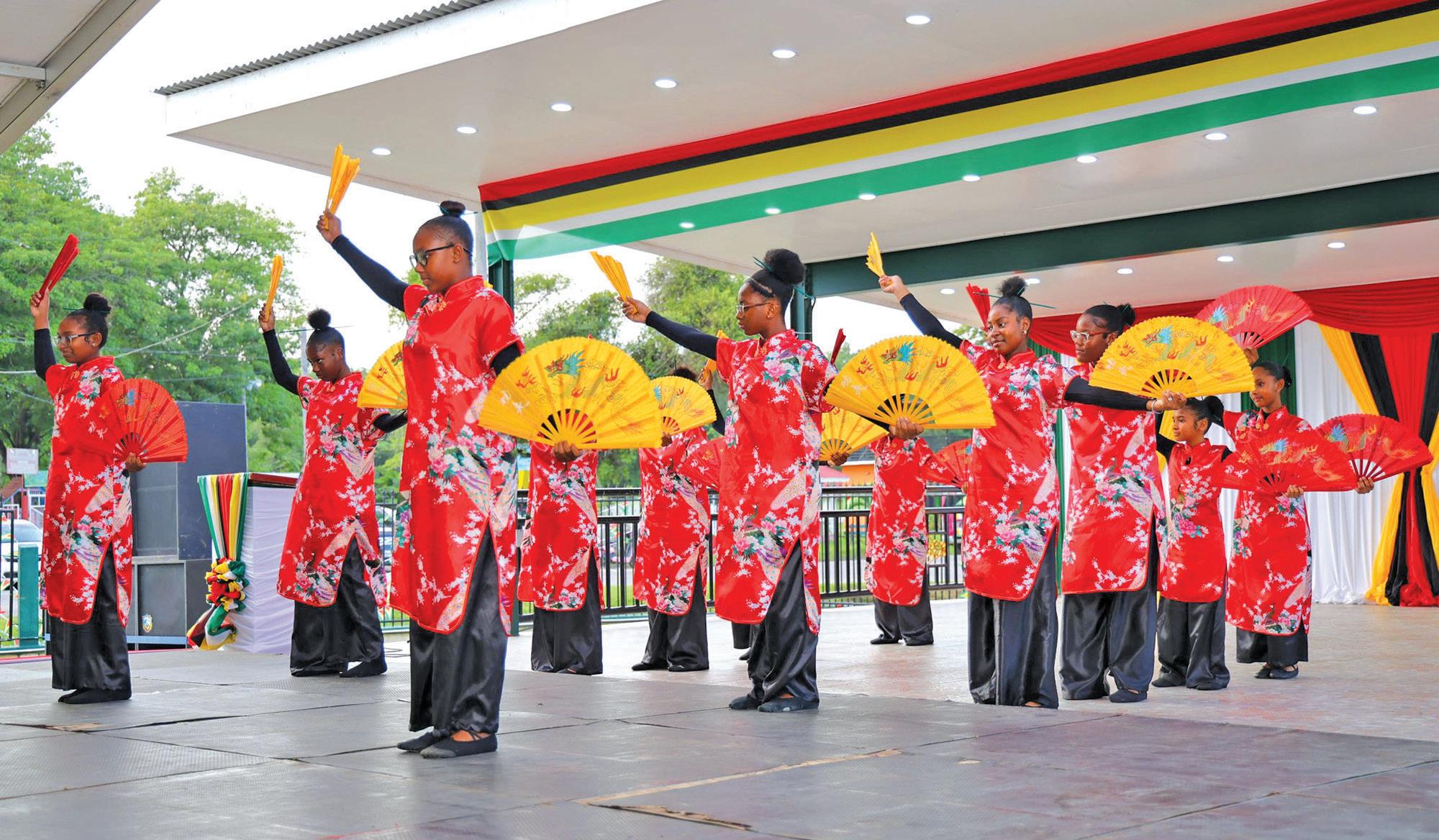
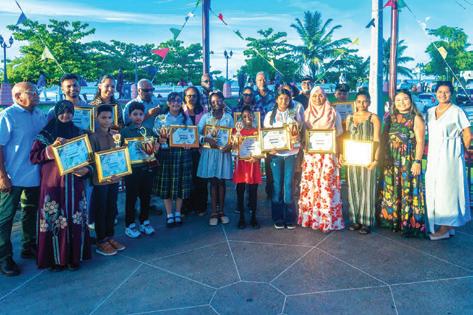


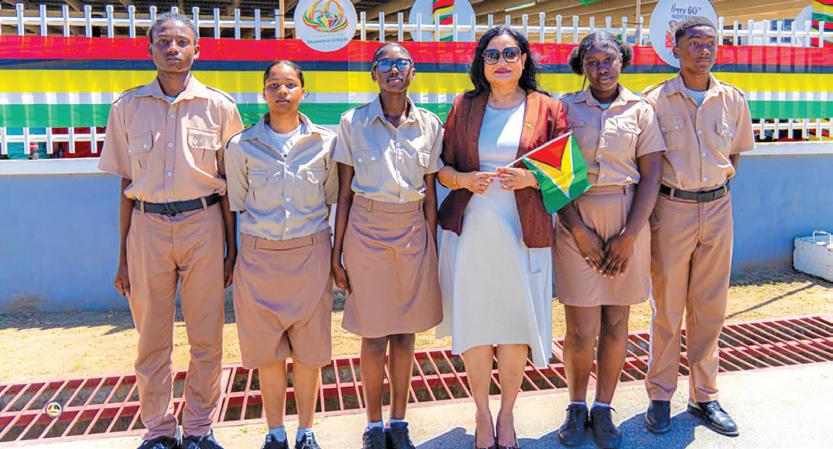



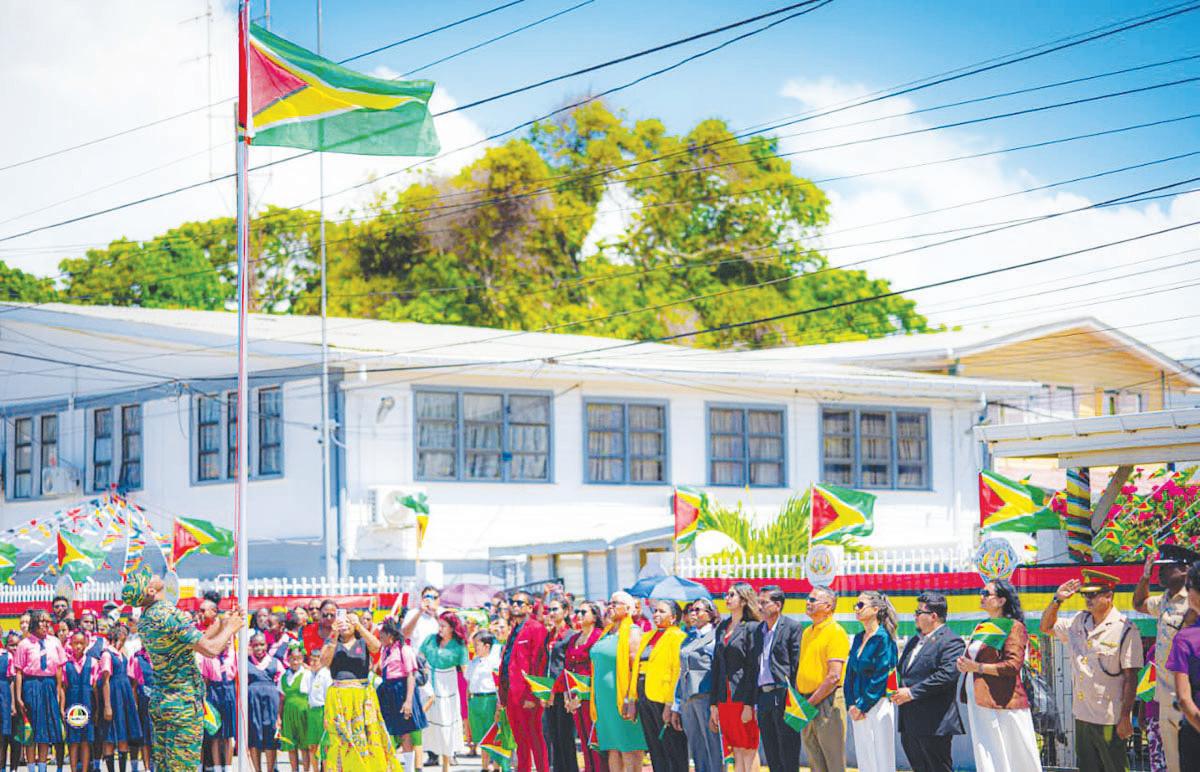
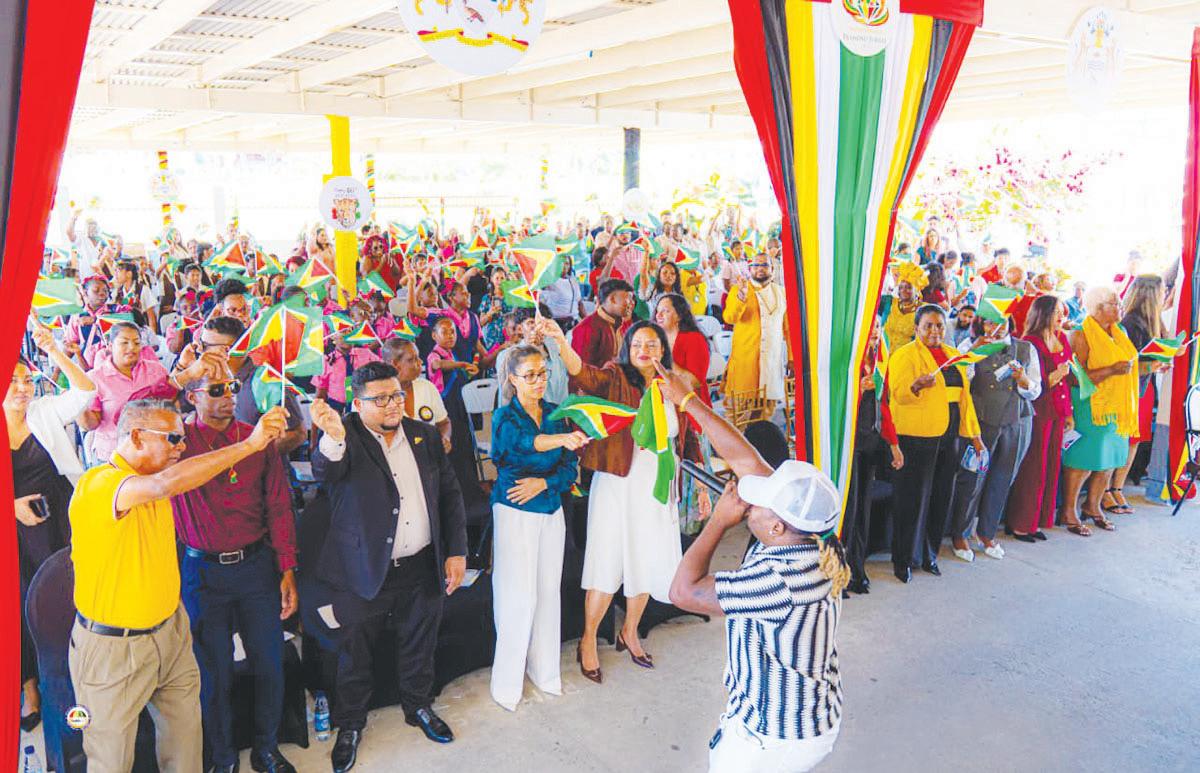
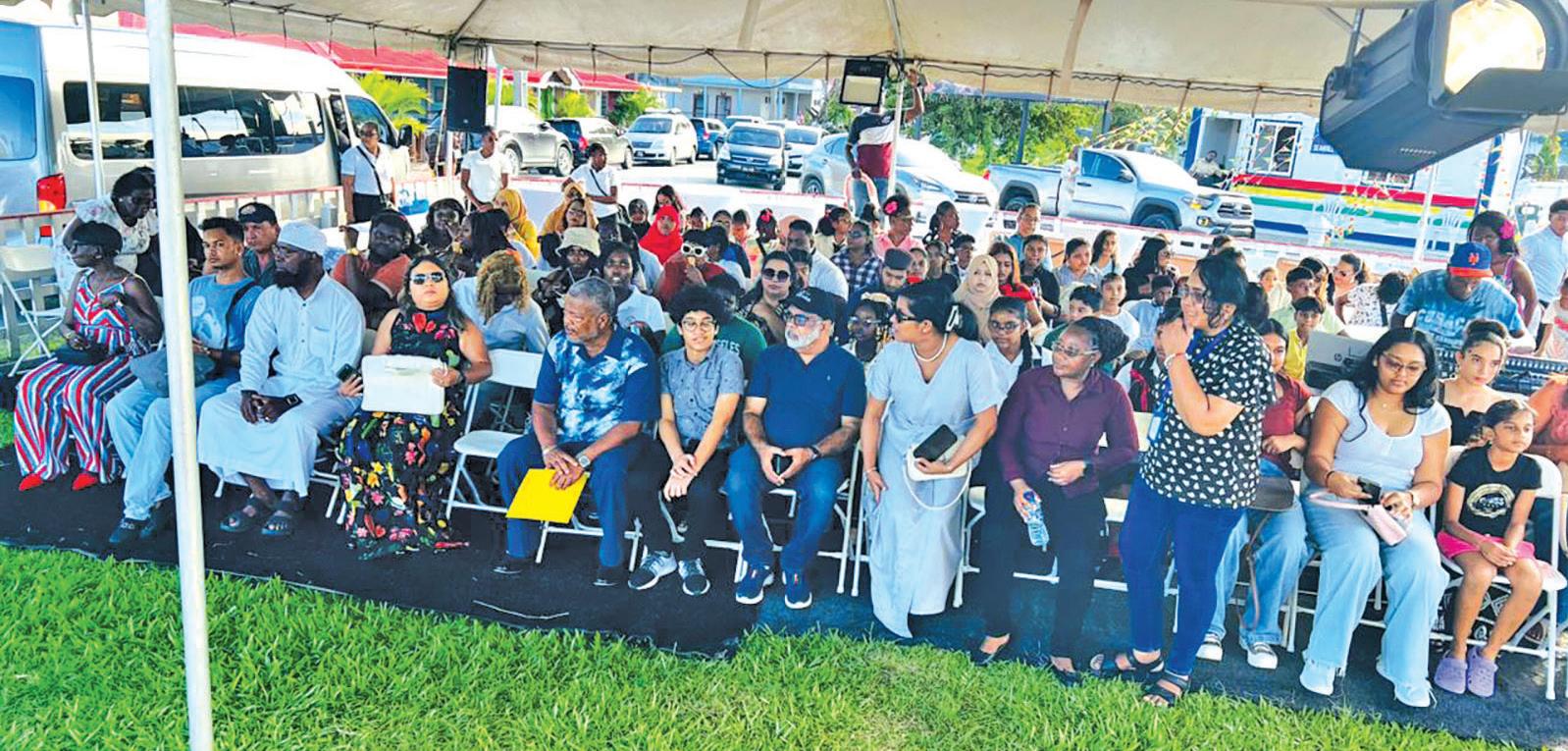
Students, members of the joint services, cultural groups and residents gathered at the Region Five (Mahaica-Berbice) Independence Flag Raising ceremony as Guyana marked its 60th year of Independence with calls for unity, national pride and collective nation building. Delivering the feature address, Human Services and Social Security Minister, Dr Vindhya Persaud urged Guyanese to preserve the spirit of togetherness, which she said has helped shape the country over the past six decades. “Our greatest strength is our unity as people,” Persaud declared as she warned against division and social fragmentation.
“We must never, ever let divisiveness affect us, whether mentally or as a people,” the Minister told the gathering. The ceremony featured cultural performances by students and community groups which reflects Guyana’s multicultural heritage, while members of the disciplined services participated in the ceremonial raising of the Golden Arrowhead. Persaud said the programme showcased “a bigger Guyana” and reflected the vision of “One Guyana” being promoted nationally. Reflecting on Guyana’s journey since Independence in 1966, the Minister said the country has evolved into a nation of opportunity and development. “No longer are
we a small country in South America that’s forgotten. We are a powerhouse of development, a powerhouse of opportunity and a land of equality,” she stated.
The Minister also used the occasion to encourage residents, particularly young people, to take advantage of opportunities now available through expanded education, infrastructure and social programmes. “Utilise the opportunities that are now, that those who came before you did not have, the opportunities of free education from nursery to tertiary, the opportunities for women to take their seat at every table and to lead,” she said. Persaud said Guyanese must continue building the
country by investing in national pride, compassion and mutual respect. “To build a land, we must build ourselves,” she said, while urging parents to teach children leadership, equality and respect for others. She noted that Guyana’s diversity remains one of its defining strengths and said the country continues to serve as an example of people from different backgrounds living and working together. “We stand as a model to the rest of the world because we have six peoples and with six peoples comes diverse culture, faith and traditions,” Persaud said.
As Guyana celebrates its Diamond Jubilee, the Minister urged citizens to honour the sacrifices of previous gener-

ations while ensuring future generations continue to build a united and prosperous country. “We will continue a legacy of development. We will continue a legacy of pride. And we will definitely be united in all
of this,” she told the audience. Guyana celebrated its 60th Independence anniversary on May 26 under the theme: “Expressing our Culture and Creativity as One Guyana.”


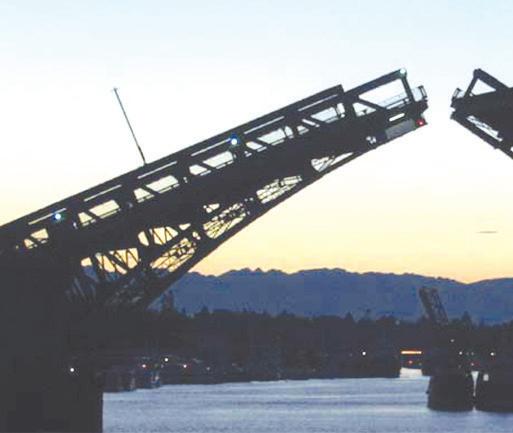
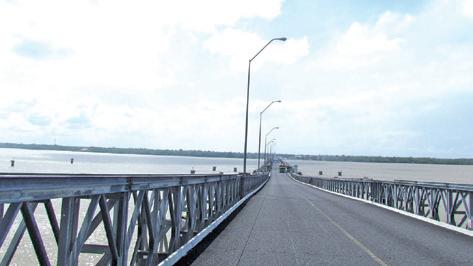
The Berbice Bridge will be closed to vehicular traffic on: Monday, May 25 –11:50h–13:20h and Tuesday, May 26 – 13:00h–14:30h.


Parika and Supenaam departure times – 05:00h, 10:00h-12:00h, 16:00h, 18:30h daily.




Sunny conditions are expected during the day, interrupted by thundery to light showers in the mid-morning to late-morning hours. Light to thundery showers are expected during the night. Temperatures are expected to range between 23 degrees Celsius and 30 degrees Celsius.
Winds: East-North-Easterly to Easterly between 3.58 metres and 5.81 metres.
High Tide: 12:17h reaching a maximum height of 2.23 metres.
Low Tide: 18:15h reaching a minimum height of 0.96 metre.










“True
also requires
maturity, national unity & social responsibility” – Pres Ali …attends thanksgiving service ahead of 60th Independence anniversary
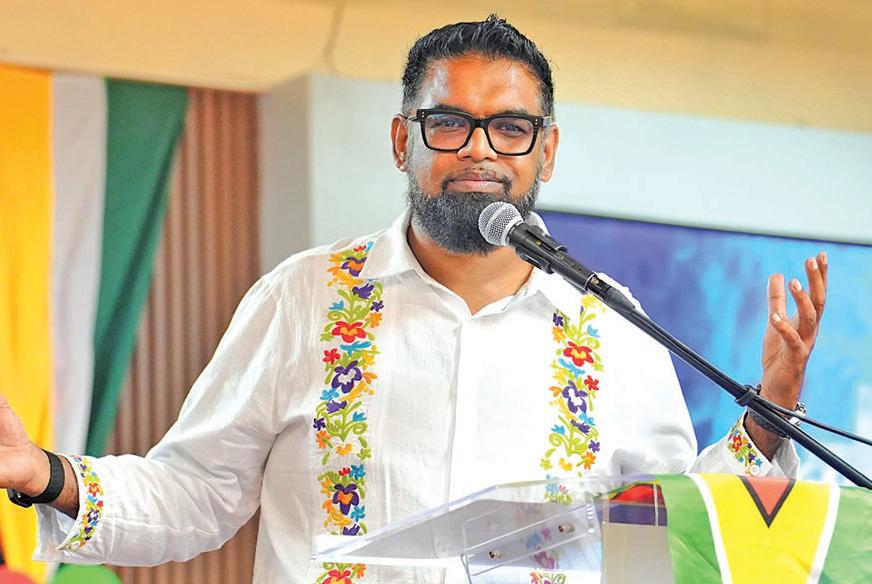
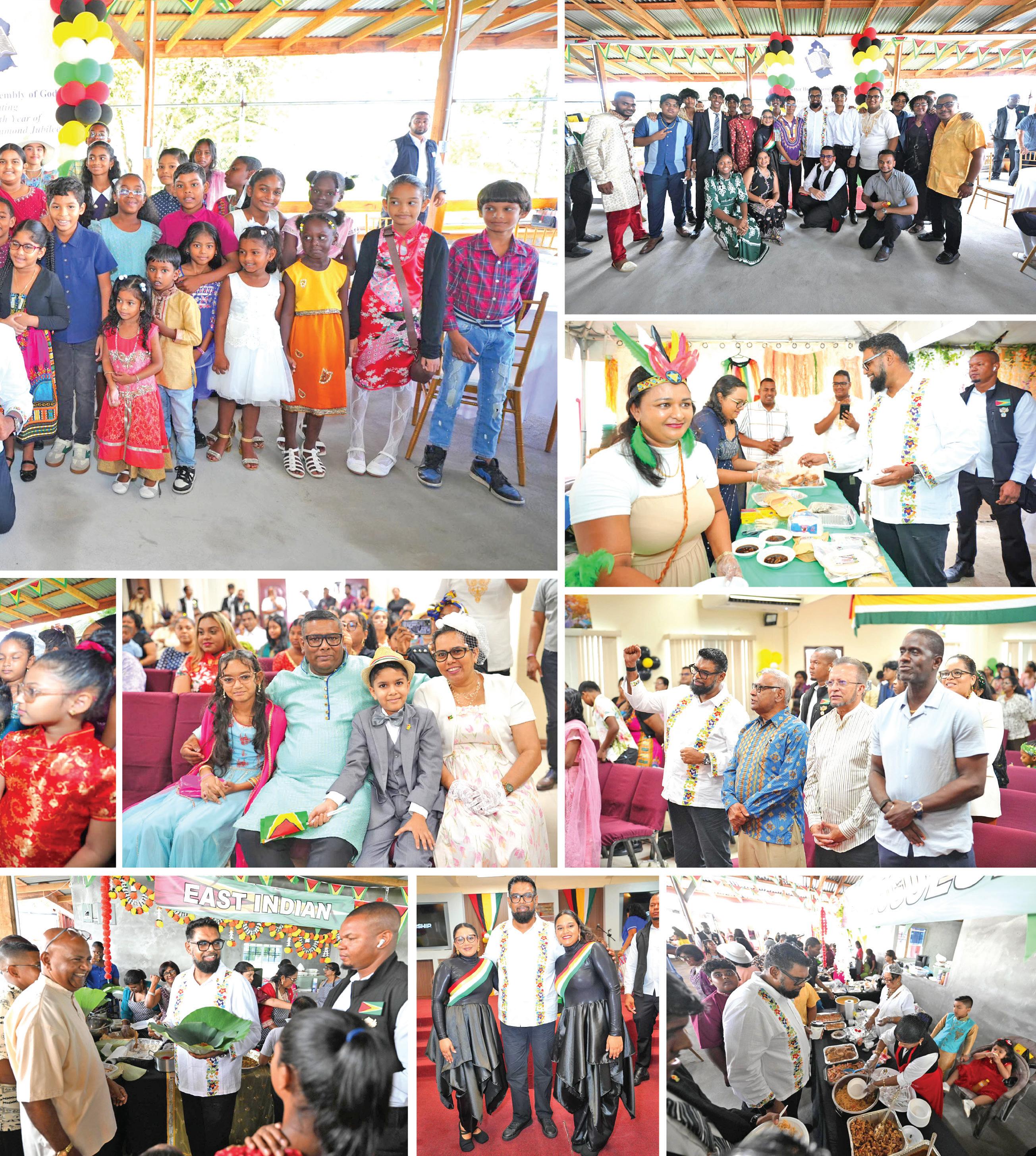
As Guyana gears up for its 60th Independence Anniversary, President Dr Irfaan Ali has emphasised the importance of spiritual maturity, national unity and social responsibility for the prosperity of the nation.
He made these remarks Sunday at the Better Hope Assembly of God Church, where he joined the congregation to celebrate Guyana’s 60th Independence Anniversary in prayer, thanksgiving, and unity. On Tuesday, Guyana will mark 60 years since it gained independence from British rule on May 26, 1966.
According to President Ali, this independence milestone cannot be celebrated without acknowledging the country’s trials and tribulations as well as its successes and progress over the past 60 years – something for which he says God must be praised.
“As Guyana celebrate 60 years of independence, it is only fitting that we pause to give thanks and praise for this long journey as a nation. Sixty years is evidence of endurance it is proof that through trials and triumphs, God has sustained this land and its people.”
He said that Guyana’s journey has not always been easy as there are moments of hardship, political division and strife, economic difficulties and social uncertainty.
“There were seasons when hope appeared distant and when many wondered what tomorrow would bring. There were times when our people struggled and times when our democracy itself was tested, but through every storm, God carried us,” he stated.
The Guyanese Leader added that Guyana must never be a country that enjoys prosperity without God, without gratitude and without giving thanks for guiding the nation through colonialism, attaining independence, political unrest, economic challenges, floods and tragedies, and even now when the nation stands at the place of unprecedented opportunities.
“We must remember that prosperity without gratitude can become arrogance, and success without God can become destruction… As our country grows and as the eyes of the world turn toward Guyana, we must never forget the stories of our blessing… Our nation must therefore remain grounded in humility, righteousness and gratitude.”
“Development alone cannot save a nation. Wealth alone cannot unite a people. Infrastructure alone cannot build a society. A na-
tion must also possess moral strength, spiritual value and compassion…for one another. Independence is not merely political freedom. True independence also requires spiritual maturity, national unity and social responsibility. We must therefore strive to build a Guyana where justice prevails, where unity triumphs over division, and where love for country rises above selfishness and greed,” the president stated.
Foundation laid
Equally important to recongise during Guyana’s independence celebration, the Head of State emphasised, is the sacrifices made by previous generations to lay the foundation upon which the nation stands on today. He said gratitude must also be given to those who came and were tortured as slaves, those who came as indentured labourers, and those who toiled during the post-independence era.
According to President Ali, their sacrifices can be honoured by the current generation displaying true unity and togetherness.
“Guyana is blessed with many cultures, many traditions, many backgrounds and many faiths; yet, despite our differences our people, under one flag and under one God, celebrate together as one nation. Thanksgiving should therefore inspire not only gratitude toward God but also kindness towards
one another. A grateful heart does not hate. A thankful spirit does not speak destruction. Gratitude teaches humility because it reminds us that all we possess ultimately comes from God.”
“As we celebrate 60 years of independence, let us therefore recommit ourselves to the ideals upon which nation building depends – faith, unity, sacrifice, love and gratitude. Let us remember the generations that came before us. Those who toiled in the fields; laboured in the factories; taught in the classroom, preached in churches, in the mosque, in the temples, and fought for freedom and dignity so that future generations could inherit a better Guyana,” he posited.
The Guyanese Leader further noted that Guyana’s future will not be secured merely by resources beneath the sea, or wealth within the economy but when God is placed at the centre of national life, family life, and personal life, and when citi-
zens remain united.
“So today, let us give thanks for 60 years of nationhood. Let us give thanks for peace. Let us give thanks for survival. Let us give thanks for opportunities yet to come. Let us give thanks for families, churches, temples, mosques, communities, and for the resilience of the Guyanese people. But above all, let us give thanks to Almighty God, because without Him we are nothing.” He noted that this should be the nation’s “declaration as we move forward into the future: that Guyana shall not be a nation consumed by division, arrogance, or despair, but a nation strengthened by faith, guided by wisdom, and anchored in gratitude to God… And may God bless our beloved Guyana. And may future generations look back upon us and say that in our time, we did not forget God, we did not abandon gratitude, we did not lose faith in the destiny of this great nation.”



Editor: Tusika Martin
News Hotline: 231-8063 Editorial: 231-0544, 223-7230, 223-7231, 225-7761
Marketing: 231-8064 Accounts: 225-6707
Mailing address: Queens Atlantic Industrial Estate Industrial Site, Ruimveldt, Georgetown
Email: news@guyanatimesgy.com, marketing@guyanatimesgy.com
It is not without a measure of irony that as we celebrate the 60t anniversary of our Independence from Britain, which had dragged workers from every continent and dumped them in our country, there is the case of the 38 Indian workers allegedly exploited by their Indian employer that brought them into Guyana. This matter is more than a labour dispute. It is a test of our country’s commitment to justice, human rights, and the rule of law. The Administration’s response will shape not only the lives of the affected workers, but also Guyana’s international reputation as we experience rapid economic growth fuelled by oil and infrastructure expansion that will need more workers. It is also a test of the Leader of the Opposition’s (LOO) commitment to our democratic polity to desist from exploiting the allegations for his own narrow political ends.
Reports of poor living and work conditions leading to accidents and one death, withheld wages, seizure of passports, excessive working hours, and restrictions on workers’ freedom are deeply troubling. Migrant workers are often among the most vulnerable members of any workforce – as we know to our cost as half of our population fled the Burnham dictatorship. Desperate to survive and send remittances to their relatives “back home”, they can easily become trapped in exploitative arrangements. We cannot allow such conditions to flourish within our borders.
The Government’s first responsibility must be to protect the workers themselves; not only from the employer but from the LOO, who has positioned himself as their champion. Working with the local Indian High Commission, the authorities should ensure that all 38 individuals are housed, lodged and given access to legal representation. Having Opposition lawyers continue representing them is not in their best interests since they have an anti-Government agenda that has already become apparent in their hostile relations with the Labour Department.
At the same time, the State must expand a transparent and independent investigation into the employer’s conduct in their treatment of the workers. If labour laws, immigration laws, or human trafficking statutes were violated, those responsible must face condign consequences. From evidence produced, it would appear that at least the contracts between the Indian company and the workers violated our labour laws in no overtime payments beyond the 40-hour workday. We cannot afford the perception that foreign contractors or politicallyconnected companies are above the law.
This case also highlights broader structural issues in our labour oversight system. Our rapid economic expansion has attracted – and will continue to attract – additional thousands of foreign workers and companies, particularly in construction, energy, and infrastructure. Enforcement mechanisms must be expanded at the same pace as workers enter our workforce. Labour inspections will have to become more frequent and proactive, especially at worksites employing large numbers of migrant workers. Government agencies should establish and broaden multilingual complaint systems and stronger partnerships with embassies and labour organisations to identify abuses early.
Importantly, individuals such as the LOO should desist from framing this issue as a conflict between nationalities. The focus must remain on employer accountability, not ethnic or national tensions. Exploitation can occur regardless of the nationality of the employer or employee. The Government’s role is to uphold standards fairly and consistently for everyone operating within the country.
There is also a diplomatic dimension to consider. India and Guyana share strong historical and cultural ties. Addressing the matter firmly but professionally in collaboration with the Indian High Commission demonstrates mutual respect between the two nations. Protecting Indian workers from abuse should be seen as reflecting Guyana’s willingness to defend human dignity and lawful employment practices.
Ultimately, our country stands at a critical crossroads. As our nation grows wealthier and more globally connected, it must continue with its policy of inclusiveness and justice. Economic development cannot come at the expense of basic human rights. A decisive, humane, and transparent response to the plight of these 38 workers will show that we are serious about building a modern economy rooted not only in investment, but also in justice.
What do the Married at First Sight rape claims tell us? That reality TV is sometimes all too real
By GaBy Hinsliff
She said no. She didn’t want it, she made that very clear, but he did it anyway; pushing her feelings aside as though they didn’t matter, because to him they seemingly didn’t. It’s a story so depressingly common that most women probably carry a private version of it in their heads, either buried in their own memories or confided to them by a friend. But still, there’s something profoundly shocking about the idea of it happening right under the noses of a TV audience.
Perhaps you’ve never watched Channel 4’s hit show Married at First Sight, which involves putting total strangers through a purely ceremonial “wedding” and making them live as husband and wife for six weeks to see whether they actually want to make a go of the relationship. But you’re almost certainly familiar with Panorama, which recently told the stories of three former “brides”. Lizzie and Chloe (not their real names) both say they were raped by their onscreen “husbands” – and, in Lizzie’s case, also subjected to alarmingly violent outbursts of temper and an alleged threat of an acid attack – while Shona Manderson, who has spoken publicly, accuses hers of sexual misconduct. All three men, it should be said, deny the allegations.
Long before this story broke, the risks inherent in putting human beings through the emotional shredder for the sake of an evening’s mindless telly were already crystal-clear. It’s hard to disagree with Caroline Dinenage, the chair of Parliament’s culture select committee, that Married at First Sight was an “accident waiting to happen”, given the way it blurs boundaries by pushing total strangers into bed with each other.
But it’s hardly alone in exposing contestants first to the psychological pressure cooker of the show itself, and then – for the unlucky ones – to months of being brutally picked apart on social media afterwards. (Already, a dangerous online guessing game has begun over the identities of Lizzie and Chloe and their anonymous accused husbands, alongside some grim arguments about whether they were somehow “asking for it” by agreeing to pseudo-marry strangers or why they didn’t just quit the show.) The domestic violence charity Women’s Aid
has been warning for years about signs of abusive or controlling behaviour on a whole range of dating shows, not just Married at First Sight, and asking producers to work with its experts.
But, in focusing on the undeniable sins of reality television, there’s a risk of missing the wider point. The chilling thing about these allegations is that, for once, reality TV stands accused of being too real by half.
One in 10 women in Britain say they’ve been forced into sex against their will, according to landmark research in 2013. Half of female respondents to another survey said they had woken up to find a male partner attempting to have sex with them in their sleep – a scenario described by one of the Married at First Sight women, and one I suspect a lot of men still don’t understand is creepy. Violent, controlling behaviour of the kind Lizzie claimed she had suffered? A domestic abuse offence is logged by Police in England every 40 seconds, while rough sex – often influenced by porn – is so common that 35 per cent of women under the age of 35 have been strangled during sex at least once. Marital rape has been a crime in Britain since 1991, but the belief that “you can’t say no, you’re my wife” – as Lizzie claims her TV husband said – remains alarmingly widespread, with a quarter of respondents to one survey arguing that sex without consent in a long-term relationship isn’t “usually” rape. These aren’t freak incidents, but risks women run every day of their dating lives. They are the reason we tell our flatmates exactly where we’re meeting the guy off Hinge, or lecture our teenage daughters about red flags. If toxic men, unhealthily controlling behaviour and grimly-confused attitudes to consent hadn’t crept into Married at First Sight, it would frankly have been a miracle, given how prevalent they are outside it. None of this, of course, is to absolve Channel 4 of responsibility. It’s precisely because dating isn’t all hearts and flowers that anyone making a dating show needs to be hyper-alert to the risks, with a sophisticated understanding of how victims behave – or, much more rarely, how false allegations arise – that still eludes too many trained Police Officers. It’s common for women to take a while to process what actually happened, or
to find the words; but also for the truth not always to be clear-cut, and for people to behave in ways that don’t necessarily make sense from the outside.
Lizzie, Chloe and Shona all say they raised concerns about the alleged behaviour of their “husbands” with the show’s welfare teams on set, but they didn’t all disclose the worst of the details shared with Panorama. If that sounds suspiciously blurry, it will also sound familiar to any professional used to investigating allegations of sexual or domestic violence. For its part, the production company says the women agreed to carry on filming, and Channel 4’s chief content officer, Ian Katz, says he is confident that the right decisions were taken about broadcasting episodes, given what was known at the time.
Yet that doesn’t change the fact that – as the barrister Helena Kennedy told Panorama – the level of vigilance required to be absolutely sure nothing goes awry when pushing two virtual strangers into bed with each other seems wholly unrealistic, and therein lies the problem. The Married at First Sight couples were being watched to the point of intrusion: the husbands knew they were going to be filmed every day for hours on end, and that they and their wives would be grilled in intimate detail by the show’s resident experts about how the relationship was going. There should have been nowhere to hide. Yet, if anything, the lesson is that knowing half the world is gawping at you expectantly from their sofas may make some truths harder, not easier, to tell in public.
For that, in the end, is how shame works. It’s hard to talk about something you can barely admit to yourself; hard, too, to let go of the ideal of a loving relationship, even when it’s shattered by violence. The myth of the fairytale marriage – the happy ending towards which the Married at First Sight brides are rushed, before they have even had a beginning – is still so powerful that admitting yours is nothing like that still feels like a failure. Taking the show off air, as now seems inevitable, might help save whatever remains of reality TV’s reputation. But let’s not kid ourselves, in the process, about the world to which it is holding up a mirror. (The Guardian) Gaby Hinsliff is a Guardian columnist
Dear Editor,
The recent agricultural outreaches across Regions Five, Six, Eight and Nine should not be dismissed as routine field visibility. That would miss the larger policy signal. The issue is not simply more production. It is structural transformation. These engagements must be read within the framework of advancing the food security agenda to 2030, at a time when Guyana’s annual food import bill is now in the proximity of GYD 200 billion, depending on global prices and import composition. The message from the field is clear: agriculture is no longer being expanded only along traditional lines. It is being widened into a broader production system capable of displacing imports, creating new value chains, and contributing more materially to agricultural GDP and the non-oil economy.
The messages coming out of these outreaches should therefore be read carefully. They signal not merely acreage expansion, but a restructuring of the sector itself. Pilot initiatives in beet and onion, together with the scaling of corn and soya, point to a deliberate effort to create and deepen agricultural sub-sectors that were previously underdeveloped or commercially marginal in Guyana. Combined with the push into high-value crops, new forms of agro-processing, and the continued modernization of poultry, aquaculture and linked activities, the picture becomes clearer. This is not merely about producing more within the same structure. It is about structural expansion, with a wider range of agricultural and agro-industrial activities being created, formalized and added to the
country’s GDP base, particularly within agricultural GDP. That interpretation is reinforced by the latest fiscal data. Budget 2026 totals GYD 1.558 trillion. Within the agriculture programme, Government has budgeted GYD 113.2 billion in 2026 to continue the development of the sector as a whole, including GYD 81.9 billion specifically for drainage and irrigation. These are the fiscal fingerprints of a state trying to widen the non-oil production base while oil revenues still provide the fiscal space to do so.
The strategic objective within the sector is not simply to open pockets of land in isolation, but to widen the production frontier of the sector over time. Guyana has approximately 1.04 million acres of agricultural land available, yet only about 32% is currently under cultivation. Within that context, the Government’s stated plan to develop 100,000 acres of new arable lands by 2030 would push cultivation to roughly 42% of available agricultural land. Even then, the country’s agricultural potential would remain, by any serious measure, largely untapped. The implication is straightforward: Guyana is not merely trying to raise output at the margin; it is investing heavily to expand the productive potential of the sector itself. Supporting crop diversification beyond rice, deepening aquaculture, and incentivizing poultry modernization are not isolated gestures. They are part of a wider production model aimed at import substitution and value addition. The logic is straightforward: expanded land access raises output potential; higher output supports storage, aggregation and agro-processing; stron-

ger agro-processing reduces import dependence and increases domestic value-added; and greater domestic value-added strengthens both agricultural GDP and the non-oil economy over time. Agriculture, in this framework, is not merely about growing more crops. It is about widening the productive architecture of the economy before the oil cycle matures.
The policy support is also becoming more deliberate at the level of capital formation and retained earnings. In Budget 2026, Government announced the removal of corporate taxes on agriculture and agro-processing businesses to increase retained earnings and enable greater reinvestment in production and productivity. This matters because it improves project cash flows, shortens capital recovery periods, and strengthens bankability—especially for newer sub-sectors and processors trying to scale. In other words, the state is directly lowering the tax-cost structure on productive activity. That is serious sector-building.
But this is also where
the political economy challenge begins. Public expenditure alone does not guarantee production outcomes. Without a stronger development finance architecture, Guyana risks overinvesting in physical assets while underfinancing domestic productive actors. Agriculture— especially among small and medium-scale producers, youth-led ventures, aquaculture operators, poultry farmers, horticulture businesses and downstream processors—requires patient capital, risk-sharing instruments and fit-for-purpose financing channels. Otherwise, the country will spend heavily to expand opportunity on paper while leaving too many local producers structurally unable to scale. That would not be a financing problem alone. It would be a policy execution failure.
There is also a demand-side reality that policymakers and critics alike should not ignore. SphereX estimates show aggregate household income rising from approximately GYD 119.7 billion in 2010 to about GYD 790.1 billion in 2025—bringing domes-

tic purchasing power within striking distance of GYD 1 trillion. That is a material expansion in demand. As incomes rise, demand for food, processed goods, hospitality-linked supply chains and higher-value agricultural products will rise with it. The real question is whether that incremental demand will be captured by Guyanese farmers, processors and agribusinesses, or whether it will continue to leak outward through imports. Agriculture is therefore no longer a narrow sectoral issue. It sits at the intersection of household welfare, trade leakage, rural income formation and national competitiveness.
Agriculture is no longer expanding only along traditional lines. It is being widened as part of Guyana’s future non-oil production system.
In light of the foregoing, those who continue to treat agriculture as a secondary appendage to Guyana’s future economy are misreading the structure of the development challenge. Oil may dominate the headline numbers today, but it will not solve the employment
question on its own, nor the rural income question, nor the import substitution question, nor the long-run resilience question. Those are fundamentally non-oil questions, and agriculture sits at the centre of the answer.
The current agricultural push must therefore be judged not by the noise of day-to-day politics, but by whether it strengthens the productive base of the economy before the oil expansion matures. If the Government gets this right—through infrastructure, targeted fiscal relief, stronger market access and disciplined development financing—agriculture can emerge as one of the most important pillars of non-oil GDP in the post-2030 period. If it gets it wrong, Guyana will have squandered a rare window in which oil revenues could have been used to build enduring productive capacity beyond oil itself. So far, the signals suggest that the Government is on the right track.
Yours faithfully, Joel Bhagwandin





By Diane SeuSS
To the hell level where they kept the clown costumes? Or puppet room Bible school where the bad girl had to crouch on a step stool during the choral reading of the archive of begats in Genesis 5? Or lower, to the steamy hive of pipes and charts in the machine room below metaphysics and art? Althea found it years ago, in a snowy meadow, deep in the sticks. She held a dowsing rod shaped from a wire hanger which swung in the general direction of god.
(Source: Poetry [May 2026])

Write a story about the aftermath of someone’s quest for immortality.

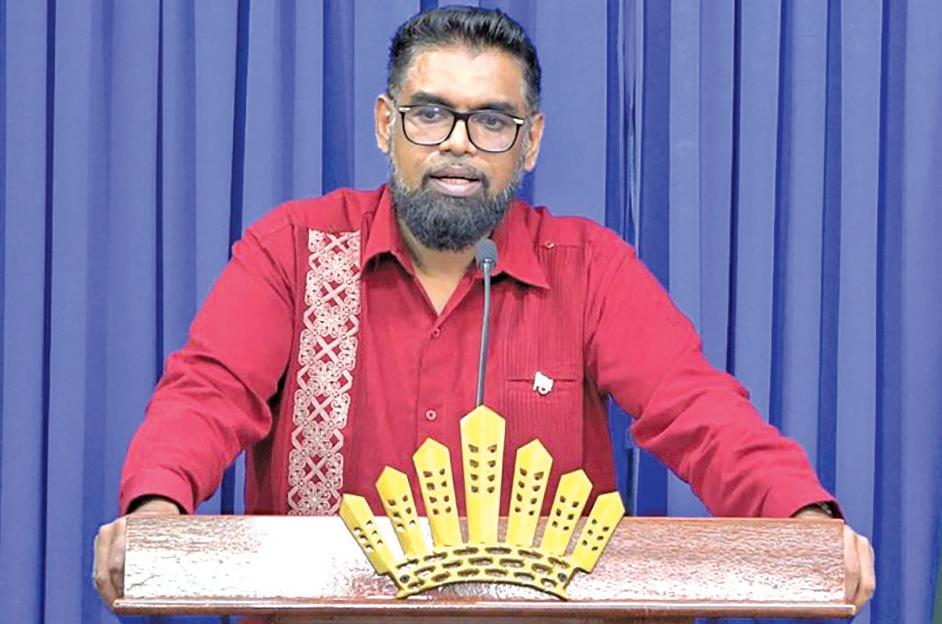
The Government is looking to commence construction of the new Berbice River Bridge before the end of this year, according to President Dr Irfaan Ali during a press conference on Friday.
“We are hoping to have that bridge started long before the end of this year,” the Head of State told Guyana Times.
Only last month, it was reported that the negotiations for the award and signing of the contract for the new four-lane highspan concrete bridge across the Berbice River was being finalised.
The new structure, which will replace the current flooding bridge, will be designed to mirror the US$262 million high-span Bharrat Jagdeo Demerara River Bridge, allowing large vessels to pass beneath it without any interruption to vehicular traffic.
In 2025, seven firms were pre-qualified from an initial pool of nine companies and were required to submit price quotations to design, build, and finance the new bridge. However, only five of the shortlisted firms responded and submitted their bids.
These include a Joint Venture of China Railway Construction Caribbean Company Limited and China Railway Construction Bridge Engineering Bureau Group Co. Limited, which submitted a bid of US$255.87 million; a JV of AJM Enterprise and Shandong High-Speed Road & Bridge Company Limited, with
a bid of US$279.68 million; and another JV of China Railway First Group Company Limited and China Railway Eryuan Engineering Group Co. Limited, which proposed US$266.43 million.
China Road & Bridge Corporation and Vishwa Samooja Private Limited out of India are the two lone bidders vying for the project with financial proposals to the tune of US$205.88 million and US$465.51 million, respectively.
Last November, Public Works Minister Juan Edghill had disclosed that a preferred bidder has been identified, and was working with the government’s negotiation team to finalise the contract.
According to President Ali on Friday, “They are on the verge of finalising the finances and also the final price. They are more or less there.”
Meanwhile, even as preparation is ongoing to commence the construction of the new bridge across the Berbice River, the Guyana Government is simultaneously working on acquiring the current floating structure that serves as a critical link between Region Five (Mahaica-Berbice) and Region Six (East BerbiceCorentyne).
Asked for an update on that acquisition process, the Guyanese Leader told this newspaper that this too is being finalised.
“I think the final sets of meetings are ongoing now. Again, I think they are almost at an agreement… and within the next cou-
ple of weeks, that will be finalised,” President Ali revealed during Friday’s press conference.
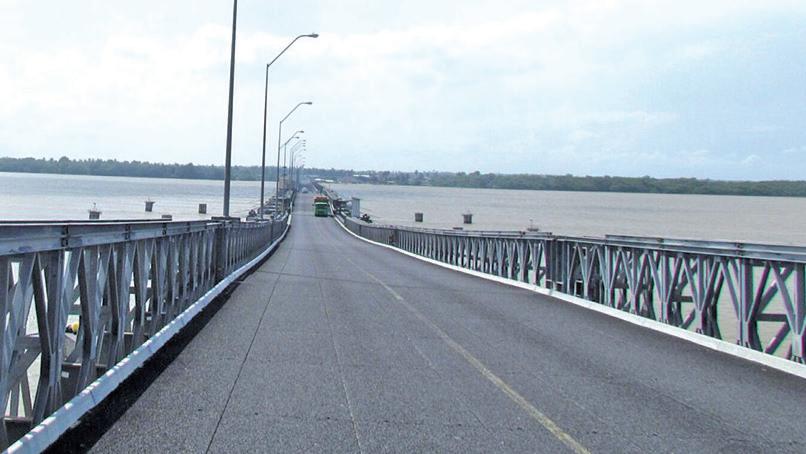
The current Berbice River Bridge was constructed between 2006 and 2008 through a public-private partnership at a cost of just over $8 billion.
The 1.57 kilometres bridge was financed mainly by the state-run National Insurance Scheme (NIS) along with other private companies, which comprised the Berbice Bridge Company Incorporated (BBCI) that currently operates the structure.
It was conceptualised and constructed under the Bharrat Jagdeo Presidency. In fact, Jagdeo, who now serves as Vice President in the current PPP/C administration, just last year defended the innovative financing model used for the bridge, calling it as one of the most lucrative investments for the NIS.
The NIS had invested in Bond One of the project to the tune of $300 million. The scheme received (not principal payments) $270 million, a 90 per cent return on their investment. It also invested in Bond Two, $760 million, and received $823 million in return. The insurance scheme also invested $500 million for subordinate debt (loan stuck) $456 million, while Preference shares invested was $950 million. Some $80 million was further invested in common shares.
Under the previous A Partnership For National Unity+Alliance For Change (APNU+AFC) Administration, there were talks, which never materialised, of a possible state-buyout of the Berbice Bridge Company Inc. (BBCI) to avoid the increase of tolls. At the time, the bridge company had been on the brink of bankruptcy.
In August 2025, the Aliled Administration introduced its toll-free initiative, which saw the removal of fees to cross not just the Berbice River Bridge but also at the new Bharrat

Jagdeo Demerara River Bridge and the MackenzieWismar Bridge in Linden.
But President Ali had subsequently told this newspaper last year that his government is engaged in negotiations with the private investors in the Berbice Bridge company on a possible buyout. He
explained that the goal is to ensure there is an “amicable” agreement between the private investors and the State.
During the consideration of the 2026 budget estimates in the National Assembly back in February, Minister Edghill has disclosed that the acquisi-
tion of the Berbice Bridge would cost the State less than if it were to continue subsidise the bridge operation. He pointed out that with the removal of tolls, the government has been absorbing the operational costs including maintenance and payment of staff of the bridge.
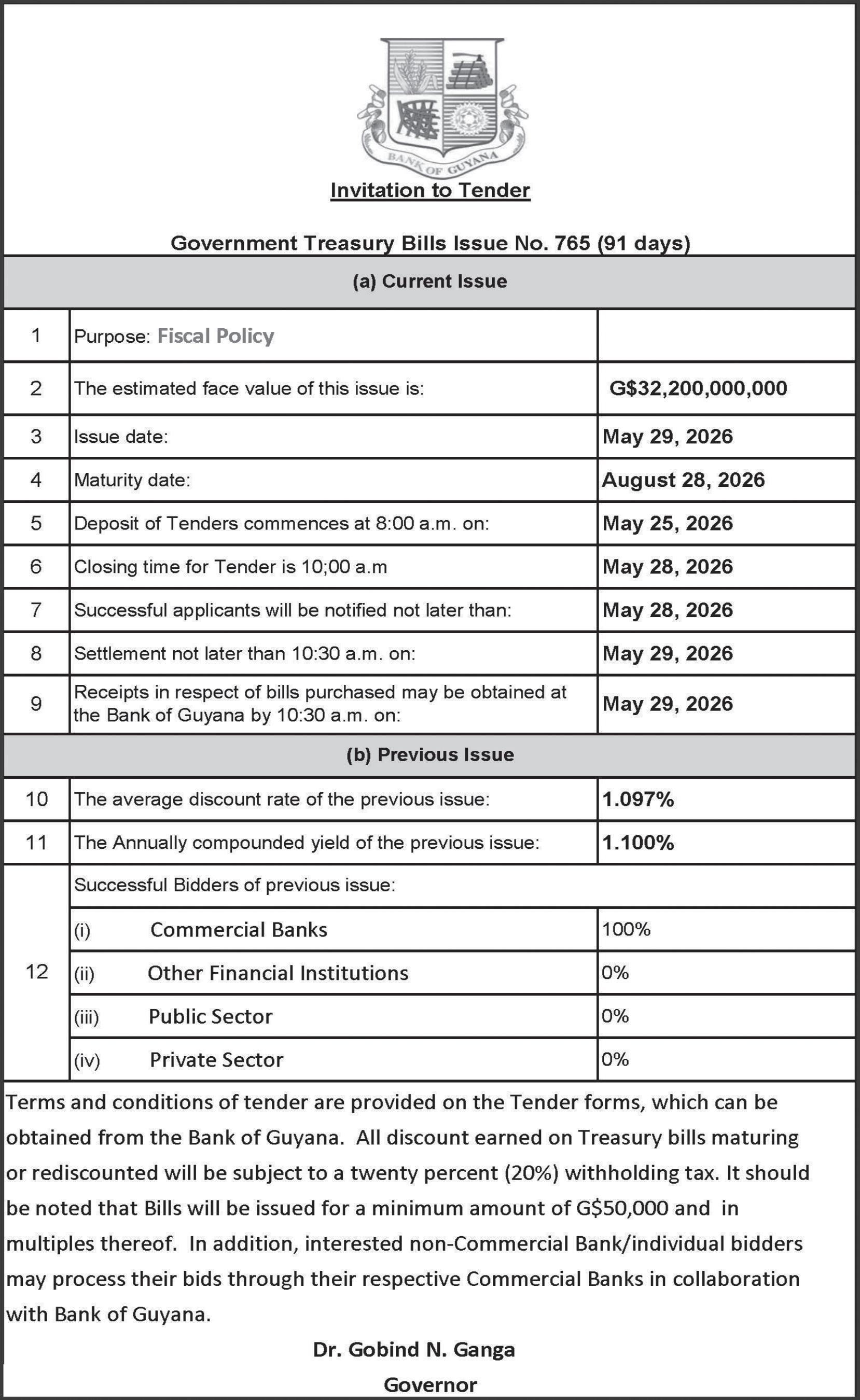

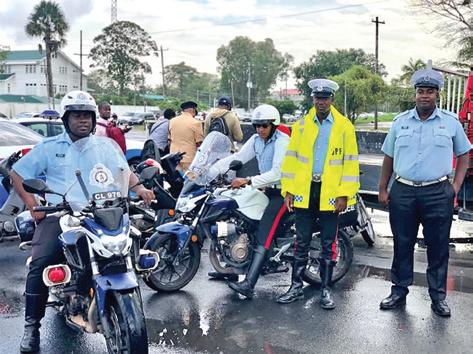
As Guyana marks its Diamond Jubilee celebrations, the Guyana Police Force (GPF) has intensified nationwide traffic enforcement operation aimed at reducing road fatalities and managing increased congestion expected during the independence period. With thousands of citizens, including members of the diaspora, participating in nationwide festivities, traffic officials said that the heightened police presence is intended to ensure that national celebrations do not translate into preventable road tragedies. Assistant Commissioner of Police and Traffic Chief, Mahendra Singh, said the deployment strategy focuses on prevention, visibility and maintaining continuous traffic flow across major roadways and event zones.
“Very importantly, our ranks would be strategically deployed at intersections where the convergence of traffic poses a challenge. Our ranks are on patrol, and the dominance patrol is to ensure what? Continuous progression, limiting every opportunity for an accident,” Singh explained. He added that the policing approach during the celebrations is not limited to enforcement but extends to coordinated movement management, particularly in areas hosting large public gatherings.
“So, you can expect during this period of celebration that everything that the traffic department does, it speaks to our shared responsibility for road safety and to ensure the general safety of the public, each class of road user,” he said. Singh noted that construc-
tion activity, increased pedestrian movement, and large entertainment events have all been factored into operational planning, with officers deployed to manage congestion and direct traffic flow. “You can also look out for police placed on the roadway, either on foot or in vehicles, to guide the movement of people, either towards the venue or when they are exiting and completion of a specific event,” he stated. A major component of this year’s operation is the increased use of technology, which the Traffic Department says is transforming how enforcement is carried out. “Over time we have seen we are not standing on the roadside waiting for a report anymore. We can remotely monitor spaces within our country now. We can predict what can happen, will happen, or how it happens,” Singh noted. He said the system is designed to improve responsiveness and accountability, while strengthening the overall efficiency of traffic management.
“Now, owing to technology and the progress we have experienced as an organisation and a department, we can remotely monitor through the use of technology with the deployment of cameras that enhance our coverage of larger spaces daily,” he added. The Assistant Commissioner also used the opportunity to caution motorists, particularly visitors and returning residents, to exercise care on the nation’s rapidly de-
veloping road network. “You must comply with the same. Drive at speeds that allow for what prevails in terms of the speed limit of the space you travel. Self-awareness. There is no option to this,” Singh said.
He further stressed that road safety is a shared responsibility among all road users, including drivers, pedestrians, cyclists, and motorcyclists. “With so much energy a buzzing, one of the things that you want to tell every single member of the public, road safety is a shared responsibility. Very, very, very important is that each road user has a role to play,” he said. Singh also addressed concerns about impaired driving during the holiday period, urging individuals who consume alcohol to make responsible transport arrangements. “We are not discouraging you from imbibing, if that is the way you celebrate. But we will tell you that it is unlawful,” he stated, adding that “the options are provided to you to have a designated driver… or you have the choice of alternative transportation… via taxi and or a booked ride.”
He emphasised that enforcement will be strict, but framed as protective rather than punitive. As celebrations continue across the country, the Traffic Department said its ultimate objective is to ensure that citizens can participate fully in independence festivities while still returning home safely at the end of each day.
Six months after the fatal road accident in November 2025, a 25-year-old man of Pomona Housing Scheme, Essequibo Coast, has been charged with causing death by dangerous driving following the incident that claimed the life of a 17-year-old girl. Ronald Stoll appeared at the Anna Regina Magistrate’s Court on Friday before Magistrate Ravindra Mohabir, where the charge of causing death by dangerous driving, contrary to Section 35(1) of the Motor Vehicles and Road Traffic Act, Chapter 51:02, was read to him. Stoll was not required to enter a plea at the time of his appearance however, the prosecution applied the Administration of Justice Act, and he subsequently


pleaded not guilty. He was represented by Attorney-atLaw Onassis Granville. The prosecution objected to bail; however, the court granted bail in the sum of $1 million on the condition that Stoll report to the Suddie Police Station every other Friday of each month. The matter has been adjourned to June 18. The charge stemmed from a fatal accident that occurred on November 23, 2025, on the Riverstown Public Road, Essequibo Coast, in Regional Division No Two.
Police reported that the collision involved motor car, PXX 3695, driven at the time by 17-year-old Naomi Singh of Huis’t Dieren, Essequibo Coast, and motorcycle CP 7725, driven by Stoll. Investigators said both vehicles were travelling in opposite directions along the north-south public road when the collision occurred. It was alleged by the motorcyclist that the motor car veered into his path, resulting in the impact. Following the collision, the car reportedly struck a utility pole, spun several times, and came to a stop on the roadway.
Singh sustained severe injuries and was taken to the Suddie Public Hospital, where she was pronounced dead on arrival.


So tomorrow, we’re celebrating Independence Day – May 26. Your Eyewitness knows that this year, because it’s the 60t anniversary all the stops have been pulled out since it’s a nice – round number!! But if we’re going back to the beginning in 1966 – and your Eyewitness was there as a wee lad! – we gotta ask, “What was there ever to celebrate??” That Fat Boy sold out his country by conniving with the Yanks and Brits to remove a democratically-elected government and then call it “democracy”?? So, democracy’s a game where you can change the rules in the middle of the game to deliver victory to the leader willing to betray his country?? That’s not cricket, innit?
Hasn’t this set the precedent for the PNC’s present imploded incarnation with their myrmidons demanding “shared governance”?? How we’re ever gonna have a stable political system when the colonial power showed the loser rules don’t really matter?? Should we celebrate the Kabaka splitting the unified national movement just to satisfy his megalomania?? Then left us so divided after Independence, we still haven’t come together 60 years later??
And then there’s the matter of the date chosen for Independence – May 26. Why celebrate the day in which the first ethnic cleansing in the hemisphere was executed by the PNC at Wismar – leaving the IndianGuyanese majority of the populace traumatised?? Didn’t that dastardly act ensure that while “independence” gave us a state, we still haven’t become a nation?? Our independence was like that “fruit of the poisoned tree” lawyers carry on about!! Fiddled electoral arrangements to install the PNC in government?? So Burnham likewise fiddled around electorally for the next twenty-eight years to remain in office – and the ex-colonials winked at him??
Independence was supposed to deliver economic prosperity since the exploiters were now supposedly gone. So what happened?? Economic ruination happened, that’s what!! The rice industry was destroyed to spite the PNC’s political opponents – Indian- Guyanese who supported the PPP. The sugar industry was raped by a levy that scooped off the profits so that the mainly Indian-Guyanese workers couldn’t get their legallymandated share. Ironically, even the bauxite industry –which employed the PNC’s African-Guyanese supporters – was destroyed since they insisted on employing their unqualified “own”!! Karma’s a bitch!! By 1989 we were certified as the second most poverty-stricken country in the hemisphere – hovering precariously above Haiti! Your Eyewitness dares anyone to tell him what positive element there was in Independence!! The flag, anthem and motto?? The last just mocks us since we got neither a nation nor a people – just a common destiny of destitution. The roads built as payoffs for their betrayal?? So, your Eyewitness goes into mourning on “Independence Days”!
…not the recovery!!
They say time longer than twine – and the PPP was voted in back in 1992!! They’d been saddled with a US$2.1 billion external debt – THREE TIMES the entire GDP – and defined as a Highly Indebted Poor Country!! We were a poster boy of poverty in the Western Hemisphere –right alongside Haiti!! And the PPP has never been given credit for dragging us out of that hole through sheer will and grit – quickly becoming a Middle-Income country!! So, those in the Opposition – including the PNC detritus – who complain about high poverty rates should reflect on what could’ve been!!
Yep!! The PPP defied the singularity of the black hole of debt – even as the PNC plunged our nation into an even greater carnage of violence than the one they’d unleashed in the sixties to get “Independence”!! Let’s give Jagdeo his jacket!!
And his successor Irfaan Ali is putting the finishing touches to the recovery – while simultaneously building the foundations for us to become a First World nation!!
…China’s claws
While the Indian workers from that quarry in the interior have (rightly) been in the news – the labour practices of Chinese to local hired Guyanese who have pretty much taken over the supermarket business have been uncommented on!!

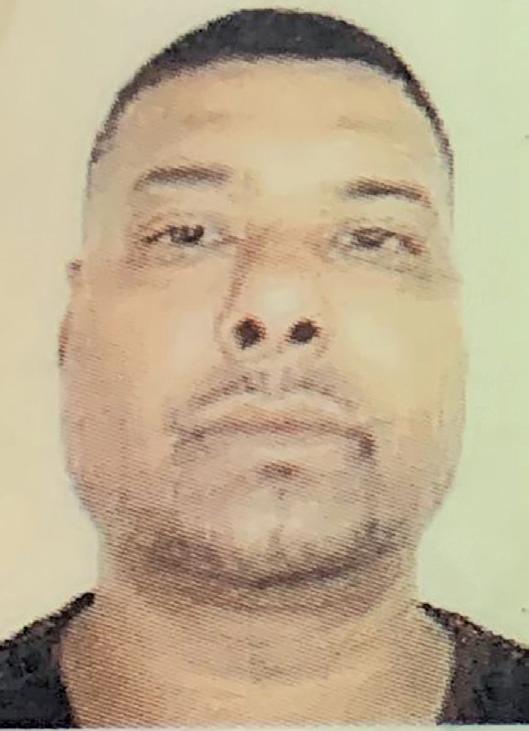
Police in Region Six (East BerbiceCorentyne) have apprehended a teenage suspect in connection with the fatal stabbing of a labourer at Nigg Village, Corentyne, on Friday afternoon.
The suspect, who is being identified only by the alias “Fat Boy” was taken into custody on Sunday as Police continued their probe into the killing of 48-yearold Carter Baboolall, also
called “Baboo”. Attorney-at-law Vinay Punwa, who is representing the teenager, confirmed that his client is now in Police custody.
According to information received, the teen’s mother reportedly contacted the police after learning of his whereabouts and subsequently accompanied him as he surrendered to investigators.
Punwa said the teen-
ager has denied attacking Baboolall without provocation and claimed that he was assaulted during the confrontation.
According to the attorney, the teen alleged that Baboolall had cuffed him several times and also lashed him with a piece of wood during the altercation. Punwa further claimed that there is evidence to support the teenager’s account.
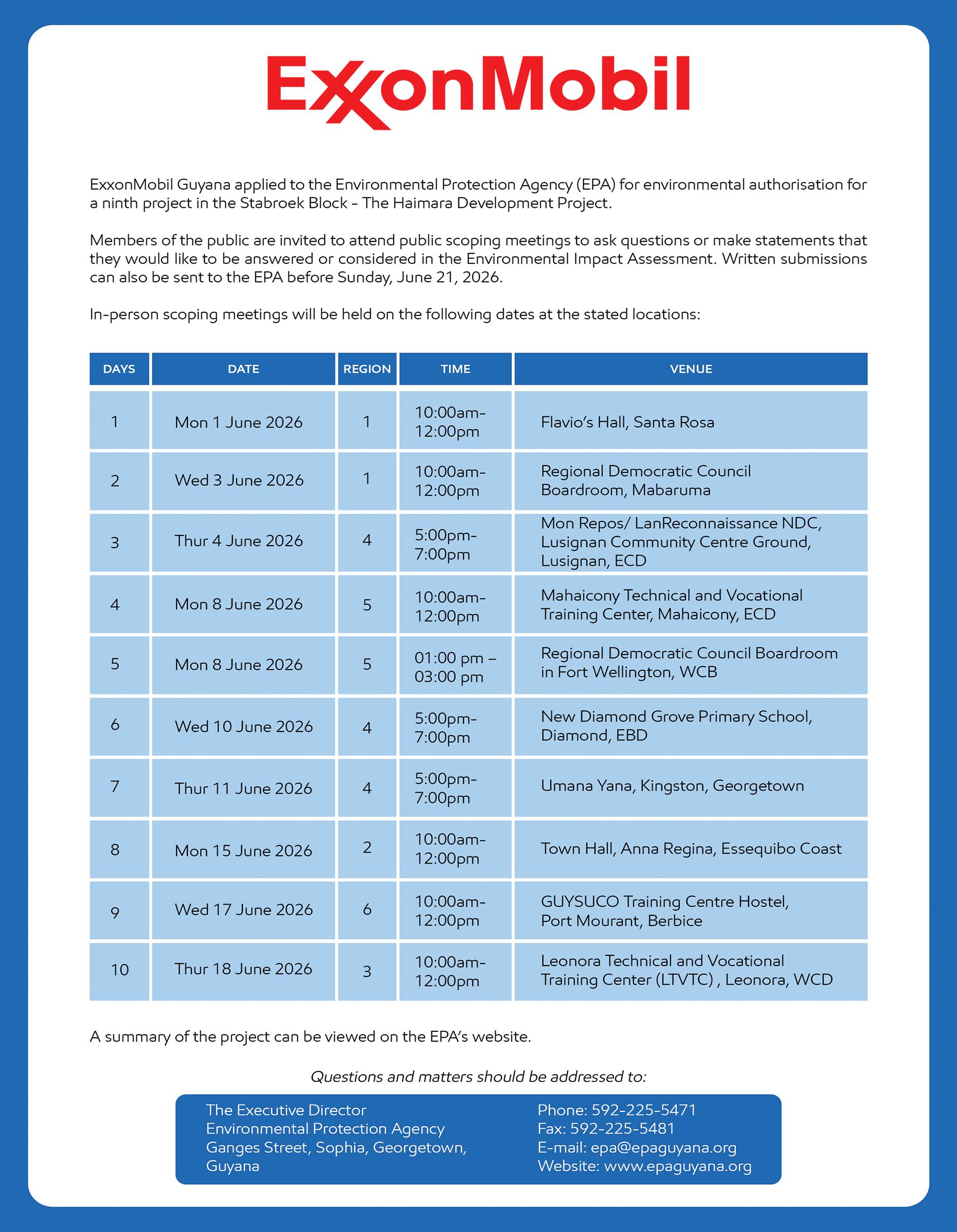
Baboolall of Nigg New Housing area reportedly died after being stabbed several times during a confrontation near the Nigg Post Office along the Corentyne Public Road.
Following the incident, the teenager had reportedly gone into hiding while the police launched a manhunt for him.
Eyewitnesses had reported seeing Baboolall lying in a nearby trench shortly after the confrontation. Residents later pulled him from the trench and rushed him to the Port Mourant Public Hospital, where he was pronounced dead on arrival.
The incident reportedly stemmed from an argument that escalated into a scuffle.
Relatives of the suspect had earlier appealed for him to surrender to police.
Investigations are continuing.

Two separate law enforcement operations on Saturday have resulted in the discovery of a firearm and ammunition in Regions Two (PomeroonSupenaam) and 4 ‘C’, East Coast Demerara (ECD), with five men now in custody. The Guyana Police Force (GPF) said both incidents stemmed from routine mobile patrols and targeted enforcement exercises conducted along the Essequibo Coast and East Coast Demerara corridors in the first incident, ranks in Regional Division Two made a firearm discovery at Lima Backdam at about 13:45h during a mobile patrol exercise.
Preliminary investigations indicate that officers were patrolling the area

when they heard two loud explosions, suspected to be gunshots emanating from a nearby rice field. Shortly after, ranks observed a man exiting the field carrying what appeared to
be a 12-gauge single-barreled shotgun in his right hand while also holding two ducks in his left hand. The man was immediately approached and questioned by police as to whether he

was a licensed firearm holder or had authorisation to

hunt in the area. He reportedly admitted that he was not licensed. The suspect, a 45-year-old farmer of Bounty Hall, Essequibo Coast, was then arrested and escorted to the Anna Regina Police Station. The firearm was seized and lodged as part of the investigation. He remains in custody. Hours later, a second operation in Regional Division 4 ‘C’ led to the discovery of a firearm and ammunition along the Railway
Embankment at Greenfield, ECD, at about 23:15h.
According to reports, ranks were conducting a mobile patrol when they observed a motorcar parked along the southern side of the roadway. Four males were seen inside the vehicle at the time. The occupants were identified as an 18-year-old electrician from Friends Village, an 18-yearold plumber from Ann’s Grove, another 18-year-old from Ann’s Grove, and a 17-year-old, also from Ann’s Grove, ECD.
A search was conducted in their presence, during which officers reportedly discovered four .32 rounds of ammunition concealed beneath the front passenger seat. Further search of the vehicle led to the discovery of a Taurus 9mm pistol along with one matching round of 9mm ammunition hidden under the driver’s seat.
All four occupants were immediately arrested and taken to the Cove and John Police Station along with the firearm, ammunition, and the motor vehicle, which was also lodged pending investigation. All five suspects remain in police custody.

An armed rob-
bery at Nelson Mandela Avenue and Hibiscus Street, West Ruimveldt, Georgetown, on Saturday, has left a 46-year-old welder without a gold chain valued at approximately $500,000. On Sunday the Guyana Police Force (GPF) said that the incident occurred at about 18:02h while the victim, of Plantation Farm, East Bank Demerara (EBD) was in front of a shop in the West Ruimveldt area.
The report indicated that the victim was approached by two men travelling on a black Honda
XR motorcycle, with the pillion rider dismounting and snatching the gold chain from around the victim’s neck. A scuffle ensued, during which one of the bandits discharged two rounds in the air before escaping with the chain. The suspects fled east along Nelson Mandela Avenue. Two 9mm spent shells were recovered at the scene and lodged as evidence. CCTV footage from nearby premises is expected to assist investigators in identifying the suspects. No arrests have been made. Investigations are ongoing.
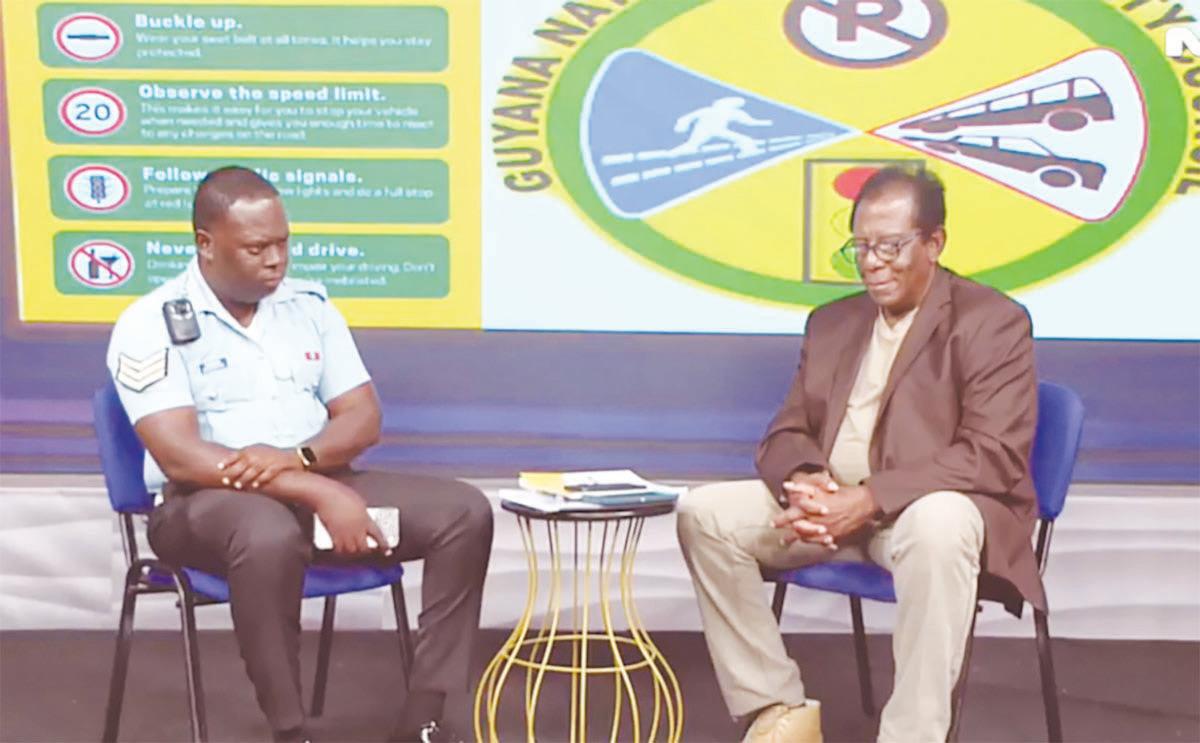
Chairman of the National Road Safety Council, Earl Lambert and Sergeant Hemerding of Regional Division 4C (East Coast Demerara) during the programme
Road safety officials continue to warn motorists about the dangers of speeding, driver fatigue, and poor vehicle maintenance, as concerns
grow over the increasing risks on the nation’s roadways. The issues were highlighted during the latest edition of the programme ‘Road Safety and

Asecond man has died following a river collision in the Cuyuni River near Tapir Landing, Region Seven (Cuyuni-Mazaruni), bringing the death toll to two.
The Guyana Police Force (GPF) on Sunday confirmed that Enzo Mateus Alves De Aviz, a 23-year-old Brazilian national and gold miner of Tipir Backdam and Belém City, Pará State, Brazil, succumbed to his injuries on Friday night at the Georgetown Public Hospital Corporation (GPHC) while receiving medical treatment. Police said De Aviz had initially been admitted to the Bartica Regional Hospital in a serious condition before being referred to the Georgetown facility at about 08:45h on Friday for further medical care.
He died at approximately 22:00h the same day. His body remains at the hospital mortuary pending a Post-Mortem Examination (PME).
The Brazilian miner’s death comes one day after boat captain Steve Daniels, 57, of Kartabo Village, Lower Mazaruni River, was pronounced dead following the same collision which occurred on Thursday, at about 12:45h. Preliminary investigations indicated that the fatal incident involved two vessels operating along the busy interior waterway.
One was a 26-foot wooden boat powered by a 200 HP Yamaha outboard engine, while the other was an 18-foot aluminium boat fitted with a 40 HP Yamaha engine. Police reports state that both vessels were travelling in the area when they collided under circumstances that are still being determined. The impact left multiple occupants injured and both captains critically affected.
Emergency responders transported the injured to the Bartica Regional Hospital, where initial treatment was administered before the most severe cases were referred to Georgetown. The captain of one of the vessels has since been taken into custody and is assisting with the investigation.
You’, where Chairman of the National Road Safety
Council, Earl Lambert and Sergeant Hemerding of Regional Division 4C, East Coast Demerara (ECD) discussed several common but dangerous practices among drivers. During the programme, Lambert stressed that many motorists fail to recognise that driving requires full physical, emotional and mental alertness at all times. “Driving is work. It is tiring. It takes a person in good physical, mental, and emotional condition to be a good driver,” Lambert stated.
He warned that fatigue significantly affects a driver’s ability to react and concentrate while operating a vehicle. “When you are tired, you can’t drive as well as you do when you are rested,” he said.

A27-year-old chef is hospitalised after being shot during an incident at Hunter Street, Albouystown, Georgetown, on Saturday.
The Guyana Police Force (GPF) said the victim, of Barr Street, Albouystown, was at the location with others when he was approached by a man armed with a handgun.
Police reports indicated that the suspect pointed the firearm at the chef and discharged two
rounds, striking him to his left thigh before escaping on a waiting motorcycle parked in the area. The injured man was assisted by public-spirited citizens and taken to the Georgetown Public Hospital Corporation (GPHC), where he was admitted. Investigators said CCTV footage from the area will be reviewed as part of ongoing efforts to identify the suspect. No arrests have been made, and enquiries continue.
Lambert explained that prolonged driving without rest can slow reaction time, reduce concentration and even cause drivers to momentarily fall asleep behind the wheel. “Extreme fatigue may lead to moments of dozing behind the wheel. Driving under these conditions can be disastrous,” he cautioned. Motorists were advised to take regular breaks during long journeys, avoid driving while emotionally distressed, and stop driving immediately if drowsiness develops. “Drowsiness is the first step in falling asleep. Stop driving when you feel drowsy. Don’t try to fight it,” Lambert urged.
The programme also addressed the dangers associated with poor vehicle maintenance, especially during periods of heavy rainfall. Lambert encouraged motorists to routinely inspect tyres, brakes, steering systems and vehicle lights before travelling. “Any defect which may affect the safe operation of the vehicle should be corrected as soon as possible,”
he said while discussing the importance of regular maintenance. He also warned drivers against operating vehicles with defective or worn tyres. “Don’t drive with bald or badly worn tyres,” Lambert cautioned. According to the road safety official, worn tyres increase the risk of hydroplaning during rainy conditions because they are unable to effectively remove water from the road surface. Sergeant Hemerding also urged drivers to reduce their speed whenever roads are wet. “I need to reduce your speed because whenever the road is wet the vehicle wheel traction tends to decrease,” the traffic rank stated.
He further advised motorists to maintain safer following distances between vehicles during rainy weather. “You can keep at least out of three vehicles distance apart from the vehicle in front of you in order for you to be safe in event of any swerve,” he explained.



(President Dr Irfaan Ali/Facebook)





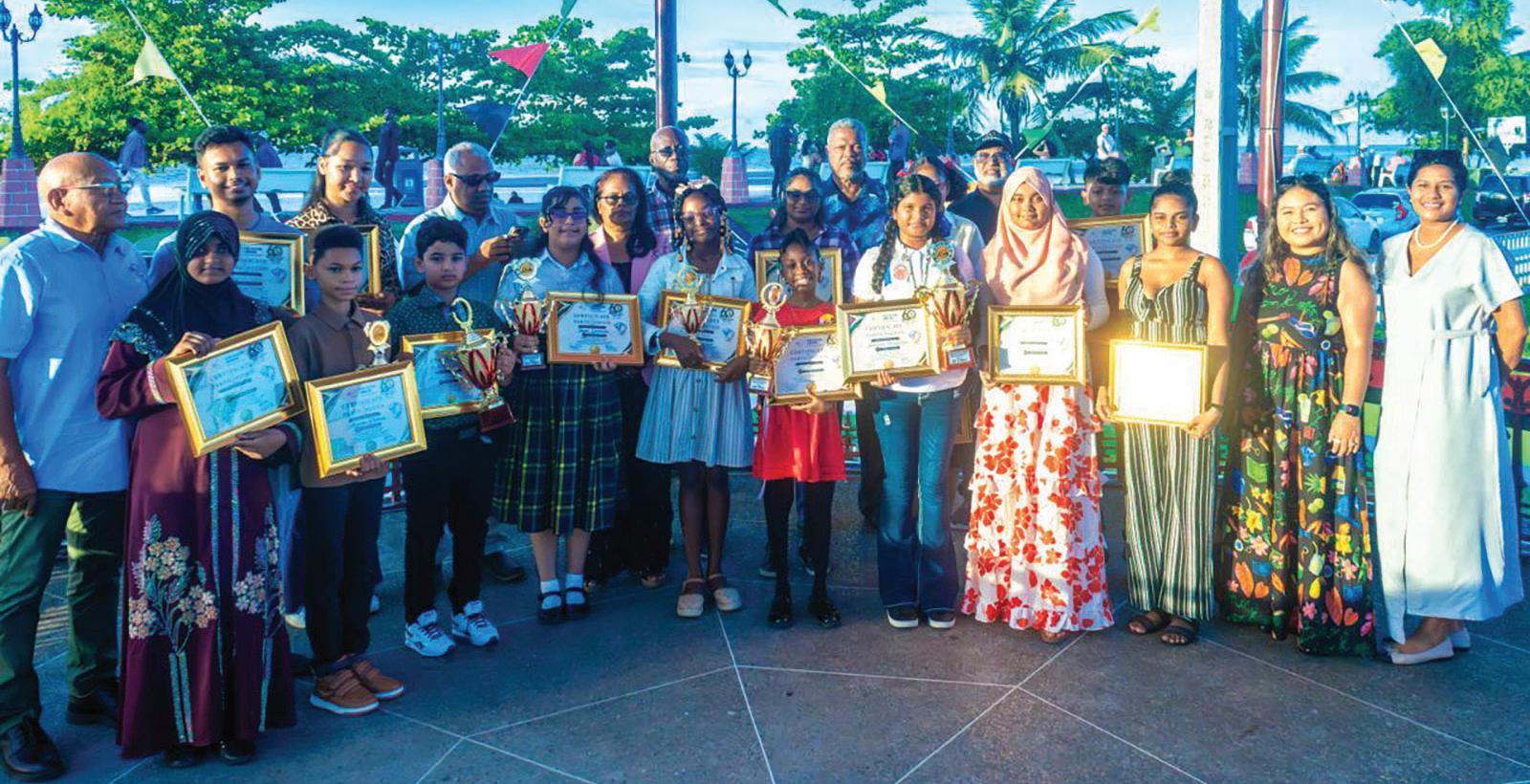
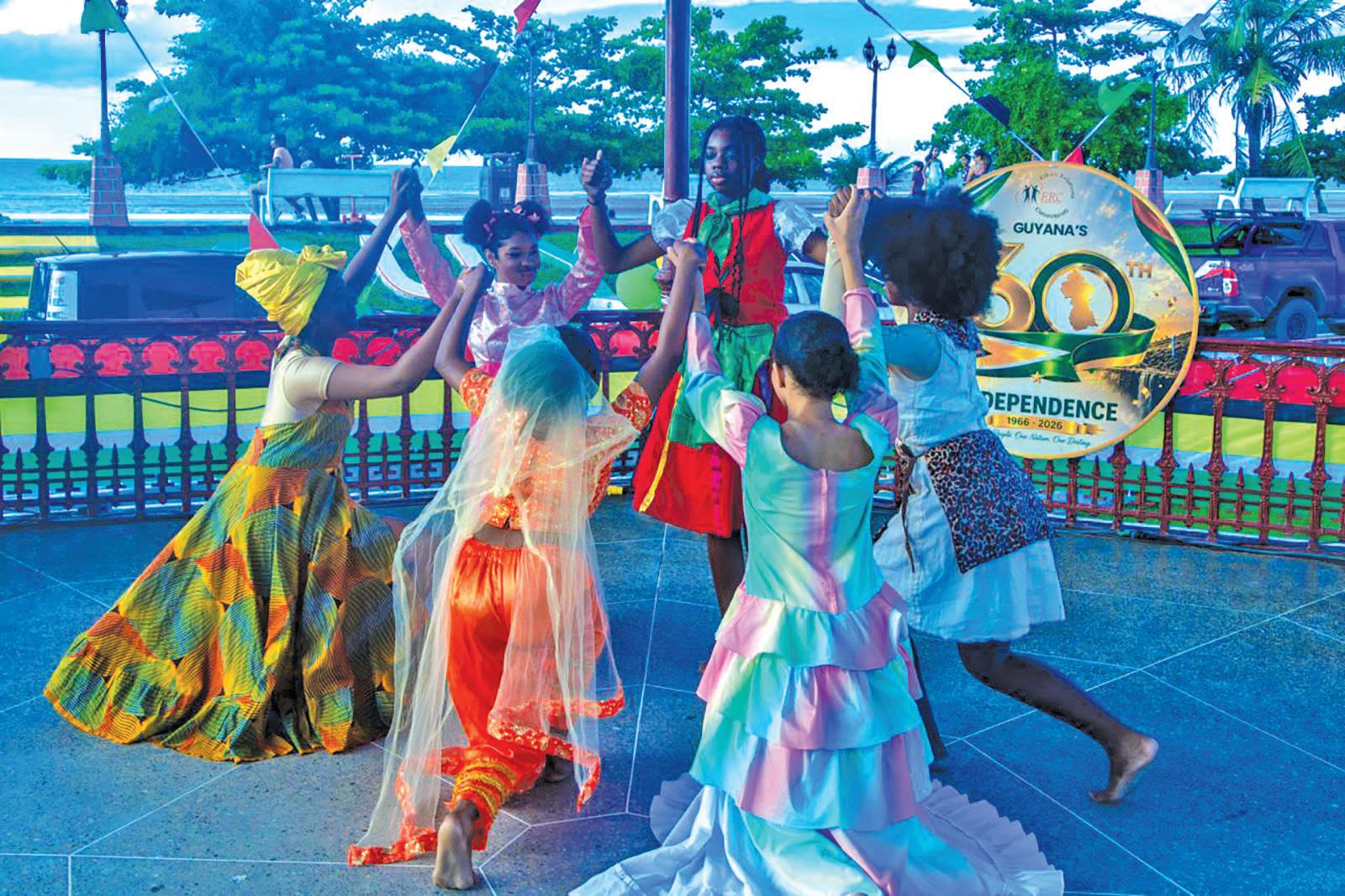
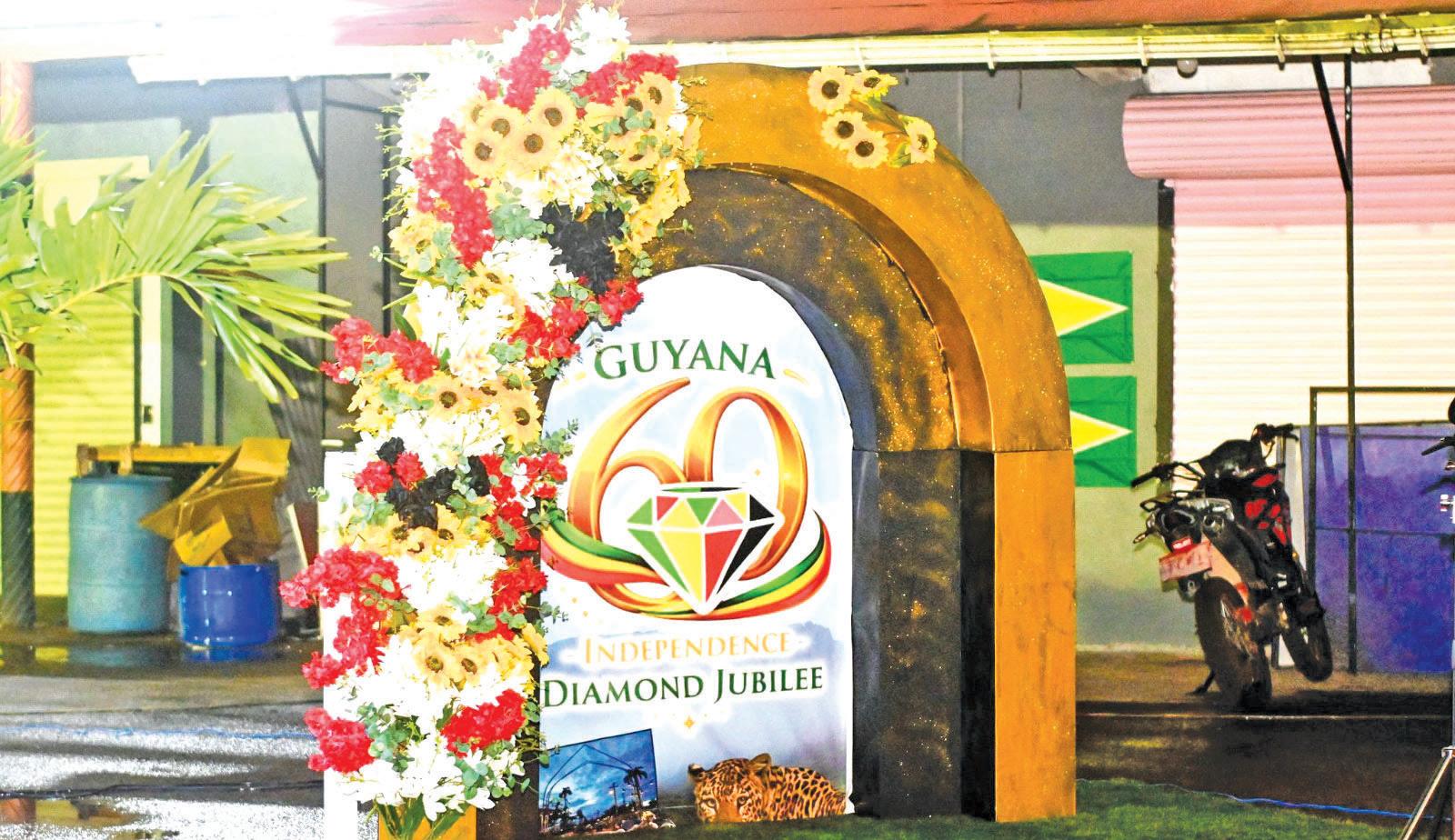
The Ethnic Relations Commission on Saturday hosted its award ceremony for the National Poetry, Song and Social Media Competitions at the Seawall Bandstand in Georgetown, as part of Guyana’s 60th Independence Anniversary Diamond Jubilee celebrations.
The event, themed “Celebrating 60 Years of Heritage, Reflection and Respect,” brought together commissioners, educators, parents, and other stakeholders to recognise the work of young participants in poetry, music, and digital storytelling.
The ceremony began with
interfaith prayers led by Dr Naeem Barlow (Islamic community), Reverend Fr Theodore DeMonick (Christian community), and Shivraj Balkissoon (Hindu community), reflecting themes of religious diversity and national unity.
Deputy Chairman of the Ethnic Relations Commission, Commissioner Charles Ogle in opening remarks emphasised the role of creative expression in promoting unity, respect, and national pride among young people. He noted that the country’s strength lies in its diversity and the shared commitment of its citizens.
A cultural presentation
The Commission ac-



missions and highlighted participants’ focus on themes of unity, heritage, and national identity.
In the Poetry Competition, first place

Competition
went
In the Social Media
Chandradatt
placed first with 689 engagements. Noressa Persaud placed second with 504 engagements, and Netisha Anna Persaud placed third with 347 engagements.
Winners across all categories received awards, while consolation prizes were also presented for participation. Top entrants performed their winning pieces at the event.
Chief Executive Officer of ERC, Gomin Camacho, de-
the
In the Song Competition,

Scenes from Guyana’s 60th Independence Anniversary celebrations around the country as regions host flag-raising ceremonies. Celebrations continue across the country as Guyana marks six decades of Independence under the theme of reflection, pride, and nation-building


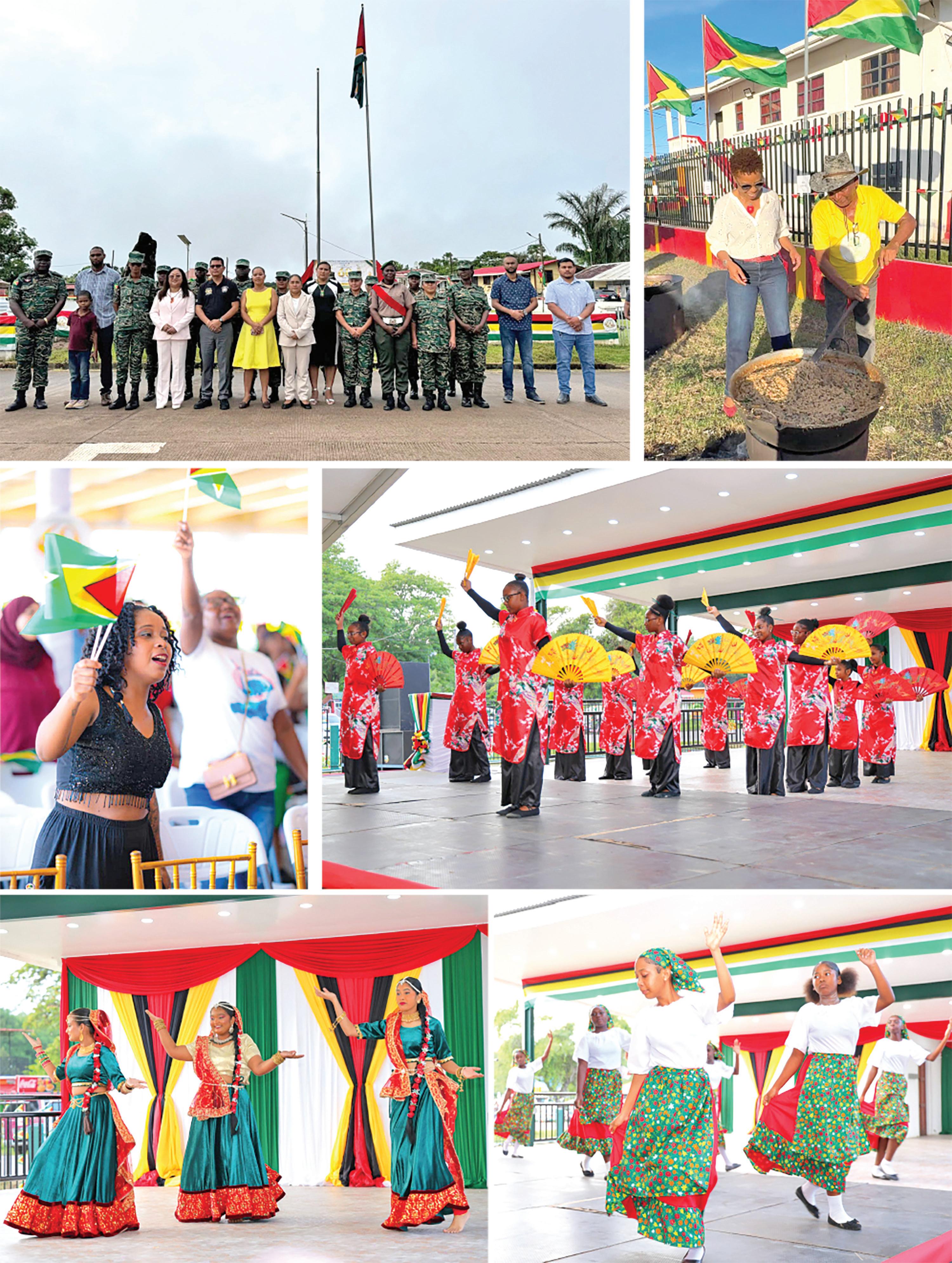

Scenes from Guyana’s 60th Independence Anniversary celebrations around the country as regions host flag-raising ceremonies. Celebrations continue across the country as Guyana marks six decades of Independence under the theme of reflection, pride, and nation-building



Dr. Tariq Jagnarine
Fam meD, global HealTH
Social media has changed the way we live, communicate, work, date, shop, learn, and interact with the world.
In Guyana and across the Caribbean, platforms such as Facebook, Instagram, TikTok, Snapchat, WhatsApp, and X are now deeply embedded into everyday life.
For many people, the first thing they do in the morning is check their phone. The last thing they do before sleeping is scroll through social media.
While these platforms can help people stay informed, entertained, and connected, there is growing global concern about the impact of excessive social media use on mental health, emotional well-being, relationships, productivity, and even physical health.
The reality is that social media affects the brain far more than many people realize.
The social media Era: Always connected, Rarely Resting
Today’s generation is more digitally connected than ever before, yet many people report feeling:
• More anxious More lonely
More stressed
• More emotionally exhausted
• More insecure
More distracted
Many individuals are constantly exposed to: News updates
• Viral content
Online arguments
• Influencer lifestyles
Unrealistic beauty standards
• Political tension
Negative comments
• Relationship comparisons
• Financial comparisons
The brain was never designed to process this level of nonstop stimulation 24 hours a day.
The “Perfect Life” Illusion
One of the most damaging aspects of social media is comparison culture. Most people post: Their happiest moments
Their best photos
• Their achievements Vacations Luxury items
..The hidden

effects of constant scrolling in today’s digital world

• Relationships Fitness progress
• Financial success What is rarely shown are:
• Depression Debt Family struggles
• Loneliness Anxiety
• Relationship conflict Personal failures
• Emotional breakdowns
As a result, many people unconsciously begin comparing their normal life to someone else’s edited highlight reel. This can create feelings of:
• Inadequacy Failure
• Jealousy Low self-worth
• Pressure to “keep up.”
In Guyana and the Caribbean, where social appearance and public perception often carry significant social value, this pressure can intensify.
The Dopamine Effect: Why Social Media Becomes Addictive
Social media platforms are specifically designed to keep users engaged for as long as possible.
Every: Like, Comment, Share, Notification, Message, Video recommendation: triggers small dopamine releases in the brain.
Dopamine is the brain chemical associated with reward and pleasure. Over time, the brain begins craving repeated stimulation, leading many people to:
• Constantly refresh apps
Check notifications obsessively Scroll without purpose
Feel restless without their phone
• Lose track of time online
This pattern can become psychologically addictive.
Some people spend several hours online each day without realizing how much time has passed.
Anxiety in the Age of Notifications
Many people now feel mentally exhausted from the pressure of always being available. Common modern stressors include:
Feeling pressured to respond immediately Fear of missing out (FOMO)
• Fear of being ignored
• Anxiety when posts receive little engagement
• Pressure to maintain an online image
Constant exposure to bad news and conflict
Some individuals even experience anxiety when separated from their phones for short periods. This constant mental stimulation prevents the brain from fully resting.
Social Media and Depression Research increasingly shows associations between excessive social media use and depressive symptoms, particularly among adolescents and young adults. Several factors contribute:
Cyberbullying
• Isolation
Social comparison
• Sleep deprivation
Negative body image
• Online harassment
Exposure to unrealistic lifestyles
Ironically, despite being digitally connected to hundreds or thousands of people, many users still report feeling deeply lonely. Online interaction cannot fully replace a genuine human connection.
The Mental Health Impact on Teenagers and Young Adults
Young people are especially vulnerable because their brains and self-iden-
tity are still developing. Teenagers may become heavily influenced by: Beauty standards
• Viral trends Online validation Influencer culture
• Social acceptance Cyberbullying This can contribute to: Eating disorders
• Anxiety disorders
• Depression Self-harm
• Poor self-esteem
Identity struggles
Many young people now judge their self-worth based on: Likes, Followers,
• Body dissatisfaction
• Low confidence
Obsessive appearance concerns
Depression
• Anxiety
Both men and women are increasingly affected.
Sleep Deprivation and Brain Fatigue
Many people spend hours scrolling late at night. This affects:
• Sleep quality
Memory
• Focus Mood
Energy levels
Blue light exposure from phones suppresses melatonin, the hormone that helps regulate sleep. Poor sleep itself increases the risk of:
Depression
• Anxiety Obesity
• Hypertension
Poor work performance
• Reduced concentration
Sleep deprivation and social media often create a harmful cycle.
The Spread of Misinformation and Fear
Social media can also spread:
Health misinformation
Panic
• Rumors
• Fear-based content
False medical advice
Many people consume
• Provide emotional support networks
The goal is not to eliminate social media, but to use it in healthier and more balanced ways.
Signs Social Media May Be Affecting Your Mental Health Warning signs include: Constant comparison with others
• Feeling anxious when offline
• Trouble sleeping due to scrolling
• Reduced concentration
Emotional exhaustion
Low self-esteem after using apps
Spending excessive hours online
• Neglecting real-life responsibilities
• Feeling depressed after browsing social media
If these patterns are affecting daily life, it may be time to reassess digital habits.
Healthy Social Media Habits
Simple steps can protect mental wellbeing:
• Limit screen time
Avoid scrolling before bed
Take regular social media breaks
• Unfollow toxic accounts
• Prioritize real-life relationships
• Spend more time outdoors
Exercise regularly

Comments, and Appearance online . This creates dangerous emotional dependence on external validation.
Social Media and Body Image
Filters, editing apps, cosmetic enhancement trends, and unrealistic beauty standards are affecting how people view themselves. Many users compare themselves to:
• Edited faces Artificial body shapes Unrealistic fitness goals
• Cosmetic surgery results
• Influencer lifestyles This can lead to:
large amounts of distressing information daily without realizing its psychological impact. Constant exposure to negative news can increase:
• Stress
Fear
Emotional burnout
• Hopelessness
Social Media Is Not All Bad
Despite the concerns, social media also has important benefits. It can:
Connect families and friends
Support businesses
Spread educational content
Promote health
awareness
Build communities
• Encourage advocacy
Protect personal privacy online
Avoid comparing yourself to others
Remember: not everything online reflects reality. Social media is one of the most powerful tools of modern life, but it can also silently affect mental health when used excessively or without balance. Your mental well-being matters more than likes, followers, views, or online validation. Take breaks. Protect your peace. Spend time with real people. Rest your mind. Sometimes the healthiest thing you can do is put the phone down.
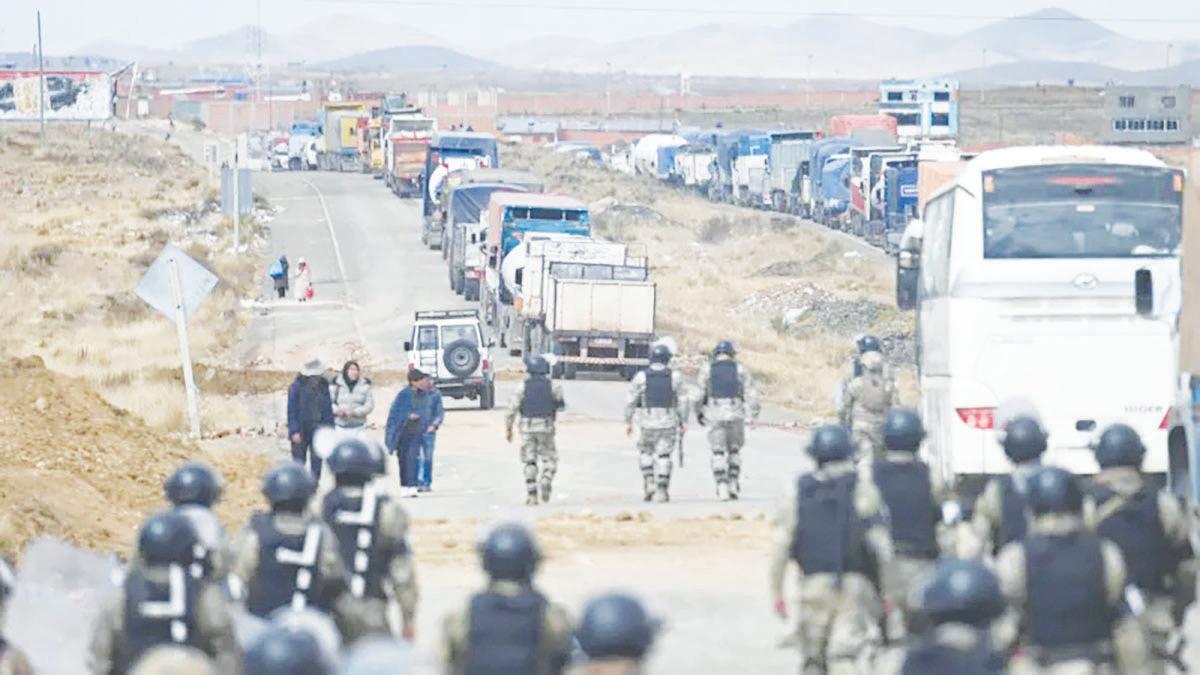
The convoy of Bolivia’s public works minister was ambushed by protesters and he briefly disappeared while overseeing the clearing of roadblocks on Saturday.
Mauricio Zamora’s vehicle was intercepted in the town of Copata on Saturday afternoon and became separated from the group, local media reported. He was later located and is now safe.
He had been in command of an operation to clear barriers set up by anti-Government protesters aimed at slowing the flow of goods into the administrative capital, La Paz, and nearby El Alto.
The mission to create socalled “humanitarian corridors” was met by renewed violence from demonstrators, with some convoys reportedly attacked with stones and dynamite.
Ecuadorian President Daniel Noboa has used his State of the Union speech to tout his United States-backed crime-fighting strategies as well as improvements to the economy.
Addressing the National Assembly in the capital Quito on Sunday, Noboa cited the extradition of a dozen crime bosses to the US and the seizure of almost 300 tonnes of drugs as examples of what he described as his decisive and effective approach.
country cannot develop “if families live in fear”.
Organised crime is the leading concern among Ecuadorians this decade, after a spike in homicides during the COVID-19 pandemic.
Since 2021, Ecuador has struggled to contain drug violence as rival cartels partner with local gangs to battle for control of routes and coastal ports used to smuggle cocaine. The country is wedged between Colombia and Peru, the world’s top cocaine-producing countries.
cording to the Ministry of the Interior.
In response, Noboa, who was re-elected last year to a four-year term, has used a state of exception to allow the military to implement a variety of crime-fighting strategies, including joint patrols with Police Officers and property searches without warrants.
Marches, protests, and roadblocks by trade unions and supporters of left-wing former President Evo Morales have intensified this week, with clashes with security forces in La Paz. The demonstrators are hoping to put pressure on Bolivia’s centre-right President Rodrigo Paz to resign just six months after taking office over his Government’s austerity measures, with his alignment with the US another divisive issue.
Bolivia’s Police and military were dispatched from major cities in the early hours of Saturday g to clear the roadblocks, aiming to ease the flow of food and medicine into the capital. But in several plac-
es, clashes with protesters broke out and roadblocks were re-established.
Zamora’s convoy had been travelling through Copata, south of La Paz, when residents began pelting it with stones and dynamite, local media reported.
His vehicle became separated from the others as they retreated but was able to take a dirt road, according to Agencia Noticias Fides. Here, though, it suffered a second ambush before eventually being able to reunite with the convoy.
(Excerpt from BBC News)
Cuba has announced the first shipment in an expected donation from China of about 60,000 tonnes of rice, as the Caribbean island contends with an ongoing humanitarian crisis.
In a series of social media posts on Sunday, Cuban President Miguel Diaz-Canel confirmed that the first load of 15,000 tonnes had arrived a day earlier in the port of Havana.
He also expressed “deep gratitude” to China, as well as to members of the European Parliament who denounced the pressure campaign his Government faces.
Since January, the United States has increased
its sanctions against Cuba, as part of a hardline turn under the second term of President Donald Trump.
“Thank you very much for the solidarity, and for the firm and unequivocal condemnation of the collective punishment to which our people are being subjected,” Diaz-Canel wrote, likening Cuba’s situation to “genocide”.
While Trump has sought to check China’s growing influence on Latin America, Cuba has increasingly relied on the Asian superpower for assistance.
Already, China has donated solar panels to Cuba to help update its ageing energy grid and transition the
island away from fossil fuels. Currently, Cuba relies on imports for nearly 60 per cent of its oil supply, according to the International Energy Agency.
But since the start of the year, the Trump Administration has largely blocked the export of oil to Cuba.
The de facto oil blockade began shortly after January 3, when the US launched a military operation to capture Venezuelan President Nicolás Maduro.
Trump followed that operation with the announcement that no more oil or funds would be transferred from Venezuela to Cuba.
(Excerpt from Al Jazeera)
Regional carrier
Caribbean Airlines has announced plans to discontinue several regional routes and reduce service on others as part of efforts to maintain a more sustainable and commercially-viable network.
In a statement, the airline said effective June 1, it will end service on routes connecting Dominica, Saint Kitts and Nevis and from the Eugene F Correia International Airport in Guyana to Suriname.
“We will seek them out, find them and extradite them,” Noboa said of wanted criminals. He also asserted that the South American
Last year, Ecuador recorded its highest homicide rate in decades, with approximately 50 murders for every 100,000 residents, ac-
Earlier this year, Ecuador’s military also carried out an operation with US forces against a training camp allegedly used by Colombian drug traffickers, attacking the site with drones, helicopters and boats.
(Excerpt from Al Jazeera)
Prisoners in Venezuela’s western Barinas prison staged a protest on the roof of the detention centre on Sunday, piling flaming mattresses and calling for the removal of the prison’s director, who they said had overseen guards as they shot unarmed prisoners.
“We want justice. They are shooting us, the guards and the wardens,” a prisoner said in a video shared by the Venezuelan Prison Observatory, a local NonGovernmental Organisation (NGO), on X, in which a man is seen with a bullet wound in his chest.
Inmates said they were peacefully protesting when prison staff opened fire and left some wounded.
Venezuelan authorities did not immediately respond to requests for comment.
Prisoners called for removal of the recently-appointed prison director Elvis Macuare Guerrero, in videos shared by the observatory. They said their clothes had been taken away, they had been banned from receiving visits, and pressured to sell drugs.
Inmates’ family members clashed outside with National Guard officers, armed with riot shields,
as they unsuccessfully attempted to stop them entering. They told the NGO they heard screams and explosions minutes after they entered.
The NGO said it was documenting the events and reporting them to human rights watchdogs.
Venezuelan prisons face international scrutiny as the Government of interim President Delcy Rodriguez passed a law to release hundreds of people considered political prisoners. In January, the US attacked Caracas and captured then-President Nicolás Maduro. (Reuters)
The Caribbean welcomed 35 million visitors in 2025, according to the Caribbean Tourism Organisation (CTO), once again surpassing pre-pandemic levels. But did every visitor truly feel welcome in the region? That’s the question Roni Weiss, the executive director of Travel Unity, a non-profit organisation working to create a more diverse and inclusive travel industry, is putting to destinations.

Passengers holding bookings on affected routes beyond the discontinuation dates will be contacted directly by the airline or through their travel agents.
According to the airline, affected customers will be offered alternative travel arrangements where possible, including rebooking on other regional services, connections through airline partners, full refunds for unused ticket portions, or future travel credits
Caribbean Airlines also announced that flights to Martinique and Guadeloupe will be reduced to twice weekly service.
subject to fare conditions.
The airline said it is also working toward finalising a codeshare agreement with another regional carrier to provide customers with expanded destination options through coordinated schedules and integrated ticketing.
Caribbean Airlines stated that the network adjustments form part of broader efforts to maintain strong regional connectivity while focusing on operational reliability, customer service and long-term financial stability. (CMC)
In a sit-down interview with Guardian Media at the CTO’s recently concluded Sustainable Tourism Conference in Belize, Weiss explained that the modern traveller and their needs have changed. Modern travellers can be any combination of differently abled, be of a different race/ethnicity, identify as LGBTQ+, be a traveller of size, et cetera, Weiss said. And he argues that meeting their needs is more than just about being seen. He said, “If we have dietary restrictions and we
aren’t able to get the food we want, we’re not going to have a good experience. If we don’t drink alcohol and everything is centred around that, we’re not going to have a good experience. If we don’t feel safe, and that could just be a general feeling of unsafeness, or that could be because of a specific aspect of our identity, where we feel like we just are not safe for whatever reasons, if we feel like we don’t belong somewhere,
we’re not welcome there, then why do we want to be there? And why would we return?”
The US is a major source market for many Caribbean countries, with Canada not far behind, Weiss said, and as destinations continue to target travellers from those markets, they will need to decide whether they are going to accept and cater to travellers with different identities. (Excerpt from Trinidad Guardian)


as US, Iran
Oil prices hit two-week lows today on optimism that the United States and Iran were moving closer towards a peace deal even though they remained at odds over key issues, including blockades on the Strait of Hormuz that continued to restrict oil supply from the Middle East.
Brent crude futures fell US$4.71, or 4.55 per cent, to US$98.83 a barrel by 2234 GMT, while West Texas Intermediate (WTI) crude was at US$92.03 a barrel, down US$4.57, or 4.73 per cent.
Both contracts touched their lowest since May 7 earlier in the session.
On Saturday, US President Donald Trump said that Washington and Iran had “largely negotiated” a Memorandum of Understanding (MoU) on a peace deal that would reopen the Strait of Hormuz, which before the conflict carried one-fifth of global oil and liquefied natural gas shipments.
However, the two sides remain at odds on several difficult issues, with Trump saying on Sunday he had told his representatives not to rush into any deal with Iran.
MST Marquee analyst Saul Kavonic said: “Notwithstanding all the caveats and risks that remain to the peace deal and Strait of Hormuz, there is now some light at the end of the tunnel, which will bring some near-term oil price relief.”
However, analysts expect that it will take months for oil flows through the strait to return to normal and for damaged oil and gas facilities to be repaired. (Reuters)
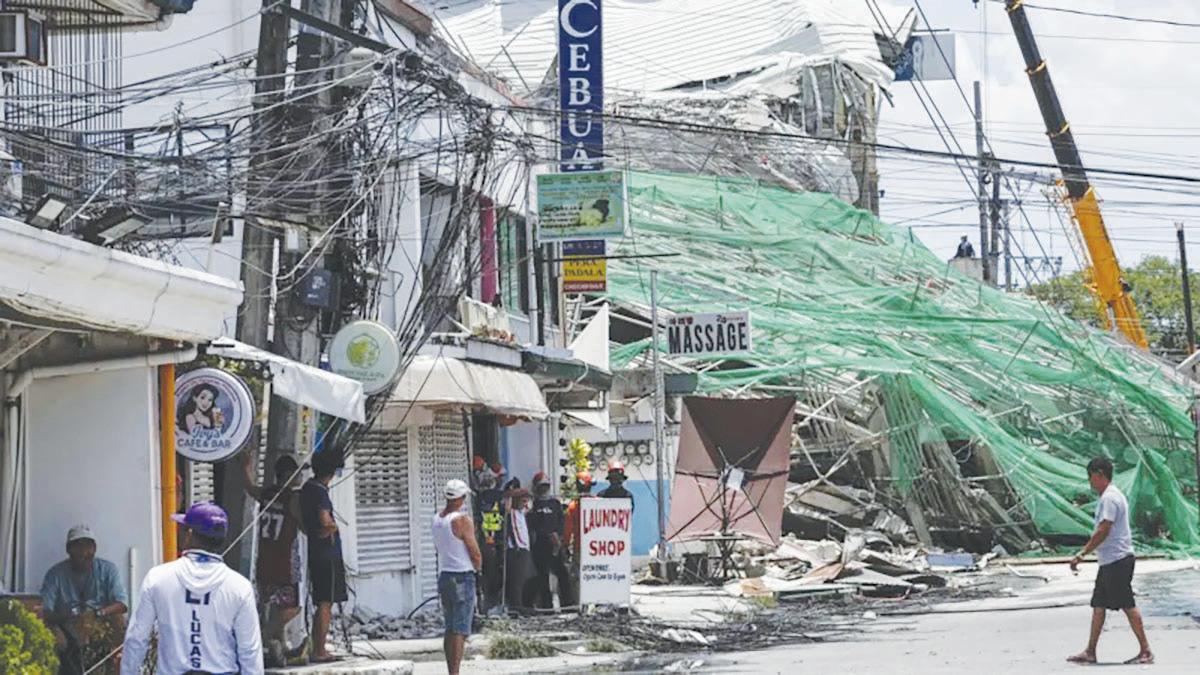
At least one person has been killed and about 20 persons are feared trapped under the rubble of a building that collapsed early on Sunday in a city near the Philippine capital, Manila.
A search operation has so far rescued 24 persons from the site in Angeles and two from a nearby hotel that was struck by falling debris.
The nine-storey building had still been under construction when it suddenly gave way around 03:00 local time on Sunday (19:00 GMT on Saturday).
Officials are now investigating the cause of the collapse.
Many of those trapped are thought to be construction workers who were unable to escape in time.
Later on Sunday, lo-
cal officials said the person confirmed to have died was a 65-year-old man from Malaysia, who had reportedly been staying in the hotel.
He had managed to communicate with rescuers by phone while pinned under a hotel wall, acting Philippine fire chief Rico Kwan Tiu told the AFP news agency.
”When we retrieved him... he was already lifeless,” he said.
Images from the scene showed a mangled heap of scaffolding and concrete splaying out onto the street, covered by green safety netting.
City information officer Jay Pelayo told AFP that the building’s walls and scaffolding surrounding it had buckled, likely trapping people in a pile of debris.
(Excerpt from BBC News)
United States President Donald Trump said on Sunday he had told his representatives not to rush into any deal with Iran, as his Administration played down hopes of an imminent breakthrough in the threemonth-old war that had been raised a day earlier.
The US blockade on Iranian ships in the Strait of Hormuz would ”remain in full force and effect until an agreement is reached, certified, and signed”, Trump wrote on Truth Social. ”Both sides must take their time and get it right,” he added.
There was no immediate response from Iran’s Government. But Tasnim news agency, which is linked to Iran’s Revolutionary Guards, said the US was still obstructing parts of a potential deal, including Tehran’s demand for the release of frozen funds.
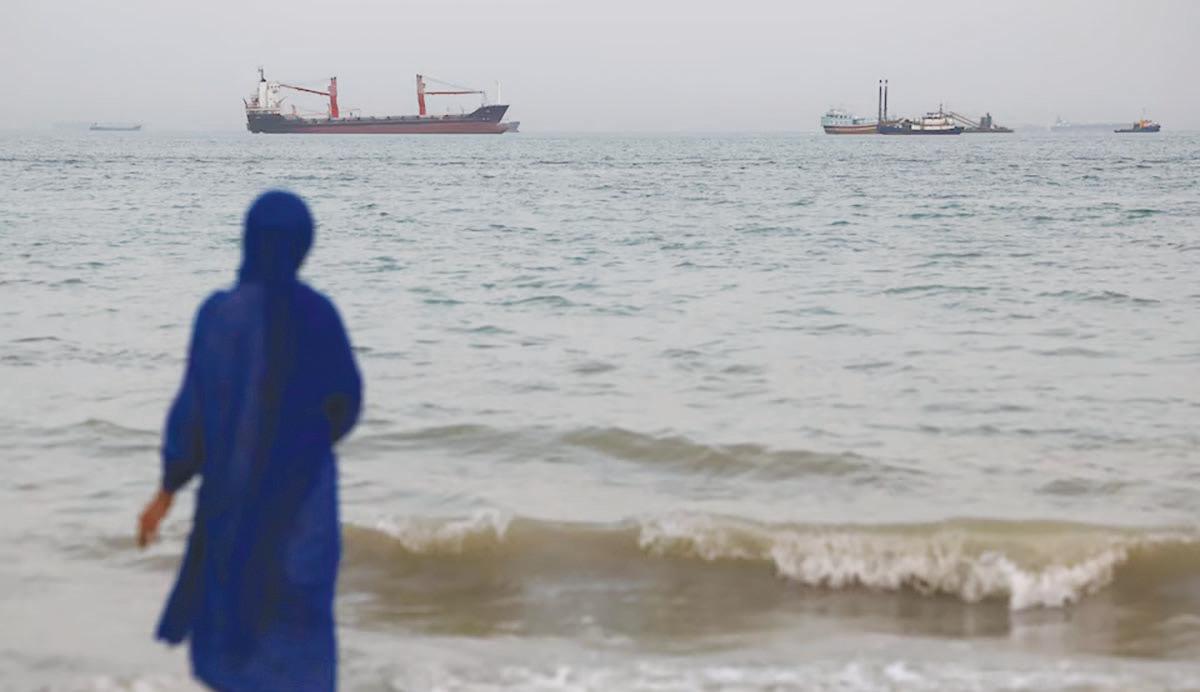
A day earlier, Trump said Washington and Iran had ”largely negotiated” a Memorandum of Understanding (MoU) on a peace deal that would reopen the Strait of Hormuz, which before the conflict carried onefifth of global oil and liquefied natural gas shipments.
The two sides remain at
odds on several difficult issues, such as Iran’s nuclear ambitions, Israel’s war in Lebanon with the Iranianbacked Hezbollah militia and Tehran’s demands for the lifting of sanctions and the release of tens of billions of dollars of Iranian oil revenues frozen in foreign banks.
A senior Trump
Administration official told reporters an agreement would not be signed on Sunday, saying that the Iranian system did not move fast enough. But he outlined what he said were the latest contours of what was being negotiated.
The official, speaking on the condition of anonymity, said Iran had agreed ”in principle” to open the Strait of Hormuz, in exchange for the United States lifting its naval blockade, and to dispose of Tehran’s highly enriched uranium.
He said the US understood Iran’s Supreme Leader Ayatollah Mojtaba Khamenei had endorsed the broad template of the deal.
There was no immediate confirmation from Iran or elaboration on what an ”in principle” agreement meant. (Excerpt from Reuters)
Asuicide car bomb attack on a train carrying soldiers in Quetta, the capital of the southwestern Pakistani province of Balochistan, has killed at least 24 persons and wounded more than 50 others.
The Balochistan Liberation Army, a separatist group, has claimed responsibility for Sunday’s attack.
Reporting from the scene, Al Jazeera’s Kamal Hyder
said several houses and buildings adjacent to the railway line were severely damaged. The blast caused some train carriages to overturn and catch fire.
According to local media reports, a state of emergency was declared at public hospitals in Quetta, with doctors and other medical staff ordered to remain on duty.
Footage shared online showed charred vehicles and
train carriages lying on their sides, sending thick plumes of black smoke into the sky.
Hyder said Pakistan has experienced several attacks by separatist groups in recent months. The attacks have increased in ferocity and have also targeted Chinese workers due to opposition to Beijing’s infrastructure projects in Balochistan, he added.
Under the China-Pakistan Economic Corridor, China’s
Xinjiang region has been connected to Pakistan’s Gwadar port.
Pakistani Prime Minister Shehbaz Sharif has condemned the attack in a post on X. “Such cowardly acts of terrorism cannot weaken the resolve of the people of Pakistan. We remain steadfast in our determination to eliminate terrorism in all its forms and manifestations,” he said.
(Excerpt from Al Jazeera)
Russia carried out a deadly large-scale wave of strikes against Ukraine, firing hundreds of drones and dozens of missiles overnight.
Ukrainian President Volodymyr Zelenskyy said Kyiv was the main target, but other areas were also hit, with about 100 persons injured.
Four persons were killed in the capital and wider region, with loud explosions
heard across the area throughout the night. Dozens of residential buildings, a school, an opera house and a museum were damaged.
Russia’s Defence Ministry said the Oreshnik hypersonic missile was used in the strikes, which it described as coming in response to Ukraine’s ”attacks on civilian infrastructure”. Ukraine’s military denies targeting civilians.
Russian President
Vladimir Putin launched a full-scale invasion of Ukraine in February 2022. Earlier this week, he accused Kyiv of hitting a student dormitory in the town of Starobilsk on Friday, in which Russian officials said 21 persons were killed.
Ukraine’s military said its forces did carry out an attack in Starobilsk in Russianoccupied eastern Ukraine
overnight on Friday, but maintained that it struck an elite Russian drone military unit.
European leaders have condemned the overnight Russian strikes on Sunday, which came after warnings from Zelenskyy that Russia was planning an attack, and that it may have been preparing to use the Oreshnik missile.
(Excerpt from BBC News)
Attacks on Ebola health facilities are intensifying in the eastern Democratic Republic of the Congo (DRC) as the World Health Organisation (WHO) warns the outbreak could worsen in the DRC and Uganda.
On Thursday, the Rampura health centre was stormed by a group of angry residents demanding the bodies of relatives who had died from Ebola, according to local sources. The incident was
also confirmed by partners of the Congolese government involved in the response in the area.
A day later, a tent provided by Doctors Without Borders, also known by its acronym MSF, at a hospital in Mongbwalu in Ituri province was set on fire.
“Following the death of a patient showing symptoms of Ebola virus disease in one of the tents, healthcare staff isolated the body in
line with strict health protocols,” the NGO Alliance for International Medical Action (ALIMA) said in a statement sent to Al Jazeera.
It said that while the body was being prepared for burial, tensions flared, resulting in the burning of two tents.
“Despite this incident, the teams were also able to secure the body of the deceased patient in preparation for a dignified and safe burial, in accordance with Ebola respon-
se standards,” ALIMA added. Health workers in Ebolahit areas of the eastern DRC have repeatedly faced resistance from communities over strict burial protocols, which require specialised handling of bodies to prevent further transmission of the virus.
Aid agencies said the tensions are often driven by fear, rumours and mistrust of medical teams. (Excerpt from Al Jazeera)






TODAY’S WORD — INFECTED



Take a moment to reflect before you do or take on something new, extravagant or time-consuming. Protect your home, possessions and health from overload. A lifestyle change may be necessary to manage your time and money more efficiently and lower stress. You don’t have to please everyone, but you do need to please yourself.



Play the long game. Take your time; ease into what you want with adaptability and insight regarding what compensations will keep you in the running and protect your interests. Timing and precision are everything when it comes to getting what you want. Leave diagnoses to the experts. Take better care of your health; avoid risks and injury.











Walk away from whatever is holding you back instead of wallowing in a never-ending situation you cannot salvage. It’s strength, courage and discipline that will carry you forward and help you make your mark. Test the possibilities, and replace the old with something new and vibrant. You’ll discover the path that leads to happiness.
Emotional confusion will surface if someone pressures you or isn’t specific regarding their intentions. Don’t make assumptions, judge or take on someone else’s responsibilities. Your power comes from taking care of your needs and pursuing what makes your life better before you turn your attention to someone trying to find others to do the work for them.
Listen, learn and let go of what’s no longer necessary. Express your plans and gather input from those you trust to point out something you may not notice. A partnership looks promising if you are open and honest regarding your expectations and what you are willing to contribute. Explore the possibilities, and weigh the pros and cons.
Keep your thoughts to yourself. Revealing your next move will be counterproductive. Focus on gathering information, testing what’s valid and discarding what isn’t, and being honest with yourself regarding what’s feasible and what’s unnecessary. Put your energy where it does the most for you, not into proving someone else is wrong.
Emotions will fluctuate, causing uncertainty and overreacting if you aren’t honest with yourself or others. Ask questions; what you see or how you react will not represent what’s coming your way. Take the high road. Say and do little as you let things unfold, and you’ll gain insight that will curb your reactions to reflect what’s happening.
Pay attention, channel your energy into something worthwhile, be open to new possibilities and gather information without judging or conflicting interests. Be more observant and less willing to take someone’s word as gospel. Your biggest returns will come from discipline, hard work and being grateful for what you have. Make personal growth your goal.
(INFECTED: in-FEK-ted: Passed something harmful, like a disease, to another person.)
Average mark 32 words
Time limit 40 minutes
Can you find 39 or more words in INFECTED? The list will be published tomorrow.
SATURDAY’S WORD — SACCHARIN
sari anarch cairn
sarin arch casa scan archaic cash scar aria chai shin arnica chain chair char chia



Something interesting will push you in a new direction that suggests a lifestyle change. A chance to develop a healthy routine or pastime that encourages looking and feeling your best will boost your confidence. What you share with someone like-minded will grow into something worthwhile. Check out a joint venture.



Take precautions. Read the fine print, observe and let your gut dictate your next move. Being a follower doesn’t work for you. Be the one to lead the way and to decide how you reach your objective. Let your experience determine what’s best for you, especially when it comes to money management. Leveraging yourself will cause stress.



Your decisions are dependent on being comfortable. You may be overdue for a change, but the extent and cost are what matter. A simple change to your routine or meeting someone new may be sufficient, depending on what stage of life you are in. Perhaps a complete overhaul, or change of location, may be what you need to thrive.
Make personal gain your goal. Trying to please others will put you in a vulnerable position. Listen and make suggestions, but put your time and energy into something that has more to do with safety, security and comfort, not entertaining or taking on too much debt or responsibility. Be true to yourself and satisfy your needs.






Rajasthan Royals 205 for 8 (Jurel 38, Archer 32, Thakur 2-41, Chahar 2-43) beat Mumbai Indians 175 for 9 (Suryakumar 60, Hardik 34, Archer 3-17, Brijesh 2-26, Burger 2-43) by 30 runs
It was a must-win game, and they were in early trouble, but Jofra Archer pulled off one of the Indian Premier League’s great all-round performances to seal Rajasthan Royals’ -passage into the playoffs with a 30-run win over Mumbai Indians (MI) at the Wankhede Stadium.
RR will now face Sunrisers Hyderabad (SRH) in the Eliminator on May 27 in New Chandigarh. The IPL’s last league game, between Kolkata Knight Riders and Delhi Capitals in Kolkata, is now a dead-rubber.
Sent in to bat on a somewhat slow pitch in an afternoon game, RR lost both their rampaging openers early, and struggled for momentum through the early middle overs with hard lengths and pace-off deliveries proving difficult to hit. Then RR, despite having Shubham Dubey and their designated Impact Player Ravindra Jadeja padded up, promoted Archer to number seven, and he hit three sixes in a 15-ball 32 that shifted the game’s momentum.
That innings sparked a late surge that pushed RR’s total beyond 200. Then Archer began its defence spectacularly, taking two new-ball wickets with high pace and movement. And just when Hardik Pandya seemed to threaten a late heist and deny RR their playoffs spot, Archer came back for his final over and
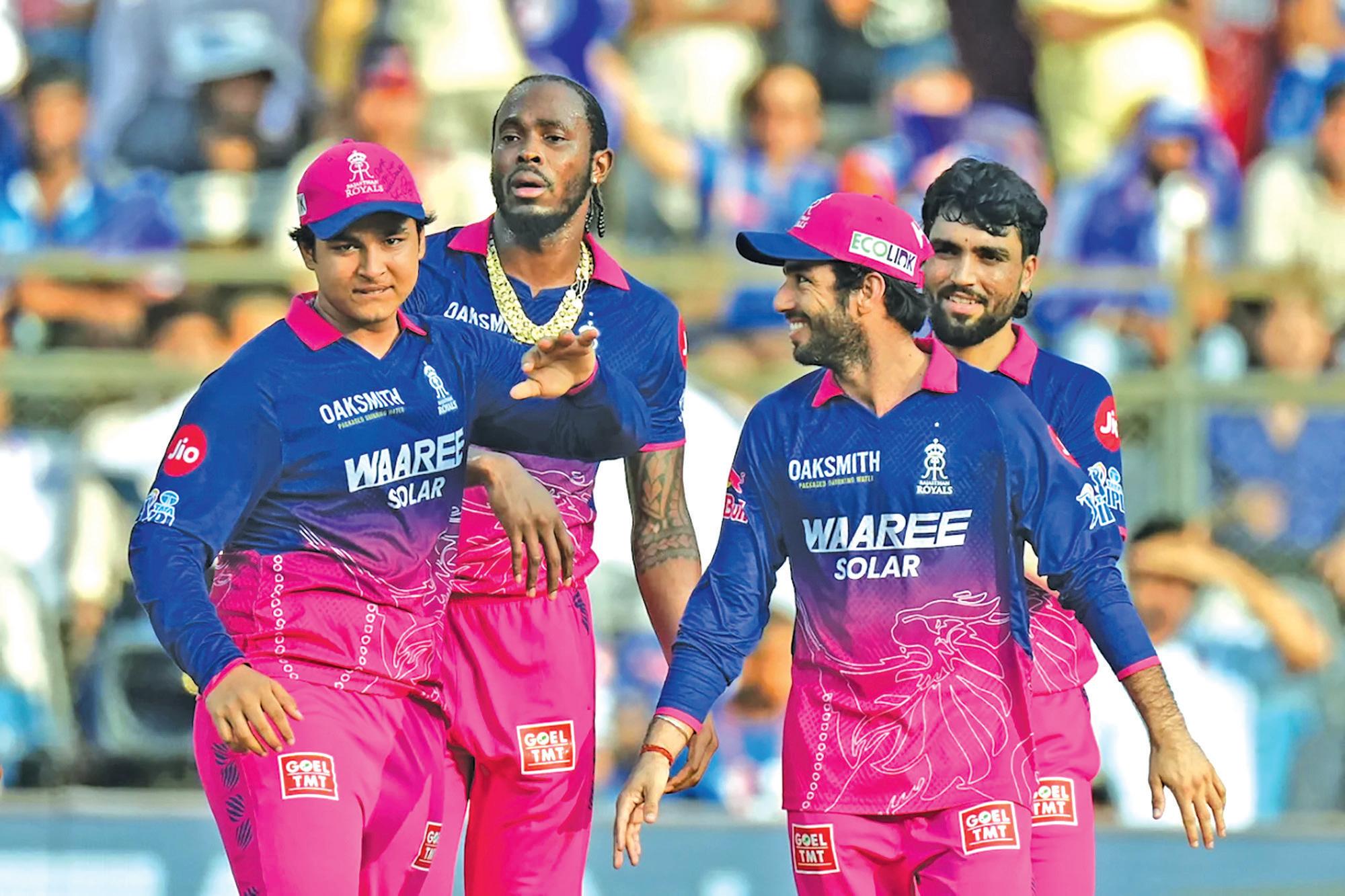
removed him with the perfect hard-length delivery. He finished with figures of 4-0-17-3, and RR wrapped up victory by 30 runs.
MI begin with impressive power play
That MI were well-prepared for this contest was clear in the first over itself. When Vaibhav Sooryavanshi came on strike, Deepak Chahar stationed a sweeper cover as one of his two deep fielders, and dangled a full ball wide of off stump, asking the boy wonder if he fancied taking on the fielder. Sooryavanshi went after it, and could have got six for it had Will Jacks not pulled off a spectacular diving save to keep him down to a single, but on another day he could have also been out.
As it happened, Sooryavanshi was starved on strike for the next few overs, as Yashasvi Jaiswal hit three sixes before falling for a 17-ball 27, out to Jacks who bowled two overs of match-up offspin to the
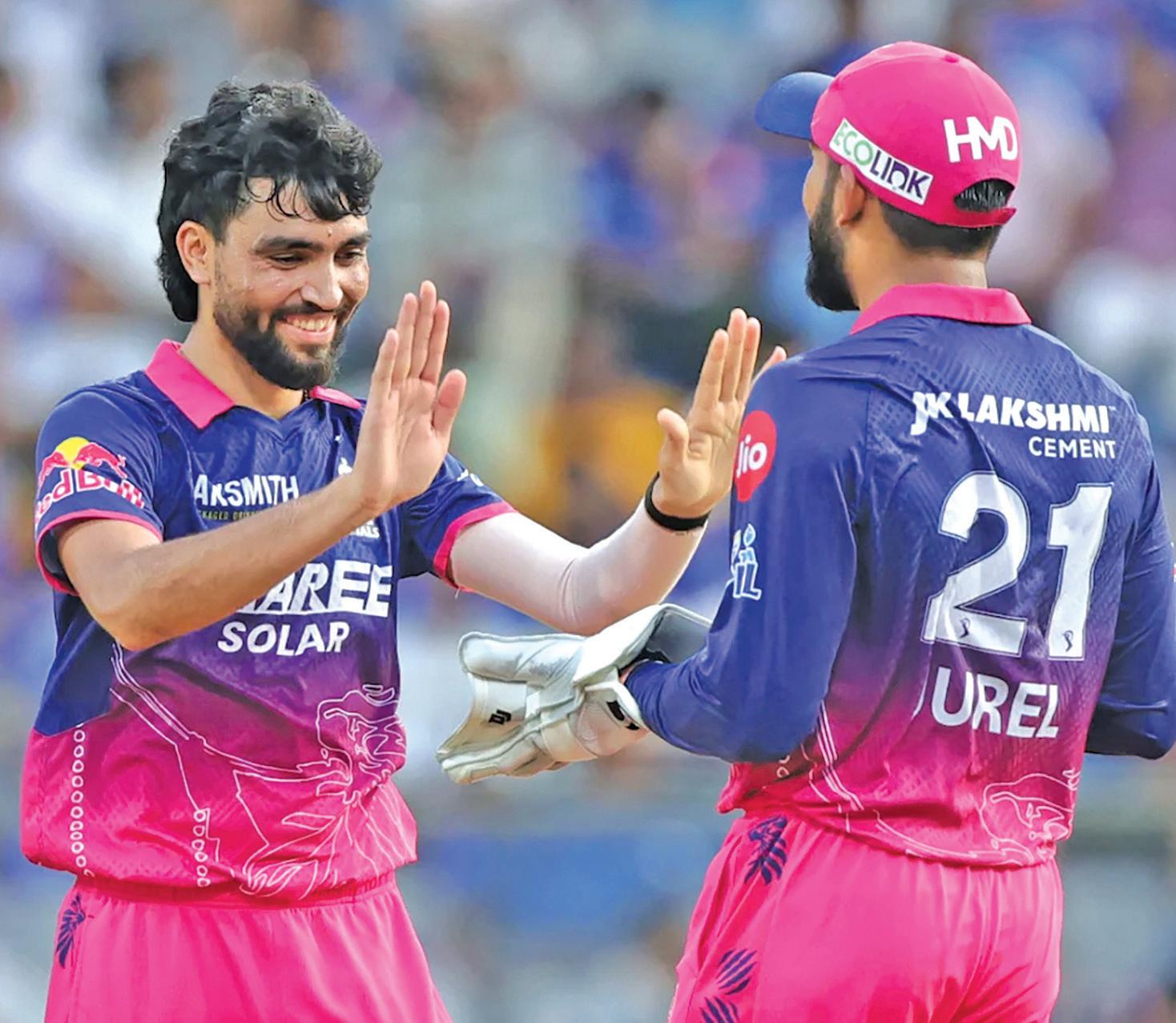
two left-hand openers for just 10 runs off 10 balls.
When Sooryavanshi finally faced his sixth ball at the start of the fifth over, he tried to hit against Chahar’s over-the-wicket angle, lost his shape for once, and fell to a sliced miscue.
When Riyan Parag fell to AM Ghazanfar off the final ball of the power play, caught with great awareness and balance on the edge of the long-on boundary by Tilak Varma, RR were 54 for 3.
Shanaka, Archer revive RR
Dasun Shanaka ensured RR didn’t spend too long worrying about the wickets they had lost, with a bit of help from ordinary MI bowling. Ghazanfar and Raghu Sharma fed him slot balls that he launched down the ground for six, and Shardul Thakur sent down a short ball down the leg side that he helped over fine leg for another six. Shanaka’s 15-ball 29 was an important innings, coming when Dhruv Jurel endured another slow start. Jurel eventually hit Ghazanfar for two fours and a six in the 12th over before getting yorked by Corbin Bosch in the 13th for 38 off 26 balls. RR have often underutilised Archer’s batting ability, and now they seemed to be erring in the other direction entirely, sending him in ahead of two recognised batters with 7.1 overs remaining.
But Archer’s right-handedness may have been one reason for this – MI could have sneaked in an over of Jacks against Dubey or Jadeja. The other could
have just been his pure ball-striking ability on a slow pitch where MI were looking to bowl into the pitch as much as possible. Archer’s height, stable base, and baseball-style swing were instrumental in his being able to hit three sixes off that kind of delivery, all either pulled or flat-batted down the ground.
Thakur eventually dismissed him with a hardlength ball that climbed high enough to force a miscue, but by then Archer had given RR serious momentum. Jadeja and Nandre Burger took the baton from him and collected 30 off the last two overs. RR scored 73 off their last five.
Archer, part 2
Archer’s new-ball wickets came from dissimilar deliveries that did similar things. To Rohit Sharma, he bowled what seemed an attempted inswinger that pitched and seamed away from the fuller side of a good length. To Naman Dhir he bowled a fast legcutter on the line of the stumps. Both straightened after angling into the batter. Rohit nicked off while attempting to work the ball leg side, and Dhir was bowled swiping across the line.
When Burger got one to nip into Ryan Rickelton and induce him to miscue a catch to midwicket off the inside half of his bat, MI were 24 for 3. That became 38 for 4 when Brijesh Sharma sneaked an unplayable, in-ducking shooter through Varma in the final over of the power play. RR seemed to have a foot in the playoffs.
as he was in, MI still had a chance, and even if he wasn’t demonstrating the range of his peak version, he still played a breathtaking shot from time to time, such as when he punched Jadeja inside-out for a flat six over the covers.
He put on 63 with Jacks for the fourth wicket before Yash Raj Punja ended the partnership in the 12th over with a bravely-flighted wide legbreak right after getting hit for six. RR may have wondered if the wicket of Jacks had been counter-productive, because Pandya walked in and began to smoke the ball to all parts. He hit Punja for two sixes in his first over in the crease, then pulled Shanaka for two fours in the 13th. By the end of that over, he was batting on 25 off seven balls and MI needed 75 off
Rajasthan Royals (20 ovs maximum)
Yashasvi Jaiswal c Bosch b Jacks 27
Vaibhav Sooryavanshi c Naman
Dhir b Chahar 4
Dhruv Jurel † b Bosch 38
Riyan Parag (c) c Tilak Varma b Ghazanfar 14
Dasun Shanaka run out (Thakur/Bosch) 29 Donovan Ferreira c Bosch
b Chahar 18
Jofra Archer c Tilak Varma b Thakur 32
Shubham Dubey c Naman
Dhir b Thakur 5 Ravindra Jadeja not out 19 Nandre Burger not out 10
Extras (lb 1, nb 2, w 6) 9
Total: 20 Ov (RR: 10.25) 205/8
Did not bat: Yash Raj Punja, Brijesh Sharma Fall of wickets: 1-33 (Yashasvi Jaiswal, 3.4 ov), 2-33 (Vaibhav Sooryavanshi, 4.1 ov), 3-54 (Riyan Parag, 5.6 ov), 4-99 (Dasun Shanaka, 10.3 ov), 5-119 (Dhruv Jurel, 12.5 ov), 6-139 (Donovan Ferreira, 15.3 ov), 7-174 (Shubham Dubey, 17.4 ov), 8-175 (Jofra Archer, 17.6 ov) Bowling O-M-R-W Deepak Chahar 4-0-43-2 Will Jacks 2-0-12-1 AM Ghazanfar 3-0-45-1 Raghu Sharma 3-0-25-0 Shardul Thakur 4-0-41-2 Corbin Bosch 4-0-38-1
42.
Archer, part 3 The equation had come down to 59 off 30 when Archer came back for his final over. He struck with his fourth ball, with a delivery not dissimilar to the one that had dismissed him. Hard length, into the pitch, climbing awkwardly towards Pandya’s back shoulder. The attempted flat-bat hit ended up as a simple catch to long-on, and RR could breathe again. Victory swiftly became a formality thereafter, with Bosch failing to nail a slogsweep off Punja in the 17th over and Suryakumar – who scored just 10 off 10 after reaching his fifty in 32 balls – toe-ending an attempted pull back to Burger for a return catch in the 18th.
(ESPNcricinfo)
Mumbai Indians (T:

FIFA’s Regional Member Association Development Manager, Amiel Mohammed paid a special visit to several Regional Associations on Saturday, May 23, 2026, to observe matches being played in the Youth Ensemble U13 Programme, a correspondence from the Guyana Football Federation (GFF) indicated on Saturday.
The visit comes as part of a collaborative initiative between the GFF and FIFA aimed at establishing a sustainable annual calendar of structured youth football competitions across Guyana.
Accompanied by the GFF team, Mohammed began his visit at the Buxton Ground, where the East Demerara Football Association hosted playoff matches between Melanie FC and Mahican Western Lions, along with Haslington Stars and Plaisance FC. He then travelled to the National Training Centre (NTC), where the East Bank Football Association staged matches between Circuit Ville Jaguars FC and Timehri United FC, as well as
Raiders FC and Kuru Kururu FC.
The FIFA representative concluded the tour at the West Ruimveldt Ground, where the Georgetown Football Association hosted their march-past.
During the visit, Mohammed commended the Federation’s commitment to structured youth development and emphasised the importance of creating consistent competitive opportunities for young players at the grassroots level.
“This is what football development is all about. Being out here on the field, having the landscape and giving the youths the opportunity to play in a structured manner and the GFF in achieving these initiatives and these missions,” he said.
Mohammed further highlighted FIFA’s objectives through the Youth Ensemble Programme, noting that the initiative was born out of a shared vision between FIFA and the GFF to strengthen youth football development across the country.
“The programme was developed as part
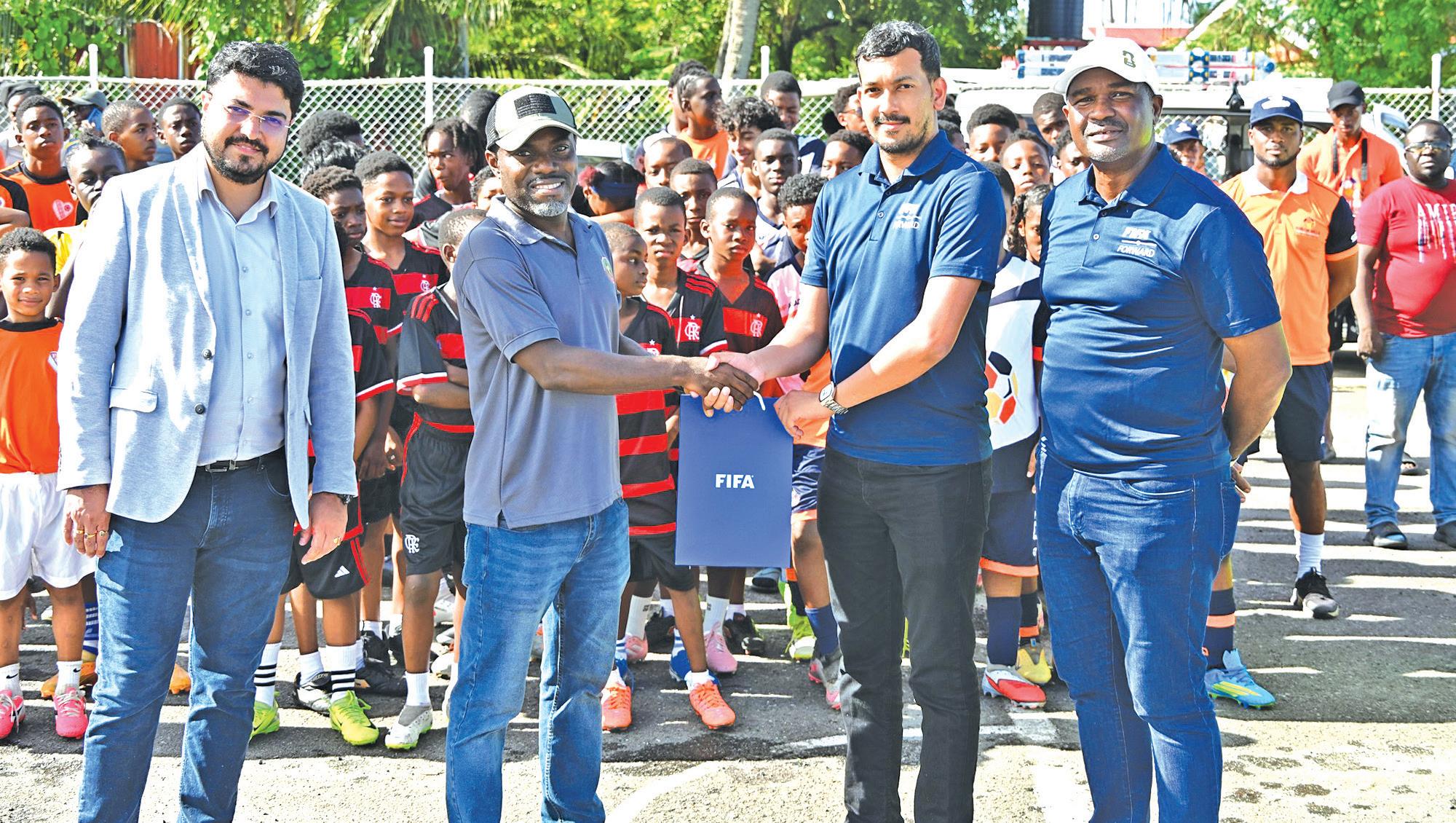
of [GFF] President [Wayne] Forde and the GFF’s vision in alignment with the FIFA Forward regulations. They saw the need for this concept in the local landscape, and we are happy and grateful to support it by providing the funding necessary to foster youth development and competition in a healthy and enriching environment,” he noted.
President Forde said the visit by the FIFA Regional Member Association Development Manager underscored FIFA’s continued commitment to supporting youth and grassroots football development in Guyana through initiatives like the Youth Ensemble Programme.
“It shows FIFA’s commitment to our vision for the game, which fits neatly into FIFA’s global vision for football. We know the foundation of football is at the grassroots level, and it has been a huge challenge for many countries within our region to establish sustainable, well-structured youth competitions, particularly youth leagues. The investment required to achieve this would not be possible without the support of the governing body.
“Amiel’s visit here is a reassurance of FIFA’s commitment to youth football,
grassroots development, and the leadership of the GFF,” Forde stated.
The Youth Ensemble Programme forms part of FIFA’s broader mandate to support Member Associations in strengthening grassroots football structures, increasing participation opportunities, and creating sustainable player development pathways from the community level to elite competition.
Over the coming weeks, U13 matches will continue to be played on Saturdays in a 9 v 9 cross-field format, while U15 matches will be contested on Sundays in the standard 11 v 11 format.
Competitions will utilise a combination of round-robin and knockout systems, culminating in a National Playoff stage featuring 20 clubs divided into four groups before advancing to the semi-finals and national finals.
Led by the GFF in collaboration with FIFA, the transformational Youth Ensemble Programme represents an annual investment of $44 million and is expected to engage approximately 130 clubs while impacting more than 3000 young players nationwide through structured U13, U15 and U17 competitions.
Visually-impaired persons across the Caribbean are facing growing challenges in accessing structured developmental and recreational opportunities, with officials warning that limited funding, high inter-island travel costs, and declining participation numbers are threatening long-term inclusion efforts in the Region.
The concerns were raised during a discussion on “Disability and You”, where Blind Cricket West Indies Chairman Kci Ward-Ryan and Director Stevenson Evelyn outlined structural challenges affecting the development of blind cricket, which they described as one of the few organised platforms available for visually-impaired persons to participate in structured activity.
Evelyn, who has been involved since the inception of the sport in the Region, said the initiative began in Barbados in 2003 following engagement between local disability advocates and visiting cricket development figures from the United Kingdom.
“Blind cricket started in Barbados back in 2003 officially as a result of a conversation between the then President of the Barbados Council for the Disabled, the former executive officer of the British West Indian Airways back then and

some Englishmen who came down to visit Barbados and they were involved in disability cricket in the United Kingdom and as a result of that initial conversation, then structures started being put in place,” he said.
He noted that what began as a single introduction match quickly evolved into a regional development initiative, with Barbados taking the lead role in expanding participation across the Caribbean.
“So, in 2003 we had the first introduction to blind cricket, our English team came down and we played a celebrity cricket match in our famous Queen’s Park… and as a result of that, blind cricket took over, Barbados was tasked then with the responsibility of sharing the game,” Evelyn said.
Officials said that while early expansion reached several territories, sustained growth is now being constrained by logistical and
financial limitations.
“One of our major struggles is the lack of funding and airfare,” Evelyn said, explaining that unlike larger cricket nations, regional teams face significant difficulty transporting players between territories for training and competition.
Ward-Ryan said the situation was further complicated by the amateur status of the programme in the Caribbean compared to other regions where blind cricket is professionally structured.
“It is an amateur sport in the Caribbean. But outside is bigger, a lot, lot bigger,” he said, noting that countries such as India and Pakistan operate structured domestic leagues and provide financial support for athletes.
He pointed to India as the leading force in blind cricket development, citing its population size and institutional backing.
“Coincidentally, as in conventional cricket, it is India because they have the numbers and cricket is almost second nature to every Indian… they have won all the global titles so far for the last couple of years,” WardRyan said.
The officials also highlighted that demographic changes and improved healthcare systems in parts of the Caribbean are contributing to a shrinking pool of younger participants.
“The average age in most of the teams throughout the Caribbean is 40,” WardRyan said, adding that improved early detection and treatment of visual impairment is reducing the number of new entrants into the sport.
Evelyn said this was particularly evident in Barbados, where early medical intervention has reduced the number of persons developing severe visual impairment later in life.
“Over time within Barbados, our players are aging out… and in terms of cricket, then we may have to look at… maybe part of an OECS [Organisation of Eastern Caribbean States] team,” he said.
To address declining numbers and logistical constraints, officials are now proposing structural changes, including a potential franchise-based system that would allow players from across the Region to be grouped into teams regardless of nationality.
“I was floating the idea around the Caribbean that we might have to go to the franchise system. Whereas we pull up all the players throughout the Caribbean, and we distribute them towards about four or five teams,” Ward-Ryan said.
Despite the challenges, both officials stressed that continued support from Governments, Private Sector stakeholders and lo-
cal communities remained critical to sustaining opportunities for visually-impaired persons.
“Even with corporate sponsorship, even if you can’t do it on the West Indies level, you can still help your local organisations… Little goes a very, very long, long way,” Ward-Ryan said. The officials also renewed calls for greater regional cooperation to improve mobility and access, arguing that transportation remained one of the biggest barriers to inclusion.
“You don’t want to see it as a charity, but you’re creating opportunities for the empowerment of persons with disabilities in general,” Evelyn said.
They added that without sustained investment and structural support, programmes aimed at empowering visually-impaired persons risked stagnation despite their social importance across the Caribbean.


Anerve-wracking homestretch battle between the next generation of Guyana’s cyclists made for a thrilling conclusion to the National Sports Commission’s 60t Independence 3-Stage cycling race on Sunday morning.
While youngster Alexander Leung bested Ajani Cutting near the finish line to come away with a win in Stage 3 – which took the cyclists from Schoonord on the West Coast of Demerara (WCD)
to Parika, back over the Bharrat Jagdeo Demerara River Bridge and ending at the Cliff Anderson Sports Hall (CASH) on Homestretch Avenue in Georgetown – his efforts were only good enough for second place overall, with the win grabbed by Cutting, who remained consistent and among the top performers over the weekend’s three stages.
On the final bend, Cutting was firmly in control of the race, breaking away from the peloton to hold a
The departure of the current Guyana National Senior Men’s Head Coach marks yet another moment where the Guyana Football Federation (GFF) has to decide what it values more: short-term fixes, or building something sustainable.
This isn’t the first time we’ve been here.
In 2024, the Federation overlooked the sitting Interim Head Coach, Wayne Dover, after a six-game stint that produced four wins, including victories over Barbados and Guatemala, and a 3-0 win over Montserrat in World Cup qualifying. Instead, Thomas Dooley was appointed. Nine months later, Dooley has resigned.
That’s the pattern; overlook continuity, bring in an external name, and restart the cycle before any real foundation is set.
Now, reports suggest the Federation is considering appointing Second Assistant Coach Marco Bonofiglio as Interim Head Coach. The concern isn’t about Marco as a person; the concern is about the precedent.
Appointing someone with no prior experience managing a senior men’s team at club or country level, at this stage of the nation’s League and Gold Cup cycles, is a significant risk. Senior international football is not a place for on-the-job training. The players, the staff, and the fans deserve a setup where the Head Coach has already managed the pressures, politics, and preparation that come with senior men’s football.
Guyana doesn’t lack talent. What we keep lacking is consistency in leadership and respect for the work that’s already been done. Overlooking a coach who delivered results and then rushing into another unproven appointment only creates instability for the players. If the goal is to qualify for a World Cup and compete seriously in CONCACAF, then appointments should be made on track record, not convenience. The Federation has an opportunity now to break the cycle. The question is whether it will take it.
Football enthusiast
slim advantage turning into Homestretch from Mandela Avenue. However, Leung was on his tail, moving with Cutting and drawing level with him around the National Communications Network (NCN). Leung

7:01:08.95
(2:30:16.07Stage 3). Kaieteur Attack’s Robin Mendes ended third with 7:01:17:93 (2:30:16.05 – Stage 3).
In Category 4, Mark Lewis claimed the top spot. We Stand United’s Walter
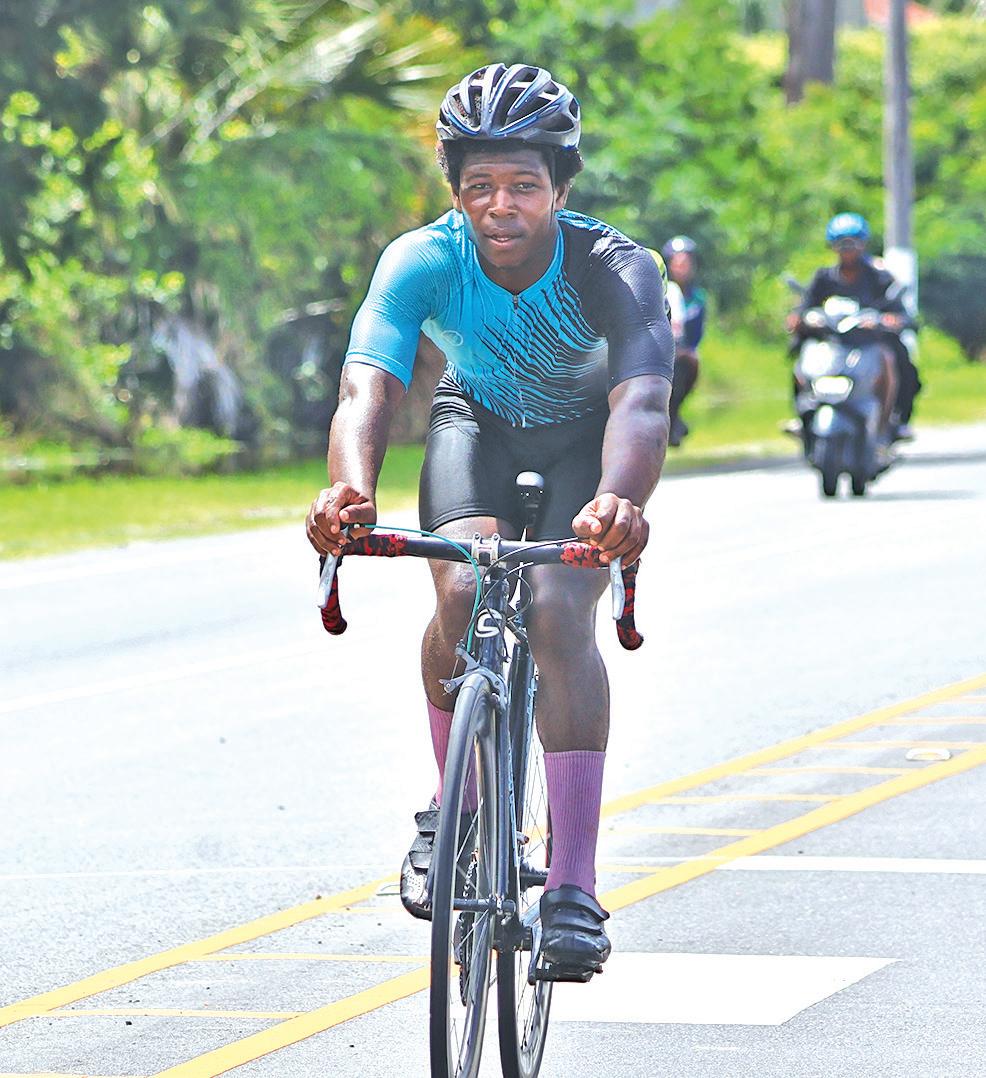
eventually pulled ahead for what became a photo finish to the NSC and Ministry of Culture, Youth and Sportsponsored race.
Continental’s Leung clocked 2:27:42 for the win in Stage 3, followed by Kaieteur Attack Racing’s Cutting in the same time of 2:27:42 for second place.
Team Velocity’s Mark Lewis completed the top three with a time of 2:27:59.
Overall, the teenaged Cutting took the top spot, with a combined time of 6:58:46.88, claiming a $275,000 grand prize. Leung was second with 6:58:58.88 while Lewis completed the podium in 6:59:15.88.
Team Evolution’s Cortis Dey was fourth overall in a time of 6:59:20.93, his teammate Segun Hubbard followed closely with 7:00:02.92 for fifth while Kaieteur Attack’s Sidwell Sandy rounded off the top six with a combined time of 7:00:06.95.
While Hubbard won the Over-35 category on Sunday with a time of 2:28:46.03, Carlton Wheelers’ Robin Persaud was second overall in that category with
Grant-Stuart finished second, clocking 2:28:47.04 in Stage 3 for an overall time of 7:00:03.92. Evolution’s Roy Mangru stopped the Stage 3 clock at 2:28:47.04 for an overall time of 7:00:15.95 and third place in the group.
Leung was the best junior on the park, followed by Evolution’s Alex Newton, stopping the clock at 2:33:24.08 in Stage 3 and 7:04:50.95 overall for second in the junior category. Team Velocity’s Kevon Stephens
grabbed third, with an overall time of 7:06:54.37 (2:34:31.08 – Stage 3).
In the Over-50 division, Flying Stars’ Junior Niles was the top rider with 1:55:36.00 in Stage 3 and 5:42:37.90 for first overall. His clubmate, Ray Harlequin ended the event with 5:42:38.95 overall for second (1:55:38.03). Carlton Wheelers’ Talim
Evolution’s Denise Jeffrey, who stopped the clock at 1:34:25.03 in stage 3 for a combined time of 3:42:22.71 and an overall win in the women’s category. Kaieteur Attack’s Tandeia Noel claimed second overall with 4:40:26.88 (2:03:41.05 – Stage 3). Continental’s Abigail Jeffrey completed the top three with 5:43:38.46 (2:33:22.03 – Stage 3).
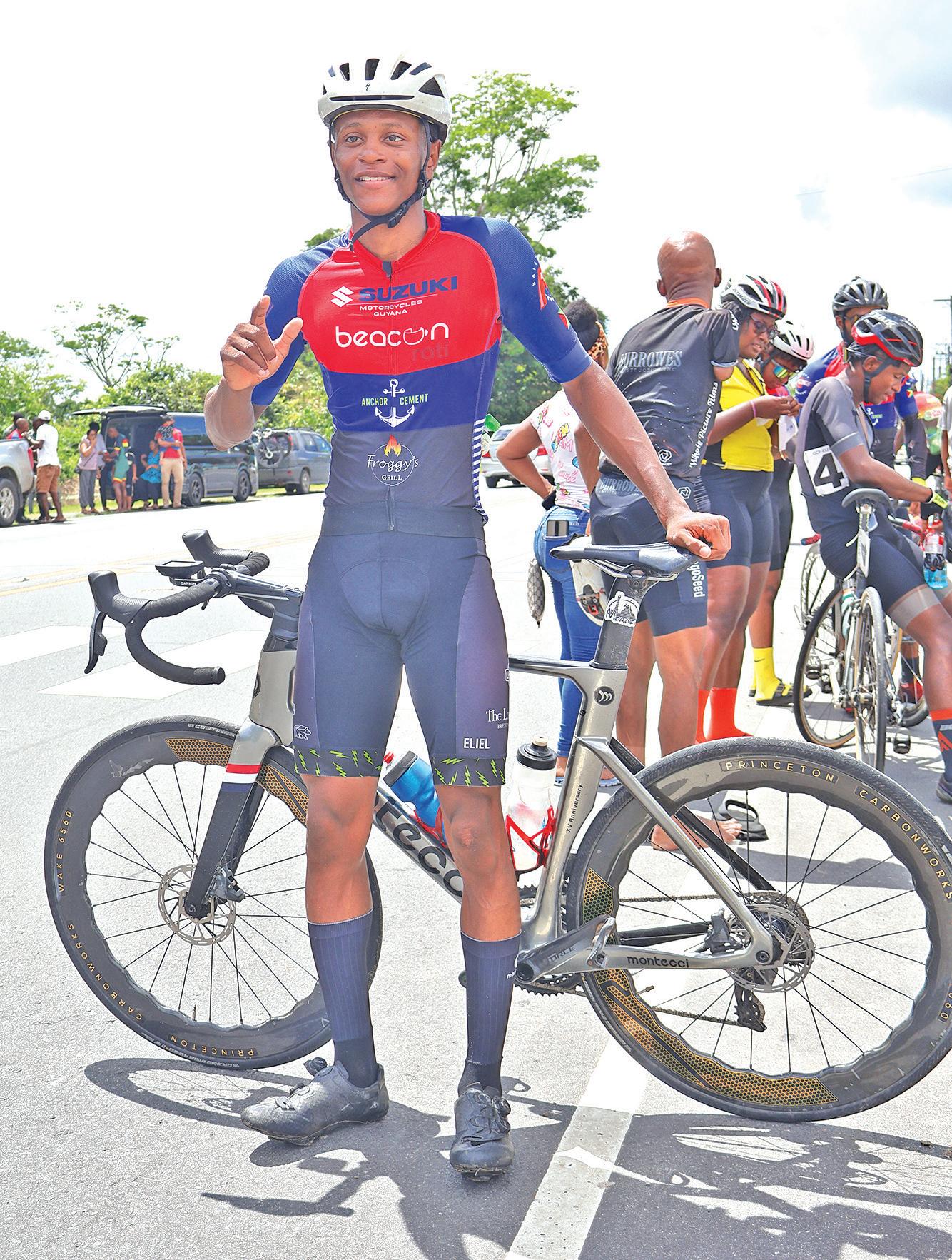
Shaw stopped the clock at 1:55:38.01 in Stage 3 for a third- place overall time of 5:42:51.31. It was as easy as Sunday morning for KFC