




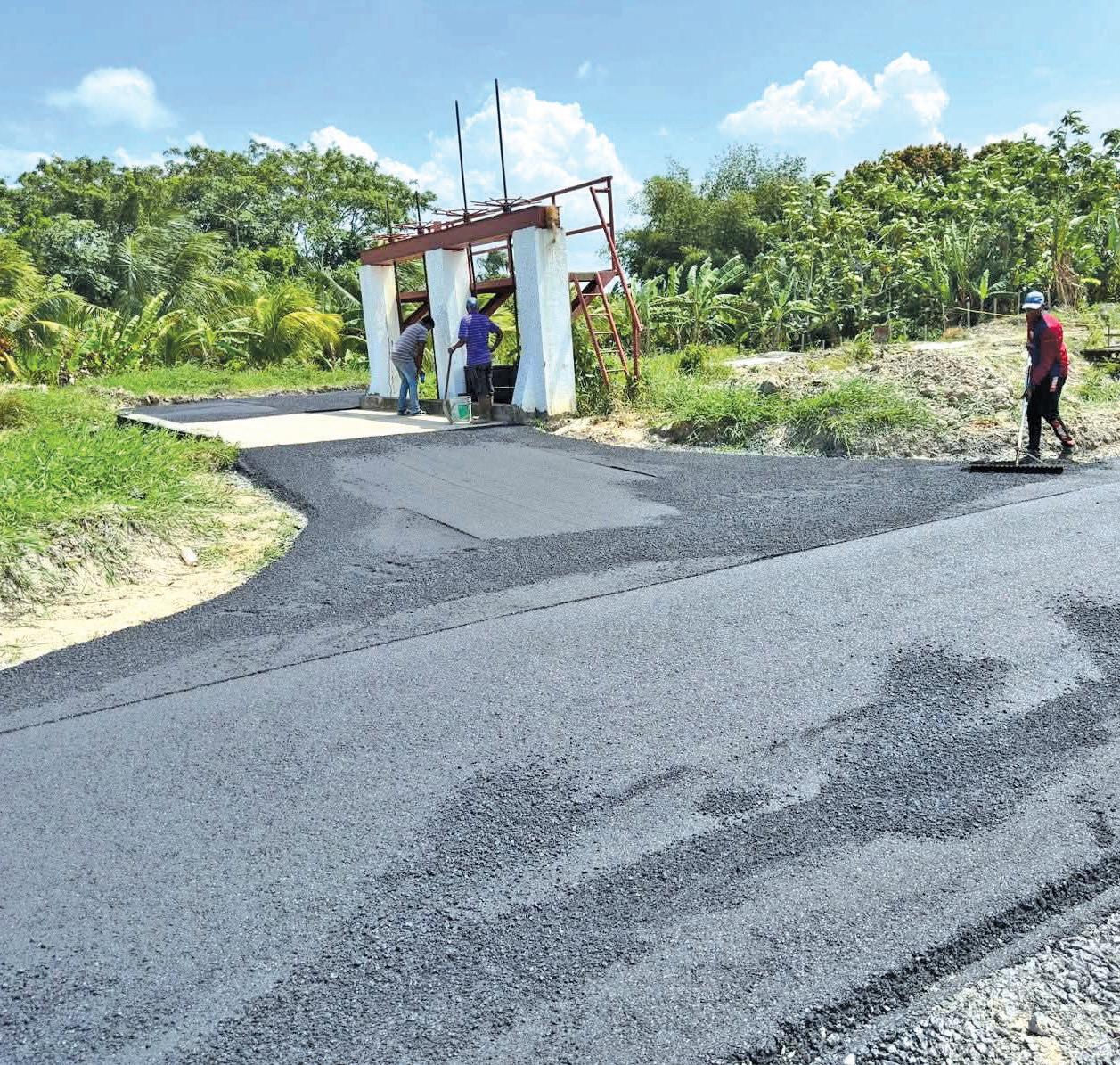
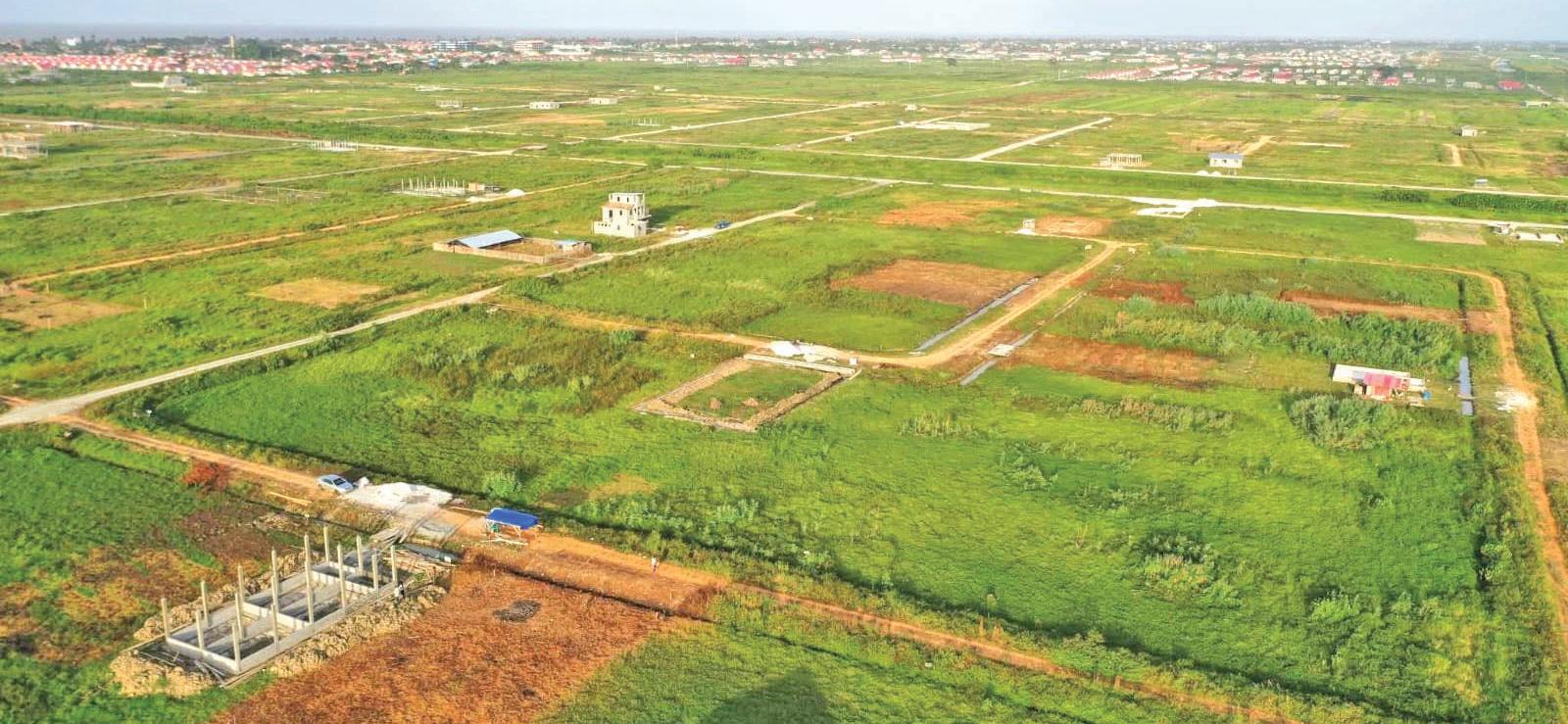













The Housing Ministry, through the Central Housing and Planning Authority (CHPA), has terminated two other contractors for underperforming in the execution of critical infrastructure works at sections of the new housing scheme at Stewartville, West Coast Demerara.
These contractors were responsible for works on ac-
cess roads at Stewartville East and West in Region Three (Essequibo Islands–West Demerara). One of the underperforming contractors was awarded a lot in Stewartville East, while the other was also given one lot in Stewartville West.
In demonstration of its commitment to the delivery of serviced house lots to Guyanese families, the
Ministry on Sunday said following the contract termination, the works have been re-tendered in order to ensure allottees are provided with unhindered access to their land.
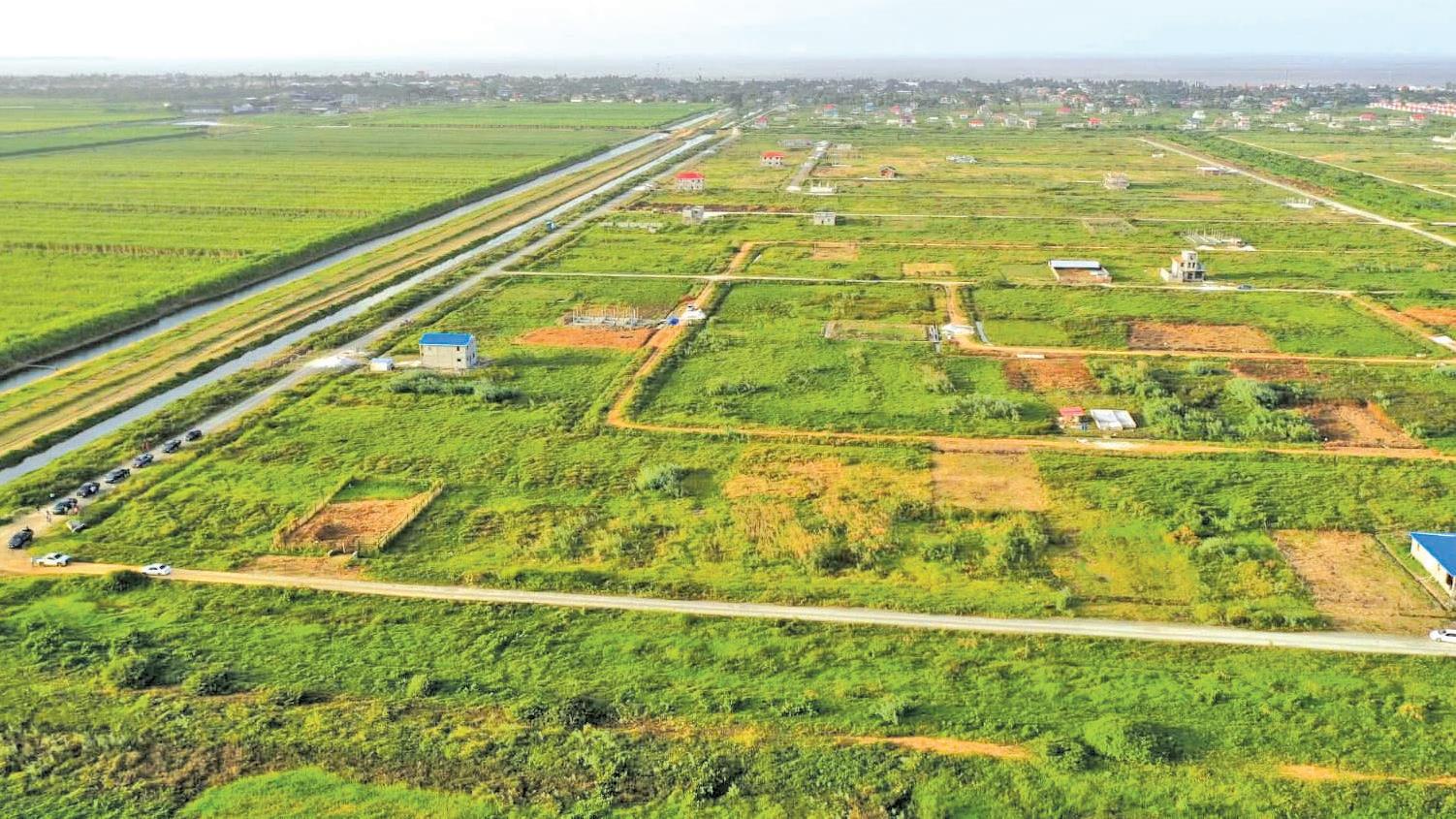
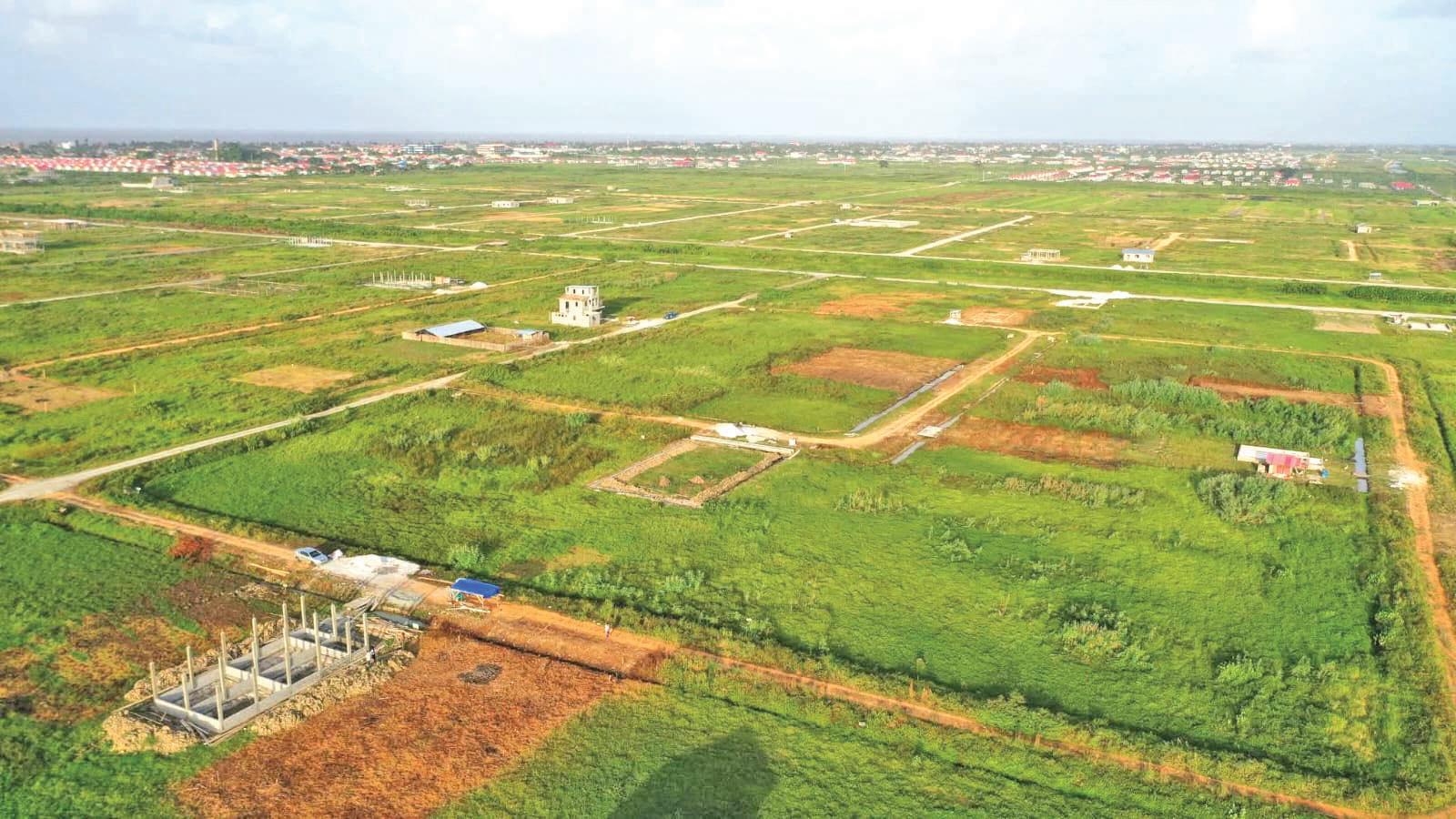
“The Ministry is focused on ensuring the programme is back on track and will shortly issue new contracts to complete the works,” a statement from the Housing Ministry detailed.

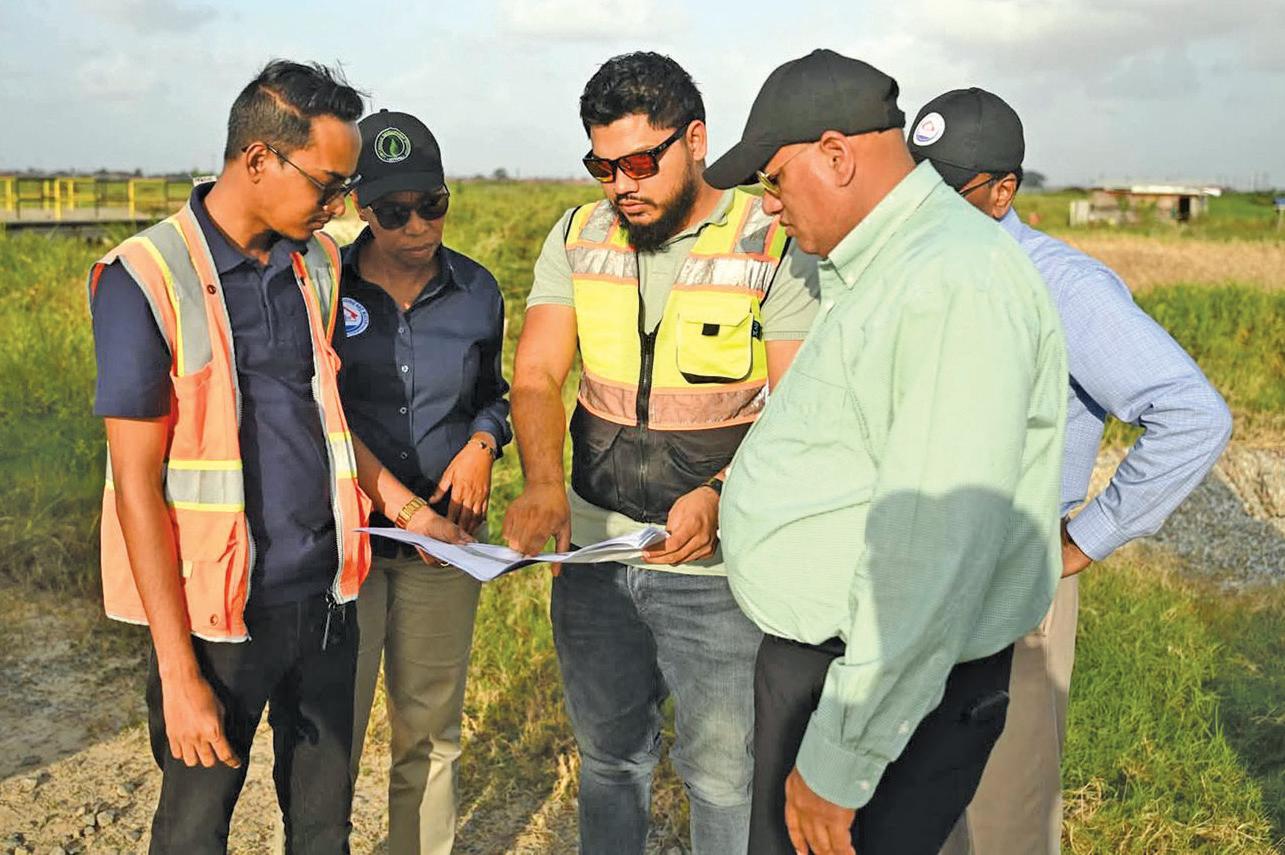
This announcement comes on the heels of Housing Minister Collin Croal and Minister within the Ministry Vanessa Benn, along with Permanent Secretary Bishram Kuppen and technical staff of the Ministry, visiting the area on Friday to assess works.
During the visit, Minister Benn noted that while many allottees have access to their lands and some have already begun constructing their homes, a number of them remain affected by the delay in infrastructure works.
Of the nearly 1,000 house lots in Stewartville, approximately 100 are impacted, specifically Lots 254–266 in Stewartville East and Lots 433–472, 662–680 and 715–744 in Stewartville West.
Timely delivery
Minister Benn emphasised that the Ministry is closely monitoring contractors to ensure timely delivery of infrastructure. It was further noted that these underperforming contractors have been repeatedly engaged on their obligations and were reminded that failure to improve will result in termination.
The Minister within the Ministry used the opportunity to remind everyone that the housing programme is ultimately about improving lives, noting that allottees are eagerly awaiting access as they pursue better living conditions for their families.
In total, some 2200 residential lots have been allo-
cated across three sections of the Stewartville Housing Development.
The first phase of infrastructure works commenced in 2024 and included land clearing, installation of drainage networks, and the construction of roads, bridges and culverts. The $7.7 billion Infrastructure Development programme saw 14 contractors being awarded the works in 19 lots at the new Stewartville housing scheme.
These contractors included AJM Enterprise, Puran Brothers Disposal Inc., Upper West Off Builders, Bardon Contractors Srvs, S Maraj Contracting Services, Extreme Construction Inc, A-1 Construction Chung’s Global Inc, Superior General Contracting, A Nazier & Son Contracting and General Supplies, Y Bhola Construction Srvs, Romcol Construction, Engineering & Maintenance Services Inc, and Roopan Ramoutar Investment.
During an engagement back in 2024, Croal had urged the contractors to expedite their respective works, reminding them that hundreds of Guyanese were eagerly waiting to commence their home construction.
At the time, the contractors had cited some of the challenges facing them –chief among which was the lengthy time it takes to be able to source construction material. While acknowledging the cause for delays, Minister Croal had warned
that liquidated damages can be applied if the contractors fail to deliver.
Meanwhile, only last week, the Housing Ministry similarly terminated underperforming contractors and re-tendered the infrastructure works at Great Diamond, East Bank Demerara, where about 21 per cent of the allottees at Blocks One and Seven were affected by the delays. These decisive actions form part of the Ministry’s intensified oversight of infrastructure delivery in developing housing schemes across the country.
“It’s not the entire Blocks One and Seven that are inaccessible. It’s only sections within those two blocks that are affected,” Minister Croal had clarified during Thursday’s site visit to the Region Four (DemeraraMahaica) housing scheme.
Block One comprises 1,018 lots, with lots 493–677 affected, while Block Seven contains 725 lots, with lots 31–220 impacted.
That re-tender process is also underway and is expected to open by the second week of March, with contracts likely to be awarded by the end of the month. Once awarded, contractors will mobilise to commence infrastructure works.
According to Minister Croal, the action taken at Great Diamond demonstrates the Ministry’s firm approach to contractor performance and its commitment to delivering serviced house lots to Guyanese.

The Berbice Bridge will be closed to vehicular traffic on: Monday, March 2 –15:40h–17:10h, and Tuesday, March 3 – 16:20h–17:50h.


Parika and Supenaam departure times – 05:00h, 10:00h-12:00h, 16:00h, 18:30h daily.




Sunny skies are expected in the early morning, with light showers throughout the day until the evening, followed by a return of light rain overnight. Temperatures are expected to range between 23 degrees Celsius and 29 degrees Celsius.
Winds: East North-Easterly between 4.02 metres and 5.81 metres.
High Tide: 16:15h reaching a maximum height of 2.66 metres.
Low Tide: 09:49h and 22:11h reaching minimum heights of 0.65 metre and 0.55 metre.










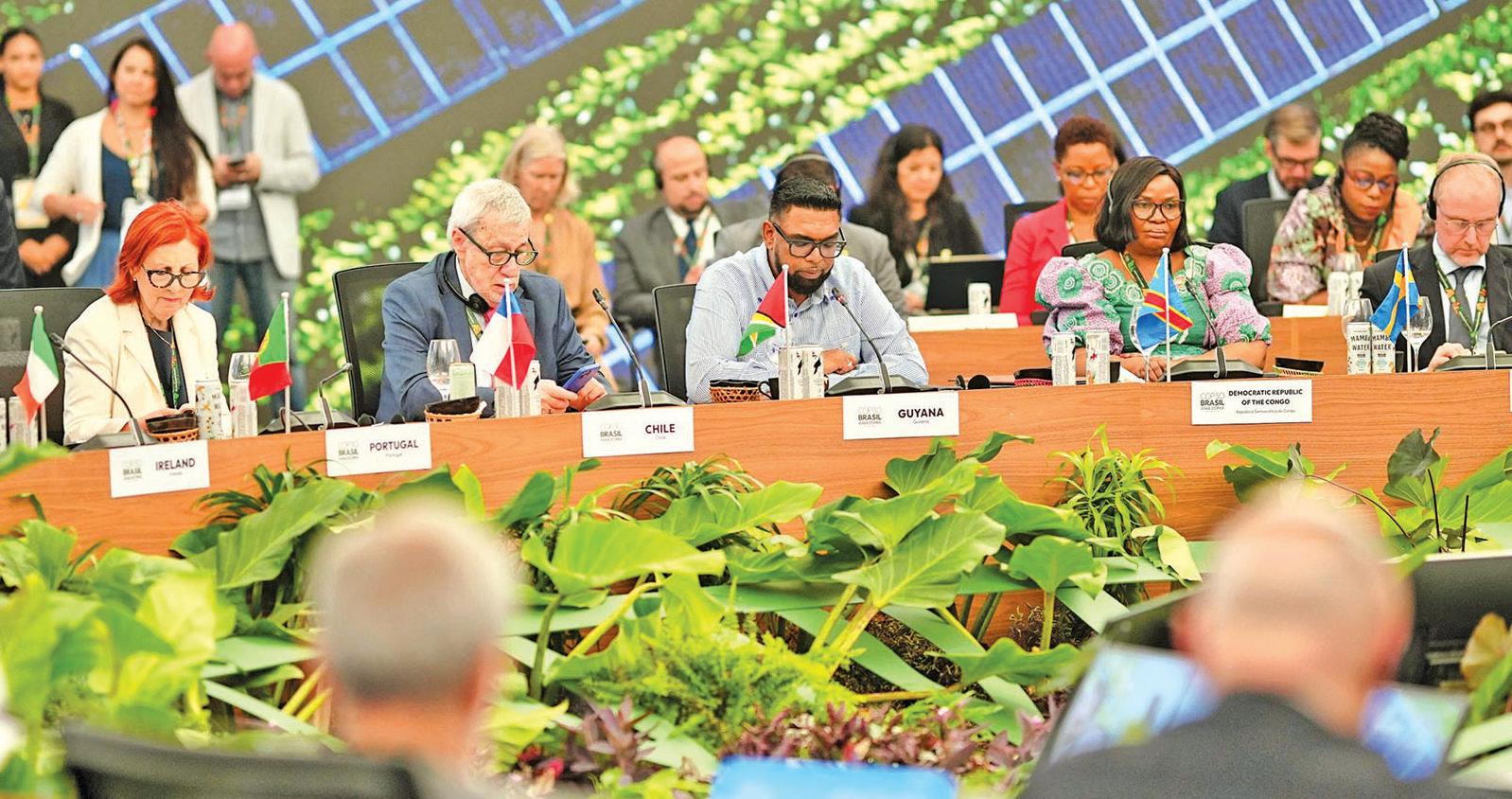
Guyana has undertaken the task to secure the hosting rights of the 35th United Nations annual climate change meeting, Conference of the Parties (COP35), in 2030 – a move that is being backed by the Caribbean Community (Caricom).
In its communiqué following the 50th Regular Meeting of the Caricom Conference of Heads of Government held last week in St Kitts and Nevis, regional leaders indicated their support for Guyana’s bid.
“Heads of Government agreed to support Guyana’s bid to host COP35 in 2030,” the communique, which was published on Sunday, detailed.
The location for the annual United Nations Framework Convention on Climate Change (UNFCCC) Conference of Parties meeting is determined through a rotation system among five recognised UN regional groups – Africa, AsiaPacific, Eastern Europe, Latin America and the Caribbean, and Western Europe and Other Groups.
Usually, members of the designated group consensually determine which country within that geographic location would make an offer to host the conference. The interested country will then submit a bid which is deliberated on and decided by the parties at the annual COP meeting.
Following the hosting of COP30 in Belém, Brazil, last year, it was decided that COP31 would be held in Antalya, Türkiye, in November this year. However, while Turkey will serve as the host country, Australia will lead the ne-
gotiations and advance the interests of the Pacific.
Additionally, Ethiopia has been officially selected to host the 32nd United Nations Climate Change Conference (COP32), which is scheduled to take place in Addis Ababa in 2027.
Meanwhile, India has formally proposed to host the 33rd Conference of the Parties (COP33) in 2028. There is currently no specific host country to host COP34.
Guyana’s bid to host the COP35 in the next five years comes as the country continues to play a leading role in global climate discussions, including participation at the annual COP summits.
President Dr Irfaan Ali attended COP30 in Brazil last November, where he bemoaned the lack of progress and speed in achieving the global climate goals and presented a series of solutions to world leaders gathered in Belém that would accelerate progress.
Guyana’s climate agenda Guyana’s national climate change agenda is anchored in its Low Carbon Development Strategy (LCDS) 2030, which focuses on maintaining the country’s net-zero status while driving sustainable development.
The LCDS 2030 provides a blueprint for integrating environmental
protection with economic growth. It prioritises the valuation of forests, stimulating a low-carbon economy, and protecting biodiversity.
Under this framework, Guyana has implemented a high-level, forest-based carbon credit market, allowing the country to monetise its low deforestation rate and reinvest in Amerindian community development.
Guyana’s total forest cover, which spans over 18 million hectares, stores more than 19 gigatonnes of carbon and removes some 154 million tonnes of carbon dioxide from the atmosphere annually.



Editor: Tusika Martin
News Hotline: 231-8063 Editorial: 231-0544, 223-7230, 223-7231, 225-7761 Marketing: 231-8064 Accounts: 225-6707
Mailing address: Queens Atlantic Industrial Estate Industrial Site, Ruimveldt, Georgetown Email: news@guyanatimesgy.com, marketing@guyanatimesgy.com
We Guyanese are very fortunate to once again experience the happy confluence of religious commemorations that reflect our rich diversity. In the midst of the Christian season of Lent, Hindus will joyfully re-enact the tradition of Holi tomorrow, and the Muslim community will celebrate Eid ul Fitr later this month.
Lent is the forty-day period observed by Christians in preparation for the Easter commemoration of the death and resurrection of Jesus Christ. Beginning on Ash Wednesday last week, believers typically fast, pray, do penance, and give alms to generally discipline their minds and bodies and better appreciate the act of sacrifice and love by God for humanity. The three days before Ash Wednesday are also known as Shrovetide (“shrove” is an Old English word meaning “to repent”).
The custom became entrenched in many locales to “eat, drink and be merry” – to have a “last fling”, so to speak, before the austerities of Lent. Hence, for instance, Carnival in Rio and Trinidad, and Mardi Gras in New Orleans. It is for this reason that observant Christians were more than a little put off by the billing of our Mash celebrations as our version of “Carnival” even though it commemorates Republic Day, which falls smack in the period of Lent. We have to be a wee bit more aware of our heritages.
Eid-ul-Fitr is the Islamic festival that marks the end of Ramadan, the holy month of fasting, and is celebrated with prayer, charity, and communal festivities. It occurs on the first day of Shawwal, the 10th month of the Islamic lunar calendar, immediately following Ramadan. The holiday celebrates the successful completion of a month of fasting, spiritual reflection, and devotion, and it is a time for Muslims to express gratitude to Allah for the strength and guidance received during Ramadan. It is a day of forgiveness, mercy, and gratitude, where Muslims seek to purify their hearts and strengthen social bonds. The festival emphasises thankfulness to Allah and encourages acts of charity, known as Zakat al-Fitr, to support those in need and ensure that all members of the community can participate in the celebrations.
Then, of course, there is the religious tradition of Holi, which is usually forgotten in the gaiety of the spring festivals that have become associated with it. It is as if Carnival has become Lent. Ironically the tradition is of great relevance to most modern societies. There was the King Hiranyakashipu, who was not satisfied with being the ruler of all that he surveyed in his dominion. He desired even more total and undivided obeisance. He decided that the devotions that were being offered to God ought to be directed to him. To ensure this circumstance, he deployed the might of the state to be on guard and to weed out all who may not be inclined to worship him as the Almighty. By and by, everyone was intimidated into compliance, and the King was happy – and increasingly arbitrary – while the people became abjectly unhappy. But opposition arose from an unexpected source – from within the King’s own household – in fact, from his son and heir, Prahalad. The little boy steadfastly refused to mouth the official line and, in fact, declared to all and sundry that his father was an imposter. The real God, he declared, is immanent in all existence. Cajoling, threats and then attempts at murder, including the famous immolation in fire in the lap of his aunt Holika that gave the name to the festival, did not change the boy’s stance, and the angry King finally demanded proof of the existence of the “other” Divinity. The faith of the child, of course, was rewarded by the manifestation of the Divine, in the form of a creature half-lion and half-man, who destroyed the King.
The point for us, in these increasingly hedonistic times, is that each of our many religions assures us that there is a Divinity that supports our existence. Let us not only remember him when faced with destruction.
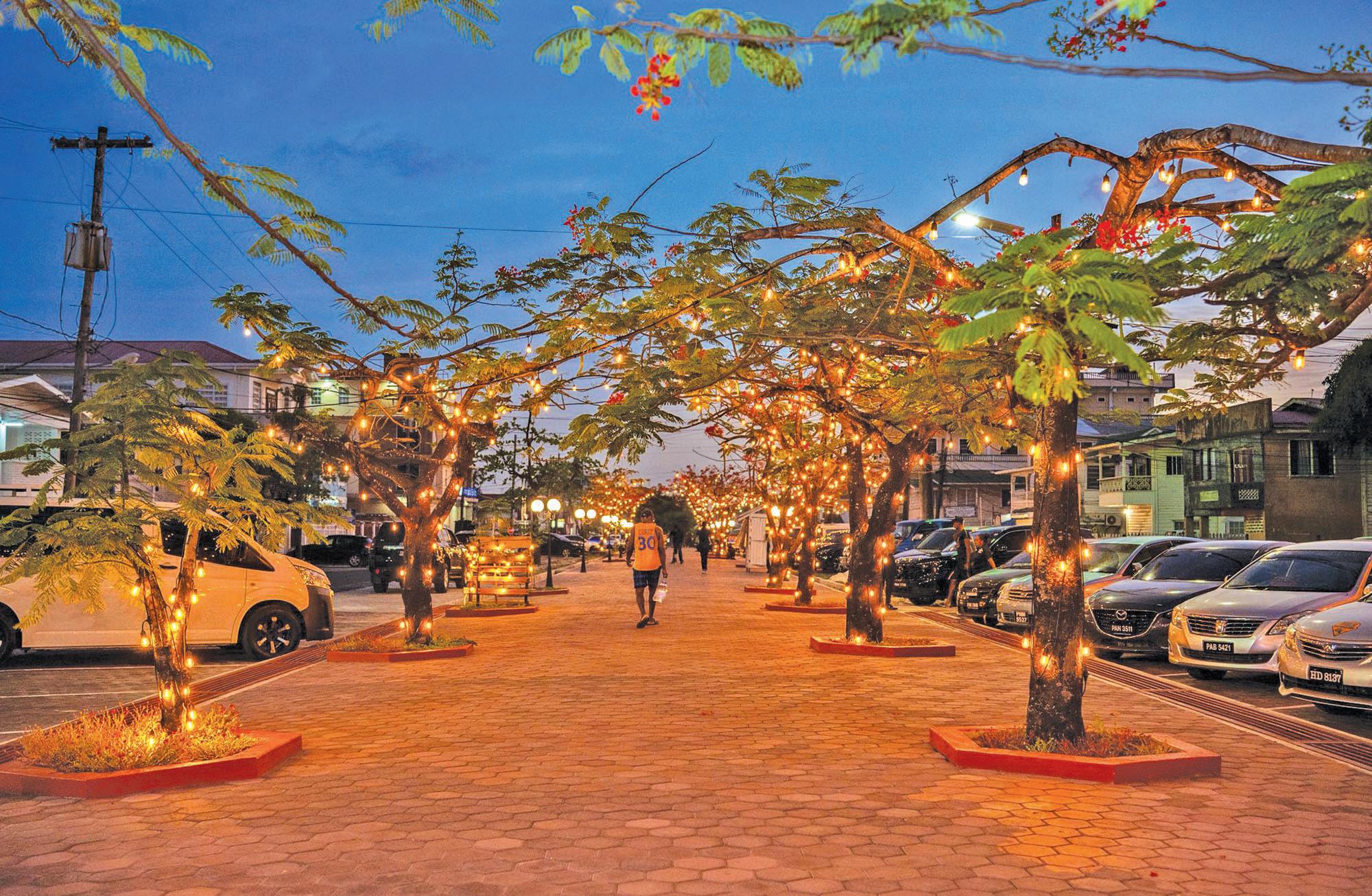
Iran may yet endure this war, but the Islamic Republic as we have known it cannot survive unchanged
…The regime may now have to meet Trump’s demands merely to save itself. And he needs a coherent plan to deal with what he has unleashed
By Sanam Vakil
The coordinated strikes on Iran launched by the United States and Israel in the early hours of Saturday morning formally reignited a conflict that had been simmering since last summer’s 12-day war. They targeted key command structures and killed senior figures, most notably Iran’s supreme leader Ali Khamenei, who had been in power since 1989.
Donald Trump marked his demise with a post saying “one of the most evil people in history” was dead, adding: “This is not only justice for the people of Iran, but for all Great Americans.”
Israel has published reports claiming that Mohammad Pakpour, commander of the Islamic Revolutionary Guard Corps (IRGC), Defence Minister Aziz Nasirzadeh and Admiral Ali Shamkhani, Head of the Defence Council, have also been killed. In response, Iranian forces have fired missiles and drones at Israel, at US bases in the Gulf, Iraq and Jordan, and at some civilian targets across the Gulf. Events are moving quickly, but far from predictably.
An ebullient Trump embarked on this attack casting it not as a limited action, but as a decisive campaign to eliminate what he called a longstanding threat to the
US, one that he argued previous US presidents had been unwilling to confront directly.
It followed rounds of regionally supported diplomacy aimed at a preliminary nuclear deal. But instead of allowing those efforts to mature Trump, perhaps swayed by Israeli prime minister Benjamin Netanyahu and conservative hawks in his administration, chose to strike now, at what is widely seen as a moment of Iranian weakness. He immediately suggested that the Iranian people should now determine their own future, making it clear that Washington supports internal regime change and reiterating that as he announced Khamenei’s death on Saturday night. “This is the single greatest chance for the Iranian people to take back their country,” he posted on Truth Social.
Some context is useful in terms of timing, because this weekend’s escalation was not a sudden rupture but the culmination of two years of widening confrontation. Since 7 October 2023, Israel has conducted sustained military campaigns not only against Hamas in Gaza, Hezbollah along Israel’s northern border and Houthi targets tied to Red Sea attacks, but indirectly against Tehran itself. These operations steadily eroded Iran’s forward defence strat-
egy and weakened its core military capabilities. What remained comparatively intact until now was Iran’s territory, its missile programme and, crucially, the regime leadership.
The strikes have yielded immediate results. Yet wars rarely unfold according to initial design. While Iran can by no means match US conventional capabilities, it retains asymmetric tools. Its only viable option has been to widen the theatre, distributing the costs of conflict and increasing regional risk. The immediate retaliation against Israeli territory and US installations across the Gulf signals precisely that strategy. This has been a dangerous gamble, particularly given Tehran’s fragile ties with neighbouring states in the Gulf, but it sees sustained escalation as the only means to secure an eventual ceasefire.
It is important to note that the three principal actors enter this confrontation with distinct objectives. For the Islamic Republic, the priority is survival: achieved by absorbing the shock, maintaining sufficient military and political cohesion, and continuing its military response. Iran is not fighting to win in conventional terms, but the regime is fighting to endure.
Trump, in contrast, appears to be seeking a decisive outcome that shows he
has neutralised a longtime US adversary. On Saturday night he promised that the bombing “will continue, uninterrupted throughout the week or, as long as necessary to achieve our objective” and his strategy rests on the assumption that overwhelming force targeting infrastructure, strategic assets and senior leadership can dismantle Iran’s strategic posture and compel either capitulation or internal rupture.
Israel’s objectives broadly align with Washington’s, though its focus is narrower. While Netanyahu continues to call on Iranians to rise up and respond to a historic opportunity to change the regime, Israel is really focused on ensuring that Iran remains internally preoccupied and strategically, if not permanently, weakened.
After the first few days of bombing and Khamenei’s death, several interconnected pathways now lie ahead. In the coming few days, the White House could halt operations, having inflicted substantial damage, to test whether coercion produces concessions and duress leads to de-escalation measures. What remains of Tehran’s leadership would then face a stark calculation as to whether preserving some semblance of the regime justifies submission to Washington’s demands.

As global rice prices remain under pressure and export markets grow increasingly competitive, the Guyana Rice Development Board (GRDB) has begun large-scale field trials of a new aromatic rice variety that could potentially earn farmers more than double the price of conventional grain.
The candidate line, now being tested in 30 farmer fields across the country, is part of a renewed push to break into the lucrative aromatic rice market, a segment traditionally dominated by countries such as India, Pakistan, and Thailand.
Chief Scientist at the

GRDB, Dr Mahindra Persaud, said aromatic rice represents the next lucrative thing on the international market, with prices exceeding US$1000 per tonne in some cases, compared
with the US$400 to US$500 per tonne typically earned for Guyana’s conventional rice exports.
“If we can produce an aromatic rice, then we can sell for
maybe almost two times above the normal price,” Dr Persaud explained, noting that Guyana currently operates largely as a “price seeker” in the global market.
“We are selling at US$400, maximum US$500 per tonne. If we can produce the aromatic rice… you’ll see over a thousand US per tonne.”
Guyana exports between 50 and 70 per cent of its rice production annually and must accept prevailing international prices. While local farmers have steadily improved yields, averaging between eight and nine tonnes per hectare under optimal conditions, Dr Persaud
With Khamenei removed from the scene, the system does not automatically collapse. The constitutional mechanism for succession could be activated, with the assembly of experts formally appointing a new supreme leader. In practice, however, the decisive influence is likely to rest with the revolutionary guard and the security establishment, which would seek to manage the transition tightly and prevent fragmentation of the elite. A collective leadership arrangement, even if temporary, could emerge to stabilise the system – but here it would be vulnerable to internal military pressure, if not further US and Israeli pressure.
Alternatively, prolonged military pressure could expose fractures within Iran’s political elite. Economic strain, military losses and internal rivalries could weaken central authority and create openings for internal contestation that might be supported by opposition groups.
The most destabilising scenario would be uncontrolled fragmentation. Libya offers a cautionary parallel. The fall of Muammar Gaddafi did not produce an orderly transition, but institutional collapse, competition between militias and external intervention layered on to domestic rivalry.
Iran is a far more complex state, with stronger institutions and a deeper bureaucratic tradition, but decapitation of the regime without a managed political transition could still empower armed factions and invite proxy competition on its territory.
What is already clear is that the region will not revert to its pre-war equilibrium. Gulf States that cautiously pursued de-escalation with Tehran now face renewed exposure. Energy markets and maritime security, particularly around critical chokepoints, will remain sensitive to further escalation. Regional actors will reassess alliances and
defence postures considering the risks revealed by direct US and Israeli action. Iran may endure this war, but the Islamic Republic as we have known it will not survive unchanged. The decisive phase of this conflict will not be the opening strikes, but the emergence of a political order from sustained military pressure. The US may achieve its immediate objectives. The more consequential question is whether it is prepared for the Iranian and regional landscape that follows. (The Guardian) Sanam Vakil is the director of the Middle East and North Africa Programme at Chatham House
Dear Editor, Wake up and grab this opportunity where “all citizens can now benefit from (PPP/C’s) Govt’s eye testing voucher.” The good word from Minister of Health, Dr Frank Anthony, is that Guyanese can now benefit from eye testing and spectacles vouchers from the Government. I really hope that this intervention will be maximised by those who are in need of this provision. As it stands, some 2.2 billion people globally suffer from near or distance vision impairment. And of this total, it is estimated that at least one billion cases –nearly half – are preventable or have not yet been addressed, representing a significant, growing crisis in global eye health. While the age-standardised prevalence of blindness has decreased over the past three decades due to better care, the absolute number of peo-
ple with vision impairment is rising due to population growth and ageing. This is reality, and the move, I repeat, is a good one from the Government.
Going back to 2024, the eye testing voucher was introduced, but it caters only for children 18 years and under and adults 50 years and above. This has morphed into something that is all-inclusive, as statistics keep revealing that ‘eye issues’ are no respecter of age. That is why the minister emphasised that “what we want to do is ensure that we open it up now for anyone who requires an eye test … (and) if they need a spectacle, (they will have) access to the $15,000.”
The response thus far is very encouraging, even as it shows that “eye care” is quite a big and necessary health concern in Guyana. The report disclosed that “… since the start of the eye testing voucher pro-
gramme, 175,272 eye tests were completed and over 160,000 spectacles were issued. Of the number tested, 1200 persons were diagnosed with cataracts and treated accordingly.”
Better yet, as the population seems to be very much in tune with reality, since, according to the minister, “We also saw some people who had glaucoma, and again, we were able to offer them different treatments…”
Editor, the average cost of eye care per person indeed varies drastically worldwide, depending upon the type of service, regional income levels, and the availability of public health insurance. For basic, routine eye exams, costs typically range from US $75 to $250+ in high-income countries like Canada, while, in contrast, 90 per cent of those with unaddressed vision impairment live in low- and
middle-income countries (LMICs), often with limited access to affordable care. Credit Guyana for being in a good position in this domain.
I inform readers that at least 2.2 billion people globally suffer from near or distance vision impairment. Of this total, it is estimated that at least one billion cases – nearly half – are preventable or have not yet been addressed, representing a significant, growing crisis in global eye health. While the age-standardised prevalence of blindness has decreased over the past three decades due to better care, the absolute number of people with vision impairment is rising due to population growth and ageing.
I really laud the Health Ministry for being so proactive and pre-emptive.
Yours truly, HB
Singh
acknowledged that productivity gains alone are no longer sufficient to offset stagnant global prices.
Traditional basmati-type varieties are known for low yields, often three to four tonnes per hectare, long maturity periods of up to 150 days, high susceptibility to lodging and disease, and lower head rice recovery rates during milling. For Guyana, where export quality standards are strict and cropping cycles are tightly managed, these limitations have historically made aromatic rice difficult to adopt.
“We cannot compete with three or four tonnes per hectare. We have to get an aromatic within 100 to 120 days to be ideal,” Dr Persaud said.
After years of breeding and multi-season testing, the GRDB now believes it may have achieved that balance. The candidate variety currently under trial matures in approximately 105 to 110 days, performs consistently across environments, shows resistance to blast disease, and exceeds the benchmark 50 per cent head rice recovery rate, a critical factor in export competitiveness.
Dr Persaud noted that, unlike earlier experimental lines, the current variety closely mirrors the agronomic characteristics of Guyana’s established high-performing cultivars while delivering the added value of aromatic quality.
“If you have a variety that’s similar to our local varieties, but it is aromatic, I think we’re heading in the right direction,” he said.
Necessary evolution
Meanwhile, the President of the Guyana Rice Producers Association (RPA), Lekha Rambrich, welcomed the development, describing aromatic rice as a necessary evolution for the industry amid falling global prices and market disruptions.
“This is our future if we want to stay in the rice industry. Because this can be a highend price. And once we can plant it and be able to come out with good grains, good grain type, and good quality, then we can have a good price for our product,” the RPA head noted.
He pointed out that international market volatility, reduced access to European markets, and price pressures in the Caribbean have made diversification increasingly urgent. He stressed that while not every farmer may cultivate aromatic rice, those who do, under properly managed systems, could command significantly higher returns.
“Not everybody will be able to plant this. But whoever plants it will get a higher price,” he said.
The 30 ongoing field trials are intended to move the project beyond research plots and into real-world commercial conditions. Farmers participating in the programme are providing feedback on plant structure, maturity, grain quality, and yield performance before any final decision is made on release.
According to the RPA head, the variety has good promise.

MONDAY, MARCH 2, 2026
1. What is the value of the first digit in 8888?
a) 8000
b) 800
c) 8
d) 80
2. What is the prime number between 20 and 25?
a) 21
b) 22
c)
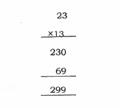
3. What is the multiplicand?
4. A factor of 12 is
5. Which figure has two right angles?
a) A b) B c) C d) D
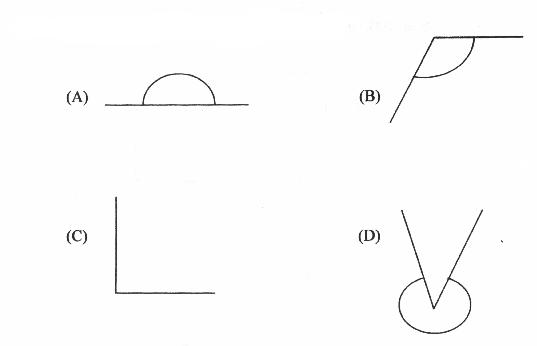
6. Which of the following is a circular base pyramid?
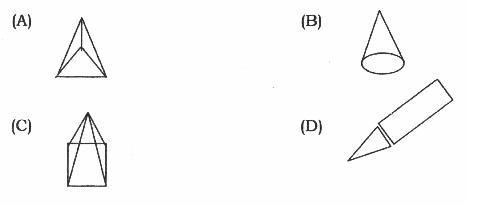
a) A b) B c) C d) D
7. The formula for finding the perimeter for the

Materials •Paper (preferably origami paper) •Scissors
•Decorations such as googly eyes, glitter, or coloured paper.
Instructions
1. Start by folding the paper in half.

2. Fold the left and right corners toward the centre point. Cut off any excess paper, then cut along the middle so you end up with two triangles.

3. Unfold the triangles. You should now have two squares that will become your monster bookmarks.


regular hexagon in the figure below

a) 6s b) 5s c) 4s d) 3s

a) arc b) chord c) diameter d) radius
10. Study the triangle below then answer the question.

BY RICHARD KENNEY
Let’s leave this place, hey, this place smells like lions— Why, in the logical analogy gazelle to grass as chetah to gazelle, should gentle people find the second term compels the mind so much more than the first? Is this our worst side?
Wide-

8. How many edges are in the cuboid below? a) 4 b) 8 c) 12 d) 16
9. A part of a circumference of a circle is called a/an _____________.
The triangle above is a/ an______________.
a) equilateral
b) scalene
c) right angle
d) isosceles

4. Fold one square in half to make a rectangle, then fold it in half again to make a smaller square. Unfold the paper completely.

5. After unfolding, you will see four smaller squares formed by the crease lines. Cut out one of these small squares as shown in the picture.

6. Cut diagonally across the two small squares next to the one you removed, as shown in the picture.

7. Fold the small triangle flaps inward. Apply glue to the inner flap and press them together to form the bookmark corner.

8. Finally, decorate your monster by cutting out and glueing on eyes, tongues, teeth, tentacles, horns, or any other features you like.

(Adapted from easypeasyandfun. com)

eyed, rocking on our heels, we stand before the cage, stunned in the strange, vaguely prurient vertigo one feels, fastened in a gaze that goes all the way back: the abacus of cons yawns and clicks, and the gap gapes—avert the glance! Oh, feel it, our voortrekker’s vision at sunrise, the old bush-weltanschauung that dawned into the child at Taung: an Eden full of spots and stripes his tribe’s troop of lost apes drapes its dreams with, still . . . But what attracts us so, what brings us back again and again, to cats? Is it the matter of beauty out of all proportion, the sheerest tribute to beauty, stomach-wrenching, bulletproof, beauty so durable it can be stuffed?
Tufts twitch, tails swirl; silky pacings, purrs, paw-licks . . . purpose, in its purest shape, that’s it! One thought occludes all others here: the simple, unclouded intention to feed, free of dignity, unfraught as a flatworm closing in on some sweet ort suspended in what tepid Ordovician ocean thundering our eardrums even now leaves us dreamy and passive in the outwash . . . Watch out— the swan-necked anorectic lady in thigh-high black abretta boots slides by, braided by a gemstone leash to (what else?) an ocelot a pace ahead. They oscillate and disappear. Police dogs snarl. The palace eunuchs nicker and whinny and brush the prince’s leopard cub; calipered between its claws, a hawk-moth vibrates, on and off. The young prince claps. Dawn breaks above the cave’s high eaves. Nobody breathes. Why— Let’s go, hey. This place smells like lions.
(Source: Poetry [October/November 1987])

Write a story that includes the words “déjà vu” or “that didn’t happen".


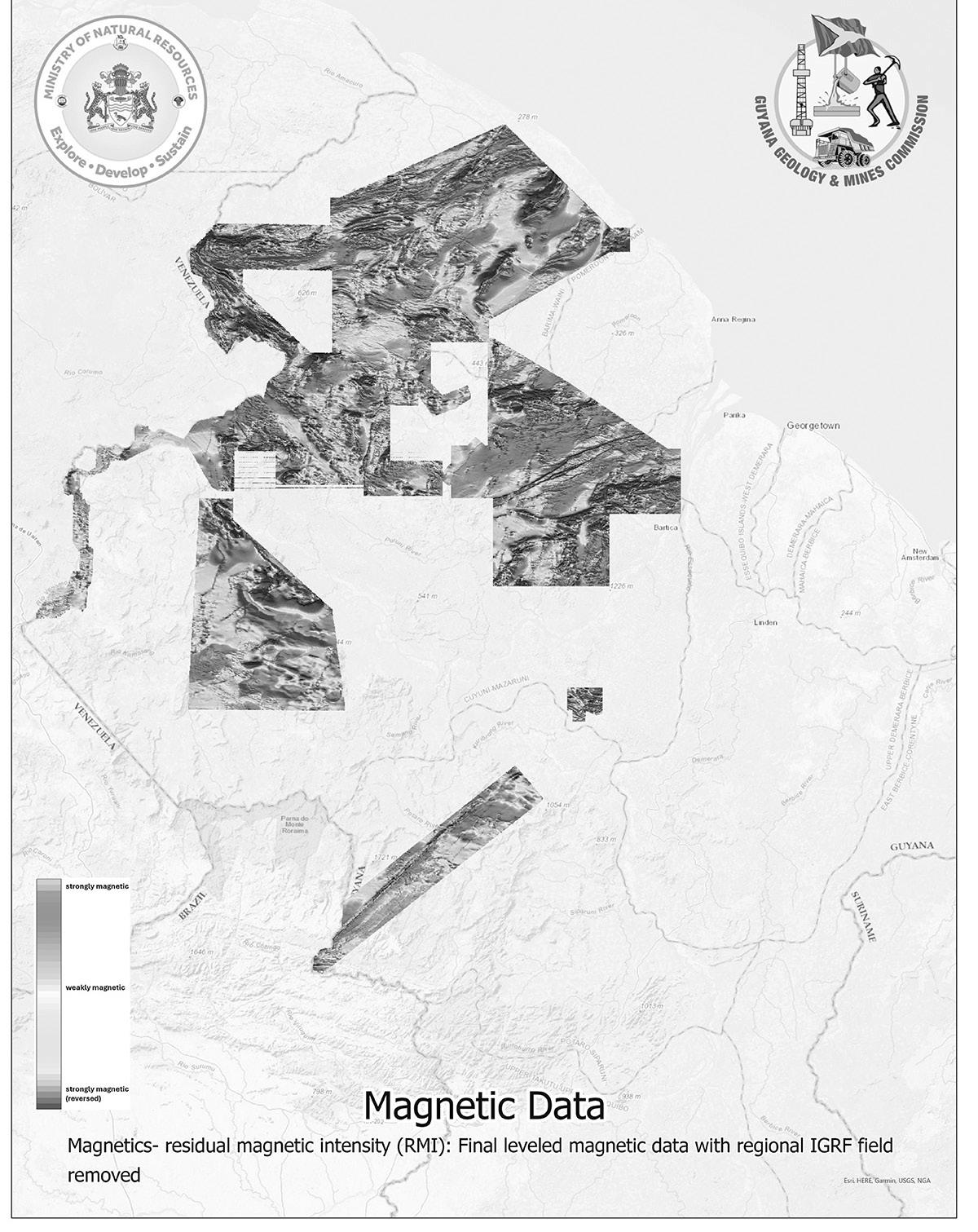
The Natural Resources Ministry on Sunday announced the release of its 2025 mining datasets. The release includes airborne geophysics grids (magnetic, radiometric, and gravity) collected under the Guyana Mineral Advancement & Prospecting Strategy (GMAPS). These datasets are available for free download on the Guyana Geology and Mines Commission (GGMC) website.
The data covers over 12,000 square kilometres (sq km) or 37,000line km of new surveys and includes an additional 22,000 sq km (135,000line kilometres) of legacy data reprocessed to current standards. In total, the data is enough to encircle the globe 3.5 times.
Natural Resources Minister Vickram Bharrat highlighted the importance of the release, noting that the last major mining bulletin was produced in 1968. “By making these updated datasets openly accessible and in a user-friendly manner, our Government is
empowering small- and medium-scale miners to engage in sustainable mining while avoiding high exploration risks,” Minister Bharrat said. He added that the initiative also strengthens Guyana’s appeal to international exploration companies and investors and supports compliance with the
Low Carbon Development Strategy (LCDS) 2030.
The 2025 data were collected by Global Venture Consulting, a Florida-based natural resource firm, under a fouryear contract with the Ministry. The company is collaborating with AGF and Xcalibur Smart Mapping to complete the

Aproject.
Looking ahead to 2026, Global Venture Consulting CEO Emily King said the programme will expand to detailed ground geological mapping, targeted geochemical sampling, structural interpretation, and field validation of high-priority targets. She emphasised
that the data will help local miners lower operational costs by providing a clearer understanding of rock types, structures, and potential mineralised zones before investing in field operations.
King also noted that the magnetic, radiometric, and gravity layers are formatted for easy use on
platforms such as Google Earth, ensuring smalland medium-scale miners have access to the same foundational information used by international companies.
The ministry is encouraging miners and stakeholders to access the data via the GGMC website at www.ggmc.gov.gy.
Already, the country has signed multi-billion-dollar deals with major international companies like Hess Corporation and Apple Inc for its ART-TREES-issued jurisdictional forest carbon credits, earning more than US$200 million in revenues.
Only last month, the Guyana Government announced that ART has issued another nine million high-integrity TREES carbon credits for the year 2023. These credits have been labelled as CORSIA-eligible, making them among the most rigorously assessed credits available globally for international aviation and other compliance-orientated buyers seeking verified, jurisdictional-scale emissions reductions.
Aggressive biodiversity agenda
While the country has been a major environmental leader since 2009, Guyana of late has been cementing this role with its aggressive biodiversity agenda that focuses on protecting its vast, carbon-rich ecosystems while fostering sustainable development.
This includes doubling protected areas by 2025, achieving 30 per cent land/ marine protection by 2030, developing biodiversity finance/credit markets, and raising global awareness.
Last year, President Ali launched the Global Biodiversity Alliance and hosted the first summit in Georgetown. Since then, the Alliance membership has reached more than 60 countries and is expected to further grow as the country gears up for the second biodiversity summit later this year.

Meanwhile, President Ali had travelled to St Kitts to join his regional colleagues at the CARICOM Meeting from February 24 to 26, during which he participated in a number of plenary sessions as well as held bilateral engagements on the side-lines of the conference.
During presentations at the opening ceremony, several regional leaders pointed to the fact that climate shocks continue to intensify, emphasising the importance of building resilience to climate change and the need for unity within the community in addressing this global phenomenon.
In fact, CARICOM Chairman and Prime Minister of St Kitts and Nevis Dr Terrence Drew told reporters at the closing press conference on Friday that the leaders reaffirmed their strong advocacy on the issue of climate change and its impact on the Caribbean.
“We have to advocate very strongly for ourselves,” he asserted, pointing to the recent devastations in Jamaica, which is still reeling after being battered by Hurricane Melissa last year.
Citing the destruction
also in St Vincent and the Grenadines as well as Grenada, Prime Minister Drew stated it was “one of the worst hurricanes ever experienced in the whole region. That can happen to any of us at any given time… And therefore, we are living the reality of climate change, and we will continue, as a community, to advocate for climate justice, so that it can give us the best opportunity to deal with what we consider to be a serious threat to our community, to our development, and to our advancement.”
Similar sentiments were expressed by the Prime Minister of St Lucia, Philip Pierre, who is set to take over the chairmanship of CARICOM in the second half of this year.
He reminded us of the serious and existential threats climate change poses to the region and the importance of putting this on the global agenda – something which he says requires a united front as well as a deliberate effort to keep this matter high on the regional agenda.
“It’s very important that we maintain unity... we accelerate our readiness for loss and damage access, [and] we coordinate our submissions and negotiation positions early, we strengthen engagement with our partners, and keep finance and debt reform at the centre of our diplomatic efforts. It’s extremely important that the matter of climate change and resilience never be put in the background, because all our discussions, our plans can be literally wiped off in a matter of hours,” the St Lucian leader stated.

Two men from the Essequibo Coast, Region Two (Pomeroon-Supenaam), have been remanded to prison after being jointly charged with attempted murder.
Rohit Lall, 29, a labourer of Walton Hall, and Alexander Benjamin, 18, a labourer of Windsor Castle, were charged with the offence of Attempt to Commit Murder, contrary to Section 103 (C) of the Criminal Law (Offences) Act, Chapter 8:01.
The charge alleges that on February 22 at Walton

Remanded: Rohit Lall
Hall, Essequibo Coast, they attempted to commit murder on Rajver Biseram, also known as Ravesh.

Remanded: Alexander Benjamin
Both accused appeared before Magistrate Ravindra Mohabir at the Anna Regina Magistrate’s Court

A37-year-old mechanic of Adventure Back Street, Essequibo Coast, Region Two (Pomeroon-Supenaam) was fined and ordered to complete community service after pleading guilty to possession of narcotics.
Meguel Carlton Toney appeared at the Anna Regina Magistrate’s Court on Friday last before Magistrate Ravindra Mohabir. He was charged with possession of narcotics, contrary to Section 4 (1) (a) (i) of the Narcotic Drug and
Psychotropic Substances (Control) Act, Chapter 10:10.
The charge stated that on February 26 at Adventure Back Street, Essequibo Coast, he had in his possession 21 grams of cannabis.
Toney pleaded guilty to the offence and was fined $20,000 or, in default, two months’ imprisonment. He was also ordered to complete 90 hours of community service at the Suddie Police Station within 30 days. Failure to comply will result in six months’ imprisonment.
Additionally, Toney was charged with two traffic offences: unlicensed driving, contrary to Section 23 (1) of the Motor Vehicle and Road Traffic Offences Act, Chapter 51:02, and breach of insurance, contrary to Section 3 (1) of the Motor Vehicle Insurance (Third Party Risks) Act, Chapter 51:03.
He pleaded not guilty to both traffic charges. Bail was granted in the sum of
on Friday last. The indictable charge was read to them, and they were not required to enter a plea.
The prosecutor objected to bail, and both men were remanded to prison. The matter was adjourned to April 13.
In 2022, Rajver Biseram, also known as Ravesh of Walton Hall, Essequibo Coast, pleaded guilty to possession of cocaine for the purpose of trafficking. He was fined $30,000 and ordered to complete 180 hours of community service, failing which he would face three years’ imprisonment.

$30,000 for the unlicensed driving charge and $40,000 for the breach of insurance charge.
The traffic matters were adjourned to June 25.
Asalesman of Adventure Stelling Road, Essequibo Coast, Region Two (Pomeroon-Supenaam), has been charged with the offence of disturbing the public peace.
Tulsiram Dindyal, 30, appeared at the Anna Magistrate’s Court on Friday before Magistrate Ravindra Mohabir.
The charge was instituted under Section 141 (F) of the Summary Jurisdiction Offences Act. The offence allegedly occurred on Saturday, February 20,

2026, at Adventure Stelling Road, Essequibo Coast. He denied the offence and was granted $200,000 bail on the condition that he lodge his

car’s music system at the Suddie Police Station pending the outcome of the trial. The case was adjourned to June 25.
In a separate matter, Orlando Henry, 24, of Good Hope, Essequibo Coast, was also charged under Section 141 (F) of the Summary Jurisdiction Offences Act.
The offence occurred on February 20 at the Supenaam Waterfront, Essequibo Coast.
Henry appeared before Magistrate Mohabir at the Anna Magistrate’s Court on Friday last, where the charge was read to him. He pleaded guilty and was fined $10,000. In default of payment, he will serve two weeks’ imprisonment.

Even though expected, the confirmation by Iranian officials that their Supreme leader Khameni –with ultimate authority over all branches of government, the military and the judiciary, while also being the country’s spiritual leader – was killed by one of the Israeli or US bombs that rained down on Tehran on Saturday morning, was shocking!! While these sorta operations are normally carried on during the night - to create maximum disorientation of the surviving victims –Operations Urgent Fury (USA) and Roaring Lion (Israel) were launched during the day to ensure that the targeted regime officials such as Ali Khamenei and dozens of officials were in their offices!! According to the Israelis, the entire top core of the military – some forty of them – were also wiped out.
So what’s ahead?? Contrary to what some have been predicting, your Eyewitness doesn’t expect any mass uprising that’s gonna overthrow the entire regime and establish a new one. It’s been forty-six years since Khomeini overthrew the Shah and established the present Islamic Republic. In that time the new institutions - such as the Revolutionary Guards - have become institutionalized so deeply that cutting off their heads just means “another Rasta” will take their place!! And the new leaders will come in on a tremendous groundswell of support - in view of the sneak attack after concessions made during talks!!
The Israelis can’t on one hand boast about their “superior intelligence gathering network” that guided their “pin point” accurate missiles from the over 200 aircraft that took part in the attack – and then disavow the bombing of a girls’ elementary school that killed over one hundred and fifty children!! The’ll see this war - which they insist it is and as such bombing civilian targets are a “crime against humanity”!! – in civilizational terms! The US and Israel should expect a prolonged conflict. They’ve been around for millennia and think long term!! Their response has already begun – deploying drones to bomb Israeli targets and American-aligned Arab countries that have US military bases.
There will also be the asymmetrical responses that have been honed to a fine art since the western invasions from Iraq to Afghanistan!! “Improvised Explosive Devices” (IEDs – whether strapped to bodies willing to perish for the cause against the “infidels” and go to heaven – or from trucks, will be driven into buildings and groups!! Guerrilla warfare, ambushes, sabotage and terrorism against civilians will become standard as we saw in the above-mentioned theatres – and which ended with western troops eventually withdrawing and leaving a bitter populace!!
Sadly for us, we’ll become immune to the toll of human lives snuffed out – as we have by the Israelis in Gaza!! Numbers of deaths will become impersonal statistics on a scorecard.
The passing of the WPA’s leader Rupert Roopnaraine has elicited much comment – almost uniformly lauditory!! There is, of course, the dictum that was drilled into the heads of Roopnaraine’s generation in its original Latin: “de mortuis nil; nisi bonnum” – “of the dead speak only the good”. But being human, Roopnaraine wouldn’t have been so monochromatic and he deserves a more nuanced review.
Born during WWII in 1943 to urban schoolteachers,he attended Queens and won a scholarship to Cambridge in 1962. That spared him the experience of the 1960s ethnic riots that shaped his generation’s world view!! He continued his foreign sojourn and education in the US elite Ivy league Cornell Uni and didn’t return to Guyana until 1976 – on the encouragement of his schoolmate Walter Rodney, who’d returned two years before!!
They were to play outsized roles in the newly-launched WPA and Roopnaraine saw Rodney on the evening of his assassination.
That he refused to give testimony at the COI into that assassination and then crafted a coalition with the PNC remains a mystery!!
…the UN’s irrelevance
The UN’s sputtering at the attacks on Iran reminds your Eyewitness of dogs barking at passing cars. They do so not because they’re aggressive, but because they’re trying to create distance from something that scares them.

Gunmen armed with two AK-style rifles and a hand-held firearm stormed G Sudhai and Sons Grocery Store in Rose Hall on Saturday evening, forcing businessman Gurudat Sudhai, his wife, staff, and customers to lie face-down on the floor before escaping with millions of dollars in cash.
At the time of the attack, the shop was busy, and Sudhai said there were four customers inside the store along with three staff members, while he, his wife, and their two sons were also present. He recalled that he was seated at the cashier’s desk when the three masked men rushed in from the back of the building, weapons already drawn.
According to Sudhai, the men were heavily armed, carrying what he described as two AK-style rifles and a hand-held firearm, and immediately ordered everyone to lie on the ground. He

said the gunmen pressed a weapon to his head and repeatedly shouted for the cashier’s key, warning him not to move.
Sudhai said the gunmen then turned their attention to his wife, dragging her by the hair and forcing her to hand over the cashier’s key before ordering her to open the register.
“They cranked the gun
on us… it was too much,” he said, recalling the ordeal, which he estimated lasted about four minutes before the masked men fled with the cash.
“Very, very traumatising”
The businessman said the ordeal has left his family shaken, describing the attack as “very, very traumatising” and saying they

The Supreme Court of Judicature of Guyana has identified pressing health and safety issues and cramped workspaces across its court system in its Strategic Plan 2024–2031, highlighting exhausted storage capacity and outdated facilities.
Under the section titled “Enhancing Court Facilities/ Infrastructure” (page 34), the Judiciary states that storage space is being exhausted due to the volume of documentation generated and notes that an audit has not been completed since 2014.
The document further acknowledges that “health and safety issues accompany the poor space available per head in the accounting, personnel divisions, and IT divisions.”
As part of corrective measures, the Strategic Plan calls for the implementation of “annual rapid health & safety audits, starting in Georgetown, to offer solu-
tions for short-term, medium-term, and long-term” (page 34).
Additionally, the Judiciary proposes conducting a study to determine the most effective solution for addressing space needs in Demerara. Options outlined include acquiring a completely new complex, relocating all administrative functions to another location, or relocating only the Magistrates’ Courts to a new site.
The Plan also recommends the development of a comprehensive maintenance plan for all courts, construction of additional Magistrates’ courts where required, and improved facilities for attorneys-at-law, including desks and charging ports for laptops.
Health and safety concerns are again referenced in the document’s Strengths, Weaknesses, Opportunities, and Threats (SWOT) analysis section, where the Judiciary lists as a weak-
ness that “health and safety concerns exist due to the lack of adequate space”.
While the Strategic Plan does not indicate structural instability or immediate danger to court users, the concerns raised relate specifically to workspace limitations within administrative divisions and the strain placed on facilities due to increasing documentation and operational demands.
The Strategic Plan outlines the Judiciary’s reform priorities for the period 2024 to 2031 and forms part of broader institutional strengthening efforts across court administration, infrastructure, and service delivery.
The 2026 National Budget has allocated GY$9.3 billion to the expansion and operations of Guyana’s justice system, with a focus on modernising court infrastructure and advancing digital capabilities. The funding is intended to strengthen the judiciary and improve access to justice across the country.
Key allocations include infrastructure development: $2 billion is set aside for construction and rehabilitation projects at courts nationwide; digital transformation: investment will upgrade technology systems within the justice sector to enhance efficiency; and institutional strengthening: funds will support the ongoing modernisation of the Supreme Court of Judicature and associated legal institutions.
now feel unprotected despite years in business. He noted that the store was active at the time, with customers inside and vehicles parked outside, making the brazen nature of the attack even more alarming.
Sudhai disclosed that this was the fourth time his business had been robbed in the past 15 years, with
the last incident occurring about two years ago. He said the repeated attacks have heightened his fears and reinforced his concerns about security in the area.
Sudhai pointed to what he described as multiple escape routes behind the commercial area and said there are significant security gaps that criminals continue to exploit. He suggested that an outpost or permanent security presence in the vicinity could serve as a deterrent, noting that the area serves as a busy commercial hub.
He also called for increased police patrols and the installation of surveillance cameras, while acknowledging that hiring private security, which he said could cost as much as $260,000 per month, is financially challenging in a highly competitive retail environment.
“We are very, very scared,” he said, adding that the trauma of seeing
his wife threatened at gunpoint remains difficult to process.
Sudhai warned that unless stronger measures are put in place, small business owners in Rose Hall will remain vulnerable to heavily armed criminals who appear to be operating without fear.
Police are on the hunt for the robbers, who it is believed are all teenagers, with the youngest being about 15 years old.
Meanwhile, last Monday night at about 21:00h, three armed men stormed Shanie Liquor and Grocery Store in Rose Hall Town, Corentyne, where owner Shanie Ramsingh was closing up and speaking with a customer. One of the suspects fired a shot into the air as the trio confronted those inside the shop, pointing guns at their heads before escaping with cash and a vehicle. The vehicle has since been recovered.


The Guyana National Cadet Corps (GNCC), under the umbrella of the Guyana Defence Force (GDF), is marking its eighth anniversary with a week of activities aimed at strengthening leadership, discipline, and community involvement among young people, while expanding its presence to 60 schools nationwide.
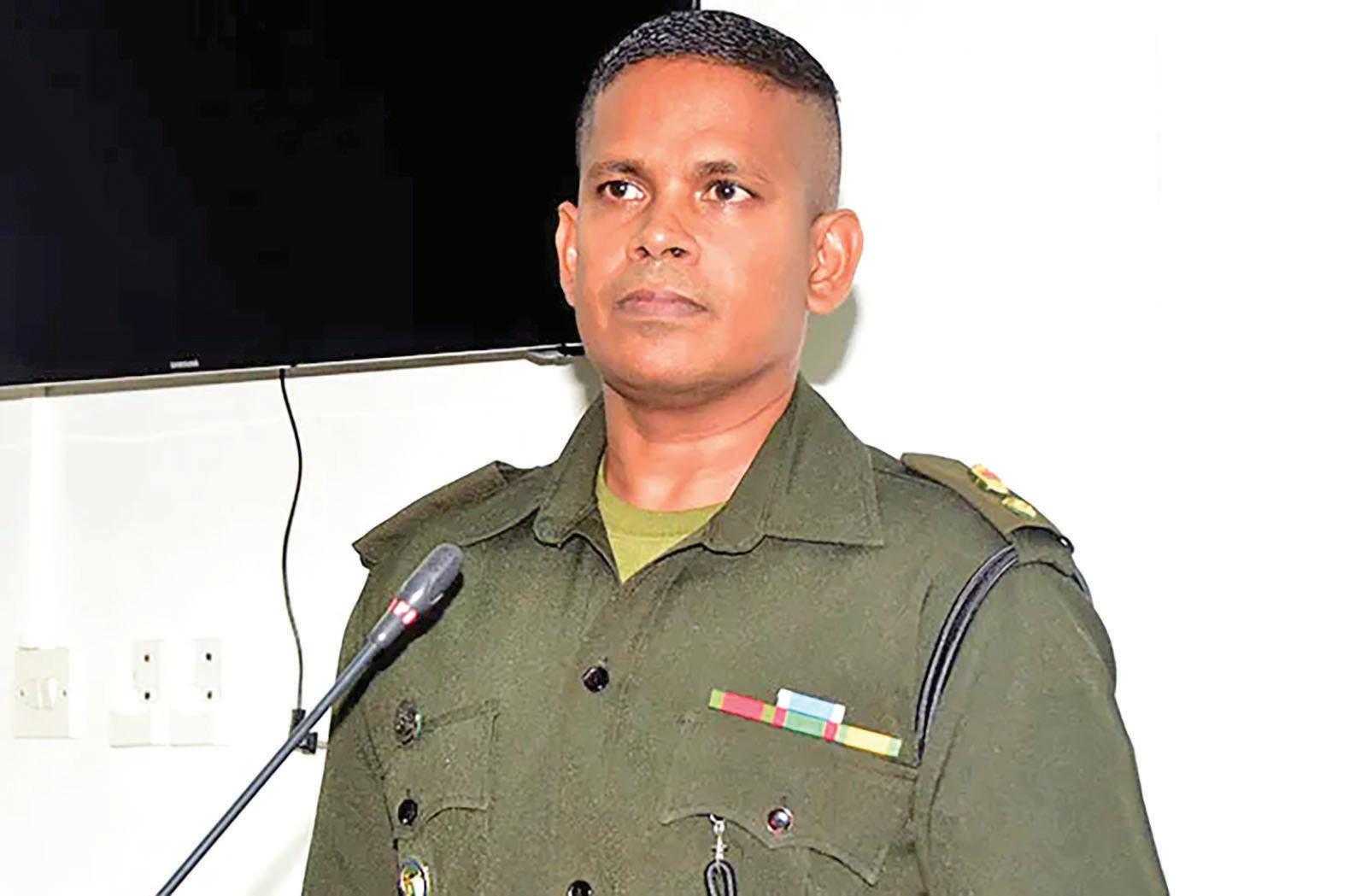
On Sunday, GDF released a message to Cadets from Commanding Officer
Lieutenant Colonel Keith G Watts, MEM.
“Today, we celebrate the 8th Anniversary of the Guyana National Cadet Corps (GNCC). This week, you will take part in activities that test both your competitiveness and leadership skills," he said.
Watts noted that the activities were curated by the Cadets themselves.
He explained, “Importantly, these events were not imposed on you but instead planned by your officers and instructors, based on suggestions provided by you, the Cadets." He added

that the week’s programme includes “many things from colour-themed picnics to fitness competitions and community service initiatives.”
Encouraging reflection during the anniversary celebrations, Lieutenant Colonel Watts urged Cadets to embrace the Corps’ guiding principle.
“As you take part in these activities, I urge that you reflect on our motto, ‘Moulding Today’s Youth, Securing Our Future', and ask yourselves, 'Is there anything more I can do to help in the devel-
opment of my fellow Cadets, schoolmates and neighbourhood friends?'"
Expressing his confidence in the creativity of the Corps’ members, he stated that the officers’ creative minds will bring forth ideas that will pave their way through your chain of command to the Headquarters, where they can be taken even further.
He further cautioned, “So, I caution you, do not be surprised when you see an implementation of a policy idea you once imagined
when you challenged yourself to think beyond your own needs.”
The Commanding Officer also added, “As our country continues to rise in the world, so too must our youth be positioned to take the reins of leadership across all sectors of society.” He explained that it is this recognition that continues to drive the growth of the Corps.
This month, eleven additional schools will join the GNCC: Blackbush Secondary, Berbice
Educational Institute, Campbellville Secondary, DC Caesar Fox, Johanna Cecilia Secondary, Friendship Secondary, Lower Corentyne Secondary, Richard Ishmael Secondary, Number 8 Secondary, Yarrowkabra Secondary, and Zeeburg Secondary.
Lieutenant Colonel Watts noted that the addition brings the total number of participating schools to 60, stating that the figure is significant as Guyana celebrates its 60th Independence Anniversary
this year.
Important place in development
Meanwhile, in a separate message, Chief of Defence Staff Brigadier Omar Khan extended congratulations to the commanding officer, officers, instructors, and Cadets across the country on the Corps’ eighth anniversary.
In his statement, he penned that the Corps “occupies an important place in the development of Guyana’s youth” and continues, through “structured training, discipline, community service, and leadership development,” to prepare young people to contribute meaningfully to national progress.
The Chief of Defence Staff further emphasised that the values instilled within the Cadet Corps, “responsibility, teamwork, respect and resilience”, are foundational to the future leadership of the country and wished the Guyana National Cadet Corps continued growth and success.
Several motorists were fined, and one was granted bail when their matters were heard at the Anna Regina Magistrate's Court before Magistrate Ravindra Mohabir in Essequibo Coast, Region Two (PomeroonSupenaam).
John Li, 24, a construction worker of La Belle Alliance, Essequibo Coast, was charged with six offences committed on February 25 on the Aurora Public Road.
The charges, laid under the Motor Vehicle and Road Traffic Act, Chapter 51:02, included dangerous driving contrary to Section 36(1); unlicensed driver contrary to Section 23(1); breach of insurance contrary to Section 3(1); unlicensed motor vehicle contrary to Section 22(1); and failing to have identification marks at the front and rear, contrary to Section 13.
Li appeared in court on Friday, where the charges were read to him and he pleaded guilty.

He was fined $50,000 or two months’ imprisonment for dangerous driving; $30,000 for being an unlicensed driver or two months’ imprisonment in default; $40,000 for breach of insurance or two months’ imprisonment in default; $10,000 or two weeks’ imprisonment for operating an unlicensed motor vehicle; and $50,000 each or two months’ imprisonment for failing to have identification marks at the front and rear.
Total fines amounted to $230,000.
Jason Persaud, 27, a salesman of the Charity

New Housing Scheme, was charged with driving while his breath alcohol level exceeded the prescribed limit. The offence occurred on February 9 at Charity Public Road.
The charge was laid under Section 39A(1) of the Motor Vehicle and Road Traffic Act, Chapter 51:02, as amended by Act 17 of 2022. Persaud appeared in court on February 24, pleaded guilty and was fined $300,000 or six months’ imprisonment. His driver’s licence was also suspended for 12 months.

Rayon Benn, 33, a construction worker of Bushlot, was charged with dangerous driving committed on Terrence Williams, 82, a pensioner of Suddie Housing Scheme. The incident occurred on February 4, 2026, at Cullen Public Road.
The charge was laid under Section 36(1) of the Motor Vehicle and Road Traffic Act. Benn appeared in court on February 26, 2026, and pleaded not guilty. He was granted bail in the sum of $100,000. The matter was adjourned to March 26.
Ray Bisasar, 35, a salesman of Lima Sea Dam, was
charged with driving while his breath alcohol level exceeded the prescribed limit. The offence occurred on February 14 at La Belle Alliance Public Road.
He appeared in court on February 26, pleaded guilty and was fined $200,000 or six months’ imprisonment in default.
Mark Grant, 30, a labourer of Lot 502 Onderneeming Sand Pit, was charged with driving while his breath alcohol level exceeded the prescribed limit, being an unlicensed driver and breach of insurance. The offences occurred on February 7 at

Mainstay Public Road. The charges were laid under Section 39A(1), Section 23(1), and Section 3(1) of the Motor Vehicle and Road Traffic Act.
Grant appeared in court on February 26, 2026, pleaded guilty and was fined $200,000 or six months’ imprisonment for the breath alcohol offence, $30,000 or three months’ imprisonment for being an unlicensed driver, and $40,000 or three months’ imprisonment for breach of insurance.
Total fines imposed on Grant amounted to $270,000.

Ranks from the Guyana Police Force (GPF) are now calling out drivers who accelerate when approaching an amber traffic light, stating that they are breaking the law and increasing the risk of serious collisions.
During a recent episode of “Road Safety and You”, hosted by Chairman of the Guyana National Road Safety Council, Earl Lambert, officers from the GPF Traffic Department addressed what they described as a growing and dangerous misconception among motorists.
According to the officers, many drivers treat the amber signal as a cue to “hurry up and catch the light” instead of preparing to stop.
Sergeant Tenesha Punch, who is stationed in Regional Division Three (Essequibo Island–West Demerara), ex-
plained that the amber light requires motorists to stop at the stop line unless they have already crossed it or are so close that stopping abruptly could cause an accident.
“The amber doesn’t mean to speed up,” the Sergeant stressed, noting that many collisions occur because drivers attempt to beat the signal as it transitions from green to red.
Under the law, amber means stop at the stop line.
A motorist may only proceed if the amber appears after the vehicle has crossed the stop line or is too close to safely pull up.
Traffic ranks further explained that when drivers accelerate to beat the amber light, they often enter the intersection just as the opposing signal turns green, creating a high risk of impact with oncoming traffic.

Officers further warned that breaching traffic signals falls under dangerous driving and can result in charges. They also cautioned that Magistrates are not treating such offences lightly. The Traffic Department is urging motorists to approach intersections with caution, reduce speed when signals change,
and comply with all traffic light regulations.
The ranks added that traffic lights are installed to regulate movement at intersections and prevent collisions, especially in the absence of a traffic officer. Motorists were also reminded that road safety depends not only on enforcement but also on responsible driving
behaviour.
Just a few days ago, the Police force announced that a sum of 115 dangerous driving cases captured by traffic cameras have already been processed in the courts, with offenders facing fines and, in some instances, suspension of their driver’s licences.
The report stated that
hundreds of incidents detected through the Safe Road Intelligent System (SRIS) have advanced through the judicial process, as authorities intensify enforcement of traffic laws nationwide.
According to a Police release, dangerous driving offences are not ticketable and must be heard before a Magistrate. Each case captured by SRIS cameras is individually reviewed by trained ranks, with footage analysed, compiled, and presented as evidence in court.
So far, the Police said 115 matters have been completed before the courts, resulting in monetary penalties and some licence suspensions. Several cases are still under review or at different stages of prosecution as the Force works to bolster its capacity to expedite case preparation and court hearings.
“Serve your communities, not your status” – Manickchand tells Region 6 NDCs …reminds them they are the Govt of a localised area

Local Government and Regional Development Minister Priya Manickchand on Friday delivered a firm message to representatives of the 19 Neighbourhood Democratic Councils (NDCs) in Region Six (East BerbiceCorentyne), reminding them that they are not ceremonial officeholders but the Government at the grassroots level. Addressing the councillors during a meeting at State House in New Amsterdam, the Minister told them plainly, “You are really the Government of your localised area.”
Expanding on that point, the Minister stressed that local Government is rooted in service, not status or political allegiance. Regardless of party affiliation or how they were elected, she reminded councillors that their mandate comes directly from the people. “Servant is servant,” she said, underscoring that there is no hierarchy in public service, whether at the level of president or village
councillor. Each, she noted, carries the same responsibility to act with humility, accessibility, and accountability in serving citizens.
Manickchand explained that Neighbourhood Democratic Councils were created by law as part of a deliberate national effort to decentralise governance and bring essential services closer to communities. Rather than forcing citizens to travel to Georgetown or depend solely on central authorities for everyday needs, the system was designed to place decision-making and representation within villages themselves.
Decentralise service
“We said we wanted to decentralise service as a country,” she reminded the councillors, adding that the intention was to take governance out of the central place and put it into communities. In that structure, she noted, NDCs are the frontline of Government, re-
sponsible for addressing local concerns in a direct and timely manner.
Turning her attention to conduct, the Minister cautioned councillors against allowing internal disputes, absenteeism, and personal grievances to undermine their effectiveness. She acknowledged that complaints had reached the Ministry about infighting, poor attendance at meetings, and a lack of cooperation within some councils, warning that such behaviour defeats the very purpose of local governance. Councillors, she stressed, must be accessible and responsive to residents at all times. “When people tell you something is wrong, you have to listen,” she said, emphasising that listening, responding, and making oneself available are fundamental duties of anyone entrusted with public office.
The Minister was particularly emphatic that councillors must have a clear grasp of what is happening within their communities at all times. From social challenges to urgent welfare needs, she said, Neighbourhood Democratic Council (NDC) representatives are expected to be aware and proactive rather than reactive. Expressing concern about instances where serious issues surfaced publicly before local authorities appeared informed, she warned that ignorance cannot be an excuse.
“If you didn’t know, you aren’t doing your job,” she told the NDC officials, making it clear that councillors are expected to know when
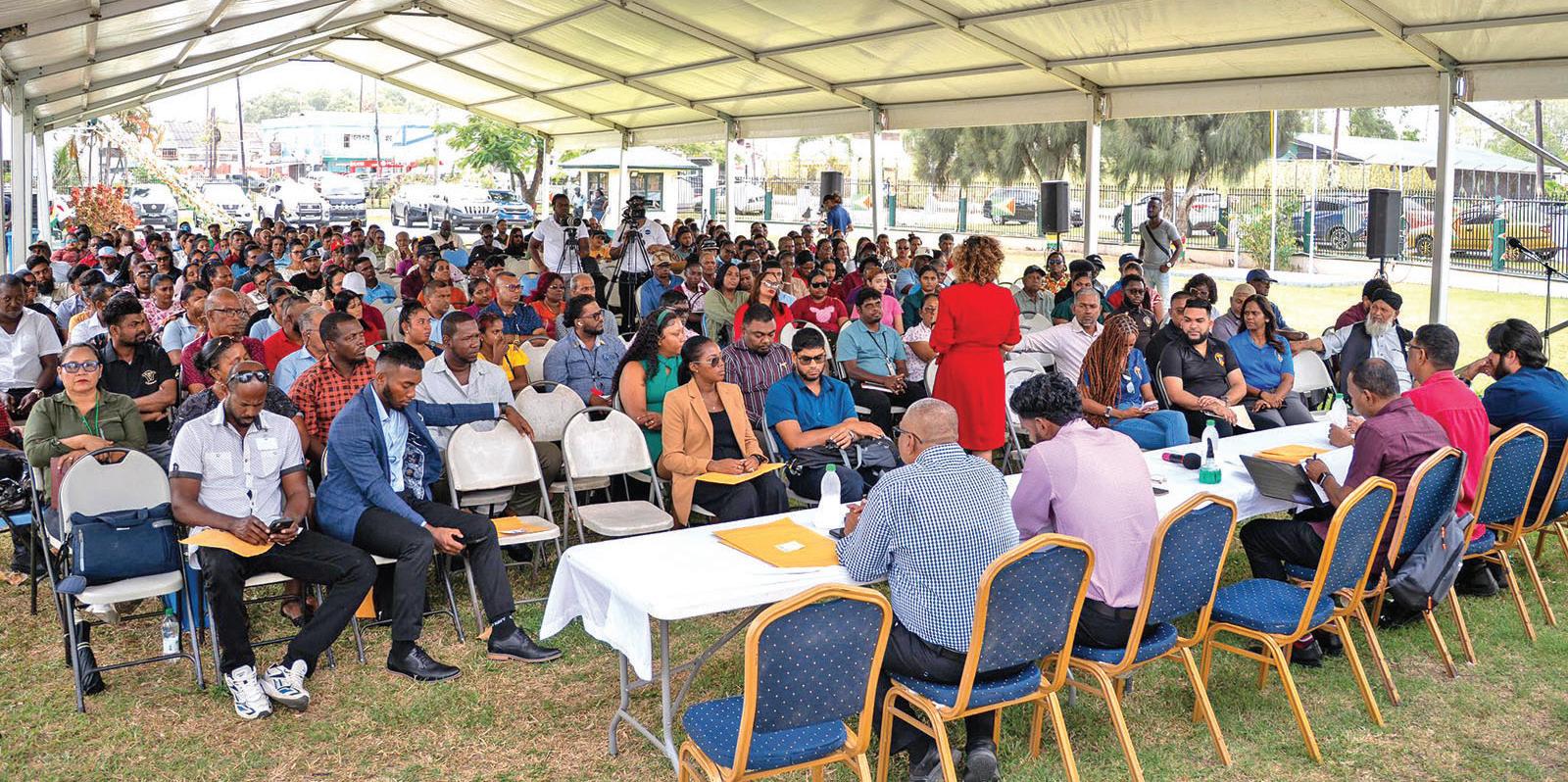
residents are facing hardship and to seek assistance from the relevant agencies where necessary.
She further underscored that the effectiveness of an NDC cannot rest on the efforts of only a few members but must reflect a unified and collective commitment to service. Councils, she noted, cannot afford situations where a small number of councillors carry the workload while others remain inactive or disruptive. Local governance, she reminded them, is a shared responsibility in which every elected member must contribute meaningfully. The success or failure of a council, she indicated, is measured collectively, and communities ultimately suffer when even a handful of representatives fail to perform their duties.
Substantial money
Addressing financial management, Manickchand pointed to the significant increase in allocations to NDCs, noting that coun-
cils that previously operated with limited budgets are now receiving substantially larger sums.
“You used to get [a] million. You are now getting $30 million,” she reminded them.
The Minister expressed disappointment that some councils had failed to fully utilise their allocations last year.
Unspent funds, she warned, translate into missed opportunities for residents who depend on improved drainage, roadworks, sanitation, and other community services.
“If you don’t spend it, service people could have had… they didn’t get,” she said.
The Minister added that councils will be required to submit clear spending plans and ensure that allocations result in visible improvements within their villages.
Looking ahead, the Minister announced that comprehensive training will be rolled out for all Neighbourhood Democratic
Councils to ensure councillors fully understand their statutory responsibilities and financial obligations. She emphasised that moving forward, councils must adopt structured planning, including clearly defined priorities over six-month periods, so that development is deliberate and measurable rather than ad hoc. Greater coordination with the Ministry, she added, will also be encouraged to ensure challenges are addressed swiftly and effectively.
Reiterating, Manickchand told the councillors that local Government is not about titles or recognition but about visible, responsive service. As the direct representatives of the State within their communities, she urged them to reset, refocus, and recommit to excellence. The people, she reminded them, are depending on them, and as the Government in their localised areas, they must ensure that service is felt.



Colour, creativity and culture were on full display as the 2026 Mashramani Costume and Float Parades lit up communities Corentyne) and Region 10 (Upper Demerara-Berbice), while Bartica, Region Seven (Cuyuni-Mazaruni) staged its parade atmosphere as spectators lined the routes in celebration of Guyana’s 56th Republic anniversary (Photo credits: NCN;

up communities across the regions. On Sunday, vibrant celebrations were hosted in Berbice, Region Six (East Berbicestaged its parade on Saturday. Revellers took to the streets in costumes, with decorated floats adding to the festive credits: NCN; Regional Democratic Council Region No. 6; Bartica Welcomes You/Facebook; and Region 10 Tourism Committee)



The Guyana Office for Investment (GO-Invest) was in Bridgetown for AgroFest 2026, promoting Guyanese products for three days.
AgroFest 2026, which concluded on Sunday, was held at Queen’s Park under the theme “Innovation Driving Profitable, Sustainable Agriculture”. The festival features a range of displays, including crafts, local produce, agro-processing and research.
GO-Invest, in a social media post, stated that the Guyana Hub at the event attracted hundreds of visitors, offering value-added food products, beverages and handcrafted items that highlight Guyana’s growing agro-processing and creative sectors.
Jennifer Geerlings-Simons.
In another statement on Facebook, GO-Invest said it welcomed Barbados PM Mia Mottley to the Guyana Hub. She was accompanied by Barbados’ Minister of Agriculture, Food and Nutritional Security, Shantal Munro-Knight, and President of Suriname,
The booth also received a visit from the President of Barbados, Jeffrey Bostic, and the Governor of the Central Bank of Barbados, Kevin Greenidge. The officials engaged with the Chief Operations Officer of the Guyana Office for Investment, Tebogah Christian, and the Director of Export and Trade, Kibbyann Chester-Harding.
According to the agency, AgroFest provides an important platform for Guyanese agro-processors, manufactur-
ers and artisans to connect directly with consumers, distributors and business stakeholders in the Barbadian market. Emphasis has been placed on building brand awareness, understanding market preferences and fostering discussions that could lead to long-term trade relationships.
Ahead of the festival, more than 50 Guyanese business proprietors participated in a Business-to-Business (B2B) engagement session facilitated by the Guyana Office for Investment at the Accra
Beach Hotel. The session connected Guyanese producers with Barbadian distributors and business representatives to discuss market access, distribution channels and potential partnerships. Participants also received insights into regulatory requirements, consumer trends and logistics.
Meetings were also held with regional trade partners, including the Caribbean Export Development Agency, to discuss programmes, access to finance and technical support for export-
ers. Discussions focused on strengthening export readiness and improving competitiveness.
GO-Invest said its participation at AgroFest 2026 reflects the importance of regional platforms in advancing intra-CARICOM trade and supporting small and medium-sized enterprises. The agency continues to work with public and private sector partners to promote Guyanese products and facilitate engagement opportunities aimed at sustainable trade growth.


Understanding, not merely knowledge or access to information, is what is missing in today’s divided world, Public Works Minister Juan Edghill declared on Friday evening, urging citizens to “change positions” and see issues through the eyes of others if lasting peace is to be achieved.
He delivered the message while addressing the Rotary Club of New Amsterdam’s World Peace & Understanding Dinner at the Central Corentyne Chamber Building, where Rotarians, civic leaders, and guests gathered to reflect on peace-building and purposeful service.
“Our world is not lacking in knowledge… the challenge of our world is understanding,” Edghill told the audience, stressing that access to information has nev-
er been greater, yet conflicts continue to surface in homes, communities, and across nations. The real deficit, he argued, lies in the failure to genuinely listen and grasp what others are experiencing before forming judgements or taking positions.
He expanded on that point by urging citizens to momentarily shift their vantage point when confronted with disagreement.
“You can only have understanding if you are willing to leave your position and view life from another person’s position,” he said.
According to Edghill, many disputes persist simply because individuals are unwilling to see beyond their own perspective.
By changing positions, even briefly, he noted, people can often discover that what appears contradictory may simply be a matter of angle
and experience rather than outright opposition.
Drawing on his experience in mediation, Edghill said prolonged disputes often reveal a deeper problem – not irreconcilable differences, but an unwillingness to truly hear each other. In some instances, he added, conflict is even sustained because it benefits certain actors.
“Some people’s relevance only exists when there’s conflict,” he remarked.
However, he cautioned that divisions can be deliberately amplified for influence or attention. For that reason, he urged communities to resist manipulation and instead pursue dialogue grounded in sincerity and respect.
Linking his reflections to national development, Edghill reminded the gathering that stability is a prerequisite for progress. “Peace and development are inseparable twins,” he said.
Edghill explained that societies cannot expect economic growth, improved services, or expanded opportunities in an atmosphere of persistent division.
Without peace, he pointed out, development efforts stall; with peace, even limited resources can be maximised for the collective good.
He told attendees that sustainable harmony begins with a deliberate effort

to understand. “Whenever there is understanding, there will be peace,” Edghill said.
He also urged citizens, leaders, and organisations alike to cultivate empathy in their daily interactions as the foundation for a more stable and prosperous society.
Rotary leaders echoed the Minister’s call for empathy and purposeful engagement, noting that peace-building remains central to the organisation’s global and local mission. District Governor Soraya Warner-Gustave said Rotary’s programmes are intentionally structured to strengthen institutions, engage communities, and promote leadership grounded in integrity and transparency. Service, she noted, drives community development, and in turn, develop-
ment strengthens nations.
Tangible peace initiatives
Assistant District Governor Rafeek Kassim highlighted tangible peace initiatives undertaken across Guyana, including the installation of peace poles in communities such as New Amsterdam and at the roundabout in the county. These symbols, he explained, serve as daily reminders of citizens’ responsibility to live in peace and to foster unity within their respective communities.
Rotary Club of New Amsterdam President Hemraj also underscored that peace must extend beyond speeches and ceremonial observances. He reminded attendees that peace does not exist merely in the
absence of conflict but in the presence of justice, opportunity, compassion, and respect. Peace, he said, begins in homes, schools, and communities and must be carried into daily interactions, boardrooms, and neighbourhoods if it is to be meaningful.
The evening also highlighted Rotary’s district reach, with representatives noting that District 73 comprises 17 countries and dozens of Rotary and Interact clubs working collaboratively on service initiatives. Leaders stressed that while global programmes such as the Rotary Peace Centres train peace-builders internationally, the foundation of sustainable peace remains rooted in local action – one project, one partnership, and one community at a time.
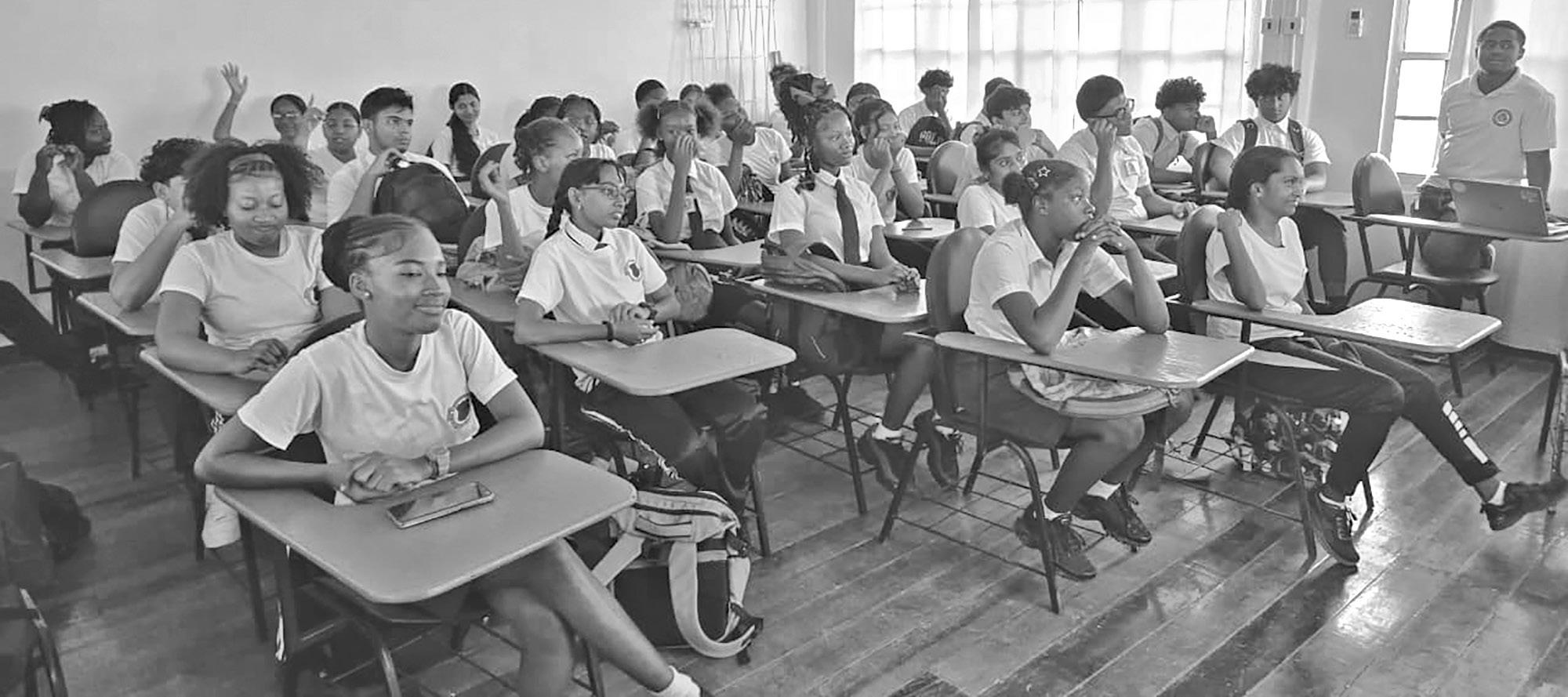
he
Tedition of the Information Communications Technology (ICT)
by the Office of the Prime Minister’s Industry and Innovation Unit, is currently in progress, aiming to expose students to emerging technologies and the growing ICT sector.
The first session of the 2026 programme was held on Friday last at Golden
Grove Secondary School, bringing together students from Grades 10 and 11. The initiative, designed as an “edutainment” session, encourages students to engage in discussions on topics including artificial intelligence, cybersecurity, and the role of ICT in Guyana’s economy. Participants also learn about Government plans and initiatives within the sector. Operating under the

theme “Today’s Youth, Tomorrow’s Digital Innovators”, the roadshow has, so far, reached over 22 schools across Regions Two (Pomeroon-Supenaam), Three (Essequibo Islands–West Demerara), Four (Demerara–Mahaica), Five (Mahaica–Berbice), Six (East Berbice–Corentyne), and 10 (Upper Demerara–Berbice). This year, the programme is set to expand to hinterland schools in Regions One (Barima–Waini), Eight (Potaro–Siparuni), and Nine (Upper Takutu–Upper Essequibo).
ment to fostering innovation and collaboration with Government agencies and the private sector to inspire young people.
Director of the Industry and Innovation Unit, Shahrukh Hussain, highlighted the unit’s commit-
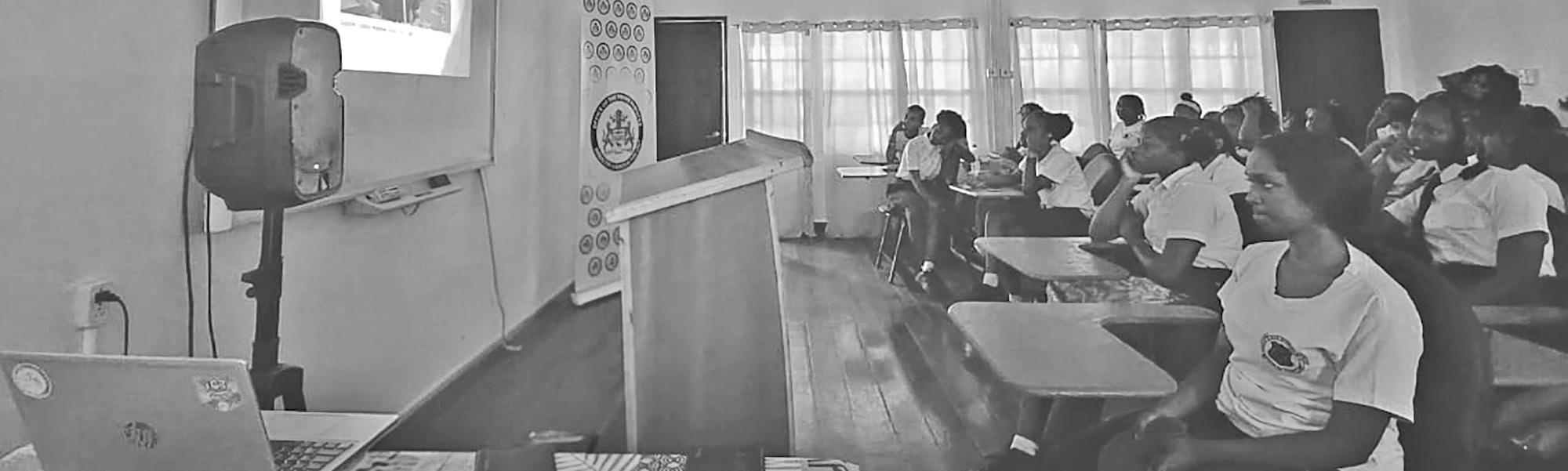
The next leg of the roadshow is scheduled for March, with planned stops in Leguan, Region Three, and Kato, Region Eight, marking the first time these locations will host the programme.
The Industry and Innovation Unit continues to pursue its mission of promoting equitable access to technology, supporting economic growth, addressing social disparities, and establishing an ICT-driven society in Guyana.

Ranks of the Guyana Police Force Traffic Department conducted a series of educational lectures at several bars within Regional Division 4 C on Friday, as part of ongoing efforts to promote road safety and responsible alcohol consumption.
The outreach involved ranks from the Beterverwagting, Vigilance, Mahaica, Sparendaam,
Sergeant Hemerding, Sergeant Phillips, Sergeant Smith, W/Corporal Glasgow, and other ranks.
and other traffic laws, the requirement to report accidents promptly rather than
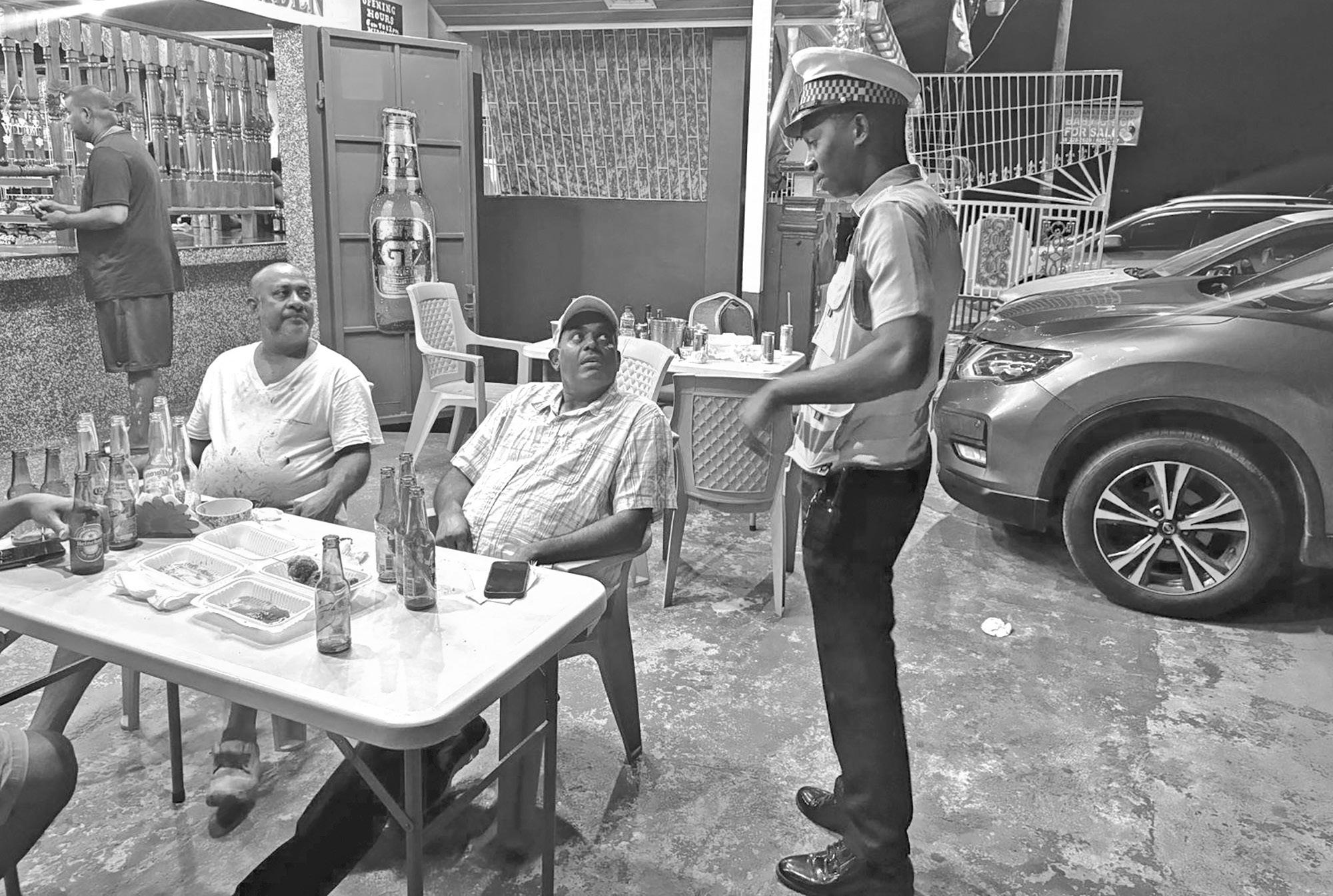
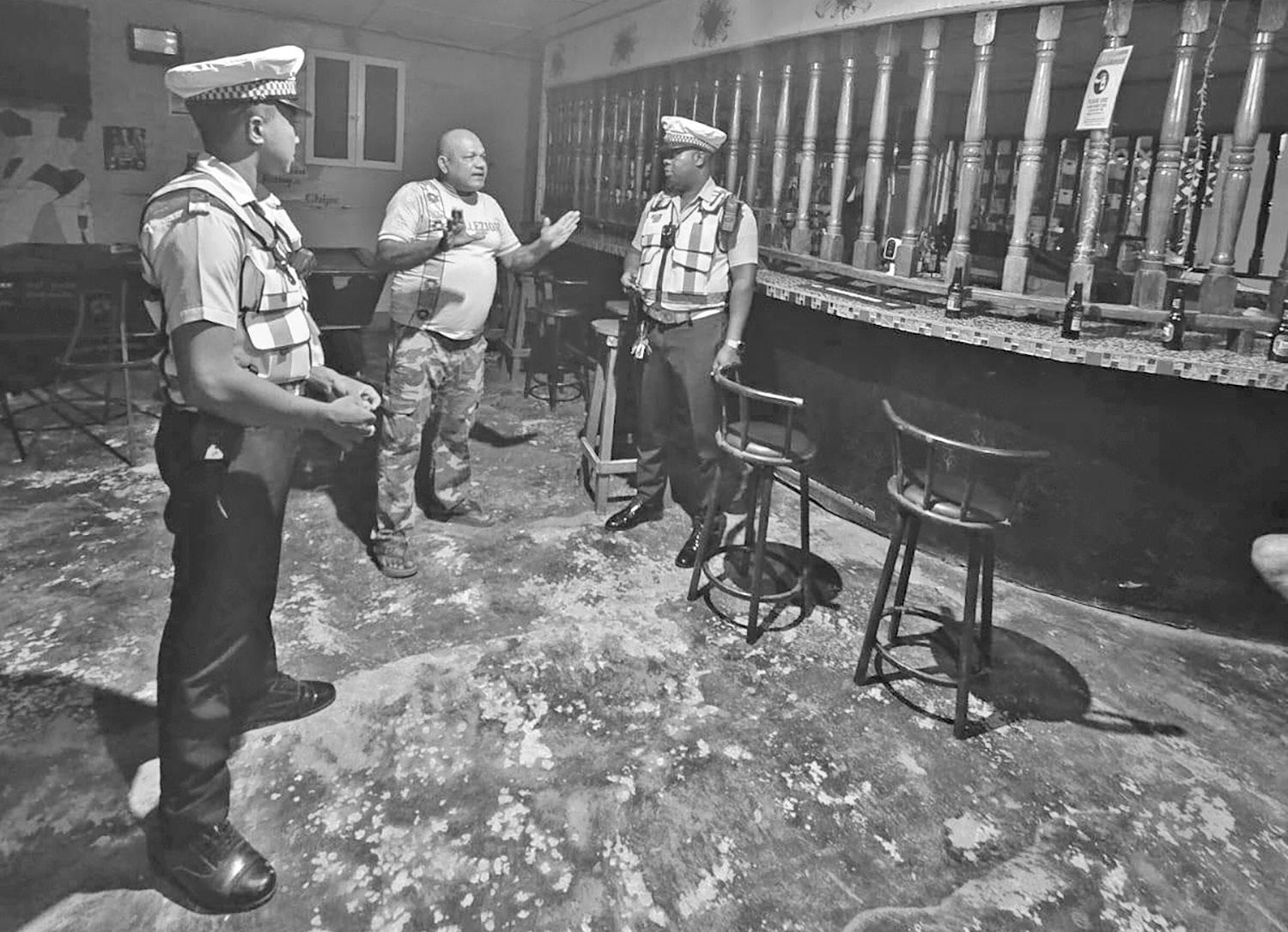
and Cove and John Police Stations. The initiative was led by Sergeant Caleb,
Bar owners, employees, and patrons were sensitised to road safety regulations, the legal alcohol limit, and the dangers and penalties associated with driving under the influence. Officers also discussed the role of designated drivers and how alcohol contributes to road accidents.
Additional topics included adherence to speed limits
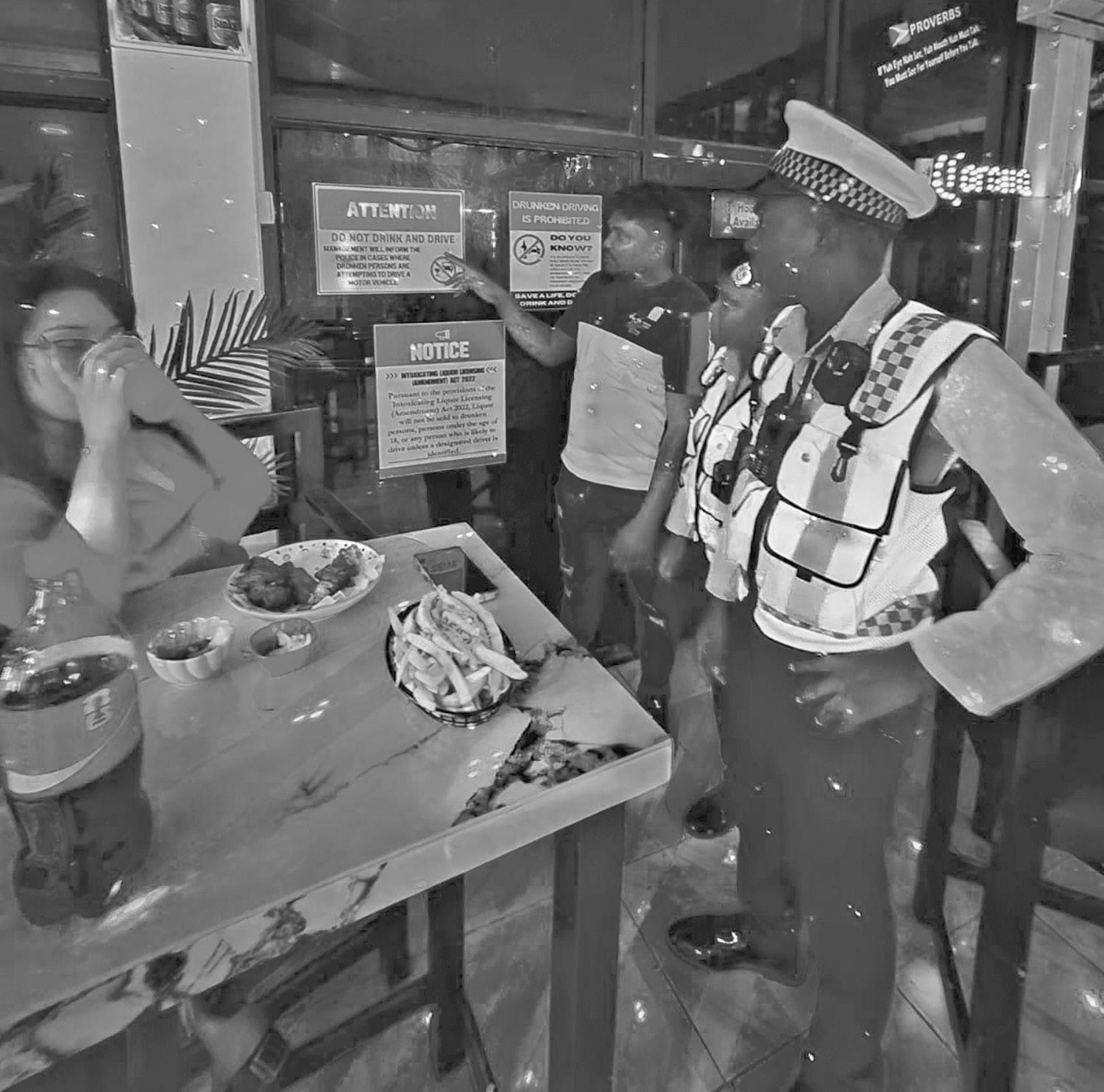
fleeing the scene, timely bar closure and curfew compliance, and key amendments to the Intoxicating Liquor Licensing Act (Amendment) Bill 2022.
The initiative engaged several establishments, in-
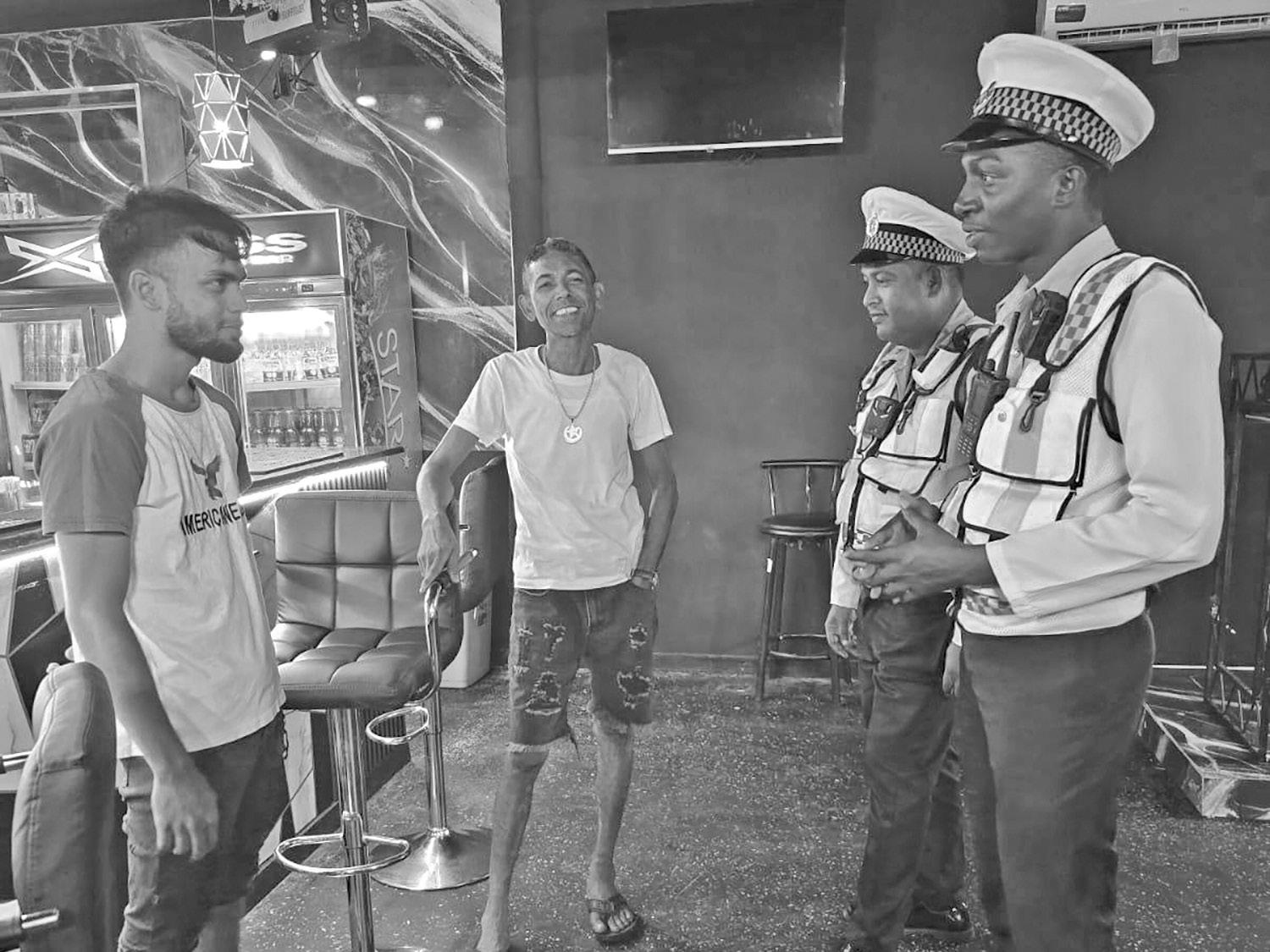
of Regional Division 4 C conducted community engagement exercises across Industry, Hope Estate, NonPariel, Cane Grove, Good Hope, Annandale, and Ogle, East Coast Demerara.
and Sugar Bar.
Community engagement
In a separate activity on the same day, ranks
The outreach was led by Inspectors Camacho, Roop, Caleb, D Abraham, Wellington, and McDonald, along with Sergeant Reynolds and other ranks from the Sparendaam, Cane Grove, Good Hope, Non-
Pariel, Ogle, Annandale, and Cove and John Police Stations.
During the engagements, residents raised concerns which were addressed by the officers. Practical crime prevention strategies and safety tips were shared, and members of the public were encouraged to report suspicious activities and maintain communication with the Police.

delegation, led by Advisor to the Natural Resources
Robeson Benn, along with other representatives in Toronto
Adelegation from Guyana’s Ministry of Natural Resources is in Toronto, Canada, for the annual convention of the Prospectors & Developers Association of Canada (PDAC), being held from March 1–4.
The event is regarded as a major international gathering for the exploration and mining industry and attracts thousands of investors, exhibitors and stakeholders from
around the world each year.
On Sunday, the Ministry hosted its “Guyana Day Presentation”, where officials outlined developments in the country’s mineral sector. The presentation highlighted mineral extraction activities, ongoing investments and key projects aimed at strengthening the industry. Among the initiatives discussed was the Government’s mineral mapping project, which is expected to provide
more precise data on the location and distribution of Guyana’s mineral resources. Officials said the project will support informed decision-making and investment planning in the sector.
Guyana’s delegation is being led by Advisor to the Natural Resources Minister, Robeson Benn.
The team is expected to engage with investors and industry representatives during the four-day convention.





Dr Tariq Jagnarine Fam meD, enDocrinology
Mental health is health
When people talk about health, they often think about blood pressure, diabetes, or heart disease. Mental health is rarely mentioned in the same conversation. Yet mental health is just as important as physical health.
Mental health affects how we think, feel, cope with stress, and relate to others. It influences how we work, parent, study, and make decisions. When mental health suffers, every area of life is affected.
In Guyana, mental health remains a topic many people avoid. Silence, stigma, and misunderstanding prevent people from seeking help early.
Why mental health matters now


Why stress, depression, and anxiety deserve attention just like diabetes and heart disease
Understanding depression
Depression is more than feeling sad for a few days. It is a medical condition that affects mood, energy, concentration, and daily functioning. A person with depression may lose interest in activities they once enjoyed, feel tired all the time, struggle to sleep, or experience changes in appetite.
Some people blame themselves, thinking they are weak or ungrateful. This is not true. Depression can affect anyone, regardless of age, gender, or background. It is treatable, especially when recognised early.
Understanding anxiety
Anxiety becomes a problem when constant worry interferes with daily life. People may feel restless, tense, and easily startled or experience racing thoughts. Physical symptoms such as headaches, stomach discomfort, chest tightness, and rapid heartbeat are common.

sleep strengthens emotional resilience. Balanced meals support brain function. Limiting alcohol and avoiding substance misuse protects mental stability.
Spending time with supportive friends and family, practising relaxation techniques, and setting realistic goals also help manage stress.
Mental health care is not only about treatment; it is also about prevention.
When immediate help is needed
If someone expresses thoughts of harming themselves or others, immediate professional support is necessary. Mental health emergencies should be treated with urgency and compassion.
Encouraging someone to seek care, staying with them, and contacting appropriate services can save a life.
Across the country, people are facing economic pressures, family responsibilities, migration stress, academic demands, and health concerns. These challenges are real and ongoing. While stress is a normal part of life, prolonged stress without support can lead to anxiety, depression, and burnout.
In Guyana, some people mistake anxiety symptoms for purely physical illnesses and repeatedly seek medical care without addressing the emotional cause. Recognising anxiety as a health issue is the first step toward effective treatment.
Common risk factors
Mental health challenges often arise from a combination of factors. Financial stress, relationship problems, chronic illness, grief,

Healthcare providers are seeing increasing numbers of patients reporting sleep problems, persistent sadness, panic attacks, irritability, and feelings of hopelessness. Many suffer quietly for months or years before speaking to anyone.
Ignoring mental health does not make problems disappear. It often makes them worse.
trauma, and substance use can all contribute. Social isolation and lack of support increase risk.
Young people may struggle with academic pressure and social expectations. Adults may feel overwhelmed by work and caregiving responsibilities.
Elderly individuals may face loneliness or health decline.
Mental health condi-
tions are rarely caused by one single event. They usually develop gradually over time.
Warning signs that should not be ignored
Persistent sadness, loss of interest in activities, extreme mood changes, withdrawing from family and friends, difficulty concentrating, sleep disturbances, and thoughts of self-harm are serious warning signs.
Family members and friends often notice changes before the person does. Paying attention to behavioural shifts and offering support can make a life-saving difference.
Mental health emergencies require immediate attention, just like physical emergencies.
Seeking help is strength
One of the biggest barriers in Guyana is stigma. Some people fear being labelled or judged if they seek mental health support. Others believe they should “handle it on their own.”
Seeking help is not a weakness. It is a responsibility.
Healthcare providers can offer counselling, support, and, when necessary, medication. Early treatment leads to better outcomes and prevents complications.
The role of families and communities
Mental health is not an individual issue alone.
Families can create safe spaces for open conversations. Listening without judgement encourages honesty. Schools and workplaces can promote awareness and reduce stigma.
Faith leaders, community groups, and local organisations also play a role in normalising discussions about mental wellbeing.
When mental health becomes part of everyday conversation, seeking help becomes easier.
Healthy habits that protect mental well-being
Small daily habits support mental health. Regular physical activity reduces stress and improves mood. Adequate
Mental health deserves the same attention as physical health. Depression and anxiety are not signs of weakness. They are health conditions that can be treated.
Silence increases suffering. Conversation creates healing. Check on your loved ones. Check on yourself. Seek help early. Strong communities begin with mentally healthy individuals.

US President Donald Trump on Friday raised the prospect of a “friendly takeover” of Cuba, telling reporters at the White House that Secretary of State Marco Rubio was dealing with the issue at a “very high level”.
“The Cuban Government is talking with us, and they’re in a big deal of trouble,” Trump said as he left the White House for a trip to Texas. “They have no money. They have nothing right
now, but they’re talking with us, and maybe we’ll have a friendly takeover of Cuba.”
Trump described Cuba as a failing nation in need of change, adding that he had been hearing about the country’s woes since he was a little boy.
“I can see that happening. Marco Rubio is dealing with it and at a very high level,” he said. “They have no money, they have no oil, and they have no food. And
it’s really right now a nation in deep trouble, and they want our help,” he said.
The Cuban Government has said it is not in any high-level talks with the United States but has not outright denied press reports that US officials may be in informal talks with Raul Guillermo Rodriguez Castro, the grandson of former Cuban President Raul Castro. (Excerpt from Reuters)
The United States (US) Immigration and Customs Enforcement agency (ICE) has confirmed the deportation of a Jamaican national who was convicted of homicide in New York.
On Friday, ICE announced that Kemar Hamilton was convicted in 2012 for the killing of Edgar McCalla, a 58-year-old Jamaican immigrant and father of seven.
Authorities said McCalla was shot and killed during a robbery outside his Bronx home on February 19, 2009. The suspect fled the scene, leaving behind a prepaid cell-phone. Investigators were initially unable to ob-
tain a DNA match from the device, and the case eventually went cold.
Two years later, the investigation was revived when local police stopped Hamilton for a traffic violation and found a loaded firearm in his vehicle. He was taken into custody, and subsequent forensic testing revealed that his DNA matched evidence recovered from the cell-phone left at the murder scene.
ICE Deputy Director Charles Wall praised law enforcement and prosecutors for securing the conviction but criticised past immigration enforcement practices.
“I commend local law en-
forcement for breaking this murder case and the prosecutors for securing a conviction, but the truth is, Kemar Hamilton should have never been in this country in the first place,” said Wall. “We’ve said it over and over: enforcing immigration law protects Americans – and it protects our immigrant communities.”
“This criminal crossed our border illegally, then went on to murder a father of seven from his own home nation,” he added.
In 2012, a New York Judge sentenced Hamilton to more than 10 years in prison for the homicide. (Excerpt from Jamaica Observer)
Antigua and Barbuda’s Prime Minister Gaston Browne says new United States visa restrictions affecting citizens of Antigua and Barbuda and Dominica are temporary and part of a wider immigration policy overhaul.
Speaking after the 50th Caricom Heads of Government meeting in St Kitts and Nevis, Mr Browne said US Secretary of State Marco Rubio had assured regional leaders that the measures form part of a global rollout of a revised visa framework expected by June.
Under updated US State Department reciprocity schedules, B1/B2 visitor visas for both countries have been reduced from 10 years with multiple entries to single-entry visas valid for three months.
Nationals applying for new visas must also post a bond of between $5000 and $15,000, determined at interview. Bondholders are required to enter and exit the US through designat-
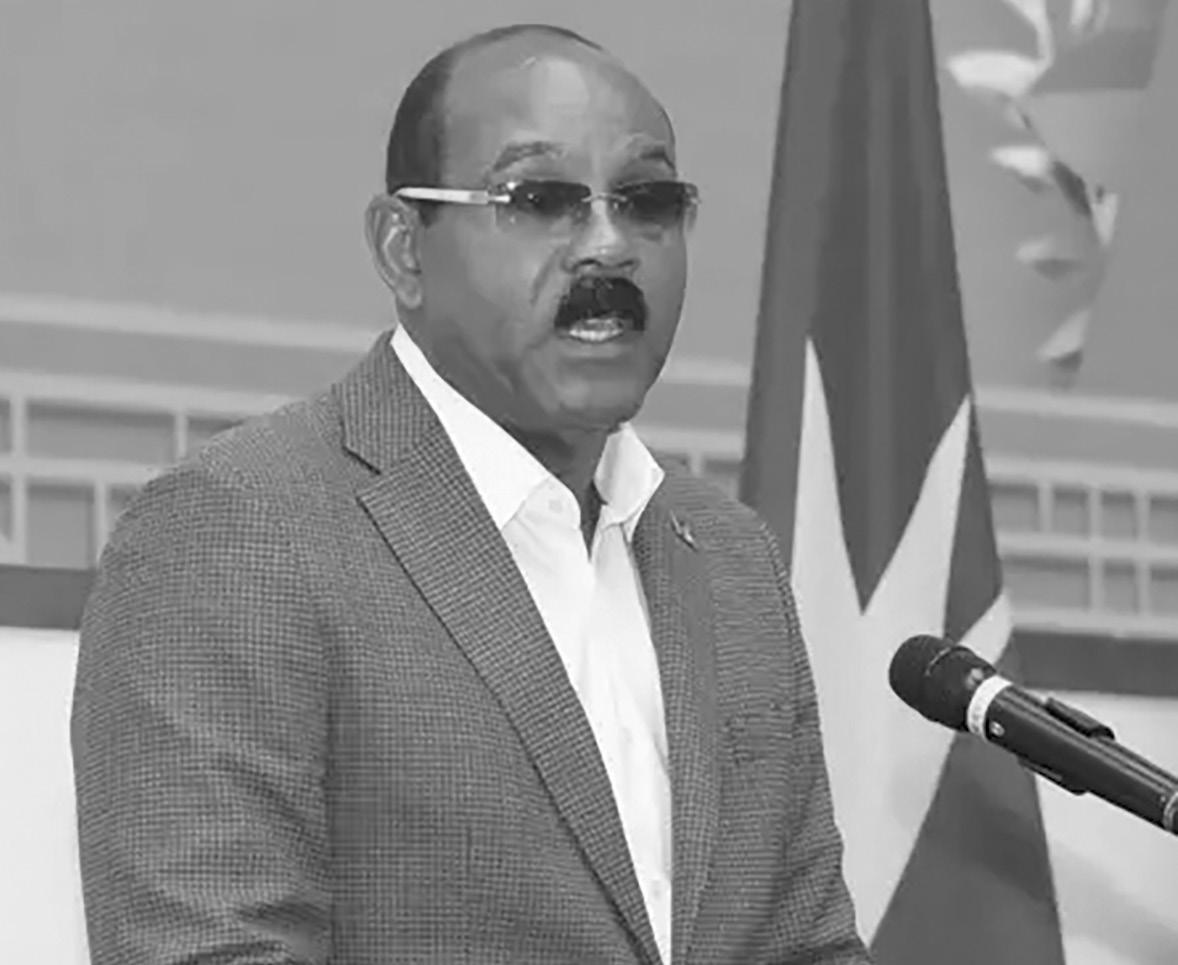
ed airports, including John F Kennedy International Airport, Hartsfield-Jackson Atlanta International Airport and Los Angeles International Airport, among others in the US and Canada.
The restrictions also apply to several non-immigrant visa categories, including student, exchange, temporary worker and media visas. Diplomatic visas
Tobago House of Assembly Chief Secretary Farley Augustine has praised Prime Minister Kamla Persad-Bissessar for having “more balls” than her male Caricom counterparts, citing her handling of regional security and geopolitical developments discussed at last week’s Caricom Heads of Government meeting in St Kitts and Nevis.
Speaking on Sunday in his first briefing after attending the summit, Augustine said Persad-Bissessar’s analysis of events surrounding Venezuela showed pragmatism and a clear understanding of international power dynamics.
During her February 24 address, Persad-Bissessar criticised Caricom for not defending member states Trinidad and Tobago and Guyana when Venezuela

was “threatening violence” against them.
Reflecting on these events, Augustine said, “Looking back now at the whole situation and how it played itself out, I don’t know if the radar was in
Tobago or not; that would stop the US from getting Maduro. I find we have glossed over the fact that Maduro was taken, and those who were the strongest allies and supporters of Maduro, those who swore to protect him, all of a sudden get quiet.
“You see (acting Venezuelan President) Delcy (Rodriguez) changing her tune and changing her position because of US power over her and Venezuela. We don’t understand the pragmatism. It might just be the PM has more balls than all her male counterparts in the region.”
Augustine was part of Trinidad and Tobago’s delegation at the Caricom summit, which also discussed regional security, economic cooperation and other geopolitical challenges facing member states. (Trinidad Guardian)
The Support Group for Repatriated and Refugees (GARR) is calling for a thorough investigation and accountability after two Haitian girls were found dead at a migrant transit centre in Oaxaca, a state in southern Mexico.
The bodies of the girls, ages four and five, were discovered on February 24 in a septic tank at Casa Hogar Patos, a facility managed by Oaxaca’s Integral Family Development agency, known as DIF-Oaxaca. According to GARR, the children had been admitted to the centre with their mother, who believed it would provide a safe environment while they awaited immigration processing.
“The centre was supposed to be a safe place to shelter the mother and her children in search of a better life, a place meant to protect their well-being,” GARR said February 27 in a statement. The organisation expressed condolences to the family and denounced what it described as serious failures in prevention and protection measures.
GARR said the septic tank where the girls were found lacked basic safety protections and was not adequately secured or monitored by staff.
The Attorney General of Oaxaca confirmed that an investigation is underway. Two officials –the centre’s director and
the general coordinator of state reception centres under DIF – have been dismissed. However, GARR noted that no one has yet been formally held responsible.
The Haitian migrant rights group also cited previous reports of alleged abuse, food rationing and irregularities in social assistance management within facilities overseen by DIF-Oaxaca.
GARR urged Mexican authorities to conduct a transparent and rigorous inquiry and called on the Haitian Government to provide legal guidance and psychological support to the grieving mother.
(Excerpt from The Haitian Times)
Vare unaffected.
Mr Browne said the measures apply only to new applications and do not affect existing valid visas. He advised citizens to delay non-urgent applications, noting that the Ministry of Foreign Affairs can request exemptions in cases such as medical emergencies. (Excerpt from Antigua Newsroom)
enezuelan opposition leader and Nobel Peace Prize laureate Maria Corina Machado said she plans to return to the country in the coming weeks, according to a message posted on her social media accounts on Sunday.

Machado, a 58 year old industrial engineer, left Venezuela in December for Oslo to receive the award and is currently in the United States. Speculation around
Machado’s return has been prevalent since the US captured former Venezuelan leader Nicolas Maduro on January 3.
Machado is under investigation in Venezuela, and Interim President Delcy Rodriguez has said she should have to “answer to Venezuela” for her support of US military action against Caracas .( Reuters)
Huge air strikes by the United States and Israel continue to hit Tehran and other cities as the Iranian establishment ponders its future while launching projectiles across the region.
The capital was rocked numerous times on Sunday after a series of attacks hit multiple neighbourhoods, with the Israeli army saying military centres were among the targets. Iranian authorities have largely refrained from discussing missile impacts, and internet connectivity remained almost entirely blocked for a second day.
After Supreme Leader Ayatollah Ali Khamenei and top commanders were killed in Tehran at the start of the war on Saturday, the remaining top authorities of the Islamic Republic are emphasising that the theocratic establishment has a clear path forward based on its own internal mechanisms.
By laws put into motion after the country’s 1979 Islamic Revolution, a clerical body called the Assembly of Experts is tasked with selecting the next supreme leader.

Plumes of smoke rise over residential Tehran amid ongoing United States-Israeli strikes
Masoud Pezeshkian, the Iranian President, said that a new leadership council “has begun its work” after the death of Khamenei. Iran’s Foreign Minister Abbas Araghchi told Al Jazeera the process should be complete within days.
Until that can happen, a three-member council will govern.
Meanwhile, as of Sunday afternoon, the United Arab Emirates (UAE) Defence Ministry said it had so far ”dealt with” 165 incoming ballistic missiles, two cruise missiles and 541 Iranian drones. Since this conflict began on Saturday morning, Iran appears to have expanded its target set from just hitting military targets, like the US Navy’s fifth Fleet headquarters in Bahrain, to airports and other civilian sites.
Now luxury hotels and shopping malls, high-rise apartment blocks, and state-of-the-art airport departure terminals are getting sporadically hit as gaps appear in the Arab states’ air defences in the Gulf.
Iran’s Foreign Minister, Abbas Aragchi, has denied targeting his country’s neighbours, telling Al Jazeera: ”We are not at-
tacking our neighbours in the Persian Gulf countries; we are targeting the presence of the US in these countries. Neighbours should direct their grievances to the decision-makers of this war.”
Some of the damage to civilian infrastructure in the Gulf states is accidental – resulting from debris falling from intercepted missiles.
For Iran’s Revolutionary Guards Corps, the IRGC, the dilemma is whether to surge an attack on a major target like a US warship in the hopes of overcoming its defences or hold back much of its concealed arsenal in the hopes of outlasting President Trump’s patience.
Iran also knows that while it has a finite number of missiles and drones, so, too, are its adversaries constrained by their number of remaining air defences. (Excerpts from BBC News, Al Jazeera)
W ashington endorsed Pakistan’s “right to defend itself” after it bombed major cities across Afghanistan amid heightened tensions between the two hostile neighbours.
The Taliban Government in Kabul stressed it was ready to negotiate on Friday as violence intensified between the two countries.
Taliban spokesman Zabihullah Mujahid said, ”The Islamic Emirate of Afghanistan has always tried to resolve issues through dialogue, and now also we want to resolve this matter through dialogue,”
he said.
The Pakistani strikes hit parts of Kabul, Kandahar and Paktia on Thursday night and Paktia, Paktika, Khost and Laghman on Friday, he said.
Pakistani Defence Minister Khawaja Mohammad Asif earlier said his country was in “open war” with Afghanistan and that patience had run out in Islamabad.
The latest wave of attacks came after Afghan forces attacked Pakistani border troops on Thursday night, which Afghanistan said was in retaliation for deadly Pakistani airstri-
Ukraine marked the fourth anniversary of Russia’s invasion with territorial gains in the south and improved air defences that kept the lights on in Kyiv, despite two barrages of drones and missiles during the past week.
Ukrainian President Volodymyr Zelenskyy on Saturday told the AFP that Ukrainian forces had regained 300 square kilometres (km) of territory in southern Ukraine, without specifying the time period.
His commander-in-chief, Oleksandr Syrskii, two days later, said those southern gains were 400 sq km and had come since the end of January.
“You can’t say that we’re losing the war… The ques-

tion is whether we will win,” Zelenskyy said.
Although limited in scale, Ukrainian counterattacks may have done enough to throw Russian preparations for a spring offensive off balance, said the ISW.
kes on Afghan border areas last weekend.
Pakistan accuses Afghanistan’s Taliban Government of sheltering militant groups that stage attacks across the border –a claim denied by Kabul –and of allying with India, its historic enemy and regional rival.
The UK and the EU called for swift de-escalation and urged both sides to re-enter negotiations. While a Qatari-mediated ceasefire ended fighting in 2025, talks in Istanbul in November did not yield a formal peace agreement. (Excerpt from The Guardian)
Amazon will stop charging sellers in India referral fees for products under 1000 rupees (US$10.98), the company said on Monday, as it looks to attract more merchants to its online marketplace and get a stronger footing in the country’s competitive e-commerce industry.
The move expands on Amazon’s “zero-referral fee” policy launched last year, which covered roughly 12 million products priced below 300 rupees and helped drive a 50 per cent surge in new sellers joining Amazon in India. A re-
Open-source intelligence suggests that Russia’s campaign has been flagging for a long time.
European leaders have publicly noted that over the past three years, it has seized 1.5 per cent of Ukraine or less at a cost of hundreds of thousands of lives. (Excerpt from Al Jazeera)
ferral fee is a commission that sellers pay to Amazon for each product sold.
The new structure, effective March 16, covers more than 125 million products, Amazon said, adding that it was also reducing some shipping charges.
”This move is designed to make selling on Amazon more lucrative and simpler, particularly for small businesses and entrepreneurs in tiertwo and tier-three cities,” said Amit Nanda, director of Selling Partner Services for Amazon India.
India has emerged as a crucial market for Amazon, thanks to a rapidly expanding internet user base that has fuelled e-commerce growth in the world’s most populous country. But Amazon faces fierce competition in the region from Walmart-backed Flipkart and the retail arm of billionaire Mukesh Ambani’s Reliance Industries, while quick-commerce players such as Eternal’s, Blinkit, Swiggy’s, and Instamart have been grabbing market share rapidly.
(Excerpt from Reuters)
The FBI’s joint terrorism task force has been called in to help investigate a deadly mass shooting in downtown Austin, Texas, on Sunday morning in which a gunman opened fire in front of a bar popular with university students, killing two people and injuring 14 others before being fatally shot by police.
CBS News reported that officials had identified the suspect as Ndiaga Diagne, who came to the US in 2006 from Senegal and is a naturalised American citizen. He was naturalised in 2013, the news channel said, having spent some years in New York before moving to Texas.
Fox News said it had obtained a photograph of the suspect carrying a rifle and wearing a light-coloured sweatshirt saying “Property of Allah”. The Associated Press for its part reported being told by a law enforcement official that the gunman indeed wore that sweatshirt – as well as another with an Iranian flag design.
The city’s police chief, Lisa Davis, described the violence as a “tragic, tragic incident”, with the first calls about it being made to emergency

services from Buford’s bar in West Sixth Street at 1.59am. Davis said the attacker drove a large sport-utility vehicle, circled the block several times and then fired a pistol from the car, according to the Austin American-Statesman.
The shooter then exited the SUV with a rifle and continued firing, Davis said.
When officers arrived at the bar, they were immediately confronted by a male gunman pointing a weapon at them. They returned fire and killed the suspect.
By then, two bar customers had been killed. 14 more persons were shot with injuries that required hospital treatment, three of whom were described to be in critical
condition.
Videos taken inside the bar and posted on social media showed several persons lying on the floor being treated by paramedics. One woman who was administering CPR to an individual lying on their back can be heard in the video shouting, ”Please help me – I need help!” Abbott said that Texas would respond to any such hostility “with decisive and overwhelming force to protect our state”.
The governor has ordered increased patrols and surveillance across the state by the Texas National Guard and law enforcement. (Excerpt from The Guardian)









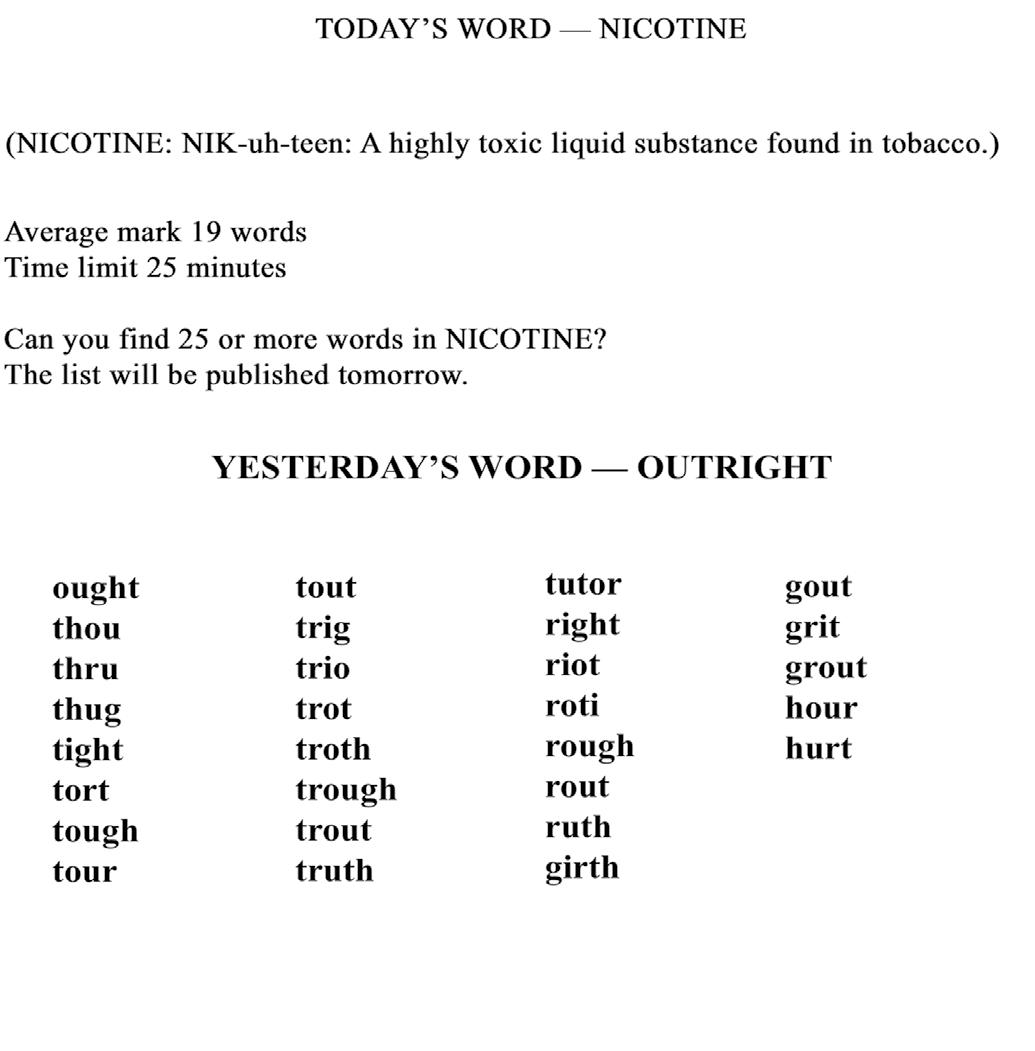
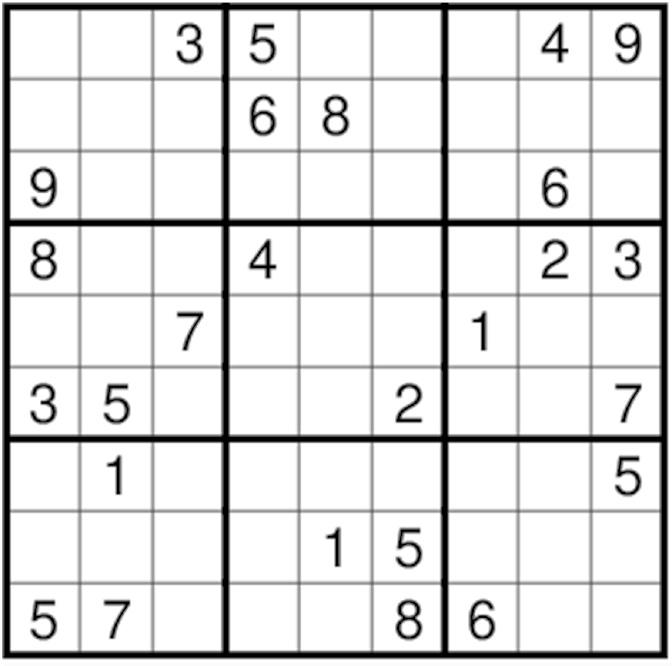




High energy, reaching out to those in a position to help, and establishing how you want to move forward will help point you in the right direction. Keep an eye on domestic expenditures. Don’t go over budget or let anyone talk you into doing or purchasing something you don’t need. Focus on personal development, growth, and gain.














Take time to engage in something that interests you. The people you meet and the information you receive will require you to evaluate and think before you act. Impulse is the enemy today, so do your due diligence before you commit to something you don’t need or cannot afford. Engage in an activity that encourages you to relax.
Take a moment to reevaluate your life, purpose, direction, and desire. It’s time to consider what makes you happy and to let go of what isn’t working for you anymore. Put your energy into research, finding your niche, and ending old conditions to make room for something new and exciting. Change begins with you.
Disregard what isn’t proven and head in a direction that is clear-cut, doable, and offers plenty of room for growth. Explore the possibilities, expand your interests, knowledge, and expectations, and make good use of what you already have in place. Stop dreaming and act on your behalf. Step up, share your expertise, and opportunity will follow.
Change will serve you well. Consider partnerships, volunteering your time and skills, or pursuing knowledge. Keeping up with the latest technology, information, and guidelines will keep you moving forward without interference or setbacks. Take the path that offers a unique objective regarding your path forward. Momentum is crucial if you want to reach your target first.
Don’t second-guess yourself. You are sitting in an opportune position. Listen to your gut, resurrect old ideas and concepts, and update them to apply to current situations, and you’ll find your way forward. Partnerships, financial gains, and the pursuit of knowledge and skills will pay off. Participate in events that offer insight into what’s trending.
Take a moment to gather your thoughts and to work out a budget and timeline that is doable. Discipline, along with a unique plan and a highenergy approach, will get you where you want to go. Spend more time working from home, where you’ll have fewer distractions. A Zoom meeting will have a positive outcome.
Embrace the changes that stimulate your mind and encourage you to look, dress, and speak in sync with what you are trying to achieve. A positive attitude will help you influence those you hope to entice to think and see things your way. You have plenty to gain personally and professionally if you are forward-thinking.


Spend more time on detail and less trying to sway others to think like you. It’s what you do and how you present yourself and your ideas that will draw a crowd. Figure out a way to be entertaining and engaging when introducing yourself and your pursuits. High energy, enthusiasm, and confidence are your ticket forward.






Stick to the facts. Inflating information will hurt your reputation and leave you vulnerable. Speak from the heart, back up your claims, and fund your goals. Standing tall and executing your plans like a pro will interest others in becoming donors. Trust in your skills, charm, and expertise to see matters through to the end.
A domestic change will be refreshing. You may not relish the time, energy, and work it takes, but the results will be in your best interest. Don’t be afraid to be different or to go up against someone who opposes you. Trust and believe in yourself and find the path that offers comfort and joy.
Expand your interests, discuss your intentions, and focus on completion. How you manage your time, money, and others will determine your progress. Keeping everyone you deal with up to date will help you gain momentum and avoid interference. The time you spend on how you look and present yourself to others will pay off and boost your ego.




The upcoming East Bank Inter-Village Football Competition, which is being organised by Sports Extra, received a timely boost when Minister within the Office of the Prime Minister, Kwame McCoy, confirmed the entity’s commitment to the competition.
Minister McCoy handed over a cheque for an undisclosed sum to Sports Extra’s Franklin Wilson, during a simple ceremony.
Following the presentation on Friday, McCoy said that the organisation of the tournament came at a time when the Office of the Prime Minister, and the Government by extension, has been forcefully underlining the importance of sports in the holistic development of the country.
He pointed to the construction of new sport facilities across the country and
the restoration and further refurbishment of existing ones as clear examples of the Administration’s attempt to make sport a major priority on its agenda.
According to the Minister, “the East Bank Inter-Village Football Tournament can further create a structured space to refine raw ability, discover future national players and promote healthy rivalry that strengthens community bonds along the East Bank Demerara corridor.”
He added that he saw the donation as a continuum of the Government’s investment and support for youth development, social cohesion and national progress where the country gets to benefit from a pool of young players who will be more focused, motivated, and inspired.
McCoy further emphasised that such competitions
can provide safe and positive outlets for the youths and at the same time transform the playfields into stages of opportunity.
The competition carries prize monies totalling in excess of $3 million in cash and trophies along with individual accolades for Best Goalkeeper, Most Valuable Player and Highest Goalscorer.
The first-place prize is set at $1 million, while the second-, third- and fourthplace prizes are $500,000, $250,000 and $150,000 respectively.
Villages set to participate are Agricola, Grove, Friendship, Soesdyke, Timehri, Kuru Kururu, Swan, St Cuthbert’s Mission, Circuitville, Samatta Point, Kaneville, Mocha, Herstelling, Diamond, Hauraruni and Yarrowkabra.
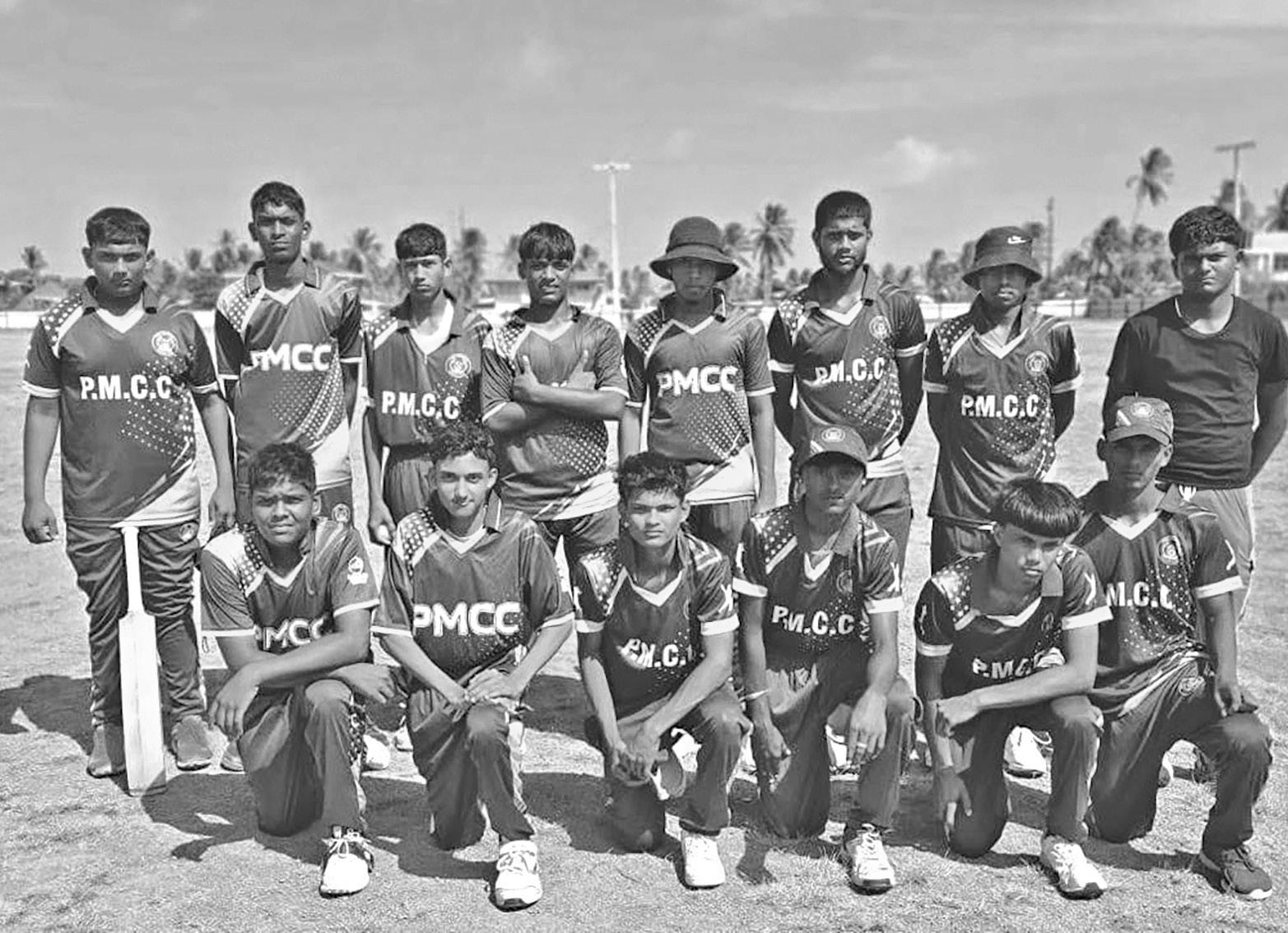
Albion and Port Mourant Cricket Club recorded wins in the Berbice Cricket Board (BCB) Under-19 inter-club 50-over tournament.
Played at the weekend, Albion hosted Rose Hall Town A and secured a comfortable seven-wicket win.
Rose Hall Town were dismissed for 126 off 43 of their allotted 50 overs.
Tameshwar Deonandan top-scored with 32 and received support from Jonathan Hicks with 20.
Off-spinner Rovin Lalbehari picked up 3 for 12, while there were two
wickets each for Nathaniel Ramsammy and medium pacer Nicholas Lepps, bowling for Albion.
Albion replied with 129 for 3 in 23 overs.
Ramsammy led the way with a composed 42, while Saaid Jumrathy made 30 and Sahid Gajnabi finished with 24 not out.
In the other fixture, played at Port Mourant Community Centre Ground, the hosts cruised to a 155run win against the Rose Hall Town B team.
Vishal William struck 64, while Munesh Rampersaud made 52. Ravin Boodwah
contributed 32, and Devendra Samaroo added 24.
Bowling for Rose Hall Town B, Austin Narine had 6 for 18 from 7.1 overs in a losing effort. Nicolas Saul had 2 for 27 from 5 overs.
Rose Hall Town Youth and Sports Club B team replied with 73 all out. Nicolas Cameron top-scored with 31.
Bowling for Port Mourant Cricket Club, Josiah Persaud claimed 4 for 5 from 3 overs, while Vishal William returned 3 for 5 from 3 overs. Gibran Yacoob took 2 for 20 from 5 overs.



Hours after the senior West Indies men’s team bowed out of the 2026 International Cricket Council (ICC) T20 World Cup, Cricket West Indies (CWI) President Dr Kishore Shallow congratulated the team on their “commendable” campaign in a statement.
Shallow wrote, “On behalf of Cricket West Indies, I extend warm congratulations to Shai Hope and our team for a commendable campaign at the ICC Men’s T20 World Cup.
“While we are disappointed that our journey concluded at Eden Gardens in Kolkata against the India national cricket team, the tournament as a whole reflected growth, belief, and togetherness. Winning five of seven

matches and advancing to the Super Eights is a testament to the preparation and commitment of this group.

“Most encouraging was the spirit of resolve and fight displayed throughout the competition, a spirit that was needed more than ever. That determination and pride in representing the Region strengthened confidence across
and reminded us of the character of West Indies cricket.
“Today, we are proud of our men in maroon and appreciative of the dedication of the backroom team led by Head Coach Daren Sammy. Their collective effort has laid a strong foundation for the work ahead.
“We will regroup, we will work, and we will compete again with even greater unity and purpose.
Caribbean
“Rally Round the West Indies, now and forever.”

Acommanding victory for Guyana’s national under-20 football team was reduced to turmoil on Saturday evening, as they took on Anguilla in their second fixture of the ongoing CONCACAF U20 Qualifiers at the Rignaal “Jean” Francisca Stadium in Willemstad, Curaçao.
Head Coach Thomas Dooley opted to start the contest with Captain Jaden Thom, goalkeeper Emmanuel Lewis, Walker Shabazz-Edwards, Max Robinson, Dakarai Drakes, Mateo Clarke, Jamal Fraser, Shaquan David, Bryan Wharton, Quancey Fraser and Sheldon Kendall. Guyana got their scoring started early with a buildup on the edge of the box involving Fraser and Thom.
Thom would eventually register the assist, sending the ball into the six-yard area where Kendall whipped the ball into the net in the fourth minute with a right-footed shot for the first goal.
Fourteen minutes later, Wharton extended their lead, receiving another excellent pass from Thom on the edge of the penalty area. Wharton displayed his fancy footwork, driving past the defence to finish with a cheeky shot from the outside of his left foot.
Wharton completed his brace in the 23rd minute, after Kendall forced an error by the Anguillan keeper Shemar Browne. Forced to get rid of the ball, Browne only sent it as far as Wharton on the left wing. The Guyanese ace wasted no
The four semi-finalists have been determined for the inaugural Elite League Cup, after Slingerz Football Club brushed aside familiar foes Monedderlust FC in a solitary fixture at the Guyana Football Federation’s National Training Centre (NTC) at Providence, East Bank Demerara (EBD) on Saturday night.
In a bid to secure the automatic semifinal spot out of Group A, Darron Niles opened the scoring for Slingerz FC in the 25th minute and later made it a 2-0 affair in the 39th.
time, chipping the ball back over the head of the keeper from about 25 yards out for Guyana’s third strike.
Fraser’s through ball to Clarke resulted in Guyana’s fourth goal by the 41st minute, as Clarke made no mistake with the shot, sending it into the left corner of the net.
With a 4-0 lead at the half, it looked as though the Junior Jaguars were well on their way to an even bigger victory, but Anguilla’s counter attacks and heightened aggression in the second segment halted the flow of Guyana’s goals.
They could not stop Kendall, however, who capitalised on the assist from Isaiah Ifill to complete his brace in the 57th minute.
The clash descended

into chaos by the 86thh minute when a second yellow and ensuing red card shown to Anguilla’s Mekhi Connor caused an exchange of words between the players. The arguments quickly became physical, with an allout, violent fist fight unfolding between the Anguilla and Guyana teams.
When the dust finally settled, four Guyanese players were shown red cards –Clarke, Kendall, Robinson and David. Yellow cards were also shown to goalkeepers Lewis and Jermine Mitchell.

The red cards especially will come as a detriment to the Guyanese side who would have needed those starters for their upcoming clash with current group leaders Haiti, today, Monday, March 2. That game is scheduled for 20:00h local time at the same venue.
Meanwhile, Guyanese football authorities shared a statement on the incident, stating, “The Guyana Football Federation (GFF) wishes to address the incident that occurred this
evening during our national team’s fixture in the CONCACAF U-20 Men’s Qualifiers in Curaçao.
In approximately the 86th minute of the match, the referee issued a red card to a player from Anguilla. Following this decision, there was a sequence of hostile verbal exchanges and jostling between players of both teams. During this period, an Anguillan player ran into a group of players and appeared to have struck a Guyanese player, which precipitated a broader altercation involving several players.
“As a result of the escalation, the match was abandoned. Multiple players from both teams were subsequently issued red and yellow cards. We understand that an official investigation into the matter is ongoing, and we await confirmed details from the relevant authorities.
The Guyana Football Federation remains committed to the principles of fair play, respect, and discipline that underpin the game. We will provide further updates as more verified information becomes available.”
Guyana will need a victory today to keep their CONCACAF Under-20 Championship dreams alive, since only the six group winners from the ongoing Qualifiers will advance to the Championships, set for later this year.
“The GFF can confirm that all Guyanese players and staff have returned safely to their hotel, and there have been no reports of any serious injuries arising from the incident.

Rashaun Ritch found the back of the net in the 53rd and 66th minutes while the third brace from a Slingerz player came off the boots of Kemar Beckford in the 70th and 88th minutes. Curtez Kellman added the cherry on top for the reigning Elite League Champions, netting in the 90th minute to seal their 7-1 victory.
Delwin Fraser had earlier netted Monedderlust’s consolation goal in the 74th minute.
As such, Slingerz FC (Group A); Guyana Police Force (GPF) FC (Group

B); Guyana Defence Force (GDF) FC (Group C) and Western Tigers (Best second-place team) have advanced to the semi-finals of the Elite League Cup.
The action will go down on Wednesday, March 4 at Providence. There, a repeat of the 2025/2026 year- end Super 16 final will unfold as Slingerz FC battle Western Tigers for the first final spot from 18:30h.
Then at 21:00h, a law enforcement clash will see GDF taking on Police in what is expected to be a mouthwatering double-header.
The teams in the Elite League Cup are competing for a $1 million grand prize. The second-place finishers will have to settle for $700,000 while the thirdand fourth-place teams will cart off $500,000 and $300,000 respectively.
The grand finale is set for Saturday, March 7, 2026 at the same venue.
The race to the final of the Georgetown Cricket Association (GCA)/Georgetown City Mayor’s Under-17 Hundred Overs competition intensified on Saturday with two thrilling semi-final encounters at the Transport Sports Club and the Malteenoes Sports Club (MSC) Grounds. At the Transport Ground, Transport Sports Club booked their place in the final with a commanding seven-wicket victory over Demerara Cricket Club (DCC).
After winning the toss, Demerara opted to bat and posted a competitive 196 for 8 from their allotted 50 overs. Kishawn Silasn led the charge with a fluent 40 off 45 balls, while Lomar Seecharran contributed 36 and Nathan Bishop added a valuable 32 to steady the innings.
Transport’s bowling at-
tack was spearheaded by Reyaz Latif, who claimed an impressive 4 for 50. Emanuel Lewis, Andy Ramgoolam, and Dave Mohabir chipped in with one wicket each to restrict Demerara just under the 200-run mark. In response, it was a one-man masterclass from Shamar Apple that stole the spotlight. Apple delivered a breathtaking unbeaten 116 from just 63 balls, an explosive innings decorated with four fours and a remarkable 13 sixes. His aggressive stroke play dismantled the Demerara attack and shifted the momentum firmly in Transport’s favour.
Lewis provided solid support with an unbeaten 34 as Transport raced to 199 for 3 in just 24.3 overs, sealing victory in emphatic fashion and securing their berth in the final.
Over at the Malteenoes Ground, Positive Foundation Agricola advanced to the final with a 30-run triumph over Malteenoes Sports Club.
MSC won the toss and chose to bowl first, but Agricola’s batsmen rose to the challenge. Gavin Kisten anchored the innings with a composed 70 from 86 balls, while Gilbert Griffith added 41 from 55 as Agricola were bowled out for 221 in 40 overs.
The MSC bowling unit shared the spoils. Kyle
Gibson returned figures of 3 for 33, while Deshawn Ramnauth and Joshua Bollers each picked up two wickets in a disciplined effort. Chasing 222 for victory, MSC struggled to maintain the required tempo. Bollers top-scored with 37, while Julian Craig and Joshua Budhram both made 36, but none were able to convert their starts into a match-winning knock. MSC were eventually dismissed for 191 in 39.4 overs. Griffith also shone with the ball, claiming 3 for 22, while Lemuel Dejonge, Joshua Thomas, and Micah Amsterdam supported with two wickets apiece to secure the win for Agricola. With the semi-finals concluded, Transport Sports Club and Positive Foundation Agricola will now clash in what promises to be an exciting final in the Under-17 Hundred Overs competition.


India 199 for 5 (Samson 97*, Tilak 27, Holder 2-38) beat West Indies 195 for 4 (Chase 40, Holder 37*, Bumrah 2-36) by five wickets
Sanju Samson was not India’s first-choice opener in the lead-up to the tournament. India changed that opening combination at the last moment, but Samson still was not their firstchoice opener for the first five matches of this World Cup. Brought in as an unlikely Plan B as India faced four must-win matches, Samson powered India’s highest successful chase at the T20 World Cups in the second of those.
It was good defensive bowling from India that restricted West Indies to 195 in this virtual quarter-final, a neat callback to the 2016 semi-final between these two sides when West Indies restricted India to 193. Like India were that night, West Indies were left ruing their opener’s slow innings, a 33ball 32 from their Captain Shai Hope. Outside that, the six-hitting pack scored 163 in 14.3 overs, more than the par for the conditions than their power play of 45 for 0.
Lacking extreme pace or mystery in their bowling, West Indies desperately needed asking-rate pressure or errors from batters who have not been in too many International Cricket Council (ICC) must-win games. Those mistakes did come from Abhishek Sharma and Ishan Kishan, but Samson batted regally for his 97 not out off 50, taking few low-percentage
options, reaching his first fifty in 13 innings in just 26 balls. This was the first time in the Indian Premier League (IPL) and T20 Internationals (T20Is) that Samson opened and stayed unbeaten in a successful chase, at the end of which he collapsed to his knees, looked to the heavens, and crossed his heart.
Hope’s despair West Indies brought in a new opener themselves, giving Roston Chase the job for the first time in international cricket so that they could have an offspinner for India’s left-hand batters. Chase surprisingly seemed much more at home, punishing errors in length from Arshdeep Singh, scooping Jasprit Bumrah, and sweeping Axar Patel, who completely handcuffed Hope.


were looking at six overs from Bumrah and Varun in the last 11.
Hetmyer is halted Curiously, at this point, India did not go straight to

Smartly, India kept bowling Axar, backloading Bumrah, and Varun Chakravarthy for bigger hitters. Hope scored only 15 runs off 13 balls from Axar. He made only 10 boundary attempts in his 33-ball stay. By the time Varun bowled him to make it 20 matches with at least one wicket, West Indies had dawdled to 68 for 1 in 8.5 overs, and

Bumrah, but took the defensive option of bowling another Hardik Pandya over. Shimron Hetmyer wasted little time in regaining the record for most sixes in a single World Cup, hitting two in the first six balls to go past Sahibzada Farhan’s 19.
Having overplayed their hand, India brought Bumrah back for the 12th over, and he dismissed both the set batters for 27 off 16 and 40 off 25. When two of your three batters have such returns, you should really be doing much better than West Indies’ 103 for 3 in 12 overs.
Holder, Powell give WI finishing kick
It is a testament to the six-hitting prowess in that West Indies middle order that they still ended up with a competitive score. It
started with the last ball of the 15th over when Jason Holder walked at Pandya and hit him for a straight six. Arshdeep had his figures rearranged when Powell bludgeoned him for a 98-metre six and then flicked him for one that just cleared the rope in the 16th over. Varun’s last over was taken down by Holder; his 1 for 40 meant that seven out of his 10 costliest analyses in T20Is have come in the last two and a half months.
Arshdeep came back to finish off well with no boundaries in the 19th over, but Holder and Powell managed to take 26 from overs 18 and 20, bowled by Bumrah.
Samson breaks the eerie calm, but wickets fall around him
Abhishek practically played the entirety of the first two overs of the chase, taking India to 12 for 0. There was a bit of unease around with West Indies expecting a desperate shot. Samson did not need any of those. He backed away to create his first four off Akeal Hosein, and then swept and pulled him for sixes.
While Samson was caressing boundaries, Abhishek and Kishan offered catches to Hetmyer at deep square leg. Hetmyer took both of them to make it 41 for 2 in 4.3 overs.
Samson overrides Suryakumar’s slowness
For some reason, India, so big on right-left combinations in the lead-up to the World Cup, have been inflexible about Suryakumar Yadav batting at number four. He hit a trademark six over backward square leg, but two right-hand batters in the middle allowed West Indies to bowl
their left-arm spinners. Suryakumar’s contribution to the 58-run third-wicket stand was 18 off 16.
Samson stayed imperious at the other end, finding boundaries whenever the asking rate reached threatening proportions.
Samson, Tilak overcome offspin
Against Tilak Varma, Chase created pressure, bowling three dots in his first over, the 12th of the innings. Shamar Joseph, who had taken Suryakumar’s wicket, started the 13th over with India in the most trouble they ever were in the chase, needing 92 off the last eight and a matchup against offspin in front of them.
Samson hit the first four, followed by a hat-trick of fours from Tilak to remove any alarm from the
chase. As a final piece of the cherry on top, Tilak ended Chase’s second over with a straight six. He fell to a sharp catch from Hetmyer at mid-off, but Tilak did a big job with his 27 off 15.
Samson sees off nervy chase Pandya became the second batter to not benefit from a drop in the Indian innings when he was caught at extra cover at the start of the 19th over, leaving India 17 to get off 10. Shivam Dube, though, immediately settled the nerves with two fours in four balls as Joseph missed his yorker ever so slightly, leaving only seven to get in the last over.
Fittingly, Samson ended the chase with two languid hits for a six and a four to cap off “one of the greatest days of my life”.
(ESPNcricinfo)

aaa
West Indies (20 ovs maximum)
Shai Hope (c)† b Varun 32
Roston Chase c Yadav
b Bumrah 40
b Hosein 10
Sanju Samson † not
Shimron Hetmyer c †Samson b Bumrah 27
Sherfane Rutherford c †Samson
b Pandya 14
Rovman Powell not out 34
Jason Holder not out 37
Extras (lb 1, w 10) 11
Total: 20 Ov (RR: 9.75) 195/4
Did not bat: Romario Shepherd, Matthew Forde, Gudakesh Motie, Akeal Hosein, Shamar Joseph Fall of wickets: 1-68 (Shai Hope, 8.5 ov), 2-102 (Shimron Hetmyer, 11.3 ov), 3-103 (Roston Chase, 11.5 ov), 4-119 (Sherfane Rutherford, 14.1 ov)
Bowling O-M-R-W
Arshdeep Singh 4-0-43-0
Hardik Pandya 4-0-40-1
Axar Patel 4-0-35-0
Jasprit Bumrah 4-0-36-2
Varun Chakravarthy 4-0-40-1
India (T: 196 runs from 20 ovs)
Abhishek Sharma c Hetmyer