Burma Road sluice under scrutiny as Councillor raises “construction faults” …NDIA already engaged, doing assessments
Guyanese man arrested in Suriname for diesel smuggling
Regional delegation praises Lusignan prison for modern facilities, rehabilitation programmes
Guyana rolls out new devices to fight cervical cancer
Motorcyclist dies in Mahaicony crash hours after double fatal accident
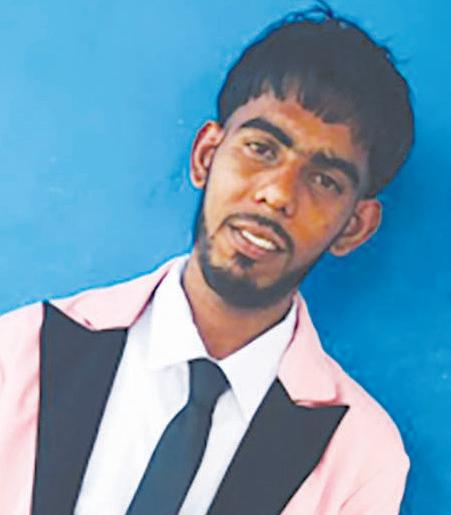
A25-year-old motorcyclist lost his life in a late-night accident in Mahaicony, East Coast Demerara (ECD), less than 24 hours after a separate crash in the area claimed two lives. Dead is Imran Assad also known as “Lilly,” of Lot 3 Good Faith, Mahaicony, ECD. Reports are that at about 20:30h, Assad was riding motorcycle, CM 2516 along the southern side of the Sans Souci Public Road when he collided with an oncoming motor car, PAK 534, driven by 28-yearold Hasani Semple, also of Mahaicony.
The impact left both men with serious injuries, and they were found unconscious at the scene. They were subsequently transported to the Mahaicony Public Hospital, where Assad was pronounced dead on arrival. Semple was admitted and remains under medical care. The latest fatality comes mere hours after a horrific crash along the Airy Hall Public Road, Mahaicony, which claimed the lives of Seerochanie Khemraj, a 27-year-old mother of one of Tuschen, East Bank Essequibo (EBE) and hire
car driver Nicklas Lillah. In that incident, police said the hire car was proceeding at a fast rate of speed while overtaking a line of traffic when it collided with another vehicle before the driver lost control while negotiating a bend.
The vehicle subsequently crashed into a crash barrier and a Guyana Power and Light (GPL) utility pole, leaving it exten -
sively damaged. Khemraj, who was seated in the front passenger seat, and the driver sustained severe injuries and were pronounced dead on arrival at the Mahaicony Public Hospital. Several other occupants, including minors, escaped with minor injuries.
Police are continuing investigations into both accidents.
Guyana rolls out new devices to fight cervical cancer
Health Minister Dr Frank Anthony attended a presentation on Saturday at the Diamond Regional Hospital detailing Guyana’s progress under the Global Strategy for Cervical Cancer Elimination. The session, facilitated by the Pan American Health Organisation (PAHO) in partnership with international collaborators, highlighted the country’s pre-assessment findings and
outlined strategic plans for strengthening cervical cancer management locally.
A key feature of the event was the official handover of Thermal Ablation devices by the Health Ministry to regional health authorities across all 10 administrative regions. These devices are intended to support treatment for patients who test positive for Human Papillomavirus (HPV), particularly at regional hospitals.
The initiative is being implemented alongside ongoing colposcopy training for healthcare professionals, enhancing Guyana’s capacity to deliver timely and effective cervical cancer care. The programme is a collaborative effort between PAHO, the Health Ministry and the MD Anderson Cancer Centre as Guyana continues to focus on prevention, early detection, and treatment of cervical cancer.
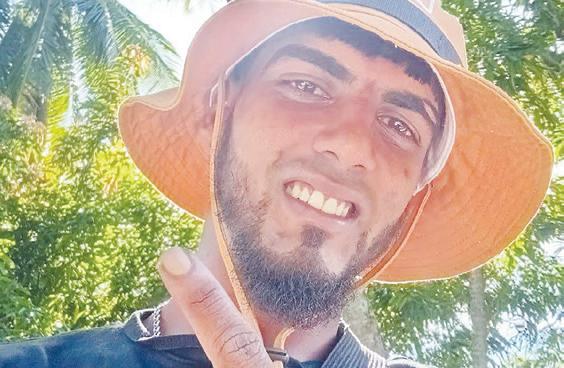
Dead: Imran Assad
The official handover of Thermal Ablation devices by the Health Ministry to regional health authorities across all 10 Administrative Regions
BRIDGE OPENING
The Berbice Bridge will be closed to vehicular traffic on: Monday, March 23 –06:40h-08:10h and Tuesday, March 24 – 07:20h-08:50h.
FERRY SCHEDULE
Parika and Supenaam departure times – 05:00h, 10:00h-12:00h, 16:00h, 18:30h daily.
WEATHER TODAY
Light to thundery showers are expected throughout the day and into the night. Temperatures are expected to range between 23 degrees Celsius and 29 degrees Celsius.
Winds: East North-Easterly to Easterly between 3.58 metres and 4.47 metres.
High Tide: 07:14h and 19:47h reaching maximum heights of 2.72 and 2.50 metres.
Low Tide: 13:18h reaching a minimum height of 0.50 metre.
“Don’t
be afraid to look for partnerships” – Shorebase Director tells Guyanese
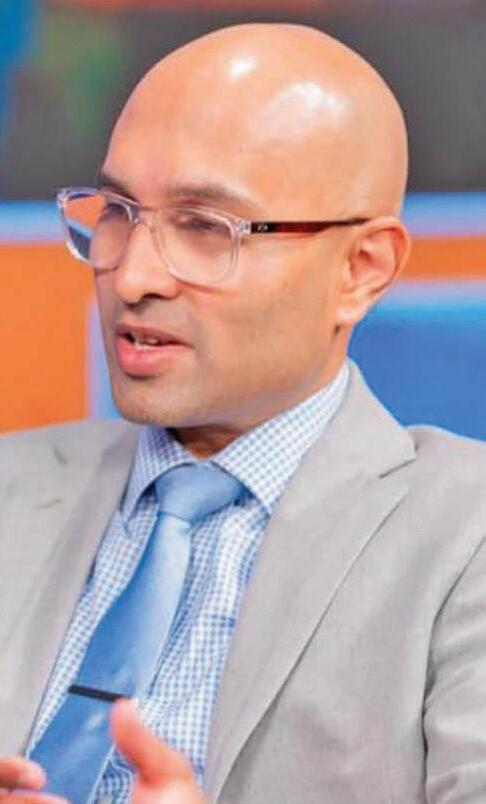
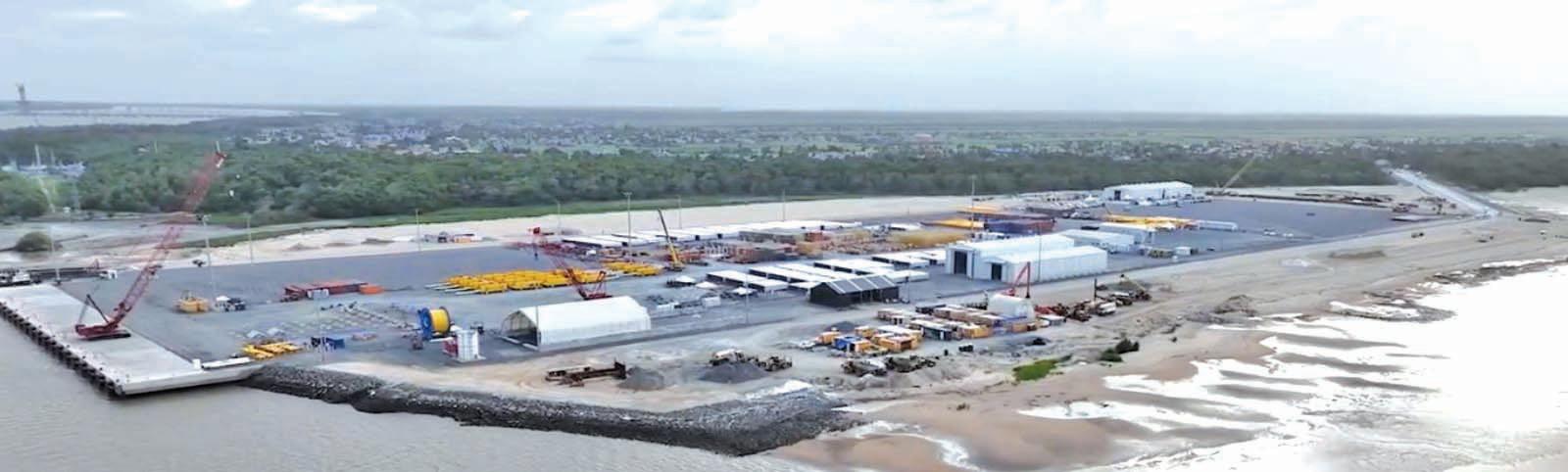
Director of the Vreeden-Hoop Shorebase Inc (VEHSI), Nicholas Deygoo-Boyer, is urging Guyanese individuals and businesses to seek out partnerships in order to expand and tap into the vast opportunities available in the country, especially in the bourgeoning oil and gas sector. “Don’t be afraid to look for partnerships,” the businessman said during an appearance on the latest episode of the Starting Point podcast The US$300 million Vreed-enHoop Shorebase, a product of collaboration between local and foreign investors, is a 44-acre artificial island on the Demerara River. It serves as a critical port facility to support ExxonMobil Guyana’s offshore operations, providing space for SURF (Subsea Umbilicals, Riser,
ships can be as sophisticated as maybe you have an idea and you need technology. And for us, we needed partnerships who brought both capital and technology, and that’s our partner, Jan De Nul. Because Jan De Nul had done this sort of construction in other parts of the world, but it was our idea and our market information that helped kind of take them to the particular opportunity that we ended up leveraging,” Deygoo-Boyer emphasised. Unlike other full-service port facilities, the VEHSI partners built the real estate, and then leased it out to operators in the oil and gas sector. Back in 2022, VEHSI signed a 20-year agreement with ExxonMobil Guyana for the Vreed-enHoop facility to support the United States (US) oil
hind the berth, it allowed Exxon and their contractors to store quite a bit of materials in country. Now, they use this to store [and assemble] their SURF materials… So, VESHI provides that space for Exxon and their contractors, to do a lot of that work before they move these pieces of equipment out to the oil field,” he explained.
Many opportunities
According to DeygooBoyer, there are many opportunities – both big and small – that Guyanese can take advantage of and participate in the country’s oil and gas sector. In fact, he noted that these opportunities available are not just business-related.
The businessman highlighted the growing demand for technical personnel in not only the oil and
a larger demand for persons in technical or STEM (science, technology, engineering and mathematics) fields than there is today,” he stated. Deygoo-Boyer pointed out that, nearly all the technical personnel are being usurped by the oil and gas industry leaving other sectors wanting – opportunities he says Guyanese should equip
and Flowlines) projects.
VESHI was developed by NRG Holdings Inc, a 100 per cent Guyaneseowned consortium, and Jan De Nul, an international maritime infrastructure company based in Luxemburg. NRG comprises Nicholas DeygooBoyer and Eddie Boyer of National Hardware Guyana Limited; and Andron Alphonso of ZRN Investments Inc., who together holds a majority stake of 85 per cent in VEHSI. Recalling the journey to develop VEHSI, Deygoo-Boyer said, “We had to be a little bit crazy, and we had to have a self-belief, despite people thinking that we’re crazy or saying that the idea wouldn’t work, we still had that self-belief to push forward.” That self-belief coupled with research and an understanding of the market needs at the time led the two Guyanese businesses to teaming up but they still needed the expertise and resources, which Jan De Nul brought to the table. “Partnerships can be as simple as maybe you have the idea and you need capital, or partner -
giant’s Shorebase operations.
“We developed such a large swath of land be -
gas sector but other industries that similarly undergoing unprecedent expansion. “There’s never been
The observation of “International Day for the Elimination of Racial Discrimination” last Saturday, should remind us that racial discrimination has been the foundational element of the Guyanese State. As such, no efforts should be spared to eliminate its insidious effects in our quest to create a good life for all Guyanese citizens. Back on 26 October 1966, five months after we became independent from Britain, the United Nations General Assembly (UNGA) had adopted resolution 2142 (XXI), proclaiming 21st March for the Day’s annual commemoration. On that day in 1960, Police opened fire and killed 69 persons at a peaceful demonstration in Sharpeville, South Africa, against the apartheid “pass laws”. The General Assembly exhorted the international community to redouble its efforts to eliminate all forms of racial discrimination.
In our own country, racial discrimination by the European colonial state – first the Dutch and then the British – against the peoples it had dragged from across the world to labour on their plantations was the order of the day. Class – defined by Weberian or Marxian criteria – was coincident with race, with Whites automatically occupying the highest strata. The fight for independence was as much a fight to eliminate racial discrimination as anything else. It was our greatest tragedy when the People’s Progressive Party (PPP) – which was consciously crafted as a vehicle for all races to vie for political power in 1950 – was opportunistically split in 1955. This was engineered by Forbes Burnham, who supported the colonial machinations to remove Cheddi Jagan who was accused of being a communist.
By independence, accusations of racial discrimination by the colonial state to create a racially-skewed Public Service and Police/ Volunteer Force rose to the fore in the midst of violent racial clashes between 1962 and 1964. This led to an inquiry in 1965 into the composition of these institutions with recommendations for rectification. The Armed Forces, for instance, composed of the Police and Volunteer Force along with a newly-created, racially-balanced Special Services Unit, overall, still had 73.5% African Guyanese, 19.9% Indian Guyanese, 4.2% Mixed and 0.3% Portuguese. They recommended that for the next five years, 75% of all new recruits be Indian Guyanese to bring them up to their 48% proportion of the population. This was not done by the People’s National Congress (PNC) that rigged elections until 1992 and remained a contentious point.
In 2004, a Disciplined Forces Commission, after extensive hearings, made a more nuanced recommendation with the same goal to rectify historical racial discrimination: “With regard to manpower, the Commission recommended that recruitment procedures should have a particular focus on the Indian-Guyanese community because of its general disinclination to join the Force; this should not be done to the neglect or exclusion of other ethnic groups. The Force should adopt recruitment procedures which must take into consideration cultural, sociological and psychological imperatives, designed to attract Indian-Guyanese in particular to the GDF.” While there has been some measure of balance, the composition remains skewed and illustrates the importance of institutional and systemic racially-discriminatory practices.
While most attention focuses on discriminatory actions based on the race of individuals – for which our legal system offers explicit redress – institutional and systemic racism act at another level in all areas of national life and might not even be “intentional”. Institutional racism involves policies, practices, and procedures of institutions that have a disproportionately negative effect on a particular racial group’s access to and quality of goods, services, and opportunities. Systemic racism is the basis of individual and institutional racism; it is the value system that is embedded in a society that supports and allows discrimination.
For most of our post-independence history, our strained economic conditions often created a seemingly win-lose situation for our racial groups – which tended to vote along that marker – in the distribution of benefits by incumbent governments. With the inflow of oil revenues since 2019, the PPP Governments since 2020 have explicitly acknowledged the need for equitable spending in the various racial communities and there is evidence that institutional racism is decreasing rapidly.
It’s
time for the UN to formally recognise the transatlantic slave trade as a crime against humanity
By John Dramani mahama, PresiDent of the rePuBlic of Ghana
This month my country, Ghana, celebrated its 69th Independence Day. In my address to the nation, I invoked the courage and conviction of our founding leaders, who stood firm in the face of immense adversity to secure our freedom. Kwame Nkrumah reminded us that political independence without transforming the global systems that shape our economies and opportunities remains incomplete.
It is in that spirit that, this month, Ghana will table a resolution at the United Nations General Assembly calling for the formal recognition of one of the greatest moral tragedies in human history: the transatlantic trafficking and enslavement of Africans as a crime against humanity, and the need for a process of repair.
This initiative is not Ghana’s alone. It carries the support of the African Union, the Caribbean Community (Caricom), and a growing coalition of countries across the global south. Together we seek not to reopen old wounds but to acknowledge them honestly, and to work collectively toward healing and justice in ways that strengthen our shared future.
The call for reparatory justice is not new. It is rooted in a long, continuous tradition of resistance, advocacy and moral reasoning spanning centuries.
From early African leaders who protested against the capture and sale of their people, to the struggles of the Haitian revolution, and the post-independence movements that reshaped the modern world, the demand for justice has endured.
In recent decades this tradition has taken institutional form.
The 1993 Abuja Proclamation recognised the enslavement and trafficking of Africans as an unprecedented crime. The Caricom Reparations Commission has articulated a comprehensive framework for reparatory justice. The Accra Proclamation of 2023 reaffirmed Africa’s collective commitment to this cause.
The African Union has now declared 2026 to 2035 as the Decade of Action on Reparations and African Heritage, underscoring the urgency and legitimacy of this global conversation.
Our proposal at the UN builds on these foundations. It seeks to move the international community from acknowledgment to action: from recognition of historical injustice to a structured dialogue on repair.
This is not about assigning collective guilt to present generations. Nor is it about revisiting history in a spirit of division. Rather, it is about understanding how historical injustices have shaped contemporary inequalities, and how a more honest reckoning can contribute to a fairer, more inclusive global order.
The transatlantic slave trade and the system it sustained dis-
rupted societies, extracted human and economic value on an unprecedented scale, and left enduring legacies that continue to influence patterns of development, opportunity and vulnerability across the world. Recognising this history fully is essential, not only for Africa and its diaspora, but for humanity as a whole.
The international community has, in the past, taken important steps. The Durban Declaration and Programme of Action in 2001 acknowledged the transatlantic slave trade as a crime against humanity. Yet, more remains to be done to translate that recognition into meaningful dialogue and practical pathways for repair.
Africa brings to this conversation a perspective shaped by its own intellectual and moral traditions – one that holds that injustice does not simply fade with time, but requires deliberate effort to address and redress. This perspective aligns with the broader principles of international law and human rights, which affirm that certain wrongs demand enduring accountability.
At the heart of this effort is a commitment to partnership. The process we envision is one of engagement, bringing together States, institutions, scholars and communities to explore constructive and forward-looking approaches to reparatory justice. These may include investments in education, health, cultural restoration and economic oppor-
tunity, designed to close enduring gaps and build shared prosperity.
We must also recognise the human dimension of this history, including how systems of enslavement entrenched inequalities that affected generations, particularly women and families. A full accounting of this past requires us to acknowledge these dimensions and to ensure that any process of repair is inclusive and comprehensive.
The world today faces many interconnected challenges, from inequality and underdevelopment to the climate crisis and global instability. Addressing historical injustices is not separate from these challenges; it is part of building the trust and cooperation necessary to confront them together.
Ghana’s initiative at the UN is, therefore, an invitation – an invitation to engage in honest reflection, constructive dialogue and collective action. It is an invitation to move beyond acknowledgment toward meaningful steps that strengthen justice, dignity and shared progress.
For centuries, the voices calling for justice have endured across continents, across generations and across institutions. Today, we have an opportunity to listen, to respond, and to act. A crime of this magnitude calls not only for remembrance but for responsibility. And in meeting that responsibility together, we take a step toward a more just and united world. (The Guardian)
GAWU’s enduring commitment to celebrating its 50th Anniversary in sugar industry
Dear Editor,
As the Guyana Agricultural and General Workers’ Union (GAWU) celebrates its 50th anniversary of recognition in the sugar industry, it reaffirms its unwavering dedication to Guyana’s Sugar Workers.
GAWU remains vigilant in
safeguarding the interests of its members, standing firm and resolute in its mission.
The union solemnly pledges to continue upholding the rights, dignity, and welfare of all sugar workers. GAWU’s steadfast approach ensures that workers’ voices are heard and their needs
are addressed, maintaining the longstanding tradition of advocacy and solidarity that has defined the union’s history over the past five decades.
This commitment highlights the crucial roles played by both the Clerical and Commercial Workers’ Union (CCWU) and the Guyana Agricultural and General Workers’ Union (GAWU) in Guyana’s labor movement. The CCWU contributed significantly to research on labor issues and fostered solidarity with other unions.
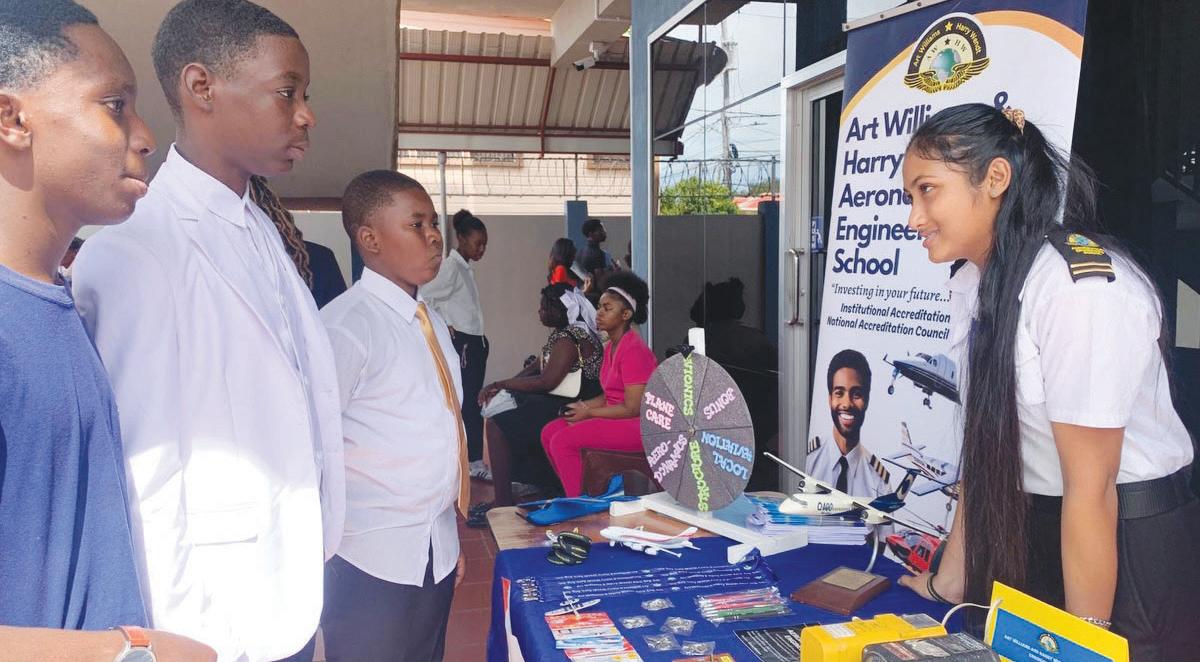
Representatives of the Art Williams & Harry Wendt Aeronautical Engineering School engage students during a career fair at Morgan’s Learning Centre, where they shared information on aviation careers and encouraged young people to explore opportunities in the field (Art Williams & Harry Wendt Aeronautical Engineering School/Facebook)
World needs a reset for peace, prosperity and respect for international law, sovereignty
Dear Editor,
It is well known that for more than six decades, the international system has witnessed the sustained application of economic sanctions as a central instrument of foreign policy, most notably in the cases of Cuba and Iran. While such measures are often justified as tools for promoting political reform or ensuring international security, their long-term humanitarian, legal, and geopolitical consequences demand critical reassessment. Increasingly, global discourse is shifting toward a central question: do these policies advance human dignity and stability, or do they instead entrench hardship, exacerbate conflict, and undermine the very principles they claim to uphold?
The case of Cuba remains one of the most enduring examples of economic isolation in modern and contemporary history. The United States embargo comprehensive in scope and extraterritorial in application has significantly constrained Cuba’s access to global markets, finance, and essential goods. International observers, including United Nations experts, have warned that recent measures, such
as fuel restrictions, may violate international law and the principles of sovereignty and non-intervention. The cumulative economic cost of the embargo has reached into the trillions of dollars, affecting three generations of Cuba’s population and nearly every sector of Cuban society. Further, its humanitarian impact is equally profound, contributing to shortages in food, medicine, fertilizers and critical infrastructure, placing disproportionate strain on vulnerable populations particularly children, women, the differently able and the elderly. A comparable, yet distinct, experience is evident in Iran. Decades of sanctions, compounded by recent geopolitical escalation, have severely constrained the country’s economic capacity. Inflation, poverty, and food insecurity have risen sharply, with large segments of the population experiencing significant hardship. More recently, the escalation into direct conflict particularly the ongoing war involving the United States and Israel has had far-reaching global consequences. Disruptions in the Strait of Hormuz, a critical artery for global energy supply, have affected nearly 20% of
the world’s oil trade, approximately 20-21 million barrels of oil per day, triggering price surges and raising the specter of global inflation and recession. Several analysts have warned and its now quite the unwelcome reality that such instability is already driving increases in food, medicine and energy costs worldwide, with disproportionate effects on developing and import-dependent nations.
The intersection of these crises is particularly significant for small developing countries like Guyana and small island states especially Cuba. As a small, import-dependent economy already constrained by sanctions, Cuba is acutely vulnerable to global shocks in fuel, food, and fertilizer prices. The continued escalation of conflict involving Iran whether viewed as a defensive assertion of sovereignty or as part of a broader geopolitical confrontation has compounded the economic pressures facing the Cuban people. In this sense, the hardships experienced in Cuba cannot be viewed in isolation; they are part of a wider system of economic and political pressures that reverberate across the Global South. Iran itself along with the
overwhelming majority of United nations member states have articulated strong opposition to the sanction’s regime imposed on Cuba, characterizing it as a violation of international law and the fundamental rights of the Cuban people. This position reflects a broader alignment among nations that have experienced similar forms of economic coercion and underscores the shared principle of sovereignty, the right of each state to determine its own political and economic system, free from external interference.
Despite these constraints, Cuba’s longstanding contributions to global solidarity remain noteworthy. The country has extended medical assistance, educational support, and technical cooperation to a wide array of nations across Latin America, the Caribbean, Africa, and beyond. Countries such as Venezuela, Bolivia, Nicaragua, Guyana, Jamaica, Barbados, Trinidad and Tobago, Haiti, South Africa, Angola, and Algeria, among many others, have directly benefited from Cuban expertise. Cuba has also maintained cooperative relations with major global actors including China, Russia, Mexico,
GAWU’s enduring commitment to...
At the same time, GAWU emerged as the primary bargaining representative for sugar workers after a decisive poll and a landmark agreement with the Guyana Sugar Corporation.
The narrative underscores the unions’ influence in advancing workers’ rights, shaping national labor relations, and driving organizational change during a transformative era in Guyana’s history.
The Clerical and Commercial Workers’ Union (CCWU) has played a significant role in research and data collection on labor movements and organizational change.
The union was actively involved in gathering critical data that contributed to a broader understanding of worker resistance and workplace transformation.
A prominent example of the Clerical and Commercial Workers’ Union’s (CCWU) impact on labor studies is the publication of Dr. Nanda Kishore Gopaul’s book, “Resistance and Change.” In his capacity as Trustee of the CCWU, Dr. Gopaul relied heavily on the union’s extensive data to inform and strengthen the core research underpinning his work. The CCWU’s proactive efforts to gather and supply this information underscore its enduring influence on research and analysis of workplace dynamics. By engaging in systematic research initiatives and supporting scholarly publications, the CCWU has played a critical role in deepening the documentation and understanding of major labor issues.
The Clerical and Commercial Workers’ Union
(CCWU) consistently demonstrates strong solidarity with the Guyana Agricultural Workers General Workers’ Union (GAWU). This ongoing support underscores the CCWU’s commitment to collaboration and unity among labor organizations. By standing with GAWU, the CCWU reinforces the principles of mutual assistance and collective action, which are central to advancing workers’ interests across sectors.
On February 27, 1976, the Guyana Agricultural and General Workers’ Union (GAWU) achieved a major milestone by signing its historic Recognition and Avoidance and Settlement of Disputes Agreement with the Guyana Sugar Corporation (Guysuco), previously known as the Sugar Producers Association. This agreement officially recognized GAWU as the bargaining agent for sugar workers throughout the industry.
The union’s establishment as the representative for sugar workers was preceded by a decisive poll conducted on December 31, 1975. In that poll, sugar workers crushingly selected GAWU over the competing Man Power Citizens Association (MPCA), demonstrating strong support and unity among the workforce in favor of GAWU’s representation.
The Guyana Agricultural and General Workers’ Union (GAWU) has been steadily increasing its influence among sugar workers throughout the industry. Through persistent efforts and effective advocacy, GAWU has positioned itself as a leading representative for
workers in the sugar sector.
The union’s commitment to advancing its members’ interests is reflected in its determined campaign to secure official recognition as the primary bargaining agent. As GAWU continues to expand its reach and strengthen its reputation, it is emerging as the dominant force within the sugar industry, dedicated to securing better conditions and protections for sugar workers.
The 1970s marked a pivotal era of labor activism in Guyana, distinguished by unions’ central involvement in both economic and political spheres. During this decade, unions were instrumental in advocating for workers’ rights, influencing policy decisions, and catalyzing significant changes within the workplace and broader society. Their actions and campaigns not only addressed immediate workplace concerns but also helped shape the national discourse on labor issues and organizational transformation. Through collective action and solidarity, Guyanese unions established themselves as key agents of change, leaving a lasting impact on the country’s development trajectory.
The sugar industry was one of Guyana’s largest employers, making a union recognition agreement highly impactful on national labor relations. With the majority of the workforce engaged in sugar production, the official acknowledgment of a union as the bargaining representative carried significant weight. Such an agreement not only shaped negotiations and workplace conditions within the industry but also set
Spain, and Vietnam, as well as the Caribbean Community (CARICOM). This extensive network of partnerships reflects a history of international engagement grounded in cooperation rather than coercion.
In light of this history, there exists a compelling moral and diplomatic case for reciprocal support. Nations that have benefited from Cuban assistance, as well as those with the economic capacity to provide aid including Canada, members of the European Union, Brazil, India, Russia and emerging economies should consider expanding much needed humanitarian and developmental assistance to Cuba. Such support could take the form of medical supplies, food security initiatives, infrastructure investment, and energy cooperation, all delivered in a manner that respects Cuba’s sovereignty and national priorities.
as instruments of liberation or stability, have frequently produced unintended and destabilizing consequences as the world saw in Iraq, Sería, Libia and Afghanistan. The current global climate marked by conflict, economic uncertainty, and rising inequality calls for a renewed commitment to diplomacy, multilateralism, and respect for international law.
Ultimately, the principle of sovereignty must remain central. Nations must be afforded the space to determine their own trajectories, even as the international community continues to advocate for human rights and development. The Cuban people, like the Iranian people and others facing similar pressures, deserve the opportunity to pursue a better quality of life free from undue external constraint.
FROM PAGE 4
a precedent for labor relations across the country. The recognition of a union in this sector underscored the importance of organized labor and collective bargaining in shaping workers’ rights and protections at the national level.
The landmark agreement between the Guyana Agricultural and General Workers’ Union (GAWU) and the Guyana Sugar Corporation (Guysuco) was a clear expression of the workforce’s aspirations for more robust representation and more effective advocacy.
In a period marked by intense political activity and heightened awareness of workers’ rights, sugar workers sought a union that would champion their interests, amplify their collective voice, and secure tangible improvements in their working conditions. The overwhelming support for GAWU in the preceding poll reflected a widespread belief that the union was best positioned to address workers’ challenges and negotiate on their behalf in a complex and evolving environment. This agreement thus stood not only as a formal recognition of GAWU’s authority but also as a testament to the workers’ collective determination to achieve meaningful progress through organized, unified action.
As we say in the trade union movement, “Unity is Strength.”
“Long live Trade Unions Unity”
“Long Live GAWU
Sincerely,
Sherwood Clarke General Secretary
The recent remarks by President Irfaan Ali that “the status quo cannot remain” in Cuba reflect a growing regional consensus. Indeed, meaningful change requires both internal adaptation and an external environment that enables rather than constrains development. Constructive engagement, rather than prolonged isolation, offers a more effective pathway toward sustainable progress.
At a broader level, the experiences of Cuba and Iran highlight the limitations of coercive approaches in international relations. Economic sanctions and military interventions, while often framed
The time has come for a recalibration of global priorities. The easing of economic restrictions on Cuba, coupled with increased international humanitarian assistance, would not only alleviate immediate suffering but also contribute to a more stable and equitable international order.
In an interconnected world, policies rooted in empathy, cooperation, and mutual respect are not merely idealistic, they are essential.
The world needs a reset for peace, prosperity and respect for international law and sovereignty.
Yours respectfully, Jermaine Figueira Former Member of Parliament
MONDAY, MARCH 23, 2026
Page Foundation
NGSA Questions
1) Which of the flowing has the digit 3 in the tens place?
(A) 2330 (B) 2340 (C) 2400 (D) 2350
2) 5, 10, 27, 15, 20, 37, is a sequence of numbers.
Which of the following is the next number in the sequence?
(A) 25 (B) 27 (C) 17 (D) 30
3) Which of the following is a multiple of 8? (A) 4 (B) 12 (C) 16 (D) 28
Beat! beat! drums!—blow! bugles! blow! Through the windows—through doors—burst like a ruthless force, Into the solemn church, and scatter the congregation, Into the school where the scholar is studying, Leave not the bridegroom quiet—no happiness must he have now with his bride, Nor the peaceful farmer any peace, ploughing his field or gathering his grain, So fierce you whirr and pound you drums—so shrill you bugles blow.
Beat! beat! drums!—blow! bugles! blow! Over the traffic of cities—over the rumble of wheels in the streets; Are beds prepared for sleepers at night in the houses? no sleepers must sleep in those beds, No bargainers’ bargains by day—no brokers or speculators—would they continue?
Would the talkers be talking? would the singer attempt to sing?
Would the lawyer rise in the court to state his case before the judge?
Then rattle quicker, heavier drums—you bugles wilder blow.
Beat! beat! drums!—blow! bugles! blow! Make no parley—stop for no expostulation, Mind not the timid—mind not the weeper or prayer,
Mind not the old man beseeching the young man,
Let not the child’s voice be heard, nor the mother’s entreaties,
Make even the trestles to shake the dead where they lie awaiting the hearses,
So strong you thump O terrible drums—so loud you bugles blow.
a story about cloned soldiers
Exxon rules out renewal of expired Canje Block licence – Routledge
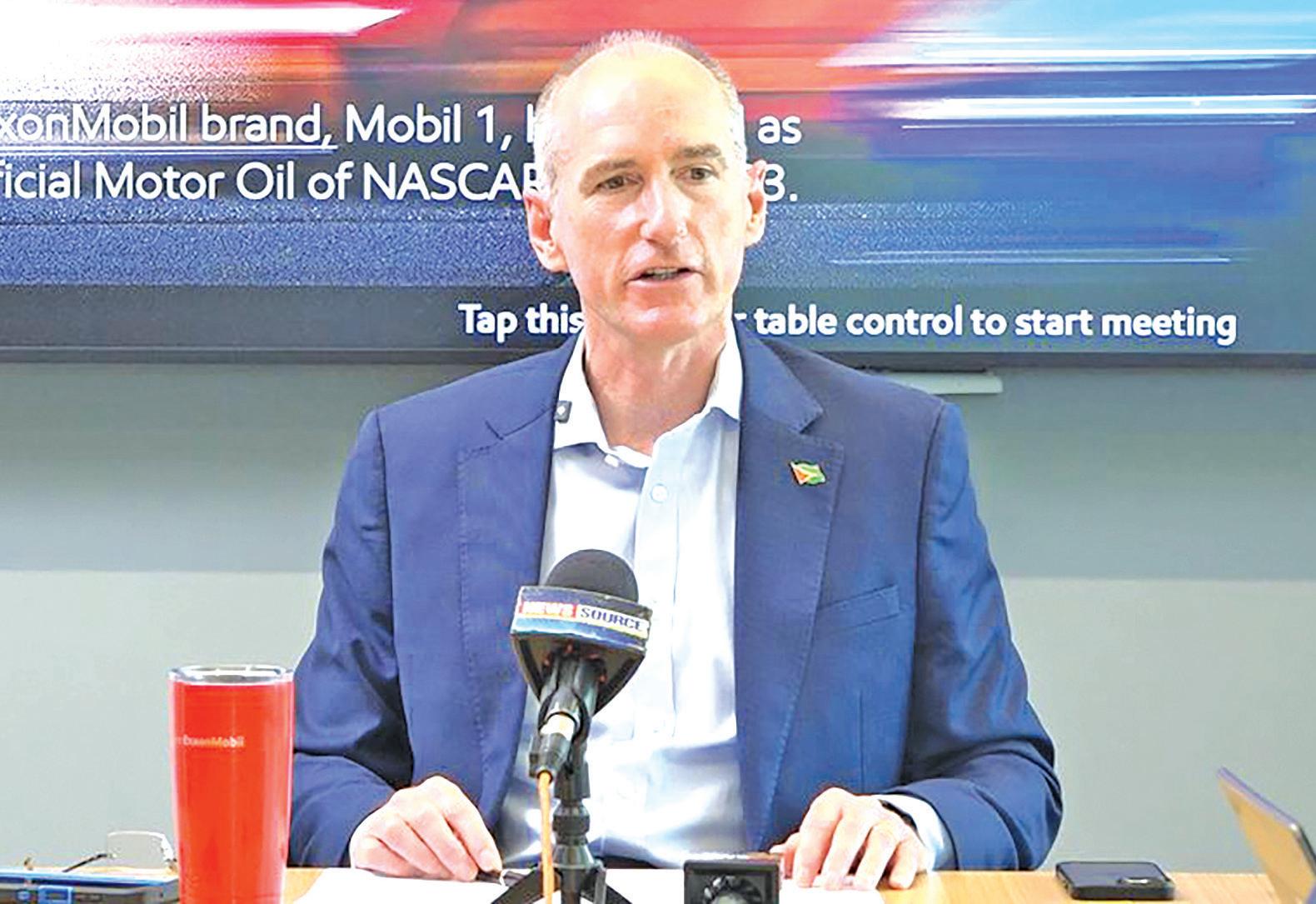
President of ExxonMobil Guyana Limited (EMGL), Alistair Routledge has said that the United States (US)based oil major will not be renewing the prospective licence for the Canje Block offshore Guyana. “We exceeded the commitments that were laid out in the petroleum agreement and the prospecting licence for Canje,” the Exxon country manager told reporters during a press conference on Thursday last at its Ogle, East Coast Demerara (ECD) Headquarters. The exploration licence for the Canje Block expired earlier this month on March 4, 2026 and is subject to on-going extension discussions with the Guyana Government. The operator of this block is ExxonMobil with a 35 per cent interest, while its coventurers include TotalEnergies which also has a 35 per cent, JHI with a 17.5 per cent and Mid-Atlantic Oil & Gas Inc. with the remaining 12.5 per cent interest. According to Routledge, “ExxonMobil’s evaluation is that remaining prospectivity is not competitive in our portfolio and so we do not plan to try to pursue that acreage for any renewal.”
However, Routledge said he could only speak on behalf of his company and not on the block partners. “It’s for them to determine whether they would like to pursue that [renewal] or not.” This comes just a week after it was announced that JHI’s 17.5 per cent interest in
the Canje Block was acquired by Toronto-based exploration company, Eco (Atlantic) Oil & Gas Ltd, which had already owned parts of JHI. According to Eco, it acquired all issued and to-be-issued shares of JHI Associates Inc. in a US$ US$52.3 million deal signed on March 10. This acquisition has expanded the company’s exposure offshore Guyana. President and Chief Executive Officer (CEO) of Eco Atlantic, Gil Holzman said, “this transaction represents a further transformational milestone in Eco’s strategic evolution and reinforces our disciplined approach to assembling high-quality Atlantic Margin acreage alongside best-in-class operating partners.” Eco also currently holds the Orinduik licence with a 100-per cent working interest following the exit of previous partners: Tullow Oil, TotalEnergies, and QatarEnergy. However, the second renewal term of the Orinduik licence ended on January 14, 2026, and Eco is now in ac-
tive discussions with the Guyana Government to retain rights to the 2019 Jethro-1 and Jeo-1 discoveries. The Canje Block lies about 180 kilometres (km) offshore Guyana in deep to ultra-deep waters with an area of approximately 4800 square km – adjacent and directly Northeast of the prolific Stabroek Block, which is also operated by ExxonMobil. The block hosts multiple prospects identified through modern 3D seismic data, supported by high-quality AVO (Amplitude Versus Offset) and/or DHI (Direct Hydrocarbon Indicator) indicators, highlighting a large inventory of prospects with significant potential. In 2021, three exploration wells were drilled targeting nearly 2 billion barrels of gross mean recoverable resources in the Canje Block. All three wells confirmed an active hydrocarbon system, but none encountered commercial volumes. Bulletwood-1, the first well in the Canje Block, was safely drilled during 2021 in 2,846 me-
“Don’t be afraid to look for partnerships” – Shorebase director tells...
“You have a country that’s growing, and simultaneously, its civil infrastructure is rapidly expanding as well. So, that means we’re calling on civil engineers, electrical engineers. So, the oil and gas industry, civil infrastructure and construction, and whether you have manufacturing, mining anything else that is in between are all tugging at the same workforce,” he noted.
The businessman further outlined that this where investments into industrial institutions like the Port Mourant training centre are critical.
Launched just last
month, the US$120 million Guyana Technical Training College Inc. (GTTCI) Campus in Port Mourant, Region Six, is a world-class, state-ofthe-art facility that would help build a highly skilled Guyanese workforce to secure high-income careers in technical and other advanced industries.
Among the courses offered at the facility are Production Technician Training, Instrumentation, Electrical, and Mechanical programmes – all of which further branches into its respective specialised fields.
“What this investment and this facility represent-
tres (9,337 ft) of water by the Stena Carron drillship to its planned target depth of 6,690 metres (21,949 ft). The possible 0.5 billion barrels of oil were assessed as non-commercial.
Meanwhile, the Jabillo-1 well was drilled in the Canje Block in mid2021 to a depth of 6475 metres, and it was found not to have commercially viable oil. It was announced that the well would be plugged and abandoned. The Sapote-1 well was
drilled in late 2021 to a depth of 7658 metres and while some oil was found, it was non-commercial. There were plans to drill other wells in the block but these activities were not done, paving the way for the relinquishment of the acreage to the Government if none of the other Canje coventurers seek a renewal.
Back in September 2024, Vice President (VP) Bharrat Jagdeo had stated at a press conference
that the Canje Block would be fully repossessed by the State if there are no advancements in its development. “There was a first relinquishment. There should have been a second relinquishment of another two wells,” Jagdeo had noted, adding that the final relinquishment is expected by 2026. “…By 2026, I think the Canje block would be back with the Government, should there be no progress on announcing a development.”
FROM PAGE 3
ed is a big leap frog to really create…the Guyanese technical workforce for the oil and gas industry of the future. So, I think it’s hugely important… So, we want to encourage it hugely because when you look at the salaries that these guys earn, and gals, they’re taking home quite a bit that will transform their lives as compared to where if you were an engineer before this industry happened. And so, it allows them to have a quality of life, to buy a home, to raise a family, to do a lot of things that you see in other countries,” Deygoo-Boyer posited.
ExxonMobil Guyana Limited President Alistair Routledge
Reflecting…
…on Dr J
No, your Eyewitness ain’t gonna talk about the greatest basketball player he’s ever seen – Dr J (Julius Erving) – even though it’s a shame not many remember he was so dominant, he legitimised an entirely new basketball league – the ABA – which merged into the NBA!! In the final ABA season, he finished in the top 10 in the ABA in points-per-game, rebounds-per-game, assists-per-game, steals-per-game, blocks-per-game, free throw percentage, free throws made, free throws attempted, three-point field goal percentage and three-point field goals made!! But his best shot was the slam dunk…almost impossible for a forward who did it against seven-footer greats like Kareem Abdul Jabbar and Bill Walton!! That’s dominance!!
But naaah…here in ole Mudland, there can only be one Dr J…the one and only Dr Jagan!! It’s gotta be more than a coincidence that he was born on March 22 – one day after the “International Day for the Elimination of Racial Discrimination” is commemorated. He was born, of course, all the way back in 1918 and fought against racial discrimination his entire life!! Born and growing up in the deep rural Berbice community of Port Mourant – he knew what “hard life” was all about, since that “other form of slavery” – indentureship – had only been abolished the year before!! His parents had arrived as children with their indentured parents – who both worked on the sugar plantation!!
He attended local primary and secondary school in his village, but completed his secondary education at Queen’s College – where, categorised as a “country bumpkin”, he faced urban and class and racial snobbery. He understood institutional racism as part of his “lived experience” in GT and later in the US in Washington, Harlem, NY and in Chicago – and didn’t need no tutorials!! It’s not often commented on, but to pay his fees to Queen’s and then to Howards Uni in the States had to’ve taken a great deal of sacrifice from his parents – and an older brother Oudit who had to work in the backdam!! And couldn’t go to secondary school. To his credit, however, when Cheddi returned to Guyana as a dentist in 1943, he took an active role in improving the lives of all his younger siblings!!
This early sacrifice to gain a secondary education from a rural background made Dr J pay particular attention to launching free Government-funded secondary schools in all the three counties!! This was especially liberating to rural girls!! Over in T&T, DR Eric Williams is credited with creating an impromptu University of Woolford Square – through his meetings at that Port of Spain Square!!
But here, Dr J created universities at every locale he held political meetings!!
…on Eid’s Sacrifice
Your Eyewitness – after the usual glitch on the moon’s sighting – spent a quiet day on Eid, reflecting, as he was exhorted to, on the significance of “sacrifice”. Now, in a multireligious society you don’t have to be Muslim to commemorate Eid in this fashion. The sacrifice to God, of course, is paramount – and all religions have God, innit? But sometimes we forget the sacrifice ain’t FOR God, but for ourselves!! After all, God doesn’t need anything, does he?
We, however, do…and the sacrifice reminds us from where everything we get comes. If we remember this, you wouldn’t see – or feel – the arrogance that typifies so much of the actions of the ‘big ones” in our society. Could be, some of them actually may believe THEY are God – going by the way they carry on! Sacrifice teaches us humility, since at the very best we can be blessed if we accept we’re merely conduits of God’s will. And finally, Eid is CERTAINLY not about getting “free beef” – as some folks seem to believe!!
…on Delcy’s consolidation
Over west, Delcy’s been busy consolidating her powers over the state apparatus. She replaced the chief of the strategic General Directorate of Military Counterintelligence (DGCIM) who’d been appointed to the position in January. Replacement Rear Adm Germán Gómez Lárez is an ally.
Fatal Mahaicony crash
"We still can’t believe she’s gone" – relative
…after routine visit to stepdaughter ends in tragedy for Tuschen mother
What was expected to be a routine trip to visit her stepdaughter ended in tragedy for 33-yearold Seerochanie Khemraj,
whose life was abruptly cut short in a fatal accident on Friday evening along the Airy Hall Public Road, Mahaicony, East Coast Demerara (ECD).
Khemraj, a mother of one of Blackwater, Tuschen, East Bank Essequibo (EBD), was among two persons who died after the hired car in which she was
travelling lost control and crashed, leaving her relatives and friends grappling with shock and grief.
Speaking with this publication on Sunday, a rel-
ative said the family is still struggling to process the sudden loss. “We still can’t believe she’s gone. Everything happened so suddenly… nobody expected something like this,” the relative said.
According to the relative, Khemraj and her husband farm on a large scale in Hog Island, which is located on the Essequibo River within Region Three
(Essequibo Islands-West Demerara). The relative said that Khemraj only returned to her parents' home, where she stays when she is not at the farm, on Thursday. She had left her home on Friday as part of a planned journey to visit her husband’s child, whom she would regularly check on, the relative told this newspaper.
“She does normally go and check on the child. Everything was normal before she left… nobody didn’t think that would be the last time we would hear from her,” the relative explained. Khemraj was described as a devoted mother, a supportive partner, and someone who maintained close ties with her family. Her death has been made even more difficult for relatives, who noted that she had only recently begun trying to return to normalcy after months of caring for her ailing grandmother.
“She stopped working. She was a 10-day worker and she stopped and was taking care of her grandmother full-time until she passed. That was just a few months ago. She was a very nice person,” the relative said. The grandmother died in October 2025, a loss the family is still coping with, making Khemraj’s sudden passing even more devastating. Relatives said the family’s ordeal began late Friday night when they received a phone call informing them that she had been involved in an accident. They immediately rushed to the Mahaicony Public Hospital, where they were met with news of her passing. “When we
reach, she was already gone. We see her body, but her head was bandaged, so we couldn’t really tell what injuries she get,” the relative recounted.
Khemraj had been seated in the front passenger seat of the vehicle at the time of the crash. While she and the driver were pronounced dead on arrival, her daughter and three other minors, who were her
husband’s brother’s children, were also in the car. They all survived with minor injuries and were admitted to the hospital.
“We're thankful the children are alive, including her daughter, but it's hard… they were all discharged, and the daughter is doing okay,” the grieving relative expressed. A Post-Mortem Examination (PME) is expected to be conducted on Monday to ascertain what injuries the woman sustained. Meanwhile, police said the accident occurred at about 18:45h on Friday, and involved a hire car, HD 5859 driven by Nicklas Lillah, who also died. Investigations revealed that the vehicle was proceeding east along the northern side of Huntly Public Road at a fast rate of speed while overtaking a line of traffic when it collided with the rear-view mirror of motor car PAN 2760. The driver reportedly continued at a fast rate before losing control while negotiating a sharp bend at Airy Hall Public Road. The vehicle subsequently collided with an aluminium rail before crashing into a Guyana Power and Light (GPL) utility pole. As a result, the car was extensively damaged. Khemraj and the driver sustained severe injuries and were taken from the vehicle in an unconscious condition by public-spirited citizens and transported to the Mahaicony Public Hospital, where they were pronounced dead on arrival. The four other occupants, who were the children, were treated for minor injuries. Investigations are ongoing.
The accident that claimed the life of Nicklas Lillah and Seerochanie Khemraj
Dead: Seerochanie Khemraj Dead: Nicklas Lillah
Regional delegation praises Lusignan Prison for modern facilities, rehabilitation programmes
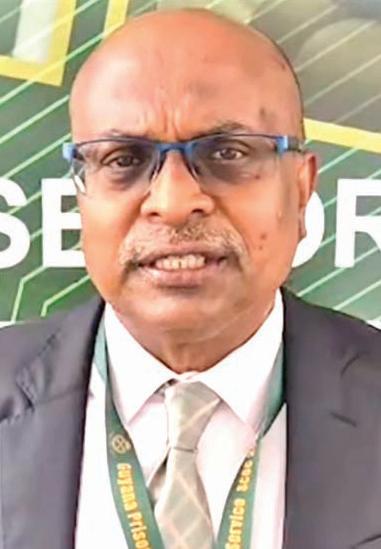
Officials from the Caribbean attending the Guyana Prison Service (GPS) Senior Correctional Officers’ Conference 2026 have lauded the Lusignan Prison for its modern infrastructure, robust rehabilitation programmes and advanced use of technology, describing it as a model for the region. Delegates from St Kitts, Trinidad and Tobago, Grenada, Suriname, and the United States (US) Virgin Islands toured the facility, noting improvements in inmate management, vocational training and officer development. Acting Commissioner of Correction in St Kitts, Spencer Isaac said the prison was “fantastic” compared to facilities back home.
“The structure is very secure, a steel prison that has been shipped to Guyana. One cell holds 15 inmates, whereas back home, cells can hold up to 32. We have proper rehabilitation programmes and officer development programmes, and honestly, I would love to have a structure like Lusignan Prison in St Kitts,” Isaac said. Acting Senior Superintendent Sean Bacchus from Trinidad and Tobago praised the use of technology at the prison.
“The security measures are very modernised and technology is integrated into monitoring all inmates and officers. I must commend the director on this move toward a modern facility, and it’s something I will take back home,”
Guyanese man arrested in Suriname for diesel smuggling
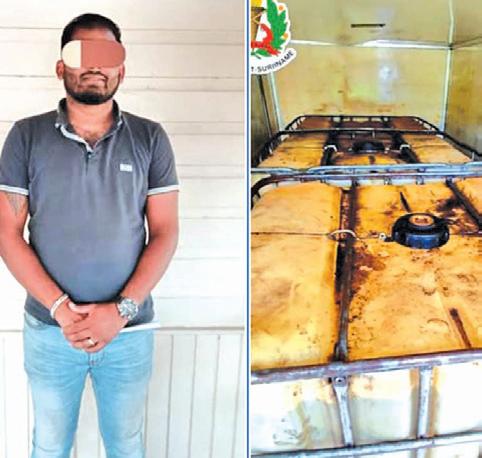
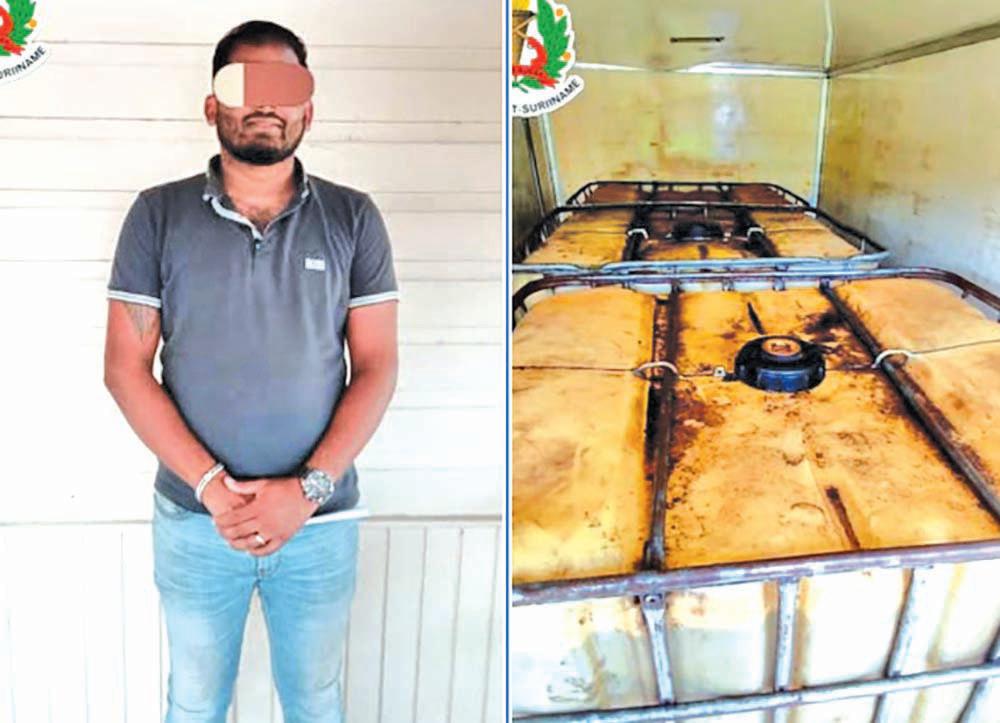
A31-year-old Guyanese man was arrested by the Regional Assistance Team West (RBTW) on Saturday, after being found in possession of a large quantity of diesel allegedly smuggled from Guyana, according to Suriname U-News. Police in the Dutch-speaking country said officers responded to a report of a white-painted container pickup truck carrying suspected illegal diesel at a residence on Delhiweg. During surveillance, the vehicle was located on the driveway of the home. Upon inspection, authorities discovered three large drums containing
approximately 3,000 litres of diesel, reportedly intended for storage at the suspect’s company. The man, identified only as NS, admitted that the fuel was imported without proper documentation. The homeowner told police that NS had asked permission to park on her driveway, claiming engine trouble. Security camera footage from the property has been secured to aid the investigation. NS was handed over to the Regional West Criminal Investigation Department for arraignment before an Assistant Public Prosecutor.
he stated. Additionally, Coordinator of the National Security Programme at the University of the Southern Caribbean (USC), Dr Raghunath Mahabir, highlighted the prison’s vocational training.
“I saw prisoners involved in masonry, carpentry, welding and other trades. It’s a good start to the rehabilitation programme and reintegrating individuals into society,” he said. “We saw them not just as inmates, but as future contributors to Guyanese society.” Other delegates echoed the sentiment, noting the Lusignan Prison’s clean, well-organised facilities, fire-retardant mat-
tresses, virtual courtrooms and expansive administrative and observation areas.
Senior Correctional Officer King John from Grenada observed, “Your prison is modern and has enough space to run a variety of rehabilitation programmes. The commissioner invests in his staff, which builds morale, something we are looking to do as well.”
Senior Superintendent from Suriname, Molall Imran added, “The planning for the next five years at Lusignan is impressive. The technology, the infrastructure, and the programmes for prisoners are inspiring. I look forward to seeing the progress in the future.” The Lusignan Prison
on the East Coast Demerara (ECD) has been at the centre of a major modernisation push by the Government of Guyana, which has committed significant resources to upgrading the country’s correctional infrastructure and rehabilitation services. In August 2025, the Government commissioned a new GPS Headquarters and multiple facilities at Lusignan, including expanded cell blocks, trade shops, a vocational school, healthcare facilities and modern staff quarters, a project forming part of a multi-billion-dollar investment aimed at strengthening security and reducing recidivism.
The relocation of the
GPS headquarters from its former Brickdam site to Lusignan is intended to improve administrative coordination and integrate security with rehabilitative functions. Officials have said these developments are a shift in the country’s prison service toward prioritising humane treatment, vocational training, and reintegration of inmates into society. In the 2026 National Budget, the Government of Guyana earmarked $6 billion for the GPS to continue its comprehensive transformation, infrastructure upgrades and correctional reforms.
Of this total, $1.5 billion is allocated specifically for further infrastructure improvements at prisons, including Lusignan. Additionally, about $141.8 million has been set aside for advanced training, covering prison management, human rights instruction for officers, and vocational training programmes for inmates to support their reintegration into society. The training component aims to equip roughly 400 officers and 1,500 inmates with skills in areas such as carpentry, block-making, and behavioural development.
Spencer Isaac (St Kitts)
Raghunath Mahabir (University of the Southern Caribbean)
Sean Bacchus (Trinidad and Tobago)
Kean John (Grenada)
Molall Imran (Suriname)
The Guyanese man who was arrested with the fuel (Photo: Suriname U‑News)
MARCH
World Water Day
Hinterland water access jumps to over 90%
…water investments ease burden on women, girls in remote communities
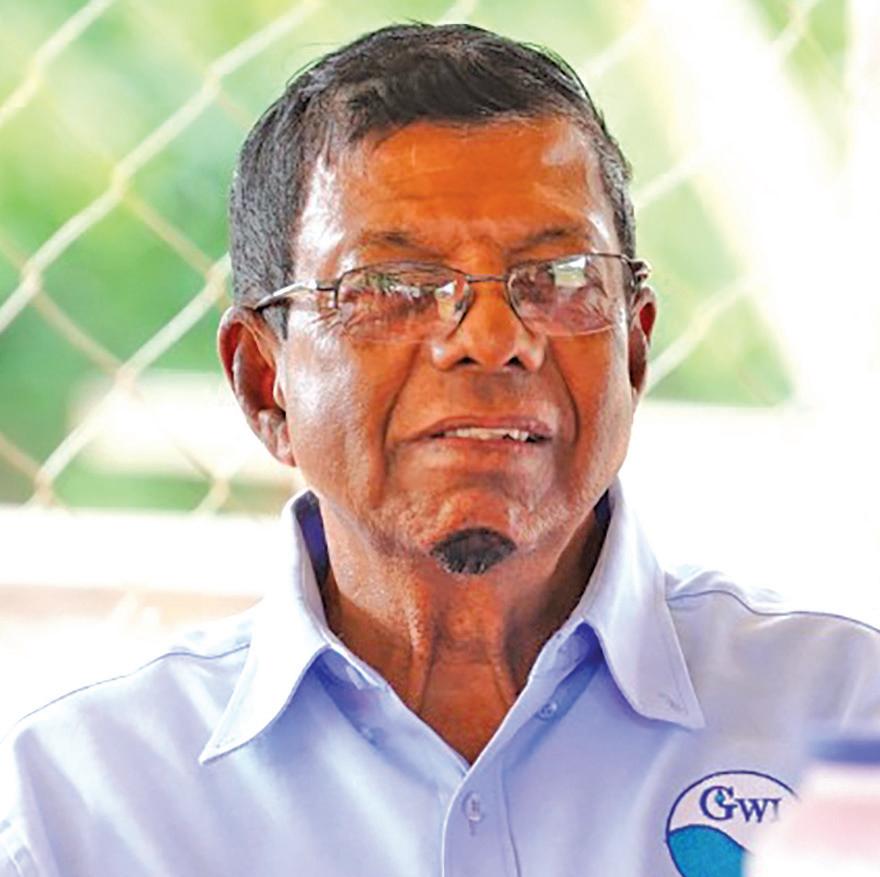
As Guyana marks World Water Day2026 themed “Water and Gender” officials are highlighting major progress in expanding safe water access while drawing attention to the persistent inequalities that continue to affect women and girls, particularly in the hinterland and riverine communities. Chief Executive Officer (CEO) of Guyana Water Incorporated (GWI), Shaik Baksh, in his message to the nation said access to safe and reliable water goes far beyond basic service delivery, describing it as a powerful driver of social and economic equality. He noted that significant investments in the sector are already transforming lives across the country, especially women and girls who are have historically carried the burden of water collection in remote communities. Baksh revealed that Guyana has now achieved 98.6 per cent national water access, with the hinterland and riverine areas seeing some of the most dramatic improvements, rising from 46 per cent coverage just a few years ago to 94 per cent today. “We are nearing our ambitious goal of 90 per cent treated water coverage on the coastland. The commissioning of several large-scale treatment plants including those at New Cummings Lodge, Wales, Caledonia, Bartica and Bachelor's Adventure is transforming the daily lives of over 200,000 residents,” he said. Baksh added that Guyana’s 2026–2030 strategic direction will focus heavily on modernisation, including digital transformation through smart metering and advanced leak detection systems to reduce water losses and improve efficiency. Plans are also advancing for a new wastewater treatment facility in
Georgetown to strengthen sanitation and public health outcomes. “Our focus is now shifting toward the 2026-2030 Strategic Plan. This roadmap emphasises not only infrastructure but digital transformation of the utility. By implementing smart metering and advanced leak detection, we are reducing "Non-Revenue Water" and ensuring that our systems are modern, accountable, and efficient,” Baksh added.
Access to safe water and sanitation
Meanwhile, Public Utilities and Aviation Minister Deodat Indar, in his message underscored that water scarcity continues to disproportionately affect women and girls, reinforcing the importance of this year’s global theme. He stressed that in many communities, women remain the primary managers of the household water resources, making equitable access not only a matter of social justice but also economic empowerment and national development. The Minister reaffirmed the Government's commitment to achieving Sustainable Development Goal 6 (SDG 6), which targets universal access to safe water and sanitation by 2030. He pointed to the ongoing Coastal Water Treatment Programme, which continues to expand treatment plants, upgrade systems and strengthen transmission networks nationwide. Strategic partnerships with international agencies such as the InterAmerican Development Bank (IDB) and the Japan International Cooperation Agency (JICA) are also supporting major development, including Diamind Surface Water Treatment Plan, aimed at improving climate resilience and
securing long-term water supply. The Minister also emphasised that targeted investments in sustainable water systems for Indigenous communities would reduce the time women spend fetching water while increasing opportunities for education and economic participation. He further noted that hinterland water access now stands at 91 per cent, with consistent local investment continuing to prioritise reliable service expansion to every community. He also cautioned that while Government remains committed to delivering worldclass water infrastructure directly to households, sustainability depends on shared responsibility.
“As we reflect on this year's theme, we recognise that women are not just beneficiaries of water services, but also leaders in the sector. Within GWI and the Ministry, we see women serving as engineers, hydrologists and administrators who are driving our mandate. Water is a finite and precious resource. While our Government remains committed to bringing world-class water infrastructure directly to your homes, this progress requires a partnership with every citizen” he said. Both officials stressed that beyond infrastructure, the future of Guyana’s water security depends on collective stewardship.
“I urge every citizen to play their part in conservation. Protecting our water sources and using treated water responsibly ensures that this legacy remains for the generations to come. Together, we are building a Guyana where every drop of water supports a future of prosperity, dignity, and equality for all,” the Minister said, extending World Water Day 2026 greetings to the nation.
Chief Executive Officer of GWI, Shaik Baksh
Public Utilities and Aviation Minister
Deodat Indar
14 NEWS
MONDAY, MARCH 23, 2026 | GUYANATIMESGY.COM
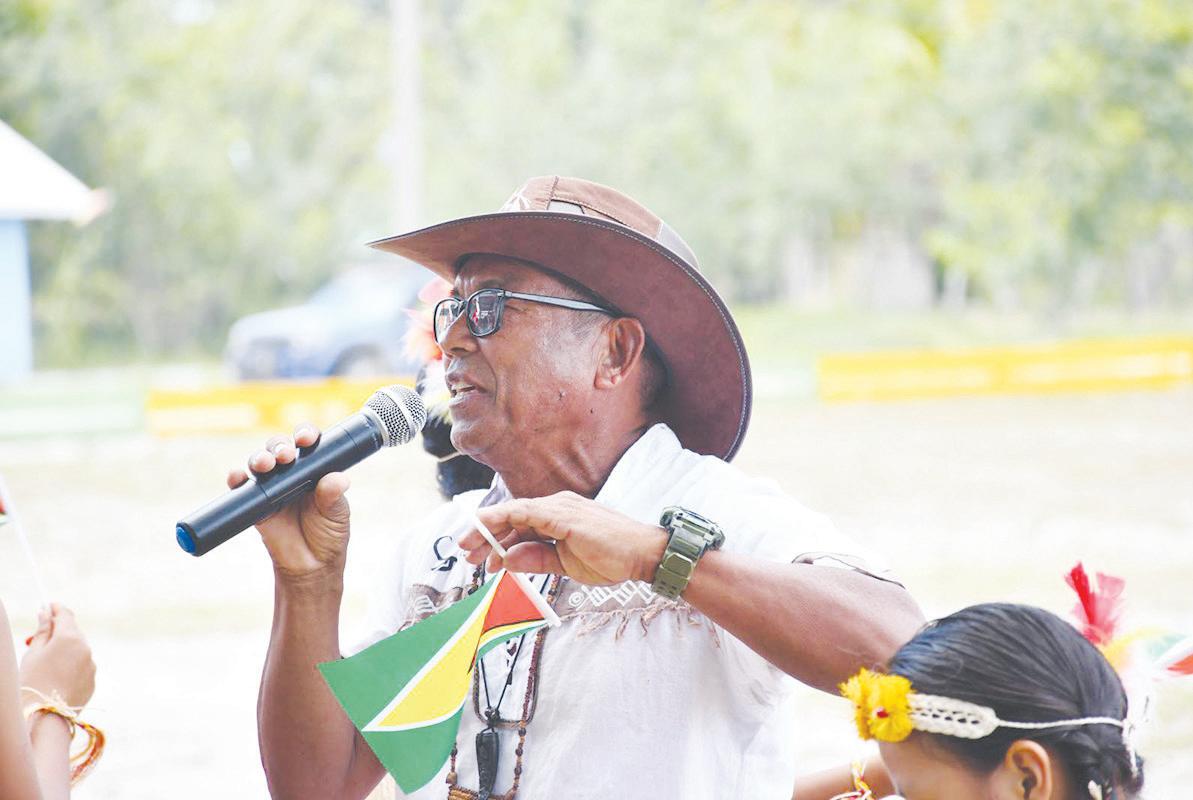
Celebrating 137th village anniversary Residents of St Cuthbert’s Mission, also known as Pakuri, in Region Four, celebrated their 137th village anniversary in a vibrant display of heritage, unity, and progress, joined by senior officials including Amerindian Affairs Minister Sarah Browne-Shadeek. The occasion brought together villagers, cultural groups, and visitors in an observance that highlighted the community’s rich traditions
(Amerindian Affairs Ministry/Facebook)
Paper committal begins today in Regent St deadly gas station explosion case
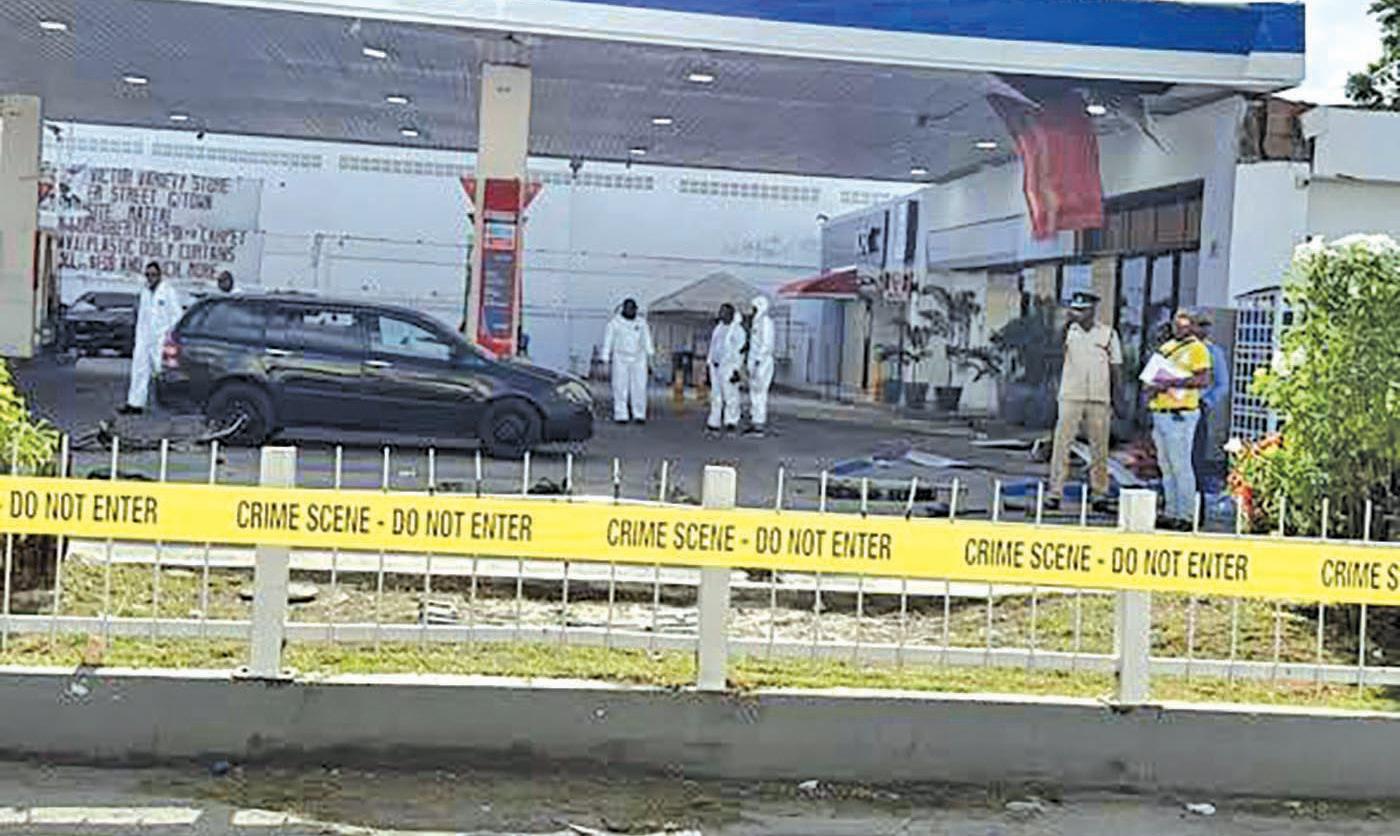
Proceedings are set to advance today in the case arising from the deadly explosion at a Regent and King Streets, Georgetown gas station, as the court begins reviewing whether there is enough evidence to send the matter to trial.
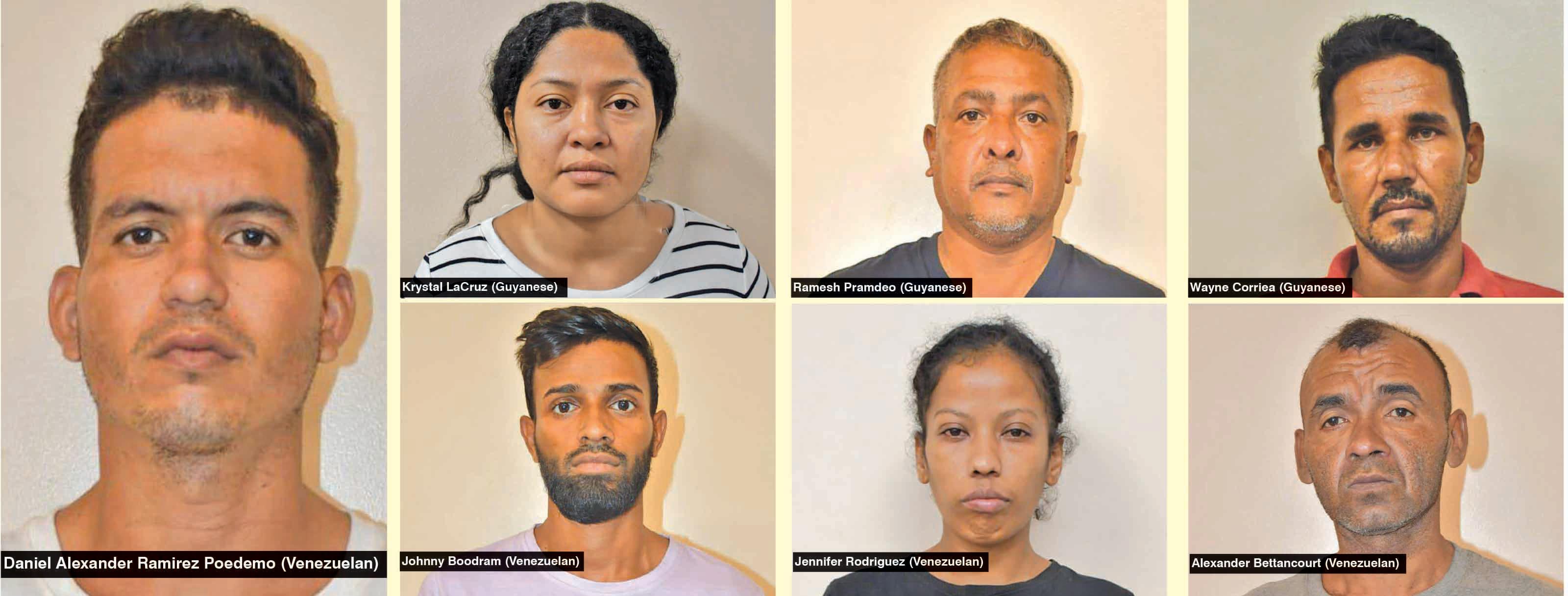
are Venezuelan nationals Daniel Alexander Ramirez Poedemo, 33; Johnny Boodram, 27; and Alexander Bettencourt, 44, along with Guyanese Krystal LaCruz, 33. The charges stem from the October explosion which resulted in the death of sixyear-old Soraya Bourne and
The case is being heard before acting Chief Magistrate Faith McGusty at the Georgetown Magistrates’ Courts.
The start of this phase had been pushed back earlier in the month after members of the defence team requested additional time to study the State’s file and confer with their clients.
Charged in connection with the incident
injuries to several members of her family.
The delay followed appearances by attorneys representing two of the accused, who indicated they had only recently been retained and required time to properly prepare. Applications for an adjournment were subsequently granted by the court.
The prosecution, led by Senior Police Legal Adviser
Mandel Moore, has since finalised disclosure. The material before the court includes statements from witnesses, scientific and forensic findings, as well as data extracted from electronic and telecommunications sources.
As part of the probe, in-
vestigators also sought assistance from overseas laboratories, including in India, where samples collected at the scene were analysed.
During this stage, the magistrate will examine the written evidence to determine whether it meets the legal threshold required for the matter to proceed to the High Court. A finding in favour of the prosecution would see the accused com-
mitted to stand trial, while insufficient evidence could result in their discharge.
According to investigators, the explosion was not accidental but a planned act. It is alleged that Poedemo entered the country on the day in question carrying an explosive device concealed in bags, before making his
way into the service station compound.
Moments later, the device reportedly detonated, killing the young girl and injuring several persons who were in a nearby vehicle at the time. Those hurt in the explosion include Jenica Hooper, 27; Yvonne Jonas,
71; Seddia McIntosh; and 11-year-old Reshard Lord. The blast also left a trail of destruction, damaging multiple vehicles and structures in the vicinity.
Poedemo is also facing an additional terrorism-related charge under the Criminal Law (Offences) Act, which alleges that the act was carried out with the intention of endangering national security and spreading fear among the population, resulting in loss of life.
In a related matter before the Leonora Magistrate’s Court, Jennifer Rodriguez, 33; Wayne Correia, 44; and Ramesh Pramdeo, 51, have been charged with assisting in the commission of the offence. All accused persons remain in custody.
Minister of Home Affairs Oneidge Walrond has indicated that, if convicted, the accused could face the death penalty under Guyana’s anti-terrorism laws, which allow for capital punishment in cases where loss of life occurs.
Acting Chief Magistrate Faith McGusty
Dead: Sorya Browne
The gas station where the bombing occurred
Charged and remanded: Wayne Corriea, Ramesh Pramdeo, Daniel Alexander Ramirez Poedemo, Jennifer Rodriguez, Johnny Boodram, and Alexander Bettancourt
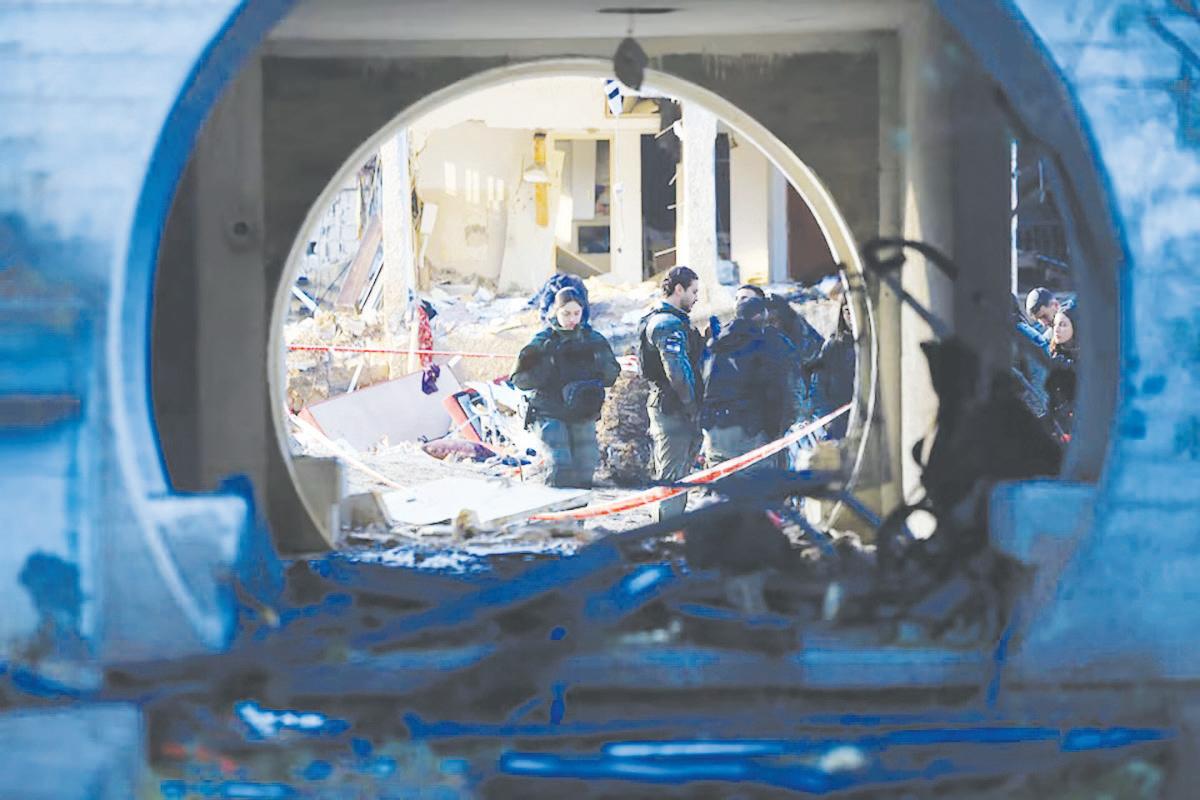
Burma Road sluice under scrutiny as Councillor raises “construction faults”
… NDIA already engaged, doing assessments
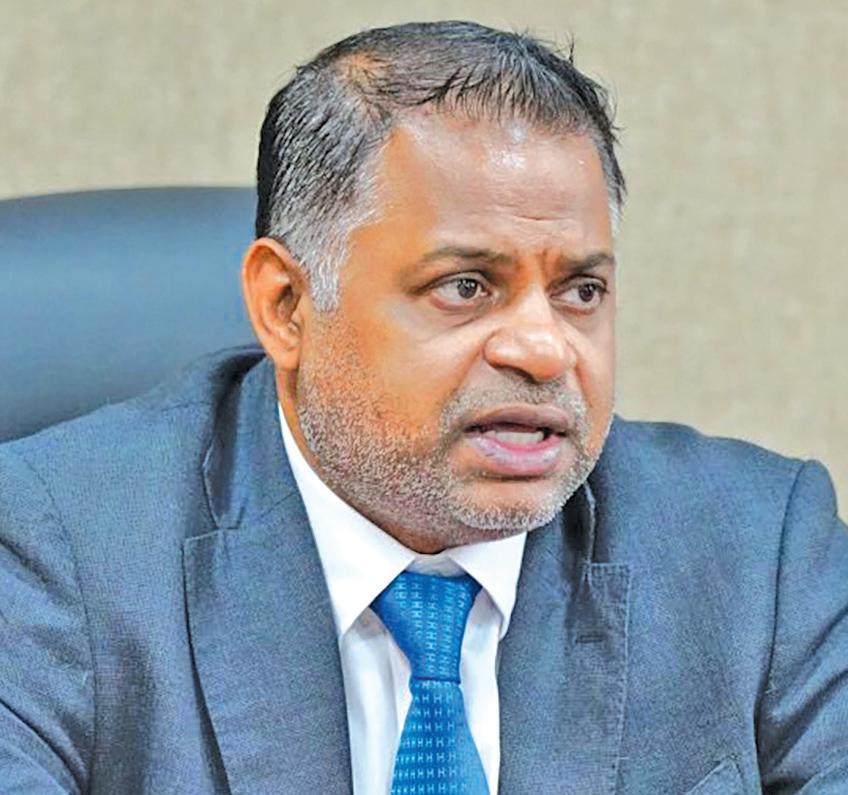
Concerns about possi ble construction de fects at a sluice be ing built at Burma Road, Mahaicony, were raised at Thursday’s Regional
Democratic Council (RDC) meeting, with Councillor Junior Henry saying ng that the structure has “se rious problems” and cast ing doubt on its effective
ness once completed.
“That thing that they call a sluice, we have seri ous problems there,” Henry told the council, as he point ed to what he described as
visible defects at the site.
He said the section in tended to accommodate the sluice door appeared distorted, explaining, “Number one, the structure that is up in the air to ac commodate the door, those things are twisted. The top is wider than the bottom.”
Henry further claimed that attempts were being made to correct the issue after construction.
“I pass it and see peo ple trying to plaster it to bring it back…,” he said as he also questioned the vi ability of the structure in its current state, adding, “I don’t know how effective it will be when it’s completed, if it will ever be completed.”
In response, Regional Chairman Ricardo Phillips emphasised the importance of the project.
“This critical infrastruc ture, when completed, will drain thousands of acres of land,” he said as he further outlined its intended bene fits.
“What we’re looking at in the 2026 Budget [is] to have this critical infra structure in place so that the rice farmers and the other farmers will have meaningful drainage to their lands and to reduce flooding in their respective areas.”
Intended purpose
Phillips added that the Agriculture Ministry, through the National Drainage and Irrigation Authority (NDIA), has al ready engaged the issue and is carrying out assess ments as works continue, with efforts underway to ensure the project meets its intended purpose. The sluice is expected to play a major role in im proving water control in the Mahaicony/Burma ag ricultural belt, where effec tive drainage is essential for large scale rice cultiva tion and other farming ac tivities, particularly during periods of heavy rainfall.
The ongoing works at Burma Road is part of NDIA project titled “Construction of Culvert and Intake Structure at Burma Railway Line, Region Five,” which was put out to tender in February 2025 with an engineer’s estimate of $51.1 million. Bids for the project were opened on March 6, 2025, attracting several contractors, with submissions ranging from approximately $45.8 mil lion to $53.9 million.
Police engage students on road safety in Regions 5, 6
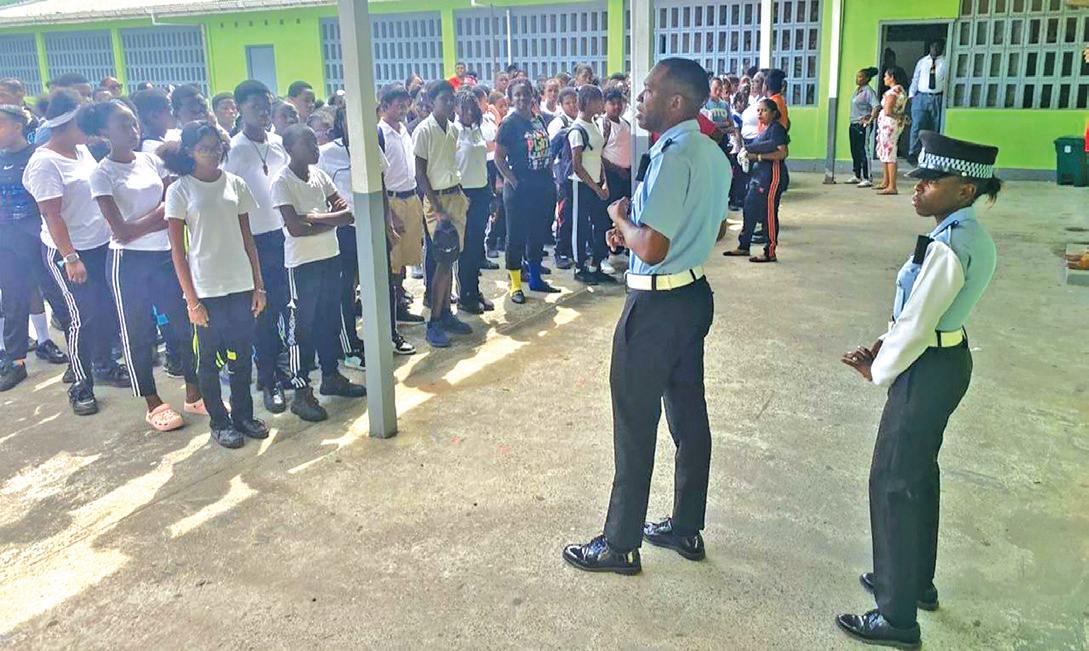
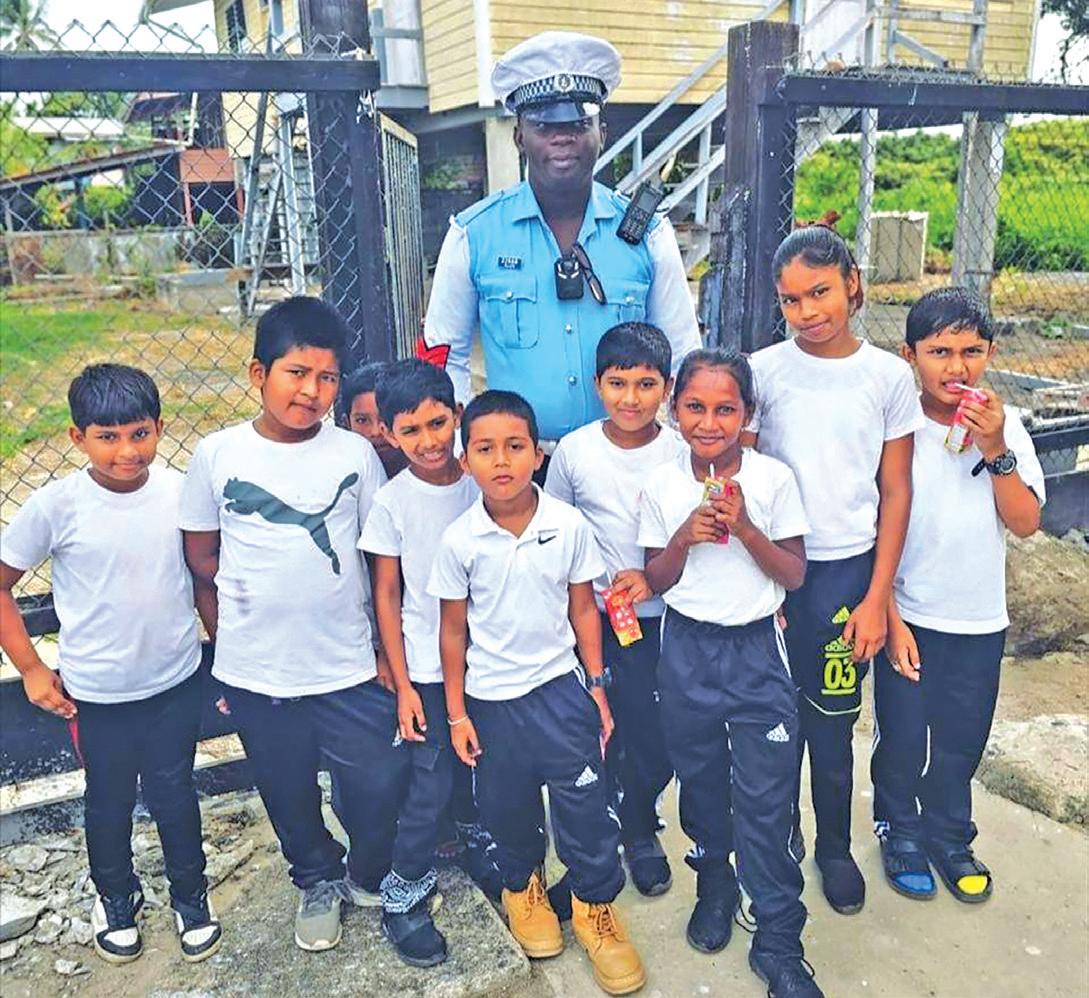
Police officers from Regional Division Five conducted traffic safety sessions at schools across East Coast Demerara (ECD) and West Coast Berbice (WCB) on Friday. At Mortice Primary School, Sergeant Allen and ranks from the Mahaicony Police Station Traffic Department spoke to students and teachers about road safety and responsible behaviour. Officers emphasised the im portance of understanding and obeying traffic rules, avoiding playing near road ways, and walking two abreast while facing on coming traffic for better
visibility. With kite-flying season approaching, stu dents were also advised to enjoy the activity in open spaces away from busy roads and electrical wires. Meanwhile, Sergeant Reynolds and traffic officers from the Weldaad Police Station engaged students at Belladrum Secondary School. The session fo cused on key safety practic es, including the Kerb drill, proper roadway use, and strict adherence to traf fic laws. Officers also ad dressed broader safety and wellness topics, encourag
ing students to maintain good conduct, avoid bully ing, and make positive life choices. They highlighted the dangers of illegal sub stance use and vaping, and provided guidance on the safe and lawful use of elec tric cycles on public roads.
These initiatives are part of efforts by the Guyana Police Force (GPF) to pro mote a culture of safety and awareness among young citizens, while equipping them with the knowledge to make informed and respon sible choices.
Guyanese man arrested in Suriname...
The pickup truck, the barrels of diesel, and a mo bile phone were seized, and the vehicle was transport ed to the Corantijn Police Station.
Police confirmed that the investigation is ongoing as authorities continue to probe the smuggling opera tion.
Smuggling of goods, in cluding fuel, has long been a feature of the porous border between Guyana and Suriname along the Corentyne River. Customs officials and border security
sources have described this area as difficult to fully mon itor, with unofficial land ing points where vehicles and small vessels can cross without stringent checks, making it a route often ex ploited for illicit trade of various commodities. In late 2025, Surinamese authori ties intercepted multiple fu el‑smuggling operations be lieved to have originated in Guyana, seizing thousands of litres of gasoline and ar resting several suspects in the West Region and Nickerie district.
The Burma Road sluice under construction
Ranks from the Weldaad Police Station Traffic Department engaged students and teachers of Belladrum Secondary School, West Coast Berbice (Radio Eve Leary photo)
A rank from the Mahaicony Police Station Traffic Department with children (Radio Eve Leary photo)
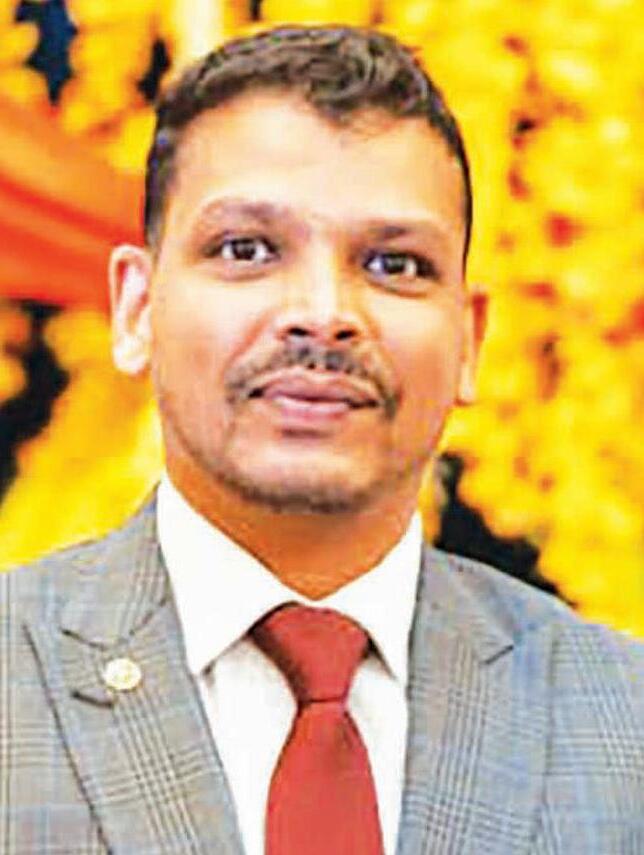
By Dr Tariq Jagnarine
Why tuberculosis still matters
Tuberculosis (TB) is one of the oldest diseases known to humans, yet it remains one of the world’s deadliest infectious diseases. Despite advances in medicine, TB continues to affect millions of people each year, particularly in low- and middle-income countries (World Health Organisation, 2023).
In Guyana, TB remains a significant public health concern, especially among vulnerable populations. The challenge is not only the disease itself but also late diagnosis, stigma, and gaps in awareness.
What is tuberculosis?
TB is an infectious disease caused by the bacterium Mycobacterium tuberculosis, which usually affects the lungs. It spreads through the air when a person with active TB coughs, sneezes, or speaks.
Many people believe TB is a disease of the past. It is still very present and continues to spread in communities where
HEALTH TIPS
Tuberculosis in Guyana: Why this old disease still needs urgent attention
…Breaking the myths, recognising symptoms, and stopping the spread
early detection and treatment are delayed.
How TB spreads in communities TB spreads most easily in crowded or poorly-ventilated environments such as homes, workplaces, and public transport. Close and prolonged contact with someone who has untreated TB increases the risk of infection. Not everyone who is exposed becomes sick immediately. Some people develop latent TB, in which the bacteria remain in the body without causing symptoms. However, latent TB can later become active, especially if the immune system becomes weak.
Who is most at risk
Certain groups are more vulnerable to TB. People living with HIV are at much higher risk because their immune systems are weakened (WHO, 2023). Individuals with diabetes, malnutrition, or chronic illnesses are also more sus-
ceptible.
Social factors such as poverty, overcrowding and limited access to health care further increase risk. TB is, therefore, not just a medical issue; it is also a social and economic one.
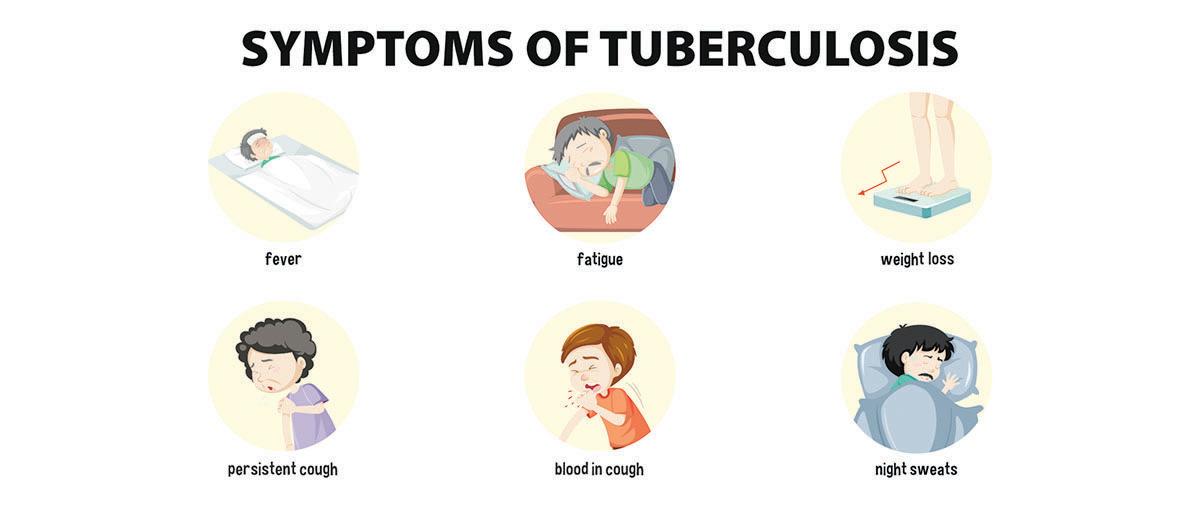
Recognising the warning signs TB often develops slowly, and symptoms may be mild at first. Common signs include:
*Persistent cough lasting more than two weeks
* Chest pain
* Coughing up blood
* Weight loss
* Fever
* Night sweats
* Fatigue
Because these symptoms can be mistaken for other illnesses, many people delay seeking care. This delay allows the disease to worsen and increases the risk of spreading TB to others.
Diagnosis and treatment
The good news is that TB
is curable. Diagnosis is done through sputum testing, chest imaging, and laboratory analysis. Treatment involves a course of antibiotics taken over several months.
Completing the full course of treatment is essential. Stopping treatment early can lead to drug-resistant TB, which is much harder and more expensive to treat.
The link between TB and drug resistance
Just like with other antibiotics, improper use of TB medication can lead to resistance. Multidrug-resistant TB (MDR-TB) develops when bacteria no longer respond to the most effective TB drugs.
MDR-TB requires longer treatment, more complex medication, and has lower success rates. Preventing resistance depends on proper diagnosis, adherence to treatment, and strong health systems.
Breaking stigma and fear
One of the biggest barriers to TB control is stigma. Many people fear being judged or isolated if diagnosed. This leads to delays in testing and treatment.
TB is a medical condition, not a personal failure. Encouraging open conversations and supportive communities helps people seek care earlier and complete treatment successfully.
Prevention and community action
Preventing TB requires both individual and community action. Early testing, proper treatment, and infection control measures, such as covering coughs and ensuring good ventilation, reduce the spread.
For people living with HIV, regular screening and preventive therapy signifi-
cantly reduce TB risk.
Public health programmes, community outreach, and education campaigns are essential to improving awareness and reducing transmission.
Why this matters now World Tuberculosis Day is observed every year on March 24 to raise awareness about TB and efforts to eliminate it globally.
This is a reminder that TB is not a disease of the past; it is a current and ongoing challenge that requires attention, action, and commitment.
Tuberculosis is preventable, treatable, and curable, but only if it is detected early and treated properly. Do not ignore a persistent cough. Do not delay testing. Do not stop treatment early. Ending TB starts with awareness, action, and community support.
‘A light into my business’ - B&R Products gains market lift with Made in Guyana Certification
Nestled in Berbice, Region Six, B&R Products has steadily built a reputation for producing high-quality, locally made agro-processed products, grounded in tradition. Central to its growth has been certification under the Made in Guyana Certification Mark Programme of the Guyana National Bureau of Standards (GNBS), which has helped to strengthen the company’s credibility, improve its systems and position its products as trusted, quality local delicacies.
The decision to pursue the certification was driven by a strong desire to demonstrate the authenticity and quality of B&R Products, while gaining greater recognition in an increasingly competitive market. Through this programme, the company not only achieved the use of the Made in Guyana mark but also benefited from guidance that enhanced its record-keeping, traceability and overall business operations.
B&R Products was established in 2020 by Budwatty Ramnarine after she was laid off from her job and needed to
support her family. She initially sold clothing and food at the market but soon found her passion in agro-processing. Inspired by her father’s traditional methods of producing rice and corn flour, she began developing a multi-grain flour, Satwa, a product valued for its high protein content. With a vision to transform locally available agricultural produce into nutritious, value-added goods, Ramnarine recognised the potential to both preserve traditional recipes and create sustainable income. Drawing on the abundance of fruits, spices and crops in Berbice, she built a business focused on authenticity and quality. Today, B&R Products offers a diverse range of products, including mango achar, pepper sauce, coconut oil, dried peppers, pickles, miracle tea and its signature product, Satwa (Seven Grains). This focus on traditional products reflects a commitment to preserving cultural flavours while meeting the growing demand for wholesome, locally made goods. One of B&R’s standout offerings is Satwa, a nu-
tritious blend of seven grains. This product is rich in fibre, vitamins and essential nutrients, making it an excellent choice for consumers seeking a wholesome, energy-boosting product that can be enjoyed either hot or cold. Satwa is especially valued for its health benefits and versatility, as it can be enjoyed as a porridge or meal supplement. Despite early challenges in achieving consistency and perfecting recipes, Ramnarine relied on feedback from family and friends to refine her products. This dedication to continuous
improvement laid the foundation for the structured quality systems later strengthened through GNBS certification. Since receiving certification in November 2024, Ramnarine explained that her business has experienced significant benefits. Internally, its processes have been strengthened to meet and maintain requirements. Externally, the certification has increased customer trust and opened new market opportunities, as consumers increasingly recognise and prefer certified local products. She further explained,
“I realised that achieving the Made in Guyana Mark would give my company more lift in the market... with the support of the GNBS staff, they explained how record-keeping would help me, especially in the traceability of sales.”
Ramnarine noted, “It (GNBS Certification) has really helped me in the way I run my business in terms of record keeping...I now have a system in place. Every month, I do updates on GNBS records...”
With quality being a top priority for B&R, the company ensures consistency through careful selection of various ingredients, adherence to proper processing techniques, and maintenance of hygienic production practices. Regular monitoring and standardised procedures help guarantee that each product meets expected quality levels.
“It’s like a light coming into my business, because from the time the customers see the Made in Guyana Mark, they are buying my products because they know that it is quality and we have standards,” she shared.
Following their recent renewal of certification, the company continues to uphold the requirements by maintaining quality control systems, ensuring proper labelling, and adhering to GNBS standards. Continuous improvement and compliance remain central to their operations.
Ramnarine encourages other small manufacturers to pursue certification, noting that while the process requires effort and discipline, the rewards are worthwhile. She highlighted that certification not only enhances product credibility but also helps businesses improve their internal systems and competitiveness.
The Made in Guyana Standards Mark is a registered mark that provides recognition to locally manufactured products on the local and international markets and is a signature of quality for authentic local products.
(Feature written and submitted by the Corporate Communications Department of the Guyana National Bureau of Standards)
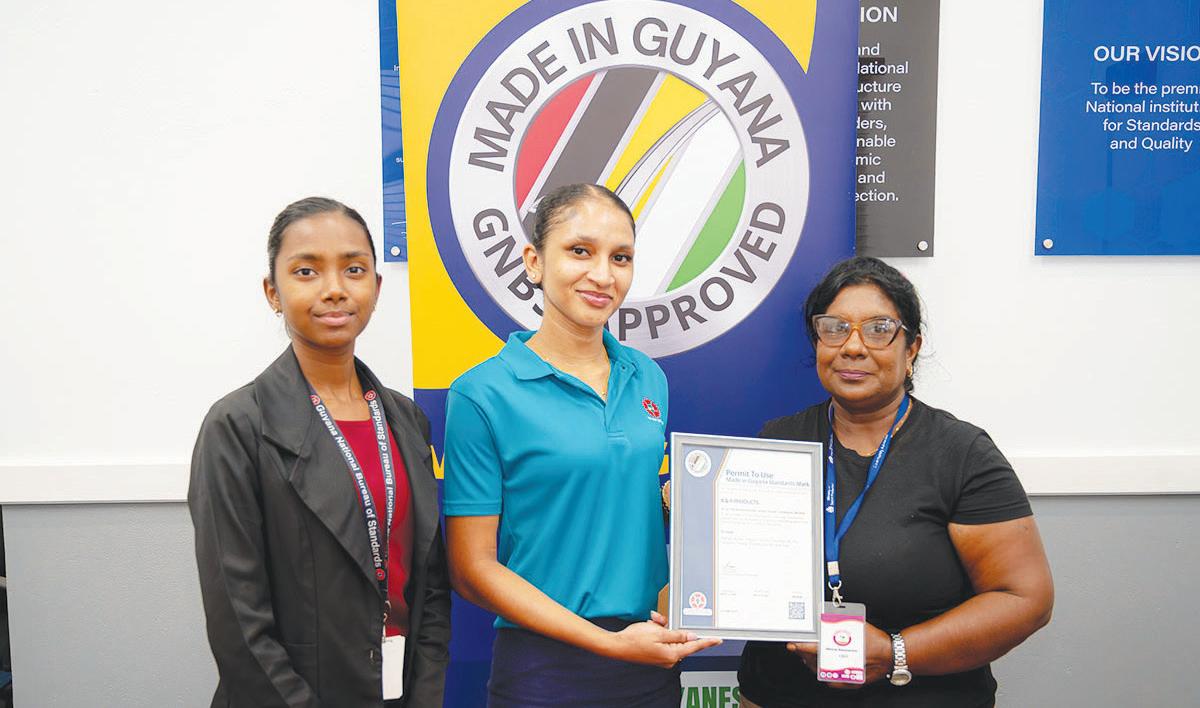
The Made in Guyana Certificate being handed over by GNBS Administrative Clerk Faith Phillips and Technical Officer Rachel Cecil to the proprietor of B&R Products, Budwatty Ramnarine
Regional
Emerging from latest blackout, Cuba says ready for any potential US attack
The Cuban Government has said it is prepared for any potential United States attacks as the island-nation begins to recover from yet another blackout under a punishing oil blockade imposed by Washington that has pushed its economy to the brink.
Deputy Foreign Minister Carlos Fernandez de Cossio responded on Sunday to US President Donald Trump’s threats this week to take over Cuba, insisting that it had “historically been ready to mobilise as a nation for military aggression”.
“We don’t believe it is something that is probable, but we would be naive if we do not prepare,” de Cossio told NBC’s Meet the Press.
His comments were aired a day after the latest collapse of the country’s ageing nationwide grid that had left millions of people in the dark. Saturday’s outage was the second in the past week and the third in March.
UWI students debate AI’s value
University students from across the region took their seats in the Parliament Chamber this week as the University of the West Indies (UWI) STAT Caribbean Parliamentary Assembly convened its inaugural sitting, with Artificial Intelligence (AI) and its impact on regional development at the centre of debate.
Caribbean Parliamentary Assembly, Joshua Harris, said the sitting marked an important step in preparing Caribbean youth to engage in regional policy and governance discussions.
transforming health care systems, transforming education and influencing the very social fabric of modern societies as we speak,” he said.
He argued that AI could open new development pathways for small island developing states and create opportunities across several sectors.
The state-run Electric Union and the Ministry of Energy and Mines said some 72,000 customers in the capital, Havana, including five hospitals, had electricity again early on Sunday. But the number represented only a fraction of Havana’s total population of approximately two million.
out providing details on the specific cause of the failure.
The Cuban Electric Union, which reports to the Ministry of Energy and Mines, said the total disconnection of the national system was caused by an unexpected shutdown of a generation unit at the Nuevitas thermoelectric plant in Camaguey province, with-
Trump, who started blocking oil from reaching the island after capturing Cuba’s ally, Venezuelan President Nicolás Maduro, early this year, has warned potential oil exporters that they could face high tariffs.
According to President Miguel Diaz-Canel, Cuba has not received oil from foreign suppliers for three months. The country produces barely 40 per cent of the fuel it needs to power its economy.(Excerpt from Al Jazeera)
Policeman in Turks and Caicos Islands arrested after ammo found in luggage
AJamaican serving in the Royal Turks and Caicos Islands Police Force (RT&CIPF) was arrested Saturday after authorities at the Howard Hamilton International Airport discovered several rounds of ammunition in his luggage.
The ammunition was found concealed in the lawman’s suitcase during routine security screening at the airport, the RT&CIPF said in a release.
The release stated that after the ammunition was identified by airport security personnel, the Police were contacted and a search was conducted at the officer’s home, where additional rounds of ammunition were found.
The officer is currently the subject of an active Police investigation to establish the circumstances surrounding the find, the release stated.
“The RT&CIPF emphasises that all officers are held to
the highest standards of professionalism, accountability, and compliance within the law,” added the release. “Any breach, whether administrative or criminal, will be addressed in a fair, proportionate, and lawful manner.”
Observer Online understands that the cop is a former member of the Jamaica Constabulary Force and recently joined the RT&CIPF.
(Jamaica Observer)
Holness touts new approach to unlocking urban renewal
The issue of urban renewal which has been talked about for decades is about to take on added urgency with a raft of incentives being offered by the Government.
“The new framework will strengthen the core incentive by allowing developers to apply the existing tax credit against up to 100 per cent of their income tax liability, rather than the current 50 per cent limit.
“For priority projects — including developments in severely blighted areas, affordable housing, and critical public facilities — the credit will increase from the current 33.3 per cent to 40 per cent,” said Prime Minister Dr Andrew Holness.
He spoke to the issue on March 20 during his contri-
bution to the 2026/27 Budget Debate in the House of Representatives.
According to the Prime Minister, “Any serious conversation about land use, productivity, and housing must confront one of Jamaica’s most visible failures in land utilisation — our blighted urban spaces”.
“These sites sit close to infrastructure, jobs, and services. The potential is not lacking — what has been lacking is the right framework to unlock it,” said Holness.
He pointed out that since 1995 the Urban Renewal Tax Relief Act has attempted to incentivise investment in such areas. “But the results have been limited — just 56 projects approved in three decades,” Holness lamented.
The Prime Minister reminded that “Last year, I indicated that we would overhaul this framework to make it truly fit for purpose, and that work, led by the Urban Development Corporation (UDC) with key stakeholders, is now well advanced.
(Excerpt from Jamaica Observer)
The assembly brought together student representatives from UWI associations across the Caribbean, along with members of the Guild of Students, ViceChancellor’s Ambassador Corps and the Rotary Club of Barbados, in what organisers described as an initiative aimed at strengthening civic engagement and regional dialogue among young leaders.
Prime Minister of the
“We are debating harnessing artificial intelligence for regional economic development,” he said, noting that students participating came from a wide range of disciplines including economics, law, political science and sports studies.
Opening the debate, Harris told the assembly that artificial intelligence was already reshaping economies and societies globally and the Caribbean must act collectively to ensure it was not left behind.
“Artificial Intelligence is no longer a distant concept. It is shaping economies,
“This technological innovation has emerged as one of the factors that determine which nations rise, which industries thrive and which people are empowered or left vulnerable,” Harris said, adding that AI could help improve health care, strengthen education, enhance climate resilience and increase economic opportunities for Caribbean businesses. (Excerpt from Nation News)
Bahamas Police probe over 90 cases of passport fraud amid election concerns
The Bahamas has referred 98 suspected passport fraud cases to Police as part of efforts to crack down on irregularities.
According Chief Passport Officer Nicholas Symonette, internal reviews also flagged possible staff involvement in some cases, which were referred for further action.
He said the Police have since identified four additional suspects in separate matters.
Symonette’s comments follow claims by Opposition Leader Michael Pintard that more than 250 fraudulent document cases were under investigation, raising concerns about potential misuse ahead of the general election. However, Symonette said the list cited by Pintard was an earlier subset from the
Passport Office and he was unaware of the higher figure.
He explained that the cases were compiled through internal audits and submitted to the Royal Bahamas Police Force with supporting documentation, and are updated as new findings emerge.
“That list shows we are doing our job to detect and stop fraud early,” he said.
Authorities have already brought several matters before the courts.
National Security Minister Wayne Munroe revealed that 27 persons have been arrested and charged across 21 cases, with two convictions secured and others pending.
Symonette also said a 2019 policy that allowed limited documentation for passport renewals had weakened vetting. That policy has since been scrapped, with full verification procedures reinstated.
Meanwhile, Parliamentary Commissioner Harrison Thompson defended the integrity of the voter register, noting that individuals found ineligible are being removed in accordance with the law.
“There is no need to attack civil servants who are carrying out their duties professionally and in the public interest,” Thompson said. (CMC)
Investigations found fraudulent activities including sham marriages, falsified birth certificates, irregular naturalisation records, and improper citizenship and immigration documents.
Hilton considers exit from Trinidad
nternational hotelier
IHilton is preparing to withdraw its brand from the State-owned property after the Government failed to undertake extensive capital upgrades — estimated to be over US$600,000 — required to maintain the facility to international operating standards, according to lease agreements, registered records, procurement documents, union correspondence and industry analysis reviewed by Guardian Media Investigations.
Guardian Media has been reliably informed that the hotel chain has already begun steps to exit the arrangement that has governed operations at the Port-of-Spain landmark for more than two decades.
The development, while not yet finalised, follows a pattern of financial underperformance, delayed capital works, and contractual signals.
Investigations by Guardian Media show that what is emerging is not a sud-
den decision, but the culmination of structural weaknesses that have been documented for years.
The Hilton Trinidad was constructed between 1961 and 1962 as a flagship development under the Government of Dr Eric Williams, opening in the same year the country gained Independence. Built on the former Governor General’s residence site overlooking the Queen’s Park Savannah, the hotel was conceived as both a symbol of national pride and a critical piece of tourism infrastructure.
Architecturally distinctive, with its “upside-down” design and expansive use of timber and glass, the property was regarded as one of the most ambitious public construction projects of its time. It was also expensive — not only to build, but to maintain.
From its inception, the hotel was a State asset.
That ownership has remained, now held through the Evolving Technologies
Limited (eTecK), even as operational control has shifted through various arrangements.
Property analyst Afra Raymond observed that Hilton’s global operating model further explains the development.
The company typically operates hotels without owning them. Property owners finance construction and capital works, while Hilton provides branding, standards and management.
“They don’t put out any capital,” he said. Under this model, Hilton can enter or exit arrangements based on commercial conditions.
“When you want to go, you go. When you want to stay, you stay.” If a property fails to meet required standards or becomes commercially unviable, the operator has the flexibility to withdraw.
(Excerpt from Trinidad Guardian)
A view of Havana as Cuba began efforts to restore power after its grid collapsed for the second time in a week amid a US oil blockade that has dealt a major blow to the island’s ailing energy infrastructure, on March 22, 2026 [Norlys Perez/Reuters photo]
Prime Minister Dr Andrew Holness (Garfield Robinson photo)
OIL NEWS
Oil stabilises as investors weigh US, Iran threats to facilities, sanctions lift
Oil prices were little moved today as investors weighed US and Iranian threats to target energy facilities that could escalate the war against the release of millions of barrels of Iranian oil at sea to global markets after Washington lifted sanctions.
Brent crude futures dropped eight cents to US$112.11 a barrel by 2324 GMT after settling at the highest since July 2022 on Friday.
West Texas Intermediate (WTI) crude was at US$98.17 a barrel, down six cents, after a 2.27 per cent gain in the previous session. The spread between Brent and WTI has exceeded US$14 a barrel, the widest in years.
Online trading platform Moomoo Australia Chief Executive Officer (CEO) Michael McCarthy said oil prices were falling temporarily due to low liquidity and traders taking profit in the short term.
“Momentum clearly favours further upside, and a test of the recent highs near US$120 is a realistic scenario this week,” he added.
US President Donald Trump on Saturday threatened to “obliterate” Iran’s power plants if Tehran did not fully reopen the Strait of Hormuz within 48 hours, a significant escalation barely a day after he talked about “winding down” the war, now in its fourth week.
Iran’s Parliament Speaker Mohammad Baqer Qalibaf wrote on X that critical infrastructure and energy facilities in the Middle East could be “irreversibly destroyed” should Iranian power plants be attacked.
“It clearly means more escalation which means higher oil prices. Some are incorrectly thinking, however, that Iran may cave,” said Amrita Sen, founder of Energy Aspects. “Trump is trying to show he can out-escalate and that way ends in scorched earth for Gulf infrastructure.”
The war has damaged major energy facilities in the Gulf and brought shipping through the Strait of Hormuz – which handles about 20 per cent of global oil and liquefied natural gas flows – close to a halt. Analysts estimated a loss of seven million to 10 million barrels per day (bpd) of oil production in the Middle East.
Iraq has declared force majeure on all oilfields developed by foreign oil companies, three energy officials said. Iraqi Oil Minister Hayan Abdel-Ghani said in a Ministry statement that crude production at Basra Oil Company has been cut to 900,000 bpd from 3.3 million bpd.
To alleviate the supply crunch, Washington temporarily removed sanctions on Iranian oil at sea.
Indian refiners plan to resume buying Iranian oil while refiners elsewhere in Asia are examining such a move, traders said on Saturday. (Reuters)
Staff absences soar at some US airports as ICE agents prepare to screen travellers
Absences among transportation security workers this weekend reached their highest since a partial government shutdown began five weeks ago, the Department of Homeland Security (DHS) said on Sunday, while immigration enforcement agents prepared to fill in for them at some of the busiest US airports.
At airports in Houston, New York and Atlanta, more than one-third of Transportation Security Administration staff were calling in sick or otherwise absent, DHS said, as the shutdown left tens of thousands working without pay while congressional Democrats and Republicans argue over the DHS budget.
To help fill the staffing gaps, hundreds of Immigration and Customs Enforcement (ICE) agents will deploy to airports starting today, Government officials have said.
DHS said on Sunday it
would not publicly share details about the ICE deployment, in order to preserve operational security, but sources briefed on the matter said the current plan calls for deploying ICE agents to 14 locations, although that figure may change.
For now, ICE personnel will not be deployed in areas behind airport security checkpoints because they lack the specific clearance needed, the sources said.
Atlanta Mayor Andre Dickens said in a statement his office has been informed that ICE agents on today would be sent to HartsfieldJackson, the busiest US airport in passenger numbers.
Federal officials indicated that the ICE deployment would support TSA in crowd control and managing security lines in domestic terminals, and is ”not intended to conduct immigration enforcement activities”, Dickens said. (Excerpt from Reuters)
Around the World
Iran threatens to retaliate against Gulf energy and water after Trump ultimatum
Iran said on Sunday it
would strike the energy and water systems of its Gulf neighbours in retaliation if US President Donald Trump follows through with a threat delivered a day earlier to hit Iran’s electricity grid in 48 hours, escalating the threeweek-old war.
The prospect of tit-fortat strikes on civilian infrastructure could further rattle global markets when they reopen this morning, and threaten the livelihoods of millions of civilians in the region who rely almost exclusively in some cases on desalination plants for water.
After more than three weeks of heavy US and Israeli bombardment that officials say has sharply reduced Iran’s missile capa-
bilities, Tehran continues to demonstrate the ability to carry out attacks. Air raid sirens sounded across parts of northern and central Israel, including in Tel Aviv, and the occupied West
Bank overnight on Sunday, warning of incoming missiles from Iran.
Hours earlier, the Israeli military said it had completed a wave of stri-
kes on Tehran that targeted a military base as well as weapons production and storage facilities.
Trump issued his warning Saturday evening, less than a day after signalling the United States might be considering winding down the conflict, even as US Marines and heavy landing craft are heading to the region.
“If Iran’s fuel and energy infrastructure is attacked by the enemy, all energy infrastructure, as well as information technology... and water desalination facilities, belonging to the US and the regime in the region will be targeted pursuant to previous warnings,” Iranian military spokesman Ebrahim Zolfaqari said, according to state media. (Excerpt from Reuters)
Ukraine, US teams conclude talks, new POW exchange possible, Zelenskyy says
Ukrainian and United States delegations concluded a second day of talks in Florida on finding ways to end the four-year war with Russia, President Volodymyr Zelenskyy said on Sunday.
Russian representatives were not present at the talks, which opened in Florida on Saturday. They were originally expected to attend the negotiations, which were due to take
place in Abu Dhabi.
The US team is led by special envoy Steve Witkoff and Jared Kushner, President Donald Trump’s son-in-law.
”It is clear that the US side’s attention at the moment is focused primarily on the situation surrounding Iran and the wider region, but Russia’s war against Ukraine must also be brought to an end,” Zelenskyy said in an evening address.
”There are indications that further POW (prisoner of war) exchanges may take place, which would indeed be very good news and confirmation that diplomacy is working. We hope this will come to fruition,” he added.
Zelenskyy did not specify whether the talks would continue, when or where they might take place, or in what format.
Earlier on Sunday he urged allies to keep up sanctions pressure on Russia
and called for tougher action against Russia’s so-called shadow fleet of tankers used to avoid sanctions, and for Moscow to be denied oil revenues.
”Russia’s shadow fleet must not feel safe in European waters or anywhere else. Tankers that serve the war budget can and must be stopped and blocked, not just let go,” he added.
(Excerpt from Reuters)
Liberal, populist parties tied in Slovenia’s parliamentary vote
Right-leaning Slovenian
Democratic Party (SDS) and liberal Freedom Movement (GS) were tied in Slovenia’s parliamentary vote on Sunday, according to preliminary results of the state election commission based on the most votes counted.
Neither party – even with its existing coalition partners – looked likely
to secure the 46 seats needed for a majority in the 90-seat parliament, making smaller parties that cross the four-percent threshold potential kingmakers.
Based on 99.45 per cent of ballots counted, GS won 29 seats, trailed tightly by SDS with 28 seats. Along with the supporting parties, the GS led by incumbent Prime Minister
Robert Golob would have 40 Members of Parliament (MPs) while SDS, led by populist ex-Prime Minister Janez Jansa, would have 43 seats.
”We all placed our trust in one party, regardless of what we believe,” Golob told his supporters after preliminary results showed the GS lead. ”We all deserve a future and I am here right now to say that with this mandate we will do everything to make that future better for all our citizens.”
Jansa, who was running for the fourth term as the premier, accused the election commission of messing with counting, saying that his monitoring team has noticed the discrepancy of 50,000 votes for SDS.
(Excerpt from Reuters)
Sudan drone attack on key hospital killed 64 persons during Eid, WHO
Sudan’s army has denied it carried out a deadly attack on a major hospital on Friday night in a city in the west of the country held by its rivals, the paramilitary Rapid Support Forces (RSF).
The head of the World Health Organization (WHO) said 64 persons – including 13 children, two nurses and a doctor – had died in the
strike on el-Daein Teaching Hospital and 89 others had been wounded.
”Enough blood has been spilled,” Dr Tedros Adhanom Ghebreyesus posted on X, urging the warring parties to end the conflict, which started nearly three years ago.
The RSF said an army drone had hit the hospital in el-Daein, the capital of East Darfur state, on the
day Muslims were marking the festival of Eid.
Sudan was plunged into a civil war in April 2023 when a vicious struggle for power broke out between the military and the RSF, who had once been allies after coming to power in a coup in 2021.
More than 150,000 persons have since died in the conflict and about 12 million have fled their homes –
says
nearly a third of the country’s population – in what the United Nations has called the world’s largest humanitarian crisis.
Dr Tedros, who said elDaein Teaching Hospital was no longer able to function following Friday night’s attack, condemned the frequent targeting of medical facilities.
(Excerpt from BBC News)
Security personnel work at the site of damage after Iranian missile barrages struck residential buildings in Arad, amid the US-Israel conflict with Iran, in southern Israel, March 22, 2026 (Reuters/ Ronen Zvulun photo)
SUDOKU
Discipline, along with pioneering ideas, will lead to something tangible. Trust and believe in what you can achieve, and bring about positive change.
Get everything in place before you invite others to weigh in on your progress. You’ll accomplish far more on your own than you will while facing criticism.
Take pride in what you do, and finish what you start. Less talk and more action will help pave the way forward and help you distance yourself from emotional confrontations.
Stop short of letting others take advantage of your kindness, connections and skills. Offer only what’s feasible and what will help you get closer to your personal and professional goals.
Look, leap into action and put your energy into making a difference. Refuse to let the changes others make daunt you. Know your destination and complete your mission.
A window of opportunity will open through communication and honoring your promises. Be the one to lead the way if you want to achieve what you set out to do.
Follow the pack and embrace the chance to build strong relationships with the people who are most influential in your life. Let your actions be your calling card and make your motives clear, and you will make headway.
Breathe, relax and obliterate any notion that using force will surpass using intelligence. Your emotions will be difficult to control when contracts, shared expenses or joint ventures come into play.
Stick close to home. Avoid initiating a situation that could lead to harsh words. Puttering around the house, you’ll find a way to lower your overhead and better utilize your space.
Slow down, think and plan your next move. Trust your instincts, not what others lead you to believe. Don’t limit what you can do or pay too much for what you want.
You are sitting in a better position than you realize. With a little ingenuity and discipline, you’ll come out ahead of the game, with cash in hand and a sense of accomplishment.
Be nice, kind and a good listener, and you’ll ward off an emotional setback. An open mind and heart will help you maintain good relations and positive results.
ARCHIE
Cameron praises Nationals’ management
Following President’s College’s second consecutive victory at the National Schools’ Championships, Willon Cameron, head of the physical education programme, expressed his admiration for the event’s management in an interview with Guyana Times Sport
“I think the Nationals was well run, to be honest with you, just the fact that the final event was completed before the place got dark on the final day, think that was good,” Cameron remarked.
8-year-old is latest to benefit from cricket gear project
Bryson Medford, a right-handed batsman, is the youngest cricketer ever to benefit from the “Project Cricket Gear for Young and Promising Cricketers in Guyana”, a joint initiative between Anil Beharry, a former long-serving Berbice Cricket Board (BCB) executive and Kishan Das of the USA.
His uncle Sean Cameron reached out to the facilitators, indicating that young Medford is madly in love with cricket, and is in need of a junior bat. The MeetenMeer-Zorg Primary School student was the recipient of one cricket bat. Medford was advised to balance his cricket with his academic life.
Over the years, many Guyanese cricketers have benefited from the project, some of whom went on to represent West Indies at different levels.
According to the facilitators, “This project will continue to improve the lives of youths in every community. We are pleased to be part of the development of young cricketers in Guyana. Our aim is to keep them off the streets and get them actively involved in sports, cricket in particular.”
Total cricket-related items received/purchased so far: $786,146 in cash, thirteen coloured cricket uniforms, one set of stumps, two trophies, thirty-six pairs of cricket shoes, forty pairs of batting pads, forty-nine cricket bats, forty-eight pairs of batting gloves, twenty-nine thigh pads, three pairs of wicket-keeping pads, six arm guards, two chest pads, two boxes, fifteen gear bags, thirteen bat rubbers, seven helmets, one fibreglass bat, one floppy hat, sixteen boxes and four of white cricket balls, thirteen boxes of red cricket balls, one bat cone, one pair of batting inners and twenty-eight footballs. In addition to the above, gear valued over $600,000 was donated by Sheik Mohamed, a former national wicket-
keeper/batsman. All cash collected is being used to purchase cricket gear requested and not available at the time.
To date, one hundred and six players, male and female, from all three counties of Guyana have benefited directly from cash, ten gear bags, two trophies, four arm guards, forty-three bats, four boxes, six helmets, thirty-eight pairs of cricket shoes, twenty-two pairs of batting pads, twenty-five thigh pads, one bat grip, forty-two pairs of batting gloves, one pair of wicketkeeping pads, and four pairs of wicketkeeping gloves. Many others benefited indirectly.
In addition, two clubs in the Pomeroon area benefited from two used bats. Pomeroon, Leguan and Wakenaam Cricket Committees and Cotton Tree Die Hard also received one box of red cricket balls each, Cold Fusion Cricket Club thirteen colour uniforms while RHCCCC received six boxes of balls, fifteen white cricket shirts, one pair of junior batting pads, one pair of wicketkeeping gloves with inners, and two sets of stumps and bails. Other beneficiaries are the Essequibo Cricket Board; the town of Lethem; youth coach Travis Persaud (one box of red cricket balls); male and female teams playing the traditional hardball and softball in the Upper Corentyne area; No 65 Young Titans (30 T-Shirts); youths of Just Try Cricket Club; Wakenaam Cricket Academy (one box of white balls); Shamar Joseph, Nehemiah Hohenkirk, Shamar Apple, Leguan Cricket Committee, Tucber Park Cricket Club, Malteenoes Sports Club (nine cricket balls each); Kendall’s Union cricket club (twelve red balls); Lower Corentyne, Corentyne Comprehensive and JC Chandisingh Secondary Schools (twelve
red balls each); Thaddeus Lovell (one pair of cricket shoes); GCC (two boxes of white cricket balls); Bush Lot United Sports Club, one box of red balls; West Demerara Cricket Association, one box of white balls; Blairmont Cricket Club, one pair of batting pads, one cricket bat, one helmet and balls; Tagore Memorial Secondary School, St Cuthbert’s Mission cricket team (one box of balls); Port Mourant CC, three boxes of cricket balls, white cricket uniforms and one bat stick; DCB, one bat; Precision Sports, one box of balls; Berbice High School, Cotton Tree Die Hard CC youth section, Adrian Emmanuel – one cricket bat and Makhaya Jones, one pair of cricket shoes.
Cricket-related items, used or new, are distributed free of cost to young and promising cricketers in Guyana. Skills, discipline and education are important char- acteristics of the recipients.
Despite his approval, Cameron offered a minor critique regarding the event’s initial days.
“Maybe the management of the first two days could have been a little bit better to ensure that those two days finished early as well, but, overall I think it was a great, great job by the organising committee, by the Allied Arts department (Ministry of Education), by the AAG (Athletics Association of Guyana) and everyone involved.”
He added, “So I am looking forward to a more efficient Nationals come next year in terms of time management, but this one was really good probably the best I have seen: you know the fact that it ended within daylight on the last day.”
The championships took place from March 11 to March 13, culminating in another title for President’s College.
O’Reilly the hero as Man City beat Arsenal to win EFL Cup
Manchester City ended Arsenal’s bid for a historic quadruple with a deserved victory in the Carabao Cup final at Wembley.
Nico O’Reilly scored twice in four second-half minutes as Pep Guardiola’s side overpowered the Premier League leaders with an outstanding display.
It was a day of pain for Arsenal and Manager Mikel Arteta, whose decision to keep faith with goalkeeper Kepa Arrizabalaga in this competition instead of first choice David Raya backfired badly.
Kepa gifted City their first goal on the hour when he dropped Rayan Cherki’s routine cross for O’Reilly to pounce with a stooping header.
O’Reilly swiftly doubled City’s advantage, arriving at the far post to power home Matheus Nunes’ cross with another header – Guardiola sprinting down the touchline in celebration.
City’s win means Guardiola becomes the first manager to win the EFL Cup five times, while Arteta and Arsenal must wait to claim their first silverware since the FA Cup in 2020.
Manchester City analysis: Guardiola’s men make statement Manchester City and Guardiola proved old trophy-winning habits die hard as they demonstrated their class and power to simply prove too much for Arsenal.
It had been a disappointing spell for City, knocked
out of the Champions League by Real Madrid after dropping nine points behind Arsenal in the race for the Premier League title.
Here, however, after a first 45 minutes low on quality, City came out for the second half like men possessed, urged on by the animated Guardiola from the sidelines.
City applied relentless pressure before getting their reward with that O’Reilly double, the youngster showing what he can offer under the watchful gaze of England Head Coach Thomas Tuchel.
Guardiola’s new-look City do not yet have the consistency of his side that won a historic four Premier League titles in succession, but when they get it right they are a match for anyone, as they proved here.
Guardiola, like Arteta, kept faith with his Carabao Cup keeper in James Trafford. Whereas his Arsenal counterpart’s decision went wrong, Trafford justified his faith with an outstanding triple save early on that proved crucial.
City were the more aggressive and progressive side, in contrast to Arsenal’s conservatism and timidity, to secure a fully-merited victory.
And Guardiola’s elation was clear to see in that touchline sprint and the manner in which he congratulated his players at the end.
Whether this proves to be a psychological blow in the title race remains to be
seen, but City demonstrated they are still a force to be reckoned with and not to be underestimated.
Arsenal analysis: Arteta’s big decision backfires Arsenal Manager Arteta resisted the temptation to field his strongest side by selecting Kepa in goal ahead of Raya.
It proved to be an ill-fated decision, with the keeper a central figure as Arsenal’s hopes of winning that first trophy since 2020 were placed on hold.
He had already been shown a yellow card for an injudicious dash from goal that resulted in a foul on Jeremy Doku, but worse was to follow in the moment this EFL Cup final got away from Arsenal.
Cherki’s cross should have been dealt with easily, but it slipped through the keeper’s grasp, allowing O’Reilly to get in ahead of Martin Zubimendi to score. There was no way back for Arsenal once O’Reilly added his second, and the Gunners can have no complaints.
Arsenal played within themselves, showing a lack of attacking ambition until the closing stages when the game was lost.
Arteta’s side are still in a superb position to win silverware, with a commanding lead in the Premier League and with the Champions League and FA Cup still in their sights – but there was no consolation here as they turned in a disappointing display. (BBSC Sport)
Manchester City ended Arsenal’s quadruple hopes with a 2-0 win in the Carabao Cup final
Eight-year-old Bryson Medford shows off his new bat
President’s College’s Willon Cameron
Pivotal hands from Georgia Voll and Ellyse Perry then critical spells from Alana King and Kim Garth helped Australia seal a 2-0 series victory over West Indies despite a stunning half-century from Hayley Matthews that briefly threatened to steal the game in Kingstown.
Voll’s blistering 39 from 23 and Perry’s classy 42 from
in hand.
But King extinguished all hopes, picking up Matthews and Stafanie Taylor to finish with 2 for 25 and the Player-of-theMatch award.
Garth deserved more rewards in her outstanding 0 for 20 from four overs, but a late missed chance off her bowling allowed Deandra Dottin to finish with 39 not out from 28 and cut the margin to 17 runs when it was set to be much larger.
The win handed Sophie Molineux her first series victory as Captain, having not bowled or batted in either game after carrying a
28 underpinned Australia’s 164 for 5. It was an identical total to game one, but it was reached in completely different fashion with Voll smashing six boundaries and a six in a brutal powerplay onslaught before West Indies’ bowlers pegged Australia back in the second half of the innings. Phoebe Litchfield also made 35 off 29 as West Indies’ bowlers shared the five scalps between them; however, they lost Chinelle Henry to a lefthand injury while fielding in her follow-through.
Garth’s opening spell, which included a maiden, set up Australia’s victory as Matthews struggled to 1 off 12 before finally breaking free to make 56 from 41 to give West Indies hope of hauling in 75 from the last 48 balls with nine wickets
back injury into the tour. Australia also lost Ashleigh Gardner pre-game to hamstring tightness.
Voll fires in the power play
Voll exploded out of the blocks. Two powerful pull shots and a pair of cracking drives off both feet found the rope inside the first two overs. She also inflicted more damage beyond the scoreboard. A brutal offdrive damaged Henry’s left hand as she tried to field in her follow-through. The all-rounder only bowled two overs before leaving the field and later did not bat.
Voll kept going, slog sweeping Karishma Ramharack for six before thumping her straight down the ground. But her innings ended when she tried
to go again off the last ball of the power play, miscuing Ramharack to mid-on.
Australia posted 54 for 1 in the first six, in spite of Beth Mooney failing to score at higher than a run a ball in the power play for the fifth straight T20 International (T20I) this year.
West Indies haul it back Australia’s innings stalled after Voll’s fireworks. Mooney was deceived by an exceptional piece of bowling from Afy Fletcher. The legspinner celebrated her 100th T20I wicket in style with drift and drop, undoing Mooney who was beaten in flight to be bowled after a wild swipe.
Litchfield and Perry shared a 58-run stand, but it was less than fluent. Litchfield struggled
holing out. Nicola Carey was the only batter to find the rope in the last three overs, doing so twice, as Jahzara Claxton and Dottin finished well with the ball.
Matthews’ mixed show West Indies’ power play was disastrous by comparison to Australia’s as they scored just 26 for 1. Garth was exceptional, bowling a maiden to Matthews and then another over that cost just three runs. It should have been one as a pair of needless wild throws cost two runs when West Indies’ batters were not running. Qiana Joseph’s running was costly as she was run out trying for a straightforward single.
Matthews’ early lack of intent was confusing. She scored just 1 from her first
12 balls and barely played a shot in anger until she slog swept King for six. Once the fielding restrictions ended, Matthews then took more risks with four out and went on a rampage. Carey dropped a catch on the rope to hand Matthews another six. She thumped seven boundaries and two sixes to reach her half-century off 38 balls and reduced the equation to just 75 needed from 48 balls with nine wickets in hand.
King’s class shines again Matthews had taken King for 19 from her first two overs, but King extracted her revenge in the 13th over as Matthews miscued to mid-off. She weaved her magic to take 2 for 7 from her last two overs to ruin West Indies’ chase. Taylor ran
for timing while Perry did most of the heavy lifting as she found the boundary six times, including two delightful strikes over and through cover. She did benefit from Jannillea Glasgow dropping her at mid-off on 21. However, Australia only scored 39 runs in the last 30 balls of the innings with Litchfield and Perry both
Australia Women (20 ovs maximum)
Georgia Voll c Glasgow
b Ramharack 39
Beth Mooney † b Fletcher 17
Phoebe Litchfield c Alleyne
b Matthews 35
Ellyse Perry c Dottin
b Claxton 42
Georgia Wareham c Glasgow
b Dottin 11
Tahlia McGrath not out 5
Nicola Carey not out 9
Extras (lb 2, w 4) 6
Total 20 Ov (RR: 8.20) 164/5
Did not bat: Sophie Molineux (c), Alana King, Kim Garth, Darcie Brown
Did not bat: Chinelle Henry, Jannillea Glasgow, Aaliyah Alleyne, Afy Fletcher, Karishma Ramharack Fall of wickets: 1-13 (Qiana Joseph, 3.3 ov), 2-90 (Hayley Matthews, 12.1 ov), 3-104 (Stafanie Taylor, 14.5
past a beautifully-bowled leg break to be stumped by a large margin. Georgia Wareham bagged Shemaine Campbelle to add to their woes before Garth returned to close it out. She deserved the wicket of Dottin, who skied a slower ball straight up; however, Mooney misjudged it in the wind. But Dottin was unable to clear the rope enough in the final over. (ESPNcricinfo)
Hayley Matthews slammed another half-century
West Indies’ Women will be looking for a consolation win in today’s third T20I
Deandra Dottin was composed with ball and bat
Alana King was again key with the ball
Ellyse Perry top-scored with 42 off 28 balls
Chase’s Academy make statement with 22-goal spree
…as Massy Distribution U18 tournament continues
The Massy Distribution Under-18 Secondary School football tournament’s 2025 runners-up, Chase’s Academic Foundation, sent a stern warning to the rest of the competition on Sunday afternoon with a 22-goal victory that highlighted a day of exhilarating school football action.
Chase’s star-studded outfit combined for 22 goals in a lopsided encounter with The Bishops’ High School.
Germaine Garrett broke the ice with the first strike for Chase in just the second minute of the contest, going on to get his hat-trick in the 8th and 31st minutes. Also leading the charge was
National U17 player Nyron Barrow, with another hattrick in the 11th, 23rd and 25th minutes.
Damani Hardy (10th, 29th); Shaquan David (12th, 14th); Mark Glasgow (15th, 26th); Jaden Tasher (18th, 22nd); Fabio Kowlessar (68th, 70th) and Jaden Christian (65th, 69th) all
went on to register braces. Solitary goals came off the boots of Darius Chester (21st); Malcolm Hendricks (58th); Kemron Pellew (70th) and Aaron Vasconcellos (71st) as they racked up the highest number of goals in a single match so far this year.
When day three action of the East Bank Inter Village Football tournament, organised by Sports Extra, unfolded at the Eccles EE Ground on Saturday evening, Upper Soesdyke needled Circuitville while Swan upstaged Herstelling 4-1.
Swan’s win over Herstelling, who won their opening match against Lower Soesdyke, has left Group B interestingly poised, as a win for Lower Soesdyke in their final game against Swan would mean that goal difference will decide which two villages advance to the quarter-finals.
A fit-looking Swan unit was led to their win by Abraham Webb, who netted a first-half double that effectively knocked the wind out of the sails of Herstelling. Webb was on target in the 12th and 33rd minutes. The opening goal was scored by Timothy Adrian in the eighth minute.
Herstelling found it dif-
ficult to contain the LindenSoesdyke Highwaybased village and did not help themselves when Orlando Dickie was red-carded in only the 12th minute placing them under pressure.
Swan further increased their lead in the 46th minute when Devon Lonke found the back of the net and despite Herstelling pulling one back in the 50th minute through a Malcolm Hendricks goal, the task of stopping Swan was beyond them.
Circuitville, coming off a heavy 2-7 loss to Grove in their opening Group C match on the first weekend of action, looked very purposeful in their clash
against Upper Soesdyke, matching them play for play for almost the entire game.
When it seemed like the game was headed for a draw, Circuitville’s goalkeeper misjudged a shot taken by Tyrone Khan in the 66th minute, it was the goal that made the difference between the two villages, earning the win for Upper Soesdyke whilst it also signalled the end of Circuitville’s campaign as they lost both their matches.
Upper Soesdyke and Grove will battle in the final group match to decide which of the two village will end as group winner, both having booked their spots in the quarter-finals, the first two villages to do so.
Action will continue Sunday night with another double-header. Kaneville, fresh off their upset win over Timehri, will take on Friendship in their first game of the tournament from 18:00h, with the feature showdown between Mocha, also in their opening game of the tournament, against Agricola, who must win to remain in the tournament. Agricola lost their opening game to Kuru Kururu.
Secondary began the day’s proceedings with a 5-0 drubbing of New Campbellville Secondary. Deadrian Mckenzie was the leading marksman with a hattrick in the 22nd, 30th and 31st minutes while Kahien Hercules (24th) and Roland Daniels (48th) added one each to the tally.
Anna Regina Secondary then sneaked past President’s College 3-2.
Darius Fredricks (30th); Nickeem Braithwaite (40th) and Jerry Stephen (66th) netted one each for Anna Regina after David Samuel had given PC the lead in the seventh minute. Ray Hopkenson added to their tally in the 70th.
West Demerara Secondary got past Brickdam Secondary by the same margin. This time around, Jaquan Smith’s brace (22nd, 58th) and Malachi Charles goal (62nd) accounted for West Demerara’s matchwinning effort while Cherub Trim (6th) and Enrique Green (57th) responded for
Early goals off the boots of Joshua James and Durel Washington in the 2nd and 6th minutes, helped Three Miles Secondary edge Carmel Secondary 2-1. Terry Bruce netted Carmel’s consolation in the 41st.
Lephan Henry (3rd) and Malachi Jervis (18th) found the back of the net to see Annandale Secondary past Mackenzie High, 2-0.
Then, another close encounter saw New Amsterdam Secondary brushing past Good Hope Secondary 3-2. Jaffarrie Albert opened the scoring for New Amsterdam in the 4th minute while Eon Williams made it a 2-0 affair by the 9th minute. Enqi Leacock later pushed their lead to 3-0 in the 26th.
However, Good Hope staged a comeback with goals from Kareem Critchlow and Emmanuel Wharton, but the comeback was ultimately off the cards due to New Amsterdam’s resolute defence near the end.
SGCF National Chess
Lodge Secondary cruised past New Central High in a 3-1 affair. Dane Vancooten pierced the nets in the 19th and 39th minutes for Lodge while Kemonthy Jones added another in the 14th. New Central High’s lone response came off the boots of Antwan Warner in the 28th minute.
Santa Rosa Secondary then brought the curtains down on the day’s action with a 3-0 victory over St Stanislaus College. Darren Williams (4th, 16th) netted a double while Jamal Abraham found their third strike in the 52nd minute for the comfortable win. Round two of the group stage in the Massy Distribution U18 tournament will continue on Saturday, March 28 and Sunday, March 29 at the Queen’s College Ground. The 32 teams in the competition are competing for bragging rights and a $300,000 grand prize to be awarded in kind for a project of the school’s choice.
Championships…
Pitamber takes control after Round 8, Joshi maintains lead in women’s championship
ixteen-year-old Candidate Master (CM) Sachin Pitamber surged to the top of the Open category standings after eight rounds of the Guyana Chess Federation (GCF) 2026 National Chess Championships, while defending women’s champion, Woman Candidate Master (WCM) Aditi Joshi maintained her grip on the female division following rounds seven and eight played Sunday at the David Rose Special School.
In the Open category, Pitamber now leads the standings with 6.5 points after a composed performance
across rounds seven and eight. He secured a crucial victory over Leslie Campbell in round seven before playing to a draw against Rolex Alexander in round eight, enough to move him ahead in the standings. Close behind is Kyle Couchman on six points, following a potential title-deciding round-seven victory over defending champion CM Taffin Khan. Couchman then drew with Keron Sandiford in round eight to remain firmly in contention. FIDE Master (FM) Anthony Drayton and Khan are also locked on six points, ensuring a tight race for the title entering the final round.
In the women’s category, Joshi remains firmly in the lead after eight rounds, building on her strong showing throughout the tournament. She played to back-to-back
draws against WCM Jessica Callender in round seven and WCM Sasha Shariff in round eight, results that were enough to preserve her lead at the top.
After seven rounds, Joshi had accumulated 6.5 points, comfortably ahead of her closest rivals Callender and Shariff, who are tied on 5.5 points.
Meanwhile, Kataleya Sam and Treskole Archibald recorded wins over Sana Sreebalakumar and Parnita Kishun respectively.
In round eight, Archibald and Anaya Lall also shared the spoils, while Italy Ton-Chung drew with Sreebalakumar. With just one round remaining on Saturday (March 28), both categories still hang in the balance, though Pitamber and Joshi have established themselves as the players to beat.
Sixteen-year-old Candidate Master (CM) Sachin Pitamber surged to the top of the Open category standings after eight rounds of the 2026 National Chess Championships (GCF file photo)
Upper Soesdyke’s Tyrone Khan
Swan goal-scorers from left: Timothy Adrian, Abraham Webb, and Devon Lonke
A look at the Massy U18 action on Sunday afternoon