





Guyanese fashion designer, entrepreneur, author, and philanthropist Sonia Noel is inviting emerging designers from around the world to step boldly into their purpose through Designers’ Quest, one of the signature events commemorating her 30th anniversary in the fashion industry. Designers’ Quest is a global search for creative talent and will provide aspiring and emerging designers with an opportunity to showcase their gifts on an international platform. The initiative is open to participants worldwide regardless of age, gender, or nationality.
“This is something very close to my heart because I remember what it felt like to be an upcoming designer looking for opportunities and exposure,” Sonia Noel shared. “I wish I had access to a platform like this when I was starting my journey. Designers’ Quest is about creating opportunities, building confidence, opening doors, and helping

talented creatives believe in themselves and their vision.”
The competition will begin with the selection
of 30 designers from different parts of the world. Participants will then advance through several stages as the competition nar-
rows from 30 to 20, then to the top 10 finalists, before the top three winners are selected. While the top three finalists will receive major prizes and recognition, Sonia Noel emphasised that every designer selected among the final 30 will walk away with valuable opportunities, gifts, exposure, and experiences. “This is bigger than competition,” Noel explained. “This is about community, mentorship, empowerment, collaboration, and giving emerging designers a chance to grow.” Auditions and selections will take place both virtually and in person throughout the Caribbean and other regions, making participation accessible to creatives across the globe. Designers’ Quest forms part of a yearlong celebration marking Sonia Noel’s three decades of impact in fashion, empowerment, entrepreneurship and philanthropy. Known for using fashion as a tool for confidence, transformation, and social impact, Sonia Noel has spent the
last 30 years building platforms that uplift and empower others. Additionally, the yearlong celebration will place Guyana firmly on the global stage as Sonia Noel continues to expand her impact through fashion, empowerment, culture and philanthropy across the Caribbean, parts of the United States (US), Africa and beyond. Through the various activities planned for her 30th anniversary celebration, international audiences will experience not only Sonia Noel’s journey and creative vision, but also the richness, talent, culture and spirit of Guyana.
“Wherever I go in the world, I proudly carry Guyana with me,” Noel shared. “This celebration is not just about Sonia Noel. It is also about showcasing the beauty, creativity, resilience and potential of our people and our nation on a global platform.” As part of the anniversary celebrations, Sonia Noel will also host “The Global Experience” on June 14, a free international online event bringing together participants from different countries to celebrate creativity, empowerment, purpose, fashion and personal transformation. The Global Experience will feature reflections on Sonia Noel’s journey over the past three decades, fashion showcases, empowerment conversations, inspirational stories, cultural elements, and participation from individuals around the world who have been impacted by her work and mission. Additionally, on June 15, Sonia Noel will officially launch her highly anticipated new publication, “Vision Life Book,” a transformational guide designed to help individuals intentionally create a life aligned with purpose, vision, growth, and fulfillment. Persons interested in joining the free Global Experience or applying for Designers’ Quest are encouraged to follow Sonia Noel’s social media platforms for updates and application details.

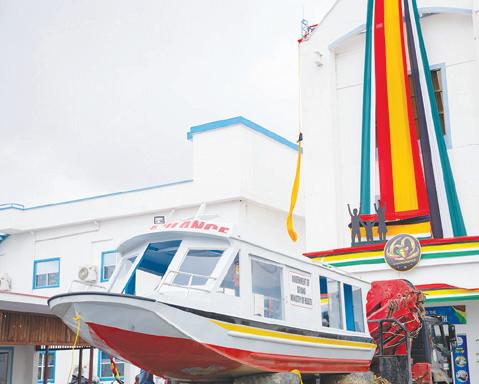
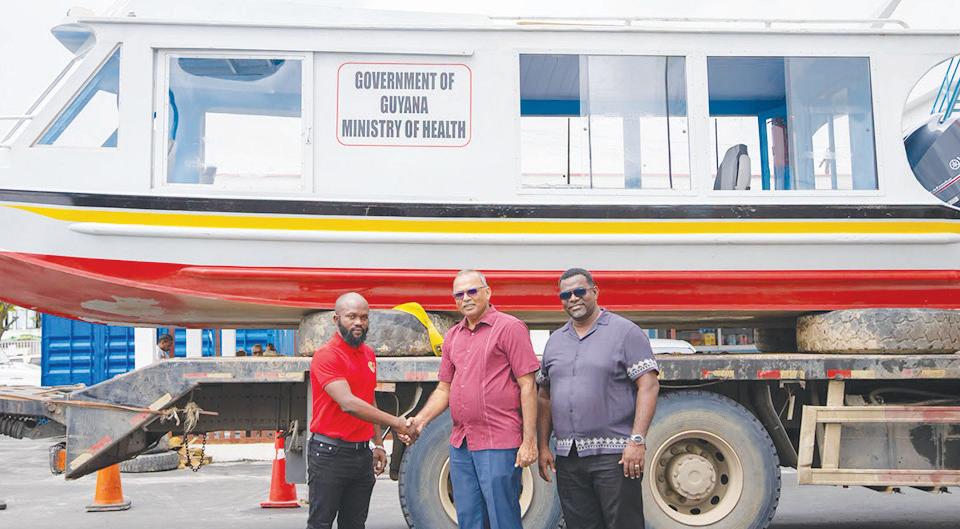
As part of the Government of Guyana’s continuous commitment to expanding healthcare infrastructure across the hinterland, the Health Ministry on Saturday handed over a state-of-theart water ambulance to the tune of $24.8 million to the regional administration of Region Seven (CuyuniMazaruni). The vessel is specifically designated to serve the residents of the middle
and lower Mazaruni areas, significantly strengthening emergency medical evacuation networks and riverine medical outreach capabilities. Subject Minister Dr Frank Anthony during the handing over ceremony stated that it is the Ministry’s broader master plan to build out a seamless transportation and technological grid across interior locations.
“We recognise that in Region Seven, we needed to have
several river ambulances.
On the request of the regional administration, we were able to procure this vessel to assist in bringing patients to central spots, when necessary.”
Dr Anthony emphasised that the integration of this water ambulance alongside previously distributed AllTerrain Vehicles (ATVs) and land ambulances creates a highly connected regional network. Crucially, this mo-
bility is being paired with the Ministry of Health’s ongoing deployment of Telemedicine sites across Region Seven. Under this initiative, community health workers and
medexes stationed at remote riverine posts can leverage real-time digital links to consult with specialist doctors, ensuring high-standard clinical guidance synchronously
while emergency transport is underway. The water ambulance will be deployed into immediate service within the Mazaruni river clinical network.


The Berbice Bridge will be closed to vehicular traffic on: Monday, June 1 –17:10h–18:40h and Tuesday, June 2 – 05:00h–06:30h.


Parika and Supenaam departure times – 05:00h, 10:00h-12:00h, 16:00h, 18:30h daily.




Thundery to light showers are expected during the day and at night. Temperatures are expected to range between 23 degrees Celsius and 27 degrees Celsius.
Winds: East-North-Easterly to East-South-Easterly between 2.68 metres and 4.09 metres.
High Tide: 17:07h reaching a maximum height of 2.42 metres.
Low Tide: 10:41h and 22:50h reaching minimum heights of 0.63 metre and 0.81 metre.










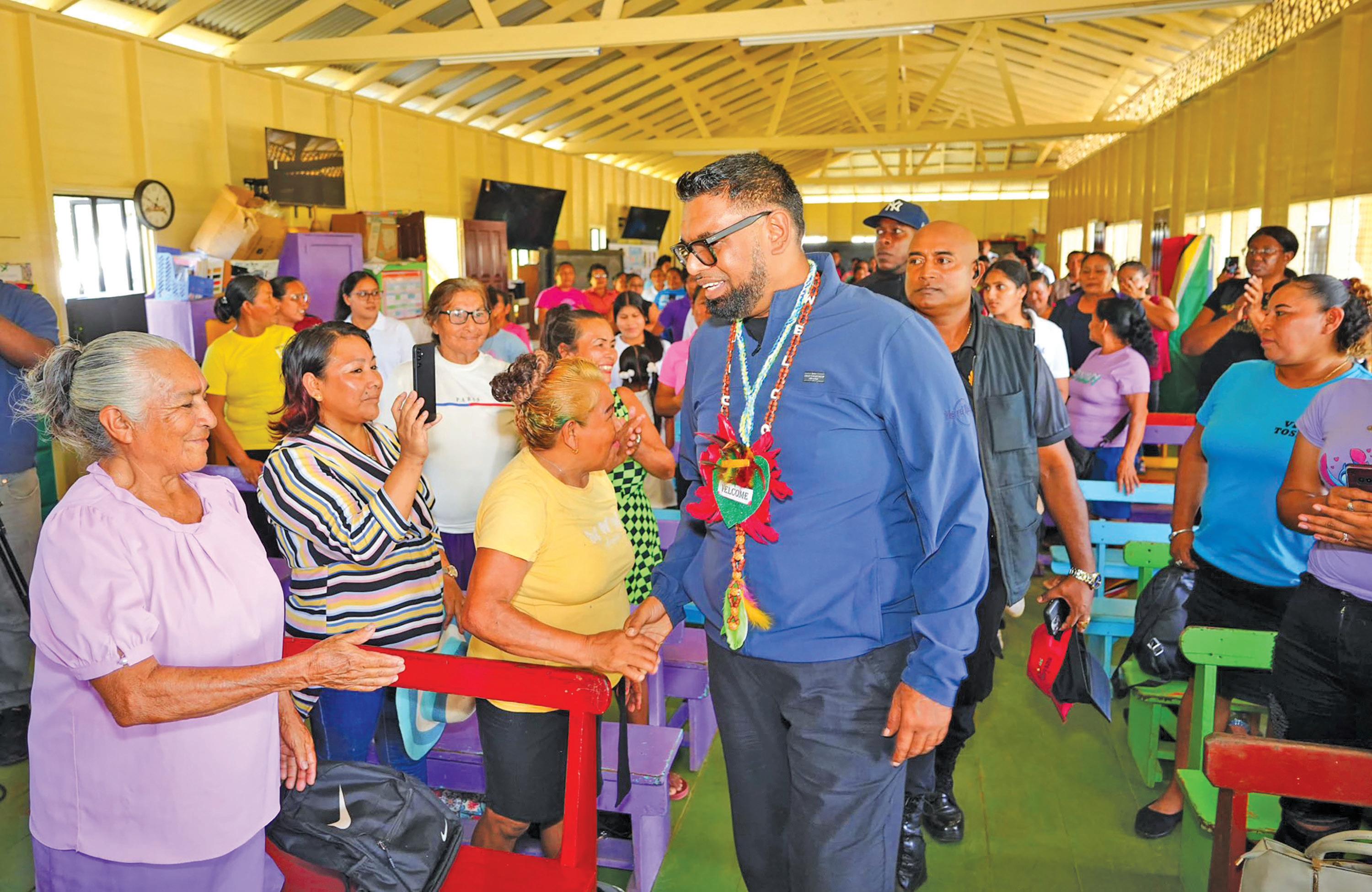
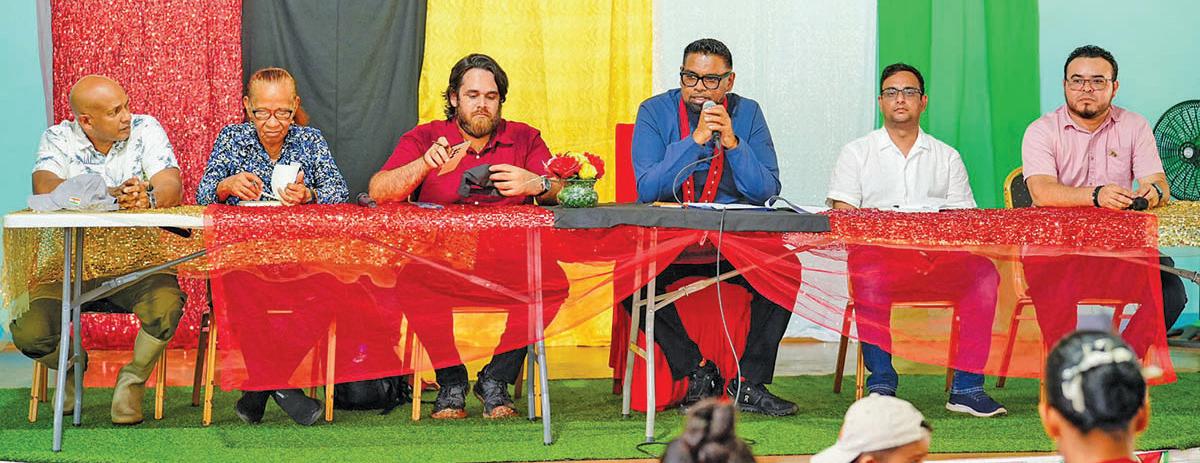
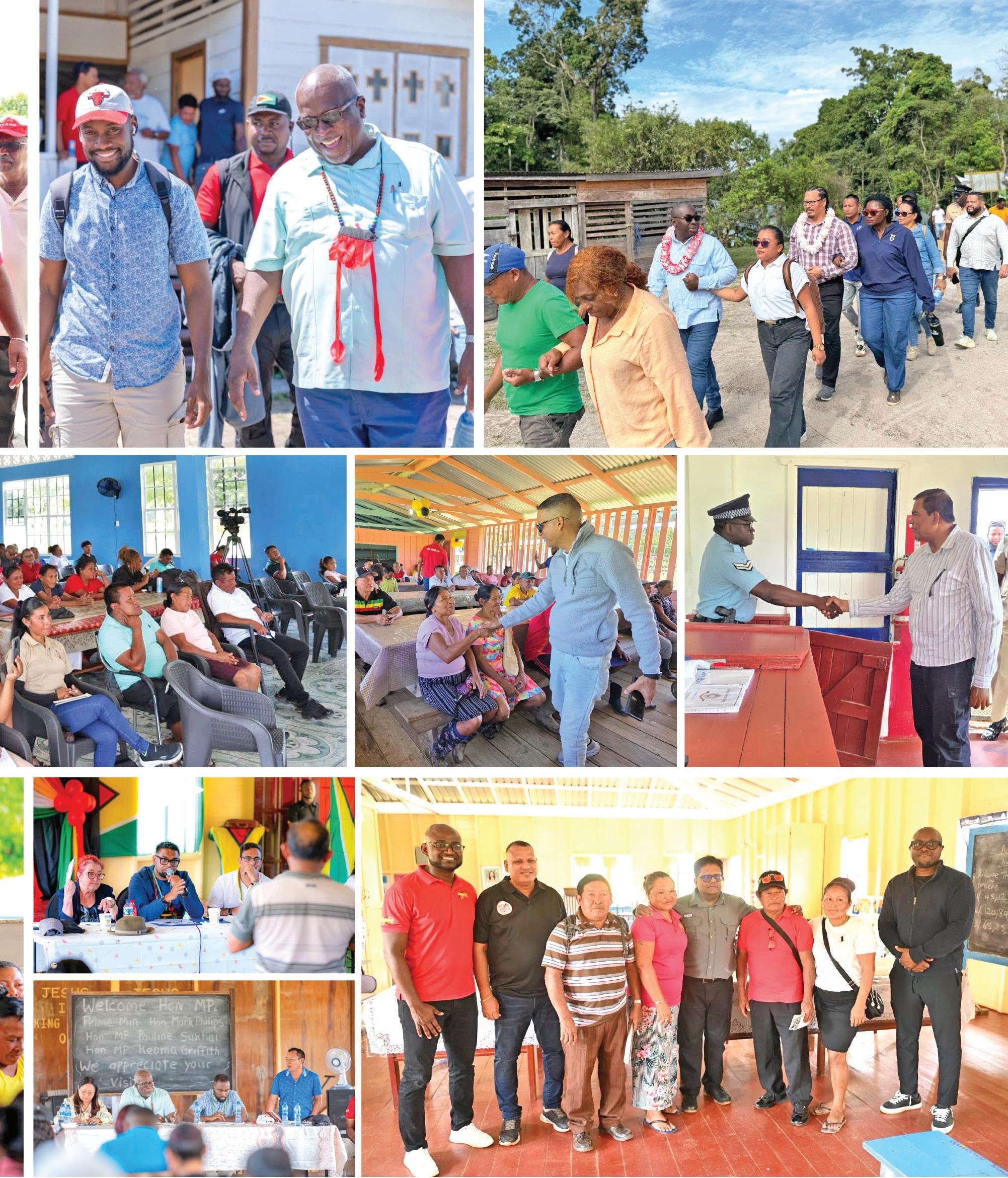
As part of efforts to enhance service delivery across the country, President Dr Irfaan Ali on Sunday announced the launch of a Government Service Centre in Bartica and Kamarang, Region Seven (Cuyuni-Mazaruni) as well as a new ferry vessel to ply the Parika-Bartica route. He made these announcements during a public engagement with residents of Karrau Village and Kamarang during day-one of a Cabinet Outreach across the region. President Ali informed the residents that the Government Service Centre would be fully operational within a month,
in Region Five (MahaicaBerbice) in February 2026; and the third, at the Cotton Field Call Centre
Coast
Ali announced that there would be a second vessel deployed to service the Bartica-Parika route. The Head of State explained
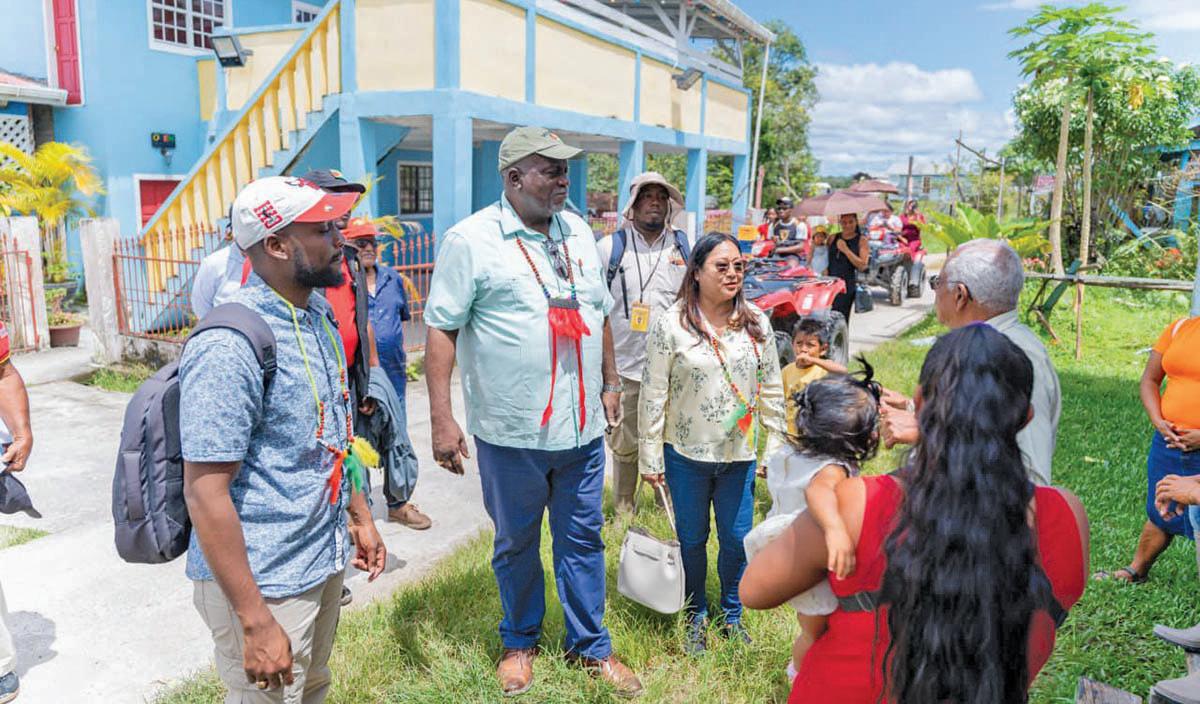
offering a wide range of essential Government services directly to citizens there without them having to leave the region. These include access to Guyana Revenue Authority (GRA) services, National Identification cards, National Insurance Scheme (NIS), licensing, and birth certificates-all at one spot. The establishment of the Centres will enable quicker access to Government services within the region, eliminating the need for long travel and will save residents both time and money.
Toshao of Karrau Village, Shane Cornelius, will head the new Government Service Centre. At the time of the announcement, President Ali was accompanied by the Minister of Public Service, Government Efficiency and Implementation, Zulfikar Ally, who has oversight for this initiative. Currently, there are three Government Service Centres established across Guyana to enhance access to key services, with plans to take this initiative to the other regions. The first centre was set up at the West Central Mall, Leonora, in Region Three (Essequibo Islands-West Demerara) in December 2025; the second at Fort Wellington
in Region Two (PomeroonSupenaam) in April 2026. However, to further enhance connectivity and travel for residents of Region Seven, President
Development Bank
In addition, President Ali also assured the Region Seven residents, as well as those from other hinterland and Amerindian communities, that they too would soon have direct access to soft loans and other business support through the Guyana Development Bank (GDB). He pointed out that the bank is designed to support community-driven development, enabling residents to invest in small enterprises, form consortia and pursue larger projects collectively.
“The Guyana Development Bank will allow us to target you directly, so that you can benefit from soft loans that will allow you to invest in your small businesses, that will allow you to come together in a consortium...and do larger projects,” President Ali told Karrau residents.
that the new vessel would ease travel along the Parika-Bartica corridor, which he acknowledged has long posed significant challenges for commuters. The new ferry will join an existing ferry vessel already operating on the route.



Editor: Tusika Martin
News Hotline: 231-8063 Editorial: 231-0544, 223-7230, 223-7231, 225-7761
Marketing: 231-8064 Accounts: 225-6707
Mailing address: Queens Atlantic Industrial Estate Industrial Site, Ruimveldt, Georgetown
Email: news@guyanatimesgy.com, marketing@guyanatimesgy.com
Ayear ago, delivering the keynote address at the Berkeley Innovation Forum at Ames Research Centre in California, USA, President Irfaan Ali outlined his vision for Artificial Intelligence: “Artificial Intelligence (AI) is rapidly advancing globally and may become the fifth industrial age. Artificial intelligence has the potential to address global challenges in a more coordinated and effective manner.” Ever since, he has particularised the use of AI in almost every initiative of his Government’s programmes.
Last week, outlining his Administration’s modernisation of the country’s security architecture, President Ali once again stressed the role of AI: “One of the key features of modern security systems is the use of AI to help in predictability so that you can actually stop crime before it even occurs, to help in traceability, to help in crime solving, and to remove human biases and human interference.”
Clearly then, AI will have a revolutionary effect on our local work environment. This has raised fears in some quarters that AI may make humans irrelevant. However, a recent doctoral dissertation by Zhu, Zhe (2026) (Generative Artificial Intelligence in Organizations: Strategic Decisions and Human Adaptations) positively addresses these fears.
He agrees upfront that generative AI is rapidly changing the way people work, raising concerns about job security and whether machines could eventually replace human employees. However, his research at the University of Vaasa in Finland suggests that workers who view AI as a useful collaborator rather than a threat may actually become more engaged in their jobs and better positioned for long-term career success.
Zhe Zhu examined how generative AI (GenAI) technologies such as ChatGPT and Gemini are influencing both workplace decision-making and employees’ day-to-day experiences. The research focuses on how organisations and workers are adapting as AI becomes a more common part of professional life. Many employees worry that AI could reduce their control over their work or make their skills obsolete. Yet Zhu’s findings suggest that these concerns can sometimes motivate workers to adopt AI tools more readily in an effort to stay competitive and maintain their value in the workplace.
“As NVIDIA CEO Jensen Huang has pointed out, workers are not simply being replaced by AI, but by those who have learned to use GenAI to work more effectively. The workers that perceive GenAI more positively are also more engaged and adaptable in their careers,” notes Zhu. According to his research, trust is one of the most important factors shaping successful collaboration between employees and AI systems.
Too much trust can be problematic because workers may accept AI-generated answers without properly checking them for accuracy. On the other hand, too little trust may prevent employees from taking advantage of the technology’s potential benefits. Finding the right balance is critical for both individuals and organisations. Zhu argues that the success of generative AI in the workplace depends less on the technology itself and more on how organisations implement and manage it. As AI becomes integrated into everyday operations, companies must address issues such as ethics, data privacy, and responsible governance.
“Organisations should follow a strategic roadmap to align the technology with their goals and build ecosystems with industry and academic partners,” states Zhu. The research suggests that workplaces are steadily moving towards an AInative future in which AI is no longer treated as a separate tool but becomes woven directly into workflows, systems, and business processes.
Zhu agrees with President Ali that the rise of AI represents the beginning of a major technological transformation that will reshape the labour market. “We are in a new industrial revolution. Some jobs will disappear, but new forms of work and entirely new industries will also emerge around AI infrastructure, data centres, and digital services. Instead of fearing the technology, employees should learn how to use it critically and develop their skills alongside it,” says Zhu.
While AI is expected to eliminate some roles, the research highlights the likelihood that it will also create new opportunities and industries. Workers who learn how to use AI effectively and thoughtfully may be better equipped to succeed as the technology continues to evolve.
Dear Editor,
During the day, or in the dead of night, while most of the country bustles with activity or remains fast asleep, Guyana’s military men and women, donned in combat uniforms and equipped with heavy-laden military weapons, remain wide awake, patrolling and protecting the territorial integrity of the country and keeping Guyanese safe from incendiary external threats.
In the absence of a national military draft, these men and women voluntarily enter military service, and for this, they become worthy of respect and admiration, particularly for their commitment and willingness to serve the country in the face of constant danger. Whether prompted to serve out of egoistic or altruistic reasons seems irrelevant, for these men and women share in one collective allegiance, one collective consciousness that symbolizes their commitment to being the defenders, the protective vanguards of the country’s national integrity and territorial legitimacy.
Rarely seen patrolling the streets, the security functions of the men and women who serve in Guyana’s military seldom appear visible to many and therefore are not fully cognizable by the very people who benefit from their pro-
tection. Regrettably, as if to embarrass the government, the malcontents seek every opportunity to underplay or discredit the important security functions and dedication of Guyana’s military personnel.
Evidence of such reaction can be seen in recent social media posts that tried to mock the military for its missteps in raising the flag during Guyana’s 60th Independence Day ceremony. Indeed, the incident does not stand as testimony to a proud moment for the military or the government. But how often does such a thing occur? Should one then allow the incident to foreshadow the ongoing security the military provides for everyone in the country? To do so only reflects one’s foolhardiness.
Moreover, one does not need to be reminded of the constant threat posed by Venezuela’s presidents, past and present-Nicolas Maduro and Delcy Rodriguez, respectively. As widely publicized, these former and current Venezuelan dictators seldom detract from their frivolous claims to a huge swath of Guyanathe Essequibo region-which necessitates constant vigilance by Guyana’s military. Consequently, lobbing childish barbs at the military-as in the case of the flag-raising mishap-is in-
sulting to the core integrity of the Guyana Defense Force and should not serve to diminish or underplay the exemplary efforts of Guyana’s brave men and women in uniforms who assiduously toil in fending off Venezuela’s aggression.
By way of the foregoing, I am reminded of the sacrifices Guyana’s Defense Force soldiers make each and every day; sacrifices that not only linger in the minds of neighbors , friends, and families but also deserve conspicuous memorialization so that those who find infantile pleasures in minor military incidents can be reminded of the brave who lost their lives in the line of duty to the country. Most worthy of note are Lieutenant Colonel Michael Charles, Colonel Michael Sahoud, Lieutenant Colonel Sean Welcome, Staff Sergeant Jason Khan, and retired Brigadier Gary Beaton, who lost their lives in the helicopter crash of December 8th, 2023. Not to be ignored are the two survivors, Lieutenant Andio Michael Crawford and Corporal Dwayne Johnson, both of whom carry the scars and memories of that fatal incident.
The above-mentioned military men left their homes and families daily to assume responsibilities relating to the defense and se-
curity of all Guyanese. Without assurances of returning home safely, these men, I am sure, understood that they could be endangering themselves in the protection of the country, yet they chose to voluntarily enlist to serve in the military, which then begs the question: (a) Do you think those who hurl social media criticisms at the military do so out of courage or cowardice? Before hastening to answer, please give some consideration to the eloquently expressed statement by Dr. Martin Luther King when he said: “Cowardice asks the question, ‘ Is it safe? ‘ Expediency asks the question, ‘ Is it politic? ‘ And vanity comes along and asks the question, ‘ Is it popular? ‘ But conscience asks the question, ‘ Is it right? ‘ And there comes a time when one must take a position that it is neither safe, nor politic, nor popular, but he must do it because the conscience tells him it is right.” Today, the men and women of Guyana’s military continue to serve, not because it is safe or popular, but because their consciences tell them it is right. For this, they deserve our utmost respect and admiration.
Regards, Narayan Persaud Professor Emeritus
Dear Editor,
In several countries across the Caribbean, a student can leave school in uniform, walk into a nearby shop, or send a quick Instagram message to an online vendor and purchase a vape with little difficulty.
Some are drawn in by flavours like cherry, bubble gum and cotton candy, while others see them promoted online as sleek, harmless or stress relieving. What many young people are not being told is that vapes are not all the same. Some contain nicotine, especially many disposable devices and pod systems, while others are labelled “nicotine-free” or “0% nicotine” but still contain flavours that appeal to children and adolescents.
Nicotine is highly addictive and can seriously affect young people’s mental health, learning, physical wellbeing and long-term development, while even nicotine-free vapes can help normalise vaping and make it seem harmless.
That should concern all of us, especially under this year’s World No Tobacco Day theme: “Unmasking the appeal - countering nicotine and tobacco addiction.”
For years, conversations around tobacco in the Caribbean have focused heavily on traditional cigarettes and smoking related diseases in adulthood. But a new nicotine crisis is quietly unfolding among young people, and Caribbean policy is struggling to keep pace with how quickly vaping products are entering youth spaces.
This conversation feels especially urgent as World No Tobacco Day falls during Mental Health Awareness Month. Nicotine is often marketed socially as relief, coping, a quick dopamine hit or focus. Yet for developing brains, nicotine can worsen anxiety, substance dependence, mood instability and stress cycles. Young people across the region are al-
ready navigating academic pressure, violence, economic uncertainty, social expectations and mental health struggles. Many are turning to vaping believing it offers comfort, while being exposed to products intentionally designed to keep them addicted.
The Caribbean cannot afford to dismiss this issue simply because the numbers are not yet as high as more traditional drugs.
According to the World Health Organization’s 2018 Global Youth Tobacco Survey, youth vaping rates in the Caribbean among 13to 15-year-olds ranged from 4% in Antigua and Barbuda to 17.2% in Trinidad and Tobago, one of the highest rates in the region. Of note is that the e-cigarette rates are higher than traditional cigarette use in some of these countries. In Jamaica, the same survey found that 11.7% of adolescents in that age group were current e-cigarette users. By 2022, the National Council on Drug Abuse reported that 15% of Jamaican adolescents aged 13 to 15 had used e-cigarettes, while 80% of youth who had used tobacco products reported first using them before age 14. These are not just statistics. They represent thousands of Caribbean students being exposed to nicotine addiction during critical stages of brain development.
And this rise in youth vaping is no coincidence.
Regional public health bodies including CARPHA, PAHO and the Healthy Caribbean Coalition (HCC) have repeatedly warned that flavours, packaging and advertising strategies are specifically designed to attract younger users. Across the region, vapes are sold in bright colours and sweet flavours, placed near snacks and sweets in stores, promoted through social media and influencer culture, and often marketed as cleaner

or safer alternatives to cigarettes. In some countries, products are still easily accessible near schools despite age restrictions, with little accountability for vendors who sell these harmful products to minors.
Young people are uniquely vulnerable to nicotine addiction because the brain continues developing until around age 25. Nicotine can interfere with attention, memory, learning and impulse control by altering brain chemistry and affecting areas linked to concentration and emotional regulation. Students may experience difficulty focusing in class, shorter attention spans, increased anxiety and mood related challenges that affect school performance, relationships and overall wellbeing. Nicotine dependence can also normalize substance use behaviours at an early age and increase vulnerability to long-term addiction patterns.
At the same time, vaping is far from harmless physically. Aerosols from e-cigarettes can contain carcinogens, heavy metals and fine particles linked to inflammation and respiratory illness. Young users may experience chronic cough, wheezing, asthma flare ups
and lung irritation, while long-term risks tied to cardiovascular disease and other non-communicable diseases continue to emerge.
Despite these growing concerns, major legislative and policy gaps remain across the Caribbean.
Most CARICOM countries have ratified the WHO Framework Convention on Tobacco Control (WHO FCTC), the world’s leading tobacco control treaty. However, implementation across the region remains inconsistent. The HCC has highlighted weak restrictions on advertising and promotion, insufficient taxation policies, incomplete smokefree protections and slow action on regulating electronic nicotine delivery systems such as vapes.
Jamaica’s Public Health Tobacco Control Regulations of 2013 only address aspects of Articles 8, 10 and 11 of the FCTC, which relate to smoke exposure, disclosures and packaging requirements respectively. Significant gaps remain in areas such as Article 13 on advertising bans and Article 5.3 on protecting public health policy from tobacco industry interference. While calls have been made for stronger legislation to regulate e-cigarettes and vaping prod-

ucts more comprehensively, progress has been extremely slow while youth use continues rising. The tobacco conversation must therefore become more than awareness. It must become action.
If Caribbean governments are serious about protecting children and young people, nicotine products cannot continue slipping through legislative gaps while being packaged and promoted in ways that clearly appeal to youth. Across the region, conversations about restricting the marketing of unhealthy foods and drinks to children took 10 to 15 years to gain serious policy attention. We cannot afford to wait another decade for nicotine products, especially when the harm is already reaching young people.
We need stronger enforcement against underage sales and penalties for vendors who violate these laws, tighter regulation of vape advertising and online promotion, restrictions on flavours and packaging designed to attract children, and greater public education about the mental and physical harms associated with vaping. Schools also need support to address vaping through prevention and ear-
ly intervention efforts. Most importantly, we must actively challenge the misinformation that paints vaping as harmless simply because it looks different from traditional cigarettes. Addiction does not become less dangerous because it comes in bright colours or fruity flavours.
Addressing this issue will require all hands-on deck. Governments, policymakers, schools, parents, youth advocates, civil society organisations and public health agencies all have a role to play in limiting easy access to vapes, strengthening protections for children and educating young people honestly about the risks.
The tobacco industry is evolving quickly. Caribbean policy and public awareness must evolve faster.
This World No Tobacco Day, protecting Caribbean youth means looking beyond traditional cigarettes and confronting the growing accessibility and normalization of nicotine addiction in a new form. If we fail to act now, an entire generation could pay the price for policies that moved too slowly while the industry moved fast.
Your Sincerely,
Natalia Burton


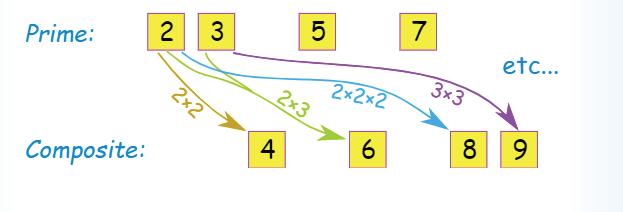
A prime number is a whole number that cannot be divided exactly by other whole numbers except itself and 1. That is the same as saying prime numbers cannot be made by multiplying other whole numbers.
Example: 5 is a prime number.
We cannot multiply other whole numbers like 2, 3 or 4 together to make 5. 5 can only be divided by 5 or 1 without leaving a remainder.
Example: 6 is a composite number
6 can be made by 2×3 so it is not a prime number, it is a composite number
6 can be divided exactly by 2, or by 3:
Example: 7 is a prime number.
We cannot multiply other whole numbers like 2, 3 or 4
together to make 7.
7 cannot be divided up exactly:
When a number can be divided up exactly it is a composite number
When a number cannot be divided up exactly it is a prime number
So 6 is composite, but 7 is prime
Exercises:
1) List the prime numbers between 1 and 100.


In this fun and easy animal science experiment, we are going to investigate earthworms and try to determine if they like light.
Materials:
Earthworms (You can often find these under rocks in your yard or you can purchase them at a bait or pet shop)
Scissors
Desk lamp
Paper towels
Box or plastic tub
Instructions:
Cover up half of the box with a piece of cardboard, book, or some other item that will not allow light to pass through. If you are using a shoebox, cut the lid in half.
Fold up several paper towels. Make a layer out of several sheets and place it in the bottom of your container.
Wet the towels so they are nearly saturated.
Gently place your earthworms into the container. Space them out evenly and try to make sure they are not

touching.
Return the cover to your container if you removed it while placing the earthworms inside.
Place the desk lamp nearby and turn it on. Make sure it is one to two feet above the top of the container.
Do not disturb the container for 15 to 20 minutes.
Observe where the earthworms have ended up.
How it works:
By creating an area with light and dark sections, you provide the earthworms an opportunity to essentially make a choice of which area they prefer.
Make this a science project:
Try leaving the paper towels in the dark side dry to see if this effects the earthworms' preference on where to move. Try different temperatures of water on the paper towels, making sure not to make the temperatures too extreme to avoid injuring the earthworms. (sciencefun.org)

By Tim SeiBleS
Space is the place. —Sun Ra
in
and the June bugs click-click hard bodies hitting the screen.
Couldn’t tell how much time had passed.
Light from traffic on the ceiling.
Late that sound in the sky soft.
Thinking out loud then inside my head: they were still there— the way they walked that bright flicker in their chests.
Sometimes I have believed I don’t belong here— I mean it’s not just the American insanities but everywhere: the sense of having been left on Earth with no explanation— a mouse dropped in a maze
(Source: Poetry [September 2023])

Write a story about a newlydiscovered heir to the kingdom.



In light of continu-
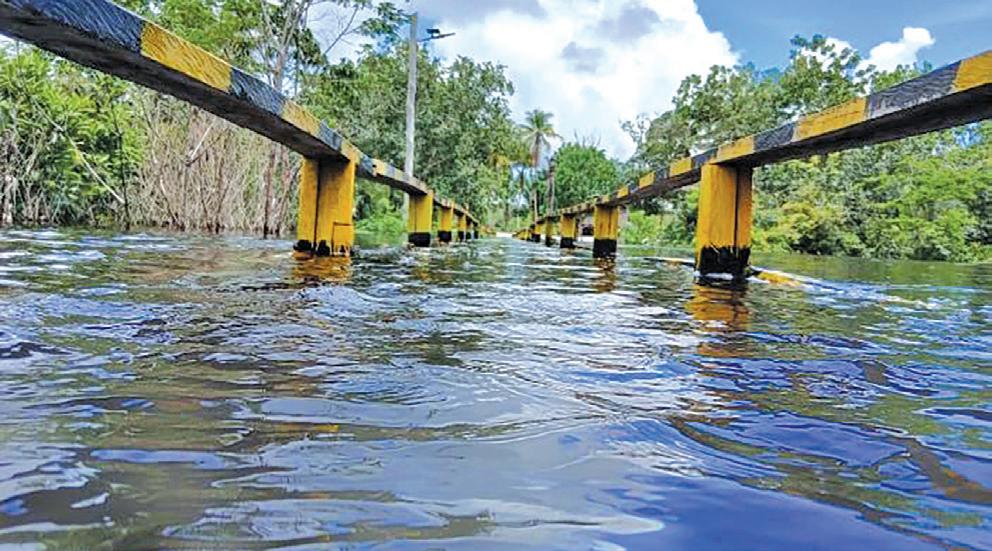
ous downpours across Guyana, residents of the indigenous village of Moraikobai, Region Five (Mahaica-Berbice) and other villages along the Mahaicony River are bracing themselves for the worst due to rising water levels.
On Sunday, water covered sections of the community’s access bridge and surrounding communal areas, while rising water levels have also affected other communities along the river, with several houses in Sewe Village, Section Three, were reportedly flooded due to persistent rainfall over the past several days.
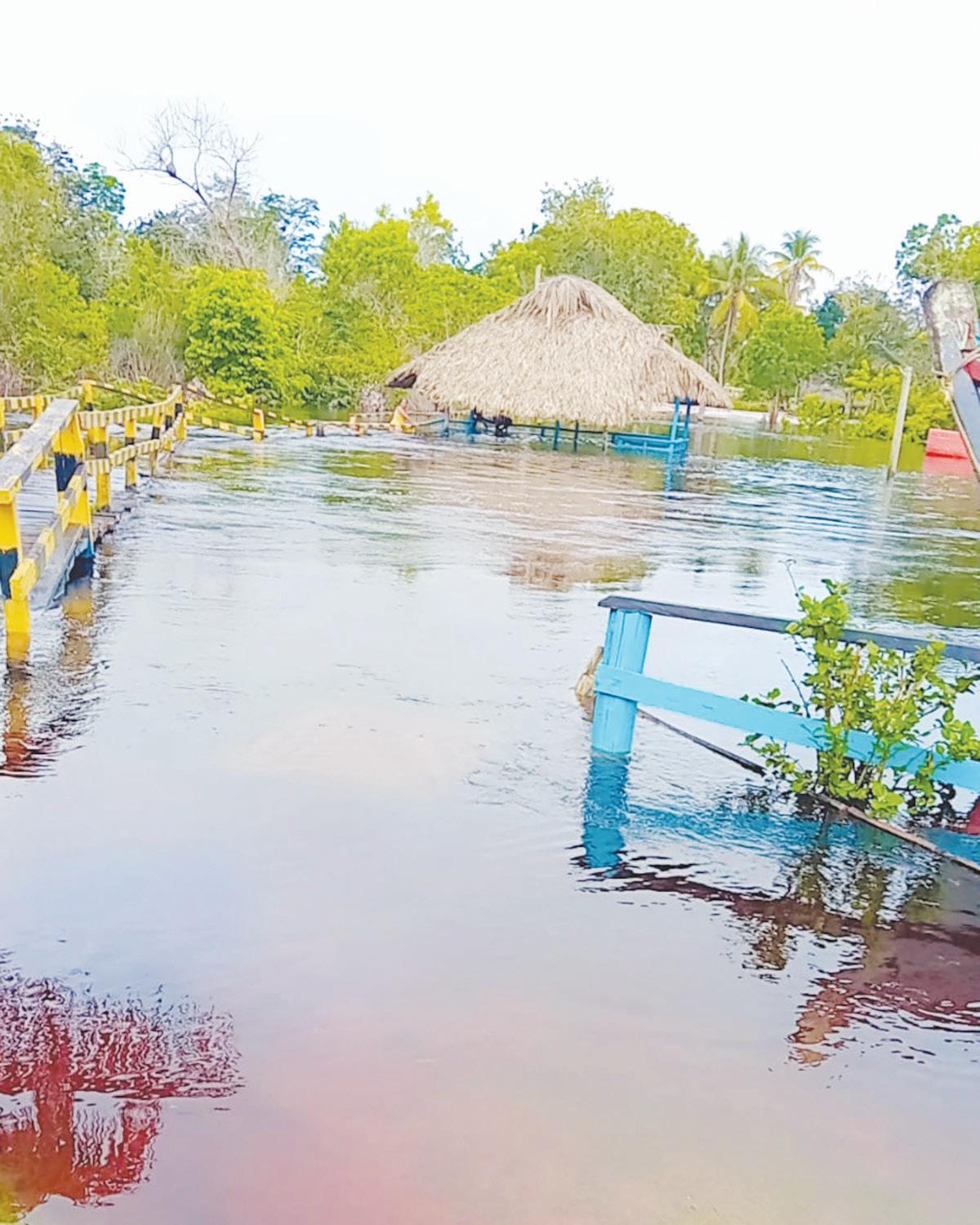
The situation comes as the Hydrometeorological Service continues to forecast showers, rain and thunderstorms across Guyana, warning that already saturated conditions could contribute to flooding in low-lying and riverine communities. The agency has also cautioned that continued rainfall could place additional pressure on vulnerable areas as water levels remain elevated.
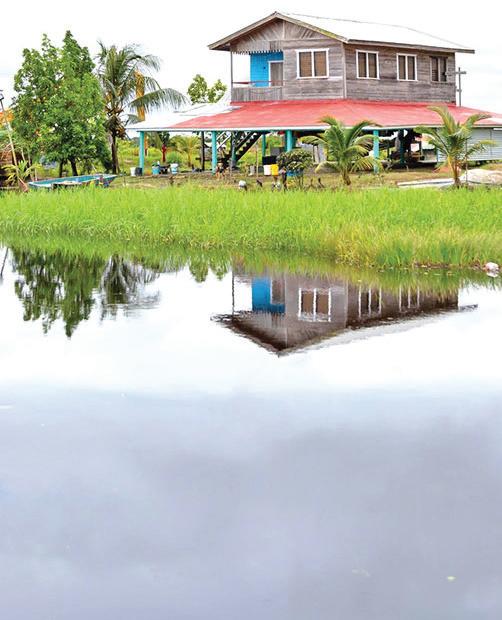
The flooding in Region Five comes amid wider con-
cerns over rainfall-related flooding across parts of the country. Over the weekend, government officials were dispatched to assess con-
Apart from financing, the bank will also deploy officials to provide coaching, mentoring, and financial management training, ensuring borrowers have the tools needed to build and sustain successful businesses.
The Guyanese leader noted that the initiative represents the Government’s commitment to providing resources, equipping citizens with the knowledge and guidance to make the most of them.
The GDB is set to launch in the coming months, as soon as legislation is approved in the National Assembly. The Guyana Development Bank Bill is slated to be laid in the National Assembly at the upcoming sitting on Friday. Already, some US$100 million was allocated in the 2026 National Budget to establish the facility and provide seed capital to banks.
During Sunday’s engagement, President Ali also addressed a number of issues that residents raised, including ongoing infrastructure investments in Region Seven, such as the Sand Hill Road leading into Bartica. He also informed residents that a full assessment is underway to determine the best electricity solution for the village. He also announced that the village will soon receive a permanent dentist attached to the Health Centre. A dental chair has already been purchased and
is being installed. In a comment following the engagement at Karrau on Sunday, Ali emphasised the importance of involving citizens in the decision-making process for the development of their community. He noted that the complaints from Karrau have reduced by 95
Griffith and Minister within the Ministry of Local Government and Regional Development Pauline Sukhai who met with the residents and village representatives of Imbaimadai and surrounding communities to listen to their concerns and discuss areas for
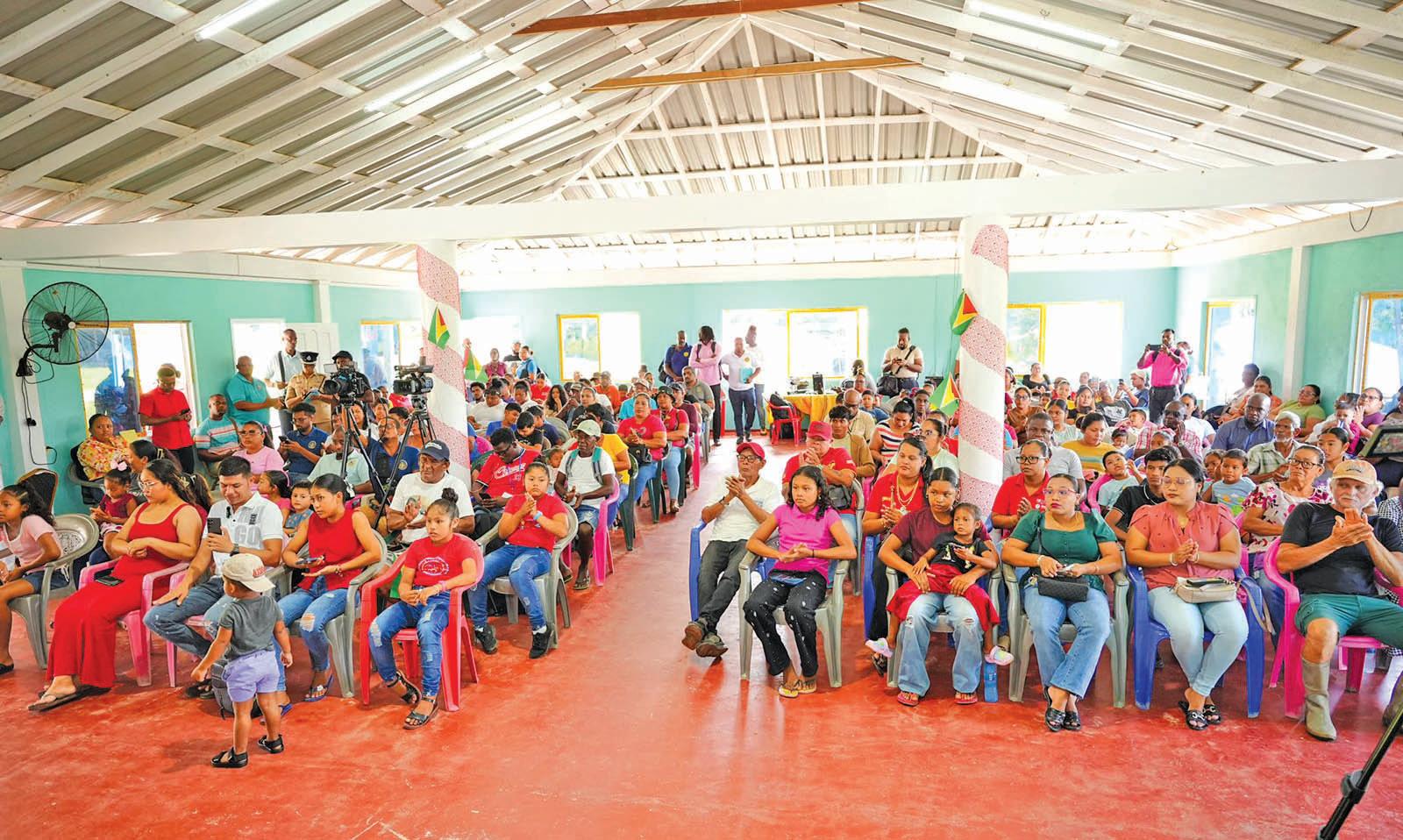
per cent, with the requests from residents building on projects already executed in the village. According to him, during the two-day outreach, “...not only are we going to be looking at the opportunities and what we have to do, but we’ll also be assessing the performance of technical people. And wherever there are lapses in that performance, there will be a consequential effect. And from this outreach, you will see some of that effect taking place.”
Meanwhile, Prime Minister (PM) Brigadier (Ret’d) Mark Phillips who was also part of the outreach across the region was joined by Labour and Manpower Planning Minister Keoma
further support. During the engagement, residents raised several matters related to community development and service delivery, including street lighting, old-age pension, land titling and demarcation, the rehabilitation of roads and bridges, health services, a proposed solar farm, the development of a community ground and centre, education, mining and agriculture.
The PM assured residents that the matters raised would be examined and advanced through the relevant Ministries and agencies, in keeping with the Government’s development and service-delivery framework.
es were reported flooded.
Meanwhile, Region Five Chairman Ricardo Phillips when contacted told the Guyana Times that the Regional Democratic Council has activated the emergency plan and continue to monitor communities along the Mahaicony River as water levels continue to rise.
According to Phillips, Regional Councillor Derek John remains on the ground in affected communities and has been providing hourly updates while preliminary assessments are being carried out.
“It’s not worrying; it has impacted a few residents. We’re doing preliminary assessments,” Phillips said. He explained that the rise in the river followed approximately 48 hours of continuous rainfall and noted that such increases are not uncommon during periods of heavy precipita-
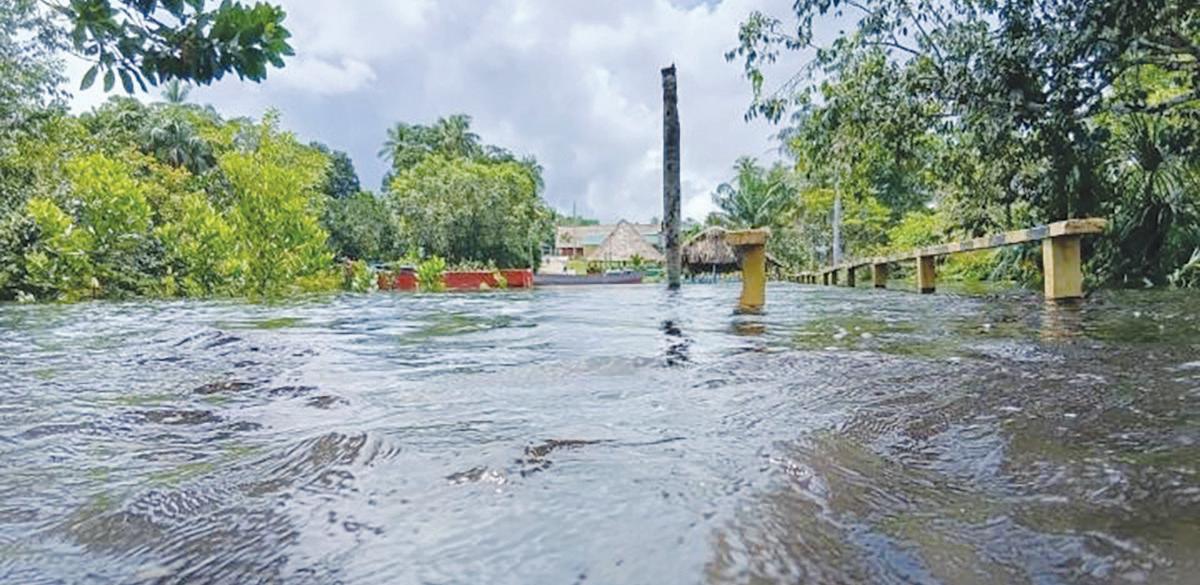
ditions in several affected areas, including Region Three (Essequibo IslandsWest Demerara), Region Five (Mahaica-Berbice) and Region Six (East BerbiceCorentyne), where some communities were flooded.
However, for residents living along the Mahaicony River, the concern extends beyond flooded yards and access routes but also farms, transportation links and other aspects of daily life. The developing situation has attracted na-
tional attention, prompting President Dr Irfaan Ali to dispatch ministers and officials to assess conditions in affected communities.
Minister of Education, Sonia Parag travelled up the Mahaicony River on Saturday as authorities sought first-hand assessments of the flooding. In a social media update, Parag said several villages along the river had been affected by above-normal rainfall, including Sewe Village, Section Three, where hous-
tion in the area.
While regional authorities do not currently consider the situation alarming, they continue to monitor conditions closely as additional rainfall remains in the forecast.
With water levels already affecting communities such as Moraikobai and Sewe Village, residents along the Mahaicony River will be hoping for a break in the weather in the days ahead.

A23-year-old labour -
er from Scheme Hill, Amelia’s Ward, Linden, was stabbed to death during a confrontation with a suspect who was seen defecating in his yard. The deceased has been identified as Tafawa Alexander.
Based on reports received, at about 18:10h, the suspect was seen defecating in the deceased’s yard.
In response, Alexander reportedly armed himself with a piece of wood and dealt the suspect sever -
al lashes about his body. In return, the injured suspect, who was reportedly armed with a knife, stabbed Alexander several times.

A knife, suspected to be the murder weapon, was found in the suspect’s pants pocket. An investigation is underway.
He was rushed to the Linden Public Hospital, where he was pronounced dead. The suspect was arrested and is currently receiving medical treatment.
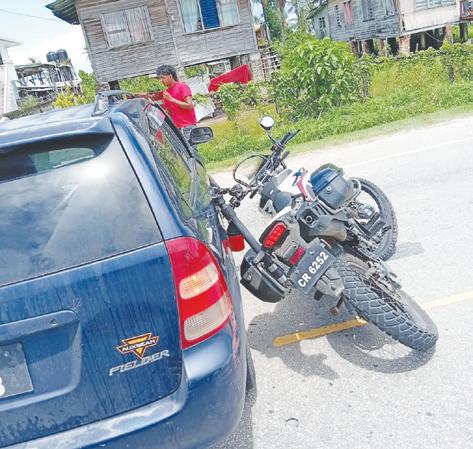
Atraffic rank attached to Regional Police Division No. 3 is battling for his life after he was reportedly struck off his motorcycle by a turning motorcar along the Hague Public Road, West Coast Demerara (WCD) on Sunday. Based on reports received, the accident involved the Force’s motorcycle bearing registration number CR 6252 and a motorcar, PPP 758, driven by a 39-year-old resident of Parfaite Harmonie, West Bank Demerara (WBD). Police stated that the motorcar was parked on the northern side of the roadway but suddenly attempted to make a U-turn and instead collided with the motorcycle that was proceeding east along the pub -
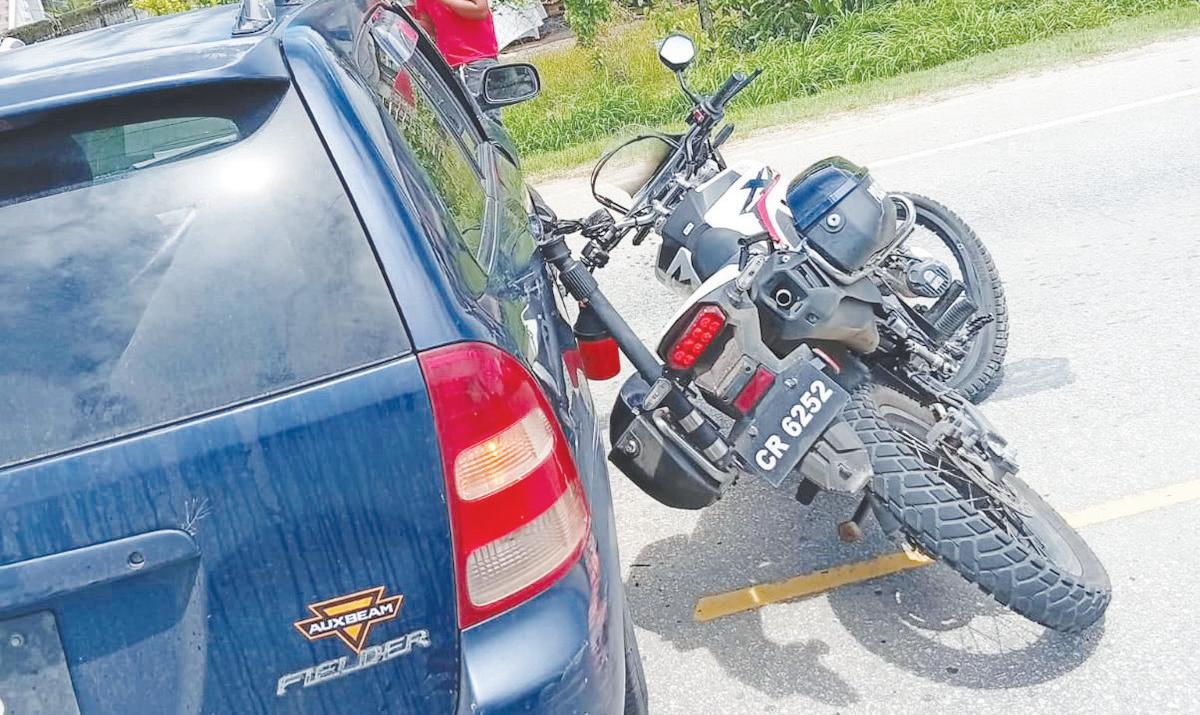
lic road. As a result of the collision, the traffic rank was flung over the motorcar and fell onto the road surface, where he sustained injuries to his body.

He was picked up by public-spirited persons in a conscious condition and taken to the Leonora Cottage Hospital, where he was treated and later transferred to the De Kinderen Regional Hospital for further medical attention. A Breathalyser test conducted on the driver of the motorcar showed no traces of alcohol in his system, but he was arrested and is assisting with investigations.
A20-year-old Venezuelan construction worker from Zeelugt, East Bank Essequibo (EBD) is now nursing a gunshot injury following a shooting incident at Parika on Saturday evening. Based on reports received, a 62-year-old farmer from Parika, EBE claimed that he was at home when he heard a sound coming from his front door. As such, the farmer, who is a licensed firearm holder, went to inquire and reportedly observed the victim under a shed on his property.
The farmer, police stated, reportedly discharged two rounds from his firearm in the direction of the young man, which struck him in his upper right abdomen area.
The injured Venezuelan was taken to the De Kinderen Regional Hospital, where he was treated and admitted as a patient. The matter was subsequently reported to the police, and a probe was initiated. The licensed firearm, five live rounds of ammunition, and two spent shells were lodged at the Parika Police Station pending the outcome of the investigation.

We’ve been pushing “tourism” for some time now – having abandoned Burnham’s aversion to that industry as creating a nation of servants and gigolos!! However, seems we’ve been too bedazzled by the pull of our Caribbean neighbours’ sand and surf – which we could never duplicate no matter how hard we tried at #63 Beach – to appreciate our own unique assets!! Yes…yes…we’ve been talking about our great unspoiled forests and savannahs and mountains – but have we exploited the twist introduced in the novel “The Lost World”??
This was an adventure and science fiction yarn by British writer Sir Arthur Conan Doyle – recounting an expedition to a remote plateau in the South America –we could claim it’s Mt Roraima!! Dinosaurs and other prehistoric animals still survived, along with a tribe of vicious ape-like creatures that are in conflict with a group of indigenous Indians!! Could you imagine the pull our romancing of this tale could generate in those White Folks up north – who just crave being stimulated to feel alive?? Why else you think they’re so addicted to horror flicks??!!
Anyhow, it appears that the recent decision to hold our 60th Independence anniversary flag-raising ceremony at Fort Island has raised consciousness of the tourism potential of the real-live historic Dutch fort on the island!! This belated recognition is rather surprising since in all our nearby tourism hotspots – especially on the Dutch ABC islands off Venezuela in the Caribbean (Aruba, Bonaire and Curaçao) – their remnants of old Dutch forts are some of their biggest attractions!! As your Eyewitness wrote a few days ago, back in 1679, Dutch Governor Abraham Beekman had ordered the construction of a fort on the island – to protect their settlements that had started upriver since 1621 – from threats by the Spanish!! Significantly, it was then called FLAG ISLAND to announce Dutch sovereignty over Essequibo!! The wooden fort was largely completed by 1687, and later, in 1743–1744, the Dutch built the brick fortress known as Fort Zeelandia – the ruins of which remain – that became the capital of the Dutch colony of Essequibo.
But your Eyewitness thinks we should “spice up” our marketing based on our local history. And an essential part of our history is that of “The Dutchman” who haunts all of the spots where they’ve left artifacts of their presence – especially graves!! The world knows of “The Flying Dutchman” – that ghostly ship with its full crew of dead 17th century Dutchmen – that crashed off the Cape of Good Hope and still plies the seven seas!! All it would take is one of our writers to revive the spirit of Mittelholzer and write a good ghost story about Fort Island!!
Imagine the money we’d make only from the trinkets!!
…we own
Your Eyewitness is rather miffed that Guyanese Ian Roberts, who had worked his way up the ladder to become the Des Moines Public Schools (DMPS) superintendent over in the States, was sentenced on Friday to two years in prison. We should’ve all been aware of his story by now. His crime wasn’t that he wasn’t qualified for the job! His crime wasn’t that he wasn’t performing his job properly!! His crime wasn’t that he wasn’t liked by the people in the district!!
No!! His crime was that he wasn’t actually a US citizen that he’s claimed to be on his job application!!
Now Your Eyewitness isn’t saying that if he did the crime, he must do the time…but we must recognise that what he did was replicated by over half the hundreds of thousands of Guyanese who entered the US via the “back track”!! His is the story of a Guyanese who “did good” – ironically in the glorified Horatio Alger tradition of America!!
Your Eyewitness suggests we have a job waiting for him when he’s deported!!
…the Bar Association
The Bar Association used to be an Old Boys’ Clubwith that stiff upper-lip British tradition!! No More!! At its last office-bearers’ elections, if it wasn’t virtual, fists would’ve flown!!

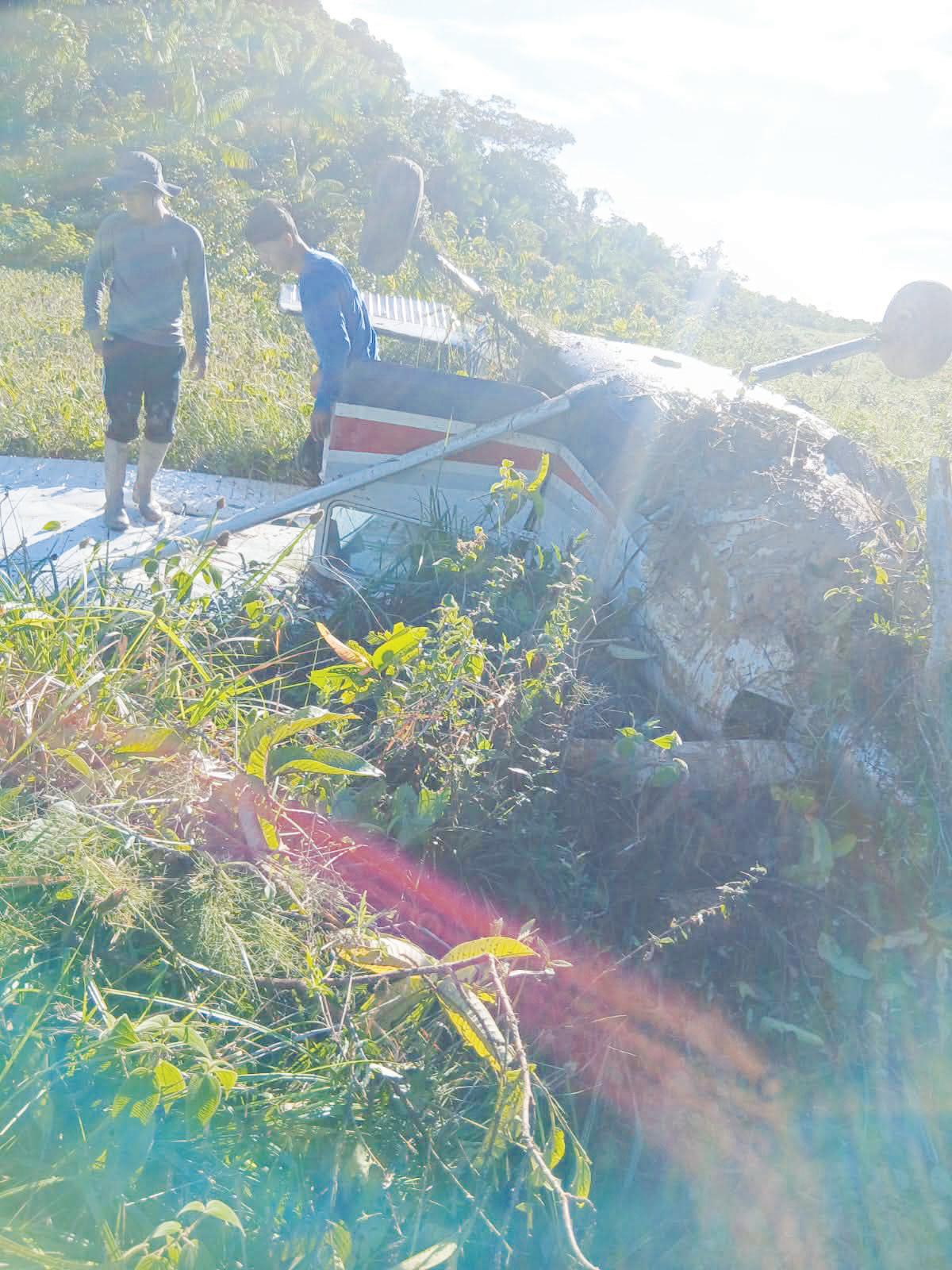
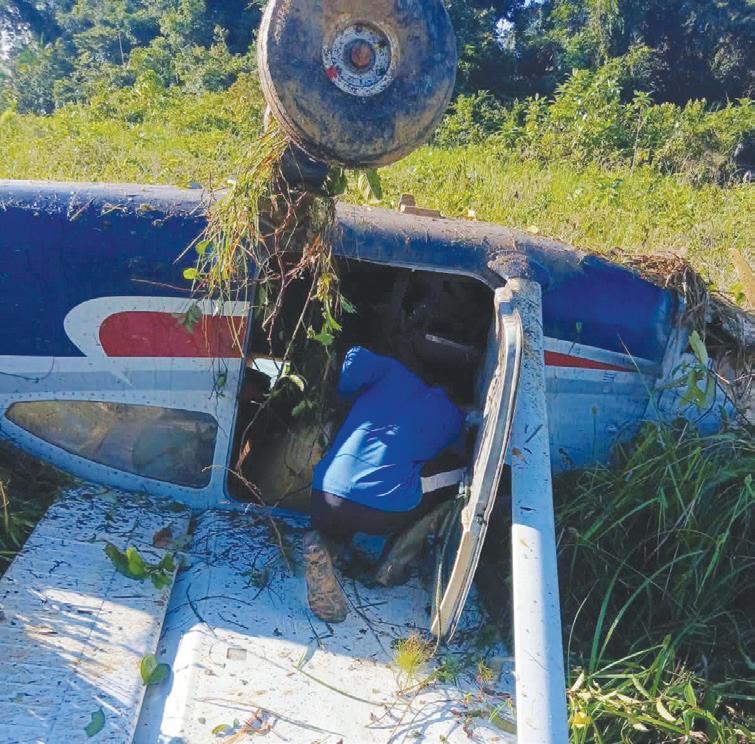
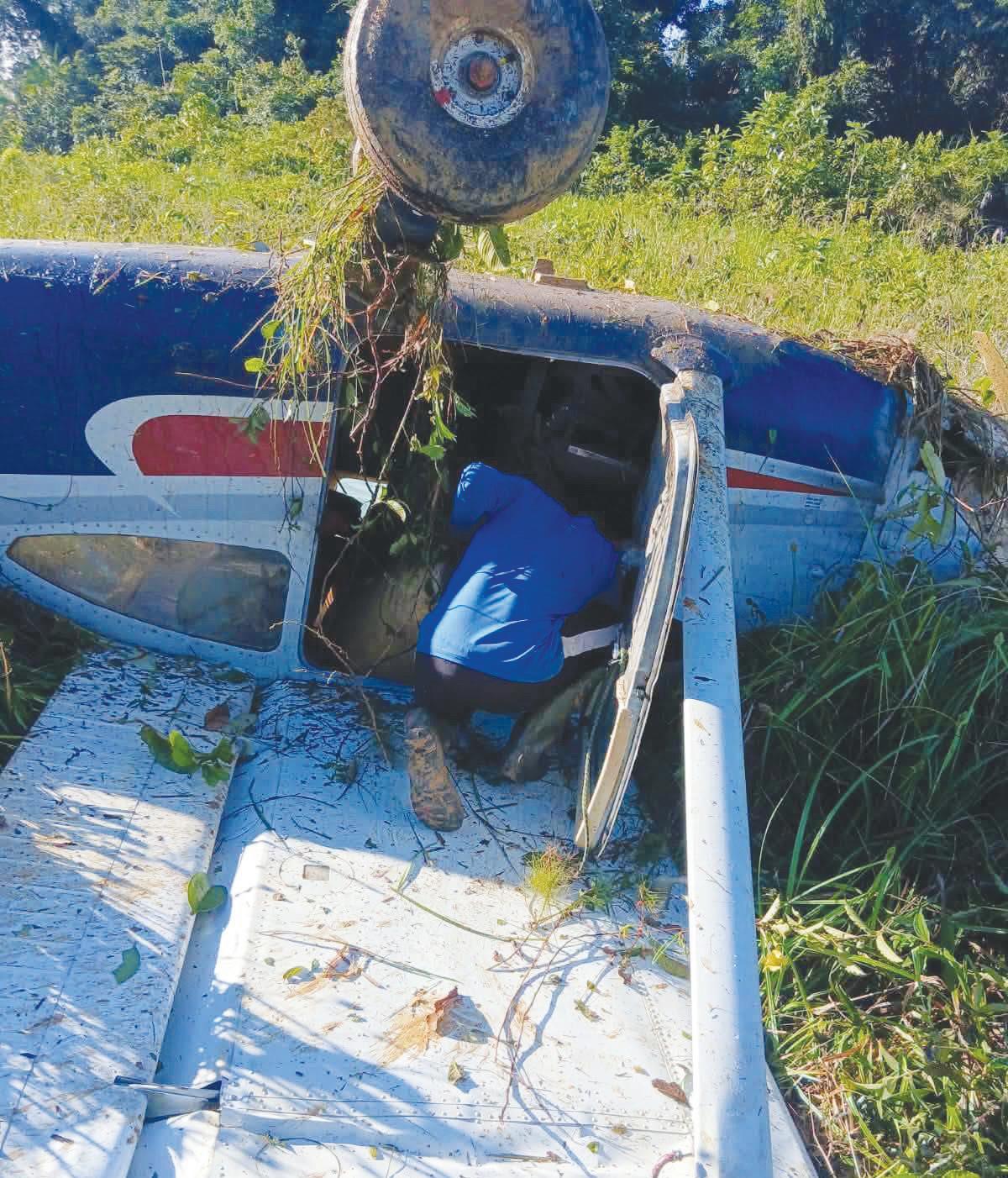
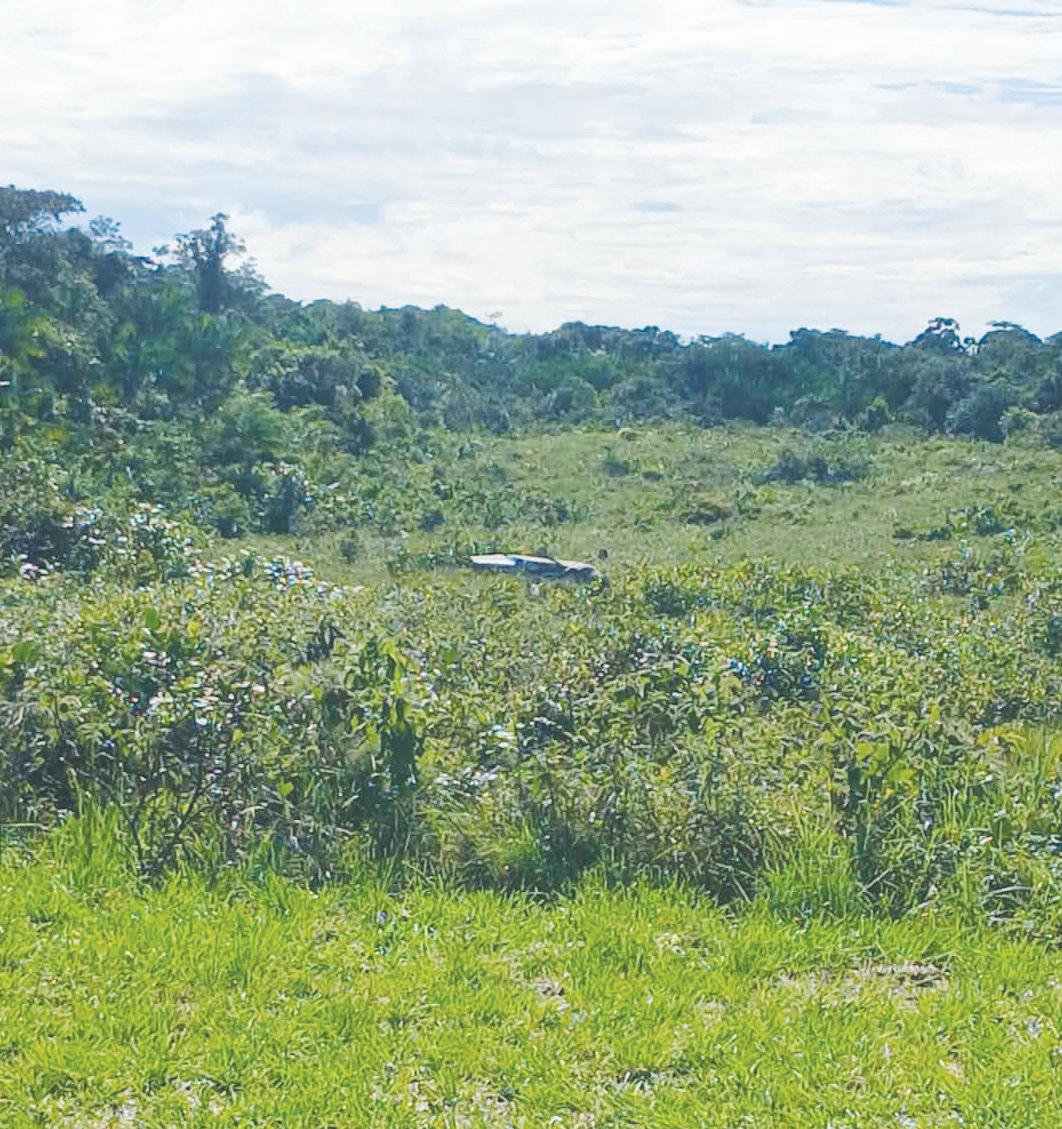
ACessna 182P
Skylane aircraft crashed on Sunday morning during takeoff from the Aricheng Airstrip in Region Seven (CuyuniMazaruni) leaving the pilot who was the sole occupant at the time with minor injuries. According to reports, the incident occurred at around 07:50h in the Mazaruni region.
The Guyana Civil Aviation Authority (GCAA) has since launched an investigation into the non-fatal aircraft accident.
“Preliminary reports indicate that there are no fatalities. The GCAA is working closely with relevant stakeholders to determine the cause of the accident,” the authority said in a statement on Sunday. However, the Guyana Times understands that the CESSNA
182P aircraft, with registration number N9347G, is owned by a well-known Guyanese pilot; however, he was not the one flying the plane at the time of the crash.
Sunday’s plane accident comes nearly two months after a pilot, Captain Ryder Castillo, was killed in a crash on Friday, April 10, in Guyana’s rugged mountainous and jungle terrain along the MahdiaImbaimadai route. The Cessna 208 (registration 8R-YAC), operated by Air Services Limited (ASL), had departed Mahdia, Region Eight (PotaroSiparuni), at 08:10h on a cargo shuttle flight bound for Imbaimadai, Region Seven (Cuyuni-Mazaruni), with an expected arrival time of 08:40h. However, it failed to report its arrival,
prompting a flight progress check at 08:44h. At that time, weather conditions in the area were reportedly poor, with heavy rainfall and reduced visibility. The GCAA swiftly responded to the incident, initiating protocols for a missing aircraft involving a Cessna 208 operating along the MahdiaImbaimadai route. Captain Castillo, a Nicaraguan national, was the sole occupant in the aircraft at that time. He had been employed with ASL for about a decade, with approximately 20 years of flying experience. Due to the rugged mountainous and jungle terrain, it took rescuers several days to finally reach the crash site on Monday, April 13, and then another 24 hours to extract the body. The GCAA, as well
as other officials, had cited that recovery efforts were severely hampered by the hazardous terrain, especially since no helicopter could safely operate at the site. Nevertheless, the Guyana Defence Force (GDF) Special Forces removed the pilot’s body from the rugged, thickly forested terrain the following day, flying first to Imbaimadai and then to Georgetown late Tuesday, April 14. Based on reports, by the time rescuers arrived at the site, Castillo’s body was already badly decomposed. Meanwhile, in addition to the remains, investigators also recovered documents and personal effects from the crash site to assist in determining the circumstances surrounding the crash.

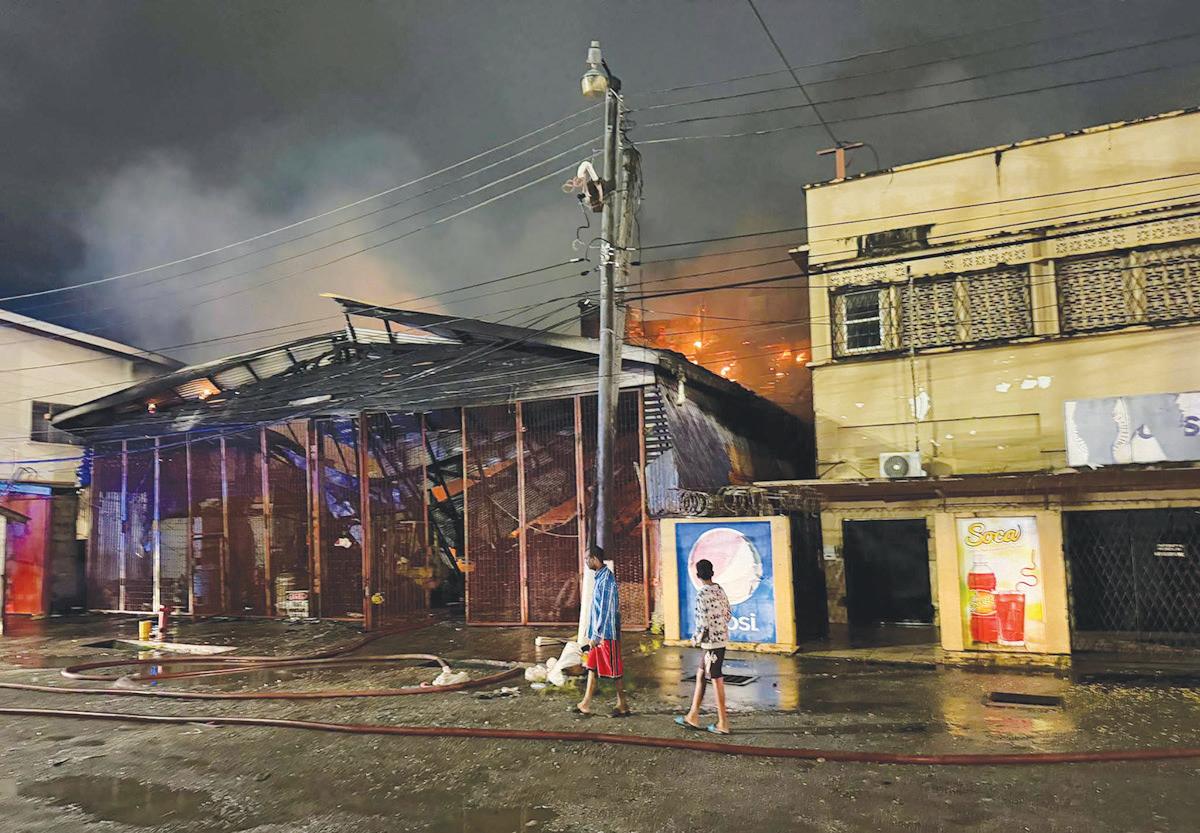
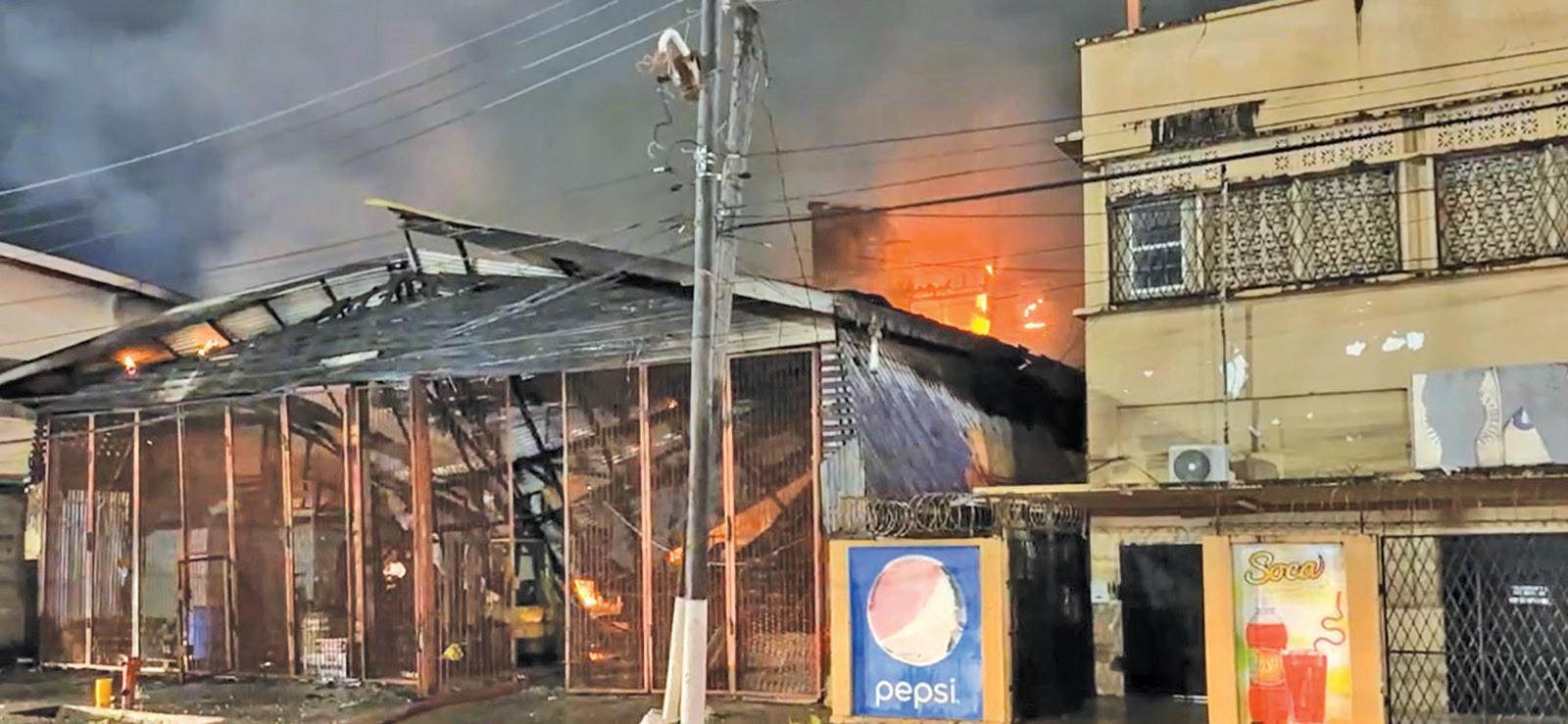
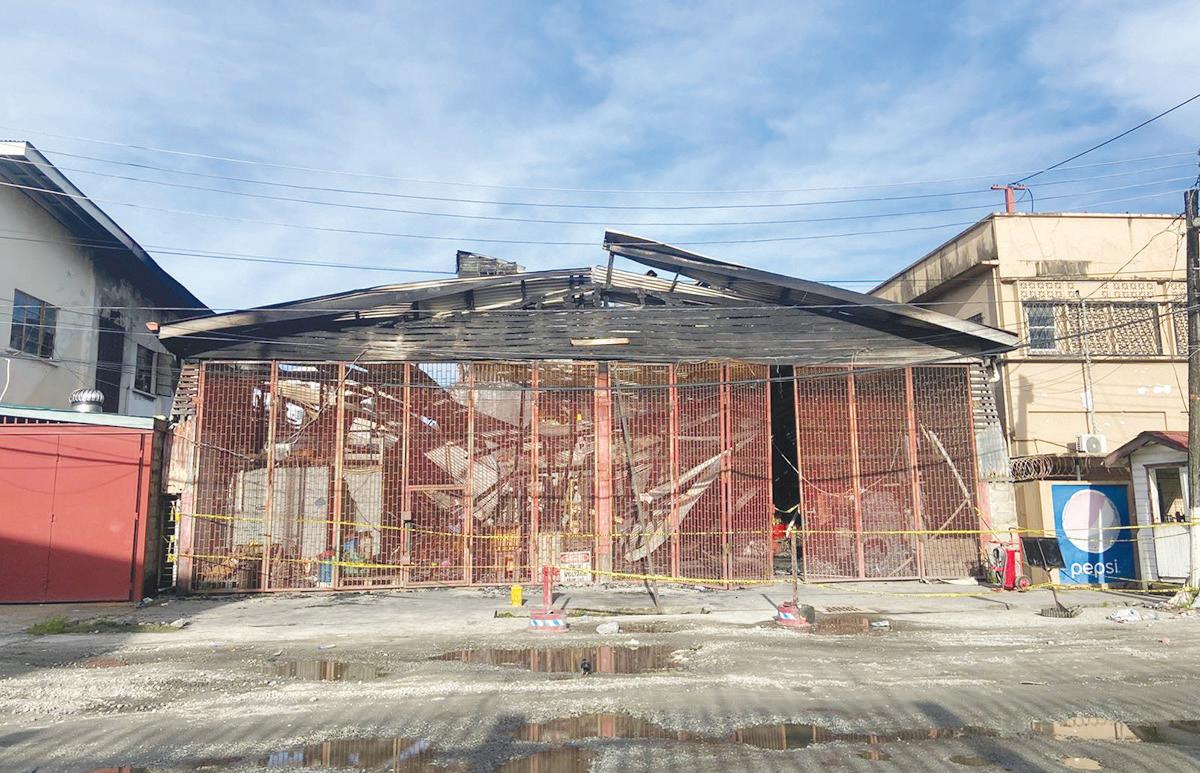
An early morning fire on Sunday has completely gutted a workshop owned by Demerara Shipping Limited along Water Street, Georgetown, and the top floor of a four-storey wooden and concrete commercial building on Lombard Street, Georgetown.
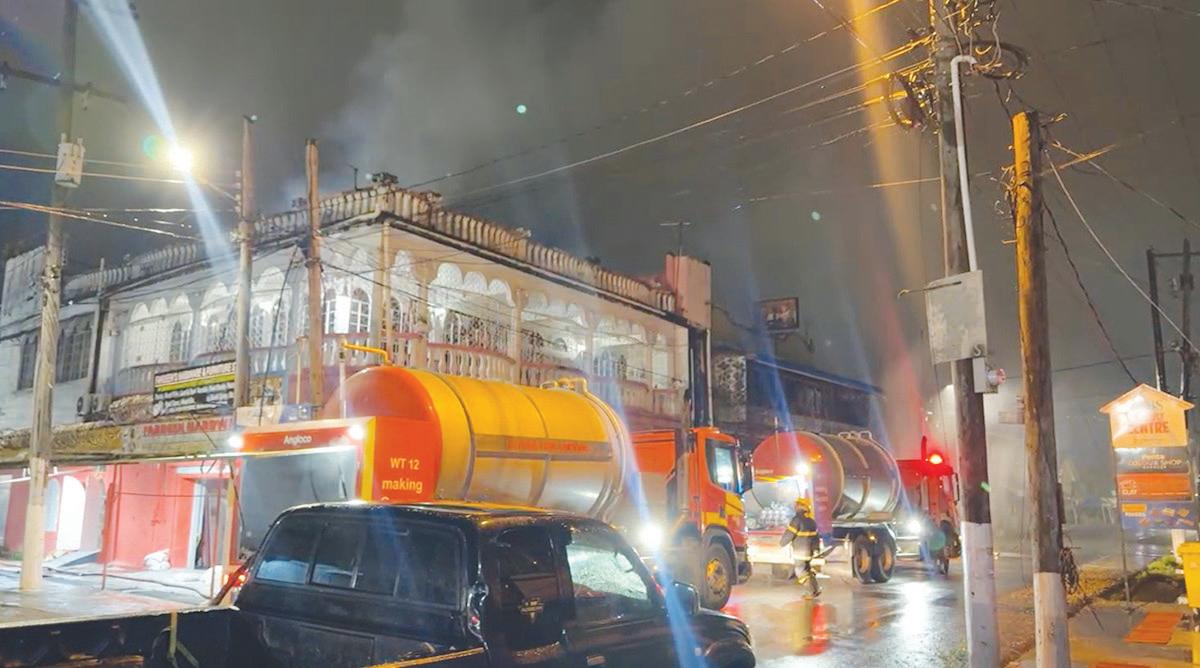
pairs. In addition, one canter, two forklifts, and a quantity of spare parts were destroyed. This is yet to be confirmed by the Guyana Fire Service (GFS).
A full-scale investigation has been launched while those affected are counting their losses. At the scene early Sunday morning, those affected re -
fused to speak to the media, and later that day, when the Guyana Times visited, no one was at the scene.
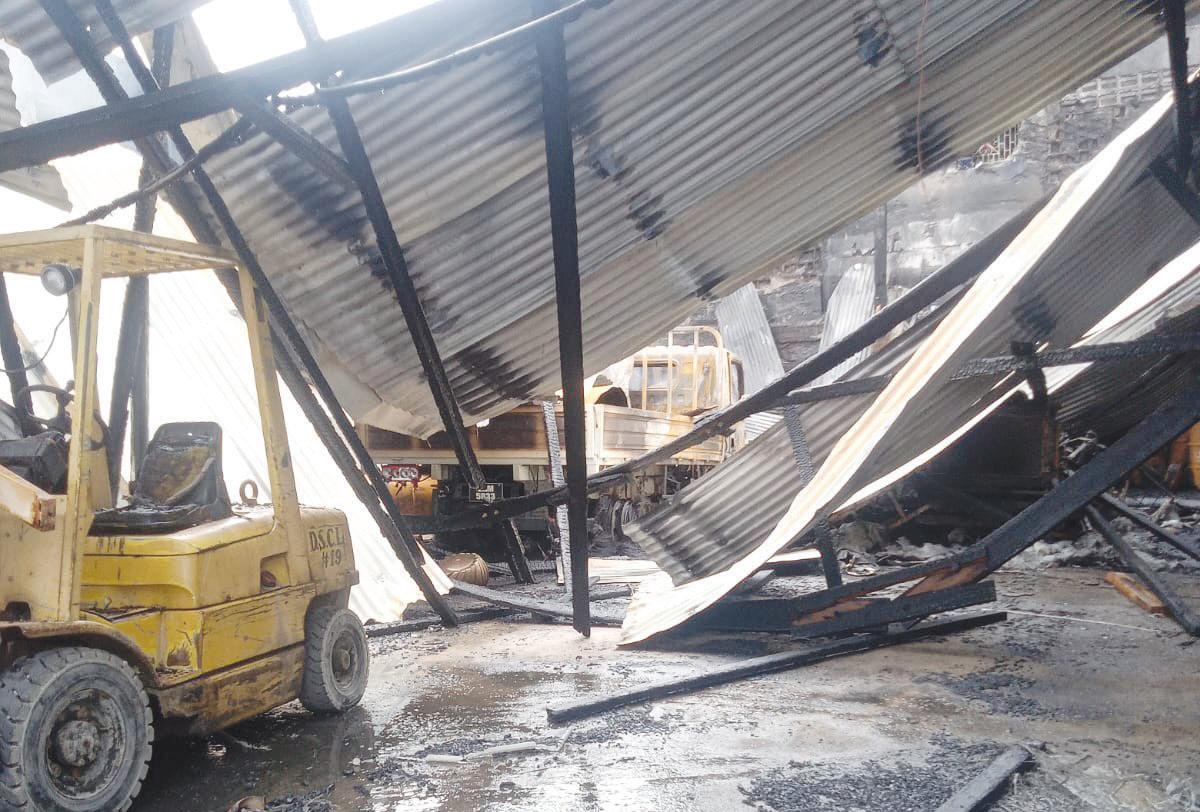
However, due to the intensity of the fire, an adjacent building, which housed a tailor shop and several other businesses, caught fire.
Based on reports received, the fire reportedly started at about 3: 00h, and within minutes, the workshop, which is also being used as a spare parts bond, was completely engulfed.
The fire tenders and firefighters from the central fire station were deployed to the area and sprang into action. Their swift response contained the blaze, thus stopping it from spreading to other buildings.
Nevertheless, some buildings sustained damage due to the heat and water. Guyana Times understands that the fire might have started due to a spark from a low-bed hauler that was in the facility for re -

Health Minister Dr Frank Anthony on Saturday commissioned a brand-new Simulation Centre at Naarstigheid Village, West Coast Berbice (WCB). This facility will provide nurses, healthcare assistants, and other medical personnel with access to practical, simulation-based training designed to strengthen their skills and preparedness in real-life medical situations. However, opening remarks were delivered by Regional Health Officer Dr. Theresa
Sarju, while brief remarks were offered by Regional Vice Chairman (VC) Kleon Lindey and Director of Training and Education at the Ministry of Health Dr Chandroutie Persaud. Also in attendance were Regional Chairman Recardo Phillips and Regional
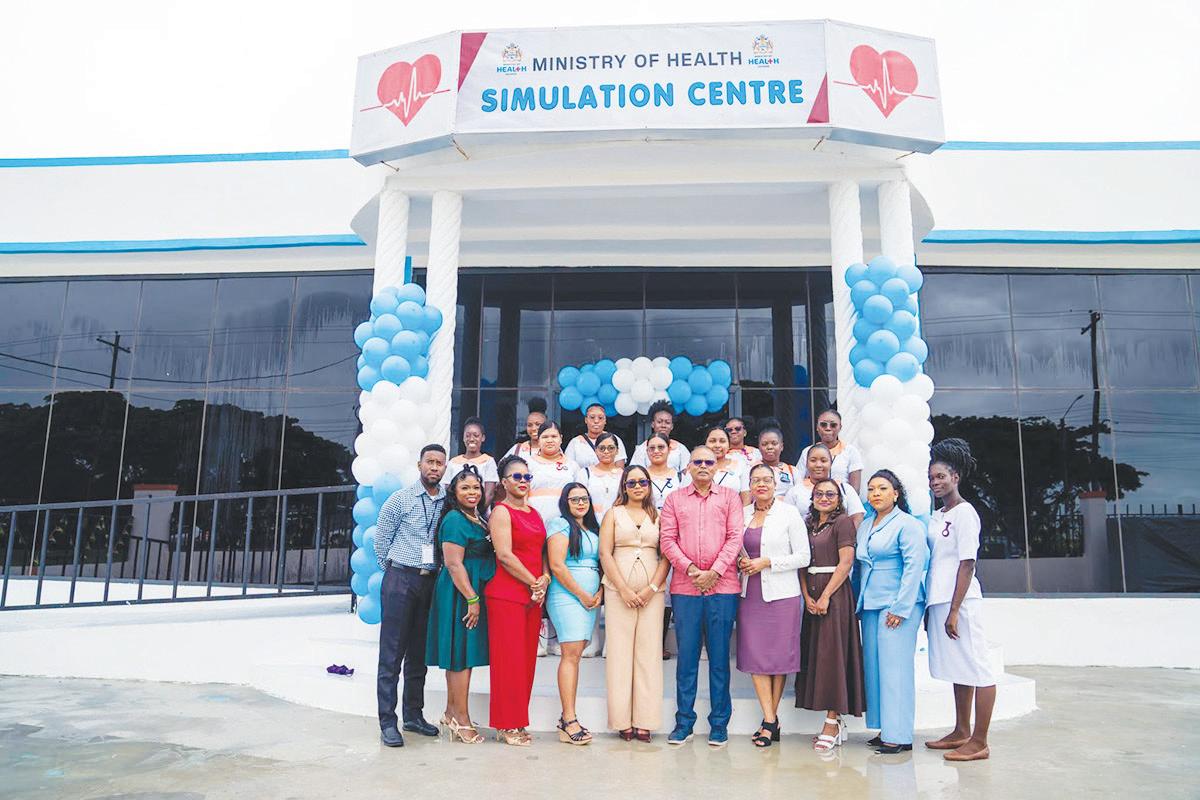
Executive Officer Mary Samaroo.
Delivering the feature address, Health Minister Frank Anthony noted that healthcare development is not only about hospitals and equipment but also about investing in the people who deliver care. He highlighted that, in the past, trainees from Region Five were required to travel to New Amsterdam or Georgetown to access simulation training and explained that the new Centre will make high-quality training more accessible within the region.
The Minister also an-
nounced that the Government intends to establish 10 Simulation Centres across Guyana and encouraged residents of Region Five to pursue careers in the medical field as the country continues to expand its healthcare services. The opening of the Simulation Centre marks another important investment in strengthening healthcare delivery and training opportunities in Region Five and Guyana as a whole under the leadership of President Dr Irfaan Ali. (Region 5 Information Department)


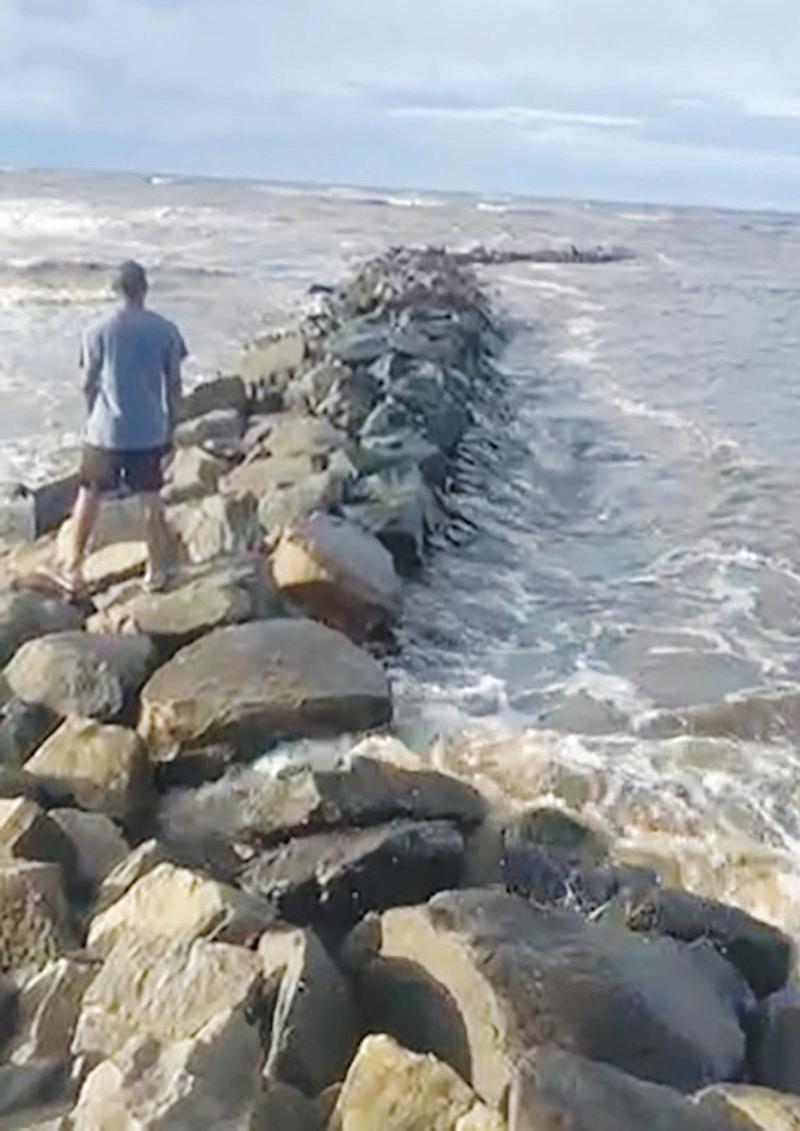
Afirst-time mother and her fiancé are feared dead after they reportedly went for a swim at Unity Beach, East Coast Demerara (ECD), and never surfaced on Sunday. Missing are 20-year-old Lyodisa “Loyda” Waldron, a sales representative, and 31-yearold Andri Francis, a Special Constable, both of Victoria Village, ECD. Based on reports received on the day in question, at about 14:00h, Waldron and Francis were swimming at Unity Beach when Waldron reportedly began drifting deep-
er into the Atlantic Ocean and called out for assistance. Hearing her screams, Francis reportedly went to assist her, during which both of them were pulled under due to the strong current and disappeared. An alarm was raised, and checks were made for the couple but to no avail. The police were contacted, and an investigation was initiated. Up to press time, the couple was still missing. Two years ago, two friends - Navin Seenauth, 20, and Daniel Boodram, 17, both residents of Unity Village,
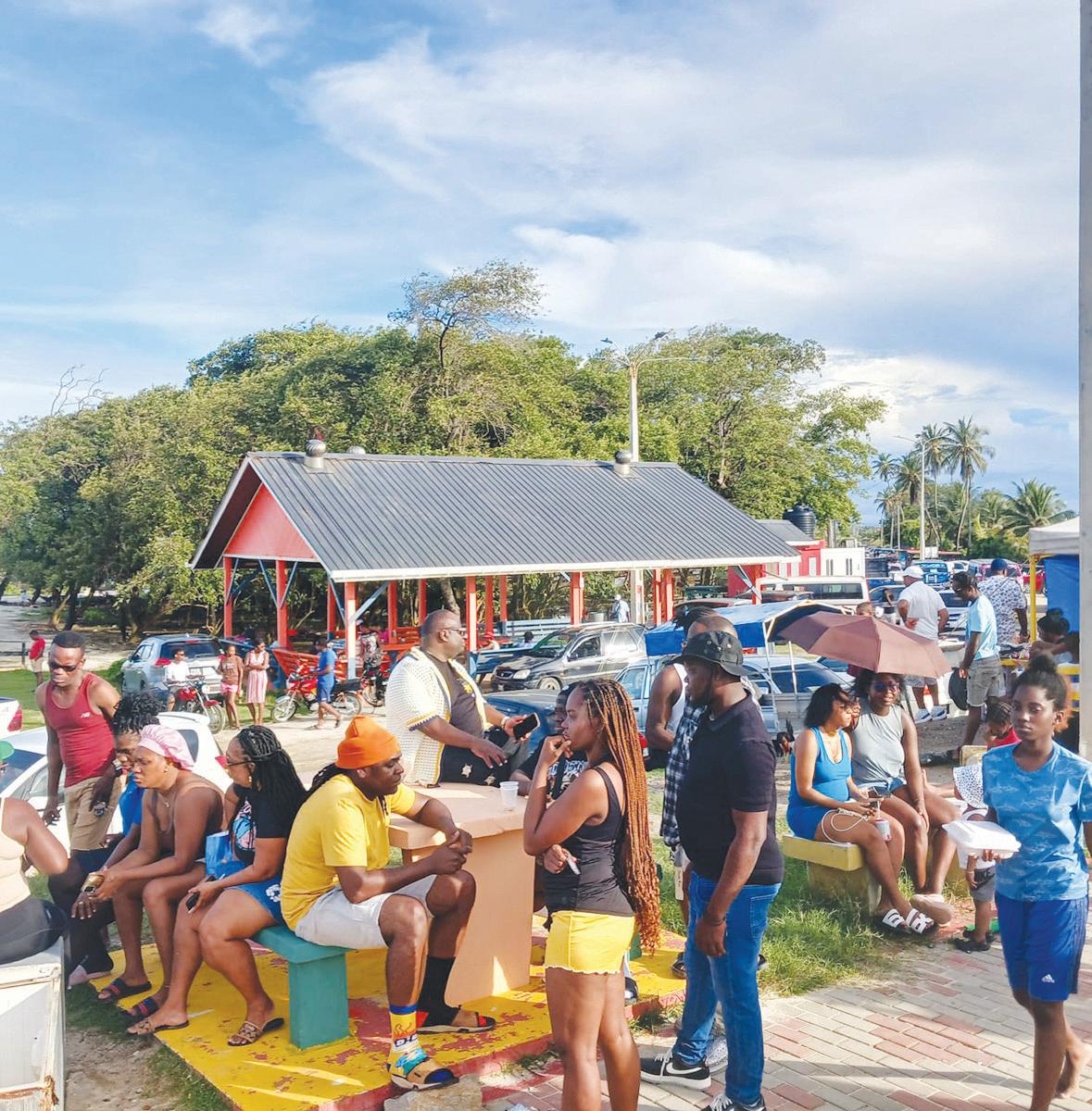
drowned at the same beach where they went for a swim with a group of friends. It was reported despite the rough waters, the young men proceeded to swim. Another friend who couldn’t swim exited the water. After some time, the friend noticed his friends were no longer visible in the water and searched for them but to no


(President Dr Irfaan Ali/Facebook)








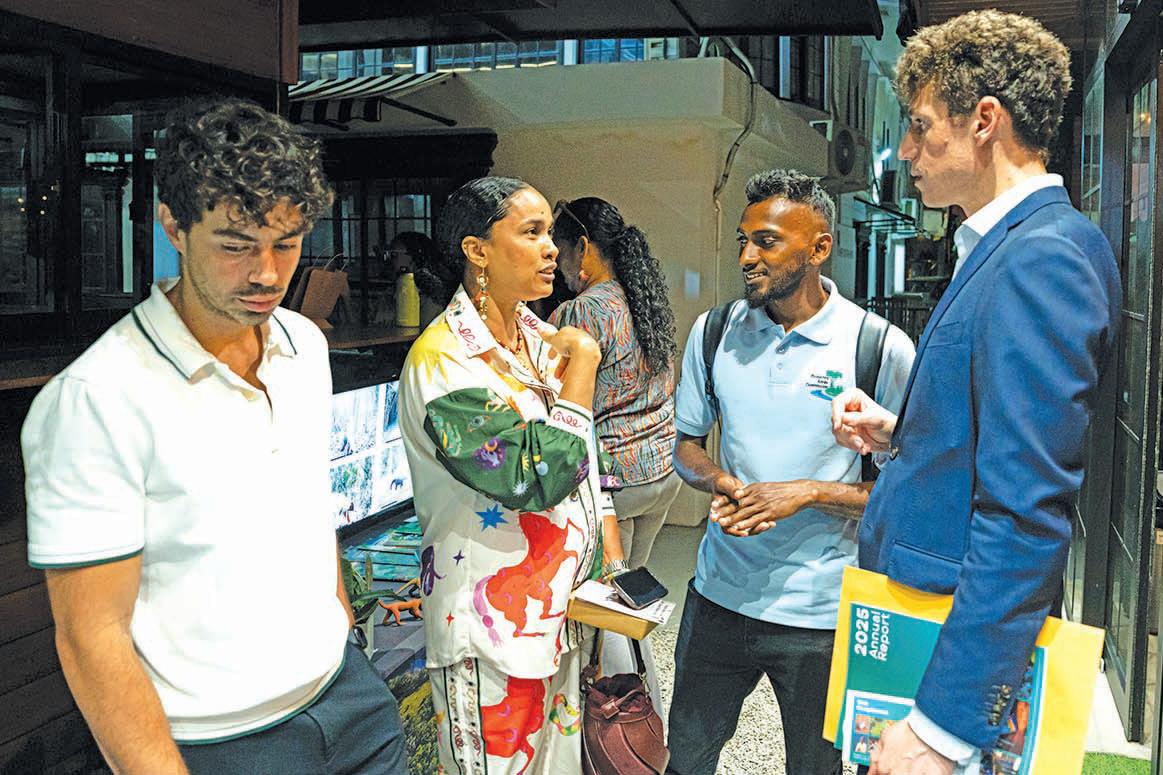
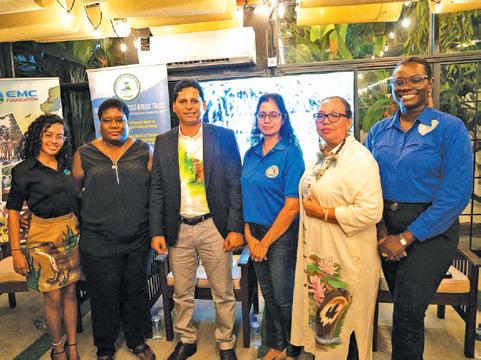
In observance of World Otter Day which was observed on Friday, EMC Foundation, in collaboration with the Protected Areas Trust (PAT) hosted a panel discussion aimed at fostering dialogue, collaboration and partnerships needed to support long-term conservation impact. The panel discussion focused on the conservation of the Giant River Otter in Guyana and explored the importance of scientific research, habitat protection, public awareness and collaborative conservation efforts. The session brought together conservation organisations, researchers, Government agencies, students
the South Rupununi Conservation Society (SRCS), which presented on community-led conservation initiatives in the Rupununi, including wildlife monitoring, environmental education, and sustainable livelihoods, as well as the Kanashen Amerindian Protected Area (KAPA), which highlighted Indigenous-led conservation, traditional ecological knowledge systems and the management of one of the world’s largest community-owned protected areas. The inclusion of giant river otters as this month’s featured topic reflects the species’ growing international conservation importance. Classified
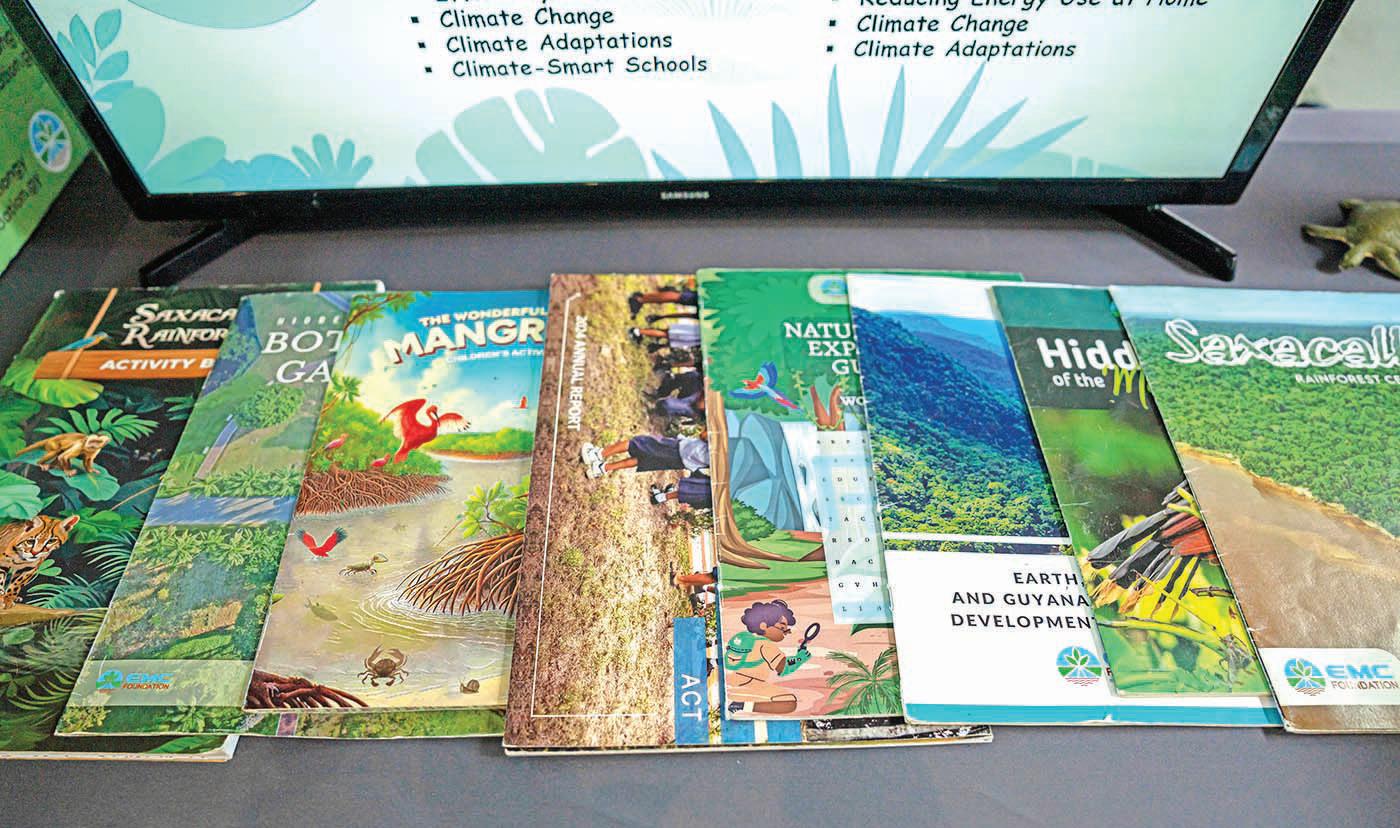
and members of environmental organisations and the private sector to discuss ongoing conservation initiatives and the challenges facing the species. Founder of the EMC Foundation and Chairman of the Protected Areas Trust, Shyam Nokta in his opening remarks stated “Conservation Conversations was launched on March 26, 2026, by the EMC Foundation and the Protected Areas Trust as a monthly initiative designed to bring together conservation stakeholders from across Guyana to share knowledge, experiences, and strengthen partnerships. The initiative serves as a platform to encourage dialogue and inspire practical action for the protection of Guyana’s natural environment, while highlighting a wide range of conservation approaches through presentations from organisations involved in community-based conservation, scientific research, environmental education and protected area management.”
Since its launch, the series has featured organisations including
as Endangered, the giant river otter is recognised as a key indicator of healthy freshwater ecosystems and plays an important ecological role as a top predator within river and wetland systems across the Amazon and Guiana Shield. Guyana is considered one of the species’ remaining strongholds due to its extensive intact forests, wetlands and river networks. Within Guyana’s broader conservation framework, the species has become an important focal point for strengthening freshwater ecosystem protection and reinforcing ecological connectivity between inland river systems and coastal wetland environments. Its conservation has also helped promote more integrated, landscape-level thinking, recognising that upstream forest and river health directly influences downstream biodiversity and ecosystem services.
Conservation efforts for the giant river otter are increasingly shaped by a coordinated approach involving Indigenous and local
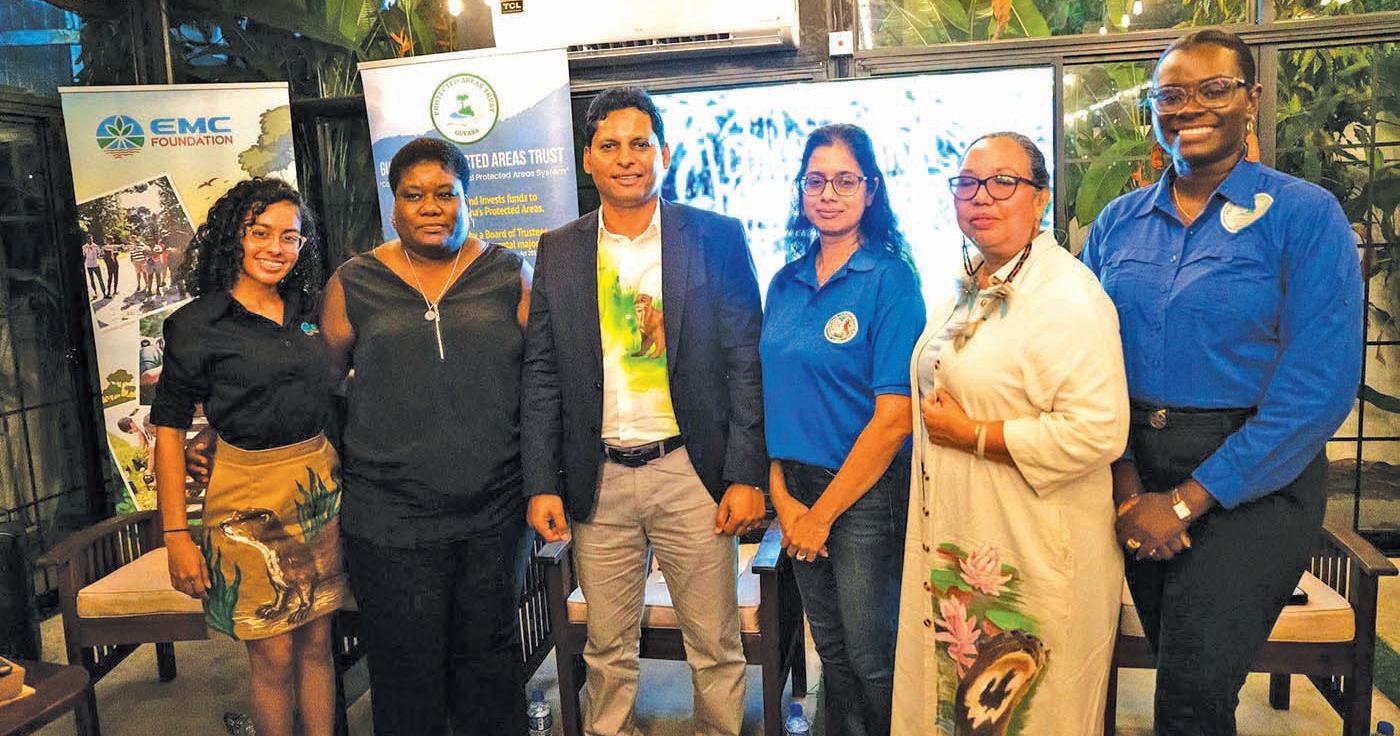
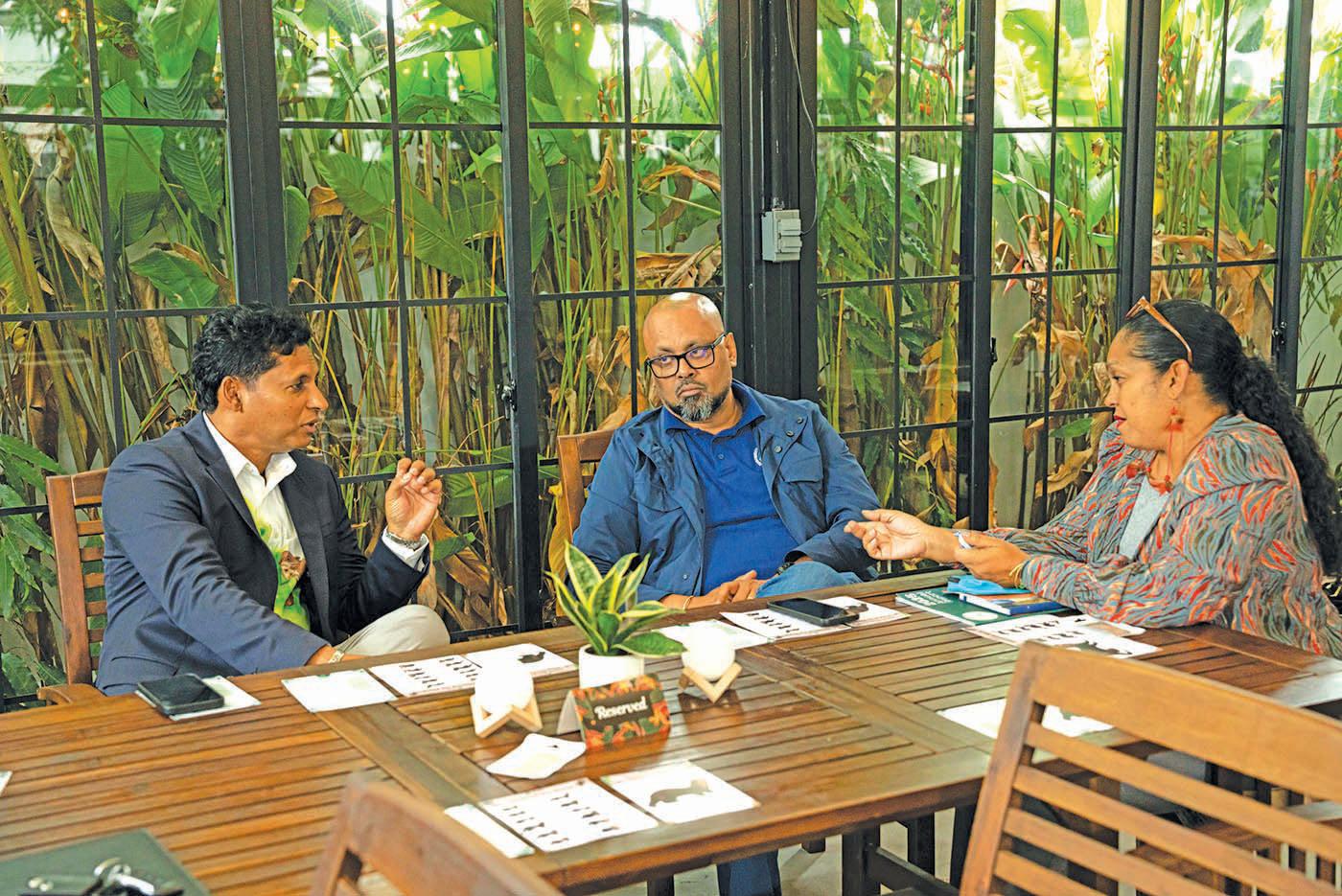
communities, Government agencies, conservation organisations, researchers and private sector partners. This collaboration has produced tangible results, including strengthened community-led governance through localised biodiversity monitoring systems and fishing management plans informed by otter presence and fish population recovery. In key conservation landscapes such as the Kanuku Mountains Protected Area and Karanambu, joint monitoring initiatives have helped establish robust population baselines, with observations confirming stable groups of otters in multiple river systems. Trained community rangers and citizen scientists also play an active role in mapping otter distribution and identifying threats such as illegal gold mining and mercury pollution, which impact freshwater food chains. Featured panelists included Managing Director of Karanambu Lodge, Melanie McTurk; Community-Based Natural Resource Management Specialist, Dr Deirdre Jafferally; Commissioner of the Guyana Wildlife Conservation and Management Commission (GWCMC), Alona Sankar and Programme Coordinator of the EMC Foundation, Sarah Singh. The discussion was moderated by Executive Director of PAT Oleta Williams who guided the conversation on the ecological importance of Giant River Otters, the threats affecting their populations and opportunities for strengthening conservation partnerships across Guyana. Throughout the discussion, panellists highlighted the critical role Giant River Otters play in maintaining healthy freshwater ecosystems and the importance of protecting wetlands, rivers and surrounding habitats that support biodiversity. The panel also explored how research and monitoring programmes are contributing to a better understanding of otter behaviour, habitat use and conservation needs in Guyana. The discussion further emphasised the importance of collaboration among conservation organisations, Government agencies, researchers, local communities and the public to strengthen conservation outcomes. Panellists also noted the role of education and public aware-
ness in fostering appreciation for Guyana’s wildlife and encouraging greater stewardship of natural resources. McTurk highlighted the significance of long-term conservation efforts and research in protecting the Giant River Otter and its habitat. “Many people don’t realise that giant otters are one of the most understudied species, to the point where we don’t even know if they exist in some areas. That gives us an opportunity to start looking at the varying populations and how those individual populations are impacted by human activity. There is an opportunity for researchers and young scientists in the room to start understanding the DNA.” In addition, Dr Jafferally emphasised the importance of integrating community engagement and local knowledge into conservation initiatives to support long-term environmental stewardship. “Community efforts to care for abandoned and injured giant river otter pups have been impactful, helping to support
giant otter populations and other wildlife resources. “What we need to strengthen is our monitoring and enforcement capability to ensure that persons are actually abiding by what the law requires. Now we want to increase our giant otter populations, so if you’re affecting the viability of the species, that is very negative.” Meanwhile, Singh touched on the Foundation’s ongoing Giant River Otter Education and Conservation Programme in the Mahaica Watershed and the importance of combining research and education initiatives to improve understanding and protection of the species. “We started this Giant River Otter Education and Conservation Programme in October 2025. It comprises of two components: Research and Monitoring and Education and Awareness. Under our Education and Awareness component, we have environmental clubs that we work with along the Mahaica River, and we are also working on com-
the species’ recovery and contributing to their return in areas where they were once rarely seen. Citizen science is an important part of that, as well as education and awareness. Educating people is important, getting them involved, not just those who already know and see and want to be involved in established forums.” Further, Sankar explained the importance of strengthening wildlife conservation policies, legal protections, monitoring, and enforcement mechanisms to ensure the long-term survival of Guyana’s
munication tools and capitalising on social media audience to share key messages.” The panel discussion highlighted the collective commitment among conservation partners and stakeholders to protecting Guyana’s Giant River Otters and the freshwater ecosystems they depend on. The engaging dialogue and knowledge sharing throughout the evening reinforced the importance of continued collaboration, research and public awareness to ensure the long-term conservation of one of Guyana’s most iconic species.
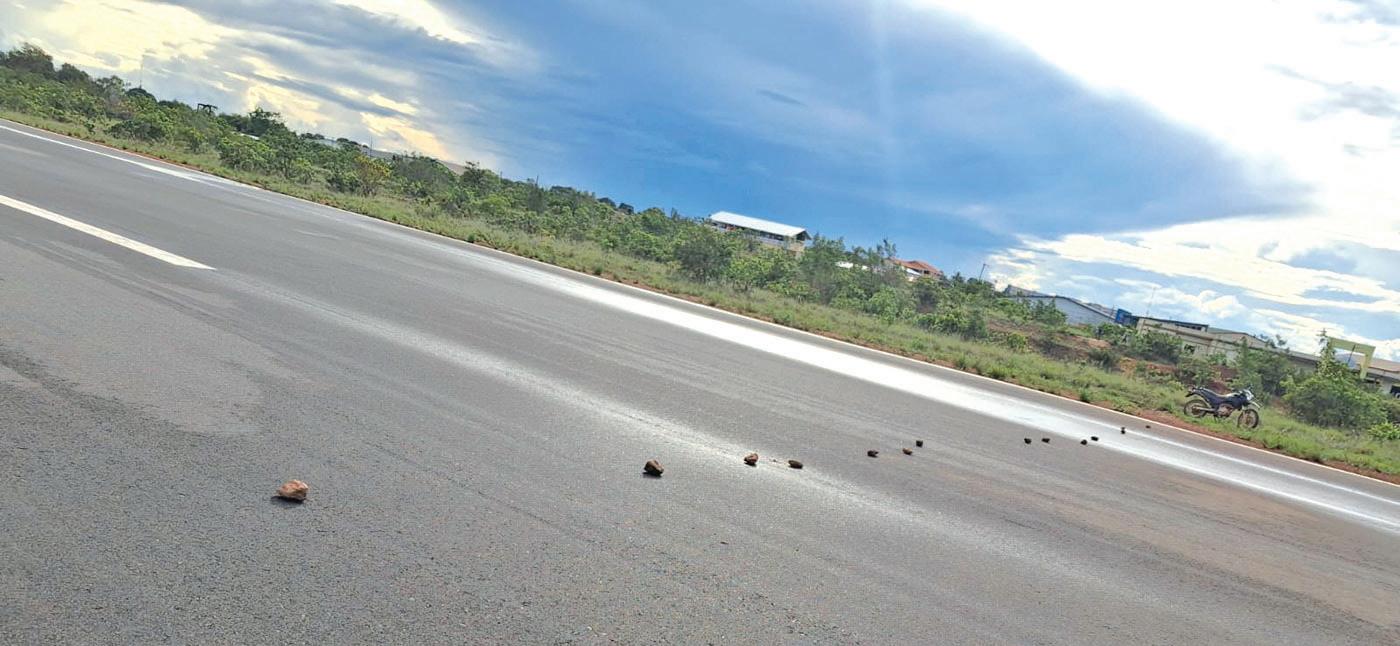
Following the recent discovery of rocks on the Lethem Aerodrome in Region Nine (Upper TakutuUpper Essequibo), citizens and leaders in hinterland regions across Guyana are being urged to be more responsible when it comes to these critical infrastructures.
This call was made by the Aviation Operators Association of Guyana (AOAG), which underscored the importance of aviation to the lifeline of Guyana’s hinterland communities.
On Saturday, the Guyana Civil Aviation Authority (GCAA) expressed alarm at the incident and confirmed it is working closely with the Guyana Police Force (GPF), which has launched a formal investigation to identify the perpetrator(s).
However, in a subsequent statement late Saturday, the AOAG “...is urgently appealing to all citizens, community leaders, drivers, motorcyclists, farmers, miners and residents across the hinterland to exercise greater care, awareness, and responsibility in and around the nation’s airstrips and runways.”
The Association reminded that aircraft provide critical transportation for residents, medical evacuations, delivery of food and supplies, educational support, tourism, mining operations, and emergency services. It added that for many hinterland communities, the airstrip is the only reliable connection to the rest of the country.
“Unlike major international airports, the majority of Guyana’s hinterland runways are short, narrow, and unpaved. Pilots operating into these locations already
work with limited safety margins, particularly during adverse weather conditions. Every foot of usable runway matters, and every hazard introduced onto a runway increases the risk of a serious accident,” the AOAG emphasised.
Moreover, the Association disclosed that it continues to receive reports of dangerous and irresponsible activities occurring on and around airstrips across the country. These include: motor vehicles, motorcycles, bicycles, and pedestrians crossing runways in front of approaching or departing aircraft; bottles, debris, and other foreign objects being left on runway surfaces; stones, and other obstacles being deliberately or inadvertently placed on runways; persons using runways as public roads or shortcuts; damage to runway shoulders and surfaces caused by repeated vehicle traffic, resulting in ruts, erosion and narrowing of the usable runway area; encroachment and deterioration that effectively shortens already limited landing distances; and persons, including Law Enforcement Officers, playing games on active runways. According to the AOAG, while these actions may appear harmless to some, they create serious hazards for pilots, passengers, and communities. “A single bottle, stone, rut, or unexpected vehicle crossing can cause a loss of aircraft control, a propeller strike, a blown tire, structural damage, or a catastrophic accident. The consequences of such incidents are often irreversible. They can result in serious injury, loss of life, destruction of aircraft worth hundreds of mil-
lions of dollars, disruption of essential services, and longterm impacts on communities that depend on aviation,” the Association warned.
Already, the GCAA has warned about serious consequences for such actions.
Section 83 (1) of the Civil Aviation Act 2018 provides: “Any person who trespasses on any land forming part of an aerodrome or causes any animal to trespass on such land commits an offence and is liable on summary conviction to a fine of one million dollars and to imprisonment for six months.”
Additionally, Section 86 makes it an offence for any person to intentionally interfere or attempt to interfere with air navigation within Guyana. Those found guilty are liable on summary conviction to a fine of $3 million and imprisonment for two to three years, depending on the nature and severity of the offence.
But beyond the legal consequences, the AOAG stressed that irresponsible use of runways drives up operating costs throughout the aviation sector, which, in turn, would increase airfares to hinterland communities.
To this end, the Association called on citizens to take the necessary precautions to avoid as well as protect all aviation infrastructure. “Runway safety is not solely the responsibility of pilots, operators or regulators. It is a shared national responsibility. Every citizen has a role to play in ensuring that aircraft can operate safely and reliably throughout our country. The Association urges all stakeholders, including village councils, community leaders, miners, loggers, businesses, schools and residents, to support a nationwide culture of aviation safety and respect for our airstrips. Together, we can prevent accidents, protect lives, preserve vital infrastructure and ensure that Guyana’s aviation sector continues to safely connect our people and communities,” the missive detailed.

AWest Coast Berbice (WCB) man convicted of embezzling more than $3 million and stealing flour valued at over $10 million from his employer has been sentenced to five years imprisonment after a High Court judge found that he had abused a position of trust for personal gain. Hemraj Singh Pahalad of Number 11 Village, WCB was on Friday sentenced by Justice Deborah Kumar-Chetty at the Berbice High Court who imposed two years and seven months’ imprisonment for the embezzlement charge and five years for larceny. The sentences are to run concurrently and will see Pahalad only serving five years. In handing down the sentence, Justice Kumar-Chetty highlighted the serious breach of trust involved in the offences. The court heard that Pahalad had been entrusted with access to his employer’s flour bond, cash, and cheques and was even a signatory on a joint bank account linked to the
business. The judge noted that the convicted man had abused that trust and used his position for personal benefit. She further observed that despite having opportunities to make restitution, he failed to repay the money and goods that were taken. The court also considered a victim impact statement presented on behalf of businessman Ramdial Ramoutar. According to the report, the losses had a significant effect on the complainant and his family, with relatives living overseas reportedly having to provide financial assistance to help offset the losses suffered by the business. A probation report was also presented before the court as part of the sentencing process.
In mitigation, the court took into account that Pahalad had no previous convictions. Justice KumarChetty also considered the lengthy delay in the matter reaching completion, noting that approximately 13 years had elapsed since the offences were commit-
ted. The judge reduced the sentence in recognition of that delay. Pahalad was convicted by a jury earlier this month of one count of embezzlement involving $3,071,500 and one count of larceny involving flour valued at $10,127,995. He was found not guilty on a second embezzlement charge. The offences stemmed from his employment with Ramoutar’s business, where he was entrusted with handling company funds and inventory. Evidence presented during the trial showed that he had access to company finances and stock and was responsible for making deposits on behalf of the business.
Following the guilty verdicts, Justice KumarChetty deferred sentencing and ordered the preparation of both a probation report and a victim impact report before imposing sentence. With Friday’s ruling, the long-running case, which spanned more than a decade, has now come to a close.



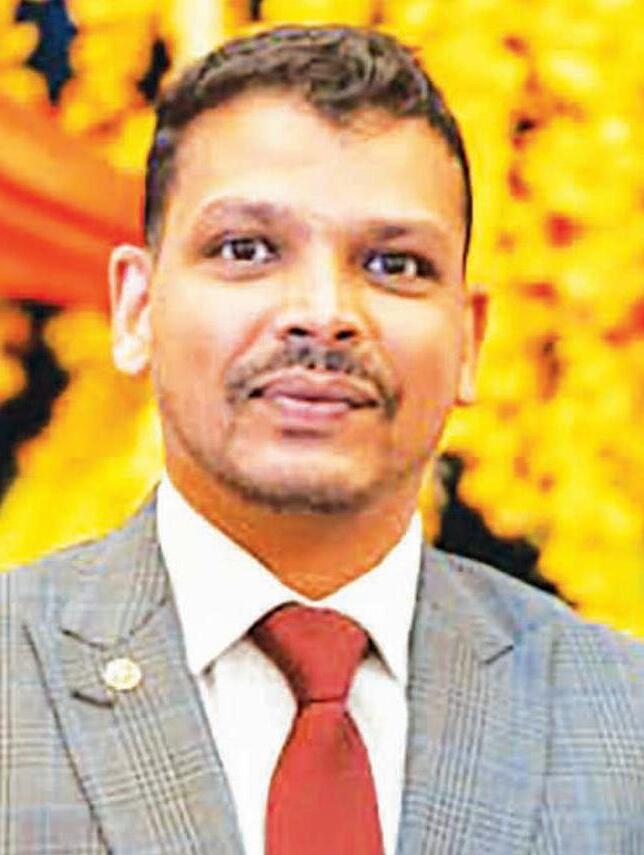
Over the past few years, weight loss medications have become one of the most-discussed topics in health care. Social media, celebrity endorsements, and remarkable before-and-after photos have fuelled public interest in medications such as Ozempic, Wegovy, and Mounjaro
Many people are now asking whether these medications represent a breakthrough in obesity treatment or simply another health trend. The reality lies somewhere in between
These medications are not miracle cures, but they are among the most effective medical treatments for obesity ever developed. When used appropriately and combined with lifestyle changes, they have the potential to improve health outcomes and reduce the risk of chronic diseases.
Why obesity matters
Obesity is now recognized as a chronic disease rather than simply a result of poor lifestyle choices. It is associated with numerous health conditions, including:
• Type 2 diabetes


• Hypertension
• Heart disease
• Stroke
• Sleep apnoea
• Osteoarthritis
• Fatty liver disease
• Certain cancers Globally, obesity rates have more than doubled since 1990, and the Caribbean region has experienced some of the fastest increases in overweight and obesity prevalence (WHO, 2024). In Guyana, rising rates of obesity and diabetes are contributing significantly to the burden of non-communicable diseases.
How do these medications work?
Most modern weight loss medications belong to a class known as GLP-1 receptor agonists.
These medications mimic hormones naturally produced by the gut after eating. Their effects include:
• Reducing appetite
• Increasing feelings of fullness
• Slowing stomach emptying
• Improving blood sugar control
• Reducing food cravings
The result is reduced calorie intake and gradual weight loss.
Examples include:
• Semaglutide (Ozempic®, Wegovy®)
• Tirzepatide (Mounjaro®, Zepbound®)
• Liraglutide (Saxenda®)
How effective are they?
Clinical trials have demonstrated impressive results.
The STEP-1 trial found that participants receiving semaglutide lost approximately 15 per cent of their body weight compared with placebo (Wilding et al, 2021).
More recently, the SURMOUNT-1 trial showed that tirzepatide

achieved average weight reductions of up to 22.5 per cent, making it one of the most effective obesity treatments currently available (Jastreboff et al, 2022).
For perspective, many traditional lifestyle interventions alone typically achieve weight loss of five per cent to 10 per cent.
Who should use weight loss medications?
These medications are generally recommended for:
• Individuals with a Body Mass Index (BMI) of 30 kg/m² or higher
• Individuals with a BMI of 27 kg/m² or higher who also have obesity-related conditions such as diabetes, hypertension, or sleep apnoea
They are not intended for cosmetic weight loss or for individuals seeking to lose a few kilograms before a social event.
A thorough medical assessment should always occur before initiating treatment.
Common side effects
Although generally safe, side effects may occur.
The most common include:
• Nausea
• Vomiting
• Diarrhoea
• Constipation
• Abdominal discomfort
Most side effects improve over time as the body adapts.
Rare but serious complications may include:
• Pancreatitis
• Gallbladder disease
• Severe gastrointestinal symptoms
Patients should discuss risks and benefits with their healthcare provider.
The biggest misconception
One of the most common misconceptions is that these medications eliminate the need for healthy eating and exercise.
They do not.
Research shows that individuals who stop treatment often regain a significant portion of lost weight if lifestyle modifications are not maintained (Rubino et al, 2021).
This highlights an important reality:
Weight loss medications are tools, not cures.
Long-term success still depends on sustainable behavioural change.
What about muscle loss?
An emerging concern is that rapid weight loss may result in the loss of both fat and muscle mass.
Experts increasingly recommend:
• Resistance training
• Adequate protein intake
• Regular physical activity
to preserve muscle and metabolic health during weight loss treatment.
Challenges for Guyana and the Caribbean
While these medications offer significant promise, several barriers exist.
Cost
Many newer weight
loss medications remain expensive and inaccessible for large segments of the population.
Sustainability
Long-term treatment may be required to maintain benefits.
Equity Access may disproportionately favour wealthier individuals, potentially widening health disparities.
Prevention still matters
No medication can replace healthy public policies that promote:
• Physical activity
• Healthy food environments
• Obesity prevention
• Early diabetes detection
• Cardiovascular risk reduction
A public health perspective
As a clinician and public health professional, I view these medications as an important addition to the fight against obesity. However, they should not distract us from addressing the root causes of the obesity epidemic. Communities continue to face challenges related to:
• Ultra-processed foods
• Sugary beverages
• Sedentary lifestyles
• Urban design that discourages physical activity
• Limited access to preventive health care
Addressing these factors remains essential for long-term population health.
Weight loss injections such as Ozempic, Wegovy, and Mounjaro represent a major advancement in obesity treatment. For the right patient, they can lead to meaningful improvements in weight, blood sugar control, cardiovascular health, and overall quality of life. However, they are not miracle cures. The most successful outcomes occur when medication is combined with healthy eating, physical activity, adequate sleep, stress management, and ongoing medical support. The goal should not simply be weight loss. The goal should be better health, longer lives, and healthier communities.

Health authorities in Brazil are monitoring two patients for possible Ebola infection in the country’s two biggest cities, São Paulo and Rio de Janeiro.
A man, 37, from the Democratic Republic of the Congo (DR Congo) “exhibited symptoms such as fever”, São Paulo’s state government said.
In Rio state, the health department said it had activated safety protocols after a Belgian man who arrived from Uganda showed “viral symptoms such as cough, chills and diarrhoea”.
The test results for both patients should become available next week.
If confirmed, they would be the first infection cases outside Africa since the outbreak began in DR Congo.
There are now more than 1000 suspected Ebola cases in DR Congo, with at least 246 deaths. Uganda has reported nine confirmed cases and one death.
The current outbreak has been caused by a rare strain of Ebola known as Bundibugyo, which has no proven vaccine and kills about a third of those infected.
While the two patients in Brazil are still being monitored for Ebola, they have already

Health authorities in Brazil are monitoring two patients for possible Ebola infection in the country’s two biggest cities [Getty Images]
both been diagnosed with other conditions: in São Paulo, the man from DR Congo tested positive for meningitis and is in a serious condition, while in Rio, the Belgian patient tested positive for malaria.
The respective diagnoses do not rule out the possibility of also having Ebola, officials say.
Ebola viruses normally infect animals, typically fruit bats, but outbreaks among humans can sometimes start when people eat or handle infected animals.
Ebola spreads through direct contact with the bodily fluids of an infected person, including sweat, saliva, blood, semen, excrement, urine and vomit.
On Saturday the medical charity Médecins Sans Frontières (MSF) warned that the rapid spread of the virus had caused an “alarming situation”, with an unprecedented number of cases recorded so soon into the outbreak.
WHO head Dr Tedros Adhanom Ghebreyesus is continuing a visit to DR Congo’s Ituri province, the worst-hit area, where he is overseeing containment efforts.
Despite the possible cases of the virus outside Africa, the WHO has stressed repeatedly that its global spread is highly unlikely. (Excerpt from BBC News)
Colombia’s presidential election will go to a runoff on June 21 between a leftist and right-wing candidate on opposite ends of the political spectrum, after Sunday’s vote produced no overall winner.
The right-wing Abelardo de la Espriella, an admirer of Donald Trump, came top in the vote, followed closely by the leftwing senator Iván Cepeda, an ally of the current President Gustavo Petro.
The campaign was plagued with violence, including drone strikes, kidnappings, homicides and the assassination of a presidential candidate at a rally last year.
Both men offer differing visions for how to solve Colombia’s violent internal armed conflict that has lasted for decades but
has resurged in recent years.
On Sunday, neither candidate achieved more than 50 per cent of the vote to win outright.
While polls tipped Cepeda to finish ahead of his rightwing challenger, official results showed that he trailed, with 41 per cent of votes compared to De la Espriella’s 43.7 per cent, with almost all ballots counted.
Cepeda was actively involved in the peace talks that led to a historic deal in 2016 between the Colombian Government and the FARC guerrilla group, which led to the disarmament of thousands of rebel fighters.
He is often described as an architect of the “total peace” strategy of President Petro, Colombia first left-wing president, which prioritises dialogue
and negotiations with armed groups during ceasefires, over military intervention.
Under President Petro’s presidency, cocaine production hit a record high, membership of armed groups grew, and violence on the border surged to its worst level in years, displacing tens of thousands of people. This has led his critics and many security analysts to denounce “total peace” as a failed strategy, though Petro has argued his government has seized the largest amount of drugs in history.
The economy has grown, and Petro increased the minimum wage significantly, though about one in three Colombians still live in poverty. (Excerpt from BBC News)
Brooklyn Rivera, an Indigenous leader, politician and activist, has died at age 73 after years in Nicaraguan state custody, prompting outcry from rights advocates.
On Sunday, Nicaragua’s Government attributed his cause of death to a bacterial infection that took hold after a bout of COVID-19.
But critics have expressed scepticism and outrage, as the announcement came after growing pressure to ascertain his welfare.
“If he is dead, it cannot be said that the cause was illness,” said Reed Brody, a member
of the United Nations Group of Human Rights Experts on Nicaragua.
In a statement before Rivera’s death was confirmed, Brody blamed the Government for any harm to the Indigenous leader.
“The cause would be that he was in Government custody in conditions of enforced disappearance for over two years, denied independent medical oversight. There is no other way to read this,” Brody wrote.
Since September 2023, Rivera has been held in state detention, without contact with the outside world. Until recently, there had been no confirma-
The Ministry of Health and Wellness has reassured the public that Jamaica remains free of Ebola cases, while confirming that eight travellers have been placed under mandatory self-quarantine in line with established public health protocols.
The Ministry said the individuals were identified through enhanced surveillance measures at the country’s ports of entry after travelling from, or transiting through, Ebola-affected countries within the past 21 days.
According to the Ministry, the eight passengers arrived on several flights into Jamaica and were screened by health officials at airport health desks. Following counselling, they were placed under mandatory self-quarantine and are being monitored by their respective local health departments.
Health authorities shared that none of the quarantined travellers has exhibited symptoms associated with Ebola.
“Transmission is not likely, and therefore there
is no risk as it relates to the other passengers on these flights,” the Ministry said in a release on Saturday.
The ministry noted that the measures are part of Jamaica’s longstanding portof-entry surveillance protocol, which was strengthened following a public service announcement issued on May 25. Under the protocol, travellers arriving from Ebola-affected countries are subject to quarantine upon arrival.
(Excerpt from Jamaica Observer)
AVirgin Atlantic flight bound for Jamaica was forced to divert to Ireland on Saturday after experiencing an engine failure while crossing the North Atlantic.
The airline’s VS165 service, operated by an Airbus A330-900neo, departed London Heathrow on Saturday afternoon with 246 passengers and 13 crew members on board for Montego Bay. The flight was proceeding normally at a cruising altitude of 34,000 feet when the crew detected a problem with one of the aircraft’s en -
gines nearly three hours into the journey.
According to the St Vincent Times, the pilots shut down the affected right-hand Rolls-Royce Trent 7000 engine as a precaution and continued operating on a single engine. The aircraft subsequently descended to 20,000 feet before turning back towards Europe.
Air traffic controllers directed the aircraft to Shannon Airport in western Ireland, a key diversion airport for transatlantic flights. Emergency services, including airport fire crews, ambulance per -
sonnel, police and local fire units, were mobilised ahead of the aircraft’s arrival, the report said.
The St Vincent Times reported that the aircraft landed safely at Shannon Airport at approximately 21:24h local time, around five hours after departing London. Emergency vehicles accompanied the aircraft on landing, but inspections confirmed there was no fire or other immediate danger.
All 246 passengers and 13 crew members disembarked safely and no injuries were reported. (Excerpt from Jamaica Observer)
Former Turks and Caicos Islands Premier Michael Misick has been sentenced to an effective prison term of four years and 26 days after being convicted on bribery charges in a landmark corruption case that has spanned more than a decade.
of public trust for the sake of personal gain. The conduct of the defendants caused a constitutional crisis and reputational harm to the territory.
tion of his imprisonment, and his family was barred from seeing him.
But on Wednesday, the Ministry of the Interior confirmed Rivera’s detention and published photos of the Indigenous leader intubated in a hospital.
It described Rivera’s condition at the time as “delicate”. He had reportedly suffered from “multiple organ failure, a cirrhotic liver and an active lung infection”, and he was being treated with “mechanical ventilation through a tracheotomy and intravenous feeding”.
(Excerpt from Al Jazeera)
Justice Rajendra Narine imposed the sentence on Friday, nearly four months after finding Misick guilty on three counts of bribery arising from Government land and development transactions. The prosecution, regarded as the most significant corruption case in the British Overseas Territory’s history, centred on allegations that public officials benefited from deals involving Crown land and major development projects.
In delivering the sentence, Narine said corruption by public officials represented a serious abuse of the trust placed in them by the public and required custodial punishment to reflect the gravity of the offences and discourage similar conduct by others.
“The public interest in this case requires that the sentences should reflect the retributive and deterrent objectives of sentencing. This case involves an immense betrayal
The public interest requires that the sentence reflect society’s abhorrence of the criminal conduct. And the sentence should be such that like-minded potential offenders will be deterred from similar conduct,” he said.
Justice Narine, a Trinidadian Judge who previously served in the Court of Appeal in Barbados, said the offences fell within the highest category of seriousness, citing the financial benefits involved, the abuse of senior public office and the sophisticated methods used to facilitate and conceal the criminal conduct. He rejected submissions from the defence that Misick should receive a suspended sentence.
Narine adopted a starting point of eight years’ imprisonment on each of the three bribery counts before reducing the sentence to account for several mitigating factors, including the lengthy delay in bringing the matter to a conclusion, the breach of Misick’s constitutional right to a trial within a reasonable time, and the
339 days he spent in custody in Brazil while extradition proceedings were underway. The court also took into consideration Misick’s lack of previous convictions, his years of public service, family circumstances and medical evidence presented during the sentencing hearing. After the reductions were applied, the former premier received sentences of two years and 16 days on counts one and three and four years and 26 days on count two. The sentences will run concurrently, resulting in an effective prison term of four years and 26 days.
Misick was convicted alongside former Cabinet Minister McAllister Hanchell, who was found guilty on two bribery counts, and Attorney Thomas “Chal” Misick, who was found guilty of four money-laundering charges. Hanchell was sentenced to three years’ imprisonment, while Chal Misick was sentenced to four years.
In his ruling convicting Misick on February 4, Narine found that the former Premier had acted contrary to the standards of honesty and integrity expected of elected officials.
(CMC)


Oil prices rose more than two per cent in early trading today after Israel ordered troops to move further into Lebanon in the battle with the Iranian-backed Hezbollah militant group, despite a ceasefire announced more than six weeks ago.
US West Texas Intermediate (WTI) crude futures rose US$2.37 or 2.71 per cent to US$89.73 a barrel as of 0028 GMT. Brent futures rose US$2.16 or 2.37 per cent to US$93.28 a barrel.
The stepped-up fighting, coming just after the US hosted IsraeliLebanon peace talks in Washington on Friday, dimmed expectations that the US and Iran could soon announce an extension to their ceasefire agreement, which had driven Brent and WTI to settle up 1.8 per cent and 1.7 per cent, respectively, on Friday.
The Israel-Lebanon conflict has been the broadest spillover of the Iran war. It started on March 2 when Hezbollah began firing rockets and drones across the border into Israel to back its ally Iran.
The two sides reached a ceasefire in mid-April, but have continued to trade fire.
US President Donald Trump said on Friday that he would soon decide on a proposed deal to extend a ceasefire with Iran announced in early April, giving negotiators more time to seek a permanent end to the conflict and find a solution to the underlying dispute over Iran’s nuclear programme. Israel would be key to any such deal, and Iran has also said repeatedly that Hezbollah must be included.
Meanwhile, concerns are rising about mines in key oil and gas shipping lane the Strait of Hormuz, IG analyst Tony Sycamore said in a note. That could slow the process of reopening the Strait and mean that relief comes more slowly for the oil market even after it is reopened.
“Even if an agreement is reached, it won’t deliver a flood of supply,” Sycamore said.
An Axios reporter said on X on Friday that Iran had dropped more mines in the Strait earlier in the week, shortly after US Defence Secretary Pete Hegseth said that attempts to lay more mines would be a violation of the ceasefire.
Hormuz is a conduit for about a fifth of global oil and gas flows and Iran has effectively closed it since the conflict began with US and Israeli strikes in February.
Concerns over supply outweighed lacklustre economic data from China over the weekend, which showed stalling factory activity. This added to concerns the world’s second-largest economy is losing momentum, weighed down by a contraction in exports and cost pressures. (Reuters)
Caught between China’s rapid military rise and growing doubts about the US focus on a region it has long dominated, Indo-Pacific nations are racing to arm themselves, and each other. At Asia’s premier defence forum on Saturday, US Defence Secretary Pete Hegseth pressed regional partners to shoulder more of the security burden. Yet, he faced persistent concerns that US priorities may be drifting, with conflict in Iran competing for attention.
“We can do two things at one time,” Hegseth told the Shangri-La Dialogue in Singapore, a free-wheeling gathering of global defence chiefs, military and intelligence officials.
His Japanese counterpart Shinjiro Koizumi said he believed the US commitment was “unwavering”, while acknowledging that some countries may still underestimate its resolve.
In interviews with Reuters on the sidelines of the annual gathering, re-
gional defence chiefs and military officers made clear the push was on to do more with each other beyond the traditional US umbrella.
“All the defence secretaries here present are unanimous in the need to make agile and speedy upscaling of their own individual defence capabilities,” Philippines’ Defence Secretary Gilberto Teodoro told Reuters.
He described it as “buttressing” the US’s traditional role, with Manila deepening defence ties with partners such as Japan, Australia, Canada and New Zealand.
“The commitment of the United States becomes more solid when more actors, at least in the deterrence phase, come in, because there is a common threat.”
Japan is positioning itself as a hub for that broader network.
Koizumi said Tokyo aims to act as a “connecting point” for closer regional cooperation beyond China.
(Excerpt from Reuters)
The Israeli military has captured the strategic site of Beaufort Castle in southern Lebanon, in what Prime Minister Benjamin Netanyahu described as a “decisive shift” in its offensive against Hezbollah.
It comes as ground troops move ever deeper into Lebanese territory beyond their original demarcation line of the Litani River.
The United Kingdom, France and Germany criticised Israel’s latest escalation, as the Israel Defence Forces (IDF) warned more residents to evacuate from a larger swathe of southern Lebanon.
Lebanon’s Prime Minister has accused Israel of carrying
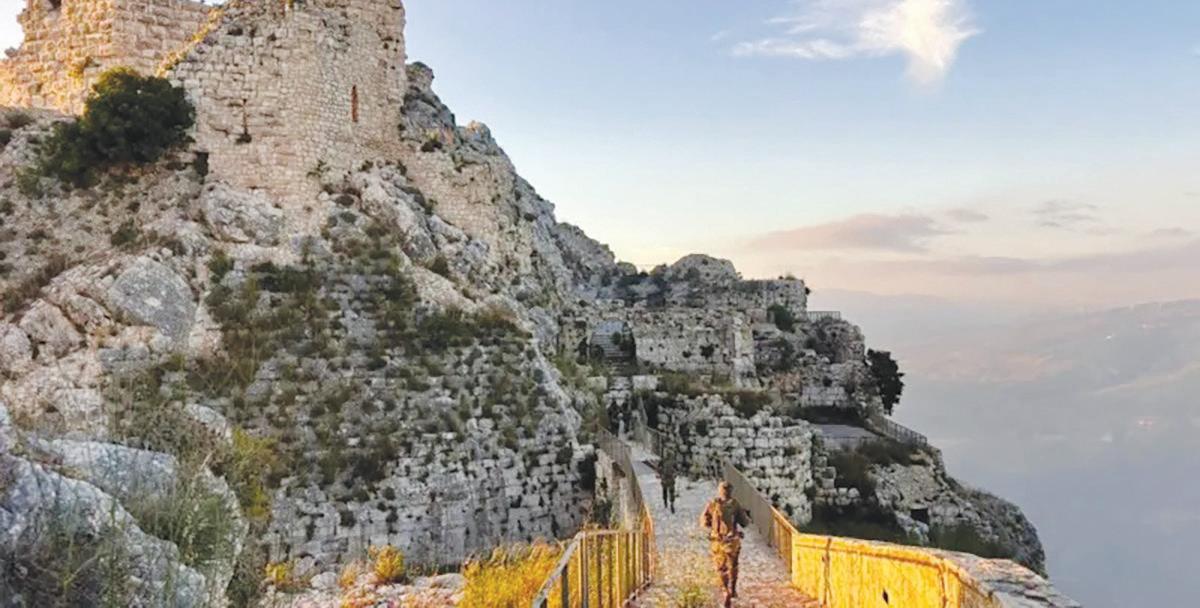
out “collective punishment”.
The latest evacuation warning is the second time in recent days that Israel has told residents to leave the entire south of Lebanon below
the Zahrani River.
“Anyone present near Hezbollah elements, facilities or means of combat endangers their life,” an IDF spokesman said.
President Donald Trump has requested that edits be made to the United States-Iran deal aimed at bringing an end to fighting that began earlier this year, US media reported.
The changes are related to the Strait of Hormuz and the removal of highly-enriched uranium, CBS News, the BBC’s US news partner, reported. The White House did not respond to a request for comment.
Mohammad Bagher Ghalibaf, Iran’s chief negotiator, said on Sunday that Tehran would not agree to any deal unless Iranian rights were fully secured.
The President and senior aides met on Friday to make a “final determination” about a framework for extending the ceasefire with Iran, but the meeting concluded without clarity on the next steps.
The latest iteration of the deal, first reported by Axios
The spokesman said a “significant number of IDF ground soldiers” were involved in the operation, which was “currently expanding to additional areas”.
UK Foreign Secretary Yvette Cooper joined European allies on Sunday in calling for Israel and Hezbollah to stop the escalating conflict.
“Israel’s military escalation in Lebanon has killed and displaced civilians, destroyed infrastructure, and eroded space for diplomacy,” Cooper wrote on X. “It must end.”
Hezbollah “must end attacks on Israel and disarm”, she added. (Excerpt from BBC News)
on Saturday, includes a 60day cessation of violence, a call to reopen the Strait of Hormuz and a framework to reopen negotiations on Iran’s nuclear programme, according to CBS.
Should diplomacy progress, the deal also reportedly involves potential sanctions relief to Iran that could allow it to access billions of dollars in frozen assets, CBS said.
Sunday’s reports of further edits are the latest de-
velopment in days-long negotiations between the White House and Tehran on the framework of a deal aimed at ending the monthslong war.
On Thursday, US officials said the two countries had agreed on a framework – known as a Memorandum of Understanding (MoU) – pending the approval of Trump and Iran’s leadership. (Excerpt from BBC News)
Adevastating explosion has killed at least 55 persons and wounded dozens more in a village in a region of Myanmar under insurgent control, the BBC has been told.
A source familiar with the situation on the ground in Kaung Tat, a village in Namkham Township in Shan State, near the Chinese border, said 25 women and 30 men had died. Other reports gave slightly different figures.
A huge cloud of smoke could be seen billowing over the village shortly after the blast occurred on Sunday.
The Ta’ang National Liberation Army (TNLA), which controls the area and
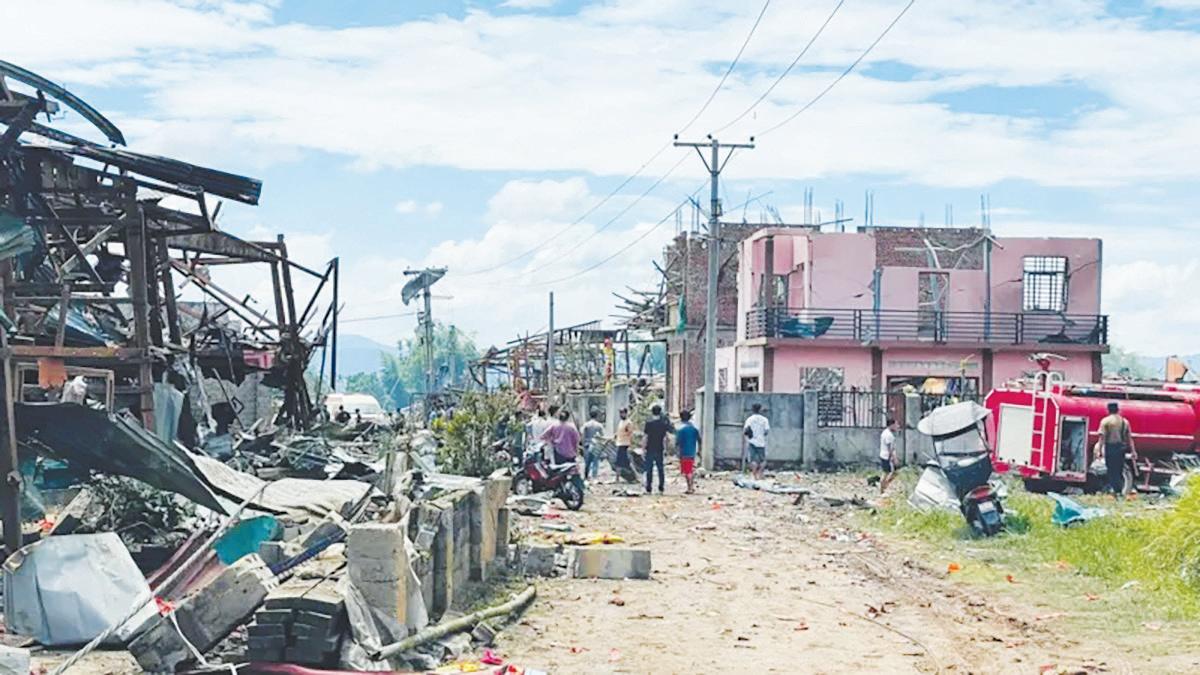
has been fighting the military junta, said explosives used in mining and quarrying had gone off.
The “accidental explosion” occurred around 12:00 local time (05:30 GMT) on Sunday,
according to a TNLA statement quoted by news agency AFP.
“Because of this explosion, many local villagers lost their lives and suffered injuries and damage to their homes,”
the group said, without providing details.
Footage from the scene shows a vast crater of earth and rubble surrounded by shattered buildings, with smoke still drifting from charred debris and twisted trees.
Residents described devastation and confusion following the explosion.
One wrote on social media that many people had initially believed the blast was caused by an air strike.
Children were among the dead and hundreds of homes had been damaged, affecting almost an entire neighbourhood, according to the post. (Excerpt from BBC News)
The United States fired a fresh broadside at its NATO allies in Singapore over the weekend, but Western European officials insisted the grouping remains resilient.
Speaking at the ShangriLa Dialogue, US Defence Secretary Pete Hegseth praised Asian partners for boosting defence spending and aligning closely with Washington as tensions with China mount.
“When our interests align,
we act together with focused resolve,” he said. “When our interests diverge, we adjust pragmatically without the drama or the moralising. I think Western Europe might take note.”
“Europe and NATO have some big decisions to make,” he said.
President Donald Trump’s Administration has repeatedly accused European Governments of underinvesting in their militaries and relying too heavily on US protec-
tion, while urging both Europe and Asian allies to boost defence spending to 3.5 per cent of GDP.
Washington announced plans in May to pull 5000 troops out of Germany, and Trump has threatened to pull out of NATO.
A senior NATO official sought to downplay the US troop withdrawal, saying it was already planned and that the alliance’s cohesion was unaffected.
“In a mature alliance, if
one ally which in this case is the principal stakeholder needs to redirect some power somewhere else, he can do so, and the others must be able to step in,” said Admiral Giuseppe Cavo Dragone, chair of the NATO Military Committee.
Nils Hilmer, state secretary at Germany’s Federal Ministry of Defence, said Berlin was accelerating military investment regardless of future US deployments. (Excerpt from Reuters)







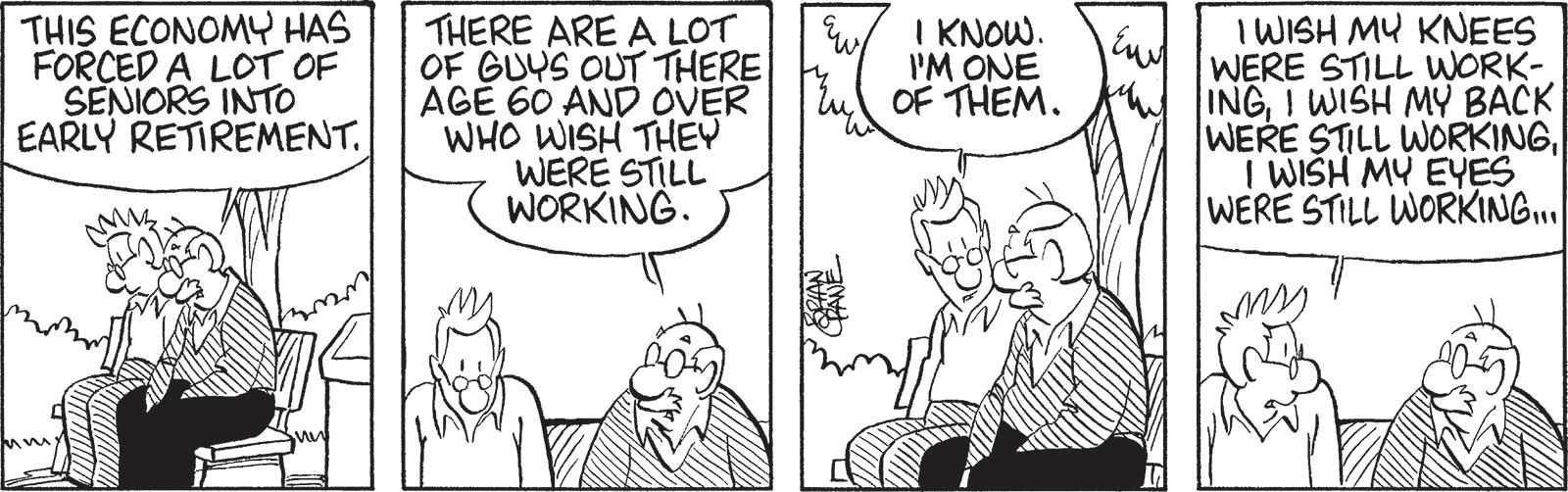

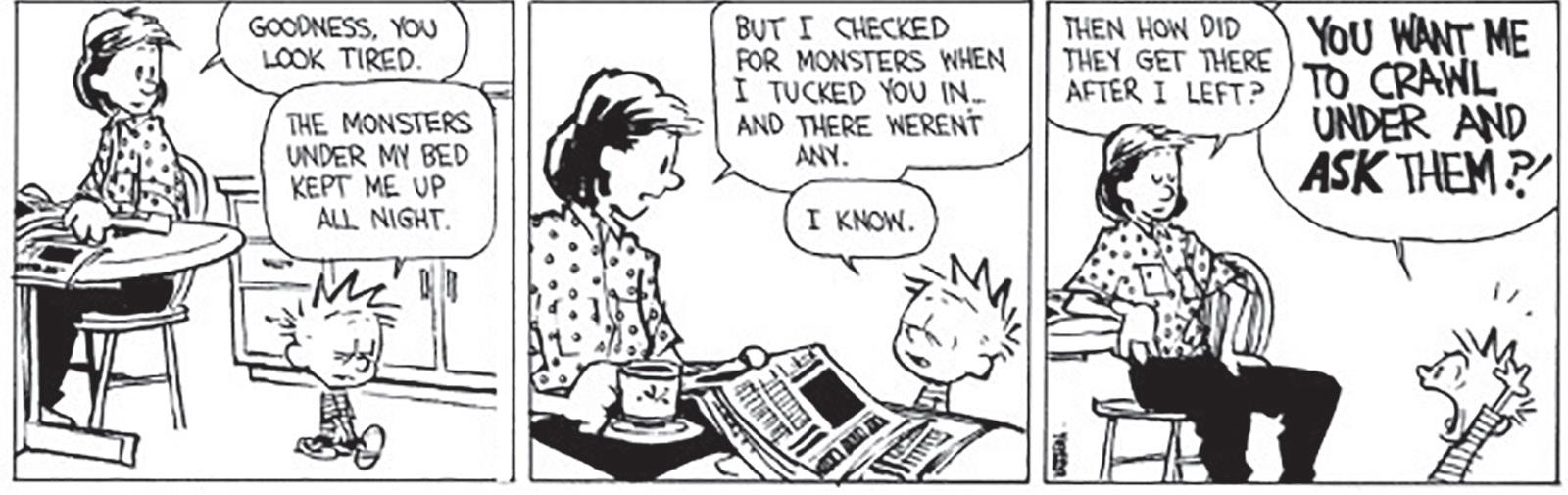






Don’t believe everything you hear. Don’t be afraid to ask direct questions and to opt out of any situation or deal that appears to be missing important details or hidden costs.



Distance yourself from those who stir the anger or stubbornness in you. Pay more attention to how you look and what you do, and display the best version of yourself.



Keep life simple, don’t take on responsibilities that belong to someone else and question information before you pass it along or trust its validity. Protect yourself from those trying to lead you astray.
Offering help to those less fortunate or using your connections or attributes to benefit the needy will satisfy your soul more than pontificating about something that’s not entirely true. Choose peace.


Pay more attention to personal growth. Decide what makes you happy, and choose to dedicate more time and effort to reaching your goal. Anger will stand between you and what you want.


Reading the fine print, negotiating on your behalf and getting what you want in writing are important. You have plenty to gain if you are thorough and refuse to take anything less than what’s fair.




Networking and discovering how you can turn something you enjoy doing into something profitable will have a positive impact on your life, but first, you must get rid of the excess and declutter your space.
Refrain from letting your personal and professional dreams collide. Separate your emotions from your responsibilities, and use your voice, experience and skills to help you fulfill your ambitions.


Keep the talks going until you reach an agreement. Maintaining balance and equality in your life is necessary if you want to improve your lifestyle and your meaningful relationships.





Someone will interfere in your life if you let them. Keep a low profile and go about your business. What you achieve without an audience will far exceed your expectations.
Stick close to home to work toward the lifestyle you envision. The changes you make to your surroundings will help you tweak your plans and boost your ego. Put your imagination to work.

Plant your feet firmly on the ground and say no to anyone trying to talk you into something you don’t need or want. Run the show instead of being a spectator. Stop letting others dictate your next move.







It took them 18 years to win their first title, but Royal Challengers Bengaluru (RCB) took no time in becoming only the third team to successfully defend it. Their seam bowlers made superb use of a slightly sticky surface after Rajat Patidar won the toss, restricting Gujarat Titans (GT), who were in their third final in five years of their existence, to 155, the exact same score RCB managed in the league match against the seam team in the same ground on the same pitch number six bang in the middle of the square.
Josh Hazlewood, who has never lost a T20 or One-Day International (ODI) final, set the tone with the wicket of Shubman Gill in his first over. Bhuvneshwar Kumar momentarily reclaimed the purple cap with two wickets, and Rasikh Salam capped off his best Indian Premier League (IPL) with three to take his tally for the year to 19. Last final’s Player of the Match, Krunal Pandya, who won his fifth IPL final out of five, also chipped in with the big wicket of Jos Buttler in his analysis of 4-0-23-1. He is now behind only Rohit Sharma and Ambati Rayudu in number of titles, and is also the first player to successfully defend a title with
aaa

two different teams. Only three out of 26 scores under 190 in a full match had been defended successfully this IPL. With the ball still nibbling around, the best attack in the tournament would have thought they had a chance, but amid falling wickets, Virat Kohli chose this final to hit his fastest IPL fifty and his highest playoff score, leading a five-wicket win with two overs to spare.
Get the openers Gill and B Sai Sudharsan came into the final as the
Gujarat Titans (20 ovs maximum)
Sai Sudharsan c †Sharma
b Kumar 12
Shubman Gill (c) c Patidar
b Hazlewood 10
Nishant Sindhu c Padikkal
b Rasikh Salam 20
Jos Buttler † st †Sharma
b Pandya 19
Washington Sundar not out 50 Arshad Khan c Rasikh Salam
b Hazlewood 15
Rahul Tewatia c Patidar
b Rasikh Salam 7
Jason Holder c Hazlewood
b Kumar 7
Rashid Khan c Shepherd
b Rasikh Salam 7
Kagiso Rabada not out 3
Extras (lb 1, w 4) 5
Total 20 Ov (RR: 7.75) 155/8
Did not bat: Mohammed Siraj
Fall of wickets: 1-22 (Shubman Gill, 2.2 ov), 2-26 (Sai Sudharsan, 3.4 ov), 3-55 (Nishant Sindhu, 7.6 ov), 4-73 (Jos Buttler, 12.1 ov), 5-99 (Arshad Khan, 14.1 ov), 6-115 (Rahul Tewatia, 16.1 ov), 7-142 (Jason Holder, 18.3 ov), 8-151 (Rashid Khan, 19.2 ov) Bowling O-M-R-W
Jacob Duffy
Bhuvneshwar Kumar
Josh Hazlewood
4-0-38-0
4-0-29-2
4-0-37-2
Rasikh Salam 4-0-27-3
Krunal Pandya 4-0-23-1
Royal Challengers Bengaluru (T: 156 runs from 20 ovs)
Venkatesh Iyer c Rabada
b Mohammed Siraj 32 Virat Kohli not out 75 Devdutt Padikkal c Arshad Khan b Rabada 1 Rajat Patidar (c) c Rabada b Rashid Khan 15
Krunal Pandya lbw b Rashid Khan 1 Tim David c †Buttler
b Arshad Khan 24
Jitesh Sharma † not out 11
Extras (lb 1, w 1) 2
Total 18 Ov (RR: 8.94) 161/5
Did not bat: Romario Shepherd, Bhuvneshwar Kumar, Josh Hazlewood, Rasikh Salam
Fall of wickets: 1-62 (Venkatesh Iyer, 4.3 ov), 2-63 (Devdutt Padikkal, 5.1 ov), 3-89 (Rajat Patidar, 8.2 ov), 4-91 (Krunal Pandya, 8.5 ov), 5-132 (Tim David, 13.6 ov) Bowling O-M-R-W Mohammed Siraj 4-0-36-1
Kagiso Rabada 3-0-44-1 Jason Holder 2-0-16-0
Rashid Khan 4-0-25-2
Arshad Khan 4-0-32-1
Prasidh Krishna 1-0-7-0
only pair of batters from the same team to have scored
that

700 or more runs in the same IPL. However, they were up against bowlers that have troubled them in the past. A cagey start ensued, Gill survived the Bhuvneshwar over, but Hazlewood had him top-edging his signature short-arm pull.
GT promoted Nishant Sindhu to number three to protect Buttler from Bhuvneshwar, but the wily bowler made sure Buttler had to come out as he took out Sai Sudharsan in his second over. He first beat Sai Sudharsan on the charge with a bouncer before continuing with another, this one taking the toe end on the ramp. Vaibhav Sooryavanshi, in attendance in Ahmedabad, was now assured of the orange cap. This was only the fourth time this
the power play, three of them against RCB.
Middle-overs choke
Seeing some grip from the pitch and conventional, subdued batters at the wicket, Krunal shelved all his fancy change-ups and bowled only length. His first three overs yielded zero boundaries. Salam was equally miserly at the other end, just bowling good length and enjoying the slight variations from the surface. One of those had Sindhu caught at long-on.
When Krunal started his final over, they had gone 37 legal deliveries without a boundary. Krunal expected the frustrated Buttler to try something, saw him coming and fired in a wide yorker for a spectacular stumping by Jitesh Sharma.
Another promotion followed with Arshad Khan walking in and hitting the fourth ball of the 13th over for a six, only one ball quicker than the longest it has taken a team to hit a six in an IPL final.
No let-up from RCB
Hazlewood, Bhuvneshwar, and Salam offered no freebies in the death overs. Every time GT thought they could build some momentum, one of the quicks jolted them with a wicket. Hazlewood got Arshad, Bhuvneshwar made it 28 wickets for the season with Jason Holder’s scalp, and Salam took out Rahul Tewatia and Rashid Khan in the end. Only Jacob Duffy went wicketless, but he, too, nearly had Washington Sundar, who went on from the reprieve to score a fighting 37-ball 50.
The high-octane chase
Like he did in the 2024 final with a 50 at two runs a ball, Venkatesh Iyer got off the middling chase to a flying start. Not that he needed extra licence, but an injury to the inside of the knee in the first over of the chase left him no option but to hit out. He hit out against Kagiso Rabada in his first over, and by the time Mohammed Siraj got him out for 32 off 16, he had set RCB on their way.

purple cap with Devdutt Padikkal’s wicket and Rashid Khan would soon take two in his first over, but the asking rate was already under a run a ball.
While Venkatesh might have added reason to hit out, Kohli lashed out at Rabada with ferocity that was only foretold by a season in which he has matched some of the younger, more cutting-edge T20 batters. Of the six batters to have scored 600 or more this IPL, only Sooryavanshi and Ishan Kishan have done so quicker than his 675 at 165.84.
As is often expected of Kohli, he was pumped up when he took on his great rival Rabada, hitting a spectacular six and three fours in Rabada’s second over. Rattled bowlers lost their line against Kohli, whose first run on the off side was his 39th. By that time, Rabada had taken back his
Only an injury to Kohli slowed down RCB’s march to the title, but Kohli finished it off in style with a four and a six off the last two balls of the 18th over. (ESPNcricinfo)

Guyana Harpy Eagles (GHE) left-arm spinner Antony Adams has already begun his new chapter in cricket.
The Essequibo senior captain was recently appointed as Assistant Coach for the Guyana Under-19 team that will be in Antigua for the Cricket West Indies (CWI) Regional Under-19 tournament in July.
Adams is also a member of the Guyana Police Force cricket team and he received an inspiring congratulatory message from the men in uniform.
“Commissioner of Police Mr Clifton Hicken, Deputy Commissioner
“Administration” and Chairman of Guyana Police Force Cricket, Mr Ravindradat Budhram, Police cricketers and ranks of the Guyana Police Force extend heartfelt congratulations to Antony Adams on his appointment as Assistant Coach of the Guyana National Under-19 Cricket Team for the Cricket West Indies (CWI) Regional Under-19 Tournament in Antigua from July 7-23, 2026.
“Adams, a member of the Guyana Police Force cricket team and a coach within the Force’s cricket programme, has made meaningful contributions to cricket both
as a player and coach. A Guyana cricketer, left-arm spinner and Level Two Coach, he has represented Guyana at the senior level, served in key coaching roles and continues to contribute to the development of young cricketers.
“His appointment is a proud achievement for the Guyana Police Force cricket fraternity and reflects his dedication, leadership, discipline and commitment to the continued development of cricket in Guyana.
“As a Police cricket coach, Adams continues to share his experience and knowledge of the game with fellow players, while sup-

Archers from the Golden Archery League (GAL) have delivered an impressive performance in the latest Caribbean Development Archery League (CDAL) online competition, securing the top positions on the official ranking leaderboard released on May 29, 2026.
The CDAL is an online developmental competition that allows archers from across the Caribbean to compete from their home countries. Participants shoot their scores at approved local venues, after which the results are submitted to their national
federations and forwarded to regional organisers for official ranking. According to the latest leaderboard, Golden Archery League archers dominated the competition. Joy Ann Klass secured the number one position with a score of 330 points at metres. Sharing the same score were Ashriel Archer and Shiva Tilaram, who claimed second and third place respectively in a highly-competitive field.
Ezekiel Hernandez finished fourth with 312 points, while Carlissa Collins followed closely in fifth place with 311 points. Kenisha Alleyne placed
sixth with 296 points.
Competing at the longer 50-metre distance, Jeremiah Keziah Archer scored 252 points to take seventh place overall, while Nathan Fredericks placed eighth with 180 points.
League officials emphasised that the current rankings represent only part of the competition, as Golden Archery League members still have one remaining scoring session to complete before final standings are confirmed. The additional round provides archers with an opportunity to improve their scores and potentially move higher in the rankings.
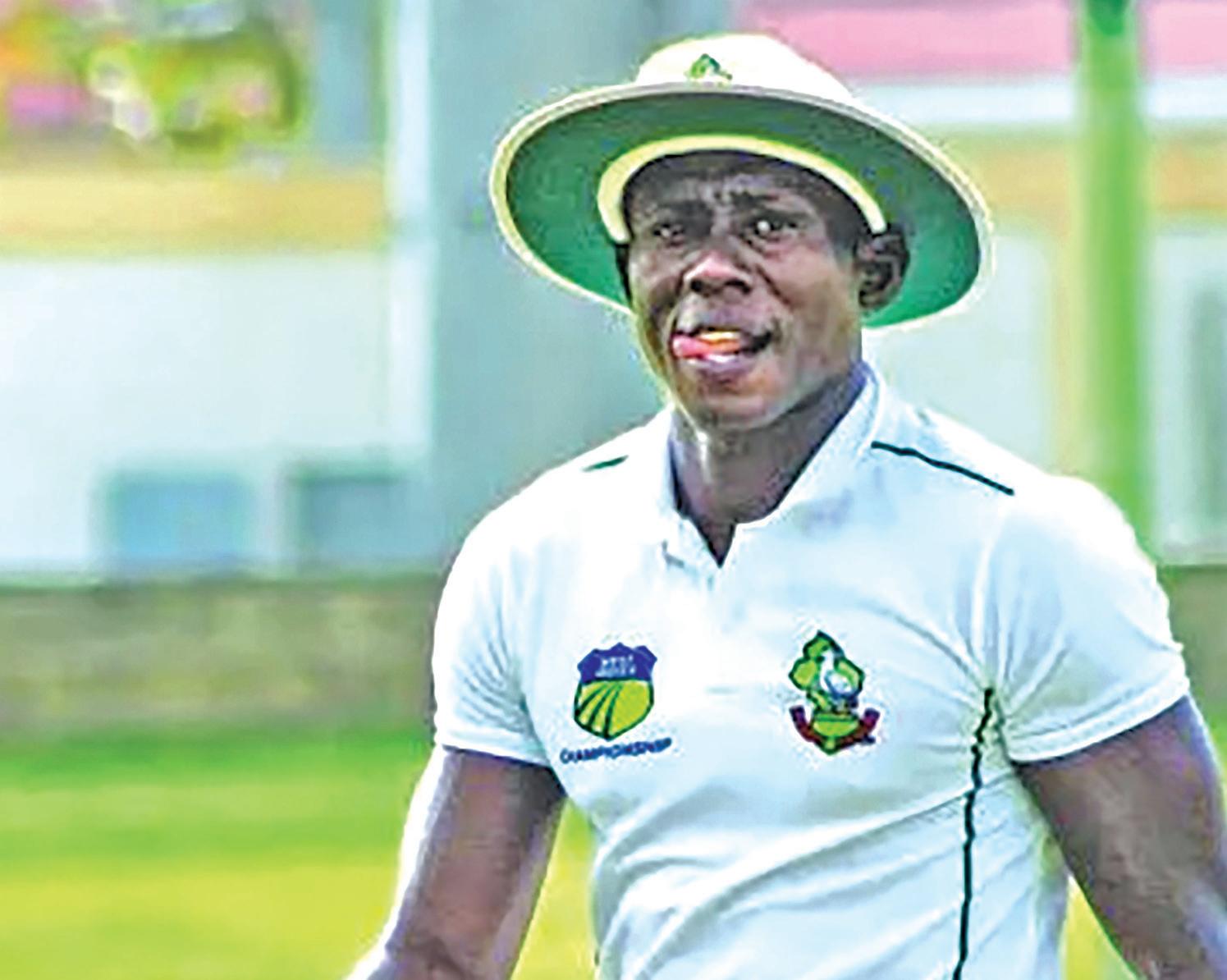

porting the growth and advancement of cricket within the Force. We wish Antony every success in this new assignment, and trust that he will continue to make Guyana and the Guyana Police Force proud,”
Guyana Police Force cricket posted on their social media platform.
Adams has been a consistent performer in local competitions in the past, topping the wicket charts, but he has been left out

West Indies Women Head Coach Shane Deitz has expressed satisfaction with the progress of his squad, highlighting the increased competition for places and the development of greater depth within the team as they continue their preparations for the 2026 International Cricket Council (ICC) T20 Women’s World Cup.
Speaking in an interview with Machel St Patrick Hewitt on the Caribbean Cricket Podcast, Deitz emphasised the importance of having all 15 squad members ready to contribute at any moment.
“We wanted 15 players ready to play the first game, knocking on my door wanting to be selected,” Deitz said, “I think all 15 have contributed something and shown they have the ability to perform at this level.”
The Australian Coach noted that building squad depth has been one of his key objectives since taking charge. Traditionally, he explained, the starting line-up would largely select itself,
of many Guyana teams. The likes of Veerasammy Permaul and Gudakesh Motie are the preferred options for Guyana. Adams has played two matches for Guyana, one List A and one First-Class game.
The Coach also pointed to the team’s flexibility and the variety of options available depending on opposition, match-ups, and playing conditions.
One player who has particularly impressed in recent preparations is experienced all-rounder Deandra Dottin. Deitz revealed that Dottin displayed excellent form during practice matches in Newport.
“She got a 50-odd off 17 balls in one game and has been hitting the ball everywhere,” he said, “She’s in form, but we just need a few options.”
with only a handful of players genuinely competing for places. That situation is now changing.
The Head Coach explained, “Usually, nine or 10 players pick themselves quite easily and then it’s always one or two positions up for discussion. The reserves don’t always get much opportunity and probably haven’t deserved it. But now we need 15 players. I always say we need 20 players in the Caribbean to be a good team, but that takes a long time to build.”
According to Deitz, the current environment is exactly what the coaching staff has been striving to create, with every squad member gaining valuable experience in varying conditions and remaining prepared for selection.
Looking ahead, Deitz stressed the importance of strong starts, particularly during the powerplay overs.
“The power play has got to be perfect. We’re going to have to have a really good start from ball one,” he noted.
Meanwhile, Deitz underscored the value of leftarm spin in modern women’s cricket, noting that the world’s three highest-ranked bowlers are all left-arm spinners.
“The best three bowlers in the world are all left-arm spinners, so I think you need a left-arm spinner in your team,” he explained.
He praised spinner Qiana Joseph for her commitment to improving her game, particularly her fitness and bowling mechanics.
Deitz opined, “If Qiana wants to take her game to the next level, she’s got to get better at a lot of things. She has done heaps of work on her fitness and has changed her body shape a lot. She’s now ready to bowl properly, get over her front leg, and become another asset to the team.”
As West Indies Women continue their preparations, Deitz believes the growing competition for places, improved fitness standards, and emergence of multiple match-winning options are all positive signs for the future of Caribbean women’s cricket.
The Guyana Rugby Football Union (GRFU) has announced a 23-man Green Machine squad for its Rugby Americas North (RAN) Tier 2 15s encounter against Barbados on Saturday, June 6 at the Garrison Savannah in Bridgetown.
The squad was selected following two weeks of preparation that included training sessions affected by inclement weather, practice matches and a series of demanding fitness workouts as the national team intensified preparations for the regional fixture.
Leading the squad is Captain Rondel McArthur, who will be joined by Makaya Smith, Osbert Robinson, Christian Klass, James Osbourne, Shawn David, Lionel Holder, Phibian Joseph, Vallon Adams, Jamal Junor, Godfrey Broomes, Tyrese Prescod, Owen Adonis, Godfrey Pollydore, Rickford Cummings, Gavin McPherson, Michael Edwards, Akino James, Odida Douglas, Sebastian Manifile, Renaldo Niles, Kevin Braithwaite and Julius Jardine.
The upcoming match presents an opportunity for Guyana to secure its first victory of the season after opening its campaign with a 9-5 defeat to Bermuda on April 25 at the National Park in Georgetown.
However, they are coming up against a formidable Bajan side, who thrashed St Vincent and the Grenadines on Saturday, May 30, winning by a mammoth 63-0.
Guyana will now shift their focus to the final stages of preparation before departing for Barbados, where the Green Machine will look to produce a strong performance against the hosts in the RAN Tier 2 contest.
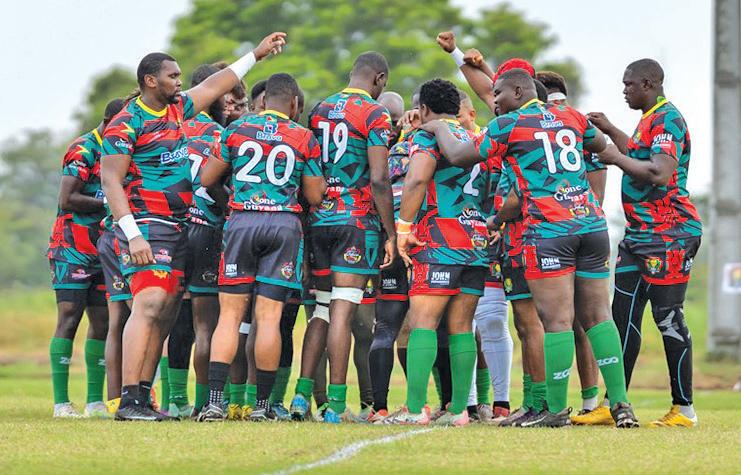
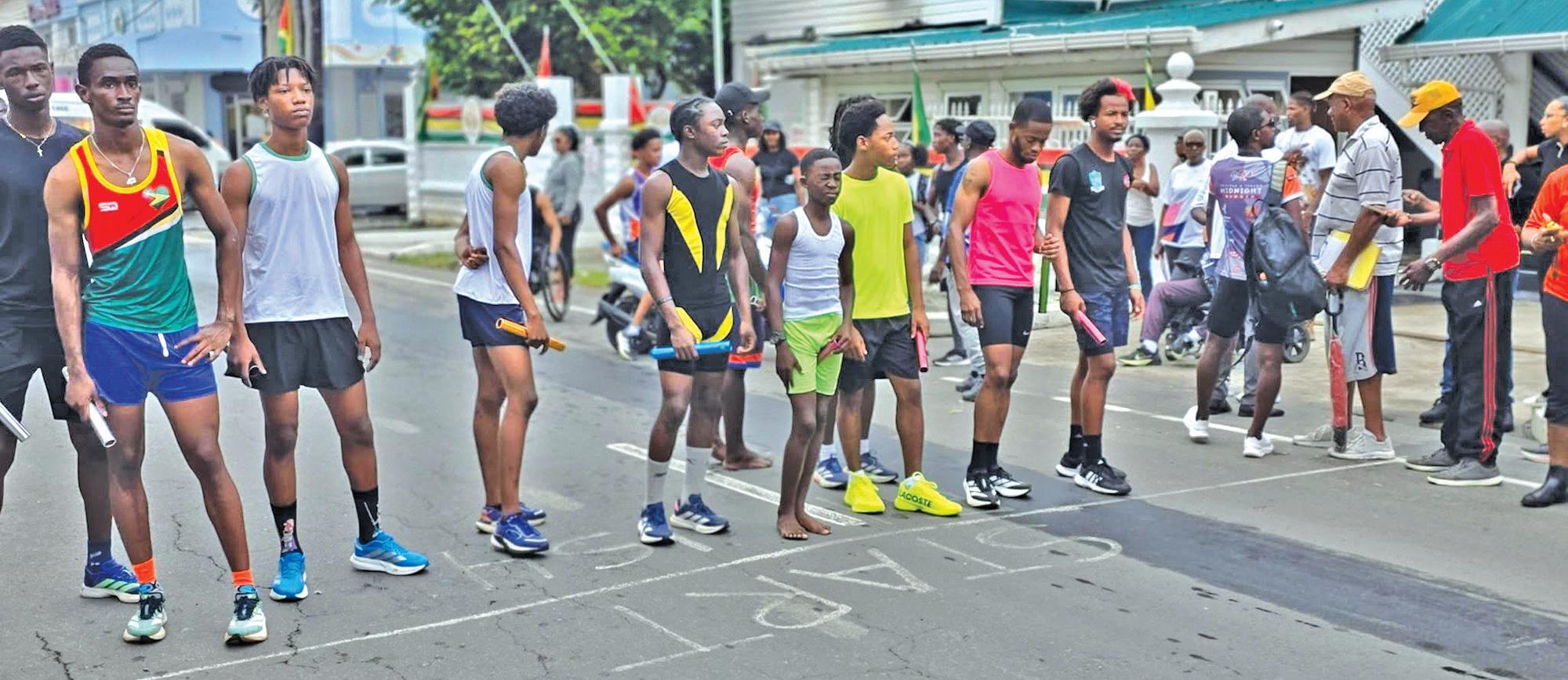
Georgetown came alive on Saturday as the streets of the capital provided the perfect backdrop for yet another 60th Independence Jubilee sport event, this time the Athletics Association of Guyana (AAG) Diamond Jubilee 10K Road Relay.
With the support of the Ministry of Culture, Youth and Sport (MCYS), the event brought together some
of the Republic, before making a final push back to the finish line on Main Street.
Teams were required to field six athletes, comprising four males and two females, adding a tactical dimension to the competition as clubs battled for Diamond Jubilee glory.
In the Under-16 Mixed Distance Medley Road Relay, Running Brave Athletics Club emerged vic-

of the country’s top athletes, clubs, and emerging talents in a showcase of speed, endurance, teamwork, and strategy.
The relay, which started and concluded in front of the Ministry’s Main Street headquarters, challenged competitors with a demanding route through the heart of Georgetown. Athletes navigated several of the city’s major thoroughfares, including Church Street, High Street, Young Street, Camp Street, New Garden Street, Regent Street, and Avenue
torious in a time of 37:51.00, finishing ahead of Team Nice Athletics (38:51.20) and Buxton Youth Developers (39:12.30).
Police Progressive Youth Club placed fourth in 42:25.50, while Lawn Tennis Federation completed the top five in 45:32.42.
The 16-and-Over Mixed Distance Medley Road Relay produced another impressive display, with Guyana Defence Force (GDF) Track Club storming to victory in 30:51.80.
Police Progressive Youth
Club secured second place in 31:09.10, while Running Brave Athletics Club claimed third in 35:15.90.
Team Nice Athletics finished fourth in 37:33.10, Thunderbolt Track Club placed fifth in 38:22.11, and Lawn Tennis Federation rounded out the field in 45:25.76.
Adding to the atmosphere was the presence of Culture, Youth and Sport Minister Charles Ramson Jr; Director of Sport, Steve Ninvalle and Vice President of the Guyana Olympic Association (GOA), Cristy Campbell, who joined spectators in cheering on the athletes throughout the event.
Addressing the gathering, the Minister highlighted the significance of celebrating Guyana’s Diamond Jubilee through sport, emphasising the values of unity, excellence, and national pride that have defined the nation’s journey over the past six decades.
At the conclusion of the competition, Minister Ramson, Director Ninvalle, and Campbell presented prizes to the top-performing teams, recognising their outstanding efforts and contributions to a memorable day of competition.
As Guyana continues its Diamond Jubilee celebrations, the Road Relay stood as a powerful reminder of the country’s sporting talent, community spirit, and enduring commitment to excellence.

Timehri United Football Club ensured that they would be the East Bank Football Association (EBFA) representative to challenge for a spot in the 2026-2027 Elite League after pulling off a commanding victory over Swan FC in the final on Sunday afternoon.
A smattering of family and supporters gathered at the Guyana Football Federation’s National Training Centre, Providence, East Bank Demerara (EBD) for what turned out to be a scintillating and evenly-matched encounter before Timehri tightened the noose in the second half.
Timehri got ahead early, on the account of a Swan error in the box in the fifth minute. Presented a penalty opportunity, Nyron Barrow made no mistake handing his team the early 1-0 lead.
Fifteen minutes later, Tyrone Burnette found the back of the net to double Timehri’s lead. However, Timothy Adrian gave Swan some hope, getting past the young Timehri keeper in the 42nd minute to fix the scoreline at 2-1 at the end of the first half.
Swan made several close advances in the opening stages of the second segment, but just could not get past the Timehri defence. Clearly in a no-nonsense
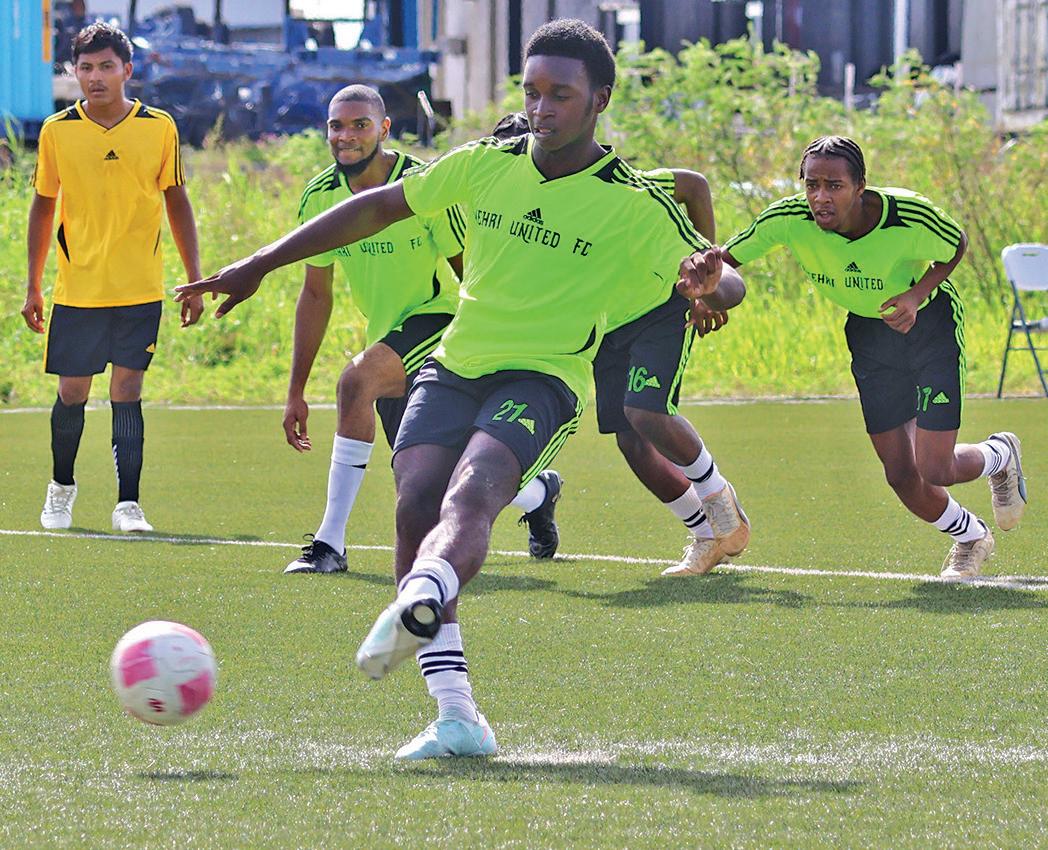
mood, Timehri turned on the jets late in the second half to produce another four goals.
Michael Correia began the onslaught in the 77th minute while Joseph De Fratias registered a brace in the 80th and 90th minutes. Adding the cherry on top for Timehri, Swan’s Michael Williams made the grave mistake of netting an own goal in the 89th minute, adding to their tally.
As such, Timehri United completed the 6-1 victory and now turn their attention to the Elite League Qualifiers, which will see them challenging the top teams from other Regional Member Associations for a coveted spot in the upcoming season of Guyana’s highest football league.


Cricket West Indies (CWI) on Sunday announced its 15-member squad for the highly-anticipated three-match One-Day International (ODI) series against Sri Lanka, scheduled for June 3-8 at Sabina Park in Jamaica.
Among the 15 are four Guyanese players with the
most notable inclusion being Shimron Hetmyer. His countrymen Gudakesh Motie, Sherfane Rutherford and Shamar Joseph have also been named in the regional side.
The series comes at the start of a crucial stage in the West Indies campaign for automatic qualification to the 2027 International Cricket Council (ICC) Men’s ODI World Cup.
Led by Captain Shai Hope, the “Men in Maroon” will also be aiming to extend their unbeaten home ODI series streak to five consecutive victories, with the last triumph coming against Pakistan in August of last year.
CWI shared in a missive, the squad sees the return of fast bowler Alzarri Joseph, who had been sidelined since July 2025 due to a back injury, along with Motie who missed the series away to New Zealand back in November.
The regional board went on to divulge that following his impressive performances during the recent ICC Men’s T20 World Cup, Hetmyer has been reintegrated into the West Indies


AODI set-up as part of CWI’s strategic build-up towards the 50-Over World Cup in October and November next year. He will join the squad ahead of the third and final encounter.
Head Coach Daren Sammy says the team’s strong recent form at home has boosted confidence ahead of the series against a formidable opponent.
“Sri Lanka are a disciplined and skilful ODI unit, especially in conditions that demand patience and smart cricket. For us, this series is about setting the standard, intensity in the field, clarity with the bat, and consistency with the ball. We want to play fearless but intelligent cricket and continue building the identity we believe
West Indies cricket should represent.”
Sammy added, “In our desire to make home a fortress in ODI cricket, I want the team to win moments consistently rather than relying on individual brilliance which we have stressed for the last 18 months.”
The squad arrived in Jamaica on May 31 following the conclusion of the 10day training camp at the Coolidge Cricket Ground in Antigua.
Fans can watch the ex-
citing action all series long on ESPN Caribbean or listen to live radio coverage on Windies YouTube channel. For updates on the full 2026 International Home Series visit www.windiescricket.
com and follow @windiescricket on all major social media platforms.
West Indies ODI squad against Sri Lanka: Captain Shai Hope, Ackeem Auguste, John Campbell, Keacy Carty, Roston Chase, Matthew Forde, Justin Greaves, Shimron Hetmyer, Amir Jangoo, Alzarri Joseph, Shamar Joseph, Gudakesh Motie, Sherfane Rutherford, Jayden Seales and Shamar Springer.
Team Management Unit (TMU)


Head Coach: Daren Sammy
Manager: Rawl Lewis
Assistant Coach (Batting): Floyd Reifer
Assistant Coach (Bowling): Ravi Rampaul
Assistant Coach (Fielding): Rayon Griffith
Match Schedule:
Physiotherapist: Dr Denis Byam
Strength & Conditioning Coach: Darc Browne
Massage Therapist: Harone Jackson
Performance Analyst: Avenesh Seetaram
Content & Media Officer: Jerome Foster
1st ODI: June 3 – Sabina Park, Jamaica @ 9:30am in Jamaica/10:30am AST
2nd ODI: June 6 – Sabina Park, Jamaica @ 2:30pm in Jamaica/3:30pm AST
3rd ODI: June 8 – Sabina Park, Jamaica @ 2:30pm in Jamaica/3:30pm AST
the highest total of the competition, before producing a clinical bowling display to choke the East Coast Demerara outfit to a paltry 40 for 7.
The foundational bricks of West Ruimveldt’s championship-winning total were laid by Bryan Hunter, who smashed a brisk 12-ball 23, punctuated by three boundaries and a solitary six.
Skipper Steven Orie provided the perfect foil with a crucial 18, ensuring the run rate never dipped despite Mahendra Chunilall’s probing spell of 2 for 10.
Chateau Margot’s pursuit never found its rhythm against a relentless West Ruimveldt attack. Rohit Shama top-scored with just five as Vincent Farley (2 for 5) and the ubiquitous Orie (2 for 8) triggered a procession of wickets.

ed Rama Krishna to 36 for 8, before Orie’s steady 10 steered them into the final.
comprehensive all-round performance from West Ruimveldt Primary at the Guyana National Stadium, Providence, East Bank Demerara (EBD) on Sunday afternoon saw the young players overcoming their final jitters from previous years to lift the Future Warriors Tapeball for Primary Schools Demerara Zone trophy.
The tournament, pow-
ered by ExxonMobil Guyana, brought together primary school teams from the Demerara Zone in a weekend of riveting kiddie tapeball cricket. In the grand finale, West Ruimveldt chose the biggest stage to produce their best performance yet. Blunting Chateau Margot’s reputation as the tournament’s preeminent “chase masters”, West Ruimveldt posted 66 for 4,
Orie capped off a sensational individual campaign as the tournament’s leading run-scorer with 49 runs, alongside a three-wicket haul that rightfully earned him the Most Valuable Player (MVP) award. Farley finished as the tournament’s leading wicket-taker with five scalps.
Earlier in the day, West Ruimveldt signalled its intent in the first semi-final by dismantling Rama Krishna Primary.
A combined bowling effort from Farley (2 for 3); Hunter (2 for 7), and Zyron Austin (2 for 12) restrict-
Chateau Margot’s route to the final was far more dramatic. They pulled off yet another signature chase against former champions Stella Maris, hunting down a target of 52 with five wickets and seven balls to spare.
Ezekiel Thomas’ unbeaten 18 and Clevon Jacobs’ 16 had originally lifted Stella Maris to 51 for 2, but Wazim Khan’s ice-cool, fiveball 10* sealed an emphatic win for Chateau Margot.
Stella Maris eventually found consolation in the third-place playoff, bossing a 51-run chase against
Rama Krishna to win by seven wickets inside 5.3 overs. Jeremiah Scott’s blistering 24 off 13 balls and Joshua Horatio’s cameo of 14 off 7 rendered Michail Nelson’s earlier 12 for Rama Krishna obsolete.
All four top schools received a bag of cricket equipment, an electronic tablet for scoring, and agility kits to support their continued interest in the sport, along with medals and trophies.
The highly-competitive Demerara leg featured 16 schools, including Grove Primary, Supply Primary, La Grange Primary, Meten-
Meer-Zorg Primary, St Pius Primary, Winfer Gardens Primary, Enterprise Primary, Comenius Primary, Redeemer Primary, Camille’s Primary, ISA Islamic, and School of the Nations.
The grassroots caravan now shifts to the Berbice Zone at the historic Albion Sports Complex June 13-14, followed by the Essequibo Zone at the Anna Regina National Stadium June 2021.
The three regional champions will then collide in a blockbuster “Champion of Champions” tournament slated for August/ September.




Following a series of scintillating clashes at the National Gymnasium, Mandela Avenue on Sunday, Shemar Britton and Samara Sukhai rose to the summit of the Guyana Table Tennis Association (GTTA) 60th Independence Jubilee Tournament with victories in the open men’s and women’s singles divisions respectively. A detailed account on the GTTA’s Independence tournament will be published in Tuesday’s edition of Guyana Times Sport