









Avehicular accident involving a motorcar and two motorcycles has resulted in the death of 39-year-old Gladwin Dorway of Plaisance, East Coast Demerara (ECD).
Preliminary investigations revealed that the accident occurred at about 03:05h at the intersection of Camp and New Market Streets, Georgetown.
Police stated that a motorcar, PNN 832, driven by a 28-year-old female of South Cummingsburg, Georgetown, was proceeding along New Market Street, Georgetown, and upon approaching Camp Street, the driver failed to adhere to a stop sign and, as such, collided with motorcycle CP 7083, driven by a 27-year-old male of Sparendaam, ECD. As a result of the impact, Dorway, who was proceeding along Camp Street on his motorcycle, CS 441, collided with the right front side of the motorcar. Both motorcy-

clists were reportedly flung onto the roadway, where they sustained injuries to their bodies. They were picked up and taken to the Georgetown Public Hospital Corporation (GPHC), where Dorway was pronounced dead. The other motorcyclist remains a patient at the same medical facility receiving treatment. At the time of the accident, the driver of the motorcar was reportedly under the influence of alcohol, with read-
ings of 0.25 micrograms and 0.21 micrograms. In Guyana, the legal alcohol limit for drivers is set at 35 micrograms of alcohol per 100 millilitres of breath, or a Blood Alcohol Content (BAC) of 80 milligrams per 100 millilitres of blood. This is roughly equivalent to consuming about two beers. The driver of the motorcar is presently in police custody assisting with investigations.
Apedestrian lost his life on Saturday after he was struck while attempting to cross the De Kinderen Public Road, West Coast Demerara (WCD). The deceased man has been identified as thirty-six-year-old Kempton Forrester of De Kinderen Housing Scheme, WCD. Based on reports received, a motorcar bearing
registration number PSS 3141, which was at the time driven by a 20-year-old male of Boeraserie, WCD, was exiting a supermarket parking lot when it reportedly struck Forrester, who was crossing the roadway. As a result of the collision, the pedestrian sustained injuries to his head and body and was taken to the De Kinderen Regional
Hospital by the same driver, where he succumbed to his injuries while receiving medical attention. Footage from CCTV was retrieved and is being reviewed by traffic ranks. A breathalyser test conducted on the driver returned readings of six micrograms on both tests. He remains in custody pending further investigations.
More than a week after a fatal accident involving a police officer at the intersection of Macaw Road and Lamaha Street, Georgetown, the police reported on Sunday that the cop involved is under close arrest. The accident, which took place on Saturday, July 4, 2026, has led to the death of 38-year-old Kevin London
of Guyhoc Park Gardens, Georgetown. Police stated that on the day in question, motor car PAE 8323, which was being driven by a 27-year-old police corporal from Rosignol, West Coast Berbice (WCB), was proceeding along Macaw Road, while motor car PAF 3925, driven by the now-deceased man, was proceeding along Lamaha Street.

However, as both vehicles approached the intersection, it is alleged that they failed to stop before proceeding into the junction, thus resulting in a collision. As a result, London sustained injuries about his body and was transported to the Georgetown Public Hospital Corporation (GPHC), where he was treated and admitted to the Intensive Care Unit (ICU). He subsequently succumbed to his injuries on Tuesday, July 7, 2026, while receiving medical treatment. The policeman involved in the accident, whom the police stated had passed a breathalyser test, was placed under close arrest as investigations continue.


The Berbice Bridge will be closed to vehicular traffic on: Monday, July 13 –16:00h–17:30h and Tuesday, July 14 – 16:50h–18:20h.


Parika and Supenaam departure times – 05:00h, 10:00h-12:00h, 16:00h, 18:30h daily.




Thundery showers are expected during the day, followed by sunny conditions from the mid-afternoon hours. Clear skies are expected at night. Temperatures are expected to range between 23 degrees Celsius and 30 degrees Celsius.
Winds: East-North-Easterly to South-Easterly between 1.79 metres and 4.47 metres.
High Tide: 15:54h reaching a maximum height of 2.48 metres.
Low Tide: 09:23h and 21:40h reaching minimum heights of 0.56 metre and 0.74 metre.










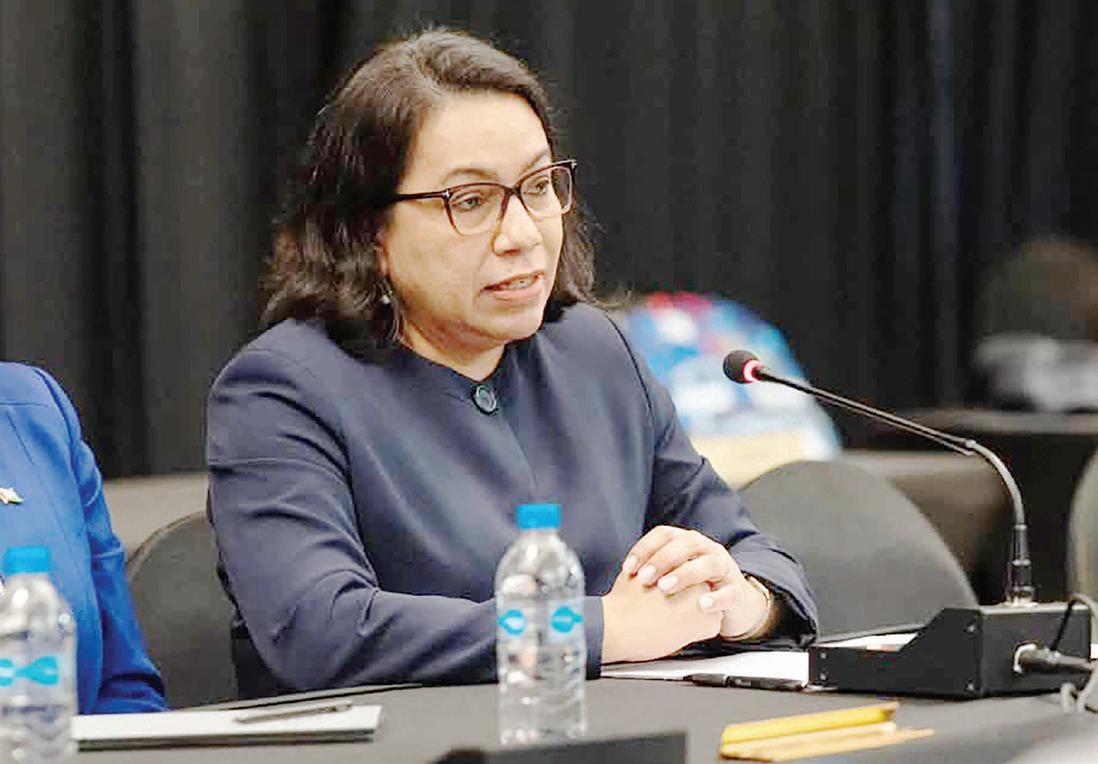
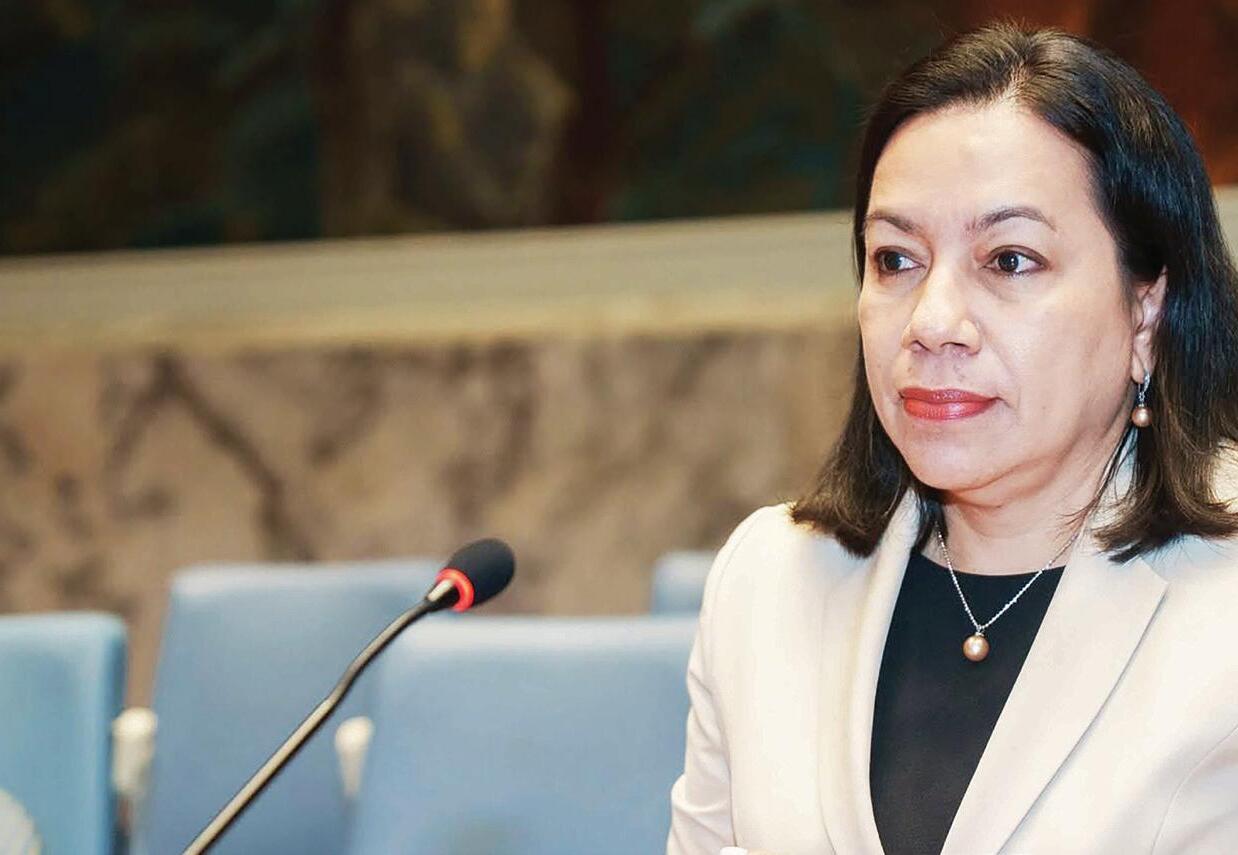
Caribbean leaders are rallying behind Guyana’s bid for the United Nations (UN) Secretary-General (SG) post. In a June 12 announcement, President Dr Irfaan Ali disclosed that Guyana would be seeking the UN Secretary-General position and nominated former Foreign Affairs Minister and current Permanent Representative of Guyana to the UN, Ambassador Carolyn Rodrigues-Birkett, for the role. The tenure of the current UN SecretaryGeneral, António Guterres, will end on December 31, 2026.
Last week, regional leaders gathered for the 51st Regular Meeting of the Conference of Heads of Government of the Caribbean Community (Caricom), held in Gros Islet, St Lucia. During the four-day high-level engagement, the Heads of Government reaffirmed the Community’s commitment to multilateralism, underpinned by the UN Charter and international law, especially in the face of pressing global challenges confronting the international community.
Moreover, they noted that a new UN SecretaryGeneral is to be appointed during a particularly critical time for the world community. The regional leaders acknowledged with appreciation that several distinguished candidates have been nominated from Latin America and the Caribbean (LAC) to fill the post, including a candidate from Guyana.
“Heads of Government strongly welcomed Guyana’s nomination of Ambassador Carolyn Rodrigues-Birkett and expressed their full endorsement for her candidacy,” a communiqué from the Caricom Secretariat stated. Since her nomination, Ambassador Rodrigues has embarked on a global campaign to promote her candidacy among major leaders and organisations. In fact, during the recent Caricom Heads of Government Meeting in St Lucia, she addressed regional leaders on her vision and candidacy for the
top UN post. According to a post on President Ali’s Facebook page, “Her pre-
for Human Rights, Michelle Bachelet; the Former President of the UN General Assembly, Maria Fernanda Espinosa of Ecuador; the Director General of the International Atomic Energy Agency (IAEA), Rafael Grossi of Argentina; the SecretaryGeneral of UN Trade and Development, Rebeca Grynspan of Costa Rica; and the Former President of Senegal, Macky Sall.
Only last week, Deputy Secretary-General of Caricom, Dr Armstrong Alexis, lauded Guyana’s bid for the top UN position.
During an interview on the sidelines of Caricom Heads
out that for the first time, the Caribbean has been able to occupy the seat of the Secretary-General of the Organisation of American States (OAS) in the person of Ambassador Albert Ramdin from Suriname. According to the Caricom Deputy Head, the Caribbean region over recent years has been positioning itself among the international community.
“We are Small Island Developing States, but we are not islands without the capacity, without the capability, without the intelligence to be able to stand among the best and the brightest in this world,” Dr Alexis posited.
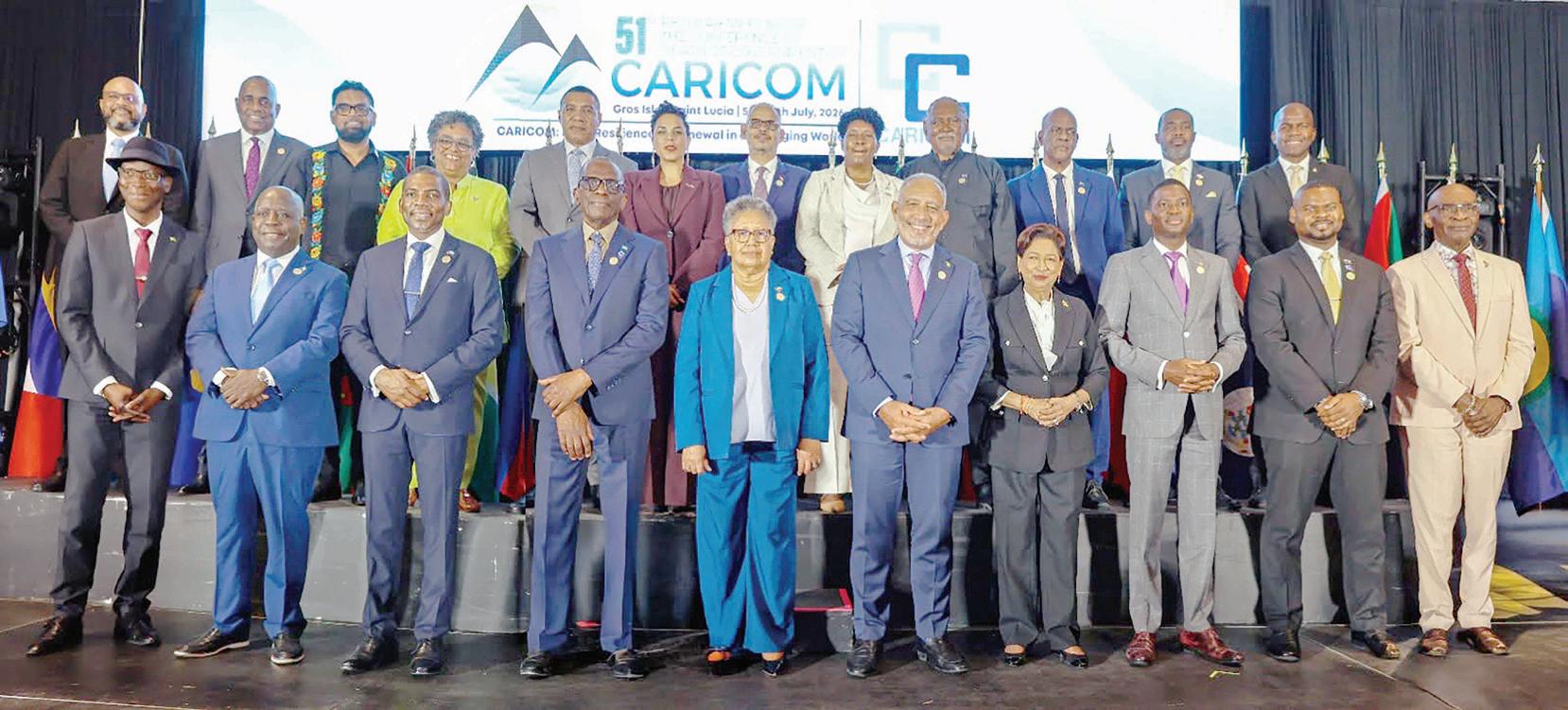
sentation received strong support, with several Member States endorsing her nomination, another significant milestone as our campaign continues to gather regional momentum on the international stage.”
Ambassador Rodrigues is vying for the UNSG post alongside the Former President of Chile and UN High Commissioner
of Government in St Lucia on Wednesday, Dr Alexis said this ambitious move by a Caribbean Member State would augur well in positioning the region on the global stage. In addition, “If we succeed in electing a Caricom national as the Secretary-General of the United Nations, that is going to be a huge accomplishment for this region,” the Caricom Deputy SG stated. Already, he pointed
Similarly, Guyana’s international profile has been exploding due to its rapidly growing economy-fueled by a burgeoning oil and gas industry coupled with the country’s increasing leadership presence in a number of areas globally such as climate change and food security. In fact, it was on this premise that President Ali said Guyana is seeking the top UNSG seat.



Editor: Tusika Martin
News Hotline: 231-8063 Editorial: 231-0544, 223-7230, 223-7231, 225-7761
Marketing: 231-8064 Accounts: 225-6707
Mailing address: Queens Atlantic Industrial Estate Industrial Site, Ruimveldt, Georgetown
Email: news@guyanatimesgy.com, marketing@guyanatimesgy.com
For generations, private farming in Guyana has been viewed through a narrow lens. The image has been one of a few acres of rice on the coast, a patch of cassava or eddoes behind the village, a small cattle pen, and vegetables destined for the nearest market. Agriculture was, for many, about survival first and profit second. It was subsistence without a commercial afterthought, even in rice, where more than three-quarters of farms are subsistence plots less than five acres.
That model built communities and fed the nation, but it cannot create the prosperity that Guyana now seeks. Two decades ago, the Jagdeo Initiative was a challenge to Caricom to invest in Guyana’s agriculture to feed our region, but it was dropped. However, the current “25-by-25 plan” proposed by President Irfaan Ali has set the stage for a new agricultural transformation. Our country’s oil wealth has transformed expectations in every sector.
Agriculture, perhaps more than any other traditional industry, now faces a choice: remain trapped in low-productivity practices or reinvent itself as a technologically-sophisticated business capable of supplying regional and international markets.
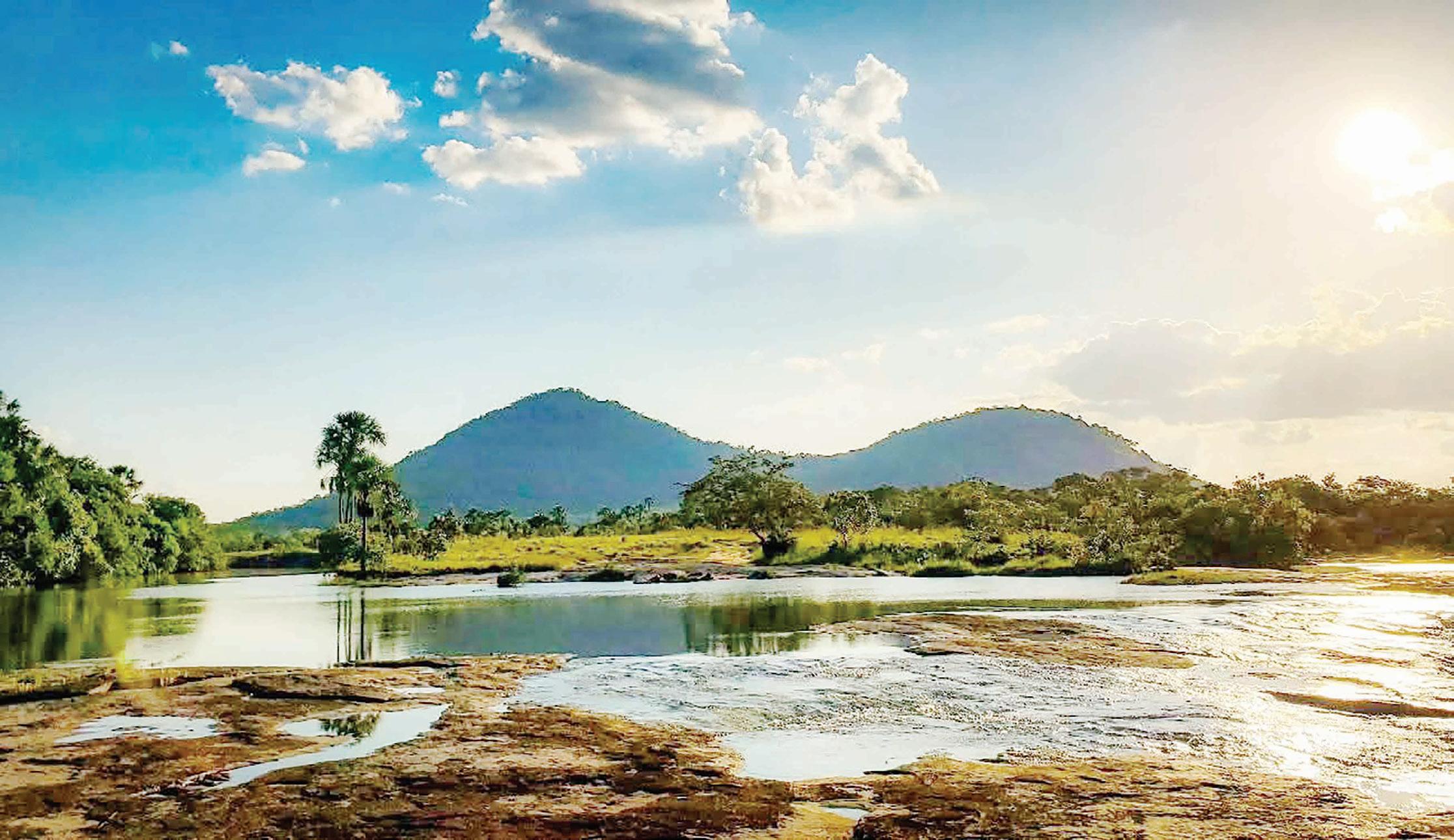
Signs of that transition are beginning to emerge. President Ali’s highly-publicised farm along the Linden Highway has attracted both admiration and criticism. Political opponents have questioned the optics of a sitting president operating such an enterprise, while others have praised it as an example of visionary agricultural entrepreneurship. Whatever one’s political perspective, the farm represents something important. It is not another rice field or kitchen garden but a diversified, technology-driven agricultural operation incorporating livestock, aquaculture, orchards, protected cultivation, and modern irrigation. Its significance lies less in who owns it than in what it represents: agriculture conceived as an integrated commercial enterprise rather than simply another means of making ends meet.
A similar story can be found in Region Three, where a group of young professionals has established a modern poultry enterprise. These are not individuals who entered farming because they lacked alternatives. They possess university qualifications and professional careers.
Responding to a challenge by President Ali and supported as a private-public enterprise, they have approached poultry production as investors would approach manufacturing or information technology using planning, data, modern housing systems, specialized feeding regimes, and business management to build a scalable enterprise. That distinction matters enormously.
With our slave and indentureship history in exploitative agricultural plantations, getting off the land was the general aspiration. Since independence, one of our greatest challenges has been convincing educated young people that agriculture could offer careers comparable in prestige and financial reward to the professions. Too often, farming was portrayed as what one did if other opportunities failed to materialise. The emergence of professionally-managed agricultural enterprises begins to challenge that stereotype.
Modern agriculture is increasingly driven by science rather than tradition. Precision irrigation, improved genetics, controlled environments, artificial intelligence, satellite imagery, drones, automated feeding systems, and sophisticated supply chain management have changed what it means to be a farmer. This evolution is particularly important for Guyana, because oil revenues provide something we have never before possessed in abundance capital.
The Government is providing the roads, drainage systems, farm-to-market access, electricity, etc, that are not glamorous investments. Yet they determine whether agriculture remains a subsistence activity or becomes a globally-competitive industry. Equally important is education. The farmer of tomorrow will need skills in biology, chemistry, engineering, business management, and digital technology. Our educational institutions should therefore see agriculture not as a relic of Guyana’s past but as one of its most promising high-tech industries.
The country’s future agricultural landscape should include commercial aquaculture, greenhouse vegetable production, highvalue fruits, dairy processing, poultry, livestock genetics, specialty crops, agro-processing, and export-oriented food manufacturing. Success should increasingly be measured not merely by acreage cultivated but by productivity, profitability, and value added.
The farms along the Linden Highway and in Region Three suggest what that future could look like. They are reminders that Guyanese agriculture can evolve into a modern, diversified, and technology-driven sector one capable not merely of feeding Guyana but of competing confidently in Caribbean and global markets.
Dear Editor, Transparency and accountability are required of elected officials to justify their existence in the public space. Their stewardship is scrutinized by the subjects over whom they govern; we require no less. That critical and detailed examination of their actions is required at all times; if they fall beneath the bar, then consequences should follow.
This applies to both government and opposition, because when you assume the position of government, public transparency and accountability become mandatory watchwords.
Recently, there has been a flurry of information regarding the president’s corrupt acquisition of a large farm on the highway; this allegation has been made by the opposition leader Azruddin Mohamed himself. He comes onto the scene as an overly concerned opposition leader, who has suddenly landed
on a smoking gun story that would certainly bring Dr. Ali and his government down.
He peddles his story with all the sensationalism that a politician of his ilk can muster, but is this the true picture painted in the media? I think not, because a true assessment of the political climate of this fugitive offender turned concerned opposition leader shows a man who is trying desperately to save himself from extradition to the United States to face corruption charges.
So, as the noose tightens around his neck, he is trying every which way to stir up trouble for the Ali Government while hoping somehow that his personal troubles will go away.
But what I can tell Mr. Mohammed is that this is no new phenomenon when it comes to the opposition’s stance against the PPP/C; the corrupt blame represents a prime strategy employed by the PNC during the Jagdeo
presidency.
It was one of the PNC’s main deceptions in their arsenal of tricks. They hounded Jagdeo both locally and internationally; Pradoville readily comes to mind as their accusations reached melting point. So, this latest attack on Ali comes as no surprise. The point is that the opposition is going to use every clever subterfuge to distract from the real issue here, which is his imminent extradition.
There is an integrity commission to which all public officials must declare their assets, and all allegations of corruption should be directed to that statutory body. The Integrity Commission has the power to investigate if there is any evidence of misconduct in public office.
Dr. Ali, in a show of transparency and accountability, has made his declarations to the integrity commission, and that is all that matters. Then it behooves us to ask
the question: Is Azruddin Mohammed of the mistaken belief that he is exempt from the said commission? Is he exempt from declaring his assets while making accusations against the president? I think not.
Are we witnessing another episode of the biblical character Eli and his sons? Eli’s eyes could have been wide open to see the so-called inebriated lips of the praying sister; however, those eyes were conveniently blind to the evil deeds of his sons. Is Nazar and Azruddin Mohamed a reenactment of that biblical father and son story?
Azruddin Mohamed is pretending to have morals and virtues that he does not actually possess, because he points the accusing finger when he himself is the epitome of corruption. I leave my audience to judge.
Respectfully, Neil Adams

Dear Editor,
The relations between China and Taiwan are constantly tense since their de facto separation in 1949 and are causing tension in relations between Beijing and Washington.
On October 1, 1949, Mao Zedong proclaimed the founding of the People’s Republic of China in Beijing. The nationalist forces of the Chinese Kuomintang party under Chiang Kai-shek abandoned China and fled to Taiwan (formerly Formosa), then formed a government on December 7 and banned all relations between the island (officially the Republic of China) and communist China.
Then in 1950 Taiwan became an ally of Washington, which was at war with China in Korea. In June 1950, USA President Harry Truman ordered the USA 7th Fleet to repel any possible attacks by
the Chinese communists on Taiwan. At the same time, Chiang Kai-shek was asked to build fortifications on the coast of Taiwan to prevent a possible Chinese attack.
Lai Ching-te’s Democratic Progressive Party (DPP), which is now in power for the third time, views Taiwan as a de facto sovereign nation with a distinct Taiwanese identity and Mandarin as its official language. Taiwan, it should be noted, has its own army, currency, constitution and now a democratically elected government - from 1949 to 1987 it was under an authoritarian regime of martial law - but it is not recognized as an independent country by most governments in the world.
To date, it has been recognized as an independent state by only 12 countries and has not been accepted as a member of internation-
al organizations as China insists that it is a province of its own, part of its territory, and prevents its integration and recognition.
Over the decades, Taiwan has become increasingly isolated. At the same time, however, ties between Taiwan and the United States have grown stronger, with increased arms and military equipment sales and high-level political cooperation under Lai’s popular female predecessor, Tsai Ing-wen, fact which has angered Beijing. However, historically the USA position in relation to Taiwan has remained deliberately vague, namely regarding whether it would defend it in the event of a Chinese invasion, the well-known “strategic ambiguity”.
The USA has long been treading on a fine red line. Thus, under the socalled “One China” policy,
Dear Members of the Board,
I am writing to respectfully request clarification regarding the governance and decision-making processes of Cricket West Indies.
From publicly available information, I understand that the Board of Directors comprises eighteen members under the leadership of President Dr. Kishore Nalin Shallow.
Could you kindly advise why the minutes of Board meetings are not published for public review? Given that Cricket West Indies represents the people of multiple Caribbean nations and territories, many supporters would welcome greater insight into how significant policy and cricketing decisions are reached.
I would also appreciate clarification as to whether Cricket West Indies is regarded as a private organization, a not-for-profit body, or another form of corporate entity, and what governance standards and reporting obligations apply to its operations.
I have also reviewed Cricket West Indies’ Strategic Plan, which identifies Transparency and Accountability as core objectives, including the implementation of regular reviews. Likewise, under Ethical Leadership and Integrity, the Strategic Plan emphasizes promoting ethical behaviour and maintaining organizational integrity.
In that context, I wish to bring to your attention a concern that I have encountered repeatedly among many supporters of West Indies cricket, particularly persons of East Indian de-
scent. Numerous individuals with whom I have spoken, many of whom were born in the Caribbean but now reside abroad, have expressed a perception that suitably qualified players of East Indian descent are not always afforded equitable opportunities for selection to representative teams.
Whether or not this perception is well-founded, it appears to be sincerely held by a significant number of supporters and is frequently expressed on social media and in discussions within the Caribbean diaspora. Some have indicated that these concerns have contributed to their decision to disengage from following West Indies cricket.
Given Cricket West Indies stated commitment to transparency, accountability, ethical leadership, and integrity, I would appreciate your response to the following:
What measures does Cricket West Indies have in place to ensure that player selection is conducted fairly, transparently, and solely on merit?
Does the Board periodically review its selection policies and processes to ensure they are applied consistently and without bias?
Has Cricket West Indies considered publishing Board meeting minutes, governance summaries, or other reports that would provide supporters and stakeholders with greater transparency regarding important decisions?
I submit these questions respectfully and in the hope of fostering greater confidence among supporters throughout the Caribbean
and its diaspora. Open communication and transparency can only strengthen public trust in the governance of West Indies cricket.
I look forward to your response at your earliest convenience.
Thank you for your time and consideration.
Yours faithfully, Kris Kooblall
Washington recognizes the People’s Republic of China as the sole legitimate government of China. It also recognizes Beijing’s position that Taiwan is part of China, but has never accepted the Chinese Communist Party’s claim to sovereignty over the island.
Taiwan has an area of 36,197 sq km and a population of approximately 23,400,000. Its capital is Taipei, which is located at its northern tip. It is, moreover, an ultra-modern city with intense high-tech industrial development and officially designated as an “alpha world city”, that is, a city that has a direct impact on global events of social, economic and political dimensions.
In addition to the island of the same name, the country also owns 168 smaller islands. It is separated from China by the Taiwan Strait and is bordered to the north by the East China Sea, to the east by the Pacific Ocean, and to the south by the South China Sea.
Since 1960, it has entered a period of rapid economic growth and industrialization, with many economists speaking of the “Taiwan Miracle.” Its economy is export-oriented. It excels in technology and is currently the 22st largest economy in the world, while also coming in 34th in the world ranking in terms of GDP per capita.
Taiwan’s position on the world map makes it particularly important for the world’s major powers. The

island is of great strategic importance to the United States, given its proximity to close allies of Washington in the region, such as Japan, South Korea and the Philippines. In addition, the Taiwan Strait is considered crucial for the movement of global trade, while it is estimated that the island produces 60% of the world’s production of microchips, essential technological components for the manufacture of mobile phones and lithium batteries.
TSMC (Taiwan Semiconductor Manufacturing Company), headquartered in the huge Hsinchu Science Park, is the largest semiconductor (or microchip) producer in the world with a capitalization of $2.2 trillion.
As for the military balance in the Taiwan Strait, it is firmly in China’s favor and it would be unlikely that the island state would be able to defend itself in the event of a Chinese attack without external help.
Under President Xi Jinping, China has stepped up its display of military power, sending record numbers of Chinese fighter jets, drones and warships around the island and holding military exercises in response to political exchanges between the US and Taiwan.
Beijing’s message to Taipei and Washington from this military activity is crystal clear: “Taiwan independence is incompatible with peace. The issue is an internal affair that does not allow
foreign interference.” In his speech, moreover, President Xi Jinping declared: “No one can stop the reunification of China with Taiwan,” giving a clear warning to all those forces that openly support independence inside and outside the island.
Taiwan, for its part, demands that China permanently end its military activity in neighboring waters, which it says clearly undermines peace and stability and disrupts international shipping and trade.
But what consequences would a war between the USA-Taiwan and China have for the planet? A Bloomberg article has previously argued that a military conflict in Taiwan could cost the global economy an astronomical amount $10 trillion, equivalent to 10% of global GDP, far exceeding the economic consequences of the coronavirus pandemic, the war in Ukraine and the global financial crisis. And of course, the blood that would be shed would be immeasurable.
In closing, I would like to express the hope that things will not escalate and that a military confrontation between the USA-Taiwan and China will therefore be prevented, which would be disastrous, as has been pointed out, not only for the region but also for the entire planet.
Sincerely, Isidoros Karderinis Journalist, Foreign Press Correspondent


How to draw conversion graphs
In order to draw a conversion graph:
1. Draw axes and choose which units should be represented by the horizontal and vertical.
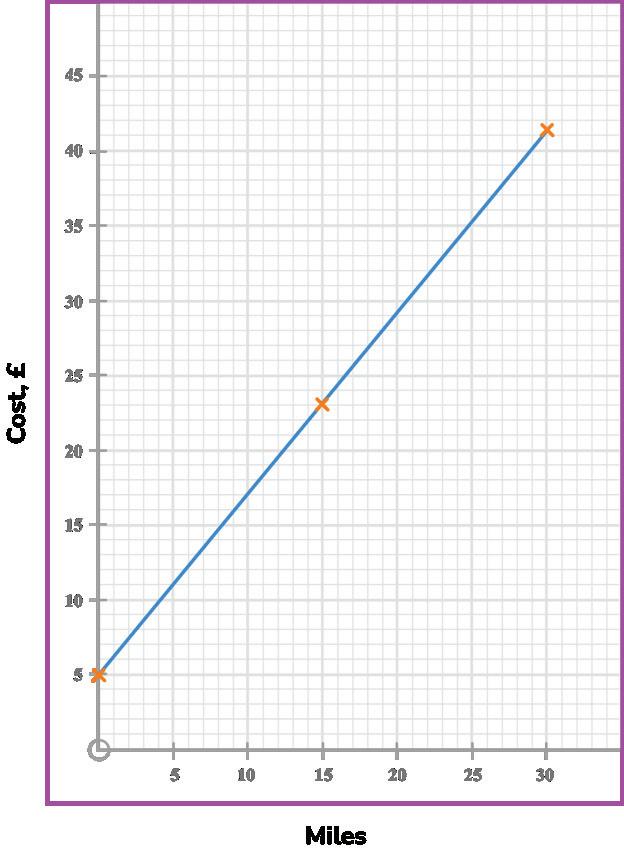
2. Use information provided to plot at least 3 points that represent the conversion between the units. If the units are in direct proportion, the line will go through (0,0).
3. Draw a straight line through the points ensuring it is long enough to span the width and height of the axes.
Drawing conversion graph examples
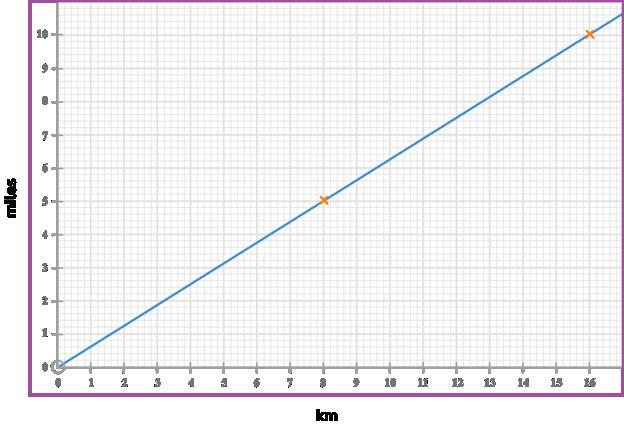
Drawing a graph to convert kilometres to miles
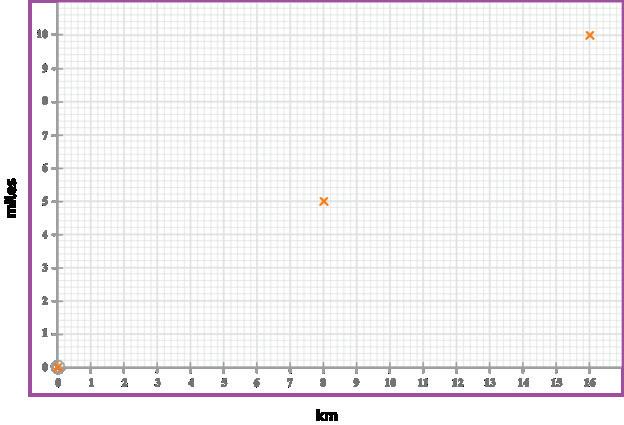
8 km is equivalent to 5 miles. Draw a conversion graph for values of 0 km to 16 km
We know that 0 km=0 miles
We can use the fact that 8 km=5 miles to say that 16 km=10 miles
Let the horizontal axis represent km, and the vertical axis represent miles
The horizontal axis therefore must go from 0 to 16 and the vertical axis must go from 0 to 10.
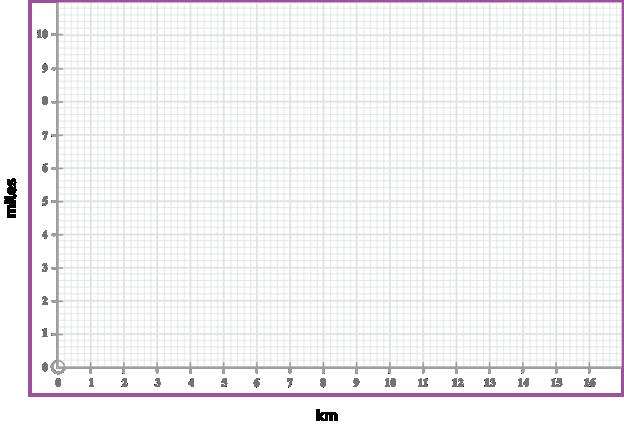
Plot the points (0,0), (8,5) and (16,10).
Drawing a graph to convert distance to cost
A taxi company charges a fixed fee of £5
plus an extra £1.20 per mile.
Use this information to draw a conversion graph for distance travelled in miles, up to 30 miles, and cost of the journey in pounds.
Let the horizontal axis represent the distance in miles and the vertical axis represent the cost. A 30 mile journey will cost £5 plus 30×£1.20=£41. Therefore the vertical axis could be from 0 to 45.
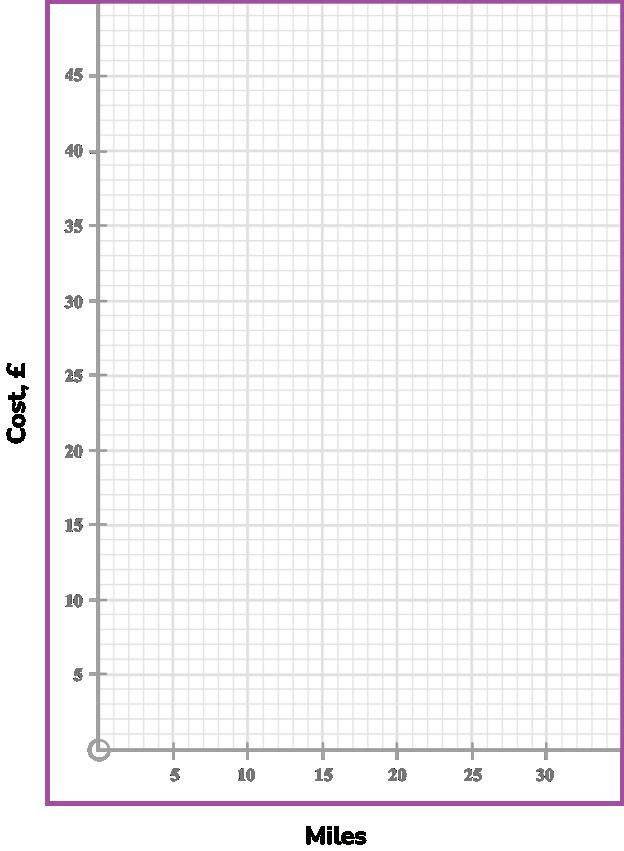
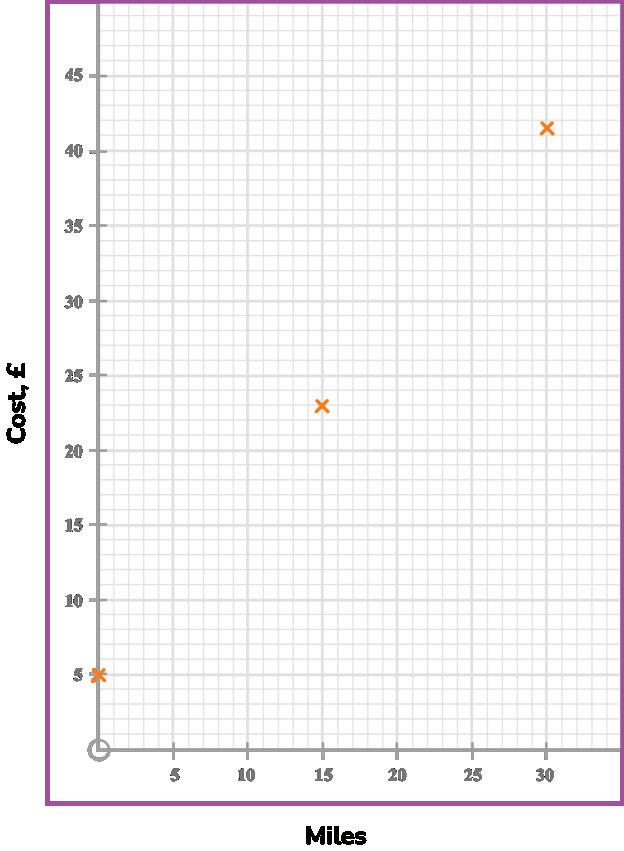
The units are not in direct proportion because the fixed fee of £5 will be plotted as the point (0,5). We also know that 30 miles will cost £41 so we need to plot the point (30,41).
For the third point we can work out the cost for 15 miles.
15×1.20+5=23
So the third point will be (15,23).
Animal teeth and bones were worn as necklaces, pendants, and bracelets in the Neolithic Age (or the New Stone Age). To recreate these ancient adornments, make teeth from clay and add them to your own jewellery pieces. These items may have served as hunting trophies, charms, or body decorations – some even included human teeth!
What you'll need Jute Twine White clay Poster Paint Plastic Modelling Tools A baking tray or tile A cocktail stick A paint-mixing tray Sandpaper A paintbrush To make the necklace
1. To make a tooth

4cm in length, cut off 1 strip from a white clay block with a modelling tool. Roll the clay into a ball then shape it with your fingers into a long tooth shape.
2. Use a cocktail stick or a pointed modelling tool to make a hole through the top of the tooth. Wiggle the stick so the hole goes all the way through. Use the end of a thin brush or pencil to open out the hole if it needs to be wider.
3. Model more teeth in the same way until you have enough for a necklace. To make a bigger-sized tooth 6-7cm in length use 2 strips. For a small tooth, use ½ strip.
4. Place all the teeth onto a baking tray or tile. Bake at 110 degrees Celsius for 30 minutes following the instructions on packaging. Leave to cool before handling.
5. Mix up some pale
brown paint then lightly brush it over the teeth for an aged effect.
6. Cut off a piece of twine 150cm in length. Fold it in half to make a double thickness then thread it through the holes in the teeth. Tie a knot at either side of the teeth to keep them centrally positioned on the twine. Check how long the twine needs to be to fit over your head then tie a knot in the ends to make a loop. (bakerross.co.uk)


By AshrAf fAyAdh
Translated By Jonathan
Wright
Translated from the Arabic
Parts of you are piled up on other parts ... a mixture of your blood and your sweat ... and your remains ... and the discharge that your eyes secrete. That discharge from your eyes and the knot in your tongue ... are halfway out to sea where the sun disk swims ... in a predetermined orbit, complication ... !
The thing the sidewalk never mentioned is that you used to tread ... on it moving your shoes forward on a plate of concrete and your feet on a plate of your shoes and your legs on a plate of your disappointment. You tune the strings in your head to affect a naive joy, hiding a skull ... that you don’t want to carry. You lie in a heap on a board that claims whiteness with a handful of flour ... and you rise. You swell and puff out your sadness like a hot loaf and dry out. You look for your water ... alternately soft, then hard ... and crumbly. Your forehead turns red too ... like a loaf!
You’re preserved in the chaotic memory of Earth, of its core, of the ‘preserved tablet’ on your shoulders. You grow moldy too, like a loaf!
In vain you try to stop your body tossing and turning on the whitened board on your bed ... on the sidewalks ... on the reflecting and reflected surfaces ... and the ones that absorb light. Your body always forgets it’s a complex mixture, that you possess nothing but the familiar shape of your legs.


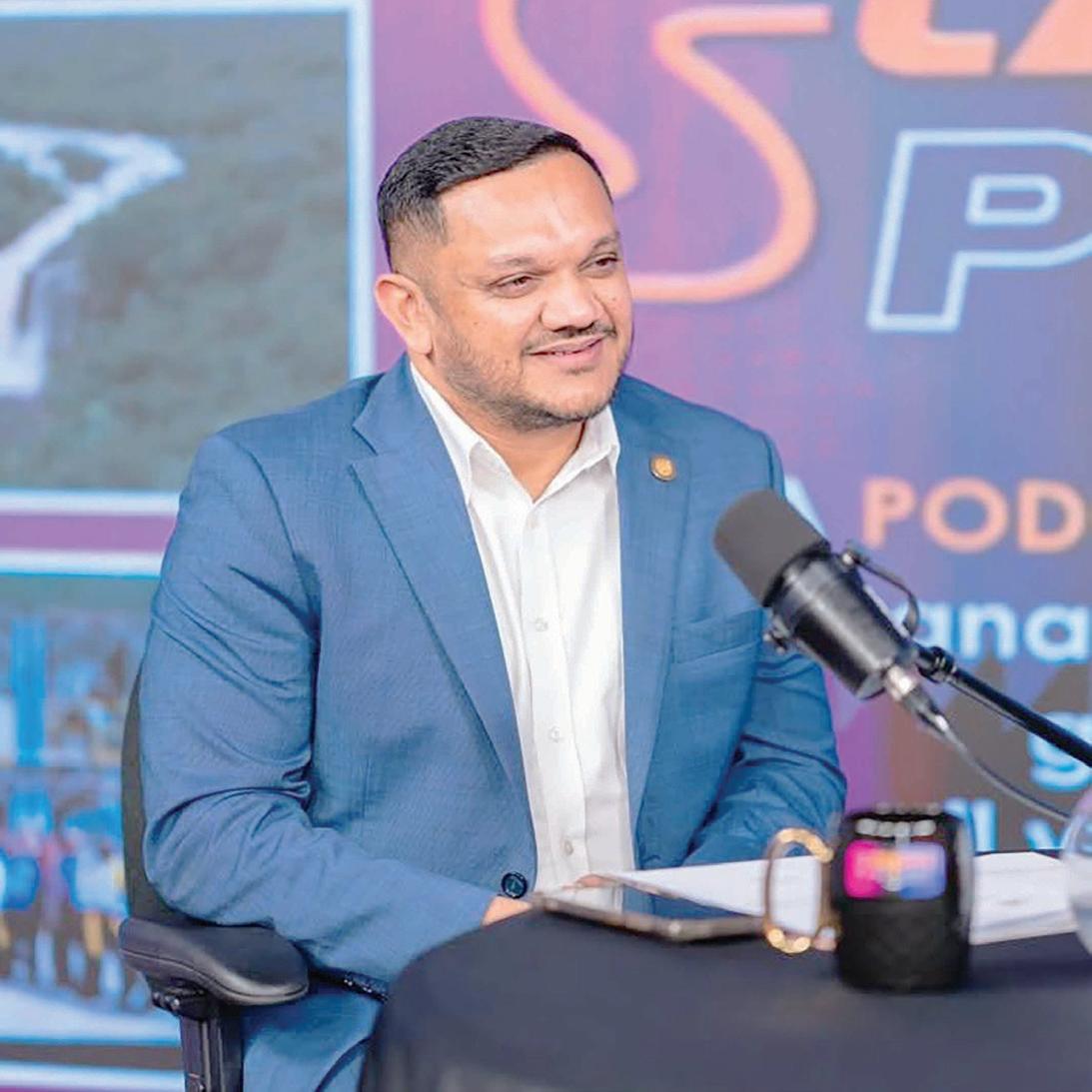
Just over six months after signing the Production Sharing Agreement (PSA) with the Guyana Government, the TotalEnergiesQatarEnergy-PETRONAS consortium has already embarked on a seismic survey in the awarded shallow-water Block S4 offshore Guyana. This was revealed by Natural Resources Minister Vickram Bharrat, who expressed his satisfaction with the pace of progress being undertaken by the consortium. “They’ve moved ahead to the stage where they’re actually doing the seismic survey right now,” the Minister disclosed during a recent appearance on the Starting Point programme. The consortium-comprising the state-owned QatarEnergy (35 per cent), French-based international petroleum company TotalEnergies (40 per cent, operator), and Malaysian national oil company PETRONAS (25 per cent)-was awarded the S4 Block under the 2022 Guyana Licensing Round, the country’s first-ever bid round. Block S4 spans approximately 1,788 square kilometres (km), located 50 to 100 km off Guyana’s coast in water depths ranging from 30 to 100 metres. Last November, the TotalEnergies-led consortium and the Government inked the PSA, which carries a signing bonus of US$15 million (G$3.1 billion)-an amount that has already been deposited in Guyana’s Natural Resources Fund (NRF) being held at the
Federal Reserve Bank of New York. As part of the process leading to the signing of the PSA, the consortium had submitted a work programme -something which the Natural Resources Minister said the Government was confident in, given the strong investment backing that these three partners bring to the table.
“They’re very reputable around the world... So, they have good backing. They have resources. They have ongoing operations around the world, and they can fund their own operations. We are very happy that they’re progressing in just a short period of time because...we would have signed this agreement in November with them. And they already have a vessel in Guyana waters shooting the seismic,” Bharrat stated. A seismic survey is the mapping of the ocean floor to locate potential hydrocarbon reserves, with the data obtained used to safely plan drilling operations. According to the Minister, “We are pretty confident that once this data is analysed, and if they show good signs of hydrocarbons, then they will move to their exploration programme where they’ll start the exploration wells. Exploration wells are done based on that data. Then there are appraisal wells that, once a discovery is made, they apply to us for permission to do appraisal wells. That is, they will drill wells around there to find the depth of the reservoir, the size of the res-
ervoir, and try to quantify and test the fluids and all of that-to study the reservoir. Then they will say to us, we’re confident that we can move to production. We’re happy that they’re at that stage now.” This seismic exercise is conducted by specialised vessels equipped with sophisticated sensors to capture images beneath the seabed. There are a limited number of these vessels in the world.
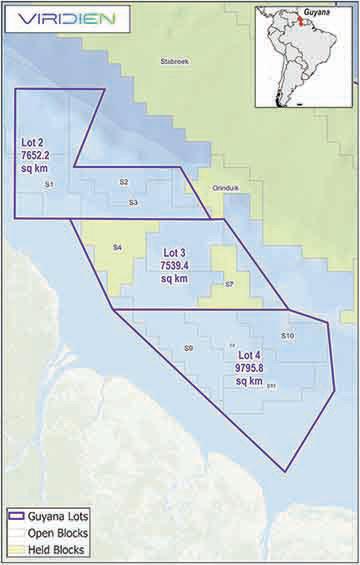
Guyana’s 3D seismic survey Back in May, the Maritime Administration Department (MARAD) announced that the survey would take place within Guyana’s Exclusive Economic Zone (EEZ) and is scheduled to conclude on November 15, 2026. The operation will involve the OSV Bureau of Geophysical Prospecting (BGP) Moonrise-G and the SV BGP Prospector. In fact, Minister Bharrat explained that the vessel undertaking the survey for the consortium is the same one that was contracted by the Guyana Government to conduct a geotechnical and 3D seismic survey of its own. “So, we are actually happy to have one [such vessel] in Guyana waters, which will remain here because, as you’re aware, we signed a multi-client 3D seismic survey with the very company... So, as soon as it’s finished with Total, it will start shooting in our blocks,” Bharrat stated. French-based Viridien had announced in March of this year that, along with BGP, it has entered into an agreement with the Natural Resources Ministry to launch a massive multi-client 3D seismic acquisition and imaging programme across the shallow water acreage lots 2, 3, and 4-an area comprising approximately 25,000 square kilometres (km²). “New data will be acquired by BGP, and high-end seismic imaging will be performed by Viridien, applying its industry-leading proprietary advanced workflows, including state-of-the-art shallow water demultiple (SDW) and time-lag full-waveform inversion (TLFWI). The resulting new subsurface images, along with any potential future reimaging of existing seismic data, will help unlock the hydrocar-
bon potential of the shallow water portion of the basin and support Guyana’s future licensing round in the area,” the company had stated back in March. The Guyana Government had commissioned this survey to obtain detailed data on offshore resources in order to attract more companies to explore for oil and bid for offshore blocks. This will come in handy, especially as the Government prepares to launch its second bid round sometime next year for the remaining oil blocks offshore Guyana. “That seismic actually will finish long before the end of the year by Total. Our seismic shoot will start; that is, the Government’s contract will start,” the Minister indicated during the podcast. When Guyana went out for its first oil block auction, the country did not have any data to share with potential bidders-something which Government officials had cited for the low bids received. That bid round, which was launched in December 2022 and closed in September 2023, saw 14 oil blocks within the country’s shallow and deep-water areas put up for grabs. During the auction, eight blocks were shortlisted based on the bidders’ ability to meet the criteria of the expected work programme and the required financial commitments. Six companies
were subsequently awarded oil blocks, among them a female-owned Guyanese company, Sispro Inc., which secured two blocks. However, the Government has only signed two oil contracts to date-one with the TotalEnergies-led consortium and the other with Ghanaian -based Cybele Energy, which is still finalising investors to meet its financial commitments to Guyana. Negotiations are still ongoing with the other oil block awardees.


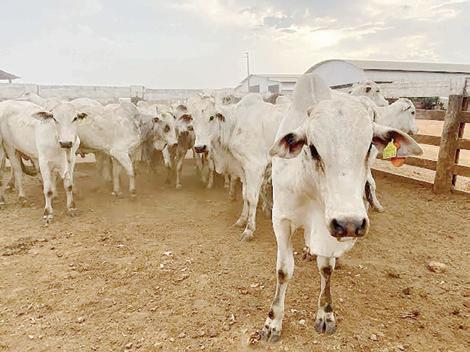
The Agriculture Ministry on Saturday announced that it has received the first shipment of 300 pregnant heifers under the Government of Guyana’s national herd expansion programme aimed at increasing the country’s cattle population and strengthening the livestock industry. The programme provides for the procurement of 1,000 pregnant heifers from Brazil to enhance the national breeding herd and support increased beef and dairy production.
The procurement was executed through the national tendering process. A total of four bids were received: one local and three international bidders, evaluated in accordance with the provisions of the Procurement Act. Following the evaluation process, the National Procurement and Tender Administration Board (NPTAB) awarded the contract to Coopera of Brazil, the successful bidder, at a price of $245,000 per pregnant heifer. The Ministry confirms that the animals have successfully completed all required veterinary health inspections, testing and quaran -
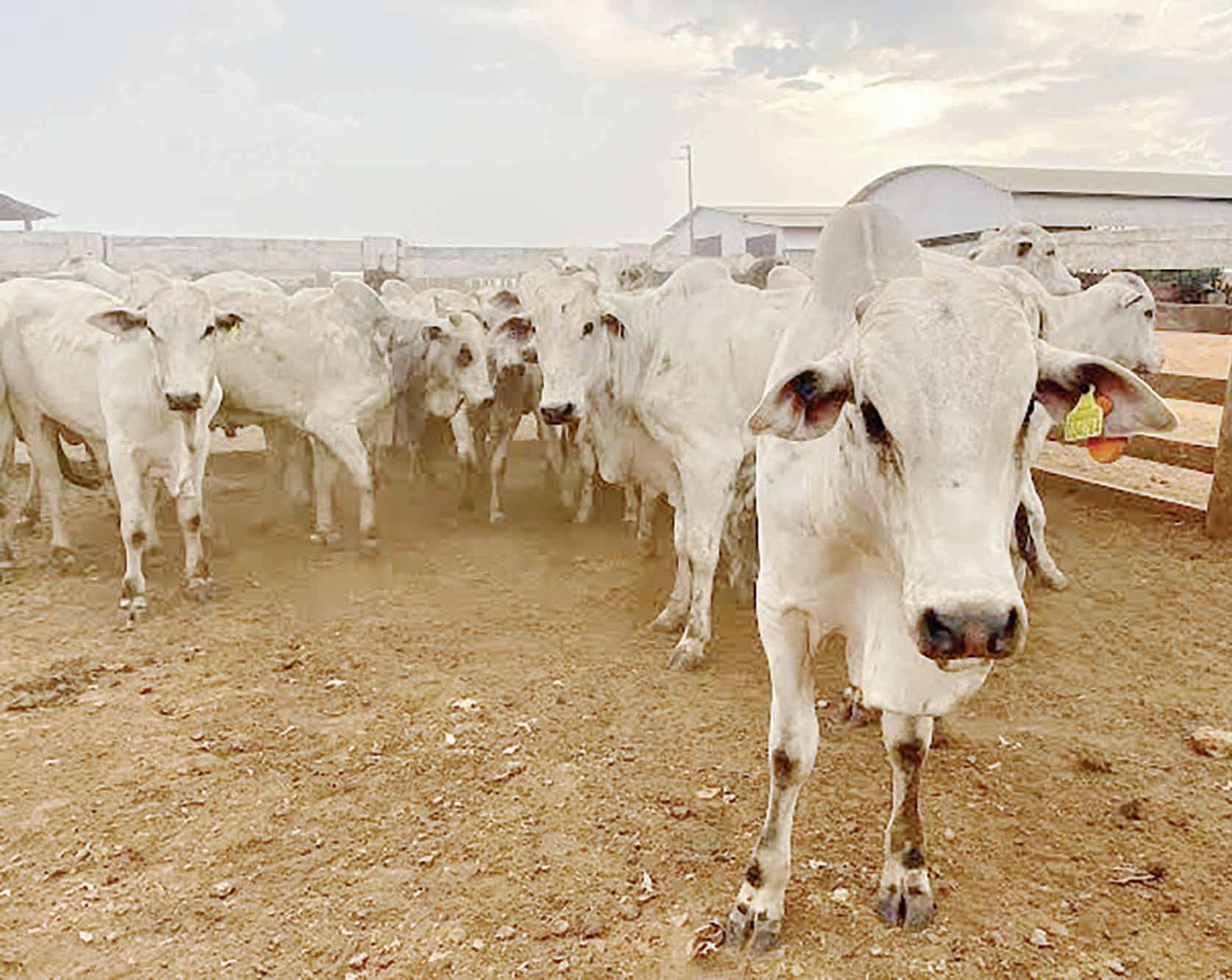
tine procedures prior to export and satisfy Guyana’s animal health import requirements. The first consignment is currently being transported to the Ministry of Agriculture’s Breeding and Research Centre at Ebini, Berbice River, where the animals will become part of the national breeding programme designed to improve the country’s genetic stock and expand cattle production.
This investment reflects the Government’s continued commitment to building a modern and resilient livestock industry. By expanding the national herd with quality breeding animals, the initiative will support increased livestock production, improve opportunities for farmers, reduce dependence on imported breeding stock, and contribute to Guyana’s food security objectives.
The remaining shipments will arrive in keeping with the contractual schedule until the full complement of 1,000 pregnant heifers has been delivered. The Ministry remains committed to making strategic investments that strengthen the agricultural sector, improve productivity and create long-term opportunities for livestock farmers throughout Guyana.
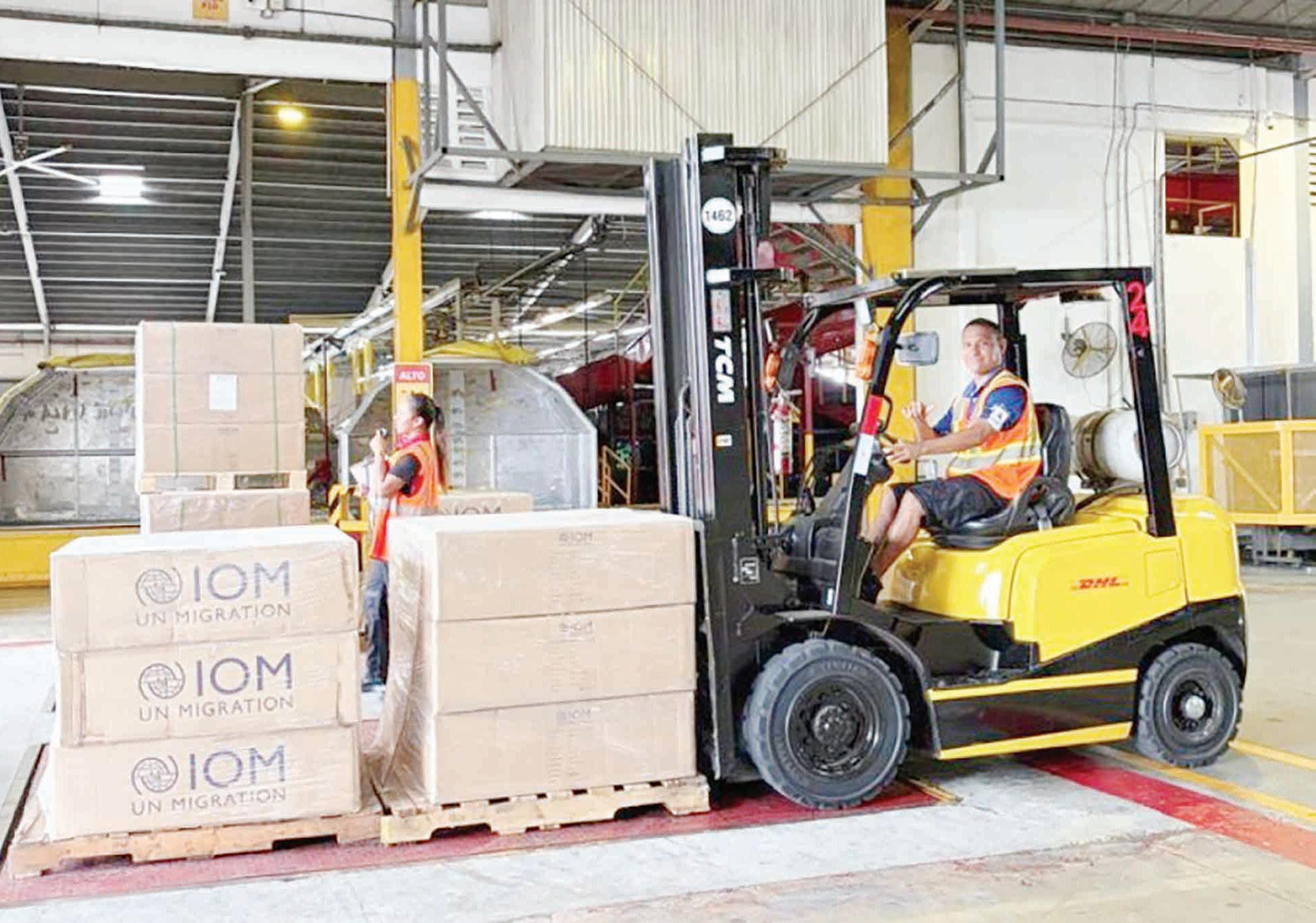
The International Organisation for Migration (IOM) has airlifted core relief supplies to support affected communities in Venezuela following the devastating earthquake on June 24, 2026, which caused widespread damage and urgent humanitarian needs. “For families dealing with the aftermath of an earthquake, whether
and when they receive initial assistance can make a big difference for how they are able to recover,” IOM’s Senior Director for Strategy and External Engagement Kim Eling related. “Our partnership with DHL demonstrates how strategic collaboration with the private sector can help humanitarian organisations deliver essential assistance more quickly,
ensuring affected communities receive the support they need when every moment counts.” The humanitarian cargo was transported from IOM’s global stocks hub in Panama to Caracas on an in-kind cargo flight arranged and funded by DHL’s Disaster Response Team. The flight arrived at Simón Bolívar International Airport on 7 July 2026, carrying essen -

Coming out of two hundred years of Dutch then Britishimposed slavery followed by almost another century of indentureship in which we were literally whipped and pilloried on the agricultural plantations, no one can blame our forefathers for associating more than a touch of odium to working in the fields with our hands!! To be “free” was through “Education” by entering the Civil Service and the professions of law and medicine!!
We’ve just sang hosannahs to the top NGSA’s 100 “high flyers” – but reading about their aspirations nary a single one said they wanna become farmers!! Yet we’d been assured by experts in developmental economics that if we’re to build a sustainable high-income economy, we gotta get into agriculture!! The world needs food, but it’s running out of land and fresh water – which we got in abundance. The brainiacs call this our “comparative advantage” – ‘cause we SHOULD be able to produce food cheaper than most other countries!!
Trouble is, with our “best and brightest” avoiding agriculture like a cow’s being sent to the slaughterhouse – our farming has been trapped in a “cutlass-andkitchen garden” mentality that barely keeps body and soul together!! Have you ever wondered why our most “successful” farmers – in rice – have always been living from hand-to-mouth at the millers’ behest?? Well, it was – and is – because even agriculture has become a hightech endeavour that demands being au fait with the latest innovations!!
Take the usage of drones in agriculture. They can provide information on crop growth stages, crop health, and soil variations and apply pesticides and herbicides with pinpoint accuracy based on its data!! This creates huge savings in inputs – and equally huge increases in production!! But even though leaders have done their darndest since independence to “grow more food”, fact of the matter is, we never made that critical breakthrough to create the incentives that drive success in a modern economy!!
Until now!! With all the kvetching about President Ali’s farm – he’s a pioneer in providing that critical missing element for a new agricultural culture: a successful professional willing to use his brains to create a modern farm!! He was already a Minister of Government when he applied to lease land on the highway for farming!! The land has always been there – but most were thinking within the old box – and were deterred by the poor soil conditions of the intermediate savannahs!!
tial relief items, including jerry cans, solar lamps, and indoor privacy partitions, to support emergency shelter operations.
The movement was coordinated through close collaboration between IOM, the Government of Venezuela, and the United Nations Humanitarian Response Depot (UNHRD) in Panama. This joint effort enabled efficient planning, rapid execution, and timely delivery of assistance to communities most affected by the earthquake.
IOM sincerely thanks DHL’s Disaster Response Team for its generous inkind logistics support, which was vital to the rapid mobilisation and transport of IOM humanitarian supplies during this critical emergency. This operation highlights IOM’s continued commitment to preparedness, rapid emergency response, and effective humanitarian supply chain coordination, using strategic partnerships and global prepositioning capacities to deliver life-saving assistance to crisis-affected populations.
But on his farm, he introduced modern methods of cattle, sheep and poultry rearing; hydroponic-produced greens, etc. And he didn’t stop with his personal demonstrator on modern farming – but encouraged 20 Reg 3 professionals to launch and run a modern chicken farm!!
Like US President Jimmy Carter – he showed that professionals can be farmers. Down with the stigma!!
South Africa has long enjoyed wrapping itself in the warm blanket of Ubuntu—that stirring African philosophy declaring, “I am because we are.” It’s a beautiful sentiment, but recently only until another AFRICAN arrives at the border looking for work!! Suddenly, Ubuntu becomes, “I am because you are somewhere else”!! After Mandela, SA had lectured the world about Pan-Africanism, solidarity and the debt owed to the rest of the continent for supporting their struggle against apartheid. African nations housed exiles, trained freedom fighters, imposed sanctions and sacrificed scarce resources so South Africa could become the Rainbow Nation.
Now, the rainbow apparently has an immigration checkpoint!! Zimbabweans, Nigerians, Ethiopians, Somalis, Congolese and others have discovered the welcome mat ends where economic competition begins. Foreignowned shops are looted, migrants are scapegoated for unemployment, and politicians conveniently rediscover nationalism whenever elections loom. 53,000 have been deported to date!!
The irony is palpable!! The nation that once pleaded, “Don’t treat us differently because we’re African” now says, “Sorry, you’re too African”!!
…debt load
As of July 6, 2026, the US public debt stood at roughly US$39.39TRILLION – that’s 121% of its GDP as of 2025!! It added US$3.17 trillion over the past year alone!! Yet we’re told our debt shouldn’t exceed 3% of our GDP!!

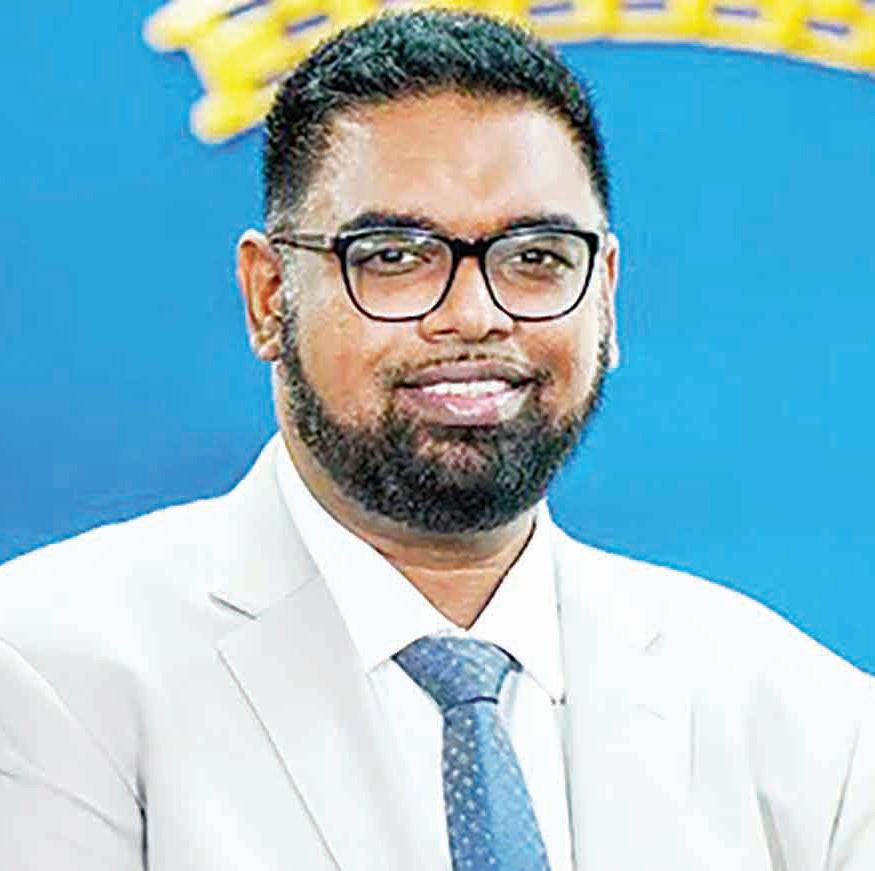
President Dr Irfaan
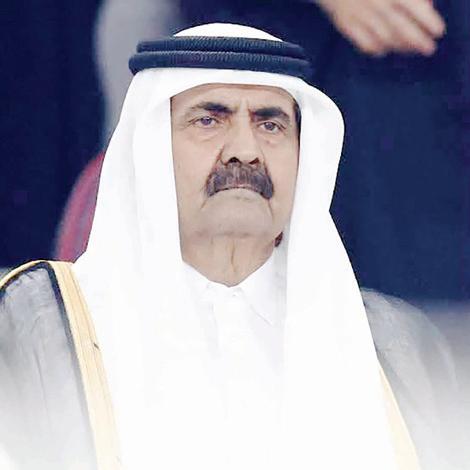
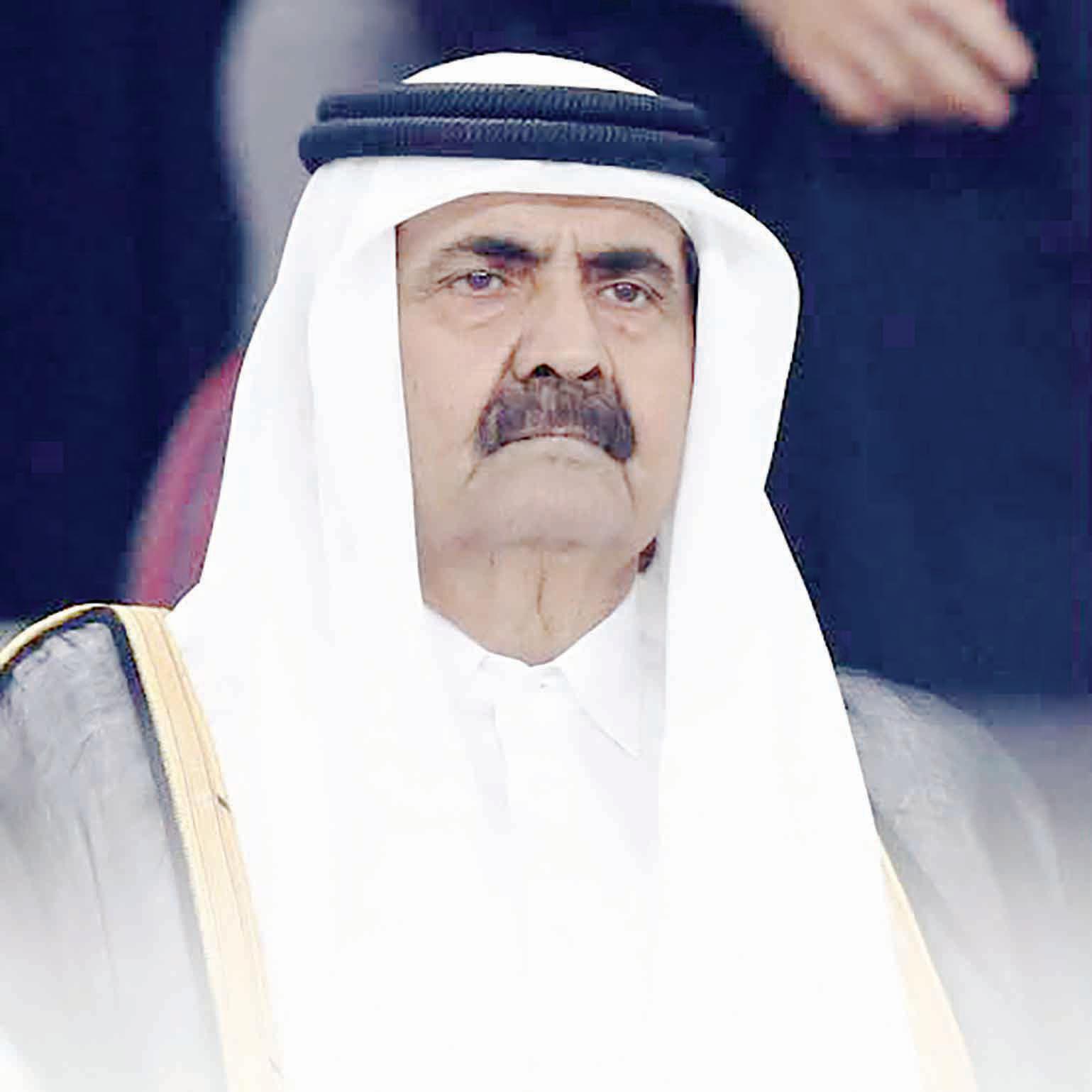
Ali has extended his deepest condolences to the Royal Family and people of the State of Qatar following the passing of former leader, His Highness the Father Amir Sheikh Hamad bin Khalifa Al Thani.
Sheikh Hamad, who ruled Qatar from 1995 un-
til his abdication in 2013, died at the age of 74, the Government announced on Sunday. He was responsible for transforming the small Gulf state into one of the world’s wealthiest and most influential nations. In a message of condolences to His Highness Sheikh Tamim bin Hamad Al Thani, Amir of the State of
Qatar, the members of the Al Thani family, and the people of Qatar, President Ali acknowledged the significance of this loss.
“The passing of a parent is one of life’s greatest sorrows. While the world remembers the late Father Amir for his visionary leadership, remarkable statesmanship, and his immense contribution to the development of modern Qatar, his family mourns the loss of a beloved father, cherished patriarch, and source of wisdom, love, and guidance,” the Guyanese leader said in the message that was shared on social media on Sunday.
Nevertheless, President Ali added, “On behalf of the Government and people of Guyana, and on my own behalf, I offer my heartfelt sympathies during this time of profound grief. May Almighty Allah grant the late Father Amir His infinite mercy and admit him into the highest ranks of Jannah and may He grant His Highness, the Al Thani family, and the people of Qatar strength, patience
and comfort in the days ahead.” In a statement published on social media on Sunday, the Emir office said, “With hearts steadfast in faith in God’s decree and destiny, the Amiri Diwan mourns the great loss to the nation of the late - may God have mercy on himHis Highness the Father Amir Sheikh Hamad bin Khalifa Al Thani.”
The former Emir is widely regarded as one of the key architects of modern Qatar. According to Al Jazeera, the country experienced rapid economic growth, significant global expansion, and major developments that shaped its political and economic standing during his leadership. Sheikh Hamad took power from his father in a bloodless coup 31 years ago - at a time when Qatar was struggling for money with dwindling oil reserves. However, his leadership changed the future of the energy-rich country, making Qatar one of the leading producers and exporters of liquefied natural gas. His tenure also saw the
President Dr Irfaan Ali
promulgation of Qatar’s first permanent constitution in 2004 and the introduction of municipal elections in which women were allowed to vote and stand as candidates. Following news of his death, tributes have been pouring in from leaders around the world, who have described Sheikh Hamad as a distinguished and visionary leader and
a man of value. Based on international reports, funeral prayers were held on Sunday evening, with several days of public mourning across Qatar to mark his death. Additionally, flags will be flown at halfmast, while Government offices and public institutions will be shut as a mark of respect.

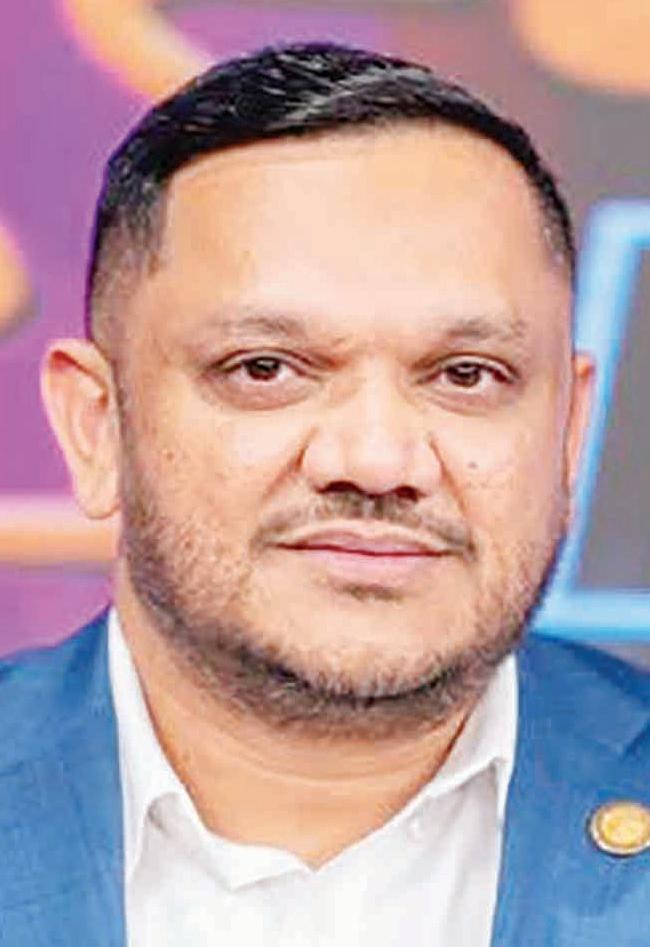
The Guyana Government is looking to ensure that experienced and skilled Guyanese working in the country's burgeoning oil and gas industry receive commensurate salaries as their overseas counterparts - something that the major operators here support. According to Natural Resources Minister Vickram Bharrat, there has been no resistance from the top industry players in Guyana. In fact, he disclosed that the United
States (US)-based oil giant, ExxonMobil Guyana Limited (EMGL), has already signalled its willingness to support this move.
"I've had further conversations with Alistair [Routledge, President of EMGL... and they are in support of it, which is fair. We are not asking for anything that is contrary to the way in which they operate. We are not asking for anything unlawful. We are asking for something that is fair," Bharrat declared during a recent episode of the Starting Point podcast. In fact, Minister Bharrat noted that even Exxon's tier one contractors are also on board with this push for Guyanese to receive fair pay. "I recently met with the SBM CEO, who was in the country and paid a visit to me, and I raised that with him too. And they're on board... SBM is one of the major contractors for Exxon... They're contracted by Exxon to operate the [four] FPSOs (floating production, storage, and offloading) vessels."
"There's another major
FPSO company, which is MODEC. The next FPSO that is coming... MODEC would be operating that FPSO... And MODEC as well too, they're fully on board. In fact, they mentioned to me they've had this structure in place for a while now of fair pay. That once you have the qualification, the skill set, and you're working in a manner that is acceptable by the company - that is having good work ethics - then it must be a fair pay system."
While MODEC has already introduced a fair pay system, Bharrat said the company has committed to further strengthen this to ensure more Guyanese are adequately compensated for their work, as well as push for their sub-contractors to follow suit. This, according to the Minister, will augur well for locals in the industry. "A lot of tier-two, tier-three contractors are actually contracted by [the tier-one contractors] ... So, that is a way of getting them to pull themselves in line too, because nobody wants to lose

their contract and nobody wants to leave Guyana. So, we just got to work together," the Natural Resources Minister stated.
Speaking at an event before 40 major operators in the oil and gas sector, Bharrat indicated that the Government has been clamping down on loopholes in the Local Content Act to ensure that Guyanese are receiving the benefits specifically earmarked for them, while also looking at ways to widen opportunities for locals within the industry. Currently, there are more than 2,000 local companies supporting the country's oil and gas industry, while approximately 7,000 Guyanese citizens are directly employed in the sector. Over the years, more Guyanese have been building capacity and gaining experience-something that Minister Bharrat be-
lieves must attract comparable remuneration.
The Minister acknowledged that this request could not have been made at the time when the local content legislation was enacted. However, he argued that Guyanese have been upskilling themselves and gaining experience over the years, working in the local industry, offshore, and even overseas. "Four years ago, we wouldn't have made this call because we were new in the oil and gas sector then... But ten years after, from discovery to production, we have Guyanese who have upskilled themselves, who went abroad to study on scholarship or on their own. We have Guyanese who have qualified themselves at a technical training college in Berbice, and they're on FPSOs working alongside experts. So, now
is the right time." "Now is the right time because we have Guyanese who we can comfortably say have 10 years of experience in the oil and gas sector, or can have eight years, or can have five years in the sector. We have Guyanese with degrees and skill sets and certifications that can match some of the expert workers. And that is why we are making the call now to say that if we have Guyanese workers that have comparable skill sets, experience, and academic backgrounds as expat workers ... then they should get the same salary," he contended.
According to Bharrat, the push is for fair pay, recognising that some foreign workers receive other benefits such as housing allowances that would not be applicable to Guyanese.

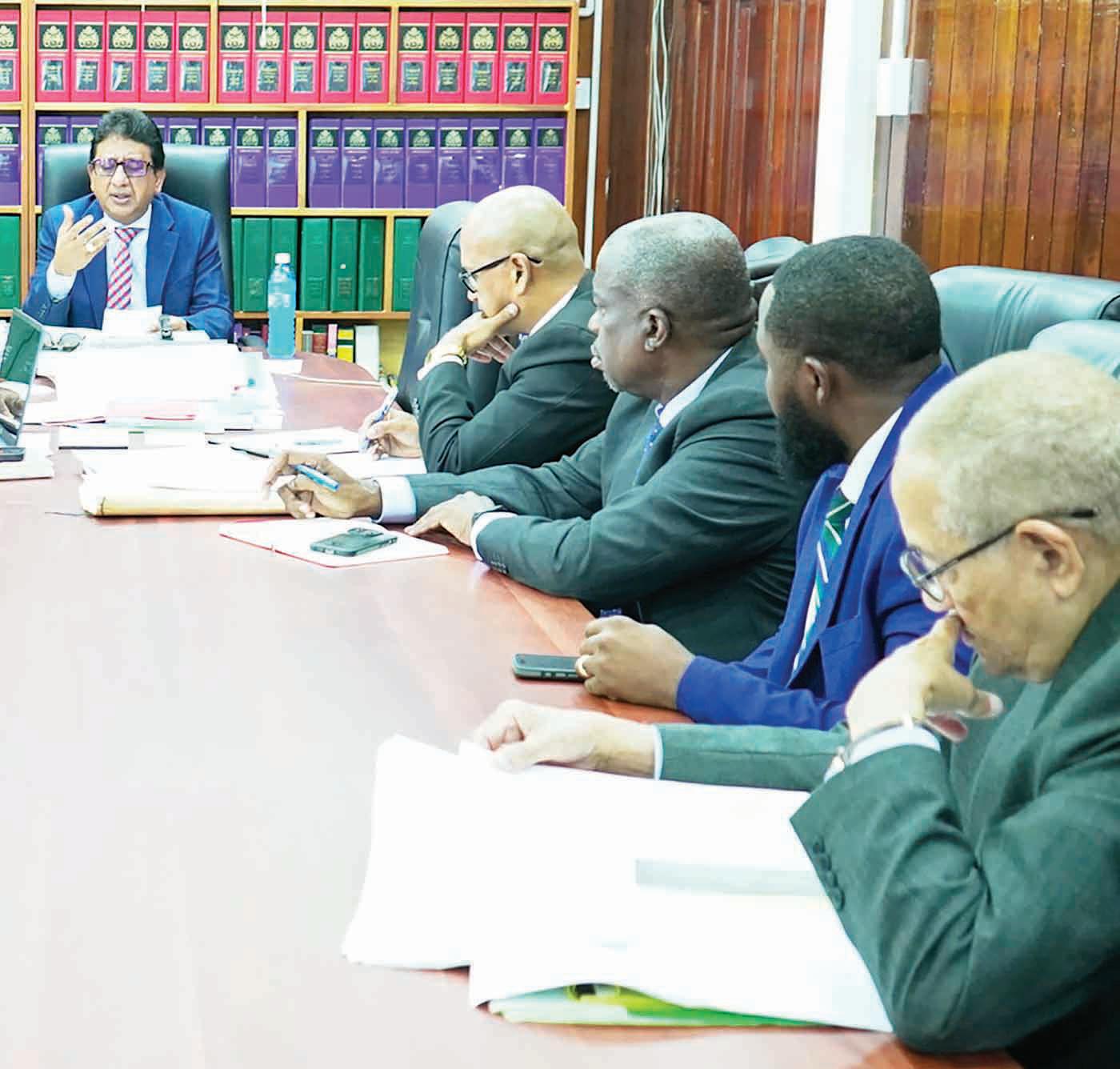
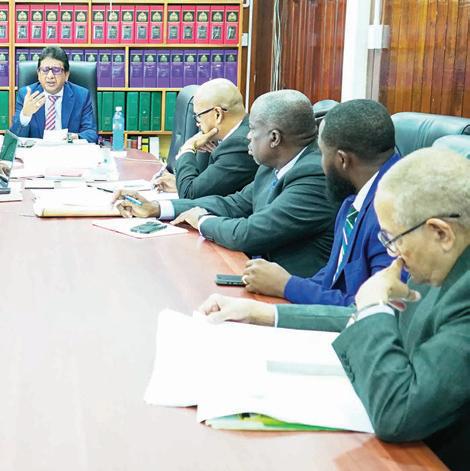
Attorney General and Minister of Legal Affairs, Anil Nandlall and team meeting with the newly-elected Executive Council of the
Attorney General (AG) and Minister of Legal Affairs Anil Nandlall on Tuesday met with the newly elected Executive Council of the Guyana Bar Association (GBA) as work advances on amending the Legal Practitioners Act to hold members of the profession more accountable. According to a statement from the AG Chambers, the two sides “discussed the
important reforms which both parties agree must take place in relation to the Legal Practitioners Act in order to make the legal profession more accountable, including strengthening disciplinary measures, as well as institutional continuous educational programmes so that the legal profession can continue to maintain high professional standards.”
Expanding on the engagement during his programme “Issues in the News” on Tuesday evening, Nandlall emphasised that these reforms are necessary in wake of mounting complaints from members of the public about the conduct of legal practitioners. “We discussed, in particular, a review of the disciplinary mechanism and ways by which, by legisla-

A32-year-old driver from Timehri North, East Bank Demerara (EBD), was taken into custody on Saturday after being found in possession of an illegal firearm and ammunition at Sherima, Region Seven (Cuyuni-Mazaruni).
Based on reports received, the suspect, who was driving a motor lorry, was intercepted by police ranks during an operation at Sherima
and requested to conduct a search of the vehicle. At the time, there was one other occupant, a 20-yearold Venezuelan national. However, during the search, a 9mm Taurus pistol, along with three matching live rounds of ammunition, was found hidden in a storage compartment of the motor lorry. As a result, the driver was arrested and taken to the Sherima Police Station, where he was placed in custody. The firearm and ammunition were lodged as investigations continue.

tion, we can make the profession more responsible and accountable. I highlighted my experiences; whenever I go out in the public domain, I am confronted with complaints about lawyers’ conduct, and we need to have a disciplinary mechanism that works and that people have confidence in,” the AG posited. He added that while the profession is a self-regulatory one, the necessary checks and balances must be in place. “Once you are self-regulatory, then you have the responsibility of ensuring that your self-regulatory status has checks and balance mechanisms that can withstand independent scrutiny and that can effectively sanction wrongs when they occur, obviously embracing principles and processes of natural justice and due process,” he noted. Earlier this year, the then President of the GBA Kamal Ramkarran, had bemoaned the fact that no lawyer has been suspended
or removed from practice in more than 25 years, despite concerns within the profession. He had also called for stronger accountability mechanisms within the legal profession to address persistent delays in the justice system. In December 2025, President Dr Irfaan Ali had announced the Government’s intention to introduce legislation to hold not just lawyers but judges and Magistrates more accountable.
These legislative changes, he had said, “will include robust disciplinary processes to ensure timely delivery of decisions in compliance with existing legislation as well as the maintenance of high ethical and professional standards.”
Meanwhile, during the meeting between Nandlall and the Bar Association, they also discussed the Government’s legislative agenda, including bills that will be tabled later this year. They also discussed the need for closer collaboration with the Judiciary,
the Guyana Police Force (GPF) and the Guyana Prison Service (GPS) on addressing matters in relation to the administration of criminal justice. The AG also appealed to the Bar Council members to encourage members of the legal profession to be more proactive in recommending legal reforms and to utilise the services of the Guyana Law Reform Commission (GLRC). At the conclusion of the meeting, the two sides agreed to meet more frequently at mutually convenient intervals. The AG’s delegation during the meeting included Prithima Kisson, State Solicitor, Public Trustee and Official Receiver and Ayana Fable, Senior Parliamentary Counsel. The Bar Association was represented by newly elected President Arud Gossai and members Robin Stoby SC, Mr Teni Housty, Samuel Glasgow, Chevy Devonish and Mohanie Anganoo.


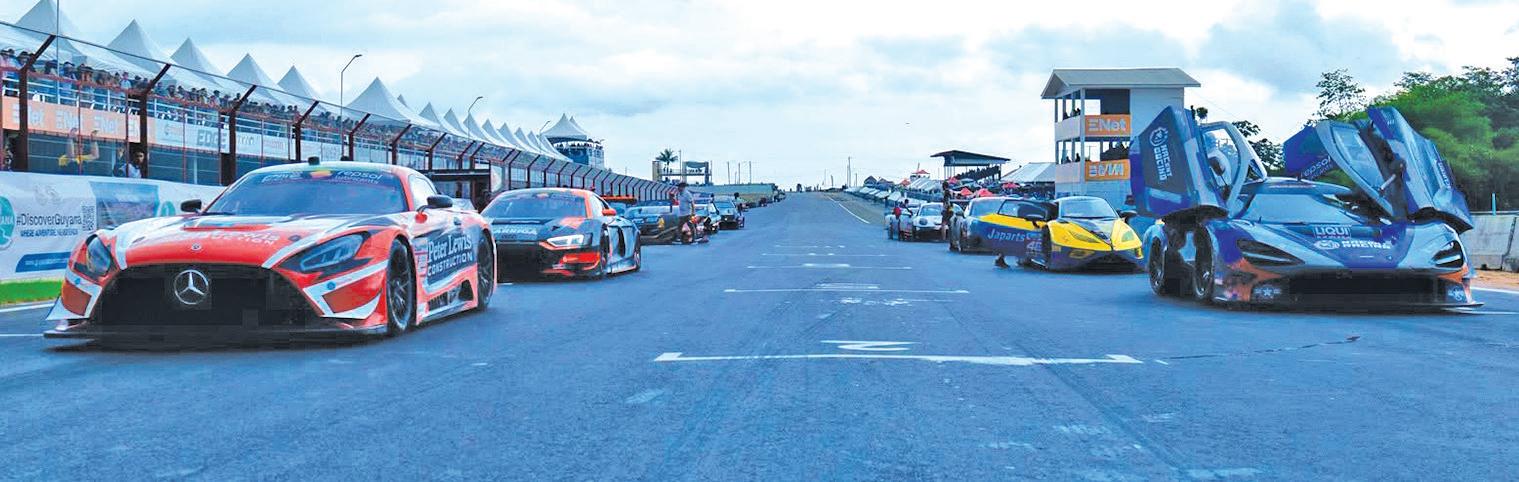
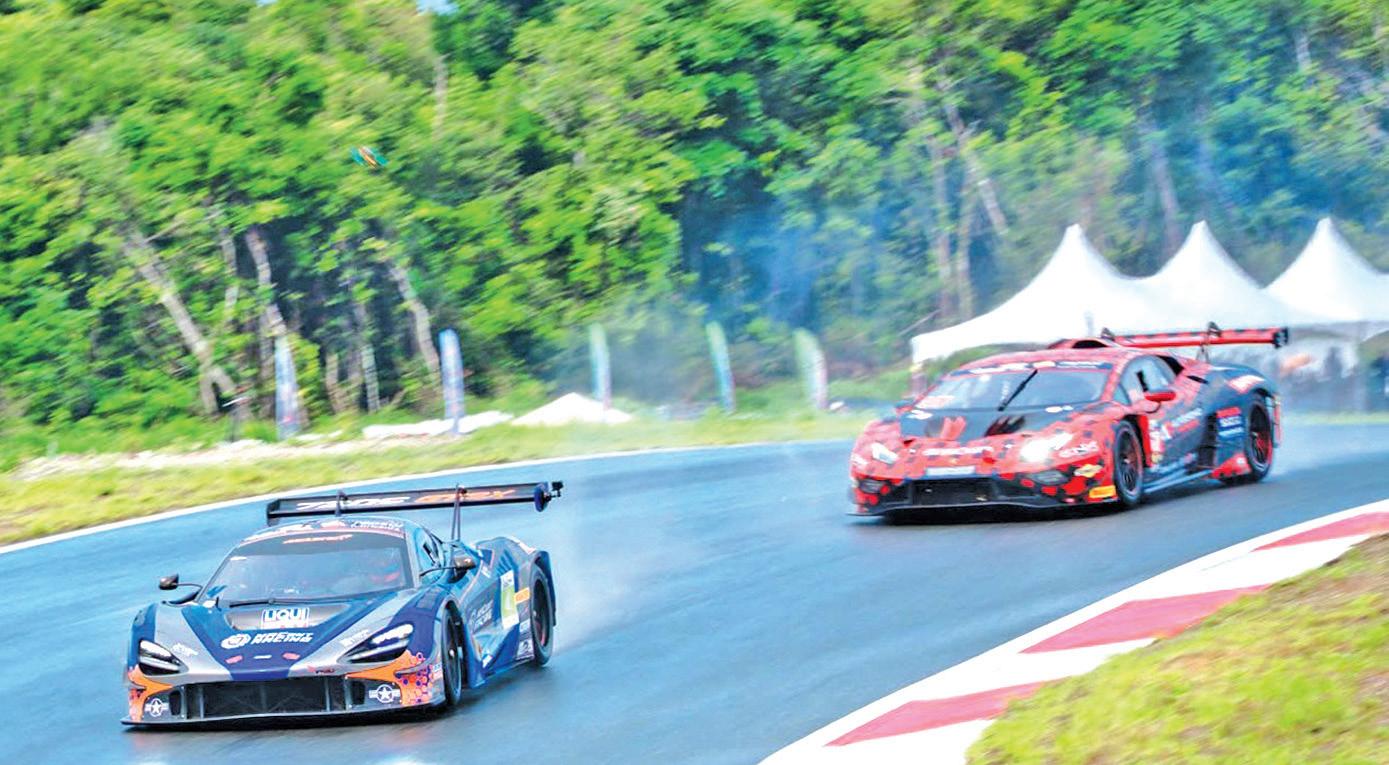
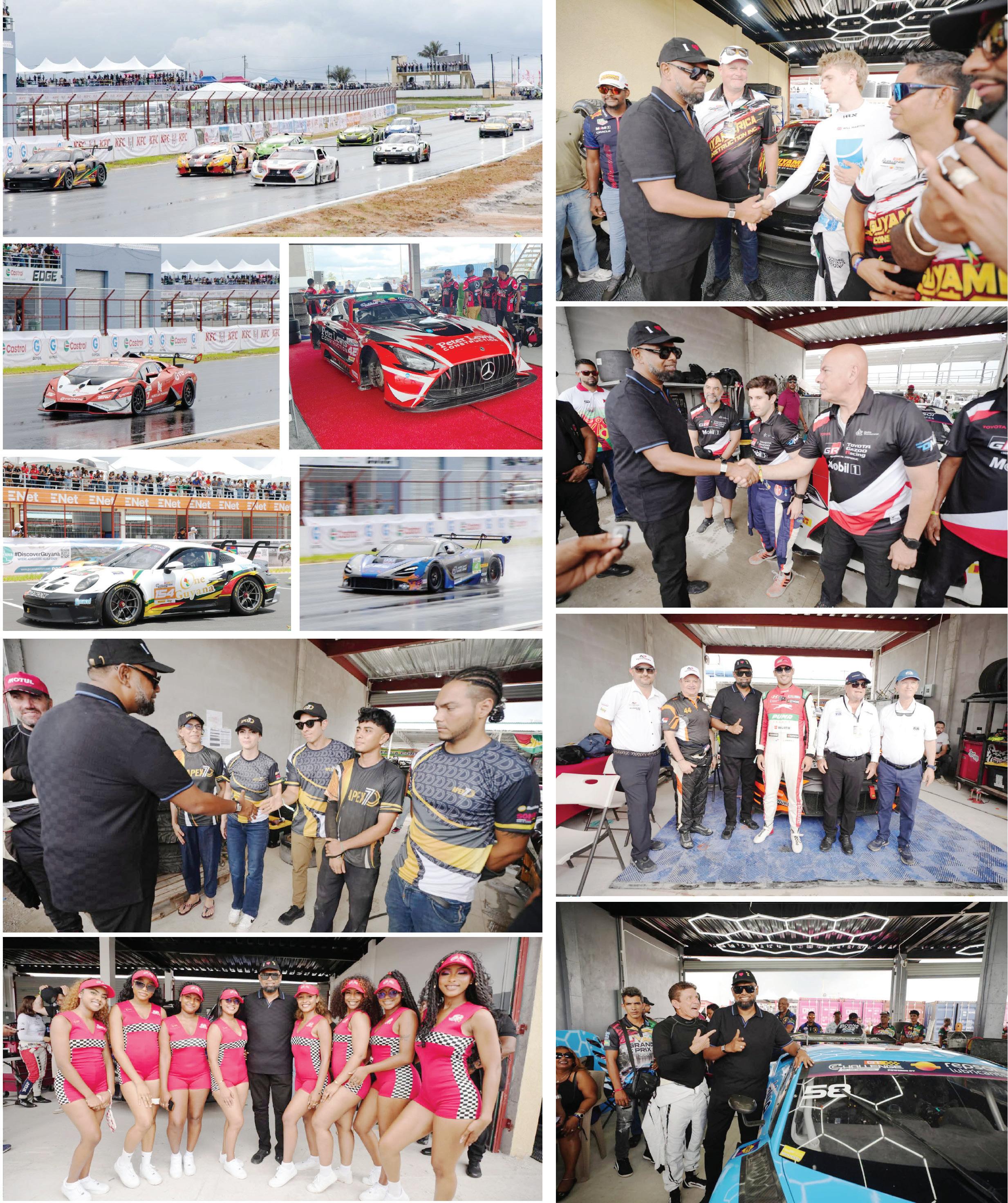
President Dr Irfaan Ali joined drivers, teams and motor racing fans Guyana Grand Prix, the third leg of the
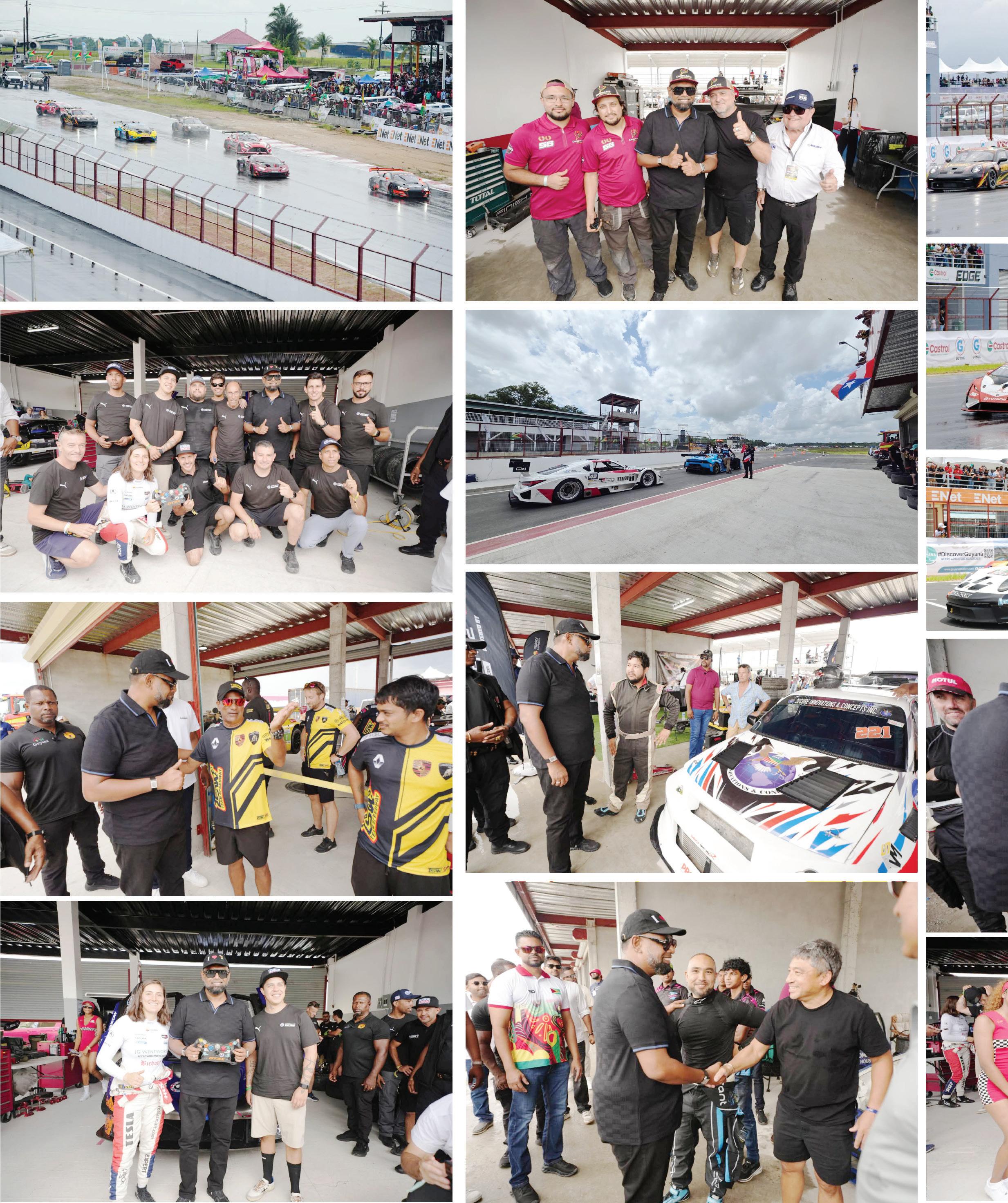
racing fans at the South Dakota Circuit on Sunday for the historic of the GT Challenge de las Américas

remain as vivid as ever despite life sentences for killers –
By Andrew CArmiChAl
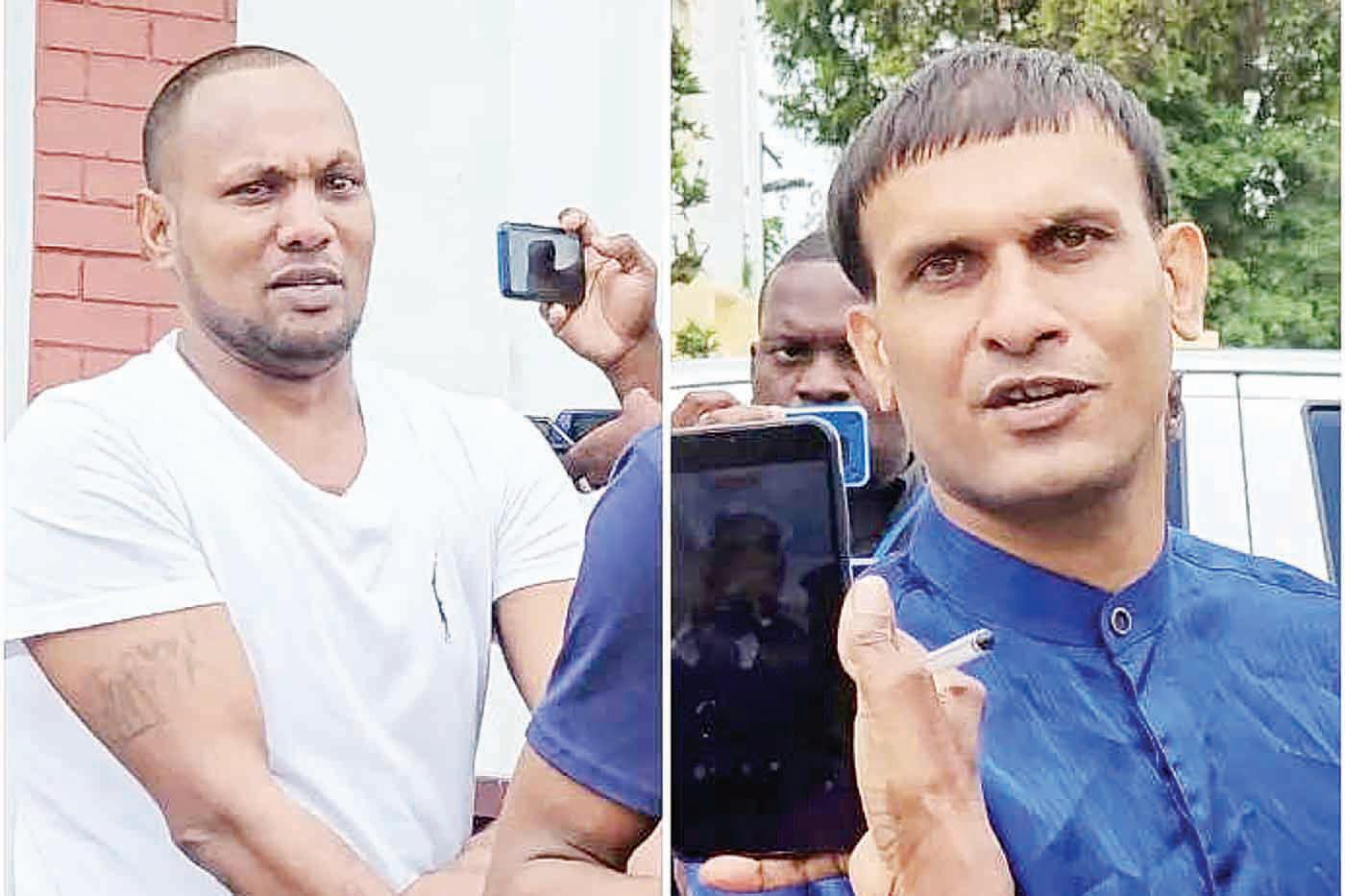
By the time the High Court handed down life sentences to Anil Sancharra and Vinod Gopaul convicted of murdering West Coast Berbice (WCB) cousins Joel and Isaiah Henry, nearly six years had passed since the brutal killings that shook Guyana and sparked outrage. For the courts, the sentencing marked the end of a lengthy criminal trial. For relatives of the two young men, however, the judgment has done little to ease the pain of a loss they say continues to shape their lives every day.
Donna Thomas, a first cousin of Joel Henry’s father and a close relative who watched the two cousins grow up in Number Three Village, WCB, says the verdict has brought legal closure, but not emotional peace. Standing outside her home, just a short distance from where the boys once spent their afternoons laughing, rapping and teasing each other, Thomas reflected not only on the sentencing but on the memories that have refused to fade since September 2020.
Her reaction to the court’s decision was measured, rooted more in faith than celebration. “God knows best,” she said. “If they are innocent, all I can say is stop crying and pray without ceasing. They have received life imprisonment, but before their time comes, if they are innocent, God will reveal the truth at the right time.”
Thomas said she has heard members of the public express differing opinions about the convictions but maintains that she cannot pass judgment beyond what she personally knows.
“Some people say those are not the men who committed the killings. I wasn’t there, so I cannot judge. Only God knows,” she said. At the same time, she believes that anyone with genuine knowl-
edge of what happened on that September afternoon has a moral responsibility to come forward. “If anyone knows, who did it, they should speak. If they know names, call the names. I can’t call any names because I know nothing. I wasn’t there. But if they know something, they should say it.” Her comments came one day after Justice Simone Morris sentenced the two
call out to me and wave. I would stop and listen to them.” Those ordinary moments, she said, have become some of her most treasured memories. “That was the last time I saw them.” Joel, she recalled, worked at the nearby sugar estate and would usually return home in the afternoons before joining Isaiah outside. Isaiah, meanwhile, was known throughout
Looking back now, she said there was nothing to suggest that the ordinary rhythm of village life would soon be shattered. The memory of the day the cousins disappeared remains vivid. Thomas had been at work and returned home late that evening. “When I returned home, I saw a commotion on the road, but I didn’t know what had happened,” she said. After asking her daughter what was taking place, she learned that Isaiah’s mother and others had gone into the backdam looking for the boys.
Discovery
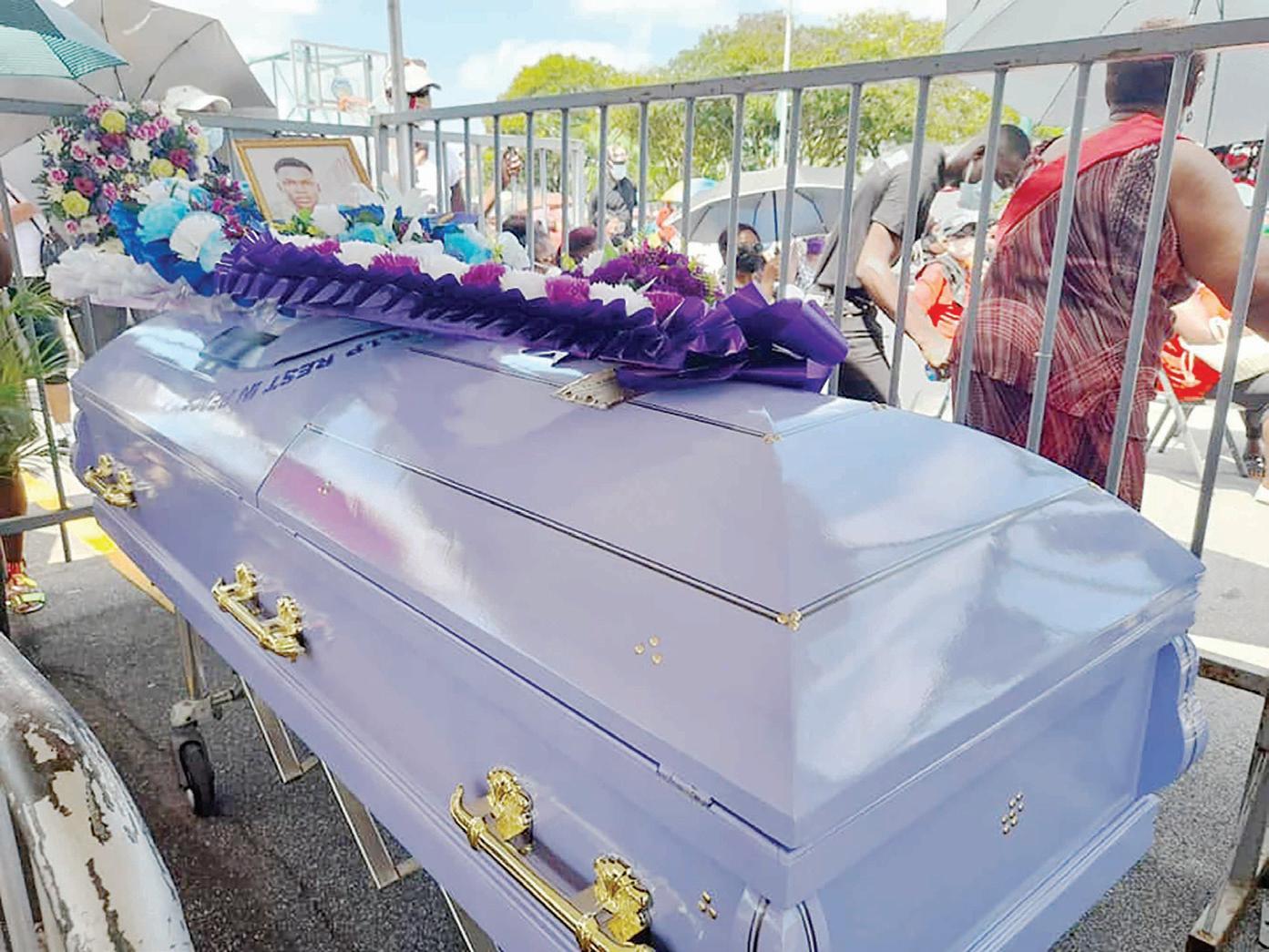
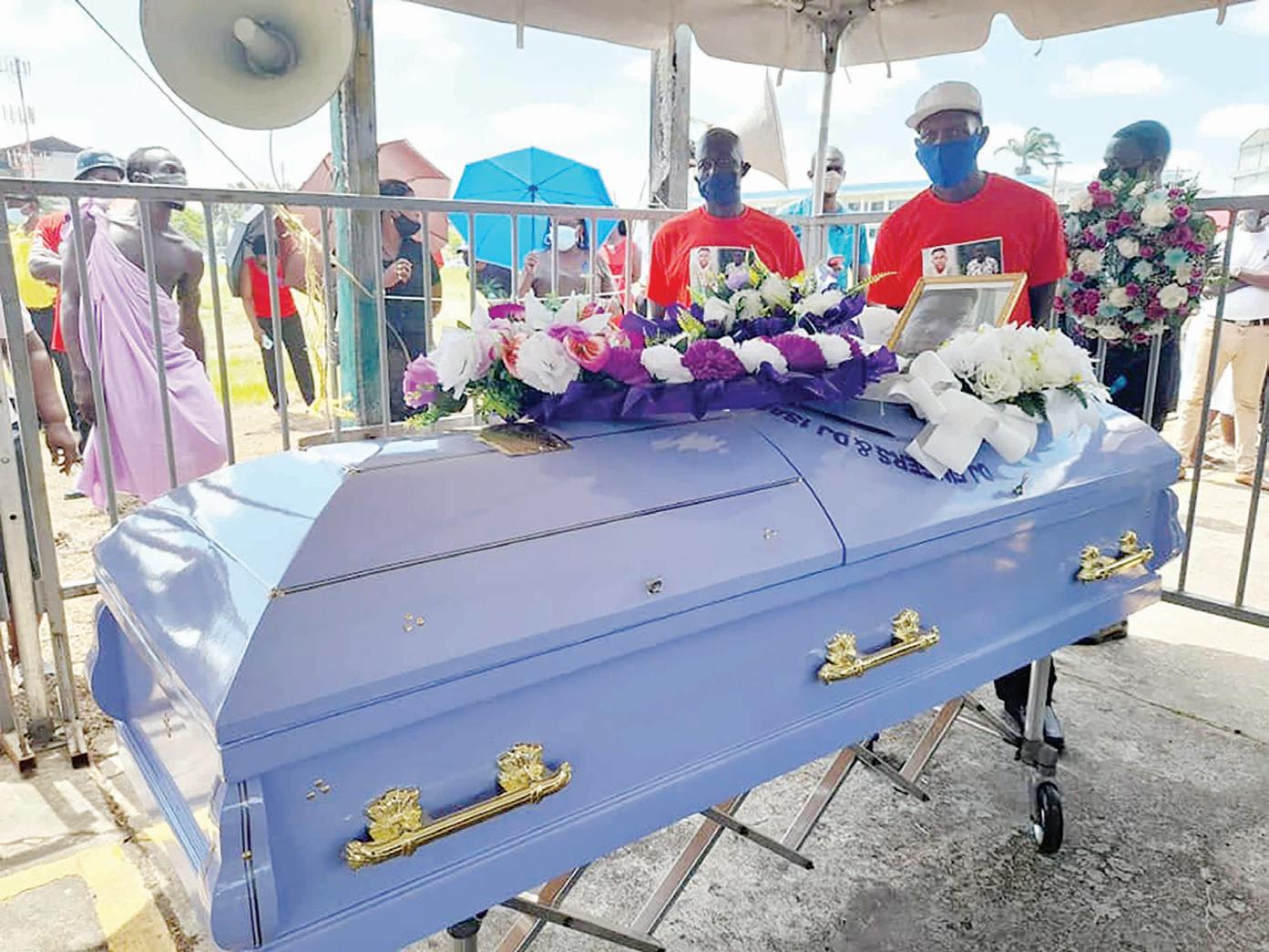
At that point, however, no one knew the full extent of what had happened. “It wasn’t until the next day that I learned they were missing,” she recalled. Like many others in the community, she watched as concern quickly turned into fear. Hours later came the devastating confirmation that Joel and Isaiah had been found brutally murdered with their body completely mutilated. The discovery stunned the village and sent shockwaves across Guyana, triggering widespread grief, anger and demands for jus-
convicted men to life imprisonment for the murders of the teenage cousins, ordering that each must serve 35 years before becoming eligible for parole. While the legal proceedings have concluded, Thomas said her thoughts immediately returned to happier days, long before the murders transformed the quiet agricultural community into the focus of national attention.
Days filled with laughter She remembers two energetic young men whose afternoons were filled with music, laughter and dreams. “Every afternoon when I came home from work, Isaiah and Joel would be sitting outside, singing and rapping against each other. As soon as I got out of my vehicle they would
the community as a helpful and cheerful young man who rarely refused anyone seeking assistance. “Isaiah didn’t have a problem helping anybody,” Thomas recalled. “On weekends he would go into the backdam, bring out coconuts and sell them. He was always smiling. Whenever he passed you, he had a smile on his face.” She described him as someone who got along easily with everyone in the village, whether young or old. “He mixed with everybody, and everybody mixed with him.” Thomas also recalled Isaiah’s close friendship with another young man in the village, explaining that he often helped neighbours completing odd jobs and willingly assisted wherever he was needed.

among those who searched for the cousins when they first disappeared, nor was she present when their bodies were discovered. Her first direct visit to the area came several days later, when investigators returned to the backdam to continue gathering evidence. “The only time I went into the backdam was days later with a team that went to look for evidence. There were police and soldiers. That was the only time I went there,” she recalled. Asked about claims

almost impossible as roads were blocked and protests intensified. Thomas recalled leaving for work as usual, only to find herself unable to return home because of erected roadblocks along the public road. “My boss had to turn back because nobody could pass. There were people on the road with sticks and cutlasses and the roads were blocked. We had to wait until things settled before we could get through,” she said. Although she found herself caught in the
tice. For Thomas, however, the tragedy has never simply been a headline or a court case. It remains deeply personal. “They left to go into the backdam,” she said quietly, pausing before adding words that still weigh heavily on her six years later. “And they never came back. The days that followed were among the most difficult Thomas said she has ever experienced. Like hundreds of residents, she watched as the village transformed almost overnight. What had been a close-knit farming community became the centre of an intensive police investigation, an outpouring of public grief and days of protests that drew national and international attention. Thomas said she was not
that surfaced during the investigation regarding the area where the killings occurred, Thomas was careful to distinguish between what she personally observed and what she later heard from others.
No ganja farm
“As far as I know, there was no ganja farm there,” she said. “I know that area because I used to go into the backdam. We saw a watermelon farm and a camp, but I did not see any ganja farm.”
Her recollection represents only what she said she witnessed during that visit.
More vivid in her memory, however, are the tense days that engulfed West Coast Berbice after news of the killings spread. Travelling to and from work became
disruption, Thomas stressed that neither she nor members of her immediate family participated in the protests. “I wasn’t part of the protests,” she explained. “I was mostly inside. Friends who knew me would sometimes come and I would help them get through, but I wasn’t protesting.” She also rejected rumors that circulated in the aftermath of the killings, insisting that she would only speak about events she personally witnessed. “I can only tell you what I saw,” she said. Six years later, Thomas believes the emotional scars left by the murders remain just as deep. In the years since Joel and Isaiah were killed, both of their mothers have died.

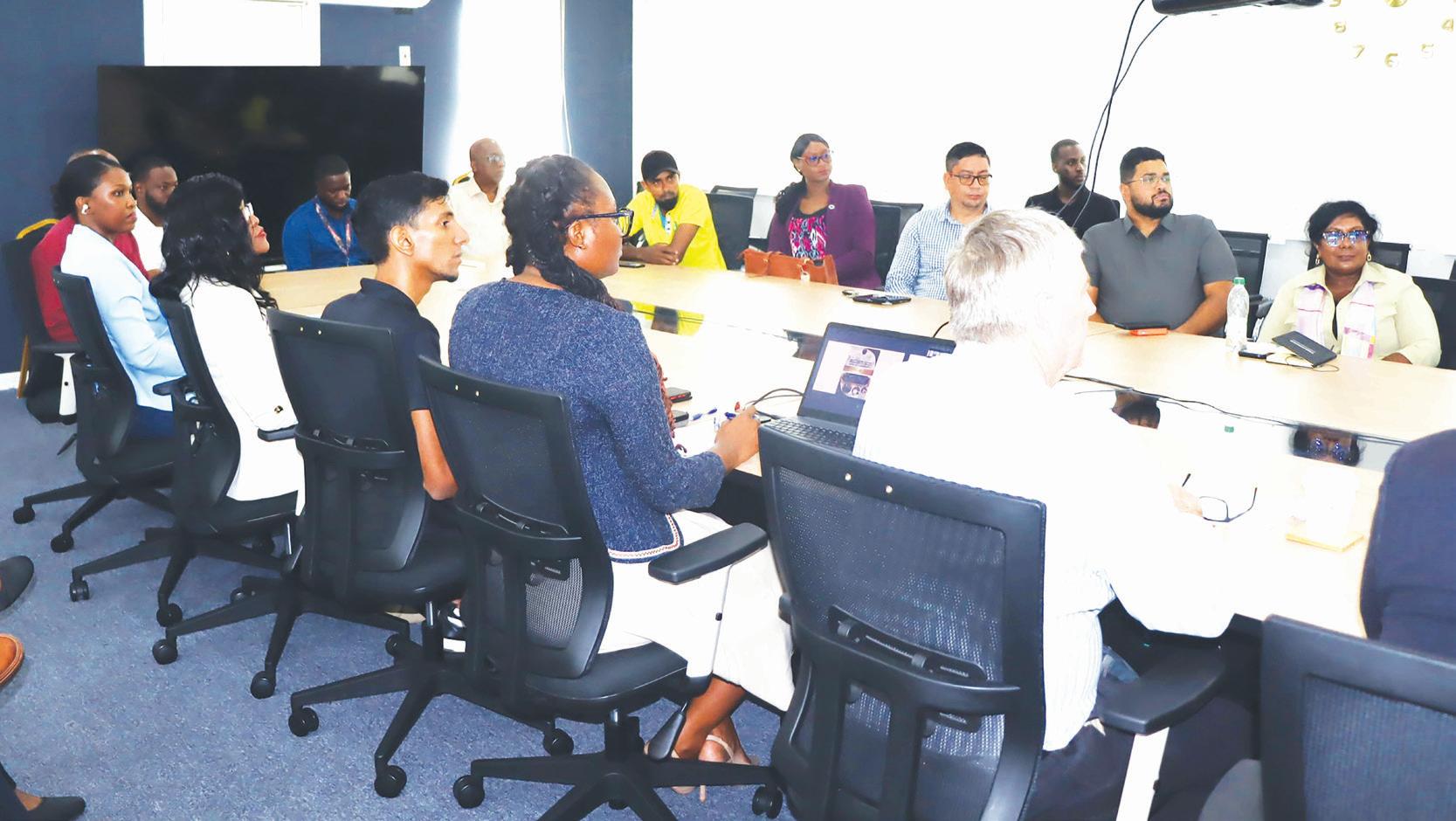
Over the past several years, Guyana’s agricultural sector has been strengthened by equipping farmers, particularly women and young people, with the knowledge, skills, and valuable networking opportunities needed to expand their operations and adopt more modern, business-focused farming practices. The ‘Market Actor and Donor Project’ was implemented by the Georgetown Chamber of Commerce and Industry (GCCI) in partnership with the World University Service of Canada (WUSC), with funding from Global Affairs Canada. The initiative also benefited from the collaboration of several local organisations and agencies committed to advancing sustainable agriculture. To mark the completion of the programme, stakeholders gathered for a close-out engagement on July 7, 2026, at the GCCI Secretariat. The event celebrated the project’s achievements and its contribution to empowering farmers and strengthening Guyana’s agricultural value chain.
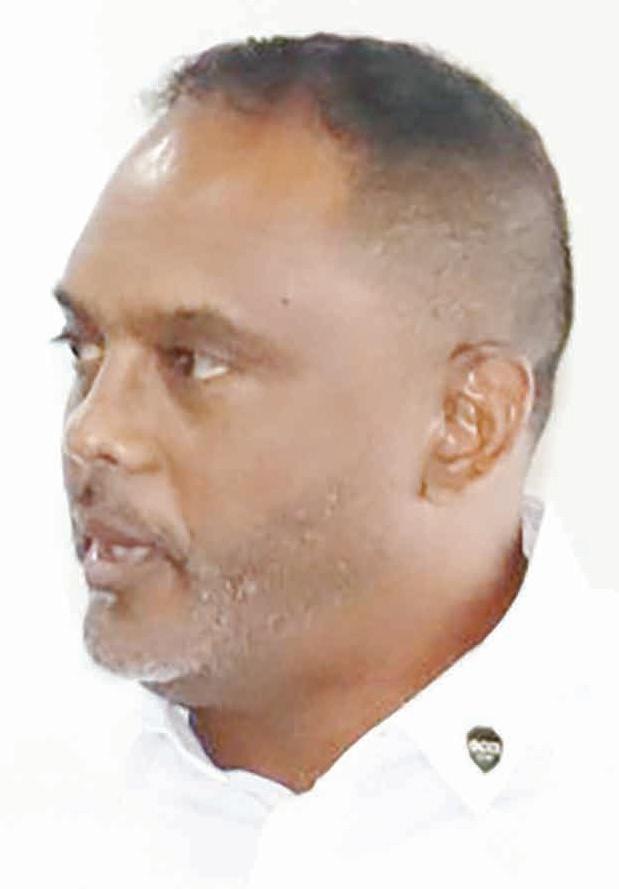
Secretary of the GCCI
and Chairperson of the Agriculture Committee, Brian Edwards, who leads these efforts, noted that the conclusion of this programme does not signal the end of efforts to propel agriculture, but it is proof of the viability of collaborative initiatives. “We’re not just marking the end of a project; we are celebrating the way forward for how we do business in Guyana in agriculture. Guyana Agriculture Connect was born out of a critical necessity, the need to bridge the gap between tradition and the modern market. We realised for our agriculture sector to truly thrive, we needed to move away from isolation, silos, and short-term fixes, and instead build cohesive ecosystems,” he stated. He described the collaboration as a dynamic bridge geared towards strengthening relationships between producers, buyers, service providers, financial institutions, and supporting organisations. He highlighted, “It was designed to improve farming with access to high-quality input, technical
knowledge, climate-smart agriculture practices, market information, and business development services. In short, we wanted to ensure SME (small and medium-sized) farmers, women, youth, and historically unserved groups finally had a seat at the table and could participate effectively.” The success and impact of the project, he underscored, is a testament to the fierce commitment to the development of local farmers. Recognising the role played by all of the programme’s partners, Edwards said, “We want to acknowledge and sincerely thank the Ministry of Agriculture and the Minister of Agriculture, our private sector partners, development partners and producer organisations. Your collaboration has been the bedrock of these shared goals. While this specific WUSC Project is officially coming to a close, let me be very clear: this is not the end. The relationships, the knowledge and the robust market systems we have established together will continue to benefit the Guyanese agriculture sector for years to come.”
For Thomas, that loss has added another layer of sadness to a family already burdened by unimaginable grief. “It affected the family terribly,” she said.
Can’t stay away for long
She became emotional as she spoke about Isaiah’s relationship with his mother, recalling that he rarely stayed away from home for long. “If he went out, he would come back quickly because he knew his mother would be looking for him.”
She paused before continuing. “Until now it still troubles me.” Then came the memory that has remained with her every day since September 2020. “Every morning when I open my back window, I imagine seeing Isaiah walking along the dam.” She smiled briefly, as though replaying those moments in her mind.
“That was the last image I have of him.” It is a simple routine, opening a window that unexpectedly returns her to a time before tragedy struck, when the cousins would greet neighbours, laugh with friends and spend hours talking about music and life. She said those memories are impossible to erase. “They were good boys.”
Nevertheless, Thomas said no sentence can restore what the family has lost. The empty chairs at family gatherings remain. The familiar voices have fallen silent.
The dreams the two young men once carried into adulthood ended long before they had the chance to realise them. Thomas said she has accepted that the court has delivered its judgment, but she continues to believe that truth and justice ultimately belong to God. “If those men
are guilty, they have to answer for that,” she said.
“But if they are innocent, then they must pray, and God will reveal the truth,” she reiterated. She also repeated her appeal to anyone who may still know something about the killings. “If people know anything, they should speak. Don’t just keep saying you’re here wrongfully. If you know something, say it.”
For the Henry family, the sentencing closed a legal chapter but for relatives like Donna Thomas, the passing of time has not dulled the pain. Justice may have been delivered in a courtroom, but grief has no final judgment. For the Henry family, the memories of two young cousins whose lives ended so violently continue to live on in their hearts and the fact that one day, they will all reunited in heaven.
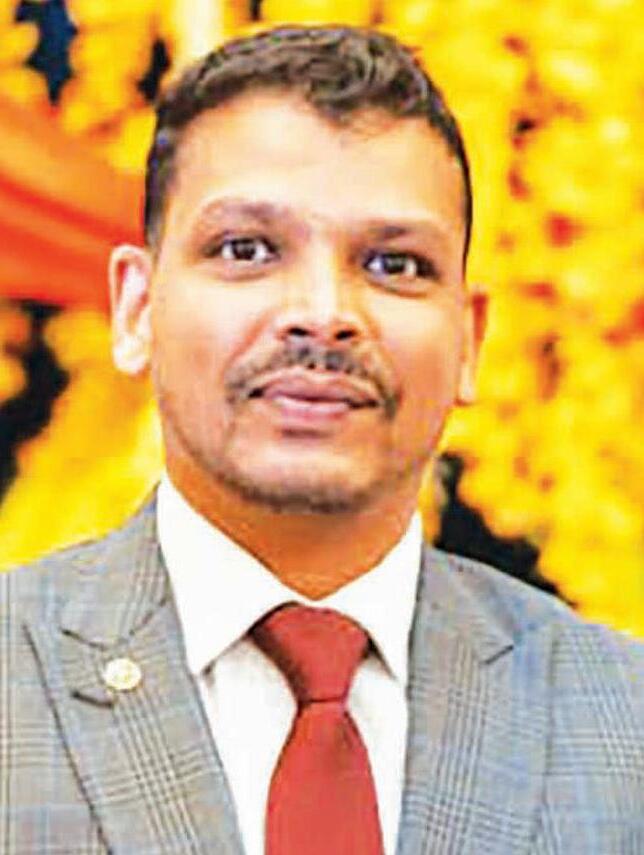
Moreover, President of the GCCI, Kathy Smith, explained the extent to which this programme supported the GCCI’s goals for the development of the agriculture sector. “Brian has been doing tremendous work in the field of agriculture and agro-processing in all 10 administrative regions. We are empowering women across these regions, from Region One to Ten... and we have now started to see this project as phase one.”
She disclosed that in furtherance of the work by the Chamber in this regard, the GCCI has partnered with the Government of Guyana to provide 100 women in agriculture with shade houses. In addition, Caribbean Director of WUSC, Doug Graham, extended his appreciation to the partners and said that the collaboration with the GCCI and partners has been rewarding. “It’s been a really important partnership that’s evolved and grown to the
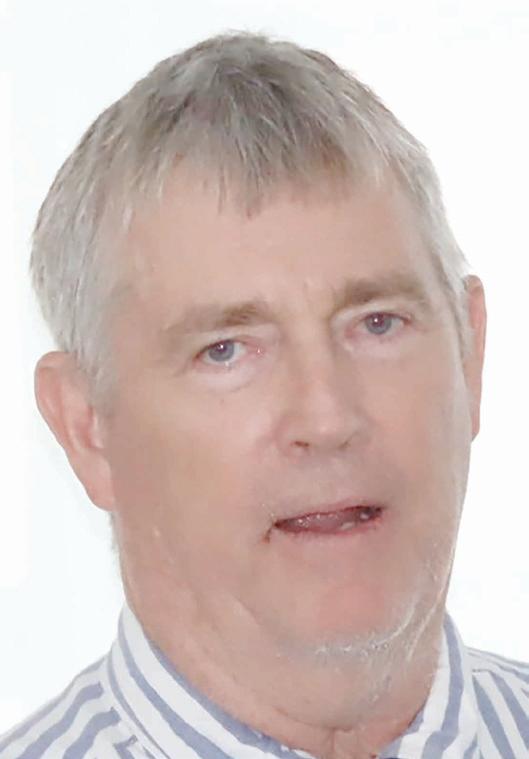
point where we’re redundant, which is fantastic. Without these partnerships, both private sector and Government, some other development agencies, or even groups of farmers, farmer groups and producer groups, without that collaborative effort, the project would not have achieved what it set out to achieve.” Further, Head of Cooperation at the High Commission of Canada to Guyana and Suriname, Adam Loyer, noted that the Sustainable Agriculture in the Caribbean (SAC) Project was a CAD$20 million Canadian project implemented in the Caribbean region.
“The goal was to build equitable prosperity, especially for women and youth producers... as mentioned by previous speakers, through the project’s inclusive market systems approach, the project was able to catalyse the bringing together of many organisations,” he stated. He added that be-
yond simply facilitating producers to attend training, they are now actively able to shape their economic futures; the shift is from simple participation to one of true agency. Furthermore, he disclosed, “As Head of Cooperation, I’m pleased to have heard that Guyana emerged as one of the strongest-performing SAC countries. Participants reported some of the largest increases in income, which is very important, with average annual net income nearly doubling from baseline levels when they remeasured partway through the project. So perhaps those increases are even higher now. The project also reported one of the highest rates of climate-smart agriculture adoption.” The GCCI is proud of the success of this project and intends to advance these initiatives to ensure that the agriculture sector is inclusive and that all demographics are able to thrive.



For many children, summer is a time of excitement, adventure, and well-earned rest from the classroom. It is an opportunity to spend time with family, explore the outdoors, develop new skills, and simply enjoy being a child.
However, summer also brings unique health and safety challenges.
Changes in routine, increased outdoor activities, warmer weather, and more screen time can all affect a child’s physical and emotional well-being.
As parents and caregivers, we play an important role in ensuring that children remain healthy, active, and safe throughout the vacation.
Stay hydrated
Children are more likely than adults to be -

...Helping our children make the most of their vacation
come dehydrated, especially while playing outdoors.
Encourage children to:
• Drink plenty of water throughout the day.
• Carry a reusable water bottle when leaving home.
• Choose water instead of sugary drinks and energy drinks.
• Drink extra fluids during hot weather and sports activities.
Watch for signs of dehydration, including excessive thirst, dry mouth, dizziness, tiredness, and reduced urination.
Eat a balanced diet
Summer often means more snacks and fast food, but good nutrition remains essential for healthy growth.
Aim to include:
• Fresh fruits and vegetables
• Whole grains
• Lean proteins such as fish, chicken, beans, and eggs
• Milk or other calcium-rich foods
Limit:
• Sugary drinks
• Chips and processed snacks
• Excess sweets and candies
Healthy eating provides children with the energy they need to learn,
play, and grow.
Stay active every day
Children should aim for at least 60 minutes of physical activity daily.
Encourage activities such as:
• Football
• Cricket
• Cycling
• Swimming
• Dancing
• Walking
• Outdoor games
Physical activity strengthens the heart, muscles, and bones while supporting mental health and reducing screen time.
Protect against the sun
Spending time outdoors is healthy, but too much sun exposure can cause sunburn and increase the risk of skin damage.
Protect children by:
• Wearing hats with wide brims
• Using sunscreen (SPF 30 or higher)
• Wearing lightweight clothing that covers the skin
• Seeking shade during the hottest part of the day, usually between 10:00 am and 4:00 pm.
Practise water safety
Whether visiting a pool, river, lake, or beach:
• Never leave children

unattended near water.
• Ensure young children are always supervised by a responsible adult.
• Use properly-fitted life jackets during boating or water sports.
• Teach children basic swimming and water safety skills whenever possible.
Drowning is preventable with proper supervision.
Prevent mosquito bites
Mosquitoes can spread illnesses such as dengue.
Help protect children by:
• Applying age-appropriate insect repellent.
• Wearing long sleeves and trousers during peak mosquito hours.
• Removing standing water around the home.
• Using window screens or mosquito nets when needed.
Stay safe while cycling and playing Children should always:
• Wear a properly-fitted helmet when cycling.
• Use protective gear for skating and other sports.
• Cross roads only with adult supervision or at designated crossings.
• Avoid playing near busy roads or construction sites.
Limit screen time Summer should not become “screen time season”.
Encourage children to:
• Read books
• Learn a new hobby
• Play board games
• Spend time outdoors
• Help with simple household activities
• Connect with family and friends.
A healthy balance between technology and active play supports both physical and mental development.
Support mental well-being Summer is also a time to nurture emotional health.
Parents can:
• Spend quality time together
• Listen to children’s concerns
• Encourage creativity through art, music, and storytelling
• Praise positive behaviour and achievements
A supportive home environment helps children build confidence and resilience.
Maintain good hygiene
Simple habits help prevent illness.

Teach children to:
• Wash hands regularly with soap and water
• Bathe daily after outdoor activities
• Brush their teeth twice a day
• Cover coughs and sneezes
• Avoid sharing personal items such as towels and water bottles
Keep up with health care
Summer is a good time to:
• Schedule routine medical check-ups
• Update vaccinations if needed
• Arrange dental visits
• Have vision or hearing assessments if recommended
Preventive health care helps children return to school healthy and ready to learn.
As a family physician, one of the greatest joys is seeing healthy children grow into healthy adults. I have also seen how many illnesses and injuries can be prevented through simple everyday habits.
Children do not need
expensive gadgets or complicated routines to enjoy a healthy summer. They need safe places to play, nutritious food, clean water, supportive families, and opportunities to learn and explore.
Some of the happiest childhood memories are created during school holidays. By making health and safety part of the adventure, we can help ensure those memories are happy ones.
Summer should be a season of fun, discovery, and growth, not preventable illness or injury.
By encouraging healthy eating, regular physical activity, good hygiene, safe outdoor play, and strong family connections, we can help our children enjoy a safe and rewarding holiday. Let’s work together to make this summer one filled with laughter, learning, and healthy memories that last a lifetime.
Have a safe, healthy, and enjoyable summer!
Adriver ploughed into people at a street festival Sunday in Chile, killing at least six, Police said.
The man reportedly lost control of the vehicle at the festival in the city of Vina del Mar, Police official Jorge Guaita told AFP.
Another seven people were injured, but their lives are not in danger, he added.
Early reports said the driver was speeding on a road running alongside the festival site.
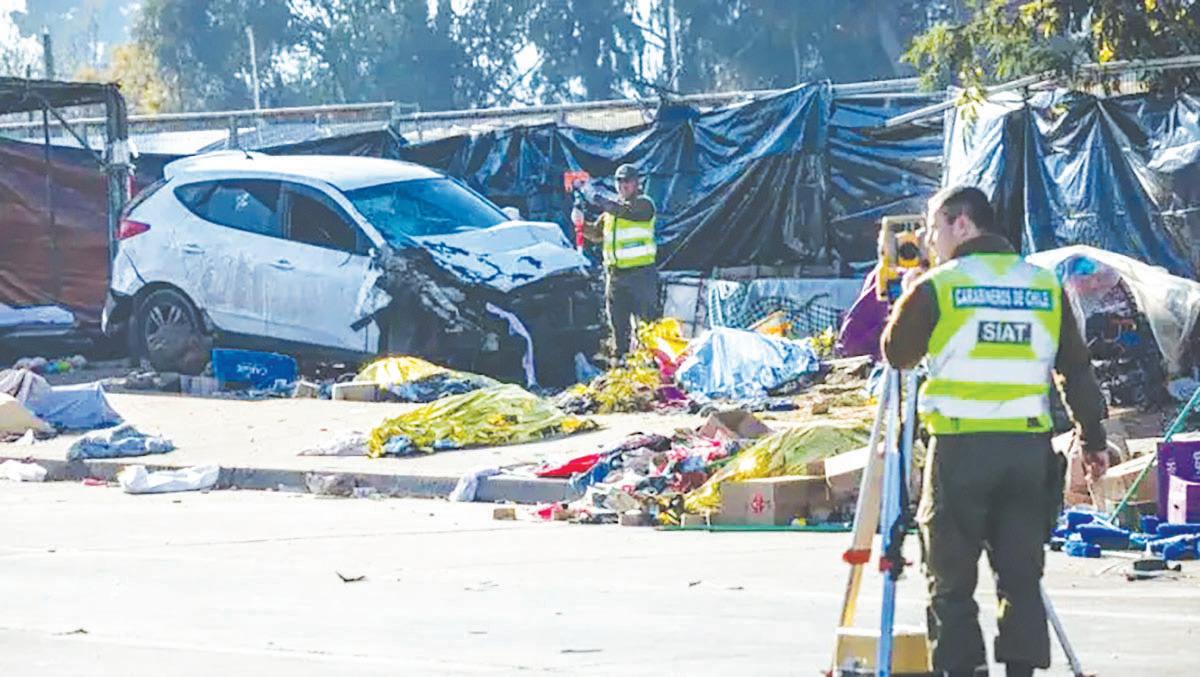
Campion College Dance Society presents Surge: The power to rise
The driver was detained and will be tested for alco-
hol consumption, Guaita said. (AFP)
The death toll from the two earthquakes that struck Venezuela on June 24 has risen to 4490, National Assembly President Jorge Rodriguez said on Sunday on his Telegram account. The official count of injured remained unchanged at 16,740, while 6462 persons have been rescued.
The number of people left homeless stands at 17,907, according to the figures.
(Excerpt from Reuters)
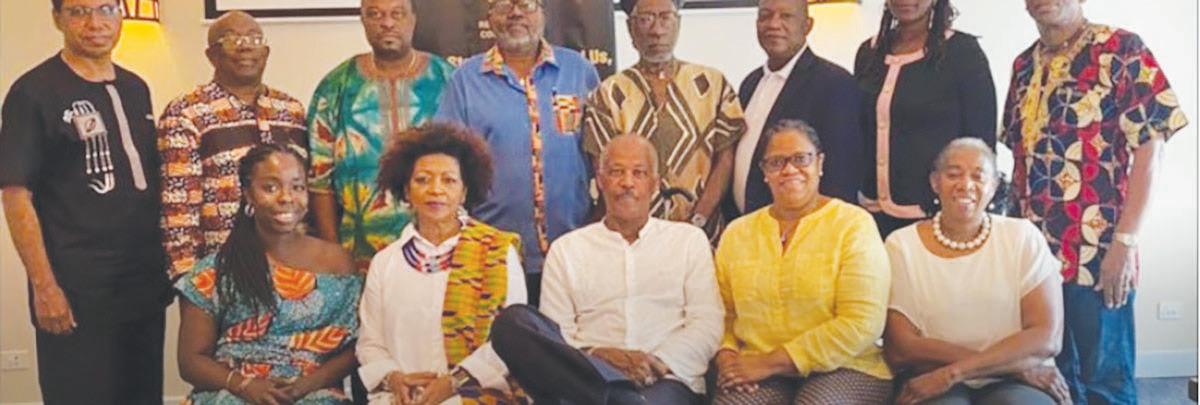
The Caribbean Community (Caricom)
Reparations Commission (CRC) will travel to the United Kingdom this week as part of a renewed push to build international support for reparatory justice, amid what it described as growing global momentum for the issue.
A statement from the Caricom Secretariat said the July 13-16 mission will include meetings with diplomats, academics and civil society organisations, as well as a presentation at the United Kingdom Parliament. The engagements will be hosted by the Institute of Commonwealth Studies at the University of London.
The Commission said the visit is aimed at strengthening strategic partnerships and advancing public education and civil society engagement on reparatory justice.
The delegation will
be led by CRC Chairman Professor Sir Hilary Beckles and includes Vice Chairmen Dorbrene O’Marde and Eric Phillips, Vice Chair Professor Verene Shepherd, Barbados’s Ambassador to Caricom, David Comissiong and Dr Ron Daniels, convenor of the United Statesbased National African Reparations Commission.
According to the CRC, the visit comes as Caricom Member States prepare for the 2026 Commonwealth Heads of Government Meeting (CHOGM) in Antigua and Barbuda and follows several recent developments that have strengthened the international reparations movement.
These include the adoption by the United Nations General Assembly in March of a Ghana-led resolution declaring the transatlantic trafficking of enslaved Africans and chattel enslavement the “gravest crime against humanity.”
The Commission also pointed to the High-Level Consultative Conference on Reparations, hosted by Ghana in Accra in June, which it described as a “historic turning point for Africans and People of African descent”.
The regional body said momentum had also been strengthened by the recent approval by Caricom Heads of Government of the revised Caricom TenPoint Plan for Reparatory Justice: A Manifesto for the Coming Enlightenment, which it said positions reparations as a “global human rights imperative.”
During the visit, the delegation is scheduled to meet Caricom and African Union Ambassadors and High Commissioners, participate in a public roundtable discussion at the Institute of Commonwealth Studies and deliver a presentation at the UK Parliament. (Excerpt from CMC)
Amulti-vehicle accident in Mexico caused by a tractor-trailer left nine persons dead and some 10 injured, including four US citizens, on a highway in the state of Jalisco, Civil Protection reported on Sunday.
Among the dead are two
minors, while the injured include two members of the National Guard who are in serious condition and were transferred to the Magdalena Hospital in Guadalajara, the agency report indicated.
Videos on social media from local media showed several vehicles burnt on a highway connecting the cities of Guadalajara and Tepic.
“Four patients in minor condition, all US citizens, were transferred to the Arboledas Hospital in Guadalajara by a private ambulance from the highway,” Jalisco Civil Protection stated. (Reuters)
The People’s National Movement (PNM) has described legal proceedings for it to disclose the financing for the renovation and construction of its Balisier House headquarters in Portof-Spain as a political witchhunt.
The party issued a press release Saturday afternoon to respond to a newspaper report that High Court Judge Margaret Mohammed had granted a Preliminary Unexplained Wealth Order calling on the party through its trustees to divulge how the multi-million project was funded.
The order, granted on Friday, was sought by the T&T Police Service (TTPS) under the provisions of the Civil Asset Recovery and Management and Unexplained Wealth Act, which was ironically introduced by the party while in Government in 2019.
In the release, PNM Chairman Marvin Gonzales noted that the party had not been served with official court correspondence before the report was published.
“The reports, which include grossly exaggerated figures, seek to cast doubt on the legitimacy of the financing of Balisier House and the People’s National Movement rejects any suggestion that there was anything improper, unlawful or secretive about the funding of its headquarters or the fund-raising activ-

ities undertaken by the party over many years,” Gonzales said.
He noted that the land, located at the corner of Victoria Avenue and Tranquillity Street in Port-of-Spain, was acquired by the party over 65 years ago and that the recent redevelopment, which is still ongoing, was never done in secret.
“For well over 15 years, the People’s National Movement has engaged in lawful fund-raising through party activities, public appeals, initiatives and voluntary donations from thousands of members, supporters and well-wishers who believed in preserving one of Trinidad and Tobago’s most enduring democratic institutions,” Gonzales said.
“Many citizens proudly contributed to that effort, because they understood that strong political institutions strengthen our democracy,” he added.
Gonzales suggested that
the court proceedings are the culmination of a public smear campaign initiated by the United National Congress (UNC).
“It then escalated through the abuse of parliamentary privilege, where serious, unsubstantiated allegations were made against the PNM under the protection of Parliament. It has now progressed to the Trinidad and Tobago Police Service, allegedly seeking and receiving judicial authority to pursue what is a politically motivated witch-hunt,” Gonzales said. He suggested that the current UNC-led coalition Government was seeking to “weaponise the machinery and financial resources of the State against its principal political opponent” instead of addressing topical national issues such as the economy, crime, unemployment, healthcare, and education.
(Excerpted from Trinidad Guardian)
Jamaica’s population was estimated at 2,764,200 at the end of 2025 when compared with 2,763,600 in 2024.
This indicates a net population increase of just 600 persons and a growth rate of 0.0 per cent according to the 2025 edition of the Economic and Social Survey Jamaica, a publication of the Planning Institute of Jamaica (PIOJ).
According to the survey, there were 28,900 births and an estimated 21,300 deaths in 2025 resulting in a natural increase of 7600 persons. However, migration also accounted for a loss of 7000 individuals compared with
8800 in the previous year.
In explaining the low growth, the PIOJ said, “Jamaica is undergoing demographic changes that are consistent with the final stages of the demographic transition model which is characterised by low fertility and low mortality rates; this contributes to low or negative population growth”.
“At the same time, demographic shifts are exacerbated by climate-related shocks, which are intensifying vulnerability, as evidenced by the impacts of Hurricane Melissa…,” it added. The PIOJ highlighted that in 2025, Jamaica’s es-
timated population exhibited changes in its age and sex composition. It noted that a relatively large proportion of the population remains in the working age group (1564 years), while there is an increasing dependent elderly population (65 years and over). Worryingly is that the share of the child population (0-14 years) continues to record a decline and, as noted by the PIOJ, “net migration loss, below-replacement-level fertility rates and population ageing have all had an impact on the population structure”. (Excerpt from Jamaica Observer)


Oil prices jumped today as Iran expanded strikes on Gulf States following attacks by the United States, threatening energy shipments via the Strait of Hormuz.
Brent crude futures climbed US$2.34, or 3.08 per cent, to US$78.35 by 2311 GMT, while West Texas Intermediate (WTI) crude rose US$2.21, or 3.09 per cent, to US$73.62 a barrel.
Over the weekend, Tehran extended strikes on Qatar and the United Arab Emirates (UAE) while the US launched further strikes on Iran, the latest in a cycle of attacks and counterattacks over shipping through the Strait.
US President Donald Trump said on Sunday that the Strait of Hormuz is open to commercial traffic, although Iran declared earlier that it closed the strait after a vessel travelled on an unapproved route and was struck.
Six vessels transited the Strait on Sunday, shiptracking data from Kpler showed, the lowest number in five weeks.
The escalating attacks cast further doubt on the future of an interim US-Iranian agreement signed last month that aimed to reopen the Strait and end the war after a further 60 days of negotiations.
Following the agreement, global oil supply rose by 4.1 million barrels per day (bpd) in June, but remained 9.4 million bpd below pre-war levels, the International Energy Agency said in its monthly report on Friday.
“Hopes of a relatively quick resolution to the recent skirmishes may be in doubt after tension escalated over the weekend,” ANZ analysts said in a note.
IG market analyst Tony Sycamore said the relatively tame rise in oil prices suggested the market was taking the view that the current flare-up represented an escalation within a fragile truce and fell well short of a complete collapse of the ceasefire.
“How accurate that view is remains to be seen,” he said in a note. (Reuters)
laid to rest in Doha
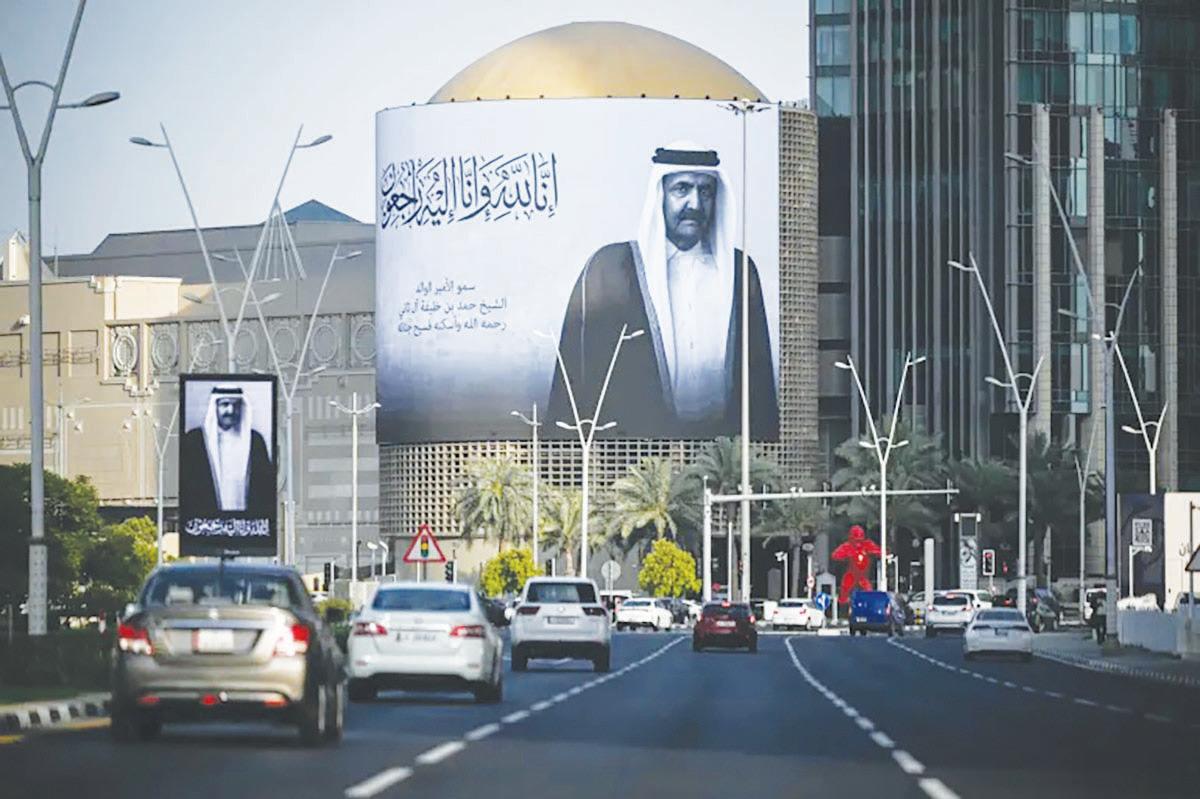
Emir Sheikh Hamad bin Khalifa Al Thani, the architect of Qatar’s remarkable transformation into an ultra-wealthy modern nation with global influence, has been laid to rest in Doha following his death at the age of 74.
Sheikh Hamad’s death was announced on Sunday morning, and his simple funeral ceremony was held after the daily evening prayer at sunset at the Imam Muhammad ibn Abd al-Wahhab Mosque in the capital.
Mourners wearing traditional Qatari dress stood with their hands clasped in front of them during a funeral prayer, facing the shrouded body of Sheikh Hamad.
Afterwards, close fami-
ly members, including his son and successor as emir, Sheikh Tamim bin Hamad Al Thani, carried his body out of the mosque. Sheikh Hamad was laid to rest at the Lusail Cemetery north of Doha.
Al Jazeera’s Zein Basravi said the ceremony was “a humble event” and Sheikh Hamad was “buried in a simple grave”.
During Sheikh Hamad’s reign from 1995 to 2013, Qatar’s Gross Domestic Product rose more than 24fold, largely because of his focus on developing the country’s massive gas resources. By 2006, the small nation had become the world’s largest exporter of liquefied natural gas (LNG).
(Excerpt from Al Jazeera)
At least 27 persons have been killed in a fire that tore through a bar in Bangkok, Thailand’s Prime Minister has said.
Firefighters were called to the scene just after midnight today, and discovered patrons fleeing through the flame-enveloped front door of the venue.
Footage posted on X shows flames blasting out of the bar as people run out, some screaming, and some falling over. At least two persons appear to be on fire.
Prime Minister Anutin Charnvirakul told media at the scene that 27 bodies have been recovered, and others have been taken to hospital. The cause of the

fire is still under investigation, he said.
Firefighters were reportedly able to bring the flames under control in about half an hour, but the result was already devastating.
Local reports said that nine men and 18 women make up the 27 who were killed. More than 60 persons are being treated in hospital.
A number of people are still missing, Thai outlet
Thairath reported. The Prime Minister told reporters that he asked a musician, who was performing when the fire started, what happened.
“He said that there was a fire at the cut-out switch, and after that things happened very quickly. There was blasting and everybody tried to flee from the smoke and flames.
“Many of them were not able to make their way out because they went to the back of the building and tried to hide themselves from the smoke and flames in the toilet, and that’s where we found most of the bodies.” (Excerpt from BBC News)
The United States insists the Strait of Hormuz is open, despite Iran saying it has closed the waterway amid renewed strikes.
Hostilities, which flared up again this week, continued on Saturday after the US said it had struck more than 140 targets across Iran. The attacks were a response to Iranian forces hitting a ship passing through the Strait, which it said was using an unapproved route.
Iran has been trying to assert control over the waterway, and early on Sunday said it was closed until further notice.
Iran’s Islamic Revolutionary Guard Corps (IRGC) also launched wide-ranging attacks on US bases and allies across the region on Sunday, marking an escalation in the scale of hostilities.
It said it had hit a US base in Jordan, while the United Arab Emirates (UAE); Qatar; Kuwait; Oman and Bahrain all said they had responded to missiles and drones from Iran.
The BBC has approached US Central Command (Centcom) for comment on the attack in Jordan.
Qatar, a mediator in ceasefire talks, had not been at-
tacked since April, while the UAE had not been attacked since May.
On Sunday evening, Centcom announced another round of strikes against Iran, which it said started at 17:00 ET (22:00 BST) and would “continue degrading their ability to attack civilian mariners and commercial ships freely transiting the Strait of Hormuz”.
On Sunday afternoon, Iran’s IRNA news agency said missiles were launched by the “enemy” towards Qeshm Island – a strategically important island in the Gulf, home to an important IRGC
base. The renewed fire has put in jeopardy an interim ceasefire agreement signed last month, which aimed to reopen the Strait and eventually bring a permanent end to the conflict.
Earlier this week, US President Donald Trump declared the Iranian attacks meant the ceasefire was over, while Iran’s Foreign Minister Abbas Araghchi accused the US of violating the deal.
However, Trump said talks would still continue and mediators were trying to revive the process.
(Excerpt from BBC News)
US Senator and close Trump ally Lindsey Graham dies after “brief and sudden illness”
Republican Senator Lindsey Graham, a close ally of US President Donald Trump, has died at the age of 71. He died on Saturday evening following a “brief and sudden illness”, according to his office.
Elected to the Senate in 2002, the South Carolina politician was one of Washington’s most influential voices on foreign policy, often pushing for US military intervention overseas.
Trump said Graham was a “true American Patriot” who would be “greatly missed”.
Preliminary findings from the medical examiner suggest Graham’s death was caused by a rupture of his aorta, a key artery in the heart, his spokesman said in a statement.
Graham had just returned from Kyiv, where he met Ukrainian President Volodymyr Zelenskyy on
Friday. There were no known health concerns ahead of his trip.
Trump told NBC News that he had spoken with Graham hours before his death and the Senator “sounded great” but a little tired.
“He was a tough cookie in many ways,” Trump told NBC on Sunday. “If he wanted to get something, if he thought he was right and he had people against him, he could be very tough, actually. But he was a good person.” (Excerpt from BBC News)
Apowerful typhoon has made landfall in China, the second to hit the country in a week, with nearly two million persons evacuated from areas in the path of the storm.
Typhoon Bavi, which spans 1000 kilometres (620 miles) at its widest point –roughly the width of France –first came ashore in the coastal city of Taizhou on Saturday evening before making a sec-
ond landfall in Wenzhou around midnight (17:00 GMT).
After pummelling a chain of remote Japanese islands, it brought heavy rainfall to Taiwan as it brushed past its northern tip.
Earlier landslides triggered by the storm killed at least 17 persons in the Philippines.
Though it has weakened to a severe tropical storm, it
still presents a risk because of the huge volume of moisture within its rain bands.
The storm is expected to gradually diminish in its intensity as it moves northwest.
On Sunday morning, the centre of the typhoon reached Hangzhou City in Zhejiang province, Chinese State media reported.
Forecasters said the typhoon would move to east-
ern Anhui today, and to the northern Yellow Sea from the Shandong Peninsula on Tuesday.
More than 1.7 million people were evacuated in Zhejiang and thousands more in neighbouring provinces, state media said. Schools, work and outdoor activities have been suspended in Zhejiang, while 400 flights and dozens of train services have been cancelled.
(Excerpt from BBC News)












Be honest with yourself and considerate of others. If you are willing to meet in the middle and accept the truth, you’ll discover how to deal with the transparency issues you face.



Get involved, make a difference and do your part. Adversity may rear its ugly head, but if you proceed with kindness and love, you will be part of the solution, not the problem.



If you don’t like something, change it. Research, find alternatives and make it happen. Take responsibility for your life, health and destination. Talk is cheap.
Be brave, ask for what you want and don’t shy away from setting boundaries if someone tries to take advantage of you. A change of heart will result if you let criticism and ego get in the way of common sense.


Explore creative possibilities. Consider your skills and what you enjoy doing most, and search for career choices that can be instrumental in furthering your agenda.


Take a moment to breathe. Distance yourself from chaotic situations and people who contribute to your stress and anxiety. Surround yourself with a peaceful environment.




Contemplate your alternatives, play each scenario out start to finish and rethink your objective. Pay attention to what’s working for you and what is causing confusion and uncertainty.
Keep life simple, doable and affordable. Refuse to let temptation, overindulgence and poor influences take over. Avoid making hasty decisions regarding your health or financial welfare.








Open your eyes and your wallet. Take care of what’s dragging you down at home, medically or legally. Declutter your life and let go of the past. Put your energy into simplifying your routine.
Pull it together, make your move and live up to the promises you made yourself. A change may not be easy physically or financially, but the result will be uplifting.
Pay attention to how you earn your living and how to channel your energy into prosperity and a profession that excites you more than sucks the life out of you. A change will help you put your life back in perspective.
High standards, expectations and drive will carry you forward. Don’t let others manipulate you or lead you astray. Take a course of action that leads you in a direction that makes you feel good.






Against a brilliant Switzerland defence that had kept them scoreless for more than 100 minutes, Argentina needed a miraculous extra-time effort to win Saturday’s quarter-final 3-1 and avoid a penalty shootout.
The defending FIFA World Cup champions eventually got the winner from Julián Álvarez in the 112th minute. The 26-year-old, scoreless in the tournament until that point, uncorked a beautiful, curling effort from 24 metres out, beating goalkeeper Gregor Kobel and giving Argentina the lead with just minutes to spare.
The Albiceleste will now play a mouth-watering semi-final against England in Atlanta on Wednesday.
Argentina led for nearly 60 minutes following Alexis Mac Allister’s headed goal from a corner –their fifth set piece goal of the tournament – but Dan Ndoye tied things up with a goal from a tight angle in the 67th minute. Switzerland had controlled the ball all night and were playing on the front foot, but the tenor of the match changed when Breel Embolo received a second yellow card for simulation in the 72nd minute and was ejected from the game.
From that point forward, Argentina at-

tempted 17 shots to Switzerland’s two. After Álvarez’s go-ahead effort, Lautaro Martínez scored on a breakaway to put the match away.
For the third straight match, however, Argentina played with fire. They went to extra time with Cape Verde in the round of 32 before getting a winner via an own goal in the 111th minute. Against Egypt in the next round, they trailed 2-0 in the 79th minute before a late charge and a stoppage-time winner from Enzo Fernández saved them.
With legend Lionel Messi failing to find space in the box – he still finished with six chances created, four shots from range and an assist on Mac

Allister’s goal – Argentina needed someone else to create some magic. Álvarez stepped up.
Messi quiet, but Argentina carry on Messi ended the match with just the one assist after Switzerland managed to quiet the Argentina Captain just enough to break his goal streak.
Before Saturday’s game, Messi had recorded a goal in nine consecutive World Cup matches and became the first player to score in six consecutive knockout games.
Switzerland held the 39-year-old to just one shot in regular time and three shots in the entirety of the match. Messi, being the player that he is, con-
tinued to impact the match through his spatial awareness and ability to move the ball around.
Argentina Manager Lionel Scaloni has built a team strong enough to win matches without a glimpse of Messi magic, relying on Mac Allister, Álvarez and Martinez to get them over the line in Kansas City.
Serious questions, however, linger ahead of Wednesday’s semi-final.
Embolo’s brain fade changed the match Switzerland had dominated most of the second half and had finally equalised thanks to a lovely, tight-angle goal from Ndoye. They had created 18 touches in the box to Argentina’s four.
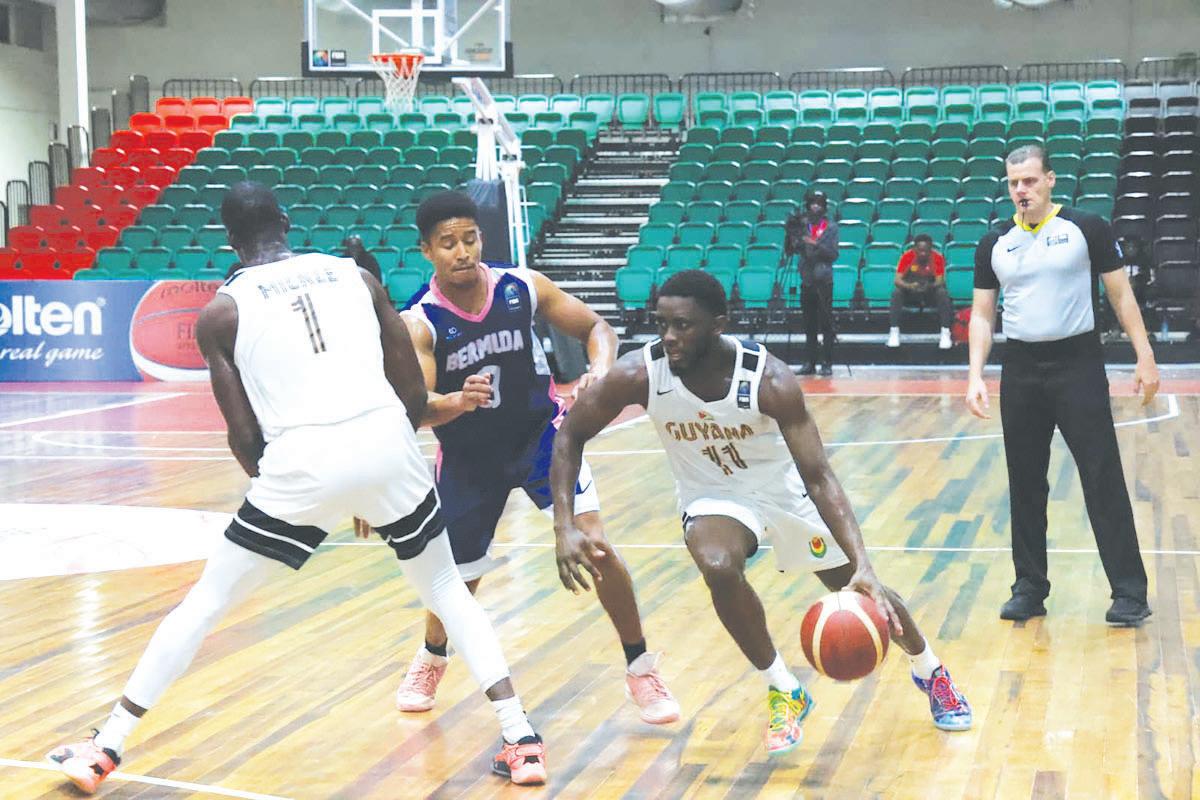
Though the hydration break was approaching, the Europeans looked like the team more likely to score next. And then Embolo made a decision Swiss fans will think about for quite a while. Turning away from defender Leandro Paredes, he slipped to the ground and acted like he had been fouled.
Referee Joao Pedro Silva Pinheiro initially gave Paredes a yellow card, but VAR intervened: A check for mistaken identity determined that Embolo had simulated the foul and gone down without contact. As the striker had already received a yellow card for a rough foul on Paredes late in the first half, he was gone. And the match was one-sided from there.
Over the final 47 minutes of regulation and extra time, Argentina created 1.61 x G to Switzerland’s 0.03 and finally scored twice in the second overtime period.
The possession rate before Embolo’s red card?
Switzerland 54 per cent. The possession rate after? Argentina 76 per cent.
You will rarely see a more game-changing – or, honestly, embarrassing –red card.
‘Focus’ issues continue to plague Argentina Argentina continue to struggle defensively. The Albiceleste have now con-
ceded five goals in the past three games, an issue rooted in a lack of concentration according to defender Lisandro Martínez.
“We don’t like conceding goals, and we definitely need to be a little more focused. I think that with better concentration, we can avoid those goals,” Martínez said. “It’s part of the game, it’s better that it happens now, that we’re more focused, with our feet firmly on the ground, and we can avoid those scoring opportunities.”
The back line managed to hold off Switzerland for the most part, but a lapse of only a few seconds in the 67th minute was all Ndoye needed to capitalise on a weakened defence.
Argentina kicked off the tournament defensively strong, conceding only one goal in three group stage matches. Even when Austria dominated on the attack with six shots, Argentina managed to hold onto a clean sheet. But the knockout rounds of the tournament have showed a clear weakness in the defending champs. Could it be the distance travelled? Or exhaustion of playing extra time against Cape Verde before facing a physically-demanding Egypt? Sure, but that’s part of the rigors of playing a World Cup. Argentina’s back line must be far better against England. (ESPN)
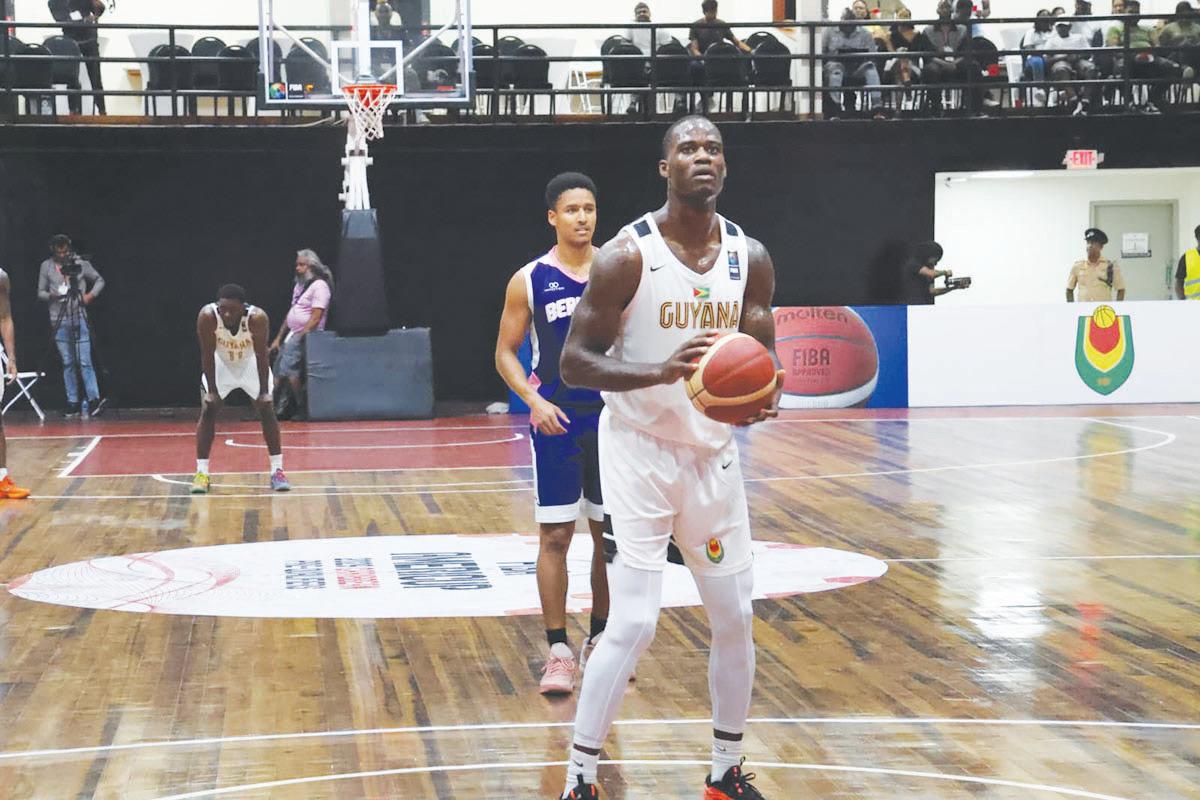

Guyana suffered a heartbreaking start to their FIBA Women’s AmeriCup 2027 Centrobasket Qualifiers campaign on Sunday, surrendering a commanding 22-point lead before falling 85-84 in overtime to El Salvador in a thrilling group phase contest at the Polideportivo Alexis
baskets, while Anaya Mc David registered a double-double of 10 points and
Guyana could not have asked for a better start. After the score was tied 6-6 midway through the opening quarter, the visitors erupted on a devastating 20-0 run that stretched into the second period to build a commanding 26-6 advantage.
Joy Adams led the charge during the run, scoring six points on perfect shooting while dominating the boards. Guyana’s relentless defence forced turnovers and sparked easy scoring opportunities as the lead swelled to a game-high 22 points at 28-6 early in the
The Guyanese carried a comfortable 43-26 lead into halftime and appeared firm-
ing in regulation. HarveyCarr scored 10 points during that burst to swing the mo mentum in the hosts’ favour.
However, Guyana re fused to fold. Ruth and Joy Adams, along with Thomas and Mc David, rallied the team to force overtime after a tense finish to regulation.
With El Salvador lead ing 83-81 in the extra peri od, Thomas buried a clutch three-pointer to put Guyana back in front 84-83. But Harvey-Carr responded mo ments later, calmly knock ing down a two-point jumper with 21 seconds remaining to restore El Salvador’s lead at 85-84.

Guyanese women’s nation al player.
Captain Joy Adams was equally outstanding, recording a triple-double of 16 points, 13 rebounds and 10 assists, while adding five steals in a superb all-round effort.
National team debutant Ava Thomas announced herself in style with 20 points, including several crucial
However, El Salvador emerged from the break with renewed energy and gradually chipped away at the deficit behind the outstanding Harvey-Carr, who repeatedly attacked the basket and finished efficiently in the paint.
A decisive 13-0 run in the fourth quarter transformed a 65-58 Guyana lead into a 71-65 advantage for El Salvador with 4:23 remain-

The Police Sports Club Ground at Eve Leary came alive on Saturday, July 11, 2026, as the Guyana Police Force (GPF) hosted its inaugural GPF Falcons Rugby 7s Tournament as part of activities celebrating the Force’s 187th anniversary. The tournament featured teams from the GPF Falcons and the Guyana Defence Force Rugby Club, with Police B and GDF B emerging as the top teams following a competitive round-robin stage. Police A defeated GDF A 12-5 in the opening match, but later fell 22-7 to Police B. GDF B recorded convincing victories over Police A and GDF A, while Police B defeated GDF B 12-0 and edged GDF A 15-10 to secure their place in the final.
The championship match produced an exciting contest, with GDF B taking an early lead through Gavin McPherson in the opening minute. Police B responded strongly, with Owen Adonis scoring the equalising try and Lionel Holder converting. Shawn David added another try, which was converted by Broomes, before Michael Barrow scored just before halftime. Theo Henry sealed the victory in the second half, with Holder converting again to give Police B a commanding 28-7 win.
Police B collected the first-place prize of $200,000, while GDF B received $100,000 for finishing second. David of Police B was named Finals Most Valuable Player, Gavin
McPherson of GDF B received the Tournament Most Valuable Player award.
Among those in attendance were Minister within the Ministry of Culture, Youth and Sport, Steven Jacob; Director of the GPF Academy, Senior Superintendent Sonia Herbert; GPF Sports Development Officer Mr. Colin Boyce; and President of the GPF Falcons, Superintendent Delon Fraser.
The tournament formed part of the Guyana Police Force’s 187th anniversary celebrations and highlighted the Force’s continued commitment to promoting sports, teamwork, discipline, and healthy competition among its members. (Guyana Police Force)
Guyana had one fi nal chance to steal victo ry, but Thomas’s potential game-winning three-pointer with 13 seconds left narrowly missed the mark and El Salvador escaped with the slim victory.
Harvey-Carr finished with 31 points, 12 rebounds, and three steals, shooting an outstanding 13-of-19
cruel nature of the defeat. Guyana led for 32 minutes and 49 seconds compared to El Salvador’s nine minutes and 20 seconds, despite the hosts emerging victorious.
The contest also featured 10 lead changes, with the final one coming on Harvey-
will have little time to dwell on the defeat as they return to the court today for a must-win encounter against Puerto Rico to keep their qualification hopes alive.
National Youth 18m Championships shoot off; record 31 archers competing
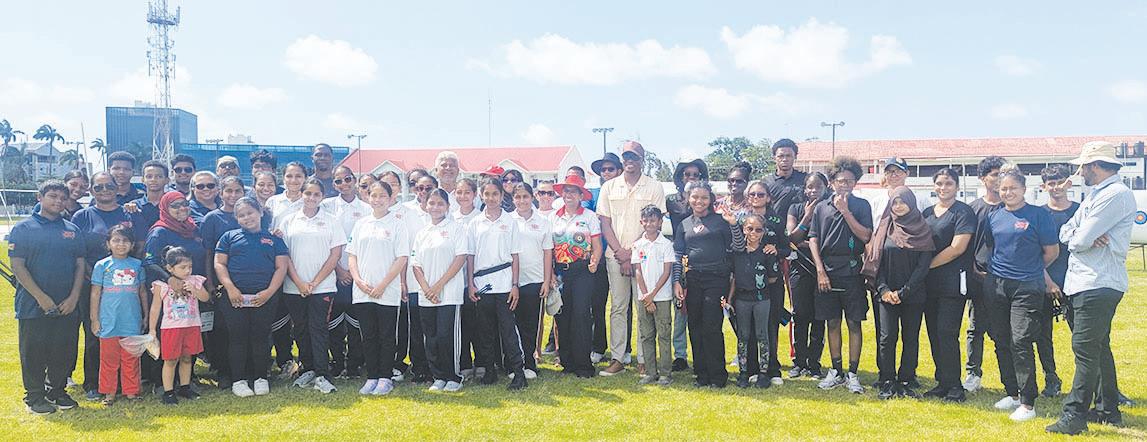
The Guyana Police Force (GPF) Sports Club Ground at Eve Leary, Georgetown was, over the weekend, overrun with archers as 31 athletes from various schools and private clubs went up to the shooting line in the National Youth 18 Metres Championships 2026.
The qualification rounds began on Saturday, July 11, with the competition expected to have continued on Sunday, July 12.
The championships showcased the growing strength of youth archery in Guyana, with young athletes demonstrating discipline, focus, and determination in a competitive environment.
A highlight of Saturday’s proceedings was the presence of Minister within the Ministry of Culture, Youth and Sport, Steven
Jacobs, who spent time on the ground engaging with the young athletes, learning more about the sport of archery, and offering words of encouragement and inspiration about success, resilience, and learning from failure in sport.
The competition was conducted under the guidance of a dedicated team of technical officials, which included Director of Shooting Afzal Karim; Judges Faraad Gani and Vidushi PersaudMcKinnon; Chairman of Judges Ryan McKinnon; Results Manager Saeed Karim and Results Verifier Anopa Ramdial.
The championships were slated to continue with the finals on Sunday, where the top-ranked athletes would have competed for national youth championship honours in the recurve Under-15 Men and Women combined,
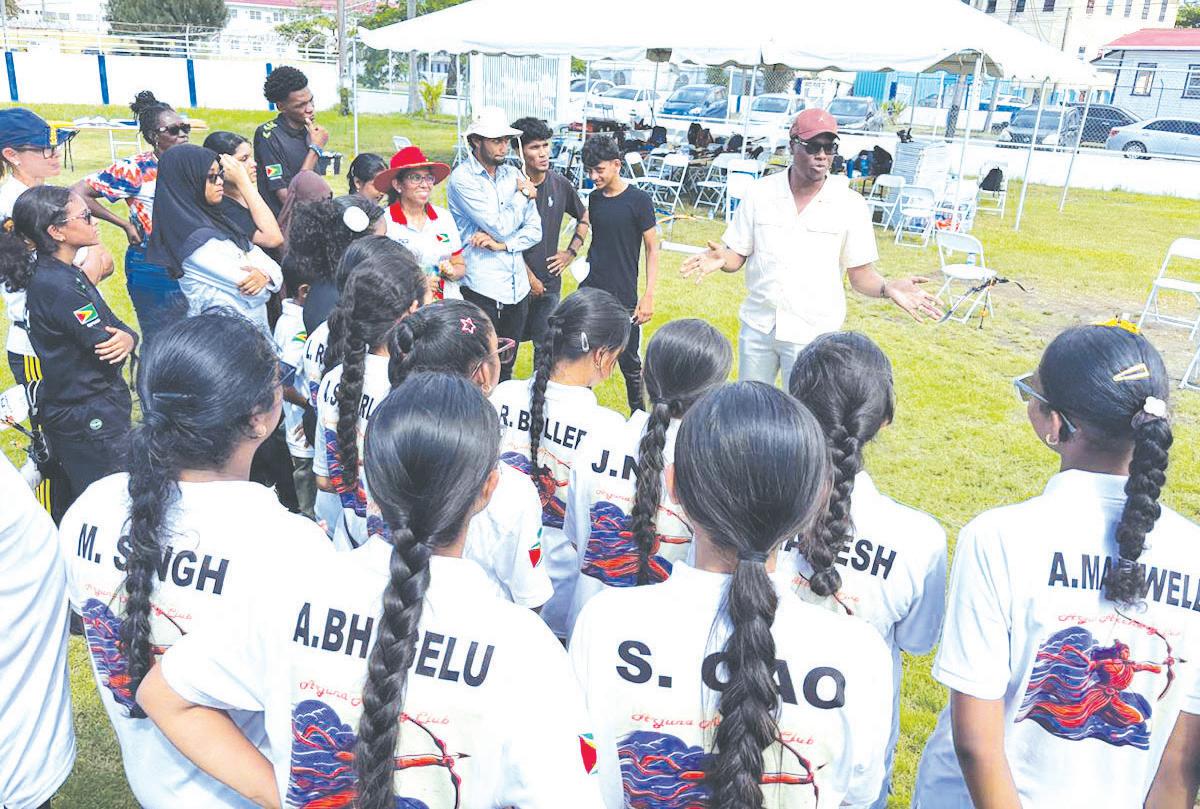
Barebow Under-15 Women and Barebow Under-18 Men.
In a missive, Archery Guyana extended its sincere appreciation to Commissioner of Police, Dr Clifton Hicken and GPF Sports Development Officer, Retired Deputy Superintendent Colin Boyce for their invaluable support in facilitating the successful hosting of the event at the Guyana Police Force Sports Club Ground.
Special thanks were also extended to the management and staff of Guyana Beverages Inc for providing Oasis Water and Altitude drinks, ensuring that athletes, officials, and volunteers remained hydrated throughout the day’s activities. The event was further supported by the Ministry of Culture, Youth and Sport (MCYS); the National Sports Commission (NSC), and Director of Sport, Steve Ninvalle.
Archery Guyana further commended all participating clubs, athletes, coaches, officials, parents, family members, club leaders, sponsors, and partners for their contributions to the success of the event and expressed its continued commitment to developing archery opportunities for young people across Guyana.
…Hetmyer added to squad as replacement for Greaves
West Indies One-Day International (ODI) team are currently on a high, heading into their second match of a five-match series against New Zealand, having won their first contest on Saturday by seven wickets, with seven balls remaining.
Standout performances came from 19-year-old debutant Vitel Lawes, pacer Alzarri Joseph, top-order batter Keacy Carty, and Captain Shai Hope as the Men in Maroon lit up the Guyana National Stadium at Providence, East Bank Demerara (EBD).
Carty, who was named Player of the Match for his elegant,
stroke-filled 95 off 112 deliveries, punctuated by 10 fours and two sixes, later spoke on his outing with the bat.
“Not really too big on personal milestones, obviously I’m going to take it, because I was in a drought of form, but I’m just happy to have contributed to the win today,” Carty said in a post-match briefing, “I really wanted to start well, which I found I did. Things swung back in their favour just a little bit and I told myself ‘just stick with it, eventually it’s going to turn around’ and that’s what happened. We came out with a W.”
Addressing his 131-run part-
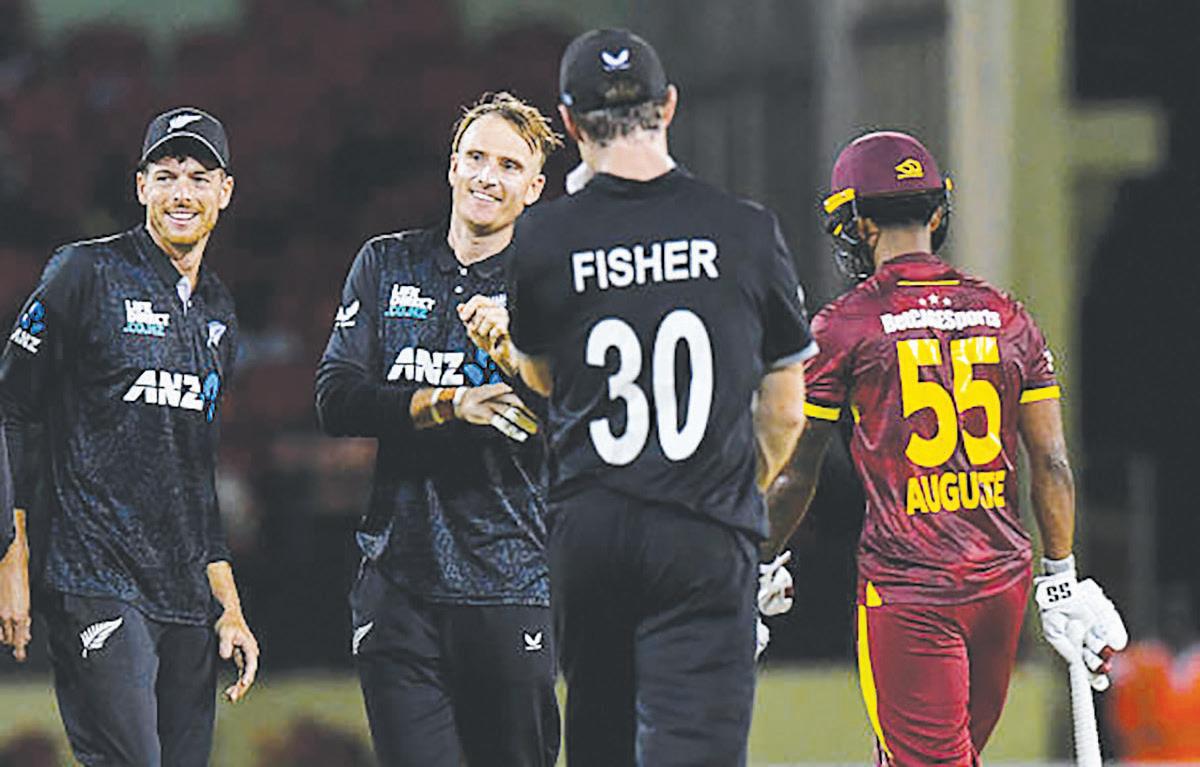

nership with Hope, Carty shared, “Definitely makes my job easier, you know; he’s a wonderful player in this format and I would say allround. So, yeah, just makes it eas ier for me.”
Going back to West Indies’ preparation, Carty divulged that they were always confident after restricting New Zealand to a be low-par score in Providence condi tions.
“So, in the planning stages, we were told that 277 was the aver age winning score here, batting first. So, to restrict them for less than that, we always thought that we were in the game. We just had to put out a good batting performance – which we did,” Carty explained.

He also shared his thoughts on debutant Lawes, who snared 3-54 in his first-ever senior game:
“Definitely he had a good game for his first game. I initially saw him in the youth World Cup and I thought to myself this is something we can work with. So, happy to see not too long after he’s in the mix and kudos to him, he had a good game today.”
Looking ahead at today’s second ODI at Providence, Carty is intent on replicating the Windies success of last Saturday.
“For us, it’s just to try and re-
Mitchell stated, “It’s obviously going to be on a different surface again, so, we’ll adapt as quick as we can to what their pitch brings. For us it’s just trying to make sure we keep improving day in, day out. The outcome will, hopefully, go our way if we keep doing the little things really well. That’s something that we pride ourselves on.
“So, we’ll learn from this experience today and be ready to go for the second one,” the Kiwi skipper added.
Hetmyer comes in Explosive batter and local boy Shimron Hetmyer has been added to the West Indies Men’s ODI
squad, Cricket West Indies (CWI) indicated on Sunday.
Hetmyer has been named as the replacement for Justin Greaves for the second and third matches of the series against New Zealand in Guyana. Greaves was ruled out of Saturday’s opening ODI with a back injury and will return to Barbados today to continue rehabilitation. He will be reassessed by the medical team ahead of the final two ODIs and the upcoming Test series against Pakistan.
CWI further noted that the squad for the final two matches of the series will be released later this week.
It was broken in the final over of their batting power play, when Deandra Dottin had Forbes edging behind to wicketkeeper Shemaine Campbelle. Dottin struck soon again, in her next over, by having Hunter edge behind too.
Centuries from Hayley Matthews and Stafanie Taylor head-
Ireland openers Sarah Forbes and Gaby Lewis had begun the day with a steady partnership of 38.
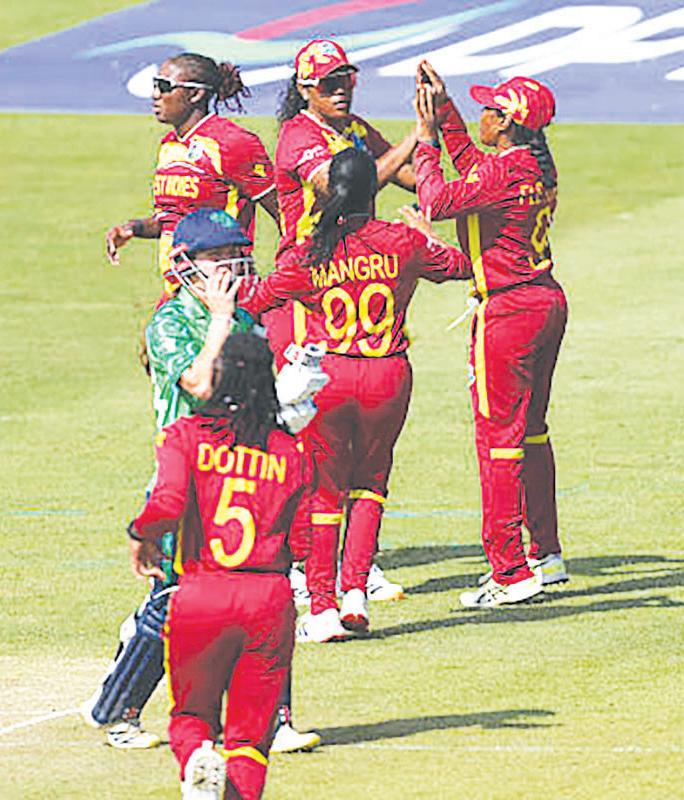
Matthews picked up Orla Prendergast’s wicket in the 20th over to begin what would be another prolific day. In the first ODI, she had taken a three-for, then scored 159* off 123 balls in the chase, setting a record for West Indies’ highest successful ODI run chase.
A 106-run partnership between half-centurions Hunter (67) and Stokell (57) had arrested the slide for Ireland. In the 41st over, Stokell departed when she fell to legspinner Afy Fletcher, on a day when she was otherwise the most expensive West Indies bowler, going at a run rate of 7.44 in her nine overs.
In the next over, Matthews returned to snare out Hunter too. Ireland had suddenly slid from 180 for 3 to 188 for 5, but they still scored 53 runs in their final eight and a half overs, propelled by cameos from Leah Paul (32) and Alana Dalzell (17*).
Once Matthews came out to open in the chase of 242, there would be no repeat heroics from the West Indies opening stand: Grimmond fell in the first over to Prendergast. However, there would be
no respite for Ireland thereafter. Matthews and Taylor, batting at number three, put together a 158-run partnership for the second wicket. Matthews brought up her second consecutive century off 92 balls, hitting 14 fours and two sixes along the way. She fell in the 26th over, to Louise Little, but Taylor kept the charge up.
Aimee Maguire took back-to-back wickets
with West Indies cruising through their chase, taking out Dottin and Jannillea Glasgow to leave West Indies at 199 for 4. Still, they needed just 43 off 94 balls at this point, and Taylor ensured there were no further hiccups as she brought up her own 104-ball century with a four, then a six.
Dalzell followed up, on the next delivery, by bowling a no-ball with just one
Hayley Matthews 10-1-34-2
Afy Fletcher 9-0-67-1
Karishma Ramharack 9-0-53-1
West Indies Women
(T: 242 runs from 50 ovs)
Hayley Matthews (c) c Murray b Little 100
Realeanna Grimmond c †Hunter b Prendergast 0
Stafanie Taylor not out 100
Deandra Dottin c Murray b Maguire 9
Jannillea Glasgow c Dempsey b Maguire 9
Shemaine Campbelle † not out 10
Extras (nb 2, w 12) 14
Total 38.5 Ov (RR: 6.23, 160 Mins) 242/4
Did not bat:Jahzara Claxton, Aaliyah Alleyne, Afy Fletcher, Shawnisha Hector, Karishma Ramharack
Fall of wickets: 1-1 (Realeanna Grimmond, 0.6 ov), 2-159 (Hayley Matthews, 25.6 ov), 3-189
(Deandra Dottin, 31.6 ov), 4-199 (Jannillea Glasgow, 33.2 ov)
(Louise Little, 45.6 ov), 7-226 (Leah Paul, 48.2 ov)
Bowling O-M-R-W
Jannillea Glasgow 8-2-30-0
Shawnisha Hector 4-0-19-0
Deandra Dottin 5-0-15-2
Aaliyah Alleyne 5-0-22-1
Bowling O-M-R-W
Orla Prendergast 7-0-39-1
Alana Dalzell 6.5-0-62-0Georgina Dempsey 7-1-27-0
Aimee Maguire 8-0-52-2
Cara Murray 5-0-45-0
Louise Little 5-0-17-1



The GT Challenge de las Américas took centre stage on Sunday at South Dakota Circuit, Timehri, and was witnessed by thousands of motor-racing fans, including President Dr Irfaan Ali.
In the first GTS showdown, Will Redford, out of the “One Guyana” Racing team, completed 24 laps in 32 minutes, 1.276 seconds to finish 5.150 seconds ahead of Juan Diego Hernandez and Tatiana Calderon, while Solly Betesh and Luis Ramirez placed third.
He also recorded the fastest lap of the race. In addition, Christopher Lall won Local Group 2, Stefan Jeffrey topped Local Group 3, and Danny Harrison claimed victory in Local Group 4 (2WD) in the GT Light categories.
In race two, Guatemala’s Carlos Hernandez took the chequered flag after completing 19 laps of the South Dakota Circuit in 32:33.218.
Hernandez finished 10.658 seconds ahead of Redford, while Gustavo Ortega completed the podium. Rounding off the top five were Zachary Boodram and Solly Betesh/Luis Ramire.
Danny Harrison claimed first position in the GT Jr category ahead of David Carballeda and Sebastián Guerra/ Alejandro Huerta. Ed Pead topped GTS Light, finishing ahead of Calvin Ming and Dean Paquette/Mauricio Roque. In the GTS Turbo, Juan Diego Hernandez/Tatiana
Speaking with reporters after the event on Sunday, one of the members of the “One Guyana” Racing team, Nazurdeen Mohamed, thanked the Government of

here, the support, supporting GMR&SC [the Guyana Motor Racing and Sports Club]; this alone puts us on the world stage.”
He further stated that Redford has proven himself a talented driver despite be-

Guyana for their input in ensuring the South Dakota Circuit was up to international standards for the Guyana Grand Prix:
“This is amazing work that was done
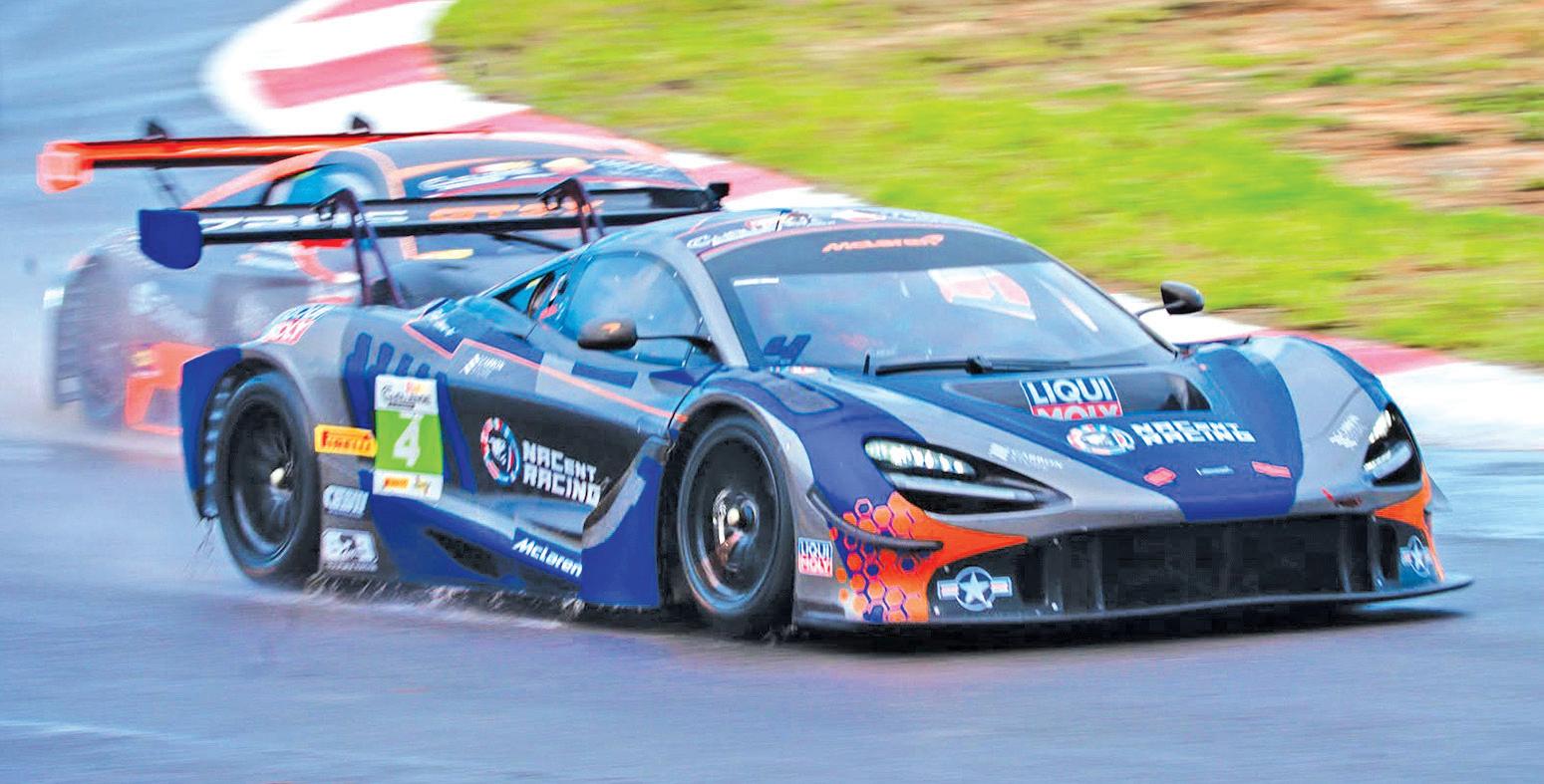
ing young.
“He is a very young driver, and we are going to look to continue touring in this series with him and even abroad in the UK.”
He added that they have a world-class team, including engineers and other members, while emphasising that the entire team is nothing but the best that they brought to ensure this victory.
“The customers are happy, and I want to thank Peter Lewis for believing in us, and we gave him our all. We had lots of trouble... we weren’t able to test the car... we weren’t even able to run the car on practice day... it was issues on top of issues, but to have the results we have had is an amazing feeling,” Mohamed stated.
Meanwhile, former GMR&SC President Raj Boodhoo, who has been instrumental in bringing the GT Challenge de las Américas to Guyana, told reporters that he was excited about the event, which promotes and showcases sports tourism in Guyana.
“I think it’s the best thing we can achieve, and I think there is much room to grow, and we are on point. There is still work to do on the track and finishing and all, but many are just excited to come back next year and in future years. The track is almost 99 per cent there,” he stated.
He added that they needed to address some safety and other minor issues, but all in all, they have laid the foundation and will work to elevate it to a different status.
“This is just a platform and a launching pad. It is going to grow tremendously from here,” Boodhoo added.