








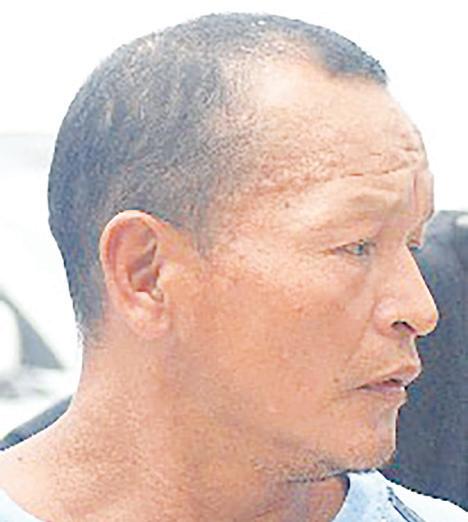
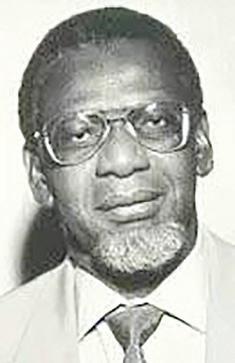

The probe into allegations that Senior Superintendent of Police Himnauth Sawh had connections with an international drug trafficking network continues nearly a year after he was sanctioned by the United States (US) Government, Minister of Home Affairs Oneidge Walrond has confirmed. Sawh, a senior officer in the Guyana Police Force (GPF), was among a group of four Guyanese named by the US Department of the Treasury’s Office of Foreign Assets Control (OFAC) in June 2025 as part of sanctions targeting individuals linked to narcotics trafficking.
Following the sanctions announcement, Sawh was placed on administrative leave under the GPF’s standard operating procedures to allow for an internal and external investigation into the allegations.
Walrond reiterated that the investigation is ongoing and that law en -

forcement authorities are proceeding carefully given the complexity of financial crime and transnational narcotics networks.
“As far as I am aware, he is still on administrative leave and yes, those allegations are being investigated,” Walrond said, adding that such probes take significant time and require meticulous work before any charges can be laid. It remains unclear whether Sawh continues to receive pay while on leave, though the Home
Affairs Ministry has not publicly addressed this aspect of his status. The sanctions against Sawh were part of a broader US effort to target narcotics trafficking networks said to be operating in and through Guyana. In addition to Sawh, OFAC named businessman Paul Daby Jr, Randolph Duncan, and Mark Cromwell, all accused of facilitating drug shipments linked to Colombian and Venezuelan cartels.
The US Treasury’s


sanctions list, which includes both Guyanese and Colombian nationals, alleges that the individuals named played significant roles in the transship -
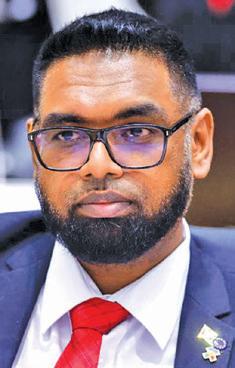
territory and the wider Caribbean. Following the sanctions, President Irfaan Ali reportedly requested that the US embassy provide information
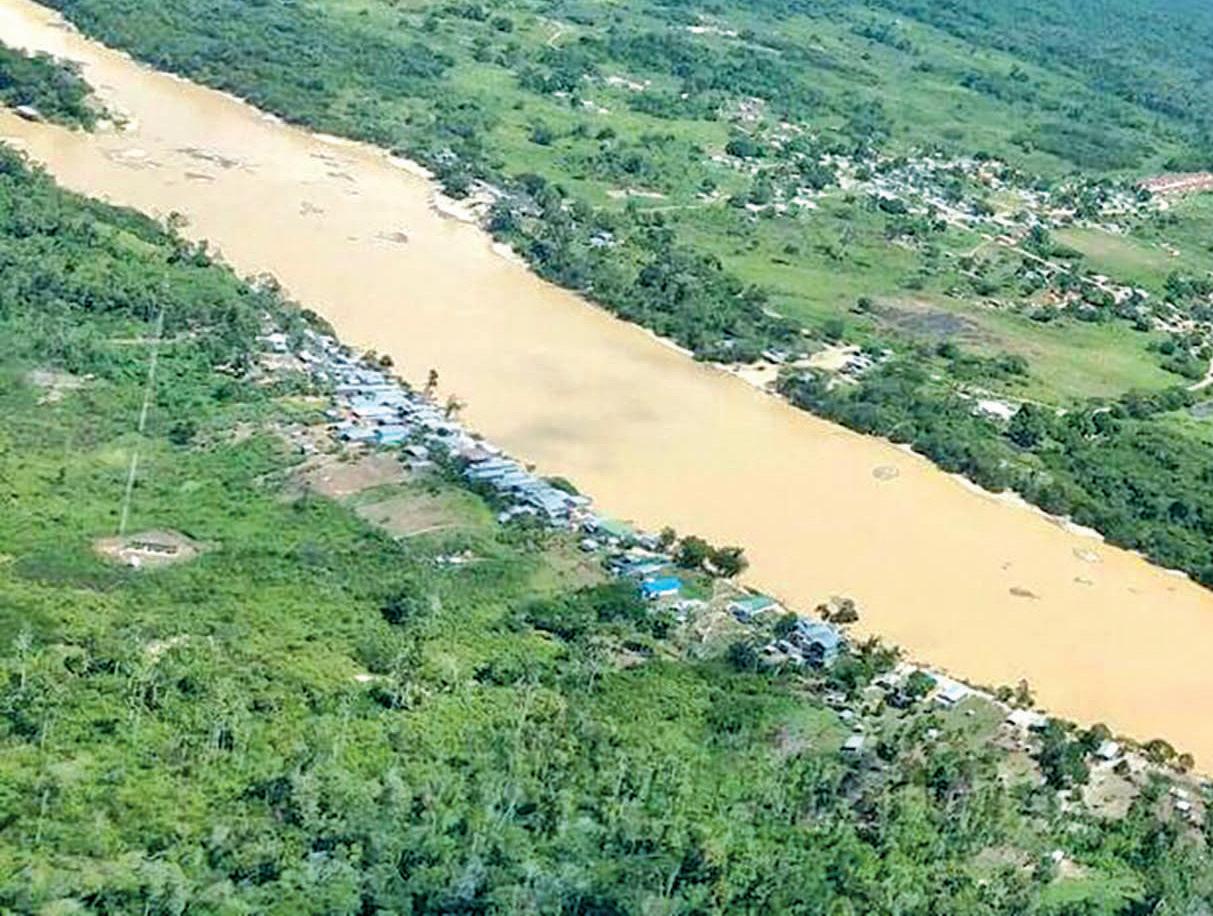
tional crime. The allegations against Sawh come after a series of high - profile anti - drug operations in Guyana. In September 2024, a joint operation by the Customs Anti Narcotics Unit (CANU), the Guyana Defence Force (GDF) Special Forces and US Drug Enforcement Administration (DEA) personnel uncovered 4.4 tonnes of cocaine buried near an illegal airstrip in Region One. Although Sawh was serving as the regional police commander at the time, he was never charged in relation to that case. He was subsequently reassigned first

ment of cocaine from South America to North America and Europe, exploiting routes that often pass through Guyanese
to Guyana’s authorities on Sawh’s alleged involvement, suggesting cooperation between Governments in addressing transna -
to the vehicle workshop at Eve Leary and then to the GPF’s Projects Office before the sanctions were imposed.








The Berbice Bridge will be closed to vehicular traffic on: Monday, April 6 –06:05h–07:35h and Tuesday, April 7 – 06:35h–08:05h.
Parika and Supenaam departure times – 05:00h, 10:00h-12:00h, 16:00h, 18:30h daily.
Early morning sunshine will give way to light rain showers during the day, with sunny skies from mid afternoon. Clear to cloudy skies are expected overnight. Temperatures are expected to range between 23 degrees Celsius and 29 degrees Celsius.
Winds: East North-Easterly to Easterly between 4.47 metres and 6.26 metres.
High Tide: 06:34h and 18:59h reaching maximum heights of 2.62 metres and 2.45 metres.
Low Tide: 12:34h reaching a minimum height of 0.61 metre.










Commander-in-Chief of the Armed Forces, President Dr Irfaan Ali, has announced the establishment of a series of Border Patrol Units as part of efforts to strengthen security along Guyana’s frontier regions. The Head of State made this announcement on Saturday during an engagement with residents of Rukumutu and satellite villages in South Pakaraima, Region Nine (Upper TakutuUpper Essequibo), where he launched the first Border Patrol Units.
“We are launching today, very importantly, the first Border Patrol Unit in this location,” the President noted. “[The] Border Patrol Unit [is] a very important unit in our security and national apparatus. Our borders are important. Supporting you in the protection of our borders is essential. We want our borders to be protected at the community level.” According to the President, the members of the Community Policing Group (CPG) in Rukumutu, along with Yurong Paru and Tipuru villages, will be incorporated into the Border Patrol Unit. Currently, there are 30 CPG members, which the President stated will be increasing to 40. These individuals will also receive stipends from the Government and will be equipped to conduct the patrols. “So, this will be the first village, the first district, where a Border Patrol Unit will be launched... You will now be, with that stipend, in full-time support of the Border Patrol Unit. To assist you, the Border Patrol Unit, which includes the Community Policing and will expand to about 40 [persons] in the three villages, we are going to provide you, under this unit, with three brand new ATVs (All Terrain Vehicles) that will assist in the patrol of the border and enhance the security of the three villages,” Dr Ali revealed. He also announced that former Regional Chairman of Region Four (DemeraraMahaica), Daniel Seeram, has been appointed as the National Coordinator of the Border Patrol Unit. He will work alongside Deputy Commissioner of Police, Ravindradat Budhram, and Director of the National Intelligence and Security Agency (NISA), Colonel Sheldon Howell, as well as the Regional Divisional #9 Police Commander, to set up these units. President Ali had first announced the establishment of Border Patrol Units back in February 2021 during his inaugural address to the Parliament of Guyana.
“We’ll also be strengthening our ability to secure our borders with the establishment of a Border Patrol Unit,” the Head of State had

said. Then, in November 2023, Attorney General (AG) and Legal Affairs Minister Anil Nandlall disclosed that the Border Patrol Bill was being finalised. This proposed legislation is among more than 40 bills and regulations that are slated to be introduced in the National Assembly this year. The establishment of these Border Patrol Units in the region comes as Guyana continues to face aggression from neighbouring Venezuela, which is laying claims to more than two-thirds of Guyana’s landmass and a portion of the country’s Exclusive Economic Zone (EEZ), where over 11 billion barrels of oil equivalent (boe) have been discovered and production, as well as other exploration activities, are currently being undertaken offshore.
Just last month, the Guyana Government had
to reaffirm the country’s sovereignty over its maritime jurisdiction, telling Caracas that it has no legal rights to the waters off of Guyana’s coast. This was after Venezuela raised objections to a decision made by the Guyana Government to advance a three-dimensional (3D) multi-client seismic exploration to gather data from a 25,000 square kilometre (km) offshore area within Guyana’s EEZ. In fact, Guyana has historically had to grapple with heightened aggression from Venezuela, coming under attack on several occasions as recently as last year. Back in 2018, Guyana had approached the International Court of Justice (ICJ) seeking a final and binding settlement of the 1899 Arbitral Award, which establishes the boundaries with Venezuela.
The ICJ had first estab-
lished its jurisdiction to hear the border case in December 2020. The written phase of the case concluded last year after Guyana filed two written pleadings on the merits of the case and Venezuela also filed two - the last being in August 2025. It was revealed in March that the World Court has set May 4 for the commencement of oral arguments on the merits of the case. This will be followed by the Court’s deliberations and issuance of its final judgment, which will be binding on both countries under international law. Guyana has already declared its steadfast commitment to the peaceful resolution of this border controversy with Venezuela in accordance with international law through the ICJ. The Guyana Government has also indicated its confidence in a favourable ruling, likely for some time this year.



Editor: Tusika Martin
News Hotline: 231-8063 Editorial: 231-0544, 223-7230, 223-7231, 225-7761
Marketing: 231-8064 Accounts: 225-6707
Mailing address: Queens Atlantic Industrial Estate Industrial Site, Ruimveldt, Georgetown
Email: news@guyanatimesgy.com, marketing@guyanatimesgy.com
Today is a landmark day in the Christian Calendar being the day Christians believe that Jesus was resurrected from the dead – which occurred four days prior on Good Friday –and ascended to heaven. With Guyana being one of the few countries having substantial blocs of adherents of all the three top major religions in the world – Christianity, Islam and Hinduism – it is significant that Easter has become a national festival.
Christianity, of course, was the religion of the Europeans who colonised Guyana and they imposed that religion on the Indigenous Peoples who were relegated to the hinterland, and then on the slaves and indentured labourers they imported to work on their plantations. These produced and exported – under abysmal conditions for the workers - sugar, cotton and coffee. Since the colonisers – the Dutch and the Britishwere generally Protestants, this was the variant of Christianity promulgated by the official churches, which worked hand in glove with the governments. After slavery, for instance, the Christian Churches were funded by the state to “educate” the freed-slaves, the Indigenous Peoples and later the other labour immigrants.
The Madeiran Portuguese brought their Roman Catholic brand of Christianity when they arrived in 1835 and being strong in their orientation, established several Cathedrals, churches and schools that operated in accordance with their religious beliefs. During slavery, even the languages of the African slaves were forbidden, much less their indigenous spiritual practices. These were derided as “pagan” and “animistic” and proffered as proof of Africans being on the lowest rung of humanity on the “great chain of being” postulated by Christian theologians. Ironically, this position was an advance on the views of the Spanish Christian monk, Bartholomew de Las Casas, who insisted Africans had no soul so enslaving them was actually beneficial since they would be exposed to the beneficent influences of the “soul-full” Christian masters. The same logic was used in Africa and today, with African contributing 40% of the Christian flock, it is also their fastest growing demographic. In his book, “Things fall apart” the African author Chinua Achebe describes this spread of Christianity and displacement of indigenous spiritual practices in Iboland of Nigeria. It is poignant that in the acclaimed Afrofuturistic movie, “Black Panther”, which envisions an African not colonised by Europe, each of the five tribes practice their own spiritual practices, including communing with ancestors, without any conflict.
In Guyana, however, like the Indigenous Peoples, Peoples of African Descent are mostly Christians. However, a growing number are turning to Islam – which some of their ancestors practiced in Africa, eg, the Fulani – which was extirpated during slavery. This reflects global trends that will see Islam displace Christianity as the largest religion in the world by 2060. The Indian immigrants were Hindus (80%) or Muslims (20%). Christian indentured servants were at best, a handful. However, with the pressures of the dominant Christian-run schools and the premise of Guyana being a “Christian nation” during the colonial era, Hindus especially were converted in massive numbers to Christianity. It is a tribute to the tenacity of the Muslims to their faith than their numbers have actually grown absolutely and proportionately. The last group of immigrants, the Chinese, had already been converted to Christianity in China.
As a consequence of the above-described history – even though the older denominations have ceased propylitizationChristianity in Guyana is today the major (54%) religion in the country when their various “denominations” are conflated. But even for the substantial other religions, Easter is significant for several “secular” practices that have come to be associated with the event. On Good Friday, it is almost universally accepted there would be a catastrophe if one were to go to work. Kite flying has become quintessentially Guyanese and is practiced by Guyanese of all faiths at this time of the year, even though it is thought it might be symbolic of Jesus’ ascension. There are other events such as the “Bartica Regatta” and the Annual Easter Hat Show at this time.
Happy Easter!

Dear Editor,
With the increasing opportunities within various sectors for women and the disabled, and the growing risks associated with sectors such as construction, oil and gas, and fisheries, we must strengthen the importance of collective bargaining for improved safety, improved working conditions, enhanced benefits, and equal pay.
These are considerations that affect all aspects of our economy, including the service and hospitality sector. Unfortunately, the voices of our workers have been diminished over the years, while the voice of management has been more focused on capturing the rapid growth occurring and increasing their profitability at the expense of safe work practices, improved working conditions, and providing livable wages that keep up with inflationary pressures.
The objectives of owners and management can and must be aligned with the needs of the workers. To achieve this, the collective voice of workers must be strengthened, and they must have a seat at the table with management and other key stakeholders. There are countries within Europe that have successfully achieved such partnerships between management and workers. If they can achieve it, we can as well.
The rapid expansion of infrastructure and other government services to sup-
port the aggressive transformational agenda being pursued also requires that the collective voice of government workers be heard and protected to ensure that our national development considers their needs.
For example, our police officers have to safeguard the increasing number of roads and housing schemes being put in place. Our firefighters also have to protect the new infrastructure.
Our military has to deal with increasing risks at our borders. Our teachers must support a larger and more ambitious school system, and our brave coast guard personnel must also be strengthened to help our fishing sector avoid the high loss of life we are witnessing.
Those in high-risk occupations such as these, and the power sector that GPL supports, should be provided with safer working conditions and a benefits package that ensures that in the event of loss of life, their families remain financially secure. This means improved insurance, enhanced death benefits, and safer work practices and procedures.
Similarly, in the private sector, many examples exist. Our fishing sector has experienced numerous tragedies. Fishers have risked their lives to bring in fresh seafood from our healthy waters for our citizens. We must not undervalue the risks they are taking.
A can of sardines should
not be more valuable than a freshly caught, high-quality fish from our own waters. Even overseas, consumers value freshly caught over canned seafood that can sit on the shelf for years. Our workers should be able to easily afford fresh food at a price that reflects the value provided by those risking their lives to supply it. This means a livable wage for our workers at second world levels.
There are also those working in the transportation sector who are facing increasing risks on the road due to overworked and underpaid drivers plying their trade. With the widening of roads, many are in a hurry to make that additional dollar that is lacking from a normal day’s work schedule.
The mining sector is also now being overrun by foreign companies due to increasing prices of commodities. Some foreign miners are not allowing our resources to benefit Guyana but instead are smuggling them across the border for their own country’s benefit.
We must also continue to be adamant and focused on protecting the gains achieved in the agriculture sector, but more needs to be done. Our workers in the sector have had strikes due to broken compensation promises, and as other sectors accelerate in growth, they must also be given the opportunity to benefit from the growth and positive changes occurring in their sector.
I recommend that urgent changes be made and accompanied by new compensation packages that allow our workers to keep pace with the new economy. As our country flourishes, so should our workforce. As expectations rise and Guyana moves from third world status to that of second world, the new needs and concerns that arise must also be addressed. As higher standards are put in place and accountability increases, the tools and processes that allow our workers and organizations to be safe, successful, and more competitive must also be provided to everyone participating in the transformation process. As our hotels improve in their international ratings, our workers supporting the sector should also be compensated suitably so they can have the opportunity to experience the lifestyle they are providing for our visitors.
To achieve the necessary boost to our national workforce, we must do better than handing out an annual cash grant that is equivalent to a kitchen back door and a month’s worth of minimum wage. We must give workers the means to avoid significant debt in the form of a mortgage and a car payment. We must give workers the means to pay off their debts quickly and use the gained disposable income to enjoy the fruits of their labour.
can send your letters with pictures
Dear Editor,
Globally, 1 in 127 people is diagnosed with autism, a lifelong neurodevelopmental condition affecting social interaction, communication and behaviour. Autism is among the top 10 brain health conditions contributing to health loss globally.
The World Health Organization (WHO) adds that despite international human rights conventions, autistic people still face stigma,
discrimination and barriers to participation.
Notwithstanding, the United Nations Convention on the Rights of Persons with Disabilities (UNCRPD) is a major international human rights treaty that protects and promotes the rights of people with autism.
It is made up of two documents, the Convention on the Rights of Persons with disabilities, which contains the main human rights pro-
visions expressed as a series of articles and the Optional Protocol to the Convention on the Rights of Persons with Disabilities.
The autistic community continues to experience challenges, such as access to timely and quality health care and access to educational services.
Since the United Nations General Assembly designated April 2, as World Autism Awareness Day (WAAD) in 2007, the UN has worked to
promote the full realization of human rights and fundamental freedoms for autistic individuals, ensuring their equal participation in society.
Over the years, significant progress has been made, driven in large part by autistic advocates who have worked tirelessly to bring the lived experiences of autistic individuals to the forefront of global discussions. The 2026 observance of World Autism Awareness Day (WAAD), held
Dear Editor,
The recent coverage of the Lesser Antilles Medical Assistance Team (LAMAT) mission in Guyana underscores a vital truth about our nation’s development: genuine progress is measured by the well-being of our people. Raymond Anderson’s recent letter on the mission’s success resonated deeply, particularly his emphasis on the “human impact” behind every clinical procedure.
As someone who closely follows the growth of our
communities, I believe the significance of these 29 vision-restoration surgeries cannot be overstated. In Guyana, where remote terrain and travel costs often place specialized healthcare out of reach, delivering this level of expertise directly to those in need is a triumph of equity.
This is not merely about medical statistics-it is about a grandmother in a rural village seeing her grandchildren clearly or a worker returning to their livelihood
with renewed confidence.
The partnership between the Ministry of Health and international teams like LAMAT offers a powerful blueprint for capacity building. By working alongside our local healthcare professionals, these missions leave behind more than successful surgeries; they impart shared knowledge and refined techniques that will benefit our hospitals long after the mission concludes.
When we invest in the health of Guyanese citi-
zens, we reduce the macroeconomic drag of illness and strengthen the very engine of our country’s future. It is heartening to see such a dedicated focus on making specialized care both accessible and affordable.
I look forward to the continued success of these partnerships in 2027 and beyond as we move toward a healthier, more vibrant Guyana.
Sincerely, Jade Harris
A house lot should be increased in size to help increase generational wealth and provide a means for the next generation to avoid the same debt trap.
The current administration must focus on renegotiating our contract with Exxon and investing the funds of the National Resource Fund (NRF) with the goal of paying our workers a livable wage. Guyana must be for Guyanese first to ensure that every Guyanese willing and able to work, with or without a disability, can obtain a job that pays a livable wage.
Once that is achieved, then and only then should the government turn to highly skilled labor sources outside the country to fill the remaining gaps in the workforce while our schoolchildren complete their studies and prepare to enter the workforce. Time must also be given to our workforce to allow them to establish themselves within our society.
Upon our Guyanese families securing financial stability, we should then allow less skilled laborers to enter the country’s service sector to provide the domestic, jan-
itorial, sanitation, and security services needed.
This approach will help maximize the opportunities available to all Guyanese across several generations, so they can secure their financial future and successfully elevate themselves out of poverty. Exceptions should be made, such as in the case of Cuba. They have supported us over the years and should be welcomed with open arms.
Our people have waited decades and generations for the opportunity to be successful. It is the duty and responsibility of the current administration to ensure that our resources are used for the benefit of our people first and foremost.
Currently, the referendum is pending, the renegotiation of the contract with Exxon is pending, an improved sea defense and drainage system that can protect us against climate change is pending, and the structured investment strategy necessary for financial returns from the NRF to ensure that the grants in place are sustainably funded is also pending.
The government must act to secure the future of all
Guyanese for generations to come, and our workers must become more organized to ensure they are compensated fairly, competitively, and that workers’ rights are upheld and improved upon.
It is time for the power
under the theme “Autism and Humanity – Every Life Has Value,” highlights and affirms the dignity and worth of all autistic people as part of our shared human future.
At a time when misinformation and regressive rhetoric about the lives of autistic people is resurfacing, this year’s virtual event is a call to action to move beyond limiting narratives and to recognize the inherent dignity, equal rights, and unconditional worth of every autistic person.
Grounded in the principles of human rights and aligned with the UN Sustainable Development Goals (SDGs), this vision sees the inclusion of neurodiversity as crucial to sustainable development.
When societies embrace neurodiversity, they strengthen creativity, resilience, and innovation, laying the foundation for more just, inclusive, and sustainable communities. This year’s discussion explores the role of neurodiversity in shaping policies that advance health and well-being, quality education, gender equality, economic opportunity, reduced inequalities,
sustainable communities, and strong institutions.
Autism in Latin America and the Caribbean is characterized by delayed diagnosis (average 46 months), significant stigma, and limited resources, though awareness is growing. Children are often diagnosed around the time they enter school (approx. 46 months), missing early intervention windows. According to the non-profit Jamaica Autism Support Association (JASA), approximately 700 children are born with autism in Jamaica annually.
World Autism Awareness Day is also a time to celebrate the unique perspectives and talents that people with autism bring to their communities.
On this World Autism Awareness Day let us urge the international community to redouble all effort to engender a culture of inclusivity where humanity and value are the central focal points.
In the words of Temple Grandin, I am different, not less.
Sincerely,
Wayne Campbell
FROM PAGE 4
of the people to be reclaimed by the citizens of our great nation. Our workers must stand together in solidarity to secure a better future.
Best regards, Jamil Changlee
00:00 Sign Off
06:00 TVG Devotional Hour
MONDAY, APRIL 6, 2026
07:00 Week-in-Review (RB)
07:30 Cartoons
08:00 Stop Suffering
08:30 Movie - Paddington (2014)
10:00 Anthony’s Easter Special
11:30 Movie - Paddington 2 (2017)
13:15 Movie - Paddington in Peru (2024)
15:00 Cartoons
16:00 KTLT (RB)
16:30 Indian Soaps
17:00 The Young & The Restless
18:00 BBC
19:00 Documentary: Nat Geo Animals
20:00 Movie - The Young Messiah (2016)
22:00 9-1-1 S6 E11
23:00 House of Cards S4 E2



1. The unit for measuring mass is the (A) kg (B) m (C) °C (D) hour
Figure 2 shows the dimensions of a rectangle. Use the information to answer question 2.

2. Which formula can be used to find the perimeter of the rectangle? (A) A = xy (B) A = 2(x + y) (C) 2 (D) A = 4xy
3. Which is the symbol for 'is a subset of?

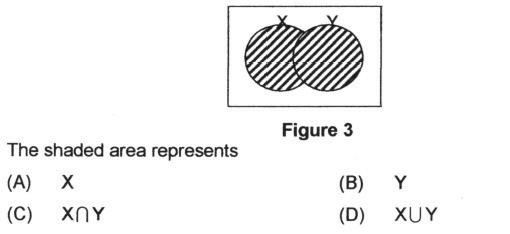
Figure 3 below is a Venn diagram. Study it, then answer question 4.
4. The shaded area represents
5. The symbol for ratio is

6. Which is equal to 48 x 49? (A) 48(50 — 1)




(B) 48 x 50 + 48 x I (C) 48x50-1 (D) 48 x 50 + 1
7. 4.04 + 3.143 = (A) 7.143 (B) 7.183 (C) 7.83 (D) 7.843
8. What is the value of 50 x 2 (A) 50 (B) 100 (C) 1000 (D) 0
9. Which is a prime number? (A) 0 (C) 3 (B) 1 (D) 9

10. The line AB is called the (A) radius (C) semicircle (B) diameter (D) chord

SStep 4: Glue inner ears to construction paper ears. Step 5: Glue completed ears to back of the cup.
Step 6: Glue whiskers to front of the cup. Glue nose on top of whiskers. Let all glue steps dry 1–2 hours.
Step 7: Draw eyes and mouth with markers.
Step 8: Add wrapped treats to cup and give to somebunny special! (Adapted from crayola. com)

By WILLIAM BUTLER yEATS
Too long a sacrifice
Can make a stone of the heart. O when may it suffice? That is Heaven’s part, our part To murmur name upon name, As a mother names her child When sleep at last has come On limbs that had run wild. What is it but nightfall? No, no, not night but death; Was it needless death after all? For England may keep faith For all that is done and said. We know their dream; enough To know they dreamed and are dead; And what if excess of love Bewildered them till they died? I write it out in a verse— MacDonagh and MacBride And Connolly and Pearse Now and in time to be, Wherever green is worn, Are changed, changed utterly: A terrible beauty is born.
(Source: The Collected Poems of W. B. Yeats [1989])

Write a short story in which a kite becomes alive.

More than 1,200 residents aged 18 and over from Region Nine (Upper Takutu–Upper Essequibo), who have registered for the Government of Guyana (GoG) $100,000 cash grant, will begin receiving payments on Thursday.
This was according to President Dr Irfaan Ali while addressing the gathering at the commissioning ceremony of the Karasabai airstrip on Saturday, where he confirmed that over 1,200 persons in the region have already registered to benefit from the nationwide initiative to deliver direct financial support to citizens.
“From Thursday, the cash will come to all those who have registered. That process will start, and we will
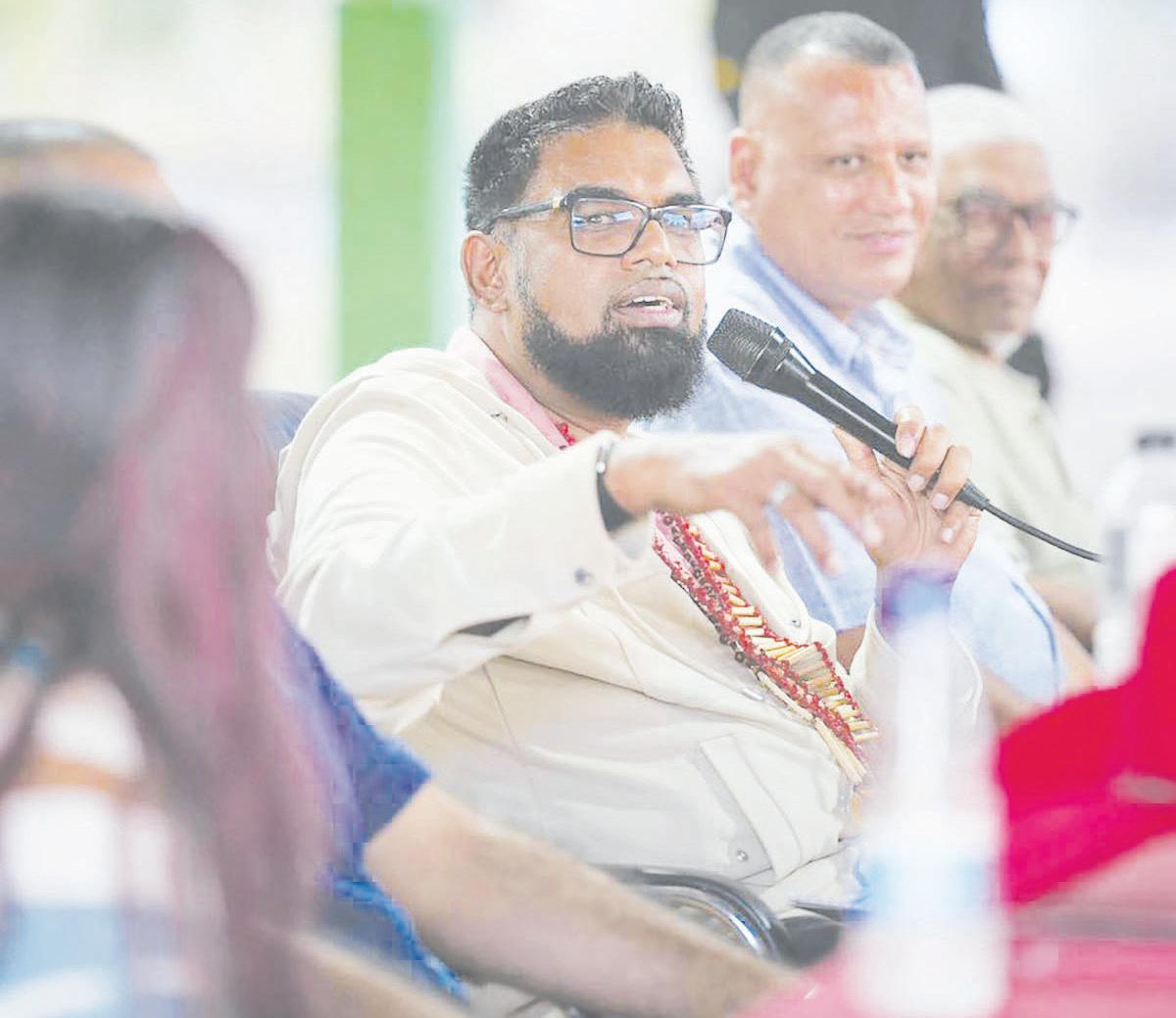
President Dr Irfaan Ali at Karasabai on Saturday
ensure it reaches every eligible person,” the President assured. He emphasised that the initiative is part of the Government’s broader effort to strengthen finan-
cial stability among households, particularly in hinterland communities. In Region Nine, the rollout is expected to be supported by improved transportation
Since the launch of its Anti-Bullying Reporting System last November, the Education Ministry has recorded 58 bullying reports, with 48 already addressed, according to Chief Planning Officer Mischka WhiteGriffith. Speaking on the Starting Point Podcast, White-Griffith explained that the remaining cases are still being investigated while adding that the reporting portal has provided valuable insight into nationwide trends. She noted that this data will be combined with feedback from an ongoing national consultation to help shape a comprehensive policy on anti-bullying and school violence. She emphasised that the portal has been instrumental in identifying patterns among boys and girls, as well as highlighting the regions where bullying and violence are most prevalent. These findings, she said, will help establish key parameters for the policy.
Addressing the national consultations, which began in January, White-Griffith said they have created an open space for honest discussions among parents, guardians, teachers and students. “You know, there were some parents who said a New Opportunity Corps should be up and running. Others said lashes should come back to school…” she shared, adding that some parents also stressed the importance of restoring respect for teachers. However, she underscored

Chief Planning Officer at the Ministry of Education, Mischka White-Griffith
that respect for teachers must first be cultivated at home. “Parents have to help set the standard too. If you come into school to fight the teacher and talk a certain way about the teacher in front of the child, then there is no level of respect in the classroom,” she said. White-Griffith further stated that the consultations have allowed children to safely share their experiences and suggest solutions. Some students, she noted, recommended restorative approaches such as community clean-ups and assisting the elderly as ways to address bullying behaviour. She praised the contributions from students and stakeholders alike, stating that the strong engagement reflects a shared national commitment to finding solutions.
She added that this collective effort bodes well for the successful implementation of the policy once it is finalised. Back in January on this very podcast, Minister of Education Sonia Parag had stated that the anti-bullying campaign forms part of a wider Government strategy, which will entail the use of social media among students. “The officers will take reports. They have to investigate the matter. The welfare officer and the guidance counsellors are all involved. The parents, the child who is the victim, and the alleged aggressor are involved. And so, at the end of that investigation, depending on what the investigation reveals, then we make a determination on what to do on a case-bycase basis,” Parag had explained.
Meanwhile, following the launch earlier this year at the Arthur Chung Conference Centre (ACCC), Liliendaal Greater Georgetown, the Ministry engaged parents, teachers and students of Aurora and Abram Zuil Secondary Schools in Region Two (Pomeroon–Supenaam) with the aim of stamping out bullying across schools and communities. During the engagement, one student recommended the introduction of more clubs and extracurricular activities, including chess, sports, field trips and structured group engagements to steer students away from gangs and substance abuse.
systems, including air access. This allows for faster and more efficient distribution of funds to remote villages. The President noted that, with enhanced infrastructure, including the newly commissioned airstrip, cash and other resources can now be delivered in a timely manner, reducing delays that previously affected hinterland residents.
“Very soon, planes will be bringing pension and cash grant payments directly into communities like Karasabai,” he explained. The head of state highlighted that the cash grant programme complements a wide range of existing social support measures, including old age pensions, public assistance and child-focused grants.
These initiatives, he said, represent billions of dollars in annual investment aimed at improving
livelihoods and reducing financial burdens on citizens.
“This is not just about promises. This is about delivering real support to families across Guyana,” President Ali stated. This latest cash grant initiative was rolled out last week, with nearly 50,000 Central Government employees being the first category of beneficiaries to receive their $100,000. That first cohort of 48,858 employees, comprising public servants, teachers and members of the disciplined services, received their cash grants via their bank accounts, amounting to some $5 billion. Meanwhile, in anticipation of the rollout of this 2026 cash grant, the Ministry of Finance, together with the Central Bank, collaborated with financial institutions to simplify the process of opening bank accounts as well as to facilitate the opening of these
accounts online. Among the commercial banks that have since been facilitating the online opening of bank accounts are Demerara Bank Limited (DBL); Guyana Bank for Trade and Industry Limited (GBTI); Republic Bank (Guyana) Limited; and Scotiabank Guyana Incorporated.
During the previous national cash grant initiative, in late 2024 into 2025, more than $60 billion of disposable income was transferred into the pockets of over 600,000 Guyanese. Another $60 billion is expected to be transferred in this second round of distribution. These two cash distribution exercises come on the heels of the first National Cash Grant of $25,000 per household that was paid when the People’s Progressive Party/ Civic (PPP/C) resumed office in 2020 in the midst of the COVID-19 pandemic.
Chainsaw operator
walk free after 15 years on remand for brother’s
Fifty-eight-year-old
Errol Cornelius, a chainsaw operator from Karrau Creek, Lower Mazaruni River, Region Seven (Cuyuni-Mazaruni), is set to be released after serving 15 years on remand for the death of his younger brother, Orin Cornelius.
Having been in custody since May 2011, he has already spent nearly 15 years on remand, meaning the sentence is effectively served.
He was sentenced by Justice Fidela CorbinLincoln at the Essequibo High Court during the criminal assizes after pleading guilty to the lesser charge of manslaughter. The court adopted a starting point of 18 years, then deducted five years for previous good character, four years for genuine remorse and three years for his early guilty plea, reducing the sentence to six years. The fatal incident occurred on May 2, 2011, at the family’s home in Karrau Village, where the brothers lived with their parents. An argument broke out over a CD player while they were cooking on a kerosene stove. During the dispute, Cornelius picked up the lit stove to “bluff” his brother, but it slipped from his hands, igniting a fire that severely burned both his brother and
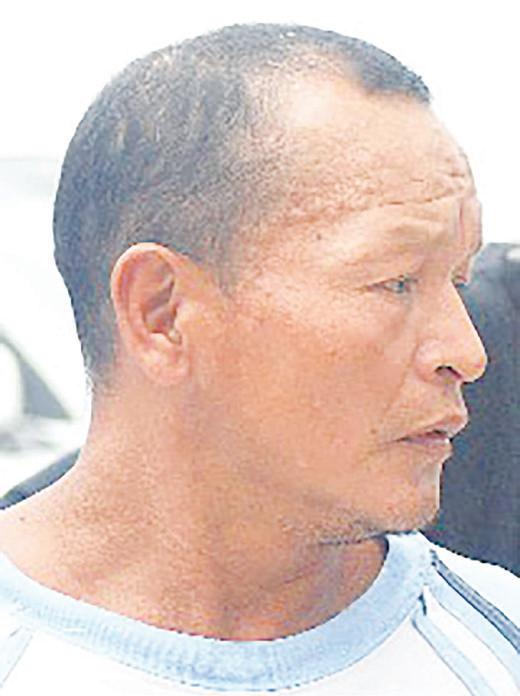
their father. Cornelius attempted to extinguish the flames by throwing water.
The injured men were taken for medical treatment and Orin Cornelius, 36, was later transferred to the Georgetown Public Hospital (GPHC), where he died from septicemia and burns. A Post-Mortem Examination (PME) confirmed the cause of death. Cornelius was arrested the same day and later gave a written statement admitting what happened. The scene investigation revealed fire damage and the kerosene stove used in the incident.
Initially charged with murder, the case took over a decade to conclude before being resolved by a guilty plea to manslaughter. The prosecution emphasised the seriousness of the offence, noting it arose from a domestic dispute, involved a
dangerous object and represented a breach of trust between brothers. They also pointed to the emotional impact on the family. On the other hand, the defence argued the incident was not premeditated but a spontaneous act influenced by alcohol and poor judgment. They also cited a physical impairment affecting Cornelius’s arm, supporting his claim that the stove slipped accidentally. His attempt to put out the fire, remorse and early guilty plea were also highlighted.
A probation report described Cornelius as coming from a poor background, having left school early to work and support his family. He was the main provider and caregiver for his elderly mother, now in her 90s, whose condition reportedly worsened during his incarceration. The court also noted his good behaviour in prison, where he remained compliant and participated in religious activities.
With the time spent on remand exceeding the sentence imposed, Cornelius is expected to be released after nearly 15 years behind bars.
The prosecution was led by State Counsel Caressa Henry and Fenton Budhram, while the accused was represented by Defence Attorney Tonza Sarrabo.


Your Eyewitness was soooo to be part of a convoy of vehicles threading their way to the Rupununi Rodeo – held under the theme “Wild & Bold, Rupununi Stories Unfold.”!! What better way to honour our pioneering forbears who opened up our interior savannahs by carving out some of the largest cattle ranches in the world!! Bet you’d forgotten that our Dadanawa Ranch had pipped the King Ranch in Texas to earn us bragging rights as to whose cowboys had to roam furthest to rustle up their cattle!! So, the next time you encounter those Texas ranch hands - now reduced to being roustabouts bringing up our oil for Exxon – swaggering around in their Black, duty-free SUVs, let them know they’re number two when it comes to the real cowboy life. We still have a CATTLE TRAIL – cencedely much improved - to traverse to get to our rodeo, while they got paved highways!! What wimps!!
Our orifinal cattle trail is historic dear readers –and your Eyewitness is pretty sure it’s nostalgia for those good, rough and ready days that prevented us from completing the Linden-Lethem paved highway earlier!! We don’t wanna become soft and namby pamby like these modern Texans!! It took a lot of guts for old man HPC Melville – the Scottish owner of Dadanawa Ranch - to carve out that 120-mile Trail during WWI when supplies to Georgetown from Europe and elsewhere got disrupted. Imagine taking hundreds of heads of cattle across swamps, jungles and rivers from assembly point at Annai to the Yawakuri Savannah up the Berbice River. And thence by pontoon to the coast!!
The Yanks had also laid railroads to their Chicago stockyards: they just couldn’t take the heat so they scampered from the camp-fire!! Anyhow, back to our Rupununi Rodeo. From what your Eyewitness could see…we still have some real dyed in the wool cowboys – Vaqueros they’re called – who put on quite a show for us visiting coastlanders. They lapped up the manly art of wrestling cattle to the ground and spitting out their tobacco chaw!! Better than sticking Bulls with swords while prancing around – as the Spaniards do - ain’t it??
But whether we like it or not…the Rupununi has changed – and that change is gonna accelerate. The administration is pouring in a lot of money to get agriculture finally self-sustaining - and capable of not only feeding the Region, but exporting to Brazil and the Coast. Our vaqueros might just have to become rice and soya farmers!! So unfortunately, with the cattle trail to Lethem finally being paved – another 100km was recently completed! – and we’ll just have to do like the Texans and tool down to the Rodeo next year in OUR SUVs!!
How demeaning!!
… Monday
Your Eyewitness doesn’t know about you, dear reader, but for him in his idyllic childhood, the best part of Easter was the annual trek to the sea wall arranged by his mother for her brood. He and his brothers – not sisters! - would’ve spent all week making their kites from scratch. That was before that plastic abomination imported from China!! They created the “frame” from “pointer sticks” filched from their mother’s broom! Then came the trek to the “gamma” trees where they’d eat as much of the sticky fruits as they would bring home!
The” kite paper” was purchased with coins secreted at great sacrifice and now splurged to complete the colourful kites. But if the truth be told, even more than the sight of his kite hovering in space against the pale blue skies, it was the snacks that his mother had prepared that he enjoyed.
Somehow the egg-balls, bara and phulowrie – with the obligatory “sour” – tasted so much delectable on this day. Yeah…Easter was “Happy”!
…in Middle East
Rather than flying kites over the skies that Jesus would’ve ascended into two thousand years ago, fighter jets and drones are bombing Iran back into the Stone Age. Looks like His message of love fell on barren soil.

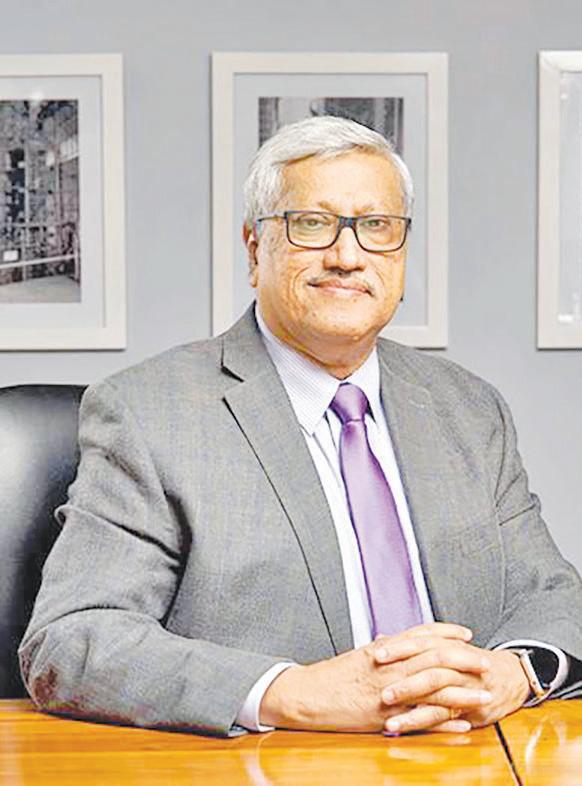
Despite facing increasing uncertainties in international markets, local beverage giant Demerara Distillers Limited (DDL) has recorded $6.1 billion in Profit After Tax (PAT) in 2025. This was revealed by Chairman of the DDL Group, Komal Samaroo in his annual report for the financial year 2025, which showed a Profit
sulting in an overall 11 per cent reduction in the Group Turnover from exports in the year. Moreover, an interim dividend of $0.40 per share was paid to shareholders in December 2025.
The company’s Directors have recommended a final dividend of $1.60 per share which, if approved by shareholders at the upcoming general meeting on April 17 at the National Stadium tarmac, Providence, East Bank Demerara (EBD), will result in a total dividend of $2.00 per share, the same as the previous year.
The total dividend, if approved, will require an appropriation of $1.54 billion or 25.1 per cent of the Group’s Profit After Taxation.
New markets
According to the Group’s Chairman, consumer spending on alcoholic beverages, especially premium spirits in most international mar-

Before Taxation of $8.5 billion, compared to $8.0 billion the previous year-an increase of over six per cent. Similarly, Profit After Taxation for 2025 was $6.1 billion, an increase of over five per cent above the previous year ‘s earnings of $5.8 billion. Additionally, earnings per share in the year increased from $7.56 per share in the preceding year to $7.98 per share in 2025. The Group Turnover for the year was $33.4 billion compared to the previous year’s $30.8 billion, reflecting a comparative 2025 increase of $2.6 billion or eight per cent.
On the domestic market, Group Turnover for the year was $27.8 billion, compared to $24.6 billion in the preceding year, an increase of $3.2 billion or 13 per cent. Sales of non-alcoholic products accounted for 88 per cent of the increase, while alcoholic beverages accounted for 12 per cent of the year’s increase. However, when it comes to exports, revenue declined from $6.3 billion in the previous year to $5.6 billion in 2025. Sales of both bulk and branded alcoholic products declined by 16 per cent, while exports of non-alcoholic products increased by 50 per cent, re-
kets, declined last year due to a reduction in spending power as well as changes in consumption patterns.
“As the domestic market grew, the international spirits market continued to decline. This unfavorable international trading environment was worsened by the announcement and subsequent implementation of a new tariff by the largest spirits market, the United States of America (USA),” he noted. Despite the dip in exports however, the Group continued to widen the reach of its brand in new markets and through different distribution channels. As a result, DDL expanded the presence of its brand in Asia through domestic and travel retail channels while keeping an eye on evolving trends to seize and maximise new opportunities.
Notwithstanding these challenges, Samaroo said a solid foundation was laid in 2025 for the growth of the company in the future. During the past year, the Group focused on fully restoring its power supply capacity at the Plantation Diamond, EBD operations, which had been affected by a fire in September 2024. It was reported that nine
transformers and seven generators along with a quantity of oil were destroyed in the fire at the company’s power plant facility.
Moreover, 2025 also saw the completion of significant capital projects that will expand the existing value chain of the Group. These include the $12.6 billion Beverage Plant Expansion, which was completed in December 2025 after a three-year implementation period. As part of this project, staff training has been ongoing, while a range of new products is scheduled to be launched in the first half of this year based on the capabilities of the plant. Additionally, DDL’s
$3.5 billion World Trade Centre (WTC) was commissioned in June 2025 with a host of activities launched last October.
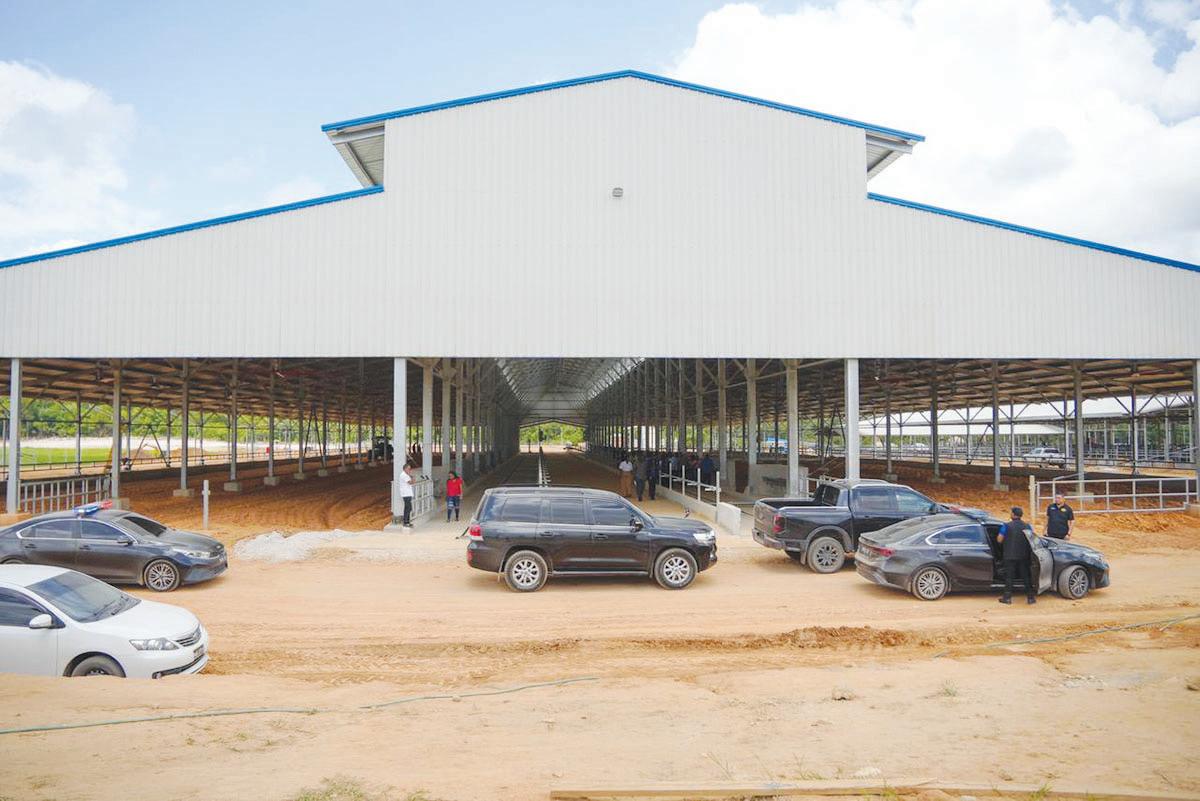
Moblissa Dairy Project On the other hand, the company ended the year with three other projects in progress. These include the US$20 million Moblissa Dairy Project, which is expected to be completed and commence commercial production around the middle of 2026. The Cattle Farm is poised to commence operations in March.

– mother under Police guard after attempting to end own life -“I saw them lying there…” – grandmother recounts horror

Aseven-year-old girl was suffocated to death while her younger brother escaped the wrath of their mother, who went berserk on Sunday at their Fyrish Road, Corentyne, Region Six (East Berbice-Corentyne) home.
The deceased child has been identified as Isabella Dabadial, a former pupil of Cooper Primary School. Her brother, one year and nine months old, Ethan, survived the attack but is left traumatised after witnessing the brutal manner in which his sister was killed and the attempted suicide of his mother. Based on reports received, the mother of the children, Sarah Elizabeth Shivpersaud, 26, told inves-

tigators that she had been experiencing frustration after her husband had left the home several days earlier and refused to return. She stated that she woke up on Sunday morning with nothing to eat and, out of frustration, suffocated Isabella and attempted to strangle her young son. After committing the act, she reportedly cut both of her ankles with the intention of taking her own life. However, the gruesome discovery was made by the children's grandmother, who immediately raised an alarm. The mother and the two children were rushed to the Port Mourant Public Hospital, where Isabella was pronounced dead on ar-

rival, while her brother was treated and handed over to relatives. The mother, on the other hand, was treated and remains in stable condition under police guard. At the scene, the children's grandmother, Lalita Badesi Bridgelal, recalled finding the mother and her children in the house when she rushed in after several calls to them went unanswered.
“When I reach by the window and pull the louvre, I see she lying there… the child lying down and the baby in the middle. I start calling and calling… only the little baby response; he raise he foot,” she told the Guyana Times. For Bridgelal, the events of Sunday have left


more questions than answers. She recalled speaking with her daughter on Saturday evening, during which concerns were raised about issues at home. “She call me the night before and tell me about problems at home. I ask if she want me to come, but she say no,” the grieving grandmother said. She said she checked on her again on Sunday morning and asked whether she should visit, but was again told not to come. Bridgelal
recalled telling her daughter that she was heading to church and would visit afterward. “I tell she I going to church and I would come after. When I come back… everything done happen.” That decision now haunts her. By the time she arrived at the house, she realised something was amiss. “When I see them on the ground and they not responding, I get a hammer from a neighbour and break the door. When I reach inside, I start shaking them and calling for neighbours. Nobody respond but the baby. I didn’t know what happen to the little girl… I try everything.” Neighbours soon gathered as she raised the alarm, and the police were called. The children and their mother were then taken for medical attention, but Isabella could not be saved. As the shock spread through the community, Bridgelal also spoke of what she said were longstanding tensions in the home. She claimed that while her daughter did not often speak openly about her sit-
uation, there had been signs of abuse in the relationship. “She never really complain, but I know he used to beat she… the children does tell me they does see when they fighting.” She said her son-in-law would spend days away from home and claimed that he was seeing someone else. That account, however, is sharply contested by the children's father, Kirwayne Dabadial, who acknowledged that the relationship had deteriorated in recent weeks but rejected claims of infidelity and sought to explain the events leading up to Sunday. He maintains that accusations of a relationship with another woman are completely false.
“The pictures people talking about is me and my sister. There was nothing like what she thought,” he said. He nevertheless, related that the couple had been together for approximately eight years, during which time arguments were not uncommon.

As discussions continue around cash grants and direct transfers, Guyanese economist Richard Rambarran warns that while such payouts can help vulnerable groups and stimulate spending, they can also drive inflation if they are poorly designed or become predictable. Rambarran said cash transfers do have economic value, particularly when targeted at low-income and vulnerable groups, but cautioned that broad or recurring payouts can create market expectations, encourage price increases and add pressure to the cost of living.
Addressing the economic implications of direct cash support during an interview he posted on one of his social media pages, Rambarran said the effectiveness of such measures depends heavily on how they are structured, who receives them, and whether they are temporary relief or become an ongoing economic expectation. “Cash grants are useful. Cash grants have their merit,” he said, adding that their long-term value hinges on careful management and sound policy design. “And the literature in devel-

opment economics is not resoundingly clear as yet as to the true long-term impact of cash grants,” Rambarran noted.
Despite these reservations, Rambarran said cash transfers can serve a legitimate role in public policy, especially when aimed at those least financially secure or who stand to gain the most from temporary state support.
“What I can say is that once cash grants are targeted to vulnerable groups, children who are investing in themselves and, by extension, investing in the country’s future, groups not traditionally earning as much, the literature has demon-
strated there is a strong impetus to support economic growth,” he said.
He stressed that the debate should not be about whether cash grants exist, but whether they are framed and used in ways that support households without destabilising prices. Rambarran argued that occasional, well-timed grants can also provide a short-term boost to consumer activity and help circulate money in the economy.
“Broad cash grants from time to time, when unannounced or not anticipatory, do not create a degree of expectation within the economy,” he said.
During the previous national cash grant initiative in late 2024 into 2025, more than $60 billion of disposable income was transferred into the pockets of over 600,000 Guyanese. Another $60 billion is expected to be transferred in this second round of distribution. These two cash distribution exercises follow the initial National Cash Grant of $25,000 per household, paid in 2020 after the People’s Progressive Party/ Civic (PPP/C) returned to office amid the COVID-19 pandemic.
Online registration
This year, however, citizens 18 years and older are required to apply online for the grant. To date, over 85,000 persons who successfully registered and were verified on the Government’s online portal have received their grants via direct deposits into their bank accounts. Phase One of the programme saw 48,858 Central Government employees, including public servants, teachers and members of the disciplined services receive their grants on March 19, totaling $4.9 billion.
Following this, Phase Two opened an online portal on March 26 for citizens to self-register. The first batch of citizens, numbering 13,168, received their grants on March 30, bringing the total number of recipients to 62,026 and injecting $6.2 billion into the local economy. With the addition of the second batch on April 1, the total number of beneficiaries, including Central Government employees, rises to 85,842, representing over $8.5 billion in funds disbursed nationwide. As of today, 63,113 individuals have completed self-registration, while another 25,879 are at various stages of the process. All eligible citizens are encouraged to continue registering through the portal at https://cashgrant.gov.gy to access their grants.
As part of the registration process, eligible Guyanese, that is, citizens aged 18 years and older as of February 28, 2026, will have to establish an account

on the portal with their basic personal information (name, address, and telephone number) and provide a valid national identification (ID) card or Guyana passport.
Applicants will also have to undergo a facial recognition test or a liveness test, as well as provide their bank account information. While there has been some criticism about this method of distributing the cash grant, the Finance Minister said during a previous update that there has been a tremendous response, with numerous persons taking advantage of this self-registration tool.










Some 28 families in Lethem, Region Nine (Upper TakutuUpper Essequibo), who have commenced constructing their homes, received steel and cement vouchers from the Housing Ministry on Sunday. The initiative forms part of the Government’s ongoing efforts to support homeowners who are actively building, ensuring they can continue construction and move closer to completing their homes. Each voucher is valued at $300,000.

Subject Minister Croal expressed satisfaction at the level of participation in the programme, noting that many families are taking advantage of the opportunity to accelerate their building process. “We are pleased that persons are taking advantage of this initiative, which is extremely helpful. In many cases, the work that has already been carried out on these homes is being used by the banks as collateral for securing mortgages,” Croal stated. He added that the support is designed to reduce fi-
nancial pressure on families while encouraging homeownership. For the beneficiaries, the assistance represents more than financial support, as in many cases it brings hope of completing their home.
Nadia Davidson ex-

pressed her appreciation to the Government for the timely support. “I must thank the Government of Guyana and the Ministry of Housing. I feel proud, and I know with this, it will be a great help for me and my family.”
Another beneficiary, Ron Albert, shared similar
sentiments, describing the assistance as a much-needed push forward. “I would like to express my gratitude to the Government of Guyana and the Ministry of Housing. This will give me a great boost for the construction of my home and will encourage others to take advantage of this pro-
gramme.”
Meanwhile, Alisa Mootoo, another beneficiary, encouraged others who are currently building to apply for the initiative, noting that the programme provides meaningful support for families working towards homeownership.
To date, over 3000 steel and cement vouchers had been successfully distributed across Regions Two, Three, Four, Five, Six, Seven, Nine, and 10. The programme was launched under the leadership of President Dr Irfaan Ali, with the overarching aim of supporting affordable home construction and enhancing the quality of life for families across all of Guyana. The vouchers are redeemable at approved suppliers and are intended to support faster housing development within emerging schemes.
– drivers still being warned, educated even after grace period ends

Even though the grace period for compliance with Guyana’s new vehicular tint regulations has ended, traffic police in Region Three (Essequibo Island West Demerara) say they are still taking a “soft approach” by warning and educating motorists rather than immediately moving to rigid enforcement. This was disclosed by Superintendent Maniram Jagnanan, Officer in Charge of Traffic for Region Three, during a recent episode of ‘Police and You. ‘ He explained that while the April 1, 2026 deadline has passed, officers are continuing their public sensitisation exercise across the region.
“We’re continuing with our tint sensitisation exercise. Although the grace period is over, we still take a softer approach towards members of the public, still educating persons about the tint regulation,”
Superintendent Jagnanan said.
He explained that the police are not seeking to abruptly penalise motorists who may still be unclear about the updated rules, but noted that particular attention is being paid to vehicles with front windscreen tint, which remains prohibited outside of the approved visor allowance.
“So, it’s not a case that because of the 4th of April, we started to do rigid enforcement. We still take a softer approach. We let members of the public still know. But for those who had the front windscreen, we politely ask them to remove it, so that they comply with it,” he stated. According to the traffic officer, police in Region Three had already conducted several roadside sensitisation exercises prior to the deadline, during which ranks stopped motorists and explained the permitted
tint levels and visor requirements. He said one of the areas that continues to cause confusion among drivers is the legal visor measurement for windscreen tint. “If your windscreen is 36 inches or less, you have to have a six-inch visor. If your windscreen is more, which is 37 inches or upward, you can have a ten-inch visor. That’s what is required,” Jagnanan explained. He noted that despite concerns leading up to the enforcement date, traffic police in the region have generally been receiving cooperation from the motoring public. “So far, we are having full cooperation from members of the public,” he said. The Superintendent also said police have moved to ensure that traffic ranks are not seen as exempt from the rules, revealing that officers’ private vehicles were also checked and owners instructed to remove illegal tint.
“We would have also enforced a policy whereby our ranks in the region, their personal vehicle, we would have ensured that, look, at least you remove your front windscreen tint, so that members of the public... don’t have cause or reason to say, ‘How are you enforcing tint on me and your vehicle is darker?’” he said.
While acknowledging that some cases have already been made, Jagnanan stressed that officers were instructed to prioritise education and compliance over immediate punitive action. “Yeah, we made cases, but
remember, like I said, we were told to ensure that we take a softer approach and to ensure that we continue the sensitisation exercises,” he added.
Authorities have repeatedly urged motorists to familiarise themselves with the new tint regulations and make the necessary adjustments to avoid penalties once stricter enforcement begins. The new tint regulations officially took effect on January 1, 2026, with motorists being granted a three-month grace period to bring their vehicles into compliance. That amnesty
ended on March 31, and full enforcement was expected to begin from April 1, with authorities previously warning that motorists found in breach could face a $30,000 fine.
The Home Affairs Ministry reminded motorists that the approved tint levels are 25 per cent visible Light Transmission (VLT) for front widows’ glasses while the rear passenger windows and back glass is 20 per cent. No tint is permitted on the front windscreen, except for a visor measuring six inches from the top.
This 200-acre facility at Moblissa along the SoesdykeLinden Highway is Guyana's first modern, large-scale dairy farm, which will once operational, significantly boost local milk production and support Guyana's drive toward greater food security and reduced reliance on dairy imports. Also in progress is the Demerara Shipping Company Ltd. Wharf upgrade, which is progressing well, and it is expected to be completed by the end of the third quarter of this year.
Just last week, DDL expanded its footprint to Lethem, Region Nine, where it has set up distribution operations with a Distribution Services Ltd (DSL) Cash and Carry outlet, along with additional business services. Further, there are plans in
place for three new projects to be fully implemented throughout this year. These include the upgrade of the Carbon Dioxide (CO2) Plant to replace the aged equipment and expand capacity to meet growing demand; the establishment of DSL Vreed-en-Hoop in Region Three and the TOPCO Fresh Milk Receiving & Processing Facilities, which will be a necessary component of the fresh milk value chain, facilitating the processing and packaging of fresh milk and other dairy products.
New products
In 2025, the Group also introduced several new products to the market, namely: 1 litre TOPCO Guava Carrot Juice Drink; 1 litre TOPCO Passion Fruit Juice Drink; Diamond Splash - Strawberry;
Aged
and El
Liqueur for Christmas 2025. Going forward, the Group is positioned to maximise available opportunities from the domestic economy as well as export opportunities, both regionally and beyond, to improve its growth trajectory. According to Samaroo, "The strategy of backward vertical integration to support the TOPCO Operations with the investment in the Moblissa Dairy Project will place the Group in a strong position to take advantage of opportunities created by CARICOM's Regional Food Security Strategy."
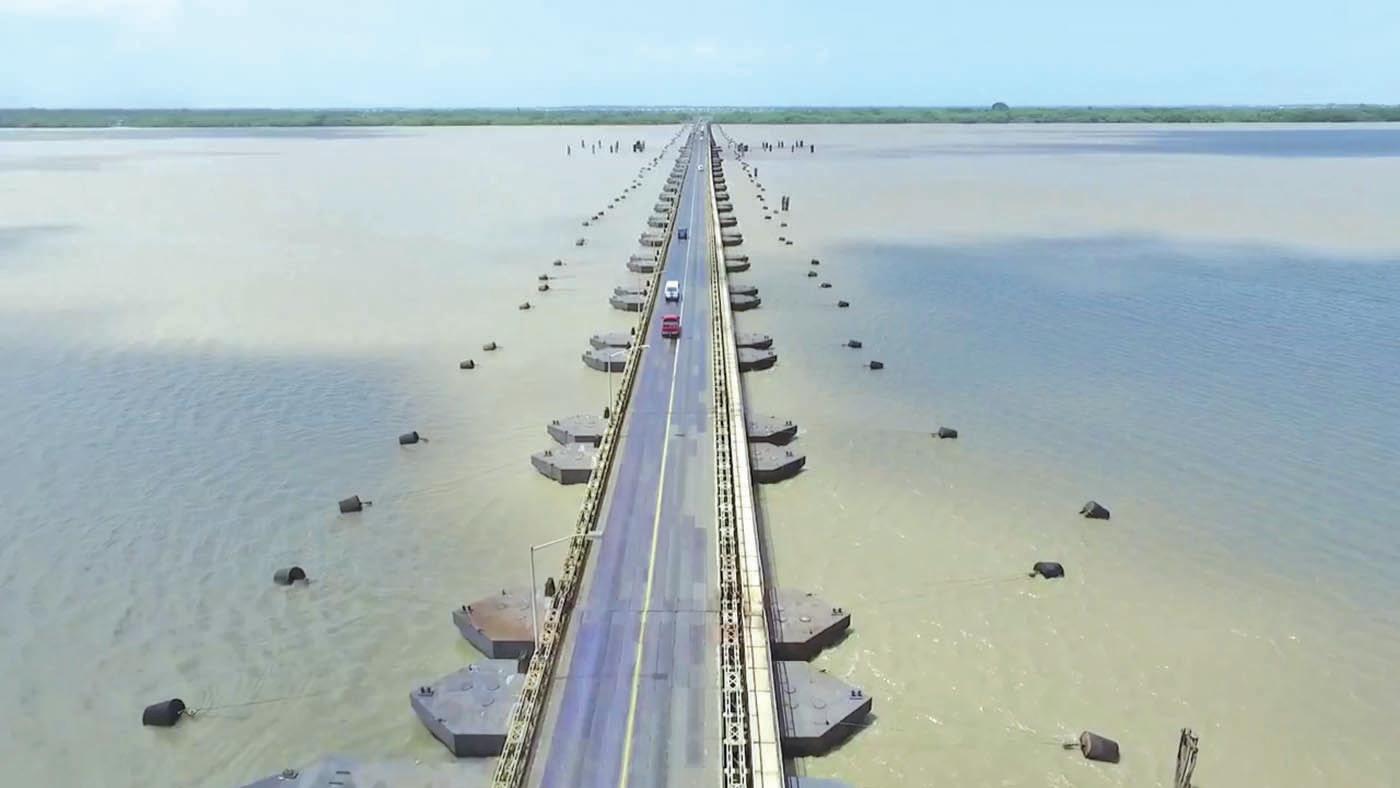
As the Guyana Government moves to improve connectivity within Region Nine (Upper Takutu-Upper Essequibo), President Dr Irfaan Ali on Sunday disclosed that sections of the old Demerara Harbour Bridge (DHB) will be used for several bridge projects slated to be executed within the region. During an engagement with residents at Rukumutu and satellite villages in South Pakaraima, the Head of
State disclosed that there are several bridges that are in need of critical upgrades in at least eight communities across the region. The infrastructure slated for upgrade includes the Sand Creek Bridge across the Rupununi River, the Yakarita Bridge, the Katoka Bridge, and the Parabara Bridge, among others. “What we’re going to do to kick-start things, sections of the Demerara [Harbour] Bridge, we will bring to Region Nine so
that we can have those bridges completed, where possible, as quickly as possible,” the Guyanese Leader stated. According to the President, Public Works Minister Juan Edghill will lead a team to Region Nine to conduct an assessment within the next three weeks to ascertain what is needed to have these major bridges completed.
In addition, Minister Edghill will also be engaging regional officials
and the Ministry of Local Government and Regional Development for works on a series of internal roads in about 30 Region Nine communities. This infrastructure, President Ali noted, is important not only to enhance access for persons but also to create economic opportunities within the region.
Agriculture investment
In fact, he pointed out plans for communities in the South Pakaraima region to start large-scale agricultural production, noting that there are specialists from the State of Roraima in Brazil already onboard to work with them. “So, if we can identify a larger acreage of land... and let us launch a scaled project. We have to do at least 500 acres... that is what we want to discuss with you. This is the future we want to build with you.” “The new wave we want now is how we create the economic takeoff of the villages. After making all of this infrastructure investment, now is the time for that grand economic takeoff. And that is what
we are keenly interested in... In all of these villages, come up with [an] economic plan so that we can have this economic takeoff and continue the improvement in your lives,” the Guyanese Leader urged. Since last year, the technical team at the Public Works Ministry has been exploring locations across Guyana to utilise sections of the now decommissioned DHB. The 1.85-kilometre (km)-long floating steel bridge that has outlived its 20-year lifespan closed operations only last year when the new US$260 million fixed, high-span concrete Bharrat Jagdeo River Bridge was commissioned in September.
Previously, Edghill had confirmed that parts of the steel floating structure would be used to connect Timehri to Sandhills, a small village located on the Demerara River just opposite the Cheddi Jagan International Airport (CJIA).
“I can tell you for sure, sections of the bridge, both the retractor and accepter spans, and other segments will be going to do
the Sandhills-Timehri crossing-to make the road that we’re building from Sandhills falling into Bartica accessible,” the Minister had indicated.
The Government had also previously touted using components of the aged steel structure to bridge the Berbice River at Kwakwani, as well as bridging the Essequibo River islands of Leguan and Wakenaam. “We will be removing components of the Demerara Harbour Bridge to link Leguan and Wakenaam, so the ferry crossing will be Leguan, Wakenaam, Supenaam, and it will be much faster, and the transit time will be significantly reduced, bringing improvements and connectivity to the people of the islands, and that is the overall vision of what we will be doing,” the Public Works Minister had said in December 2025. Currently, the Harbour Bridge is intact and retracted to allow for the free and uninterrupted flow of marine traffic along the Demerara River.
President Dr Irfaan Ali has joined the Caribbean Community (CARICOM) in mourning the death of Roderick Rainford, who served as Caricom Secretary-General from 1983 to 1992. In a message posted on his social media platform, President Ali recalled Rainford’s key role in the push for the Caribbean Single Market and Economy (CSME) and more so, assisted the Secretariat during a very challenging period for regional integration.
“His consequential role in laying the foundation for the Caribbean Single Market and Economy, in strengthening regional institutions, and in preparing the Caribbean for a future shaped by trade and economic liberalisation is part of his outstanding service to regionalism,” Dr Ali stated. “On behalf of the Government and people of Guyana, I extend my deepest sympathy to his family and other loved ones during this time of loss. May he rest in peace!”
In addition, Caricom in a message stated that it was with great sadness it learned about the passing of the distinguished public servant.

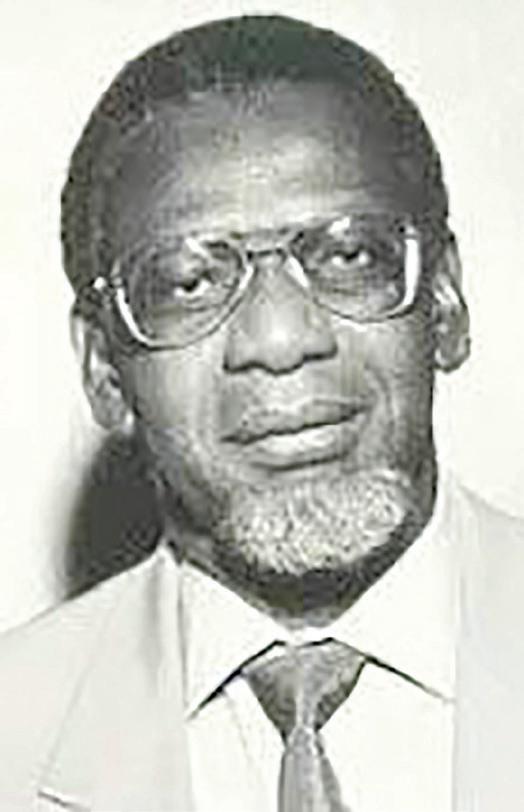
“A national of Jamaica, Mr Rainford also served as Deputy Secretary-General and led the Secretariat during a period of significant global turmoil, including high oil prices and heightened Cold War tensions, which negatively impacted the region. Faced with the regional repercussions of the 1983 military invasion of Grenada, he, in his calm and dignified manner, drew on his vast reserves of diplomatic and academic skills to steer regional integration on a steady path, leading to the 1989 Grand Anse Declaration. This set the foundation for the
Caricom Single Market and Economy (CSME) through the establishment of the Common External Tariff (CET),” Caricom added. The release from the regional body further stated that he was a firm believer in the benefits of economic and functional integration to advance regional development and, above all, to improve the welfare of Community nationals from all spheres of life. Among the developments under his tenure were the rudiments of the Regional Stock Exchange, the negotiation of the framework for the Caribbean Investment Fund, and the

reactivation and revival of the Caribbean Festival of Arts (CARIFESTA). During his stewardship, the region heightened focus on environmental management and protection. His contributions included overseeing the de-
velopment of a Caricom Uniform Building Code to harmonise standards in construction and infrastructure development and the creation or consolidation of institutions for common regional action, such as the
Caribbean Environmental Health Institute (CEHI) and the Caribbean Disaster Emergency Response Agency (CDERA, now CDEMA).
“For these and other significant contributions to the advancement of regional integration, he was awarded the Order of the Caribbean Community in 2024.”
“Our community is stronger for his dedication and service. Caricom conveys deepest condolences to his wife, Nesha, other family members and all who mourn his passing.”
“We used to have arguments. Whenever things get bad, I would go by my mother to cool off,” he said, describing a pattern of temporary separation during disputes. He said the most recent breakdown occurred about two weeks ago after he discovered messages on Shivpersaud’s phone, which led to a confrontation. “About two weeks ago, I find messages on she phone, and we had an argument. I decided to leave for a while,” he explained. According to
him, he had been staying away from the home in an effort to defuse tensions, but remained in steady contact. That contact took a disturbing turn on Sunday morning. He recalled receiving a message that immediately raised alarm. “She message me and say I have 15 minutes to reach home or I would regret it,” he said. Moments later, the woman initiated a video call. What he saw, he added, is something he is still struggling to comprehend. “She
call me and show me the children lying down… like they sleeping… and then she tell me it was too late.” Now faced with the loss of his daughter and the attempted murder of his son, Dabadial said he is overwhelmed with grief and unanswered questions. “Right now, I grieving… if I could have done anything to save my daughter, I would.” Investigations into the circumstances surrounding the incident are ongoing.


The People’s Progressive Party extends warm Easter greetings to all Guyanese, especially our brothers and sisters within the Christian community. Easter is one of the most sacred observances in Christianity, commemorating the resurrection
of Jesus Christ. It carries profound lessons of hope, renewal, humility, love, and respect for one another. This season reminds us that even in the face of adversity, there is always the promise of a brighter tomorrow through faith, perseverance, and unity.
Beyond its religious

Easter stands as a powerful reminder of sacrifice, redemption, hope
The Guyana Agricultural and General Workers Union (GAWU) extends warm Easter greetings to all Guyanese, particularly to our Christian broth ers and sisters across the country.
Easter is one of the most sacred ob servances on the Christian calendar, marked by deep rev erence and reflection on the crucifixion and res urrection of Jesus Christ. It stands as a powerful re minder of sacrifice, re demption, hope, and renewal—values that con tinue to resonate strongly within our society.
reflect on personal growth, discipline, and the importance of compassion and humility in our daily lives.
In Guyana, Easter is also celebrated in a
cherished custom reflects the enduring spirit of our nation and our shared determination to reach new heights.

This holy occasion also follows the Lenten season, a period characterised by fasting, prayer, and spiritual cleansing. The conclusion of Lent invites believers and all citizens alike to
through the vibrant tradi tion of kite flying. As kites soar high above, they symbolise not only freedom and joy but also our collective aspirations as a people—to rise, to achieve, and to realise long-held dreams. This
GAWU encourages all Guyanese to use this period for sober reflection, fostering a renewed commitment to unity, mutual respect, and the common good. Let us embrace the ideals of national development, nation building, and social cohesion, recognising that our strength lies in our collective efforts and shared purpose.
As we celebrate this Easter season, the Union urges everyone to do so responsibly and safely, with consideration for family, community, and country.
GAWU extends its best wishes to all for a peaceful, enjoyable, and safe Easter holiday.
We will continue to strive for a brighter future – PNC/APNU
As we gather to celebrate this blessed Easter season, we ex tend our heartfelt wishes for a joyous and meaningful time. Happy Easter!
This is a moment to pause and reflect on the profound significance of Christ’s victory over death and the grave. His triumphant resurrection is a reminder of hope, renewal, and the promise of eternal life. In the spirit of res urrection, we also recog nise the challenges faced by our nation and commu nities. The PNCR/APNU stands firm in championing
significance, Easter continues to be a unifying national celebration in Guyana. Families and communities across the country come together in a spirit of joy and togetherness, upholding cherished traditions such as kite flying, which symbolize freedom, hope, and aspiration.
As we celebrate, the
Party encourages all citizens to practice safety, especially during outdoor activities, to ensure a joyful and incident-free holiday. May this Easter inspire renewed faith, strengthen our bonds as a people, and guide us toward continued progress and harmony. Happy Easter to all!

The Ethnic Relations Commission (ERC) extends warm Easter greetings to the Christian community and to all Guyanese at home and in the Diaspora.
As we observe Easter 2026, we recognize this period as the cornerstone of the Christian faith, commemorating the resurrection of Jesus Christ. It is a profound story of the triumph of life over death, righteousness over sinfulness, and the enduring power of hope and sacrifice.
In Guyana, Easter has evolved into more than a religious observance; it is a vibrant testament to our National Motto and, for decades this holiday has served
as a bridge between our diverse ethnic groups, fostering a spirit of togetherness that is uniquely Guyanese.
From the sea walls of Georgetown to the open savannahs of the Rupununi, the sight of thousands of kites taking flight symbolizes our collective aspirations and the freedom we enjoy as a unified people.
Whether through cross-community picnicking, the sharing of cross-buns, or the simple act of greeting friends and neighbours, Easter reminds us that our shared spaces are where our strongest bonds are forged.
We also take pride in seeing Guyanese of all backgrounds—African,
East Indian, Indigenous, Portuguese, Chinese, European, and Mixed—participating in the festivities, reinforcing the respect and appreciation we hold for each other’s traditions.
The ERC encourages every citizen to use this season as an opportunity for personal and communal renewal. Let the resilience celebrated at Easter inspire us to continue building a nation where harmony prevails and where our diversity is seen as our greatest strength.
As the kites soar this weekend, let them represent our rising commitment to peace, tolerance, and mutual respect.
Happy Easter to all!
Easter encourages us to not only reflect on personal renewal, but also on our collective journey – AFC

the cause of the Guyanese people, advocating for accountabili- ty and good governance amid misman-
agement and misrule. Just as Christ rose to bring light into the world, we will continue to strive for a brighter future for all, ensuring the voices of our citizens are heard and respected.
May this Easter inspire us all to renew our commitment to justice, compassion, and unity, as we work together for a better tomorrow.
Wishing you a blessed and hope-filled Easter! Christ is Risen! Hallelujah
May God bless you, and may God bless Guyana.
PNCR/APNU
As Christians across Guyana and the world observe the sacred season of Easter, the Alliance For Change extends heartfelt greetings to all. Easter stands as a powerful symbol of renewal, sacrifice, hope, and triumph over adversity. It reminds us that even in the darkest of times, there is the promise of rebirth and the possibility of a better future. These enduring truths resonate far beyond the Christian faith and speak to the shared human experience—making Easter a moment of reflection for all Guyanese, regardless of creed or background.
In our richly multicultural society, we are continually reminded that our strength
lies in our diversity. The values embodied in Easter— compassion, forgiveness, resilience, and love—are universal principles that bind us together as one people and one nation.
This year, as we approach the 60th Anniversary of Guyana’s Independence, Easter takes on even deeper meaning. It invites us not only to reflect on personal renewal, but also on our collective journey as a nation.
Over the past six decades, Guyana has faced trials and triumphs, challenges and opportunities. Like the message of Easter itself, our national story is one of perseverance and the enduring hope for a brighter tomorrow.
The Alliance For Change
believes that this is a time for renewed commitment— to unity, to justice, to inclusion, and to building a society in which every Guyanese can thrive.
As we look toward this important milestone in our nation’s history, let us recommit ourselves to the ideals of shared prosperity, mutual respect, and national pride.
May this Easter season inspire reflection in our hearts, peace in our homes, and a strengthened resolve to work together for the continued growth and development of our beloved Guyana. The Alliance For Change wishes all Guyanese a peaceful, blessed, and hopeful Easter.
Right-wing candidate Keiko Fujimori holds first place in the polls one week before Peru’s presidential election, according to three polls released on Sunday.
Since none of a record 35 presidential candidates are expected to win more than 50 per cent of the vote, a runoff election is expected to take place on June 7. Some 16.8 per cent of voters remain undecided, down from 23.9 per cent previously, according to a Datum International poll.
Keiko Fujimori, 50, the daughter of late president Alberto Fujimori who is on her fourth run for the job, leads with 14.5 per cent according to Datum, up from a prior 13 per cent.
Carlos Alvarez, a former comedian, moved up to second place with 10.9 per cent from a prior 6.9 per cent, it added.
Far-right former Lima

Peruvian presidential candidate
March 31, 2026
of the general election on April 12, in Lima, Peru (Reuters/Angela Ponce photo)
Mayor Rafael Lopez Aliaga dropped to third place with 9.9 per cent, down from a prior 11.7 per cent, Datum said.
Two other polls, Ipsos Peru and the Peruvian Market Research Company, also showed Fujimori in the lead, but disagreed over whether
Alvarez or Lopez Aliaga ranked in second place.
While Alvarez has seen the fastest growth in support, Lopez Aliaga’s close proximity keeps him in the running, according to Datum CEO Urpi Torrado.
“The battle is no longer for the undecided voters; it is between the candidates themselves. To gain ground, they have to take voters away from each other,” Torrado said.
Other candidates polling in the higher single digits include centrist sociologist Jorge Nieto; Ricardo Belmont, another former Lima Mayor; leftist lawmaker Roberto Sanchez; and progressive former central bank director Alfonso Lopez Chau.
Lopez Chau hit second place in some earlier polls, but by early April had dropped to between fourth and seventh place.
(Reuters)
Former Jamaican Prime Minister and respected Caribbean statesman PJ Patterson last Wednesday reminded the Region’s leaders of the value of maintaining strategic alliances and unity of purpose, cautioning that the gap between the enforcement of domestic law and respect for international law continues to widen.
“It is time to revisit the relationships between our Caribbean archipelago and Latin America,” Patterson advised in his Norman Manley Distinguished Lecture at the University of West Indies, Mona campus.
“We must make CELAC [Community of Latin American and Caribbean States] a meaningful force to withstand any attack in our
sovereign domain. I strongly urge that we take an active role, starting immediately with Mexico and Brazil, to strengthen economic relations and foster meaningful technical collaboration,” said Patterson, known for his unwavering advocacy of regional unity and deeper CaribbeanAfrica relations.
He said his current effort to “make global Africa a reality” impels him to regard the economic, social, and cultural relationship with Africa as pivotal because the interests of both regions completely converge “on the issues of climate justice, debt restructuring, and multilateral reform”.
Pointing out that the Caribbean Community (Caricom) has proven its capacity, Patterson said the re-
gional bloc “must be prepared to lead with diplomatic sagacity, buttressed by technical expertise [and] not simply to follow every demand in our quest for survival”.
He maintained that a united front — through the African Union, Caricom, the Organisation of African, Caribbean and Pacific States, and the Group of 77 and China — can exert meaningful pressure in the global architecture, adding, “The Global South can no longer be content to react to agendas set by others. We must set our own priorities. Our unity amplifies our moral authority. It is about reshaping an archaic global order to make it inclusive, fair, and sustainable for all our people.” (Excerpt from Jamaica Observer)
Barbados needs the World Trade Organisation (WTO) and is committed to “working constructively” with all of the institution’s members to strengthen it.
Senior Minister of Foreign Affairs and Foreign Trade, Senator Christopher Sinckler said that “access to a predictable rules-based multilateral trading system is vital not only for our economic survival, but also for our food security and broader developmental goals”.
He was delivering Barbados’ statement to the WTO’s 14th Ministerial Conference, which started on Wednesday and was scheduled to conclude in Yaounde,
Cameroon, recently. Sinckler, who led this country’s delegation to MC14, told delegates that “Barbados, as a small island developing state and a small and vulnerable economy, has long valued the multilateral trading system and the work of the WTO”.
“For economies like ours, the WTO remains a cornerstone of our economic security and sustainable development,” he said.
“Barbados reaffirms its commitment to working constructively with all WTO Members to strengthen the institution.
“Let us use this Ministerial Conference to reaffirm our col-
CTO remains “cautiously optimistic” about growth of regional tourism sector this year
The Barbados-based Caribbean Tourism Organisation (CTO) says it remains “cautiously optimistic” that the regional tourism sector will transition into a phase of more moderate, stable growth as global travel patterns normalise.
“While growth is expected to continue, the pace of expansion may ease as the industry navigates a shifting global environment,” said Aliyyah Shakeer, CTO’s Director of Research.
“Maintaining a steady focus on strengthening air connectivity, particularly intra-regional connectivity; enhancing product offerings; and diversifying source markets will be im-
portant to supporting sustained growth and resilience over the longer term,” Shakeer said.
Last year Caribbean tourism continued its expansion, recording a 2.5 per cent increase in international stay-over arrivals to an estimated 35 million visits and the CTO said notwithstanding current travel and tourism challenges, it projects that stay-over arrivals will increase between three and four per cent in 2026.
It said the increase will be supported by steady demand from North America and continued expansion in select emerging markets. Cruise tourism is also expected to grow further with
projected increases between five and seven per cent. However, ongoing global uncertainties, including economic conditions, travel costs and external geopolitical developments, may continue to influence travel demand and performance across destinations.
“Caribbean tourism continues to demonstrate its resilience in the face of evolving global conditions, but this is no time for complacency. We must remain vigilant and proactive, working together as a united region to navigate uncertainty and sustain our momentum,” said CTO Secretary General and Chief Executive Officer, Dona Regis-Prosper. (Excerpt from CMC)
Since Caribbean Airlines (CAL) acquired Air Jamaica (AJ) in 2011, the company has incurred losses of over TT$1.7 billion (US$255 million) in managing that base.
According to documents obtained by Guardian Media Investigations Desk for the years 2012-2025, unaudited accounts have a cumulative figure of US$254,709,575.
While the AJ routes have made money for the airline, except for 2020 during the pandemic and in 2025, its personnel and administration costs have increased steadily since 2020.
According to CAL sources, to date, there has been no financial contribution by the Government of Jamaica
(GOJ) to the airline’s operation since the shareholders’ agreement was signed on May 26, 2011, which gave it a 16 per cent equity interest in the company. That equity has since been diluted and now stands at 11.8 per cent. Further dilution, Guardian Media Investigations Desk was told, to under 10 per cent would remove Jamaica’s right to a director on the board according to the shareholders’ agreement.
Guardian Media Investigations Desk understands that CAL, during the pandemic and more recently, through the Ministry of Finance, made requests to the Government of Jamaica for financial support for the airline, but none has been forthcoming.
In November 2025, CAL
discontinued flights between Fort Lauderdale, Florida and Montego Bay and Kingston in Jamaica due to poor performance.
Guardian Media Investigations Desk tried unsuccessfully to contact Jamaica’s Minister of Finance and the Public Service, Fayval Williams, for comment on whether the Jamaican Government would offer financial support for the airline. However, an examination of the shareholders’ agreement signed by former CAL Chairman George Nicholas III and former Finance Minister Winston Dookeran put the onus of airline expenses and costs on the T&T Government. (Excerpt from Trinidad Guardian)
Mlective commitment to multilateralism and to ensure that global trade works for all – especially the small and vulnerable economies that depend on it most.”
The Minister said MC14 took place “at a very crucial time” for global trade.
“The very foundations of the multilateral trading system have been shaken. Heightened geopolitical tensions, rising trade barriers and ongoing supply chain disruptions, and the climate crisis continue to impact small, open economies the greatest,” he stated.
(Excerpt from Nation News)
edical professionals at Sir Lester Bird Medical Centre (SLBMC) are sounding the alarm about a troubling pattern in Antigua and Barbuda’s health data: residents of the twin-island nation are being diagnosed with multiple myeloma – a cancer of the blood – at a rate that significantly outpaces both regional and global averages.
Dr Aliena Beiba Omar Sol, a haematologist at the facility, confirmed that the country records approximately five new cases per 100,000 people annually. For a nation of fewer than 100,000 inhabitants, that translates to roughly five new diagnoses every year –a number that may sound small in isolation but car-

Dr Aliena Beiba Omar Sol, haematologist at SLBMC
ries considerable weight when measured against comparable populations. The wider Caribbean typically sees between two and four cases per 100,000. Globally, the disease affects roughly 2.2 men and 1.5 women per 100,000 each year. What elsewhere
might be considered a relatively uncommon diagnosis has, in Antigua and Barbuda, become a routine encounter in local clinical practice. Multiple myeloma originates in the bone marrow, where it corrupts plasma cells – the white blood cells responsible for producing antibodies. Those cells instead generate an abnormal protein that accumulates in the body, damaging the skeleton and kidneys while simultaneously suppressing normal immune function. The result is a patient who is not only battling cancer but is also left unusually vulnerable to bacterial infections. (Excerpt from Antigua Observer)


Oil prices climbed on Monday on continuing fears of supply losses because of shipping disruptions in the key Middle East producing region from the US-Israeli war with Iran.
Brent crude futures rose US$1.71, or 1.6 per cent, to US$110.74 a barrel by 0057 GMT. West Texas Intermediate (WTI) crude futures gained US$0.71, or 0.6 per cent, to trade at US$112.25 per barrel.
On Thursday, the last trading day before the Good Friday holiday break, WTI settled up more than 11 per cent and Brent soared nearly eight per cent in volatile trading, recording their biggest absolute price increase since 2020, as US President Donald Trump promised to continue attacks on Iran.
The Strait of Hormuz, which carries oil and petroleum products from Iraq, Saudi Arabia, Qatar, Kuwait and the United Arab Emirates, remains largely closed by Iranian attacks on shipping after the war began on February 28.
Because of the Middle East supply disruptions, refiners are seeking alternative sources for crude, particularly for physical cargoes in the US and the UK North Sea.
“Global buyers are bidding aggressively for (US) Gulf Coast barrels and Brent is rallying even faster,” the Schork Group said in a client note on Monday.
On Sunday, Trump ratcheted up pressure on Tehran, threatening in an expletive-laden Easter Sunday social media post to target Iran’s power plants and bridges on Tuesday if the strategic Strait of Hormuz is not reopened.
Still, some vessels, including an Omani-operated tanker, a Frenchowned container ship and a Japanese-owned gas carrier, crossed the Strait of Hormuz since Thursday, shipping data showed, reflecting Iran’s policy to allow passage for vessels from countries it deems friendly.
The war threatens to linger on as Iran has officially told mediators it is not prepared to meet with US officials in the Pakistani capital Islamabad in coming days and efforts to produce a ceasefire have reached a dead end, the Wall Street Journal reported on Friday.
On Sunday, some members of the Organisation of the Petroleum Exporting Countries and allies such as Russia, agreed to a modest rise of 206,000 barrels per day for May.
However, that decision will largely exist on paper as several of the group’s key producers are unable to raise output due to the war.
Russian supply has been disrupted recently by Ukrainian drone attacks on its Baltic Sea export terminal. Media reports on Sunday said its Ust-Luga terminal resumed loadings on Saturday after days of disruptions. (Reuters)
Thousands of worshippers flocked to St Peter’s Square on Sunday to hear Pope Leo XIV deliver his first Easter Mass address as pontiff.
Framed by white roses on the central balcony of the Vatican’s basilica, the Pope called on ”those who have the power to unleash wars” to choose peace.
”On this day of celebration, let us abandon every desire for conflict, domination and power, and implore the Lord to grant his peace to a world ravaged by wars,” he said.
The first US-born Pope has become a vocal critic of the Iran war, and has used recent public addresses to denounce global conflicts and urge de-escalation.
Pope Leo waved to the crowd gathered in the square below before delivering his ”Urbi et Orbi” blessing –Latin for ”to the city and the world”.
St Peter’s Square was decorated with bright
spring blooms, with rows of daffodils and thousands of purple, red and white flowers arranged for the Easter Mass.
”We are growing accustomed to violence, resigning ourselves to it, and becoming indifferent, indifferent to the deaths of thousands of people,” the Pope said in his address.
”Let those who have weapons lay them down. Let those who have the power to unleash wars choose peace.”
In a break with recent tradition, Leo did not explicitly name any country or conflict in his message.
He paid tribute to his predecessor, Pope Francis, who gave his final address on Easter Sunday last year hours before his death.
Referring to the Easter story of Christ’s resurrection, three days after he was nailed to the cross, he said Jesus had been ”entirely nonviolent” in the face of suffering. (Excerpt from BBC News)
US special forces rescued an airman in a high-risk mission deep inside Iran while President Donald Trump threatened to rain ”hell” on Tehran if it did not reopen the Strait of Hormuz by Tuesday for oil flows vital to the world economy.
Trump announced the rescue in the early hours of Sunday in a social media post that described the operation in a mountainous area as ”one of the most daring” such missions in US history.
The airman, the weapons officer of an F-15 jet shot down on Friday, was wounded but ”will be just fine”, Trump said in a message on X. The jet’s pilot was rescued later that day.
In another post laden with expletives, Trump told Iran to open the Hormuz waterway, the conduit for around a fifth of the world’s oil and natural
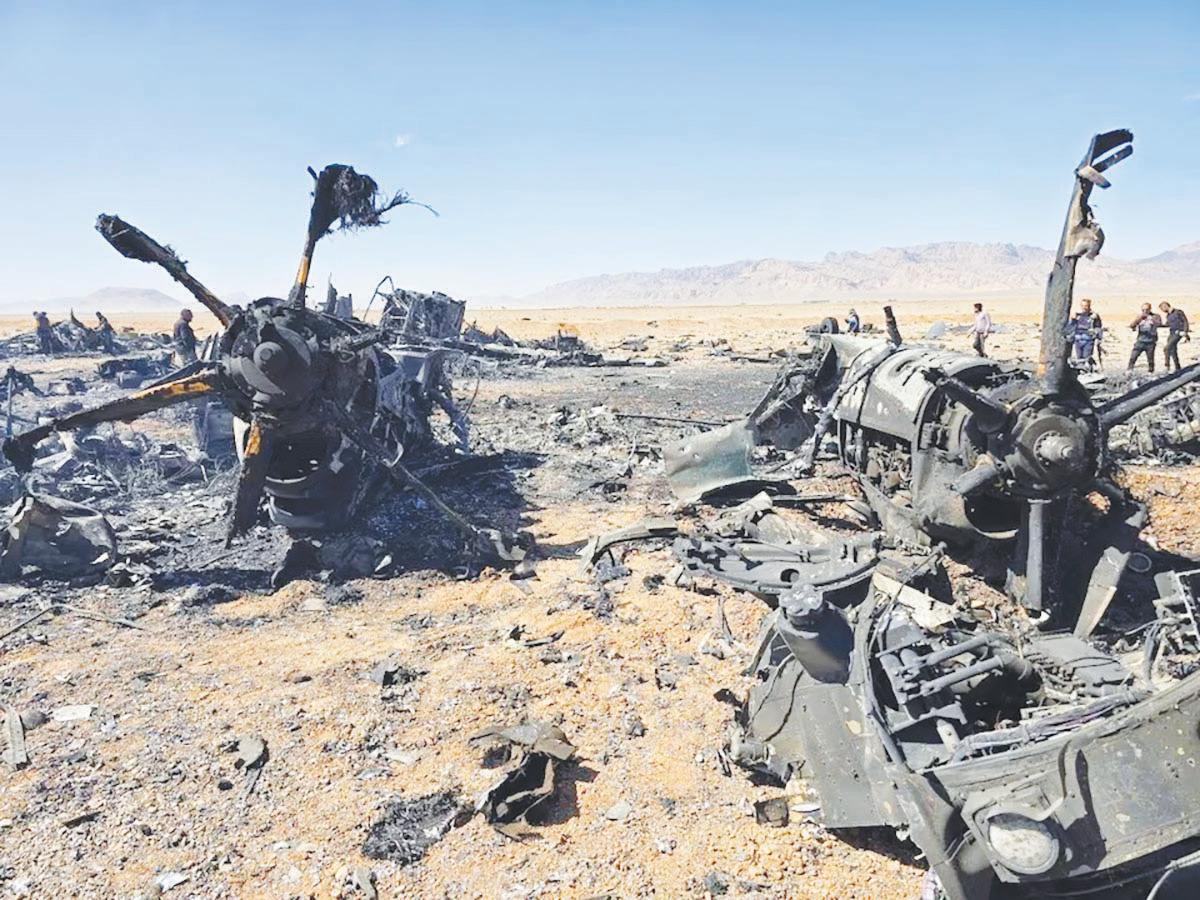
An image released on April 5, 2026, and obtained from social media appears to show wreckage of an American aircraft and a helicopter rotor in Isfahan, Iran, which forensic imagery analyst William Goodhind said is consistent with a US MC‑130J or HC‑130J,
gas supply that has been largely shut down since the war began five weeks ago.
”Tuesday will be Power Plant Day, and Bridge Day,
all wrapped up in one, in Iran,” he said on his Truth Social platform, threatening strikes on energy and transport infrastructure that cri-
tics say would violate international law.
”There will be nothing like it!!! Open the ****in’ Strait, you crazy bastards, or you’ll be living in HellJUST WATCH! Praise be to Allah. President DONALD J. TRUMP”
Adding to the pressure, Washington’s ally in the war, Israel – which attacked a major petrochemicals facility in Iran on Saturday – was preparing to attack energy facilities next week and was awaiting US approval, a senior Israeli defence official said. Showing it still had fight despite the US-Israeli pounding, Iran expanded attacks on Gulf energy infrastructure, launching drone and missile strikes on petrochemical facilities in Kuwait, Bahrain and the United Arab Emirates. (Excerpt from Reuters)
The leaders of Ukraine and Syria have pledged greater security cooperation, President Volodymyr Zelenskyy said, as Kyiv offers its military expertise to Governments across the Middle East region amid the US-Israeli war on Iran.
Zelenskyy held talks with Syrian President Ahmed al-Sharaa in Damascus on Sunday, in his first trip to the Syrian capital since former leader Bashar al-Assad was ousted in 2024.
Zelenskyy wrote on Telegram that the leaders agreed to work together to provide “more security and opportunities for development for our societies”.
“There is a great interest in exchanging military and se-

curity experience,” he said.
Since the war began on February 28, Iran and its allied groups have attacked US and Israeli targets, as well as targets in Gulf countries, using a range of missiles and drones.
Ukraine, which has developed expertise in countering
drone attacks in its more than four-year war with Russia, has offered its country’s expertise during Zelenskyy’s visits to countries in the region, and has sent teams to Qatar, Saudi Arabia and the United Arab Emirates.
During his visit to the Gulf States last week, Zelenskyy
signed long-term military cooperation deals with Saudi Arabia and Qatar.
Syria is not known to have any air defences capable of dealing with Iranian drones or missiles.
Zelenskyy also told al-Sharaa that Kyiv was a reliable grain supplier and said the two leaders “discussed joint opportunities to strengthen food security across the region”,
According to Turkiye’s Foreign Ministry on X, the country’s foreign minister, Hakan Fidan, also met Zelenskyy in Damascus on Sunday, as well as his Syrian counterpart, Asaad al-Shaibani and Ukraine’s Andrii Sybiha. (Excerpt from Al Jazeera)
Hungarian Prime Minister Viktor Orban has convened an emergency meeting of the National Defence Council after explosives were found near a pipeline that transports Russian gas to Hungary.
The discovery in a border area of neighbouring Serbia comes as Orban’s party is badly trailing in opinion polls ahead of crucial elections next
Sunday.
Opposition Leader Peter Magyar accused him of ”panic-mongering” orchestrated by ”Russian advisers”, days after security experts warned of a possible ”false flag” operation that could be blamed on Ukraine.
Orban, an ally of Russian President Vladimir Putin, has resisted EU calls to abandon Russian energy imports since the full-scale invasion of
Ukraine.
In recent weeks Hungarian security experts have raised the possibility of a staged operation, either on Hungarian or Serbian territory, intended to arouse enough sympathy for Orban to help his Fidesz party win the election – or to give Orban an excuse to declare an emergency and postpone or cancel the vote.
Serbian President
Alexander Vucic, a close ally of Orban, informed the Hungarian leader of the discovery on Sunday morning. Two rucksacks full of explosives and detonators were found by the Serbian army near the village of Tresnjevac in the Kanjiza district, about 20km (12 miles) from the point where the TurkStream pipeline crosses into Hungary. (Excerpt from BBC News)
Nigeria’s army said on Sunday that it had rescued 31 civilians who were taken hostage during an attack on a church in northwest Kaduna state, while five persons were found dead at the scene.
The army said the at-
tack had taken place during an Easter church service in Ariko village in the Kachia local government area. Troops were in pursuit of the attackers, it added.
The chairman of the Christian Association of Nigeria for Kaduna state, Caleb Maaji, said that two churches were attacked in Ariko village on Sunday. He said that seven persons were killed and an unknown number taken hostage.
”Findings are still ongoing,” Maaji told Reuters.
Northwest Nigeria has struggled for years with violence, including mass kidnappings for ransom and village raids, with armed groups operating from vast forest hideouts across the region. (Excerpt from Reuters)










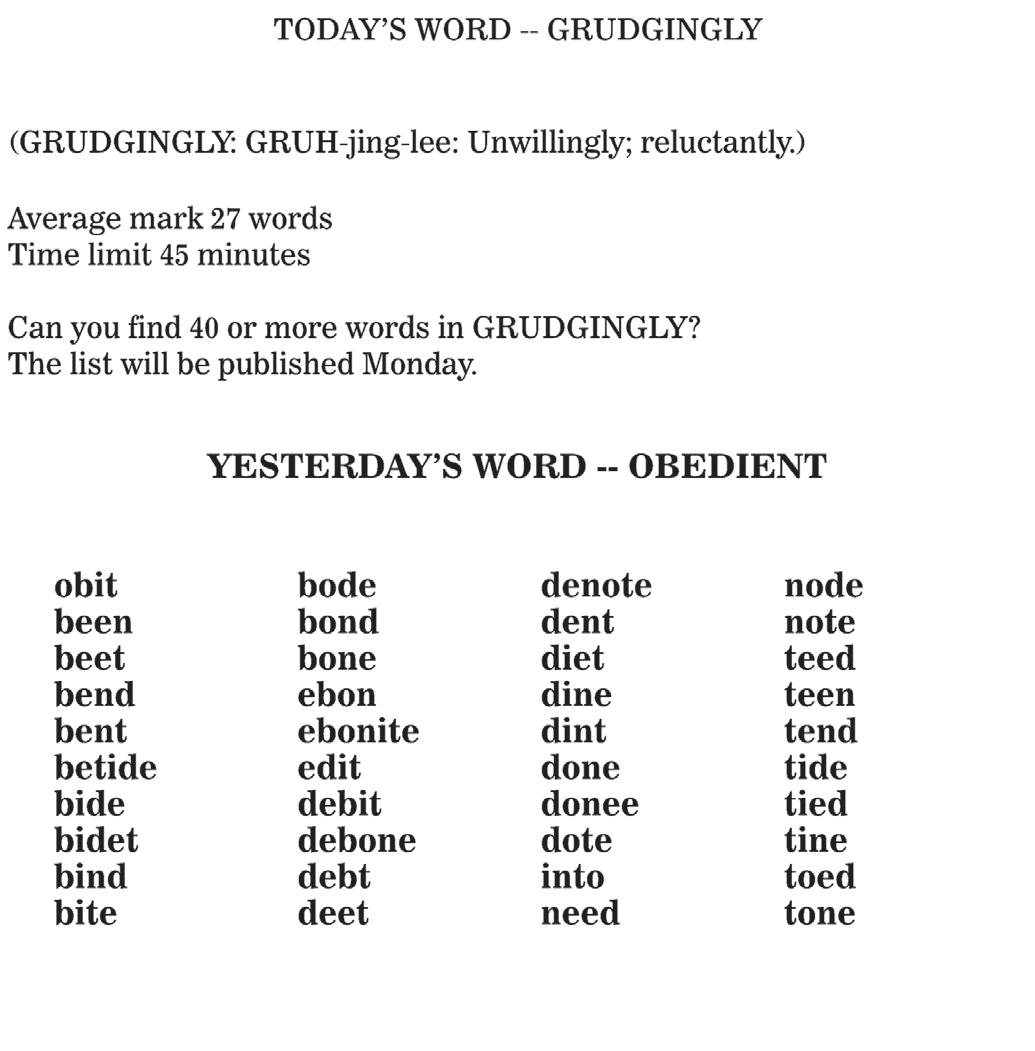





Participate in something that helps you recognize your talents. Choose to finetune your spending or projects to avoid unnecessary debt. Peace of mind comes from doing what’s right and best for you.



Scrutinize what lies ahead before you take a chance, make a move or start something new. Time is on your side, and ironing out all the kinks is necessary to avoid backtracking.







Personal and financial growth are within reach. A positive attitude will lead to rewards and opportunities to get ahead and to make a difference that will encourage you to broaden your scope and agenda.
Focus on work, not personal or emotional issues. Too much of anything will defeat the purpose. Take a step back and consider the outcome before you initiate change or take on more than you can handle.
Learn and explore the possibilities. You’ll gain insight into what’s possible if you try something new or volunteer for a cause dear to your heart. Clear the path, and go after your heart’s desires.
Truth matters, and being on the right side of history will make a difference. Sign up for events, projects or pastimes that will give you the boost you need to build confidence.


Hold your thoughts before sharing. Enjoy your time with people who make your life better. Refuse to let raw emotions take over a conversation that can influence your relationships.


You can talk your way in and out of anything if you are factual and bold. Opportunities will sprout from your ability to be frank and to follow through with confidence.


Emotions and domestic issues will require patience, planning and setting boundaries. Shared space and expenses will lead to stressful situations. Change begins with you.






Observe before stepping into something that has the potential to backfire on you. Get the lowdown, consider the consequences and focus on maintenance and lowering your overhead.
Make a budget, and improve your living space, lifestyle or qualifications. Set yourself up for success, and you’ll find your niche. It’s time to let your past go and to turn your dreams into a reality.
Expand your mind; consider the possibilities and the cost to reach your goal. A diversion or change of location will spark your imagination and encourage you to revise your plans.





Lucknow Super Giants 160 for 5 (Pant 68*, Markram 45, Dubey 2-18) beat Sunrisers Hyderabad 156 for 9 (Klaasen 62, Reddy 56, Shami 2-9) by five wickets
Mohammed Shami’s miserly 2 for 9 and Rishabh Pant’s uncharacteristic half-century helped Lucknow Super Giants (LSG) open their account in the Indian Premier League (IPL) 2026 as they beat Sunrisers Hyderabad (SRH) by five wickets in Hyderabad.
After Pant put SRH in, Shami dealt the early blows by dismissing Abhishek
Sharma and Travis Head cheaply. He bowled three overs in the power play, and was done with his quota by the end of the ninth over.
Ishan Kishan and Liam Livingstone did not last long either, leaving SRH on 26 for 4 in the eighth over. Heinrich Klaasen and Nitish Kumar Reddy rescued them by adding 116 in 63 balls – the highest fifth-wicket partnership for SRH. The previous record, of 82, was set in the previous game by these two very batters. But Avesh Khan and co came back strongly in the death overs to restrict SRH to 156 for 9.
Come the chase, Aiden Markram’s 45 off 27 balls gave LSG the desired start. But the pitch was not con-

Prince Yadav uprooted Kishan’s off stump with an inswinger to make it 11 for 3. Livingstone fell soon after. He tried to lap Digvesh Rathi, but ended up deflecting the ball onto his shoulder. Pant, who was moving towards the leg side, dived to his right to complete a one-handed catch.
Klaasen, Reddy revive SRH
For the second game in a row, Klaasen and Reddy had to revive SRH’s innings. They started slowly and took SRH to 35 for 4 after 10 overs – it was the fourth-lowest total by a team in the IPL at the halfway mark. SRH had hit only one four and one six until then, but after that, Klaasen and Reddy took the attack to the opposi-
for 4, and would have been eyeing 170 – probably even more.
LSG’s comeback
LSG’s bowlers brought them back into the contest with some excellent death bowling. Reddy holed out to sweeper cover off Siddharth in the 17th over. In the next, Klaasen went for a reverse lap off Avesh, but ended up playing it too fine, and Pant dived across to take the catch. That sucked the momentum out of SRH’s innings; they could score only 33 runs in the last four overs while losing five wickets on the way.
Kumar, 19.3 ov), 9-156 (Harshal Patel, 19.6 ov)
Bowling O-M-R-W
Mohammed Shami 4-0-9-2
Digvesh Rathi 4-0-46-1
Prince Yadav 4-0-34-2
Manimaran Siddharth 4-0-29-1
Avesh Khan 4-0-36-2
Lucknow Super Giants (T: 157 runs from 20 ovs)
Aiden Markram c Livingstone b Shivang Kumar 45 Mitchell Marsh c Nitish Kumar Reddy b Malinga 14
Rishabh Pant (c)† not out 68
Ayush Badoni st †Ishan Kishan b Dubey 12 Nicholas Pooran run out (†Ishan Kishan) 1 Abdul Samad c Livingstone b Dubey 16 Mukul Choudhary not out 2 Extras (b 1, lb 1) 2
Total: 19.5 Ov (RR: 8.06) 160/5
Did not bat: Manimaran Siddharth, Avesh Khan, Digvesh Rathi, Prince Yadav Fall of wickets: 1-37 (Mitchell Marsh, 4.4 ov), 2-77 (Aiden Markram, 9.2 ov), 3-102 (Ayush Badoni, 12.1 ov), 4-105 (Nicholas Pooran, 13.1 ov), 5-139 (Abdul Samad, 17.4 ov) Bowling O-M-R-W Harsh Dubey 4-0-18-2 Nitish Kumar Reddy 1-0-14-0 Jaydev Unadkat 3.5-0-50-0 Eshan Malinga 4-0-30-1 Harshal Patel 3-0-16-0 Shivang Kumar 4-0-30-1

ducive to stroke play, and LSG kept losing wickets at regular intervals. In the end, it came down to nine needed from the final over with Pant on strike. He had barely looked fluent until then, but found two fours off the first two balls off Jaydev Unadkat to level the scores. Two dots later, Pant lofted one over mid-off to seal the result.
Shami, Prince leave SRH in disarray Bowling against his former team, Shami struck twice in his first seven balls. On the last ball of his opening over, he had Abhishek caught at short third with an offcutter. Then, with the first ball of his next, Shami outfoxed Head with another slower ball; Markram took a diving catch at mid-off on this occasion.
In the following over,
tion. They plundered 79 runs in the next five overs.
Klaasen, who was dropped on 19 by Mukul Choudhary off M Siddharth, brought up his fifty off 33 balls. Reddy took only 30 to get to his. After 16 overs, SRH were 123
Markram leads the chase Opening the bowling for SRH, Harsh Dubey started with a two-run over.
But Markam and Mitchell Marsh picked up three fours off Reddy in the next. Markram also hit the first six of the innings when he pulled a slower ball from Unadkat over wide longon. Marsh fell to Eshan Malinga for 14 off 12 balls, but Markram kept going. In the last over of the power play, he hit two fours and a six off Unadkat to take LSG to 53 for 1.
Pant was struggling at the other end, but Markram ensured LSG remained ahead of the asking rate. He eventually fell to Shivang Kumar while trying to clear long-off.
A wobble in the middle
Pant tried to break the shackles with back-to-back fours off Shivang in the 12th over, but Dubey had Ayush Badoni stumped.
Nicholas Pooran came out at number five and lasted just four balls. He swept Shivang fine, and set off for a single, without realising that Kishan had stopped the ball, and was thus run out.
Pant takes LSG home With 43 required from five overs, LSG were still the favourites, but it was far from a walk in the park. Pant then picked up two fours off Unadkat, and Abdul Samad did the same against Malinga to make it 19 needed from 18 balls. Dubey tried to keep SRH in the contest with Samad’s wicket, and Harshal Patel bowled a four-run 19th over. But Pant stayed firm. Unadkat started the final over with a full delivery; Pant drilled it past him for four. Unadkat then bowled a slower one into the pitch, only for Pant to swat it down the ground for another boundary. Two dots later, Pant lofted one over mid-off to seal the game. (ESPNcricinfo)


Royal Challengers
Bengaluru 250 for 3
(David 70*, Paddikal 50, Patidar 48*, Dube 1-30) beat Chennai Super Kings 207 (Sarfaraz 50, Veer 43, Bhuvneshwar 3-41, Abhinandan 2-30) by 43 runs
Defending champions Royal Challengers Bengaluru razed Chennai Super Kings’ attack and the record books, in front of their beloved fans at the Chinnaswamy Stadium.
After being on 91 for 1 in 10 overs, RCB nearly tripled that in the last 10, pushing the limits of T20 power-hitting. RCB’s 250 for 3 was their third-highest total in the Indian Premier League (IPL) and the highest ever by any team against CSK in the league. In response, CSK lost their top three inside three overs and eventually slid to their third successive defeat in IPL 2026.
The Chinnaswamy surface was
tacky in the early exchanges, according to Devdutt Padikkal who scored 50 off 29 balls, and the outfield was unusually slow, with quite a few strong hits plugging in the outfield. While the surface settled later in the innings, the outfield remained slow. Tim David and Rajat Patidar did not feel the need to hit the ball into the outfield, especially when they had the power to keep launching the ball into the night sky.
David and Patidar faced 44 balls between them and sent 14 of those disappearing over the boundary. The entire CSK batting line-up could manage only 11 sixes.
The calm
After being asked to bat, RCB needed 20 balls for the first boundary of the day. Both Matt Henry and Khaleel Ahmed hit hard lengths and made scoring hard for Phil Salt and Virat Kohli. It was Anshul Kamboj who provided CSK with the opening breakthrough when he had Kohli caught by Shivam Dube at long-on for 28 off 18 balls.
Dube redeemed himself after dropping Kohli on 7 at mid-on off Khaleel Ahmed in the third over.
With the ball not coming onto the bat, Salt laboured to 15 off 16 balls. A brace of swatted fours off Kamboj then freed him up, but Dube, bowling for the first time in this season, struck with his third ball to stop Salt on 46 off 30 balls with a cutter that was banged into the pitch.

Padikkal, who had dashed out the blocks on the opening day of the season, was not allowed to do so on this track. He started slowly as well – he was on 17 off 16 balls at one point – but then put the pedal to the floor and converted it into a 28-ball half-century. It was his second successive fifty, but it certainly was not the story of the day.
The storm David and Patidar came together at 151 for 3 at the start of the 15th over after Jamie Overton had knocked Padikkal over by cranking it up to 148 kilometres per
hour (kph). The carnage created by David and Patidar turned out to be the story of the day.
With only 35 balls left in the innings, David took strike for 25 of those and crashed an unbeaten 70. Only one other batter has scored as many or more without facing a ball in the first 14 overs of a T20 innings (where ball-by-ball data is available).
David was particularly brutal on Overton, taking him for a sequence 6, 4, 6, 6, 6 in the 19th over that yielded 30 runs. All of those hits had the Chinnaswamy in a frenzy. One of those even had Kohli off his seat in the dressing room and applauding David. The last of that sequence was a 106-metre monster six that disappeared out of the ground.
At the other end, Patidar had the best seat to this six-hitting show. He did not face a single ball for almost three overs between overs 17 and 20. In all, he faced just five balls since the 16th over. Prior to that, he had played some special shots of his own. Like the pumped six off Noor Ahmad in the 12th over. Like the sliced six over the same region off a near yorker from Khaleel four overs later. Patidar finished with an unbeaten 48 off 19 balls.
CSK go down swinging
After seeing David thump one six after another, Bhuvneshwar Kumar “wasn’t sure whether I should be happy or sad”. He had 200 reasons to be happy when he had Ayush Mhatre flapping a catch to mid-off for 1 by hitting an awkward, in-between length. It was his 200th wicket in the IPL; only Yuzvendra Chahal has more wickets than him in the league.
Jacob Duffy ensured that RCB did not feel Josh Hazlewood’s absence once again, having both Sanju Samson and Ruturaj Gaikwad caught in the slips. From 30 for 3, CSK went down swinging and were dismissed for 207 in 19.4 overs.
By the end of the power play, CSK were 77 for 3, with Sarfaraz Khan scoring 50 of those in 24 balls. Next ball, however, Krunal Pandya had Sarfaraz stumped. Prashant Veer then showed some spark during his 43 off 29 balls after going two matches without bowling a single ball. His shovelled four between deep midwicket and wide long-off off a Krunal dart showed why franchises were locked in a bidding war for him at the auction.
Overton also made some quick runs, but his cameo


aaa
Royal Challengers Bengaluru (20 ovs maximum)
Phil Salt c Noor Ahmad
b Dube 46
Virat Kohli c Dube
b Kamboj 28
Devdutt Padikkal b Overton 50
Rajat Patidar (c) not out 48
Tim David not out 70
Extras (b 1, lb 3, nb 1, w 3) 8
Total: 20 Ov (RR: 12.50) 250/3
Did not bat: Jitesh Sharma †, Romario Shepherd, Krunal Pandya, Bhuvneshwar Kumar, Abhinandan Singh, Jacob Duffy
Fall of wickets: 1-37 (Virat Kohli, 4.3 ov), 2-93 (Phil Salt, 10.4 ov), 3-151 (Devdutt Padikkal, 14.1 ov)
Bowling O-M-R-W
Khaleel Ahmed 4-0-37-0
Matt Henry 3-0-36-0
Anshul Kamboj 4-0-52-1
Noor Ahmad 4-0-49-0
Jamie Overton 3-0-42-1
Shivam Dube 2-0-30-1
Chennai Super Kings (T: 251 runs from 20 ovs)
Sanju Samson † c Padikkal
b Duffy 9
Ruturaj Gaikwad (c) c Padikkal
b Duffy 7
Ayush Mhatre c Patidar
b Kumar 1
Sarfaraz Khan st †Sharma
b Pandya 50
Kartik Sharma c Abhinandan Singh
b Pandya 6
Shivam Dube c †Sharma
b Abhinandan Singh 18
Prashant Veer c Patidar
b Kumar 43
Jamie Overton c sub (JG Bethell) b Suyash Sharma 37
Anshul Kamboj not out 1 9 Noor Ahmad c Kohli
b Kumar 8
Matt Henry c Salt
b Abhinandan Singh 2
Extras (lb 2, nb 2, w 3) 7
Total: 19.4 Ov (RR: 10.52) 207
Fall of wickets: 1-9 (Ruturaj Gaikwad, 0.5 ov), 2-10 (Ayush Mhatre, 1.2 ov), 3-30 (Sanju Samson, 2.5 ov), 4-77 (Sarfaraz Khan, 6.1 ov), 5-84 (Kartik Sharma, 6.5 ov), 6-108 (Shivam Dube, 9.5 ov), 7-165 (Prashant Veer, 15.1 ov), 8-178 (Jamie Overton, 16.1 ov), 9-190 (Noor Ahmad, 17.6 ov), 10-207 (Matt Henry, 19.4 ov)
Bowling O-M-R-W
Jacob Duffy 4-0-58-2
Bhuvneshwar Kumar 4-0-41-3
Abhinandan Singh 3.4-0-30-2
Krunal Pandya 3-0-36-2
Suyash Sharma 4-0-21-1 Romario Shepherd 1-0-19-0

With the date fast approaching for the Guyana Motor Racing and Sports Club’s Dexterity and Auto Expo, registration is now open, and the club is urging interested parties to register.
Sponsored by ENET, GuyOil, and Castrol, the April 11 event, set for the National Track and Field Centre parking lot in Leonora, is gaining traction among car enthusiasts.
According to a spokesman for the GMR&SC, registration has commenced at the club’s Thomas Lands office and online (https://forms.
gle/cWd43mxYdEMxeDWd9), with those interested urged to sign up as soon as possible.
“This is something not new to motorsport, but it’s something that we’ve been wanting to bring back for some time now. It’s a lighter side of motorsport which we used to have fun with in the early days, and we think now is the right time to bring it back.
“Already this week, we’ve received interest from numerous competitors wanting to find out what the event is and how they can be a part of it, and it’s very heart-

Slingerz Racing Stable’s prized thoroughbred, Olympic Kremlin, is said to be in peak condition and ready to deliver another commanding performance when he lines up in the feature Easter Cup, which has since been shifted after inclement weather.
The accomplished runner, a former Guyana Cup champion, will headline the marquee event on the programme, which is open to horses aged three years and older and will be contested over approximately 1600 metres.
With a lucrative purse of $4 million up for grabs, the winner is set to pocket $2 million, adding further prestige to what is already one of the standout meets on the local racing calendar.
Olympic Kremlin has firmly established himself as one of Guyana’s most successful racehorses, building an enviable record while earning the admiration of racing enthusiasts across the country.
From his very first outing on local tracks, the bay colt has captured the imagination of fans with his explosive speed, resilience, and trademark finishing kick, making him a consistent crowd favourite.
Slingerz Racing Stable’s chief, Javed Ali, expressed confidence in the horse’s readiness and is eagerly anticipating his return to competitive action.
“We’re excited to see Olympic Kremlin back

in action,” Ali said, while adding, “He’s been working well and showing all the signs that he’s ready to perform. Fans can expect his usual showmanship when he steps onto the track.”
Ali, however, acknowledged that the Easter Cup will not be without its challenges, noting the quality of the expected field.
“We’re expecting a challenge, no doubt about that…but this is a horse that is always ready to give his best. He thrives in competition and is known for delivering when it matters most,” Ali stated.
The seasoned campaigner will be aiming not only for victory on Sunday but also to reassert his dominance on the local horse racing scene after facing stiff competition in recent outings.
“For us at Slingerz Racing, this race is important,” Ali said, further pointing out, “Olympic Kremlin will be looking to re-establish his dominance, but we’re fully aware that the competition will be tough. Still, he’s a horse that shows up when called upon, and we’re confident in his ability.”
Ali also pointed out that the feature serves as a crucial stepping stone towards the prestigious Guyana Cup later this year.
“This is a good preparation race for the Guyana Cup. That’s the ultimate target, and Olympic Kremlin will be looking to reclaim his throne when that time comes,” Ali firmly stated.
Beyond the feature event, the Easter Cup meeting boasts a full slate of races, promising an exciting day of action for patrons.
Among the supporting races are the Easter Sprint for horses aged four years and older, the Three-YearOld Imported, and the F Class and Lower event, which caters to specific categories of imported runners based on racing activity.
Additionally, the programme includes the ThreeYear-Old and Over West Indian Bred, the Open Three-Year-Old Native Bred, the H Class and Lower for West Indian-bred horses yet to secure a win in 2025, the Three-Year-Old and Over I/J/K Class, the Open L Class, and the ever-entertaining Jockey Dash.
In total, five other races on the card will carry purses of $1 million, ensuring competitive stakes throughout the day.

The event will feature a series of challenges open to all classes of cars and bikes and is not a show of power but one of skill, nimble ness, and agility.
“What we want to show is that motor sport isn’t all about power, there are times when control and skill are very import ant, and that’s what dexterity is about,” the spokesman con tinued.
“So far, we have six or seven different obstacle courses to choose from be-

“We intend to run it on a similar class system to how we run our endurance racing: 0-1500cc, 1501cc1600cc, 1601cc-2000cc, and unlimited. Of course, we will separate bikes and cars into their own classes.
cause in essence, that is what dexterity is: mapping your way through an obstacle course with your machine in the fastest possible time.”
The event will feature a
lineup of racing action, including racing challenges, motorcycle stunt riding, and competitive go-karting as well as a drifting exhibition.
Following the dexterity event, the club will also host an auto expo to deepen the local network of car culture.
“We also decided to host an auto expo where fans of the sport can get up close and personal with some of the favourite drivers and machines. We are using this as a way to give people a gate- way to access motorsport,” the spokesman said.
Admission is $2000, making the event accessible to motorsports fans of all ages, with gates opening at 16:00h.

The West Coast of Demerara (WCD) will be ignited with pool action once again as the Suraj Sports Bar stages its Banks Beer Double Trouble, set to commence next Sunday, April 12.
The First Street, MetenMeer-Zorg establishment has collaborated with Banks DIH’s premier brand Banks Beer for the Rack and Break 9-Ball Scotch Doubles tournament.
The weeklong competition will see Race to 4, Final Race to 6, 9-Ball on the Spot, Break from the Box, Golden Break, and Wild 9 action.
The competition will run from Sunday, April 12 through Sunday, April 19,
with the ball set to be lined up at 11:00h. Meanwhile, weekday action is slated to commence at 19:00h.
In addition, exhibition matches will be staged on Tuesday, April 14 from 19:00h and Thursday, April 16 from 19:00h also.
Pairs can register for the event via MMG, with a $10,000 entry fee attached.
The Banks Beer pool week will have a slew of attractive prizes on offer, inclusive of branded giveaways.
The first-place finisher in the Banks Beer Double Trouble competition will cart off a $160,000 grand prize inclusive of a trophy. Second place will have to settle for $80,000 and a tro-
phy while third place receives $40,000 and a corresponding accolade. There will be two third-place awards. On-site entertainment will be presented by the Chief Sound System’s DJ Ratty and Selector Shooter. The competition is also expected to be livestreamed. Entries for the Banks Beer Double Trouble competition can be sent via MMG to Suraj Sports Bar at 647-8323. According to organisers, no late entries will be encouraged. Interested persons can also contact Suraj at 682-4908 for more information about the Banks Beer Double Trouble Pool Competition.


It was a tough day at the office for several of Guyana’s athletes at the ongoing CARIFTA Track and Field Championships in St George’s, Grenada, as the medal count remained at five after Day 2.
However, the Kirani James Stadium did not go without some fireworks from the Guyanese contingent who have poised themselves for medals in several of Monday’s final events.
The day’s action for the Guyanese contingent began with Walton Alleyne
in the Boys’ Under-20 Long Jump event. Alleyne’s best jump was recorded at 6.65m for a 13th place finish in the event. The Bahamas’s Carlin Archer took the gold with a 7.68m leap. Over in the preliminaries for the 200m events, Guyana witnessed mixed results. Angel Jeffrey, operating in Section 2 of the qualifiers, clocked 25.37s for fifth place. That heat was won by Tyra Fenton of Antigua and Barbuda in 23.79s. In Section 3 of the qualifiers, Teisanna Harris crossed
the line in 25.06s for fourth place. Trinidad and Tobago’s Eden Chee-Wah took the top spot in that heat in 23.93s. Both Guyanese sprinters were unable to advance to the 200m U17 final.
In the boys’ version of that event, Jumeel Cornette clocked 23.38s in Section 1 for sixth place. The Bahamas’s Emmile Higgins crossed the line first in 21.92s. unfortunately, Malique Kendall had a false start in Heat 2, meaning that neither of the U17 sprinters would move on to
the 200m final.
Moving up to the U20 division, Akeela Dover stopped the clock at 24.52s for fifth place in Heat 1. Jamaica’s Shanoya Douglas won that heat, clocking 23.46s.
In the male event, Tishawn Easton ran a blistering 20.54s for second place in Heat 1, almost rewriting Guyana’s junior record, if it were not for a +5.4 wind. Nonetheless, Easton booked his spot in today’s final, alongside first-place finisher in the heat, Jayden Green out of Barbados who stopped the clock at 20.49s.
On the other hand, Deuquan Farrell narrowly missed out on qualification, clocking 21.29s for third place in Section 3 of the preliminaries. Sanjay Seymour of Jamaica took the win and the only qualifying spot from that heat in 20.89s.
Earlier on Sunday, Guyana’s 4x100m U20 quartet of Gordon Thompson, Skylar Charles, Onesi

Dunn and Deuquan Farrell clocked 40.91s in Section 1 of the preliminaries to move on to Sunday night’s final. Their meat was won by The Bahamas in 40.37s.
However, in the final, Guyana could only mirror their qualifying time of 40.91 for sixth place. Trinidad and Tobago took the gold in 39.64s, Jamaica second in 39.84s while hosts Grenada completed the podium in 40.18s.
The 800m preliminaries were arguably the highlight of the day for Guyana’s contingent, with two athletes in the hunt for medals today.
Olivia Solomon impressed by becoming the fastest qualifier in the Girls’ U17 800m, clocking 2:13.39 for first place in Section 1.
In the boys’ version of the event, Jermaine Shepherd clocked 2:01.24 for fourth place in Section 2 of the preliminaries. St Kitts and Nevis’ Najeeb Kelly won that heat in 2:00.72.
In Section 3, Bryson Anderson stopped the clock at 2.00.70 for third place and a spot in today’s final. Sint Maarten’s Nahjah Wyatte took the top spot in that heat with a time of 1:58.16. In the U20 boys’ event, Kaidon Persaud crossed the line in 1:57.57s for eighth place in Section 1 of the 800m preliminaries. Trinidad’s Kiile Alexander Reid clocked 1:53.22 for first place in that heat.
However, Guyana will have a man in today’s 800m final after Javon Roberts put on a show in Section 2 of the preliminaries, timing his race to perfection, to surpass his opponents in the final 100m of the race. Roberts clocked 1:53.73 for first place, becoming the second fastest qualifier in the men’s event.
Today, Guyanese fans can look forward to competition in the 200m and 800m finals, alongside the U20 4x400m relay event.