


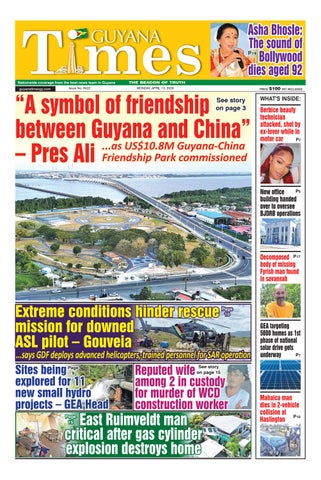
...as US$10.8M Guyana-China
Friendship Park commissioned

Berbice beauty technician attacked, shot by ex-lover while in motor car

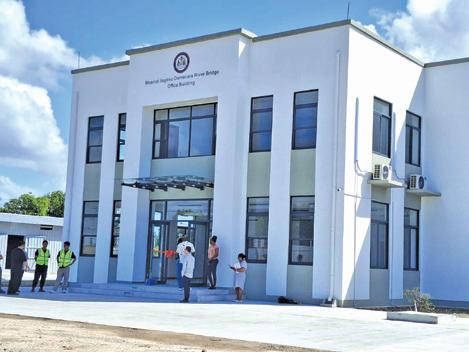
New office building handed over to oversee BJDRB operations

Decomposed body of missing Fyrish man found in savannah GEA targeting 5000 homes as 1st phase of national


In a major move to decentralise teachers’ training, Education Minister, Sonia Parag has announced the construction of a new Cyril Potter College of Education (CPCE) Centre in Charity, along the Essequibo Coast, Region Two (PomeroonSupenaam). A total of $45 million has already been allocated in the 2026 budget to kickstart the project, which will specifically serve educators in the Pomeroon River and other nearby remote communities. This initiative ensures that professional development is accessible to teachers residing in those hard-to-reach areas, ending an era where they were forced to leave their homes and families to gain certification. Addressing headteachers at a recent forum in the region, Parag emphasised that the facility is a fundamental step towards national educational equity. “Teachers no longer have to travel to wherever or go just online,” the Minister stated. “You will have the expe -
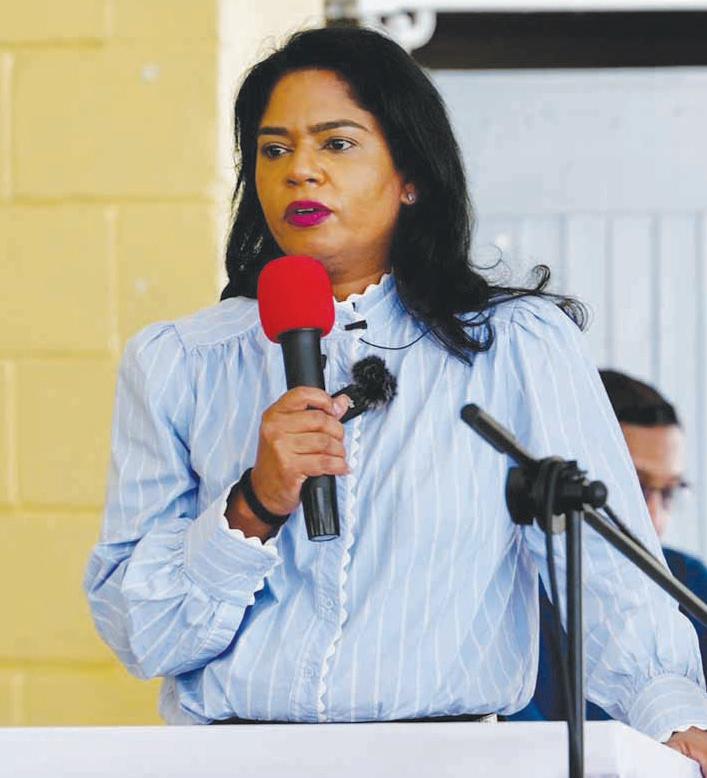
rience of an in-classroom teaching at CPCE right here in Region Two. And that’s something that you should applaud.” She further underscored that the project is about “quality education and quality delivery in the classroom,” noting
that investing in professional growth ultimately translates into better outcomes for the nation’s children. The impact of this decentralisation is already being celebrated by local educators such as the Headteacher (ag) of Jacklow Nursery in the


She recalled having to arrive at the existing CPCE Centre in Anna Regina by 07:00h and then rushing to com -
plete her work by 13:00h in order to make the trip back home. “I have experienced that and it wasn’t easy. We usually have to be on the water till late
at night. Sometimes we reach home after 10:00 pm and then we still have to attend to our children, and our families,” Jones shared. Once completed, this new, modern facility will feature a dedicated classroom block, staff offices, a kitchen area and washroom facilities, all housed within an elevated, ridge-and-beam structure. This new facility will aid the Government’s mission to move the national percentage of trained teachers from over 90 per cent to a perfect 100 per cent. The development of the Charity CPCE branch follows billions in sector investment over the past five years. With the CPCE continuing to churn out record-breaking numbers of graduates, including over 1,300 in the most recent cohort, Minister Parag reiterated that this project is a direct response to the needs of local educators. “The development of our teachers means the development of our children and our future,” Minister Parag posited.


The Berbice Bridge will be closed to vehicular traffic on: Monday, April 13 –13:30h-15:00h and Tuesday, April 14 – 14:25h–15:55h.


Parika and Supenaam departure times – 05:00h, 10:00h-12:00h, 16:00h, 18:30h daily.




Sunny conditions are expected during the day, interrupted by light rain showers in the midmorning to mid-afternoon hours. Partly-cloudy skies are expected at night. Temperatures are expected to range between 23 degrees Celsius and 30 degrees Celsius.
Winds: North-Easterly to Easterly between 3.58 metres and 5.81 metres.
High Tide: 13:53h reaching a maximum height of 2.32 metres.
Low Tide: 07:26h and 19:52h reaching minimum heights of 0.98 metre and 0.83 metre.










“A
...as US$10.8M Guyana-China Friendship Park commissioned
The
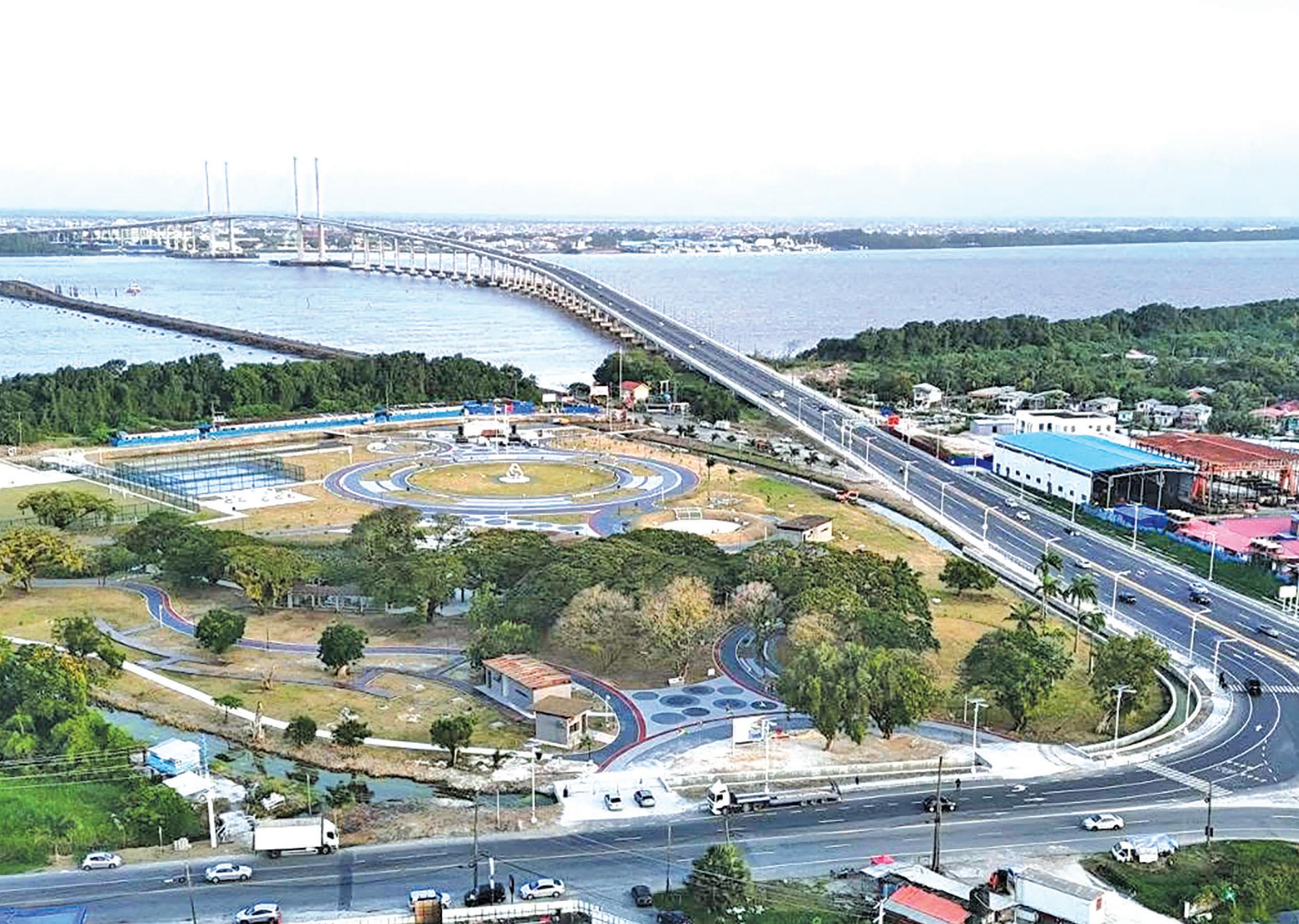
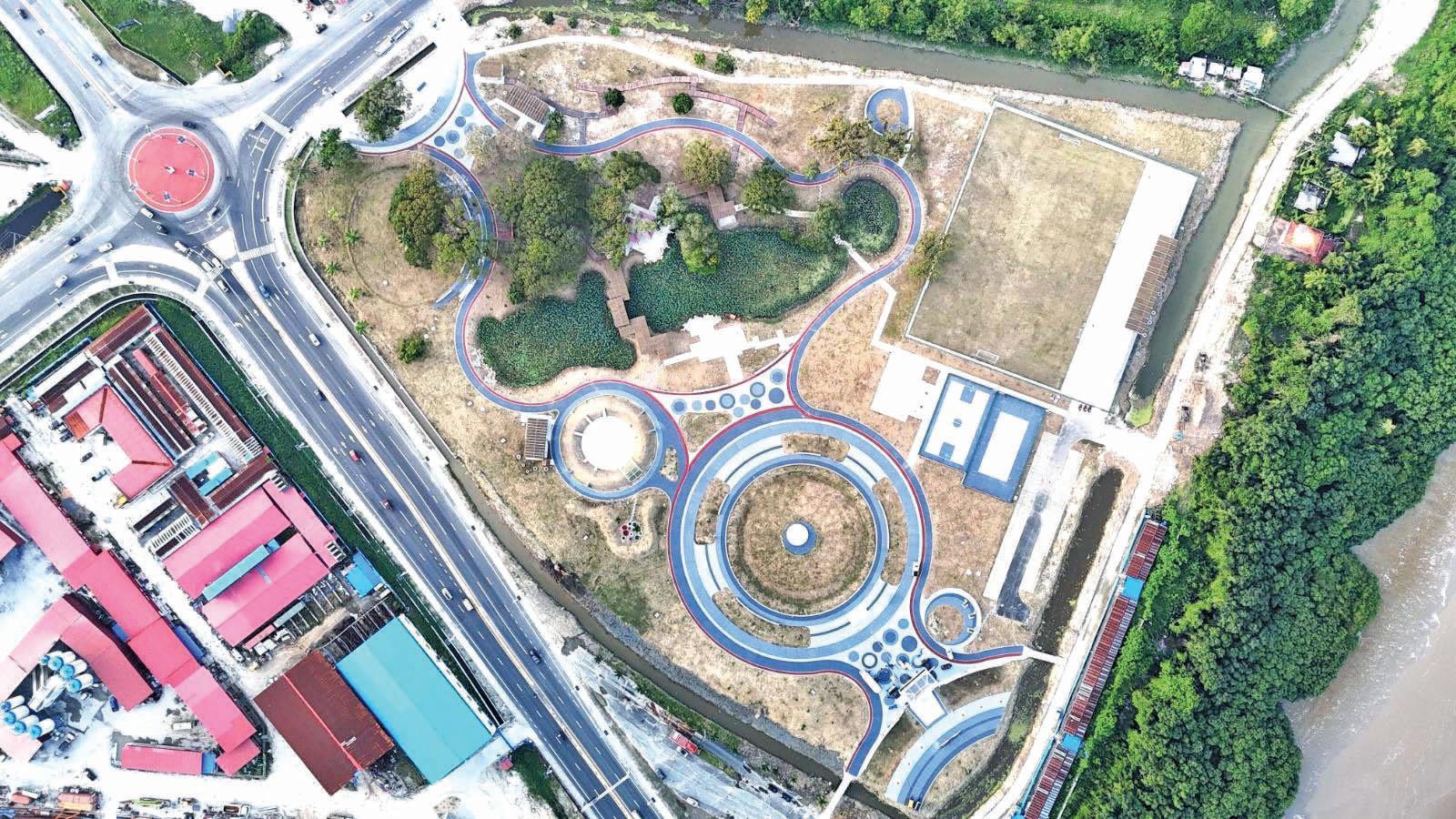
US$10.8 million Guyana-China Friendship Park, formerly Joe Vieira Park, on the West Bank of Demerara (WBD), is being hailed as a symbol of the strong and robust bilateral cooperation between the two countries - one that is deeply rooted in history. The modern recreational facility, outfitted with dedicated sporting areas and lush green spaces, was formally handed over to the Guyanese Government during a commissioning ceremony on Sunday to officially declare the park open. President Dr Irfaan Ali reminded that the bonds between the two countries date back to some 173 years ago in 1853, when the first batch of Chinese indentured labourers were brought here to work on sugar plantations in the then British Guiana.
Most of the more than 600 Chinese indentured immigrants who arrived in that first year were assigned to plantations across Region Three (Essequibo Islands-West Demerara). For this reason, President Ali says that the location of this new park is especially symbolic. “It is therefore fitting that this park-a symbol of friendship between Guyana and China - should be located here in West Demerara. For it is on this very soil, watered by the labour and sacrifice of those first indentured souls, that a human thread of connection between our two peoples was first woven,” Ali stated. He noted that the thread was further strengthened in 1972 when independent Guyana established diplomatic relations with the People’s Republic of China. Since then, the Guyanese leader added that the two countries have been bonded by an unbreakable friendship, forged in history and trust, and polished by more than five decades of official cooperation.
Economic contributions
President Ali further pointed out that those Chinese indentured immigrants who came here between 1853 and 1879 became entrepreneurs, farmers, shopkeepers, teachers, patriots, civil servants, doctors, accountants, and jurists-all of whom played a disproportionately significant role in the development of commerce and the diversification of economic life in Guyana. According to the Head of State, the Chinese contributions to economic development in Guyana continue even today with new waves of investors and entrepreneurs from China coming here. “They are deeply involved in com-

merce. Chinese construction firms are reshaping our coastline and our skyline, building bridges that unite, roads that open opportunities, and facilities, such as this one, that dignify our friendship. And beyond infrastructure, Guyana enjoys healthy and robust cooperation with China in the fields of health, education, security cooperation, trade, agriculture, sport and culture. China’s envelope of assistance to Guyana has always been welcomed and appreciated,” the President posited. More significantly about this new park, however, is the fact that it was once a plantation. The land was officially declared a public park in March 1982 after it was gifted to the Government by then owner, Joseph Vieira-whom President Ali specially thanked.
Joe Vieira Park, now of-
ficially the Guyana-China Friendship Park, features a wide range of amenities, including a forest picnic area, wooden walkways, a Mandarin duck pavilion, a landscaped lake, bridges and corridors, a hydrophilic platform, basketball and tennis courts, a football field with seating for approximately 500 spectators, pavilions, and a manufacturing plaza. The construction of the park was executed by China Southwest Architectural Design and Research Institute Corp Ltd and CSCEC Southwest Consultancy Co Ltd, and lasted for 18 months.
Independence gift
According to Chinese Ambassador to Guyana, Yang Yang, this Friendship Park is a China Aid project and demonstrates China’s excellence in design and construction.
“This park integrates the culture and aesthetics of China and Guyana. The style of Chinese gardens perfectly matches with Guyanese wetlands, while Chinese recreational facilities are surrounded by beautiful local plants... Taking the local climate into account, durable materials, advanced technology, and high standards of construction were used, delivering a landmark for balancing sustainability and high-quality construction,” she stated. In addition, Ambassador Yang said the design exemplifies the people-centred philosophy shared by Guyana and China-one that ensures people not only find diverse sports fields for football, basketball, and table tennis but also a public space for citizens to relax, entertain, and connect.



Editor: Tusika Martin
News Hotline: 231-8063 Editorial: 231-0544, 223-7230, 223-7231, 225-7761
Marketing: 231-8064 Accounts: 225-6707
Mailing address: Queens Atlantic Industrial Estate Industrial Site, Ruimveldt, Georgetown
Email: news@guyanatimesgy.com, marketing@guyanatimesgy.com
Artificial intelligence struck like lightning in November 2022 when a start-up company called OpenAI was founded with a billion dollars from an assortment of Silicon Valley techies who released a chatbot called ChatGPT.
Within five days, a million people had chatted with the bot, generating essays, poems, and answers to questions, if not always perfectly accurate. Two months later, ChatGPT had 100 million users. Today, it has almost ONE BILLION users weekly.
Since 2022, artificial intelligence (AI) has rapidly increased in power, and many people think it is approaching human intelligence – at least in solving individual problems. It’s generally accepted that if this trend continues, at some point, AI will reach and then surpass human intelligence. This is easy to imagine. But what is harder to picture is what the world will be like when this point is reached –- when artificial intelligence surpasses human intelligence. This point has been called the Singularity.
AI is very expensive to run, however. It requires large data centres, occupying acres of land, to process the data and analyse the problems it is given; large amounts of water are needed to cool these massive computers; and finally, large amounts of data, printed matter, poetry, computer programs, and so on must be constantly fed into the data banks in order to keep up with current events and new discoveries. Last November, our Government of Guyana signed a landmark Memorandum of Understanding (MoU) with USbased Cerebras Systems to launch a 100MW data centre at Wales, so it would appear that we may assist in reaching the Singularity.
In his 2005 book The Singularity is Near, futurist Ray Kurzweil said the Singularity will occur in 2045. He also predicted that AI will pass the Turing Test by 2029. This test, proposed eponymously by Alan Turing in 1950, is a measure of a machine’s ability to exhibit intelligent behaviour equivalent to, or indistinguishable from, that of a human. During the test, a human interrogator engages in a textonly conversation with both a human and a machine; if the interrogator cannot reliably distinguish between them, the machine passes.
The Turing Test does not require the machine to be correct or logical, but rather to be convincing, to fool the judge into believing that it is human. Recently, GPT version 4.5 passed the Turing Test as human 73 per cent of the time.
The next step in the development of thinking machines will be the achievement of artificial general intelligence (AGI). AGI is more than just the ability to solve a problem put to it; it is generalised, human-level intelligence that can handle, or exceed, any cognitive task a human can. It can analyse situations, adapt to novel situations, and apply ethical and moral judgment. In 1999, Kurzweil theorised that AGI would be achieved once humanity could create a technology capable of a trillion calculations per second, which he pegged to occur in 2029. One common perception of how the Singularity might look is that the machines that possess AI become so powerful they take over the running of the earth, and humans become obsolete, and perhaps even extinct.
There is a more sanguine scenario that has not yet been considered when the Singularity is reached, when machine intelligence surpasses human intelligence. In this scenario, we will continue to rely on the AI as before, to answer questions, solve problems, and do the tedious, repetitive tasks that we humans dislike, completing these tasks with lightning speed. Nothing will have changed, except that we humans will have the benefit of a very intelligent partner.
The important question here is whether it is possible that machine intelligence can surpass human intelligence. Many prominent technologists and academics dispute this and assert that since all the information to the AI machine has been supplied by humans, all that is happening is we are getting answers faster. So, whether or not the Singularity will actually occur is heavily debated. And, like that other future prediction, we will have to wait until 2029 to find out.
with
We need a regional agreement for the
By Roudi BaRoudi
The announcement of a ceasefire by United States President Donald Trump on Tuesday has brought some relief to the Gulf region, seafarers, and the energy markets. Iran has agreed to open the Strait of Hormuz for commercial traffic as long as vessels coordinate movements with its authorities.
Irrespective of what happens next – whether a durable peace deal is negotiated or hostilities resume – the global misery caused by Iran’s closure of the Strait demonstrates a clear need for long-term solutions that are solidly rooted both in law and in fact.
No one has a greater stake in such solutions than Iran and its Arab neighbours. They all use the Strait to reach customers worldwide and to feed their own people. Now, they will have not only to repair wartime damage, but also to restore international confidence in the world’s most critical waterway.
Fortunately, for all concerned, the would-be participants in this diplomatic exercise will find that much of the work has already been done. Since its foundation in 1945, the United Nations has led a series of processes aimed at reducing the scope for conflict between nations, and few of these have been more significant than the UN Convention on the Law of the Sea.
The International Maritime Organisation (IMO), the 1958 Convention on the Territorial Sea and the Contiguous Zone, the 1969 Vienna Convention on the Law of the Treaties, and the 1982 United Nations Convention on the Law of
the Sea (UNCLOS) all provide a legal framework for marine and maritime activities, including the rules and the science required to delimit fair and equitable borders at sea.
They also set out rules governing transit passage through straits, stating that “all ships and aircraft enjoy the right of transit passage, which shall not be impeded”, and no exceptions apply to the Strait of Hormuz.
Although these treaties and conventions do not resolve all territorial or sovereignty issues, a process left to duly-formed international courts and tribunals, their legal and scientific standards have largely been accepted as part of customary international law by those same courts.
There is more. Under the international law of treaties, as codified in the Vienna Convention on the Law of Treaties, a country (such as Iran) that has signed but not ratified a treaty is nonetheless obligated to “refrain from acts that would defeat the object and purpose of a treaty that it has signed pending the ratification process”.
This rule is also generally considered as declaratory, meaning that it is also binding on any country that has signed but not ratified the Vienna Convention itself (absent its consistent objection).
Traffic in the Strait is regulated by a Traffic Separation Scheme (TSS) established by the IMO. The TSS in the Strait of Hormuz comprises a separation zone and two traffic lanes for, respectively, westbound and eastbound traffic in the Strait. These special sea lanes are mandatory for merchant vessels transiting
the Strait. Iran and Oman, which lie on the northern and southern coasts of the Strait, respectively, are both IMO member states and, as such, must respect the IMOmandated shipping lanes in the Hormuz passage.
This area within the Strait of Hormuz (north of the Musandam Peninsula), including the mandatory TSS shipping lanes, lies entirely in the territorial waters of Oman, as established through the maritime boundary line agreed in the Iran-Oman treaty of July 25, 1974.
Given that Oman has signed and ratified the UNCLOS, its free transit passage regime applies to its waters and any user state that has ratified the UNCLOS. In this sense, Iran has no jurisdiction over this area in the Strait of Hormuz, as an IMO member state that has signed but not ratified the UNCLOS.
The western end of the strait, where it opens up to traffic inside the Gulf, includes special shipping lanes subject to a mandatory TSS established by the IMO, which are divided into inbound (north) and outbound (south) lanes. Both of these lanes, which are separated by islands, are situated partly in what Iran claims as its waters and partly in undelimited waters disputed between Iran and the United Arab Emirates, as per the Iran-UAE continental shelf agreement of August 31, 1974.
The area used for international shipping lies near the disputed islands Abu Musa and the Greater and Lesser Tunbs. None of this removes or diminishes Iran’s obligation to refrain from interfering or threat-
ening to interfere with those IMO shipping lanes.
The imposition of levies by a state bordering an international strait on vessels passing through it would be incompatible (even illegal) with both the “transit passage” regime under UNCLOS and the “innocent passage” regime under customary international law.
Moving forward
The significance of energy transit chokepoints through narrow channels cannot be overstated. As one-half of the world’s crude oil supply relies on maritime transportation, protecting the free flow of oil and gas through maritime shipping routes is crucial for global energy price stability and security.
There is an urgent need for durable solutions which necessitate immediate dialogue and diplomacy. As the symbol of the current rulesbased order, the United Nations should play a central role in resolving the current situation. Whatever format this process assumes, it should be based on existing international legal provisions and should uphold the rights of all States involved.
The potential gains and benefits of resolving this situation far outweigh any “achievements” perceived in the ongoing disruption of the free passage in the Strait of Hormuz. We all need peace. (Al Jazeera) (Roudi Baroudi is the author of several books about maritime boundaries and has worked in the international energy business since the 1970s. He currently serves as CEO of Energy and Environment Holding, an independent consultancy based in Doha)

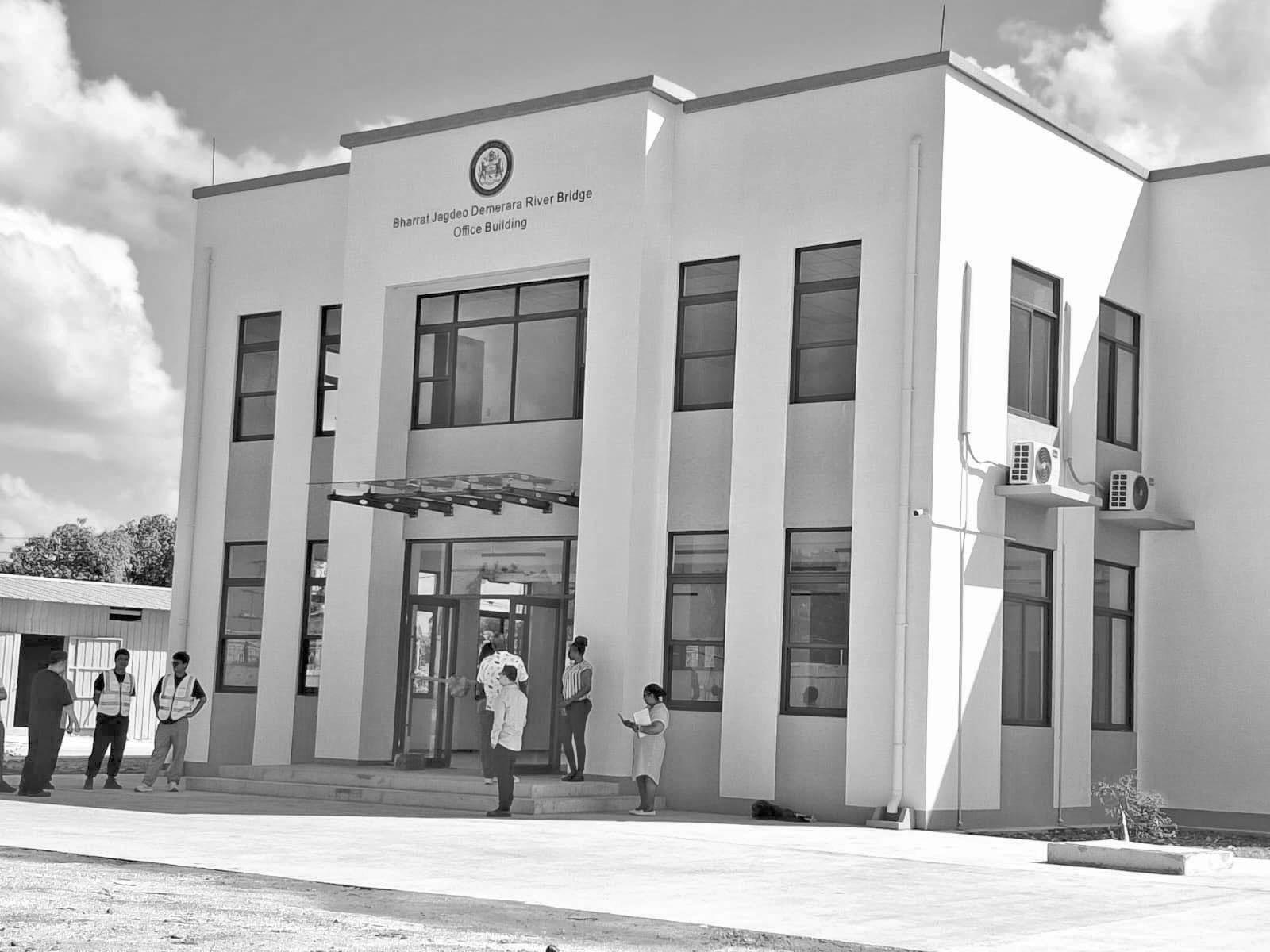
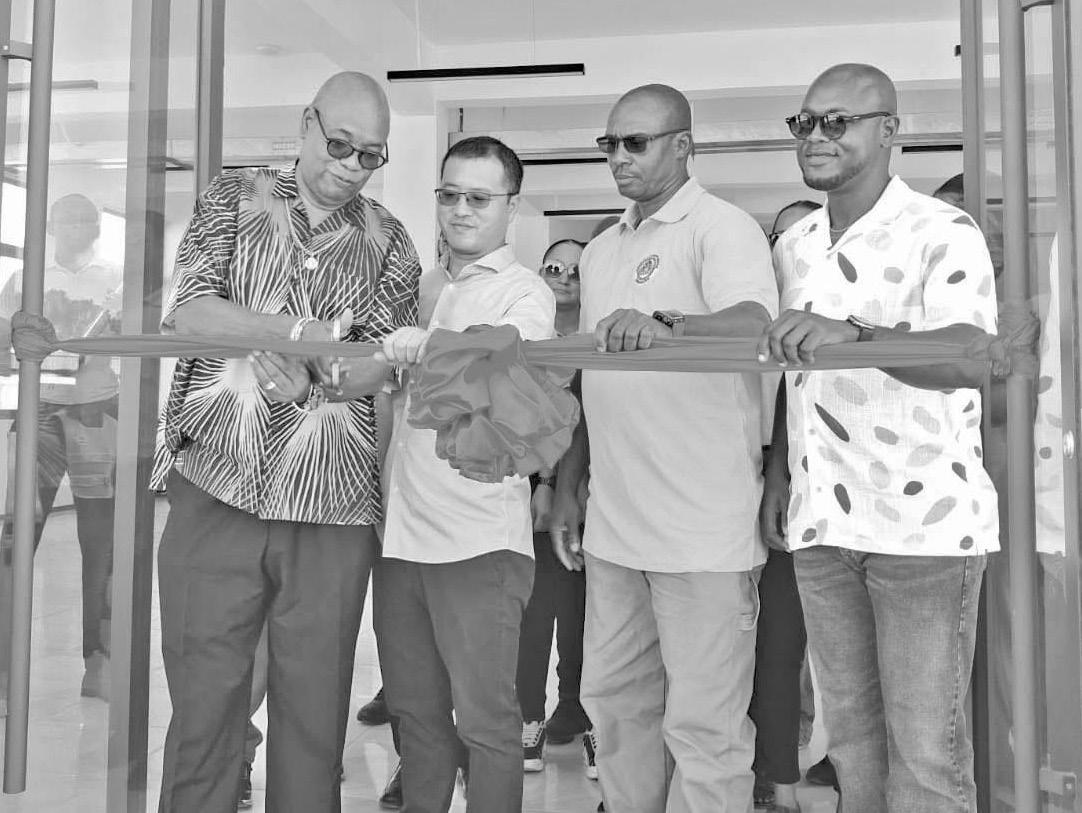
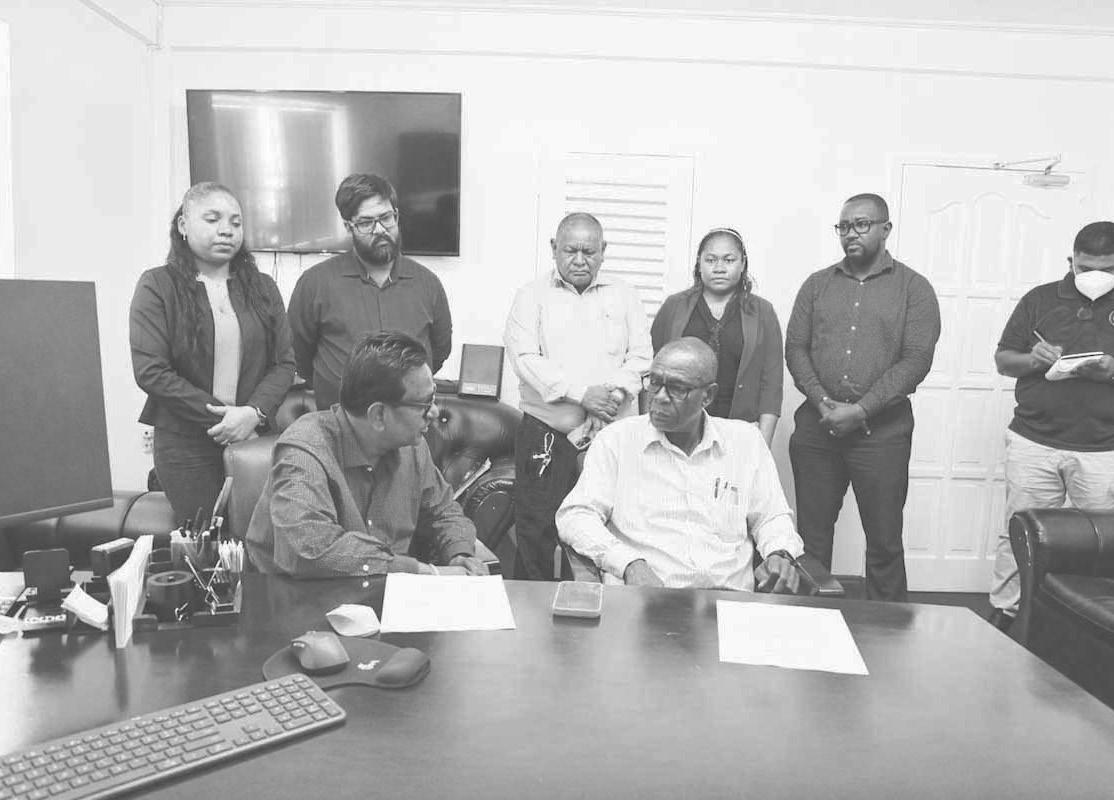
The Bharrat Jagdeo Demerara River Bridge Office Building, located at Schoonard, West Bank Demerara (WBD), which will be staffed to oversee the operations of the newly constructed bridge, was officially handed over on Sunday.
The new building will house the staff who monitor and maintain the operations of the bridge, including its newest feature, the lights that illuminate its superstructure at night, serving as a major attraction.
According to the Public Works Ministry, the BJDRB building is outfitted with a blend of private offices and colLabourative
With the new building, the Special Projects Unit (SPU) will move its operations into the former DHBC building at the old Harbour Bridge compound. This relocation provides the SPU with a more robust base of operations to execute its diverse portfolio of infrastructure tasks across the country.
cubicles, a 24/7 high-tech command center dedicated to real-time monitoring of traffic flow, a training
room, a maintenance workshop, and all other modern amenities.
The handing over was
River
“By providing the DHBC with the tools and environment necessary for high-level maintenance and monitoring, the Ministry is ensuring that the Bharrat Jagdeo Demerara River Bridge remains a safe, efficient, and well-managed artery for Guyanese commerce and commuters for years to come,” a social media post added.
Dear Editor,
The Regional Labour Movement is marking a significant milestone by commemorating the 100th anniversary of its Regional Labour Conference.
This centennial observance highlights a century of colLabouration, advocacy, and progress within the regional Labour community. It serves as a reminder of the enduring importance of the conference in shaping Labour policies and promoting workers’ rights throughout the region.
Over the past 100 years, the Regional Labour Conference has provided a crucial platform for dialogue, policy develop-
ment, and solidarity among Labour organizations. Its legacy continues to inspire current and future generations of Labour leaders and members.
The first-ever Regional Labour Conference was convened in Georgetown, Guyana, from January 12 to 14, 1926. This historic gathering laid the foundation for a century of progress and colLabouration within the Caribbean Labour movement. Over the past 100 years, the movement has evolved, reflecting the shared commitment to advancing workers’ rights and fostering unity among Labour organizations across the region.
The centenary of the Regional Labour Conference marks a moment to reflect on the enduring influence of that inaugural meeting in Georgetown. The principles established during those three days have guided the movement through decades of advocacy, policy development, and solidarity. As the Caribbean Labour Movement commemorates this milestone, it honours the legacy of the 1926 conference and reaffirms its dedication to promoting social and economic justice for all workers.
This high-level meeting, attended by some of the leading trade unionists across the Region, is poised to
play a pivotal role in charting the course for the labour Movement’s future. As the global economy undergoes rapid and significant changes, the participants have engaged in critical discussions to determine the Movement’s direction and strategies. Their deliberations are to address the challenges and opportunities posed by economic developments, ensuring that the Movement remains responsive and relevant to workers’ needs throughout the Region.
Between 1925 and 1930, the Union was relatively modest in both membership and financial resources. Despite its small size, the Union’s impact on the Labour
Dear Editor,
Early in the year, during his budget presentation, Finance Minister Dr. Ashni Singh projected for Guyana, “a series of major road projects to be advanced this (2026) year.”
This ‘series’ of projects can be easily accessed, but the gist of it is that while in 2025, $195.2 billion was expended to improve road connectivity across the country, in 2026, the Guyana Budget “...allocates $196.1 billion, forming part of the massive, total $1.558 trillion National Budget.”
This, for me, is a clear indication that the Government is very much aware of where it wants to take Guyana and how. As a passing footnote, too many people are oblivious regarding the importance and cost of road projects. Road works currently ongoing in Guyana reflect planning and investment, and those involved must be accorded due respect.
I think of the recent and quite obvious upgrades to the Linden Highway, once
quite a nightmare. Then there is Heroes Highway and the Schoonard to Crane Road, which are ‘time savers’ and ‘congestion cures’ forming a small part of the People’s Progressive Party’s Government’s ‘commitment to improving connectivity and significantly alleviating traffic congestion.’
It goes without saying that a ‘booming economy’ and matching ‘road works’ are mutually inclusive, one being the corollary of the other.
How about the Linden Highway, spanning some 70 plus miles, connecting Georgetown to the mining town of Linden? It is now so easy to traverse this stretch that allows for ever-increasing commerce, transportation, and community life. Minibuses ply this route 24/7, as the commute demands this. Erstwhile, this trek was a nightmare. But now, with an energized PPP/C and a burgeoning economy, this highway is up-to-date with extensive upgrades and maintenance to create a Linden
concomitant with a growing economy.
What we need to absorb is that transportation is an economic development pillar because it facilitates the movement of goods, services, and human beings and also promotes regional and international integration. It is vital then that all governments, and for sure Guyana’s, heavily facilitate road works to boost economic growth, enhance connectivity, and improve safety. We need to realize some of the spin-offs too. For example, property values can increase significantly, sometimes by over 50%.
Then reliable roads make a huge difference in terms of accessing Medicare and educational opportunities. I recall it was pointed out that in India, road improvements were linked to lower infant mortality rates due to better access to health clinics.
Editor, credit must be accorded where and when it is due, and I tip my hat to the current PPP/C Administration for holding strong where road in-
frastructure is concerned. We all need to keep in mind that road building is extremely expensive, with costs often exceeding millions of dollars per mile due to materials, Labour, specialized equipment, and complex logistics. Add to this reality that there are continually rising prices for fuel and materials like asphalt, spiraling costs by roughly 70% since 2020.
Enhanced transportation networks can attract investment and spur economic growth by improving connectivity among regions, fostering trade, and creating job opportunities. Reliable, clean, and modern transportation systems increase productivity by allowing businesses to operate more efficiently and effectively. Is it any wonder that Guyana is drawing the ‘crowd of investors’ globally, spurring and spawning job opportunities for the public en masse? Take nothing for granted and open your eyes and see.
Yours truly,
Raymond Anderson
movement and its broader influence within the community were far greater than its numbers might suggest. The organization played a pivotal role during this formative period, demonstrating that dedication and advocacy could compensate for limited membership and funding. Its efforts laid the groundwork for subsequent growth and the strengthening of collective action in the region.
Hubert Nathaniel Critchlow demonstrated remarkable vision and foresight by convening both the Regional and International Labour Conferences during a formative period for the
Labour movement. His pioneering efforts culminated in the first Regional Labour Conference, known as the British Guiana and West Indies Labour Conference, held at the Public Buildings in Guyana from January 12 to 14, 1926. This landmark gathering was organized under the auspices of the British Guiana Union, setting the stage for a century of progress and colLabouration within the Caribbean Labour movement.
Sincerely, Sherwood Clarke General Secretary CCWU



Easy to make and fun to squish, DIY Squishies are great gifts for friends, family, and teachers. Plus, they're a creative DIY craft!
Supplies/tools
Acrylic paint
Paint brushes
Scissors
Disposable cups
Measuring spoons
Memory foam pillow
Water
Directions
Step 1: Remove the outer cover from the memory foam pillow and cut a small, square portion out of the cor-

ner.
Step 2: With the help of an adult, slowly cut away small portions from your piece of memory foam to reach your desired shape. We made a pizza!
Step 3: In a disposable cup, mix 1/2 tbsp water with brown acrylic paint until fully combined.
Step 4: Using a paint brush, paint the top and sides of the memory foam pizza shape to create the crust.
Step 5: Mix different colours of acrylic paint with water to add toppings like cheese, pepperoni, and peppers! Let dry overnight.
Step 6: Once the paint has dried: squish, squish, squish! (Adapted from crayola.com)





By Dalia Taha
Translated By
Sara Elkamel
Translated from the Arabic
The book you held in your hands now lies on the nightstand by your bed, in its heart the lines you sketched under the sentences you read more than once, bewildered, before you put the book down and started pacing aimlessly between the rooms. You let it drown you for a full week, took it everywhere you went; you read it alone in bed, and stretched out on the sofa while the family’s voices drifted toward you from the other room. Whenever you’d lift your head, you found yourself face-to-face with the world, glancing at the sky outside your window; ready, at last, to converse with the hills. Every book grants you the language you need to make contact with something you had no idea even existed: a tree’s pores, a fox’s nose, sadness on a face, a nation’s suffering. Look how beautiful you look as you read. Look how peaceful you look as you let an entire continent colonize you; as you lay the book down on the nightstand, as if returning to the world something that belongs to it— as you stand, dazzled by the hills as though the book, too, has returned to the world something that belongs to it.
(Source: Poetry Foundation)




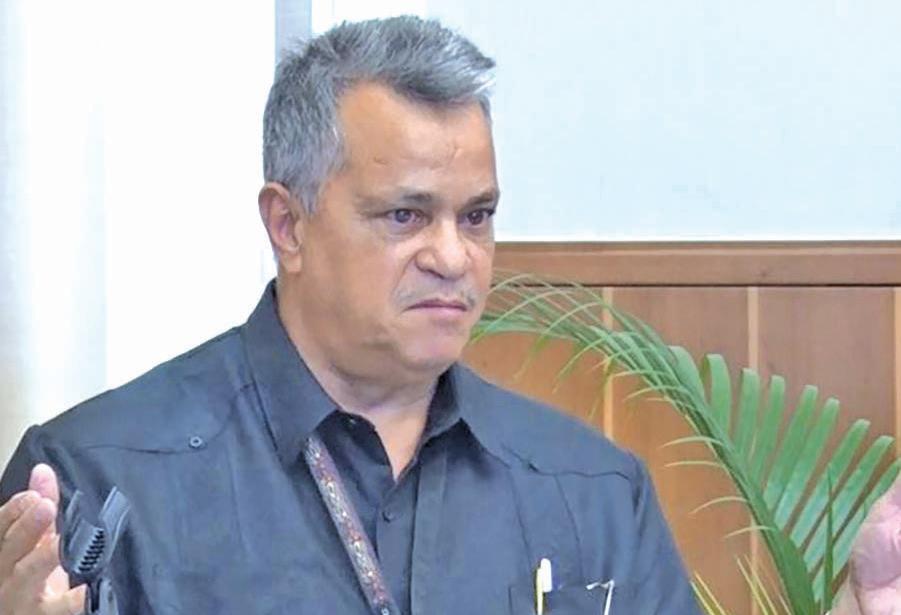
The Guyana Energy Agency (GEA) is looking to have at least 5000 homes install with rooftop solar panels as part of a major national solar initiative that will see citizens significantly lower their electricity costs while reducing carbon emissions.
Last month, the new Low Carbon Development Strategy (LCDS) Grid-
lated that hundreds of households are already benefiting from nearly a dozen megawatts (MW) of power being generated by this grid-connected solar initiative.
“There are more than 300 prosumers already on the GPL grid doing this. So, this is tried, tested, and established. And those 300 consumers represent more than 11 megawatts of pow -

Connected Solar Household drive was launched with the aim of tapping into the country’s vast solar potential through grid integration. With grid-tied systems, solar panels are installed on rooftops or other structures to supply electricity directly to homes during daylight hours. If additional energy is needed, it is provided by Guyana Power and Light Inc (GPL), and if there is excess solar generation, it is sent back to GPL via an integrated grid-tied system, and households will receive credit on their utility bill. Chief Executive Officer (CEO) of the GEA, Dr Mahender Sharma re -
er that are already being generated from grid-connected solar,” the GEA Head revealed during an appearance on this week’s edition of the Starting Point podcast. “We want to get at least 5,000 homes on board,” he added, explaining that there is a technical limit to the number of prosumers, that is, customers with a grid-tied installation, that GPL can accommodate during this first stage of the solar drive. The new LCDS Grid-Connected Solar Household drive aligns with the LCDS 2030, which is Guyana’s overarching plan for sustainable development. Under this
initiative, households are encouraged to adopt rooftop solar technology, helping them lower electricity bills and support a resilient, sustainable energy future.
A typical 5-kWp (kilowatt-peak) rooftop solar system costs around $1.2 million and generates approximately 7,884-kWh (kilowatt-hour) per year, reducing annual electricity expenses by an estimated G$342,402 (roughly $28,533 per month), based on the current GPL residential tariff. For those interested in larger capacity, a 10-kilowatt (kW) system is also available, but the 5-kWp system is sufficient for household use. The GEA says the investment pays for itself in about 3.5 years and helps cut carbon emissions by roughly 5.5 tonnes of CO₂ (carbon dioxide) annually. Sharma noted that the agency has worked with all the local commercial banks to provide funding for those interested in capitalising on this rooftop solar technology but who cannot afford it on their own. “Every bank is on board with this initiative, and every bank will soon be rolling out a different PR programme focused on grid-connected solar, including the New Billing Society,” the GEA Head stated. He added that those homeowners with existing mortgages are better positioned to get faster approval for funding from their respective banks. Based on the plans agreed to by the banks, the mortgage payments for the solar system range between $7,000 to $26,000 per month.
In addition to making access to financing easier, the Energy Agency has dedicated teams to provide support and technical guidance to persons interested in having this system installed, which takes about two to three months.
The Agency will connect persons with equipment suppliers and installers; assist with the review of quotes, design, and technical specifications; work with GPL for efficient processing under the LCDS Solar Express Lane; support the installation of the bi-directional meter; work with the Government Electrical Inspectorate (GEI) to ensure conformity and certification with the National Electric Code, and support as well as guide the installation and commissioning
process.
“We want persons to get on board. We want you to sign up. We want you to indicate your interest. We want to help you. We want to hold your hands [and] get you to the finish line. We are your partner in the energy transformation,” Dr Sharma posited. To further support this national solar drive, GPL has announced the establishment of an LCDS Solar Express Lane, a streamlined process aimed at accelerating the review, approval, and grid integration of solar photovoltaic (PV) systems for all eligible customers, including residential, commercial, and industrial users. In fact, in a
push for solar energy, electricity company recently signed a Memorandum of Understanding (MOU) with the Linden Electricity Company Inc (LECI), marking a significant step toward strengthening renewable energy integration within the Linden electricity network. This collaboration establishes a framework to support the integration, operation and long-term performance of utility-scale solar photovoltaic (PV) systems and Battery Energy Storage Systems (BESS) within Linden. The agreement forms part of GPL’s execution of the Guyana UtilityScale Solar Photovoltaic Programme (GUYSOL),
which aims to diversify Guyana’s energy mix, reduce reliance on fossil fuels, and enhance overall grid reliability. Under this initiative, 15 megawatts-peak (MWp) of solar photovoltaic (PV) generation and 22 megawatt-hours (MWh) of battery storage are being developed in Linden to improve electricity reliability, reduce generation costs and lower greenhouse gas emissions. The partnership underscores the importance of institutional coordination between GPL and LECI to ensure the safe, efficient, and reliable integration of renewable energy systems into the power network.

A27-year-old beauty technician is nursing gunshot injuries after she was allegedly shot and beaten by her former lover on Saturday afternoon at Islington, Greater New Amsterdam, Region Six (East Berbice-Corentyne). The injured woman who has been identified as Vasanti Gordon from Islington, New Amsterdam
was attacked at about 16:50h while she was seated in her motor car. Investigations revealed that the suspect, a 28-year-old unemployed man from Fort Ordinance Housing Scheme, East Canje, Berbice, approached the vehicle armed with a handgun and discharged several rounds in Gordon’s direction. According to reports, she was shot several times including her right leg and thigh.
Her condition has been listed as stable. However, the suspect, who is known to police and is currently before the court in connection with a multi-million-dollar robbery at the Region Six Regional Democratic Council (RDC), remains on the run.
Reports are that victim and the suspect were previously in a relationship but had recently separated. During the investigation, a spent shell was recovered from Gordon’s motor car and has since been processed.
The suspect has not yet been arrested and is currently being sought by police as investigations into the incident are ongoing.


So, after waking up on Saturday to enjoy the sight of the Artemis’ astronauts returning to Earth after seeing – on behalf of mankind – the far side of the Moon for the very FIRST TIME, your Eyewitness woke up on Sunday morning to discover that the astronauts had returned to a NEW EARTH!! What’s that?? Well, during the night, the marathon negotiations between the US (Vance) and the Iranians – in Pakistan with their officials as intermediators – broke down after 21 uninterrupted hours!! And what caused that breakdown?? All the details aren’t out as of your Eyewitness’s pecking away at this – but the bottom line is the Iranians balked at the American terms – and chucked their hand in!!
And that’s what has created a new world!! It’s not that the Iranians have suddenly gotten ‘spunks’ – but that they’ve exhibited that they’ve got a strategic weapon that’s even better than the atomic weapons the Yanks say they’re trying to deny them!! They control the Strait of Hormuz through which one-fifth of the oil and gas that makes the (modern) world go round pass!! So, they can bring that world to a painful halt like they’re doing right now – with gas prices in the US going through the roof; cooking gas shortage in India bringing their citizens into the street –and fertilisers heading skywards to push up the price of agricultural products!! And so on and so forth – pushing global inflation and a possible new Global Recession!!
Now THAT’S power!! Even if you had nukes, in the present world-system it’s felt that any country that commits first strike gonna face not just opprobrium but outright hostilities from countries experiencing the nuclear fallout!! That’s the only reason a country like Israel – whose possession of nuclear weapons is an open secret and hasn’t shown no respect for world opinion – hasn’t lobbed any of them against Iran, which is committed to destroying them as a state!! The irony, of course, in all this talk of holding back the spread of nuclear weapons, the interlocutor in the “peace talks” – Pakistan – has nuclear weapons!! More specifically, “ISLAMIC” nuclear weapons as they announced back in May 1998 – that were developed in response to nuclear tests by arch-rival India. The Yanks turned a blind eye to Pakistani nuclear scientist Abdul Qadeer Khan’s clandestine international nuclear smuggling network!!
Anyhow, if we wanna be objective, we now gotta consider Iran as one of the three SUPERPOWERS – along with the US and China – on the basis that they can bring the world to its knees!! So, what’s ahead in the immediate future?
The Yanks have deployed their navy to clear the Strait of mines and we’ll just have to see how the Iranians react!! Stalemate??
Can you imagine the leader of the PNC – Aubrey Norton – harassing the US Ambassador about her praise of the PPP Govt: “We ask the question; has the US Government abandoned its desire to see the back of corruption by supporting a government categorised by reputable transparency and accountability international agencies as one of the most corrupt in the world?” This is sheer, undiluted barefacedness – or as Yanks like Ambassador Theriot call it – chutzpah!!
Norton claims he was a PNC member – its youth arm actually – since he was just in short pants. So, he would have PERSONAL knowledge of Burnham supporting the American cause to keep out “commie” Cheddi!! Wasn’t this corrupt behaviour? Then to add salt to the wound – even if the Yanks’ fears were justified – he then went on to rig elections for the next 28 years!!
How corrupt was this?? He loosed his dogs of war on the Guyanese populace to hold on to power – eventually killing the charismatic opponent, Walter Rodney. Yet the Yanks kept mum!!
…Berbice?
Exxon’s CEO claims Berbice gonna be developing following gas to be landed there from the new Haimara well – and the already-tapped Longtail – starting in 2030.
Well, all your Eyewitness can say is Berbice’s been the “ancient county” for too long!!

Having recognised the importance of hydropower in Guyana’s renewable energy mix, efforts are being undertaken to scale up investments in this area, with the Government seeking to establish nearly a dozen mini-hydro projects across the country. This is according to Chief Executive Officer (CEO) of the Guyana Energy Agency (GEA), Mahender Sharma, during an appearance on the Starting Point podcast.
“We’re also looking at a number of hydropower studies in a number of different areas. There are more than 11 sites we’re actively looking at, at the small hydro level,” Sharma stated. The GEA Head had previous-
ly touted hydropower as a premium renewable energy, noting that it brings a greater level of predictability and availability when compared to other sources, especially in hinterland areas where the power demand is growing. In fact, only back in February, he reported that the two mini-hydropower plants in Region Nine (Upper Takutu -Upper Essequibo) have already saved the Guyana Government in excess of 17,000 drums of fossil fuel, less than two years after coming into operation. During a panel discussion on the ‘Changing Power Landscape’ at the Guyana Energy Conference and Supply Chain Expo (GECSCE) in Georgetown,

Sharma said these two hydro plants are already reducing the country’s carbon footprint.
“In about 13 months of operation - the smaller [hydro plant] now operating for 13 months and the larger one now operating for six months, have already saved more than 17,000 drums of diesel. With just those two [hydro plants], we’ve already avoided over 17,000 drums of diesel,” the GEA Head had stated. According to Sharma, the cost of those drums of fuel amounts to some 27 per cent of the capital investment on the two mini-hydro projects. In December 2024, the 0.7-megawatt (MW) Moco Moco Hydropower Plant was commissioned, with the capacity to generate approximately 4,565 MW/h of electricity annually. Months later, in July 2025, the 1.5-MW Kumu Hydropower Station was operationalised to bring approximately 9,700 MWh of clean energy annually.
These two mini-hydropower facilities were rehabilitated by the Sri Lankan firm - Vidullanka PLC, under a US$12.85 million programme funded by the Islamic Development Bank

(IsDB).
Amaila Falls Hydro Project However, the hallmark of hydropower in Guyana is the 165-MW Amaila Falls Hydropower Project (AFHP). Just last year, the Government issued a revised Request for Proposal (RFP), inviting companies from around the world to develop the Amaila Falls Hydro Project under a Build-OwnOperate-Transfer (BOOT) model. That RFP invitation has been further extended and will run until May 8.
According to the GEA Head, it is important for the Amaila project to be realised.
“I’m really excited about Amaila. I think that has to happen,” Sharma declared during the podcast. In the RFP document, it is noted that this project is expected to deliver a minimum installed capacity of 165-MW, including the hydro dam, powerhouse, substation, and a 23-square- kilometre (km²) storage reservoir, consistent with environmental studies and permits.
However, it was noted that the size of the hydro may be re-engineered to take into account changes in

turbine technology, thus allowing more than 165-MW to be generated and transmitted - something which Sharma had talked about in February. “Amaila is going to be extremely significant. While this was tagged at 165-MW some years ago, we believe that the technology has advanced to a stage where we can get more from it,” he had stated.
“The considerations for machine efficiency, for advances and improvements in hydraulic losses and friction losses in design construction - the kind of technology that you have now available to you to make the assessments, conducting the geotechnical [studies and] ... laying of pipe penstock is incredible, and there is
so much more that can be done.”
The ruling People’s Progressive Party/Civic (PPP/C) has been keen on reviving the Amaila Falls Hydropower Project, which has been on the cards since 2011 but was blocked by the A Partnership for National Unity+Alliance For Change (APNU+AFC) Coalition both in and out of office. The 165MW project was the flagship initiative of the Bharrat Jagdeo-crafted Low Carbon Development Strategy (LCDS). However, the project failed to take off despite having a developer in the United States (US)-based Sithe Global, which was backed by the investment major - The Blackstone Inc.

In light of criticisms about the lack of advanced helicopters or trained personnel in the ongoing search and rescue (SAR) mission for the pilot of the downed Air Services Limited (ASL) aircraft, National Security Advisor, Captain Gerry Gouveia stated that the mission is not executed by capability alone, but by physics, safety limits, and environmental conditions. "Our soldiers are operating in some of the most hostile
fully capable within their certified operating envelopes. More importantly, these aircraft are flown by highly trained and experienced pilots-many of whom are seasoned jungle operators. They have received direct training from Bell Helicopter and undergo recurrent evaluation and certification every six months at leading aviation training institutions in the United States (US)," Gouveia explained.
The SAR operation for
stable environment could cause debris-or even the aircraft wreckage itself-to shift or move violently, potentially endangering the life of any survivor on the ground." In its last update, the GDF confirmed that the wreckage of the aircraft had been spotted. A ground team from the GDF's 31 Special Forces Squadron was successfully inserted into the remote area and was working to access the crash site despite rugged terrain and the presence of a steep escarpment. In addition, Director General of the Guyana Civil Aviation Authority (GCAA), Col. (Ret'd) Egbert Field, when contacted on Sunday, related that the situation remains unchanged.
"The members of the special forces have not reached the crash site... the situation remains grim with rough terrain to cover, but the team is trying their utmost to reach the crash site. As stated previously, there are a number of factors that have

and unforgiving terrain in Guyana’s steep mountains, dense forests, and unstable weather systems-all in a determined effort to save a life. A search and rescue mission in this type of terrain is not simply a function of equipment; it is a function of conditions, safety margins, and disciplined execution," he added.
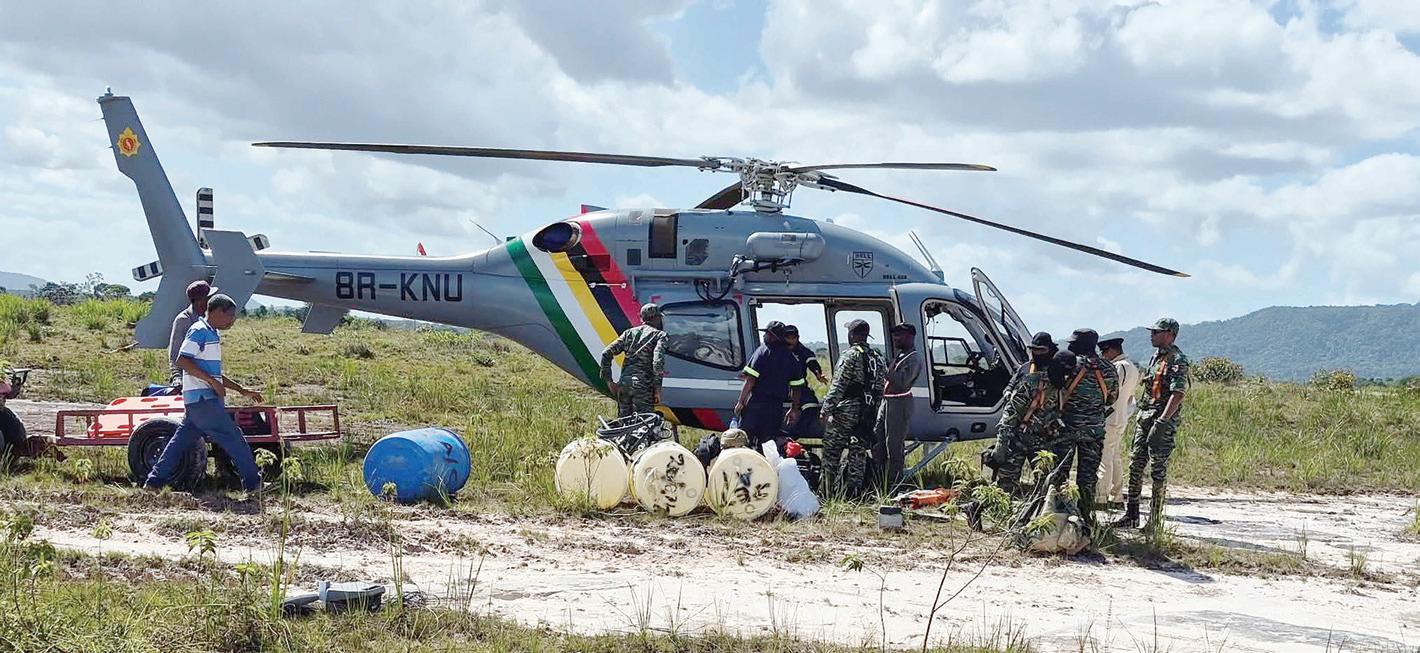
The mission is being executed with the Guyana Defence Force's (GDF) sophisticated Bell 429 and Bell 412, high-performance rotorcraft in their class.
In a post on his social media platform, Gouveia stated that these aircraft are widely used across the world in emergency medical services, offshore operations, law enforcement, and complex search and rescue missions.
"They are equipped with advanced avionics, strong power-to-weight ratios, and exceptional maneuverability, making them
Pilot Ryder Castillo is being conducted on the face of a steep mountain range, 4,200 feet above sea level. This means the rescue team must contend with a sharp incline, heavy forests, and limited to no safe landing zones. He pointed out that any attempt to position a helicopter directly above the crash site could worsen the situation. "Guyana's prevailing winds come from the east-northeast. This means that any helicopter approaching the eastern face of the mountain is likely to encounter strong tailwind conditions relative to the slope. For rotary-wing aircraft, this significantly reduces control margins, especially during hover or low-speed maneuvering," he explained. "Additionally, the rotor downwash generated during a hover could have serious consequences. The force of the downdraft in such a confined and un-
to be taken into consideration-the mountainous terrains and the light... Once it reaches 17:45h-18:00h, the area would be completely dark, which will ultimately result in the team stopping wherever they are until the sun rises again..."
He is nevertheless hopeful that it will not be long before the team reaches the site. "At this time, we can't say the fate of the pilot... That can only be confirmed when the team reaches the site... But they are undergoing a tremendous mission with tremendous challenges," Col. Field explained. The missing ASL Cessna Caravan, 8R-YAC, went down on Friday after taking off from Mahdia, Region Eight (PotaroSiparuni). It was reported that the single-engine Cessna aircraft was being operated by a Nicaraguan national, Captain Castillo, who has approximately 20 years of flying experience.

He was the sole occupant on board and had been employed with ASL for about a decade. According to reports, the aircraft departed Mahdia at approximately 08:10h on a cargo shuttle flight bound for Imbaimadai, Region Seven (Cuyuni-Mazaruni), with an expected arrival time of 08:40h. However, it failed to report its arrival, prompting a flight prog-
ress check at 08:44h. At the time, weather conditions in the area were reportedly poor, with heavy rainfall and reduced visibility. The GCAA swiftly responded to the incident, initiating protocols for a missing aircraft involving a Cessna 208 operating along the MahdiaImbaimadai route. This tragic accident comes on the heels of the GCAA sus-
pending ASL from operating flights to Matthews Ridge in Region Onefollowing an incident on the runway there. The suspension only lasted a few days, after which the airline was allowed to resume its operations while the pilot involved in the incident was suspended for a month. This incident also comes on the heels of the December 2023 GDF Bell 412 helicopter crash that killed five out of the seven soldiers onboard. That crash happened about 30 miles east of Arau near the Venezuelan border. Those dead are Lieutenant Colonel Michael Charles, Colonel Michael Shahoud, Retired Brigadier Gary Beaton, Lieutenant Colonel Sean Welcome, and Staff Sergeant Jason Khan. The two survivors are Corporal Dwayne Jackson and Lieutenant Andio Crawford.

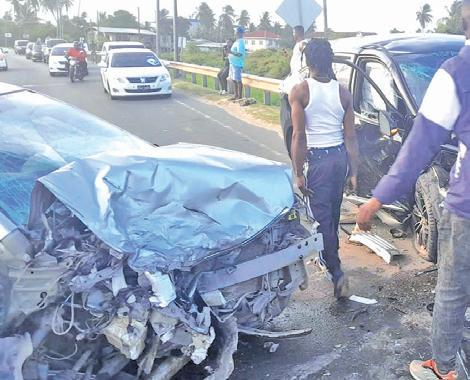
Twenty-seven-yearold Keshon Arthur of Hand-en-Veldt, Mahaica, East Coast Demerara (ECD) lost his life early Sunday morning following a 2-vehcile collision at Haslington “Turn”, ECD on his way home from a social event in Georgetown.
According to police, the fatal accident occurred at about 05:45h on Sunday and involved motor car, PAB 1013 which was at the time being driven by Arthur, and motor car bearing registration number, PAM 3828, driven by a 33-year-old police Sergeant of Belmont, Mahaica, ECD. Based on reports, Arthur allegedly overtook several vehicles and ended up colliding head-on with the other vehicle which was travelling in the opposite direction. Police said the Police Sergeant reportedly attempted to avoid the collision by swerving further to the southern side of the road but instead, the front right side of his vehicle collided with Arthur’s.
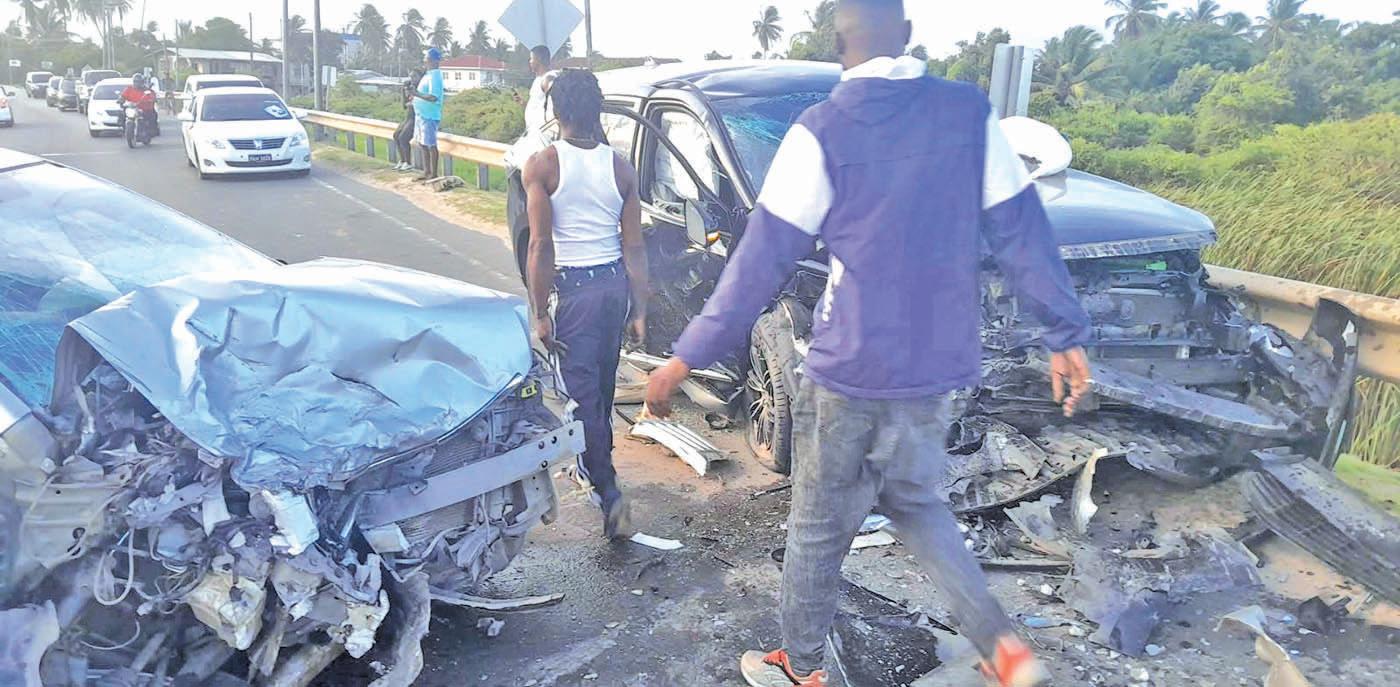

As a result of the impact, both drivers sustained injuries. They were both pulled from the wreckage and taken to the Enmore Regional Hospital, where Arthur was pronounced dead. The Police Sergeant treated and admitted with a broken right leg and multiple lacerations to his face and body. His condition is listed as stable.
Information received indicates that Arthur had attended the “Me You and
R&B” concert at the National Park in Georgetown with friends. Reports suggest he left the event in the early hours of Sunday, dropped off friends along the East Bank of Demerara (EBD) around 04:00hrs and was heading home to Mahaica when the accident occurred. Police have since processed the scene, and investigations are ongoing to determine the full circumstances surrounding the collision.











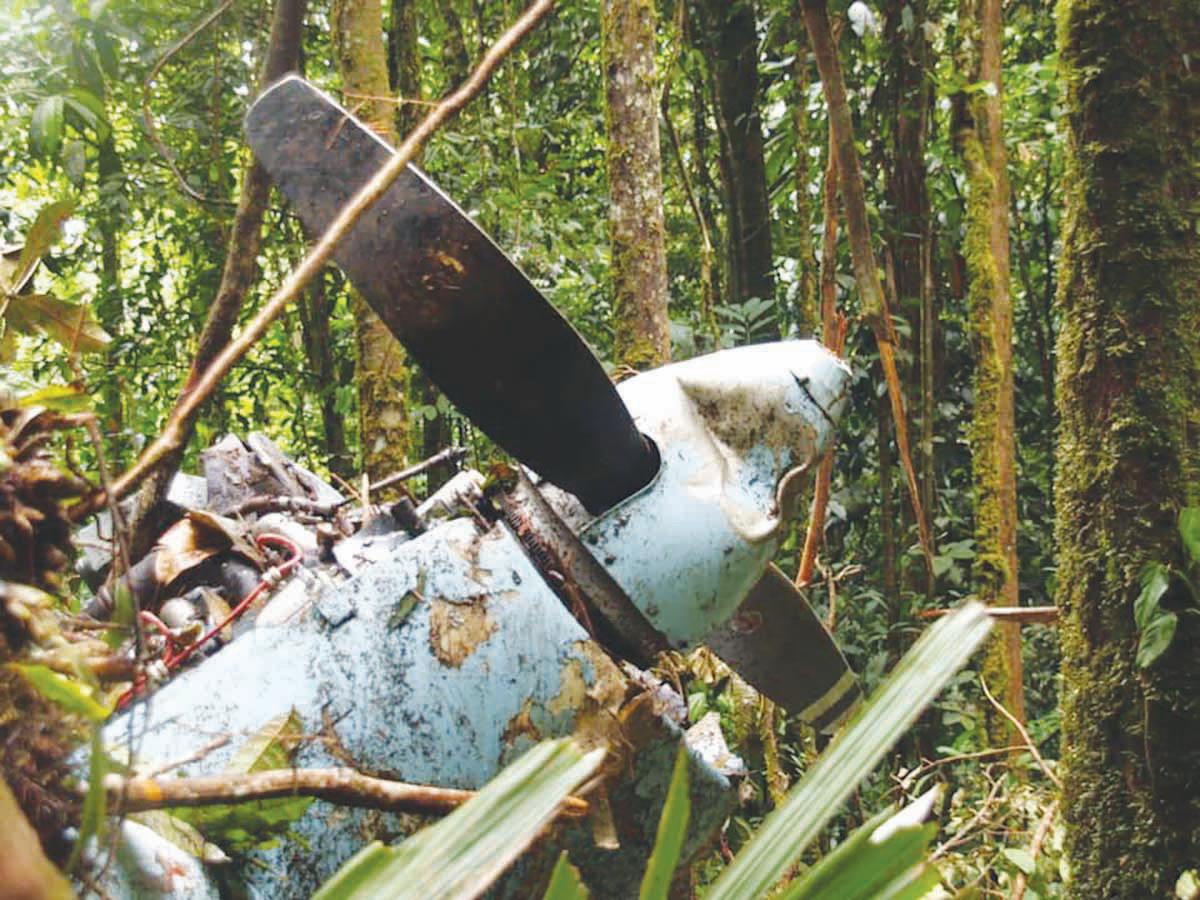
The latest accident involving an ASL Cessna Caravan while shuttling between Mahdia and Imbaimadai has once again shaken the aviation community and the interior economy. Early reports suggest another serious out-
resume. Concerns were also raised about overloading practices and the pressures inherent in high-frequency shuttle flying. Fast forward to today, and we are once again at a crossroads. The aviation community and the interior simply cannot afford
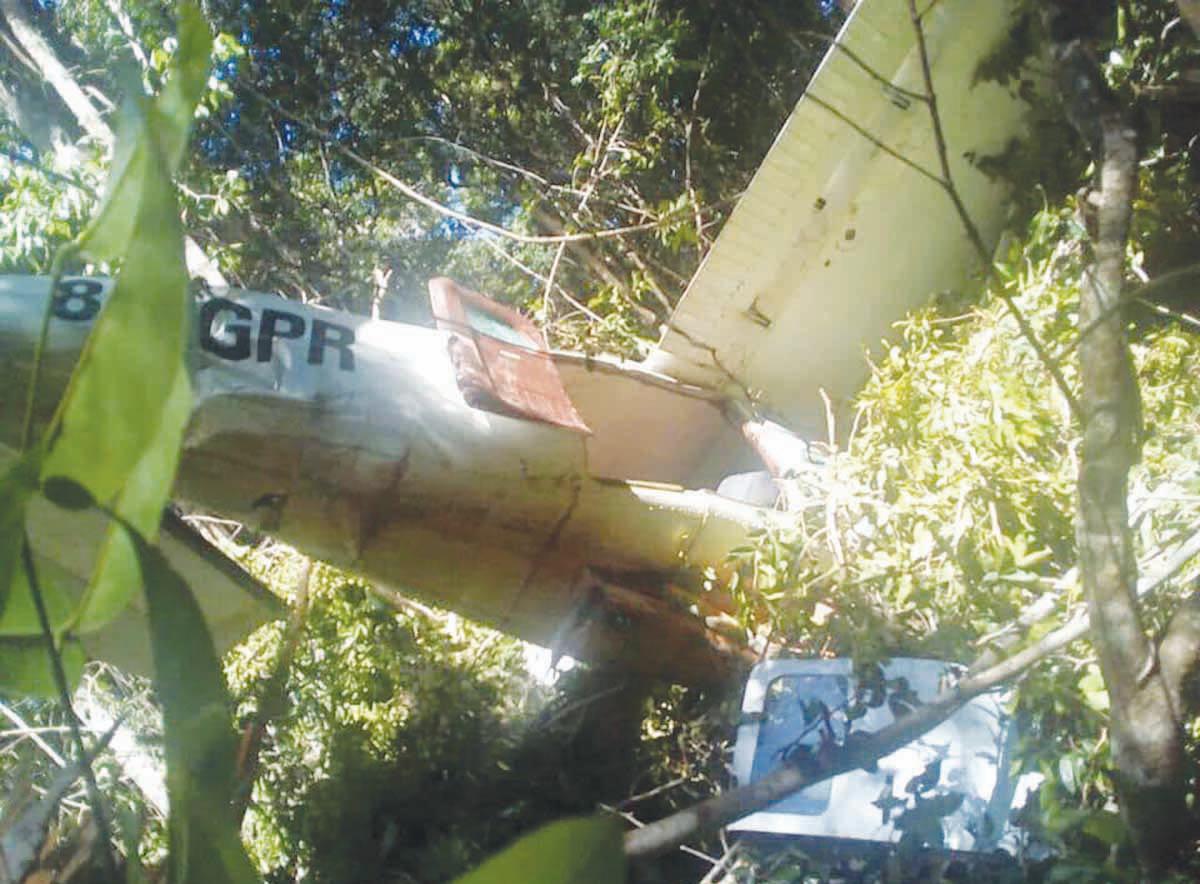
decision-making. Guyana’s interior is notorious for rapidly changing conditions, low clouds, reduced visibility, rain showers, and limited weather reporting. Many of these strips have little to no real-time weather data, leaving pilots to rely heavily
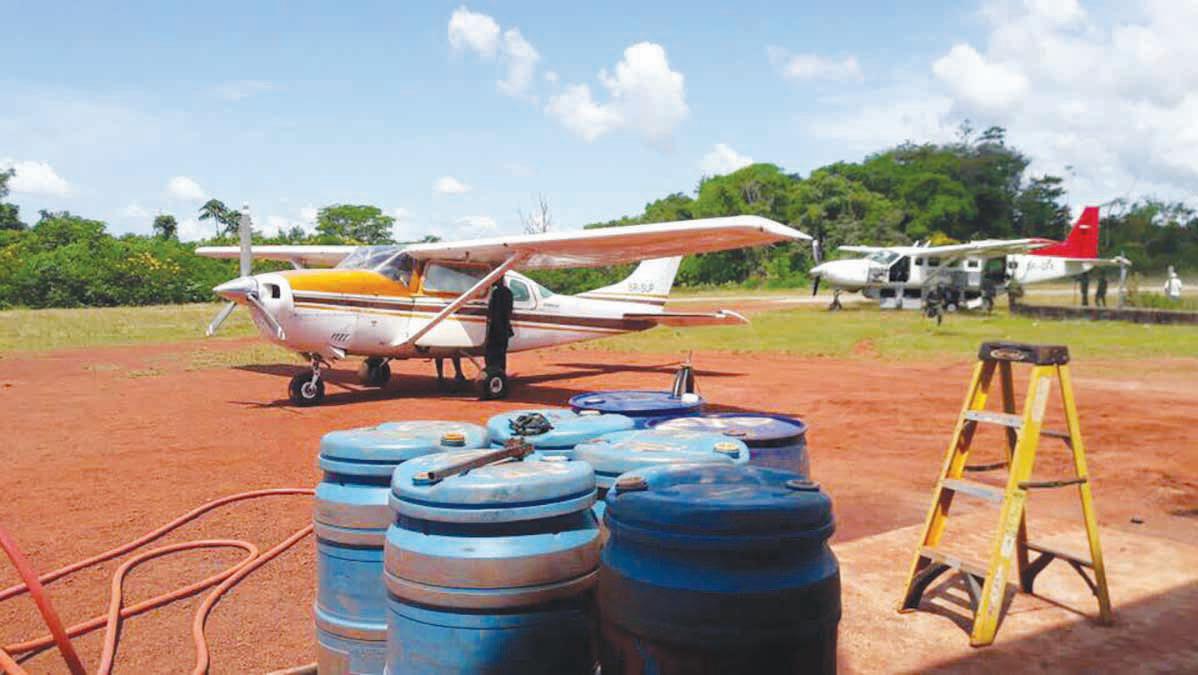
come, and as details continue to emerge, one thing is clear: this is not an isolated event. It is part of a pattern that we have seen before. Over the years, shuttle operations in Guyana’s interior have been linked to a number of serious accidents.
We have lost aircraft such as 8R-GAC (Kurupung, 2000), 8R-GFN (Mahdia, 2001), 8R-GET (Kopinang, 2007), 8R-GHE (Mahdia, 2014), and 8R-GRA (Eteringbang, 2017). The Cessna Caravan 8R-GHS crash at Olive Creek in 2014 claimed two lives, and several Cessna 206 accidents between 2017 and 2019 further added to the toll. In total, at least 11 lives have been lost in shuttle-related operations.
Not new territory for Guyana In 2017, following a series of accidents within a short period, the Guyana Civil Aviation Authority (GCAA) took the unprecedented step of suspending all interior shuttle operations. At the time, the regulator pointed to a common thread: these accidents were all linked to shuttling. Operators were required to submit detailed procedures covering loading, fuel handling and operational control before being allowed to
another prolonged, blanket suspension of shuttling operations. Too many people depend on it to survive. At the same time, the safety concerns cannot be ignored. The history is there, and the risks are real.
But to truly understand the risk, we have to look deeper into how shuttle operations actually function day to day.
These aircraft are not doing one or two legs a day; they are doing multiple short sectors, sometimes 8-12 cycles daily. Every takeoff and landing is a stress event on the airframe, engines, landing gear and systems. Over time, that repeated cycling accelerates wear and fatigue far beyond what a typical flight profile would produce. In a harsh environment, with short strips, uneven surfaces, high temperatures and heavy loads, that stress is amplified.
Human factor & weather
Pilot fatigue in shuttle operations is real. Repetitive flying, quick turnarounds, heat, workload and the constant demand to “keep the loads moving” all take a toll.
Even when pilots are within legal limits, operational fatigue can creep in, affecting judgment, reaction time and
on experience and instinct. That margin for error becomes razor-thin when combined with heavy loads and tight operational schedules. Another factor that cannot be ignored in this discussion is how pilots are paid and how that directly influences behaviour in shuttle operations. Paying pilots by the flying hour has clear advantages. It rewards productivity, keeps aircraft moving, and aligns pilot earnings with operational output. In a high-demand environment like Guyana’s interior, this system helps operators remain efficient and competitive.
But it also comes with real risks. When income is tied directly to hours flown, there can be an unspoken pressure to keep going, to push for one more load, to fly in marginal weather, to accept tighter margins than one normally would. The need to meet monthly hour targets or earn a decent paycheck can quietly influence decision-making, even among experienced and disciplined pilots.
On the other hand, a fixed salary model brings stability. It removes the direct financial incentive to “chase hours” and can support more conservative, safety-driven
decision-making. But that system is not perfect either. Without performance incentives, there can be reduced motivation in some cases, less urgency to maximise productivity, slower turnaround times, or reluctance to take on additional flying when operations demand it. In a fast-moving shuttle environment, that can impact efficiency and ultimately the viability of the operation. So, neither system is inherently right or wrong. The real issue is how they are managed. A balanced structure, where safety is never tied to earnings, where pilots are protected when making conservative decisions, and where productivity is encouraged without pressure, may be the better path forward. Because at the same time, company culture plays a critical role. In environments where operational pressure outweighs safety margins, even subtly, risk begins to build. It is not always direct orders, but expectations,
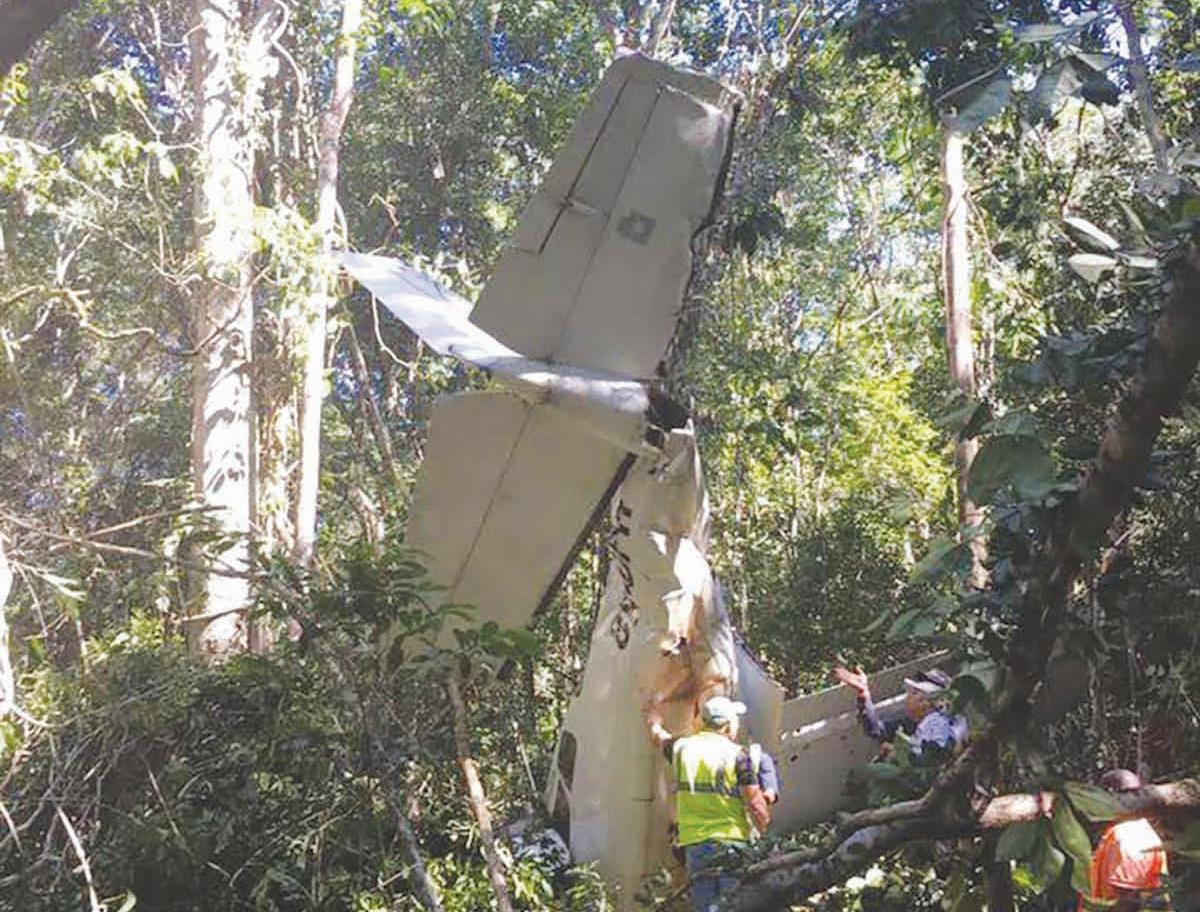
habits and norms that shape decision-making in the cockpit. That is where risk truly accumulates, not from one major failure, but from small compromises over time.
So, the question now is not just whether to suspend shuttling, but how to fix the underlying risks without crippling the industry.
A blanket shutdown may feel like decisive action, but it does not always address the root cause. Not every operator has the same standards. Not every aircraft is being pushed or managed the same way. A more effective approach may be targeted and intelligent: stronger monitoring of aircraft utilisation under high-cycle operations; tighter enforcement of weight and balance discipline; fatigue awareness and realistic scheduling; clear, standardised shuttle operating procedures across the industry; and, most importantly, a culture where a pilot can say “no” without fear.
Because there is also a danger in shutting everything
down. Economic pressure can drive behaviour into survival mode, where risk may actually increase, not decrease. The operating environment in Guyana’s interior is unforgiving. Small margins, difficult terrain, short airstrips and constant operational demands leave very little room for error. At the same time, the economic system that depends on these flights is just as unforgiving when they cease. This is not about assigning blame; it’s about understanding the system as a whole. We have been here before. The difference now is whether we address the deeper issues: aircraft stress, human fatigue, weather limitations, operational pressure and compensation structures, or simply repeat the cycle again. Because if we don’t fix those, the outcome will not change.
Capt. Miles Williams. (Former GDF/Special forces/Military Pilot)
“A symbol of friendship...
The Chinese Ambassador further stated that this park represents a tribute by the Chinese Government to Guyana on its 60th Independence Anniversarycelebrating the long-lasting and strong friendship. “I’ve been constantly amazed by Guyana’s rapid development and the resilience of the Guyanese people. Therefore, I’m remarkably confident in our future cooperation across all fields,” Ambassador Yang
noted. Meanwhile, also delivering remarks during Sunday’s commissioning ceremony of the GuyanaChina Friendship Park was Chairman of the Protected Areas Commission (PAC), Robert Persaud, who described the facility as a monument to the strong friendship between the two countries. He said the space serves as a bridge to connect people, nature and community in keeping with President
Ali ‘s vision to make Guyana healthier, greener and more deeply connected. “Welldesigned public spaces do more than beautify communities. They help communities in a way that matters most. They create connections. They give children spaces to play, families places to gather, young people place to exercise and seniors’ places to find calm, health and belonging,” Persaud stated.

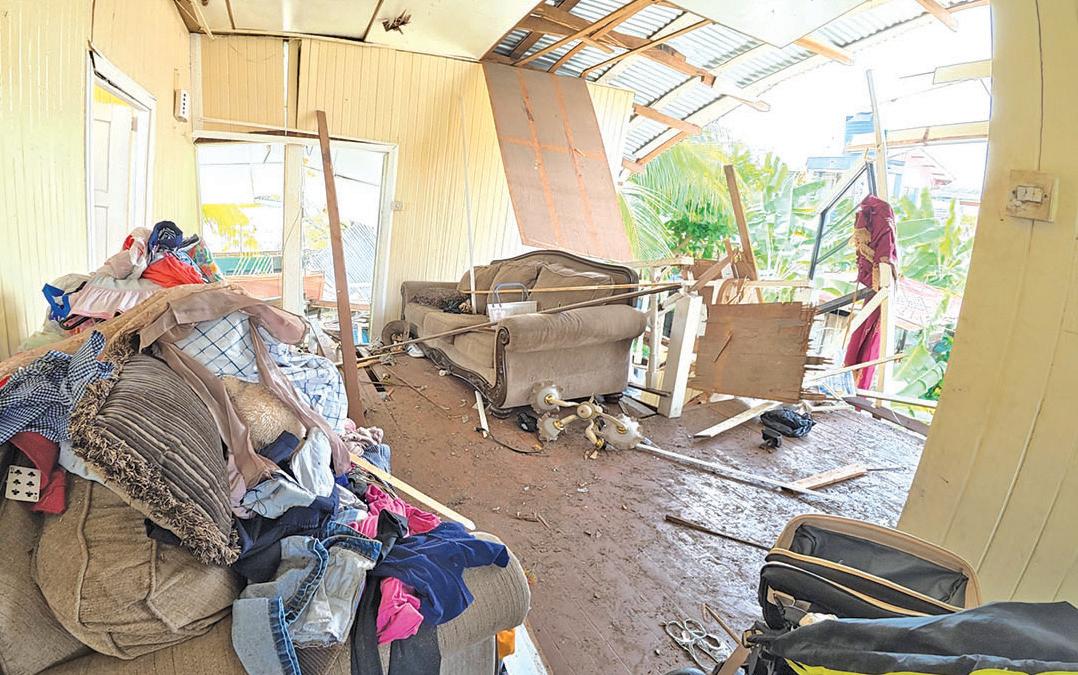
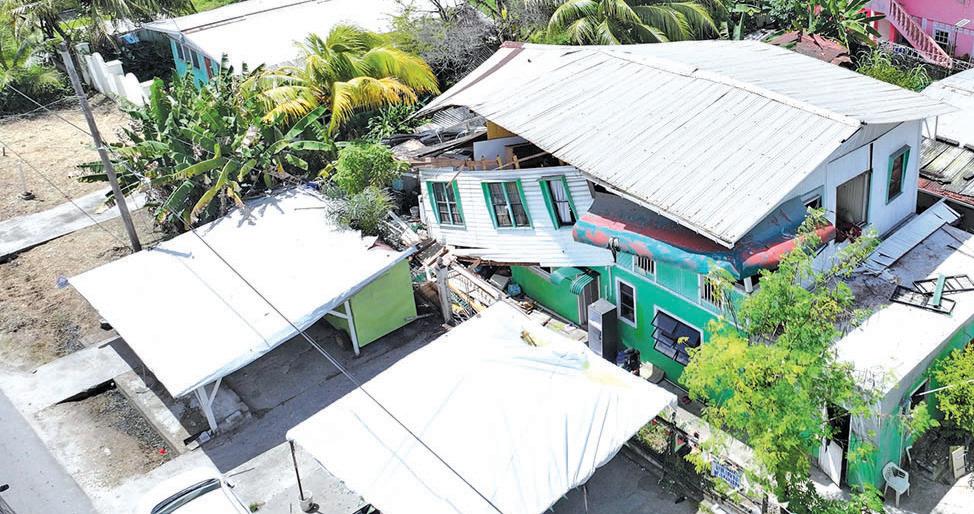
A56-year-old man is in critical condition following a suspected gas cylinder explosion in the wee hours of Sunday, which has destroyed sections of his East Ruimveldt, Georgetown home.
Troy Alleyne of Pineapple Street and Front Road, East Ruimveldt, sustained severe burns on his body following the explosion, which occurred at about 02:32h.
He is currently a patient at the Georgetown Public Hospital Corporation, where he has been admitted to the Intensive Care Unit.
According to police, Alleyne and his family were at home when his wife woke up and detected a strong smell consistent with gas. She alerted him, and he subsequently went to check the premises, including the yard area where a 100-pound gas cylinder was installed.
Police said that about two minutes later, a loud explosion was heard, followed by screams. The eastern side of the building reportedly collapsed and caught fire as a result of the blast.
The force of the blast caused significant damage to the structure, with sections of the house collapsing and other parts left severely compromised. Areas of the upper floor, including bedrooms, were destroyed, while debris from the collapse fell onto the lower level.
Despite the extent of the damage, Alleyne’s wife and two children, along with their tenants, who were in the house at the time, escaped without injury. According to family members, there were two apartments on the bottom flat of the building that were rented to Spanish nationals.
Public-spirited citizens responded after hearing the explosion and assisted the family in distress. They also rushed the injured man to the hospital, but not before contacting the Guyana Fire Service (GFS). The blaze was subsequently extinguished.
Police said the scene was processed, and CCTV cameras in the area were identified and are expected to be reviewed as part of the ongoing investigation. Investigations are continuing.
When Guyana Times visited the home on Sunday, family members said that the injured man received about 80 to 90% burns on his body and is currently “battling for his life.” They also revealed that the family has lost millions and is currently displaced.
The East Ruimveldt explosion comes amid continued concern over household
A25-year-old construction worker of Meten-Meer-Zorg, West Coast Demerara (WCD) was found dead in the wee hours of Saturday following an alleged domestic-related incident at De Willem, WCD.
The dead man has been identified as Ricardo Thompson. The incident is believed to have occurred between 23:00h on Friday and 03:00h on Saturday. Two persons were taken into police custody assisting with investigations.
Preliminary investigations revealed that Thompson and his reputed wife were involved in a misunderstanding on Friday night, after which she reportedly left their home and went to her parents’ residence at De Willem.
Further enquiries indicate that Thompson later went to the same address. At about 03:00h, he was discovered lying motionless on a staircase at the location.
Ranks were later dispatched to the scene, where

Dead: Ricardo Thompson
the body was examined, and marks of violence were observed. CCTV footage from a nearby camera has been obtained and is being reviewed as part of ongoing investigations.
The body was escorted to the Leonora Cottage Hospital, where Thompson was pronounced dead. It
was later taken to Ezekiel Funeral Home, pending a post-mortem examination.
Police have since detained a 27-year-old housewife of Meten-Meer-Zorg, WCD, and a 36-year-old man of De Willem, WCD, who are assisting with investigations. Investigations are ongoing.
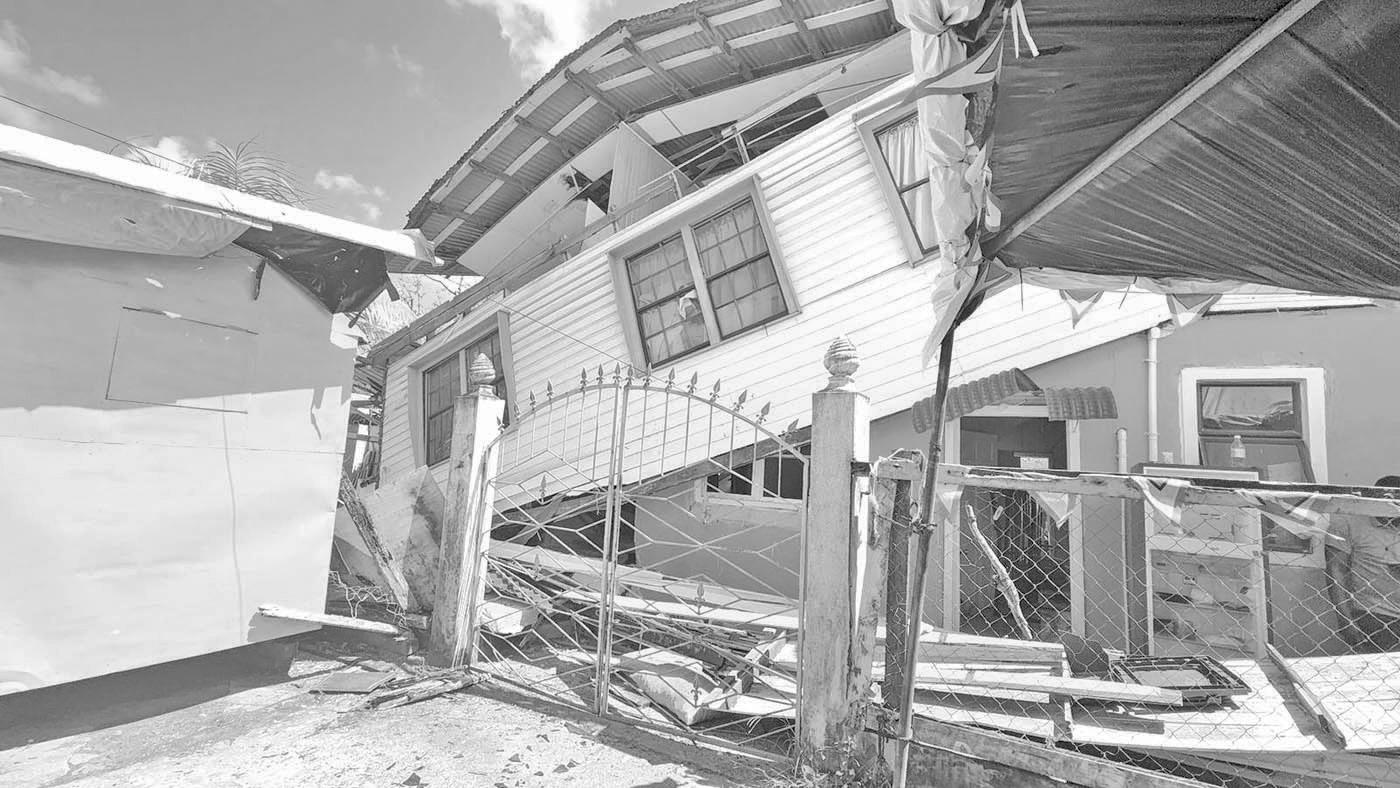

gas-related fires and explosions in Guyana.
In January of last year, a gas bottle explosion at Foulis, East Coast Demerara (ECD), claimed the lives of 55-year-old Basmattie Ganpat and her partner, Manu “Paul” Sukhu, and destroyed their two-storey home.
Their daughter reported that the couple had smelled gas before the blast, despite the cylinder being switched off. The explosion twisted the structure of the house, ripped off sections of the roof, and left the family with
millions in losses. That case followed several others in 2023. In August, Herstelling shop owner Jaiwantie Samaroo sustained third-degree burns when a cylinder exploded in her business. In November, a cylinder exploded at the Better Hope home of Necolece Alexander, causing property damage and burns.
In September 2025, a woman identified as Harriet Ray died following a suspected gas cylinder explosion at her home in C Field, Sophia, while another relative sustained serious injury. That
incident was linked to a possible gas leak or faulty regulator and renewed public concern over the safe handling of household LPG cylinders in densely populated areas.
In December 2025, a leaking cylinder reported by Abi Jaundoo highlighted concerns about customer service and response protocols. Days later, another explosion at Little Abary severely damaged the home of Murtland Wills and Oneka Williams, with repair costs estimated at over $1.5 million.
An exchange of gunfire between two men on Saturday evening at Victoria Road, Plaisance, East Coast Demerara (ECD) has left three persons injured.
The injured have been identified as a 38-year-old businessman of Victoria Road, Plaisance; a 36-yearold security officer of Graham Street, Plaisance; and a 52-year-old overseas-based Guyanese woman of Ben Profit Drive, Plaisance. The incident occurred at about 17:30h on Saturday.
According to investigations, the two men were engaged in a long-stand-
ing conflict stemming from a previous altercation. On the day in question, one of the men was seated at a bus shed in the area while the other was in the vicinity of a nearby business place when they reportedly encountered each other.
It is alleged that upon seeing each other, both men discharged rounds in each other’s direction.
As a result of the exchange, the 38-year-old businessman sustained an injury to his left ankle, while the 36-year-old security guard received injuries to both feet. The 52-year-old woman, who was in the vicinity at the time, also sus-
tained an injury to her left leg. At the scene several 9mm spent shells along with a 9mm Luger pistol, two magazines - one containing 22 live rounds and another containing seven live rounds was recovered.
The injured persons were escorted for medical attention. Following treatment, the 38-year-old businessman and the 36-year-old security guard were taken into police custody, along with a 49-year-old businesswoman of Victoria Road, Plaisance, who is also assisting investigators. Investigations are ongoing.
Essequibo is currently at a pivotal point in its development trajectory, experiencing a notable uptick not only in business activity but also in infrastructure expansion and resource development, according to Housing Minister Collin Croal. The Minister underscored the growing economic momentum of Essequibo during his featured address at the Essequibo Chamber of Commerce and Industry (ECCI) Business Mix held on Saturday evening where he emphasised that the private sector plays a critical role in ensuring that this progress translates into sustained, broad-based economic growth. Reflecting on the Government’s strategic direction, Croal highlighted that over the past five years, deliberate policy decisions were made to decentralise development. This approach, he explained, ensures that regions like Essequibo are

not treated as peripheral, but rather as integral contributors to Guyana’s overall growth and prosperity.
He pointed out that these policies are now yielding tangible results. Targeted investments in key sectors including infrastructure, housing, agriculture and services are supporting this transformation. Croal further detailed ongoing efforts
within the housing sector, noting the accelerated allocation of house lots, the regularisation of informal settlements, and the expansion of existing housing schemes. Importantly, he stressed that development goes beyond land allocation, with significant focus placed on ensuring that communities are equipped with essential infrastructure such as roads, drainage systems, access to water and other utilities. The Business Mix also saw participation from several key stakeholders, including Regional Executive Officer (REO) Susanah Saywack; ECCI Executive

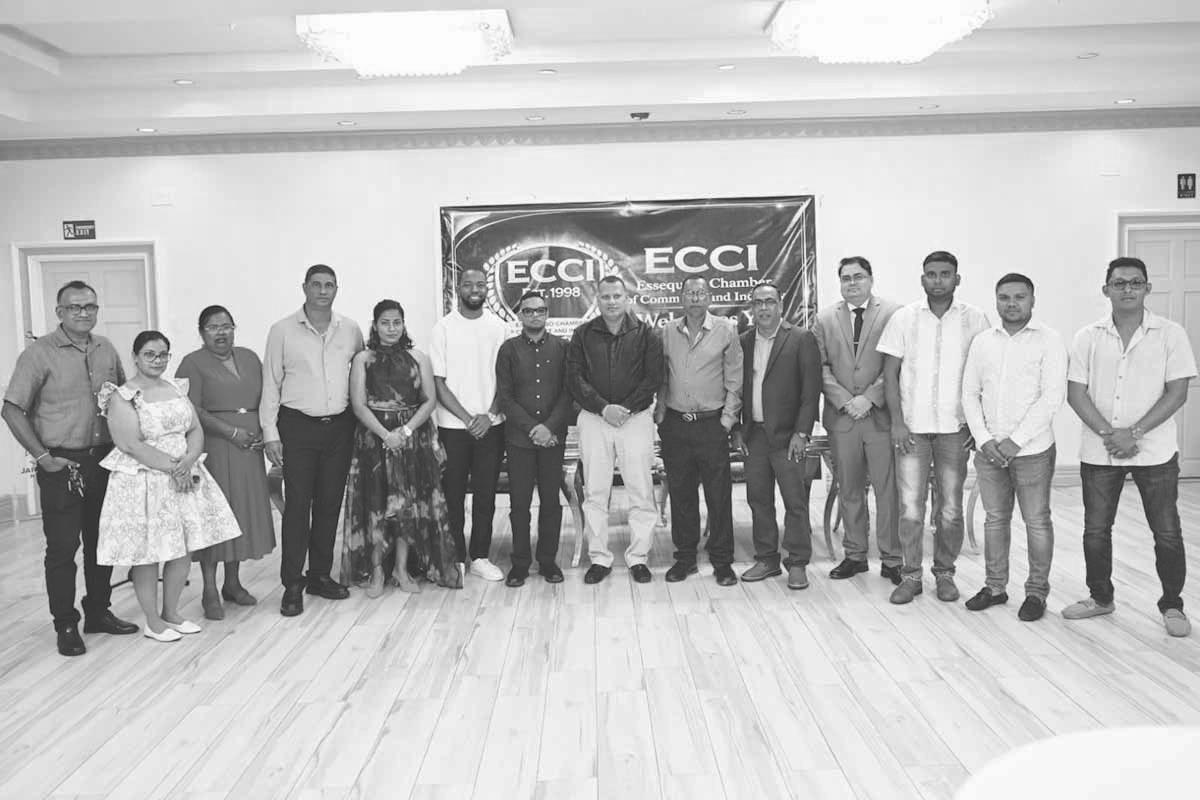
Member Tekaram Singh; ECCI President Ganesh Gaigobin; Senior Director of Business at Guyana Office for Investment (GoInvest), John Edghill; and other members of the business community. The engagement served as a platform for strengthening collaboration between the Government and the private sector, as Essequibo continues its transformation into a dynamic hub of economic activity.
Guyana fashion icon and author Sonia Noel is taking her signature programme, ‘Confidence Becomes You,’ into a bold new direction with a fully expanded transformational model. The initiative, once centred on confidence-building, has now evolved into a multi-level personal development ecosystem designed to support individuals at different stages of growth and self-discovery.
For over 10 years, Confidence Becomes You has empowered individuals to build confidence, develop discipline and align with purpose. The programme has attracted participants from across the Caribbean, North America and beyond, creating a community of individuals who are now showing up more boldly in their lives and careers. Now, in response to that growth, Sonia Noel is introducing a more immersive and elevated experience. “The programme has evolved because I have evolved. I made a promise years ago to continue adding value to myself so I can continue adding value to others. I receive testimonials regularly, and that encourages me to keep making a difference. Growth requires new levels, and this new phase creates space for deeper transformation,” Noel stated.
At the centre of this evolution is the launch of a new month-long advanced programme designed specifically for individuals who have already completed Confidence

Becomes You and are ready to go deeper. This elevated experience focuses on identity transformation, mindset expansion, personal power, and leadership, along with greater access to Sonia Noel for guidance and coaching. It represents a shift from learning confidence to fully embodying it. At the same time, the core Confidence Becomes You programme has been fully refined and is now delivered as a structured threeweek virtual experience. It provides a guided journey through self-awareness, confidence-building, discipline, time management and intentional living, along with action, reflection and personal transformation. Participants also have the option to elevate their expe-
rience through a VIP level, which includes access to the Healthy Thoughts Reset, a guided process focused on transforming mental patterns and cultivating intentional thinking. In fact, over the years, participants have consistently shared powerful testimonials that reflect the depth of the programme’s impact.
Damita Parks, Information Technology (IT) Financial Analyst, Model and Actress from the United States (US), reflected on her experience in the programme, noting a significant shift in mindset and self-awareness: “When I started Confidence Becomes You, I thought I was already confident, but this programme helped me realise

there was another level within me. From the first assignment, my mindset began to shift. I started thinking differently and seeing opportunities I never noticed before. This programme helped me unlock potential I did not even know I had. It is not just about confidence; it is about discovering and walking boldly in your purpose.”
Joshua Aaron of Guyana described the programme as a turning point that challenged him to grow beyond his comfort zone and take ownership of his personal development journey: “This programme challenged me to step outside of my comfort zone and truly own who I am becoming. It changed how I approach my goals, my decisions and my future.” Akisha Henry from St Vincent and the Grenadines highlighted how the programme strengthened both her confidence and clarity of purpose: “This programme helped me tremendously, from learning how to introduce myself with
confidence to discovering my true purpose and being intentional about my life.”
Anne Marie Hassanali of Trinidad and Tobago shared how the experience has had a lasting, daily impact on her confidence and decision-making: “I cannot talk about this programme enough. It has shifted me daily. Because of this experience, I now show up with confidence in every space I enter, make bold decisions and carry myself in a way that attracts opportunities.” Sonia Noel’s work continues to expand internationally. She recently returned from Michigan after the launch of the Empowerment Institute for Michigan. She is the Programme Director for Empowerment Through Fashion at the Empowerment Institute, which is an in-person, six-week programme in Lansing. She brings her signature “inner wardrobe” philosophy to communities across the globe. With over thirty years in fashion and a deep commitment to per-
sonal development, she continues to guide individuals in aligning their internal confidence with their external presence. Registration is now open for all programme levels, including the threeweek Confidence Becomes Your experience, the VIP experience, the advanced month-long programme for past participants, and the Healthy Thoughts Reset as a standalone experience. Participants who register on or before April 24 will receive access to a limited early bird special, and group rates are also available. As the year progresses, many are realising that growth requires more than intention. It requires action that leads to transformation. This new phase of Confidence Becomes You offers exactly that. Whether beginning the journey or stepping into the next level, participants are invited to move beyond who they were and into who they are becoming.
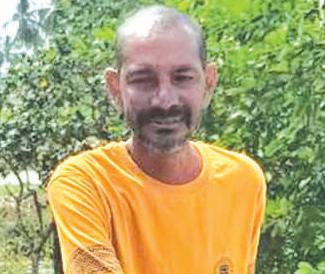
The partly decomposed body of 53-year-old Raymond Hack of Koker Dam, Fyrish, Corentyne Berbice, Region Six (East BerbiceCorentyne), was discovered on Saturday in the backlands of the village – days after he was reported missing. The now-deceased man was last seen alive on Easter Monday. Hack’s body was found in a section of the savannah near a trench by persons who were traversing the area. His brother, Hardat Lall, related that he last saw his brother on Easter Monday. “The last time I see him was Easter Monday… he just normally go through the street and he just go and drink, and then he come back.”

Dead: Raymond Hack
condition of his brother’s body indicated that he may have been in the water for some time. “The body swell and like fish and things bite him… it was in the water and then the water drop down after.”
Hack, a former painter, was described as a quiet individual who kept to himself and did not have issues with others. “He is a quiet person… not a fighting person… he don’t get problem with people.” Based on what is known, Lall does not suspect foul play, but believes his brother may have lost his way after consuming alcohol. “I feel like nothing wrong… I feel like he lose his track.” Relatives believe that Hack may have ventured into the savannah after drinking and was unable to make his way back. Hack is survived by one adult child. Police were summoned to the scene and the body was examined before being removed. An autopsy is expected to be performed on his remains.
Lall explained that the
Lall explained that after noticing his brother had not returned home, efforts were made to locate him in areas he was known to frequent. “I used to check all over the place… I check all the places where he used to drink.” But those efforts intensified after someone reported seeing Hack in the savannah, prompting a search. The grim discovery was subsequently made. “The person lay down by the dam… when we see him, the body swell.”
In August 2013, Sithe Global announced that it was pulling out of the project, which it said was too large to continue without national consensus and cited the lack of consensus in Guyana’s Parliament. At the time, the then APNU and AFC Oppositions, holding majority seats in the National Assembly, had both voted down key pieces of legislation, which consequently halted the project.
Then during its term in
office from 2015 to 2020, the APNU+AFC Coalition regime again shelved the project. The revival of the 165MW hydropower project was one of the promises made by the ruling PPP/C in its 2020 Elections Manifesto.
In November 2021, the AFHP was awarded to China Railway First Group (CRFG), but negotiations fell through after the company wanted to change the BOOT model, which the Government rejected. A revised RFP was
then issued in 2023, and four companies - Rialma S.A. (Grupo Rialma) from Brazil; China International Water & Elec. Corp; Lindsayca CH4 Guyana Inc., and a group made up of OEC, GE Vernova, and Worley - had submitted tenders to be pre-qualified for the Amaila Falls Hydropower Project. Those bids were under evaluation for several months before the Government decided to retender the project.



By Dr Tariq Jagnarine, Fam meD, gloBal HealTH
Why this matters now
Asthma is one of the most common chronic respiratory diseases worldwide and affects both children and adults. In Guyana, many people live with asthma, but do not have it properly controlled.
For some, asthma is seen as “just a little breathing problem”. It can become life-threatening if not managed correctly.
What makes asthma particularly important in Guyana is the environment we live in. Daily exposures such as heat, burning garbage, dust, smoke, and seasonal pollen are constantly triggering symptoms. The good news is that most asthma attacks are preventable with proper care and awareness
What is asthma?
Asthma is a condition that affects the airways in the lungs. These airways become inflamed and narrow, making it difficult for air to move in and out.
During an asthma attack, the airways tighten, swell, and produce extra mucus. This leads to symp-



toms such as wheezing, coughing, chest tightness, and shortness of breath.
Asthma can vary from mild to severe, and symptoms may come and go – but without proper control, it can become dangerous.
What triggers asthma in Guyana
Asthma symptoms are often triggered by environmental and lifestyle factors. In Guyana, these triggers are part of everyday life.
Heat and humidity
High temperatures and humidity can worsen breathing and increase airway irritation. Many people feel short of breath during hot periods.
Burning garbage in communities
Burning waste releases harmful smoke and tox-
particles into the air. This is one of the most common and dangerous asthma triggers in many neighbourhoods.
Children and elderly persons are especially vulnerable.
Dust and air pollution
Dust from roads, construction, and dry weather can easily enter the lungs, triggering symptoms. Indoor dust also plays a role, especially in poorly-ventilated homes.
Pollen and rainy weather
During rainy seasons, increased plant growth leads to more pollen in the air.
Mould growth in damp environments can also worsen asthma.
Respiratory infections
Colds and flu are major triggers, especially in chil-
to
Other common triggers
•Strong smells or chemicals
•Air pollution
•Exercise (if asthma is not well-controlled)
Each person may have different triggers and identifying them is key to controlling the condition.
Who is most affected
Asthma affects both children and adults, but it often begins in childhood.
Children exposed to smoke, pollution, or repeated infections are at higher risk. Adults with allergies, occupational exposures, or a family history of asthma may also develop the condition.
People living in communities with poor air quali-

ty or frequent burning of waste are at greater risk of frequent attacks.
Signs that asthma is not controlled
Many people think their asthma is under control when it is not.
Warning signs include:
•Frequent coughing
•Waking at night with symptoms
•Using a rescue inhaler often
•Avoiding activity due to breathing difficulty
If asthma interferes with daily life, it is not well-controlled.
The danger of ignoring asthma
Uncontrolled asthma can lead to severe attacks requiring emergency care.
In some cases, these attacks can be fatal.
Many emergencies happen because:
•Treatment is delayed.
•Inhalers are used incorrectly.
•Medication is not taken regularly.
•Environmental triggers are ignored.
Asthma is not dangerous when controlled, but it becomes dangerous when ignored.
Treatment and control
Asthma is managed using medications, often delivered through inhalers.
Controller inhalers reduce inflammation over time.
Reliever inhalers provide quick relief from symptoms.
Using inhalers correct-
ly is essential. Many people use them improperly, reducing their effectiveness.
Regular follow-up with healthcare providers helps ensure proper control.
Living well with asthma
With proper management, people with asthma can live normal, active lives. This includes attending school, working, exercising, and participating in daily activities.
Avoiding triggers, taking medication as prescribed, and having an asthma action plan all contribute to better outcomes.
Education is key; understanding asthma reduces fear and improves control.
Prevention and early action
While asthma cannot always be prevented, attacks can be reduced.
Key actions include:
•Avoiding smoke, especially from burning garbage
•Improving ventilation in homes
•Reducing dust exposure
•Managing infections early
•Staying hydrated in hot weather
Parents should be especially vigilant in recognising symptoms in children.
The role of families and communities
Asthma management is not just an individual responsibility; it is a community issue.
Families can support proper medication use and reduce exposure to triggers. Communities can:
•Reduce open burning
•Improve waste management
•Promote cleaner environments
Schools and workplaces should support individuals living with asthma.
Asthma need not limit life, but it must be taken seriously.
In Guyana, the environment plays a major role. Heat, smoke, dust, and pollen are everyday triggers, but they can be managed. Do not ignore symptoms. Do not skip medication. Do not wait for an emergency. Control asthma. Protect your air. Breathe easier. Live better



Oil prices jumped above US$100 a barrel as energy markets reopened today in Asia after talks between the United States and Iran ended without a new deal and US President Donald Trump said he would blockade Iranian ports.
Global benchmark Brent crude is up by 8.5 per cent at US$102.37, while West Texas Intermediate (WTI) is nine per cent higher at US$105.34.
The failure of negotiations at the weekend has raised concerns that the global energy crisis will deepen.
The price of oil plunged well below US$100 last Wednesday after Washington and Tehran agreed to a conditional twoweek ceasefire deal that includes the opening of the key Strait of Hormuz trade waterway.
The strait, through which a fifth of the world’s energy shipments pass, has become a key flashpoint of the Iran war after Tehran retaliated against the US-Israeli strikes by threatening to attack vessels that try to use it.
Shipments have largely been at a standstill since the conflict started on February 28, though some countries like India and Malaysia have negotiated safe passage for their vessels.
The disruption has led to energy prices surging around the world.
Major stock indexes in Asia slipped in morning trade today.
The Nikkei 225 in Japan fell by 0.8 per cent, while South Korea’s Kospi was down by 1.8 per cent.
Countries in Asia have been hit especially hard by the fallout of the Iran war as they are heavily reliant on oil from the Middle East.
US stock futures also pointed to a lower open for Wall Street shares.
Stock futures are an agreement between investors to buy or sell an asset at a certain time in the future at a set price and can indicate the direction of a market.
Energy prices and financial markets around the world have seen big swings in recent weeks as investors react to developments in the conflict.
Trump said in a Truth Social post on Sunday that the US will start “BLOCKADING any and all Ships trying to enter, or leave, the Strait of Hormuz”.
US Central Command (Centcom) later said the blockade of traffic entering and exiting Iranian ports will begin at 10:00h (14:00 GMT) today.
It will be enforced “impartially against vessels of all nations entering or departing Iranian ports and coastal areas,” Centcom said in a post on social media.
Centcom also said it “will not impede” ships in the Strait of Hormuz heading “to and from non-Iranian ports”.
Iranian parliamentary speaker Mohammad Bagher Ghalibaf, who led negotiations for Tehran in Pakistan, says the country “will not submit to any threat, in a statement carried by local media.
Iran’s Islamic Revolutionary Guard Corps (IRGC) Naval Forces said that any military vessels that approach the strait will be considered to be violating the ceasefire between Washington and Tehran and “dealt with severely”. (BBC News)
At least 30 persons were killed on Saturday in a stampede in the northern countryside of Haiti, authorities said, warning that the death toll could rise.
Jean Henri Petit, head of Civil Protection for Haiti’s Nord Department, said the stampede occurred at the Laferriere Citadel, an early-19th-century fort-
ress built shortly after Haiti’s independence from France.
One of Haiti’s most popular tourist attractions, the fortress was packed with students and visitors on Saturday who had come to participate in the annual celebration of the UNESCO World Heritage site, Petit added. (Excerpt from Reuters)
Asha Bhosle, a legendary Bollywood singer who became a cultural icon, has died aged 92, her son has confirmed.
The unrivalled queen of Indian playback singing died in Mumbai, having been admitted to hospital after suffering a heart attack.
Her death marks the end of an era in Bollywood music – with her career spanning more than eight decades and encompassing more than 12,000 songs.
Bhosle’s distinctive voice breathed life into countless film songs as actors lipsynced to her unforgettable tracks.
Her pervasive presence in Bollywood earned her the 1997 hit Cornershop tribute Brimful of Asha, and she was also known internationally for a collaboration with British musician Boy George.
Her voice had an infectious quality that kept fans on their feet, dancing and singing along, ensuring that her music became the soundtrack to generations.
The news of her death has seen an outpouring of tributes on social media.
Prime Minister Narendra Modi called her ”one of the most iconic and versatile voices India has ever known.” In a post on X, he said her ”extraordinary musical journey” enriched the nation’s cultural heritage and touched ”countless hearts across the world”.
Actor and politician Hema Malini voiced her grief, saying the singer’s death ”is especially hard for me as I have an emotional connect with Ashaji – she has made many of my songs so popular with her unique voice and style”.
Composer Shankar Mahadevan said ”every Indian is heartbroken today”, adding that her music would ”never perish as long as humanity exists” and that she would ”live forever, with her incredible voice echoing across the world”.
The tributes reflect a wider recognition of Bhosle’s remarkable artistry. With a voice that moved effortlessly from romantic ballads to energetic numbers, she became the go-to singer for composers across genres.
Her range and vitality made every song a celebration, defining the sound of Bollywood for generations.
From “Dum Maro Dum” to “Piya Tu Ab To Aaja”, her versatility knew no bounds. Films such as “Teesri Manzil”, “Caravan”, “Yaadon Ki Baaraat”, “Ijaazat” and

“Saagar” featured some of her most memorable work, while Umrao Jaan, composed by Khayyam, is widely regarded as a career high point.
Bhosle carved her own path in the world of music, distinct from her sister Lata Mangeshkar, who died in 2022.
While Mangeshkar embodied classical grace and precision, Bhosle brought a bold, dynamic energy to her songs.
Bhosle’s partnership with composer RD Burman (whom she later married) was one of the most iconic collaborations in Bollywood – together they crafted a soundscape that revolutionised the industry.
Her voice perfectly matched Burman’s experimental, eclectic tunes, resulting in numerous hits that spanned genres – from soulful melodies to upbeat numbers.
Bhosle and Burman built an extraordinary musical legacy together over 25 years, with Asha once recalling how he brought out the best in her.
”It is only Pancham [as Burman was fondly called] who has uncovered my range as a singer. Till Pancham made me explore the inner recesses of my own voice... I was totally unaware of the fact that I could sing with such suppleness of throat,” Bhosle said in an interview in 2023.
Born on September 8, 1933 in Goar, Maharashtra, Bhosle hailed from the renowned Mangeshkar family.
Raised in a musically rich home by her actor and classical singer father, Deenanath Mangeshkar, Asha began her musical journey early, singing her first song for the Marathi film “Majha Bal” in 1943. Her career soared in the 50s and 60s as she became a versatile artist across genres - performing for films, ghazals, bhajans, qawwalis and pop. Collaborations with OP Nayyar, Burman and SD Burman made her a household name.
Hits like “Aaiye Meherbaan” (1958), “Parde Mein Rehne Do” (1968) and “Dum Maro Dum” (1971) are just a few highlights of her vast repertoire.
Her duets with legends such as Mohammed Rafi, Kishore Kumar, and Manna Dey remain timeless classics.
Bhosle’s personal life was as vibrant as her career. At 16, she eloped with her neighbour, Ganpatrao Bhosle, leading to a tumultuous marriage and separation.
Mangeshkar later recalled that Bhosle’s husband isolated her from the family, ”preventing contact for years”. Ganpatrao also took her to music directors, hoping to profit from her talent and exerting control over her, causing her great hardship, Mangeshkar told film historian Nasrin Munni Kabir.
Bhosle left her husband in 1960 as a single mother of three children. She later teamed up with Burman, whom she married in 1980. Burman died in 1994 at the age of 54.
Bhosle faced constant comparisons with her sister, fuelling rumours of rivalry.
Despite the sisters living in the same building and sharing a cordial relationship, some claim Mangeshkar hindered Bhosle’s career, with Bhosle herself once suggesting she could have risen ”earlier than I did” with her sister’s help.
Mangeshkar attributed their silence to Bhosle’s husband’s influence. While the rivalry persists in public perception, many believe it has been exaggerated.
In 1971, Bhosle told film writer Raju Bharatan: ”After all we’d both inherited... the bounty of music. No doubt didi [older sister in Hindi] had a headstart, but that only made me more determined to catch up with her.”
Bhosle was celebrated for her remarkable ability to adapt her voice to evolving musical styles.
Over the years, she collaborated with a range of international pop artists – in the early 1990s, she teamed up with Boy George and recorded a track with R.E.M.’s Michael Stipe.
Meanwhile, Cornershop’s tribute to her singing gained even greater popularity after a remix by Fatboy Slim. Bhosle’s love for cricket was well known, with the sport being one of her favourite pastimes.
Her collaboration with Australian cricketer Brett Lee in 2007 was a fun moment, as they teamed up for the song “You’re the One for Me”, which featured during the inaugural Indian Premier League (IPL) season.
”Any meeting with Asha has to be a talk show. She will do all the talking, of course, interrupting the flow of words only to sing,” Bharatan, her biographer, wrote.
”You could make all the fun that you wanted of her –she would take it on the chin like the good sport that she is.”
Bhosle celebrated her 90th birthday in 2023 with a live concert in Dubai. ”At 90, standing for three hours on stage and singing is a blessing,” she said in an interview ahead of the show.
Bhosle never stopped working. In 2020, she launched the online talent show Asha Ki Asha. She also started a YouTube channel, encouraged by her granddaughter Zanai, sharing stories from her career and gaining over 160,000 subscribers.
”For me, music is my breath. I have spent my life with this thought. I have given a lot to music. I feel good I’ve come out of difficult times. Many times I felt I would not be able to survive, but I did,” Bhosle said in 2023.
In one of her final recordings, she collaborated with the British virtual band Gorillaz on their 2026 album “The Mountain”, shaped by themes of grief and mortality.The track, “The Shadowy Light”, paired her unmistakable voice with an international group of musicians, its imagery of a boatman guiding a soul across unknown waters reflecting on death and the afterlife.
The collaboration stood as a powerful closing note to her career, showcasing her enduring ability to transcend boundaries of genre, geography, and time. (BBC News)














Put some passion into whatever you choose to do. Home improvement projects that lower your overhead or make your life more convenient or comfortable are favored.
21-April 19)



Emotional choices regarding how to help others or a cause that concerns you will be difficult. Don’t jump to conclusions or make decisions for the wrong reasons.



21-July 22)


23-Aug. 22)





Put your energy where it helps most and makes you feel good about yourself and what you accomplish. You are overdue for a change, but before you begin, check the cost and time it will take to achieve your goal.
Back away from people eager to take advantage of you or tempt you to overspend, overdo or overindulge. You owe it to yourself to concentrate on personal growth and self-improvement projects.
Take control; if you let others make decisions for you or handle your affairs, your expectations will not be met. Do your research, put in the legwork and finish what you start.
Visit places that inspire you or attend lectures or events that fire you up and get you heading in a direction that motivates you to do your best. Trust your instincts and follow through.
Stick close to home and to those who make you feel comfortable. Focus on relationships that offer equality and dedication, not on people who take advantage of you.
You have plenty to look forward to if you stick to simple plans and life’s little pleasures. Focus on love, relationships and how and where you choose to live.

24-Nov. 22)


23-Dec. 21)
Put your emotions aside and focus on decluttering your life. Address health concerns, implement a fitness routine and start striving for personal growth and a healthy glow.






Finish what you start. Taking on too many projects will lead to uncertainty and mistakes. Pay more attention to your domestic concerns and how you present yourself to the world.
Think matters through before initiating your plans. An opportunity will arise at appointments, interviews or personal discussions with someone who can help you improve your domestic situation.
Pay attention to how you look and act, and opportunities will follow. Charm, enthusiasm and innovation will put you in a leadership position. A change to your environment will work in your favor.







Royal Challengers
Bengaluru 240 for 4 (Salt 78, Patidar 53, Kohli 50, Hardik 1-39) beat Mumbai Indians 222 for 5 (Rutherford 71*, Hardik 40, Suyash 2-47) by 18 runs
The toss is crucial in night matches at Wankhede Stadium with a true flat pitch and dew giving the chasing side a significant advantage. Defending champions Royal Challengers Bengaluru (RCB) lost that toss. Then went ahead and did what you need to do: score the highest Indian Premier League (IPL) score at the ground, 240, and defended it with considerable ease.
Phil Salt and Rajat Patidar set RCB up with knocks of 78 off 36 and 53 off 20, Patidar’s fastest fifty. The duo
each hit a hat-trick of sixes in a row, with Salt also taking three fours in a row. A total of 11 sixes and 10 fours flew off their bats, re-
Salt caught at extra cover.
Patidar denies MI a way back

just 26 runs, signing off with just reward in form of Suryakumar Yadav’s scalp. The RCB spinners bowled eight overs for 73 runs and


sulting in RCB chants at Mumbai Indians’ home ground. Between them they compensated for Virat Kohli, who himself did not seem too pleased with his 50 off 38 even as the other end kept producing big runs. Off the field during the second half of the match, Kohli did not need to fret much from the sidelines as the spinners Suyash Sharma and Krunal Pandya expertly shut the chase down. Suyash did so with the wickets of the rampaging Ryan Rickelton and Tilak Varma in his first over while Krunal bowled four overs for
three big wickets as against MI’s two spinners conceding 83 in six overs.
Salt starts RCB’s march Kohli registered the first boundary of the innings with a six in the first over, but it was Salt who kept on the assault, scoring 47 off 22 in the power play. This involved welcoming Mitchell Santner, a reluctant powerplay bowler, with three sixes and a four. MI were forced to bowl Jasprit Bumrah for two overs inside the power play; still RCB got to 71.
The next key moment for RCB was the introduction of legspin with a right-hand heavy batting line-up, but that did not matter at all with Mayank Markande extracting little turn in either direction. Salt stayed back to hit three consecutive fours off his flatter lengths, and was waiting to hit a six the moment he gave it a hint of air.
When all else failed for MI, Shardul Thakur, bowling for the first time as late as the 11th over, executed wide yorkers to tie Kohli down and take the wicket of

With 25 and a wicket off the last 17 balls, MI were hoping for a way back into the con- test when RCB Captain Patidar walked out. For some reason, Thakur gave up his death bowling and went searching, letting Patidar get off with a chipped four over mid-off first ball.
The return of Markande proved disastrous for MI as Patidar toyed around with him, hitting three back-toback sixes, including one reverse-sweep. From 22 off 4, the likely direction Patidar’s strike rate could travel was down, but he made sure it was not a long way down.
In his second over, Thakur completely went to pieces with his wide yorkers not landing and slower short balls travelling over the head on a red-soil bouncy surface. The 10-ball over went for 23 as RCB moved to 167 for 1 in 13 overs.
RCB had a big opportunity to put matters past any plausible chase, but Kohli could not get the boundaries despite trying to hit hard. Missing the reverse-sweep in his arsenal, he could not take the clever Santner down, who eventually ended up with the wicket of Patidar.
Even though Bumrah’s two overs at the death were excellent, keeping him at just 35 in four overs, he has now gone five straight IPL matches without a wicket if you count the Qualifier that MI lost last year. With his 34 off 16, Tim David did enough to keep them at an even two a ball.
Krunal, Suyash interrupt the MI start
Rickelton got the chase off to a flying start, MI racing away to 39 for 0 in three overs and 48 for 0 in four, which promised a close match. However, Krunal’s introduction began to raise the asking rate. Only eight came off his first over with Impact Player Rasikh Dar conceding just 15 in his two overs inside the power play.
Rohit Sharma went off with what seemed like a hamstring injury, and at 72 for 0 in seven overs, MI were already looking at 13
an over to win. Rickelton had no time to get a sighter at Suyash, who started off with a wide wrong’un and a top edge on the slog sweep. Later in the over, he went outside leg with a wrong’un to Tilak, getting him caught at short fine leg. Hardik Pandya walked in and hit a six first ball, but the asking rate went higher than it was at the start of the over.
Krunal provides finishing touches
At the first sight of Hardik, Krunal came on to bowl and fired balls in, bowling bouncers as well. He took the match-up to an even more favourable 32
off 35 balls bowled to his brother. He also mixed it up with a slowed-down delivery to have Suryakumar caught at long leg; his strike rate of 150 only damaged MI’s cause. MI needed 120 off 46 balls when Suryakumar got out. The asking rate soon went past three a ball, and Sherfane Rutherford’s 71 off 31 only served to control the net-run-rate damage to MI. (ESPNcricinfo. com)

Royal Challengers Bengaluru (20 ovs maximum)
Phil Salt c Pandya b Thakur 78
Virat Kohli c Yadav
b Pandya 50
Rajat Patidar (c) c Tilak Varma
b Santner 53
Tim David not out 34
Jitesh Sharma † lbw b Boult 10
Romario Shepherd not out 2
Extras (lb 1, nb 1, w 11) 13
Total: 20 Ov (RR: 12.00) 240/4
Did not bat: Devdutt Padikkal, Krunal Pandya, Bhuvneshwar Kumar, Jacob Duffy, Suyash Sharma
Fall of wickets: 1-120 (Phil Salt, 10.5 ov), 2-185 (Virat Kohli, 14.4 ov), 3-194 (Rajat Patidar, 15.6 ov), 4-231 (Jitesh Sharma, 19.2 ov)
Bowling O-M-R-W Trent Boult 4-0-50-1
Hardik Pandya 4-0-39-1
Jasprit Bumrah 4-0-35-0 Mitchell Santner 4-0-43-1
Mayank Markande 2-0-40-0 Shardul Thakur 2-0-32-1
Mumbai Indians (T:

Guyana’s senior women’s national football team, the Lady Jags, have an all-important clash ahead of them, as they take on Jamaica in the CONCACAF W Qualifiers next Saturday.
On the heels of a 4-0 victory against Antigua and Barbuda last month, the Lady Jags will need a victory over current group leaders Jamaica, in order to keep their CONCACAF Women’s Championships and 2027 FIFA Women’s World Cup hopes alive.
The upcoming fixture will see the Lady Jags travelling to “the Land of Wood and Water” to take on hosts, the Reggae Girlz, at the National Stadium in Kingston on Saturday, April 18.
As such, the Lady Jags team read:
Goalkeepers
Arden LaRose
Ludesha Reynolds
Deekola Chester
Defenders
Jenea Knight
Savanna Mondesir Singh
Glengie Lewis
Niomie Williams
Rylee Traicoff
Heike Clarke
Midfielders
Samantha Banfield
Hope Windebank
Hannah Baptiste
Savannah Viva Singh
Glendy Lewis
Sandra Johnson
Otesha Charles
Jalade Trim
Dylana Makarowski
Stefanie Kouzas
Shamya Daniels
Brianne Desa
Forwards
Annalisa Vincent
Myanne Fernandes
Jamaica currently lead Group B of the Qualifiers with nine points from three wins in as many games. Nicaragua sit second in the group with six points from three games, on account of
goal difference. Guyana has a similar six points from three games. Meanwhile, Antigua and Barbuda and Dominica are yet to salvage a point in the group, sitting fourth and fifth respectively.
To progress to the CONCACAF W Championships, the Lady Jags will need a massive win in Kingston. The first-place finishers from each of the six qualifying groups will move on to the CONCACAF Women’s Championships later this year, where they will meet the top-ranked teams in the region, the United States and Canada.
The CONCACAF W Championship will serve as the Confederation’s qualifier for both the FIFA Women’s World Cup Brazil 2027 and the 2028 LA Summer Olympics.
The clash between Guyana and Jamaica is set to kickoff at 20:00h local time on Saturday.
Chase’s Academic Foundation completed an unbeaten group stage run in the ongoing Massy Distribution Under-18 Football tournament on Sunday, while several other schools fought to stay alive in the competition ahead of the upcoming knockout stages.
Hat-tricks off the boots of Jaden Tasher (20th, 38th, 45th) and Shaquan David (8th, 55th, 70th) highlighted Chase’s 11-0 drubbing of St Joseph’s High School. Adding to Chase’s tally were Mark Glasgow (10th); Darius Chester (12th, 15th); Jaden Christian (65th) and Aaron Vasconcellos (69th).
Earlier in the day, a high-scoring encounter saw New Central High getting the better of Charity Secondary 5-3. Lennox Thornhill opened the scoring for New Central High in the seventh minute, but Johnny Smith levelled the scores for Charity in the 30th while Darvel Gonsalves put the Region Two side ahead in the 32nd.
Goals off the boots of Adriel Adams (55th); Trevor Gordon (59th) and Caedon Whyte (60th, 69th) gave New Central High an unassailable lead while Dylon Benjamin eventually pulled one back for Charity in the 66th minute.
Another goal-fest followed as Three Miles Secondary overcame Annandale Secondary 6-4.
Lebron Mendoca (10th, 70th); Joshua James (13th); Durell Washington (18th);
Lebron Wharton (38th) and Riley Tracey (40th) accounted for Three Miles’ six. On the other hand, Ronoko Morris (35th, 45th); Uzziah Collin (52nd) and Eliel Rose (68th) attempted Annandale’s comeback.
New Amsterdam Secondary later cruised past St John’s College 3-0. Enqi Leacock broke the ice in just the third minute. However, it was only until the second half that Domonique Rodrigues made it a 2-0 affair in the 50th minute, with Jaffarie Albert later adding the cherry on top in the 59th.

A second-half spurt later saw Mackenzie High getting the better of Carmel Secondary 4-2. Kemmany Mckenzie registered a hattrick in the 38th, 54th and 58th minutes while Azair Gomez added another to Mackenzie’s tally in the 49th. A Keil Alonzo brace in the 7th and 59th minutes accounted for Carmel’s response.
In other results on the day, Belladrum and Ann’s Grove Secondary Schools held each other to a stalemate when they met for the last group stage clash. Meanwhile, Westminster Secondary were awarded a walk- over after being scheduled to face The Bishops’ High School.
The Massy Distribution U18 tournament will continue on Saturday, April 18 with the staging of the Round of 16, while quarter-final action is slated for the following day, Sunday, April 19.
“Panthera Solutions is very pleased to be associated with the Rose Hall Town Youth and Sports Club, as it is a dynamic and very progressive organisation. We are confident that this contribution would play a major role in the continued development of the club cricket teams on and off the cricket field.”
Those were the words of Tony Turnbull, General Manager of Panthera Solutions, as he handed over a pitch cover and dozens of polo T-shirts to the club during a simple presentation at the St Francis Community Developers Conference Hall on Friday.
Panthera has been a sponsor of the club since 2020 and has played a major role in the club development over the last six years. Club Secretary Hilbert Foster expressed thanks to the sponsor for the contribution, stating
that the cover would enable the ground staff to fully protect the vital square of the pitch, bowlers run up and surrounding areas as the club already has two other covers. The 80 yellow polo shirts would be used by the cricket teams, sponsored by Farfan and Mendes Ltd on the cricket field and at official ceremonies organised by the club. Farfan and Mendes Ltd is the parent body of the Panthera company, which is actively involved in Guyana s oil and gas sector.
Cricket Manager Robby Kissoonlall stated that Farfan and Mendes was the longest-serving official sponsor of the RHTY&SC, having come on board since 1997. He stated that Panthera, since 2020, has supported the club s cricket development programme, Christmas Village, restoration work at the Area H Ground, cosponsored the purchasing

of a mobile grass cutter, and also co-sponsored the club s annual youth review magazine.
Earlier this year, the company donated close to half a million dollars worth of gear and cricket balls to the club s cricket nursery. The Farfan and Mendes Under-15 and Under-16 teams have played a major role in the club producing 61 of the 76 national players produced since 1995. Overall, the club has produced 133
players for Berbice, with 14 playing for the West Indies and the United States of America at different levels.
Among the players produced under the Farfan and Mendes Ltd sponsorship are Assad Fudadin, Kevlon Anderson, Shemaine Campbelle, Royston Crandon, Delbert Hicks, Khemraj Mahadeo, Junior Sinclair, Sylus Tyndall, Jonathan Rampersaud, Jeremy Sandia, Abdel Fudadin,
Shevon Marks, Eon Hooper, Clinton Pestano, Dominic Rikhi, Akshay Homraj, Brandon Prashad, Matthew Pottaya, and Shawn Periera. Panthera General Manager Turnbull stated that his company was very impressed with the club s performance on the cricket field and was very pleased to assist. He pledged further assistance and encouraged management to uphold the high standards they have set themselves.


has been strategically significant, that it justifies every single dollar that we’ve been spending on you and all the effort and commitment that we’ve been placing in building the relationship that we have,” Ramson Jr shared at the gathering, while promising the continuation of such investment.
showpiece over the Easter weekend has caught the attention of pundits around the region, hailing it as a step in the right direction.

he Umana Yana in Kingston, Georgetown was infused with an air of classy, athletic excellence on Saturday night as the Ministry of Culture, Youth and Sport moved to honour this year’s 23-member CARIFTA team that recently concluded their campaign in Grenada.
The 53rd edition of the games, hosted at the Kirani James Stadium in St George’s, saw Team Guyana coming away with six medals – four gold, one silver and one bronze – for a fifth-place finish at the
Games, overall.
The four-gold haul was especially poignant, matching a record-high achievement for the country’s youth track and field athletes.
As such, the group’s efforts were hailed at a reception on Saturday night where continued investment in the sport was assured by Sport Minister Charles Ramson Jr and Minister within the subject ministry, Steven Jacobs.
“This is a public justification that the investment that we’ve been making for the last five years, which


The Sport Minister went on to articulate his confidence in the athletes, stating, “I believe in my heart and so does President Ali, that track and field and our athletes, it has the largest potential for giving us global recognition at a global sports stage and I also believe, there is clear evidence to suggest, that there are athletes who competed in this last CARIFTA Games who are potential medal winners at the next Olympics or the Olympics after that.”
On the other hand, Minister Jacobs highlighted how Guyana’s performance at the reginal
Jacobs stated, “They said that the performance by Guyana was remarkable and that they’re seeing improvements. And that is from an outside source, so persons are looking in to what you’re doing as athletes, they’re looking in to what the Administration is doing and they’re looking in to what the Government is doing.”
“When you have those comments from persons that are not associated to us in any way, it’s something that you need to pay attention to. It says we’re moving in the right direction, we’re not there yet, but we’re going in the right direction and we want to continue that,” the cricketer-turned-politician went on to add.
All the athletes gathered were presented


with bouquets, and special awards saw Tianna Springer’s mother and Malachi Austin’s Coach being presented with plaques






Astellar six-wicket haul from Guyanese spinner Gudakesh Motie led the charge for defending champions Guyana Harpy Eagles on Day 1 as
the 2026 West Indies Championships Regional 4-Day tournament bowled off around the Caribbean on Sunday morning.
At the Sir Viv Richards Stadium in North Sound, Antigua and Barbuda, Guyana’s Captain Tevin Imlach, called right at the toss, and the Harpy Eagles bowled first against the Windward Islands Volcanoes.
Keemo Paul struck first for the Harpy Eagles during an early spell, as he removed Stephan Pascal for 6 runs in just the sixth over.
Opener Ackeem Auguste and the man in at number three, Kavem Hodge went on to form a 79-run partnership before Hodge was eventually caught behind off Niall Smith’s bowling for 31 from 76 deliveries.
As Keemo Paul claimed his second scalp, removing Alick Athanaze for a solitary run, Sunil Ambris pitched in another 30 off 36 balls, while Auguste spearheaded the Volcanoes’ resistance at the other end, approaching three
figures.
The wicket of Ambris in the 47th over signalled the commencement of the Motie masterclass, as the West Indian spinner went on to devastate the Volcanoes’ middle order.
Motie claimed the next five wickets on the trot, including the prized scalp of Auguste, who was caught for 95 off 177 deliveries, in an innings that featured 12 boundaries.
Following that menacing Motie spell, Ryan John went on to frustrate the Guyanese bowlers, with a resilient knock of 42 off 80, thus, lifting the Windward Islands Volcanoes to a competitive 286 all-out in 86.1 overs.
Motie ended the innings with 6-73 from 23.1 overs while Paul picked up 2-27 from 13 overs. Niall Smith and Veerasammy Permaul had one scalp each.
As Guyana went in to bat late in the afternoon, Tagenarine Chanderpaul needed only to face up to six balls before stumps was


called. As such, Guyana ended the day 2-0, in pursuit of 286.
Guyana’s XI for the first match featured Captain Imlach, Chanderpaul, Matthew Nandu, Kemol Savory, Kevlon Anderson, Raymond Perez, Isai Thorne, Paul, Permaul, Smith and Motie.
Over in Chedwin Park, Spanish Town, Jamaica, Barbados Pride won the toss and opted to bat first. Buoyed by 153 off the bat of Kevin Wickham, the Barbados Pride set a 348 all-out first innings total. The hosts ended the day trailing by 331 with 10 wickets in hand. Meanwhile, at the Coolidge
Cricket ground in Antigua, the Trinidad and Tobago Red Force routed the Leeward Islands Hurricanes for 138 in 60.5 overs. By close of play, the Red Force were trailing by just 76, still with 10 wickets in hand.
Play is expected to resume at 10:00h today at the same venues.