





President Dr Irfaan Ali walks hand in hand with a child while engaging with residents of East Ruimveldt, Georgetown on Thursday


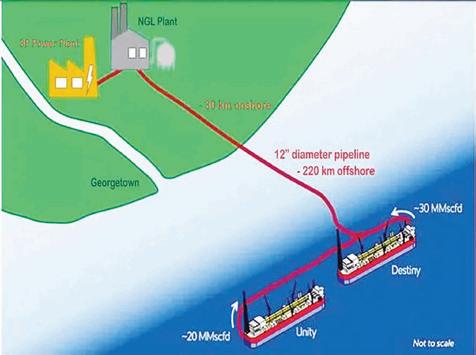
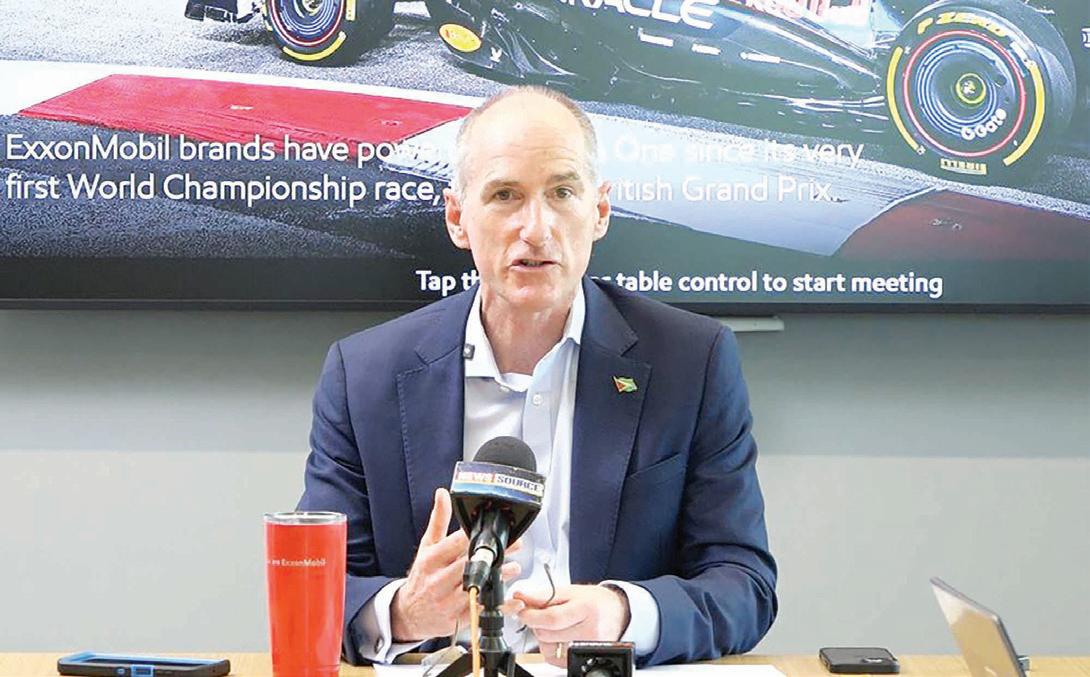
President of ExxonMobil Guyana Limited (EMGL), Alistair Routledge, says that the pipeline that will bring gas from offshore to Berbice, where a massive gas project will be built out, could cost an estimated US$2 billion – double the cost of current infrastructure already laid for the Gas-to-Energy (GtE) project since 2024.
The Guyana Government has been touting the development of a second gas project in Region Six (East Berbice–Corentyne) to support large-scale industrial growth with power plants; a data centre; and an alumina plant, among other heavy industries – an initiative
that will be separate from the highly-anticipated GtE project at Wales, West Bank Demerara, in Region Three (Essequibo Islands-West Demerara).
Already, some 250 kilometres of 12-inch pipelines, with the capacity of some 120 million standard cubic feet per day (mmscfd), have been installed by ExxonMobil to

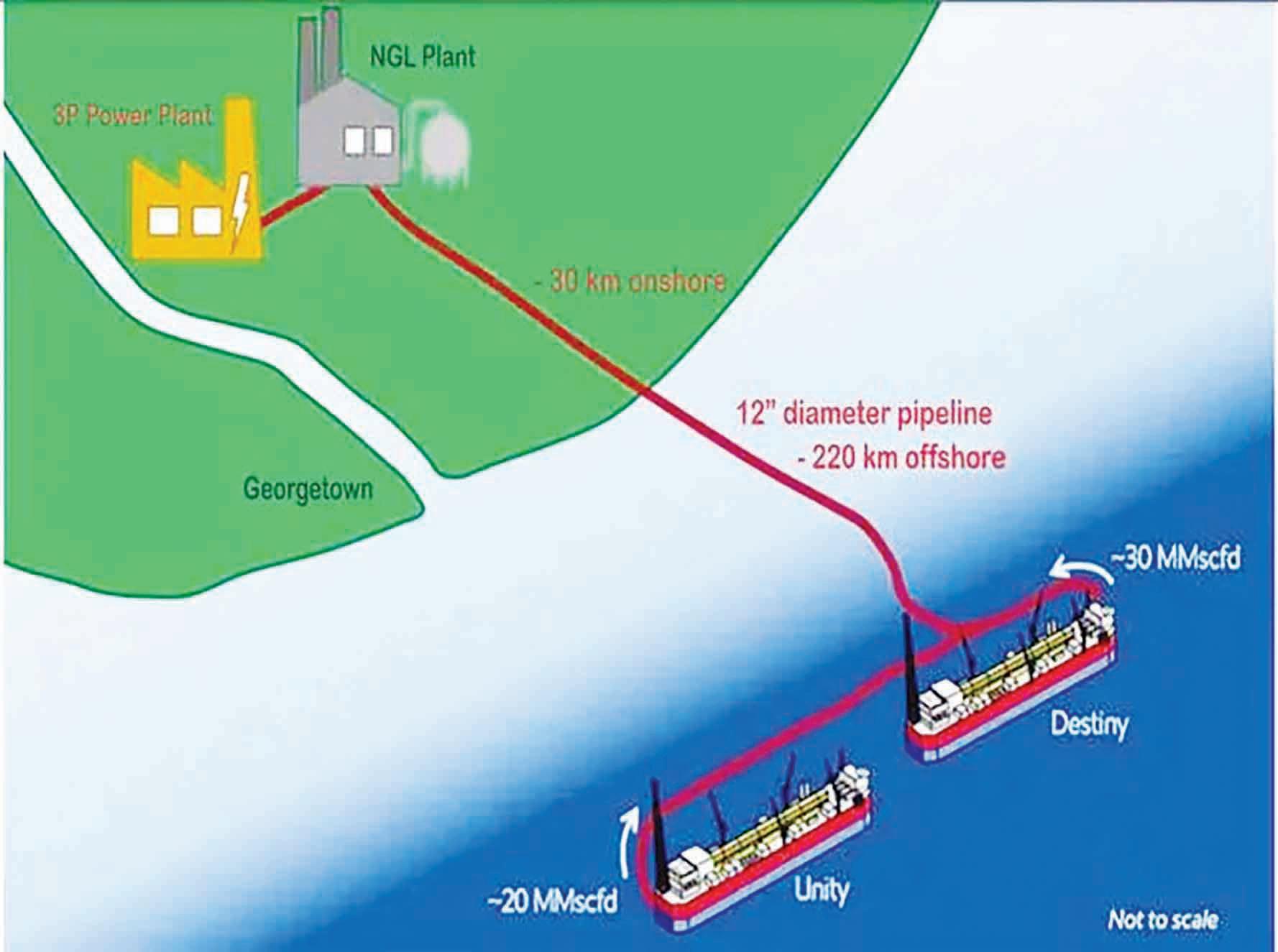
the tune of US$1 billion to bring the gas onshore for the 300-megawatt (MW) combined cycle power plant and natural gas liquids (NGL) facility at Wales. Routledge said that the installed pipeline is being maintained and kept ready for the startup of the GtE Project later this year, utilising the rich gas from the Liza Fields in the Stabroek Block offshore
According to the ExxonMobil Guyana President, the pipelines for the Berbice gas project would be much larger than the GtE infrastructure, bringing a higher quantity of gas onshore.
“As you know, it costs roughly a billion [US] dollars to lay a pipeline and put the risers in in order to sup-
ply gas from the Liza field to Wales in Region Three. To do similar for Berbice in larger volumes, a larger pipeline could easily be two billion [US] dollars or more. [It’s] not a small investment,” he told reporters during a press conference on Thursday at the company’s Ogle, East Coast Demerara, headquarters.


FRIDAY, MARCH 20, 2026






The Berbice Bridge will be closed to vehicular traffic on: Friday, March 20 –05:00h–06:30h and Saturday, March 21 – 05:25h–06:55h.
Parika and Supenaam departure times – 05:00h, 10:00h-12:00h, 16:00h, 18:30h daily.
Sunny skies are expected during the day, followed by clear skies at night. Temperatures are expected to range between 22 degrees Celsius and 29 degrees Celsius.
Winds: North-Easterly to East North-Easterly between 3.57 metres and 4.91 metres.
High Tide: 17:44h reaching a maximum height of 2.87 metres.
Low Tide: 11:17h and 23:33h reaching minimum heights of 0.28 metre and 0.41 metre.










…says country could soon be earning larger share of profits
With the surge in oil prices on the global market, Guyana is already earning increased revenues, and according to President of ExxonMobil Guyana Limited (EMGL), Alistair Routledge, these higher market prices coupled with increased production in the Stabroek Block offshore could see the country receiving a larger share of the profits from oil sales.
Routledge told reporters at a press conference on Thursday that the price per oil cargo has gone up from the average of US$70 a few weeks ago to now just over US$100 as a result of the ongoing United States and Israel war with Iran causing massive disruptions to oil supplies around the world.
“Each cargo is a million barrels. So, where it was US$70 million [per cargo] in the past, it is now $100 million. So, already the [Guyana] Government is seeing higher revenues because of the higher price,” the Exxon head stated.
If these prices are sustained, which Routledge says is likely to happen, then the country could be getting a larger share of the oil profits as the costs for its historical investments in the Stabroek Block petroleum operations are fully recovered.
ExxonMobil and its co-venturers, Hess and China National Offshore Oil Corporation (CNOOC), had committed an investment of US$60 billion in the Stabroek Block operations, of which Routledge said approximately US$40 billion has been spent.
Under the 2016 Production Sharing Agreement (PSA), the Stabroek Block partners can recover costs expended, including those accumulated historically, from up to 75 per cent of the gross revenues earned from the sale of oil produced offshore Guyana. The remaining 25 per cent of profits is shared between the Stabroek Block co-venturers (ExxonMobil, Hess and CNOOC) and the Guyana Government. In addition to its roughly 12.5 per cent share of profits, the Government also gets an additional two per cent in royalties from the total revenues.
Earlier than anticipated Routledge told reporters on Thursday that they have managed to bring down the
cost bank to approximately US$5 billion, which could be recovered this year rather than in 2027, as was initially anticipated.
“We’ve been generally running down that historical bank of costs at a rea-
ate. Now, we don’t forecast oil prices, but if you stay at the current oil price, then it will happen this year, based on the level of expenditures and the production that we anticipate. So that’s a significant accel -
the oil price, volumes of oil produced and sold, and on how much operation costs are incurred.
“We will move into a much more dynamic world from the point of view of the amount of revenue the

sonably steady and predictable pace. We were anticipating sometime next year, in 2027, that we were going to get to the point where we had recovered those historic costs, largely because of just increasing volumes of production that were generating higher and higher revenues to offset the ongoing expenditures plus recover historic costs.”
“What we’re now seeing in this price environment is that it will acceler-
eration. What that then means is that instead of the roughly 14.5 per cent that the Government [or] the country has been receiving by way of revenues into the Natural Resource Fund from the Stabroek production and revenues… that percentage will significantly increase,” the ExxonMobil Guyana Head stated.
Dynamic world
That increase, he explained, is dependent on
country is receiving, but it is in a positive trajectory. So, the contract is going to deliver what it was intended to do – to encourage as much investment as possible in the Stabroek block, which is what we’ve been doing… So, it’s all playing out. In the current price environment with what’s happening in the world, [the cost recovery is] going to happen faster than we had anticipated,” he posited.



Editor: Tusika Martin
News Hotline: 231-8063 Editorial: 231-0544, 223-7230, 223-7231, 225-7761
Marketing: 231-8064 Accounts: 225-6707
Mailing address: Queens Atlantic Industrial Estate Industrial Site, Ruimveldt, Georgetown
Email: news@guyanatimesgy.com, marketing@guyanatimesgy.com
Crime in Guyana cannot be effectively addressed through infrastructure upgrades and technological improvements alone. Recent remarks by President Dr Irfaan Ali at the Guyana Prison Service Annual Correctional Officers’ Conference highlighted a fundamental truth: meaningful crime reduction requires confronting the social and psychological factors that drive offending behaviour. Substance abuse and mental health challenges are among the most critical determinants of repeat offending, yet they remain largely unaddressed until individuals enter the criminal justice system.
President Ali’s analysis rightly situates crime prevention within a broader societal context. Prisons have traditionally been treated as reactive mechanisms, facilities designed to contain those who have already transgressed. While modern infrastructure and advanced security systems are essential for effective correctional operations, they cannot replace proactive measures that intervene before individuals engage in criminal conduct. Addressing crime at its roots demands early, structured, and sustained interventions, particularly within the education system.
Schools represent the first structured social environment for children and adolescents, and they are therefore pivotal in shaping behaviour and resilience. Yet, as the President observed, existing educational approaches to mental health and substance abuse remain superficial, often limited to brief references within the curriculum. Such minimal exposure is insufficient to equip young people with the knowledge, coping mechanisms, and support networks required to navigate social pressures and avoid harmful behaviours. Without systematic preventive programmes, vulnerable youths remain at risk of engaging in actions that may eventually bring them into contact with the criminal justice system, further burdening correctional facilities.
The normalisation of risky behaviours, including the growing prevalence of vaping, illustrates the urgency of this challenge. These behaviours intersect with mental health vulnerabilities, creating conditions that increase the likelihood of criminal activity. Early intervention, including mental health support and substance abuse education, is essential to break this cycle before it escalates. By acting proactively, society can reduce the number of young people entering the prison system and mitigate long-term social costs.
President Ali also drew attention to broader social dynamics that influence crime, particularly the declining engagement of men in Caribbean societies. Across the CARICOM region, the positive social influence of men, as fathers, mentors, and community leaders, has diminished. This disengagement contributes to patterns of educational underachievement, weakened social cohesion, and eventual involvement in criminal activity. Recognising and addressing the societal role of men is therefore a critical component of a comprehensive crime prevention strategy. Without addressing these structural issues, interventions risk treating symptoms rather than causes, perpetuating cycles of offending.
Prison reform, in this context, must move beyond the physical confines of facilities. Effective reform requires sustained investments in mental health services, substance abuse prevention programmes, and early social interventions. International experience demonstrates that integrating these elements into justice and education systems reduces recidivism, enhances public safety, and ensures that communities benefit from preventative rather than solely reactive measures. By shifting focus from containment to prevention, the criminal justice system can operate more efficiently, and communities can experience greater long-term stability.
The President’s position underscores the need for coordinated, cross-sectoral action. Education authorities must implement structured mental health and substance abuse programmes while training teachers to identify and support at-risk students. Health services and social agencies must expand accessible, communitybased interventions. Families and communities must also be engaged in fostering responsible social norms and guiding young people toward constructive choices.
Addressing substance abuse, mental health vulnerabilities, and social disengagement provides a pathway to reducing repeat offending and easing pressures on the prison system. As President Ali has emphasised, the future of crime reduction in Guyana lies not solely in the design of correctional facilities but in the creation of opportunities for citizens to thrive in environments that prevent criminal behaviour before it begins. Structural reform in education, social services, and community engagement is therefore the most effective investment in national safety and societal well-being.

The hill I will die on: Streaming is rubbish – take me back to the golden era of
B y F rances r yan
Streaming has many strengths: producing some of the best shows of recent years, convenience, the chance to spend hours of your life scrolling through algorithm-suggested content only to watch nothing and then pass out at 1am. But when it comes to watching films on the platforms, I am one extortionate paywall away from buying a DVD player off eBay and Googling: “Does Blockbuster still exist?”
It is not simply that Netflix and co are killing cinema – although, yes, that is a thing that is objectively bad. It is that the advent of streaming has made watching a movie in your own home more costly, more restricted and often incredibly annoying.
As a millennial, I like to think I grew up in the golden era of film. You could go to the cinema for a fiver to watch a movie that wasn’t three hours long. And really brilliantly, you could take a trip to your local DVD shop to rent something or buy a physical copy that was yours forever (at least until the format became outdated and you sold it in a bundle for £1 on Facebook Marketplace).
Nowadays, if you rent a film that has recently been released it’ll cost you up to £20, far more than if you saw it in most cinemas –plus you’re paying the electric and heating bills. If you want to see last night’s Oscar contenders as part of your standard streaming packages before 2027, you will probably need to subscribe to every major platform as well as to satellite.
And if you feel like watching an old classic, make sure you set aside plenty of time to find it. When I fancied rewatching Sense and Sensibility recently, it struck me how it had become the norm to have to search through Netflix, Prime and Disney+ to work out which one currently owns the rights to each film. I eventually unearthed it on iPlayer. I think it was quicker for Jane Austen to write the novel.
Then there are the hidden costs. You almost have to respect the gall of the corporations that decided to put adverts on streaming – a service that, by definition, viewers started paying for as an alternative to watching ads. As subscription charges shoot up, most Brits are now opting for packages with advertising. The choice is between
higher bills, cancelling – or having a pivotal scene interrupted by an advert for dishwasher tablets.
My personal loathing is what I pettily insist on calling Prime’s “double paywall”, in which Amazon blocks off popular films from its own subscribers unless they stump up a £3.49 rental charge on top of the £8.99 we’re already paying monthly. At the time of writing, this includes such brand new blockbusters as Babe and Sleepless in Seattle.
I just want to be able to rewatch a beloved film without helping Jeff Bezos buy another yacht. Excuse me, I’m off to build a time machine to 2008. It’ll be easier than renting a film released then. (The Guardian)
Frances Ryan is a Guardian columnist.

...“we nurture businesses from the ground up” – CEO
The Institute of Private Enterprise Development (IPED) has disbursed more than 147,000 loans totalling over $64 billion over the past 40 years as it officially kicked off its 40th anniversary exhibition.
The expo is one of several activities being hosted by IPED as it celebrates its 40th anniversary this year under the theme “40 Years of Strengthening Enterprises, Transforming Lives, and Supporting National Development”.
Founded in 1985, the Institute of Private Enterprise Development (IPED) aims to support micro and small enterprises through finance, capacity building, and advisory services.
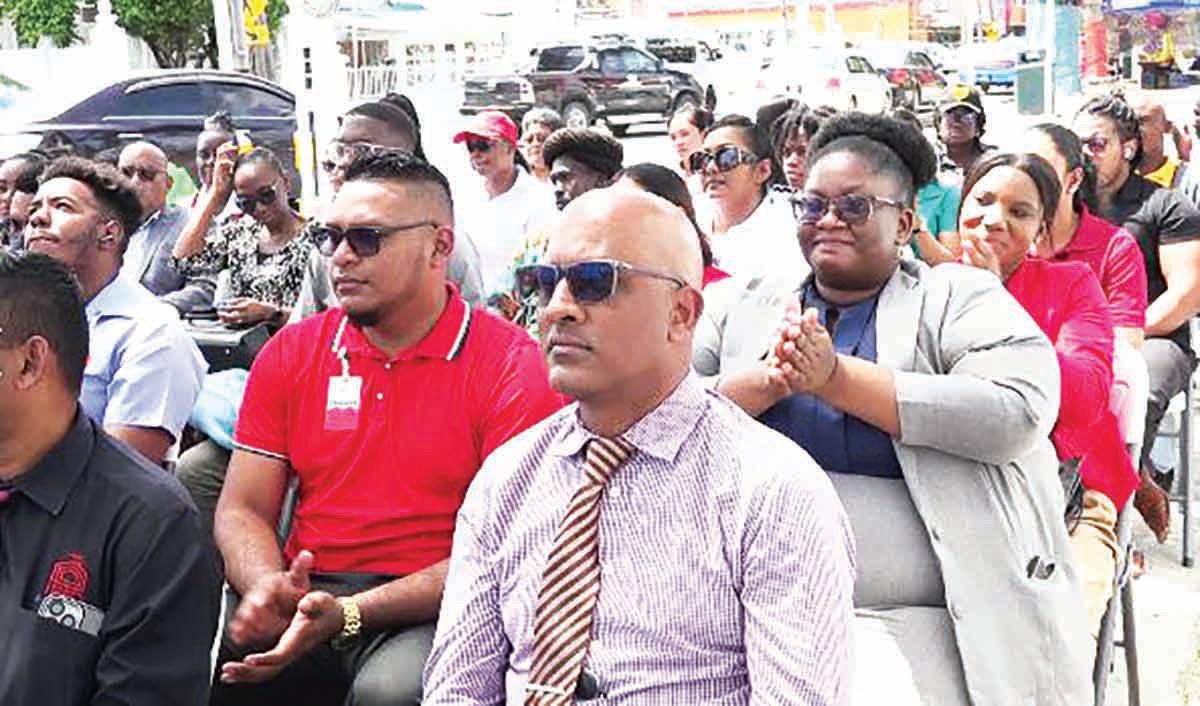
At the exhibition, some 25 businesses that have received direct support from IPED are showcasing their products and services. The exhibition runs for two days, from March 19 to 20, on Main Street, Georgetown.
During the exhibition launch, Chief Executive Officer (CEO) of IPED, Jagdesh Haripershad, highlighted the significant investments made by IPED over the years, underscoring its impact on enterprise development in Guyana.
“So, over the 40 years, we have disbursed over 147,000 loans for a total value of approximately $64 billion. We have succeeded with several governments during these 40; when we first started, IPED began providing opportunities for small businesses and unemployed people, as the unemployment rate was very high. Entrepreneurship offered an avenue for them to earn income for their families and also create employment within society and the community, helping those families become sustainable.”
In terms of challenges, he explained that working with persons from riv-


erine communities presents unique difficulties.
“Some of the challenges are that we work with very small, informal, riverine and rural communities across Guyana. Most of these people have a business idea and a market, but sometimes they lack the knowledge and the structure to succeed. IPED now works with them from the ground up, like nurturing a baby.”
“The risk is high when we start working with these businesses, [but despite these challenges] we provide a system, finance, training, access to marketing, and assistance with content and other challenges so they become bankable. We then transition them from micro-businesses to small businesses, helping them formalise and grow sustainably.”
Reflecting on the organisation’s origins, Haripershad highlighted that IPED remains committed to supporting micro-businesses, guiding them from their early stages to becoming more independent and sustainable.
The CEO also revealed that IPED is embracing digital solutions to better serve
its clients. He explained that the organisation aims to ensure its clients are not left behind and can benefit from the new economy and opportunities for generational wealth. Highlighting IPED’s evolving focus, he noted that the institute remains transformative and innovative, recently launching a fully digitised software called ‘Mimix’ from the United States to enhance efficiency and agility.
Meanwhile, Lorena Solórzano Salazar, who was also present at the anniversary celebration, empha-

sised the importance of supporting the growth of small businesses in Guyana.
“It is crucial to keep developing micro and small enterprises, as they play a key role in the economy, especially in a growing one. There are numerous opportunities for growth, and it’s not just about the business itself – it’s about the families and communities they impact. When a business grows, it provides jobs, and those employees have families whose lives are improved as a result.”
She also noted that run-
ning a business is not without its challenges, with access to finance being one of the key obstacles. While funding may seem available, many entrepreneurs struggle with maintaining proper records, effective strategies, and well-prepared proposals to present to financial institutions.
She highlighted the role of organisations like IPED, which work closely with communities, providing dayto-day support to help businesses grow and improve their access to financing.

FRIDAY, MARCH 20, 2026
1) 2341 rounded to the nearest ten is (A) 2330 (B) 2340 (C) 2400 (D) 2350

2) The fraction 6/3 is best described as (A) an improper fraction (B) a mixed number (C) a whole number (D) proper fraction
3) Write 0.3 as a percentage (A) 3% (B) 30%
( C) .3% (D) 300%

4) Each angle of an equilateral triangle must equal
Eid is a religious festival celebrated around the world by the Muslim community. Eid al-Fitr is an Islamic holiday marking the end of Ramadan, the month when devout Muslims fast daily from dawn to sunset. Ramadan is a time for increased worship and charity and typically sees festive gatherings to break the fast. The celebrations last usually three to four days. During Ramadan, Muslims only eat before sunrise and after sunset. During the day they do not eat or drink anything. There are exceptions for the elderly, the sick or small children.
In the Quran, the holy book of the Islamic faith, it is said that one
(A) 900 (B) 600 (C) 450 (D) 700


5) Which of following numbers is a multiple of 12 (A) 3 (B) 6 (C) 9 (D) 24
6) What is the difference between the values of the 4 and the 5 in the number 43, 765?
(A) 3995 (B) 39, 995 (C) 395 (D) 399



of the main reasons for fasting is that it teaches compassion. This is because when people do not eat the whole day, they begin to understand what it feels like to have no food or water. It becomes easier for them to help the less fortunate. After fasting for one month, Muslims break their fast by preparing delicious meals and sweet dishes. They celebrate with family and friends. It is celebrated during the first three days of Shawwal, the 10th month of the Islamic calendar. Because the Islamic calendar is based on the Moon, Eid al-Fitr may occur in any season of the year. Eid al-Fitr means the feast, or festival, of breaking the fast.
(From kids-world-travel-guide.com)

By Randy Blasing

Today all the children have been reborn, glowing from head to toe in new clothes. The three little girls I saw riding here in a blue pickup truck under the eyes of their father looked fresh as daisies, sun-browned faces haloed by identical new white summer hats, & now two sisters materialize on the beach like figments of the sun, promenading in white dresses with polka dots every color of the rainbow. They go to show everybody is created in the image of light, & every last day is holy.
(Source: Poetry [August 1983])

You find a $1000 bill on the street. A few blocks later, you find another. A few blocks later, another…



President Dr Irfaan Ali is sparking renewed discussions on a national refinery, emphasising that the strategic development of regional resources is essential to safeguarding the Western Hemisphere’s economic stability and energy security.
The Head of State made the announcement during the 136th General Meeting of the Georgetown Chamber of Commerce and Industry (GCCI), held at the Guyana Marriott Hotel, Kingston, Georgetown, on Thursday.
His discussion was directly linked to the ongoing conflict in the Middle East, particularly developments surrounding the Strait of Hormuz.
Rising tensions in the Middle East have placed renewed global focus on the Strait of Hormuz amid an escalating conflict involving
Iran, Israel, and the United States. The ongoing military exchanges, including airstrikes on Iranian energy infrastructure and retaliatory attacks, have heightened fears of disruptions to one of the world’s most critical oil transit routes. As a result, global markets remain on edge, with concerns mounting over potential spikes in fuel prices, increased shipping costs, and wider impacts on international trade if instability in the region persists.
President Ali noted that natural gas is a critical component for the petrochemical industry, which underpins the production of plastics, fertilisers, pharmaceuticals, synthetic textiles, and helium, an essential element for cooling super magnets used in semiconductors. This, he explained, illustrates the
wide-reaching impact that disruptions in natural gas supply can have on the global industrial and technological system.
“This is a massive disruption, and that is why we support every effort to have the Strait of Hormuz open and functional and every effort in bringing the war to an end. We also support every effort to protect key energy infrastructure in the Gulf States. There is no other option – we are all going to suffer under these circumstances.
Refinery and energy security
“This, of course, brings us very importantly to our policy decisions moving forward. One of the strategies is to increase our storage capacity and take it to a level where we can better control price differentials and

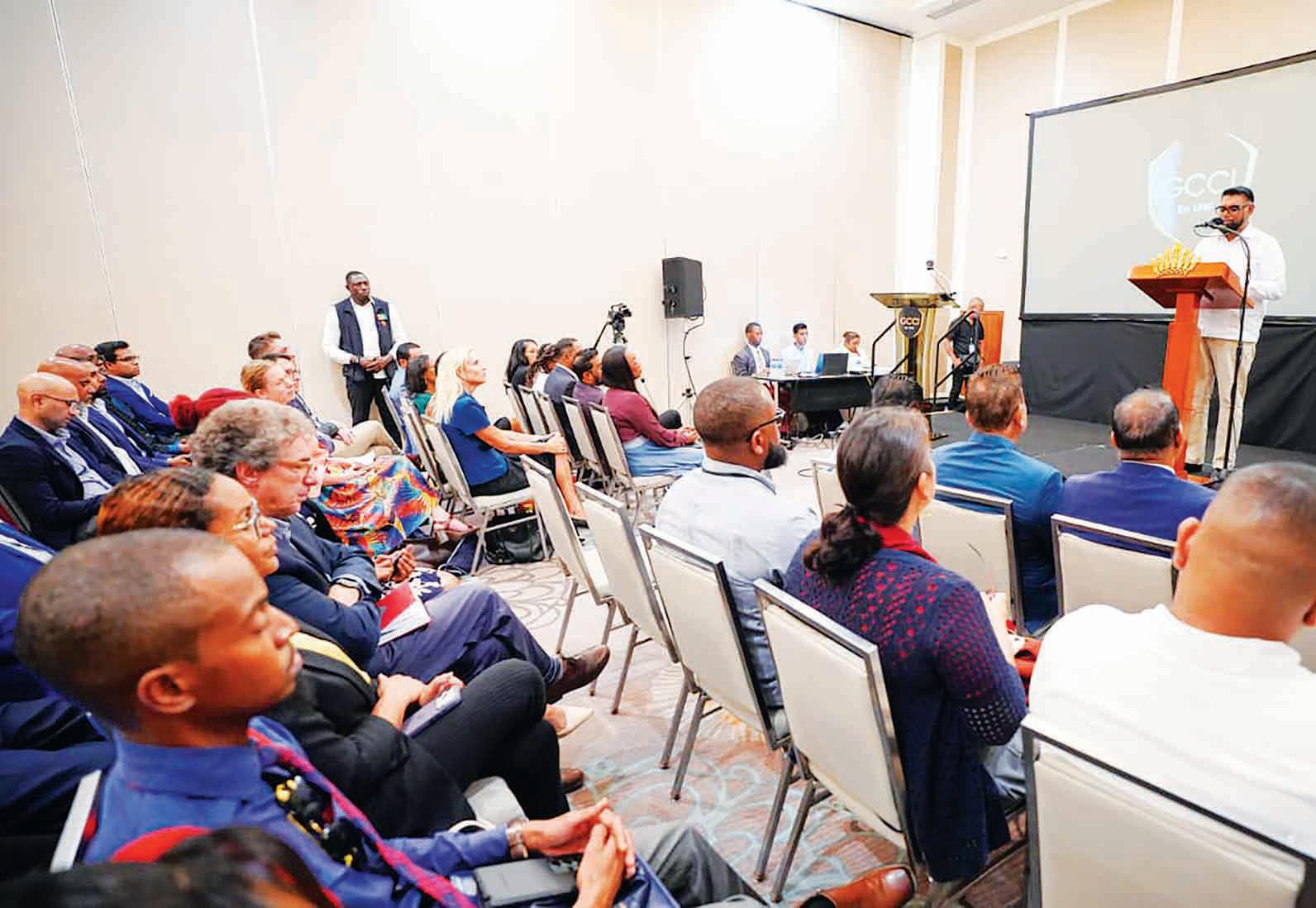
President Ali said that there must be a renewed focus on discussions surrounding a refinery and energy security.
“Now, I believe we should return to the conversation of a refinery and security. This challenge has opened up discussions globally and reinforced what the U.S. policy for the Western Hemisphere has been –that we must optimise our resources and the development of those resources for the protection and economic viability of the hemisphere.”
He further noted that these considerations are critical to the region’s energy viability.
“These are no longer farfetched ideas; they are now realities that we must embrace. An important part of
this reality is ensuring we have a secure, rule-based hemisphere in which our shared values of democracy and freedom are upheld. We cannot continue to look beyond our hemisphere for solutions when we have so many resources within the Western Hemisphere that must be developed if we are to secure a sustainable future for ourselves. It is in this context that we must view this conference.”
Ali also highlighted Guyana’s growing global recognition, noting that the country is attracting increasing international investment. He emphasised that as Guyana rises, it must do so inclusively, warning that growth that excludes others risks fracturing, while growth that includes endures. The president further cautioned that rising global tensions could lead to higher costs across industries. He explained that even everyday commodities, such as plates and cups, could be affected by a potential 20 per cent increase in maritime transport costs, which might add up to US$200 per 20-foot container in some locations. He added that the government has already maximised available adjustment tools to mitigate such impacts.
“Essequibo 1899” Meanwhile, emphasising forward planning and national development in regard to natural gas, Ali announced the naming of Guyana’s next Floating Production Storage and Offloading (FPSO) vessel.


It was just a one-paragraph item in the news – but its import was so far-reaching that your Eyewitness was gobsmacked! The item said, “A Brussels court ruled that a 93-year-old retired Belgian diplomat must stand trial for the 1961 killing of Patrice Lumumba, the first Prime Minister of the Democratic Republic of Congo.” The news reminds us that countries that ruled despotically over us in what they called the “third world” weren’t just the big ones like Britain or the USA. Here’s tiny Belgium – known more for its chocolates than anything nowadays – once ruling over what was then “The Belgian Congo”!! And contrary to the benign reputation they’ve cultivated, they were as vicious as could be in ruling THEIR vassal state they snatched in the late 19th century’s Europe “Scramble for Africa”!! The Congo was ELEVEN times the size of Belgium – and packed with gold, diamonds and copper!!
Belgium’s typical of the “medium powers” the Canadian PM Carney sanctimoniously tried to rally to stand together after Pres Trump kicked them to the curb recently!! Your Eyewitness will shed no tears for them since they were all complicit in their crimes against humanity – except that they didn’t see the Congolese as humans!! The Belgian rape of the Congo has left those poor souls in turmoil to this day. Lumumba was one of the bright lights that came out of Africa in the struggles for independence from the imperial powers. In June 1960 he led the Congo to independence but refused to become a figurehead leader who’d have the colonial power continue their plunder and rape of “natives”!! At his inauguration as PM, he spoke about these atrocities in front of the Belgian King – who was furious!!!
But it was his decision to nationalise the mining and his closeness to Russia that sealed his doom. Within six months of his inauguration, he was kidnapped by Belgian mercenaries supporting western-backed Katangan separatists – including Etienne Davignon, the diplomat now charged – and murdered in the jungle. Another Belgian officer, Police Commissioner Gerard Soete, sawed the bodies in pieces and dissolved them in sulphuric acid. Two teeth were all that remained of Lumumba. Soete kept them as a trophy. This was shown on television, in a 2000 report on a German broadcaster in which Soete himself recounted the details and held the teeth up to the camera.
Lumumba’s daughter petitioned the Belgian King for the return of the teeth to the Congo, and in 2022 one was finally returned where it was taken: Lumumba’s native village and then transported to Katanga in the southeast, where he was executed in 1961.
Maybe justice will finally be done when Davignon goes on trial. But then Belgium doesn’t have the death penalty!!
…being mocked
With Sanction Man and his Daady filing frivolous suits in the local courts to delay his appointment in the US courts, they’ve all been dismissed – including appeals – and costs awarded to the defendants. One of them was the AG, who, not receiving his court-mandated costs, pointed this out over social media.
Well, who told him to do that?! Sanction Man’s lawyer replied snarkily: “My clients, Mssrs (sic) Azruddin and Nazar Mohamed, are delighted that the Government is eager to do business with them and to accept their generous endowments once again. Please note that such funds may or may not have their source in activities related to the sale of gold in Dubai and/or money saved through the manner of importation of various luxury and sports cars”!!
“Eager to do business with them”??? As the AG pointed out, these costs were imposed by the courts!! Whatever challenges Sanction Man faces in complying, he should’ve sought the Court’s guidance!!
They certainly know the way to the courts!!
…served
Venezuelan President Delcy just fired Defence Minister General Vladimir Padrino. A hard-liner appointed by Mad Maduro, he was responsible for much of the human rights violations against political opponents.
Not to mention being a bagman for gold and cocaine smuggling!!


Opposition Leader
Azruddin Mohamed has sparked outrage with a public display that Attorney General (AG) Anil Nandlall described as “utter disrespect, utter contempt, and utter disregard” for the orders of the courts of Guyana.
In an episode that Nandlall said mocked the legal system, Mohamed; his sister, Hana Mohamed; and his party’s General Secretary (GS), Odessa Primus, arrived at the Attorney General’s Chambers on Thursday with two wheelbarrows of money. One contained bills in small denominations, while the other held a large volume of coins and
what appeared to be small bricks. They claimed the items were intended to settle a $1 million court-ordered payment.
The payment related to a February ruling by Acting Chief Justice Navindra Singh, who awarded $500,000 in costs each to the attorney general, Home Affairs Minister Oneidge Walrond, and Magistrate Judy Latchman. These sums were to be paid by February 27, 2026. The Mohameds, however, failed to meet this deadline.
In response to the missed payment, the AG had written to the defence lawyer for the Mohameds, Roysdale Ford, requesting that the sums awarded in favour of the Attorney General and the Home Affairs Minister be paid forthwith, but no response was received. Nandlall later reported on his weekly programme, “ Issues in the News” , that steps would be taken to enforce the court order.
Addressing the incident, Nandlall said, “All the Attorney General has done is attempt to ensure compliance with that court order. That is part of the rule of law in our country. And here it is, not an ordinary citizen, but a person who unfortunately became

the opposition leader of this country, attempting to make a mockery and poke fun at the administration of justice in this country, attempting to ridicule the sanctity and importance of an order of court, a foundational pillar of the rule of law and the administration of justice.”
The AG stressed that Mohamed’s behaviour demonstrates his unfitness to hold high office. “Those who may not have believed me have seen for themselves a live demonstration of the crassness, the lack of appreciation, the lack of maturity, and the lack of sobriety, all of which are evident in the conduct and behaviour of a person who holds the high office of the Leader of the Opposition of this country,” Nandlall said.
Describing Mohamed

as “a child in a big man’s body”, Nandlall said he does not understand the magnitude of his responsibilities. “He is here in some type of egotistical drive to show, I don’t know who, that he will make the Government look foolish, that he will embarrass the Government. He doesn’t have the intellectual capabilities. He doesn’t have the maturity. He doesn’t have the mental acumen to appreciate that what he is doing is destroying the legal fabric of this country and striking at the heart of the administration of justice.”
The AG emphasised that Mohamed’s actions are not about politics but about the integrity of the legal system, which protects all citizens regardless of political affiliation. “If there is one system that protects all of us and protects the dignity and civility of this country, it is the legal system of our country. And you have the Leader of the Opposition making a mockery of the system and thinking in his peculiar mind that he’s doing something good. And he has a sister who doesn’t know better... I hope their father is proud of this display on the eve of Eid.”
Nandlall also explained the laws governing the use of coins and bills in Guyana. Legal tender coins shall be accepted in settlement of any public or private debt or monetary obligation only up to certain limits: $100 for coins of denomination $1, $250 for coins of denomination $5, and $500 for coins of denomination $10. “Unfortunately, Mr Mohamed will have to return home with the barrow of coins that he has brought,” the Attorney General said.
The AG underscored that Mohamed’s actions were intentional and a clear demonstration of a lack of basic intellectual capability and maturity. “He doesn’t have the mental acumen to appreciate that what he is doing is destroying the legal fabric of this country and striking

at the heart of the administration of justice. This is not about politics. If there is one system that protects all of us and protects the dignity and civility of this country, it is the legal system,” Nandlall stated.
Attempted
Reflecting on past attempts to mock the law, Nandlall said, “I have seen many who have attempted to disrespect the law. I have seen many who have attempted to mock the law. I have seen many who have attempted to trample upon the constitution and upon the rule of law in this country... And I have seen how the law has destroyed each and every one of them and put them in the place where they should be. The arms of the law are long. The processes may be slow. But one thing I can promise you: the law will be applied, and those whom the law calls upon to account will be held to account, either in Guyana or in whichever country the law requires them to be. So those who think that they can continue to mock at the law, mock at court orders, trample upon the rule of law, disrespect the judiciary, and disrespect our judges’ orders are free to do so at their own peril.”
The AG noted that Mohamed’s actions ultimately backfired. The episode caused public servants to remain on duty until around 17:30h to process the payment, despite many having long distances to travel home. The full sum of $1 million was not paid, and Mohamed is expected to return to settle the outstanding balance.
“This was an unnecessary spectacle,” Nandlall said.
US sanction, indictment Azruddin and his father, Nazar Mohamed, have been
indicted by a federal grand jury in the US District Court for the Southern District of Florida on 11 criminal charges, including wire fraud, mail fraud, tax evasion, and money laundering. The charges are related to alleged irregularities in gold exports to the US through their company, Mohamed’s Enterprises. The US has requested the extradition of the Mohameds to face the indictments.
In the indictments filed in October 2025 at a federal court in Florida against Nazar Mohamed, 72, and Azruddin Mohamed, 39, American prosecutors alleged that the two men were involved in a long-running operation involving the export of gold in a manner designed to avoid paying taxes and royalties owed to the Government of Guyana.
Prosecutors allege that from 2017 to 2024, official Government seals taken from a single legitimate gold shipment were reused to validate several additional shipments. United States authorities estimate that the alleged scheme resulted in approximately US$50 million in lost revenue for the Guyanese state.
Nazar Mohamed is charged with conspiracy to commit money laundering, conspiracy to commit mail and wire fraud, and mail fraud. Azruddin Mohamed faces charges of conspiracy to commit money laundering and wire fraud and is also accused of avoiding more than US$1 million in taxes linked to the importation of a Lamborghini from Miami to Guyana.
The extradition proceedings against the father-and-son duo, who were also sanctioned by the US Government in June 2024, are ongoing in the Georgetown Magistrates’ Court, with the next hearing set for March 24.
Starting today, 48,858 central government employees, including public servants, teachers, and members of the disciplined services, will receive the 2026 National $100,000 Cash Grant, fulfilling a pledge made by President Irfaan Ali in the 2026 National Budget. The payout represents nearly $5 billion in additional disposable income entering the hands of government employees.
Senior Minister in the Office of the President with Responsibility for Finance, Dr. Ashni Singh, said last week that the

first cohort of beneficiaries includes those employees who already receive their salaries through bank accounts. “We anticipate that these government em -
ployees will receive their $100,000 cash grant by the end of next week, and we will follow up with subsequent cohorts thereafter,” he noted.
On Wednesday, oil prices on the global market continued to soar, with Brent crude briefly hitting as high as US$119 per barrel before settling around US$108-$110 – driven largely by the escalating conflicts in the Middle East, which is the world’s largest oil-producing and exporting region.
Growing demand from the East
However, the ongoing Iran war has seen massive disruptions to oil supply from the Gulf Region, which supplies about 20 per cent of the global oil – nearly 60 per cent of which goes to Asia.
Now, there has been a surge in oil demand from Asian countries, according to the ExxonMobil Guyana President.
“The signal that we’re seeing is there’s a perceived shortage of supply. It’s becoming a real shortage of supply, and hence prices are going up. And what that’s intended to do in any market is say, ‘Okay,
let’s try and reduce demand, but also signal if there is any other supply available in the world, then we’d really like to have it.’ And so, I wouldn’t say that we’re specifically being asked to send our individual cargoes anywhere, but our traders are in the market, and they’re addressing where that demand is… It’s very dynamic… What we are seeing is clearly, as… most of the flows from the Gulf went to the east, there is more growing demand from the east – from Asia,” Routledge stated.
Already, ExxonMobil has recorded a strong start to 2026 with production in the prolific Stabroek Block offshore Guyana, peaking in January with 916,000 barrels of oil per day (bpd). Against this backdrop, Routledge pointed out that in selling Guyana’s oil, the traders will have to ascertain which market they can maximise the value for the country in the face of the rising global demand.
“Our trading organisa-
tions based in Houston, in the States… they’re handling that, but what it typically does is there will be a lot of people calling because they’re seeing all prices going up, and they’re all scrambling to secure volumes. So, the traders will be super busy, and then what they’re trying to do is match up ‘Okay, we have these cargos coming available. Who is it spending the highest price when you factor in shipping costs and availability of vessels, which is another factor in all of this…? At the end of the day, you know, that’s the business. We want to maximise the revenue for Guyana,” he asserted.
During brief remarks confirming that deposits had begun, Minister Singh encouraged citizens to open bank accounts, describing them as the fastest and easiest way to receive the grant. He also highlighted that a new online platform launching next week will allow all other eligible Guyanese to register, complete a simple verification process, and receive their cash grant without leaving their homes.
Eligibility for the National $100,000 Cash Grant requires Guyanese citizenship and age 18 or older as of February 28, 2026; a valid national identification card or Guyana passport; a bank account in the registrant’s name at any local commercial bank and physical presence in Guyana at the time of registration.
The government is using the banking system to make payouts, consistent with President Ali’s digitization agenda. “We are digitizing everything, so I am urging every Guyanese to open their bank accounts. We want every Guyanese to own their own bank account so that this digital transfer would be easy, efficient, and transparent,” the president said recently.
Minister Singh empha -
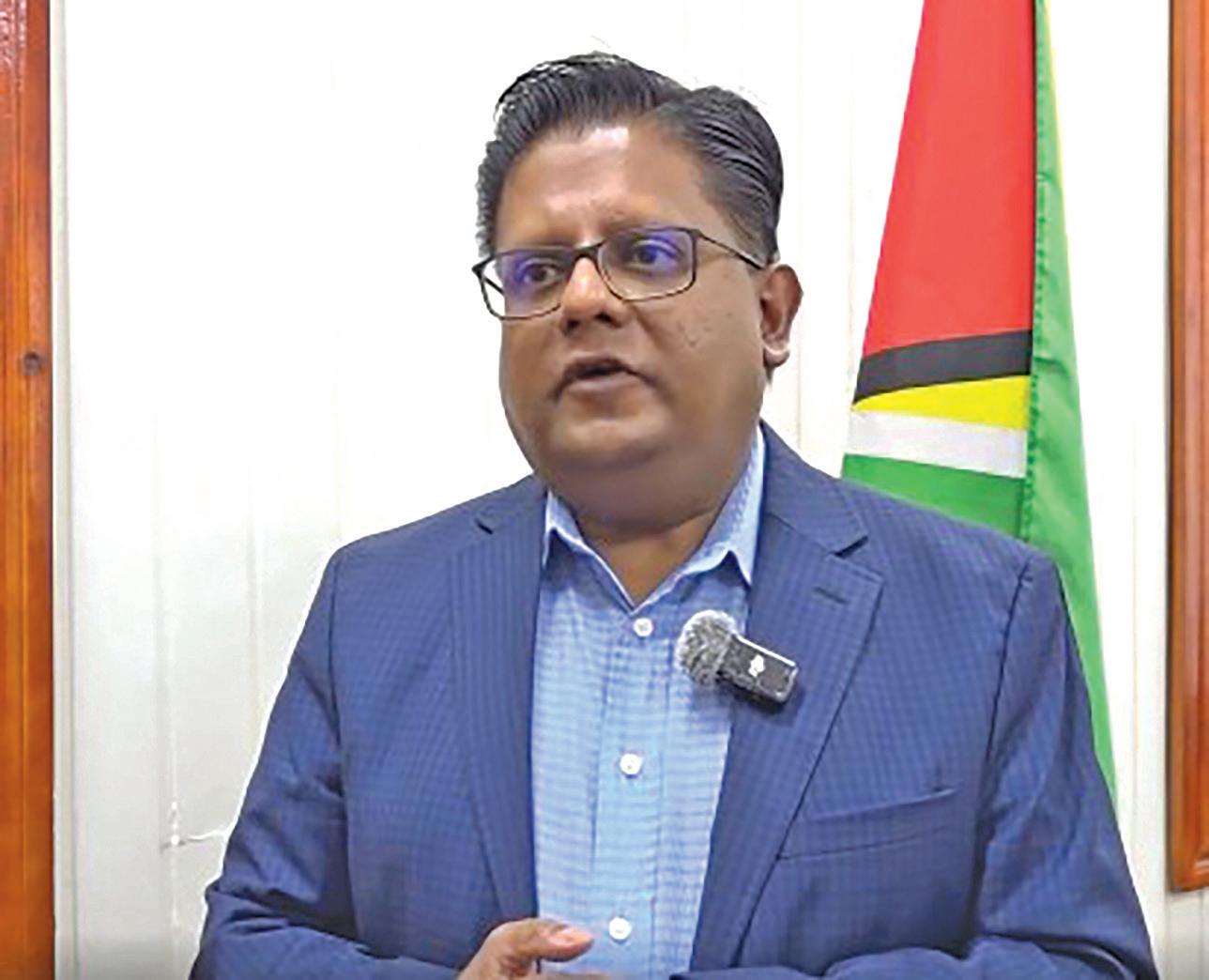
sized that active bank accounts allow the government to transfer grants swiftly, securely, and efficiently. “A central pillar of this initiative is to promote financial inclusion. This is why we are urging all Guyanese to utilise the formal banking system,” he added.
The digital registration platform will be available next week, enabling all other eligible citizens to register for the grant. In preparation for the rollout, the Ministry of Finance and the Central Bank have worked with financial institutions to simplify online account openings. Participating banks include Demerara Bank Limited; Guyana Bank for Trade and Industry Limited; Republic Bank (Guyana) Limited and Scotiabank Guyana Incorporated.
On Thursday evening, the finance ministry in a press release said that the initiative builds on previous government efforts to promote financial inclusion. The first $100,000 National Cash Grant in late 2024 saw over $60 billion distributed to more than 600,000 citizens. The current grant marks the third major cash grant program by the People’s Progressive Party Civic, following the initial $25,000 per household grant launched in 2020 during the COVID-19 pandemic.
“Let us act with purpose. Let us build with conviction. Let us remember – the future is not something we wait for; it is something we create. I have chosen a name for our next FPSO, and it will be called ‘Essequibo 1899.’”
Only recently, in commemorating the 60th anniversary of the signing of the Geneva Agreement, Guyana underscored the immense legal and diplomatic significance of this treaty, reminding us that it is not a replacement for the 1899 Arbitral Award, which establishes the boundary with neighbouring Venezuela.
The Geneva Agreement was a response to Venezuela’s change of position in 1962 when, after 60 years of recognising the validity of the 1899 Award and the international boundary it established, it suddenly adopted a contrary
PAGE 7
position, claiming the Award was invalid.
Great Britain and then British Guiana, now Guyana, had rejected Venezuela’s abrupt turnabout, holding fast to their firm position on the legal validity and binding nature of the Award. Negotiations led to an agreement at Geneva on a peaceful procedure for resolving the controversy over the validity of the award.
The Geneva Agreement was signed between the United Kingdom and Venezuela on February 17, 1966, and subsequently acceded to by the independent state of Guyana on May 26, 1966. It is a binding international instrument deposited with the United Nations and grounded firmly in the principles of the United Nations Charter and the rule of international law.


President Dr Irfaan Ali walks the streets of East Ruimveldt, Georgetown with Ministers residents on Thursday afternoon
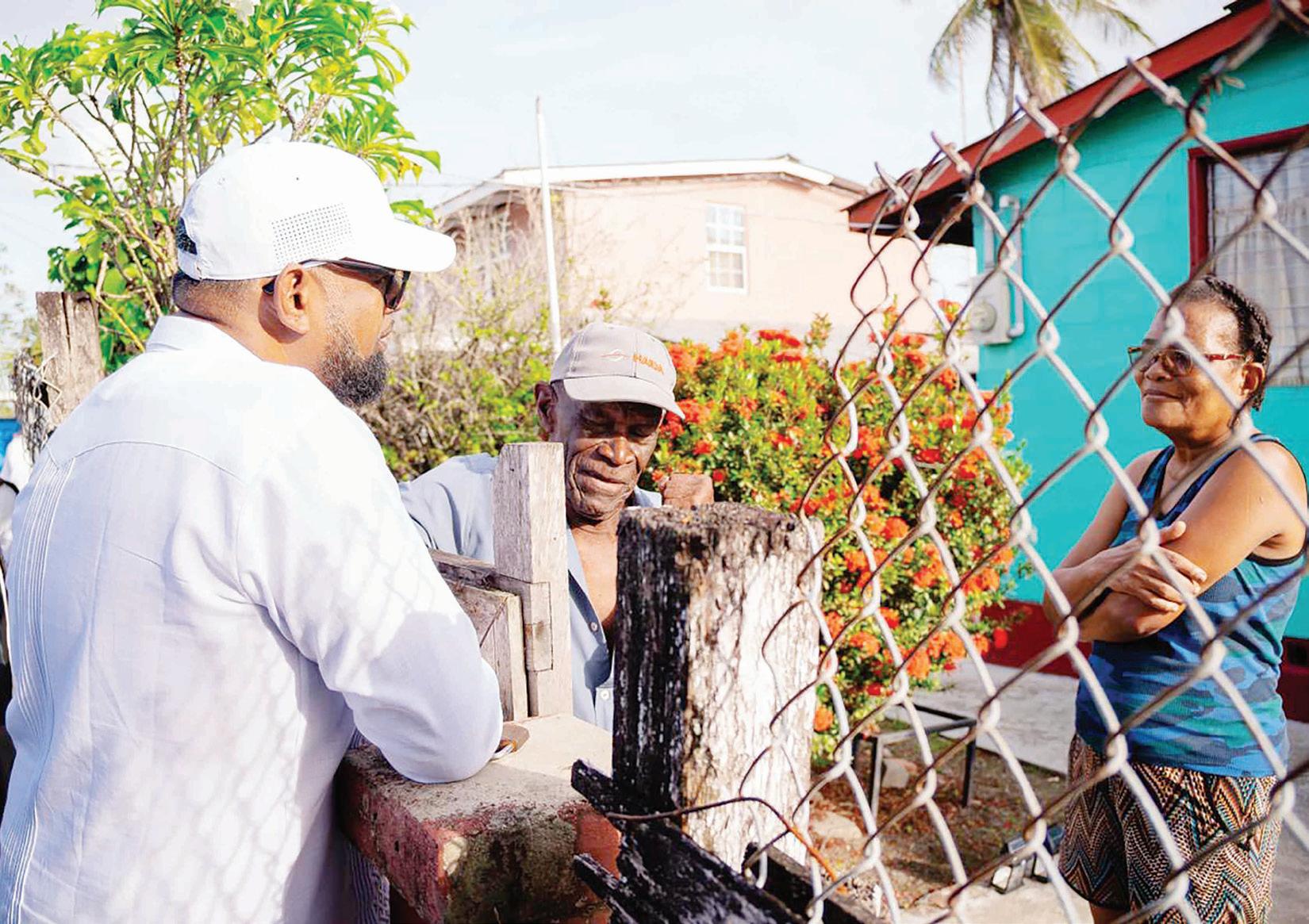

Ministers Keoma Griffith, Priya Manickchand, and Steven Jacobs, engaging directly with afternoon (Office of the President photos)

Attorney General (AG) and Legal Affairs Minister, Anil Nandlall, is urging citizens to safeguard the long-standing and hardfought religious tolerance that prevails across the country.
Referring to the coinciding observances of Ramadan, Lent and Navratri, sacred periods for Muslims, Christians and Hindus, respectively, Nandlall said Guyanese should never take this for granted.
“These commingling of religious activities, religious observances and religious festivals and festivities that are occurring
– almost simultaneously in some cases and contemporaneously in others – are being done in peace, in dignity, in unity, in love, in camaraderie, in brotherhood and with seamless ease,” he remarked during his programme “Issues in the News” on Tuesday.
“And we must never take this state of affairs for granted,” he emphasised.
“It was not always like this. There are many places on planet Earth now as I speak where wars are being fought; children, women and men are dying, families are dying, people are losing their limbs, buildings are being bombed, and countries are being invaded
in the name of religion or because of religious-based hostilities and issues,” Nandlall reminded.
He noted that in Guyana, citizens are enjoying “an exceptional atmosphere of national unity, national fervour and a multicultural explosion of religion and other ethnic events taking place at the same time.”
He stressed that “we have to work hard to protect these cherished rights and freedoms that we enjoy.”
Against this backdrop, Nandlall strongly condemned efforts by influential figures to incite religious intolerance.
“I have seen our political
leaders being denigrated, disrespected, and attacked because they are attending religious places of worship. That must be stopped,” he contended.
In fact, he reflected on his own personal experience following his attendance at a mosque at Le Resourvenir, East Coast Demerara (ECD).
“I have been in public life now for nearly three decades. I am not new to this thing… I have been going to the mandirs all my life. I have been going to churches across this country all my life. I have been going to mosques in this country all my life. I was married into a Muslim family for
nearly 20 years, a religious Muslim family for over 20 years. Yesterday [Monday], I went to a mosque in Le Resourvenir, and there was an outpouring of hate and criticism against me on my Facebook page. I know where it is coming from. These things never used to happen before in this country. It is since the birth of one political movement, and they have a robot farm,” Nandlall said.
During the programme, he shared a screengrab of a Facebook post made about his attendance at the mosque from a presumed fake profile under the name “Abu Dhabi”. The post calls for Nandlall to be “stoned
to death” for attending the mosque.
“That is the level of religious intolerance that these people are preaching and the level of political intolerance that they are practising. I call upon every single Guyanese to condemn that level of religious intolerance. We must stand up when we see the ugly head of division, when we see the destructive hand of division being raised,” he emphasised, adding that every citizen must take this matter seriously.
“It is the responsibility of all of us to stamp it out and stamp it out resolutely and urgently and strongly,” Nandlall posited.
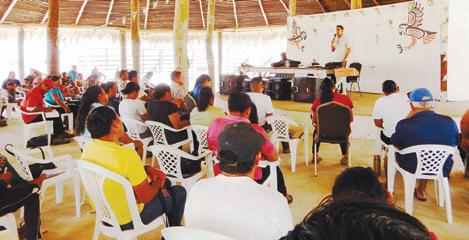
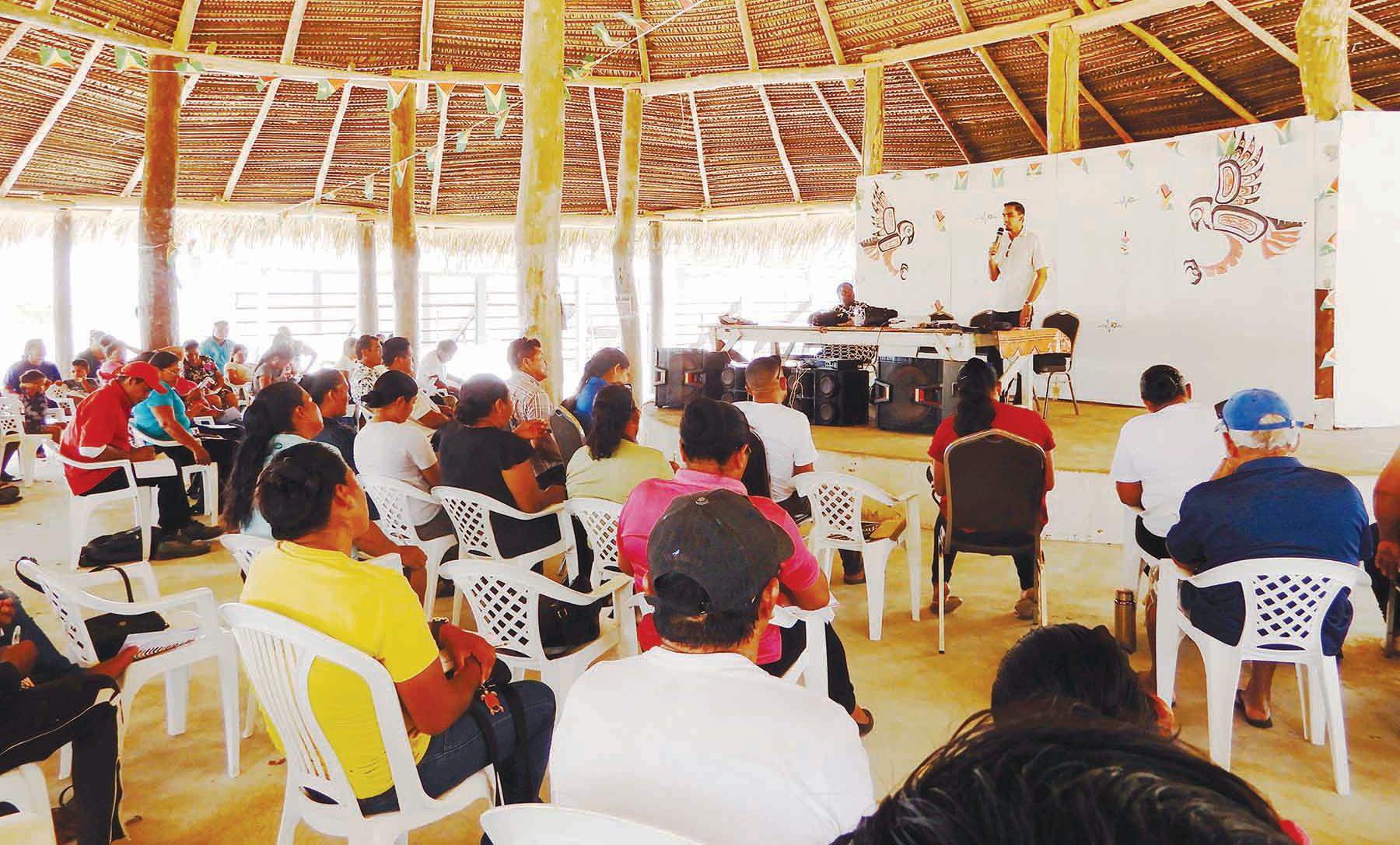
The Office of the Director of Public Prosecutions (DPP) has reinforced the legal obligation of village leaders to report serious crimes to the Police during an outreach engagement at the South Rupununi Democratic Council’s (SRDC) Bi-Annual Meeting.
The conference, held at the Shulinab Benab last week, brought together Toshaos and senior councillors from communities across the Deep South Rupununi, Region Nine (Upper Takutu–Upper Essequibo).
Vice Chairman of the SRDC, Toshao Nicholas Fredericks, used the forum
to urge community leaders to ensure that all criminal matters are reported through the appropriate legal channels. He said village leaders have a responsibility to uphold safety and justice within their communities.
Fredericks commended the DPP’s Office for participating in the conference, not

ing that the engagement provided important information to community leaders. He said the outreach contributed to building awareness and strengthening accountability among Toshaos.
Delivering the opening presentation, Communications and Outreach Officer at the DPP’s Chambers, Liz Rahman, outlined the process followed when a crime is reported. She explained that matters must first be reported to the Police, who will conduct investigations and prepare a file to be submitted to the DPP’s office for legal advice.
Rahman stressed that while Toshaos may address minor matters such as disorderly behaviour and simple larceny under community rules, they are legally required to report serious offences. These include murder, sexual offences, domestic violence, causing death by dangerous driving, and cases involving underage alcohol consumption or illicit drug use.
She warned that failure to report such offences undermines justice and breaches the trust placed in village leaders. Rahman urged Toshaos to take their responsibilities seriously to ensure
that victims receive proper legal redress.
The outreach follows concerns raised during a previous engagement in February, where residents from several communities, including Potarinau, Quiko, Shulinab, Meriwau and Parabara, indicated limited understanding of how to handle criminal matters. Some residents had also expressed uncertainty about reporting cases of gender-based and sexual violence.
There have also been allegations that some village leaders attempted to settle serious matters, including sexual offences, at the community level.
Addressing these concerns, State Counsel Muntaz Ali provided an overview of the criminal justice process and the role of the state in prosecuting offences. He emphasised the importance of due process and the need for credible evidence in securing convictions.
Focusing on sexual offences, Ali explained that such crimes are often committed in private, making victim testimony critical in court proceedings. He outlined the legal elements of these offences and highlighted the penalties attached un-
der the law.
Police Prosecutor Shyra Bruce, who is attached to the DPP’s Office, delivered a presentation on domestic violence. She explained the process for reporting incidents and outlined the legal remedies available, including protection and restraining orders obtainable through the magistrates’ courts.
Bruce also detailed the types of relationships recognised under the law and how domestic violence cases are treated within both legal and common-law unions.
Fredericks noted that the presentations helped participants better understand the seriousness of various offences and the procedures required for reporting them. He said the engagement also improved awareness of individual rights and the protections available under the law.
The conference was attended by representatives from several South Rupununi communities, including Sand Creek, Shulinab, Sawariwau, Katoonarib, Shea, Maruranau, Awarewanau, Aishalton, Karaudar, Achawib, Parabara, Bashizun, Meriwau, Quiko, Katuur and Baitoon.
The Court of Appeal has rejected an “extraordinary” claim put forward by a Guyanese sex offender, who had only been in Ireland for two weeks before he falsely imprisoned and raped an 18-year-old woman. The convicted man claimed his trial was unfair because he had to withdraw claims he was of previous good character.
In dismissing the appeal by Randi Gladstone (42), Judge Brian O’Moore pointed out that the appellant’s own legal team had agreed to withdraw Gladstone’s evidence. This evidence related to Gladstone’s mother describing him as being “too friendly and kind”.
O’Moore said this was done as “a tactical move” to prevent Gladstone’s previous convictions for rape, kidnapping and false imprisonment being revealed to the jury.
Gladstone, who is origi-
nally from Guyana, was convicted in January last year of rape, sexual assault and false imprisonment in a holiday complex in Co Dublin on August 25th, 2023. He was previously deported and barred from entering the UK.
He had pleaded not guilty, but the jury rejected his claim that what happened was consensual. Judge Patrick McGrath sentenced him to 10 years in prison. The court heard Gladstone lured the young woman into his room, where he falsely imprisoned and raped her.
The jury was told the woman did not fight back due to fear. When Gladstone was finished, he told her “to come back later for more”.
Last June, he was jailed for a further six months for failing to notify gardaí he was a sex offender within seven days of arriving in Ireland, as is required by
law.
The court heard Gladstone flew from Suriname to Schiphol Airport in the Netherlands and arrived in Ireland on August 11th, 2023. Two weeks later, he raped the 18-year-old woman in shared accommodation.
In launching an appeal against his conviction earlier this year, barristers for Gladstone argued that making a section-22 statement withdrawing the appellant’s earlier evidence of good character made the trial jury conclude he was, in fact, of bad character.
This occurred when Gladstone was giving evidence to explain WhatsApp messages, with the appellant saying his mother had criticised him “for being too friendly and kind”. Barristers for the State, however, said Gladstone “dropped his protection or shield” by portraying him-

THC-infused beverages seized at CJIA
The Customs AntiNarcotic Unit (CANU), through the Guyana Early Warning System (EWS), has seized some 222 cans of suspected Tetrahydrocannabinol (THC)-infused beverages that were intercepted at the Cheddi Jagan International Airport (CJIA) on March 18, 2026. The products were reportedly concealed inside storage tote bins among clothing, paper bags, and other mixed items.
According to CANU, the beverages are believed to be commercially manu-
factured cannabis-infused drinks originating from the United States and are designed to resemble ordinary soft drinks, making them especially attractive to youth and difficult to detect.
The alert notes that this reflects an evolving trafficking method involving lowodour, discreet, consumer-style cannabis products.
CANU added that although such products may be legal in some foreign jurisdictions, cannabis and cannabis-derived products, including THC-infused beverages, remain illegal in Guyana under the Narcotic
Drugs and Psychotropic Substances (Control) Act, Cap. 10:10.
As such, any importation, possession, or distribution of these products may constitute a criminal offence.
CANU warns that the products may pose serious health and safety risks, including impaired judgement and intoxication; anxiety, panic attacks, or hallucinations; risk of overdose, especially through beverages; and increased danger to youth and first-time users.
Moreover, a major concern is that the packaging resembles regular drinks, increasing the risk of accidental or intentional use by children and teens.
Meanwhile, CANU is urging the public to avoid purchasing or consuming suspicious imported drinks or edible products; pay close attention to unfamiliar canned beverages with unusual branding; monitor products accessible to children and teenagers; and report any suspicious products or information to CANU immediately.
This seizure confirms that cannabis-infused consumables are being trafficked into Guyana through cargo systems, posing a growing threat to public health and safety.
self of good character, when in fact he had spent a substantial amount of time in custody for very serious offences.
Dominic McGinn SC, on behalf of Gladstone, also submitted that when the trial judge clarified the concept of false imprisonment in response to a question from the jury, he correctly recited the legal provision before giving a very brief summary of the prosecution case.
However, counsel submitted the judge did so without reminding the jury of the defence’s claim that Gladstone’s hotel room door could not be locked from the inside.
On behalf of the State, Patrick Gageby SC said Gladstone is a person who has spent a substantial amount of time in custody for very serious offences.
The defence had argued the judge should
have reminded the jury of Gladstone’s assertion he was given the victim’s phone number before she entered the room. In relation to this, the State submitted that a judge does not have to go into every detail of a case to a jury.
In delivering the Court of Appeal’s judgment on Thursday, O’Moore noted no complaint was made about the legal definition of false imprisonment given to the jury, but instead a lack of balance was argued by Gladstone’s legal team.
However, O’Moore said the trial judge simply explained the precise allegation against Gladstone and also emphasised the need for the prosecution case to be established beyond reasonable doubt.
Noting this correctly recorded that the jury was fully aware of the “basic” account put forward by the appellant, O’Moore ruled
there was no unfairness or lack of balance caused by the trial judge’s answer to the jury’s question.
Concerning the ground of appeal relating to the complainant giving Gladstone her phone number and the timing of certain WhatsApp messages sent during the assault, O’Moore said the phone evidence was very straightforward and did not require “an elaborate exposition to the jury” by the trial judge.
“The third ground of appeal is an extraordinary one,” said O’Moore, adding the appellant’s own counsel had agreed to the section-22 admission, which withdrew any evidence of good character. He said this was done as “a tactical move” to avoid a ruling that the appellant’s previous convictions could be heard by the jury.
In summary, the court rejected the appeal. (Irish Times.com)



The Guyana Industrial Training Centre
(GITC) on Thursday officially launched its 60th anniversary celebrations, marking six decades of technical and vocational training and its contribution to national development.
The ceremony brought together Government officials, educators, staff, alumni, and trainees as the institution reflected on its legacy and outlined a vision for the future under the theme “Advancing Technical Skills for Tomorrow’s Workforce”.
Delivering the welcoming address, Holly FraserPersaud described the milestone as a historic moment, noting that GITC has played a vital role in equipping thousands of individuals with practical, job-
ready skills over the years. She highlighted that programmes such as electrical installation, plumbing, welding, masonry, motor vehicle repairs, and data operations have enabled graduates to contribute meaningfully to industries locally and beyond.
Administrator of GITC
Dexter Cornette underscored the institution’s impact, describing it as a place where transformation occurs. He painted a vivid picture of young people entering the institution uncertain of their future but leaving with skill, confidence and purpose.
“Day by day, skill by skill, lesson by lesson, that individual is changed. Hands that were once hesitant become steady. Minds that were once uncertain become focused. Potential
is transformed to competence and competence into confidence. And one day that individual leaves the institution not just with a certificate but with a sense of purpose, marked at a scale, and a future within its reach,” he expressed.
Cornette noted that this transformation has been repeated a thousand times over the past 60 years.
He also noted and traced the institution’s origin to 1966, when it was established with a mandate to provide industrial education and build a skilled workforce. By 1972, it became part of the national education system under the Ministry of Education.
Today, the institution continues to offer training in nine areas and has modified its delivery through competency-based training,

introduced in 2013, and strengthened partnerships with industry.
Despite challenges such as staff shortages and infrastructure constraints, Cornette said the institution remains committed to its mission of providing opportunity through training.
Meanwhile, Chairman of the Board of Directors, Peter Pompey, emphasised the importance of technical education to Guyana’s economic future.
He urged trainees to see themselves as professionals, rather than just tradespeople, stressing the value of skills in this rapidly growing economy.
“You’re not a tradesman, because there’s a limit to what a tradesman does. Put value on the skills, knowledge, and competence you possess. When you show
value for who you are and what you do, not only for what you do, you are better compensated for what you do,” he encouraged.
Pompey also highlighted opportunities for trainees to capitalise on national development, pointing to large-scale housing projects and growing demand for skilled labour.
The event also featured reflections on the evolving perception of technical education, with speakers noting that it was once viewed as a pathway for underperforming students. However, that stigma has since shifted, as skills are now looked upon as a powerful driver of economic growth and personal advancement.
“Technical education is the backbone of this economy. And if we fund more resources into that, we are
definitely going to have an excellent economy. So let us please remember how important our technical and vocational skills are,” Principal of the Institution Dr Renita Crandon-Duncan said.
The launch was marked by cultural performances, including steelpan presentations, singing and dance, that highlighted the role of arts within technical education.
Performers and speakers alike reinforced the message that technical training extends beyond traditional trades to include creative and entrepreneurial fields.
As part of the anniversary celebrations, GITC has planned a number of activities throughout 2026 aimed at engaging trainees, alumni, and industry stakeholders.

On Thursday, MACORP announced its new partnership with Kalmar, having been certified as the authorised dealer for the material handling equipment brand in Guyana, adding another globally trusted brand to its growing portfolio.
Through this partnership, MACORP will supply Kalmar equipment locally, backed by full support services including parts, maintenance, and operator training.
The goal is to ensure customers not only get the right machines but also the sup-
port they need to keep them running efficiently. Kalmar is a strong and trusted name in the cargo handling sector.
The move comes as MACORP prepares to transition into its new multimillion-dollar facility at Covent Garden, expanding its ability to serve customers across

the country.
The company has already seen early momentum, with its first Kalmar reach stacker and forklift recently delivered to a customer. The handover included certificates for the operators who were trained as part of the services provided by MACORP to ensure the equipment is used safely and effectively.
President and General Manager German Consuegra
stated, “We remain committed to supporting Guyana’s development by ensuring our customers have reliable access to the equipment and technical support they require. This initiative further demonstrates our capabilities and the breadth of our role as a trusted partner.”
MACORP is the authorised Caterpillar dealer in Guyana, providing heavy equipment, energy, marine,
and agricultural solutions in support of the country’s key industries for over 30 years. Throughout this period, the company has also partnered with leading international brands, including SEM, a Caterpillar brand; Case IH; Towmotor; Carmix; and most recently, Kalmar, to meet the evolving demands of the Guyanese market.
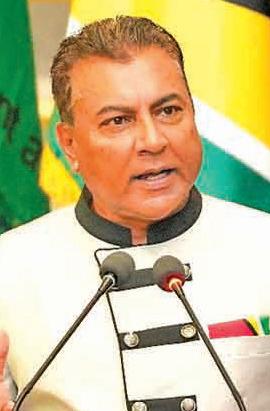
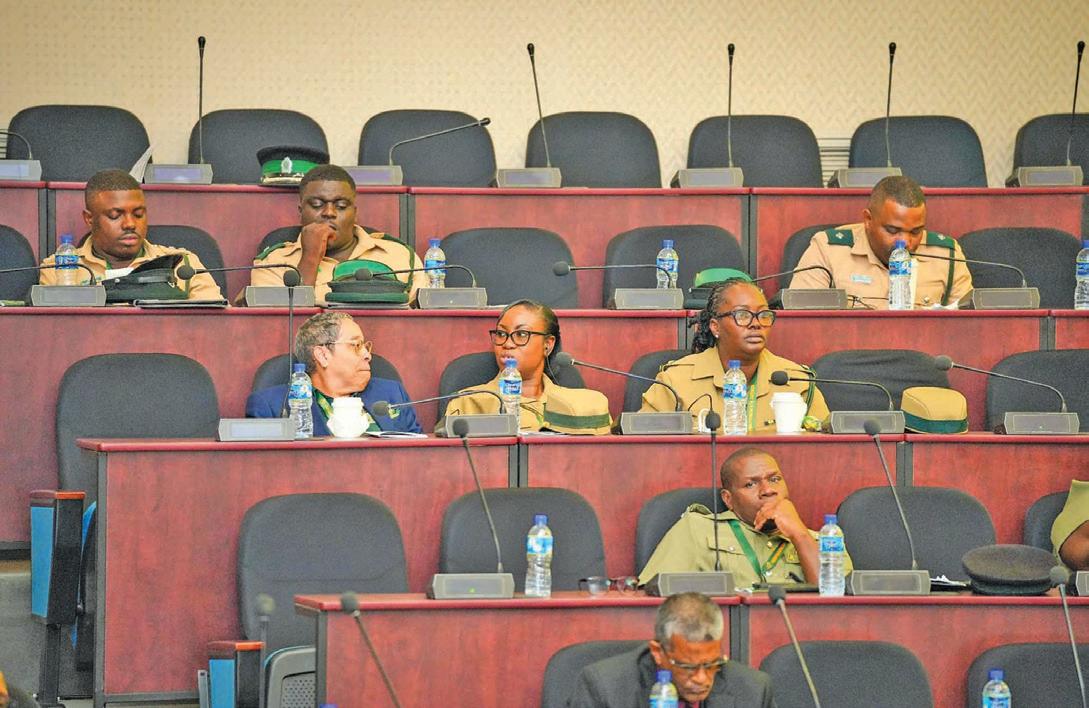
Chief Investment Officer and Head of the Guyana Office for Investment, Peter Ramsaroop, says rehabilitated prisoners will be critical in addressing Guyana’s growing labour shortage as the country experiences unprecedented economic growth.
Addressing the Senior Prison Officers’ Conference 2026 at the Arthur Chung Conference Centre, I noted that the reality already reflects a strained workforce.
why is it needed?” He used the example to underscore the urgent need for skilled workers.
He argued that the solution to said problem lies in rethinking the role of the correctional system. He explained that it must not be seen as a place of confinement but as one of workforce development. According to Ramroop, rehabilitation must be tied directly to national growth, ensuring inmates leave the system equipped to contribute meaningfully to society.
crease in wages, an increase in accommodations for our, sorry, an increase of our accommodations for even the prisoners,” he noted, adding that citizens must now determine where they fit into that growth.
He also issued a direct challenge to officers to see their work as part of the larger mission of the nation. He encouraged persons present to play an active role in rehabilitation and reintegration.
“We’re out of labour in Guyana. I have the same problem. I can’t find an electrician or a mason to do private work at my house. So, the more we can do to reform our system, whether it’s prevention, as the presi- dent talked about, or rehabilitation, how do we all fit, and
Chief Investment Officer and Head of the Guyana Office for Investment, Peter Ramsaroop, speaking at the Senior Prison Officers’ Conference 2026
“If you can move somebody that came into the system because they did something wrong, and then you can move them out of the system to put them into something right, that’s an accom-
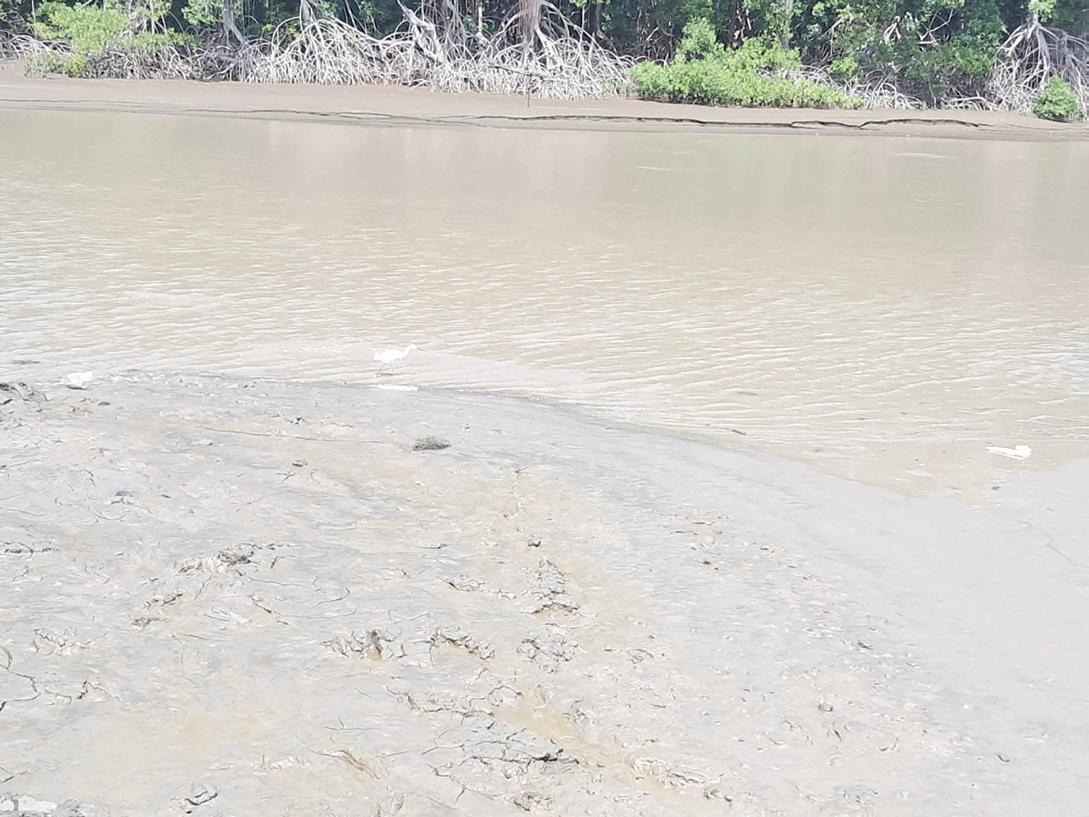
Heavy siltation at the mouth of the Abary River is threatening livelihoods and raising concerns about drainage in parts of Region Five (Mahaica–Berbice) – this was the issue taking centre stage at Thursday’s Regional Democratic Council (RDC) meeting.
Councillor Emerson Benjamin told the council that the channel has become heavily clogged with mud, warning that the situation is already affecting fisherfolk and those who depend on the industry.
“The entire channel is mud, and it is affecting the livelihood of not only the fishermen but all those who are connected to fishing,” Benjamin said.
The Abary fishing landing supports approximately 75 boats and an estimated 200 fishermen, along with dozens of vendors, processors, and huskers whose income depends on the daily catch. Any disruption to access at the river mouth, stakeholders say, has a direct and immediate impact on hundreds of livelihoods.
Checks at the location by this publication show mud build-up across sections of the channel, with shallow areas and restricted flow making navigation increasingly difficult, particularly at low tide when boats are forced to wait or risk grounding.
Benjamin warned that the situation could worsen with the onset of the rainy season, noting that the Abary channel also plays a critical role in draining agricultural lands.
“Abary Creek is the main channel for draining the backlands, and if it is not cleared before the rains, we are looking at serious problems for rice farmers, cattle farmers, and residents,” he said.
He said that current efforts are insufficient to address the scale of the prob-

lem, pointing to the need for more effective intervention.
“Excavators alone cannot solve this problem. What is needed is dredging, especially with the rainy season approaching.”
Responding to the concerns, Regional Chairman Ricardo Phillips said the matter is already engaging the attention of central authorities, with the National Drainage and Irrigation Authority (NDIA) having conducted site visits.
“The Ministry of Agriculture, through the NDIA, has already visited and is conducting a technical review of the channel so that we can resolve the issue,” Phillips said.
He explained that the build-up is linked to natural processes, including the movement of material from inland areas, while authorities have also noted that the Abary River mouth is prone to recurring siltation due to coastal currents and the movement of drift mud along the shoreline.
“From what we understand, there is heavy siltation coming from the backlands along the rice fields, which is contributing to the build-up at the mouth of the river.”
The NDIA has previously indicated that such conditions are not new and require continuous management, as the shifting coastal environment can result in repeated blockages even after interventions.
“It is a work in progress, and the government is working to have a speedy resolution to the issue affecting fisherfolk and drainage,” Phillips added.
The Abary landing has seen investment over the years, including approximately $14 million spent to construct a concrete tarmac at the sluice to improve conditions for landing and handling catches. Nationally, hundreds of millions of dollars have also been invested in upgrading fishing landing sites, with works including improved access, lighting, and facilities.
plishment and satisfaction that we all can look at and be proud of,” he told the officers.
Ramsaroop highlighted agriculture as a major opportunity, noting that Guyana is positioning itself to be the breadbasket of the Caribbean, capitalising on the billions spent annually on food imports across the regions. He encouraged both officers and inmates to think beyond their immediate roles and tap into the opportunities that are being made available.
“I don’t just want to speak to you in terms of what you’re doing in a physical job today. Think of your long term. What does your retirement look like in five years, 10 years from now? Start thinking through where the end would be. We need to feed $68 billion worth of food to the Caribbean. Why not start thinking about agriculture on your own? Much as in the prison system, which I know that you are doing. You are planting; you are develop-
ing your agro-processing,” he urged the listeners.
He further stressed that correctional facilities already have the workforce and structure needed to support large-scale initiatives. He highlighted that with the right investments such as the shade house initiative and training programmes, these institutions can become productive hubs aligned with the country’s development priorities.
Linking this to the broader national vision, Ramsaroop said Guyana’s rapid transformation demands participation from every sector.
“Guyana is progressing at a pace none of us probably thought of 10 years ago. I tell people, no matter what our dreams were, our grandparents’, our parents’, or yours, that you would have thought Guyana could turn out the way it is today. We would have never imagined it. But absolutely, we are seeing the development in real time. You know, from an in-
With the labour demands expected to increase as the country continues to develop rapidly, Ramsaroop maintained that recidivism through training and employment is essential.
“We need at least three million people passing through Guyana. What does that mean? That means for the rate of development that we are having, we have to have more people. So, if we can keep the other folks out of prison by making sure they have new jobs and new training, which is what we are doing, that means we would have created our own extra workforce that is needed,” he said, pointing to the scale of growth and the corresponding need for a prepared workforce.
He urged officers not to overlook the opportunities unfolding in the country while cautioning that no one should be left behind, stressing that Guyana’s future prosperity depends on inclusive participation, including from those who are rehabilitated and ready to contribute.
Routledge went on to add, “Don’t take that to the bank. That’s an order of magnitude. I’m just saying the pipeline that we would intend to build would be larger than the 12inch for the Liza Field connection to Wales. And then you see inflation over years because that was installed in ‘24. I just want to set your expectation; it won’t be a US$1 billion pipeline. It’s going to be more than that.”
According to the ExxonMobil Guyana president, while they are yet to work out the specifications of the new pipelines, there are talks ongoing with the Surinamese Government on sharing the pipeline.
“It could be economies of scale to do that,” Routledge stated.
Guyana is keen on establishing a regional energy corridor, with President Dr Irfaan Ali declaring at the opening of the Guyana Energy Conference and Supply Chain Expo just last month that his Government is eager to partner with Suriname on developing the two neighbouring countries’ natural gas resources.
According to the head of state, Guyana is looking for “like-minded partners” as he directly appealed to Suriname to join Guyana in scaling up the second gas project planned for the Berbice region, which borders
the Dutch-speaking nation.
In fact, Suriname’s Oil, Gas and Environment Minister Patrick Brunings, who had attended the Energy Conference in Georgetown, had acknowledged and highlighted the scope for potential collaboration in advancing the region’s energy transition.
Despite the projected increase in the pipeline costs for the Berbice gas project, ExxonMobil is confident in undertaking this significant investment in the infrastructure given the growing interests, especially from international companies, in Guyana’s energy potential.
“There is a significant amount of interest from other companies around the world in investing in Guyana. And to date, several letters of interest have been submitted to the Government and us indicating interest in projects such as data centres converting bauxite to alumina and more power generation. So, we can see real interest in building a domestic gas market…”
“In order to be comfortable that we move forward, we have to know that there’s a market for the gas that will pay for the gas at a price that can sustain that kind of investment. So, that’s why it’s
so important that we work with these other companies that are interested in making these other investments in the country so that we can line out that commercial value chain. They’ll be looking to us to have surety of supply of gas, and we’ll be looking to them to make sure that they’re going to be ready to take the gas from us. So that’s what we’re working towards,” Routledge indicated.
Currently, ExxonMobil is operating four developments in the Stabroek Block offshore Guyana – Liza Phases One and Two, Payara, and Yellowtail, with its fifth project – Uaru – on schedule to come onstream in 2026; and the sixth – Whiptail – slated for start-up in 2027. All of these projects produce what has been described as “black crude”.
However, the seventh project – Hammerhead, slated for 2029 – and the eighth development – Longtail, expected in 2030 – are pegged as major gas development projects.
As part of its aggressive energy agenda and efforts to monetise the country’s natural gas resources, the Guyana Government has selected United States energy firm Fulcrum LNG Inc to work in a tripartite arrangement with ExxonMobil to develop the Berbice gas project.
Prime Minister (PM)
Kamla Persad-
Bissessar says the removal of the United Statesinstalled radar in Tobago should not come as a surprise, maintaining that the high-tech, military-grade equipment was always intended to be temporary.
Breaking her silence following Monday’s removal, Persad-Bissessar told Guardian Media the move had been arranged well in advance.
“The departure of the radar was pre-planned months in advance. As I said last year, it was a temporary installation at my request,” she said in a WhatsApp message to Guardian Media yesterday.
The PM has maintained that she had requested the system from the US Embassy as a temporary solution, noting that the country’s existing radar surveillance had been functioning sporadically and had been compromised. She add-
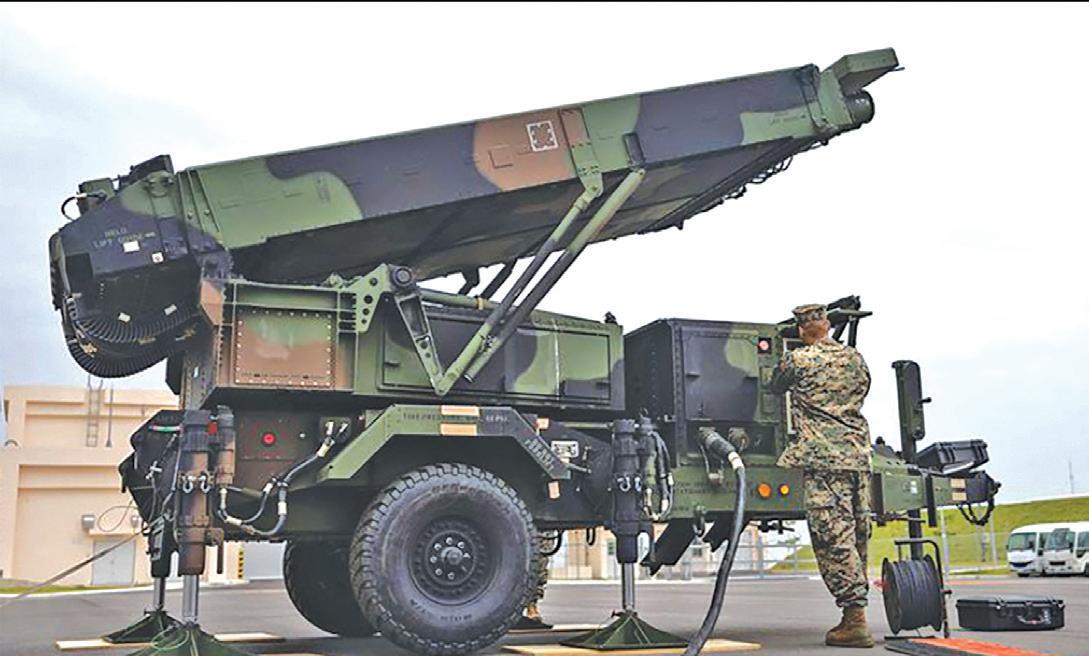
ed that the radar was only intended to remain in place until the Government could acquire and install a permanent, upgraded replacement of its own.
However, just one month ago, the defence Minister said in a post-cabinet news briefing that the radar would remain for the “foreseeable future”, citing the significant value it provides to the country’s national security.
On February 19, Minister Wayne Sturge said, “We would have the use of the radar for the foreseeable future. I can’t give a definitive timeline.
Guardian Media contacted Minister Sturge to determine whether, at the time of his statement a month ago, he was aware the radar would be removed. However, all queries went unanswered up to press time. (Excerpt from Trinidad Guardian)
Aleading figure in one of Ecuador’s biggest drug-trafficking gangs has been arrested in Mexico City, officials say.
Ángel Esteban Aguilar Morales – better known as “Lobo Menor”, or “Little Wolf” – was wanted in connection with the murder of Presidential candidate Fernando Villavicencio in 2023, Ecuador’s Interior Minister John Reimberg said. He added that Aguilar had obtained papers using a fake Colombian identity.

Mexico’s security Minister Omar García Harfuch said the member of cartel Los Lobos had been the subject of an Interpol red notice and was “linked to drug trafficking, extortion, and homicide”.
Colombian President Gustavo Petro called him “one of the world’s most notorious assassins”. Villavicencio, a member of the country’s national as-
sembly and a former journalist who had campaigned against corruption, was shot dead as he was leaving a rally in the capital, Quito, in August 2023. (Excerpt from BBC News)
The Cabinet of Antigua and Barbuda (A&B) has approved the establishment of the National Art Gallery of A&B, to be housed in the historic former Catholic School building adjacent to Government House in St John’s.
The decision, brought forward by the Prime Minister, the Honourable Gaston Browne, marks a significant milestone in the advancement of the nation’s cultural and creative industries.
The cabinet also approved the naming of the facility as the Christopher Holder National Art Gallery
of Antigua and Barbuda, in recognition of the substantial philanthropic contribution made through the Maria Holder Memorial Trust toward the restoration and rehabilitation of the building.
The project will be undertaken through a strategic partnership involving the Halo Foundation Inc. and the Maria Holder Memorial Trust.
Once completed, the gallery will serve as a permanent space dedicated to the exhibition and celebration of Antiguan and Barbudan visual arts, while also fostering artistic development
Amid growing criticism, especially since the ending of the 50-year-old Cuban medical mission in Jamaica, Prime Minister (PM) Dr Andrew Holness is defending the foreign policy of his Jamaica Labour Party (JLP) Government.
Noting that the global order has changed significantly since the end of the Cold War in 1991, Holness said, “In this dynamic foreign policy environment, Jamaica must be strategic.”
Holness made the remark on Thursday during his ongoing contribution to the budget debate in the House of Representatives.
According to Holness, the foreign policy of no previous Administration has benefited Jamaica in such a significant way.
He argued that a strong multilateral system is in Jamaica’s interests, adding that “we will always do our part to ensure it works”.
The PM outlined that when concerns were raised with the Government of Jamaica by the United
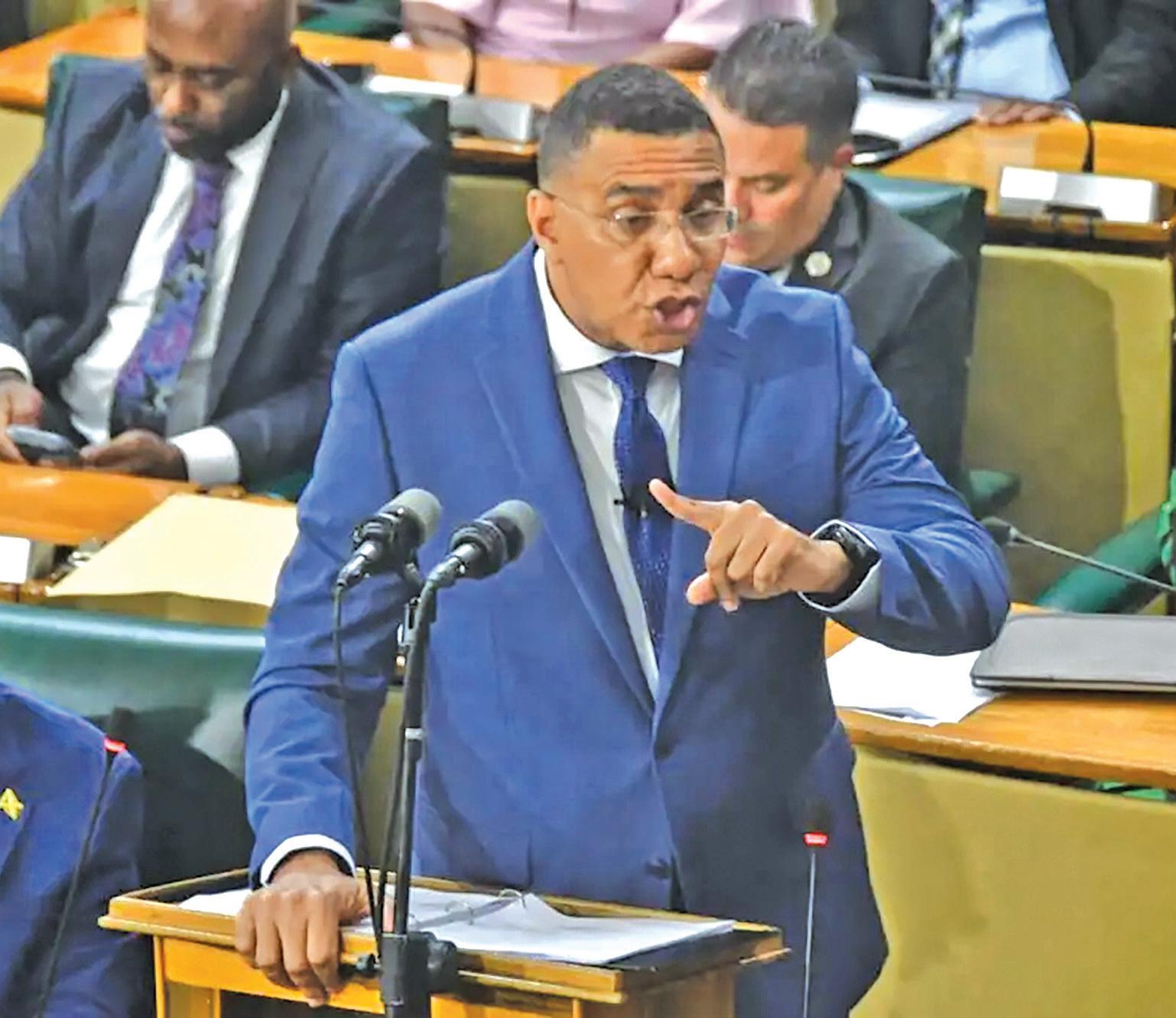
States Government regarding the Cuban medical mission more than a year ago, “we reviewed the programme against our own laws and the various multilateral conventions under which we have obligations.”
However, he said there were aspects of the programme which were brought to the attention of the Cuban Government, including how
personnel are paid, that run counter to Jamaica’s laws and several international conventions.
“The Cuban doctors and nurses have assimilated quite well in our hospital system and have developed strong bonds with the people they serve. I can say that Jamaicans love them and want them to stay.” (Excerpt from Jamaica Observer)
Seasoned educator Dr Ian Marshall has raised concerns about declining enrolment among mature and part-time students at the University of the West Indies (UWI), pointing to limited job opportunities and underemployment as key deterrents.
“The reality is that persons while there, while they acquire their first degrees or even second degrees … there are many people who cannot find employment, or if they find employment, the employ-
ment is what you would call underemployment because they’re not being allowed to use the skills and the knowledge and so on they would have acquired,” he said.
He explained that this was discouraging potential students from investing in further education, particularly those considering returning to school later in life.
He also underscored the broader issue of graduate saturation within the local job market, noting that Barbados is producing
more qualified individuals than it can absorb.
He pointed out that facilitating opportunities for Barbadians to work overseas while contributing to the local economy through remittances could help ease the pressure.
“The reality that we are facing right now is that we are educating our people, and many of them we don’t have the spaces to absorb, so we have to start thinking about how we can export our qualified people,” Dr Marshall said. (Excerpt from Barbados Today)
Aand education. The initiative responds to longstanding calls from local artists and cultural stakeholders for a dedicated national venue to showcase the country’s artistic expression. Restoration works are expected to commence shortly, with completion anticipated by October 2026. Upon completion, the gallery will be curated in collaboration with local and international partners and will support training opportunities for members of the creative community. (Excerpt from Antigua Newsroom)
21-year-old Haitian adoptee with disabilities is back in the United States after being sent to Haiti and left stranded there for months.
Joie returned in late February with the help of an attorney after spending three months stranded in Haiti, following years of alleged abuse in the United States and at a Jamaican boarding school.
“I was very angry [when they sent me back to Haiti],” she added. “I’m still a little angry. But I’m trying to understand it. I’m grateful for the little things that I have.”
Joie has intellectual and developmental disabilities (IDD). She spent three
months in Morne-Rouge, about 33 miles southwest of Cap-Haïtien – from November 2025 to February 2026. She returned to the US with the help of her attorney.
The Jamaica-based Youth of Vision School Academy (YOVA), where her adoptive family had placed her to live for six years, sent her to Haiti against her will.
Joie was adopted from Port-au-Prince in 2008 by an American Christian family along with her two siblings, Jocelyne and Joseph. The Laughlin family, who already had three sons, adopted the three siblings in 2008 and moved them to California. They lived there
for about 10 years before they sent her to YOVA when she was 15. In November 2025, the school sent Joie to Haiti, placing her in an Airbnb in Morne-Rouge and giving her just $300 for expenses. Joie had not lived in Haiti or in proximity to Haitians since she was five; she does not speak Creole. The Haitian Times contacted YOVA, its principal, and 11 current and former teachers for a response about the allegations. One teacher responded but declined to be interviewed. The Laughlins did not respond to requests for comment either. (Excerpt from The Haitian Times)


Brent crude was up on Thursday but well off session highs of US$119 a barrel, while US crude futures finished with a small loss hours after hitting a session high of over US$100 a barrel.
Trading was volatile as Iran attacked energy targets overnight in the Middle East, leading the US Government to take steps to expand supply as President Donald Trump looked toward November midterm elections, where his Republican Party hopes to retain control of Congress.
Brent futures settled at US$108.65 a barrel, up US$1.27, or 1.18 per cent. Earlier in the session, Brent had climbed more than US$11 to a high of US$119.13.
US West Texas Intermediate crude finished at US$96.14 a barrel, down 18 cents or 0.19 per cent. Earlier, WTI gained almost US$4 to trade at $100.02. WTI has been trading at its widest discount to Brent in 11 years.
Middle East benchmark Dubai and Oman premiums hit all-time highs at about US$65 per barrel, according to trade sources and Reuters data.
Trump is keen to counteract rising fuel costs ahead of November elections. Treasury Secretary Scott Bessent said the US may soon remove sanctions from Iranian oil that is stranded on tankers, amounting to around 140 million barrels. (Excerpt from Reuters)
Moscow says Ukraine peace talks on pause; Kyiv says new meeting planned
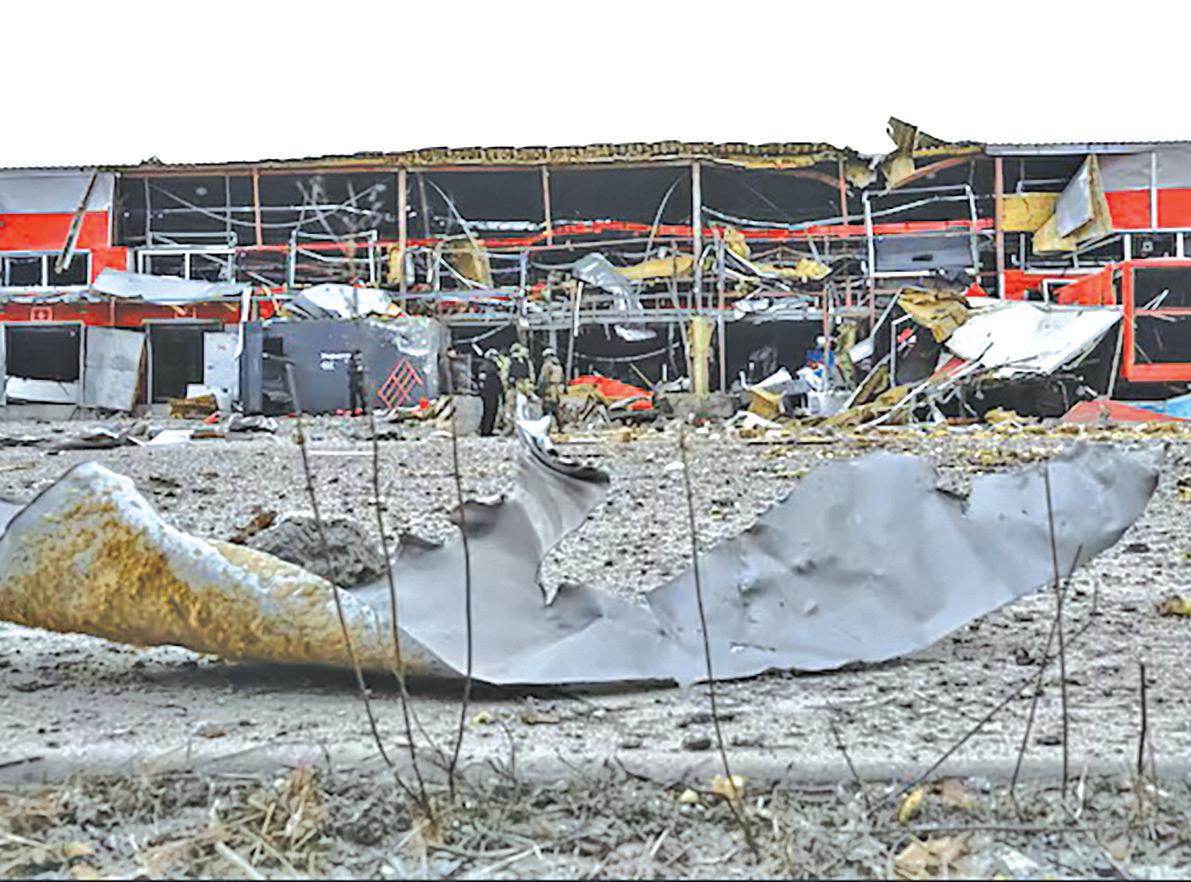
The Kremlin said on Thursday that talks between Washington, Moscow, and Kyiv on ending the war in Ukraine were on a ”situational pause” following the start of the Iran war, but Ukraine’s president said new discussions were expected this weekend.
US President Donald Trump vowed to end the Ukraine war on his return to the White House but has said efforts to resolve the conflict have been one of his biggest disappointments.
The Izvestia newspaper said in a front-page story that the Kremlin had confirmed a pause in talks on Ukraine and that war in the Middle East could push Kyiv towards compromise.
”This is a situational pause, for obvious reasons,”
Kremlin spokesman Dmitry Peskov told reporters when asked about the Izvestia report.
Peskov said that as soon as ”our American partners” could pay more attention to Ukrainian affairs, Moscow hoped that the pause could end and that a new round of talks could take place.
In Kyiv, Ukrainian President Volodymyr Zelenskyy said it was time to end the pause, and Washington had sent signals it was ready to continue negotiations. A Ukrainian negotiating team was already on its way to the US for weekend talks.
It was not immediately clear what form the new talks would take and who would be taking part.
(Excerpt from Reuters)
The United States Department of State has approved a US$16.5bn deal for arms sales to the United Arab Emirates (UAE), Kuwait, and Jordan as tensions with Iran continue to intensify.
On Thursday, the State Department explained that $8.4bn worth of arms would go to the UAE to pay for drones, missiles, radar systems, and F-16 aircraft.
As part of the deal, Washington also approved
roughly $8bn for air and missile defence radar systems for Kuwait and an additional US$70.5m for Jordan, which would cover aircraft and munition support.
“This proposed sale will support the foreign policy and national security objectives of the United States by improving the security of a major defence partner,” the State Department said in a statement.
“The UAE is a force for
political stability and economic progress in the Middle East.”
The statement added that the proposed deal did not require congressional approval, given that Secretary of State Marco Rubio “provided detailed justification that an emergency exists that requires the immediate sale” of arms.
The sale comes amid ever-increasing tensions between the US and Iran.
The administration of US
President Donald Trump joined Israel in attacking Iran on February 28, and the resulting war has prompted fears of a protracted regional conflict. The latest arms deal comes as the Pentagon seeks more money to fund the war.
The US Department of Defence is seeking an additional $200bn, according to The Associated Press, citing an unnamed senior White House official. (Excerpt from Al Jazeera)
President Trump brought up Pearl Harbour while seated next to Japanese Prime Minister (PM) Sanae Takaichi in the Oval Office on Thursday as he explained why the US didn’t give allies like Japan a heads-up before striking Iran.
A Japanese reporter asked Mr Trump why the US didn’t alert allies like Japan ahead of the Iran strikes, a decision that the reporter said ”confused” the Japanese.
”Well, for one thing, you don’t want to signal too much, you know?” Mr Trump said. When we went
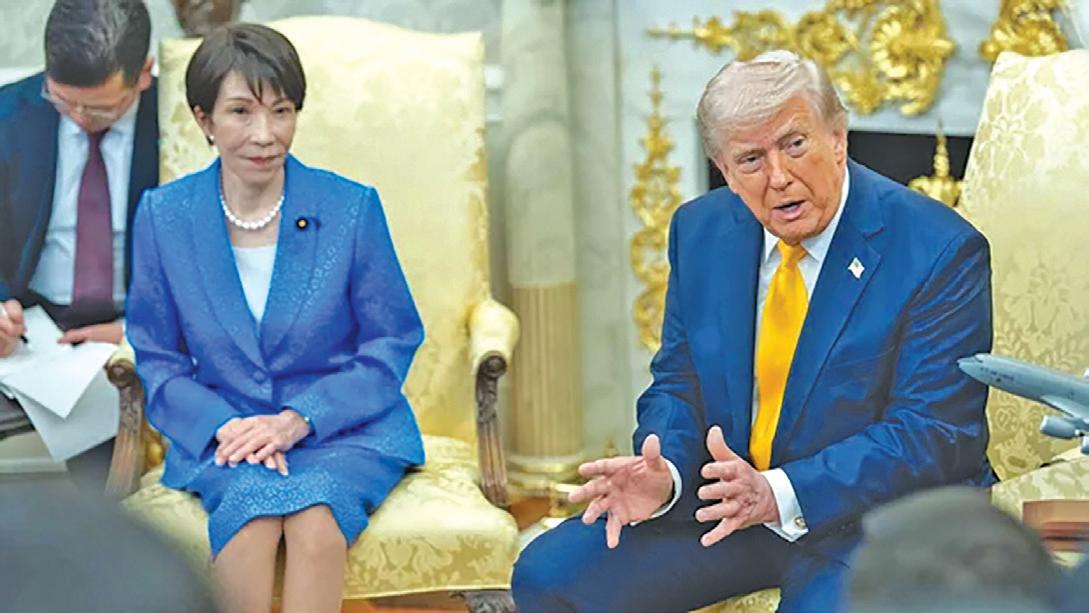
in, we went in very hard. And we didn’t tell anyone about it because we wanted surprise. Who knows better about surprise than Japan?
Okay? Why didn’t you tell me about Pearl Harbour? Okay? Right?”
”We had to surprise them, and we did,” the pre-
sident said of Iran. ”... If I go and tell everybody about it, there’s no longer a surprise.”
Takaichi appeared taken aback by the president’s remarks, her eyes momentarily widening. Takaichi speaks some English but largely spoke through a translator at the event. Later in the day, the White House posted a photo of the two leaders together, both with thumbs up. Japan and the US have officially been allies since 1952, although the scars from World War II took longer to heal in many cases. (Excerpt from CBS News)
Some of the world’s poorest countries will lose out on UK aid that funds programmes such as schools and clinics due to budget cuts set out by the foreign secretary.
The UK’s bilateral aid to African countries will be reduced by almost £900m by 2028–29 – a 56 per cent cut – as part of more than £6bn in cuts which are funding an increase in defence spending.
Aid agencies said the cuts would be the steepest in the G7, leaving “the UK’s reputation in tatters and a poorer, more unequal and unstable world for us all”.
The 40 per cent reduction in UK aid spending, which MPs voted to back

last year, will mean all aid spending is cut to all G20 countries except Turkey, and the majority is now fo-
cused on conflict zones, primarily Palestine, Sudan, and Ukraine. Spending will be prote-
cted this year for Lebanon, a decision signed off by officials on Wednesday night, because of the intensity of the current offensive from Israel. The overhaul means 70 per cent of all support will be allocated to the most fragile and conflict-affected states by 2029. Countries such as Afghanistan, Somalia and Yemen will be among those facing cuts, though Yvette Cooper, the foreign secretary, said they would still receive funding from multinational aid agencies.
Countries such as Mozambique and Pakistan will have almost all their development aid cut, replaced by partnerships for investment. (Excerpt from The Guardian)
The US is weighing lifting sanctions on some Iranian oil as it scrambles to contain the impact of its war in Iran on energy markets.
Treasury Secretary Scott Bessent put forward the idea in a Fox interview, saying it could make more oil available to global buyers. Around the world, energy prices are shooting up as the war takes a toll
on shipping and production. If put into action, the move would mark a stunning reversal of longstanding American policy – and one with a highly uncertain payoff.
Experts said it was likely to have a limited effect on prices and could boost funds going to the Iranian regime that the US is attacking.
Before the war, China
was the primary buyer of the oil coming out of Iran, scooping up the barrels at a steep discount due to sanctions imposed by the US and other countries.
In the interview with Fox Business programme Mornings with Maria on Thursday, Bessent said a waiver on the sales restrictions could help divert more of those supplies to other countries in need of
oil, such as India, Japan and Malaysia, while forcing China to pay ”market price”.
He said the US was looking at removing sales restrictions on Iranian oil that is already at sea, which he said amounted to about 140m barrels. He estimated that would push down global prices for 10 to 14 days. (Excerpt from BBC News)








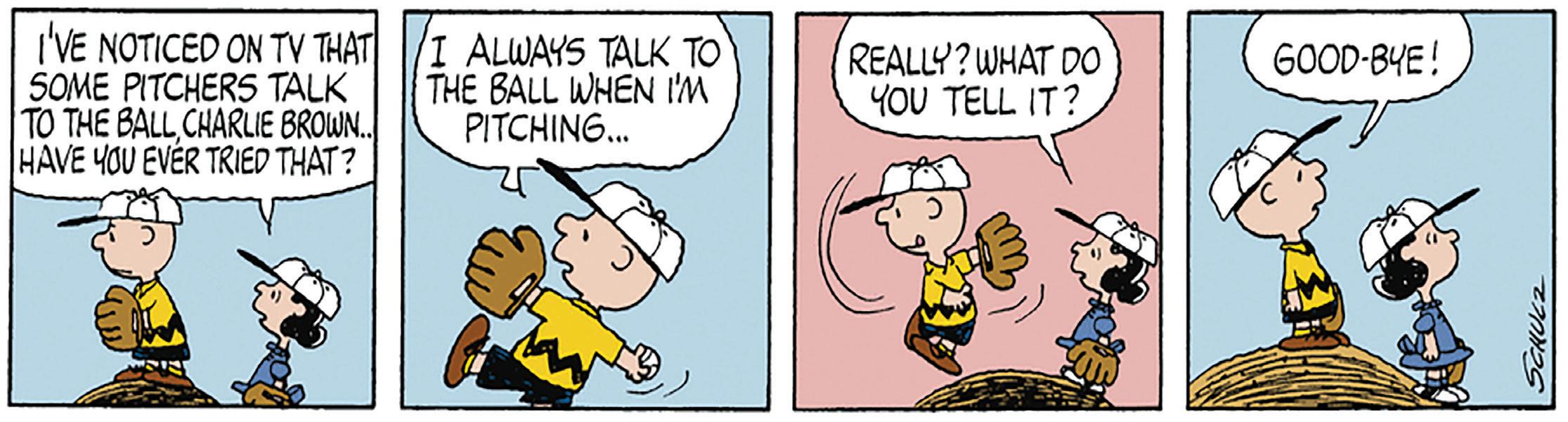
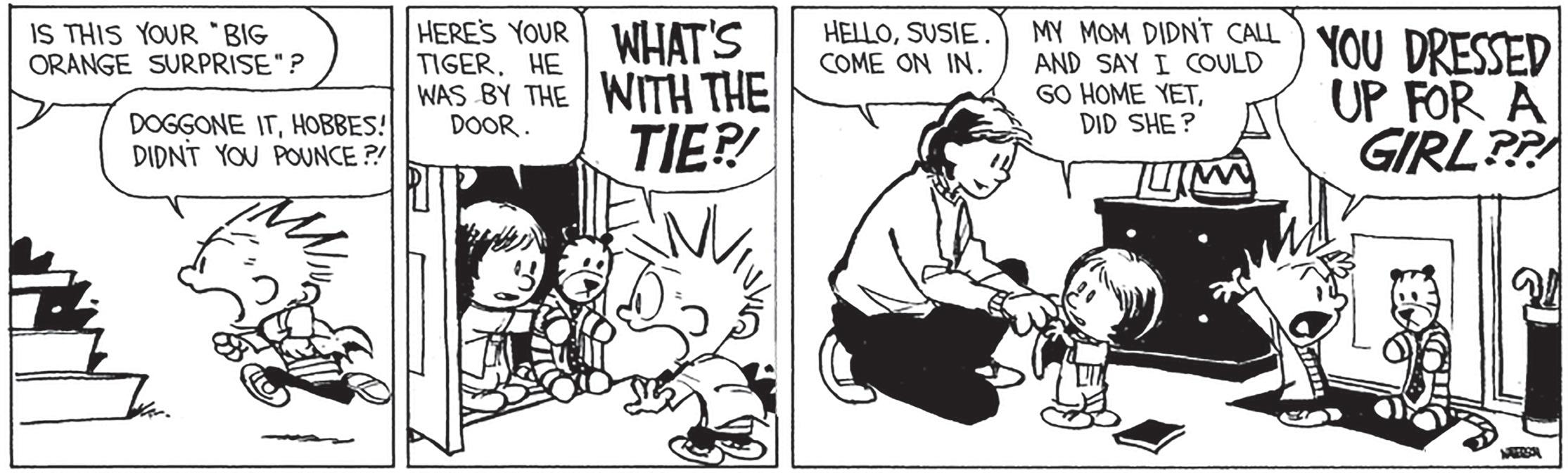
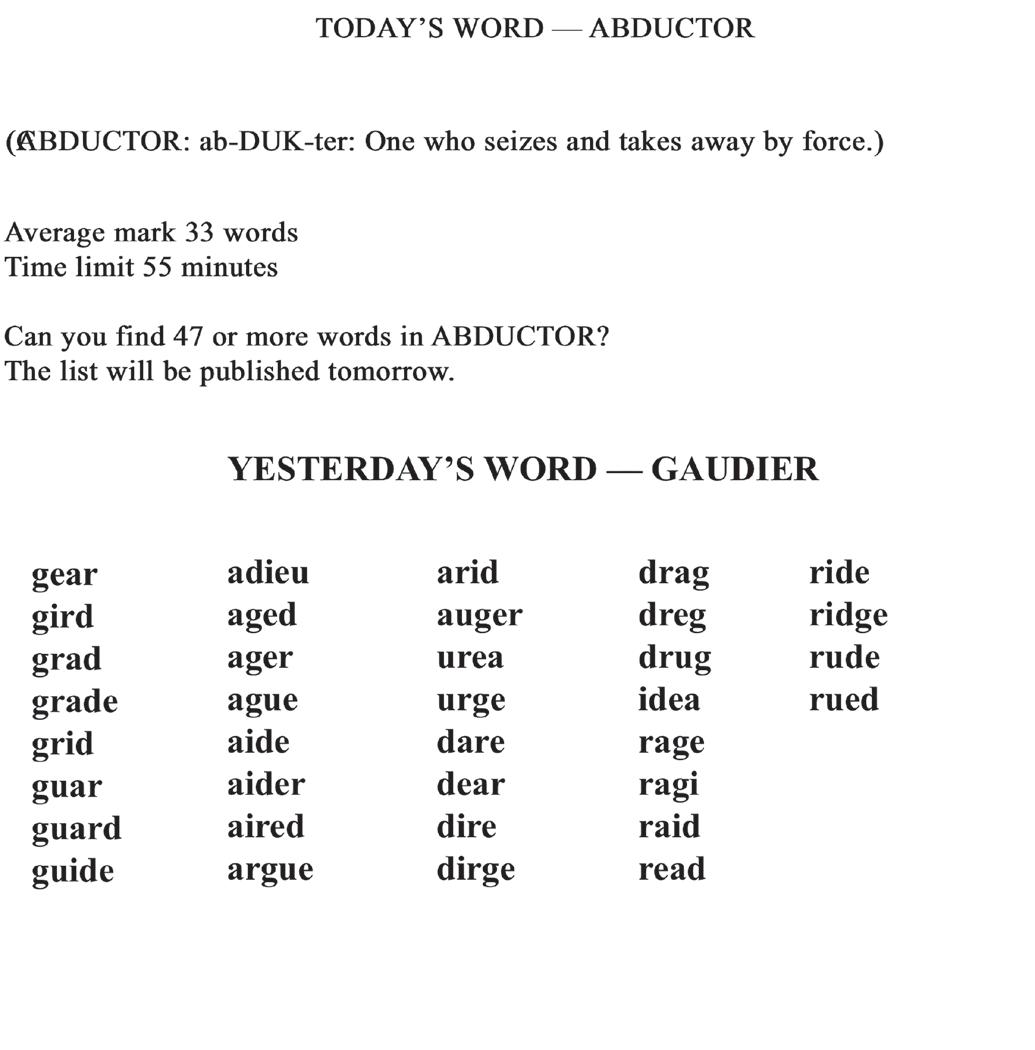





Make a wish and follow through. How you respond to others will determine who’s on your team and ready to play full throttle. Letting your ego swell will result in emotional setbacks. Love wholeheartedly, speak honestly, and follow through on the promises you make, and everything will fall into place. Simple, affordable, and moderate. Make romance a priority.














A different routine will spark your imagination and encourage you to try something new. Opportunity will surface if you converse with forward-thinking people with a plan and a hope for a better future. Participation is the name of the game. Stand up and be counted, and your contributions will make you an integral part of what unfolds.
Observe, focus, and determine where your efforts will have the best impact before voicing your opinion. Act secretively, hone your plans, prepare with precision, and launch your objective with a powerful, no-nonsense gesture that resonates with success. Keep your allies in the loop and your adversaries in sight, but unaware. Avoid excessive acts when simplicity fetches better results.
Step aside and watch. It’s best not to participate in aggressive action. Your best results will come from well-thought-out plans and conversations with those who can help you turn your words into reality. Discipline and ingenuity will pave the way to greater rewards. Helping those who won’t help themselves will backfire. Choose intelligence over brute force.
Read between the lines, get the lowdown, and make choices according to facts and figures. Pour your energy into learning and considering every angle before moving forward with your plans. Make your presence and wisdom felt by those you encounter, and the support you require will follow. Social and networking events will enhance your life. Romance is favored.
Professions, people, and places that offer diversity and enrich your soul will entice you. Participating in something meaningful will encourage personal and financial growth if you use your skills to help others. A closer look at global struggles will encourage physical action. Take the high road and make a difference. A collective will far exceed a solo act.
Put domestic plans in motion. Whether you accommodate your personal needs or expand your options to raise your income or lifestyle, the outcome will favor you. Nurture relationships, build a strong bond with those you share money, emotions, and pastimes with, and enrich your life while making memories. Personal gain, love, and romance are in the stars.
Communication is the best route forward. Live and learn from experience and interacting with others, and you will instinctively know how to handle people and situations you encounter. Pour your energy into creating a space to meet your needs. Whether it’s a workspace, a relaxation area, or a mini gym, the offshoot will be a wiser, healthier self.


Less talk and more action will lead to positive change. It’s how you treat those you live with or near that will make your life more difficult or easygoing. A creative skill you possess is worth more than you realize. Explore and expand your talents and experience the art of turning something you enjoy into a masterpiece.






Appreciate the little joys in life. Refuse to let negativity overrule what’s worth being grateful for. Choose to allow a positive attitude lead the way, and you’ll discover the rewards that come with empathy, kindness, and a generous heart. Don’t drown your sorrows with indulgence; minimize what ails you with gratitude and clear-cut action.
Push your agenda forward with enthusiasm, and light a path for others to follow. A financial gain is within reach, but greed, impatience, and excessive behavior will curb your results if you let temptation set in and poor choices evolve. Express your thoughts and plans with passion, and listen to those with experience before making a move.
Keep the momentum flowing. Set an example using your intelligence, connections, and physical actions. Standing up for your beliefs will help you gain respect and decipher who is a good fit for your plans. Actions speak louder than words, and following through wholeheartedly will make a difference in the outcome. Trust your instincts and forge ahead with courage.




Sports retailer Fitness Express, owned by Jamie McDonald, will reward the Most Valuable Player (MVP) of the East Bank Inter-Village Football Tournament with a $100,000 cash prize.
His commitment to sport and his willingness to support athletes have never been in question, and for these reasons, ball-weavers participating are assured that the MVP will walk away with glee.
This is because the Sports Express owner has once again demonstrated his goodwill with this to -
ken of appreciation for the player’s outstanding performance during the competition.
McDonald, a true sports enthusiast, very often throws his support behind any sports discipline, and his recent act of generosity is another clear example of where his heart is for sports and athletes.
During a simple ceremony at the entity’s location on John and Sheriff Streets, Campbellville, McDonald handed over the cheque to Sports Extra’s Franklin Wilson. Wilson, after receiving
the cheque, spoke of the enduring friendship between McDonald and himself, describing it as respectful and very often beneficial to both parties.
“Jamie has been a longtime supporter of sports and a very good friend and colleague, and he expressed happiness that the tournament is being staged at this time and also encouraged the players and supporters to come out and witness the matches,” Wilson disclosed.
The games will be played over the weekends at various venues.

Cricket West Indies (CWI) will convene its 27th Annual General Meeting this Saturday, March 21, in respect of the financial year that ended on September 30, 2025.
The meeting will be held virtually via video conference and will centre on the review of the 2024/25 audited financial statements and annual report. Shareholder members will receive presentations from Chief Executive Officer Chris Dehring, along with cricket and finance reports, delivered by the Director of Cricket and Chief Financial Officer, respectively.
In addition to the six Full Member shareholder representatives – Barbados Cricket Association (BCA), Guyana Cricket Board (GCB), Jamaica Cricket Association (JCA), Leeward Islands Cricket Board
(LICB), Trinidad & Tobago Cricket Board (TTCB), and Windward Islands Cricket Board (WICB), CWI has also, as is customary, extended invitations to its Special Members. These include the Association of Caribbean Media Workers, the Association of Caribbean Tertiary Institutions (ACTI), the Caribbean Association of Industry and Commerce (CAIC), the Caribbean Community (CARICOM), the Caribbean Tourism Organisation (CTO), the West Indies Cricket Umpires Association (WICUA), and the West Indies Players Association (WIPA) and looks forward to their participation and valued contribution to the meeting.
CWI President, the Honourable Dr Kishore Shallow, said, “This Annual General Meeting represents
an important moment of reflection for Cricket West Indies and reaffirms our commitment to transparency, accountability, and sound governance. While the past year has presented its share of challenges, we have navigated them effectively and made meaningful strides in strengthening the foundation of the game across the region. As we review our performance and progress, we remain firmly focused on building a stronger and more sustainable organisation, one that safeguards the long-term viability and success of West Indies cricket for generations to come.”
A copy of the 2024/25 audited financial statements and annual report will be made available to stakeholders via CWI’s website –www.windiescricket.com –from Monday, March 23.



Ascintillating unbeaten knock from Jonathan Van Lange powered the Demerara Cricket Club (DCC) to a dramatic five-wicket victory over the American Cricket Society (ACS) in a high-scoring T20 encounter at the DCC ground as part of the ACS Goodwill Tour of Guyana 2026.
After winning the toss and electing to bat, ACS posted an imposing total of 226 for six from their allotted 20 overs. The innings was spearheaded by an explosive 96 off just 44 balls from Bhaskar Yadram, who fell agonisingly short of a century. His innings was laced with seven fours and eight towering sixes, setting the tone for ACS’s aggressive approach.
Yadram found support from Ryan Francis, who contributed a steady 34, while Akeem Dewar added late fireworks with a rapid 31 off only 11 deliveries. Despite
the onslaught, DCC’s Ezekiel Wilson stood out with the ball, claiming two wickets for 29 runs from his four overs to keep the total within reach.
Chasing 227 for victory, DCC responded with equal aggression. Van Lange emerged as the standout performer, smashing a match-winning 68 off just 28 balls in a fearless display of power hitting. With 18 runs required off the final over, Van Lange held his nerve and delivered under pressure, launching three massive sixes to seal a memorable win for the hosts.
ed by Brandon Jaikaran, who struck a fluent 58 from 29 balls, and Tevin Imlach, who added a valuable 30 to keep the chase on track. DCC ultimately reached 227 for five in just 19.4 overs, completing the chase with two balls to spare.
The match provided an electrifying spectacle for fans, showcasing the attacking flair of both teams and highlighting the competitive spirit of the ACS Goodwill Tour.
DCC’s thrilling victory will be remembered for Van Lange’s composure in the clutch moments, as the home side edged out a formidable ACS line-up in one of the most exciting matches of the tour so far.

He was well support-
It was a twist for the ages in the 2025 final when Dolphin Secondary’s defences managed to hold on against a relentless attack from Chase’s Academic Foundation to win the Massy Under-18 Secondary School Football tournament.
Chase’s Academy, who had been missing their main talisman Bryan Wharton in that encounter, went home with a second-place trophy and their egos bruised.
The loss soon became insignificant, as the team went on to win the Republic Bank U18 League and became the first two-time KFC

year, we didn’t get the results that we wanted. You know, it hurt us to know that we were confident in winning, so this year we’re doing serious preparation, and we expect to win.”
Chase went on to share what fans can expect from the Chase’s Academy team in the upcoming competition.
now playing this year and introduced into the core team. You’ll see a much younger team, fresher faces and a better style of football.”

a brisk 38, but off-spinner Junior Sinclair proved devastating, tearing through the middle and lower order with remarkable figures of 5 for 11.

Goodwill International tournament champions.
However, the Chase’s Academy camp is keen to return to the summit with both manager Oronde Chase and player Tyrell Walcott exuding confidence.
Chase told this publication exclusively, “Yeah, of course, if it is that we are the regional champions for KFC, we don’t expect any local teams to give us any problems going forward. So, I’m just urging all the other teams, letting them know to expect nothing short of a fight.”
“Nobody can jug we again,” the manager asserted.
On the other hand, Walcott expressed, “Last
“So, in 2025, coming off of the second-place, runner-up position in the Milo [now Massy], we’ve been able to transition and go on with the younger team; win the Exxon and then later on in the year, Republic Bank and the KFC. So, coming into 2026, we have the same set of players. What we’re looking to do now is to actually implement a tactical side to the players. We already have techniques down, so we’re looking forward now to having a team system to continue to dominate school football in Guyana,” Chase explained.
He went on to share about the team’s composition: “You can expect to see a lot more youngsters being incorporated due to our fifth formers focusing more on CSEC. So, we have a lot of guys that would’ve played Exxon [Under-14] last year,
Meanwhile, for Walcott the competition will be about revenge and representing well as national players.
“Yeah, revenge, not only for me but for the team, ‘cause when we lost, everybody was like ‘what, ya’ll make Dolphin beat ya’ll’. That kind of tempted us, like we wanted revenge, and we’re not just going out there for revenge alone; we’re going out to compete and play good football,” the defender admitted.
He further noted, “I am confident because most of us are national players. We are expected to play quality football, and we know that we will go out there and execute and come out victorious.”
The Massy U18 tournament will kick off on Saturday, March 21, at the Queen’s College Ground in Georgetown. The teams will be competing for a $300,000 grand prize that will be allocated to a school project of their choice. The second- and thirdplace teams will receive $200,000 and $100,000 for the same purpose.
Thirty-two teams from Regions One, Two, Three, Four, Five, Six, Seven, Eight, and 10 will be competing across eight groups in the initial round-robin stage before moving on to the knockouts.
atthew Nandu’s XI secured a solid victory over Tevin Imlach’s side in the second practice match hosted by the Guyana Harpy Eagles (GHE) at the Everest Cricket Club (ECC) as preparations intensify ahead of the upcoming West Indies FourDay Championship.
After winning the toss, Imlach XI opted to bat first but struggled to build momentum, eventually being bowled out for 127 in 49.3 overs. Captain Tevin Imlach led from the front with a top score of 36, while veteran spinner Veerasammy Permaul delivered an impressive spell, claiming four wickets to keep the batting side in check.
In reply, Nandu XI posted 146, gaining a crucial first-innings lead of 19 runs. Tagenarine Chanderpaul anchored the innings with a patient and determined unbeaten 64 off 239 balls, an effort that included five boundaries. Anthony Adams was the standout bowler for Imlach XI, finishing with figures of four for 32.
Facing a deficit, Imlach XI faltered in their second innings, collapsing for just 92 in 24.5 overs. Jonathan Van Lange offered some resistance with

Set a modest target of 74 runs for victory, Nandu XI approached the chase with composure, reaching 74 for three in 25.2 overs.
Romario Ramdeholl played a key role, guiding the innings with a steady 40 off 49 balls to seal the win.
The match provided valuable game time for players as the Guyana Harpy Eagles continue their build-up toward defending their regional title, with both teams showcasing promising individual performances despite challenging conditions.

Minister of Housing Collin Croal came through on a promise he made to the organisers of the East Bank Inter-Village Football Competition when he donated a quantity of balls during a simple presentation ceremony recently.
Croal, along with Minister within the Office of the Prime Minister Kwame McCoy, was on hand to witness action on the opening day of competition at the Eccles EE Community Centre ground.
It was during an interaction with organisers Sports Extra that he made a commitment to present them with a quantity of footballs to enhance the tournament,
and he made good on that promise.
The Minister, in brief remarks, stated how pleased he was with the initiative which, according to him, could serve as a platform to improve relationships among players and communities as a whole while also assisting in unearthing talent at the grassroots level.
Twelve of the top teams from villages situated along the East Bank Demerara corridor are vying for prize monies in excess of $3 million, with the first prize set at $1 million, while second, third, and fourth prizes are $500,000, $250,000, and $150,000, respectively, along with individual accolades for
Best Goalkeeper, Most Valuable Player and Highest Goalscorer.
Meanwhile, the fixtures for this weekend’s action are Saturday: Herstelling take on Swan from 18:00h, while Upper Soesdyke collide with Circuitville at 20:00h.
The following day will see Kaneville versus Friendship at 18:00h, while Mocha square off against Agricola.

The GHE hopefuls will wrap themselves up in a third and final practice match from March 22–24 at the iconic Georgetown Cricket Club (GCC) Ground, Bourda.



Iof $400,000. I’m here to say that that promise will be kept and we will make sure that each winning team is awarded that not in cash but in kind, and that shows too that we are pushing for the development of this [tournament].”
On that note, organiser Allister Munroe hailed the tournament’s growth in recent years, on the back of the National Sports Commission’s (NSC) help.
n excess of 75 boys’ and girls’ school windball teams converged on the National Gymnasium, Mandela Avenue, on Thursday afternoon for the launch of the Cheddi and Janet Jagan Memorial Windball tournament’s 11th edition. While the tournament is set to bowl off in Georgetown at the same venue tomorrow, it will also travel to several other venues in Berbice and Essequibo.
“Over the years, the Janet and Cheddi Jagan programme was just being played on a small scale, but as organisers, we realise that Georgetown and Demerara are not Guyana. We decided to expand the programme, and last year we had a big opening ceremony right at the gymnasium, and I prom-
ised my senior staff that we are prepared to do it again,” Munroe shared.
On a similar train of thought, Director of Sport, Steve Ninvalle also chimed in on the competition’s growth whilst announcing an exciting new incentive.
Ninvalle said, “This year, you can see that it has
grown, and that is something that I’ve urged the coordinator of these competitions to make sure that every year we have this tournament and that we see an improvement. Now it has reached a stage that only three regions are not here. Those are Regions One, Eight and Nine; it shows that we are developing each year.”
The Director of Sport went on to announce, “Just like the Government of this country, the promises that we make, we keep. Last year we said that we would’ve provided an award for the winning teams to the tune
The teams will compete in their districts, with the winners moving on to the national playoffs, set to be staged in Georgetown.
The Cheddi and Janet Jagan Memorial Windball Tournament is usually hosted in March to coincide with the death anniversaries of the two former Presidents.

BBig picture
atting hasn’t been easy so far during this five-match T20I series between New Zealand and South Africa. In the first T20I in Mount Maunganui, the hosts were bundled out for 91. In the second in Hamilton, the visitors folded for 107 in a chase of 176. But things are likely to change in Auckland.
Eden Park is famous for its unusual dimensions. The straight boundaries are so small that they don’t meet the ICC requirements (minimum 59.43 metres from the centre of the pitch). But as an existing venue prior to those requirements being brought in, it is exempt. In the words of Lockie Ferguson, “The crowd feels like they are right on your back.”
The playing area itself is in the shape of a rectangle, which makes field placement tricky. Wasim Akram, who made his Test debut there, once said if you want a fielder at fine

leg, you ask him to go to midwicket.
All those things make it a batting-friendly venue. Of all the New Zealand grounds, it has the highest scoring rate – 10.19 – in the first innings of a T20I. Overall, among the venues that have hosted at least five T20Is, only SuperSport Park in Centurion (10.59) and the Wanderers in Johannesburg (10.41) have higher first-innings scoring rates.
South Africa have played two T20Is in Auckland and won both. However, they have not
played an international match there since 2017, which means none of their squad members has the experience of playing there.
Theoretically, that should give New Zealand an advantage, as the visiting teams may take time to adjust to the dimensions. But that is not the case. In fact, New Zealand have its worst win-loss T20I record at a venue in Auckland, with 12 wins and 19 losses, including Super Over results.
In the spotlight: Devon Conway and Wiaan Mulder

Devon Conway spent the entire 2026 T20 World Cup on the bench. At this moment, he doesn’t have the gears to bat in the ultra-aggressive manner Tim Seifert and Finn Allen do. But his more traditional approach helped him tackle the difficult conditions in Hamilton and score 60 off 49 balls, the only half-century of the series so far. New Zealand will expect a similar score from him in Auckland but at a faster rate.
Wiaan Mulder opened the innings in the second T20I, something he had never done previously in international cricket. In all T20 cricket, he had done so
only six times in 140 outings and never since July 2023. The move backfired, and Mulder scored a laboured 16 off 20 balls, 14 of which were dots. Given South Africa have Tony de Zorzi in the side, it may be better to open with him and let Mulder bat down the order.
Team news
New Zealand could field unchanged XI New Zealand (probable): 1) Devon Conway, 2) Tom Latham (wk), 3) Tim Robinson, 4) Nick Kelly, 5) Josh Clarkson, 6) James Neesham, 7) Mitchell Santner (capt), 8) Cole McConchie, 9) Kyle
Jamieson, 10) Ben Sears and 11) Lockie Ferguson. Unless South Africa want to rest one of their seamers, they too may go in with the same XI. However, they could change their batting order with de Zorzi replacing Mulder at the top of the order.
South Africa (probable): 1) Tony de Zorzi, 2) Connor Esterhuizen (wk), 3) Rubin Hermann, 4) Jason Smith, 5) Dian Forrester, 6) Wiaan Mulder, 7) George Linde, 8) Gerald Coetzee, 9) Keshav Maharaj (capt), 10) Nqobani Mokoena and 11) Ottneil Baartman
Pitch and conditions
In November 2025, when Eden Park last hosted a T20I, West Indies almost chased down New Zealand’s 207 for five. Today’s game could be similarly high-scoring. The weather is expected to be cloudy, but there is no forecast for rain. (ESPNcricinfo)