




run” – mother recalls
Govt to increase stipends for NDC, RDC Councillors within days





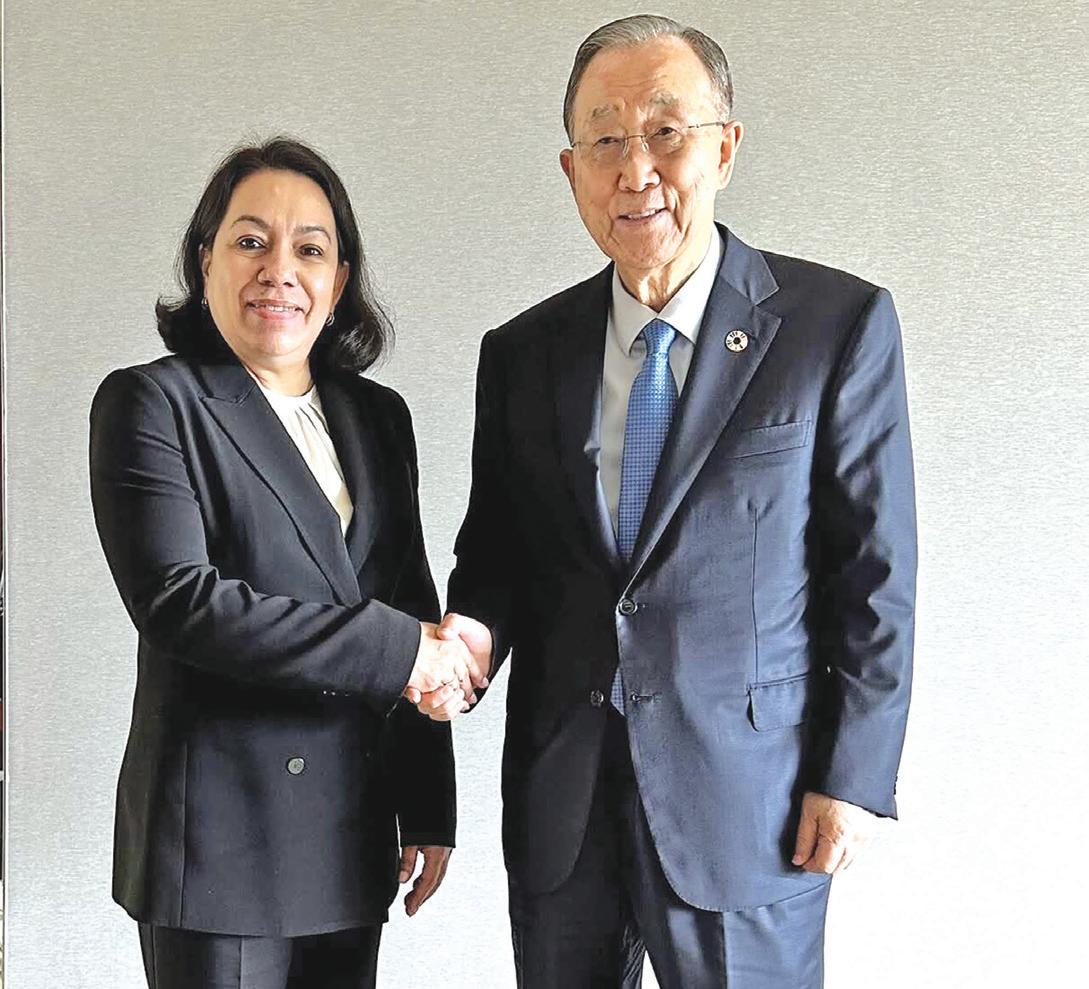
Guyana’s candidate for the post of United Nations Secretary General (UNSG), Ambassador Carolyn Rodrigues-Birkett, has continued her international engagement, calling for greater youth participation in shaping global policies during a high-level forum in the Republic of Korea.
Rodrigues-Birkett participated in a dialogue with fellow candidates for the UN’s top post at the Jeju Forum for Peace and Prosperity, where discussions focused on the theme, “Reimagining Multilateralism.”
Addressing the forum, the Guyanese diplomat underscored the need to involve young people in the work of the UN, particularly in developing policies on emerging global issues such as artificial intelligence (AI) governance.
“In all of the processes that the UN is involved in, young people must be consulted as shapers and contributors to policies,” Rodrigues-Birkett said in response to a question on youth involvement in AI governance.
In her closing remarks,
she called for reform of the global body, stating, “Together we must remake a UN that learns from the past, that is fit for the present and ready for the future... together with you, we could make a better UN.”
Also participating in the session was former UN Secretary General Ban Kimoon, who said the next UN Chief would have the responsibility of rebuilding confidence in multilateral-
ism.
“The next Secretary General of the United Nations will have the rare privilege of rebuilding shattered trust in multilateralism and demonstrating convincingly and concretely that the UN can still make a real tangible difference in the lives of ordinary people everywhere in this world,” Ban said.
The event was hosted by the Jeju Peace Institute, the

Ban Ki-moon Foundation for a Better Future and the United Nations Foundation.
Rodrigues-Birkett’s appearance in South Korea comes days after she participated in a panel discussion at the UN headquarters on advancing women’s leadership in diplomacy, held ahead of the International Day of Women in Diplomacy. The discussion examined barriers to women’s leadership and explored measures to improve gender parity in international institutions.
Earlier this month, the veteran diplomat also presented her vision for the UN during an interactive dialogue before the UN General
Assembly, part of the formal selection process for the next Secretary General.
During that presentation, she described the UN as “indispensable” while arguing that reforms are needed to improve its effectiveness. She proposed strengthening internal efficiency, improving coordination across the organisation and ensuring better delivery in the areas of peace and security, development and human rights.
Rodrigues-Birkett also advocated for a stronger UN role in conflict mediation, closer collaboration with regional organisations and the appointment of a di-
verse leadership team with representation from all regions, including developing countries.
She currently serves as Guyana’s Permanent Representative to the United Nations, a position she has held for the past five years. She previously served as Minister of Amerindian Affairs and Minister of Foreign Affairs. President Dr Irfaan Ali nominated RodriguesBirkett for the position earlier this month. She is among several candidates seeking to succeed António Guterres, whose second term as UN Secretary General ends later this year.


The Berbice Bridge will be closed to vehicular traffic on: Friday, June 26 – 14:10h–15:40h and Saturday, June 27 –14:55h–16:25h
















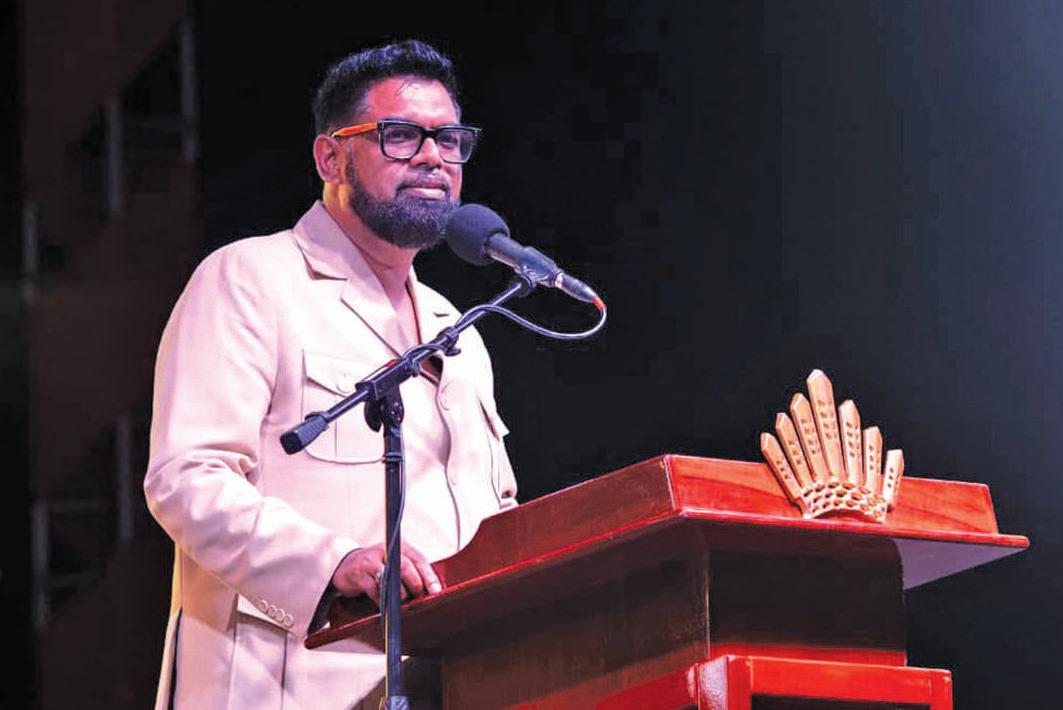
President Dr Irfaan
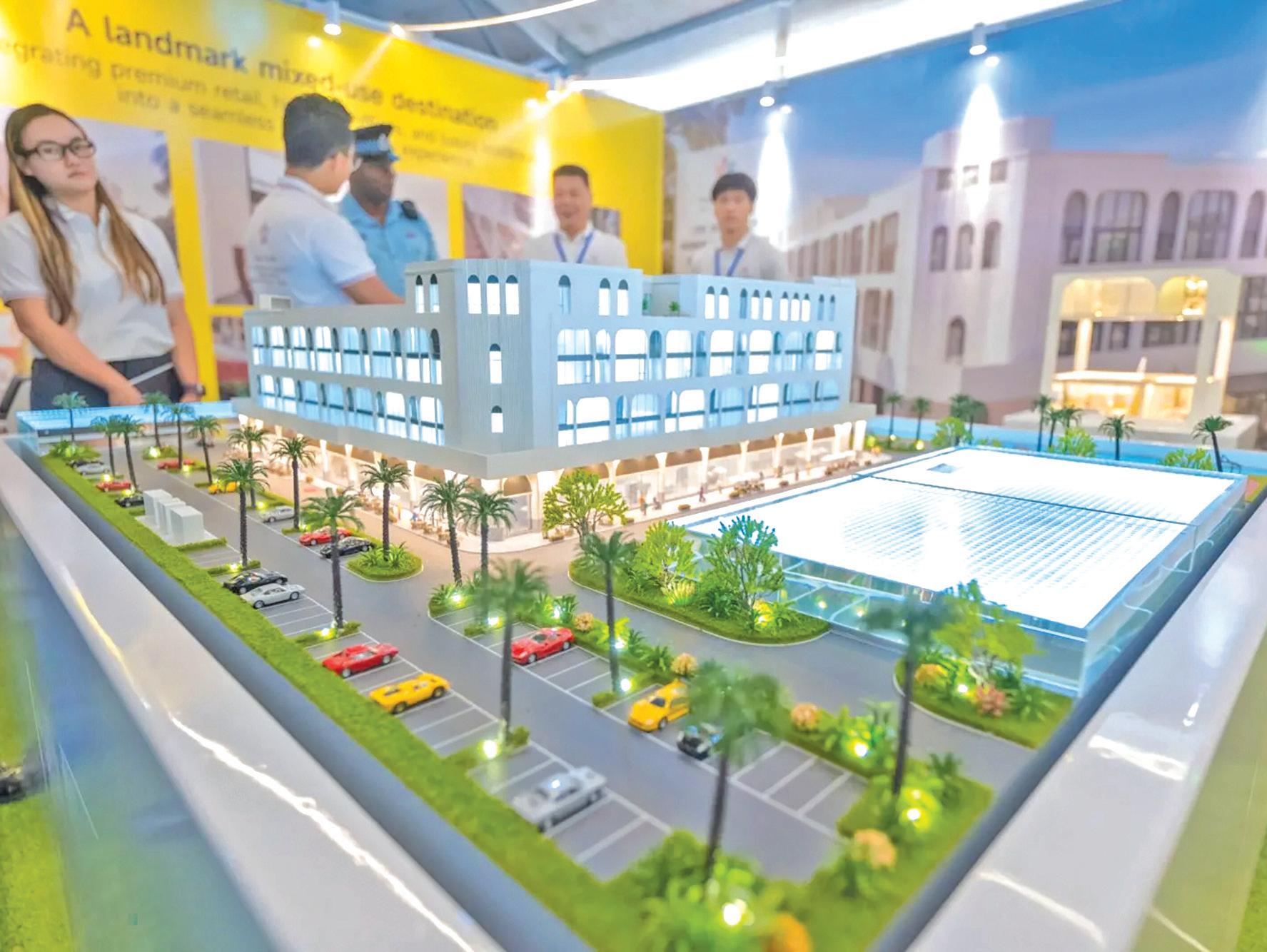
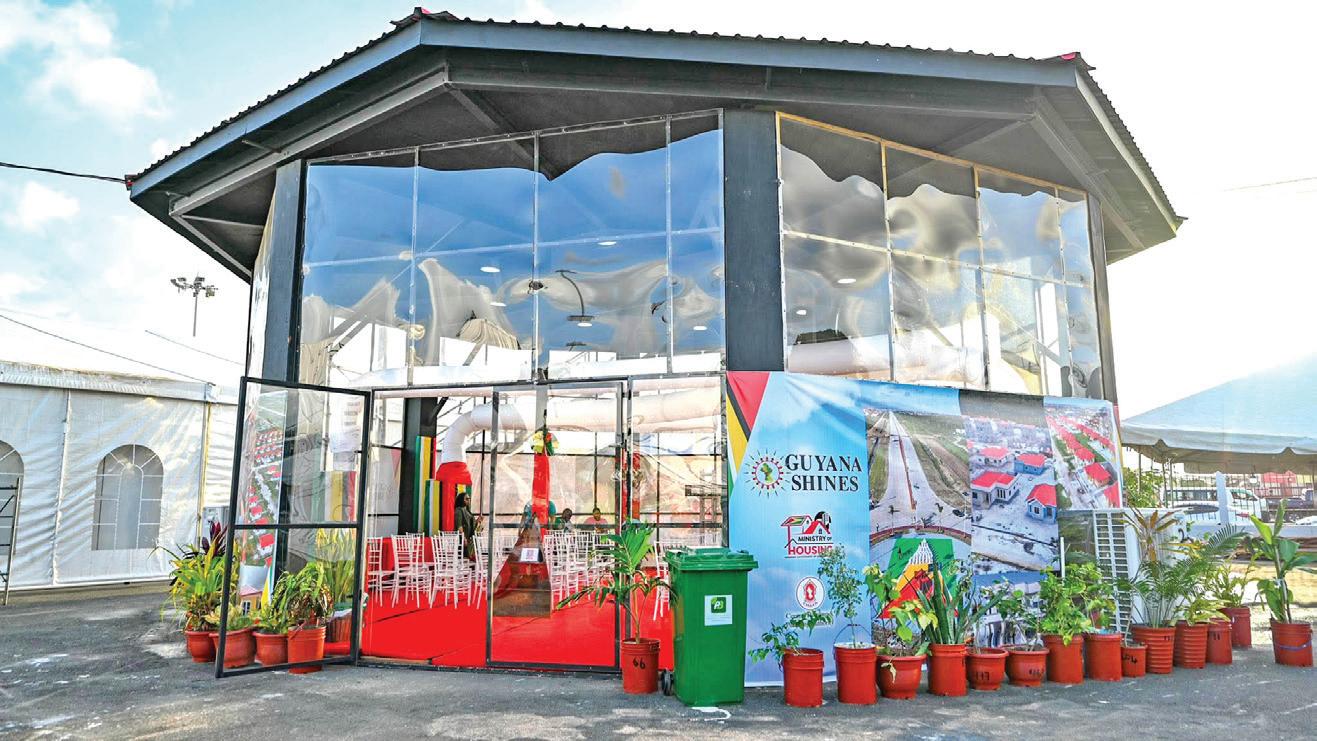
Ali on Thursday declared that “the foundations of our nation have never been stronger” as he officially opened the annual International Building Expo at the National Stadium, Providence, East Bank Demerara, highlighting what he described as Guyana’s transformation in housing, infrastructure, economic development and national growth.
The four-day event brings together more than 500 exhibitors, including developers, banks, material suppliers, prefabricated housing companies, green technology providers, architects and engineers from across the region and beyond. The opening ceremony also featured remarks from Prime Minister of Jamaica, Andrew Holness, who is in Guyana on a state visit; Minister of Housing and Water Colin Croal; Minister within the Ministry Vanessa Benn; Chief Executive Officer of the Central Housing and Planning Authority (CH&PA), Dr Martin Pertab; and Chairman of the Private Sector Commission, Gerry Gouveia Jnr.
President Ali said the confidence of Guyanese in the housing sector has grown significantly, pointing to the increase in housing applications since his Government returned to office in 2020.
“What took place between 2020 and now is nothing short of extraordinary because of the confidence in people in knowing that they will get their house lots. Confidence in knowing that there is a Government prioritising housing, that is investing in housing and that is delivering in housing,” he said.
The Head of State pointed out that applications in the housing system have increased by 60,000, bringing the total number of applications to 81,000.
“That is not accidental; it is because of the confidence in the system and everyone wanting to be part of the
Addressing outstanding
land titles, President Ali said the Government has processed thousands of titles and is committed to clearing the remaining backlog.
“We speak about 60 years of independence. There was a time when 10 families lived in the same house, sharing two bedrooms. Today your 21-year-old is dreaming of owning their own home because of a system that supports that type of thinking,” the President noted.
“Between 2020 and 2026
log of all titles that need to be processed.”
New housing development strategy
The President also announced that a new housing development strategy will be unveiled in the coming weeks aimed at addressing vulnerable groups and expanding housing opportunities. He said the strategy will focus on groups including persons living with disabilities, single parents and those facing extreme vulner-

growth story: owning their own homes,” he noted.
The President reminded us that the country has come a far away from the days when families were forced to share small living spaces to a period where young Guyanese are confidently aspiring to own homes.
we were able to process 30,000 titles. We have outstanding titles to process at just over 20,000. I can assure you that what we took five years to process, we will not take a single year because we are going to back the system to clear the back-
ability.
“We are designing a system that will allow you to have a home in which you can live in dignity,” the President declared.



Editor: Tusika Martin
News Hotline: 231-8063 Editorial: 231-0544, 223-7230, 223-7231, 225-7761
Marketing: 231-8064 Accounts: 225-6707
Mailing address: Queens Atlantic Industrial Estate Industrial Site, Ruimveldt, Georgetown
Email: news@guyanatimesgy.com, marketing@guyanatimesgy.com
The remarks delivered by Prime Minister (PM) of Jamaica Andrew Holness at the opening of the International Building Expo 2026 underscore a regional recognition of Guyana’s accelerating development trajectory. The characterisation of the country’s transformation as “fantastic” reflects more than diplomatic courtesy, as it signals acknowledgement of structural shifts taking place within housing delivery, infrastructure expansion and urban planning. Within the broader Caribbean context, such assessments carry weight, particularly when expressed by regional Heads of Government observing comparative development pathways.
The significance of this recognition lies in the timing and scale of change under discussion as the housing and construction sector in Guyana has evolved into a central pillar of national development planning, extending beyond shelter provision into the deliberate creation of integrated communities. The emphasis on serviced lands, coordinated infrastructure, and essential utilities reflects a departure from fragmented settlement development toward a more coordinated national spatial strategy. Roads, drainage systems, electricity networks, and water distribution are increasingly being planned as part of unified housing schemes rather than as later additions, strengthening long-term sustainability.
A defining feature of this development model is its integration of housing with broader socio-economic infrastructure. The linkage of residential expansion with transportation corridors, sanitation systems, healthcare access points, educational facilities, and digital connectivity demonstrates an understanding that housing is not an isolated sector. Instead, it functions as an anchor for community stability and economic mobility. The shift toward reducing administrative bottlenecks in planning and approvals further reinforces efficiency in delivery, signalling an administrative culture increasingly orientated toward results-based governance.
Regional comparisons introduced by PM Holness place Guyana’s progress within a wider Caribbean development discourse. Jamaica’s ongoing efforts to address its housing deficit highlight shared regional challenges, particularly in balancing financing capacity with supplyside constraints such as labour availability, contractor networks, and approval efficiency. Against this backdrop, opportunities for collaboration between Caribbean states emerge as a practical necessity rather than an abstract ideal. Shared training programmes, technology transfer, and coordinated approaches to construction innovation present viable pathways for mutual advancement.
In this context, Guyana’s trajectory assumes added regional relevance, and the rapid expansion of housing solutions and supporting infrastructure reflects a broader economic transformation driven by increased national revenues and expanded public investment capacity. However, the more enduring feature lies not solely in the pace of construction but in the institutional approach to planning communities as holistic spaces. The evolution from housing provision to community building marks a significant shift in development philosophy, aligning with contemporary global urban development standards.
Over the past decades, Guyana has undergone a marked transition from periods characterised by constrained infrastructure development and limited housing accessibility to a phase defined by large-scale public investment and accelerated delivery. The current development trajectory reflects sustained emphasis on reducing housing shortages, expanding home ownership opportunities and improving living conditions across both urban and peri-urban areas. This transformation is further reinforced by improvements in administrative systems, which have reduced delays and improved transparency in allocation and approval processes.
The recognition extended by PM Holness also highlights the role of regional solidarity in strengthening development outcomes. Support extended by Guyana to Caribbean partners in the aftermath of natural disasters further illustrates the reciprocal nature of regional cooperation. Such exchanges reinforce the principle that development within the Caribbean is interlinked, with shared vulnerabilities necessitating shared responses.
Looking forward, the integration of modern construction technologies, digital systems and innovative building materials is expected to further reshape the housing sector. The emphasis on speed, efficiency and adaptability reflects a global shift toward technology-driven governance and service delivery. In this regard, Guyana’s ongoing reforms position the country to benefit from emerging trends in artificial intelligence, smart infrastructure planning, and sustainable urban design.
The International Building Expo 2026 therefore functions as a reflection point for national progress and regional ambition. The recognition of Guyana’s development achievements within such a forum highlights a comprehensive narrative of transformation, one that situates the country within a dynamic phase of growth and institutional strengthening.
By Dr DaviD Bratt
Childhood appears to be under siege these days. Apart from the usual shocking stories, the murders, the rapes, the school fights, are others, perhaps less striking but equally important. The needs of children appear to be an anachronism. More so if we consider not only the immediate problems they present but think of the long- term consequences. Among these are the effect of cars on children; the introduction of computers and AI learning into secondary school, ultra-processed food and certainly not least, social media.
Streets, even in residential areas, no longer belong to people, far less children. Streets belong to cars. In a tiny tropical island in the Caribbean, you can no longer walk or bicycle. Children are not allowed to go outside. The need for children to exercise and to develop self-confidence in exploring their physical and social world, outside of their home, is subordinated to adults’ need for mobility.
The Dutch have long recognised the needs of children. Two weeks ago, UNICEF declared children in the Netherlands the happiest among all developed nations and Dutch teenagers come tops for both mental and physical health. A culture of outdoor living, including lots of walking and cycling assists in this.
There is a peculiarly Dutch annual event called the Avondvierdaagse or “four-day evening walk,” in which thousands of schoolchildren and their families walk routes of five, 10 or 15 kilometres on four consecutive evenings in early summer. It is not a race. It is a social, leisurely stroll designed to get people outside and enjoy their neighbour-
hoods.
Dutch fans do a similar two-mile march at every FIFA World Cup, the Oranje Fanwalk, walking to each football stadium where their team plays, behind their iconic, double-decker “Oranjebus”.
We also seem intent on introducing screens into schools at a time when countries like Finland and Norway, who did this years ago, are now backing out because the educational results are so poor. The recent finding that writing things in a copybook stimulates the brain in ways that we never imagined and that simple typing on a computer does not, is frankly, scary.
Concerns about ultra-processed food are growing due to how they are designed to drive over-consumption, their impact on health and the risks they pose to children. Ultra-processed food is now linked to brain and mental health disorders, heart and metabolic disease, gut and digestive problems, immune and inflammatory disruption and whole-body health effects.
A world “fed-up” movement has made its appearance (https://www.fedupmovement.org/). People are fed-up with the dietary and advertising manipulations of the food industry and are speaking up for a food system that promotes health instead of diet-related diseases.
Because of the work of psychologists like Jon Haidt and Darcia Narvaez, and the decision by the Australian Government to ban smartphone and access to most social media for children under 16, people – parents, teachers, paediatricians and even politicians – are now waking up to the monstrous experiment we have been carrying out on our children over the last 25 years, ie allowing them full access to a smartphone culture dominated by tech companies whose
only purpose is to addict children and make money without concern about the consequences.
Among them: mental health deterioration (anxiety, depression and suicide); addiction (46% of teens report they are almost constantly on their phones); cyber bullying (among children aged 8-6 who report bullying, 8 out of every 10 children experience it through a phone); sleep problems (60% of teenagers report using their phones at night when they were supposed to be sleeping); sexual grooming (the Internet Watch Foundation reports that online images of primary school children being coached to perform sexual acts has soared by 1000%); access to porn (51% of UK children aged 11-13 have watched porn acts); harmful content (75% of 15-yearolds had been sent a beheading photo); obesity rates have spiralled out of control in parallel with smartphone overuse; and two out of three South Korean children have poor eyesight because of the amount time they spend on smartphones.
The fight to remove children from these harmful effects has begun. The following countries have taken decisions to ban or restrict children from using smartphones until at least age 16: Australia, UK, Italy, Spain, Indonesia, Malaysia, Poland, Sweden, and France. Globally, more than half of countries have banned smartphones in school.
In T&T, several secondary schools are already preventing their students from bringing smartphones into the classrooms and the PM has publicly expressed support for such ideas. Bring back bicycles! Bring back handwriting. Bring back blue food and, above all, delay smartphone use! (Trinidad Guardian)


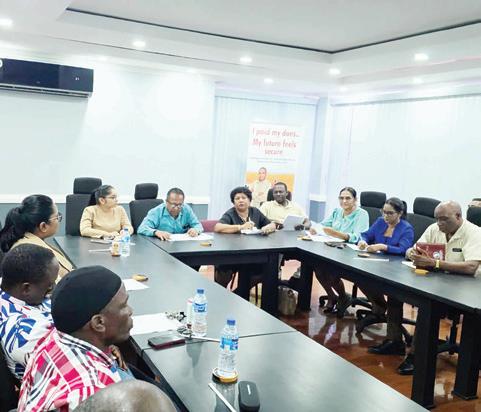
Local Government and Regional Development Minister Priya Manickchand has announced that the Government is set to implement significant increases in stipends for elected officials serving on Neighbourhood Democratic Councils (NDCs) and Regional Democratic Councils (RDCs), with payments expected to begin within days.
Speaking on Thursday, the Minister said the increases, which were first announced in the 2026 National Budget, are now ready for implementation after the completion of the necessary administrative and financial approvals.
Under the revised payment structure, Chairpersons of the country’s 70 NDCs will see their monthly stipends increase from $10,000 to $50,000. Vice Chairpersons will receive $40,000, up from $5000, while Councillors will receive $30,000, compared to the previous $3000.
At the regional level, RDC Councillors will receive an increase from $30,000 to $50,000 per month.
“We’re about to give you these significant raises in stipends,” Minister
Manickchand said, noting that the process took longer than anticipated because approvals from the Ministry of Finance were required before implementation.
She said the increases will benefit more than 1000 NDC Councillors, along with Chairpersons, Vice Chairpersons and RDC Councillors across the country.
According to the Minister, the improved stipends are intended to strengthen local Government by providing elected representatives with greater resources as they serve their communities.
“With more, our Councillors, Chairpersons and Vice Chairpersons will have more to give you, I hope, and so when much is given, much is expected,” she said, adding that the Government expects the enhanced compensation to contribute to more effective functioning of local democratic organs.
Manickchand said the payments should begin reaching NDCs’ and recipients’ homes “in a matter of days”.
Meanwhile, Region Four Regional Executive Officer Juan Edghill Jr an-

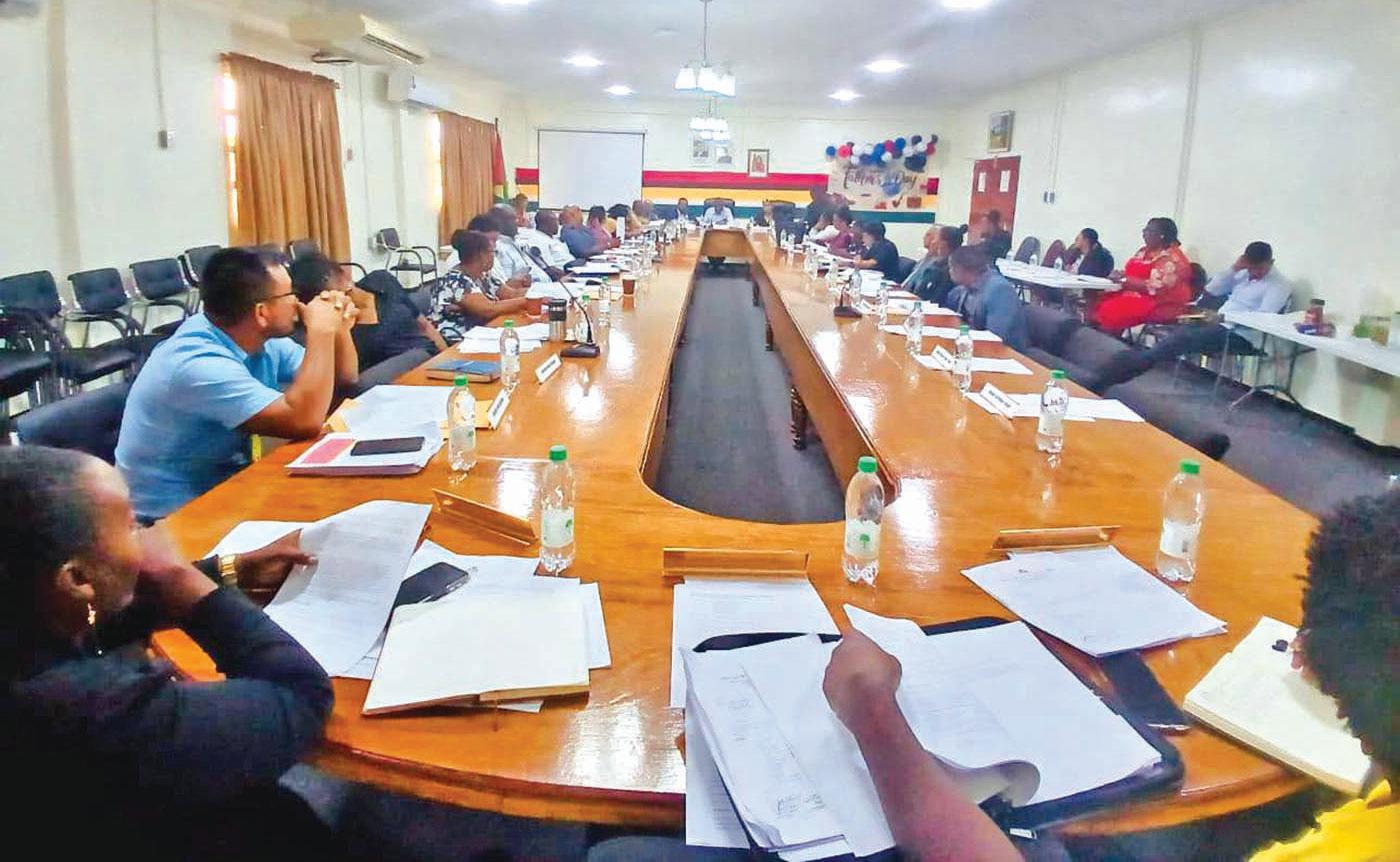
nounced that the RDC of Region Four implemented the increased stipends as soon as it was announced.
In a post on his social media page on Thursday, Edghill said the RDC approved retroactive payments to all Region Four Councillors from January to the present, reflecting the new stipend rates.
In 2025, municipalities and NDC received massive
increases in subventions from the Government.
Every NDC now receives $30 million as their new annual subvention, while each municipality now receives $50 million. Previously, NDCs received subventions of about $5 million, while municipalities received about $18 million.
When the increase was announced in 2025, Vice

President Dr Bharrat Jagdeo, who was at the time meeting with some Councillors and other representatives of the 80 Local Authority Areas (LAAs) across Guyana at the Arthur Chung Conference Centre (ACCC), Liliendaal, Greater Georgetown, had said that “we expect this money to be well-spent.”
“We want to equip you with the tools that ensure
that going forward, apart from what we focus on at the national level, that you can deliver better services,” Jagdeo said. Since taking office in 2020, the People’s Progressive Party/Civic (PPP/C) Administration has been injecting resources into the various local Government bodies to enhance their ability to service citizens.

Inverse proportion is a type of proportionality relationship. If two quantities are inversely proportional then as one quantity increases, the other decreases.
An example of inverse proportion would be the hours of work required to build a wall. If there are more people building the same wall, the time taken to build the wall reduces.
Inverse proportion is also known as indirect proportion or inverse variation
Inverse proportion is applied to real-life problems such as the speed of a moving object, determining whether an item will float or sink in water, or the time taken to complete a finite task whereas direct proportion is useful in numerous real-life situations such as exchange rates, conversion between units, and fuel prices.
To determine the value of a variable that is inversely proportional to another, we need to determine the relationship between the two variables and then use this to find our unknown value.
Similar to a directly-proportional relationship, we need to determine the constant of proportionality, k
The inverse proportion formula is an algebraic formula which represents the inverse proportion relationship between two variables.
If the variables were x and y where y is inversely proportional to x, we can write the relationship using the proportionality symbol as: y∝
If y is inversely proportional to x, the constant of proportionality k=xy
Rearranging this equation to make y the subject, we have: y=
An inverse proportion formula can involve powers and roots
For example, if the variables were x and y and y is inversely proportional to x2 we can write the relationship using the proportionality symbol as y∝
This can be written as an equation using the constant of proportionality, k: y=
Multicellular Species
The living things that we see around us are multicellular – they are made of multiple cells. This is what makes them big enough for us to see. Most individual cells in a multicellular organism can reproduce by mitosis. The ability to make new cells lets a multicellular organism grow, repair damage, and change. However, to produce a whole new individual, the process is more complex; most animals and plants don’t just split in half when it’s time to reproduce!
The vast majority of multicellular species reproduce by sexual reproduction. In asexual reproduction, one individual can reproduce independently. In sexual reproduction, cells from two individuals combine to produce offspring. In order to reproduce, each individual forms reproductive cells called gametes – egg cells or sperm cells. When an egg from one individual is fertilised by a sperm from another individual, those two cells join and grow into a new multicellular individual.
Although most multicellular species reproduce sexually, there are some exceptions. A small number of species, such as certain types of plants and sea life, reproduce by splitting into new pieces. For example, a plant or coral may drop off a branch that grows into a new individual.


To recognise when two variables are inversely proportional to one another, the product of the two variables will be a constant, k
In order to recognise when two variables are inversely proportional to one another, the product of the two variables must always equal a constant
Example 1
Which of these equations indicate that y∝ ?
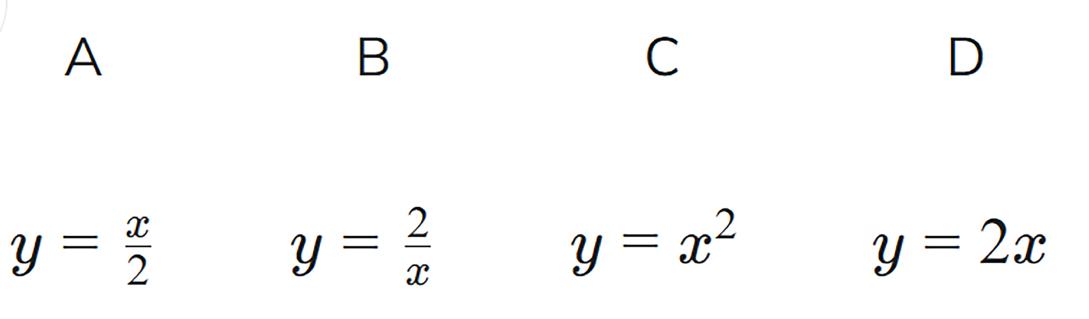
Remember: the product of the two variables must always equal a constant.
For A, we have the two variables x and y. If we multiply both sides by x so we have xy= , xy is not a constant as will change, depending on the value for x
So x and y are not inversely proportional for A.
For B, we have the two variables x and y. If we multiply both sides by x we get xy=2.
As the product of x and y always equals 2 (a constant value), x is inversely proportional to y for B.
For C, we have the two variables y and x2 If we multiply both sides of the equation by x2 we have x2y= x4 which is not a constant, as x4 will change as the value of x changes. This means that for C, y is not inversely proportional to x2
By Lucien Stryk
For D, we have the two variables y and x. If we multiply both sides by x, we have xy=2x2 and so these are not inversely proportional to one another.
B shows an inverse proportion.

Certain other species, such as some reptiles, can reproduce asexually by generating an egg cell that is able to grow without needing to be fertilised by a sperm. This process is called parthenogenesis.
Multicellular species are physically complex, with multiple body parts and organs. As a multicellular individual grows, these body parts change in predictable ways. In some species, these changes may be fairly subtle. Humans, for example, have the same body parts their whole lives, but the relative sizes of these body parts change. A baby’s shoulders are barely wider than the head, but the shoulders grow more and more quickly to become much wider than the head.


Windstorm thrums the window, drizzles the maple’s flame. So begins another summer’s end. As I turn up the stereo a girl in Rheims walks out of a medieval love song, lifts her brocaded gown along the mucky path out of the woods, shortcutting through a wheatfield silvered in cloudburst, toward the farmhouse gate. Flicking the latch she looks back, whispers her passion to the rain, this Sunday afternoon, six centuries late.
(Source: Poetry [September 1988])

In your dusty attic, you find an old photo of a relative with an unusual pet. When you start researching the pet, you uncover a surprising family history. What do you learn?




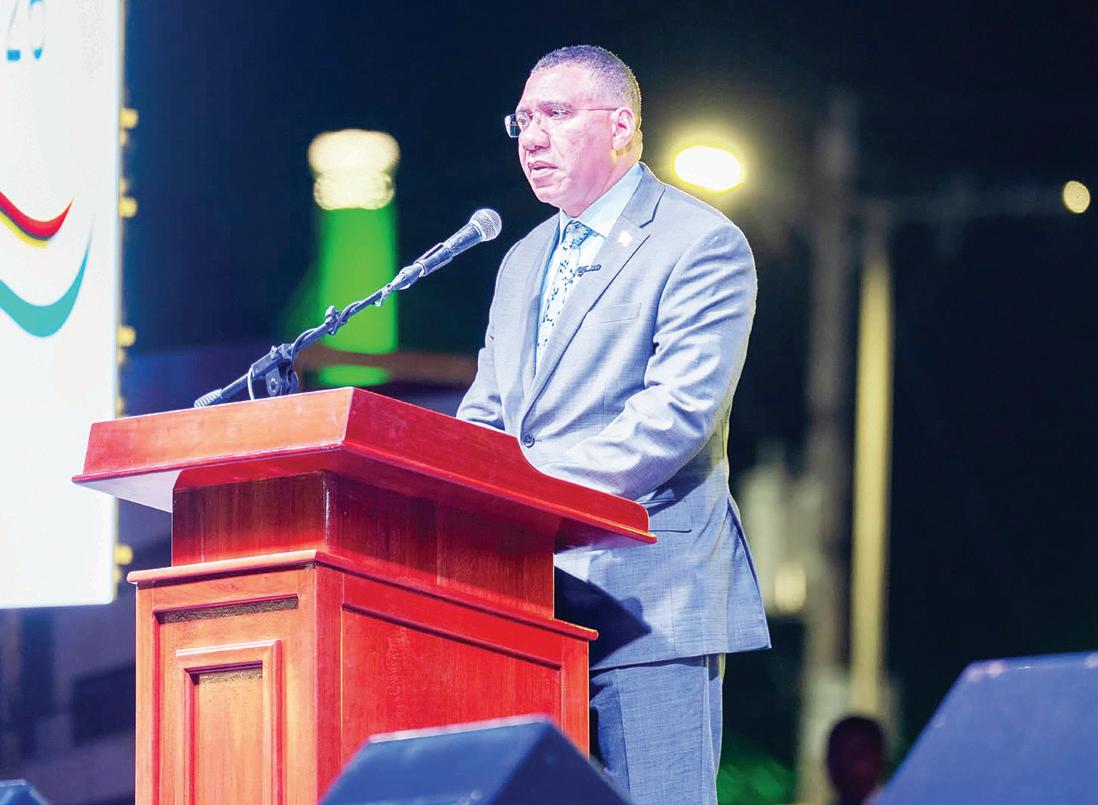
Prime Minister (PM) of Jamaica, Andrew Holness, has praised Guyana’s advancements in the housing sector, expressing his interest in working with Guyanese stakeholders to support his country’s housing development.
The Jamaican leader made these remarks on Thursday evening at the opening of the International Building Expo being held in Guyana. PM Holness is leading a delegation for a two-day state visit in Georgetown during he had high-level bilateral talks with President Dr Irfaan Ali and his Cabinet.
According to Holness, Guyana’s housing programme involves not just building homes but connecting them with roads and utilities – all of which together builds communities. This integrated approach, the Jamaican PM pointed out, offers an important lesson for the Caribbean region.
“We cannot plan housing separately from transportation, from sanitation, from schools, health facilities, digital connectivity, areas of employment, but more importantly, from how people live together as a community. And from what I have seen, and all that I have heard, it is clear that your President and his Ministers are visionary in this regard,” he stated.
The Jamaican PM disclosed that his country is also undergoing a housing boom
to bridge the existing 150,000 housing deficit there. The Jamaican Government has committed to provide 70,000 of those solutions. In fact, the National Housing Trust in Jamaica will build 42,000 homes with 10,000 already built.
But even as the island nation continues to build out thousands of houses every year, PM Holness indicated that they are confronted with a number of constraints.
“The greatest constraint would be the supply side constraints. The availability of contractors who can build at scale, the availability of labour and technical skills that can operate with new innovations and new materials, and of course the speed of Government itself in giving planning and construction approvals. These have been our challenges,” he highlighted.
To this end, the Jamaican leader recognised and lauded interventions Guyana has put in place especially to address the issue of Government bureaucracy in delivering the approvals for housing projects.
Back in 2024, Guyana launched the Electronic Planning and Development Single Window System – an online portal that allows developers, planners, and citizens to submit land use and construction applications without visiting a physical office. This onestop-shop system has reduced multi-agency approval times from as long as three years
to now three months – something that the Jamaican Prime Minister was impressed by.
“That is to be applauded,” he declared, while indicating his intention to partner with the Guyana Government to adopt some of these measures in Jamaica.
“I believe there are opportunities for Jamaica and Guyana to collaborate in the housing development sphere, particularly as it relates to labour and the deployment of new technologies in construction, and I look forward to advancing these conversations with your President to see how best we can collaborate as two developing nations to improve our people’s access to housing,” PM Holness stated on Thursday evening.
Meanwhile, in response, President Dr Irfaan Ali declared during his feature address at the International Building Expo opening that the Guyana, including its private sector, is ready to partner with Jamaica.
“That is the only way we can demonstrate the level of growth and advancement in our business solutions,” the Guyanese leader stated.
Currently, Jamaica is recovering from the devastation caused by Hurricane Melissa in October 2025. Guyana had deployed a team from the Guyana Defence Force (GDF) to aid in the early rehabilitation efforts. The GDF contingent worked on some 200 homes across Jamaica and


according PM Holness, their workmanship was of the highest standard.
Nevertheless, the Jamaican Head of State noted that as they rebuild, they are looking to do so better than before, learning from Guyana’s experience.
“We are going to rebuild what should have been there in the first place, and we’re going to rebuild better than what was there before. And that is why we have established the National Reconstruction and Resilience Agency, a special entity of Government with its own laws to fast-track development. And from the examples that we have seen here in Guyana, it is clear that we can build quickly and we can build well.”
“There is a culture in our public bureaucracy. I’m not sure it exists in Guyana anymore, because President Ali
has courageously stamped it out… But there is a culture that if it didn’t take long, it wasn’t well done. And it is an affliction of Caribbean public administration that we need to change. This is the era of getting things done at the speed of thought, the time that we waste trying to perfect processes that are outdated. Artificial intelligence is narrowing and compacting the time to deliver it. New materials are being developed that changes the process of construction, and we must move with speed and intent to ensure that we are not left behind by the changes in technology, and that we don’t miss out on the opportunities created,” the Jamaican leader emphasised.


The Policeman, who confessed that he fatally shot his Cuban national girlfriend before dumping her body in bushes at Enmore, East Coast Demerara, said that he used a teddy bear as a makeshift silencer when he killed his girlfriend.
The disclosure is contained in a confession statement allegedly given by Police Constable Randy Thomas, who admitted to investigators that he arranged to meet 26-year-old Dailen Paneque Gómez on June 18 after contacting her by telephone.
According to the statement, 20-year-old Thomas accused Paneque Gómez of being unfaithful, and the two travelled together in his motor vehicle to the Enmore Backdam area, where they discussed their relationship.
He claimed that the discussion escalated into an argument and alleged that Paneque Gómez became enraged and assaulted him.
Thomas stated that he was carrying an unlicensed firearm and placed a teddy

bear against the woman’s head before discharging a single round into her head.
The Policeman further allegedly admitted that after shooting Paneque Gómez, he tied her body with a rope and dragged it into nearby bushes in an attempt to conceal it. He reportedly told investigators that he had purchased the rope earlier that same day from a Chinese supermarket in Mahaica.
According to the confession, Thomas then drove to his residence in Mahaica, where he cleaned the interior of his vehicle using hand sanitiser.
He also allegedly disclosed that he threw the victim’s cellular phone and the spent shell over a bridge at Unity, East Coast Demerara. Additionally, he reportedly admitted to discarding the teddy bear along the roadway leading from the backdam area and throwing the firearm into nearby bushes.
Paneque Gómez, who lived at Lot 92 Mon Repos North, East Coast Demerara, was reported missing after she was last seen during the early morning hours of June 18 while reportedly on her way to work at the Enmore Regional Hospital, where she was employed as a cleaner.
After a missing person’s report was filed, detectives from the Criminal Investigation Department (CID) launched an investigation that led to Thomas’s arrest.
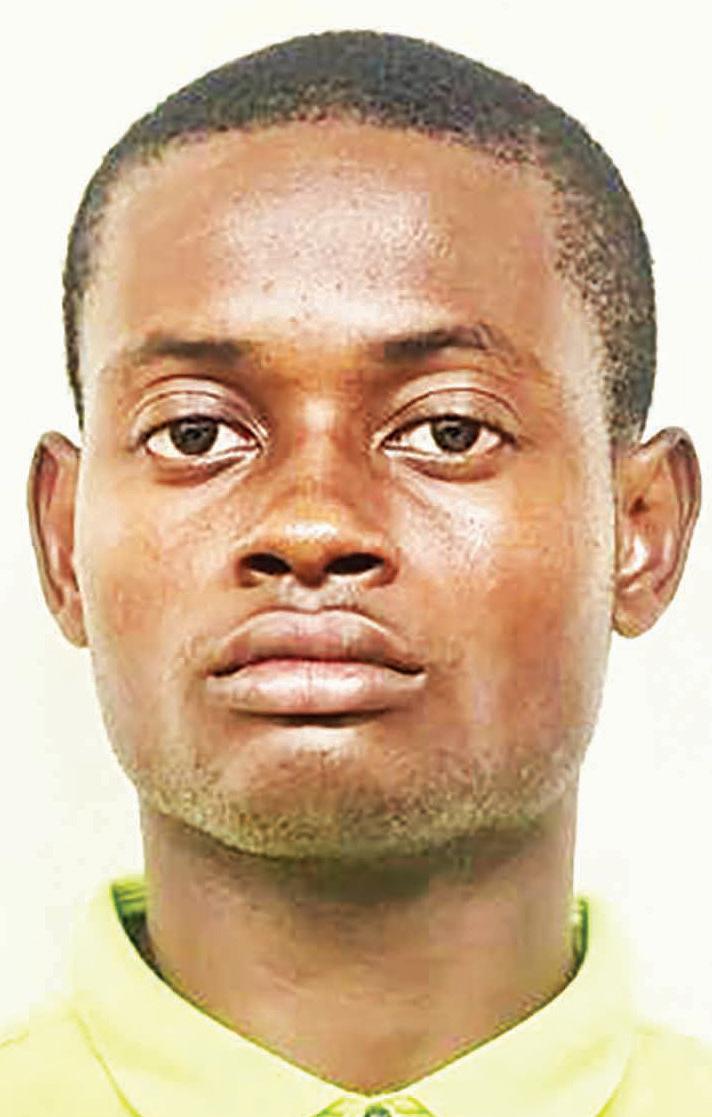
On Wednesday evening, Thomas reportedly led investigators to a clump of bushes at Enmore, where Paneque Gómez›s body was found in a decomposed state.
Head of the CID, Deputy Commissioner Wendell Blanhum, had confirmed that the suspect confessed to shooting the woman before disposing of her body.
Thomas remains in Police custody as investigations continue.
The High Court has ruled that the International Decade for People of African Descent AssemblyGuyana Country Coordinating Mechanism Inc (IDPADA-G Inc) has no legal entitlement to continued Government funding, according to a statement issued by the Attorney General (AG)’s Chambers and the Legal Affairs Ministry.
The ruling was delivered in writing on June 24 by Chief Justice (as she then was) Roxane George, SC, in the matter brought by IDPADA-G Inc against the AG, Anil Nandlall; Culture, Youth and Sport Minister, Charles Ramson Jr; and Finance Minister, Ashni Singh.
According to the AG’s Chambers, the court rejected the substantive claims advanced by IDPADA-G Inc, including allegations of breach of contract, substantive and procedural legitimate expectation, breach of constitutional property rights, and requests for mandamus, exemplary damages and costs.
The court examined whether IDPADA-G Inc had standing to bring the proceedings, whether a contract existed between the Government and the organisation in exchange for annual subventions, whether the organisation had a legitimate expectation of continued funding, and whether it was entitled to be heard before the subvention was discontinued.
While the court found that the applicant would not ordinarily have had standing because it did not exist when the alleged benefits were first granted, it proceeded to hear the matter because the State acknowledged that payments had been made to the organisation.
On the issue of contract, the court accepted the AG’s submission that there was no written agreement, no clear offer or acceptance, no consideration and no sufficiently certain terms capable of creating a legally binding contract. As a result, the claim for breach of contract failed.

The court also rejected IDPADA-G Inc’s argument that it had a substantive legitimate expectation of continued Government funding.
According to the judgement, former President David Granger’s 2016 address represented a policy statement supporting the objectives of the United Nations International Decade for People of African Descent rather than a promise of financial support to any specific organisation.
The Chief Justice ruled that the Government’s budgetary allocations were made in support of the cause associated with the United Nations programme and not as a private entitlement to IDPADA-G Inc. The judgement further noted that neither IDPADA-G Inc nor its predecessor existed when the 2016 statement was made.
The court also dismissed the organisation’s claim that ending the subvention breached its constitutional right to property and found that it had established no legal right to continued Government funding beyond 2022.
However, the court granted limited procedural relief, holding that the unincorporated body, IDPADA-G, should have been given notice and an opportunity to respond before the Government discontinued the subvention. On that basis, the court ordered that the remaining subvention payments for
October, November and December 2022 be paid to IDPADA-G.
No order for costs was made against the State.
In its statement, the AG’s Chambers said the judgement “substantially vindicates” the Government’s position on the principal legal issues and confirms that the Government remains free, as a matter of policy and law, to determine how public funds allocated for national programmes and public causes are distributed.
The court also stated that directing the Government to allocate a specific budgetary sum to IDPADA-G would amount to judicial overreach and affirmed that the Government may change its policy regarding the utilisation of budgetary allocations for the United Nations International Decade for People of African Descent.
The State was represented by attorneys Deborah Kumar, Shoshanna V Lall, Ronetta Sargent and Loretta Noel, led by AG Mohabir Anil Nandlall, SC, MP, who appeared in person.
The AG’s Chambers also stated that the Government remains committed to advancing the objectives of the United Nations resolution establishing the International Decade for People of African Descent and continues to allocate annual funding to organisations representing Afro-Guyanese.
According to the statement, several organisations had complained that they did not benefit from more than $500 million previously allocated to IDPADA-G Inc and had petitioned the Government to distribute the funds directly among multiple representative organisations instead.
The statement further alleged that IDPADA-G Inc’s financial records showed that more than 80 per cent of the funds it received were spent on salaries, rent, meals and administrative expenses rather than on programmes directly benefiting Afro-Guyanese communities.

If familiarity breeds contempt, then what does sucking up to someone who bitch-slaps you at every opportunity breed?? Well, from what your Eyewitness sees how the Surinamese treat us every time we try to cooperate with them to get their economy going, they kick us in the nuts over our New River Triangle (NRT)!! Your Eyewitness is referring to the Suriname Energy Oil and Gas Summit (SEOGS) our officials – including our Minister of Natural Resources – just attended in Paramaribo, only to be confronted with their map of their country that ostentatiously includes NRT!!
Just as the Venezuelan border was fixed by an arbitral panel, our ownership of the NRT was confirmed in a 1936 agreement in which a joint British-Dutch-Brazilian boundary commission identified the source of the Kutari River as the tri-junction point where the borders of Brazil, British Guiana, and Suriname meet. Not the New River, as the Surinamese claim to claim NRT!!
How many times, Ja?? Wasn’t it just last February 2025 our Ambassador to Suriname was forced to issue an official objection after the exact same ridiculous misrepresentation was flaunted at a “Suriname’s International Business Conference”?? With scads of Guyanese businesses in attendance?? And the year before – November 2024 – didn’t their Foreign Affairs Minister, Ramdin, summarily summon our Ambassador to protest our developing an airstrip and medical clinic in OUR NRT?? Imagine the nerve!!! We’re developing our country, and we must get permission from Suriname??
But we should note that at the same time Mad Maduro was rattling sabres on our western border as he sought to annex our 60,000 sq mile Essequibo!! And this is a running theme in our relations with Suriname, as they refuse to let go of their claim to our 6000 sq mile NRT! This goes back to 1962 when the Venezuelans tried a thing at the UN – and up popped the Dutch/Surinamese like a cuckoo with their “claim to the NRT!! Then in 1969, when Venezuela backed the Rupununi Uprising to hive off the 20,000 sq miles of Rupununi, they sneaked in a military force to seize and occupy the NRT!!
We had to send in a brave band of GDF soldiers in a makeshift armed aircraft – with armed soldiers crouching in the fuselage! – to drive out the Surinamese!! They’ve never forgiven us for the humiliation their army suffered, having to scamper into the jungle like scared deer!! We see the same one-two between Venezuela and Suriname repeating, and we must instruct our representatives on how to respond!!
If we’re participating in any Surinamese event and they trot out their misleading map, all Guyanese must walk out!! In olden days, we wouldn’t slap the Surinamese and challenge them to a duel!!
…Venezuela get relief?
Your Eyewitness is quite alert to the existential threat posed by Venezuela to our national survival with their concocted Border Controversy – which almost every Venezuelan man, woman and child supports. He’s also alert to the Venezuelan connection to the intercepted cache of AK-47s and the Venezuelan sleepers among the thousands and thousands of refugees that’re gonna be activated at some point!!
But he yet felt a twinge of pity for Venezuelans – as they were eking out a miserable existence in the horror created by Chavez and Mad Maduro – when he read of the tragic effects of two massive earthquakes just outside of Caracas. It seems hundreds of tall buildings collapsed, and – as of Thursday morning when this is being written – your Eyewitness is informed that 164 have been confirmed dead and almost 1000 injured. The final numbers are expected to far exceed those estimates.
He’s happy that our Government joined efforts to send relief to the survivors. We can imagine their suffering after we only (coincidentally) experienced a squall.
…our fishermen get equity
If there were any doubts about how Suriname views us, they should’ve been cleared up by how shabbily and disrespectfully they’ve dealt with their promise to issue fishing licences to our fishermen in their Corentyne River.


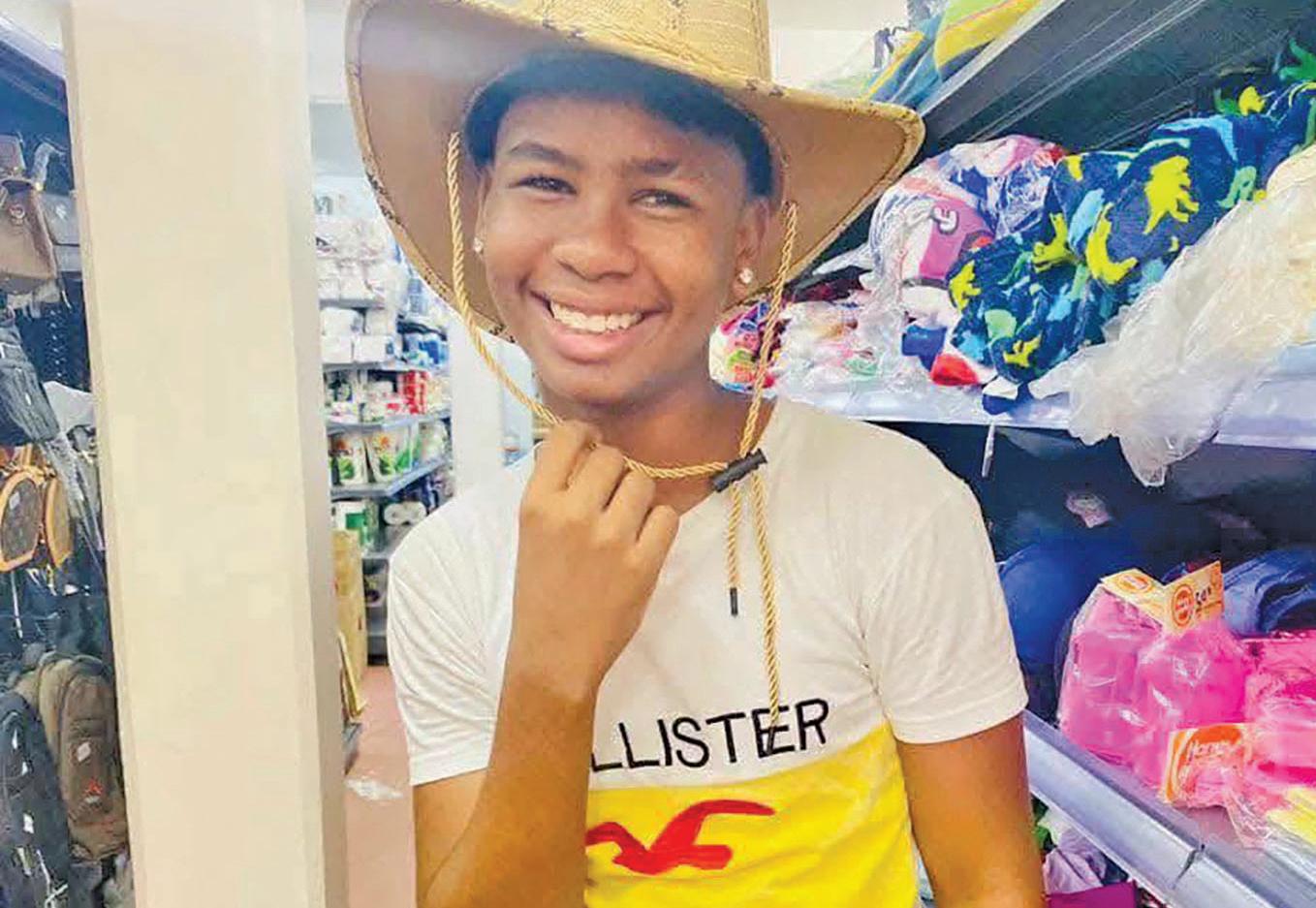
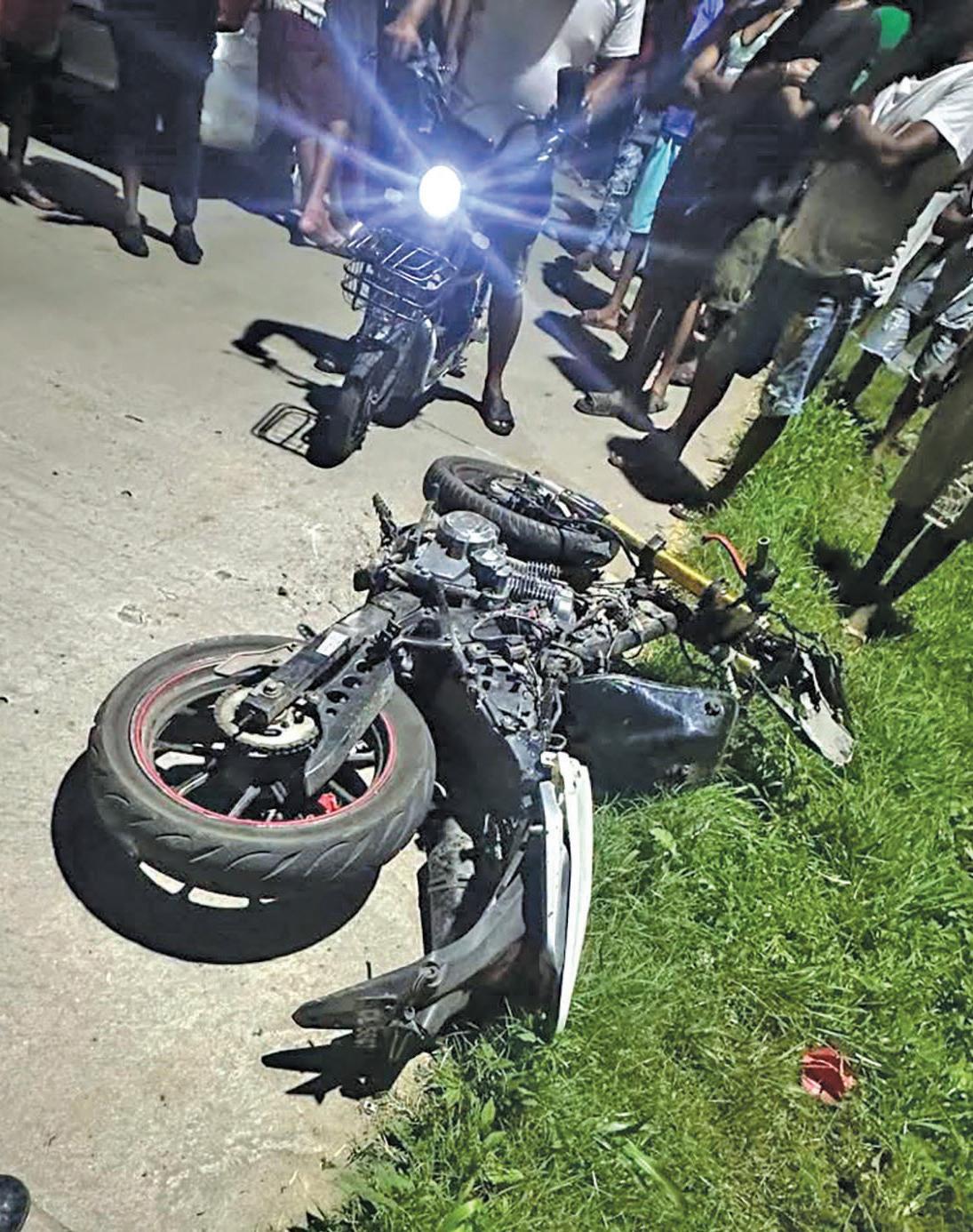
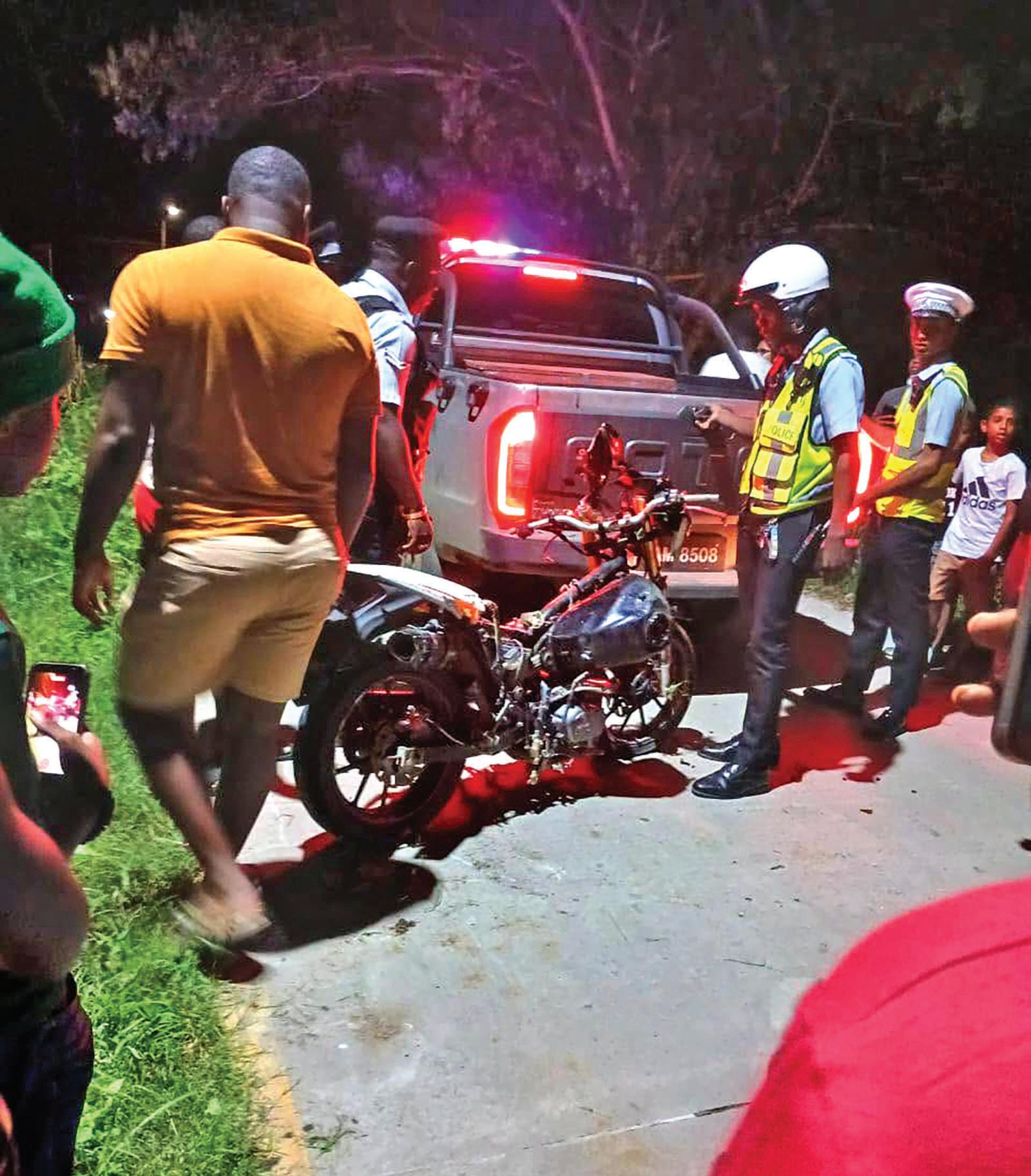
A16-year-old boy died on Thursday evening after the motorcycle he was riding crashed into a utility pole along the Princeton Access Road, Corentyne, Berbice, triggering protests by residents who blocked sections of the public road and demanded answers.
According to the Guyana Police Force (GPF), the fatal incident occurred at about 18:45h and involved motorcycle CL 5607, ridden by the teenager.
In a statement issued Thursday night, the Police said preliminary investigations revealed that King attempted to evade a Police
Dead is Aftaz King, a labourer of Eliza Mary Race Course, Corentyne, Berbice.


of the Princetown Public Road.
patrol, lost control of the motorcycle and collided with a utility pole.
He sustained injuries and was taken to the No 75 Regional Public Hospital, where he was pronounced dead on arrival by a doctor.
The incident sparked outrage in the community, with residents taking to the streets, setting debris on fire and blocking sections
Residents have alleged that King was being pursued by Police at the time of the crash and are calling for accountability and a full investigation into the circumstances surrounding his death.
In response, the GPF said its Office of Professional Responsibility (OPR) has launched an immediate investigation into the incident.
"The OPR investigation will examine all aspects
of the incident, and establish whether there was any criminal or disciplinary culpability," the Police said.
The force added that it recognises the seriousness of the matter and assured King's relatives and the public that appropriate action will be taken should the investigation find any criminal or disciplinary wrongdoing.
Police said investigations are continuing and that additional details will be released as they become available.

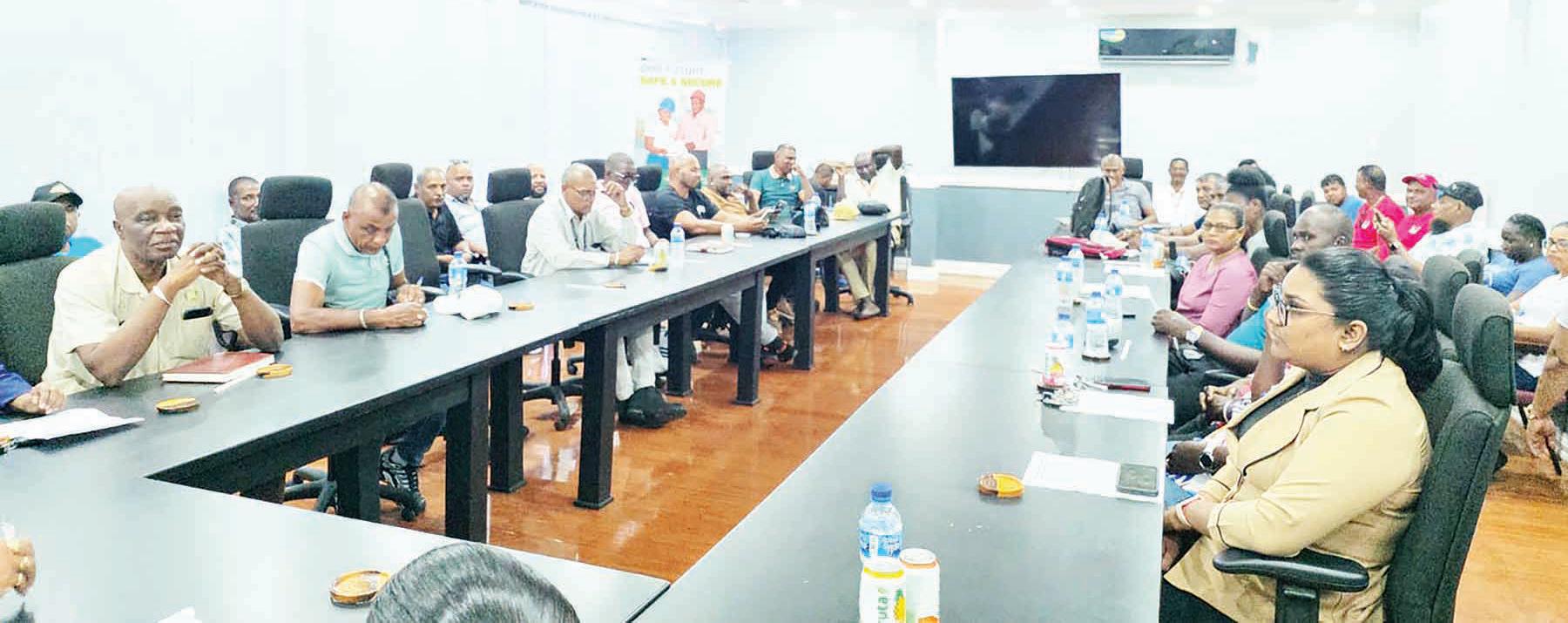
The Guyana Agricultural and General Workers Cooperative Credit Union Society Limited (GAWU credit union) has approved approximately $6.1 million in distributions to its members after recording a surplus of more than $9 million for the 2023 financial year.
The decision was taken during the Credit Union’s 31st Annual General Meeting (AGM), held on Thursday at its headquarters at High Street and Wights Lane, Kingston, Georgetown.
According to the Credit Union, members reviewed the Society’s operations and financial performance for the year ending December 31, 2023, following audits conducted under the supervision of the Cooperatives Department of the Labour and Manpower Planning Ministry.
The audits, which are required under the Cooperative Act, resulted in
what the Society described as a clean bill of health, confirming compliance with regulatory requirements and financial accountability standards.
Financial statements presented at the meeting showed that the credit union recorded a surplus of $9,067,516 before statutory deductions. From this amount, $1,813,503 was allocated to the Statutory Reserve Fund and $906,752 to the Audit and Supervision Fund. Following those deductions, members approved several distributions for eligible shareholders and borrowers.
The AGM authorised dividend payments totalling $4,355,478, representing a return of 1.5 per cent on ordinary shares valued at $290,365,249. Members also approved an interest rebate of $1,767,828, equivalent to 21 per cent of members’ interest charges for 2023.
In addition, $223,956 was approved for the Society’s
Social and Entertainment Fund.
Combined, the approved allocations amount to approximately $6.1 million being returned to members.
The meeting also received a report from the supervisory committee, which confirmed that the credit union’s transactions were conducted in accordance with its rules and regulations.
Members were informed that following representations made by the credit union, the Cooperatives Department revised its audit and supervision fee for 2023. The fee was reduced to $906,752 from an initial invoice of $3,425,620.
During the AGM, members elected a 10-member Committee of Management comprising Gaietri Baron, Sattie Basdeo, Seepaul Narine, Porandatt Narine, Taramattie Dyal, Harvey Tambron, Gordon Thomas, Julius Nurse, Bhikram Singh and Rikhram Srikishen.

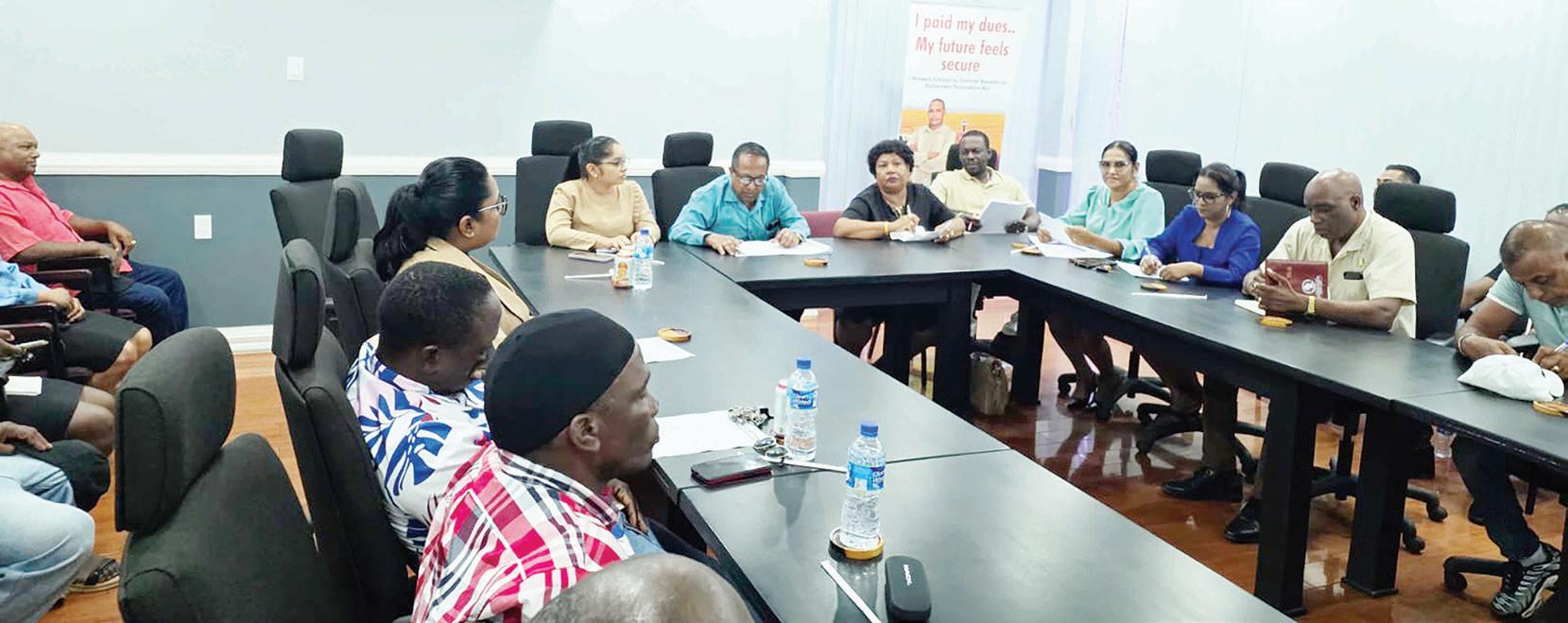
A three-member supervisory committee was also unanimously elected. The committee comprises Kavita Bishun, Rawattie Persaud and Sasha Ruhoman.
In a statement follow-
ing the meeting, the credit union said it remains committed to supporting members’ savings and financial goals while maintaining steady growth and stability.
The credit union noted
that the surplus achieved in 2023 reflects continued confidence in the institution and enables it to return benefits directly to its membership through dividends and rebates.


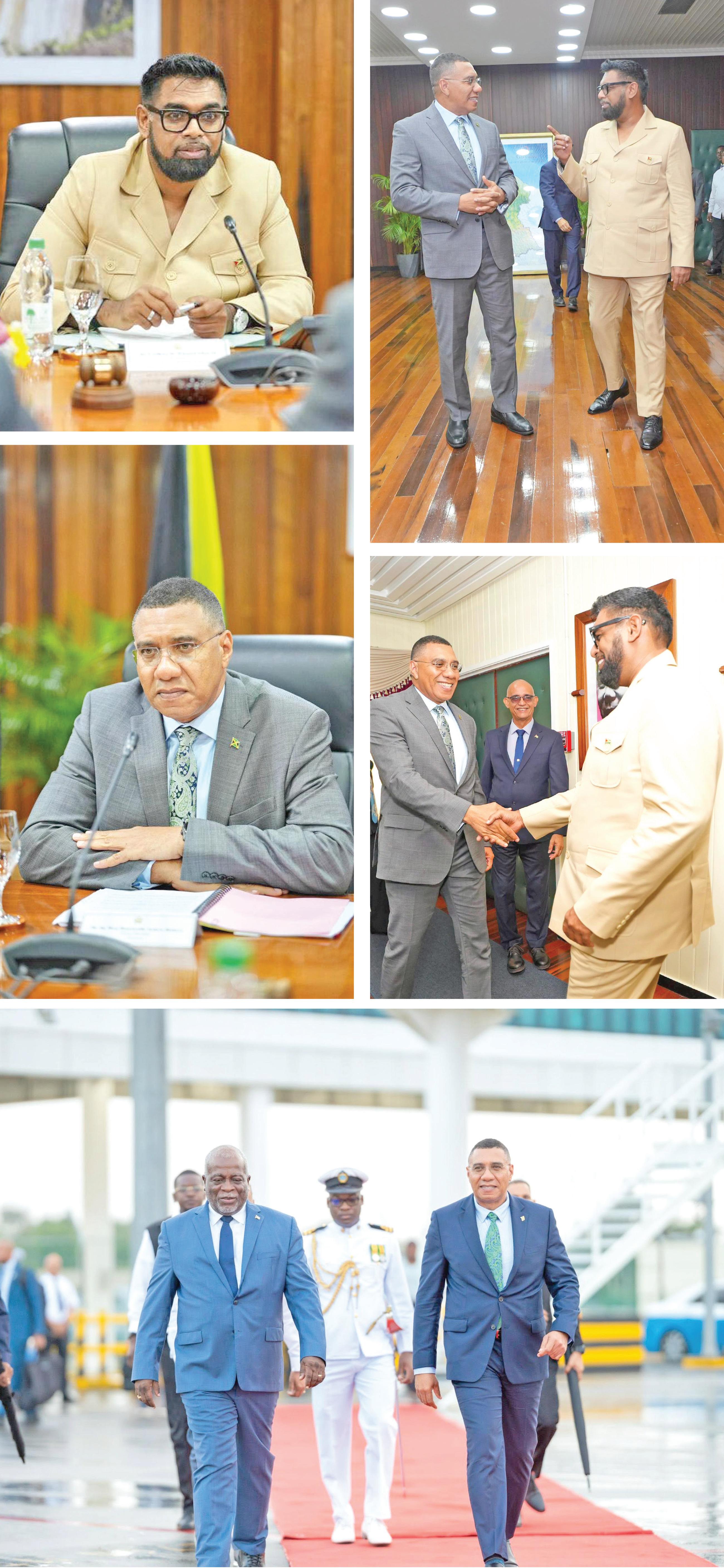
The Prime Minister (PM) of Jamaica, Dr Andrew Holness, is currently on an official State visit in Guyana to have bilateral talks with President Dr Irfaan Ali in a number of areas ranging from energy, security, agriculture and Government efficiency, among others.
This two-day State visit to Georgetown, at the invitation of President Ali, provides an important opportunity to further strengthen the longstanding partnership between Guyana and Jamaica.
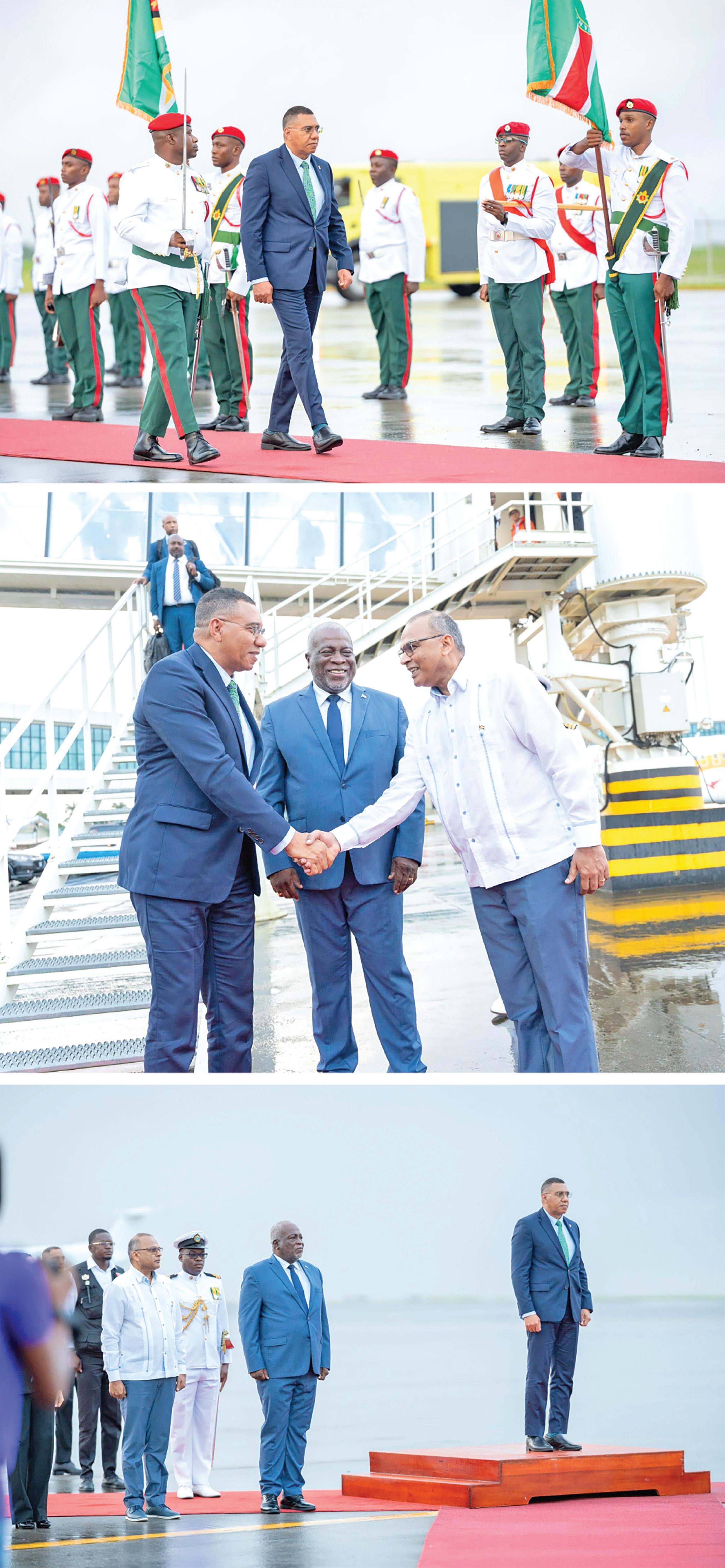
PM Holness and his team arrived at the Cheddi Jagan International Airport (CJIA) on Thursday morning and were received by Prime Minister, Brigadier (Retired) Mark Phillips and acting Foreign Affairs Minister, Dr Frank Anthony with a military salute.
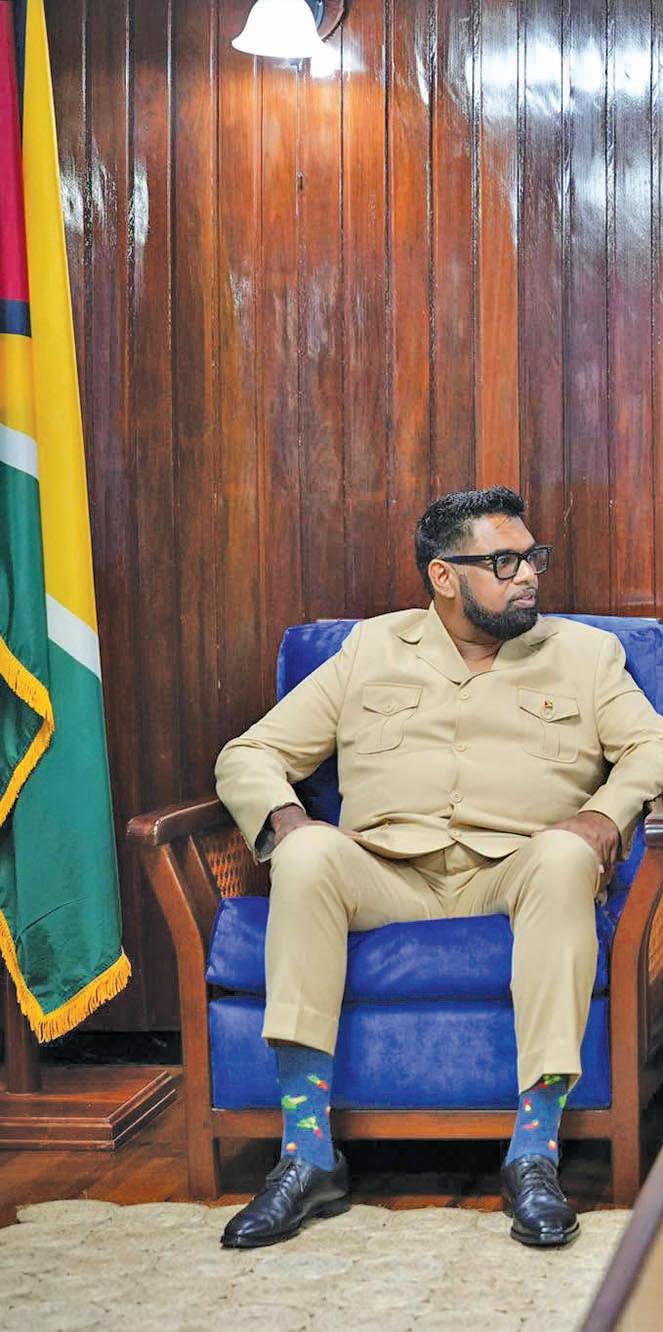
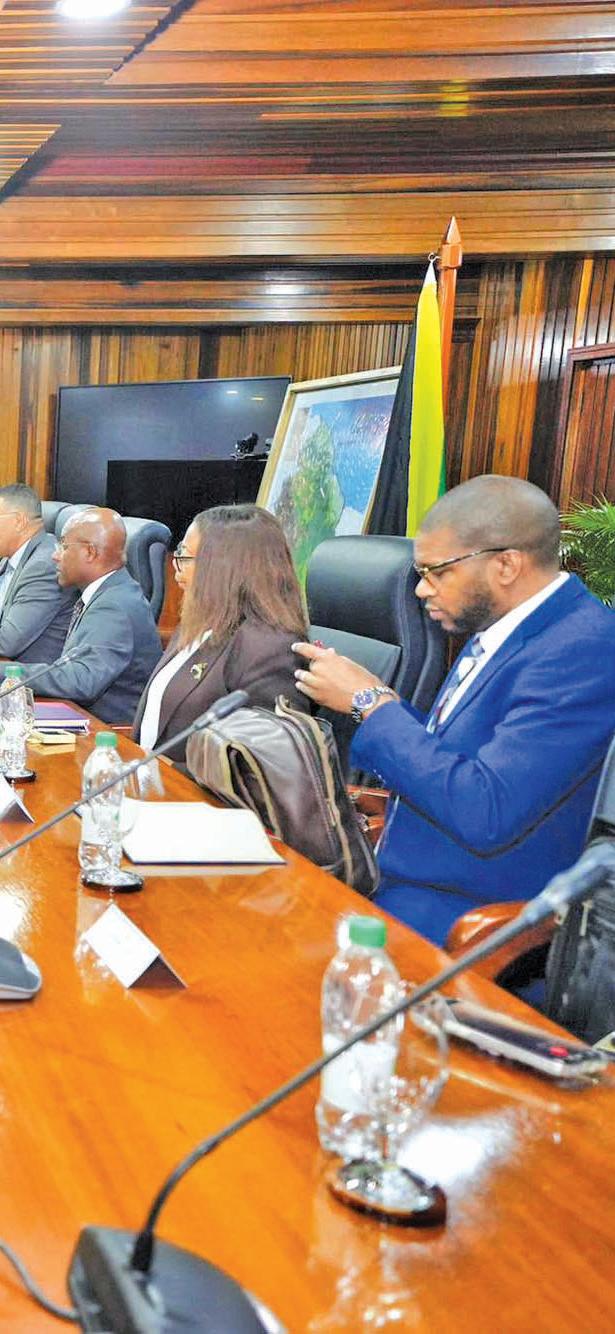
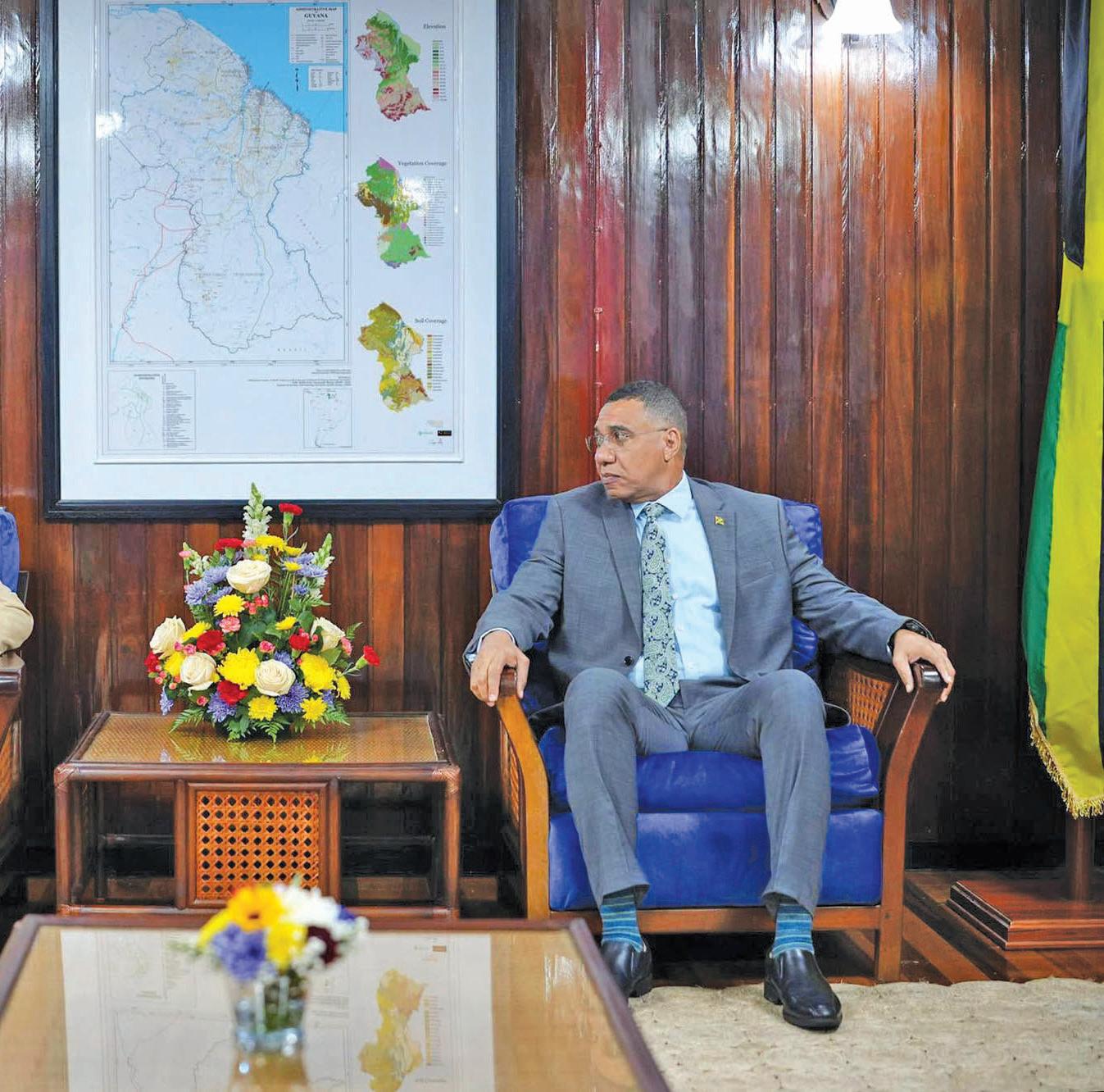
The Jamaican leader then travelled to Georgetown, where he met with President Ali at the Office of the President.
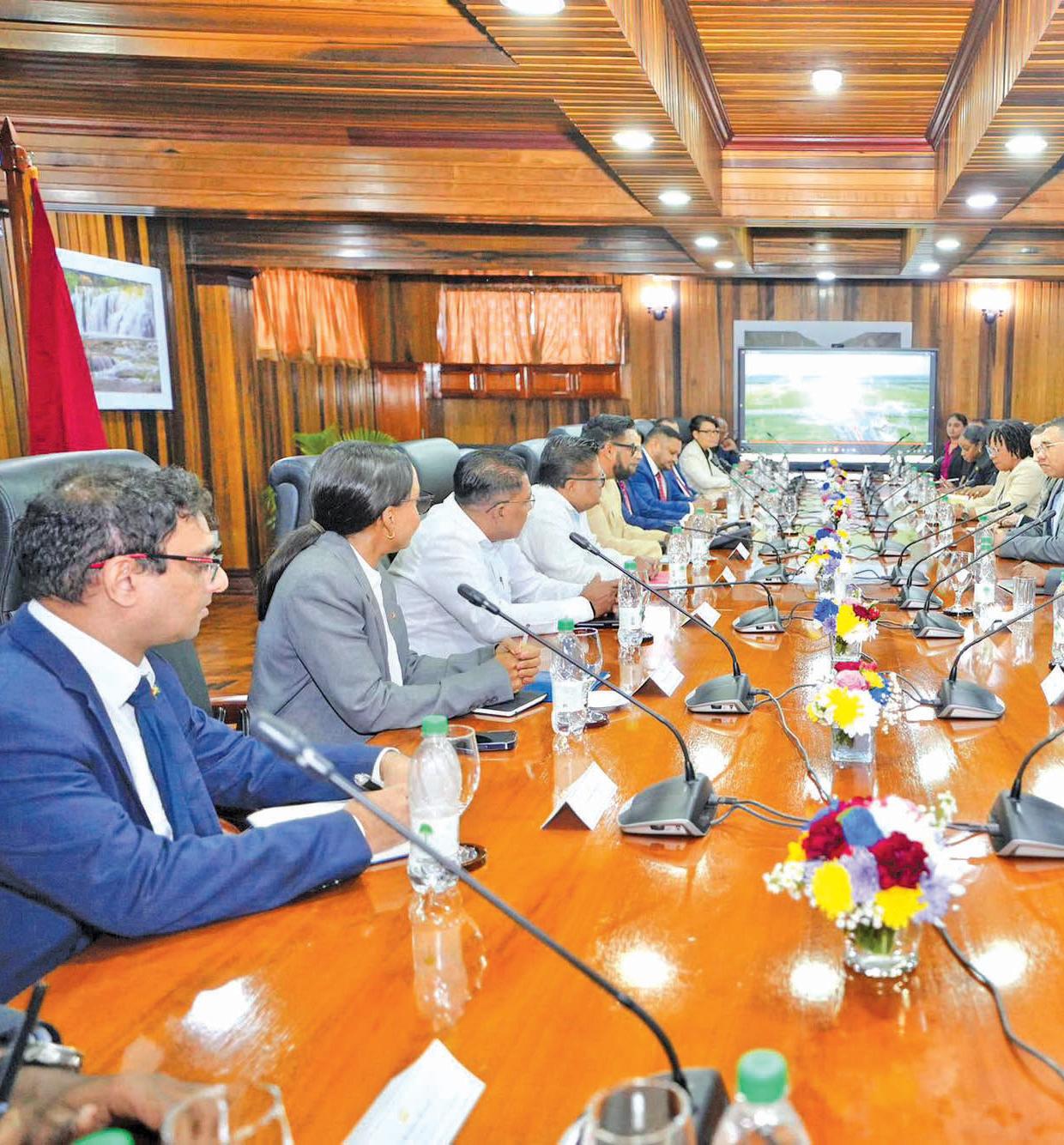
There, the two sides engaged in bilateral discussions that focused on further strengthening the longstanding friendship and strategic partnership between the two Caribbean nations, while also exploring opportunities to expand collaboration across several key sectors.
According to President Ali in a Facebook post following Thursday’s meeting, they are looking at “…advancing cooperation on matters of mutual interest, including but not limited to technology, education, energy, security, Government efficiency, agriculture, and housing, among other areas of collaboration.”
The Guyanese Head of State was joined by several Cabinet Members during the
high-level engagement with the Jamaican officials. The meeting reaffirmed the commitment of both nations to deepening regional cooperation and advancing sustainable development for the benefit of their peoples.
New opportunities
Meanwhile, PM Holness, in a post upon his arrival in Guyana, said he was looking
forward to a successful visit.
In a subsequent social media post on X following the meeting with President Ali, he said, “Jamaica and Guyana continue to build on a longstanding friendship. Today’s discussions focused on creating new opportunities for our people through greater cooperation in key areas of development and growth.”
According to the PM, Jamaica and Guyana have en-
joyed strong diplomatic ties since 1969, and Thursday’s engagement saw the two nations taking their relationship forward and strengthening it even further.
“As we discuss opportunities for partnership and collaboration in areas such as agriculture, technology, housing, education, and energy, Jamaica looks forward to strong outcomes from our dis -
The PM State visit comes months after Guyana mobilised a humanitarian mission to Jamaica shortly after the island nation was battered by Hurricane Melissa in late October 2025.
President Ali was part of a high-level goodwill mission, comprising several Caribbean Community (Caricom) Heads of Government as well as other regional and international officials, that travelled to Jamaica to undertake a post-Hurricane Melissa assessment.
During that visit, Guyana had signalled strong solidarity with its sister Caricom nation and committed to supporting Jamaica’s recovery efforts.
In fact, a 41-member team from the Guyana Defence Force (GDF)’s Four Engineers Battalion was deployed in early December to Jamaica, where they played a critical role in post-disaster reconstruction.
During the 114-day deployment, the team successfully rehabilitated over 200 homes for vulnerable families in communities across Jamaica. Their work was supported by the Civil Defence Commission (CDC) in Guyana and the Private Sector Commission (PSC) here, which provided the building materials for the repairs.
When the GDF contingent returned to Guyana in April of this year, they were con -
cussions,” PM Holness noted in his social media post.
The Jamaican leader is accompanied by his Foreign Affairs Minister Kamina Johnson Smith and Industry Minister Aubyn Hill for his Georgetown visit.
They also attended the opening ceremony of the International Building Expo held on Thursday evening, where PM Holness also delivered remarks.
ferred with the Humanitarian Assistance and Disaster Response Medal by President Ali in recognition of their outstanding service and contribution to rebuilding efforts in severely affected communities.
On Thursday evening, President Ali told PM Holness, during the launch of the 2026 International Expo that the second tranche of post-hurricane assistance will be deployed soon.
Guyana’s Prime Minister Mark Phillips on Thursday conducted a guided tour of the Gas-to-Energy Project at Wales, West Bank Demerara, for Jamaican Prime Minister Andrew Holness and members of his delegation (Office of the Prime Minister/Facebook)




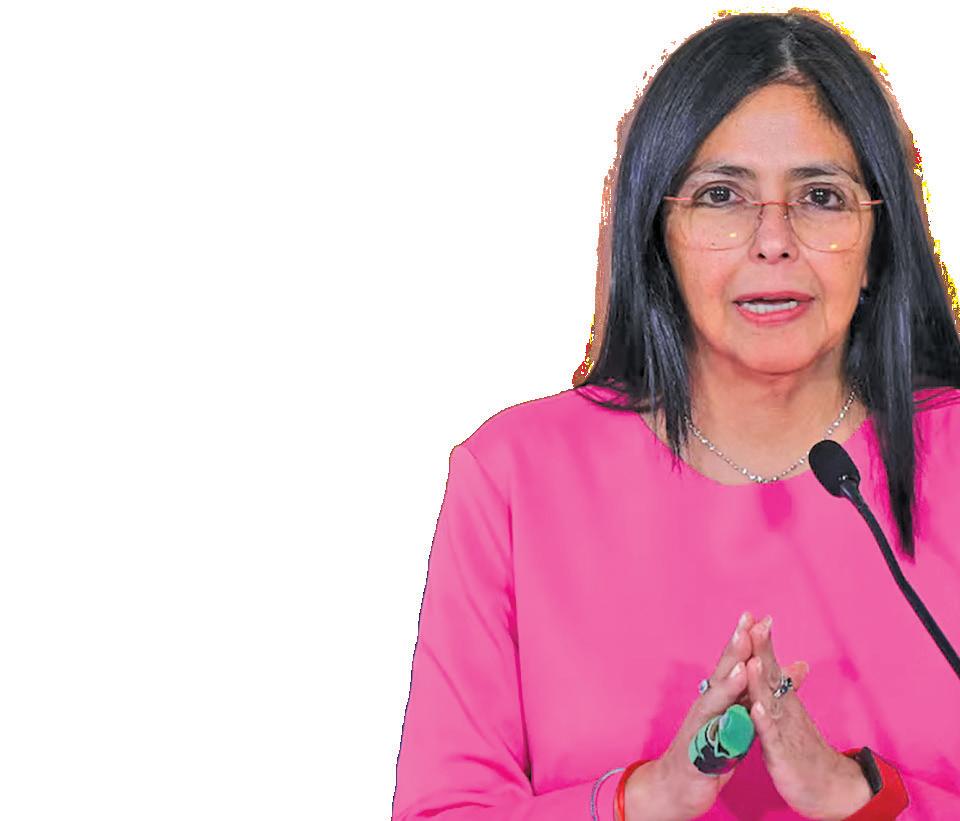
The Acting President of Venezuela, Delcy Rodríguez, has expressed gratitude to President Dr Irfaan Ali after he extended solidarity and support to the neighbouring country following two powerful earthquakes on Wednesday.
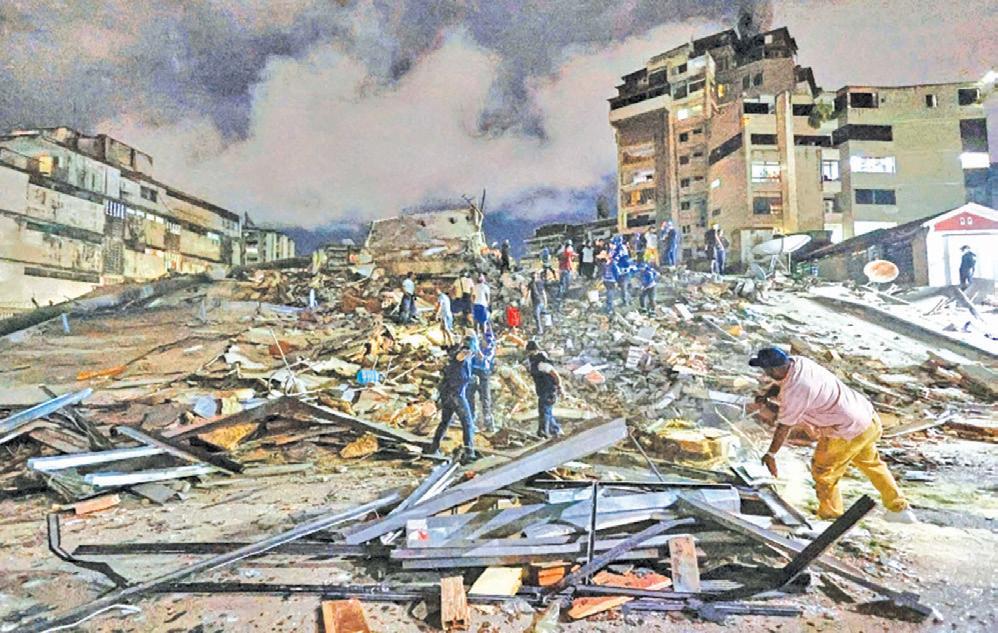
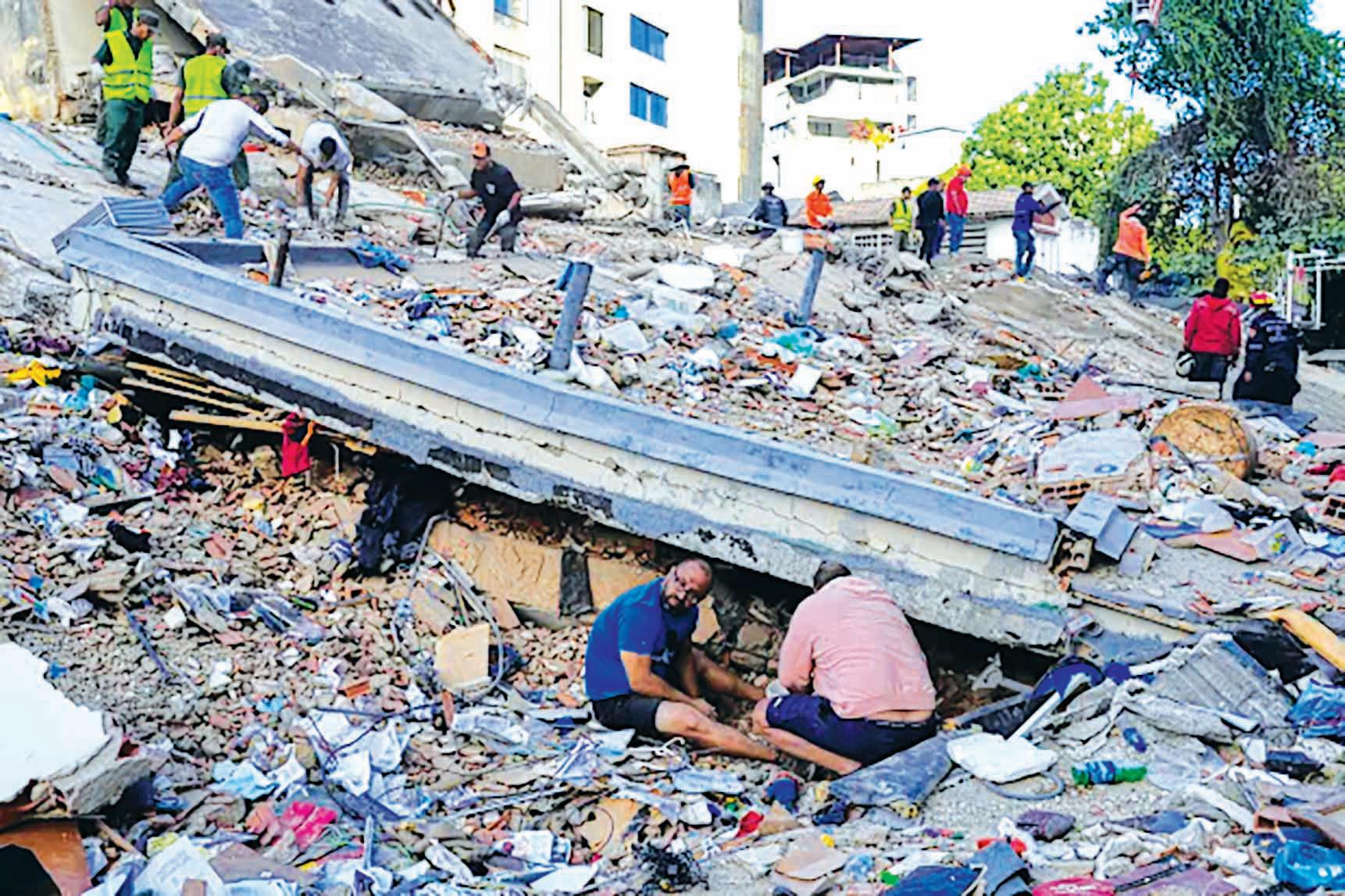
The earthquakes, a magnitude 7.2 followed immediately by a magnitude 7.5, struck the northern coast of Venezuela, collapsing homes and other buildings. Rescue teams have been deployed to the quakes’ epicentres to find survivors and recover bodies amongst the widespread destruction.
Based on reports coming out of Caracas on Thursday, the death toll from the two earthquakes climbed to
188 with thousands more reported missing and injured. The United States Geological Survey (USGS) estimates that the death toll could be between 10,000 and 100,000 people.
Immediately following the earthquakes on Wednesday evening, the interim Venezuelan President declared a state of emergency in a televised address. Since then, Caracas has been flooded with messages of solidarity and offers of humanitarian aid from several countries and international organisations, including Guyana.
On Thursday morning, President Ali took to social media to show support for the neighbouring country.
“As neighbours, we are
deeply saddened by the scale, magnitude and destruction caused by the two powerful back-to-back earthquakes that struck Caracas yesterday and so far, claiming dozens of lives and injuring hundreds,” he stated.
The Head of State went on to offer Guyana’s support to recovery efforts.
“We stand in solidarity with the people of Venezuela. As neighbours, we are ready to offer assistance within our capacity. Our love, prayers, and thoughts are with the families of those affected and the people of Venezuela,” President Ali indicated.
His message was seen and welcomed by President Rodríguez, who commend-
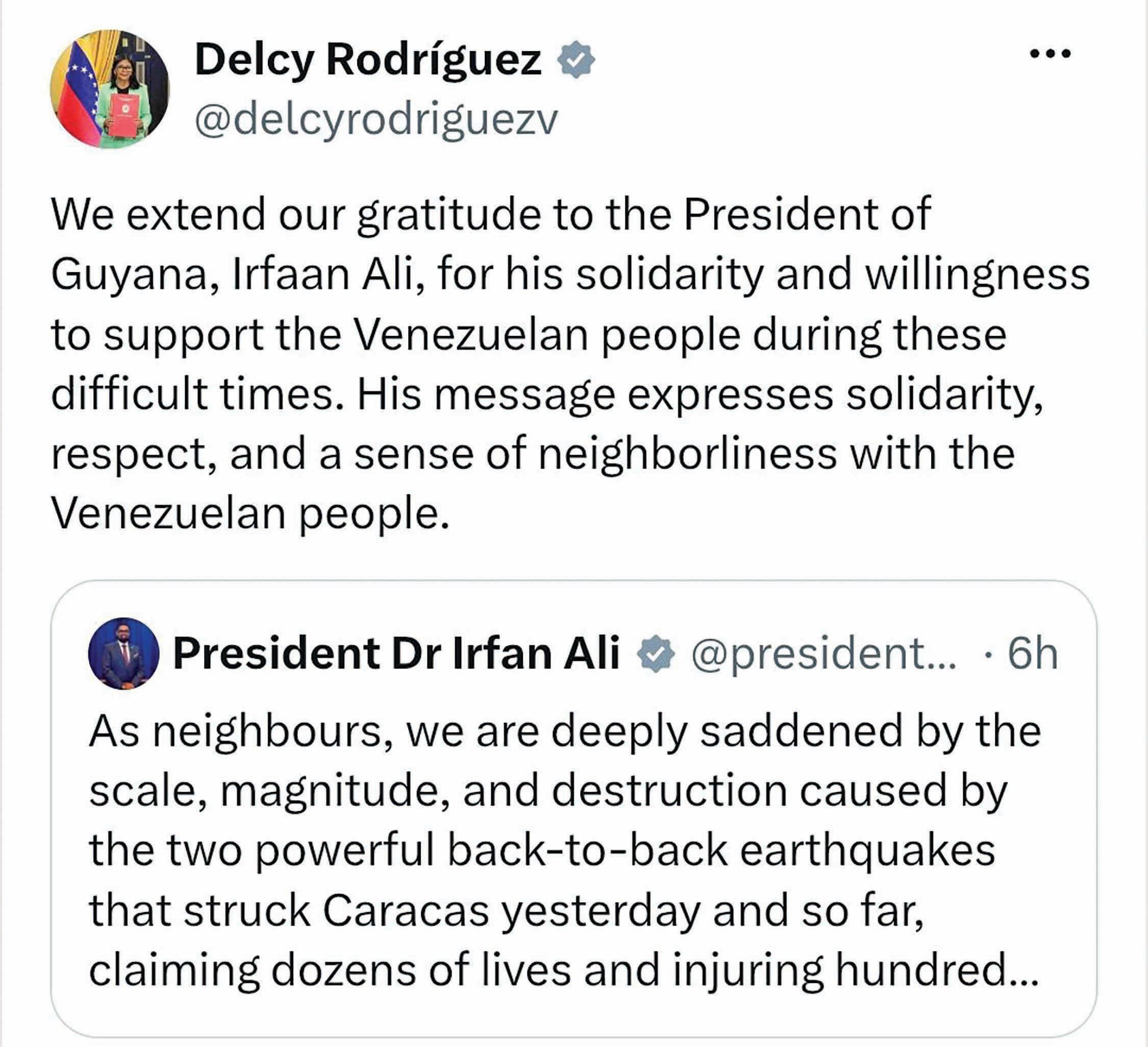
The Venezuelan interim President Delcy Rodríguez’s response to President Dr Irfaan Ali’s message of solidarity and support
ed Guyana’s commitment to good neighbourliness in a post on social media on Thursday.
According to the Venezuelan leader, “We would like to thank Guyana’s President, Irfaan Ali, for his solidarity and his willingness to offer support to the Venezuelan people during these difficult times. His message conveys solidarity, respect, and a sense of neighbourliness toward Venezuelans.”
This show of solidarity and support between Guyana and Venezuela
comes as the two South American neighbours are embroiled in a decades-long border controversy.
The Spanish-speaking nation is laying claims to more than two-thirds of Guyana’s landmass – the entire Essequibo region and a portion of the country’s Exclusive Economic Zone (EEZ), in which nearly 11 billion barrels of oil equivalent have been discovered offshore, where production as well as exploration activities are ongoing.
In March 2018, Guyana approached the
International Court of Justice (ICJ), seeking a final and binding settlement of the 1899 Arbitral Award which established the boundaries with Venezuela. After years of judicial processes, the World Court heard the final rounds of oral arguments last month from Guyana and Venezuela on the merits of their respective cases at the Peace Palace in The Hague, Netherlands.
The ICJ is now deliberating on its ruling, which is expected sometime later this year or early 2027.
Attorney General (AG) and Legal Affairs Minister
Anil Nandlall on Tuesday reminded members of the Guyana Police Force (GPF) that motorists who commit certain traffic offences should be issued tickets rather than being detained or having their documents or vehicles held.
Speaking on his weekly programme “Issues in the News”, Nandlall said the law was amended to create ticketable offences, with the intention of allowing Police officers to issue tickets for specified traffic violations. He explained that the ticketing system was designed to prevent motorists from being unnecessarily detained after being stopped for offences covered under the legislation.
“Police officers have to write a ticket, and no one
should be detained in relation, therefore. That provides for the issuance of tickets for traffic offences. Rather than locking people up or detaining persons. Many years ago, we amended our laws and created a number of ticketed offences, and the whole purpose of creating those ticket offences was to permit the Police to issue tickets to persons if the Police believes that person has committed an offence and not to take away the person’s driver’s licence or the insurance and other documents and direct them to go to the Police station and have them wait for hours already in their vehicles or detain them, in any form or fashion,” Nandlall said.
He added that motorists have the option of accepting the ticket and paying the fine or challenging
the matter in court.
“If the person wants to plead guilty, the person can do that and pay the ticket or they can go to court and contest the ticket,” he said.
The AG said there are approximately 37 offences listed as ticketable offences under the Motor Vehicles and Road Traffic Act and related regulations.
“I have a list here of ticketed offences. I can’t read all; there are about 37 offences that carry ticketed offences, meaning that if a Policeman believes that these offences are committed, the Policeman or woman has to write a ticket and no one should be detained in relation,” he said.
Among the offences listed are driving an uncertified motor vehicle, driving
without a driver’s licence, failing to produce a driver’s licence, speeding, failing to stop when required by Police in uniform, seatbelt violations, leaving a motor vehicle in a dangerous position, motorcycle helmet violations, and various equipment and roaduse breaches.
The listed penalties range mainly from $5000 to $7500, depending on the offence.
Nandlall warned that Police officers who fail to follow the law and instead detain motorists or seize property for ticketable offences could face legal consequences.
Police liable to be sued
“Any Police officer who, instead of issuing a ticket for any of these offences, detained any person or detained their proper -
ty, their motor vehicle –that Policeman is liable to be sued; they can also be charged,” he said.
“He can be sued for false imprisonment; he can be sued for constitutional breaches of liberty. He can be sued for detention of property and a whole host of several grounds and constitutional violations,” Nandlall added.
The AG said that while he has a responsibility to defend members of the Police force, when necessary, action would be taken against officers who violate the law.
“As an Attorney General when these things happen, I’m not going to play. I have to defend the Police when these things happen, and some measures will have to be taken in relation to the Policemen and women who are violating the law in such a careless manner,” he said. The ticketable offences list under the Motor Vehicles and Road Traffic Act, Cap. 51:02, also includes offences such as improper vehicle lighting, defective equipment, unnecessary sounding of horns, overloading, breaches involving drivers, conductors and passengers, and bicycle and tricycle safety violations.
Bibi Yahab was taking a shower when her two-year-old child knocked on the bathroom door, calling, “Mommy... Mommy.”
Thinking nothing was wrong, the 20-year-old mother told the child she would be out in a moment and continued showering.
Moments later, the child returned to the bathroom door shouting again.
“The neighbours start hollering for me. I couldn’t do anything. I just grab my child and run,” Yahab recalled.
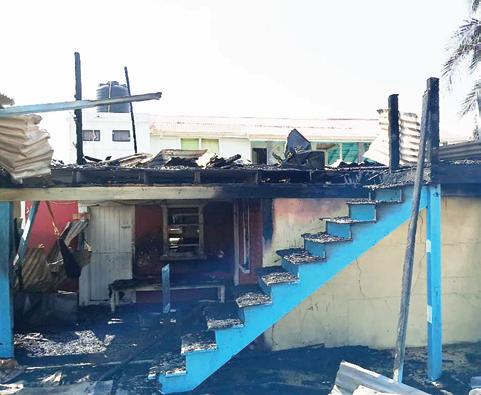
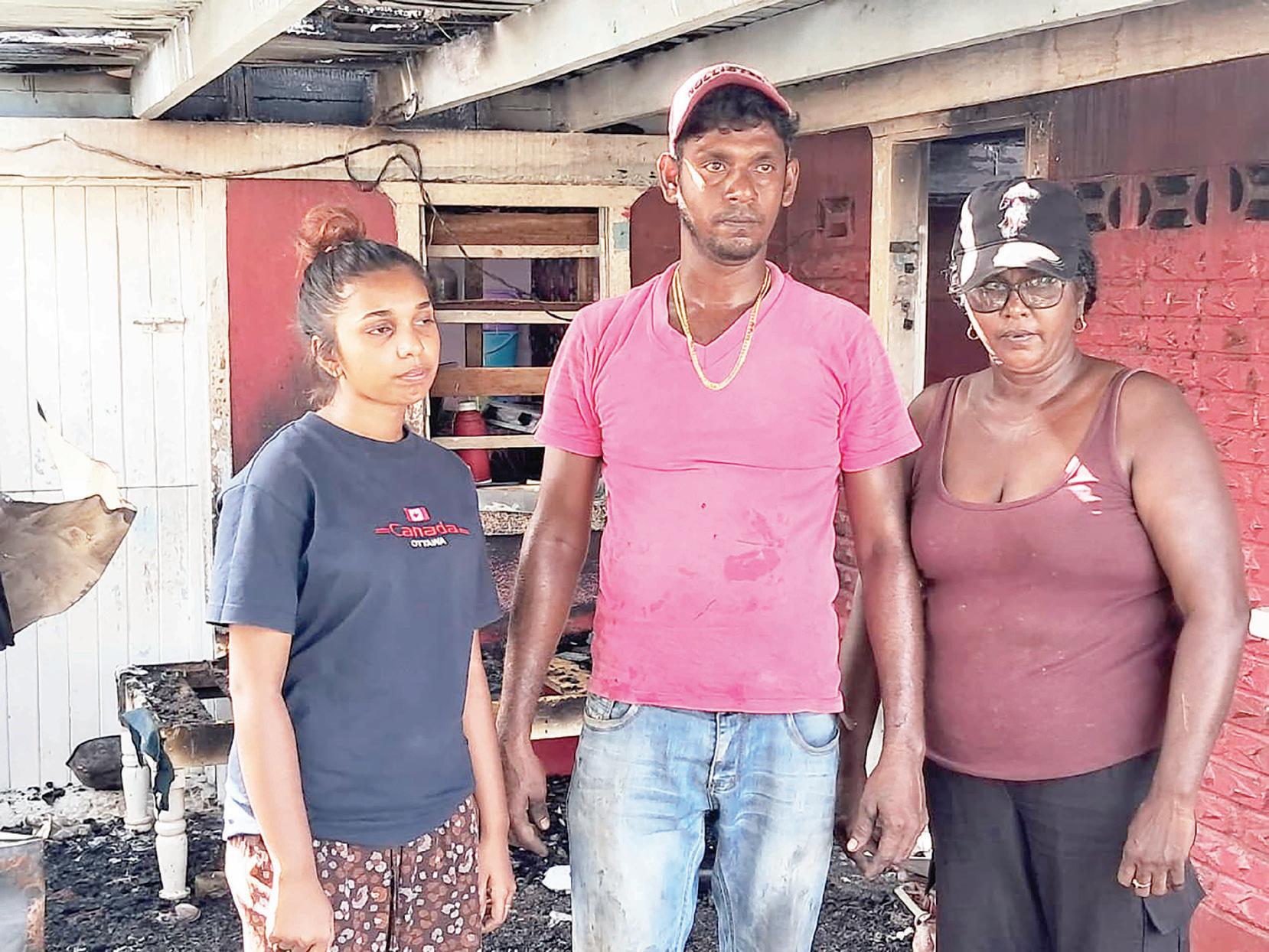
By the time she reached downstairs with her child, flames had already engulfed the upper flat of the two-storey house at Lot 127 Bath Plantation Road, Hope, West Coast Berbice, where she lived with her husband, Dhanraj Arnold.
She said nearby workers and neighbours tried desperately to help, but within moments the fire had spread quickly.
The blaze gutted the family’s living quarters, destroying two refrigerators, a microwave, a blender, a television, a fan, cellular phones, clothing, furniture,
and virtually every possession the young family had accumulated.
However, Yahab, her husband and their child were not the only victims.
The two-storey building housed two generations of one family.

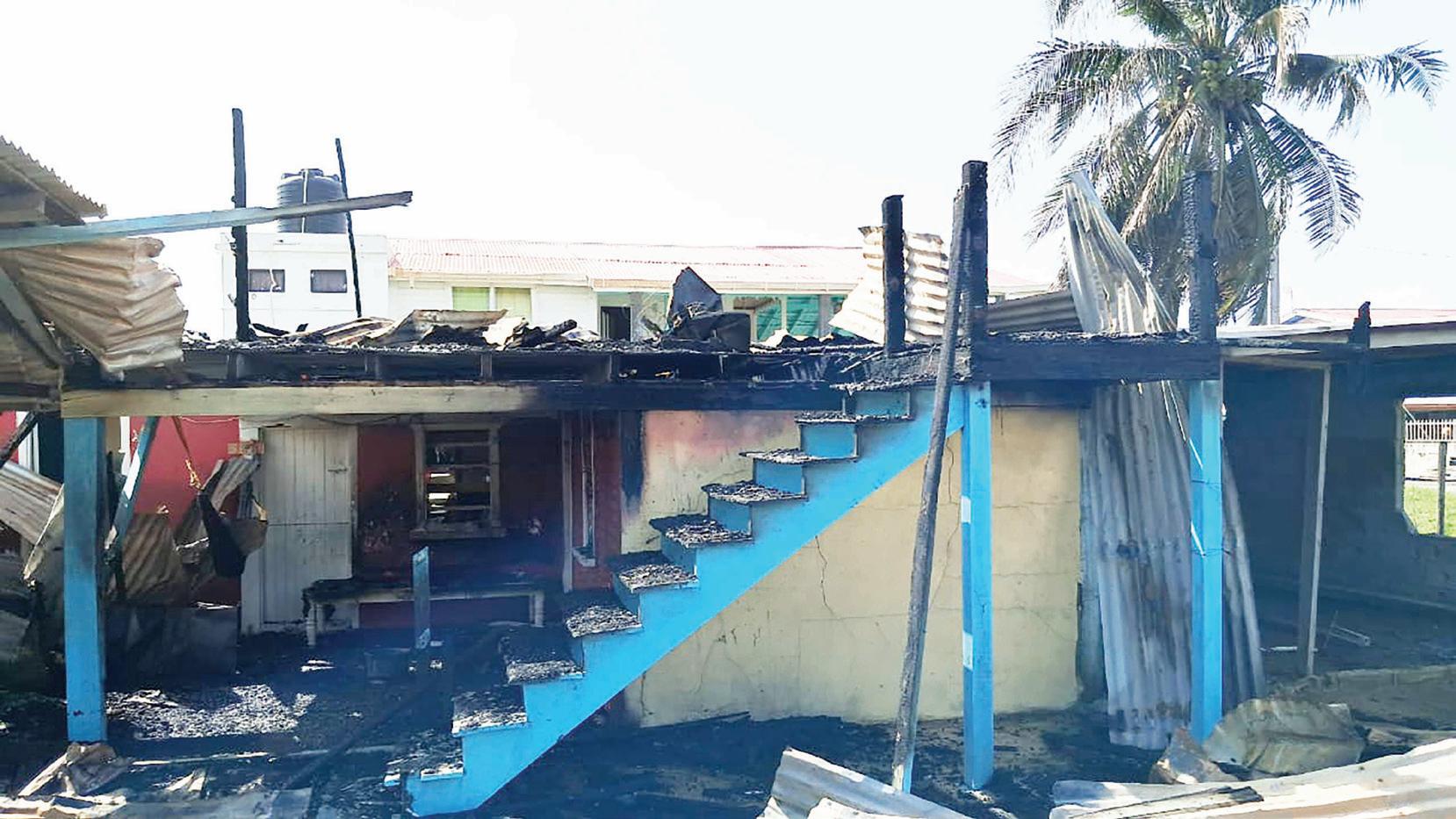
While Yahab lived upstairs with Arnold and their toddler, Arnold’s parents occupied the lower flat of the house.
Within minutes, the five
beds, a television, a washing machine and the tools he depended on to earn a living, including drills, grinders, and saws.
“When we come and
stay here and continue working.”
Another fire
As the Hope family struggled to come to terms with the devastating loss
relatives were left homeless.
According to Divisional Fire Officer Clive McDonald, firefighters received the report at about 10:10h and responded immediately.
The Guyana Fire Service’s preliminary investigation has indicated that the fire started after something ignited combustible materials, causing flames to spread rapidly throughout the building.
For Arnold, the devastating news came while he was at work.
The young father, who is the family’s sole breadwinner, rushed home after receiving a telephone call informing him that his house was on fire.
“By the time I reach home, everything was gone. My wife and my child were safe, and I thank God for that, but everything else was gone.”
“I went to work, I worked, I saved money. That’s how we get everything. Now everything is destroyed.”
Arnold explained that since starting his family, he had taken whatever work he could find to provide for them.
“I alone working. I does do construction, make hollow blocks and drive truck. That’s how I build up everything we had.”
Among the items destroyed were refrigerators,
see everything lost, I start trembling. I can’t explain it. I just thank God my wife and my child come out safe.”
Although grateful his family survived, he admitted he has no idea where they will now live.
“I don’t know where we going to stay. We got to look somewhere. Maybe we get some help somewhere. If anybody could assist us, we would really appreciate it.”
Arnold’s 56-year-old mother, Jasoda, had owned the house for about 20 years.
She, too, was at work when she received the call informing her of the devastating news.
“I’ve been living here for about 20 years. I was at work when they call and tell me the house was on fire. By the time I come back, it was already gone.”
The lower flat contained refrigerators, a freezer, a washing machine, gas stove, furniture, clothing and numerous other household possessions accumulated over two decades.
Before leaving her security job about three months ago, she had also worked as a domestic worker and, more recently, looked after sheep and cattle in the backlands.
“Whatever little assistance people could give us, we willing to accept. We have to move on. We will
of the home they had spent years building, another family at Blairmont, West Bank Berbice, was also facing heartbreak after a separate fire damaged their home.
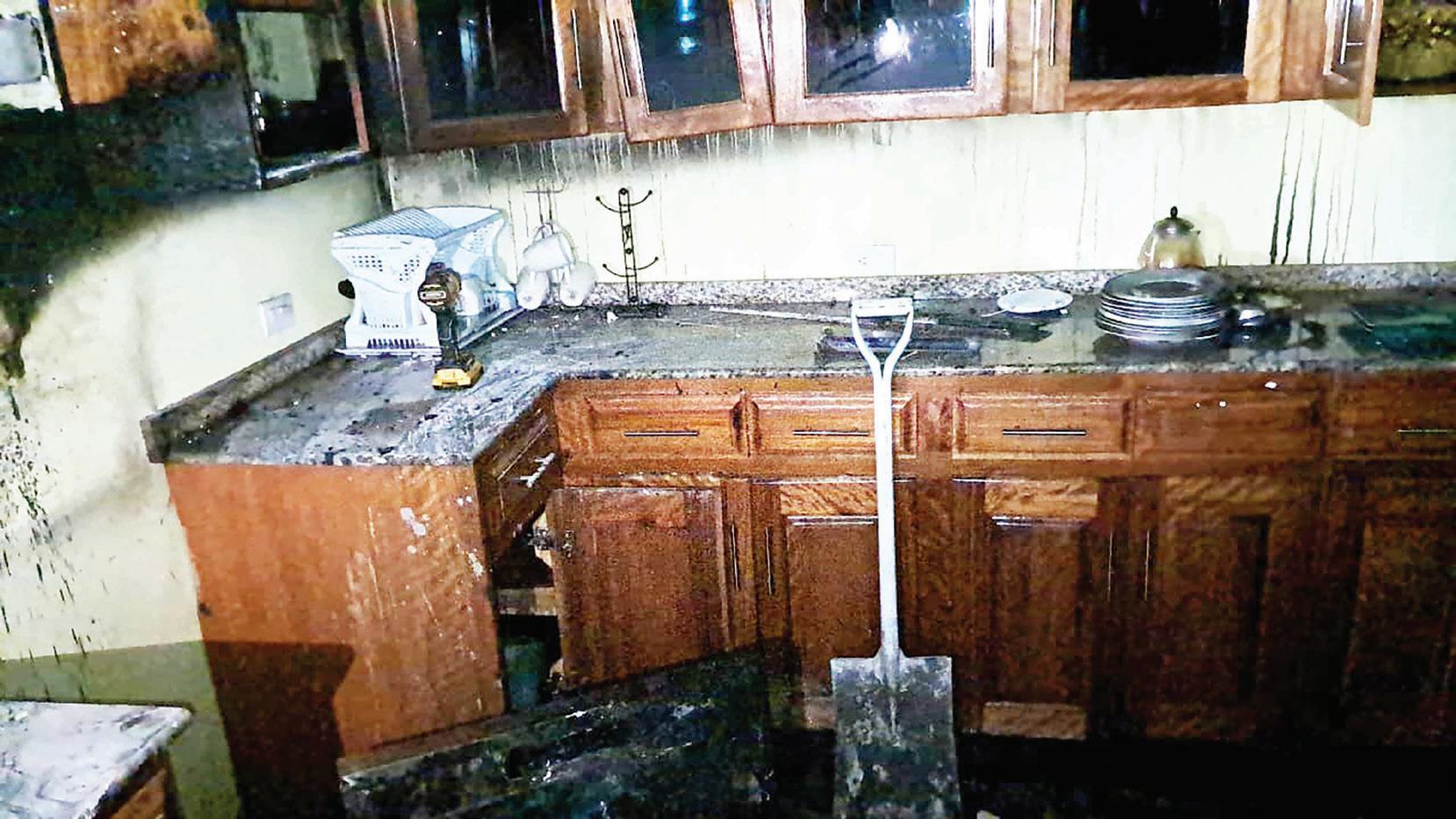
The Blairmont fire affected another two-storey residence, leaving family members counting heavy losses as sections of the building and household contents were damaged.
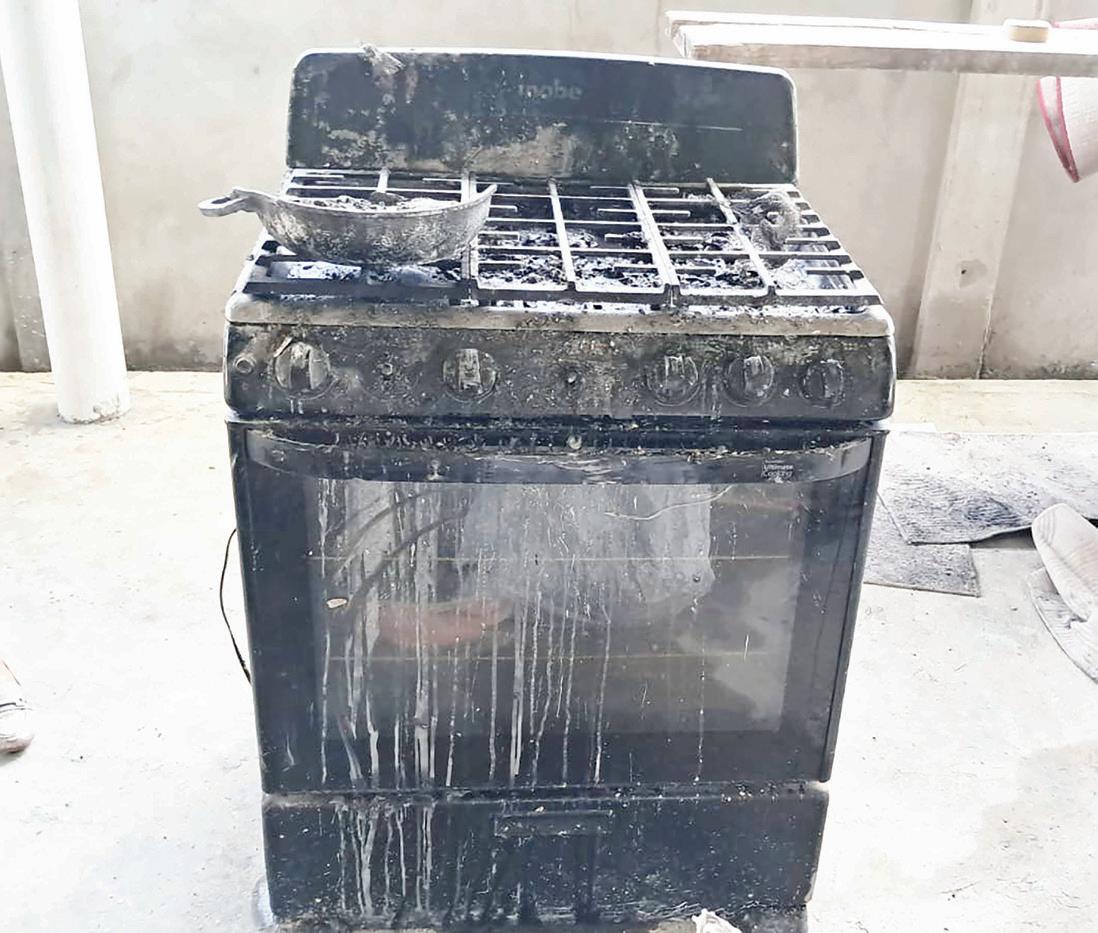
Smoke-blackened walls, fire-damaged rooms and ruined household appliances bore testimony to the intensity of the blaze, while relatives began the difficult task of cleaning up and trying to salvage whatever could be saved.
McDonald said the Blairmont fire had already been extinguished before firefighters arrived.
He said preliminary investigations indicate that heat generated during cooking was transferred to nearby combustible materials, resulting in the fire.
Although the circumstances surrounding the two incidents were different, both families were left facing the same reality, replacing homes, furniture, appliances and years of hard-earned possessions.
Persons wishing to reach out to the Plantation Road family can do so on telephone number 684-6419.
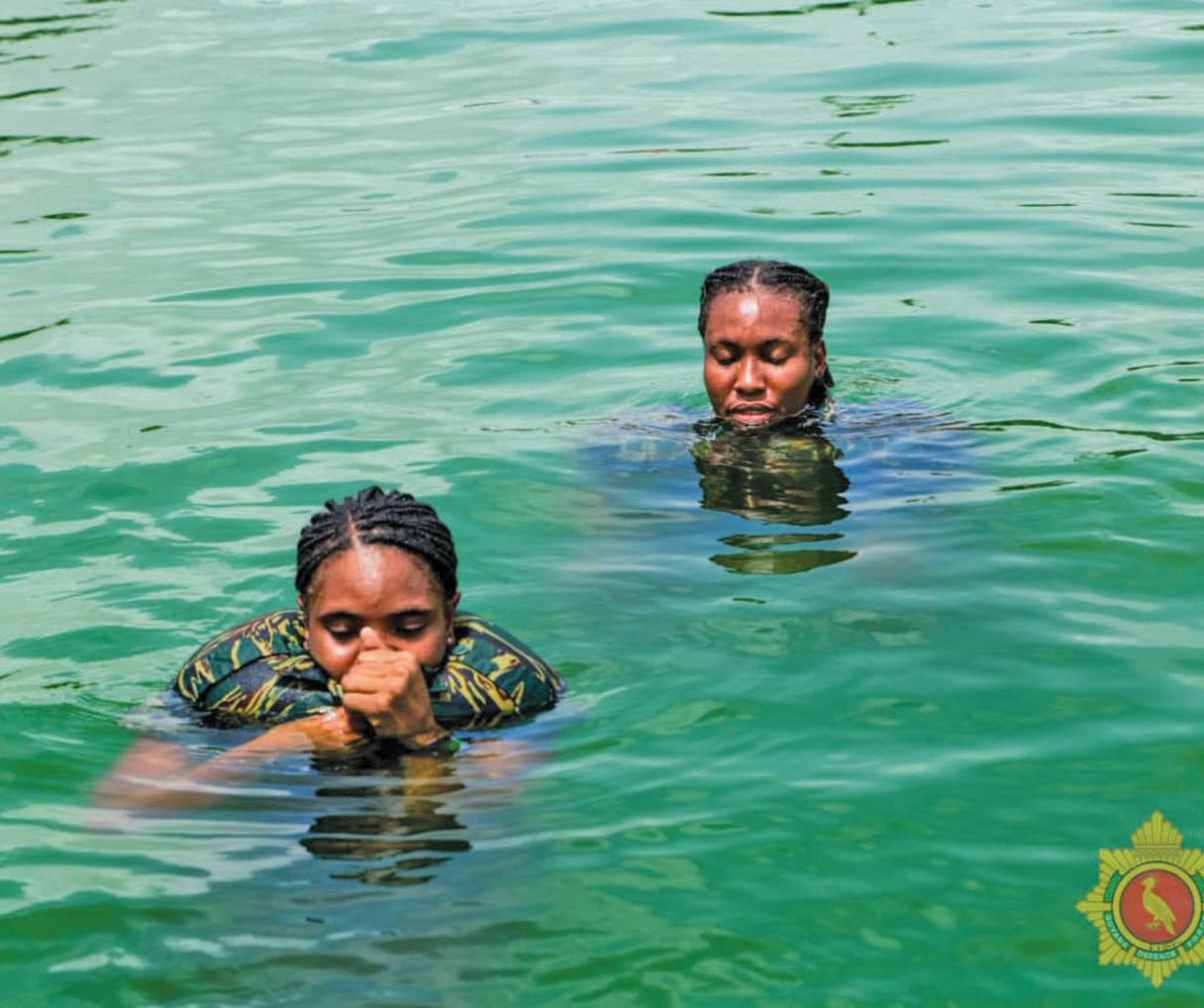
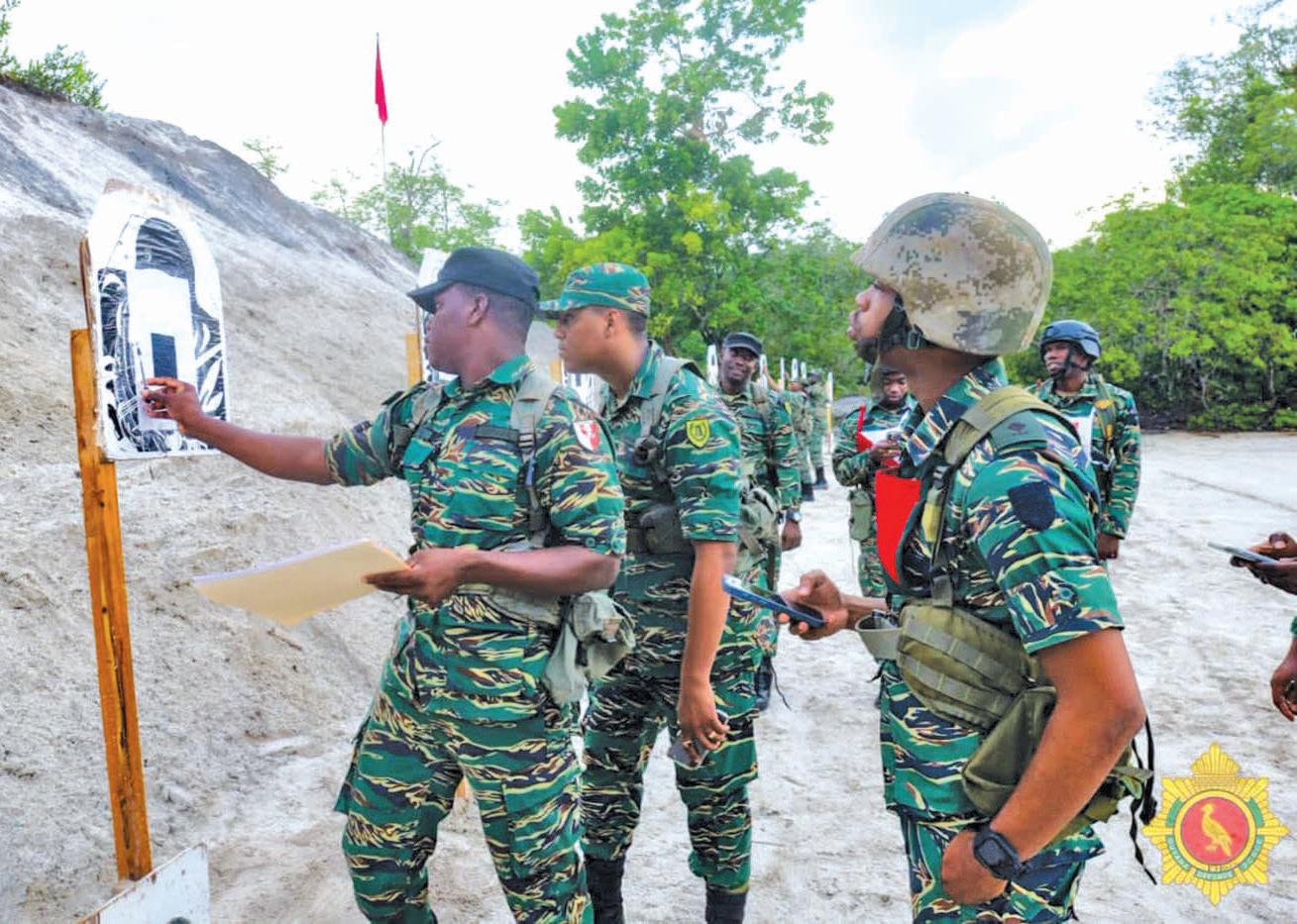
The Guyana Defence Force (GDF) on Thursday officially commenced its Second Quarterly Fitness Competition 2026, with defending champions One Infantry Battalion and the Guyana National Reserve Female A Team beginning the defence of their respective titles.
According to the GDF, the two-day competition features 12 male teams, including one from the Guyana Police Force, and seven female teams competing for championship honours.
Base Camp Ayanganna, Base Camp Stephenson and the Guyana National Reserve have each entered two female teams in the competition.
Participants are being assessed through a series of tactical and physical challenges aimed at measuring operational readiness, endurance, teamwork and resilience.
The events include a day shoot, rope exercise, navigation exercise and casualty evacuation (Navex/Casevac), swimming, and a night shoot.
The competition continues today, with teams seeking to secure valuable points as they vie for the overall championship titles.



He also took the opportunity to share about the massive growth in property values, infrastructure investment and the expansion of the real estate sector that has been taking place in Guyana over the past few years.
He recounted the story of a young woman who purchased land in Le Ressouvenir for $2.5 million and later discovered the property had increased significantly in value.
“That was not accidental; that is because of the investment we are putting with the land, that is because of the roads, the drainage, the water, the light; that is because of an entire ecosystem that is working on creating value,” he noted.
“Our story is not an oil story”

financial institutions. He pointed to changes at the New Building Society, commercial banks and mortgage providers, stating that access to homeownership has expanded. The President said home ownership represents more than

According to the Head of State, the construction sector has generated major economic benefits, noting increases in lending, industrial development and construction materials production.
He said for every dollar spent on construction, the economy receives a multiplier effect.
Turning to mortgage financing, President Ali highlighted reductions in interest rates and increased borrowing capacity by
an economic transaction. “That is a Government that cares about you owning your own home. We view home ownership as not just an economic transaction but as a statement of belonging when a family in Guyana owns their home, when their name is on that title, deed or transport, when their children grow up with a backyard and a bedroom of their own, when they are building equity rather than paying rent, something changes… I will say to ev-
ery Guyanese family, ‘You have a Government that is your partner.’ A Government that is investing alongside you,” he said.
President Ali also used the occasion to speak about Guyana’s wider development, saying the country’s transformation extends beyond oil revenues. He said Guyana’s development is being supported by stronger institutions, improved infrastructure and a population with growing aspirations.
“Our story is not an oil story. Our story is about the non-Oil economy, the story of diversification. The story of sustainability, the story of leadership, the story of investment, the story of world class healthcare, world class education and world class Infrastructure. That is the story of Guyana,” he said.
“Foundations of our nation”
“I declare without fear of contradiction that we are not just constructing buildings, roads, bridges, aerodromes, we are building a nation, and the foundations of our nations have never been stronger.”
During his remarks, Minister Croal said the expo demonstrates the importance of housing to national development. He said housing represents dignity, security and opportunity for families.
“Housing is about dignity. It’s about security. It’s about opportunity. It’s about the community and the family, and it’s likely the single most important investment a fam-
ily will ever make for their future,” he said.
“Today that vision continues to guide our house agenda, building on the success of the past and re-
years ago,” she said, adding that
“Our Government recognises that housing is much more than a piece of land. It is about the kind of life we want our citizens and suc-

sponding to growing demand for affordable housing. The Government has committed in its manifesto to the construction of over 40,000 new homes over these five years.”
Minister Benn said Guyana is experiencing a historic period of development. She said the Government’s approach goes beyond providing land.
“Tonight Guyana stands at the most exciting moment in our history. These transformative times are second only to the achievement of our nation’s independence 60
cessive generations to experience.”
CH&PA CEO, Dr Martin Pertab said Guyana’s housing sector has undergone significant expansion, with thousands of house lots allocated and major infrastructure investments completed. He said the Government is also moving toward innovative housing solutions.
“As we move towards our target of building over 42,000 houses over the next five years, innovation is not optional. It will be central,” he said.
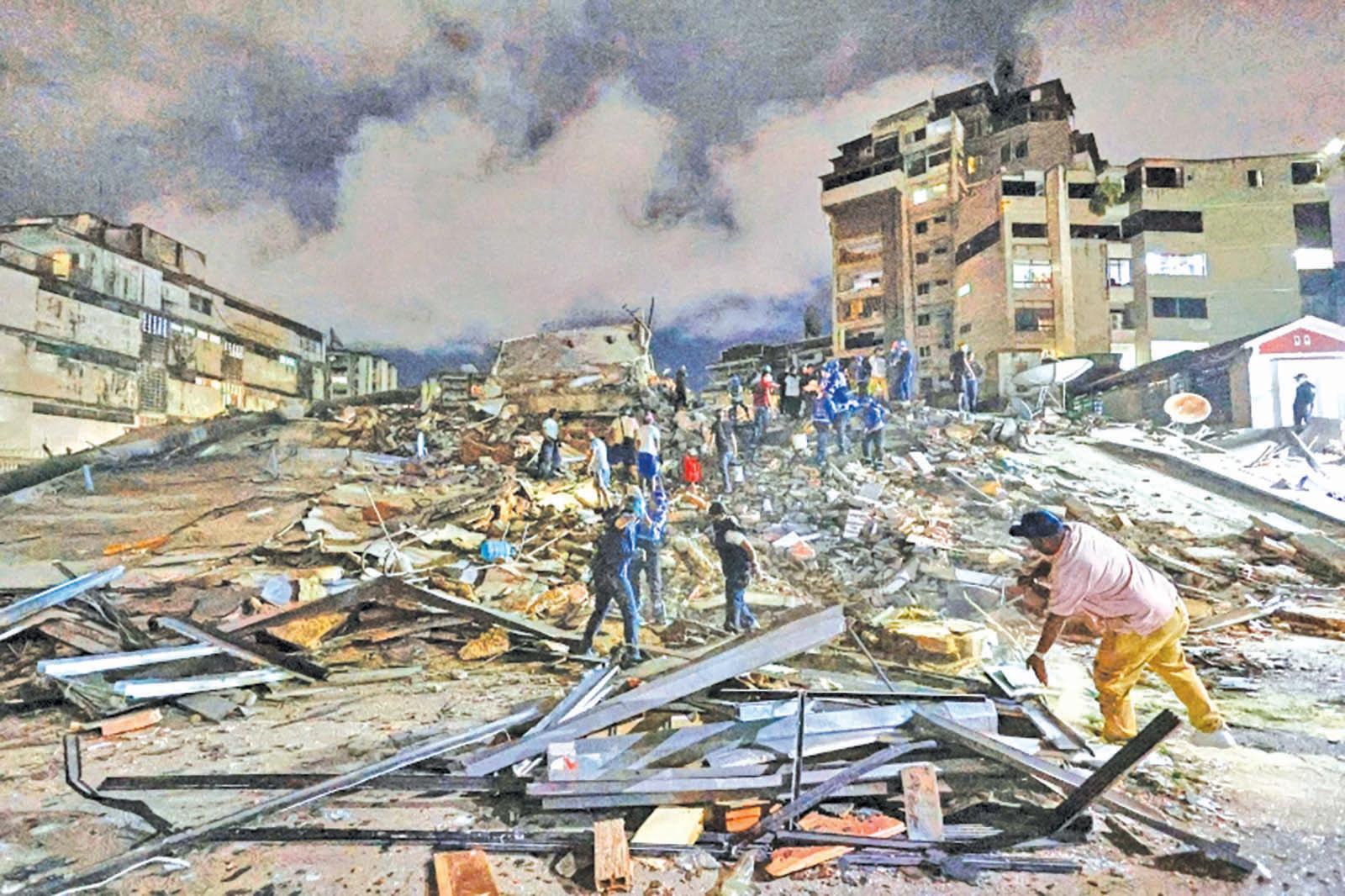
Venezuela’s interim leader, Delcy Rodríguez, has declared a State of Emergency (SOE) after the country was struck by two powerful earthquakes that collapsed dozens of buildings and killed at least 188, a toll that it is feared could rise significantly.
Rodríguez said 971 were injured and more casualties were expected. The two strong earthquakes hit within a minute of each other shortly after 18:00h local time on Wednesday. The first had a magnitude of 7.2 and the second 7.5, the most powerful to strike the country since 1900, according to the US Geological Survey (USGS).
Rodríguez said there were about 30 aftershocks.
In a televised broadcast on Wednesday night, she urged citizens to evacuate damaged buildings.
The quakes were felt in many parts of the country, but the worst destruction appears to have taken place in and around the capital, Caracas, where videos on social media showed scenes of panic as passengers raced through the corridors of Simón Bolívar International Airport seeking cover from falling debris.
Governments and humanitarian organisations worldwide have begun sending funds, rescue teams and other forms of aid.
UN Aid Chief Tom Fletcher said the Humanitarian Affairs Office was coordinating the deployment of international urban search-and-rescue teams.
“The coming days will
require a massive collective effort to support the Government-led response and help communities,” he said.
Search-and-rescue teams have been deployed from Virginia and Los Angeles, and some others will be added, US Secretary of State Marco Rubio told reporters.
“Their most immediate need right now is search and rescue efforts,” Rubio said.
Pope Leo has sent €100,000 (US$114,000) to Venezuela for quake relief from the Vatican’s charity fund, Vatican media reported.
Chef Jose Andres, founder of the humanitarian meal provider World Central Kitchen, said on Thursday his team had begun distributing meals in Caracas. He also said on X that his Longer Tables Fund will immediately contribute $1 million to help Venezuela.
Salvadoran President Nayib Bukele said in a post on X that 300 rescue workers and paramedics were prepared to travel to Venezuela,
along with 50 tonnes of medical supplies.
A team of rescue workers and medical personnel left for Venezuela on Thursday, Mexican President Claudia Sheinbaum said, although she did not indicate how many people were in the group. She added Mexico would evaluate on Friday whether to send additional help.
The Spanish Defence Ministry said a military plane would send 57 soldiers from its search-and-rescue unit and 40 firefighters from the Madrid region. Spain’s development agency also plans to set up a field hospital in Venezuela.
Italy’s Civil Protection agency said it was sending an advance team to Venezuela, which will prepare and coordinate the later arrival of more rescuers.
Italy’s Foreign Minister Antonio Tajani said firefighters, the Ministry of Defence, and the Air Force were mobilising to offer help. (Excerpts from Reuters, (The Guardian)
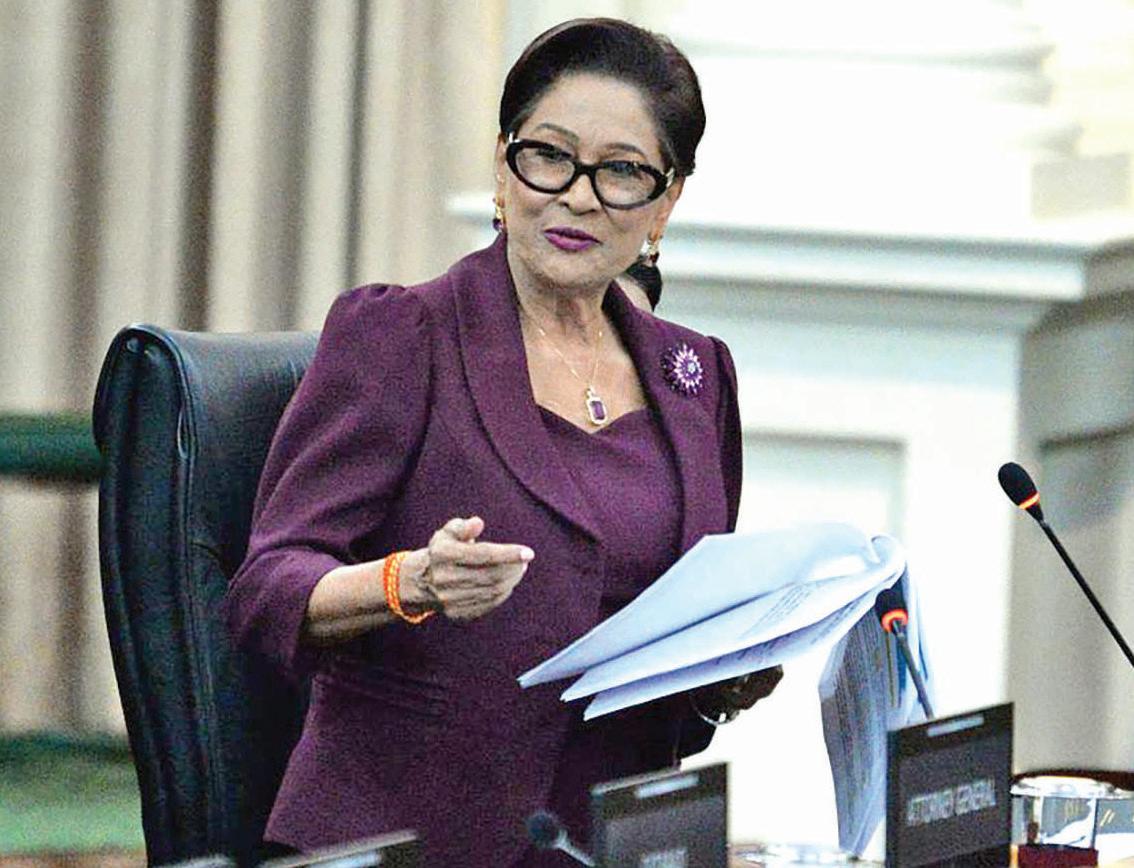
Trinidad and Tobago (T&T) Prime Minister (PM) Kamla PersadBissessar has pledged support to earthquake-ravaged Venezuela, saying the Government stands ready to provide humanitarian assistance as the neighbouring country grapples with widespread devastation.
In a statement today, Persad-Bissessar expressed sympathy to the Venezuelan people following Wednesday night’s powerful earthquakes, which have claimed lives and left extensive destruction.
“The Government and people of Trinidad and Tobago, and I, extend our
heartfelt sympathy to the Government and people of Venezuela following the recent earthquake, which has caused loss of life and destruction,” the PM said.
“Our thoughts, prayers, and solidarity are with all those affected. We stand ready to assist in whatever humanitarian way we can during this difficult time.”
She added, “We wish the people of Venezuela safety, strength, and a swift recovery as they navigate the aftermath of this natural disaster.”
The Government’s offer of assistance comes as Public Utilities Minister Barry Padarath confirmed that T&T has already opened discussions with Venezuelan authorities and is awaiting an assessment of the country’s most urgent humanitarian needs before mobilising aid. (Excerpt from Trinidad Guardian)
The Supreme Court on Thursday allowed the Trump Administration to end legal protections for migrants fleeing violence and natural disaster in Haiti and Syria, exposing hundreds of thousands more people to potential deportation.
The 6-3 decision overturns lower court orders and allows the Department of Homeland Security to swiftly end Temporary Protected Status, a programme that protects a total of 1.3 million persons from 17 countries.
The Trump Administration argued that Judges can’t second-guess immigration officials’ decisions about the protections, which were intended to be temporary.
Immigration attorneys said the countries remain unsafe to return to, and the Administration ended them in an unlawfully hasty process tinged by racial animus. During his 2024 Presidential campaign, Trump amplified false ru-

mours that Haitian immigrants were abducting and eating dogs and cats.
DHS has ended the protections for people from 13 countries since Trump returned to the White House in January 2025, including some that had been in place for more than a decade.
The terminations were made even though countries like Haiti and Syria remain dangerous, immigration attorneys said. Four Haitian
women who were deported from the United States in February were found beheaded and dumped in a river several months later, lawyers said in court documents.
The House passed legislation with a rare bipartisan vote in April that would extend protections for Haitians, though the bill has languished in the Senate. (Excerpt from The Haitian Times)
The British Virgin Islands (BVI) may see constitutional-reform delays and a more “aggressive” attitude from the next British Prime Minister (PM) after Sir Keir Starmer threw in the towel and announced his resignation in an emotional speech on Monday, an expert has warned.
With high-stakes constitutional negotiations between the VI and the United Kingdom scheduled to start next month, political turmoil in London has come at a pivotal time for the territory.
Currently, ex-Greater Manchester mayor Andy Burnham is the strong favourite to be made prime Minister next month.
Director General of Communications
Maurice Merchant has condemned what he described as abusive and threatening behaviour toward Treasury employees, calling on members of the public to treat Government workers with respect as they process outstanding back-pay claims.
Speaking during Thursday’s post-Cabinet media briefing, Merchant said Treasury staff have been working tirelessly, including on weekends, to meet the Government’s financial obligations to public servants despite ongoing complaints about delayed payments and customer service.
Peter Clegg, a professor at the University of the West of England who has studied the VI and other overseas territories for more than 20 years, predicted that Mr Burnham would take a harsher line with the territory in the coming talks.
“The Burnham Government may well negotiate more aggressively around financial and economic transparency and local democratic effectiveness,” Mr Clegg told the Beacon.
He also suggested that a Burnham Administration would push back against the VI Government’s demands to reduce the governor’s powers in the next constitution.
Additionally, he said, greater scrutiny may come to the VI’s new beneficial-ownership register, which is currently accessible only to people who can demonstrate a “legitimate interest” in the information it contains. He added that the leadership shake-up is also likely to bring a new Foreign Secretary and Overseas Territories Minister – and delay the VI’s constitutional talks.
“The Starmer Government will be gone soon and will be careful not to commit to anything, and new Ministers will take some time to get acquainted with the key issues,” he said.
(Excerpt from BVI Beacon)
Merchant said one recent incident crossed the line after an individual, who was dissatisfied with the response received regarding a back-pay matter, allegedly urinated on a desk inside the Treasury and threatened to return with a weapon.
He described the behaviour as unacceptable and appealed for patience as Ministries and the Treasury continue processing outstanding claims.
Merchant explained that while some individuals may have been inadvertently omitted from backpay lists, the appropriate course of action is to work through the established administrative process. He
said enquiries should first be directed to the relevant Ministry before reaching the Treasury, which processes information submitted by Government departments.
He also acknowledged concerns about customer service within the public sector but stressed that no grievance justifies abusive conduct toward public employees.
The merchant urged the public to exercise patience and “good decorum”, adding that Government workers should be treated in a humane manner while efforts continue to resolve outstanding payment issues. (Excerpt from Antigua Newsroom)


Oil prices rose more than two per cent on Thursday after a cargo vessel was hit by an unknown projectile near Oman, putting an evacuation effort for ships from the key Strait of Hormuz on hold and reawakening concerns about the worldwide flow of oil.
The flow of oil and gas has been disrupted since the joint US-Israeli attacks on Iran at the end of February, but the agreement between the US and Iran to end the war has allowed the resumption of traffic through the crucial strait, which Iran had effectively blockaded.
The UN International Maritime Organization on Thursday paused its effort to shepherd ships and seafarers through the strait after the cargo ship reported a suspected attack, reigniting fears that the preliminary agreement to end the Iran war would not hold.
After the market closed on Thursday, two US officials told Reuters that Iran fired on the cargo ship as it attempted to pass through the strait. Iranian authorities said the security of vessels passing outside designated Hormuz routes is not guaranteed.
Brent futures rose US$1.52, or 2.1 per cent, to settle at US$75.26 a barrel, while US West Texas Intermediate crude rose US$1.58, or 2.3 per cent, to settle at US$71.92. (Excerpt from Reuters)
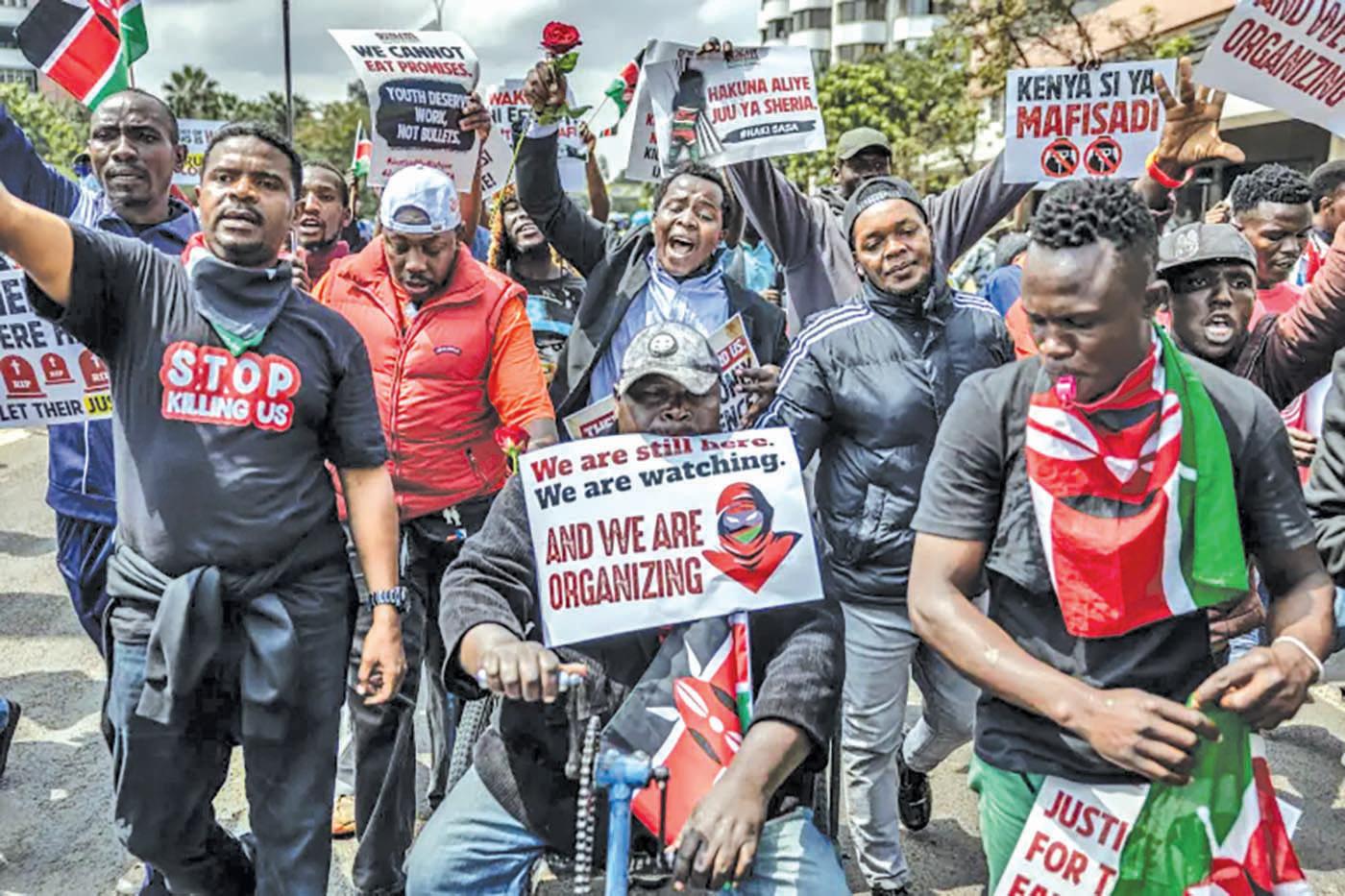
Kenyan Police have dispersed protesters in the capital and detained others who took to the streets in memory of the demonstrators who were killed in anti-Government rallies against tax rises two years ago.
Interior Minister Kipchumba Murkomen said on Thursday that a total of 355 persons were arrested in various parts of the country. He called those detained “criminals” and apologised for the use of barricades and other security measures aimed at containing the protests.
“We regret the inconveniences occasioned by these measures and at the same time appreciate their effec-
The UN’s International Maritime Organization (IMO) has paused the planned evacuation of more than 11,000 sailors stranded in the Strait of Hormuz after a cargo ship passing through the waterway was attacked.
IMO chief Arsenio Dominguez said several boats had already been evacuated, but the agency wanted to ensure that ”necessary safety guarantees” would
continue to be in place.
The British maritime security agency UKMTO reported on Thursday that a ship had been struck 7.5 nautical miles southeast of Oman’s port of Dahit by ”an unknown projectile”. No casualties were reported.
Maritime risk management firm Vanguard said the ship, Singapore-flagged Ever Lovely, continued through strait despite the attack.
The body set up by Iran to manage the strait said vessels passing outside designated routes would not be guaranteed safe passage.
In a post on X, the Persian Gulf Strait Authority (PGSA) said, ”Any consequences arising from the use of unauthorised routes shall be the responsibility of the vessel’s owner, operator and master.”
Hundreds of ships and thousands of sailors have
been stranded in the Gulf since February because of the US-Israel war against Iran. The UN evacuation effort was only announced on Tuesday following the reopening of the strait, with Dominguez saying the ”large-scale operation” had the cooperation of Iran, Oman, the US, other coastal states in the region and the maritime industry. (Excerpt from BBC News)
The first case of Ebola has been confirmed in France, the country’s Health Ministry has said, in a doctor who had returned from a humanitarian mission to an area affected by the outbreak in the Democratic Republic of the Congo (DRC).
The patient was transferred to a specialist facility and was in a stable condition, the Ministry said in a statement. “All precautionary measures, including the patient’s isolation, were taken upon his arrival in the country, with transfer to the hospital under secure conditions to prevent

any risk of contamination.”
The outbreak is centred on Ituri province in north-eastern DRC, where authorities are battling to
contain the spread of the virus.
The World Health Organization declared the outbreak in May, and two
days later declared a public health emergency of international concern. Experts believe the virus was circulating in the DRC undetected for weeks before, however, and that the scale of the outbreak there is likely to be much larger than the confirmed cases suggest.
The humanitarian response has been complicated by aid cuts and conflict in North and South Kivu provinces, to the south of Ituri, where the Rwanda-backed M23 rebel group operates and Ebola cases have also been detected. (Excerpt from The Guardian)
Belarusian President Alexander Lukashenko said on Thursday he had warned Ukraine, against a background of rising tensions, not to try to drag his country into war.
With Moscow’s forces struggling to advance and Ukraine raining drones on targets far inside Russia, Ukrainian President Volodymyr Zelenskyy has repeatedly alleged that Moscow wants to get
Belarus more involved on the Russian side.
He raised the stakes last week by threatening to disable signal relay stations in Belarus that he said were helping Russian drones to hit Ukraine. On Wednesday, he said the stations had stopped working, although there was no independent confirmation.
Lukashenko, a close ally of Russian President Vladimir Putin, said in televised comments that
Zelenskyy’s representatives had been in Minsk recently.
”I told them bluntly: ’Guys, tell your President: if he thinks he can talk to us like that – and drag us into a war to boot – then he needs to understand that the nature of the war would change instantly,’” Lukashenko said, adding that Belarus had no desire to fight Ukrainians.
There was no immediate comment from Kyiv about Lukashenko’s remarks.
Zelenskyy, writing on Telegram after meeting his Foreign Intelligence Chief, Oleh Luhovskyi, repeated earlier comments that Belarus had upgraded roads in border areas and built up facilities for ammunition and fuel storage. Belarus is strategically important to all sides, being closely allied to Moscow and sharing borders with Russia, Ukraine and three NATO states. (Excerpt from Reuters)
tiveness in securing the city and other parts of the country,” Murkomen told reporters.
A correspondent for the Reuters news agency also saw Police fire tear gas to disperse people who were gathering peacefully outside of Nairobi’s Police station after forces detained six persons outside Parliament, where they had laid flowers.
According to the Kenya National Commission on Human Rights, organisers had planned to mark the second anniversary of the demonstrations that had left at least 60 persons dead after protesters had breached Parliament grounds in 2024.
(Excerpt from Al Jazeera)
ABritish TikTok influencer is facing possible execution in Dubai after allegedly stabbing a man to death in what she says was an act of self-defence, according to the advocacy group Detained in Dubai.
Brooke George, 23, a former department store worker from Kent in eastern England, has been charged with the murder of an unidentified 26-year-old man she met on Facebook.
George, whose TikTok account features videos of her mouthing along to popular songs and doing make-up tutorials, travelled to Dubai after developing an online re-
lationship with the man, the group says.
She described her first visit, which lasted a week, as ”the time of my life”.
On George’s second visit, however, the man’s behaviour changed, DiD said. According to the advocacy group’s statement, which cites George directly, he became ”increasingly controlling and abusive”. After a night at an Irish bar, DiD says the man became intoxicated and ”assaulted her in the car before continuing the attack after they returned to the apartment.”
”Brooke says she feared for her life and, reaching for a kitchen knife within her

grasp, acted in self-defence. ” DiD’s statement said.
DiD said she has not been allowed to contact
and
been
statements without a lawyer present. The group is pushing for George to receive a fair trial, and it says she should be released on bail pending the investigation. (Excerpt from CBS














Put a big push on self-improvement projects and looking and being top-notch. Consistency and discipline will help you achieve whatever you set out to do. An investment or savings plan will help you get ahead emotionally, financially and physically. Trust your instincts and control your destiny. Commitment, love and romance are in the stars.



Acting in haste can have side effects. Determine what you want to achieve, and have a foolproof plan in place before you push the button and engage in rhetoric or unrealistic promises. Stick close to home, and set boundaries and ground rules for those who try to take advantage of you. Pay attention to your health and wealth.











Set yourself up for success. Turn your surroundings into your source of motivation. Having emotional energy and channeling it to serve a purpose will elevate you as well as attract attention. A high-energy approach will result in positive personal change and can open the door to new possibilities. A commitment to be your best will satisfy your soul.
Seize the moment and engage in talks. Take action to make a difference and bring about positive change. Don’t let anger set in when intelligence and positive affirmation will get you where you want to go. It’s your ability to show compassion, understanding and gratitude that will encourage others to pitch in and help.
Emotional anger is counterproductive. Channel your energy into something meaningful, and it will encourage you to volunteer your time to worthwhile causes and concerns. Be the spokesperson and spread the word, and something good will develop. Your actions will improve your profile and bring you the respect you desire from those who can help you meet your expectations. Travel, communicate, learn and participate, and you’ll open channels that lead to interesting encounters or new beginnings. What you contribute will be well received and offer what you need to bring about positive change. Speak from the heart and follow through with your promises, and rewards will exceed your expectations. Discipline and privacy will pay off.
You can desire change, but first consider any consequences that follow. Look inward. Consider what’s necessary and what’s feasible, and map out a plan that is practical and reflects who you are and what you can do. It’s up to you to source out what’s possible and to turn your ideas and desires into something concrete.
Bask in the things you enjoy doing most. Engage with people who share your passion and bring out the best in you. Turn your life journey into something that elevates you, and the results will lead to a new adventure. Use your skills and experience, and the proceeds will surpass your expectations.








Spin situations to fit your needs. Use your voice, connections and willpower to make things happen. Don’t let what others choose to do slow down your agenda. A disciplined attitude and ingenuity will get you the results you want with the backing you need to complete your mission. Embrace change wholeheartedly. Romance is in the stars.
Set high standards, and follow through with your plans. The opportunities you are searching for will unfold through the action you take and the people you approach. There is more power in your words if you stick to a script that is established and delivers promised results. Networking and approaching establishments that can benefit from your offer will be beneficial.
Step up, choose a direction that excites you and turn your plans into reality. Using your skills, attributes and imagination will help you increase your earning potential through prospects that you initiate. Take the plunge, believe in your abilities and position yourself for success, and greater stability will follow. Build yourself up and attract worthwhile friends and relationships.
Stifle anyone who pressures you to make a snap decision or change your plans. Look out for your interests and pursue your dreams. Invest time and money in yourself and what you own. Update documents, and expand any interests that show promise. Put your energy into development and expanding your qualifications to meet professional demands.






Gonzalo Plata poked the ball past Manuel Neuer in the 77th minute, and Ecuador advanced to the knockout stage of the World Cup by rallying for a 2-1 win over Germany on Thursday.
Germany, who clinched first place in Group E with victories in their first two games, went ahead on Leroy Sané’s second-minute goal. Nilson Angulo scored Ecuador’s first goal of the tournament in the ninth minute.
Plata, who took a kick to the head when Germany scored its early goal, keyed Ecuador’s great escape after Pedro Vite’s corner kick was nodded on by Kevin Rodríguez. Neuer, the 40-year-old German goalkeeper who came out of in-
ternational retirement for the World Cup, was about to grasp the ball when Plata raised his left foot and with a toe put the ball into the net.
Neuer has now conceded more goals (four) than he has made saves (three) at the World Cup, while Germany have allowed a goal in nine straight World Cup games, tying the team’s longest ever run without a shutout at the FIFA World Cup (also between 1934 and 1954).
It gave Ecuador their first win over a UEFA opponent in any competition since 2013.
Ecuador finished third in the group with four points, behind Germany and Ivory Coast, and are guaranteed to advance as one of the best eight third-place teams. It’s
only the second time they have made it to the World Cup knockout stage and the first since 2006.
Germany’s winning streak was stopped at 11 games, one shy of the team record set in 1979-80. The four-time champions will play their round-of-32 game Monday at Foxborough, Massachusetts, most likely against Paraguay, Australia or Sweden.
FIFA said the crowd of 80,663 at MetLife Stadium for the World Cup’s 56th game boosted attendance to a record 3,605,357 for the tournament, more than the previous record at the 52 matches for the 1994 tournament in the US
Sané put Germany ahead about one minute, 50 seconds in with his 18th inter-

Powerlifting enthusiasts are in for an exciting display of strength, determination, and athletic excellence when the Guyana Amateur Powerlifting Federation (GAPLF) hosts its highly anticipated Annual Intermediate/Masters Championship on Sunday, June 28, 2026, at Saint Stanislaus Secondary School.
The championship is expected to attract some of Guyana’s most talented intermediate and master lifters, all eager to showcase months of rigor ous training as they com pete for top honours.
to test their abilities, improve national rankings, and demonstrate the continued growth of powerlifting across the country.

The event serves as a vital platform for athletes
will commence promptly at 07:00h, allowing officials to verify com-
petitors before the action begins. Spectators can expect the lifting competition to get underway at 09:00h, with athletes battling through the squat, bench press, and deadlift disciplines in pursuit of championship glory.
Officials from the federation have expressed confidence that the event will deliver a high standard of competition while fostering camaraderie amongst athletes and supporters alike.
Fans, families, and sports lovers are encouraged to attend and witness a showcase of raw power, discipline, and competitive spirit as Guyana’s strongest athletes take centre stage.

national goal. Aleksandar Pavlović had chested the ball and kicked Vite following Nathaniel Brown’s throw-in, but there was no foul call by American referee Tori Penso. Pavlović passed to Florian Wirtz, who centred to Sané just inside the
penalty area. Angulo scored a short time later after Felix Nmecha lost the ball in midfield to Vite. He passed it to Angulo, who dribbled toward goal and beat Neuer to the far post from just outside the area. Penso originally awarded Germany a penalty kick less than 30 seconds into the second half after Joel Ordóñez took down Kai Havertz, but after a video review ruled Sané had first fouled Vite. (ESPN)
Ablistering century from opener Sineth Jayawardena propelled Sri Lanka Emerging to a commanding 125-run victory over the West Indies Academy at the Sinhalese Sports Club Ground in Colombo, levelling the oneday series and setting up an exciting decider.
After losing the toss and being asked to bat first, Sri Lanka posted an imposing 360 all out in their allotted 50 overs. The foundation for the massive total was laid by openers Sineth Jayawardena and Vishen Halambage, who shared a superb 164run partnership for the first wicket.
Halambage played an
aggressive hand, scor ing 50 from just 45 deliveries be fore leg-spinner Zishan Motara broke the stand by trap ping him leg before wicket.
Jayawardena, however, con tinued to dominate the West Indies Academy bowling at tacak, producing a scintillat ing innings of 118 from only 63 balls. His knock featured 13 boundaries and eight towering sixes.

Dhananjaya provided valuable support with 55 from 66 balls, striking four fours and a six, while Ranesh Silva added a steady 46 from 60 deliveries to keep the scoreboard moving. For the visitors, Jediah Blades and Motara were the standout bowlers, both claiming three wickets. Blades finished with figures of three for 60, while Motara returned three for 48.
Captain Nipun
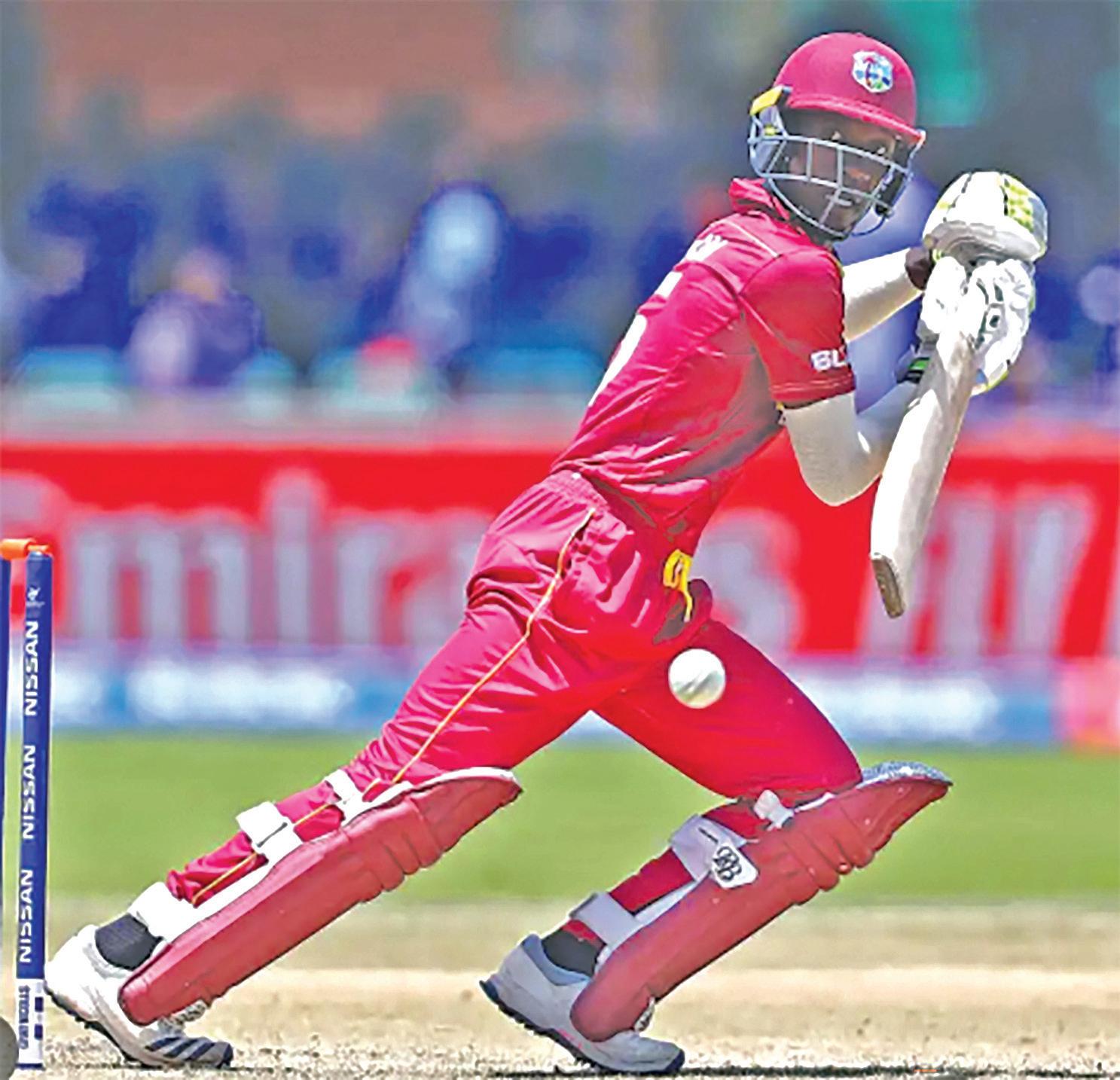
Chasing a daunting target of 361, the West Indies Academy began positively through opener Mavendra Dindyal, who scored a brisk 31 from 24 balls. Kevlon Anderson led the resistance with a well-compiled 63 from 68 deliveries, while Nathan Edward remained unbeaten on 32 from 34 balls.
Despite their efforts, the visitors struggled to keep pace with the required run rate and were eventually dismissed for 235 in 45.4 overs.
Sri Lanka’s bowling attack shared the spoils, with Akmal Fazly claiming three for 37 and Mihiranga Silva taking three for 46 to seal a comprehensive victory. The result levels the series and sets the stage for a winner-takes-all decider, which will be played today.
Dhananjaya de Silva’s 120 off 168 deliveries formed the centrepiece of Sri Lanka’s fighting batting efforts on day one of the Test series against West Indies. West Indies lost three wickets in the first hour, Kemar Roach breaking through in the first over of the game, before Alzarri Joseph struck twice in three balls in the 10th over.
But on a track with some assistance for the quicks, Sri Lanka fought back, first through a counter-punching half-century to Dinesh Chandimal, before de Silva imposed himself on the match, scoring briskly through the middle and evening sessions.
The innings was largely built upon three partnerships that de Silva was part of – a 68-run stand with Chandimal, a 99-run stand
with Sonal Dinusha, and a 64-run seventh-wicket stand with Milan Rathnayake.
A total of 308, however, was only a competitive first-innings total, rather than a commanding one. West Indies’ seamers were menacing in patches throughout the day, particularly Alzarri Joseph, Kemar Roach, and Shamar Joseph, who tested the batters whenever they were operating. It was the medium pace of Justin Greaves that wreaked the most damage in the end, however. He dismissed de Silva midway through the final session and would claim two further tail-end wickets to finish with figures of three for 39. Roach, Alzarri, and Shamar all claimed two wickets apiece.
Having bowled Sri Lanka out for 308, the West Indies
had one over to bat before stumps and survived it without loss. Their rate over the day had been exceedingly slow, however. Only 72.5 overs were bowled on day one, though all six-and-ahalf hours of play were utilised.
De Silva had been confident from the outset. In the morning session he had defended well and had played some assured straight drives to get himself moving as Sri
Lanka strove to recover from 42 for three. Chandimal was the primary aggressor in his first partnership, as he found boundaries through cover and point in particular. Chandimal hit 41 of the 68 runs they made together, and although not fluent in this particular innings, had kept Sri Lanka ticking through a difficult period. He appeared to be finding his touch as he crossed 50, but was bowled by an excel-
(Dhananjaya de Silva, 64.4 ov), 8-287 (Milan Rathnayaka, 68.1 ov), 9-303 (Kasun Rajitha, 70.5 ov), 10-308 (Asitha Fernando, 71.5 ov) Bowling O-M-R-W Kemar Roach 12-2-32-2 Jayden Seales 15.5-2-73-1 Alzarri Joseph 12-1-60-2 Shamar Joseph 16-1-79-2 Justin Greaves 11-1-39-3 Roston Chase 5-1-16-0 West Indies 1st Innings John Campbell not out
Brandon King not out
1 Ov (RR: 0.00) 0/0
O-M-R-W Asitha Fernando 1-1-0-0
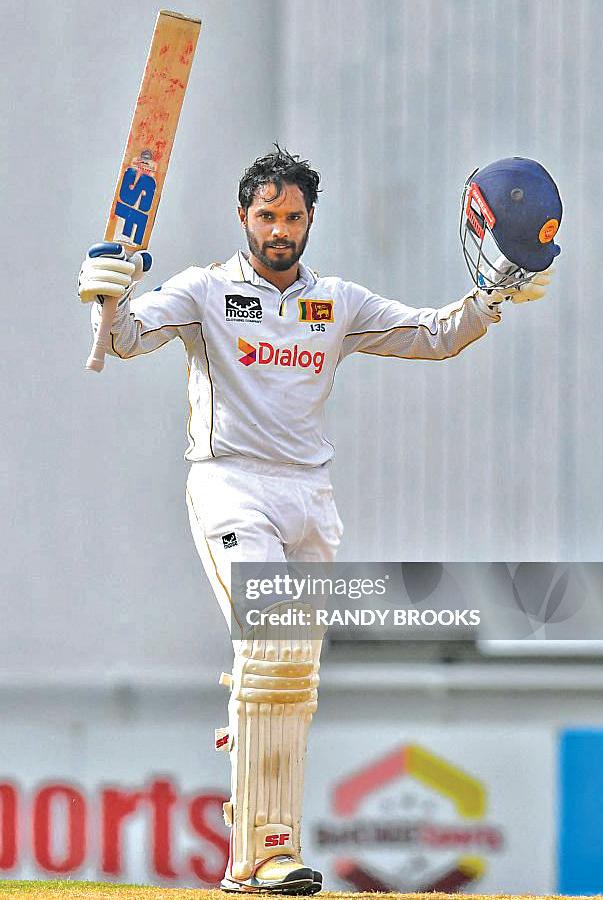
Dhananjaya de Silva of Sri Lanka celebrates his century
lent Shamar york er soon after. Kusal Mendis, reach ing for a full wide one, was caught at sec ond slip later in that Shamar over. This was the second occa sion Sri Lanka lost two in an over, with Alzarri having ear lier dismissed Nishan Madushka and Kamindu Mendis in the 10th over of the day.
De Silva got Sri Lanka out of that immediate dan ger with some sparkling shots square of the wicket, spanking one from Alzarri before pulling the same bowler imperiously through square leg two balls later. He had his outside edge beaten frequently but also found singles and twos into the outfield to keep himself moving. Disdainful pulls would become a hallmark of this innings, though he also scored heavily through cover and deep third. Dinusha, who played a restrained innings, also dug deep to lift Sri Lanka out of trouble. He scored heavily through the backward point region, pouncing on the short wide deliveries whenever they were offered up. He hit 43 off 75.


Soon after tea, he moved smoothly to a 13th Test hundred, off the 150th ball he faced, reaching the milestone with a sumptuous flick through midwicket. In
the end, a tame length delivery from Greaves claimed his wicket, as de Silva gave a catch off the leading edge to point as he attempted to clip through midwicket. Sri Lanka was 273 for seven at that point, and a little lower-order hitting propelled them past 300, Rathnayake scoring 27. The first hour of the day, however, had belonged to the West Indies. Pathum Nissanka was caught off Roach at short leg when he failed to keep a legside flick down. Alzarri then nailed Madushka in front with a ball that nipped off the surface and had Kamindu caught at first slip with a delivery in the channel outside off. Sri Lanka was 42 for three after that first double strike. Shamar would also take two wickets in an over, soon after lunch. (ESPNcricinfo)
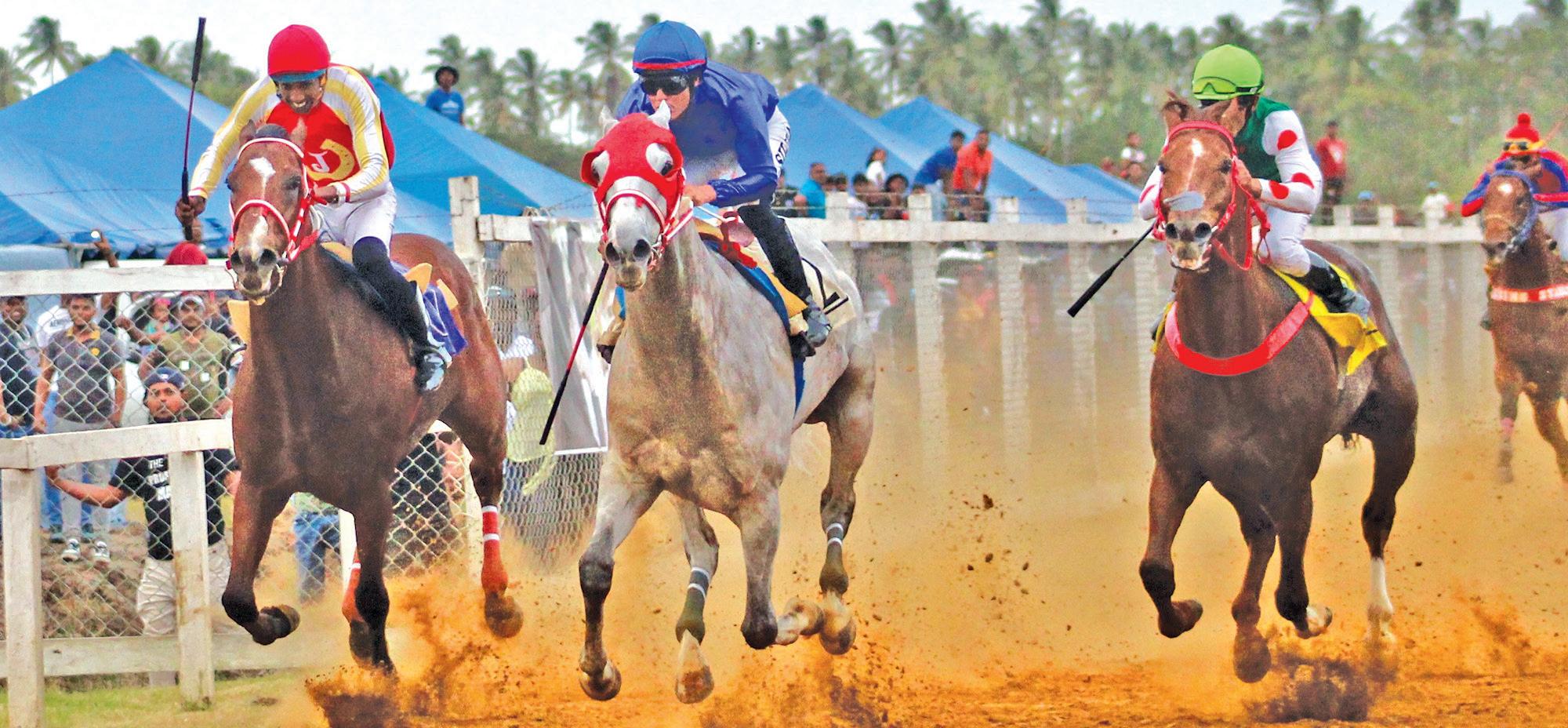
All eyes will be on two of Guyana’s premier horses; reigning champion Dataman and former champion Olympic Kremlin, at the Caricom Cup on Sunday, July 5, at Bush Lot United, West Coast Berbice.
Both horses were seen in practice sessions at the Bush Lot United Turf Club, and reports indicate that
the clash of the champions is confirmed.
The Master Z top horse, Dataman, had the better of Olympic Kremlin of Slingerz Racing Stables, but it was by a small margin on their last meet at Port Mourant Turf Club.
Both horses had extended preparation periods, and it will be the perfect preparation for the Guyana Cup,
which is quickly approaching on August 23.
A total of 11 races are on the card, and more than GY$15 million in cash and prizes will be up for the taking.
The Caricom Gold Cup feature will be open to all Three-Year-Old and Older horses going at a distance of 1900 metres. A total purse of GY$4 million will
be up for grabs, and the top horse will receive GY$2 million.
Other races on the programme include the Caricom Sprint Stakes open to Four-Year-Olds and Over; the Caricom Derby open to Three-Year-Olds Guyana-bred; and the E Class and lower.
There is also the Rising Star Stakes, open to three-
year-old imported horses; the Three-Year-Olds and Over WI-bred winners; the H Class and Lower WI-bred non-winners in Guyana; Three-Year-Olds and Over I/J/K class; L class winners; K&L maidens; and the future star stakes Two-YearOld Guyana-bred juveniles. All races will be run under the Guyana rules of racing, and entries will
open on June 22 and close on June 26.
Full entries, declarations of horses, jockeys & equipment are to be made in person at the Racing Office c/o Director of Racing Operations Mr John Rupert. Location of Racing Office Lot #15, Strand, New Amsterdam (J’s Supermarket).

Motor sport in Guyana is on the cusp of “levelling up” as Guyana prepares to host the third leg of the GT Challenge de las Americas, dubbed locally as the “Guyana Grand Prix”.
The event will bring together a string of high-end GT3 cars, showcasing their prowess at the South Dakota Circuit, Timehri.
As preparations intensify two weeks out from D-day, Guyana Motor Racing and Sports Club (GMR&SC) official Elan Rahaman shared an exclusive update with the Guyana Times Sport on the venue and roads leading towards it.
“I love that everybody is talking about this,” Rahaman declared.
He shared about the South Dakota Track, which needed upgrades: “What has been four months of hard work – night and day, construction fabrication, and constant trips up to South Dakota; we’re finally happy to announce that the track is complete. We’re just cleaning; we’re doing some beautification works, and the track is good. The stage is set for July 12 and 11 for this international event, which is the first GT3 race in our region.”
“We are glad to say, through the Ministry of Public Works, I know Mr Edghill has also taken a few trips up to the South Dakota Circuit, and he’s announced officially that the roads will be complete and in good working order,” Rahaman shared, turning his atten-
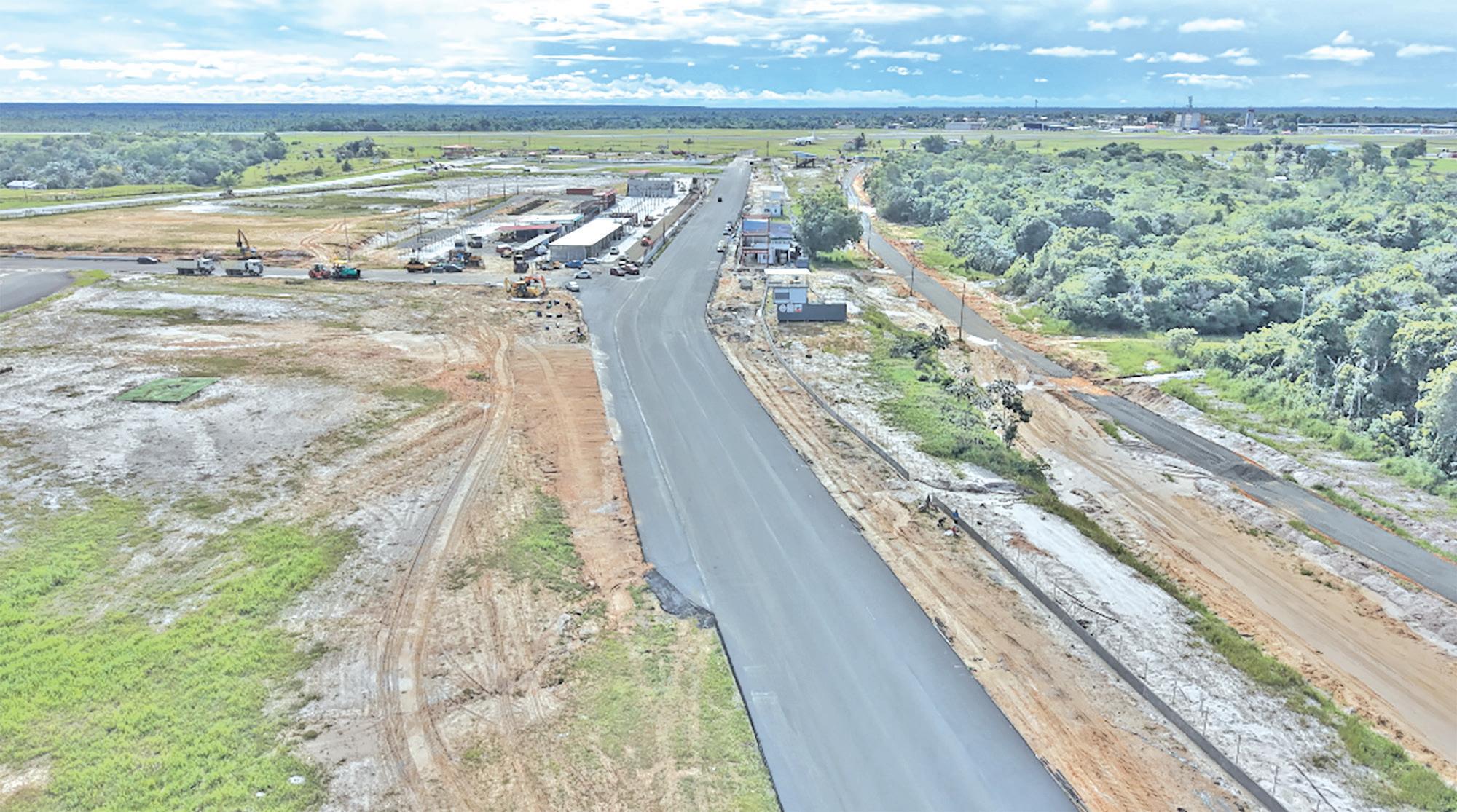
Upgrades to the South Dakota Track are said to be complete and ready for action on July 11 and 12
tion to the access roads. “We have two main entrances; you can either come through the airport route or you can use the Timehri highway. Both are just fine.”
“We urge the general [public] to use the Timehri highway; the only reason is it’s very close to the grandstands that they will be using, food villages and most of the main entertainment. So, if they want to get a good parking spot, use that entrance. If you’re one of the VIP patrons, you could come through the airport road, but of course, feel free to use either, and if you can, carpool on the day of; it is highly recommended,” he advised. Rahaman went on to share what fans can expect from the event.
The GMR&SC official told this publication, “So, what is GT3 racing? GT3 cars are the pinnacle of enclosed-cockpit racing around
the world. What these cars are built for and capable of is truly mind-blowing. These cars are going to go down the front straight at over 260 km an hour. To see that in person, you’ve got to be quick enough to see it, but to see 10-15 of these cars in a row flying by, it’s going to be an amazing spectacle.”
“These are cars that we’re not accustomed to seeing on our roadways and more or less not accustomed to seeing on our racetrack. So, what we’re bringing here, to show the people of Guyana, shows how sport tourism is growing in this country and the development of motor racing as a whole,” he added.
However, racing fans will not have to wait until July 11 to see the beasts in action, as the GMR&SC has planned an interactive showcase in Georgetown on July 4.
He eagerly divulged, “So, if you’re like me and you can’t wait to see these cars and can’t wait to hear them, get a glimpse into what the action is going to look like.
On July 4, on Main Street, starting from 5:30PM, you can come out and actually get to see these cars up close, meet some of the drivers, and hear the V10 and the V8 engines roar.”
“They’re actually going to do a short lap from Main Street up to the Seawall and make their way back down. If you want to see these cars and actually get a feel for what GT3 racing is, we urge you to come out.”
Physical ticket sales for the event began on Wednesday last, as Rahaman shared more details on how patrons can secure their spot at the races.
“We’ve seen great engagement from our pre-sale. We took a little bit of time

“We are also selling tickets for Saturday, which is the qualifying; you can still get the same thrills. The cars are going to be out there battling to put their best lap down. Assumably it’s going to be the fastest time they go around the track,” he went on to add.
Set to attract thousands from around the region, Rahaman highlighted the Guyana Grand Prix as a major sport tourism product.
He expressed, “This event is not of a small scale; we’re expecting over 20,000 patrons, 4000 of these being international people coming to Guyana to witness our hospitality, stay at our hotels and eat at our restaurants, and this shows the overwhelming support that
the Government has put behind sports tourism.”
“It is one of the biggest growing industries in Guyana, and we’re glad to be part of this growing industry to show that racing can have this international pull of patrons and drivers and foreign nationals; we even have so many people from the diaspora coming back to Guyana just to witness this development and this change in our history,” he continued.
Qualifying will take place on Saturday, July 11, with the main race set for Sunday, July 12. General admission tickets are priced at $4000 for Saturday’s event, while Sunday raceday admission starts at $9000.
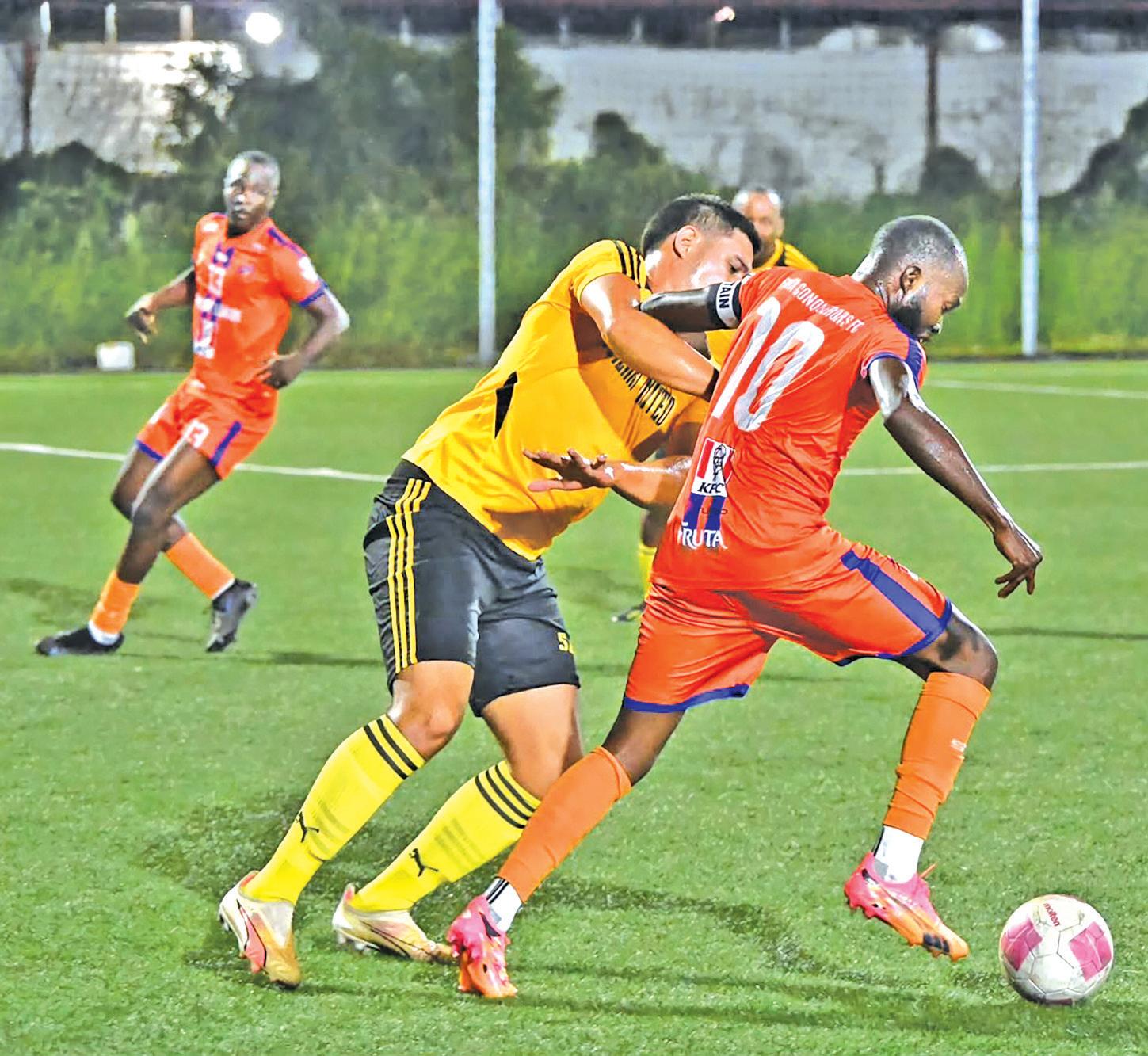
F
ruta Conquerors Football Club (FC) will live to play another season of the Guyana Football Federation’s (GFF) Elite League after pulling off a win in the Qualifier playoffs on Wednesday night.
The Tucville-based outfit finished ninth in last year’s seventh edition of the league and, as such, had to fight relegation by taking on the Elite League Qualification playoffs runners-up, Timehri United FC, for the final spot in the 2026/27 season.
Wednesday night’s contest at the National Training Centre (NTC) at Providence, East Bank Demerara (EBD), began evenly poised as Timehri made threatening advances at the net. However, Fruta’s experience at the highest level came to the fore, fending off the ambitious East Bank squad. Fruta Conquerors had their own advances, but Timehri’s U20 custodian Jermine Mitchell was up to the task, ensuring a nil-all score at the half.
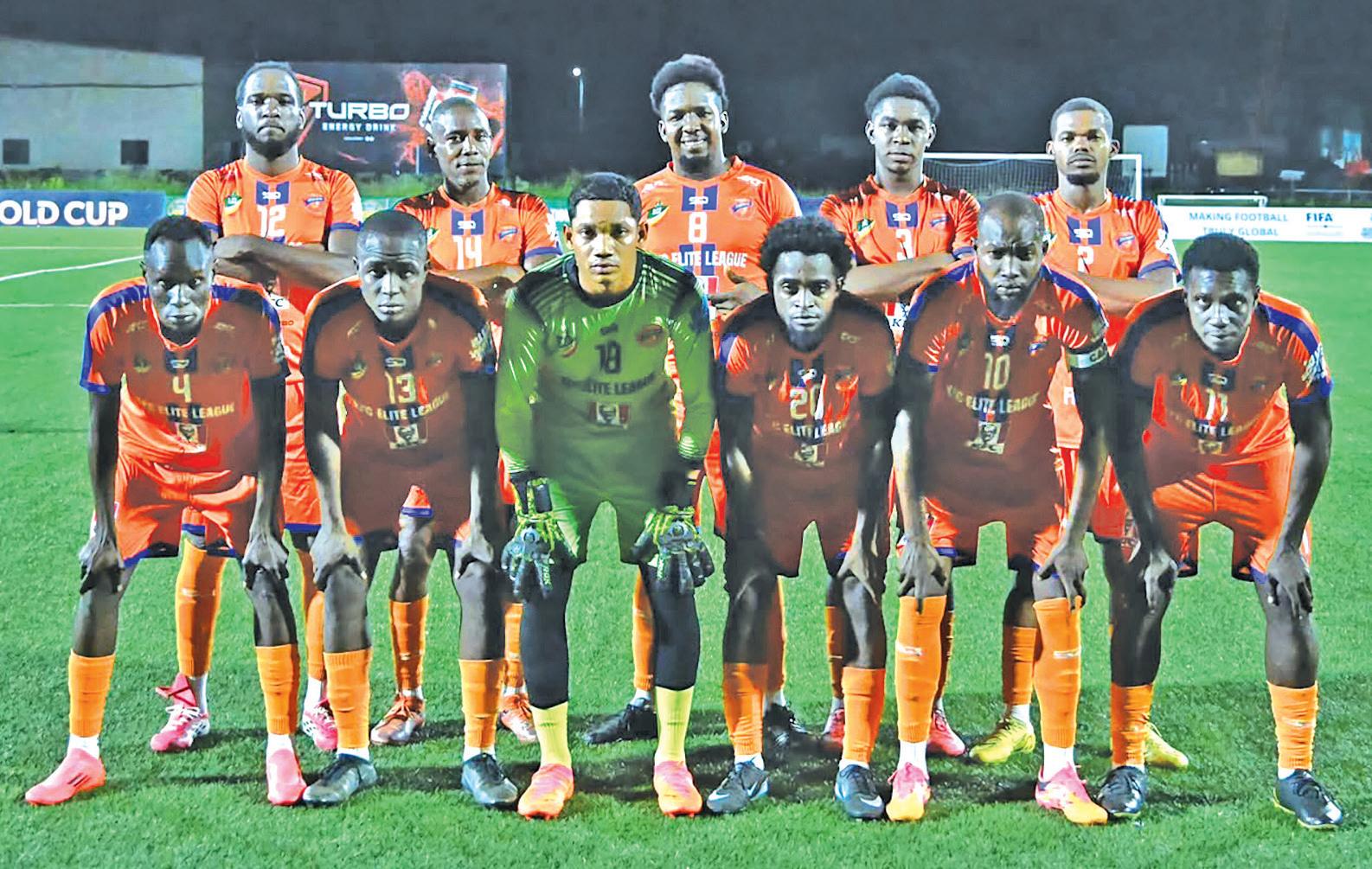
In the second half, Fruta’s Jamal Codrington finally broke the deadlock in the 56th minute. Try as Timehri did, the equaliser was hard to come by.
By the 82nd minute, a breakaway run from Stefon Walton and a chip over the head of the keeper saw Fruta sealing the 2-0 victory.
Following the clash, Fruta Conquerors Coach Jersild Wright summed up his team’s performance.
The coach shared, “We played
a playoff game tonight which was a very hard and tough game, which we made on ourselves. But coming in to the second half, we went back into the dressing room; we regroup; we put some pointers together for what we really want to do and execute in the second half, and it all played out well. We come away with a 2-0 victory tonight.”
“Going forward, we just want to continue giving thanks to the father and to our supporters and
fans. Continue supporting us, and see you in season eight,” Wright further noted.
As such, the upcoming 8th season of the Elite league will feature defending champions Slingerz FC, Guyana Police Force FC, Guyana Defence Force FC, Western Tigers FC, Monedderlust FC, Santos FC, Den Amstel FC, Ann’s Grove United FC, Fruta Conquerors FC and newcomers Camptown FC. The League is likely to kick off in August or September.