




monday, july 15, 2013 | guyanatimeSgy.com



monday, july 15, 2013 | guyanatimeSgy.com
By Michael younge
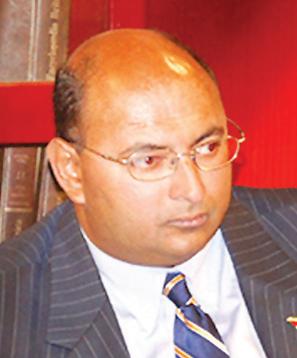
Guyanese can expect a decrease in the overall tariff that they have to pay for electricity while enjoying an improved level of service from the Guyana Power and Light (GPL) Inc once the Amaila Falls Hydro Power Project comes on stream in 2017.







This is according the company’s chairman Winston Brassington who said that the project financing is in its final stages of approval. Brassington also serves as the technical team leader on the project, which promises to supply Guyanese with an improved supply of electricity with the use of clean energy generated from a renewable resource.
Brassington said the project would result in GPL saving significantly as he pointed out that currently it costs the company between 18 and 20 U.S. cents per kilowatt hour to generate electricity using heavy fuel oil, and 30 U.S. cents with the use of diesel.
Hydro power
He explained that with the advent of hydropower, this cost would be reduced significantly which would see consumers benefiting from lower electricity bills while confirming that GPL would no longer need operating subsidies from the central government.
Brassington explained further that currently the real cost inclusive of generation, losses, selling and distribution stood at approximately 40 U.S. cents per kWh. However, tariffs paid by customers are only 30 U.S. cents per kWh.
“So our selling price today is subsidised. Last year, GPL lost about G$7 billion; we re-
ceived G$6 billion in a subsidy from the government. This project will allow us to remove the subsidy and additionally will allow us to lower our tariffs to consumers,” Brassington emphasised.
Inclusive discussions
“We really need this project,” he continued, stating that all the parties have been involved in far reaching analysis of the risks associated with every level of the project implementation as this was critical to the overall execution of the project and its success.
“It is set up in such a way that each party carries a certain amount of risk,” he noted, explaining further that even government and one of the private owners will have to share the geotechnical risk associated with the project.
After the project is built, the other risk is the water risk which could arise if there is not enough water to keep the hydro project functioning at maximum capacity. Two technical studies have already being done on this issue.
“Based on the results of those studies, we have been able to get a thousand gigawatt hours (gWh) per annum,” Brassington disclosed. “In a project like this, there are a lot of risks from begin-
ning to end,” he asserted during the interview. Some are insurable and some are not. However, all the parties involved in the project have done extensive work to mitigate and reduce these risks. Lenders, particularly the Inter-American Development Bank (IDB), have also had extensive due diligence.
He did not rule out too that there may be a need to generate electricity with the use of fossil fuels even when the hydro project comes on stream, as he explained that as demand grows, there may need to have more power generated from other sources.
The GPL board chairman explained that the project would see some 165 mega watts of electricity installed at the generation point which would then be transmitted to Linden and Sophia. Brassington also gave the overall cost of the project straight to the point when it enters into commercial operations at approximately US$840 million. It would also see Guyana paying over a 20year period, an average of US$100 million per annum, following which the country will own the project outright.
This would result in saving of US$200 million, which would have gone to pay escalating and fluctuating fuel bills. So in rough terms, we will pay approximately US$100 million per annum to save some US$200 million in fuel for over 1000gWh per annum from the hydro project.
Brassington reiterated that the project’s scope includes the access roads, the hydro project itself, and some 270 kilometres of transmission lines from the hydro plant to Sophia and Linden.
GPL is in the process of building a new transmission system and new sub-stations while making other technical changes as is required in order to be ready to integrate the hydro when it is completed. GPL’s work in this respect, he advised, is covered and financed out of a US$42 million project from the China Import-Export Bank
The Amaila Hydro Project will be funded with 30 per cent equity and 70 per cent debt. The equity is about US$250 million which is coming from Sithe Global, a company which is part of the Blackstone group. The minority portion will be put up by the government through its resources available to complement the Norwegian fund. The debt is expected to flow from the China Development Bank and IDB.
Private project
“This is basically a private project,” Brassington explained as he made reference to the project finance structure. A piece of legislation and motion are to be debated this Thursday that will deal with the project. The bill seeks to confer on the president the power to create the Hydro Electric Offset Reserve area to meet IDB environmental standards for hydroelectricity power generation facilities. Similarly, the motion before parliamentarians seeks to increase the limit on total guarantees that can be issued under the guarantees of loans (Public Corporations and Companies) Act from $1 billion to $150 billion or approximately US$730 million. This motion is intended to guarantee that GPL is able to purchase the power that the Amaila Falls hydroelectric facility will generate.




Editor: Nigel Williams
Tel: 225-5128, 231-0397, 226-9921, 226-2102, 223-7230 or 223-7231. Fax: 225-5134
Mailing address: 238 Camp & Quamina Streets, Georgetown
Email: news@guyanatimesgy.com, sales@guyanatimesgy.com
Recent frequent news reports of schools being intentionally targeted and under siege to prevent students, girls in particular, from attending school, is an abhorrent development of tactics by people who believe in a way of life many in the general world cannot comprehend. In places from the Middle East to Africa to Latin America, the resort to intimidation and murder of young students, who see education as a way out of their poverty, is a step back in time that is destined to keep many in poverty.
No doubt that is the intention of such perpetrators, since uneducated young minds with no future prospects are easier to brainwash and control. This is a significant concern for many governments, which see such tactics being used to garner future recruitment for militants and extremists.
The governments of the rest of the world should not allow such tactics to continue, and are surprisingly inactive about this development, despite global focus on several incidents like the fate of 15 schoolgirls and their teacher who, in 2008, were walking to school in Afghanistan and were doused with acid for attending school, maiming some of them for life; Malala Yousafzai, a teenage girl who last October was brutally shot in the head, because she was an outspoken proponent for girls’ education in Pakistan; and the recent attack on a boarding school in Nigeria in which 42 persons, mainly children, were killed.
According to one report, since 2009, some 800 schools in Pakistan have come under attack by fanatical elements bent on preserving their traditional societies and rejecting anything remotely considered promoting what they judge to be a decadent Western culture. In fact, the name of the main suspect group in the Nigerian school massacre, called the Boko Haram, loosely translates as, “Western education is sinful”, and the group’s tactics are considered intended to force parents to send their children to Islamic schools, with little prospects of a college or university education, and more of a nursery for future extremists.
Even as simple subsistence farmers, women have been the backbone of economies for millennia in traditional societies, so it should need no leap of imagination to suggest that with better education, women could become so much more important to their communities and to global societies in the 21st century -- a frightening thought for some.
Women in the workforce, or independent women, are one of the hallmarks of Western influence some groups believe, and education provides that potential for Western influences. Individuals such as the International Rescue Committee’s Dr Jacqueline “Jackie” Kirk and the United Nations Children Fund’s Perseveranda “Persy” So, who were involved in fighting for childhood and girls’ education in these regions, are two 21st century casualties among humanitarian organisations that exist to help improve childhood education in such states.
And although, globally, nations applaud the bravery and ultimate sacrifice of many students, teachers and workers, and condemn the vicious tactics, little else is being done on the international front to stop the maiming and slaughter of students like those in Nigeria and Afghanistan. For girls and the parents of girls, as well as boys in other areas in these regions, life continues to go on in fear, and many are removing their children from school, though many are also defying the extremists and keeping their children in school -- although in an atmosphere of perpetual dread.
The attacks show a more frightening disregard for the sanctity of life than ever before, and point to an ever-increasing bloodlust as a way to bring dominance of an ideology, be it political or cultural. How does global society go about bringing such attacks to an end when the justification for such attacks are said to stem from a culture or based on religion?
Religious leaders, even more silent on the matter, play a significant role in cultures that see their religious beliefs as the pillar of their way of life, and should be part of global consultations aimed at ending this inhuman onslaught against vulnerable young people.
An obvious clash of cultures requires consideration of both religious, social and political traditions, and compromise and collaboration from all involved to end the massacre of the innocents whose main wish is not to be at the mercy of another human being for the rest of their lives.

Dear Editor,
Our society still attaches a terrible stigma to rape victims. I have witnessed the heckling of many unfortunate victims.
I have also heard too many terrible explanations
as to why a woman got raped.
I know that in our society, news gets around and in-camera trials will not necessarily protect victims from the taunts of society, but at least, from a judicial
point of view, these victims are getting their deserved respect. It will not be a bad idea to have some sessions on how to handle rape cases.
In South Africa, this had to be done, as there was too
much incompetence. There is a need to have our personnel be fully conversant with some of these things.
Yours truly Tanuja Singh
The GFS must be facilitated to do its job
Dear Editor,
I am thrilled that our fire-fighting capacity is ever on the rise. The Guyana Fire Service (GFS) has come a very far way, and it is a good thing too. Guyana is simply racing away when it comes to congestion of houses and
other buildings, and this kind of growth demands a lot of caution.
Firefighting calls for a lot of risk and that is why we must continue to enhance the working capacity of these brave men. Also, something must be done re-
garding the many abandoned and decaying building all over Guyana, particularly those in the city.
These buildings pose all kinds of threats, and it is best to take some preventive actions now. Apart from nesting all kinds of insects and providing lodgings for many vagrants and criminals, they are literal fuel for just about any kind of flame. We need to act quickly in this regard.
Yours sincerely, Simon Percival
Dear Editor,
The BBC made public that late nights and lax bedtime routines can blunt young children’s minds. The findings on sleep patterns and brain power come from a UK study of more than 11,000 seven-year-olds. Youngsters who had no regular bedtime or who went to bed later than 21:00h had lower scores for reading and math. Here in Guyana, especially during exam seasons, our students, even the very young ones, go the extra mile, by burning the proverbial midnight oil. On the contrary then, it could be that those who stay up late, make sacrifices in terms of sleeping times and length, are those who excel in every area academically.
Some time ago educators in the U.S. were trying to
figure out why Chinese students, at the same grade level of their American counter parts, are so much more advanced. It was quickly established that the disparity had to do with hours spent in the books. There is no short cut.
Lack of sleep and irregular bed times may disrupt natural body rhythms and impair how well the brain learns new information. But I also think and can prove that the body has the ability to adjust. I see too many parents who are not serious with their children’s education, taking things for granted. They allow them to stay up late, just playing games or watching television. We all know that studying is not easy, and that is why it is important that we do not look for excuses.
A research like this, which I have questions
about, can seriously lead to poor performances. If children can lose sleep having fun and not getting sick, then why not let them lose the sleep by studying?
Why are North American students getting low grades in maths, language and science, when compared alongside their counterparts from Asia, the Caribbean and South America? The North Americans came third, behind Asian and West Indian/ South American students.
In fact, the North American students went at times to below 50 per cent, while the other two sets came in at 90 and 85 per cent, Asian and West Indian/South American students respectively.
According to the report, the reason revolved around various levels of busyness and feelings of being pres-
sured. Again, it is not rocket science to deduce that some people just like to make excuses for failure. Discipline is the operative word here. I was following a local interview with a cattle and rice farmer – very young one too. This man had no education and he really pressed home the point that being without an education is not an excuse for being poor or committing crimes. He said people must learn to “balance themselves” and find appropriate work, when they are not educated or trained in a particular area.
So let us train ourselves and our children to study. Also, let us work at whatever our hands find to do. It is kind of silly to say that we are not finding jobs.
Yours truly, Xavier Wilson
Dear Editor,
The letter, “Outstanding work of community policing members on the East Coast Demerara”, warrants a response from me, as I have been following crime fighting all of my life. It bothers me that too many Guyanese are extrapassive and, when security and safety issues arise, they complain bitterly. They must learn to lend a hand. Community watch is universal and the whole thing about community policing groups (CPGs) in any location is most wonderful. I realise that government have been pushing this idea a lot and towards this end, they have done a lot. They issue vehicles, have meetings and run vari-
ous kinds of sessions. These must continue. CPGs require maturity and responsibility. Yes, the members are volunteers, but the level of work they do must not be compromised because it is free work as such.
The writer spoke of that connection between the community and the police force and I think that this is an aspect that must not be taken lightly at all. I am glad that, for this particular community, the group members are really a good intermediary zone. As a matter of fact, one of the leading features of good CPGs is that of being in partnerships.
As a matter of fact, community policing is truly a partnership whose objective
is to determine community needs and policing priorities, and to promote police accountability and effectiveness. Consultation with the community, through community police forums is of critical importance.
Maybe we will not have auxiliary officers any time soon, but if selected members of the local policing groups can be given some extra training, and be sworn in to serve, they can function as para-police officers. These people can even be assigned a special kind of uniform. My concern is that they must be perceived as almost law-enforcers and not just crime-stoppers.
Yours truly,
Iqbal Bacchus

Dear Editor, Yet another taxi driver has been charged, in this case with the recent murder of Victor Da Silva, who along with his employer, was attacked by gunmen at the junction of Cowan and Water streets in Kingston, Georgetown. That is an event which is still fresh on people’s minds. Then, just earlier this month, another taxi driver was arrested following the Woodlands Hospital robbery, also in Georgetown.
Sometimes taxi drivers are the victims too, but when these situations surface, such as those mentioned before, it makes it more urgent for background checks to be done on all taxi drivers. Fighting crimes, irrespective of the type, calls for a holistic
proach. The Guyana Police Force wants help as much as possible. Its head would constantly call for public cooperation. Well how about fostering a close working relationship with taxi associations all around the country?
This brings me to the issue of who should be allowed to operate taxis? A big thing in Guyana these days is for many youths to obtain their licences and then take to the road. Driving a taxi calls for actual driving experience, knowledge of the many routes and maturity of the drivers themselves. The Traffic Department should make a concerted ef-
fort to nab drivers who operate private cars for taxi services. This will go a long way towards alleviating bad road practices, and maybe even removing some criminal elements from the road.
I am not being farfetched too, as in Australia, a magistrate has started hearing evidence against a former Bendigo taxi driver, accused of raping a passenger. This 44-year-old was later accused of separate sexual assault offences dating back to March and April last year. He is facing 25 charges.
It is better to be safe than sorry, and if characters cannot provide a clean bill of character, then they must be at least carefully watched, no matter what they are doing.
Yours truly, Frederick Houston
Dear Editor,
What are the legal implications of assaulting a child? Should witnesses report such incidents? Is the mother responsible for an errant child’s assault on any one? What are the responsibilities governing motherhood, societally and legally?
At no time must an adult allow for his temper to get the better of him. This is where I get very concerned regarding corporal punishment in schools.
The Ministry of Education is still sifting through this issue. It is not quite encouraging it, but at the same time it acknowledges the need for the rod in specialised cases, but carefully administered by a select few.
I spoke with the teacher of a Grade Four student and she said virtually all the time she can pinpoint good parents after interacting for a week or so with her students.

The old adage is still mostly true that the chip does not fall far from the block.
For now, I call on parents to learn all that they can where raising children is concerned. I also hope that concern and care will not go overboard when adults confront a rebellious lad. Society must always be on the lookout and protect children. We are entrusted with their guardianship.
Yours sincerely, Fabian Gonsalves
Dear Editor,
The entire Linden protest scenario is something that has left an ugly mark in Guyana’s history. I just wish that it never happened. Now that it is over and government is seeking to make good on the Linden Commission of Inquiry (CoI) recommendations, I say that we first clear this and other matters.
So I am not sure if this setting up of a monument park by the Region 10 Democratic Council (RDC) to honour the three shooting victims during that protest is justified. We can learn some vital lessons from what took place. I believe in peaceful negotiations and never in the destruction of anything. Linden, right now has a lot of rebuilding to do. The town
needs its school that was burnt down. It is now working towards a new building.
This is wasted money. There are complaints too about ambulance and hospital service, and here too, money could have been more freely available, but it has to go elsewhere. I am cautioning that this monument park can very well lead to all kinds of politicisation.
When it comes to the idea of monuments, I am thinking of the host of businessmen who were recently killed in Guyana. What if someone conjures up the idea of building monuments for them too? History must be recorded.
Yours respectfully, Yollande Morrison




Raising awareness of the needs of grieving children, continued from last week’s article.
Parenting for success means: Helping children cope with the loss of their loved ones. When a child loses someone in death, whether it’s a parent, sibling, friend or other loved one, or even a beloved pet, it’s perfectly normal for a child to experience a period of intense sadness, loss, and mourning. When a loved one dies, it can be difficult to know how to help children cope with the loss, particularly as you the adult work through your own grief.
Children are often taken for granted when there is a death of a loved one. Mainly, because our children are seen as not possessing the capacity to understand what has happened as it relates to the loss of the loved one. Last week, we were able to look at a case study with a successful outcome, because the family members observed the early signs of grieving in the child. It is our hope that children in your care will receive the emotional support and attention they need when the situation arises and the experience of last week’s case help highlight possible prac-
tical approaches that adults can take to support children in their moments of bereavement where necessary.
of a grieving child
Children who are grieving can experience periods when their anger are misdirected (for example, lashing out at a surviving par ent or sibling), as well as feelings of guilt and self-blame. These feel ings listed below, if not properly ad dressed and managed, can be very det rimental to the child and to the entire family.
•
outbursts
Hyperactivity
• Depression and/or anxiety
• Talking about dying: this can be expressed through writing, speaking, or drawing. In the case of young children, be attentive to their play, however, re
act their experiences through play
• Physical symptoms: Watch for symptoms like lack of appetite, nightmares, restlessness, inability to concentrate, clinging to parents, or physical complaints


– ChildLinK’s vision is a Guyanese society where every child enjoys the right to a childhood in a safe and caring family, free from poverty, violence, and exploitation
harming behaviours, or other risky behaviours.
Responding to children’s grief
• Feelings of guilt: Watch for children who express a responsibility for the death of a loved one or friend. He or she may blame themselves for something they said, did, or didn’t say or didn’t do
Lack of communication: Watch for children who don’t want to talk about the loss or show prolonged inability to acknowledge the loss.
• Identity change: Watch for children who seem to be assuming the identity of the person who died Isolation or withdrawal: Watch for children who become isolated, drop out of social clubs or sports, or cancel events with friends. Early on, this is normal but this should not continue for a prolonged period.
• Use of drugs or alcohol, self-
Allow your child to talk about a lost loved one, even though this may be upsetting to you. Don’t try to stop them from feeling sad, as this is a normal part of grieving.
If you think that their
Think of a loved one’s death as something that is a part of you, just as their birth and their life is a part of you.
You accept it; even the pieces that you don’t really like. It’s a part of your history, your story, who you are and who you will be.
Anonymous
sadness is excessive, then seek psychological counselling. Try to help your children remember good things about a lost friend or family member. Tell them positive things and stories that you remember about the person.

To support a child who
is asking difficult questions when they are grieving, we can say things like:
• “What you are thinking or feeling is normal” “You are OK”
• “It’s natural or normal to feel the way you are feeling”
• “You have a right to feel the way you are feeling, because you lost someone you loved and who loved you”.
• When your child/ children ask, don’t be afraid to tell them that you are feeling sad when you are thinking about the loss of a loved one. On the other hand, try not to overwhelm your children with the responsibility of feeling like they have to take care of you. Be open and tolerant of your child’s protests over the unfairness of the loss and its impact on their lives. This will often diminish over time.
• It is common not to have the answer to all of the questions, you could say things like:
“I don’t know, I often wonder about that myself. Let’s talk about it now.” “Tell me more about what you are feeling or thinking.”
You can also repeat back to the child what they have said in your own words. For some children, their loss or bereavement can be the first time that they have experienced intense abandonment. Fears may arise that they might be similarly abandoned again. Not all children understand that the pain they are feeling will fade with time. In addition, they may try to protect the feelings of others by avoiding displays of emotion in front of them and, as a result, their feelings can go underground and resurface at a later period in their life. Often what the children seek are not answers, but reassurance and comfort. We can’t take them out of the valley of grief, but we can walk with them in their valley.
Please contact us on telephone number 231-7174 or email us at programms. childlink@networksgy.com for any support you may need on parenting and other challenges you are experiencing with your children.
By Samuel Sukhnandan
The Guyana Teachers Union (GTU) said it would like to see more teachers being trained in the areas of mathematics and science, based on the decline of these skills, over the past few years, in the education system.
GTU General Secretary Coretta McDonald told Guyana Times on Friday that while little can be done to reduce the migration of these specialist teachers, serious attention must be paid to the issue.
McDonald stated that the GTU has been in constant discussion with the Education Ministry to create avenues by which these skills could be retained and more persons trained in these subject areas. According to her, the GTU has been pushing to have an incentive given to teachers who want to be trained to teach mathematics and science.
Scholarships
In the recent five-year agreement between the union and government, 30 scholarships are offered annually to teachers who want to further their studies at the University of Guyana. Through this scholarship scheme, the GTU has been promoting the training of more maths and science teachers. “If we have 35 or 40 teachers who would have made application for the scholarship and we realise that 10 students are going for math and pure science then we would make way for that, based on our consultation with the Education Ministry to have the 10 given priority,” she said. Despite the massive investment made in providing state-of-art science laboratories, there continues to be a shortage of qualified teachers, as many of the country’s trained

Pteachers continue to leave Guyana to take up more lucrative posts abroad. To help counter the situation, the ministry has been retaining those who are of retirement age.
There has been a high failure rate in these two areas over the years. Despite remedial classes, the annual Caribbean Examination Council (CXC) results continue to reflect the dismal state of science and math education in schools.
While explaining that every subject area is important and all teachers are equal, McDonald noted that the GTU will continue to push to have government provide an extra incentive to this group of specialist teachers. This, McDonald explained, is specifically to address the shortage of both maths and science teachers not only in Georgetown, but across the country.
Incentive
“Doing this will not only pull more teachers into that stream, but it’s going to boost what we already have in the system,” she asserted. The GTU official added that the incentive does not necessarily have to be an increase in salaries, as it could be other supportive mechanisms to encourage teachers to remain here, and become more trained. The GTU is suggesting that these teachers be sent on special training courses or given extra points for promotion, among other
According to a police statement, about 04:00h, ranks of a mobile police patrol recovered the unlicensed .32 pistol with three matching rounds along the
non-financial incentives.
The GTU also expects more from the Cyril Potter College of Education (CPCE). While there have been some improvements made at the teachers’ training college, McDonald is of the view that more needs to be done to effectively train teachers in those critical subject areas. The GTU official noted that there is room for improvement in terms of the delivery of math and science teaching.
This is important, since it will encourage more students to tackle the subject areas without fear of failing. This could also encourage students when they have completed schooling, to pursue teaching careers themselves in these areas. Most importantly, however, McDonald said the idea is not only to attract persons to be trained to teach these subject areas, but to inculcate a passion for the subject; therefore, making it easy to transmit the necessary lessons in the classrooms.
Innovative, creative
“If the teacher’s heart is not there, then they are not going to get the very best from those teachers,” she emphasised. The GTU is, therefore, urging persons who wish to pursue careers in teaching and have a passion for the maths and science streams to do so, with the aim of making the delivery of these subjects more innovative and creative, so that the teaching process for students and teachers becomes easy and enjoyable.
Previously, government was contemplating the importation of maths and science teachers, owing to the limited number in the school system. This initiative was hotly debated and eventually quashed after concerns were raised about the investment that would have to be made to acquire the skills from overseas. (samuelsukhnandan@guyanatimesgy.com)
roadway in East Ruimveldt, Georgetown. Three men who were in the vicinity were arrested. They are in police custody assisting with the investigations.

Top private sector executives in the tourism and investment industries in collaboration with Caribbean governments, have accepted an invitation to participate in a 10-day trade mission to four cities in China.
The trip is set for September 14 to 23 and is being planned by Peter Zhang and Li Li of the Chinese American Business Development Centre (CABDC).
The trip comes on the heels of the Avalon Invest Caribbean Now Forum in New York City organised by U.S.-based Guyanese journalist Felicia Persaud, who serves as chief marketing officer of Hard Beat Communications.
CABDC has been leading trade missions for U.S. companies to China for the past 10 years while Hard Beat’s Invest Caribbean Now forum is in its third year.
The planned trip to Beijing, Shannxi, Zhejiang and Guangdong comes on the heels of Chinese President Xi Jinping's first visit to Trinidad during May where he pledged more than US$3 billion in loans to 10 Caribbean nations and Costa Rica on June 2.
The 2013 Caribbean/ China Trade Mission is designed to help Caribbean premiers, ministers of governments, investment agencies and C-level private sector business leaders, meet with top Chinese officials from

varied ministries, such as tourism and finance.
The tour would also facilitate engagements with C-level company executives, including from the China Import Export Bank, to promote direct in-country investment opportunities and company products and services.
It is aimed at establishing strategic connections, strengthening existing relations, exploring opportunities for joint ventures, sourcing potential suppliers, extending friendships and creating relationships for return visits to the Caribbean region.
The mission will provide Caribbean governments and business leaders with new access and close-up insight into the dynamic Chinese market, including its scale, diversity, and potential.
By 2020, China will surpass the U.S. in middle-class consumption and as quickly China is emerging as a new market for Caribbean
real estate and products like tourism, analysts have predicted.
Li noted that the advantageous location of the Caribbean in the centre of the Americas provides the advantage of easy access to markets in the North, South and Central America and serves as a bridge to the markets in Europe.
Acclaim
Citing statistics that said up to 100 million Chinese will be travelling abroad by 2015, Li said the time was ripe for the Caribbean to tap into this key demographic, especially since the Chinese consumer is industrious and has spending power and “the Caribbean has garnered critical acclaim as a mecca for tourism with significant investments in that and related sectors”.
Persaud is encouraging Caribbean governments to do more to market the diverse investment stories of the region to the right people since the region is relevant.
She stated that the Caribbean region remains relevant, since 11 nations have been listed in the top 100 “ease of doing business” survey when there were only seven for Latin America and eight for Africa.
“We are relevant when eight nations in the Caribbean are ranked in the top 100 fastest growing economies globally compared to 10 for Latin America as of 2012…” Persaud had said.

Forty-two-year-old Coretta Langhorne was on Wednesday remanded to prison by Magistrate Clive Nurse on a charge of felonious wounding, inflicted against her 17-yearold son Lennox Estwick.
The self-employed defendant of Lot 640 South Amelia’s Ward, Mackenzie, Linden appeared at the Christianburg Magistrates’ Courts to answer to the charge. It is alleged that on Monday July 1, while
at their home in Amelia’s Ward, she wounded Estwick, with the intent to maim, disfigure, or cause him actual bodily harm.
According to facts presented by the prosecution, the virtual complainant re-
ceived burns to the side of his abdomen and back. The prosecution also objected to bail on the grounds that the defendant may tamper with the witness. The matter was adjourned until July 23 by the presiding magistrate.
ARose Hall Town man was placed on $70,000 bail when he appeared in the New Amsterdam Magistrate’s Court before Magistrate Sherdel Issaacs-Marcus on Friday on a charge of break and enter.
Satya Sai Tajnarine is accused of breaking into the New Amsterdam branch of Courts furniture store between July 4 and 5, and
stealing four laptop computers, three tablet computers and two tablet cases, all valued $933,499. He was also given his pre-trial liberty on a charge of escaping from lawful custody. Police Prosecutor Phillip Sherriff told the court that on July 10, while in custody, Tajnarine escaped from the Rose Hall Police Outpost. In his application for
bail, Attorney Charrandas Persaud alleged police abuse, saying Tajnarine was picked up by the police a healthy man, “not a limping young man”. He asked the accused to display the injuries he had on his body to help make his case that his client needed “to be sent on bail so that he can get needed medical attention, which the police did not allow him to get”.
Sheriff in turn said the police had no objection to bail, but wanted it to be substantial. The magistrate then offered bail in the sum of $70,000 on that charge. Tagenarine will return to court on July 29 for the break-and-enter charge, while the escape from lawful custody matter has been transferred to the Albion Magistrate’s Court for July 30.
Winston Hinds, 23, of 58 Blueberry Hill, Wismar, Linden was on Wednesday granted bail in the sum of $175,000 when he appeared at the Christianburg
Magistrates’ Courts to answer to the offence of break and enter and larceny.
He appeared before Magistrate Clive Nurse and pleaded not guilty to the charge which stated that on
Saturday, February 9 and Monday, February 11, at Poker Street, Wismar, he broke and entered the dwelling of Desmond Fraser and stole a music system valued $200,000; a 19-inch flatscreen television set val-

ued $100,000; a 42-inch flatscreen television set valued $200,000; and eight wooden bird cages valued $40,000.
The items are valued a total of $540,000 and are all property of the virtual complaint, Desmond Joseph. Hinds is scheduled to make his next court appearance on July 23.
Magistrate Clive Nurse last Wednesday remanded 54-year-old Cordwell Headly of 192 Half Mile, Wismar, Linden to prison after he appeared in court to answer to the offence of felonious wounding.
The defendant appeared at the Christianburg Magistrates’ Courts to answer to the charge which stated that on Thursday, November 29, 2012 at Canvas City, Wismar, he unlawfully and maliciously wounded Norman Etienne with the intent to maim, disfigure, disable, or cause him actual bodily harm.
The prosecution objected to bail for the defendant on the grounds that he was wanted for the offence, which was committed since last November and was only arrested on July 9. The prosecutor added that he has no fixed place of abode and may also tamper with the witnesses and virtual complainant. The matter was adjourned to July 23 by the presiding magistrate.

...by AFC
We knew it would have happened sooner than later – the call for street protests to bring down the government. Hey!! It happened in Egypt and the government was removed by the army, weren’t they? That’s the kind of thinking that passes for political analysis by the Alliance For Change (AFC). The entire leadership core of the AFC is essentially the lunatic fringe of the Guyanese political class. But it’s now obvious that some are more lunatic than others.
I mean, here you have an opposition in control of the Parliament – which forces the government to bow to its whims by chopping whole sections of the budget and they have to come out into the streets??? But when you think about it, there’s a method to their madness. And as is usual in politics...it’s about votes for power.
They boasted, through some cockamamie poll they tried to foist on the People’s Progressive Party/Civic (PPP/C), that in the next elections, they’ll end up with 27 per cent of the votes. From the breakdown, they clearly expect their increase to come from both the PPP/C and the People’s National Congress (PNC). The call by Nigel Hughes for protests in Georgetown is designed to go after A Partnertship for National Unity (APNU)/PNC urban votes. They’re going for the jugular. Their brain trusts (read Freddie Kissoon) believes APNU’s more responsible politics -- where they’re looking at Guyana’s stability via the old confrontational politics -- leaves them alienated from the street elements. From David Hinds’ mumblings, the Working People’s Alliance (WPA) (all four members!!) also are of this view.
Frankly, we don’t see the AFC mobilising any effective protests in Georgetown. People have common sense. Whatever differences our politics have produced, the system is working to address them. Maybe not as quickly as some desire. But they know that “one one dutty build dam”. Throwing a whole ton of “dutty” in street protests will just make our politics (not to mention our streets) dirtier.
It could also mean that the AFC’s ultra-crazy fringe is trying to intimidate the PPP/C ahead of their August Congress in Berbice. But we believe their gambit will backfire on them big time. Most Guyanese are becoming house owners and getting on with their lives – they’re not going to risk their gains being wiped out by street protests that will certainly become violent.
But then it could just mean that Hughes is making a grab for the AFC leadership by courting the four WPA grey-haired radicals. What say you Khemraj Ramjattan?
...by ex-Speaker
Another politician who’s evidently decided to go for the jugular is ex-Speaker Ralph Ramkarran. Even though he didn’t have the testicular fortitude to call him by name, it was more than “pellucid” that he was “throwing talk” at Minister of Home Affairs Clement Rohee. His weekly article in the Stabber News this week was a disgraceful ad hominem exercise.
What he did was attempt to make fun of Rohee’s lack of formal education. This was shameful...since his own father, one of the most respected stalwarts and founding members of the PPP/C – was no lettered man himself. Is a law degree the sine qua non for politics? But it does betray Ramkarran’s bitterest reason why he didn’t support Ramotar as the PPP/ C’s presidential candidate. Ramotar also isn’t too burdened by “letters” behind his name.
...from physics
To burnish his credentials, Ramkarran stepped outside of law and turned to physics. It was pitiful. Firstly, all he could do was refer to the old wives tale that Sir Isaac Newton (who’s a “scientific genius of the modern age”? Newton was born in 1642!!) discovered the law of gravity after having an apple fall on his head. Even students of elementary physics know this is an old wives tale.
Secondly, the anecdote of the “fast moving train” concerned Albert Einstein’s second part of his theory of relativity (space and time are not absolutes) rather than the first part – the speed of light being a constant. So sad...
BY ANDREW CARMICHAEL
One hundred persons have been left homeless as a result of fires in Berbice for the first six months of the year, a senior fire officer has said.
The fires between January and June this year were mainly caused as a result of electrical faults, carelessness and accidents.
Divisional officer, Senior Superintendent Compton Sparman, in giving an update on operations of the Berbice Division for the first half of the year, said there were 23 fires in buildings in Berbice caused as a result of electrical faults. These electrical fires were as a result of faulty connections, errors on the part of electrical contractors and overloading. Other causes of fires in the region so far for the year were arson and accidents.
Apart from the fires to buildings, there were also 20 bush fires, 92 grass fires and one sawdust fire. According to Sparman, there was an upsurge of fires to automobiles. For the year so far, there has been 12 reported, most of which were in West Coast Berbice. The town of New Amsterdam only recorded two automobile fires this year. The division has so far responded to 184 fires. Of that number, 144 were extinguished by the fire service while 11 were extinguished before the fire service arrived.
Sparman noted that
there were seven late fire calls. “Sometimes there is a fire and we are not called but then it is discovered that important documents were destroyed and so we are then called so that we can prepare a report, because those documents will not be replaced if a fire report is not submitted. We refer to that as a late fire call.”
Speaking of some of the challenges affecting the division, Spearman said traffic congestion is a big issue when attempting to get to a fire scene.
Narrow streets
“Some of the streets, especially in New Amsterdam, are too narrow.” He noted that many drivers engage in the dangerous practice of driving behind the fire engine when it is on its way to a fire scene. He cautioned drivers to desist from this practice. Sparman also criticised some of those who operate the service’ s emergency vehicles. “It is also illegal for officers to use the sirens and flashing lights if they're not responding to emergency and when they are responding to emergency they must do so with caution,” he said.
“One of the things that affect us when fighting fires is the non-functioning of pillar hydrants. So we have to use water from canals when we turn up at a fire scene and this can take a few critical minutes, especially in New Amsterdam. We will al-
ways have water in the fire engine, but it can only carry about 400 gallons and if it is a big fire that really can’t do anything.” He said ground level hydrants are about eight feet underground and operating them is dangerous, resulting in officers getting injured at times.
The senior firefighter said meetings were held with the mayor of New Amsterdam, the police commander and regional chairman, and one of the issues discussed was the erecting of buildings without the fire department being involved. He said the department should be given a copy of the plan for approval.
“The New Amsterdam municipality has not been doing that. We need to see the plan,” he said. Noting that there is an increasing number of buildings being constructed above three storeys, Sparman added that there is an increasing need for fire safety and the department should have an input when such building are going up.
In New Amsterdam, the department has four fire engines and a large water carrier, while the Rose Hall, Skeldon and Onverwagt departments are each equipped with one fire engine. Spearman was high in his praise for the Guyana Police Force, which he said has provided excellent support to the department during fires.

monday, july 15, 2013 | guyanatimesgy.com
Guyanese passengers are keeping their fingers crossed as Fly Jamaica and Fly Guyana make their way into the Guyanese airspace at the end of October.
Caribbean Airlines presently charges close to US$1300 for a round trip to New York. Transport and Hydraulics Minister Roberson Benn told the media at a recent press conference that while concerted efforts are being made to bring the situation under control, government would like to see more interests from other airlines.
He noted that presently the government is in discussion with LIAT, Fly Jamaica and others, but cannot forecast ticket prices, reiterating that “Fly Guyana is not flying any place as far as I am aware. I am not prepared to forecast prices at the moment… we have to see what prices they will come in at and how it will impact at the moment,” Benn stressed.
The minister added that the airline business is a pretty difficult one and does make much profit, noting

Acting Tourism Minister Irfaan Ali has called on Caribbean Airlines to review the current airfare
that everybody else seems to make a profit in the industry upstream or downstream, but not the operators.
In other countries, the tax is around 17 per cent, especially for Jamaica and Barbados. Further statistics indicate that Suriname has the lowest tax-fee rate of eight per cent, but its fixed terminal fee stands at US$66.
The base fare is US$300, travel voucher tax US$45, passenger facilitation fee US$5, departure tax US$20, with a total price for travel ticket from Guyana to oth-
er Caribbean countries at US$370. The travel rates from other countries are between US$368 and US$390. APNU parliamentarian Joseph Harmon has suggested a reduction of airport taxes by at least 10 per cent to cushion the impact on the Guyanese travelling public in light of the increase in international airfares. Acting Tourism Minister Irfaan Ali has called on Caribbean Airlines to review the current airfare., given many complaints from the travelling public.
He said government was also in discussion with COPA Airlines and others, and is optimistic that talks will progress nicely.
Guyana Times understands that to travel to Trinidad and Tobago from Guyana with Caribbean Airlines, the ticket costs US$452, but Trinidad passengers travelling to Guyana with the same airline pay only US$295. Persons travelling to New York from Guyana pay US$1298, but passengers travelling from Trinidad to New York pay only US$578.
A22-year-old man has been placed on $70,000 bail for allegedly raping a 19-year-old girl. Shazam Outar, of Warren Village, East Coast Berbice, appeared before Magistrate Sherdel Isaacs-Marcus in the New Amsterdam Magistrate’s Court on Friday charged with sexually penetrating a female. Police Prosecutor Phillip Sherriff told the court that on April 15, the unemployed man invited the young lady over to his home and then committed the act against her will. The matter was reported,
and Outar was informed of the offence and subsequently charged. He was not required to plead to the indictable charge. In a petition to have the court grant the defendant bail, Attorney Charrandas Persaud said the unmarried man who lives with relatives was not a flight risk. He told the court that the accused and the virtual complainant (VC) have known each other for some time now and had been in a relationship. He said her parents had objected to the relationship, but
now the young lady was of age to make her own decisions. The prosecutor did not object to bail but asked that it be substantial. Magistrate Isaacs-Marcus told the accused that it was a serious offence and granted him bail in the sum of $70,000. She also set out conditions under which bail was being granted: “You must not come within 25 feet of her and you are to report to the Luis Manor Police Outpost every Friday at 10:00 hours.” Outar was told to return to court on August 12h.

Almost two years after a Boeing 737800 aircraft belonging to Caribbean Airlines Limited (CAL) crash landed at Guyana’s Cheddi Jagan International Airport (CJIA), the final report on the crash is expected to be submitted by month-end.
According to Guyana


Civil Aviation Authority (GCAA) Director Zulfikar Mohammed at a recent press conference, there were some delays with respect to the investigations conducted by the National Transportation Safety Board (NTSB) as it was engaged in other investigations.
He praised the investigative team for the timely completion of the report, noting that an investigation into a plane crash in Jamaica which occurred one year before the one in Guyana is still to be completed.
He said that the investigations into the July 30, 2011 crash was completed in a short time compared to those for other major crashes.
The aircraft, on the day of the accident overshot the runway, and stopped short of a ravine with its nose cone segment breaking off. The crash was deemed “a miracle landing” since all 163 people aboard, including the six crew members, survived.
Weeks after the accident, the airline said the co-pilot had resigned and the cap-

tain of the aircraft was now employed in another department of the airline, pending the release of the official report.
The injured persons were compensated after consultation with their insurance companies. There were also four lawsuits filed in the U.S. against CAL in connection with the incident. Officials had stated that the sums involved were in the vicinity of several thousands of U.S. dollars.
Preliminary findings by investigators on the crash suggested that there might have been an error on the part of the pilot, rather than mechanical or other system malfunction. It was later reported that the cockpit crew of Flight 523 reported no problems with the twinengine Boeing aircraft to air traffic controllers on approach. It is believed that the plane landed too fast and too far down the airstrip.
Caribbean Airlines Flight 523 overran runway six at the CJIA, and several of the passengers aboard were injured.
The aircraft, a Boeing 737-8BK, had flown from the John F Kennedy Airport, New York to Georgetown, with a stopover at the Piarco International Airport, Port of Spain, Trinidad. After touching down on a rainy day, the plane crashed through the perimeter fence. The aircraft went over a road before stopping 100 metres away from the airstrip and breaking into two.
The majority of the injured were treated at the Diamond Diagnostic Centre and then transferred to the Georgetown Public Hospital, where 35 passengers were treated for leg, back and neck injuries.
Trinidad’s Prime Minister Kamla Persad-Bissessar flew to Guyana to assess the situation, as the government of Trinidad and Tobago owns Caribbean Airlines.

Buse-in one another is a common ting wid plenty people. But Freddie Kissmansoon get de record fuh bein de best buser-upper in de whole country. Whenever he buse-in, it does be just like when a woman buse-in she neighbour fuh tekkin way she man. No neighbour ain’t gon ever tek way de Man Kisser fuh nuttin though. So buse-in gon never come from he neighbour fuh that.
De Man Kisser does buse yuh from how yuh mother mek you to how yuh gon look in yuh grave. Never mind he never see some of de people he does buse. And never mind half of what he say don’t mek sense, and de other half does be mek up stories. Buse-in is buse-in, and de Man Kisser does buse even when people not buse-in back.
Now Rush Khan rush in and buse de guvament bout labour laws and minimum wage. Then he rush in again and buse a man who get rob and still in de hospital. De man get shoot in he head, so he might not even hear what Rush Khan buse-in bout. But Rush Khan don’t mind that. He jusy like to buse…ask he workers dem!
De guvament and de opposition does also buse out one another. And nowadays students does buse out teachers. De other day, a man slap he wife fuh de same buse-in, but he end up in court and he learn to do de opposite of buse-in – beggin.
Stony Virus always buse-in some body too. He gettin just like de Man Kisser – buse-in everybody. Stony Virus even turn round and buse de man who bail he out when he was broke. Is de same man buy out he TV station, plus pay he out de court money.
Ting-a-ling-a-ling…friend tell friend…mattie tell mattie! Well, old people seh after one time is another time…is another big buse out start up wid Suspenders Ram and de Stabber. And dem two was like Jack and Jill!


In the next several weeks, climate change stories will be dominated by the news that the carbon dioxide (CO2) level in the atmosphere has now officially climbed to an average above 400 parts per million (ppm).
The National Oceanic and Atmospheric Administration (NOAA) in Washington and the Scripps Institute of Oceanography (SIO) in San Diego, California have confirmed that the average CO2 level surpassed the 400 ppm milestone recently. For more than 800,000 years the CO2 level has varied between 150 to 280 ppm. In the last decade, it has increased dramatically and now a new feared level has been attained.
Between December and March 2013, Guyana had dry weather (almost a drought) when we should have had rain. It’s really crazy -- when we should have rain, it’s dry and when we should be dry, we have rain. Unusual severe tornadoes have been encountered in Oklahoma and these have killed dozens of people within the last three weeks. Now we see massive floods in Germany and other European countries -- floods in major developed cities.
Unpredictable weather
Guyanese have noticed the severe impact climate change is having on our way of life and on Guyana’s economy. Guyanese have seen rising sea levels, more rains, and unpredictable weather patterns and now we are faced with high tides that regularly overtop sea defense systems.
More and increasingly severe weather phenomena like hurricanes and tornadoes, rain and wind storms, rising sea levels, floods and droughts dominate the news on a daily basis. Some
kind of severe weather condition is afflicting some part of the world on a daily basis. Few in developing countries today doubt the phenomenon of climate change.
The doubters appear to be in the developed world, the very places that are mostly responsible for global warming and climate change. It is the developed countries, on their way to developing robust economies, which are mainly responsible for emitting tremendous amounts of CO2 in the environment that resulted in the thinning and creation of “holes” in the ozone layer permitting global warming.
Severe droughts
These very developed countries have faced severe weather conditions in recent years, outside of the normal weather patterns. There have been alternating severe droughts and floods in the developed world and these occur in patterns not evident before.
Times Notebook asks how many more storms, how many more floods and droughts, how many more tornadoes, how many more deaths and destruction before collectively and responsibly we accept there is a weather insecurity problem?
America, as a nation, particularly appears not to be able to make up its mind on this issue. In the 1990s and to this day, the U.S. refused to sign on to the Kyoto Protocol, a treaty which sought a collective responsibility to tackle global warming and climate change by reducing carbon emissions and promoting a low carbon development strategy. Yet America has suffered some debilitating blows from weather phenomena, which are the strongest testimony to the climate change reality today.


Hurricane Katrina in 2004 is still vivid in people’s memory. More recently, Sandy devastated the North Eastern states of the U.S., especially New Jersey and New York. Even more recently, climate change assaulted the U.S. South West with some of the most violent tornadoes known to man. Tornadoes recently killed dozens of people and destroyed enormous amount of properties and infrastructure in various parts of America, such as in Oklahoma.
Pollen Plague
Now evidence is mounting around the world to show a new plague -- the Pollen Plague -- is emerging. Increasing pollen in the air is linked to an increase in allergic responses for people. And doctors and scientists have produced evidence of increasing numbers and severity
of pollen-linked allergies in both temperate and tropical countries.
Because, America has invested in such research, the evidence is most glaring in the U.S. Doctors in America have confirmed that they are seeing more cases of hay fever and allergic asthma. Not only are there more cases, but the attacks are more severe in such a way that the regular medicines, such as Benadryl and Claritin, are either ineffective, or must be used in higher doses.
While asthma can be caused by many things, pollen-linked asthmatic allergies are becoming the most prevalent form of asthmatic allergies. The U.S. Centre for Disease Control (CDC) has confirmed an increase of asthmatic allergies of about 17 percent since 2001. The U.S. Environmental Protection Agency (EPA) has published figures to

show that one in every 12 Americans is subject to allergic asthma in recent years. They describe asthmatic allergies as a national epidemic.
Tests reveal that the more CO2 in the air, the more plants produce pollen and for a longer time. In the U.S., where pollen is counted on a daily basis, they have shown an increase in the pollen season in every state, with an average of 16 more days added to the pollen season in 2012.
Carbon emission
In 1900, the CO2 concentration in the atmosphere was 280 parts per million (ppm) and the pollen production per plant was five grams. By 2000, the pollen production per plant had risen to 10 grams as the CO2 in the atmosphere increased to 370 ppm. Right now CO2 in the atmosphere is about 400 ppm. Unless globally we do something to stem carbon emission, the CO2 concentration will increase to 720 ppm by 2075. At this rate the pollen production per plant could go as high as 20 grams by 2050.
The truth is that the U.S. government’s third National Climate Assessment released in January this year noted that more health problems are likely because of global warming and climate change. The assessment predicted more illness and deaths from wildfires, flooding, heat-related strokes, and infectious diseases such
as cholera. It also cautioned that climate change can lead to more respiratory allergies and asthma and further pointed to higher summertime ozone concentrations that can make it difficult to breathe. Climate change can lead to more and heavier rainfalls and higher temperature which can result in the growth of indoor molds and fungi, further threatening people’s health.
Global warming
On all fronts, there is strong and alarming evidence of climate change. Times Notebook is, therefore, perplexed as to why there is continuing debate around global warming and climate change. If there must be a debate, the debate must be what exactly we must do to stem the rising CO2 concentration and promote a low carbon development strategy like Guyana is trying to do.
There are still powerful countries playing an obstructionist role in the global fight against global warming and climate change. In the meantime, millions are suffering from the loss of loved ones, destruction of properties and loss of livelihoods. And nations like Vanuatu and the Maldives are threatened with extinction by the sea. Readers are invited to comment on this article via email (times.notebook@gmail.com) and on Facebook.

The Pan-Afrikan Reparations Coalition of Europe (PARCOE) has voiced concern about the approach being taken by the Caribbean Community (Caricom) in establishing national reparations committees.
At the recently concluded Caricom heads of government conference in Trinidad, the leaders agreed to set up national reparations committees in each of the 15 member states as a first step toward tackling an issue that was previously ignored.
While lauding the decision, PARCOE said “that the top down approach being taken to this issue will end up not achieving the reparations aspirations of the masses of Afrikan descendant and indigenous citizens in the Caribbean”.
Constructive engagement
“In our humble opinion, this may not happen unless concerted efforts are made to enable the facilitation of constructive engagement, dialogue, debate and deliberation within and between civil society, non-governmental organisations and social movements across the respective Caribbean nations in the region to allow for the negotiation of the best reparations common interest,” PARCOE said in an open letter to Caricom heads of government.
PARCOE also voiced concern about the decision to enlist the services of law firm, Leigh Day & Co to provide a legal brief in order to present a case for reparations for Caribbean slavery and native genocide to the International Court of Justice (ICJ).
Heads of government on

tions as an integral element of the community’s development strategy. The legacy of slavery and colonialism in the Caribbean severely impaired the region’s development options.
Pthe final day of their 34th regular meeting agreed on follow-up action on the matter of reparations for native genocide and slavery. The meeting agreed to the establishment of a National Reparations Committee in each member state with the chair of each committee sitting on the Caricom Reparations Commission. The heads of government of Barbados (chair), St Vincent and the Grenadines, Haiti, Guyana, Suriname and Trinidad and Tobago will provide political oversight.
The decisions were taken followed presentations by member states, led by St Vincent and the Grenadines, and their unanimous support of the road map. Chair of the community, Trinidad and Tobago Prime Minister Kamla Persad-Bissessar at an end-of-meeting press conference at the Hilton Hotel, described progress on the subject as a very positive outcome.
Earlier during his contribution to the discussions, Prime Minister Baldwin Spencer said he conceptualised the call for repara-
“We know that our constant search and struggle for development resources is linked directly to the historical inability of our nations to accumulate wealth from the efforts of our peoples during slavery and colonialism. These nations that have been the major producers of wealth for the European slave-owning economies during the enslavement and colonial periods entered independence with dependency straddling their economic, cultural, social and even political lives,” Prime Minister Spencer said.
Enhance awareness Reparations, he added, had to be directed toward repairing the damage inflicted by slavery and racism. “We, as political leaders, must encourage our various reparation agencies to continue the education of our Caribbean people and our diaspora, and enhance their awareness of the reparations issue. It is important that there is solid people and multi-party support for our efforts and we must impress on our colleagues in both government and opposition that this is not an issue we should use as party-politics fodder.
Our various reparation organisations must see the forging of bi-partisan political support and civil society consensus for reparations as one of their main objectives,” the Antigua and Barbuda prime minister added.
rivate Sector Commission (PSC) Chairman Ronald Webster believes that the failure of the sugar industry against the present backdrop of falling commodity prices for gold and other products can have serious detrimental consequences on the local economy and necessitates prompt and objective remedial action.
During recent remarks on the state of the Guyana Sugar Corporation (GuySuCo), Webster said he is convinced that many of the initiatives taken over the years have been very good. However, he is of the opinion that the matters are rooted in the structure of the organisation and many of these initiatives have not been taken within the context of the structure that created the problem in the first place.
“In effect, what we end up doing, is fixing the symptoms rather than the underlying problem. The organisation cannot improve productivity by giving incentives and preaching teamwork without effective leadership, management, and rules,” Webster remarked.
Downward spiral
He pointed out that the result would eventually be a downward spiral in productivity and a drain on the economy.
According to Webster, one solution would be to privatise one or two sugar estates and employ the same practices used in the successful privatisation of the bauxite industry.
Webster stressed that failure to put in place the systems to address the ailing industry and the contin-

ued overdependence on commodity price-based exports can prove costly in the longterm.
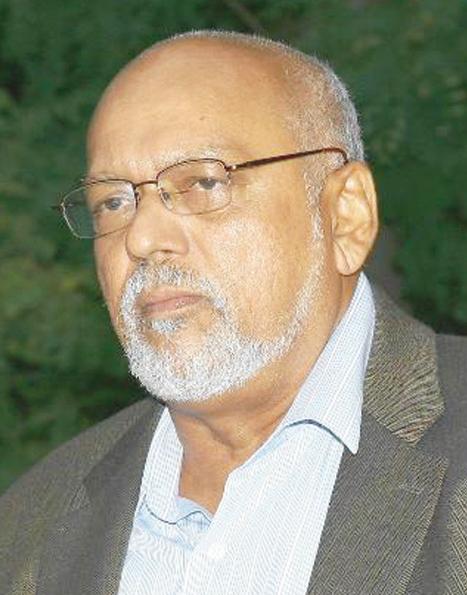
However, President Donald Ramotar said many of the challenges confronting the industry are beyond the control of the administration, pointing to the change of sugar prices and investments which have not been as successful as expected, such as the Skeldon Modernisation Project.
Ramotar recently reiterated calls for the resuscitation of the ailing sector, stating that consideration may be given to employing co-ops as a means of altering the fortunes of the sugar industry should the idea resonate well with stakeholders.
He said the sugar industry paved the way for the country’s development, pointing out that most of the exiting industries today have benefited from the successes of the sugar industry, whether through managerial skills, finances or other categories of work.
“Many of the top organisations have their beginnings in the sugar industry,” he said, underscoring that the industry still has a significant role to play in the development of Guyana.
In June, Agriculture
Minister Dr Leslie Ramsammy announced that the “the glory days” of sugar was not over and vowed that the corporation would see better days.
Dr Ramsammy said the industry had to be brought out of its deathbed in the 1980s, and government succeeded in bringing it back to life.
Essential to the country He mentioned that GuySuCo will continue to be a pillar in the development of the economy, since it is an industry that is “essential to the country” and “too important to fail”. The agriculture minister said that during 2012, GuySuCo’s production fell short when compared to previous years, recording a total production of 218,070 tonnes; a contraction of 7.8 per cent.
This was attributed to industrial relations disruptions, heavy rains and low yields during the first half of the year which severely impacted the performance of the sugar industry.
Dr Ramsammy had expressed optimism early in the year that the sugar industry was still in a position to reach its production target of between 250,000 and 265,000 tonnes.
Government representatives and officials attending the 16 meeting of the Monitoring Committee of the Caribbean Development and Cooperation Committee of the Economic Commission for Latin America and the Caribbean (ECLAC) last Thursday adopted a set of recommendations on priority issues identified by delegates who attended the Caribbean Forum on Population, Migration and Development, held in Guyana, July 9-10.
The range of proposals included actions to reduce poverty and inequality, promote and protect the rights of vulnerable groups, including older persons, adolescents and youth, and persons with disabilities. They also included suggestions for achieving gender equality, equity and empowerment of women; achieving universal access to sexual and reproductive health and rights; and for managing migration for
development to maximise the benefits and reduce the negative impacts.
The recommendations are contained in the outcome document of the meeting, entitled “The Road Map for Population, Migration and Development beyond 2014”.
Inputs
The purpose of the recommendations is to provide inputs from the Caribbean to the first session of the Regional Conference on Population and Development in Latin America and the Caribbean, to be held in Montevideo, Uruguay, in August and the UN High-Level Dialogue on International Migration and Development scheduled to take place in October.
Among the most farreaching recommendations were calls to provide persons with disabilities with easy access to buildings and public spaces, as well as social protection, and to ensure economic security and
access to social security for older persons.
In the area of gender equality, the recommendation was made for governments to promote the increase of women’s participation and leadership at all levels of decision- making, in both the public and private sectors; outlaw child marriage; and strengthen legislation for the protection of women, girls and boys against sexual violence.
In migration, the recom-
mendation was to ensure the human rights of migrants. A proposal was also made for harmonisation of the implementation of the Caricom Single Market and Economy (CSME), and establishment of a Caribbean forum on migration and development.
Highest priority
To achieve universal access to sexual and reproductive health and rights, the delegates recommended that governments give the highest priority to the prevention of unwanted pregnancies through improving access to information, technologies, commodities and services.
They also recommended that governments collect, disaggregate, analyse, disseminate and translate data into strategic information to inform sexual and reproductive health policy formulation at all levels. The delegates strongly recommended that the achievement of sexual and repro-
ductive health and rights be considered as a priority in the elaboration of the post2015 development agenda.
The Road Map builds on the findings from an extensive survey on the ICPD progress and challenges carried out among Caribbean countries and contained in the report on the review of the implementation of the Cairo Programme of Action in the Caribbean sub-region. The report, which was prepared by ECLAC was launched at the meeting.
UNFPA Latin America and the Caribbean, Deputy Regional Director Esteban Caballero in an address to the Monitoring Committee, reiterated the call for universal access to sexual and reproductive health services with special emphasis on people at risk of exclusion and poverty.
“Clearly, women do experience further deterioration in their health due to the inability to access and afford care in reproductive health, maternal health and, par-
ticularly, obstetric care. Efforts should be intensified to secure funding and ensure access to quality basic sexual and reproductive health services, and ensure the full exercise of sexual and reproductive rights,” he declared.
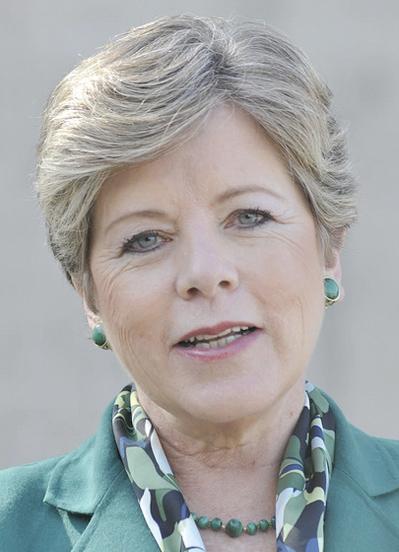
ECLAC Executive Secretary Alicia Bárcena noted that the middle income classification of Caribbean countries, excluding Haiti, does not take account of the high levels of inequality, and economic, social and environmental vulnerabilities of these states.
Given this fact, it was critical she said, for the specificities of the Caribbean to be reflected in the final outcome document for the ICPD beyond 2014 and the post-2015 development agenda. The meeting was organised by ECLAC, Caricom and the government of Guyana with support from the UNFPA.
The property evaluation process in the mining town which commenced last Thursday is expected to run for approximately 35 days.
Linden Town Clerk Jenella Bowen said the municipality is encouraging residents to come on board as valuators along with representatives from the Local Government Ministry and the Linden Mayor and Town Council (LM&TC) are currently in the process of visiting homes in areas such as Block 22, Amelia’s Ward and Wisroc to conduct measurement to lands and homes.
Payment of taxes
Bowen said the exercise is aimed at ensuring that property owners pay the appropriate taxes. “With the new law being instituted from July 1 as it relates to minimum wage, the Mayor and Town Council is doing its best to step up. It is definitely not going to be easy for us, but we have to work and put systems in place, implement strategies that
we have been working on for months... one of the things that we have focused a lot on within the past couple of months is valuation of properties.
“Let us note at this point that based on my understanding and also history, what I was told, is that the last valuation which was done in Linden that worked would have been since 1976. Since that time, there may have been valuation, but the documentation and computation is still incomplete, so we are working with what we had in 1976,” she explained.
Bowen further noted that such properties would include those in areas such as Christianburg at Wismar, which owners pay as low as $200 per year in rates and taxes, which when calculated monthly would amount to the low sum of approximately $17.
“Now it is definitely difficult for us to provide services such as garbage disposal, even to the extent of patching a few roads with $17 per
month and to top it all off, there are even persons who have even refused to pay the $200 per year.
“So we are in a situation where definitely our income is not enough to provide the necessary services which we are mandated to perform at this point. We were more than happy after negotiating and having conversations and communication for months that our valuation process started on July 4.
Increased income
"At this time, we are moving at a pace and hoping that we can have more properties valuated which would increase our income and therefore increase our expenditure per month, per year, thereby we’ll be able to provide better services to the community," Bowen said.
She noted that while the process may also include properties which had been valuated before, it is not limited to those, and may also include new housing schemes within the commu-
nity.
Bowen said that there are some properties that may be revaluated because extensions were made or there may also be other unique circumstances which may cause it to be revaluated.
The amount of rates and taxes being paid afterwards, she further explained, will be determined according to the measurement of the land and property which was valuated.
“That is determined by the dimension. After the measurement is computed by a formula by the valuation officers, that is, how we end up with the rates and taxes per property.”
Linden Mayor and Town Council Treasurer Marlon Pearson had recently indicated that the re-evaluation process was necessary since there has been rapid housing expansion over the years in the community and these areas, he said, were not covered in terms of community services provided by the LM&TC.
Guyana Securities Council Company
Secretary Shaun Allicock said the organisation welcomes new market participants and will work diligently to grow the local securities industry.
Speaking at the recent investment conference, Allicock noted that the mission of the council is to ensure the orderly growth and development of the securities market with a dynamic regulatory framework, which facilitates mobilisation of capital in national interest and in a transparent, efficient, fair and competitive manner.
He said the company, which is an independent, autonomous body, is also committed to promoting integrity, stability, orderliness and confidence in the local securities market. However, Allicock pointed out that the company can benefit from and encourage greater foreign direct investments if there is increased information, strong regulators and expeditious courts and good governance.
The Guyana Securities Council is a statutory body created by the Securities Industry Act 1998 and brought into existence by Ministerial Order, Number Five of 2000 by the finance minister with effect from December, 16, 2000. The council commenced its activities on September 24, 2001. Among the principal functions of the council, under section five of the Securities Industry Act 1998, is advising the finance minister on
all matters relating to securities.
Allicock explained that the council is also responsible for maintaining surveillance over the securities market and ensuring orderly, fair and equitable dealings in securities.
According to Allicock, the council is imbued with the tasks of registering, authorising or regulating several agencies in accordance with the Securities Industry Act 1998.
Some of the agencies for which the council has regulatory powers are self-regulatory organisations, securities companies, securities intermediaries, brokers, dealers, traders, underwriters, issuers and investment advisers.
Allicock stated that the council controls and supervises the activities of these agencies with a view to maintaining proper standards of conduct and professionalism in the securities business.
The Guyana Association of Security Companies and Intermediaries (GASCI) which is registered with the council, administers the Guyana Stock Exchange. The council is, therefore, tasks with protecting the integrity of the securities market against abuse arising from the practice of insider trading, creating and promoting such conditions in the securities market as it may seem necessary, advisable or appropriate to ensure the orderly growth and development of the capital
market.
The council is also mandated to advise the finance minister on all matters relating to securities and maintaining surveillance over the securities market to ensure orderly, fair and equitable dealings in securities. “The council was set up to register, authorise or regulate, in accordance with the Securities Industry Act, selfregulatory organisations, securities companies, brokers, dealers, traders, underwriters, issuers and investment advisers.”
Among the current reporting issuers listed with the council are Trinidad Cement Limited, Banks DIH Ltd, Caribbean Container Inc, Citizens Bank Guyana Inc, City Jewellers and Pawnbrokers Limited, Demerara Bank Limited, Demerara Tobacco Company Limited, Guyana Bank for Trade and Industry Limited, Guyana Stockfeeds Inc, Guyana Stores Limited, Humphrey and Company Limited, JP Santos and Company Limited, National Engineering Company, Property Holdings Inc, Republic Bank (Guyana) Limited, Rupununi Development Company Limited, and Sterling Products Limited.
Allicock said the registered brokers are Trust Company (Guyana) Limited, Hand-in-Hand Trust Company Limited, Guyana Americas Merchant Bank, Beharry Stockbrokers Limited, dealers, investment advisers, underwriters and the Guyana Americas
monday, july 15, 2013 |

The man who is accused of killing his father-inlaw during an argument in 2009 is likely to know his fate today, when the trial judge is expected to sum up the evidence in the matter and the jury deliberate on a verdict.
Murder accused Marlon Ganesh, 32, of Lot 23 A Field, Sophia, was indicted with the murder of his father-in-law Roopnarine “Kumar” Singh on January 16, 2009.
The trial began on June 6 after a 12-member mixed jury panel was selected the day before. State Counsel Renita Singh, prosecuting the case, presented seven witnesses, including the wife of the accused and daughter of the deceased, Babloo Singh. The woman had testified about seeing her former husband stabbing her father.
Merchant Bank. The operation of the council entails registration of market participants and issuers, market surveillance and enforcement of the legal framework.
Following her testimony on Tuesday last, the prosecutor closed her case. Attorney Hukumchand Parag, who is representing Ganesh, then made a no-case submission in the absence of the jury. Presiding judge, Justice Dawn
Gregory-Barnes then threw out the no-case submission on Wednesday, after which the accused was called upon to lead his defence.
The accused said on the day, he and his father-in-law were drinking when he and his wife had a misunderstanding and her father put him out. He continued that while he was in the room packing his bag, someone attacked him from behind and chopped him on his left shoulder.
Ganesh said he jumped when he felt the chop and then he was stabbed to his lower back. The accused then alleged that his former wife told a lot of lies during her testimony in court. He showed the court two scars on his body, stating that they were from when he was attacked by his father-inlaw. One scar was on the man’s upper left back just under the shoulder and the other was on the right side of his lower back.
After the accused give his statement, his attorney then closed the defence’s case and proceeded to make his closing arguments to the jury. The prosecutors’ final arguments were done on the following day. The prosecution’s case is that while Ganesh was packing his belongings, Singh asked him to hurry up and leave because he wanted to go sleep. This caused the accused to become annoyed and he chucked his father-in-law, before picking up a knife from nearby and stabbing him to his chest.
The injured man was rushed to a medical institution where he was admitted and treated; however he succumbed to his injuries about two weeks later.


AATT Chairman Gerald Hadeed
Seventeen months after the Airports Authority of TT (AATT) came up with a plan to correct security deficiencies at the Piarco International Airport,
measures have not been put in place to minimise risks to passengers and employees. The confirmation came from AATT’s chairman Gerald Hadeed who is on sick leave.
On Thursday, Hadeed admitted that most of the matters highlighted in the airport’s update of corrective action plan (security audit) dated February 17-20, 2012 were not addressed. “Nothing was done,” Hadeed said. He added that security matters at the airport were worrisome.
“It is a worrying concern, not only to me, it should be a worrying concern to the government, because the security at the airport is as lax as you could ever want it to be. It is something the government should take cognisance of and correct it, whether I am there or not,” he declared.
The 22-page plan was devised by a security committee, comprising management of AATT and its security department.
Contrary to what some Barbadians may believe, the Barbados Poppy League, which raises funds for soldiers who served in World War II, is still very relevant today.
That is according to the Deputy Chairman of The Barbados Legion, Commander Wilbert Kirton. Commander Kirton told those attending the Legion’s anniversary service at the St Mathias Anglican Church Sunday morning, that though 14 of them passed away between the last anniversary service and now, several of those soldiers are still alive and the money raised assists in their upkeep.
“Considering that the Psalmist declares in Psalm 90, verse 10 – ‘The days of our years are threescore years and ten; and if by reason of strength they maybe fourscore’ – I wish to announce this morning that a

significant number of legionaries from the war have not only reached the fourscore years, but are living well beyond that age and heading towards five score years,” Kirton said.
The commander told the congregation that included Acting Governor General, Sir Philip Greaves; Minister of State in the Prime Minister’s Office, Senator Patrick Todd; and Justice Sherman Moore,
that the Poppy League, established in 1922, has since its inception been a main pillar of support for the Barbados Legion.
With that in mind, he said that the funds the donated by the Poppy League from the sale of poppies annually, provides a monthly welfare grant to 38 persons including legionnaires and widows of legionnaires. (Excerpt from Barbados Advocate)
A&B’s trade dispute negotiations will not prompt U.S. reprisal
The people of Antigua and Barbuda need not fear retaliation from the United States, as negotiations in the decade-long World Trade Organisation (WTO) trade dispute ramp up.
This is according to Dr McChesney Emanuel, chairman of the nation’s WTO Gaming Case Team – the entity formed last fall to spearhead Antigua and Barbuda’s efforts to bring the trade dispute to an equitable conclusion.
“This trade dispute does not have anything to do with our relationship with the United States being tarnished or impacted in anyway,” the chairman assured on the Observer AM recently.
Dr Emanuel, who is also chairman of the Antigua and Barbuda Investment Authority (ABIA), added, “We are very close to the United States … we still have an excellent relationship with the U.S. This is a trade dispute, it is normal and they occur.”
The WTO routinely re-
views international trade disputes. Since its inception in 1995, members have initiated more than 400 trade disputes with 90 per cent of responding countries having complied with the body’s rulings. However, in Antigua and Barbuda’s case, the WTO concluded the U.S. was in violation of WTO rulings and recommendations – remaining so, despite the organisation having ruled in the twin-island nation’s favour on two separate occasions. (Excerpt from Antigua Observer)
A copy of the plan was leaked to the Sunday Guardian. The plan findings showed there were deficiencies in several areas, among them administrative and organisation, aviation security training, access control, passenger and cabin baggage, hold baggage, quality control and management to acts of unlawful interference.
Under the headline “findings” it revealed, among other things:
• No formal process for the examination and certification of security personnel assigned to conduct screening of passengers and cabin baggage including on-the-job assessment.
• Training records for security personnel not accurately maintained and up-to-date. (Excerpt from Trinidad Guardian)
Acow has fallen through the roof of a house in south-eastern Brazil killing a man and narrowly missing his wife.
The one-tonne cow was grazing on a hill behind the small house, in the town of Caratinga, when it stepped onto the asbestos roof, which collapsed under its weight.
Joao Maria de Souza, 45, was lying in bed when the animal fell on him.
He was taken to hospital and died the day after, reportedly of internal bleeding.
Souza was conscious and appeared to be in a good condition, but he had to wait too long to be seen by a doctor, relatives said.
Local media says this is the third such incident in the region in the past three years. There were no casualties in the two previous incidents.
In the first occasion, there was no one inside the house when the cow fell through the roof.
In the second incident, a baby and a small child were sleeping next to the spot where the animal fell, in what was described at time as a miraculous escape.
Caratinga is in a hilly area of Minas Gerais, a Brazilian state traditionally known as a cattle raising and dairy producing region.
(Excerpt from BBC News)
Guatemalan security forces have arrested four men accused of storming a remote police station a month ago and killing eight officers.
Two of the men arrested are policemen. The accused are suspected of belonging to a local criminal organisation involved in drug trafficking.
More than 100 troops and policemen are taking part in an operation near the Mexican border to make further arrests, a Guatemalan government spokesperson told the Efe news agency.
At least another 10 people are being sought over their possible involvement in the June 13 attack in the municipality of Salcaja, prosecutors said.
The two policemen arrested are Milson Fredy Garcia Chavez and Emerson Villatoro Cano. The other suspects are Delmar Dagoberto Calderon Villatoro, known as Gringo, and Bacilio Quib

Pacay, known as Bazooka. Nine police officers were on night duty at the police station in north-western Guatemala when heavily armed men entered the building and shot at them at least 40 times, investigators said.
The police station is located near the Pan-American highway, in Quetzaltenango department.
Eight policemen were killed on the spot. Their com-
mander was taken away by the gang and is presumed dead. The massacre had a big impact in Guatemala and angered the authorities, who have vowed to identify and arrest all the culprits.
The Central American nation is being increasing used as a transit route for cocaine produced in Colombia and smuggled into Mexico and the United States. (Excerpt from BBC News)
The Caribbean Climate Online Risk and Adaptation Tool (CCORAL) was launched in St Lucia on Friday with regional countries hoping it will become another initiative that will result in meaningful progress in the battle to combat climate change.
The new initiative will promote climate smart development by helping to embed a risk management ethic in decision-making processes and is a seminal online support tool in keeping with the thrust to promote a culture of risk man-
agement across the region.
The CCORAL has been developed by the Belize-based Caribbean Community Climate Change Centre (CCCCC), with funding from the United Kingdom Department for International Development (DFID) and the Climate Development and Knowledge Network (CDKN).
St Lucia’s Public Service Sustainable Development, Energy Science and Technology Minister, Dr James Fletcher, said the launch was taking place as the region deals with the
2013 tropical Atlantic hurricane season which, according to scientific predictions, will see above-normal hurricane activity.
“Indeed, we are convened here a mere three days after the passage of Tropical Storm Chantal which, thankfully, caused relatively little damage and no loss of life,” he told the delegates from various donor agencies, as well as regional and international organisations, adding that hurricanes pose a regular and real threat to the region. (Excerpt from CMC )

U.S. President Barack Obama called for calm on Sunday after the acquittal of George Zimmerman in the shooting death of black teenager Trayvon Martin, as hundreds of civil rights demonstrators turned out at rallies to condemn racial profiling.
Zimmerman, cleared late Saturday by a Florida jury of six women in the
shooting death of the unarmed Martin, still faces public outrage, a possible civil suit, and demands for a federal investigation.
In Washington, the U.S. Justice Department said it was evaluating whether it has enough evidence to support prosecution of Zimmerman in federal court after his acquittal in Florida. Civil rights activists have been
pressuring the Obama administration to bring civil rights charges in federal court.
Critics contend Zimmerman wrongly suspected 17-year-old Martin of being a criminal because he was black, making it a civil rights issue. At a rally in New York’s Union Square, more than 200 protesters turned out Sunday, chanting “No justice, no peace.” Some held signs calling for “Justice for Trayvon, Jail for Zimmerman.”
Similar rallies were held or expected to start later in other cities including Boston, San Francisco, San Diego, and Sacramento.
Obama, who once said, “If I had a son, he’d look like Trayvon,” called for a peaceful response to a case that polarised the U.S. public from the beginning, raising issues of racial profiling and gun control.
“We are a nation of laws and a jury has spoken,” the first black U.S. president said in a statement. “I now ask every American to respect the call for calm reflection from two parents who lost their young son.”
(Excerpt from Reuters)
Israeli Prime Minister Benjamin Netanyahu on Sunday telephoned Palestinian President Mahmoud Abbas and said he hoped the two sides could resume peace talks, stalled for three years, Israeli officials said.
Netanyahu offered greetings for the Muslim holy month of Ramadan, his office said, adding that he told Abbas: “I hope we will have the opportunity to speak with one another not only during festivals, and will start negotiating. It’s important.”
Israel’s
Direct talks broke down in 2010 over Israel’s settlement of the occupied West Bank, which Palestinians want as part of their future state. U.S. Secretary of State John Kerry has in recent months mounted shuttle visits in the hope of reviving negotiations.
“I hope Secretary of State Kerry’s efforts will show results,” Netanyahu said, according to the Israeli statement.
Meanwhile, he urged the United States to make clear to Iran that it will not allow
the country to build a nuclear weapon, and that military force “is truly on the table.”
“We’ve spoken many times, President Obama and I, about the need to prevent Iran from getting nuclear weapons,” Netanyahu said.
“What is important is to convey to them –- especially after the election – (is) that (the) policy will not change,” he said.
“If sanctions don’t work, they have to know that you’ll be prepared to take military action – that’s the only thing that will get their attention,” he added.
Iran for years has been at loggerheads with world powers over its nuclear drive, which Western nations believe is aimed at developing an atomic weapon capability. (Reuters)
Police in Bangladesh have clashed with supporters of the country’s Jamaat-e-Islami party ahead of the verdict in the trial of an Islamist leader charged with war crimes.
Ghulam Azam, 91, is accused of orchestrating atrocities during the country’s 1971 war of independence.
Prosecutors are seeking the death penalty. His supporters say the charges are politically motivated. Previous verdicts against Islamist leaders have led to violent protests.
This would be the fifth sentence passed on current and former leaders of Jamaate-Islami, the country’s the main Islamist party, by a controversial special tribunal.
The International Crimes Tribunal in Bangladesh was set up by the current Awami League-led government in 2010 to try alleged collaborators of the Pakistani army during Bangladesh’s war of independence.
Three million people are believed to have died in the conflict. Prosecutors say Azam should receive the death penalty for his role in setting up violent militia groups that killed and raped thousands of people.
He is accused of planning, conspiracy, incitement, complicity and murder in more than 60 counts of crimes against humanity.
But his defence lawyers say the charges are based only on newspaper reports of Azam’s speeches at the time, and none have been proved.
Jamaat has called for a general strike in protest. Azam was the party’s leader from 1969 until 2000 and is seen by many as its spiritual leader.
Described by his party colleagues as a writer and Islamic thinker, Azan strongly opposed Bangladesh’s independence from Pakistan, arguing at the time that it would divide the Muslim community. (Excerpt from BBC News)
Egypt’s interim prime minister filled senior posts on Sunday in a Cabinet that will lead the country under an armybacked “road map” to restore civilian rule following the overthrow of elected President Mohamed Morsi.
Hazem el-Beblawi, a 76-year-old liberal economist appointed interim prime minister last week, is tapping technocrats and liberals for an administration to govern under a temporary constitution until parliamentary elections in about six months.
He named another liberal economist, Ahmed Galal, who has a doctorate from Boston University, as finance minister. His job will be to start repairing the state finances and rescue an economy wrecked by two and a half years of political turmoil.
A former ambassador

to the United States, Nabil Fahmy, accepted the post of foreign minister, a sign of the importance the government places in its relationship with the superpower that provides US$1.3 billion a year in military aid.
Mohamed ElBaradei, a former senior United Nations diplomat, was sworn in as vice president, a job he was offered last week.
Government officials had earlier said the finance
job would be offered to Hani Kadry, an official who oversaw Cairo’s loan negotiations with the International Monetary Fund. It was not immediately clear why Kadry did not end up in the job.
Sunday marks a week without serious street violence. In the days after Morsi’s fall, clashes between the army, his Islamist supporters and Morsi’s opponents killed more than 90 people. (Excerpt from Reuters)
Democratic Republic of Congo’s army clashed with fighters from the M23 rebel group close to the eastern city of Goma on Sunday, in what appeared to be the most serious combat for several weeks.
In a statement, M23 said the fighting started at 14:00h local time (1200 GMT) when the army attacked its positions in the town of Mutaho, some seven kilometres (four miles) from Goma, a city of a million inhabitants.
The rebel group, which sparked international outcry when it seized Goma in November, said its troops
were responding firmly.
“Kinshasa’s army has just launched a largescale attack on M23’s positions at Mutaho,” Vianney Kazarama, an M23 spokesman, told Reuters.
Colonel Olivier Hamuli, an army spokesman, said the rebels had attacked government forces.
“The initiative for the fighting came from M23. It was them who attacked us at Mutaho,” he said by telephone from Goma.
The M23 has accused the army and pro-government militia of trying to goad its troops into combat for several weeks.
The fighting comes as the deployment is underway of a new 3000-strong United Nations Intervention Brigade with a tough mandate to take the fight to armed groups in eastern Congo.
The force – which will be made up of troops from South Africa, Tanzania, and Malawi – has begun patrolling and is approaching full strength.
UN peacekeeping chief Herve Ladsous told Reuters on Sunday the 17,000-strong UN force in Congo would begin using unarmed drones on a trial basis to monitor the war-torn region. (Excerpt from Reuters)
Astring of bomb blasts in predominantly Shi’ite Muslim provinces of Iraq killed at least 24 people on Sunday, police and medics said.
The violence is part of a sustained campaign of militant attacks this year that has prompted fears of wider conflict in a country where ethnic Kurds, and Shi’ite and Sunni Muslims have yet to find a stable power-sharing compromise.
A suicide bomber killed at least four people in a Shi’ite mosque in the town of Mussayab, and in Kut
city, a car bomb went off in a busy market, killing five, police and medics said.
Three bombs exploded in quick succession near the headquarters of a Shi’ite political party in the southern oil hub of Basra, 420 kilometres (260 miles) southeast of Baghdad, killing at least eight people, police said.
“When the first explosion happened, I ran to evacuate the victims. I saw two or three burned bodies before police asked me to step back,” said a man who gave his name only as Alaa. “When police forced
me to move away, the second explosion happened.”
Two car bombs went off in a market in Nassiriya, 300km (185 miles) southeast of Baghdad, killing two people. Another car bomb killed four at a busy market in the Shi’ite shrine city of Kerbala, 80km (50 miles) southwest of Baghdad, police said. It was not clear who was behind Sunday’s explosions, but Sunni Islamist insurgents, including the al Qaeda-affiliated Islamic State of Iraq, have been regaining strength in recent months, security sources say. (Excerpt from Reuters)
TT and the rest of Caricom must become globally competitive or perish. This is the advice ANSA McAL Group Chief Operating Officer Gerry Brooks gave if TT is to survive in a competitive world where everything is uncertain.
“What is clear is that Caricom must be re-engineered completely. While there has been some success in Caricom at the functional cooperation level, the current construct of Caricom is too
slow in terms of policy formulation, decision-making and execution. It is not a condemnation of Caricom, but a constructive call for us to rethink, refashion and reengineer the Caricom model,” Brooks said.
Brooks was speaking last Monday at a seminar on Competitiveness and Sustainable Development, hosted by the TT American Chamber of Commerce (AmCham T&T) at the Hilton Hotel and Conference Centre, St Ann’s.
From July 3-5, TT hosted the 34th regular meeting of the conference of heads of government of the Caricom where Caribbean leaders also celebrated Caricom’s 40th anniversary.
“Remittance income, tourism and financial services do not provide adequate horsepower to sustain vulnerable, small states historically reliant on aid, grant money and concessionary agricultural terms,” Brooks said. (Trinidad Guardian)
Airlines expressed confidence in the safety of Boeing’s 787 Dreamliner on Sunday as investigators searched for the cause of a fire on one of the advanced jets and billions were wiped off the company’s market value. British officials said initial checks into what they called a serious incident appeared to rule out any link to the battery-related problems that grounded the Dreamliner fleet for three months earlier this year.
The fire on the Ethiopian Airlines plane at Heathrow Airport in London and a separate technical problem on a second 787 owned by Britain’s Thomson Airways on Friday raised new questions about an aircraft seen as crucial to Boeing’s future. The incidents were a setback for a company trying to rebuild confidence in its flagship jet and compete with Airbus in the booming market for more fuel-efficient long-distance planes.
Britain’s Tui Travel, which owns six European airlines including Thomson Airways, said its plane turned back during a flight from England to Florida and had a small number of unspecified components replaced. The parts were unrelated to the battery, it said.
No one was injured in the fire on the empty Ethiopian Airlines plane, which was parked at Heathrow. However, it closed Britain’s busiest airport for 90 minutes. (Reuters)
Business Secretary
Vince Cable is to propose making the people who ran failed companies personally liable for the firm’s debts as part of an overhaul of company rules.
He will add that directors deemed to be reckless should be disqualified from being able to work at another firm.
Cable also wants to allow individual regulators to disqualify directors in their particular industries. His pro-
posals follow concerns over the toughness of corporate oversight. A series of banking scandals, such as Libor and the mis-selling of PPI, as well as huge state bailouts in the wake of the financial crisis, have dented public confidence.
The business secretary is to announce the proposals in a speech at the London Stock Exchange at an event on “Responsible Capitalism”. A discussion paper on the pro-
posals will be published this week.
Following the Parliamentary Commission on Banking Standards’ recommendation that directors of banks should have a “primary responsibility” to ensure the safety and stability of their firms, the Department for Business, Innovation and Skills wants to consult on amending the statutory duties of directors in key sectors such as banking. (BBC News)
London-listed multinational Tullow Oil which has been exploring for oil in Kenya has announced the discovery of another oil well further raising the prospects of Kenya in joining the league of oil producers.
The company in a statement said the find is located at Etuko-1 well in the expansive Turkana County of northern Kenya.
This is the same county that hosts Ngamia and Twiga
South, which have previously been found to hold oil that meets commercial viability standards.
According to the statement announcing the new find, Tullow expects a flow rate potential of 5000 barrels a day based on Ngamia-1 and Twiga-South-1, and estimates there are 250 million barrels of oil in place. The company said this forecast could only increase given the indications in the other blocks currently
being explored.
The company, which has been focusing most of its efforts on eastern Africa, has previously had a good run in Uganda and drilling plans are underway.
The recent discovery put East Africa in a pole position to start producing and exporting oil in what will be a major reprieve to a region that has seen the price of the commodity spiral to unimaginable levels. (allAfrica)
China’s Gross Domestic Product (GDP) growth is expected to have slowed down in the second quarter as weak overseas demand weighs on output and investment, providing a test for Beijing’s resolve to revamp the world’s second-biggest economy in the face of deteriorating data.
Second-quarter GDP figures are due to be published today along with other indicators, including industrial out-
put and retail sales for June.
A Reuters poll of forecasts by economists projected China’s economy grew 7.5 per cent in the April-June quarter from a year earlier, slowing from 7.7 per cent in JanuaryMarch. However, trade figures last week showing an unexpected fall in exports for the first time in 17 months raised market concerns GDP could be weaker than expected.
New Premier Li Keqiang has been prominent in push-
ing for economic reform over fast-line growth, suggesting the government is in no rush to offer fresh stimulus to revive an economy in a protracted slowdown. Before today’s figures, growth had already slowed in eight of the last nine quarters.
“I’m sticking to our forecast of 7.5 per cent Q2 growth, but there is rising downside risk,” said Zhiwei Zhang, chief China economist with Nomura in Hong Kong. (Reuters)
The authority overseeing Jumeirah Lakes Towers (JLT) says it is reviewing the technology used to keep the community’s remaining three manmade lakes clean in a bid to improve the quality of the water.
Dubai Multi Commodities Centre Authority (DMCC) announced the study days after executive chairman Ahmed Bin Sulayem said he wanted to fill in the lakes and replace them with other amenities such as a park or mini
gold souk.
The lakes are often green and are known to be difficult to keep clean because they are a stagnant pool of water with no bacteria or marine life to contribute to their maintenance.
“Most of the time they are dirty and smell bad despite being cleaned daily,” a reader named Jonas, who claimed to live in JLT, wrote on ArabianBusiness.com in response to Bin Sulayem’s comments published on Thursday.
DMCC property director Matt Lomax said the authority was working on improving the quality of the lakes.
“At DMCC we continuously look at ways [of] enhancing the environment for the 65,000 people currently working and living in Jumeirah Lakes Towers,” Lomax said.
“One such initiative is to ensure that the water quality of the lakes are [sic] managed in the most efficient, environmentally friendly and sustainable way.” (Arabianbusiness)
As earnings take over, fundamentals to be tested
This week marks the first big week of secondquarter earnings, and it is sure to bring both joy and misery to Wall Street.
Investors will concentrate on market fundamentals after weeks when Federal Reserve policies have dominated the market. If they see companies are still struggling, stocks could take a fall.
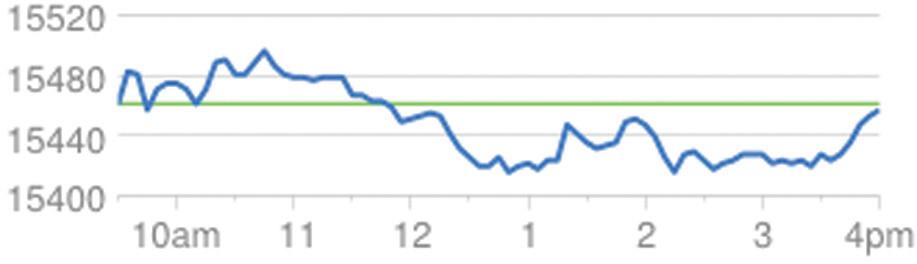
Even after Fed Chairman Dr Ben Bernanke scared markets in June by telling investors the Fed is likely to reduce monetary stimulus in coming months, stocks have recovered, with both the Dow and S&P 500 climbing to all-time highs. In an appearance earlier this week, the Fed chairman said monetary policy was likely to be accommodative for
some time.
“We’re in the terminal stages of a Bernankedriven bubble,” said Walter Zimmerman, technical analyst at United-ICAP in Jersey City, New Jersey. “While a lot of damage has been done to the bear case, eventually bad news like weak earnings growth will start to bear fruit.”
To be sure, the Fed, which has shown a much friendlier face to investors lately, will not be out of the picture. Bernanke will appear before congressional committees on Wednesday and Thursday to deliver the semi-annual testimony about monetary policy. However, few surprises are expected.
The S&P’s 17.8 per cent
advance in 2013 is largely attributable to the central bank’s accommodative policies. The major indexes made impressive gains in the week: the Dow .DJI up 2.1 per cent, the S&P .SPX three per cent higher and the Nasdaq .IXIC up 3.5 per cent. It was the third straight week of gains for all three, and the best week for the S&P and Nasdaq since early January.
"The Fed has been able to prevent a big selloff so far, but eventually the economy will have to catch up to the market or the market will fall back to match the economy," said Scott Armiger, who helps oversee US$5.6 billion as portfolio manager at Christiana Trust in Greenville, Delaware. (Reuters)
The Mercy Wings Vocational Centre is making significant strides in transforming the educational landscape and leading vulnerable youths away from a life of crime.
The centre graduated 31 students from its technical vocational programmes on Thursday evening during a gala ceremony and prom.
The students were issued with trophies and certificates of achievement. Programme Coordinator Paula Bess told Guyana Times that the centre is the brainchild of Sister Julie Matthews of the Sisters of Mercy and was started in 2000 after a feasibility study was conducted.
“That study determined that there was a need for such a centre with large number of out-of-school youths and children who were unable to complete high school.”
Need
Bess revealed that the St Joseph Mercy Hospital had previously operated a mobile clinic in the Sophia area when the need was recognised. According to her, the programme targets teenagers ages 15 to 19, who have not been able to benefit fully from a formal academic education.
Bess disclosed that the objective is to ensure that such children do not become victims of the system, but are molded into marketable and productive citizens. The programme employs a teaching method which originated in Trinidad that targets the spiritual, physical, social, emo-

tional and intellectual needs of the person.
She explained that the skills training programme is divided into two components: general construction and home management. The construction programmes including plumbing, masonry and carpentry while the home management courses cover catering, childcare and care for elderly.
The students are also exposed to numeracy and literacy as well as adolescent development programmes and parenting, Bess said. She noted that the youths are taught self-development through self-awareness and spirituality. “Apart from that, they are engaged in physical education and health lectures. In September, the centre will introduce two new skill areas; cosmetology and welding,” Bess detailed.
Prior to their admission, an initial assessment is conducted with students to determine their level of literacy. There is also an interview
with parents to fully understand the need.
The programmes were initially targeted to cater for the deficiencies in education of youths in the Sophia area and its immediate environs.
However, interested individuals from as far as West Bank Demerara, Timehri and Nabaclis have been enrolled. “We are there for everyone regardless of where they are from. We have received a lot of application from younger children to join the programme and we have not refused anyone,” Bess mentioned.
However, Bess lamented that the dropout rate is high with an annual enrollment of 55 students and 31 graduating at the end of the course. She explained that some of the main reasons for the dropout rate are the frequency of students being forced to seek jobs to complement the income of single-parented homes as well as the dependence of parents on older siblings to undertake the role of caregivers to younger sib-
lings.
At the conclusion of the course, students are allowed a period to reflect on their progress and how the programme has impacted them in various ways. “They learn to read, they are able to examine their behaviour and introspect on how they can eventually impact on the community,” Bess said.
One of the major factors affecting the operation of the centre is the lack of adequate financial resources. She revealed that since students are only charged a meagre fee, the school exists on donations and subsist on contributions from the Sisters of Mercy.
Supporters
“We have had commitments from organisations such as the Guyana Christian Charity, Digicel, Food for the Poor, John Fernandes, I-Mex and Eldorado Trading.
The centre also runs a feeding programme which also attracts generous supporters, including from board of director chairman, David DeGroot.
A crucial need also exists in the area of human resources and the centre is petitioning for more volunteers who can administer any of the skills training programmes being conducted. The next batch of students will begin classes from September and the course runs until next June. “We have received application forms and the initial test of math and English will be conducted on July 16,” Bess stated.
As part of a joint humanitarian and skills training assistance programme organised by For The Children Sake Foundation (FTCSF) and the Church of Jesus Christ of Latter Day Saints, seven more women from Linden are now equipped with sewing skills.
At a recently held certification programme, the women graduated under the third and final phase of the project. Among those who graduated were Rebbie McCalmon, Antonella Bowman, Sonia Warren Mckenzie, Shondell A Jerrick, Tracy Duggan, Judy Dougan and Stacy Hollingsworth. In attendance at the graduation exercise which was conducted at the FTCSF office located at One Mile, Wismar were FTCSF Executive Director Vernon Todd, Church of Jesus Christ of Latter Day Saints Linden branch President Troy Fullington and social worker Leslyn Boyce.
Todd, in his address to the gathering, shared a brief history on the project. He noted that the project came on stream as a result of concern over some children in the community not attend-

ing school because they do not have clothing or their parents cannot afford to purchase school items. As such, he related that the skills training assistance programme was created and participants were provided with equipment such as sewing machines, electric irons and cloth. Todd said the initiative was quite a successful collaboration since it aimed
at creating jobs for single parents.
“Thus, 45 electric sewing machines were provided and also 45 electric irons and sewing kits to 45 participants with electricity and five manual sewing machines for those without electricity and sewing kits. Today is a special day since this is the first batch of ladies to sew dresses which comple-
“Amerindian Act provides solutions to your concerns” – Minister Sukhai tells Region Nine residents

Indigenous leaders from Region Nine were urged by Amerindian Affairs Minister Pauline Sukhai to fully utilise the measures and procedures outlined in the Amerindian Act to address concerns about various issues they may have.
On Friday, she joined Natural Resources and Environment Robert Persaud and officials of the ministry’s sub-agencies at a workshop to address moving their communities forward along the path of sustainable development, especially as it relates to mining and natural resources.
“There is a full list of procedures that need to be followed by the GGMC [Guyana Geology and Mines Commission] and the Village Council also,” Minister Sukhai said at the close of the workshop at the St Ignatius benab.
Key role
She urged the community leaders to remember that their respective village council has a key role to play in dealing with various issues and challenges that may arise.
“The village council has a function to ensure that land and resources therein are sustainably used and that there is a mechanism developed for the protection and conservation of those resources.”
ment the original purpose of the programme,” he noted.
Todd also charged the women to enrol in the government single parent programme and to utilise the skills that they have acquired wisely. Boyce encouraged the participants to continue striving for higher heights while she commended the two organisations and stressed the need for them to continue working to eradicate poverty in Guyana.
Meanwhile, a recently held debate and prepared speech competition organised by the Culture, Youth and Sport Ministry and the FTCSF saw youths from various social clubs around Linden participating. The topics that the participants were given to choose from included drugs and alcohol abuse and violence against children, Human Immune Deficiency Virus (HIV) and its effects on the community, corporal punishment, among others. Tiffany Fraser of Bayroc Acheivers copped the first place, Niosy Alsopp of the Young Achievers the second position while Roylin Jacobs of Marcy’s Institution secured the third spot.
She noted that within the Amerindian Act, there are many guides and tools to deal with some of the concerns raised during the workshop’s interactive session. She said that if stakeholders stay true to the act which serves as a guide with respect to land use, resources and governance issues, many of their fears would be abated.
One of the issues raised was that of the extension of the boundaries of several hinterland communities, but she reminded them that these requests were not automatically granted. “It depends strongly on the application, strongly on the justification and when an application is made, that extension has to be investigated and validated.” A main factor during this process is the condition of occupation, she added.
Focusing on the application by the Nappi community for an extension, she said that within the Low Carbon Development Strategy (LCDS) agreement with Norway, finance is expected to be made available later this year, under the overseasfunded Amerindian and Land Demarcation Project.
“We were expecting it last
year, but the combined opposition slashed it. This year because of all the furore and chaotic issues over the budget, and the land titling exercise not being able to be kicked off, Guyana has taken $77.8 million, obtained through cuts to other institutions, to kick start this project”
The Kato issue was also addressed by Minister Sukhai. This, she said, was a case of obstruction to a claim which was approximately 24 miles upriver from the boundaries of Kato. Noting that there is a three-mile buffer zone between the community and any mining concession, she said it was the obstruction of an individual’s free passage through a public waterway that caused the case to be brought before the courts.
“We have to be careful when we ask these questions. The GGMC has not issued a single block in the Kato Village that I know of, or even that the toshao knows of or he would have complained already to me.”
The issue of titling for communities which wanted titles, such as Shiriri which describes itself as a satellite community of Potarinau and existing for more a century, was also addressed by Minister Sukhai. She noted that the Amerindian Act also caters for such communities that may not otherwise meet the regular requirements for becoming titled.
“It says that if a village council or community council is established prior to December 31, 2003, the minister may cause an order to be done and recognise you as a community council.
"The community council has two major tasks and that is to govern the affairs of that settlement and of course, once you become eligible, you can become authorised to advance your land claim so there is in the act, a mechanism for dealing with that. Sometimes, we tend to close our eyes, because we don’t want to hear about the act because we have some preconceived notions.”
She added that leaders must read and understand the act, then ask the hard questions, because, “If you stay silent and leave the act on the shelves of the bookcase or elsewhere, definitely you will feel it is not catered for, but it is catered for, and so we have to not worry too much so long as we do the right things".











solution


Be careful not to respond too harshly in a public disagreement between you and your mate. You as well as everyone else could end up very embarrassed.

By Bernice Bede Osol

(June 21July 22) (Jan. 20Feb. 19) (Dec. 22Jan. 19)
Although you might take the time to carefully analyse a situation, you could still make a bad judgment owing to a preconceived notion. Keep an open mind.

Just because you’re anxious to wrap up an important matter, there’s no reason to be rash or impulsive about it. Positive results should take precedence over speed.

When it comes to a business matter, don’t tip your hand prematurely. Keep your aces close to the vest and don’t play them until you’re sure you can win.

(Aug. 23Sept. 22)
(July 23Aug. 22) (Feb. 20-March 20)
Even if asked, think twice before getting involved in a problem that a friend has brought on himor herself. This situation could be more tangled than it appears.

(March 21-April 19)
Even if you aren’t the one who starts an argument with a friend, bite the bullet and do what you can to make amends, for the sake of the relationship.

(April 20-May 20)
A friend might be willing to help you out, but don’t press your luck by demanding it. Ask nicely and be sure to show the proper gratitude.

(May 21June 20)
Get out, look around and do a lot of comparison shopping before making a major purchase. If you don’t, you’ll regret your haste.
If you’re able, try to take a breather from your workaday concerns and enjoy some of the wonderful things life has to offer. There’s a lot more to living than just making money.

(Sept. 23Oct. 23)
One of the quickest ways to wear out your welcome is to be dictatorial. You must be pleasant at all times, even as you’re champing at the bit.

(Oct. 24Nov. 22)
Your drive for accomplishment could cause you to manipulate your friends. Strive to keep a sense of perspective about what really counts in life.

(Nov. 23Dec. 21)
Overly aggressive individuals could quickly turn you off. If this happens, you can avoid confrontation by responding in a strong manner.
monday, july 15, 2013


cAr rENtAL
Journey Inn Apartments & car
rental. Rooms & car to rent from $3000 Premio, Vitz. Phone: 6896668, 639-4452.

Dentures provided in 72 hours from as low as $4500. Contact Dr B Stuart, 209B Charlotte Street, Lacytown. Tel: 225-5034


Da Silva’s Optical. For Your Eyes Only, Look Better See Better. Phillip A Da Silva OD, Shannon L Da Silva OD, Natalie Da Silva OD. 248 South Road, Bourda. Phone: 227-3529, Linden: 444-6376, Corriverton: 339-3536, Meten-Meer-Zorg: 275-0322, Grand Cayman Islands: (345) 943-1515 for the perfect trendy touch.

A
FOR
THE MASSIVE BOOKSALE, NOW ON AT BOOKLAND, ABOVE MATTS RECORD BAR (226-2874). BOOKLAND, ON A SALE MISSION “ TO GET BOOKS IN EVERY HOUSHOLD”.

Available: Fresh long-stemmed roses, fresh dried and silk floral arrangements, gift items, bridal boutiques and wreaths. Nesha’s Flowerland. 78 Church Street (opposite St George’s Cathedral). Tel: 227-3553/225-3315

Garden earth and builders waste also bobcat rental excavating clearing and leveling done phone:616-0617, /663-3285.
Duckling phone:617-9300.
All models of engines (Perkins, cummins, lister, deuez, john dere etc) enclosed and open air any size of KVA. Call Ram on 619-4483 or 226-6325
German Shepherd pups for sale. Phone: 619-6086, 699-7077.

Healthworld Holistic Centre: Psychotherapy available for all types of abnormal behaviors –addictions, emotional, suicidal, anger, relationship and sexual problems. Treatment of stress disorders, depression, fear, low self-esteem, insomnia, trauma, psychosomatic sicknesses, and children's disorders. We also conduct IQ evaluations and behavioral assessments. By appointments only. Clinic hours: 11:00 – 17:00h. Tel: 592-621-0552. Email:healthworldhc@gmail.com
Are you pouring on pounds? Then call Raul /Carol Wilson: 660-6818, 641-5923, 216-3016, 216-3601 for your healthy eating package.



Immigration & Visa Services We handle all Canadian, USA and UK, Immigration and Visa matters. Self Sponsorships, Holiday/Visitor’s Visas, Work Permits, Students Visas, Family, Class, Immigration Forms, Embassy Enquiries, Appeals for Refused
&
Immigration Consultants 68 Sixth Street, Alberttown, Georgetown (Between Cummings & Lights Sts.) Tel: 2251540, 622-8308, 655-3105. Email: balwantpersaud@yahoo.ca WHERE CAN YOU

Professional Key Shop, 125 Carmichael Street, Georgetown. Phone: 225-3923, mobile: 6213249. We cut any type of key, service and repair all types of locks. Get your

PENPAL
INDIAN GUY NEEDS FEMALE COMPANION PHONE: 644-2306

Laptop & desktop repairs & programme in homes &services virus cleaning, ink refilling phone:218-5591, 675-7292.l
J. Eastman and Associates Chartered Accountants, services, taxation, financial services, VAT preparation, auditing, income tax, vehicle and building compliances. Phone: 2232105, 662-7467, located 190 Church Street, Georgetown (opp Pet Shop).

Suriname astrology palmist and Djuka healer, the most powerful spiritualist in the world, are you suffering from the following problems - (any religions) love, marriage, family, health, business, husband and wife relationships, property, court, children, promotion, visa, pregnancy, education, depression, job, sexual, jealousy, enemy, money, drinking, also you can have all evil forces destroyed such as black magic, witchcraft, voodoo, obeyah, etc, and gives powerful protection. Private and confidential. Phone: 601-5947.
Dutch Spiritual work. Unite lovers, get rid of evil, enhance prosperity, good luck baths and charm bowu guards, etc. Phone: 220-0708, 6126417, 687-5653
Divinations and cleansing of spiritual problems of all kinds. Powerful Ifá and Khemetian spiritual guards, pendants, crystals, and rune stones to help you overcome problems with love, relationships, legal, sexual, pregnancy, business, sickness, jobs, enemies, work, money and many more. Call 10:00-16:00h on: +592-690-1824. Email: anew-life@ live.com

JUST ARRIVED: TOP QUALITY RECONDITIONED VEHICLES; TOYOTA PREMIO; TOYOTA SPACIO; TOYOTA VITZ (NEW SHAPE); TOYOTA NOAH; SUZUKI SWIFT; MERCEDES BENZ C200 COMPRESSOR; BMW 318 I; COROLLA AE100 WAGON; LAND CRUISER (FULLY LOADED); MAZDA PROCEED 4WD EXTRACAB PICKUP; TOYOTA HILUX; 3RZ AND 5L; 4WD EXTRACAB PICKUPS; HIACE PITBULL 19 SEATER; MITSUBISHI CANTER TRUCKS 3; 3.5; TONS OPEN TRAY; 3 TONS WITH TAILGATE HOIST; 2 TONS 4WD; 3 TONS DUMP TRUCK. PREORDER YOUR UNITS EARLY AND GET THE BEST PRICES. FULL AFTER SALES SERVICE AND FINANCING AVAILABLE. DEO MARAJ AUTO SALES, 2 CHIMNEY ROAD, CHATEAU MARGOT, ECD. 624-0762 , 220-5177. A NAME AND A SERVICE YOU CAN TRUST. Honda CRV, lady-driven. Phone 657-0482 SOLD AS IS.

LEt Office space 349 East Street , North Cummingsburg. No agents please. Phone: 226-6551, 225-0391





More British soldiers and veterans took their own lives in 2012 than died fighting the Taliban in Afghanistan over the same period.
BBC Panorama learned that 21 serving soldiers killed themselves last year, along with 29 veterans.
The Afghanistan death toll was 44, of whom 40 died in action.
Some of the soldiers’ families say the men did not get enough support. The Ministry of Defence (MoD) said every suicide was a “tragedy”.
The Panorama programme obtained the figure of 21 through a Freedom of Information request to the MoD.
The MoD said that rates of suicide and post-traumatic stress disorder (PTSD) within the serving military were lower than comparative rates in the civilian population.
Seven serving soldiers have been confirmed as having killed themselves last year, and inquests are pending for a further 14 deaths where suicide is suspected.
The British government, unlike its American counterpart, does not record the suicide rate among ex-soldiers. But Panorama has independently established that at least 29 veterans took their own lives in 2012.
It wrote to every coroner in the country to ask for the names of soldiers and veterans who killed themselves last year and also analysed newspaper reports of coroners’ inquests.
One serving soldier who killed himself was Lance Sergeant Dan Collins, who had fought in Operation Panther’s Claw in Helmand province, Afghanistan, in the summer of 2009.
Lance Sergeant Collins, a Welsh Guardsman, twice survived being shot and was blown off his feet by a roadside bomb.
His friend, Lance Corporal Dane Elson, was blown to pieces just yards away from him.
Lance Sergeant Collins’s mother Deana had noticed a difference in her son during his time in Afghanistan.
“The phone calls changed and I remember him telling me, ‘Mum, this place is hell on earth and I just want to get out of here’,” she said.
After a six-month tour, Lance Sergeant Collins came home, returning to his girlfriend Vicky Roach’s house.
Miss Roach said: “Obviously then I started noticing things. Nightmares were the main thing. It was pretty clear he was back there reliving everything.”
The army diagnosed Lance Sergeant Collins with PTSD.
After 10 months of intermittent treatment, the army told Lance Sergeant Collins he had recovered and would soon be ready to return to duty.
Over the next three months, he twice tried to kill himself. He started missing his weekly NHS appointments and told his girlfriend his flashbacks were getting worse.
“I wanted to help him but I didn’t know what to do,” said Miss Roach. “It takes a toll on your relationship and I just asked him to leave.”
On New Year’s Eve in 2011, Lance Sergeant Collins left her house, put on his army uniform, and drove into the Preseli mountains in Pembrokeshire. He recorded a farewell video on his phone and then hanged himself. He was 29. The inquest into his death is still to be held.
Clinical psychologist Dr Claudia Herbert said PTSD is the body’s “natural response” to distressing events. It can take years to emerge but is treatable if caught early. Symptoms include flashbacks, severe anxiety, and depression.
Darren Booker, a Welsh Guardsman, was disturbed by what he had experienced in Afghanistan. He said: “I went into camp one morning and I just broke down. So they took me to the doctor’s and he said you might have PTSD.”
An appointment was arranged but he missed it because he was on paternity leave. When he left the army in January 2011, he had not
been formally diagnosed with PTSD and then became chronically depressed.
“I’d feel suicidal every day,” he said. “I probably didn’t leave the house properly for about a year.”
He applied for compensation from the army but it was refused, because he had never been formally diagnosed with PTSD. He has been unable to work since so his partner must support him and their three children.
The MoD said 2.9 per cent of serving soldiers developed PTSD, which is lower than the general population. The number of soldiers with PTSD has more than doubled in the past three years among those who served in Afghanistan, according to MoD figures obtained via Panorama’s FOI request.
But Dr Herbert said: “Post-traumatic stress disorder in itself should not lead to suicide.”
Deeply disturbed
“PTSD is a condition that indicates something has deeply disturbed the system and is a warning that the system needs help and needs to regulate again.”
Nobody can be sure how many of the 21 soldiers and 29 veterans who took their own lives in 2012 were suffering from PTSD as the reasons for suicide are complex.
“The evidence suggests there’s more of a problem than the government and the MoD are admitting to,” said Colonel Stuart Tootal, a former commander of 3 Para.
The former head of the British army, General Sir Richard Dannatt, wants the suicide rate among veterans to be monitored.
“It’s pretty clear to me that it should be happening, because once you have some statistics you can start to do something about it,” he said.
The MoD said it was not prepared to talk about individual cases but has committed £7.4 million to ensure there is extensive mental health support in place for everyone who needs it.
It said 134,780 soldiers have been deployed to Afghanistan since 2001.
James Anderson was England’s final-day hero as the hosts held their nerve to complete an astonishing 14-run victory over Australia in an unforgettable climax to the opening Ashes Test.
Amid unbearable tension, Australia’s final pair of Brad Haddin and James Pattinson took the tourists to the brink of victory with a partnership of 65.
But when Haddin was caught behind off Anderson for 71 via the thinnest of inside edges – and given out following a painstaking review – England could celebrate one of the closest wins in Ashes history.
It was Anderson’s fourth wicket of the day, fifth of the innings and 10th of the contest, earning him the manof-the-match award.
The victory, which for sheer drama almost matched their incredible two-run triumph in the 2005 Edgbaston Ashes Test, puts England 1-0 up in the fivematch series going into the second Test at Lord’s, which begins on Thursday.
This time Australia started the day needing a further 137 runs to win with four wickets in hand and when Anderson removed Ashton Agar, Mitchell Starc and Peter Siddle – all caught at slip by Alastair Cook –

England looked certain to win.
But that was to discount the abilities of Haddin and Pattinson, a tail-ender with a highly respectable Test average of 28.77 from 14 innings going into the match.
The departure of Anderson from the attack after 13 consecutive overs presented them with an opening and they took full advantage as Haddin cracked three consecutive fours off the bowling of an off-colour Steven Finn, who conceded 25 runs in two overs.
Pattinson nonchalantly lofted Graeme Swann over
mid-off for six and suddenly Australia were within 31 runs of their target.
There followed a frenetic period before a delayed lunch interval as Haddin was dropped at deep square leg by Finn, almost run out by Jonny Bairstow and very nearly played Swann onto his own stumps.
Lunch was eventually taken with Australia only 20 short of victory, giving Anderson 40 minutes to shake off the cramp that had forced him off the field in the latter stages of the previous session.
And the England seamer returned to strike the deci-
sive blow in his second over as Haddin drove away from his body and Prior claimed a catch behind.
When umpire Aleem Dar declined to raise his finger, Cook sent for a review. As replays on the stadium screens revealed a faint Hotspot mark on Haddin’s bat, the festivities could begin.
The final wicket released the valve on the pressure that had been building since the start of the day as Australia’s seventh-wicket pair survived the first 55 of minutes of play to add 31 runs.
England needed a cata-
Phil Mickelson won a thrilling sudden-death playoff against South Africa’s Branden Grace to win the Scottish Open at Castle Stuart in Inverness on Sunday.
The American left-hander survived an early wobble but three-putted the 18th, forcing the play-off with Grace, the pair finishing on 17 under par.
Mickelson, 43, birdied the first play-off hole, a sublime chip leaving him a tap-in, a score Grace could not match.
Sweden’s Henrik Stenson’s title attempt was ruined by three late bogeys.
Stenson, with a final round of 73, tied with Denmark’s JB Hansen for third place on 15 under par.
Scotland’s Martin Laird hit the best round of the day, a fourunder-par 68, to finish tied-fifth with Northern Irishman Gareth Maybin and England’s John Parry, all on 14 under.
Hansen had an astonishing round, with a quadruple-bogey nine at the second hole followed by eight birdies and three bogeys.
The blustery conditions on the Moray coast meant scoring was much more conservative than during the first three days.
Stenson had led Mickelson, Grace, Parry and America’s Peter Uihlein by two strokes, on 16 under, after Saturday’s play.
But the links course was buffeted by intermittent gusts of 2030mph, limiting the number of sub-70 rounds on Sunday to five.

Grace had teed off in the group ahead of Mickelson and was in the Art Deco-styled clubhouse on 17 under, thanks to a back nine of 32, as Mickelson had two putts on the final green to win the tournament.
However, the popular American knocked his 20ft birdie putt at the par-five some 4ft past the hole, then failed by a fraction to sink his fifth shot, resulting in a sudden death play-off, played on the 18th hole.
While the top two delivered plenty of drama, Hansen’s round was pure theatre.
The 22-year-old Dane dusted himself down from his horror nine on the second to register five birdies in succession as he chased his maiden European Tour title. Hansen picked up another shot on the ninth to be out in 34 and when he birdied the 10th as
well he was suddenly in the outright lead.
At 17 under, the Challenge Tour graduate led by one from Stenson, who had carded two birdies and two bogeys in his first eight holes, with Mickelson another shot back.
But the eventual winner had made an excellent recovery of his own after topping his second shot to the first and then three-putting for a double-bogey, the world number eight then carding four birdies and one bogey in his next five holes.
With five pars and three birdies in holes 10 to 17, there was no sign that Mickelson would wobble on the final hole.
However, he recovered superbly from his bogey six on the 72nd hole of the tournament to lift the trophy at the links course in the play-off. (BBC Sport)
lyst and they found one in the shape of the new ball, which Anderson sent down with extra pace to induce a nick from Agar, which Cook snaffled sharply at first slip.
Starc survived just five balls before nicking off for one, and Siddle added 11 before he too edged Anderson towards the slip cordon where Cook dived to his right to take a brilliant twohanded catch.
With 80 runs still needed and just one wicket in hand, England were on the home straight, only for Haddin and Pattinson to give them an almighty scare.
Sunday’s drama provided a fitting finale to a Test match which captivated its audience from the start as the balance of power shifted from one team to the other.
England were bundled out for 215 on the first day but looked on course for a healthy first-innings lead when they reduced Australia to 117-9.
Agar, however, saw things differently. The 19-year-old’s fearless 98 off 101 balls in a last-wicket partnership of 163 with Phil Hughes was the highest score by a number 11 in Test history and catapulted Australia to 280.
At 174-5 in their second innings, England were in
considerable danger, but a tenacious hundred from Ian Bell in a partnership of 138 with Stuart Broad – whose decision not to walk on Friday was one of many controversies –dragged the match away from Australia.
Still the Aussies fought though, and it was not until deep into the final session of day four that England took control as they followed the wicket of captain Michael Clarke with two more quick scalps to make themselves firm favourites going into Sunday’s finale. (BBC

Bayern Munich have agreed a deal to sign rumoured Manchester United target Thiago Alcantara from Barcelona for £21.6 million. The Spain midfielder, 22, will link up with his exBarca coach Pep Guardiola at the European champions.
“Thiago Alcantara was the great desire of our new coach Pep Guardiola,” said Bayern chairman Karl-Heinz Rummenigge.
The German champions said Thiago will complete a medical in Munich this week before signing a four-year contract.
It is thought he wanted to leave Barcelona to boost his chances of being named in Spain’s World Cup squad next summer.
He captained his nation to the European Under-21 Championship in June and scored a first-half hattrick against Italy in the final.
“Thiago is a fantastic play-
er with great perspective, which will strengthen Bayern,” added Rummenigge.
Bayern say they will pay £17.3 million up front, with Thiago forfeiting some money and a friendly against Barcelona in the next four years counting towards the total fee.
The Italian-born player, son of Brazil’s 1994 Word Cup-winning midfielder Mazinho, was given his Barcelona debut by Guardiola, who left the Nou Camp at the end of the 2011-12 season.
Guardiola, 42, took a yearlong sabbatical before being named as Jupp Heynckes successor in January. Heynckes won the Champions League, Bundesliga and German Cup titles in his final season at the Allianz Arena.
Bayern have already signed Borussia Dortmund forward Mario Gotze and Mainz defender Jan Kirchhoff this summer. (BBC Sport)
Chris Froome produced a blistering ride up Mont Ventoux to win stage 15 of the Tour de France on Sunday and extend his overall lead in the 100th edition of the race.
The British rider attacked his main rival Alberto Contador around seven kilometres from the summit finish at the end of the 242.5 kilometres race –the longest of the Tour.
He quickly caught Colombian rider Nairo Quintana, who made his move earlier and then rode clear with 1.2km left.
Froome won by 29 seconds to extend his lead over Bauke Mollema and Contador.
The Team Sky rider, who also won the mountain-top finish on stage eight in a similarly domineering fashion, strengthened his grip on the race leader’s yellow jersey as he beat Mollema, who is second in the overall standings, by one minute, 46 seconds and third-placed Contador by 1’40”.
Dutchman Mollema, who rides for Belkin, is now 4’14” behind Froome, while SaxoTinkoff’s Contador is 4’25” back with six stages remaining in the three-week race.
Froome said: “My main objective was to get more of a buffer on the general classification riders but I didn’t see myself winning the stage.
“I expected Quintana to

go further out than he did but I wasn’t expecting it to be that hard to catch him and when I did I thought he was going to win the stage.
“But in the last two kilometres he started fading - I didn’t really attack, he just couldn’t hold my wheel.
“This climb is so historic and means so much to this race.”
The ascent of Mont Ventoux achieved notoriety on July 13, 1967 when it claimed the life of Britain’s first world road race champion Tommy Simpson, who died close to the summit after taking a cocktail of amphetamines and alcohol.
Hopes of a French winner on Bastille Day rested on the shoulders of Sylvain Chavanel after the Omega Pharma-Quickstep rider raced clear of a breakaway group of nine riders as they hit the bottom of the final climb.
The 34-year-old, who has won three Tour stages, opened up a lead of 90 seconds over the main bunch but he was slowly reeled back in and caught with 12km of the climb remaining.
Euskaltel’s Mikel Nieve had already made his bid for glory and he was soon joined by Quintana and the pair opened up a gap of 45 seconds on a group containing Contador, Froome and his team-mate Richie Porte.
Australian Porte continued to pace Froome until the British rider accelerated with 7km to go. Contador was unable to match Froome’s burst and quickly dropped back.
Quintana moved away from Nieve but soon had Froome for company. The Team Sky leader tried a couple of attacks but his Movistar companion was equal to them until he finally cracked inside the final 1500m of the race, leaving Froome to race to the finish on his own.
Today is a rest day and racing resumes with stage 16 on Tuesday – a hilly 168km race from Vaison-laRomaine to Gap. (BBC Sport)
Marc Marquez moved top of the world championship standings with victory at the German Grand Prix as Britain’s Cal Crutchlow finished second.
Repsol Honda’s Marquez had started on pole, but lost places to first Valentino Rossi and then Stefan Bradl.
However, by lap six Marquez had clawed his way to the front, where he remained for the rest of the race.
Crutchlow pushed hard in the final few laps but, despite his best efforts, could not find enough to catch Marquez.
Rossi, bidding for his second successive win of the season, finished third.
“We had a very good race. The victory is so important because those 25 points mean a lot in the championship,” Marquez told BBC Sport.
The win boosted Marquez’s title hopes, especially as neither reigning world champion Jorge Lorenzo nor Dani Pedrosa were competing in the race

at Sachsenring. Lorenzo injured himself in second free practice, compounding the broken collarbone he suffered in practice for the Dutch GP last month.
Pedrosa, who arrived in Germany as the championship leader, also injured himself in practice this weekend, fracturing his collarbone and was unable to race.
That meant a win for Marquez would move him top of the standings by two points.
However, the young Spaniard’s start was far from ideal. Rossi got the
better of him on the first turn, while Stefan Bradl and Aleix Espargaro also passed him.
But it did not take long for Marquez to start his charge back to the front, passing Espargaro on lap two before forcing his way past Rossi and then Bradl and into the lead.
Crutchlow, who had qualified second, also dropped places early in the race, finding himself sixth by lap two.
But, like Marquez, he made his way back up through the field with relative ease and by lap 10 he was up to third.
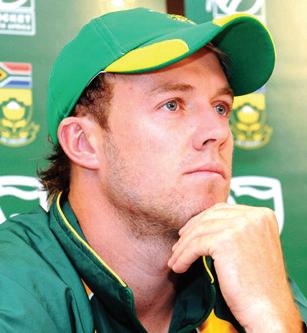
South Africa in July is not a time for rebirth.
The country is caught in winter’s grip – wind and rain sweep over Cape Town; weak, watery sunshine tries to warm things up elsewhere – and cricket will only be woken from its slumber when September ends. By then the new age would have begun. Russell Domingo would have completed his first assignment as head coach and the ODI and Twenty20 squads would have had their umpteenth makeover of the last two years. This one will be their defining redesign, or so we have been told, as they look to prioritise the 2014 World T20 and the 2015 World Cup. Domingo and captain AB de Villiers have been asked to give as much attention to the limited-overs squads as has been lavished on the Test one to restore their previous consistency and rewrite their majortournament record by securing silverware.
bowlers beat their drums perfectly but the batsmen cannot join in, on others the opposite happens. Pressure still infects them like an incurable illness, as was evident at the Champions Trophy.
That tournament also revealed that the South Africa of old – who entered ICC events as favourites to win and regularly left with a reputation of being the best team not to – is a thing of the past. Last month they were far from the best team at the competition and got what they deserved as a result.
The helter-skelter pattern of results leading up to the tournament did not inspire much confidence and they have now realised the value of how they did things before. “Everyone is tired of the word consistency because we talk about it so much but we need to play consistently in this series,” de Villiers said.
Crutchlow made a couple of unsuccessful attempts to pass Rossi before finally getting the better of the Italian on lap 16, sneaking down the inside into Turn 11 and into second.
The Tech 3 Yamaha rider then set about chipping away at Marquez’s two-second lead, and though he managed to bring it down to 1.5 seconds in the closing stages, Marquez had done enough for his second win of the season.
“Well done to Marc because he raced a great race,” said Crutchlow. “Even if Dani Pedrosa or Jorge Lorenzo were here I believe this would have been the same result, I really do.
“We have made a massive step. I had my worst ever result here in 2011 and I gave my all this time and, considering my physical condition, I am really happy.”
Suter rider Jordi Torres claimed his maiden race win when the Spaniard beat Simone Corsi and Pol Espargaro to victory in the German Moto2 Grand Prix. (BBC Sport)
They have been told to start again, beginning with the five-match ODI and three-match T20 tour of Sri Lanka. “We’re going to have to take a few steps back and do the basics bloody well,” de Villiers said before the squad’s departure from Johannesburg. “It’s about us finding a rhythm as a team.”
As things stand, South Africa’s one-day squad are out of sync. Some days the
Removing uncertainty from their game will start with de Villiers. The captain has wavered as much as the game plans, from his decision on whether he will keep wicket full-time to his position in the batting order. Now he seems to have been forced on to stable ground. He will keep wicket, despite the presence of Quinton de Kock in the squad, and he will bat No 4. “We played around with it because of particular circumstances but I think we’ll be more consistent from now,” he said.
De Villiers also believes Domingo will enforce regularity throughout the shorter-format squads. The fluid state they existed in under Gary Kirsten was partly a result of a search for combinations and Domingo has promised to end the experimentation. Instead he will take what his predecessor found and polish it. (Cricinfo)
Sri Lanka Cricket has postponed the player draft of the second season of Sri Lanka Premier League (SLPL) by six days to July 20, the tournament’s chief executive officer Ajith Jayasekara has said.
The player draft was scheduled for July 14, but Jayasekara said, “We have extended the time for all the franchises to pay up their fees to SLC and to Somerset Entertainment Ventures before the players’ draft can be held.”
Somerset Entertainment Ventures is SLC’s promotion partner for the league.
”We have given them a deadline till Tuesday eve-
ning [July 16] after which we will terminate their contracts and open tenders for next year,” Jayasekara said. Jayasekara also stated that the second season of SLPL would go ahead as scheduled from August 10 to September 7 even if the number of teams is reduced from its present strength of seven.
Several international players like Chris Gayle, Mushfiqur Rahim and members of the South African team, who will be touring Sri Lanka later this week, are said to have indicated their willingness to participate in the tournament.
(Cricinfo)
The Guyana Cricket Board came in for high praise from the West Indies Cricket Board (WICB) following the soldout crowd for Sunday’s first One-Day Internationals against West Indies and Pakistan.
In addition, Guyana will be hosting more international cricket in future, according to Guyana Cricket Board Secretary(GCB) Anand Sanasie. Sanasie’s announcement came on Sunday during a press briefing at the Guyana National Stadium.
The presser was also attended by WICB President Dave Cameron, WICB Vice President Emmanuel Nanthan, and WICB Chief Executive Officer (CEO) Michael Muirhead.
The media conference was also to announce the decisions taken at the board of directors meeting that took place on Saturday at the Pegasus Hotel in Guyana.
Guyana hosted the first ODI of Pakistan’s tour to the West Indies and is set to host the second match on
Tuesday at the same venue.
It was just over two years since the last match was held here. In that match, West Indies defeated Pakistan by 10 wickets.
Sanasie and the GCB were praised by the head table for having sold out the arena for both matches; the WICB was quite pleased with their capacity to achieve the feat.
Meanwhile, at the board of directors meeting, the WICB took a further look at regional cricket and the challenges it faces. It was learnt that several moves will be made to develop West Indian cricket in years to come. One of which is adding bonus points for batting and bowling, among others, and having less emphasis on first innings as opposed to winning the game.
The directors at the meeting decided that the WICB will run a separate 50-over tournament from the four-day tournament which will take effect from next year. The Super-50 will be run in the month
of January since there is no more Caribbean T20, just the Caribbean Premier League (CPL) that will be run in the July/August period.
The WICB president said the board agreed on a number of committees to help in the progression of West Indies cricket, one of which is the ‘Retired Players Foundation’. This is due to the issues they had with retired players in the past and how they feel about West Indies cricket.
Another committee they agreed on was the Permanent Fund Committee that will be working along with the West Indies Players Association (WIPA).
Cameron stated that one of the main concerns they have always had with the public is their corporate governance structure and how they operate their business. He noted that in the past the WICB had two reports − one from the former Jamaican Prime Minister PJ Patternson and Ernest Wilkinson, QC of St Lucia.
Senior Superintendent
Clifton Hicken has issued a warning for the ranks of B Division to get themselves in shape.
Police officers from throughout the division were on Saturday involved in a 5k walk from Palmyra and Berbice River Bridge road to Central Police Station in New Amsterdam.
“This should be part of your everyday routine,”
the Berbice commander told more than 100 officers at the end of the walk. He said exercise will assist in promoting a healthier lifestyle, saying “heart disease, cancer and things like diabetes, to name a few, you will not have to worry about if you exercise regularly.”
The walk was part of a series of activities for the month organised by B Division in observance of
the 174th anniversary of the Guyana Police Force.
“During the month let us work as professionals and don’t shout at or to members of the public,” Hicken said.
One of the high points during the month will be the Inter-Division athletics championships. Hicken said that he will be training the Berbice team. Training is expected to commence today. (Andrew Carmichael)
Port of Spain, TRINIDAD − Jeremy Solozano has admitted that he is spurred on for bigger and better things, after he was named as the Under-19 Cricketer-of-the-Year, at the recent West Indies Cricket Board (WICB)/West Indies Players Association (WIPA) award ceremony at the Hyatt Regency Hotel, Port-of-Spain.
The 17-year-old lefthanded opener had an impressive 2013 Secondary Schools Cricket League (SSCL) season with Hillview College, and forced his way onto the Trinidad and Tobago team for the Regional Four-Day Tournament semifinal con -
test against Jamaica at the Sabina Park, Kingston in May.
Solozano, a replacement for the out-of-form Adrian Barath, only made one and four in the game.
Nonetheless, in a recent interview the nephew of former national women team player Brenda Solozano, was elated with the WICB/ WIPA award. “Firstly I’ll like to give thanks to God, without Him I wouldn’t be getting this award,” he said. “It’s a very good feeling, I feel very good about it. I’ve worked very hard and this goes to show that hard work pays off.”
Asked how it felt to make his First Class debut, Solozano said “That was a
very good experience. I think that helped me a lot and this year I’m just looking to better my performance.”
He is also looking forward to receiving more silverware in the near future.
“I’m working very hard, making the sacrifices and I’m looking forward to it,” he said.
With regards to his aims and goals for the rest of 2013, Solozano noted, “right now I’m just focussing on the Regional Under-19 (Tournament) then, once my performances are good, focus on the Under-19 World Cup, and just take it from there.”
(First published in the Trinidad & Tobago Newsday)
U.S. sprinter Tyson Gay and Jamaica’s former 100m world record holder Asafa Powell have failed drug tests.
Gay, 30, the joint-second fastest man over 100m, was notified by the US AntiDoping Agency on Friday that his A sample from an out-of-competition test in May had returned a positive.
Powell tested positive for a banned stimulant while competing in June’s Jamaican championships.
Fellow Jamaican athlete Sherone Simpson also failed a drug test at the event.
The sprinter, a 4x100m relay silver medallist at last year’s London Olympics, tested positive for oxilofrine − the same stimulant Powell tested positive for.
Powell and Simpson’s doping positives come a month after Jamaican Olympic champion Veronica Campbell-Brown tested positive for a banned diuretic.
The 30-year-old Powell was the last man to hold the individual 100m record before compatriot Usain Bolt broke it in 2008. He is still the fourth fastest man of all time.
Powell later helped
Jamaica to win 400m relay gold at the 2008 Olympics in Beijing.
He has run 9.88 seconds this year, but failed to make the Jamaican team for next month’s World Championships.
“I want to be clear in saying to my family, friends and, most of all, my fans worldwide that I have never knowingly or wilfully taken any supplements or substances that break any rules,” Powell said in a statement.
“I am not now − nor have I ever been − a cheat.”
Gay, who is the fastest man in 2013, is waiting for the results of his ‘B’ sample.
He has already withdrawn from next month’s World Championships in Moscow.
“I don’t have a sabotage story... I basically put my trust in someone and was let down,” he said.
“I know exactly what went on, but I can’t discuss it right now.
“I hope I am able to run again, but I will take whatever punishment I get like a man.”
USADA responded to Gay’s disclosure by releasing a statement that read: “In
response to Mr Gay’s statements, USADA appreciates his approach to handling this situation and his choice to voluntarily remove himself from competition while the full facts surrounding his test are evaluated.
“The B sample will be processed shortly, and as in all cases all athletes are innocent unless or until proven otherwise through the established legal process, and any attempt to sensationalise or speculate is a disservice to due process, fair play, and to those who love clean sport.”
Gay, who missed almost a year of running after he had hip surgery in 2011, had been in impressive form so far this year, clocking the three fastest times of 2013.
He won the 100m at the Jamaica Invitational athletics meeting in May with a time of 9.86 seconds, before clocking 9.75 seconds − the fastest time of 2013 − to win the U.S. World Championships trials the following month. He continued his good form with victory in the men’s 100m at the Diamond League meeting in Lausanne, running 9.79 seconds. (BBC Sport)

AJamaican crossing the finish line in first place has been a common sight at these championships, so it made sense that they did so one last time in the final event of the day, the boys’ Medley Relay.
As soon as the baton was handed to second-leg runner Michael O’Hara – winner of the 200m final earlier in the day – there was no looking back for the Jamaican team. He handed over to Okeen Williams, the 400m hurdler who fell in Sunday’s final, before Martin Manley – the individual 400m champion –took up the running on the final leg.
Despite a strong challenge from Ryan Clark on the last leg for the USA, Manley held on to the lead and
crossed the line in 1:49.28 to break the World youth best. It was only the second time ever at the World Youth Championships that USA had been beaten in the boys’ Medley Relay, with Jamaica taking their first ever gold medal in the event.
USA took silver in 1:50.14, their second-fastest ever clocking for the event after the former World youth best of 1:49.47 they set in Lille two years ago. In third, Japan improved on the national youth best they set to win silver in Lille, clocking 1:50.52 for the bronze medal.
The girls’ Medley Relay was even more decisive as the USA enjoyed a clear run to gold, following the semifinal disqualification of defending champions Jamaica.
Each of the U.S. team had won medals earlier in the championships, with 100m Hurdles silver medallist Dior Hall handing over to 100m champion Ky Westbrook. Their lead was already significant when Raevyn Rogers, bronze medallist in the 800m earlier in the day, ran the 300m leg to give 400m silver medallist Olivia Baker a sizeable lead. Baker cruised around a lap of the track to bring home the gold in 2:05.15, USA’s seventh title in this event at the World Youth Championships. The British Virgin Islands were surprise silver medallists in 2:07.40 while Japan passed China in the home-straight to take bronze in 2:07.61. (IAAF)
– West Indies suffered a batting meltdown to record their
while Shahid Afridi marked his comeback with a blistering half century and second-best ODI bowling figures
By Rajiv Bisnauth
Alethargic West Indies were bowled out for their lowest One-Day International score against Pakistan, as they made a calamitous start to their fivematch series with an embarrassing 126-run defeat at the Guyana National Stadium on Sunday.
In front of a sold-out arena that marked the return of international cricket to Guyana after more than two years, the hosts were rolled over for 98 off 41 overs, their fourth lowest score in ODIs and their lowest at Providence. West Indies’ lowest ODI score is 54 against South Africa in 2004.
Pakistan, powered by a blistering 76 from dashing all-rounder Shahid Afridi, recovered to make 224-9 in 50 overs. He later returned to derail West Indies, snaring 7-12 off nine overs. His figures are the best by a Pakistani in ODIs, and the second to Sri Lanka’s Chaminda Vaas.
Marlon Samuels (25), Darren Sammy (21 not out), Sunil Narine (14) and Lendl Simmons (10) were the only WI batsmen to reach double figures in the run chase.
Earlier, Jason Holder ripped through the top order of Pakistan, claiming 4 for 13 as the visitors, put into bat, had slumped to 47-5.
Skipper Misbah-ul-Haq (52), who holds the record for scoring the most half-centuries without converting to three figures, shared a 120run stand with Afridi for the sixth wicket.
They were left to repair the early damage caused by Holder, who exploited the early overcast conditions and a pitch offering pace and bounce.
The tall pacer made the early strike, removing Ahmed Shehzad (5) in the fourth over. The diminutive right-hander, after cutting Holder to the point boundary, was dismissed immediately after to a ball that took the inside edge unto the stumps.
Holder’s precision
Holder’s precision then produced the classic off-cutter to Mohammad Hafeez, who with three single-digit scores in his previous four ODIs, let the ball go only for it to cut back and clip the off stump. This left Pakistan in considerable trouble at 18 for 2 in the sixth over.
Holder then removed the usually reliable Nasir Jamshed (6) and Asad Shafiq (0) in consecutive balls, before a slight shower sent the players off, with Pakistan reeling at 23 for 4 in the 10th over.
Jamshed was adjudged leg before while Shafiq was superbly taken at the wicket by Johnson Charles.
After the half-hour break,

Misbah-ul-Haq and Umar Akmal worked on building momentum for the innings to take off, reducing risks and quietly pushing the score to 47 before Roach, who was in his second spell, struck.
Akmal (19), who was playing to leg a bit too often, had a leading edge, and Dwayne Bravo took the catch running back from mid-on.
This left Shahid Afridi, who was recalled to the side after being dropped for the Champions Trophy, and Misbah, Pakistan’s last recognised batting pair to shoulder the heavy burden of putting a substantial total on the board. Afridi signalled his intention straight away by muscling Roach for a straight six to register Pakistan’s 50 at the end of the 21st over.
Afridi, who was put down by Chris Gayle when he was on 20, continued his assault, keeping Pakistan’s total climbing with some clean strikes. His half century came off 35 balls, which included five fours and three sixes.
Caution, aggression
The mandatory batting powerplay was taken in the 36th over, from which Pakistan scored 20 runs. They also lost Afridi. The strongly built right-hander was caught at deep mid wicket. Mixing caution with aggression, Afridi had clubbed five sixes and six fours during his brilliant 55-ball knock of 76.
Misbah, on the other hand, played with precision: dabbing, pushing and chipping into gaps to chronicle his 26th half century but disappointingly got out edging one to the keeper for 52, to leave Pakistan at 200-8.
Wahab Riaz (7) and Asad Ali (11) were the other batsmen dismissed while Saeed Ajmal was unbeaten on 15 and Mohamed Irfan 4. Roach (2-38), Dwayne Bravo (2-52) and Kieron


Pollard (1-25) lent support to Holder.
At the start of the chase, West Indies were in dire straits when they lost openers Charles and Gayle, along with Darren Bravo, within the first five overs, leaving them precariously placed at 7 for 3.
Irfan, one of a trio of Pakistan left-arm fast bowlers and the tallest man in world cricket, extracted vicious lift from a good Providence pitch and troubled the West Indies batsmen.
Johnson Charles (0) was comprehensively bowled by a yorker from Irfan (2-17). Darren Bravo (5) gloved a catch to wicketkeeper Umar
Akmal and Gayle (1) was forced to hurry his defensive shots, before he was run out from a direct hit by Misbahul-Haq.
After a brief recovery, West Indies slumped further to 55-8 with the dismissal of Samuels, Simmons, Dwayne Bravo, Kieron Pollard and Roach, all by Afridi.
Darren Sammy and Sunil Narine hung on and took the score to 98, but the end came swiftly when Afridi was reintroduced for his second spell. He claimed the last two wickets of Narine and Holder in the space of four balls.
The second ODI will be played at the same venue on Tuesday.

c †Charles b DJ Bravo 52 Asad Shafiq c †Charles b Holder 0 Umar Akmal† c DJ Bravo b Roach 19 Shahid Afridi c Sammy b Pollard 76 Wahab Riaz c Holder b Roach 7 Saeed Ajmal not out 15
Asad Ali b DJ Bravo 11 Mohammad Irfan not out 4
Extras: (b1, lb4, w23)