Today marks the eleventh year that Arrival Day is being observed and while it represents to arrival of five of the ethnic groups in Guyana, it is celebrated on the day that East Indians first set foot on the shores of this country. Arrival Day was first celebrated in Guyana as Indian Arrival day on May 5, 2004.
However, Opposition parties in Parliament had argued that others also came and they too should have a day to observe their arrivals. It was unanimously decided that it would not be feasible to recognise the arrival of every ethnic group and hence, the holiday became Arrival Day.
The first group outside of the Amerindians to arrive in Guyana was the Spanish who arrived in 1499. Little is known of the first settlements, though they were almost certainly Spanish or Portuguese. In 1499, Alonzo de Ojeda and Amerigo Vespucci, sailing together, reached the northern coast of South America in the region of Suriname. They then sailed west along the coast of Guyana but no attempt to land was made then.
Sugar industry can get better with good management
Immediately after, the territorial discoveries were made by Christopher Columbus and King Ferdinand, and Queen Isabella petitioned Pope Alexander IV to recognise the “new” lands as Spanish possessions.
The Dutch began exploring and settling in Guyana in the late sixteenth century, followed by the English. Both began trading with the Amerindian peoples native to the land.
The first Dutch settlement was established in the Pomeroon River in 1581.
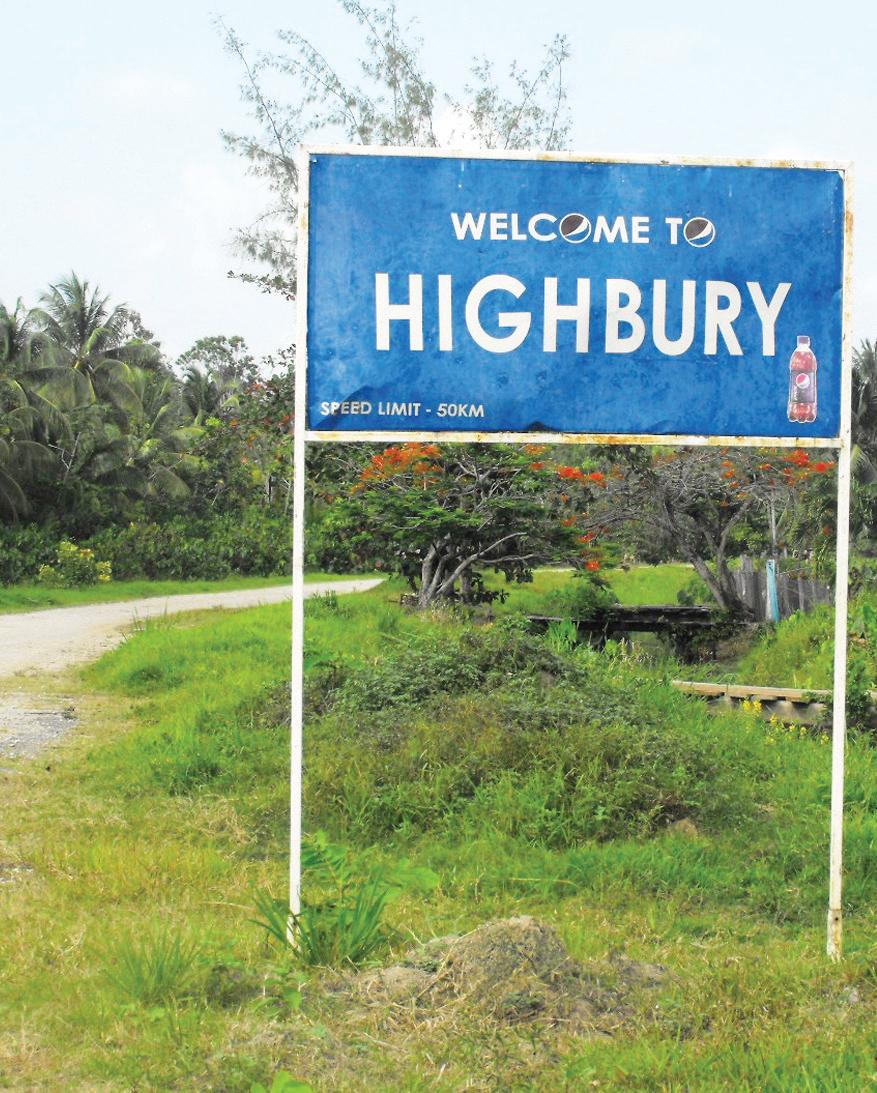
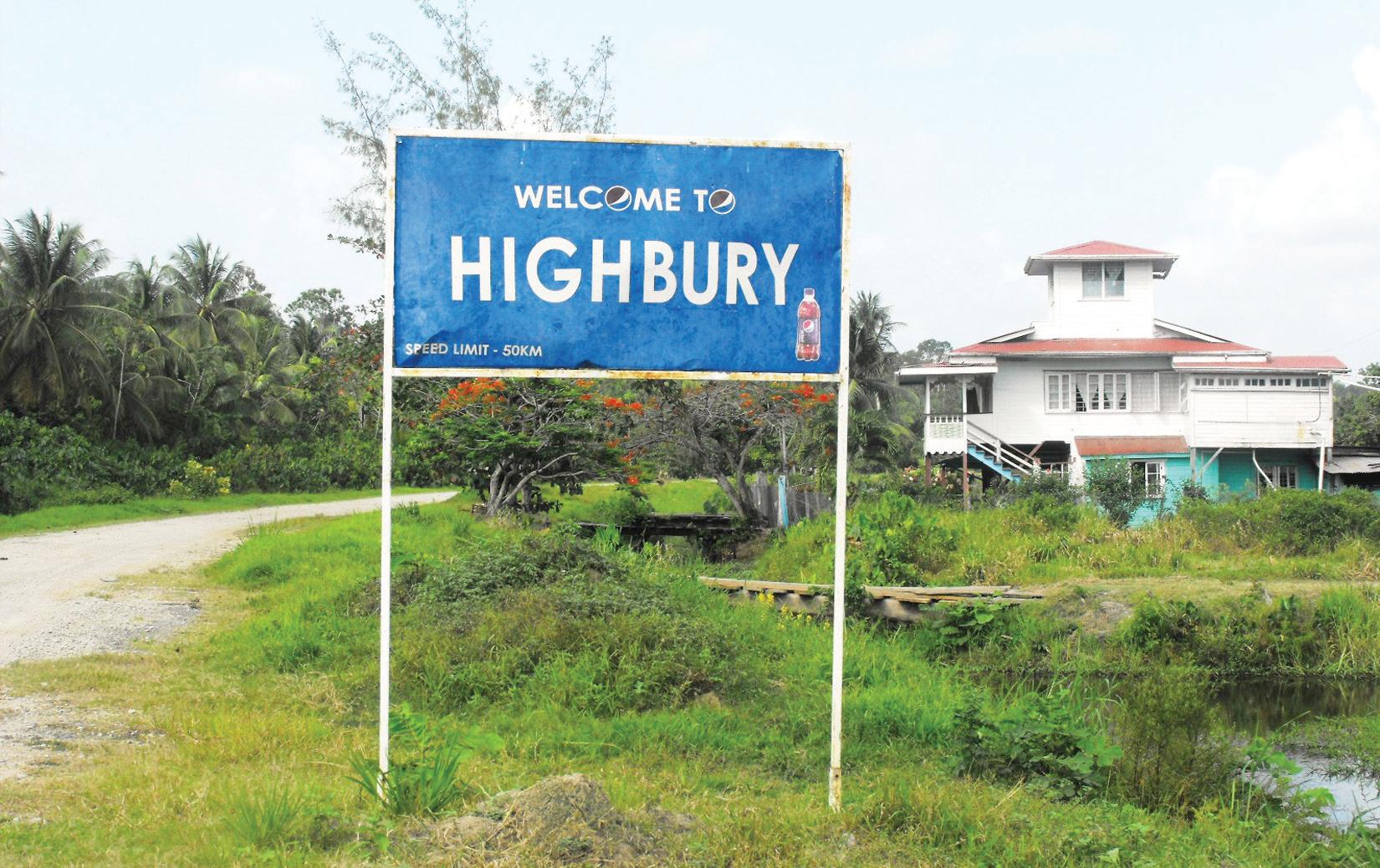
Highbury –
Britain took the region from the Dutch in 1796. The Dutch took it back in 1802, before being ousted again by the British in 1803. Immediately after the British took possession of Essequibo, Demerara and Berbice, they began to implement changes in the administration of the colonies, with the aim of removing the strong Dutch influence.
The Dutch, Spanish and British are all natives of Europe. The date of the first arrival of African slaves in Guyana is not known, but it is believed the first group was brought by Dutch settlers who migrated from Tobago from as early as the mid-seventeenth century.
TuRN To PAgE 7
Berbicians were treated to an evening of spectacular Indian culture as the Indian Arrival Committee (IAC) hosted its annual mela.
The programme kicked off with songs and dances from local and regional performers as the IAC hosted yet another successful event to mark the 176th Anniversary of Indian Arrival in Guyana. Held at the University of Guyana Berbice campus Tarmac at Tain Corentyne, the event was attended by thousands of Berbicians.
The Shakti Strings Band entertained the massive crowd with numerous hits while the Khalnayak Dance Academy out of Trinidad and Tobago left the audience in awe with their thrilling dance moves. Among the performers from Trinidad were: Adesh Samaroo and Rasika Dindiyal whose voices got the crowd to their feet. The Naachgana and Shelita Dance Troupe also left the crowd mesmerised with their performances.
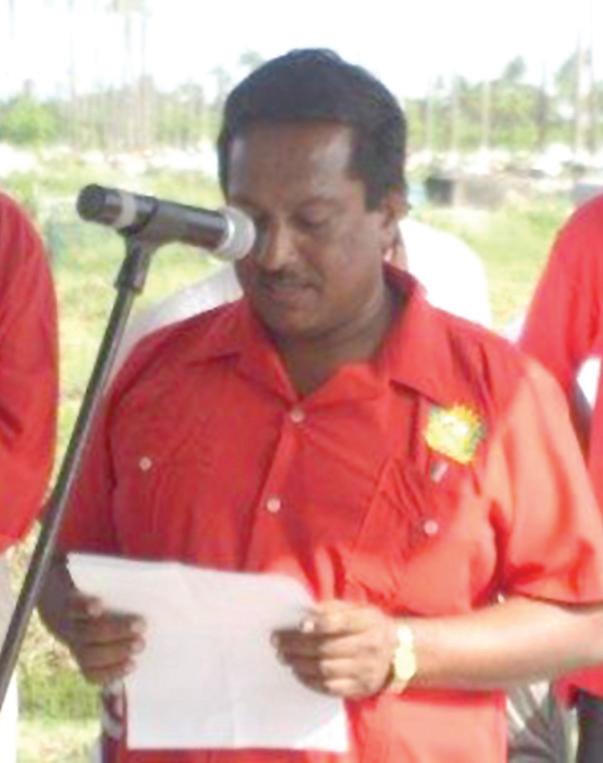
President Donald Ramator, who delivered the feature address, urged the gathering to remember the struggles made by their fore -parents and how they toiled under tough conditions to earn a livelihood. He drew from his personal experiences and shared his memory of visiting his grandparents
who came from India and were employed as indentured labourers at the Uitvlugt Estate. “They all came here and we are now developing our own Guyanese culture which is a tribute to our foreparents who managed to preserve some of the culture, the dances, music, food that we were able to survive indentureship, colonialism and survive dictatorship to be here in a free Guyana.”
The President said through those struggles a better Guyana has emerged and has been growing and will continue to grow.
“Over the last several years our country has been growing when parts of the world were facing recession, our country experienced financial, economic and social progress and our people sacrificed and laboured in difficult condition. Today of course things are different in every area of life before indentured labourers… more than that they have sacrificed for these things”.
The Head of State went on to say, that even though Government has been trying its best to further enhance the country, the Opposition looks for every way to undermine development. He called on Guyanese to use the examples of their foreparents to continue to sacrifice so as to make Guyana one
of the best countries in the world.
“The sacrifice is not over yet … we are at a difficult stage of our struggle there are forces in our country who wanted to destroy Guyana and now that they are in Opposition they do not want to see our country move forward and every year, 2012, 2013, 2014 they have been cutting the budget and cutting important things that affect the lives of our people, when
administration will continue to do all they can to succeed. “My Government will continue to do all that we can but we cannot succeed without your support. As we celebrate arrival day and as we celebrate the achievements that we have made over the years let us not go with a false sense of complacency and think everything is ok, let us continue, use the examples of our foreparents to continue
a duty to build what they have left for us,we have a Guyana to build a country to develop we have our children who have to come after us to inherit a better life we believe in the same way we have taken the lands from our ancestors and built it to what it is today we have to work hard so we can build for the future generation to come.”
The Indian Arrival Committee has been hosting Arrival Day me-
they were in office; rats were eating our children in the hospital, today it is the same hospital we are doing bypass surgery for people with heart problems... we want to build a Specialty Hospital so that we can give our people all the facilities only the rich can enjoy like going abroad, we wanted to build that and they have cut that from the budget ,we want to build a new airport because we have tourism potential and they cut that as well”.
He, however, noted that his
to struggle to make Guyana one of the best countries in the world”.
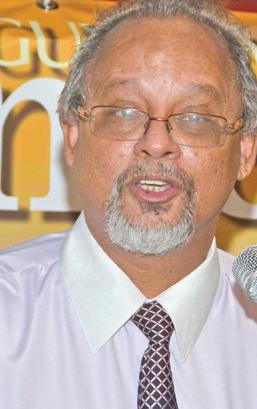
Regional Chairman David Armogan urged that the memory of indentured labourers be preserved as they struggled to build what is present today. “We must be proud of their memory so every year this time we must come out and show the rest of the world that we are a people who have not forgotten the people who came here first and started the things that we are enjoying today so whilst we preserve their memory we also have
las for the past 11 years to reflect and showcase the diverse culture of the Indian tradition. The first mela was held at the Everest Ground in Georgetown. On May 5, 1838 a batch of 396 Indian Immigrants landed in Plantation Highbury, Berbice from Calcutta. This was the beginning of the indentured system which continued for many years. While it was different from slavery the indentured labourers were met with severe cruelty and hardship akin to that of slavery.
President Donald Ramotar interacting with persons at the IAC mela
Members of the Khalnayak Dance Troupe in action
Sugar industry can get better with good management – GAWU
The Guyana Sugar Corporation (GuySuCo) can turn around its present crisis with good management and a satisfied labour force, Seepaul Narine, General Secretary of the Guyana Agricultural and General Workers’ Union (GAWU) has said.
Speaking at last Thursday’s May Day rally at Port Mourant, Narine said the sugar industry which plays a vital role in the development of Guyana’s economy and employs thousands of Guyanese has the turnaround ability. “The wide interest shown in the industry in recent months testifies to the value of this industry to our country. GAWU welcomes the interest shown but cannot see eye-to-eye with those who offer ill thought out solutions like selling out estates or diversifying to ethanol or put lands to aquaculture, at the same time as a stakeholder we would like to see the industry becoming viable as this would surely impact on the quality of life of our membership”, Narine stated.
He went on to say, that with the knowledge to grow with good management, a satisfied labour force and various innovations, GAWU is confident that the industry can regain its profitability status in a short time. Despite challenges faced in the sugar industry, they are confident that the industry will meets its target of 216,000 tonnes in 2014.
“In 2013, the industry produced 186,807 tonnes, it’s the worse performance in 22 years. Poor production last year and accumulated debts over the years resulted in the industry’s debt being approximately 10.8 billion Guyana dollars against those significant challenges our union pursued and was able to secure a four per cent wage/salary increase and five day’s pay”.
In 2014 already, just over 65,000 tonnes of sugar has been produced – a positive sign that the target of 216,000 will be achieved. Region Six Chairman David Armogan during his address spoke of Government’s commitment to workers interest, thus the allocation of $6 billion to assist the sugar industry.
“Today, you are working in an industry that is facing some severe problems, you are working in an industry that has seen gross production in many years. GAWU is known for its militancy locally and for solidarity for workers across... today all the workers across the world are in solidarity with you… You have to understand that your responsibility at this time, that the industry that has employed you is struggling, your role has to be a little bit different in as much as you are known for your militancy and as much as you are known to fight every day for your rights and increased wages and salaries and better conditions of work, we are operating today at a different time and a different environment and therefore your understanding at this time that you are working in an industry that employs the highest amount of people in this country, so it’s too big to fail, Government will do all it can do save the industry,” Armogan remarked.
Member of Parliament, Dr Vishwa Mahadeo congratulated GAWU. “People will come to you and tell you all sorts of things about your union, they are saying the union is not representing its workers, you have an industry that is not meeting its target and yet the workers in that industry get an increase every year had it not been a union like GAWU that would not have happened, so GAWU must be commended for standing beside it workers.” Mahadeo also reiterated Government’s commitment towards the sugar industry.
“Those who want to talk about shutting down the industry and rear tilapia, last year the Opposition voted against putting money in the sugar industry to keep it afloat. On the
other hand, the Government said we are not going to close the sugar industry. We know we are in a bad patch, we will work towards getting it better, we know we have made mis-
takes, we will correct them, we know that GuySuCo serves Guyana well and this Government will not allow sugar to go down”.
Seepaul Narine
Sugar workers at this year’s May Day rally
Simply the
Truth
Voting patterns
Ihave heard enough from fellow Berbicians to know that a great number of them are disenchanted by our current pack of politicians. Disenchantment and disillusionment always change voting patterns eventually. Always.
Professor Daizal Samad
We all know that traditionally, Berbicians voted along ethnic lines – as does much of the rest of this country. We also know that Berbicians are fed up with being taken for granted, and that even old time followers of PPP and PNC are beginning to turn away. Young potential voters never believed anyway, so there is no need to turn away. This apathy is the price we pay for not being attentive enough to our young people.
Young people need more than words, and they see no action to match the words. Older folks need more than words too. We all need to see examples set and we see none of that. We hear squabbling and squawking from all the parties.
What Berbicians see are people in Georgetown who seem incapable of making logical decisions, who put square pegs in triangular holes, who look after only their own interests, and who would do or say anything to anyone in order to grab a piece of power. If they have power now, they want to hang on to it; if they don’t have it, they want to grab it. Power is meant to feed ego. The money that comes with power is meant to feed the pocket.
The newest political party seems to have succumbed to the usual querulousness, the usual shouting and screaming that passes for intelligent debate. And so the older (and seemingly wiser) folk come to us and ask where they should turn. And we are dumb because we too are lost. There is no light shining to relieve the gloom.
So the older folk will go vote according to how they always have voted, but in fewer numbers. The young people will see no difference if they vote or don’t vote. So the next elections will see fewer people turning out to cast their ballots. Meanwhile, every now and then in Berbice, we hear the sirens with black SUVS screaming their way to some event or the other.
So what then are we looking for? For “leaders” that can only be leaders when they demonstrate any bit of integrity or genuine concern about the people of this nation. When we see no such people, Berbicians simply say: “Dem people dis!”
People from Berbice will stay home and hope they can swim in the murky waters of unemployment and hopelessness. When we look at what our politically ambitious young people do and say, we see the old selfaggrandising pattern repeating itself.
I cannot claim to know what the consequences of this general turning away from anything so morally decayed as the examples set by our political leaders will be, but I do know that things will change. Our current politicians do not need genius to know that they cannot rush up here at some emergency, say a few words, make a few promises, and then go pack to Georgetown to what it is they do there to “serve the nation!”
The walls of Parliament should be made of mirrors so people can see themselves for what they are by hearing what they say and how they say things. But self-analysis is a tortuous thing. It takes great courage and greater honesty.
And it is only by self-analysis that we can change ourselves, for it is then that we begin to see our flaws. In between a person and fulfilment of potential is that great wall called arrogance. Things will change.
They would change much faster and for the better if political parties and politicians who could show (and say) that they can change for the better. We would all be better off in this nation. But it must all begin with quiet contemplation, a lonely thing indeed.
In many communities across Berbice, the Guyana Police Force (GPF) has taken the lead in implementing innovative juvenile crime prevention and intervention efforts as part of an overall community-oriented approach to policing.
In line with this, the Development Association of Fort Ordinance (DAFO) in collaboration with the GPF B Division last Wednesday launched a youth group in the community.
This launch complemented a series of youth clubs across Berbice by the Police in B Division. President of DAFO Stanley Jacob stated that the aim of the organisation is all about development and making the community a better place in every aspect of their livelihood.
Since its formation, he said DAFO has formed a community policing group and installed several street lights in its effort to assist in curbing criminal activities in the area. He said too, they continue to work assiduously on several other projects so as to ensure the community is safer. “Youths are the future of tomorrow and we want our youths to become more actively involved in every area and aspect of development,” Jacob said.
Deputy Commander Stephen Mansell, who was elated to be a part
of the event, explained that the initiative aims at supporting strong measures to prevent juveniles from becoming involved in illegal activities. He said through youth-focused community oriented policing, they are hoping to reduce the availability of firearms to youth, strengthening anti-drug and anti-gang measures, and building healthy communities through expanded youth opportunities.
The senior Superintendent of Police added that the main focus of the group is to engage the youths meaningfully in sport and educational activities. The Deputy Commander also highlighted that the young people will also be placed into a Scout Group to enhance their skills, while underscoring that they will also be a part of the GPF’s summer camp and work study programme this year.
“They will be taught to become computer literate, assist those who cannot afford to attend school and educational items and whatever necessary needs the less fortunate youths may incur,” he stated.
“The bottom line of this youth club is discipline and therefore we need our youths to be positive, competitive and to excel in their every endeavour,” Mansell said, while encouraging the
parents to take an active part in the success of this first launching in the community.
The initiative is part of an ongoing outreach programme of the Police Force in order to give back to society and to increase public confidence and the force’s image. He enunciated that the Police alone cannot fight crime but the citizens’ needs to work in partnership with the force to stamp out crime and ensure safety and security.
“Youth who embrace the culture of violence are most likely to be those who feel that they have no stake in society and no trust in the adults who are supposed to provide them with safety and guidance. Communities must address the culture of violence and lack of opportunities and alternatives, reaching out to youth who feel disenfranchised from the adult world and provide them with positive opportunities,” Mansell opined, while extending congratulation to the DAFO/Police Youth Club on behalf of the Commander of B Division Brian Joseph who was unable to attend the event due to other pressing duties.
Also present at the event was Officer-in-Charge of Sub Division One Guy Nurse, Sergeant Michael Newland and Sergeant Hamilton.
Ramesh Singh was on Wednesday last placed on $500,000 bail after he appeared before Magistrate Rondell Weaver at the Number 51 Village Magistrate’s Court for causing death by dangerous driving on Sunday, April 27 at the Number 50 Public Road, Corentyne. He was not required to plea to the indictable charge. Singh, who is from Suriname and of Enmore, East Coast Demerara was the driver of motor car PGG 7994 which was proceeding south along the Number 50 Village Public Road at a fast rate with the 35-year-old Rawle Douglas of Number 53 Village seat-
Man on $500,000 bail for causing of death by dangerous driving
ed in the front passenger’s seat. The driver lost control of the vehicle in his attempt to swerve from straying cows on the roadway and ended up in the western lane, hitting a cow causing the animal to catapult into the air then landing of the left side of the car bonnet, smashing the car windshield and causing severe injuries to Douglas who reportedly died on the spot. The car finally came to a stop in the nearby trench. Douglas was reportedly pinned and was removed by public spirited citizens. His limp body was taken
from the car and rushed to the Skeldon Hospital where he was pronounced dead on arrival. According to reports, Singh and Douglas,who are both fishermen, were seen consuming alcohol prior to the accident.
Prosecutor Althea Solomon objected to bail based on the nature and gravity of the offence and that the accused is a flight risk since he also resides in Suriname. Singh was unrepresented when he made his appearance. On Monday, April 28, Singh appeared at the Albion Magistrate’s Court before
Magistrate Rabindranauth Singh where he was slapped with three offences; breach of insurance, driving under the influence and being an unlicensed driver. He pleaded guilty to the offence and was fined $52,500.
The owner of the motorcar, 47-year-old Pertab Singh of Number 67 Village was also slapped with two charges. He was charged with permitting an unlicensed driver to use his vehicle and was fined $25,000 while for breach of insurance he was fined $20,000. Singh is to return to court on May 28.
The handing over of sport gear to the youth club
BY ANDREW CARMICHAEL
Plantation Highbury is now the site of a monument commemorating the arrival of the first group of Indian indentured labourers to Berbice, British Guiana.
Two hundred and fifty labourers had sailed from Calcutta (now Kolkata) India on the SS Whitby to arrive in the colony on May 5, 1838. One hundred and seventeen labourers, including 11 females, arrived at Plantation Highbury on the East Bank of the Berbice River to begin their period of in-
say why they had destroyed the estate before the property was sold. He also visited the Stelling that vessels moored at in 1838, however, today the remaining stumps are covered with sea mud.There are still parts of punts that were used back in the 19th century in farms in the village.
In 1964, there were three families and just before the turn of the century, the village was well populated, however, today there are only 18 families in the two mile long village. “People migrate, they go away. One of the main reasons is because we don’t have a proper school in the area.” Sirkissoon, however, notes that the population has started to rise again.
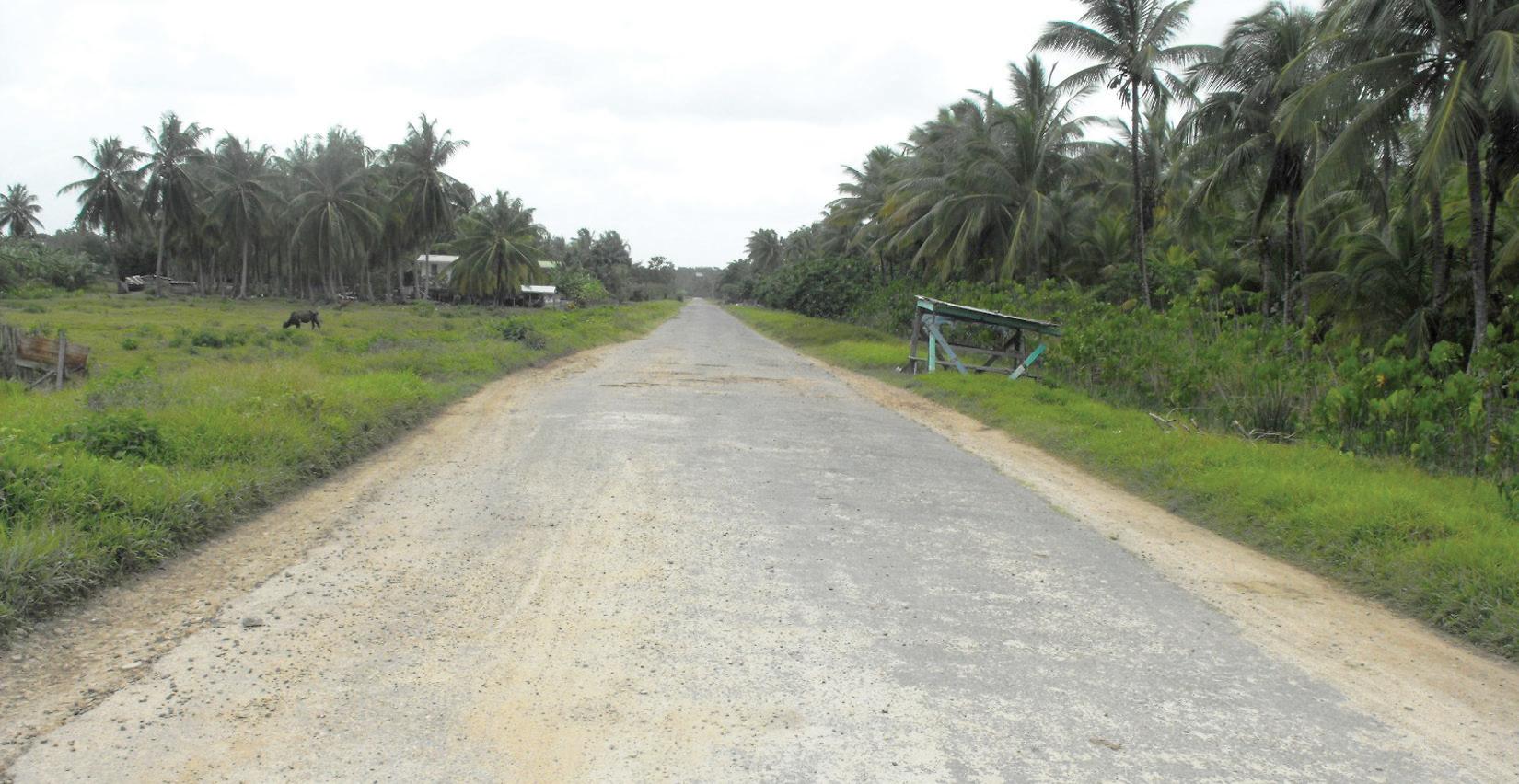
According to him, in 1964 there were two tracks where the roadway is today. “The middle was grass right through. We mostly travel by donkey cart from here to Khotbraadth Village and from there they had two taxies and travel to New Amsterdam.” By 1960, the tracks were upgraded with a red road made of burnt brick and this was maintained through the Public Works Department. “In our area here, they had a donkey cart with a man with a spade and a ‘rammer’. He filled the holes with the brick and he ram it so we always had a good road but we hadn’t much traffic.”
According to Sirkissoon, they had to travel from Highbury to Khotbrath before getting a car to go to school in New Amsterdam. “Look at the road condition
dentureship on the colony.
Colonial records indicate that labourers on plantation Highbury reared the most livestock than anywhere else in the colony; both for their own food and to sell. Today Highbury is a scarcely populated village. The village has a monument to which there is an annual pilgrimage on May 5.
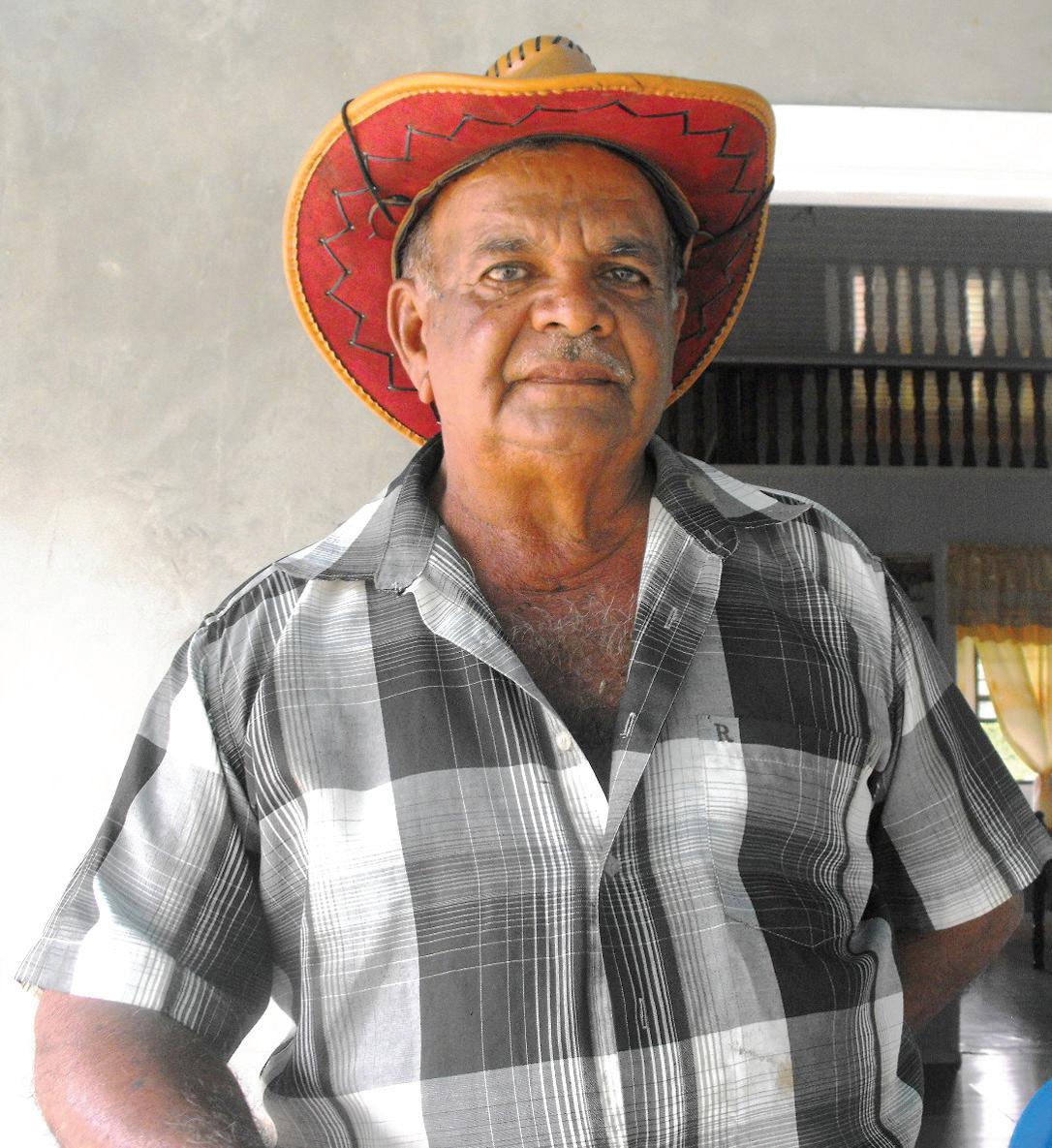
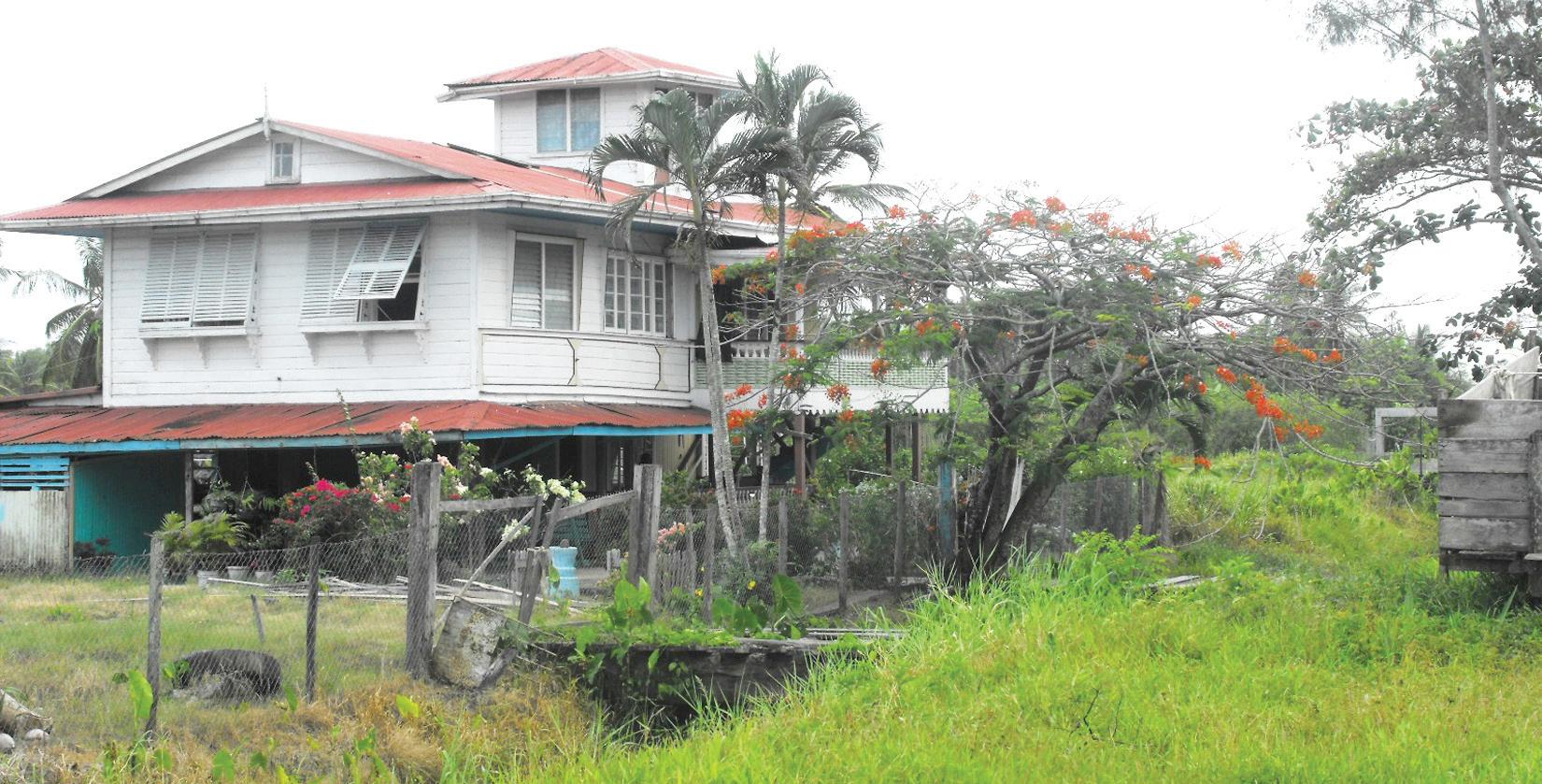
The oldest resident is Atendranauth Sirkissoon who did not grow up in the village but moved there in 1954 when his father bought the then Police Commissioner’s house and transported it to Highbury. He said when his family arrived there, the sugar factory on which the first set of East Indians worked was destroyed. “Everything was there, the rollers, the chimney and everything but they were in pieces. They used dynamite and blow it up.”
His grandfather had bought the property from the Vieira’s. Sirkissoon could not
now; you take more than 45 minutes to get to New Amsterdam… The road is so bad it destroyed our vehicles and now when you go to New Amsterdam and come back you are so tired.”
The farmer said when he was old enough, he drove his sisters to school in New Amsterdam – a trip he said that took him about one hour to return. However, now it is not possible to travel the 12 miles to New Amsterdam and return in an hour. Back then the village was quiet except for the sounds of animals and birds with vegetation all around. There are five rice farmers in Highbury today. Sirkissoon, who is 67 years old, farms and has 12 acres of rice along with cash crops and a fruit farm and 20 acres of coconut estates.Although Sirkissoon was attacked by bandits once, the village is said to be crime free more than two decades after.
Contentment
It is not uncommon for us to seek the riches and fortunes that we see others have. However, one should really think about the realities involved, because in reality, there are a lot of people with debts and a need to be boastful through material possessions.
Your best bet will be to avoid the path in falling into the trap of wanting all the material things other people have, because the truth is having all those things will not make you any happier.
One of the common complaints I hear is that people are not liking their job. This is something to make note of, because no matter how much you earn and regardless of what position you have, working in a job you do not like will not bring you contentment.
Narine Dat Sookram
Even your dream home and fancy car cannot overcome the daily challenges you face with your job. The key is to accept that you might currently hold a job that fits your values and to feel that sense of happiness is to accept that happiness may be possible, but with a less paid job that comes with greater fulfilment. However, this may require you to re-adjust your priorities in life.
The simplest things in life are usually the most important; therefore we should keep healthy with the little things. For example, eating nutritious foods and having a good laugh at least once daily are all things to consider. I am sure this is not the first time you have heard of this and I know they are simple things, but there is a reason for them and that is they work. Give it a try and contentment will follow.
Have you ever realised how important it is to be a good friend or neighbour? Taking the time to get to know the people around you and being there for them as much as you can are all good things to consider. Also consider creating a sense of community wherever you go and lead by example, because reaching out to everyone is a form of being contented with one’s self.
Another piece of advice is to have both trust and faith, and by that I mean in both others and yourself. This can, however, be a little challenging because we live in a world where sometimes we are told “don’t trust anyone” but if you cannot even trust yourself, then that saying can be a little misleading.
Sure enough, there will be people who will abuse “trust”, but for everyone that does, you probably will have a lot more people who will reciprocate your trust and eventually motivate themselves, because they will see that someone cares enough to trust them.
And last but not least, be in the moment and do not worry about the past and the future, because contentment is reached when you make the most of what is happening now, rather than thinking of the past and the future which will lead to nothing but disappointment.
No May 5 repairs to East Bank Berbice road
East Bank Berbice residents are expressing disappointment over the fact that they are not seeing the annual road repair works in time for the pilgrimage to Highbury on Arrival Day.
The residents had grown accustomed to road repairs being carried out at this time of the year in order to facilitate better access for foreign delegates and Government officials to Highbury.
Despite condemning the act in the past and protesting over it, saying that they needed more than the minor repairs, which sometimes only lasted until the June rains, residents say they looked forward for the road repair. “Atleast it used to bring some relief to us, the East Bank hire car drivers,” one hire car operator told this publication.
“As soon as the budget passed, we looking to see the work gon start but nothing… “
The East Bank Berbice main access road had been in a state of disrepair for several years. Government had been spending millions of dollars on it annually up until last year when a decision was taken not to resurface a section of the road, but to carry out maintenance through the Public Works Ministry. That project has not been extended into 2014.
Of major concern to Upper East Bank Berbice residents is that whenever they travel to New Amsterdam, they are forced to endure the bumpy ride for 25 miles.Glasgow, Heatburn and Everton are where most of the work was concentrated in the past.
Heavy duty and heavily laden vehicles have been stuck on the Glasgow road in the
past as they tried to manoeuvre the pothole filled road. Some residents told Berbice Times that the only thing they had hope in was May 5, now even the Government is overlooking them.
Deodat Persaud who operates a business says, “Is because the people in the East Bank didn’t vote for them.” Region Six Chairman David Armogan explained that the maintenance project had to be shelved on advice from the contractor H Nauth and Sons Construction Company. “There comes a time when you can’t be maintaining anymore and Nauth has complained to us that it has passed maintenance stage… If you fill a hole today, tomorrow it reappears. That is Nauth’s position that we are wasting money on trying to carry out maintenance on the road.”
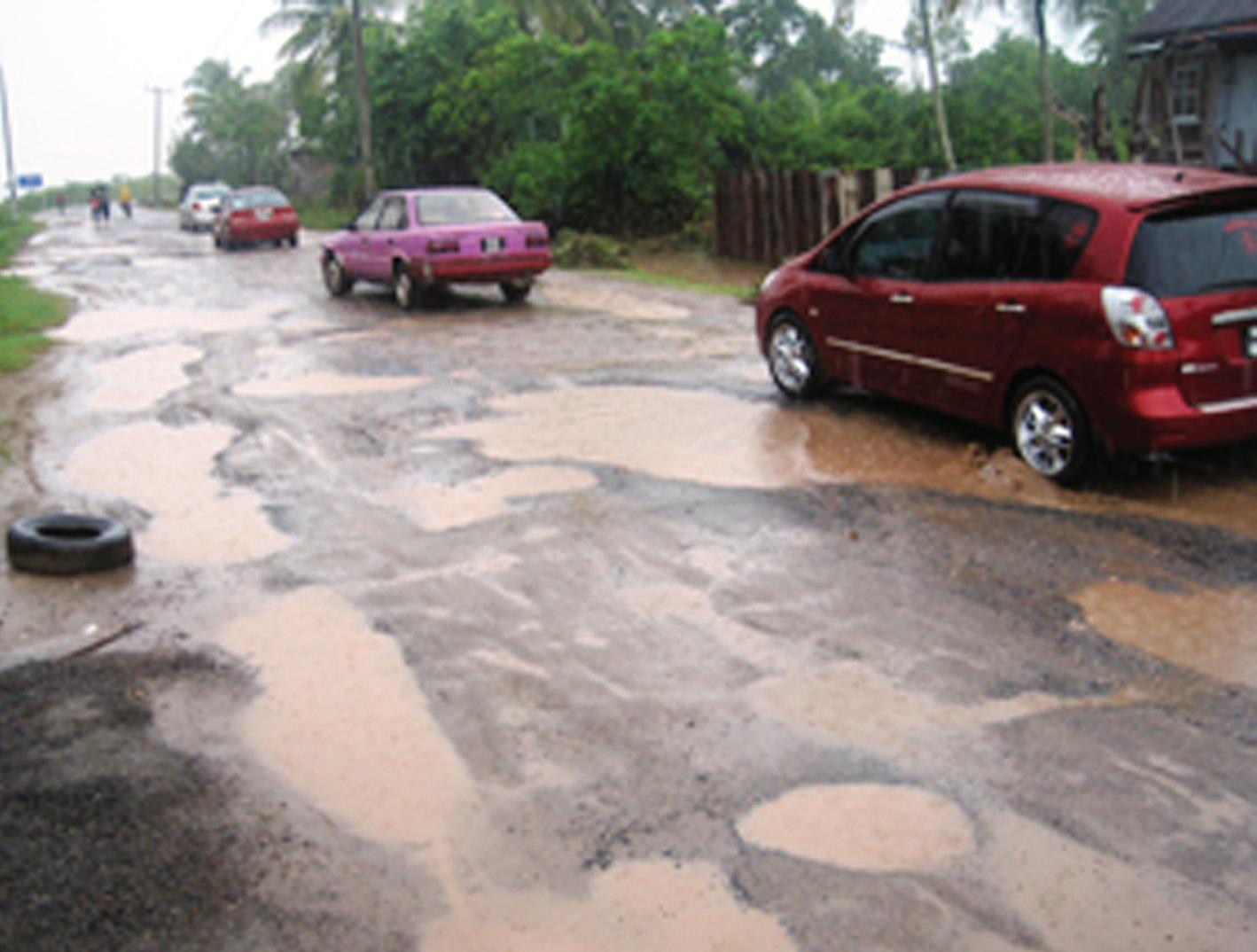
Back in February 2013 when the residents had staged a protest they were told that Government was seeking funding from the Inter-American Development Bank (IDB) to resurface the entire East Bank Berbice Road. In March last year, Public Works Minister Robeson Benn announced that the feasibility study and designs for the rehabilitation of the East Bank Berbice Public Road was scheduled to commence later that month.The conditions of the road are deplorable with potholes so wide and deep, cars were scraping their bottoms while driving through. Few cars ply the route which is an inconvenience for residents, especially the 3000 schoolchildren who use it daily during school days.
The Sirkissoons bought this house in 1964 and transported it to Highbury
The house that Sirkissoon’s grandfather bought and transported to Highbury
Atendranauth Sirkissoon, the oldest person in Highbury
The good road from the beginning of Highbury Village
48 graduate with cosmetology, IT skills
Forty-eight students recently completed training in cosmetology and Information Technology as part of a Culture, Youth and Sport Ministry programme.
The students graduated last Wednesday at the Smythfield Drop-In Centre in New Amsterdam. The two courses lasted 46 months each and was held at the Vryman’s Erven Training Centre. The cosmetology students were trained in hair cutting and styling, decontamination and infection control, chemical hair relaxing and blowout, manicure and pedicure, personal hygiene and personal differences, bacteriology draping and facial make-up, while the IT students were trained and assessed in parts of a microcomputer, windows operating system and Microsoft Office suite and Internet and email.
Speaking at the graduation ceremony, Chairman of Region Six David Armogan referred to it as a significant exercise. He said the students were given a second opportunity to have a go at a career that they might have chosen.
Noting that the human resource is the most important in any country, Armogan said “Regardless of what natural resources you have, unless you have capable and skilled people to work those resources, it is a complete waste of time. And that is why we have been putting so much money into training and education to ensure our people are equipped with the necessary skills and knowledge to ensure that they can make a significant contribution to the development of the country.”
He added that investors will only want to invest in a country which has a ready pool of trained persons. The Regional Chairman noted that education is not only academic training. “People who are technically skilled and qualified are also very important for development.” Government is also placing much emphasis on technical and vocational education. He added.
Zeroing in on IT Armogan explained that Guyana has great potential for call centres because English is our natural language and the wages paid in Guyana are highly competitive. Those who pursued courses in cosmetology, Armogan said, have a good opportunity to earn a decent living. “In today’s world the culture of society is to look good.”
In congratulating the grandates for taking advantage of the opportunity which was afforded to them by Government, the senior Regional Official noted that only 10 per cent of those who graduated were boys. “Why is it that our males are not taking advantage of these opportunities that are being made available by our Government so that they can earn a decent living and become good citizens… Parents also have to take some of the blame… The parents who are not encouraging their children to take advantage of these opportunities, they need to be condemned.”
Meanwhile, Assistant Director of Youth Devanand Ramdatt in speaking of the role of parents in the community and national development noted that they need to be more integrally involved in the development of their children.
Speaking of the Programme Supervisor of the Smythfield Drop-In Centre and the Vryman’s Erven Training Centre, Omeshwar Sirkishun explained that 40 parents who had children participating in the programme were involved in a workshop.He noted that while the students were involved in extra curriculum activities, remedial mathematics and English were also part of the students programme.The best graduating student for IT was Cora Tony with Anesa Asgar being judged as the most improved student. The best graduating cosmetology student was Dawn Fraser with the only male to participate in the programme, Stephon Europe, being the most improved student.
The rehabilitation of the East Bank Berbice Road is expected to begin in October of this year, according to Sunil Ganesh, the Engineer overseeing the project.
According to him, works will start from Main Street, New Amsterdam to Light Town – a 16 kilometre stretch of road.
“The road design, which is being prepared by a Canadian consulting firm EXP in association with CEMCO, is expected to be completed in July, 2014,” Ganesh said.
Funding for the road will be provided through a loan from the Inter-American Development Bank (IDB) under an agreement for road network upgrades and expansion, with the Government of Guyana.
The finished product will be an asphaltic concrete thoroughfare.
In the meantime, the Force Account Unit staff and contractor’s efforts from the Public Works Ministry will continue to keep this road trafficable.
Oh sweet Guyana, Of many waters and land, And golden histories at hand And rivers that flow from your farthest regions, Which fall from your greatest span.
For so we arrived together, Upon this land of beautiful weather, With open fields, wide lakes and trees, On MV Hesperus and Whitby, With hopes we will do much better.
Our roots to India were tightly knitted And strong in every way, But as we arrived on the shores, We realized it was a tie we must break And face a new day; a new reality on our plates.
Merchants stood with opened hands And lined the ocean’s shores, Unfriendly faces but opened arms To meet and collect their share of the indentured hands.
And though I was not sure about my stay On that day at the seashore, I am proud to say in every way, That I love this day in May. I will never forget my history’s path Oh Great Arrival Day.
NA overflowing with garbage as compact truck breaks down
Amid complaints from residents of New Amsterdam about the overflow of garbage on the streets, Deputy Mayor Harold Dabydeen says the municipality is working to get on top of the current situation in the town.
Residents have been complaining of the inconsistency of the New Amsterdam Mayor and Town Council (NAM&TC) in removing waste from their premises.
Noel Johnson, one retiree told this publication that although there is a statutory date for the collection of solid waste from his home in Central New Amsterdam, the council never meets its obligation.
He says sometimes he has had to wait for more than a month for the bins to be emptied. Another resident who asked not to be named explained that some of his neighbours dispose of their garbage on the street when the council does not come in time. “I will see them passing with it and then you see them pass back with the empty bags but you can’t say nothing because I know that the council ain’t coming to clear the bins.”
Speaking with Berbice Times, the Deputy Mayor said although there is a scheduled collection programme which the Health Department has to remove waste from residential properties, the problems at the council are affecting the smooth flow of this.
“Presently, our compact truck is down because of a tire. We have to source the tire then we have to get three quotations that is where the delay comes sometimes be-
cause of this administrative way of doing things, that is the way the Ministry of Local Government is asking for it to be done because it is a capital expense,” Dabydeen explained.
He said even though the one tractor is working, there have been some setbacks due to the down time of the compact truck. “The compact truck does the whole of Central New Amsterdam, Stanleytown and the schemes is down.”
According to the NAM&TC official, the tractor has been able to take off the backlog in the western part of the town. Residents in that section of the town claim that they have not seen the Council’s garbage truck in over a month. “Look at this bin, it’s full and I still got a whole set of garbage in bags at the back,” a Stanleytown resident complained.
Meanwhile, in Central New Amsterdam, garbage is seen along Republic Road at the head of almost every street. That road is cleaned daily by the prisoners but the garbage returns at night. “If they were coming and collecting the garbage then people wouldn’t have to go and dump at the head of the street,” a businessman who also expressed concern over the garbage situation in the town noted. According to the Deputy Mayor, the vehicle which does the bulk of the work has only been down for a week. “Hopefully before mid-next week, the compact truck will be up and removing garbage from resident’s homes,” he told Berbice Times.
The cosmetology and IT graduating class
A section of the East Bank Berbice Road
Agroup of young people from Region Five have come together to make a difference and improve the lives of Guyanese youths.
The group which is known as
community and more particularly young people.
Among the projects are a oneyear community health, environment and recycling project in Region Five to stimulate community action on environmental issues by increasing awareness and building the capacity of people to reduce pollution, the revival of PYARG groups in West Coast Berbice, the teaching of literacy to students, the enhancement of the Weldaad Youth Friendly Space, the hosting of programmes to reduce adolescent pregnancy and the formation of the Region Five Road Safety Association.
GYM-G is a non-governmental organisation formed after a group of three young people; Mark Ross, Abbas Hamid, and Rondha
Global Youth Movement-Guyana (GYM-G) was formed in 2011 and to date, has undertaken several projects which have benefited the
Lam-Singh recognised that both the Government and other nongovernmental organisations were not celebrating and listening to
Arrival Day: Who came...
As plantations expanded on the coast of Guyana, more slaves were brought from West Africa in ships owned by the West India Company. There were occasions, too, when planters bought slaves smuggled from the West Indies by English traders.
Much has been published about the arrival of the first East Indians. The date was May 5, 1838. To transport Indians from Asia to South America, two ships were chartered.
The Whitby sailed from Calcutta on January 13, 1838 with 249 immigrants, and after a voyage of 112 days, the vessel arrived in Guyana on the May 5. Five Indians died on the voyage.
The ship immediately sailed to Berbice and 164 immigrants, who were recruited by Highbury and Waterloo plantations, disembarked.
United Nations International Year of Youth to encourage youth development in Guyana. “The group recognised that there was a need for a youth movement in Guyana that would not only highlight issues faced by our most vulnerable population – the Guyanese youth –but also offer solutions.”
To date, the group has evolved and has over 200 registered and non-registered members and volunteers in five administrative regions of Guyana.
Guyanese youth enough.
Executive Director of GYM-G Mark Ross says there was a lack of programming in place to fulfil the aims and objectives of the
He noted that since then, more Guyanese youth have become concerned and involved in what matters in their different communities. “GYM-G volunteers have served rural communities in the areas of education, information technology, agriculture, environment, public relations, community development, outreach and awareness, youth friendly space support, road safety and finance. We have also written letters to the various newspapers about youth issues and always talk about youth development at whatever forum we find ourselves.”
The recruitment of members and volunteers are done through regional groups and executive committee members. Social media is also used to recruit and encourage volunteerism.
“We are happy that the Guyanese youths’ call for a national youth policy is being answered with a draft now being formalised. The organisation hopes to see the formation of a National Youth Council through which youth organs can be established.”
GYM-G is governed by a board and is encouraging youths throughout Berbice to join. Contact can be made via the Internet at gymguyana@gmail.com. GYM-G can also be contacted through its Facebook page.
Of the total of 244 Indians who arrived on the Whitby , there were 233 men, five women and six children.
The Hesperus left Calcutta on January 29, 1838 with 165 passengers and arrived in Guyana on the night of the May 5, by which time, 13 had already died. The remaining 135 men, six women and 11 children were distributed between the plantations of Vreed-en-Stein, Vreed-enHoop and Anna Regina by May 8-10.
Why East Indians were brought to Guyana
After slavery was abolished and most of the freed Africans left the sugar plantations, West Indian, African, Portuguese and other European labourers were recruited, however, this did not help very much to ease the labour shortage on the sugar plantations.
The ship then returned to Demerara and between May 14-16, the remaining 80 immigrants landed and were taken to Belle Vue Estate.
After the West Indian
islands placed restrictions on emigration, the sugar planters in Guyana began to look further afield to obtain a larger labour force.
Even though the planters in Guyana had expressed interest in introducing Chinese labourers since emancipation, it was not until 1851 that such recruitment first began.
Because of the long travelling distance from China, at first, Chinese were not recruited since it was cheaper to transport Indian nationals. While it
cost a planter 13 pounds to transport an Indian labourer from Calcutta or Madras, the cost was 15 pounds to transport a Chinese immigrant from any of the Chinese ports.
But because of the growing need for labourers for the sugar estates, some planters decided to recruit Chinese labourers, especially during the period between 1848 and 1851 when Indian immigration was suspended.
In August 1851, the British Guiana
Government agreed to pay the planters a bounty of $100 for each Chinese labourer landed in the colony.
The following month, one of the sugar estate owners arranged for the first shipment of Chinese to work as indentured labourers.
The 115 men and 39 boys who were recruited were transported from the port of Amoy on the Lord Elgin
The ship departed on July 23, 1852 and after a
journey of 177 days, it arrived in Georgetown on January 12, 1853. On this difficult voyage, 69 of the passengers died. Most of the Chinese who arrived during this period were assigned to estates in West Demerara.
Today we do not have the Dutch and Spanish but the other ethnic groups have stayed and joined with the Amerindians to create the Guyana we know of today; a land of six united people.
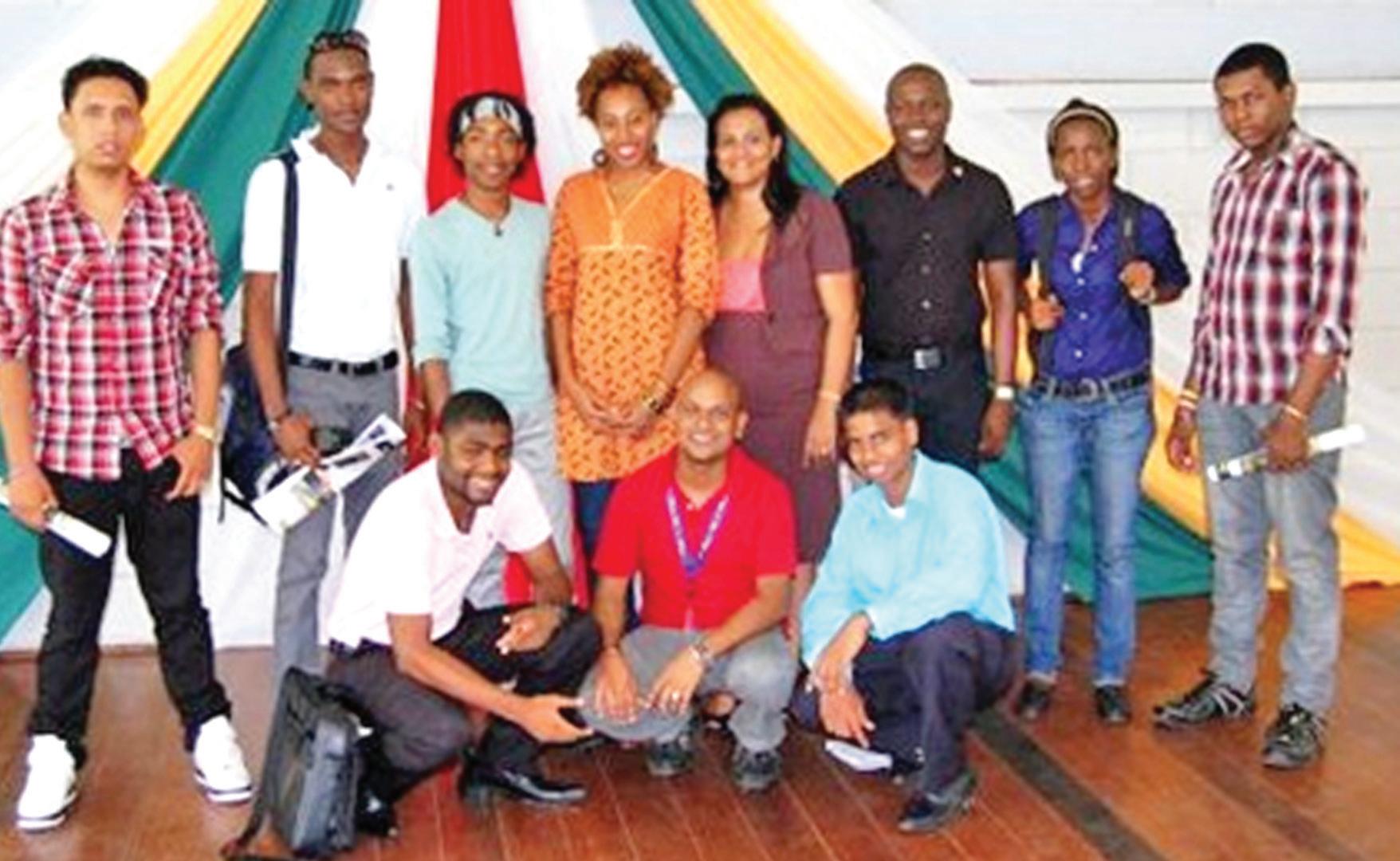
Global Youth Movement-Guyana Co-Founders Mark Ross (centre front row); Abbas Hamid (front row right); and Rondha Lam-Singh (fourth from right in back row) pose for a group shot at the launch
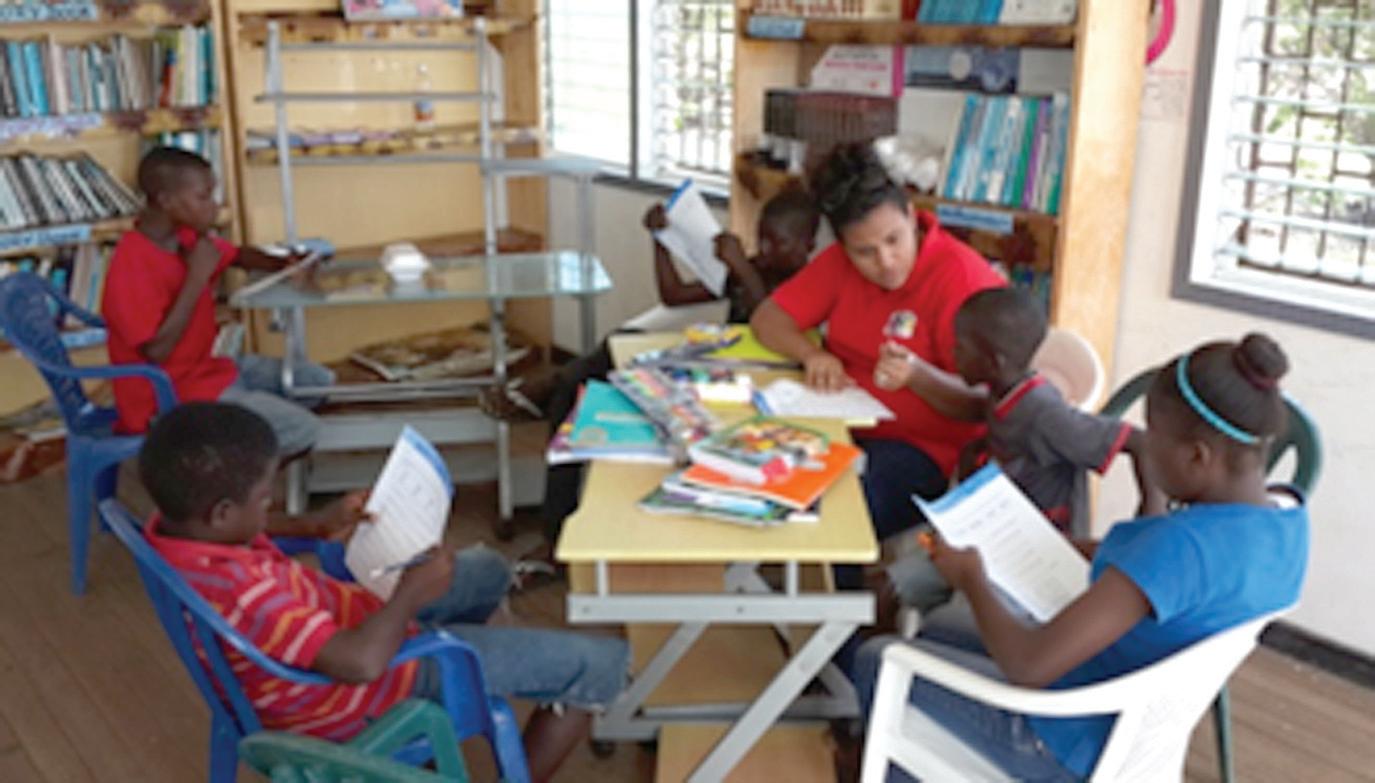
Deputy Executive Director Rondha Lam-Singh teaching
GYM-G Executive Director Mark Ross
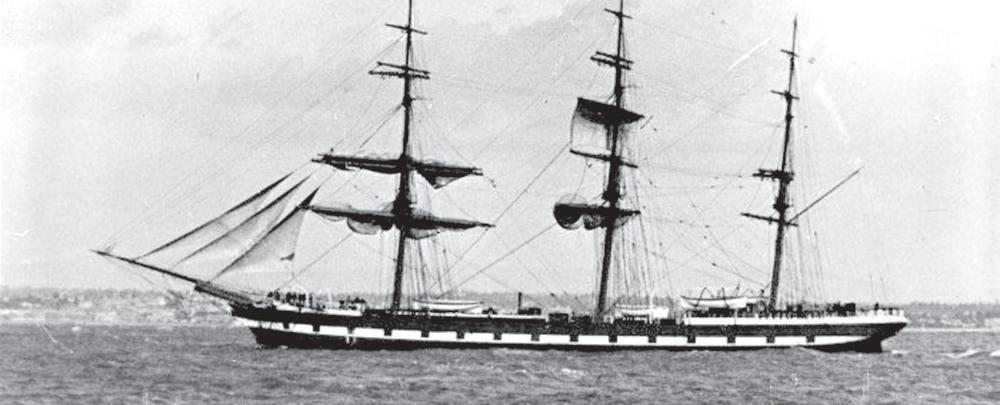
The S.S. Whitby and the S.S. Hesperus arrived at Port Georgetown, British Guiana on May 5, 1838
Queen’s College overpowered Bishops’ High two-nil as action in the Scotiabank/ Pepsi School Football Academy continued last weekend at two venues.
In Georgetown on Saturday at the Education Ministry ground on Carifesta Avenue, Queen’s College led by goals from Michael Hunter in the 15th minute and Ashmar Angel in the 42nd minute, defeated arch rivals Bishops’ High.
In Linden on last Friday, Wisburg Secondary defeated Linden Foundation females by one-nil; Cliffona Hunter scored the game’s lone goal in the 45th minute. In the male match, Wisburg Secondary defeated Linden Foundation by a 3-0 margin. Joel Isaacs scored in the 25th, Jonathan Copeland 29th and Leyon Jones in the 48th minute of play.
Meanwhile, in games played on Saturday in the mining town, New Silver City females defeated Wismar/Christianburg Secondary 1-0. Roshana Grandison scored in the 11th minute while in the male encounter New Silver City defeated Wismar/ Christianburg Secondary 3-1.
Scoring for New Silver City, Tramani Cole netted in the 31st minute, Sherwin Davidson 59th and Shane Haynes 60th minute of play. Keysham Dey scored the consolation goal for Wismar/Christianburg in the 24th minute.
Meanwhile, action continues on Sunday in the Georgetown zone with a female double header at the Education Ministry ground on Carifesta Avenue. North Georgetown Secondary will take on St George’s High from 10:00h and then New Campbellville Secondary and Christ Church will meet each other. In Linden, Mckenzie High and Linden Foundation will clash in both female and male on Friday. The females will get going at 14:30h and 16:00h. In Berbice, the fixture will resume next Thursday.
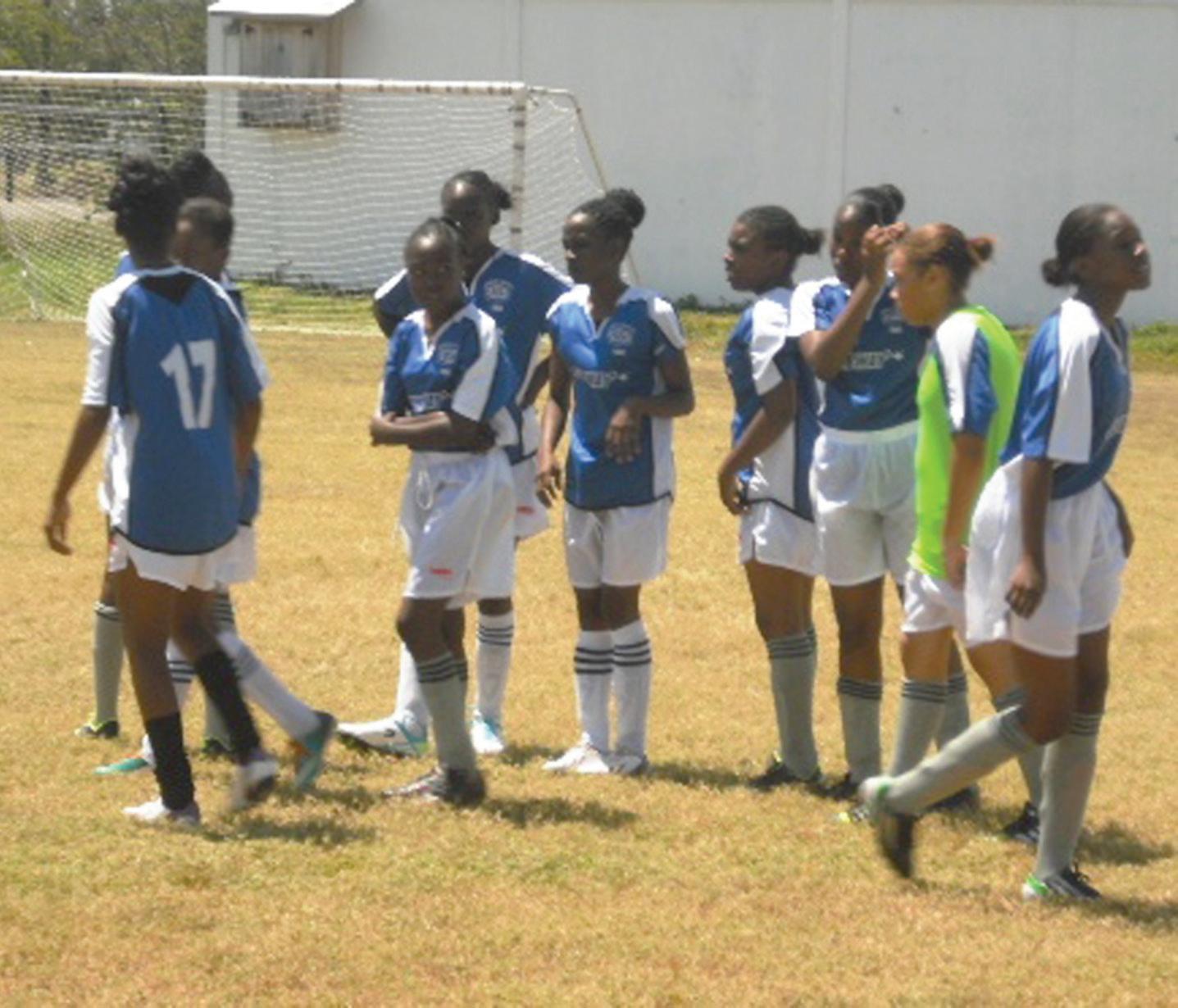
Georgetown females will be in action this weekend
Nineteen-year-old Janay Warner has won the ‘Banks Premium Beer’ Karaoke Competition in New Amsterdam beating a field of six finalists at the event held last weekend.
The one-month long competition commenced with 25 contestants but only six survived to the final. Warner, who was a surprise finalist for many, saved her best for last and captivated the overcrowded Harmony Restaurant and Tavern on Republic Road with two songs. Firstly a country western song “Jambalaya” to a thunderous applause and then returned with the Pointer Sisters “He’s so shy”.
The teenager received $25,000, a trophy and a night for two at Comfort Inn on the Corentyne.When the winner made her first appearance in the competition, she was almost counted out before she started to sing.
The bar had been set very high by some earlier performers. Shevon Castillo doing an imitation of Whitney Houston’s “Try it on my own” and Carla Johnson delivering a performance that equalled the original “How can I love again” by Mavis John.
However, that performance did not put Johnson away from Julius Caesar in the opinion of many when he equalled her performance when he performed John Legend’s “Stay with me”. Caesar had to settle for third place as he was outdone by Johnson who made no mistakes when she made her second appearance.
It took the judges a prolonged period before they came up with the winner. The audience waited patiently as they realised the difficult task that the singers had given the judges. Johnson received $15,000 while Caesar received $10,000.
The other three finalists; Shevon Castillo, Yvonne “Desiree” Benners and Julian Caesar each walked away with $5000. The competition was well received and forced singers to learn news songs as they had to perform two new songs weekly for four and one half weeks. The introduction of three judges who offered advice in their comments to singers was also an aspect of the competition which was appreciated by the many who attended.
North
The winner Janay Warner receiving her prizes from Eunica Gordon