







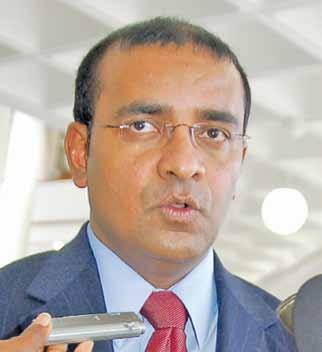
Former President Bharrat Jagdeo is one of the candidates nominated to sit on the Peoples Progress Party/ (PPP) Central Committee. National Congress Committee Chairman and Home Affairs Minister Clement Rohee said the former president will have to indicate like the other nominees whether he accepts the nomination.
“The former president as a member of the party is entitled by virtue to attend the congress… his name is on a list of nomination by a group, so he has been nominated to be elected to Central Committee,” Rohee said.
In his final term as president, President Jagdeo became a global advocate for international action to avert the worst extremes of climate change.
Jagdeo has been conferred with honorary doctorates by the Peoples’ Friendship University, Russia; TERI University, India; the University of Central Lancashire, United Kingdom; and Trent
University, Canada.
Meanwhile, Rohee said the party’s 30th congress is set for this weekend and the list of activities planned for the event is being finalised, so too is the report of the Central Committee.
The Central Committee will be looking at amendments to the party’s constitution and strategic directions by which the party will be headed for the next three years.
“Next week, we will
know the new leadership of the party for over the next three years, preparations are almost completed and the final touches are being added to the reports which will be the primary document discussed at the congress,” he said.
The party, he said has already begun to put facilities in place to accommodate members from far flung areas who are heading to Berbice for the big weekend. “This is the largest with

delegates and observers from around the country,” he added.
Rohee said the party will be paying homage to long-standing individuals who would have been members of the party for 25 or more years. He said the Credentials Committee, which is a critical component in the preparation of the congress is finalising a list of nominees for the congress.
The first meeting of the Central Committee following congress will elect the 15 members of the executive of the party.
“Groups have begun sending amendments to constitution and resolution dealing with issues of interest in their respective communities and we are preparing a programme to stimulate discussions and we will be having six workshops,” he said.
Rohee said various groups of the party have begun sending amendments to the party’s constitution and resolution dealing with issues of interest in their respective committee.
The congress will be
held under the theme, “Strengthen the party, build unity; advance democracy”.
Meanwhile, Rohee, in response to questions asked by the media, said the PPP/ C is certain of winning the next general election. He said, as a long-standing mem-
majority in Parliament if elections are called at anytime. “I am confident that the party under any condition with any issue, we always, according to the song, ready for the road,” Rohee said. However, he said this can only be accomplished through hard po-
ber of the party, he senses the adrenaline in the party to once again rule in dignity.
He believes that the party could reclaim the
litical work. “It could be accomplished. It can be accomplished, it will be accomplished, but hard work is required,” he maintained.


To contact: Guyana Times International
New York Office
106-15 Sutphin Blvd, Jamaica NY 11435
Email: guyanatimesnyint@gmail.com
Tel no: 718-658-6804
Preferred method of contact via EMAIL
Guyana Office
Ruimveldt, Georgetown, Guyana.
Tel no: (592) 227-0704, 227-0709. Fax (592) 225-8696, 227-0685
Email: guyanatimesint@gmail.com
On July 18th Detroit, once one of the top three cities in the US, filed for bankruptcy. It was a seismic event, but because it was so long in coming and occurred in the midst of the five-year national financial crisis, it has not generated the kind of response it should have.
Two months before, the Governor-appointed 'emergency financial manager’ had declared Detroit "clearly insolvent" because of its $60 million operating deficit and its overall cash shortfall of $162 million.
On June 14, he announced the city would halt payments on its $18.5 billion debt, plunging the city into default. The filing of bankruptcy, allowed under the US laws, inevitably followed.
In Guyana, this deficit position with Georgetown is chronic and one may wonder why it has not been declared bankrupt. The difference is that even though Georgetown is a devolved "township", the central Government still bails it out after every financial crisis.
In our non-federalized governance system, towns cannot declare bankruptcy. But Detroit is a metaphor for deeper structural changes that are going on in the US, and even if we did not have so many relatives and friends living in that country, because of the decisive role the US plays in global economic and political affairs, it is important that we have some understanding of the pertinent factors. It may be a harbinger of things to come in all countries striving to emulate the US path of development.
While Detroit is not the first US city or municipality to file for bankruptcy, it is the largest by far. From a population of 3 million in 1970, it has shrunk to 700,000 today and great swaths of it resemble Baghdad after the US bombing in the Gulf War and its aftermath.
Comparing it to New York, which boasts it is "the city that never sleeps", one wag described Detroit as "the city that never sweeps". 40% of its street-lamps do not function; 210 of its 317 public parks have been permanently closed; it takes an hour for police to respond to a 911 call; only a third of its ambulances are drivable; one-third of the city has been abandoned; the local realtor offers houses on sale for $1 and still finds no takers.
This is a far cry from its earlier glory days when Detroit reflected the awesome productive power of American freeenterprise system and many of the system’s undoubted initially progressive attributes.
In the first half of the 20th Century, Detroit became the centre of the giant US automobile industry, for decades, the largest in the world. That industry seemed to symbolise all that was positive in American-style capitalism and society at large.
It employed millions of workers in modern, clean factories with relatively decent wages. Fordist Production – named after the car manufacturer Henry Ford (1863-1947) – was based on the reasoning that if assembly workers were paid generous wages and benefits, then these workers would in turn be able to buy the cars that the factories were mass producing.
It sounded eminently reasonable and for a while it worked admirably. That is, until foreign carmakers, starting with Japan, began competing and the US industry's management refused to innovate. They focused on cutting wage levels, which precipitated mass cutbacks in the workforce.
The city imploded as US car sales plummeted and they began moving abroad in search of even lower wages. The Mayors and City Councils of Detroit, from the seventies, were just as unimaginative in dealing with the pressures of their declining tax base.
In the present, city dwellers can expect even worst services while the pension schemes and retirees who gave their lives to the auto industry that gave the city its moniker, "Motown" will be given short shrift behind the banks and bond holder creditors.
The lesson for us is that the free enterprise system must be tempered by social concerns.

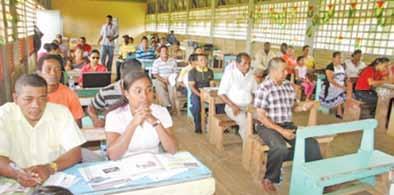
An outreach by the Office of Climate Change (OCC) to Port Kaituma, Region One on Monday, provided a platform for indigenous communities in the region to garner additional information on Guyana’s pioneer Low Carbon Development Strategy (LCDS) and for them to lend their voice to the strategy that is now in its implementation stage.
Minister of Amerindian Affairs Pauline Sukhai who was part of the team at the outreach along with members of the LCDS Multi-Stakeholder Steering Committee (MSSC) told persons gathered at the Port Kaituma Secondary School that climate change is the world’s greatest challenge and Guyana’s LCDS seeks to help in the battle and sets an international example.
Representatives of the various sub-districts and sectors in the region gathered at the school to be sensitised on the status of the strategy.
Reflecting that the LCDS is a giant initiative coming from a small country like Guyana, Minister Sukhai observed that the partnership between Guyana and Norway is the second largest such joint venture in the world. She noted that climate change is the world’s greatest challenge, “whether developed countries are addressing it as aggressively as Guyana … it is important for Guyana to continue to press on in terms of ensuring that we not only protect our forest, but use it in a very sustainable way so that our livelihoods and life forms would be sustained.”
Minister Sukhai also debunked claims that under the LCDS the ruling administration would take away Amerindian lands. She explained that their traditional way of life would remain and urged the representatives to take this news back to their villagers and to share it with their visitors.
Minister Sukhai emphasised that it is necessary that the entire population understands what the LCDS is about, and to participate and lend support to the process.
She urged that citizens all have a role to play, not only in shaping and refining the LCDS, “but we have a very critical role to play during the road map that is expressed by the LCDS. This simply means that you are part of the process, and while there is no need to coerce you, it behoves all of us to be sure we participate in this national development process that is expected to take Guyana to a better lev-
and commercial levels. This, Minister Sukhai explained, would close the gap in the reliance of fossil fuel for electricity.
Another move to deal with the gap in the availability of electrical power was for monies to be spent out of the LCDS fund to provide solar powered units to hinterland communities. This is another form of keeping within the framework of a low carbon development
el of economic achievement.”
Priority investments under the LCDS are Amaila Falls equity; Amerindian Development Fund; Amerindian land titling; MSE and vulnerable groups sustainable livelihoods; International Centre for Biodiversity Research and Cunha Canal Rehabilitation.
She further stated that other key issues include the three largest forest basins which continue to be critical to the world’s existence. Guyana being part of one of these basins in the Amazon forest, is why there should be no holds barred with respect to participating in the project.
In the strategy, it is noted that Guyana would have to develop adaptation measures, thus the road map about adapting to climate change and its impact on the country which would enable the reduction of the carbon footprint. This would be facilitated by the development of areas which would chart a path of a low carbon economy.
One of the things done towards this purpose is the development of the Amaila Falls Hydro Power Project to meet the increased demand for electricity both at the residential
path, and has had a positive impact on the lives of the communities in the hinterland.
Minister Sukhai also mentioned the advancement of the Community Development Plans (CDPs) which are progressing along with the demarcation of communities. She noted that the many economic activities in the villages should be expanded and new projects should be embarked upon and funding would be provided.
Ashton Simon, member of the MSSC and leader of the National Amerindian Development Foundation observed that things are happening in the world regarding climate change and Guyana is doing a good job regarding the battle.
David James, attorney- atlaw and also a member of the MSSC who was also at the outreach urged the gathering to continue to work together in the battle against climate change. “It is important and the mitigating effects can affect us all,” he observed. Under the LCDS, the clause about free, prior and informed consent regarding Amerindian communities would continue to be maintained, he told the Amerindian leaders.




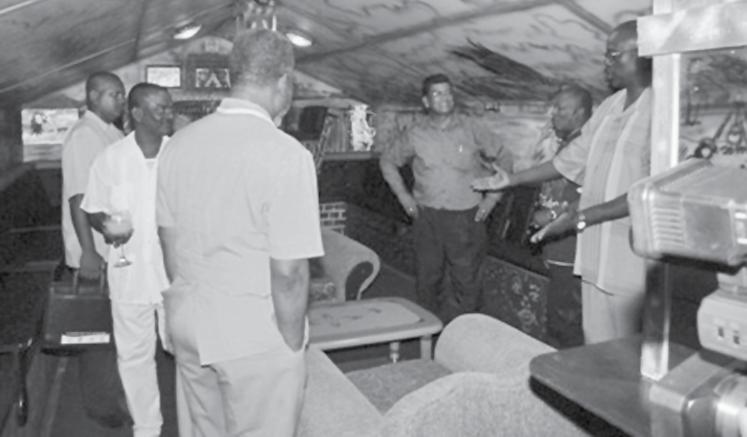
Government has created an enabling environment that encourages investment both local and foreign and will continue to support those who wish to invest locally, Prime Minister Samuel Hinds said last Friday as he formally opened the Bristol Mall in New Amsterdam, Berbice.
The owner of the multi-purpose establishment, Charles Bristol, was congratulated by the Prime Minister for his perseverance over the last 30 years to make his dream a reality, and for overcoming any bureaucratic hurdles he
may have faced.
The re-migrant was also cited as an example for others to follow by the prime minister, who described the multi-million dollar investment as a timely one for the Berbice community.
“The life we live is the life we make for ourselves. This is what government is about; helping all persons regardless of their race, creed or religion, to develop themselves, and in so doing, develop the country. We want growth and development for all,” the Prime Minister said. Entrepreneur Bristol,
in brief remarks said the multi-storied building was the culmination of a dream he harboured as he worked long hours, saving his funds to eventually make it a reality. He thanked the Prime Minister for attending the ceremony, stating that it was an indication of government’s recognition of the role re-migrants can play locally to boost development and the economy.
He also expressed gratitude to all those who helped to make the business a reality and pledged to offer first class service in the Bristol Lounge and the Canje

Pheasant Restaurant, situated on the upper floors. The lower floors have been rented to persons for businesses.
Vice Chairman of the Berbice Chamber of Commerce, Mr Bhupaul Jhagroo also welcomed the new business and re-
minded the owner of the need to ensure that customers are always offered the best service possible.
Farming must be seen as a business – U.S. specialist
Rutgers University Professor, Dr Robin Brumfield said Guyanese farmers must begin applying entrepreneurial techniques and view their production enterprises as businesses.
Brumfield, a specialist in farm financial management and greenhouse production, was invited by Partners of the Americas’ Farmerto-Farmer programme to conduct a workshop with female shade house producers on the “Cost of Production”. She will also provide training for field staff and shade house vegetable producers on calculating costs, returns and profitability; and business planning for niche marketing during her July 28 to August 11 assignment.
Business plans
In an exclusive interview with Guyana TimesInternational on Tuesday, Brumfield said research has shown that persons with business plans are seven times more likely to succeed. With this in mind, she intends to impress upon the minds of local farmers the importance of developing such a plan.
“We are teaching them to think of their shade houses as a business and so we are helping them learn how to develop those plans,” Dr Brumfield explained.
She noted that reducing the cost of production is crucial to any food producer if they are to make a profit and remain in business for the long-term.
Basically, shadehouse producers in Guyana are small-scale farmers who produce fruits and veg-

etables for personal use, but may market the excess.
“So for those doing subsistence farming, it can impact their revenue and it gives them income to purchase other types of food and the necessities they need,” Brumfield detailed.
She added that given Guyana’s proximity to South America and the Caribbean, the country should capitalise on its land space, soil type, and favourable climate to become a major exporter.
“It’s certainly an area that can be considered because the United States get lots of imports from Latin American countries, so there’s no reason why Guyana shouldn’t capitalise on this and begin producing on a large scale,” the professor said.
She suggested forming production co-ops that can market products collectively, especially in the off-peak seasons in North America.
She stressed that women have a huge contribution to agriculture worldwide and small farms are generally family businesses run mostly by rural couples, with the woman performing book-keeping duties.
Brumfield said she discovered that as farm-
ers move further into direct marketing, women tend to take the lead role. “So, it is extremely important, because if the women succeed it means well for the entire family and the next generation,” the specialist pointed out. However, Guyanese have not been concerned with expanding smallscale farms, so the application of techniques imparted by Brumfield can benefit not only subsistent farmers but gear them up for large-scale farming.
She revealed that shadehouse producers are growing mostly fruits and vegetables, which have been proven by research to be effective in maintaining a healthy diet.
As such, one of the key components of a business plan is incorporated in the value of the product, which in this case helps to create and promote the health of a community.
“In the U. S., we have gone too far with the fast food, processed foods and eating unhealthy and we have developed various health issues, so in addition to making commercial livelihood, it is important to keep a healthy population and keep healthcare costs down,” Brumfield explained.
For her, eating healthy is deeply personal as it has removed her from a life of pain and prescription medicine.
Brumfield related how she became ill to the point of disability five years ago and after changing her diet on the advice of a doctor, she was amazed at the results.
CriCket and Carnival!
The
beauty and charisma of the Caribbean was on full display...
The inaugural Limacol Caribbean Premier League (LCPL) T20 tournament announced itself to the world with a kaleidoscope of vibrant colours, smiling school children, beautiful dancers, screaming fans, pulsating music, fireworks and pyrotechnics that was streamed live on the Limacol CPL website (www.cplt20.com) and broadcast around the globe.
The beauty and charisma of the Caribbean was on full display as a caravan of carnival revelers made their way around Kensington Oval in Barbados in front of a sold out crowd, swaying to soca music, waving flags and celebrating the onset of the greatest party in sport.
A crowd favourite was the 450 awestruck, costumed junior revellers who paraded and danced alongside 90 school children wearing the kits of the six franchise teams, as the fans waved their flags and cheered. The evening’s only moment of ceremony was the playing of the six countries’
national anthems by a steel band which elicited cheers from the very excited crowd.
Highlights included the performance of the theme song “How We Play” by soca and dancehall artistes KES and Konshens and short concerts from both Konshens and soca diva Alison Hinds who left the crowd wanting more.
The striking Limacol Caribbean Premier League ‘Roots’ trophy was also unveiled by Denis O’Brien, Chairman of Digicel and Owner of the Limacol Caribbean Premier League and Dave Cameron, President of the West Indies Cricket Board who was joined by Sir Garfield Sobers, LCPL Ambassador, Ajmal Khan, Founder of the Limacol Caribbean Premier League and Chairman of Verus International and LCPL CEO Damien O’Donohoe.
The ceremony was followed by a very exciting first match which saw the host team Barbados Tridents emerge victorious over the St Lucia Zouks, winning by 17 runs (169-5).
There is now some amount of relief for stakeholders in the mining sector as the market price for the gold has shown an increase steadily around US$ 1330 per ounce.
Natural Resources and Environment Minister Robert Persaud during a recent interview said the “reality has shifted, we were anxious as well as the mining community and we share that anxiety, as to the unpredictable nature of gold prices given the importance of this ministry and the investments made,” the Government Information Agency (GINA) reported.
He said discussions are ongoing to come up with measures to cushion the situation and these discussions will continue, but the Natural Resources and Environment Ministry will have to establish a “floor price”. There will be need for a standard or cut off price for gold. Once those measures are approved by the government, they will be activated.
There are some current measures which are being built in, such as
the royalty rate which states that there will be a two per cent drop in the rate, if the price hits below US$ 1000. The minister said, “We are happy the price has bounced back up, not to the levels they were, but certainly to a level that I believe will bring about some relief and comfort. Already we are seeing some positive signs in this regard from the miners, given the importance of gold to the Gross Domestic Product (GDP).”
He added that the gold market is a very unpredictable one as it depends on a number of factors, and the government of Guyana does not control any of those. When the price drops, the entire global market stands to suffer. “The market is unpredictable; it is difficult for one to determine whether there will be an increase or decrease in the price. It’s like a gamble, taking a chance.”
The recent rebound in gold is only transitory. From estimation, on the current levels, bullion prices may see another 25 per cent to 30 per cent correction.
Among the rea-
sons for this is the way the price tends to spike when there are serious economic, financial and geopolitical risks in the global economy. It must be noted that gold performs best when there is a risk of high inflation, as its popularity as a store of value increases.
Minster Persaud said “what we have to do is to continue to work with the sector, manage the cost, ensure there is greater efficiency, greater recovery and to ensure what is done is environmentally, socially and economically viable”.
When the price plummets, it provides oppor-
tunities for operators to introspect on the state of their operations, the business models which they have developed and have been using because they have been premising them on high gold prices and certainly it causes some level of reevaluation, the minister stated. If operators stop basing their business models on high gold prices alone, they will be more prepared for an unexpected drop in the market.
There will be better planning and better production, so if the market prices drop, they will not suffer much due to better preparations.
Earlier this month, the Natural Resources and the Environment Ministry and its regulatory agencies in the mining sector, the Guyana Geology and Mines Commission (GGMC) and the Guyana Gold Board met with the Guyana Gold and Diamond Miners Association (GGDMA) during which several proposals were submitted and discussed for consideration to mitigate the falling gold prices.

Former Chief Elections Officer
Gocool Boodoo said allegations against him concerning the deliberate adjustments of the November 28, 2011 election results were a clear attempt to discredit his character and dissuade commissioners from retaining him.
Boodoo, in a letter issued to the media, dismissed the accusations and insisted that there was nothing “irregular” about his tabulation of the results of the 2011 general elections. The former elections officer stated that while he noted all the recent ramblings about the manipulation

to the media.
In the letter, Boodoo remarked: “For the entire period leading up to the declaration, the OAS had a representative at my desk overlooking all that was being done.”
Boodoo maintained that

of numbers and a change of formula, an observer from the Organisation of American States (OAS) was present throughout the process.
When asked to comment on Boodoo’s statement, GECOM Chairman, Dr Steve Surujbally said he was in the process of preparing a written response, which would be released
nothing was irregular about the process as the commissioners were also present.
“This is a clear attempt to discredit me, so that commissioners would not support my retention. Nevertheless, it did not work as was expected, since those who were aware of the facts could not have been moved,” Boodoo said.
Though failing to address the manner in which the tabulation was arrived at, Boodoo drew heavily on the presence of the OAS official as his main source of credibility.
In a statement on the
Boodoo also pointed fingers in the direction of the information technology section of the Guyana Elections Commissions (GECOM), stating that the results he presented to the nation was the one issued to him by the IT people.
“The fact of the matter is that the results presented to the commission for ratification was what was presented to me by the information technology section,” he stressed.
Surujbally’s vote was the tie-breaker that sealed Boodoo’s fate when the quorum of commissioners was deadlocked on a decision.

2011 general elections, the OAS revealed that the overall process had been conducted fairly.
However, while the OAS mission maintained a 24-hour presence in the tabulation centre up to the time of the publicly scheduled results declaration, it claimed that the level of transparency and access to information was limited.
Three governmentappointed commissioners, Mahmood Shaw, Dr Keshav Mangal, and Jaya Manickchand voted in favour of having Boodoo retained as chief elections officer, while the opposition-appointed commissioners in the persons of Vincent Alexander, Charles Corbin, and Sandra Jones voted against him.
Former Public Works Minister
Shiv Sahai
Naraine has passed away at the age of 89 in Toronto, Canada where he was residing. A release from the Public Works Ministry expressed condolences and sadness at his passing. The Works Ministry and Opposition Leader David Granger on Tuesday evening expressed regret at his passing while remembering his good works and contributions to Guyana’s development.
In its statement to the media, the ministry recalled that the former senior minister of works and transport was a graduate of London University and was one of the first Guyanese to study at Delft University
of Technology in the Netherlands in the field of sea defence.
Granger, in a telephone interview with Guyana Times International , said Naraine’s passing is a loss that will be hard for Guyana to fathom. He said the former minister of the then PNC government was one of the most distinguished engineers the country ever had.
“Mr Naraine came into the PNC, also became high commissioner… he was very reserved, dignified, respectful and Guyanese to the bone,” the PNCR leader noted.
The PNCR leader said during Naraine’s tenure he contributed in a major way to building the infrastructure and road networks in
Naraine held various positions in the Public Works Department and the Drainage and Irrigation Department, moving from district engineer in 1951 to director of drainage and irrigation in 1960 to 1963.
He also was designated the chief works and hydraulics officer from 1963-1970 and technical specialist in the Economic Development Ministry from 1971-1972.
The late Naraine became a Member of Parliament in the early seventies. Under the leadership of Linden Forbes Burnham, of the People’s National Congress, he held the portfolio of housing minister during the years 1972-1974. He was also the vice pres-

By Anu Dev
Cricket’s always been one of the things that has brought us together as a Caribbean people –never mind that it’s the source of some of the fiercest arguments you can imagine.
You know the most passionate arguments are with families!! Now with the Limacol CPL starting next week, I’m sure the words around cricket will be flying faster and more furiously.
Caribbean people, after all are acknowledged across the globe for “knowing their cricket”. We have a reputation to maintain!!! And we now have our own individual teams!! One thing I really like about this tournament (apart from the fact that we have our own team and we’re getting games without begging anybody) is that many young, local cricketers are getting a chance to play. This opportunity will both give them a chance to experience what it’s like playing against international players and also a chance to shine and be recognised.
With the other tournaments like the IPL, CLT20, and Australia’s Big Bash, there are so many new players that impress us who eventually make it onto the national team. Hopefully the same will happen for the West Indies – we’ll discover some new talent to revive the current team.
ident of works and transport and later social infrastructure.
The ministry said that Naraine made significant contributions to Guyana’s development under the various portfolios.
Some of these included the construction of the Sherima Crossing, Allsopp Point and the Upper Mazaruni Road to facilitate connections to the hinterland and the Linden-Mabura Road, with a direct link to Omai Gold Mines.
In addition to this, it was reported that Naraine was instrumental in setting up the consulting engineering firm, SKRN Engineering. “He was succeeded in the field of engineering by his two sons, Ravi Naraine and Dr Krishna Naraine.”
As some of my friends were saying the other night, we might as well have supported Pakistan in the last couple of matches, seeing as there were no Guyanese on the team. Maybe that’s why WI lost? But we supported the West Indies anyway, because we identify with the West Indies – we’re West Indians. We mightn’t strictly be a part of the West Indies geographically – we’re smack on top of the AMAZON. But culturally and historically, we’re more West Indian that some of the islands.
We’re cut from the same cloth, we all survived colonialism, we used cricket as our way of beating the rulers at their own game. So we’ll support the West Indies – they’re our team, but with them snubbing and cutting out our Guyanese players, it’s becoming increasingly difficult not to feel a bit miffed. But with the CPL, we’re rooting for something else entirely.
We’re rooting for our country. The Guyana Amazon Warriors is OUR TEAM!!! It’s Guyana versus Trinidad, or Guyana versus Barbados – not West Indies against the rest of the world. It’s a powerful thing, this nationalistic feeling. It’s a whole new adrenaline rush when it’s your country’s team that wins. It’s your country’s flag that you’re waving; your country’s colours that the players are wearing; it’s you, the Guyanese people who are being represented. All within the Caribbean family of course!!
In Guyana, we don’t have trouble having soldout matches, we’re always starved for more cricket. I’m sure this set of matches in the Limacol CPL will be the same. It’s a wonderful opportunity for families or friends to hang out together to enjoy a sport that has brought together so many generations of sports enthusiasts. They scoffed at the new slam-bam format in the beginning – but now that T20 has brought in so many new fans, no one’s scoffing any more. The games begin on Tuesday; may the best team (Guyana Amazon Warriors) win.
Dear Editor,
A 50-year-old woman from Annai, North Rupununi, Region Nine is now able to see again after three years following intervention by the health minister.
A few years ago, the International Centre for Eye Health, London School of Hygiene and Tropical Medicine in London revealed the im-
portance of restored eyesight at the psychological level. The researchers investigated the association between visual impairment and depression and anxiety in older people in Britain.
So extensive was the research, that some 13,900 were engaged in the project.
The outcome as regards the levels of de-
pression and anxiety was quite startling.
Visually impaired people had a higher prevalence of depression compared with people with good vision.
Of visually impaired older people, 13.5 per cent were depressed, compared with 4.6 per cent of people with good vision. Although cause and effect cannot be es-
Dear Editor,
We have a few problems in the police force and we in Guyana are not unique in this at all. Worldwide, police, being mere human beings after all, do malfunction and always steps have to be taken, lest this should become widespread and chronic.
The Guyana Police Force (GPF) is soon to electronically monitor its mobile patrols, to ensure they perform assigned duties in the rec-
ommended manner.
The findings are quite copious where police misconduct is concerned. It continues throughout the world, often without any oversight, accountability or justice. This must not become a sick in Guyana.
In this vein, a critical tool used in some places for documenting misconduct, seeking redress, and advancing reform efforts is the street-level use of video monitoring, even by civil society.
The innovation of social networks and information-sharing platforms, together with the accessibility of audiovideo technology, have all come together to enhance the ability of everyday civilians.
I am afraid that if the police are not monitored, things can get out of hand. So it is very much in order that the leaders of the GPF start this themselves.
Yours sincerely, Rhonda McMorris
Dear Editor, Guyana has made signifi cant progress on issues re lating to migration, sexual reproductive health, the vul nerable population and the elderly. My concern, how ever, is specifically teenage pregnancy.
Judging from discussions I had with two social workers and one doctor, teenage abortions are on the increase. Most of these abortions are done safely and, in this re gard, I feel a bit bet ter that their health is not in direct and immediate jeopardy.
Guyana needs to provide a better framework for our teenagers, who are still in the process of obtaining their education. People have ways of doing whatever they

want to do, but that does not mean that we turn a blind eye and a deaf ear to reality.
Many students are on the road, returning home from lessons, and the place is almost full night. It is as though we are accommodating them to do all kinds of after-dark activities.
There must be a cutoff hour for lessons. Also, many of the private schools never follow the term system of the Education Ministry. If I am deemed old fashioned, I do not care – the bottom line for me is that we have to educate our youths and save them from moral misfortunes.
tablished in a cross-sectional study, it is plausible that people with visual impairment are more likely to experience problems with functioning, which in turn leads to depression.
So, this woman, in many ways, has been delivered.
Most people think that being blind is just about not seeing. It real-
ly cuts deeper. Through intensive work by the surgeons at the Port Mourant Ophthalmology Hospital, her sight problem was re-analysed and now it is almost totally fixed. She has just one more operation to go through and then she will be back to normal vision.
The Port Mourant
Ophthalmology Hospital was constructed to the tune of US$ 13 million with the objective of offering free eye care service to the people of Guyana, in addition to foreigners.
Since it was declared opened on July 25, 2009, hundreds of Guyanese have been treated. Yours faithfully, Asif Mohamed
Dear Editor, I am glad that today there is a noticeable kind of agricultural drive in the world. In fact, it is universally accepted that agriculture is really the cornerstone of most developing countries’ economies.
It is a fact that we must all internalise, particularly Guyanese, since we have the fertile land mass to invest in farming, both small and large scale. Unfortunately, agriculture alone is no longer able to provide a reliable livelihood for the growing populations in many of these countries.
Alternative or additional income generating opportunities are most needed, to support the millions of poor families worldwide, as many of them can no longer support their livelihoods, from the land alone. This is where agro-processing comes in.
Thinking of Guyana now, we have to capitalise on the many farm products we so stupidly waste. We have to turn primary agricultural products into other com-
modities for personal use and marketing, for it is in this way, we will go to that next and necessary level. So I am very excited that the Guyana School of Agriculture (GSA) is set to introduce agro-processing from the new school year.
I am very aware of many constraints that can limit the further development of small-scale food processing in developing countries. Starting and developing a small business in a developing country is no easy task.
Entrepreneurs face many challenges, especially with the uncertainty that exists over access to finance, advice and information, and reliable markets. Government must offer both technical assistance and business advice. It must also support and extend services as much as possible. Nothing will be overnight in terms of success, but we have to make a start.
Yours truly, Emile Wiltshire
Huggins
Yours sincerely, Fiona
needs to tighten up its immigration
Dear Editor,
A total of 613 persons, mostly Brazilians, are being asked to report to the Immigration Division of the Home Affairs Ministry in relation to their immigration approval documents.
In the past, many Guyanese working in Caribbean countries have been caught and prosecuted when they were caught in situations like
these Brazilians and other foreigners are at the moment.
Yet, I hardly hear or read of these outsiders and their being prosecuted. I recall in April of this year, how President Donald Ramotar really sought to assure foreign nationals living and working in Guyana. He almost mandated his administration to minimise delays in the processing
of immigration applications and work permits and also to ensure their safety.
In my view, a whole lot more needs to be done. We have too many criminal activities in the hinterland. Also, if our borders are porous and people come over illegally, let them know that they are at their own peril.
Yours truly, Bernard Joseph


The Tourism Ministry, spearheading the Number 63 Beach Restoration Project in Region Six, has already crafted plans to improve facilities there, according to Director of the Guyana Tourism Authority (GTA), Mr. Indranauth Haralsingh.
Speaking to the media at the GTA Headquarters at Sophia, Greater Georgetown Friday, Haralsingh said Government was doing its part in ensuring the beach is made into a more advanced tourism hotspot.
He said that quite recently, a new management steering committee has been established with Mr. Derrick Cummings as head. Cummings represents the Tourism Ministry and heads the Small Business Bureau. Other members of the committee comprise representatives from the Chambers of Commerce operating in East Berbice, includ-
ing the Upper Corentyne Chamber of Commerce; the Regional Democratic Council of Region Six; the Corriverton Town Council; the Guyana Tourism Authority (GTA); the Guyana Police Force (GPF), the Sea Defence Department, GuySuCo, and the Tourism and Hospitality Association of Guyana (THAG).
He pointed out that one of the most crucial issues facing the committee is that of persons littering the beach and tarnishing its surroundings; and he said that a priority task is that of encouraging persons to cease littering the place and, instead, carry trash bags in which to keep their garbage.
He conceded that getting patrons to stop littering is a great challenge for the Number 63 Beach Management Steering Committee.
Haralsingh said it would be useful if persons who use the beach are willing to cooperate
and assist in maintaining its sanitation. He noted that when massive events are kept at the beach, food and beverage companies which take up places have a responsibility to ensure that they provide bags and bins for proper disposal of garbage, as they should bear in mind their corporate responsibility to the environment.
He said he is hoping the beach committee would start making this idea appealing to persons.
He said further that the Government is looking to enact legislation to protect that beach as a special area, because the matter of litter and solid waste disposal is of utmost importance.
Haralsingh pointed to the investment opportunities that exist at the #63 Beach, and urged that the committee work towards developing an action plan that would take advantage of those opportunities.
He said there are many opportunities that exist for investment at the #63 Beach facility, inclusive of jet skiing, water-based activities, accommodation, camping, tours and sporting activities.
He also said that the beach is not merely a government-run entity or attraction, but the private sector committee has a number of opportunities to provide needed money-making facilities at the beach; and some of those opportunities include providing pavilions, benabs, toilet facilities, changing rooms, showers etc.
Haralsingh noted that the issue of zoning at the beach is also being looked at, whereby the beach would be divided into zones for different purposes. The zones would be a bonus, as they would comprise a quiet zone (used for worshipping and religious activities); kids’ zone; entertainment zone etc.

By Jainarine Deonauth
According to statistics from the Health Ministry in Guyana, chronic non-communicable diseases (NCDs) such as heart diseases, stroke, diabetes, cancer, lung diseases, and neo-psychiatric disorders are responsible for almost 60 per cent of deaths in the country annually. This is indeed quite shocking; and now, more than ever, stakeholders in the health sector and funding partners must step up and take bold actions needed to tackle NCDs.
Every day people’s lives are cut short and more and more persons are becoming disabled as a result of NCDs. More persons are getting blind and are becoming physically disabled because of amputations. It should be stated that official statistics confirm that the number one cause of disability in the Caribbean Community (Caricom) region is NCDs.
Additionally, NCDs are one of the major causes of poverty globally. Not only are individuals and families being impoverished, there is a direct impact on the economy. NCDs have an equally critical impact on productivity, as we lose victims who have developed years of experience in various fields of development.
Guyana cannot afford to lose its best resource in this manner; hence, we are encouraged by the fact that the Health Ministry has placed the issue on top of its agenda in its implementation of the 2013 Strategic Plan.
It should be mentioned that the global burden of NCDs – mainly cardiovascular diseases, cancers, diabetes, and chronic lung diseases – constitutes one of the major challenges for development in the 21st century. The vast majority (86 per cent) of deaths between the ages of 30 and 70 from these diseases occur in low- and middle-income countries, representing 12 million premature deaths per year. Most of these deaths are linked to common risk factors, namely tobacco use, harmful use of alcohol, unhealthy diet, and lack of physical activity.
The World Health Organisation (WHO) recently reported that the Economic and Social Council (ECOSOC) adopted a resolution requesting that the United Nations (UN) secretary general establish a UN Interagency Task Force on the Prevention and Control of Non-communicable Diseases. The task force will be convened and led by WHO and will be created by expanding the mandate of the existing UN Ad Hoc Interagency Task Force on Tobacco Control and the work to support the implementation of the WHO Framework Convention on Tobacco Control.
It is expected that the task force will coordinate the activities of all UN organisations to implement the WHO Global Action Plan for the Prevention and Control of NCDs 2013- 2020, adopted by the World Health Assembly in May 2013. This is important because new WHO estimates show that three of the four leading causes of death worldwide are linked to non-communicable diseases, specifically cardiovascular diseases and chronic obstructive pulmonary disease.
The action plan aims to achieve nine voluntary global targets, including a 25 per cent reduction in premature mortality from cardiovascular diseases, cancer, diabetes, and chronic respiratory diseases by 2025. The plan provides a road map and a menu of policy options for member states, WHO, other UN organisations, NGOs and private sector entities to implement collectively.
Heads of state in 2011 recognised the role and responsibility of governments in reducing NCDs through the UN Political Declaration on the Prevention and Control of NCDs. With this resolution, ECOSOC is following up on those commitments. It is expected that WHO will convene a formal meeting with member states later this year to complete the work on a draft terms of reference for the UN Task Force on NCDs.
The task force will provide developing countries with policy advice, technical assistance and capacity building.
It will share lessons learned in mobilising different sectors of government to respond to NCDs since it is necessary for other non-ealth sectors to also take action in this regard.

Satiricus didn’t think he was a coward. But like the big, bad villain in the Harry Potter books, there were certain persons’ names he just couldn’t afford to mention. It’s not that they could put a hex on him or something, but “he-who-could-notbe-mentioned” could put a squeeze on his runnings.
OK… OK, it was just a matter of getting some free beers and cutters, but hey, Satiricus wasn’t ashamed about being a “material guy”. Even though he talked the working class talk, he still liked his perks. Especially for free.
Satiricus had joined the boys at the back street rum-shop – as he’d done for God knows how many years. Why! He’d followed his old man into the dive as a boy and as they faded out, their sons had followed suit. Man! They’d gone through so much together. He remembered the times when cigarettes were so hard to come by, they all had to take a pull from the same cigarette. And some of those chaps never liked to brush their teeth.
But after decades of watching everybody’s back, there started to be a change in the fellas’ attitude, whenever he came to have a drink. OK, Satiricus had come into some money through his father-in-law, but that hadn’t changed him so much that they should begin to insult him. He still liked his free beer.
All he’d done was insist they should call him “Mr Satiricus” and asked the bartender to serve him only wine.
Even though he felt superior to the chaps, he didn’t let them know. He was shocked they felt offended when he helped them by explaining things to them. After all, he knew better. And he couldn’t help quoting books he really didn’t understand. Surely, they shouldn’t have minded that he never listened to their opinions. They were so uninformed!! Then came “he-who-could-not-be-mentioned” into the group. What an upstart! He just didn’t know his place. Why, he encouraged fellas whose fathers weren’t founding members like his, to think they should have opinions!!! No wonder they all liked him and agreed with him on everything. It was so humiliating. Worse than that he allowed them to become so familiar with him. Satiricus preferred people to know their place.
Well, the day came when Satiricus knew he had to make a decision. The boys were all gathered at the rum shop. Satiricus reached out to the cutters’ bowl. It was fried banga mary – Satiricus’ favourite. And Tony knocked his hand away! Said Satiricus hadn’t paid and he couldn’t have any more freeness.
Imagine the nerve of this low-class unwashed! Satiricus let them have it. They were all ungrateful! Look how he’d given them the benefit of his company and shared his wit and wisdom all these years. He stormed out and went home.
He was so angry, he couldn’t speak. It’s not easy having a plate of banga mary pulled away from you. He was traumatised, but he vowed he would never return to the backstreet rum shop.
It was all the work of “he-who-he-couldnot-be-mentioned”. Satiricus mourned his loss of “freeness”.

Board Chairman of the Guyana Bank for Trade and Industry (GBTI) Ltd, Senior Counsel Mr. Robin Stoby, has pegged the current state of political gridlock as a constraint on economic progress. GBTI, with a capital base of nearly $88B, is the largest Guyanese-owned bank.
In his half-yearly report to shareholders, Mr. Stoby cited the parliamentary imbroglios, particularly over the National Budget estimates and the antimoney laundering legislation, as being among a number of factors responsible for a recent “noticeable slowdown in our economy.”
Along with a delayed signing of a new contract with Venezuela to supply them with rice and paddy, low production of sugar in the first crop of 2013, and a decline in gold prices in the face of an upswing in the US economy, he says that “a National Budget that was cut by $31B…has put some pressure on exchange rate stability.”
Reports indicate that the exchange rate has fallen as low as GYD$209 Guyana dollars to one US dollar.
Locked horns
Earlier this year, the Opposition, which holds a one-seat majority in the legislature, piloted cuts to a number of budgetary allocations, with the most high profile of these being to the government’s flagship projects, the Low Carbon Development Strategy, under which the embattled Amaila Falls Hydroelectric Project falls, the Cheddi Jagan International Airport upgrade, and the Specialty Hospital at Liliendaal.
The opposition parties and the government have locked horns repeatedly in the legislature over these projects, with the former charging the government of
not being transparent enough with the details of these projects, and the government accusing its political rivals as being obstructionist.
In his address at the opening of the recently concluded Fourth International Building Expo, the Chairman of the Private Sector Commission had said that the cuts to the allocations for these projects had placed a damper on the construction sector, the country’s fourth largest contributor to the Gross Domestic Product (GDP).
Money Laundering Stoby also bemoaned
the lack of parliamentary consensus on passing the Anti-Money Laundering (AML) and Countering the Financing of Terrorism (CFT) Act.
Passage of the bills is mandatory to meeting the requirements set us by the regional regulatory body, the Caribbean Financial Action Task Force (CFATF). “This [not passing the bills] has very serious implications for our banks and, by extension, our customers who make and receive international payments,” he warned.
The government had tabled the bill on April 22nd of this year, just over a month before a
May 27th deadline set by the CFATF for Guyana to meet its international financial obligations.
The opposition parties chose to refer the bills to a select committee for further scrutiny. The smaller of the two opposition parties, the Alliance For Change (AFC), also insisted on the government establishing the Public Procurement Commission as well as its reversing the presidential veto on two opposition-piloted bills. Guyana missed the deadline and has been given until November of this year to pass the AML-CFT Act.

Minister of Home Affairs, Clement Rohee speaking last week on Guyana’s perspective on the Trafficking In Persons (TIP) report by the US State Department which placed Guyana and several other Caribbean countries on the tier two watch list, reiterated that the TIP Task Force is convinced that the report was a complete misrepresentation of the Guyana situation.
The Minister, speaking on a programme on the National Communications Network, explained that Guyana’s response took some time because the TIP Task Force dissected the report so as to make a comprehensive response which required a complete analysis. Having done that, the Task Force was convinced that the report was a complete twisting of the true situation.
He added that President Donald Ramotar had also made reference to the TIP report at an Investment Conference held at the Guyana International Conference Centre in late June. “So we took guidance from President Ramotar’s statement, Cabinet, and that helped to influence what we formulated as a response to the US State Department,” the Minister explained.
At the end of the report, the Task Force stat-
ed that it would no longer be cooperating with the US Embassy in Guyana with respect to TIP. The basis for that is that “we have been faithfully, and in a very dedicated and committed manner, fulfilling all that we know to be our obligations… concurrently whenever
“When we look at the transnational organised crimes, drug trafficking, we and the international community basically agree that Guyana is a trans-shipment point for drugs…in this country there are no drug labs, none have been discovered the only thing that
which is not an artificial/ cover-up position or one where evidence is being stifled. “Our national position which is based on information collected by government agencies and departments is that TIP is no worse than smuggling of firearms and drugs in and
could do about that.
However, while they continue to do their tasks, Guyana will also continue its duties with regards to TIP.
Importantly, there is a national TIP report that is published every year and tells those who are interested or

the US Embassy circulates a questionnaire to the Government in order for us to complete on issues which they would have an interest in, we would do so, and when we send it back and the reports are published, there is very little reference to the government’s position,” Minister Rohee posited.
With regards to Guyana’s new TIP rating and its international image, Minister Rohee recognised that this would depend on who is making it a big issue.
we find here is the cultivation of marijuana,” he illustrated.
In acknowledgement of this, the government has formulated policies and a National Drug Strategy Master Plan to address the drug problem from that perspective.
With respect to firearms being smuggled into the country there are also programmes and policies to address that as well.
He emphasised that Guyana has to maintain its national position
out of Guyana… in fact, it seems to us, based on the intelligence that we receive, that it is not as worse as those two other issues,” the Minister pointed out.
With regards to the exclusion of information provided by the government to the US State Department, Minister Rohee indicated that the government nor the Task Force cannot stop them from assessing any government since if they consider that to be their responsibility there is nothing government
the TIP watchers what the government is doing. “We would be neglecting our responsibility if we didn’t generate our own national report on how we assess the TIP situation in Guyana,” Minister Rohee emphasised.
Additionally, reading that report also highlights the government’s position on the matter.
The task force comprises all the government agencies and departments that have a say in TIP, and recently the decision was tak-
en to write the Director of Public Prosecutions (DPP) to seek a representative.
Minister Rohee explained that the Task Force’s duty is more to facilitate, to build a greater sense of public awareness, is not Georgetown based, but has focal points in every nook and cranny especially in those areas where it is known that TIP rears its ugly head from time-to-time.
Further, TIP is a criminal offence in Guyana and there must be ties with the law enforcement and the Ministries of Home Affairs and Human Services. The latter two are the main government departments that have been given the responsibility to collaborate with each to address TIP issues.
Minister Rohee indicated that while the Task Force is open to anyone one who would collaborate with them; they would not dictate nor be dictated to on what they should do and how they should do it. “I think the Task Force has intelligent thinking people who can figure things out, who can formulate a work programme for a year, who will meet from time-to-time to access how the work programme has been implemented and the work programme is multifaceted and includes workshops, seminars, visits and building relationships,” he said.
Guyanese students who were trained in Cuba to be doctors are back home and are to be deployed around the country to serve for five years before accessing further training for upward mobility.
During a recent meeting with Minister of Health Dr. Bheri Ramsaran, Chief Medical Officer Dr. Shamdeo Persaud and other officials, the batch of Cuban graduates were briefed on what to expect now that they are back home.
Minister Ramsaran pointed out to them that Cuba creates doctors who are committed, patriotic and want to serve. “We want to welcome you and tell you that your predecessors have done well.”
The Minister indicated that the health sec-
tor will willingly help the graduates during their five years of service.
He said Cuba has granted four other scholarships in key areas: Psychiatry, Pathology, Gynaecology-Obstetrics and Orthopaedics. “Four of you will be going, but you have to pass through the rigours of the competition,” Minister Ramsaran observed.
He emphasised that they are expected to serve before “the opportunities open to upward mobility”.
Dr. Persaud also briefed the medical graduates, observing that they are at another phase of their lives. He noted that the help from Cuba in training a stronger cadre of medical doctors would impact greatly on better health for all
Guyanese.
He added that the support that Guyana has gotten from Cuba in health services particularly, along with building a stronger team of medical doctors, will impact on better health services in the country.
“We’re about to launch a new strategy, a new health strategy that will focus a lot on not only treating people who are ill, but to also address some of the social determinants of health,” Dr. Persaud added.
He said there will be greater need for specialists and there have been discussions by the Ministry and the Cubans to have specialised programmes in Guyana so that everyone will have an equal opportunity to benefit from these and
build their own careers.
“The licence that you will be granted as soon as your documents are prepared and submitted to the Ministry of Health from the Public Service Ministry would guarantee you an institutional category of registration. That requires some level of supervision and some rotation,” Dr. Persaud added.
Hundreds of Cuban trained Guyanese doctors have returned to Guyana over the years, after completing studies in Cuba in an effort to provide personnel to man the many new health institutions built by the Government.
Cuba has over the years been assisting Guyana by deploying doctors, nurses and technicians to assist in health care delivery.
The Government of Guyana intends to reintroduce a public transportation system, with an aim of alleviating the sore sight of stranded commuters on their way to work mornings and nights.
“We are bringing in some big buses to test the system,” Transport Minister, Robeson Benn said, when he engaged the business community and other residents in Region 3 (Essequibo Islands/West Demerara).
Benn, together with Local Government and Regional Development Minister, Ganga Persaud were invited to listen to views, concerns and solutions during the exchange on issues affecting the region.
Minister Benn said he has been looking at the traffic situation and the many problems of persons stranded on roadways en route to work and during the evenings on their way home.
The minister made it clear, however, that Government cannot just bring back the system and implement it without conducting the appropriate studies and
surveys.
Test runs
He said the key areas that have to be looked at are the viability of returning to it and the cost to commuters, as well as the maintenance of the mode to be used; hence buses will conduct the test runs.
Benn said it also has to do with the level of investments that will be made available, pointing out that there is a lot of fear, mostly on the part of those operating private transport countrywide. Still, there is the likelihood that the venture will be managed as a joint initiative of the Government and the Private Sector.
In 2011, the Government had introduced a temporary service, where big buses were put on the roads to transport passengers after private operators withdrew their services in protest of the Government’s non-support of a hike in minibus fares.
Another solution being looked at to deal with the problem of stranded commuters, especially between Regions 3 and 4 (Demerara/Mahaica) in the mornings and afternoons, is the bringing back of the ferry service from stellings at Stabroek in Georgetown and Vreed-en-Hoop, West Coast Demerara.
Presently, many persons are forced to transit from the West Demerara stelling, in the mornings, to get to work in Georgetown because traffic is usually moving very slowly across the Demerara Harbour Bridge (DHB). The situation is no different in the afternoon, only that the very commuters who were left on West Demerara are often in the same position on the eastern side of the river.


The government on Monday rubbished an article by the Kaieteur News where opposition members sought to compare a hydro project built in Pakistan with the one being proposed at Amaila Falls.
In the article published by Kaieteur News last Sunday, A Partnership for National Unity (APNU) Member of Parliament (MP) Joseph Harmon and Alliance For Change (AFC) leader Khemraj Ramjattan presented a Pakistani hydro project as comparable to Amaila.
Government in a statement said in reality, the Pakistani project, called the Patrind Hydropower Project, could not be more different than Amaila. “The result is yet another example of the opposition trying to use apples-tooranges comparisons to purposely mislead the Guyanese people.”
Simple facts
Here are the simple facts, which, had the opposition members bothered to research, might
have steered them away from making such a blatantly incorrect comparison.
Government said the cost of a transmission line is not included in the Pakistan project cost. For Amaila, this cost is approximately US$ 155 million; the cost of an access road is not included in the Pakistan project cost, but this is estimated at approximately US$ 30 million for Amaila.
Further, government said that the Pakistan project’s cost is actually estimated at US$ 436 million and not US$ 362 million as presented by the opposition members, noting that this is based on an United Nations Framework Convention on Climate Change (UNFCCC) project design document dated December 17, 2012.
“The capital cost required for the Patrind Hydropower Project is currently estimated at US$ 436 million or approximately US$ 2.9 million per MW installed capacity.”
The UNFCCC’s Secretariat has conducted thorough research

on the project as part of registering the project under one of its clean energy development mechanisms.
Besides, government said the Pakistan’s project is “low tech” when compared to Amaila.
“The Pakistani project uses simpler technology called run-of-river because of its natural conditions. A run-of-river hydro project is cheaper to construct than a normal hydro because it does not require the significant civil-engineering works such as the construction of an underground tunnel, which is a sizable portion of

construction cost.
No tunnel
Amaila will have a three kilometre underground tunnel from the reservoir to the turbines, whereas the physical conditions of the Pakistan project does not require such a tunnel. The cost of constructing the Amaila power tunnel and headract tunnel is approximately US$ 85 million.”
In addition, government said because the Pakistan project is a runof-river project, it has small reservoir – 56 hectares as against Amaila’s reservoir of 2330 hectares – that clearly shows the complete difference in hydro-dam type of the two projects and why they should not be compared. “We will not try to estimate the increased cost for clearing the larger reservoir, although this is obviously a factor for the cost comparison.”
Additionally, government said the Pakistan project benefits from concessional financing. According to the aforementioned UNFCC proj-
ect design document, “the fact that the financing for such huge projects in Pakistan is difficult is evident as the multilateral banks (MLBs) are willing to consider the financing for the project below a competitive margin of 4.75 per cent... If same project would have to be financed based on local sponsors and no Certified Emission Reduction revenue, the MLBs would not have agreed on such terms given the risk profile of the country and local sponsors.”
Regarding longevity, government said the power generating equipment of the Pakistan project is expected to last for 30 years. “Amaila’s equipment on the other hand is expected to last 50 years, and if well maintained with proper major maintenance overhauls, 75 to 100 years. Obviously, longer lasting equipment will command a premium.”
According to the government, aside from taking into consideration the facts specific to the
two projects, the opposition members failed to, purposefully or not, reveal to their audience the large difference in the settings in which these two projects are being developed.
Extensive experience
Pakistan currently has 21 hydropower plants that are providing energy to its national grid. As a result, Pakistan has extensive experience in building and operating hydros, giving that country certain advantages, such as in-country expertise, on-going relationships with hydro developers, etc.
In 2011, Pakistan had a total hydro installed capacity of 6720 MW. Guyana, on the other hand, government said, is in the process of developing its first hydro. “This is the first time Guyana is able to tap its large water resource to deliver power to its citizens. However, the opposition seems to be pulling out all stops to try to prevent this, even if it means distorting the facts and telling the public that they should continue to wait for hydropower by presenting false comparisons.
“It is terribly ironic that the opposition is making a case for the Guyanese public to wait for hydro by presenting a misleading comparison to a hydro in Pakistan, a country which has had over 100 MW of installed hydro capacity since 1958. The public cannot fall for that,” the release said.





Junior Agriculture
Minister Alli Baksh said the Guyana Mangrove Restoration Project (GMRP) is progressing well and has to date employed over 370 persons.
In a media release, Baksh revealed that the community seedling nurseries employs 110 persons while 240 labourers are employed specially for seedling planting. There are nine community rangers, five community tour guides and 12 mangrove reserve producers’ co-ops.
Baksh stated that the University of Guyana, in collaboration with government, is executing research on Guyana’s mangrove forest.
In 2012, the mangrove project signed 11 research grant contracts with the university to conduct research in several key areas.
According to Baksh, seven research projects
have since been completed by students and university faculty staff with grants from the project during 2010-2011.
Commenting on some of the major achievements, Baksh noted that the GMRP has planted in excess of 336,000 black mangrove seedlings along the coastline in Regions Four, Five and Six.
He said the length of coastline protected as a result of the project’s planting activities is approximately 5.5 kilometres.
“The project’s restoration programme engages community groups and seedling contractors to grow mangrove seedlings in community nurseries and plant the seedlings at the selected sites. Seedling contractors are reimbursed at a rate of Gy$ 100 per seedling. Communities at intervention sites also provide the labour for
planting the seedlings at the foreshore.”
Geo- textile
In relation to mangrove restoration through coastal engineering interventions, the GMRP through a partnership with the Sea and River Division constructed Guyana’s first geo-textile structure, with the construction of an offshore geotextile breakwater at
Victoria, East Coast Demerara.
Baksh explained that the breakwater will assist in the protection of the existing mangrove fringe from further erosion by wave action, and that the project anticipates additional benefits in the form of accretion of the foreshore.
The construction of coastal engineering structures to help in ac-
cretion and protection of existing mangrove forest from erosion is an integral part of the project’s restoration programme.
As such, Baksh said the project has signed contracts with Toolsie Persaud Quarries Inc. for the construction of a groyne field at Cane Garden, Leguan Island. Work plan
The project’s 2013 work plan anticipates construction of low cost structures in the form of brushwood dams at selected sites along the coastline.
In terms of enforcement, the GMRP has established a monitoring system comprising the Guyana Mangrove Monitoring Plan and a database system as well as mangrove rangers to effectively monitor and protect Guyana’s coastal mangrove resources.
The project has eight mangrove rangers engaged in protecting 24
kilometres of coastal mangrove forest.
However, Baksh stressed that the success of mangrove management and protection is dependent on the involvement of the communities which utilise the mangrove forest. He disclosed that the GMRP has established five village mangrove action committees (VMACs), in communities where the project has established restoration sites and areas where mangroves are particularly vulnerable.
The VMACs work in collaboration with the project to promote mangrove awareness and management at the community level.
Additionally, the project has established a mangrove tourism product through the proposed Golden Grove/ Belfield mangrove reserve – The Mangrove Heritage Trail.
Politicians and the head of at least one rights group in Guyana are wary of giving local journalists broader freedoms and Opposition Leader David
Granger went as far as to doubt that media selfregulation would be sufficient to protect reputations.
“When you are surrounded by large num-
bers of untrained reporters, there exists, the danger of defamation, which requires more than an apology afterward,” Granger told representatives of

the International Press Institute (IPI) who were in Guyana recently to lobby for the repeal of the Criminal Defamation Act.
Among other things, the IPI’s mission was to make a case for the repeal of the criminal defamation and libel law.
However, in a report on its mission released on Monday, the IPI urged that more training be done for reporters and stated that many
political figures whom it met appeared unenthusiastic about supporting increased freedoms for a press they viewed as untrained, sensationalistic, and politically motivated.
One observer, the IPI said went so far as to call Guyanese reporting “a bit of a blood sport”. The institute said Mike McCormack, of the Human Rights Association, told the IPI that there was “enough
breaking of standards that makes it difficult to make a case to the government in terms of press freedom”.
“While such a statement may not be untrue, IPI firmly believes that freedom of the press is prior to journalism ethics – put simply, the former should never depend upon the latter,” the global media body said.
Moreover, wherever it goes, the IPI said
continued on page 19



The inaugural Limacol Caribbean Premier League (LCPL) T20 tournament will be beamed into millions of homes across the globe from start to finish, ensuring that the world sees exactly how the Caribbean comes to play.
LCPL organisers confirmed that networks in India, UK, Australia, New Zealand, the Caribbean and the U. S. will carry the 24 matches which take place over the period of July 30 to August 24, and that negotiations are still underway to add more countries to the list. In addition, many networks in the Caribbean will show the tournament free of charge on their terrestrial TV stations.
“When we launched the LCPL in February,
we said that we were going to make sure that all eyes are on the shores of the Caribbean in July and August, and we are making good on that promise,” declared Limacol CPL
Chief Executive
Officer Damien O’Donohoe.
“The Caribbean is the place to be this summer for many reasons, and the LCPL tops the list. However, for those people who do not have the good fortune to be able to come and play in person, we are going to see to it that they experience as much of the cricket meets carnival atmosphere and energy that will be pulsating through the region in just a few days.”
O’Donohoe said the interest from media around the world has been strong and encour-
aging.
“ESPN3 continues to serve cricket fans by building its portfolio of premier events and establishing itself as a leading destination in the U. S. for live coverage of the second most popular global sport,” said ESPN Programming and Acquisitions, Senior Director Jason Bernstein.
“By delivering these events on the multiscreen sports network, we are able to give the sport national exposure across a variety of platforms that are easily accessible to the most seasoned fans as well as newcomers.”
The buzz is building around the Caribbean also, and station owners are happy to air the tournament in their markets.

“The news of cricket, in the form of the Limacol CPL T20 tournament, being broadcast on television in the Virgin Islands is most welcomed, and long overdue. I guess nothing happens before its time,” said British Virgin Islands, CBNTelevision owner Andrew Cox Sr. While some inter-
it usually emphasises to journalists, editors, and publishers the importance of having a responsible, self-regulating press, not for the good of governments, but for the good of a country’s citizens, who have a basic right to information that is fair, balanced, and, above all, accurate.
In this vein, the IPI urges the strengthening of the Guyana Press Association (GPA), which should more actively promote and, where possible, enforce journalistic standards.
Furthermore, in order to protect the rights of all citizens from potential abuses by the
press, IPI believes that a civil media regulatory body should be put into place, and urges the GPA to actively support its creation or even to transform itself into that body.
Meanwhile, during its three-day visit to Guyana, the IPI presented its view to lead-
ing government officials that criminal defamation laws are an affront to the values of a democratic society and should be repealed. The institute said Guyanese officials generally agreed with the IPI, but many expressed concerns about a lack of media responsibility in the country.
national stations are still finalising negotiations, fans can watch the Limacol Caribbean Premier League on the following networks: India – Sony; UK – BT Sport; Australia – Fox Sports; New Zealand –Sommet Sports; USA – ESPN3; Barbados –Caribbean Broadcasting Corporation; British Virgin Islands –Caribbean Broadcast Network; Cayman Islands – Cayman 27; Dominica – Marpin 2K4; Dominica – SAT Telecoms; Guyana – National Communications Network and Television Guyana Channel (28); St Kitts – ZIZ Broadcasting Corp; St Lucia – Helen Television System; St Lucia – St Lucia Cable Vision; St Vincent and the
Grenadines – St Vincent and The Grenadines Broadcasting Corp; Trinidad – Caribbean Communications Network – TV6 and CNC3; Jamaica – TVJ; Grenada – Grenada Broadcasting Network; Montserrat – Caribbean Cable Networks; Nevis – Caribbean Cable Networks; St Maarten – St Maarten Cable; Anguilla – Caribbean Cable Communications; Antigua and Barbuda – Antigua and Barbuda Broadcasting Service; and Bermuda –Bermuda Broadcasting Corporation.
The Limacol Caribbean Premier League T20 tournament begins on July 30 in Barbados and concludes on August 24 in Trinidad and Tobago.



By Samuel Sukhnandan
The parliamentary opposition said they are pleased with recent disclosures from the Guyana Power and Light (GPL), paving the way for a possible restoration of the over Gy$ 5 billion that was cut from the entity’s budget this year. Last week, the utility’s management met with the opposition at the parliamentary sectoral committee level and from all indications, some of the information the opposition had been clamouring for was provided with promises of additional information.
A Partnership for National Unity APNU Vice Chairman Dr Rupert Roopnaraine told this publication that the coalition’s position remains the same. The APNU vice chairman said the main reason for the APNU cutting the subsidy from GPL was based on lack of information.
Possibility
He asserted that once the requested information is pro-
vided, the APNU could move to support the restoration of the funds for GPL in the near future.
Dr Roopnaraine said the meeting with GPL and the opposition last week was fruitful as more information was provided at the parliamentary level. “We anticipate that the cuts could be restored.”
But Alliance For Change (AFC) Leader Khemraj

After a long silence, de mayor-fuh-life Green Ham start openin he big mouth again. And just like dem politicians, when de mayor open he mouth, is de usual plenty talk and de usual no action. De mayor-fuh-life was in hidin fuh a long time after he couldn’t fire de actin town clerk Carol Sober. He get quiet like cat after he couldn’t pay de taxes whah he wife owe.
Plus de whole country know he still ain’t pay back de Japanese guvament de money fuh whah he can’t account yet. Green Ham must be tink that de people woulda fuhget all de wrong tings he been doin, so he try a ting fuh hide away. He tail was between he foot like when puppy friken.
But people does fuhget de good tings whah yuh do in life, but dem don’t fughet de bad tings. And de mayor never do any ting good, but he do a lotta dutty tings in dis country from a very long time ago. So is very easy fuh remember de mayorfuh-life.
Then Green Ham suddenly appear and seh that de guvament should ban plastic and styrofoam. But this is a man who does lie and thief so much that even when he seh sum ting good people does have to tek it wid a big pinch of salt. De problem wid de mayor is that he tryin fuh mek less wuk fuh he do in de ** ity and every body ketch he out.
De mayor-fuh-life open he big mouth again and seh women should restore de world. Green Ham can’t even restore GT, de Garbage Town and now he tellin women fuh restore de world.
Ting-a-ling-a-ling… friend tell friend… mattie tell mattie! At least finally Green Ham admit that he can’t do de mayor wuk and that a woman should tek over. That mean Carol Sober fuh mayor…!
Ramjattan told Guyana Times International that his party is having serious thoughts about supporting the restoration of funds for GPL. Ramjattan said while the opposition was provided with more information by the management of GPL, the company’s strategic development plan is contrary to the action being taking at the management level.
More to be done
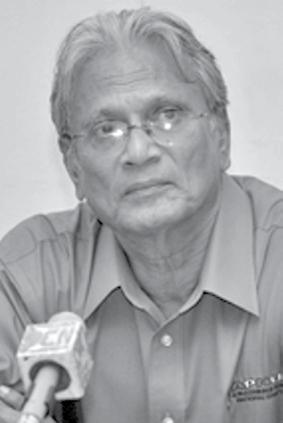
The AFC leader believes that much more needs to be done to improve the overall operation of GPL. He reiterated that GPL needs to have its Board restructured and implement strategies to improve governance. However, Ramjattan said he is not aware that the company is moving in that direction, but if they do, there should not be any reason
for the opposition not to support the restoration of the cut made to the company.
GPL’s management, along with Prime Minister Samuel Hinds met with two parliamentary sectoral committees on July 26. The meeting sought to get the opposition’s support for the restoration of the Gy$ 5.2 billion in subsidy that was cut from this year’s annual budget.
The meeting saw the power company providing the opposition with information on its financial papers and strategic plan. All parties are scheduled to meet again to continue the discussion.
Meanwhile, GPL continues to hold off on any tariff increase as advised by President Donald Ramotar.
The increase was intended to take effect from this month. The power company was proposing a 26.7 per cent increase in tariff rates to sustain critical projects after the parliamentary opposition use their one-seat majority to vote down the subsidy.
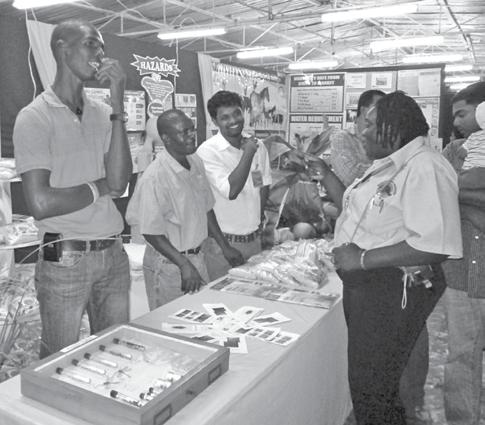
President Donald Ramotar has rebuffed claims from the opposition that the Amaila Falls project was a secret deal, pointing out that both the A Partnership for National Unity (APNU) and the Alliance For Change (AFC) were adequately consulted on the initiative.
Addressing thousands at the Berbice Expo and Trade Fair at the Albion Sports Complex on Friday evening, Ramotar contended that the opposition’s claim is far from the truth, explaining that the process in selecting the contractor was done through public tendering.
He said since then, the opposition has been updated and has made an input into the project.
“We have had full disclosure on this project. In my short term as
president of this country, we had three full briefings with the opposition, we had two briefings with the IDB, and we had briefings with
That was evaluated by the IDB and the company chosen was chosen because it had the best proposals, yet we hear some people saying that it was a secret deal.”
President Ramotar said the hydro project will reduce the cost of electricity by 40 per cent, and will be of great benefit to all Guyanese, as he expressed dismay at opposition’s refusal to support the project. “After 20 years, this power plant will belong to the people of Guyana and for the next 55 years, there will only be operational cost.”
Addressing calls for the retendering of the project, the president said Guyana cannot at
the processes and yet some believe that the world is waiting for us.”
The president said as a nation, all should grasp the opportunity for the realisation of the hydro project now and not later.
Moreover, he said, apart from producing cheap electricity, the project will also be producing clean energy. “Meaning that it will not contaminate the air but more than that, it will save us about US$ 90 million a year on the importation of fuel.”
According to the president, this money can be used on projects that will further improve the lives of Guyanese. Given issues such as timely

Sithe Global, the company that is making the hydropower station.”
He said the private sector was also briefed. “So now for the people to say that it is not transparent is far from the truth, and let me also say this, the project went through public bidding.
this point in time afford to do so. “To do that will take time, that could very well drive up the cost of this project from between US$ 1 million to US$ 2 million more and those who are concerned with cost must take that into consideration, because it went through
and proper disposal of solid waste, the need to repair roads and streets in communities and the current drainage problem, Ramotar said if Guyana can save US$ 90 million annually, these matters would be addressed to the satisfaction of all.
The 2014 graduating class of the Guyana School of Agriculture (GSA) would leave the institution with the ability to drive a motor vehicle and operate a tractor as this would become a requirement for graduating, even as the school will introduce agro-processing from the new school term, Agriculture Minister Dr Leslie Ramsammy announced. While the number of registrants for the new course is small, it will be carried, the minister said.
He was at the time speaking at the institution’s 49th graduation ceremony which saw 125 young men and women, the largest batch of students, officially completing the first stage of their studies in the field of agriculture.
To date, about 3160 people have received training at GSA headquarters at Mon Repos, East Coast Demerara in the diploma and certificate programmes which include animal health and veterinary public health, forestry and fish-
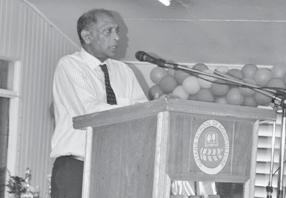
eries studies.
The chairman’s prize was presented to Alwyn Seegolam from the Essequibo campus while the chief executive officer’s prize was secured by Vishan Persaud from the Mon Repos campus. Both of the awardees achieved distinctions in the diploma in agriculture programme.
Seegolam also achieved the Gold Medal; an award that has not been given out for a number of years. The Gold Medal is awarded to a person who performs academic and practical work, in addition to campus community service.
Some of the other outstanding performers include Ceciley Lonke and Shivram Ramdeen for their efforts on the farm; Tyrone Austin, Denesha Henry and Elroy Thomas (forestry); and Safraz Persaud, Padmini Luckram, Rondecia Cozier and Larenzo Richards (animal health and veterinary public health).
Quality training
Recognised as Guyana’s primary school of agriculture, GSA over the years has provided many Guyanese, and even people from other countries, the opportunity to be schooled in
“Music is forever, the universal language that unites people” – Prakz
Enter the world of Prakz and there is no doubt that you will understand – the passion of the man behind his music. Arguably one of the most energetic “Ragga Techno” musicians around today, Prakz has made the world sway to his heart-driven beats. He has composed back-toback chartbusters ever since his solo album debut in 2005 with the super hit “Chapter 1”, and has seen massive success across the United States, Europe, Canada, and the West Indies.
Prakz’s first album gave us a glimpse of the star that was born. With top foot stomping singles such as “Move Yuh Feet” and “Under Water”, the album scaled the summit of rankings and turned Prakz into an overnight international musical icon across countries. As they say “nothing succeeds like success”, Prakz followed up with two hit singles, “Sexy Body” and “You Don’t Know”. His hit single “You Don’t Know” is scaling the top of charts in dance floors across many countries, and has inspired Prakz to come up
with an upcoming album just for his fans on the dance floor. Prakz has a long list of achievements in his soaring music career. He was nominated for the Guyana Music Awards for “Best Artist”
individuals who is very successful in the music world. In addition to him being such a huge music star, he is also a qualified accountant who is a graduate of Queens College, NYC.

and “Album of the Year” in 2007 and 2008.
From his humble Guyanese roots to being a runaway musical success, the journey hasn’t been exactly a cakewalk for Prakz. He always considered music as his passion, but not at the cost of integrity and character building that good education provides. This has helped him become one the few highly educated and qualified
agriculture. Two of this year’s graduates hail from Barbados and St Kitts and Nevis.
Minister Ramsammy noted that many of them are now teachers at the GSA and even hold high positions in institutions around the world. In this regard, he is of the view that the institution has lived up to its expectations.
Greater collaboration
“We have been working with the new vice chancellor of the University of Guyana to ensure greater collaboration… I want to see more graduates from the Guyana School of Agriculture completing their degree in agriculture at the University of Guyana,” Minister Ramsammy pointed out.
He further acknowledged that there are many observable skills among the citizens of Guyana, and in this regard, he stressed that in 2013/ 2014, one specific skill the school will ensure its students have, is the ability to carry out hybridisation so as to improve the genetics of
plants and in the longrun, yield.
Over the next year, the Agriculture Ministry will be developing land within the GSA compound and other land owned by sister ministries, such as the Culture Ministry’s New Opportunity Corps
The key to his success in music is attributed to great talent and an amazing drive to connect with his audience. He has been, and will continue to come out with albums that touch the hearts of his fans the world over. And if you ask Prakz how or why he does it, he simply replies, “Music is love that spreads happiness to people”
That’s Prakz for you.
Renowned sculptor Ivor Thom, who is designing the 1823 Slave Rebellion Monument, has disclosed that work on the structure is almost complete with the final design to be laid sometime soon.
Speaking with Guyana Times International, Thom explained that when tasked with the responsibility of sculpting the monument, he consulted the Internet for information on the rebellion, after which he decided to design three pieces depicting people.
Two pieces have already been laid. One of the pieces portrays a woman moving forward with a cutlass in one hand with her mouth opened, imploring others to join her. Another is with a man moving forward. The final piece is a man with a cutlass, cross and broken chain.
Thom said the cutlass was included since this was the main form of weapon used during the rebellion, the cross.
The sculptor said the construction of the monument is a huge accomplishment for Guyana since it will be the first in the country with every-
Minister Ramsammy also called for the harmonising of agriculture science training opportunities and the teaching of sanitary standards. He explained that assistance has been solicited from the Food and Agriculture

(NOC), which will be put to good use.
The minister was referring to the introduction of incubator plots where students can be formed into entrepreneurial groups and develop commercial projects.
Organisation (FAO) and the Inter-American Institute for Cooperation on Agriculture (IICA) to work with the GSA to develop a curriculum for new and current students on sanitary standards.
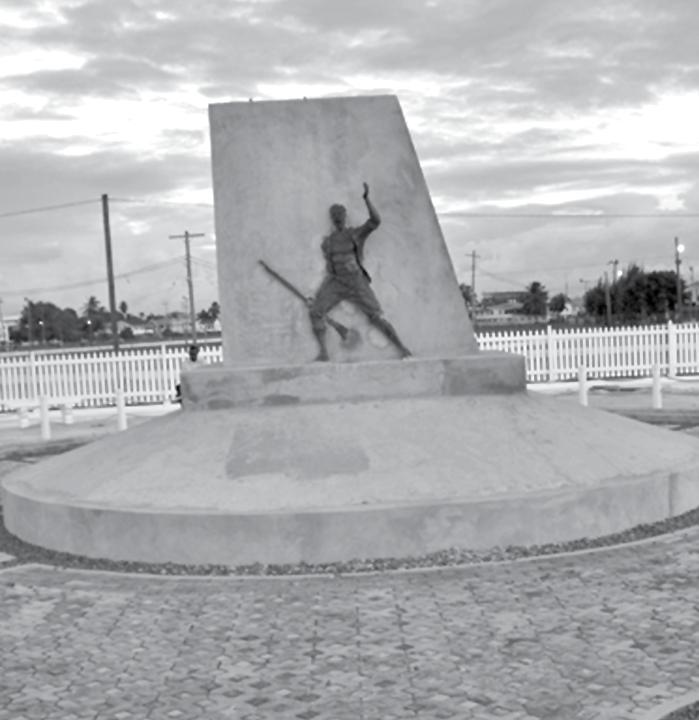
thing done locally. “With the legacy of this monument, we will gain collateral benefits from it, we have an art foundation at Burrowes School of Arts.”
He stated that several setbacks were faced during the housing of the monument, but added that with determination and assistance from a few willing persons, he was able to overcome the odds.
The monument located on Carifesta Avenue, opposite the Guyana Defence Force ground is expected to be unveiled
sometime during August. The project is being constructed at a cost of some Gy$ 26 million. Thom got the opportunity to sculpt the monument after he won a free and open competition organised by the Culture, Youth and Sport Ministry. The monument is being erected in recognition of the historic August 1823 Slave Revolt which occurred on East Coast Demerara. The slaves, who worked on the sugar plantations, revolted against their enslavement and many were killed in the uprising.
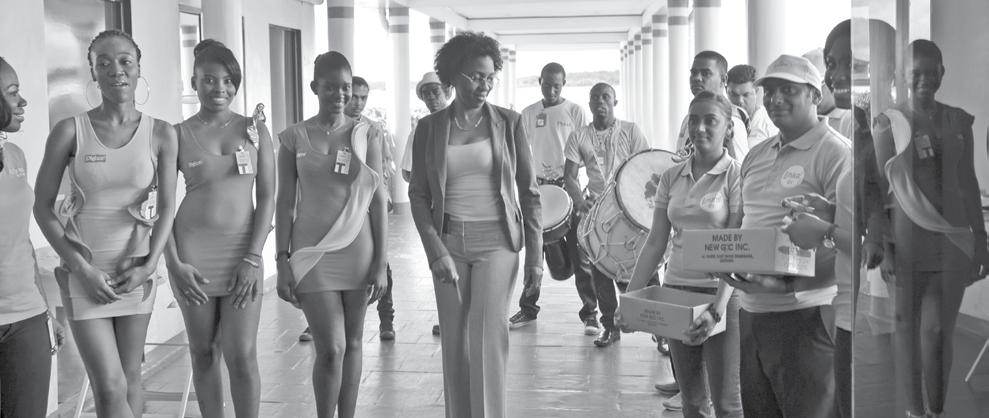
Telecommunication giant, Digicel in collaboration with NEW GPC under the Limacol brand and Demerara Distillers Limited (DDL) last Friday morning welcomed a number of returning Guyanese and other visitors at the Cheddi Jagan International Airport (CJIA) as part of promotional activities for the upcoming Limacol Caribbean Premier League tournament in Guyana.
The reason behind choosing the 08:30h Caribbean Airlines flight which happens to be the flag bearer airline of Guyana was to give returning Guyanese a taste of home while giving the internationals a taste of the Guyanese culture just in time for the Limacol Caribbean Premier T20 League (LCPL), according to Digicel Marketing Manager Jacqueline James.
“Well we are here
and we are just welcoming people trying to give them a taste of the Guyanese culture and just a reminder of home so that is basically what we are doing, welcoming people to Guyana, welcoming them to the Limacol CPL games which are scheduled to start on July 31.”
“So we are starting early to ensure they get the feeling of cricket, get the feeling of wanting to go the games, get the feeling of being cool man and
having that Guyanese flavour attached to everything that they do,”
James told Guyana Times International at the arrival lounge of the CJIA.
The event which has been endorsed by the Tourism Ministry is expected to be in short spurts and not a continuous event. “Well, we are hoping to continue this, maybe not for the entire summer but then coming again at Christmas time when you have so
many visitors and returning residents coming home for the holidays, we want to ensure that everyone gets that Guyanese flavour, that warm welcome and feeling of being home,” James mentioned.
The first Limacol CPL game will feature Guyana Amazon Warriors taking on Trinidad and Tobago Red Steel on August 31 at the Guyana National Stadium, Providence from 20:00h.


The Culture, Youth and Sport Ministry is working to make available a higher standard of certification for the Kuru Kuru Training Centre (KKTC) that will cater for students moving seamlessly into another institution to continue their education.
“We would like to move this institution forward… It is the desire of the ministry and the government to see this idea unfold… maybe by the next batch of graduates,” Culture, Youth
and Sport Minister Dr Frank Anthony said at the KKTC’s 13th graduation over the weekend.
The 2012-2013 batch of 158 students completed a 10-month residential course that encompassed a wide range of skill-based subjects, under the Youth Entrepreneurial Skills Training (YEST) programme conducted at the KKTC on the SoesdykeLinden Highway.
This brings the total number of youths trained at the KKTC to
1885, since it started in 2000. The current batch of graduates comprises 55 females.
The YEST programme seeks to provide opportunities for youths to develop their talents in cultural activities, sports and confidence building, and entrepreneurial skills through practice, in order that they become well-rounded individuals.
The students were involved in occupational areas including business studies, carpentry,
electrical installation, furniture making, masonry, motor mechanics, plumbing and sheet metal welding and fabrication and garment construction.
This year’s top student is Narell Henry from the Berbice River, Region 10, who did garment construction.
Thirty-one of the students successfully completed their driver’s education examination conducted by the Police Traffic Department after which they acquired
their driver’s licence.
Be good role models
Dr Anthony during his address at the graduation expressed satisfaction with the work of the students. He urged them to be role models of their communities, and to gainfully utilise the knowledge they have acquired.
Minister Anthony said the life skills programme by the government is very important, but there are other aspects that need
ter said the YEST programme emphasises the achievement of life values rather than academic training.
Expressing confidence that they will secure jobs, based on their skill training, he said, “We want them to be more than that! We know that they will get jobs. We want them to be examples; we want them to be role models in their communities… if they could achieve that then we would have done

to be taught to students. “We need to teach people some of the social things that are around us, things like substance abuse, issues related to sexual transmitted diseases and so forth, and I’m sure some of that would have been incorporated into the programme,” Minister Anthony added.
The youth minis-
something substantial in this institution.”
Minister Anthony also highlighted that the graduates can sign on to the Youth Apprenticeship and Entrepreneurial Programme launched in June by the Amerindian Affairs Ministry in four hinterland regions for youths between the ages of 18 and 40.
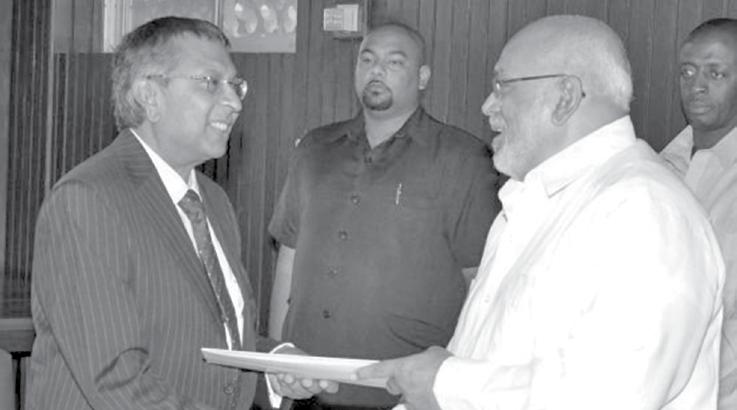
With 25 years of legal practice in the United Kingdom, Guyana-born Justice Rabi Shankar Sukul will be working to augment the local justice sector following his appointment as a justice of appeal on Friday. He took the Oath of Office before President Donald Ramotar in the presence of his spouse, as well as Attorney General and Legal Affairs Minister Anil Nandlall, Home Affairs Minister Clement Rohee, acting Chancellor of the Judiciary Carl Singh, and Director of Public Prosecutions Bibi Shalimar Ali-Hack among others.
The 60-year-old jurist told the media, “I intend to apply the legal principles, apply law logic, and good sound objective judicial reasoning which I have learnt and practised in the United Kingdom.”
In a brief charge to the newly-appointed justice of appeal, President Ramotar, who has often bemoaned the heavy backlog of cases facing the judiciary over the years, expressed the hope that his duties will reflect fairness and expeditiousness.
Cognisant that the shortcomings of the local judicial system are not unlike other jurisdictions’ where criticism has been heavy, Justice Sukul said he will do all in his power to “minimise that effect”.
The expectation of the chancellor of the judiciary was similar and he urged “hard work and a dedicated contribution to the development of our country’s jurisprudence”.
“It requires an aptitude, it requires careful consideration of the issues that are before the court… and of course,
the ability to research and apply the law to the issues that confront us in our deliberations,” Justice Singh explained.
The judicial sector has come a far way, especially with undertakings to modernise the system through legislative amendments; the appointment of new judges to buttress the complement of jurists needed to preside over pending cases; extensive renovations to the DPP’s chambers; and strengthening of both state and police prosecutors through training in criminal matters like narcotics, smuggling, cyber crime and other criminal offences.
Online access to Guyana’s law reports and the launch of an informal justice initiative in rural communities that provides an alternative to the formal justice system have also been accomplished.
As investigations continue into the discovery of 11.5 kilograms of cocaine at the Cheddi Jagan International Airport (CJIA) on Saturday morning, the Customs Anti Narcotics Unit (CANU) said it is on the brink of unravelling a drug trafficking network at the country’s main port of entry.
CANU officials believe the drug network at the CJIA comprises airlines security, airline office staff and other government agencies that operate at the main port of entry on a daily basis.
Guyana Times International understands that the name tag that was found on the baggage which contained the cocaine was generated a while ago, but was used only on Saturday.
This meant that the tag was created by an airline official at the checkin point.
The one person who remains in custody was identified as an airline security officer attached to the Secure Aviation and Caption Security Firm, while another member of the Timehri Handling Service is also being questioned.
This publication was also told that officials of a government agency are expected to be questioned in connection with the discovery.
The 10 parcels of cocaine were found around 02: 00h in a suitcase which totalled 11.5 kilograms when weighed.
The street value for a kilogram of cocaine in the U. S. is estimated at US$ 40,000.
The bag was detect-
Two executives of the World Society for the Protection of Animals (WSPA) are in Guyana on a mission to solicit government’s support for a declaration on animal rights that could see the United Nations (UN) adopting the resolution.
WSPA South American Director Luis Carlos Sarmiento and Policy Advocacy Coordinator Diana Rodriguez, along with executives of the Guyana Society for the Prevention of Cruelty to Animals (GSPCA) last week met with President Donald Ramotar and Foreign Affairs Minister Carolyn RodriguesBirkett.
The Universal Declaration on Animal Welfare is geared to inform member countries about the regulations and policy guidelines that are necessary for
on a campaign for the Universal Declaration of Animal Welfare and the GSPCA is supporting this, working with us jointly. The meeting with the president went very well and basically it was to promote the initiative and letting them know the importance of supporting the campaign and the benefits such regulations can bring to the country,” the WSPA director said.
Sarmiento stated that the declaration can be a very important tool for motivating government to introduce adequate animal welfare legislation or to update the laws that may already exist.
Several countries around the world have already become party to the campaign and Sarmiento said there are already five South American countries onboard.
that animals must not become the forgotten victims of disaster.
Commenting on the timeline to secure Guyana’s approval for the declaration, the organisation was anticipating a response “quite soon”. However, he wished that Guyana’s indication of support could come in a matter of days.
For countries that do not have legislation, Sarmiento revealed that there is information available that can be used to customise animal protection laws to specific needs and situations.
He disclosed that animals which are used for various purposes, particularly those which are used in commercial activity or production should have a minimum standard requirement for their treatment, care and protection based on international animal welfare protocols.

the care, treatment and protection of animals.
ed by CANU ranks at the baggage area with an old label or name tag which indicated that it was placed there and did not go through the normal security checks. The suitcase was intended to go onboard Caribbean Airlines Flight, BW 526 destined for the John F Kennedy Airport, USA. Upon the discovery, all staff members who worked on the shift were questioned with at least seven being taken for further questioning at CANU headquarters.
In May, a 19-year-old employee of the Guyana Post Office Corporation (GPO) at the Cheddi Jagan International Airport (CJIA) was charged following the discovery of 15 kilograms of cocaine in a mail bag destined for the United States.
During an interview with Guyana Times International shortly after the meeting, Sarmiento said he was very satisfied with the response he received from the government.
Fruitful meeting
He disclosed that the meeting was fruitful and that local administrators acknowledged the need for animal rights to be included into the national agenda.
According to Sarmiento, the United Nations has never issued any official document on the protocol for animal welfare. So, the animal rights executives are hoping to have the UN recognise the declaration and adopt it as a convention.
“So in this particular case, we are working
“So I have a lot of expectations to listen to what Guyana has to say and I’m sure this country will be the next in the region to support the initiative,” he mentioned.
Detailing some of the regulations, Sarmiento said there are many issues that can be taken into account in Guyana’s situation such as the inclusion of animals in disaster management prevention plans.
“Some years ago during the 2005 floods, they were not taken into consideration and while people always come first, if Guyana includes these animals into their policies for disaster reduction, then the situation will be different in the future. These are just some of the many things a country can do to change the situation of animals.”
Sarmiento stressed
“It’s a movement to lobby these persons who depend on animals for one reason or another. Each person’s life is affected in direct and indirect ways by animals from pets, birdwatchers or even those who rear meat birds for sale,” Sarmiento added.
The WSPA is an organisation that was formed to promote the welfare of animals and to ensure a halt in the cruel treatment of animals.
The WSPA works along with various agencies all over the world to support different campaigns aimed at protecting all species of animals.
The society has more than 15 offices around the world, including Colombia where the South American office is based.

Shipment of rice to neighbouring Venezuela under the new rice agreement is currently on track and should be completed by year-end, Agriculture Minister Dr Leslie Ramsammy said.
The minister told Guyana Times International on Sunday that rice shipments will be continuous throughout the year.
He explained that Guyana’s harbour facility restricts larger shipment of more than 5000 to 6000 tonnes of rice or paddy; hence, the rea-
son for the extended period.
Dr Ramsammy said at present, 36,000 tonnes of paddy has been shipped to Venezuela.
As soon as the second crop commences, some 40,000 tonnes of paddy will be shipped between the periods of August to September. This will continue into October and December, by which time all shipments will be fully completed.
According to him, the Venezuelan government has also been informed that should they
require additional paddy, Guyana will be in a position to deliver.
The first shipment of rice under the new agreement left Guyana for Venezuela on May 23, with approximately 100,000 tonnes of rice and paddy.
Guyana and Venezuela on May 3 this year signed a US$ 130 million rice agreement, paving the way for more than 200,000 metric tonnes of the staple to be shipped to Caracas.
The rice pact was initiated in 2010 be-

tween former President Bharrat Jagdeo and the late Venezuelan President Hugo Chávez. The agreement aims to strengthen food security in both countries. The deal came at a time when prices paid by local millers were very low. In late 2011, government signed a US$ 54 million agreement with its western neighbour to supply 50,000 metric tonnes of paddy at US$ 520 per metric tonne, and 20,000 metric tonnes of white rice at US$ 800 per metric tonne.
Initially, farmers were reluctant to enter into the arrangement, but the prospects of a stable market proved an enticing one. The partnership has been a fruitful one.




says over Gy$ 56M spent on Caribbean Press
Editors working with the Caribbean Press are doing so freely, Dr Frank Anthony told the National Assembly on Thursday, adding that in excess of Gy$ 56 million has been spent to keep afloat the operations of the facility so far.
Dr Anthony said former President Bharrat Jagdeo had committed US$ 100,000 (Gy$ 20 million) in 2008 for the establishment of the unit.
However, it was only until 2009 that the Caribbean Press was birthed. Since then up to 2012, the organisation spent a total of Gy$ 56,640,000.
While no remuneration was paid to consultants in establishing the press, he posited that the formalisation resulted in a number of books being edited, proofed, laid out, designed, and printed.
The New Slavery, Hearing Slaves Speak, The Chinese in British Guyana , Mama Dot, The Asylum Journal Volumes 1& 2, The Collie, His Rights and Wrongs and Undisclosed Entrances are among the 38 pieces worked on. These were complemented by 12 National Assembly speeches from former Presidents Linden Forbes Burnham, Cheddi Jagan and Janet Jagan.
Additionally, Gy$ 7.850 million from the Gy$ 56.4 million was used specifically for administration of the Caribbean Press. Dr Anthony explained that between 2009 and 2012, the money was used to hire secretarial assistance for the editors.
To guarantee the longevity of the association, the ministry has pledged financial support. “The ministry will incorporate into its future budget monies to employ one salaried worker (the administrator/secretary) of the Caribbean Press. This person would oversee the commissioning and publication of titles; liaise with writers, printers and editorial boards, and the government,” Dr Anthony explained.
Additionally, the Culture, Youth and Sport Ministry will be making financial provision for the unit to provide a permanent editorial board.
The board will comprise professional writers

from different Caribbean countries who will advise the editor-in-chief on what titles should be published.
The culture, youth and sport minister was responding to a series of questions posed by the Alliance For Change’s Trevor Williams in the National Assembly.
Williams had also asked Minister Anthony to provide the House with a breakdown of the books that were distributed in Guyana by title, location, and the number of copies as of June 20, 2013.
“The ministry would be unable to provide an exact breakdown as is requested at this point in time. The compilation of this information is ongoing and when completed, a copy would be provided to the National Assembly,” Dr Anthony replied.
However, he noted that publications by the unit were distributed to the National Library, University of Guyana Library Turkeyen, Walter Roth Museum, foreign embassies based in Guyana, Caricom Secretariat, and the Guyana Police Force, among other entities.
In addition to the published books and documents, the Caribbean Press is in the process of preparing 12 books to be released. These include Scriptology by Egbert Martin, Twenty five Caribbean Poems For Children, Anthology of Caribbean Stories For Children and six volumes of the National Assembly Speeches by Desmond Hoyte.
The Caribbean Press, which was established by the government on April 15, 2009 is led by the general editor, Professor David Dabydeen who has been volunteering his services since 2009.









Fly Jamaica is expected to commence operations in Guyana in another month’s time, marketing manager of the airline Wesley Tucker said. According to Tucker in an interview with Guyanese media, the airline has already trained some 25 Guyanese to man the local leg of the operations.
“We have completed training and we have ads out for cabin attendants…to begin with, we will have warm and customer-friendly staff and we will be providing hot meals on board,” he said.
The Jamaica-based airline will also be launching its services in Toronto, Canada aside from Guyana when the company would have finalised legal requirements with the Canadian authorities.
He said passengers will be able to travel with 50 pounds and two pieces of hand luggage.
The marketing manager stated that both the government and private sector have been supportive of the airline operating in Guyana, and Guyanese are excited about the upcoming

launch. The Jamaicabased airline will be transporting passengers to New York, Canada and Caribbean territories.
Last Monday, LIAT Airlines began operations at the Ogle International Airport with the first flight departing the Grantley Adams International Airport, Barbados, to a warm Guyanese welcome on touching down here.
Present to witness landing of the 50-seater Dash 8 aircraft was Transport Minister Robeson Benn, who witnessed the touchdown of the 50-seater Dash 8 aircraft, stated that regional connection is a challenge to Caribbean integration and the de-
velopment is a step in the right direction in addressing the issue.
The minister cited northern Brazil, Venezuela, Suriname and French Guiana as possible destinations. He posited too that with the upcoming football world cup and Olympic Games in Brazil, the transportation issue would have to be tackled aggressively.
Acting Tourism, Industry and Commerce Minister Irfaan Ali had said the challenge to provide adequate and reliable airlift to and from Guyana is being addressed, pointing out that government has been engaging other airlines, including COPA Airlines and JetBlue, to begin operations in Guyana.

Canada’s Conservative government is defending its commitment to Latin America and the Caribbean after eyebrows were raised during last week’s cabinet shuffle, prompting talks that the government’s vaunted “Americas Strategy” has run its course, according to reports in Canada.
Foreign Affairs Minister John Baird said that he met Latin American and Caribbean ambassadors immediately after the shuffle to reassure them the region remains a top priority for the current administration, according to the Vancouver Sun.
A year after launching the “Americas Strategy” in 2008, aimed at reviving and expanding Canada’s presence in the region, Prime Minister Stephen Harper created a dedicated minister of state to the Americas.
The position was first held by Peter Kent and then by Diane Ablonczy. But, in a cabinet shuffle, the minister of state for the Americas position was quietly retired when Ablonczy was replaced by Lynne Yelich, who was
named minister of state for foreign affairs, meaning that she covers the whole world.
Baird said having a minister of state for the Americas limited his own ability to focus on the region, adding “this is going to allow me to spend a lot more time on these files”.
The Canadian foreign minister said he will undertake a seven-country trip to the region next week.
“So I think we’ll be speaking loudly with our actions that the Americas not only will remain a priority, but even be stepping up our priority list,” he said.
But the Sun questioned whether Baird will be able to dedicate as much time and attention to the region as he optimistically predicts, given that he has the rest of the world to worry about as well.
“I think the Conservative government considers its agenda in the Americas is basically complete,” said Carleton University professor Jean Daudelin.
“The core of their agenda was the trade file, and we’ve signed
agreements with basically all the countries that are basically interested.”
University of Ottawa senior fellow Carlo Dade told the SUN that the government did “alright” with its Americas strategy by cementing ties with a number of key partners in the region, but a lack of resources and strategic thinking limited what could actually be accomplished.
Dade said the door to do more for the Caribbean has “essentially closed,” adding that the Canadian government is now turning to other parts of the world, such as Southeast Asia. (CMC)


By Dmitri Allicock
Some of the greatest cities of old and modern times owe their rise and grandeur to their positions in the fork between great rivers, which gave them unrivalled advantages for defence and commerce. Bartica occupies such a unique natural location in north-central Guyana where the mighty Essequibo, Mazaruni, and Cuyuni rivers meet.
Bartica is situated at a junction of the Essequibo River, 50 miles (80 km) inland from the Atlantic Ocean, and is considered the “Gateway to the Interior”. The town has a population of more than 15,000 and is still the launching point for Guyana’s gold and diamond miners.
There is no doubt that the bulk of Guyana’s precious gold and diamond reserves is embraced by that wide stretch of highland which is drained by the Essequibo, Cuyuni, the Mazaruni rivers and their tributaries. The three rivers converge at the area called Bartica and the vast flood of their united waters is carried by the mighty Essequibo, past her hundred isles, 21 miles wide at her mouth, into the basin of the Atlantic. Washed on two sides by the waters of the two great rivers, Bartica faces the Atlantic breeze, tempered by a passage of 50 miles of tropical verdure forest.
The major discovery of gold in the l850s, described as very ‘Pactolus’, brought many from all over
Guyana and the Caribbean, and led to the formation of the British Guiana Mining Company. It was found necessary to establish a town at the little settlement of Bartica on the Essequibo and an ordinance for that purpose was passed in 1887.
Bartica’s unparalleled natural location is one of the most intriguing sites for a city. To the north stretches a mass of fresh brown water fed by the three rivers and their tributaries, dotted in all directions with islands, varying in sizes from the huge Hogg Island called Varken Eiland by the early Dutch, to the lovely Sail Rock, the smallest of the islets. North of Bartica is the ruins of the Dutch fort Kyk-Over-Al, former government seat for the County of Essequibo. Bartica is also close to Marshall Falls. To the south stretches more than two thousand miles of pristine rainforest and savannah, intersected by hills, mountains, deep rivers and scores of massive and thundering falls and rapids; forests rich in invaluable hardwood and lands with bountiful gold.
The great difficulty with gold mining lay with the tortuous and deadly journey from Bartica to the goldfields of Guyana highlands. The rivers are sown with countless rapids and dangerous passes where many lives were lost to the lust for gold. It seems that the ancient Amerindian legends were true where these rushing waters dragged down into their dark depths all those who attempt passage without appeasement.
Many ideas were suggested to avoid loss of life and possessions including a light, narrow-gauge rail-
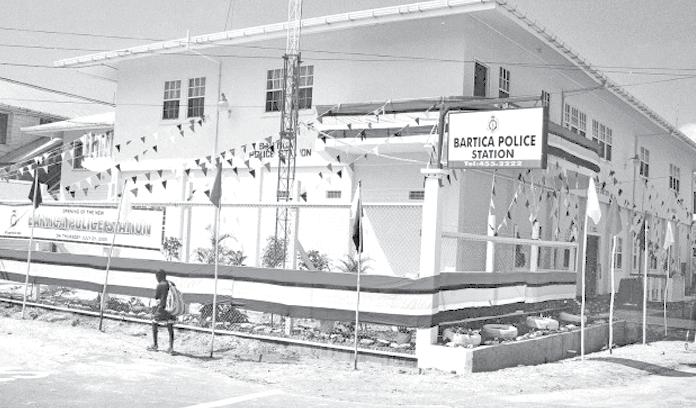

way from Bartica, up the left bank of the Essequibo, bypassing the rapids to the smoother water up the Potaro and other gold bearing rivers and creeks. This railway would open the vast areas of valuable timber and a branch could be constructed up the right bank of the Mazaruni, past Calacoon, skirting the Marshall (Marechial) Falls, up to the Puruni gold fields and even connecting with a line from the Yuruari Valley, a branch of the Cuyuni River, bringing the wealth of that great district through the channels of Essequibo to the port of Georgetown.
Today, Bartica remains a small town, and is still associated with gold and diamond mining of Guyana highlands and timber extraction. Bartica is linked to Georgetown by air and can be reached from Parika, Essequibo and Linden. The Denham Suspension Bridge, also known as the Garraway Stream Bridge, links Bartica to Mahdia.
Its population consists of a harmonious mix of Guyanese. The central town is about one square mile and consists of seven avenues and nine streets. The avenues run north to south and the streets east to west.
During the Easter weekend every year, Bartica hosts the famous Bartica Regatta with a growing variety of entertaining holiday activities including water sports, cricket boxing, soccer, talent shows, a street parade, and a Miss Bartica Regatta Pageant. The regatta attracts people from all parts of Guyana, and even from other countries. There is also a ‘summer’ regatta, held annually in August.

With the mission to combat gender-base violence, the Berbice Male Action Network (BeMAN) organisation is persistently working to educate men on being role models in their communities
BeMAN, says group president Desmond Nelson, who is a Berbice social worker at the Ministry of Human Services and past teacher for more than 17 years, started after the launch of the “No More Black and Blue” campaign, an initiative of the Ministry of Human Services in 2010.
“We started engaging men across the Berbice area in dealing with issues pertaining to relationships, genderbased violence, conflict resolution, anger management and others. This group was called the Men’s Forum, which lasted for two years. After that came to end in February 2011, we launched the Berbice Male Action Network,” he stated.
There are several activities of the group working primarily with men. BeMAN holds talks in schools with male students, addressing issues such as anger management, and visits the prisons, working with men within the prison system in an effort to reintegrate them into society. According to Nelson, there are manuals they work with to ensure that the reintegration be successful.
Currently, there are 35 in the group that meet quarterly. The members are men from various sectors of society. Some are professionals, from religious groups, and business executives. Nelson said there are seminars and workshops done on a regular basis for men. There is also a Berbice television programme that
televises the group’s work.
“This is a very vibrant group in Berbice. Many see our work and they approach us to join... Those who want to join are given manuals and are trained to help other men. There are two sections of the group in Berbice that effectively carry out the organisation’s work,” Nelson said.
He noted that there are many factors responsible for the violence, such as poverty.
“I have seen this personally. Persons become angry because they do not have. We need to look at how we orient our boys. Parents tell them they are not supposed to cry; that they need to “man-up”. This results in pent-up anger in some of them. Inevitably, when their children become men they will act it out at some point. We really need to address this. We also need to look at how they are socialized. If they grow up seeing the father being dominant and the mother not being able to speak but being subjected to him, then that’s the attitude they will have when they get their own families,” he stated.
Nelson is proud of the group’s work, and related one of many success stories.
“A man had called in to our programme. After the programme concluded, and we were approached by a man who identified himself as the person who had called. He told us he wanted to share his story with us. He admitted he was an abuser because of his
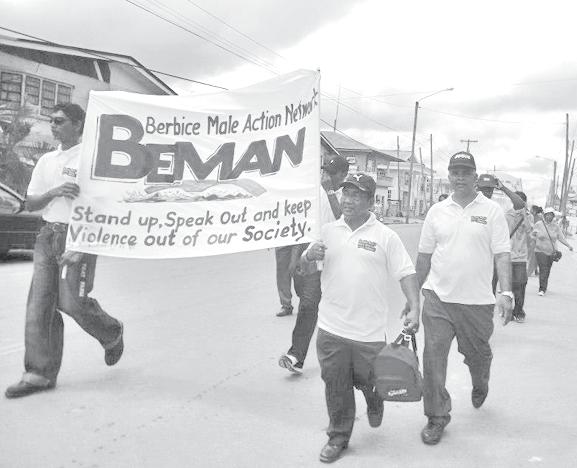
military background. His rigorous training taught him to be tough. Later in his life he started using drugs and abused his wife. He and his wife eventually were separated and he got angry at everybody except himself. After listening to the programme, he realised he was the problem, and now I’m happy to say he is an active and reliable member of our group,” Nelson recalled.
In promoting its work, BeMAN recently staged a Berbice rally against all forms of violence, emphasising gender-based violence which is viewed as a “silent cancerous plague, destroying the moral fabric of family life.”
The march, from the Skeldon Post Office to the Scottsburg recreational ground, culminated with ad-
dresses by Ganesh Gangadeen, representing Corriverton IMC chairman Bhawase Harripaul, Pastor Katryan and Dr Sharma of Skeldon Hospital. Sharma cited case after hospital case where women were beaten, stabbed and abused by their spouses, husbands and boyfriends whom, unfortunately, these women often defend by lying about their injuries. At the gathering, she encouraged the audience to seek help and to “stand up and speak out against violence.”
The Linden Dream Team (LDT) is a group of uniqueminded individuals who all share the same values, passion and commitment. They are all equally interested in serving Guyana through various outreach community engagement projects.
In an interview with Guyana Times Sunday Magazine, Donette Adams, chairwoman of the group, said LDT, a non-profit organisation based in Brooklyn, New York, was founded in August 2011, by a group of dedicated young adults, who wanted to give back to the community that contributed to their growth and success thus far in their lives.
“Our mission is to contribute towards the re-development of Linden, through longterm sustainable, challenging educational initiatives, actively serving and caring for the elderly generation and continuously conducting research that will provide
economicand social productivity along with community revitalization, as well as preserving intercultural values,” Adams outlined.
Guided by its motto, “Vibrant Leaders Molding a Better Tomorrow”, the goal of LDT is to work collaboratively with volunteers within and outside of the United States to spur fundamental social change that will lead to academic achievement and economic empowerment.
One of the group’s current projects, the “Rising Star Essay Competition”, invited six secondary schools within Linden to compete in the event. Students were selected based on their academic performance, such as those who have excelled and those with potential to improve; and their attendance and their dedication towards their school and community. All participants in attendance were honoured with a framed cer-
tificate and other personalised items.
Adams said that this competition presented an ideal opportunity for participants to be a part of a programme that was attended by great leaders from the Linden community and around Guyana.
Additionally, there is the CXC student feewaiver project, and also visiting the Linden Disabled Centre, where volunteers help to educate and merge the disable community to feel equally accepted in society. During the visit to the centre, LDT members distributed backpacks, filled with school supplies, and categorised enhancement tools, according to student needs. Uniform material for the 2013 school year, story books, catered lunch and desserts were provided for all students.
“We strongly believe that everyone, regardless of physical attributes or ability, should be valued equally in society. Our visit and contributions therefore demonstrate our commitment
to the entire community of Linden. Moreover, being able to see the smiles on the faces of the children and staff spoke volumes – it was simply priceless!” Adams exclaimed.
Another project of note is the annual senior citizens luncheon where volunteers show their appreciation for those who are the backbone of their community. Furthermore, for more than seven years, LDT has hosted one of the most anticipated fundraising theme events during the Linden Town Week celebration. This event is held to raise funds that help to offset the past and current costs of community-based projects throughout the Linden community.
One of the group’s future projects is the community beautification initiative, where they will involve all, holding everyone accountable for the aesthetics of thecommunity. LDT plans to carry out this project successfully by having a community sector clean-
In his address, Gangadeen commended BeMAN for their initiative, and stressed the need for good parenting skills and relationships.
Nelson shared that future marches would be planned in different communities until the entire Region Six is covered. He expressed appreciation to Roadside Baptist for the tremendous support for the activity, to the police for their cooperation, and to East Berbice Life Savers and the # 65 Shree Krisnha Mandir for joining in the venture.
BeMAN is calling on the law to take note of the many illegal bottom-house rum shops, the noise nuisance at almost every corner and under the nose of police stations, the excessive consumption of alcohol encouraged by those who sell even to under-aged children, the continued upsurge of drugs seemingly easily available, and the increase in youth and other forms of violence related to substance abuse.
The president outlined that the group’s plan is to expand. He urges communities to start such groups in their areas and join BeMAN in its crusade against gender-based violence.
For more information on BeMAN call 338-4215 or 3384213.
Pastor Katryan from the Roadside Baptist Skills Training Centre in Berbice emphasized the need for education and awareness at all levels, especially of girls who need to be so empowered that they do not have to live with abuse. He summoned a wakeup call for all to take note of the many children not attending school and to make every effort to make the necessary interventions to help them.

up competition and establish a recreational centre that will provide educational and self-development opportunities for both adults and children. Adams stated that it will be an oasis that will provide comfort, growth, stability, and a sense of belonging for all.
“We believe that in order to know where you want to go you need to have a dream and vision, and we are committed in making them come alive.
Funding for projects undertaken by the Linden Dream Team is derived primarily from donations. Therefore, as we
continue to receive help from friends who believe and support the organisation’s mission, we are also reaching out to others for help. We are especially interested in sponsors for our fundraising events throughout the year. However, donations of any kind are welcomed. We can assure you that when you support any of our ventures you are helping us to attain our goal of helping those in great need,” Adams urged. For more information on this group visit Linden Dream Team on Facebook.
‘The
Rockwell Collins is a pioneering company in the design, production and support of innovative solutions for customers in aerospace and defence, located in the U.S. Among Rockwell Collins’ suite of senior vice presidents, Guyanese-born Nan Mattai is the only woman.
In both Rockwell Collins and the broader field of engineering, women make up 13 percent of the workforce.
“Just the thought that something I say or do may change a life inspires me to be the best I can be,” Mattai, senior vice president for engineering and technology, wrote in an email interview with journal Corridor Business. “So, as a successful woman in a traditionally maledominated field, I will try to share my story and experiences to inspire the next generation of women engineers.”
Mattai was born in Georgetown, Guyana, and was inspired to become a research professor by the pioneering female scientist Madame Curie. Mattai received a bachelor’s degree in

physics and math from the University of Guyana and a master’s degree in physics from the University of Windsor, in Canada. She then moved to southern California, a hotspot for the aerospace industry, with her husband Roy, who is also an engineer.
“The Sunday Los Angeles Times often had multiple pages of job openings for all types of engineers. My husband and many of our friends who worked in the industry spoke of the technologically challenging work, good pay, opportunities to advance and great benefits packages,” she wrote of her decision to pursue engineering.
“I was fascinated by the work; just seeing some-
thing you designed actually work in the real world was very satisfying.”
Her goal was never to become a key leader in a company like Rockwell Collins.
“From a leadership perspective, I just wanted to be the best engineer I could be,” Mattai wrote. “I was fortunate that my leaders recognized my leadership potential and encouraged me to consider technical leadership. Once I got into my first leadership position and realized that I could have a much broader impact, a deeper understanding of the business strategies and more connectivity to the big picture, I knew I had found my dream job.”
She joined Rockwell
Collins in 1993 as a software engineer, and took on positions of increasing responsibility before being promoted to vice president of government systems engineering in 2001 and her current role in 2004.
In her position, Mattai oversees the company’s 8,000 engineering employees around the world, along with nearly $1 billion in research and development investments.
In that role, she has to work to keep the 80-year-old company on the cutting edge of innovation. That means, after recruiting top talent, the leadership team has to give them room to fail.
“We emphasize that innovation is about teamwork,” she wrote. “It requires knowledge sharing and openness. It takes people working together across different groups, disciplines and organizational lines to make this happen.”
Mattai is no stranger to awards for her influence as a female engineer. In 2012, she was named Aviation magazine’s first-ever Woman of the Year. Other recent awards include
recognition as one of “100 women in STEM” by STEMConnector in 2012, a woman in technology award for innovation and leadership in large companies from the Technology Association of Iowa in 2010, and being named a “Woman Worth Watching” in aerospace in Diversity Journal in 2009.
“Mattai’s personal passion is to connect women in engineering and technical roles in the aerospace industry to each other, essentially allowing her to provide the role models and mentoring that she didn’t have when she started her career 30 years ago,” wrote Cindy Dietz, Rockwell Collins’ director of corporate communications, in her nomination of Mattai.
Mattai is active in the company’s engineering outreach activities, such as Introduce a Girl to Engineering Day, which brought 100 middle school girls to the company’s Cedar Rapids headquarters last month for a hands-on engineering activity and a chance to hear from female leaders in the field. Rockwell Collins prioritizes reach-
ing out to middle school girls because research shows that most decide if they are “good enough” to pursue a career in science and math around that age. The company also is active on university campuses across the nation and works to provide opportunities to women beginning their careers there; this via groups such as the women’s forum.
While accepting the Woman of the Year award from Aviation, Mattai said the greatest challenges facing women in engineering include finding work-life balance, gaining access to management responsibilities and communicating their value. These were all challenges she faced personally, she said. While both Mattai and her husband were working as engineers, they raised two sons, Andy and Neil. “My advice would be to always be yourself, challenge yourself, continually develop and hone your skill sets and never shy away from a tough assignment,” she wrote. “The rewards are well worth the challenges.” (Source: www.corridorbusiness.com)
By PetamBer Persaud
“Kofi Baadu: out of Africa” by Walter Rodney. First published in 1980, reprinted by the Guyana Book Foundation 2004
As we continue to look at children’s literature, and as Emancipation Day anniversary (August 1) approaches, it would be timely to revisit the book, “Kofi Baadu: out of Africa”. In looking at this book, we would see how a brilliant historian is able to harness and package his research/knowledge in such a way as to be understood by young readers.
To young readers, this book on enslaved Africans brings clarity coloured with adventure, and numerous illustrations/photographs gluing them to the story. The connectivity factors here are adventure and pictures. It is paramount when writing for children that we make that connection early, to whet the appetite and maintain the interest of children. Rodney did this
with the ease of a griot.
Rodney knew the importance and value of history. Further, Rodney knew the importance and value of writing our own history against the distortions peddled by colonial masters who reported a history through a conqueror/vanquish relationship.
And Rodney knew the importance of reading; he discovered that at a young age. This lesson he learnt while at secondary school (Queen’s College). He made the National Library his second home from where he started a tentative dialogue with local, regional and international thinkers. This reading eventually led to his writing, expanding the dialogue for present and future generations as he matured from scholarship to scholarship. When the time was ripe, he sought to include children in the process of “probing the text”; in an extraordinary and rare move by any academic anywhere, Rodney distilled his thoughts in such children’s books like “Kofi Baadu: out of
Africa” and “Lakshmi: out of India”.
“Kofi Baadu: out of Africa”, “Lakshmi: out of India” and related works (“FungA-Fat: out of China”, “Adriaan Hendricks: out of Holland”, and “Joao Gomes: out of Madeira”) were birthed “so that the children, at least, might better understand themselves and each other”. How very perceptive of the man – understanding among babes, and making changes starting at a young age.
In this booklet, “Kofi Baadu: out of Africa”, Rodney recreates the story of “a single involuntary migrant” from Africa to Guyana. Although it is a fictionalised account of someone named Kofi Baadu, “it is located within a context of names, dates, episodes and other references which are authentic. The social settings are accurate, and the circumstances which explain Kofi Baadu's departure from his homeland were typical for enslaved Africans”.
The book illustrates “some aspects of the his-
tory and culture of West Africa, and more particularly, of the area now called Ghana”. Ghana is most important to the story and the history of subjugated and enslaved Africa as revealed nearing the end of the book on page 31.
Ghana “was in the vanguard of liberation struggle in Africa. Its independence ...in 1958 marked the beginning of the end of colonial rule throughout the African continent”.
The book opens with the following heading: “Kofi Baadu born 1652, arrived Guyana 1698”. It is divided into ten subheadings: “In captivity”; “The extended African family”; “Trading in West African”; “Ashante – the political kingdom”; “Justice and the people”; “The Ashante Priesthood”; “Death and burial”; “Slavery and African politics” and “Postscript”.
These ten subheadings give an elaborate background (taking up 30-odd pages) of Kofi Baadu before he is shipped out of Africa, but devote less than thirty
words of his impending arrival in Guyana.
There are numerous suggestions to act on and lessons to be drawn from each page.
For instance, on page five, we learn of the African’s respect for knowledge... “(i)gnorance is weakness”, and on the same subject, on page 13, “(n)ot to know is bad, but not to wish to know is worse”. On another subject, on page seven, we find how useful it is to show respect for ancestors and elders. Later, on page 11, we learn how the Ashante “weavers unravelled silk thread to produce the marvellous Kente cloths”.
“Myths”, (p.16), “are sometimes essential in the lives of a people”.
Two pages later, we learn about the importance of symbols and about “Kwaku Ananse, the legendary spider”, [who] “could outwit any animal of superior strength – including giants like the lion and the elephant”.
And on the subject of governance, on page nineteen there is “an old Ashante saying that governing people was like
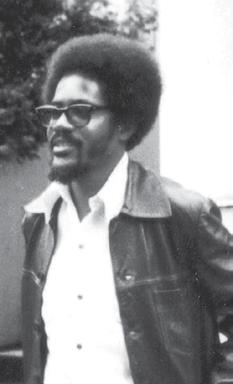
23, 1942 – June 13, 1980)
holding an egg. In other words – it was a most delicate matter, and without care the whole thing would fall and smash to pieces”.
The book holds other meanings for us as children and adult like: “(E) verything made by the Akan had a surface appeal and a deeper meaning” (p. 20). This quick glance at “Kofi Baadu” is mainly about the surface appeal. For the deeper meaning you will have to study the book. Responses to this author telephone (592) 2260065 or email: oraltradition2002@yahoo.com


I was visiting my son this week and asked him where his newspaper was.
He laughed and said, “Dad, it’s the 21st century. We stopped buying newspapers years ago. It saves trees. But you can borrow my iPad.”
Okay, fine, whatever.
But that lousy housefly never knew what hit it.
Two young boys were whispering outside the church after hearing a scary sermon on the devil.
The first one said, "Satan sounds awful. Do you think he’s real?"
The second boy said, "I don’t know, but remember how Santa Claus turned out? It's probably just your dad."
An elderly lady passed away recently. She’d never been married, and she specifically asked that her casket service not have any male pallbearers. Her contract with the funeral parlour stated: "They never took me out when I was alive, so they sure won't be taking me out when I'm dead."
A woman answers her phone, "Hello."
"Is this Mrs Haycroft?"
"Yes."
"Mrs Haycroft, this is Doctor Willits calling from the Medical Lab. Your doctor sent us your husband's samples yesterday, and in the same shipment we received a similar sample from a different Mr Haycroft. Unfortunately there was a mix-up, and we're not sure which result belongs to your husband. I'm sorry to say that either way, the news is not good."
"Not good?" asks Mrs. Haycroft.
"I'm afraid not. One of the tests came back with Alzheimer's and the other with an STD. As I said, we're unsure which result is the correct one for your husband."
"Oh no, that's horrible!" said Mrs Haycroft. "I assume you'll redo the test?"
"We'd like to, but they're very expensive, and the insurance people tell us they will not pay for them again."
"That's ridiculous! What can I possibly do now?"
"The insurance company recommends that you drive your husband to the other side of town and leave him there. If he can find his way home, don't sleep with him."
The wife and I had come to town to pick up a few things. We came out of one store and saw a cop writing a ticket for illegal parking right in front of us on the curb.
So we asked him nicely to give a couple of retirees a break. But he paid us no attention and kept writing.
Just loud enough for him to hear, my wife said, “What a Bozo.”
The cop looked up, stared at my wife, and then started writing out another ticket.
I said, “Honey, this guy probably just learned to read and write, and he’s so proud of himself, he’s showing off.”
The cop tore off the 2nd ticket and started on a third.
We kept making comments and he kept writing tickets till he was up to about half a dozen. Finally, glaring at us, the cop left, and we walked on down the street. We didn’t care about the tickets. We always take the bus into town, and anyway, that car was one of those obnoxious Hummers.
Being retired, we always try to find ways to keep ourselves amused. We feel it’s important.




Story and photoS by nadia huSSein
The weary weather on Saturday afternoon did nothing to dampen the spirits of ‘Kush I Krown.’
The ‘No Wata’ singer took to the stage at Toronto International Jamaica Day in the midst of the drizzle and managed to put on a passionate performance.
“Despite the rain it still ah shine,” said the roots-reggae artist who was born and raised in Toronto.
Attendees were armed with green, yellow, and black umbrellas as they walked around the Wild Water Kingdom grounds and experienced everything Jamaica Day had to offer. The annual family event which ran from 10 a.m. to 10 p.m. included midway rides, dramatic presentations, and a fashion show. The day wouldn’t have been complete without the food vendors selling Jamaican dishes such as jerk chicken, oxtail, and
peas and rice.
However, the big draw was reggae deejay Tony Rebel who is known for his 1990’s hit “Fresh Vegetable.” He was originally a singer who competed in talent contests as Papa Tony or Tony Ranking. Today, he is recognized as one of the few dreadlocked cultural deejays of the reggae era. The 51-year-old, who flew in from Jamaica for the occasion, treated the audience to international singles from his album Vibes of the Times and more.
The Toronto



International Jamaica Day Celebration has been around for 23 years and aims to educate, entertain, and share the rich culture of the island country.
“We have designed a year that will make a mark for years to come in how committed we are to continue our focus in the culture of clean Caribbean music by encouraging patrons to gather in peace, love and unity,” says the team at the Sunrise Talent Development Program, a not-for-profit organization which produces Jamaica Day.

by Tisha bosTon
Acne is commonly known as pimples or zits. The tiny holes in your skin, known as pores or hair follicles, contain sebaceous glands that make sebum. Sebum is the oil that moistens the hair and skin. When the pores get clogged up with too much sebum, dead skin cells and bacteria, this leads to acne.
There are different types of acne:
Whiteheads – these are formed when the follicles get clogged up, close, and bulge out from the skin
Blackheads – these are formed when clogged follicles open up at the surface of the skin. The black discoloration is due to changes in the sebum, not dirt
Papules – small, pink, tender bumps on the skin
Pustules (pimples) – papules, but with white or yellow pus-filled tops and red bases
Nodules – large, painful, solid lesions deep within the skin
Cysts – deep, painful, pus-filled bumps that leave scars.
The exact cause of acne still remains a mystery, but medical professionals have come to the conclusion that the increase of androgens (male sex hormones), hormonal changes related to pregnancy, starting and stopping birth control, and heredity, all play an important role in the formation of acne. Some common myths about what causes acne include choco-
late and greasy foods, dirty skin, and stress. These things do not necessarily cause acne, but they do make it worse.
There are many oral and topical medicines used to treat acne. Topical medicines are available in the form of gels, lotions, creams, soaps and pads. Most of these products include benzoyl peroxide and salicylic acid. Benzoyl peroxide destroys the bacteria that lead to acne and reduces the swelling of pimples and oil production. Salicylic acid helps to break down blackheads and whiteheads by causing the skin to peel and dry out.
Anyone can get acne for it is considered a normal part of growing up, but knowing this does not diminish the embarrassment that comes with it. Nevertheless, here are some simple tips on how to care for skin with acne:
Clean your skin gently with a mild cleanser and rinse thoroughly at least twice a day and after heavy exercise.
Avoid frequent handling of skin with acne. Picking, squeezing and popping blemishes only irritate the skin cause scars to develop.
Avoid sunburn or tanning. Many of the medications used to treat acne increase the risk of sunburn and excessive sun exposure can lead to skin cancer.
Shave gently and only when necessary to reduce the risk of nicking pimples.
• If you have long hair, keep it away from your face. Also, if you use hair sprays or gels, keep them away from your face as well because they clog your pores.
Be careful when using cosmetics. Make sure they are oil-free or labeled noncomedogenic i.e., they don’t promote the formation of closed pores.

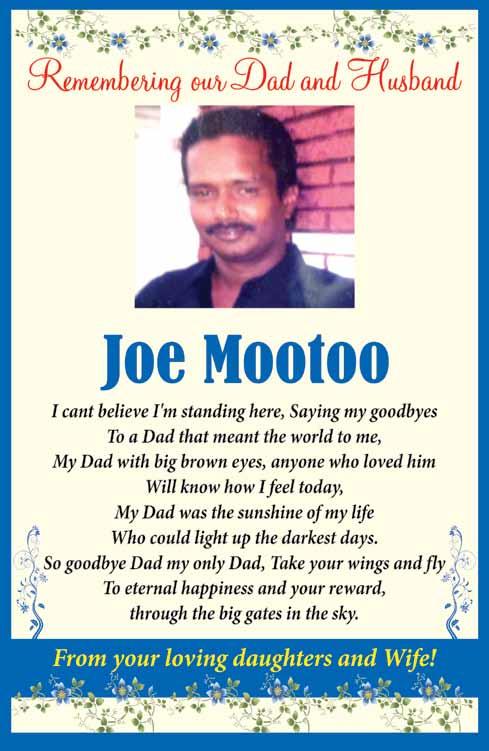

Emancipation celebrations in the Caribbean this year will be particularly exciting as a tremendous convergence of anniversaries and historical milestones will be observed.
This year marks the 21st year of existence for the Emancipation Support Committee (ESC) which continues to host the commemoration of emancipation.
The English-speaking Caribbean will be observing the 175th anniversary of emancipation, while those from the Dutch-speaking Caribbean will be observing their 150th anniversary. The ESC will also be observing the 100th anniversary of the birth of one of the Caribbean’s famous sons, Martinique’s Aime Cesaire.
Art, culture, entertainment, spirituality and business all have their place in the Emancipation festival. International guests and world class artistes will feature prominently in the celebrations.
Emancipation celebrations have grown in preeminence over the years and it is now an internationally recognised festival drawing people from all walks of life including heads of state, business leaders and award-winning performers. This year’s celebrations

will feature well-loved annual events alongside some new activities.
Spotlight on activities in Trinidad Emancipation celebrations in Trinidad run from Friday, July 26 to August 1 at the Lidj Yasu Omowale Emancipation Village at the Queen’s Park Savannah, Port-of-Spain.
At the opening night last Friday, the talented performers of the KanKouran West African Dance Company under the world-renowned artistic director Assane Konte took to the
stage as songs and dance of the African tradition took the forefront.
KanKouran was formed in 1983 in Washington, DC, by Konte and former director of music Abdou Kounta. They grew up together in Dakar, Senegal. After many months of recruiting, training and performing at local venues, the company presented its first full-length concert, “A Visit to Africa” in 1985. And with that performance, an institution was born.
On Saturday, there were

two exciting events that showcased the best of African culture. ‘Rhythms and Voices of the People’ featured among others, Baba and Modupe Onilu, sons of the late great percussionist and musician, Jah Jah Onilu. Later that evening, cultural legends graced the stage at the Lidj Yasu Omowale Emancipation Village for Conscious Vibrations.
Sunday in the Emancipation Village the youth took over.
Other activities included a food festival day, a popular attraction where epicu-
rean delights of Africa and the Caribbean were available. Nigerian delights took centre stage.
An ancestral showcase and pan night were also staged along with the much anticipated Pan African Spectakula headlined by Grammy-award winner Angelique Kidjo. This singer-songwriter and human rights activist from the West African country of Benin, is ‘noted for her diverse musical influences and creative music videos.’
Time Magazine has called her “Africa’s premier diva.” Kidjo has also been a UNICEF Goodwill Ambassador since 2002, travelling to many countries in Africa where she works to promote the rights of women and children.
Kidjo was joined by Nigerian pop sensation and awardwinning artiste ‘2face Idibia’. ‘Idibia’ hails from the Idoma ethnic group in the southern part of Benue State, in central Nigeria. As a pop singer/ song writer/label executive, he has collaborated with the likes of Mary J Blige, Wyclef Jean, Beenie Man and many other international music stars. Among his many accolades, in 2011 he won the BET award for Best International Act. (Excerpt from TT Guardian)

Nicole Bissoo-Williams is inspired by family and nature, which have been motivating factors for creating her celebrated artistic pieces housed in private collections around the world.
In an interview with Guyana Times Sunday Magazine, the artist pointed out that her parents are artistic individuals. Her mother paints but is not a practicing artist, and her father, Patrick Bissoo, is a veteran local artist.
“During childhood I observed my father painting professionally. He is also a qualified teacher/headmaster. I guess my talent is hereditary. In school – St. Stanislaus College – my teachers encouraged me to go on to Burrowes. They saw my talent and pushed me to develop it. I went to Burrowes School of Art and then later I studied at Penn Foster Education, located in Pennsylvania, U.S.,” she recalled.
Nicole stated that since childhood she was always painting and sketching. Even her jobs were all art related. In 1996, she started working with ceramics while employed for a local company named POLDON. She eventually bought the company in 2006 and named it Irie Artz. The connotation of that name, she disclosed, did not draw the clientele she wanted, so she changed it to Brush Strokes. Through Brush Strokes Nicole was able to delve into her art in a major way and at the same time market her products. The artist has done significant work for various government officials, and logos and banners for numerous organisations.
“Brush Strokes offers a collection of innovative hand-painted works of art for the home, office; personal gifts and just about anything artsy you can think of.

Strokes also offers art classes to your time convenience for children and adults. There is also my home service where I decorate or redecorate, brighten your child’s room or play area with fun paintings on the wall of their favourite animation, cartoon images, angels, fairies, super heroes, nursery rhymes scenes, rainbows and much more. I also do murals for businesses, which I have done for many notable companies. I use all art medium you can think of to create lasting hand painted pieces,” Nicole outlined.
Presently, Nicole is on a hiatus from ceramics work until her two-year-old daughter is older.
“I was advised to put that on hold until she is a bit older because of the fine dust emanating from working with ceramics. Also I’m looking at getting my studio, which I don’t have at this moment. However, I will get back into ceramics in the near future. For now it is
too time-consuming juggling that and my family. But I still paint. Life changes so you have to change with it,” she related.
Of note is the recurring image of women and children in Nicole’s paintings. The artist revealed that the reason for painting women looking sad or burdened or women with children stemmed from her parents separation. When they separated, Nicole reflected, her life was spent with her mother and as a result her pieces portrayed her emotions.
Seeing art as therapy, Nicole said it relieves stress and has helped her to cope with life. Her art, she noted, is inspired by her daughters, mother, and nature.
“I’m also thankful to my former art teacher Errol Brewster from Burrowes, who resides overseas now, who continually offer constructive critique and advice on my art. He has significantly helped me to develop my talent. He would even help me in the pricing of my art so that I’m not exploited. From time to time I would contact him for his advice,” Nicole noted.
Nicole has exhibited her work with the Guyana Women Artists' Association, where she was once a member, and at Republic Bank and the National Library. Her art is also all over the world in private collections. Nicole’s sisters in the UK and the US have her pieces in their homes, and when persons visiting them would inquire about the artist and find out it was their sister Nicole, orders would flow in for the paintings which usually end up in various parts of the world.
As an artist, Nicole’s challenge is sourcing art supplies locally. She cited that it is a hassle to order online and en-

suring it reaches on time in order to fulfil orders on a timely basis.
Encouraging others pursuing art, Nicole said, “My advice is to stay focused. If you know this is where your heart and passion is then by all means pursue it. I was seeking a job to get a stable income because art is not a financially stable career. But I was not happy. So I went back into just doing art, but I also taught privately and did other side art jobs to make it work. Art makes me happy. I am hoping to start teaching art fulltime but it is all in the planning. Do not just get into art for money. Develop yourself in it and it will eventually work out as it did for me. When I was working with the ceramics company it was not a highly paid job, but the experience and recognition I gained benefit me now.”
For more information on Nicole’s art visit Brush Strokes on Facebook.













The Dennis Williams Archaeology Field School 2013 team, instructed by Dr. M. Plew, an archaeologist attached to the Boise State University, and anthropologist from the Walter Roth Museum, Louisa Daggers, conducted an exploration within the vicinity of Karanambo Ranch in the South Rupununi (Region Nine) for eight days in July, and was thrilled to discover just over a dozen historical sites in the region.
The Rupununi savannah accounts for nearly half of the national territory of Guyana where the archaeology of the area remains relatively unexplored. A range of chipped stone tools including projectile points, and features that include rock alignments, rock circles and rock piles, were all previously identified in the area. The region is also characterized by the presence of polissoirs and petroglyphs.
On the basis of associated historic items and the assumption that the Rupununi Phase was associated with the historic Makushi and Wapishana, previous archaeologists concluded that the phase dated from the end of the 18th century. In this regard they viewed settlement of the savannah as a post-European phenomenon.
In an interview with Guyana Times Sunday Magazine, Louisa noted that the material culture of the Rupununi Phase includes a range of chipped and ground stone artefacts that are made predominately from syenite, quartzite, sandstone and felsites; these include anvils, grooved axes, choppers, hammer stones, hoes, manos, metates, cores and flakes
and two-stone bowl fragments. More prominently represented are pottery vessels and shards of the Kanuku and Rupununi Plain types. She added that the pottery, which is found in a variety of surface colours within a range of orange to reddish orange to reddish brown, is characterised by three forms.
The anthropologist noted that the recent work in the vicinity of Yupukari and Toka villages has also cast light on the nature of Rupununi occupations. In and around the village of Toka, polissoirs, similar to those at Imprenza on the Sauriwau River, were said to be a mountain top village with cooking areas and a range of decorated and painted ceramics. In addition, a new type of cemetery characterised by earthen and stone mounds was recorded, as were petroglyphs on Banuni Creek south of Toka.
“Though much additional work will be required to establish the broader parameters of the economic and settlement diversity of the Rupununi, it is clear that substantial variation exists and should prove through further investigation to enhance our understanding of the cultural adaptations of Amerindian peoples in the savannahs,” Louisa expressed.
The opportunity to survey within a large landscape unit proved extremely valuable in the team’s efforts to define the range of prehistoric adaptations in the region. Their first task was the description of new sites in the area as a basis for recommendations regarding their protection and further study.
The team’s survey of the Karanambo ranch yielded a total of 13 new sites in-
cluding habitation sites with evidence of pottery and several lithic (stone) reduc tion sites. Louisa disclosed that these sites were extensive and appeared to be unlike any other site of this type reported by previous researchers. Two housestructure sites were also located on the survey and one site included 19th centu ry historic materials indicating colonial contact.
Unearthed also were human remains said to be of three females and one male, while the other could not be determined; all of which were between the ages of 20 - 38 years.
“With the assistance of informants and guides, both systematic and intu itive survey strategies would be employed where appropriate and feasible. Field documentation will include the use of notebooks, standardized survey forms and photographic documentation. Sites will be located using topographic sheets with locations established using GPS units to record UTM coordinates. Sites and features will be mapped and diagnostic artefacts collected. As such, we will continue to explore Guyana in an effort to preserve the country’s rich and diverse culture,” the anthropologist declared.

itated five students from Region Nine since there is increasing need for human resources in this region to locate and or identify archaeology for protection and future research. By providing this form of field training, we are preparing students for future work in the field, in the event of major project or to assist archaeologists in future research if the need arise and for additional human resources with the field experience,” she mentioned.
Louisa said this year’s programme accommodated seven students, including students from the University of Guyana. The programme, she pointed out, aims to foster capacity building by introducing participants to the field of archaeology and data collection methods (field techniques).
“We were also pleased to have facil-
At the end of the programme, the Walter Roth Museum of Anthropology facilitated a public talk where the findings were reported and certificates were issued to participants. This year’s participants included Travon Biard, Nankomari Singh, Marcelia Xavier, Roseanna Xavier, Francine Merriman, Devon Merriman ad Denton Merriman.

The government of Grenada said it has declared war on unemployment, with hundreds of jobs coming on stream and a major offensive underway, which is expected to spur economic growth and development.
Prime Minister Dr Keith Mitchell said that at least 10,000 people could find employment on a temporary basis, with several government-driven initiatives on stream.
Despite the tough economic situation, government has embarked on a number of projects that are resulting in thousands finding temporary jobs. They include the de-bushing program, which began on July 1, employing 445 gangs of seven around the country.
There is also the farm subsidy program, which will employ between 1,600-2,000 workers and the concrete road program, which will also provide employment for many, as the government seeks to energize the economy.
Mitchell reiterated government’s commit-
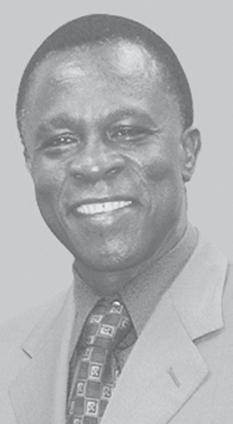
ment to the empowerment of people and said that the workforce will be increased in the next two months with hundreds of jobs coming on stream, as promised.
He is heartened by this development.
“The workforce is about 40,000, so if we have now 3,500 persons working for the two months and you add another 3,000 who may be there for another two years, and another 1,500 with the concrete road project and special projects, will take the number to 8,000 workers,”
Mitchell said.
He also spoke about other jobs coming on stream with the construction of the House of Parliament, expected to start soon, the St Mark’s mitigation project, two manufacturing projects underway in Frequente and the Sandals Hotel project, which is already providing employment for many.
“We’re not even talking those. We are looking at around 8,000 from government initiatives alone; so you could be talking about 10,000 persons, who will be off the unemployment line,” he said.
“We are going to see a serious dent to the employment at least temporarily in the country,” Mitchell told the press.
He spoke about some 200 young people, who have been trained for the cruise tourism industry, by a family in New Hampshire, who have done a wonderful job.
“The cruise line people are so impressed with them. They seem to be extremely successful with almost everyone they train finding employment,” he said. (GIS)
Accusations that he is a dictator have been rejected by St Kitts and Nevis Prime Minister Denzil Douglas.
The allegations have been made by opposition politicians, as well as by three of his former government ministers.
In denying these allegations, Douglas suggested in turn that two of the three: Dr Timothy Harris and Dwyer Astaphan have dictatorial tendencies.
He also labeled former national security minister Astaphan, who has Lebanese roots, as a racist.
“I dismiss it simply because I have had the opportunity to examine myself … and I don’t think I am a dictator,” the prime minister said in response to the claims that he acts in a dictatorial manner.
“I believe that Harris has serious dictatorial tendencies – ruthless. Dwyer has also strong dictatorial tendencies because Dwyer is a racist,” Douglas said in an interview on radio station Freedom FM.
According to Douglas,
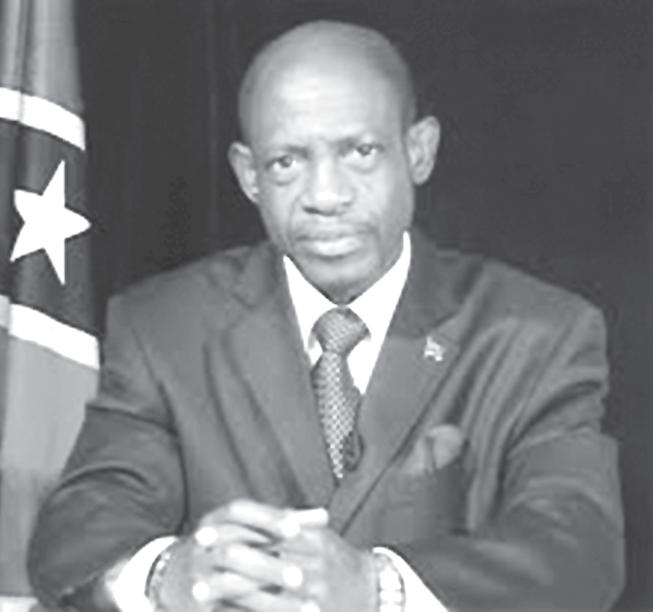
Astaphan, who held the tourism and national security portfolios in government, had difficulty with “a young black boy from St Paul’s (meaning he, Douglas)” heading the Cabinet when the former parliamentarian was a minister.
Astaphan dismissed the prime minister’s statement as “an unfortunate remark” that is “very untrue”.
He says that he will be seeking legal advice on that matter.
According to
Astaphan, the remark is coming from “a desperate man who would say anything to create around him a very unreal bubble of security because he knows that he is done.”
“Of course I will have to instruct my solicitors, with regard to this comment that he made to see if it is something that maybe we ought to pursue, because it is certainly defamatory to accuse somebody of being racist,” Astaphan told WINN FM. (CaribbeanNews)

According to most historians, the hammock was first introduced to the rest of the world in a letter from the second voyage of Christopher Columbus to the “New World”.
Its origins are said to have come from the indigenous peoples of Central and South America, where hammocks were first made from the bark of the hamack tree. Some scholars believe the hammock dates back to some 1,000 years ago among the Mayan peoples of Central America.
The English word “hammock" came from the Spanish conquistadors, who derived the word “homoca” of the present day “hamaca” from the Carib Indians, who wove fibres of the hamack tree.
More than 500 years ago, Columbus discovered the indigenous Taino Indians of
Bahamas sleeping “in nets between the trees”, which were suspended off the ground. Some historical sources suggest it was among the Taino Indians of Haiti (Santo Domingo) that Columbus first saw and experienced the hammock.
In 1500, Portuguese explorer Pero Vaz de Caminha noted in his journal that “in their thatched houses the natives sleep in nets that are attached with cords to wooden beams above.”
Later 16th-century accounts speak of people “[placing] hot coals or [kindling] small fires under their hammocks to stay warm or ward off insects as they slumbered.”
“Suspended beds”, says history.com, “prevented contact with the dirty ground and offered protection from snakes, rodents and other poisonous or simply pesky creatures.”
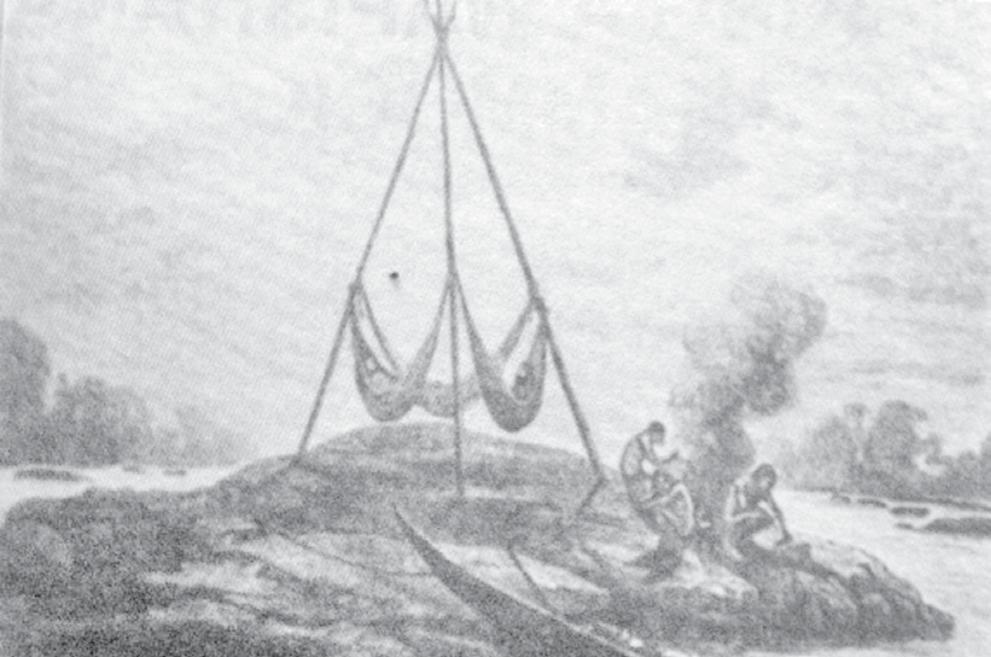
Cortes, con-
as
World regions.
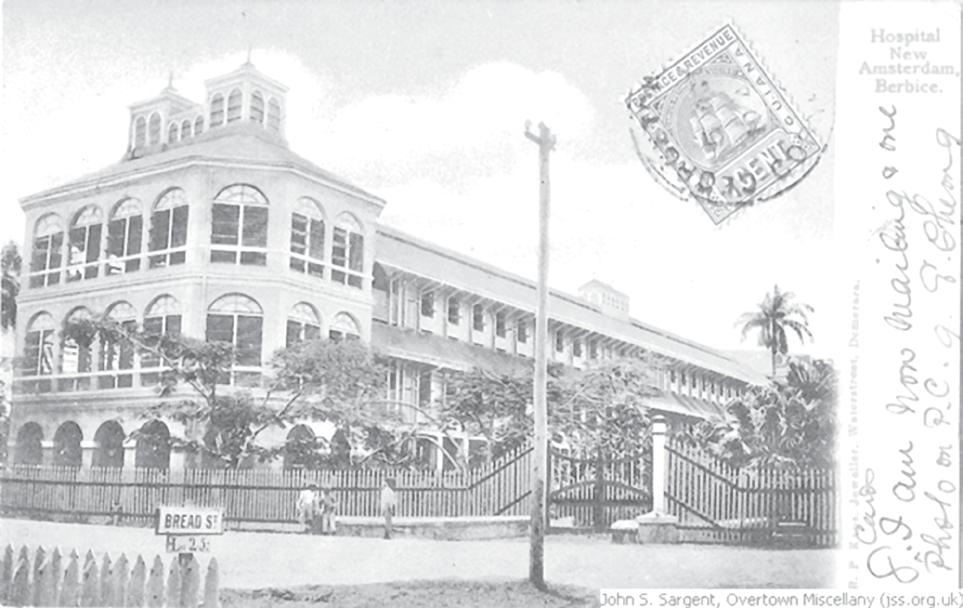
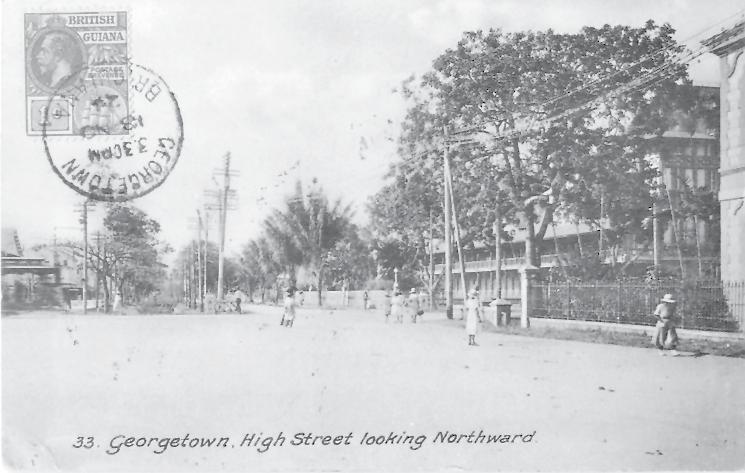
a staple of Indian life in the region. Vasco Nunez Balboa wrote of “hammocks of cotton” as he made his way through the Isthmus of Panama towards the Pacific Ocean. He observed that every hut, every village had hammocks as the primary source of bedding.
By the end of the 16th century, colonists began their widespread use of the hammock from Mexico through the Caribbean to Brazil in South America. In 1570, Portuguese colonist Pero de Magalhaes observed that “Most beds in Brazil are now hammocks, hung in the house from two cords. This custom they took from the Indians of the land.”
Throughout these regions, the hammock varies in materials and techniques as well as among its western adaptations. Hammocks are said to have been woven from cotton, Ité, tucum, awarra, same and kuraua, to sisal to wool and polyester blends and canvas in modern times. By the late 16th century, the hammock was being used
in the English navy, and entered the English dictionary as “a piece of canvass, hung at each end, in which seamen sleep.”
Today it has become a symbol of relaxation, with its iconic depiction in vacation travel brochures or home and garden advertisements derived from war-time propaganda photos of a soldier resting in between two palm trees in the South Pacific.
According to the Walter Roth Museum, the Carib, Makushi and Wapishana communities here make cotton hammocks, while Arawak and Warrau hammocks traditionally use tibisiri fibre, and Waiwai hammock makers use kraua string.
These hammocks are also often decorated with fringes, tassels or feathers, and are coloured using the juices from the barks of trees such as the wallaba, red mangrove and genipa.
The humble “hamaca” is just one of the many contributions Amerindian traditions have made to worldwide culture.

Jand Tobago, is renowned as a talented designer with more than 13 years in the fashion industry.
Strangely, her interest in sewing actually started with her love for designing nails. “I did a painting on a wall hanging and it looked good. I was already sewing and I tried it on clothing. The response was good and I started taking orders.”
She was torn between her love for nails and clothing. The designer admitted it was a difficult choice. “I find the clothes were drawing me away from the nails.”
Bernard has distinguished herself as one of the leaders in the cotton styles. “I like cotton because I find in the Caribbean we want to be cool. Synthetic material isn’t




why I was drawn to cotton.”
Cotton is versatile and is easy to work with for Bernard who easily hand paints, crimps, braids, and dyes it creating collections of celebrated designs.
The designer frequently showcases her works in Tobago, including the Tobago Fashion Weekend which she has participated in since 2010, and the San Fernando Fashion Week 2011. Additionally, her collections will be on the fashion runway at the upcoming Guyana Fashion Week 2013.
Bernard seeks out different avenues to display her flair for fashion and is one of the most anticipated designers at GFW 2013.

‘Nobody has ever used any pick-up line on me’ - Parineeti
In a recent interview on her student life and matters of the heart, Parineeti Chopra was asked what's the cheesiest pick-up line a guy has used on her to which she shockingly replied, “honestly, nobody has ever used any kind of pick-up line on me, cheesy or smart.”
She stated that, “in college, I was quite plump and nobody ever asked me out. Now that I've entered films, it is all the more difficult as people are conscious before asking an actress out for a date.”
When asked what draws her towards a man instantly, she responded

“the way they smell and a great sense of humour. If a man smells good, I automatically want to talk to him, but then he needs to be funny as well.” (TOI)
‘Saif can’t be a vegetarian ever’ - Kareena

Actor Saif Ali Khan loves nonvegetarian food and his actresswife Kareena Kapoor says he
just can't do without eating meat.
"Saif can't be vegetarian, he says he can be vegetarian only for one meal and what that means, I don't understand. He is like, 'I can't not eat meat at night'," the 32-year-old said at a launch event.
Saif has found new love in kachoris now.
"But now Saif has found new love in kachoris and samosas and he gorged on them in Lucknow," said Kareena, who has turned vegetarian.
Kareena is currently busy promoting Prakash Jha's ‘Satyagraha’. She is also shooting for Punit Malhotra's ‘Gori Tere Pyaar Mein’ with Imran Khan.
Saif and Kareena got married in October 2012. (TOI)
Karan Johar and Karan Malhotra are on a winning track. The producer-director duo, the team behind the Hrithik Roshan-Priyanka Chopra, Rs 100-crore film, 'Agneepath' (2012), is back on course with Dharma Productions' 'Shuddhi'. It is known that Hrithik will play the lead and joining the light-eyed superstar will be Kareena Kapoor.
Johar said, "I'm excited to see Hrithik and Kareena back after 12 years."
The two were last seen together in 2001, in Subhash Ghai's ‘Yaadein’ and later in Karan's super-duper hit ‘Kabhi Khushi Kabhie Gham’. In the time gone by, both actors have done

different pieces of work separately. And though Karan doesn't look at their casting as a coup, he feels both actors will bring in the required energy that his director has envisioned. (TOI)
Bollywood actress Katrina Kaif, who has been delivering hits after hits in a career that spans a decade, has not bought a house for herself yet. She has been searching for a house of her own in Mumbai for the last four-five years but has not had any luck. While her contemporaries Priyanka, Deepika and Anushka have their own pads, Katrina is still struggling to find her own accommodation and is paying high rent every month for her rented apartment in Bandra.
It is said that the pretty actress was keen

on buying a palatial duplex in Carter Road that belonged to a Bollywood filmmaker. The place had a beautiful sea view too. However, after showing keen interest, Katrina did not buy it. She went to check another property, but after getting
‘My wife doesn’t worry about intimate scenes’ - Arjun Rampal
Actor Arjun Rampal, who is married to supermodel Mehr Jesia, says his wife does not have a problem with his onscreen intimacy with costars.
"I don't think she has to worry about my onscreen intimate scenes... She knows this is my job," Arjun said.
The 40-year-old actor played the character of an ex-Army officer in

Nikhil Advani's recently released ‘D Day.’ Arjun said he does not discuss work with his family.
"Whenever they (family) see the film they are not aware of what I am playing as I don't discuss my work with them. So it is a surprise for them. She (Mehr) has liked 'Rock On' and 'Rajneeti'. She feels 'D Day' is one of my best films," he said. (TOI)
Akshay Kumar finds an admirer in Al Pacino
‘Once Upon A Time In Mumbaai Dobaara' (OUATIMD) has apparently caught the eye of Al Pacino, who is reportedly pretty impressed with the filmespecially with Akshay Kumar's look. Pacino was shown a promo of the film by his business partner, Barry Navidi, and it let loose a torrent of memories for the veteran actor.
A source close to the film said, "Al Pacino and Barry Navidi were casually discussing the changing scenario of films. Barry happened to mention OUATIMD while mentioning gang-
ster films made in India and showed him the theatrical trailer of the film."
In a communication to the film's makers, Pacino said, "My friend Barry Navidi showed me a promo for an Indian gangster film with Akshay Kumar. It brought some fond memories back from my Godfather days."
The team of OUATIMD is obviously delighted with the news. When contacted, Akshay said, "A touch of appreciation is always held dearly-even if it's from the simplest of people like our beloved spot boys. But to have an actor like Al Pacino say
such nice things about your work is something else. I had goose bumps thinking about him watching the promo! I was so humbled, not only as an actor but also as a fan of his work. I pray he enjoys the movie as much as he enjoyed the promo." (TOI)
‘Amitabh Bachchan leaves a hangover of himself’ - Amrita Rao
Actress Amrita Rao, who will be seen as Amitabh Bachchan's daughterin-law in her upcoming political drama ‘Satyagraha’, is apparently in the awe of the 70-year-old actor.
Rao said that she is still in the superstar's hangover.
"What do I say about working with Mr Bachchan? The day just flies and you don't even

realize while you are working with him," she said.
"He leaves a hang-
over of himself especially after pack-up when you come back home, the way he speaks, his voice, his sense of humour everything just mesmerizes you and you are left with a hangover of him at the end of the day", she added.
The film, which talks about the uprising of, the middle class against a corrupt and unjust system, is set to release on August 30th. (TOI)
Ever since John Abraham started dating his banker girlfriend, Priya Runchal, he claims to have become more financially sound.
a call about someone's death she thought it was not auspicious.
What is surprising is that the lady owns properties in her hometown London. However, it seems she is struggling to find her dream abode in Mumbai. (TOI)
The actor had earlier entrusted his investment portfolio to experts. But now, sources say that Priya reportedly takes care of his money for him. So, Priya is the in-house investment consultant. And the actor is only too happy to get some advice about money matters from his lady love. (TOI)

Ryan Gosling has topped a list of actors that fans would love to see featured in a sex tape.
In the survey, which was commissioned by porn house Vivid Entertainment, the actor bagged 21 percent of the respondent's votes, the New York Daily News reported.
The 'Crazy, Stupid, Love' star was closely followed by Brad Pitt and Channing Tatum on the chart.
While, Matthew McConaughey and Johnny Depp came in tied for fourth position and rounded up the top five. (TOI)


Alec Baldwin has revealed that he turned down the role of a villain in a superhero movie, as his wife Hilaria is due to give birth anytime soon.
Speaking on 'The Howard Stern Show,' the 55-year-old actor said that he had been offered a role in a super-
hero movie, which he wouldn't reveal the name of.
He said that he didn't want to undo somebody, as the bosses hired someone else to play the part.
Baldwin said that the filmmakers had asked him to play a villain in one of the Marvel Comics movies.
He explained that he wasn’t available, as the movie bosses had wanted him to work a certain time, and because of his wife's pregnancy, he had to turn down two films this summer that he had wanted to do, Contactmusic reported.
While Baldwin declined to reveal the name, it's possible that he was approached for a role in James Gunns' intergalactic movie, 'Guardians of the Galaxy,' which is currently being shot at Shepperton Studios in England. (TOI)
‘Cory will forever be in my heart’ - Lea Michele
Actress Lea Michele posted a picture of late boyfriend Cory Monteith and thanked her fans for being supportive in her tough times.
The actress, who was also Monteith's ‘Glee’ costar, had requested for privacy, post his untimely death in a hotel room in Vancouver July 13. Michele took to Twitter to thank her fans for showing support, reports dailystar.co.uk.
She posted an old picture of herself and Monteith, with the caption: "Thank you all for helping me through this time with your enormous love and support. Cory will forever be in my heart."

Monteith was found dead in his hotel room. It was later revealed that he died of an overdose of a mix of alcohol and her-
Actress Blake Lively says her husband Ryan Reynolds has better taste when it comes to building their home together.
The couple got married last September.
"I'm very lucky to be with someone who has better taste than me. We influence each other in different ways," femalefirst.co.uk quoted Lively as saying.
"With film and TV, you don't see the results for months. Building a home, you get immediate gratification," she added.
The actress admits that her personal life is her priority.
"Work is important, but my great-
‘Friends’
est passion is my personal life," she said. (TOI)
Actor Matthew Perry says if he had his way, he would love to go back in time to 2004 to stop his hugely popular sitcom "Friends" from going off air.
Perry played the role of Chandler Bing, one of the six best friends, who entertained the audience for 10 years on the small screen.
"If I had a time machine, I would like to go back to 2004 and not have stopped," Perry
said on a chat show.
According to eonline.com, actress Lisa Kudrow, who played the
role of Phoebe Buffay in the sitcom, agreed with Perry, saying: "If it were up to us, you know, individually, then yes. I would keep going."
"I figure...there would have come a time, anyway, when someone would have said, 'We've had enough.' But, why not have fun until they do."
The show also starred Jennifer Aniston, Courteney Cox, Matt LeBlanc and David Schwimmer in lead roles.
oin.
Montieth was in relationship with Michele for almost two years. (TOI)
Being angry is a waste of energy, says Nicholas Cage
Nicholas Cage, whose upcoming thriller flick 'The Frozen Ground' shows him playing a cop chasing a serial killer, has admitted that being angry is a waste of valuable energy.
The 'Ghost Rider' star has confessed to the Sun that throughout the beginning of his career, he would trash his trailer and insult people because he thought it was the best way to get into character.
When the Oscar winner was asked what he
wished he had known at 18, he responded saying he wished he had not been so angry at that age. The actor, 49, revealed that he was a wild guy with a lot of energy and didn't know where he was fitting in. (TOI)

Jamaica's national junior squash cocaptain, Ashante Smith, is pleased that he finally won a gold medal at the Caribbean Area Squash Association Junior Championship, which ended in Guyana at the weekend.
Smith captured the boys' Under-19 title and will be moving on to the senior stage.
The Jamaican recovered to overpower Trinidad and Tobago's Mandela Patrick 5-11, 8-11, 13-11, 11-7, 11-4.
"Well, I think I deserved that win. I worked hard, day in and day out. I really think I deserved it," Smith said when the team returned to Jamaica on Monday evening.
"It was a hard battle in the final. I went down 2-0, but fought hard and won three sets to take the title. I was feeling a bit down after trailing two sets, but I had my team behind me, pushing me and I got the win.

"It was a joy knowing that I went there and got the gold," he further admitted. "That is what I went there to do, to win the title."
Smith and co-captain Jessica Perkins are the only two members of the squad who will no longer play at the junior CASA again.
"This is a really good team, I'm proud to call myself captain of this team," noted Smith, who
also thanked coach Rene Denis, manager Gill Binnie, sponsors Burger King and 305 Squash, as well as the Jamaica Squash Association (JSA) for their support.
"We worked really hard and deserved all that we won," he said.
(Jamaica Gleaner)

By RavendRa Madholall
Former Guyana senior team skipper Damodar Daesrath hit a sparkling 109 for Canada in the 50-over game against United States of America (USA) on Saturday at the King City ground.
The elegant righthander smacked seven fours and five sixes in his enterprising 105-ball innings but the Auty Cup match was abandoned following the completion of Canada’s innings owing to torrential showers.
Host-nation Canada reached a formidable 252 all out off 49 overs with the Berbician accomplishing his maiden hundred for Canada after making his debut in early 2012.
In the preceding two-day encounter, which commenced last Thursday, also at the same venue, Daesrath, who featured in 17 first-class matches for Guyana, made 17 but his team prevailed with first innings points.
In the two subsequent T20 games at King on Sunday, Daesrath was ruled out with a hamstring problem. Canada was again in the winning column with two emphatic victories.
Meanwhile, Daesrath told this publication on
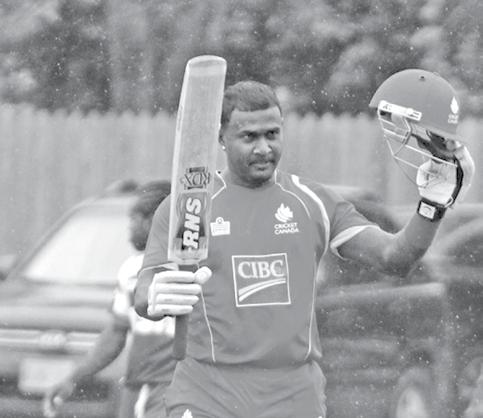
Sunday that he was very elated to get the landmark at the popular King City and will definitely cherish the achievement for the rest of his life.
“It feels really great to get a hundred for Canada more nicely on home turf; I just went out there and played to the best of my ability. The pitch was playing wonderfully and I just wanted to make a big impact,” Daesrath related.
His compatriot Jeremy Gordon also appeared for the North America lineup but in the T20 games. Gordon, who represented Guyana at the highest level, was very economical on both occasions.
In the first match when Canada won by five wickets, the right-
arm quickie conceded 18 runs from his allotted four overs while he was more accurate in the second contest with seven runs from three overs as Canada emerged by 78 runs.
Both players have once again been named in the Canadian squad to compete against United Arab Emirates and Netherlands in a four-day match each while they will be up against UAE in four 50over games, starting on Thursday at the King City, too.
Canada will face UAE in the International Cricket Council (ICC) Intercontinental Cup while they collide with the Netherlands in the ICC World Cricket League.
– nine central partners finalised across a wide range of businesses
With the recent announcements of partnerships with Busta Soft Drinks and Virgin Airlines, the Limacol Caribbean Premier League has a full set of commercial partners for its inaugural season. The league has signed Limacol, Digicel, Guardian Group, Courts, El Dorado Rum, Scotiabank, SM Jaleel (Busta), Ericsson and Virgin Airlines as League Sponsors.
LCPL CEO Damien O’Donohoe remarked, “The level of support from the corporate community in the Caribbean and elsewhere has been overwhelming and we thank all our partners for helping to make this massive undertaking possible. Without the support of our partners, governments and the fans, a venture of this

scale and ambition is simply not possible, and we look forward to a very long and successful relationship with all those who have been with us at the beginning.”
West Indies T20 and St Lucia Zouks Captain Darren Sammy added, “The Limacol CPL is extremely important for West Indies cricket and for the playing community here and the level of support from sponsors has just been phenomenal. On behalf of the players I’d like to thank all the partners for their support, and express the wish that it continue
long into the future.”
The LCPL has a group of Central League Partners, with each franchise team also having its own sponsorship programme.
Jamie Stewart, Commercial Director of CPL and CEO of Sports Marketing Agency Commune, said “CPL embarked on this process only nine weeks ago, and the support from our partners in that short time has been absolutely fantastic. What is especially heartening is that leading Caribbean brands dominate the programme.
TT’s national and Team Predator Carbon Repair cyclist, Emile Abraham tasted sweet revenge when he powered to victory in the fourstage Tour of Quebec endurance event, which concluded in Quebec, Canada over the weekend.
This win for Abraham saw him hold on to the tournament’s coveted yellow jersey, which is distributed to the stage winner, and the green jersey, which is delivered to the meet’s best sprinter.
In the final 65km course along Parliament Hill on Sunday, Abraham pedalled to a golden finish in one hour, 34 minutes and 44 seconds. He crossed the finish line ahead of stage silver medallist Douglas Repacholi (Stevens Racing) and bronze receiver Pierrick Naud (Garneau-Quebecor). Having already won the first (Thursday) and second (Friday) stages, Abraham rounded off his Tour of Quebec campaign with a blistering sprint-finish in the fourth and final stage.
Speaking to the local media house lapresse.ca after his historic win, he explained to journalist Jean Francois Tardif, “An amazing week. It exceeded all my expectations. And to think I almost did not come to Quebec because of the logistics implied my trip here. And it was during the week before the start of the Tour that I finally decided to take part. Things took a wonderful turn. I really could not have hoped for better.”
The Tobagonian-bred rider admitted that his victory allowed him to enjoy a little revenge. He recalled that last year, when he had the green jersey for the best sprinter, he was excluded from the final stage of the Tour because he had failed to sign the attendance sheet.
However, the 39-year-old endurance veteran was thankful to his Team Predator Carbon Repair teammates for ensuring that he stood in front of the pack and dominated most of the grueling four-stage road course.
He continued, “And I had not made

the right choice of front wheel, which caused me problems, especially in the corners. But he still had enough energy and my teammates, though tired, did everything they could to help me. All this while all teams have continued to attack.”
Overall, Abraham won three of the four stages of the Tour de Québec programme. While he enjoyed the likes of his yellow and green jerseys, silver medallist Naud returned home with the blue jersey for the Under-23 best rider. Anton Varabei (Jet Fuel Coffee) won the red jersey for the best climber.
Speaking to other media after his win Abraham explained, “I had a great career, but I’m getting old and it’s been that I have not done anything so far. I showed up here with great legs. I ran a lot in recent weeks and it helped me a lot.”
Abraham concluded, “Teams have tried everything today (Sunday) launching attack after attack. I consider myself fortunate to have been able to hold on and keep the yellow jersey. My teammates did an amazing job.” (TT Newsday)


Reggae boy Errol Stevens has signed a one-year contract with Thailand club Gulf Saraburi FC and is looking to grab the opportunity with both hands.
Stevens, 27, who made his senior debut in 2011 against Colombia in Fort Lauderdale, Florida, has been out of the national set up because of injury.
“Well, I'm happy to be back in an environment where I can be completely focused on football, and
it's also good seeing that I stand a better chance of getting back into the national team after being out with injury," he said.
Stevens, standing at 6ft 2in, is a powerful forward who also possesses decent pace and technique, and has experience playing in Asia having donned the colours of Hanio FC in the Vietnam league in 2012.
A former student of Greater Portmore High School, Stevens also had a four-month stint with
Russian club FC Khimki in 2009, having played for local clubs Harbour View, Portmore United, Tivoli Gardens, and Arnett Gardens.
Stevens missed most of last season with Arnett Gardens because of a knee injury and last played for Jamaica in May 2012, when he came off the bench and created the lone goal for Jermie Lynch in a 1-0 win over Guyana at the Montego Bay Sports Complex. (Jamaica Observer)

The inaugural Limacol Caribbean Premier League (LCPL) T20 tournament will be beamed into millions of homes across the globe from start to finish, ensuring that the world see exactly how the Caribbean come to play.
LCPL organisers confirmed that networks in India, UK, Australia, New Zealand, the Caribbean and the U. S. will carry the 24 matches which take place over the period of July 30 to August 24, and that negotiations are still underway to add more countries to the list. In addition, many networks in the Caribbean will show the tournament free of charge on their terrestrial TV stations.
“When we launched the LCPL in February, we said that we were going to make sure that all eyes are on the shores of the Caribbean in July and August, and we are making good on that promise,” declared Limacol CPL Chief Executive Officer Damien O’Donohoe.
“The Caribbean is the place to be this summer for many reasons, and the LCPL tops the list. However, for those people who do not have the good fortune to be able to come and play in person, we are going to see to it that they experience as

much of the cricket meets carnival atmosphere and energy that will be pulsating through the region in just a few days.”
O’Donohoe said the interest from media around the world has been strong and encouraging. “ESPN3 continues to serve cricket fans by building its portfolio of premier events and establishing itself as a leading destination in the U. S. for live coverage of the second most popular global sport,” said ESPN Programming and Acquisitions, Senior Director Jason Bernstein.
“By delivering these events on the multiscreen sports network, we are able to give the sport national exposure across a variety of platforms that are easily accessible to the most seasoned fans as well as newcomers.”
The buzz is building around the Caribbean also, and station owners are happy to air the tournament in their markets.
“The news of cricket, in the form of the Limacol CPL T20 tour-
nament, being broadcast on television in the Virgin Islands is most welcomed, and long overdue. I guess nothing happens before its time,” said British Virgin Islands, CBNTelevision owner Andrew Cox Sr.
“The Virgin Islands market is populated by nationals from the neighbouring Caribbean islands. All West Indians love cricket, and those who have the opportunity to follow the games do so. Live coverage is very important to the viewers who cannot make it to the venue as we still want to be a part of the excitement at the matches. There has been an awesome response to the LCPL TV weekly programme and we expect the same from the live broadcasts of the actual tournament,” he added.
While some international stations are still finalising negotiations, fans can watch the Limacol Caribbean Premier League on the following networks: India – Sony; UK – BT Sport; Australia – Fox Sports; New Zealand –
Sommet Sports; USA – ESPN3; Barbados –Caribbean Broadcasting Corporation; British Virgin Islands –Caribbean Broadcast Network; Cayman Islands – Cayman 27; Dominica – Marpin 2K4; Dominica – SAT Telecoms; Guyana – National Communications Network and Television Guyana Channel (28); St Kitts – ZIZ Broadcasting Corp; St Lucia – Helen Television System; St Lucia – St Lucia Cable Vision; St Vincent and the Grenadines – St Vincent and The Grenadines Broadcasting Corp; Trinidad – Caribbean Communications Network – TV6 and CNC3; Jamaica – TVJ; Grenada – Grenada Broadcasting Network; Montserrat – Caribbean Cable Networks; Nevis – Caribbean Cable Networks; St Maarten – St Maarten Cable; Anguilla – Caribbean Cable Communications; Antigua and Barbuda – Antigua and Barbuda Broadcasting Service; and Bermuda –Bermuda Broadcasting Corporation.
The Limacol Caribbean Premier League T20 tournament begins on July 30 in Barbados and concludes on August 24 in Trinidad and Tobago.
enowned
RGuyanese jeweller King’s Jewellery World has joined the list of sponsors for the Guyana Amazon Warriors in the inaugural Limacol Caribbean Premier League that bowled off Tuesday night. The official announcement was made last week by Director of Guyana Amazon Warriors franchise, Ravie Ramcharitar. The signing of the agreement was done by Harrinand Persaud, one of the proprietors of King’s Jewellery World, a family-owned business.
Ramcharitar indicated that, “The Guyana Amazon Warriors are proud to have such a prominent Guyanese name onboard. A name that we know represents all-round excellence.”
It is no secret that

cricketers who come to play in Guyana often purchase cricket bands from King’s for themselves and loved ones, as the name King’s is one synonymous with quality jewellery. Each piece of jewellery created by King’s is handcrafted from the highest quality
Guyanese gold and precious stones certified by internationally trained gemologists.
King’s Jewellery World has several locations, with its headquarters located at Quamina Street, Georgetown. It also has a duty-free shop at the Cheddi Jagan International Airport,

Guyana made a clean sweep of the team titles when the 31st Junior Caribbean Squash Championships concluded at the Cascadia Courts in Trinidad on Sunday. Guyana Girls’ team won their eighth consecutive team title and the country won their ninth consecutive overall team title.
In the Girls’ team final, Rebecca Low went up against Alyssa Mullings, the Caribbean Under-15 champion.
Low was no match for Mullings and went down in straight sets. In match two, Makeda Harding came up against Mira Handa.
for those Guyanese and tourists who wish to take a precious piece of Guyana with them when they leave our beautiful country.
Having signed on as a sponsor, Kings Jewellery World will be featured on the helmets of the Guyana Amazon Warriors as they battle in all their matches.
Harrinand Persaud said; “we at King’s are excited to be a part of such a big Caribbean event and are honoured to be a sponsor of the Guyana Amazon Warriors. We bring with us the hope that our sponsorship can aptly contribute towards the excellent performance of the Warriors as they embark on an exciting journey in a few days.”
Also present were Dwayne Lovell, representative of the Guyana Amazon Warriors team management.
Harding had lost to Handa in the individual tournament three games to Low, but on this occasion she was all fired up.
Harding won the first game before Handa took the second, with Guyanese taking the third. However, Handa dug deep and won the fourth and fifth games.
With Harding leading nine points to eight, the victory was still within her grasp, but Handa won the next three points and the match 3 - 2.
Guyana Girls’ captain, Victoria Arjoon defeated Jessica Perkins 3 - 0.
Gabby Fraser also defeated Michelle- Ann Denton 3 - 0.
It eventually came down to the Under- 17 Girls’ to decide who would win the title and Guyanese Akeila Wiltshire blew out Ashley Lynch 3- 0.
In the Boys’ team final, Ben Mekdeci, the best U-15 player at the tournament, comfort-

ably disposed of Tahjia Lumley in straight sets. Guyana’s Shomari Wiltshire then beat Adam Ardito 3- 1.
Further, Jean Claude Jeffrey won a hardfought game against Caribbean Under-19 champion Ashante Smith, beating him 32 to secure the title for Guyana.
Guyanese Steven Xavier beat Julian Morrison 3- 0 while his compatriot Nyron Joseph defeated Jake Mahfood 2- 0.
Elation
In an invited comment after the victory, president of the Guyana Squash Association (GSA), David Fernandes, said he was extremely proud of the players’ performance.
“I’m extremely proud of the young players. Before every match we spoke of them giving 110 percent and they did just that. They never gave up, they did very well. It’s really an amazing and proud feeling,” Fernandes stated.
Fernandes said the success of the team did not come as a surprise since the players had put in a lot of training prior to the championship.
He lauded the youngsters for their discipline and work ethic, noting that the Guyanese are “unmatched in the Caribbean” when it comes to those areas of their game.
While he heaped praises on all the players, Fernandes was particularly impressed with the performance of nine-year-old Shomari Wiltshire, who placed third in the individual competition and won all his team matches.


Limacol Caribbean Premier League cricket officials announced that American actor Mark Wahlberg has taken an equity interest in the Barbados Tridents team. “I’m excited to be a part of the Limacol Caribbean Premier League because I know cricket is huge in the Caribbean and a rich part of the region’s heritage,” said Wahlberg.
“Sports and entertainment are a powerful combination, and the LCPL will appeal to a huge audience worldwide. Thanks to my dear friend Ajmal Khan who introduced me to Barbados and the LCPL, I am a cricket fan now. ”
Wahlberg said he was also attracted to the youth development aspect of the LCPL which benefits the entire community as young men are encouraged to pursue their passions, stay
focused and plan for their futures.
Ajmal Khan, Chairman of Verus International and founder of the LCPL voiced his agreement.
“Having Mark involved with the Limacol CPL is quite a coup for us. He brings a global celebrity appeal, which adds to the party atmosphere, and anticipation that is already building in these final days before the tournament begins.
Having him as an ambassador of the greatest party in sport will indeed draw the attention of current and new cricket fans across the world, and we look forward to embracing a whole new generation of cricket fans in the U. S. thanks to Mark.”
“We are thrilled that Mark has taken an equity interest in one of the Limacol CPL teams,” said Limacol CPL

CChief Executive Officer Damien O’Donohoe.
“He is keen to promote the tournament in any way possible, and his fame and influence will definitely raise the profile of the tournament, and bring awareness of the game to an audience that traditionally has no connection with cricket. We’re excited to see the many ways in which this partnership will benefit both Mark and the LCPL,” he added.
Wahlberg’s newest movie, 2 Guns, where he stars alongside Denzel Washington, comes out on 2 August. He is also known for his starring roles in films such as Boogie Nights, Planet of the Apes, The Departed, The Fighter and Ted, and has been the executive producer of several successful TV series including Entourage and Boardwalk Empire.

hristopher Henry Gayle, born Sept. 21, 1979 in Kingston, Jamaica, known as Chris Gayle, the left handed West Indies opener, and as “Crampy” in his childhood Rollington Town neighbourhood, is one of the world’s most sought-after cricketers today. He is the world-record holder in Twenty20s, with a highest score of 175. He also created a number of world records in the Indian Premier League (IPL), and will be seen in action at the CPL slated from July 30 –Aug 24.
According to cricinfo, over two seasons - 2011 and 2012 - of the IPL, Gayle easily became the most feared batsman of the league, smashing more hundreds and sixes than any other batsman, by far. When he carted Pune Warriors all over the ground to score an unbeaten 175 in IPL 2013, it felt right that he should finally own the record for highest individual score, fastest century, and most sixes in a Twenty20 innings, because no batsman has dominated Twenty20 cricket like he has.
It is said that living near the historic Lucas Cricket Club in Jamaica played a role in the future West Indies captain opting for cricket, and he has always credited the club for keeping him off the streets.
It was while representing Lucas that the young Gayle began to make his mark in the cricketing world. According to Indian Express, a notice board at Lucas is filled with papercuttings and pictures of its most eminent modern-day product.
In his home town he is known simply as “da Boss”. You can watch da Boss in action during the Guyana leg of the CPL.


Kieron Pollard starred in the field and with bat and ball to rescue the Barbados Tridents and start the home team’s Limacol Caribbean Premier League campaign with a victory.
Kieron Pollard starred in the field and with bat and ball to rescue the Barbados Tridents and start the home team’s Limacol Caribbean Premier League campaign with a victory. He didn’t do it all by himself, but was the star of the show in a week that has seen his role in the team come into question.
Before the players even hit the field though, a rousing opening ceremony, consisting of almost every element of Caribbean lifestyle was on show at the Kensington Oval. From carnival girls to dancehall artiste Konshens, the spectacle started with a bang. It was made even sweeter when West Indies legend Sir Garry Sobers, the man hailed as the greatest cricketer of all time, out in the middle of the field, officially opened the tournament.
Pollard won the toss and elected to bat
And as though the script was written, even when the excitement of the opening ceremony was supposed to
boil down as performers Alison Hinds and KES faded into the background, Albie Morkel brought the crowd back to life, getting Dwayne Smith caught behind first ball. The tournament had taken off at 150 miles an hour.
The Barbados Tridents batsmen struggled to come to terms with the pace of the wicket. Jonathan Carter played a few shots, but he too would fall victim, failing to clear Devon Smith at deep cover. At the other end though, the experience of Shoaib Malik shone through. He was the only batsman who seemed comfortable on the wicket, knocking the ball around, even upping gears towards the end.
Even Pollard, who he would share in an 88-run stand with, had to start off slowly but that was mainly down to the fact that Pollard entered the fray with the Tridents in serious trouble at 48/4. Umar Akmal and Shakib al Hasan both fell cheaply. Pollard and Malik for the most part of their early partnership knocked the ball into gaps and
took the singles.
The Zouks bowled tight and kept a lid on the scoring. Pollard and Malik used the opportunity to build a partnership for the Tridents. But as the last five overs approached, and Malik went past 50, the Pakistani begun taking the attack to the bowlers. The ball started rolling in the 15th over. The unlucky bowler was Nelon Pascal, who was struck for a six and two fours in an over that cost 19 runs.
Pollard fed Malik the strike as much as he could. The big Trinidadian was discreet at the crease, as Malik stole the show. But once Malik went in the 18th over for 78, the spotlight had once again turned on Pollard. He blasted 19 runs from the 19th over, hitting Morkel for two sixes and a four, one of which went 96 metres.
Tino Best, who was the Zouk’s best bowler, conceded a six off the last ball to blemish his figures to 4-0-28-1. The damage had been done around Best though. The Tridents, once looking like they would limp to
120, had gotten to 169/5. Pollard was unbeaten on 61.
The statisticians dug into their history books, and quickly stacked the odds against the Zouks. If they were to win, they had to break a record chase at Kensington Oval in Twenty20 cricket. With the start they got, records looked like it would be shattered.
Within the first five overs, the opening pair of Andre Fletcher and Tamim Iqbal had put on 57 runs. The aggressive Bangladeshi swung at every ball, rarely playing defensively. Fletcher on the other hand showed better shot selection. When Iqbal got to 22, his luck had run out, as Ashley Nurse struck in his first over to remove him.
Nurse bowled a tight line and length, desperately trying to pull the game back for the Tridents. However, at the other end, Pollard’s only wrong of the day seemed to be bringing on Shakibal-Hasan. Fletcher never allowed him to settle, lifting his first two deliveries over long-on for 6.

Other than that, Pollard could do no wrong. His call on fellow countryman, Rayad Emrit, pulled the game towards the Tridents. Nurse had accounted for Fletcher for 57, but the wicket probably should have been credited to Pollard, who leapt high in the air to snap up a sharp chance at midon. Bowling in tandem, Nurse and Emrit bowled tightly, so much so the pressure begun to toll on the Zouks batsmen.
St Lucia Zouks needed to score quickly as balls kept lowering and the run rate kept rising. Gibbs came and went, so did Morkel. The only real fight came from Captain
Darren Sammy at the end, who hit 35 from 16 balls, particularly ripping into Jason Holder at the start of the 19th over. Sammy struck the young bowler for 14 runs from his first three deliveries but Holder kept his composure, bowling a swinging Sammy the next ball. Effectively, the game was won there for Pollard and his men. Fittingly, the captain took the last catch and the last wicket, in a match he had skillfully pulled back from what looked like defeat. Pollard was eclipsed for Man of the Match by Malik, but he seemed to be too caught up in the win by 17 runs to be bothered.



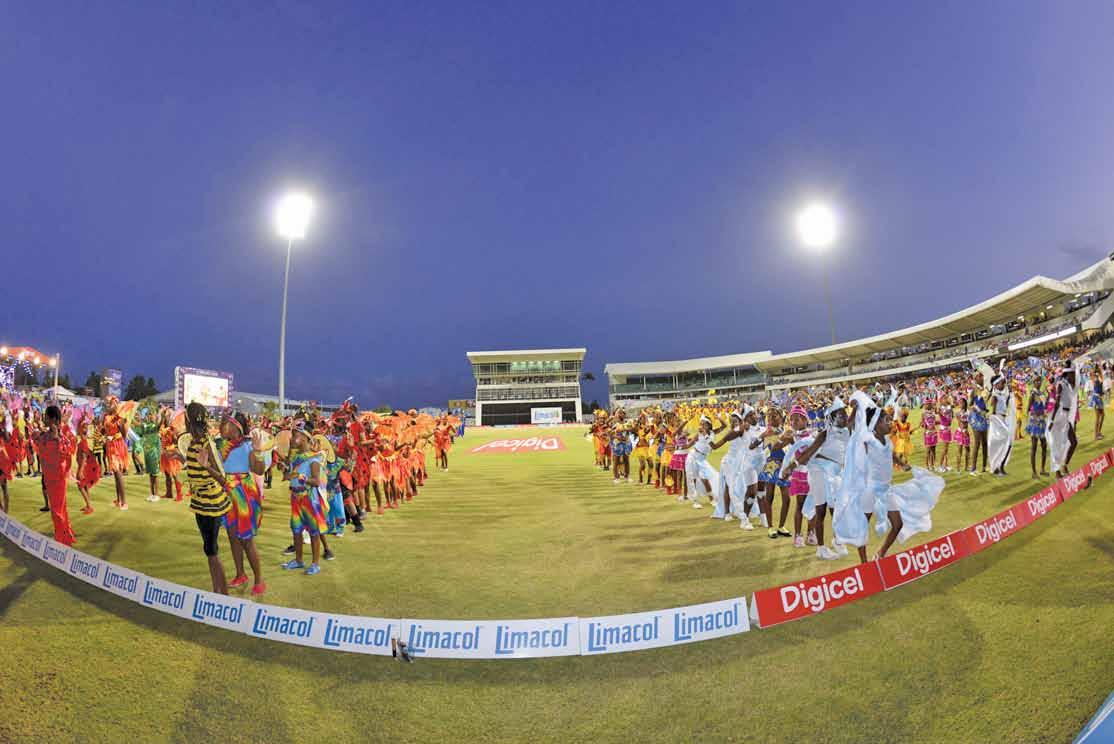

Big money up for grabs from “the biggest party in
The inaugural Limacol Caribbean Premier League (LCPL) T20 Tournament organisers have unveiled the massive array of prizes that the six franchise teams will be thrashing it out for over the next four weeks.
As the action gets going in six countries across the Caribbean and the eyes of the world are fixed on the awesome cricket and party action, the prize money for the 21 preliminary matches adds up to a massive US$ 525,000 (US$ 25,000 per match) and the semi-fi nalists will battle it out in a winner take all final match with a winning purse worth US$ 250,000.
Along with the Man of the Match award of US$ 1000 per match across the full 24 matches, and additional player awards, the total prize pot for the LCPLT20 will exceed a whopping US$ 800,000.
But the winning doesn’t stop there as the tournament sponsors are bringing their own exciting challenges to the cricket and entertainment action. Official partner, El Dorado’s “Catch of the Match” award will go to the player in each of the 24 matches who makes the most thrilling catch, while Virgin, the official airline of the LCPL T20, will be staging the “Virgin Challenge” which encourages the players
to hit balls high into the sky to try and strike the Virgin red balloon positioned over the stadium with the chance to win a round-the-world-trip for two for the master slugger who rises to the challenge. In addition title sponsor and Guyana Amazon Warriors franchise owner Limacol have introduced the Super Six award where US$ 500 per match – 24 matches, US$ 12,000 in total – will be given to the player who scores the most sixes in that match.
“It’s all eyes on the Caribbean as the six teams get set to... battle it out and be crowned the winner of the first ever Limacol Caribbean Premier League T20. While being named the winner of the tournament is a great achievement in and of itself we also know that the substantial prize pot plus the fantastic challenges that the sponsors are putting in place will also be a great motivator for the players,” said Limacol CPL Chief Executive Officer Damien O’Donohoe.
“With the countdown on to the first ball being bowled, we are looking forward to some thrilling clashes as the teams rise to the challenge to try and take home both the bragging rights and the fantastic prize pot,” he said.