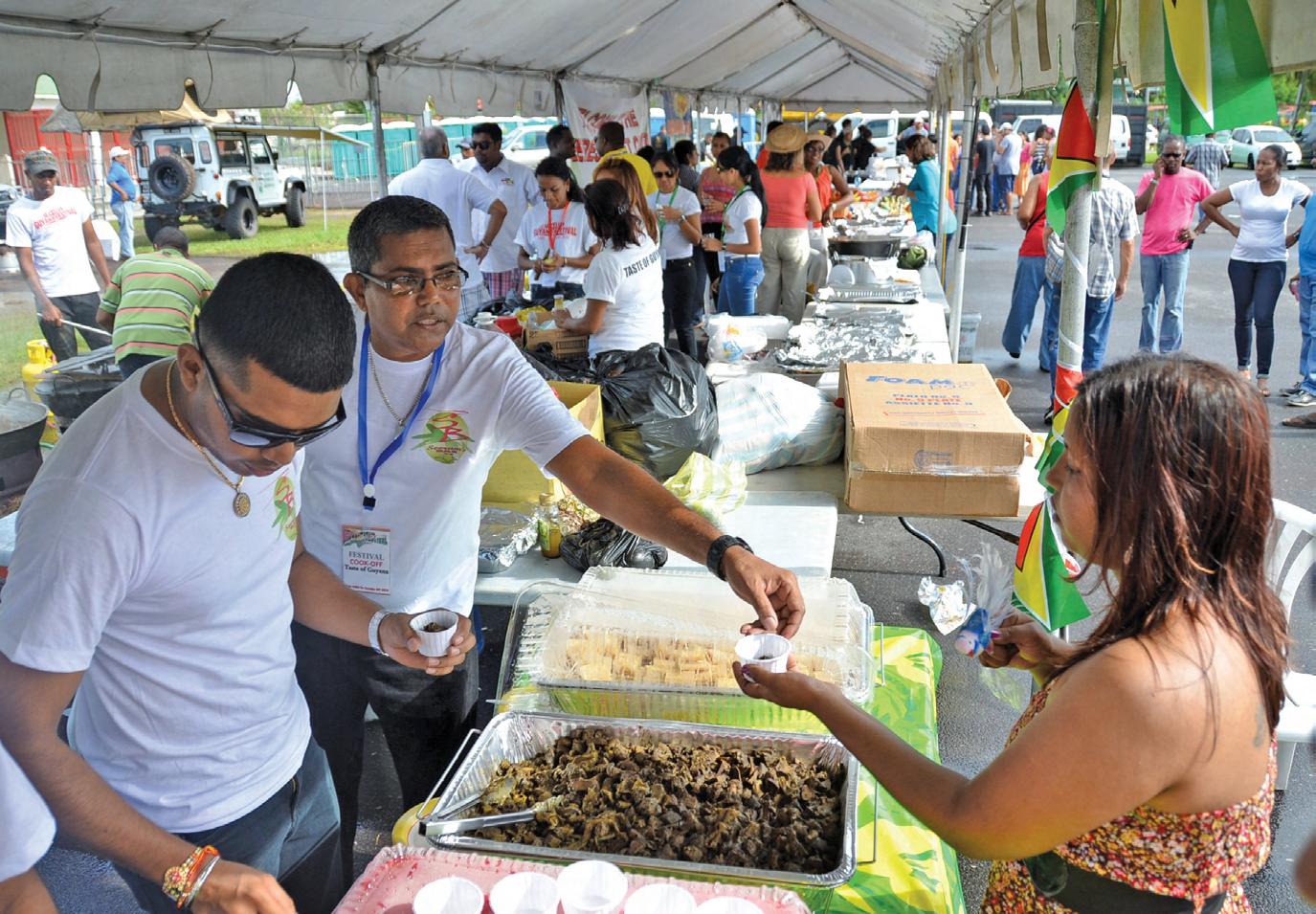
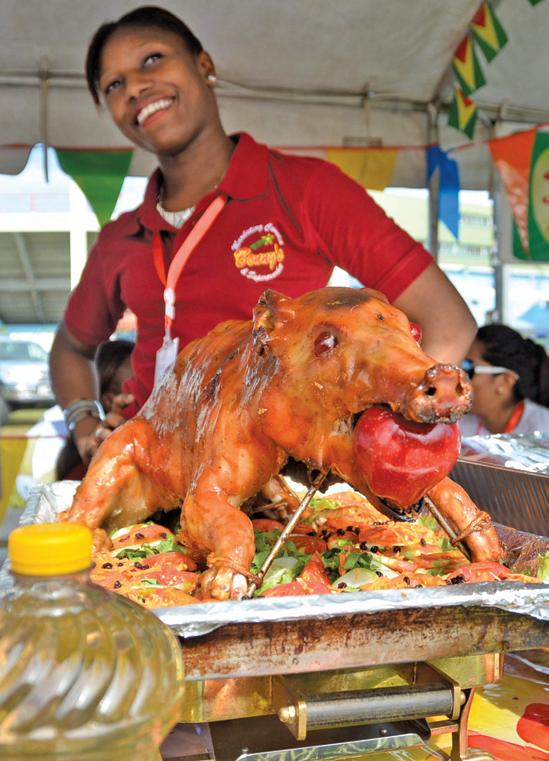
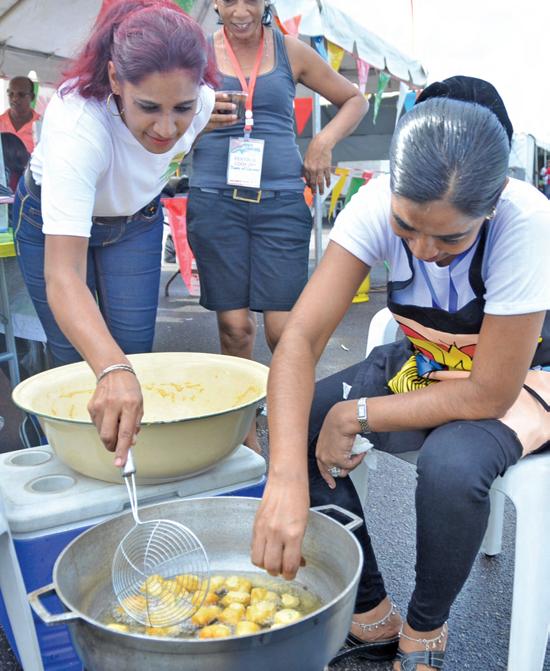
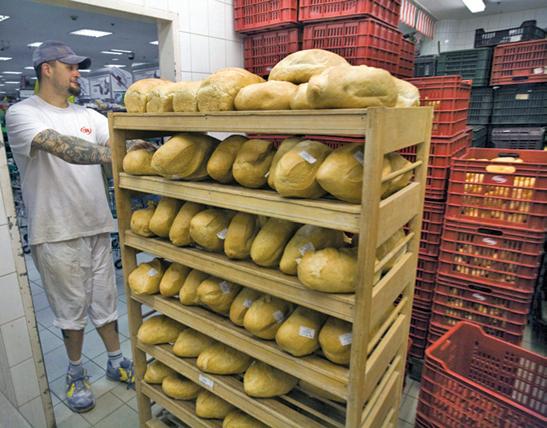
This young lady seized the opportunity to grab some goodies as the curtain came down on the inaugural Guyana Festival at the Guyana National Stadium, Providence, East Bank Demerara
monday, august 11, 2014 | guyanatimesgy.com
BRIDGE OPENINGS
The Demerara Harbour Bridge will be closed to vehicular traffic on Monday, August 11 from 05:00h-06:30h
The Berbice River Bridge will be closed to vehicular traffic on Monday, August 11 from 16:50h-18:20h
WEATHER TODAY
Countrywide: Thundery showers are expected to give way to heavy rain showers during the day with light rain showers in the late afternoon hours. Thundery showers are expected in the evening over coastal regions ad near inland locations. Temperature are expected to range between 24 degrees and 29 degrees Celsius.
Winds: Easterly between 3.57 metres and 4.47 metres per second.
High Tide: 04:44h and 17:10h reaching maximum heights of 2.87 metres and 2.83 metres respectively.
Low Tide: 10:43h and 23:02h reaching minimum heights of 0.34 metre and 0.37 metre respectively.
Mid-Year report...
Export revenues pegged at $109B
Guyana has earned over $100 billion in exports so far for this year, Finance Minister, Dr Ashni Singh has announced in his Mid-Year Report. The figure, however, reflects a 10.3 oer cent decline.
Dr Singh said overall receipts from exports fell by 10.3 per cent to US$534.2 million (G$109,884,232,785) in the first half of 2014 compared to the corresponding period in 2013.
He said too that excluding gold, total exports grew by 4.3 per cent to US$307.5 million (G$63,252,342,907) in the first half of 2014. Sugar exports returned US$34.4 million in earnings; a 26.4 per cent increase compared to the June 2013 level, attributed to an 80.3 per cent increase in export volume to 69,687 tonnes.
Rice
Rice export earnings increased to US$95.6 million, 14.9 per cent higher than at June 2013 due to a 30.7 per cent increase in export volume to 186,000 tonnes, outweighing the 12.1 percent contraction in export prices to US$514 per tonne. Timber export earnings rose to US$21.3 million, a 31.3 per cent increase due to an increase in export volume, reflecting an expansion in plywood exports.
Bauxite
Bauxite export receipts declined marginally by 2.9 per cent to US$66.9 million due mainly to a 6.4 per cent contraction in export volume to 855,877 tonnes.
In addition, other exports contracted by 10 per cent to US$89.3 million, primarily on account of a decline in fish and shrimp
exports. However, the first half of 2014 also witnessed a 24.6 per cent contraction in gold exports earnings to US$226.7 million, associated with a 10.1 per cent decline in export volume to 182,411 ounces, coupled with a 16.1 per cent contraction in average export prices to US$1,243 per ounce lower imports of consumption.
Capital goods
Intermediate and capital goods led to a contraction in merchandise imports of 7.5 per cent to US$839 million. Imports of consumption goods declined by 7.2 per cent to US$186.9 million. Under the intermediate category, imports contracted by 3.3 per cent to US$476.1 million, mainly due to a decline in chemicals and consumables for capital equipment, outweighing the increase in imports of fuel and lubricants, and other intermediate goods and food for
intermediate use. Imports of capital goods declined by 17.7 per cent to US$171.9 million, with some moderation in the importation of agriculture, industrial and building machinery.
Fisheries
Meanwhile, amid persistent attacks on fishermen by armed sea pirates, Dr Singh announced that there has been a significant decline in production for the first half of the year so far with no prospects of the sector achieving the target set out earlier this year.
The Minister said despite the introduction of improved management and monitoring techniques in the fishing industry, firsthalf production was 25.5 per cent below 2013 levels.
“Even with an improved performance in the second half, an overall decline in growth is expected and the budget target of 2.2 per cent growth has to be revised to a whole year contraction of
eight per cent relative to 2013 output levels.”
Forestry
On the other hand, the forestry sector recorded robust growth of 38.1 per cent, supported by the introduction of new incentives to harvesters and sustained demand from the construction sector and furniture manufacturing subsector. As a consequence, the growth target has been revised upwards significantly from the budgeted 3.3 per cent to 15 per cent growth for 2014.
Mining, quarrying
The performance of the mining and quarrying sector in recent years has been significantly driven by the record performances of the gold industry and to a lesser extent that of bauxite. At the half-year, the sector had recorded a decline of 17.2 per cent in gold declarations and a three per cent decline in the contribution of bauxite.
Consequently, projected end-of-year gold declarations have been revised downwards to 450,000 ounces or a 6.5 per cent decline, while bauxite valueadded production is projected to contract by 6.1 per cent.
With anticipated increased demand for quarry products in the second half of the year, the production of ‘other mining products’ is expected to rebound and return a marginally lower 5.5 per cent growth.
The overall sector performance for 2014 has been accordingly revised downwards from the budget target of 2.8 per cent growth to a contraction of 5.1 per cent.
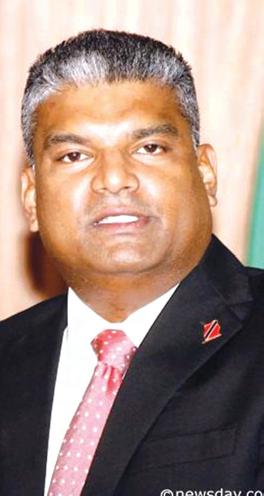
Finance Minister, dr ashni Singh
Editor: Nigel Williams
Tel: 225-5128, 231-0397, 226-9921, 226-2102, 223-7230 or 223-7231. Fax: 225-5134
Whatever our political affiliations, all Guyanese should be pleased and proud that our economy grew by 3.2 per cent in the first half of this year and is headed for a 4.5 per cent growth rate for the year overall. “Pleased” because with steady economic growth over the last eight years, the rising tide would have lifted most ships and “proud” because our performance is going against the grain of our regional partners in Caricom.
We also invoked “political affiliations” because sadly for our country, even objective measurements like “economic growth” become filtered through the distorting lens of politics.
Ordinarily, this might not be too debilitating, but when, as in Guyana, politics is further refracted through the prism of race/ethnicity, the result can be even crippling. We see this in the Opposition’s constant refrain about “marginalisation” of their “constituency” -- which is their transparent code for “African Guyanese”.
People act in consonance with their expectations and if they expect to be excluded from the rewards of their actions, many people do not even try and very soon, we have a vicious cycle developing. But if we examine the sectors of the Guyanese economy that are growing, we would realise that every group in Guyana is benefiting from our steady growth.
Take the construction sector, which pulled the entire economy along and recorded an amazing 16.8 per cent growth. While both the public and private sectors were involved, this is one area where private investment far outstrips the Government’s.
While we do not have hard data, the very visible evidence apparent to any passerby in the City, for instance, would conclusively prove that African Guyanese outnumber every other group in this boom. Yet this is never mentioned by the nattering nabobs in the Opposition. The forestry sector is another area in which African Guyanese dominate the workforce and it recorded an even more astounding growth of 38.1 per cent. Surely this has percolated to lift the living standards of forestry workers.
From the economic data, we learnt that the consumer price index declined just marginally from the December 2013 level by 0.4 per cent. This translates into continued stability in the prices of most consumer products and implies that the purchasing power of the paycheques workers take home remains undiminished.
We can count on the overall inflation rate for the year -- which takes in the prices of all goods and services in the economy -- remaining under five per cent -- which is the minimum wage increase workers receive.
While most citizens might not be impressed by macroeconomic metrics like “inflation” or “balance of payment” deficits, the latter pushed some countries, including Guyana during the PNC’s illegal rule, to print paper money and stimulate inflation.
Hence, the Government’s prudent economic policies under the watchful eye of Finance Minister, Dr Ashni Singh must be commended. Overall, Guyana’s balance of payment -- which represents the difference between exports and imports -- shrunk as compared to 2013, pushed by total exports which increased.
All citizens should also be pleased that external and domestic debt also fell. Debts have to be serviced by the Government from the Consolidated Fund and if this decreases, there is less money to spend on social services -- such as education, health, etc -- and on infrastructural expansion.
It was this debt servicing during the PNC days that became unsustainable and caused the then Government to default, making Guyana an international financial pariah. Even today, when the PPP wiped out all that debt and began with a clean slate, we still cannot, for instance, raise funds for our development by issuing bonds in the international markets because of the stain on our sovereign rating.
All in all, citizens must open their eyes to the realities of running a viable economy and not fall prey to the Opposition demagogues who would take Guyana back to the days of our financial collapse.
Raakhi celebrations in New York, Guyana and India
Dear Editor,
I celebrated the popular Guyanese festival of Raakhi or Raksha Bandhan in India this year (August 10) though not a first for me. I celebrated several Raakhis in India over the last 20 years and recall very well the celebration in Guyana growing up as a child.
I also celebrated Raakhi in London last year, and in Trinidad and New York on many occasions. The festival was observed in New York City on Sunday at the various temples. It was also observed among the large Guyanese population in Toronto and London.
Raakhi is a very graceful festival that promotes better relations among people of different backgrounds or class. It is a festival that unites people. The celebration is essentially the same everywhere in terms of tradition, except in its elaboration where in India people make preparations for meals to host their brothers.
In NY, as in India, worshippers tied a raakhi on the wrists of the males. Some males have numerous raakhis around their wrists. I had quite a few in India although I did not celebrate the festival with my ancestral relatives as
yet. When I visit villages in a few days, I am certain I will be inundated with raakhis from my cousins.
Raakhi is celebrated annually sometime in August. It is a festival steeped in tradition that goes back to the time when the indentured labourers from India came to Guyana to rescue the sugar plantations from bankruptcy.
Raakhi is a special occasion in which brothers and sisters celebrate their emotional bond by tying a holy thread around the wrist of one’s brother or an elder person. The sacred thread, which comes with sisterly love and sublime sentiments, is called the raakhi.
The thread is usually from a sister to a brother but it can also be that of any female towards a male who the female views with brotherly affection. The bond of love between a brother and a sister is one of the deepest and noblest of human emotions.
The tying of the raakhi not only strengthens the bond of love between brothers and sisters, but also transcends the confines of the family. It is celebrated among people who are not related, and even non-Hindus observe the festival.
During the indentureship period, the jahaji ba-
hins tied the sacred thread on the wrist of the jahaji bhai. They brought this unique tradition from India and it was accepted by many Africans among whom the Indians lived. I observed African women tying raakhi on Indian men.
In some villages, Africans are influenced by the festival, with women folks tying raakhis on their blood relatives as well. There is no doubt Indian rituals like Raakhi help to ease out tensions in the society until race baiters broke the bond of respect and friendship while seeking political power and subsequently the persecution of Indians.
The message behind raksha bandhan is for the individual who receives the raakhi to accept the female as a brother would, with all the love and affection, and to tighten their relationship. By accepting a raakhi from a sister, a brother gladly takes on the responsibility of protecting his sister.
As in Guyana, New York, Trinidad, etc, the raakhi relationship is not only among blood relatives. Cousins and neighbours tie the raakhi on their male friends or relatives. In cases where, the
sister can’t tie a raakhi on the brother, she sends it by mail.
Generally, there is a prayer, followed by the application of a tikha and the tying of the raakhi. The male offers a gift in return. The gift could be money or materials or gold or clothing. In NY, the gift is usually money. There is usually also a warm embrace. Families host lunch or dinner for raakhi and I attended several elaborate raakhi ceremonies in Trinidad. Raakhi is not celebrated only among Hindus. In fact, a young Muslim at the guest house where I stayed was given raakhi and I also saw several orthodox Muslims with raakhis around their wrists. Muslims tie raakhis on Hindus and vice versa – somewhat similar to Indians and Africans tying raakhi on each other in Guyana. When a raakhi is tied on the wrist of somone, they commit to protecting one another. The symbolism of raakhi is the strong must protect the weak. In this way, people look out for each other, and offer protection.
Sincerely, Vishnu
Bisram
Young wrestlers gather during the traditional Nadam Fair in Xilin Gol League in China’s Inner Mongolia Autonomous Region on July 28. The Nadam Fair competition consists of Mongolian wrestling, horse racing and archery (MSN)
Heads must roll for ACDA’S access to GECOM’S database
Dear Editor,
What is most alarming is the ACDA’s presumptuousness of mandate to somehow become legally and morally empowered to achieve European reparations for transgressions against Guyanese original native population. ACDA’s Eric Phillips was writing in prompt support of Dr Clive Thomas’s column, “Guyana and the wider world”, which completely rejected race inclusiveness.
Phillips amplifies and justifies exclusion in his letter. As usual, the favourite targets are Indo Guyanese indenture descendants; not in equality are Portuguese, Chinese and black Caribbean indentured descendants who were also brought to Guyana. His letter was responding to my original letter, “Reparations compensation a cure for Professor Thomas’ socialism disease”.
Phillips excessive harangue of slaves being plucked from their happy tribal habitat to be dumped into the domain of also happy tribal preserve of our native Guyanese is most unfair. He is reducing both transgressions to an egregious “equality” only to ride and serves his purpose.
Europeans were wrong to dehumanise both groups. But native Guyanese were many more times destabilised. After the European invaders first arrived, they hunted the natives and either killed or infected them with alien diseases. The conquerors then brought suffering slaves who were dumped into their lands.
Native Guyanese were then demarcated into reservations further restraining their freedom of movement. Their originality never required paper to prove their ownership of their lands.
Now those slave descendants somehow have asserted entitlement authority to speak for them and measure by totally alien standards what makes them unhappy and how much they should be compensated. Some slave descendants even claim indigenous status by destroying their host’s trees and native wildlife like they made life better for the original Guyanese.
Philips homework assignment in defence of the brainy UG emeritus academic supposedly in charge of number two at APNU can be no surprise. But he creates more confusion by his aggressiveness to be convincing.
What does it say again, about our own Phillips, who in good judgment is rushing to engage a supposedly ‘jumbie’ letter writer? ACDA is with remarkable unimpeded privileged access to GECOM’s entire nationwide electoral database to ascertain by their authenticity the existence of a nobody who he says could not be found.
It makes yours sincerely persona non grata in their reality. So what. Our first pet dog was truly named Jack Sprat. In Essequibo that was not usual. Phillips can boast of such ACDA awesome powers and privileges at GECOM.
If ‘jumbies’ now cluster at GECOM by his alert, they cannot be sugar workers, but the surreptitious skilled idle actively registering to vote as in the past. It’s a free country. Take it from one ‘jumbie’ to those of you living dead.
More PNC rigging is afoot to electronically deny voting rights and again make numberless Indo Guyanese into ‘jumbies’. Phillips may have inadvertently revealed a bubbling cauldron of poisonous intrigue and conspiracy by ACDA’s hot pursuit of an “illiterate” ‘jumbie’ at GECOM’s pur-
gatory.
Heads must roll both at Gecom and elsewhere. The PPP/C Government cannot give excuses when it fails to speedily address this breach of democracy’s lighthouse. Such inebriation with “spirits” in possession of both body and mind among ACDA’s finest could not have successfully compromised GECOM’s precious integrity without specialised skills and supervisory approval.
Professionalism at GECOM is now questionable and most suspect. For ACDA to have their way with all GECOM’s electronic voting records and talk about it in public debate is a national outrage most unprecedented.
Convincing explanations are still also due why: (a) shared governance and all its many flavours is still not abandoned as the host of confusion and strangulating political gridlock (b) clinging to earlier shared governance superimposition of race dependency on Indians, Amerindians, Portuguese, Chinese and mixed races still palpitates without proper medical termination to be keep it on hold (c) clearing doubts which defends total greedy
ownership of reparations seen more as a contradiction to (a), (b) and (c), even as (d) any changing of the rules of the game is not any academic emeritus divine right to everyone’s automatic constitutional exclusion.
ACDA is with special unenviable rights to pursue reparations many centuries gone. Commitment to resolve adequate compensation for Indians is (1961-2014), just over 50 years old.
The Wismar 1964 massacre of Indians, all the ensuing human rapes, brutalities and damage to property which they suffered during the 80 days strike, the February 13 Black Friday riots and all damages suffered during the 1964 elections, etc requires national “equality” of adequate rectification for Indo Guyanese.
It’s a comparable entitlement principle for the wrongs which Europeans inflicted on Afro Guyanese as a starter. No doubt the violence imposed on Indians during the historical 1992 elections and all other subsequent elections has been adding to the mounting lien against any due European reparations.
In all fairness,
Lindeners initiated rioting, but were compensated as determined by an international tribunal. Full compliance of natural compensation for “equality” to Indo Guyanese, as Phillips takes umbrage in his response, cannot fail, but completely demolishes any un-emancipated negritude imposed on their fellow Guyanese. By its negligence it most certainly, as he wrote “would represent the death of truth, the death of justice, the death of democracy, and the death of equality” which he hurls in my direction, no offence taken. Aren’t these the major issues by which the Ethnic Security Dilemma (ESD) yet continues to regulate and hinder Guyanese happiness?
“It’s all about the money”, is how Mayor Hamilton Green has best summarised Guyana. Our disconnected black leadership is apparently in active transition to remain relevant by changing their own ideological “non racial skins” (an ACDA gem), albeit not discriminatory at all by their change to capitalism.
Sincerely, Sultan Mohamed
GHRA supports negotiation over use of mechanical crushers on Marudi Mountain
Dear Editor,
The Guyana Human Rights Association (GHRA) is fully supportive of the initiative by the South and South Central District Toshaos Committee and the Marudi Miners’ Committee to seek a negotiated solution to the crisis created over the use of mechanical crushers by Amerindian miners on Marudi Mountain in the deep South Rupununi.
The GHRA congratulates both organisations on the restraint exercised to date. The GHRA also urges the Amerindian Affairs Ministry (MAA) and the relevant departments of the Guyana Geology and Miners Commission (GGMC) to actively support this search for a peaceful resolution of the issue.
The Toshaos’ Council issued written invitations to the MAA, the GGMC and to the Romanex and Mulgravian companies to attend a meeting to have been held in Aishalton on August 9 to address the use of mechanical crushers. What response was
made to the letters is unclear.
However, whether or not that particular meeting takes place, the importance of positive and prompt support from the authorities for reasoned and peaceful resolution of disputes in mining areas is imperative. This is particularly the case in matters affecting livelihoods, which are prone to quickly deteriorate into retaliatory behaviour if not addressed in a timely manner, as distinct, for example, from land title or extension issues.
A meeting of the kind called for by the Toshaos is urgently required to establish the facts of the matter as a basis for taking a position on the substance of the dispute, namely the suspension of the use by Amerindian miners of mechanical crushers by GGMC following a complaint by the Mulgravian company (which holds the legal claim to the area).
Mechanical crushing replaces stone-age methods of breaking rock with ham-
mers and greatly increases miners’ productivity. At the same time the greater volume of tailings generated raises environmental concerns which cannot be ignored.
The concern of the GHRA at this point is less with substance than with process, focusing on the lack of governance procedures and mechanisms at local and district levels for resolving issues. The dispute highlights the fact that the informal understanding which governs the miners’ presence on the Marudi is unsatisfactory and always vulnerable to these periodic breakdowns.
A coming together of all relevant parties as proposed by the Toshaos might serve as the first step in the direction of a more formal agreement which respects both the companies legal rights to control their claim and the villagers customary rights to earn a livelihood.
The fraught relations between the Marudi miners and the mining compa-
ny reflect the general absence of effective localised governance mechanisms for resolving disputes in mining districts. The range and importance of such disputes is reflected in the list of issues generated at an important community meeting held in July in Maruranawa and later incorporated into the letter to the MAA.
All of these issues point to the urgency of developing community- and regional-based political mechanisms empowered to address and resolve issues generated by mining activity.
Communities have no effective voice either in addressing current issues such as pollution of water sources and the social stress that mining has brought to communities in the form of alcohol and drug use and trafficking, nor in the longer term legal issues regarding title extensions.
The concept of Amerindian right to benefit from mining activities for example, is rec-
ognised in theory, by the requirement of 20 per cent royalty payments to the Amerindian communities in which mining takes place, but no clear and accountable procedures exist to allow local communities (or mining interests) to influence the use and disbursement of these payments.
Highly centralised systems of decision-making over entirely local issues are inappropriate and aggravate rather than resolve disputes, be they environmental, livelihood, social or political. Rather than prolong centralised control, the GHRA would urge the MAA and GGMC to encourage experiments and initiatives which allow decisions to be taken at appropriate levels between mining entities and representative Toshao bodies across the mining sector.
The role of the Ministry and centralised bodies would better ensure such initiatives are governed by principles of corporate social responsibility on the one hand and clear under-
standing of Amerindian livelihood rights on the other, rather than taking on the decision-making function itself.
Central and national could more usefully encourage decision-making at appropriate levels, promote relevant principles, develop capacity to understand and resolve disputes and to monitor respect for and implementation of agreed decisions by all parties.
As the gold industry moves into the phase of hard-rock mining, the potential for confrontation and disruption between communities and companies will rapidly increase. In equal measure the need for local capacity to resolve and mitigate contentious issues across the mining sector must also expand at an accelerated rate.
For these reasons, the initiative taken by the South Central Toshaos should be supported constructively by all involved.
Executive Committee
GHRA
You can send your letters with pictures to: Guyana Times, 238 Camp & Quamina Streets, Georgetown, Guyana or letters@guyanatimesgy.com
Parenting for success
Sexual abuse among young boys
Our vision is a Guyanese society where every child enjoys the right to a childhood in a safe and caring family, free from poverty, violence and exploitation
Children of all ages, races, ethnicities, and economic backgrounds are vulnerable to sexual abuse. Child sexual abuse affects both girls and boys in all kinds of neighbourhoods and communities and in countries around the world. Children who have been sexually abused may display a range of emotional and behavioural reactions, many of which are characteristic of children who have experienced other types of trauma.
These reactions include: an increase in nightmares
and/or other sleeping difficulties, withdrawn behaviour, angry outbursts, anxiety, depression, not wanting to be left alone with a particular individual(s) and sexual knowledge, language, and/or behaviours that are inappropriate for the child’s age.
Talking about childhood sexual abuse can be hard for children, especially males. These boys –and the men they become –have mostly been neglected by the media, it is essential that we talk about it now, and we must do so, no mat-
ter how difficult this talk can be.
By age 16, as many as one in six boys have had unwanted sex with an adult or older child. It is troubling to think about what it means to a boy when he’s sexually abused by someone he trusts, someone he loves and believe is or should be protecting him.
Persons abuse, use their age, relationship of trust and care or author-
“I thought for a long time that what was happening was okay … because my father said; it was a fun game that
all
fathers’ played with their sons, a secret game only men knew about.”
ity to satisfy their own needs without any regard to those of their victims.
Bonds are broken and many of these victims grow up to think others are dis-
honest, they lack of trust, are sometimes malicious, and undependable.
In some instances, due to the abuse and its impact causes some males to isolate themselves and have difficulty as it relates to emotional connections.
Children being placed in coercive situations where playing games and accepting gifts may easily confuse affection with abuse and desire with tenderness.
Sexually abused boys often become men who have difficulty distinguishing among sex, love, nurturance, affection, and abuse. They may experience friendly interpersonal approaches as seductive and manipulative. On the other hand, they may not notice when exploitative demands are made on them – they’ve learned to see these as normal and acceptable.
* You are not alone.
It is estimated that one in six men are survivors of sexual violence.
* You are not to blame. Male survivors may blame themselves for the assault, believing they were not ‘strong enough’ to fight off the perpetrator. Many are confused by the fact that they became physically aroused during the attack, despite the assault or abuse they endured. However, these normal physiological responses do not in any way imply that the victim ‘wanted’ or ‘liked’ the assault.
*It’s okay to hurt, cry, and ask for help.
In the Guyanese society, we’re told that “boys don’t cry”. We believe that male survivors need to be able to express the pain they are feeling, and that reaching out to other survivors is a show of strength Sexual abuse is a horrific sensitive issue for boys, particularly because boys are taught not to talk about their feelings. If this scourge is not addressed, it has the ability to plant the seed of inferiority and worthlessness, and in turn shapes the way you start to think about yourself and the way you act.
Not all sexually abuse children will manifest these behaviours or symptoms, but we should pay close attention to children who exhibit some of these at any given time.
If anyone has knowledge or direct information that a child is or may be in need of protective intervention, please make contact with the Childcare and Protection Agency on numbers 225-1257, 227-4082 or hotline number 2270979 or at their office at Charles and Board Streets, Charlestown. Contact can also be made to your nearest Police Station or School’s Welfare Officer in your region. Please contact us on telephone number 2317174 or email us at programmes.childlink@networksgy.com for any support you may need on parenting and other challenges that you may be experiencing with your children.
Private sector in “wait-andsee” mode
... on no-confidence motion vote
BY JOMO PAUL
Leading private sector officials said they are prepared to “wait and see” the outcome of a proposed no confidence motion against the Donald Ramotar Administration, although warning that early elections would slow down economic growth.
Last week, the Alliance For Change (AFC) submitted the motion which was presented by Moses Nagamootoo to Clerk of the National Assembly Sherlock Isaacs.
No decision has been made as to whether the motion will be debated before the end of the parliamentary recess, which commenced on Sunday. The AFC has been promised support by A Partnership For National Unity (APNU).
However, while the private sector officials remain adamant that elections will have a negative impact on the business sector, they said they are also aware that democracy must run its course.
“No-confidence motion and snap elections are a part of that course then the elections must be held,” Private Sector Commission Secretary Ramesh Dookhoo said.
Speaking to Guyana Times in an interview last Thursday, Dookhoo, who is also President of the Caribbean Association of Industry and Commerce (CAIC), said elections are an integral part of any democratic regime and therefore they must be held.
He said that if the proposed vote of no-confidence by the AFC is carried successfully in the National Assembly, then it is not for any private sector body to say elections cannot be
held at any specific time.
“If it has to happen, it will happen, the process of democracy must take place... no one can stop it.”
Further, the CAIC President acknowledged the expected slump in business for the sector, but noted that this must not be considered as a reason for elections not to be held.
He said that the process of democracy has to “prevail”. When initial talks of the no-confidence motion had surfaced, the PSC had expressed mixed emotions about the advent of elections in Guyana. The body had insisted that instead of the bickering between the political parties, Guyana’s interest should be paramount.
Unfortunate
“It will be very unfortunate if such a motion is passed as it would signal political instability to our foreign investors, financiers, customers and suppliers. This will further increase the political risk premium added to the cost of capital when overseas funding is sought by private entities and can negatively impact our economy,” the PSC said in a statement.
According to the PSC, for progress to be made in a dispensation where a minority Government and a majority Opposition exist, the political culture should consist of discourse and compromise on issues of national interest and development.
“This culture has been very much absent since our last General Elections in 2011, as both sides of the House have exposed their limitations in dealing with such a dispensation,” the umbrella business body said.
It added that the calling for elections prematurely is signalling that only in a “winner takes all” environment can progress be made. This does not augur well for a plural society such as Guyana, the PSC contended.
“The PSC is not hopeful that General Elections will automatically resolve many of the problems facing the country. However, if elections are to be called, we hope that they would be conducted efficiently and effectively.”
For its part, the Guyana Manufacturing and Services Association
Curtain comes down on Guyana Festival
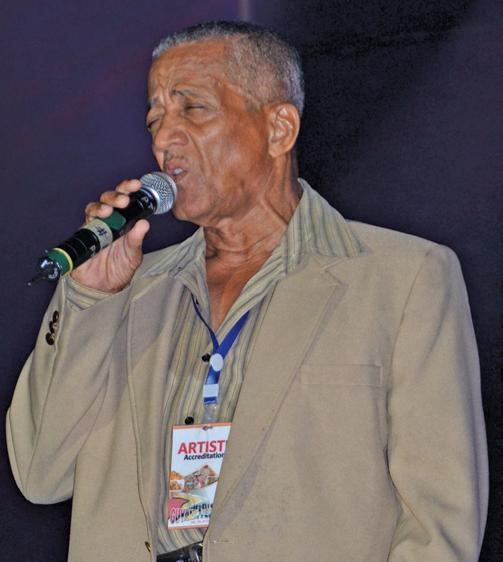
The curtain came down Sunday night on the three-day Guyana Festival with a concert headlined by Guyana’s rising singing sensation Lisa Punch.
(GMSA) said that all General Elections do instil fear and uncertainty in the minds of Guyana’s population.
GMSA President Clinton Williams had said that “to go to elections is not the best thing for the country” at this time. He described the current situation as “double whammy”, explaining that “there is no absolute probability that elections will not return a minority Government”. Williams told Guyana Times that the policymakers should cease their impasse on the many developmental issues that go through the National Assembly, and work together with “trust and confidence”.
The Georgetown Chamber of Commerce and Industry (GCCI) is appealing to policymakers to engage in constructive dialogue on issues affecting the economy and social development. The business representative body
in a release said: “We do not subscribe to the notion that premature General Elections is the solution to our current political impasse. General Elections are costly, time-consuming exercises which should preferably be conducted at the time when they are constitutionally due. The parliamentary parties must therefore make every effort to find ways to discuss, negotiate and reach some level of consensus on the issues critical to this nation’s growth and development. The citizens of Guyana deserve no less an effort. This process of negotiation and agreement occurs in many comparative jurisdictions and it is therefore up to our political leaders to demonstrate resolve and maturity that lead to win-win outcomes.”
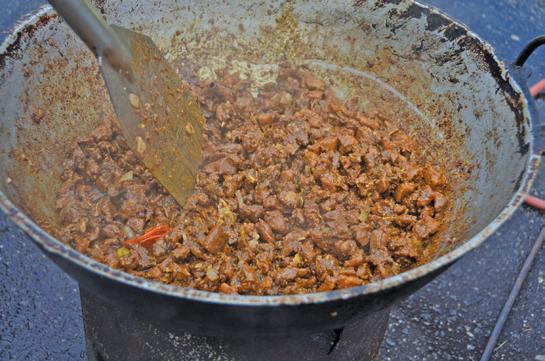
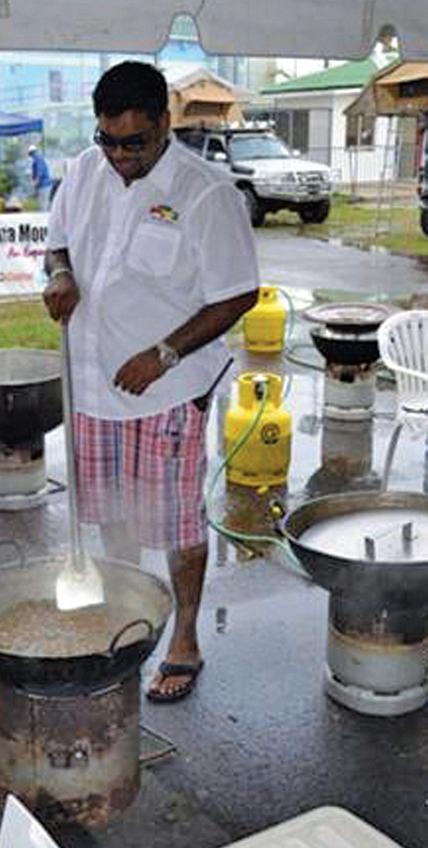
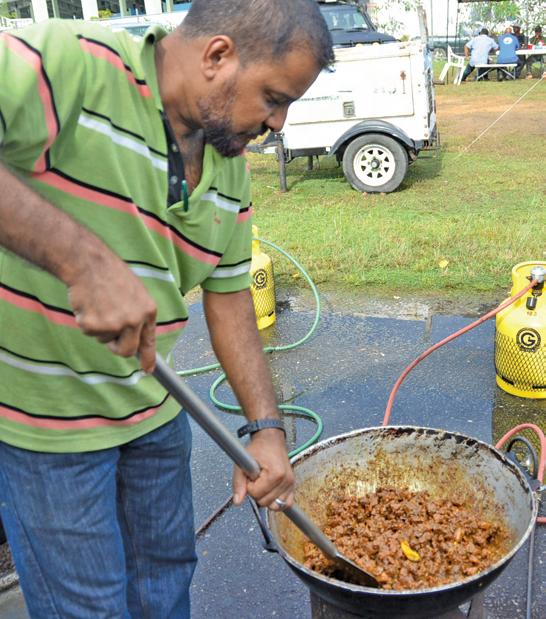
Meanwhile, during the course of Sunday, the excitement of the festival continued at the Guyana National Stadium with the successful staging of the Festival Cook Out Competition.
The event not only brought Guyanese love of food to life through a spectrum of local dishes, but it was also a celebration of the local culinary landscape by the chefs, who managed to defy the inclement weather to compete in the festival.
A variety of rice with black eye, channa, pepper, peas corn and carrot, along with cook-up rice, white and black pudding and calalloo rice were among the dishes prepared by Team Bunny Home.
The Kings World team offered an assortment of curry, including duck, goat, labba, deer and chicken, and interestingly, a vegetarian oil-down, an enriched dish of breadfruit, pumpkin and herbs.
Demonstrating the talent of Essequibo was team Ramlakan and Son who prepared duck curry, aromatic rice, fried plantain and tilapia.
The competition also included in a funny and positive light the culinary talents of Team C & K Inc, and Team Everest among others. The Guyana Festival showcased local food, talents and the cultural diversity of Guyana towards promoting tourism.
The inaugural festival, which lasted for three days
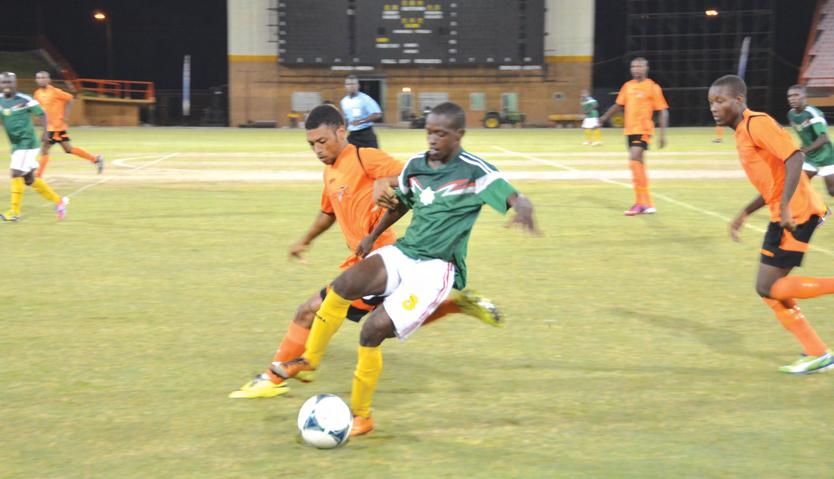
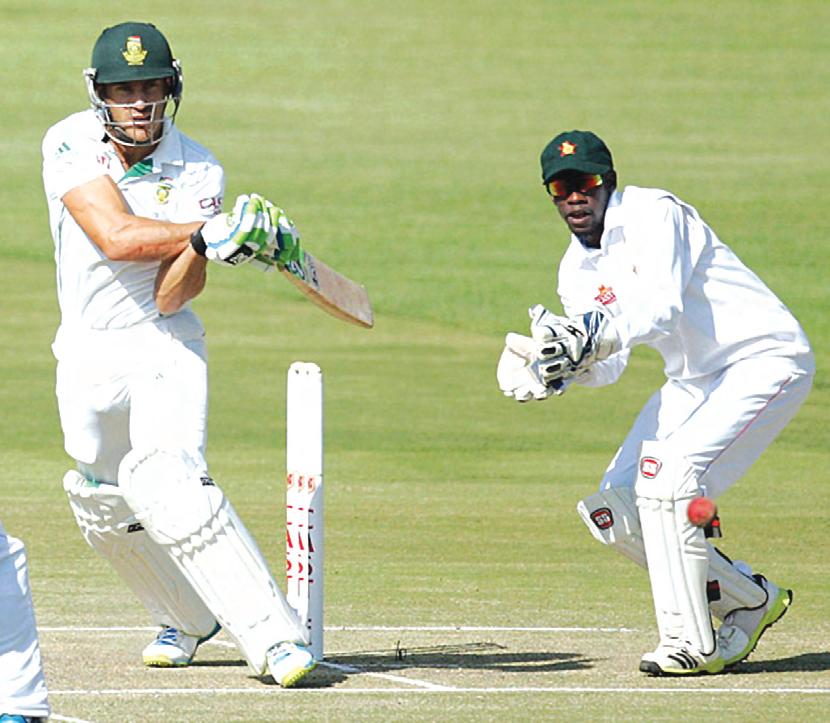
(August 8-10) also featured a “Night of Legends Concert” with renowned Guyanese artistes and a “Concert Next” which featured developing talents. There were also Guyana Festival games, including a cricket and a football match.
Speaking at the opening of the festival, President Donald Ramotar commended the tourism sector and its staff and private sector stakeholders who have been working tirelessly for months to plan this one of a kind event.
The President emphasised the importance of the preservation of culture and traditions to national life. He said that notwithstanding Guyana’s diversity; whereby its people hail from different continents of the world, this national festival brought out the true meaning of the country’s national motto of “One People, One Nation, One Destiny”.
“We have in our hands, the ability to fuse a unique Guyanese culture that when built on the riches of our foreparents, creates something new, different and even richer and that will
help us. As our economy develops, we will also ensure that the arts and culture develop as well,” President Ramotar said.
He said as the quality of life improves in Guyana, people will want to enrich their respective cultures more and more. For this reason, he said the Government will continue to pursue many of the important projects that will propel national growth such as hydropower.
Meanwhile, acting Tourism Minister Irfaan Ali congratulated and thanked his hard-working staff and corporate Guyana, noting that without their support and hard work “we would not have been able to enjoy the well-coordinated ceremony.”
“This is the best opportunity for us to celebrate in confidence who we are to celebrate and what makes us this diverse.”
He said that as one people “we celebrate in confidence our culture and our heritage and with this, we are showing the world that this diverse culture of ours is still intact and we are ready to share it with the world.”
Food preparation takes over part of the Guyana National Stadium when the Festival Cook Out Competition began
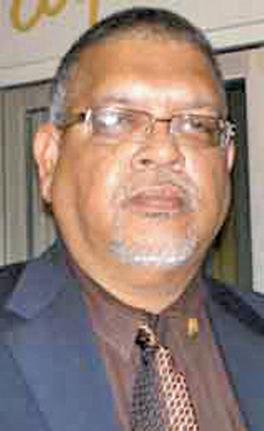
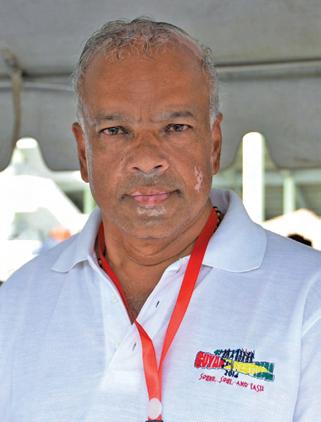
PSC Secretary Ramesh Dookhoo
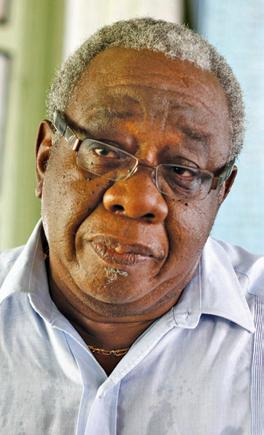
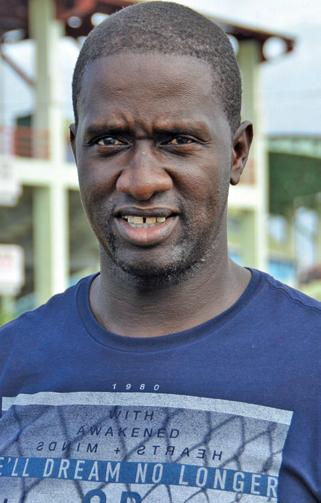
GMSA President Clinton Williams
PNCR youth arm gets new Chairman
The Guyana Youth and Student Movement (GYSM), the youth arm of the People’s National Congress Reform (PNCR) on Saturday held its Biennial Congress at the party’s headquarters, Sophia, during which Ryan Belgrave was elected Chairman.
The Congress was held under the theme “One Movement, One Partnership, One Nation”. In his farewell address to Congress, outgoing Chairman, Member of Parliament (MP) Christopher Jones claimed that the People’s Progressive Party/Civic (PPP/C) administration has failed the youth of Guyana.
PNCR Chairman Basil Williams delivered the feature address to the Congress. In his remarks, Williams told the mem-
bers of the party’s youth arm that they must be prepared for the task ahead.
The party Chairman said the youth are the vanguard of the party and with General and Regional Elections looming, the energy and imagination of the youth were vital.
He told them that the A Partnership for National Unity (APNU) will contest in every community in Guyana.
Williams reminded his audience that the majority of the electorate in the upcoming elections will be young people and it was necessary that the GYSM have a seat at the decision-making table. He said the youth must be decision- makers and not
just order takers. In elections that were held, a new national executive was elected. Ryan Belgrave was elected to serve as National Chairman. In his acceptance speech, Belgrave said his task was to make the GYSM the leading youth organisation in Guyana. He said that this will be achieved by aggressive and continuous mobilisation, organisation, registration and education.
Belgrave said education was the greatest tool to fight tyranny. He charged members of the GYSM to seek knowledge, to get educated. A new 24-person General Council was also elected to serve for the next two years.
Man killed in Orangestein accident
An unidentified man has become the latest road fatality after he was struck down along the Orangestein Public Road, East Bank Essequibo Saturday even-
ing, taking the figure to 11 for the month of August.
According to information received, the man of East Indian descent in his 50s was struck down while he was walking on the public road.
Reports gathered stated that the man’s body was “broken up” as a result of the hit from the speeding vehicle.
He was picked up in an
Beware...
... of Nagamootoo
Nagamootoo cuts a pathetic figure – one who’s at the end of his tether in his lifelong quest for power.
But even a cornered rat will turn on you – and this is one rat that Father Time has cornered.
In a long, rambling letter to the press, he accuses the PPP/C of using “Stalinist methods to hold on to power”. Deploying the Hitlerite propaganda technique of expecting if the big lie is told often enough, it’ll be sure to stick, Nagamootoo’s oblivious to the betrayal of his own totalitarian impulses.
Now if the PPP/C is “Stalinist” surely it couldn’t have only developed since Nagamootoo jumped ship in 2011 –when he didn’t win the vote to be the PPP’s presidential candidate!! In fact, if he’s to be believed, as one of “the PPP’s leading lights”, he must’ve been part and parcel of fostering and maintaining such a culture!!
So let’s hear what are the symptoms of this “Stalinism” – according to Nagamootoo. There were “the attacks on peaceful protesters in Linden, Essequibo and Mahdia”. Hey!! What IS this?? Are we talking about the Linden protest which Nagamootoo and Ramjattan provoked because they wanted to poach APNU’s supporters?
unconscious state and taken to the Leonora Cottage Hospital by a Police vehicle. He was pronounced dead on arrival.
A Police rank told this publication that from the time the man was picked up, they realised that he was dead.
His body, the rank stated ,was damaged to an extent where the arms and legs were hanging.
“There was no way he could have lived,” the rank noted. The driver of the motor vehicle was taken into Police custody and is assisting with investigations.
The Police in a release recently stated that there were a total of 67 road fatalities from 61 accidents up to the end of July in comparison to 61 fatalities from 58 accidents for the same period in 2013.
In addition, pedestrians have been the main road users affected, with 28 such persons having lost their lives at the end of July 2014. There were eight motor cyclists, 14 pedal cyclists, six drivers and 11 persons travelling in motor vehicles who also lost their lives.
Speeding continues to be a major contributing factor to fatal accidents and was the cause of 37 of the 61 fatal accidents recorded at the end of July 2014, the Police added. The Police also stated that traffic enforcement has resulted in a total of 43,487 cases being made against errant motorists unto the end of July 2014; of this total, 11,637 cases were for speeding.
But didn’t a Commission of Inquiry (Did Stalin have those??) exonerate Minister of Home Affairs Clement Rohee from ANY involvement with the Police – before the shootings?? Even though AFC’s Chairman Nigel Hughes bet his shirt that Rohee made phone calls – but was proven wrong?
As for the Essequibo protesters – led by the AFC’s organiser Naitram (One Name) for Region Two – didn’t the photos show the said “One Name” stripped himself because he was tripping from booze?? And since when should the PPP/C – in the person of Rohee, we assume –tell the Police how to do their job?? And ditto at Mahdia – as in Lethem – where the protesters, led by another AFC organiser, were also illegally blocking roads??
Then Nagamootoo invokes some “insane campaign to destroy the independent press, notably Stabroek News and Kaieteur News”, as another instance of Stalinism. We can only assume he’s rehashing the claim of unequal distribution of state advertising. But from the figures this paper quoted recently, showing it gets the same amount of ads as the Stabber and the Muckraker, why doesn’t he – this exemplar of truth and justice – mention this in his charge?
We’ll tell you why, Dear Readers. He’s such a bitter little man, he can’t even get his lies straight!! Hitlerite wanker!!
...of PNC’s cover-up
So why aren’t we surprised the PNC won’t be voting any more funds to support the CoI to find Rodney’s murderer?? With the noose slowly tightening around their necks, they’re running scared...especially when the rigging of their internal leadership elections confirmed they haven’t changed a whit since the days of the PNC’s “sharper steel”.
Granger claimed, “The PPP/C deliberately waited over 20 years until the onset of Local Government or General and Regional Elections to convene the Commission of Inquiry.” The man is as lying as Nagamootoo. Has he forgotten when the PPP/C appointed a Special Prosecutor – Doodnauth Singh – to bring back Gregory Smith from French Guiana? But was prevented by French law on extradition??
Of course, he hasn’t forgotten...he just full of **it. He’s also “forgotten” it was the PPP/C that moved the motion for a Rodney CoI in 2005, but the PNC and WPA changed the word “assassination” to “death” causing them to stand aside on the vote, in protest – which they knew would be carried anyway.
Let Granger tell the world how his bedmate Roopnaraine dragged his feet on consulting the Rodney family on the ToR then!! Causing them to tell the PPP/C not to involve the WPA in this go-around!!
...of prostituting culture
Poor Ruel Johnson’s miffed he couldn’t hock his selfpublished books at the Guyana Festival. Doesn’t the poseur know time and place??
PNCR Chairman Ryan Belgrave
4-year-old dies after being hit by GPL truck
FSimply the
UGBC tuition hike
The tuition hike at UGBC is unnecessary. We have said this before, and we shall keep saying it.
If from 2009 to 2012 we could have had a surplus at the Campus even while we extended facilities (a new building, new air-conditioned office spaces, new basic medical station, new computer centres, etc), then we need not look for further proof.
ed a future for his family. He is finished.
This is the impact on an “ordinary” Berbician. I would bet and win that at no point while the big folks were gyaaffin and agreeing on tuition hikes (in the Education Lecture Theatre where they are destroying education), at no point did the impact on “ordinary” young individual Guyanese come up.
Especially not Berbicians! At no point!
Henry sustained major head injuries and although doctors tried desperately to save his life, he succumbed.
He was the second of three children for his parents. Meanwhile, his father Nabert Benn, 32, is currently at the Suddie Public
our-year-old Delon Henry from Huist’ Dieren Village on the Essequibo Coast succumbed to injuries he sustained after being hit by a Guyana Power and Light Company (GPL) truck on Saturday. Henry died early Sunday morning at the Suddie Public Hospital. He was involved in an accident with his father on the Huist’Dieren Public Road. Henry, who is a pupil at the Huist’ Dieren Nursery School, was on his father’s bicycle heading home when the truck crashed into them.
Hospital nursing injuries. He sustained injuries to his hand and body.
According to information received, GPL Lorry GDD 6937 was heading to Anna Regina after finishing routine checks and the father was riding his bicycle heading home in the opposite direction when they collided.
The accident occurred around 14:00h. The child ended up under the huge GPL lorry. The driver of the truck, Krishna Persaud, 38, is in Police custody assisting with the investigation.
The utility truck, along with the mangled remains of the bicycle has been impounded at the Suddie Police Station. The Police are continuing their investigation.
This was the result of good management, looking for innovative ways to save the taxpayers’ money, financial honesty, and reaching out to the community. But enough of the place!
Let us talk about the impact of tuition increase on “ordinary” Berbicians. One student – let’s call him Navin – has already quit. He cannot afford to pay the increase.
Navin lives at “top side” and works hard for a living. He has a wife and children. He skimped and saved. The children had to eat. He and his wife had to eat. He had to pay for transportation to go to Tain. The strain was great. But now the pressure of the new tuition increase has broken Navin.
He was forced to quit and there is no looking forward to earning a degree which could have given him a good job and provid-
For them, Berbice is just a place somewhere outside Georgetown where they go to once in a blue moon to make sure that we Berbician non-entities not behaving too badly. Is like wen overseers come down to look at the cane-cutters.
They enjoy our hospitality though, and we are happy to serve them food and drink since we are good servants. But for them, the individual lives of individual UGBC students are just abstractions. These lives do not matter to those people. Not because they are thoughtless and uncaring people necessarily, but because our students are not in their minds.
Students living far away from the Tain Campus have it hard. Now our masters have made it harder and impossible for people like Navin. We dread to think of the impact this tuition hike would have
on Berbicians who live in Region Five. People who also work for a living! The cost for transport alone is $60,000 a month. Let us not even bother about the perils of females travelling late at night. No one cares. I wonder if any of the Berbice Campus lecturers and “administrators” kicked up a storm? Even if they kicked up a cowardly drizzle, I would have some respect for them. Maybe we are being harsh, but I really have no respect for self-serving people and cowards. We worked hard to rebuild the reputation of the Berbice Campus. We served our students as much as we served our fellow Berbicians and fellow Guyanese. Dr Jagan would have liked it. This was from 2008 to 2012. It has all come apart.
Man beaten to death during drinking spree
Several days after a grass cutter was severely beaten by a relative during a drinking spree at a house at Canal Number One, West Bank Demerara (WBD), he succumbed to his injuries on Saturday morning at the West Demerara Regional Hospital.
Dead is Ayube Khan also called “Haman”, 53, of Lot 29 Genieve Village, Canal Number One Polder, WBD. The Police have since held a man from the same village to assist with the investigation. According to information received, the suspect is related to the dead man’s wife and it is normal for the two to meet for a few drinks; relatives are therefore puzzled as to what may have caused the brutal attack.
Khan reportedly left home on Wednesday evening about 19:30h to visit Gocool (only name given) who is presently constructing his home a few houses away. There the two were imbibing, but soon after loud screams were heard in the house which is partially surrounded by bushes. The screams were followed by silence.
It was during that time that Khan was beaten about the body with a piece of wood, which was subsequently taken by Police as evidence. The injured man was left
there with blood on his body until Friday morning when he was discovered by his nephews.
He was picked up and taken home where his wife washed off the blood from his body and was then taken to the West Demerara Regional Hospital, where he was eventually admitted. He suffered lacerations to the head and back and had blue marks on his hands and feet.
At the home of the dead man on Sunday morning, his wife Chandroutie (only name given) said
her husband would normally go to her cousin’s home to take a few drinks and sometimes would spend a few days before he returned.
This time around, she said he left home on Wednesday evening and on Friday morning she received a call from a neighbour, who informed her of the unusual screams in the house on Thursday evening.
As such, she sent her two small nephews to check on the two men, but they returned only to inform her that her husband was lying on the floor and was bleeding.
“I call meh eldest nephew who live next door and ask he to check… and when he go, he see meh husband with a blood on he body and on he head get a bust… Meh nephew pick he up and bring he home… we wash off the blood and then tek he to the hospital weh they admit he,” the woman said.
She said due to the seriousness of the injuries, she went to the Police Station and made a report, but the Police did not act immediately. The woman explained that she was at home on Saturday morning when she received a call from the hospital informing her that Khan was dead.
By the time she reached the hospital, they had already taken
him to the mortuary.
As soon as she was done with the “run around,” the widow said she went back to the Police station and informed them of the developments. Gocool was arrested on Saturday afternoon while imbibing at a nearby shop.
He is expected to be charged with the capital offence of murder shortly.
Chandroutie related that she and Khan had been married for the past 18 years, but unfortunately, they do not have any children. She described him as a very hardworking person and admitted that he drinks a lot.
The man’s body is at the Ezekiel Funeral Home awaiting a post-mortem. He leaves to mourn his wife and four siblings.
Professor Daizal Samad
Dead: Delon Henry
The bicycle that was involved in the accident Truck
The GPL truck that collided with the bicycle
Dead: Ayube “Haman” Khan
The house where the beating took place
Tougher laws, sanctions needed to curb “Pit Bull” attacks
BY VAHNU MANIKCHAND
More stringent laws such as those implemented in Trinidad and Tobago are being proposed to curb the frequent attacks on citizens by Pit Bulls here.
The recent fatal attack by the two Pit Bull dogs on 51-year-old Joan Carter, has once again sparked a public debate regarding the rearing of these animals.
With the authorities claiming to have their hands tied, the public is calling for the ban of these types of breed, and dog fanatics jumping to the rescue of animals, there is much Guyana has to consider to find a way to satisfy everyone in society while at the same time, and most important, protect and safeguard the people.
Since June 1 after Trinidad and Tobago enforced its Dog Control Act, persons have been calling for Guyana to follow suit. The twin-island republic has implemented some serious penalties and restrictions against certain types of dogs that are considered to be dangerous.
Sections of the law, classified six breeds of dogs as dangerous (or Class A). These include the American Pit Bull Terrier, the American Staffordshire Terrier, the American Bully, the Dogo Argentino, the Japanese Tosa and the Fila Brasileiro. Included in the sections,
is provision for civil action to be taken against the owner or keeper of any of these breeds that cause deaths, injuries or any damage. The penalty for a death caused by law is a fine of $200,000 along with 10 years imprisonment.
In Guyana, dangerous dogs are considered to be breeds such as the Pit Bull, Rottweiler, Doberman, Ridgeback and Leonberger. However, the most vicious and feared breed is perhaps the “Pit Bull” otherwise (or correctly) known as the “American Pit bull Terrier”. These breeds have been much maligned to say the least, with most if not all the attacks being done by them. The Pit Bull Terrier was created by breeding the Old English Bulldogs and
Old English Terriers, together to combine the gameness of terriers with the strength and athleticism of the bulldog. Such dogs were originally bred in England; however, after they were imported to the US, they were referred to as the American Pit bull Terrier. These breeds were used mostly for blood sports; as such, they are naturally built to be vicious.
According to Guyanese veterinarian, Dr Steve Surujbally, breeds such as Pit Bulls are meant to be vicious, given their origin. He noted that if at any time a Pit Bull feels threatened , instinctively it will launch an attack to protect itself.
Dr Surujbally noted that while there may be those with different opinions, these breeds are mentally ferocious and no matter how tame they
are, the genes are in their blood and at some point or the other, they will attack.
“In my 45-year experience, these dogs are bred to be vicious; viciousness is anchored in them even if they are trained and tamed. They have this propensity to be violent, especially when they feel threatened.”
As is the norm ,after every fatal Pit Bull attack, the public will cry out for more stringent laws. With the recent attack in Lamaha Springs, the Police have found their hands tied, since the lone charge for any attacks by dogs is “Ferocious Dog at large by negligence of owner”.
However, in most of the cases where owners were charged, those dogs were left unattended and attacked persons by breaching a fence
or while on the roadways in the company of their owner. In 2013, there were several cases of persons being injured in attacks by dogs; the owners of these animals were charged and placed before the court. In 2008, Captain Ronny Totaram was slapped with the charge of manslaughter after a pack of his dogs attacked a security guard, Charles Roopchand, at Ogle Airstrip Road. He was taken to court and was granted $100,000 bail while the Preliminary Inquiry(PI) into the incident continued; however, at the end of the PI, he was freed of the charge.
Advice
Leslie Thomside, the owner of the two Pit Bulls that fatally attacked his sister-in-law Joan Carter just outside her apartment in the yard, is yet to face any charges. He fell ill shortly after being taken into custody and has since been hospitalised. The Police are seeking advice as to what charges to institute against him or whether to institute any charges. According to a senior Police officer, there are no restrictions in the laws regarding the breeding of such type of dogs that are considered dangerous or ferocious. There are also no laws to govern the importation of these animals, something that the public has constantly been calling for. Over the years, persons have been calling for the amendment of Guyana’s Dog Act, Chapter 71:05, which is
De truth does either hurt or mek yuh free
Truth is a strange ting in life. People does call fuh de truth, and every body does wanna know de truth.
Plus some times when some people find out de truth, dem does don’t wanna accept de truth. And old people does encourage young people to always tell de truth. But some does be hard ears. And when hard ears people nah hear, dem does have to feel.
But not every body can handle de truth. One big mouth man some time back had leff he wuk place whah deh near to a market to go home. Well, he had hear bout de truth long before and he didn’t believe, but by de time he reach home he see de truth fuh he self.
Now, truth suppose to set people free, accordin to de good book, but that piece of truth ain’t set that man free at all. In fact, de truth is that when he see de other man tekkin a piece, he ain’t been at peace wid anybody since then, and that certainly ain’t mek he free.
De other day de Trot Man try to trot away from de truth, but he couldn’t get very far. Is a long time now he know de truth bout Rum Jhaat and de Cat woman. Well, wid that decision whah he mek, every body now know de truth bout de Trot man. Change is a part of life, but some people life like de Trot man won’t ever change.
De truth also been comin out at de Rodney Commission of Inquiry, and a lotta people ain’t like that piece of truth. So is no wonder de Pee-N-Cee decide that dem ain’t want to approve no more money fuh de inquiry. Is de truth Will Yams runnin from, and this time not even Green Jah can’t save he, because Green Jah runnin too.
Ting-a-ling-a-ling…friend tell friend…mattie tell mattie! But moon does run till day ketch am. Just watch how fast Green Jah gon be runnin! He already runnin from Plaisance and Linden.
very archaic to say the least as it dates back to November 1950. The Act does not detail any restrictions on breeding specific type of dogs. Instead, it is merely holding the owner of the dogs responsible for any injuries or damage caused by the animal. However, it does not mention death caused by dogs.
Title four of this Act gives a Magistrate hearing any such cases, the power to “put down” the animal if they feel it poses a danger.
“Whereupon the hearing of a complaint before a Magistrate that a dog is dangerous and not kept under proper control, it appears to the Magistrate that such a dog is dangerous and not kept under proper control, he may make an order directing that the dog be kept by the owner under proper control or destroyed, and any person failing to comply with such an order shall be liable to a fine of $260 for every day during which he fails to comply with such order.”
Careless owners
Other sections of the law cater for responsible ownership with regulations guiding the ownership of such breeds. And this is what the Guyana Society for the Prevention of Cruelty to Animals (GSPCA) is calling for. The animal rights body in a recent press release pointed out that the
history of such episodes in the country warrants a “more purposeful approach” from those in authority. Referring to the T&T Dog Control Act 2014, GSPCA stated “While this Act does not ban certain breeds of dogs as other similar legislation around the world does, the Act does set out certain regulations, such as the requirements of being licensed to own a dangerous dog (specifically a Pit Bull in the case of the Dog Control Act 2014), having properly secured surroundings, microchipping and registering the dog.”
The GSPCA is of the view that responsible animal ownership is essential as it relates to any potentially dangerous dog breed. It added that with the despicably cruel act of dog fighting in Guyana, a legislation governing the ownership of dangerous dogs is even more necessary.
“With the introduction of such legislation, however, the issue of effective enforcement of such legislation should also be addressed. While these proposed measures will not necessarily prevent similar recurrences, the GSPCA firmly believes that having properly enforced legislation, as described, would be a significant step in the right direction of addressing the issue of dangerous dogs –an issue that should no longer be ignored.”
Veterinarian, Dr Steve Surujbally
A Pit Bull
Times Notebook
Collateral damage
Bill Clinton, the former US President, had an opportunity to kill Osama Bin Laden. Had Clinton seized the opportunity, he would also have risked the death of about 300 innocent children, women, and men. President Clinton thought such collateral damage could not be justified, even if the attack resulted in the death of Osama.
The massacre in Gaza where the military forces of Israel have caused the deaths of almost 2000 children, women and men, including the elderly, and where a whole infrastructure has been destroyed, is considered justifiable collateral damage by Israel and its supporters, including the US.
Were this the action of a Government other than Israel, such “collateral damage” would have been considered a war crime and the US would be leading the pack to indict the Head of Government of that particular nation for war crimes in the International Court of Justice (ICJ).
But in the case of the attack on Gaza, the US Government and other powerful Governments have decided that hundreds of children being murdered are indispensable collat-
If we can achieve what we want only through denying other people their legitimate rights, such “collateral damage” is as reprehensible as the wrong we want to correct
eral damage in the pursuit of peace. From our vantage point, however, this seems like a crime worthy of the ICJ.
But the genocide that is occurring in Gaza, deemed collateral damage, will lead to another generation of young freedom-fighter “terrorists” who can only fight clandestine battles since they have no army with sophisticated armoury to fight a traditional war.
The kidnapping and imprisonment of young girls in Nigeria is represented as collateral damage by Boko Haram because they are
“waging a war against infidels”. The world has rightfully united, deeming such mis-representation a reprehensible crime. But this consensus on Boko Haram miscreants must not diminish the criminality of Gaza.
Wrongs peddled
We, in Guyana, are no strangers to wrongs being peddled as obligatory collateral damage. The present Rodney Commission of Inquiry (CoI) provides an example of such collateral damage. The PNC and the President at the time, Forbes Burnham, were
fearful that they were losing the support of AfricanGuyanese who were migrating to the political embrace of Dr Walter Rodney.
The movement had to be crushed and a brilliant young Guyanese had to be murdered. The murder, in the minds of Burnham and the PNC, was collateral damage necessary to stem the exodus of support away from the PNC and ensure Burnham maintained hegemony over the population.
More recently, Guyana has experienced the use of collateral damage for personal and narrow gains in
its most odious forms. Recall the “slow fyah, mo fyah” campaign of Desmond Hoyte in 1997. People were killed, maimed, raped, and properties were damaged as a result of the campaign to make Guyana ungovernable.
From 2002 to 2006, a centrally directed group of bandits disrupted peaceful life in Guyana and created mayhem to make Guyana ungovernable. Guyana’s 10th Parliament provides further examples of collateral damage being used to justify wrongdoings. In this case, the end result intended is that development will be stalled. Khemraj Ramjattan admitted that such collateral damage was intended.
Terrible price
FATF has threatened Guyana with blacklisting come October 2014 unless we are able to pass the amendments of the AMLCFT Bill. Guyana has been graciously given several chances to pass the bill, but APNU and AFC refuse to budge.
The risk that Guyana will be blacklisted and businesses and our people will pay a terrible economic and social price is considered as incidental collateral damage by APNU and AFC as they pursue a policy of maximum non-cooperation.
In refusing to support the Amaila Falls Hydro Project, which will ensure Guyana is provided with reliable and cheap electricity, APNU and AFC drove the investors away from Guyana, hurting all businesses and all of our people.
The assault on the Amerindian Development Fund punished the Amerindian people as collateral damage in the capricious fight of APNU and AFC against a democratically-elected government. Voting against the Cheddi Jagan International Airport Expansion and the construction of the Marriott Hotel is merely collateral damage as APNU and AFC continue their demonisation of the PPP/C Government. Hurting and killing people, destruction of properties and denial of the right to fruitful and rewarding lives can never be justifiable collateral damage. Political parties must be responsible in pursuing our goals. If we can achieve what we want only through denying other people their legitimate rights, such “collateral damage” is as reprehensible as the wrong we want to correct.
Readers are invited to send their comments by email or Facebook to times. notebook@gmail.com.
New external assessments reveal mixed picture
The job of reducing external imbalances is not complete, says an updated analysis by the International Monetary Fund (IMF) staff. The 2014 Pilot External Sector Report recognises substantial progress relative to the pre-crisis peak imbalances, but sees much smaller progress more recently, and some cases of widening imbalances.
The 2014 Pilot External Sector Report (ESR), the third annual exercise of its type, analyses recent developments and provides updated staff assessments of economies’ external positions—including current account balances, real exchange rates, external balance sheets, capital flows and international reserves.
Covering 28 of the world’s largest economies, plus the euro area, the ESR comprises two papers: An overview paper emphasises multilateral aspects and issues, showing how the individual economies fit into the global picture, and the need for policies to reduce global imbalances.
A set of individual external assessment write-ups -- one for each economy. These assessments, which emphasise the impact of
policies, draw in part on estimates from the recently-developed Pilot External Balance Assessment methodology.
The essence of the ESR exercise is the combination of multilateral and individual economy perspectives, according to Steve Phillips, who chaired the inter-departmental group that produced the report. “Since any economy’s external position—its current account balance, its balance sheet, its exchange rate—is the counterpart of all other economies’ positions, it can’t be assessed in isolation,” said Phillips.
“The ESR exercise, including the preparation of these two papers, is how the fund staff work together to produce a coherent picture.”
New patterns of imbalances
This year’s report points to some good news, but also to some less satisfactory developments. The most positive note comes from looking at global imbalances—that is, the sums of the current accounts of all economies with surpluses, and of all those with deficits. Such imbalances today are much below their all-time peak record-
ed in 2006. And, while progress in reducing imbalances seemed to stall in 2011 and 2012, imbalances overall came down in 2013.
But the report finds that global imbalances remained too high in 2013, identifying what it calls “excess imbalances”. Economies are not expected to have balanced, nor constant, current accounts; the staff assessments are with respect to norms that allow for the effects of country-specific fundamentals, appropriate policies, and temporary influences. Even after such allowances, external imbalances overall are about double what the staff-assessed norms would total.
Looking at individual economies covered by the report, current account imbalances appear wider than desirable, according to staff-assessed norms, in a number of cases, including for example Germany, Korea and Singapore on the surplus side, and Turkey on the deficit side. As for recent progress, the picture is mixed: in 2013, Malaysia and Spain for example continued making significant progress in reducing their imbalances. But excess imbalances widened in Korea and Turkey in 2013, and a new gap emerged in Russia, where
the current account surplus fell below the staff-identified norm.
The ESR emphasises that the global constellation of imbalances has “rotated” into a new pattern. Over the years, the deficits of the US and a number of euro area member economies have narrowed, while the surpluses of China and Japan also narrowed. But the story is not simply one of a general shrinking of imbalances. Especially in the last few years, progress on the side of excess surpluses mostly has stalled, and the reduction of some economies’ deficits has been joined by the expansion of others’ deficits. The new configuration of imbalances—now with larger deficits in a number of emerging market economies— points to changing policy priorities and potential risks going forward.
Policy adjustments
The staff assessments of external positions—which take account of the impact of policies on current accounts and exchange rates, to the extent possible—in turn point to the value of future policy action on the part of many economies.
The appropriate policy actions that would support narrowing ex-
cess imbalances vary from case to case, as set out in the ESR papers. In broad terms, they include medium-term fiscal consolidation, limiting financial excesses, and implementing structural reforms to facilitate adjustment in deficit economies; and various policies that support stronger domestic demand in surplus economies. In some surplus economies, policy adjustments include moving toward more market-based exchange rates, avoiding one-sided foreign exchange market policies and reducing restrictions on capital flows over time.
The ESR underscores the need for action by both those with excess surpluses and those with excess deficits. Imbalances are linked across economies, with each reflecting a mix of domestic and foreign influences; the total excess deficits and surpluses identified by the ESR are matched reflections of each other. Clearly, the problem of global imbalances and its solution are joint matters. Policy adjustments by deficit and surplus economies together would be mutually supporting, not only in reducing imbalances but with benefits for global growth and stability. (IMF)
Scenes from Guyana
Acting Tourism, Industry and Commerce Minister Irfaan prepares duck curry as part of the Kings World Team
We are proud Guyanese!
The gathering at the Guyana National Stadium was fully entertained on Saturday night
These patrons chillaxing at the festival
The Guyana Festival was an unforgettable event for Guyanese of all walks of life
Guyana Festival
Commerce Minister Irfaan Ali
the Kings World Team
A whole pig, anyone!
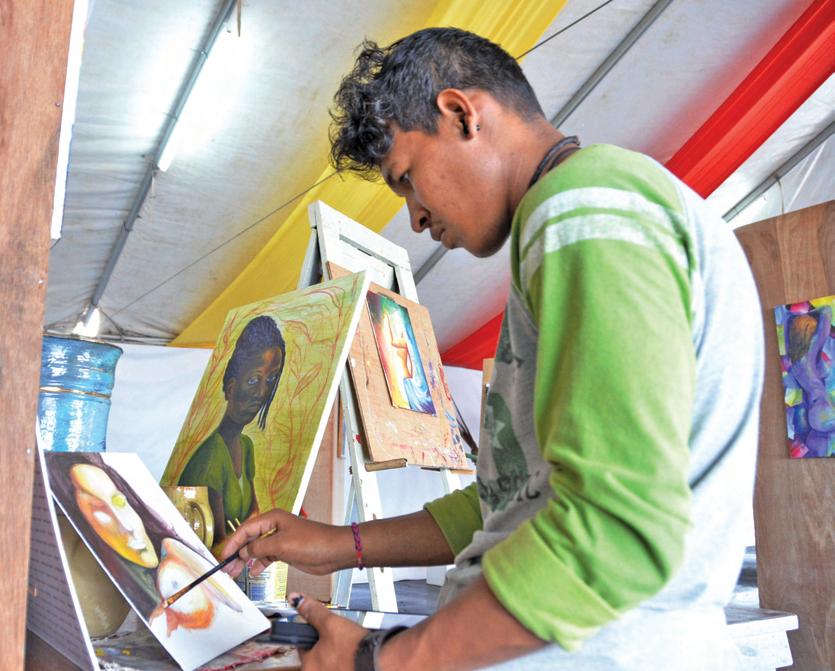
An artist showcases his skills
This young man ensures that the curry is properly cooked
These young ladies tending to the pot
Here you can have the best rice, this man seems to be saying to the visitors at his booth
Helicopter ride: The fun was unlimited at the Guyana Festival
Regional
Venezuela to close Colombia border each night
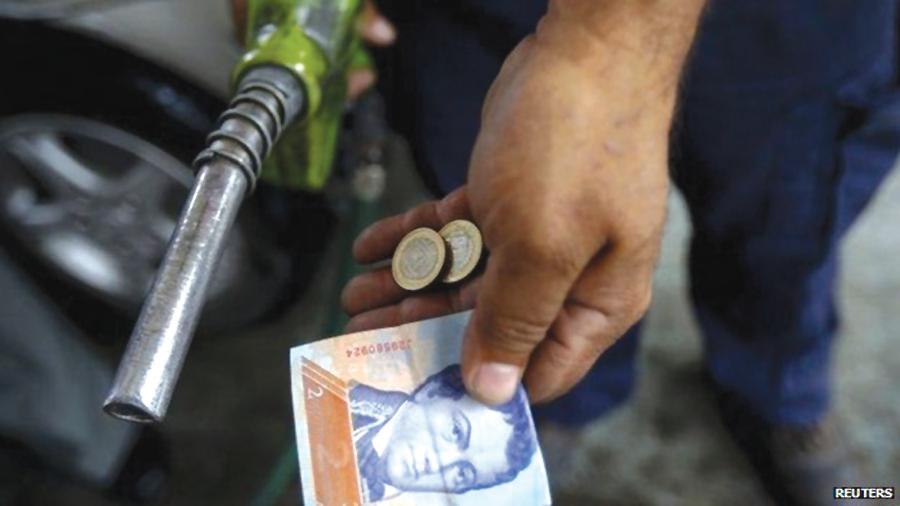
Venezuela, where you can fill your car’s tank for less than US$1 (£0.60), has the world’s lowest fuel prices
Venezuela says it will close its border with Colombia at night from today, to try to stop large-scale smuggling of petrol and food. The Government says that tonnes of goods – produced in Venezuela and heavily subsidised – are sold in Colombia at much higher prices.
The shortage of many staples in Venezuela’s western border area this year led to anti-government protests.
The border closure was agreed with the Colombian Government.
President Nicolas Maduro discussed the measures with his Colombian counterpart, Juan Manuel Santos, at a summit on August 1. The 2200km long (1360 miles) border will be closed between 22:00h local time and 05:00h every night.
Cargo vehicles, including vans and lorries, will be banned from crossing from Venezuela to Colombia be-
tween 18:00h and 05:00h.
The cross-border smuggling is also a problem for Colombia, with a big loss in taxes and complaints of unfair competition by local businessmen. The profits are often used to finance drug gangs and left-wing guerrillas, says the BBC’s Arturo Wallace in Bogota.
More than 40 million litres of petrol and 21,000 tonnes of food have been seized so far this year. (Excerpt from BBC News)
ALBA rejects subversive US programmes against Cuba
The member countries of the a regional integration bloc, the Bolivarian Alliance for the Peoples of our Americas (ALBA), has rejected the most recently exposed subversive US programme against Cuba, calling it an immoral project.
In a communiqué released on Thursday, the ALBA nations say they learned with indignation about the most recent exposure by the Associated Press
of another subversive antiCuba plan financed by the United States Agency for International Development (USAID) aimed at recruiting Cuban young people for subversion.
“This immoral project of the US Administration ratifies the hostile nature of US policy towards Cuba aimed at generating destabilisation of the political, economic and social order on the island,” the communiqué said.
The ALBA nations reject the new plan and strongly demand the cease of US covert, subversive and illegal actions that violate the sovereignty and the right of Cuba to self-determination, the communiqué concluded.
Member states of ALBA comprise: Antigua and Barbuda, Bolivia, Cuba, Dominica, Ecuador, Nicaragua, Saint Lucia, St Vincent and the Grenadines and Venezuela. (Caribbean News Now)
EU to provide new funding to counter organised crime and drug trafficking in the Caribbean
The European Commission will provide additional funding for the Airport Communication Project (AIRCOP) to disrupt the illegal networks that are disseminating drugs and other illicit products through smarter, more effective, well connected and intelligence led counter-narcotic activities of participating airports. Its purpose is to strengthen detection, interdiction and intelligence capacities in several countries in Africa, Latin America and the Caribbean.
European Commissioner for Development, Andris
Piebalgs, said: “Organised crime, drug trafficking and the damage that they bring are a global problem that requires a strong and coordinated response. Criminal organisations are responding to the success of coordinated law enforcement agency efforts, with new smuggling methods. Therefore it is important to continue our collective efforts to counter drug trafficking and protect people in the European Union and countries where illicit products are produced and transported.”
The AIRCOP programme has established Joint Airport Interdiction Task Forces
(JAITF) in participating international airports and connected them to international law enforcement databases and communication networks to promote intelligence and information sharing between services at national and international level. This includes encouraging real time transmission of information when illicit shipments are intercepted, as well as an intelligenceled approach to countering drug trafficking. The project also organises national and regional trainings as well as joint operations. (Excerpt
New policy to ‘gag’ lawyers at AG’s office
Former Solicitor General Eleanor DonaldsonHoneywell has left behind a policy that, if implemented, could effectively ban all legal officers working in that office from giving evidence in court on cases involving the State. The policy document, Legal Profession Privilege Policy, is open to public comment on Trinidad’s Attorney General’s Web site www. ag.gov.tt but has been described as “suspicious and illegal” by former attorney general Ramesh Lawrence Maharaj.
The six-item policy paper seeks to “prohibit” any disclosure “whether on a voluntary basis or under compulsion in all circumstances including pre-trial, at court, for investigative
purposes or disciplinary purposes.” The policy also covers all clients of the AG’s office including “all Government ministries and employees thereof including but not limited to officers of the civil, Police, prison, fire and health services.”
The document also states that “disclosure of privileged communications other than in keeping with this policy may constitute misconduct and/or a breach of the law officer’s employment contract.” This puts an effective gag on all legal officers attached to the AG’s office, even if called upon to give evidence in matters against the State in court.
EMA completes report on December 17 oil spill
The Environmental Management Authority (EMA) has finally completed its report into the December 17, 2013 oil spill in the southern peninsula. The Sunday Guardian has learned that the report was submitted to Water Resources and the Environment Minister Ganga Singh.
Singh, the Sunday Guardian understands, has already placed it before Cabinet. Cabinet has given Energy Minister Kevin Ramnarine two weeks to
respond to the report. That two-week period ended on Friday. When contacted for comment on Thursday, Singh said he could not divulge details of the findings until Ramnarine responded. He confirmed, however, that Ramnarine had two weeks to give a response, the deadline for which was Friday. Head of the EMA, Dr Allan Bachan confirmed that the report was handed over to Singh. He too could not reveal details as the matter is currently before Cabinet.
The Sunday Guardian understands that the EMA is currently exploring its options with regard to companies that violate the existing environmental laws. The EMA has also tabled several legislative changes which are expected to receive governmental approval at the end of the month. This report comes even as residents in Guaracara are battling another spill from the same company, stateowned Petrotrin. (Excerpt from Trinidad Guardian)
Battling Ebola – Jamaican doctor on front line of deadly crisis
Agutsy Jamaican doctor living in the United Kingdom, who has added her expertise to the gamut of international medical teams combating the Ebola crisis in West Africa, has given the island high marks for taking the necessary precautionary measures to stave off a local outbreak of the disease.
Dr Louisa Baxter, who spent her early years in St Mary and once worked at the Kingston Public Hospital, told The Sunday
Gleaner that vigilance must remain the order of the day to avoid a Caribbean outbreak of Ebola, which has already claimed at least 961 lives from 1779 recorded cases on the African continent – a death rate of just more than 50 per cent.
“It is a worrying issue for the international community,” stressed Baxter, who had just returned to London, England, from Sierra Leone and Liberia, where she came face to face with the suffering of Ebola victims.
“Jamaica is doing what it is supposed to, but the gravity of the situation (in Africa) must not be lost on anyone because the international community is so closely connected these days.”
Last Thursday, Jamaica’s Health Minister, Dr Fenton Ferguson indicated that the ministry has been keeping itself informed of developments with respect to the Ebola outbreak through reports issued by the World Health Organisation. (Excerpt from Jamaica Gleaner)
Bajan women ‘the fattest’
Barbadian women are the fattest in the world, says a major international publication. This unflattering designation comes from the Economist Pocket World of Figures 2014, an extensive annual compilation of economic and social data.
Barbados placed top of the global list of the ten
countries with the largest share of overweight women in their respective populations. It indicated that in 2010 – the latest year for which there were figures –57.2 per cent of Barbadian women were considered obese. The island was followed by Kuwait 55.2 per cent; Trinidad and Tobago 52.2; the United States and
Jamaica 48.3; Egypt 48; United Arab Emirates 42; and St Lucia 41.7 per cent.
“The figures on obesity for Barbados and its global ranking caught me by surprise,” said Sir George Alleyne, a former Director of the Pan American Health Organisation (PAHO) who commented on the report.
(Nation News)
Attorney General Anand Ramlogan
Hamas agrees to new Gaza ceasefire but IsraelPalestinian talks falter
Palestinian factions have agreed to a new 72-hour ceasefire in Gaza, Egyptian state TV has reported as negotiating teams in Cairo struggled to keep indirect IsraeliPalestinian peace talks alive. Israel is yet to respond.
Efforts to reach an agreement have faltered since Hamas its negotiating team in Cairo had been offered nothing in return for peace.
Plane crashes near Tehran’s Mehrabad airport, killing dozens
ABut a senior member of the Palestinian delegation in Cairo, Azzam al-Ahmad, said his team were willing to stay and negotiate indirectly with Israel, via Egyptian mediators, despite earlier suggestions that the Palestinians were close to abandoning the process.
On Saturday, the Palestinian delegation also threatened to withdraw, again saying Israel had not
A Palestinian source said that a new 72-hour ceasefire is under discussion, though no final decision has been made.
responded to any of their demands. By mid-afternoon local time, no decision had been announced, nor was there any confirmation of repeated reports of a new ceasefire.
Analysts now fear a long and lethal period of continued violence in Gaza, that would exacerbate a grave humanitarian crisis in the overcrowded region and curtail any bid to repair the colossal damage done to the infrastructure of Gaza in the month-long conflict. (Excerpt from The Guardian)
Ebola crisis: Guinea closes borders with Sierra Leone and Liberia
Guinea closed its borders with Sierra Leone and Liberia on Saturday in a bid to halt the spread of an Ebola epidemic that has killed nearly 1000 people in the three countries this year.
Authorities said the decision was taken primarily to prevent infected people crossing into Guinea, a country where at least 367 people have died of Ebola since March and 18 others are being treated in isolation.
The West African out-
break of Ebola is the worst the world has faced and the UN World Health Organisation (WHO) said on Friday it represents an international health emergency that will likely continue for months.
It has put a severe strain on the health systems of affected states and governments have responded with a range of measures including national emergencies declared in Sierra Leone, Liberia and Nigeria, which confirmed seven cases of
Ebola in Lagos.
“We have provisionally closed the frontier between Guinea and Sierra Leone because of all the news that we have received from there recently,” Health Minister Rémy Lamah said, noting Guinea had also closed its border with Liberia.
The measures had been taken in consultation with the two neighbours, Guinea’s International Cooperation Minister Moustapha Koutoub Sano, told a news conference. (Excerpt from The Guardian)
n Iranian passenger plane has crashed moments after takeoff from Tehran, killing at least 38 on board and narrowly avoiding many more deaths when it fell near a busy market.
The plane was headed to the eastern city of Tabas, the IRNA and Fars news agencies said, when it crashed at 09:18h local time (04:48h GMT), after leaving Mehrabad airport.
It triggered a fireball when it smashed into the
capital’s Azadi neighbourhood, close to where hundreds of military families live, and only a few hundred metres from a row of shops.
Iran’s deputy Transport Minister Ahmad Majidi, said the Antonov An-140 turboprop plane had 40 passengers, including six children, and eight crew on board, and he put the death toll at 38.
A fire official initially said all on board had been killed but Fars later reported that 37 bodies were sent to the morgue and IRNA
said nine people were hospitalised, two of them critically injured.
The aircraft was operated by Sepahan Airlines and a tailfin bearing the company’s dolphin logo could be seen sticking out of the road as security forces cordoned off the crash site where fire fighters had doused the flames. Black smoke billowed from the mass of burnt-out twisted metal, with officials saying the plane hit a wall and trees.
Ukrainian forces encircle rebel-held city, talk of truce collapses
Artillery shells slammed into the outskirts of the Ukrainian city of Donetsk on Sunday as Government forces tightened the noose around the rebel-held redoubt and called on pro-Russian separatists to surrender.
To the East of Donetsk, Government forces and the separatists were fighting for control of the town of Krasny Luch, a rail and road junction through which Kiev says the rebels are receiving supplies of Russian military equipment.
China rebuffs US efforts on South China Sea tensions
China appeared to rebuff pressure from the United States to rein in its assertive actions in the South China Sea on Sunday as Southeast Asian nations declined to overtly back Washington’s proposal for a freeze on provocative acts.
The lack of progress in resolving the maritime tensions at Asia’s highestprofile diplomatic meet -
ing so far this year shows the tough task Washington faces in persuading smaller Asian nations to risk antagonising the region’s rising power.
Foreign ministers from the 10-member Association of Southeast Asian Nations (ASEAN) released a statement expressing concern over “increased tensions” and called for stepped-up talks with China, in what
US officials said was a setback for Beijing’s efforts to play down the disputes.
But there was no specific mention of China, and ASEAN only “noted” a formal three-point plan submitted by US ally the Philippines for a moratorium on destabilising actions.
The rancour over the
with several
states including some of the claimant nations reluctant to jeopardise rising trade and investment ties with China. Beijing has been able to use its influence to block regional action on the maritime issue, most notably in 2012 when an ASEAN meeting chaired by Chinese ally Cambodia broke down in acrimony. (Excerpt from Reuters)
Talk of a ceasefire, a possibility raised by a separatist leader on Saturday, evaporated as Kiev Government forces kept up an offensive to crush the rebels.
Ukrainian military spokesman Andriy Lysenko said if the rebels wanted a ceasefire this meant “raising white flags and putting down their guns”.
There would be no truce while the Ukrainian Army continued “punitive” military action, the rebels retorted in a statement. Donetsk, a major industrial hub in Ukraine’s Russian-speaking
east, resonated with the crash of shells on its outskirts for about eight hours up to mid-day on Sunday, a Reuters witness in the town said.
In the city’s northern district of Putilovka, a building housing the offices of Ukrtelecom Telecommunications Company was ablaze, apparently hit by a shell. Residents had come out to watch, while one man was putting up corrugated metal to protect the windows of his home.
(Excerpt from Reuters)
Erdogan wins Turkey’s presidential election
Recep Tayyip
Erdogan, Turkey’s Prime Minister, has won the country’s first direct presidential election in the first round after taking more that 50 per cent of the vote, according to Turkey’s election board.
Sunday’s victory will extend Erdogan’s more than 10-year rule over the country for another five years. “The provisional results show that Erdogan has the majority of the valid votes,” High Election Board Chairman Sadi Guven told a news conference in the capital Ankara.
“We have received more than 99 per cent [of the votes]. Tomorrow [today] we will announce the provisional results.” Erdogan declared victory by addressing his supporters from his party’s headquarters in Ankara.
“Today national will and democracy have prevailed again… Today, greater Turkey has prevailed again... With the President being elected by popular vote, obstacles between Cankaya [the presidential palace] and the public have been lifted,” he said, striking a conciliatory tone after a tense campaign period.
“Our political views, lifestyles, beliefs and ethnicities can be different, but we are all offspring of this country. We are all owners of this state... I will embrace all 70 million [Turks] as President.”
The vote has been seen as a milestone in Turkish politics as Turks are electing their President by a popular vote for the first time in the country’s history, bringing the office a new legitimacy.
(Excerpt from Aljazeera)
disputed sea has split ASEAN,
Dignitaries hold hands as they pose for a photo before the 4th East Asia Summit (EAS) Foreign Ministers Meeting at the Myanmar International Convention Centre (MICC) in Naypyitaw, August 10
African communities must take greater responsibility for their development – Vincent Alexander
University of Guyana (UG) Registrar
Vincent Alexander has called for a revival of values and entrepreneurship in Afro-Guyanese communities.
Alexander made the comment while addressing CUFFY 250 Second Annual Forum held at the Critchlow Labour College on Sunday. In keeping with the theme, “Guyana Approaching 50 and Beyond: Whither Independence?” Alexander told the audience that Afro-Guyanese should revitalise the values and beliefs that allowed their foreparents to survive beyond Emancipation.
Driven by the innate desire to be freed from European enslavement, Africans engaged in passive and active rebellions.
The 1763 Rebellion in Berbice, the 1823 Rebellion in East Demerara and the 1834 Essequibo Rebellion were among the revolts that unfolded in Guyana in the lead up to total Emancipation on August 1, 1838.
But the acquisition of “Emancipation” was not simply enough for the Africans, in 1839, 83 exslaves pooled their resources and bought Plantation Northbrook, currently known as Victoria, as they signalled their Independence.
It was the beginning of the Village Movement which resulted in the establishment of key institutions and organisations.
According to Alexander, Afro-Guyanese should regain that level of independence which has been lost, charting a path for greater development. He added there is need for the revitalisation of an institution that would allow AfroGuyanese to exercise their sovereignty as an individual and at a communal level.
Quoting former President Linden Forbes Burnham, Alexander said: “It is in your hands. Freedom belongs to us. Rise up in consciousness.”
In keeping with the theme, Alexander also alluded to the Nation State,
saying that though it has the ultimate authority; it should not be in contravention of the rights of individuals or communities.
“There are things that people should be allowed to do for themselves. There are things that communities should be allowed to do by themselves unimpeded and unaffected by the State,” he posited.
The UG Registrar emphasised that both individuals and communities should be allowed to exercise their independence.
“That independence can be best recognised at the level of community in some form of local organisation best known as Local Government Elections,” he explained. “It’s not a gift of the Central Government; it is a contract with the people that we should have local Government,” he added.
The state of education in the African Guyanese communities, genderbased violence in the African Guyanese communities and Police violence and African Guyanese communities were among topics covered on Sunday.
Cuffy 250 is a body concerned about the erosion of the national compact and the effect of this erosion on the ability of the poor and their communities to advance their socio-economic and cultural development.
Family of Barakat victim frustrated with investigation
Family members of 23-year-old Kester Anderson who was burnt to death have expressed frustration over the pace at which the Police are investigating the miner’s murder.
Anderson of Lot 2, Samaroo Dam, Pouderoyen, West Bank Demerara, succumbed to first degree burns last Tuesday while receiving treatment at the Georgetown Public Hospital.
According to reports, he was involved in an argument with another miner at the mining camp located in Barakat Backdam, Cuyuni River, when the suspect doused him with gasoline before setting him on fire.
This incident occurred in the wee hours last Monday.
Quenella Griffin, the mother of the dead man told Guyana Times on Sunday that they have not heard of any developments from the Police regarding the investigation into her son’s death or any leads on the arrest of the culprit.
The grieving mother dis-
closed that the last thing she had heard was that a team was sent up to Barakat and was conducting the investigation; however, she does not know if they were able to get a lead on her son’s killer or if they came up emptyhanded.
“They ain’t telling me nothing, I just want to know what going on if they catch this man or even tell me what happen because up to now, no one ain’t tell us clearly is what really happen. All we hear, my son and the man was arguing and the man burn up my son. For what, I don’t know,” she lamented.
Griffin noted that after several days had passed and there was no word from the Police, she paid them a visit to enquire about the investigation.
“When I ask about the investigation, one of the Police turned and ask me if we ain’t burn he (Anderson) yet. I watch he wondering is what madness going on,” the woman claimed.
On the other hand, the
mother explained that she has not heard anything from the management or anyone else from the Vulture Mining Establishment, where her son had worked. Griffin received news of the incident on Monday morning and her son was airlifted from Bartica later that afternoon. Anderson arrived at the hospital in a conscious state; however, by the time his family was allowed to see him, he was unconscious and on a life support machine.
Last Friday, Crime Chief Leslie James told this newspaper that the Police are looking for someone whom they suspect might have committed the heinous crime.
He noted that the investigation is ongoing to ascertain the circumstances surrounding the incident. The burnt body of the 23-year-old miner is at the Georgetown Public Hospital awaiting a post-mortem, which is expected to be conducted today.
Prisoner found dead in Camp Street penitentiary
Larry Victor, an inmate of the Camp Street penitentiary was on Sunday morning found dead in his cell by prison officials. He is suspected to have died from natural causes.
The body was discovered about 07:30h by officials who initially thought that he was still asleep when they made their first check.
Guyana Times understands that the man was awaiting trial for an alleged murder. After the discovery, the man was taken to the
Georgetown Public Hospital where he was pronounced dead on arrival.
His body bore no marks of violence; hence, foul play was ruled out.
While information surrounding the death of the prisoner remains sketchy, Guyana Times understands that the man had complained of feeling unwell on Saturday evening before he retired to his cell.
According to reports, the man had been complaining about chest pains since a
week ago, but he did not receive any medical attention as the in-house medical practitioner was not available. This publication understands that the man went to the medex on several occasions and was told that the official was on lunch or most times not available.
Attempts to contact prison officials, the Home Affairs Minister and the Crime Chief proved futile. The Police and prison officials have launched an investigation into the matter.
Norton says change in foreign policy approach needed
Former People’s National Congress Reform (PNCR)
General Secretary and Cuffy 250 member Aubrey Norton is contending that the Government needs to embrace a new approach to foreign policy, making room for the inclusion of the political Opposition to improve the economic state of its people, especially those of African heritage.
The former Member of Parliament (MP) was at the time addressing members of the African community on the topic: “Foreign Policy and One Party Government since Independence”, at an event to mark the first anniversary of the establishment of the Cuffy 250, an organisation which seeks to address the state of Africans in Guyana.
To a packed audience at the Critchlow Labor College in Georgetown on Sunday, Norton, speaking alongside a number of African elites, told the gathering that for far too long the Governments under both the People’s Progressive Party/ Civic (PPP/C) and the People’s National Congress (PNC) have failed
to include the Opposition in the process. He spoke of the efforts of former Presidents Hugh Desmond Hoyte and Dr Cheddi Jagan to reform foreign policy during their tenure in office.
“Desmond Hoyte decided that he was going to change the foreign policy in Guyana. And in changing the foreign policy in Guyana, he did make the statement that the economy is an overriding challenge, and he brought to mind pursuing economic development. So in that idea, one saw essentially through foreign policy the country was pursuing economic development diplomacy, which at large had put Guyana’s economic interest first.” Norton said it was with that concept in mind that it was again changed in1992. “The first is Dr Cheddi Jagan’s humanitarian order, which in his opinion, had some
relevance but was rooted in the new international economic order in the 1970s,” Norton explained.
During the last couple of years, Norton posited that Guyana has failed to clearly define a foreign policy position.
“But all of it is occurring in a changing world. The world is being globalised; the world that Hoyte and Burnham operated. But there was a difference between the developed world and the developing world. And Guyana sought solidarity with the developing world. In more recent times, a lot of what has been considered to be developing countries have now joined either the developed or developing countries,” he said.
According to him, Guyana needs to sit down and analyse the situation and come up with new proposals for its foreign policy.
“For instance, I do believe that having looked at the situation; Guyana can now find new alliance and lead smaller developing countries in whatever direction discussions lead,” he said.
Meanwhile, one-time
Finance Minister under the PNC administration and current A Partnership for National Unity (APNU) Member of Parliament (MP) Carl Greenidge, spoke to the issue of economic policy in Guyana since independence.
He pointed out that Africans have had numerous challenges in areas of acquiring employment, among other things. He also made a call for AfricanGuyanese to make the best of their opportunities to rise above the economic challenges faced.
Greenidge said the effect of the economic situation today on the African community is one that is evoking deep concerns to observers. According to him, AfricanGuyanese have suffered tremendously in areas of labour and loss of lands during the post-Independence period.
UG Registrar Vincent Alexander
Former PNCR General Secretary Aubrey Norton APNU Member of Parliament (MP) Carl Greenidge
Ghana to import timber from Guyana
Ghana’s Deputy Minister of Lands and Natural Resources, Barbara Serwaa Asamoah, has indicated that her Government will soon commence the importation of timber from Guyana and Cameroon.
Serwaa Asamoah disclosed this at the Fifth Edition of National Forest Forum-Ghana (NFF-G) in Dodowa on Friday. She said timber products on the domestic market were not adequate. The forum, which was attended by Civil Society Organisations (CSOs), policymakers and traditional leaders from the 10 regions under the theme: “Deepening Ghana’s Country DialogueContribution to sustainable forest management” was organised by NFF-G to grant stakeholders the platform to dialogue on ways of sustaining Ghana’s natural resources.
There is a high demand for timber products in the country, but the current timber production capacity is extremely low and if the Government fails to bring in additional supplies, illegal chainsaw activities could increase tremendously, according to the Deputy Minister.
important policy that is going to check that there is no illegal timber on the market, she said. The Director of the Nature and Development Foundation, in a remark, stated that the forum was aimed at improving transparency and integrity in the country.
Leadership
TAccording to her, Government was currently holding talks with countries such as Cameroon and Guyana to see how best they could reduce taxes on timber that might be imported from those countries.
“We are also negotiating with the Finance Ministry for the go-ahead to start the importation.”
“The trees we have in our forest are just small. Most of the mahogany and other tree species are gradually finishing, if we do not feed employers within the industry, they will lay off their employees,” she said.
Serwaa Asamoah added that Government had adopted the implementation of the Voluntary Partnership Agreement (VPA), with the
introduction of the public procurement policy.
She said only legally acquired timber will now be used for all Government projects. However, she mentioned that “Government is the lead developer in the timber industry and if it acquires all its timber from legal sources, it will go a long way to halt illegal lumbering and help the local timber industry”.
Speaking in an interview with BUSINESS GUIDE on the sidelines of the forum, she noted that the VPA will go a long way to halt the smuggling of timber from Ghana to its neighbouring countries such as Togo and Burkina Faso.
The VPA is another very
He urged Government to collaborate with CSOs to find lasting solutions to the challenges confronting the forestry and environment sectors. A representative of the European Commission, (EC) Christopher Ackon, in a speech, disclosed that the EC has contributed immensely to the development of the nation’s natural resources.
According to him, the EU is the largest donor to the forest sector and provides assistance through both countries and regional programmes. He disclosed that the Government of Ghana and the EU signed the world’s first “Voluntary Partnership Agreement, popularly known as VPA in November 2009”. He said, “In addition to ensuring legal exports of timber products from Ghana to the EU, the trade agreement aims to contribute to governance reforms in the forestry sector.”
(Ghanaweb.com)
FAO Food Price Index hits six-month low in July
The FAO Food Price Index decreased for a fourth consecutive month in July mainly due to a sharp decline in international prices for maize, wheat and certain oilseeds, reflecting ample supplies for these commodities.
Based on the prices of a basket of internationallytraded food commodities, the FAO Food Price Index averaged 203.9 points in July 2014, down 4.4 points (or 2.1 per cent) from a revised value in June and 3.5 points (or 1.7 per cent) below the July 2013 level.
“The lingering decline of food prices since March reflects much better expectations over supplies in the current and forthcoming seasons, especially for cereals and oils, a situation that is expected to facilitate rebuilding of world stocks,” said FAO Senior Economist Concepción Calpe.
In contrast, meat prices rose for the fifth consecutive month in July, and those for sugar remained firm. The fall in quotations for grains, oilseeds, as well as dairy products pushed down the FAO Food Price Index to its lowest level since January 2014.
“Livestock product markets have their own dynamics: in the case of meat, beef in particular, many exporting countries are in a herd rebuilding phase, which is limiting availability for exports and sustaining pric-
es,” Calpe said. “As for dairy products, supplies available for trade appear to be abundant, which, along with a faltering import demand, has weighted on July’s quotations,” she added.
Sharp slide
The FAO Cereal Price Index averaged 185.4 points in July, down 10.7 points or5.5 percent from June and as much as 36.9 points or 16.6 percent below the level one year ago.
In particular the fall in international prices for maize (down 9.2 per cent from June) and wheat (down 5.8 per cent) reflected excellent production prospects as well as expected abundant exportable supplies in the 2014/15 marketing season. In contrast, rice prices
edged marginally higher, on renewed import demand, especially as Thailand’s sales from public reserves remained suspended.
The FAO Vegetable Oil Price Index averaged 181.1 points in July, down 7.7 points or 4.1 per cent from June. The decline continued to be primarily driven by falling soy and palm oil prices.
Soy oil values fell mainly in response to record crop prospects for the United States as well as abundant supply in South America while palm oil quotations eased on persisting strength in Malaysia’s currency and slow global import demand. Prices for rape and sunflower seed oil also weakened, reflecting ample crop prospects for 2014/15.
The FAO Dairy Price
Index averaged 226.1 points in July, down 10.3 points (4.4 per cent) over June and 17.5 points (7.2 per cent) less than the same period last year. Reduced import demand -- including a decline in purchases of butter by Islamic countries during Ramadan -- contributed to the downward trend in dairy prices.
Meat prices rise
A continued strong demand for meat in Asia and particularly China, helped to edge up the FAO Meat Price Index which averaged 204.8 points in July, 3.7 points (1.8 percent) higher than its revised value in June and 25.4 points (14.1 per cent) above the same period last year. Average prices for poultry and ovine meat also rose, while those for pig meat fell back somewhat from the all-time high registered in June.
The FAO Sugar Price Index averaged 259.1 points in July, marginally up by 1.1 points (0.4 per cent) from June, and 20.2 points (8.4 per cent) higher than in July 2013. International sugar prices have been relatively volatile over the last three months, amid uncertainty over the impact of a drought on sugarcane in Brazil, the world’s largest producer and exporter and indications of below average monsoon rains in India, the second largest world sugar producer.
here are many people who are in leadership positions, but do not quite understand their role as a leader. A leader is someone who is a good role model, because to earn respect, one has to keep in mind that it is important that the leaders show that they know what they are doing.
This way, people will respect and listen to them if they know that their leaders are knowledgeable in their field. We live in a world where people have the tendency of showing off. However, without doing so, leaders should take the time to discuss their experience.
For example, if we are employers, it is important to let employees understand how long we have been in the business and what we have achieved during our business career. This will allow our team to admire us and they will have a better understanding as to why we’re sitting in the boss’s chair.
Every leader should act professionally. Even though we may be the boss, we should still be pleasant to all of our employees, and should make all efforts to meet the basic standards of professionalism, meaning we should dress appropriately and come to work on time every time. Consistency is the key as a leader, which means we should never try to change things in the middle of any project. Sometimes, adjustments are necessary, but it’s important to be very clear the first time. If for some reason we have to change our minds about what we want halfway through a meeting, we may find it challenging for people to take us seriously.
If you are a teacher, then giving good feedback on both written assignments as well as your students’ in-class responses is a good thing, because it will show your students that you want them to succeed on an individual level. Do not hesitate to thank them for their hard work and every oncein-a-while, bring them a special treat, because it will make your teaching experience end on a positive note to show the kind of leader you are.
Keep in mind that being a leader does not mean we cannot be a good friend to our teammates, because making an effort to make friends so that we can have fun while working hard is a good thing.
A leader to me is supposed to show up to all social events first and leave last. It is important to show that you love being a leader of your team from start to finish. Your time wouldn’t go in vain, because this will allow us to know our teammates better and perhaps build a stronger bond. Every leader should also establish themselves as an authority figure. In other words, make it clear that you are the boss of your household, for example, and that your rules should be respected.
If you have children, demonstrate to them that elders should be respected at all times. If you have parents who play an active role in your life, take the opportunity to show your children that you respect them, the same way they should respect you.
Remember, it wouldn’t cost anything to be friendly to anyone regardless of what leadership role we may have. I cannot say it enough: never play favourites, and try your best to get to know everyone around you; life becomes a lot easier that way.
Send questions, comments or feedback to mcnarine@rogers.com.
Narine Dat Sookram
The slump in grain prices has helped push down the FAO Food Price Index
There is a high demand for timber products in Ghana
What people say about the inaugural Guyana Festival
“It is pretty unique, obviously its different from GuyExpo and stuff because it has the sports aspect of it... years ago with the GuyExpo and Building Expo, there was [sic] no sports in it. It’s a great vision, I think we must commend Minister Ali for his effort in envisioning something like this, especially having the past and present sportsmen taking part in such a pulsating cricket match.”
“I personally think Guyana Festival is a very good initiative. The opening was great, it was well executed, everything that they said they would have done, they did. What I would love to see is more of these things happening so that local artistes can get more exposure and all these things. I think it’s really good for the local talent core. I really hope they record and showcase this to the world so people can see the abundance of talent that Guyana has. A lot of Guyanese outside of Guyana don’t know their own ar-
tistes. I hope when I sit down on a flight, I can see Guyana Festival as part of the calendar of activities for summer in Guyana.”
Joana – American Tourist
“The festival is really fun; it’s good to see all of the different cultures that contributed to Guyana’s History. I saw it advertising everywhere and I came, I wouldn’t miss it. I would love to be here next year if they have it again. And I must add, I think the food is really good, looks delicious.”
“I think it’s a great project, I think it’s something we needed a long time ago. Hopefully, we can continue this again. I think it is something we can do in more parts of Guyana. My disappointment is that more entrepreneurs didn’t take the advantage to come out and showcase their works. It would do great for Guyana; it’s a pity that we don’t have more flights coming to Guyana. If we had more flights, this ground would have been filled with foreigners.”
Nikoya Allen – Patron
“They should have had more steel pan music and stuff but I
think it’s really good. I came all the way from Ann’s Grove and I am really looking forward to enjoying this.
Brittany Hamilton – Exhibitor
“I think it’s a really good initiative, I completely endorse it. We have had a good turnout. It’s definitely a family-oriented event and I think the organisers must be commended; it really was a great success.”
Damian Lewis – Private Sector Employee “I like the initiative. They are
a few things I see that I am disappointed with. Definitely, imaging is one of them. When you look at the advertising material; you expect the image, the material to be all Guyanese, because we are after all showcasing Guyana. Despite that, the exhibits are marvellous, the novelties that make Guyana, truly Guyana is here, everything is here, so that’s good. The local artistes, the shows, it’s really good. I am going to go look for some roti and curry, and enjoy the show now.”
Lisa Punch – Singer/Songwriter
“Well first let me say that I’m very happy to be a part of the initiative. I think it’s good that they’re doing something like this for Guyanese and not just the concerts, the arts and the craft are being exhibited. I think it’s a really good festival.”
Mahendra Nagamootoo – Cricketer
“It’s great, I think the festival is wonderful, the turnout everything is great. I think it should be taken to other parts of the
country like Albion and so forth. All in all, I think the Minister and his team did a really good job setting up the event, it’s really great.”
Burnett
“Well, I think it’s a good venture, we are showcasing Guyana and all that Guyana has to offer. Guyana came out and supported and that is good. I would definitely recommend this as an annual something because you know Jamaica has Sound Fest, so this can be our own annual thing.”
Lennox Cush – Professional Cricketer
“I feel it should be an annual event; it came off as a bang this year. It could only do well for Guyana and our togetherness as a unit.”
Tennecia DeFreitas – Singer
“It represents an amazing opportunity for young Guyanese. It’s a big festival for all of Guyana, it kind of reminds me of Mashramani where all of Guyana just comes out and celebrate.”
Terry Gajraj steals show for “Night of Legends Concert”
The Guyana Baboo Terry Gajraj, stole the show at Guyana Festival’s “Night of Legends Concert” on Saturday evening at the Guyana National Stadium, Providence, East Bank Demerara, performing several contemporary hits and a few blasts from the past.
The chutney singer, who rose to fame decades ago with his breakthrough record Guyana Baboo, delivered a pulsating and
gyrating performance to send the crowd into a frenzy.
Although marred by the occasional downpour, the delivery by the performers was worthy of much commendation.
The show got off a bit later than was expected with dances and cultural performances from various legendary Guyanese performers as suggested by the overall theme of the concert.
While some of the patrons sang
lustily, along with the performers, a lot of them expressed complete surprise. They were heard saying that they were not aware that the artistes behind some of the tracks were even Guyanese.
This gave credence to the saying that Guyanese are not fully aware of the history of local talent and what Guyana has produced thus far in its history.
However, the excitement began when Gajraj took to the
stage and prompted the crowd to approach the stage singing “come closer, come closer”.
For 30 minutes, Gajraj managed to entertain a previously faint crowd as he dished out hit after hit, taking the crowd down chutney memory lane. Shortly after came the downpour that sent patrons running for nearby tents instead of picking up the chairs and putting them above their heads as they did when the rain visited earlier.
This downpour also signalled the end of the show as most persons cognisant of the time, and the prevailing circumstances, made their way to the gates.
Earlier in the afternoon, patrons had poured into the stadium in droves and made their way from booth to booth, taking in the exquisite displays that were being exhibited by local entrepreneurs. (see full story in Tuesday's edition)
Ramnaresh Sarwan –Professional Cricketer
Jomo Primo – Recording Artiste
Calvin
– Local Performer
WICB Regional U-19, 50-over cricket…
By AvenAsh RAmzAn
Guyana made it four wins from as many games in this year’s West Indies Cricket Board’s (WICB) Regional Under-19, 50-over cricket competition with a resounding 68-run victory under the Duckworth/Lewis method over Jamaica at the Georgetown Cricket Club, Bourda, on Sunday.
Batting first, the Guyanese were dismissed for 184 with one over of the stipulated 41 remaining, while Jamaica, chasing 175 from 30 overs after rain wiped 53 minutes off at the innings break, responded with 107-9 off 29.3 overs, innings closed.
The Jamaicans never threatened to go after the target after losing two early wickets with just nine runs on the board. Despite a third wicket partnership of 60 between Shahid Crooks (34) and Ryon Burnett (17), the Guyanese were generally in control of proceedings, picking up wickets at regular intervals.
Odean Smith, batting
at number 10, offered some brief entertainment with three consecutive sixes off spinner Steven Sankar in the dying stages of the game, but all that did was reduce the margin of defeat for the boys from the island of Wood and Water.
Bowling for the hosts, Sankar had 2-31, while Balchand Baldeo picked up 2-22.
Earlier, Guyana, inserted to take first strike after Jamaica won the toss, had an innings of contrasting fortunes, finishing on what was a below-par 184 given the solid foundation they had prior to a rain break that lasted 72 minutes.
The Guyanese suffered an early setback when West Indies Under-19 opener Tagenarine Chanderpaul was dismissed for four at 8-1, before opener Shimron Hetmyer and skipper Brian Sattaur proceeded to rebuild the innings with a partnership of 89.
Both left-handers seemed destined for huge scores as they grew in confidence and started to dominate the bowlers. Sattaur was motoring along well, notching up his highest score of 41 (64 balls, 4x4s, 1x6) this season before he was run out at 97-2 in the 21st over.
Hetmyer, who was intent on punishing anything loose, was dropped on 46 and soon brought up his fifty off 64 balls with four boundaries. He benefitted from another chance on 62, dropped at mid-on, before Guyana’s leading runscorer Kemo Paul was bowled by seamer Ryon Burnett for seven at 131-3 in the 29th over.
It was Paul’s first failure in the 50-over competition, coming on the heels of three consecutive half-centuries.
Hetmyer was joined by
Guyana whip Jamaica to remain unbeaten
Akshay Homraj and the pair batted through to the end of the 31st over when the players and umpires were forced off the field following a downpour. An early lunch was taken during the break, which lasted one hour, 12 minutes, thereby reducing Guyana’s innings to 41 overs.
With 10 overs to go and Hetmyer fully entrenched, the Guyanese seemed on course for a 200+ total, but the innings folded swiftly as the last seven wickets tumbled for just 37 runs in nine overs.
Hetmyer was dismissed for 75 (84 balls, 6x4s) and was part of a barrage of wickets that fell after the interval. Homraj (09), Ronaldo Ali-Mohamed (03), Kemol Savory (03), Sharaz Ramcharran (15), Balchand Baldeo (09) and Daimon Waldron (01) all fell cheaply as the Guyanese were guilty of reckless strokeplay after the resumption.
In the end, they had enough on the board to guarantee a fourth win on the trot and maintain their unbeaten record.
In the other games played
on Sunday, Windward Islands (150-8) defeated Trinidad and Tobago (1499) by two wickets at the Enmore Community Centre ground, while over on the Demerara Cricket Club ground, ICC Americas were
55-4 off 26.3 overs against Barbados when rain brought a premature end to the day’s proceedings.
The Guyanese next face the Windward Islands on Tuesday at the Albion ground.
SCOREBOARD
Guyana innings
S Hetmyer c Lewis b Smith 75
T Chanderpaul c Burnett b Lewis 4
B Sattaur run out (Burnett/ Morris) 41
K Paul b Burnett 7
A Homraj b Henry 9
R Ali-Mohammed c Lewis b Smith 3
K Savory run out (Burnett) 3
S Ramcharran b Henry 15
B Baldeo run out (Walters/wkpr Morris) 15
D Waldron c wkpr Morris b Henry 1
S Sankar not out 1
Extras (w-9, lb-7) 16
Total (all out; 40 overs) 184
Fall of wickets: 1-8, 2-97, 3-131, 4-147, 5-153, 6-154, 7-163, 8-174, 9-183, 10-184
Bowling: Henry 8-1-30-3 (w2), Lewis 7-0-30-1, Thomas 3-0-26-0 (w-2), Burnett 100-42-1, Walters 4-0-200 (w-1), Smith 8-0-29-2
Jamaica innings
L Lugg c Sattaur b Baldeo 0 O McCatty run out (Paul/wkpr Savory) 8 S Crooks run out (Paul/wkpr Savory)
R Lewis c Paul b Baldeo
N Walters run out (Waldron)
G Henry c wkpr Savory b Sankar
Thomas b Sankar
Smith C Sattaur
2-9,
4-69,
Slingerz top GDF 2-1 at Guyana Festival
Some of the action during Saturday's
By TReisTon Joseph
Tencounter at the
he Guyana Festival added flavour and excitement to its proceedings on Saturday with a thrilling football encounter at the Guyana National Stadium as Slingerz FC emerged as victors with a 2-1 win over the Guyana Defence Force. After a cricket match that whetted the appetite of the fans in attendance, the football game provided no shortages of heart pounding moments as both teams played with a macho level of intensity. It was none stop ac-
tion between the two football clubs as they searched for opening goals early with GDF failing to cash in an early corner while Slingerz shot a 25 yard free kick just wide of the target. However it would be Slingerz that would strike first to resounding cheers
of the fans in attendance from a right footed shot from Dominic Garnett in the 26th minute.
GDF, seeming a but deflated from the goal was caught lapsing yet again in the first half as Garnett took
ing position.
On resumption, Slingerz would switch to a more defensive approach to the game; only counter attacking when the opportunity arose.
GDF, seemingly frustrat-
man short. However, the military men would be provided with a gift one minute later and easily scored in the 57th minute with a goal from Delwyn Fraser. The game would play
another strike on goal in the 40th minute to register the second for Slingerz five minutes before the first half, ending the half in command-
ed by their inability to trouble the back of the net would see Selwyn Isaacs being red carded for a dangerous tackle, leaving the army men one
out with a few dramatic moments but none too threatening to trouble the score sheet as the game expired after the full time whistle.
Shimron Hetmyer
thrilling football
Guyana National Stadium as Slingerz FC emerged as victors with a 2-1 win over the Guyana Defence Force
Sri Lanka v Pakistan, 1st Test, Galle...
Sri Lanka record seven-wicket win over Pakistan
move 1-0 ahead in the two-Test series
Pakistan began the final day 78 runs adrift at 4-1 and were all out for 180, spinner Rangana Herath taking 6-48.
Sri Lanka needed 99 to win in 21 overs and Mahela Jayawardene, who will retire from Tests after this series, opened
GTTA to start coaching courses soon
– “Teach Them Young” camp growing
The Guyana Table Tennis Association (GTTA) is looking to improve the quality of the game with two different coaching courses set for this month.
The first course will be a level one course set for July 15 and is expected to accommodate at least 25 persons in the programme that will last up to August 19.
Immediately after the conclusion of the level one course, there will be a level two course starting on the 21st that will last until August 25. The course will only be able to accommodate 20 level one coaches.
Meanwhile the Teach them young table tennis camp has been growing according to secretary of the GTTA Linden Johnson.
The programme that started with only 16 players in its first week has grown to 35 registered playes with the smallest being at the age of four and the oldest at 16 years of age.
The programme will continue from Monday and will be at the National Gymnasium from 10- 12 every morning during the week.
in his final Test innings at Galle.
Jayawardene made 26 and Angelo Mathews was unbeaten on 25 from 13 balls as Sri Lanka won with four overs to spare.
As well as the run rate, the Sri Lankans had to contend with a fast approaching storm,
and shortly after they clinched victory, a torrential downpour began.
At the start of the final 15 overs, 75 were required and Jayawardene was the second wicket to fall, bowled by a Junaid Khan yorker in the 12th over of the innings, to silence a 5,000-strong crowd who had been hoping he would see the hosts to victory.
Kumar Sangakkara, who made his 10th
Test double century on Saturday, departed in the 15th over, top-edging to mid-off for 21, but skipper Mathews hit two sixes in an unbroken partnership of 26 in barely two overs with Kithuruwan Vithanage to win it before the rain came.
The second and final Test begins at the Sinhalese Sports Club in Colombo on Thursday.
KC Sangakkara c Khurram Manzoor b Mohammad Talha 21
Mathews* not out 25
Vithanage not out 11
Venus tops Serena
Venus Williams has beaten world number one and sister
Serena 6-7 (2-7) 6-2 6-3 to reach the final of the Rogers Cup.
She broke Serena, 32, in the sixth game of the final set to beat her for the first time in five years.
Venus, ranked 26 in the world, will play Agnieszka Radwanska after the third seed overcame Ekaterina Makarova 7-6 (7-1) 7-6 (73) in Montreal.
Defending champion Serena later tweeted of the result: “Big sister taught little sister a lesson.”
Venus said: “I think for both of us, what’s so unique about the situation is that we’re both very good players.
“We both know when we walk out there, it’s not like you’re guaranteed a
win. I think that’s what makes it challenging for both of us.”
Serena still leads 1411 in the head-to-head with her sister, who she played for the first time on the professional circuit 16 years ago, Ahead of the final, Radwanska, who has won her last two matches against Venus, said: “She’s definitely on fire. Definitely she’s playing amazing tennis this week.
“She beat a lot of good players on the way to the final, especially Serena. It’s not going to be the easy one.”
The win in Canada will be a boost to Venus, 34, in her build-up to the final Grand Slam of the year, the US Open, which starts at Flushing Meadows on 25 August. (BBC Sport)
Arsenal win Community Shield
Arsenal sent out a statement of intent for the season as they impressively dismissed Manchester City in the Community Shield at Wembley.
The FA Cup winners took the lead through Santi Cazorla’s angled shot and added to that when Aaron Ramsey drove in a strike to finish a counter-attack.
Premier League champions City came close when Stevan Jovetic had a header hit the post and a shot saved.
But Olivier Giroud’s dipping 25-yard strike secured Arsenal’s win.
The victory is the first for Arsene Wenger’s side in the English season’s curtain raiser since 2004, and should give them plenty of belief before they start their top-flight campaign against Crystal Palace on Saturday.
The Gunners fielded three of their four summer signings as forward Alexis Sanchez, right-back Mathieu Debuchy and defender Calum Chambers started, with the trio appearing to have effortlessly slipped into Arsenal’s trademark one-touch free-flowing football.
City were missing eight key players and, while manager Manuel Pellegrini may play down the defeat, it will serve as a warning sign before they begin the defence of their top-flight title at Newcastle on Sunday.
Pellegrini had insisted he had a stronger squad at his disposal this season as he gave two of his five summer signings in midfielder Fernando and keeper Willy Caballero starts.
However, he was not helped by the absence of Vincent Kompany, Pablo Zabaleta, Fernandinho, Sergio Aguero, Martin Demichelis, Frank Lampard, Bacary Sagna and Alvaro Negredo for the game.
Arsenal have won their second trophy in 85 days after going 3283 days without silverware prior to that.
Arsenal were without their German contingent of Per Mertesacker, Mesut Ozil and Lukas Podolski
but looked closer to full strength - and it showed.
The London side’s new arrivals certainly made their presence felt. Chambers, 19, played at centre-back as opposed to the right-back slot he occupied at Southampton and his mature performance defied his youthful years.
The energy and guile of forward Sanchez was apparent, while right-back Debuchy needed little encouragement to venture forward in addition to his defensive duties.
City had an early Samir Nasri shot blocked by Debuchy but struggled to live with the pace Arsenal were setting and soon found themselves behind.
Arsene Wenger’s side produced some intricate passing on the edge of the box and, after play was waved on for Dedryck Boyata’s challenge on Jack Wilshere, Cazorla sidestepped the City defender and angled in a low left-foot shot.
Arsenal’s lone striker Yaya Sanogo drove a shot wide and mistimed a header straight to Caballero before he set up his side’s second.
The 21-year-old Frenchman latched on to a Sanchez pass and held the ball up before laying a pass across for Ramsey, who expertly controlled and powered in a shot.
City replaced Nasri, who was constantly booed by
Gunners fans, with playmaker David Silva at halftime and immediately showed more urgency after the break as they twice went close. Jesus Navas crossed to the far post and Jovetic’s header bounced before coming off the post. The Montenegro international also had a powerful low shot blocked away by Arsenal keeper Wojciech Szczesny as City applied growing pressure. However, just when City threatened a comeback, Arsenal scored a third. Giroud picked up the ball 25 yards out and sent a dipping strike over Caballero to effectively end the game as a contest.
(BBC Sport)
Total (3 wickets; 16.2 overs; 87 mins) 99
Did not bat JK Silva, N Dickwella†, MDK Perera, KTGD Prasad, HMRKB
Mahela Jayawardene
Serena and Venus Williams
Arsenal celebrates Community Shield win
monday, august 11, 2014
Zimbabwe v South Africa, only Test, Harare, 2nd day...
Du Plessis 50 marks slow South Africa progress
Much like the hosts, South Africa clung to caution as their default approach. The spinners found the pitch responsive and the seamers were largely disciplined and the safety-first approach was forced on them through the day despite half-centuries from opener Dean Elgar and Faf du Plessis.
Zimbabwe had been scrappy throughout the Test. John Nyumbu, on debut, was generous with his flight, Tinashe Panyangara's lines and lengths were impeccable as figures of 167-18-0 suggest and Tendai Chatara offered stiff competition with 15-9-17-1 and constantly tempted the batsmen outside the off stump. The day petered down to a game of 'who would blink first' and when Hashim Amla and AB de Villiers fell within 11 runs of each other, Zimbabwe had reason to celebrate. Nyumbu was well aware as he did a jig on the field.
Even the two half-centurions faced stern examinations. Elgar faced 48 balls from Panyangara for only seven runs. Donald Tiripano jagged a fuller delivery back but not quite enough to rattle off stump as the batsman left. Elgar's nerves were apparent when he flashed at the next ball which was angled across him. A thick edge flew over the yawning gap at third slip. However, he was allowed enough releases. His patience and temperament are suited for the long innings but Elgar fished at a delivery that didn't have as much width as he thought and keeper Richmond Mutumbami dived to his left to reward Tiripano with a maiden Test wicket.
Faf du Plessis, at No. 3, had to brace against the turning ball and his own fitness, to remain unbeaten. His hamstring needed atten-
tion, he needed pills many times, he stagnated for 30 balls on 48 before reaching a sixth Test fifty but his resolve never wavered.
Du Plessis might have been run-out with only six balls faced had short leg found the target. He found comfort soon enough and South Africa enjoyed a brief spurt of runs with four fours in seven balls. But Elgar's wicket in the 48th over made du Plessis throw runmaking out the window.
Amla and de Villiers - the only member of the side to have faced Zimbabwe before - were comparatively lax.
Chatara got the South Africa captain driving to cover and Nyumbu's delight was unrestrained when he had de Villiers caught at short midwicket. The two biggest threats gone for single-figures during a 15-over spell that fetched only 20 runs. South Africa could have been jolted further when Quinton de Kock edged a cut to slip but Brendan Taylor could not snap it up, in the penultimate over of the day.
The Zimbabwe bowlers asked questions, but only few of them were tricky. The seamers' threat perhaps might have increased had Panyangara, Tiripano or Chatara summoned some inswing. But the outside-off ploy did keep a lid on the scoring. Part-time left-arm
spinner Sean Williams occasionally made the ball grip and turn but lacked control, gifting too much flight or forgetting to do so entirely. But South Africa were content to accumulate. If the scoring rate did not concern the visitors, Alviro Petersen's form would. The opener has averaged an underwhelming 27.40 since January 2013 and South Africa have had only two century stands in the last 12 months and none since Graeme Smith's retirement. Petersen, having gotten over early nerves, had reverse swept Nyumbu's second ball and launched the offspinner over long-on, but when searching for a sweep he offered a thin edge to Mutumbami, who parried the ball up and dove fulllength to his right to hand Nyumbu his first Test wicket minutes before lunch. In his last 23 Tests, Petersen has 15 scores below 30 and this time he was out after barely tipping over.
Tiripano and Nyumbu had been useful with the bat as well, lasting 10 overs since last evening until Dale Steyn sawed their union to end Zimbabwe's innings at 256 and go past Dennis Lillee with his 24th fivewicket haul.
SCOREBOARD
Faf du Plessis battled fading fitness to hold South Africa up
Records expected to tumble at Boyce/Jefford Classic
By TreisTon Joseph
This year might spend the end of some games record at the Boyce/ Jefford Track and Field Classic when the fifth edition of the event is held on August 16 and 17 at the Mackenzie Sports Club Ground in Linden.
Taking a look at the some of the current records of the event and the competition expected at the meet, it seems as though a number of records especially in the female category will go down this year.
With American based sprinter scheduled to appear at the event to sprint against fellow countrywoman Alita Moore who is also training America, More who has the re women’s 100 metres will either lower the record or possibly lose it to an inform Thompson who has dipped under the 12s barrier in all of her races this year expect one.
The women’s 200 metres record held by Guyanese great Aliann Pompey (23.90s) also seems in jeopardy with Moore, Thompson and Trinidad’s Kaylee Clarke headed to Guyana for the event.
Clark is the 2014 Carifta 200 metres champion and is capable over running under the 24s barrier, with the like of Moore is has exceptional leg speed and Thompson who has a brilliant first 60 metres, the 200 women’s 200 metres might just be the event to watch.
conditions and a good race; the record can be easily smashed.
Two other record that can also fall for the men are the men’s long jump record currently held by Leon Bishop of 6.72 metres as well as the men’s triple jump of 13.73 metres held by Linden’s own Parish Cadogan.
It is of the view the triple jump record will be broke, however, the long jump will need the males to be in tip top shape to overcome the current mark which is possible with the likes of Bishop, Jabari Joseph, Troy Williams and Patrick King all contesting the event.
It is also expected that the men’s 4x100 metres record currently held by the Guyana Defence Force with a time of 44.20s can possibly be broken by the very same club with their nucleolus of sprinters.
The women’s 800 metres record held by Guyana’s Jevina Straker with a time of 2:21.40s might also be up for grabs if Trinidad’s Tonya Nero decides to step into the event along with the likes of Police’s Jonella Jonas.
Looking at the field events, if any one field event record should be broken it might just be in the women’s triple jump which
SportEditor Letter to the
Running Brave Athletic Club boasts a record second to none
Dear Editor,
Please allow me a space in your daily newspaper. I am responding to an article in Stabroek News dated July 31, headlined, “Favoritism claims raised as AAG names IGG track and field team”.
The person or persons making the claims must know and stick to the facts when it comes to the Running Brave Athletic Club and stop having personal agendas. Listed below are the positions Running Brave athletes selected for the 2014 IGG Games came at the 2nd IGG Trials.
Note, I said the 2nd IGG Trials. The 1st was the 2014 Carifta /IGG Trials in March.
1. Shoquane Daniels –100m 2nd, 200m 3rd
2. Avon Samuels –200m 2nd, 400m 2nd
3. Jevina Sampson –200m 1st, 400m 1st
4. Natricia Hooper – Triple Jump 1st, 400m 3rd
5. Andrea Foster –800m 2nd, 1500m 2nd
6. Claudrice McKoy –3000m 1st, 1500m 3rd
7. Matthew McKenzie – 5000m 1st, 1500m 3rd
8. Jason Yaw, who did not participate at the 2nd
IGG Trials, was selected on the team by a former AAG Senior Vice President from the previous administration, who was the head for the IGG team.
Shomane Daniels was not part of the team released by the AAG, as was stated in the article. Julian Edmonds and Alisha Fortune were selected by the same person who selected Jason. Aubrey Hutson, AAG President, is not the President of Running Brave.
Running Brave had two other athletes who performed well at both trials, who were left out of the team.
Orin Prince placed 2nd in both the 800m and 1500m races at the 2nd trials and Carl McKenzie, who has dominated all road races in Suriname and Guyana in the junior category, and placed 2nd in the 5000m and 4th in the 1500m at the 2nd IGG Trials, were left out of the team.
Grivon Grant and Jabari Joseph for the same club as Arinze Chance were included in the team when they would not have participated at the 2nd IGG Trials. The person or persons writing
the article must know and stick to the facts.
The Running Brave Athletic Club boasts a record second to none when it comes to producing athletes who have represented the Golden Arrowhead at international meets for the last four years, winning medals and breaking records.
To date, we have won medals at all levels of competition – South American Games; Carifta Games; CAC Games; the Hampton International Games; Trinidad and Tobago Youth, Junior and Senior Championships; CUT Games; ALBA; and IGG.
Our athletes have qualified for the World Junior and Youth Championships and the 2014 Youth Olympics, just to name a few. We are not talking about one athlete – we are talking about multiple athletes in the worst training conditions.
Our success is in keeping with the vision of our club and the development of our young people.
Submitted by
Running Brave Athletic Club
is currently being held by Natasha Alder with a leap of 10.05 metres. Guyana has a number of females that has been jumping well and can possibly easily eclipse the record.
On the men side of things there is even less margin for error if a record should be broken right now.
However, the sprint record that seems the easiest to break right now is the men’s 200 metres of 21.20s currently being held by Rupert Perry.
Guyana has a number of males hovering around the mark and with the good
The Police Sports Club on a good day with the right mixture of talent is also believed to possess the sprinting prowess to notch the record as well.
However, an intense two days of action is anticipated at Guyana’s premier track and field event as not just good performances are expected but records falling as well.
McIlroy in lead of PGA tour
Rory McIlroy maintained a one-shot advantage on day three of the US PGA Championship, despite struggling to find his imperious best at Valhalla.
The world number one shot a four-under-par 67 to lead on 13 under par, one clear of Austrian Bernd Wiesberger going into the final day.
Wiesberger finished with three birdies to card a 65, with Rickie Fowler a shot adrift after a 67.
Phil Mickelson and Jason Day are 10 under, with four players on nine under.
Louis Oosthuizen, Henrik Stenson, Mikko Ilonen and Ryan Palmer are bunched together as they attempt to cling on to Northern Ireland’s McIlroy.
“It’s not the biggest lead I’ve ever had but I am still in control of this tournament,” McIlroy said. “The two birdies on 15 and 16 were huge.”
The 25-year-old has climbed back to number one in the world rankings after successive wins at the Open Championship and last week’s World Golf Championship event in Ohio.
He took a one-shot lead into the third round at a damp Valhalla, but was unable to reproduce the form which marked him out as the overwhelming favourite to clinch a fourth major win.
A wayward tee shot on the driveable 292-yard
fourth, duffed chips on the eighth and 12th holes, plus an overhit approach shot on the 11th, were uncharacteristic errors by in-form McIlroy.
But he found another gear to finish with three birdies in the final four holes to hold off Wiesberger, describing his own performance as “gutsy”.
He added: “It’s the best place to be in a tournament. I wouldn’t want to be anywhere else.”
Wiesberger, a 28-yearold with only two European Tour wins since turning professional in 2006, had missed the cut in four of his five previous major appearances.
But, playing alongside five-time major winner Mickelson, he finished with
three birdies to card an unblemished 65 - the joint lowest score of the day.
“It was a dream come true really, going out there with Phil, one of my heroes,” said Wiesberger, who will tee off alongside McIlroy in Sunday’s final pairing.
“I played beautifully today, I didn’t miss a lot of shots, set up a few nice opportunities on the last few holes especially. I’m very proud of myself the way I played.”
Wales’ Jamie Donaldson shot a five-under 66 to leave him five adrift of McIlroy, boosting his chances of securing a Ryder Cup debut next month.
Donaldson, 38, currently occupies the final automatic spot in Paul McGinley’s team and looks set to earn himself more valuable qualifying points at Valhalla.
“It’s for me to play well and take control and sort it out this week,” said Donaldson. “I’m just trying to go out there and play as well I can and shoot as low a score as I can.”
A shot behind Donaldson is England’s Lee Westwood, who topped the leaderboard after day one as he searches for a first major title at the 67th attempt.
Compatriot Danny Willett made a blistering start, with two birdies and an eagle in the opening four holes, before finishing with a 66 to go six under for the tournament.
Women 100 metres last year
Rory McIlroy
Record-breaking opening stand gives Amazon Warriors needed win
−Guyana Amazon Warriors (194-2) beat St Lucia Zouks (189-7) by 8 wickets with 6 balls remaining
Both batsmen reached higher scores than any Zouks' batsman has scored this season. Thoughts would have turned to a score in excess of 200, but it would be down to the middle order to get them there when Charles was well caught on the boundary by Martin Guptill for 62 off 46 balls.
The crowd would have hoped to see Kevin Pietersen, but in a legitimate move by the Zouks they sent in Sohail Tanvir; he is the man with the second highest strike rate in this year’s event and would be well placed to go hard from ball one. The spectators did not have to wait long for Pietersen, as Fletcher went the same way as Charles, well caught in the deep.
The departure of the two openers saw a loss of momentum. Tanvir hit his first ball for six, but couldn’t repeat the trick off the next delivery to see him caught out. That brought together Darren Sammy and Pietersen and both were in six hitting form from the very get go. Pietersen nearly made it two in two but for an outstanding one handed catch from Guptill that cost him his wicket.
The Zouks did not quite make it to 200, but thanks to some big blows from skipper Sammy, they still went on to record their highest ever total.
For the second time in the match, there was an excellent opening stand as Guptill and Simmons set about making the Zouks total look ordinary. Simmons was in scintillating form, but he could have gone twice before he reached fifty. He was dropped on nought by Liam Sebastian and on 45 by Shillingford, although neither was a simple chance.
The bowler that struggled most for control was
Tino Best, as his second over went for 26 runs as Simmons put him to the sword to get the run rate under control. He did not look back as he continued to find the boundary with ease. He was well supported by Guptill, the New Zealander happy to just give the strike to his fellow opener.
Best came back into the attack and nearly secured revenge against Simmons. A top edge was nearly tak-
en, but the wind took it out of the gloved hands of Fletcher. While Simmons had his luck in this innings, he interspersed those moments of good fortune with shots of power and precision. He lost Guptill with work still to be done, but he did not slow down as he destroyed a Mervin Mathew over, scoring three consecutive sixes.
He could not quite make it to his hundred, but it was a match winning performance of the highest order from the Amazon Warriors opener.
Guyana Amazon Warriors coach, Roger Harper, said; “This was a very difficult pitch to bowl on today. I thought the Zouks looked like they might post an even higher total, so the team did very well in the field to restrict their score to 189. It was a very good win for us and keeps the morale of the team high as we go into the knockout phase next week."
When asked about taking his wonderful one handed catch to dismiss Kevin Pietersen, Guyuana Amazon Warriors opening batsman, Martin Guptill, said; “It turned out to be an important wicket, but to be honest, I thought I had misjudged the catch to begin with. I ended up just sticking out a hand and it stuck, which is sometimes the way with those type of
catches."
St Lucia Zouks coach, Matthew Maynard, said; “I have really enjoyed the challenge this year of being head coach and have loved working with Darren Sammy. He is a great leader who is not afraid of making decisions in the field, and has strong opinions about cricket. That is the type of captain I like working with.
You saw that today by getting hold of the team when it looked like some shoulders had dropped in the field. He said some strong
ST LUCIA ZOUKS innings (20 overs maximum)
J Charles c Guptill b Stewart 62 ADS Fletcher† c Simmons b Stewart 78 Sohail Tanvir c Permaul b Narine 6
KP Pietersen c Guptill b Stewart 7
DJG Sammy* b Santokie 22
M Mathew run out (Barnwell/ Santokie) 6
SW Ambris not out 0
TA Willett c Mohammad Hafeez b Santokie 0
S Shillingford not out 0
Extras (b 1, lb 1, w 6) 8
Total (7 wickets; 20 overs) 189
Did not batLAS Sebastien, TL Best Fall of wickets 1-139 (Charles, 15.3 ov), 2-143 (Fletcher, 15.5 ov), 3-152 (Sohail Tanvir, 16.3 ov), 4-166 (Pietersen, 17.5 ov), 5-182 (Mathew, 19.3 ov), 6-189 (Sammy, 19.5 ov), 7-189 (Willett, 19.6 ov)
words to get the team to refocus on their performance. We posted a very defendable score but I did not feel we were quite aggressive enough at times when we bowled."
St Lucia Zouks assistant coach, Stuart Williams, said; “The character the team has shown in coming back from losing some close games early in the tournament was very pleasing for me. We have played well recently and that is what we can take from the CPL this year.”
Bowling: K Santokie 4-0-392, Mohammad Hafeez 1-0-120, RR Beaton 4-0-43-0, SP Narine 4-0-30-1, V Permaul 2-0-13-0, LMP Simmons 3-028-0, ND Stewart 2-0-22-3 GUYANA AMAZON WARRIORS innings (target: 190 runs from 20 overs) LMP Simmons run out (†Fletcher/Best) 97 MJ Guptill c Pietersen b Best 66 CD Barnwell not out 14 D Ramdin*† not out 7 Extras (lb 2, w 7, nb 1) 10 Total (2 wickets; 19 overs) 194 Did not batMohammad Hafeez, JDS Neesham, ND Stewart, V Permaul, SP Narine, K Santokie, RR Beaton Fall of wickets 1-154 (Guptill, 16.6 ov), 2-181 (Simmons, 18.2 ov) Bowling: Sohail Tanvir 4-0-33-0, TL Best 4-0-54-1, S Shillingford 4-0-24-0, M Mathew 3-0- 460, DJG Sammy 2-0-22-0, LAS Sebastien 2-0-13-0
tridents go top after beating tallawahs
He combined with Jeevan Mendis to take the Tridents up to and beyond 150. They were going really well until a foolish miscommunication saw Mendis run out. The Sri Lankan charged down the pitch when there clearly wasn’t a single to be had and was well short of his ground.
Pollard continued to swing hard, but he too departed to Theron, bowled by a good length ball that he tried to over hit. It was an excellent knock, but his dismissal so close to the end of the innings will have restricted the total that the Tridents could have set.
Kyle Mayers went on the very next ball, another man bowled by Theron. This time it was a quicker ball and Mayers could not decide if he should defend or attack; he ended up doing neither.
Despite some big sixes from Jason Holder at the back end of the innings, it still looked a tough ask for the Tridents to defend the total they posted on this
Warner Park ground.
As it was, the defence got off to the best possible start as the Tallawahs skipper, Chris Gayle, was dismissed for just a single by a full ball from Ravi Rampaul that trapped him LBW. His opening partner, Chadwick Walton, went in the next over to as good a catch by a wicket keeper as you will see. The batsman feathered the ball down the leg side and Perkins dove full length to his left to take the ball inches above the ground.
A recovery of sorts took place, as a partnership between Adam Voges and Nkrumah Bonner brought the Tallawahs back into the game, but a senseless run out saw Voges depart for 10. Owais Shah did not last long either, falling LBW trying to sweep Mendis.
Things did not improve from there for the Tallawahs as wickets continued to tumble and the rate continued to climb. Only Bonner showed any real resistance
but he could not do it on his own. Mendis put together a superb spell of bowling to strangle the Tallawahs in the middle of the innings, and they fell well short of their target. The Sri Lankan dismissed Bonner for 47, and with his departure so too went the slim hopes the Jamaicans had of turning this around.
Barbados Tridents captain, Kieron Pollard, said; We knew we had qualified for the knockout stages when we arrived in St. Kitts, but finishing top looked a long way off. We took a brave decision today to bat first on a pitch where chasing teams have had a lot of success this week. Our batting is a strength for us though andas this was a virtual semi-final – we thought that runs on the board would really count, and so it proved.
Barbados Tridents bowler, Jeevan Mendis, said; A win like this gives us a lot of confidence. Warner Park has had a reputation as be-
ing a bad place to be a bowler this week, but we put a good score on the board and that puts pressure on the batsmen. We are very pleased with how we bowled and fielded and really pleased to have finished top of the group stages, going straight into the final.
Jamaica Tallawahs coach, Mickey Arthur, said; We have got to find a way of getting our mojo back a bit this week. We just need one or two players to stand up and take the initiative when we bat. We have perhaps been a little over reliant on Chris Gayle to give us a dominant start with the bat this tournament, but we have lots of players who can step up and help us build competitive totals. We just need to get the smiles back on our players’ faces and play with confidence again. Four days is a long time in cricket, so I am sure we will bounce back well against the Red Steel on Wednesday.
Bowling: DE Bernard 2-014-0, DL Vettori 4-0-22-2, JE Taylor 4-0-39-0, J Theron 4-0-35-4, NO Miller2-0-15-0, AD Russell 4-0-48-1
JAMAICA TALLAWAHS innings (target: 176 runs from 20 overs)
CAK Walton† c †Perkins b Holder 5
CH Gayle* lbw b Rampaul 1 NE Bonner c Emrit b Mendis 47 AC Voges run out (Holder/ Mendis) 10 OA Shah lbw b Mendis 4 AD Russell c Mayers b Emrit 4 JE Taylor c Nurse b Emrit 2 DE Bernard
Lendl Simmons hammered the Zouks bowling for his 97
Limacol CPL 2014...
Record-breaking opening stand gives Amazon Warriors needed win
−Guyana Amazon Warriors (194-2)
The Guyana Amazon Warriors defeated the St Lucia Zouks in a game that featured the two highest opening stands in the history of the Limacol Caribbean Premier League. First, Andre Fletcher and Johnson Charles set a new record in the first innings of the match, only to see that mark broken by Lendl Simmons and Martin Guptill in the second dig.
Bowlers struggled to find any control as the runs flowed freely from the bat throughout, but Simmons was the star of the show as he made 97 off 60 balls before he was run out agonisingly close to his century. When he departed, he had done enough for his side to secure victory in the highest chase in the history of the CPL; but the Zouks just
didn’t have quite enough to defend in a game that thrilled the noisy St Kitts crowd.
The thing that has been missing most from the Zouks so far in this year’s tournament is a good start. Early wickets in the Powerplay have blighted Darren Sammy’s side. The best opening stand before today was the 41 that Johnson Charles put together with Henry Davids in their very first match. Since then, they have come nowhere close to the 139 run stand they achieved today.
There could have been a wicket for the Amazon Warriors in the fourth over when a colossal mix up between Andre Fletcher and Charles saw both batsmen at the strikers end. The throw went to the wrong end
and the chance was missed. The bowling options for the Warriors have been very settled this tournament, and it spoke volumes of how well the Zouks were going that Lendl Simmons came into the attack for just the second time in the tournament. Even Sunil Narine couldn’t apply the brakes during the Powerplay as his first over went for nine runs.
At the halfway stage of their innings, the Zouks were still yet to lose a wicket and had set a platform to go on to make something very impressive. There could have been yet another run out chance when Johnson set off for a run that wasn’t there. Krishmar Santokie couldn’t get the ball in over the stumps and the opportunity was lost.
continued on page 23
WICB Regional U-19, 50-over cricket…
Guyana whip Jamaica to remain unbeaten
Tridents go top after
beating Tallawahs
Barbados Tridents (175-8) beat Jamaica Tallawahs (87 all out) by 88 runs
Agame that was in effect a shootout for a spot in the Limacol Caribbean Premier League final ended with the Jamaica Tallawahs going from first to fourth place and the Barbados Tridents coming from nowhere to finish top of the table and qualify automatically for the final on Saturday.
The Tridents had set the Tallawahs 176 to win, primarily because of an excellent innings of 63 from Kieron Pollard. On this small ground and on an excellent pitch, that may not
have been enough, but some excellent bowling from the Bajans and some poor batting from their opponents saw them run out emphatic winners.
From the very start, regular wickets meant that the Tallawahs were struggling to get close to this target and, for the second game in a row, their batsmen let them down. Having looked like the favourites to win the group stage, the Tallawahs will need to work hard to regroup before the first playoff game on Wednesday.
Dwayne Smith got the
Tridents away to a decent start, going along at better than a run a ball. However, he had little support at the other end as William Perkins could not get going. Smith was dismissed just as he was starting to accelerate, slogging Vettori up in the air. When he went he had made 32 of the 35 runs that had been scored. Perkins started to find some fluidity with Smith’s dismissal, and he began to make up for his slow start. No one seemed able to stay with him during the first half of the innings as Shoaib Malik and Raymon Reifer both fell cheaply to shots they mistimed into the air for easy catches. Perkins continued to move through the gears to get to above a run a ball, but he attempted one innovation too many as he was caught at the wicket attempting a ramp shot off the bowling of Rusty Theron. Pollard was the man who needed to play a captain’s knock to set a defendable total thanks to the stop-start effort of his teammates. He had more time than he has been given in this year’s tournament to date, with over half of the innings remaining when he came to the crease. He went on to record his highest score this season. The way he was able to attack low full tosses was breathtaking as he made his first really telling contribution with the bat.
continued on page 23
Martin Guptill celebrates his one-handed catch with Lendl Simmons, Guyana Amazon Warriors v St Lucia Zouks
Barbados Tridents celebrate Chris Gayle's dismissal