
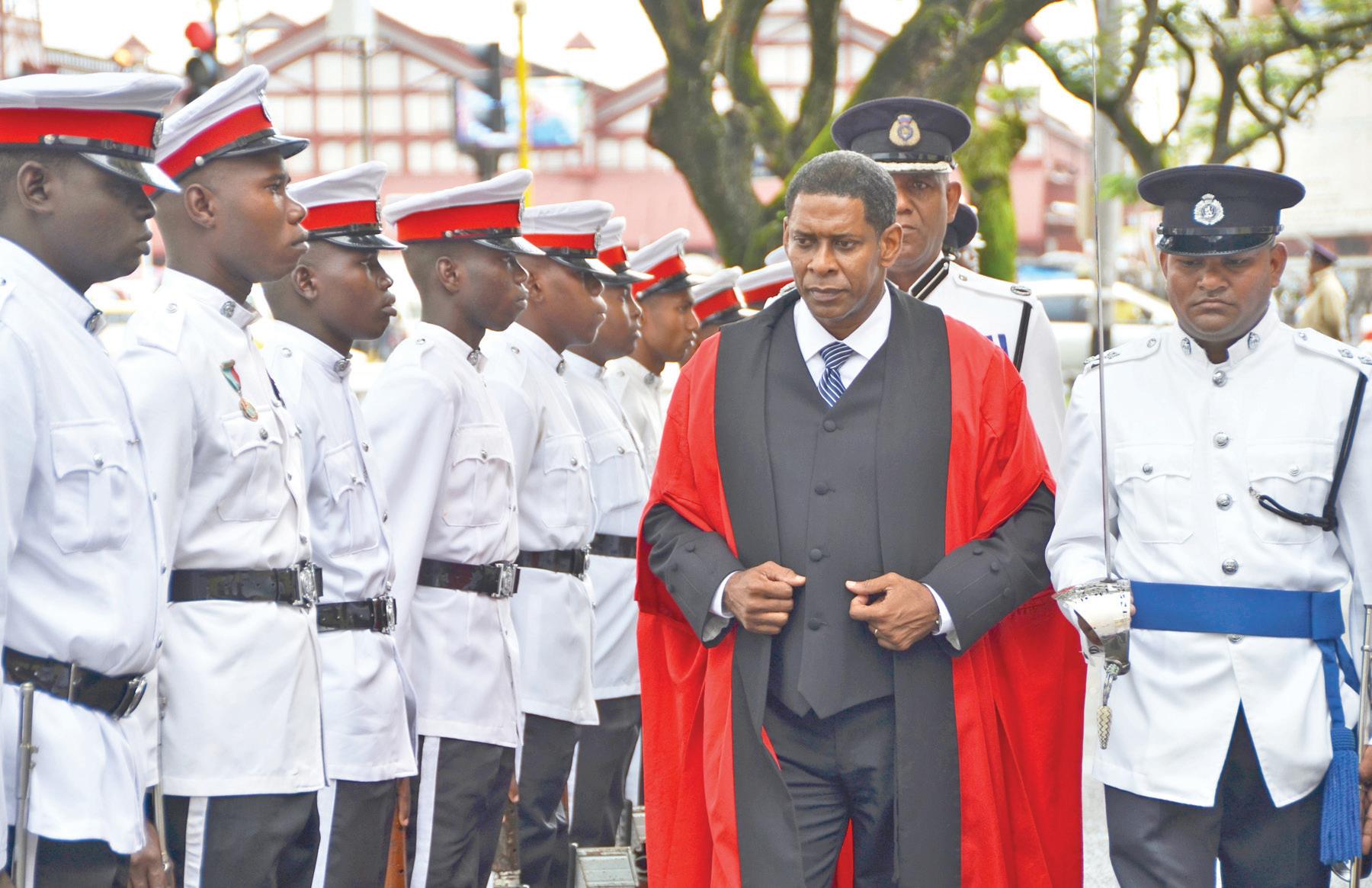
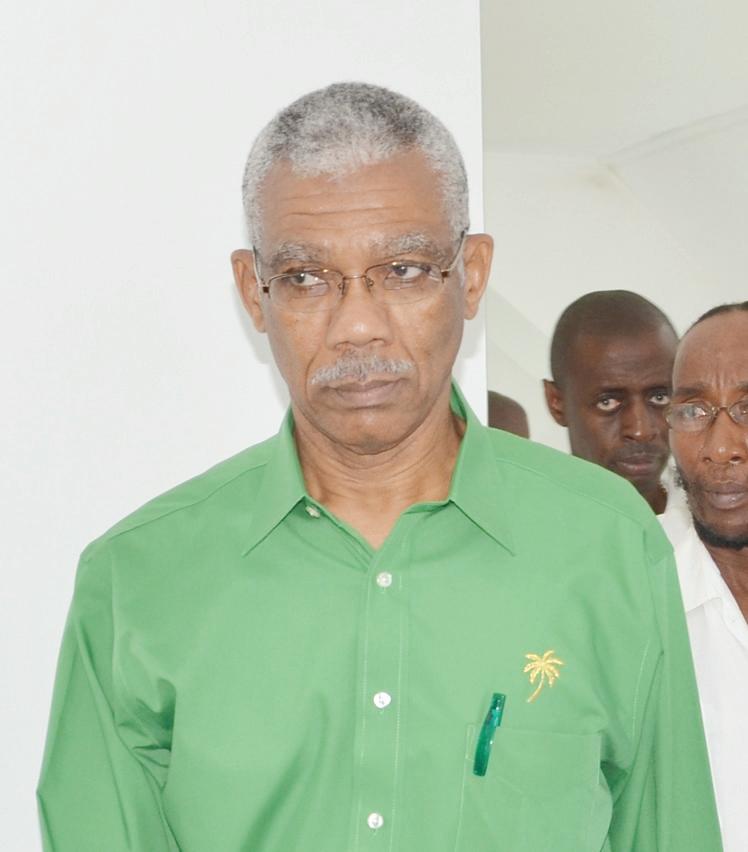


Justice Franklyn Holder inspecting the guard of honour during the opening parade for the January Demerara Criminal Assizes on Wednesday (Carl Croker photo)
thursday, January 16, 2014| guyanatimesgy.com

thursday, January 16, 2014| guyanatimesgy.com
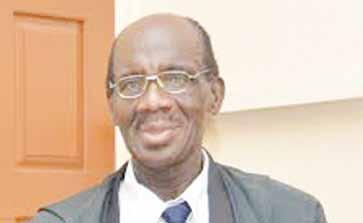
The A Partnership for National Unity (APNU) is calling on the People’s Progressive Party/ Civic (PPP/C) administration to waste no time in equipping the newly-appointed Ombudsman, former Justice Winston Moore with the requisite resources needed to executively execute his duties.
Justice Moore was sworn into office on Monday. APNU Executive Member Basil Williams said there is more to an appointment than just the symbolic swearing-in of an official.
“The previous one [Ombudsman] which was almost 10 years ago, never had the facilities to do his work.” Williams said he is confident that there are complains awaiting the attention of the Ombudsman, but again emphasised the importance of
staffing the unit.
He said the office must have independent investigators and not “policemen”, in addition to technical resources to effect proper investigations. Failure to employ independent investigators will result in police investigating police, he said.
Moore on Monday said he will be working closely with
the Public Service Ministry to address the issue of staffing and resources. He has reportedly submitted a list of requirements for the office to function effectively.
Justice Sheik Mohammed, a former Supreme Court judge last held the position before his death in 2005.
ACorentyne minibus driver was on Wednesday placed on half a million dollars bail for causing the death of a 10-year-old girl on the Bloomfield Public Road, Corentyne on Tuesday.
Ghirdill Heralall, of Number 59 Village, Corentyne, appeared before Magistrate Rabindranauth Singh at the Whim Magistrate’s Court on a
charge of causing death by dangerous driving. It is alleged that the 40-year-old drove minibus BRR 6403 in a dangerous manner on Tuesday at Bloomfield on the Corentyne resulting in the death of Selena “Marissa” Anthony.
The girl died on Tuesday at the Port Mourant Hospital while receiving medical attention. A post-mortem examina-
tion performed by government pathologist Dr Vivekanand Bridgemohan on Wednesday revealed that the cause of death was as a result of haemorrhage and a fractured skull.
Magistrate Singh allowed the defendant his pre-trial liberty and ordered that he return to court on February 3 when the police are expected to present a report on the matter.


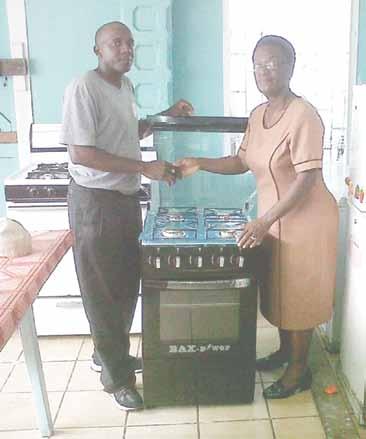
The GuyaneseAmerican Cultural Association of Central Florida, U.S.A. recently donated a stove to the Ruimveldt Children’s Aid Centre.
According to a release, the children at the centre were overjoyed by the new addition to their venue.
The children had produced a single “Breathe” and were selling the CD to raise funds to purchase a stove.
Canadian-based supporter of the centre, Subrina Mohamed-Puran said their hard work and determination were not made in vain, and with a little extra support, anything is possible.
“It was a year ago that I learned about the children at the Ruimveldt

Children’s Aid Centre and their amazing team of musical students. I came across their story in the local newspaper whereby they had produced a hit single “Breathe”, which they sold on a CD,” she said.
The centre was also recently presented with a new computer system by retired army Chief-ofStaff, Rear Admiral Gary Best. Best donated a computer, printer/copier/fax machine and power backup/stabiliser to the centre and even took time out to have sessions to teach the facilitators at the centre how to use the equipment. The centre is still currently looking for volunteers to come in and assist with their very active reading and nutrition programmes. Interested persons can contact the centre on email address rcac@guyana.net. gy.

The Demerara Harbour Bridge
APartnership for National Unity (APNU) shadow legal affairs minister Basil Williams is contending that the Full Court’s decision in the budget cuts case is “erroneous.”
Opposition Leader David Granger had appealed the decision of the acting Chief Justice Ian Chang to strike him and Finance Minister, Dr Ashni Singh from the 2012 budget cut court case. His attorney, Williams, had filed the case for the opposition.







The acting chief justice made the decision on June 19, 2013 on the grounds that Granger and Dr Singh are members of the National Assembly and the Constitution provides them immunity.
However, on Monday, justices James BovellDrakes and Rishi Persaud ruled that the Full Court had no jurisdiction to hear such an appeal, advising that the appeal be filed at the level of the Court of Appeal.
Court of Appeal
Speaking at the office of the opposition leader on Wednesday, Williams reiterated that APNU will be moving to the Court of Appeal, in its quest for justice.
According to the APNU executive member, the coalition within the next 14 days will make its application for leave at the level of the High Court before filing its appeal at the Court of Appeal on the basis that “the declination of jurisdiction by the Full Court was erroneous in point of law”.
He was keen on pointing out that Justices BovellDrakes and Persaud declined to rule on the questions whether acting Chief Justice Chang breached Granger’s constitutional right to be heard in the
case before striking him out, taking into consideration that Granger is willing to waiver his immunity to defend the cutting of the budget in the National Assembly.
No jurisdiction
“The Full Court ruled that they had no jurisdiction to hear the appeal; that the chief justice’s use of the word ‘dismissed’ meant that the issues between the attorney general and Brigadier Granger had been determined.”
However, APNU remains firm on its position that an appeal lies in either the Full Court or the Court of Appeal depending on whether the High Court’s decision is final or interlocutory. “If the decision still leaves the issue alive between the parties, then it cannot be said to be final.”
Williams is optimistic that APNU will win even if the matter is taken to the Caribbean Court of Justice. He boasted that he would have won two cases at the Caribbean Court of Justice (CCJ) after they were overturned at the Court of Appeal.
The two judges' ruling concurs with initial contentions expressed by Attorney General Anil Nandlall that
the appeal was ill conceived. Nandlall had said that the order made by the acting chief justice was final and brought all matters of contention to an end between the attorney general and the two defendants in the High Court.
He explained that the law states that when a final order is made by a High Court judge, the next court to approach is the Court of Appeal; however, the opposition appealed to the Full Court.
As such, he noted that his first submission was for the Full Court to satisfy itself whether it has jurisdiction over the decision of the acting chief justice.
“A court has a duty first and foremost to ensure that it has jurisdiction to hear and determine a case before proceeding to hear
and determine a case and that was the initial submission I made.
“The judges at the time did not rule on that first jurisdictional point and they said they would like to hear arguments on everything,” Nandlall stated while adding “in the final analysis, they accepted my submission that the court had no jurisdiction, that acting Chief Justice Chang’s order was a final order and
the appeal lies to the Court of Appeal,” said Nandlall. Government had taken the parliamentary opposition to court after it slashed more than $20.9 billion from the 2012 national budget. The acting chief justice in a preliminary ruling had said that the opposition has no power to cut the budget but to either approve or disapprove of it.
However, the Alliance For Change (AFC) and APNU in 2013, cut more than $30 billion from the national budget.




Editor: Nigel Williams
Tel: 225-5128, 231-0397, 226-9921, 226-2102, 223-7230 or 223-7231. Fax: 225-5134
Mailing address: 238 Camp & Quamina Streets, Georgetown
Email: news@guyanatimesgy.com, sales@guyanatimesgy.com
There is presently a great deal of discussion and debate – and certainly a surfeit of opinions – on the insistence of the U.S.A. to persist with its Leadership and Democracy (LEAD) project for Guyana. LEAD is part of the U.S.A.’s official worldwide effort to “assist” countries by “exporting” democracy to them. The notion of “democracy”, however, is quite a contested one and in fact for almost seven decades the USSR and its socialist allies scoffed at the western “democratic” model as being nothing more than formal, empty civil and political “rights” rather than concrete economic ones.
If the U.S.A. is to export democracy one would assume that as with every other product, the clients are familiar with the product and that the exporting country at a minimum, possesses the product that the clients are seeking. Procedurally, democracy assumes that the people would elect representatives who would represent their interests in the assembly. In the U.S.A., however, there is a great deal of doubt as to whose interests are represented when some 12,000 official and registered lobbyists spending US$3.5 billion to woo the 535 members of the Congress and Senate in the U.S.A.
This is not to mention the contributors to the latter election campaigns, which in the case of senators and congressmen amounts to millions and the run for the presidency, billions. And these are U.S. dollars. There is the not unreasonable suspicion that “he who pays the Piper, calls the tune”, especially, for instance, when the facts show that in the last decade the top one per cent of the population in the U.S.A. have received more than 90 per cent of the wealth generated.
In some cases, as with the massive bail out of the banks, that wealth comes directly from the taxes paid by the poor and middle class. In the meantime, there are at least nine million of the latter categories looking for jobs. In the U.S.A., we must remember, if you have given up looking for a job, you are not unemployed. Or the numbers would have been higher. We do not think that this is the democratic content that the rest of the world would want to import.
But there are other anomalies with the U.S.A. version of democracy. Last July, ex-President Jimmy Carter (19771981) made a rather startling pronouncement on the state of democracy in his country. But even more startlingly was the almost complete blanketing of the statement by the mainstream media in the U.S.A., even though it was carried by the Huffington Post and Salon.
And if it was not picked up in New York City, how could we expect to play in Guyana? Speaking at a German-U.S. NGO function in his hometown of Atlanta Georgia, President Carter wondered whether the standards the Carter Centre applies to foreign elections could be fulfilled by U.S. elections and declared that “America no longer has a functioning democracy”.
Noting that Carter (who is credited with brokering the return of “free and fair” elections here in 1992, after the U.S. had supported the rigging of elections subsequent to its ouster of the PPP government in 1964) was also a Nobel Peace Prize winner, one journalist wrote: “As for what Carter said: Gerrymandering and the dandified bribery we call lobbying have rigged state legislatures coast to coast, frozen the House of Representatives into a configuration that bears no resemblance to the will of the American people, and given us a Senate of millionaires. We take for granted that no one can viably run for national office without corporate and one per cent backing. These are not temporary aberrations; during the last three decades, these interlocking syndromes have become business as usual in American elections.”
As was said elsewhere, one wonders how the U.S. government would react if a foreign government, say China, were to insist on “exporting” its version of democracy to the U.S.A.
Dear Editor,
A 20-year-old recently appeared in front of the judge at the Whim Magistrate’s Court after he was accused of causing death by dangerous driving. He was subsequently placed on $300,000 bail. I am still trying to understand why this youth was even granted permission to operate a minibus.
For some strange reason, minibus operators have this horrible habit of suddenly reversing in an attempt to
get to their passengers. I can’t help but to wonder if these drivers are aware of the rules of reversing on a public road. This practice is slowly becoming the norm, but hopefully, the recent fatality will be enough to capture the attention of the relevant authorities.
Once again I ask, why are 20-year-old individuals being allowed to operate taxis and minibuses? These youths clearly lack any significant amount of driving experience and are not
qualified to operate vehicles made for transporting large numbers of people. They are not only risking their lives when they get behind the wheel, but also the lives of many other innocent civilians.
It is obvious that this young man only recently got permission to operate a “B” plate minibus. We must at all times remember that at the age of 20, some individuals are still immature and irresponsible and would, therefore, not see
the dangers of speeding and breaching other traffic laws. I urge the relevant authorities to be more vigilant when approving and granting drivers’ licences. Age and experience should at all times be factors to be considered, particularly if the nature of driving is to transport people. We must take the necessary measures to minimise road fatalities.
Sincerely, Everton
Hinds
Dear Editor, Many of us are quick to judge and chastise the efforts of our police officers. However, we sometimes fail to realise that their job is not always an easy one.
On that note, I would like to commend the respective authorities for swiftly being able to detain a man accused of murdering a 20-year-old woman.
Generally, people who commit unlawful acts are likely to flee to areas such
as the interior, out at sea and to neighbouring countries such as Suriname, where they are less likely to be caught. Fortunately, the quick thinking of the police led to the discovery of the accused.
On another note, many of us condone the acts of criminality committed by friends and family and it is not until those same persons become victims of crime that their perception changes. We all need to play a role in en-
suring a safe environment; which, therefore, means that any knowledge of criminal activity or intent should, at all times, be reported to the relevant authorities.
When it comes to the unnecessary loss of a life, I strongly believe that those responsible should be given extreme prison sentences or even capital punishment for their actions. It is no one’s right to cut short the life of another human being. The death of this young girl now
Dear Editor,
Several road safety campaigns have been held over the years, but accidents continue to plague Guyana in the most unfortunate ways. Just recently, a man lost his life after the vehicle in which he was travelling in plunged into the Demerara River.
Many believe that this accident could have been avoided if only the bridge rail was made of a stronger material which could have possibly prevented the vehicle from plunging into the river's depths.
In an era where advanced technology is allowing for the production of vehicles built for speed, it is important that we think along the line of implementing proper guard rails on those critical points along our roadways. This protective measure comes in handy when the embankment has a downward slope that could contribute to the gravity of an accident.
Accidents involving vehicles running or careening off of the road way into a ditch or body of water hap-
pen all around the world. Contributing factors often include loss of control, misjudgement, or instances where drivers attempt to avoid collision with another vehicle or animal.
Though many times the causes of accidents are as a result of human error, there are still safety measures that could be put in place to minimise those errors.
leaves behind a motherless child.
Recently, Guyana has lost quite a number of women who were all victims of abusive relationships. I urge those who are currently in such relationships to quickly find their way out, simply because continuing to endure the struggle will inevitably lead to a slow and grisly death.
Sincerely,
Janice Ghanie
General statistics show that run-off road crashes result in 31 per cent of fatal crashes, but form only 16 per cent of all crashes. I strongly suggest that guard rails be implemented at the critical points on the road network where they are best likely to shield traffic from further danger. Properly designed and installed guard rails will reduce the overall impact of crashes that take place. They can also be constructed in such a way that they consist of reflectors which can be used to guide vehicles traversing the roads at night.
Respectfully, Hemraj Kanhai
Dear Editor,
The Ministry of Natural Resources and Environment (MNRE) has noted the Guyana Times article of January 13 headlined, “Struggling miners get blueprint to stay afloat – many sceptical, bemoan lack of government input”, including the statements alluding to the lack of support by the ministry and the government to alleviate the challenges faced by small and medium scale miners.
This position taken by some persons in the mining sector is misleading and seeks to negate and disregard the work undertaken within the mining sector by government though the Ministry of Natural Resources and Environment and its regulatory agency, the Guyana Geology and Mines Commission (GGMC).
The government through the line ministry and its agency GGMC has been a catalyst in having discussions on critical areas of concern for miners.
The article fails to inform the general public that after discussion with the Ministry of Natural Resources and Environment, the Ministry of Finance, the Guyana Revenue Authority and the Office of the President, it was agreed and implemented on the October 28, 2013 that miners would have access to 10 per cent of their gold sales available in U.S. dollars.
In addition, fruitful discussions were undertaken with the same agencies/ministries mentioned above for the granting of duty free waivers for the purchase of four door pickup vehicles. Miners were informed that the facility will be granted by the government but the mechanisms under which it will be operational have to be finalised.
Through the interventions of the Ministry of Natural Resources and Environment, the GGDMA was granted a licence to import and distribute fuel under the “GGDMA Trading Inc.” This was proposed by the association during a meeting last November with the president as a means of alleviating the high cost of fuel faced by miners since GGDMA can source fuel cheaper and be able to supply the miners.
The government has also agreed to the establishment of a Mercury
Free Mining Development Fund which is a revolving fund being developed to provide miners with low cost financing to adopt mercury free technology and improved recovery methods in their operations. The intent to have this fund operationalised was also signalled to the miners’ association.
These are just a few of the recent measures and initiatives which resulted from discussions with mining stakeholders. It must be further noted that some of the recurrent support include:
* GGMC expended the sum of four hundred and ninety-one million, three hundred and eighty-six thousand, four hundred and twenty-eight dollars (GYD$491,386,428.00) on the maintenance of roads and infrastructure within the mining districts.
A further seven million, eight hundred and fifty-eight thousand, four hundred and fifty-six dollars (GYD$7,858,456.00) was expended on bridge repairs.
This improvement and maintenance of roads and bridges allows for easier access to mining sites, reduces the maintenance costs for miners and reduces their transportation costs.
* The sum of twenty one million, sixty-five thousand, nine hundred and twenty-five dollars (GYD$21,065,925.00) was expended on the rehabilitation of the airstrip at Ekereku Bottom.
* One hundred and fifty million dollars (GYD$150,000,000.00) was expended to assist in the rehabilitation of the UNAMCO road.
* The sum of Four million, eight hundred and twenty-three thousand, one hundred dollars (GYD$4,823,100.00) given to mining communities.
* The provision of technical advice from mines officers and field personnel as it relates to tailings management and sluice box construction, among other areas.
* The undertaking of testing alternative recovery methods for the mining sector so that miners can adopt better recovery processes that will enhance their production levels and hence increase their revenue generation capacity.
GGMC has undertaken major road rehabilitation to the following areas
in 2013 at a cost of more than one billion Guyana dollars:
* 12 Miles Before Itaballi to Puruni Landing, Puruni Road, Region Seven
* Itaballi Landing to 12 Miles Before Itaballi, Puruni Road, Region Seven
* Tamakay to Ottomong Head and Tamakay Junction to Puruni Road.
* Arakaka to the Manikua Junction to M2 (18 Miles) Road, Region One
* Brian Sucre Junction to Tumatumari & Micobie Village
* Matthews Ridge to Baramita, Region One
* Tiger Creek Bridge –Mahdia Road
* Toroparu Junction to Pappyshou Landing, Puruni Road, Region Seven
* Aremu Road
* Mahdia internal roads.
These roads are critical for miners to access their mining properties and therefore impacts directly on production levels and the cost of production that miners face. In some instances, the lack of access to some areas had resulted in the closure of many operations by miners as was evident in the case of the Aremu road which was rehabilitated to facilitate the smooth flow of vehicles to the mining properties.
Therefore, while miners may not have benefited from direct cash payments from the Guyana Geology and Mines Commission (GGMC) has made every effort to provide the necessary environment and infrastructure that is conducive to mining activities without which miners would have faced a higher cost and lower levels of production.
As a follow up from the president directive during his meeting on January 6, 2014, the inter-ministerial task force to look at measures to cushion the impact of fluctuating gold prices met today and had a very fruitful interaction which was characterised by the commitment toward greater collaboration given the importance of the sector to the national economy.
Parmanand Persaud Stakeholders’ Support Officer Ministry of Natural Resources & Environment
Dear Editor, I must commend the Mayor and City Council (M&CC) for their intentions to address the issue of unkempt yards and animal rearing in the city. However, I opine that this kind of action to maintain our environment should be taken country wide.
Unattended surroundings can over time become an element of danger to small children and others nearby and this is one reason why the relevant authorities should monitor how people keep their yards and land spaces.
Presently, my neighbour is being inconvenienced by a tamarind tree that grows in the yard behind him. Several branches of the tree have practically fallen into his yard and on top of his garage. He is also tasked with the unnecessary burden of
constantly having to rake up fallen leaves from the tamarind tree and unfortunately for him, the people overseeing the house couldn’t be bothered by the inconvenience being caused.
Additionally, I know of two vacant houses at the moment where bushes and vines have been allowed to take over the buildings. To make matters worse, junkies have managed to find their way into one of the buildings and have made it their permanent place of rest. Moreover, many of these buildings can be seen as potential fire hazards and can threaten the lives of those around in the event that they happen to collapse at some point.
It is quite noteworthy that the M&CC is expressing their dissatisfaction with the manner in which some citizens are keep -
ing their immediate surroundings; however, we all need to voice our collective concern and hopefully, the various neighbourhood democratic councils (NDCs) will see the urgent need to come on board and address these issues.
As it relates to addressing the overall state of our environment, it is also important that we also enforce and make use of the Public Health Ordinance for cases involving the infestation and multiplication of bees and mosquitoes.
Maintaining the environment is not only about enhancing its aesthetic value, but also about minimising health and safety risks. We should all be responsible for the condition of our surroundings.
Respectfully, Rebecca
Henighan
Dear Editor,
The increasing number of unlicensed gun holders in Guyana can only mean one of two things – one, that there is a big heist or two, that there is great intention to kill. However, every time guns are intercepted by the relevant authorities, it means that the chances
of gun crimes escalating are likely to reduce.
I must commend the police for their outstanding work involving the nabbing of several criminals in two recent incidents. Personally, I consider gun crimes to be a matter of serious concern and one that deserves strict consequences.
The illegal possession and use of firearms is a problem being encountered worldwide and it is important that all measures be taken to immediately address this growing situation here in Guyana.
Sincerely, Zulfikar Mohamed

How to improve your child’s creative writing skills
The ability to write well is vitally important to do well in school and in a career, as many jobs require writing, even if only to communicate via email. Traditionally, little teaching of creative writing has been done until the upper elementary grades, and even then, it often takes a back seat to other subjects. It is possible, though, to improve your child’s creative writing skills through encouragement, supporting the teacher’s efforts at home, and teaching some writing skills yourself. The following steps provide you with ideas and methods to help make your child a better writer.
Step one
Read to and with your child. Reading and writing go hand-in-hand; good writers are well read, not just in grammar and usage, but in various subjects also, and well versed in various writing styles. Your child’s teacher and local librarian can help you select books that are appropriate to your child’s age and interests.
In addition to reading to your child, have your child read to you, and, if you have more than one child, have the older children read to the younger ones.
Step two
Play games with words. Word games include not just commercially available board or card games, but brain-
storming games as well. Following are examples of both commercial and brainstorming games you can play with your child, some of which you can follow with actual writing projects:
Word games such as Scrabble, Unspeakable Words, Bananagrams, or Boggle are great vocabulary building games. With Unspeakable Words, which requires players to keep a list of already used words, you can use that word list as a list of story prompts.
Games such as You’ve Been Sentenced provide opportunities for sentence building. In addition to playing the regular game, you can have your child take a group of game tiles and try to come up with the most ridiculous sentence he or she can think of.
Games such as Scattergories, Mad-Libs, and Magnetic Poetry provide excellent opportunities for brainstorming, helping your child get into the habit of thinking of story ideas or words to use. (The makers of Magnetic Poetry provide an online area for children to play with digi-
tal versions of their word tiles at http://magneticpoetry.com/ kids-area/)
For young children, you can bake biscuits or cookies in the shape of letters or words and then have them “eat their words” when they recognise them.
Write instructions on slips of paper, then attach one to a ball or Frisbee (or stuff it in an old sock to play indoors). One player throws the ball to another, who then has to perform the action on the paper before attaching a slip of his or her own and throwing it to the next player.
Inspired by Remy Charlip’s book Fortunately, in which “fortunately” good things happened to a young boy followed by “unfortunately” bad things, you can make a list of “fortunate” about something your child has always wanted. For each “fortunately,” have the child write down the corresponding “unfortunately”: “Fortunately, I came into a large inheritance when my rich uncle died.”/”Unfortunately, I had to spend most of it fixing up



the large house he also left me.”
Step three
Provide your children with a place and materials for creative writing. Just as children should have a quiet place to study and do their other homework, the same is true for their writing assignments. Ideally, this would be a desk in the child’s room, away from the television. A child’s writing area should include the following materials:
* Stationery. As the child gets older and gets access to the family computer, he or she will want to write on the computer. Encourage this but also encourage the use of the stationery to provide a personal touch to thank you notes and other such correspondence.
* An age-appropriate dictionary. Special purpose dictionaries such as a rhyming dictionary aren’t warranted unless and until the child shows a definite interest in rhyming poetry or whatever form of writing can be assisted with a special purpose dictionary.
Consider a thesaurus. A thesaurus isn’t necessary until your child starts working with synonyms to add colour to his or her writing, at which point it can be a big help. Thesauruses are organised either by categories or in dictionary fashion, which some users find more convenient. Use whichever style is used in the child’s classroom.(WikiHow)
TO BE CONTINUED


BY JESSICA MINIER MABE
We’ve all heard it: those adorable verbal missteps small children make when they’re trying to master the language. And, while “pasketti” instead of “spaghetti” may seem cute when a two-year-old says it (another favourite: the colour “lellow”), older children who can’t express themselves clearly run the risk of being afraid to speak up in class or of being teased by peers.
Getting the right treatment to help children speak clearly can help a young child academically and socially. But what about older children who still struggle to pronounce the sounds correctly?
Older children with speech problems often have trouble with lisps or with creating the sounds made by the letters ***th, r*** or ***l***, says

Wendy Bell, a speech and language pathologist. Other children might speak in a voice that’s too high, raspy or with “too much nasality,” she says. Most parents notice these problems early on and seek treatment. This can be critical, since not all speech clarity issues improve on their own. Nine-year-old Jacob Bright’s mother first noticed Jacob’s speech issues when he was 16 months old. Her paediatrician referred the Brights to early intervention therapies. Today, though Jacob’s speech has improved, he is still receiving speech therapy.
Neicole Crepeau, mother of Conrad (18) and Devon (14), also first noticed her children’s speech issues when they were very young. “Conrad had something of a lisp and didn’t pronounce his r’s clearly. Devon tended to slur his words, like he was talking too fast,” she says.
Some speech clarity issues are caused by physical problems, as was the case for Conrad. When he received braces and medical devices to move his jaw, his mother remembers, “The orthodontist told us it might improve his speech, and as it turned out, it did.”
But for Devon, practicing to speak more slowly has helped him improve his speech clarity. Crepeau and her husband worked with him at home, reminding him to slow down.
“We also devised sentences that had the sounds that he tended to slur and we had him try to say them clearly several times a day,” she says. Today, Devon’s speech is better. “If he gets tired, he gets lazy and slurs. But he seems to be more careful himself to try to speak clearly.”
Getting help
How can parents decide whether to call in the professionals to help their child’s speech? First, talk to your child’s paediatrician — he or she can refer you to a speech therapist if necessary. Treatments vary, depending upon the diagnosis.
Bell explains that while speech therapy may be all that is needed for a lisp, it might be necessary to check for “tongue thrust.” The resting position of the tongue can be important for developing the motions needed to correctly produce “s” and “z” sounds.
(Parent Map)
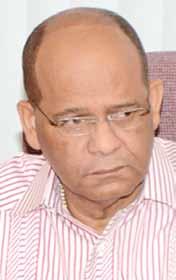
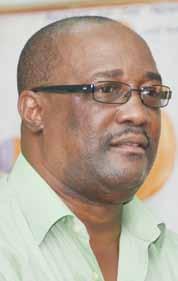
Police have placed under close arrest one of its ranks accused of sodomising a prisoner with a condom-covered baton while he was in custody at the Timehri Police Station last year, the force said.
It has also transferred to other divisions several other ranks who were allegedly complicit in the action of their colleague.
In a statement, the Guyana Police Force said that Colwyn Harding was in police custody between November 15 and November 18, 2013, at the Timehri Police Station pending investigations into a report of break and enter and larceny. During that period, he committed the offences of assaulting a peace officer and disorderly behaviour for which he was charged and appeared in court on November 18, 2013.
Remanded
According to the police, Harding was placed on bail in the sum of $50,000 but he was unable to raise this sum and was remanded to prison. The matters are still before the court.
“The administration of the police force was first informed of the alleged assault by the police of Colwyn Harding by way of a text message from a female to the commissioner of police during December 2013. Consequently, an investi-
gation was launched by the divisional commander of A Division under which the Timehri Police Station falls, but this has been found to be incomplete,” a release said.
Police Commissioner Leroy Brumell has now directed that the Police Office of Professional Responsibility (OPR) take over the investigation, which is expected to be completed shortly.
“The Guyana Police Force wishes to emphatically state that unbecoming behaviour by members of the force will not be tolerated and condign action will be taken against any rank found culpable of such action.”
The alleged assault on Harding has been condemned by a number of organisations. The Alliance For
Change had taken the lead in ensuring that the man’s reputed wife filed an official complaint.
On Wednesday, the A Partnership for National Unity (APNU) joined in “strongly condemning the police brutality that was meted out to Harding, a resident of Timehri North by ranks of the Guyana Police Force”.
The APNU called for an independent inquiry into this matter. Further, the APNU demanded that the People’s Progressive Party Civic (PPP/C) administration immediately institute measures for real reform in the training of ranks of the Guyana Police Force.
The coalition said it once again registers its lack of confidence in the ability of Home
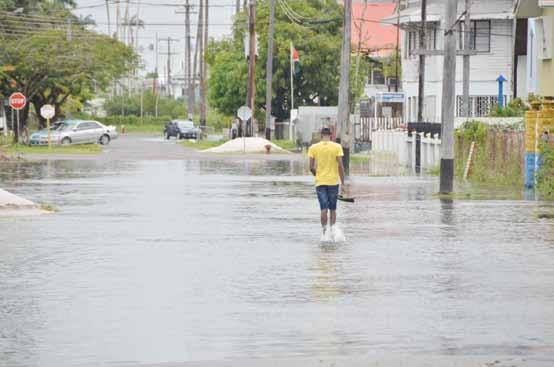
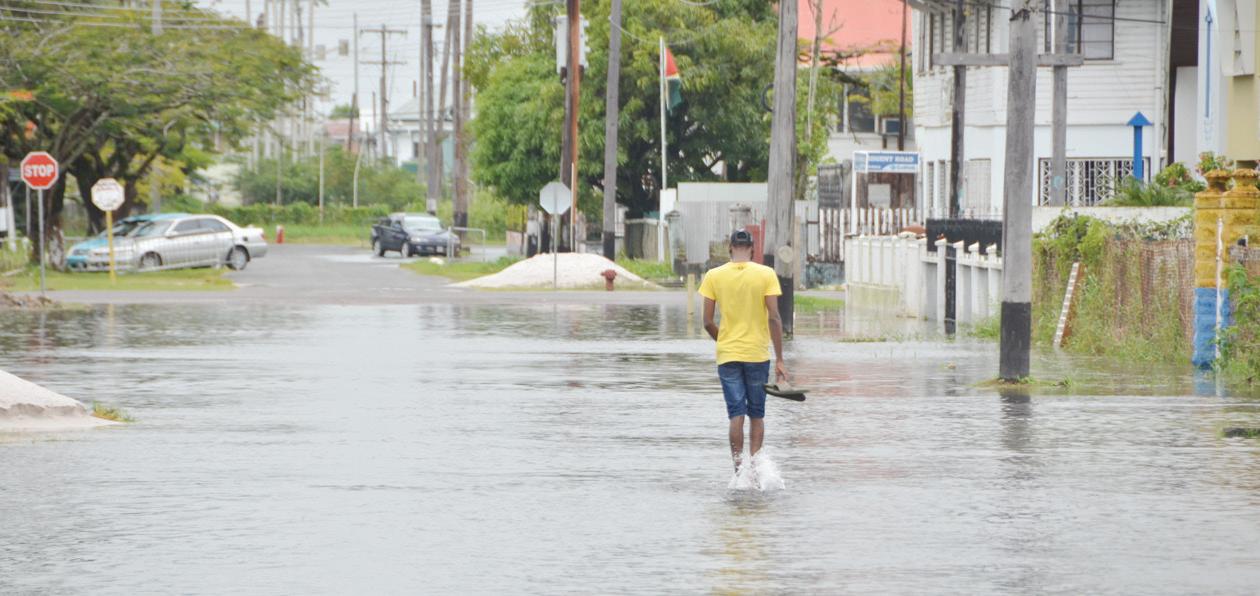
The Education Ministry has announced that following the recession of flood-waters from heavy downpour on Tuesday and a series of clean up exercises, a number of schools will be reopened today. According to a release, these schools are East Ruimveldt Secondary,
Tutorial High School, North Georgetown Secondary, Bishops’ High, St Stanislaus College, Comenius Primary, St Gabriel’s Primary, St Sidwell’s Primary and Starter’s Nursery Some schools that will remain closed are St Roses High, Queenstown Secondary, St Ambrose Primary, St Agnes Primary,
St Angela’s Primary, South Road Nursery, Albouystown Nursery, Sherman Nursery and Happy Hearts Nursery.
The ministry said it continues to carefully monitor the situation, and will continue to provide relevant and timely updates as additional information is received from officers assessing affected schools.
Affairs Minister Clement Rohee to manage the security sector and more importantly, the Guyana Police Force.
Meanwhile, the Home Affairs Ministry said in a release that it has noted with deep concern a report where it is alleged that a young man was sexually assaulted by a member or members of the Guyana Police Force while in custody at Timehri Police Station.
The ministry is awaiting the submission of a report on the matter from the police force.
The allegation has raised once again public interest as regards treatment of prisoners by junior police ranks, who allegedly flaunt the force’s standing orders, thus bringing it into disrepute.
“The Ministry of Home Affairs strongly condemns any such breaches by any member of the Guyana Police Force.
"Such breaches fly in the face of the efforts at police reform and make a mockery of the hard work by the Ministry of Home Affairs and the Strategic Management Department of the Guyana Police Force to successfully implement a strategic plan aimed at modernising and reforming the Guyana Police Force,” the statement concluded.
Anew National Action Plan (20142015) is currently being developed to guide the ongoing fight against Trafficking in Persons (TIP) on the part of the security sector.
This new plan seeks to reduce vulnerability, especially among youths, to the lure of traffickers, expand on sensitisation and awareness, broaden the involvement of civil society, counteracting traffickers, strengthen law enforcement response and ultimately eliminate TIP.
Last year, the Ministerial Task Force on TIP waged a consistent struggle against this scourge. This, along with an aggressive awareness campaign spearheaded by the Human Services Ministry in collaboration with the United Nations Development Programme (UNDP) resulted in 11 cases being reported.
Specific focus was placed on hinterland communities, which are seen as most vulnerable when it comes to TIP. A total of 38 focal points were set up in the 10 administrative regions where sensitisation sessions were conducted.
Last year, the ministerial taskforce’s activi -
ties were focused mainly on providing information about TIP and safe migration to vulnerable communities; improving cooperation mechanisms among key stakeholders to prevent this scourge; and enhancing capacities in hinterland communities to prevent human trafficking.
Additionally, the task force made strides in providing appropriate and comprehensive direct assistance to victims; enhancing the capacity of stakeholders to identify victims and provide direct assistance through training; formalising and strengthening the interagency protocol for responding effectively to TIP; enhancing the capacity of law enforcement agencies to investigate TIP cases; and enhancing cooperative and enforcement mechanisms among neighbouring countries to convict traffickers and protect victims.
Some of the more specific initiatives included more vigilance at hinterland locations and checkpoints, training of members of community policing groups to support prevent measures and lectures at schools, the Government Information Agency (GINA) reported.

thursday, January 16, 2014|
The Partnership for National Unity (APNU) has taken issue with an article that appeared in the Stabroek News on Wednesday, headlined “Mr Granger and the undemocratic nature of extra-parliamentary activities”, by columnist Dr Henry Jeffery.
APNU in a release said it would like to point out the actual words used by Opposition Leader David Granger as clearly reported in an earlier article “Jeffery way off the mark on APNU “posturing”–Granger” published in Stabroek News, January 11. Granger, in referring to APNU’s ‘social contract’,
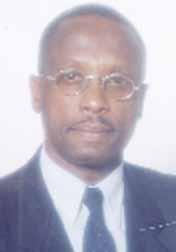
Dr Henry Jeffery
said: “I think it is a serious decision. I pointed out that APNU is committed to inclusionary democracy.” Granger added, in the same article “APNU from
the start of its campaign has proclaimed adhesion to the constitutional injunction under Article 13 that the aim of our political system is to create [an] inclusionary democracy.”
The Constitution of Guyana states, at Article 13: “The principal objective of the political system of the state is to establish an inclusionary democracy by providing increasing opportunities for the participation of citizens and their organisations in the management and decision-making process of the state, with particular emphasis on those areas of decision-making that directly affect their well-being.”
“Dr Jeffrey, although quoting in part from the SN article, completely ignored Granger’s reference to ‘inclusionary democracy’ in order to make his case. His conclusion might have been different if he had read the SN article on January 11, more carefully and if he had understood the point that Granger made.
“A Partnership for National Unity reiterates that, given the state of our nation, a ‘social contract’ is the most appropriate means available to all parties to work towards achieving inclusionary democracy in Guyana,” the release concluded.
Two brothers, Phillip and Franklin Sutherland, allegedly murdered their cousin Martin Roberts on January 10, at Katoka Village, Central Rupununi.
The siblings appeared in the Georgetown Magistrates’ Courts, before Chief Magistrate Priya Sewnarine-Beharry where they were slapped
with the indictable charge on Wednesday. The charge stated that on January 10, they murdered Martin Roberts. The court heard that on the day in question, the three men had just returned from the village farm with a group of men and they were offered yeast tonic (an indigenous alcoholic beverage).
An argument sub-
sequently ensued between Phillip and three other men. His brother, Franklin, intervened and the argument escalated into a scuffle.
The deceased, Martin Roberts, who was involved in the scuffle was thrown to the ground and dealt several kicks and cuffs about his torso by the two accused men. After the brawl had cleared, Roberts
was seen still laying motionless on the ground and was feared dead by onlookers. This prompted them to contact medical officials. Roberts was pronounced dead at the scene after being examined.
The accused were later arrested by the police and charged. They are to reappear in the Lethem Magistrate’s Court on March 3.
Andrew Taylor, a 25-year-old self proclaimed cocaine addict was on Wednesday sentenced to 56 months in prison after he appeared in the Georgetown Magistrate’s Courts before Magistrate Judy Latchman and pleaded guilty to a robbery charge.
The charge stated that on January 5 at La Penitence Market, the ac-
cused attempted to relieve a man of his motor car.
Police Prosecutor Vishnu Hunt told the court that the virtual complainant (VC) was offloading goods from the trunk of his vehicle when he heard the engine start.
Upon checking he saw the accused in the driver’s seat of the vehicle. The VC held onto the door of the car as Taylor attempted to
Trevor Barrow and Charles Rollins on Wednesday appeared in the Georgetown Magistrates’ Courts before Magistrate Judy Latchman charged with robbery under arms.
Barrow, 21, of 96 Rema Street, Agricola and 28-year-old Rollins of 15 Third Street, Agricola were not required to plead to the charge which alleged that on January 12 at Agricola, being armed with guns, they robbed Althea Bailey of two cellular phones valued $45,000.
drive away from the scene. The accused then struck the VC in the face, rendering him hurt and he let go of the handle of the car.
The defendant continued driving until he crashed into another car, exited the vehicle and fled the scene, running into Fourth Street, Alexander Village where he was apprehended by public spirited citizens.
The remorseful man begged the magistrate for leniency, telling her that he was under the influence of cocaine. He added that he did not hit the virtual complainant.
After considering the fact that the accused did not waste the court’s time and the seriousness and prevalence of the offence, Magistrate Judy Latchman handed down the sentence.
AThis behaviour escalated after he was remanded until January 27. He became violent and shouted threats at the virtual complainant. On his way to the court lockups, he had to be restrained by police officers.
He was successfully taken to the lock-ups but this did not deter his behaviour as he could he heard shouting and screaming from the lock-ups.
The men told the court that they did not commit the crime but they knew who did. This information was related to police officers at the time of the arrest and was ignored. Rollins was visibly agitated and tears could be seen streaming down his face as he pleaded with the magistrate.
lfanso Kaitan on Wednesday appeared in the Georgetown Magistrates’ Courts before Chief Magistrate Priya Sewnarine-Beharry charged with the murder of his brother Aloyscious Kaitan.
According to Police Prosecutor Bharat Mangru, on January 9 at Kwaimatta, Central Rupununi, the siblings and two others were consuming alcohol at the home of the deceased.
After some time and
more drinking, the accused said he was leaving. In an attempt to coax his brother to stay and further their merry making, Alfanso followed his brother out of the yard. It was there that an argument ensued. A subsequent scuffle resulted and the deceased was stabbed in the left abdomen with a knife.
Investigations were conducted by police officers and the accused was arrested and charged. He was remanded and is to return to court on March 3.

It’s for your own good...
...(“democratisation”)
The entire state system is based on the “fiction” that every country is sovereign and states must respect the right of others in the conduct of their domestic affairs. We know it’s a fiction because there’s always the reality of stronger powers giving short shrift to the “rule” of “non-interference” when it suits their purposes. However the “bully” state invariably invokes some moral reason or other to justify its actions.
Mainly because it still wants the rule around – in case it wants to object to a competing power throwing ITS weight around. Having your cake and eating it too. We know this from our own (bitter) experience. Remember Jagan complaining bitterly when the U.S. under JFK – just to show he wasn’t “soft on commies” – threw out the PPP back in 1964? Well, seems some have forgotten. Others mightn’t even be aware because they’re too young...and read only sanitised versions of history.
In one of the “false equivalencies” we’ve been highlighting recently, these folks ask how come the PPP’s objecting to the present U.S. foisting of a “democratisation” programme on us when, prior to 1992, they begged the same U.S. to help return “free and fair elections” to Guyana. Well, this just goes to highlight the historical amnesia: the two cases aren’t equivalent! The U.S. was the one that introduced “rigged” elections in Guyana...first through “fiddling” with the electoral rules and then the all-out “true-true” rigging from 1968.
Who was the PPP to ask to return “free and fair elections” here in 1992? The Russians? It’s the fella who owns the dog that can call off the dog. It’s a useful rule to remember nowadays. Today, no one can complain about election rigging or any other rule of the democratic process. The U.S. isn’t so diplomatically gauche as to pass funds through the IRI (and other “NGOs”) in states where it doesn’t like the incumbent governments. There are other ways to skin a cat.
The favoured method used in Africa (including Egypt) is to help “mobilise” youths from the opposition camp. They use the seemingly innocuous “education” about the social media to assist these youths to bring out their peers into protests or to the polling booths. In Guyana, the PPP’s always had an advantage over the PNC because of its superior grassroots organisation that could (literally) bring out the bodies on voting day.
The IRI could ensure – come the next elections – that the PPP (whose machine has been allowed to collapse) is out-organised.
...even (selective) information
One evidently very idealistic young person, Sara Bharrat, has looked at the correspondence between the U.S. ambassador and the Guyana government and concluded that “the LEAD project is for the greater good of our country”. Maybe...but she ignores two elephants in the room.
Firstly, the explicit mandate of USAID or IRI or any arm of the U.S. government is to promote the foreign policy goals of the U.S.A. Any “good” that the LEAD programme does for us is merely incidental. Based on our own history, if nothing else, we should look gift elephants in the mouth.
The second elephantine hurdle is posed in her quote from the very first letter the U.S. ambassador wrote informing the President on October 18, 2012 about his plans: “USAID is planning to implement an initiative....” Not planning to “design” an initiative but to “implement” one.
The boat on “democratisation”, Miss Bharrat, had already “gone a waata”.
...even if it kills you
The done deal is confirmed in the second letter quoted: the government’s “information” would help “to finalise the scope” of LEAD. And without any proof that the programme was subsequently modified, we call this “consultation”?
The PNC used to practise this type of “consultation” with the PPP in opposition until the Constitution was changed to insist on “meaningful consultations”. Maybe the U.S. needs a lesson on “democratisation”?

The young man who was reportedly brutally sodomised with a baton by police a few weeks ago and is still in critical condition in the Georgetown Public Hospital is suing the Guyana Police Force for $100 million in compensation.
Police Commissioner Leroy Brumell revealed this while commenting on the issue. According to Brumell, he was contacted in December by the mother of the victim and he had immediately handed the matter over to A Division Commander George Vyphuis.
However, when Guyana Times contacted Vyphuis some days ago, he claimed to have no knowledge of the issue. Attempts on Wednesday to contact the commander were futile. The police are currently investigating the matter.
In a release, Brumell further indicated that a par-
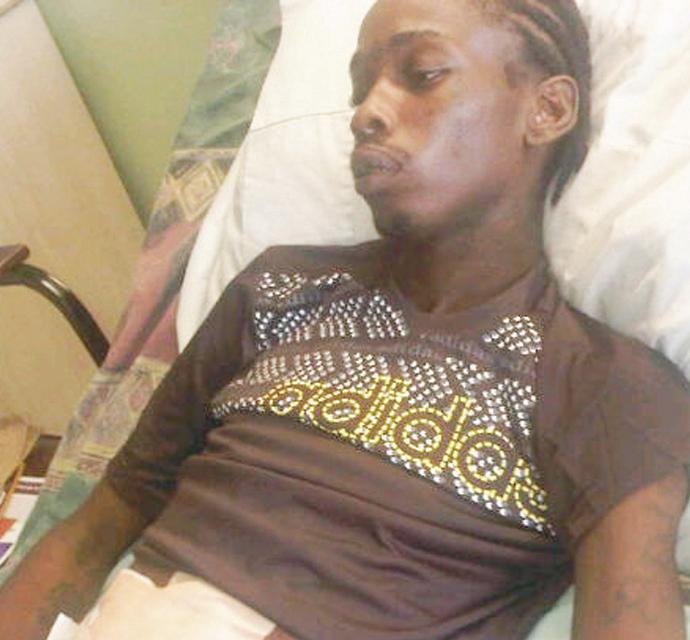
ticular officer’s name has been called several times, but others have also been implicated.
He said he does not think the officer should be interdicted until investigations
Deputy Speaker and A Partnership for National Unity (APNU) Member of Parliament Debra Backer who was flown to the United States for medical treatment will return to Guyana on Friday. Details of her illness remain unknown at this time.
Opposition Leader David Granger told Guyana Times that Backer, who will miss the 67th sitting of the National Assembly of the 10th Parliament of Guyana, has left the U.S. and is expected to stop over in Trinidad and Tobago before arriving in Guyana on Friday.
Today, Backer was expected to move a motion for the second reading of The Married Persons (Property) Amendment Bill 2013”; however, it will be deferred given her absence.
Collectively, APNU and the Alliance For Change (AFC) have more than four items on the order paper for today’s proceedings, but Granger said the opposition will deal with matters as they arise in the House.
He stressed that the opposition will pursue the order paper as it is printed by the National Assembly, and “we will see what will happen on the floor”.
In addition to the second reading of the Married Persons (Property) Amendment Bill 2013, under the private members’ business, AFC Member of Parliament Trevor Williams is expected to move a motion for the “Reintroduction of the Berbice River Ferry Service from New Amsterdam to Kwakwani,” in addition to the “Restoration of the
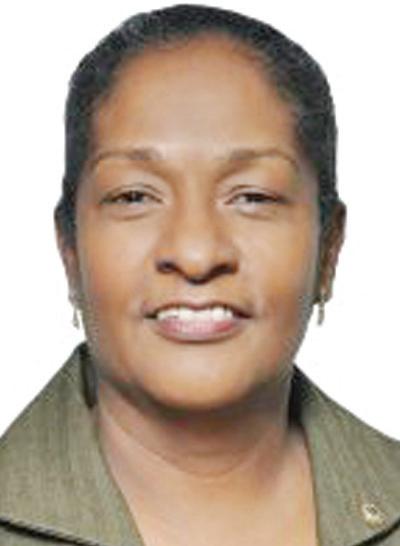
Deputy Speaker and APNU Member of Parliament Debra Backer
Annual Subvention/Grant to the Critchlow Labour College”.
APNU’s Joseph Harmon is also slated to move a motion for the National Assembly in accordance with Standing Order Number 52 (1), grant leave for the introduction and first reading of the Broadcasting (Amendment) Bill 2013 and another motion regarding the reduction of tolls at the Berbice River Bridge.
Meanwhile under government’s business, the Local Authorities (Elections) Amendment Bill 2013, the Wildlife Import and Export Bill 2013, the Evidence (Amendment) Bill 2013, the Firearms (Amendment) Bill 2013, Summary Jurisdiction (Procedure) Amendment Bill 2013 and the Guyana Cricket Administration Bill 2012 are up for a second reading.
Asked whether the government is concerned about a possible deadlock in the National Assembly today, Government’s Chief Whip Gail Teixeira said the business of the government will go on.
liceman at the Timehri Police Station over a period of three days before finally being taken for medical attention.
Harding’s attorney, Nigel Hughes had said that the same officer who had violated his client was instructed to take him to the hospital, but instead he was taken to a rum shop, where the officer had drinks, leaving him locked in the vehicle.
He was later taken back to police station and beaten to an unconscious state by the same officer. Hughes added that senior officers on duty were aware of what was transpiring but did nothing.
Material witness
are complete and if what he is hearing turns out to be true, the entire station should be transferred.
Colwyn Harding had said he was brutally sodomised and beaten by a po-
A 17-year-old has since been retained as a witness in Harding’s case. According to reports, the lad was being held at the Timehri Police Station while Harding was there and has vital knowledge about what had trans-
pired during the period that they were incarcerated.
In what is being described as another twist to the ongoing saga involving Harding, Guyana Times has learnt that his girlfriend was sentenced to two years imprisonment after she allegedly stole a televion set to raise cash for Harding’s bail.
Alliance for Change (AFC) leader Khemraj Ramjattan said the couple were both arrested on November 15, 2013 and after she was released, the woman allegedly stole the item from her grandmother to post the bail for Harding. She is currently at the New Amsterdam Prison, after she pleaded guilty to the charge.
Other AFC members have since come forward and are helping with donations for Harding. They are urging citizens who have access to medical supplies to
come forward and provide the direly needed supplies, including colonoscopy bags. Meanwhile, A Partnership For National Unity (APNU) has since issued a press release denouncing the brutality that was meted out to Harding. It is also calling for an independent inquiry to be launched into the matter. They further demanded that the government institute what they termed "real reform" in the training of police ranks. Both the AFC and the APNU have previously publicly expressed their lack of confidence in Home Affairs Minister Clement Rohee’s management of the security sector and much more importantly, the Guyana Police Force. They took this opportunity to reaffirm their position with regard to Minister Rohee.

Colwyn Harding, 23, who is the latest victim of police brutally, said he will never be comforted by any form punishment meted out to the police officer who assaulted him.
In an interview from his bed at the Georgetown Public Hospital, Harding told Guyana Times that he is damaged.
“I’ve been damaged, half ah me parts of me body gone… even self he (police officer) deh under close arrest, me ain’t see that in no way compensation because I deh in the hospital shackle to a bed.
"I don’t get to move, I feeling the pain, I does get it most. I does cry when the day come not nobody else. Nobody else doesn’t feel, the hurt,” he said.
Harding noted that his life has come to a standstill and could never return to the way it was before.
“I don’t know how he operate like this, he hurt me and now I living in shame… I ga live in shame, not nobody else.
"How I gone feel when everybody making laugh off ah me? I ga walk with this for the rest of me life, people gon talk about it. This never happen to nobody else why it ga happen to me?” the young man asked.
In pain
He said that he is experiencing a lot of pain in his back and abdomen. Harding noted that he had to undergo two surgeries and is expected to do a third in three months’ time.
The young man explained that the two surgeries so far were done to drain out a poisonous substance from his body and set back his damaged organs.
He identified his perpetrator, noting that he does not know the officer but heard someone call him by a name (last name given). Harding stated that he went up to Timehri to stay with a cousin who recently gave birth a few days before the
incident, and he never had any problem with anyone in the area.
He said he cannot recall how many police officers were there at the time but noted that it was a packed vehicle that went to the house to inquire about a man known as “Ronnie Clarke”.
Spite
“They come to carry out a search and I ‘llow them cause I know them is police officers after them ain’t find nothing and I get to know that is the other man they looking for and them na find he too, they take out spite on me...
"I ask he what gon happen to me and me girlfriend cause I know we didn’t do nothing. He turn and tell me he ga do a 72 hours for me to find out about me and I tell he do it cause I know I ain’t wanted or nothing like that,” he stated.
The young man said during questioning, the police hit him on his head and he fell unconscious and woke up in the bathroom when the officer threw water on him.
Too emotional to continue the sequence of events, he fast tracked to when he was taken to the Timehri Police Station and described the inhumane conditions he was forced to endure.
“(He) is a real ignorant officer cause he choke me and carry me down the lock up and throw me in a cell, nothing to lie down on, no card board nothing, bare cold concrete and inside de wet with water and I had to sleep right in there… one night, he come into wuk and beat me and buss up me head, left me unconscious in the lock-up.
"That same boy Ronnie Clarke had to turn round and help me in the lock-ups, all them in the lock-up had to help,” he recalled.
Harding explained that he, his girlfriend and two other females who were in the house at the time and

they were arrested and falsely charged with assaulting the officer at the Providence Magistrate’s Court.
He noted that he tried to tell persons about what transpired but no one believed him so he quietly went to prison where his health deteriorated.
He disclosed that he was at the Timehri lock-ups for five days and in prison for two weeks before he was taken to get proper medical treatment.
“I take-in in prison and start get worse… I go in prison actually bruk up, my foot was swollen my hand was swollen… I start vomiting green and them prisoners start say ‘like this man gone dead in hay’ and they call for the officers them and then they take me down to the infirmary and send me the hospital.
"I was to come back but they never bring me back and the medics giving me pain tablets every day. Then I take-in again and get admit to the infirmary and they left me there.
"A night I get up and try to go to the toilet and I start vomiting and I fall down in the toilet and I start bleed
and after they come and see blood all over the toilet, they decide to take me to the hospital.
"When I come to the hospital and the doctor check me, he tell them that I ga do surgery right away,” Harding recounted.
The young man said he did not tell his family members about the brutal ordeal he endured at the time because he was somewhat ashamed, but after he was hospitalised, he told his mother.
Family Harding said that what happened to him does not only affect him but his family as well.
“I can’t get to be around me daughter, be around me sister. Me mother does cry, me mother getting fine. My family in stress and I ain’t like what they going through at all, I prefer me eye shut than letting them go through all this and stressing.
"Everyday me mother ga stress fah me; I does feel proud me mother running up and down the hospital fah me because is one month now me mother running up and down trying she best with me and it is not nice,” an emotional Harding said.

Old people seh talk is cheap. And GT de garbage town gotta lotta talk goin these days…not to mention de whole of de country. Nuff people does talk de talk, but not every body does walk de walk. Some of dem simply can’t walk de walk so dem does only talk de talk.
Nowadays de young people does call it bubblin. Is de same as bluffin. Is de same as when a man tell a woman he gon meet she and he run and hide when de time come. And de natural ting does happen…de woman does end up wid some body else, and in these days it could be man or woman.
One mud paper man know good bout that. He is a known bubbler and got experience. He bubble so much that de bubblin ketch on to de headitor. Now de headitor bubblin too. Word is out that a lotta dem boys who call dem selves boys does bubble. Not wid one another though.
De KFC man who call heself party leader is another one who look like he bubblin. De only ting that resemble any ting like leader fuh Rum Jhaat is that he followin a leader. After all, he look like a better follower than a leader. And de leader he followin is man who fool de court, fool Parliament, fool de guvament, fool de few people who vote fuh he, fool de police, and fool Rum Jhaat he self. That could only mek Rum Jhaat a big fool. At least No Gel Hugly know how to ketch a packoo and buss he back.
Ting-a-ling-a-ling…friend tell friend…mattie tell mattie! Well, Rum Jhaat bubblin since de year start. He threaten a minister to haul he ass pun housing and now another minister come and haul away he ass from de middle of de East Coast road. It got to be true that Rum Jhaat don’t whah de ass he doin!
The January Demerara
Criminal Assizes began on Wednesday with the usual pomp and splendour as the presiding judges are tasked with a list of 233 matters to be heard.
The traditional march past ceremony was done early in the morning outside the High Court on South Road, Georgetown. Ranks from the Tactical Services Unit and the Guyana Police Force’s band braved the rain as they marched from the Brickdam Police Station to the High Court.
Justice Franklin Holder was saluted during the march and inspected the guard of honour. He, along with Justice Navindra Singh and Justice William Ramlall, will be presiding over this criminal session.
Justices Holder and Ramlall both empanelled a 12-member jury panel for murder trials in their respective courts while Justice Singh continues a murder trial which he began hearing in the last assizes but could not complete in time for the close of the October session.
The October Assizes was closed on Friday after the Gaol delivery was done by Justice Singh. Justice Singh along with Justice Diana Insanally and Justice James

Bovell-Drakes had presided over that session when some 288 cases were to be heard.
For this session, there are several high-profile matters included in the list of 233 cases. These include the trial of the two accused in the murder of former Queen’s College student Neesa Gopaul. The teenager’s mother, Bibi
Shareema Gopaul, and her lover, Jarvis “Barry” Small are jointly accused of the murder of the 16-year-old, whose body was found at Madewini, Soesdyke/Linden Highway on October 2, 2010.
The Cyon “Picture Boy” Collier matters are also expected to be called. Collier is being re-tried for two counts of murder. He is accused of
the double murder of two
on September 23,
at
a Non
and
on September 30, 2006. While a retrial was done in November for the double murder, the matter again ended with a hung jury.


Last week’s article introduced the common characteristics and challenges of Small Island Developing States (SIDS). In this week’s article, we take a more in-depth look at a major vulnerability facing SIDS – natural disasters.
Natural disasters
A natural disaster is any event or force of nature that has catastrophic consequences, for example: floods, earthquakes, storms, landslides, tsunamis and volcanic eruptions. Natural disasters are the combination of hazards (floods, landslides, tsunamis); conditions of vulnerability; and insufficient capacity or measures to reduce the potentially nega-
tive consequences of risk.
SIDS are very prone to natural disasters and even though many successful initiatives have been carried out over the years, other threats continue to emerge.
As was mentioned in last week’s article, SIDS have particular characteristics that render them susceptible to natural disasters. These are largely:
* Small size of country;
* Concentrated economic and administrative activities along coastlines;
* Remoteness; and
* Frail environments.
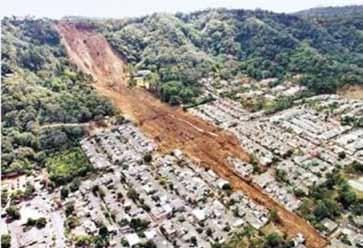
Natural disasters have major effects on SIDS such as:
* Devastation of the agricultural sector;
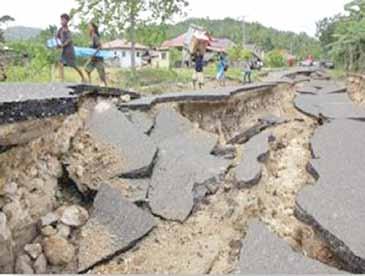
* The wiping out of entire village settlements;
* The disruption of a high proportion of communication services;
* Injury or death of a relatively high percentage of inhabitants; and
* Significant damage to existing fragile and vulnerable economies.
It has been recognised that many disasters could have been greatly mitigated with adequate planning and preparation, since this cost would have been smaller compared to the cost of relief and recovery efforts. However, to achieve the degree of planning and preparation it is necessary to make changes in the objectives and approaches to disaster management in SIDS. Some of the chang-
es advocated include:
* Need for a shift in emphasis from relief and emergency response to preventive measures
* Increased preparedness
* Education of potentially affected populations
* The strengthening of

Modern thinking is that natural disasters are not entirely “natural”, for people can be agents of disasters. For example: flooding may be caused by deforestation, poor irrigation systems and improper disposal of solid waste. Humaninduced climate change is a factor, which, according to scientists, has worsened natural disasters by increasing their frequency and intensity. In addition, early warning systems are not very accurate since the intensity of the disasters is becoming difficult to predict. It is, therefore, advisable that people living in SIDS educate themselves on the vulnerabilities and do what is necessary to be prepared.
infrastructure
* The design and setting up of reliable early warning systems
* Broadcasting of mitigation measures
* Proper information education and public awareness
Sources: http://dictionary.reference.com/browse/ natural+disaster http://www.unesco. org/new/en/natural-sciences/priority-areas/sids/ disaster-preparedness/ with photos from Google images
You can share your ideas and questions by sending letters to: “Our Earth, Our Environment”, C/O EIT Division, Environmental Protection Agency, Ganges Street, Sophia, Georgetown; or email us at eit.epaguyana@gmail.com.
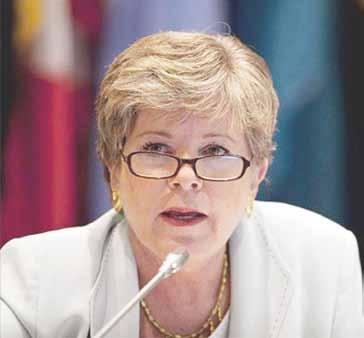
Economic Commission for Latin America and the Caribbean (ECLAC) Executive Secretary Alicia Bárcena has called on developed countries to forge a pact for global financial stability and diversify their investments in this region to contribute to its economic and social upswing.
Bárcena made the comments during the launch of the Regional Meeting of the Committee of Experts on Sustainable Development Finance at ECLAC’s Santiago, Chile headquarters.
It is being attended by several experts from Latin America and the Caribbean who are part of this working group, which consists of about 30 specialists worldwide.
“If this region is going to be part of the global pact for financing development, it’s not because it is demanding official assistance. What we want is for developed countries to make a real pact for financial stability to avoid repeating the collapse of 2008, which was provoked
by the self-regulated market and affected everyone, even those who did not cause the crisis,” the executive secretary said.
Bárcena explained that Latin America and the Caribbean today have different experiences to contribute to this debate. The first peculiarity is that the region is aiming to strengthen its own mechanisms to help finance development, counting on a broad network of regional and sub-regional banks that it is considering extending, Bárcena said.
Financial integration
Additionally, it is analysing the possibility of advancing in its financial integration by expanding the geographic coverage of the Latin American Reserve Fund (FLAR), with the intention of supporting small and medium economies.
The second characteristic, the executive secretary added, is that the majority of countries are of average income and, therefore, flows of official development assistance are diminishing.
This help totals less than US$12 billion, while migrants’ remittances amount to about US$60 billion and Foreign Direct Investment (FDI) in Latin America and the Caribbean reached approximately US$170 billion in 2012, although that was concentrated in only a few countries and economic sectors.
“This region is seeking a better global agreement, stronger regional finan-
cial institutions and more productive investments”, emphasised the United Nations official.
At the event’s opening session, the two co-presidents of the Committee of Experts participated: Mansur Muhtar, executive director of the World Bank Group, and Pertti Majanen, ambassador for global matters at the Finnish Foreign Affairs Ministry.
This Experts’ Committee
was formed in the framework of the UN General Assembly as part of the commitments adopted in 2012 during the United Nations conference on sustainable development in Rio de Janeiro, known as Rio+20.
According to Executive Director Muhtar, the working group is dedicated to outlining a strategy to mobilise financing resources and ensure their efficient use to achieve the Sustainable Development Goals (SDGs), and in September the group must present a report on this to the UN General Assembly.
In this context, Ambassador Majanen highlighted the relevance of seeking both public and private resources to boost development and warned that inaction on environmental issues is costing a lot of money.
The Deputy Director General for Multilateral and Global Matters at Chile’s Foreign Affairs Ministry, Pedro Oyarce, who also par-
ticipated in the meeting’s opening session, said that this event will serve to position the region’s perspective within the global strategy and that this must promote inclusive economic development via economic growth and social and environmental sustainability.
The representatives that participated at this meeting will share today their ideas and visions with experts from the rest of the countries in the region and with members of non-governmental organisations during the open meeting of Latin American and Caribbean countries about the work of the Committee of Experts on Sustainable Development Financing.
Also present at these debates is Shamshad Akhtar, who is currently the assistant secretary general of the United Nations (Economic and Social Issues Department) and who on March 1 will take office as executive secretary of the United Nations Economic and Social Commission for Asia and the Pacific (ESCAP).
thursday, january 16, 2014 | guyanatimesgy.com
BY INDRAWATTIE NATRAM
Suicide can no longer be considered a once in a while problem on the Essequibo Coast as Essequibians are increasingly taking their own lives.
Records from the Suddie Hospital indicate that some 82 persons took their lives in 2013.
Importantly, the recent trend has gained the attention of public officials, residents and the parents of the victims.
People Progressive Party/ Civic (PPP/C), Region Two Councillor Shanta Springer, who heads the Record Medical Statistic Department at the Suddie Hospital, said she is appalled by the number of suicide cases on the Essequibo Coast.
Springer said most of the victims consumed poisonous substances but others also drank kerosene and overdosed themselves on tablets.
Based on media reports, the majority of the victims appear to be East Indians, with domestic violence being the
main reason. Persons with chronic diseases were also among the victims.
Problem Springer, who is also an active Women Progressive Organisation (WPO) member, said the problem can be halted through effective counselling, and this service is available at the House of Justice at Maria’s Lodge, Essequibo Coast.
She said volunteers are readily available to offer free
counselling to all in need, and is urging affected persons to make full use of the facility.
The regional councillor is also urging victims of domestic violence to seek help and report the matter to the police, and not to drop their cases against their abusers when it reaches the court.
According to statistics from the Suddie Hospital Medical Department, in January 2013, nine persons committed suicide; in February, six persons; in
March six persons; in April, three persons; in May, 10 persons; in June, eight persons; in July, 10 persons; in August, eight persons; in September, four persons; in October, six persons; in November, four persons; and December, eight persons.
Victims
The record indicate that the victims range from age 13 to 50 and involve both males and females, but the majority are females.
Thus far in year, there has been one suicide attempt on the Essequibo Coast. Rico Persaud, 17, tried to kill himself after he was shunned by a girl he likes.
On Sunday, Leo Rodriquez, 28, who killed his 16-year-old girlfriend, travelled up to the Essequibo Coast to take his own life.
He was found dead at his mother’s residence, hanging from a tree in the backyard, after killing his teen lover and dumping her body in a trench at Kuru Kururu, along the Linden/Soesdyke Highway, not far from her home.
Suicide is mainly an option; however, the question remains why it is that people still insist on going down that lane?
After two decades of research conducted by former Harvard University Dean, Dr Derick Curtis Bok on social problems, it was found that people react more to symptoms rather than finding the source, or root cause of the problem.
Speaking with Guyana Times, American University of Research President, Dr Eton Simon sharing some insight on the matter, said the problem occurs when persons react instinctively to an issue affecting them, rather than looking for the source of it.
Symptoms
Dr Simon explained that the world is built and functions around symptoms. An example, he explained, is that when someone is physically sick, the person goes to the doctor and is given medication which helps in the reduction of the sickness; similarly, he noted, when someone is mentally affected, the person must first find out the cause of the problem and starts addressing it from there.
The psychologist pointed out that often the source of the problem of suicide victims is not touched. He said if the problem is addressed at the source, many poten-

tial suicide victims will be able to find long-term solution to issues affecting them.
Dr Simon explained that in addressing the problem, one should look at the big picture, pointing out that things do not happen without a cause.
“That is where everything originates, from the source. If persons focus on the source more, a new culture will be developed. People will have a whole new way of thinking; we won’t go around hurting each other because we will look to them and know the
reason why that individual is being in that way is because of what transpired at an earlier time in their life.”
Solution
Psychology, he said plays a vital role in combating suicide, as it allows persons to better understand themselves. Psychology is the study of human behaviour and mental process, and Dr Simon is urging that the subject be taught in school.
This knowledge, he said will empower persons to think before they act, rath-
The Caribbean Community (Caricom) is forging ahead with a programme designed to harmonise the measurement of literacy data to advance the production of reliable information for better decision making in this area.
Education officials, statisticians and other experts gathered in Barbados on Tuesday and Wednesday for the Caricom fourth technical workshop on a common framework for a literacy survey under an Inter-American Development Bank (IDB) Regional Public Goods Project.
The project, which is being conducted in phases, saw workshops in Trinidad and Tobago and Barbados respectively to familiarise participants with the theoretical and practical aspects of literary assessments and the critical importance of literacy measurement in policy formation. Those workshops had also streamlined the key deliverables of the common literary framework for the region and an action plan to ensure its implementation.
As this phased approach
er than acting out based on emotions.
“More process or thinking needs to be done before reacting,” Dr Simon said, noting that when a person looks at a problem from a psychological perspective, he gets a more profound understanding of the issue before him and the options available.
According to Dr Simon, if physically and emotionally affected persons have a broad view of things, they would be better able to think positively rather than negatively, and this will erase suicide tendency.
“If we sit a little longer and think about what we’re about to do, we’ll smile to ourselves and say, hey, is it worth it? Is the consequence of this action going to make me happy? Always think about the big picture. Persons who are detailed get annoyed over every little matter; however, one should always look at the big picture,” he said, noting that this entails finding the source of the problem.
Health Minister, Dr Bheri Ramsarran has expressed concerns about the suicide rate in the country and said his ministry is working with the Human Services Ministry and nongovernmental organisations to curb the scourge.
The Heath Ministry is also moving to strengthen the Gate Keepers Programme.
to harmonised literary data collection unfolded, member states were given opportunities to discuss various survey instruments, and to consider relevant issues pertaining to the next phase of the project.
Against this backdrop, the meeting in Barbados is expanding on the work done so far, focussing on recommendations for the improvement and finalisation of the regional survey instruments as well as other features including methodology, training guides and an interviewer’s manual which is expected to guarantee the harmonisation of literacy data collected in the future. Work expected to be done in the third phase of the project is also being considered in Barbados.
Efforts are ongoing to assist member states with implementation through the development of national implementation plans for the conduct of at least two literacy surveys that is expected to produce sound and comparable literacy statistics across the Caribbean Community.
Approximately 30 Caribbean Community (Caricom) broadcasters are scheduled for a workshop on regional integration and the Caricom Single Market and Economy (CSME) in Antigua and Barbuda January 16-17.
The activity, organised by the Caricom Secretariat with funding from the 10th European Development Fund (EDF), is taking place at the Jolly Beach Resort and Spa and broadcasters from across the region will be exposed to topics such as the free movement of skills/ persons; the Caribbean Court of Justice and its importance to the regional integration movement; and nationals doing business within the CSME.
Antigua and Barbuda Prime Minister Baldwin Spencer is scheduled to provide remarks during a brief opening ceremony. Presentations are expected from representatives of the Caricom Secretariat, the University of the West Indies (UWI), the Caribbean Broadcasting Union (CBU), the Caribbean Court of Justice (CCJ), the Association of Caribbean
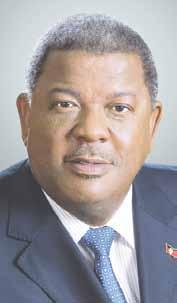
Media Workers, and the public and private sector in Antigua and Barbuda. There will also be presentations for the development of broadcast skills in delivering and disseminating information on trade and regional integration. The event is a continuation of public education and sector specific training activities carried out by the secretariat. This is the fifth broadcasters training workshop on regional integration and the CSME facilitated by the secretariat in collaboration with regional bodies.
Pressure continues to mount for the government of Guyana and the U.S. embassy to return to the negotiating table to determine the way forward on the United States Agency for International Development (USAID) funded Leadership And Democracy Programme (LEAD).
Despite being rejected by the Guyana government, the LEAD project is being implemented by the U.S. embassy, creating tension here.
On Wednesday, the Georgetown Chamber of Commerce and Industry (GCCI) called for Guyana and the U.S. to resume productive dialogue on the leadership programme, with the primary objective of arriving at a consensus on moving the project forward.
Guyana had said that it will not negotiate under duress, making clear that it will not enter into negotiations with the U.S. if the project is being implemented. According to the GCCI, halting the project until the problem is resolved is not an unreasonable request, and should be considered by the U.S. embassy.
However, the GCCI said it “fully supports and endorses the objectives of the LEAD project. The chamber believes that its implementation will strengthen political institutions and enhance citizen understanding of how individuals can engage in the larger civic and political discourse in their communities and
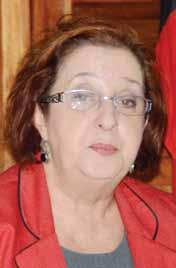
throughout the country”.
It was pointed out that the LEAD initiatives strives to strengthen the operations of the National Assembly by equipping parliamentarians with the requisite tools for the delivery of effective representation and policy formulation.
Most timely
“This is a most timely and welcomed project, considering the current parliamentary makeup and circumstances. In summary, the chamber sees the LEAD project as instrumental in meeting the need to foster an environment where compromise and cooperation in the country’s interests comprise the cornerstone of good policymaking.”
Additionally, it underscored the importance of strong political and governance institutions in guaranteeing a stable political envi-
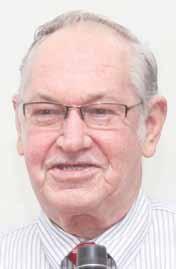
ronment that leads to social and economic prosperity.
The Private Sector Commission (PSC) is also calling on the government and U.S. embassy to return to the negotiating table. However, PSC Chairman Ronald Webster declined divulging further details on the commission’s position, saying that it will be issuing a statement on Friday.
Govt position
Meanwhile, Presidential Adviser on Governance, Gail Teixeira said “government’s position remains the same”, pointing out that the country will not engage the U.S. embassy under duress.
Head of the Presidential Secretariat, Dr Roger Luncheon had said the government was taking the necessary steps to formally provide the U.S. government
with Guyana’s final position on the LEAD project; however, it remains unclear whether that response has been issued as government officials remain tight lipped. Guyana had received a response from the U.S. following a list of inquiries.
But Dr Luncheon said that the concerns raised by the government merely invited the authorities here to engage bilateral partners in the U.S. in discussion on the project and its design.
Meanwhile, the opposition has thrown in its support for the project. APNU has expressed disappointment at the government’s move to reject the project. The multimillion-dollar project was designed to advance development in health, economic growth and democracy and governance.
In addition to strengthening Guyana’s electoral process, the project would support the legislature in maximising the effectiveness of its existing website and other technology in the National Assembly.
This may include live broadcasts of proceedings to better inform citizens, bringing the National Assembly closer to the public and encouraging greater public involvement.
The project was also expected to build capacity within the political parties, support the holding of local government elections and women and youth political leadership.
Georgetown Deputy Mayor Patricia Chase Green is once again urging residents to desist from the indiscriminate dumping of garbage and instead work together with the Mayor and City Council to restore the capital city to its former glory.
The deputy mayor admitted that the council has a responsibility to keep the city clean but is pleading with residents to assist by working to alleviate the problem.
Massive flooding on Tuesday caused major discomfort to residents in and around the capital city. However, Chase-Green said the City Council can only do so much.
“If citizens would only try not throwing garbage carelessly at all street corners and alleyways, it will be a great relief to us,” she told Guyana Times in an exclusive interview on Wednesday. The deputy mayor reiterated the fact that the country is under sea level, pointing out that water accumulation cannot be prevented. The city in itself has the capacity to only take off under two inches of water at any given time. On Tuesday, there was re-
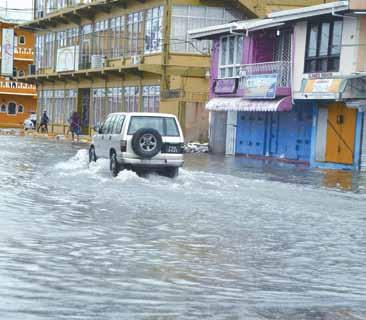
portedly four inches of rainfall. This, compounded with clogged drains and garbage pile up, has contributed to the recurring problem.
Chase-Green is also encouraging residents to take advantage of the garbage collection service.
“All we are doing is appealing to citizens to put your garbage in bins and plastic bags. A truck is going to come, even if it is once per week and do clearance. Please don’t take it and throw it at open space.” This
action, she said would encourage vagrants to scatter the garbage.
City Hall’s Public Relations Officer Royston King echoed the concerns shared by the deputy mayor. He said close to $1million is expended daily for the cleaning of the city. “The problem is not cleaning; it is keeping the city clean. That is where we need the citizens to keep their surrounding tidy at all times,” he said.
Last November, similar heavy rainfalls caused se-
vere flooding in Georgetown and its environs, resulting in residents and businesses suffering huge losses.
In light of the increasing rainfall and the flooding in Georgetown and surrounding areas, the Health Ministry is advising the general public to pay special attention to water safety and personal hygiene.
• If you are living in flooded areas, stay out of the water as much as possible, as it can greatly reduced your chances of contracting diseases such as skin infections, leptospirosis, diarrhoeal diseases and other water-borne diseases.
• Keep children out of water as they are at risk of contracting diseases.
If you must go into the water, use protective footwear such as long boots. Prepare a foot bath of half a cup of bleach to one bucket of water and wash your feet before entering the house, then apply Vaseline or oil to your skin as it forms a barrier and provides some protection from the dirty water.
• During rainfall you may notice an increase in mosquitoes. Protect yourself and your family against mosquitoes by sleeping under mosquito nets, using mosquito repellents and coils, and covering storage containers to reduce breeding sites. Use safe water for drinking, cooking and brushing your teeth, and for making ice and drinks. Safe water is water treated with bleach (PUR, Chlorosol) or boiled or bottled water.
• Keep food separate, protected from the floodwater. Throw away all food that has been in contact with floodwaters.
• Wash all fruits and vegetables with treated water and peel before eating.
• Keep all food items and drinking water in sealed containers.
• Cook food thoroughly.
• Wash hands thoroughly with soap and safe water or use hand sanitisers, especially before and after eating meals, after going to the toilet or latrine, and before and after taking care of the children.
• Use the toilet or latrine and dispose of baby’s diapers properly. Do not mess or let faeces get into the water.
• Keep rubbish bins closed. Watch out for animals. Snakes and centipedes that have been flooded out of their homes may seek shelter in yours. Use a pole or a stick to poke and turn items over and scare them away.
• If your home was seriously affected by floodwater and you suspect that electrical wiring has been damaged, have it checked by a qualified person before turning the main electrical switch.
• Know the location of the main electrical breakers and the gas and water valves in your home and ensure the path is clear to access them easily so that you can shut them off in emergencies. Turn off the main electrical switch and other utilities. Place important documents and valuables in plastic and store them in a safe place.
In case of illness, please visit the Georgetown Public Hospital or the nearest health centre.
The Agriculture Ministry said heavy rainfall is expected in Regions One to Four for the greater half of today.
Similar conditions are expected to continue on Friday over northern Guyana. However, occasional cloudy conditions are expected over southern Guyana.
While water has been receding well in most parts of the city, some areas in Georgetown, Upper and Lower Pomeroon, Charity Housing Scheme and north and south of Canal Number Two are still under water.
However, the two main pumps in the city still remain non-functional. Had this been working, coupled with the main drainage structures along the city, drainage would have been more effective.
The sluices along the Demerara River in the city

The Agriculture Ministry says heavy rains are expected today and tomorrow in Regions One to Four
were not working at 100 per cent and at least one was non-functional.
The National Drainage and Irrigation Authority (NDIA), has been working round-the-clock to ensure that all structures remain operable to ensure that the water recedes at optimal levels, the ministry said.
“While all pumps, especially at emergency drainage structures are functioning at optimal levels, an emergency drainage and irrigation team has been put in place to deal with any possible breach which can occur during the evening,” the noted.
thursday, January 16, 2014
The Trinidad-based Caribbean Public Health Agency (CARPHA) said it is working closely with the French and Dutch authorities after the region recorded its first ever case of chikungunya.
Late last month, CARPHA said it had received notification of 10 confirmed cases of locally acquired chikungunya virus infection on the French side of the Caribbean island of Saint Martin.
CARPHA Executive Director, Dr James Hospedales told the Caribbean Media Corporation (CMC) Wednesday that three cases have now been detected in
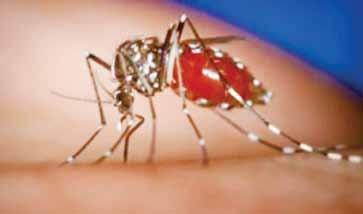
the British Virgin Islands.
“We have prepared ourselves by building the capacity of our staff to do the testing and our staff has been visiting and advis-
ing the countries including St Martin even before this was on the horizon about the mosquito control programmes in the countries.
“We are working closely
rime Minister Portia
PSimpson Miller has charged regional players in the tourism sector to not be afraid of global competition.
“There is competition today. If you fear it you will not survive tomorrow. We cannot fear competition,” Simpson Miller argued.
“My own sense, as a former minister of tourism, is that the Caribbean tourism’s vision on competition is both narrow and clouded. The vision is narrow because it does not accept that we must compete for primacy of the complete product.
Most destinations have sea and sun. So, to compete effectively, the policy must be innovative and the strategy must embrace concepts of sustainability as reflected in Jamaica’s master tourism plan,” she said.
Simpson Miller further challenged Caribbean tourism interests to remain on the cutting edge as the Latin American tourism establishments “are rapidly embracing that approach”.
The prime minister was addressing the opening ceremony of the Caribbean Hotel and Tourism Association’s (CHTA), Caribbean Travel
Marketplace 2014, at the Montego Bay Convention Centre in St James, Sunday night.
She recommended that players in the tourism industry move to establish trade linkages with other business sectors across the region.
“We need to further develop and strengthen the linkages between tourism and other sectors of our economy. This need not be a strictly national initiative. I would like to see similar initiatives taking place on a regional level,” Simpson Miller said. (Excerpt from Jamaica Observer)
Acourt in Colombia has temporarily put on hold a controversial decision by the country’s inspector general to remove Bogota Mayor Gustavo Petro from office.
Judge Jose Armenta said the sacking should not be enforced until it had been established whether Petro’s rights had been violated.
Petro welcomed the court’s decision saying that “justice had won”.
He was fired last month over the alleged mismanagement of the capital’s rubbish collection service.
He was also banned from holding public office for 15 years. The move caused outrage among Petro’s supporters and thousands took to Bogota’s Bolivar Square in protest.
Petro, a former rebel with the left-wing M-19 guerrilla group, said his sacking was politically motivated.

with the French and Dutch authorities to have a coordinated approach to dealing with the problem by sharing numbers, sharing strategies to mosquito control and so on.
“My advice would be to stay informed and stay alert to the news and any updated information, secondly, we would strongly advise that you go to our web and download the chart which is a checklist of all the breeding places in the yard where mosquitoes can breed.”
Chikungunya is a viral disease, carried mainly by the Aedes aegypti mosquito and causes a dengue-like sickness. (Excerpt from Caribbean360)
Police have held a 29-year-old man they believe to be a serial rapist. They say the suspect posed as a hire car taxi driver along the St James to Port-of-Spain route and are calling on possible victims to step forward. The man is alleged to have committed several rapes and robberies with another male accused who is still on the run. He was arrested at his St James home by detectives from the Western Division on Saturday, following several reports within the past few months.
Police say the suspect op-
erated using a white Honda Civic and a white Nissan Tiida. His modus operandi was to take his female passengers to lonely areas between St James and Portof-Spain, where he would rob and rape them. Police believe that several of the duo’s victims have never reported the incidents. Meanwhile, three men who were critically shot in the Northern Division are “coming along fine,” police said. Sherwin Johnson, Sheldon Isaac and Devon de Coteau were shot in separate incidents. (Excerpt from Trinidad Guardian)
Former premier of the Turks and Caicos Islands (TCI), Michael Misick, was released on conditional bail by the TCI Supreme Court late on Monday.
Later Monday evening, he made an appearance and spoke at a church service, in the company of current premier, Rufus Ewing. His address at the event included an obvious political component, calling on his audience to “take our country back”, apparently echoing the position of the current elected government as recently reiterated in the governor’s throne speech to the House of Assembly of “readying our nation and our people for the move toward independence”.
Meanwhile, Misick now
faces charges of conspiracy to receive bribes, conspiracy to defraud government, and money laundering related to his time in office. He will appear next at the TCI
Supreme Court for a sufficiency hearing on March 7. Misick’s bail application was initially rejected by a magistrate on January 7, before being granted on appeal by the Supreme Court later in the day. His bail was reportedly set at US$10 million, with a substantial portion in cash and unencumbered property sureties for the remainder. While the terms of Misick’s bail were agreed, the conditions were not met last week, and he was remanded into custody at the prison in Grand Turk, from where he was released on Monday after 10 people were reportedly found as sureties, who put up free and clear properties valued at over US$12 million. (Except from Caribbean News Now)
The Trinidad and Tobago government Wednesday warned nationals that they would still need visas to visit certain European countries amid reports that the European Union (EU) had agreed to a waiver for 19 countries.

Trinidad and Tobago's Foreign Ministry in a brief statement noted that it had been aware of incorrect reports circulating among social media that the country’s application for a Schengen visa waiver has been approved
Petro is accused of violating the principles of the free market by trying to have the city take over waste management services from private companies.
Under the Colombian constitution, the inspector general has the power to remove officials from office, but such action is normally only taken in major corruption scandals.
Inspector General Alejandro Ordonez said it had negatively affected public health when mountains of garbage were left uncollected for three days in 2012.
But Petro’s supporters say his removal is out of proportion with the allegations made against him. (Excerpt from BBC News)
A brief statement issued by the Foreign Ministry noted that it had been aware of “incorrect reports circulating among social media that Trinidad and Tobago’s application for a Schengen visa waiver has been approved.
“The process is ongoing and still requires a decision by the European Parliament and the European Council. As such, nationals of Trinidad and Tobago still require a Schengen visa for travel to those European countries that require one,” the statement said.
Last week, the European media reported that the permanent representatives (COREPER) had agreed to add 19 countries to the EU visa-free travel list.
It said that the final adoption of the text is expected early this year.
Last month, Lithuanian Ambassador Raimundas Karoblis, the chair of COREPER II spoke about
the efforts for the EU to grant a visa waiver to the 19 countries that include St Lucia, St Vincent and the Grenadines, Dominica, Grenada and Trinidad and Tobago.
He said the agreement was a significant step towards the future visa-free travel between the EU and the 19 third countries. (Excerpt from Caribbean News Now)

The U.S. has implanted devices in nearly 100,000 computers to spy on institutions such as the Chinese and Russian military, EU trade groups and agencies within Saudi Arabia, India and Pakistan.
The New York Times on Tuesday cited documents from the National Security Agency (NSA), computer experts and U.S. officials, stating that the NSA uses
radio wave technology to gain access to otherwise encrypted computers or machines that are not connected to the Internet.
The Times reported that the agency has been inserting tiny circuit boards into computers for several years. The technology allows non-Internet connected computers to be hacked, and bypasses encryption and anti-spyware systems that otherwise prevent
hacking over the worldwide web.
The NSA calls the effort an “active defence”’ and has used the technology to monitor units of the Chinese and Russian armies, drug cartels, trade institutions inside the European Union, and U.S. allies, including Saudi Arabia, India and Pakistan, the Times reported.
Among the most frequent targets has been the Chinese army, the Times reported.
The U.S. has accused the Chinese Army of launching regular attacks on American industrial and military targets, often to steal secrets or intellectual property.
U.S. officials have protested when Chinese attackers have placed similar software on computer systems of U.S. companies or government agencies.
The NSA said the technology has not been used in computers in the U.S. (Excerpt from Al Jazeera)

Egyptians queued for the second day in front of polling booths to decide on the country’s new referendum, as polarisation plays out on the streets between celebrating charter supporters and protesting opponents.
About 53 million Egyptians are eligible to vote for the new constitution, the result of which could see the defence minister, General Abdel Fattah el-Sisi, launch

The UN secretary general says that half of Syria’s population, some 9.3 million people, are in urgent need of aid.
Ban Ki-moon was speaking at a donor conference in Kuwait promoting the UN’s largest ever appeal for a single issue.
The meeting aimed to raise US$6.5 billion (£4 billion) – it had secured US$2.4 billion in pledges by the end of Wednesday.
The Indian diplomat whose arrest and strip search in New York City ignited a diplomatic spat between nations has filed a motion seeking the dismissal of the charges, her attorney said Wednesday.
The diplomat, Devyani Khobragade, left the U.S. last week amid federal charges that she lied on a visa application for her housekeeper. A dismissal of the charges against her would allow her to re-enter the U.S., where her husband and two daughters reside, said her Attorney Daniel Arshack. A hearing is set for January 31.
Meanwhile, Syria’s deputy foreign minister has said Western intelligence agencies have held talks with Damascus on combating Islamist groups in Syria.
The UK government denied having any such cooperation with Damascus. Islamist groups, often made up of foreign fighters, have become increasingly assertive in Syria, clashing with other rebel movements and causing international concern.
On Wednesday, at least 26 people

A motion filed in federal court Tuesday asked that the case be thrown out, saying the court “does not have jurisdiction over the defendant due to the defendant’s diplomatic status which provides her absolute immunity from criminal prosecution in the United States.
“Because Dr Khobragade was cloaked in diplomatic immunity at the time of her arrest on December 12, 2013, as well as the time of the filing of the subsequent indictment on January 9, 2014 (on which she was not re-arrested or arraigned), she cannot be prosecuted, thus, necessitating a dismissal of the indictment and proceeding,” the motion said.
U.S. prosecutors accused Khobragade of lying in a visa application about how much she paid her housekeeper. She was indicted last week by a federal grand jury on one count of visa fraud and one count of making false statements. (Except from CNN)
were killed by a car bomb in the northern city of Jarablus, said the UK-based Syrian National Observatory activist group. It blamed the attack on the alQaeda-linked Islamic State in Iraq and the Levant (ISIS) and said most casualties were rival rebels.
Ban told the Kuwait conference the conflict had “set back Syria years, even decades” and that it was “vital for this region and our world that the burden is shared”. (Excerpt from BBC News)
a presidential bid.
Anti-coup protesters, who blame Sisi for the removal of Mohamed Morsi from the presidency in July, rallied in the capital Cairo, Al-Sharqiyah in the north of Egypt and Fayoum and Delga, in the south.
The possibility of bloodshed is high, after at least 11 protesters were killed on Tuesday and 28 others were wounded when security forces intercepted rallies across
the country, according to the Health Ministry.
Meanwhile, local television channels showed footage on Tuesday of jubilant groups of voters dancing and celebrating as they carried posters of Sisi.
“Any sense of stability is an illusion. That’s what people think General Sisi might offer,” said Shadi Hamid, the research director at Brookings Doha Centre.
“But if we look at the last six months, Egypt has seen one of the worst spills of violence in its modern history.”
Tuesday’s events, of violence and celebration at polling stations, outline the polarisation that has gripped the country for years, a situation exacerbated since Morsi’s removal.
The army-placed government, determined to stifle any interruption of the vote, deployed about 200,000 security forces and about 160,000 army personnel to watch over the polling stations. (Except from Al Jazeera)
Police in the Indian capital Delhi are investigating the alleged gang rape of a Danish woman who lost her way near her city centre hotel.
The 51-year-old tourist was attacked by a group of men in the Paharganj area on Tuesday evening. Police say she was robbed and raped at knife point.
A German woman has also been raped in south India, Der Spiegel reports.
Scrutiny of sexual violence in India has grown since the 2012 gang rape and murder of a student on a Delhi bus.
The government tightened laws on sexual violence last year after widespread protests following the attack.
But violence and discrimination against women remain deeply entrenched in India’s staunchly patriarchal society.
The Danish woman told police that she approached the group of men after losing her way back to her hotel near New Delhi Railway Station.
The men robbed her of her belongings and raped her, police spokesman Rajan Bhagat told the BBC.
“She reached her hotel and reported the incident to the manager who called in the police and the investigation is now under way,” Bhagat said.
The woman flew out of India on Wednesday morning, police say. (Excerpt from BBC News)
British paedophiles are paying to watch the abuse of children in the Philippines via webcams, a BBC investigation has found.
In one case, a British man organised the sexual abuse of five children from the same family.
Charities believe tens of thousands of children are victims of the trade.
On Thursday, Britain’s National Crime Agency will reveal how it is working with the American, Australian and Philippine police to target abusers.
A BBC team travelled to the slum of Ibabao, near Cebu City in the south of the country.
Local charities call it the “epicentre” of the trade. Officer Denis Comunay, who regularly patrols the slum, said: “You can get easy money from the cybersex.”
He showed us a small house, with a corrugated iron roof.
It was almost empty inside apart from a dirty mattress on the floor and electric sockets hanging from the ceiling.
It was what he calls a cybersex den.
“Fathers and mothers would bring their chil-

The cybersex den in Ibabao where abuse is said to have
place
dren here to show, and would get paid by the owner of the house,” he said.
He explained the property owner forced her own children to “perform” for foreigners using a webcam. Other people in the community who heard there was money to be made then brought their children too.
At a house nearby there were family photos on the walls, washing still hanging on the line, but it was deserted. (Excerpt from BBC News)
Construction will begin in the first quarter of this year on one of two new hotels planned for Tobago. The four-star Indigo Bay Resort, which will have 79 suites, will be located Little Rockley Bay in Lambeau. The driving force behind this new hotel development is businessman Chris James, vice-president of the Tobago Hotel and Tourism Association, who is investing
TT$112 million in the project. Tracy Davidson-Celestine, secretary of tourism at the Tobago House of Assembly (THA), gave details of the project when she addressed a session at the Caribbean Travel Marketplace conference in Montego Bay, Jamaica, on Wednesday. She said the property will “utilise the ambiance” of Little Rockly Bay as much as possible. “Tobago is actively pursuing new ho-
tel development. We are seeking to persuade investors to come to Tobago and encouraging investors currently there to expand and to move into new development. And that has not fallen on deaf ears,” Davidson-Celestine said.
Completion of the resort is set for the end of 2015. The other hotel to be constructed in Tobago is a 66-unit property which is also due to open next year. (Trinidad Guardian)
Apple Inc will refund consumers at least US$32.5 million to settle a longstanding complaint that the technology company billed U.S. consumers for charges incurred by children buying mobile apps without their parents’ consent.
Under the terms of the settlement, announced on Wednesday by the U.S. Federal Trade Commission, Apple also will be required to change its billing practices to ensure it obtains consent from consumers before charging for
items sold in mobile apps.
“Whether you’re doing business in the mobile arena or the mall down the street, fundamental consumer protections apply,” said FTC Chairwoman Edith Ramirez. “You cannot charge consumers for purchases they did not authorise.”
In an internal memo to employees, Apple CEO Tim Cook said the company decided to settle rather than risk a long and distracting legal battle because the FTC’s proposals aligned with the compa-
ny’s own intended changes.
Ramirez said the commission had logged “tens of thousands of complaints” from consumers over the unauthorised purchases of apps such as Dragon Story and Tiny Zoo Friends.
The FTC complaint alleges that Apple does not inform account holders that entering their password in the company’s App Store opens a 15-minute window in which children can incur unlimited charges with no further action from the account holder. (Yahoo!)
Japan should increase its business links with the fast-growing economies in Africa, “the continent that carries the hopes of the world”, Prime Minister Shinzo Abe has said.
Speaking in the Ethiopian capital, Addis Ababa at the end of his first tour of the continent, he also pledged to increase aid and investment. Abe said he would increase support for peacekeeping in South Sudan.
His visit is seen as an attempt to rival China’s huge
influence in Africa.
Abe said Japan’s priorities would be the continent’s young people and women.
“We will centre the axis of Japan’s diplomacy toward Africa on two groups: Young people, who will without a doubt shoulder the responsibility for the future Africa, and women, who will give life to Africa’s future generations.”
For Africa’s women, Prime Minister Abe said that he wanted to provide educational and training opportunities,
and to increase school admission rates for girls.
“’Abenomics’ will not succeed without ‘womenomics’,” the prime minister added, in a reference to economic reforms he has introduced in Japan.
As part of the deal, he pledged an aid package of US$320 million (£190 million) for the region, including US$3 million (£1.8 million) and humanitarian assistance to support the peace mission in the Central African Republic. (BBC News)
China called on the IMF on Wednesday to stick to a commitment to give emerging markets more power at the world body after U.S. lawmakers set back historic reforms that would give developing countries a greater say.
The remarks by Chinese Foreign Ministry spokesman Hong Lei were an indirect criticism of the United States, the biggest and most powerful IMF member, where lawmakers failed on Monday to agree on key fund-
Germany’s economy grew by a weakerthan-expected 0.4 per cent in 2013 according to the first official estimates. That is down from the 0.7 per cent growth Europe’s largest economy saw in 2012. The preliminary figure from the German statistics agency suggests Germany saw little or no growth in the final three months of the year.
However, most economists expect the economy to bounce back in 2014 with growth of up to two per cent. The government is forecasting 1.7 per cent.
Joerg Kraemer, chief economist at Commerzbank, said: “We’re expecting growth this year of 1.7 per cent. The German economy has been picking up since the spring and the pace will pick up.”
He said improvements in the rest of the eurozone and the U.S. – both big export markets – would help Germany to grow and outperform the rest of the eurozone “for several years to come”.
Germany’s economy has remained a strong point of the eurozone, and was credited with helping to haul the single currency bloc out of recession last year. (BBC News)
ing measures, though Hong did not mention the United States by name.
The proposed US$1 trillion spending bill for the U.S. federal government did not include funding for the International Monetary Fund.
Congress must sign off on the IMF funding to complete 2010 reforms that would make China the IMF’s third-largest member and revamp the IMF board to reduce the dominance of Western Europe.
The changes would also give greater say to nations
such as Brazil and India to reflect their growing economic heft. But the changes have been held up by the lack of approval from the United States.
“The IMF quotas reform is an important decision made by the organisation,” Hong said at a daily news briefing. “The relevant organisation’s members should earnestly implement the decision, and honour and enhance the voice and representation of developing countries within the IMF.” (Reuters)
Abu Dhabi Investment Authority is said to be investing in a deal to buy the New York headquarters of Time Warner Inc, one of the world’s largest media company.
Reports on Wednesday said the sovereign wealth fund was part of a US$1.3 billion deal which is in the final stages.
The buyer, led by real es-
tate firm Related Group, has secured money for this from Abu Dhabi and Singapore, which agreed to finance more than 80 per cent of the purchase, The Wall Street Journal said.
The deal, said to be one of the biggest in a surge of businesses involving foreign investors in U.S. commercial real estate, could be announced as early as today, it
High school students contemplating obtaining a university degree — as well as the long term unemployed who feel the need to retrain themselves in a different profession — are typically faced with the challenge of financing the increasingly steep cost of higher education that usually exceeds whatever limited financial resources they currently have available to them.

Although quality undergraduate and graduate school tuition fees can easily run into the tens of thousands of dollars per year — not to mention schooling accommodation and materials costs —
numerous programmes and methods for financing an education fortunately exist to help the aspiring student obtain the education they desire or require.
Some of the more common ways of financing an education include the following:
Need based educational grants
Applicants who can demonstrate a substantial financial need can often obtain an educational grant from the financial aid office of their targeted university or training facility. Some educational grants are also available from other sources, depending on your qualifications. The main
added.
Among its subsidiaries of Time Warner are CNN, Time Inc, HBO, Warner Bros, and Cartoon Network Studios. While the Abu Dhabi Investment Authority and the government of Singapore Investment Corp. will own most of the joint venture, Related will manage the tower on the corner of Central Park, the financial daily said. (Arabianbusiness)
advantage of grants is that they generally do not have to be repaid, although qualifying can be challenging, especially if you have significant income or assets.
Merit based scholarships
Exceptional high school students are often awarded merit based educational financial aid in the form of scholarships that do not have to be repaid. Qualifying for such scholarships can depend on a student’s high school performance or on their scores on commonly accepted scholastic aptitude tests, such as the SAT Reasoning Test or the ACT. (Business Dictionary)
thursday, January 16, 2014|
Attorney General Anil
Nandlall has expressed disquiet over a letter written by Alliance For Change (AFC) leader Khemraj Ramjattan in respect of the case filed by Bashir Mohamed against the chief works officer and him (Nandlall).
The attorney general in a release said he remains mystified as to the reason the letter was written in the first place, noting that it concluded in the Court of Appeal by virtue of a Notice of Withdrawal and Discontinuance filed by Ramjattan, presumably, upon the instructions of his client.
He said unfortunately, the letter contained some scandalous remarks and it behoves him to set the record straight.
In the letter, Ramjattan contends that his client informed him that “The other side and myself worked out a settlement after days of negotiation.”
“Assuming, that Mr Ramjattan and his client had such a conversation, I believe that Mr Ramjattan’s client’s request for confidentiality would have ethically and legally prevented Mr Ramjattan from disclosing same, publicly. However, that is a matter for Mr Ramjattan and his client,” the attorney general said.
He added: "For the record, I am unaware of any ‘settlement’ or that there were any ‘negotiations’ with anyone for and on behalf of the government of Guyana and Mr Ramjattan’s client.
"I know Mr Ramjattan’s client, personally, as I was one of his attorneys-at-law when I was in private prac-
tice.
"Mr Ramjattan’s client called me on, or about the second day of January 2014, and informed me that he is no longer desirous of pursuing the case; that he will pull down his fence and reconstruct same in accordance with the boundaries, measurements and specifications put forward by the government.
"I informed him to so instruct his lawyer as early as is reasonably possible and to request his lawyer to file the requisite legal documents to formally withdraw the proceedings,” Nandlall said.
He added that on or about the fourth day of January, 2014, he contacted Ramjattan by phone and informed him of his client’s telephone conversation with him and drew to his attention the fact that he (Nandlall) was not yet in receipt of any Notice of Withdrawal and Discontinuance, which he may have filed.
Unaware
“He informed me that he is unaware of his client’s intention to withdraw the proceedings. I immediately made contact with Mr Mohamed and informed him of the content of the conversation which I had with Mr Ramjattan. Mr Mohamed promised to make contact with Mr Ramjattan immediately.
"Subsequently, Mr Ramjattan informed me that he was instructed by his client to withdraw the proceedings and that he will do so shortly. He eventually did so on the seventh of January, 2014. As far as I am aware, the aforesaid is all that transpired between the government of Guyana and Mr
Bashir Mohamed in respect of this matter,” the attorney general said.
He noted that he is at a loss in attempting to understand the relevance of the long recitation by Ramjattan of what transpired in court. Unfortunately, he chose to put that in the public domain but even more unfortunately, jaundiced the recitation with his own prejudices, Nandlall contended.
He pointed out at the hearing which took place on December 27, 2013, the following arguments were advanced.
Jurisdiction
The court had no jurisdiction to make the order which was made and that it was the first duty of any court to satisfy itself that it has jurisdiction in any given cause or matter; the contention of Ramjattan, that a party must first purge his alleged contempt before being heard, is a position which has been departed from in many modern cases and is a rule that has extremely limited application and is not applicable to the case at hand; in any event, contempt proceedings must be properly filed
and that there must be a finding of contempt by a court of competent jurisdiction properly moved for that purpose before the rule can be applied in any given case; and that it would be impossible to establish contempt in this matter in so far as the Order of Court was never personally served on either defendants and no Penal Notice was endorsed on the said order, making same incapable of enforcement.
Elementary
These, Nandlall said, were contentions that are most elementary and could have been ruled upon immediately. However, the court ordered an affidavit to be filed.
“Ramjattan’s assertion that the Ministry of Public Works is attempting to persuade transport holders not to pursue legal proceedings for compensations is speculative in the least and reckless and wrong, at worst. Certain statutory officers located within the Ministry of Public Works are endowed with statutory powers to demolish all or any buildings, erections, structures and encumbrances that are on road reserves, government reserves or on state lands.
"Those officers are advised to exercise those powers, whenever and wherever necessary. Of course, anyone aggrieved is free to approach the court to seek legal redress.
Hopefully, they retain counsel of prudence who will advise them whether or not they have a good case, and if so, counsel will utilise the proper legal procedure in approaching the court and will not err as the chief justice ruled that Mr Ramjattan did in the case at hand,” the attorney general concluded.
The Alliance For Change (AFC) is calling on persons to lend assistance to 23-year-old Colwyn Harding as it expressed shock at the actions of the Guyana Police Force and the lack of availability of critical medical supplies at the Georgetown Public Hospital.
At the party’s weekly press briefing on Wednesday, AFC Member of Parliament (MP) Cathy Hughes said a call has been made for critical medical supplies, to which persons have responded, including the party’s overseas partners.
Among critical supplies needed by Harding are colonoscopy bags, which according to the party, the Health Ministry does not have in stock.
The AFC New York Chapter has mailed these bags along with other medical supplies for the young man.
Another AFC member, Beverly Alert, criticised the Health Ministry for the unavailability of key medical supplies. She said Harding has endured what she would term a “double whammy”.
Critical need
“First, he was brutalised in the most awful and severe way by a rank of the Guyana Police Force, now he is in the hospital and medical supplies that is critically needed by him, the hospital cannot provide,” she stated.
Alert went on to say that the government continues to brag about the state-of-theart medical institutions and strides made in the health sector, yet there is a patient lying in bed at the hospital and the most necessary supplies needed are unavailable.
“This is a serious indictment

on the Georgetown Public Hospital,” she stated.
Meanwhile, Hughes expressed her disgust at the fact that since the incident happened in November, only two days ago the police began investigations.
“From where we are standing, that is even more horrific… several reports have been made by the victim’s mother and its only two days that the police commissioner has now acknowledge that a report and investigation is going to be made and the officer who perpetuated this most heinous act of crime is now subjected to house arrest and disciplinary action,” said the AFC member.
She noted that such situations reoccur year after year and nothing much is being done at the level of the Home Affairs Ministry or the police commissioner. Harding, from Laing Avenue, Georgetown, said he was sodomised by a police constable, who rammed a baton up his anus, causing him severe internal damages.
The young man was also beaten by a policeman at the Timehri Police Station while he was being held there.
The Health Ministry will be sending 11 children with life-threatening cardiac problems to Dominica for surgery, as a result of a collaborative effort with the Calgary University and international non-governmental organisation Baby Heart, the Government Information Agency (GINA) reported.
This decision was made after a team from Calgary University visited and conducted screening for cardiac related illnesses.
The children were chosen from among many diagnosed during this process, owing to the seriousness of their cases.
Health Minister, Dr Bheri Ramsaran, during a meeting with the children and their families, highlighted that the ministry, along with its two partners, will be financing the surgeries. He added that the ministry will aid the parents in obtaining their passports,
but they will have to undergo the process of acquiring visas.
He also acknowledged that representatives of the three organisations will be conducting post-surgery checks upon the children’s return. Surgeries are expected to begin on January 20.
Meanwhile, the minister highlighted that under a collaborative programme between the ministry and the Calgary University within one year, eight physicians were trained. These doctors are now able to identify the cardiac conditions of local patients.
Also working along with Dr Kishan Narine of Calgary University is Professor Debra Isaacs, both of whom have aided with cardiac issues in a great way, the minister said.
Minister Ramsaran highlighted that they are also offering assistance in other areas such as the setting up of a chronic disease centre.
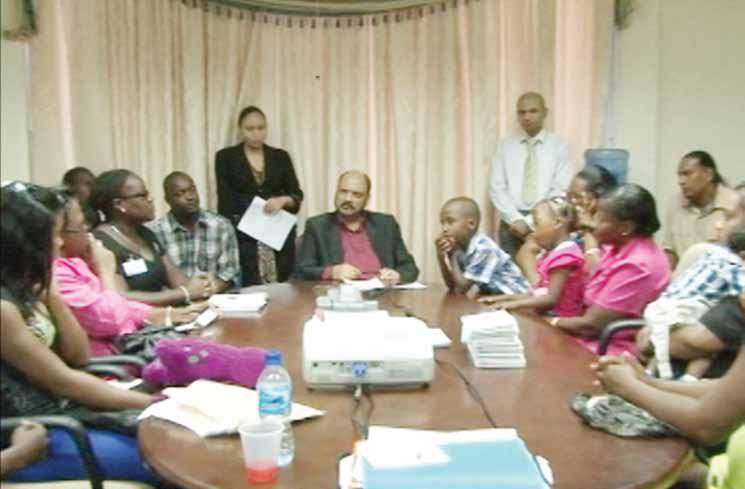









Listen carefully, but don’t allow your emotions to sway you in one direction or another. It would be better to mediate, rather than participate, in an unwinnable debate.

By Bernice Bede Osol

(June 21July 22) (Jan. 20Feb. 19) (Dec. 22Jan. 19)
Show everyone how capable you are. A proposal will bring in extra cash and change the way you live. Don’t let a secret affair cause emotional grief. Honesty is the best policy.

20-March 20)
You can make your dreams come true with a little time and effort. Join organisations that share your interests and expertise. A special person should be treated to a romantic evening.

(March 21-April 19)
Your changing or inconsistent attitude will cause disruptions with the people you deal with personally and professionally. Think twice before you make a sudden move.

(April 20-May 20)
Relax, and enjoy friends and family. Make personal changes that will keep you up to date mentally and physically. A pleasurable trip will entice you, but caution while travelling will be essential.

(May 21June 20)
Set your goals high, and get ready for action. Consultation with experts will enable you to cut corners and reach your destination quickly. Mix business with pleasure.
If you feel uncertain, step back and observe. The more information you gather, the easier it will be to make a tough choice. Refuse to get upset about matters you cannot change.

(July 23Aug. 22)
An emotional matter will skyrocket if you don’t control the situation. Prepare to make last-minute changes if it will help you avoid an unsavoury entanglement. Focus on personal relationships.

(Aug. 23Sept. 22)
Take steps to ensure that things go the way you plan. Don’t leave anything to chance, and take steps to correct any situation that you feel has the potential to head in the wrong direction.

(Sept. 23Oct. 23)
Too much, too fast leads to disaster. Watch what everyone else is doing and protect your interests. Empty promises can be expected. Get what you want in writing, or take a pass.

(Oct. 24Nov. 22)
Let your mind wander and your imagination take over. Take a look at your friendships, lifestyle and home base. An unconventional arrangement will inspire you to be more adventuresome.

(Nov. 23Dec. 21)
An investment opportunity may look like a sure thing, but look before you leap. You aren’t likely to have all the facts required to make an educated choice. Don’t take a risk.
thursday, January 16, 2014

Dentures provided in 72 hours from as low as $4500. Contact Dr B Stuart, 209B Charlotte St, Lacytown. Tel: 225-5034


Music is fun! Register now and learn to play the Keyboard, Guitar, Drums and do Voice Training. Call Foundation 7 on 225-1151/617-4200.

Available: Fresh long-stemmed roses, fresh dried and silk floral arrangements, gift items, bridal boutiques and wreaths. Nesha’s Flowerland. 78 Church Street (opposite St George’s Cathedral). Tel: 2273553/225-3315

Are you suffering from abnormal behaviors, addictions, stresses, or psychosomatic sickness? Feeling suicidal, low self-esteem, loneliness, unloved, anger, conflicts and relationship problems? For appointments call 592-621-0552 from12:00-18:00h Email: healthworldhc@gmail.com


Immigration & Visa Services
We handle all Canadian, USA and UK immigration and visa matters. Self sponsorships, holiday/visitor’s visas, work permits, students visas, family, class, immigration forms, embassy enquiries, appeals for refused cases, US green card lottery, business class waivers, pardons, etc. Get your visa approved. High success rate. Balwant Persaud & Associates. Certified Immigration Consultants, 68 Sixth Street, Alberttown, Georgetown (Between Cummings & Lights Sts) Tel: 225-1540, 622-8308, 655-3105. Email: balwantpersaud@yahoo.ca

Professional Key Shop, 125 Carmichael Street, Georgetown. Phone: 225-3923, mobile: 6213249. We cut any type of key, service and repair all types of locks. Get your extra key today.

Land for sale ½ Acre residential at Yarrowkabra EBD Call 611-1018.

Learn transcendental meditation and experience deep rest eliminate stress, develop creativity, intelligence, focus, concentration and memory. Be healthier, happier and peaceful. Reduce anxiety, improve relationships and longevity and be more successful. A technique that works for everyone. For next introductory lecture call Ashoke on 233-6921,609-3701, email:kashokejp_68@yahoo.com

Da Silva’s Optical. For Your Eyes Only, Look Better See Better. Phillip A Da Silva OD, Shannon L Da Silva OD, Natalie Da Silva OD. 248 South Road, Bourda. Phone: 227-3529, Linden: 444-6376, Corriverton: 3393536, Meten-Meer-Zorg: 275-0322, Grand Cayman Islands: (345) 9431515 for the perfect trendy touch.

Two storey wooden building. Bayroot. Phone: 687-5653
Versailles, WBD: almost brand new five-bedroom house for sale, master room & all rooms self-contained with A/Cs & fans, open concept kitchen/dining/living room, large pantry, office/library room and powder room. Beautiful landscape and wrap around patio. Priced to sell$75M. Phone: 592-624-8704, 592684-9203, 592-220-7809.

Get your home or business spiritually clean to enhance good luck and prosperity. Telephone: 687-5653
Suriname Astrology Palmist and Djuka Healing, the most powerful spiritualist in the world, are you suffering from the following problems (any religion) love, marriage, family, health business, husband and wife relationship, property, court, children, promotion, visa, pregnancy, education, depression, job, sexual, jealousy, enemy, money, drinking ? Also you can have all evil forces destroyed such as black magic, witchcraft, voodoo, obeyah etc and give powerful protection. We also do upliftment for clearing of land, dredging operations strictly in the interior. For private and confidential service call 674-2112.
Dutch Spiritual work. Unite lovers, get rid of evil, enhance prosperity, good luck baths and charm bowu guards, etc. Phone: 220-0708, 6126417, 687-5653
Cleansing of spiritual problems of all kinds. Powerful Ifá protection against evil. Get help to overcome problems with love, relationships, legal, sexual, pregnancy, business, sickness, jobs, enemies, work, money. Call 592-690-1824 from 10:0016:00h Email:anew-life@live.com

One Toyota Raum PNN Series in good condition. $1.5M negotiable. Phone: 696-4695 Toyota Hilux 4x4 Extra cab pickup. Excellent condition, $3M. Phone: 649-0707 or 264-2682

One experienced cook; one female bartender with experience in making cocktails; two waitresses. Contact Accomplished Restaurant & Bar. Lot 9 W ½ Lamaha Street or call 684-5976 or 684-3371
Cashiers - Apply in person to Nirva at 49 Sheriff & Craig Streets, Campbellville. Tel: 227-5771



LLibrary staff
ate Guyanese literary icon AJ Seymour was placed on the National Library’s wall of fame on Wednesday as the nation continues its celebration of his 100th birth anniversary. The Guyanese, poet and writer was a significant force in Caribbean literature. Edited volumes of the pioneering magazine he established and edited, Kyk-Over-Al, were presented to the library and his niece Dr Jacqueline de Weever.
Speaking at the ceremony were Dr Ian McDonald, who took over the editing of the magazine upon Seymour’s death in 1989, and Professor David Dabydeen, editor of the Caribbean Press.
Deserved
In his presentation, Dr McDonald, who represented Culture, Youth and Sport Minister, Dr Frank Anthony, explained that the literary magazine was republished under the Guyana Classic series. “If ever a work deserved the name classic, Kyk-OverAl does.”
According to Dr McDonald, the magazine (named for the early Dutch fort on the Essequibo River)
was founded by Seymour in 1945 and edited by him until 1961. Kyk-Over-Al published the work of significant Guyanese writers of the period — including Wilson Harris, Edgar Mittelholzer, Martin Carter, and Seymour himself, — as well as many writers from other territories of the Anglophone Caribbean. Fiction, poetry, critical essays – Kyk-Over-Al published them all, exploring the work of writers and shaping the emergent “West Indian” literature.
Dr McDonald noted that within that crucial period when literature was undeveloped in Guyana and the West Indies, the “magazine was absolutely essential in the emergence of nourishment of literature”. This has earned the magazine undying fame and it has taken on new life in this generation.
The Caribbean Press in re-publishing Kyk-Over-Al issues as Guyana Classics volumes has played a tremendous role in keeping alive vibrant Guyanese literary treasures.
Dr McDonald noted that there are more than 40 titles in the Guyana Classics series and in years to come, these
AJ Seymour
January 2, 1914–December 25, 1989
Attended Queen’s College on a government junior scholarship in 1928
Married Elma Editha Bryce, a teacher, on July 31, 1937. They had three daughters and three sons.
In 1933, he joined the British Guiana Civil Service, which he left in1962, for a post with the Caribbean Organisation, based in Puerto Rico. He returned to British Guiana in 1965, and worked with the Demerara Bauxite Company (Demba) until 1971. In 1972, he served as literary coordinator for the first Caribbean Festival of Arts (Carifesta), held in Guyana; in 1973, he rejoined the civil service. He retired in 1979.
In 1945, Seymour founded Kyk-Over-Al. Over a 16-year period until 1961, he published 28 issues. During this time, he also edited and published several anthologies.
Starting in 1976, Seymour also wrote five volumes of autobiography.
In 1984, with the help of poet and novelist Ian McDonald, Seymour revived Kyk-Over-Al.
will gradually find their way into the intellectual bloodstream of the nation and keep on refreshing and re-energising it, taking their place alongside the original 28 issues of Kyk-Over-Al.
Literary heritage
Dr Jacqueline de Weever also addressed the gathering, telling them that her instinct in speaking on KykOver-Al is coincidental with
doing so, young people and generations to come will benefit greatly.
Joan Seymour, the daughter of the late poet, expressed her gratitude, noting that she was overwhelmed at the mere fact that after 25 years since the passing of her father, he is still being regarded and remembered as one of the greatest writers Guyana has seen. Seymour lamented the fact that her other sib-
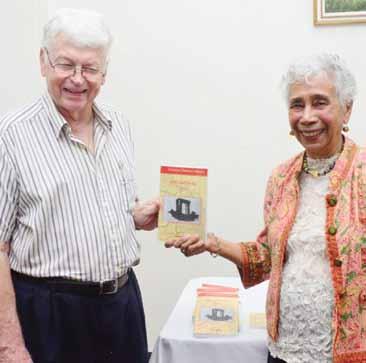
Dr Ian McDonald presenting a volume of the Kyk-Over-Al series to A J Seymour’s niece, Dr Jacqueline de Weever on behalf of Culture Minister, Dr Frank Anthony and Caribbean Press editor, Professor David Dabydeen
the thoughts of others. “Ian McDonald and Al Creighton have both written on about their appreciation. People in general should know where their heritage is, because sometimes in these parts of the world, we think we don’t have a literary heritage or a musical heritage that is talked about in the north.”
Dr Weever stressed that Guyana and others countries do have a heritage and people worldwide need to keep it alive. She explained that in
lings could not be part of all the celebrations for their father’s 100th birth anniversary, although not for lack of desire. The Kyk-Over-Al Classics are available at the National Library for reading and the public is invited to take some time and enjoy them. Additionally, Chief Librarian Emily King is encouraging parents to get involved by taking their children to the National Library and sharing this treasure with them.
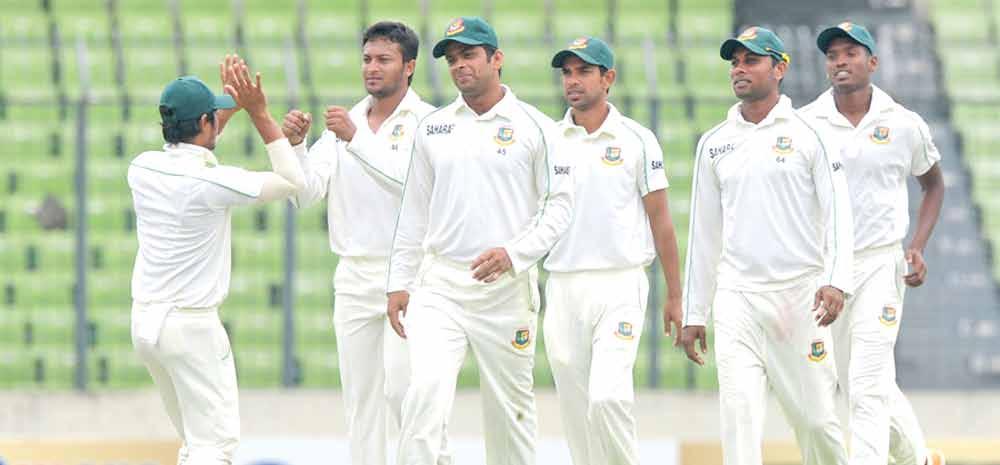
World cricket’s custodians are to consider a revolutionary proposal to bring relegation and promotion to Test matches as a partial sop to the imminent death of the World Test Championship (WTC).
The ICC executive board is expected to consider the proposal at the next round of meetings later this month, the same gathering expected to end any hopes for the WTC due to the reluctance of broadcasters and the lack of certainty around the format of an event that was postponed from its original 2013 launch date and re-launched for 2017 last October.
ESPNcricinfo understands that the board will instead entertain the promotion/relegation plan, which will open up the possibility of nations like Ireland and Afghanistan earning their way into Test matches while at the same time placing the likes of Zimbabwe and Bangladesh on the preci-
pice. It will be introduced on the “no disadvantage” condition that none of the current ICC Full Member nations would lose that status and its financial advantages.
Instead, the Associate nations will have the chance to press for spots at the Test match table on the basis of performance against the lower-ranked Full Members.
This would provide a strong incentive for nations currently playing Test matches to improve themselves while also offering opportunities for Associates to compete at the highest level of the game.
Precise details of how promotion and relegation from Test cricket would work in practice are yet to be revealed, but the concept of play-offs for Test status every four years is believed to be one of the options under consideration.
The idea of dividing Test cricket up into two tiers has been debated for some time, with various noted voices on
the game expressing opinions on its merits.
In 2013, the former England captain Michael Vaughan suggested that the incentives provided by promotion and relegation would also add context and value to Test cricket, perhaps to the point of dissuading some players from fringe nations prioritising the IPL over representing their country at that time of year.
“Just imagine if New Zealand have to come to England and win one out of three Tests to stay in the first division or win promotion,” Vaughan wrote in the Telegraph.
“If there is a proper financial incentive to playing in the first division, like there is in football’s Premier League, then players would be less likely to choose the IPL instead.”
In addition to promotion and relegation, the ICC is expected to consider increasing the financial rewards on offer to teams earning the No. 1 spot on the Test rank-
ings, for which the Test Championship Mace is currently awarded on an annual basis. It is also likely that regulations requiring all teams to play each other regularly will be relaxed - a state of affairs that has already begun to exist.
There have been an increasing number of diversions from the Future Tours Programme, as nations make bilateral agreements that flout the authority of officially agreed schedule. India recently reduced their tour of South Africa to the minimum two Test matches while adding two unscheduled home fixtures against the West Indies, while this week it was confirmed that Pakistan’s series against Australia in October would be downsized from the earlier agreed three Tests to two.
The ICC has previously flagged that promotion and relegation will become part of the landscape for ODIs, coming into effect following the 2019 World Cup. (Cricinfo)
Sergio Aguero scored within a minute of returning from injury as Manchester City thrashed Blackburn 5-0 to book an FA Cup fourthround tie against Watford.
The Argentine striker has been out with a calf problem but came off the bench in the second half to turn and fire in.
By that stage, City were already 3-0 up after Alvaro Negredo scored either side of the break and Edin Dzeko squeezed in at the near post.
After Aguero struck, Dzeko converted Jesus Navas’s cross for his second.
It was another demolition by Manuel Pellegrini’s side, who drew 1-1 with Blackburn at Ewood Park in the original tie and have now scored 99 goals in all competitions this season.
Worryingly for City’s fu-

ture visitors, who include Cardiff next Saturday, they completed their latest rout despite not really finding their best form until after the break. The result means they maintain their 100 percent home record in domestic competitions.
Before the game
Pellegrini had said he was seeking to complete an unprecedented quadruple this season, and he will be encouraged by Aguero’s goalscoring return which took his season’s tally to 20.
Amazingly, he is not

Australia all-rounder
Shane Watson will be rested for the next three one-day internationals against England. It had already been announced that he would miss the second game of the fivematch series, having played in every Ashes Test and the opening ODI win.
Coach Darren Lehmann said: “Given Shane’s workload in the past 12 months, we consider it would be beneficial for him to have a longer break.”
Fellow all-rounder Dan Christian has been added to the squad.
Watson made a two-ball duck and bowled five wicket-
less overs in Australia’s sixwicket win in Melbourne on Sunday. Lehmann said the 32-year-old would “continue his training programme at home in Sydney” and will be available for the series finale in Adelaide on January 26.
Fast bowler Mitchell Johnson was rested for Sunday’s game but returns for the second match in Brisbane on Friday.
Australia fly to South Africa in February for three Tests and three Twenty20s against the side currently top of the International Cricket Council Test rankings. (BBC Sport)
Chelsea have completed the £21m signing of Benfica midfielder Nemanja Matic on a fiveand-a-half-year deal.
The 25-year-old left Stamford Bridge for Portugal three years ago.
“I am very happy for this opportunity. I just want to say I will give my best to help the team and make the Chelsea fans happy,” said Matic.
Chelsea boss Jose Mourinho said: “He has grown as a player in Portugal and has become a fantastic all-round midfielder.”
The Serbia international was valued at less than £5m in January 2011 when he left Stamford Bridge as a makeweight in the deal that saw defender David Luiz join Chelsea from Benfica.

even City’s top scorer. That honour belongs to Negredo, who continued his remarkable first season at the club by heading in before the break and then tucking in Aleksandar Kolarov’s through-ball afterwards to reach 21 goals.
(BBC Sport)
Mourinho quickly identified the defensive midfielder as a key target on his return to Stamford Bridge and the club had no issue with resigning a player they previously let go.
Chelsea will offset the cost of signing Matic with the £16m they will receive from the proposed sale of Kevin De Bruyne to Wolfsburg.
Matic joined Chelsea from Slovakian club MFK Kosice on a four-year deal for £1.5m in 2009. He made two substitute appearances in the Premier League and was an unused substitute in Chelsea’s 1-0 win over Portsmouth in the FA Cup final in 2010.
Matic joined Vitesse Arnhem on loan for the season in August 2010 before moving to Portugal as part of the Luiz transfer in February 2011.
As well as Matic and Luiz, Chelsea also signed Brazil midfielder Ramires from Benfica in 2010 for about £17m. (BBC Sport)
Luke Ronchi played a second consecutive match-winning innings to not only win the Twenty20 series for New Zealand at the Westpac Stadium but also indicate that his flagging international career might have turned a corner. His 51 off 28 balls, a maiden T20 half-century scored at a similar pace to his blitz at Eden Park, and his 68-run partnership with Ross Taylor revived a stumbling chase, ensuring West Indies could not make a late comeback to level the series, like they had in the ODIs. Their efforts backed up clinical spells from Nathan McCullum and Adam Milne, who had conceded less than a run a ball and taken wickets round the halfway stage of West Indies’ innings, to limit them to a par score on a ground with large boundaries. That the visitors got to 159 was only because Denesh Ramdin, who replaced Kieran Powell, also scored his maiden T20 fifty, in his 36th game.
Ronchi had averaged only 15 in 13 ODI innings for New Zealand and it’s arguable that he lasted this long only because Brendon McCullum hasn’t been fit enough to keep wickets. He was Man

of the Match in the first T20 and he began his innings today with New Zealand having slipped from 36-1 to 79-5, needing 81 off 57 deliveries. He was watchful for his first few balls, before moving back into his crease to hoist Nikita Miller’s spin into the stands beyond midwicket. Ronchi then changed the game in the 15th over. With New Zealand needed 54 off 36, he carted Dwayne Bravo over deep midwick-
West Indies innings
L Simmons c Neesham
b McClenaghan 29
J Charles c Guptill b Milne 7
A Fletcher run out (Munro/ Milne/+Ronchi) 40
Dwayne Bravo b Nathan McCullum 12
C Walton c Ronchi b Milne 0
D Ramdin not out 55
A Russell not out 10
Total: (for five wickets; 20 overs) 159
Extras: (2-lb, 4-wd) 6 Fall of wickets: 1-22 (Charles, 3.6 ov), 2-37 (Simmons, 5.5 ov), 3-66 (Bravo, 9.4 ov), 4-67 (Walton, 10.3 ov), 5-137 (Fletcher, 17.4 ov)
Bowling: M McClenaghan
4-0-29-1, A Milne 4-0-222, J Neesham 4-0-39-0, C Anderson 4-0-50-0, Nathan McCullum 4-0-17-1
New Zealand innings
M Guptill c Ramdin b Holder 1
J Ryder c Simmons b Holder 23
Brendon McCullum
LBW Narine 17
R Taylor c Walton b Narine 39
C Munro c Miller b Russell 5 C Anderson c Charles b Russell 6 L Ronchi not out 51
J Neesham not out 14
Total: (for six wickets; 19 overs) 163
Extras: (3-lb, 4-wd) 7 Fall of wickets: 1-8 (Guptill, 0.6 ov), 2-36 (Ryder, 2.5 ov), 3-49 (BB McCullum, 5.2 ov), 4-69 (Munro, 8.1 ov), 5-79 (Anderson, 10.3 ov), 6-147 (Taylor, 17.4 ov)
Bowling: J Holder 3-0-342, T Best 3-0-37-0, Dwayne Bravo 3-0-31-0, S Narine 4-0-18-2, N Miller 3-0-240, A Russell 3-0-16-2
et and glanced to fine leg to take 16 runs off six balls. He continued to score boundaries off Sunil Narine and Jason Holder in the overs that followed, so when New Zealand’s anchor Ross Taylor fell, there was not much more to do.
The equation had come down to 13 off 12 balls and Tino Best began the penultimate over with two dots. Jimmy Neesham then got an outside edge that screamed to the third-man boundary and put the next into the midwicket crowd, before hooking to finish the chase with an over to spare.
Opportunities
Had West Indies taken the numerous opportunities they created, however, they might have finished their tour on a high. Ryder was dropped by Johnson Charles off the third ball of the chase, and went on to make 23 off nine balls; Brendon McCullum scored seven more after he was dropped by Chadwick Walton on 10; and Taylor was on 5 and yards out of his crease when Walton missed a direct hit from cover. Taylor went on to be the steadying hand New Zealand needed, shelving his penchant for leg-side lofts during his 39 off 41 balls.
Unlike West Indies, New Zealand were ace in the field. Martin Guptill set the standard when he ran to his left on the deep backward square leg boundary to catch Charles on the hook. And when Lendl Simmons’s was caught at point, West Indies were 37-2 after six overs with both Bravo and Andre Fletcher yet to score.
Accuracy
Nathan McCullum bowled Bravo and did not concede a boundary in his spell, while Milne combined pace with accuracy to not concede more than six in any of his overs. They reduced West Indies to 67-4 in the 11th over, but the rest of New Zealand’s bowlers were expensive.
Fletcher hit Corey Anderson for two consecutive fours, and Ramdin took him for consecutive sixes in successive overs, and he finished with figures of 4-0-500. Ramdin and Fletcher also ran hard between the wickets - keeping the number of dots in the innings to 41 - and they were eventually separated by a run-out. West Indies had scored 58 off the last five overs, but their top order had scored too few before that and their fielders let them down. (Cricinfo)
British former middleweight world champion Darren Barker has announced his retirement at the age of 31.
The Londoner, who won 26 of his 28 professional fights, dislocated a hip when he lost his IBF middleweight title to Felix Sturm in December, after winning the belt four months earlier.
Barker won British, European and Commonwealth titles and took gold at the 2002 Commonwealth Games.
“I’m so proud and happy at what I’ve achieved,” he said.
“When I won my first national
title as a kid, I could have retired a happy boy then so to have won all the major titles possible... I’m a very, very happy man.”
Barker beat Australian Daniel Geale by a split decision in Atlantic City in August to win the world title but lost it to Sturm in his next fight in Stuttgart.
Trainer Tony Sims threw in the towel in the second round of that fight, and said later: “I don’t really think you’ll see him in a ring again now.”
Barker had surgery on both hips in 2010, after which he was out of the ring for more than 12 months.
Basseterre, St. Kitts – Newly-elected president of the Leeward Islands Cricket Association (LICA), Auckland Hector has identified laying the foundation for future development of cricket as one of his targets during his tenure.
Hector, a former Leeward and Combine Islands wicketkeeper, was last month elected LICA’s president and will serve in that capacity for the next two years.
In an exclusive interview with SKNVibes Sports, Hector explained that for the next two years he intends to put the infrastructure in place for future growth of cricket in the sub-region.
“My presidency is for the next two years. During that period I intend to establish the foundation on which the development of Leeward Islands cricket will be fully established, and I would expect that shortly thereafter we would see some improvement in Leeward Islands cricket.
“It is going to take quite a lot of dedicated work. It is going to require the full commitment of the players and my focus will really be on youth development. That is why I am saying it is not going to happen in the next two years.”
He informed that a development strategy would be drafted within the next three months.
“In that respect we are proposing to establish a development plan for the Leeward Islands over the next five years and that plan we hope to establish over the next 90 days.”
Hector also spoke of the some of the implementations thus far since taking office.
“We have since appointed a Chief Executive Officer who is presently working from Antigua. He is Derrick Nicholas.
“We have already set up some committees; one is a Finance and Fundraising Committee which is chaired by the Vice-president of the WICB, Val Banks from Anguilla. We have also set
up a Cricket Committee, which is chaired by the president of the St. Maarten Cricket Association and it has three other members including Junie Mitcham, who is the Territorial Development Officer.
“We have appointed the Selection Committee that is chaired by Ridley Jacobs out of Antigua. It has Livingston Harris of St. Kitts presently residing in the USVI and the other is Lawrence Carty from Anguilla.”
Hector stated that the LICA Secretariat would be based in St. Kitts in an office space provided by the government of the Federation.
He also disclosed the others who make up the Executive of LICA.
“The Secretary is Robert Jeffers and Sam Franks is the Treasurer, while the Vice President is Ralph Hodge and the WICB representative is Enoch Lewis from Antigua.”
Discussion
Hector revealed that the Cricket Committee is currently is discussion to plan for this year’s Leeward Islands Tournaments.
“We have asked the Cricket Committee to begin to plan the schedule for Leeward Islands Tournaments so we can give the countries time to prepare.
“What we intend to do is not only establish the times for Leeward Islands cricket for this year but also for years to come, so that the countries may know well in advance when the Leeward Island tournaments are scheduled.” (www.windiescricket.com)
Promoter Eddie Hearn said the fighter was “an exemplary role model” and a “wonderful ambassador for boxing”.
He added: “That night in Atlantic City was for me, as many of us, one of the greatest of my life but what makes me happier is that Darren can leave the sport in peace.
“He can retire financially secure... knowing that he achieved the greatest dream of all and no-one can ever take that away from him.”
Barker dedicated his entire career to his brother Gary, who died in a car crash aged 19 in 2006.
(BBC Sport)

Darren Barker
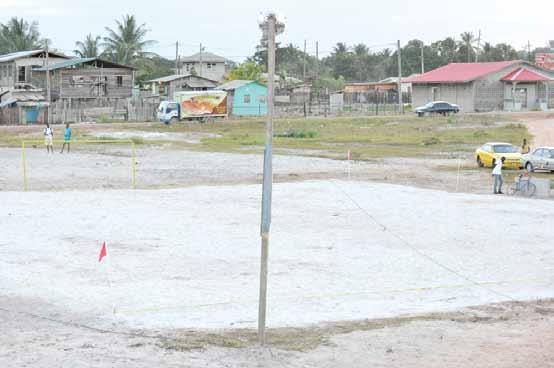
Beach football in Linden recently received a boost with the commissioning of a beach football facility at the Bayroc Sand Reserve’s Sports Club and Fitness Centre ground, Wismar.
The venture was made possible after the Bayroc/ Cool Runnings Beach football club was awarded a grant of $1 million last year through the Ministry of Culture, Youth and Sport’s community grounds development programme.
The facility had been under construction since last October. The project saw the construction of the 50ft concrete bleacher, a 30ft concrete wall for advertising and signage and the laying of the sand pitch.
It has the capacity to accommodate at least 300 spectators. President of the Cool Running football club, Rollin Tappin, who also worked along on the project, said the facility will certainly boost the growth and development of not only beach football, but also beach volleyball in the community.
He noted that while it has been a challenging cou-
support towards the development of sport throughout Guyana. She also complimented the organising committee for completing the project.
Also in attendance was Region 10 Chairman Sharma Solomon, who spoke of the sacrifice it took to complete such a project and a need to preserve the facility. Technical Development Officer of the Guyana Football Federation, Lyndon France, also gave brief remarks on behalf of the local governing body for football.
Meanwhile, in the lone friendly match played in the evening, Cool Runnings needed kicks from the penalty mark to overcome the Coomacka Youths after reg-
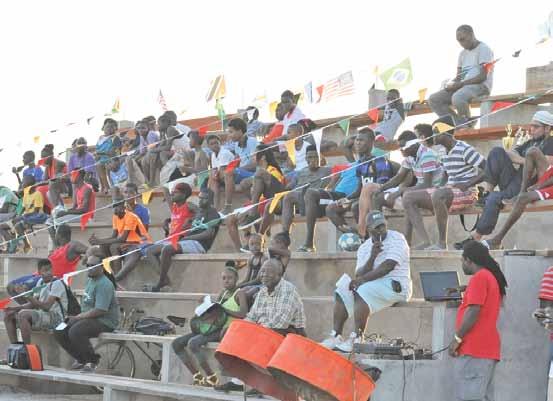
ple of years for the sport in Guyana, he is optimistic about the future of the game and is confident that the country will make its mark in the discipline internationally.
At a simple commissioning ceremony, Leslyn Boyce representing the Ministry
of Culture Youth and Sports declared the Bayroc beach football/volleyball facility open.
In her feature address to the gathering, she apologised for the absence of Sport Minister Dr. Frank Anthony, and emphasised the ministry’s continued
ulation and extra time ended 4-4.
Jermaine Grandison with two goals led the scorers, while Marmarlaque Davidson and Ron Fiedtkou scored one apiece for Cool Runnings, while Kerron Daw scored a double for Coomacka.
Recently crowned senior national chess champion Wendell Meusa captured the first place trophy and cash prize among the seniors, while Anthony Drayton secured the top spot among the juniors at the end of the Trophy Stall one-day rapid chess tournament on Sunday at the Carifesta Sports Complex, Georgetown. As the year in chess began, the tournament saw some 20 top junior and senior chess players seeking to crush each other over the chessboard in a 20/20 format. Players were allotted
20 minutes in each of the seven rounds to force checkmate or their opponent’s resignation. Meusa suffered his only defeat to Kriskal Persaud of Berbice, who came in second. Hemraj Sanichar brought third, Alexander Duncan copped fourth and Glenford Corlette settled at fifth place to close off the winners’ group among the seniors.
Among the juniors, Omar Britton

Grant secured the second spot followed by Ron Motilall third, Saeed Ali fourth, Davion Mars fifth and Carlos Petterson sixth. The best Under-16 player was Othneil Lewis of Queens College. The just concluded tournament would be the last being contested by Anthony Drayton as a junior player who, by virtue of age, would be playing in the senior category in future tournaments.

What criteria were used in selecting individuals for
Dear Editor,
It is often said that it is not doing things that matters, but rather the way it is done that matters most. With that said, I make reference to the above caption as it relates to the publication of an article in a local newspaper on January 8, headlined, “Golden Jaguars TD, head coach to be named soon – GFF president Christopher Matthias.”
The article made mention of four individuals who were the contenders to fill the vacancy of head coach of the Golden Jaguars. The names included Wayne Dover, Dwain Babb, Brian Joseph and Denzil Thompson of Alpha United, Santos, Milerock and Guyana Defence Force (GDF), respectively.
From a layman’s standpoint this can be interpreted to be selection for the senior national team, with three of the four individuals emanating from Georgetown and the other, from Upper Demerara’s Milerock. I am curious to know what level of certification and qualifications were required in order for these potential candidates to be shortlisted.
Finally, with the sad state of local football presently, albeit the absence of a senior league competition, in most associations, I must ask, how can the consistent performance of a coach be evaluated as a worthy contender to fill the vacancy as head coach? Would the next best option be the Guyana Football Federation (GFF 16) team premier league, and the success of his club?
Additionally, the recently concluded Georgetown Football Association (GFA) Banks Beer Cup KO ought not to be brought into the equation, since meaningful success of a club cannot be measured by its financial strength to attract foreigners as guest or loan players. Can Milerock afford it, or will GDF encourage it?
Lastly, was the submission of a training programme by the contenders a prerequisite? And why is it that a major hurdle is being cleared, whereby no coaching assignment at the junior level was administered but rather at the senior level?
Respectfully yours, Lester Sealey
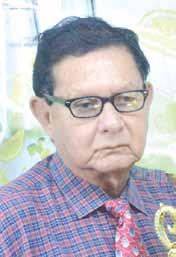
The final point standing of the seniors after seven rounds read: Wendell Meusa (six), Kriskal Persaud (5.5), Hemraj Sanichar (five), Alexander Duncan (4.5) and Glenford Corlette (four).
The scores of the top junior players read: Anthony Drayton (5.5) and Omar Britton Grant, Ron Motilall, Saeed Ali and Davion Mars (four each). Carlos Petterson accumulated three and a half points, while Othneil Lewis recorded two.
The prizes were presented by Renuka Chattergoon, representative of the Trophy Stall.
Registration for the Kennard Memorial Turf Club (KMTF) rescheduled Boxing Day horse race meet will close on Sunday and, according to president of the KMTC, retired Chancellor of the Judiciary Cecil Kennard, no late entries will be accepted.
The meet is scheduled for January 26 at Bush Lot Farm, Corentyne, Berbice. It was slated for January 19 after the original Boxing Day meet was postponed due to the inclement weath-
er.
The programme has been reduced to a seven-race meet, while the feature race remains for A and Lower horses. However, the prize money for the winner has been reduced to $1 million. The co-feature race will now be for horses categorised F1 and Lower for $400,000 over six furlongs.
Other events billed for the day are the G3 and Lower for a $300,000 winner’s purse over six furlongs. The H and Lower and the Three-year-old race from Guyana bred horses will run over seven and six furlongs respectively. Both races carry a winning tag of $250,000. Rounding out the roster is the J3 and Lower and J1 and Lower over six furlongs. The winners will be collecting $150,000 and $200,000 respectively.
The race is being conducted under the rules of the Guyana Horse Racing Authority and, according to Kennard, the rules of the local governing body would be rigidly enforced.
By Rajiv Bisnauth
Experienced International Amateur Boxing Association (AIBA) and now AIBA accredited referee/judge, Trinidad’s James Beckles, on Wednesday commenced a five-day referees/ judges seminar for local boxing officials at the Guyana Olympic Association headquarters on High Street, Georgetown.
The seminar, which has been made possible by the Guyana Boxing Association (GBA) with the support from Director of Sport, Neil Kumar, will conclude on Sunday with a closing ceremony at Olympic House.
Kumar, in declaring the seminar open, said the initiative by the GBA is of utmost importance to the development of the sport in Guyana.
“I want to congratulate GBA for organising this course because I think boxing is one of the better sport disciplines both at the amateur and professional levels,” Kumar said.
He urged the participants to make full use of the seminar in order to become better referees and judges.
Speaking also at the opening ceremony, president of GBA, Steve Ninvalle, informed that the seminar is geared towards improving the standard of refereeing and judging locally, and also
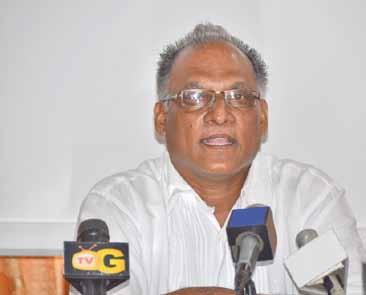
to bring those officials up to speed with several changes made to the rules of the sport internationally.
Ninvalle said that Beckles has been of immense assistance to the development of local officials and his input is always welcome. He said that on his previous visit, Beckles had imparted valuable knowledge towards the improvement of local officials, adding that this seminar will be no different.
“I would like to urge you the participants to take in all the information Mr. Beckles has to offer, it can only result in us becoming better referees/judges and in Guyana doing better at amateur boxing throughout the international arena,” the GBA president said.
Beckles will deal extensively with the computerised scoring process in an effort to acquaint his local counterparts on the intricacies of that aspect of their job.
This is Beckles’ third visit to Guyana on a similar expedition, but this time he will be tasked with the role of briefing local officials of the changes in the sport following the decision of AIBA officials that boxers could retain their Olympics eligibility despite boxing professionally.
Technical Director of the GBA, Terrence Poole, said the first three days of the seminar will be held at the Olympic House, while the final two days will be held at the Andrew “Six Heads” Lewis gym with the practical sessions.
must “fall back in love with bowling”, says Fraser
England paceman
Steven Finn has fallen “out of love” with bowling but will get back to his best, says Middlesex director of cricket Angus Fraser.
Finn, 24, was the only member of England’s Test squad not to play in the 5-0 Ashes defeat and has been sent home from Australia early to “work on technical aspects of his game”.
“I’ve every confidence he will get back to his best,” Fraser told BBC Sport.
“He is a man trying too hard. He will work his socks off to get it right.”
Fraser, a former England seam bowler, was involved in the decision to send Finn home and said the Middlesex player would be given two weeks off to “clear his head”.
Finn has taken 90 wickets in his 23 Test matches, the last of which was the 14run win over Australia at Trent Bridge in July.
He took 11 wickets in his two first-class tour matches in Australia but an economy rate of 4.44 contributed to his lack of Test action.
“Steven has worked to get things right, turning out

an hour early with coaches, and it’s not easy when you’re getting further and further away from where you want to be,” added Fraser, who played in 46 Test matches and 42 one-day internationals.
“It can become a job at times rather than the thing you dreamed about as a young cricketer. We’ll work with England to get him back playing cricket and enjoying himself.”
After sitting out the Ashes series, he was also overlooked for the first one-day international in Melbourne.
“It’s hugely frustrating for Steven because he wanted to play a major part in
Australia, but sometimes the harder you try the worse it gets,” added Fraser.
“Working every day to try and win selection, with people asking where he is and what he’s doing, is not the ideal environment.
“I think the main thing is that Steven falls back in love with bowling. I’ve seen bowlers run up in tears before.
“But Steven just needs to love bowling for the sake of bowling again - not to win selection for the next ODI or the first Test of the summer.”
England’s next Test is the first game of a twomatch series against Sri Lanka, beginning on June 12.
Inclement weather has prompted the Guyana Defence Force (GDF) to postpone its 48th anniversary seven-a-side rugby tournament, which was set for Wednesday at the Camp Ayanganna ground.
President of the Guyana Rugby Football Union (GRFU), Peter
Green, confirmed that the competition was off for Wednesday, but refrained from announcing a new date.
The day/night event would have pitted Guyana’s top clubs in the University of Guyana Wolves, the Hornets Rugby Club, the Caribs and the GDF.
Wcoach Ottis Gibson took heart from the fight shown by his side despite coming up short in the final T20 against New Zealand in Wellington. The visitors are homeward bound after a dismal tour during which they could only register two wins.
“We thought 170 might have been a good score so you could probably argue that we were 10 runs short. [Denesh] Ramdin was outstanding. He played really well tonight for us,” Gibson said. “You can work with 160 in T20 cricket and we tried. But you have to give credit to the way Ross [Taylor] played and then the way [Luke] Ronchi came in and took the game away from us. In the end, it’s a little bit disappointing to lose but I’m pleased with the effort.
“They gave us a lesson in how to chase in this format. I think in the first game we played, they got a few too many runs and we didn’t chase properly at all. We panicked and tonight the way Ross played, steadying the ship and then setting it up for somebody to come and play the way Ronchi did, he played a really good innings”
West Indies complicated their jobs by failing to convert as many as three opportunities on the field, including a botched attempt at running Taylor out when he was only five. He added 34 more runs to his tally and was crucial in keeping the chase on track for New Zealand. “We dropped a few catches in the field also but then the guys picked themselves up,” Gibson said.
However, the GDF team has been in top form of late going undefeated in 2013 in the seven-a-side version of the competition. On the distaff side, the Hornets and Caribs would have gotten a chance to showcase their talent in the hope of developing the women’s side of the game.

“In the night, the weather turned, the temperature dropped - pretty uncomfortable temperature for us”
Gibson believed his team will fare better at home against Ireland and England under familiar conditions after back-to-back disappointments on tours to India and New Zealand.
“I don’t think all is lost. We are missing a lot of key players and there are players who will come in and strengthen us in the next couple of weeks,” Gibson said. “I’m looking forward to the mini-series versus Ireland, England next month and of course, the T20 World Cup.
“We have lots of cricket to be played still. We’ll see how [Chris] Gayle is doing and there’s [Kemar] Roach and Ravi Rampaul to also come back. I’ll have a look to see how [Kieron] Pollard is doing also and we can look
forward from there.” He also referred to Marlon Samuels, Darren Sammy and Darren Bravo as crucial absentees who would reinforce his unit once fit.
When asked if the revolving door of players used in the recent trips abroad destabilised his team, Gibson dismissed the notions as well as those suggesting his players were homesick for such a lengthy period of time.
“No, I don’t want to get into that sort of stuff. There are some of us who have been here [on tour] longer than others and at the end of the day, this is what you sign up for. We knew it was going to be back-to-back tours and it was going to be tough. You get yourselves up for the big events. We gave guys time off so they can keep their batteries topped up,” Gibson maintained. (Cricinfo)
Manchester United manager David Moyes has accepted a misconduct charge and is expected to be fined by the Football Association.
The charge concerned comments made after the 2-1 Capital One Cup semi-final first-leg loss at Sunderland. Moyes, 50, said his side were “beginning to laugh at referees” for their “terrible” decisions.
“We’re having to play them as well as the opposition at the moment,” he added.
The Scot had until 18:00 GMT on Wednesday to respond to the charge, and has requested not to attend the hearing.
Referee Andre Marriner awarded a second-half penalty to Sunderland, which Fabio Borini converted, to confirm United’s third defeat in a week - the first time they had suffered three straight losses since May 2002.
Defeat at Sunderland followed losses at home to Tottenham in the Premier League and Swansea in the
third round of the FA Cup. The former Everton manager was also angered by a decision during the Spurs defeat, saying it was “scandalous” United were not awarded a late penalty after goalkeeper Hugo Lloris collided with United’s Ashley Young in the penalty area.
Liverpool manager Brendan Rodgers was recently fined £8,000 over comments he made about referee Lee Mason after his side’s defeat at Manchester City. (BBC Sport)