


“W
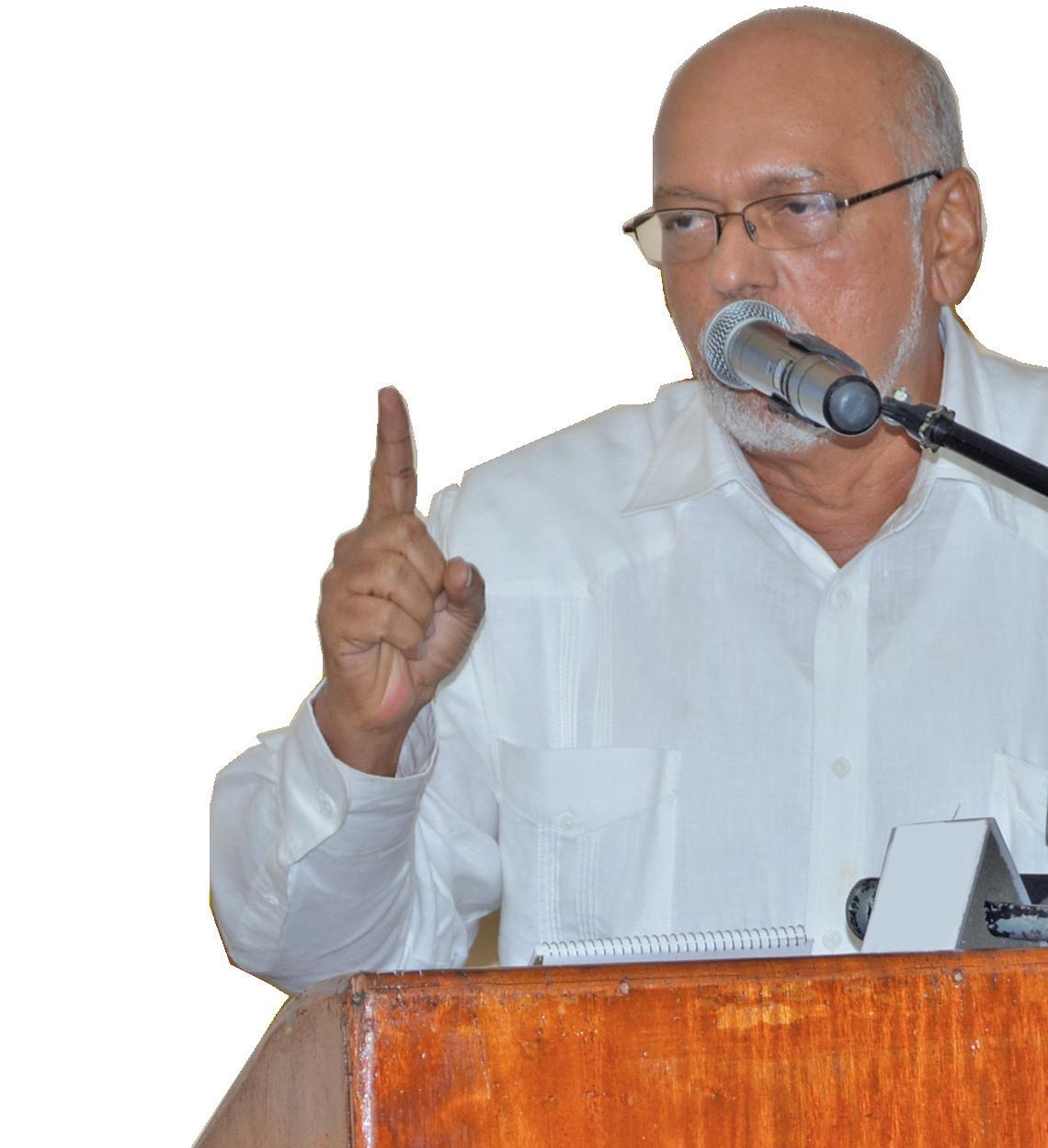
e do not take threats, if the Opposition wants to pass a no-confidence motion, let them pass it and we will be ready to deal with the consequences of that” – President Ramotar
Corilla cancer research prospects good – Dr Cummings
Total serious crimes down, but murders and armed robberies up
Body in cemetery identified, died from poisoning
Some UG groups endorse hiking of tuition fees




THURsday, jUne 26, 2014| gUyanaTimesgy.com
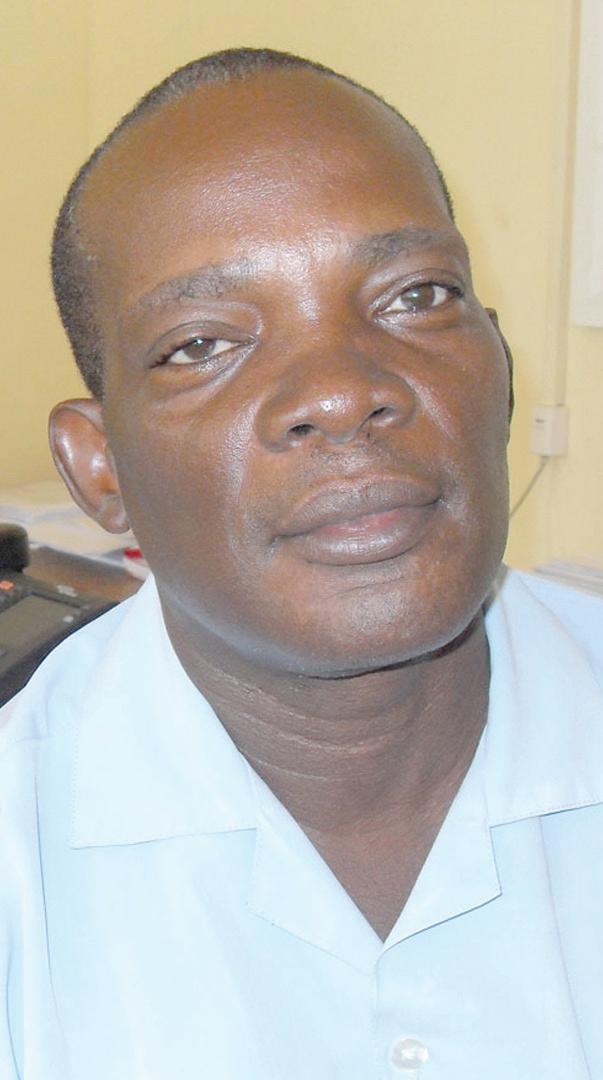
The bitter-tasting vegetable, Corilla which is a popular Guyanese dish could become the leading fighter against cancer, as it is showing good prospects under laboratory experiments.
This was revealed to Guyana Times by Dr Emmanuel Cummings in an exclusive interview on Tuesday evening. According to Dr Cummings, while there is a high potential of the vegetable becoming a leading fighter against the disease, it is much too early to determine the outcome.
“The research is a good opportunity for us to investigate some of the natural remedies and we are particularly looking at cancer because according to the data in Guyana; several Amerindian communities in Guyana, cancer is a major cause of death, but this is just the preliminary stage; the experimental stage, and this will be lasting for 18 months; so it is much too early to say what is going to be the outcome or to make any definite disclosures. What I can tell you though is that it has
good potential and several others researchers had embarked on a similar project and had good results”, the researcher said.
He noted that he will be making a disclosure on the findings and progress thus far between October and November of this year, but however detailed the processes involved in the research.
“The investigative process will entail the growing of a variety of cancer cells including that of the breast, brain and prostate, and then testing these with known anti-cancer drugs that are well established and accepted. The effectiveness of these drugs will then be compared to the anti-cancer properties of the Momordica Charantia [Corilla]. This will be after we would have isolated and purified the active ingredient so that we can compare its effect on cancer cells in relation to other known anti-cancer drugs,” he said.
The local scientist over two months ago, had received a US$329,000 academic grant which falls under the University
of Guyana Science and Technology Support Project (UGSTSP), to examine the Momordica Charantia, which is popularly known as Corilla in Guyana , to ascertain its capability in combating cancer.
The UGSTSP is being fuelled by a US$10 million loan from the World Bank to the Government of Guyana. It is being executed by the Education Ministry and is intended to encourage the generation of knowledge products which will directly contribute to Guyana’s Low Carbon Development Strategy (LCDS) and support the development of a broader research and knowledge generation.
Dr Cummings, who formerly held the position of Dean of the Faculty of Health Sciences at the University of Guyana (UG), noted that the focus on cancer is crucial, since it is currently the third leading cause of death in Guyana. He has already done a number of research projects on Corilla and has been able to establish the notion that Corilla has anti-diabetic properties. It is slowly being recognised as having anti-cancer properties as well.
The research work is currently being carried out at the University of Central Lancashire in England with Dr Cummings being the principal investigator. A young lectur-

er, Karishma Jebu, who heads the Pharmacy Department at UG, will be acting in the capacity as co-investigator.
The external collaborator to the investigation is Professor Jaipaul Singh of the University of Central Lancashire, who has agreed to have the investigations conducted in his laboratory. Dr Cummings expressed that he has high expectations from the project.
“We are hoping that this project will give us the opportunity to research the Momordica Charantia to look at its anti-cancer properties and hopefully, Guyana, the University of Guyana can come up with an anti-cancer drug that can also be accepted in conventional medicine. We are in for the long haul; this is not just an experiment we are doing and then close the book. We are looking to have it patented and then move on to clinical trials and then eventually accepted”, said an optimistic Dr Cummings. The experimental aspect of the project is expected to be completed by February 2016.
Only two aspects of
... some aspects still being worked out
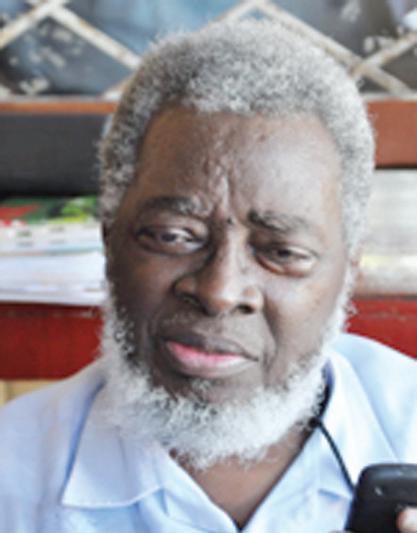
Head of the Presidential Secretariat Dr Roger Luncheon says that the contentious US AID Leadership and Democracy (LEAD) Project has received the approval of Cabinet but not in its entirety.
Speaking at a post cabinet press conference on Wednesday, Luncheon told reporters that coming out of the last Cabinet meeting on Tuesday the decision was made to approve two components of the project. The two components that received the approval of the government dealt with matters relating to the strengthening of the National Assembly and Civic education and support for the Local Government elections.
He explained that those two components were the “nuts and bolt” of the project and were needed so the project could start.
He said that the US Government through the Ambassador Brendt D Hardt has since been notified of the approvals from the government by way of the Minister of Foreign Affairs Carolyn Rodrigues-Birkett.
However, Luncheon pointed out that some aspects of the projects are still being deliberated and have not received the approval of the government. Such components included “women and youth strengthening and participation in national activities and support for political parties.
The HPS explained that those areas have not been approved as yet because they “Have not being brought into the ambit of a specific component around which mutually accepted agreements can
be made. The project is what is approved, what is not approved...lots of things are part of the project.”
US Embassy in Georgetown Public Affairs Officer Tabitha Fairclough disclosed to Guyana Times in a recent interview that the decision was reached over a week ago between President Donald Ramotar and Ambassador D Brent Hardt, who had met privately.
Following the controversy over the project Ambassador Hardt and Dr Luncheon had made a joint announcement to members of the media at the Office of the President, that the project, which had been in the pipeline since 2009, would be put on hold.
The Guyana Government had publicly chastised the US for pursuing the LEAD Project despite its strong objections. The Government had posited that the project’s design and implementation was unacceptable and that the action taken by the US Ambassador was a clear departure from protocols and conventions governing interstate relations, and deserved full condemnation.

Police on Wednesday said there has been a five per cent reduction in serious crimes during the period January 1 to May 31, when compared with the corresponding period in 2013.







According to a release issued by the Police, there were 1523 reports of serious crimes between January 1 and May 31, when compared to 1605 for the same period in 2013. While there was a drop in serious crimes, there were increases in four of the serious crimes monitored. Among the serious crimes policed by the Force are murder, robbery under arms, robbery with violence, robbery with aggravation, larceny from the person, break and enter and larceny, burglary, rape, and kidnapping.
As the Force continues to work tirelessly at improving the overall security of the nation, it reiterated that the public can take various steps in order to avoid being easy targets for criminals. These include persons being alert at all times, by paying attention to strange vehicles and individuals in their respective communities and even businesses close to their homes.
They are also asked to record the registration numbers of strange and suspicious-looking vehicles in their communities. If the opportunity presents itself, taking photos is recommended. These can be forwarded to the Force via BlackBerry Messenger to BB PIN 2828B269 or 79B17F8B and/ or by calling or texting the information to telephone numbers 623-6072 or 623-
6068.
The public is also encouraged to take note of the physical description of suspicious-looking individuals; be extra alert for suspicious-looking vehicles and persons near your home once you expect overseas guests. The Police are also encouraging the use of debit cards, cheques and other non-cash instruments to transact businesses when needed.
On the other hand, businessmen and women are also urged to request from potential employees, certificates of good character and to make use of cash transport services and surveillance systems on their premises, as far as possible. The Police are also warning against leaving valuables such as
cash, laptop computers, important documents and other such items in parked vehicles. More importantly, the public is warned against wearing excessive jewellery and carrying excessive electronics.
Road fatalities
Meanwhile, with respect to traffic offences for the same period, there have been 44 road fatalities from 41 accidents thus far.
Other categories of accidents have seen a reduction unto the end of May this year, in comparison to last year. Pedestrians have been the main road users affected, with at least 15 people losing their lives at the end of May. In addition, seven motor cyclists, 10 pedal cyclists, four drivers and eight passengers of motor vehicles also lost their lives during this period. Speeding continues to be a major contributing factor to fatal accidents and was the cause of 28 of the 41 fatal accidents recorded at the end of May.
Traffic enforcement by the Police has resulted in a total of 32,997 cases being made against errant motorists unto the end of May; of this total, 8781 cases were for speeding. In addition, 137 persons were charged after they were found soliciting passengers for public transportation vehicles, and 178 cases were made against motorists who failed to give the right of way (to approved vehicles sounding siren). Meanwhile, 13 persons lost their lives from 11 accidents on the roads in June, thus far.
The body which was found in La Repentir Cemetery on Tuesday afternoon was positively identified as 38 yearold Jermaine Marshall of Freeman Street, East La Penitence, Georgetown.
According to information received, the relatives turned up at the Lyken Funeral Home and identified the man whose body bore no marks of violence. At the time of his discovery, there was a Tropical Mist bottle nearby which may have contained a poisonous substance.
This was confirmed on Wednesday following the post-mortem which gave the cause of death as pes-
ticide poisoning. The post mortem examination was performed by Dr Nehaul

Singh at the Georgetown Public Hospital.
Jewel Marshall, sister of the dead man told Guyana Times on Wednesday that the last time she saw her brother alive was on Monday. While she was hesitant to speak, she said that the family is still to determine why he committed suicide. He was found clad in a green T-shirt, black pants and black sneakers. A hat was also found in close proximity to the body. Initially, there was speculation that the man may have committed suicide since he was frothing through his mouth.



Editor: Nigel Williams
Tel: 225-5128, 231-0397, 226-9921, 226-2102, 223-7230 or 223-7231. Fax: 225-5134
Mailing address: 238 Camp & Quamina Streets, Georgetown
Email: news@guyanatimesgy.com, sales@guyanatimesgy.com, letters@guyanatimesgy.com
Private schools have been making strides and the recent National Grade Six Assessment (NGSA) points in this direction, but it also revealed a worrying development in the education sector regarding public schools. This year, for the first time in the history of the NGSA and probably its predecessor, the Secondary School Entrance Examinations (SSEE), commonly called Common Entrance, nine students from private schools secured places in the top 10.
Aside from producing nine of the country’s top students, data provided by the Education Ministry indicated that 106 of the 168 candidates in the top one per cent were from private schools. Perhaps, the performance of private schools also played an instrumental role in the improvement of the results this year, as the Ministry did not provide a breakdown in terms of the outcomes of private schools compared to public schools.
The success of private schools can be attributed to their demand for accountability from their teachers, as at the end of the day, they have a reputation and image to maintain, and both are vital for their survival. Thus, their teachers are driven to perform; but the difference between private and public schools is that the same level of scrutiny is often woefully absent in many public schools.
What should be noted too is that while many teachers in the public schools are dedicated to their jobs, there are also many who display scant regard in making a difference in their charges’ learning outcomes, ultimately affecting the images and reputations of the schools in which they teach.
The sad reality is that though there is a system of monitoring and evaluation in the public school system, it is not scrupulously implemented, even though it should be a routine activity overseen by the Ministry, especially in low-performing schools, many of which needed more resources and guidance.
As pointed out before, the huge failures in the primary school system are due to poor monitoring, and undoubtedly if scrutiny were a hallmark of the Ministry and all public schools, particularly those at the bottom of the ladder, the results at this year’s NGSA would have been significantly better.
But the culture of complacency at the Ministry seems too steep to overcome and event some of its top leaders appear unable to acknowledge their shortcomings.
This was evident in the comments of the Chief Education Officer Olato Sam, who remarked thus when questioned on private schools outperforming public schools: “We are not troubled by what emerges now with regard to the Grade Six Assessment results, largely because it is almost to be expected.”
One can reasonably assume that the Chief Education Officer was expressing some satisfaction in the improvement of the NGSA results, but to say, “We are not troubled”, is a bold suggestion that private schools are viable alternatives public schools.
And parents who want the best education for their children can “expect” the private schools to deliver, a view which happens to mesh well with many affluent and not so affluent parents who have lost faith in the public school system. It was unfortunate that this view appeared to have been supported by the Minister, who added that students have to write entrance examinations to gain admission to private schools, and teachers who do not perform are dismissed, and further suggesting that this does not seem to happen in the public school system.
The truth of the matter is that the entrance examination is administered to gauge students’ learning ability. Thereafter, they are subject to a strict study regimen, and the Parent Teacher Association (PTA) is an integral part of private schools’ governance. Why is it that the same cannot happen in public schools? And why is it that every teacher in the public school system cannot be held to book?
One would shudder to believe that with more than 70 per cent of trained teachers in the public school system, a large number of students are still performing miserably.

Dear Editor,
In a recent article carried in Guyana Times which published a picture of the delegates of the Mister and Miss Talented Teen Competition, I write to express my utter disappointment with the organisers of the pageant as these young ladies were clad
in skimpy dresses which gave the appearance of going to a club rather than a pageant.
After all, the girls are still teenagers and should be dressed according to their ages. The organisers of the pageant should aim to groom these teenagers into
young women and men who can make positive changes to society. By having these young ladies dressed in little dresses, they send the wrong message out to the public as it relates to pageantry.
Pageantry can be used as a body to empower our young women, but it must
be monitored. If we send our daughters out to pageants in skimpy dresses which are not appropriate for their ages, what message are we really sending to them and to those in the wider society?
Yours sincerely, Lisa Ahmad
Dear Editor, The Inter-Religious Organisation (IRO) sends greetings to the Guyanese Muslim population which will be welcoming the Holy Month of Ramadan around June 29.
For Guyanese Muslims, Ramadan is a welcome month, in which 30 days are spent in fasting from early morn to the setting of the sun. The nights are spent in prayers in congregation in the mosques throughout
Guyana. The breaking of the fast at sunset is a communal affair, and brothers and sisters of all races, cultures and creed gather to share in the evening meal.
The Month of Ramadan is known as the Month of the Holy Quran, when God Almighty revealed the text upon His Beloved Prophet Muhammad, peace and blessings unto Him. The Holy Quran encompasses the laws and rules that govern the liv es of Muslims.
Moreover, Ramadan is a month where Muslims elevate themselves, in the practice of patience, piety, discipline and charity. It is intended that these virtues obtained, will be practised and observed for the other months of the year.
Ramadan is a month in which Muslims take stock of their earnings and assets, and subscribe to the payment of their dues as Zaakat. This is distributed to the poor and needy of soci-
ety, not only to improve the quality of their lives, but to have the effect of giving assistance that can later contribute to self sustainability.
The Month of Ramadan ends with the sighting of the new moon, and a day of Eid celebration for one’s dedication to the will of God, submission and elevation of a spiritual nature of the soul.
Sincerely yours, Jeniffer Dewar IRO
Why let the calendar determine when we should retire?
Dear Editor,
The recent letter titled, “Raising the Retirement Age”, written by my longtime friend and highly respected professional colleague in Human Resources Management, EB John, brought to the fore, once more, the issue of an appropriate retirement age for Guyanese who are variously required to retire at 55 or 60 or 65 years of age.
Given the paucity of skills, experience and competencies required for the development of Guyana, I am, as I have always been,
amazed at our rigid adherence to the practice of allowing the calendar (that is, a pre-determined, specified date) to decide when we should retire as opposed to basing the retirement decision on more relevant factors such as health, ability, willingness and performance appraisal, etc of the staff member and the continuing need for his/her competency.
Generally speaking, there are certain common characteristics among various age groups. Similarly, there are significant individual differences within
each age group. Simply put, there are some 65+ years old persons who are fitter, more efficient/productive/effective than their 55+years old counterparts. Similar comparisons can be made among septuagenarians and octogenarians.
In recognition of these discernable differentials and for good commonsensical, pragmatic, needs-based considerations, more advanced companies/countries with better-endowed human resources have already opted for open-ended retirement age to take advantage of op-
tional retirement after age 60 years. I believe Guyana will benefit significantly from a more need- and performance-based approach to retention and retirement of competent staff. (I do not wish to personalise the debate, but in all humility, I am proud of the fact that at 77 years old, I feel and know from several unsolicited feedbacks that I am as productive and effective as I was decades ago!)
Sincerely, Nowrang Persaud
Seven students from the Georgetown International Academy wrote letters at their school explaining problems they have taken notice of in Guyana and possible solutions they have. These children, as young as 10 years old, have been to at least one to seven different countries prior to the age of 10. Guyana Times is pleased to publish them.
Dear Government,
A problem in Guyana that is affecting the public is garbage on the roadways. This problem affects the public is that the people get sick, people have to step in the garbage and people don’t want to clean anymore.
I think the most effective solution is to clean the
Dear Government,
A few problems in Guyana that are affecting the public is chemicals from mining are getting into the rivers. It can kill animals which live in water and water animals may go extinct in Guyana.
This problem affects the public because people are breathing the chemicals in the air. Another problem is that chemicals are mixing into rain water and are forming pools of chemicals.
Dear Government,
A problem that is affecting the public in Guyana is robberies. I don’t feel unsafe, but it makes people scared.
This problem affects the public because people may get shot by robbers and die. People may also lose money and not have money to buy food and water, and people may feel unsafe.
I think the most ef -
roads. A pro to this solution is every day trucks have to clean the garbage. A con to this solution is that people are putting garbage everywhere.
Thanks for reading.
Sincerely, Aminata
The last problem is that animals that live in water are getting harmed.
I think the most effective solution is to find a safe place where nobody lives. A pro to this solution is that nobody gets hurt. A con to this solution is that the pools can form if it rains.
Thanks for reading hope you understand my feelings.
Sincerely, Aniket
fective solution is to hire more Police Officers that do their job of protecting people. A pro to this solution is that people will feel safer. A con to this solution is that you can’t really trust all Police Officers to do their jobs.
Thank you very much for reading!!!
Sincerely, Arturo
Dear Government, I would like to bring to your attention a problem that is affecting the public. That problem is people on the streets who don’t have homes. Firstly, it makes me feel sorry for them. Secondly, when I look at them, I see them beg for money. Thirdly, they need
our help, saving one person can make a difference. There are pros and cons to this. One con might be some people might not want to go. One pro is less people coming up to you for money.
Kindest regards,
Sakinah

Dear Government, Homeless animals are a problem to the public because they can cause road accidents, they can bite people, and when you have lots of homeless animals, you get more. Some solutions are you can take them to a shelter or people can take some home as pets. If you like, you can support the shelters so the animals can

have a better life. When animals go to a shelter they get medical care and are spayed or neutered. That means less animals on the street. Shelters need money to help the animals and there are not enough shelters. Please help support shelters. Thanks for reading.
Sincerely,
Aliana
Dear Government,
A problem in Guyana that is affecting the public is stray animals, that are almost everywhere I see. This problem affects the public because they can cause road accidents, they can have terrible diseases, and lastly people can get hurt from pit bulls and different stray animals.
I think the most effective solution is to make a pet shelter that is nice and com
fortable for animals, with no small, tiny cages. One pro of this solution is that people don’t have to listen to dogs barking in the neighbourhood. One con about this solution is the people who find the animals could get bitten or get diseases.

Dear Government,
A problem that is affecting the public is robberies, and some police also rob people and I don’t like that. This problem affects the public because people die, people lose their money, and people lose expensive stuff. I know how it feels to get robbed because I have been robbed.
I think the most effective solution is to have guards at every house. A pro to this solution is guards can hold the robbers down and call the Police. A con to this solution is that guards can get hurt from weapons from robbers.
Thanks for reading.
Sincerely, Faraud


In the first few years of life, hearing is a critical part of children’s social, emotional, and cognitive development. Even mild or partial hearing loss can affect a child’s ability to speak and understand language.
The good news is that hearing problems can be treated if they’re caught early – ideally by the time a baby is three months old.
So it’s important to get your child’s hearing screened early and evaluated regularly.
Causes of hearing loss
Hearing loss is a common birth defect, affecting about one to three out of every 1000 babies. A number of factors can lead to hearing loss, and about half the time, no cause is found.
Hearing loss can occur if a child:
* was born prematurely
* stayed in the neonatal intensive care unit (NICU)
* had high bilirubin and needed a transfusion
* was given medications that can lead to hearing loss
* has a family history of childhood hearing loss
* had complications at birth
* had frequent ear infections
* had infections such as meningitis or cytomegalovirus
* was exposed to very loud sounds or noises, even briefly
When should hearing be evaluated?
Most children who are born with hearing loss can be diagnosed through hearing screening. But in some cases, the hearing loss is caused by things like infections, trauma, and damaging noise levels, and the problem doesn’t emerge until later in childhood. So it’s important to have children’s hearing evaluated regularly as they grow.
Your newborn should have hearing screening before being discharged from the hospital. Every state and territory in the United States has now established an Early Hearing Detection and Intervention (EHDI) programme to identify before three months of age every child born with a permanent hearing loss, and to provide intervention services before six months of age. If your baby doesn’t have this screening, or was born at home or a birthing centre, it’s important to have a hearing screening within the first three weeks of life.
If your baby does not pass the hearing screening, it doesn’t necessarily mean there’s a hearing loss. Because debris or fluid in the ear can interfere with the test, it’s often redone to confirm a diagnosis.
If your newborn doesn’t pass the initial hearing
screening, it’s important to get a retest within three months so treatment can begin right away. Treatment for hearing loss can be the most effective if it’s started by the time a child is six months old.
Children who seem to have normal hearing should continue to have their hearing evaluated at regular doctors’ appointments. Hearing tests are usually done at ages four, five, six, eight, 10, 12, 15, and 18, and any other time if there’s a concern.
But if your child seems to have trouble hearing, if speech development seems abnormal, or if your child’s speech is difficult to understand, talk with your doctor.
Symptoms of a hearing loss
* Even if your newborn passes the hearing screening, continue to watch for signs that hearing is normal. Some hearing milestones your child should reach in the first year of life:
* Most newborn infants startle or “jump” to sudden loud noises
* By three months, a baby usually recognises a parent’s voice
* By six months, an infant can usually turn his or her eyes or head toward a sound
* By 12 months, a child can usually imitate some sounds and produce a few words, such as “Mama” or
“bye-bye”
As your baby grows into a toddler, signs of a hearing loss may include:
* limited, poor, or no speech
* frequently inattentive
* difficulty learning
* seems to need increased TV volume
* fails to respond to conversation-level speech or answers inappropriately to speech
Types of hearing loss
Conductive hearing loss is caused by an interference in the transmission of sound to the inner ear. Infants and young children frequently develop conductive hearing loss due to ear infections. This loss is usually mild, temporary, and treatable with medicine or surgery.
Sensorineural hearing loss involves malformation, dysfunction, or damage to the inner ear (cochlea) and is rarely due to problems with the auditory cortex of the brain. The most common type is cochlear hearing loss and this may involve a specific part of the cochlea (inner hair cells or outer hair cells or both). It usually exists at birth, and can be hereditary or the result of a number of medical problems, though sometimes the cause is unknown. This type of hearing loss is usually permanent.
The degree of sensorineural hearing loss can be mild, moderate, severe, or profound. Sometimes the loss is progressive (hearing gradually becomes poorer) and sometimes unilateral (one ear only).
Because the hearing loss may be progressive, repeat audiologic testing should be done. Sensorineural hearing loss is generally not reversible medically or surgically, but children with this type

“Reaching new heights through integration and partnership with education and social sectors”
Audiology is the science that deals with the identification and rehabilitation of hearing impairment. In the Audiology department, hearing tests are done for adults, children and infants (from birth). Hearing aid fitting, taking of ear impressions, servicing and repairing of hearing aids are also done. Counselling, follow-up and review sessions to monitor the hearing for patients with aids are also incorporated.
Tips
* Don’t put anything smaller than your elbow in your ear, for example cotton swabs and pins should not be used to clean the ear because our ear cleans itself.
* It is advisable to pop gum when flying in an aircraft to aid in equalising pressure in our ear with atmospheric pressure.
* Always wear hearing protectors in loud noise situations because noise causes permanent damage to your hearing.
* Swimmers should always wear swim moulds to avoid frequent ear infections.
* Do not slap or hit a child or anyone on their ear, since this may cause rupture to the tympanic membrane (eardrum) which could escalate into a more complex problem in the ear.
* Virgin olive oil is recommended to soften wax build up in the ear before removal. Other oils may put patients at risk for infections.
* Foreign bodies in the ear should be removed by specialised personnel (ENT doctor).
* Hearing assessments should be done regularly. It is recommended that you visit your health professional once a year just like other doctors appointments.
* Only medications prescribed by a doctor should be placed in the ear for any problem such as earaches, infections, etc.
* Avoid prolonged durations in loud noisy environments since as mentioned above, damage to ones hearing caused by noise is irreversible.
of hearing loss often can be helped with hearing aids.
A mixed hearing loss occurs when both conductive and sensorineural hearing loss are present.

Central hearing loss occurs when the cochlea is working properly, but other parts of the brain are not. This is a less frequent type of hearing loss and is more difficult to treat.
Auditory processing disorders (APD) is not exactly a type of hearing loss because people with APD usually hear well in a quiet environment. However, most have great difficulties hearing in noise, which represents the typical environment we live in. In most cases, APD can be treated following proper therapy.
How hearing is tested
Several methods can be used to test hearing, depending on a child’s age, development, and health status.
Behavioural tests involve careful observation of a child’s behavioural response to sounds like calibrated speech and pure tones. Pure tones are the distinct pitches (frequencies) of sounds. Sometimes other calibrated signals are used to obtain frequency information.
The behavioural response might be an infant’s eye movements, a head-turn by a toddler, placement of a game piece by a preschooler, or a hand-raise by a grade schooler. Speech responses may involve picture identification of a word or repeating words at soft or comfortable levels. Very young children are capable of a number of behavioural tests. (Excerpt from Kidshealth)

BY SVETLANA MARSHALL
The University of Guyana Senior Staff Association (UGSSA), the University of Guyana Workers Union (UGWU) and the University of Guyana Student Society (UGSS) on Tuesday endorsed the administration’s proposal to increase the tuition fees, with the latter arguing that current students should not be affected in the process.
UGSSA President, Dr Patsy Francis said, the university is about to turn a new leaf, in its academic venture. Before endorsing the increased fees put forward by the administration, Dr Francis said the academic staff of the university remain committed to serving the students. “We want to assure you that the staff will provide you with the best quality of education. We promise to spend more time mentoring you and we will create a platform between you and the industry.”
UGSS President Richard Rambarran, said the students are cognisant of the many challenges facing the university due to the lack of finance, but said current students should not be required to pay the increase.
It was an occasion when the Vice Chancellor, Dr Jacob Opadeyi, Registrar Vincent Alexander and the Bursar Holda Poonai were consulting with the students on the ad-
ministration’s intention to increase the tuition fees.
After a round of detailed presentations on the university’s past performance, current status and a glance into the future, it was disclosed that incoming students will pay an increased fee of $200,000 annually, while continuing students will pay the current fee of $127,000 but with a facilities cost of $50,000, if there is national consensus. The facilities fee is expected to replace the miscellaneous fee paid by students.
Diagnosing the institution’s financial performance for the past 14 years, the bursar said UG’s expenditure has been surpassing its income. It was pointed out that during the Academic Year 2005/2006, tuition fees amounted to $754.127 million while the expenditure for the same period was calculated at $1.3 billion. At the end of the 2011/2012 Academic Year, tuition fees increased to $839 million but so did the expenditure which amounted to $1.97 billion.
Poonai told students if the university continues to operate at a loss, the administration would be unable to provide a service to the Guyanese people and the international community.
In his quest to gain the students’ support, the Vice Chancellor reeled out a series of initiatives that will be undertaken by his administration, ranging from the intro-
duction of virtual class rooms to increased access to facilities, programmes and projects. He emphasised that gradually, the university will be transformed into a modern institution, meeting the demands of its growing population.
The Vice Chancellor explained that the increase will pave the way for free Internet access for both students and teachers, the installation of whiteboard and computer projectors in each class room, Internet access in support of classroom teaching, electronic timetable and the establishment of five virtual classrooms.
He said too that the university will move to offer more short courses to meet the needs of the working class. It was also indicated that greater investment will be made into the university’s farm
$300,000, however the institution stands willing to cushion the cost, but said students must play their part.
Assessing the current state of the university, the Vice Chancellor said due to the institution’s inability to garner enough revenues, it has been unable to keep its classrooms and laboratories on par with standards of modern universities across the world. But the Vice Chancellor emphasised that together, the administration and the union and students can move the university forward. “The university understands that a large section of our society has financial challenges,” he said, while noting that the administration will be working with financial institutions to put the requisite systems in place to cushion the impact of any increase.
It was explained that the

and the sale of produce. The institution plans to increase it consultancy services, rent facilities, offer client-driven programmes, attract more international students and offer more online programmes. It would also be in a better position to offer the academic and un-academic staff better remuneration.
But these modernisation programmes and interventions will come at a cost, Dr Opadeyi stressed. According to him, it was indicated that the cost of a degree is
administration is exploring the possibility of establishing a new loan facility through the commercial banks and credit unions.
He also disclosed that the institution would offer scholarships to poor students who are unable to facilitate the cost, noting too that scholarships will also be awarded to at least 10 students who have acquired distinctions within their fields to pursue their master programmes at the Turkeyen Campus. (svetlanam@guyanatimesgy.com)

In an effort to improve transportation for villages in Region Nine, Amerindian Affairs Minister Pauline Sukhai made good on her promise, as she handed over four pick-up trucks and nine All Terrain Vehicles (ATVs) to different communities in that district on Friday last.
include Quiko, which received a cheque for $1 million, which will go towards that community’s sewing centre and the improvement of the water system.
pick-ups, minibuses, ATVs and other equipment. (GINA)
The deceleration in Latin America and the Caribbean’s foreign trade continued to affect port activity by the end of 2013, a year in which growth was just 1.7 per cent, according to data released on Wednesday by ECLAC.
In the latest edition of its port movement ranking, the Economic Commission for Latin America and the Caribbean (ECLAC) indicates that this figure confirms the decline in activity in the ports of several countries in the Region. In 2010 and 2011, the annual expansion reached 14 per cent, and in 2012 it notched 5.8 per cent.
The container movement ranking shows the details of this kind of cargo activity in 80 of the Region’s terminals, where operations in 2013 reached 46.6 million TEUs (the standard unit of measurement, equivalent to containers of 20 feet, or 6.25 metres).
The study relies upon information compiled by ECLAC directly from local and national port authorities. The first 30 ports in the ranking, with activity levels ranging from 500,000 to 3,000,000 TEUs, account for about 82 per cent of container operations in the Region.
The slowdown in activity compared with previous years was determined mainly by the ports located in five countries of the Caribbean basin: Colombia, with a 6.9 per cent annual drop; Jamaica (-8.2 per cent); Venezuela (-8.2 per cent); Panama (-4.1 per cent) and The
Dominican Republic (-21.7 per cent).
In contrast, the terminals of five South American countries and one Central American nation maintained their growth levels, despite the global context of deceleration. This was the case in Argentina, with a 9.8 per cent increase versus 2012; Brazil (6.2 per cent); Uruguay (9.7 per cent); Chile (six per cent); Ecuador (3.9 per cent) and Costa Rica (37.5 per cent).
According to ECLAC’s analysis, port performance in 2013 was very heterogeneous and there were important differences among terminals within countries. For example, the Chilean ports of Angamos, Arica, Coronel and San Antonio registered positive growth due to the success of their projects and commercial management.
The ports of Freeport (The Bahamas) and Havana (Cuba) are the only container terminals in the Caribbean Region that showed increases, while in Brazil the ports with the biggest expansions were Itapoá (72.1 per cent) and Chibatão (32.6 per cent).
The regional port that grew the most in 2013 was Caldera, in Costa Rica, with a rise in cargo movement that topped 246 per cent. It was followed by Coronel in Chile (135 per cent), and Itapoá in Brazil. The sharpest declines were registered by the terminals of Puerto Plata and Santo Domingo in The Dominican Republic (dropping 83.2 per cent and 58.5 per cent, respectively), and São Francisco do Sul in Brazil (-37.2 per cent).
The vehicles were handed over with the aim of improving access to transportation for school children and in cases of emergencies for villagers in particular. Parabara, Achiwib, Potarinau and Rukumuto are the recipients of the pick-ups. The villages that received the ATVs are: Karaudaranau, Sawariwau, Baitoon, Kattur, Shiriri, Quiko, Meriwau, Quarrie and Apoteri.
Shulinab village received a cheque to the tune of $2 million for the completion of the Village Guest House and materials for the Industrial Art Centre. Fly Hill received a cheque valued $500,000 which will be used for their cattle-rearing project while Yupukari received a cheque for $1 million, which will go towards their Mirco Credit Scheme. The Presidential Grants programme continues to improve the life of Amerindians and villages economies.
Several communities, including Kaicumbay, Nappi, Katoonarib, Baitoon, Yurong Paru, and Moco Moco, all received radio sets to improve communication capabilities. In addition, several villages in that region were presented with cheques for the continuation of the Presidential Grant projects. These villages
Over the past years, the Amerindian Affairs Ministry has approved and released over $246.2 million in Presidential Grants to various Amerindian communities for economic, agricultural, tourism, infrastructure, transportation and social projects. Some of these projects are village shops, guest houses, multipurpose buildings, sewing centres, cattle rearing ventures, purchasing of 4x4

Twenty-threeyear-old Sherona Latchman appeared at the Georgetown Magistrates’ Courts before Chief Magistrate Priya Sewnarine-Beharry after she was charged for simple larceny.
The charge laid against Latchman alleged that on June 3, she stole one bottle of
of Absolute vodka, totalling $20,184, property of DSL Supermarket on Sheriff Street.
The defendant pleaded guilty and told the court that she would pay for the money for the stolen articles. She was released on her own recognisance and will make her second appearance at the Georgetown Magistrates’ Courts on July 18.
Kelvin Hotch, 23, of Lot 8 Calcutta, Mahaicony, East Coast Demerara appeared at the Georgetown Magistrates’ Courts before Chief Magistrate Priya SewnarineBeharry on Wednesday after he was charged with unlawful and malicious wounding.
The charge read that on June 21 at Ewing Backdam, the defendant unlawfully and maliciously wounded Wendell Crawford to cause actual bodily harm.
The defendant told the court that the complainant pulled out a knife and he took away the said object and then struck the complainant on his hand.
Hotch was granted bail in the sum of $100,000 and the case was transferred to the Mahdia Magistrate’s Court on July 4.


Coming out of suspended animation after not being heard from nor seen for months, Nagamootoo let on that the AFC is “mulling” moving a no-confidence vote against the Government. Knowing Nagamootoo, the only “mulling” he’s capable of is with beer...you know... to let it get warm. As far as “mulling”... “to think deeply about something”... that’s beyond his capacity for several reasons.
There’s first of all, the effect of habitual imbibing of mulled beer or any kind of alcohol to preclude thinking –period. Much less “deep” thinking. Then of course there’s the evidence of the suggestion itself, which Nagamootoo floated. As lawyers say: res ipsa loquitur – “the thing speaks for itself”.
How could Nagamootoo even think of calling a no confidence motion while conceding he hasn’t even “broken voice” with APNU. Helloooo!!! Has he been “mulling” overtime?? The AFC has a mere seven seats and the APNU, 26. Or does Nagamootoo think he’s the tail wagging the APNU dog? Last time we heard, APNU had – in so many words – declared they wanted nothing to do with “no confidence” motions, which would precipitate general elections within three months.
APNU’s strategy is to conduct a war of attrition on the PPP/C Government – without going into the streets. They’re hoping the PPP/C’s going to shoot itself in the foot – and the longer time they have at the helm, the greater are the chances of that happening. So what’s the AFC’s strategy in calling for “snap elections”? But hold it!! Is it the AFC’s call or Nagamootoo’s blathering to get attention?
Did the wanker even talk to Ramjattan about this? Ramjattan’s still reeling from all the dirt his Chairman Nigel Hughes exposed under the AFC’s carpet. Then there’s been the desertion by all the money men from New York. And the public humiliation of some of his second-tier fellas jumping over to APNU. Surely Ramjattan knows the AFC’s reeling and practically out of it.
If elections are called anytime soon, the AFC would be hard put to sneak in with a single seat. Even with the generous “top up” rules. And look at the issue over which Nagamootoo is drawing a line in the sand – the Government refusing to allow the development of the country to grind to a halt – just because Ramjattan and the rest of the AFC jokers voted with APNU to chop the budget!!
Like we’ve been saying ever since the elections – Prezzie should call snap elections. The people are tired of the Opposition opposing just for “opposing sake”. Minnows like the AFC should feel the consequences of their overreaching.
One of the most entertaining columns your Eyewitness has to read (it’s his job, dear reader) is the one by Henry Jeffrey in the Stabber. It’s entertaining, if for nothing else, than the irony. Here’s a fella who was in the PPP/C Government for about 15 years or so and never, ever once brought up concerns about African-Guyanese.
But the moment he was booted out by Jagdeo –after giving away the store (and then some) in the EPA negotiations with the EU – the man has become the local version of Al Sharpton. Including the greasy, slicked back hairdo. The double irony is that Jeffrey had been given a squeeze by Jagan precisely to represent African-Guyanese interests in what was unfortunately defined as an “Indian dominated” Government.
Jeffrey’s garrulousness on race now means either he used his position just to feather his own nest or else he’s trying to get back at the PPP/C. Or a combination of both.
Most likely the latter. He’s the kind of fella who’s mastered the art of talking from both sides of his mouth.
...in finance
Let’s face it. Guyana’s a minnow in the grand scheme of global finance. But the FATF will stick it to us because of the Opposition’s spitefulness. They have to make an example.

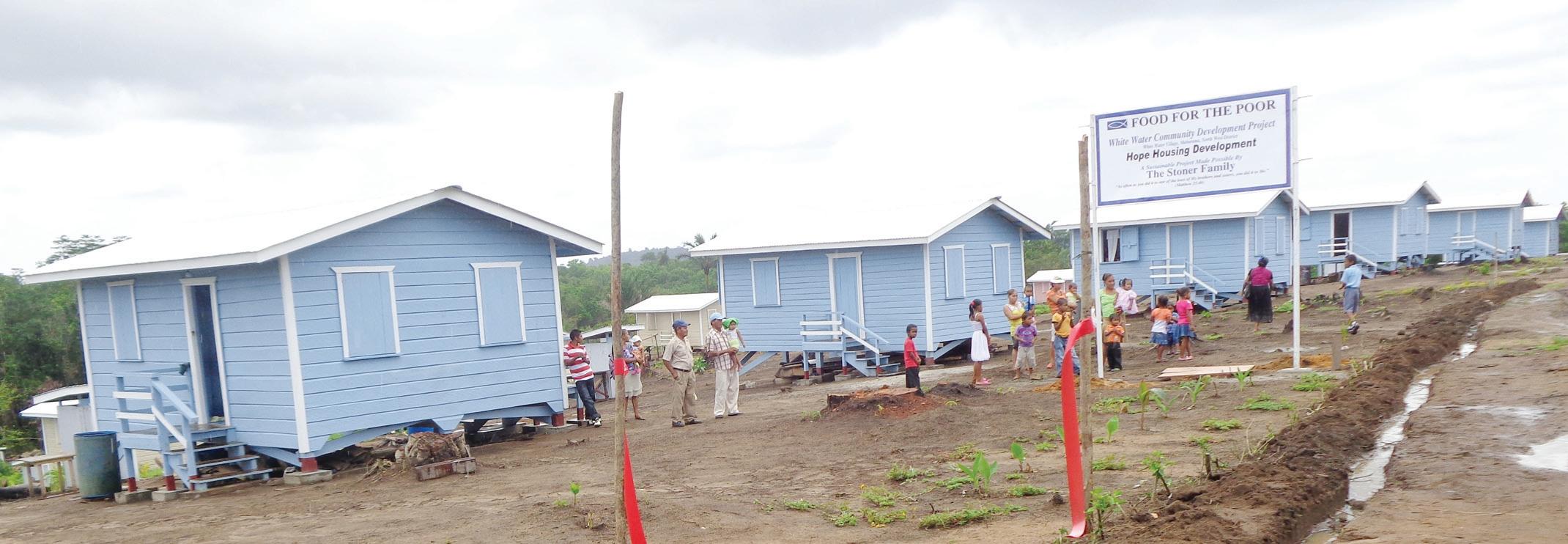
At least 40 families of White Water Village, Mabaruma, North West District, are now beneficiaries of brand new houses constructed by Food For The Poor, Guyana Inc (FFTP).
The construction of the homes were made possible through the generous donations of Chuck Stoner and his family who felt that the residents in White Water Village needed to live better lives. With the intervention of FFTP, Guyana and support from their Miami and Toronto counterparts, 40 homes were constructed with the aim of alleviating poverty in the area. Moreover, a community centre was also built and the primary school in the area was extended.
At the inauguration ceremony on Thursday last,
Senior Project Manager, Andrea Benjamin said that when she first heard of the village she was excited to visit but was drawn back when she saw the living conditions of the people there. She recalled seeing more than 15 people living in a shack, the place they called home, adding that it was evidently uncomfortable. This made her emotional, she said, adding that she thought it was one area FFTP should put their energies in the form of a new project.
After a while, she was overly excited when she was contacted by a member of the Stoner Family who indicated that they will undertake a project that will benefit residents of White Water. Benjamin said the project included building 40 homes, rehabilitating the exiting pri-
will tremendously boost education in the village. Toshao Ernest Samuels, apart from thanking all the stakeholders, was indeed overjoyed that the residents in his community will have a better life. He said that it has been too long that the community has been neglected and was happy that the donor saw it necessary to improve the lives of the residents there.
Samuels said that not only will they have more comfortable dwelling quarters, the residents will also be at home and be educated, claiming that in the past, children had to walk some distance to
ultimately give the residents a hope of living more decent lives and more so, will see it as a blessing from God. He recalled that as he goes to bed at night, he prayed for the people of White Water and more so, thought one day that he will be able to be instrumental in providing better homes for residents there. He extended his gratitude to his supporters, the FFTP teams, here in Guyana and overseas. He also encouraged the residents to continue giving praise to the Lord. Meanwhile, Kent Vincent, Chief Executive Officer, FFTP Guyana, said that his organi-
mary school and constructing a community centre. This project, the official related, took some time to complete but described it as one of the easiest thus far undertaken by her organisation. She thanked her staff and the entire FFTP
Caribbean banana producing countries are being urged to improve their consultations and exchange of information on the implementation of the Banana Accompanying Measures (BAM) adopted by the European Union Council in December 2011.
The EU Council has allocated €190 million (One Euro =US$1.29 cents) for the implementation of these measures as well as the promised allocation of an additional €10 million. African Caribbean and Pacific (ACP) countries at their 99th session of the Council of Ministers in Kenya last week passed a resolution indicating that ACP countries concerned by the BAM had all submitted National Adaptation Strategies (NAS) approved by the European Union.
But they said they are “deeply concerned at the delay by the European Commission in disbursing the resources allocated for setting up the BAM, thereby undermining the expected effectiveness of these measures”.
The ACP said it was also concerned with the continued proliferation of trade agreements linking the European Commission to rival countries or regions of the ACP bananaproducing countries and the consequences of such agreements on the exports of ACP banana-exporting countries.
The resolution is encouraging ACP banana-producing countries to improve their consultations and exchange of information on the implementation of the BAM and “reiterates to the European Union the
need to refrain from adopting a definitive position on future support to the ACP banana sector before the results of the implementation of the BAM are known”.
It also invites the Working Group on Bananas, in conjunction with the ACP Secretariat “to quickly take stock of the provision of the BAM resources in the various beneficiary countries and to report to the next Council session”.
The resolution also reiterates the need to review the situation in the ACP banana sector, “given the new risks to competitiveness as represented by the additional trade benefits proposed by the European Commission to third countries
that are rivals of the ACP banana-producing countries, since the review of the developments on the banana market is part of the package of the Geneva Agreement on Trade in Bananas…”.
It calls on the European Commission and the ACP Secretariat to begin discussions to include the issue of bananas among the priority areas in the framework of the programming of the 11th European Development Fund (EDF) as well as impressing upon the Brussels based ACP Secretariat “the importance of paying adequate attention to the issue of bananas in the support provided to banana-producing member states.

team for their support and more so, thanked the residents for their overwhelming support during the execution of the project.
Benjamin also made a commitment to the community to install computers in the newly extended school that
attend school. The overjoyed Toshao noted that it is with an open heart that he thanks all the stakeholders involved.
Donor of the homes, Chuck Stoner said that he felt the need to be instrumental in building the houses which will
sation continues to do its part in alleviating poverty in the hinterland communities. He expressed profound gratitude to the Stoner Family for their vision which will benefit residents in White Water in years to come.

The Inter-American Development Bank (IDB) has approved loans totalling approximately US$37.6 million and has also secured non-reimbursable investment financing from the European Union totalling approximately US$26.9 million to help boost the efficiency and reliability of Guyana’s power system.
The funds will also help strengthen electricity loss reduction measures, improve operational capabilities, and strengthen the management and corporate performance of the country’s utility, Guyana Power and Light Incorporated (GPL).
In a statement, the IDB said reducing overall electricity losses can improve GPL’s financial performance, while alleviating the Government’s fiscal commitments with regard to the energy sector.
Guyana is expecting a significant increase in electricity consumption during the next decade as a result of the growth of its residential and commercial sectors and the expected return of large customers to the national power grid.
GPL is now facing various challenges in trying to provide additional electricity on an efficient and reliable ba-
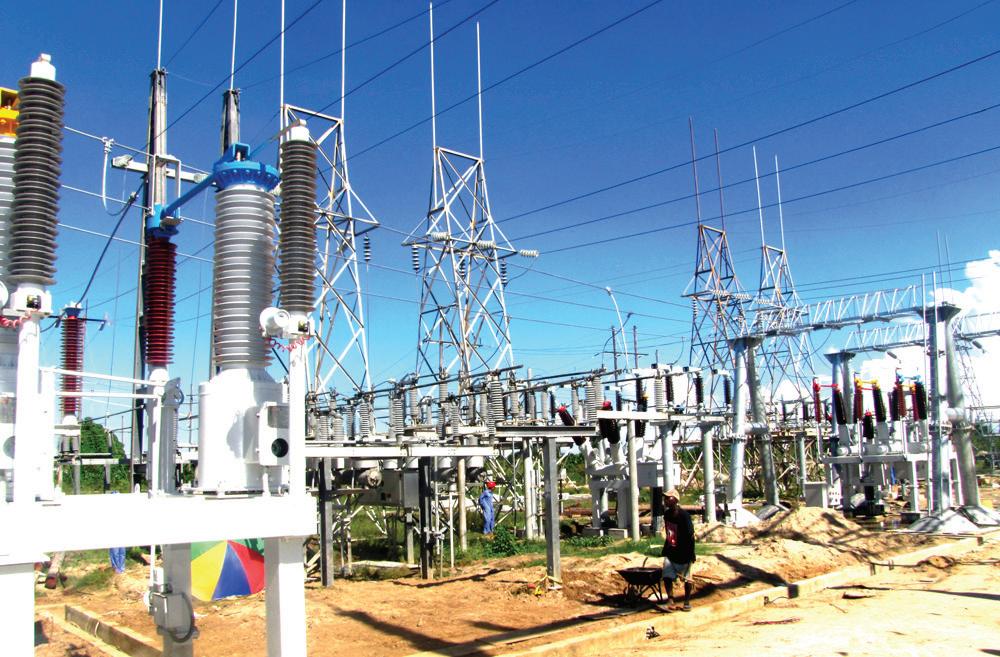
sis, which include high levels of electricity losses. As Guyana’s energy demand increases, the distribution infrastructure will experience greater stresses, and in turn, this will challenge GPL’s management and its ability to manage electricity supply.
Previous IDB experience in Guyana and other countries in the Latin American and Caribbean Region have proven the importance of approaching electricity loss reduction measures in a way that tackles both technical and commercial losses, while highlighting the value of supporting improvements in management practices and operational systems.
The Power Utility Upgrade Programme is de-
signed as a holistic, integrated approach to support GPL with financing for critical infrastructure investments and technical support for GPL’s key business areas. This support should increase GPL’s overall performance, reinforce GPL’s operational capabilities, and the achievement of a sustained trend in overall loss reduction.
The three main components of this loan reflect this approach with the following expected results: (a) a sustained trend in overall loss reduction; (b) an improved and accountable management performance against consistent key performance indicators and within minimum international standards; and (c) more modern,

efficient, and reliable operational systems in GPL.
This new programme will rehabilitate approximately 830 kilometres of GPL’s distribution network by implementing an integral approach to tackling overall losses while strengthening GPL’s management and technical capabilities.
Under the IDB’s new and innovative Grant Leverage Mechanism, the Guyana Power Utility Upgrade Programme will be the first to be co-financed with IDB resources and those to be provided on a non-reimbursable basis by the European Union’s Caribbean Investment Facility (CIF).
The total estimated budget is US$64,573,000. The IDB’s financing will consist of up to US$22.5 million in credit from Ordinary Capital loan resources for a 30-year term, with a six-year grace period. A second IDB credit will total up to US$15,141,750 Ordinary Capital/Fund for Special Operations “parallel loans” for a 40-year term with a 40-year grace period. The European Union is expected to contribute €19,375,000 (equivalent to US$26,931,250) through a Project Specific Grant (PSG), which will be administered by the IDB.

Long ago it used to have choke and rob in Guyana. Now it got shoot and rob. That is whah happen de other day to de man who does change lil US money. Had it been long ago de man woulda get a lil choke and he woulda end up wid lil stiff neck fuh a couple of days.
That is because it ain’t had so many guns around de place back then. Or it could be that de House of Israel and de Pee-N-C used to keep all de illegal guns, accordin to de Rodney CoI. But nowadays dem bandits got more guns than de harmy and de pullice.
Good ting de pullice gettin some Eff-B-High trainin. But in these times not even de pullice safe, wid or wid out trainin. Yuh could never go to a pullice station wid out a friend who know de pullice. And nowadays de pullice can’t stop people from gettin beat up even in de court.
That is why de Town Woman ain’t want a pullice buddy guard and she lookin happy these days wid de guard who buddyin she. De other day she even went and check a pump station wid de buddy guard to see how de water was pumpin.
A reporter seh he not sure if that is buddy or body guard. But whatever kinda guard he is he got she smilin plenty, and it ain’t fuh de camera. De reporter seh it mighta be because she see de pump was wukkin good and de water was pumpin fast.
De only ting was that de pump had need a lotta grease before it start pumpin de water. Is now GT people finally believe that once she pump grease up it wukkin far better than de Mayor-fuh-Life pump.
Ting-a-ling-a-ling…friend tell friend…mattie tell mattie! Well, talkin bout pumpin and water, it look like de Hope Canal project ain’t got no hope. Guvament just announce a new deadline, but it look like de project gon dead before it reach de finish line!
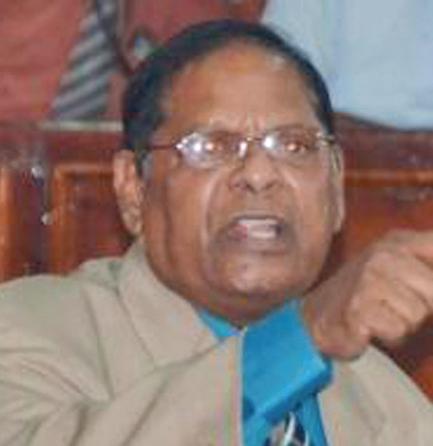
Former Policeman Robert Gates told the Walter Rodney Commission of Inquiry (CoI) that the House of Israel members operated with impunity back in the 1970-80s, pointing out that members of the Guyana Police Force were told to turn a blind eye to their actions.
Recalling a meeting of the National Coalition for Democracy, a combination of opposition political parties, held at Barr and Alexander Streets, Kitty, Georgetown, Gates said a bottle of formalin was lobbed at the head of then People’s Progressive Party (PPP) Executive Member Moses Nagamootoo, by a member House of Israel member, causing the meeting to come to an abrupt end.
Gates, who was the bodyguard for Working People’s Alliance (WPA) leader, Dr Rupert Roopnaraine, who was at the meeting, told the Commission that in a bid
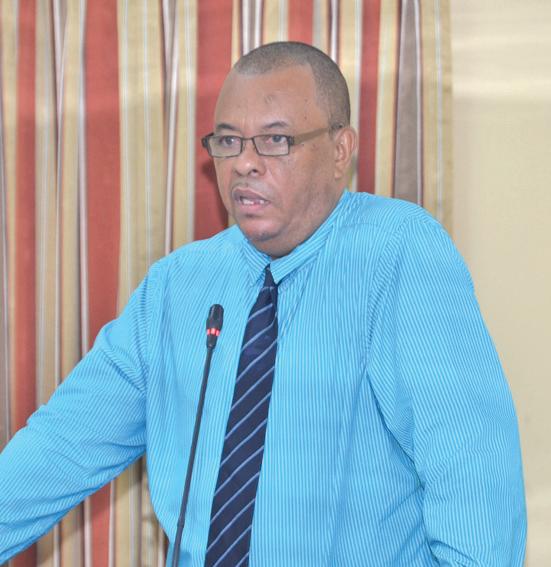
to protect Dr Roopnaraine and the gathering from the advancing House of Israel members armed with bayonets, he drew his firearm on them, and was subsequently reprimanded by his superiors. Gates was at the time operating as an undercover Policeman, tasked with gathering intelligence on the WPA, which the People’s National Congress (PNC) had deemed a threat to national security and their grip on power in Government.
He also related that a Police Officer who was at the scene at the time, but did not know of the status of the House of Israel, arrested a member and was dismissed without pension and gratuity.
Gates had earlier told the Commission that as part of his infiltration activities, he was required to meet with senior House of Israel members so that they could become familiar with him.
By Svetlana MarShall
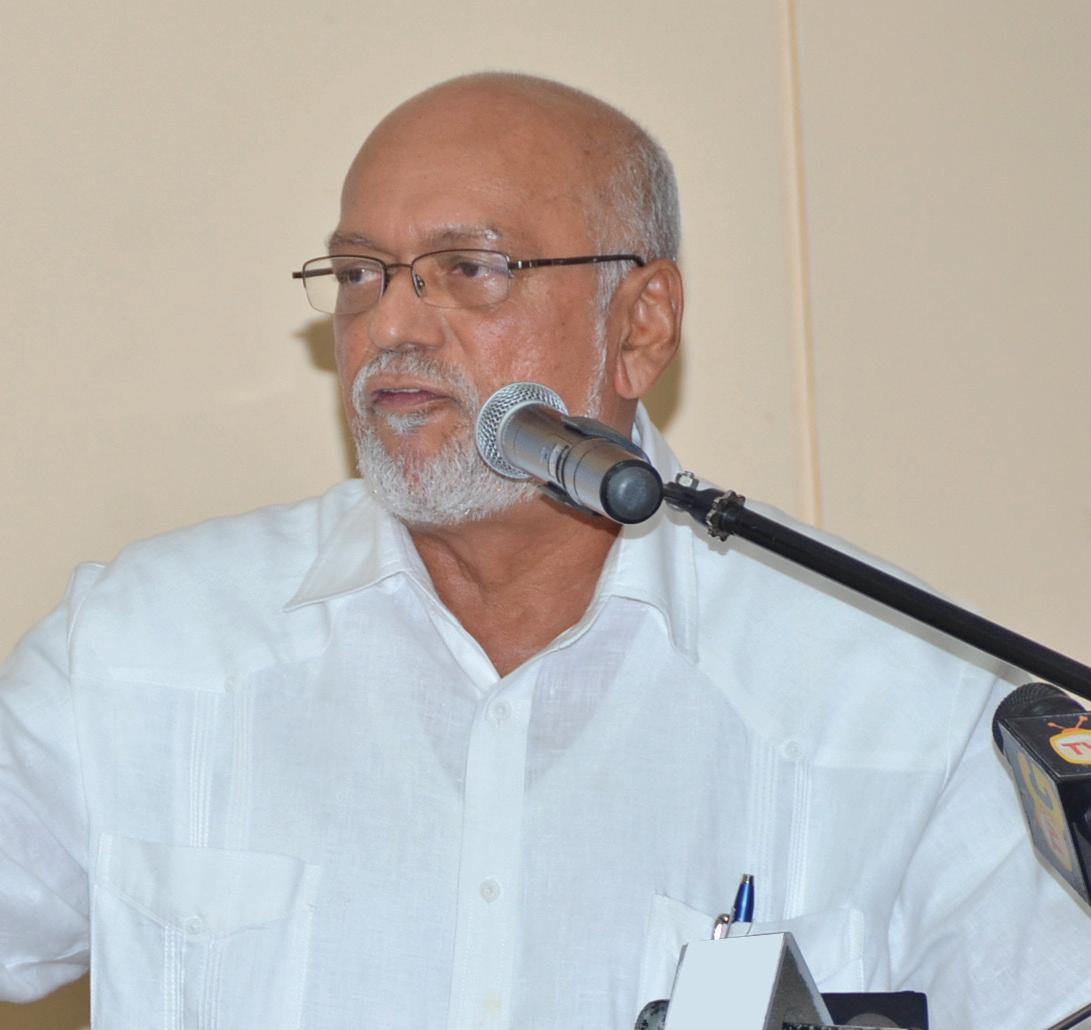
Threats to pass a no-confidence motion against the ruling People’s Progressive Party/Civic (PPP/C) Government will not intimidate the Administration, President Donald Ramotar said on Monday.
He said he was up for the challenge. “We do not take threats, if the Opposition wants to pass a no-confidence motion, let them pass it and we will be ready to deal with the consequences of that,” President Ramotar said as he addressed the Private Sector Commission’s 22nd Annual General Meeting on Wednesday at the Pegasus Hotel.
In another section of the media, Alliance For Change (AFC) Vice Chairman Moses Nagamootooo was quoted as saying that his party’s intention is to move a no-confidence motion against the Ramotar Administration. Nagamootoo said the Government has a serious accountability problem, as he alluded to the $4.5 billion, which has been spent to finance a string of controversial projects that did not garner the support of the Opposition.
But on Wednesday, Ramotar laid the blame at the feet of the A Partnership for National Unity (APNU) and the AFC. According to the President, the Opposition continues to stymie the development of Guyana, pointing out that the country’s economic land-
scape faces the risk of a major decline due to the non-passage of the Anti-Money Laundering and Countering the Financing of Terrorism (Amendment) Bill. Guyana has already been identified as a jurisdiction with significant AML/CFT deficiencies and, as a result, the Caribbean Financial Action Task Force (CFATF) has called on its members to implement further countermeasures to protect their financial systems from the ongoing money laundering and terrorist financing risks emanating from the country.
Rejected hands
President Ramotar said the economic and social welfare of the country should have never been placed at risk. He maintained his long touted position that the Opposition should have supported the AML/CFT Amendment Bill, which was tabled in the National Assembly in 2013. “This is a bill that touches every single business, this is something that touches every single life in this country, regardless of whether you are a supporter of the Government or not,” Ramotar said.
In his efforts to pass the AML/ CFT before the Financial Action Task Force (FATF) Plenary Meeting, the President said he had stretched out a hand of compromise to the APNU but it was rejected. While the AFC is demanding the operationalisa-
tion of the Public Procurement Commission (PPC), APNU has indicated that the AML/CFT Bill must be passed along with its amendments to the AML/CFT Act of 2009. The President said while he has not committed to giving his assent to “every single bill” that is passed in the House, he informed APNU of the Government’s intention to support the amendments to the principal act.
“I was prepared to give them their own bill, I told them we were ready to pass the bill with their amendments inside, only asking that if the CFATF and FATF say that the Bill or the law passed in the National Assembly was not compatible, that they should give a commitment to amend it to make it CFATF/FATF compatible. They turn down their own bill,” he explained to members of the diplomatic community and the Private Sector. He is now of the opinion that the Opposition might have a hidden agenda.
Local Government
Meanwhile, despite public perception, President Ramotar said his Administration is not against the holding of Local Government Elections. “I too want Local Government Elections, no resistance on my part,” Ramotar said in response to calls by the PSC minutes before his speech. He also sought to respond to criticisms by
Western diplomats when he said: “Undermining democracy is when you listen to everybody’s telephone calls, read their emails and ban them from having collective bargaining agreement in their own countries and different parts in North American and Europe.”
Local Government Elections were last held in 1994. In February, APNU and AFC used their collective one-seat majority in the National Assembly to amend a bill tabled by the Executive to have Local Government Elections held on or before August 1.
The Local Authorities (Elections Amendment) Bill 2014, which was laid in the House in January by former Local Government Minister Ganga Persuad, sought a year-long postponement. However despite reports by the Guyana Elections Commission (GECOM) that it is ready to facilitate the holding of the long overdue elections, the Donald Ramotar Administration remains firm on its position that Guyana is not ready for such elections. (svetlanam@guyanatimesgy.com)
intention was to “blow off Rodney’s head”
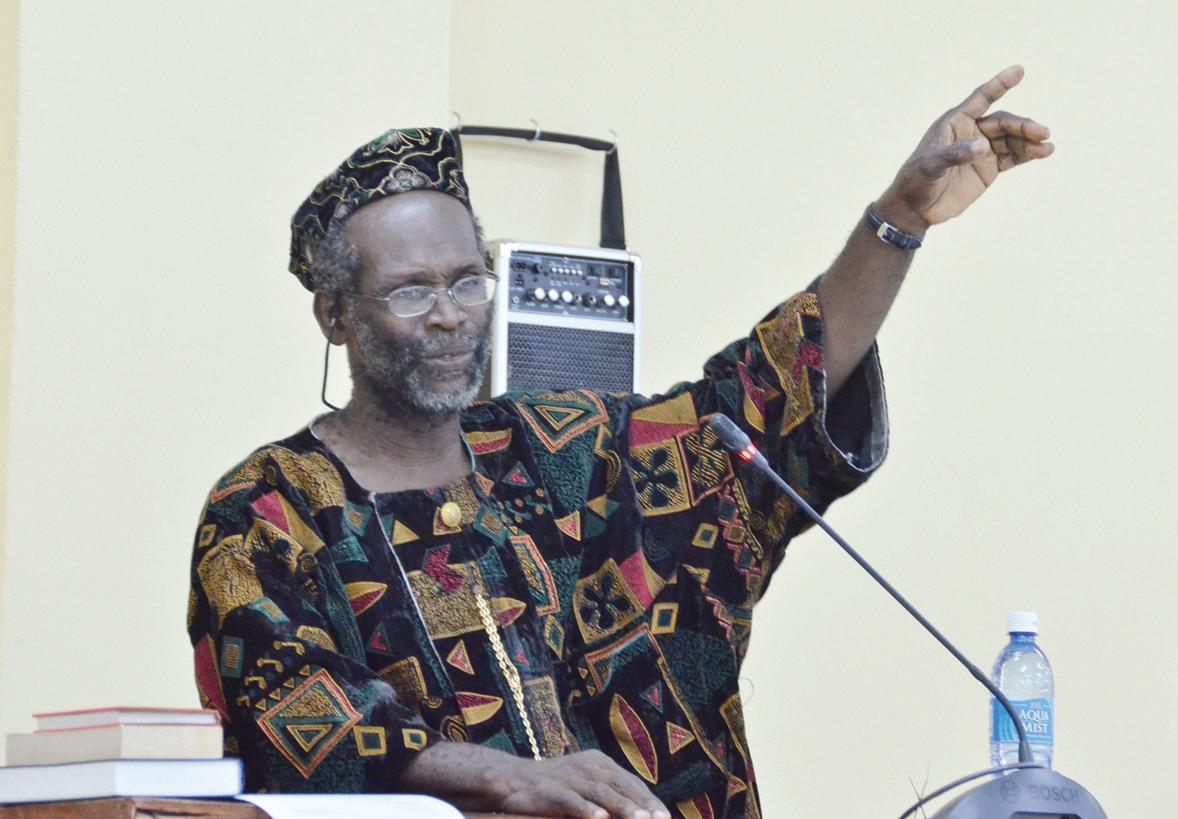
By tajeraM MohaBir
Working People’s Alliance (WPA) Executive Member
Tacuma Ogunseye said based on the statement given by Dr Walter Rodney’s brother, Donald Rodney, it was clear that the intention of the PNC plotters was to “blow Dr Rodney’s head” off with the bomb installed in the walkie-talkie while he was standing outside the Georgetown Prison, so as to provide the basis for the claim that the historian was killed trying to bomb the prison.
But this, he said, did not happen as the instrument exploded in Dr Rodney’s lap while in his
car. He pointed out that the killing was planned as within minutes, flyers were found in front of Dr Rodney’s home, saying that he was killed trying to “blow up” the Georgetown Prison.
Ogunseye made the remarks while giving testimony at the Walter Rodney Commission of Inquiry. He said after the killing of Dr Rodney, the GDF has distanced itself from Smith, but Ogunseye told the Commission that based on reliable information he received, the Army aided Smith’s safe departure from Guyana using its helicopter on one leg of the journey to French
Guiana.
Smith’s wife, Gwendolyn Jones, who was employed at a Government Ministry, was transported by minibus to Kwakwani, as she too made a safe exit from Guyana, the WPA Executive said.
Following detailed checks, he said five years after, she was found to be working at the Guyana Consulate Office in Canada. Ogunseye told the Commission that though then President Forbes Burnham and the PNC Government were accused both locally and internationally of killing Dr Rodney, they did not trying to get Simth before the court, and try to make any serious effort for his capture, because they were afraid that had he been placed in a Court of Law, there was a possibly likelihood that he would have “spilled the beans” of his masters.
Arms and ammo
Meanwhile, Ogunseye acknowledged that though the party had acquired arms during the fight against the People’s National Congress (PNC) “dictatorship”; it never did so on a large scale. He also said that he was unaware how the weapons were acquired.
Ogunseye, testifying before the Walter Rodney Commission (CoI), said following the threats by then Burnham the party leadership
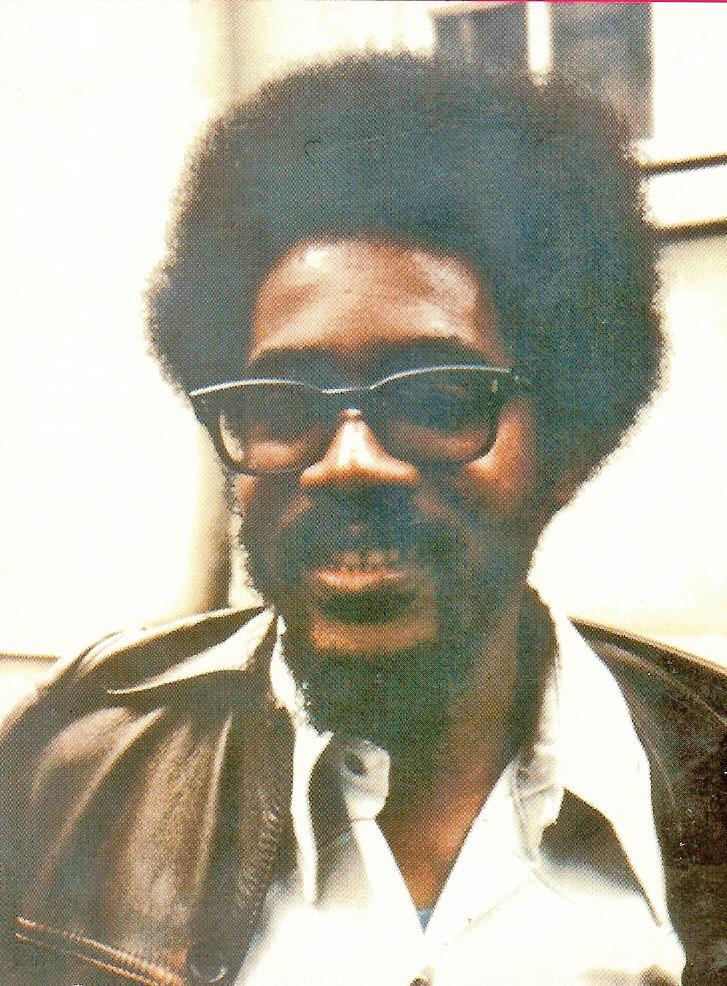
had met and discussed the security of its members. The threats followed the execution of WPA activists Ohene Koama and Edward Dublin. Koama was killed by the Police Death Squad, who later accused him of trying to open fire on them. His colleague Dublin was also shot dead in Linden and his body dumped at a construction site. The Police, Ogunseye said, reported that Dublin was shot trying to steal cement.
He explained that these executions, the beating up and harassing of WPA members and supporters, some of whom were identified in a handbook prepared by the PNC Government, were intended
to drive fear into the WPA, other opposition political parties and the citizenry as a whole .
This development, he said caused the party to look at the security of its members, and this led to the formation of a Security Committee, comprising himself, WPA Co-founder, Dr Robert Roopnaraine and Dr Rodney. The committee, he disclosed, operated on a “need to know basis” and was a separate group from the leadership of the party.
The WPA activist said the party took this step following a decision that certain information should not be divulged to all the leaders. The Opposition parties, including the WPA at the time, he said had to contend with the Guyana Police Force, the Guyana Defence Force, the Guyana People’s Militia, the Guyana National Service, the Guyana Youth and Student Movement (GYSM) and the House of Israel (the latter two had armed and vicious members).
It was against this background, and in the context of “regime change”, he said, the WPA looked at the acquisition of arms, but on examination of the intention to accumulate, it found that the idea was not feasible.
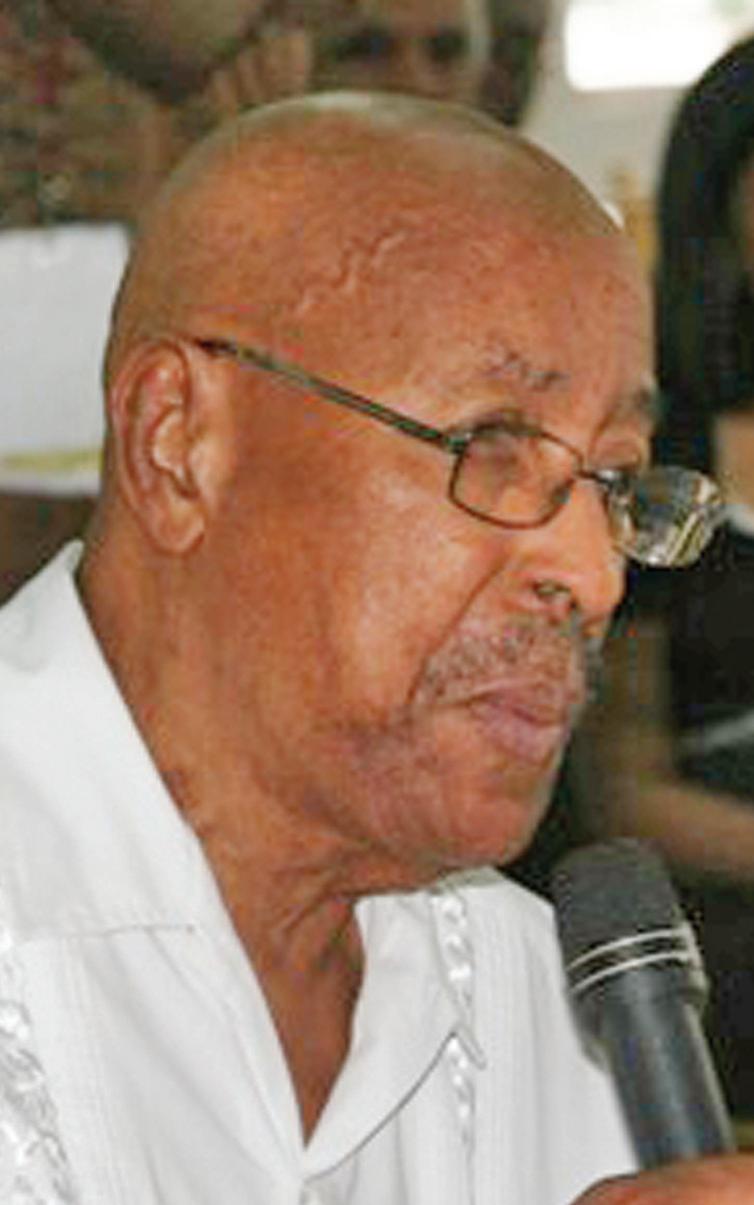
x-Police Constable
ERobert Gates completed his testimony at the Walter Rodney Commission of Inquiry on Tuesday revealing that former Guyana Defence Force (GDF) Chief-ofStaff Norman Mc Lean may have ordered the death of Dr Walter Rodney.
Gates based his arguments on the conversation he had with accused murderer Gregory Smith a few months before the explosion that killed the Working People’s Alliance (WPA) Leader.
He said if what was told to him by Smith was indeed the truth, then Mc Lean who has denied ever knowing Smith personally, had counselled or procured Smith into killing Rodney. He maintained too that his friend was telling the truth.
According to the testimony of Gates, he had visited the WPA Tiger Bay Office early in
1980, where he met Smith, after a very long time. He said that meeting had served as a springboard for about close to eight other meetings with his former villager.
Gates had also told the Commission that from the information gathered from Smith, he concluded that he (Smith) was also working undercover for the GDF.
At another meeting with the accused, Gates said he was told by Smith that should he (Smith) kill Rodney with the device, he would be offered G$1million and be allowed easy access out of Guyana. This offer, he said, came from Mc Lean.
Long-planned assassination
Questions were raised if Mc Lean was alone in the plan. Gates told the Commission that based on what was told to him by the former Army Sergeant, the instructions from Mc Lean to kill Rodney were given to him, while they were both in the presence of the Deputy Police Commissioner, Laurie Lewis.
Gates said that Smith had deceived Dr Rodney and his younger brother, Donald, into believing that the device he had given them was a walkietalkie and that he was quite aware that a bomb was planted inside.
Dr Rodney met his demise on June 13, 1980 when a walkie talkie containing a bomb, allegedly handed to him by Army Sergeant William “Gregory” Smith exploded, killing him instantly.
During his evidence in chief to the Commission a
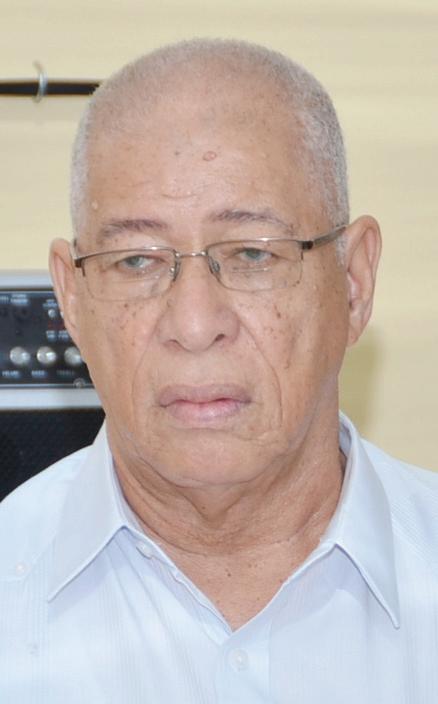
few weeks ago, Mc Lean, who was also head of the Guyana National Service (GNS), told the Commission that he never knew Smith. In fact, based on the information he had received, Smith had been Absent Without Leave (AWOL) to the point that he had been considered a deserter.
He had claimed that there was a public cry that “a sergeant of the Army was fingered in the explosion”. He admitted that he had first made a public announcement that there was no “Sergeant Gregory Smith” serving in the army, but was later made to understand that he was a “deserter”. Claims are that Smith was used by the People’s National Congress (PNC) Government to carry out the assassination. The PNC Government then and the leadership of the party have always denied the allegation.
AGood Hope, East Coast Demerara businessman is now giving praise while counting his losses, after three gunmen invaded his business premises movie-style on Tuesday afternoon, carting off a large sum of money and other valuables from customers who were in the store at the time.
Guyana Times was told that three men who wore face masks pulled up in a motorcar and brazenly made their way into the building which is located on the public road.
One of the bandits reportedly brandished a machine gun, while the other two carried a chopper and a shotgun respectively. The entire ordeal, which was captured on CCTV cameras, saw the customers being ordered to lie face down on the ground, while one of the men walked up to the cashier demanding that he hand over all money he had in his possession.
The cashier quickly handed over the money to the men after which they proceeded to all of the customers and employees, asking if they had any valuables in their possession. Some were relieved of their cellular phones, while others were relieved of other personal belongings including their purses, wallets and jewellery.

Based on the footage which was seen, the men then calmly exited the building and made their way to the waiting car before taking off.
Muneshwer Persaud, proprietor of the Muneshwer’s Hardware Store, related that he was on his way to Georgetown when he received a phone call informing him that his business was being invaded and robbed. He said that he immediately turned back and proceeded to his establishment, but by the time he had gotten there, the ordeal had finished.
Asked to estimate his losses, Persaud said: “This is a big blow to me. I really can-
not estimate my losses at this time, because since I started this business here about three years ago, this is the fourth time I’m being robbed. Aside from that, many times my business is being broken into and robbed so I really cannot estimate my losses at this time. I have to sit down and sort it out.”
He noted, however, that while this has resulted in a big blow to his business and even him financially, he remains thankful that no one has been hurt in the process.
The Police are currently examining the footage with the aim of finding a clue or trace of who the men are.
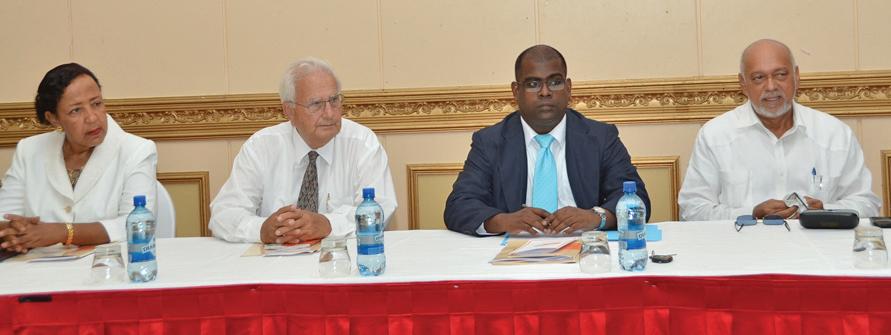
Despite the many challenges that prevailed in 2013, the Private Sector has remained resilient, Private Sector Commission (PSC) Chairman Ramesh Persaud said as he addressed the 22nd Annual General Meeting at the Pegasus Hotel on Wednesday.
Persaud presented the 2013 report on behalf of the former chairman, the late Ronald Webster who lost his battle with cancer in April.
In detailing the sector’s performance, Persaud stated that the total market value of goods and services produced in 2013 at the basic prices increased by $26 billion when compared to 2012. Last year, the market value stood at $537 billion compared to $511 billion the previous year.
“The total value of goods and services produced in 2013 is more than double the 2006 value of $262.8 billion in nominal terms, that is, without removing the effects of inflation. Inflation reduced that purchasing power by 63 per cent, or in other words the economy grew only by 37 per cent from 2006 when GDP [Gross Domestic Product] was adjusted for inflation,” he reported.
It was also pointed out that the total imports were $381 billion in 2013 as against $408 billion; representing a decline of $27 billion. According to the PSC Chairman, the main contributors to the decline in imports were fuel and lubricants by $12 billion, mining machinery by $3 billion, agricultural machinery by $4 billion, parts and accessories by $4 billion, motor cars by $1 billion, and clothing and footwear by $1 billion.
However, it was stated that Guyana’s imports were more than its exports in 2013 by $98 billion. “Improving our country’s exports to surpass our imports should be the goal of all private companies as this is the surest way to build sustainability and increase the wealth of our nation,” Persaud stressed.
It was pointed out too that the Guyana Dollar depreciated against the US Dollar, moving from G$204.5 to US$1 at the end of 2012 to G$206.25 to US$1 at the end of 2013.
This occurred at a time when the Private Sector turned to the commercial banks for financial assistance. It was explained that total credit to the Private Sector by the Commercial Banks grew from $161 billion in 2012 by $24 billion to $185 billion at the end of last year.
“Total public sector debt at the end of 2013 was $355 billion compared to $372 billion in 2012. This represents a decline of $17 billion mainly because of the reduction in the Petro Caribe balance. Public Sector debt was 66 per cent of GDP at the end of 2013,” the PSC Chairman recalled. He said Guyanese should use the indicators to assess the performance of the commercial sector to identify and capitalise on the existing opportunities.
Zooming in on the work of the PSC, he said the Commission consulted with the Finance Minister, Dr Ashni Singh in 2013 to have a reduction in the personal income tax. Additionally, the Commission championed the cause for the Government to increase expenditure on spe-
cific infrastructure such as the rehabilitation of hinterland airstrips. “We were happy when the Minister announced the lowering of the personal income tax from 33 1/3 per cent to 30 per cent, the increase in the ceiling for personal property tax and the introduction of Mortgage Interest Relief for homeowners with loans of $30 million and less,” he said. The steps taken by the Government in 2013 have truly benefited persons operating within the Private Sector, Persaud said as he praised the current administration.
“The Government also allocated $248 million for maintenance and rehabilitation of hinterland airstrips and has started the process of establishing a PublicPrivate Partnership for a new Demerara River Crossing,” Persaud added.
As a major partner with the Government, PSC, through the National Competitiveness Steering Committee, worked in 2013 to address the mergers and acquisitions legislation, the development of Port Georgetown, Special Economic Zones and the Single Window Automated Processing System. This year, the Commission has pledged to work with the relevant stakeholders to accelerate growth within the country’s economy. The 22nd Annual General Meeting of the PSC saw the attendance of President Donald Ramotar, Prime Minister Samuel Hinds, Foreign Affairs Minister Carolyn Rodriguez-Birkett, Acting Tourism, Industry and Commerce Minister Irfaan Ali, City Mayor Hamilton Green and members of the diplomatic community.
OP staffer charged for allegedly stealing $1M from landlord
Azeem Khan, the Personal Assistant to Cabinet Secretary Dr Roger Luncheon was on Wednesday charged for allegedly stealing $1 million from his landlord.
Police said that Khan who resided in a two storey building, which houses a shop and the apartment owned by his landlord. The house is located in Kitty, Georgetown.
According to the Police, the landlord had reported missing money and other items from his business after it was closed. There was no sign of forced entry. However, there is a door sep-

arating the apartment where Khan lived and the shop. The landlord decided to install hidden cameras in his business place and left $1 million behind after a day’s work. When the man returned to the business place the following day, the money was missing. He decided to review the video recording and it is alleged that Khan was captured on the recording gaining entry to the shop through the adjoining door and removing the money. The video recording was taken to the Police and Khan was arrested. He has been placed on $100,000 bail.
From page 11
By Tajeram mohaBir
Threatened by President Forbes Burnham’s pronouncements that members of the Working People’s Alliance (WPA) should “write their wills” and his “steel is sharper now”, coupled with mounting hostility against his comrades, WPA Executive member Tacuma Ogunseye said the party’s leadership responded by embarking on a path of “regime change” through a Civil Rebellion.
Testifying before the Walter Rodney Commission (CoI) on Wednesday, robed in traditional African garb, an animate Ogunseye told the Commission the wrath of the ruling PNC Government was fuelled by the 1979 burning down of the party’s secretariat on Regent Street and the Ministry of Mobilisation and National Development.
The WPA was accused by the Burnham Administration of carrying out the arson, but Ogunseye, who said before giving his testimony that he has a moral commitment to the Commission, categorically denied his party’s involvement, contending that the WPA was never involved in violence, never killed anyone or physically confronted the Police. In fact, the WPA activist told the Commission based on reports in the state media, the Ministry was torched by armed men dressed in military uniform, but no one knew who they were.
He said at the time, two other theories were advanced for the burning down of the building: (1) It was the brainchild of then Deputy Prime Minister Hamilton Green to instigate a head-on confrontation between Burnham and Rodney and (2); it was an
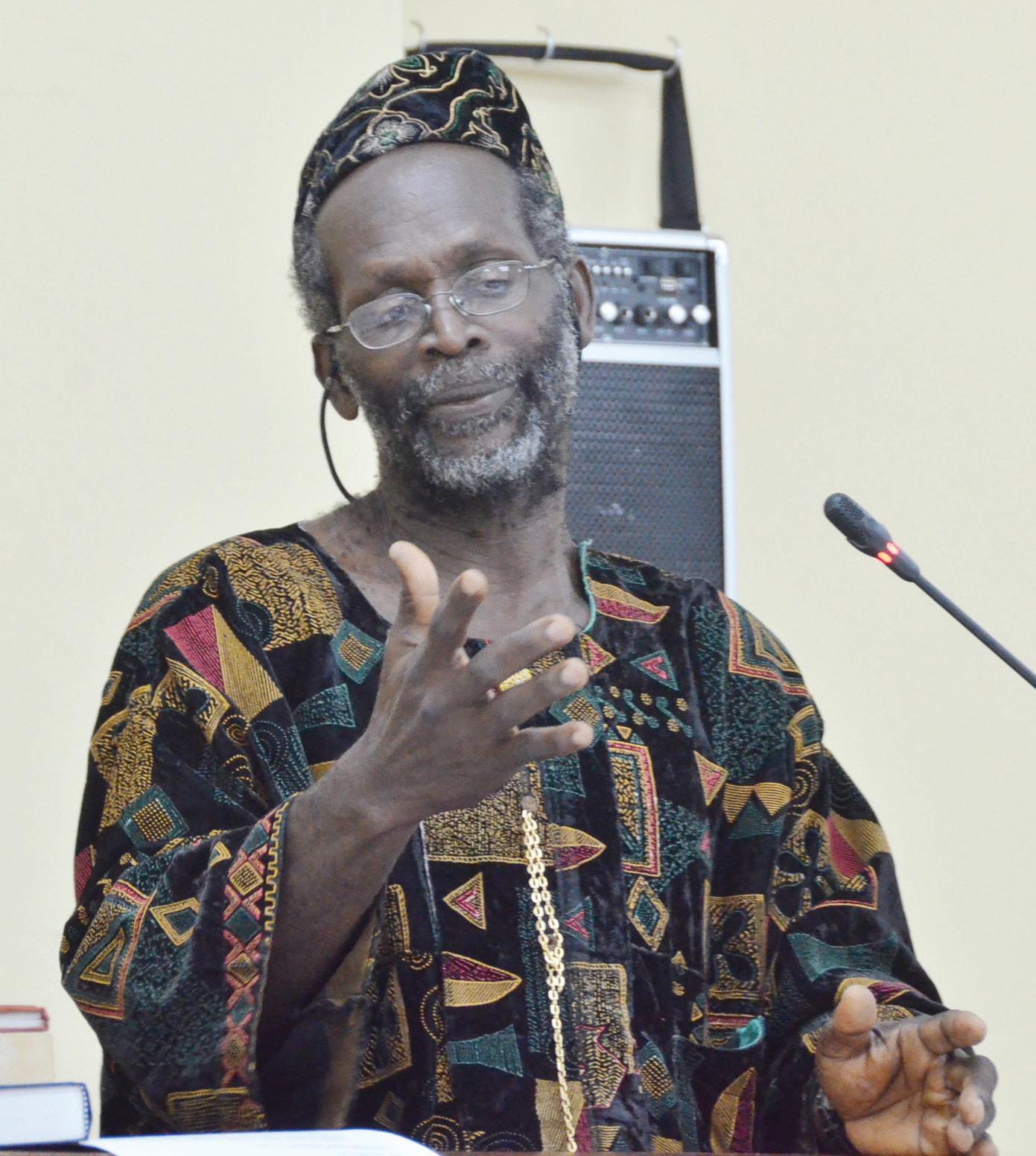
act by person(s) who detested the PNC Government.
Whatever was the real reason, the 62-year-old Kitty Market vendor said President Burnham, who he described as a nationalist, skilled orator and a politician who craved and jealously guarded his hold on power, concluded that the arson was the work of the WPA, and set about exacting vengeance on its members.
Beaten up
He related that WPA members were beaten up, their meeting broken up by House of Israel members and certain elements in the Guyana Police Force for various actions that were deemed unlawful. These, he said included distributing the party’s newspaper Day Clean (this was deemed subversive literature), participating in marches, and the posting of WPA promotional materials in public places.
The WPA leader said arrest was a tool used by the Government of the day to discourage public opposition and to block WPA members from being in constant contact and meeting frequently.
Ogunseye said during the period 1979-1980, he was arrested about 20 times, with without reason and was never charged, except for one occasion where he was convicted. Most of the occasions, he said, he was released with the 72hour period. He also said that during his years of activism, he was thrown in practically every lock-up in Georgetown and on East Coast Demerara, and like his party comrades, was forced to sleep at different locations to avoid being a vulnerable target of agents of the state.
This vindictiveness of the then ruling Administration, he said, along with the declaration by Burnham that WPA
The backlog of paper records at the National Insurance Scheme (NIS) has been cleared, months ahead of deadline.
Cabinet had issued a December 31, 2014 deadline to the board and management of the NIS to have all outstanding contribution records updated, uploaded and placed on the NIS data management system.
Head of the Presidential Secretariat, Dr Roger Luncheon, at his post-Cabinet briefing at the Office of the President, disclosed on Wednesday, however, that according to the end-ofJune records presented by
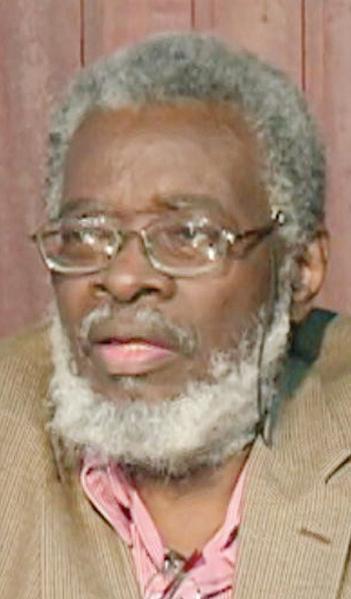
the Scheme’s management to Cabinet, the virtually 15 million in the outstanding contribution records have been electronically entered into their database. Dr Luncheon explained that the time from the end of June to December will now be concentrated on data verification. He noted that this aspect is “endlessly more challenging” and will be more wide ranging, as it will involve the input of not only the staff and management of NIS, but contributors and employers as well for the December 31 deadline to be met for 100 per cent verification.
members should “write their wills” and his “steel is shaper now”, caused the WPA to initiate the Civil Rebellion for regime change in the late 1979.
He told the Commission the efforts at regime change included the strengthening of the party structure, building capacity for the execution of covert and overt operations, utilising a system centred around clandestine activities and deniability, the development of cells to map out the strengths and weaknesses of the PNCR Government, infiltration of the security forces, mainly the Guyana Defence Force (GDF) and the establishment of diplomatic relationships. Dr Rodney, he said, viewed the GDF as an important ally to help him gain power, not by overthrowing the Government, but by desisting from carrying out its instructions.
Disinformation
This is contrary to the testimony given by former Police Constable Robert Gates on Tuesday, who told the Commission that WPA Co-Founder, Dr Rupert Roopnaraine had confided in him that he (Dr Roopnaraine) and Dr Rodney were spearheading an operation to overthrow the PNC Government.
Ogunseye also said the WPA did not have the funds to acquire large scale arms and ammunition, had no contact with suppliers nor a close relation with neighbouring Governments.
He noted that the ideal of acquiring arms via the Atlantic was too risky a task, and if they were acquired through Suriname and Brazil, and the WPA members in the deal were caught, they would have been handed over to the PNC Government, which had good relations with the two nations.
Venezuela, at the time, he said was a hot spot as that tension with Guyana was present, noting that border patrols were intense. These, he said, were the major reasons the WPA abandoned the move to acquire arms on a large scale, while also pointing out that the party never acquired explosives.
The WPA Executive Member also explained that the party’s public demonstrations were not aimed at overthrowing the PNC Government as it was aware that the Government was supported by the powerful US and UK administrations.
He said the WPA did not have any strong connection with any major world power, contending that the party was mindful of the situation at hand, but maintained its posture of open insurrection. It was
probably through his interaction with Army Officers, Dr Rodney came to know Sergeant Gregory Smith, the man accused of carrying out the instructions, allegedly from President Burnham, to kill him.
Walkie-talkie
According to Ogunseye, Dr Rodney had an interest in developing a walkie-talkie capable of making long distance calls, but not on the same frequency of the security forces. He told the Commission that his senior WPA colleague had expressed some frustration that the instrument he wanted was not being delivered by the cell responsible for electronics.
The WPA member, said that the cell was having some difficulty assembling the equipment, and Dr Rodney had indicated to him that a particular individual was working on the project, whom he did not name, and he (Ogunseye) never enquired.
He said when Dr Rodney was assassinated on June 13, 1980, and the matter was subsequently reported in the media, he surmised that the person Dr Rodney was referring to, but did not name was Smith, whom he said he never met. Ogunseye told the Commission that he learnt of the incident the following day from a WPA supporter while at the Kitty Market.

St Kitts and Nevis now has its own diplomatic mission in Havana as of Wednesday, as part of a three-day visit to Cuba by Prime Minister, Dr Denzil Douglas.
The Embassy will contribute to greater cooperation and friendly relations between the two Caribbean countries, who established diplomatic links on May 10, 1995, according to a release by the Cuban Foreign Ministry.
During his visit to Havana, Douglas held official talks with Cuban President Raul Castro and expressed his satisfaction in visiting Cuba, praising the island’s scientific achievements, particularly during a visit to Havana’s Genetic Engineering and Biotechnology Centre.
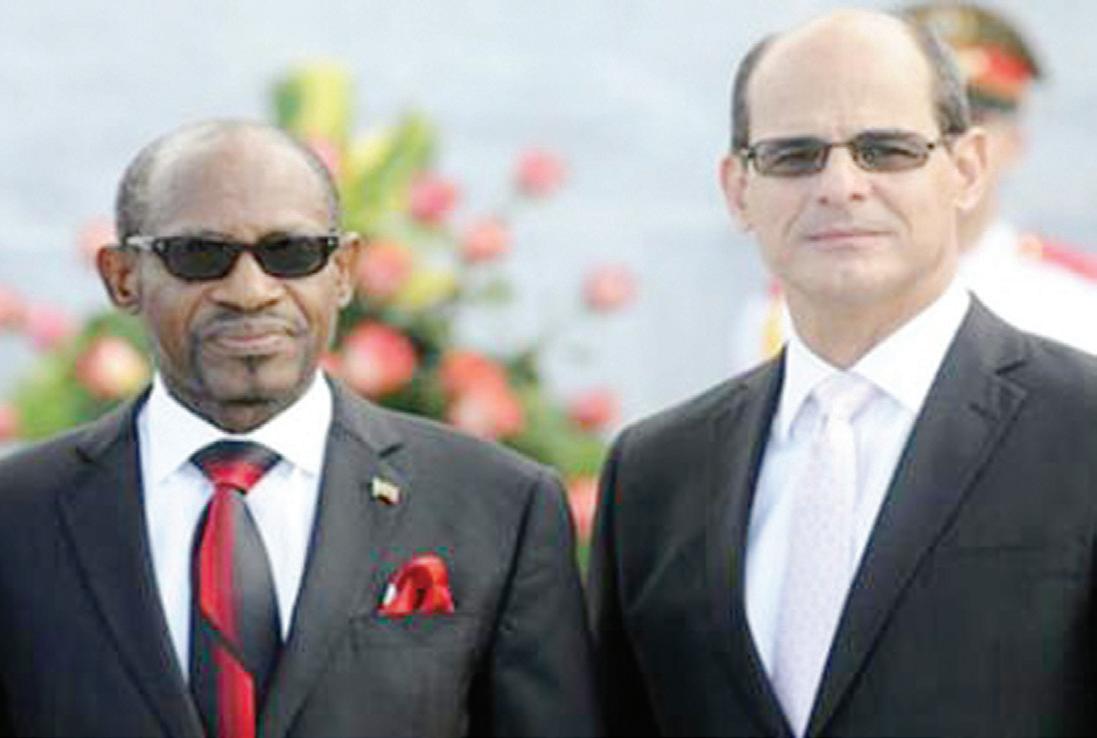
Douglas committed himself to the strengthening of relations between the two countries. “We’re proud of what Cuba has done and we’ll become advocates and spokespersons in the rest of the world to show its achievements,” Douglas said. He asserted that relations between the two nations have brought benefits for St Kitts and Nevis in
fields such as higher education, health and agriculture.
“Cuba is part of the Caribbean and we’re part of the area’s historic relations with Cuba,” said Douglas. After officially inaugurating his country’s diplomatic mission to Havana on Wednesday, Douglas is due to return home today. (Excerpt from Caribbean News Now)
The Bahamas Government says it is “unable to ignore” the nuances that came to light when the island held a referendum on gaming in 2013 as it announced measures to modify its position on regulating the gaming industry.
Prime Minister Perry Christie said as a result, his administration has decided to proceed with the regularisation of the industry despite the results of the referendum.
“My position and that of my Government on the regularisation of web shop gam-
ing has evolved as a result of certain realities which have emerged,” he told legislators.
“While I originally took the position to abide by the outcome of the referendum on this issue, there are certain realities which have come to light following the referendum which I cannot as Prime Minister ignore,” said Christie.
Some of these issues include the gaming industry’s current practice of acting as bankers and hiring bank employees for this purpose; concerns raised by
Venezuela’s ruling Socialist Party has suspended one of its directors for echoing a former official’s recent criticism over corruption, local media reported on Wednesday, a sign President Nicolas Maduro is facing growing dissent from his own ranks.
Hector Navarro said he was disciplined for backing statements by former Planning Minister Jorge Giordani that accused Maduro of failing to stem multibillion-dollar fraud via currency controls, according to media reports.
The string of critiques marks a sharp divergence from the 14-year rule of late socialist leader Hugo Chávez, whose insistence on military-style obedience helped maintain discipline within an often unruly coalition.
“I’ve been officially informed that the National Board (which has not met for a month) has decided to send me to the party’s Disciplinary Tribunal,” Navarro wrote in a message to university activists that were cited by local media. Navarro, who served as Electricity Minister and Education Minister under Chávez, wrote that he had been relieved of his duties while the party discusses sanctions against him. Neither he nor Socialist Party leaders were immediately available for comment.
In an earlier letter published on Tuesday, Navarro expressed solidarity with Giordani and criticised those among the ruling coalition who passed him off as a traitor. (Excerpt from Reuters)
the Governor of the Central Bank of possible ‘violations of the laws’ of the country and the possibility of money laundering and other dealings in violation of the country’s international obligations, which could have severe consequences for The Bahamas vital financial services industry.
Christie said that he held discussions with various stakeholders including bankers, advisors, Cabinet colleagues and others to ensure that the Government was on the right track with its decision. (Excerpt from Jamaica Observer)
Asenior United States official says prominent attorney Dana Seetahal was murdered earlier this year in a “well planned and orchestrated hit” by an international “player” with a crime organisation present in Trinidad and Tobago.
“It was not a crime of opportunity where someone felt they should steal her handbag and then found they had to shoot her. This was a well planned and orchestrated hit. This is not something you plan easily,” said United States Assistant Secretary of State William Brownfield during a teleconference with Caribbean journalists.

Attorney Dana Seetahal
Seetahal was shot dead on May 4 after she left a casino for her home. No
one has been arrested and charged in connection with the murder despite a TT$3.5 million (One TT dollar = US$0.16 cents) ransom offered by the Trinidad and Tobago Government and Crime Stoppers for information leading to a prosecution in the death of the former Special Prosecutor and President of the Law Association of Trinidad and Tobago.
Brownfield, who is responsible for International Narcotics and Law Enforcement Affairs in the US Department of State, said that Seetahal had been murdered two days after he paid a visit to Trinidad and Tobago. (Excerpt
The parents of two Dutch women who went missing in April while travelling in Panama have confirmed the two are dead. Relatives of Kris Kremers said forensic tests had revealed human remains found last week were those of the 21-year-old.
On Monday, experts confirmed that DNA taken from the parents of Lisanne Froon, 22, showed that the bones found were of those of their daughter. It is still not clear how the two died. In a statement, Kremers’ family said they “had to confront the tough news that, just like Lisanne, Kris also died during her trip to Panama”.
Local prosecutor Betzaida Pitty said so far no-one was being investigated in connection with their deaths.

Residents of Boquete were shocked by the women’s disappearance and held vigils in the town
Kremers and Froon were last seen on April 2 near Boquete, where they had travelled to do social work with children after completing a two-week Spanish course. Locals said they went walking along a mountain path in the densely wooded area along Panama’s border with Costa Rica. Boquete is a popular destination for hikers exploring the nearby cloud forest, waterfalls and coffee plantations. In 2009, a 29-year-old British man disappeared from the town. He left all his belongings and only had with him his passport, credit card and a few dollars. (Excerpt from BBC News)
President Raul Castro headed a meeting of Cuba’s Council of Ministers last Saturday in which he called for deeper analysis of the challenges that continue to affect the country’s economic growth.
“We have a huge challenge ahead, and we must not let the problems overwhelm us,” he noted. Economy and Planning Minister Adel Yzquierdo submitted the economic report for the first semester of this year by explaining that although the Cuban economy grew compared to 2013, expected levels will not be reached, indicating a greater economic slowdown than foreseen. He said that the country’s gross domestic product (GDP) will grow some 1.4 per cent by the end of the year.
As to the investment plan, the Minister pointed to a 95 per cent estimate by the end
of 2014. Government Vice President Marino Murrillo Jorge referred to the ongoing currency unification process by explaining that some actions have included the training of personnel at different entities in order to carry out the programme.
However, he insisted that the currency unification by itself will not solve all the problems facing Cuban economy, but it is a crucial part of the whole process, which takes other policies aimed at increasing efficiency and productivity.
Murillo also referred to the new Foreign Investment Law, which comes into force on June 28, and to a gradual process that gives larger autonomy to Government companies, implying more responsibilities for executives, officials and members of that sector. (Excerpt
Argentina’s Economy Minister Axel Kicillof will hold a news conference following his address on the country’s debt situation to the United Nations, the country’s UN Ambassador said Wednesday.
Kicillof is due to speak at the UN on Wednesday regarding Argentina’s ongoing legal battle with hedge funds who did not take part in the country’s two debt restructurings following a 2001-2002 default.
Argentina’s UN Ambassador Maria Cristina Perceval, who greeted Kicillof upon arrival earlier on Wednesday at John F Kennedy Airport in New York, said the Minister would speak to the media after his UN address.
The speech is scheduled for 15:00h EDT (1900
GMT) and the press conference is set for 18:00h EDT (2200 GMT). A source familiar with Kicillof’s plans said his entourage will be small, with just three or four people from his office.
Kicillof will also meet with lawyers for the Argentine Government while in New York, a Government source in Buenos Aires told Reuters on Tuesday, but it is unclear if he will meet with holdout investors.
The country defaulted on approximately US$100 billion in debt in 2001-2002. Since then, it restructured that debt in a deal accepted by more than 90 per cent of the holders of those bonds. The holdouts, however, have fought for more money, and won a legal judgment in 2012 for US$1.33 billion.
(Excerpt from Reuters)
Abomb attack on a busy shopping district in Nigeria’s capital, Abuja, has killed at least 21 people and injured 52 more. The blast, near the popular Banex plaza shopping complex in Wuse district, could be heard from miles away and sent plumes of smoke into the air.
Police say a suspect has been arrested. No group has claimed responsibility.
Islamist militant group Boko Haram has bombed targets in Abuja and across northern Nigeria recently. Boko Haram has staged previous attacks in Abuja, but most of its targets have been in the north-east of the country.
In April, more than 70 people were killed in a bomb blast at a bus stop on the outskirts of the capital in an attack claimed by

Windows in nearby buildings were shattered by the strength of the explosion
Boko Haram.
The group also said it was behind a car bomb attack near a bus station in the suburbs in May, which killed at least 19 people
Asuspect pursued by Lebanese authorities blew himself up as security forces raided his hotel room in central Beirut on Wednesday, sending flames and a dark cloud of black smoke billowing out of the third-floor windows, security officials said.
There was no immediate word on casualties from the explosion, which occurred inside the Duroy Hotel in the Raouche district of Beirut, a well-heeled neighbourhood that borders the Mediterranean Sea.
An official in the general security department said security forces were raiding the hotel when the suspect detonated the explosives in
his hotel room. The official spoke on condition of anonymity in line with regulations.
Damage appeared to be confined to the third and fourth floors of the hotel. The explosion started a fire on the third floor and fire engines responded to contain the blaze.
Lebanese troops sealed off the area around the hotel as armed gunmen fanned out on the street.
The general security official said the hotel raid was part of ongoing efforts to pursue suspected militants in Lebanon.
The explosion is the second to hit the Lebanese capital in recent days. (Excerpt from France24)
and injured 60 others.
The group also carried out a deadly car bomb attack on the United Nations building in the Nigerian capital in 2011. It has be-
come a source of growing international concern since the recent abduction of more than 200 girls from a school in northern Nigeria.
(Excerpt from BBC News)
AFrench doctor has been acquitted of poisoning charges after giving lethal injections to help seven of his terminally ill patients die. Lawyers for doctor Nicolas Bonnemaison hailed the decision, describing it as a “monumental verdict”.
Several relatives of the victims testified on the doctor’s behalf. Earlier, the European Court of Human Rights overruled France’s highest court and said that a man in a six-year coma must keep receiving medical treatment.
It suspended the Council of State’s earlier ruling in favour of ending life support for Vincent Lambert, 39, in a landmark decision that di-
vided his family. The case is seen as unprecedented in France, where euthanasia is illegal though doctors can withdraw care.
In Bonnemaison’s case, he was accused of “poisoning particularly vulnerable people” – five women and two men – who died between March 2010 and July 2011 after being admitted to a hospital in the south-western city of Bayonne.
The courtroom erupted in applause when the judge read out the verdict on Wednesday, Reuters reports. Bonnemaison, who has already been struck off the medical register, would have faced life imprisonment if found guilty. (Excerpt from BBC News)
Apassenger train has derailed in eastern India, killing four people, after a suspected explosion on the tracks during a protest called by Maoist rebels, officials have said.
About 12 carriages of the high-speed Rajdhani Express, which was travelling from the capital, New Delhi, to the northeastern state of Assam, toppled over at around 02:00h local time (2030 GMT) in Bihar state’s Saran district on Wednesday.
Eight other passengers were taken to hospital for treatment for their injuries and stranded passengers were being ferried in special trains as the long stretch of broken tracks were being repaired.
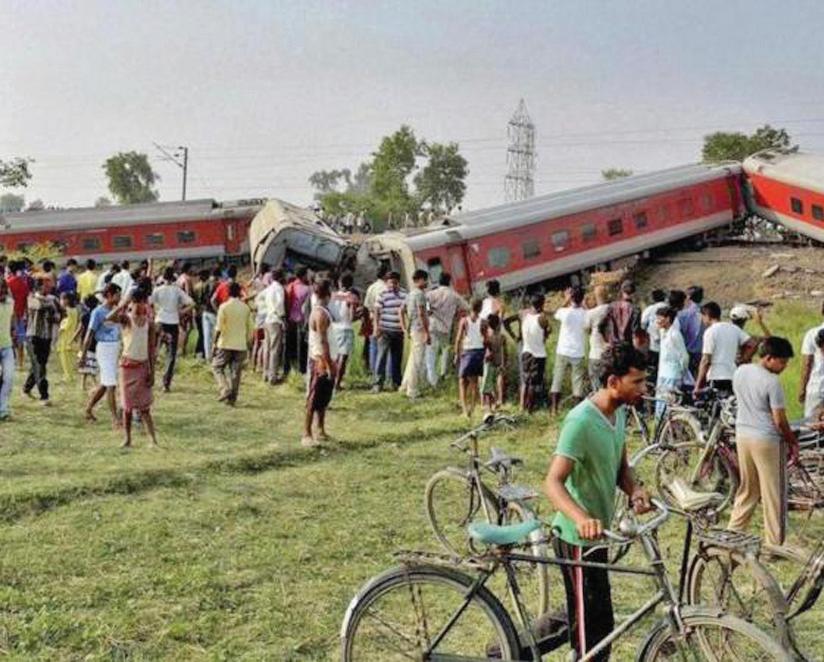
Railway Board chairman
Militants attacked one of Iraq’s largest air bases and seized control of several small oilfields on Wednesday as US special forces troops and intelligence analysts arrived to help Iraqi security forces counter a mounting Sunni insurgency.
Iraqi Prime Minister Nuri al-Maliki, who is fighting for his job and is under international pressure to create a more inclusive Government, said he supported starting the process of forming a new cabinet within a week.
In northern Iraq the Sunni militants extended a two-week advance that has been led by the hardline Islamic State in Iraq and the Levant (ISIL) but also includes an amalgam of other Sunni groups angered by Maliki’s rule.
They blame Maliki for marginalising their sect during eight years in power. The fighting threatens to rupture the country two and a half years after the end of US occupation.
US Secretary of State John Kerry pressed Iraqi officials to form an “inclusive” Government during a visit this week and urged leaders of the autonomous Kurdish region to stand with Baghdad against the onslaught.
A Parliament session is planned within a week that will start the process of forming a new Government based on the results of elections held in April.
Maliki’s Shi’ite-led State of Law coalition won the most seats but needs support of other Shi’ite groups, Sunnis and Kurds to build a Government. (Excerpt from Reuters)

news agency. “There was a blast on the track, which could have caused the derailment.”
Meanwhile, the chief spokesman of railways, Anil Kumar Saxena said 25 trains have been cancelled and 23 have been diverted.
C“Prima facie, it appears to be a case of sabotage,”
Arunendra Kumar told the Press Trust of India (PTI)
“The special train has taken all the passengers to their destination. The work to restore the track is in progress, we hope to restore train services by evening. The accident has affected the Golden Ganj station, where it happened. Seventy-two trains have been affected from the northeastern railway and East Central Railway,” said Saxena in New Delhi, according to Reuters news agency. (Excerpt from Al Jazeera)
hina’s top official in charge of Taiwan ties arrived on the island on Wednesday to begin landmark talks aimed at wooing Taiwanese who remain suspicious about a pending trade pact and autocratic China’s designs on Taiwan.
“It took three hours for me to fly here from Beijing, but it took 65 years for both sides across the Taiwan Strait to come this far,” said Zhang Zhijun, Director of China’s Taiwan Affairs Office, as he sat down for talks with Taiwan’s Mainland Affairs Minister Wang Yu-chi.
“I come here full of sincerity in my heart,” said Zhang, the first head of the
Taiwan Affairs Office to visit the self-ruled and democratic island where defeated Nationalists fled after losing a civil war to China’s Communists in 1949. His four-day trip focuses not on the affluent capital Taipei but on the poorer middle and south, which have benefited less from trade with China and where pro-independence sentiment can run deep.
While China regards Taiwan as a renegade province and has never ruled out the use of force to bring the island under its control, relations have improved markedly since China-friendly President Ma Ying-jeou took office in 2008. (Excerpt from Reuters)
By Svetlana MarShall
President Donald Ramotar has signalled his Government’s intention to revive the US$840 million Amaila Falls Hydro Power Project, despite hindrance from the Opposition.
Speaking at the Private Sector Commission’s 22nd Annual General Meeting (AGM) on Wednesday at the Pegasus Hotel, the President said the country’s economic landscape will undergo major transformation when the hydropower project materialises. Though the implementation process has been delayed, he assured the Private Sector that progress is being made. It was disclosed that the Inter-American Development Bank (IDB) approved US$64 million for the Guyana Power and Light (GPL). (see story on page 10) According to President Ramotar, the approved funds will be used to put GPL in a state of readiness to receive power from the Amaila Falls Hydropower Plant when it comes into operation.
According to him, the Government is hoping to wrap up negotiations sooner rather than later. “We are still hoping and ready to go with Sithe Global and Blackstone for this project, but we are not going to wait forever. We have other options and we have to bring those discussions to a con-

clusion,” he posited. “One way or another,” the project will come into fruition, the President said, noting that the Government is trying to avoid unnecessary delays.
In support of the Government, PSC Chairman Ramesh Persaud said Caribbean Development Bank President, Dr Warren Smith was right when he said that the high energy costs in the Region were affecting its competitiveness.
“On behalf of the Private Sector, we would like to acknowledge publicly that we agree fully with the sentiments expressed by Dr Smith and we call on the leaders of Guyana, both in Government and the Opposition, to work on realising our hydropower potential whether it is Amaila Falls or any other source.”
Before crumbling in 2013, the Amaila Falls Hydropower Project was a Private Sector-led initiative, designed to be financed through debt from the IDB and China Development
Bank (CDB) and with equity from Sithe Global and the Government of Guyana. China Railway First Group was identified for the construction of the power facility.
Earlier in the year, GPL’s Board Chairman Winston Brassington indicated that the Government returned to the drawing board after August 2013 when the A Partnership for National Unity (APNU) withheld its support in the National Assembly, resulting in Sithe Global pulling out of the project.
According to Brassington, China Development Bank has pledged to pump US$500 million into the project with China Railway First, Group (CRFG) remaining committed as well. China Development Bank has also indicated its willingness to pour more funds into the project to fill any gap.
Sithe Global had pulled out of the Amaila Falls Hydropower Project in
August two days after the National Assembly failed to meet consensus on legislative arrangements deemed necessary to move the project forward. The company had already expended approximately US$16 million on preparatory works.
The Donald Ramotar Administration has always argued that the Amaila Falls Hydro Power Plant would produce reliable, affordable and clean energy. GPL will own and operate the project for 20 years, after which, the Project will be transferred to GPL for free, through a Build Own Operate Transfer (BOOT) arrangement. Based on studies, an estimated 20 per cent reduction in electricity tariffs would be experienced when the Amaila Falls Hydro Power Project goes into operation, with residential consumers saving approximately $208.7 million monthly or $2.5 billion annually. (svetlanam@ guyanatimesgy.com)
Gates had said that Dr Roopnaraine had discussed the logistics for the overthrow, in which he explained that it would require seizing Base Camp Ayanganna, taking control of the country’s ports of entry and exist, raiding the Office of the President, arresting President Burnham and taking control of the Government radio station. Ogunseye said if this information was indeed disclosed by Dr Roopnaraine, it would have been a deliberate misinformation, and the WPA knew that it was infiltrated by Government agents.
Cells Back on the activities to facilitate regime change, Ogunseye related that there were 25 cells in Georgetown, all supervised by him with little involvement of Dr Rodney. He said 12 cell leaders were armed with automatic pistols. He was unaware of how they were acquired, noting that his role was only to arrange the delivery. Each cell had three to five members, inclusive of persons who were not WPA members. The role of the cells, the WPA activist said, was to spy on the operations of the PNC Government to protect its members, map PNC hotspots in the city and identify safe havens for WPA gatherings.
The three-month rebellion, he said, included regular public meetings, picketing and marches, some without permission, but all attracting supporters in the thousands.
The WPA Executive said the party’s members and supporters withstood the fury of House of Israel members and ele-
ments of the Police Force, without returning violence. He said during the rebellion, the PNC Government tried to engage the WPA members and supporters in street confrontation, but they backed down as they were no match for the PNC supporters plus the Government had the security forces on its side. He told the Commission too that the ploy by the PNC Government, which had a few leaders accused of sexually exploiting female job seekers, would have been deliberate, to paint the WPA as a violent confrontational group, thereby shifting the focus of the rebellion. But, he pointed out that the rebellion put a severe dent on the resources of the party.
Reevaluate This situation, Ogunseye said caused the WPA to reevaluate the exercise, pointing out too that things were getting out of control. He said the party’s leadership on recognising what was happening, decided to end the rebellion, but did so quietly, so as to ensure that Burnham did not get the impression that the insurrection inflated in its own pressure. However, the WPA activist said that though the party had eased public demonstrations, it maintained its aggression towards the Burnham Government, to underline its intolerance to his authoritarian rule.
He also said that the rebellion was not to create a coup, but make a statement to Burnham, mobilise the masses and lay the ground work for regime change, but said Burnham “killed Rodney” before it could have happened.
In an effort to boost crime fighting in the hinterland, the Guyana Geology and Mines Commission (GGMC) on Wednesday donated two All-Terrain Vehicles (ATV) and several pieces of navigational and communication equipment, as part of an enhanced inter-agency monitoring and enforcement programme in the various mining districts of Guyana. This donation was made collaboratively by the Natural Resources and Environment Ministry, the GGMC and the Guyana Gold and Diamond Miners Association (GGDMA).
GGMC Commissioner Rickford Vieira said this donation will play an integral part in assisting the Police Force in tackling illegal matters that arise in the interior regions, as the major crimes in these areas are human trafficking, drug smuggling, and illegal mining.
Acting Police Commissioner Seelall Persaud noted that the do-

nation of the equipment will address two of the major challenges that the Force faces regularly in the
interior – transportation and communication. The Commissioner stressed that the terrain in the interior is
different from the terrain elsewhere in Guyana, and the ATVs provided will be of great help to the Police
Force throughout that part of the region. Seelall continued by noting that over the years, the setting up of communication infrastructure has proved difficult to the GPF, and the presentation of the communication equipment (satellite phones) will go a long way in connecting interior operators and their instructors.
Seelall stated that of recent, Police operators in the interior have undergone training conducted by resource personnel of the Natural Resources and Environment Ministry, particularly on legislation relating to the Mining Act, Forestry Act and the Environmental Act. This training is to ensure that at the end of the day, all officers of the interior are aware of the details of the laws they are required to enforce.
Improving security
In his remarks, Natural Resources and Environment Minister Robert Persaud noted that the interior of Guyana lends itself to a number of opportunities as
well as a number of challenges. From an officer’s point of view, one of those challenges comes with ensuring the safety and security of business operations in the interior. He also noted that his Ministry, the mining sector and agencies that support the mining sector are prepared to work closely with the Police Force to ensure security in the interior.
The Minister stated that he hopes this donation would improve communication logistics for the Force and it is the duty of stakeholders, to support these targeted efforts. He also said that he is hoping that the hinterland region, with help from the Police, the Army and other stakeholders, develops into ultimately a crime-free zone.
In closing, the Minister stated that the mining sector is very critical to the national economy and that is why we need to place this level of attention on making the area a priority, in terms of protecting persons and their operations.
About 140 students from several private schools around Georgetown graduated from a Drug Prevention Education Programme at a ceremony held at the Umana Yana on Wednesday.
The Drug Prevention Education Programme is the initiative of an organisation called Social Life Issues (SLI), a guidance and counselling service. The mission of this organisation is to promote and advocate awareness and heightened consciousness, of both the individual and family, about the many dangers and lifedestructive consequences associated with and resulting from the use and abuse of illicit drugs and other related substances. This is done through informative and educational programmes and services, commencing at the school level, which allow for the making of informed choices and decisions from a young age.
The schools associated with this programme throughout the 2013-2014 academic year were Chase’s Academic Foundation, Josel Educational Institute, the Institute of Professional Education and the Institute of Business Education (Lusignan and Enmore, East Coast Demerara locations). Throughout the programme,
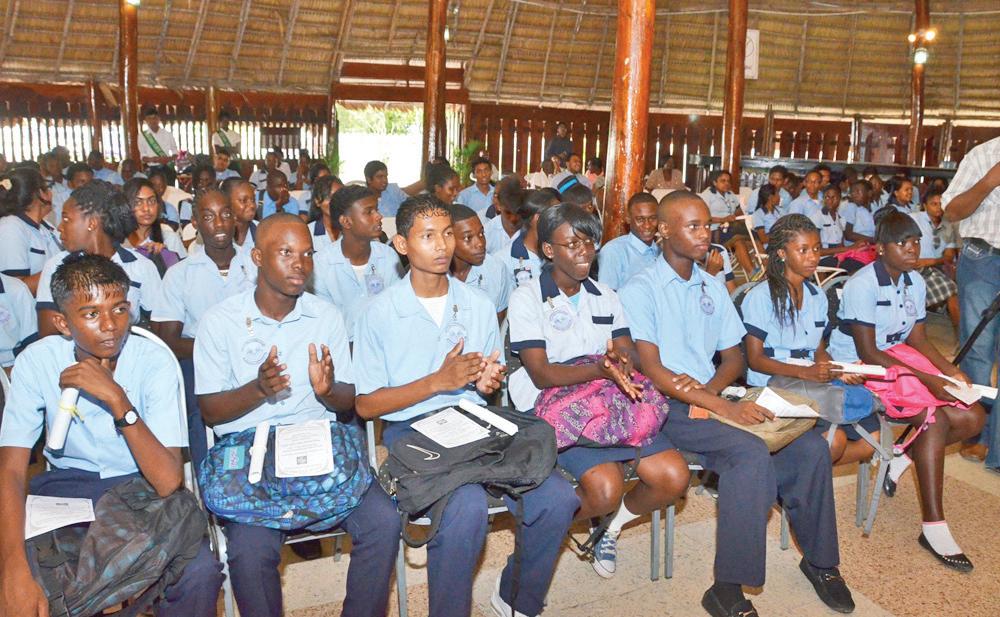
the young people have been involved in many activities that help turn them away from substance abuse and help them to develop themselves as individuals. One such programme was the public speaking competition, in which Natassia Nelson of the Institute of Business Education emerged the winner.
SLI Executive Chairman John Greaves, in his opening remarks, relayed congratulatory greetings to the graduates and pleaded with them to bear in mind everything that was taught them while sharing their knowl-
Today, on the International Day in Support of Victims of Torture, the European Union reaffirmed its commitment to the prevention and eradication of torture and other cruel, inhuman or degrading treatment or punishment. Torture is clearly and unequivocally prohibited under international law.
In a release, the EU said: “We would like to commend the efforts by many NGOs [Non-Governmental Organisations] and individuals, who work tirelessly to prevent torture, alleviate the suffering of victims and mobilise public opinion on this important issue. Through the European Instrument for Democracy and Human Rights (EIDHR), the European Union offers substantial support to civil society organisations that strive for the eradication of torture and work to ensure accountability for torture and ill-treatment.”
The EU called upon all States to accede to the UN Convention against Torture and to its Optional Protocol (OPCAT) and to recognise the competence of the Committee Against Torture
to receive and consider individual communications. It said it welcomed the recent signature of the Optional Protocol by Angola, GuineaBissau and Mongolia and its ratification by Burundi and Norway. The EU underlined the need to create and sustain National Preventive Mechanisms and to ensure their operational and financial autonomy.
It also expressed its appreciation for the work undertaken by international mechanisms, notably the UN Special Rapporteur, the Committee Against Torture, and the Council of Europe’s Committee for the Prevention of Torture, and urged States to implement their recommendations.
The EU said it has given every support to UN General Assembly Resolution 68/156, adopted on December 18, 2013, which stresses the importance of individuals’ ability to freely contact the institutions working to prevent and combat torture and the right of torture victims to redress.
“We must continue to work together to make torture a thing of the past,” the release concluded.
edge to encourage others down this safe path.
Former GCCI President and founder of Blue CAPS, Clinton Urling, in his feature address, congratulated the youths for taking the step to participate in this venture and for sticking with it throughout the entire programme. He also applauded the parents of the young people for their encouragement. Urling noted that it is always commendable when citizens of Guyana take on initiatives to reduce a social ill in society, and applauded Greaves for embarking on this project.
TAs it relates to drug abuse in Guyana, the Blue CAPS founder said most persons affected are often neglected. The lucky ones often get help and find themselves in rehab facilities at an attempt at recovery. By making young persons the targets of this programme, Urling added, the issue of drug abuse is tackled even before it has occurred and this was commendable.
In closing, Urling encouraged the young men and women to develop a mindset of service and volunteerism, as this is very important in today’s society.
Two women are presently hospitalised at the Suddie Public Hospital nursing injuries to their bodies after they were involved in two separate accidents.
Injured are Carmeila Brumell, 40, from Dartmouth and Falene Lyte, 32, from Reliance Village on the Essequibo Coast.
Lyte suffered a broken leg, while Brumell sustained trauma to her left foot. The accidents occurred around 02:00 am on Tuesday.
According to information reaching Guyana Times , Lyte and her husband were heading home from Charity when they were offered a drop by the driver of a bus. The bus had one more passenger inside and the driver was said to be under the influence of alcohol. The others escaped unhurt.
Lyte’s husband, Trenton Garraway, related that the driver started to
speed around Better Hope. The husband said while the driver was negotiating a bridge at Walton Hall turn, the bus ran into a small tree and toppled into a trench. Garraway said he struggled to pull his wife out from the trench. He said when he took her out, the driver called for the ambulance and was told that it was not available. Garraway then got a private vehicle to transport his wife to Suddie Hospital where she is presently in the Intensive Care Unit.
Meanwhile Brumell was involved in an accident at Supenaam. Her husband was transporting her to catch the ferry when he lost control of the vehicle and drove into a trench. The vehicles that were involved in the accidents were pulled out and taken to respective district police stations. The drivers are in police custody. The Police are investigating the accidents.
he Organisation of American States (OAS) and the Government of Haiti on Wednesday signed a memorandum of understanding to hold the VI Inter-American Meeting of Ministers of Culture and Highest Appropriate Authorities in the Caribbean country on August 12 and 13, during a ceremony that took place at the headquarters of the hemispheric Organisation with the participation of the President of Haiti, Michel Martelly.
The Secretary General of the OAS, José Miguel Insulza, thanked the Haitian government for offering to host the ministerial meeting, whose central theme will be “Cultural Interdependence in the Context of Globalization.” Additionally, he said the Ministers of Culture of the Americas will have the opportunity to discuss three major issues: “Cultural entrepreneurship: a tool for innovation and social inclusion; Local development through culture; and Reinforcement of inter-sectoral linkages: tourism and culture.”
Secretary General Insulza said that, for the hemispheric institution he leads “culture is at the core
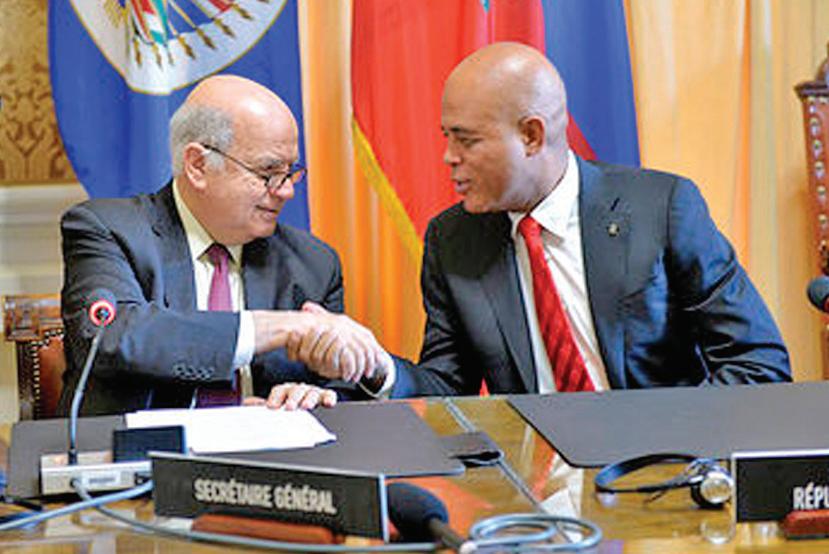
of its main instruments.”
The OAS leader highlighted that the ministerial meeting takes place “only three years after the InterAmerican Year of Culture,” which was held in 2011, and recalled that the OAS has been organising the meetings since 2002.
For his part, the Minister of Foreign Affairs of Haiti, Duly Brutus, who signed the memorandum of understanding, said his country is ready “and honoured to receive all the Ministers of Culture of the
Region.” Foreign Minister Brutus added that the ministerial meeting has a special meaning for President Martelly, being an artist himself.
“For the President it is an achievement to host this meeting, because he is an artist who has worked hard to earn respect for Haitian art throughout the world,” said the chief of Haitian diplomacy.
The meeting is part of the main mission of the Office of Culture and Education, which is to pro-
mote policy dialogue and consensus at the hemispheric level on priority topics of the public policy agenda in the field of culture, within the framework of the Inter-American Council for Integral Development of the OAS. Also present during the signing of the memorandum of understanding was the Assistant Secretary General of the OAS, Albert Ramdin, and representatives of several member states to the OAS, among others.












Consider making a professional move. You will make financial gains if you apply your unique talents in a diverse and inventive manner. Believe in your abilities.

By Bernice Bede Osol

(June 21July 22) (Jan. 20Feb. 19) (Dec. 22Jan. 19)
A spur-of-the-moment get-together will do you good, as well as help you forget your troubles. Don’t let everyday matters smother your creativity or your sense of humour.

You may be feeling somewhat low or lethargic. Having a heart-toheart with one of your close friends will help lift your spirits and get you back on track.

Try to learn as much as you can about some casual acquaintances. The information you gather will provide valuable insight into the best way to handle any situation that may arise.

(Aug. 23Sept. 22)
(July 23Aug. 22) (Feb. 20-March 20)
Be prepared to explain your actions. You may be under suspicion for something that occurred recently. Be open and above-board if someone calls your honesty into question.

(March 21-April 19)
You need to resolve some pressing issues. The information you are looking for will come to light as a result of a trip, change of scenery or conversation with an outsider.

(April 20-May 20)
Keep your distance if discord breaks out at work. Act professionally. Your capabilities may come into question if you pry into issues that don’t concern you.

(May 21June 20)
You could end up in an awkward position if you act too rashly or thoughtlessly. Show responsibility to avoid jeopardising some hot prospects you are eyeing.
Proceed with caution. Your words or actions may be used against you if you aren’t on your best behaviour. Pay close attention to detail, and do what’s right.

(Sept. 23Oct. 23)
Use a support network you trust to find information that will let you get ahead. The recommendations you receive will help you access techniques and trends.

(Oct. 24Nov. 22)
Stop feeling weighed down with obligations and responsibilities when all you have to do is say no. Let others help you for a change, while you get the rest you need to rejuvenate.

(Nov. 23Dec. 21)
Stay out of the spotlight. Your words could be misinterpreted or blown out of proportion. A situation that has been bothering you will begin to get better as long as you are patient.




The WICB delegation, which included Vice-President Emmanuel Nanthan and Queen’s Counsel Walter Scott, who will act as a Special Counsel appointed by the WICB, first met with members from A Partnership for National Unity (APNU) on Monday.
The delegation then met with officials from the Guyana Cricket Board (GCB), high- ranking Government officials and Members of the Special Select Committee of the National Assembly on the Guyana Cricket Administration Bill on Tuesday.
Coming out of the two-day,
high- profile meetings, this publication was informed that all parties expressed their willingness to assist in the resolution of the issues that have been plaguing the game for some time now in Guyana.
Meanwhile, APNU parliamentarian Dr Rupert Roopnaraine, told this publication on Tuesday that the APNU is willing to be engaged in a review of the Bill where necessary.
“We put to them (WICB) that we had a concern that there was so much contentiousness around the issue of the Cricket
Kiwi legend set to join the Biggest Party in Sport for 2014

Daniel Vettori has been confirmed as the Jamaica Tallawahs’ International Franchise Player, replacing Muttiah Muralitharan, who is now unavailable for the tournament.
Vettori, who was recently head coach for the Royal Challengers Bangalore, will once again team with Chris Gayle as he and the Tallawahs aim to retain their CPL trophy. The former New Zealand captain will provide a wealth of experience and inspiration for his fellow teammates, not only from his extensive international career, but also from time spent in the Indian Premier League and Australian Big Bash.
The Kiwi said: “It’s a privilege to be able to step in and help the Tallawahs defend their title. Having heard so many positive words about the CPL from my fellow cricketers, when the opportunity to come to the
Caribbean and play in arguably one of the world’s most flamboyant and exciting T20 competitions came along, I couldn’t turn it down.”
Damien O’Donohoe, CEO of the Caribbean Premier League, commented; “Murali certainly leaves big shoes to be filled at the Tallawahs, but we’re confident Daniel has the ability and personality to become a valuable asset for the team. He’s immensely popular throughout world cricket and his presence with the Tallawahs will only be a positive for his new teammates and the Biggest Party in Sport.”
The Limacol Caribbean Premier League returns on July 11, as the Guyana Amazon Warriors take on the Antigua Hawksbills at the National Cricket Stadium, Grenada in the opening game of the tournament.
The Tallawahs play their first match the following day, against St Lucia Zouks, at 14:30h local time.
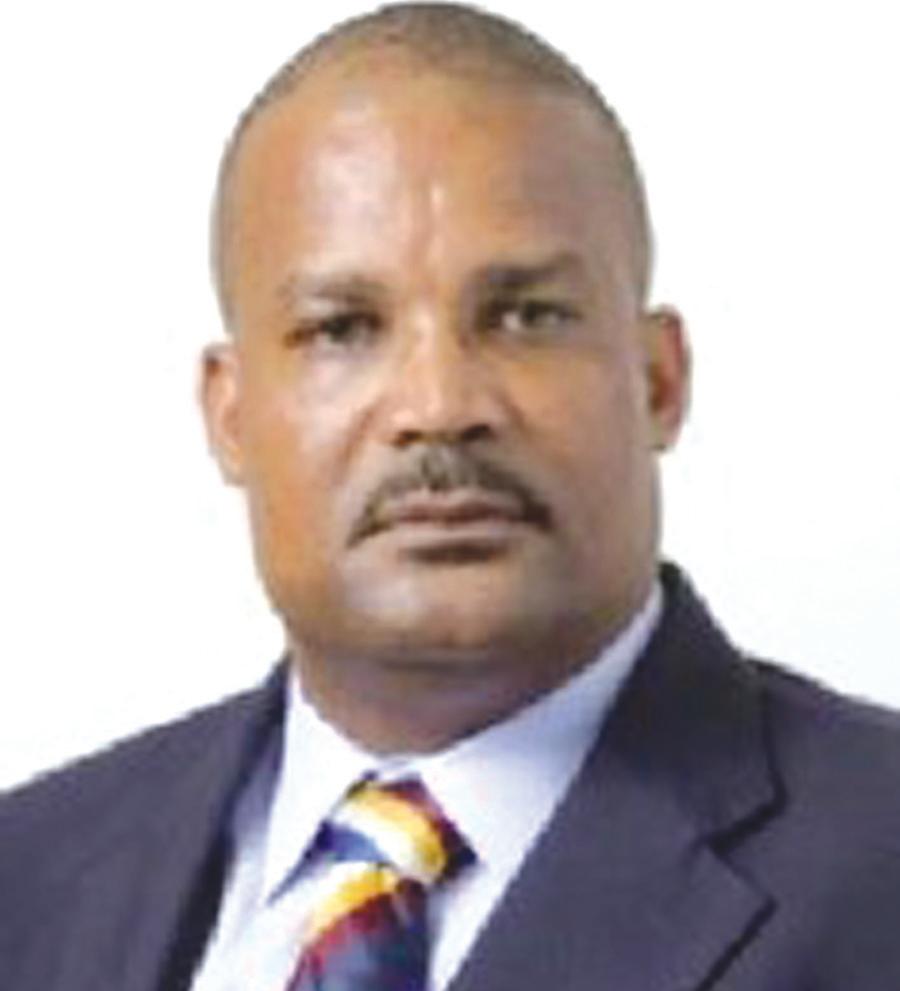
By AvenAsh RAmzAn
The national Men’s 15s ruggers will face their biggest test this year when they take on USA South in the final of the North American and Caribbean Rugby Association (NACRA) 15s championships in Atlanta, USA, but skipper Ryan Gonsalves said his players are up for the task.
Speaking to this publication on the eve of their departure to the USA, Gonsalves, who has been national captain since 2011, said the aim will be to execute the basics right and stick to the game plan.
While Gonsalves stayed clear on predicting an outcome or commenting on Guyana’s chances, the Scrum Half pointed out that the players have been busy training since the 15-8 win over Trinidad and Tobago in the final of the Southern Zone on June 7 at the National Park Rugby Field.
“We’re actually still working on some areas,” he said on Wednesday afternoon. “Basically we’re just trying to work on maintaining possession and minimising dropping the ball. We’re also working on the defensive alignment to make it as tight as possible because the USA has some bigger players than us and we have to be careful in terms of our defence.”
Commenting on the mood of the camp, especially since the match was initially shifted from last Sunday due to the Guyana Rugby Football Union (GRFU) being unable to source the full budget of $8 million, Gonsalves said the players are positive and upbeat and are eagerly look-


Administration Bill and that we ourselves are open to a review of the Bill to see where people’s concerns can be accommodated, that was essentially what we told the WICB, that we are committed in reviewing the Bill where necessary,” Dr Roopnaraine had stated.
The WICB has serious reservations that the Cricket Administration Bill, which was passed in the National Assembly last month, thrusts the administration of cricket in Guyana from an independent body to the Government of Guyana. This the WICB views as undesirable and
inconsistent with International Cricket Council tenets.
Further, the WICB sought an undertaking from His Excellency President Donald Ramotar that the Bill be not signed into law until these matters were resolved. However, the parties were unable to find a mutually agreeable resolution and as a consequence the WICB relocated the Third Test between the West Indies and New Zealand from Guyana. Threats to exclude the national Under-19 team from the next regional tournament soon followed.
focused on doing the basics right
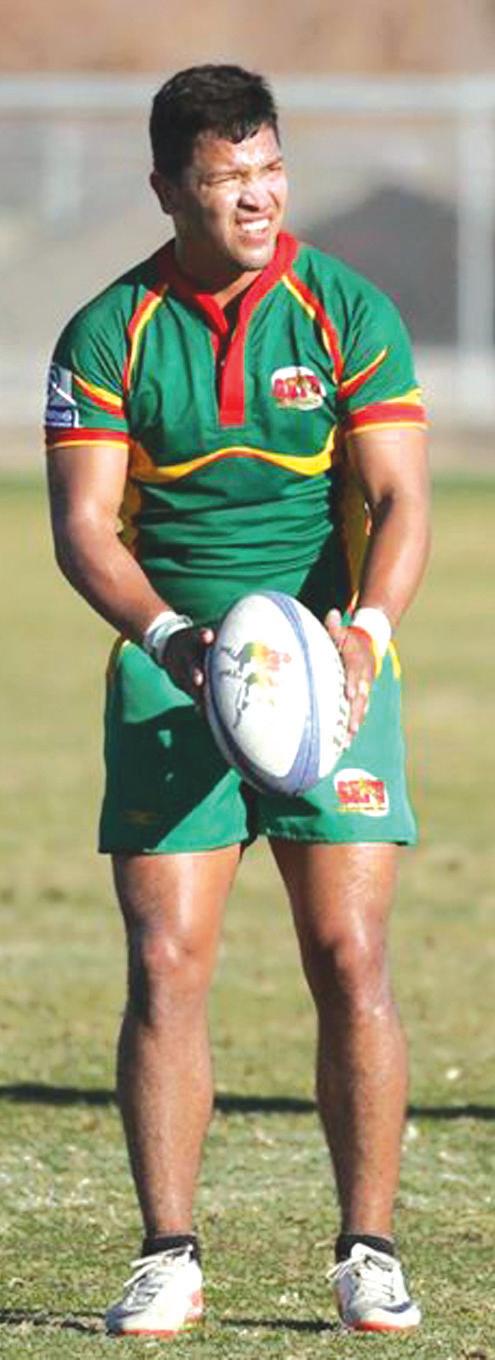
ing forward to step on the field.
“We’re trying as much as possible not to let that affect us. The Union is dealing with that aspect of
it [sourcing the finances] and we have been focussing more on rugby itself. The guys are upbeat, spirits are high and we’re looking eager to get into action,” Gonsalves reaffirmed.
Financial bugbear
Despite being in arrears by $1.5 million, the national Men’s 15s rugby team will depart Guyana this morning to face USA South. President of the GRFU, Peter Green, confirmed late on Wednesday that the ruggers will honour the match date, although the budgeted $8 million has not been realised.
Green said the Guyanese would not allow the shortfall to prevent them from playing the game, noting that even if the players and officials have to delve into their pockets.
According to Green, all the players who had to acquire visas have completed that process, while the airfares and part of the accommodation have been covered. One of the measures Green highlighted that will be put into effect to
minimise the effects of the shortfall is having some of the players accommodated by Guyanese in the diaspora, to eliminate the cost attached to staying at a hotel. By virtue of winning the Southern Zone by beating Trinidad and Tobago 15-8 at the National Park earlier this month, the Guyanese earned the right to face defending champions USA South, who emerged champions of the Northern Zone. The team to Atlanta reads: Rondell McArthur, Allain Crawford, Jason Tyrell, Clive Prowell, Dwayne Schroeder, Felon Thompson, Richard Staglon, Vallon Adams, Ryan Gonsalves (captain) Christopher Singh, Avery Corbin, Theodore Henry, Claudius Butts, Carl Lewis, Ronald Mayers, Delroy Gordon, Jacques Archibald, Kevon David, Peabo Hamilton, Rickford Cummings, Leon Greaves, Lance Adonis and Cyon Kitt. The Coach is Clinton T. Clark, while the Manager is Kenneth Grant Stuart, Fitness Coach is Barry Browne and Physio is Abiola Blair.
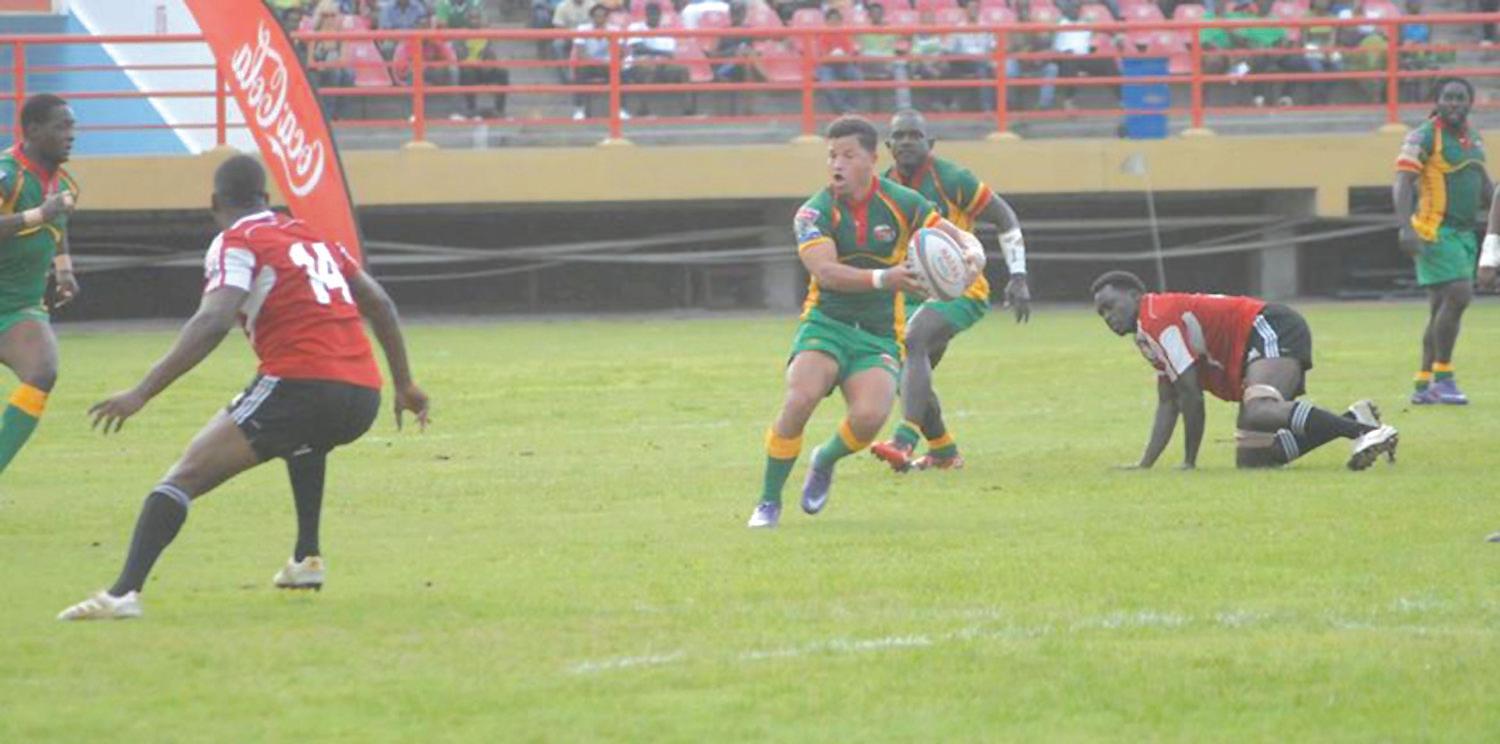
By TreisTon Joseph
As Carifta Games bronze medallist Jason Yaw continues to toil under unfortunate circumstances, one has to wonder how realistic his chance of making Guyana proud really is.
Yaw has been training consistently on the Seawalls in preparation for the World Junior Championships set for July 22 in the United States of America.
The talented quarter-miler had to resort to training at the bandstand due to the National Park being resurfaced. Now with the continuous rainfall, not even an alternate venue will help Yaw’s daunting plight to reach his peak in time for the world meet.
However, one has to wonder, if Yaw did have an alternative venue before the rainfall, how far along would he have been in training? A question that will remain unanswered regardless of Yaw’s performance.
Nevertheless, the rainy season seems to be on and Yaw’s struggles to train effectively will more than likely have an adverse effect on his performance at the meet.

Speaking with President of the Athletics Association of Guyana, Aubrey Hutson, who was unaware of whether Yaw was ‘still’ training on the ‘Sea Walls’,Hudson indicated that he will have a chat with Director of Sport Neil Kumar on the issue.
“I have a meeting with Kumar tomorrow (today) and I will ask him if Yaw can use the stadium to train,” Hutson stated via telephone.
Meanwhile, it is quite unfortunate for Yaw that he will be stuck in a position where if he fails no one will recognise his struggle but if he excels, he is likely to be hailed as an exceptional athlete without mention of his struggle.
It is quite disheartening that any athlete would have to bear such frustration to represent his nation – a culture that has been the norm in Guyana, unless it is viewed as a definite chance for recognition.
Olympic medallist Ato Boldon was in Guyana for a three-day work shop and noted that Guyana needs to develop a “culture for sport” in order to really progress as a nation.
Well, what a culture indeed!
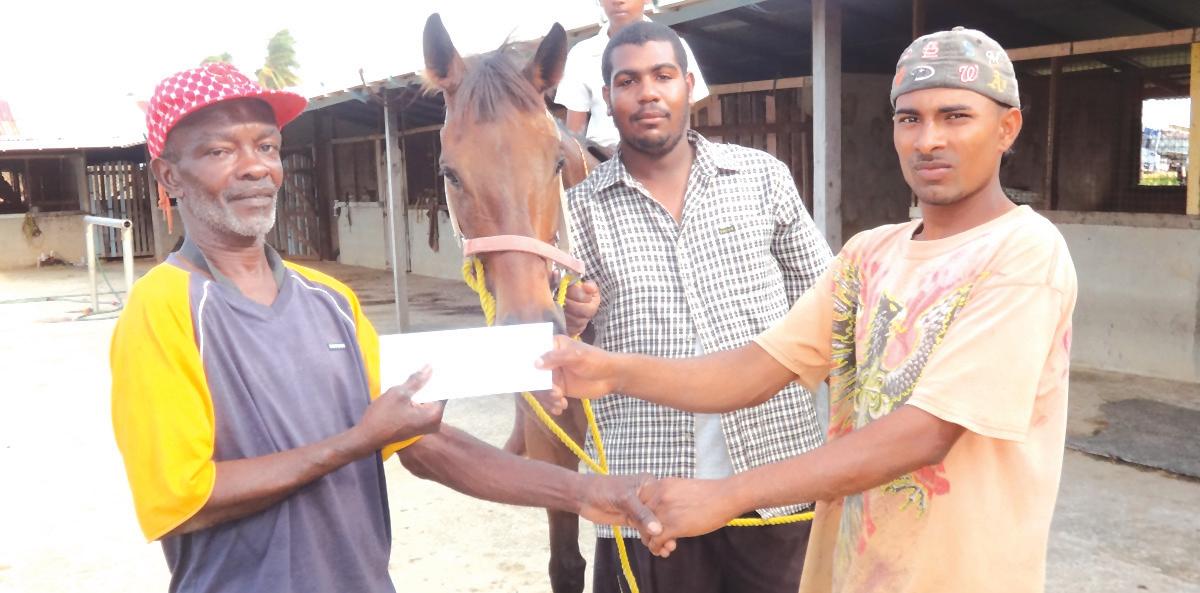
Registration for the Rising Sun Turf Club horse race meet closes today and, according to chief coordinator Chandu Ramkissoon, no late entries will be accepted.
The meet is scheduled for the club’s track at Arima Park, West Coast Berbice, from 12:30h and will be held in collaboration with Inshan Bacchus Trucking Service.
It is being conducted under the rules of the Guyana Horse Racing Authority (GHRA) and, according to Ramkisoon, those rules would be rigidly enforced.
The registration process has already attracted nearly 65 of the country’s top thoroughbreds, who will be competing for millions in cash and trophies from noon.
Eight highly anticipated races are carded for the day with the feature event being the D1 and Lower, fetching the highest first prize of one million dollars and covering a distance of 1500 metre.
The main supporting race is for three-year-old Guyana and West Indies-bred animals competing at 1400 metre for a top prize of $600,000.
The winner of the F1 and Lower event to be run over a distance of 1400m is guaranteed $500,000 while the Two-
Today’s games: Portugal vs Ghana (12:00h), USA vs Germany (12:00h), Algeria vs Russia (16:00h), South Korea vs Belgium (16:00h)
Iran’s hopes of qualifying for the World Cup last 16 ended as they lost to already-eliminated Bosnia-Hercegovina. Carlos Queiroz’s Iran side could have progressed to the second round with a win but their hopes were dented when Edin Dzeko gave the Bosnians a deserved lead with a crisp shot from 25 yards.
Roma’s Miralem Pjanic slid home a second after the break. Reza Ghoochannejad pulled one back but Avdija Vrsajevic sealed it to give Bosnia their first World Cup win.

Bosnia’s first ever victory in a major tournament at least gives the European side something to show for their efforts in Brazil. Safet Susic’s side were knocked
out before Wednesday’s match after narrow defeats by Argentina and Nigeria in their opening two games but had created enough chances to have
taken something from both games.
For Manchester City forward Dzeko, his welltaken goal will feel like scant consolation after he had an effort wrongly ruled out against the Nigerians when the score was 0-0, before missing a number of opportunities to get his side back in the game. His 23rd-minute strike was little more than the Bosnians deserved after a positive start in which the City man had twice forced saves from Iran keeper Alireza Haghighi. (BBC Sport)
Argentina secured top spot in Group F and preserved their unblemished record at Brazil 2014 with a 3-2 win over Nigeria illuminated by braces for Lionel Messi and Ahmed Musa. Alejandro Sabella’s side will be joined in the Round of 16 by the Super Eagles, who contributed greatly to this enthralling match and progress due to Iran’s defeat to alreadyeliminated Bosnia and Herzegovina.
Even in a World Cup packed full of thrilling games, this was one of the best yet, and the tone was set as early as the third minute. That was when Messi opened the scoring in some style, crashing a first-time shot into the roof of the net
year-old Guyana and West Indian-bred cash prize is set at $300,000 at a distance of 600 metre.
Other races on the agenda are the G3 and Lower (1000 metre/$400,000 first prize), I1 and Lower (1000 metre/$250,000 first prize), J and Lower (1000 metre/$200,000 first prize) and H1 and Lower (1000 metre/$400,000 first prize).
Contacts for registration are C Ramnauth on 337-5311, Fazil Habibulla on 657-7010, Inshan Bacchus on 629-9419 and Chandu Ramkissoon on 232-0633/624-9063.
A number of sponsors have already confirmed their sponsorship. However, the latest to do so was the Shariff Racing Stable and Business Enterprise, who on Tuesday handed over a substantial amount to the organisers.
The simple presentation ceremony took place at the Shariff Farm at Number Six Village, West Coast Berbice, where Assistant Manager of the Shariff Racing Stable and Business Enterprise William Fraser handed over the sponsorship cheque to member of the organising committee Ravindra Mohabir. (Rajiv Bisnauth)

from 12 yards after Vincent Enyeama had tipped Angel Di Maria’s initial effort on to the post.
Nigeria, though, weren’t content to allow Argentina’s captain to again hog the
headlines, and they drew level with the next attack of the game. The impressive Ahmed Musa was the player responsible, exploiting a one-on-one with Pablo Zabaleta to cut inside from the left and curl an inch-perfect right-foot shot just inside the far post. A minute into first-half injury time, and having forced a brilliant save from the keeper with an earlier free-kick, Messi re-established La Albiceleste’s lead from an almost-identical position. This time, there was no chance for Enyeama, with the Barcelona star curling a left-foot shot from 25 yards that cleared the wall and dropped just inside the right-hand post.
But once again, Nigeria
wasted little time in responding to Messi’s brilliance. Just a couple of minutes into the second half, Musa emulated the Argentina skipper by completing a double of his own, racing through and wrongfooting Sergio Romero with a low shot into the bottomleft corner. Argentina would not be a denied a third straight win, though, and they secured the points just three minutes later. It was the scrappiest of all five goals, with Marcos Rojo bundling a corner home with his knee, but that didn’t matter to the Albiceleste fans or to the scorer, who had never before found the target for his national team. (BBC Sport)
Ahat-trick from Bayern Munich’s Xherdan Shaqiri saw Switzerland beat Honduras to set up a tie with Argentina in the last 16 of the 2014 World Cup.
The Europeans took an early lead as Shaqiri scored with a fine 25-yard strike, before he twice converted Josip Drmic passes to make it 3-0.
Jerry Bengtson had the best chance for Honduras but his shot was cleared off the line by defender Ricardo Rodriguez.
Honduras finished bot-

tom of Group E with three defeats from three matches. Switzerland, ranked
sixth in the world and the top-seeded team in the group, began the day in
third, but needed to win and hope Ecuador failed to beat France.
With the South Americans only managing to draw 0-0 in Rio, that left an opportunity for Ottmar Hitzfeld’s Swiss team to move into the last 16 for the third time in six tournaments.
After losing 5-2 to France in their last match, Switzerland produced a better performance in Manaus and went ahead with Shaqiri’s sixth-minute opener. (BBC Sport)
France could not maintain their prolific start to the 2014 Fifa World Cup but still finished top of Group E following a goalless draw with Ecuador which eliminates the South Americans.
Antoine Griezmann, Paul Pogba, Karim Benzema and Loic Remy went close as the much-changed French were frustrated by an Ecuador
side who had captain Antonio Valencia sent off.
But after impressive victories over Honduras and Switzerland, a point was enough to send Les Blues through to the last 16 and a meeting with Nigeria in Brasilia on Monday. Although the full-time whistle was met with jeers by sections of a crowd baying for more goals from a tourna-
ment that has already delivered so many, France looked perfectly content.
The match became more stretched after halftime and Griezmann’s volley was pushed on to a post by Dominguez before Manchester United winger Antonio Valencia was dismissed for a late challenge on Lucas Digne.
Ecuador responded posi-
tively, Cristhian Noboa wasting a glorious opportunity after Enner Valencia’s break, but France then showed more energy and cranked up the pressure. Oliver Giroud, fellow replacement Loic Remy and Pogba all tried to force a winner, only for Ecuador to hold the 1998 champions to a stalemate that will give them little cause for concern. Valencia. (BBC Sport)







Healthworld Holistic Centre offers clinical psychotherapy for suicidal thoughts, attempted suicides, depression, stress, mood disorders, psychotic disorders, homicidal thoughts, hallucinations, loneliness, conflicts, anger management, relationship & sexual problems, paranoia and much more. Call +592621-0552 and make that appointment now before it’s too late. 12:00-6:00PM. Mondays-Fridays. Email: healthworldhc@gmail.com



Alberttown, Georgetown (Between Cummings & Lights Sts) Tel: 225-1540, 622-8308, 655-3105. Email: balwantpersaud@yahoo.ca


Learn transcendental
,
225-3923,
Cheap earth; delivery to spot; ECD, EBD, WBD and WCD. Phone 627-9977 or 698-0182
Garden earth and builder's waste; also bobcat rental, excavating, clearing and leveling. Call 616-0617,663-3285
COLD STORAGE FACILITY. Freezing and cold storage facilities available. Affordable prices offered. BM Enterprise Inc, Houston GFL Wharf. Tel: 27-8176/77
Setting up Point of Sales Software, call 669-9342. Email:sales@powertechrepairs.net



JUST ARRIVED: TOP QUALITY RECONDITIONED VEHICLES; TOYOTA NOAH; TOYOTA VOXY; TOYOTA IST (NEW SHAPE); SUZUKI SWIFT; DAIHATSU MOVE (660CC); MERCEDES BENZ C200 KOMPRESSOR; COROLLA AE100 WAGON; TOYOTA HIACE MINIBUS RZ; PITBULL-STYLE FREEZER VAN; LAND CRUISER (FULLY LOADED); MAZDA PROCEED 4WD EXTRACAB PICK-UP; TOYOTA HILUX 4WD EXTRA CAB PICKUPS - 3RZ, 5L, 3L
SOLID DEFFERNTIAL; MITSUBISHI CANTER TRUCKS 4 TONS FREEZER; 3 TONS OPEN TRAY; 2 TONS 4WD; NISSAN ATLAS 2 TONS OPEN TRAY TRUCK. PRE-ORDER YOUR UNITS
EARLY AND GET THE BEST PRICES. FULL AFTER SALES SERVICES AND FINANCING AVAILABLE. DEO MARAJ AUTO SALES, 2 CHIMNEY ROAD, CHATEAU MARGOT, ECD. 624-0762, 220-5177. A NAME AND SERVICE YOU CAN TRUST
4x4 Nissan Titan fully powered Immaculate condition $3.5M. No reasonable offer refused. 622-7740
Nissan Titan, very good condition leather interior, fully loaded $2.5M negotiable. Call: 620-1026
BMW 525i, M body kit, excellent condition, low mileage, price negotiable. Call: 620-1026
One Black Toyota Lexus 2004 Model. Price $2.1M Negotiable. Call Urgent 688-8189

Bedford truck, bobcat and excavators. Phone: 627-9977 or 698-0182
Vacancy exists for anyone with two or more years' experience to work at a travel service which will be located on the East Coast Demerara. For more information call 664-4000
Land to buy in Parfaite Harmonie, Cummings Lodge, Herstelling, Diamond, Grove, Tushen & Parika. Call 218-5591 or 675-7292.

Call now. Jesus cares.

at
and
for
US$2,500 (AC, hot & cold, parking etc). One modern 3 bedroom apartment at Campbellville US$1,300 (AC, hot & cold, parking etc). One bond 135,000 square foot at Beterverwagting, ECD US$10,000. Call 219-4535 or 661-7169
Seven-room bungalow. Ideal for students, groups, short & long term rental - Triumph, ECD. Phone: 220-2130/6247111/622-7097. Self contained apartments, fully furnished. Phone: 220-2130/6247111/622-7097.







Ottis Gibson, the West Indies coach, wants more help for his fast bowlers from the Bridgetown pitch in the decisive third Test against New Zealand compared to what they got in Kingston and Port-of-Spain. The newball pair of Jerome Taylor and Kemar Roach bowled 85 and 86 overs respectively in the first two Tests, and while that brought them a combined 17 wickets, Gibson would like see their toil backed by a more re-
sponsive surface.
“We will have a look at the pitch and see what it holds. Kensington always has a little bit in it for the bowlers as well,” Gibson was quoted as saying by CMC. “Trinidad was a very un-Trinidad like pitch; it was a good pitch for batting and the bowlers had to work hard. It was probably one of the best pitches I’ve seen in Trinidad for a long time. I thought the bowlers bowled well in Jamaica and we backed it up in Trinidad
on a pitch where we had to work really hard.”
West Indies lost the first Test by 186 runs before winning the second by 10 wickets. They dismissed New Zealand in 74.4 overs in the first innings in Port-ofSpain but ran into stiff resistance from the visitors in the second, which stretched for 152.2 overs till lunch on the final day.
Earlier in the series, leftarm spinner Sulieman Benn had said that West Indies were not in favour of “flat” pitches such as the one for the first Test in Jamaica, where New Zealand racked up 508 for 7 declared in the first innings. While Benn had asked for a “proper” Test pitch that had something in it for bowlers as well as batsmen, Gibson wanted a “good” track for the third Test.
“Hopefully we’ll get a very good surface in Barbados, one that helps our quick bowlers a little bit more than maybe Trinidad and Jamaica. Our fast bowlers are bowling fantastically well so hopefully we get a pitch that gives them a little bit of support and they can continue to bowl the way they have been bowling and bowl us to a series win.” (espncricinfo)

Venus Williams recovered from trailing Kurumi Nara 3-0 in the opening set to win it on a tie-break
The eighth seed, back in action after a foot injury, lost 6-3 3-6 7-5 to Serb Bojana Jovanovski.
Azarenka had beaten Jovanovski when the world number 45 made her Grand Slam debut at Wimbledon four years ago.
email: kashokejp_68@yahoo.com or Sherlock on 690-4538, 225-2243

275-0322, Grand Cayman Islands: (345) 943-1515 for the perfect trendy touch.




Second seed Li Na and former champions Venus Williams and Petra Kvitova all progressed to the third round of the wom-
en’s singles at Wimbledon.
But former semi-finalist and two-time Grand Slam winner Victoria Azarenka of Belarus made an early exit.










Australian Open champion Li, 32, was not at her best but still overcame world number 38 Yvonne Meusburger from Austria 6-2 6-2 in the first game on court two. Li’s next opponent will be Czech Barbora Zahlavova Strycova, who beat 32nd seed Elena Vesnina 6-4 6-2.

Luis Suarez could face a lengthy ban that would force him to miss the rest of the World Cup if found guilty of biting Italy’s Giorgio Chiellini. Fifa, football’s governing body, opened disciplinary proceedings after Uruguay’s
1-0 win on Tuesday and has requested television footage.
Chiellini claimed Suarez bit him on the left shoulder, but Suarez said the defender “bumped” into him. Suarez, 27, could be banned for up to 24 matches or two years.
Fifa said in a statement:
“The player has the right to be heard and has until 21:00 BST to submit all documentation. Mexican referee Marco Rodriguez took no action following the incident, but Fifa can still punish Suarez.

he Bladen Hall
TMultilateral School was a zone of concentration on Saturday, but it was Ann’s Grove Secondary School who were probably the most focused and strategic as they emerged champions of the NCE Screen Printers Ltd. Independence Schools Draughts tournament on the East Coast of Demerara.
Ann’s Grove Secondary turned out to be the best among 15 East Coast schools that competed, including President’s College. The champions were then involved in a strategic battle with Georgetown winners Christ Church Secondary and also prevailed.
Placing second among the East Coast schools in the Independence tournament sponsored by Caribbean International Distributors Inc. under its Thrill beverage banner were Golden Grove Secondary, while third were Annandale Secondary. First to third-place trophies were presented by the National Sports Commission.
The NCE Screen Printers Ltd. Independence Schools Draughts Tournament saw some 50 students from 15 schools taking part and was witnessed by representative of the Guyana Draughts Association Mark Braithwaithe, a number of
school teachers and staff of NCE Screen Printers Ltd.
Drinks and water were donated by Caribbean International Distributors Inc., while snacks were provided by H.A. Snacks and NCE Screen Printers Ltd.
understood the value of board games for years and always manufactured them as part of its educational toys and games line in the past.
‒ visiting delegations pleased with venues, accommodation
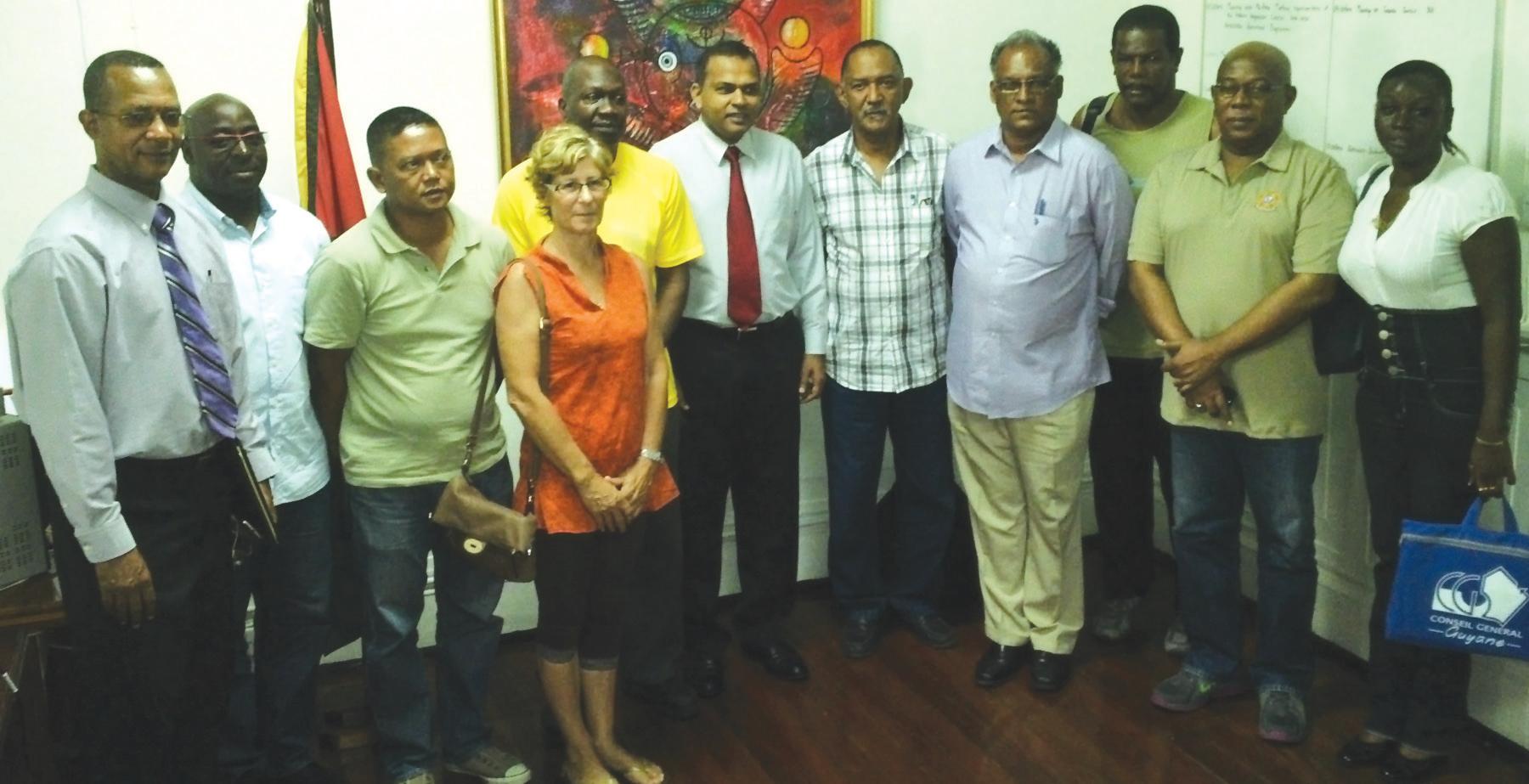
By AvenAsh rAmzAn
GResource Centre on Woolford Avenue, Georgetown.
The Muslim Youth Organisation (MYO) of Guyana, in association with Raf’s Variety Store, will bowl off its third annual Hajjin Zeleena Rafeek Memorial countrywide Inter-Jamaat 10/10 knockout softball cricket tournament on August 1.
According to Imran Ally, one of the organisers, the tournament over the years has attracted more than 40 masjids countywide. However, Ally anticipates a larger turnout this time around.
The previous two tournaments were deemed a
The other schools that participated on Saturday were Bygeval Secondary, Bladen Hall Secondary, Buxton Secondary, Beterverwagting Secondary, Golden Grove Secondary, Hope Secondary, Lancaster Secondary, Lusignan Secondary, LBI Secondary, Mahaicony Secondary, Novar Secondary and Plaisance Secondary.
“Research has shown that draughts enhances students’ ability in problem- solving, focus and concentration. These [games] are available for sale at NCE Screen Printers Limited,” a statement from the business entity read.
Prior to game time, an of-
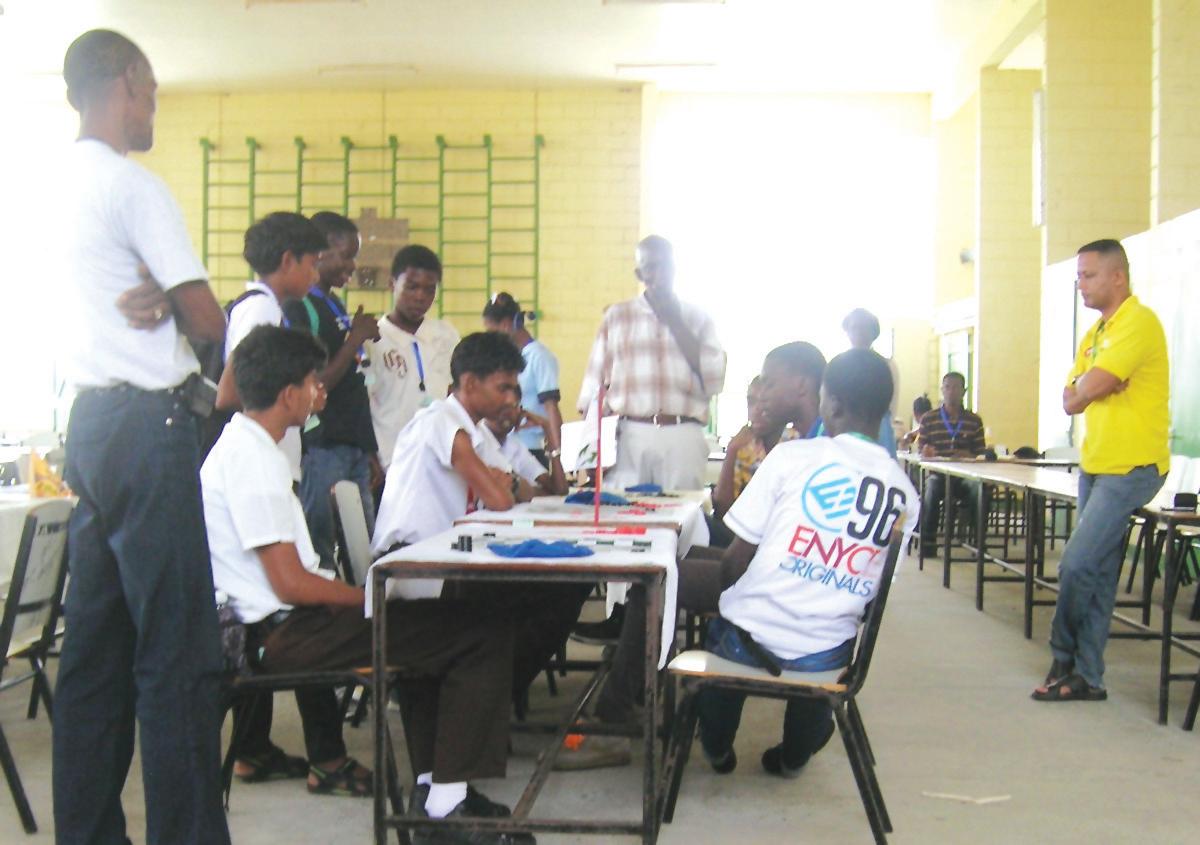
uyana will host the first leg of the InterGuiana Games (IGG) on August 1-3, a decision that was finalised following meetings with representatives of the Guyana, Suriname and French Guiana delegations in Georgetown earlier this week.
The delegations on Wednesday morning paid a courtesy call on Sport Minister Dr. Frank Anthony at his office, where the minister was briefed on preparations for the event.
According to Director of Sport Neil Kumar, the French Guiana representatives arrived on Monday, while their Surinamese counterparts came in the country on Tuesday to finalise plans for the event. The meetings were held at the National Sports
“We had some very good discussions and I’m pleased to report that everyone is satisfied with the venues for the Games and the accommodation at Ocean View International Hotel,” Kumar highlighted.
The long-serving Director of Sport said the visiting athletes and officials will arrive in Guyana on July 31 and depart on August 4.
Sport Minister Dr Frank Anthony commended the officials for their work in getting their plans into action, noting that the Inter- Guiana Games is more than just three nations being involved in sports at a competitive level.
Dr Anthony pointed out that the Games are geared to strengthen relations among the three Guianas through sport, as well as provide an
avenue for young sportsmen and women to showcase their talents.
The French Guiana representatives, led by JeanClaude Mariema, were elated to make a return to the Games which will see rivalry in Male and Female Basketball, Athletics and Swimming.
The Games will be hosted at various venues in Guyana. When action gets under way on August 1, the swimming competition will take place at the National Aquatic Centre at Liliendaal, while the basketball segment will be held at the Cliff Anderson Sports Hall on Homestretch Avenue and athletics will be staged at the Guyana Defence Force ground, Camp Ayanganna.
The second leg of the IGG will take place in Suriname in October.
Women’s national team on verge of missing cB c c/ships
By TreisTon Joseph
According to NCE Screen Printers, the company has
ficial of the Environmental Protection Agency (EPA) enlightened the students about the issue of litter and its effects, and what Government has been doing in that regard.
“Sometimes the process is better than the result and everybody is just looking at if they can win,” were the words of President of the Guyana Amateur Basketball Association (GABF) Nigel Hinds, when asked by Guyana Times Sport on the possibility of the women missing the Caribbean Basketball Championships set for July in the British Virgin Islands (BVI).
will mark the women’s nonparticipation in the tournament, he revealed that unless US$25,000 is raised, the women’s national team’s ultimate fate will be to stay at home.
Further, Hinds noted that the corporate community has come out in support of both the male and female teams, but was yet to see support from the Ministry of Sport.
success, being the largest countrywide inter-jamaat softball cricket competition, and according to Ally, he expects similar results this year.
The competition last year saw MYO winning the title by eight wickets, defeating Farm ‘B’ Masjid in the final. According to Ally, the teams will be vying for a number of trophies and cash incentives.
The first-place winner will receive $300,000 and a trophy, while $200,000, $100,000, $50,000 and trophy will go to the second, third and fourth- placed
teams respectively.
Prizes will also be awarded to the Man-of-the-Match in the finals, the third-place playoff, and in all four quarter-final matches, as well as for most wickets of the tournament, most runs, highest individual score and best bowling figures.
In addition, medals will be presented to the finalists in this year’s tournament.
Registration forms can be cut out from the June 29 and July 6 editions of the Guyana Times newspaper. Registration closes on July 23.
While the chances of Guyana’s women walking away with the title at the CBC games are highly unlikely, is it fair to the women who have toiled to make the team be left at home because they are deemed losers? Is the exposure to the level of the CBC not seen as development or a process that might possibly help women’s basketball in Guyana?
It is true, the women are not the most talented bunch, neither is there a club structure or system existing for women’s basketball in Guyana, but it does not mean that the Guyanese women are undeserving of representing the Golden Arrowhead.
While Hinds did not commit to a specific date that
“We requested a formal meeting and the receipt of the request has not been acknowledged, we received two million dollars from the Office of the President but that has nothing to do with the Ministry of Sport.
“Even if they don’t want to be associated with me or basketball, they could at least write a cheque for something, but nothing…,” Hinds lamented during a telephone interview with this publication on Tuesday.
The GABF has also requested assistance from the Guyana Police Force (GPF) over a month ago to aid in funding four officers who are also a part of the female squad. Those players are Natasha Alder, Kristie Rodney, Latoya Rodney and Loquanta Gibson.
However, according to Hinds, the GPF has not responded to the request.
Still hopeful
Meanwhile, Hinds also shed some light on the play of the females in the practice sessions, noting that they have a good “seven- person rotation, they need to work on their fitness, Felimina George came in to be with the team and she is obviously a boost, but we would like to carry both the male and female teams,” Hinds stressed.
Nevertheless, Hinds was adamant that the female team deserves the opportunity to participate in overseas tournaments and sees it critical to their development and to women’s basketball in Guyana.
“Failure is not an option and even if I have to stay back with the female team to try and raise funds for them to go that is what I will do. If the Ministry of Sport can come forward with one-third of the money, then we would be in a good position,” Hinds said as he thanked the Ministry of Sport for their prompt tax waivers for the men’s national team.
And while funds are lacking for the women to leave the shores of Guyana, the women still continue to toil with the hope of representing their nation; an opportunity any athlete dreams of.

By AvenAsh RAmzAn
The goal fest in this year’s Digicel Schools Football championships continued with another six schools making their way to the next round following convincing victories on Wednesday afternoon.
In the Georgetown zone, Chase Academy whipped Tutorial High 8-0 and East Ruimveldt disposed of Marian Academy 6-0; Buxton prevailed 2-0 over Hope in the East Coast leg; St John’s emerged with a 6-0 drubbing of Leonora Vocational in the Region Three zone; Bush
Reddy (52nd) and an own goal in the 74th minute accounted for the other goals.
Romell Legall was the star for East Ruimveldt against Marian Academy, blasting in a hat-trick at the Police Sports Club ground, Eve Leary. Legall got on the score sheet late in the game, slotting home in the last three goals in the 80th, 84th and 86th minutes. Troy Carrington netted a double in the 11th and 39th minutes, while Alton Benn added a goal in the 47th.
Over on the Den Amstel ground, St John’s benefited from five single strikes and an own goal.
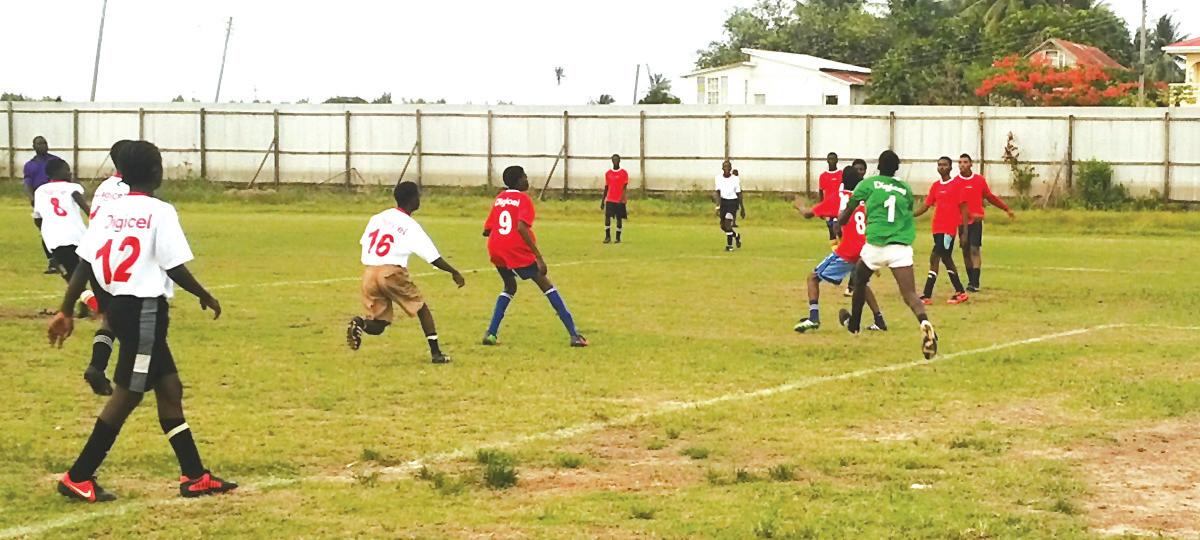
Lot toppled Mahaicony 5-1 in the Region Five leg and New Silvercity won 3-2 on penalties against Harmony in the Region 10 zone after a 1-1 draw.
Andre Trotz and Shamar Barrow led with a double each as Chase Academy registered the largest margin of victory on the day against Tutorial at the Education Ministry ground, Carifesta Avenue.
Trotz netted in the 10th and 45th minutes and Barrow converted in the 56th and 61st, while Daniel Ross (25th), David Britton (34th), Isiah
Rolex Henry (11th), Cordell Walcott (19th), Trevor Clarke (30th), Stephon Bentick (62nd-penalty) and Atambo Henry (75th) scored, while the own goal was netted in the 68th minute.
At the Mahaicony ground, the home team suffered a 5-1 defeat at the feet of Bush Lot.
Marlon Nicholson (33rd, 64th) and Adrian Price (17th, 20th) netted a double apiece, while Royal Schultz scored in the 28th minute. Mahaicony’s consolation came off the boot of Dawnell London in the 67th minute.
The Buxton lads were led to victory by Ato August and Dillon Wright, who were on target in the 54th and 68th minutes respectively at the Beterverwagting ground, while Kendolph Lewis (27th) scored for New Silvercity and Denzil Fordyce (53rd) netted for Harmony in the 1-1 scoreline at the end of regulation time at the Wisburg ground.
The fourth annual competition will continue today with more games in the various zones.

National junior and senior champion, Narayan Ramdhani, was in top form on Monday night when action continued in the Guyana Olympic Association’s (GOA) Discover Open badminton tournament at the Queen’s College courts.
The tournament, which has attracted participation from local players as well as a few Chinese nationals, was one of a series of events the GOA has organised as part of World Olympic Day celebrated on Monday last.
Ramdhani, who is also a Caribbean and South American age group cham-
pion, teamed up with Nicholas Ali to win the Men’s Doubles title by beating Noel Shewjattan and Jonathon Mangra 21-17, 21-19.
The pair had earlier defeated William Holder and Avinash Odit 21-7, 21-19 in the semi-final, while Mangra and Shewjattan had qualified for the final after outplaying Steve Pang and Ian Xiong 21-11, 21-10 in the other semi.
Ramdhani will also play his Doubles partner Ali in the final of the Singles competition on Friday after they both easily won their semi-final games.
Ramdhani prevailed 2110, 21-14 over Jonathon Mangra, and Ali disposed of Odit 21-17, 21-15. The Mixed Doubles final will also be contested on Friday with Narayan Ramdhani and his sister Priyanna teaming up with Ali and Ambika Ramraj. On the opening night, Priyanna was in top form, winning the Ladies Singles and Ladies Doubles. In the Singles final, Priyanna defeated Ramraj 21-4, 21-7, while in the Doubles, she teamed up with Ramraj to beat Kara Abrams and Abosaide Cadogan 2115, 21-13.
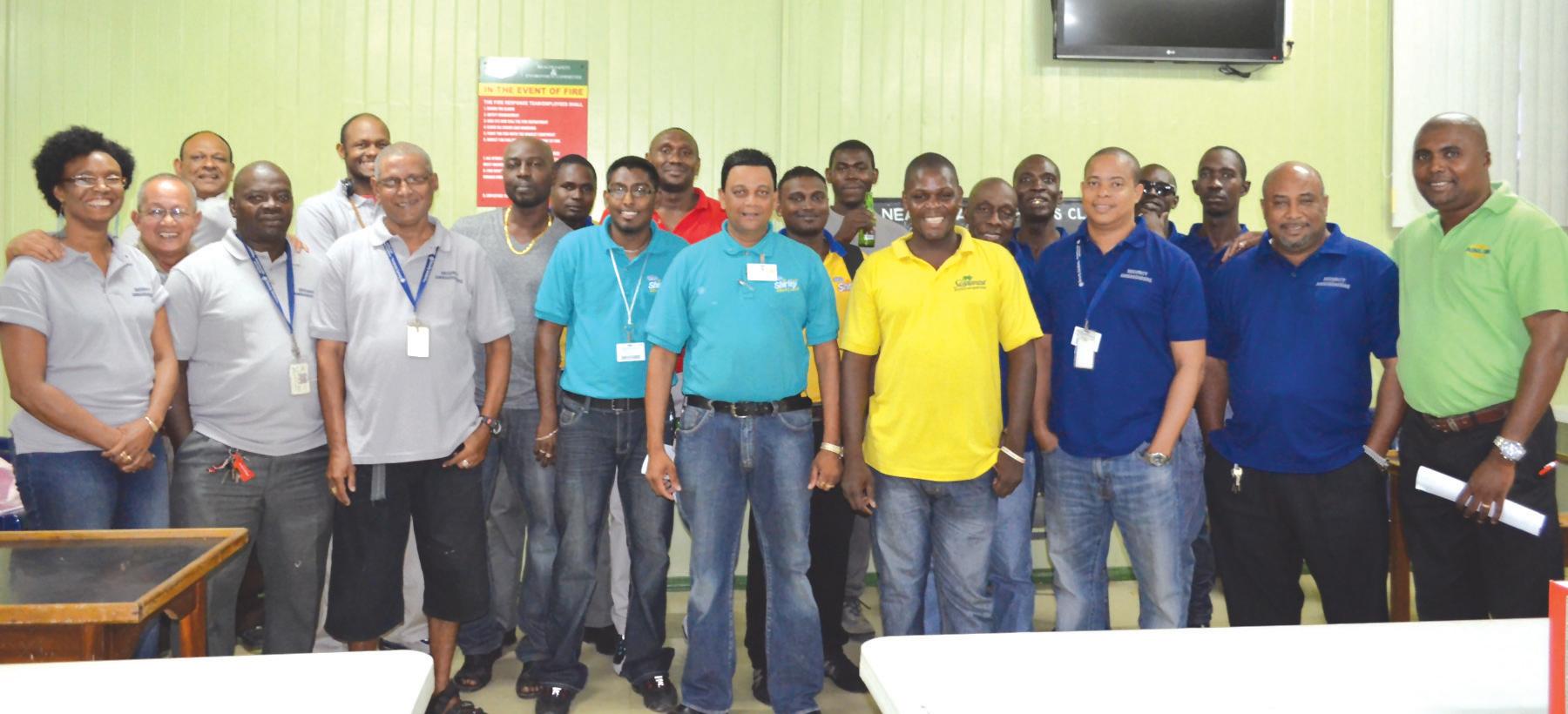
NM Security Solutions (NMSS) ‘B’ scored 83 games to emerge winners of the Neal and Massy Inter-Company domino final played recently at NM Staff Facility at Ruimveldt.
Led by a top score of 17 games from captain Julian
Vozlosa and 16 games from Gerald Fowler, NMSS B made light work of NMSS A, who made 72 games to finish in the runner-up spot, while Bermudez ended on the carpet with 59 games.
Fay Bispham and Desmond Singh with 15 games each were also in good
form for the winners, while Keith Moore top scored for NMSS B with 16 games.
Askoke Birju was the main contributor for Bermudez with 15 games.
The lovebirds were Ivan Bobb-Semple of NMSS A and Dardatt Budhpal of Bermudez.
The tournament attracted teams from the following companies: Associated Industries Limited (AINLIM), CCS, Demerara Oxygen Company (DOCOL), NMSS and Trade and Distribution Inc (TDI). Prizes were donated by Neal and Massy Sports Club.


By Rajiv Bisnauth
Sport Minister Dr Frank Anthony expressed on Wednesday that the closed- door talks with top officials of the West Indies Cricket Board (WICB) on the passage of the contentious Cricket Administration Bill were fruitful.
Dr Anthony was also optimistic that a bright future awaits Guyana’s cricket following the decision to establish a Memorandum of Agreement (MoA) among the various cricket stakeholders during the WICB’s two-day visit which concluded on Tuesday.
The MoA, which is expected to be prepared by 18:00h this afternoon, is to be established to iron out the contentious issues regarding the Cricket Administration Bill.
“We had very fruitful discussions with the WICB and I think some of the things, maybe the misconceptions that people might have had, we were able to discuss and clarify those issues.
“At the end of it we are working on developing an agreement and right
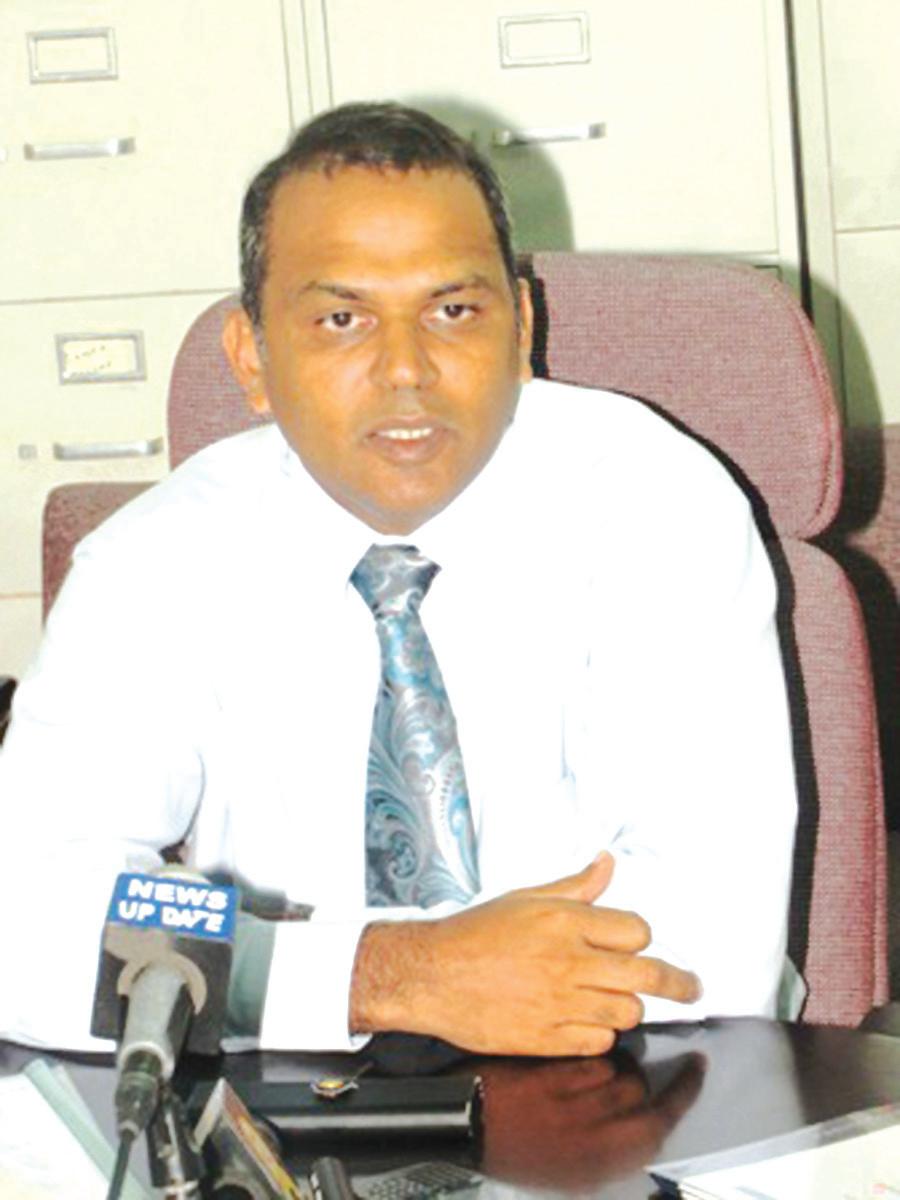
now the legal people will put that agreement in place and once we have the text of that agreement and agree on that text, I think we will be able to move forward,” Minister Anthony told Guyana Times Sport
The Minister further added: “In my opinion there were issues, maybe misunderstandings that stemmed from the Bill and we were able to provide clarifications on them, so for us it was really giving people the explanation that they required, so that’s why we will capture that in an agreement now so that everybody is comfortable.
“What we have to look for is more than a long- term relationship as we move forward because the main objective is the development of cricket in Guyana,” the Minister stressed.
When questioned by this publication on whether the issue regarding the WICB’s alleged decision to exclude the Guyana Under-19 team from the next regional tournament was addressed, Minister Anthony said: “The issue is a matter directly for the WICB and their agents here. The government does not select the team that go out to represent Guyana. We do not bid to host the matches here in Guyana, and these are matters the WICB agents here would be dealing with and with the WICB”...