Granger encourages agroprocessing, microenterprise at
GTA says Guyana's tourism sector growing Govt finalising occupational health and safety order Imam wrongfully accused, say Muslim leaders Berbice Expo generated sales, exposure for businesses Guyana’s education system should be constantly revised –Greenidge
These beautiful young ladies did not have much to cheer about as the Guyana Amazon Warriors went down to the St Lucia Zouks in front of a packed Guyana National Stadium on Sunday (Limacol CPL photo)
Granger encourages agro-processing, microenterprise at Baracara
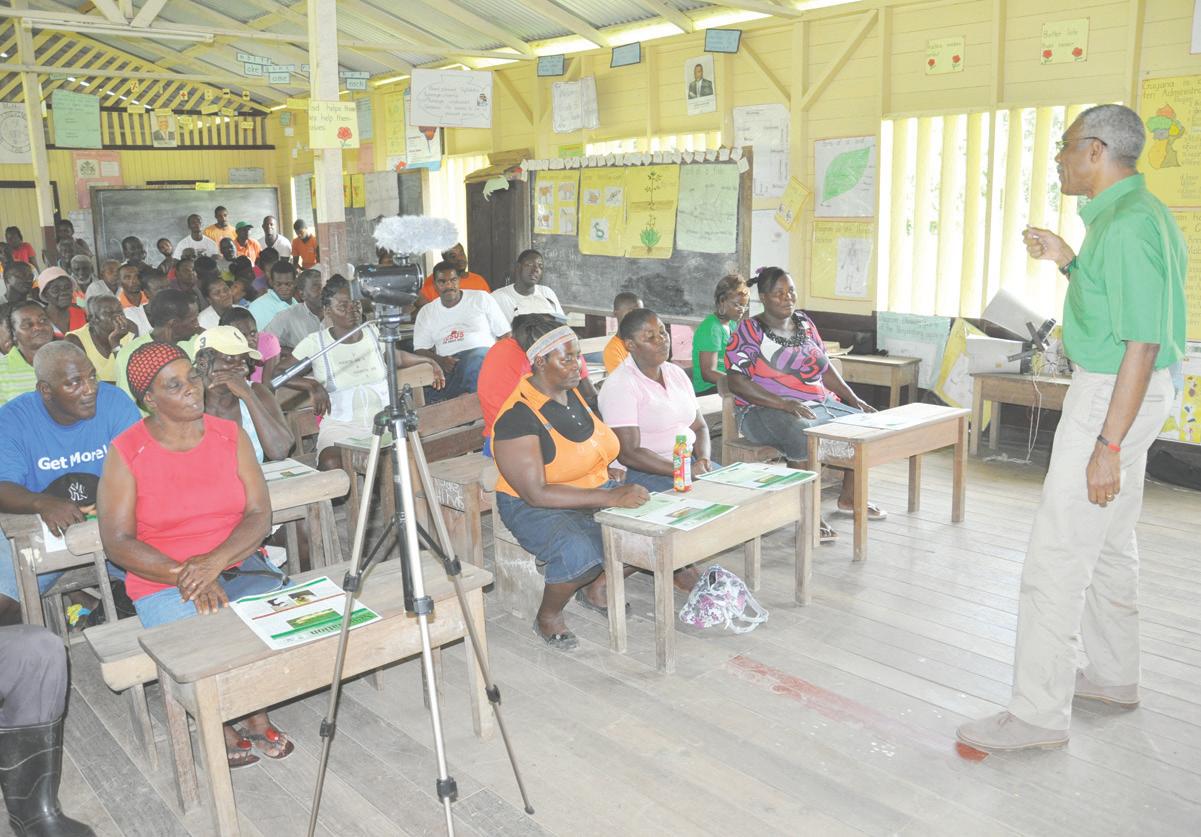
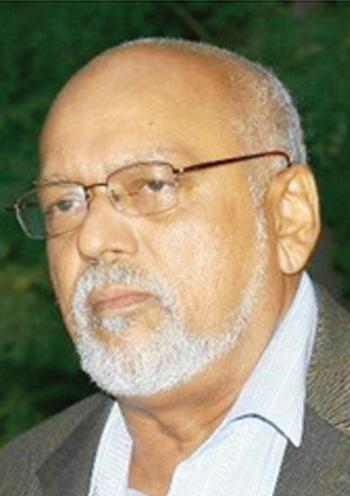
People’s National Congress Reform (PNCR) leader Brigadier (retired) David Granger met scores of Baracara villagers to listen to their problems and to encourage them to embark on agro-processing and microenterprise projects.
Baracara, a remote settlement located about 80 kilometres up the Canje River in East Berbice, Corentyne region, is one of the oldest, continuously occupied communities in the country.
It has, however, suffered administrative, infrastructural and economic neglect from both the regional administration and central government, the PNCR said in a statement.
According to the PNCR,
villagers expressed their concern about rising unemployment of school leavers and the dysfunctional public education system which is producing an unmanageable number of dropouts.
There are no central electricity, telephone or pure water supply systems.
Villagers also raised a wide range of local concerns – including the high cost of transportation to the coast and lack of proper sporting and leisure facilities for young people –in their historic community. Farmlands are frequently flooded and their crops and cattle suffer.
Granger learnt also that students attending secondary schools in New Amsterdam do not have ac-
cess to a hostel, a facility that is usually available elsewhere to hinterland students.
The PNCR leader said central government and the regional administration had roles to play in addressing the villager’s concerns.
Granger challenged the community to turn their distress into success by creating value-added products through agro-processing and the promotion of cottage industries.
The PNCR leader was accompanied on his visit by three A Partnership for National Unity (APNU) parliamentarians – Annette Ferguson, Jennifer Wade and Winston Felix – and Region Five and Six councillors.
North West businessman shot dead
ANorth West District, Region One businessman was shot dead and his body found in his shop Saturday night. In a statement, police
said that about 20:00h on Saturday, the body of businessman John Jeffrey, 40, of Oronoque, Port Kaituma, NWD, was found in his shop with suspected gunshot injuries.
The body is at the Port Kaituma Hospital mortuary awaiting post-mortem examination. Investigations are in progress.
El Dorado Rum captures author’s attention
Demerara Distillers Limited (DDL) award winning El Dorado rums have spiked the interest of well-known bestselling American author Randy White, who has travelled to Guyana to gain insight as to how El Dorado rums are made and to understand the history of various rums produced by the company.
He was high in praise of the rum, relating that it captured his interest when he tasted it on one of his trav-
els.
“After, I began reading about El Dorado, it’s not just one of the best rums in the American’s; it’s one of the finest rums in the world from this small country… I found the success and brilliance of this product quite interesting,” he stated.
During his four day visit, he will also examine what the country has to offer as an eco-tourism destination. If his visit to the country further captures his inter-
est, White will come back to spend time in Guyana and write about it in an adventure travel magazine he edits.
“I’ve only been here for four hours and I’m already falling in love with the people and the country, it’s an extraordinary country,” he lamented.
This is his first trip to Guyana, White said, noting that he will visit places such as Georgetown, Baganara, Bartica and Parika.
IDB announces new commitments to road safety
Inter-American Development Bank (IDB) President Luis Alberto Moreno on Friday renewed the bank’s commitments to road safety, announcing that priority treatment will be given to all bank-financed transportation projects.
As part of the new commitments, Moreno also announced a two-year extension of IDB financial support for Latin NCAP.
Latin NCAP is a programme in which the bank participates with the International Automobile Federation (FIA) and other agencies to improve the safety of cars manufactured or sold in Latin America.
Moreno participated along with FIA President
Jean Todt in the forum “Toward Safe Road Behaviour”. The IDB and FIA organised the forum within the framework of the United Nations’ Decade of Action for Road Safety.
Also participating were Argentina’s Interior and Transport Minister Florencio Randazzo, Make Roads Safe Campaign Global Ambassador Michelle Yeoh, and the World Bank director for Argentina, Paraguay and Uruguay, Penelope Brook.
In this sense, he praised Argentina and Jamaica for the progress they have made in recent years in reducing road accidents.
The forum, which analysed the challenges of road safety to social and economic development, was attended by members of the private sector, civil society and academia.
During his speech, Moreno outlined the bank’s efforts in the field of road safety at the global, regional, and country levels, noting that action “can quickly yield results in lower mortality rates for road accidents”. He stressed that “fortunately, we have a remedy to curb road accidents” and that “some countries in our region are achieving remarkable results”, although “they are not necessarily the richest countries or the ones with the largest public budgets”.
American author Randy White (centre) handing over a copy of one of his books to Demerara Distillers Limited International Marketing Manager Tamsia Clement in the presence of El Dorado Rum representative Ian Lye
PNCR leader David Granger addressing residents of Baracara
BRIDGE OPENINGS
The Demerara Harbour Bridge will be closed to vehicular traffic on Monday, August 5 from 14:30h to 16:00h.
The Berbice River Bridge will be closed to vehicular traffic on Monday, August 5 from 15:55h to 17:25h.
WEATHER TODAY
Countrywide: Heavy rain showers are expected during the day, giving way to partly cloudy conditions in the evening over coastal and near inland locations. Temperatures are expected to range between 24 degrees and 29 degrees Celsius.
Winds: North-easterly to south-easterly from 0.55 and 1.11 metres per second.
High Tide: 15:49h reaching a maximum height of 2.40 metres.
Low Tide: 09:23h and 21:37h reaching minimum heights of 0.75 metre and 0.79 metre respectively.
Ramotar, Jagdeo poll highest at PPP congress
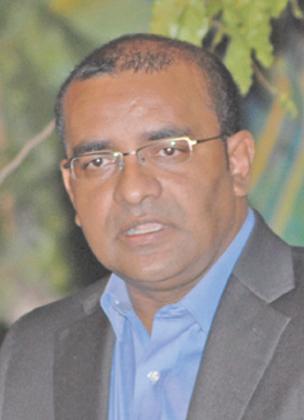
President Donald Ramotar and his successor, former President Bharrat Jagdeo emerged as the top candidates when the People’s Progressive Party (PPP/C) 30th Congress voted for persons to sit on its Central Executive Committee.
Ramotar polled 886 votes, while Jagdeo secured 851 to occupy the first and second spots respectively. Culture, Youth and Sport Minister Dr Frank Anthony copped 724 votes to come in at third, followed by Attorney General Anil Nandlall with 690 votes, Gail Teixeira 651, Navin Chandarpal 604, Dr Roger Luncheon 560, Indranie Chandarpal 552, Pauline Sukhai 546 and Clement Rohee 540, round off the top 10 candidates.
Press and publicity officer at the Officer of the President Kwame McCoy was among some of the new comers in the committee with some 228 votes.
Meanwhile, in a statement, the PPP said the clarion call of the delegates to the 30th Congress, which concluded on Sunday, is for the PPP/C government to continue to work tirelessly to deliver higher levels of goods and services to the people of Guyana.
These include health, housing, education, water, jobs and entrepreneurial opportunities; the mobilisation of the Guyanese masses to support the identified higher level of infrastructure development –Amaila Falls project, the
Marriott Hotel, the road to Lethem, a deep-water harbour, a new crossing over the Demerara River, the Cheddi Jagan International Airport (CJIA) expansion –and to intensify community activism to address development at the local/community level.
A success
The congress, the party said, was hailed by delegates and observers as among the most successful as it saw a higher level of participation and enthusiasm to stand by the party in bringing together the masses to realise a Guyana of peace, progress and prosperity.
The congress was held during August 2 to 4, at the JC Chandisingh Secondary School, Port Mourant, Berbice, Region Six.
Participating delegates and observers came from party groups stretching across the 10 administrative regions of Guyana, inclusive of significant hinterland delegations.
Ministers of government, members of the diplomatic corps, representatives of fraternal organisations, both locally and overseas, representatives of the Woman Progressive Organisation (WPO) and the Progressive Youth Organisation (PYO) joined party delegates and observers for a dynamic opening ceremony which set the tone for the subsequent plenary sessions over the three days.
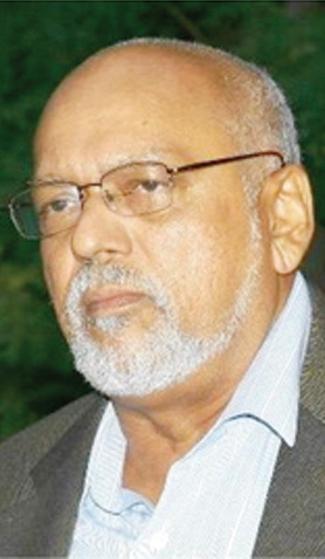
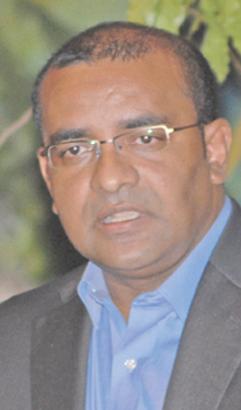
President Donald Ramotar Former President Bharrat Jagdeo
Editor: Nigel Williams
Tel: 225-5128, 231-0397, 226-9921, 226-2102, 223-7230 or 223-7231. Fax: 225-5134
It was reported in the local media a few days ago that a Zeelugt man killed his two children and severely injured his wife in the most violent attack witnessed in recent times. There are a number of unanswered questions like what could have caused the father of two to get into that rage to launch such an attack on his family and could these deaths have been prevented?
From all indications, at least the neighbours and relatives who were very much aware of the man’s behaviour could have done more to prevent this tragedy from happening, since it is clear that he had a history of abusing his wife and using threatening language against his family members.
An aunt was reported as saying that every time she visits the family, the now dead five-year old would ask that she take them away from the home since she was afraid that one day their father will kill them all. The woman was reported as saying that her niece had related to her that every time her father gets upset with their mother, he would usually pull the cutlass on them.
No one should have assumed that he was not serious in his constant threats. The police should have been notified and the necessary action taken to address the problem immediately, such as removing the children from that abusive environment. Support should have also been given to the mother to ensure she was safe and taken care of.
That being said, the most recent case is just one of many cases of domestic violence. But we may ask why, considering all that the government and non-governmental organisations (NGOs) have been doing. The administration has undertaken several initiatives to deal with the problem, including the enactment of the relevant legislation to protect women and girls from being sexually or physically abused; for example, the launching of the “Stamp It Out” campaign, and the opening up of legal aid offices in a few of the regions to provide legal advice and support for victims of abuse.
Further, the Human Services and Social Security Ministry has been very proactive in setting up the relevant units –the Domestic Violence Policy Unit and the Women’s Affairs Bureau – within the ministry to deal with the matter and to implement policies in this regard. In addition, NGOs such as Men Empowerment Network (MEN) and Help and Shelter are involved in a number of campaigns and programmes to reverse the trend of violence against women.
While some may argue that there is already a high level of awareness about domestic violence in the society, it has to be a continuous process where both men and women are educated about the types of abuse, and the negative effects abuse has, on not only relationships and society, but also on children who learn from their parents’ actions.
Also, there is need for adequate support systems to be put in place to offer long-term assistance to victims of abuse. Telling women to get out of abusive relationships and providing some counselling on a short-term basis are not enough. What about the long-term financial support of victims and their children? Victims most times worry that they would be worse off financially and otherwise if they go on their own.
The problem will also need to be tackled from the perspective of the abuser such as providing ongoing counselling. It is well accepted that men are usually brought up and socialised differently from women – they feel that they should be aggressive and in control – and hence they want to dominate. In this regard, a strategy to target behaviourial change is critical if the battle against this social problem is to be won.
Additionally, law enforcement is a critical part of the solution and it is important that the police get their act together and take reports of domestic violence more seriously. Since there is no single cause of violence, there is no one simple solution. The best society can do is learn to recognise the warning signs of violence and get professional help as soon as possible. In the case referred to earlier, relatives and neighbours should have taken the man’s threats more seriously, but unfortunately he was left to carry on with his violent behaviour without the authorities doing what was necessary to stop him in his tracks.
More importantly, no one should use such a level of violence, or, for that matter, any form of abuse against their spouse and family members. And when incidents such as the one referred to earlier do occur, stakeholders should engage in serious thinking and try long and hard to find possible answers.
We've come to play
Youth camps are great investments
Dear Editor,
I see that our youths are really being catered for. A few days ago, I heard on radio the community call for quite a few Vacation Bible Schools all over the country.
Currently, there are various kinds of camps for school youngsters. These camps are being run by the National Sports Commission. I wish I were a boy all over. No one can say that Guyana is not chartering new territory for its children.
It gets better now too, as I see that the Guyana Police Force’s annual Youth Camp is fully entrenched. The first week of August is usually when a lot of extra lessons come to an end. So
until August 12, plenty of children will again be benefiting from this camp. It is being run at the Pomona Secondary School, Essequibo Coast, and the venture is getting the full support of the Guyana Police Wives Association.
In fact, these ladies are the ones doing all the work. This year, some 200 children between the ages of seven and 12 were selected from among youths who were involved in the force’s youth clubs and scout groups.
So, it is like a continuation and enhancement of their lives.
This year the theme is “Youths, leading our nation.” This is sending a great
message at an early age.
About 67 per cent of our prison population are young people.
They have been misled or maybe not even led at all. So with this camp, it is hoped that at least 200 will not be easily swayed into anything anti-social. Now is the time to invest, for if we save the children, we are saving the youths, and we are saving the adults – the chain must start at the very beginning.
I like these topics for the camp – craft work, educational talks, road safety, religious teaching, information technology, and games and then a great exhibition to showcase the skills
learnt. This is how it used to be in the days of old – all camps ended with a grand presentation. During those days too, we used to honour our country in the Vacation Bible Schools.
I noticed that the police camp has that element of religion. The two − God and state, must co-exist.
I hope we all learn from this and I call for more organisations, government and others, to have these inhouse camp sessions. They are not that costly, and they afford a lot to the adults too. They end up learning a lot.
Yours sincerely, Josephine McAlmont
Another case of clumsy police work?
Dear Editor,
A police officer is expected to carry out his duties in a very professional manner. Well, this one did not, and he ended up suffering humiliation and loss. The situation is really not that good here.
This officer, attached to the Whim Police Station, was relieved of his gold and silver jewellery while performing his duties at the Number 63 Beach,
Corentyne, Berbice. What apparently happened is that he was in the process of arresting a particular man, from a group of three, when the rest, all suspects too, walked up to him and relieved him of a gold chain worth $500,000 and a silver and gold band valued $100,000. The man who was in the hands of the policeman then took the opportunity to flee.
This particular epi-
sode was to have been the end of a nice operation that nabbed a possible narcotics dealer, involving an unlicensed firearm as well. One man was indeed arrested, but with this particular officer, things did not go too well.
I really think that police should always be working in pairs – that is the minimum. Also, if they are going to be on duty, they must have their weapons. If this
officer had his weapon, he would have come off successful, I think. Then, even though it is his choice, I say it is far better to go on patrol duty without valuables. The fact that a police officer has to worry about his personal possessions makes him/her less focused. Police work is about undivided attention.
Yours sincerely, Rajendra Paul
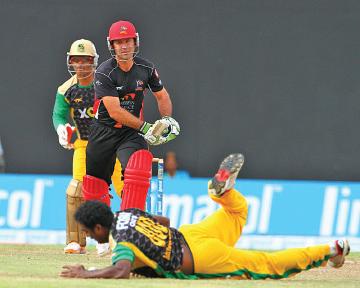
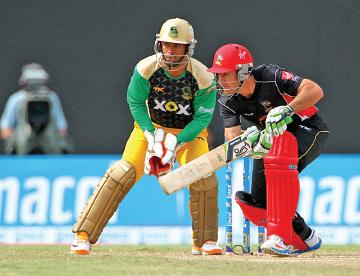
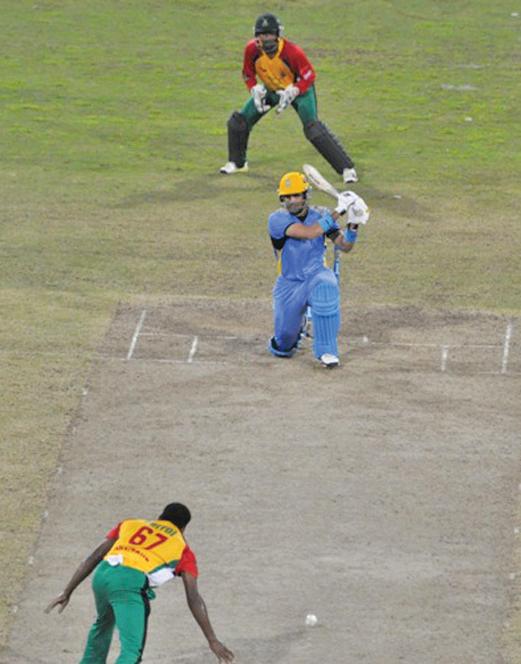
Cricket, lovely cricket! Fans turned out in their numbers to witness the first double header in the Limacol CPL T20 at the Guyana National Stadium, Providence, East Bank Demerara on Sunday (Limacol CPL photo)
The Berbice River Bridge has made life easier for many people
Dear Editor, I am not into aesthetics and engineering, so as far as the Berbice River Bridge is concerned, it more than suffices. I have gone repeatedly to and from Berbice and I did not have to endure the hassles of the past. That ferry thing was just too burdensome –it took like an eternity to even park and get off the boat.
I was very fortunate to chat with a school teacher who told me the same thing. She explained that now she can come to Georgetown for her official administrative teaching duties, get over with them, and then head back home. In the past, she was forced to overnight in Georgetown. All that I will demand is that the bridge is properly maintained.
The Berbice Bridge Company Inc (BBCI) has now joined in the celebra-
tions of Emancipation Day. It feted staff and other members of the public. Now, the next thing to note is that BBCI will contemplate a price dip for special seasons – say
like when there are reasons to traverse to and from Berbice – I think this is good, as many special events are held in Berbice, all year too.
The tourism sector can
plan
Inspecting ongoing projects should become commonplace
Dear Editor, Many are the times when people never do what is expected, but only what is inspected. So it is very nice that the public works minister is touring around and checking up on what is going on.
I believe in blaming the ultimate head of any organisation. He or she does not have to check on everything, but there is something called delegation and accountability. I think that this is what I am seeing, as visits by the head of the public works are being made to various sites of ongoing projects.
Now some people may say this is spying and micro-managing, but I do not care. The news simply states that the aim of the visit was to ensure that contractors maximise on the prevailing good weather to keep abreast with project deadlines and the quality of work being done.
This is why checks must be made. When contracts are given out, a time frame is stipulated – not just details about quality and type of work. Delays never come over as good.
I remember the plight of my next door neighbour. The contractor did not complete her washroom, bathroom and all, and instead of the two day finish, the job was done in seven days. Why? The man worked at other sites and only attended to the washroom now and then.
I am with them who make criticism about the pace of work, which has severely affected a lot of projects. I know that we had some rain, but many times, the contractors simply used the rain and flooding as excuses not to deliver on time.
I recall the scathing attacks from one pastor in Lusignan, who was very inconvenienced by slow work in his village. “So we are monitoring the situation, and we are on the lookout” was the pronouncement
from government. As for our sea wall and it being buttressed a few feet higher, I think that we must build slowly but very strongly. The last series of high tides did not damage the wall. It was just the overtopping of the water. Then in relation to the social gatherings on the sea wall, I am against it just like the minister is. The liming there has indeed destroyed the embankment, and it always leaves too much garbage.
I will not even mention
The Full Works robbery case
Dear Editor,
I commend the good work of our police officers who were able to make progress in relation to the Full Works robbery incident that took place a few weeks back. The police have now caught two men in a house where an unlicensed .38 Taurus revolver and four matching rounds of ammunition were found. I feel that whenever weapons are found, particularly guns, then some serious measures must instantly unfold. This discovery came two weeks after gunmen invaded the Full Works Auto Motor Spares at Good Hope, East Coast Demerara and escaped. Now these two men suspected to be involved were arrested at Parfaite Harmonie, West Coast Demerara.
Whatever intelligence work the police were involved in, it must be extremely good. Not too long ago, persons who committed an armed robbery at Bath Settlement were in -
tercepted on the East Coast of Demerara.
These kinds of things engender great confidence in people. It is good to know that criminals can be tagged and apprehended no matter where they are hiding out.
The details of the actual robbery show that the criminals carted off an undisclosed sum of money, and they did the act in a most matter-of-fact manner too. This means that businessmen may have to have armed security, where checking for guns is mandatory. This is a good preventative move.
Now, if these two should be exculpated from the robbery of Full Works, they still have to answer for the unlicensed .38 Taurus revolver with the four matching rounds of ammunition. This should be serious enough to get them off the streets.
Yours faithfully, Quesi St Romain
the traffic encumbrance and the noise factor. The minister is very right then to request that people who are intruding on the roadside there remove their vehicles and stalls.
I know that if heads keep monitoring what is happening, then faster work will be done. I also think that road work can be done at nights too. In fact, it will be easier on the body and traffic stress will be greatly reduced.
Yours truly,
Farzan Abdhool
You can send your letters with pictures to: Guyana Times, 238 Camp & Quamina Streets, Georgetown, Guyana or letters@guyanatimesgy.com
special events then, knowing that the BBCI is likely to grant a request to lower tariffs for the same.
Yours sincerely, Ganesh Dhanpaul
The Berbice River Bridge
President Donald Ramotar touring the Marriott hotel construction site at Kingston in the company of a team that included Chinese Ambassador to Guyana Zhang Limin and officials of the Shanghai Construction Group, the builders of the hotel
Page Foundation
―ChildLink’s
vision
Parenting For Success Teaching self-discipline to develop emotional intelligence in children
is a Guyanese society where every child enjoys the right to a childhood in a safe and caring family, free from poverty, violence, and exploitation
One of the primary tasks of early childhood is to develop self-discipline. Parents often find themselves correcting their children for interrupting them, being wild, not following instructions, or for not controlling their hands or mouths. These all require self-discipline or selfcontrol. Young children are by nature impulsive. Some children have attention deficit hyperactivity disorder (ADHD) or other biological
“I just want my kids to love who they are, have happy lives and find something they want to do and make peace with that. Your job as a parent is to give your kids not only the instincts and talents to survive but help them enjoy their lives.”
– Actress Susan Sarandon
factors, which increase impulsiveness. Part of the solution for impulse control is to learn self-discipline. A child armed with self-discipline has a tremendous asset for addressing life’s challenges. So many relationship and personal problems can be avoided or controlled when one has self-con trol. Here are some suggestions for teaching children discipline.
Teach chil dren to come when they are called. When a parent calls a child, that child shouldn’t hol ler, “What?” from across the house, parking lot, or play ground. Children can learn to come to the parent when they are called. This helps children learn that self-control sometimes means that we must give up what we would like to be doing in order to do something else.
rection. Most children don’t like to be corrected and respond negatively in either aggressive (anger) or passive (bad attitude) ways. This is unacceptable and be
tude as well as right behaviour. This requires self-control and helps children learn to control their impulses. A good response to correction is sometimes difficult to
Teach children to respond positively to cor-
life is that people often must follow directions which may not be their preference. Teach children to respond with a good atti-
them forever.
A number of social skills require self-control. Praise children when they demonstrate this qual-
ity and point out areas they need to work on. Listening, knowing when and how to interrupt, anger control, and reporting back after completing a task all require self-discipline.
Encourage children to take on activities that build self-discipline. These may include sports, music lessons, a paper route, the responsibility of caring for a neighbour’s pet, memorisation of scripture, a clean room, or a host of oth-
When a child receives a reward like payment for a job accomplished or even a star on a chart or special treat, talk about self-discipline. External rewards give a great opportunity to talk about internal
rewards. The real benefit to a paper route is not the money, it’s the building of selfdiscipline. “You are pretty determined and responsible to get up every morning.” “I know you would have rather played the game but I like the way you took time to walk the dog. That shows self-discipline.”
Use bed times to teach self-discipline. Some children have a hard time going to bed without creating a battle and this becomes a great opportunity to teach self-discipline to children. After all, it requires a lot of self-control for a child to stay quietly in bed while parents are still awake. Set a bedtime, develop a routine which covers all the necessary bedtime tasks and work at getting your child to stay in bed without mom or dad falling asleep in the room. This requires work on the part of the parent, but will pay off tremendously in the end.
Morning routines, chores, and family schedules become opportunities for children to learn responsibility and selfdiscipline. Responsibility is “doing the right thing even when no one is watching”. The rewards for being responsible are called privileges. The child who is responsible to get ready and be at breakfast by 07:30h is allowed the privilege of staying up until their 21:00h bedtime. Being able to choose one’s clothes is the privilege for getting dressed before the deadline. Simple benefits of life are seen as privileges associated with basic responsibility. Some parents try to give their children an easier life than they had or they try to make their children feel good and in so doing may jeopardise their character. Unfortunately, this often translates into more freedom and less self-control. A wise parent will use childhood to prepare a child for success as an adult. Selfdiscipline is one of the most important character qualities a child can develop. Selfdiscipline is a primary quality that will help children be successful in life. “Don’t handicap your children by making their lives easy,” famed science fiction author Robert A Heinlein said. Please contact us on telephone number 231-7174 or email us at programmes. childlink@networksgy.com for any support you may need on parenting and other challenges you are experiencing with your children.
GTA says Guyana’s tourism sector growing
Amere decade ago, it was practically non-existent; today, Guyana boasts a thriving tourism sector, with tremendous potential and aspects that can be compared to any of the popular tourist destinations in the region.
For Guyana Tourism Authority (GTA) Director Indranauth Haralsingh, the sector can help to transform the country. He explained that tourism is part of the service and export-oriented industries.
“Even though we are at a fledgling stage, we have made a lot of headway as a tourism destination… our popularity has been growing, we are known as an eco, nature and adventure tourism destination,” Haralsingh said.
In recent years, Guyana has been ranked by numerous tour companies, international travel publications and given very good branding and endorsements. It was labelled “God’s Garden”, a birder’s paradise, the hottest new tropical birding destination; listed as one of the top 20 places to visit and in the top 100 adventure destinations of a lifetime.
The country is also wellknown for its rich cultural heritage, pristine forests, rare and endemic species of animals, and indigenous communities.
Today, the number of tour operators has also in-
creased significantly and there has been more participation in international trade shows.
Visitor arrivals
The most recent such activities were hosted in Canada and New York, and the GTA is now looking to take similar events to countries in the region such as Barbados and Trinidad and Tobago. In June, Guyana was prominently featured in the Fortune 500 magazine. Additionally, on August 16-18, Guyana will be represented at the British Bird Watching Fair.
Over the last 10 years, visitor arrivals have been increasing significantly in
Guyana. Last year, there is a recorded figure of over 175,000 visitors compared to 10 years ago when it was merely 70,000 to 80,000. As of June this year, the GTA recorded an 11.5 per cent increase in arrivals compared to the corresponding period last year. This increase is in spite of the fact that Delta Airlines is no longer operating in Guyana and the increased fares by Caribbean Airlines.
“We are having a lot of visitors from neighbouring Suriname and Brazil, who are coming to Guyana on a daily basis; all of this has helped to increase arrivals. We are predicting this year, that we will be 15 per cent ahead of last
year’s overall arrivals,” the GTA director posited. He added that for the first time, arrivals are being recorded from other ports of entry such as the Ogle International Airport, where LIAT has recently commenced operations.
The issue of cheap flight to and from Guyana is one of the challenges that the government has been grappling with. However, much effort is being made to negotiate with and encourage various carriers to extend their services to Guyana.
Haralsingh said discussions are ongoing with China Airlines, Jet Blue, West Jet and Air Canada, among others. “We are speaking with lots of air-
lines and revisiting our strategy so that we can attract more carriers to Guyana,” he said.
Meanwhile, a number of other proposals have been received from companies such as Fly Guyana, which is expected to commence operations in October this year. Fly Jamaica, on the other hand, is expected to start flying to Guyana later this month.
Investment
Haralsingh said that “visitor arrivals is a very good indicator of the health of tourism in Guyana, and the level of investment is another indicator; it shows the confidence that people have in the economy”. Investments such as the Marriott Hotel, the expansion of the Cheddi Jagan International Airport (CJIA), and the Amaila Falls project will catapult the development of tourism in Guyana.
This fact is fully recognised by the private sector and many privately-owned entities in the hospitality industry are following suit by either upgrading their existing facilities or establishing new ones.
Guyana is rapidly becoming a popular film and documentary destination. At present, the Discovery Channel is in the country filming an entire season (10 episodes) of the popular show “Gold Rush”. Last year, this show was filmed
in Guyana and was a major success. On August 2, another team from the Discovery Channel was expected to arrive in Guyana to film another series.
Meanwhile, in September, BBC One will be in Guyana to film the “Hunt”, another popular series, which will see the showcasing of Guyana’s harpy eagle. All of these activities are significant investments.
The Discovery Channel alone is investing over $2 billion to produce and broadcast the 10-part series that is presently being filmed.
The GTA continues to host familiarisation trips to help to expand its sales and distribution network and ensure that Guyana gets into major publications and travel guides.
“We have also stepped up international advertisements to help with our image, branding and positioning of Destination Guyana,” Haralsingh said.
Guyana received much coverage and publicity with an advertisement that was placed on Sports Max during the last 30 matches of the last India Premier League (IPL) cricket tournament.
“With this kind of publicity, we are hoping that our arrival numbers will increase even more and that we will attract more investors as well,” the GTA director said.
A major highlight of the congress was the report of the Central Committee delivered by the general secretary, President Donald Ramotar. The report analysed current political, socio-economic conditions in Guyana and the impact of the international political and economic environment. The Central Committee Report was an occasion for in-depth discussion on the way forward in the present situation where the party operates from a minority position in Parliament.
Obstacles
It also pinpointed the key obstacles placed by the political opposition in stymieing national development and undermining the democratic gains of the people of Guyana. The Central Committee Report also emphasised the need to seek alliances and forge a national consensus to defeat the anti-national position of the opposition. The del-
egates rallied around the party to heighten the struggle for the realisation of the Amaila Falls project.
There were workshops on the party, youth, women, local government, the political situation, Parliament, elections, and the regional and international environment. The reports and recommendations from these workshops were adopted and will be reviewed and implemented by the leadership in the coming period.
Diverse discussion
The delegates and observers of the congress, as is customary, were given the opportunity to make recommendations for amendments to the constitution and programme of the party; as a result, the congress adopted amendments to the constitution that would encourage a higher level of activism by members.
In addition, there were diverse discussions on resolutions submitted by party
groups. Delegates also adopted a political resolution. Also, the party’s congress as is customary received messages and greetings from several fraternal local and overseas organisations. Congress also recognised those party activists who have contributed selflessly to the social and political work of the party for 25 and 50 years.
Another feature of the congress was the meetings between leaders of the party and delegates from distinct geographical locations to deal with issues that would positively contribute to the development of the party and improve the work of government, especially in local communities.
Central to party congresses is the election of new leadership that would oversee the party between congresses. The congress elected a new Central Committee of 35 members and five candidate members.
Vehicles on a rocky trail on the Pakaraimas Mountain Safari
Govt finalising occupational health and safety order
BY SAMUEL SUKHNANDAN
Government is putting final touches to a new occupational health and safety order, which will ensure the protection of all categories of workers, especially miners, Labour Minister Dr Nanda Gopaul said.
Speaking with Guyana Times in a recent interview, Dr Gopaul said the new occupational health and safety order is currently in its final stages of completion and could be implemented in a matter of months.
Dr Gopual said the new order has already received Cabinet’s approval.
The compilation of the order was done through wide consultation, which included the input from persons sitting on the tripartite committee of the Labour Ministry.
“The order has had widespread input and has been in the making for some seven years,” he remarked.
The Occupational Health and Safety Act has been in effect since 1997. The act was done with the help of the International Labour Organisation (ILO).
Occupational health Minister Gopaul added that the new order will ensure more effective prosecution of persons who violate occupational health and safety laws of the country.
“There have been a few deaths in the mining sector in recent times and we want to ensure that the mining sector in particular complies with the occupational health and safety rules and regulations.”
The new order will set a higher standard for health and safety practices in the workplace, and will be in line with international standards.
Labour Minister Dr Nanda Gopaul
The 308-page document sets out guidelines and working conditions for the mining sector. Occupations must be driven by consciousness of occupational health and safety, the minister stressed, recalling several recent workplace accidents caused by negligence. The minister said he is unhappy with the number of fatal accidents that have occurring in recent times.
Infraction
The Labour Ministry, he said can prosecute those employers who fail to observe the safety rules and it will not shirk its responsibility to prosecute those guilty of infraction, adding that “they must comply with safety at all times”.
The ratification of the ILO’s Decent Country Work Programme in 2012 and the United Nations Convention on Occupational Health and Safety (OH&S) is an indication of the seriousness that government places on ensuring the safety of those in the workplace.
Eight persons have died to date in the line of duty this year; taking the total to 62 since 2007, Dr Gopaul
said in response to a questioned posed by Brigadier (retired) David Granger in the National Assembly recently. In a series of questions, the opposition leader asked the labour minister to disclose “the names of persons whose deaths have occurred as a result of any accidents or diseases arising out of and in the course of… employment and whether inquests or investigations have been conducted in accordance with the Occupational Health and Safety Act, Chapter 99:10 of the Laws of Guyana between January 1999 and April 2013”.
Deaths
In a written response to the National Assembly on Thursday, Minister Gopaul said while there were no reports of deaths due to occupational diseases, 62 persons died due to industrial accidents since 2007. In the four-page report, the labour minister disclosed the names, and places of employment of the deceased, in addition to their places of employment at the time of their deaths.
According to the report, only Dassram Singh, an employee of Puran Brothers died at the workplace in 2007. Singh reportedly died on July 20, 2007.
However, the numbers of deaths at the work place increased in 2008, with nine deaths at major companies, including Barama Company Limited, the Guyana Power and Light (GPL) Inc, Rusal Bauxite Company and Mahaicony Rice Limited.
By 2010, the numbers of deaths in the work place increased to 19, the labour minister pointed out. John Rodriguez, Rebe Meyer Cleveland, Lioing Pounding and Jason Fraser
died on different occasions at the Barama Company Limited in 2010 while two persons, Karen Roopnarine and Keith Hibbeizt died at the Robertson Mining Company on March 2, 2010.
Additionally, George Campbell and Evelyn Elliot died in the line of duty at RK’s Security Service on two separate occasions. Other fatal accidents occurred at Max’s Construction Company, Diamond Gold Incorporated, Innovative Construction Company and Micobie Reservation, among others.
According to the report, there were six reported fatal accidents in 2011 while in 2012 there were 11 reported fatal accidents, with five persons dying at the Hanka Gold Fields. Meanwhile, the eight registered industrial fatal accidents occurred at GPL, with the deaths of Sean Scott and Parmanand Ramroop while Gopaul Jagdeo died at the GuySuCo Skeldon Estate and Joseph Harry at the GuySuCo Albion Estate; Trevor Grant of the Guyana Telephone and Telegraph Company (GT&T) died during a vehicular accident.
The most recent deaths occurred at the Bosai Bauxite Company when Kesta Grant, Trenton Garner and Michael Williams died in a vehicular accident.
“There were no inquest conducted, however, internal investigations by the Labour Occupational Health and Safety Department were conducted. The ministry’s records also show investigations conducted by the Labour Ministry in collaboration with other agencies,” the labour minister said.
Imam wrongfully accused, say Muslim leaders
Muslim leaders are appalled by a recent sexual allegation made against an imam of a Berbice masjid. One of the leaders of the masjid told this newspaper that he strongly believes that the allegation made against the imam is false and is only aimed at tarnishing his character.
Relatives of the religious leader told this newspaper that it was impossible for the imam to indulge in such an act, given the time and place that the allegation points to.
Reports had indicated
that the incident occurred during the time when persons were engaged in sharing food at the masjid, after the end of a ceremony.
Usually, the masjid is full of people, including those who are being fed as well as Muslims assisting with the process. They also stated that an imam is a highly religious person who they believe would never get involved in such immoral activities, given his lifestyle and reputation of being a highly motivational and inspirational Muslim religious leader in the Berbice region.
Since the allegation was made, many people have expressed doubt that the imam was involved in doing anything improper.
One person told this publication that the persons who made the report would usually visit the masjid on a regular basis to collect food, and this is something that they have been doing for years. Many people at the masjid have helped them in various ways, he said, including the imam himself.
The man said he was surprised that such an allegation was made, since he was right there on the
day in question, and so were many other people.
“This happens whenever people come to collect food. People are always there. It is the busiest time for the masjid,” he explained.
Another leader pointed out that, while the matter is before the police, it is important to note that the imam has not been charged, which perhaps points to the lack of evidence in the matter. He also suggested that there could be some vindictive motives on the part of a few people in the community.
Eyew tness
Self-serving...
...revisionism
One of the most shameless and low-down actions by some politicians is when they cloak themselves in the aura of some historical personage – and then proceed to put their own words into the hero’s mouth. Take the case of ex-People’s Progressive Party/Civic (PPP/C) executive committee member Ralph Ramkarran, and the column he wrote on Sunday in the Stabber News on Cuffy. And don’t for a minute think Ramkarran isn’t a politician. Every column he writes is geared toward creating the image of the “great conciliator” for his imminent official entry into the opposition ranks. Here it is, in the midst of emancipation celebrations, he rewrites the history of the Berbice Rebellion in general and the role of Cuffy in particular to promote himself.
The man claims that if Cuffy was around, he would rewrite the Constitution to ensure every group gets a share of power. This, of course, is Ramkarran’s views on “power sharing”, which was just rejected by the PPP/C’s Congress in Berbice. Now if he’s going to put words in Cuffy’s mouth, he should at least research whether Cuffy would’ve said such things.
Now as far as being inclusive and getting everybody involved in decision making and all that, what does history tell us about our hero Cuffy? Well, towards the end of the rebellion, Atta, one of the co-leaders, had a difference of opinion with Cuffy on tactics. What did Cuffy do? Well, he told Atta in so many words where to get off – and placed him in the working gang as a common labourer. So much about widening democracy!
The point is that we can neither judge Cuffy by politically correct aspirations of today – nor put those aspirations in his mouth. It does violence to the historical record in addition to insulting the historical figures. As a line to ingratiate himself to African Guyanese voters, Ramkarran offhandedly pointed out that way back, the PPP/C (of Dr Cheddi Jagan’s days) chose Accrabe as the 1763 revolutionary hero – and named their ideological college after him.
Ramkarran was silent as to why this was so. The real reason is that the PPP/C always held that Accrabe was the most revolutionary of the 1763 leaders. On April 2, 1763, Cuffy wrote the governor saying that he didn’t want a war against the whites. He proposed the partition of Berbice with the whites occupying the coastal areas and the blacks the interior. Defeat by the whites a month later led to internal war, after which Cuffy committed suicide.
...economist
Rise, Organise and Rebuild Guyana (ROAR) refugee in the Alliance For Change (AFC), Tarron Khemraj calls himself a “developmental economist”. He seems to have a short attention span. He started a column in the Stabber News on developmental issues – but soon left them high and dry. Seems he prefers supporting the AFC by writing letters to the press every other month or so.
Anyhow, he’s the fella who used the erudite professional analytical term “donkey-cart economy” to describe Guyana – the only regional economy to show significant positive growth for the last five years. We wonder how he describes the U.S. economy, which has been teetering on a recession since 2008? Snail-cart economy?
In his latest missive, Khemraj joins the denunciation of the Amaila Falls Hydro Electric Project (AFHEP) and suggests it would’ve been better if Guyana had gone the World Bank route. Is this guy really an economist in the U.S.? Does he read the World Bank reports? It’s true that the World Bank is very gung ho over hydropower. But they’re specifically recommending Public-Private Partnerships (PPPs) as the financing vehicles, since they say they’re short of funds. And for Khemraj’s information, the World Bank doesn’t classify Guyana as a “low-income country” – after the efforts of the PPP/C.
...GECOM
What a piece of petty counter-allegations by the Guyana Elections Commission’s Public Relations Officer Vishnu Persaud to excuse the “detour and frolic” of the chairman, Dr Steve Surujbally to the Rupununi Rodeo.
Overpriced toners? Please!
IMF adopts new measures to enhance openness
In the latest review of its Transparency Policy, the IMF’s executive board has endorsed new measures aiming to increase the amount, timeliness, and accessibility of information that the IMF makes available to the public, the institution announced.
Under the Transparency Policy, the publication of country documents is encouraged, but subject to the consent of member countries. The review concluded that this “voluntary but presumed” regime was functioning well, and introduced further refinements to it.
The 2013 review of the IMF’s Transparency Policy comes on the heels of an overhaul of the way the IMF conducts surveillance – its regular monitoring of member economies. The review also follows up on the IMF’s 2009 reforms, which changed the focus of the IMF’s Transparency Policy from “why disclose information?” to “why not?”
“We welcome the board’s decision, which will help expand publication rates, speed up the release of documents, and adapt the IMF’s Transparency Policy to the new surveillance framework,” said Taline Koranchelian, division chief in the IMF’s Strategy, Policy, and Review Department.
Two decades of reform have fundamentally transformed the IMF’s Transparency Policy, enabling the institution to contribute openly to public debates during the global crisis and respond to heightened scrutiny of its increased financing activities, while remaining a trusted advisor to its members. Today, over 90 per cent of the institution’s country documents and policy papers are already published. In addition, the IMF has gradually opened up its archives to the public and now interacts regularly with the public through outreach, press briefings, and the publication of information via its external website.
Critical to IMF mandate
The move toward greater openness has been prompted by an increasing recognition on the part of the international community that enhanced transparency is critical for the IMF to fulfill its mandate.
Transparency strengthens the effectiveness of the institution by providing the public access to its views and deliberations, thus informing public debate and building traction for IMF policy advice. Importantly, greater transparency enhances the institution’s legitimacy by making it more
IMF’s Strategy, Policy and Review Department Division chief Taline Koranchelian
accountable.
In the 2013 review, the IMF’s executive board approved a series of policy changes, which include strengthening the publication regime for reports on IMF lending. As a result of the latest changes to the Transparency Policy, the IMF managing director will generally not recommend that a lending request be approved by executive board unless the country authorities have agreed to publish the accompanying staff report. Such a strengthened publication regime already applies to reports concerning requests for large IMF loans.
In the area of encouraging faster publication, the IMF has set an expectation that most documents will be published within 14 calendar days of the corresponding executive board meeting. If a country paper has not been published after 28 days, then the IMF will issue a factual statement confirming that board consideration took place and clarifying the publication status of the relevant report.
Balance
Regarding providing stronger assurances on the treatment of confidential information, the IMF said because of its particular mandate, the IMF must strike a balance between ensuring maximum accesses to information by the board and respecting the confidentiality of information entrusted to it by members. Under the revised policy, IMF staff will provide stronger assurances to member countries on how the IMF safeguards confidential information.
In addition, the review took stock of progress in opening up the IMF’s archives to public access. The 2013 review was also an opportunity to tackle new challenges. Since the onset of the crisis, demand for the IMF’s cross-country and multilateral assessments has intensified. This has generated an array of new products covering several countries, which need their
own publication rules. The newly-approved reforms have created new rules for treating such multi-country documents so as to guide their modification and publication.
“These changes will help ensure that the IMF can continue to publish candid and comprehensive multicountry papers, while safeguarding each member’s rights under the policy,” said Gavin Gray, a member of the Transparency Policy team within the IMF’s Strategy, Policy, and Review Department.
The recently approved revisions – developed following a process of consultation with non-governmental organisations, as well as surveys of IMF member countries, IMF directors and staff, and media representatives – came into immediate effect on June 24.
IDB launches public consultation on ICIM
The Inter-American Development Bank (IDB) has launched a public consultation process for key stakeholders and experts to submit views on the IDB’s Independent Consultation and Investigation Mechanism (ICIM) Policy’s and its operation to date.
Since its launch in September 2010, the ICIM Policy has provided a forum for addressing claims made by parties that have been or may be affected adversely by IDB operations resulting from a failure by the bank to adhere to its own policies.
An evaluation conducted by the IDB’s Office of Evaluation and Oversight (OVE) in December of 2012, which took into account the operations of the ICIM to date, identified a number of areas in the ICIM that were in need of
improvement.
Based on that review, the IDB’s board of executive directors mandated a restructuring of the ICIM system and a revision of its policy to improve its operation and effectiveness. This public comment period is part of a comprehensive effort by the IDB to increase transparency and accountability in all aspects of its activities.
Revisions to the policy will focus on strengthening the following areas: clarity of mission; accessibility; independence; transparency, efficiency; and improving process responsiveness.
The public consultation process will consist of two phases: the first phase, taking place between August 2 and September 30, will seek comments on the current ICIM Policy which was approved by the board of executive directors on February
17, 2010. This phase will include an electronic comment period on the web site, face-to-face meetings to be held in Washington, DC, videoconferences with civil society groups in the region, as well as interviews and individual meetings with stakeholders who have had some interaction with the ICIM over the past three years.
A report will summarise the comments of this first phase.
The second phase will seek comments on the soon-to-be-developed draft of a new ICIM Policy. A final report with a summary of all the comments—for the first and second phases—will be published on the bank’s website. After taking into consideration the comments, a final draft of the new policy will be presented to the IDB board of executive directors.
Mocha access road 95 per cent complete
The Mocha access road, East Bank Demerara, which is expected to be completed by the end of August, will become the main right of entry to several new housing schemes that are being developed along the corridor, in areas located directly behind the Guyana National Stadium.
The road work is approximately 95 per cent completed, with 100 per cent achievement expected in the next three to four weeks, according to Central Housing and Planning Authority Project Manager Fazal Wahab, who along with BK International Project Manager Charles Sobers, spoke with the media on site last week. The project is being executed by
BK International at a cost of $330 million. Still to be completed, Wahab said, are the five drainage structures that
are being constructed at strategic locations along the road to drain the water from Providence into the Mocha Canal and eventual-
ly through the Mocha sluice.
The new Mocha road is two miles long and 22 feet wide. It facilitates access into the Remigrants’ Housing Scheme, the Providence Moderate Housing Scheme and the existing MochaArcadia Housing Scheme.
The road would benefit Mocha residents, who prior to its construction, were experiencing difficulty in travelling in and out of that village. The ministry, having listened to the concerns of the people, as well towards its goal of putting the necessary infrastructure in place to facilitate the government’s programme, reconstructed the road from a sand level to an asphaltic surface.
ECHO holding nature camp on Linden-Soesdyke Highway
The Environmental Community Health Organisation (ECHO) will hold a nature camp from August 4 to 7 at the forestry camp site, Linden-Soesdyke Highway.
The objectives of the camp are to raise awareness of the relationship between human society and
In 2012, Latin America and the Caribbean received a record US$173.361 billion of Foreign Direct Investment (FDI) (6.7 per cent more than in 2011), despite an external context characterised by shrinking FDI flows worldwide, according to the United Nations Economic Commission for Latin America and the Caribbean (ECLAC).
The figures are attributable to the region’s steady economic growth, high prices for raw materials and the impressive returns on investments related to natural resource exploitation, according to the report Foreign Direct Investment in Latin America and the Caribbean 2012, which was launched at the commission’s headquarters in Santiago, Chile, recently.
ECLAC predicts that this year’s FDI inflows to the region will range between a fall of three per cent and a rise of seven per cent. According to ECLAC Executive Secretary Alicia Bárcena, “The foreign direct investment results attest to the good current performance of the Latin American economy. However, we see no clear
nature; allow children to interact with the natural environment; provide a forum for ECHO club members from different parts of Guyana; exchange information on their approaches to dealing with environmental issues such as garbage disposal, littering in their communities, school gar-
signs of FDI making a relevant contribution to generating new sectors or creating activities with a high technology content – as changing the production structure is one of the main challenges facing the region.”
The report describes FDI as increasingly focused on the exploitation of natural resources, particularly in South America. Manufacturing represents a fairly low proportion of inward FDI (except in Brazil and Mexico).
In addition, the profits of transnational enterprises operating in Latin America and the Caribbean (also known as FID income) grew fivefold in nine years, rising from US$20.425 billion in 2002, to US$113.067 billion in 2011. On average, transnational enterprises were repatriating a slightly higher proportion of profits to their parent companies (55 per cent) than they were investing in the countries of the region where they were generated (45 per cent).
The dramatic surge in these profits tends to neutralise the positive effect of FDI inflows on the balance of payments, according to ECLAC. Between 2006 and
dening, tree planting and maintenance, and energy efficiency.
In a release, ECHO said the event targets members of its clubs in schools in Regions Three, Four, Five, Seven and 10. This is part of a wider programme planned by the organisation to raise awareness and
ECLAC Executive Secretary Alicia Bárcena
2011, FDI income in the region averaged out at US$92 billion per year (92 per cent of the value of FDI inflows over the same period).
Brazil remains the main recipient of FDI, despite the slight two per cent decrease recorded in 2012, when it received US$65.272 billion – or 41 per cent of regional inflows. In 2012, the largest increases were represented by Peru (which received US$12.240 billion) and Chile (US$30.323 billion), making the latter the second largest recipient of FDI.
stimulate interest among children in the environment.
ECHO said it remains grateful to all of its supporters, friends and partners, who continue to assist in all activities to promote its advocacy for good environmental stewardship.
Some people born wid caul
Old people seh it got some people who born wid caul. Dem is de people who can see jumbie. Dem does see tings that no body else does see. Old people also seh it got some people who does friken dem own shadow. Some of dem does try to run from it. De more fast dem run is de more fast de shadow runnin. That is when dem does run in de dark to get rid of de shadow. And that is when dem does see de jumbie.
De old Ram who does wear suspenders so he pants don’t drop does see a lotta tings. He can’t see to put on he own suspenders though. De other old Ram who does behave like Rambo does have to put it on and tek it off. He had to put it on fuh de press conference that dem had de other day. That was why dem sit down so close.
One Ram can see how much people gon pay fuh electricity 20 years from now. He can see how much de Marriott gon lose when it start wukkin. He seein so good that he even mek Rambo seein de same ting. Is like if de two of dem got one set of eyes. Or Rambo must be does wear de other Ram spectacle.
A long time ago de two Rams used to run from dem own shadow. Dem used to see tings but dem coulda never talk. Now dem talkin bout what dem tink dem seein. Is true what old people seh – after one time is another time. Dem who coulda never talk now talkin.
It gotta be that both old Rams born wid caul. Because dem seein every ting that no body else seein. Dem might as well try to help See Lall who supposed to see all de crime tekkin place or about to tek place in de country.
Ting-a-ling-a-ling…friend tell friend…mattie tell mattie! But wid all that seein ability, one Ram coulda never see when de Stabber woulda knock he off!
High figures
Other countries that posted higher figures than in 2011 were Argentina (27 per cent), Paraguay (27 per cent), Bolivia (23 per cent), Colombia (18 per cent) and Uruguay (eight per cent). In Central America, the most striking results were El Salvador (34 per cent), Guatemala (18 per cent), Costa Rica (five per cent), Honduras (four per cent) and Panama (10 per cent) (which remains the sub-region’s main recipient).
Mexico’s figures were much lower than in 2011, and this is largely attributable to the US$4.100 billion flotation of 25 per cent of the subsidiary of Spain’s Santander Bank. Other countries that experienced falls in 2012 were Ecuador, Venezuela and Nicaragua.
FDI inflows to the Caribbean rose for the third year in a row, but failed to reach the record levels of 2008. The main recipient is The Dominican Republic, with inflows swelling by 59 per cent in 2012.
United States and European Union countries remain the main investors in Latin America and the Caribbean, with Canada
and Japan also making significant contributions.
Having said that, 2012 saw a dramatic rise in the proportion of FDI from the region’s own countries (14 per cent of the total).
A high percentage of the investment received cannot be attributed to any particular economy because of the increasingly common practice of transnationals channelling their investment abroad through subsidiaries in third countries.
Initial estimate
The ECLAC report also makes an initial estimate of the effect of FDI on labour markets, based on the number of jobs directly created by investments in expanding production capacity. Trade and construction activities create the most jobs (seven jobs for every million dollars invested), followed by manufacturing and services (three jobs). Mining activities (including oil) create one job per US$2 million.
ECLAC highlights the consolidation of the growth process of Latin American transnational enterprises (trans-Latins), during a year in which many have controlled or acquired
shares in European companies as they expand into Europe and other markets. Outward direct investment by Latin American and Caribbean countries abroad grew by 17 per cent between 2011 and 2012, to reach US$48.704 billion. This is two per cent higher than the record reached in 2010. In the past decade, most investments came from Brazil, Chile, Colombia and Mexico, while in 2012; they came almost exclusively from Mexico and Chile.
For the first time, the report also analyses FDI flows to Latin America’s agricultural sector, which plays a strategic role in the demographic and climate challenges facing the region. The report concludes: “It is therefore increasingly necessary to tap the region’s advantages as an FDI destination to improve the countries’ production matrices. This could be achieved by making greater efforts to channel part of the profits from transnationals into funds for production development and by pursuing initiatives to direct FDI towards sectors which the countries view as priorities.”
The new Mocha Arcadia access road, East Bank Demerara
Saving lives – science, biotechnology, enterprise and the 21st century revolution
Science and biotechnology are combining to create new entrepreneurs and new businesses, a new economic plank – the biotech industry. More importantly, the partnership between science, biotechnology and enterprise is saving lives, allowing people to live longer and better lives.
How long we live and the quality of our lives after 60 are linked to biotechnology and the entrepreneurs who commercialise them. Maybe we are committing heresy by saying that biotech plays a greater role in this regards than prayers.
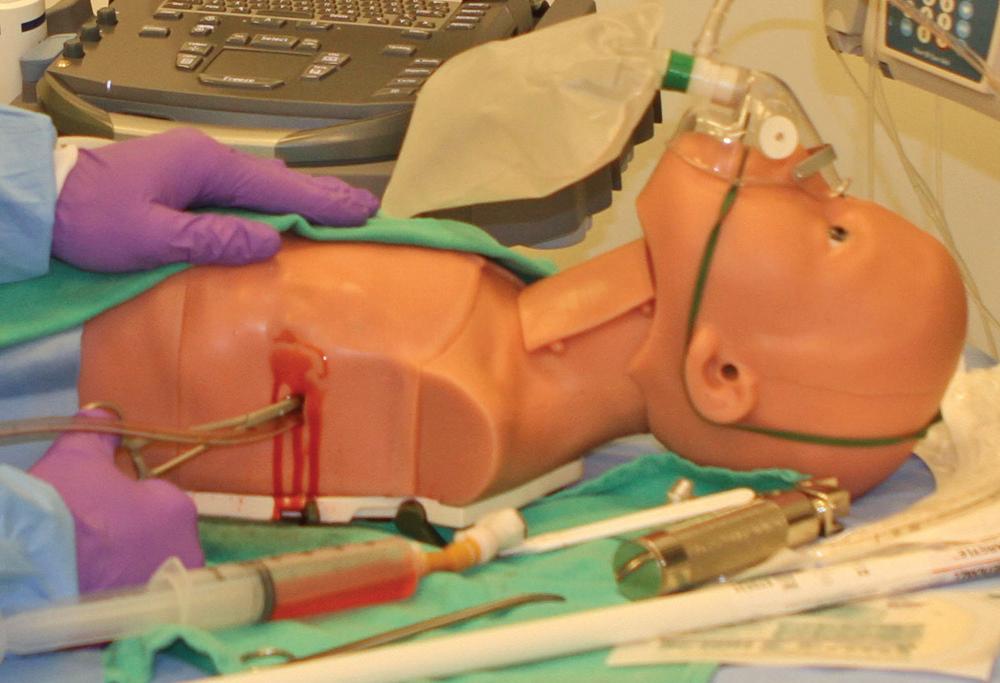
The Georgetown Public Hospital Corporation (GPHC) is using a manikin, which is computerised, to train doctors in surgical practices. The manikin could be used as a surrogate patient and the trainers can create human medical emergencies like a heart attack to train the young doctors in a simulated operating room.
The biotechnology revolution so far in the 21st century has in particular benefited health – leading to better medicines, improved and faster diagnosis, more effective treatments, faster healing and longer and better quality of lives.
Recently, an American biotechnology company unveiled a new breathalyser instrument to test for lung cancer. A person simply breathes into an analyser which is able to tell whether the person has a form of lung cancer or not. This new analyser can pick up a cancer of the lung early, thus allowing for intervention and saving lives. Scientists believe that this technology can be similarly tailored to other kinds of cancer.
There are many examples that attest to the biotechnology revolution. In 2000, scientists created the first artificial organ, a urinary bladder. Scientists have also transplanted synthetic trachea in humans. Even before this, scientists have been using synthetic and artificial
joints and hips.
In 2003, the human genome was decoded and scientists are using it to create different kinds of treatment for diseases. In 2007, scientists were able to prolong the lives of worms by 10 times and mice by two times and these scientists think they can transfer such technology for prolongation of lives to humans.
Indeed, as they have done with plants, the genetically modified plants, scientists believe they can alter a person’s genome in such a way that hereditary forms of diseases can be prevented.
As you read this article, scientists are using stem cells to create a transplantable heart to replace hearts that are bad. Scientists believe that within seven years, they will be able to replace malfunctioning hearts with transplantable ones.
Remember the animal rights activists who wanted to ban the use of animal models for studying human diseases and testing treatments in laboratories?
They might now get their wish. Scientists recently began to use a computer chip to do certain medical tests. The chips were created to mimic human organs to test the effect of medicines. It’s early days yet, but scientists might very well mimic hu-
man organs on a computer chip, making it possible to reduce or even eliminate animals as human disease models.
Already Merck and Company is developing a computer chip to mimic human lungs to allow them to test new asthma medicines.
Scientists at Merck want to see if these “lungs on a computer chip” can help them understand the biology of asthma and identify promising new medicines. This kind of technology will reduce the need for animal models or even eliminate their use. But the computer chip used as a model for human organs can make testing easier, less costly and faster.
In 2010, scientists at
Harvard’s Wyss Institute for Biologically Inspired Engineering created a “lung on a chip” and infected it with bacteria and then tried various antibiotics to see if the “lung on a chip” behaves like a human lung that is infected. They tested how the immune system in a lung would react. These same scientists also mimicked the condition of pulmonary oedema or fluid in the lung condition with their “lung on a chip”.
Scientists at GlaxoSmithKline PLC are also using the “lung on a chip” to test the safety and efficacy of different respiratory compounds.
Scientists at Cornell University in New York believe they can create com-
puter chips to mimic up to 10 organs together, coming close to mimicking the human body. Clearly, its early days and it is work in progress.
But the potential is enormous. Scientists are not close to ending the use of laboratory animals, but they are on a path that can do exactly that. According to GlaxoSmithKline scientists, the “lung on a chip” model is already proving to replicate pulmonary oedema models in dogs, rats and mice.
The truth is that when these “organs on a chip” are perfected, they will be superior models than laboratory animal models. Scientists already agree that present laboratory animal models have many
short-comings.
Indeed, animal models do not faithfully replicate human organs. In the case of asthma, there are important divergences when it comes to asthma in humans versus asthmatic conditions in animals. None of the animal models can truly mimic human asthma, which is unique in nature.
Animal models, for example, do not mimic the constriction of airways and all of the other characteristics of human asthma. Maybe this is why scientists have found chemicals that work great in the animal models, but failed when tested in humans. But scientists can now create these conditions on a computer chip, improving the chances that chemicals which work on the “lung on a chip” will work similarly in humans.
In the meanwhile, AstraZeneca PLC is testing a “liver on a chip” model. Other scientists are developing a chip to test malaria drugs. There is a long list of “chip” technology currently being explored, including models that are attempting to test medicines for Parkinson’s disease.
Clearly, how we live and how long we live after the age of 60 depends significantly on biotechnology and how much we are able to access them. Many entrepreneurs and enterprises will get richer as biotechnology becomes indispensable in our lives. While biotechnology will create headaches for regulators, it will also create many more enterprises and opportunities for investment by entrepreneurs and opportunities for wealth. But, we will benefit enormously from better medicines, improved health care, longer and improved quality of lives.Times Notebook salutes the biotechnology revolution.
Readers are invited to comment on this article via email (times.notebook@gmail.com) and on Facebook.
Technicians at work in a bio lab
A manikin which is computerised, to train doctors in surgical practices
monday, august 5, 2013 | guyanatimesgy.com
PPP’s 30th Congress wraps up
Delegates renew support, lobby for internal reforms
BY MICHAEL YOUNGE
Delegates at the People's Progressive Party's 30th Congress have thrown their unwavering support behind the party as they lobby for internal reforms as the three-day event wrapped up on Sunday on a high note.
President Donald Ramotar received the highest number of votes when stalwarts and delegates voted on Saturday to elect a new 35-seat Central Committee to manage the affairs of the ruling People’s Progressive Party/Civic (PPP/C) over the next three years.
Guyana Times understands that some 1009 ballots were cast at the congress, which was staged at the JC Chandisingh Secondary School at Port Moraunt, Berbice. Of this number, 13 ballots were rejected when they appeared for scrutiny for the Central Committee nominations.
Additionally, there were some 1096 delegates registered to vote or elect the party’s new membership which saw a highly competitive and tense atmosphere prevailing for the most part ahead of the casting of the ballots.
Several young people have been added to the committee, along with over five new party supporters.
Ramotar managed to secure a total of 886 votes from 1009 ballots cast when the results were announced in the presence of thousands who had gathered on Sunday afternoon, much to the surprise of sections of the voting delegates. Former President Bharrat Jagdeo, who was present throughout the congress’s proceedings, secured 851 votes from the party’s delegates which confirmed the level of influence he still commands within the rank and file of the PPP.
A group of ministers – Frank Anthony (724),
Robert Persaud (537), Ganga Persaud (528), Bheri Ramsaran (518), Irfaan Ali (503), Ali Baksh (450) and Jennifer Westford (429) all gained re-election to the Central Committee.
Others re-elected include Hydar Ally, Komal Chand, Fizal Jaffarally, Zulfikar Mustapha, Kellewan Lall, Dharamkumar Seeraj, Neil Kumar and Clinton Collymore.
New faces
Eleven new faces have been added to the party’s second highest decision making body and tier of leadership, with youths dominating the group. In this category, some 15 candidates were rejected.
Nigel Dharamlall leads the list with 389 votes from the delegates, followed by Shyam Nokta who secured 381 votes. Dr Vishwa Mahadeo also secured a spot on the Central Committee after managing to secure 358 votes while Desmond Kissoon also occupied the 26th seat with 312 votes.
Sitting Region Six
Chairman David Armagon, Omar Sharieff, Mohammed Hussein, Philomena Sahoye-
Shury, Brian Alicock, Kwame Mc Coy and Chitreka Dass rounded up the committee.
Additionally, five new candidate members emerged when delegates made stern decisions on Saturday in another aspect of the elections. These are Colin David Croal, Ronald Harsawack, Ghurdat Shivpersaud, Sandra Baldeo and Vickram Bharat.
Absent faces
Several persons who were elected by the delegates at the party’s 29th Congress failed to gain re-election by not accepting nominations or facing defeat by the polls. A number of them have also defected from the party.
Among the party’s defectors who would have resigned from the leadership were Moses Nagamootoo and Ralph Ramkarran. Reepu Daman Persaud, who was a member of the party’s Central Committee, passed away before the staging of the party’s congress.
Haripersaud Nokta, Ulric Ramanah, Cyril Belgrave, Moti Lall, Mitra Devi Ali and Shirley Edwards will not be returning.
Speaking shortly after the declaration of results, Shaw told the audience that the team of observers and electoral representatives worked extremely hard to produce the results in a timely manner. He hailed the process, referring to it as “above board, fair and transparent”. He said that the party would as is customary, transport all of the ballots used, unused and spoilt or rejected to the party’s headquarters for storage and record keeping as well as analyses.
Shaw expressed gratitude to those who were diligent in ensuring that the high standard of the process was completed in record time.
The way forward
A spirit of comradory and energy prevailed at the congress following its completion with some of the party’s delegates expressing satisfaction with the entire event.
“I am honoured to have played such a pivotal role in the decision-making process of my party. I believe strongly that the congress opened our eyes to several realities
which exist in our society. I am rejuvenated and recommitted to working harder for the people of my country and my party,” Jameer Shamshudeen told Guyana Times after the announcement of the results.
Jenny Lowe, 30, an avid party supporter, said that “the congress was full of unity and energy... our leaders listened and they understand what we expect now. We are ready to rebuild the PPP in light of the challenges which exist.”
PPP’s new mandate
Meanwhile, chairman of the party’s 30th Congress Committee Clement Rohee said the mandate given to the party is clear and soon the new elected leadership will be re-energising the party’s machinery to respond to these concerns.
The party organised a series of workshops, discussions and other such forums aimed at listening to the concerns of its membership, while at the same time deducing the common direction in which it must go. Rohee said the message was clear and the delegates wanted all
of the party’s leaders to “put the party first”.
He said there were also concerns about reforming the various party structures while hundreds of the delegates condemned the opposition’s misuse of its parliamentary power. Rohee, speaking with conviction, announced that the feedback from the party’s threeday interaction has given it a clear mandate, which will now enable it to respond condignly to the threats that currently confront it in the body politic of Guyana.
“It is clear that our party and leaders were never out of sync with our people,” he said, stating that the since the last election which saw the PPP/C losing its parliamentary majority, a lot of introspection has been taking place.
He also noted that the delegates wanted the government to work tirelessly to deliver higher levels of goods and services.
The congress also saw massive condemnation of the actions of the opposition’s anti-development stance following the report of several standing committees.
Over the three-day congress, representatives and delegates from all 10 administrative regions participated in policy formulation exercises on the way forward.
The party’s Progressive Youth Organisation (PYO) also came in for high praises during the event organised, specifically this year to mark the death anniversaries and legacies of several of its fallen heroes, with Comrade Balram Khandai being paid the highest amount of tributes.
At the opening ceremony, President Donald Ramotar noted that his party will never retreat or surrender to the anti-developmental postures of the opposition as he urged its members to rise, organise and rebuild.
Berbice Expo generated sales, exposure for businesses
The ninth annual Berbice Exposition and Trade Fair has been deemed a tremendous success as it generated a huge increase in sales for businesses in the county.
Guyana Tourism Authority (GTA) Director Indranauth Haralsingh lauded the level of organisation and planning by the Berbice Chamber of Commerce and other stakeholders. He said even though there were some disappointments expressed about the absence of the big businesses from Georgetown, the overall response was positive.
“We were well supported… all of the booths were taken and it allowed a lot
of micro, medium and large businesses to have a presence in Berbice… all of the hotels in New Amsterdam and Lower Corentyne were completely booked. No rooms were available, the businesses were busy and the restaurants were filled;
it generated a lot sales for Berbice and the Berbice Chamber of Commerce,” Haralsingh said.
The four-day event was well-attended and the final night saw the largest crowd. The favourable weather con-
ditions that persisted over the period and the cultural programmes to entertain were well-received by both visitors and exhibitors.
The GTA and the Tourism Ministry also coordinated and facilitat-
ed the presence of many companies from the tourism sector, such as Aracari, Evergreen Adventures, Arrowpoint Nature Resort, Fly Jamaica, Air Services Limited, Mangrove Heritage Trail, and Little Rock Suites
and Television Studios.
Additionally, the GTA is actively involved in the promotion of the upcoming R Kelly Concert, as well as the Sammi Yussuf Concert, a London-based international artiste who will be performing at the Guyana National Stadium on September 28.
Tickets for the Limacol Caribbean Premier League (CPL) games were also given away to Berbicians during the expo.
“Overall, it was a very good expo; it was good to see so many persons there by the thousands from all over,” Haralsingh posited. This year, the expo was held under the theme “Raising our Standards, Enhancing our Competitiveness”.
GTA's Indranauth Haralsingh
A section of the gathering in attendance at the opening of the PPP’s 30th Congress
Flashback: President Donald Ramotar viewing an exhibit at the ninth annual Berbice Expo
Guyana’s education system should be constantly revised – Greenidge
APartnership for National Unity
(APNU) Member of Parliament Carl Greenidge said Guyana’s education system should be constantly revised in an effort to equip Guyanese with the requisite skills and knowledge needed to become entrepreneurs and make meaningful contribution to the economy.
Addressing a packed audience at a symposium held on Sunday to discuss the state of Afro-Guyanese in Guyana, the former finance minister said in the past, major emphasis was placed on education and employment, noting that AfroGuyanese had played a leading role in the agriculture, mining and manufacturing sectors.
According to him, today, approximately 44 per cent of the total population over the age of 15 has experienced
cal steps must be taken to revive an education system that is currently experiencing a decline in standards, noting that systems should be instituted to offer greater training opportunities that will meet the demands of the evolving sectors.
Compounding the issue of a high unemployment
difficulty in acquiring a job or has not been involved in an active economic activity. However, some stats show that the unemployment rate has dropped.
“Well, those of you, who would have wandered the streets of Georgetown and even the rural towns and places such as New Amsterdam would know that has to be some place other than Guyana. Unemployment among youths, black youths in particular, women in general are exceedingly high.”
Economic analyses, Greenidge said, suggest that unemployment is associated with a variety of factors such as gender, education and skills training.
According to the former finance minister, criti-
rate, Greenidge said is the re-emergence of low-income employment such as smallscale businesses (food shops, etc).
Macro businesses
It is time, he said, AfroGuyanese shift from micro to macro businesses in the area of entrepreneurship.
“The general assumption that Africans in this economy have tended not to have a special capacity in business or entrepreneurship; indeed this is a view often voiced by Africans themselves”, but this is not the case, Greenidge argued. In the past, he said AfroGuyanese were the proprietors of many of the leading businesses.
To overcome the chal-
lenges that currently face Guyanese, in particular Afro-Guyanese, the APNU parliamentarian contended that the education system must be able to equip persons with the necessary tools to meet the demands of the industrial community.
“The tools to exploit a market are the things in which
we should concentrate rather than thinking that there is some inherent lack of suitability for the market.”
He said too that major emphasis must be placed on financing and management of businesses, two areas which have proved to be problematic.
He also advocated for the
economy to be more diversified, noting that, over the years, it has “not diversified in any significant way”, as he pointed to the decline in the manufacturing industry. Greenidge said while gold and diamond mining is on the rise, the issue of smuggling remains a major problem.
Key attributes
George Abrams, a successful entrepreneur who operates in Washington DC and hails from Buxton, East Coast Demerara, also addressed the symposium. He said entrepreneurs have key attributes. “Age, age determines when someone becomes an entrepreneur, in the U.S. you find many people working for themselves from the age of 40 and above. The acquisition of a skill and experience is also of paramount importance if
a business to be successful. “You may have a desire to be self-employed. You might no longer want for wages. You may no longer want to work for someone else. You may have a desire to be self-employed. You might be prepared to take risks, and these are sometimes calculated and uncalculated risks; calculated risks are the ones that will help you to develop, and the uncalculated risks are the ones that may see your business fail in a few months, so you need to be able to differentiate between the two types of risk,” he explained.
The conference, which was held at the African Cultural and Development Association (ACDA), Thomas Lands on Sunday was organised by the Ghana Day Committee in collaboration with the Cuffy 250 Committee.
APNU parliamentarian and former finance minister Carl Greenidge speaking during the African Symposium on Sunday
A section of the audience at the symposium
Army takes over Honduran prison after riot
Honduran President Porfirio Lobo has ordered that soldiers be put in charge of security at the country’s main prison after a riot there left at least three gang members dead and 12 people injured.
The aim of the move was to “end the reign of criminals in our prison system, which has done so much damage to our society”, Lobo said in a statement on Saturday.
Police spokesman Miguel Martinez said members of the “Barrio 18” gang fought with other prisoners in Honduras’ national penitentiary, which houses 3351 inmates and is located about 15 kilometres north of the capital, Tegucigalpa.
Jose Simeon Flores, director of penitentiaries, said three guards were wounded by gunfire.
Security forces were guarding injured inmates taken to a hospital in Tegucigalpa, to prevent any attempt by gangs to free the prisoners. Armed men have been driving by the facility
“The gang members used AK-47s, according to them, to defend themselves from other prisoners. They also exploded a fragmentation grenade,’’ Flores said.
A contingent of 70 soldiers and police was sent to guard the Hospital Escuela in Tegucigalpa, where injured inmates were taken, for fear that their gang
would try to free them.
“We have detected cars with armed men inside passing by the hospital and for this reason, we are increasing security measures to avoid a tragedy,” Martinez said.
The riot and militarisation of the prison comes a day after the release of a report by the Inter-American Commission on Human Rights, which said that inmates control Honduras’ 24 prisons because the state has abandoned its role in rehabilitating people convicted of crimes.
The government says there are 12,263 people incarcerated in Honduras, even though its prisons can only hold 8120 inmates. Killings, riots, and corruption are common. (Al Jazeera)
Brazil’s Carandiru jail massacre police guilty
Twenty-five police have been given long sentences for their part in the 1992 massacre in Sao Paulo’s Carandiru jail that left 111 prisoners dead.
Each officer received 624 years for the death of 52 inmates, but in Brazil no-one serves more than 30 years in jail. The verdicts come in the second of four stages of the trial involving different floors of the prison. Twentythree officers were convicted in April.
The police are expected to stay free pending an appeal. The defence can only challenge the verdicts after the end of the whole trial, expected in January 2014.
Under Brazilian law, there are no life sentences, and no convicted person can serve longer than 30 years in jail. The officers, nine of whom are still on active duty, will also lose their jobs, O Globo newspaper reported.
The riot began on October 2, 1992 after an argument between two inmates quickly spread, with rival gangs facing off in what was at the time one of South America’s largest prisons, housing 10,000 inmates.
Inmates said riot police brutally repressed the riot.
The officers’ lawyer, Ieda Ribeiro de Souza, argued they were only doing their duty and acted in selfdefence, as many of the inmates were armed.
While prison riots are not uncommon in Brazil, the number of those killed at Carandiru and the slow pace of the Brazilian justice system in bringing the accused to trial shocked the public. Carandiru was closed in 2002, shortly after inmates coordinated simultaneous uprisings in 27 jails across Sao Paulo state during which thousands of visitors were held hostage. (Excerpt from BBC News)
Seven killed in Trinidad U.S. man paddles board from Cuba to
Florida
An American musician has become the first person to paddle board between Cuba and the United States, accomplishing the 179-kilometre (111 miles) voyage in 28 hours.
Guitarist Ben Friberg of Tennessee was accompanied by a support boat – his father among the crew – providing navigational advice and nutrition.
He stood for most of the trip from Port Hemingway, Cuba, to Key West, Florida. Friberg, 35, spent about a year securing permission for the trip, according to expedition materials.
He wore long socks, a long-sleeved white shirt, and a long-peaked cap to shield himself from the sun as he paddled the 14ft (4.3m) board. His support team said he encountered rough seas.
As he reached the beach in Key West on Friday – dehydrated and exhausted but
otherwise healthy – he was helped ashore.
Before leaving, he said he was attempting the feat “to promote peace and understanding between Cuba
and the U.S. and to promote a healthy lifestyle”.
Swimmers have attempted the journey several times only to abandon the effort after painful jellyfish stings.
(Excerpt from BBC News)
Project to make children safe ongoing in
Consequent to the damning statistics presented by Hear the Children’s Cry in 2012, which show that one child goes missing every four hours in Jamaica, Ricardo Panton, marketing officer at PSF Alarms and Tracking, has said that his company has formulated a plan to help solve the problem.
PSF Alarms and Tracking last week launched its “iProtect Campaign − How can I be safe with iSafe?” to help children ages seven to 15 access iSafe backpacks, gift vouchers, and other gadg-
Jamaica
ets that will help to increase their safety. These backpacks contain a hidden pull cord which, when drawn in a time of crisis, activates a 125-decibel siren for two hours, and can be heard up to 100 yards away. When the siren is activated, an alert is sent to PSF Alarms and a response team is deployed to the area. Panton told the Jamaica Observer that the initiative was done because of the passion that PSF had for the well-being of Jamaica’s children.
“We will not stand idly by as our children contin-
ue to suffer at the hands of criminals. To this end, we are in the business of protecting you and your business,” Panton said. He said that because statistics revealed frightening figures, the drive to launch the campaign had been greater.
“In 2012, nearly 3000 persons went missing, of which 70 per cent were children and 196 have not been found to date. PSF sees the concerns and we want to implement ways to make our services more accessible to vulnerable children,” he said. (Excerpt from Jamaica Observer)
Five men shot and killed in separate incidents in 10 hours and the remains of two charred bodies found at a dumpsite Saturday have pushed the murder toll to 223 in the twin republic. Reports are that around 19:45h on Friday, 28-year-old Shawn Duncan, of Mulchan Street, Guaico, Sangre Grande, was at home with friends playing cards.
Two gunmen, one dressed as a police officer and the other in army uniform, entered Duncan’s home and without warning began shooting.
Duncan and his 30-yearold friend, Jude Andell, also of Guaico, were shot.
Change
Duncan died at the scene. Andell, who was shot in the right leg, was taken to the Sangre Grande District Hospital where he was treated and discharged. The gunmen escaped in a waiting car. Crime scene investigators recovered 19 spent 9-mm shells. Corporal Jones of the Homicide Bureau is continuing investigations.
Between midnight and 04:00h Saturday, residents of Desperlie Crescent, Laventille, reported hearing sporadic gunshots. When the shots stopped, they contacted the police. InterAgency Task Force officers responded and went to
a nearby house. They broke down the front door and found three men dead. They were identified as Michael Fox, 28; Jamal Fox, 21; and Shaquille Bishop, 21, of Tunapuna.
In another incident, a Chaguanas father was shot dead inside his cousin’s wagon on Friday night. Ganesh Ramroop, 44, an electrician of Bhagna Trace, was found slumped behind the steering wheel of a Nissan AD Wagon around 19:30h at the Chase Village Flyover. Meanwhile, the charred bodies were found along a dirt track just off the Tortuga Road, Claxton Bay. (Excerpt from Trinidad Guardian)
focus: Barbados enslaved by materialism, says Reverend
While Barbadians would have recently celebrated Emancipation Day, a local reverend laments that the country continues to be enslaved by materialism.
So says Reverend Roslyn Hamblin, who was at the time delivering the sermon at the Sharon Moravian Church as the representatives and participants of the Duke of Edinburgh Award Programme celebrated the organisation’s 50th year in Barbados. Under the theme “Emancipated or not?”, Reverend Hamblin said it is important to acknowledge the setting free of slaves in 1834 to consider how far we have or have not come since that time.
She told the congregation that persons today are myopic, and cannot see past the physical, to the detriment of society. The reverend said while nothing is
wrong with doing well, our downfall is how the response to that wealth, pointing out that we no longer share with our neighbours.
“We have been too myopic to see anything other than the urge to hoard in the present and we give no thought to God’s solutions or to the soul’s preservation,” Hamblin said. She said this
demonstrates a lack of trust in God. “We need not be anxious, God will provide.”
She said there are other contemporary enslavements, peer pressure, ‘keeping up with the Joneses’, the enslavement of social practices, enslavement of social habits, and the enslavement to modern trends.
Ben Friberg said he had to manage his pain throughout the 179-kilometre journey, which took him 28 hours
Participants of the Duke of Edinburgh Awards programme during the service to celebrate the 50th year of the organisation
U.S. extends embassy closings, lawmakers say threat serious
The United States extended embassy closures by a week in the Middle East and Africa as a precaution on Sunday after an al Qaeda threat that U.S. lawmakers said was the most serious in years.
The State Department said 19 U.S. embassies and consulates would be closed through Saturday “out of an abundance of caution” and that a number of them would have been closed anyway for most of the week due to the Eid celebration at the end of the Muslim holy month of Ramadan.
The U.S. initially closed 21 diplomatic posts for the day on Sunday. Some of those will reopen today, including Kabul, Baghdad, and Algiers.
Four new diplomat-
ic posts – in Madagascar, Burundi, Rwanda and Mauritius – were added to the closure list for the week.
Last week, the State Department issued a world-
wide travel alert warning Americans that al Qaeda may be planning attacks in August, particularly in the Middle East and North Africa.
“There is an awful lot
of chatter out there,” U.S. Senator Saxby Chambliss, the top Republican on the Senate Intelligence Committee, said on NBC’s “Meet the Press”.
He said the “chatter” –communications among terrorism suspects about the planning of a possible attack – was “very reminiscent of what we saw pre-9/11”.
A National Security Agency (NSA) surveillance programme that electronically collects communications on cellphones and emails – known as intercepts – had helped gather intelligence about this threat, Chambliss said.
It was one of the programmes revealed by former spy agency contractor Edward Snowden to media outlets. (Excerpt from Reuters)
Israel widens Jewish settlement subsidies
Israel has agreed to subsidise several Jewish settlements that were regarded as illegal until recently. Three out of 91 settlements designated as priority areas for development were legalised within the past year, the Peace Now settlement watchdog said.
Israel said the subsidies were needed for security reasons. Palestinian official Hanan Ashrawi said the move would have a “destructive impact” on peace talks,
which resumed last week after a three-year hiatus.
“This is exactly what Israel wants, have a process for its own sake, and at the same time have a free hand to destroy the objective of the process,” she said in quotes carried by the Associated Press.
“It seems to me it’s up to the sponsors, the United States and the international community, to make Israel desist immediately.”
In order to get the
Palestinians to agree to the talks, Israel approved the release of more than 100 Palestinian prisoners. The first group is due to be freed on August 13.
The issue of settlementbuilding halted the last direct talks between the Israelis and Palestinians in September 2010.
About 500,000 Jews live in more than 100 settlements built since Israel’s 1967 occupation of the West Bank and East Jerusalem.
Settlements are considered illegal under international law, although Israel disputes this.
On Sunday, the Cabinet published a list of more than 600 towns and settlements to be regarded as priority areas for development. The areas are considered to be in need of state benefits and subsidies.
Israel publishes the list relatively frequently, and changes the areas it regards as needy. (Excerpt from BBC News)
Mediation in Egypt gathers pace, but Brotherhood leaders face trial
Egypt’s army-installed government said on Sunday it would give mediation a chance to resolve the crisis brought on by the overthrow of Islamist President Mohamed Morsi, but warned that time was limited.
At the same time, a Cairo court announced that the leader of Morsi’s Muslim Brotherhood and two other top officials will face trial in three weeks’ time for crimes, including incitement to murder during protests in the days before he was toppled.
That could complicate efforts by international envoys and Egyptian factions to launch a political process, encourage national reconciliation, and avert further bloodshed.
An imminent battle between security forces and thousands of Morsi supporters standing their ground in two protest camps in Cairo appeared less likely while the mediators talked.
The National Defence Council, made up of civilians and soldiers, said in a state-
ment it backed mediation “that protects the rights of citizens regardless of their affiliations and that spares blood, as long as that happens in a defined and limited time”.
It did not specify a deadline.
The statement was issued one day after U.S. and European envoys met separately with members of the new government and allies of Morsi.
The crisis has led Egypt, the Arab world’s most populous nation, to its most dan-
gerous days since a popular uprising in February 2011 ended U.S.-backed strongman Hosni Mubarak’s 30year rule and raised hopes of a new era of democracy.
Morsi became Egypt’s first freely elected leader in June 2012. But fears that he was tightening an Islamist grip on the country and his failure to ease the economic hardships afflicting most of its 84 million people led to huge street demonstrations, culminating in the army ousting him on July 3. (Excerpt from Reuters)
Monsoon floods in Pakistan, Afghanistan kill dozens
Eastern Afghanistan and neighbouring Pakistan have been hit by torrential rain, causing floods which have killed at least 80 people.
Officials said 34 died in the Sarobi district alone, around 65 kilometres (40 miles) east of the Afghan capital Kabul.
Pakistan’s biggest city Karachi was also badly affected, with at least 16 killed after days of flooding.
The region has suffered devastating floods during
the monsoon period for the past three years.
Afghan officials said emergency teams and supplies were being dispatched to affected areas.
Hundreds have been displaced in eastern areas of Afghanistan and hundreds of hectares of farmland destroyed, Ghulam Farooq, the head of emergency operations for Afghanistan’s National Disaster Management Authority, told AFP news agency.
The floods have caused
extensive damage to property in both countries.
The Pakistani army was called in to help clean up Karachi, where local media reports say sewage and rainwater have blocked some of the main roads.
The fatalities in the city have been mostly caused by electrocution or collapsing roofs and walls.
The floods are also reported to have left many areas of the city without power. In Pakistan’s north-west-
ern Khyber Pakhtunkhwa province, many houses were swept away by the torrent, officials said.
Pakistani disaster response officials have warned that more rain may be on the way over the coming days.
In 2010, Pakistan was hit by the worst monsoon floods in 80 years. Almost 1800 people were killed and 21 million people affected.
Flooding in each of the following two years also left hundreds dead. (Excerpt from BBC News)
Syrian rebels bat-
tled forces loyal to President Bashar alAssad in the Jabal Akrad mountains overlooking the Mediterranean on Sunday and a monitoring group said at least 30 people were killed.
Video footage showed fighters identified as members of an al Qaeda-linked Islamist brigade waving from the roof of an army tower in the village of Barouda, one of several Alawite villages attacked by the rebels on Sunday.
The mainly Sunni Muslim rebels are battling to overthrow Assad, whose minority Alawite sect is an offshoot of Shi’ite Islam, in a civil war which erupted two years ago when mainly peaceful protests against his rule were put down with force.
Assad, with support from Iran and Lebanese Hezbollah guerrillas, has gained ground in recent months from the rebel fight-
ers who are backed by regional Sunni Muslim powers but remain largely outgunned by his army.
The anti-Assad Syrian Observatory for Human Rights said 12 rebels and 19 pro-Assad fighters – including soldiers and members of his militia known as the National Defence Army – were killed in Sunday’s fighting in the mountains of east Latakia province.
A source in Latakia said the fighting started at dawn and that the rebels, based in the town of Salma, attacked 10 Alawite villages.
Ambulance sirens, punctuated by the sound of bombardment and government air raids on Salma, could be heard throughout the day, he said.
Further south, in Homs, the army launched artillery fire on remaining rebel-held areas of the city, a week after capturing the rebel district of Khaldiya. (Excerpt from Reuters)
30 killed in heavy fighting in Syrian mountains Rouhani urges West to abandon sanctions against Iran
New Iranian President Hassan Rouhani has told Western nations that the only way to interact with Iran is through dialogue and called on them to abandon the “language of sanctions” in dealing with the country’s uranium enrichment programme.
Rouhani, a moderate cleric who won a landslide victory in the June 14 presidential elections, spoke after being sworn in as president in an open session of the parliament on Sunday.
“If you seek a suitable answer, speak to Iran through the language of respect, not through the language of sanctions,” the president said in a speech broadcast live by Iranian state television.
After his inaugural address, the United States said it was ready to cooperate with Rouhani’s government if it were serious about engagement.
“The inauguration of President Rouhani presents
an opportunity for Iran to act quickly to resolve the international community’s deep concerns over Iran’s nuclear programme,” White House spokesman Jay Carney said in a statement.
The statement added that if the new government would engage in serious discussions to find a peaceful solution to this issue, “it will find a willing partner in the U.S.”.
The West is hoping that Rouhani will take a more constructive approach in long-running talks on Tehran’s controversial nuclear drive, which despite Iranian denials is suspected by world powers of having military objectives.
In Tehran, Rouhani said his goal was to improve the livelihood of ordinary Iranians whom he acknowledged were under “a lot of economic pressure”, because of tough U.S. and EU sanctions over Iran’s refusal to stop uranium enrichment. (Excerpt from Al Jazeera)
A flag flutters outside the U.S. embassy in Tel Aviv on August 4
President Hassan Rouhani
Africa
The Montserrat Development Corporation (MDC) is encouraging small and micro business owners to take advantage of the various incentive schemes available.
According to business development officer at the MDC Agatha Aspin, there is support available for people who wish to start a business as well as those who already own a business and wish to expand it.
“We offer one-on-one counselling for people who have
questions,” Aspin explained. “We are there to help them through the process of applying and receiving approval for a business loan.”
A total of EC$240,000 in loans have already been approved through the business financing facility and disbursed to nine ventures this year. Several of the ventures were in the agricultural sector, Aspin confirmed. To access the funds, a simple business plan outlining the goods or service to be provided; a market as-
sessment; plans for marketing; pricing and a basic budget to show how the funds will be used must be submitted.
Loans are capped at EC$40,000 and must be repaid in a maximum of 60 months (five years). The minimum loan request is EC$500. Interest is charged at a rate of five per cent per annum calculated on the reducing balance. Applicants will be expected to make an equity contribution of five per cent or a minimum of EC$1000. (Caribbean News Now)
New York Times sells Boston Globe to Red Sox owner
The New York Times Co has agreed to sell
The Boston Globe to the principal owner of the Boston Red Sox baseball team for US$70 million in cash, a small fraction of what the Times paid for the newspaper 20 years ago.
Under the transaction announced Saturday, Red Sox owner John W Henry got the Boston Globe for less than a 10th of what the New York Times paid when it bought
the newspaper for US$1.1 billion in 1993.
The sale also includes the Worcester Telegram & Gazette, which The New York Times bought for about US$300 million in 2000, as well as related digital properties of both papers, and a direct mail marketing company.
The sale caps years of uncertainty for the Globe, which was put on the auction block twice as newspapers across the country have been hit by
plunging advertising revenues and readers who increasingly prefer to get their news on smartphones and tablets.
The New England properties were the last pieces of a once much bigger New York Times Co empire. The company has sold off everything – TV and radio assets, dozens of U.S. regional papers, digital companies, and its stakes in sports ventures – to focus solely on its flagship and international edition. (Reuters)
Wait-in lounge − how Heathrow cashes in on wealthy time-poor travellers
We nearly all do it: no sooner have we got through airport security than we are into the shops, splashing out on everything from Gucci loafers to headphones, Havaianas, and headache pills. At Heathrow alone, 70 million passengers a year with an hour or so to kill add up to serious spending power. So popular are the airport’s shops that last year sales per square foot at its retail out-
lets hit a staggering £2782 – making it one of the most productive shopping destinations in the country. By comparison, Oxford Street’s Selfridges took in around £1500 per square foot in the same period, and Harrods in Knightsbridge a relatively paltry £1000.
Some retailers have known about the power of airports for years – WH Smith’s once near basketcase high street business
was helped back to financial health by its airside stores. Dixons’ four Heathrow stores are among the five best-performing stores in the company’s portfolio.
Average spend per shopper at Heathrow now stands at £38.86, up from £24.68 in 2002, an increase of 57 per cent, while retail sales through the airport have increased 47 per cent in the past decade, to £1.7 billion last year. (The Guardan)
Shell plans to sell at least four more oil blocks in Nigeria due to increasing crude theft, oil spills, community challenges, and its inability to renew the licences of some of the fields.
According to reports, the blocks, which are in joint ventures with Nigerian National Petroleum Corporation (NNPC) are Oil Mining Licences (OMLs) 13 and 16 onshore the Niger Delta, and OML 71 and 72, which are in shallow waters.
The report said OML 13
and 16 lie in Ogoniland region, where Shell had experienced long-running disputes with local communities, multiple oil spills, and widespread pipeline sabotage and theft.
OML 13 covers a large geographical area and has big gas reserves, while OML 16 is a much smaller asset. The report further stated that OML 72 had proven oil reserves of around 120 million barrels, while OML 71 has significantly lower reserves. Sources said Shell
had been discussing renewing these licences with the federal government over the years, but was yet to reach a deal. Reports said NNPC owns 55 per cent, Shell 30 per cent, Total 10 per cent and Eni owns five per cent, adding that in all previous deals, Total and Eni had also sold their shares.
Spokespersons for Shell and Eni declined to comment, and Total said it had no immediate comment on what plans were for their stakes in the blocks.
(allAfrica)
Weaker yen sends Toyota’s profits up 94 per cent
Toyota’s profits surged 94 per cent in its fiscal first quarter, getting a big boost from a weaker Japanese yen. Even though the company sold slightly fewer cars in the quarter compared with the same period last year, the weak currency meant that the money Toyota made from its overseas operations was worth significantly more once it was converted into yen.
The company reported a 14 per cent jump in overall revenue and net profit of ¥562 billion (US$5.6 billion) as it sold 2.2 billion cars around the world.
Toyota also benefited from cost-cutting measures.
The automaker is also expecting to make a bigger profit for fiscal 2014, forecasting net income of ¥1.48 trillion (US$14.8 billion), up from an earlier projection of ¥1.37
trillion (US$13.7 billion). Toyota’s shares rose after the announcement, though the jump was roughly in line with a general market rally in Japan. Toyota is among a slew of Japanese exporters that are benefiting from government policies – dubbed Abenomics – that have weakened the yen and led to a massive stock market rally. The Nikkei is up nearly 40 per cent this year. (CNN)
Saudi Arabia to spend US$800M on land for Riyadh metro
Saudi Arabia plans to spend about SR3 billion (US$800 million) acquiring land in Riyadh to build the capital’s first metro rail system, the official in charge of the project told Reuters.
“This is already budgeted and we are talking about three billion riyals compensation for the land to be acquired,” said Ibrahim Bin Muhammad Al Sultan, president of the Arriyadh Development Authority, the
state body handling the project.
“The land is already chosen and the teams already started the process three months ago.”
Last week, the government awarded US$22.5 billion in contracts to three foreign-led consortia for the design and construction of the system. The project will involve six rail lines extending 176km and carrying electric, driverless trains.
Design work will start im-
mediately and construction will begin in the first quarter of 2014, the government said. The project is expected to be completed in 2019.
Al Sultan said land would be acquired for the metro in 35 locations but he did not expect the purchases to disrupt Riyadh’s real estate market.
“We are keeping the process of acquiring all land needed for the project to a minimum, so that it will not affect the huge market of Riyadh,” he said. (Arabianbusiness)
Wall Street Week Ahead: Market to shift into lower gear as earnings, data
With earnings season winding down and the employment report out of the way, the U.S. stock market is likely to shift into a lower gear next week.
The earnings season so far has been largely positive with more than half of the companies that have reported beating estimates. But cuts in outlooks from a number of bellwethers, including Intel and Caterpillar, mainly due to increasing concerns over China’s growth, have raised fears about the third and fourth quarters.
“It has sort of become a trend now to go into earnings season with low expec-
tations, so beating those expectations is not a big deal,” said Tim Ghriskey, chief investment officer of Solaris Group in Bedford Hills, New York.
“The market is starting to really look at outlook cuts and guidance more than earnings itself.” The market is also likely to trade sideways next week after the Dow and the S&P 500 marked record closing highs for a second day on Friday.
For the year, both the Dow and the S&P 500 are up more than 19 per cent.
The S&P 500 index has passed through two century marks this year – 1600 and 1700. The last time the
fade
broad market index covered more round numbers in a year was in 1998 when it touched 1000, 1100 and 1200, according to Howard Silverblatt, senior index analyst at S&P Dow Jones Indices.
Of the 391 companies in the S&P 500 that have reported earnings for the second quarter, 67.8 per cent have topped analyst expectations, in line with the average beat over the past four quarters, data from Thomson Reuters showed. About 55 per cent have reported revenue above estimates, more than in the past four quarters but below the historical average. (Reuters)
Lusignan Massacre trial: Relatives, villagers disappointed with verdict
Relatives of the victims of the 2008 Lusignan Massacre and villagers have expressed their disappointment with the outcome of the court trial, which resulted in the two persons accused of committing the heinous acts being found not guilty.
Guyana Times visited Track A Lusignan, East Coast Demerara on Sunday, and spoke to several of the families, whose loved ones were horrifically executed before their eyes, about their alleged perpetrators being freed of the charges.
At Lot 24, Track A, Bibi Zulika Baksh was at home with her 20-year-old daughter, Shazeda Baksh, in the same house where her husband Shaleem Baksh was killed. Bibi told this publication that her family was looking for justice, but did not get it, so they are now trying to cope with the outcome.
“When I come home Friday night, I didn’t know what to do and how to tell my family what happen. I didn’t sleep whole night,” she noted.
The woman said all Saturday, she received phone calls from people who heard or read about the verdict and called to sympathise with her.
“People call me whole day yesterday (Saturday) and tell me how dah was injustice. Everybody ah say that but what we gon do, we na get justice this time, one day we gon get it”, Bibi stated. She told this newspaper that over the past three weeks, as the case was going on, it was like she was reliving the incident five years ago, as everything came back to her vividly.
The widow explained that on the morning of the incident, she was with her husband and their daughter, Shazeda, hiding under the bed when gunmen pulled the 52-year-old man out and shoot him to death. She said since the incident, she and her daughter have been living alone. The woman disclosed that she is not afraid to live in the same
house where her husband was killed. “I does sleep in the same room me husband die in.” Zulika said while the incident has traumatised villagers, neighbours around the area do not let the incident define them or impede on their lifestyle, and so they go about their lives as usual.
Constant alert
She noted that the incident has brought neighbours closer to each other as they would look out for each other and constantly be on the alert.
Over at the Mohammeds, at Lot 24 Track A, Nadir Mohammed, the grieving father of 22-year-old Shazam Mohammed said while he is not satisfied with the outcome of the case, there is noting he can do about it and will have to live with it.
The man declined to further comment on the issue, stating that he does not want to go over that dreadful day. Shazam was killed while in the kitchen as gunmen opened fire from outside of the house. He was the only family member, of the four, who was killed.
Meanwhile, at Lot 30 Track A, widow Gomattie Thomas could not find the words to describe how she feels about the verdicts.
“I can’t believe everything was not guilty, innocent people and children loose them life and none justice we na get,” she vented, adding: “I lost my two children and my husband and my three children loose them father too.”
Thomas recounted that when they heard the first gunshots, she and her husband got up; however, she went to hide. The woman recalled that while she was hiding, she heard her daughter crying out, but could not do anything to help her.
“I went behind de curtains, hearing me daughter getting bullets and she screaming. I couldn't even do nothing, I just stand there crying,” said the woman.
Difficult to cope
She explained that the death of her husband and children were very difficult for her and at the same time, two of her other children were injured and so she spent three months going and coming from the hospital.
The woman said she somewhat expected the verdict. “Even up to the last day, I tell them girls that me na satisfied and we gon get not guilty… and look is that what happen.” She said after losing her husband, she had to work to maintain her family and eventually her older children began working and are helping her.
Thomas noted that for the past five years, even though she has moved on, the fear is still there despite her trying to bury it; however, when the trial started, those fears surfaced.
“It was hard sitting through that trial and we didn’t even get any justice and that is all I want, justice,” she cried.
Guyana Times spoke to several neighbours about their thoughts concerning the outcome of the trial and they too have expressed their disappointment with verdicts, but they refused to give their names out of fear, which still dwells within them five years after the massacre.
On Friday last, after seven hours of deliberation, jurors returned a not guilty verdicts against the two accused, Mark Royden Williams called “Smallie” and James Anthony Hyles “Sally”, who were indicted with the murders of the 11 persons, including five children in the wee hours of January 26, 2008.
The others killed were Seecharran Rooplall,56, his wife Dhanrajie Ramsingh, 52, and their niece, Raywattie Ramsingh,11; Mohandai Gourdat,32, and her two sons, Seegobind, four, and Seegopaul Harrilall,10; and Clarence Thomas, 48, his daughter Vanessa Thomas,12 and his son Ron Thomas,11.
monday, august 5, 2013
NGSA top students honoured by New Amsterdam Lions Club
The New Amsterdam Lions Club, in collaboration with overseas-based Doctor Tulsi Dyal Singh recognised the top performers at this year’s National Grade Six Assessment (NGSA) examinations.
The top 11 students in Region Six, along with the top six from Region Five, were honoured at a simple ceremony held at the New Amsterdam Lions’ Club on Saturday.
Past president of the club, Ramesh Maraj, in giving a brief overview of the project, said the club was impressed with the students’ performance, and told Dr Singh that the club needed a partner to work with to acknowledge the efforts of the students. Maraj said the New Amsterdam Lions Club has in the past placed emphasis on the development of academic achievers while
Dr Singh has been assisting in the development of education in Berbice for decades.
He also noted that Dr Singh is currently partnering with the club in its eyeglass recycling project through other Lions clubs in the United States.
The students who were on hand to receive their awards were all from Region Six. They are Jenise Hinds and Kiana Samuels of St Therese’s Primary; top student Renee Bisnauth and Tejesh Guberdhan both of Cropper Primary; Kadeem Lewis, who is currently overseas, was represented by his father who collected the award on his behalf; Ebonie McNeil of School of the Nations Berbice; Shanice Henry of Edinburgh Primary; Asaf Ali of Tain Primary; and Melisa Rama of Crabwood Creek Primary.
New Amsterdam Lions Club President Samuel
Singh, in brief remarks, told the awardees that they need to focus on their education and not be sidetracked by the many modern devices with catchy features. “Today, many of our children do not read as they should, and this is breaking our society down. You must read as often as possible, just pick up any newspaper and read. Read anything, it is important and it will help you in life.”
In his address, Dr Singh, a Berbice High School alumni, congratulated the students who are now moving on to secondary school. He urged them to continue on the same path and make not only their parents proud but their new schools.
Dr Singh has been instrumental in the development of his old school and other schools in Berbice by providing millions of dollars in equipment and books.
“2 Guns” shoots past “Smurfs”, “Wolverine” to claim box office “2
Guns”, starring Denzel Washington and Mark Wahlberg as rival federal agents, shot through its weekend competition at movie theatres, collecting US$27.4 million to lead the North American box office, according to studio estimates released on Sunday.
“The Wolverine”, last weekend’s box office leader, finished second with US$21.7 million in ticket sales and has totalled US$95 million during its two weeks in theatres.
Sony’s “Smurfs 2”, the newly-released sequel to its 2011 movie “The Smurfs” starring Neil Patrick Harris and a band of small blue elf-like creatures, was third with US$18.2 million in ticket sales.
The horror film “The Conjuring”, about a house possessed by a demon, continued its strong run and was fourth with ticket sales of US$13.7 million. The animated “Despicable Me 2” was fifth after five weeks with US$10.4 million in ticket sales.
“2 Guns”, an adaption of the graphic novel by the same name published by Boom! Studios, fell somewhat short of some industry projections that it would generate about US$30 million in ticket sales in a summer in which a number of
Actor Mark Wahlberg at the premiere of the movie “2 Guns” in New York
films have failed to live up to expectations.
Walt Disney’s “The Lone Ranger” and Sony’s “White House Down” and “After Earth” bombed earlier this summer.
“We’re thrilled” with the numbers, said Nikki Rocco, president for domestic distribution at Universal Pictures, which distributed “2 Guns” and chalked up its seventh number-one opening this year. She added that “this was a very healthy box office weekend” at a time when “people used to talk about the August doldrums.”
Rocco said the studio had anticipated “2 Guns” would open “somewhere in the twenties” of millions, so “we’re very satisfied”.
“Smurfs 2” fell short
of the US$35.6 million in ticket sales for Sony’s 2011 original film, which was released in late July. The film is based on a Belgian comic first published in 1958 that has been expanded into movies, a TV series and even an Ice Capades show.
“We would have hoped for a little more domestically,” said Rory Bruer, Sony Pictures’ president of worldwide distribution. “But worldwide we’re very, very happy with this film,” he added, given the US$52.5 million it racked up overseas for a US$80.3 million global total.
“It’s the world that’s the stage for the Smurfs,” he added, predicting “this one absolutely is going to be a huge success for the studio.”
(Excerpt from Reuters)
Dr Tulsi Singh making a presentation to Berbice top student Renee Bisnauth in the presence of other awardees
Track A Lusignan, East Coast Demerara, the street where the massacre was carried out
SUDOKU
Don’t overlook or ignore an old financial obligation to a friend just because he or she is a pal. The quickest way to end the relationship is to fail to do what you promised.
If at all possible, avoid friends who tend to be pessimistic. Sadly, they will have a negative effect on your outlook and end up putting a damper on your day.
If you need to make a purchase of financial consequence today, be certain that you’re getting exactly what you want. Don’t let yourself be saddled with something that’s not perfect.
A disagreement with either a family member or a good friend needs to be settled as speedily as possible. If fences aren’t mended quickly, a small rift could get much worse.
(Aug. 23Sept. 22)
(July 23Aug. 22) (Feb. 20-March 20)
Your way of doing things is likely to turn insignificant tasks into major undertakings. Do your best to plan your moves in advance before you swing the hammer.
(March 21-April 19)
Don’t waste time worrying about things that have little chance of happening. If you want to succeed, concentrate on your goals and not on nonexistent problems.
(April 20-May 20)
If things go wrong in your household today, don’t try to pin the blame on any one person; view the entire picture. It usually takes more than one cause to make things go askew.
(May 21June 20)
Stick to the facts if you’re trying to promote something special. The worst thing you could do would be to embellish your wares. Your deception will quickly be discovered.
If someone recently did something that you resent and you’re still holding a grudge, you need to get over it. You need to let bygones be bygones and move on.
(Sept. 23Oct. 23)
This is an especially good day to review how much time and money you’ve been spending on inessential items and activities. Once you identify the waste, you’ll find ways to weed it out.
(Oct. 24Nov. 22)
Objectives you set for yourself might not be easy to reach. If you’re aware of this fact from the getgo, you won’t be inclined to quit the moment things get rough.
(Nov. 23Dec. 21)
You might have too many doubts for your own good. Being cautious is one thing, but just being negative is detrimental and prohibits progress.
Peanuts
Calvin and Hobbes AQUARIUS
arCHie
dilbert
YELLOW PAGES
monday, august 5, 2013
Tourist villa apartments 1, 2 & 3 bedroom,
car rental
Journey Inn Apartments & car rental. Rooms & car to rent from $3000 Premio, Vitz. Phone: 6797109, 689-6668, 639-4452.
Dentures provided in 72 hours from as low as $4500. Contact Dr B Stuart, 209B Charlotte Street, Lacytown. Tel: 225-5034
Key cutting
Professional Key Shop, 125 Carmichael Street, Georgetown. Phone: 225-3923, mobile: 6213249. We cut any type of key, service and repair all types of locks. Get your extra key today.
Da Silva’s Optical. For Your Eyes Only, Look Better See Better. Phillip A Da Silva OD, Shannon L Da Silva OD, Natalie Da Silva OD. 248 South Road, Bourda. Phone: 227-3529, Linden: 444-6376, Corriverton: 3393536, Meten-Meer-Zorg: 275-0322, Grand Cayman Islands: (345) 9431515 for the perfect trendy touch. Optician
Available: Fresh long-stemmed roses, fresh dried and silk floral arrangements, gift items, bridal boutiques and wreaths. Nesha’s Flowerland. 78 Church Street (opposite St George’s Cathedral). Tel: 227-3553/225-3315
FOR SALE
All models of engines (Perkins, cummins, lister, deuez, john dere etc) enclosed and open air any size of KVA. Call Ram on 619-4483 or 226-6325
Healthworld Holistic Centre: Psychotherapy available for all types of abnormal behaviors –addictions, emotional, suicidal, anger, relationship and sexual problems. Treatment of stress disorders, depression, fear, low self-esteem, insomnia, trauma, psychosomatic sicknesses, and children's disorders. We also conduct IQ evaluations and behavioral assessments. By appointments only. Clinic hours: 11:00 – 17:00h. Tel: 592-621-0552. Email:healthworldhc@gmail.com
Ayurvedic herbal treatment for all chronic genetical /none genetical and diseases, including, HIV, Cancer, diabetic, pregnancy, sexual (weakness) etc. Phone: 685- 3220.
Are you pouring on pounds? Then call Raul /Carol Wilson: 660-6818, 641-5923, 216-3016, 216-3601 for your healthy eating package.
Immigration & Visa Services We handle all Canadian, USA and UK, Immigration and Visa matters. Self Sponsorships, Holiday/Visitor’s Visas, Work Permits, Students Visas, Family, Class, Immigration Forms, Embassy Enquiries, Appeals for Refused Cases, U.S Green Card Lottery, Business Class Waivers,
Email: balwantpersaud@yahoo.ca
VeHicles FOr sale
JUST ARRIVED: TOP QUALITY RECONDITIONED VEHICLES; TOYOTA PREMIO; TOYOTA SPACIO; TOYOTA VITZ (NEW SHAPE); TOYOTA NOAH; SUZUKI SWIFT; MERCEDES BENZ C200 COMPRESSOR; BMW 318 I; COROLLA AE100 WAGON; LAND
CRUISER (FULLY LOADED); MAZDA PROCEED 4WD EXTRACAB PICKUP; TOYOTA HILUX; 3RZ AND 5L; 4WD
EXTRACAB PICKUPS; HIACE PITBULL 19 SEATER; MITSUBISHI CANTER TRUCKS 3; 3.5; TONS OPEN TRAY; 3 TONS WITH TAILGATE HOIST; 2 TONS 4WD; 3 TONS DUMP TRUCK. PREORDER YOUR UNITS EARLY AND GET THE BEST PRICES. FULL AFTER SALES SERVICE AND FINANCING AVAILABLE. DEO MARAJ AUTO SALES, 2 CHIMNEY ROAD, CHATEAU MARGOT, ECD. 624-0762 , 220-5177. A NAME AND A SERVICE YOU CAN TRUST.
Toyota 110 Corolla, Toyota Vitz. Phone: 6797139
Big real estate agency, 2 storey 4 bedroom house in C/Ville , 2 storey 5 bedroom house on Camp Street, 1577 acres of land (Bartica ) ½ mile from stelling 2 ½ miles river front access available. Phone: 622-7097. One business property , Lamaha Street. Phone 669-3313, 2314586, 695-4382.
Three storey bedroom bottom flat ,Newtown. Phone: 690-7266
Dutch healing and upliftment, for clearing of land dredge and work ground ( strictly interior operation. Phone: 662-1247.
J. Eastman and Associates Chartered Accountants, services, taxation, financial services, VAT preparation, auditing, income tax, vehicle and building compliances. Phone: 2232105, 662-7467, located 190 Church Street, Georgetown (opp Pet Shop).
spirituality
Suriname astrology palmist and Djuka healer, the most powerful spiritualist in the world, are you suffering from the following problems - (any religions) love, marriage, family, health, business, husband and wife relationships, property, court, children, promotion, visa, pregnancy, education, depression, job, sexual, jealousy, enemy, money, drinking, also you can have all evil forces destroyed such as black magic, witchcraft, voodoo, obeyah, etc, and gives powerful protection. Private and confidential. Phone: 674-2112.
Dutch Spiritual work. Unite lovers, get rid of evil, enhance prosperity, good luck baths and charm bowu guards, etc. Phone: 220-0708, 612-6417, 687-5653
Divinations and cleansing of spiritual problems of all kinds.
Powerful Ifá and Khemetian spiritual guards, pendants, crystals, and rune stones to help you overcome problems with love, relationships, legal, sexual, pregnancy, business, sickness, jobs, enemies, work, money and many more. Call 10:00-16:00h on: +592-690-1824. Email: anew-life@live.com
7-bedroom family/students/ individuals. Bungalow for long & short term rental (local & overseas guests), facilities included, vegetarian meals available. Contact BG Real Estate Agency on: 622-7071, Isha 624-7111/220-2130.
Dying U.S. boy is best man at parents’ wedding
The couple brought forward the wedding so
Atwo-year-old U.S. boy whom doctors have given weeks to live has served as the best man at his parents’ wedding. Logan Stevenson has acute myeloid leukaemia and has undergone several oper-
Urgently needed land in Parfaite Harmonie to buy, good deal offer from $600,000 to $1M. Phone: 675-7292
Vacancy exists for a pit man, maroc man, serviceman, saw man, operator, jet man and cook to work in the interior. Applications for cook and operator can be sent to 46F Brickdam and Boyle Place. Please call: 640-4489 or 604-0783
ations. Late last month doctors said he had only weeks left to live.
The diagnosis prompted Logan’s parents, Christine Swidorsky and Sean Stevenson, to bring forward the wedding they had origi-
nally planned for July 2014. It went ahead in the city of Pittsburgh and was a celebration of his life.
Logan was held by his grandmother Debbie Stevenson during the ceremony as he held on to his favourite stuffed rabbit.
“This is our dream come true,” Swidorsky said through tears, the Pittsburgh Post-Gazette reported.
“It’s just going to be one of those things that you remember all your life,” Stevenson told the paper after the ceremony. “It means the world to me. We’re just blessed every day that he’s here with us,” he said.
The couple thanked the many people who have donated decorations, food and other gifts for the ceremony (BBC News)
Chinese turf war over yuan reform rattle foreign firms
Multinational companies in China say they are being forced to pick sides in a turf war between two major financial regulators fighting over which agency will drive currency and capital account liberalisation.
The conflict between the People’s Bank of China (PBOC) and the State Administration of Foreign Exchange (SAFE) risks undermining confidence in the country’s commitment to pulling down barriers that will finally open up the economy, analysts say.
As President Xi Jinping and Premier Li Keqiang try to build confidence in their reformist agenda through consensus and resolution, analysts say the last thing they need is key agencies in charge of critical components of policy being seen as in conflict.
“There’s a perception, particularly outside of China, that policy is unfolding according to some great plan,” said Mark Williams, chief China economist at Capital Economics in London. “Clearly, that’s never actually been the case, but evidence of conflict within the government will certainly dent confidence.”
Over a dozen big-name companies are taking part in a range of pilot programmes that allow the free movement of the yuan and capital across China’s borders, addressing a common complaint of foreign managers that it is easy to get investment into China, but far more difficult to get profits out.
The programmes give the companies more freedom than they would otherwise have operating in China, but they also provide the government with a laboratory to test how the economy might cope with the open financial system they have promised to ultimately deliver in order to put the world’s second-largest economy on a more sustainable development path.
Sources from companies with deep trade rela-
tionships with China, inside banks, and from foreign business associations say the conflict between the two massive bureaucracies managing separate clusters of pilot programmes is beginning to impact decision-making at major corporations, which together channel billions of dollars in investment and trade in and out of China.
“There are too many pilot programmes in our view,” said a treasurer at a major European multinational in charge of deploying systems used to settle company trade in yuan. “There are schemes from SAFE and schemes from PBOC, and they don’t like each other. If you sign up for one, you might not be chosen for the other one. So, you have to be very careful what you choose and what you say to whom.”
Open secret
The treasurer said concerns about being stuck on the wrong side of a fight between powerful bureaucracies – and rumours that other firms had been misled into overinvesting in municipal trials that failed to live up to promises – prompted his firm to limit the amount of capital it committed to trial programmes. Four other sources said they too had been warned of the spat between the PBOC and SAFE, to the extent that the conflict appears to have been an open secret in certain circles of the financial community in China and Hong Kong.
“The advice we got was we should participate in one pilot or another, because PBOC and SAFE were competing against one another,” said a finance executive from a major foreign multinational with close working knowledge of the pilot programmes, adding that multiple sources had given him the same advice.
The sources spoke to Reuters on condition of anonymity for fear that speaking publicly would damage the prospects of their businesses in China. SAFE and
the PBOC did not respond to faxed requests for comment.
The root of the conflict between the central bank and SAFE is not clear. Some analysts say the struggle is simply over power, others believe different agendas are at the root of the conflict.
“The PBOC is taking a more open approach (to reform), whereas SAFE sees itself as a gatekeeper,” said a lead representative of a foreign business association in China.
The central bank manages the country’s money supply and to an extent has authority over Chinese banks, shared with the China Banking Regulatory Commission. SAFE handles the country’s foreign exchange reserves and manages cross-border currency flows. Technically, SAFE is under the supervision of the central bank, but in practice analysts say the relationship has been frequently adversarial and agendas have conflicted.
too much of a good thing
Pilot schemes to test economic reforms locally before rolling them out nationally have been a hallmark of China’s development in the past three decades following former leader Deng Xiaoping’s slogan: “Cross the river by feeling the stones.”
After years of breakneck economic expansion, Beijing has said widespread reforms, including fiscal, monetary and legal changes, are needed to secure future growth. It is expected to produce a road map for further economic reforms in October.
China’s yuan is currently convertible under the current account, the broadest measures of international trade in services and goods. But Beijing maintains tight restrictions on the capital account, worried that freeing up the yuan too quickly could leave the economy vulnerable to rapid movements in capital in and out of the country. (Excerpt from Reuters)
immigratiOn
that Logan could be there
monday, august 5, 2013 guyanatimesgy.com
Bowlers, Miller set up series win
It was South Africa against Kumar Sangakkara again, this time in Hambantota, and the visiting bowling unit overcame to guarantee their side a trophy on Sunday.
In vicious winds, South Africa’s attack held their nerve to defend a challenging total and ensure the series was won with a game to play. Sangakkara was the only batsman to mount a challenge and lacked the support South Africa’s lineup gave each other, albeit somewhat scrappy. Their top order showed slight improvements and two partnerships in the 30s helped them post a sizable target but, as was the case in the first match, the bowlers were tasked with winning the match. Led by Lonwabo Tsotsobe upfront, they struck regularly to ensure Sri Lanka were always an arm’s length from the total.
Sri Lanka stumbled from the get-go when Mahela Jayawardene, who was brought back into the
XI in place of the rested Tillakaratne Dilshan, lasted five balls. Tsotsobe got a short ball to angle across him and Jayawardene edged to Quinton de Kock. Kusal Perera took three boundaries off Morne Morkel to threaten his first score of substance in the series but lost another partner early on. Dinesh Chandimal chased a wide one from Tsotsobe and was also caught behind.
Then, Sri Lankan hearts were set aflutter when Perera and Kumar Sangakkara could have been dismissed three times in the space of six balls. Perera pulled Tsotsobe in the direction of two fielders but found space, while Sangakkara outside edged Parnell past a vacant slip area and then insideedged inches away from his stumps.
The pair managed six runs off the next 15 deliveries before Perera was trapped in front trying to reverse sweep an Imran Tahir googly. Replays showed it
SCOREBOARD
South Africa innings
H Davids b Kulasekara 7
Q de Kock† st †Sangakkara
b Senanayake 19
F du Plessis* b Malinga 12
JP Duminy c Mathews
b Senanayake 30
AB de Villiers run out
(M Perera) 15
D Miller c Chandimal
b Kulasekara 36
D Wiese not out 7
W Parnell not out 10
Extras: (lb2, w7) 9
Total: (6 wkts, 20 overs) 145
Fall of wickets: 1-11, 2-44, 3-48, 4-86, 5-105, 6-132
Bowling: K Kulasekara 4-022-2, L Malinga 4-0-32-1, S Senanayake 4-0-18-2, A Mathews
4-0-32-0, A Mendis 4-0-39-0,
Sri Lanka innings M Perera lbw b Imran Tahir 21
M Jayawardene c †de Kock
b Tsotsobe 6
L Chandimal* c †de Kock
b Tsotsobe 2 K Sangakkara† c Wiese b Morkel 39
H Thirimanne b Parnell 18
A Mathews c de Villiers b Wiese 1
N Perera not out 22
K Kulasekara c †de Kock
b Morkel 10
S Senanayake not out 1
Extras: (lb1, w2) 3
Total: (7 wkts, 20 overs) 123
Fall of wickets: 1-8, 2-27, 3-48, 4-85, 5-88, 6-90, 7-112
Bowling: L Tsotsobe 4-0-172, M Morkel 4-0-34-2, W Parnell 4-0-25-1, D Wiese 4-025-1, Imran Tahir 4-0-21-1
Rain boosts England hopes of saving third Test
England’s hopes of saving the third Test and retaining the Ashes at the earliest opportunity were boosted when bad light and rain ended Sunday’s fourth day almost two hours early.
had pitched just outside leg but with no DRS reviews in the shortest format, Perera had to go. He did, shaking his head all the way.
Sangakkara and Lahiru Thirimanne rebuilt but picked the wrong bowler to take on when Wayne Parnell was brought back. Thirimanne tried to heave him over midwicket and was bowled off a full delivery. Angelo Mathews holed out but Sri Lanka’s challenge ended when Sangakkara was caught by David Wiese at extra cover.
Wiese was playing only his second match for South Africa and has not done too much of note yet but he back-pedaled to take the catch over his head and ensure Sri Lanka had too much to do. They needed 56 runs off the last five overs and, as South Africa’s batting showed, that was always going to be unlikely.
South Africa’s opening stand failed again when Henry Davids was bowled by a Nuwan Kulasekara inswinger. De Kock showed improvement with a more aggressive approach and used his feet better to come down the track, especially against the spinners. He took it too far though and was stumped off Sachithra Senanayake’s bowling.
AB de Villiers and JP Duminy put on 38 for the fourth wicket, which proved the difference between the two sides. De Villiers looked well set when he was runout but had helped lay a small foundation for David Miller to capitalise on.
Although South Africa’s finishing was not explosive, Miller managed two big sixes in his favourite area down the ground. He eventually fell on his sword but the 36 runs he put on was enough to earn him the Man-of-the-Match award.
(Cricinfo)
Scoring quickly as they pushed towards a declaration at Old Trafford, Australia had reached 172-7 in their second innings - a lead of 331 - when the umpires took the players off to the obvious dismay of Australia captain Michael Clarke.
Half an hour later, persistent rain began to fall, ending any hope of a resumption.
Australia, who have outplayed England for most of the match, may now be at the mercy of Monday’s Manchester weather as they seek a victory that would reduce England’s series lead to 2-1 with two Tests to play.
The intervention of the weather increased the likelihood that Australia will declare overnight, and leave England the task of batting out the final day.
However, with heavy rain forecast for most of the day, England appear likely to secure the draw that would ensure they retain the Ashes urn.
The hosts, victors in the first two Tests at Trent Bridge and Lord’s, had earlier avoided the followon as they were bowled out for 368 in reply to Australia’s 527-7 declared.
Leading by 159, Australia promoted the fast-scoring David Warner to the top of the order at the expense of Shane Watson to assist their drive for quick runs.
Chris Rogers set a bullish tone when he pulled Stuart Broad for an early four but had only scored 12 when he tried to guide the ball down to third man and was caught by a diving Matt Prior.
Warner also took on the
short ball to score 41 off 57 balls before being taken at deep square leg off Tim Bresnan. The irony that Joe Root - the victim of Warner’s infamous punch in a Birmingham bar - took the catch was not lost lost on the Old Trafford crowd.
Usman Khawaja was bowled round his legs by Graeme Swann for 24 and Watson guided an uppercut straight to Kevin Pietersen at third man for 18.
Steve Smith was run out for 19 after a mix-up with Clarke before Brad Haddin and Mitchell Starc served up easy catches as they looked to accelerate the scoring.
With the sky darkening following a short shower at tea, the umpires began to look twitchy and were repeatedly asked by England’s fielders whether they should stop for bad light.
When England captain Alastair Cook declined a request to bowl his spinners from both ends, the officials took the decision to take the players off in the interests of safety.
Clarke, unbeaten on 30 at the time, remonstrated with the umpires before
England 1st innings A Cook* c †Haddin b Starc 62
J Root c †Haddin b Siddle 8
T Bresnan c †Haddin b Siddle 1
J Trott c Clarke b Harris 5
K Pietersen lbw b Starc 113
I Bell b Harris 60
J Bairstow c Watson b Starc 22
M Prior† c Warner b Siddle 30
S Broad c †Haddin b Lyon 32 G Swann c †Haddin b Siddle 11
J Anderson not out 3
Extras: (b3, lb17, nb1) 21
Total: (all out, 139.3 overs) 368
Fall of wickets: 1-47, 2-49, 3-64, 4-110, 5-225, 6-277, 7-280, 8-338, 9-353, 10-368
Bowling: R Harris 31-9-82-2, M Starc 27-5-76-3, N Lyon 35-12-95-
traipsing off shaking his head.
The crowd also voiced their displeasure at the sudden curtailment of an intriguing match, but any controversy over the decision was diluted when heavy rain began to fall, eventually causing play to be abandoned with 32 overs remaining in the day.
England required just 25 minutes on Sunday morning to score the 34 runs they needed to avoid the follow-on as Prior and Stuart Broad took advantage of some wayward bowling from Ryan Harris. Broad had struck seven fours from a mixture of thick edges and powerful drives to make 32 when he nicked Nathan Lyon to wicketkeeper Haddin.
Broad, whose decision not to walk when umpire Aleem Dar failed to spot a thick edge to slip caused much contention at Trent Bridge, began his walk to the pavilion before the umpire had given him out.
Peter Siddle then had Swann caught off an inside edge and Prior via a top-edged pull to finish with figures of 4-63.
Kumar Sangakara
Michael Clarke expressing his concerns yesterday to umpires
Is track and field regressing?
The current Athletics Association of Guyana (AAG) administration has been in office for approximately seven months but their track record, thus far, has been dismal.
If we omit the recently-held Police Athletics Championships, the amount of competitions hosted by the AAG in 2013 can be counted on one hand, which speaks to a lack of vision and forward thinking by the officials responsible for the sport.
The early May/June rain was said to be the major cause for the lack of competition according to the president of the association Aubrey Hutson in a May 4 article by this publication.
This is August and there were only four meets, all before May month end: Junior Carifta trials (March 1 and 2), Guyana Defence Force (GDF) Developmental Meet (March 10), Running Brave Developmental Meet (March 17) and World Athletics Day (May 19).
Using the argument that rain curtailed the running off of meets then it must be taken into consideration that Cassey George, Stephan James, Tirana Mitchell and Jason Yaw have been training in these unfavourable conditions in Guyana and gained medals at the international level. Therefore, it is safe to ask where, when and how they trained but the AAG couldn’t hold more meets?
For the AAG not to realise that their athletes are willing to compete at every given opportunity, especially with the deafening cries from athletes about the lack of competition at the senior level,
is beyond anyone’s thinking.
If cricket can be played during some of these rainy periods that the AAG complained of, then track and field could have been held.
Such a situation leads one to question whether the current AAG administration is lazy, does not understand what its roles are, or both.
This is not to say that the AAG is incapable of performing. Hutson has talked improvement and vision from the inception, but it has just been a talk shop.
Further, to this day the AAG has not submitted its four-year Road to Rio Plan that was expected to be handed in since earlier this year, which again speaks of the lackadaisical approach to the sport, which prompted Director of Sport Neil Kumar to call the situation “disappointing.”
The time for talking is over and if the current administration really wants to improve the sport then they need to correct their attitude and approach towards the sport first.
Further, the AAG needs to pull up their socks if they want track and field to stay relevant in Guyana.
Downes, Lowden cop Men’s Open, Men’s 35 crown
Top seed and defending champion, Anthony Downes, made a successful defence of his Guyana Bank for Trade and Industry (GBTI) Tennis Open Men’s Singles title on Saturday.
Downes, playing against number two seed Leyland Leacock, made the right plays at the right time to emerge with a 6-4, 7-5 victory at the bank’s recreational facility.
Playing under lights after a late start, second seed Leacock had the better start of the two, quickly jumping out to an early 40-15 lead on the top seed’s serve. However, that quickly eroded as
45-mile
Downes powered his way to save two break points with his crafty serve and volley game.
Leacock was made to work for his subsequent service game, as all the returns were blasted by the stronger Downes.
With Downes cranking up the power on his serves, Leacock seemed content with blocking the first service returns over the net and hammering the second serves. The game would take a twist though, when the second seed found a way to break serve to go up 4-2.
Downes then showed his class and experience when he pulled all the
tricks out the bag, employing the slice back to keep the ball lower, the volleys and the occasional cross court winner to take the next four service games, closing out the set 6-4.
Frustration crept in for Leacock when he threw his racquet to the ground in disgust at losing all the break point opportunities.
Leacock would also drop his serve to open the second set, and as the double faults and the unforced errors began to creep in, the stronger Downes was now well on his way to a straight set victory.
Downes became complacent and lost his con-
centration but regained his composure to close out the set and game 7-5.
Also on Saturday, Godfrey Lowden hammered an out-of-sorts Carlos Adams 6-4, 6-1 to win the Men’s 35 title. Lowden executed all his plans well, moving Adams to all parts of the courts.
On Friday last, Nicola Ramdyhan and Leyland Leacock defeated Shelly Daly-Ramdyhan and Gavin Lewis 2-6, 6-3, 6-1 to claim the Mixed Doubles title.
The presentation of prizes to the top performers will be made at a date and venue to be announced shortly.
Berbice cyclist are expected to be on their bikes again as they battle for the emancipation boasting rights on August 11.
The Council of Friends of New Amsterdam (COFONA) group will be sponsoring the cycle road race, which will be organised by the Flying Aces Cycling Club (FACC).
The event will begin in front of the New Amsterdam Town Hall and proceed to the Bush Lot, Corentyne, gas station before returning to New Amsterdam. The finish line will be at Main and Alexander streets. The 45-mile event is being coordinated by cycling Coach Randolph Roberts. Riders from the two registered clubs in Berbice FACC and Trojan Cycling Club will test skills from 09:00h.
Prizes will be awarded to the top four finishers and the first three juniors while there will be eight sprint point prizes up for grabs. Top Berbice cyclists Ray Millington, Dwight Holder, Neil Reece, Elijah Bhajadder, Syborne Ferdandes, Brian Harris, Audrel Ross, along with the Corriverton pair of Dwight Holder and Triston Kamal, among others, are expected to be part of the race.
Keen competition is expected between Reece and the Corriverton duo. (Andrew Carmichael)
Asks Treiston Joseph
Aubrey Hutson
Neil Reece
Anthony Downes
Godfrey Lowden
“Murali” wins battle with “Punter”
By Avenash Ramzan
The Antigua Hawksbills and the Jamaica Tallawahs came face-to-face in match six of the inaugural Limacol Caribbean Premier League on Sunday afternoon. Two modern day giants of the game did the same also.
As the two teams were busy hunting their first win in the franchisebased tournament at the Guyana National Stadium, it may have gone unnoticed that a potential battle loomed between the former Australian captain Ricky “Punter” Ponting and Sri Lankan spin wizard Muttiah “Murali” Muralitharan.
The two players are arguably way past their prime, but like so many things, the Limacol Caribbean Premier League provided another opportunity for them to rekindle their rivalry and give fans, especially the younger generation, a chance of witnessing two greats live in action.
For the record, the pair has made over 1000 international appearances across all formats: Ponting 560 and Muralitharan 495.
Not surprisingly, their statistics are mind-boggling. Ponting has amassed the little matter of 27,483 international runs, while Muralitharan has raked in an astounding 1347 wickets at the highest level.
Chris Gayle, the Tallawahs captain, called on Murali to bowl the seventh over with ‘Punter’ on strike.
Bowling from the Players’ Pavillion End, the
Ponting took a few strides down the wicket looking for the single, but “Murali” would have none of it, diving to his left to negate the run.
Mixing it up nicely, the Sri Lankan off-spinner and the Tallawahs international franchise player, sent his third delivery on a legstump line, but yet again Ponting, the Hawksbills international franchise signing, could not get past the in-field, finding backward square.
41-year-old Muralitharan, the oldest player in the LCPL, found his line straight away, prompting the 38-year-old to play respectfully forward.
Driving down the ground the next delivery,
Winning the psychological battle of the greats, “Murali” opted for flight on ball number four and the Tasmanian drove it elegantly down the ground to the cover boundary to score his first run of the over.
Murali won the initial exchanges, conceding just a single in four deliveries to his Australian rival.
It didn’t get better for Ponting at the start of the eighth over. Receiving a short ball, he could not do much with, pulling it to mid-wicket for just a single.
Coming back on strike for the third ball of the over, Ponting attempted
the sweep off a straight delivery, but only succeeded in playing it back to the bowler.
Looking to break the shackles, Ponting moved down the wicket, looking to pierce the on-side field, but instead got a thick outside edge. While he managed a single with the ball landing safely in the vacant cover region, it was little consolation for Ponting as “Murali” had won the battle, allowing just three singles from the seven deliveries he sent down to the Aussie. Ponting scored 19 from 26, but Muralitharan with 2-18 from four overs, clearly had the better of the exchanges. His teammates did not let him down either, as the Tallawahs won by seven wickets, leaving Ponting and the Hawksbills still in search of their maiden victory in the tournament.
For the fans at Providence, it might have been the last of “Murali” and “Punter” live in action, face-to-face in this part of the world, but that quiet little period of play was worth the watch, as has been the LCPL so far.
Jamaica Tallawahs’ Muttiah Muralitharan dives to save a ball driven down the pitch by Antigua Hawksbills’ Ricky Ponting (Limacol CPL photo)
Ricky Ponting plays through the offside
Muttiah Muralitharan during one of his succesful appeals from a spell of two for 18 from four overs
Ricky Ponting walks out to bat
Cricket fans at Sunday’s game between the Antigua Hawksbills and the Jamaica Tallawahs at the Guyana National Stadium
Tallawahs crush Hawksbills to win first Limacol CPL match
By Rajiv Bisnauth
Jamaica Tallawahs easily disposed of the Antigua Hawksbills by seven wickets in game six of the Limacol Caribbean Premier League tournament on Sunday at the Guyana National Stadium.
Andre Russell, striking 42 not out from 23 balls, assisted the Tallawahs to reach 120 for three, securing their first win of the tournament.
Antigua Hawksbills’ batting woes saw them end on a meagre 117 for seven in 20 overs; the Tallawahs chased down that total with 19 balls to spare.
Earlier, in overcast condition, Antigua Hawksbills rued their decision to bat first, starting sluggishly and managing only 62 runs in the first 10 overs with the loss of one wicket; they scored 16 runs in the first over bowled by David Bernard, the best of the innings.
While the Tallawahs
bowlers, led by South African fast bowler Vernon Philander (3-16), did a splendid job, the Hawksbills batsmen showed a lack of application. Off-spinner Muttiah Muralitharan (2-18) and Chris Gayle (2-22) also kept things in check during the innings.
Kieran Powell top scored with 38 off 35 balls while former Australia captain Ricky Pointing and South Africa allrounder Justin Kemp supported with 19 runs each.
The right-handed Powell first smashed a straight six and four before Johnson Charles got into the act, elegantly driving South Africa fast bowler Vernon Philander through covers in the next over before he was dismissed the next ball for seven.
Ponting, one of the international stars in the tournament, and Powell took the score to 31 before rain sent the players off the field for
SCOREBOARD
Antigua Hawksbills innings
J. Charles c Shehzad b Philander 07
K. Powell b Gayle 38
R. Ponting c Shehzad b Gayle 19
M. Samuels lbw
b Muralitharan 08
D. Thomas lbw
b Muralitharan 02
J. Kemp c Gayle b Philander 19
R. Cornwall lbw b Philander 09
K. Roach not out 05
D. Mohammed not out 01
Extras: (w6, lb3) 09
Total (for 7 wickets off 20 overs) 117
Fall of wickets: 1-20, 2-62, 3-74, 4-76, 5-88, 6-101, 7-114
Did not bat: K. Martin, S. Cotterrell
Bowling: Bernard 1-0-160 (1w), Philander 4-0-17-3, Gayle 4-0-22-2 (1w), Russell
4-0-30-0, Muralitharan 4-018-2 (2w), Miller 3-0-12-0 Jamaica Tallawahs innings
C. Gayle c&b Cornwall 11
A. Shehzad c Kemp b Roach N. Bonner b Samuels 21
D. Hyatt not out 25
A. Russell not out 42
Extras (w4, lb3, b4) 11
Total (for 3 wickets off 16.5 overs) 120
Fall of wickets: 1-16, 2-41, 3-51
Did not bat: J. Rudolph, C. Baugh Jr, D. Bernard Jr, V. Philander, N. Miller. M. Muralitharan
Bowling: Roach 3-0-171 (1w), Cotterrell 3-0-11-0, Martin 4-0-26-0, Samuels
3-0-14-1, Cornwall 1-0-61 (1w), Kemp 2-0-30-0 (2w), Mohammed .5-0-9-0
10 minutes. Upon resumption, Ponting guided Gayle to the fine leg boundary before Powell smashed his second six off Andre Russell.
Gayle then claimed the wicket of Ponting before Marlon Samuels got off the mark with a straight six in the same over.
A double blow in the 13th over by Muralitharan further undermine the Hawksbills innings. He trapped Samuels and Devon Thomas lbw.
Powell, Rahkeem Cornwall and Justin Kemp, who provided some late resistance by hitting Russell for a straight six in the penultimate over, went in quick succession.
In their run chase, the Tallawahs top order lacked the needed conviction and paid the price when Ahmed Shehzad was out in the third over and it appeared as if the Hawksbills would have mounted a challenge.
But Russell quickly extinguished any such thoughts, smashing four fours and three massive sixes.
All eyes were on Gayle when he walked into bat, but he soothed the edgy nerves with patience, and at the end of the first 10 overs, the Tallawahs were 51 for two with Gayle on 11.
At that point, the former West Indies captain seemed determined to bat through the innings, but his determination was ruined by the strongly built Rahkeem Cornwall, who grabbed a superb return catch.
Nkrumah Bonner made a brisk 21 before Russell and Danza Hyatt, 25 not out, saw the Tallawahs home safely.
The Hawksbills will play St Lucia Zouks on Tuesday while the Tallawahs will oppose Guyana Amazon Warriors on August 14.
Limacol Super Six Award winner Andre Russell slugs a magnificent six during his top score of 42 not out
Jamaica Tallawahs Captain Chris Gayle is all smiles as he receives the winner’s match cheque for an outstanding performance by the Jamaica Tallawahs against the Antigua Hawksbills
Man of the Match Vernon Philander
Misbah breaks Amazon Warriors’ winning streak
By Avenash Ramzan
Misbah-ul-Haq is swiftly making the Caribbean a happy hunting ground and there is no stopping him, or so it seems.
After a commanding performance for Pakistan in the limited overs series against the West Indies, the Asian continued his rich vein of form on Sunday evening, in the process breaking the Guyana Amazon Warriors’ winning streak in the Limacol Caribbean Premier League.
Coming in as a late replacement for Australian Luke Pomersbach, the right-hander cracked a brilliant 49 not out, inclusive of four sixes, to lead the St Lucia Zouks to a nail-biting five-wicket win with three balls to spare.
Chasing what turned out to be a tricky 127, the Zouks responded with 1295 from 19.3 overs, with Misbah sealing the victory with consecutive sixes off his Pakistani teammate Mohammad Hafeez.
The Zouks required 10 off the final over, and though Hafeez started with a dot ball that pleased the crowd, it was the only joy for the home side in the final exchanges, as Misbah cleared the long-on boundary with two massive hits to seal the win with his 33-ball knock.
The result seemed unlikely at 42-3 at the end of the 10th over with openers Tamim Iqbal (6) and Andre Fletcher (23), and Herschelle Gibbs (6) all back in the hut.
However, Misbah found an able ally in Devon Smith, as they added 46 in 6.4 overs to bring the Zouks back in contention. Smith’s 24, which included four boundaries, three of which came off consecutive deliveries from James Franklin in the 14th over, gave the Zouks a fighting chance.
Albie Morkel was run out the very next ball though, once again tilting the balance in favour of the Guyana Amazon Warriors.
With 43 needed off the last five overs and five wickets in hand, it was anyone’s game, but Misbah, who hardly played a false stroke, was not prepared to let the Amazon Warriors travel to Trinidad with an unblemished record.
In partnership with
skipper Darren Sammy, the 39-year-old Misbah blazed 41 from just 3.2 overs to give the Zouks their first win of the competition.
Earlier, the Amazon Warriors were fortunate to reach 126-6 after a rapid start was followed by a stall in mid-innings before a Christopher Barnwell blitz gave the bowlers a total to defend.
The league’s most successful opening pair, Lendl Simmons and Martin Guptill, gave the home team another blazing start, racing to 34 in 4.4 overs, before a middle-order collapse saw the Amazon Warriors crawl-
ing to 85-6 at the end of 17 overs.
A tight spell of bowling from Shane Shillingford had done the trick for the Zouks, but Barnwell was on fire in the ‘death’ overs, smashing
Guyana Amazon Warriors L. Simmons b Shillingford 38 M. Guptill b Mathurin 12 M. Hafeez lbw Shillingford 13 R. Sarwan c wkp Fletcher b Best 08 N. Deonarine lbw Shillingford 00
J. Franklin (run out) Tamim) 03 C. Barnwell not out 29 D. Ramdin not out 13
Bowling: A. Morkel 2-0-14-0 (w-1), G. Mathurin 4-0-23-1, D. Sammy 4-0-26-0, S. Shillingford 4-0-23-3 (w-1), T. Best 4-0-28-1 (nb-1, w-1), L. Sebastian 2-0-8-0
29 from just 14 balls as the last three overs leaked 41 runs.
Barnwell’s innings included two sixes and two fours, but apart from him, only the in-form Simmons got going, stroking five boundaries in a topscore of 38. Simmons is now the competition’s leading runscorer with 147 runs.
Shillingford, who was taken for 17 in the final over by Barnwell, finished with 3-23.
The Amazon Warriors’ next game is against the Trinidad and Tobago Red Steel on Friday at Queen’s Park Oval, while the Zouks will be in action in the next match of the league against the Antigua Hawskbills on Tuesday.
St Lucia Zouks (Target: 127 from 20 overs)
T. Iqbal lbw Permaul 06 A. Fletcher c Guptill b Deonarine 23 H. Gibbs lbw Narine 06 Misbah-ul-Haq not out 49 D. Smith run out (wkp Ramdin) 24 A. Morkel run out (Hafeez) 00 D. Sammy not out 21 Extras (nil)
Total: (for five wickets, 19.3 overs) 129 Fall of wickets: 1-22 (Iqbal; 4.1 ov), 2-29 (Gibbs; 5.5 ov), 3-42 (Fletcher; 9.2 ov), 4-88 (Smith; 15.6
SCORES
52-2 trail Australia 527-7 dec (Clarke 187, Smith 89, Rogers 84, Starc 66*, Haddin 65*, Swann 5-159) by 475 runs
Guyana Amazon Warriors’ Christopher Barnwell during his blaze of 29 from 14 balls
St Lucia Zouks' batsman Misbah-ul-Haq hits Guyana Amazon Warriors' Krishmar Santokie down the ground during his matchwinning knock