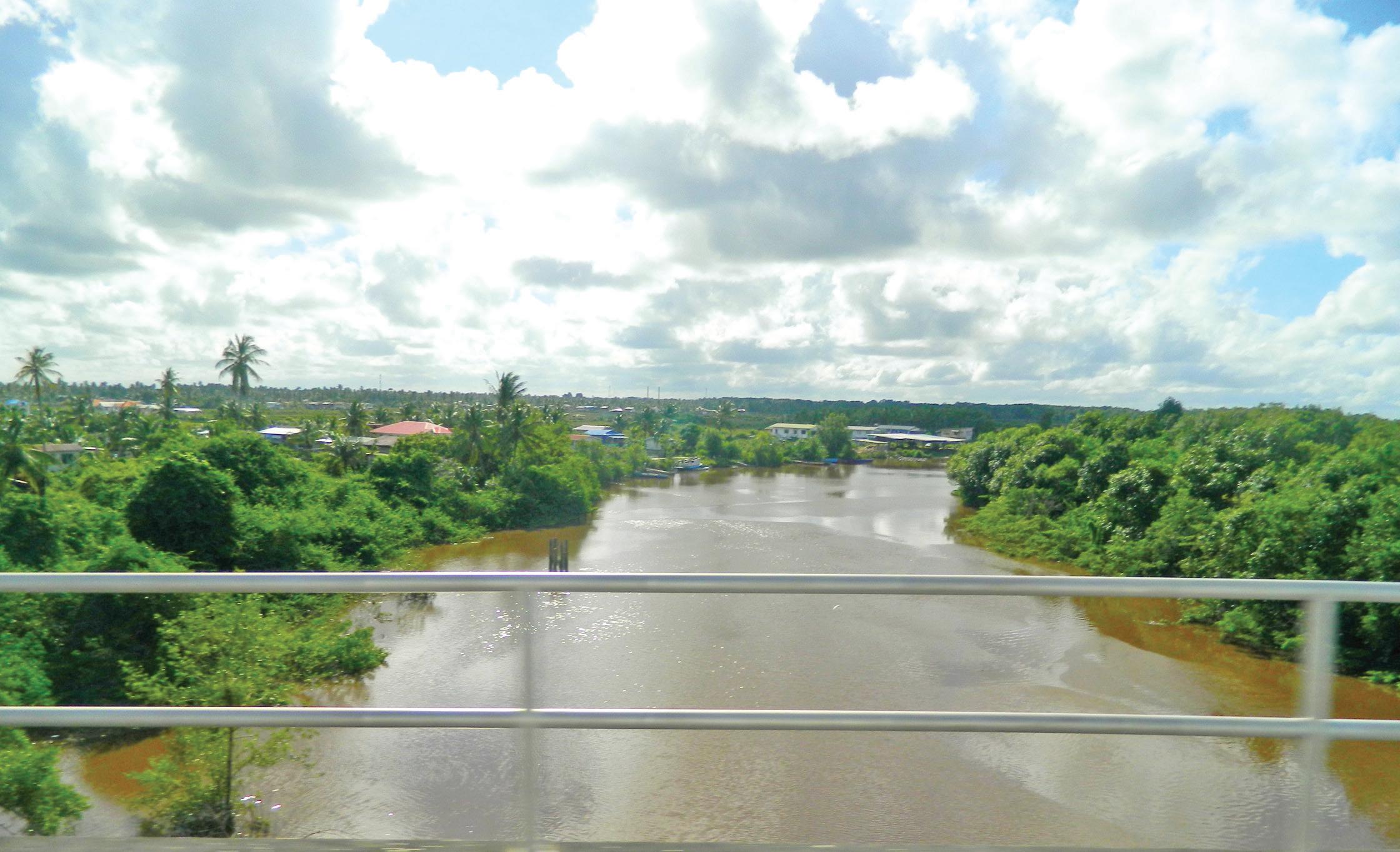
Drastic action will be taken against rice farmers along the Canje River who continue to contaminate the River, Region Six Chairman, David Armogan has said.
The livelihoods of some Canje River residents have been threatened as a result of farmers trying to take advantage of the recent boom in the rice industry by cultivating more lands. They have taken up rice lands beyond Manarabisi in the Black Bush Polder at Bamboo. Residents there use the water in the river for domestic purposes.
The farmers had been warned by Agriculture Minister, Dr Leslie Ramsammy that they cannot disrupt the lives of residents and they had promised to ensure that the water from rice fields will not be pumped into the Canje River, but they have not kept their end of the bargain and Armogan said firm action will be taken against the farmers.
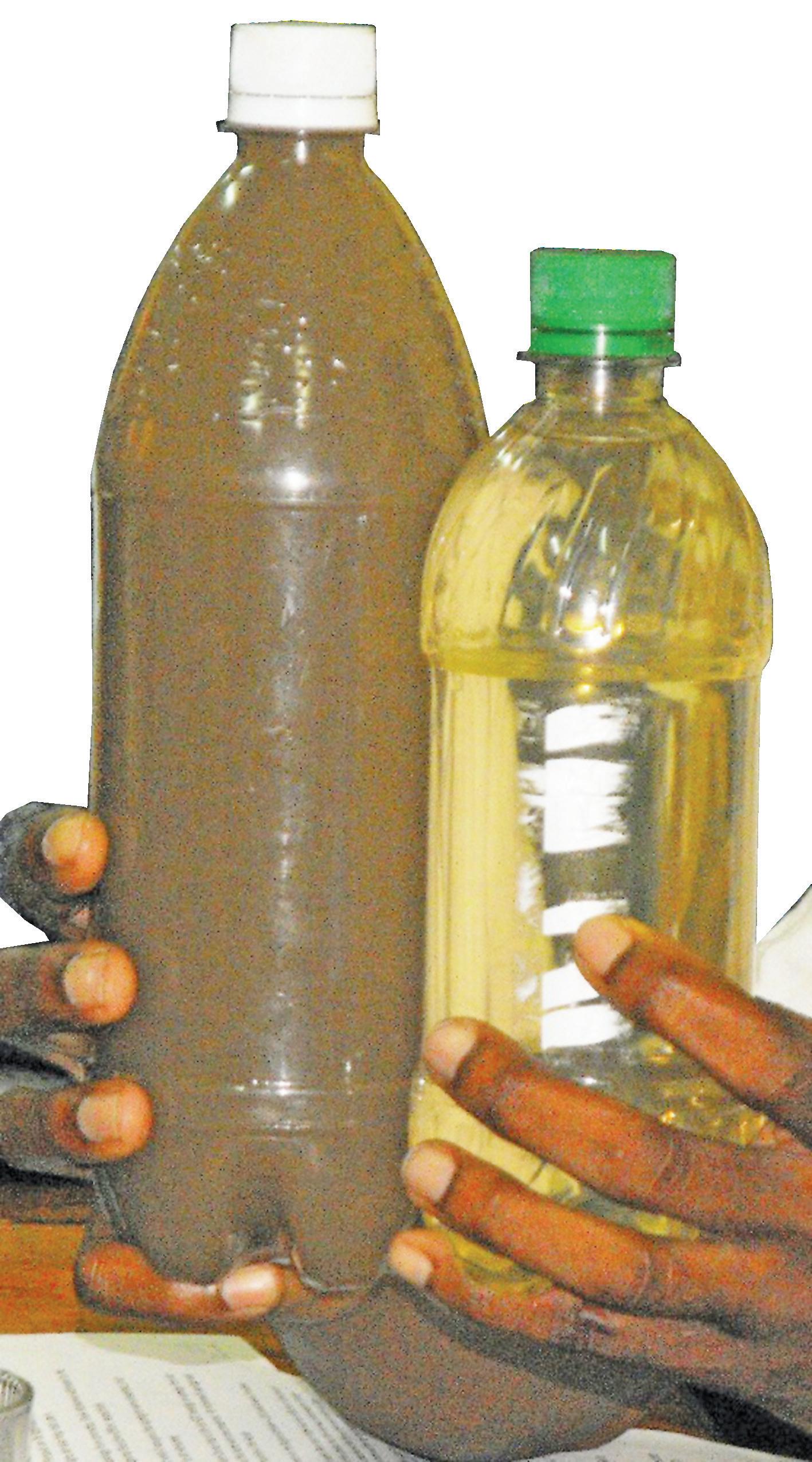
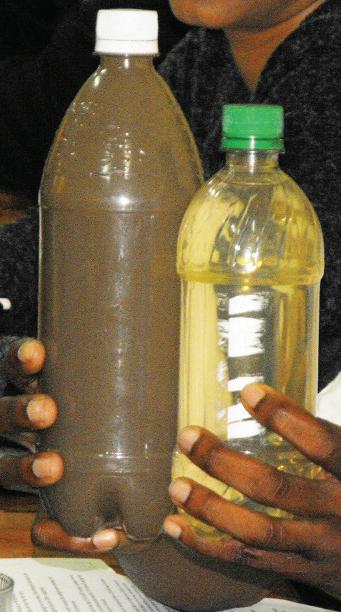
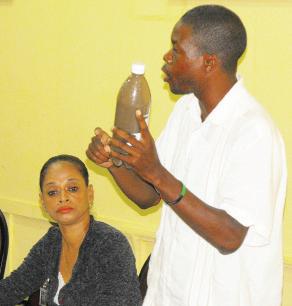
The Chairman became aware of what is happening during a Regional Democratic Council (RDC) meeting on Thursday. A Partnership for National Unity (APNU) Councillor Corwin Crawford brought it to the attention of Councillors. Holding a bottle of the discoloured water which was obtained from that part of the river, Crawford said that the residents are suffering as they are forced to use the contaminated water. “I walked with a sample of water that the residents have to drink. This is the quality of water that rice farmers will have to reuse and I am sure that the next crop will be affected.”
Crawford noted that pump operators at Manarabisi are baffled as to whether they should pump the water inland so that farmers in the Black Bush Polder can use it. He noted that the residents have already prepared a petition as they seek to have the rice farmers discontinue their operations there.
Drastic action will be taken against rice farmers along the Canje River who continue to contaminate the River, Region Six Chairman, David Armogan has said.
The livelihoods of some Canje River residents have been threatened as a result of farmers trying to take advantage of the recent boom in the rice industry by cultivating more lands. They have taken up rice lands beyond Manarabisi in the Black Bush Polder at Bamboo. Residents there use the water in the river for domestic purposes.
The farmers had been warned by Agriculture Minister Dr. Leslie Ramsammy that they cannot disrupt the lives of residents and they had promised to ensure that the water from rice fields
will not be pumped into the Canje River, but they have not kept their end of the bargain and Armogan said firm action will be taken against the farmers.
The Chairman became aware of what is happening during a Regional Democratic Council (RDC) meeting on Thursday. A Partnership for National Unity
(APNU) Councillor Corwin Crawford brought it to the attention
of Councillors. Holding a bottle of the discoloured water which was obtained from that part of the river, Crawford said that the residents are suffering as they are forced to use the contaminated water. “I walked with a sample of water that the residents have to drink. This is the
petition as they seek to have the rice farmers discontinue their operations there.
The Councillor also showed the RDC meeting a bottle of water which was collected from about one mile farther up the river. The water was clear and bore no resemblance
quality of water that rice farmers will have to reuse and I am sure that the next crop will be affected.”
Crawford noted that pump operators at Manarabisi are baffled as to whether they should pump the water inland so that farmers in the Black Bush Polder can use it. He noted that the residents have already prepared a
to the first bottle which had a close look to that of molasses. Armogan said that the pump operators at Manarabisi also provided him with the same information.
The operators were planning to close the Manarabisi Pump Station because they have no water to use for domestic purposes. Those pump attendants live in at the
pump station. According to the chairman, members of the Youth Farmers Coop (YFC) which consist of several senior citizens have recommenced pumping their waste water into the Canje River. Armogan and Minister Ramsammy had visited the community after an article appeared in the Guyana Times highlighting the plight of the residents.
“The last time we went in was after the rice crop and so we couldn’t see the nature of the problem at that time, “he told Regional Councillors noting that although the YFC gave their assurance that they will divert the waste water from their rice fields; this has not happened.
The farmers had promised to close the sluice that leads the water into the Canje River but have failed to do so. “It is clear that they have not lived up to their promise and so action will now have to be taken to ensure that that area is closed completely” Armogan said.
Those farmers who started cultivating rice beyond Manarabisi in the Black Bush Polder have been indiscriminately releasing the toxic water from their rice fields into the Canje River, causing great inconvenience for the more than 40 residents who dwell in that community. Many of them have fallen ill, while five have died over the past year after developing conditions that were not known to those residents and whose names were not disclosed by doctors.
One resident, Alfred Shultz, who lives at Bamboo, explained to Berbice Times that when the rice farmers release the water back into the river, residents are unable to drink it.
“We use the water in the river for all domestic purposes. So when they start letting out the water, I have to travel about three miles up the river to get fresh water and it is not me alone…”
He said the cost for gasoline for his boat is very high and travelling that distance daily has taken a toll on him financially.
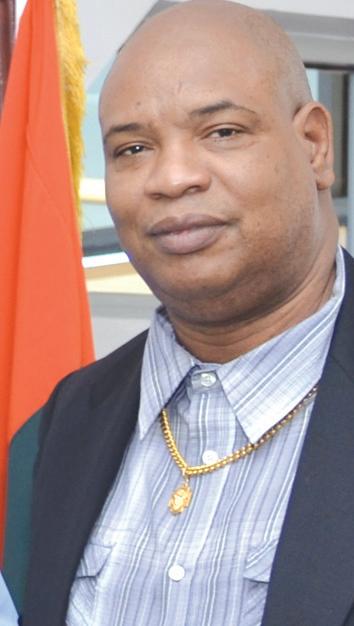
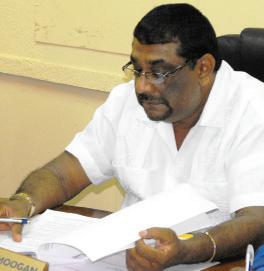
Region Six Chairman David Armogan
The two samples of water
Corwin Crawford addressing the RDC and displaying a sample of the water from the Canje River
The Vector Control Services (VCS) of the Ministry of Health has commenced training for staff of the Region Six Regional Office in the area of functioning and correct usage of fogging machines along with troubleshooting.
According to the Director of VCS Dr. Reyaud Rahman, this initiative will see approximately 12 individuals undergoing training in this area. This is due to the fact that the VCS team that is currently in Berbice and have been doing fogging and spraying will conclude their activities in the region tomorrow.
However, after the team’s departure the responsibility of fogging and spraying of the area will be in the hands of the staff of the Regional office, hence the reason for the training. In addition, the Ministry has also commenced training for individuals working with chemicals during fogging exercises in Regions Five and Six, due to the close relationship that they share, resulting in a more heightened approach to prevent the disease from spreading. These include persons who will be involved in conducting spraying exercises, mixing of chemicals, along with any other functions related to this aspect of work.
The Ministry has also been working closely with the Neighborhood
Democratic Councils (NDC) and the Regional Executive Officers (REO) in a collaborative effort to help prevent the disease from spreading.
There is also a very strong public awareness campaign, as representatives of the Ministry have been doing a lot of sensitisation on the disease countrywide and is in the middle of the process of creating new posters and flyers with the help of the Pan American Health Organisation (PAHO) to
The Guyana Police Force B Division in an effort to foster better community relations has embarked on several soft projects which will see members of the public benefiting from hampers and other donations.
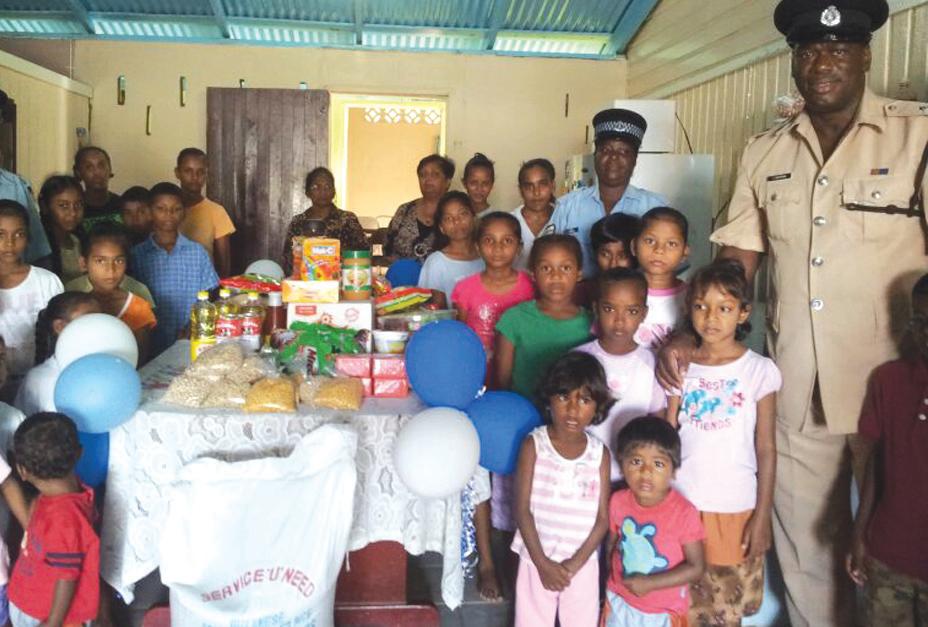
Over the past week, ranks in the division made several donations to the needy and community members, the most recent being a donation of food supplies to the Camal’s Children Home in Albion.
Terrence Brown, Assistant Superintendent of Police and Officer in Charge of Number 2 Subdivision, Berbice, while making the donation told Berbice Times that this project was supported by the higher ranks of the Police Force and they all see it as a way of giving back to the community.
“Within my subdivision we have challenged ourselves at each station to do a soft project in reaching
The Ministry has already identified the ports of entry for strict monitoring. Health centres have been alerted and have available medication for the effective treatment of any vectorborne disease.
further educate the public about the disease.
Last week, Health Minister Dr Bheri Ramsaran reported that around 15 cases of chikungunya have been confirmed thus far. Dr Ramsaran said the discovery was made after 130 blood samples were sent to the Caribbean Public Health Agency (CARPHA), in Trinidad, for testing. The samples were sent after individuals showed signs of the illness.
He said Chief Medical Officer (CMO), Dr Shamdeo
Persaud has established a case definition for the illness based on which hospitals took samples of individuals who fit the case definition, and sent them to the institute to be tested. An additional 82 suspected cases have been identified by the New Amsterdam Hospital as they suit the case definition. The 11 cases reported earlier from New Amsterdam and Port Mourant, indicated that the disease has now spread even further across the region.
out to the community, we are embarking on building relationships with the public because it is felt that the public is too distant from us . Serving crime requires partnership and support and we cannot do all by ourselves and this is one way in giving back to the community and
at the same time assisting the needy. I know for a fact many are not sure of tomorrow’s meals while many others are fortunate that’s why I hope this little gesture will go a] far way .” In an effort to engage citizens at all levels, the subdivision is also in the process of forming youth
groups at each station. These projects are seen as a way of giving back to the community by keeping the youths meaningfully occupied and at the same time building a better relationship with the respective communities that will assist in crime-solving and other related matters as
Prior to this confirmation, two cases were found, one a toddler, and another a woman who is said to be in her 40s, from Cumberland and Canefield, Canje, Region Six. This resulted in the Ministry heightening its Vector Control Services (VCS) in the region, placing emphasis on fogging and spraying.
These efforts will now be further enhanced, through an expansion in the team and more work done with regard to spraying and fogging.
Dr Ramsaran said no trace of the disease has yet been observed in West Berbice, but Region Five is on alert and has shown great cooperation in the fight. Fogging exercises are currently ongoing in the capital city. Chikungunya is an arthropod-borne virus that is transmitted to humans by the virus-carrying Aedes Aegypti mosquito. It is transmitted in similar manner to dengue fever and causes an illness with an acute febrile phase lasting two to five days. It can result in some long-term effects, primarily joint pain, and causes moderate to severe illness. Depending on an individual’s body reaction after the incubation period, persons may experience pain even after seeking medical attention.
This period can last from two to six days with symptoms lasting four to seven days after infection. Individuals experiencing any such symptoms are asked to visit a health facility as soon as possible. Individuals are also asked to remove all containers that may retain water and breed mosquitoes.
the police force needs society’s support in the execution of their duties.
Head of Camal’s Children Home Carmen Kissoon expressed gratitude for the donation, noting that food supplies are always welcomed as it will assist in providing meals for the 60 plus children under her care. She wished the force best of luck for their efforts and applauded the initiative by the ‘B’ Division. The members of the force also took time out to interact with the children and showed them a few police tricks, much to their amusement.
Assistant Superintendent, Terrence Brown hands over food supplies to Camal’s Home
Truth
Afew times over the last five years, I have seen children playing cricket in an open spot opposite to where I lived. Two girls and two boys; the girls were better at the game. They used a straight bat and bowled with good pace. They were playing “under-hand” cricket with a bumper ball and a piece of wood shaped into a bat.
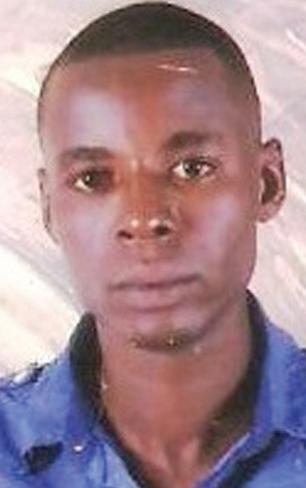
The 14-year-old school girl who was murdered behind her home at Sisters Village, East Bank Berbice, last Wednesday evening was stabbed 10 times, an autopsy has revealed.
The post mortem was performed by Government Pathologist Dr. Vivekanand Bridgemohan on Friday. Tamesha Adams died of shock and haemorrhage due to multiple stab wounds. The autopsy report revealed that Adams sustained five stabs to the left side of her neck, one to the upper back, three to the throat and one to the abdomen.
Adams was discovered by her mother on Thursday morning lying on an empty plot of land behind her
home with a knife stuck in her throat. A 23-yearold man with whom the Berbice Education Institute (BEI) third form student shared a relationship was moments before found hanging from a mango tree behind his home.
An autopsy performed
on the body of Kellon Sam also by Dr. Bridgemohan Friday revealed that he died from asphysciation as a result of self suspension.
Police are working on a theory that Sam murdered Adams before taking his own life by hanging himself.
Meanwhile, an autopsy report from a post mortem on Robert Sandy said he died from suspected consumption of Organza Phosphate. Sandy died on May 27th at the New Amsterdam Prison one day after he was charged with the murder of 18-year-old Onicia Greaves of Caracas Dam, Angoy’s Avenue, New Amsterdam.
Greaves was murdered on May 20th by Sandy after an altercation between the two.
After committing the act, Sandy made good his escape and then allegedly consumed a pesticide. He was hospitalised for a week at the New Amsterdam Hospital before being discharged and charged by the police.
Professor Daizal Samad
Looking at them, I remembered seeing and playing “street cricket” in any available open space. We even played a version of the game in shop fronts in Rose Hall Town. There was never a shortage of players, and it was easy to pick and play.
Often, we fellows from Rose Hall would go to Port Mourant to take on the boys there in bumper ball cricket. One of our favourite spots was in front of Rambela’s Rum Shop just beside the road. There was a large, sandy area, perfect for a few quick, intense games. Cricket games were played frequently and everywhere.
On the big sandy area in Port Mourant, there were so many boys that we would have 20 per side. With so many fielders, if a 20-man side scored three runs, it was most likely a winning score. The bat was simple (not a “cane bat”, as we called the real thing), and the ball was of red, compact rubber. It was such great fun, although the game became tense at times since there was money to be won or lost. We would each put 10 cents or so, but there were a few rich chaps who would put a whole dollar into the pool.
One of the more talented players from Rose Hall was Ishmael Abdool, and he always had one or two dollars to bet against the other side. I cannot remember a single time when Miley’s side lost. The team drew from his fierce competitive spirit as they did from his natural talent for the game.
We rarely see children playing bat and ball these days. One is more likely to see young boys and girls sitting around peering into their cellphones, texting, or listening to noise. Or they just sit around with things in their ears, heads bobbing up and down as if their necks were of spaghetti.
It seems obvious that these young children have more affinity to “technology” than they do to physical activity. There are also fewer and fewer open spaces that could be used to play underhand cricket. The large open sandy spot in front of Rambelas Rum Shop is no longer there; the nearby large grassy area called “tresh” now has a mosque.
There was a large tamarind tree there, and it was said that baccoos resided under the tree. Rose Hall is now too busy for any game of ball and bat, even a form adjusted to suit the space. And one is not sure if today’s shop owners would be as tolerant as Mr Alim Shah or Mr Balram Shane or Mr Zaman or so.
But maybe we do not see these under-hand games because there is a sense that cricket in any form is serious stuff. It is business, and in this business climate, there is no place for good old clean fun. In the hustle, we may have lost the game. Take a look at the Guyana Cricket Board story. Look and you will see.
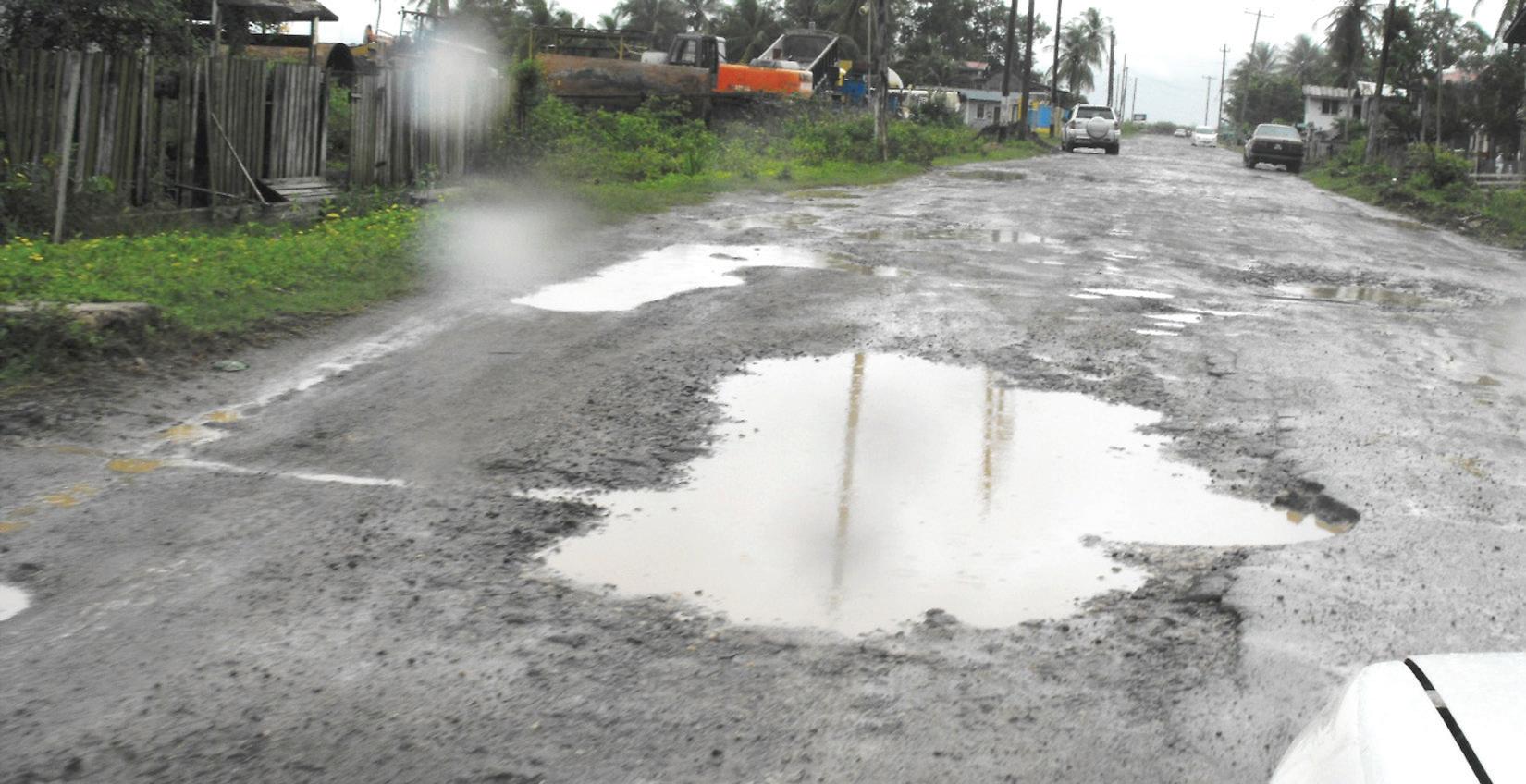
Residents of the East Bank of Berbice are again expressing their concerns over the state of the main access road, while vehicle operators are dissatisfied with the quality of maintenance work which is being carried out there.
The Ministry of Public Works has a continuous maintenance programme until the major works are carried out on the road.
Region Six Chairman David Armogan is also not satisfied with the road works,
noting the problem is that roads does not hold for any particular time. “As soon as it is finished and you have a few showers of rain, what you find is that it begins to deteriorate almost immediately. So I think that we have reached a stage now where we have to be able to do it in a good way, because plastering it all the time I think is wasting money, the Chairman told this publication in an invited comment.
Armogan says the time has come for a long-term road to be constructed on the East Bank, noting that the short-term measures that have been put in place have not been working any-
that we can only now hope that what Minister Benn said will happen, but has expressed some concerns.
more. “A lot of people have been saying to us that it is a waste of time and money and the only person that benefits is the contractor. The people don’t get the benefits because soon after it becomes bad as it was before.”
The Chairman said the contractor H. Nauth & Sons Civil Engineering Contractors has reported to Works Minister Robeson Benn that he does not think that the road as it currently stands can be repaired.
“Because even the contractor is taking licks and he is getting a bad name. He is getting bad name for the king of work that he has been doing… but he told me that there is nothing that
he can do because the road does not have a foundation anymore so when you fill the holes at the top it does not stay.”
Last year when residents and vehicle operators had closed the road in protest over its deplorable state, Minister Benn had promised residents that they would get a new road, but they had to wait until 2014 when a loan from the InterAmerican Development Bank (IDB) would become available. During the 2014 parliamentary debate, he told the National Assembly that works on that road are likely to commence during the last quarter of 2014.
The chairman notes
“Remember the financing is going to come from the IDB and with this Anti Money Laundering Bill which has not been passed as yet, we are going to have some prolonged periods of discussions with banks dealing with financial assistance. People don’t understand the implications of not passing the AML Bill… It has implication for the loans that we get from international institutions because the CFATF has already rejected us and has informed the FATF that they have to decide what to do with Guyana.”
Armogan is fearful that not only the East Bank Main access road, but all others that are for major upgrading will become in jeopardy.
“In as much as the Minister did say that it is going to start during the last quarter of this year, based on the stage of negotiations at that time when he made the pronouncement things might change dramatically,” he explained to the Guyana Times.
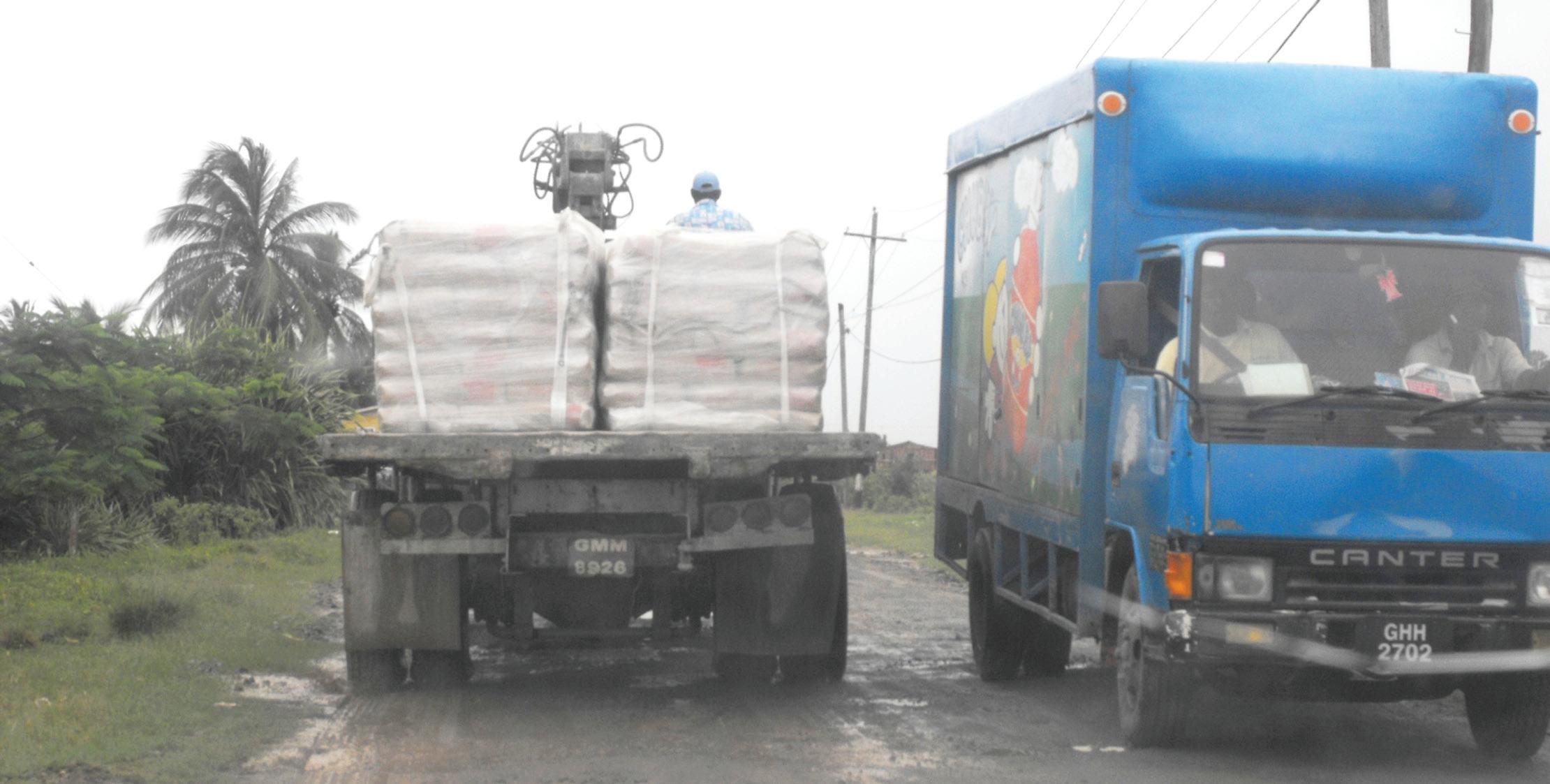
Several heavy-duty vehicles constantly use the road
The East Bank Berbice Road at Glasgow Village
Tamesha Adams Kellon Sam
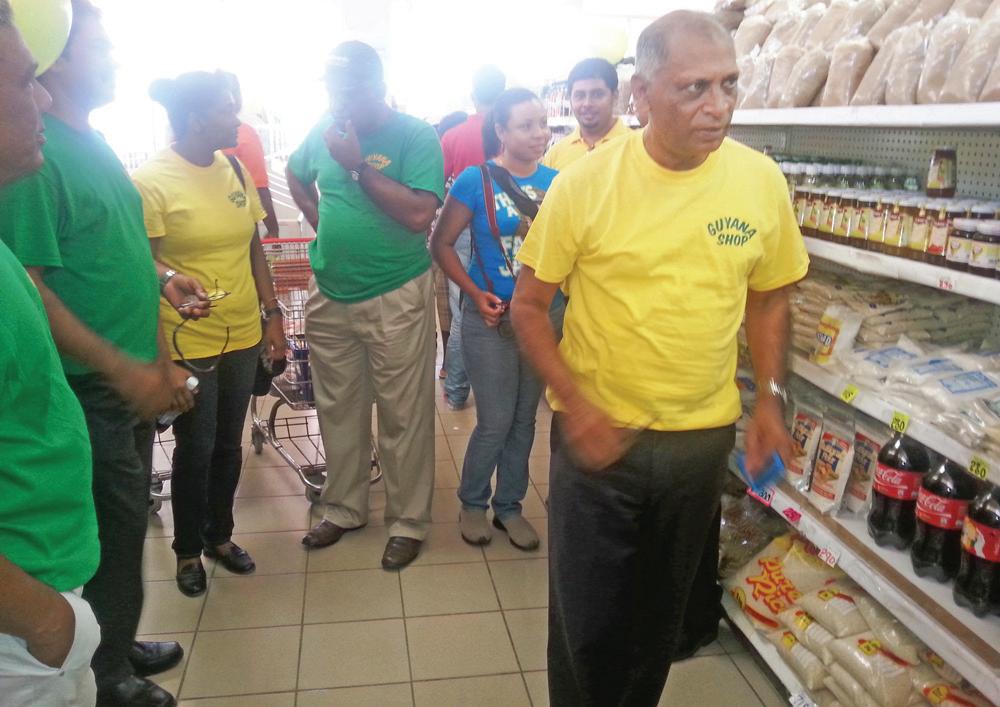
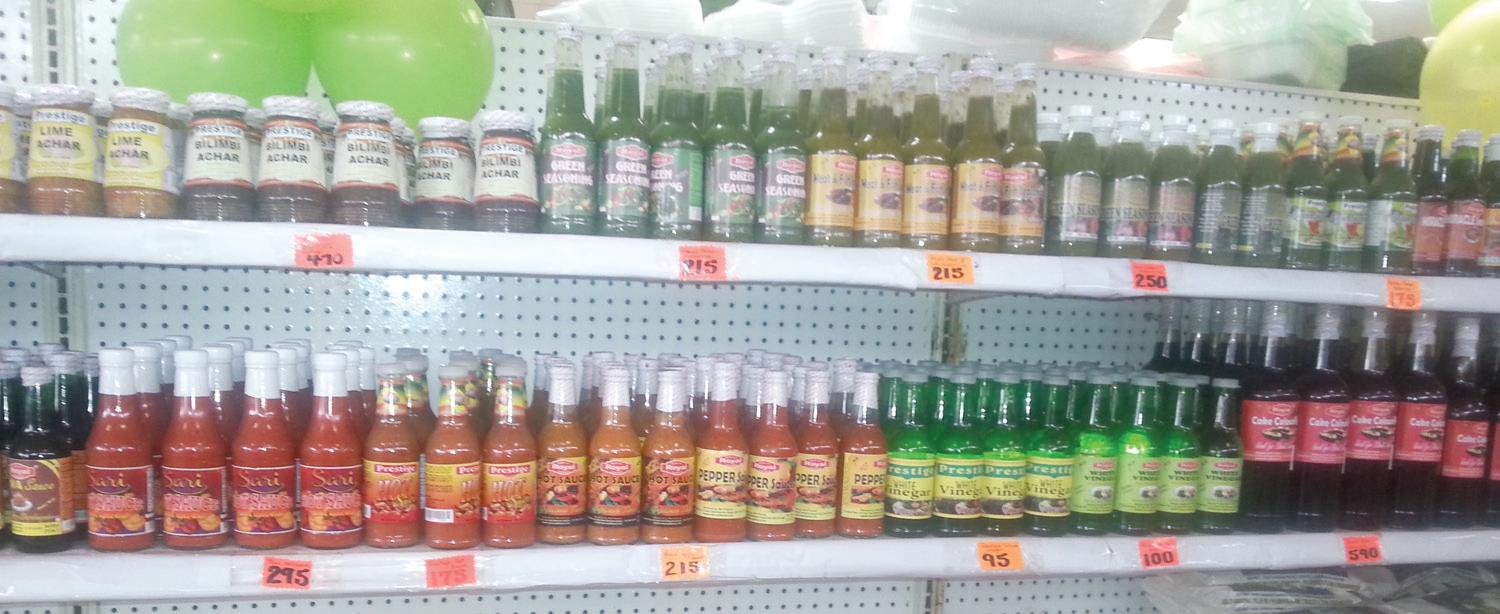
The New Guyana Marketing Corporation (GMC) launched a branch of its Guyana Shop, two Saturdays ago at the Spready’s Supermarket in Port Mourant, Berbice.
This was an initiative of the Agriculture Minister, Dr Leslie Ramsammy aimed at promoting locally produced products with the GMC assisting manufacturers in adding value to their products and providing technical support.
Rajdai Jagarnauth, a member of the GMC Board, said the Guyana Shop has been putting in place a system where the products being sold meet the minimum standards for quality. “I urge you to utilise locally produced products as it is as good as any other you would see and as Guyanese, we need to have competition on our local market, but, at the same time, we have to ensure we utilise Guyanese-made products,” she said.
Region Six Chairman David Armogan, while congratulating the proprietor
ucts being competitive in terms of prices and taste, as these are two important aspects of successfully competing in the marketplace. Additionally, Armogan said one of the basic costs associated with local products is electricity cost and this is
on a mission and our mission is for people to not only value what we produce, but to prefer it also. This is based on quality, taste and price, if we price ourselves out of the market, we cannot blame anyone… and Spready’s Supermarket has become an important part
“You ask yourself if our country can sustain the fact that we spend close to US$300 million annually to import food, much of which are produced locally… we spend almost US$100 million a year to import canned food, none of which we need here… we can use the local
of Spready’s for cooperating with the project, said the use and promotion of local products plays a vital role in the growth and development of any economy worldwide.“ If we continue to import stuff, it carries a heavy burden, not only on your foreign exchange by forcing it to skyrocket…it virtually propels your economy downward in two ways… it drives the hinges upward and pushes the demand for more foreign dollars,” he opined.
Armogan said for too long, the shelves in the region’s supermarkets have been without local products and reiterated that the launch of Guyana Shop is a step in the right direction. He encouraged other businesses to emulate Spready’s and assist in marketing the country’s local products.
He also stressed the importance of the local prod-
something that Government has recogniSed, so it has moved to implement the hydroelectricity project.
“There is no way we can continue to compete with the rest of the world unless we can build the hydropower and that is a direction I think in which the Government is intended to embark on within the next year or two, because we have to get that and only then we can be able to compete at the international level,” Armogan stated.
Delivering the feature address at the launch, Dr Ramsammy said it is a huge leap forward for Guyana.
He said Guyanese have to learn to value and use what they produce, and opined that there is a culture in our country that values anything that comes from outside more than local products and it is one we must change.
“The Guyana Shop is
in the mission of promoting Guyanese products made of the country’s raw material, through Guyanese expertise and investments,” Ramsammy boasted.
All the products in the Guyana Shop are registered and approved by the Government Analyst-Food and Drug Department, Ramsammy said. Guyana has a long history of producing quality products which are used internationally, such as the famous Demerara rum and sugar, rice, NAMILCO flour, etc.
products,” he said.
He emphasised that these are the things that slow the growth of the economy and urged residents to support local products as this is a significant way of building the economy.
Also present at the launch were Berbice Chambers of Commerce President Mark Roopnarine, Guyana Shop Manager Kevin Macklingam, and representatives of the Guyana Agro-processors Association among other officials.
Students give a lot of reasons for dropping out from school. For example, some say they were failing and getting poor grades, while others say they did not like school in general. Some even say that they did not get along well with teachers and fellow classmates. In some cases, some got a job and have had family to support as well.
Without any doubt, though, the economic impact of high school dropouts cannot be denied. Risk factors for dropouts include coming from low-income and single-parent families, to name a few. The reality is teachers cannot address the academic and emotional needs of every student within regular class time, which means programmes need to be in place for students who are at risk for dropping out.
One must keep in mind that the learning and social experiences children have from birth do influence their attitudes about education, society, and their own lives. Generally speaking, dropouts are more likely to be unemployed, live in poverty, and be single parents. It is not uncommon for young people who do not graduate from high school to face many more problems later in life than people who graduate.
Usually, students who receive poor grades or who are over-age for their class are more likely to drop out. And the ones who have poor attendance for reasons other than illness are also more likely to drop out. The problem with these situations is that, students who miss school fall behind their peers in the classroom. This then leads to low selfesteem and increases the likelihood that at-risk students will drop out of school.
Aspirations important
Also, what a child wants in life can have a significant impact on whether or not he or she drops out from school. For example, in general, young people’s perceptions of the economic opportunities available to them also play a role in their decision to drop out or stay in school. These are the ones who often have lower occupational inspirations than their peers.
Parents should take note that the economic consequences of their child leaving high school without graduating are severe. In recent years, high school completion has become a basic prerequisite for many entry-level jobs and for a higher education. In fact, advances in technology have fuelled the demand for a highly skilled labour force, meaning a high school certificate becomes a minimum requirement for entry into the labour market.
As briefly mentioned, young women who drop out of school are more likely to have children at younger ages and more likely to be single parents than high school graduates. One should keep in mind too that the individual stresses and frustrations associated with dropping out have social implications as well. In fact, dropouts make up a disproportionate percentage of the nation’s prisons.
Before dropping out, an adult should help the student understand the earnings potential aspect as well. For example, employed dropouts in a variety of studies reported working at unskilled jobs or at low-paying service occupations that offer little opportunity for upward mobility.
On average, dropouts are more likely to be unemployed than high school graduates and to earn less money when they eventually secure work. Something to think about!
For comments, questions and feedback please address them to mcnarine@rogers.com.
Narine Dat Sookram
Agriculture Minister, Dr Leslie Ramsammy tours the Guyana Shop outlet at Spready’s Supermarket
Some of the locally made products on display
Minister within the Ministry of Finance, Bishop Juan Edghill is urging all Berbicians to be conscious and start moving in a direction to force the political Opposition to respond to their demands – one of which is to pass a Caribbean Financial Action Task Force (CFATF) compliant Anti-Money Laundering and Countering the Financing of Terrorism (AML/CFT) Bill.
His comments were made last Wednesday during a meeting with Berbicians. While several persons spoke out against the possible hardship for Guyanese if Guyana is blacklisted because it does not have a CFATF compliant Anti-Money Laundering Bill, some supported the demands of the parliamentary Opposition but noted that the Bill must be passed. Currently, Guyana does not have a CFATF-compliant AntiMoney Laundering Bill.
Raise your voices
At the end of May, Guyana participated at the CFATF meeting in Miami where the issue was discussed. Guyana’s delegation at that meeting was led by Legal Affairs Minister Anil Nandlall. As a result of Guyana’s non-compliance with international financial regulations, the country has been referred to the Financial Action Task Force (FATF) which will be meeting in Paris, France from June 23.
Twenty-seven Caribbean countries have asked financial institutions in their countries to take note that Guyana does not have in place the necessary legislation to protect other countries and financial structures, from money laundering and from the financing of terrorism.
Minister Edghill said Berbicians can play a big role in getting the Bill passed, noting that Parliament is due to meet on June 19 when it is still hoped that the joint Opposition will support the Bill.
“Berbicians can raise their voices, many of them have been too quiet.” Edghill congratulated Alliance For Change (AFC) Region Six Councillor Haseef Yusuf who has been openly condemning the actions of the joint Opposition as it related to the AntiMoney Laundering Bill.
He added that the consequences will be serious if the Bill is not passed, since every international insti-
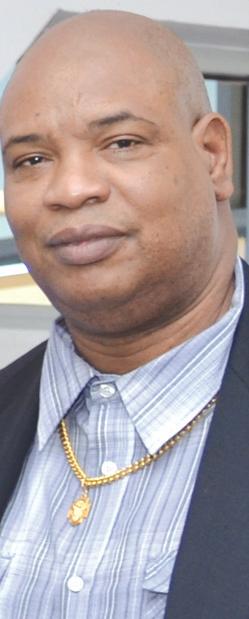
Minister within the Ministry of Finance, Juan Edghill
tution will be restricted from doing business with Guyana. “It means that development and developmental funding will grind to a halt. International Financial Institutions (IFIs) will be debarred from lending or giving money to Guyana.”
Weaker Guyana dollar
Edghill pointed out that if Guyana is blacklisted, the cost for the US dollar locally will increase, which, he noted, we have already started to experience.
Over the past week, the exchange rate in Berbice jumped from G$202 for US$1 and reached G$210 for US$1.
“That simply means that there is a demand for the dollar that cannot be met and because there is a demand that cannot be met, the price goes up.”
The scarcity is as a result of restrictions in inflows. According to the Minister, every time the US dollar climbs, the price for everything around us climbs.
“We buy fuel with the US dollar whether it is from Trinidad or Venezuela. If the price for fuel goes up because the cost of the US dollar goes up, the price for gasoline at the pump will go up. If the price for gasoline goes up, then the fare of the minibuses and taxis will go up. The fisherman who has to buy gas to take his boat out to sea will increase the cost for his fish and shrimp.”
Edghill noted that the cost for electricity will also go up if the US dollar continues to rise and the cost for textbooks and pharmaceuticals will also rise.
Guyana would find it difficult to get some types of investments were it not for the PublicPrivate Partnership (PPP) model, President Donald Ramotar said on Saturday at a media conference at State House.
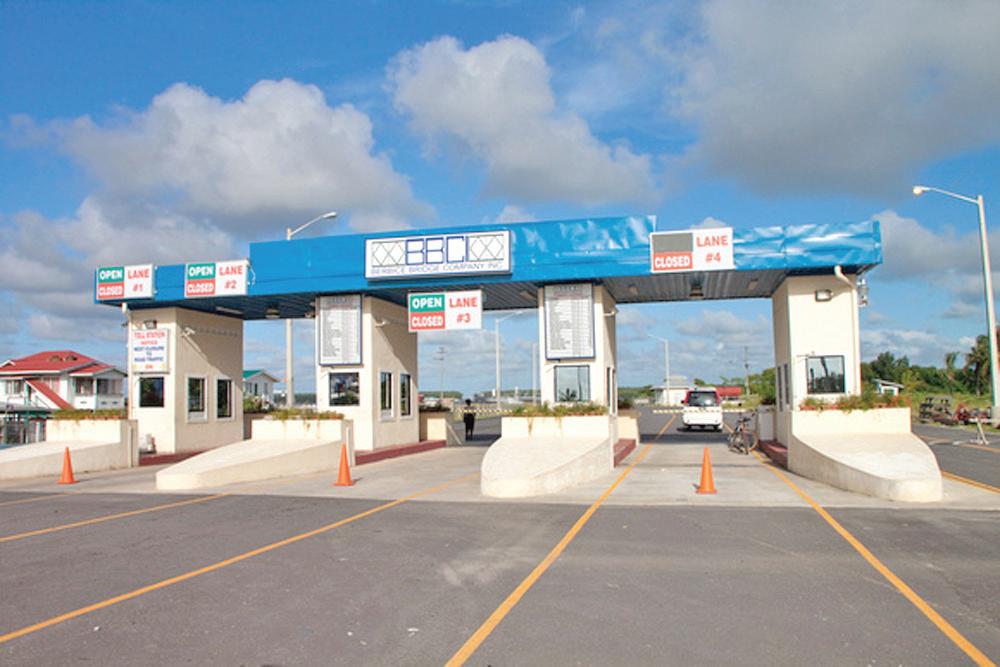
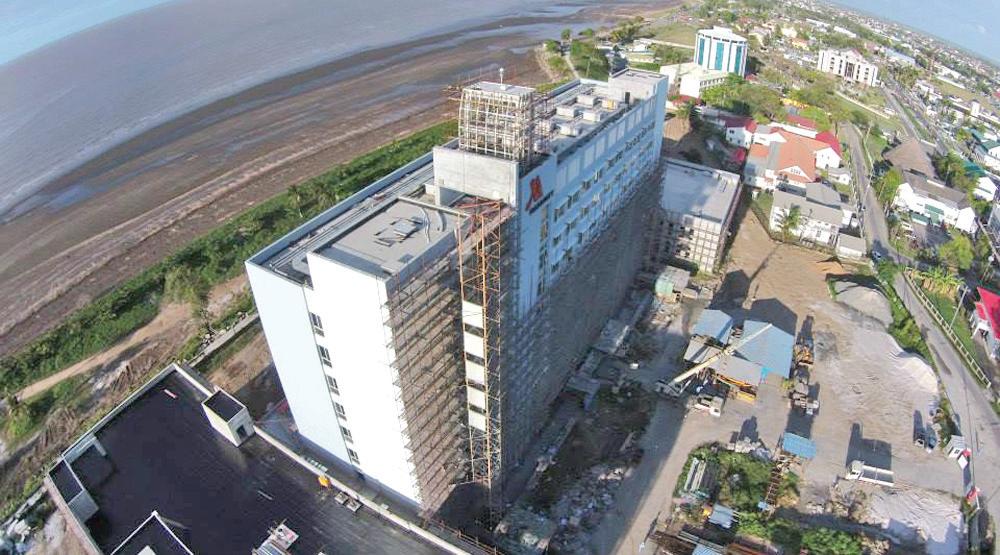
“We would find it very, very difficult to get some of the investments we want, unless we use this kind of module to go with,” he said. He pointed to the Marriott Hotel and the Berbice River Bridge, which he observed were classic examples, “as far as infrastructure is concerned to mobilise some public funds and private funds to get it done”.
According to the Government Information Agency (GINA), the President said with respect to the Guyana Sugar Corporation (GuySuCo), there is now an increase in the lands being leased to farmers in West Demerara to help it to be more effective.
“I am sure we have not closed our minds to go into a
partnership for a refinery, for a distillery, and many of the other things that we are talking of added value,” he observed.
He said it must be recognised that when other resources can be obtained to be put with local ones, “we can get a lot of these things much faster than if we try to do all by ourselves”.
The President insisted that nothing is wrong with
the PPP model and pointed out that objections are a result of lack of information.
Meanwhile, only last month, Chief Executive Officer (CEO) of the National Industrial and Commercial Investments Limited (NICIL), Winston Brassington, told the Caribbean Development Bank (CDB) Board of Governors that there is recognition of the concession-type model as a useful mechanism
to fund infrastructural development, aimed at reducing the eventuality of incurring fiscal risk of domestic public debt.
He pointed out that the benefits of the Berbice River Bridge for the country were marked by the significant and essential assistance of the initiative in the reduction of transport time to cross the river, from three hours by ferry to three minutes using the bridge.
This commitment towards PPPs comes despite the objections of the Parliamentary Opposition which states that such a financing structure would allow Guyana little say in the management of the Amaila Falls Hydro Power Project which Government had said would have solved Guyana’s long-term power woes.
Similar financing regarding the Berbice River Bridge and the Marriott Hotel have also been objected to by the Opposition, along with the Specialty Hospital.
The Berbice River Bridge
Marriott Hotel
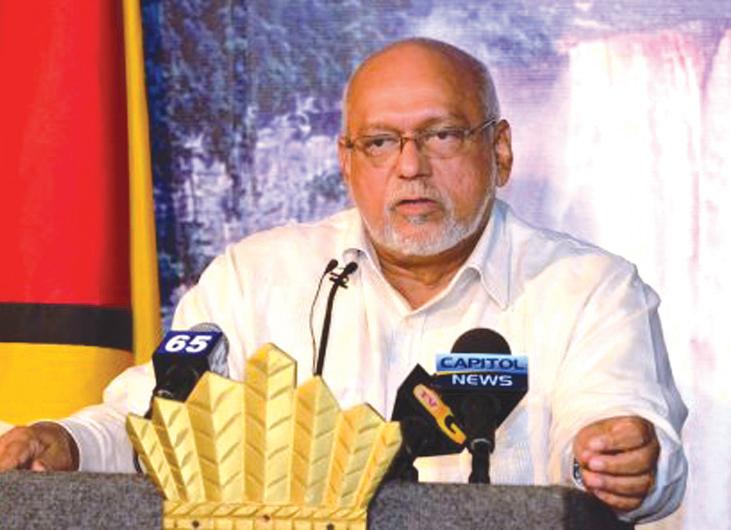
President Donald Ramotar
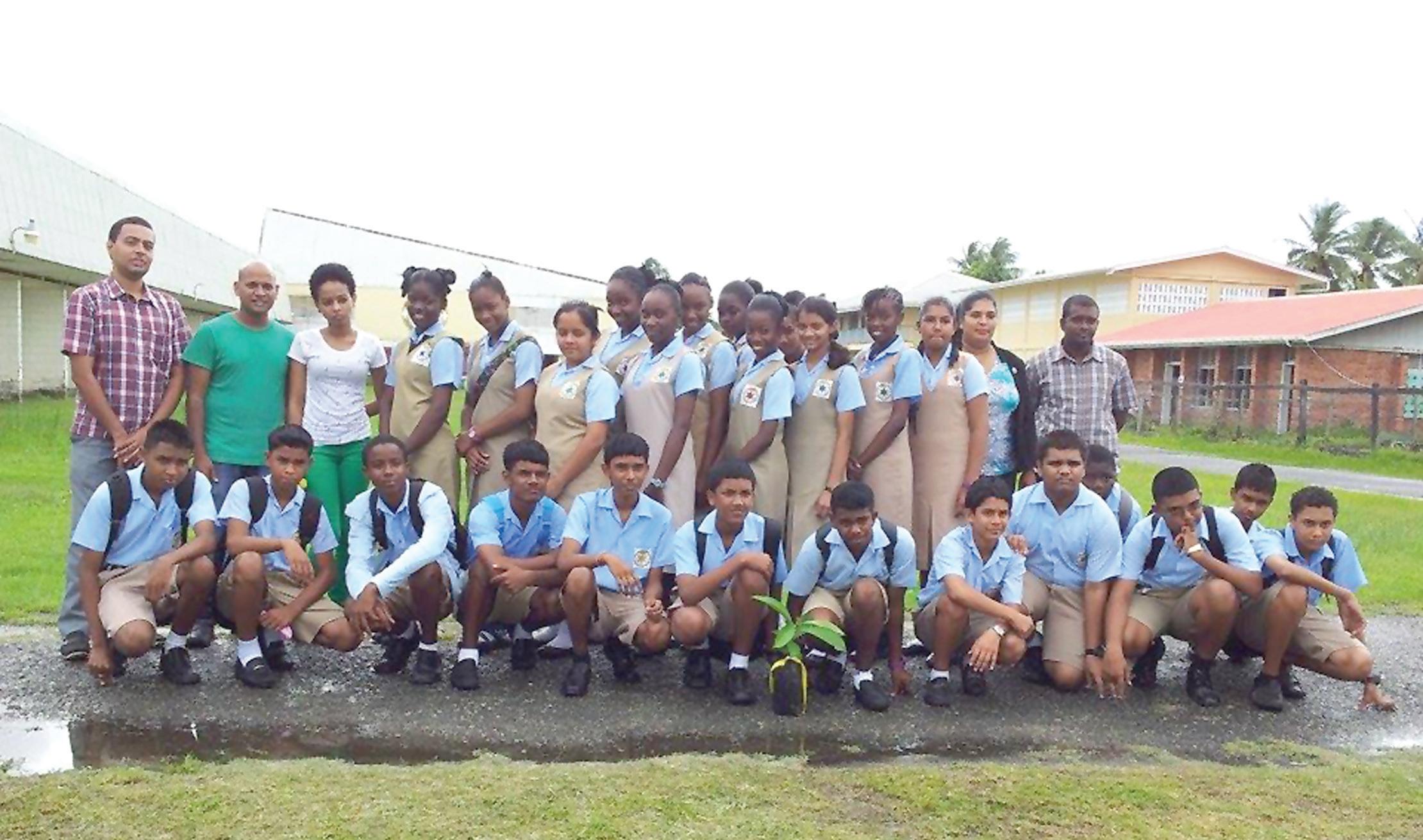
World Environment Day 2014 was observed on June 5 under the theme “Raise your voices, not the sea level” and Berbice Shines held a treeplanting exercise in eight schools across the region to commemorate the occasion.
Berbice Shines is a youth group that aims to raise awareness for a litter-free environment through education and community participation and is a chapter of the Guyana Shines project.
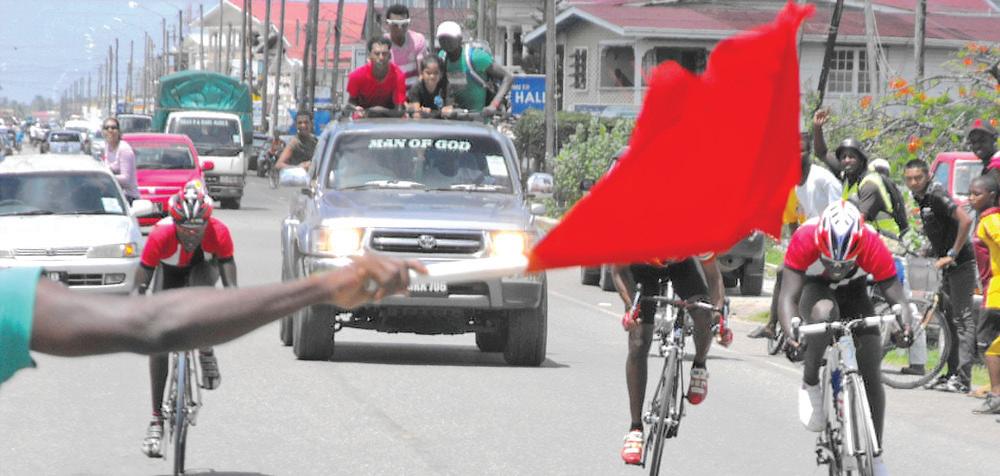
Jebon Crawford of Trojan Cycle Club (TCC) proved yet again that he was one of the better cyclists in Berbice when he rode away with the National Championship Warmup 50-miler on Sunday in Berbice.
In a time of one hour and fifty-three minutes (1:53), Crawford completed the journey form Reliance, East Canje to Number 43 Village, Corentyne and back to Rose Hall Town. Crawford, who won the Flying Ace pre-Aqua Mist 40-mile road race a week ago, signalled his intentions early in the race. After the riders had completed the East Canje stretch at a blistering 40 kilometres per hour, Crawford broke away from the pack along with Audrel Ross from Flying Ace Cycle Club (FACC) but their lead was short-lived, as young Andrew Hicks led the pack to catch them.
The riders had another four miles together before Crawford was again allowed to go out front. This time, his team-mate Toran Harris and
A total of 75 trees were rooted into the earth with the aim of reducing harmful gases in the atmosphere. At the New Amsterdam Multilateral School, the fruit trees were delicately placed into the soil at 12:00h; seven other schools were so engaged at the same time.
Global Youth Movement Guyana Executive Director Mark Ross, during his address to the students at the New Amsterdam Multilateral, explained
the importance of World Environment Day. He noted that June 5 is earmarked to raise global awareness in combating environmental issues and helping to raise awareness so that persons can become committed to environment preservation.
Ross promised that their group will take on the challenge to resuscitate Environment Clubs in schools. He noted that they will be meeting with third form students with
the intention of forming the Environment Clubs; as part of the programme, the group will be hosting an environment camp for 75 students from Regions Five and Six.
The Global Youth Movement Guyana Executive Director also spoke of the effects of climate change and the impact it has on the environment. He urged the students to pledge their support in helping to keep the environment clean.
Akeem Wilkinson of Flying Star Cycle Club (FSCC) went after him. The trio was allowed to stay up front for a brief while before Hicks again went after the leaders taking Ross with him. When they reached the trio, Hicks left Ross with the others and continued to pedal away in front and was soon out of sight. As the riders reached the 20-mile mark, Crawford, Harris, Ross, and Wilkinson made moves to get back to Hicks. They caught him on their way back at Bush Lot Village, but not before Ross
was dropped and the three joined Hicks.
No sympathy
Each rider took turns in leading and soon it became obvious that Wilkinson had started to tire. The others showed no sympathy for him and took off, making it a three-man race. With one more sprint prize left, Hicks outsprinted Crawford and took it, as Harris showed no visible evidence in wanting that prize.
However when it mattered most and the riders were facing the finish line,
it was Crawford who sprinted away, with Harris second and Hicks third. Wilkinson reached the finished line three minutes, seven seconds after the winners. Ross, who was later joined by team-mate Wasim Hassnu, made a desperate attempt to catch Wilkinson as he got close to Rose Hall Town, but they seem to have tried too hard and were soon moving at 15km per hour allowing Andre “Padlock” Green a pre-race favourite and Ray Millington to go past them and finish in that order.
Hicks took away five of
In her remarks, Regional Education Officer Valika Jaikishun stated that her department was pleased be part of the exercise, and noted the staggering effects of global warming on the earth.
“I want to urge you to keep your environment clean, we know of the harmful gases in the atmosphere and one of them being carbon dioxide, we know that the trees use up carbon dioxide to make food, so this
tree-planting exercise will assist in absorbing some of the gas in the atmosphere,” she said.
A student of the New Amsterdam Multilateral School, Shulanda Amsterdam said she plans to be part of more projects that will enhance the environment and at the same time, aid in waste management. She stated that she would make it her duty to gather other students to join in a cleanup campaign.
the six sprint point prizes that were up for grabs while the other went to Wilkinson.
The lone female to ride, Maricia Dick rode from the starting point and ended at the finish line instead of going the full distance.
At the end of the event
organised by FACC coach Randolph Roberts, he thanked all of the cyclists who participated in the event. He noted that the race was sponsored by several business entities, including Businessman Reborn Lewis and Dexter Bhajadder.
Teachers, Regional Education Officer Valika Jaikishun, and members of Berbice Shines show their commitment in preserving the environment
Jebon Crawford makes it home ahead of Taran Harris and Andrew Hicks
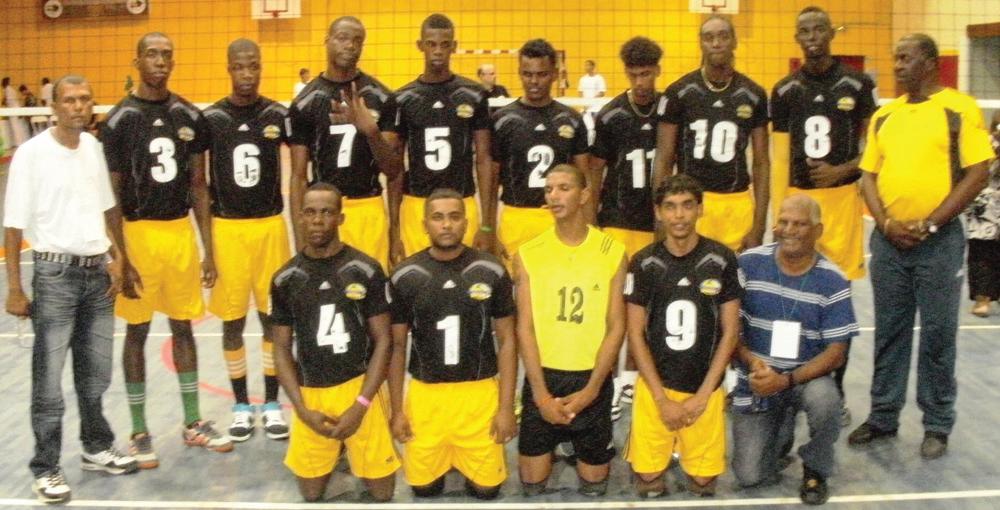
French Guiana has won the Six-Nation Men’s Volleyball International Tournament when they beat Suriname in the final by three sets to one (25-23, 25-18, 19-25, 28-26) to cop the Ligue de Guyane de Volleyball 40th Anniversary trophy. The Guyana senior men’s team returned home winless after participating in the tournament in Cayenne, French Guiana. The tournament, which
was played at the Georges Donzenar Centre Sportif Departmental, saw Guyana being drawn with French Guiana and Brazil in Group A while Suriname, Trinidad and Martinique were in Group B.
In the opening night of the tournament, the local boys went down to French Guiana three sets to nil (1425, 18-25, 15-25) and then surrendered to Brazil two night later (25-16, 25-19, 25-15). When Brazil and
French Guiana met to decide the winner of the group, the game was more competitive, with Brazil eventually getting, the nod, three sets to two ( 16-25, 25-21, 19-25, 27-25, 15-12).
In Group B, Trinidad defeated Martinique three sets to one, while Martinique defeated Suriname by three sets to two and Suriname defeated Trinidad by three sets to two (22-25, 25-22, 2522, 32-34, 17-15).
In the semi-final matchup, Suriname, after dropping the first set, took control of the game against Brazil to win three sets to one (17-25, 25-22, 27-25, 2523), while French Guiana defeated Trinidad by a similar margin to win (24-26,2125,25-22,25-23,15-7).
In the play-off for third place, Brazil defeated Trinidad by three sets to one (25-22, 21-25, 25-15, 2515). The tournament was played between May 22 and June 1.
Valuable experience
Coach of the Guyana team, Levi Nedd said the team learnt a lot from the experience. He pointed out that the Trinidad, Suriname, Brazil and Martinique teams were playing together for years and the French Guiana team was strengthened by the inclusion of four professionals from France.
This was good for Guyana in that they got to see different systems and techniques in action during the matches. The long-serving coach said the local players are young and talented, but need exposure to get to the next level, adding that they only had two sessions as a team before departing Guyana.
Nedd reiterated the call for indoor facilities for volleyball in Guyana. “Indoor facilities are needed for players to practise defence techniques such as skating, diving, and rolling which is very much basic in the modern game of volleyball, but none of the players from Berbice and West Demerara has such facilities available to them.”
Officials of the volleyball fraternity have recently
gone public over the lack of indoor facilities for volleyball in Berbice. There are no indoor facilities for the playing of volleyball in Berbice. President of the Berbice Volleyball Association (BVA), Gregory Rambarran told this publication that the lack of such facilities is hampering the development of young talent.
He said there are many talented volleyball players in Berbice, but without indoor facilities, they will not be able to progress. Teams from Suriname and French Guiana have refused to play on an outdoor court when in Berbice. The only indoor facilities in Guyana are in Georgetown.
Recently, the Brazilian Army announced that it is soon to provide the labour and materials for the construction of an indoor multipurpose court at Albion. Berbice Times understands that officials from the BVA have held meetings with Director of Sport Neil Kumar to discuss the construction of the multipurpose court. The officials also met with a high-level team from the Guyana Sugar Corporation (GuySuCo) to discuss the proposed plan.
GuySuCo will be supplying the land for the project while the Brazilian Army will fund the project. The Brazilians will only build the court on Government land. The Brazilian Army is also looking at constructing a similar court at Camp Ayanganna. Over the past 10 years, Berbice has had the top volleyball team in Guyana and has produced most of the country’s national players.
The Guyana team in French Guiana comprised: Jason Seelochan (Captain); Quacy Matheson; Creston Rodney; Luen David; Trevon McRae; Ian Bagot; Satesh Seenauth; Beepaul Bandoo; Kapildev Samaroo; Cleveland Peters; Shemroy Ross; and Yoganand Dhoray.
The officials were Coach Levi Nedd, Manager Godwyn Allicock and Referee Jadeshwar Doolchand. Gregory Rambarran was the media personnel.
The Guyana team
The winning French Guiana team