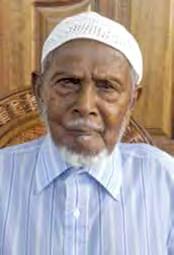
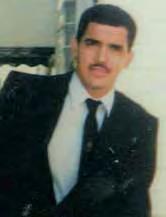
Even at the age of 102 and a proud recipient of a Medal of Service, Ramjohn Mohamed Khan remembers to read his Holy Quran daily, thanking God for his existence. This staunch and active Muslim, and one of Guyana’s oldest citizens, noted that he has never forget God and “always shower praises to Allah” daily.
Sharing his secrets to a long, meaningful and productive life with Guyana Times Sunday Magazine, Khan, of Aurora Public Road on the Essequibo Coast, pointed out that “one must eat healthy and pray daily asking God for guidance”. Khan celebrated his 102 birth anniversary on August 16.
Khan was born on August 16 1912 in the qui-
et community of Aurora Estate to Faqueerbuksh Mohamed Khan and Bibi Woulfath. Khan attended the Aurora Church of Scotland for approximately four years, and the Kitty and Christ Church schools for a few months.
He reminisced about his father, who he said was lured to Guyana on the Whitby ship to work as an indenture labourer on a plantation in 1898.
Full of vigour, Khan mentioned that it is vital for the body to get adequate rest and feed it with lots of vegetables in order to live a
long life.
“I eat lots of green vegetables, which are organically grown on cow manure. I eat meat in small quantities,” Khan disclosed.
Despite his age, Khan still manages to hold a cutlass to weed and sweep his yard whenever he feels he has the energy to do so.
Achieving this monumental age, Khan’s family planned a religious function and family get-together at his Aurora residence. The function featured religious songs and reading of verses from the Holy Quran by his immediate family members. Khan, who is still active
and serves as main adviser to his home circle and community, is versed in the recitation of the Holy Quran, and has vast knowledge about the Holy Scriptures. When asked about his experience in Islam, Khan revealed he dedicated all his life to the teaching of Islam. He has served 43 years as an Imam.
The 102-year-old remembered at the age of 12 he worked on plantation Sophia with “older men”. He was also responsible for the welfare of his younger siblings.
At the age of 24, Khan
married his second wife, Mabel, also known as Betty. From this union, they had 12 children. Khan also has two children from a previous marriage. The doting father of 14 has 41 grandchildren, 57 great-grandchildren and 59 great-great grandchildren.
The respected Imam is fluent in speaking Urdu, Hindi, English and Arabic.
On a daily basis, Khan’s day is spent reading the Holy Quran. Even at the age of 102, he still remembers interesting stories about his younger years and other significant life events.
He quoted his favourite adage: “It is better to live than to die, no matter what may be your condition you
still have a chance to worship your Creator and ask for forgiveness.”
Khan is the recipient of awards from the legislators of the provincial Parliament of Ontario, Canada, for being a Canadian citizen who attained the age of 100. He was recognised by Roxanne James (MP), and also from the Canadian Prime Minister Stephen Harper. Notably, the 102-yearold was also bestowed a national award under the Forbes Burnham presidency for his efforts in managing the Co-op Society in Essequibo. Khan is the oldest Essequibian and Essequibo is very much proud of him!
Khan’s desire is to live many more years.
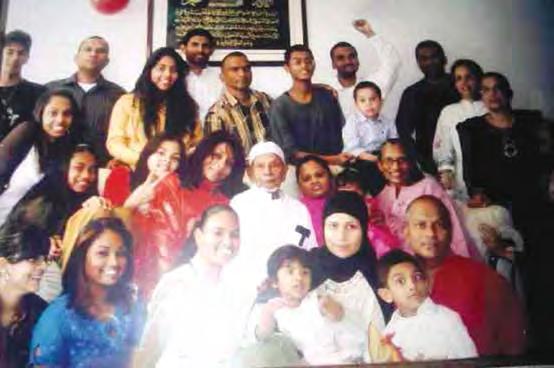
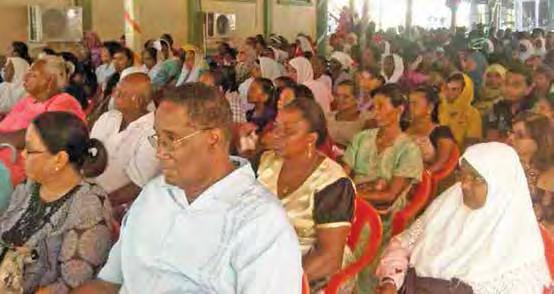
A section of the gathering that attended Khan's 100 birthday in Essequibo
Khan (center row fourth from left) with his children, grandchildren, great-grandchildren and great-great grandchildren
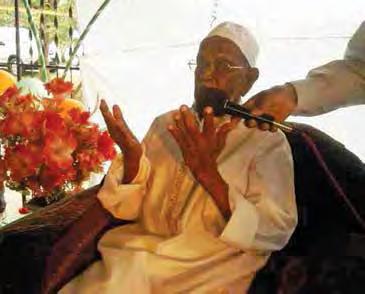
Ramjohn Mohamed Khan
The centenarian giving thanks
In a stressed-out world in which women have to face major challenges in every aspect of life, sometimes the only thing on their mind is to getaway – far, far away. But, you don't need to go on a tropical getaway to feel happier ASAP.
Christine Hassler, life coach, speaker, and author of Expectation Hangover, offers the full scoop on little life changes that'll up your happiness factor big time.
Get more sleep
This may be the most important happiness move you can make, says Hassler. When you’re tired, your body produces more cortisol, which makes you feel stressed. Normally get six to seven hours? Try for eight. Trust us on this one.
Hug it out
Sounds a bit cheesy, but honestly, hugs are so underrated. Physical touch makes you feel instantly more at ease, says Hassler, who recommends hugging someone at least once a day. If you’re single, lay ’em on your girlfriends. Taken? Give one to your partner right when you get out of bed in the morning—it’ll set the tone for a brighter day.
Write a thank-you note
Practicing gratitude makes you feel more fulfilled, says Hassler, which in turn makes you feel more blissful overall. Write a note to a friend who’s been amazing to you over the years, or, better yet, make a list before bed of a couple things that happened that day that you’re really excited about.
Hold the phone!
Your iPhone, that is. Detaching from technology helps you rejuvenate and feel less, well, buzzed. Try to have at least one hour out of every day when you don’t check it, suggest Hassler—whatever hour works best for you!
Give a compliment…to yourself
You know you’re guilty of being too hard on yourself— we all are. But treating yourself like you treat your friends makes you so much happier, says Hassler. So compliment
yourself on your awesome hair day or the fact that you killed it during your work presentation.
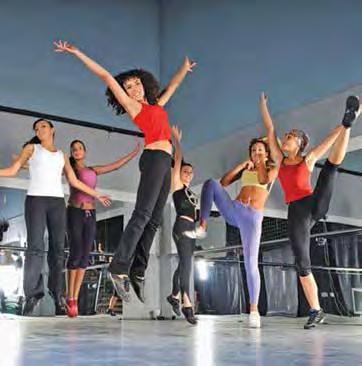
Hit up a dance class
Props to you for hitting the elliptical or going for a run on the regular—that’s awesome. But classes like dancing or boxing—basically anything where you’re totally flailing around the whole time—help your body move its energy around even more, so you feel calmer once it’s over, says Hassler.
Schedule 'nothing time' on your calendar
Leave yourself a chunk of unplanned time each day—at least half an hour—to do whatever you want. It’ll help you feel less stressed, which ups your bliss levels in a big way, says Hassler.
Choose a Personal Theme Song
Every week, choose a song with a message that you want to follow—be happy, live in the moment, whatever—and play it on your way to work. Listening to the same song over and over will help you better connect with its main idea, says Hassler, so you’re more likely to adopt its wisdom.
Drink more H20
This is one of those tips that makes pretty much every happiness/mindfulness/ life-improvement list there is. But that’s because it works!
Water helps your body run smoother and clears your head, says Hassler.
Check your bank account online every day
It’s so easy to stress out about money—we all do it. But if you check your statement daily, you’ll feel like you have a better handle on your financial situation—or you'll improve your “wealth consciousness,” as Hassler calls it. That, in turn, makes you feel more in control and happier.
Plan a girls’ night at least once a week
Research shows that simply anticipating good times makes you happier—even before you’ve had them. So start that “Friday dinner?” Gmail chain, and pick somewhere delicious to go—you all deserve it.
The Shaping of guyaneSe LiTeraTure Sankofa
By PetamBer Persaud
Part One
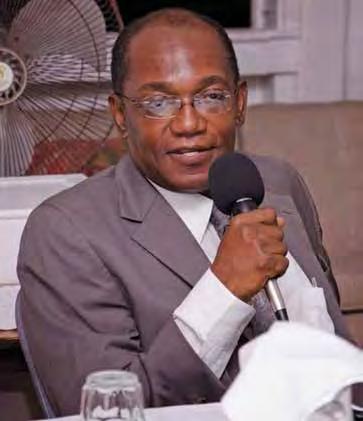
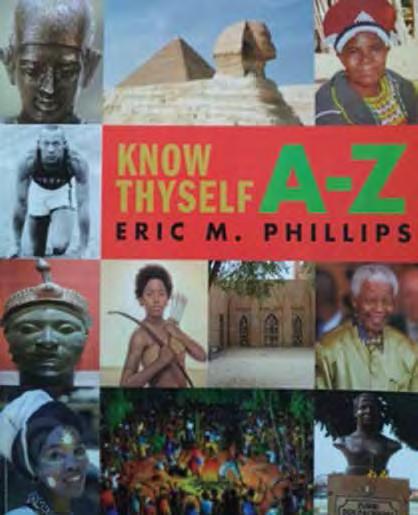
Extract of an interview with Eric M Phillips on his book, “Know Thyself A – Z”, March 2014, Georgetown, Guyana. Phillips is a civil rights and cultural activist who has visited over 40 African countries. He is preparing to release two collections of poetry
PP: There are various approaches to a book. For this book, “Know Thyself A to Z” by Eric Phillips, I would like start at the end, and you Eric, would understand why I am doing this. Let’s go all the way to Timbuktu, a place that was misrepresented in various ways for a long, long time. What attracted me to Timbuktu was what is writ-
ten in this book about that place. And I’d like to quote from page 50: “In its Golden Age, the town’s numerous Islamic scholars and extensive trading network made possible an important book trade.” Further down the page, the historian, Leo Africanus said: “There is a great demand for books, and more profit is made from the trade in books than in any other line of business.”
What a statement! What a Golden Age for learning and books!
Now let’s talk about your book, “Know Thyself A –Z”this one is the first in a series of four books. In the foreword, you introduced the book by saying this book is dedicated to “self-knowledge and self-healing, seeking truth, seeking understanding… seeking justice” - quite a lot you are attempting. But let’s go back to Timbuktu and remove the dark scales from our eyes in order that we see the issue from A to Z.
EP: When we were growing up, if someone said you were from Timbuktu, it was an insult; it meant that you were from some never-never land…
PP: …Behind God’s back…
EP: Yes, and a land which was mythical and horrible but in reality Timbuktu which really exists in Mala, West Africa, was a centre of learning for a long period of time and indeed there are over 700,000 manuscripts written in Arabic in all types of subjects – science, math, law, etc. - but we were taught that Timbuktu was a bad thing and a bad place when in reality it was the centre of learning, it was the centre of Islamic learning and when you go through the history of Timbuktu, you would be fascinated. For example, one of the Kings, Mansa Musa, when he went to Egypt, he had 60,000 labourers, each carrying three kilograms of gold – the largest shipment of gold. But the real story was about the culture of learning, universities existed there, scholars were attracted from all over the world to come to Timbuktu, that centre of learning, and learning then was currency. And as you just quoted trading in books was more profitable than trading in other valuable commodities like salt and gold.
PP: So now we have dispelled some of the dark clouds hanging over Timbuktu by use of this book which is
Sankofa can mean either the word in the Akan language of Ghana that translates in English to “reach back and get it” or the Asante Adinkra symbols of a bird with its head turned backwards taking an egg off its back, or of a stylised heart shape. It is often associated with the proverb, “Se wo were fi na wosankofa a yenkyi,” which translates, “It is not wrong to go back for that which you have forgotten.”
why such publications are important, bringing elucidation and questioning the text. Years ago, we grew up accepting what was written, what was peddled to us, but new findings are causing us to rethink our position on many things. Just the other day Prof Clem Seecharan declared that he is in a position now to add disclaimers to many things he had written, he is in the position to rewrite his opinions on many issues because of new findings.
EP: Yes, lots of new things are being unearthed; they were there, existing, but buried. Now due to new technologies and scholars’ quest for knowledge, new things are coming to light and people are rethinking previous beliefs.
PP: Back to your book again where you quoted Marcus Garvey: “A people without the knowledge of their past history, origin and culture is like a tree without roots.” Why we need to be grounded?
EP: If we don’t know
who we are, if we don’t have knowledge of our past, our culture, we can’t really love ourselves because we are misinformed and if you can’t love yourself you can’t love others and you can’t appreciate other cultures.
PP: I hear you…
EP: So if you understand yourself, if you are so grounded, you will have better self-esteem therefore you could look at other peoples’ culture, other peoples’ achievements and say this is humanity – we are the same.
PP: But something happened and changed all of that – it is called slavery…
EP: Yes, there was a purposeful attempt to make Africans seem inhuman, that they had no real culture, that they needed to be saved. So during slavery, there was a period of misinformation…
To be continued
Responses to this author telephone (592) 226-0065 or email: oraltradition2002@ yahoo.com
Eric M Phillips
'Know Thyself A-Z' by Eric Phillips
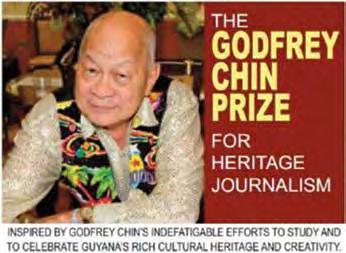
Guyanese awarded 2014 Godfrey Chin Prize for Heritage Journalism
It is my pleasure to announce the 2014 winners of the Godfrey
The winners represent qualities that Godfrey Chin admired and encouraged. He enjoyed doing research, especially collecting data - oral histories, photographs, songs, and “nylon”.
He was passionate about sharing. He used all available and accessible communication channels to tell the Guyanese story.
The first prize winner of the 2014 Godfrey Chin Prize for Heritage Journalism is Gaiutra Bahadur. The blog for her internationally acclaimed book “Coolie Woman: The Odyssey of Indenture” is a wonderful contemporary example of the type of research that Godfrey Chin admired and encouraged.
There are two second prize winners: Dimitri Allicock (the blog Oh Beautiful Guyana) and Vidyaratha Kissoon (the blog Thoughts of a mini-bus traveler! These winners resonate with Godfrey Chin’s enthusiasm for using any available medium - the mural, the banner, the collage, the newspaper article, the book, the photographic exhibition, the radio program, the CD, the DRD - to promote and to celebrate the commonalities and “nylon” that connect all Guyanese.
Godfrey Chin was a master storyteller. He preferred wit rather than invective.
The third-prize winner is Ingrid Griffith for “Demerara Gold”. This pioneering one-woman show has been described as “oral journalism”. Ingrid Griffith has attracted critical attention as an important voice in the telling of the Guyanese story.
The Godfrey Chin Prize for Heritage Journalism, administered by the Guyana Cultural Association of New York, Inc. (GCA) was established in 2011. It is inspired by Godfrey Chin’s indefatigable efforts to study and to celebrate Guyana’s rich cultural heritage and creativity. The prize has been established to encourage and to reward writers whose published works promote understanding and appreciation of the diverse strands of Guyanese heritage and contribute to celebrating the commonalities that connect the people of Guyana.
A panel of judges with expertise in the fields of journalism, cultural history, visual and performing arts and sensitivity to Guyanese heritage evaluate the entries.
Nominations are invited from Guyanese at home or in the diaspora. Individuals are encouraged to submit their own entries.
The prize is awarded to the entry that best embodies the spirit, intellect and wit of Godfrey Chin, as well as the core values that GCA considers when determining awards - originality, scope, impact/influence, contribution to harmony, innovation, and creative responses to challenges.
Nomination Guidelines
All submissions must have been published during the 2014 calendar year in one of the following media formats (a) a Guyanese newspaper or magazine or on the newspaper or magazine’s web site; (b) a blog series; (d) a Facebook group or other web-based platform.
Nominations may include a single story, a related series of stories (of which at least half of the individual stories must have been published during 2014), or up to three unrelated stories. Columns and editorials are eligible.
You can send questions to email address: godfreychinprize@guyfolkfest.org
Please join us in extending heartfelt congratulations to the 2014 winners of the Godfrey Chin Prize for Heritage Journalism.
Describing
herself as enthusiastic, daring, determined, ingenious and radiant, crowned Miss United Nations International, first Guyanese to win the title, Soyini Asanti Fraser believes it is more important to “stand out than to fit in”. Born on May 8 1990 to Lynden and Deborah Fraser, Soyini has evolved from just a simple and promising Guyanese girl into a beauty queen, model, an aspiring Christian Child-Psychologist, a dancer, TV hostess, role model and a true Guyanese! Coming from a family that is strict on academics, Soyini attended West Ruimveldt Primary moving to Queen’s College and later completing her tertiary education at Life Christian University. Throughout her school life, Soyini has been a member of every school’s athletic body; an active athlete in both track and field events, where she has gained several titles; member of the Pilgrim House and the school’s Steel Pan Orchestra from first to sixth form at Queen’s College. Presently, the beauty keeps active as a company member at the Classique Dance Company, as they travel the Caribbean and US. In the pageant arena, Soyini was the first to be crowned Miss Earth Guyana in 2010, and the first Guyanese woman to represent her country at Miss Earth. The following year, she was in the line-up for Miss World Guyana, gaining the first runner-up spot and the title Miss Princess of the World 2011. In Czech Republic, she won Miss Best National Costume Princess of the World with “Guyana’s Dream” by Guyanese designer Olympia Small-Sonaram. Recently, she was crowned Miss Jamzone Guyana 2014. Soyini credits the exemplary person she is today to a sound Christian and educational background with the morals her parents embedded in her as a child to use later on in life as a vehicle to success. Soyini lives by the credo by Albert Einstein: “Imagination is more important than knowledge. Knowledge is limited. Imagination encircles the world.” Her advice to young girls is: “Don’t change you to fit anyone. Be you. Make sure your educational background is strong. Also have a spiritual side because you need the faith to endure the pressures of life... Make sure you’re comfortable in your own skin. The industry is always changing what beauty is and so on. Never lose your identity. My advice to young girls who want to get into pageantry is to always represent your country; it’s your identity – something you should never lose sight of.” Soyini’s goal is to continue to be an ambassador for her country and putting it on the world map.
By Dr ViBert CamBriDge, Chairperson goDfrey Chin prize for heritage Journalism Committee
Chin Prize for Heritage Journalism.
Dmitri Allicock
Creature Corner
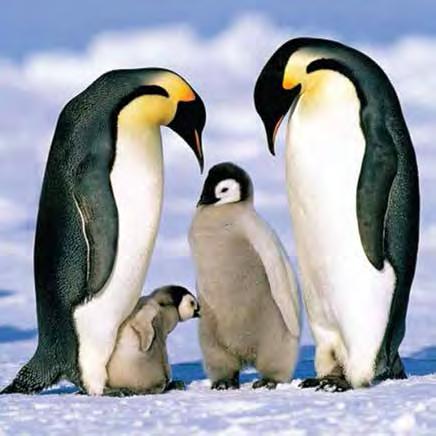
Emperors are the largest of all penguins—an average bird stands some 45 inches (115 centimetres) tall. These flightless animals live on the Antarctic ice and in the frigid surrounding waters.
Penguins employ physiological adaptations and cooperative behaviours in order to deal with an incredibly harsh environment, where wind chills can reach -76°F (-60°C).
They huddle together to escape wind and conserve warmth. Individuals take turns moving to the group's protected and relatively toasty interior. Once a penguin has warmed a bit it will move to the perimeter of the group so that others can enjoy protection from the icy elements.
Emperor penguins spend the long winter on the open ice—and even breed during this harsh season. Females lay a single egg and then promptly leave it behind. They undertake an extended hunting trip that lasts some two months! Depending on the extent of the ice pack, females may need to travel some 50 miles (80 kilometres) just to reach the open ocean, where they will feed on fish, squid, and krill. At sea, emperor penguins can dive to 1,850 feet (565 meters)—deeper than any other bird—and stay under for more than 20 minutes.
Emperor Penguin
FUN FACTS
An escalator is really just like a conveyor belt. The stairs are pulled around in a loop by a pair of chains. What’s tricky about escalators is keeping the steps level while they’re going up the slope (so you’re not tilted). The other trick is getting them to stay level at the beginning and end of the ride so people can get on and off safely.
Escalator steps have two sets of wheels. One set is at the top of each stair, and is pulled by the chains. At the bottom of the step is another set of wheels that runs along a metal pathway (like train tracks). The pathway is sloped between floors, but at the top and bottom of the rise, the track becomes flat before going around and back down, below
How does an escalator work?
the floor. When the steps are coming up the slope, each one is higher than the one before, like stairs, but when they reach the level part, they flatten out.
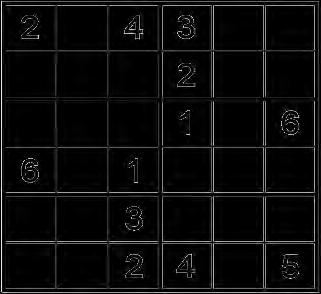
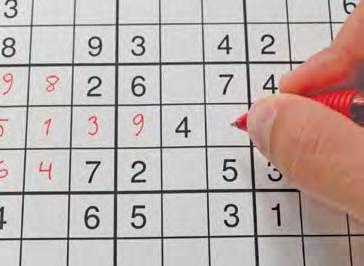
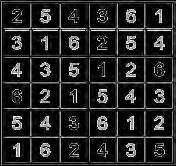
The objective of the game is to fill all the blank squares in a game with the correct numbers. Every row of 9 numbers must include all digits 1 through 9 in any order. Every column of 9 numbers must include all digits 1 through 9 in any order. Every 3 by 3 subsection of the 9 by 9 square must include all digits 1 through 9. Did
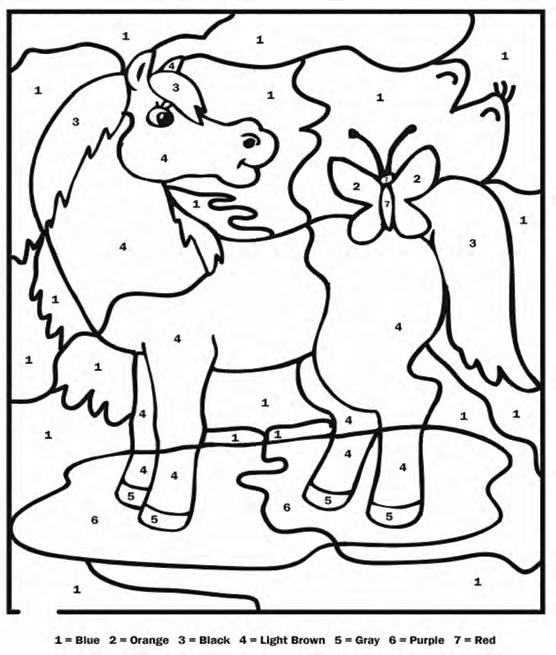
Colouring Fun
Male emperors keep newly laid eggs warm, but they do not sit on them, as many other birds do. Males stand and protect their eggs from the elements by balancing them on their feet and covering them with feathered skin known as a brood pouch. During this two-month bout of babysitting the males eat nothing and are at the mercy of the Antarctic elements.
When female penguins return to the breeding site, they bring a belly full of food that they regurgitate for the newly hatched chicks. Meanwhile, their duty done, male emperors take to the sea in search of food for themselves.
Mothers care for their young chicks and protect them with the warmth of their own brood pouches. Outside of this warm cocoon, a chick could die in just a few minutes. In December, Antarctic summer, the pack ice begins to break up and open water appears near the breeding site, just as young emperor penguins are ready to swim and fish on their own.
WRITING TOOLS
Writing has had a profound influence on civilization and is one of the most important inventions of all time. The written word has allowed people from around the world to recall and exchange ideas, stories and articles of trade. But with the advent of computers, some people believe that writing by hand is rapidly becoming a lost art.
A sampling of writing implements through history
Way back when
Made with plant dyes and charcoal sticks, prehistoric cave drawings were probably made as a way to connect with the spiritual world. Some may have showed where the best hunting was. The Lascaux cave paintings in France are examples of these early forms of communication.
Lascaux cave painting
15,000-10,000 B.C.
Writing & drawing instruments
The tools people have used to write and draw were often influenced by what was available to write on. Cave walls gave way to clay and wax tablets, which were replace by papyrus, parchment and other kinds of paper. Today, paper is often supplanted by computer and digital monitors.
1 Hands and fingers have been used as painting and drawing tools since prehistoric times.
Ancient history
The ancient Sumerians are thought to have invented the first written language 5,000 years ago. Using symbols drawn into clay tablets, they developed a wedge-shaped writing system called cuneiform These clay tablets were not books as we know them today, but they served a similar purpose — to record information.
2. Chalk and charcoal work well on rough surfaces. Chalk was used on stone slates in the 11th century. Schoolchildren in the 19th century used slate chalkboard tablets to write their lessons.
3. The stylus is an ancient tool used to carve writing onto clay or wax tablets. The earliest styluses were made from reeds, and later wood, bone or metal. Modern stylus pens are used as a computer accessory to navigate or draw on touchscreens and tablets.
4 Brushes have been used since prehistoric times. They have been made from plants, animal hairs or man-made materials.
5. Made with a large bird feather, the quill was dipped into ink. Quills were used in the Western world from the 6th through 19th centuries.
6. Conté sticks were invented in 1795. These drawing tools are made of graphite and charcoal mixed with a wax or clay base.
7 Pencils using graphite enclosed in a wood case were first made in the early 17th century.
8. Metal nib pens can be traced back to ancient Egypt, but became popular the 19th century.
9. Fountain pens use an internal source of ink to feed the nib and do not require pressure to write with. The earliest historical record of this kind of pen dates to the 10th centur y.
10. Ruling pens are a kind of drafting or technical pen that allow the user to achieve consistent and exact line widths. They are great for drawing lines, but not so good for handwriting.
Writing
The Egyptians used a form of picture-writing called hieroglyphs. They also invented papyrus, a paperlike writing material made from the stems of papyrus plants. The papyrus plant once flourished along the banks of the Nile.
11. Invented in the early 1900s, the marker is typically a felt-tipped pen filled with ink. Markers can be made with permanent ink or water-soluble (washable) inks.
12. Rapidographs are a kind of technical pen invented in 1953, in Germany. These pens have a stainless steel nib that comes in various sizes. The nib can be as thin as 0.1 mm, which allows the user to work with great detail.
13. The ballpoint pen uses an internal ink reservoir and the rolling action of a metal ball at the tip. The first patent for a ballpoint pen was issued in 1888. Gel pens work like a ballpoint pen, but use a thicker, more opaque ink than the traditional ballpoint pen. Gel pens work well on dark-colored paper.
Calligraphy
Calligraphy is the art of decorative writing. You might see examples of calligraphy on invitations or on important documents and certificates. You can buy kits with a variety of calligraphy pen nibs and fine paper. Or you can try making your own pen.
Note: This project uses a sharp knife. Get an adult to help you.
Materials needed
• A hollow feather • Jar of ink • Craft knife • Paper
Use a craft knife to cut off the tip of the feather at an angle.
Cut the tip to make a flat edge and cut a slit through the center.
Dip your pen in ink and begin to write, keeping the pen at an even angle.
The digital age
The introduction of computers and smartphones ushered in an era of emails, instant messages and texting. To a large degree, typing has replaced traditional handwriting, and some scholars worry that young people are no longer learning or practicing penmanship.
The skill of handwriting in cursive or script can still provide advantages in life. The ability to write in script has become a bit of a status symbol. In school, script can add speed to writing, making note taking faster. It also adds a personalized and sometimes artistic mark to the writing process.
Wax tablet with stylus. Styluses were used in ancient Sumeria, Egypt, Greece and Rome.
Sumerian cuneiform writing
Computer mouse
Invented in the 1860s, the typewriter was widely used in various professions. The computer began replacing the typewriter in the 1980s.
Electronic tablet and stylus
Times Fashion
Some women are just born with an eye for style. Sure, it makes us a little jealous that they manage to pull off just about any trend with what seems like zero effort, but if there’s one thing we know about fashionable women, it’s that they’ve got their own tips and tricks to staying stylish through it all. Pick up a few pointers from these notable style setters on how to turn any outfit into a fashion-forward look.
Show Personality in Your Shoes at Work
Freshen up your workwear with an interesting shoe and a pant or hemline that shows it off. Actress Jessica Alba's profes-
sional-chic look works because it doesn't distract us, but still shows personality.
Balance Out Skin Exposure
There's a right way and a wrong way to bare a little flesh. To start, keep it at a minimum and pick an area to show. The more exposed one area, the more covered up other parts should be to balance it out. American pop singer, songwriter, and actress Katharine McPhee shows a tasteful hint of skin with a crop top and sheer stripes, without showing off too much.
Maxi Dresses Work at Any Height American fashion stylist Rachel Zoe is on the petite side and has been spotted in more maxi dresses than we can count. In a 2011 interview with ABC News on style for moms-to-be, Zoe recommended column-style maxis as they're effort-
chic and can easily be belted.
Works in Any Colour
Don't keep colour strictly in the accent category. Monochromatic looks give off a clean, chic vibe that elongate the frame, be it red (as seen on Victoria Beckham), blue, pink, black, white or whatever shade you choose.
Wear Your Outfit, Don't Let It Wear You
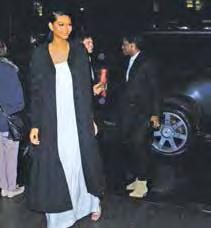
Less may really be more as model Chanel Iman demonstrates. Clean lines and neutrals allow you to shine, not the outfit. After all, it's supposed to make you look good, not serve as a distraction.
Keep It Classic
Want a surefire way to look good, not over-trendy or trying too hard? You can't go wrong with the classics.
Pair Neutral Makeup with Bright Styles
in Doubt, Opt for All-Black
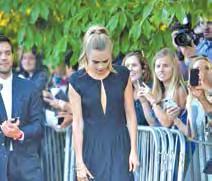
Chic for wherever your day takes you, an all-black outfit fits almost any setting and comes in handy when you're not quite sure of the dress code. A good set of brows like actress and singer Cara Delevingne's helps, too. (www.thefashionspot.com)
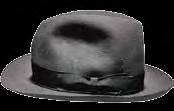
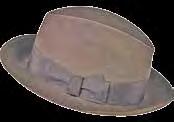
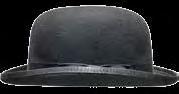
Men’s Fashion 101: Match your hat to your face
When buying a hat, most men will first consider whether the prospective headgear matches their wardrobe. Next, they'll check it rests comfortably on the head.
Few men, though, will ask themselves the most crucial question: “Do I have the face for this hat?” Use this essential buying guide to find the perfect hat to suit your face shape.
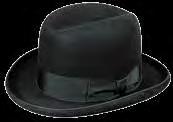
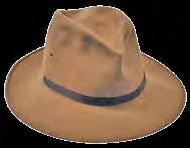
Short, full face
Balance a round face with a hat that has a good, high crown and a decent brim. This will give the appearance of an elongated face and add height. Avoid tilting to extremes as this will shorten your face even further.
Top-heavy face
If you have a prominent forehead, the trick is to find a hat that will balance out the top and bottom half of your face. A crown of medium to short height with the brim rolled at the back and sides should lessen the impact of the top half of your face and reduce it to a more proportional size.
Long, thin face
You'll want to find a hat to shorten the appearance of your face. A hat that has a low crown and a wide brim will offset the length of a long face.
the hat back and slightly to one side, and cue facial harmony.
Square face
Those baring a resemblance to Spongebob – though hopefully with a healthier pallor – require a hat that will add curvature and soften the edges of the face. A full and rounded crown of medium height should do this, with a wide brim fully turned up. A considerable tilt to the side will cushion facial contours.
Oval face
You are one of the lucky ones (unless prone to indeci sion). With a face that is almost perfectly symmetrical, you can take your pick of any hat and be confident that it will look great. Don’t be afraid to try something different – this shape will forgive most things.
Anomalous face
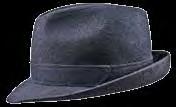
If you don't fall into any of the cited categories, or just want a more fail-safe option, choose a medium brimmed trilby for a classic look that will fit most face shapes and match with most items of clothing. (www.menshealth.co.uk)
lessly
Monochrome
Designer Tory Burch models a look from her line with a nude lip and neutral makeup. Perfection. When
Tilt
Neon Jungle
Star Times Hollywood
Neon Jungle is a British four-piece girl group, consisting of Shereen Cutkelvin, Amira McCarthy, Jess Plummer, and Asami Zdrenka. They are best known for their second single "Braveheart", which peaked at number 4 on the UK Singles Chart. Their first single "Trouble", reached number 12, while their third single "Welcome to the Jungle" reached number 7. Debut album, Welcome to the Jungle, was released this month, earning the group a Top 10 spot at 8 in the Official UK Top 40 Album downloads. Cutkelvin hails from Lanark, Scotland. She is the youngest member of the band. Cutkelvin posted covers of herself on YouTube, along with videos with her family. She was later discovered and invited to audition. McCarthy has always known that performing was something she wanted to do. She has said that the moment she realised that the route she wanted to go down was music as opposed to acting or dancing was when she took part in a singing competition at her school Westminster Academy. McCarthy auditioned and made the final four. Plummer hails from London. She is the oldest member of the band and had previously worked as an actress. Her musical idols include Mariah Carey, Rihanna and Jessie J. Plummer was discovered through the group's current manager in Brick Lane, London, and from there was invited to auditions. Zdrenka now lives in the United Kingdom. She is half-Japanese and half-English. Zdrenka has said that she has always loved to sing, and as a child, when her father took her on holiday to Japan, he would make her sing to her family. Zdrenka's mother was a singer and her grandfather has released albums in Japan. Zdrenka was also spotted online, through videos of herself singing on YouTube, catching the attention of the label.
Times Hollywood
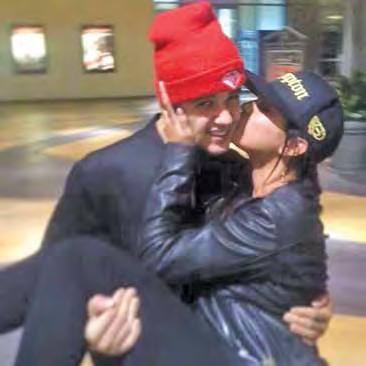
Justin Bieber has shared a new photo of him being kissed by Selena Gomez only to delete it later. On Thursday, August 14, the "Boyfriend" hitmaker took to Instagram to share a photo of him and his on-andoff girlfriend.
In the snap, the Canadian pop star can be seen wearing a red beanie and carrying the "Come & Get It" hitmaker. The 21-year-old star, who sports a black leather jacket and a hat, kisses him on the cheek. "Right now everything else is a blur," he captioned the snap. The photo reportedly was taken when they were in a movie theater earlier this week.
Bieber and Gomez reportedly also took part in a Bible study together at the City Church, Los Angeles on Wednesday. Bieber later tweeted, "God is good."
On Thursday, Bieber also shared a short clip of him doing boxing to keep him fit. Wearing a T-shirt and pants, he throws punch-
es at his partner. "Not a boxer but it's cardio and it's fun so don't judge me lol," he captioned the video. (AceShowbiz)
Paul Walker's car wreckage thief sentenced to six months in jail
Aman named Jameson Brooks Witty, 18, has been sentenced to six months in jail after stealing a piece of Paul Walker's wrecked Porsche Carrera GT. Another defendant named Anthony Edward Janow, 26, is expected to receive the same sentence when he goes before a judge on October 23.
In a video obtained by TMZ, the two suspects can be seen pulling off parts of the Porsche Carrera GT as a tow truck which carried the wreckage stopped at traffic lights in Santa Clarita, California. After the thievery happened, driver of the tow truck reported the crime to Santa Clarita Valley Sheriff's Station.
The report read, "At one point the driver of the tow truck stopped at the red light E/B Newhall Ranch Road at McBean Parkway. A witness saw a male exit a vehicle that was following the tow truck. The
male grabbed a piece of the wrecked Porsche off the tow truck bed. The male drove away with the stolen vehicle part."
In previous news, Jameson and Anthony pleaded no contest to misdemeanour charges on destroying evidence and resisting or delaying a police officer.
Paul died after his car crashed into a light standard and burst into flames in Santa Clarita, California on November 30, 2013. His friend, Roger Rodas, who drove the car was also killed in the crash. (AceShowbiz)
Beyoncé and Rihanna to collaborate?
Beyoncé is proving to be a huge fan of collaborations at the moment. First she released a new version of her track “Flawless” with Nicki Minaj,
and now rumour has it she'll give another of her songs the same treatment with Rihanna.
The duo are reportedly recording a version of Blow,
which featured on Bey's eponymous video album, released in December 2013. The news has surfaced after a listing was spotted on performing rights database ASCAP - where artists and songwriters have to register their tracks - which name-drops both artists under the name of the track.
“Flawless” featured a new verse of a Nikki solo, so we wonder if the new version of Blow will have a verse added for a RiRi? And given that Queen B used the former track to broach the topic of the Solange/Jay Z elevator incident, perhaps she'll have some topical lines to add to this song, too. (Glamour)
Ariana Grande's mom thought 'deranged' singer would be serial killer
Ariana Grande wasn't as squeaky clean during her childhood as she is today. The "Problem" singer opened up about being "a very weird little girl" while growing up in Boca Raton, Fla., in the latest issue of Billboard magazine.
"I'm literally the most sardonic person you've ever met," the 21-year-old said, noting that she went through a "dark and deranged" stage in the past.
"I always wanted to have skeleton face paint on or be wearing a Freddy Krueger mask, and I would carry a hockey stick around. I was like a mini-Helena Bonham Carter," she told the mag. "For my fifth birthday party we had a Jaws theme and all my friends left crying. I mean, I still am that way. But when I was little it was more concerning. There was a stage, when I was 3 or 4, where my mom thought I might grow up to be a serial killer."
She also had to deal with
her hypoglycemia from a young age. "Sometimes I'll get anxious if I forget to eat," she told the mag. "When I was a little girl, I would turn into the Tasmanian devil."
Grande was raised Catholic, but later turned to Kabbalah like one of her idols, Madonna. "[I] started practicing my own things when I was around 12 years old," she told Billboard. "As a fellow Kabbalist, I know how hard it is to exercise those tools in your everyday
life. Especially in a world where everything is so egocentric and all you do is talk about yourself and promote yourself."
The former Nickelodeon star has come a long way since her Krueger and Jaws days. Grande is currently gearing up for her sophomore album, My Everything, and just released "Bang Bang" with Nicki Minaj and Jessie J. Despite her success, however, her favorite downtime activity is just "going to the beach at night" in her hometown. Lately, though, she's been cheering on her halfbrother Frankie Grande, 31, who is currently starring on CBS' Big Brother. "[It's] excruciating, because I have no communication with him, and he's missed so many things," she said of Frankie. "My brother was always the one in the spotlight and I liked that," she recalled growing up. "It was like he was the entertainment for me." (US Magazine)
Shivin Narang
hivin Narang is an Indian television actor. His debut show on TV was the lead role of Yuvraj Singh in “Suvreen Guggal –Topper of The Year”. He is currently seen in Star Plus serial “Ek Veer Ki Ardaas Veera” as Ranvijay Singh. Although a fairly new actor, Narang is determined to become an iconic figure in Bollywood. This year, he won the STAR Parivaar Awards in the Favourite Beta Award category for “Ek Veer Ki Ardaas Veera”.
Bipasha Basu and Harman Baweja have denied that they are engaged.
It was reported that the couple had a private "roka ceremony" (engagement) with their families and close friends, including Shilpa Shetty and Raj Kundra.
However, according to The Times of India, when questioned about reports of their engagement Basu said: "It's not true."
Baweja responded abruptly saying only: "False."
The two stars confirmed they were in a relationship, after being spotted together
at several film events, fuelling rumours of a romance.
The “Love Story 2050” star revealed they met the first time at Amitabh Bachchan's 70th birthday bash.
The 32-year-old Basu was earlier in a nine-yearlong relationship with John Abraham. After the couple broke up acrimoniously in 2011, the actress was linked to Rana Daggubati.
Baweja was previously linked to Shamita Shetty and dated Priyanka Chopra, who he starred with in “Love Story 2050” and “What's Your Rashee?” (Digital Spy)
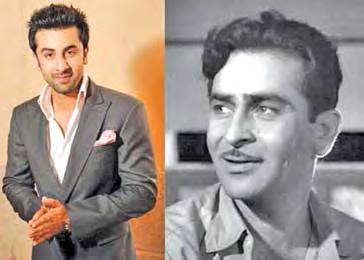
Ranbir Kapoor has said he would like to make a short film about his grandfather Raj Kapoor.
The “Bombay Velvet” star was speaking at the inauguration of a short film festival, named Shuruaat Ka Interval.
"I would like to make a short film on my grandfather. His life was very entertaining and interesting. I think that would make for a good short film."
Following in the footsteps of his father Prithivraj
Kapoor, Raj Kapoor was one of the most celebrated stars of his age, with roles in classic films such as “Awaara”, “Shree 420” and “Mera Naam Joker”.
Karisma, Kareena and Ranbir Kapoor have continued the family legacy while Armaan Jain becomes the latest of the Kapoor clan to launch a career in movies.
The newcomer, who made his debut in “Lekar Hum Deewana Dil”, said that he hopes to live up to his family name. (IANS)
Priyanka Chopra has said that young girls must be given more opportunities to make their mark on the world.
The actress, who is the UNICEF India goodwill ambassador, was speaking at an event to mark International Youth Day.
She told IANS: "Girls have the ability to transform their own lives, develop their own enterprises and help grow India's economy."
The 32-year-old, who has been supporting UNICEF's adolescent work in the country for eight years, met young women on Sunday in Chandrapur.
She witnessed how their lives are being transformed through the Building Young Futures programme, which is run in partnership with Barclays.
"I met girls who have experienced incredible hardship in their lives," she explained. "Building Young Futures has given them a voice and confidence, or 'daring' as they call it.
"These girls are working together, setting up businesses, planning their futures; they are empowered to handle the challenges life throws at them."
"I strongly advocate that parents, care-givers and educators must give the girls more and more opportunities to grow in their lives," she added.
Last year, the “Mary Kom” star attended the UNF's Girl UP dinner in New York, an event celebrating the work of UN supporters and inspirational leaders who have been working towards promoting health, safety and education of the girl child. (IANS)
Fish-eaters may keep more gray matter in old age
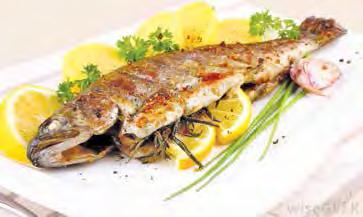
Eating baked or broiled fish at least once a week may preserve parts of the brain that are hit hard by aging, according to a small new study.
Brain scans showed that people over age 65 who regularly ate fish had 14 percent more gray matter in brain regions associated with memory and 4 percent more in areas devoted to cognition than people who didn’t consume fish regularly.
The effect was independent of omega-3 fatty acids in the study participants’ blood, suggesting that a fondness for fish is a sign of an overall healthy lifestyle that benefits the brain, researchers said.
“The presence of baked or broiled fish in the diet reflected more general differences in lifestyle than could be accounted for simply by measuring one biological compound." said Dr. James Becker, the study's lead author from the University of Pittsburgh in Pennsylvania.
"Even after controlling for a range of other factors that might have accounted for differences in brain health, eating baked or broiled fish was still a significant predictor of a healthy brain,” he said.
Omega-3 fatty acids, which are plentiful in oily fish varieties like tuna and salmon, have been credited with benefits for the heart and brain, including possibly preventing the normal brain shrinkage that happens with age.
Becker and his coauthors write in the American Journal of Preventive Medicine that there are more than 20 million people with dementia in the world and that number is expected to double every 20 years until there are 80 million people afflicted in the year 2040.
Any modifiable behavior that could help preserve brain function in the aging population is worth exploring “as a means to influence risk of dementia,” the study team writes.
To examine the role fish might play, and whether it is based on omega-3's benefits, the researchers analyzed data from a larger long-term U.S. study that followed adults over age 65 for more than 10 years between 1989 and 1999.
They focused on 260 people who started out without cognitive problems or dementia, had blood tests during the study period and had magnetic resonance imaging (MRI) of their brains at the end. The participants’ median age was 78 at the end of the study.
Of this group, 163 people ate baked or broiled fish at least once a week and were classified as regular fish consumers. The other 97 didn’t eat as much fish.
Becker and his colleagues found the regular fish consumers had more gray matter, brain tissue that is made up mostly of brain cells, in two parts of the brain that are thought to maintain healthy brain function as adults get older.
One brain region where differences were apparent is in the right frontal lobe, an area involved in cognitive ability. The other region, which includes the hippocampus, is critical to memory functioning.
In the first region, there was a 4.3 percent difference in gray matter volume between fish eaters and those who avoided fish. In the memory-linked region, the regular fish eaters had 14 percent more gray matter.
“People have said for a hundred years that fish is brain food, and now we have more evidence that it could be good for health,” said Dr. William Harris a professor from the Sanford School of Medicine at the University of South Dakota in Sioux Falls.
“The twist in this study is that the researchers mention it didn’t look like the increase in the volume of gray matter in the brain was related to omega-3 fatty acid levels in plasma, but instead, related to fish intake,” Harris added. “Overall, it points in the same direction, which is to eat fish.”
Becker and his coauthors note that fish eaters tended to be more educated than the non-fish eaters and past research that found the same thing suggests that eating fish may reflect a generally healthier, more affluent lifestyle, which would also affect brain health.
Nonetheless, fish itself and omega-3 fatty acids have been found to be beneficial in their own rights by past studies as well, the authors write.
“Obviously not everyone likes fish, and there are substantial segments of the population, for example, vegetarians and vegans, for whom eating fish is not possible,” Becker told Reuters Health in an email.
“However, small changes, perhaps adding fish once a month, increasing to twice a month, eventually to the point where it's in the diet 1-2 times per week, is possible for many people,” he said.
“The most important overall message is that, (for older adults) the health of their brain when they are in their 70s or 80s is a consequence, in part, of how they have treated it until then. While it seems a long way off to 30-somethings, small changes now that can be maintained over 30-40 years will have a substantial payoff,” Becker added. (Reuters)
Times Healthy Living
Colours That Prevent Cancer: Foods of the Rainbow
Diet is a very important cancerfighting tool. Colour is one of the best indicators of a food’s health benefits. Foods within each colour group have properties that target specific cancers. When you eat all the colours, you are working far more disease-combating nutrients and vitamins into your meal.
Red Foods
Fight: Pancreatic and ovarian cancers
Tomatoes have been shown to be protective against ovarian cancer in a study of 13,000 California women. Eating a half-cup of tomatoes five or more times a week may reduce your risk of ovarian cancer by up to 60%.
Another Canadian study connected eating tomatoes to a reduced risk of pancreatic cancer. This pancreatic protective factor can be attributed to lycopene, which is richly abundant in tomatoes and other foods like red peppers and red berries. Try to eat one serving of these red foods at least once a day.
Orange Foods
Fight: Stomach and ovarian cancers
Beta-carotene, responsible for the orange colour in carrots, pumpkins, squash and sweet potatoes, has been shown to exhibit anti-carcinogenic effects on stomach cancer by promoting cancer cell death.
Caffeic acid, an organic compound found in sweet potatoes and carrots, has been shown to slow down breast cancer growth, and even promote cell death as well. Consume these orange foods at least twice a week.
Yellow Foods
Fight: Stomach and esophageal cancers
Citrus fruits, like lemons, tangerines and grapefruit, and papaya are rich in vitamin C, a powerful antioxidant that has been shown to be protective against almost all cancers, especially stomach cancer, throat and mouth cancers, and colon cancers.
These foods are also rich in flavonoids, which inhib-
it tumour cell growth and detoxify against harmful substances. Add these fruits to your diet at least once a day.
Green Foods
Fight: Ovarian, breast and lung cancers
There is abundant evidence that suggests eating cruciferous vegetables, like kale, endive, bok choy, cauliflower, broccoli and cabbage, is associated with a lower risk of stomach, ovarian, breast, colorectal, and lung cancers.
These veggies are rich in glucosinolates, a compound which protects against cancer development and growth. They are also rich in the vitamin K that you need to help prevent diabetes, which will reduce your pancreatic cancer risk. Eat these foods at least twice a day to help cut your cancer risk.
Neutral-Coloured Foods
Fight: Stomach, ovarian and colon cancers
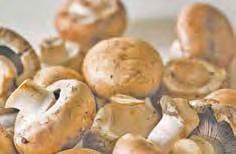
Think mushrooms, garlic, onions, shallots and chives (which belong to
the onion family). This group of foods belongs to the allium vegetable category. They have been connected to lower levels of stomach cancer. Allicin, the active compound in garlic, has antimicrobial and antioxidant effects. Allicin is released when garlic is chopped, crushed or chewed. To maximize your benefit, wait about 10 minutes before cooking garlic to allow the allicin to form.
The polyphenols found in onions have anti-cancer effects on colon cancer cell lines. Onions also contain natural cancer fighters like apigenin, anthocyanin, myricetin, and quercetin. Women who frequently consumed these foods were found to have lower rates of ovarian cancer. Mushrooms are high in vitamin D, which also helps reduce ovarian cancer risk. Add these neutral-coloured foods to your diet at least once a day.
Don't Sabotage Your Diet
With Dangerous Foods
Adding a rainbow of disease-fighting foods to your diet is a good first step. But remember, you must also subtract the harmful foods from your diet as well. Research has shown that some foods can increase your risk of cancer and should be avoided.
Reduce Dairy: Limit it to 10 grams of lactose a day. That's about one cup of milk or one cup of ice cream.
Eliminate Soda: Drink no more than one can of soda a week.
Reduce Alcohol: The American Cancer Society recommends no more than one alcoholic drink per day for women and two drinks for men.
Reduce Processed Meats: Lunch meats, hot dogs, bacon and sausage are high in carcinogens.
Reduce Sodium: Avoid foods high in sodium, especially soy sauce and foods that are canned and packaged.
Where you place your furniture in a room will instantly set the tone for how you'll live in that room. Here are some must-know tips for arranging spaces, whether you're relaxing, watching TV or chatting with friends.
Get Out the Tape Measure
The first step in arranging a space is determining its size. Use a tape measure to get the dimensions of a room. Or, a quick tip: Measure your foot and then walk heel to toe across the room. This is an easy way to estimate the basic size. Then, check the dimensions of the hallways, stairs and door widths leading to the space. This is the eternal challenge for a homeowner, being sure the entrance and egress of the room are large enough for potential purchases.
Mix Furnishings of Various Sizes
Every object has a height, depth and width. To add visual interest to any space, incorporate a variety of furniture with different characteristics. If you're going for a serene, unchallenging area for rest or recovery, keep the furnishing volumes in a room similar. This rustic
and
Guyanese Tennis Rolls
Ingredients: 3 ½ cups all purpose flour 1 tbsp yeast ¾ cup water
Method:
Preheat oven to 375 degrees.
In a large bowl place warm water and sugar then sprinkle yeast on to and let sit for 10 minutes allow the yeast to proof. Add milk, flour, melted butter, lemon zest, vanilla and salt in the mixture with the yeast and mix to form a dough. Knead for 15 minutes. A stand up mixer with the dough hook attachment would be an excellent alternative to hand kneading the dough. Cover bowl with a cloth, set in a warm place and allow to rise for 45 minutes or until the dough has doubled. Remove the dough from the bowl then place on a lightly floured surface. Knead for 2 minutes to form a smooth ball, this shouldn’t take long. Next cut the dough into 12 even pieces then roll each piece into even balls. Let rise for 35 minutes. Place in preheated oven and bake for 20 minutes. Remove from oven and brush with melted butter.
Jamaican Pepper Shrimp
Ingredients:
1 lb jumbo shrimp, with shell but deveined
1 lime
3 cloves crushed garlic
1 big, hot pepper/scotch bonnet pepper
Method: Squeeze ½ of lime over shrimp and rinse. Heat canola oil in a large frying pan over medium heat. Add thyme and pepper, heat for 1 minute. Add garlic and shrimp, stir. Cook for 3 minutes then turn shrimp. Add butter and salt, cook for an additional two minutes. Squeeze the other half of lime over the shrimp and remove from heat. Sprinkle with scallion to garnish.
5 sprigs thyme, finely chopped
1 tbsp butter
Salt to taste
1 tbsp canola oil
1 scallion, finely chopped
GREATEST COOKING TIPS
The fastest way to defrost meat is under a cold running tap. But if you want to save water and speed things up a bit, place your meat on an aluminum sheet tray or skillet. Aluminum is a great conductor of heat and will draw energy from the surrounding environment into your frozen meat much faster than a wooden cutting board or wood or stone countertop. You can cut defrosting times down by about 30 percent this way. It also works on soups, stews, and anything frozen flat.
Slicing meat to grind or cook in a stir-fry can be tricky even with a sharp knife. To make it easier, place the meat in the freezer for 10 to 15 minutes to stiffen it up. Place a wooden spoon over boiling water to keep it from boiling over. The spoon pops a lot of the bubbles once they come into contact with it, and it also absorbs some of the moisture. Apparently, metal spoons don’t work because they heat up too fast.
If you’ve ever taken leftover cake home and went to eat it later, it’s just not the same (kind of gross, actually). The edges are always stale and crumbly after sitting out. Next time, place a few pieces of bread on the outer edges to keep it soft and moist!
HOME HELP
Ran out of toilet cleaner? Grab a soft drink. Pour a can or bottle of coke into your toilet.
Be sure to pour it around the rim so that it covers the whole interior of the bowl. Let the coke sit for 1 hour. For stubborn stains use a toilet scrub brush after the hour is up. Flush the toilet and enjoy the sparkling clean.
Run a stream of three percent hydrogen peroxide over your toothbrushes to disinfect. Be sure to rinse thoroughly in cold water before using the toothbrushes again.
Sprinkle corn starch onto carpet. Allow it to sit for 10-20 minutes before vacuuming. This can work as an all-over treatment or be used to treat specific spots on your carpet. Corn starch is especially good at drawing out oily spots on your carpet. Apply rubbing alcohol to your ink stained clothing and allow to sit for 5 minutes. Rinse through the stained area and wash normally.
If your phone is getting greasy and grimy, try rubbing it down with rubbing alcohol to get it fresh and clean.
Find a rhyme for each word below so you end up with a familiar three-word phrase in the form "__,
There were ten beautiful girls belonging to one family. One day, while they were playing together in the river, the weather being very hot, a strange old man came by. “Dip me up some water, pretty girls,” he croaked, “I am very thirsty.”
“How ugly he is,” giggled the girls, “just like an old frog.” And they fell about laughing, all except one, who was ashamed of her sisters' rudeness. Unfortunately for them, the old man was really a magician, and in a twinkling had turned nine of the girls into tall slender trees, drooping along the river bank. The polite daughter ran crying to her parents and told them what had hap pened.
The grief-stricken parents ran to the river bank with a chopper, and the father tried to chop the nearest tree down, but was horrified when blood oozed from the splintered bark. Three times he tried, but each time the blood ran and he had to stop.
Sorrowfully, the parents sent their only daughter to live in a faraway land for fear of the magician, but they themselves dwell in tears beneath the drooping trees forever. (An African fable)
The Spirit in the Tree
There was once a girl whose mother had died and whose stepmother was very cruel to her.
One day, when she was crying at her mother's grave, she saw that the earth of the grave parted and a stalk came out, which grew into a sapling and soon into a tree. The wind rustled its leaves and the tree whispered to the girl, telling her that her mother was near and that she should eat the fruits of the tree. The girl did and the fruits were very tasty and made her feel much better. This happened every day from then on, but as soon as the cruel stepmother discovered what was happening, she went to her husband, the girl's father, and insisted that he had the tree cut down. The tree lay withering and the girl wept on its maimed trunk for a long time, until she heard a whisper and saw a lump growing up from the trunk. It grew and grew until it was a pumpkin. There was a hole in it, from which leaked a trickle of juice. The girl licked up a few drops and found them very nourishing, but again her stepmother soon found out and, one dark
night, cut the pumpkin off and threw it on the dung heap. Next day the girl wept and wept until she heard a trickling sound and saw a little stream, which whispered, “Drink me, drink me!” She did, and felt much refreshed, but now the stepmother made the girl's father throw sand in the stream and bury it. The girl went back to the grave
Simha, the lion king, had grown old and feeble. Even in such a state, he fought an elephant and sustained deep wounds all over his body. His faithful minister Chaturath, the jackal, was by his side all the time. Since Simha always gave the leftovers of his hunt to Chaturath, his inability to hunt for food and the lack of proper food had rendered Chaturath weak. Chaturath addressed Simha, “My Lord, I have been hungry for days and my dry throat is troubling me, so I can hardly drag myself around. Do something for our food.”
At this Simha said, “Oh, wise one, use your wisdom to trap an animal which I can hunt even in my feeble state.”
Chaturath set out for the nearby village where he spotted Gardabh, the washerman’s donkey.
“Uncle Gardabh, what a sorry state you are in,” said Chaturath. “I see bones sticking out of your body. Are you not well?”
“Dear nephew,” replied Gardabh, “the washerman loads my back with heavy loads and gives me rioting to eat. I am living on this dry grass and thorny bushes.”
“I did not know of your pitiable condition. If you shall come with me I will lead you to a grass field near the forest. The lush green grass there would soon turn you into a vigorous, healthy youth”, the wily jackal enticed Gardabh.
At this Gardabh hesitated and then
agreed. Soon Chaturath played his last card, “What’s more there are three she-donkeys who live in the grass fields. They have grown strong and healthy feeding on the luscious grass and now wish to marry a donkey from the village. So I am here for the same purpose.”
where she cried and cried. She had been sitting there a long time when a man appeared from the bush. He saw the dead tree and decided it was just what he needed to make a bow and arrows, for he was a hunter.
He talked to the girl, who told him that the tree had once grown on her mother's grave. He liked her and decided to go to her father and ask for her hand in marriage. The father consented on condition that the hunter kills a dozen buffalo for the wedding feast. The hunter had never killed more than one buffalo at a time - that was difficult enough. But this time, taking his new bow and arrows, he had not been in the bush long when he saw a herd of a dozen buffalo resting in the shade. Setting one of his new arrows to his bow, he let fly. The first buffalo sank down dead, and the second, and the third. An hour later the hunter came back to tell the father to send men to bring the meat to the village.
There was a big feast when the hunter married the poor girl who had lost her mother. (An African tale)
This was enough to entice Gardabh. He happily followed Chaturath to the forest with dreams of emerald green grass and beautiful brides.
When Simha saw Chaturath guiding Gardabh to him, his hunger could not withstand it. He jumped at Gardabh with full force and haste. His hasty jump made him plunge over the donkey’s back to the other side. Gardabh was terrified at the sound of Simha’s fall and was even more horrified at his looks. He soon ran away leaving Chaturath in a puzzled state.
“My Lord, impatience is no virtue. Now you have scared away a good catch. I will bring him back but please control yourself before you jump.” So saying this Chaturath left for renewed enticement for Gardabh.
On seeing Chaturath, Gardabh, exclaimed, “A fine grass-field you led me to and what was that ferocious and large creature I saw?”
“Oh, that was one of the she-donkeys who has grown healthy eating the
delicious green grass. She had only attempted to embrace you and you ran away in panic. Now she has vowed to marry only you or she will fast till death.”
This time Simha was ready to jump at Gardabh accurately and his sharp claws and teeth killed the foolish donkey immediately.
Having killed Gardabh, Simha felt like having a wash in the nearby stream before settling to a hearty meal. In his absence, Chaturath ate Gardabh’s ears and heart. On his return, Simha was enraged to see the dead donkey with his missing ears and no heart. As he accused Chaturath of partaking of his hunt without his permission, Chaturath said, “My Lord, Gardabh was born with no ears nor any heart. That is why he came here, saw you with his own eyes, ran away in panic yet returned to meet his end.”
Simha was convinced by Chaturath’s argument and proceeded to have his meal. (A tale from India)
Down by the river
The gentle splash of waters dark
Kisses the sides of a river’s tide mark Nudges a canoe up and down
As it bobs and nods like a king with his crown.
Riverside trees bow to its might, Branches underwater and out of sight. Insects creep and crawl along Chirping and calling in an age-old song.
Fishes swim in the waters deep
As hungry birds an eye they keep. Waiting for a careless prey
To be their subject for a meal that day.
Water lilies sway in the breeze all day Silent witnesses to a river’s way. The river moves on
Restlessly
But to me, down by the river, Life goes on peacefully.
Susan Adams
Society of happiness
Who am I?
The transformation has broken a soul again. What is my purpose?
For good, for evil, Unsure, doubt fills the remains. The margin, sadness and happiness from both, But can’t stay there.
Am I important?
Doubt, doubt, doubt, Pushed into a corner that light never shines upon. I hate it, they push me there but so do I, Rejecting me, maybe I like it there, I don’t know.
Who cares?
They say love given and patience is rewarded, But really, is it? When will it be repaid? Time augments the pain, Taking and embracing just what there is, Hatred, alienation, consuming, engulfing, entwining me. But why me?
…Actually I’m better off than quite a lot, Selfish aren’t I?
Thinking about my problems, Letting it take me over.
War is everywhere, and being hurt by twisted minds, The victims of it, deserve not it do they.
I think my path’s been cleared, Problems over, Hatred once again orphaned. Happy am I and soon they shall be free like me, No ditch, no corner or cold room, A new society, one of happiness.
I… I am the one; no we are all the ones, To carve the future of peace, love and unity. … Our chains are finally gone. We are the epitome of what the future should be!
Shane Kapil Rampertab
Leaked details about Apple's HealthKit rollout
Apple is expected to unveil its iPhone 6 and iOS 8 in less than a month, and more details about the signature health care software—Apple’s new HealthKit—are beginning to leak.
For example, Mayo Clinic is testing a service to alert patients when their Apple apps detect abnormal health results, and help schedule them for follow-up visits.
And major health systems like Cleveland Clinic and Kaiser Permanente are currently testing apps in the HealthKit beta, too. (Kaiser also reportedly wants to strike a partnership with Apple.)
When Apple announced its big push into health care this summer, industry watchers expected that this kind of innovation—and these namebrand partnerships—would quickly follow.
AAnd HealthKit, which is a new developer framework that Apple has created for iOS 8, is a “lynchpin” of Apple’s strategy. The software is being positioned as an opportunity for entrepreneurs to take advantage of sensors in the iPhone 6 and the company’s anticipated “iWatch,” which is likely to be unveiled this fall, too.
Apple is counting on HealthKit to help it grab a major foothold in the $9 billion-plus mobile health care market — a business opportunity that company leaders think they have a “moral obligation” to pursue.
Perhaps the most important details are related to Apple’s plan to sync its apps with providers’ electronic health care records: Apple is telling health systems that
HealthKit will soon automatically integrate its data with MyChart, Epic’s personal health record portal that’s used by millions of patients. If it works, that could be transformative for mobile
health strategy. The AppleEpic partnership, which also was announced this summer, brought together two titans in different industries: Epic already commands more than 40% of the hospital EHR mar-
ket, and Apple’s iPhones are roughly as ubiquitous in the smartphone market.
And as Modern Healthcare‘s Darius Tahir has observed, bringing together two market movers could set Apple’s strategy apart from previous, failed attempts to capture health care data, centralize it, and share it with providers. Specifically, if Apple can solve the “data collection problem“—if HealthKit, Epic, and an iWatch sensor can seamlessly integrate—the mobile health market would be dramatically changed, and Apple likely ends up as a hub for health care data. (Excerpted from Forbes)
Apple bans two hazardous chemicals from assembly lines
pple has banned two potentially hazardous chemicals from being used in the final assembly process at 22 of its iPhone and iPad production plants.
Benzene, which is a carcinogen, and n-Hexane, which can cause nerve damage, will no longer be used in cleaning agents or degreasers at the facilities, the firm said.
The move follows a campaign urging the tech giant to scrap the substances.
One campaign group said Apple needed to "look deeper into its supply chain".
Apple's environmental director, Lisa Jackson, announced the commitment in a statement, saying the company launched an investigation after questions were asked about whether the chemicals were used at its factories.
The firm said it found "no evidence of workers' health being put at risk" at any of the 22 plants visited, although four of the facilities were found to have traces of benzene or n-hexane.
As a result, Ms Jackson added: "We've updated our tight restrictions on benzene and n-hexane to explicitly prohibit their use in final assembly processes."
The iPhone maker also released its "regulated substances specification" - the guidelines that govern Apple supply chains, which have previously been confidential.
While benzene and n-hexane are commonly found in many household products, as well as in gasoline and paint thinners, prolonged exposure to the chemicals can cause
ByTe
iPin turns your phone into a laser pointer
Plugging neatly into your smartphone headphone jack, the iPin is a supercompact laser pointer compatible with iPhone and Android phones that comes with a handy presentation control app and is designed to ensure you're always presentation-ready.
The iPin is a nifty little gadget that plugs into your headphone jack and draws as much power as a pair of headphones to fire up its laser pointer. It also comes with presentation software that gives you touch screen control of your presentations, whether it be via swipe motions to switch slides, or by operating a remote mouse pointer.
iPin also ships with a little clip to attach the device to your regular headphone cable when you're not using it, which is a nice touch. (Gizmag)
adverse health effects.
'Widespread disregard'
The 22 sites concerned, most of which are located in China, collectively employ nearly 500,000 people.
However they represent only the "first tier" of Apple suppliers, as there are hundreds of smaller firms that also work on the firm's products in the country.
China Labor Watch, the New York-based non-profit organisation which campaigns for Apple to improve its safety standards, told the BBC it welcomed the commitment, but emphasised that the true test would be in its implementation.
Executive director Li Quang said: "Apple has for years had commitments to labour standards like working hours, overtime wages and temporary worker regulations, but there is often widespread disregarding of these codes of conduct."
Mr Li added he was also concerned about "Apple's ability to monitor whether implementation is taking place".
In a statement on its website, environmental campaign group Green America urged Apple to go further to ensure the safety of workers in its supply chain.
"Beyond benzene and n-hexane, there are thousands of chemicals used in the manufacturing of electronics - some of which are largely untested - and many chemicals used by Apple suppliers remain undisclosed," it said.
The charity added that Apple needed to "look deeper into its supply chain, to the second and third tier suppliers, where chemical usage and safety procedures are less controlled". (BBC)
Sweat-powered battery could charge your phone
Asweaty gym workout is not only good for your health - it could also energise your phone.
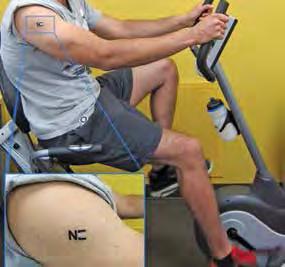
A tattoo that produces power from perspiration has been unveiled at the American Chemical Society meeting.
The biobattery is fuelled by lactate - which is naturally present in sweat after vigorous exercise.
It could soon power heart monitors, digital watches and eventually even smartphones, say scientists in California.
The dream of "people power"- using the body to charge portable electronic gadgets - has inspired many innovative approaches.
Some harness movement - via piezoelectricswhile others use blood to power implanted biofuel cells.
"Our device is the first to use sweat. It's a proof of concept," said Dr Wenzhao Jia of at the University of California, San Diego, who gave details of her method in the journal Angewandte Chemie.
"At the moment the power is not that high - only four microwatts. But we are working on enhancing it so it can power small electronic devices."
Interestingly, her team did not set out to build a biobattery. Their aim was to make a wearable monitor for lactate.
Athletes in training measure their lactate levels to evaluate their work-rate and fitness.
But monitoring it can be inconvenient as it typically relies on taking blood samples.
To develop a faster, more comfortable test, Dr Jia printed a lactate sensor onto temporary tattoo paper.
"I've worn it myself - you don't even feel it. It really is like a tattoo," she told BBC News.
"It's not just for athletes. Most people who exercise want to know how they can improve their workout.
"We can measure our heart rate - but if you combine that physical feedback with chemical data you get a much more comprehensive view of your exercise status."
Her team then went a step further, turning the sensor into a sweat-powered biobattery.
They incorporated an enzyme that strips electrons from lactate, generating a weak electrical current.
When volunteers on an exercise bike wore the tattoo, they were able to generate up to 70 microwatts per sq cm of skin.
Interestingly, people who were less fit produced the most power. While those who exercise most (more than three times per week) produced the least.
"We think that's because less fit people become fatigued sooner, so they form more lactate," Dr Jia explained.
"A fit person is going to have to work out much harder to power the battery."
Her lab has partnered with a start-up company to develop the product.
Next steps include linking the tattoo to portable gadgets, and adding a way to store the generated current - by integrating a device such as capacitor.
But the main challenge is to ramp up the power. More than double the current value would be needed for a digital watch - 10 microwatts.
"It's a challenge because our electrodes are only very small - just 2x3mm," said Dr Jia.
One route is to make the device more sensitive to lactate.
Another is to incorporate several biofuel cells - connected in serial or parallel.
But why use the body at all? Why not simply miniaturise conventional batteries and make them wearable?
"Because biobatteries offer certain other advantages," explained Dr Jia.
"They recharge more quickly. They are safer as there is no risk they will explode or leak toxic chemicals.
"And they use a renewable energy source. You." (BBC)
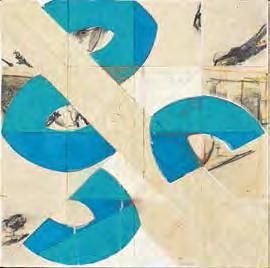
Born in Guyana, artist Siddiq Khan’s family moved to Canada where he grew up. His artistic career began at an early age when he convinced his parents to buy him a paintby-numbers kit. By 12 years of age he got a permit to sell his works at the National Arts Centre in Ottawa in order to buy more kits. Before arriving in Santa Fe in the US 12 years ago, Siddiq spent time in the interior of British Columbia and
Austin, TX.
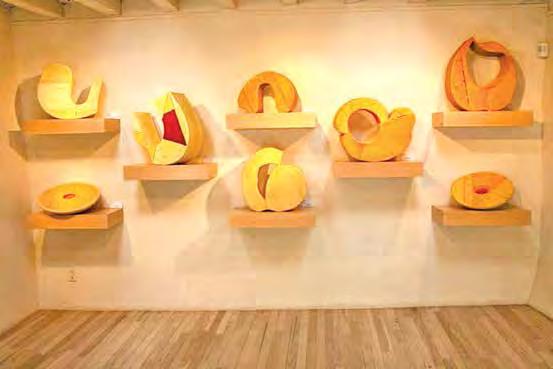
In addition to mixed media works, Siddiq is also a sculptor and teaches a ceramics class at St. John’s College. He enjoys teaching because it allows him to observe and become more aware of his own process by having to verbalize techniques. Initially he took a ceramics class to get more physical with his work and to see how far he could push the medium. He utilizes ceramics in order to create a combi-
nation of painting and sculpture. The ceramic works are constructed on their sides so he never knows where their balancing points will be until they are completed. For him the process is much like drawing –but in clay. He has loose ideas about what he will make but by moving line around, the works come together organically, especially because he completes them all in one day. They take about one month to dry and then he fires them three or four times, adding colour and lines with each subsequent fire. It has taken him six to seven years to get to where he wants to be. He has moved from table top works to larger scale pieces made of wood. He uses the wood in the same manner in which he uses slabs of clay.
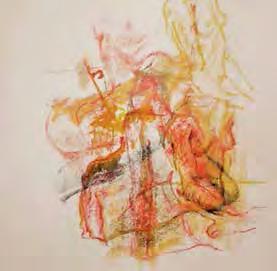
Siddiq’s mixed media works are also explorations in line. He begins by attending a live model drawing class once a week. Using charcoal, oil pastel and conté crayon, he draws overlapping images and figures. These drawings in and of themselves are wonderful. But they are not studies for larger works, nor are they completed works themselves. They become part of the fabric of Siddiq’s larger works on canvas. He tears these drawings up, deconstructing the body into separate entities that are sometimes barely discernable.
Though he does not have a regular routine for working, he estimates that he works in 2-3 hour stints with periodic breaks every day. It is a way of life and he loves the organic process and the
chance elements that occur as a result. For him the most important thing is to keep doing the work. He is not trying to create something in order to sell it. He
has been successful and had a market for his works because he is a wonderful person and is very interesting to talk to. He loves meeting people, and if they are gal-
lerists or collectors – that is great, but building relationships with people is really what is important to Siddiq. (Information from www.accessibleartny.com)
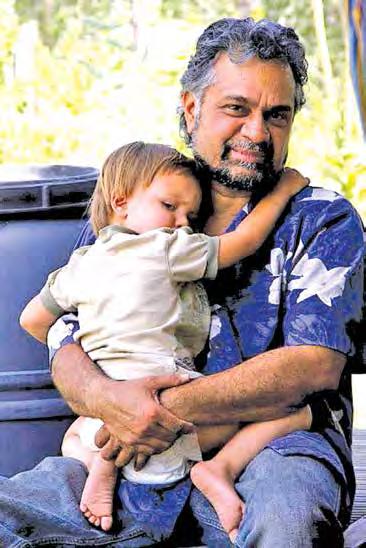
guyanese artist siddiq Khan and his son
siddiq's ceramic artworks
Live model drawing
Mixed media
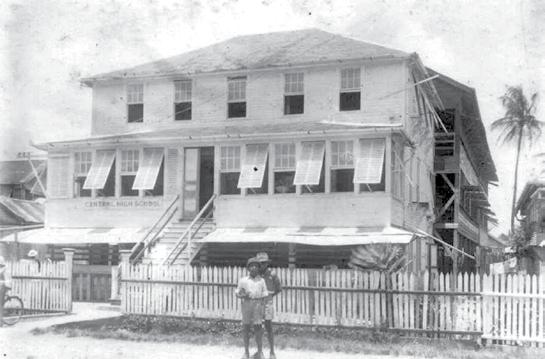
Central High School was founded around 1928. However, it is likely that its founder, Joseph Clement Luck or J C Luck as he has come to be known, had been experimenting with the idea for some years previously.
J C attended Queen’s College during the early beginnings of that fine secondary institution and, in 1947, earned a Bachelor of Arts Degree from London.
Following graduation, he became an entrepreneur
who tried his hand at farming, shop keeping, gold digging and rice milling but success did not come until he decided to start his own high school.
Many of us born after the 1920's had little idea of what constituted an education for the masses at the beginning of the twentieth century in Guyana. The churches took the lead in establishing primary schools in the areas where they had established congregations in the three counties and primary education became available to all.
Secondary education was a different matter. It was available only to the privileged who could afford the cost of attending a high school. Later, some scholarships made it possible for a few of the brightest of the bright to gain a secondary education.
In the early years only the capital city, Georgetown, had secondary schools. The government established Queen’s College for boys and the Roman Catholic Church followed with St. Stanislaus
College for boys, and two convents, which admitted girls, while the Anglican congregation founded the Bishop's High School for girls.
To that point in history, Demerara county was taken care of. However, because of the distances between counties, the population in Berbice and Essequibo were disadvantaged and had no secondary schools. Children had to be sent to Georgetown if they qualified for access to one of the high
schools there. Eventually, the Presbyterian Mission in Berbice established the Berbice High, a co-ed school in New Amsterdam, the capital of Berbice County. Essequibo on the other hand, was without secondary education for many years.
As time went on, the above-mentioned schools could not accommodate the increasing demand for a secondary education. It should be remembered that graduation from high school with a senior Cambridge certif-
icate was the key to a civil service job. That provided the opportunity for the establishment of privately operated post-primary schools. The challenge that such schools faced was to provide a sound education at a cost that the majority of working parents could afford. That meant that the founders had to bear the capital costs of buildings and equipment, staff salaries, and other incidentals. Their only source of revenue being tuition fees which had to be low enough so that parents could pay.
From available accounts, as founder and headmaster of Central High School, J C started with 35 students and built his school with the help of those students.
Those who took part in the project earned tuition free spaces in return for their work making benches, desks, blackboards, etc.
That concept of a work-study education was perhaps unheard of in those days. Many students also gained free tuition if they showed promise of having outstanding scho-
lastic ability. Central encouraged extra-curricular activities such as shorthand, typing and adult education. Recreational activities for its students included cricket, football and table tennis.
The school grew to become the largest private educational in Guyana with a few hundred students and providing both primary and secondary education. Those were the circumstances under which Central High was born.
Central High, first built and operated under private management, is proud of its contribution to Guyana and salutes its many graduates and attendees who have served not only their mother country but given their service in many parts of the world.
The Luck family has always been at the forefront of education in Guyana and in subsequent years, his children have gone on to head the institution, most notably son Rudy and daughter Stella (Low). (www.chaagtoronto.com)
Bourda Market, georgetown, British guiana (n.d.)
Water street looking south, georgetown, Demerara, British guiana, circa 1910
J C Luck, founder of Central High school
Original wooden school built on the same land where it stands today
Central High today
Lethem
The expanding town of Lethem lies on the Takutu River, which forms the border with Brazil, opposite the Brazilian town of Bonfim. It is the main commercial centre of the Rupununi in Region Nine. It is also the largest town and the administrative centre of the Rupununi region, and includes a hospital, a police station, an army camp, a
telecommunications station, schools, guesthouses, restaurants and stores. The indigenous population comprises mainly Macushi and Wapishana tribes. Taking a bus from Georgetown to Lethem can be rough but adventurous. Along the way you may be lucky to see a jaguar. It takes approximately fourteen to sixteen hours to arrive in Lethem via bus
but it is definitely worth the travel. Stops along the way include Mabura Hill, the Kurupukari pontoon crossing, the Iwokrama Rainforest with its Canopy Walkway and Annai. At Lethem you can enjoy observing the skills of rounding up cattle by the vaqueros, or cowboys, on the ranches, hike or relax at the different welcoming accommodations available.
Lethem market thatch roof home
serene view on Lethem's road tourists can relax under the coconut trees
Kurupukari pontoon crossing
Living among the mountains and hills
takutu River bridge
B y S heila M o SS
You know when your doctor refers you to an orthopedic surgeon it is only for one thing. I must have been mentally blocking out the word.
I put it off as long as I could but my arm and neck were hurting, and so I finally relented and made the appointment. "You need to see the arm specialist," said the appointment clerk, who apparently had a medical degree. "Your doctor only does necks and backs."
"I think the pain is coming from my neck," I said, and then I played my trump, "I was referred to him by my medical doctor."
I guess she didn't want to match her degree against that of a real doctor, so she made the appointment. When I arrived, however, it was a doctor's assistant who saw me. After questions, x-rays, and tapping my joints with a rubber mallet, she decided that I needed an MRI before seeing the real doctor.
I call an MRI the chamber of horrors. Needless to say, I've been in that machine before. I went to the appointment and dutifully allowed the technician to zap me like a wiener in the microwave.
The doctor's office didn't call me back, which was a good excuse not to follow up. Eventually, however, pain again drove me to make an appointment. Maybe this time I would actually see a doctor. The nurse came in and pulled up my MRI on the screen of a monitor. I waited for an eternity and finally the elusive orthopedist appeared.
He went straight to the monitor with the MRI like a moth to the light. Then he proceeded to explain what was wrong, sparing
no details. I felt a little dizzy as he pointed out my all too obvious bone deficiencies and explained all the screws, saws, plates and bolts it would require to fix me.
"You don't have any choice, you have to have surgery." Oh, yeah, and you might have to chain me to the operating table, I thought. "Your neck is about as bad as it can get."
He went on and on telling me about the danger of operating so close to my spinal cord and what might happen without surgery. Even though the nurse had her back toward me as she took notes, I could see her cringe. I wonder if anyone ever fainted before or if I would be the first.
I really didn't want to know what he was going to do it or how he was going to do. When I fly on an airplane, I do not want to know how high we are going to fly, what our speed will be, or what we are flying over. I just want to know that we will end up landing safely in the city
printed on the ticket.
He went on to tell me that it would actually require two operations to fix me, one from the back and one from the front. I imagined him flipping me over on the operating table like a pancake. He explained how he had been in practice for over 20 years. In fact, he had written papers and taught this procedure to medical students.
"That's good." I said. Really, really good, I thought.
"The hard part will be getting your insurance to approve it." He then told me about another patient whose insurance would not approve surgery until he finally showed up in the emergency room unable to walk. I didn't want to hear that either.
"How long will I be in the hospital?" I asked.
"Three days."
He is going to cut off my head and reattach it and I will be in the hospital only three days? Well, maybe it will not be so bad after all. I just hope it gets it back on frontwards.
DIY vegetables
My wife asked me to buy organic vegetables from the market. I went and looked around and couldn't find any.
So I grabbed an old, tired looking employee and said, "These vegetables are for my wife. Have they been sprayed with any poisonous chemicals?"
The produce guy looked at me and said, "No. You'll have to do that yourself."
Not my tooth
A man and his wife entered the dentist's office.
"I want a tooth pulled", the man said. "We are in a big hurry, so let us not fool around with gas or Novocain or any of that stuff."
"You are a very brave man," remarked the dentist. "Which tooth is it?"
"Show him your bad tooth, honey," the man turned to his wife and said.
The perfect shot
A guy stood over his tee shot for what seemed an eternity, looking up, looking down; measuring the distance, figuring the wind direction and speed – driving his partner crazy.
Finally his exasperated partner says, "What is taking so long? Hit the ball!"
The guy answers, "My wife is up there watching me from the clubhouse. I want to make this a perfect shot."
"Give me a break! You don't stand a snowball's chance in hell of hitting her from here."
ID please!
A young guy went into a bank to withdraw some money.
For security purposes the cashier asked him if he could identify himself.
He opened his wallet and took out a small mirror, looked into it and said, "Yes, it's me all right."
The game
A lawyer and a pretty girl are sitting next to each other on a long flight. The lawyer leans over to her and asks if she would like to play a fun game.
The girl just wants to take a nap, so she politely declines and rolls over to the window to catch a few winks.
The lawyer persists and explains that the game is really easy and a lot of fun. He explains" I ask you a question, and if you don't know the answer, you pay me $5, and vice-versa."
Again, she politely declines and tries to get some sleep.
The lawyer, figuring that he will easily win the game, says, "Okay, if you don't know the answer you pay me $5, and if I don't know the answer, I will pay you $500!"
This catches the girl’s attention and she agrees to the game.
The lawyer asks the first question. "What's the distance from the earth to the moon?"
The girl doesn't say a word, reaches in to her purse, pulls out a five dollar bill and hands it to the lawyer.
Now, it's her turn. She asks the lawyer: "What goes up a hill with three legs, and comes down with four?"
The lawyer looks at her with a puzzled look. He takes out his laptop computer and searches all his references. He taps into the Airphone with his modem and searches the Net and the Library of Congress.
Frustrated, he sends E-mails to all his co-workers and friends; all to no avail.
After over an hour, he wakes the girl and hands her $500. She politely takes the $500 and turns away to get back to sleep.
The lawyer, who is more than a little miffed, wakes her up again and asks, "Well, so what IS the answer!?"
Without a word, the girl reaches into her purse, hands the lawyer $5, and goes back to sleep.
You’ve got mail
A woman was in her front yard, moving her lawnmower when her neighbour came out of her house and went straight to the mailbox. She opened it then slammed it shut and stormed back in the house.
A little while later, she came out and again she checked her mailbox and angrily stormed back into her house.
As the woman was getting ready to mow the lawn...she came out again, marched to the mailbox, opened it and slammed it closed.
Puzzled by her actions the woman asked her "Is something wrong?"
To which she replied, "There certainly is! My stupid computer keeps saying "YOU'VE GOT MAIL!"
Divine authority
A speeding motorist was caught by radar from a police helicopter in the sky. An officer pulled him over and began to issue a traffic ticket.
"How did you know I was speeding?" the frustrated driver asked.
The police officer pointed sombrely towards the sky.
"You mean," asked the motorist, "that even He is against me?"
This is the entrance sign of Misery, a small village in northern France