



Opposition votes down $109M funding for Specialty Hospital
Four hurt in collision at Camp and Quamina Streets



friday, april 11, 2014| guyanatimesgy.com
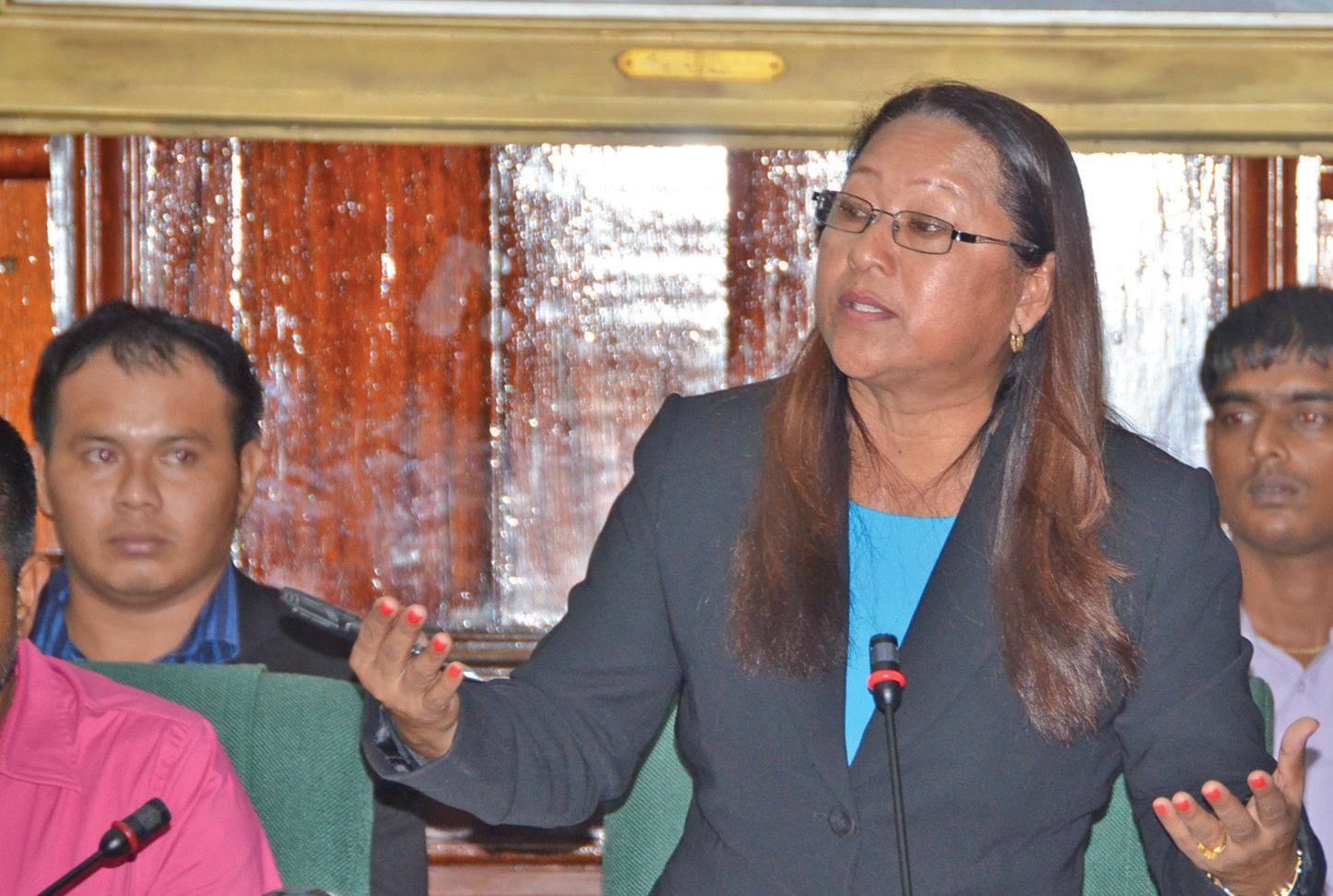
With some $35.6 million spent to pay teachers who had already exited the system between 2006-2011, Education Minister Priya Manikchand was on Wednesday night grilled as to what measure she has put in place to stop the bleeding of funds when the $32.3 billion allocated to the sector was scrutinised by the Committee of Supply.
A Partnership for National Unity (APNU) Member of Parliament (MP) Volda Lawrence said the Education Ministry is expending millions of dollars in overpayment to persons; many of whom would have left the education system.
She questioned what measures the Ministry has in place to stem the “consistent haemorrhage of salaries being paid to persons who many times would have left the institution”.
Manickchand acknowl-
edged the problem, pointing out that the situation obviously was a huge issue in the past. However, she said her Ministry has put measures in place to address the problem.
“Essentially what happens is that a teacher leaves a job and we are notified three months later that the teacher is no longer on the job, but salary keeps going into the bank.”
Let down
Manickchand said that one would expect that in such cases, “human decency” would dictate that they would return the money, however, based on the Auditor General’s report, the “country was let down”.
She noted that the Ministry had written to some of these individuals, and some had returned and repaid the money.
MP Lawrence also point-

ed out that a number of people, after getting away with the misdeed, still turn up and receive full payment for monies owed to them, including gratuity, while no deductions are made.
Other areas of interest by the Opposition included the increase in subvention grant.
Minister Manickchand explained that the increase was to cater for the more than 183,000 students, who will each for the first time receive a cash grant of $10,000.
APNU’s Shadow Finance Minister Carl Greenidge questioned the increase in monies allocated to training and scholarships, which rose significantly to $30 million this year.
He questioned whether the criteria for this area were revised. Manickchand explained that because of the high costs for text books, the Ministry has embarked on writing text books for Guyanese children. These include the Roraima readers for the nursery level and the Atlantic reader for the primary school level. These publications, she explained, are on par with international standards. She said because it is a completely new venture, teachers will have to be

trained.
Shadow Education Minister Amna Ally questioned the $18.5 million for the purchase of vehicles. Manickchand said the Ministry has catered for the purchase of four new vehicles: a motor vehicle for the Deputy Chief Education Officer (Administration) for $3.5 million, a 14-seater minibus for the Inspectorate Unit, another minibus for the Assistant Chief Education Officer (Technical) and another 15-seater minibus for the Guidance Unit.
Under current expenditure, Minister Manickchand defended the $3 million increase in subvention for security services. She explained that the security services were directed primarily to the Allied Arts Unit, the Cyril Potter College of Education and the National Centre for Educational Resources Development (NCERD).
Questions were also posed about the Learning Channel which reaches
children across Guyana. Manickchand said because of the technological intricacies of the programme, Government was able to source Television Guyana, the only television station in Guyana that is capable of broadcasting the programme.
“There remains only one provider in Guyana that would uplink and downlink the programmes. There was a contract that was entered into Television Guyana on December 14, 2010 and was for a five-year period.”
The Alliance For Change (AFC) Members of Parliament (MP) also raised concerns on sections on the budget, including monies allocated for the building and repairs of buildings, monies tallied for increased utility charges, allocation for security, increase in funds for administration and clarification on the availability of funds allocated to programmes for children with special needs.
The multibillion-dollar allocation eventually received a unanimous no-objection.
The World Bank said the Caribbean and Latin American economies have been holding steady, despite tighter external conditions.
On Wednesday, the Washington-based financial institution said while international investors shift their focus back to advanced economies, particularly the U.S., as a result of monetary policy normalisation, emerging economies face much tighter financial conditions.
But it said that the impact of this reversal in capital flows is less significant for Latin America and the Caribbean “thanks to its new reliance on more stable international flows”.
According to the latest semi-annual report by the World Bank’s Office of the Chief Economist for the region, during the past decade, Foreign Direct Investment (FDI) and remittances have come to represent a “far larger share of net flows into the region than the more volatile non-FDI flows”.
The report, “International Flows to Latin America: Rocking the Boat?” finds that these more stable flows, combined with the region’s improved macroeconomic and financial policy frameworks, give much of the region a “much better capacity to absorb external shocks”.
“In another clear break with history, the region has rebalanced its sources of financing away from portfolio and bank credit flows and towards FDI and remittances,” said World Bank’s Chief
Economist for the region, Augusto de la Torre.
“This is part of a deeper restructuring away from debt and towards equity of the region’s asset-liability position, vis-à-vis the rest or the world,” he added.
“Partly because of this, we believe that international financial turbulence won’t cause the type of domestic crises it used to cause in the past.”
This good news does not allay concerns, however, over the region’s current slow growth pattern, the World Bank said. According to the report, external factors, particularly lower prices of industrial metals, and increased uncertainty over China’s growth are taking a toll on the region’s growth, which is expected to be at 2.3 per cent for 2014.
The report also warned that countries in the region that rely heavily on remittances face even more daunting challenges. To start with, the report urged that they focus on innovative policies to encourage households to use at least part of their remittance income toward asset building – particularly through investments in health, education, and housing.
It has been recommended that those countries put a premium on the “hard task of continuously improving their domestic enabling environments to attract both their own workers and FDI, and then harness the productivity benefits of the efficient interaction between the two”.








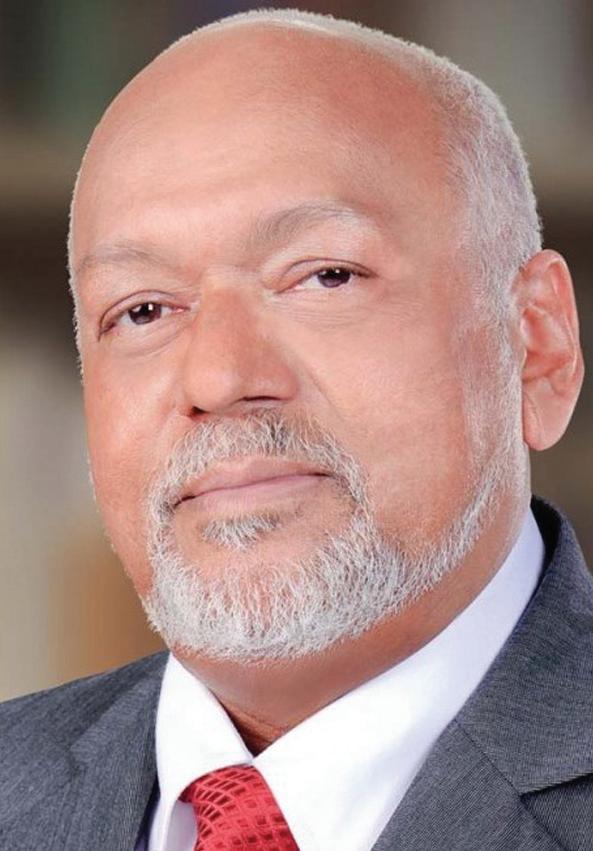
President Donald Ramotar rubbished comments by Opposition Leader David Granger that Guyana’s economy is driven by the narcotics trade, saying that his argument lacks merit. “Granger and the Opposition should apologise to the people of Guyana,” President Ramotar said during an interview at his office on Thursday.
The country’s economy is projected to expand by 5.6 per cent this year, with the non-sugar economy projected to grow by 5.2 per cent. In 2013, the economy recorded its eighth consecutive year of growth with real Gross Domestic Product (GDP) expanding by 5.2 per cent and non-sugar GDP growing by 6.3 per cent.
Drug money
Offended by the utterances of the Leader of A Partnership for National Unity (APNU) in the National Assembly, the President questioned whether Granger, a retired Brigadier and former army chief, was accusing thousands of rice farmers and sugar workers of indulging in illegal activities.
“The Opposition has been making these general statements without any evidence to substantiate. I would like him (Granger) to point out in any one of the line items, where the drug money is that is driving the economy,” he lamented.
President Ramotar pointed out that the rice industry has injected a whopping $40 billion into the country’s economy, with sugar also being a substantial contributor. It was explained that the wage bill for sugar workers attached to the Guyana Agricultural and General Workers’ Union (GAWU) and National Association of Agricultural, Commercial
and Industrial Employees (NAACIE) totals some $20 billion annually. “So is he calling rice farmers drug people? Is that narco money, where is the narco money in that?” the Head of State asked.
Big insult
According to the President, in 2013, entities within the tourism industry spent approximately $35 billion, while the gold industry pumped $120 billion into the economy.
Individual homeowners spent $50 billion and $100 billion was invested by private housing developers who pumped their finances into the development of housing schemes in Guyana.
“I think it is a big insult to all the people of our country, there are a lot of people working extremely hard in order to promote and develop themselves and develop the country,” President Ramotar said. “Let him point to which business he knows that is narco driven,” he declared.
According to the President, the Opposition is painting a bad image of the country and should desist from doing such. He said this recent attack on innocent people and the country’s economy is chasing away investors.
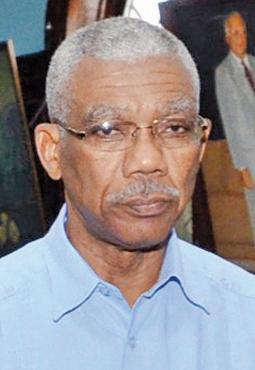
During the budget debate on Tuesday, the Opposition Leader told the House that Guyana was faced with a public security crisis where “narco-trafficking is the engine of growth that is driving the country’s economy”. Granger said this has helped fuel high rates of money-laundering, gun-running, execution murders and armed robberies. “Violent crime is scaring foreign investors, driving away the educated elite, undermining economic growth, and impeding social development,” he told the House.
Questioned about his overall assessment of the 2014 Budget Debate, President Ramotar said he was pleased despite moves by the Opposition to discredit the Government. According to him, the People’s Progressive Party/ Civic (PPP/C) Members of Parliament did extremely well.
“I think they have given a complete picture of the work in the various sectors of the economy, all of their speeches were full of content and a lot of information was provided to the nation as a whole.”
On the other hand, he said, though a few Opposition members made valid points, it was diffi-
cult for the majority of the Opposition to attack the budget or criticise it, because the estimates were well put together and spoke to the needs of the Guyanese populace.
“They had a very difficult task, because all the measures were carefully thought out and so it degenerated into a lot of personal attacks and throwing nasty remarks,” he said, alluding to the Opposition’s general attitude during the debate.
He said too that APNU and the Alliance For Change (AFC) objected to several components of the budget, simply because they are the Opposition. “Clearly, they seem to be opposing for opposition sake.”
Human face
Citing the $10,000 grant being provided to every child of the public education system, Ramotar said the PPP Administration has presented a budget with a human face, pointing also to the increase in Old Age Pension and the provision of electricity subsidies. “How then can the Opposition say the budget does not have a human face?”
The Old Age Pension has been increased by a five per cent effective May 1. Rather than receiving $12,500, pensioners will now be getting $13,125 monthly. This increase would result in a total of $212.5 million in disposable income being placed into the hands of 42,500 senior citizens, bringing Guyana’s total Old Age Pension bill to a whopping $6.6 billion.
In addition to the Old Age Pension, the Government has increased financial support to assist pensioners in the payment of their electricity bills and Guyana Water Incorporated (GWI) bills, which cost in excess of $200 million annually.



Editor: Nigel Williams
Tel: 225-5128, 231-0397, 226-9921, 226-2102, 223-7230 or 223-7231. Fax: 225-5134
Mailing address: 238 Camp & Quamina Streets, Georgetown
Email: news@guyanatimesgy.com, sales@guyanatimesgy.com
There have been voices raised at the level of discord exhibited by our politicians in almost every sitting in Parliament – not least being during the present budget debate.
One would have thought that with all the rules crafted and traditions evolved during the centuries since 1236 to ensure the “parler” (event to have a discussion) was successful, it is obvious that we still have not acquired the knack to “parley”. Why is this so?
At the root is the refusal of the members of the Opposition to concede that Parliament worked in England and other areas because of the insistence that the rule of law and of the traditions that grew up around the operations of those rules must be upheld.
The rule of law insists that once the law is passed, it must apply to everyone, without fear or favour. But the Opposition insists that because they have a majority in the Assembly, they can run roughshod over the law. It is not surprising this has raised the hackles of the Executive.
Take for instance, the events following the last elections. According to the Constitution, which definitively established the rules for securing the Executive, the People’s Progressive Party/C (PPP/C) won decisively. They needed a plurality of seats – that is, the largest bloc of seats among the parties contesting the elections – and this they secured.
The rule of law declared that they were the legitimate and authoritative entity controlling the Executive Branch of Government.
But how did the Opposition react? They introduced a new term into the Guyanese lexicon: “minority government”. This was specifically intended to suggest that the Government was somehow illegitimate.
What was the point of contrasting the Government with their combined majority of seats in Parliament? By the rules and operation of the highest law of the land, encapsulated in the Constitution, that majority made them control the legislative process – not the Executive functions of the Government.
The traditions of Parliament demanded that if a government is re-elected, which the PPP/C was, the previous Speaker would be invited to return to his chair. This tradition was not only abrogated but the Opposition demanded – and secured through their one-seat majority –the Speaker’s Chair and the Deputy’s. This arrangement of locking out a government from the running of Parliament is unprecedented in the annals of Parliament.
In contrast to the Executive President creating a mechanism through the “Tripartite Talks Initiative” (TTI) for the parliamentary parties to amicably address their differences outside of the bully-pulpit of the Parliamentary floor, the Opposition abandoned any “parley” inside or outside of Parliament to take to the streets in violent protests against an initiative of the Government to have a more egalitarian policy controlling the electricity tariffs of the country.
Even the Commission of Inquiry to investigate the deaths caused by those protests castigated Opposition members of Parliament for callously breaking the laws of the country and encouraging ordinary citizens to do the same. Such behaviour has an inevitable cascading effect when it comes to the polarisation of the society and its decent into rancour and bitterness.
But the most damaging blow to any hope that the rule of law and tradition would rise to the fore was given right in Parliament. During the first two budget presentations, the Opposition had firstly insisted they must have a role in crafting the budget that is presented by the Executive and secondly, that they should be able to cut that budget as they see fit.
And in each instance, the courts, the arbiter of the Constitution, has ruled that this action was violative of the Constitution. But today, as “the cock crows for the third time”, the Speaker of the Assembly, an “interested” party in the courts’ ruling, is now declaring that he will disregard the courts.
Is this the end of the rule of law in Guyana? The Government must draw a line.

Dear Editor,
The PPP/C needs to examine itself carefully if they are ever to be a commodity to win the next election. The reason for me saying this is that the party seems to be casual, too casual for my liking, in the way they are approaching this very important hallmark of our democracy.
It was their failure to take heed of the bumps in the road the root cause for their minority position in parliament today. These failures are still very visible and evident in the constituencies the ruling party holds sway and may I add very little is done to erase it.
Failure to fix things, I am talking about seemingly small and insignificant things like fixing the roads,
bridges, the mounting of electricity and telecommunication works, drainage and irrigation − things that would make life a bit more comfortable for the common man. We are not asking for “golden jaguars” but the simple things that make life worth living.
To press home my point I make mention of an incident that took place during the visit of the PPP/C entourage at its Congress held in Berbice.
I was reliably informed that the touring party was exempt from the paying of tolls at the Berbice Bridge. This is outrageous! Where did that order of not to pay come from?
Ordinary Berbicians see this as a slap in their face when they can be burdened with the task of paying a toll all year round, and now you
have individuals just for a short period of time being given a free ride.
The PPP/C touring party has the ability to pay (many times over) they should have been the first to pay their toll, cameras and all taking pictures of them doing so.
This would have shown that the party is in solidarity with the people of this regionwe speak a common language we pay our toll, we pay our fair share of it. But this was not to be, what we see is that lofty arrogant approach of letting them through because they are VIP’s but the ordinary poor “insignificant man” never mind him he should pay - this is the message the people get loud and clear and it angers them.
It is all that Dr Jagan
would not stand for a party in government far removed from the grassroots people. And the greater part of this contempt is the fervour and enthusiasm they bring at election time when they come demanding your votes.
If you cannot treat me right, that is, make me have the self worth that I am important, very important to you, then why the hyperactivity at election time? Why ask me for my vote? Outrageous!
The point I am making is this careless flippant attitude has to stop, now, before it is too late and I am calling on party stalwarts to bring this message forcibly home to the urban populaation.
Sincerely, Neil
Adams
Dear Editor,
I read Carl Parker’s letter in another section of the press in relation to the issue of payment of salaries to Rupununi teachers and public servants. Having nothing constructive and productive to do, he writes lots of trash against the Government just to have cheap publicity.
This is his agenda in the Rupununi, which has absolutely nothing to do with contributing to the development of Region Nine as a Regional Councillor.
In relation to the teachers of the Rupununi, public
servants and retired public servants have to now access their salaries and pensions through the banking system at Lethem.
Simply, this is to ensure the security of payrolls and the avoidance of huge amounts of cash in the form of monthly salaries and pensions being transported to the various communities covering long distances which would attract bandits or criminals.
In this regard, it must be noted that not so long ago the accounting section of the Regional Democratic Council (RDC) office at Lethem was
robbed by criminals where the security guard on duty was killed.
Is Parker not aware about this? What hypocrisy! As a Regional Councillor in Rupununi, he should be happy that the residents’ financial resources are now secured at the banks in Lethem.
Both the regional officials and the Ministry of Education must have planned and put arrangements in place just in the event communities are having any difficulty reaching the bank and, moreso, the weather situation must have engaged the attention of the
planners. So the Government through its regional officials and the Ministry of Education must be complimented for taking the necessary steps at ensuring that Region Nine money for salaries is secure. This is just an indicator that the Government has the masses at heart particularly the Amerindians of Guyana who were neglected and abandoned by the illegal PNC Government prior to 1992.
Yours sincerely Peter Persaud
You can send your letters with pictures to: Guyana Times, 238 Camp & Quamina Streets, Georgetown, Guyana or letters@guyanatimesgy.com
Dear Editor,
The biblical story of Noah is a tale that has inspired faith in many for thousands of years and continues to be an epic tale that has now made it onto the silver screen. Many have grown up hearing the tales of Noah’s Ark, including people of various other religions outside of the Abrahamic religions such as Hindus.
We live in western societies where there is more Christian influence and stories being felt and portrayed but, where did Noah’s Ark originate? There are several learning-type channels that we watch daily and they’ve investigated the story of Noah showing how religions across the world share the story of the Great Deluge from the Native Americans to Greece and Egypt but, its oldest origin comes from India, the Matsya Purana. The Puranas are so ancient that the word Purana means ancient.
In the Matsya Purana, Lord Vishnu assumes the form of the first of 10 major avatars; the fish Matsya. Matsya warns a man called Manu of an impending catastrophic flood that will engulf the world. He tells Manu to gather the grain of every type of seed and even every type of living creature.
When the flood arrives Manu boards the ark with seven sages and Matsya pulls them to safety to the top of the Himalayas, which would make logical sense, that the first land to be seen, would be the highest peak in the world if a great flood submerged the Earth and then subsided.
Manu disembarks from the ark and then sets about performing Vedic rituals to thank the gods. He then becomes the progenitor of humanity and is regarded as the first man. In fact, the Sanskrit word Manu gives rise to the English for man.
This story does not stand on its own coming from Hindu influence. In fact, there are many stories from across the globe having their oldest origins whether by contact, trade, migration or some other form, directly or indirectly coming out of Hindu scriptures.
Since we just celebrated Holi, one other great example would be the story of Prahalad, another Puranic story told across temples in Guyana and Trinidad during Phagwah.
Prahalad was the son of King Hiranyakashipu and a great devotee of Lord Vishnu. His father commanded that the boy worship him as god but, Prahalad refused and so the King grew angry. He wanted to kill Prahalad and made several failed attempts.
Finally the King’s sister Holika suggested that Prahalad should sit on her lap in a great pyre and he would burn to death since she could not be killed by fire. Prahalad prayed to Lord Vishnu to save him and Holika burned in-
stead and he was saved.
A similar story occurs in the Old Testament when three young Jews Shadrach, Meshach and Abednego are forced to pray to a statue commissioned by King Nebuchadnezzar in Babylon. When the young men refuse, the King orders that a great fire be lit and have them burned. They prayed to the God of the Jews and were saved.
However, there is one avatar of God in Hinduism worth mentioning because many of his actions, deeds and events throughout his life have much in common with the most famous man in the West, Jesus.
With the numerous stories surrounding both personalities it is difficult to pick just one example of what they have in common because the answer is, there are so many.
Like Jesus, Krishna was born under less than lavish circumstances although he was destined to become a King. He was not raised by his real parents, both claim royal descent, both came to Earth in human form to save the people, both were visited by wise men, guided by a star and in both cases the local dictator issued a decree in attempt to assassinate them.
Christ comes from Christos in ancient Greek, Krish sounds very much like Christ and one Bengali dialect pronounciation of Kishna is Kristo. Again both Krishna and Christ were a cowherd and a shepherd respectively, both cured diseases including a leper, the two men had adoptive fathers who were carpenters, both have a woman at the well story and the list goes on. There is one difference though, Krishna lived about 3000 years before Christ.
The similarities of such stories have been investigated on documentaries around the world but, the Hindu version is never mentioned. Our
temples and Hindu organisations need to have a syllabus whereby we get a proper education in Hinduism, our beliefs, rituals, philosophy and especially our history because we are being left out of world issues and are living like second class citizens on this planet and we don’t even know it.
Instead, our temples focus on throwing random stories of Ram and Krishna at the congregation, leaving the youth clueless about their Dharma. Hindus follow rituals blindly doing the one thing Hinduism teaches against, following without questioning, and this could never lead to enlightenment.
Hindus in Trinidad and Guyana need a formal system of education even if its just for a couple of hours on Sunday mornings, giving children a mechanical breakdown of Hinduism, so they are able to make such connections for themselves because we cannot expect the rest of the world to do it for us. This education is especially important when we are faced with being called idol worshippers of a religion that has only fantastical tales with no historical value, and when we succumb to heavy pressure because we are ashamed of the accusations.
These accusations persist because we cannot defend ourselves when we do not know anything about our Dharma. The youth of today have no excuse when we live in the age of portable devices with the world literally at our fingertips but, if such curiosity is not instilled from young any fire to fight to keep our Hindu identity will be drowned due to our own ignorance.
Respectfully submitted, Nisha
Ramracha

Dear Editor,
The Guyana Gold Board’s oversight authority is the Natural Resources and Environment Ministry which was formed in December 2011. Since then, the Board of Directors and senior management of the Guyana Gold Board (GGB) have been working diligently with the management of the Natural Resources and Environment Ministry to ensure that the daily operations of the GGB are improved and the general ease of doing business are consistently enhanced.
Thus, a number of initiatives were enforced through the Board of Directors of the GGB; with full endorsement from the Natural Resources and Environment Ministry. These principles and pillars for the improved efficiency of the GGB included two systems review of the general operations of the GGB by an independent external auditor. The first was done in February 2012, whilst the second re-evaluation of the GGB’s systems operation was done in January and February of 2014.
The scope of these reviews included a full assessment of the operating system and procedures including, but not limited to, financial systems and procedures, internal control systems, human resources capacity and capabilities, security system and security environment and governance structure.
Hence, the recommendations from the first system review have allowed the GGB to improve on its overall daily business activities by continuously hiring new staff to fill existing vacancies as well as new positions that have been opened up at all of its locations. This has contributed to a number of advances in the board’s operations.
In addition, the Board of Directors implemented the recommendations of these systems reviews with the support of the Ministry. Some of these included the confirmation of the General Manager, the hiring of an Assistant General Manager, Assistant Account and a Legal/Compliance Officer and the establishment of a sub-committee on the sale of gold, which comprises of some of the Directors.
For improved operation, the Guyana Gold Board opened its third location at Charity on December 18, 2012. This branch will be closed when the office at Port Kaituma becomes operational during the first half of 2014.
In addition, with more office locations, the various staff are being rotated among the Georgetown, Bartica and Charity sub-offices. Since 2012, the GGB has increased the number of licensed gold dealers to ensure that there are improved levels of gold trade, both locally and internationally.
In 2013, the GGB was made a supervisory authority for the Finance Ministry under the regulations of the Anti-Money Laundering and Combating the Financing of Terrorism (AML/CFT) Act through the Financial Intelligence Unit (FIU). The Guyana Gold Board is presently seeking to procure new software to modernise gold purchases and also to incorporate information required by the Financial Intelligence Unit (FIU).
On the matter of security, the GGB has upgraded its Closed-Circuit Television (CCTV) surveillance system at all locations. There has also been an increase in the number of physical personnel at the various locations from both the public sector and private sector. It
should be emphasised that the GGB Bartica branch will be relocated to the new Guyana Geology and Mines Commission compound on completion of the building which would be in the last quarter of 2014.
Moreover, in the last two years, there have been improvements at both the technical and policy level with the approval and implementation of upgraded standard operating procedures for the finance, audit and laboratory departments.
Further, the Board of Directors would like to emphasise that the current investigation by the Guyana Police Force on the matter of gold tampering is being done on an internal basis and no licensed gold dealers of the GGB are being investigated at this time.
In addition, all gold purchased from dealers and miners are separately labelled to facilitate random sampling. The Georgetown office carries out its own random sample of gold received from the Bartica branch. There is also an independent testing and the results are compared to the samples taken at the Bartica location.
The Board of Directors has been chaired by Gobind Ganga, Deputy Governor of the Bank of Guyana since 2012. The Board Members have included Jeffrey Thomas, Dabria Marcus, Jacques Foster, Karen Livan; Nareshwar Harnanan, Paul Geer, Pavita Ramkissoon, Rickford Vieira, Patricia Bacchus, Suzanne Bullen and Bobby Gossai, Jr along with the General Manager and Assistant General Manager of the GGB.
Secretary to the Board of Directors Guyana Gold Board


BY HEIDI FINLAY
As you all know celebrating different life events such as birthdays and Christmas cause stress on allergy families along with Easter time and yes it is not far off for 2014.
At the start of our children being diagnosed, like a breath taking experience, the thought of not being able to celebrate Easter the way in which you did as a child leaves you feeling sad.
I remember being spoilt by not only the Easter bunny but my parents, family and friends. I think some years we had enough goodies to last a whole year!
With three children under four years of age and dealing with anaphylaxis was hard at first. I thought how can I experience the joy of Easter goodies and keep them safe.
So here I am writing about it to help so many of you out. Our minds are so focused on the allergies and intolerances that we sometimes don’t think clearly of

ideas we can use instead of chocolate for Easter.
Some non-food ideas for Easter
* I found that Smiggles

(the company) bring out an Easter range that are plastic eggs with a rubber in
* You can use the plastic eggs, that

any discount store, and fill with stickers, little chicks or small toys.
* Small crafts are a good idea, there are lots to choose from, try your local discount store, Big W or KMART.
* Wind-up toys are also a great idea
* PJ’s are a great gift and will soon be needed as we head into winter.
* Stuffed Easter toys
* Colouring pages, you can get heaps online
* Easter baskets filled with:
* Wooden, plaster, plastic or foam eggs
* Easter-themed stuffed animals
* Small action figures, dolls or animal figurines
* Jewellery, sunglasses, hats and hair items
* Key chains, toy cars or other collectibles
* Stickers, stamps, markers, paints, colouring books and craft items.
* Easter children movies such as Dora, and Mickey, etc
* Can also buy Easter books
* Can help celebrate Easter with a Easter tree by placing branches in vase and decorating with Easter decorations.
Easter activities
* You can play pin the Fluffy Tail on the bunny.
* Egg and spoon races with plastic eggs
* Easter Hunt using different plastic ones that you can either hide a message inside or a toy of choice, such as stickers, or bouncy balls, little bottles of bubbles, plastic toy animals or toy cars.
* Last year we put glow sticks inside the eggs and hid them outside at night, worked a treat and our children loved it.
* Make eater baskets with your children or Bonnet.
Food related activities
* Make egg, rabbit, or chicken shaped cookies that are safe for your child’s needs
* Make your own homemade chocolates or eggs shapes out of a safe chocolate option for your child.. There are plenty of allergy aware companies that are supplying allergen free eggs, just make sure these are safe for your child. (sunnycoastkids.com.au)
B y V ahnu M anikchand
The combined parliamentary Opposition on Thursday, using its one-seat majority, voted against the $109 million budget allocation for the controversial Specialty Hospital Project proposed under the Health Ministry as the Committee of Supply continues consideration of the Budget 2014 estimates.
This action by the Opposition resulted in the disapproval for several other areas under the line item, Regional and Clinical Services Capital Expenditures while the Current Expenditures for this programme were approved.
This programme had contained seven sectors, including the Specialty Hospital, which were all voted against in keeping with the January 29 ruling of acting Chief Justice Ian Chang that the National Assembly do not have the right to cut or amend the National Budget, but can only approve or disapprove of it, line item by line item.
Willing to negotiate
Hence when the programme was brought up and it was time to vote on the item, the Opposition indicated it does not approve the monies for the project, but was willing to approve the funds for the other six sectors under the said programme which included ministry buildings, land and water transportation, doctor's quarters, office equipment, medical equipment, and other equipment.
A Partnership for National Partnership (APNU) Chief Whip Amna Ally expressed the Opposition’s intention to disapprove the funds for the project, but pointed out that it is willing to enter into discussions with the Government. She was speaking about going into the sub-committee,
which was proposed by the Speaker Raphael Trotman on Wednesday, to consider the Opposition’s proposed amendments.
“We are open to any discussions the Government may want before you put the question to see whether a consensus could be arrived on; however, if the Government is not interested, we are only too willing to go ahead with the votes on this line item,” the APNU Chief Whip stated.
APNU’s finance point man Carl Greenidge then indicated that the Opposition is willing to approve the other sectors under the programme with the exception of the Specialty Hospital; however, Speaker Trotman explained that the entire programme will have to be voted on since it cannot be done in parts.
Resolution
Meanwhile, Alliance For Chance (AFC) Leader Khemraj Ramjattan noted that the sub-committee was established so that matters such as these could be resolved. “We thought that the procedure would be one like we had Wednesday where we can probably come to a compromise to delink that, because we did not want to deny doctors' quarters and all that,” the AFC Leader pointed out.
Trotman, who is the Chairman of the sub-committee, suggested that the committee members meet, but Government’s Chief Whip Gail Teixeira rose, informing the House that an agreement was made for the Opposition to indicate to the Government items to be considered in the subcommittee by 09:00h every morning and they would meet.
However, an email was subsequently sent by Ally indicating the four areas to be cut; as such, they were unable to meet. When a vote was called, the Opposition overruled the 32 Government votes with
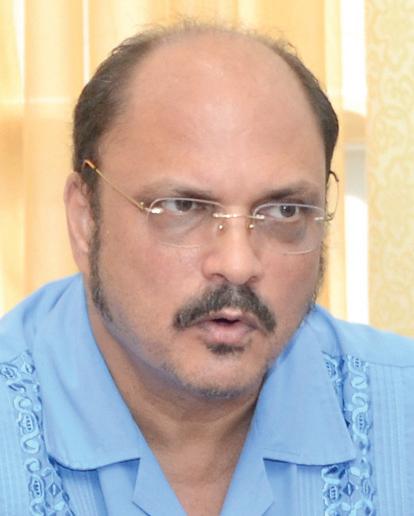
Health Minister, Dr Bheri Ramsaran
their 33 combined votes, denying some $1.3 billion to the entire Regional and Clinical Services programme.
This is the second time the Opposition, using its one-seat majority, had voted down allocations for the state-of-the-art multimillion-dollar specialised hospital, contending that the project was not transparent enough.
During the 2013 Budget debate, the entire $1.25 billion provision for the project was cut.
However, in December last, Health Minister, Dr Bheri Ramsaran had approached the House seeking $34.4 million for the project, a request which the Opposition did not support; nevertheless, the monies were approved owing to the absence of APNU Member of Parliament Volda Lawrence.
The current and capital expenditures for other programmes under the Health Ministry were approved by both sides: $885 million for the Health Ministry Administration Expenditures and $1.015 billion for Disease Control. Another $169 million went towards the Primary Health Care Services, while $496 million for Health Sciences Education was approved and so was an additional $535 million for the Standards and Technical Services. (vahnum@guyanatimesgy.com)

International Girls in ICT Day is an initiative backed by International Telecommunication Union (ITU) member states to create a global environment that empowers and encourages girls and young women to consider careers in the growing field of information and communication technologies (ICTs).
On Wednesday, the National Frequency Management Unit (NFMU) held a Tech Day Camp at the Lichas Hall, Linden, Region 10, in observance of Girls in ICT Day, which is slated for April 24. The event aimed to empower and encourage girls and young women to consider careers in ICT.
This event saw Grades Nine and 10 female students from several schools in the region being provided with an opportunity to become inspired about the ICT sector by getting a first-hand look into the ICT institutions and listening to women role models, the Government Information Agency (GINA) reported.
NFMU Managing Director Valmikki Singh, during his address to the students, stated that the ICT sector is an evolving one, and as such it is essential for everyone to get involved in it.
“Knowledge is power and in order for you to

gain knowledge, you must have information… ICT is a means of eradicating poverty, it is seen a means of empowering human beings and an opportunity to improve our standard of living,” Singh explained.
It is recognised that females are underrepresented in this sector. In this regard, Girls in ICT Day was launched in 2010 by the ITU, as an opportunity for girls and young women to become inspired about the ICT sector. “Today is a groundbreaking day in Region 10, today is the day when we will change the
phase of ICT in the region,” Region 10 Education Officer Jennifer Bourne told the students. She said there are many opportunities in the area of ICT, and she expects to see more girls excelling in Information Technology and Electronic Document Preparation Management at the Caribbean Secondary Education Certificate (CSEC) Examination. She expressed gratitude to the NFMU for hosting such an event in the Region. Traditionally, employment in the ICT sector, worldwide, is dominated by males.

Aman, his daughter and two other children are hospitalised following a three-way collision between two cars and a bicycle at the junction of Camp and Quamina streets, Georgetown on Thursday afternoon.
The accident occurred at approximately 16:00h.
Eyewitnesses related that the two persons – a man and his daughter –, who were on the bicycle, were thrown by the impact of the crash into a nearby drain from which they had to be assisted by Good Samaritans. The cars bearing licence plates PKK 7906 and PNN 3718, as well as the bicycle were badly damaged.
The eyewitnesses also said that the man who is yet to be identified was east bound on Quamina Street, while one of the cars was heading in the same direction and the other south on Camp Street.
The driver of the first car, in an effort to avoid the imminent collision with the second car, swerved and subsequently collided with the


bicycle. After the girl and her father were pulled from the drain by public-spirited citizens, she seemed to be in a state of bewilderment shouting, “Oh my God, they killed my father, they kill he.”
Another eyewitness related that the junction is accident prone and she sees the man and his daughter riding along the street every afternoon. “Every minute is an accident on this corner, look how the man could have gotten his death,” lamented the woman who works as a security guard at
a nearby establishment.
The junction of Camp and Quamina streets is known for being the site of many accidents, with more than six occurring there since the year started.
The ambulance arrived on the scene shortly after and with assistance from the Guyana Fire Service whisked the injured persons away to the hospital. Police officers arrived at the scene of the accident shortly after and took statements from the drivers of the two vehicles.
Sources at the hospital revealed that two of the injured were treated and sent away, while the man and his daughter who suffered severe injuries are being treated.



In one of the most barefaced moves to seize power in this country, the Speaker of the House, Raphael Trotman, is counting on the desire of the Government to get on with the business of developing the country to allow him to get away with it. As we warned yesterday about allowing “expedience” to guide political action, we hope the Government recognises Trotman’s Trojan Horse. What are the undisputed facts? Firstly, that in our country, it is a settled matter of Constitutional Law that we accept and practise the principle of Judicial Review. That is, that if there’s a dispute about the interpretation between any set of parties, including the Executive and the Legislature, it’s the remit of the Judicial Branch of Government to resolve it. The “dispute” includes any and all laws, including the Constitution, which is the highest law of the land.
This was even accepted by Forbes Burnham in the aftermath of the famous case of Teemal vs GuySuCo. So here it is that the Executive felt that the Opposition-controlled Assembly, full of its one-seat majority and with the acquiescence of the Speaker, illegally cut its budget estimates and took the matter to the Courts.
The Legislature – including the Speaker who was named as a respondent –was told in no uncertain terms the cuts were illegal. We don’t have to rehearse the specifics for the millionth time: bottom line is the Government’s estimates can’t be cut. Period.
So it surpasses our understanding that the Government has evidently cut a deal with the Speaker and the Opposition (who, while epistemologically different, are ontologically identical) to have an “ad hoc” tri-partisan committee examine the budget to discuss what the Government is willing to reduce “voluntarily”. This is letting the barbarians through the back door...which has been emphatically “kicked” down by Trotman. And we all know what happens after the back door is kicked down.
It’ll be the Opposition all the way. So what happens when the Opposition demands a reduction of a budget item that the Executive doesn’t want to budge on? Some might think the problem is we’ve only moved the impasse one stage back. But it’s more than that. The Government has tacitly accepted the Opposition’s contention that its chopping isn’t illegal. And the Opposition, smelling blood, will rush in for the kill.
There was no need for the Government to keel over: even if the Opposition chopped, it could’ve gone along and spent in accordance with its estimates. It is what the courts, arbiters of the Constitutional order, ruled.
...and checkmate
And iconic West Indian figure – Norman Girvan, just passed away. A world renowned economist from the left of the ideological divide that he knew hadn’t disappeared but merely adopted a new guise, Girvan represents the best of what this region has produced.
When Naipaul provocatively proposed that the West Indies produced “nothing” we can point to persons like Girvan. And Naipaul, for that matter.
Girvan is of the first generation of West Indians who, like Walter Rodney, were turned out by the comparatively new University of the West Indies. His commitment to the improvement of the lot of his fellow West Indians rather than just dry academic analyses, made him a practitioner of “political economy”. He was known far and wide, especially in Third World left circles for his unsparing critique of the new insidious capitalist relations.
Most recently, he vigorously shared and supported the scepticism of former President Bharrat Jagdeo towards the EPA that Carl Greenidge and his team negotiated with the EU. He died as he was attempting to alleviate the woes of Haitians disposed by The Dominican Republic.
...held off
Not so incidentally, Girvan had been appointed to represent the UN Secretary General “Good Officer process” in the controversy Venezuela precipitated by claiming two-thirds of our territory. We were in good hands. RIP Professor Norman Girvan.

BY GOMATIE GANGADIN
Coming at a time when a Commission of Inquiry (CoI) has been launched to investigate the circumstances surrounding his death, findings of a recent study have indicated that the killing of historian and political activist, Dr Walter Rodney was instrumental in causing the beginning of large-scale migration of Guyanese from this country.
The research is divided into two phases: Phase one seeks to examine the historical migration patterns and the contributing factors. This phase began in December 2013 and concluded in late March.
Phase Two is expected to commence soon and will focus on modern day migration numbers and the motivating factors.
Findings
The findings were presented at a public forum held under the theme “I am Guyana’s Solution Tank” at the National Library’s Conference Room on Wednesday evening by head of the research team Simona Vezzoli, a researcher from International Migration Institute (IMI) from the Oxford Department of International Development, University of Oxford, England
Vezzoli, the head of the research team, has contributed to the adoption and the adaptation of the scenario methodology for the study of the future of migration at IMI.
Currently, her research focuses on the determinants of migration, through the Determinants of International Migration (DEMIG) Project, specifically conducting research on the history and evolution of

migration patterns and policies in the Caribbean region.
Her research interests include migration policy, in particular countries’ perspectives on emigration and the relation between emigration and immigration policies. The research involved interviews with migrants, remigrants and nonmigrants, archival data from the country’s records, case studies and media reports.
Leaving the country
In presenting the findings, Vezzoli noted that the migration pattern stemmed from persons, first leaving the rural setting for the urban landscape before leaving the country.
She disclosed that based on the research done, the migration process started some four years before the country would have gained independence from Great Britain. It was found that the reasons were not merely economically, but politically and emotionally-motivated.
This was due to the fact that persons were apprehensive about independence, and were fearful of what would have happened. With this in mind, they sought
to make their escape from what they thought would have been a ‘blood shedding’ situation.
It, however, increased rapidly in the early 1980s after Dr Rodney, a prominent historian and political activist was assassinated as Guyanese citizens became fearful for their lives. This fear led to persons of all ethnic backgrounds leaving the state, fearing that the country was heading for the worst and could not benefit them socially and economically, the study found.
Further, it was discovered that many of the reasons for migration from Guyana stemmed from the era of independence, decolonisation and policies of countries such as the United Kingdom, Canada and the U.S.
Vezzoli related that political insecurity was a significant factor which prompted migrants’ decision to leave the country. The low numbers of migration in the 1960s, she attributed to the presence of less corruption, more job opportunities and a better quality of life.
“Between the years 1940 to 1960, even though the country had no formal university or high learning institution, citizens desirous of having an education would go to the United Kingdom, study and then return to serve the country due to the prestigious status such an accomplishment afforded,” the researcher said.
But as independence came, so did political instability, fight for governance among local parties and the opening of several migration policies implemented by the major receiving countries, notably the United Kingdom, Canada and the

These countries had open migration policies, particularly the United Kingdom. In 1960, however, the United Kingdom implemented the Commonwealth Act of 1960, which placed restrictions on persons entering the country.
To ensure they get accepted into the country, Guyanese began migrating quickly before the implementation took full effect. Additionally, Canada and the U.S. began extending their policies with lures of jobs, a stable political environment and economy.
The research also found that co-operative socialism, which was practised by the Prime Minister at the time, Forbes Sampson Burnham, the bauxite crisis and a stagnant and corrupt economy, also forced Guyanese to leave the country.
During the period of cooperative socialism, bans were placed on imported foods and citizens were made to stand in lines to collect, or purchase basic food items, among other things.
Researcher Vezzoli stated that Burnham had started mechanisation in the rice and sugar sectors, which prompted a demand for ed-
ucation from the children of rice and sugar workers.
At the time, educational pursuits required that individuals join the National Service, a voluntary state service. However, many refused since it required extensive travelling to interior locations, which parents disapproved. This led, according to the study, to the migration in droves to foreign countries for educational opportunities. The migrants subsequently remained there due to the corruption and economic imbalance in Guyana.
Even though a democratic election system was implemented in the 1990s, people were still not pleased or confident that political stability would have been achieved. It was found that during this time, the public sector’s growth had decreased by approximately 45 per cent, and this resulted in citizens losing hope that the country was on the road to success.
After 2000, citizens continued migrating to other countries after losing confidence in the country.
It was alleged that the economy had become infil-
trated with drug trafficking and smuggling and the security sector was unable to clamp down on these illegal activities.
On top of this major issue, the country’s Gross domestic Product was just above that of Haiti’s at US$1125. The migrants saw this as a point of no return for Guyana and began their journeys to countries where they thought they would be afforded a bright future.
Other factors identified from the migration include lack of strong ties to keep persons here, the availability of a better standard of living, less corruptive practices in the Government, family ties in the foreign countries and better educational opportunities and facilities abroad.
The research showed an alarming 780,000 persons migrated, almost three quarters of this number representing skilled workers.
The Oxford University researcher said all hope was not lost and Guyana can reduce its migration rate with the implementation of more job opportunities, better salary provisions for skilled workers, and ensuring a significant reduction of corruption.
In this regard, each year, the NFMU has been planning and executing several activities in an effort to ensure that Guyanese women are well-educated and sensitised on ICT and its advantages.
During the event, female ICT professionals spoke about their experiences and expectations working in tge sector, and the many and growing prospects within, after which the students had
the opportunity to interact with the presenters.
During the question-andanswer segment, one student queried how ICT can be used in the area of agriculture. Singh explained that there are new techniques every day that require the need for technology in the area of agriculture. He said farmers can use technology to market produce.
ICT is one of the primary sectors to catalyse
economic growth and sustainable development. Recognising this fact, the Government of Guyana, through initiatives such as the as E-Government, One Laptop Per Family and computer labs for schools, has been making significant investments in ICT, thereby availing technology to every Guyanese, and building the foundation upon which female citizens can expand their boundaries.

The owner of the truck which fell into the Essequibo River after the ramp of the MV Kanawan collapsed on Wednesday said he wants compensation in the form of a new truck.
Delroy Griffith is blaming the Transport and Harbours Department (T&HD) for the mishap which occurred when the vehicle was being offloaded from the ferry at the Supenaam Stelling.
Griffith told Guyana Times that his truck is worth some $7 million, and while it remains submerged;

he is losing thousands of dollars with each passing day.
The truck at the time was transporting 225 bags (10 tonnes) of chicken feed for a businessman. Griffith is responsible for the commodity until it is delivered.
According to Griffith, the estimated value for the feed is $2.5 million, money he will have to find to repay the businessman.

He has been in the trucking business for the past 15 years.
“Trucking is my business, every day I am losing thousands of dollars, it was not my truck driver’s fault, he didn’t drive deliberately in the river, if there was proper monitoring on the boat and maintenance, this won’t have happened,” he said.
The Anna Regina businessman said T&HD officers “dragged” his truck from the pathway of the stelling, and have been unable to remove it from the river.
He has blamed the T&HD for the mishap, pointing out that the crew onboard the Chinese vessel was negligent in their duty.
Griffith said if he does not get any support from the T&HD, he would be taking legal action against the Government agency.
The T&HD in a statement on Wednesday said the incident occurred about 02:15h after the ramp attached to the stelling collapsed.
The truck was driven by Anthony Thomas, who escaped unhurt.
Thomas, who described the situation as frightening, has also blamed crew members of the vessel for the accident.
The incident has inconvenienced many businessmen and women, putting them out of business for a day. Passengers had to find alter-

native ways to exit the boat.
Vegetable vendors who were on the boat were forced to hire a speed boat to transport their perishable items, incurring additional expenses.
Meanwhile, Region Two Chairman Parmanand Persaud said a team from the Public Works Ministry is working feverishly to remove the truck from the river but has been faced with many difficulties. He is hoping that the truck will be pulled to land soon and Griffith will be able to continue business as per normal.
Meanwhile, the MV Kanawan has resumed operations today while the MV Malali and the MV Makowra have returned to their respective routes.

Guyana is a free country. But bein a free country ain’t mean that every ting is a free fuh all and that any body can do any ting dem wanna do. Nuff people does behave like that though.
When yuh look at somma dem taxi and mini bus drivers drive yuh does tink dem own de road, and nuff a dem don’t even own de car or de mini bus whah dem drivin. That is why dem does drive de vehicles like that. Dem ain’t own nutten.
Right hey in fronta de Bell Crier eye pun Camp and Quamina Street is like a daily Formula One race course. Just yesterday a innocent man and he daughter end up in de hospital with de kinda speedin that does go on. Is a pity nutten don’t ever happen to de drivers.
Is funny how de traffic pullice never find de time to come at this junction. But dem does find dem selves at all de junctions whah already got traffic lights instead. And some times four a dem does find dem selves at one junction.
Every mornin, midday and afternoon, dem flockin only dem Camp Street junctions which got traffic lights that wukkin good. De Bell Crier not sure if is de gaffin or de traffic whah does mek dem flock together like that. It got two a dem does be standin up doin nutten by de old funeral parlour near Camp and Lamaha. Is no wonder dem choose deh because dem always lookin like walkin dead. It musbe that dem countin the amounta vehicles whah dem can collect a small piece from.
Just that nowadays dem pullice small piece don’t be small any more since guvament bring out de new greenies. That is when dem eyes does light up. Any ting other than a greenie is a whitey in de form of a ticket.
Ting-a-ling-a-ling…friend tell friend…mattie tell mattie! Well, nobody wishin de pullice bad, but de Bell Crier always wanna know how come dem don’t ever get knock down, even when dem in plain clothes!
Child found gagged and bound placed in stable home
Child Care and Protection Agency Director Ann Greene on Wednesday told Guyana Times that the two-year-old child who was found bound, malnourished, and dehydrated in a house in North Ruimveldt, Georgetown on February 5, is well on the road to complete recovery.
She disclosed that the child has been placed in a very loving and well-established family and thus far, he has been responding well to the care and attention given to him. Immediately after being rescued by the agency, the child was taken to the Georgetown Public Hospital to seek medical attention due to the state in which he was found. During his stay in the hospital, tests revealed he appeared to have been badly beaten as several broken bones were found in addition to two concussions, a stomach infection, and bruises.
As it relates to the guardian who was charged for child abuse, neglect and child endangerment, she noted, the woman last appeared at the Georgetown Magistrates’
Courts on March 6 and will again make an appearance next month.
Greene stated that the Human Services and Social Security Ministry is doing all that it can at the moment to ensure that the child is not only safe and well-cared for, but that justice is served. For some weeks after the incident occurred, neither the mother nor any other relatives of the child could be found. After interrogation, however, the guardian was able to give the name and clues which assisted the agency in locating the child’s mother.
Unfit mother, guardian Green told this publication when the mother was contacted and placed under scrutiny by the agency, it was observed that she was in no fit state to take care of the child.
The mother of the child even demanded that the toddler be returned to the care of the guardian as she believes the guardian was adequately taking care of the boy and had done nothing wrong.
It was on this basis that the agency decided that the child could not be handed over to his immediate family members and began the search for a suitable foster home.
Questioned on how many such cases have been handled by the agency for the year thus far and how many convictions were made, Green related that she was in the process of putting those statistics together and they will soon be released. The Director disclosed, however, that the agency has been dealing with all the complaints it has received and all persons caught in violation were placed before the courts.
The child was discovered in a bedroom in the upper flat of a two-bedroom house on Hummingbird Street, Festival City, Georgetown.
The toddler was reportedly found under a bed, with his hands tightly bound behind his back.
The female guardian claimed that she has been taking care of the child, since his mother left for the interior about a year ago.
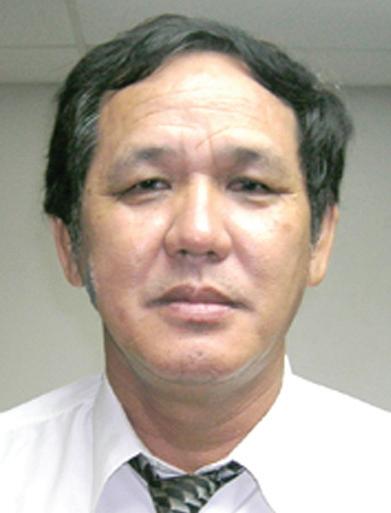
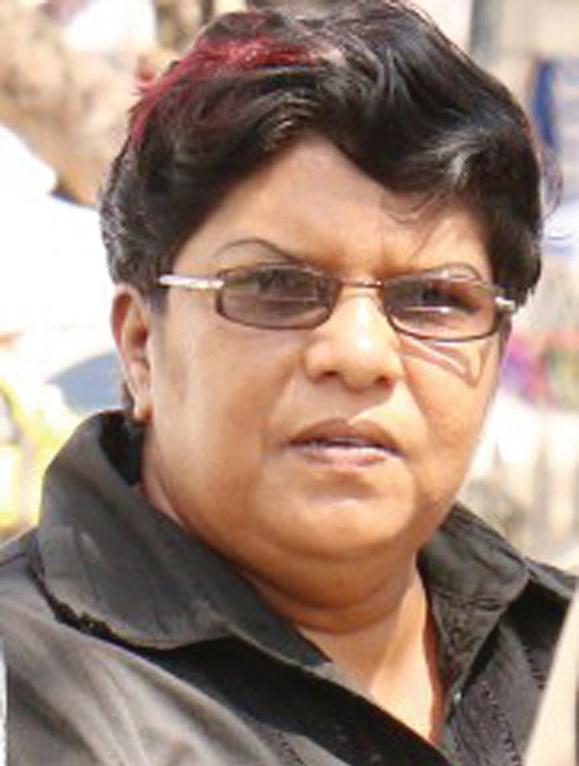
Acting Chief Justice Ian Chang on Thursday quashed the appointment of Carol Sooba as City Town Clerk, saying that the Local Government Minister does not have the powers to appoint her.
He said as a result, the appointment was illegal.
The decision came about after City Council Public Relations Officer Royston King had moved to the High Court last December, challenging the appointment of Sooba, contending that she was deemed the least qualified of several candidates who had applied for the post.
King was one of the four applicants for the post. He was represented by Attorney Nigel Hughes. In his application, he had asked that the then Local Government Minister Ganga Persaud show cause why his decision to appoint Sooba should not
be quashed.
Justice Chang had granted a conditional order, directing the Minister to show cause why the decision should not be set aside.
In his affidavit, King contended that the decision to appoint Sooba was an abuse of power; contrary to the legitimate expectation that the post would be filled by the “best suited
As investigations into the recently-unearthed scam at the Guyana Gold Board continue, Natural Resources and Environment Minister Robert Persaud says that seven employees attached to the Bartica and Georgetown branches of the entity have been detained and have been assisting with investigations.
Speaking with reporters on Thursday, Persaud said he was hoping for a time-efficient investigation from the Police Force, noting that his Ministry is still awaiting the results of the probe before further action is taken.
However, Persaud added that an external auditor has been sourced to audit the finances of the gold trading entity.
The Minister related that an external auditing firm has been recruited to review the finances of both the Georgetown and Bartica branches of the Gold Board.
“If needs be, we will also be engaging international help,” added Persaud, as he explained how the investigations were being conducted.
Persaud maintained that the Bartica office would remain closed until the investigations are completed.
The Board last week had called in the police to investigate an issue of gold being tampered with during the purchasing process.
According to a statement then, the Board said to facilitate the investigation, the Natural Resources and Environment Ministry had accepted its decision to temporarily close all operations at the Bartica sub-office.
The Ministry and the Board of Directors subse-
and qualified” person, based on the criteria established in advertisements by the Minister. He said Sooba’s appointment was unreasonable since the Minister failed to apply the criteria he had established for the identification of the best candidate.
King said too that after attending several interviews, he was informed that he was identified as the candidate who achieved the second highest points for the said position, while Sooba had achieved the lowest.
Legitimate expectation
“I had a legitimate expectation that the person who was best qualified, based on the criteria deployed by the interviewing panel and the Minister of Local Government, would be appointed to the position. I verily believe that the Minister abused his power when he
appointed Carol Sooba on the basis that the said applicant was the best of the candidates when on the criteria established by the said Minister, she was the least qualified… I am informed by the Deputy Mayor that I was the candidate who achieved the second highest points for the said position,” King had said in his affidavit.
Persaud had argued that

Sooba was the best qualified person for the job and that is why she was appointed, although Paul Clarke was unanimously recommended by the interviewing panel as being the best suited candidate.
The interview panel included Local Government Ministry, Permanent Secretary Collin Croal; Deputy Mayor Patricia
Chase-Green, Public Service Ministry, Principal Personnel Officer Dale Beresford and a representative from the Finance Ministry.
Head of the Presidential Secretariat, Dr Roger Luncheon had also said that academic qualification was not the only criteria for the appointment of Sooba. Responding to questions at his post-Cabinet press briefing on Wednesday, Dr Luncheon said, “The qualification was one sub-set of criteria the panel had to make.”
He explained that the choice was between job experience and qualifications, noting that for public service job specifications; this is rarely the sole criteria. Dr Luncheon had also pointed out that Persaud would not have appointed someone who met none of the criteria required.
quently convened a meeting with various stakeholders, including the Guyana Gold and Diamond Miners Association and the licensed gold dealers to ensure that the issue does not disrupt the overall trading of gold, particularly in the Region Seven location.
Meanwhile, as questions are raised about the management of the Board, the Natural Resources Ministry has said that the Board of Directors had implemented the recommendations of the system review with the support of the Ministry.
Some of those recommendations included the confirmation of the General Manager, the hiring of an Assistant General Manager, Assistant Accountant, and a Legal/Compliance Officer as well as the establishment of a sub-committee on the sale of gold, which comprises some of the Directors.
In a further attempt to enhance the operational aspect of the entity, the release noted that the Board had opened a third location at Charity on December 18, 2012.
As it relates to security, the Gold Board has upgraded its Closed-Circuit Television (CCTV) surveillance system at all locations.
There has also been an increase in the number of physical personnel at the various locations from both the public sector and private sector.
Moreover, in the last two years, there have been improvements at both the technical and policy levels with the approval and implementation of upgraded standard operating procedures for the finance, audit and laboratory departments.

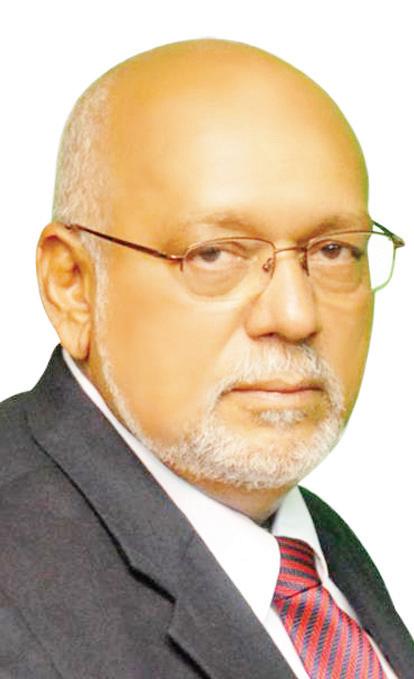
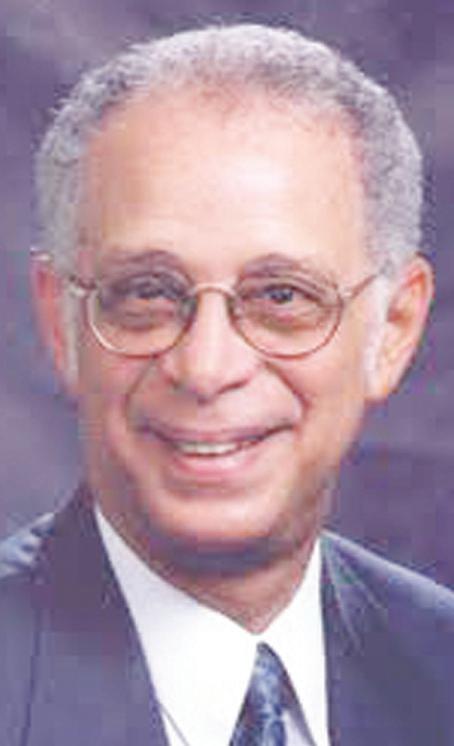
President Donald Ramotar has described the passing of Professor Norman Girvan as an immense loss for the Caribbean which will be felt for quite some time.
The President in a statement said Professor Girvan’s writing and sharp analyses spanning a myriad of issues, demonstrated sincerity in contributing to solutions to the challenges of the economic and social development of the wider Caribbean.
Ramotar said his vision for the region’s integration was driven by a profound desire for the peoples of the Caribbean Community to benefit from sustained socio-economic development in a single space.
“For Guyana, we valued the wisdom which he brought to the Good Offices Process as the Personal Representative of the United Nations Secretary General. We have indeed lost a great Caribbean icon.
I extend my deepest condolences to Mrs Girvan and to his family,” Ramotar said.
Foreign Minister Carolyn Rodrigues-Birkett also expressed sadness at his passing, while extending condolences to his wid-
ow Mrs Jasmine Girvan and his family.
“Highly respected throughout Latin America and the Caribbean, the magnitude of Professor Girvan’s success in the varied roles which he undertook is measured by the extent of his humility and sincerity. In his capacity as the Personal Representative of the United Nations Secretary General in the Good Offices Process, he demonstrated a constructive and objective approach. The Caribbean has lost one of its finest minds,”

Rodrigues-Birkett said.
Until recently, Girvan was Professorial Research Fellow at the University of the West Indies (UWI) Graduate Institute of International Relations. In 2010, he was appointed United Nations Secretary General’s Personal Representative on the Guyana-Venezuela Border Controversy. In 2002-2011, he was a Board Member of the South Centre and served as Vice Chairman from 2006 to 2011.
Since 2009, he has been a member of the United Nations Committee on Development Policy. He
served as Secretary General of the Association of Caribbean States, Professor of Development Studies and Director of the Sir Arthur Lewis Institute of Social and Economic Studies at the University of the West Indies, and head of the National Planning Agency of the Government of Jamaica.
He received his Bachelor’s Degree in Economics of the University College of the West Indies and his PhD in Economics from the London School of Economics. Professor Girvan has published extensively on the political economy of development in the Caribbean and the Global South.
He is the recipient of several honours and awards.
Regarding his role in the Guyana/Venezuela border controversy, the UN had said that he would assist the two countries in resolving the long-standing issue. His appointment was a response to a request from the parties to resume the Secretary General’s good offices, which were suspended in 2007 due to the death of the Secretary General’s last Personal Representative Oliver Jackman.

Protection Agency. In December 2013, a G$54 million grant was approved for ChildLinK to partly fund the Empowering Children in Difficult Circumstances Project. This initiative has as its overall objective, the strengthening of policies, practices and approaches to ensure social welfare services prevent and protect 12,650 children across Guyana from sexual violence by December 2015.
Ambassador Kopecký in his remarks commended ChildLinK for their continued commitment to the elimination of child abuse and for becoming one of the important actors in Guyana in the fight against child abuse.
Head of Delegation of the European Union (EU) in Guyana, Ambassador Robert Kopecký has underscored the body’s commitment to help in eradicating child abuse in Guyana.
Ambassador Kopecký was at the time delivering remarks at the ChildLink Partnership Review held at the Cara Lodge, Georgetown.
The Partnership Review is aimed at assessing the impact of the various ChildLink programmes in Guyana, and also to highlight the lessons learnt and challenges encountered in implementation.
The EU has been a partner of ChildLinK since 2010 and channels its support to the non-government organisations (NGOs) via the European Instrument for Democracy and Human Rights (EIDHR), which has as its main objective the
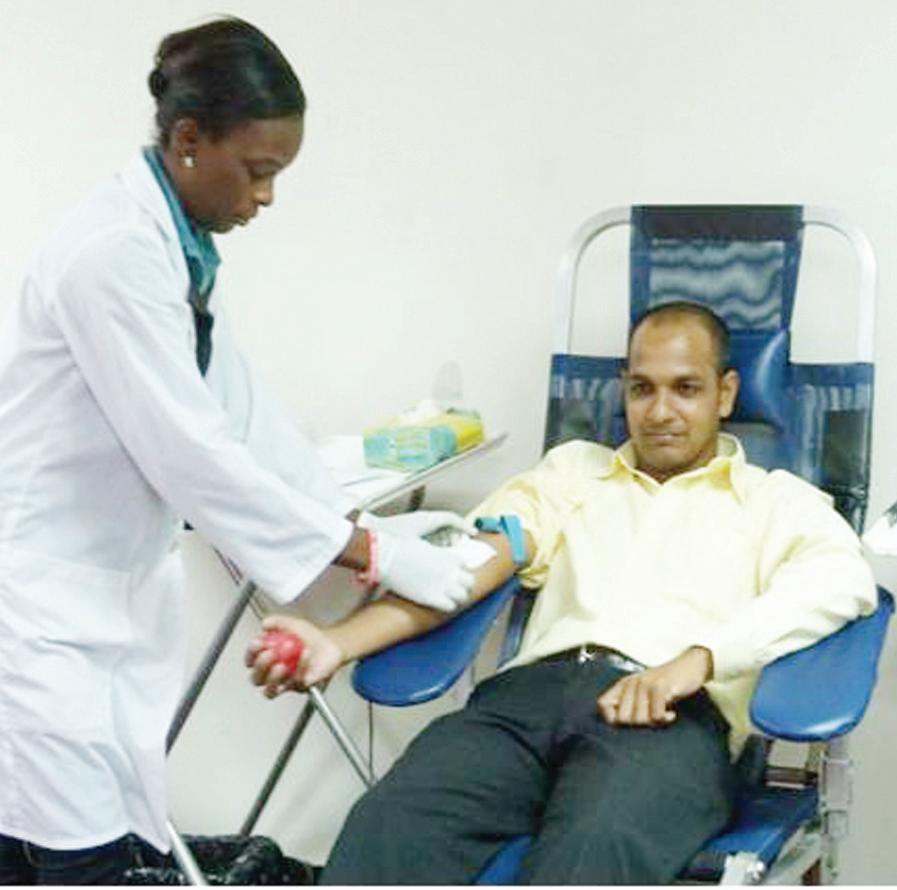
The Demerara Shipping Company Limited (DSCL) recently hosted a blood drive at the company’s Water and Schumaker streets office, Georgetown as part of activities to celebrate its 20th anniversary.
The company in a release said the drive, which was conducted in partnership with the National Blood Transfusion Service, saw 33 employees donating one unit of blood.
DSCL Operations Manager Mahendra Ramjeawan noted that the event was chosen by employees to celebrate the occasion. He used the opportunity to thank customers and
stakeholders for their support over the years.
He also thanked all of the company’s employees for their sterling contributions over the years, especially those who gave blood.
DSCL’s parent company, the Demerara Distillers Limited (DDL) also hosted their own blood drive on March 24 and this saw employees contributing another 24 units of blood to the National Blood Transfusion Service.
National Blood Transfusion Service Director, Dr Nadia Liu expressed heartfelt appreciation to DSCL and DDL for their continued support over the years.
strengthening of the role of civil society in promoting human rights.
To this end, the EU has published regular Calls for Proposals in Guyana since 2010, and to date has awarded contracts totalling G$432 million to Guyanese civil society organisations.
Three grant contracts to ChildLinK totalling G$103 million have been approved to partly fund interventions aimed at providing security and protection from violence to children in Guyana.
Protection
In October 2010, a grant contract for G$22 million to support the Hug Project was signed by ChildLinK with the EU Delegation.
The main objective of that project was to provide protection and security to children from violence in the Agricola and Ruimveldt communities. That project has been successfully implemented and has exceeded most of its targets, especially in the areas of training of caregivers and child protection sensitisation with children and psychosocial support.
All cases of children needing support from a counsellor were closed responsibly at the end of this initiative, and children and families who needed additional support were referred to other relevant agencies.
In December 2012, a G$27 million grant was signed with ChildLinK to partly fund the Alternative Family-Based Care Project. This project is currently ongoing and the objective is to build strong systems, policies, practices and guidelines that ensure the new child protection legislation becomes operational for the social protection of Guyanese children by December 2014, in collaboration with the Human Services and Social Security Ministry’s Child Care and
Ambassador Kopecký also echoed the recent statement by Attorney General Anil Nandlall, that, ‘’no convictions for sex crimes in two years suggests a revision of the jury system being long overdue’’, adding that he welcomed the Attorney General’s open words on this sensitive subject.
The EU has taken strong and active measures to curb this terrible problem which robs affected children of their precious innocence and carefree childhood, and which leaves in its wake everlasting scars in the lives of these children, their families, communities, countries and ultimately the entire world.
The EU recognises the important role of civil society in the promotion and protection of human rights, which of course includes children’s rights. Hence, aiding civil society organisations such as ChildLinK to become an effective force for the defence of children’s rights fulfils one of the central objectives of the EU’s development policy, which is the alleviation of poverty.
The EU strongly believes that its financial support of this nature, coupled with the right policies, can help in achieving the objectives of the European Consensus on Development which underlines that ‘progress in the protection of human rights, good governance and democratisation is fundamental for poverty reduction and sustainable development’, thereby contributing to the achievement of the Millennium Development Goals.
The partnership review serves as an important forum for increasing the fight against all forms of child abuse, especially by sharing experiences of lessons learnt in previous projects, and also of the challenges encountered in implementation. Perpetrators still have to see more clearly that the system does not tolerate their actions and the consequences are real and severe.
At least five persons are in police custo-
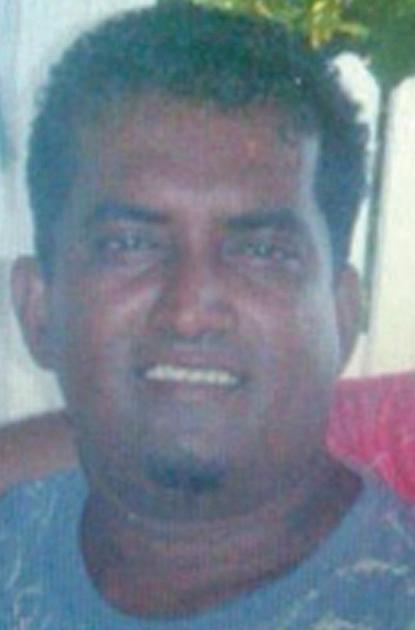
dy and are assisting with investigations into the kidnapping and murder of Foulis, Enmore Businessman Rajendra “Sunil” Singh.
According to information received, the police are expecting a breakthrough in the case as early as today since it is believed that at least one of the persons arrested has been inconsistent in his story during the interrogation process.
A senior rank of the Guyana Police Force told Guyana Times that police are analysing telephone calls that were made to the family while the man was held ransom.
When asked if the police handled the situation in the correct way, the source explained that a team of professionals who were trained to handle such matters, worked around-the-clock, negotiating for the safe return of the businessman.
He was not too sure what went wrong, but was optimistic that the police would
make a breakthrough.
The officer stated that family members are fearful that the kidnappers will return.
The businessman’s immediate family members, including his 13-year-old son, are in protective custody.
Singh, who was kidnapped on Saturday evening, was on Wednesday morning found with his throat slit and a bullet wound to the head in the Le Repentir Cemetery.
The 40-year-old businessman of Lot 15 Foulis, Enmore, was discovered with his hands tied behind his back with a piece of rope. A white cloth was also tied around his neck.
Investigators confirmed that the man was strangled before his throat was slit. They also believe that he was tortured.
Singh’s body bore several marks of violence, which indicated that he was severely beaten.
The businessman was clad in a pair of black socks, a pair of short blue pants, and a blue T-shirt, with fresh bloodstain on his body. He was tied to an abbey tree.
As the news spread about the discovery, several high ranking police officers turned up at the scene to confirm that it was indeed the kidnapped businessman who had been killed.
After several failed attempts by A Division ranks to verify his identity, ranks from C Division were called in.
The businessman was

Natural Resources and Environment
Minister Robert Persaud said a team from the Environmental Protection Agency (EPA) has been dispatched to Port Kaituma, Region One, to assess the effect of the oil in the river following a boat explosion there a week ago.
Persaud said the EPA is evaluating the situation, which also destroyed four buildings used as dwelling houses, shops and storage. Four boats are believed to have been destroyed.
A few days after four oil laden boats exploded in Port Kaituma, residents there had complained that the oil from the boats has contaminated waterways.
Reports say some 800 households have been affected as they use the river for various household purposes.
Residents say the river is their main source of water and currently it is severely polluted by waste fuel and other residual elements from the explosion.
The Maritime Administration Department said the boat explosion was caused after a fuel pump malfunctioned and jets of diesel sprayed on the hot surface of the pump.
According to a release, a fire consequently ignited and engulfed the vessel.
The lone crew member, who was onboard, attempted to put out the fire, but the heat was too much, causing him to jump overboard. He swam ashore and was rushed to hospital for medical treatment.
Simultaneously, the fire spread to other boats and buildings nearby.
“The blaze extended on top of the river as well, as
positively identified by a tattoo on one of his arms by a close relative, who is a police rank. A relative of the dead man subsequently turned up at the scene, but there were no sign of the businessman’s immediate family.
The man’s body was discovered by Mayor and City Council worker Jagnarine Parboo, who was at the time looking for a water source.
He told media operatives that as he was looking around the area, he saw the man lying face down clad in a pair of short pants and a jersey.
Guyana Times understands that the kidnappers would have contacted the family on Tuesday morning, requesting that the $25 million ransom be dropped off at a certain location.
The kidnappers reportedly contacted the family a while later and gave an ultimatum that the money must be delivered by 12:00h on Tuesday, a deadline the family failed to meet.
Sunday nights will soon see a new source of information and public debate with the debut of a television programme that will focus on what is happening at the National Assembly of Guyana and what the political parties are seeking to accomplish on behalf of the Guyanese people.
“This Week in Parliament” is a new television programme made possible through the United States Agency for International Development’s (USAID) Leadership and Democracy Programme.
It will air on TVGChannel 28 on Sunday nights from 19:15h to 20:15h, beginning on April 13.
According to a release from the U.S. Embassy, in addition to providing viewers with information on current legislation and issues being debated in the National Assembly and
its committees, the programme will offer viewers a moderated discussion panel comprised of invited Members of Parliament (MPs) from all major political parties represented in the Assembly.
The panel will review legislation before Parliament and share their parties’ positions on key bills and broader issues facing the country. Each week, viewers will be invited to submit questions to the panel relating to the selected topics of debate.
Each programme will also highlight a youth organisation operating in Guyana and offer a “vox populi” segment where the members of the public will be able to express their views on issues that matter to them and which they would like the National Assembly to address. The programme is produced by the International Republican Institute (IRI).
the diesel leaked overboard onto some combustible garbage in the water,” the release said.
Residents formed a bucket brigade and were successful in stopping the fire from spreading to other buildings ashore.
The maritime authority said there were no fatalities in the incident and the only reported injury was the crew member who sustained first degree burns to his back and feet.
Meanwhile, Public Works Minister Robeson Benn had restated the need for persons to clear the waterfront area. He went on to state that the congestion is hampering much needed road works there.
Benn also noted that his Ministry is pursuing several measures to deal with maritime safety in the area and the issue regarding importation of illegal fuel.
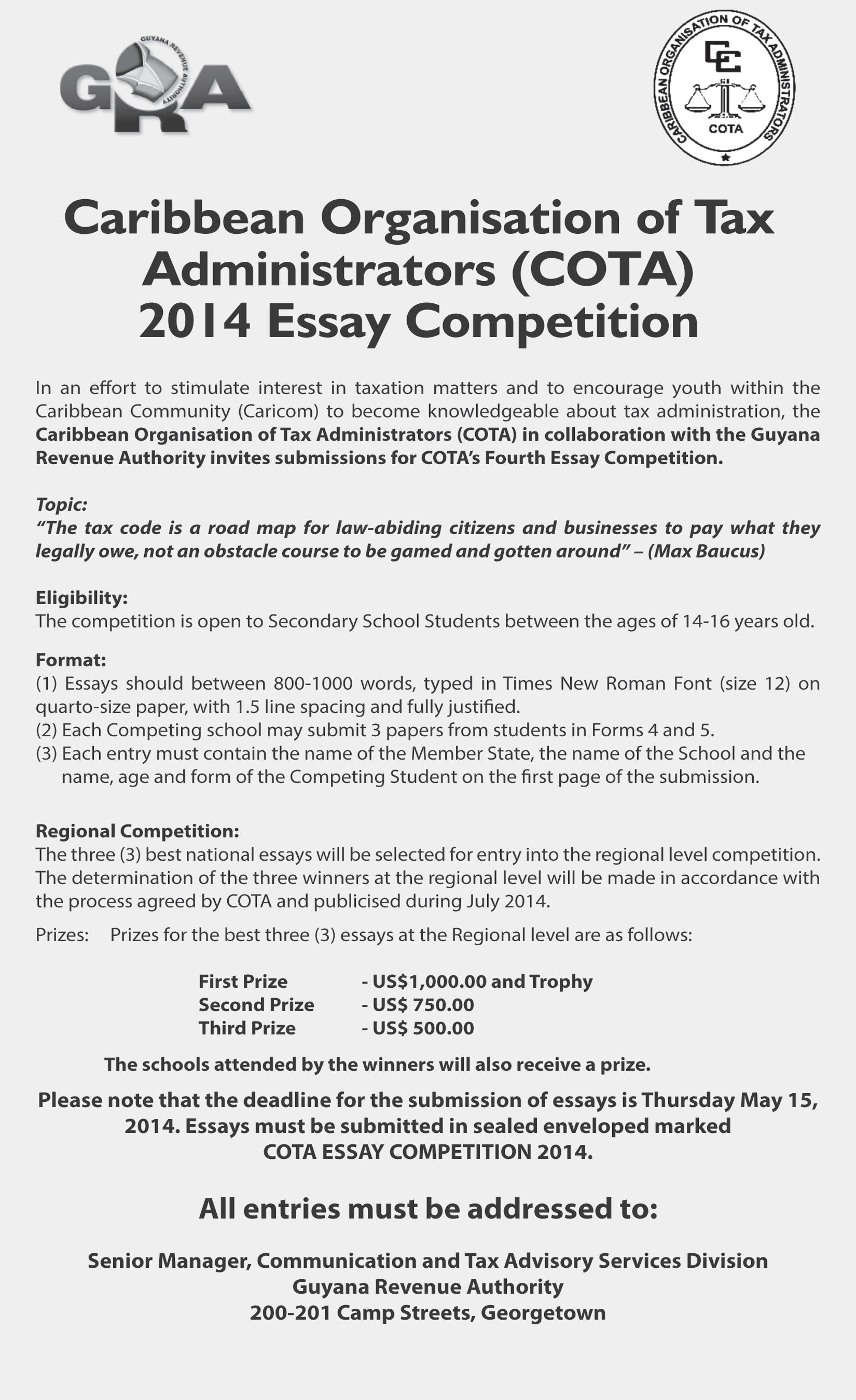
Grenada said Venezuela has given an undertaking that it will fund projects to eradicate hunger and poverty in Latin America and the Caribbean.
Economic Development, Trade, Planning and Cooperatives Minister Oliver Joseph, said the pledge was made during a meeting of PetroCaribe in Caracas over the weekend.
“They clearly outline what needs to be done in order to eradicate poverty, and Venezuela will offer support to member states for this initiative,” Joseph said.
“Grenada is part of this initiative and we stand to benefit from this drive to eradicate hunger and poverty in Latin America and the Caribbean,” he added.

Almost two years after he was rescued from his abusive relatives, who had locked him in a dog kennel as punishment, a 14-year-old boy died on Tuesday from head injuries he sustained while “play-fighting” with a fellow resident at the St Michael Home for Boys. Police said Brandon Hart-Greaves was playing with a teenage resident in a hallway at the children’s home around 20:45h when he attempted a “dropkick” on his sparring partner.
Police and emergency health services personnel arrived on the scene and took Hart-Greaves to the St James Medical Facility for treatment.
The teenager was transferred to the Port of Spain General Hospital where he succumbed around 22:25h from his head injury. Investigators questioned Hart-Greaves’ friend but said they did not believe he was culpable in the death.
Joseph, who led a twomember delegation to the meeting, said five areas had been identified for support.
Ministers responsible for Petro Caribe − an oil al -

There has been a big jump in child sex abuse cases, statistics from the Office of the Children’s Registry (OCR) have revealed.
According to the OCR, some 1968 children under the age of 16 were reportedly sexually abused during the first six months of 2013. Of this amount, 1808 of the cases were girls and 155 were boys.
The sex of the other five were not revealed. Majority or 1085 of the children were carnally abused, while another 57 were victims of buggery. In addition, 196 were raped, 193 children were fondled, and 55 children were victims of incest.
The OCR also reported that 61 minors were subjected to oral sex and 10 were victims of exhibitionism.
The figures, the latest available data, represent a 40 per cent increase over the 1402 cases reported over the corresponding period in 2012.
The spike in the number of child sex abuse cases was Tuesday described by Youth and Culture Minister Lisa Hanna as a national crisis.
“The Ministry of Youth and Culture [and] all its agencies charged with providing services to the nation’s children are deeply troubled by the acts of depravity which continue to be committed against our children in their homes and communities and the severe psychological trauma they are suffering as a direct result of the violation of their rights,” Hanna told a press conference at her Ministry in Kingston. (Except from Jamaica Observer)
liance of many Caribbean states with Caracas to purchase oil on conditions of preferential payment – will
meet in June in Venezuela, where the funding will be committed for the programme. (Caribbean360)
Hart-Greaves’s amateur attempt at the professional wrestling manoeuvre shown on TV backfired and he fell over and hit his head on the concrete floor, rendering him unconscious. The other boy immediately informed Clair Thomas, a supervisor at the institution, who contacted police.
Hart-Greaves and his family shot into the public spotlight in July 2012 after police found him locked inside a dog kennel at their Upper Valley Road, Cascade. He told police that the night before he was accused of misbehaving, was refused dinner, beaten and locked inside the kennel with the family’s pet dog. (Excerpt from Trinidad Guardian)
Public transport in Argentina has been severely disrupted by a huge nationwide strike against the economic policies of the Government of President Cristina Fernandez de Kirchner.
Most buses, commuter trains and metro lines across Argentina did not operate.
The 24-hour strike was called by unions amid public discontent over high inflation, taxes and wages.
The Government said the stoppage was “anti-democratic” because it affected those who wanted to go to work.
“The right to strike is enshrined in the Constitution, but also the legitimate right to work,” Jorge Capitanich, the chief of the cabinet of

ministers, told a news conference.
Airlines were forced to cancel flights and ports came to a near standstill.
Cruise industry continues to battle unfavourable tides
There is an old saying that one bad apple can spoil the whole bunch. While it may not be applicable across all industries in practice, from a perceptual standpoint, a single brand’s negative publicity can often have repercussions for its industry competitors as well.
Such has been the case with the cruise industry, which has been embattled over the past year by brandspecific crises which appear to have impacted perceptions across many industry mainstays.
Following the Carnival Triumph’s struggle to shore in February 2013, perceptual measures suffered – not just for Carnival, but across seven leading cruise brands –and continued to dip through May. A recovery appeared to
be underway more recently, with perceptions trending upwards in January 2014.
However, Norovirus reports aboard several cruise line ships in February 2014 seem to have effectively stolen the wind from the industry’s collective sails, with consumer perceptions of these top brands now dropping again.
These are some of the results of The Harris Poll of 2059 U.S. adults surveyed online between February 10 and 14, 2014 (following Norovirus incidents on Princess Cruise Lines’ Caribbean Princess, the Royal Caribbean Explorer of the Seas and the Norwegian Star). Results are compared, where applicable, to Harris Poll EquiTrend data collected from January 3 to 24.
Many shops also closed because commuters could not get to work.
Some, like Rosana, had to walk miles to get to work.
“My colleagues of course can’t get to the office,” she told the Associated Press news agency after her 70-minute walk. “You can’t get there without public transport.” Many public sector workers took part in the stoppage, which affected services and school classes. Unions say they want higher pay and lower taxes, and blame the Argentine Government for an annual inflation rate of more than 30 per cent.
Protesters also formed human chains and blocked the main access routes to the capital, Buenos Aires, and other cities.
There were some incidents of violence and arrests after police tried to break the picket lines. (Except from BBC News)
certain tourism services
As St Lucians await the presentation of the 2014-15 national budget, providers within the tourism sector, will from this month, pay a 10 per cent Value Added Tax (VAT) on some services initially exempted from the fiscal measure.
Government introduced the VAT in October 2012 and St Lucia became the last member state in the Caribbean Community (Caricom) single market to introduce the tax that replaced a raft of taxes and duties.
St Lucia’s VAT is to be levied at 15 per cent on goods and services and at eight per cent in hotels.
According to a VAT (Rate of Tax) amendment order issued by the Government, the 10 per
cent tax would be imposed on accommodation services by hotels and their supply of food and beverages as well as for services such as tours, excursions and rides with local aerial trams and zip lines; hair braiding and massages.
Tourism Director Louis Lewis said the tax would help fund improvements in the sector.
“At the end of the day, the Government spends tremendous amounts of resources in marketing the destination; there are a number of beneficiaries.
“The entire country benefits and I think what the extension of the VAT to those tourism services allows for greater access of resources to be able to continue to promote the destination,” Lewis said.
(Excerpt from Caribbean360)

Russian President Vladimir Putin has warned European leaders that Ukraine's delays in paying for Russian gas have created a "critical situation".
Pipelines transiting Ukraine deliver Russian gas to several European Union countries and there are fears that the current tensions could trigger gas shortages.
Meanwhile, pro-Russian separatists are holed up in official buildings in Donetsk and Luhansk, eastern Ukraine.
Pro-Russian protesters who disarm and leave occupied buildings will not be prosecuted, Ukraine’s acting President Oleksandr Turchynov said Thursday.
“In the case when people put down their weapons and free administrative buildings, we don’t need to approve laws about amnesty. We guarantee there will be no criminal prosecutions of people who put down their weapons and leave the buildings. And I am prepared to formalise it with a presidential decree,” Turchynov told Parliament.
He added that “the main problem is that the people who are holding the buildings in Donetsk and Luhansk are being used by the enemies of Ukraine”.
The announcement came a day after Ukrainian acting Interior Minister Arsen Avakov said the separatist protests in Ukraine’s eastern region would be resolved within 48 hours – either through negotiations or the use of force.
The protests, which began Sunday, have been centered in three eastern cities: Donetsk, Luhansk and Kharkiv.
The U.S. has accused Russia of fomenting the separatist unrest as a pretext for military intervention.
Speaking Thursday in the Czech Republic, NATO Secretary General Anders Fogh Rasmussen also pointed the finger at Moscow for “stirring up ethnic tensions in eastern Ukraine and provoking unrest”.
And he cast doubt on Russia’s assertion that the troops it has along Ukraine’s eastern border are simply there for military exercises. (Excerpt from CNN)
Millions of Indians have voted on the first big day of the general election pitting the ruling Congress party against the main Opposition BJP.
Polling was held in 91 seats in 14 states and union territories, including in the capital Delhi and the key state of Uttar Pradesh.
Officials say the voter turnout in all states has been higher than in 2009.
The nine-phase vote began on Monday and will conclude on May 12. Votes will be counted on May 16.
More than 814 million Indians are eligible to vote in the polls.
The anti-corruption Aam Aadmi (Common Man’s)

Party, which secured a spectacular result in local polls in Delhi last year, offers a challenge to the main parties. Several smaller regional parties are also in the fray and if no single party wins
The trial of three jailed Al Jazeera English journalists, falsely accused of providing a platform to an outlawed group, has been adjourned until April 22.
The prosecution produced on Thursday video material that it claimed supports the case against the Al Jazeera team – Peter Greste, Mohamed Fahmy, and Baher Mohamed – who appeared in court for a fifth time in the 103 days spent in an Egyptian jail.
The court screened Greste’s reports from Kenya and content from Sky News Arabia’s coverage of Egypt. The judge ordered a special panel to review the videos presented into evidence by the prosecution.

Defence lawyers told the court that the reports had nothing to do with the case.
The three men are charged with spreading false news and aiding the blacklisted Muslim Brotherhood of deposed Egyptian President Mohamed Morsi, who was overthrown by the army in July.
Al Jazeera strongly rejects the charges and demands the immediate release of its staff.
A fourth Al Jazeera journalist, Abdullah al-Shami, has been held in Egypt for more than six months and has been on a hunger strike since January 23. His detention was extended for an additional 45 days on March 13. (Excerpt from Al Jazeera)
a clear majority, they could play a crucial role in the formation of a government. More than 110 million voters were eligible to cast their votes on Thursday and almost a fifth of the Parliament’s 543 seats were up for grabs. Brisk voting was reported through the day in Delhi, Bihar, Kerala and Uttar Pradesh, reports said. Voting was also held in the states of Maharashtra, Orissa, Jharkhand, Chhattisgarh and Haryana.
Voting officially ended at 18:00 local time (12:30 GMT) but in some booths it was extended to allow voters who were in the queue to finishing voting. (Excerpt from BBC News)
The United Nation's Security Council has unanimously approved the creation of a UN peacekeeping force in the Central African Republic to try to stop violence between Christians and Muslims that has threatened to spiral into genocide.
The force, authorised by the 15-member Council on Thursday, will be known as MINUSCA and will be made up of up to 10,000 troops, 1800 police and 20 corrections officers.The UN operation will assume authority on September 15 from the African Union’s 5600-strong MISCA force, which was deployed in December.
The Council wants the UN force to include “as many MISCA military and police personnel as possible”, re-
ported the Associated Press news agency. The resolution also authorises French troops in the landlocked former French colony to use “all necessary means” to support UN peacekeepers.
Speaking to Al Jazeera from London, Amnesty International’s Christian Mukosa said “the big issue is how to fit the gap between now and September”.
“This is why we think the UN must ensure that the African Union forces and the French forces are well equipped and have enough logistical support to protect civilians.” he added, The Central African Republic has been in chaos since a March 2013 coup, when mostly Muslim rebels seized power and launched a brutal regime. (Excerpt from Al Jazeera)

Aformer Superintendent of Works attached to the Region Five Democratic Council was on Wednesday evening killed after his car reportedly veered off the D’Edward Public Road, West Coast Berbice (WCB) and slammed into a truck filled with policemen. The accident occurred around 21:10h.
The dead man was identified as Donald Anand Kumar Ambedkar, 31, a father of three, formerly of Pouderoyen, West Bank Demerara and of Melanie Damishana, East Coast Demerara. Sookdeo Sahadeo of Bath Settlement, WCB, who was also travelling in the vehicle, was admitted to the Georgetown Public Hospital.
According to information received, the man who worked with a road construction firm up to the time of his demise
might have been consuming alcohol prior to the accident.
Several empty beer bottles were seen in the car and one was reportedly found between the driver’s legs as he was pulled from the wreckage.
Additional reports stated that Ambedkar was on his way to Rosignol when he lost control of his motor car, PRR 6417, negotiating a turn and crashed into the Canter bear-

ing registration number GHH 7950, which was reportedly heading to Fort Wellington Police Station to drop off several police ranks. The ranks sustained only a few scratches and bruises.
Ambedkar was reportedly pinned to the driver’s seat and it took at least two and a half hours for police and public-spirited citizens to extricate him from the mangled vehicle. Both Ambedkar and Sahadeo were rushed to the Fort Wellington Hospital. Unfortunately, Ambedkar was pronounced dead on arrival, while Sahadeo was transferred to the Georgetown Public Hospital. Police, in a release, stated that they are investigating the fatal accident. The investigation thus far has revealed that the motor car was allegedly travelling at a fast pace when the driver lost control.
The dead man’s brother, Vishal, told Guyana Times that he was at home and around 01:00h on Thursday, he received a phone call from a relative informing him of the accident. He added that his father, who is the Regional Executive Officer of Region Five, received a call some time before midnight and was asked to visit the Fort Wellington Police Station to
identify the body. He said his father would have more information about the accident, but he was too traumatised to speak.
Vishal said his brother went to the area to inspect several road projects. He lamented that it will be very hard to tell his brother’s children of his passing. Ambedkar and his wife reportedly separated a while ago.
His body is at the Fort Wellington Hospital Mortuary awaiting a post-mortem examination scheduled for today. He leaves to mourn his parents, wife, three children, and three brothers.
The driver of the truck was taken into police custody to assist with the investigation.
Thousands of Hindus on the Essequibo Coast and all over Guyana celebrated the Hindu festival of Ram Navami on Tuesday by fasting and visiting temples, bringing Navraatri to an end. The devotees were gathered at various temples in observance of the auspicious day, singing religious songs, through the day into the night.
Ram Navami or Shri Ram Navami is the culmination of the nine-day festival of Navraatri dedicated to the worship of the mother aspect of Divinity in the form of the female goddesses Durga, Lakshmi, and Saraswati.
It commemorates the birth of Lord Rama, believed to be the seventh incarnation of Lord Vishnu, born to King Dasharatha and Queen Kaushalya of Ayodhya. Rama, the seventh avatar of Vishnu’s Dashavatar, came into existence to destroy Ravana as per Hindu mythology.
Hindus usually observe the day with the chanting of mantras, fasting, and reading passages from the Ramayana. The Ram Navami fast lasts from sunrise to sunset.
Navraatri, which began on March 31 this year, also marks the beginning of the Hindu New Year – 2017, in this instance.
During the nine days, Hindus abstain from indulging in any negative activity or associating with any rank, non-vegetarian act. During this time, many charitable donations are made and children are fed. Many families also
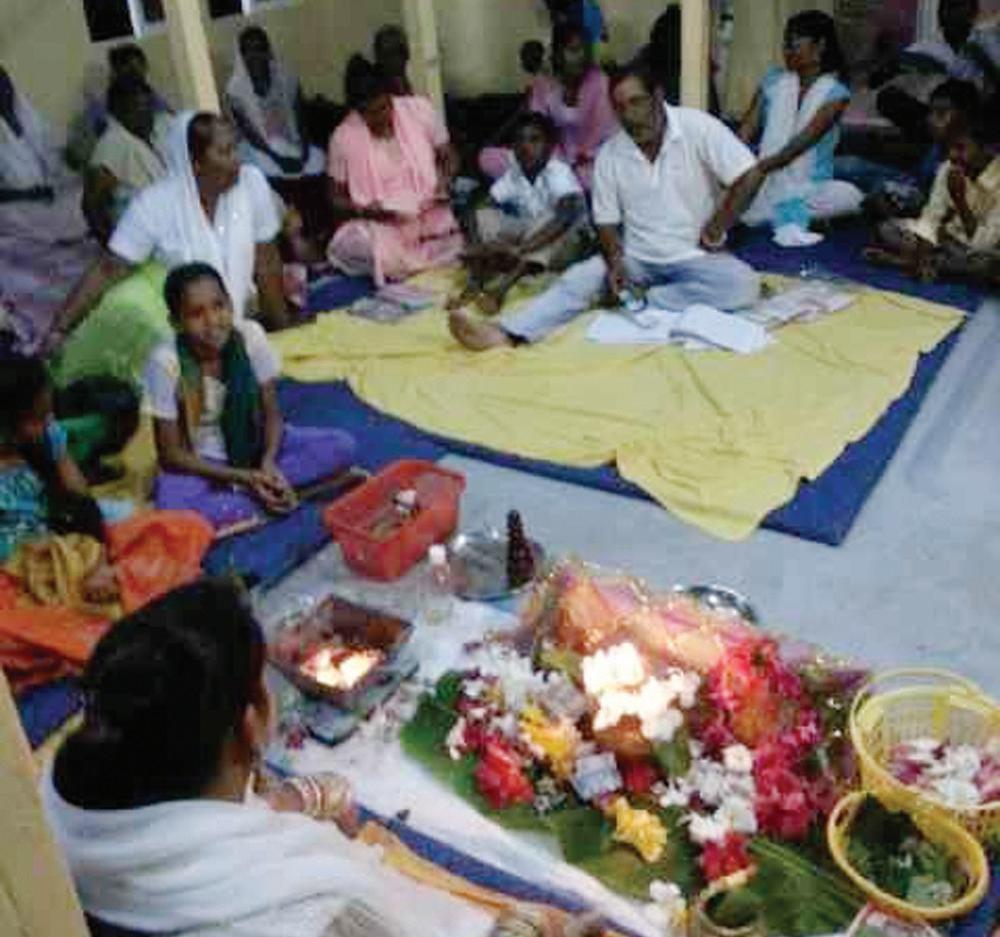
plan religious functions, giving praise to the Goddesses and feeding persons seven curry.
In the practice of Sanatan Dharma, commonly called Hinduism, emphasis is placed on the commencement of every event and undertaking. It is believed that if one commences any deliberation with the right mental, physical, and spiritual conditioning, success, as well as sustained good fortune, will be evident. It is important to establish at the start of a new year a firm foundation from which one can build and develop, achieving one’s aspirations.
The period of Navraatri facilitates that process and through fasting and discipline, one is able to refocus and clearly redefine one’s personal
vision as well as seek self-empowerment in every aspect of life. The festival enables one to reflect on the past and redirect and recommit oneself to the higher ideals of life. Navraatri also fosters and promotes family worship through the “Pariwaar Pooja” that unites the single most important unit of society, in a time of prayer and togetherness. Values of trust, respect, honesty, kindness, forgiveness, patience and love are cultivated, and these are projected into the year as they become diffused in social integration. Thus the period of Navraatri enhances not only personal growth and empowerment, but also serves to impact positively on society.
Governments traditionally have promoted ownership of newlybuilt homes as a solution to the housing shortage in Latin America and the Caribbean. But a revealing new study highlights the key role rentals play in urban areas and their potential for serving the needs of a broad variety of growing population groups.
According to “Rental
$6.5B for
The Opposition on Thursday night disapproved $6.5 billion allocated for the completion of the Cheddi Jagan International Airport (CJIA) Expansion Project. Last year, a similar cut in the funds for the project was made, resulting in delays in construction work.
Meanwhile, consideration of the budgetary estimates for the Home Affairs Ministry was completed in record time, with no objections from the Opposition. The $11.807 billion allocation was approved in less than 30 minutes, as the Opposition did not ask a single question.
Home Affairs Minister Clement
Rohee, who was the subject of much discussion in 2013 and highly criticised by the Opposition, was seen smiling from across the Parliament Chamber.
In the 2014 Budget, $1.508 billion was budgeted for the Secretariat Services, $7.447 billion for the Guyana Police Force, $1.462 billion for the Guyana Prison Service, $24.9 million for the Police Complaints Authority, $1.086 billion for the Guyana Fire Service, $186 million for the General Register Offices and $92.987 million for the Customs AntiNarcotics Unit. Senior ranks from the Guyana Police Force and the other arms of the
Home Affairs Ministry flocked the gallery to witness the consideration.
Unlike the Home Affairs Ministry, the Labour, Human Services and Social Security Ministry allocation did not enjoy a smooth passage through the Committee of Supply as the Minister was peppered with questions posed by both the A Partnership for National Unity (APNU) and Alliance For Change (AFC).
At the end of the road; however, the Opposition threw their support behind the $9.789 billion budgetary allocation for the Labour, Human Services and Social Security Ministry.
Housing Wanted”, a new report by the Inter-American Development Bank (IDB), one in five Latin American households, or roughly 30 million families, are renters. This proportion has been on the rise since the 1990s in Argentina, Bolivia, Brazil, Chile, Colombia, Costa Rica, The Dominican Republic, Mexico, Nicaragua, Peru, and Uruguay. Nevertheless, there is a large stock of unoccupied homes that could help ease the regional housing crunch.
Nearly 54 million families, or 37 per cent of the region’s households, suffer housing problems such as overcrowding, insufficient access to basic services, shoddy construction or materials, or a non-existent property title.
What is more, some nine million households are either homeless altogether, or live in substandard homes, or ones that are beyond repair.
Colombia is the Latin American country where renting is the most common (38 per cent of all households), while in The Dominican Republic the ratio is one in three households and in Honduras, Ecuador, Bolivia and Jamaica, it is one in four. The five cities with the highest rates of rented homes are Bogota, Santo Domingo, Cali, Medellin, and Quito, where it exceeds 35 per cent of all households.
“Unlike in more developed regions, in Latin America renting is not something restricted to the poorest people,” said Andrés Blanco Blanco, IDB Senior Specialist and a coauthor of the study. “In fact, in
some countries in our region the trend toward renting rises as household income goes up, and in others, rentals are concentrated among middleincome households. The reason for this is the high rate of informal housing, which lets low-income families own their houses, whatever their quality or location,” he added.
The study, which examined 19 metropolitan areas of Argentina, Brazil, Chile, Colombia, El Salvador, Jamaica, Mexico, Peru and Uruguay, debunks the myth that only the rich rent to the poor. Landlords vary widely in their socio-economic level, with just a minimal presence of major real estate investors and a supply spread out among many small-scale owners. For example, in Chile, 80 per cent of landlords own just a single rental home.
The preference for renting is associated with certain social groups: the ones who rent most often are young people, divorced individuals, and immigrants. The kind of household also matters. Extended families and widows rent less frequently than nuclear families, while single people and unmarried couples usually are renters. There is a direct link between the age of the person and the likelihood that they rent. Depending on the country, a person between the ages of 25 and 34 is between three and eight times more likely to rent their home in comparison to an older person. And a young person aged 15 to 24 is five to 14 times more likely to do so than an older person.
Renting offers major advantages over homeownership for many people, because it tends to be concentrated in areas that are more centrally located, more densely populated and more established. It is also better adapted to the preferences of certain social groups and works well in a labour market that demands that people be mobile.
In light of these findings, the IDB is engaging in a dialogue with countries of the region to explore how a policy to promote rental markets could complement their broader housing policies, establishing incentives both for landlords and renters, updating regulations and linking housing issues with the tools of urban planning.
“What this study proposes is to open up new, unexplored territory in housing policy,” said Vicente Fretes, Chief of the IDB’s Fiscal and Municipal Management Division and coauthor of the report.
“It’s not a question of replacing the focus on homeownership but rather of complementing it. It’s sound advice, taking into account the advantages for fiscal sustainability and for containing urban sprawl,” Fretes said. Some policies could be relatively simple, such as expediting home repossessions or creating a system of rental guarantees. This would help expand the supply of homes available for rent, creating incentives to add to the market at least part of the considerable stock of vacant homes, which in some countries represents as much as 20 per cent of all homes.
By Michael younge
Attorney General
Anil Nandlall says that the National Assembly is not a law unto itself and, therefore, must bow to the principles and provisions contained within the Constitution of Guyana as interpreted by the Judiciary of the land.
Nandlall made it clear that any attempt by the Assembly to tout itself as insulated from judicial review or scrutiny is ill advised. He was at the time speaking during an invited comment with Guyana Times on some pronouncements made by the Speaker of the National Assembly, Raphael Trotman as regards the relationship between the Judiciary and the Parliament.
The Attorney General wasted no time in describing Trotman’s position on this particular matter as “flawed”. In his considered opinion as to the way forward, during the period of the consideration of the National Estimates pre-
sented by the Executive, the Speaker stated that the Assembly cannot be “unmindful” of the views of the Court but holds firm to the view that “there is no burden or duty” placed on it to adopt or enforce the rulings of the High Court.
Acting Chief Justice Ian Chang had ruled that the Assembly acted unconstitutionally when it cut the Budget estimates back in 2012. Justice Chang also said that the Assembly can either exercise its power to approve or disapprove.
Guided by law
The Speaker, however, said the Assembly is respectful of this ruling merely because of comity and argues that “reasonable effort” would be made to “respect and implement” the ruling.
But quite sheepishly, he also said in the same breath that “the Assembly cannot recognise the right in the High Court to fetter or restrict its activities” while arguing that any applica-
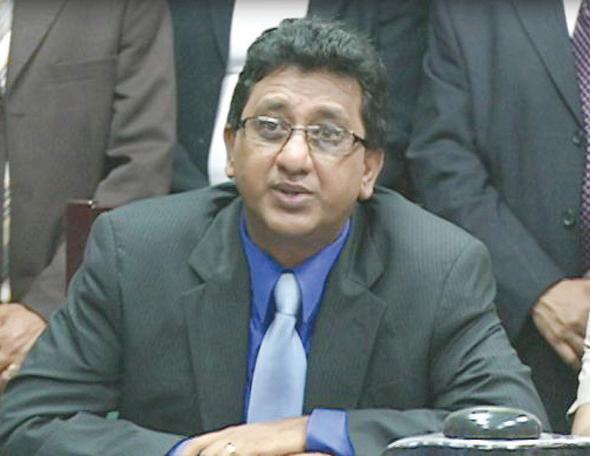
tion for a stay on the ruling would be an admission that the Judiciary’s decision is binding.
The Legal Affairs Minister explained that regardless of the opinions or views expressed by the Speaker, the Parliament has to be guided by what is lawful in order to ensure that it stays within the ambit of constitutionality while discharging its responsibility.
“The Parliament itself,
Finance Minister, Dr Ashni Singh on Thursday evening expressed his shock and disappointment at the actions of the combined parliamentary Opposition after they disapproved funding for the Specialty Hospital Project.
In doing so, the A Partnership for National Unity (APNU) and Alliance For Change (AFC) combined to axe the entire capital expenditures of the Regional and Clinical Services programme under the Health Ministry from the budget estimates.
Dr Singh was at the time speaking to the media shortly after the voting down of the programme at the National Assembly on Thursday.
He said Government was subjected to a great degree of parliamentary irresponsibility when the combined parliamentary Opposition refused the entire programme
only because it included monies for the Specialty Hospital project.
He pointed out that in addition to that project, the programme also included funds for capital works on hospitals across the country, including the Port Kaituma Hospital; construction of hostels for nurses, doctor’s quarters; and the acquisition of medical equipment such as ambulances.
“We have already spoken at great length about the merit of the Specialty Hospital. We have already said that we have absolutely no difficulties answering any questions, providing any information on this project… it is in our interests to do so,” the Finance Minister noted.
Grave consequences
Dr Singh pointed out that Health Minister, Dr Bheri Ramsaran was engaged for some two hours in answering questions posed by the Opposition.
“So here you have an exhaustive session of questions and answers, at the end of which –all the questions having been answered – that notwithstanding the Opposition decided to withhold its approval to the entire programme. The consequences this will have for medical services across the country are extremely grave,” he stated.
The Finance Minister opined that the Opposition
was not aware of the consequences of its action, and he hopes that it does not repeat this for the other programmes, since members have proposed four areas that they do not approve of.
He noted that this may seriously harm the people of Guyana and their quality of life.
On the issue of Government’s refusal to retire to the sub-committee, set up by the Speaker, to discuss the proposal by the Opposition on the Specialty Hospital, Dr Singh explained that they are always willing to have dialogue, but the Opposition intends to delay and derailed the consideration of the budget estimates.
He disclosed that there has been no shortage on Government’s part to compromise, adding that they have even asked the Opposition parties to present a list of the problems they have with the project so that they are ventilated, but this was not done.
“It is extremely difficult to say to us that you are interested in conversation, about compromise when you are not even willing to tell me what it is that you want to compromise on,” he noted.
The Minister disclosed that while the Opposition parties did send the list of the four items they do not approve of, they did not indicate what they want changed.
quite clearly.
Nandlall recalled that the Speaker argued that he was going to make every reasonable effort to implement the ruling of the Chief Justice on the Budget cuts case merely because of the doctrine of comity.
He argued strongly, however, that all of the standing orders of the Parliament and the Committee of Supply and the very procedures it puts into train are subjected to the provisions of the Constitution; therefore, they are subject to judicial review if a complaint is filed by any aggrieved member of the Assembly.
in the conduct of its work, is subject to review by the courts, to ensure that the Parliament does not act outside of the Constitution. That is a most elementary principle of constitutional law. It is for this precise reason that if the Parliament produces a law that contravenes or is inconsistent with the Constitution, the court has a power to strike it down as void to extent of the inconsistency”, he stated
The Attorney General maintained that “the principle that unless and until, a ruling of a court is set aside or overturned by a court of competent jurisdiction, that ruling must be obeyed, is a principle which brokers absolutely no exception”.
Nandlall reiterated his position that the Constitution has provided the courts with the untrammelled jurisdiction to ensure that its provisions are complied with and its letter and spirit are obeyed by all of its creations.
In the same vein, the court has a power to review every other sphere of parliamentary activity upon a complaint that it has violated the Constitution, he posited.
“Once that complaint of constitutional violation is made, the court has an all-purpose key to open the doors of the Parliament in order to enquire whether or not the Constitution is violated. If it finds no violations, then it is impotent to act, but once there is a violation, it has an obligation to pronounce on it,” the AG maintained.
“This is not a matter of comity but an unconditional legal obligation,” he reasoned. “In my respectful view, the Speaker has gone on a flight of his own outside of the realm of the rule of law and the Constitution of Guyana....”
The entire $1.1 billion Capital Expenditure, which included the Amerindian Development Fund (ADF) for the Amerindian Affairs Ministry, was on Thursday evening voted down by the parliamentary Opposition as they claimed that the money is being grossly misused by the Government.
The ADF was implemented in 2013 by the Amerindian Affairs Ministry in partnership with the United Nations Development Programme. It is expected to benefit some 180 Amerindian communities across the 10 administrative regions of Guyana.
During the consideration for the budget estimates, both A Partnership for National Unity (APNU) and Alliance For Change (AFC) Members of Parliament grilled Amerindian Affairs Minister Pauline Sukhai on the use of the money directed for the project. She desperately tried to justify the spending.
The combined Opposition intensely questioned the $796 million that was directed towards the continuation of the Youth Entrepreneurship and Apprenticeship Programme (YEAP) along with funds paid to Community Services Officers (CSOs).
Sukhai disclosed to the National Assembly that large sums of money were injected into the Amerindian communities for various projects. She broke down the $1.1 billion, informing the House of which areas the money is being directed.
APNU Parliamentarian Sydney Allicock questioned whether any assessment
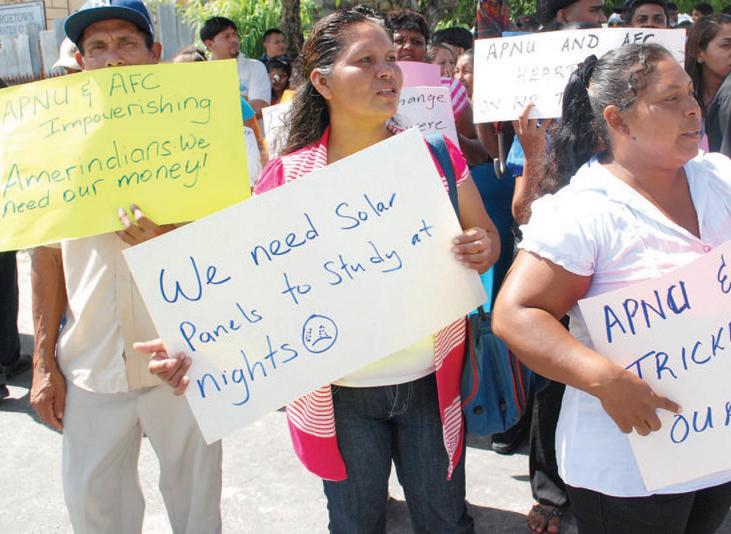
was done to determine the needs of the communities and the Minister pointed out that this was done at the National Toshaos Council in October last year where some 205 Amerindian leaders discussed their priorities and needs.
The Opposition also contended that there were no real reasons for the Fund, saying that the House had approved a $500 million vote in December 2013. Sukhai, for her part, said the ADF in this year’s budget had included $796 million for youth and several Amerindian development projects. Sukhai said the $500 million did not capture all the plans for spending last year. She said that that sum was directed mainly towards priority projects.
Meanwhile, minutes after the disapproval of the line item, APNU and the AFC, during a joint press conference, argued that the People’s Progressive Party /
Civic (PPP/C) Administration has been using the ADF for political mileage. “The Ministry of Amerindian Affairs failed to present a comprehensive report that measures the impact of the Youth Apprenticeship and Entrepreneurial Programme on the quality of life for young residents of the hinterland,” APNU’s Dr George Norton said. The parties are now calling for a complete review of YEAP in order to ensure that the large sum of money is fully accounted for. According to Norton, instead of paying CSOs for doing practically nothing, the Government should invest in a technical institute or scholarship programmes for young Amerindian men and women to gain access to the Georgetown Technical Institute (GTI), the Carnegie School of Home Economics and other skill-based organisations that would equip them with the requisite skills and knowledge needed for the world of work.














Changes are happening all around you. Now is a good time for reflection and contemplation. Imagine ways to improve your life, and examine different avenues that will help get you there.

By Bernice Bede Osol

(June 21July 22) (Jan. 20Feb. 19) (Dec. 22Jan. 19)
You may be intrigued by a fascinating opportunity. Before you sign something or make an investment, look into the legal details. Rather than take a gamble, you should make an informed decision.

Stop hesitating and take the plunge. Your life is not going to change if you wait for others to make the first move. Take the initiative and chase your goals.

Keep your eyes and ears open to any financial suggestions you receive. Be ready to take action. Moving decisively and quickly could pave the way to an unexpected moneymaking venture.

(Aug. 23Sept. 22)
(July 23Aug. 22) (Feb. 20-March 20)
You are likely to meet someone who will take a special place in your heart. Talking about your intentions will lead to long-term plans. Put love and romance first.

(March 21-April 19)
Keep an up-to-date record of your business contacts. Don’t be shy if you are looking to change or advance your career. Networking with friends can prove beneficial, as well.

(April 20-May 20)
You will feel energetic and in high spirits. Get together with a close friend for a day of fun and laughter. A shopping spree or sightseeing excursion could lead to romance.

(May 21June 20)
Your home may not be the safe haven that you’d like it to be. Minor disagreements could develop into major arguments. You can avoid trouble if you keep your opinions to yourself.
Overindulgence is not an answer to your problems. If you are distressed or confused, talk it out with someone you trust. Someone from your past is likely to want to re-enter your life.

(Sept. 23Oct. 23)
You may discover some money that you had forgotten about. Now is the best time to complete any unfinished chores or tackle tasks that you have been putting off.

(Oct. 24Nov. 22)
Find an imaginative way to sell your ideas. Your talents will go unnoticed unless you market your skills effectively. Take any opportunity to help others in your community.

(Nov. 23Dec. 21)
You should remain observant and tight-lipped today. If you are too open, you will leave yourself open to criticism. Don’t give anyone the chance to use your words against you.






By Avenash Ramzan
Local and Caribbean riders will light up Guyana’s roadways on May 17-18 when the National Sports Commission in collaboration with the Sport Ministry and the Guyana Cycling Federation, stages the 32nd annual Independence ThreeStage cycling meet.


Hassan Mohamed, the man in charge of organising the event, told this publication on Thursday that plans are afoot to have the two-day race happen a week prior to Guyana’s 48th Independence anniversary.
“Plans are moving apace and we hope to have another
successful event, as has been the case over the past years. Again, we expect to see our local riders being challenged by foreign cyclists and soon we would know how many countries would be taking part,” Mohamed related.
When action pedals off on May 17, the riders will com-

Former 100 meters world record hold-
er Asafa Powell was banned for 18 months by a Jamaican anti-doping disciplinary panel on Thursday after he tested positive for a banned substance last year.
The Jamaican sprinter, 31, tested positive for the stimulant oxilophrine at last year’s national championships and the ban has been backdated to June 21 2013the day he provided the sample. His ban will end on Dec 20.
Powell said he would lodge an appeal against the decision.
“This ruling is not only unfair, it is patently unjust,” he said in a statement.
The chairman of the threemember disciplinary pan-
el, Lennox Gayle, said: “The panel arrived at a unanimous decision, and it is a decision that in all the circumstances Mr. Powell was found to be negligent and that he was at fault, especially in light of the fact he (is) an elite athlete.
“It is our decision that the period of ineligibility will be 18 months commencing from the date of the sample collection ... the period will expire on the 20th of December 2014.”
Powell added: “Panels such as these, I understood, were assembled to allow athletes who, consciously or unconsciously, come into conflict with the rules of sport a chance at equitable redemption. Unfortunately, this was not the case.
“This is the first time in
nearly 12 years of being in the sport and over 150 tests that I have had an adverse finding. It is for a stimulant, a stimulant that is only banned during competition and experts have declared has no performance enhancing effects.
“Sanctions for a stimulant and this kind of infraction usually range from public warnings to a ban of three months, six months in the most extreme cases; I was and am still more than prepared to accept a sanction that is in line with the offence. Instead, nine months later, what has been handed down is clearly not based on the offence nor the facts surrounding it.
“My team has begun preparations for an appeal to the Court of Arbitration for Sport in Switzerland.
“I want to reiterate that I have never knowingly taken any banned substances.”
Powell’s sanction comes two days after his former training partner Sherone Simpson received an 18-month suspension from the same panel for the same substance.
Another Jamaican, Olympic discus thrower Allison Randall, was also handed a two-year ban for using the prohibited diuretic hydrochlorothiazide on Tuesday. (Reuters)
pete from the Corriverton Police Station to Alexander Street, New Amsterdam, covering a distance of 46.6 miles or 75 km. That leg is slated to start at 07:30h.
At 14:00h on the same day, the cyclists will start at Rosignol and finish at Carifesta Avenue, Georgetown, a total
distance of 60.4 miles or 97.1 km.
The third and final stage, which will cover 64.5 miles or 103 km, will be held on May 18 with action starting at 08:00h at Kara Kara, Linden, and ending at Homestretch Avenue, Georgetown.
Altogether, the racers will cover 171.5 miles or 275.1 km of Guyana’s roadways.
Eastman defending champion
At last year’s event, Barbadian Jamal Eastman, riding for local club Carlton Wheelers, won the overall title in six hours, 58 minutes, 13 seconds (06h: 58m: 13s). Eastman was in sublime form, winning stages one and two, while Guyanese Robin Persaud won the final stage.
The Guyanese brigade Geron Williams (06h: 58m: 20s), Orville Hinds (06h: 58m: 25s), Alanzo Greaves (06h: 58m: 26s), Raynauth Jeffrey (06h: 58m: 33s) and Raul Leal (06h: 58m: 33s) rounded off the top finishers in that order.
Although Jeffrey and Leal gained the same time, Jeffrey
secured the fifth spot by virtue of crossing the line ahead his Team Coco (Guyana) partner. Leal was the leading junior cyclist, finishing ahead of Hamzah Eastman and Stephano Husbands, who ended in second and third spots, respectively.
Horace Burrowes, who finished seventh overall with a time of six hours, 59 minutes (06h: 59m), was the winner of the Veterans’ category, while Naomi Singh of East Coast Demerara was among the four females who participated in the two-day activity, but was the lone competitor on the distaff side to start all three stages. She collected a special prize for her effort.
The other females were Hazina Barrett of Linden, Marica Dick of Berbice and Tashwana Doris of Georgetown.
The 2013 race attracted 73 riders from Guyana, Trinidad and Tobago, Barbados, Anguilla and the United States of America, and according to Mohamed, that number is expected to increase this year.

GT&T’s Mobile Money Guyana (MMG) in celebration of its oneyear milestone has joined in support of the Guyana Karate College (GKC), in collaboration with the Ministry of Tourism for the International Food and Drink FestivalGuyana set for April 19 at the Everest Cricket Club.
The handing over of sponsorship to the GKC took place on Wednesday at the Mobile Money office on Croal Street. The MMG contribution will go towards the successful ex-
ecution of the event. The event is geared towards raising funds for the completion of the new Dojo, currently under constrcution at Liliendaal.
Marketing Officer of MMG, Kester Abrams, said, “Considering several recent events involving our Guyanese youths, the future of the country; MMG is very proud to support this initiative. Karate promotes discipline and consciousness which can prove vital in the development of our youths and the nation as a whole.”
Vice-president of the GKC, Waynewright Orderson, said, “Thanks to GTT and MMG for the support we have received over the years, the College looks forward to your continued involvement in the development of karate in Guyana.”
Managing Director of MMG, Eshwar Thakurdin, stated, “GT&T Mobile Money applauds the effort of the College and will continue to support initiatives that promote healthy lifestyles and discipline.”

TBradley has questioned Manny Pacquiao’s hunger ahead of Saturday’s rematch in Las Vegas.
Another defeat for Filipino Pacquiao, who suffered a controversial points loss to American Bradley in 2012, would likely end his career.
Pacquiao, 35, has won world titles in seven weight divisions but has lost two of his last three fights.
“The hunger that he’s looking for is no longer there,” said 30-year-old Bradley, the WBO welterweight champion.
“This is a must-win situation and if we don’t win this fight we have to maybe consider retirement”
Freddie Roach Manny Pacquiao’s trainer
“He’s a tremendous fighter but I don’t see it. It’s gone.”
Pacquiao has been fighting as a professional since 1995 and has 55 wins and five losses from 62 fights.
Despite a comfortable points victory over Brandon Rios last November, some believe Pacquiao’s best days are behind him.
Prior to the Rios fight, he was knocked out by Juan Manuel Marquez, the first time he had been stopped since 1999.
“I have to prove that I still have the killer instinct and hunger, to him and to myself,” said Pacquiao.
The importance of in-

Rory McIlroy and Phil Mickelson head the field in Tiger Woods’s absence as the 78th Masters got under way at the Augusta National on Thursday.
flicting a first defeat on Bradley is fully understood by Pacquiao’s trainer
Freddie Roach.
“This is a must-win situation and if we don’t win this fight we have to maybe consider retirement,” said Roach.
“Some people think we are all done and we have to prove that we are not. We’ve had a great run. I don’t think that it’s close to being over.”
In their first fight, Bradley, who is unbeaten in 32 professional fights, was awarded a split decision victory, despite most observers believing Pacquiao had won the contest with something to spare.
Oscar Pistorius has faced a second day of intense cross-examination at his trial in which he was accused of being selfish, reckless and a liar.
Chief prosecutor Gerrie Nel focused on the athlete’s character, enthusiasm for firearms and version of events before he shot his girlfriend Reeva Steenkamp.
The South African sprinter appeared calmer than he had during his previous three days on the witness stand.
The 27-year-old Olympic and Paralympic star denies murder.
He again insisted in court in Pretoria on Thursday that the shooting on Valentine’s Day last year was a terrible accident after he mistook her for a burglar.
Oscar Pistorius was asked about angry text messages exchanged with Reeva Steenkamp, Andrew Harding reports
Mr Pistorius said he had not intended to pull the trigger, even to fire at an intruder, and could not ex-

plain why he fired four shots through a toilet cubicle door.
“I didn’t have time to think about it,” he said in a trembling voice.
‘Rough time’
Mr Nel, known as the “bull terrier” in South Africa for his fierce questioning, also suggested Mr Pistorius was only concerned about himself during the couple’s three-month relationship.
“It was all about you, Mr Pistorius,” he said, repeatedly. He tried to give the impression that the Paralympic
athlete was self-centred, contemptuous of his girlfriend and lacking responsibility, the BBC’s Karin Giannone reports from Pretoria.
Mr Nel suggested that Mr Pistorius should have apologised to Ms Steenkamp’s family in private, rather than making a “spectacle” by doing it in court on Monday.
The athlete replied that he had not had the opportunity and had been unable to find the correct words. “I’m terribly sorry that I took the life of their daughter,” he said. (BBC Sport)
Woods is missing after having back surgery, but the world number one has not won at Augusta since 2005 and the tournament is considered wide open.
Northern Ireland’s McIlroy is the bookmakers’ favourite to clinch a first Masters Green Jacket and third major.
Adam Scott bids to be-
come the fourth player to win back-to-back titles.
The 24-year-old McIlroy suffered an infamous meltdown at Augusta in 2011 when he blew a four-shot lead going into the final round, but he has won two majors since and has put behind him a miserable 2013 season.
“Mind, body, equipment, it’s all there,” he said. “There are no excuses if I don’t do well this week.”
American left-hander Mickelson is the crowd favourite and can join Arnold Palmer and Woods on four
Green Jackets, 10 years after winning his first.
“It’s a magical place,” said Mickelson. “I just love everything about this tournament.”
The 43-year-old won the Open at Muirfield last summer for a fifth major title and the third leg of a career Grand Slam of all four majors, with only the US Open, in which he has a record six runner-up spots, missing.
Mickelson admits the Masters feels “weird” without Woods, who is missing the tournament for the first time since his debut as an amateur in 1995.
The 38-year-old has been stranded on 14 majors since 2008 as he chases Nicklaus’s record of 18 major titles.
“I hope he gets back soon,” said Mickelson. “Look what he’s done for the game the last 17 years. It’s been incredible.
“And no-one has benefited more from having Tiger in the game than myself.”
Defending champion Scott is number two in the world and can overhaul Woods in the rankings with a two-way tie for third or better. (BBC Sport)
Mo Farah’s decision to run Sunday’s London Marathon less than a month after collapsing at the end of a race has been questioned by three of his rivals.
The Briton needed treatment after the New York Half Marathon on 16 March.
Kenya’s Geoffrey Mutai, who beat Farah to win in New York, said: “To handle sickness is not easy - perhaps I would relax and prepare for another time.”
Olympic champion Stephen Kiprotich and London Marathon record holder Emmanuel Mutai also raised doubts over Farah.
Farah, the Olympic and world champion at both 5,000m and 10,000m, will make his full marathon debut in the 26.2-mile race on Sunday, having run the first half of last year’s event.
The 31-year-old, who will face four of the 10 fastest marathon runners in history, said he wanted to break Steve Jones’s British record of two hours, seven minutes and 13 seconds, set in 1985.
Mo Farah ready for
London Marathon debut
But Uganda’s Kiprotich, the Olympic and world marathon champion, suggested the Briton should continue to concentrate on shorter distances.
He said: “I don’t see why he’s running the marathon.

He’s still good on the track, still running a mile in under three minutes 50 seconds.
“Maybe the problem is that the fans are the ones pushing him.”
Emmanuel Mutai argued that Farah was giving himself too big a task by making his full marathon debut in such a high-profile race.
The Kenyan, winner of the 2011 London Marathon, said: “Sometimes it’s good to start with a small race - not so fast or with such a strong field.
“You win then and then you have an idea of how the marathon is when you come to a big race like this.
“If he doesn’t perform
here, that might affect him psychologically - and whatever he has achieved on that day will not be good because maybe he was expecting a lot, and that can be demoralising.”
In addition in Kiprotich and the two unrelated Mutais, Sunday’s field will include last year’s London Marathon winner Tsegaye Kebede and Kenyan world record holder Wilson Kipsang. Ethiopian legend Haile Gebrselassie is set to pace the field to 30km (18 miles) at world-record schedule. The current world record is two hours, three minutes and 23 seconds. (BBC
friday, april 11, 2014


Dentures provided in 72 hours from as low as $4500. Contact Dr B Stuart, 209B Charlotte St, Lacytown. Tel: 2255034



621-3249.

Schoonord - $2M. Call: 6757292

Available: Fresh long-stemmed roses, fresh dried and silk floral arrangements, gift items, bridal boutiques and wreaths. Nesha’s Flowerland. 78 Church Street (opposite St George’s Cathedral). Tel: 227-3553/225-3315

Agricultural tractors and machinery; single and 4-wheel drive: Massey Ferguson, Ford, John Deere, New Holland and Fiat. Also available spares parts for these machines. Phone: 6194483, 601-7883, 226-6325
Spare parts for 1-2-3-4 and 6 cylinder diesel engines for Lister, Pieter, Kobota, Perkins, Veutz, Fiat, John Deer, Case IH, Cummings, Bedford and Leyland Daf. Also all middles of diesel generators: super silence and open air from 3KVA600KVA. Contact Rams Auto Spares on telephone 226-6325, 227-1454, 6194483 and 685-3568
Cheap earth delivered to spot on ECD and EBD. Call 627-9977 &698-0182
Clean garden earth and builders waste; our services also includes Bobcat rental, excavating, clearing and leveling. Call 616-0617 or 663-3285
Sawmill complex designed to produce thousands of BM for export and local market, built on 25 acres of land. Phone: 684-5868.
USA refurbished laptops, Dell Latitude D620 & D630 for students, home or office use. Intel Core Duo 1.8.GHz, 24x CDRW/DVD, Dell Wireless 802.11 with Windows 7 for $39,000. We negotiate with students. Call 649-9941/2760574.

Healthworld Holistic Centre offers clinical psychotherapy for suicidal thoughts, attempted suicides, depression, stress, mood disorders, psychotic disorders, homicidal thoughts, hallucinations, loneliness, conflicts, anger management, relationship & sexual problems, paranoia and much more. Call +592621-0552 and make that appointment now before it’s too late. 12:00PM –6:00PM. Mondays - Fridays. Email: healthworldhc@gmail.com



Prescription Plus Pharmacy located at Lot E5 Hadfield Street, W/ville between Louisa Row and Winter place. Opening Monday to Saturdays 07:00- 20:00h; Sunday

Property for sale at 48 Light Street, Alberttown (between third and fourth streets) Contact Ram on telephone: 619-4483 685-3568 and 226-6325.

Da Silva’s Optical. For Your Eyes Only, Look Better See Better. Phillip A Da Silva OD, Shannon L Da Silva OD, Natalie Da Silva OD. 248 South Road, Bourda. Phone: 227-3529, Linden: 444-6376, Corriverton: 339-3536, Meten-Meer-Zorg: 275-0322, Grand Cayman Islands: (345) 943-1515 for the perfect

J Eastman & Associates. Taxation (VAT, income & Property), Cash Flow Projections, Business Development Plan, Personal Financial Adviser, Accounting & Consultancy. 190 Church Street, South Cummingsburg, Georgetown, Guyana (two buildings east of Austin’s Book Store. Phone: 223-2105, 662-7467

Get your home or business spiritually clean to enhance good luck and prosperity. Telephone: 687-5653
Cleansing of spiritual problems of all kinds. Powerful Ifá protection against evil. Get help to overcome problems with love, relationships, legal, sexual, pregnancy, business, sickness, jobs, enemies, work, money. Call 592-690-1824 from 10:0016:00h Email:anew-life@live.com
Dutch spiritual healing in removing evil spirit, bad luck, evil sickness, spells, reuniting lovers and prosperity to businesses. Call: 612-6417, 220-0708, 687-5653.
Suriname Astrology Palmist and Djuka
Healing, the most powerful spiritualist in the world, are you suffering from the following problems (any religion) love, marriage, family, health business, husband and wife relationship, property, court, children, promotion, visa, pregnancy, education, depression, job, sexual, jealousy, enemy, money, drinking ? Also you can have all evil forces destroyed such as black magic, witchcraft, voodoo, obeyah etc and give powerful protection. We also do upliftment for clearing of land, dredging operations strictly in the interior. For private and confidential service call 674-2112.

Practical electronic course beginning April 7. Abdul Electronic; Phone 2266551/225-0391 Music is fun! Register now and learn to play the Keyboard, Guitar, Drums and do Voice Training. Call Foundation 7 on 225-1151, 617-4200. One furnished house in immaculate condition at Lamaha Gardens suitable for residence and office. US$2,500 (AC, hot & cold, parking etc). One modern 3 bedroom apartment at Campbellville US$1,300 (AC, hot & cold, parking etc). One bond 135,000square foot at Beterverwagting,
Immigration & Visa Services We handle all Canadian, USA and UK immigration and visa matters. Self sponsorships, holiday/visitor’s visas, work permits, students visas, family, class, immigration forms, embassy enquiries, appeals for refused cases, US green card lottery, business class waivers, pardons, etc. Get your visa approved. High success rate. Balwant Persaud & Associates. Certified Immigration Consultants, 68 Sixth Street, Alberttown, Georgetown (Between Cummings & Lights Sts) Tel: 225-1540, 622-8308, 655-3105. Email: balwantpersaud@yahoo.ca TO lET



Wolf’s Warriors defeated Trophy Stall ‘A’ and Regal thrashed Farm in the semifinals of the Trophy Stallsponsored softball cricket tournament at the GCC ground, Bourda, last Sunday.
Wolf’s Warriors batting first against Trophy Stall ‘A’, posted 194 all out off their 20 overs.
Mohamed Karim (33) and Safraz Karim (29) were the main scorers, while S. Budhu took 3-17 and Fazal Rafeek 2-30. Trophy Stall ‘A’ were then restricted to 133 all out off 15 overs. Budhu made 35, while Azad Azeez bagged 4-7, Narine Bailey 3-28 and Ammer Nizamidin
3-29 as Wolf’s Warriors won by 61 runs.
In the other match, Regal was too good for Farm, prevailing by 133 runs. Regal rattled up 212-9 from their 20 overs with Ricky Sargeant (30), K Joseph (27), M Kayume (25) and R Latiff (23) being the main scorers.
L Marks took 4-52 and B Ramsarran 2 for 30. Farm in reply was bundled out for 79 off 12.4 overs. A Aziz was 26 not out at the end as M Bob took 4-25 and Latif 2-13.
The Masters semi-finals, along with the remaining female qualifying matches and female semi-finals will be played on Saturday at the DCC ground from 15:00h and continue under
floodlights. In the qualifying match, 4R Lioness will take on Fazal Kayume’s Angels in the first game. The two female semi-finals will be played at 17:45h. On Pitch Two, Wellwoman will play Karibee Strikers of Berbice, and on Pitch One, Trophy Stall Angels will take on the winner of the 4R Lioness versus Fazal Kayume Angels. In the Masters Over-40 semi-finals at 19:00h on the Pitch One, Floodlights will take on Park Rangers and on the Pitch Two, Industry Super Kings will do battle with Success Masters. The finals are slated for April 26 under floodlights at the DCC ground, Queenstown.

JUST ARRIVED: TOP QUALITY RECONDITIONED VEHICLES; TOYOTA
NOAH; TOYOTA VOXY; TOYOTA
IST (NEW SHAPE); SUZUKI SWIFT; DAIHATSU MOVE (660CC); MERCEDES
BENZ C200 KOMPRESSOR; COROLLA
AE100 WAGON; HONDA CRV RD4; LAND CRUISER (FULLY LOADED);
MAZDA PROCEED 4WD EXTRA-CAB
PICK-UP; TOYOTA HILUX 4WD EXTRA CAB PICKUPS - 3RZ, 5L, 3L SOLID DEFFERNTIAL; MITSUBISHI CANTER TRUCKS 4 TONS FREEZER; 3 TONS OPEN TRAY; 2 TONS 4WD; 3 TONS DUMP TRUCK; NISSAN ATLAS 2 TONS OPEN TRAY TRUCK. PRE-ORDER YOUR UNITS EARLY AND GET THE BEST PRRICES. FULL AFTER SALES SERVICES AND FINANCING AVAILABLE. DEO
MARAJ AUTO SALES, 2 CHIMNEY ROAD, CHATEAU MARGOT, ECD. 624-0762, 220-5177. A NAME AND SERVICE YOU CAN TRUST.
4x4 Nissan Titan fully powered Immaculate condition $3.5M. No reasonable offer refused. 622-7740 Toyota Raum (New Model) with CD, DVD, TV and navigation system. Call 218-4802, 610-3969, 655-2388.

Berbice Educational Institute (BEI) got past arch-rivals Tutorial Academy (TASS) 3-1, when action in the Scotiabank/Pepsi Schools Football Academy Berbice Zone continued on Tuesday at the Esplanade Park in New Amsterdam.
BEI has now finished round two as the only unbeaten team.
Starting the game with the wind in their favour, BEI seemed the better team and had the TASS defence under pressure throughout the first 15 minutes of the game.
In the 17th minute, Kevin Williams took a free kick from a few metres outside the 18- yard box and Goalkeeper Gomuel Humphrey did little to prevent the ball from rolling past him into the goal.
Six minutes later, BEI
went two up when Shakiel Durant sent one through the hands of Humphrey, who at the time looked as though he was not sure of what his function was.
Durant’s goal came after what seemed to be two fouls and the TASS players were expecting to be awarded a free kick. Referee Cliff Peters did not use the whistle despite one of the lines men having his flag up.
In the second half of the game, BEI seemed to have lost some of the dominance they enjoyed earlier. Joshua Butts playing on every side of the field in a desperate attempt to keep his school alive, took on a barrage of defenders and for the first time in the game executed a shot that was directed between the uprights, and TASS were back in the game.
However, eight minutes later the issue was sealed when a penalty was awarded to BEI for an infringement inside the 18- yard box. Goalkeeper Jerold Forth took it and the score became 3-1.
In the final 20 minutes of the game, Durant made four excellent saves and saved his team from further embarrassment. Meanwhile, this is the second game that TASS turned up without the assigned Scotiabank/Pepsi School Coach.
During the half- time break ,Coach Lennox Adams, who is assigned to BEI deserted his team and offered some timely moral- boosting advice the TASS.
Adams later told the Guyana Times that Rawl Huntley, who is assigned to TASS is currently involved with the Berbice under-17 squad. He said new arrangements will have to be made for TASS.
Tuesday’s win takes BEI to six points, while TASS, New Amsterdam Multilateral (NAMS), Vryman’s Erven Secondary (VESS) and Berbice High (BHS) are locked on three points each after two rounds.
The Berbice leg of the competition continued on Thursday, when BHS took on VESS to commence round three at the Esplanade Park. (Andrew Carmichael)
Chelsea manager Jose Mourinho has been fined £8,000 and warned about his future conduct after being sent off in last month’s 1-0 defeat at Aston Villa.
He was dismissed after walking on to the pitch to speak to referee Chris Foy seconds after Ramires was red-carded.
Mourinho is unhappy and frustrated by the fine,
and is considering an appeal
“I don’t know why I was sent off,” he said after the eree refused to speak to me.” Ramires was shown a footed tackle on Villa’s
nied an improper conduct

charge when he appeared at a personal hearing on Wednesday. He is expected to wait for the written reasons behind the charge from the Football Association before lodging his appeal.
Mourinho claimed he was trying to speak to Foy because Ramires was pushed by Villa striker Gabriel Agbonlahor, who had been substituted.
By Rajiv Bisnauth
Ademoralised Guyana
will be looking to sign off their disastrous regional four-day campaign on a positive note, when they take on tournament leaders Trinidad and Tobago from today at the Guyana National Stadium.
Hit hard by four defeats, Guyana will be eyeing a win to boost their sagging morale in what has been a most depressing campaign.
Guyana languishes in the cellar position on 21 points after five games. They have suffered defeats at the hands of Jamaica, Barbados, Combined

Campuses & Colleges and the Leeward Islands before rain saved them from another certain defeat against the Windward Islands.
A cloud of mediocrity has descended on the Guyana side. They have looked vulnerable throughout the tournament and team manager Alvin Johnson has admitted his out-of-contention side has only pride at stake.
“Obviously, we want to finish the tournament with a victory,” Johnson told this publication on Thursday.
“We will be playing for pride; nevertheless we want to win the game. The Trinidadians may be through, but we want to put up a good show and [would] like to finish the tournament
with a win.”
Johnson said nothing had so far gone right for his team in the tournament, adding that the performances are not “poor, but rather “shameful”.
Guyana were let down by their batsmen and for a team that relies on its batting prowess, it will be once again a test for the Guyanese batsmen against a T&T attack of quality fast and spin bowlers.
To compound their woes, their most senior batsmen, Shivnarine Chanderpaul has decided to play in the English County championships, while Ramnaresh Sarwan has not yet recov-

ered from his back injury.
Test batsman Narsingh Deonarine, their third most experienced player who has endured a horror season has been dropped, while Assad Fudadin has pulled out from the squad because of injury. He was replaced on Thursday by all-rounder Christopher Barnwell, who himself has had a horror campaign before he was omitted from the squad for Guyana’s last game against the Leeward Islands.
Struggling leg-spinner Devendra Bishoo and out-of-form batsman Vishaul Singh, have also replaced left-arm spinner Veerasammy Permaul and batsman Chanderpaul Hemraj.
A release from the Guyana Cricket Board (GCB) on Tuesday evening stated that both Permaul and Hemraj have contracted chicken pox and would not recover in time for the start of the game on Friday.
Bishoo, who was omitted for Guyana’s sixth- round clash against the Leeward Islands, had mixed fortunes with a total of 13 wickets for 366 runs in the five games he played. He captured one five-wicket haul (5/71) against Barbados in the second round, but has struggled thereafter.
The diminutive Singh, who started with an attractive 73 in the second innings against Jamaica, was
dropped from the squad for the game against the Combined Campuses and Colleges (CCC) after scores of 5, 1, 14 and 0.
Led by Leon Johnson, who is playing in only his third match due to an injured knee, has been the most fluent batsman this season and is the only Guyanese batsman to score a century.
He, however, will depend heavily on his young players, especially since Guyana’s leading wicket-taker, Veerasammy Permaul, has been ruled out with chicken pox.
On the other hand, bubbling with enthusiasm, the Rayad Emrit-led team is at the top of the Regional Fourday Championship standings with 72 points.
T&T surged to the top of the standings following their 145-run win over Jamaica at Queen’s Park Oval in Port of Spain on Sunday.
T&T made only one change to their team, with Lendl Simmons coming in for Kieron Pollard who will be unavailable due to his Indian Premier League Twenty20 commitments with Mumbai Indians.
The game commences from 10:00h daily and admission to the venue is free.
The Guyana squad reads: Leon Johnson (captain), Christopher Barnwell, Amir Khan, Trevon Griffith, Tagenarine Chanderpaul, Zaheer Mohamed, Ronsford Beaton, Anthony Bramble, Devendra Bishoo, Shimron Hetmyer, Raun Johnson, Keon Joseph and Vishaul Singh. The coach is Esaun Crandon and the manager is Alvin Johnson.
The T&T squad reads: Reyad Emrit (Captain), Adrian Barath, Evin Lewis, Darren Bravo, Jason Mohammed, Jonathan Augustus, Imran Khan, Steven Katwaroo, Shannon Gabriel, Amit Jaggernauth, Lendl Simmons, Ricky Jaipaul, Marlon Richards. Kelvin Williams (Coach), Manohar Ramsaran (Manager).

The Berbice Cricket Board’s already packed 2014 cricket season has got even busier with the launching of the Republic Bank Under-17 Inter-zone tournament.
The tournament was launched earlier this week at the Berbice Cricket Board’s office, Dr. Cheddi Jagan Street, New Amsterdam, with the bank handing over a cheque for $200,000.
At the presentation, BCB administrative officer Alisa Moonsee, said that the board is once again pleased with the sponsorship, adding that the tournament will definitely nurture new talent.
The tournament, Moonsee stated, was a crucial link to Berbice cricket as it is the gap between
the Under 15 and Under 19 levels; hence,it plays a very important role in assisting in the development of the young cricketers as they transfer to a higher level.
The Republic Bank tournament would involve four teams- West Berbice, New Amsterdam/Canje, Lower Corentyne and Central/ Upper Corentyne. New Amsterdam/ Canje will clash with West Berbice, while Lower and Upper Corentyne will come against each other. The two winners will clash in the final, while the two losing teams will play each other for third and fourth places, respectively.
Additionally,the tournament will be used by the BCB’s junior selectors to se-
lect the Berbice Under-17 Inter County team. First vice-president of the BCB Anil Beharry and Chairman of the special events committee, Hilbert Foster, both expressed gratitude to the directors and management of Republic Bank, calling the investment a timely one for the game, as it bridges the gap between the under-15 and under-19 levels. Manager of the Bank’s New Amsterdam branch, Randolph Sears, stated that his bank is pleased to be associated once again with Berbice cricket. He disclosed that the bank over the years has invested heavily in sports, education and youth development and would continue to do so as it is committed to Guyana’s future.
Cavaliers Sports and Tour Club will be staging a Road to Brazil 10k race walk on Sunday from 06:30h at the National park, Thomas Lands.
The event, which will kick off a series of race walks around Guyana ,will be aimed at identifying a team for the Olympics in 2016.
Further, the club will move to Linden with another race on Easter Sunday April 20 while another walk race will be held during the celebration of Linden Town Week on April 27.
Coordinator of the club, Jennifer Major, is appealing to the corporate community and the government to aid in the development of the sport.
Meanwhile, trophies and medals will be up for grabs along with other prizes in the junior and senior male and female categories, along with the veterans and differently abled categories. Registration will be done upon arrival at the National Park.
The Guyana Football Federation’s (GFF) FIFA International Referee, Sherwin Moore, is scheduled to represent Guyana at the 35th annual Dr. Pepper Dallas Cup 2014 in Dallas, Texas, USA, from April 13-20. Moore also officiated in the tournament in 2013.
Moore has been a FIFA referee since 2012 and has officiated in a number of major CFU and CONCACAF tournaments, such as the

CONCACAF Champions League. He has also attended a number of CONCACAF Referees symposiums. According to a correspondence from the GFF, “Moore has shown tremendous growth and improvement and as a consequence, was selected by CONCACAF to represent Guyana at the Dr. Pepper Dallas Cup 2014 tournament.”
Moore is set to depart Guyana today.
Two organizations were recently given a timely boost by Grace Kennedy Remittance Services (GUY) Ltd, under that company’s Bill Express brand, to pull off separate events planned for the Easter holiday.
Leon Stewart,a member of the Phoenix Athletic Club of Bartica, was one of the recipients of a quantity of Bill
Express-branded T-shirts for an upcoming event his club has dubbed the “Easter Athletic Championships”. The event is scheduled for Saturday, April 12th at the Bartica Community Centre Ground and is expected to feature races in the 100-metre categories for under 10 to open levels athletes, both males and females. This event along with the


club’s Day/Night sports held in October will now feature annually on the club’s activity calendar, according to Stewart.
And receiving a monetary contribution along with some branded items for an annual kite-flying competition was event coordinator of the Energy Entertainment
The Guyana Amateur Swimming Association (GASA) will host the April InterClub swim meet on Saturday and Sunday, at the National Aquatic Centre, Liliendaal.
This meet is geared to encourage full participation at all levels and for members to contribute to the success of their clubs.
The 10- lane ,50 metre pool will see 14 exciting events including two spectacular mixed relays.
FINA technical rules will apply during the two-
day meet, unless otherwise agreed by the affiliated clubs prior to this meet.
The highly anticipated meet is open to competitors who are born or naturalized Guyanese that are registered with GASA by their affiliated clubs.
Swimmers will come from Dorado, Sliver Shark, Dolphin and Orca Clubs and will compete in the following categories: boys and girls eight years and under; boys and girls 9 to 10 years; boys and girls 11 to 12 years; boys and girls 13 to 14 years and
boys and girls 15 and over.
Interested swimmers not affiliated to clubs may compete, but points allocated will not go to any club. Unattached swimmers are required to pay a registration fee of $500 per event at least two (2) events prior to their desired event of competition.
Swimmers will begin warming up from noon and swimming will begin from 13:00h daily. Admission to the National Aquatic Centre is free, while food and drinks will be on sale.
The Port Mourant Turf Club (PMTC), in collaboration with Jumbo Jet Auto Sales, will stage the seventh annual Guyana Cup Fever horse race meet on April 20 at the PMTC, Corentyne, Berbice.
Entries for the meet close on April 15 and late entries will not be accepted. Interested horse owners must submit 50 per cent of their entry fees by the closing date.
The feature race will be the ‘C’ and Lower race for horses over a mile and the winner will ride away with $2 million. The secondplaced winner will receive $1 million, third, $500,000, and fourth prize, $250,000.
The Three-year-old Guyana and West Indianbred event will have the
winner taking away $1 million in the 1200 metres race. The second place prize is $500,000, third, $250,000, and fourth, $125,000.
The Four-year-old event for Guyana and West Indiesbred horses, over 1600 metres, carries a winner’s prize of $700,000.
The E ‘1’ and Lower 1300 metres event carries a winner’s prize of $600,000. The G’3’ and Lower race will gallop over a distance of 1300 metres and carry a winner’s prize of $500,000.
The I ‘2’ and Lower race will be run over 1000 metres and carries a first prize of $300,000 while the J ‘2’ and Lower winner will pocket $200,000 also over 100 metres.
The H and Lower will run over 1200 metres with
the winner taking home $350,000.
According to the organising committee, the race track is in excellent condition and a scorching day of racing is anticipated at the Port Mourant turf. Over 75 of the leading race horses have entered so far and their owners have been cutting no quarters to get their horses in top shape.
All races will be run under the rules of the Guyana Horse Racing Authority.
For further information and registration contact Chandu Ramkissoon on 624-9063 or 232-0633, Kris Jagdeo on 624-6123 or 3220369, Rajendra (Jim-Jo) on 618-7278, Ramnauth on 3375311 or Romel Jagroop on 624-1798. (Rajiv Bisnauth)
AGroup -Cordel Prescod. The annual kite flying competition, which is in its fourth year, targets residents, mainly children and young people in the Campbellville area and surrounding communities. Since the start of the competition, Bill Express has been sponsoring the first,second and third place winners in the most creative kite category. This year, patrons are challenged to make Bill Expressbranded kites.
s part of activities to observe its 100th anniversary, Everest Cricket Club’s Masters team will take on Masters of Florida Cricket Academy in a feature 30-over hardball game, starting at 11:00h.
The teams will be attired in coloured uniforms and white balls be will be used.
The home team will be led by Rajesh Singh, while the playing XI will come from former national wicketkeeper/batsman Sheik Mohamed, Basil Persaud, former West Indies Under-19 selectee Hemraj Garbarran, Shaheed Mohamed, former first-class batsman and coach Rabindranauth Seeram, David Harper,
Masters of Florida Cricket Academy team comprises Wayne Ramnarine, Mohamed Sadick, Brandon Dunbar, Kemar Wright, Neville Dawkins, Ayaz Mohamed, Jaikaran Babooram, AltabMohamed, Munzin Nancoo, Hal Martin, Ricky Kissoon, Cornel White and Jason Nancoo.
After the game, a domino competition will get underway at 18:00h, while patrons will be entertained by live Indian/English karaoke. Admission is free.