


The John Campbell
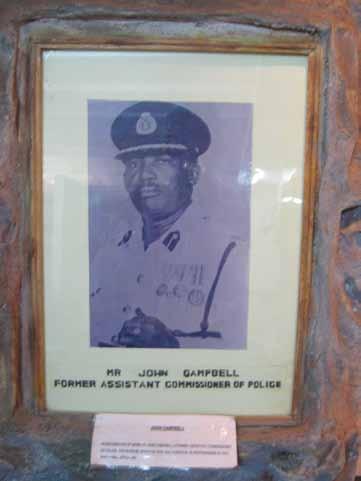
Police Museum, also known as “the Police Museum”, housed at the Felix Austin Police College at the Police Headquarters in Eve Leary, is a repository for the history of the Police Force. Not a wellknown museum, it is in recognition of the work of John Campbell a former Assistant Commissioner of Police, that the museum he was instrumental in re-organising in 1975 was named after him.
In 1932, a few police officers saw the importance of preserving the history of the Police Force, and through the museum this was achieved. It was first housed at the Police Depot, now referred to as the Tactical Services Unit (TSU). However, in the same year it was removed from that location to the Criminal Investigation Department (CID) where it remained until 1938.
In 1938, the collection was growing, as more exhibits were added, but due to the absence of trained per-
sonnel, the development and overall upkeep of the museum suffered. Ten years after, the museum, although lacking the upkeep it deserved, managed to survive and was relocated at the
Police Depot but remained under the administrative control of the CID. Never seeming a priority, the museum’s success to some extent rested on the initiative of officers who were mindful

of preserving the history of the Police Force throughout the unit.
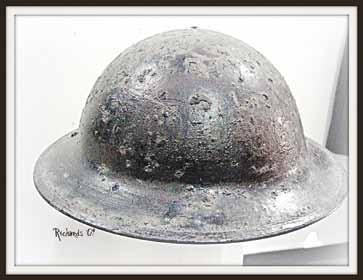
The museum keeps uniforms, helmets, and even musical instruments from colonial times among its many other police artefacts that also include photographs.
During the 70s, the late John Campbell, who was at the time the research, planning and publication officer, took the initiative of reorganising the museum. As a result of the long period of inactivity, many of the artefacts were either damaged or suffered some degree of decay. Moved by the decaying condition of the museum, Campbell had set himself the task of contracting divisional officers throughout the country with a view to replacing the depleted collection.
In 1989, the museum was given a face-lift when Senior Superintendent H. Greene, who was the new officer-in-

charge of research, planning and publication, assumed responsibility for the museum’s rehabilitation programme. It was moved from CID to it present location, Felix Austin Police College and was under the administrative control of Assistant Commissioner L. Gilkes.
To coincide with the Force’s 150th anniversary celebrations, the museum was opened to members of the public on July 24, 1989.
After more than a year of preparation, the museum was officially opened by Mrs V. Campbell, wife of John Campbell, on October 14, 1993.
In the museum one will see the Presentation and State Swords that were used
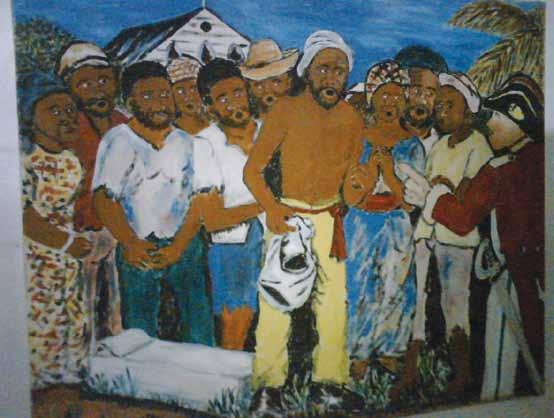
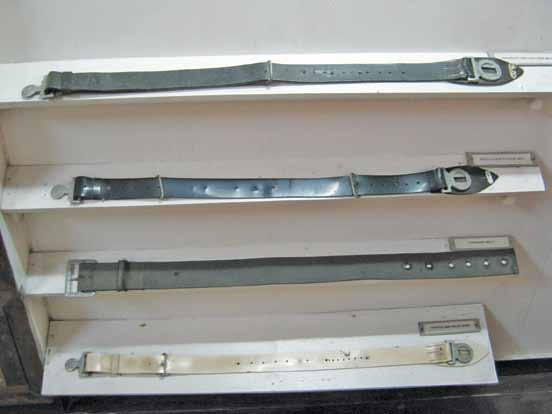
in state ceremonies, and those presented to individuals as a mark of esteem or honour. They have been used for many centuries at coronations, inaugurations and other solemn public occasions. Among them are the Sword of Justice, the Sword of Mercy and the Sword of Mourning. Police sword belts, riot shield used in the 1960’s, and Campbell’s paintings depicting the Enmore Riots, are part of the collection.
Presently, the Force is working on revamping the research and planning department to help to sustain and improve the museum.
The museum is opened to the public. Those desiring to visit can call 225-3017.
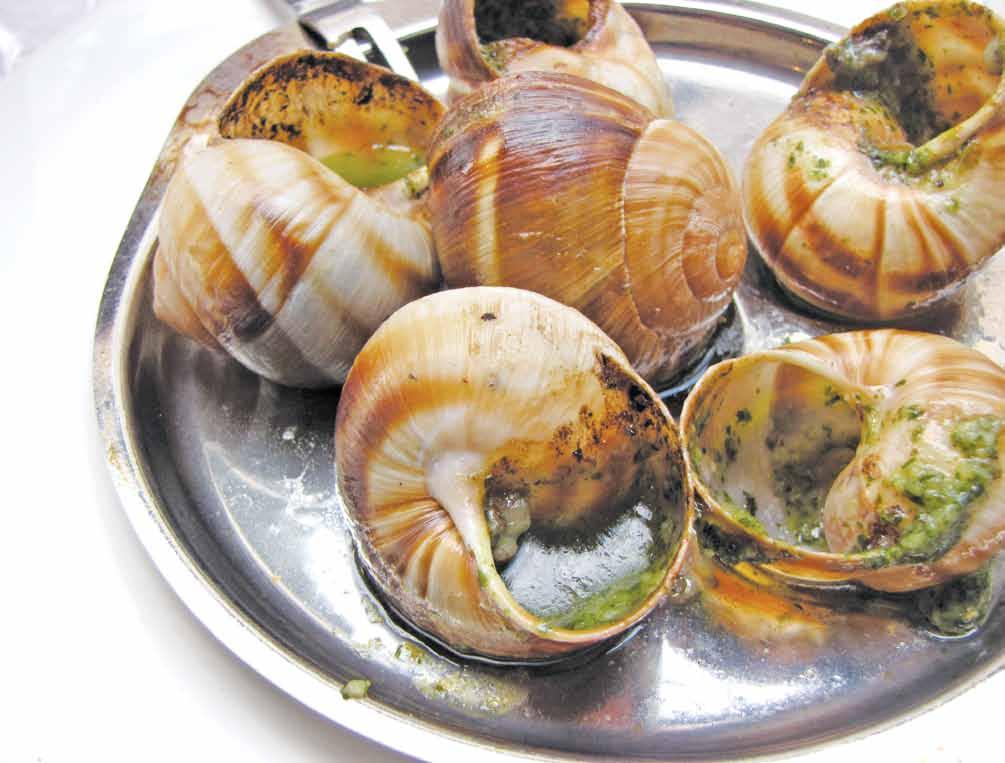
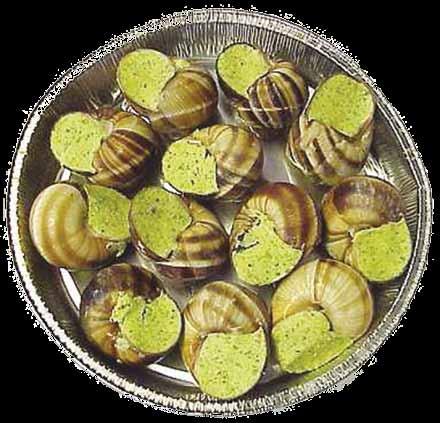
Kreketeh is Guyanese Creole for snail, and escargot (pronounced ez-car-go) is the French word for snail. What these “snails” have in common is that many natives of these countries eat them, although it is much more popular in France than in Guyana.
Additionally, the most common edible snails in France are the Helix aspersa, or Common Garden Snail, served as petit gris in French cuisine, and the escargot de Bourgogne (helix pomatia).
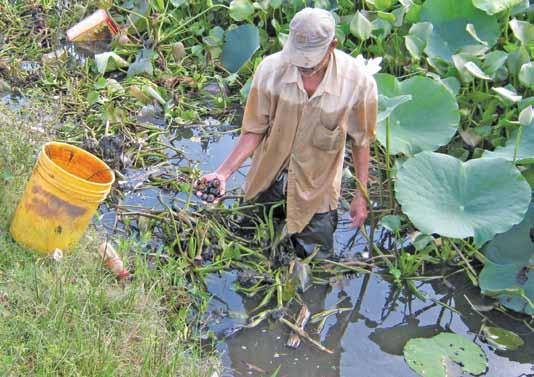
In Guyana, usually Golden Apple snails (Pomacea canaliculata) or Pomacea urceus are eaten most often by, but not restricted to, the poorer classes. It won’t be found on upscale Guyanese restaurant menus unlike in France where escargot is considered a delicacy.
In fact queries about escargot at some leading restaurants here revealed that the word itself is almost unheard of, much less demands for the dish.
It is often assumed that escargot is the name for a specific kind of snail, but it is actually the general name given to the variety of snail used for food. Many snails, but not all, are consumed as food. It is said that there are more than 100 kinds of edible snail.
In European countries, most edible snails are farm-raised or bred as a hobby. This farming practice is called heliciculture. In Guyana, there is no such organised tradition, and most persons looking to eat them or sell, usually utilise any of the many canals from which to catch them.
The idea of eating a snail is not one that has caught on in Guyanese cuisine, though it is all the rage in France as well as other European cuisines. The French can consume some 40,000 tons of snails per year. Ask many Guyanese and the first reaction is usually an expression of disgust, though they would often “know someone” who eats the dish.
However, a snail meal has always been
prehistoric times, as archaeological finds indicate. In addition, historical writings from the Mediterranean also show that early inhabitants dined on snails, as did the Romans, who viewed the dish as elite. It is still often considered in the Western world as an elite dish or only for the adventurous.
According to research by Guyanese anthropologist Dennis Williams, early Amerindians also consumed snail.
Recently, the Helix aspersa has been the main ingredient in skin cream and gels, popular in the Latino community.
Described previously as a common garden snail, the Helix aspersa of the west is also considered a pest for both farmer and gardener. But it is also used as a household pet in aquariums.
Likewise, the Apple snail in Guyana is an agricultural pest, though not a serious infestation. An FAO report at certain project sites from 20022006 noted that the golden apple snail was not an issue due to local predators and good agricultural practices.
In Japan, however, it has become an invasive species, also becoming a serious rice pest in most Southeast and East Asian countries by damaging young rice seedlings since its introduction to the region in the 1980s to be raised as food. However, according to Robert H. Cowie in his 2002 chapter of Molluscs (ed. G.M. Barker)
study on Apple snails, the practice of eating snails did not catch on in these territories mainly “because consumers did not like the ‘tough meat and repulsive taste’.”
In some African countries, only the elderly would eat snail since it is thought to bring about infertility.
High in protein and low in fat, with about 80 percent water before cooking, snails must be thoroughly cleaned since the stomach contents will influence flavour. According to the International Journal of Food Sciences and Nutrition, snails are also high in essential fatty acids such as linoleic and linolenic acids.
In France, escargot is usually cooked and served with garlic butter or cream sauces, while in Guyana kreketeh is also served as rum shop cutters in “bunjay curry”. Some Guyanese say they taste like chicken. The French say it has a slightly “chewy texture”.
Because snails are said to generally taste like what they eat, (even though kreketeh in Guyana is not known to eat chicken) on European farms they are normally fed greens and herbs to help with the flavour, or fed crushed, dry cereal.
To prepare the snail, it is usually not given food for anywhere from a week to a day to assist with emptying the stomach, then repeatedly washed - particularly important for wild kreketeh that eat dead matter. They are then often boiled in salt
Celebrating 194 years of existence


water to induce a foaming that removes any remaining stomach contents.
Sometimes the digestive tract is removed, although some people prefer the flavour the organ leaves on the escargot.
After this process they are now ready for cooking the French or Guyanese way.
While many French menus serve the snail with shell, providing special eating utensils to scoop out the soft part, in Guyana the shell is already removed at the point of purchase for cooking.


The Guyana Christian Charities (Canada) Inc celebrates 27 years of service this year as a registered charity, which has provided significantly to Guyana.
It all started in the late 1960s, when a group of past pupils and parents closely connected to the nuns who operated the St. Ann's Girls Orphanage in Georgetown and the St. John Bosco Boys Orphanage in Plaisance, learned that these two facilities were experiencing great difficulties obtaining funds to maintain their services and buildings. To help cover some part of this deficit, a group of ladies organised and held a ‘Bring and Buy Sale’. The proceeds assisted with Christmas parties for the orphans. This became an annual fea-
ture and with increasing support from the Guyanese community in Toronto, attendance rose. This increase ensured the funding of additional special projects.
Following a further appeal from the Ursuline Sisters in 1977, Vera Lopes (deceased) and Anne Marie Reigber formed an enlarged group, which assumed the name The Alleluia Committee of Guyana. These committed individuals expanded their efforts to raise and collect money for the maintenance of both the Georgetown and Plaisance Orphanages. Vera remained a dedicated supporter and benefactor till her death.
In 1978, the group held what had become its Annual Bake Sale at Holy Spirit Parish Hall on Sheppard Avenue.

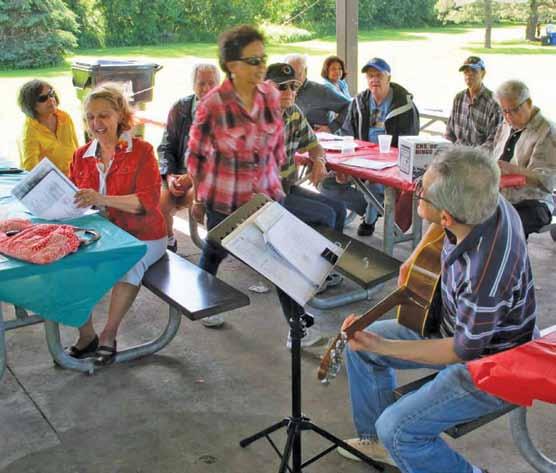
Remittances to the orphanages expanded to include items like food, clothing and school supplies.
Meanwhile, about 1980, another group of Guyanese, under the leadership of Mannie da Silva (deceased) was also organising. Mannie had received an urgent appeal from Fr. Harold Wong SJ for funds to replace the aging organ for the Brickdam Cathedral. This new group was appropriately named The Organ Committee. Their first endeavour was a successful fundraising dance. This successful event became the forerunner of the very entertaining and popular Valentine Dance.
Eventually, these two groups, which were comprised mostly of the same persons, decided they would be more effective if they merged. Out of this merger Guyana Christian Charities (Canada) Inc. was created and Desmond De Barros assumed the role of first president. The organisation was established as a registered charitable organisation in 1987 and complies with the rules of the Canada Revenue Agency.
In 1985, due to the critical shortage of medical and other supplies in Guyana, the first Valentine's Dance was held. The funds raised paid for a much needed shipment of donated medical items that was sent to St. Joseph's Mercy Hospital. This annual event continues to be well received and hence, very successful. Two additional dances have been added, one in May and the other in September. The proceeds from the Spring and Fall Dances are utilised primarily for humanitarian health efforts.
The organisation’s Food and Bake Sale event, held annually in late October, has steadily grown in popularity since the early efforts. The locations have changed as the numbers of supporters have increased. From the earliest days at Holy Spirit Parish Hall on Sheppard Avenue, Scarborough, the organisation moved to L’Amoreaux Community Centre in 1994. When this facility became inadequate, it again moved to the much larger and well appointed facilities of Sts. Peter and Paul Ukrainian Church Banquet Hall at Markham and Milner Avenue.
In an interview with Guyana Times Sunday Magazine, Dexter Gonsalves, treasurer, stated: “The mandate of Guyana
Christian Charities continues to be a commitment to help the needy and the sick in our beloved Guyana. The need remains as great or greater today as on our earliest days. Our efforts have attempted to keep up and to expand gradually. Assistance is being provided to an increasing number and variety of other charities and organisations.”
He further stated that while the organisation’s name might suggest it is entirely focused on one segment of the community, this is not the case. The organisation’s assistance is totally transparent and reaches the neediest in the community and has no regard to religious affiliation. Its assistance extends to about 100 charities, with no regard to race or creed.
Over the years, GCC was awarded by the Guyana Government and the Guyana Consulate in Toronto, ON, with the following awards: Most Outstanding Contribution to the Flood Relief Effort (2005); Selfless Service to Guyana and the Guyanese Community in Canada for over three decades (2003); Longest Serving Guyanese Organization (2002); Support towards rebuilding the Health Care System (1995); Valuable Contribution to the Health Care System (1994).
“We operate a truly volunteering organisation, incurring no remuneration or auditing costs. Our total financial assistance over this 27 year registration period amounted to over $1 million Canadian dollars (including our Flood and Disaster Relief efforts), with shipment of 60 containers to numerous institutions in Guyana, with an estimated value of contents totalling approximately $3 million Canadian dollars,” Dexter revealed.
Shipping costs consume most of the funds raised. For this reason, Dexter welcomes willing hands and generous souls to support the organisation and to make its outreach activities even more successful.
“Some of our members and dedicated volunteers give generously of their time year-round sorting and packing the many donations of clothing for all ages, medical and other supplies, wheel-chairs, toys, shoes etc. etc. We welcome all and any help that is offered. The harvest is ready but, alas, the workers are too few,” he declared.

YKing is an American actor of Guyanese descent. The only daughter of an NYPD officer mother, Yaani was born on August 10, 1981, in Flatbush, Brooklyn, and raised in Queens.
She has two elder brothers and spent most of her childhood around the theatre, as her mother was a stage and commercial actress before becoming a police officer. As a teen, she was accepted to the High School of Performing Arts at Lincoln Center (New York).
At age 17, Yaani decided to pursue a career as an actor and was immediately cast Off-Broadway in the production of “The Alchemist” at The Classic Stage Company and received wonderful reviews. She also trained in 2007 at The Actor’s Centre in London.
Yaani’s acting career began in 2002 when she landed a small role playing a student in the series, “The Education of
Max Bickford”, before moving on to play Monique Thomas in the popular TV series, “Law & Order”, that same year. She was also featured in the highly successful Sex and the City series and also played Sheila Latham in “CSI: Crime Scene Investigation and Criminal Minds” in 2007. Other TV work includes “Numb3rs”, “Ghost Whisperer” and “For Heaven’s Sake” in 2008.
In 2009, Yaani was added to the regular cast of the television series “Saving Grace” opposite Holly Hunter. In 2011, she appeared in episodes of the TV series “Vegas”, “The Number” and in 2013 guest starred in a few episodes of “Mad Men” as Phyllis, Peggy’s Secretary. Yaani’s film credits include the 2003 movie “In the Cut”, appearing as one of Meg Ryan’s students. In 2004 she played Amanda, acting alongside Julia Stiles in Paramount Pictures
“The Prince & Me”. She was featured in Dan Pritzker’s 2007 film “Bolden” starring Academy Award nominee, Jackie Earle Haley. The film was executive produced by jazz musician Wynton Marsalis. She also played Chris in Matthew Cherry’s 2012 feature film debut “The Last Fall”. Yaani is also known for her roles in popular web series “RoomieLoverFriends”, and for her 2011 role in “Milk & Honey” starring Lance Gross and Vanessa Bell Calloway, when she played Lance’s sister.
Yaani has landed a regular role in the 2014 Lifetime’s backdoor pilot “Deliverance Creek”, a slavery-set drama from Nicholas Sparks Prods. and Warner Horizon.. In 2014, Yaani produced a short video documentary with Riley Abel titled “From Dreams: The Making of the Last of Us – Left Behind”. (www.guyanesegirlsrock.com)

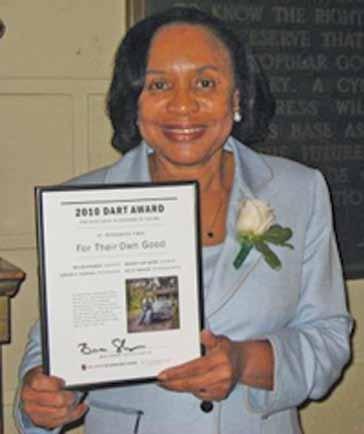
Waveney Ann Moore is a general assignment reporter for the Tampa Bay Times. She covers a wide range of topics in the metropolitan area and, notably, was a finalist for the 2010 Pulitzer Prize “For Their Own Good”, about abuse at Florida’s oldest reform school.
The series won the Dart Award for covering trauma, the Casey Medal for exemplary reporting on children and families and first place for non-deadline reporting in the 2010 Green Eyeshade competition run by the Society of Professional Journalists.
Moore was also a finalist for the 1998 Pulitzer as part of a team that covered the story of the Rev. Henry Lyons, former head of the National Baptist Convention U.S.A. She’s a former reporter for the Kansas City Star.
Born in Guyana, she is a naturalised American citizen. Moore, a former Bishops High School student, recalled that she has always been an avid reader. After migrating to the United States, she graduated cum laude with a BA in English and Communications from the College of New Rochelle in New York.
Her first reporting
job was with the Kansas City Star, in Kansas City, Missouri. She also wrote for several gourmet food magazines. She has been writing for the St. Petersburg Times since 1994.
The Dart Awards are administered by the Dart Center for Journalism and Trauma, based at Columbia University Graduate School of Journalism. Established in 1995, the annual Dart Awards recognise outstanding reporting that portrays traumatic events with accuracy, insight and sensitivity while illustrating the effects of trauma on victims’ lives and the process of recovery from emotional trauma. (www.guyanesegirlsrock. com)

By PetamBer Persaud
First glance at the exhibition in honour of Guyanese women writers was perfunctory. But by the time the official opening was completed, I was immersed in a magnanimous display depicting thoughtfulness, research and efficacy, all of which triggered the recall of opinions written by three women writers in solidarity of women writers. The recall was easy for me who has, time and again, focused on women writing. There was a time when
women writers were treated as ‘peripheral creatures’ (Beryl Gilroy). There was a time when, according to Virginia Woolf, who contended that while the men made great strides, the women were constrained to mince. This is no longer the case. The voice of our women writers is now being recognized and respected. And there are many reasons for this outpouring and response. But one example will suffice for now: according to Merle Collins, women writers are better able to “tease out the truth” as they explore
themes like man-woman relationship, sexism, human happiness, religious bigotry, moral values and social injustice.
That exhibition was opened last Wednesday, May 28, 2014, and mounted in the National Library. It was a collaborative effort between the Ministry of Social Services and the Library. The ministry continues to find innovative ways to empower women and the library continues to explore avenues of taking literacy to the nation.
There is a nexus between

the time and the reason for mounting the exhibition. That nexus could be found in the word ‘independence’. The exhibition was mounted to celebrate the country’s fortieth-eight Independence Anniversary and to celebrate the independent voice of the country’s women writers.
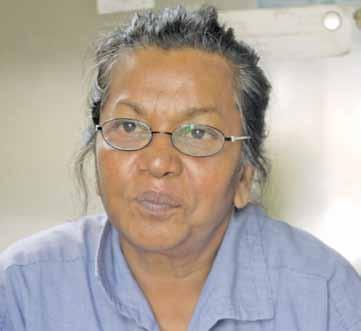
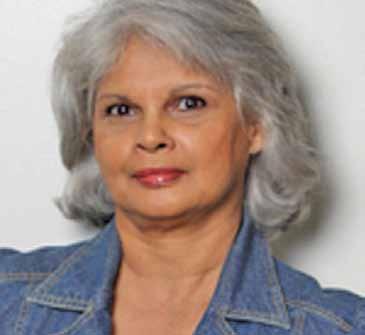
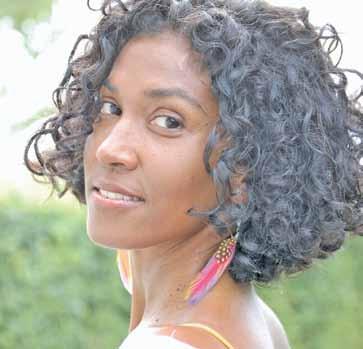
On display was information on some 50 women writers in photographs, books and biographies. That number was not the full corpus of such writers, according to Ms Yvonne Stephenson, Manager of the Resource and Documentation Centre of the Ministry of Human Services. Ms Stevenson hinted that more would be done and in greater details in recognition of our women writers. Both the Chairman of the National Library, Mr Petamber Persaud, and Chief Librarian (ag), Mrs Emiley King declared their willingness to take such an exhibition to the next level.
Some of the writers highlighted came from different parts of the country, form border to border, from as far as Corriverton, Berbice, to as far as Linden, Demerara, and the Pomeroon, Essequibo. Those selected for the exhibition were representative of varied generations of Guyanese including Beryl Gilroy, Elly Niland, Janice Shinebourne, Stephanie Bowry, Ryhaan Shah, Grace Nichols, Karen King-Aribisala, Oonya Kempadoo, Mahadai Das, Paloma Mohamed, Julia Theresa Kanhai, Sherene Nobel, Mosa Telford, Pauline Melville, and Cassia Alphonso. Significantly, on display were some littleknown and less-established writers. And various genres of writing were presented including poetry, short fiction, novel, drama and creative non-fiction.
At the opening of the exhibition, a message from the Human Services Minister, the Hon. Jennifer Webster, was read by Deputy Permanent Secretary, Reverend Patrick Findlay, summing up the whole effort: “The environment created by the display of the skill, talent and creativity of
some of our Guyanese women speaks to the fact that our development as a society goes beyond economics, technology and those very important facets of nation building. No doubt, we need our engineers, our economists, our doctors, lawyers, our entrepreneurs and so on, but equally, we need these creative writers who will produce a core of writing, a body of literature we could call our own… [t]his exhibition has presented us with some of the most talented writers who have profoundly impacted on the way we see ourselves and in some instances, have helped us to understand the society in which we live. They have created a Guyanese literary conscious-
ness – an awareness of who we are. Let us all remember that creative writing, as produced by our women writers, is important to the true advancement of our society.”
Such an exhibition ought to go on tour of the country and further afield even at regional events like Inter Guianas Cultural Festival, and Carifesta.
Responses to this author telephone (592) 226-0065 or email: oraltradition2002@ yahoo.com
What’s Happening: Dates for repeat performances of ‘Expressions’ – a new forum for poetry - will be announced later. ‘Expressions’ is a Gems Theatre Production.

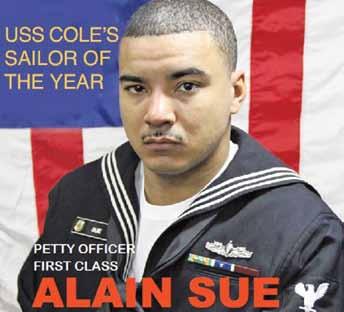
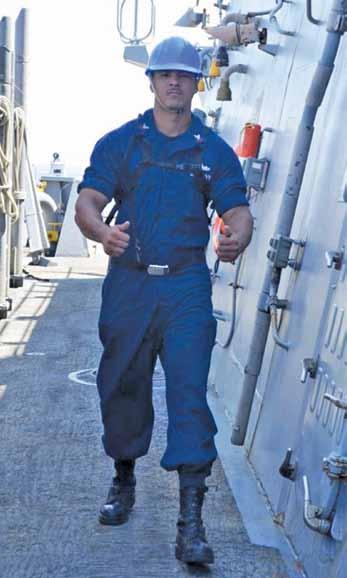
Petty Officer First Class Alain Sue is a native of Guyana and migrated to Brooklyn, NY, in 1993. He enlisted in the United States Navy in July 2003 and completed basic training at Recruit Training Command Great Lakes, IL in September 2003.
Following basic training, Petty Officer Sue attended Store Keeper (SK) “A” school in Meridian, MS from October 2003 to December 2003. Upon completion of SK “A” school he reported to his first duty assignment onboard USS Gunston Hall (LSD-44) in January of 2004. His subsequent sea and shore duty assignments include; USS Gunston Hall (LSD-44) 2004-2009, Fleet Readiness Center MidAtlantic Oceana (FRCMA) 20092011, USS COLE (DDG-67) 2011-present.
While stationed at USS Gunston Hall, Sue served as the Work Center Supervisor for S-1 Division and the Financial Store Keeper. He was promoted to Third Class Petty Officer on May 2005 and to Second Class Petty Officer May 2007.
While stationed at FRCMA, Sue served as the Tool Control Program Manager and IMRL Manager for 22 Tenant Commands onboard NAS Oceana. He was promoted to First Class Petty Officer on 15 November 2010. He is the USS COLE’s current ‘Sailor of the Year’.
Sue’s personal awards include the Navy and Marine Corps Achievement Medal (fifth award), and Good Conduct Medal (second award)and various unit awards.
The son of Gillian Sue, he is married to Kelly Ann Sue who is a 2nd class Petty Officer in the Navy. They have three children Madison, Allyson and Delon and live in Suffolk Virginia. (Guyana Cultural Association of New York Magazine 2014)

Witha yearning desire for success and the belief that anything is possible, 21-year-old Rafieya Husain's ambitions include becoming a CPA (Certified Public Accountant), owning and operating a financial business, winning Miss World 2014, walking the runways of Paris and Milan and to support a non-profit that focuses on children. With several titles to her name, she is no stranger to pageantry and describes herself as fearless, persistent and dedicated and practical. She is of the opinion that the “culmination of beauty in any woman is her confidence”. She further noted that when a woman's confidence radiates, you can see not only how beautiful she is in appearance but also the beauty within. She was born in her grandparents’ home in Anna Regina, Essequibo Coast. The beauty was raised in Georgetown and attended Mae’s Under 12. She then migrated to the US where she received her Associates’ Degree in Business Administration at Marymount University. Rafieya was recently crowned Miss World Guyana and is presently preparing for the Miss World pageant, which will be held in London on December 14. For more information on Rafieya and her upcoming journey visit www.missworldguyana.com
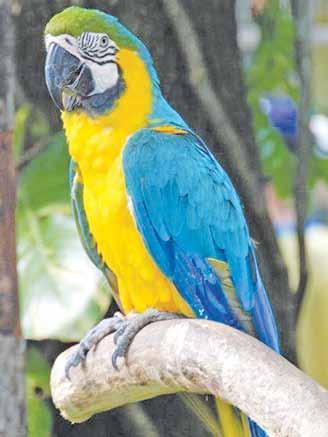
Macaws (Psittacidae) are beautiful, brilliantly coloured members of the parrot family.
Many macaws have vibrant plumage. The colouring is suited to life in Central and South American rain forests, with their green canopies and colourful fruits and flowers. The birds boast large, powerful beaks that easily crack nuts and seeds, while their dry, scaly tongues have a bone inside them that makes them an effective tool for tapping into fruits.
Macaws also have gripping toes that they use to latch onto branches and to grab, hold, and examine items. The birds sport graceful tails that are typically very long.
Macaws are intelligent, social birds that often gather in flocks of 10 to 30 individuals. Their loud calls, squawks, and screams echo through the forest canopy. Macaws vocalize to communicate within the flock, mark territory, and identify one another. Some species can even mimic human speech.
Flocks sleep in the trees at night, and in the morning they may fly long distances to feed on fruit, nuts, insects, and snails. Some species also eat damp soil, which may help to neutralize chemicals in their fruity diet and ease their stomachs.
Macaws typically mate for life. They not only breed with, but also share food with their mates and enjoy mutual grooming. In breeding season, mothers incubate eggs while fathers hunt and bring food back to the nest.
There are 17 species of macaws, and several are endangered. These playful birds are popular pets, and many are illegally trapped for that trade. The rain forest homes of many species are also disappearing at an alarming rate. They can live up to 60 years in the wild.
The hyacinth macaw—the largest of all parrots—has an enormous wingspan of more than 4 ft (127 cm).
Hyacinth, red-fronted, and blue-throated macaws are seriously endangered. The glaucus macaw and Spix's macaw may already be extinct in the wild.

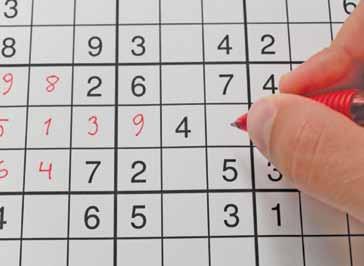
The objective of the game is to fill all the blank squares in a game with the correct numbers. Every row of 9 numbers must include all digits 1 through 9 in any order. Every column of 9 numbers must include all digits 1 through 9 in any order. Every 3 by 3 subsection of the 9 by 9 square must include all digits 1 through 9.

were
Rubber ducks were first seen in the late 1800s, when rubber use became popular.
By Laurie Triefeldt
Rubber was named by the clergyman, philosopher and scientist Joseph Priestley, who noted that Indian gum could erase or “rub away” pencil marks. In Britain, erasers are still called rubbers. Natural rubber is also called India rubber, China rubber or caoutchouc. “Caoutchouc” comes from a native South American word meating “weeping wood.”
At warmer temperatures, natural rubber gets quite soft; by contrast, when it gets cold, it becomes rigid and tends to break easily. Charles Goodyear discovered that heating and mixing sulfur into the rubber made the material tougher, much more resistant to heat and cold, and more elastic. This process was named vulcanization in honor of the Roman god of fire. This new rubber was also resistant to water and chemical interactions and did not conduct electricity. Vulcanized rubber revolutionized the use of the material, and huge supplies of raw rubber were needed just to meet the demands of the automotive industry.
World War II increased the demand for rubber even more. Building a fighter plane required half a ton of rubber, while a battleship needed up to 75 tons.
Rubber is a very useful material. It can hold air or liquid and does not conduct electricity easily, but its most important feature is its elasticity. Rubber can be found naturally in the sap of trees, or it can be synthetic — in other words, made from chemicals.
Rubber is a hydrocarbon—consisting of the chemical elements hydrogen and carbon. Rubber is made up of thousands of molecules of a substance called isoprene linked into long chains called polymers. A single isoprene molecule is called a monomer. The chainlike structure of the rubber polymer acts much like a spring and is why rubber is elastic. The combination of elastic properties and polymers is why rubber is sometimes called an elastomer
The rubber band was patented by a man named Stephen Perry, a British inventor and businessman, in 1845.
Rubber bands are known by many names. Depending on where you live in the world, they are called elastics, loop bands, gum bands, lackybands, jimmys or binders.
Rubber bands last longer when refrigerated.
According to Guinness World Records, the largest rubber band ball weighs 4,097 kg (9,032 lbs.). It was made by Joel Waul and measured in 2008.
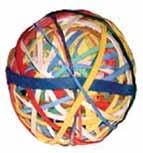
Natural rubber is mostly made from rubber trees grown on tropical plantations. More than 80 percent of the world's natural rubber grows in Southeast Asia, mostly in Thailand, Indonesia and Malaysia. Other countries that produce natural rubber include Brazil, China, India, Liberia and the Philippines. Synthetic rubber is made in many industrialized nations, including France, Germany, Japan, Russia, the United Kingdom and the United States.
Many plants produce latex that contains the isoprene polymers needed to make useful rubber. But some trees, like the Pará rubber tree of the Amazon Basin make more of the milky white sap and are easier to tap than others.
Tapping panel with tapping cuts Untouched bark
Channel for latex
Spout Latex
Bucket Rubber trees may reach 100 to 130 feet (30 to 40 m) tall and can live up to 100 years. A rubber tree yields an average of 19 pounds (7 kg) of rubber latex a year for about 28 years.
Natural rubber production was 11.15 million metric tons in 2013.
Some types of dandelion have a latex milk similar to the natural rubber from rubber trees.
Long before the Europeans arrived, the ancient Mayans and other Pre-Columbian peoples of South and Central America used latex to make rubber balls, shoes, waterproof containers and fabrics. They mixed rubber sap with the juice from morning glory vines to make it more durable and elastic.
Mayan man
1736: Rubber samples from Brazil are introduced to the French Academy of Sciences.
c.1770: Joseph Priestley records the use of latex as an eraser and names it.
1791: Samuel Peal mixes rubber with turpentine and uses it to waterproof cloth.
1876: Rubber tree seeds are smuggled out of Brazil, and many tropical rubber plantations are established.
1879: Gustave Bouchardat creates a synthetic rubber.
1914-1918: During World War I, Germany manufactures a synthetic rubber, but production stops after the war.
1935: German chemists create a type of synthetic rubber known as Buna rubber
Joseph Priestley 1733-1804
Charles Macintosh 1766-1843
Charles Goodyear 1800-1860
1823: Charles Macintosh patents method for waterproofing fabrics.
1837: Thomas Hancock patents the masticator.
1839: Charles Goodyear invents vulcanization.
1845: Rubber bands are patented. The pneumatic tire with an inner tube and textured tread is invented.
1850: Rubber toys are being made.
1931: The DuPont company invents neoprene, a rubber more resistant to water, oils, heat and solvents than natural rubber.
2010: Scientists develop energyharvesting rubber sheets capable of powering pacemakers or cellphones.
2010: Rubber band bracelets become popular with young people. They are often worn to support a worthy cause.
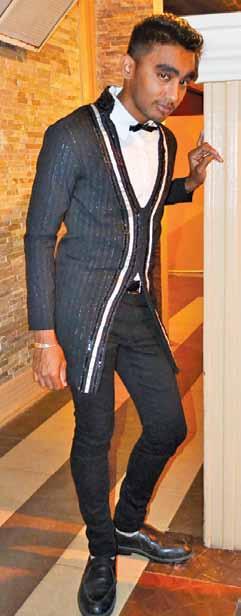
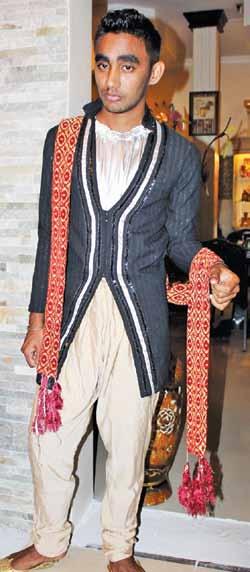
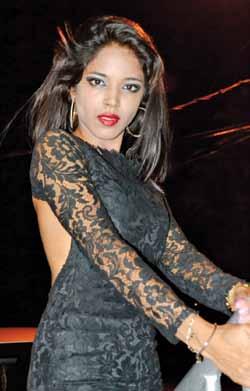
What started off as a mere thought from compliments received will soon be launched as Nachle Designs - ‘Yours & Hers’ in aid of a worthy cause.
This unique Western and Eastern fusion brings a creative touch to everyday fashion. The duo designers of this new well conceptualised designer-line are no strangers to the entertainment industry. With the diverse knowledge and experience in the performing arts arena, Hashim Alli and Melicia Partab pooled their creativity together to establish Nachle Designs - ‘Yours & Hers’.
Upholding the standards of simplicity and elegance, Melicia decided that her twist of sophistication is that of comfort - her hidden secret to the ‘Hers’ line. On the other hand, being sleek, trendy and confident, Hashim decided that a blend of colours and styles would be his key element to produce the ‘Yours’ line.
This the duo, who never fails to impress, combined together to create ‘Yours & Hers’ under their label Nachle Designs.
Nachle Designs’ ‘Yours & Hers’ line would officially be launched on 21 June 2014 at Style Mission in aid of awareness for Sickle Cell Amenia at the Pegasus Hotel, Kingston, Georgetown. Tickets for this grand fashion extravaganza are only $3000.
For more information, call 2263099. Designers Hashim Alli and Melicia Partab






Fan Bingbing is a Chinese actress, singer and television producer. She graduated from Shanghai Xie Jin Film and Television Art College and Shanghai Theatre Academy. Fan has received awards from the Tokyo International Film Festival, Beijing College Student Film Festival, Golden Horse Film Festival and Hundred Flowers Awards, among others. She was ranked first on the “50 Most Beautiful People in China” list in 2010 by the newspaper Beijing News. Due to her appearances on the red carpet, movie premieres, and fashion shows, the media describes her as a “fashion icon”. She topped the Forbes China Celebrity
100 list in 2013 and 2014, after having been ranked in the top 10 every year since 2006. Her most notable appearances in Hollywood are in the movies “Iron Man 3” and “X-MEN: Days of Future Past”. In 2013, Fan appeared as Dr. Wu's assistant Wu Jiaqi in the mainland Chinese version of “Iron Man 3”. In 2014, Fan portrayed Blink (Clarice Ferguson) in “X-Men: Days of Future Past”. She also announced that she will be appearing in the next four films in the “X-Men” film franchise as part of her contract with 20th Century Fox. In May, Barbie announced the launch of the Fan Bing Bing Celebrity Specialty doll in Shanghai. Fan becomes the first actress from China to be invited to join the Barbie global celebrity Hall of Fame.
Jennifer Lopez is single again.
The pop star, actress and American Idol judge, 44, has split from her boyfriend of 2½ years, choreographer and dancer Casper Smart, a source confirms to PEOPLE.
"They initially split about six weeks ago, but that can take a little time to extricate. But they've definitely broken up," says the source, adding, "The relationship had just run its course."
The source also says, "Jennifer is actually doing really well and working hard."
There had been hints in recent weeks that the relationship was on the rocks, with a source telling PEOPLE that the couple had "hit a rough patch" a couple of months ago.
More recently there had been reports claiming that Smart, 27, a former backup dancer for Lopez, had sent Instagram photos and steamy messages to somebody else.
Lopez and Smart first got together in late 2011. At the time, a source told PEOPLE it was "a fun fling" and "not meant to turn into anything more," but the couple stayed together.
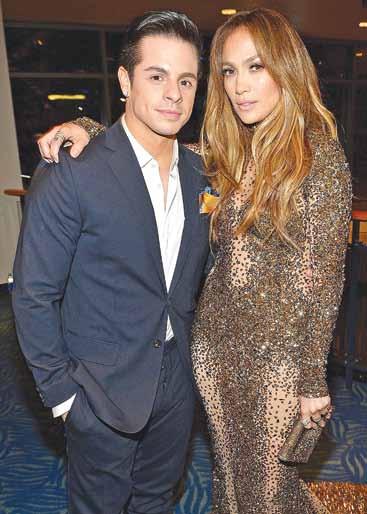
Lopez was always noncommittal, however, when asked if she would get married for a fourth time. "I don't know. We'll see. I don't know," she said in January. "You know, I've al-
ways believed in that institution. I believe in it, but it is difficult. I've had my challenges, but at the same time I believe in love, and I think that is the main thing." (PEOPLE)

Prince William and Kate Middleton's bedroom walls may be graced by a new painting, after the Duke and Duchess of Cambridge reportedly got very excited over an unofficial portrait of Kate, painted by Canadian artist Tom Sutton-Smith.
Sutton-Smith was inspired to create the unusual painting after witnessing the public's disappointment at Paul Elmsley's 2012 portrait of Kate Middleton, which was criticised as 'catastrophic'.
Sutton-Smith's friends apparently told him he could 'do better than that'and so he did, creating the portrait on a green background that was shown to Will and Kate when they visited Scotland last week.
Kate was supposedly mesmerised by the portrait, while William exclaimed:
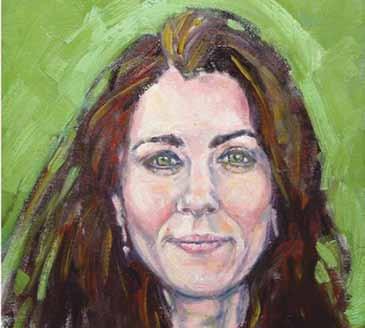
"Wow, it's brilliant! That's going up in my room."
Sutton-Smith was away in Paris when the royals came to check out his portrait, but he was apparently "pleased with the outcome and very happy with
their reaction." Well, that's all right, then. Kate used to have posters of William on her bedroom wall as a studentnow look how the tables have turned! (Glamour)

Miley Cyrus can continue on with the European leg of her Bangerz tour with a little more peace of mind.
Two people have been arrested in connection with the burglary that occurred at Cyrus's home last Friday, in which her Maserati and other personal items were stolen, authorities confirm to PEOPLE.
Naomi Charles, 21, and Tylor Scott, 19, were arrested Thursday and have been booked for residential burglary charges, according to the LAPD. They were taken into custody and held for questioning after being spotted in North Hollywood earlier in the day.
Charles and Scott are currently being held at the North Hollywood division jail, each on $50,000 bail. (PEOPLE)
Justin Bieber may have fallen from grace in the public eye, but some celebrities are sticking by his side. The pop star, 20, caused yet another controversy this week when videos surfaced showing him at a younger age, making racist remarks and using the N-word.
Public outcry was swift, and Bieber responded by releasing a statement apologizing for his actions in the past.
"Facing my mistakes from years ago has been one of the hardest things I’ve ever dealt with," the controversial figure said. "But I feel now that I need to take responsibility for those mistakes and not let them linger. I just hope that the next 14-year-old kid who doesn’t understand the power of these words does not make the same mistakes I made years ago. At the end of the day I just need to step up and own what I did."
It seems that some stars, however, think Bieber should not be judged so harshly.
Actor Russell Brand spoke out on Bieber's behalf, saying that he shouldn't be criticized for mistakes he made years ago. "It was ages ago when he used to have that haircut," Brand said of

the video. "You can’t do him for stuff he [has] done when he had that haircut."
"Unless we’re going to explicitly say the role of celebrities is we're going to make them really, really famous and then we’re going to destroy them and rip them up in a public square with fish hooks, which, you know as long as you don't get round to me, I’m not against," he continued. "But we might as well own up to it if that is what we’re up to, otherwise just let him off. Of course it’s wrong to say the N-word, but he’s a child."
Bieber's mentor Usher also recently spoke about his protege in the new issue of Nylon Guys. "I gave every
bit of advice and always told him it was up to him if he really wanted this. Now that he has it, as an adult, it's his to manage," the R&B singer says in the cover interivew. "Do I turn my head in shame based off of what I see, what I know? Nah, I don't because it's all part of life's process. Am I in it with him? Yeah."
50 Cent gave his two cents on the matter to The Sun, highlighting Bieber's age at the time of the incident as well. "I don’t think he’s racist," the rapper said. "I don’t think he even knows who he is at this point -- he’s so young. When you see people become huge stars real early, it’s tough for them… You have to grow up with all these expectations. I think Justin’s still a baby and he’s lost."
After the first video came to light, which showed a teenage Bieber making a racist joke and invoking the N-word as the punchline, Floyd Mayweather took to Twitter to defend the singer. "Justin has been nothing but kind to me, my daughters & sons over the years," the boxer wrote. "We all make mistakes when we are young, it’s part of growing up." (US Magazine)

Rajkummar Rao is an Indian actor who appears in Hindi films. Rajkummar caught the acting bug on a theatre stage in his 10th grade. He finished his schooling in Gurgaon, India, and graduated in arts from Delhi University. In 2008, Rajkummar graduated from the Film and Television Institute of India, Pune, and shifted to Mumbai. He made his film debut with the 2010 experimental film “Love Sex aur Dhokha” and achieved success in 2013 with the drama film “Kai Po Che!”, for which he was nominated for the Filmfare Award for Best Supporting Actor. He was awarded the National Film Award for Best Actor and the Filmfare Critics Award for Best Actor for his portrayal of Shahid Azmi in the 2013 biographical film “Shahid”. In 2014, Rao portrayed the leading man in the box office hit “Queen”. As of April 2014, Rao has completed work on Hansal Mehta's drama “City Lights” and is filming with Sonam Kapoor and Pulkit Samrat for the romantic comedy “Dolly Ki Doli”. He has also signed on alongside Emraan Hashmi and Vidya Balan for “Hamari Adhuri Kahani”, a romance film from director Mohit Suri.

Bollywood actor Alia Bhatt who is a very busy girl these days has finally disclosed the secret behind the 'Pataka' tattoo that she got inked on the nape of her neck.
Alia who is currently shooting for her upcoming film with Varun Dhawan named “Humpty Sharma ki Dulhaniya”, was spotted sporting the tattoo since a few months.
All talks of her tattoo went in the direction of her then upcoming film 'Highway', since the film has a song titled 'Pataka guddi' in it.
Now Alia has put all speculations to rest and
revealed that the tattoo is to commemorate the 'Pataka' Punjabi girl's character that she will be playing in “Humpty Sharma ki Dulhaniya”. Alia apparently feels that having the tattoo makes her feel more connected to the character and personality of her role.
“Humpty Sharma ki Dulhaniya”, directed by Shashank Khaitan, seems to be a joyride of laughter, fun, emotions, drama and some action a la a typical Bollywood potboiler.
The film, releasing July 11, features Alia and Varun in truly 'desi' avatars. (India Today)
The makers of the movie “Dirty Politics” may be summoned by a court for their role in a controversial promo-poster depicting Mallika Sherawat draped in the colours of the Indian national flag.
A 24-year-old law graduate, Sumit Kumar, has filed a criminal complaint before metropolitan magistrate Neha Palliwal and accused the producers of the movie, lead actress Sherawat and director KC Bokadia of insulting the nation's honour.
If convicted, they could be imprisoned for up to three years.
Though the poster does not actually show the actress draped in a flag--the chakra is conspicuously missing--the complainant said the poster makes it "crystal clear Sherawat disrespected the national flag by making it as a costume".

Kumar also stated such behaviour "was not expected" from Sherawat who
"often represents India in film festivals abroad".
His lawyers, Pulkit Aggarwal and Siddharth Jain, said their client's "sentiments regarding the nation" had been genuinely hurt and his complaint was not merely a publicity stunt.
Last week, a poster of Sherawat sitting atop an Ambassador car and draped in a cloth having the colours of the national flag was the subject of much argument and gossip. The poster also shows the Rajasthan assembly in the background.
“Dirty Politics” is based on the case of Bhanwari Devi, a midwife who went missing in 2011 and the remnants of whose corpse were eventually found in early 2012. Several top Rajasthan politicians, believed to be behind the abduction and murder, have been jailed.
(Hindustan Times)
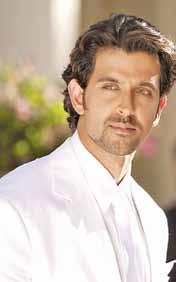

Hrithik Roshan is reportedly in talks to star in a Hollywood film.
The “Krrish” actor was spotted having dinner with Rob Cohen, the filmmaker behind 2001's “The Fast and the Furious” and “XXX”. Cohen has made several trips to visit the actor in India to discuss working on
a Hollywood action film, The Times of India reports.
Roshan was to star in Shekhar Kapur's Paani, which features an international cast, although he was forced to pull out of the project due to date issues.
Deepika Padukone was also offered a role in “Fast & Furious 7”, but was unable to take on the film as she
was committed to “Goliyon Ki Raasleela Ram-Leela”. Vin Diesel, Dwayne Johnson, Michelle Rodriguez, Jordana Brewster, Tyrese Gibson, Ludacris, Lucas Black and the late Paul Walker will lead the cast of the James Wan-directed film, which is released on April 10, 2015.
(Digital Spy)
Actress turned entrepreneur Shilpa Shetty, who recently turned producer with the film ‘Dishkiyaoon’ has decided to donate her eyes. The actress visited ‘Shani Shinganapur’ at Sonai village in Ahmednagar district and pledged to donate her eyes through a social organization called Yashwant Samajik Pratisthan.
Earlier, Shilpa and her husband Raj Kundra along with the actress’s father Surendra Shetty had visited famous Sai Baba temple at Shirdi.
Commenting on her decision to donate her eyes, Shilpa stated that post her demise, it would give her immense satisfaction if

AThe
ishwarya Rai Bachchan
goal

zation. (Indian Express)
behalf of her charitable organisation the Aishwarya Rai Foundation, which is involved in supporting the work of the NGO 'Smile Train', as an ambassador for the charity.
In the video, Rai Bachchan talks about the devastating effects of clefts on the lives of children and how a simple surgery can give someone a new life.
She imagines what her life might have been like if she was born with a cleft.
She says: "I am Aishwarya Rai Bachchan. My life has been truly blessed but I often wonder what would have happened to me if I had a cleft lip, if my parents had abandoned me, if I never had any friends, if I could never smile, no-one should live like that, but a simple surgery can fix a cleft lip, just like that. So please, give a child not just a new smile, but a new life."
The former Miss World was photographed in a Sabyasachi dress outside 10 Downing Street ahead of a meeting with members of the Smile Train organisation. Every year, 35,000 children in India are born with clefts. Without corrective surgery, these children are condemned to a lifetime of isolation and suffering. Many are even abandoned or killed at birth.
A cleft can be completely corrected with a simple surgical procedure that could take as little as 45 minutes. (Digital Spy)
on
Abad diet is a key cause of unhealthy cholesterol levels. But here's the good news. Here are the top 10 foods to lower cholesterol.
If you have unhealthy cholesterol levels (or want to prevent them), one of the first things you should examine is your diet. Are you eating foods that help reduce cholesterol? Or avoiding the ones that cause unhealthy cholesterol levels to creep higher? If not, we've got 10 cholesterol-lowering foods you should grab next time you're at the grocery store. Bonus: Lowering your bad (LDL) cholesterol can make your real age 3.3 years younger if you're a man, 0.6 years younger if you're a woman!
Almonds
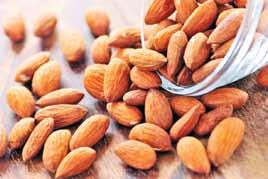
Almonds are pretty hardworking nuts when it comes to lowering your cholesterol. First, they're rich in unsaturated fats that help raise healthy HDL cholesterol while lowering unhealthy LDL. Second, these fats also help make LDL cholesterol less likely to oxidize. This is a fabulous thing, because when LDL oxidizes, it's more likely to gunk up your arteries and cut blood flow to the heart. Snack away. But do keep an eye on portion size. Almonds are high in calories, and all you need are a couple of ounces a day to reap benefits.
OJ manufacturers are doing everything they can to make their health food more appealing -- including fortifying their juice with plant-derived cholesterol-busting compounds known as phytosterols. A review of 84 scientific studies revealed that getting 2 grams of phytosterols a day - the amount in a couple 8-ounce glasses of sterol-fortified OJ -- could help lower harmful LDL levels by more than 8 percent. Check with your doctor first regarding whether citrus will interact with any of your medications. If it does, look for sterol-fortified margarine, milk, soymilk, cheese or breads instead.
This oil is a nutritional superstar -- rich in antioxidants and heart-healthy monounsaturated fats that help lower "bad" LDL cholesterol and increase "good" HDL. In fact, in a study of people with high cholesterol, blood samples showed less potential for harmful clotting just two hours after the study subjects ate a meal with olive oil. That's because olive oil is rich in phenolics, plant substances that makes blood less likely to clot. All you need is about 2 tablespoons a day for benefit (use it in place of other fats).
There's nothing wrong with a platter of crudités or a salad if you want to improve your diet, but steaming may help improve the cholesterol-lowering capabilities of some produce, including asparagus. Other veggies that get better after a short bout in the steam: beets, okra, carrots, eggplant, green beans and cauliflower. Researchers think steaming these veggies may help them do a better job of binding bile acids, which means
your liver needs to use up more LDL cholesterol into order to make bile. That translates into less circulating LDL in your bloodstream.
Your mama was right. Starting the day with a bowl of warm, toasty oatmeal is a smart move. Of all the whole grains, oats are the best source of soluble fiber - the kind that forms a gel to prevent cholesterol from being absorbed into your bloodstream. Shoot for five to 10 grams of soluble fiber per day. If you have 1¼ cups of cooked oatmeal for breakfast, you'll start your day with 5 grams of the stuff. Top your oatmeal with a chopped-up apple for an extra 3 grams of fiber, and you're set.
You've heard by now that blueberries are a nutritious superfood. One reason they're so great? They help keep your arteries clear by reducing blood levels of artery-clogging LDL. Researchers suspect it's because the berries support liver function so well. The end result: cholesterol gets swept out of your system much more easily. Enjoy blueberries fresh, frozen or freeze-dried. They still have the same benefits.
Tomatoes
Include lycopene-rich tomato products in your diet every day for a few weeks, and you may knock your bad LDL cholesterol levels down by as much as 10 percent, according to a recent study. Researchers think the lycopene in tomatoes inhibits LDL production while at the same time helping break down this artery-clogging fat. You'll need to consume at least 25 milligrams of lycopene a day for cholesterol benefits. That's about a half cup of tomato sauce. Bring on the mari-
nara!
Avocados
Every kitchen should be stocked with ripe avocados. Why? They're chock-full of heart-healthy monounsaturated fats that help knock down bad LDL cholesterol and triglycerides while boosting healthy HDL cholesterol. Even better, you’ll love
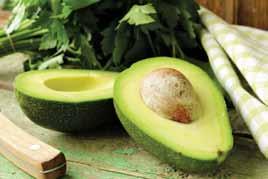
the fruit's (yep, it's a fruit) mild flavor and creamy texture. Mash avocado into guacamole, add slices to a sandwich, chop it up in a salad or -- for a tasty snack -- simply spread a little on whole-grain crackers with a tiny pinch of coarse sea salt.
Chocolate
If you're a chocoholic, here's some good news. Study after study confirms dark chocolate is pretty amazing, healthy stuff. It's full of flavonoids, which are antioxidants that help lower cholesterol. It also has oleic acid, the same type of heart-healthy monounsaturated fat found in olive oil. To improve your cholesterol, just have a little nibble -- up to 1 ounce of dark chocolate a day. And check the label to make sure your chocolate is at least 70 percent cocoa. Cocoa is the stuff with all the heart-healthy ingredients. (Dr Oz)
Learning a second language can have a positive effect on the brain, even if it is taken up in adulthood, a University of Edinburgh study suggests. Researchers found that reading, verbal fluency and intelligence were improved in a study of 262 people tested either aged 11 or in their seventies.
A previous study suggested that being bilingual could delay the onset of dementia by several years.
The study is published in Annals of Neurology.
The big question in this study was whether learning a new language improved cognitive functions or whether individuals with better cognitive abilities were more likely to become bilingual.
Dr Thomas Bak, from the Centre for Cognitive Ageing and Cognitive Epidemiology at the University of Edinburgh, said he believed he had found the answer.
Using data from intelligence tests on 262 Edinburgh-born individuals at the age of 11, the study looked at how their cognitive abilities had changed when they were tested again in their seventies.
The research was conducted between 2008 and 2010.
All participants said

they were able to communicate in at least one language other than English.
Of that group, 195 learned the second language before the age of 18, and 65 learned it after that time.
The findings indicate that those who spoke two or more languages had significantly better cognitive abilities compared to what would have been expected from their baseline test.
The strongest effects were seen in general intelligence and reading. The effects were present in those who learned their second language early, as well as later in life.
Dr Bak said the pattern they found was "meaningful" and the improvements in attention, focus and fluency could not be explained by original intelligence.
"These findings are of considerable practical rel-
evance. Millions of people around the world acquire their second language later in life. Our study shows that bilingualism, even when acquired in adulthood, may benefit the aging brain."
But he admitted that the study also raised many questions, such as whether learning more than one language could also have the same positive effect on cognitive ageing and whether actively speaking a second language is better than just knowing how to speak it.
Dr. Alvaro PascualLeone, professor of medicine at Harvard Medical School in Boston, US, said: "The epidemiological study provides an important first step in understanding the impact of learning a second language and the ageing brain.
"This research paves the way for future causal studies of bilingualism and cognitive decline prevention."
(BBC)




A home's decor needs to be authentic and provide a sense of where you are. Instead of dressing an entire room with an out-of-place theme, use themed accent pieces. Use accents to incorporate the
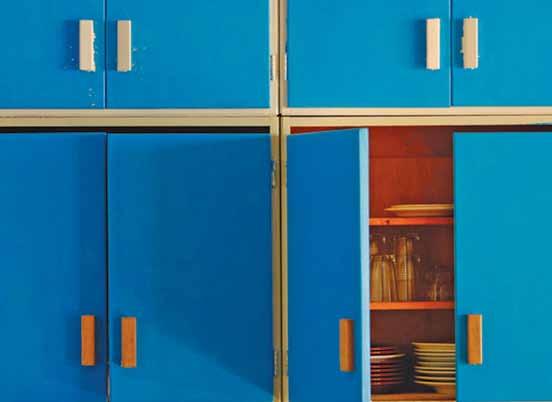
to older cabinets and especially hardware. Make small changes like switching the hardware on your kitchen or bath cabinets for a big impact

Method:
Mix flour and salt together in a bowl. Using a fork or pastry cutter, cut butter and shortening into flour until the mixture resembles coarse cornmeal. Add 3 tbsp of water and mix until well combined. Wrap in cling wrap and refrigerate for at least 30 mins before using.
Preheat oven to 350. In a bowl, mix flour with egg, mix until well combined and smooth. Whisk in milk, then add all other ingredients, except cayenne pepper and stir. Set aside.
On a lightly floured surface, roll pastry to 1/8 inch thickness, in other words, pretty thin. I used bowl about 6 inches in diameter to cut out the circles. Line muffin pan with pastry, lightly press. If the pastry becomes too soft, making it difficult to roll, place it back in the refrigerator for a few minutes to
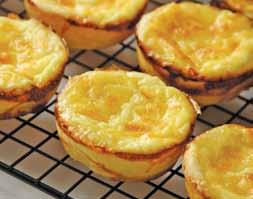
chill. Bake crust for 5 mins, then remove from oven and spoon filling into the crust. Return to oven and bake for an additional 15-20 mins. The tops should puff up when they are done. Remove from oven and allow cooling before eating.
Method:
Add all ingredients to a saucepot, and bring to a rapid boil. Reduce heat to a simmer and boil for 30 minutes Let this cool and strain through a sieve, using a spoon to assist in getting all the pulp through the sieve. Use a funnel to transfer into a tall bottle and refrigerate for 1 hour before serving.
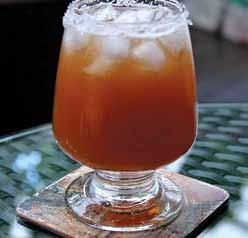
To prevent pasta from boiling over: When you put the water on the stove to heat up, add a dollop of oil to the pot. It doesn’t have to be a lot of oil, just a quick drizzle and you’re all set. The oil in the water keeps everything under control when you later add the pasta to cook.
When grilling flank or skirt steak, marinate it for 10 minutes after cooking instead of before. It adds amazing, full flavour in a tenth of the time.
When making dough, freeze the butter and grate it into the dry ingredients. You'll handle the cold dough less, resulting in more tender and flaky piecrusts, biscuits, or scones.
When making a whole roast chicken, salt it, then chill it, uncovered, in the fridge for the day. This helps season the bird and dries out the skin so it crisps perfectly when cooked. Remove it from the fridge an hour before you plan to put it in the oven, and add herbs and aromatics like garlic or shallots.
To cut an avocado more easily, slice it while it's still in the skin. Not using the whole thing? Leave the pit in the remaining avocado to prevent browning.
Having houseplants helps reduce odours in the home. Prevent cooking odours by simmering vinegar (1 tbsp in 1 cup water) on the stove while cooking. To get such smells as fish and onion off utensils and cutting boards, wipe them with vinegar and wash in soapy water.
Rub a slice of lemon across a chopping block to disinfect the surface. For tougher stains, squeeze some of the lemon juice onto the spot and let sit for 10 minutes, then wipe. Sprinkle baking soda on carpets several hours before vacuuming to deodorise.
For varnished wood, add a few drops of lemon oil into 1/2 cup warm water. Mix well and spray onto a soft cotton cloth. Cloth should only be slightly damp. Wipe furniture with the cloth, and finish by wiping once more using a dry soft cotton cloth.
Many ink spots, pencil, crayon or marker spots can be cleaned from painted surfaces using baking soda applied to a damp sponge. Rub gently, then wipe and rinse.
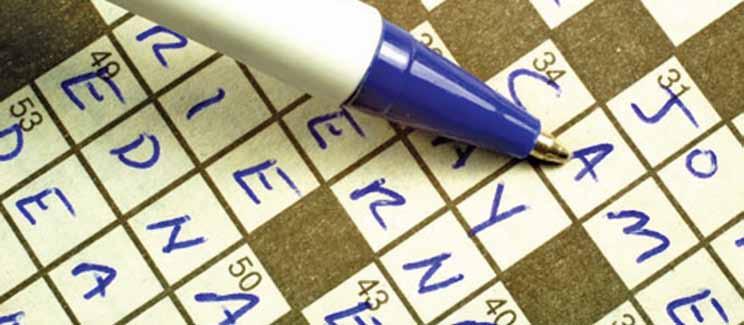
The following clues give definitions for world capitals. These definitions describe what the capitals (just the city) sound like they would mean.
1) This capital is a recently opened store for cooked meats.
2) This capital is plant-covered bovine.
3) This capital is a tool used for fighting.
4) This capital is a royal weight.
5) This capital is a cheer for a body of water.
6) This capital is the legendary vehicle graveyard.
7) This capital is something that annoys a religious figure.
8) This capital is a basic digit.
9) This capital is something you get from the sun.
10) This capital is a score for a ringer.
solution on page 22

solution on page 22
Foolish Anansi thought he could trick a fisherman into doing his work for him. "Let's go fishing," he suggested.
"Very well," said the fisherman, who was clever and quite wise to Anansi's tricks. "I'll make the nets and you can get tired for me."
"Wait," said Anansi, "I'll make the nets and you can get tired for me!"
Anansi made nets as his friend pretended to be tired. They caught four fish.
The fisherman said, "Anansi, you take these. I'll take tomorrow's catch.
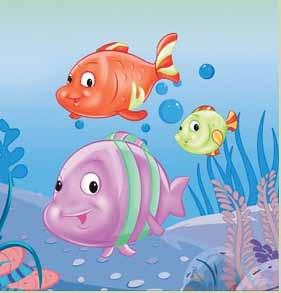
It might be bigger."
Greedily imagining the next day's catch, Anansi said, "No, you take these and I'll take tomorrow's fish."
But the next day, the nets were rotting away and no fish were caught. The fisherman said, "Anansi, take these rotten nets to market. You can sell them for much money."
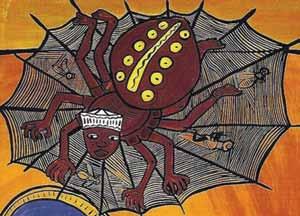
When Anansi shouted, "Rotten nets for sale!" in the marketplace, people beat him with sticks.
"Some partner you are," Anansi
Tsaid to the fisherman as he rubbed his bruises. "I took the beatings. At least you could have taken the pain." Anansi never tried to trick the fisherman again!
hree fish lived in a pond. One was named Plan Ahead, another was Think Fast, and the third was named Wait and See. One day they heard a fisherman say that he was going to cast his net in their pond the next day.
Plan Ahead said, "I'm swimming down the river tonight!
Think Fast said, "I'm sure I'll come up with a plan.
Wait and See lazily said, "I just can't think about it now!"
When the fisherman cast his nets, Plan Ahead was long gone. But Think Fast and Wait and See were caught!
Think Fast quickly rolled his belly up and pretended to be dead. "Oh, this fish is no good!" said the fisherman, and threw him safely back into the water.
But, Wait and See ended up in the fish market.
That is why they say, "In times of danger, when the net is cast, plan ahead or plan to think fast!" (A Tale from India)
Turtles used to live on the land, they say, until the time a clever turtle was caught by some hunters. They brought him to their village and placed the turtle before the Chief, who said, "How shall we cook him?"
"You'll have to kill me first," said the turtle, "and take me out of this shell."
"We'll break your shell with sticks," they said.
"That'll never work," said the turtle, "Why don't you throw me in the water and drown me?!"
"Excellent idea," said the Chief. They took the turtle to the river and threw him into the water to drown him.
They were congratulating themselves on their success in drowning the turtle, when two little green eyes poked up in the water and the laughing turtle said, "Don't get those cooking pots out too fast, foolish people! As he swam away he said, "I think I'll spend most of my time from now on,
safely in the water."
It has been that way ever since! (A Tale from West Africa)


Atraveller who stopped to rest under a nut tree noticed a huge pumpkin growing on a thin vine.
"How foolish are the ways of nature," the traveller muttered. "If things were as they should be, this big, strong tree would hold the large pumpkins, and the spindly vine would hold the nuts. Now if I made the world, that is how I'd have done it!"
At that moment, from high up in the tree, a small nut fell and hit him squarely on the head. Startled, he looked up into the branches and thought, "Forgive my arrogance! If it were a big pumpkin that fell out of the tree onto my head, it most certainly would have killed me!" (A Tale from India)
Out of your bowels came my ancestors
Nurtured by the green and dried nuts
Of your coconut estate plantations.
Up the Essequibo River
As you travel up the black water From Charity Stelling A dream where all the ancestral spirits meet.
Your black, rippling treacherous water Tells of the turbulence Your people endured From slave to plantation owners From generation to generation.
You see the blood of the African The Amerindian The European! You hear say my great, great grandmother
Is a French white and an Amerindian But you see me hey I black black My eyes, my cheekbones and my hair Give me away though.
How old are you my dove? Up and down and around cast my eyes. You bring memories of an old woman, Gnarled and encrusted with great scales. You have given birth to many But each went its way Some fell on good ground, some on not so good ground.
Many moons have passed my dear, To part we contemplate Will you remain a monument? Or shall your memories die?
I remember how I felt seeing Your purple-like off springs.
But you are work-worn now Your body racks with diseases St one time you were part of the rhythm of my life. You brought me sweet sensations You captured my intense emotions.
Poems from ‘One Captain And Other Literary Works’ by Mickey Anderson
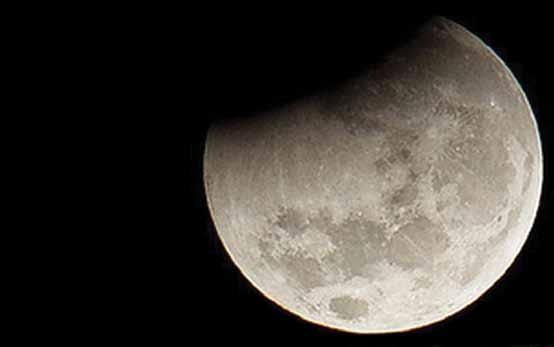
Researchers have found evidence of the world that crashed into the Earth billions of years ago to form the Moon.
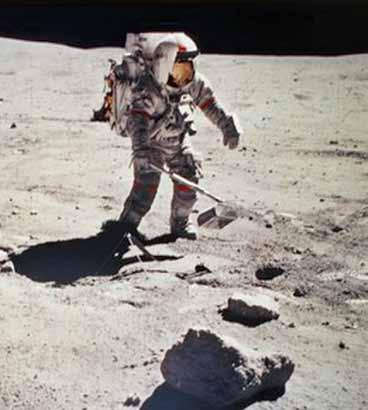
Analysis of lunar rock brought back by Apollo astronauts shows traces of the "planet" called Theia.
The researchers claim that their discovery confirms the theory that the Moon was created by just such a cataclysmic collision.
The study has been published in the journal Science.
The accepted theory since the 1980s is that the Moon arose as a result of a collision between the Earth and Theia 4.5 billion years ago.
Theia was named after a goddess in Greek mythology who was said to be the mother of Selene, goddess of the Moon. It is thought to have disintegrated on impact with the resulting debris mingling with that from the Earth and coalescing into the Moon.
It is the simplest explanation, and fits in well with computer simulations. The main drawback with the theory is that no-one had found any evidence of Theia in lunar rock samples.
Earlier analyses had shown Moon rock to have originated entirely from the Earth whereas computer simulations had shown that the Moon ought to have been mostly derived from Theia.
Now a more refined analysis of Moon rock has found evidence of material thought to have an alien origin.
According to the lead researcher, Dr Daniel Herwartz, from the University of Goettingen, no-one has found definitive evidence for the collision theory, until now.
"It was getting to the stage where some people were suggesting that the collision had not taken place," he told BBC News.
"But we have now discovered small differences between the Earth and the Moon. This confirms the giant impact hypothesis."
But the difference, some say, could be explained by material absorbed by the Earth after the Moon
formed.
And Prof Alex Halliday of Oxford University, is among many scientists who are surprised that the difference between the Theian material found in the Moon rock and the Earth is so small.
"What you are looking for is a much bigger difference, because that is what the rest of the Solar System looks like based on meteorite measurements," he said.
Dr Herwartz measured the difference in what is called the isotopic composition of the oxygen contained in rocks on Earth and Moon rock. This is the ratio of different forms of oxygen.
Studies of meteorites from Mars and the outer solar system show that these ratios are markedly different - rather like a fingerprint. So Prof Halliday and others are puzzled by the fact that the fingerprints of Earth and Theia seem almost identical.
One possibility is that Theia was formed very close to the Earth and so had a similar composition. If that was the case, it raises the possibility that the assumption that each planet in the current Solar System has a markedly different finger-
print needs to be revisited, according to Prof Halliday.
Other theories have been proposed to explain why the composition of the Earth and Moon are so similar: one is that the Earth spun much faster before impact, another is that Theia was much larger than current models suggest.
An alternative, controversial, theory proposed by Prof Rob de Meijer of Groningen University in the Netherlands is that the Earth's crust and mantle was blown into space by an accumulation of nuclear material 2,900km (1,800 miles) below the surface. It was this debris that clumped together to form the Moon.
He told BBC News that the new finding - demonstrating that there was a difference in the composition of the Earth and the Moon - did not change his view.
"The difference is too small," he said. "We don't know how the Moon was formed. What we need are manned missions to the Moon and a search for rocks deeper under the lunar surface, that have not been polluted by meteorite impacts and the solar wind."
(Excerpted from BBC)

Apple has split its shares for the first time in over 9 years.
The stock split is a 7-1 split and operates to make the stock more affordable to casual investors.
The Basics
All shareholders who own Apple stock at the close of trading on June 2, 2014 were eligible for the stock split. The actual stock split transpired on June 6 when qualifying Apple shareholders receive six additional shares for each share they own.
Concurrently, the new price of Apple shares will be the final trading price as of June 6 divided by 7. If shares of Apple on June 6 close at $690, the new trading price, which will go into

effect on Monday, June 9, will be $98.57 a share.
How does this change Apple's financial situation?
Not at all. Apple's market cap will remain exactly the same and the company will be no more or less healthier than it was before.
Google has hurriedly rushed out a link to D-Day material after failing to honour the 70th anniversary in its famous daily doodle.
Initially the UK homepage of the search engine had a doodle honouring a Japanese Go player.
It admitted to the Daily Telegraph that that had been uploaded in error, and quickly removed it.
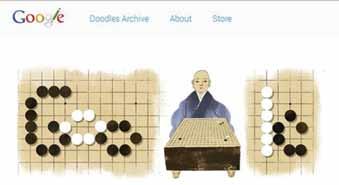
Beneath its logo there is a now a link to letters, photos and maps of the Normandy landings.
There was anger on Twitter about the goof.
"What were you thinking #Google?" asked one.
In response Google's director of communication Peter Barron said: "We always intended to highlight a new exhibition of imagery and archive material commemorating D-Day on our homepage.
"Unfortunately a technical error crept in and for a short period this morning an international doodle also appeared. We're sorry for the mistake, and we're proud to honour those who took part in D-Day"
The link to D-Day material takes users to the Google Cultural Institute, which has con-
ByTe
Ctent on the Normandy landings and access to more than 400 records, some of them published for the first time.
The idea of marking cultural moments via the Google logo was born in 1998 when Larry Page and Sergey Brin, Google's founders, placed a stick figure drawing behind the second 'o' in Google as a message to users that they were out of the office.
Later in the year a turkey was added on Thanksgiving Day, and two pumpkins were made out of the o's in October 1999.
Since 1998 there have been over 2,000 doodles on its home pages around the world, honouring major anniversaries and the birthdays of famous people including Albert Einstein and Michelangelo.
Google now has a full time doodle team of illustrators, animators and artists. (BBC)
onventional wisdom has long held that true hologram projectors — like the one R2-D2 uses to beam out a miniature Princess Leia — are squarely on the fiction side of science fiction, for now. The technology just isn’t there.
Or is it? According to a Wall Street Journal report, a startup called Ostendo Technologies has not only created a hologram projector chip, it’s made one small enough for smartphones. The Tic-Tac-sized chip should be ready for manufacturing next year.
The Ostendo Quantum Photonic Imager combines an image processor with a wafer containing radically miniaturized light-emitting diodes (LEDs). The system can control the color, brightness and angle of more than a million individual beams of light.
So why Apple is splitting its stock? There are a few reasons why companies decide to enact a stock split. In Apple's case, the company has said outright
that they want to make the stock "more accessible" to investors. Imagine, for instance, a small-time investor with US$600 to spend. With one share of Apple today costing over $630, that investor can't even get in on the action. Post-split, with Apple shares trading in the $90 range, investing
in Apple and snatching up a few shares all of a sudden becomes a possibility. This has the added effect of making the stock more liquid. Of course, for investors with more than $600 to play around with, a lower share price has a psychological effect of increasing interest in the stock.

Apple introduced a new version of its mobile operating system, iOS 8, at its annual Worldwide Developers Conference on 2 June.
CEO Tim Cook described iOS 8 as “a huge release” comprised of new features for end users as well as additional capabilities for developers. For users, iOS 8 will include an interactive notification center, an improved email inbox, a revamped keyboard with predictive typing, and a number of features for businesses. For developers, Apple announced a new programming language, dubbed Swift, to make it much faster to create apps for iOS.
As widely rumored before the conference, Apple unveiled HealthKit, software for tracking everything from exercise to blood pressure. The system, which Apple said it was working on with the Mayo Clinic, will integrate health data from a wide range of apps and devices. “Up to now, you couldn’t get a single comprehensive picture of your health,” said Apple software engineering chief Craig Federighi.
Another introduction, HomeKit, will allow iOS to connect with a number of smart home devices. Federighi gave the example of telling Siri, Apple’s digital assistant, that it was “time for bed,” which would signal smart devices, like light bulbs, to change states.

During a demonstration, six Ostendo units laid together beamed a 3-D image of green dice “spinning in the air,” according to the Journal report: “The image and motion appeared consistent, irrespective of the position of the viewer.”
Executives demonstrated an updated Messages app which will let users share their locations with one another. The company is also adding a “tap-to-talk” feature that allows a user to hold down the screen to turn on the microphone and speak a message into a messaging thread. Audio messages are automatically played when a user raises the phone to their ear.
Apple is adding the option to preview apps or to purchase them in discounted bundles in its App Store. TestFlight is another feature being aimed at developers, allowing them to recruit iOS users as beta testers before an app’s final release.
Siri is also getting some upgrades. Much like Google Now, Siri in iOS 8 will be accessible with just a voice command of “Hey, Siri.” The upgraded assistant will also include Shazam song recognition, allowing users to quickly make iTunes purchases.
iOS will be available as a beta for developers today; it will be available to users this fall.
“Apple engineers platforms, devices and services together. WE do this so we can create a seamless experience for our users that is unparalleled in the industry,” said Cook in his closing remarks. “This is something only Apple can do.” (TIME)
Based in Carlsbad, Calif., Ostendo has kept a low profile, but evidently it’s quite the operation. The company has raised $90 million from venture-capital firms and $38 million on government research and development contracts. The money has allowed the lab — now at 115 employees — to work undisturbed on the project for nearly 10 years, WSJ reports.
The newspaper ran the technology by MIT professor Ramesh Raskar, who said the key to the chip’s 3-D capability is its resolution. Ostendo’s system puts out 5,000 dots per square inch. Apple’s Retina display, by contrast, has about 300 dots per inch.
Early reports aren’t clear on how the chip manages the free-floating hologram effect in thin air. Previous hologram systems, like the famous virtual Tupac, still require some sort of 2-D projection surface, plus additional optical trickery. In any case, this definitely seems like something to keep an eye on. (Discovery News)
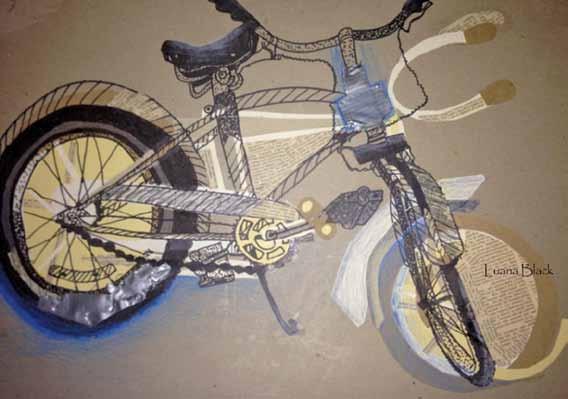
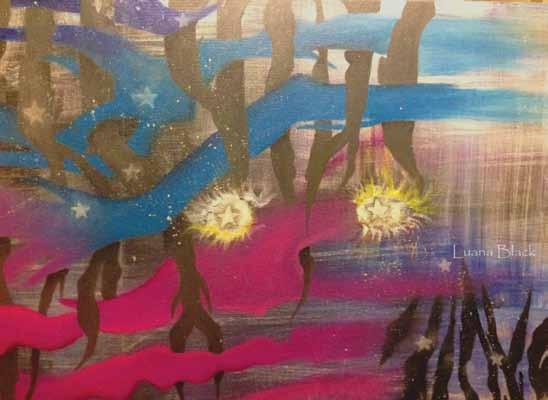
Delicia Wharton is a young and determined young lady who is proud of her Guyanese heritage and who wants to aptly represent where her parents are from by being the best in the field she dearly loves - art. Delicia’s mother is the co-owner of Les Deux Ms, a retail-based jewellery store in New York, and is a philanthropist who regularly donates to charities in Guyana. In an interview with Guyana Times Sunday Magazine Delicia explains her present endeavours and her future goals.
Sunday Magazine: Where in Guyana are your parents from?
Delicia Wharton: My parents migrated from Georgetown in their early 20s to New York. Then they had me.
Sunday Magazine: What inspired you to want to make art a career?
Delicia Wharton: I'm still doing things on the side and looking for opportunities in the creative field in general, but a career in art is my goal. I want to be an artist. I've loved drawing ever since I was younger, and I like making creative things for people that inspire them. I want to reach people in a creative way. Making expressive pieces makes me feel more complete.
Sunday Magazine: What are your academic qualifications?
Delicia Wharton: I took extensive art classes in grade school and also majored in Studio Art at college.
Sunday Magazine: What do you like to create/paint?
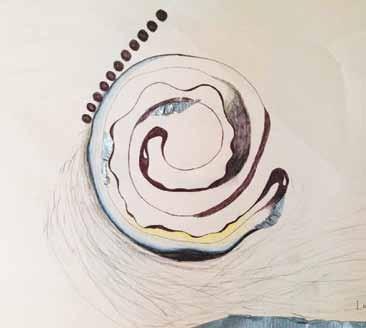
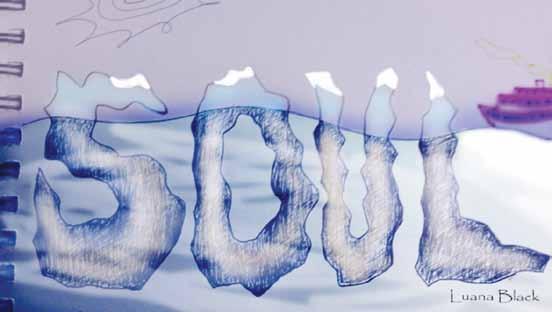
Delicia Wharton: I like to create designs and abstract drawings/paintings with symbolism. Things that are elegant, but also edgy. Occasionally I drifted a little from the field of art when life was demanding of other things, but I never lost interest.
Sunday Magazine: Where do you get inspiration from?
Delicia Wharton: I get inspiration from some of the situations I face in life and the experiences of others.
Sunday Magazine: Have you participated in any exhibitions?
Delicia Wharton: I was part of two exhibitions at the Art Museum in my college (Ursinus, in PA, US) and a third exhibition at the Angel Orensanz Foundation in July 2013.
Magazine: What motivates you to keep going despite challenges?
Delicia Wharton: The fact that if I give up, I will never experience what I wanted or deserved. So I don't give up. And it's not easy at all but I won't give up.
Sunday Magazine: What's your advice for young artists?
Delicia Wharton: Have a mindset that keeps you looking for opportunities. Define your main focus and goals, and don't let anything take that away from you. Don't defeat yourself. And as always, have a back-up plan, but never completely abandon doing what you love.

Located on Vryheid Street in New Amsterdam, Berbice, the All Saints Scots Church, also known as All Saints Presbyterian Church, was completed April 8, 1820 after construction began about two years earlier.
Before the three colonies were united, and Berbice was a separate colony, there was reportedly no church for the Dutch and English settlers to worship in, and services were held in what was described as a house “in a most dilapidated condition”.
According to LJ Hernandez, Guyanese historian, in an article published in the Guyana Review (2005), ashamed of remarks that “Berbice had no church”, the Predikant of the Dutch Reformed Church, in 1818, urged the building of a church in which both settlers could worship on alternate Sundays.
A part of Governor Bentinck’s garden was selected as the site and in May of the same year, the church was opened “for the purpose of divine worship by the congregations of the Dutch Reformed Church and the English [Anglicans], alternately” with the hope that
there would be no claim to supremacy in its use.
At some point, the Scots also began using the Colonial Church, as it was then known; but because of non-availability of regular Scots and Dutch pastors, only the Anglicans made good use of the church. The Dutch, it appeared, no longer had a presence on the colony.
In 1835, the Scots intimated that they would require the alternate use of the Colony Church. This was not agreed to by the Anglicans, however. They argued that it was the Dutch who had alternate use, but that that body had passed out of existence, whereas the Scots Church had only recently entered the scene and had no claim to alternate use of the Colony Church.
The counter-argument by the Scots was that there were Scotsmen in the Old Dutch Church and that there was no break, but rather a fusion of Scots and Dutch, hence their claim. These claims and counter-claims went as far as Downing Street, England to be settled by the English government, where the judgement went in favour of the
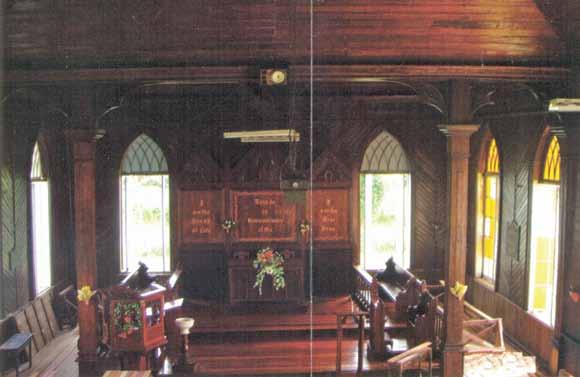
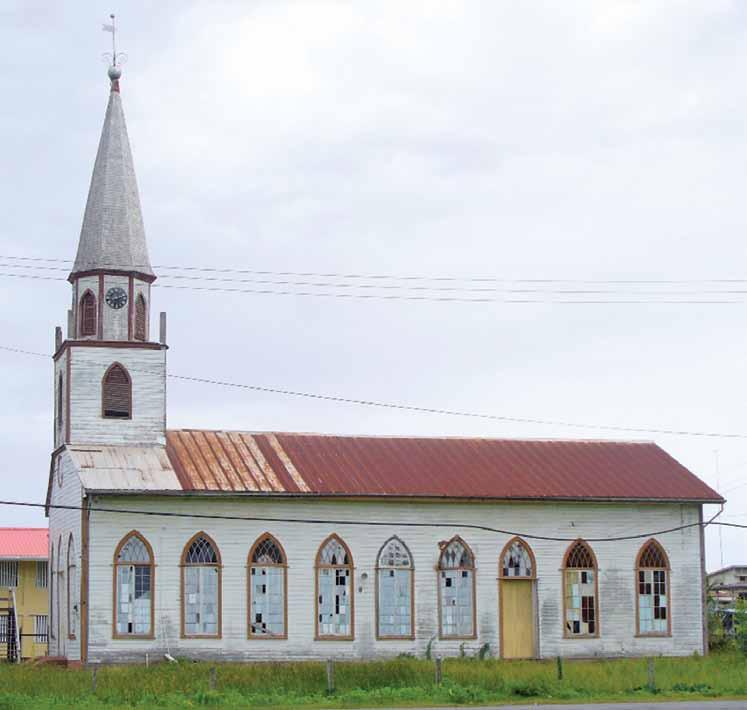
“Scots-cum-Hollanders.”
Hence, the Scots shared the Colony Church with the Anglicans from about 1835.
By 1838 however, this alternate sharing would have ended with the completion of another church building, this one for the Anglicans. A grant had been received from public funds for the building of a separate church for the Anglicans, if they “… renounced all claim to the use of the Colony Church.”
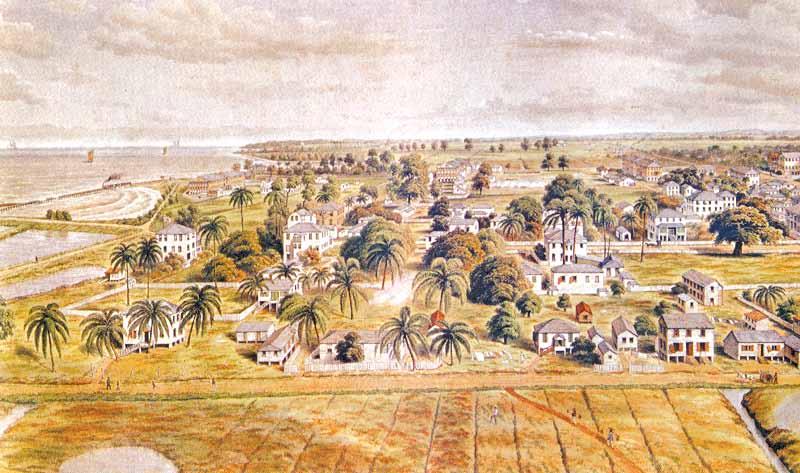


LAlso
Fairview villagers are now part of Iwokrama, working on every aspect of the project; cooking meals and looking after guest rooms, guiding hikers as rangers, and sharing in the profits from lumber felled in their part of the


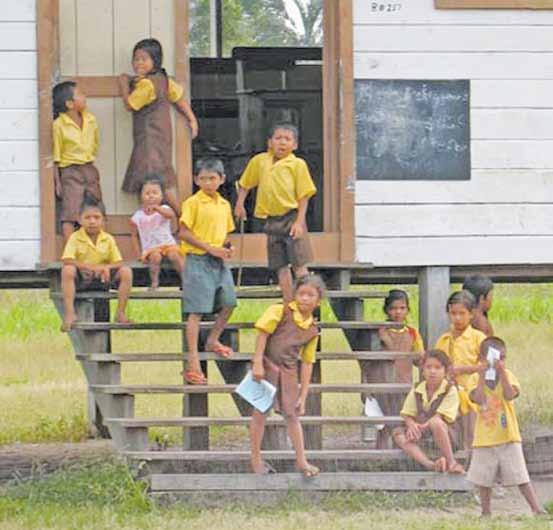



By Melvin Durai
I’d like to take a few min
utes to thank some of my friends for not sharing. I know how hard it is not to share. After all, when I was a little boy, my mother drummed into me the importance of sharing. And soon af ter that, she scolded me for coughing on my sis ter and trying to share my germs.
I learned, of course, that sharing has its limits. There are some things in life you just shouldn’t share, such as underwear, toothbrushes, and girl friends. It’s also not a good idea, however tempting it might be, to share a spouse. I have no idea how women in some parts of the world –- not just Utah –- manage to share a husband. I have enough trouble sharing my wife with the Food Network.

Yes, sharing isn’t always a good thing. That’s why I want to thank some of my friends:
Thank you for not sharing the photos of your vacation in Hawaii last winter. I really didn’t want to see you relaxing on the beach with a margarita, not when I was stuck in Winnipeg, getting treatment for frostbite on my butt.
Thank you for not sharing all 284 photos you took at your daughter’s graduation from nursery school. The three photos you shared were just perfect, showing what an emotional occasion it was, with several graduates crying as they came to terms with the fact that, after a whole year of school, they weren’t getting the piece of cake with the flower on it.
Thank you for not sharing your home
movies with me. I’m sure it was hard to keep them to yourself, especially since you’ve taken your video camera everywhere and captured so many proud moments, such as your 8-year-old daughter’s first No. 1 finish in a school race and your 3-yearold son’s first No. 1 finish in the bathroom.
Thank you for not sharing every detail of your life through Twitter. I’m really grateful you didn’t feel the urge to send out a tweet that said, “It’s that time of the month again. Yes, it’s time for me to take another bath.”
Thank you for not sharing what’s on your mind every single time you log into Facebook. It’s very kind of you to wait until you have a really deep thought such as, “If the people of Madagascar were really serious about going green, they’d change their country’s name to Madahybridcar.”
Thank you for not sharing your family’s recipe for squirrel stew. I tried squirrel once and, to be completely frank with you, I’ve had my share of rodents for a lifetime.
Thank you for not sharing your true opinion of my clothes. I know I’m out of style: my shorts are too short, my pants are too narrow, and my underwear is too concealed.
Thank you for not sharing your copy of Bill O’Reilly’s book “Kids Are Americans Too.” Having three children caught between two cultures, I’m more inclined to read Mahmoud Ahmadinejad’s book “Kids Are Too American.”
Thank you for not sharing any gossip about our other friends. You and I are alike: We don’t like to gossip. But do you know who does? I’ll tell you later.

The Wongs

Su Wong marries Lee Wong. The next year, the Wongs have a new baby. The nurse brings over a lovely, healthy, bouncy, but definitely a Caucasian, WHITE baby girl. "Congratulations!' says the nurse to the new parents.”Well Mr. Wong, what will you and Mrs. Wong name the baby?"
The puzzled father looks at his new baby girl and says, "Well, two Wong's don't make a white, so I think we will name her Sum Ting Wong."
A special hymn
A preacher was completing a temperance sermon; with great expression he said, "If I had all the beer in the world, I'd take it and throw it into the river."
With even greater emphasis he said, "And if I had all the wine in the world, I'd take it and throw it into the river."
And then finally, he said, "And if I had all the whiskey in the world, I'd take it and throw it into the river."
He sat down.
The song leader then stood very cautiously and announced with a smile, "For our closing song, let us sing Hymn # 365: "Shall We Gather at the River."
Big Lorenzo, an Italian fella, is bragging to his friends about his sons:
"I'ma so prouda my oldest son. He maka fifty thousand dollar evra year. Hesa Engineer!"
"I even more prouda ma second son. He maka five hundred thousand dollar a year. Hesa Doctor!"
"But, I'ma da proudest a ma youngest son. He maka Five million dollar a year. Hesa Sports Mechanic!"
Paolo, his friend asks: "What's a Sports Mechanic?"
Lorenzo replies: "Wella, he can fixa everytin. He fixa da horseraces, he fixa da boxin matcha......."
A drunk phoned the police to report that thieves had broken in to his car.
"They've stolen the dashboard, steering wheel, brake pedal, even the accelerator," he cried out.
However, before the police investigation could get under way the phone rang a second time, with the same voice came over the line.
"Never mind," said the drunk with a hiccup, "I got in the backseat by mistake."
The irate customer calling the newspaper offices loudly demanded to know where her Sunday edition was.
'Ma'am, said the employee, today is Saturday. The Sunday paper is not delivered 'til Sunday.'
There was quite a pause on the other end of the phone, followed by a ray of recognition.
'So that's why no one was in church today.'
A priest was preparing a man for his long journey into the night. Whispering firmly, the priest said, "Denounce the devil! Let him know how little you think of his evil."
The dying man said nothing.
The priest repeated his order. Still the dying man said nothing.
The priest asked, "Why do you refuse to denounce the devil and his evil?"
The dying man said, "Until I know where I'm heading, I don't think I ought to aggravate anybody."
A lecturer teaching medicine was tutoring a class on 'Observation'. He took out a jar of yellowcoloured liquid.
"This,” he explained, "is urine. To be a doctor, you have to be observant to colour, smell, sight, and taste."
After saying this, he dipped his finger into the jar and put it into his mouth. His class watched on in amazement, most, in disgust.
But being the good students that they were, the jar was passed, and one by one, they dipped one finger into the jar and then put it into their mouth.

After the last student was done, the lecturer shook his head.
"If any of you had been observant, you would have noticed that I put my 2nd finger into the jar and my 3rd finger into my mouth."