


...tie low gold declarations to reduced production
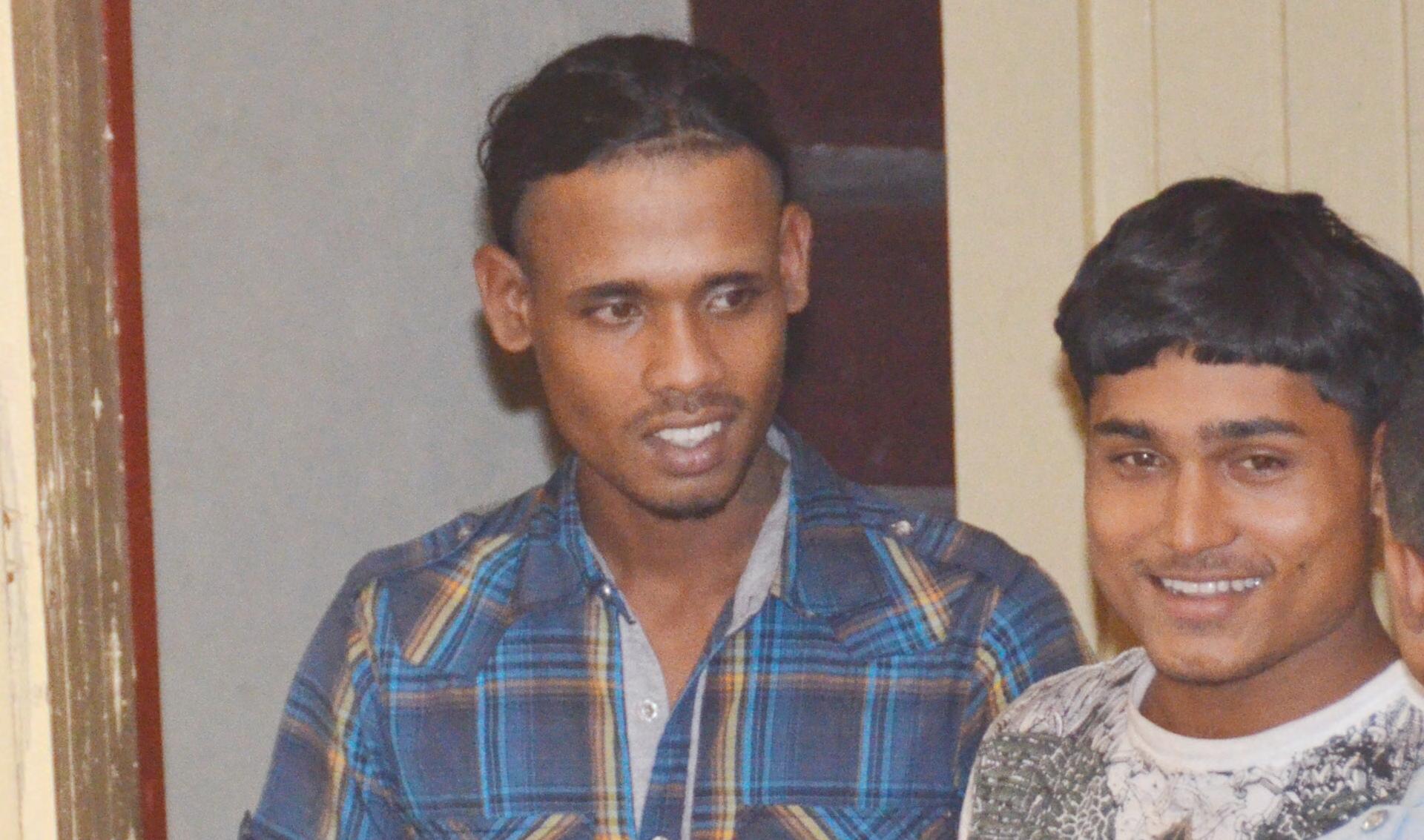
Cousins charged with taxi driver’s killing
cases of Chikungunya confirmed
US Ambassador saddened by “gays on island” gaffe File on allegedly sexually molested orphans sent to DPP
Chand wants formal invitation to sit on GuySuCo’s board


wednesday, june 18, 2014| guyanatimesgy.com

june
The Director of Public Prosecutions (DPP) is to soon advise the Police regarding possible charges against an official of a Berbice orphanage who has been accused of sexually molesting several young boys at the facility.







Earlier this month, the Child Care and Protection Agency (CCPA) of the Human Services and Social Security Ministry had removed six boys from the orphanage following reports of sexual abuse.
In a release, the Ministry said a report has been lodged concerning alleged acts of sexual abuse at the institution.
It was explained that a child reportedly escaped from the orphanage and subsequently sought his parent after alleging that he was sexually abused. The report was received on May 28, and, according to the Human Services Ministry, the CCPA responded “immediately”.
An investigation into the allegation resulted in the removal of five other boys from the orphanage and their placement into protective care to facilitate the continuation of the investigation.
Ever since this matter came to light, the owner of the facility has denied the allegations.
However, Guyana Times was told that the five other boys had given evidence that they too were sexually molested while at the orphanage situated.
Guyana Times was also told that an exami -
nation of the 14-year-old boy who made the first report confirmed that he was indeed sexually molested. The 14-year-old had reported to Police that the official at the institution had performed the act on him and he had also done the same thing to five other boys there. After the report was made, the CCPA was called in and the five were immediately taken out of school and questioned. They were later taken to a safe location for protection.
Reports are that the five boys have given investigators statements which claim that the orphanage official had allegedly forced them to perform oral sex on him. All five are under the age of 10.
No abuse at orphanage – owner
The owner of the orphanage is claiming that the incident involving the 14-year-old did not occur at the orphanage as is alleged.
He said at the time that it is stated that the incident occurred the teen was not at the orphanage and the accused was with all of the boys watching a movie in the lower flat of the building.
He said on May 27, a Police Officer along with two members of staff and a welfare officer visited the dormitory facilities at the orphanage where the boys sleep.
The owner noted that the victim was also in their presence and was asked to point out where the incident occurred. “He point to the bed here… they asked

him at what time and he said about seven. He was asked if he liked it and he said no.”
However, investigators said they could not hold a confrontation with the victim and his alleged assailant without his parent present, because he is a juvenile.
According to a source close to the Police, the teen was only asked to identify the place where the incident occurred and nothing else.
The orphanage owner, who received an award in recognition of his contribution to society and continued support of the propagation and promulgation of charitable work, said he was very surprised when he heard of the allegation of sexual misconduct by his staff.
He maintained that all of the evidence prove
that the incident did not take place at his facility.
Speaking with this publication, the owner said the claim by the teen who was at the orphanage for over five years came as a shock to him. He described the teen as “a troubled young man” and accused him of lying on many occasions.
Based on the statements that the CCPA collected from the five under-10 boys and the testimony of the 14-yearold, Police prepared a file for charges to be laid against the official and have sent it to the DPP for advice.
The accused who was initially arrested and taken into custody for 72 hours has been placed on $100,000 bail and has to keep reporting to the Police at in Berbice.




Editor: Nigel Williams
Tel: 225-5128, 231-0397, 226-9921, 226-2102, 223-7230 or 223-7231. Fax: 225-5134
Mailing address: 238 Camp & Quamina Streets, Georgetown
Email: news@guyanatimesgy.com, sales@guyanatimesgy.com, letters@guyanatimesgy.com
President Donald Ramotar perhaps surprised some when he announced to the participants at the annual Enmore Martyr’s Day commemoration that he was inviting the head of the Guyana Agricultural Workers Union (GAWU), Komal Chand, to sit on the Board of Directors of the Guyana Sugar Corporation (GuySuCo). Mr Chand had just repeated his trenchant criticism of the management of the sugar corporation for its well-publicised travails and Mr Ramotar’s invitation could be seen as challenging the union boss to “put his money where his mouth was”.
But in reality, Mr Ramotar’s challenge to the sugar union goes to the heart of any possible solution to turning around GuySuCo. From the beginning of the industry, labour costs have historically been the major variable production cost of the commodity. It was for this reason that slavery (no wages to labour) and indentureship (subsistence wages to labour) were introduced.
The historically low price for sugar – and necessarily its labour inputs – has been reinforced in modern times by cheap substitutes for sugar, such as High Fructose Corn Syrup (HFCS). The sugar union that Mr Chand heads represents the culmination of a long struggle for better wages for sugar workers.
At this time, however, the shoe is on the other foot and management has been forced to pay practically whatever labour demands for their input – not necessarily because of trade union agitation, but for the simple fact that the supply of labour has plummeted to less than half of the optimum quantity.
The Government, in charge of the sugar industry, has become a victim of its own success, since higher paying alternative employment has become readily available for unskilled labour that would have ordinarily gravitated into sugar.
As Mr Chand stated, the workers remaining in the industry are extremely skeptical about the reasons for the collapse for the industry and its strategic plan, which was put into play as far back as 1998. That plan conceded that because of differential endemic conditions such as rainfall, sunshine and soils, the Demerara plantations would always be higher cost than the Berbice ones. The latter were therefore to be expanded first through the Skeldon Modernisation Project and then less radical modifications at Albion and Rose Hall. Strategically, no one can argue that the Skeldon expansion was not sound.
Booker Tate was in charge of getting the Skeldon plant, a turnkey project, operational. They failed and were fired. It is the successor local management’s task to ensure that Skeldon gets on stream – not workers.
From the inception, the number of workers at Skeldon was never supposed to be an issue since the new lands that were to be brought into cultivation – and the “old” lands – were to be prepared to accommodate mechanised operations. On the other plantations, there has been a continuous fall in the quality of agricultural practices and these also have to be laid at the feet of management.
Cutting costs is imperative in the industry – but it cannot only come at the expense of labour. This will be counterproductive. President Ramotar’s invitation, however, if accepted by Mr Chand, will allow workers to have direct access to the figures on costs, etc in the industry. The offer, however, had been made two years before by the Secretary to the Cabinet, Dr Roger Luncheon but somehow was allowed to die on the vine. This must not happen again.
In the stable German and Scandinavian economies, the principle of “co-determination” is firmly entrenched. In this mechanism, workers have representatives on the boards and are privy to all aspects running the industry. The venture becomes a collaborative one between capital and labour.
In Guyana, the fact that the sugar industry is run by the Government of Guyana on behalf of the people of Guyana, makes “co-determination” feasible. At least workers will be assured they are not being made “the fall guy” for the problems of the industry.
Dear Editor,
I humbly submit a response to a recent letter by Swami Aksharananda, with reference to the violence between the indigenous Bodo tribe and the Muslims of Bangladesh. My intention is certainly not to create a debate for I endeavour to stay far from contentious matters of religion, but to address the effects of Assam, Nigeria ramifications to Guyana.
What should be stated is that communal violence has been going on for a long time in India and there have never been any “ramifications” in Guyana. Questions, like words, can be used as ammunition. Questions are not deserving of satisfactory answers simply because they are asked.
Here in Guyana, I know of Pandits who differ. So the same question applies: How can Hinduism be misunderstood by its adherents? In many circles, religion has become synonymous with negativity. It must be said that in nature there is fundamental unity running through all the diversity we see about us.
Religions are given to mankind so as to accelerate the process of realisation of fundamental unity. Therefore, both sides should sit at the table like civilised humans and deal with social justice issues here in Guyana (housing for the poor and medical services and empowerment through education) which definitely
would have ramifications for poor people and the world at large.
In his sermon, “The Weight of Glory”, CS Lewis took note of a subtle shift in the language of his day, which he felt was the first detour in a road leading far away from God. Writes Lewis: “If you asked 20 good men today what they thought the highest of the virtues, 19 of them would reply, unselfishness. But if you had asked almost any of the great Christians of old, they would have replied, love. You see what has happened? A negative term has been substituted for a positive, and this is of more than philosophical importance.”
The positive answer requires a perspective that looks outward at others. Those who are the recipients of the virtue, or else the one from whom, this virtue arises in the first place. Whereas the negative virtue shows that our concern is primarily with ourselves. Our own self-denial and hence the “appearance” of good virtue.
To put this in terms for the subject at hand: religious scriptures have lots to say about what is wrong with the world. But thankfully, this is never the end. And of course, they have a lot to say about complaining.
It is very true that we live in a world that is full of philosophical pitfalls, bad behaviour, and wrong theology with which we could rightfully see fault. But so it
is very true that we live in a world full of the glory and action of God. So why are we at times more excited to see fault than to see faith?
The same God who tells us to defend our faith tells us to do so with gentleness and reverence. The same scripture that bids us to do all things “without complaining and arguing” instructs us to do so because it is by our “holding fast to the word of life” that we demonstrate we are truly holding onto a different message than that of a crooked and perverse generation.
In the congregational worship services we create with our words and actions, with the things we do and the things we leave undone, might there be good reason for those around us to say to those of other faiths: “my brother”; “my sister” with genuine smiles.
Let those who have been writing letters that cause angst the religious communities reach in person. Let them dialogue with words of life; and let these seeds be planted in our communities so that the flower of harmony can bloom.
These words of Gandhi are worth reading and teaching: “I am a Muslim and a Hindu and a Christian and a Jew, and so are all of you.”
As are these Divine Words from the Quran: “Surely those who believe, and those who are Jews, and the Christians, and the Sabians, whoever believes in God and
the last day and does good, they shall have their reward from their Lord, and there is no fear for them, nor shall they grieve” (2:62).
Finally, whether it’s Assam, Nigeria or Guyana the only “ramification” should be one of justice. And that should be our lifelong struggle. Whether you’re from China, Russia, India, Africa any other country or continent. Whether you’re Muslim, Hindu, Christian, Atheist or Agnostic or any other, justice ought to be the order of the day.
Here is an instructive discussion between Franklin and Paine: “Where liberty is, there is my country,” Benjamin Franklin once said to Paine. “Where liberty is not, there is my country,” Paine replied. For Paine, the role of a citizen extended beyond national borders. The fight of those living under any system of tyranny was his fight.
Justice or tyranny... which one shall we boast of? When despair strikes, remember that all through history the ways of truth and love have always won. There have been tyrants, and murderers, and for a time they can seem invincible, but in the end they always fall. Think of it – always. My Hindu and Christian friends will forever remain in my heart and nothing will break us apart – nothing.
Respectfully, Nazar Mohamed
Dear Editor,
The West Indies Cricket Board (WICB) has rescheduled, or for a better terminology, has taken away the third test from Guyana and placed that match at the Kensington Oval, Barbados. The main reason for their action is that there is too much Government interference in the game here which forced them to act that way.
Now, this is furthest from the truth because governments as we know it, have a pivotal and important role to play in the administration of any sport, cricket being no exception. For starters, who are the builders of cricket grounds and other structural amenities of the sport?
And the answer is – the government. Certainly, that was not the task of any of the local boards in any of these jurisdictions. Those areas mentioned are still government’s responsibility. So, this statement of Government interference/involvement in the sport is totally misleading.
In fact, I will be bold enough to say that most, if it not all actions of the board are political or Government driven whether it is for weal or for woe. It all depends on whatever Government the board favour. This was very visible in the winning years of the WICBC.
In his capacity as Prime Minister of Guyana, LFS Burnham forcibly introduced Clive Hubert Lloyd as the best candidate to lead the West Indies squad. That mandatory suggestion of his was correct and that was the best thing that ever happened to the game; it
brought us to the world stage on a winning note for some 17 years. Burnham’s choice was a move done by a political leader when all the ideas of the “sporting geniuses” at the time failed.
Further to our discussion is the action of Prime Minister Portia Simpson Miller who went to Caricom and demanded, it wasn’t a request, she demanded that Jamaicans Chris Gayle and Marlon Samuels be included in the West Indies World T20 Team. This forceful request was made after St Lucian West Indies Cricket Board CEO Ernest Hiliare ruled otherwise.
For a man who never played the game, Portia Simpson Miller read through his evil schemes and mustered up some political muscle to get her boys in. This move was a vital one because the contributions of these two men were largely responsible for the West Indies winning that World T20.
So, at best, the WICB’s statement of Government’s interference in the game is a nonsensical argument. It was the timely intervention of Government officials that saved the day in many instances. These are some of the positive political influences that have lifted the game to a higher level.
On the other hand, the nasty politics played by the board as it relates to Guyana has caused the demise of the game. A hidden agenda, I’d call it, where Guyana and Guyanese players are being deliberately sidelined.
For example, Guyana was robbed four games short of 10 in the last Cricket
Dear Editor, June 19 and June 26 are important dates in the aviation industry. They mark the introduction of two new airlines – Insel Air and Dynamic Airways – that will be plying the ‘GEO’ route.
I will not go into the nitty gritties of how the travelling public will benefit from these airlines. What I am curious about is how the joint Opposition will be able to sell their stance cutting the budget for the expansion of the Cheddi Jagan International Airport (CJIA).
These airlines that are investing in our economy are not ‘fly by night companies’ –they mean business. Then of course in July, Copa comes on board, and from all indications two other airlines – an Asian and European –
World Cup held here in the Caribbean, all because a former WICB President said so. He highhandedly influenced the switch to St Lucia. I would not go into details on the huge loss the board suffered as a result of that change in venue but suffice it to say that the WICB’s coffers took a battering.
The vendetta against Guyana’s cricket continued where our cricketers of high calibre were sidelined for mediocre picks from other countries. And the hurtful part of it, is while all of this was going on, we had a Chairman of selectors in Clyde Butts.
He did absolutely nothing to stem the tide of contempt for our cricket which leads me to believe that it is the real reason for the WICB being so blatant in their actions towards Guyana. Butts’ “Uncle Tom behaviour” emboldened them.
The Government of Guyana’s court action against the GCB is a move made to correct the glaring anomalies in our local cricket. Instead of commending the Guyana Government, the board in its effort to correct these faults, the WICB is targeting our country’s cricket for destruction.
Removing the third Test from Guyana is not going to affect the Government; it will only achieve the dubious goal of destabilising our cricket. And may I add, it has the grave effect of West Indies cricket on a whole, a humiliating experience we are having right now.
I will say these shenanigans of the WICB are counterproductive to any progress we can and will ever make in West Indies cricket. They need to end the blockade against Guyana cricket right now.
Sincerely, Neil
Adams
are eyeing the route.
What happens then? The existing facility, we have heard, is bursting at the seams. There is not sufficient space to facilitate more Immigration and Customs Officers to process passengers. There are only two conveyor belts in Arrivals. The Departure Lounge is overcrowded when two flights are departing almost simultaneously. Now with three aircraft ready to go, could you imagine the chaos during the upcoming months as we approach the peak season?
The joint Opposition needs to swallow their pride and admit that we do need the airport expansion.
Sincerely
Manda Chase
Dear Editor,
From the outset, let it be known my perception of sexual orientation has been influenced first by religious values and later, by universal values. A Christian orientation would expose persons to the story of Sodom and Gomorrah and God’s view of a particular act that led to the city’s destruction.
As a trade unionist, my experience teaches me to abhor discrimination against any group or individual, in all forms. The religious groups, including the forerunner Catholic Church, are engaged in their own struggles to address the issue of sexual orientation, having varied views such as it is a civil rights issue of our time, heterosexuality can be achieved with prayers, or the non-judgmental approach.
The United Nations Declaration of Human Rights, Article 1 and 11 expressly state that all human beings are born free and equal in dignity and rights. Pastor Ronald McGarrell’s view that persons with alternative sexual orientation should live on an island by themselves, however light-hearted a joke, has offended many.
It is this offence that has to be examined and the reason that led to same. There is no guarantee his removal from the Board of the Guyana Responsible Parenthood Association (GRPA) will silence his or anyone’s voice and perception, or secure sexual equality.
In fact, the GRPA itself has to holistically factor in the modern family which also includes parents and wouldbe-parents from the lesbian, gay, bisexual, trans-gender and inter-sex (LGBTI) community and help the society in this regard.
What this society needs is education consistent with universal principles and laws that would create an understanding and respect for diversity in all its forms. Guyana is not a theocracy, it is a democracy where the
Constitution guarantees the rights and equality of all and where efforts should be made to ensure practices and attendant laws follow suit.
The religious community, like every community, must play its part in ensuring such laws are not only made, but also practised to the letter. And this brings me back to the civil role of the Christian community in this society and their theological references.
There is valid concern whether this community’s theology is grounded in liberation that sees securing justice and fair play in the social, political and economic welfare of humankind during our time on earth as important. The religious community is still regarded as society’s conscience.
It was Reverend Martin Luther King, Jr who articulated and fought on a principle that “injustice anywhere poses a threat to justice everywhere”. And while understandably, some in the religious community (leaders and followers) will have to confront beliefs on some issues that they are socialised to see as unacceptable, the political establishment and civil society will have to recognise that the right to associate/identify does not translate to denying others theirs and put systems in place to respect this.
By this, it means that laws to remove all traces of discrimination should be premised on the Guyana Constitution that guarantees the right to religious diversity, affiliation and non-affiliation, equally as it protects persons from discrimination for identifying/associating with the belief(s) of religious group(s).
Advocates for orientation equality are using the United States and other developed countries as a model to address eradicating discrimination. This society in using the developed countries as a model should also pay heed to how these societies treat with
LGBTI issues and other socalled sensitive issues.
For those societies, frank and open discussions as equals among stakeholders are seen as key to addressing these matters. If Guyana is to move forward, as Guyanese we must be prepared to do likewise, and not make issues selective or driven by special interest.
Another sore matter that faces similar treatment is the issue of race and politics, their intertwining relationship and the discrimination against groups/individuals because of their physical identity and exercising their right to freedom of association.
When persons are denied the most fundamental right, that is, to speak to their reality perceived or real, on matters that affect them, these matters will never be addressed through the proper channel or appropriate lens and will fester and explode, be it through opene hostility or continued discrimination even though the Constitution forbids such acts/malpractices.
Sections of this society cannot continue to bury their heads in the sand that acts of discrimination and perceptions of inequality do not exist and that they can be wished away by citing frivolous examples to the contrary, choosing to silence those who are affected by them, or protect those who practise them.
Admirably, the media has played a role in bringing the sexual orientation matter to the fore, and it would be reasonable to say similar frank and open treatment is expected on race issues and political discrimination that pervade this society and hinder its development.
For what affects one, invariably affects all. Injustice is injustice regardless of what it is, who practises it, or who is affected by it, and it undermines the desire of many to peacefully co-exist.
Sincerely,
Lincoln Lewis
Dear Editor, The Guyana Police Force (GPF) is responding to an article published in Guyana Times on June 13, under the headline, “Anna Regina man accuses Policeman of brutality”.
The article dealt with the allegation that Orlando Khanai of Anna Regina Housing Scheme, Essequibo Coast, was beaten with a piece of wood by a Policeman at a liquor restaurant at Cotton Field, Essequibo Coast, on June 11.
The GPF is refuting the allegation and wishes to clarify that ranks from the
Anna Regina Police Station had responded to a report of larceny which had been received at the station. On their arrival at the liquor restaurant, officers saw Khanai, against whom the report had been made, and consequently he was arrested.
It was observed that Orlando Khanai had visible signs of injuries and when questioned as to how he had received them, he said that the bartender’s brother had lashed him with a piece of wood after accusing him of stealing some money from the shop. A brother of the
bartender, who was in the shop at the time, was contacted by the Police, but Khanai said that he was not the one who had assaulted him.
Khanai was taken to the Anna Regina Police Station where he was further questioned and later released. He subsequently received medical treatment at the Charity Hospital and the matters are presently under investigation.
Cognisant of the article in the newspaper, the Police conducted investigations during which Khanai was contacted. He stated that at
no time had any Police rank assaulted him and repeated his allegation that it was a brother of the bartender at the liquor restaurant on the night of the incident who had beaten him with a piece of wood. The GPF is deeply concerned over this erroneous and misleading article alleging Police brutality, particularly at this time when we are being bombarded in the media with Police issues.
Respectfully, Ivelaw Whittaker Public Relations and Press Officer

ffective
Eteachers are passionate about educating their students. They want to spend their time teaching, not dealing with classroom disruptions.
Here are some classroom management tips to help teachers settle problems, or prevent them from occurring, so that they can spend more of the classroom hour on teaching and learning.
Take charge of your class
Get everyone’s attention before beginning class. That means the lesson won’t be started, the lecture won’t begin, and nothing will be written on the overhead until everyone is in his or her seat paying attention.
It doesn’t take a shout of “Let’s be quiet” or “I won’t start until everyone is ready” to get them to focus on you. It can be just as effective to walk to the front of the room and engage them with something interesting to them such as “My thermometer said it was 86 degrees this morning. It must have been hot out there waiting for the bus” or “How many of you saw the “Hunger Game's?”
Open with some attention getting comments and continue until everyone is with you. Remember, don’t start teaching until all eyes are on you and everyone is in their seat.
If students aren’t paying attention or busy doing other things, get them focused by using nonverbal signals of disapproval. If they are talking, pause and look toward them. If in front of the class, continue with the lesson but walk toward the problem students and stop near their seats, while still teaching.
Having you so near usu ally shuts off the unwant ed activity as the rest of the class’s attention is directed toward the misbehaving students. If there is a discussion going, di rect a question to the student who is not paying attention or misbehaving.
For example, say “Kevin, would you agree that the Battle of New Orleans was the turning point of the War of 1812?”
Hearing his name will snap Kevin back to the class activity hav ing the same effect with out embarrassing him as if you had said, “Kevin, pay attention!”
Remember to use his name when you begin to speak, otherwise he may not hear the question. Calling on a person by name brings almost anyone out of his or
garded, the next step will be imposing discipline measures within the classroom such as having them stay a few minutes after class or changing their seat.

permanently all year. When students choose their seats, they have “ownership” in those seats and tend to behave well in order to avoid being moved.
Give incentives to do their best on assignments If an assignment will not be collected and graded in-
Here’s a strategy to elicit better performance on an ungraded assignment: Tell students you will randomly collect one person’s warmup assignment and correct it.
If that paper has no mistakes, then the whole class will have a shorter (or no) warm-up the next day. If a randomly selected paper is perfect, that student instantly is the class hero.

where they want for a few days. Then about the third day tell them that the next class period they should find a seat that they will keep

an effort to do a good job on the no-credit assignment. For instance, a teacher will often do an ungraded warmup exercise to begin the class hour.
If the student has not made a real effort, then that student will be given a short homework assignment, due the next day. He or she will be penalised if it is not done. (This homework cannot be done during class time.) In most cases, students will work for peer approval by doing the assignment.
Another strategy to motivate students to stay on task would be to have students who have not stayed on task

remain after class for a minute. If there is no penalty for not working, they have no reason to work.
Keep an eye on your students Class goes so much better when you can see your students. Turn your back on them and you may get surprised. Position yours so that most, if not all of the class is visible. Watch out for shelves, computer equipment or class supplies that can block your view. When teaching, try to be facing students as much as possible.
As you work with a student at his or her desk, place yourself so you can see most of the class. As you move around the classroom, don’t follow the same pattern. By varying your routine, it becomes harder for students to be disruptive if they don’t know where you will be.
Establish consequences for misbehaving Good classroom management starts the first day of school. Once students learn there will be consequences for misbehaviour, they usually come around.
Here are three steps to help you set up consequences: * Determine what consequences will be effective with your students. Ask yourself what students don’t want to have happen – for example, adolescent students hate staying after class, being moved from a seat they’ve chosen, or receive the disapproval of their peers. Make those your consequences. (The reverse is also true,” Find out what students want to have happen and make that a possibility.” Classroom management doesn’t have to be negative.)
* Tell students that there will be consequences for misbehaviour. First, you will put their name on the board. Tell them that how long they stay after class depends on how the rest of the hour goes.
They now control their own destiny. If they behave, they will stay perhaps only a minute. If they continue to cause problems, they will stay longer. Tell them if they become a “model citizen,” you might even erase their name.
* Follow through with consequences for misbehaviour. Show students that you are serious and they will take you seriously.
Classroom management, especially with elementary and high age students, never ends. It is an ongoing process, but once the foundation is laid, it only takes occasional reminders. (www.nea. org)
BY GOMATIE GANGADIN
AGeorgetown resident working in Berbice had contracted the Chikungunya virus Health Minister Dr Bheri Ramsaran confirmed on Tuesday.
A source told Guyana Times that after the man began experiencing the symptoms of the virus, the decision was made to have his blood sample sent to the Caribbean Public Health Agency (CARPHA) Laboratory in Trinidad and Tobago, where it was found that he was indeed infected with the virus.
He is said to be currently undergoing treatment at home while officials from the Health Ministry are closely monitoring his well-being.
This new case has brought the total confirmed cases to 19.
Chikungunya is an arthropod-borne virus that is transmitted to humans by the virus-carrying Aedes aegypti mosquito. Its symptoms are similar to those of dengue fever and causes an illness with an acute febrile phase lasting two to five days.
It can result in some long-term effects, primarily joint pain, and causes moderate to severe illness. Depending on an individual’s reaction after the incubation period, persons may experience pain even after seeking medical atten-
tion. This period can last from two to six days with symptoms lasting four to seven days after infection. Individuals experiencing any such symptoms are asked to visit the nearest health facility as soon as possible. Individuals are also asked to remove all containers that may retain water and breed mosquitoes. The Health Ministry has already identified the ports of entry for strict monitoring. Health centres have been alerted and have available medication for the effective treatment of any vector borne disease.
Meanwhile, Director of the Vector Control Services Department of the Ministry, Dr Reyaud Rahaman on Tuesday told Guyana Times that the Ministry will intensify its fogging exercises in identified communities across the city. He said that the fogging exercises are aimed at killing the adult mosquitoes which are the carriers of the virus. The Director is advising residents to keep their windows open when the fogging exercises are ongoing so that the can infiltrate their homes, thus killing the mosquitoes within, hence curbing the spreading of the virus. However, he is also advising in an effort to avoid the risks of health complications as a result of the fogging exercises, resi-

dents should exercise caution by covering water and securing all food stuff (uncooked and cooked) to prevent contamination; secure all domestic animals and poultry and keep persons who are asthmatic, young children and the elderly away from the direct flow of the fog.
The continued fogging initiative commenced on Tuesday and is expected to continue during the hours of 05:00h and 22:30h daily.
Inclusive of West Ruimveldt, teams will be targeting areas such as East Ruimveldt, Alexander Village, East La Penitence, Tucville, South Ruimveldt, North Ruimveldt, Roxanne Burnham Gardens, West Ruimveldt, Laing Avenue and West La Penitence on Tuesday followed by exercises in

North East La Penitence, Meadow Brook Gardens, Durban Backlands, Lodge, Albouystown, Charlestown, Werk-enRust and Wortmanville today.
Vector Control workers will be visiting the areas of Lacytown, Stabroek, Bourda, Cummingsburg, Alberttown, Queenstown and Newtown to continue the vector control activities on Thursday while additional fogging will be conducted on Friday in Campbellville, Prashad Nagar, Bel Air, Bel Air Springs, Subryanville, and Kitty, and on Saturday in the areas of North Sophia, South Sophia and Kingston.
Dr Rahaman is calling on all citizens to cooperation during the fogging exercises, noting that while the Ministry through his department is doing all that is possible at this time to reduce the number of cases of those infected, citizens themselves must be aware of their surroundings and try at all times to get rid of materials which are providing the breeding grounds for the vectors. “We can fog but if persons are keeping containers and other materials with water inside, in their homes, in their yards, etc, it can defeat the purpose because these will be providing breeding grounds for the mosquitoes,” he said.
... says
Guyana Water Incorporated has said that it will decommission the old sewerage mains and activate the recently installed ones as of today, warning that disruptions are likely during the changeover.
The new mains come under the Government of Guyana (GoG) and InterAmerican Development Bank (IDB) US$10 million Georgetown Sanitation Improvement Programme (GSIP). The decommissioning exercise will be followed by the activation of the rehabilitated Force and Delivery Mains as well as 24 refurbished sewer pump stations. This exercise may result in a temporary disruption of the system.
Customers with concerns are asked to contact GWI’s Sanitation Hotline numbers on 227-8718 and 226-6059 from Monday to Friday between 08:00h and 17:00h. The company said it anticipates a successful transition to the rehabilitated system and wishes to assure customers that every effort is being taken to minimise any inconvenience the temporary disruption may cause.
Back in 2010, the IDB had approved the US$9.5 million loan to improve sewage service to 52,000 peo-
ple in the capital city of Georgetown and to help to eliminate tropical diseases. The funds, the IDB said at the time, would be used by GWI to improve the operational performance of the Georgetown sewerage system through the reconstruction of its most critical components. It will include the complete replacement of the 5.5 kilometre sewerage ring main in Georgetown, the replacement of all the delivery mains, and purchase of additional pumps and maintenance equipment.
The loan was also to enable GWI to improve its financial performance by replacing or upgrading pumps so that they consume less electricity – one of the utility’s major operating expenses. The programme would also include the purchase of portable measuring equipment, the replacement of inefficient pumping equipment and operational improvements to electric motors in 12 selected locations.
In addition, a portion of the loan was to be used to finance public health programmes that will limit the transmission of water-related neglected tropical diseases, including lymphatic filariasis and intestinal helminthiasis.
Turn To page 10

In a packed courtroom, two teenagers were remanded to prison on Tuesday for the murder of 17-year-old taxi driver
Danraj Latchman.
Eighteen-year-old Ashraf Alli and 19-year-old Abdul Razack, both of Lusignan, East Coast Demerara, made their first court appearance at the Georgetown Magistrates’ Courts to answer to the capital offence of murder. The indictable joint charge was read to the young men by Chief Magistrate Priya Sewnarine-Beharry.
It is alleged that the duo kidnapped and murdered the 17-year-old of Lot 115 Lusignan, whom they had hired to take them to Parika between June 10 and 14.
The accused were unrepresented by an attorney and were not required to plead to the indictable charge.
Magistrate SewnarineBeharry remanded the teenagers and transferred the matter to the Leonora Magistrate’s Court, where they will make their second court appearance on July 24.
According to reports,
Latchman went missing last Wednesday night after he spoke with his mother around 20:00h. He had informed his mother that he was taking the two young men, one of whom was a former schoolmate, to Parika.
His car, a Toyota 212 bearing registration number PNN 9823, was found abandoned at Hubu Backdam, Parika, the following evening with the windscreen broken and pieces of wood and sand in the back of the vehicle. Investigations led to the arrest of the two accused, who subsequently ad-
mitted during interrogation that they had hired the teen to take them to Parika under the pretext of uplifting some money.
The duo told investigators that their real motive was to hijack the car and resell it; however, their plans went awry forcing them to kill Latchman.
According to Latchman’s mother, she was told that the accused had confessed to Police that they had murdered her son by strangling him with his seatbelt. (See related story on page nine)
Aman was sentenced to 20 years on Tuesday for stabbing his wife to death eight years ago. The sentence was imposed by Justice Dawn Gregory.
Haydock Baxter of Albouystown, Georgetown, was indicted with the capital offence of murder which stated that he fatally stabbed his wife, Carol Baxter, outside the Georgetown Prison on October 23, 2006.
However, when his trial began earlier this month, Baxter pleaded guilty to the lesser count of manslaughter; as such, the presiding judge ordered that a probation report be made before sentencing was imposed.
The report was presented to the court on Tuesday’s
date after which Baxter was sentenced. Justice Gregory began with a sentence of 30 years and took off 10 years for mitigating factors. Eight years were deducted for the time the man spent on remand, while two years was taken off for his guilty plea, which saved the court time.
State Counsels Natasha Backer and Mercedes Thompson represented the state in the case, while Baxter was represented by Attorney Parag Hukumchand.
According to reports, Carol and Haydock were married for a number of years and were having problems. On October 20, 2006, she had gone to the Georgetown Prison to visit her son when she was con-
fronted by her husband.
Haydock reportedly asked the woman for a divorce and she agreed; however, she told him that she will go see her son first then she will go with him to sign the papers. However, the man became angry and pulled out a knife from his waistband. Upon seeing the weapon, Carol ran away from her husband, who followed her.
When the man caught up with the woman, he dealt her several stabs about her upper body. The woman sustained stab wounds to her shoulders and neck. Persons in the area went to her rescue and pulled the man away. An injured woman was rushed to the Georgetown Public Hospital

where she was admitted. She succumbed to her injuries three days later.
Haydock was then arrested and charged on October 25, 2006.

APegasus employee accused of helping himself to the hotel’s liquor supply was released on bail on Tuesday when he appeared at the Georgetown Magistrates’ Courts.
Twenty-three-year-old Javon Nelson allegedly stole six bottles of Hennessey from the Pegasus Hotel where he is employed as a clerk.
The defendant pleaded guilty to the charge, and told the court that he would pay back whatever money is owed to the hotel. Nelson was unrepresented by legal counsel and begged Chief Magistrate Priya Sewnarine-Beharry for leniency.
Bail was granted in the sum of $50,000 and a probation report was ordered for July 14 when he will make his second appearance at the Georgetown Magistrates’ Courts.

P...DEA?
ractically from the moment the PPP/C took office, they’ve been pleading with the US Embassy to have a Drug Enforcement Agency (DEA) presence in Guyana. But the idea had always been dead on arrival (DOA). We really don’t know why. Even two decades ago, you could see where the drug breeze was blowing from. With the US waging violent war against drug lords in Colombia, Panama (remember Noriega??) and most of Latin America, the drug traffickers were going to look for new routes.
You just had to look at the map and figure out that the borders of Guyana in South America provided an almost unimpeded route to the West Indian archipelago and on to Florida and Europe. The reason the Brazilians saw Guyana as a route for their manufactured goods to get up North, was the same one the drug-traffickers saw it as opportune.
This Eyewitness guesses they considered their cocaine as “manufactured” goods from the cocoa plant, needing to get to the lucrative markets up north.
And that’s what’s been frustrating the countries in Latin America and now Guyana. The USA just doesn’t seem to appreciate that it’s providing a market for these drugs that generate so much profit; there is no way countries such as Guyana will be able to mount a challenge to the drug smugglers’ business. Because it’s BIIIIIIG business.
If the US had spent a fraction of the monies thrown at its borders to interdict drugs in trans-shipment countries such as ours, their drug shipments would’ve been cut by half. The logic is simple – a US dollar goes much further here than in the US. They could’ve beefed up our radar facilities at our interior borders; trained our personnel in manning them; have some planes to interdict the smugglers’ small aircraft, for peanuts compared to their Star Wars “Death Star” approach around their borders.
So the most recent excuse as to why they can’t station a DEA office here is now a “budgetary” one. So what was the excuse in the go-go years up to 2008?? Some may be forgiven to think that the drug trans-shipment was allowed to bloom so as to hobble the Government. Paranoid? Well, what other reason can YOU proffer dear reader?
There was also talk about the DEA needing greater assurance that their local counterparts were more trustworthy. Hey!! This is a chicken and egg question, no? Let’s get the office going...and work with the Government to weed out the bad eggs. The Government says they’re willing to use any means necessary. Try them.
Another idea that was dead on arrival was the one on “political trust” as a precursor to “inclusive governance”. Any type of collaborative, much less cooperative activity among Guyanese politicians has to begin with the willingness to put Guyana first. That’s all. Once that’s done, everything falls into place.
Think of it, dear reader. On this AML/CFT Bill, for instance, what’re the implications for Guyana if it’s not passed? Now you don’t have to take the opinion of the PPP/C – including that of the Finance Minister. Just check the opinions of every institution or individual with even the smallest shred of knowledge on how the global financial system works. They’re unanimous that the Opposition should sign along the dotted lines, for the good of the country.
Funny thing is even the Opposition wankers agree. But they want their pound of flesh in a quid pro quo (this for that) arrangement, because they feel they have the Government by the shorts. Trust for these wankers? Not even to buy a sugar cake.
...City clean-up
What could be more “DOA” than this idea? They’re going to spend a billion dollars to clean up the city. But it’ll be of no use. The dirtiest thing is Green and it’ll still be there afterwards.
And we’re not talking about the slime in the canals.
Apost-mortem examination conducted on the body of 17-yearold Danraj Latchman, the murdered Lusignan taxi driver, confirmed that he was indeed strangled.
Dr Nehaul Singh, the pathologist who performed the post-mortem on Monday, gave the cause of death as asphyxiation due to compound injury to the neck; a characteristic injury associated with being strangled.
After the post-mortem results were related to the Police, the two accused, Ashraf Alli, 18, and Abdul Razack, 19, had the charge of the capital offence of murder read to them. They were subsequently placed before Chief Magistrate Priya Sewnarine-Beharry at the Georgetown Magistrates’ Courts on Tuesday when they were remanded until June 24. The duo, who were unrepresented by legal counsel, will make their second court appearance at the Leonora Magistrate’s Court.
The two told investigators under interrogation that their motive for taking Latchman to Parika was for the car to be hijacked and sold, but the deal they had made had fallen through.
After killing the teen, the two reportedly drove the car to Hubu Backdam and parked it before taking a bus back to the city, and then travelling home to Lusignan. Latchman, of 115 Lusignan, East Coast Demerara, a former student

of the Institute of Business Education (IBE), was last heard from on Wednesday around 20:00h, after leaving his home to transport the two accused to Parika, under the pretext of uplifting some money.
The taxi driver’s car was found abandoned at the Hubu Backdam on Thursday evening with the windscreen broken and pieces of wood and sand in the back of the vehicle. Latchman’s swollen and badly beaten body was found Friday evening in the Parika Backdam, buried in a shallow grave, some two miles from where his car, a Toyota 212 bearing licence plate PNN 9823 was found.
According to the dead teen’s distraught mother, Tarmattie Daby, it was related to her that the two boys confessed to Police that they had murdered her son
by strangling him with his seatbelt. She related that after the two confessed to the murder, which they said took place on Wednesday evening, Police escorted them to the area where they pointed out the exact location of the body, which was hidden in a shallow grave.
Meanwhile, Alli’s father, who was held for questioning by the Police after it was discovered that he had allegedly tampered with evidence which would have implicated his son and nephew, will not be charged for the offence.
According to Crime Chief Leslie James, the Director of Public Prosecutions only advised on charges for the teens and none for the father, and it was highly unlikely that the man would be charged.
The dead teen’s cellular phone and his car keys were discovered in a drain some distance away from Alli’s home and upon further investigation by Police, it was revealed that it was Alli’s father who had disposed of them after the Police had visited the home and arrested the duo on Wednesday evening after Latchman was discovered missing.
Latchman’s mother told Guyana Times that her son would be buried today. His body will leave Jerrick’s Funeral Parlour for his house at 115 Lusignan at 11:30h followed by interment at the Good Hope Cemetery at 16:00h (4pm).
The body of a Pomeroon pensioner was last week set ablaze in his house after relatives complained about the unbearable stench. But Police have now launched an investigation, saying that they did not get a chance to examine the body and never gave permission for it to be burnt.
The body of 71-yearold Winston Fmithett of St Monica, Upper Pomeroon was discovered lying nude on his bed on Friday last. His body was discovered by a relative. Reports are that the pensioner’s body was in an advanced state of decom-
position when it was discovered.
Wife of the pensioner, Jennifer Fmithett said she learnt about her husband's death via a telephone call. The woman, who works in Charity, said she travelled up river to St Monica the same day she received the call but could not enter her house due to the strong stench emanating from within.
She said a Toshao who is said to have made contact with Police at Charity allegedly ordered that the pensioner’s body to be set alight in the said home. According
to the dead man’s wife, the Toshao suggested to relatives that the house and the pensioner’s body be burnt. The relatives agreed to his request.
Meanwhile, the Sergeant of the Charity Police Station said that he did not receive any report of such. The Sergeant said an investigation will be launched immediately into the matter. Several relatives of the dead pensioner said they were advised by the Police to either bury or burn the body. The pensioner body was burnt along with his house.
The man accused of stabbing to death a Meadow Bank, Greater Georgetown man some seven years ago will know his fate today when the jury panel is expected to arrive at a verdict.
Quaison “Blondie” Jones is indicted with the murder of fellow fish cleaner, 23-year-old of Marlon Greene of Meadow Bank Squatting Area. Jones is accused of murdering Greene on January 17, 2007, at the Meadow Bank Wharf.
The murder accused pleaded not guilty to the indictment when it was read to him before presiding judge, Justice Navindra Singh, at the High Court earlier this month.
Senior State Counsel Judith Gildarie-Mursalin is prosecuting the case on behalf of the state, while Jones is represented by Attorney
George Thomas. During the trial, the state called several witnesses, including two relatives of the deceased who witnessed the incident. Rondell Singh, the brother of Greene, testified that on the day in question, he was at the koker at the wharf when he heard another fish cleaner screaming. The man rushed to the scene and saw his brother on the ground with the accused over him, apparently punching him.
Singh continued that when he got closer, he realised that Jones, who is known to him as “Blondie”, had a knife and was actually stabbing his brother. He noted that the knife had blood on it and blood was gushing from his brother’s body. Meanwhile, another relative, a cousin of the deceased, Michelle Vieira, also testified
seeing the accused and Greene in a scuffle before Jones began stabbing the man.
According to the reports, Jones and Greene knew each other and on the day in question, the men got into a heated argument, which resulted in a scuffle. One of Greene’s relatives went to part the men; however, the accused pushed him away and during this, Greene fell to the ground. Jones then pulled out a knife from his waist, stood over Greene and began stabbing him. One of Greene’s relatives had witnessed the entire ordeal and the prosecution is expected to call her to testify against the accused. It was further reported that Jones used to harass the deceased and had even threatened to kill him a few days prior to the incident.

The Guyana Gold and Diamond Miners’ Association (GGDMA) is disappointed by recent statements and threats emanating from the Natural Resources and Environment Ministry and by notices published by the Guyana Gold Board which seem intent on criminalising the entire mining industry.
According to the GGDMA, the Government and its various arms seem to be more intent on vilifying the industry than providing helpful solutions to help increase production. “The Ministry of Natural Resources and the Environment has resuscitated an archaic piece of legislation and is using it to threaten legitimate miners and other stakeholders with jail time of up to five years for failing
to sell gold within a specified period of time. The Ministry has also accused miners of hoarding gold, a charge the Association strongly denies,” the GGDMA said in a statement.
The Association believes that the real problem lies in reduced production for the first half of 2014. It said too that it has commissioned a study to investigate the reasons for lower production figures for the first half of 2014 with the intention of demonstrating that it is a reduction in production rather than deliberate intent that is responsible for low declarations. It said the results of this study would be made public once completed and should demonstrate beyond any doubt the real reason for the shortfall in the Government’s budgeted gold expectation.
“Production and declaration must go hand in hand and miners cannot declare gold they have not won. Despite an earlier position that the gold declaration was below production, miners have now seen documentation that proves contrary, and hence, the decision to conduct a more indepth study of production figures,” the GGDMA said.
Scapegoats
It said while it empathised with the Government’s position – facing reduced revenue earnings, which are now below budgetary expectations, the miners cannot be made
the “fall guys” for this situation. The Association said it has previously stressed to its membership the importance of declarations to the national economy and has been actively advocating for increased declarations.
“Meetings have been ongoing with the Ministry and it is shocking that these have resulted in the application of threats and coercion; this does not sit well with the industry.”
The Association maintains its position that gold remains the most important economic earner for Guyana and miners remain the country’s best hope for economic growth. “The GGDMA, however, wishes to state, clearly, that any attempt to criminalise and bully legitimate mining operations cannot, and will not, be accepted, and calls
on the “Government to offer solutions and incentives for increased production rather than threats.”
In light of this controversy, the Association is convening a special emergency meeting for all miners on Thursday to discuss the implications of the resuscitated measures and to determine a position on how the industry will move forward in this climate of “criminalisation”.
During a recent panel discussion, Chairman of the Guyana Gold Board, Dr Gobind Ganga said with the decline in gold declarations, Guyana has lost about US$100 million in foreign exchange and approximately G$1.5 billion less in royalty and taxes. This, he said, is for the period January to May, with 20 per cent less gold declared for the same period last year.
According to Dr Ganga, the Guyana Gold Board was expecting between 40,000 to 50,000 ounces of gold being declared thus far for the year, but this has not materialised. This current situation, Dr Ganga said, is very threatening to Guyana’s economy as gold has been helping the country’s fiscal policy to provide for economic sustainability, “So with this decline, it’s going to have an adverse effect, not with respect to the exchange rate per say in the immediate future, but later down the road, it will have the effect.”
Hoarding
Dr Ganga said, in his opinion and with findings, it is easy to conclude that the main causes for the decline are the continuous decline in the price for gold, some amount of hoarding, and the possibility of illegal export. Supporting his claims of possible hoarding of the metal, he said, “If you are looking at the export earnings from this sector, you would find that the foreign exchange is not there, if you would have mined gold and sold gold, you would have expected to foreign exchange to come back in, that is not there.” He added that miners are producing more, declaring less, assuming that their production is not being sold, which makes it obvious that the there is no foreign exchange earnings. “There is a strong indication that indeed there is some level of hoarding.”
Ganga went on to explain that within the Gold Board Act, miners have 28 days to make their declaration and if this is not done then the gold is illegal. “When land is being given to miners, it’s not their private operation, it is public asset which is given to recover an asset which is to provide revenue to the state in the form of foreign exchange, taxes and royalties which are to be used for every Guyanese, so when you withhold the production and it is not in the official stream, then it is having an adverse effect on Guyanese as a whole,” he said.

Satiricus sighed. It was just not fair. The Opposition Leader GrainJa was so misunderstood. People just took the least thing he said and turned it into vicious barbs. Take his take on that rabble-rouser RodKnee. All GrainJa said was that what RodKnee was planning was the same Rebellion those Rebels had tried in the Rupununi back in the day.
Now Satiricus wasn’t around then, but he remembered his dad telling about those dark days. The hairs on his arms rose to attention when he recollected how those rebels had killed some Policemen.
GrainJa didn’t say how many Policemen RodKnee’s Rebels had killed, but Satiricus knew that if GrainJa said RodKnee’s rebellion was the same, then some Policemen had to have been killed. Just like the Freedom Five had done later in Buxton, but which GrainJa supported. GrainJa didn’t lie. He was a man who lived in God Consciousness. The Donkey Cart Economist said so. And economists mightn’t know squat about why the US economy has tanked, but they knew plenty about God consciousness. But GrainJa didn’t just compare Rodney’s Rebellion to the Rupununi Rebellion. He described eight acts that RodKnee had done to show he had a rebellion going.
But some fool had said GrainJa was giving “justification” for why RodKnee had to be taken out. In Satiricus’ own paper. Satiricus was so ashamed. How the heck could RodKnee actions of Rebellion against the Government be “justification” for the state using one of its soldiers to take him out? GrainJa never used the word “justification”, did he? Why would anyone want to put words into a man who was practically “of the cloth”?
When GrainJa outlined actions of RodKnee’s Rebellion, he was acting in the spirit of Martin Luther. No. Not Martin Luther King. The original Martin Luther who’d dared to tell the Pope about all the bad things he was doing. Ninety-eight bad things – like nepotism, simony, usury, pluralism, and the sale of indulgences. Satiricus could never remember what this “simony” was, but he knew it had to be very bad.
But even though half of the churches turned against the Pope and broke with Rome after Luther’s 98 bad things, no one called it “justification” for the split of the Church, did they? Nope. Like GrainJa, Martin Luther never actually called his 98 theses “justification”. He called them “Disputation”.
And in this later day, this man of (almost) the cloth, GrainJa was just offering a disputation. Whoever did what they did to RodKnee, wasn’t justified by GrainJa’s disputation.
Just like how Martin Luther’s 98 theses weren’t justification for the split of the Church. Satiricus mourned for how GrainJa was misunderstood.
These and other diseases have persisted in parts of Georgetown, partly because of the antiquated sewage system, built nearly 80 years ago, and which is plagued by frequent blockages and ruptures that can expose residents to untreated wastewater, the IDB had said.
Finally, the loan was also to pay for activities to strengthen the capacity of GWI’s Wastewater Management Division and its Energy Efficiency Group. These will include development of an asset management implementation strategy; knowledge transfer and staff training programmes on wastewater operation and maintenance practices and energy use; and public awareness campaigns, specifically targeting schools and business owners.
The IDB loan consists of a US$4,750,000 from the Bank’s Ordinary Capital and US$4,750,000 from the Fund for Special Operations. The former is a 30-year loan, with a six-year grace period and an interest rate based on LIBOR. The latter is a 40-year loan, with a 40-year grace period and a 0.25 per cent interest rate.
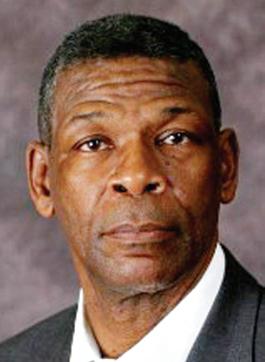
Amid the furore
over Pastor Ronald McGarrell’s “gays on island” gaffe, United States Ambassador to Guyana, D Brendt Hardt on Tuesday urged greater respect for each other, while saying that it was long past the time that the shared belief in the universality of human rights be put into action.
Wiring in an OP-ED, the outgoing Ambassador said as his tenure in Guyana draws to an end, “I was saddened to hear the recent outburst from a prominent religious leader suggesting that his fellow citizens with different sexual orientations should be sent to live on an island.”
Ambassador Hardt said it was John Donne who famously observed that “No man is an island, entire of itself, every man is a piece of the continent, a part of the main.” And it is precisely because of our connections with our fellow man that we are called upon to love others as we love ourselves – the core message of Christianity and many other religious traditions.
The US Ambassador said Washington understands that the issue of LGBT rights is considered sensitive for many people and many governments. “We know that the obstacles people seek to place in the way of protecting the
human rights of fellow citizens who are LGBT are often said to arise from deeply held personal, political, cultural, and religious beliefs.”
He said in citing religious or cultural norms and practices as a reason to violate or not to protect the human rights of LGBT citizens, it is easy to see parallels in justifications historically offered for some allegedly traditional violent practices towards women, such as honour killings, widow burning, or female genital mutilation. Some people still defend those practices as part of cultural or religious traditions. But such violence isn’t cultural – it’s criminal, the Ambassador said.
He said too that the example and history of slavery are also instructive. Noting that slavery was once justified as sanctioned by God, and St Paul called on slaves to obey their masters. “Despite such religious precedents, however, slavery is now rightly reviled as an unconscionable violation of human rights. Likewise, racial discrimination was once widely accepted as justified on the basis of alleged genetic superiority or inferiority of different ethnic groups, but this has long been recognised for the gross fallacy it was.”
“In each of these cases, we have come to recognise that no practice, tradition, or custom trumps the universal human rights with which, as Thomas Jefferson wrote in the US Declaration of Independence, we are “endowed by our Creator.”
Ambassador Hardt said in contrast to the hateful and intolerant sentiments recently expressed, it is important to recall that most religious traditions and teachings are not in conflict with the protection of human rights for all human beings. “Indeed, our religions and our cultures are more typically sources of com-
The Caribbean Association of Industry and Commerce (CAIC) is calling on the Caribbean Community (Caricom) trade negotiators “to stand firm” and leverage the good relationship Canada has had with the Caribbean to secure a fairer free trade agreement.
In a statement, the CAIC said with the possible concluding rounds for a CanadaCaribbean trade agreement taking place here this week, it was cautioning against accepting a “watered down agreement” which would not be beneficial to either party and worse yet, the Caribbean private sector.
The regional private sector group said that based on consultation with its Caribbean private sector stakeholders, CAIC has identified six are-
as of concern with the ongoing negotiations, including the impact that the status of these negotiations would have on the Caricom private sector, in the event that the trend of these negotiations continue.
The CAIC said it is also concerned that the impending withdrawal of the CARIBCAN without the enactment of the CaricomCanada free trade agreement and the severe impact on Caribbean export items such as rum, tilapia, ground provisions, fruits, vegetables and other food products. It said that there were also areas that Canada was interested in receiving greater market access to based on its demonstrable export capacity such as, dairy industry, poultry, non-alcoholic beverages, sausages and apparel.
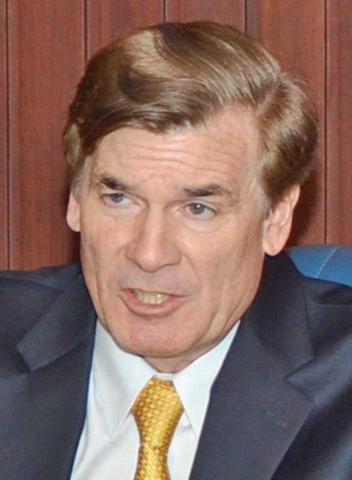
passion and inspiration toward our fellow human beings. Our various religions teach that caring for others and loving others are reflections of our faith and the embodiment of what it means to be fully human. That is one reason why human rights are universal across all religions and cultures.”
The Ambassador added that some seek to suggest that gay rights and human rights are separate and distinct. “In fact, they are one and the same. Sixty years ago, the governments that drafted and passed the Universal Declaration of Human Rights were not thinking about how the Declaration applied to the LGBT community, but they also weren’t thinking specifically about how it applied to indigenous peoples or children or people with disabilities or other marginalised groups.
Yet in the past 60 years, we have come to recognise that these “groups” are entitled to the full measure of dignity and rights, not because they are a member of a distinct group, but because
they are people with whom we share the common bonds of humanity,” the US Envoy declared.
He said in the United States and in countries throughout the world including Guyana, it is long past time to put our shared belief in the universality of human rights into action – into new laws and a new spirit of respect and solidarity for our fellow citizens, our brothers and sisters, sons and daughters, friends and family.
Hardt also quoted Martin Luther King, Jr who once observed that “laws can restrain the heartless, but they cannot restrain the heart”
He went on to say “That is why respect for rights must begin in the small places close to home – the streets where people live, the schools they attend, the factories, farms, and offices where they work, and the churches, mosques, and temples where they worship. Our actions in these daily human interactions, the words we express, and the ideals we embody, will determine whether we can ensure that human rights for all people, regardless of race, religion, or sexual orientation, will flourish, for we are, as Donne said, “involved in mankind”.
He said no matter “what we look like, where we come from, or who we love, all people are equally entitled to enjoy their fundamental human rights and human dignity. So let us be on the right side of history, for our people, our nations, and for future generations, and recognise together that no man or woman is an island – or should be sent to live on one.”

Land degradation, caused or exacerbated by climate change, is not only a danger to livelihoods, but also a threat to peace and stability, Secretary General of the United Nations, Ban Kimoon has said.
Ban said that the warning signs lie in conflict between pastoralists and subsistence farmers competing for more productive land and communities fighting over increasingly scarce water resources. “We see the symptoms of insecurity in global food market volatility, internal displacement and mass migration. While land degradation is acutely felt in the world’s arid lands, some 80 per cent is actually occurring outside these areas,” the UN SG said in a message to mark World Day to Combat Desertification and Drought.
He observed that more than 1.5 billion people subsist on land that is degrading – the majority of whom are small farmers. According to Ki-moon, climate change directly threatens their productivity. In many regions,
freshwater resources are declining, food-growing areas are shifting and crop yields are faltering.
“Globally, unpredictable and extreme weather is predicted to have an even greater impact on food production. With world population rising, it is urgent that we work to build the resilience of all productive land resources and the communities that depend on them. We need to manage the land sustainably, avoid further degradation, and reclaim and repair that which has been damaged. More than two billion hectares of land have potential for restoration and rehabilitation. We need to inspire action that will prompt the recovery of these areas.” Ban said recovering land that is degrading will have multiple benefits. “We can avert the worst effects of climate change, produce more food and ease competition over resources. We can preserve vital ecosystem services, such as water retention, which protects us from floods or droughts. And a comprehensive and large-scale approach to land recovery can create new jobs, business opportunities and livelihoods, allowing populations to not only survive but thrive,” the UN Secretary General said. The theme of this year’s World Day to Combat Desertification is “Land belongs to the future, let’s climate-proof it”. It can be done, as communities in Burkina Faso, Niger and Mali have shown by recovering more than five million hectares of degraded land. Let us take inspiration from these and other examples and protect and nurture the land for this and future generations.

wednesday, june 18, 2014 | guyanatimesgy.com


The Guyana Gold Board (GGB) has dismissed concerns raised by the Guyana Gold and Diamond Miners Association (GGDMA) that it was out to “criminalise” the entire mining industry.
In a statement reacting to one issued by the GGDMA (see story on page 10), the Gold Board said it has noted the accusations made by the Association surrounding the current ongoing outreach activities.
“The Guyana Gold Board wishes to point out that the current outreach follows representation by the GGDMA and other stakeholders for the need to ensure that the GGB Act and other related legal provisions are complied with by those involved in the gold trading and the wider mining sectors.”
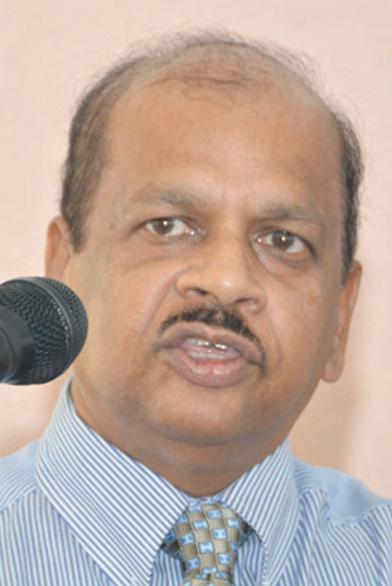
GGB Chairman, Dr Gobind Ganga
the GGDMA, including the President of the Association, stated that the GGB must undertake more monitoring of all stakeholders of the gold mining sector, which is in accordance with the GGB Act of 1981.
The Board said the GGDMA itself had emphatically made the call for the mining industry to improve its level of declarations.
“The activities being carried
out by the GGB includes the verification of all licensed gold dealers for 2014 and the details of the records by dealers corresponding to the GGB records.
Moreover, all licensed dealers are subject to conditions which state that (a) for each dealer, the Board shall undertake periodic reconciliation between purchases made, holdings, and sales to the Board and (b) every dealer shall permit a duly au-
thorised officer to enter the premises of the authorised dealer at reasonable times to inspect records. These activities are being done in accordance of the GGB Act, which has never been questioned as to its relevance in governing the modern gold mining sector.”
The GGB said it has been mandated by the Board of Directors and the Natural Resources and Environment Ministry to
ensure full stakeholders collaboration in fulfilling its obligations for the betterment of the gold trading sector and the wider mining community.
It reiterated its recognition of the importance of miners, dealers and other stakeholders of the gold sector to the national economy and denounced any effort to impute motives that these ongoing examinations are a matter of criminalisation.
By Andrew CArmiChAel
AIn addition, the executive members of
According to the Board, It must be recalled that on June 4, at a meeting with stakeholders of the gold mining sector, the GGDMA emphasised that there must be more monitoring and enforcement of the mining regulations by both the Guyana Geology and Mines Commission (GGMC) and GGB.
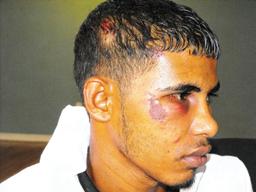
44-year-old woman is now in custody following an assault on a teenager, who was caught in her house alone with her 16-year-old daughter on the East Bank of Berbice.

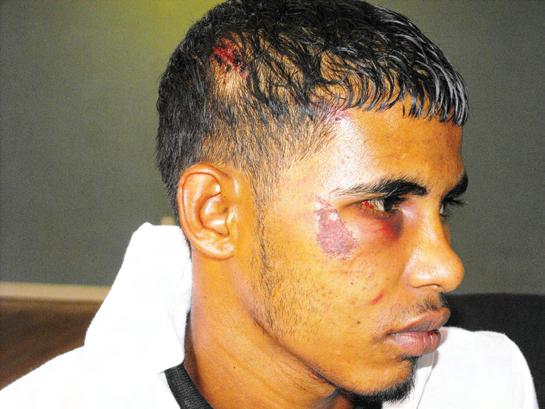
The 44-year-old woman was taken into custody on Tuesday following Sunday night’s incident at Brothers Village, East Bank Berbice. According to 18-year-old Deraj Persaud, he was on his way home late Sunday afternoon when his friend called him saying that she wanted to relay some information to him.
“Me and she was gaffing and we go inside… then we hear the gate and she say is she mother, and she go through the inside step and open the door for me and I go out through the back and then she go and open the door for she mother.”
Persaud said at the time his friend’s mother told her son who arrived with her to go to the back door to see who it was coming out. Persaud was seen and taken to the front where he met his
friend’s mother. “She asked me what you doing here, and I say Aunty Cuntie I gon explain but she say she ain’t want hear nothing and start slapping me bus up all my mouth…”
The young man said he was also hit with a piece of wood that her son brought to her upon request. Asked why he did not run away to prevent further punishment, Persaud said he was being held by her son.
According to him, he started to scream for help when he noticed blood dripping from his chin. At that point ,he was dragged into the house where the beating continued. Persaud said the woman told her son to get a cutlass but he refused.
The ordeal he claimed lasted for close to three hours. He said she called her daughter and told her to
take off her clothes and the daughter refused saying that she could not do so in front of him.
He was then ordered to take off his clothes. “She pick up back the wood and say ‘you gon take it off or you wan ah beat you to take it off?’ So I take off me clothes.” At that stage he said he was accused of having sex with her 16-year-old daughter. “Ah say Auntie Cuntie don’t do me anything...” Quizzed on previous visits to the home, Persaud noted that he was told by his friend’s mother whom has known for the past years not to visit her house. He said he and her daughter were just ordinary friends.
According to Persaud, he was taken to the Sisters Police Station where the police asked him why he was not wearing clothes. “She tell the police that, ‘he take off the clothes to do he act… She daughter turn to the police and say, ‘No Mummy you lie is you beat the boy to take off his clothes.’”
Based on information provided by the daughter, the brother was taken into custody. Persaud ,who works at a sawmill said the following day his mother took him to the New Amsterdam Hospital where he was treated and he made a report at Central Police Station which led to the arrest of the 44-year-old woman. Police are continuing to investigate.
A22-year-old Brazilian national charged with forging immigration documents appeared at the Georgetown Magistrates’ Courts before Chief Magistrate Priya Sewnarine-Beharry on Tuesday.
The first charge against Carlos Texeira Cosco, 22, alleged that on June 16, at the Ogle International, with intent to defraud the authorities there, he produced his Brazilian passport with a material insertion of one false immigration departure stamp. It is also alleged that

he conspired with persons unknown to forge a Guyana immigration stamp.
The defendant, through a translator, pleaded guilty to the charges laid against him and was represented by Attorney Patrice Henry, who told the court that his client works as a miner in the interior and overstayed his time. As such, he was misguided by fellow miners into obtaining a false immigration stamp by illegal means. Cosco was fined $75,000 or an alternative sentence of three months’ imprisonment on each charge.
The suspected ringleader of the September 2012 raid on a US diplomatic post in the Libyan city of Benghazi, which left four Americans dead, has been captured, the Pentagon says.
Ahmed Abu Khattala was taken into custody in a secret US military raid in Libya on June 15. He is now being held in a secure location outside the country, a Pentagon spokesman confirmed.
US Ambassador Chris Stevens and three others were killed in the attack.
“There were no civilian casualties related to this operation, and all US personnel involved in the operation have safely departed Libya,” Pentagon press secretary

Rear Admiral John Kirby wrote in a statement.
After the announcement, President Barack Obama praised the courage and pro-
fessionalism of the military, law enforcement and intelligence personnel who tracked and captured Abu Khattala, whom the US describes as a
“key figure” in the attack.
“When Americans are attacked, no matter how long it takes we will find those responsible and we will bring them to justice,” he said. Abu Khattala has been charged in a federal court in Washington, DC with killing a person in the course of an attack on a federal facility, providing material support to terrorists, and a firearms count, court records show.
On September 11, 2012, gunmen stormed the US consulate in Benghazi and set it on fire. In addition to Stevens, information technology specialist Sean Smith and security workers and ex-Navy Seals Tyrone Woods and Glen Doherty were killed. (Excerpt from BBC News)
Following an eighthour long session of negotiations on Saturday, one day after taking up the position of leader of the Government, Prime Minister Gaston Browne signed a Memorandum of Agreement (MoA) with Yida International Investment Antigua Ltd, paving the way for a US-two-billiondollar investment project in Antigua and Barbuda.
The MoA, which binds Yida to the investment, will result in Guiana Island and surrounding lands trans-

formed with the construction of five five-star hotels, 1300 residential units, a casino and conference centre, a 27-hole golf course, marina and landing facilities and a commercial, retail and sports facility.
Yida is expected to invest over US$200 million annually in the Antigua and Barbuda economy over the next 10 years, as well as provide an Antigua and Barbuda presence in China to attract additional economically viable investments. (Caribbean News Now)
Britain and China signed deals on Tuesday worth more than 14 billion pounds (US$23.5 billion) during a visit by Chinese Premier Li Keqiang, with energy and finance dominating the trade agenda.
Amother of two was killed by a close male relative on Monday, hours after she obtained a restraining order against the man in the Mayaro Magistrates Court.
Police said Orpha Prescilla Hackett, 24, of Union Village, Rio Claro, was chopped several times about the body by the man, who attacked her as she was visiting her sister in Mayaro. However, witnesses eventually held the man and called in the Police, who arrested him and seized the weapons used in the killing. The man was detained at the Mayaro
Educators
Police Station on Monday night.
Police said Hackett, the mother of a girl, age four; and boy, age two, had received a three-year restraining order against the man in the court earlier in the day after ending an abusive relationship with him. She then went to visit her sister. Around 13:50h, however, witnesses claimed to have seen the man buying two knives and a cutlass at a nearby hardware store. He then went to the St Ann’s Village, Mayaro, home of Hackett’s sister and attacked and killed her. (Trinidad Guardian)
Education officials will discuss sexual abuse encountered by students during a two-day symposium, beginning on Thursday. The Education, Science, Technology and Innovation Ministry said the symposium entitled “Student Victims of Sexual Abuse” will be held under the theme “Let’s talk…Student Victims of Sexual Abuse” and will target over 100 principals, guidance counsellors, senior teachers, education officers and tutors, particularly those from Erdiston Teachers’ Training College.
ary schools and will draw attention to what is being seen at the level of public and private primary schools.
The organisers said there would be presentations on symptoms of sexual abuse in students; how to manage disclosure or suspicions of sexual abuse and a plenary session on the draft mandatory reporting protocol on child abuse.
Cameron said the rise of China was “one of the defining events of our century” and that Britain wanted to strengthen ties on every level, from business to cultural understanding.
“Today [Tuesday] we have signed deals worth more than 14 billion pounds, securing jobs and long-term economic growth for the British and
In a trip aimed at deepening commercial ties between the world’s second-largest economy and Europe’s financial capital and drawing a line under a row over Tibet, Li met Queen Elizabeth and held talks with Prime Minister David Cameron.
Chinese people,” Cameron told a news conference.
Li, on his first official trip to Britain since taking office, said the two countries had extensive shared interests.
“China is ready to work with the UK to foster a partnership for growth and inclusive development to ensure that this relationship will grow faster and in a healthier way,” he said.
Oil major BP signed a 20-year deal worth around
At least 12 women were abducted during the latest attack on Kenya’s coast, which also left 15 people dead, residents have told the BBC.
President Uhuru Kenyatta has blamed “local political networks” for the overnight raid on two villages near the town of Mpeketoni.
But Somalia’s al-Shabab group had earlier said it was behind the attack. At least 49 people died in a separate raid on hotels and a Police station in Mpeketoni on Sunday. Al-Shabab said it was revenge for the pres-
ence of Kenyan troops in Somalia and the killing of Muslims.
Kenya sent troops to Somalia in 2011 to help the weak UN-backed Government defeat the militants. Two days after the deadly wave of violence in Mpeketoni, Kenyans are still unclear who is responsible.
If it was al-Shabab, the targeting of villages, not towns, and the killing of men only, while abducting women, would be new tactics. By sparing women and children, they could be try-
ing to sanitise their image after even their own supporters criticised them for the indiscriminate killings during the Westgate siege last year.
But there are longstanding political and ethnic divisions in Mpeketoni, and the President has blamed “local political networks” for the deaths. Local ethnic Somalis or Oromos may have targeted members of the president’s Kikuyu community and tried to divert the blame by waving al-Shabab flags.
(Excerpt from BBC News)
US$20 billion to supply China National Offshore Oil Corporation (CNOOC) with liquefied natural gas (LNG) cargoes, BP Chief Executive Bob Dudley said at a conference in Moscow. (Excerpt from Reuters)
UNICEF’s Representative for Barbados and the Eastern Caribbean, Khin-Sandi Lwin, will deliver opening remarks on the first day of the symposium.
The two-day event will also target educators in the public and private second-
“A key objective of the symposium is to sensitise participants about sexual abuse, its impacts and ways to address these. It also aims to ensure that the education and training of principals, teachers, guidance counsellors, social workers, and allied professionals reflect an understanding of and sensitivity to the needs and concerns of student victims/survivors of sexual abuse,” the Ministry said in a statement.
(Excerpt from Caribbean360)
By Gomatie GanGadin
After months of waiting, 25 of the top University of Guyana law students have been admitted to the Hugh Wooding Law School, ending months of uncertainty, which had boiled over to the Caricom Heads of Government to resolve.
Guyana Times has learnt that the 25 students have been accepted for the new academic year beginning in September. According to a reliable source, the decision was conveyed to the final-year students on Monday afternoon after a meeting was held with the Attorney General and Legal Affairs Minister, Anil Nandlall; Head of the Department of Law Programme at the University of Guyana, Sheldon McDonald; President of the University of Guyana Law Students’ Association, Sherod Duncan; and Chairman of the Council of Legal Education, Jacqueline Samuels-Brown via teleconferencing under the guidance of Chairman of Caricom, Dr Ralph Gonsalves.
The source added that at the meeting, the fate of the 25 students was discussed and Chairman Samuels-Brown related to the AG that the Council has decided to honour its agreement with the Government of Guyana to accept the students. It was related to Guyana Times too
by the source that while the council is ready to accept the students; it was conditional. “A condition was set forth by the Council. That condition was that the students will be accepted, but the Caribbean Community has to work on expanding the facilities of the school if the partnership is to continue,” the source related.
Impasse
Days after the Council for Legal Education had stated that it will not be guaranteeing any of the 25 places usually offered to Guyanese students at the end of the degree programme at the Turkeyen Campus of the University of Guyana (UG), Dr Gonsalves had written to the Council on the impasse . In his letter, Dr Gonsalves had requested the Council to facilitate the students until a review of the system was done and a suitable solution found. However, Chairman of the Council, Samuels-Brown had at the time explained that the placement issue was not one that was of pure bias but one of space and accommodation for the students who stay on campus.
Samuels-Brown had said that UWI had, in the past, released statements alluding to changes in teaching methodologies, teaching content and the poor conditions of the facilities afforded to students as
well as the overcrowded nature of the law school. In light of this, she noted that the school had initiated precautionary safety measures before facilitating students and it was on this ground that the decision was taken to accept the students only if space was available.
Samuels-Brown had noted that the Council was facing a monumental task in finding accommodation and facilities for students, as the law school was built to accommodate some 200 students, but is facilitating approximately 400 students.
Longstanding agreement
As part of a longstanding agreement between the Council and UG, every year, 25 automatic places are reserved for UG students at the Hugh Wooding Law School. The Council, however, had taken the decision that UG’s 2014 batch would not be guaranteed places.
It was understood by this publication that the original agreement had initially expired in November 2012, but, at the request of the Government of Guyana, it was extended until 2013. Negotiations were scheduled to take place to facilitate the 2014 batch of students. However, this discussion never took place until the matter arose some months ago.
Attorney General and Legal Affairs Minister Anil Nandlall
But though provisions have been made for 2014, current UG law students remain concerned over the future relationship between UG and the Hugh Wooding Law School. Minister Nandlall had assured some time ago that a long-term solution will be instituted to prevent future limbo. As it stands, talks are being held on the possibility of Guyana establishing its own law school here.
Meanwhile, Caricom has requested that a review be undertaken on the provision of legal education in the region with regard to the increased need for legal services in the Caribbean. A review of the system was last undertaken more than 40 years ago.
President of the Guyana Agricultural and General Workers’ Union (GAWU), Komal Chand remains tight-lipped on whether he is interested in sitting on the Guyana Sugar Corporation’s Board of Directors. He said, however, a formal invitation must first be issued.
During the annual Enmore Martyrs rally on Monday, President Donald Ramotar extended an invitation for Chand to sit on the board. He said this move is necessary to ensure that the management does not “short change” workers. But in an interview with Guyana Times, Chand said he has not received a formal invitation from the Office of the President to represent workers at the level of the board. Until an official document is issued to GAWU, Chand said he will not offer a comment on whether he will take up the offer.
President Ramotar publically offered the invitation minutes after Chand had told those present that the time had come for a new board to be
installed. “A new board of directors is long overdue, since the last Chairman became the new Chief Executive Officer, leaving GuySuCo headless and the present board headless,” the GAWU President said.
In March, Chand had championed the call for professional leadership in the sugar industry, contending that this key characteristic is
essential if the ailing industry is to be revived. A new board of directors at GuySuCo is expected to commence operation from July 1 under the leadership of Dr Rajendra Singh.
During Monday’s rally, the GAWU President reiterated calls for the full utilisation of EU funds. According to Chand, records show that EU funding relating to the price cut started in 2007, with
Guyana receiving €91.5 million or G$21.5 billion from 2007 to 2011. For the years 2012 and 2013, the disbursements are said to have been about €45 million or G$10 billion. The GAWU President is also of the opinion that only a small portion of the total disbursements have been given to the sugar industry for the financing of the Enmore Packaging Plant and some budgetary support. The Union is, therefore, demanding that the sugar industry receives all of the EU funds.
But the Government is maintaining that the EU funds provided during the period 2005-2013 have been exhausted. According to Government, a total of US$195 million had been transferred to GuySuCo during the period 2005-2013 in support of several restructuring and turnaround initiatives. This exceeds the total of €110.1 million, equivalent to US$145.9 million received from the EU under the accompanying measures programme since its introduction, the Government had said.
Damage to an insulator of a busbar resulted in a widespread power outage on the Essequibo Coast on Tuesday.
In a statement, the Guyana Power and Light
(GPL) said that the incident occurred at approximately 04:08h on Tuesday morning. Engineers up to late Tuesday afternoon were replacing the damaged insulator and clean-
ing the busbar in an effort to repower all affected communities.
Communities stretching from some sections of Anna Regina to Charity were repowered at 08:09h


Consistent with its vision to foster a unique Caribbean jurisprudence, the CCJ has taken another step in its journey to creating this indigenous body of law. This time it did so in the Guyanese case of Rosemarie Ramdehol v Haimwant Ramdehol [2013] CCJ 9 (AJ).
The parties concerned, formerly man and wife, were involved in a lengthy matrimonial property settlement. The High Court ordered the wife to pay to the husband an agreed sum of G$52,500,000 (US$262,500) within six months. At the expiration of the six-month period, she had not paid the money but went on to file an appeal against the High Court order requesting that the court put a hold on her requirement to pay the money until her appeal was decided.
The court granted her request to hold off on paying the money but it ordered her to pay G$8,000,000 to him within six months. Displeased with this order, she applied to the Full Bench of the Court of Appeal for an order relieving her of making any payment until her first appeal was heard. The Full Bench denied her application so she applied to the CCJ for special leave to appeal the Court of Appeal’s decision.
The Court denied her application for leave. In doing so, it gave a clear indication on how Regional courts should approach the issue of the postponement of compliance with orders of the court where an appeal is pending, otherwise called a ‘stay of execution pending appeal’. It mentioned that the previous position on the issue where a court was permitted to grant a stay of execution only where the applicant satisfied the court that if he paid over money he was ordered to pay, there was no reasonable probability of him getting it back if he succeeded in a relevant appeal. However, the Court said that that ‘test is too restrictive and that a stay may also be granted if the applicant persuaded the court that without a stay of execution, he or she would be ruined and that the appeal had some prospect of success’. The CCJ’s approach is in keeping with its vision to foster a unique Caribbean jurisprudence that is reflective of the people the Court serves and is tailored to suit local circumstances.
“Negligent” sluice attendants fired
Two sluice attendants attached to the Anna Regina Pump station were fired for failing to close a sluice door on Sunday morning resulting in flooding in several sections of the town.
The decision to dismiss the workers was made by a panel of senior officials from the Region Two Administration. Region Two Chairman Parmanand Persaud in an exclusive interview with Guyana Times explained that after an investigation was launched, a decision was made to send the two workers home. Persaud said that the situation was very serious and many businesses and residents suffered as a result of their negligent behaviour.
on Tuesday, while residents from Anna Regina to Supernaam, Anna Regina to Lima Sands/Mainstay and Caricom Rice Mill were also expected to be repowered.
The Region Two Administration had launched an investigation after a pump attendant reportedly fell asleep on Saturday, causing ankle-high flooding in the town of Anna Regina. Residents on inquiring
where the water was coming from found out that it was caused by a blunder by an attendant at the pump station. They say the alleged negligence by the young man, who is a relative of a top regional official, is unacceptable. According to information reaching Guyana Times, the attendant allegedly fell asleep and forgot to close the door at 03:00h. When he awoke around 04:00h, he immediately began to make frantic calls and regional officials responded promptly.
An excavator managed to pull the sluice door down and a pump was put into operation to dispatch the excess water. Within four hours, normalcy was restored. The Anna Regina Pump Station provides drainage to approximately 1500 families in the town. The $28 million pump was commissioned in 2008. Due to the incident, a family in the Anna Regina Housing Scheme was forced to relocate their wedding to another venue.
The hassle to acquire visas to travel to several European Union countries including the United Kingdom was raised when Foreign Ministers of the Caribbean Community (Caricom) met their counterpart of Britain and other UK members of Parliament on Monday in London.
The meeting was held under the general theme of building stronger partnerships for prosperity, with emphasis being placed on energy security, the enhancing of skills and education levels that redound to the benefit of youth employability and economic development.
Guyana’s Foreign Affairs Minister Carolyn RodriguesBirkett who is also the chair of the Caricom foreign ministers touched on what she described as the difficulties being experienced by business persons and artistes in obtaining visas for EU countries including the United Kingdom, in their efforts to take advantage of the opportunities offered by the Economic Partnership Agreement, to undertake trade in goods and services.
“Indeed for some, the situation has gotten worse since the signing of the EPA,” Rodrigues-Birkett told the forum. She said the Region’s students in the United Kingdom are also experiencing difficulties in obtaining job-training placements because of immigration impediments. “… we are more than willing to help ourselves but in attempting to do so, we find ourselves hemmed in by obstacles of all sorts. I believe that many of them can be resolved through dialogue leading to a better understanding.”

Rodrigues-Birkett also said that Caribbean countries are still in the global economic crisis mode and appealed to Britain to help provide “concrete measures” that would improve the socio-economic development of the population in the Region. The Minister said that the forum provides an excellent opportunity for the Caribbean and the UK to engage in productive discussions towards reaching an agreement on concrete measures that will contribute to improving the quality of life of our citizens.
“It is an opportunity that we should grasp with both hands,” she said, noting that the meeting was taking place at a time of increasing complexity in the global political and economic environment with profound systemic changes taking place. “This evolving political and economic environment is at the same time particularly unfavourable to the small developing economies of the Caribbean. The developed countries like yours can speak of a post-crisis eco-
nomic recovery, though it remains weak,” said Minister Rodrigues-Birkett.
“We in the Caribbean, for the most part, are still in global economic crisis mode, reeling from its continuing severe impact on our economies. There is little reason for us to be optimistic in the immediate and short term. The external resource flows, private and official, on which our economies rely to stimulate growth, continue to dwindle.”
She said that this trend is exacerbated by “our classification as middle income countries and the resulting imposition of “differentiation” and “graduation” which impedes access to concessionary funding” reminding her British counterpart that the issue had been discussed when the regional foreign ministers met with him in Grenada a few years ago. Minister Rodrigues-Birkett said this inequitable classification is based on one metric, gross domestic product GDP per capita, which she described as a “flawed assumption that cannot be a sound measure of development.
An alternative metric must be considered that takes into account resilience and vulnerability, in the context of sustainable development. “When a natural disaster strikes us, unlike in the United Kingdom, it is not a localised occurrence with circumscribed effects but a devastating national event which wipes out significant percentages of our GDP. Instead of going forward, we are constantly rebuilding and replacing lost infrastructure which no doubt, has contributed to the high debt situation in several
small Caribbean countries. In addition, the increasing frequency and severity of climactic events along with the deepening threats to our security from the mounting illicit trafficking in drugs and small arms through our Region, as well as the growing incidence of health pandemics further burden our attempts at economic resilience,” Rodrigues-Birkett said.
Challenges
Noting that the Region was not throwing up its hands in despair, RodriguesBirkett said many of “our countries notwithstanding the challenges we encounter are set to meet several of the MDG’s by the 2015 deadline. We are worried that these gains may be reversed if the current trends continue. I must indicate that we are taking steps to address the difficult economic situations in which we find ourselves, undertaking the required structural reforms and applying the bitter fiscal medicine necessary despite their potential unpleasant political side effects... We are however counting on our long-standing friends and international development partners, including the United Kingdom, to better understand our present situation and the many constraints that impede our best efforts and to highlight these realities on our behalf in the European Union and in the international decision-making fora such as the G20 where our voices are not heard and our realities perceived as insignificant and thus marginalised. We are only asking that the method used to classify us be amended accordingly.”
The People’s Progressive Party/Civic (PPP/C) on Monday lauded the top students of the National Grade Six Assessment for their outstanding performance at the recently concluded exams.
The party’s General Secretary, Clement Rohee stated that these students through their achievements have reminded persons that hard work does breed success. He regarded the achievements as insight for the upcoming generation that is yet to sit the NGSA examination.
He also congratulated those persons who would have been supportive of the students as they prepared for their examinations. “… our party is cognisant that their successes would have been nurtured in many ways by the dedication and hard work of the teachers involved, through the support of their parents and others who would have contributed,” Rohee said.
“The parents and teachers should be proud and filled with contentment and great pride since the perseverance that these individuals would
The Lions Club of Essequibo Coast (District 60A-Zone 2A) on Saturday installed its new board of Directors for the fiscal year 2014-2015.
The new board is headed by Lion Devendra Persaud who took over from Lion Reynold Jones to become the Club’s youngest president in its 22 years of existence.
According to a release by the Club, in his report, the outgoing President highlighted some of the many projects the Club successfully executed during the fiscal year 2013-2014 and urged Club members to continue to work in unity.
The incoming President, in his acceptance speech, pledged to lead the Lions Club of Essequibo Coast to greater heights, and asked that Lions reinvigorate their efforts towards continuing the work of Lionism. He added that “we are Lions –we are strong, brave, thunderous, powerful and full of energy”, hence his theme for the year “Energised Service”.
The other board members installed were Banie Persaud, Sareva Rampersaud and Verna Young as First, Second and Third Vice Presidents respectively; Joel

Members of the new board pose for a photograph after their installation
Naraine as Secretary, Toolsiram Benny as Treasurer, Sammy Rampersaud as Membership Director, Emawattie Singh as Tamer, Wesley Haynes
as Second-Year Director and Tianna Ramlakhan as First-Year Director.
Installation of the new board was done by Past District
July 1.
have shown during the preparation for the examinations would have been intense and by the students achieving remarkable grades was a success for them.”
Rohee further stated that the PPP/C believes that all Guyanese share in this pride, since such an accomplishment translates into the success of our country. Furthermore, the party also stated that the accomplishments of these young minds present a source of inspiration to all including.
During the press conference, he also made notice of the fact that these accomplishments continue to be a part of what has now become a norm for students here in Guyana and across the Region. “Over the years, our sons and daughters have raised the bar for academic achievement here and regionally, setting new standards in the process,” Rohee said.
The General Secretary noted that these continuous academic achievements are the “fruits of the investments” Government has been making in the education sector which has been receiving the largest portion of the National Budget over the years. When asked about his opinion on the overall performance of students who wrote the NGSA examinations, Rohee said “I haven’t seen the total “report card” so to speak. Rohee also made mention about the subjects that are most troublesome for students, Mathematics and English. He stated that Maths is always a struggle and that the education system has to make the subject “attractive”. On the other hand, the grades for the English examination have shown improvement.
Chairman of the Police Complaints Authority (PCA) and former Chancellor of the Judiciary, Justice Cecil Kennard, will be visiting Region Six this weekend to host discussions with residents on Police – related issues affecting them.
Justice Kennard’s outreach will begin on Friday when he meets with members of the Guyana Police Force at the Police Training College at Adventure, Corentyne at 13:30h. On that same day, he will be a guest on a television programme at 19:00h.
Then on Saturday, June 21, the PCA Chairman will be in the Court Room of the High Court in New Amsterdam from 09:00h. Residents in surrounding areas and afar are encouraged to go out and raise issues that are affecting them.











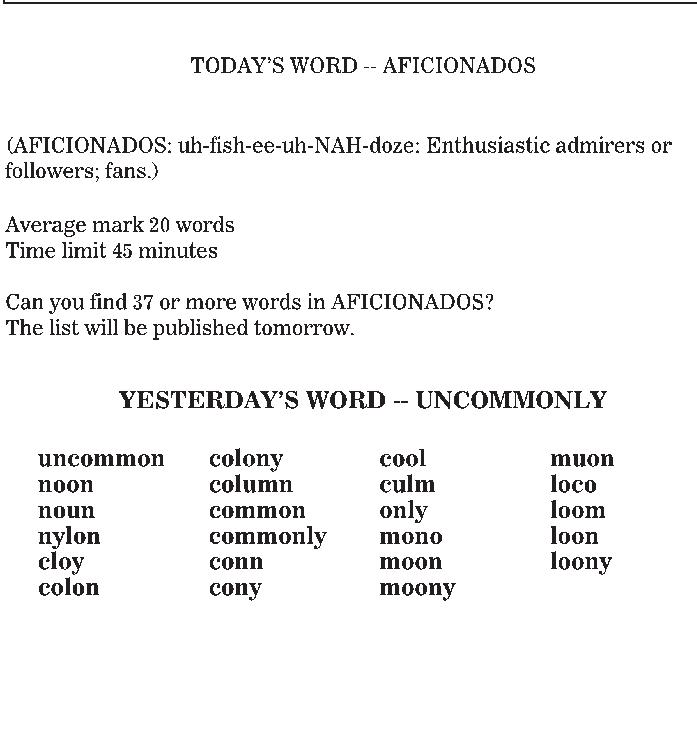




Listen to the voice of experience. Your friends and relatives want to help. They have faith in your talents and will do the best they can on your behalf.

By Bernice Bede Osol

(June 21July 22) (Jan. 20Feb. 19) (Dec. 22Jan. 19)
You will gain a lot of meaningful insight and information if you listen to an older or more experienced friend or relative. Free your head of distractions and offer your undivided attention.

20-March 20)
You may feel let down if someone decides to do things without you. Let him or her have some space, and look for an activity you can pursue on your own.

(March 21-April 19)
A little exploring could lead you to discover what is going on behind the scenes. Someone will try to withhold vital information regarding a decision you need to make.

(April 20-May 20)
Don’t let restlessness lead to trouble. A good cure for boredom is doing yard work or home repairs. You can avoid complaints if you take care of responsibilities without being asked.

(May 21June 20)
Don’t become lazy in your work habits. Your peers depend on you to do your best. There are skilled people willing to jump in and take your place. Protect your reputation.
You should concentrate on romantic and sentimental issues. It’s likely someone you love feels the same way, so make plans to do something special. Self-improvement projects will pay off.

(July 23Aug. 22)
Consider remodelling or redesigning your home. Check out real estate in your region to get a host of good ideas that will help improve your domestic scene.

(Aug. 23Sept. 22)
Don’t make any spurof-the-moment decisions. Question the motives of someone who is trying to talk you into a controversial or unproven investment. Protect your assets.

(Sept. 23Oct. 23)
Let everyone know about your innovative ideas. Applying your creative talents to your work will help you outmaneuver any competition you encounter. Put your best foot forward.

(Oct. 24Nov. 22)
Invest in you. Don’t hesitate to seize an opportunity. Get the ball rolling and turn your dreams into reality. It’s up to you to make things happen.

(Nov. 23Dec. 21)
Don’t wait until it’s too late. If something isn’t going your way, deal with it head-on. You’ll feel much better once you know you have nothing to worry about.






By Rajiv Bisnauth
National open-
er Tagenarine
Chanderpaul is among six Under-19 players selected by the Guyana Amazon Warriors as part of the local franchise preparatory camp, beginning from July 1, and according to the soft-spoken lefthander, the opportunity is just another developmental phase in his gifted cricket career.
Young Chanderpaul, during an interview with this publication on Tuesday, said he is looking forward to the experience and aims to use it to improve his personal game.
“Definitely I am looking forward to be part of such [a] big tournament and I’m looking to use what will be taught to me to improve my personal game,”
Chanderpaul revealed.
He added: “To be among head coach Roger Harper, team mentor Curtly Ambrose and a number of top T20 stars will be great. I will try to learn as much as I can from them, so my personal game can also improve.”
Chanderpaul, who represented Guyana in nine first-class games, joins talented Everest Cricket Club fast bowler Kevin Paul; fellow West Indies Under-19 opener Shimron Hetmyer; Demerara Cricket Club left-arm fast bowler Daniel Basdeo; Essequibo allrounder Kemo Paul; and 16-year-old, West Coast Demerara, batsman Akshaya Persaud.
This year, each franchise team consists of a squad of 19 players, comprising
two pre-selected playersone West Indies Franchise Player (WIFP) and one International Franchise Player- (IFP), selected by the franchise, as well as four Under-19 players from each playing franchise.
However, as an initia-
tive geared toward the development of young cricketers, the management of the Guyana Amazon Warriors has widened the pool of Under-19 players to six.
The Under-19 players will be involved in all training sessions and other team activities during the Guyana Amazon Warriors camp and match practice scheduled for their home games only. However, the players will not be eligible selection.
The Limacol CPL will be played from July 11 to August 16 with Chris Gayle’s Jamaica Tallawahs set to defend their title against lastyear’s runner-up Guyana Amazon Warriors, Antigua Hawksbills, Barbados Tridents, St Lucia Zouks and Trinidad and Tobago Red Steel.
The Guyana franchise,
bought by the NEW GPC/ Limacol, will play three of their nine preliminary games at home, on July 17 against Trinidad and Tobago Red Steel (19:30h), July 19 against St Lucia Zouks (16:00h) and July 20 against Jamaica Tallawahs
(16:00h).
Prior to the three home games, the Warriors will play Antigua Hawksbills on July 11; Trinidad and Tobago Red Steel on July 24; Barbados Tridents on July 27; Jamaica Tallawahs on August 2; Antigua Hawksbills on August 7; and St Lucia Zouks on August 10 in their final preliminary game.
The Guyana Amazon Warriors playing squad comprises: Denesh Ramdin (captain), Sunil Narine, Mohammad Hafeez, Lendl Simmons, Martin Guptill, Krishmar Santokie, Christopher Barnwell, Veerasammy Permaul, Ronsford Beaton, Navin Stewart, Steven Jacobs, Leon Johnson, Robin Bacchus, Corey Anderson and Trevon Griffith.
By avenash Ramzan
The country’s top senior and junior riders will throw down the gauntlet to each other this month-end when the highly anticipated national cycling championships, organised by the Guyana Cycling Federation (GCF), are staged on the country’s roadways.
Although the specific routes have not yet been finalised, information emanating from the GCF confirms that the event is fixed for June 28-29 and will take the form of a Time Trial and Road Race.
On the first day, the cyclists, both males and females, will do battle in the Time Trial, which will be held for junior and senior competitors.
The following day, it will be the showdown in the Road Race, which is usually a hotly contested affair with junior and senior cyclists of both genders battling to become champions of their respective categories.
This year’s championships should produce some improved times, especially with all the Commonwealth Games selectees set to use the two-day activity to test their readiness for the

July 23- August 3 event in Glasgow, Scotland. In intense preparation for the Games at the moment are Raynauth Jeffrey, Marlon Williams, Geron Williams, Alanzo Greaves, Scott Savoury and Claire Fraser-Green.
Incidentally, Jeffrey is the defending senior champion of both the Time Trial and Road Race, after securing a clean sweep last year. Riding for Team Coco’s (Guyana), the 20-year-old clocked an overall time of three hours, 48 minutes, 40.71 seconds (03h: 48m: 40.71s), crossing the finish line approximately three minutes ahead of his nearest rival, Greaves, who
had to settle for second.
Greaves’ Roraima Bikers Club teammate Warren McKay ended in third spot.
Jeffrey, during an exclusive interview with this publication on Monday, related that he is prepared to defend both titles at ‘nationals.’
“I’m working very hard at the moment, in preparation for the Commonwealth Games, but my focus is also on nationals, where I’m the defending champion, and I will be going all out to ensure I remain the champion at the end of it all,” he declared.
In the Junior division, Michael Anthony emulated Jeffrey by copping both the
Time Trial and Road Race, clocking two hours, 59 minutes, 36 seconds (02h: 59m: 36s), leaving Shaquille Agard and Hamzah Eastman to settle for second and third respectively.
Naomi Singh of East Coast Demerara finished almost two minutes ahead of Linden’s Hazina Barrett to cop the female title, while England-based FraserGreen, who won in 2012, occupied third spot.
The top three finishers in the Veterans Over-45 race were Ian Jackson, Raymond Newton and Gary Benjamin, while Junior Niles com-
fortable won the Veterans Under-45 ahead of Ralph Williams and Sybourne Fernandes.
In 2013, the Time Trial was held on the Soesdyke/ Linden Highway, while the Road Race started at Homestretch Avenue, proceeded to Soweto on the Soesdyke/Linden Highway and returned to the start point for the finish, covering a distance of 90 miles. This publication understands that senior executives of the GCF were slated to meet last night to decide on the routes for this year’s championships.

Today’s Games: Australia vs Netherlands (12:00h); Spain vs Chile (15:00h) and Cameroon and Croatia (18:00h)

Second-half goals from substitutes Marouane Fellaini and Dries Mertens enabled Belgium to come from behind and beat Algeria 2-1 in their Group H opener. There was as much relief as joy for Marc Wilmots’ side at Belo Horizonte’s Estadio Mineirao, although they ultimately merited a win that had looked unlikely until the coach began shuffling his pack.
Belgium had began the match as overwhelming favourites - considered even as dark horses for the Trophybut it was Algeria who began by far the brighter of the two teams. After forcing a few early set-pieces and pinning the Europeans back in their own half, Les Fennecs carved out their first big chance on 18 minutes when an off-balance Riyad Mahrez sliced wide from the angle of the box after bursting through in the left channel.
They continued to look the livelier and more determined of the two teams, though, and on 25 minutes took the lead and ended
their long wait for a FIFA World Cup goal. Algeria hadn’t scored at the tournament since 1986 - a run of 506 consecutive minutes of football - but with Bolivia’s unwanted World Cup record (517 minutes) beckoning, they finally found a way through.
The goal came from the penalty spot, with Sofiane Feghouli - having been tugged back by Jan Vetonghen to win the kickdispatching it himself with a coolly placed side-foot shot low to the left of the wrongfooted Thibaut Courtois.
Belgium attempted to respond, but were lacking in both penetration and ideas. Indeed, it was holding midfielder Alex Witsel - frustrated by the lack of success being enjoyed by those in front of him - who had Les Diables Rouges’ best two efforts of the half, crashing in 30-yard shots that on each occasion forced Rais Mbolhi to parry hastily clear.
That same duo were reunited early in the second half, with the Algeria keeper flapping at a corner but applying just enough of a touch
to prevent Witsel heading home. But the north Africans remained a threat at the other end and very nearly doubled their lead on 57 minutes when Carl Medjani’s glancing header flashed just wide of the far post.
In their attempts to find a way through a packed Algerian defence, Belgium introduced Mertens, Fellaini and Divock Origi from the bench, and initially it was the latter who came closest to saving the day. But while the 19-year-old’s pace took him through on goal and his low shot was powerfully struck, Mbolhi stuck out a leg to make a brilliant instinctive save.
Ultimately, it was Wilmots’ final replacement who was finally able to restore parity, with Fellaini looping a magnificent header in off the underside of the bar from Kevin de Bruyne’s inswinging cross. There were 20 minutes still to play at that stage, and with Belgian tails up, it was no surprise when they went on to snatch a winner with ten still remaining.

Mexico, who suffered through a disastrous qualifying campaign in the CONCACAF zone, were inspired against Brazil in Fortaleza and earned a 0-0 draw against the muchfancied hosts. The Estadio Castelao crowd was treated to one of the most entertaining goalless draws in FIFA World Cup history as Mexican goalkeeper Memo Ochoa put in a performance for the ages.
The hosts’ first game in Fortaleza began at a high tempo, the frenzied action on the pitch matching the atmosphere and passion up in the stands. The game swayed from one end to the other in the early going as the Mexicans and Brazilians traded half-chances.
Mexico, hoping for a repeat of the Olympic final in Wembley Stadium two years ago, raised their game, bolstered by an opening-day win over Cameroon. The Brazilians were missing bulky striker Hulk, who pulled out of training with a muscle strain. The best chance of an enthralling opening period came from the sizzling Neymar. The fan favourite and two-goal
hero against Croatia rose well at the back post to meet an inch-perfect cross from Barcelona team-mate Dani Alves. The young maestro leaped over Mexican icon and captain Rafa Marquez and sent his powerful header screaming toward goal, only to be denied by Ochoa. The Mexican keeper sprawled acrobatically to deny the effort after 26 minutes.
El Tri created few clear chances on goal in the opening period, but flying rightback Miguel Layun got forward up the left, pressing Dani Alves back toward his own goal whenever possible. Giovani dos Santos was a threat in the withdrawn forward’s role and Andres Guardado added a bit of pace and guile. Jose Juan Vazquez had a chance for Mexico from distance near the end, but the his right-footed effort curled just wide of Julio Cesar’s goal. Paulinho had one more chance for Brazil as well, but he was denied from close-range again by Ochoa as the high-octane half ended scoreless.
The second-half saw the pace pick up even more.
Three minutes in, substitute Bernard crossed for Neymar on the counter-attack, only for a timely intervention to stab the ball away for a corner-kick. The Mexicans responded with a pair of longdistance efforts that flew over Julio Cesar’s goal. Midway through the half, Neymar was again denied by the spring-loaded Mexican keeper. The Brazilian ace brought down a cross from the left and hammered a half-volley at goal, only for Ochoa – currently without a club – to fly to his left and push away the effort. It was turning into a historic performance for the Mexican, who was left out in the cold for large swaths of the qualifying campaign, and his reflex save from Thiago Silva in the dying moments was the pick of the bunch. The bushyhaired custodian was rightly swamped by his team-mates at the final whistle. Brazil, now on four points after two games, take on Cameroon in their third and final group game on 23 June in Brasilia while Mexico, tangled with the hosts on four points, face Croatia on the northern coast in Recife. (FIFA)
Former England coach
Fabio Capello saw his Russia side come from behind to draw with South Korea in Group H thanks to a goal by Aleksandr Kerzhakov.
The substitute drove the ball home to join Vladimir Beschastnykh as Russia’s all-time top scorer with 26 goals.
South Korea had led through a long-range shot from Lee Keun-ho that squirmed through the hands of goalkeeper Igor Akinfeev.
Belgium top the group after their earlier win over Algeria.
The late excitement was in stark contrast to much of
what had gone before. South Korea had been marginally the more inventive side, although they needed a significant amount of luck to take the lead as the edgy Akinfeev gifted them the opening goal.
But Capello’s substitutions proved crucial for Russia, looking to build a platform from which to advance to the knock-out stages for the first time since the Soviet Union reached the second phase in 1986.
Son Heung-min had Korea’s best two chances of the first half, linking well with Arsenal striker Park Chu-Young on both occasions. But he failed to hit the target with either

chance, while captain Koo Ja-cheol saw a deflected shot fly just wide. Russia had been limited
to long-range efforts, Sergey Ignashevich’s free-kick forcing Jung Sung-ryong into an unconvincing save.
Neither goalkeeper inspired much confidence and after Jung had tipped a shot from Victor Fayzulin over the bar in the first minute of the second half, captain Vasily Berezoutski headed into the side netting from the resulting corner. Including games as the Soviet Union, this was Russia’s first draw in 12 World Cup games. This was the first time in four World Cups that South Korea haven’t started with a win Russia’s last eight goals in the World Cup have all come after half-time South Korea have won only two of their last 11 World Cup games. The sides then trad-
ed speculative shots and Akinfeev struggled to keep out a free-kick from Kim Young-Gwon. But that was nothing compared with the error he made on 68 minutes, when he allowed a 25-yard headheight shot from substitute Lee to slip through his hands and into the net.
Russia, however, had been showing more urgency since the introduction of Dzagoev, and a second Capello second substitution paid off almost immediately. Kerzhakov had been on the field for just three minutes when he struck to earn a deserved point a day before the Italian’s 68th-birthday. (BBC Sport)



Tel: 225-5034
wednesday, JUne 18, 2014




Available: Fresh long-stemmed roses, fresh dried and silk floral arrangements, gift items, bridal boutiques and wreaths. Nesha’s Flowerland. 78 Church Street (opposite St George’s Cathedral). Tel: 227-3553/225-3315

Healthworld Holistic Centre offers clinical psychotherapy for suicidal thoughts, attempted suicides, depression, stress, mood disorders, psychotic disorders, homicidal thoughts, hallucinations, loneliness, conflicts, anger management, relationship & sexual problems, paranoia and much more. Call +592621-0552 and make that appointment now before it’s too late. 12:00-6:00PM. Mondays-Fridays. Email: healthworldhc@gmail.com


Immigration & Visa Services We handle all Canadian, USA
etc. Get your visa approved. High success rate. Balwant Persaud & Associates. Certified Immigration Consultants, 68 Sixth Street, Alberttown, Georgetown (Between Cummings & Lights Sts) Tel: 225-1540, 622-8308, 655-3105. Email: balwantpersaud@yahoo.ca

Professional Key Shop, 125 Carmichael Street, Georgetown. Phone: 225-3923, mobile: 621-3249. We cut any type of key, service and repair all types of locks. Get your extra key today.


Da Silva’s Optical. For Your Eyes Only, Look Better See Better. Phillip A Da Silva OD, Shannon L Da Silva OD, Natalie Da Silva OD. 248 South Road, Bourda. Phone: 227-3529, Linden: 444-6376, Corriverton: 339-3536, Meten-MeerZorg: 275-0322, Grand Cayman Islands: (345) 943-1515 for the perfect trendy touch.

FOR Sale
Repairs and parts for fridges, freezers, AC, washers and gas stoves. Phone: 683-1312, 627-3206 (Nick)
Cheap earth; delivery to spot; ECD, EBD, WBD and WCD. Phone 627-9977 or 698-0182
Garden earth and builder's waste; also bobcat rental, excavating, clearing and leveling. Call 616-0617,663-3285
COLD STORAGE FACILITY. Freezing and cold storage facilities available. Affordable prices offered. BM Enterprise Inc, Houston GFL Wharf. Tel: 27-8176/77

Get your home or business spiritually clean to enhance good luck and prosperity. Telephone: 687-5653
Cleansing of spiritual problems of all kinds. Powerful Ifá protection against evil. Get help to overcome problems with love, relationships, legal, sexual, pregnancy, business, sickness, jobs, enemies, work, money. Call 592-6901824 from 10:00-16:00h Email:anewlife@live.com
Dutch spiritual healing in removing evil spirits, bad luck, evil, sickness, spells, reuniting lovers and prosperity to businesses. Call: 612-6417, 220-0708, 6875653.
Suriname Astrology Palmist and Djuka Healing, the most powerful spiritualist in the world. Are you suffering from the following problems (any religion) love, marriage, family, health, business, husband & wife relationship, property, court, children, promotion, visa, pregnancy, education, depression, job, sexual, jealousy, enemy, money, drinking? Also you can have all evil forces destroyed such as black magic, witchcraft, voodoo, obeah, etc and give powerful protection. We also do upliftment for clearing of land, dredging operations strictly in the interior. For private and confidential service call 674-2112.
Spiritualist loves your problem! Love, prosperity, business, illness, removes bad luck & evil. Removal of black magic etc. Phone: 674-8603.
HEPHZIBAH MINISTRIES. 24hrs miracle line 322-5081/337-4510/337-4259/3374021/337-3070/337-5103 For healing, deliverance, financial difficulties, marriage issues. Call now. Jesus cares.

One furnished house in immaculate condition at Lamaha Gardens suitable for residence and office. US$2,500 (AC, hot & cold, parking etc). One modern 3 bedroom apartment at Campbellville US$1,300 (AC, hot & cold, parking etc). One bond 135,000 square foot at Beterverwagting, ECD US$10,000. Call 219-4535 or 661-7169

JUST ARRIVED: TOP QUALITY RECONDITIONED VEHICLES; TOYOTA NOAH; TOYOTA VOXY; TOYOTA IST (NEW SHAPE); SUZUKI SWIFT; DAIHATSU MOVE (660CC); MERCEDES BENZ C200 KOMPRESSOR; COROLLA AE100 WAGON; TOYOTA HIACE MINIBUS RZ; PITBULL-STYLE FREEZER VAN; LAND CRUISER (FULLY LOADED); MAZDA PROCEED 4WD EXTRACAB PICK-UP; TOYOTA HILUX 4WD EXTRA CAB PICKUPS - 3RZ, 5L, 3L
SOLID DEFFERNTIAL; MITSUBISHI
CANTER TRUCKS 4 TONS FREEZER; 3 TONS OPEN TRAY; 2 TONS 4WD; NISSAN ATLAS 2 TONS OPEN TRAY
TRUCK. PRE-ORDER YOUR UNITS
EARLY AND GET THE BEST PRICES. FULL AFTER SALES SERVICES AND FINANCING AVAILABLE. DEO MARAJ AUTO SALES, 2 CHIMNEY ROAD, CHATEAU MARGOT, ECD. 624-0762, 220-5177. A NAME AND SERVICE YOU CAN TRUST
4x4 Nissan Titan fully powered
Immaculate condition $3.5M. No reasonable offer refused. 622-7740
Nissan Titan, very good condition leather interior, fully loaded $2.5M negotiable. Call: 620-1026
BMW 525i, M body kit, excellent condition, low mileage, price negotiable. Call: 620-1026
One Toyota Camry in excellent condition. $1M. Call: 614-7856
One Black Toyota Lexus 2004 Model. Price $2.1M Negotiable. Call Urgent 688-8189

One female babysitter to work in Georgetown and must be from Georgetown. Age 40-45. Must be willing to work late. Call 614-5711 between 9am - 5pm. Bedford truck, bobcat and excavators. Phone: 627-9977 or 698-0182
Vacancy exists for anyone with two or more years' experience to work at a travel service which will be located on the East Coast Demerara. For more information call 664-4000
Land to buy in Parfaite Harmonie, Cummings Lodge, Herstelling, Diamond, Grove, Tushen & Parika. Call 218-5591 or 675-7292.







West Indies’ top order produced a commanding performance on an extended second day to take an 89run lead in the Trinidad Test. Kraigg Brathwaite and Darren Bravo didn’t let the hour-long rain break affect their concentration and partnered to put up 182 for the fourth wicket to take the team well past New Zealand’s score.
The bedrock of West Indies’ response was a composed Brathwaite, who went to complete his maiden Test century, while Bravo, with his first Test hundred in the West Indies, was the driving force.
New Zealand’s bowlers strived but the Queen’s Park Oval pitch was at its best from a batting perspective. There was occasional lateral movement for the seamers and some inconsistent bounce for the spinners, but not to an extent to cause many alarms. It still required application from the batsmen, though.
Brathwaite had been guilty of not being able to carry on the last four times he had gone past fifty. Today, however, he concentrated hard, using the classical Test approach of grinding the opposition and went past his previous best of 68. Boundaries were not his preferred mode of scoring - five, four and four came in the three sessions - so it was fitting that a single in the 68th over took him to his century - the first by any batsman in Port-of-Spain in five years.
New Zealand tried to play on Brathwaite’s patience by sticking to a line outside off, inviting the drives. Brathwaite, though, stayed a step ahead and only pushed at the deliveries when either the length was too full or short enough. Only five of his 13 boundaries came through the off side, three of which were through gully.

Bravo’s flair.
As the bowlers tired out and New Zealand waited for the new ball, Bravo grew in comfort and unfurled the big shots. Sodhi, the legspinner, was lofted for sixes thrice in nine balls. In between, when Sodhi dropped it short, Bravo was quick to rock back and punch it through cover. He moved into the 90s with a crisp cover drive off Jimmy Neesham in the 71st over, then completed his sixth Test century in the next with a push through off.
Edwards and Brathwaite in the first session.
New Zealand would have hoped to see more of the swing their seamers extracted during the mini-session at the end of the first day. The conditions, though, had become slightly better for batting. Edwards wasn’t shy of coming forward to deliveries that were pitched up. His first boundary - a straight drive through midoff off a full Boult delivery - signalled West Indies’ approach in the session.
That positivity was reinforced the moment Craig, New Zealand’s best bowler in the first Test, was introduced. Edwards planted his front foot out at the first sign of flight and launched the offspinner over long-on.












Throughout the innings, he kept one end watertight, scoring consistently at a strike rate of around 50 - his half-century came off 100 balls and the hundred in 199 balls, but fell to a tired push back to Trent Boult towards the end of the day. He made 129 off 258 balls.
Bravo’s penchant for flashy strokes kept the bowlers interested. He was lured into tentative pokes by away-going deliveries from Boult and was drawn into false strokes against spin. But when the ball hit the middle, didn’t it look pretty?
Bravo’s innings had started with a brace of on-drives against Ish Sodhi. Twice, Tim Southee was punched on the up through covers. Then a length delivery from Mark Craig was nonchalantly flayed over midoff, landing just short of the boundary. These were manufactured shots, in line with
Eighty-two runs came in 18 overs after tea. In the 19th - the last over before the new ball became available - Bravo attempted a big hit against the spin of Kane Williamson, but spliced it to long-off. Bravo was palpably disappointed on his dismissal at a crucial stage. West Indies lost Brathwaite nine overs later but Shivnarine Chanderpaul saw through the tricky period.
The tone of West Indies’ innings was set by a 93run stand between Kirk
The early counter forced Craig to switch ends and move to a round-the-stumps line, negating some of the advantage he may have held after the first game. The introduction of Neesham after the first drinks break only hastened the flow of runs. (Cricinfo)
- supports the re-introduction of Pari-mutuel wagering
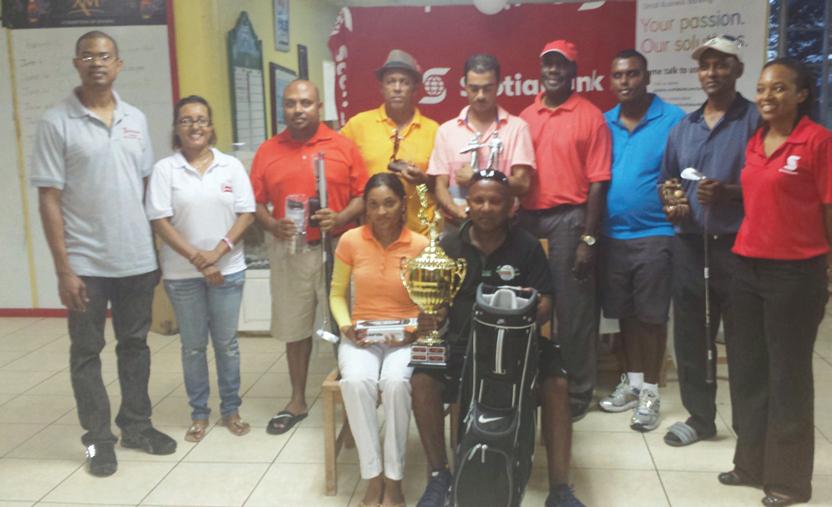
Former Guyana Open champion Imran Khan took the first prize with a net 67 in last weekend’s Scotiabank golf tournament, which saw the bank donating $325,000 to the top three golfers to donate to charities of their choice.
The bank has been a partner of the Lusignan Golf Club for the past 17 years, and it came as no surprise that the tournament attracted as many as 55 golfers.
As it turned out, Khan proved to be the best golfer on the day, winning the tournament for the third time. He was also successful in 1999 and 2008 and by virtue is now the keeper of the lien trophy.
Haresh Tiwari secured
the second spot to edge out third- place finisher Roy Cummings, after having a better last nine holes with a net 68. Fourth place went to Dr. Philbert London, who ended the day on net 69.
Khan shot a superb 76 to also capture the Best Gross accolade, while Nearestto-the-Pin was newcomer Andrew Budhan and the Longest Putt was awarded to David Mohamad. Joann Deo emerges as the female player of the day.
President of the Lusignan Golf Club, David Mohamed, expressed gratitude to Scotiabank for once again sponsoring the tournament and for maintaining their long-term commitment to the club.
“Giving back to the less
fortunate is always a good gesture and doing it through sport is even better. We hope to see more of this in the future, not only in golf but sport in general,” Mohamed said.
Natasha Hamilton, Senior Manager for Commercial Banking, said she was very pleased with the turn out and support for the tournament with over 50 golfers. Hamilton also stated that herself and Marketing Manager, Jennifer Cipriani, who was also present, will be ready to participate in the next tournament.
Meanwhile, the Lusignan Golf Club will have a club tournament this weekend, followed by the annual Warstilla competition the following weekend.
By:tReiSton JoSeph
Olympian Winston
George on Saturday broke the national 400 metres record by 0.08 of a second at the Adidas Grand Prix in New York and his local coach Lyndon Wilson was quick to praise the talented athlete on his new achievement.
“I think he always had that in him, I feel that he still has a 44s flat in him and I think he is on the path to achieving that,” Wilson told Guyana Times Sport.
George clocked 45.57s to erase the 18 -year -old record previously held by Richard Jones in a time of 45.65 since 1996.
Further, Wilson noted that he was always supporting George in the 400 metres, revealing that George’s bulk of success would come from the quarter-mile event.
“I’m very proud of him, he dedicated himself to the 400 metres, he has worked hard and while many thought he was better at the 200, I told him his opportunity would come in the 400; he worked
really hard and he is now beginning to progress,” Wilson highlighted.
While Wilson did not get to view the entire race, the long- time coach shared what he think is necessary for the quarter-miler to improve his time.
“Basically, he needs to improve his speed endurance, I keep sending him
messages to ensure that he and his coach (Joseph Ryan) do that type of work, I’m a big believer in 600s and 450s at least once a week.
“I think he has the speed and he used to be lofting a lot during his races waiting for the bottom end speed to kick in; but now that he is over there and getting the work, it will be good for him that he can improve on all aspects of his race to run faster,” Wilson stated.
Meanwhile, Wilson was clear on what he believes George deserves for his record -breaking effort.
“He deserves more inputs from corporate Guyana, training is not easy and a lot f expenses he has to take care of himself, so I think that corporate Guyana should assist him especially now that they are seeing his progress,” Wilson mentioned.
George is currently in the US training, putting himself in race shape to represent Guyana at the Commonwealth Games in Glasgow, Scotland, from July 23 to August 3.

By ReuBen StoBy
Horse racing, known as the ‘sport of kings’, is a popular sport in the ancient county of Berbice as persons could be seen flooding the turfs whenever races are held. However, VicePresident of the Guyana Horse Racing Authority (GHRA) Fazil Habibulla believes the sport has much more to offer.
Habibulla, the owner of Rising Sun Turf Club, said putting the necessary legislation in place to support the sport, including legalised betting, improving facilities and implementing strict safety measures for fans would see the sport develop even to the extent of being a tourist attraction.
There has long been a call from both horse owners and administrators of the sport for legislation to be enacted.
In fact, The GHRA had sent a draft legislation to Sports Minister Dr. Frank Anthony some years ago, and last year had even sent a letter as well as a copy of the draft legislation to President Donald Ramotar to meet with him on the importance of the legislation to the development of the sport.
Last year a National Sports Commission (NSC) five-member special committee was set up to review the draft horse- racing legislation.
“…because the lack of adequate legislation remains the main concern for the sport still not being properly administered. Things are not to the level as it ought to be and people are still doing what they feel like, and we cannot nail them because there is no legislation,” The then President of the GHRA, Justice (Retd) Cecil Kennard, had explained to Guyana Times Sport in March of last year.
Kennard had also said that unless there is legislation in place, various forms of indiscretions by many unscrupulous horse and stable owners will continue to plague the sport and had noted that many owners and trainers apply questionable practices to win, including doping, which significantly shortens the life span of a race horse.
The then GHRA President had also indicated that the other problem is the encroachment of the track by bettors and spectators and should legislation be passed into law, the GHRA would impose the necessary penalties on horseowners, trainers, jockeys and
even bettors and spectators.
Contacted on Monday, Minister Anthony said the National Sports Commission is to “pronounce” on the draft legislation and then “we will move from there”.
Director of Sport Neil Kumar declined to comment.
Pari-mutuel wagering
Another mechanism that the GHRA believes could significantly boost the sport in Guyana and garner interest from horse- racing fans and owners from outside of the country, would be the re-introduction of pari-mutuel wagering.
Pari-mutuel wagering is a betting pool in which those who bet on competitors finishing in the first three places share the total amount bet minus a percentage for the management. Pari-mutuel betting differs from fixedodds betting, in that the final payout is not determined until the pool is closed – in fixedodds betting, the payout is agreed at the time the bet is sold.
Pari-mutuel gambling is frequently state-regulated, and offered in many places where gambling is otherwise illegal.
According to Habibulla, Pari-mutuel wagering would also mean an incentive for the tracks and revenue to government.
The turf owner noted too that once betting is legalised and standardised, it may even generate interest from persons outside of Guyana to race as well as to place bets. He noted that horse racing currently attracts spectators from Suriname and even Trinidad and Tobago.
In expressing reservations of the betting system, however, Habibulla said parimutuel wagering existed before, but was not very popular among betters who were skeptical of the system and preferred to continue engaging in ‘hand to hand’ betting.
The Vice President noted that the lack of proper legislation for horse racing had prevented pari-mutuel wagering from being a success.
“We can’t force the system on betters because there is no legislation.”
Meanwhile, Kennard, the Honorary President of the Kennard Memorial Turf Club, said his club would be looking to re-introduce pari-mutuel betting at races held by the club in Bush Lot, Corentyne.
“We used to do it when racing took place at Durban Park years ago, but it was discon-
tinued due to the lack of manpower.”
In fact, Mr Kennard said the club now wants to re-introduce the form of betting at the annual Boxing Day races if not before.
Kennard said he supports pari-mutuel wagering, since it may help to get rid of the current “hand to hand betting” that takes places at the various tracks. He said ‘hand to hand’ betting often results in many disagreements and fights in horse racing.
It was also noted by Kennard that the system would be computerized for quick results and accuracy. “As soon as the race is finished the dividends would be available in time for persons to bet on another race.”
Most studies on the benefits of pari-mutuel wagering show that the system could produce a broad range of economic benefits, including promoting tourism, growing the equine industry and increasing state revenues.
Kennard, however, doesn’t believe there is need for legislation for pari-mutuel wagering since it existed before. In fact, he said clubs have been encouraged to have that system in place to eliminate ‘hand to hand’ betting and the problems that are associated with it.
“It would also help to curb encroaching on the track because if people are aware of pari-mutuel wagering, they would go to the legal and proper body that runs it.”
Police presence
One of the problems that horse racing continues to see is the dangerous encroachment of spectators and betters on racetracks and the GHRA said having a stronger police presence at tracks would be in the best interest of spectators’ safety.
“In Berbice, a lot of people have cattle and horses and they feel very comfortable being close to the track. However, we must have systems in place to prevent this, and only have persons in the winners ‘circle at the end of races. We need to get more police involved for safety reasons.”
All in all, the GRHA believes horse racing needs a much needed injection of incentives, especially with the limited amount of sponsors for races, and believes horseracing legislation and parimutuel wagering could help to catapult the sport into new territory.
- Olympians Ato Boldon and Grace Jackson to conduct three-day event
By: AvenAsh RAmzAn
Approximately 40 Guyanese will participate in the first-ever Sports Management workshop to be hosted at the National Sports Resource Centre on Woolford Avenue, starting today and ending Friday.
The Ministry of Culture, Youth and Sport in partnership with the Guyana Olympic Association has garnered the services of Olympic medallists Grace Jackson of Jamaica and Ato Bolton of Trinidad and Tobago to jointly conduct the three-day activity.
This effort is aimed at fulfilling the purpose of the facility, which has already hosted several sport- related educational programmes. On this occasion, attention will be on Sports Management.
“Sport management is concerned with the business aspect of sports and recreation. Some examples of sport managers include the front office system in professional sports, college sports managers, recreational sport managers, sports marketing, event management, facility management, sports economics, sport finance, and sports information,” a release from the Sport Ministry stated.
It added, “This profession is slowly increasing in popularity, yet is predicted to not be able to fill positions due to the explosion in supply. Entry- level persons with a degree in sports management can expect an hourly wage due to the higher level of interest and fewer available jobs.”
During the year, the Sport Ministry will be fa-
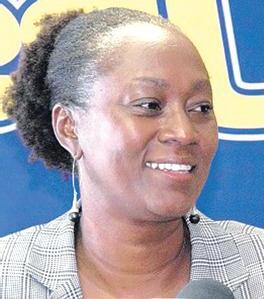
cilitating other educational programmes in the area of cricket and other disciplines. These are intended to increase awareness and enhance the skills and knowledge of sportsmen and women.
Boldon and Jackson
Both Boldon and Jackson were phenomenal athletes during their heydays, and the duo has now settled down into working beyond the field for the development of sport in the Caribbean and beyond.
According to internet site, Wikipedia, Ato Jabari Boldon, born December 30, 1973, is a former athlete from Trinidad and Tobago and four-time Olympic medal winner. Only three other men in history- Usain Bolt, Frankie Fredericks and Carl Lewis- have won as many Olympic individual event sprint medals.
He is the current Trinidad and Tobago national record holder in the 50, 60 and 200 metres events with times of 5.64, 6.49 and 19.77 seconds respectively. He also held the 100m national record at 9.86, having run it four times, until Richard Thompson ran 9.85 on August 13, 2011. He also holds the Commonwealth
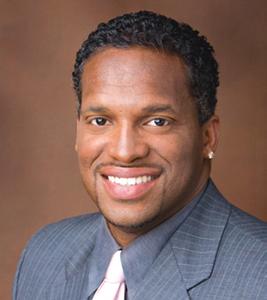
Games record in the 100m.
After retiring from his track career, he was an Opposition Senator in the Trinidad and Tobago Parliament, representing the United National Congress from 20062007. He is now an ESPN and NBC Sports television broadcast analyst for track and field.
Wikipedia states that Grace Jackson (born June 14, 1961, in St. Ann, Jamaica) is a retired Jamaican athlete, who competed mainly in the 100 and 200 metres.
Jackson reached the 100 and 200m finals in the 1984 and 1988 Summer Olympic Games and the 200m final in Barcelona in 1992.
Her breakthrough performance was at the 1988 Summer Olympics, held in Seoul, South Korea. She won a silver medal over 200m behind Florence Griffith-Joyner, beating then 200m World Champion Silke Moller, Heike Drechsler and team-mate Merlene Ottey.
She also won a bronze medal at the 1987 IAAF World Indoor Championships and a silver medal at the 1989 IAAF World Indoor Championships.
The Guyana Badminton Association (GBA), in partnership with the Guyana Olympic Association (GOA) will this weekend stage the annual Discover Open badminton tournament in observance of World Olympic Day, which is observed globally every year on June 23.
The two-day event, billed for Saturday and Sunday, will take place at the Queen’s College badminton courts, with the deadline for the submission of entries for the various categories being Friday at 18:00h.
Interested players can
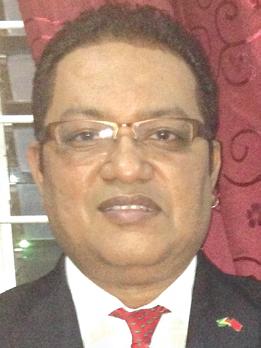

By: AvenAsh RAmzAn
The future of cycling will converge at the inner circuit of the National Park on Saturday to celebrate World Olympic Day in the form of a fiverace programme, set to pedal off at 09:00h.
The event, which is being sponsored by the Guyana Olympic Association (GOA) and organised by long-serving national cycling coach Hassan Mohamed, caters for riders between ages six and 14, competing with BMX bicycles.
“I’m encouraging the young ones to come out and be part of the activity. It would be competitive and
fun at the same time, but we must also remember it’s an occasion for us to be part of World Olympic Day celebrations,” Mohamed said on Tuesday.
The five races carded for the day are BMX Open (three laps), BMX Boys 6-9 (two laps), BMX Boys 9-12 (three laps), BMX Boys 1214 (three laps) and BMX Open (four laps).
This is the fifth year that Mohamed is hosting the activity, in collaboration with the GOA. Last year, Jamal John, Sherwin Sampson, Rashidi Ceres, Rawle Small and Christopher Griffith were the winners in the respective categories.
According to Mohamed,
the successful riders will receive prizes for their efforts, compliments of the GOA, whose representatives will be on hand to witness the activity. On 23 June every year, Olympic Day is celebrated all around the world. Hundreds of thousands of people- young and old- participate in sports activities, such as runs, exhibitions, music and educational seminars. Over the last two decades, the event has helped to spread the Olympic ideals to every corner of the world.
This year the event is being held under the theme: “Move, Learn and Discover.”
register by calling president of the GBA, Gokarn Ramdhani, on 621-5804. There will be five categories of play, namely Men and Ladies’ Singles, Men and Ladies’ Doubles and Mixed Doubles.
According to Ramdhani, “With the event being an Open one, selected junior players will be allowed to compete, depending on their level of play. Although a lot of the players will be doing their end-of- term tests this month, the GBA still expects a large turnout, especially from the seasoned players.”