

















Guyana Revenue Authority (GRA)
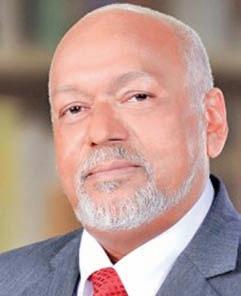
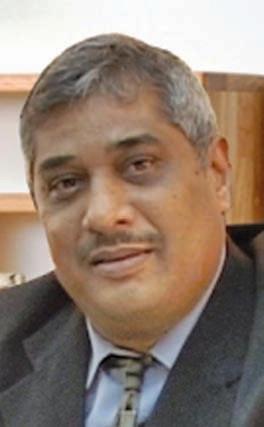
Commissioner General Khurshid Sattaur has confirmed making a report to the Police, after seeking legal advice about the alleged threats which Kaieteur News Owner and Publisher Glenn Lall made to him on Friday evening.
This newspaper reported Sunday that Sattaur was seeking legal advice on the threats, which were reportedly meant to dissuade the GRA from pursuing an investigation into an alleged duty-free scam.
Attorney General Anil Nandlall confirmed speaking with the Commissioner General, but said he was awaiting a report along with whatever necessary
supporting documentation.
After seizing two Lexus L570 SUVs which were reportedly being driven by Lall and his wife, Bhena, Sattaur said the GRA remains steadfast on its course to investigate the alleged tax fraud amounting to some $102 million.
At this stage, the investigation is focused on the Lalls; one of his close friends who is a GRA officer, Navin Sankar; and Narootandeo and Gharbassi Brijnanan, a remigrant couple residing on

It is being alleged that Lall conspired with the other parties to import the two luxury vehicles under the remigrant scheme. In doing so, no customs and excise taxes were paid to the GRA.
The Brijnanans were on July 3, 2013 granted permission by the Foreign Affairs Ministry to return to Guyana as “remigrants”, along with the concomitant incentives of the remigrant scheme.
Under the programme, Guyanese who have resided overseas for more than five years may return home with a number of benefits. These include an import duty-free waiver for vehicles and tax exemptions for household items, once these are owned for six months or more.
The launch of the investigation reportedly prompted Glenn Lall to threaten Sattaur.
Sattaur explained that “if one were to apply the rate of taxes – 45 per cent duty, 140 per cent excise, and 16 per cent VAT to
the correct value of about US$85,000 for each vehicle, then the taxes under normal circumstances for these vehicles would have attracted a sum of US$251,000 or G$51 million each.
He refuted Glenn Lall’s claims that the matter was being pursued only because the Kaieteur News recently carried articles about duty-free concessions to a Chinese logging company Baishanlin.
Sattaur told Guyana
Times that to begin with, no one is saying that Baishanlin is obtaining concessions on its own behalf and handing such concessions to others to use.
“If that were the case, you would have seen GRA immediately mounting an exercise not dissimilar to what we witnessed over the weekend to seize the items involved,” he said.
Sattaur maintained that the GRA has a duty to keep information on the concessions the logging company received by virtue of its approved investment agreements very confidential.
“This will be done in the same way GRA will keep the information on dutyfree concessions the candy-making company, a related company of Kaieteur News, obtained from the Government confidential,” he noted.
He said also that Baishailin is not guilty of falsifying import documents just in order to qualify for concessions, as appears to be the case with the two vehicles



Editor: Nigel Williams
Tel: 225-5128, 231-0397, 226-9921, 226-2102, 223-7230 or 223-7231. Fax: 225-5134
Mailing address: 238 Camp & Quamina Streets, Georgetown
Email: news@guyanatimesgy.com, sales@guyanatimesgy.com
Initially inaugurated in 1995 by Dr Cheddi Jagan, Guyana will once again observe September as Amerindian Heritage Month. This year, the theme is “Traditional Embodiment for Amerindian Development”, and it should be interesting what will emerge when the issue of “Amerindian development” is placed under the microscope.
As good a place to start as any can be is the “First Amerindian Conference on Amerindians” that was convened by the then PNC Government of Forbes Burnham in 1969. While the Amerindian Toshaos tabled a raft of proposals that addressed their developmental needs, including the need for demarcation and titling of Amerindian lands, the intent of the PNC Government was clear from their official report on the Conference.
It boasted: “One of the significant achievements of the Conference was a Resolution of Loyalty by the Amerindians to the Honourable Prime Minister and Government of Guyana.” This insistence on loyalty to the Government, and not Amerindian development as a significant achievement”, had to have played a role in the decision of Amerindians in the Rupununi later that year to launch an abortive rebellion against the PNC Government.
While we do not believe that secession of any area of Guyana can be permitted, especially in collusion with an external state, Governments must be responsive to the needs of these “first peoples” of Guyana.
It should be noted that it was not until 2006, under the PPP/C Government, which had succeeded the PNC after “free and fair elections”, that an Amerindian Act was passed that addressed all the proposals placed on the table 37 years earlier. In summary, the Act provides “for recognition and protection of the collective rights of Amerindian Villages and Communities, the granting of land to Amerindian Villages and Communities and the promotion of good governance within Amerindian Villages and Communities”.
The PPP/C Government immediately embarked on the demarcation and titling of Amerindian lands, which total almost 14 per cent of the total land area of Guyana. As of the end of last year, 97 villages had been titled, while 77 others have had their lands demarcated.
Under a new agreement signed by the Government with the United Nations Development Programme (UNDP, this year, another 13 communities are to be issued with titles, while 33 others are expected to be demarcated. Even though the Opposition had excised that portion of the Budget designated for “Amerindian development”, the Government went ahead with its commitment to the Amerindian peoples.
We believe that it will indeed be a hollow celebration of “Amerindian heritage” if “Amerindian development” is ignored. One’s “heritage” is not only a nostalgic backward look, but must incorporate those aspects of the heritage that will empower its practitioners to be equal to all others in fulfilling their potential under present-day circumstances.
With this in mind, the PPP/C Government gave explicit recognition of the underdeveloped state of the educational delivery system in the hinterland where Amerindians reside. Notwithstanding the challenges, the Government refused to accept any lesser standards for Amerindian education than those on the coast.
Because universal nursery and primary education had been achieved, the just completed 2008-2013 education plan promised to work towards the same goal in secondary education in the hinterland. The plan promised to “focus on the following areas of Universal Secondary Education that pertain to Amerindian communities: Greater emphasis will be placed on Mathematics, Science and technology with the purpose of providing the young graduates with sufficient tools to be productively incorporated in the economy and to make Guyana a more competitive society.
“The scope of the curriculum will be broadened to include areas such as the arts, sports and physical education and culturespecific skills (eg weaving, basketry) in Amerindian communities. These inclusions would make attendance to schools more attractive to young persons and as such, contribute to lowering the drop-out rate and increasing attendance.”
This is real development. During this month, this newspaper will elaborate on other aspects of the Amerindian peoples’ development.

Dear Editor,
From the findings of an ongoing NACTA poll in Trinidad, there is favourable opinion, from all segments of the population, towards a constitutional amendment pertaining to term limits for a prime minister and recalling Members of Parliament who have not adequately serviced their constituents.
But there is deep political division on the runoff aspect (winning a seat by over 50 per cent of the votes cast) of the bill with most Government supporters backing it, while Opposition People’s National Movement (PNM) and Independent Liberal Party (ILP) supporters opposing it. The Congress of the People (COP) supporters, almost non-existent among the population, are divided between supporting and opposing the runoff amendment of the bill.
Overall, supporters of all the parties feel Proportional Representation (PR), like what we have in Guyana, is a better option in electing MPs than the greater than 50 per cent rule and the proposed runoff where no candidate gets a majority of the votes cast.
Virtually everyone prefers PR over the 50 per cent rule.
The United National Congress (UNC); COP; and ILP have indicated at varied times support for PR. The PNM has consistently opposed PR. The UNC founder, Basdeo Panday, had consistently argued for PR when in Opposition.
But when he became PM (1995 through 2001), he abandoned the idea because of lack of support from the PNM to enact it.
In 2007, COP founder Winston Dookeran was against PR because partycommissioned polls showed it winning the election with a plurality of votes; the party ended up with 20 per cent of the votes and no seats.
After the election, both Dookeran and Panday called for PR. The PNM, under Patrick Manning, ignored them both, saying PR will balkanise TT. No country (all over Europe, New Zealand, Australia, etc) that utilises PR has been balkanised.
During the debate on the constitutional amendment bill, Dookeran again said he would prefer PR over the majority rule. Jack Warner, ILP found-
er, also backs PR. Though opposed to PR prior to the amendment debate, the PNM leader, Dr Keith Rowley, has not indicated whether he would re-examine PR as an alternative to the run-off rule being advocated by UNC Leader and Prime Minister Kamla Persad-Bissessar.
Dr Rowley should re-engage his party’s supporters to get their views on PR; he would be surprised to find how supportive they are of this electoral system over the first-past-the-post system and how much more they, as well as supporters of other parties, prefer it over the 50-per-cent-plusone rule that is now becoming law.
Also, with the new electoral rule being put into play for the 2015 election, the PNM’s strategy of winning or losing alone has to be re-thought. The world has moved away from oneparty governance and towards coalition. Even where a party wins a majority, it seeks allies to govern in order to maximise support for policymaking. The UNC (PP) may not have won in 2010 without a coalition, so that party sees the value in coalition politicking.
The new electoral bill makes it all the more necessary for the major parties in TT to build alliances in order to win a majority of seats. As it is right now, NACTA polls are showing no party can win a majority of seats with a majority of votes, making runoff necessary in several of them. Pre-election coalition arrangements could lead to an alliance winning a majority of seats.
On the right to recall terrible MPs, constituents are praiseworthy that they can rid themselves of poor representatives. But they are concerned whether MPs will be given adequate resources to properly service their constituents.
In the past, if an MP is not a member of the governing party or even a Cabinet member, he or she had to literally suck salt to get work done in a district – virtually no resources were committed to the constituency. Constituents feel some kind of equitable funding should be made available to MPs to properly service their constituents.
Submitted by, Vishnu Bisram
Amid overall poor results at the Caribbean Secondary Education Certificate and the National Grade Six Assessment, Education Minister Priya Manickchand says in a message to mark the commencement of Education Month that the sector is on the rise from the decrepit state it was in years ago.
Below is the full text of the Minister’s message
“A quality education has the power to transform societies in a single generation, provide children with the protection they need from the hazards of poverty, labour exploitation and disease, and give them the knowledge skills, and confidence to reach their full potential.” – Audrey Hepburn
Once again it is that time of year when we as proud Guyanese stop to reflect and celebrate our many achievements as a nation in the area of education.
This September, we celebrate Education Month 2014 under the theme “Literate by Grade Four Through Consistent Home, School and Community Involvement”. And this year,
we begin to observe this special month on the very day schools reopen across the country. We begin another promising and exciting year of teaching and learning and progressive growth in an education system that has shown remarkable improvements over the last two decades.
Our education system today has arisen from a deficient and decrepit state where it teetered along the brink of destruction, with very meagre investments being made in it, and with pass rates of approximately twenty-two percent. The promising structure it has become as a result of unmatched investment being made by government results in pass rates of sixty percent.
Education month 2014 comes at a time when, amidst all that it has done and continues to do for education, the government is on the brink of a no confidence vote by the political opposition. Notwithstanding the GUY$38B allocated to the education sector in Budget 2014 being the most money ever invested by a gov-

ernment in education in the history of Guyana, the politics of the opposition is trying to undermine this investment by asking the PPP/C Government to resign. That Guyana, under this government, is the first country in the western hemisphere to grant each child in the public school system GUY$10,000, an approximation of USD50, the profoundly immoral politics of the opposition is trying to derail the progress being made by this government.
Former Secretary
of the United Nations, Mr. Kofi Annan once said: “Knowledge is power. Information is liberating. Education is the premise of progress, in every society, in every family.” Guyana is currently witnessing unprecedented growth in its education sector with the achievement of universal primary education. Every child in Guyana of the primary age cohort has access to a primary school. This did not just happen. This achievement is
as a result of strategic government investment with a view to bolstering the primary sector of the education system. And should the government be allowed to serve its constitutional five-year term, then Guyana would have achieved universal secondary education.
Approximately eightyfive percent of our children attend nursery school.
Such is the trajectory of the progress made in our education system that we have the most trained teachers we have ever had in the history of Guyana with just about 70 percent of our teachers being trained. In 1991 we had fifty-eight percent trained teachers in the education system.
While we have much to be proud of and to celebrate and give thanks for, we as a Ministry are very cognizant of the fact that we have much work to do in order to bring our education system to its optimal standard. The Government of Guyana continues to do its part to provide the adequate resources to service the education sector so as to ensure our nation’s future leaders are af-
forded the best education they can get.
As the Education Month 2014 theme this year suggests, the Ministry is paying strict attention to early childhood education. The focus is on establishing literacy at an early age, ensuring that our young children grasp the concepts of literacy that are intrinsic to their further development in academia and life.
Achieving literacy by Grade Four requires a strong partnership between and among the Ministry of Education, Schools, Parents and Children. We have to work together assiduously to ensure we positively change the literacy level of our children.
The government and the Ministry can invest and craft policies to ensure we enhance our literacy levels, but ultimately success will be achieved when parents become more interested and play a more active role in their children’s school life. As we celebrate Education Month 2014, let us passionately strive to achieve our goals. Best wishes and may God bless you.
Dear Editor,
If what the Commissioner General of the Guyana Revenue Authority (GRA), Khurshid Sattaur is saying is true, and I have no reason to doubt that a respectable man like himself would lie about something so serious, then I am aghast at the revelations that Owner and Publisher of Kaieteur News Glenn Lall, a self-proclaimed fighter of criminality and corruption, would stoop to such a low level to excuse himself from his deceitful transgressions.
I speak of the duty-free scam that he and his relatives are currently embroiled in. It was headlined in the newspapers recently how he defrauded the Government of such sums of money by having his remigrant family, with their duty free status, import two brand new 2013 Lexus Luxury SUVs which were then handed to Mr Lall and his wife in breach of the duty-free concessions conditionality/law.
The vehicles are, in essence, really owned by Lall and his wife, but were imported by his re-migrant relatives for him to benefit from their duty-free status. I say this because the vehicles used to be prominently parked in front of Lall’s and his wife’s (Bhena Lall,
owner of Bhena’s Footwear) place of work daily, even though they were registered to his relatives and should be in their possession.
What is now even more shocking is that Lall who preaches about corruption, equity and fairness has reportedly levied threats to Mr Sattaur that if he proceeds along the just line of accountability and investigates the matter under his remit as the Commissioner General of the GRA, he will persecuted by Kaieteur News.
In this article, Mr Sattaur has said among other things that Glenn Lall called him from an overseas number and “threatened to use his newspaper [Kaieteur News] to expose me; I don’t know what wrong I am doing. If I am trying to do the Government’s work… .I don’t know why people should be upset, if they are doing wrong things, they should be subject to the laws as well,”
What kind of double standards is Mr Lall perpetuating? On one hand, he uses his paper to malign and speak against all forms of corruption, unfairness, and unaccountability, yet he himself operates as if he is above and beyond reproach when he is asked
to be accountable.
I think Guyanese are getting a clearer and clearer picture as to the type of person Mr Glenn Lall really is.
His character is clearly exemplified in an informal, haphazard attempt to justify his actions in his (Kaieteur News) satirical medium “Dem Boys Seh” dated August 27 under the heading “Thief man don’t like see he mattie wid bag”.
The caption alone speaks volumes but the content is more damning. Among other things “Dem Boys” –who everybody knows is Glenn Lall – said: “Dem boys [he] know that a man can bring in a vehicle and get duty free. De only thing he can’t do is sell de vehicle before three years. If he do that, he got to pay taxes. He can lend out de vehicle, he can park it and that ain’t no crime.”
Well, in that case, it might not be a crime, but it certainly is an unscrupulous act clearly aimed at depriving the Government of the necessary taxes needed to develop the country.
So, for the so-called “champion of corruption” to make such statements justifies that he is a hypocrite and even suggests further that the work that he and his acolytes are doing with the Kaieteur News
was never about truth and accountability but about serving his interests.
We clearly see this with his attempt to use his newspaper to influence and dissuade the Commissioner General from conducting his investigations into this scam, which was apparently facilitated by one of GRA’s employees who
shares a close relationship with Mr Lall.
I hope that all the parties involved will face the full force of the law and the two vehicles in question be impounded until such time that it is determined that no crime was committed or that the taxes would have to be paid.
Additionally, we as
Guyanese should start boycotting the Kaieteur News, which claims that it is representing the interests of the people, but is clearly representing, sensationally, the interest of one man who evidently feels he is above the law.
Respectfully, Sundar Naught


Many parents, relatives and caregivers have been busy preparing for the new term and stocking up on essen tials such as new uniforms or clothes, shoes, sports gear, stationery, books and e-learning tools, as well as various gadgets. As impor tant as these items are, let us not forget that good nutrition, ad equate sleep and ex ercise are also key to child development and learning.
Today, the focus is on nutrition. As children head back to school, it is vital that they eat the right foods at regular in tervals, so that they will be more focused and en ergised for work and play. Certain foods will help to do this, as well as enhance memory, brain function and motor skills.
The brain relies mostly on carbohydrates for fuel. Therefore, once we con sume carbohydrate-rich foods, such as whole grains and fruits, glucose is then released in the bloodstream. It is the glucose that energises brain cells, which rely on a steady supply in order to prevent “brain drain”.
I dislike the usual offering of local snacks, that is refined wheat crackers, candy, cookies, dairy ice cream, and chips to name a few. Unfortunately, these
for breakfast or an afterschool snack. These can help your children get that extra nutritional boost needed for an active brain:
line boosts memory in adolescent rats, suggesting that choline-rich foods may enhance brain-cell production throughout childhood.
Whole grains such as oats, brown rice or quinoa Oats, for

ar-high and hy peractive behaviour in children and thereby encouraging less focus and learning.
Some of the following foods can be packed as a snack in your child’s lunch box or had at home
es with a natural peanut or almond butter spread on top. Natural peanut butter contains choline which is needed to transmit nerve impulses and maintain healthy brain cell membranes. Research has shown that extra cho-

source of energy. Research has indicated that children who had oats as part of breakfast on a regular basis scored much higher on memory tests than children who had low-fibre, refined cereals, or no breakfast at all.
Bananas Bananas are probably the easiest, portable, no-fuss fruit to have as a snack. This is definitely one of my favourites – I ate so many bananas during my childhood that I’m surprised I still super-appreciate them today. They are easy to eat with almost zero mess and pack a lot of nutrition for such a simple fruit. Bananas are believed to aid the learning process by helping us remain alert due to the high level of potassium they contain. Bananas are great just before a test or exam for this very reason. Be sure to add bananas to your weekly shopping list as they will also help to increase the calcium absorption in your growing child – encouraging strong and healthy bone development. Also, if your child gets an insect or bug bite, try rubbing the inside of the banana peel to relieve itching and irritation. Don’t you just love bananas even more now? No wonder monkeys are always so happy and playful, eat your bananas!
Trail mixes/dried fruits and nuts
A simple mix of your child’s favourite nuts and/

or seeds with a little dried fruit, which is a good source of iron, such as raisins mixed in will help to increase Vitamin E intake. Vitamin E’s potent antioxidant effects protect brain cells from damage and inflammation. Walnuts and flax seeds will add the healthy omega-3 fats which are also important
More tips
The National Parenting Support Commission (NPSC) of Jamaica back-to-school tips for parents as the 2014-2015 school year begins today, September 1.
for brain development and eye health.
Did you know?
Our brain cells need twice as many calories as other cells in the body. A tired brain –or one that doesn’t get proper nutrition - won’t help children (or adults) perform at their best. Get children to bed on time
During the summer, children aren’t always on a schedule. However, sufficient rest is needed for them to enjoy a healthy and productive school year.
Communicate with teachers and the school Contact your child’s teachers at the beginning of the school year. Get acquainted with them and let them know you want to be an active partner in the education of your child. Monitor homework, activities and progress throughout the school year. Consider serving on your school’s PTA or other parent groups that engage with and support your child’s school.
Prepare a study area Where possible, designate a special place at home for school work. Remove distractions and make it clear that education is a top priority in your family.
Read together
Pledge to read with your child every day. Your example reinforces the importance of literacy and reading. Reading allows you and your child to explore.
Take charge of television time
Too much television cuts into important activities in a child’s life. Limit the time spent watching television. (Jamaica Observer)
Citizens Bank Guyana Inc has recorded a whopping $880 million profit before tax in its quarterly Financial Report ending June 30.
According to the bank’s financial document published in the newspapers on Saturday, after a deduction of $333 million it managed to gain $546 million after tax profit after six months when compared to the $512 million recorded for the same period last year.
The documents placed the company’s cash flow at $4.1 billion for the six months, an increase of $1.7 billion over last year’s. In the bank’s annual report ending December 2013, there was a profit after tax of $1 billion when
compared to $82.2 million from the previous year.
The Managing Director, Eton Chester, had stated that the construction of Citizens Bank’s state-ofthe-art headquarters at Camp Street, Georgetown, will be its major project for 2014 and was expected to gain momentum. However, no update was given on the process of the project in recently-published financial records.
Meanwhile, Clifford Reis, Chairman of Banks DIH, Citizens Bank’s parent company, had said that in addition to its main office, the commercial bank will be expanding its branch and ATM networks. He was optimistic that such investments would improve customer convenience while

simultaneously increasing benefits for stakeholders. “The launch of our ebanking service and Visa International Credit and
Debit Cards respectively will be in addition to other value-added services we intend to offer during fiscal 2014,” Reis added.
Net growth
Managing Director Chester was positive that Guyana’s economy will grow thereby having a positive impact on commercial banks, and Citizens Bank will be no exception. “Intense competition among commercial banks and non-bank financial institutions, excess liquidity in the banking system and declining interest rates are expected to continue in fiscal 2014,” he posited.
Reflecting on 2013, Chester said net interest income stood at $2.2 billion at the end of the last
financial year when compared to $1.9 billion in 2012. The bank’s ability to increase its loan portfolio and reduce the cost of deposits were among contributing factors to the growth in net interest income.
“Interest income is the most significant contributor to the bank’s net operating income, accounting for 85.8 per cent compared to 82.7 per cent in 2012,” the Managing Director explained. Net loans and advances increased by $2.2 billion, moving from $21.5 billion to $23.7 billion in 2013. In 2013, significant growth was recorded in loans to the household and manufacturing sectors, which grew by 30 per cent and 23.5 per cent respec-
tively. According to Reis, loans for housing grew by 12.6 per cent and the services sector grew by 7.3 per cent.
Other income declined from $409.1 million to $376 million. This nine per cent decrease was linked to a decline in foreign currency transactions. Earnings from foreign currency transactions, the major contributor to other income, declined by 20.5 per cent from $243.5 million to $193.6 million due to a decline in volume traded and lower spreads on transaction. Meanwhile, net operating income increased by $158.5 million or 6.7 per cent to $2.5 billion, compared to $2.4 billion recorded in 2012.
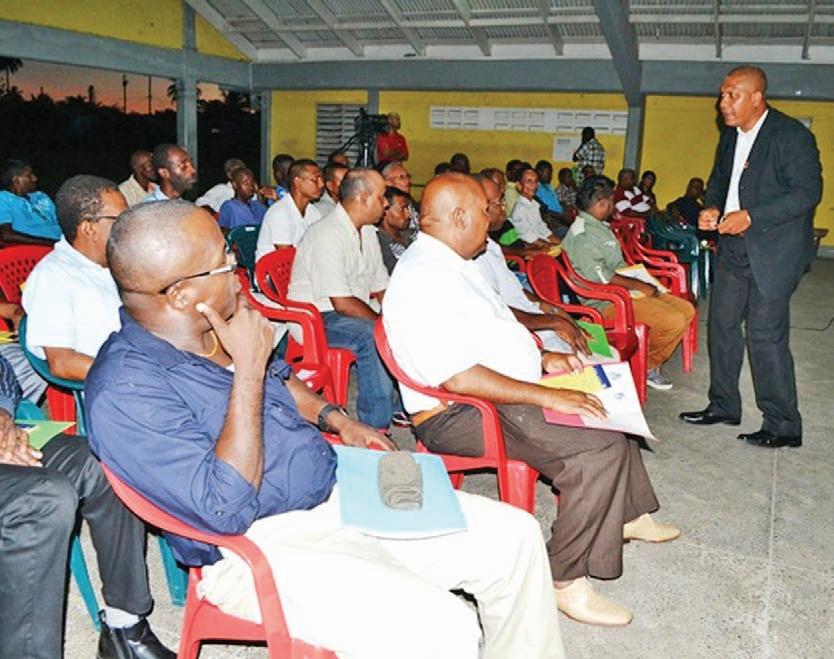
Government in taking action against violence against women and girls in the home will be putting in place a number of behavioural change programmes aimed at helping men and women to stop being violent, and to better relate to their partners in a non-abusive way.
To assist domestic violence perpetrators to cope with their anger and keep their partners safe, the Human Services and Social Security Ministry is in the process of launching a number of anger management classes, as well as setting up confidential help line services, to offer advice, informa-
tion and support to the men and women, who abuse their partners.
This is among the information provided to the men of Region Three, when on Friday, they engaged in an interactive session with the Men’s Affairs Bureau of the Labour, Human Services and Social Security Ministry and the Genderbased Violence Unit of the Health Ministry at the West Demerara Secondary School.
The session, which saw presentations from Men’s Affairs Bureau head Diego Alphonso, Health Ministry Gender-based Violence Unit Coordinator Joy
Gravesande and Clinical Psychologist and Proguidance Counsellor, Dr Mark Constantine, is part of an ongoing effort, aimed at involving men in a discussion, as it relates to the scourge of domestic violence. The intended impact is on prevention through awareness and education.
Dr Constantine spoke to the issue of domestic violence, why it happens, and the different forms of the abuse. “Every action has an equal reaction; we need to understand what triggers these reactions,” said Dr Constantine.
He further noted that the perpetrators need help.
“There are many instances where they are remorseful after the act,” he pointed out. Gender-based violence is a historical phenomenon in many cultures with no limits of age, race, ideology, class or religion.
In Guyana, the aware-
ness of domestic violence against women is greatly emphasised, hence, men need to be conscious as to what really is domestic violence and need to find other ways to deal with their anger and mental issues, he said. Through these sessions, the Ministry is hoping that persons who need help will come forward, Alphonso said. His advice was that the men must not be a part of the problem but part of the solution, the Government Information Agency (GINA) reported.

The initial stages of a massive road rehabilitation programme in Region 10 have begun in the community of Kwakwani, with significant support from Baishanlin International Forest Development Inc.
According to a release from the company, the work, which began on Friday, will see approximately five miles of internal roadways in Kwakwani being rehabilitated and is expected to be concluded within 10 days. The newlyformed Linden Kwakwani Road Users Association (LKRUA), which represents several logging associations in Region 10, is spearheading the efforts with key support from members of the Kwakwani Natural Resources Organisation (KNRO) and the Upper Berbice Forest and Agriculture Producers Association (UBFAPA).
Baishanlin has been meeting with representatives of the LKRUA over the last several weeks to map out a detailed plan on the company’s support for road rehabilitation efforts in the region.
Baishanlin and the LKRUA recognise that for the efforts to yield maximum results, all stakeholders, including other companies operating in the region, must play a role in the overall efforts. In this regard, Baishanlin has moved to take the lead and is currently supporting the efforts with four trucks and a loader, as requested by

Works being undertaken by
Baishanlin
the LKRUA.
Chairman of Baishanlin, Chu Wenze, said the company was happy to be associated with this initiative and stands ready to continue lending support to the communities in which a significant number of people benefit, both directly and indirectly, from the company’s operations. He pointed out that the company has been supporting such activities for some time and welcomed the move by loggers to organise into
groups that can more effectively work to bring about improvements.
Baishanlin, Wenze said, has always operated in an atmosphere of openness and inclusivity and holds in high regard, the continuation and further development of a healthy and productive relationship with the communities in which it operates. The company has, and will continue, to operate within the confines of regulations governing the forestry sector and the laws of Guyana.


...of “friends”
In politics, you expect opponents to grab at every opportunity to embarrass “the other side”. Especially in Guyana, where politics is dominated by a “scorched earth” policy: take no prisoners – winning is everything, and politics is war by
“other means”. So when the Government announced the composition of the new GuySuCo Board, we rather suspected flowers weren’t exactly going to be strewn in their paths.
As usual, Greenidge weighed in as he tried (once again) to revive his moribund political career. Ever since Granger rigged him out of the PNC election sweepstakes (with the help of R Corbin), he’s been trying to keep a stiff upper lip. But you can’t help but notice his tremulous lips when he speaks. And don’t mention Granger’s name in his presence, please. “Volcanic eruption” isn’t the word! But after Greenidge cussed out the Board till “water na deh fuh wash am” (as the GuySuCo cane cutters would say) who else but Tony Vieira decided to add his “one cent”. After all, he’s decided he’s the PNC “sugar guy” – since his father had given him a job in the Vieira cane fields at Versailles. All the Vieiras of Tony’s generation had done quite well at school, thank you. And moved on to bigger and better things.
And this was Tony’s take on the new Board: “It is the ultimate stupidity …recycling persons whose claim to fame is failure and poor performance”. Now if Tony wasn’t “throwing talk” at Greenidge, then this has to be the Freudian slip of the century!!
Greenidge, of course, had been at the helm of the Ministry of Finance when the PNC crashed and burnt the economy with their “cooperative socialism” airy-fairy cockamamie ideas. He’d been forced to admit Guyana was “bankrupt” under his watch.
And now he wants to be recycled as “PNC’s leader” –to run the entire country?!!!
Was Vieira rubbing Greenidge’s nose in the doo-doo because Granger “sic’d” him on??
But there was the Freudian slip possibility. Vieira was one of the most astounding failures in the history of Guyana – and here he was hoping to be recycled in the PNC. He’s done such a pathetic job at his father’s Versailles estate that it was the first one to be closed down.
Then he couldn’t compete with CN Sharma who he’d laughed at for his “death announcements”. He had to sell his TV station, then blew all the money in Miami on harebrained schemes and is back, hoping for a squeeze!!
And he dared to criticise “failures”?!!!
...of Lalloo Ram
Lalloo “Suspenders” Ram continues his quest for recognition. Won’t somebody give this wanker a plaque or something so that we don’t have to be inundated by his “interventions”. A GDF report from 2008 surfaced during the Rodney hearing that detailed 155 guns – long, short, automatic, semi-automatic – were handed over to a list of PNCites headed by one R Corbin back in the 70s.
Some of these weapons were conclusively proven to’ve been used by criminals in their criminal depredations in the aftermath of the 2002 jail break. It’s quite possible that the kick-down-the-door-bandits that wrecked havoc in rural Guyana in the 70s and 80s could’ve used those same weapons. It was widely thought that some of those weapons came from “law enforcement” officials.
Now just because President Ramotar asked the present PNC leader Granger to return those guns, Lalloo Ram claims he’s jumping the gun! He should wait till the COI is finished.
Right!! And miss the chance to save some lives! Hustler!
Now Speaker of the House Trotman recently confessed, “When I dreamed up the AFC, I did so primarily to address this ethnic problem.” And here it is Ramjattan’s been boasting that he and Trotman both came up with the idea.
Mediocre minds don’t think alike??
One person is now dead and three others seriously injured after a speeding 4x4 pickup truck veered out of control and struck an elderly man on the Alness Public Road, Corentyne, Sunday evening.
Dead is Roy DeSouza 66, called Basha of Alness Village. He was reportedly of unsound mind, but was described as a very friendly and helpful person who had a soft spot for children. The accident occurred at 18:30h.
According to an eyewitness, the vehicle, GPP 8240 – a yellow Toyota pickup with super-sized wheels giving it a ‘monster truck’ appearance – was speeding when suddenly the driver swerved and hit DeSouza. The impact sent him flying through the air before
crashing into a fence and tearing it down; he reportedly died on the spot. The vehicle continued on, hitting a parked trailer into a trench before launching into the air and ending up in a mango tree. The vehicle was suspended in the tree and portions had to be chopped to facilitate the vehicle’s return to the ground.
According to the eyewitness, the driver and the other two occupants were thrown out of the vehicle. The driver, 19-year-old Vinesh Babulall of Number 46 village, ended up on the side of the road in an unconscious state, while his brother, 17-year-old Udi Babulall landed some distance away. The elder brother had his feet broken, while the younger received serious
head injuries. The female occupant, identified only as “Priya” of Tain, Corentyne, had her legs crushed.
They were picked up by public-spirited persons and rushed to the Anamayah Hospital. Udi Babulall was later transferred to the New Amsterdam Hospital.
The trio were reportedly heavily intoxicated.
According to the eyewitness, the vehicle was seen from a distance “blazing through”.
He went on to say, “After the truck hit down the old man, like the driver lost control and he end up in the tree, all I see is them people pitch out and the people pick them up quick.”
Another person at the scene related that after she heard the impact, she
rushed out only to see three persons lying by the side of the road covered in blood. “My nephew pick up the two who were badly injured and rushed them to the hospital. All of them were drunk, they were smelling of alcohol; the girl didn’t even know what happen till she reach the hospital,” the woman claimed.
At the hospital, family members gathered to get a glimpse of the injured and offer support. According to one relative, the trio had left earlier in the day to go to the beach.
There were reports that the driver swerved to avoid hitting a car that was coming out of a street when he lost control of the pick-up. The Police are investigating the accident.
An interfaith prayer service at the Umana Yana in Kingston, Georgetown on Sunday afternoon brought together Amerindians; members of the local religious bodies; Government officials, including Prime Minister Samuel Hinds and Amerindian Affairs Minister Pauline Sukhai, and representatives of the diplomatic community among others.
The gathering was to mark the beginning of the 2014 celebrations for Amerindian Heritage Month, the theme of which is “Traditional Embodiment for Amerindian Development”, the Government Information Agency (GINA) reported.
Adviser to the Amerindian Affairs Minister, Yvonne Pearson, opened the worship session, noting that “it was a good thing to say thanks onto the Lord and to sing praises onto his name”. She urged that the month of celebration should not only be focused on recognising and promoting the indigenous culture, but also on strengthening spiritual relationships as well as the relationship with all Guyanese.
Pearson’s opening remarks were followed by almost two hours of prayers, chanting, scripture reading, songs and dance by the representatives of the different faith and community organisations.
These included the Alleluia Group of Region Seven, the Roman Catholic Church, Cathedral of the Immaculate Conception, the Central Islamic Organisation of Guyana, the Baha’i Community of Guyana, the Guyana Hindu Dharmic Sabha, the Guyana Conference of

Adventists, Winners Cathedral, Guyana Rastafari Council, Circle
is an annual feature of the Amerindian Heritage Month celebration.

of Love (Fenton Parks and Team) and the Teshiri Culture Group (Gideon Domingo).
The interfaith service
Minister Sukhai noted that it was in keeping with the indigenous people’s belief in their connection with Mother Earth and spirituali-
You would be surprised at the number of backward societies there are in the world even in the 21st Century.
In these societies, females are almost invariably the greatest victims of oppression. Girls and women can be bought or sold, raped and pillaged, married off and raped within the marriage. They may be used and abused and loaned out or rented. All too often, the rapists use religion to justify their brutal actions.
The recent kidnapping of some 300 girls from schools and homes in Nigeria by an Islamic Group called Boko Haram (Arabic for Western education is evil) is just one example. Much to their discredit, the world media has largely forgotten these children.
These children are meant to serve as sexual slaves for Boko Haram soldiers. They are meant to be married to these “soldiers” and then raped within the context of “marriage”. For these backward people, the rape is now legitimate.
As time elapses, these victimised girls will learn to blind themselves to the evil that has been done to them. They will begin to think as their rapists think: that it is their duty to submit to rape whenever it pleases their rapists.
This is perhaps the greatest evil, when the victims begin to see their sexual slavery as their duty to their “husbands”. In time, they will give birth to daughters who will suffer the same fate of being bought, sold, married off, and raped over and over.
The evil will seem like normal life. The cycle of evil is endless, and it takes a tremendously strong woman to stand firm in the face of this horror. To defend her girl child, she will have to stand firm. If she simply accepts her rapist, she and her children are doomed. Standing firm takes courage.
But all civilised and thinking people know that there is no such thing as “legitimate rape”. Rape is rape. Simple. In Morocco, it is illegal to force a girl into marriage. Civilised. The same standards are applied in other civilised societies.
In Canada, some months ago, a man was found guilty of raping his wife. She did not want to be touched. He forced himself on her. He was jailed for 15 years! Real men do not force themselves on women in or out of marriage (since the marriage may have been a forced thing in the first place).
As Guyanese, we need to ask ourselves this: which side of the divide do we fall? Are we a civilised society or a barbaric society? The measure is how we treat our women and children. We can appeal to women not to make further victims of themselves. And we can beg them to join with us in the fight to prevent this abuse from happening to others.
ty. “Expressing our religious connection to Mother Earth and the Higher Authority is always a remarkable event and experience, which we, as a people and nation, will continue to do,” the Minister said.
She explained that the objective of the event is to ensure that the indigenous people’s faith and experience are shared in unity with all the other faith-based communities in Guyana.
“We need to ensure that we build relationships and this event presents that occasion where the faith organisations can come together and share experiences as one in unity for upliftment, prosperity, and peace,” she said.
Celebrations for Amerindian Heritage Month 2014 continue today with the official launch at the Amerindian Village at Sophia. Activities during the course of the month include an Amerindian Sports Fest, cultural nights, craft and food exhibitions, and an educational tour.
We can appeal to husbands to understand that no means no and that to force your wife for sex is an act of brutal rape. They are subject to the law. Or they should run to their places of worship and beg God’s forgiveness and never do it again. He must also beg forgiveness from the abused woman.
The first right of a woman is the right to her own body. The first right!
The greatest American President said: “It is the right of every human being to be free!” Free from what? I was asked. I say free from being owned, from being treated like an animal. Free to say no! Or free to say yes. The choice is hers. The choice is ours.
Two men were arrested on Sunday morning at Springlands, Corentyne after an unlicensed .22 pistol was found in their possession.
Wazim Ragasammy and Ritish Ramoutar, both of Springlands, were reportedly seen in front of the Reno Night Club acting in a suspicious manner. As a result, Police were summoned to the location by workers of the establishment.
According to information received, two constables from the Springlands Police
Station went to investigate the report and upon arriving at the scene, the two men were seen walking away but they were intercepted.
A search was conducted on their person and the firearm was found in Ragasammy’s possession. They were arrested and taken to the Springlands Police Station where they admitted that they were not in possession of a firearm licence. The two men were subsequently told of the offence and will make their first court appearance today.

Naya Zamana 19 “A Royal Twist” delivered all that it promised and much more when the production was held at the National Cultural Centre on Saturday evening before a packed audience.
The production, which was directed, choreographed and written by Dr Vindhya Persaud, took the packed National Cultural Centre on a memorable journey that will remain with them for a long time.
The show told the story of young Director Riya Patel’s debut attempt at the historical love story of “Saleem Anarkali”, strad-
dling the present and past seamlessly.
The Dharmic Nritya Sangh’s, Dr Indhira Harry excelled in her role as Riya Patel, an actress who was retiring to take on the role of film Director. From sizzling dance numbers to high drama scenes, she captivated the audience with her sheer energy and liveliness.
US-based choreographer Noman Ahmad earned himself many Guyanese fans as he transitioned effortlessly between the modern day Sid Sharma, whose main aim was to tease and annoy Director Riya Patel, and the romantic Prince Saleem


of the past. His acting and dance were simply excellent.
Zahrah Alli was ethereal in the role of the famous Mughal court dancer Anarkali. Exuding natural grace and beauty, she not only captivated Prince Saleem but the audience as well.
The role of the ghostly Prince Saleem was played by newcomer Ravi, who displayed old world charm and romantic spirit. Veteran Actor Nazim Hussain was also outstanding as Emperor Akbar, who disapproved of the love between Saleem and Anarkali and plotted to remove Anarkali from his son’s life.
E-Networks Emerging Voices winner Vishalie Sukram received thunderous applause as she made her debut at the National Cultural Centre. Top five contestants, Aamir Khan, played the role of narrator and his presentations were interspersed with appropriate songs. Music was provided by the talented E-Networks Orchestra.
The music for the show was both fabulous appropriate and included current day hits like “Tum Hi Ho”, “Har Kisi Ko”, “Nagada”, “Lungi Dance” and “Dilliwali Girlfriend” as well as historical gems “Suhani Raat”, “Chaudvin Ka Chand” and “Piya Tose Naina Lage Re”.
The show was made that much more spectacular by magnificent costumes and sets which were simply amazing. The audience expressed delight as each fab-

Aprophet is some body who know de future and de Bell Crier suddenly realise he can mek some money by bein a prophet. He can tell de future based on whah happen in de past and based on whah happenin right now.
It ain’t got to do wid readin de good book or readin any body hand. Is just from readin de papers every day. Only de other day he tell de whole of Guyana bout a paper man who does be a friend indeed only when he in need. And to look out fuh more favours and more cussin when de favours don’t keep comin.
That paper man had want a favour. And if yuh know that man, he don’t ask fuh small favours. Every ting he want does got to be big or plenty. Like big vehicle or plenty duty free, and so on. Plus, he had want some big wood from Bai. But when he ain’t get de wood, he start to cuss out. In de morning, yuh wake up was cuss. Next morning was more cuss. Then some body mouth open some where and a story jump out. And that story mek de paper man jump... so high that yuh woulda tink he was high jumper. When he reach back down, he pick up de phone.
Is de same paper man who tell a reporter de other day that he couldn’t talk pun de phone because he was overseas and he ain’t wanna pay all that roamin. But he pick up de phone because he want a favour.
De favour was fuh de tax man not to tek back some ting, or not to seize some ting. And to fuhget bout some ting. De tax man get vex and seh no and hang up de phone. That was when paper man call back and start to cuss out.
Ting-a-ling-a-ling…friend tell friend…mattie tell mattie! Now that de whole story buss out, de paper man lookin fuh excuses. So look out now fuh more excuses.

ulous set was revealed.
There were palaces, temples, abstract designs, abandoned theatres and perhaps the most spectacular, a beautiful garden. It was like magic as group after group of dancers emerged on stage, seemingly just after they had left, in colourful and glittering costumes. The costumes and sets for the show, which were designed by Trishala Simantini Persaud, captured the grand Mughal era of Saleem Anakali as well as present day.
The producers used additional lighting from Cloud Nine on account of those at the National Cultural Centre not being sufficient, and this further enhanced the production.
Dr Persaud, in her opening remarks, expressed hope that the facilities at the National Cultural Centre would be improved in the near future so that producers would have easier time staging their production. In the audience were President Donald Ramotar; Prime Minister Samuel Hinds and Mrs Hinds; Finance Minister, Dr Ashni Singh; and other dignitaries. Both the President and Prime Minister praised the show. For those who have missed the thrilling and colourful production, keep your fingers crossed since there might be a hold over.

The Rodney CoI continues to reveal scandals that were inherent and pervasive in the 1970s and 1980s as the PNCGovernment consolidated a dictatorship through use of rigged elections and military might, misconduct and abuse.
That period was contaminated by centrally directed murders and violence intended to keep a Government in power and to intimidate the citizenry into passive acceptance. The Rodney COI is adding new information on the tragedy that brought shame to Guyana. No one has ever apologised and the PNC has steadfastly refused to acknowledge that it was the steward of a rotten Government.
Many of the leaders of the PNC then are still active in politics and still harbour aspirations to be in power again. They behave today like rigged elections, economic shambles, social morass and the destruction of our financial and physical infrastructure never happened.
But the inconvenient truths
emanating from the Rodney CoI are mighty nightmares in APNU’s efforts to blur the vision of our people and make them forget our past. While Guyana has recovered from the economic and social decline of the 1970s and 1980s, we have yet to fully heal from the deep wounds inflicted on us by the PNC dictatorship.
PNC leaders wish these nasty truths in the form of cold hard court facts would go away because they are embarrassing to APNU and represent daunting barriers as the PNC-led APNU seeks to reinvent themselves.
But in their efforts to re-engineer the image of the PNC, they must confront inconvenient truths such as the massive distribution of high-powered weapons to PNC-linked agencies and civilian groups.
Why would a Government and an army make available military weapons to Government officials and civilians? How were these weapons used? Who used these weapons? Against whom were these weapons used? Why the
weapons never returned? Where are these weapons today?
Who authorised the GDF to issue weapons to civilian organisations? Why were the GDF made an appendage of the PNC? Was this a manifestation of party paramountcy?
Why would the GDF hand over rocket launchers to an “R Corbin” from the Government of Guyana? What were these civilians planning to do with rocket launchers in the 1970s? What was the reason why the GDF would want to put rocket launchers in the hands of Government civilians? Someone needs to come forward and give an explanation to the people of Guyana.
The PNC still aspires to lead a Government in our country and we do have a democracy. In a democracy, any political party could become the Government of the day. Many citizens would be fearful to trust a political party that distributed high-caliber weapons to people.
While we are not able to document where each of the large
cache of weapons might be today, we know that some of the weapons are in the hands of criminals.
There are instances where centrally directed groups of criminals have in our country have been found with weapons that the GDF admits today were given to PNC Government officials and other PNC-affiliated groups such as the House of Israel during the PNC dictatorship.
Criminals were captured in the Mahaicony River in 2009 with weapons that the GDF distributed to PNC Government officials and to the House of Israel members. There are several such instances where Police have captured criminals with weapons that were found to have been previously distributed by the GDF to the PNC.
For a party that seriously harbours hopes of leading the Government again, they need to step forward with explanations of what motivated them at the time to distribute high-caliber weapons to their supporters.
The CoI’s inconvenient truths must be troubling to Dr Rupert
Roopnarine because he sits with the leaders of the PNC as comrades in arms today. It is apparent that Dr Roopnarine has forgiven those who harmed his comrades of the 1970s and 1980s and who wanted him dead also.
We admire his forgiving nature. But when we forgive knowing that the stripes of dictators still show citizens are troubled to a degree of frustration and fear.
The Guyanese people must wonder why the AFC stands in such sordid company and on such blood-stained ground. Why are Moses Nagamoottoo, Khemraj Ramjattan and the AFC silent?
The answer is that the temptation for power has destroyed their sense of decency and right. They have succumbed to the hunger for power and have lost their sense of right and what is good for Guyana. They have betrayed their Guyanese brothers and sisters in their hunger for power.
Readers are invited to send their comments by email or Facebook to times.notebook@ gmail.com.
The growing endemic of Non-Communicable Diseases (NCDs) will be attracting more attention from the Government of Guyana as steps are taken to reduce the number of deaths caused by such illnesses on an annual basis.
Because of the toll on the overall health of Guyana, steps were taken to establish a National Commission on Non-Communicable Diseases headed by President Donald Ramotar.
According to the World Health Organisation (WHO), NCDs such as heart disease, stroke, cancer, chronic respiratory diseases and diabetes, are the leading cause of mortality in the world.
This invisible epidemic is an under-appreciated cause of poverty and hinders the economic development of many countries.
The burden is growing as the number of people, families and communities affected continues to increase. Common, modifiable risk factors include tobacco, harmful use of alcohol, unhealthy diet, insufficient physical activity, overweight/obesity, raised blood pressure, raised blood sugar and raised cholesterol.
The NCD threats can be overcome using existing knowledge. The solutions are highly cost-effective. Comprehensive and integrated action at country level, led by Governments, is the means to achieve success.
In 2008, global data shows that NCDs amounted for 36 million of the 56 million deaths worldwide.
Another NCD report from
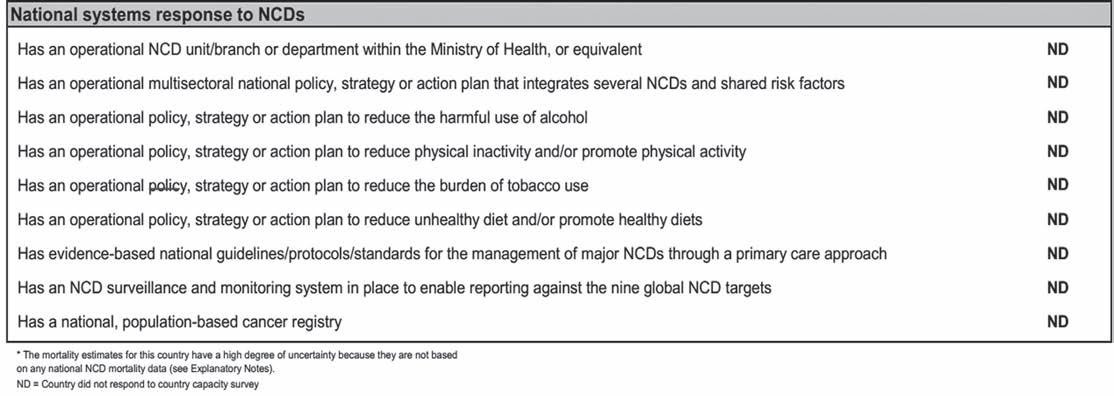
WHO shows that NCDs are estimated to account for 67 per cent of total deaths in Guyana for the year 2012.
Cardiovascular diseases was pegged as the number one contributor, contributing 33 per cent to the 6300 deaths, cancers 10 per cent, diabetes nine per cent and maternal conditions 14 per cent, with a slew of other NCDs making up the total.
However, according to Health Ministry Deputy Permanent Secretary Trevor Thomas, about 80 per cent of the overall deaths in Guyana can be attributed to NCDs.
Thomas in an interview with Guyana Times explained that going forward; steps will be taken to increase public awareness on the perils of NCDs and preventative measures.
This process has already begun with the Ministry spearheading the painting of signs on the seawalls.
He said that NCDs “take a big chunk of medi-
cal expense both in terms of treatment and prevention”. Thomas urged that persons change their lifestyles and adopt lifestyles that are more health conscious, to curb the epidemic.
“We want to encourage people to change their lifestyle so they don’t become victims… the private sector, the labour movement, workers in the public sector, we plan in the next couple months to engage everyone, and everyone will become involved and be a partner to combat Non-communicable Diseases,” said the Deputy Permanent Secretary.

President Donald Ramotar said his Government is desperately working to avoid Guyana being blacklisted by the Financial Action Task Force (FATF) with the country preparing for a targeted review by the global body by year-end.
He made this comment during a press conference on Friday.
“We are working very hard to stave off any blacklisting and saving our people from any unnecessary hardship. That is what we are working extremely hard to do because we will face these reviews coming up soon and we hope that we would be able to avoid blacklisting,” the President said.
During a previous meeting held in Paris, London, it was decided there will be a targeted review of Guyana’s status. Guyana is scheduled to appear before another FATF meeting by the end of the year in Paris. In a letter to FATF, Ramotar said he spoke about Government’s efforts to get the Bill passed and the refusal of the Opposition members on the Parliamentary Select Committee to meet before the parliamentary recess.
He added that further attempts were made during the recess to have the committee meet for them to decide on a Caribbean Financial Action Task Force (CFATF) and FATF compliant Bill, but their efforts were again rejected by the Opposition members.
According to the President, the Chairperson on the Special Select Committee, Presidential Adviser Gail Teixeira, recently sent invitations out to have a committee meeting on October 10, just as Parliament comes out
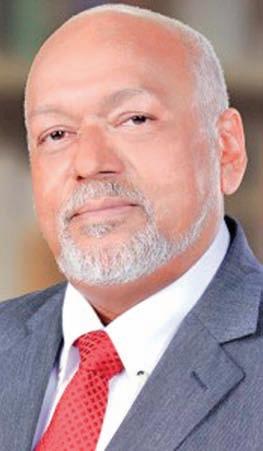
President Donald Ramotar
of recess; however, there has been no response from members of the Opposition to date.
“This means that the Opposition continues its determination to put the people of our country in harm’s way and to damage the welfare of our people…. They seem very, very determined to get the country blacklisted which is, I would say, a very unpatriotic position to take,” the President posited.
Nevertheless, Ramotar noted that the Government is continuing the fight to avoid the country being blacklisted by implementing all other measures that do not require legislation.
“We have developed a work plan, taking into account the unpredictable role, or should I say the predictable role of the Parliament or the obstructionist role they are playing particularly in this regard,” he stated.
The President pointed out that in carrying out the work plan, Government had issued guidelines and is currently developing reg-
ulations to deal administratively with many of the matters that are in the Bill. He went on to say that they have moved to establish the operations arm of the Financial Intelligence Unit (FIU), that is, the Special Organised Crime Unit (SOCU).
Only Tuesday last, Cabinet had approved some $63.1 million for the construction of the SOCU headquarters to be located at the Police headquarters, Eve Leary. The unit will come under the leadership of acting Police Commissioner Seelall Persaud and will be working closely with the FIU.
SOCU will investigate suspected financial transaction of money laundering and financing of terrorism, in keeping with Guyana’s treaty obligation to the CFATF.
The FIU was established under the Anti-Money Laundering and Countering the Financing of Terrorism (AML/CFT) Act of 2009, with the primary objective to monitor the financial sector, but with the operationalisation of the SOCU, the bar will be raise from monitoring to investigation.
The establishment of the SOCU was announced back in November 2013 in response to the Opposition’s refusal to support the AML/ CFT (Amendment) Bill.
Meanwhile, President Ramotar disclosed that arrangements are currently being made for the recruitment of staff for the unit.
He went on to expressed his appreciation, specifically to the British, the US and Canadian Governments for supporting the establishment of these institutions and helping to keep Guyana on par with international financial standards.
AGuyanese man has succumbed after he was stabbed in Ciceron, Castries early Saturday morning.
Reports are that the victim, 34-year-old Cedolf Hunte of Ciceron, was attacked by four masked men around 02:40h while playing cards with friends in the community.
A stab wound under his right arm is believed to have resulted in his death.
An eyewitness told St Lucia News Online (SNO) that he saw when Hunte collapsed and fell on his back. The eyewitness said Hunte may have suffered a serious head injury based on how he fell. The source said after Hunte fell, the perpetra-

tors ran, and a few residents gave chase. Meanwhile, Hunte’s stepmother Rufina Francis told SNO that he was also robbed of cash. Francis said it is believed that two men known to the community may be responsible for his death.
The recent discovery of a cocaine-smuggling submarine in Guyana opens up the possibility that Trinidad and Tobago (TT), already a major transhipment for narcotics, could also be supplying bunkered diesel fuel for the illicit underwater operation.
That is the view of University of the West Indies (UWI) Sociology Lecturer Daurius Figueira, author of Cocaine Trafficking in The Caribbean & West Africa in the Era of The Mexican Cartels
“The fact that they were building a self-propelled semi-submersible (SPSS) in Guyana means there are other manufacturing points in the Caribbean and now we have fleets of SPSSes. Before, they used to be running in the Pacific between South America and Central America. Now its on both sides, the Caribbean and the Atlantic ocean,” he told the Sunday Guardian.
“This indicates that the Caribbean island chain is now in the big time for cocaine smuggling and TT has an important role to play –smuggling fuel to these vessels because Guyana has no fuel source. All the fuel in Guyana has to come from either Venezuela or Trinidad.”
Figueira said drug submarines could not operate in the Caribbean without fuel, relay stations or ports and it was obvious from the one discovered in Guyana that product was being moved via SPSSes from the Caribbean to South America and up the
Caribbean island chain to the US.
He said a submarine the size of the one found in Guyana could transport three tonnes of cocaine with ease and close to five tonnes tightly packed. He said the Guyanese vessel was not designed for deep water operations or long hauls as it was a semi-submersible and not capable of diving fully under water like a dedicated submarine.
The National Security Ministry, in a release on drug submarines sent to the Sunday Guardian, said they were known to be used particularly by Colombian drug cartels to export cocaine from Colombia to Mexico. The drugs are often then transported overland to the US.
TT National Security Minister Gary Griffith said the country had the capability to track and intercept drug submarines in its territorial waters. However, he said, he could not divulge
the technology available to local security forces.
Griffith added that offshore patrol vessels (OPVs) would not have been able to deal with incursions by drug submarines.
“It emphasises my point about the illogical comments made by a few that if we had three defective OPVs, it would stop the flow of illegal drugs and weapons. One hundred OPVs would be useless. The critical operational policies required are not defective 90-metre vessels in deep waters, but exactly what we have done, reigniting the security co-operation agreement with Venezuela and Colombia,” he said.
“There is now better sharing [of] information being turned to intelligence upon which heavier deterrents are implemented and national security resources can be streamlined in the appropriate position.”
She told SNO that Hunte was driving a van sometime late last year, which was robbed of goods. The owner of the van and Hunte, at the time, confronted the men who they believed were responsible.
Since then, the person who was allegedly responsible for the break-and-enter had told people in Ciceron that he will stab Hunte.
Relatives have alleged that the suspect and another friend from La Toc may be responsible for the stabbing incident.
Francis described Hunte as a hardworking individual, who liked to keep to himself. Hunte was a construction worker and had been living in St Lucia for about seven years. (St Lucia News online)
More concessions are in store for miners, Guyana Gold and Diamond Miners Association (GGDMA) President Patrick Harding disclosed during a recent interview with Guyana Times
According to Harding, major suppliers within the mining industry will be soon granted concessions for a list of equipment by the Guyana Revenue Authority (GRA).
“I have seen the list, so I think it is in the process of being approved,” he posited. With concessions being offered to major suppliers, it is expected that the costs of these equipment will be reduced significantly when sold on the local market.
Less than a week ago, President Donald Ramotar
announced that duty-free concessions would be given for a “particular type of vehicle”. But concessions
would be granted based on the amount of gold declared by miners and taxes paid. Questioned about the President’s announcement, Harding said this is a welcomed move, explaining that the recommendation was in the pipeline for an extensive period. Since August 2013, the GGDMA had called for the Government to assent to tax waivers on the importation of 4x4, 4 doors vehicles.
“It was explained that these vehicles are still being deemed as luxury items/ vehicles and attract heavy import duties, although they are necessary for safe travel. They are often used to transport rations, spares, and personnel to and from mining operations. “Opened back vehicles are not safe,
persons could fall out and now we have a lot of women in the industry, so that is surely welcome,” he posited.
In July, the Natural Resources and Environment Ministry announced a menu of measures that are expected to cushion the impact of falling gold prices. At the time, subject Minister Robert Persaud indicated that more than $1.5 billion will be expended on road repairs within the six mining districts of Guyana.
Additionally, he disclosed that the Guyana Geology and Mines Commission (GGMC) has granted a licence to the GGDMA for importation and distribution of fuel. The regulations that will govern this transaction however are still being worked out.
Activities for Amerindian Heritage Month 2014, hosted by the Culture, Youth and Sport Ministry, kicked off with the opening of a monthlong exhibition of indigenous craft and arts at the Walter Roth Museum of Anthropology on Main Street last week.
There were performances by the St Cuthbert’s Mission dancers, Amerindian storytelling and a demonstration on straw weaving, the Government Information Agency (GINA) said in a release.
Minister Anthony, who declared opened the exhibition, said all Guyanese should be proud of being part of the rich Amerindian culture.

He urged that Guyanese use the month to focus on the Amerindian lifestyle and to gain a greater appreciation of the diversity that this group brings to the overall Guyanese culture.

“Get out there and experience this rich Amerindian culture,” he urged.
Minister Anthony also noted some of the Ministry’s ongoing efforts at preserving and promoting Amerindian culture and art. As part of this effort, the Ministry has been carrying out research and conducting exploration in different areas of the country to learn more about the Amerindian culture.
The Ministry has also been working on Amerindian languages and will be completing and publishing two dictionaries, complementing the seven others that have been completed.
The Ministry has been collecting Amerindian sto-

Audiological services have improved significantly since 1998, but equipment shortage remains an issue of concern.
The Health Ministry’s Audiological Practitioner Training Programme Coordinator, Dr Ruth Quaicoe said in addition to the shortage of equipment, the procurement process is flawed.
It was explained that often times, the incorrect equipment are bought while in other cases, priority is not given to the most important equipment during the procurement process.
“So guidance on equipment choice has to be given,” Dr Quaicoe said, while delivering an audiological report recently at the Regency Suites.
“Calibration of all equipment is still an issue. We still have to bring in an expert from the USA to do yearly calibration of all our equipment and this is a very costly venture,” she added. But she remains optimistic that Guyanese will soon be identified for calibration training and simultaneously, the procurement of tools for calibration.
ries and tales that will in time be turned into a book and published in both the Amerindian and the Standard English dialects.
The Ministry is also set to carry Guyanese on a journey of the Amerindian culture through a musical competition, based on their various languages. Amerindian Heritage Month is being conducted under the theme “Traditional Embodiment of Amerindian Development”.
The Amerindian Affairs Ministry has planned several activities in commemoration of the month-long celebration, including an interfaith service, cultural nights, craft and food exhibition, an educational tour and an Amerindian Sports Fest, as well as a variety of events at the Walter Roth Museum of Anthropology.
Currently, there are 11 audiological clinics in Guyana, three in Region 10 and one each in Regions One, Two, Three, Four, Five, Six, Seven and Nine.
These clinics focus on the identification, treatment and rehabilitation of hearing impairment and persons with balance problems. Additionally, they make ear impressions and ear moulds, fit, repair and service hearing aids, counsel parents and guardians and preach primary ear and hearing care.
But though the Health Ministry has been able to expand audiological services across the country, some departments are understaffed.
“Some regions have only one person, one audiology staff running the clinic. Farflung regions are at a disadvantage in terms of getting ear impressions down to Georgetown and hearing aids and batteries up to the region, so the staff after a while gets lackadaisical and
loose zeal,” she explained.
However, she anticipated that these problems will be addressed before the end of the year. By 2015, she said more attention would be given to far-flung communities.
Audiology in Guyana dates back to 1998 with the launching of the “Earcare 2000” Project. At the time, the project was sponsored by the Commonweath Society for the Deaf now known as Sound Seekers, in collaboration with the Health Ministry.
“Two British audiological scientists came to Guyana and set up the Central Audiology Clinic at the Georgetown Public Hospital Corporation (GPHC), the laboratories at the Ptolemy Reid Rehab Centre and satellite clinics in Linden and New Amsterdam,” Dr Quaicoe. At the time, those clinics were called satellite clinics because they were mandated to feed the central clinic at the GPHC.
But, the Coordinator said, clinics in Linden and New Amsterdam are earmarked for further development into fully-loaded clinics. She explained that they will be brought on par with the GPHC.
“The audiological service has come a long way since 1998. At that time, we had three staff members in GPHC Audiology Clinic who did outreach clinics to other regions in the country on a monthly basis, in Regions Three, Five, Six, Seven, Nine and 10,” she recalled. After commencing training in 2001, the second batch of audiological practitioners graduated in 2003, paving the way for the third batch. With more practitioners being graduated, Dr Quaicoe said the service is on the rise.
“The audiological service now reaches further into Region Seven; we are reaching Kamarang and Kawalla. We already have a clinic in Bartica. We are also now further into Region Six, reaching Skeldon. We already have one clinic in New Amsterdam. We are now reaching Kwakwani in Region 10.”
Dominica says while it will not impose a travel ban on people coming from Africa, it will screen new students arriving from West Africa where an outbreak of the deadly Ebola virus has resulted in more than a thousand deaths.
Dominican Chief Medical Officer, Dr David Johnson, speaking on the state-owned DBS radio, said that a meeting had been held involving various stakeholders to look at the threat the virus, for which there is no known cure, poses to the island.
“There are a lot of discussions in light of what may have happened in other countries as to the pros and cons of putting travel restrictions. The advice that we provide is that given the low risk that we have at this time and given the best available evidence that we have, given all of the obligations we have under the international health regulations…we are guided a lot by what the World Health Organisation advises.”
Dr Johnson said that the advice is that “we cannot go down the route of imposing travel restrictions at this time.
“So we would not advise any restriction on travel or

on trade at this time,” he said, noting, however, that a screening questionnaire for West African nationals entering Dominica would be implemented.
“We have worked very closely with the medical school (here) where we know there are a number of students from Nigeria and other parts of Africa.
“We have ascertained the number of students they
are expecting to come from that country. We have developed what is referred to as a screening mechanism. We have gotten the numbers, we will identify those students when they arrive… find out exactly which part of Nigeria they coming from, whether there is any possibility of them being in contact with anyone who may have had Ebola”. (Excerpt from Antigua Observer)

Leaders of five of El Salvador’s powerful gangs say they will stop attacking Police and military in a bid to relaunch a gang truce agreed two years ago.
The gangs want the Government to provide “negotiating facilities” and promised to avoid “civilian” attacks.
The 2012 truce initially reduced murder rates by 40 per cent, but killings have doubled since 2013 to around 11 killings a day.
In a statement, the gangs said it was a “second chance” for peace.
The passion, interest and dialogue elicited by Government’s proposals for constitutional reform have been unprecedented and clearly negate the view that citizens are lukewarm on matters of national governance, says Trinidad and Tobago Prime Minister Kamla Persad-Bissessar in her Independence Day message to the nation.
Persad-Bissessar said her Government “cannot allow fear and intimidation to impede the progress of our nation.” She added that as citizens of an independent, democratic nation
we have the responsibility to ensure that in the practice of democracy, everyone held the right to determine how they were governed and by whom. Persad-Bissessar said the nation had risen above partisanship and selfinterest in favour of national good.
“Change is coming. I believe that over the past few weeks many of those questions have been answered. Rather, what has been so strongly demonstrated is that we truly are the deserving inheritors of the courage, will and fierce determination that brought our ances-
tors out of bondage into the light of freedom.” In 1962 on August 31, Persad-Bissessar said, TT took the bold step to chart its own destiny.
“Fifty-two years later, we have again displayed the confidence in ourselves and the temerity to forge a new political path. We now have greater power to choose the representatives best suited to serve and service the needs of community and country. We stand on the threshold of an exciting era in our political history. Independence allows an opportunity to embrace change.” (Excerpt from
World Bank approves millions for climate-resilient roads in Belize
More than 170,000 Belizeans will benefit from improved climate resilient roads and capacity to manage climate risks and impacts as a result of a US$30 million project approved by World Bank.
“Belize is particularly vulnerable to climate change and natural hazards,” said Sophie Sirtaine, World Bank Country Director for the Caribbean.
“With the upcoming UN Conference on Small Islands Developing States in Samoa next week, this is also an opportunity to draw attention to the efforts needed to boost the resilience of Caribbean states that are particularly hit by rising sea level, flooding, hurricanes, and other disasters,” she added.
The World Bank noted that the United Nations Framework Convention on Climate Change has identified Belize as one of the most vulnerable countries to the adverse impacts of climate change.
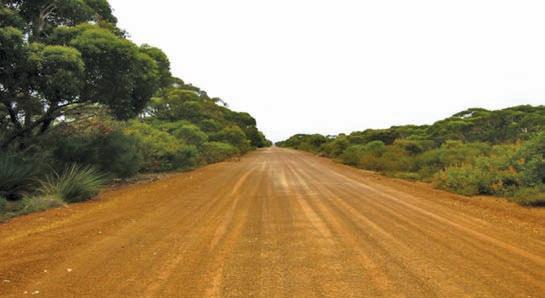
The Washington-based financial institution said more than half of Belize’s population and business centres are at sea level, along its low lying coastline.
The bank also noted that Hurricane Hattie destroyed half of Belize City in 1961, killing 400 people and causing damage amounting to over 600 per cent of the country’s Gross Domestic Product (GDP), “which prompted the Government to build a new administra-
tive capital 50 miles inland in Belmopan.”
“This project will enable Belize to implement mitigation and adaptation strategies in the war against this global threat as it relates to the negative effects on Belize’s economic growth and welfare of its present and future generations,” said Ambassador Yvonne Hyde, Chief Executive Officer in Belize’s Ministry of Finance and Economic Development.
(Excerpt from Antigua Observer)
President Salvador Sanchez Ceren, who took office on June 1, has not recognised the gang’s truce and said he would develop his own strategy for reducing crime.
The gangs warned that violence would not be reduced unless they could give their cooperation. “If we are part of the problem, we can be part of the solution,” they said.
The gangs said they
Spokesmen from the MS13, Barrio 18, Mao Mao, Maquina, Miranda Locos 13 and other gangs said: “We view this new effort as a second chance for the country to achieve peace.”
wanted the Government to provide support to church and civil group mediators who could facilitate dialogue and prevent conflict between rivals.
Police say there are around 60,000 gang members in El Salvador, many with roots in the US city of Los Angeles.
Since 2012 there has been an increase in attacks against military and Police premises and more reprisals against officer’s families, police said.
The steep rise in violence this year has added impetus to the migration of youths and children to the US. (BBC News)
Corruption involving some teachers of Jamaica’s schools and certain interests connected to the book retail industry is on the move, a Jamaica Observer investigation has revealed.
With the 2014-15 school year set to start officially today, some parents will be forced to dig deeper into their pockets as they have been presented with elaborate booklists, on which some of the items are irrelevant, education sector officials have told the Sunday Observer.
The practice involves some teachers with direct contact to bookstores delib-
erately padding booklists so that the stores can make additional sales, and the teachers in return get a percentage of the proceeds.
The sad part is that some of the books that have been placed on the list are never used by students throughout the school year, those with knowledge of the activity have said.
While there has been no official probe launched to look at the practice in a microscopic manner, Education Ministry officials are seemingly aware of it and are reviewing the options that are available, with a view to taking corrective action.
Education Minister Ronald Thwaites revealed at an education and scholarship awards function recently put on by Member of Parliament for St Andrew West Rural, Paul Buchanan in Stony Hill, St Andrew that he had a sniff of what was happening, and decried the practice. Thwaites, the man who has direct responsibility for guiding Jamaica’s education policy, hit out against any possible corruption between education and business interests that he believes could contribute to undermining the learning of young ones.
from Jamaica Observer)
Government forces mainly composed of Kurdish peshmerga fighters and armed volunteers have broken through the Islamic State group siege on the town of Amerli located between Baghdad, and the northern city of Kirkuk, sources have told Al Jazeera.
Iraqi forces and the armed volunteers entered the city on Sunday, where at least 12,000 people have been trapped for over two months with dwindling food and water.
“Our forces entered Amerli and broke the siege,” security spokesman Lieutenant General Qassem Atta told the AFP news agency.

volved in bombing the Islamic State group.
Al Jazeera’s Jane Arraf, reporting from the capital Baghdad, said that the Government forces were also backed by “Shia militia”.
On Saturday, the US military attacked Islamic State positions and airdropped humanitarian aid to the trapped civilians, mostly Shia Turkmen minority.
Reports on Sunday said more aid was dropped from British, French and Australian planes.
nited States
UPresident Barack Obama has come under renewed criticism over his foreign policy from both Democratic and Republican lawmakers as he wrestled with crises in Iraq, Syria, Libya and Ukraine.
network NBC when asked about Obama’s comments about dealing with Islamic State fighters.
Representative Adam Smith, the top Democrat on the House Armed Services Committee, cautioned that any US action in Syria had to be carefully calibrated to avoid inadvertently supporting the regime of Bashar alAssad.
Adel al-Bayati, Mayor of Amerli, also confirmed the report to Reuters news agency saying that Government forces are now “inside” the town, adding that it “will definitely relieve the suffering of residents”.
the south and north of the town as Government forces try to drive out the armed Sunni fighters.
Al Jazeera’s Sue Turton, reporting from Tuz Kharmatu near Amerli, said that fighting continues in

Varanasi, which Indian Prime Minister Narendra Modi represents in the Lok Sabha, will be developed into a ‘smart city’ by using the experience of Kyoto, the ‘smart city’ of Japan, under a pact signed there today.
A Partner City Memorandum of Understanding (MoU) was signed by Indian Ambassador Deepa Wadhwa and Kyoto Mayor Daisaka Kadokawa at a ceremony witnessed by Modi and his Japanese counterpart Shinzo Abe.
The MoU, which was signed soon after Modi’s ar-
rival in Kyoto on a five-day visit, provides for cooperation in heritage conservation, city modernisation and cooperation in the fields of art, culture and academics, External Affairs Ministry spokesman Syed Akbaruddin told reporters
This will serve as framework for Smart heritage city programme between the two countries, he added.
Kyoto, which is a heritage city with Buddhist culture, provides special symbolism to the visit as the Prime Minister has the vision of “rejuvenating” Indian cities. (The Economic Times)
Our correspondent also said that there have been unconfirmed reports that Iranian jets were also in-
“I can see the tanks of the Iraqi army patrolling Amerli’s street now. I’m very happy we got rid of the Islamic State terrorists who were threatening to slaughter us,” Amir Ismael, an Amerli resident, to Reuters by phone. (Excerpt from Al Jazeera)
Agrouping of former Seleka rebels in Central African Republic said on Sunday it had expelled from its ranks several members serving in a new government seeking to stop a cycle of deadly clashes between Muslims and Christians.
The decision casts doubt on the future of the new Cabinet and could prove a major setback for efforts aiming to end violence that has killed thousands, forced a million to flee their homes and split the country in two.
“The ex-Seleka coalition neither supported nor put forward the names of the Prime Minister or Ministers,” the group’s Vice President Nouredine Adam wrote in a statement.
“As a result, all members of the ex-Seleka coalition having participated in the present Government are definitively excluded,” he wrote.
The former French colony has been gripped by violence since Michel Djotodia led Seleka, a coalition of mostly Muslim rebels and some fighters from neighbouring Chad and Sudan, in an assault on the capital Bangui and seized power in March 2013.
Seleka’s rule was marked by abuses that prompted a backlash from the ‘anti-balaka’ Christian militia. Cycles of tit-for-tat violence continued despite Djotodia’s resignation from the presidency in January.
Most Muslims have fled the south of the country, creating a de facto partition. Some members of the Seleka leadership have pushed for this to be formalised.
Interim President Catherine Samba-Panza this month named Mahamat Kamoun, a Muslim and former head of Cabinet to Djotodia, as Prime Minister. (Excerpt from Reuters)
Russian President Vladimir Putin called on Sunday for immediate talks on the “statehood” of southern and eastern Ukraine, although his spokesman said this did not mean Moscow now endorsed rebel calls for independence for territory they have seized.
The Kremlin leader’s remarks, two days after a public appearance in which he compared the Kiev Government with Nazis and warned the West not to “mess with us”, came as Europe and the United

States prepared possible further sanctions to halt what they say is direct Russian military involvement in the war in Ukraine.
Germany aired suspicions that Moscow might be trying to create a land corridor to supply Crimea, which it annexed from Ukraine in March, while the four-month conflict moved onto the sea for the first time on Sunday.
The separatists said they had fired on a Ukrainian vessel in the Azov Sea using land-based artillery, and a military spokesman in Kiev said a rescue operation was
under way.
Ukrainian troops and local residents were reinforcing the Port of Mariupol on Sunday, the next big city in the path of pro-Russian fighters who pushed back Government forces along the Azov Sea this past week in an offensive on a new front.
Ukraine and Russia swapped soldiers who had entered each other’s territory near the battlefield, where Kiev says Moscow’s forces have come to the aid of proRussian insurgents, tipping the military balance in the rebels’ favour.
(Excerpt from Reuters)
Republican lawmakers on Sunday seized on Obama’s comment earlier this week when he said, “We don’t have a strategy yet” for confronting the Islamic State group, saying it suggested indecisiveness.
Also on Sunday, influential Democrats chimed in with their own critiques of Obama’s foreign policy, chiding him for being “too cautious” on Syria, and urging him to do more to help Ukraine resist Russian advances.
“I’ve learned one thing about this President, and that is he’s very cautious. Maybe, in this instance, too cautious,” Democrat Dianne Feinstein, Chairman of the Senate Intelligence Committee, told US TV
But he joined Republicans in urging Obama to provide more than just “non-lethal” aid to the Ukrainian Government as it resisted Russian forces.
“We should be more forceful when supporting the Ukrainian Government,” Smith told CBS TV network. “I think it’s appropriate to up that aid to make them a more capable fighting force, to resist this incursion.”
The critical comments came as the Obama Administration faced myriad crises around the world, including an attack on an annex to the US Embassy in Tripoli, Libya. (Excerpt from Al Jazeera)

Democratic groups in Hong Kong have vowed to fight a Chinese Government ruling that effectively gives China control over the candidates for the next leadership election.
The election, due in 2017, will be the first in which the Hong Kong Chief Executive is directly chosen by voters.
However, China’s legislature ruled the candidates must be approved by more than half of a special nominating body.
Angry democracy activists vowed to take over the Central business district.
Co-founder of the Occupy Central protest group, Benny Tai Yiu-ting, said: “This is the end of any dialogue. In the next few weeks, Occupy Central will start wave after wave of action.
“We will organise a full-scale act of occupying Central.”
On Sunday, a group of
pro-democracy supporters protested in a park in front of Hong Kong Government headquarters.
One protester, Henry Chung, told Agence FrancePresse: “I am very sad. We have waited so many years. But now we have nothing.” Labour Party legislator Lee Cheuk-yan told the South China Morning Post there would be a “full-scale fight” against Beijing’s decision.
Democratic Party Chairwoman Emily Lau Wai-hing told AFP: “This is one person, one vote, but there is no choice. They have that in North Korea but you can’t call it democracy.”
China’s ruling was approved unanimously in Beijing on Sunday afternoon by the Standing Committee of the National People’s Congress (NPC). The ruling also set out the framework for the formation of the special nominating body. (Excerpt
Guyana’s agricultural sector has being performing creditably and with the record production of rice and other crops, markets are actively being sought, President Donald Ramotar told the media at a press conference last Friday. He said that following the recent successful rice deal negotiated with Panama, efforts are being made to penetrate other markets, “so that we can stimulate production in this area”. He added that
as far as has been indicated to him, there is optimism that other markets will be found to deal with the increased production, at this point in time.
Non-traditional crops are one area in which the agricultural sector is seeing gains and markets for these are also being looked at, he said. The opening of a new Tissue Culture Laboratory, scheduled for September 1, will greatly assist farmers by giving them access to
disease free planting material, President Ramotar explained.
This follows the recent opening of the state-of -the -art Guyana Livestock Development Authority’s, Veterinary Services Laboratory at Mon Repos. The president has been calling for the use of more science and technology within the farming sector and the need to change the old perceptions of farming as a job for the unskilled persons.
The Executive Board of the International Monetary Fund (IMF) said it continues to have confidence in its embattled Managing Director, Christine Lagarde who is under investigation in France for fraud.
“As we have said before, it would not be appropriate to comment on a case that has been and is currently before the French judiciary. However, the Executive Board has been briefed on recent developments related to this matter, and continues to express its confidence in the Managing Director’s ability to effectively carry out her duties,” the Board said.
Lagarde has been put under formal investigation by French magistrates for
alleged negligence in a political fraud affair dating from 2008 when she was finance minister. Lagarde was questioned by magistrates in Paris last week for a fourth time under her existing status as a witness in the longrunning saga over allegations that tycoon Bernard Tapie won a large arbitration payout due to his political connections. “After three years of procedure, the sole surviving allegation is that through inadvertence or inattention I may have failed to intervene to block the arbitration that brought to an end the longstanding Tapie litigation,” she said in a statement on Wednesday. “I have instructed my lawyer to appeal this decision,
which is without merit.”
Under French law, magistrates place a person under formal investigation when they believe there are indications of wrongdoing, but that does not always lead to a trial. Lagarde’s lawyer, Yves Repiquet, told Reuters he would personally appeal the magistrates’ decision. That means Lagarde would not have to return to Paris in the meantime, allowing her to continue her duties as managing director of the International Monetary Fund uninterrupted.
“She is now on her way back to Washington and will, of course, brief the (IMF) board as soon as possible,” IMF spokesman Gerry Rice said.

Integrating digital payments into the economies of emerging and developing nations addresses crucial issues of broad economic growth and individual financial empowerment, according to a new report by the World Bank Development Research Group.
The report examines, for the first time, growing evidence from around the world about how digital payments offer immediate benefits for both senders and receivers in developing economies, as well as the ability of such payments to increase citizen access to affordable financial tools.
The report also highlights how digital payments help increase the financial independence of women by moving them from the limitations of a cash-only economy and connecting them with the financial main-

stream. Furthermore, the report concludes that the establishment of digital payments for remittances instead of cash is of enormous benefit to poor people in emerging markets and also contributes to financial development. This could also help address concerns about the transparency and traceability of remittances.
“The benefits of digital payments go well beyond the convenience many people in developed economies associate with the technology,” said Dr Leora Klapper, lead Economist at the World Bank Development Research Group.
“Digital financial services lower the cost and increase the security of sending, paying and receiving money. The resulting increase in financial inclusion is also vital to women’s empowerment.”
The Better than Cash Alliance and the Bill & Melinda Gates Foundation – which funded the study in support of the G20 Global
Partnership for Financial Inclusion – emphasised the clear link between digital payments and the goals of G20 Governments means that action should be swift and purposeful.
The two organisations are urging Governments, when they meet in November 2014 at the G20 Brisbane Summit, to discuss how they can embrace a broad-based digital financial system as a path to growth, greater participation of women in the economy, and greater access to payments, including remittances.
“Governments have to take the lead and drive digital financial development forward,” said Geoffrey Lamb, Chief Economic and Policy Advisor to the CoChairs and Chief Executive Officer (CEO) of the Bill & Melinda Gates Foundation.
“The evidence shows that private sector firms will innovate and citizens will quickly learn to use and appreciate digital payments. But we need Governments to establish the vision, the digital platforms and the regulatory assurance to pull the hundreds of millions of currently excluded people into full participation in the modern economy.
“Governments have the authority to be prime movers on so much of what is needed to advance digital financial development. With the private sector as a valuable partner, Governments must lead to encourage progress in areas such as regulatory reform, driving electronic payroll payments and digitising social benefit disbursements.”
The report presents an action plan for Governments to adopt to realise the benefits of digital payments. Specific calls to action include: Digitise Government payments and receipts, including social transfers. This creates a foundation upon which the private sector can build, including for person-to-person payments,
such as international and domestic remittances and engage actively on the regulatory agenda. Governments need to encourage regulators to enable digital financial services by fostering competition, ensuring consumer education and fostering business model innovation.
Convene public and private sectors to create a basic technical payment platform infrastructure, across which providers can compete on product development. Public and private sectors can converge around a payments platform, and enable innovation and competition in additional financial services and create an enabling environment that fosters private-sector innovation. Governments need to offer a clear vision and tangible incentives in order to ensure that the private sector is an effective, competitive, transparent, and efficient partner and recognise the role of remittance providers in offering a digital entry point to formal financial services for senders and receivers. Instead of remittances being cashed out, remittances sent to a bank account, e-wallet, or smart card, for example, can go into accounts that support safe saving and also increase transparency and traceability.
“We recognise that while the opportunities of digital payments abound, getting there takes work,” said Dr Ruth Goodwin-Groen, Managing Director of the Better Than Cash Alliance.
“Yet digitising payments is achievable when a Government articulates a clear vision, leads by example and provides the right incentives for the private sector to do what they do best: innovate, develop infrastructure and create products designed to succeed in the marketplace.”
The report and its implications will be discussed at the G20 Global Partnership for Financial Inclusion forum on September 1 in Perth, Australia.
Tonisha Williams, 16, of St Rose’s High School copped 17 subjects at this year’s Caribbean Secondary Education Certificate (CSEC) examinations.
The Eccles, East Bank Demerara, resident obtained three Grades Ones, 12 Grade Twos and Two Grade Threes.
According to the aspiring lawyer, her performance came as a surprise to her since she was not expecting to do so well.
“I’m happy I passed all of the subjects I was struggling with. The subjects I was expecting to fail, I passed so that made me very elated,” she exclaimed.
Williams credited her success to the hard work and long hours she invested in her studies. She noted that she had a strict schedule close to the exams with lessons after school and studies in the night.

TThe beaming teenager disclosed that less than a year ago when she had signed up for exams, she made a decision to do 17 subjects, a few of which she was not doing at the time.
“It was just something I wanted to do, I was not sure whether I was going to be successful, but I just knew I wanted to do them and so
I did. It wasn’t easy though because the subjects I picked up like Economics were very challenging,” she recalled.
The St Rose’s student said despite their scepticism about her being overload edwith work, her parents were very supportive of her decision and so were her teachers.
Apart from Economics, the two other subjects Williams picked up on the day she signed up for exams were Religious Education and Theatre Arts, in which she gained a Grade Two and Grade One respectively.
Williams said the night before results were revealed by Education Minister Priya Manikchand, she had checked her results online.
“I was so nervous. I was with my little sister and my parents and I was nervous to log in, so my sister had to do it. When I saw my grades, I was so happy because much to my surprise, I passed all
my subjects. And my parents were happy too, they began calling everyone.”
The next step for the 16-year-old will be to further her studies; hence, she will be attending Sixth Form classes at St Rose’s High School, focusing on Law.
Her advice for students who are preparing to write the CSEC exams next year is to start studying early.
“I think people should be able to explore their possibilities and not limit themselves to what people say or tell them what to do. You have to believe in yourself and don’t let anyone pull you back. Once you are determined, you can go a long way.”
Williams is crediting her success to God, her parents who supported and guided her, and her teachers, specifically Mrs Johnson, Mrs Adams, Sir Kestor and Sir Venture.
he Permanent Council of the Organisation of American States (OAS) has adopted a declaration calling on the three branches of Government of Haiti to comply with the agreement knows as El Rancho and to call legislative and municipal elections by the end of 2014.
The Chair of the Permanent Council and representative of Saint Lucia, Ambassador Sonia Johnny, said the declaration on Haiti supports “the efforts of a member state to be able to hold elections in accordance with the terms of its Constitution and with other agreements”.
Introducing the resolution, the Permanent Representative of Haiti, Edmond Bocchit, recalled the support given by the Council to the El Rancho Accord which provided for the holding of elections on October 26 and which he described as “a step in the right direction”.
“Unfortunately, this agreement is now facing great difficulties; you supported us, encouraged all actors to respect their commitments, and today I come to seek the solidarity of the OAS and its member states regarding a situation facing our nation, because we know that the well-being of Haiti’s democracy must be a priority for the region,” said Ambassador Bocchit.
The Secretary General of the OAS, José Miguel Insulza, explained the scope and impact of the situation in Haiti and said that if the elections are not held as scheduled in the agreement, “on the first of January, if there are no elections, Haiti will be left without a Senate; therefore, we’ll be left without a constitutional institution”.
He said the OAS “is prepared to support the democratic process in Haiti, especially the elections, in accordance to the Constitution and the laws of the country”,
and assured the Council that the OAS will continue to accompany the political process through high-level visits, the presence of an office in Haiti, and the work of the Group of Friends of Haiti in Washington DC.
Democratic consolidation
The leader of the hemispheric organisation added that “the international community, including the OAS, can only assist in this process of democratic consolidation and then only upon the request of the legitimately elected Government of Haiti. From this perspective, we hope that all stakeholders in the political process continue to work together to create the best circumstances for stability and growth and security.”
He insisted that the organisation “hopes that the dialogue that started at the beginning of the year will continue and that all those who are not part of this process should be encouraged to take part”, as this is the best channel to voice all their concerns and needs.
The adopted resolution states that all parties fully honour “their political commitments as well as the legal and constitutional obligations to facilitate the speedy
organisation of elections necessary for the renewal of the mandates of legislative and municipal authorities”; and urges all state powers “to continue the dialogue in order to fulfil, as a matter of urgency, their obligations under the Constitution and the El Rancho Accord for the purpose of ensuring the holding of elections in 2014”.
On this, the Secretary General Insulza noted that Article Three to the El Rancho clearly speaks of the Constitution, “and this is a wider approach that takes us in the direction of Article 156 of the Constitution which relates to the responsibility of the President regarding governance and the functioning of the democratic institutions”.
Meanwhile, on another agenda item, the Council agreed to convene a Special General Assembly on September 12 to advance the debate on the Strategic Vision. The original initiative was proposed two years ago by Secretary General Insulza and aims to adapt the mandates of the organisation to the reality of the 21st Century, in order to rationalise and leverage the financial resources of the hemispheric institution in line with its objectives.
The Permanent Representative of Mexico and Chair of the Working Group of the Permanent Council on the Strategic Vision, Emilio Rabasa, clarified that the meeting is not “the end of a process that will conclude with the upcoming Assembly, rather it is a step, but a very important step in the long process of modernisation, upgrading and updating of the structure and practice of our organisation to meet the new international context”.
For his part, Secretary General Insulza recalled that convening the Special
TGeneral Assembly to discuss the issue was mandated by the last OAS General Assembly that took place in June in Paraguay.
The OAS leader also said that although he believes that the Special General Assembly will be an important milestone in the discussion of the Strategic Vision, it will not conclude the debate on this issue.
The meeting, in which the guidelines and strategic objectives of the Strategic Vision of the OAS will be considered, will take place at the headquarters of the institution in Washington DC.
On another issue, the Council took note of the request of Secretary General Insulza to add to the agenda of the next meeting the process of election of the next OAS Secretary General.
Secretary General Insulza suggested convening a Special General Assembly 60 to 90 days before May 26, 2015, when his term ends, “so that the person elected has enough time to make a proper transition”.
He also said that according to a mandate from the General Assembly, “it is necessary to invite the candidates to make a presentation before the Permanent Council, which will have to set the corresponding dates”.
During the meeting, the delegations of Mexico, Ecuador, the United States, Canada, Paraguay, Guatemala, Peru, Jamaica, Barbados, Belize, Colombia, Chile, Nicaragua, Venezuela, Honduras, Bolivia, El Salvador, Antigua and Barbuda, Guyana, Saint Lucia, The Bahamas, the Dominican Republic, Costa Rica, Saint Vincent and the Grenadines, Suriname, Saint Kitts and Nevis, Dominica, Uruguay, Argentina, Brazil, Panama, Trinidad and Tobago, Haiti, and the Permanent Observers of Italy and Spain took the floor.
here is no easy remedy to find success; however, taking the time to determine what your real purpose in life is, is a good start. For example, everyone should take the time to identify the things they love to do and the things that bring them satisfaction in life, because by finding what people love to dow ill certainly give them motivation along the journey. Just imagine being forced to do a sport when your true passion is really music. Wouldn’t it be difficult? On the other hand, imagine you were given the opportunity to participate in a music festival. It will be much easier to do, because your goal is something you enjoy doing. And I get the fact that it is not easy to figure out your purpose in life. And I can only imagine the difficulties for everyone; however, there are many ways people can try to figure thing out. For example, talking to a mentor who specialises in career coaching or even try out different careers, keeping in mind that even a less fulfilling one can help you learn. Do your best to make a career in doing something you love, because you are more likely to be good and successful doing something you know you love.
Narine Dat Sookram
Everyone should take the time to define success as to what it means to them, because no one can have success if they do not know what it means for them. Keeping in mind too that everybody’s opinions on success is different and following someone else's path for success is like eating someone else’s dinner and have the expectation to like it. However, the question is, how will you know you have achieved your goals? One ways around this is to have your standards be measurable, because if you don’t you could find yourself spending your entire life chasing after a goal that is not even possible. A good example is, let us say you want to excel at your job. This will means that you can get a promotion and a raise, but because there is always room for improvement, technically you still haven’t reach your goal Whatever you have will never be enough..
However if you create standards and set goals like, “my goal is to expand my business by 10 per cent”, this is a measureable goal that when achieved, it will give you a sense of satisfaction and make you feel confident.
One piece of advice I have is to surround yourself with people who are successful, because when you do it is very encouraging. In fact, you can use it as an opportunity to share ideas off each other and best of all, they can even connect you with other successful people as well. In fact, creating culture and success happen when you surround yourself with successful people. Take the time to learn more about successful people. Do not be afraid to look around and to see who has the success you have always wanted for yourself. Try to find out what they are doing and how their approaches to life are different than yours.
Another piece of advice I can suggest is to find yourself a mentor who can help you. A mentor is basically someone with a bit more experience who can offer advice and help you along the way, because many successful people usually have mentors. Keep in mind that no one knows everything, so it is not a bad thing to seek help from someone a little more knowledgeable than you.
A good mentor can make connection with people who have other connections, which is key in today’s world, because remember a mentor will probably have more ideas than you because s/he's been about much longer and perhaps with more successes and failures. So take the time and advantage to draw on their legacy and experience to better your own future.
For questions, comments and feedback, email them to: mcnarine@rogers.com












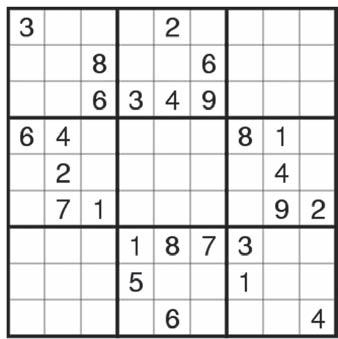


By Bernice Bede Osol

(June 21July 22)
Do what you can to help a charitable organisation. Offering your time, knowledge or services to a cause you believe in will boost your confidence and bring you satisfaction.

20Feb. 19) (Dec. 22Jan. 19)
Negative repercussions will arise if you express your opinions. Let others air their views first. You’ll have a greater impact once you know what you are up against.

Involve people from all generations in your plans. Young and old alike have a lot to offer, giving you greater insight into your cultural background and family history.

You’ll find it hard to juggle everything you want to accomplish. Avoid long or involved discussions that will distract you from your responsibilities.

(July 23Aug. 22) (Feb. 20-March 20)
A workplace involvement will not bode well for your reputation. Remain professional at all times or choose to apply for positions that will not be compromised by the relationship in question.

(Aug. 23Sept. 22)
Honesty will be necessary when dealing with loved ones. You may face opposition, but in the end you will gain trust and respect. Do your best not to reveal personal secrets.
(March 21-April 19)
Take better care of your health and financial affairs. A hectic lifestyle can damage your chance to get ahead. Overindulgence or overspending will only compound matters.

(April 20-May 20)
You can reduce tension if you do things on your own. A colleague or partner will be overly sensitive, so give him or her enough room to cool down.

21June 20)
You can accomplish much if you share your creative ideas. Let your peers know how serious you are about marketing your plans in order to receive lots of input, along with physical support.

(Sept. 23Oct. 23)
Take the high road. Look for the positive side of any situation you face, and you will find a solution that is workable and cost-efficient. Keeping the peace will be gratifying.

(Oct. 24Nov. 22)
No matter how pleasant and compromising you are, you can’t win over everyone. Keep your emotions in check, and don’t try to be someone or something you are not.

23Dec. 21)
Bureaucratic situations will be troublesome. Take a close look at financial, legal or contractual papers. Make changes that ensure you will bypass authoritative scrutiny of any kind.




Aresponsible half century by the prolific Jonathan Foo led Albion CC to a 6 win over The Rest of Berbice in a feature 50 over match played at the famous Albion Sports Complex on Saturday.
The Rest of Berbice won the toss and took first strike. They had a good start of 46 between West Indies and National Player Shimron Hetmyer and Rafael Estriado before losing Estriado for 14 and Hetmyer for 27.
There was a struggle thereafter with The Rest of Berbice finishing with 172 all out in 49.2 overs. Wicket keeper/batsman top scored with a patient 49. He was supported by skipper Devon Clements with 24 and Krishendat Ramoo 22. Bowling for Albion CC, West Indies left arm spinner Veerasammy Permaul took 3 for 29. He received support from West Indies youth spinner, Gudakesh Motie with 2 for 23, Narsingh Deonarine 2 for 32 and Devendra Bishoo 2 for 36.
Albion CC in reply started slowly but surely with Kandasammy Surujnarine and Balchand Baldeo putting on 28 in 7.5 overs before the former was caught
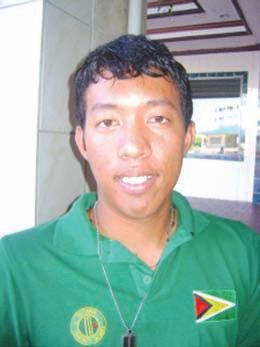
at square leg off national pacer Raun Johnson for 11. Baldeo followed soon after caught behind off Johnson for 10. Foo joined forces with Deonarine and put together a partnership of 61 in 20 overs before the latter was caught and bowled by Ramoo for 28. Berbice under 19 middle order batsman David Latchaya replaced Deonarine and put together 62 for the fourth wicket with Foo who eventually went for 58, caught off Ramoo. National wicket keeper went without scoring bowled by Ramoo. Verapen Permaul was caught off Rajiv Ivan for 2 runs. Albion completed the formalities in 48.2 overs ending on 173 for 6 wickets. Latchaya remained unbeat-
en on 41. Foo was named man of the match for his fine half century.
Meanwhile, the Berbice Cricket Board senior selectors have announced the team to participate in the upcoming inter county tournament. The team reads:
1. Narsingh Deonarine (captain)
2. Kandasammy Surujnarine
3. Seon Hetmyer
4. Devon Clements
5. Jonathan Foo
6. Rajiv Ivan
7. Anthony Bramble
8. Jason Sinclair
9. Veerasammy Permau (vice captain)
10. Romario Shepherd
11. Gudakesh Motie
12. Krishendat Ramoo
13. Keon Joseph
14. Raun Johnson
Standby:
1. Rafael Estriado
2. Herman Latcha
3. Kevin Ramdeen
4. Shawn Perriera
5. Joemal LaFleur
6. Keyron Fraser
7. Suresh Dhanai
Players are asked to report to the Young Warriors cricket ground for training today for training. National Under 19 players are asked to report for training as well.
Ablazing century from Shane Jeffers and a typically resolute unbeaten half-century by Shivnarine Chanderpaul for St Kitts & Nevis were the highlights on Day 2 of the three-day warm-up match on Sunday.
Jeffers led an onslaught of the visitors bowling with 118 off just 131 balls with 22 boundaries as the home side closed the second day on 232-4 in reply to 377-7 declared. Chanderpaul, a guest player for this match, ended the 70 and will resume Monday looking for a century. With him is allrounder Jeremiah Louis on one not out. Chanderpaul and Jeffers came together in the middle session and added 51 for the third wicket. After Jeffers fell –caught at short backward square, Tonito Willet joined Chanderpaul and they added 65 for the fourth wicket on a good batting surface. Willet made 21 but fell to a sharp catch at short leg, just when he looked set to puch on the score. Earlier in the day Bangladesh declared at 377-7. The innings was boosted by a seventh-wicket stand of 191 between skipper Mushfiqur Rahim (106 not out) and allrounder Nasir Hossain (100).



By TreisTon Joseph
The Guyana Olympics Association (GOA) recently invested US15,000 into a new photo finish and automatic time system which proves one thing, the association is interested in moving the sport forward and should be commended for their efforts.
Such and investment will benefit each track athlete individually since for the first time athletes will be able to
know their actual times after a race instead of relying on the up and down times of manual time keepers.
The move by the GOA will now put the Athletics Association Guyana (AAG) in a position where more meets will have to be held in order to have the best possible use of the equipment. Further, with the near full completion of the Synthetic track at Leonora that is currently being built by the Government such equip-
ment will only better serve the AAG in improving the quality of their meets with less hiccups and more impartiality.
One of the ways in which the AAG might be able to possibly enhance their performance with the introduction of the equipment is to have more track stewards on race days. Since there will be no need for the time keepers and possibly some of the judges, these very person can now evolve into track stewards especially for the sprint events where it is easy to have lane infringements.
Moreover, it is definitely an investment that the GOA should be proud for and all in the athletics fraternity should be grateful for. Hopefully with such impetus being shown by the GOA o improve the sport, the private sector should help carry the mantle with the sponsorship of athletes, therefore lessening the burden of athletes in order to perform better; therefore the output of faster times will be the end result. However, the move by GOA is indeed a step forward in improving the sport and is simply a fraction that will develop the sport and should be commended.

BANGLADESH 1st Innings
(overnight 330 for six)
Tamim Iqbal c wkp Clarke b Louis 20
Shamsur Rahman c wkp Clarke b Boatswain 10
Imrul Kayes c Berridge b Boatswain 44
Monimul Haque c Ward b Louis 10
Mohammad Mahmudullah c Ward b Berridge 27
Shuvagata
3-60, 4-92, 5-138, 6-186, 7-377 Bowling: Sheeno Berridge 11-0-55-0, Boatswain 22-947-2, Willett 12-5-34-0, Louis 17-7-56-2, Elvin Berridge 15-3-56-1, Ward 9-0-52-1,
&
1st Innings S Martina c wkp Mushfiqur Rahim b Rubel Hossain 9 S Jeffers c Mahmudullah b Shuvagata Hom 118 J Hodge c Mominul Haque b Taijul Islam 7 *S Chanderpaul not out 70 T Willett
In the 30th ODI meeting between these sides, Zimbabwe did what they had not for 31 years and beat Australia. The captain Elton Chigumbura engineered the chase that changed 11,406 days of history, after his spinners had applied a stranglehold that kept Australia to their lowest total against Zimbabwe, and achieved only their second win against these opponents.
Chigumbura's opposite number, Michael Clarke, battled a hamstring niggle that ruled him out of the rest of the tri-series, and held his side together on a spin-friendly surface on which none of the other Australian batsmen settled. But Zimbabwe's challenge was always going to be chasing a total over 200 - they were dismissed for less in their last four ODIsand when Nathan Lyon picked up career-best figures and they were reduced to 156 for 7, another collapse seemed likely. A 55-run stand between Chigumbura and Prosper Utseya for the eighth wicket ensured Zimbabwe did not fold and sent Harare Sports Club into frenzied celebration.
The dancing in the stands had begun in the morning when Zimbabwe reduced Australia to 39 for 3. John Nyumbu bowled Aaron Finch, Prosper Utseya had Phillip Hughes caught at slip, and Sean Williams bowled George Bailey to give Zimbabwe early control.
Clarke was still there but needed a partner to rebuild and could not find one in Glenn Maxwell, despite him being the recipient of the first of five let-offs from Zimbabwe. Maxwell was on 13 when he edged Malcolm Waller as he tried to drive but Brendan Taylor could not hold on. Fortunately for Zimbabwe, Waller bowled him with his next delivery to ensure no harm was done from that missed chance.
They could not say the same about all the others. Mitchell Marsh had not scored when he flicked Nyumbu to short leg but Tino Mawoyo put down the chance. Marsh added 40 runs with Clarke, although he only contributed 15. Brad Haddin

should have been out on 5 but Waller dropped a return catch from a topedge, on 14 when Chatara fluffed a chance in his follow-through, and on 17 when Chatara put down an easier opportunity at short fine leg.
Amid all of that, Clarke brought up his 50 off 80 balls, but left the field on 68 in the 43rd over because of hamstring trouble. That gave Zimbabwe the opening they wanted and they stormed through. Utseya had James Faulkner caught at slip off the first ball he faced and Williams bowled Mitchell Starc through the gate in the next over to leave Australia 150 for 7. Only Cutting's cameo at No. 10, Haddin's 49, and Chigumbura using seamers at the end instead of spinners took Australia over 200, but this time it was not enough, especially because their attack was without Mitchell Johnson, who was rested. Zimbabwe had not made such a total in their
Australia innings (50 overs maximum)
AJ Finchb Nyumbu 11
PJ Hughes c Nyumbu b Utseya 10
MJ Clarke* not out 68
GJ Bailey b Williams 1
GJ Maxwell b Waller 13
MR Marsh c Utseya b Tiripano 15
BJ Haddin† c Waller b Tiripano 49
JP Faulkner c Nyumbu b Utseya 0
MA Starc b Williams 3
BCJ Cutting run out (†Taylor/ Waller) 26
NM Lyon not out 8
Extras (lb 2, w 3) 5
Total (9 wickets; 50 overs; 203 mins) 209 (4.18 runs per over)
Fall of wickets 1-11 (Finch, 3.1 ov), 2-38 (Hughes, 11.3 ov), 3-39 (Bailey, 12.2 ov), 4-57 (Maxwell, 16.6 ov), 5-97 (Marsh, 28.5 ov), 5-147* (Clarke, retired not out, 42.2 ov), 6-147 (Faulkner, 42.3 ov), 7-150 (Starc, 43.2 ov),
8-201 (Cutting, 49.1 ov), 9-202 (Haddin, 49.4 ov)
Bowling O M R W
TL Chatara 8 0 56 0
J Nyumbu 10 1 30 1
P Utseya 10 0 45 2
DT Tiripano 6 1 34 2
SC Williams 10 2 21 2
MN Waller 6 0 21 1
Zimbabwe innings (target: 210 runs from 50 overs)
TMK Mawoyo b Lyon 15
Sikandar Raza c sub (SPD Smith) b Lyon 22
H Masakadza b Starc 18
BRM Taylor† b Lyon 32
MN Waller c & b Maxwell 11
SC Williams c Clarke b Lyon 4
E Chigumbura* not out 52
DT Tiripano b Starc 3
P Utseya not out 30
Extras (b 2, lb 3, w 18, nb 1) 24
Total (7 wickets; 48 overs; 205 mins) 211 (4.39 runs per over)
Did not bat J Nyumbu, TL Chatara Fall of wickets 1-42 (Sikandar Raza, 11.2 ov), 2-44 (Mawoyo, 13.3 ov), 3-100 (Masakadza, 22.2 ov), 4-102 (Taylor, 23.3 ov), 5-106 (Williams,
last four ODIs but that changed because they got a better start today. Tino Mawoyo and Sikandar Raza delivered the best opening partnership of the last eight matches through patience and application.
They waited until the third over before taking their first run and Raza reined in his usual aggressive instincts as much as he could. He could not resist if anything was too short or too full but he got away with it until Australia introduced spin in the 12th over. Lyon's second legitimate delivery turned sharply from outside off into Raza, who was surprised by extra bounce as he tried to cut and handed first slip a catch. In his next over Lyon got rid of Mawoyo too. Those wickets brought Zimbabwe's most experienced batting pair, Hamilton Masakadza and Taylor, together. Taylor swept with confidence and the pair negotiated flight and turn from both Lyon and
Maxwell. They were separated only when Clarke, who returned to lead in the 19th over, brought Starc back. He fired one in full and fast to cut Masakadza in half and end the third-wicket stand on 56.
Seven deliveries later, Taylor went forward to a loopy ball from Lyon that snuck between bat and pad to hit off-stump, but it was only when Sean Williams was caught at slip to give Lyon careerbest figures of 4 for 44 that Zimbabwe were in danger of unraveling. They teetered on 102 for 5 and Lyon still had 26 balls to bowl.
Chigumbura eased concerns with two fours off Lyon to suggest Zimbabwe were far from done. Waller helped to see Lyon off, though it meant defending rather than looking for runs. His 11 came off 39 balls and when he handed Maxwell a return catch, Chigumbura was left with the tail.
Donald Tiripano was dismissed for 3 but Prosper Utseya was not anywhere. He sliced Starc through point for his first runs and showed he was willing to move the score along to take pressure off his captain. Zimbabwe entered the last ten overs needing 44 to win and Chigumbura and Utseya hunted them down in calculated fashion. Chigumbura's finishing skills shone through when he guided Marsh to third man, but he largely concentrated on rotating strike and letting Utseya take risks. With the field spread, the pair did not have to take too many, apart from when Utseya cleared mid-on off a Faulkner length ball.
Chigunbura's 50 came off 61 balls with a punch through point and took Zimbabwe within 15 runs of victory. Even as they got closer, Chigumbura did not get over-ambitious and maintained a level head. Utseya struck the winning blow - a smoke over midwicketwith two overs to spare and gave Zimbabwe an outside chance of making the tri-series final. Zimbabwe 211 for 7 (Chigumbura 52*, Lyon 4-44) beat Australia 209 for 9 (Clarke 68*) by three wickets



Shalom Enterprise Driving School, Lot 2 Croal Street, Stabroek. Obtain an International Driver’s Permit that covers 123 countries. Call 227-3869 or Like us on Facebook.




275-0322, Grand Cayman Islands: (345) 943-1515 for the

Healthworld Holistic Centre offers clinical psychotherapy for suicid
al thoughts, attempted suicides,
pression, stress, mood disorders, psy
chotic disorders, homicidal thoughts, hallucinations, loneliness, conflicts, anger management, relationship & sexual problems, paranoia and much more. Call +592-621-0552 and make that appointment now before it’s too late. 12:00-6:00PM. Mondays-Fridays. Email: healthworldhc@gmail.com


Immigration & Visa Services We handle all Canadian, USA and UK immigration and visa matters. Self sponsorships, holiday/visitor’s visas, work permits, students visas, family, class, immigration forms, embassy enquiries, appeals for refused cases, US green card lottery, business class waivers, pardons, etc. Get your visa approved. High success rate. Balwant Persaud & Associates. Certified Immigration Consultants, 68 Sixth Street, Alberttown, Georgetown (Between Cummings & Lights Sts) Tel: 225-1540, 622-8308, 655-3105. Email: balwantpersaud@yahoo.ca

, 125 Carmichael Street, Georgetown. Phone: 225-3923, mobile: 621-3249. We cut any type of key, service and repair all types of locks. Get your extra key today.


HEPHZIBAH MINISTRIES. 24hrs miracle line 322-5081/337-4510/3374259/337-4021/337-3070/3375103 For healing, deliverance, financial difficulties, marriage issues. Call now. Jesus cares.
Suriname Astrology Palmist and Djuka Healing, the most powerful spiritualist in the world, are you suffering from the following problems (any religion) love, marriage, family, health business, husband and wife relationship, property, court, children, promotion, visa, pregnancy, education, depression, job, sexual, jealousy, enemy, money, drinking? Also you can have all evil forces destroyed such as black magic, witchcraft, voodoo, obeyah, etc and give powerful protection. We also do upliftment for clearing of land, dredging operations strictly in the interior. For private and confidential service call 674-2112.


washers and stoves. Call Nick on 683-1312/627-3206
Attention: for professional repairs and servicing to all types of appliances such as washing machines, dryers, refrigerators, stoves, aircondition units, convection ovens, deep fryers, coolers, heat extractors, pressure pumps, water dispensers, installing 100-lb gas cylinder, treadmill, hot water systems etc. we also do electrical installation and re-spraying of all appliances, so call us on 686-9995 for free inspection and quotation countrywide. We also render door-to-door service and we offer a 24-hour service for restaurants and hotels. For more information and location, call us on tel: 686-9995


2 Bedroom single houses in Anna
JUST ARRIVED: TOP QUALITY RECONDITIONED VEHICLES; TOYOTA NOAH; TOYOTA VOXY; TOYOTA IST (NEW SHAPE); SUZUKI SWIFT; DAIHATSU MOVE (660CC); MERCEDES BENZ C200 KOMPRESSOR; COROLLA AE100 WAGON; TOYOTA HIACE MINIBUS RZ; PITBULL-STYLE FREEZER VAN; LAND CRUISER (FULLY LOADED); MAZDA PROCEED 4WD EXTRA-CAB PICK-UP; TOYOTA HILUX 4WD EXTRA CAB PICKUPS - 3RZ, 5L, 3L SOLID DEFFERNTIAL; MITSUBISHI CANTER TRUCKS 4 TONS FREEZER; 3 TONS OPEN TRAY; 2 TONS 4WD; NISSAN ATLAS 2 TONS OPEN TRAY TRUCK. PREORDER YOUR UNITS EARLY AND GET THE BEST PRICES. FULL AFTER SALES SERVICES AND FINANCING AVAILABLE. DEO MARAJ AUTO SALES, 2 CHIMNEY ROAD, CHATEAU MARGOT, ECD. 624-0762, 220-5177. A NAME AND SERVICE YOU CAN TRUST
4x4 Nissan Titan fully powered Immaculate condition $3.5M. No reasonable offer refused. 622-7740
1-Hilux King Cab, 4-door solid def Hilux Price Neg. Call: 665-5776
One PPP series Mazda Axela in excellent condition and one white 2007 unregistered BMW, Price negotiable. Call 679-5842.

Cashiers and salesgirls. Apply in person to Sachi; 136 Regent Street, Lacytown
Cashiers and salesgirls. Apply in person to Nirva, 49 Sheriff & Craig Streets, Campbellville.
ranch house located at Lot 361 A section field No 12 South Sophia.Call: 669-0008 l aND FOr Sale Da Silva’s
32 Acres of transported land located at Lot 5 Plantation Content, Mahaicony, ECD; from the public road to sea shore. This property is ideal for residence, business, aquaculture, agriculture, etc. Price: $175,000(USD) or best offer. For more information or to make an offer please call Pooran at 813319-4219 (Florida, USA) or email rpooran@tampabay.rr.com

Learn transcendental meditation and
For specialised repairs and servicing to all types of BMW vehicles, Lexus, Mercedes, Sedan etc. Diagnostic testing available. All job backed by three months warranty. Call 6869995 for more information and location. Mobile emergency service available.


Former US Open champion Roger Federer came from behind to beat Marcel Granollers in four sets and reach the fourth round at Flushing Meadows.
The Swiss second seed, 33, lost a rain-disrupted first set but recovered to win 4-6 6-1 6-1 6-1. Fourth seed David Ferrer was the first top-10 casualty in the men’s draw, losing to Gilles Simon 6-3 3-6 6-1 6-3.
Italy’s Sara Errani ended the run of Croatia’s Mirjana Lucic-Baroni with a 6-3 2-6 6-0 win in the fourth round. Five-time US Open champion Federer, 33, had trailed 2-5 in the first set before a two-hour rain suspension.
He went on to win on 20 of the next 24 games, despite losing the first set, to claim his 70th career win at the tournament and reach the fourth round for the 14th straight year. He will meet Spain’s 17 seed Roberto Bautista Agut next after he beat France’s Adrian Mannarino 7-5 6-2 6-3.
Frenchman Simon, the 26th seed, will play Croatian Marin Cilic next after the 14th seed beat South Africa’s Kevin Anderson 6-3 3-6 6-3 6-4. Lucic-Baroni, 32, last reached the final 16 of a Grand Slam in 1999, when she lost in the Wimbledon semi-finals. Errani, the 13th seed, will play 10th seed Caroline Wozniacki next,
after the Dane knocked out fifth seed Maria Sharapova. Former prodigy LucicBaroni slipped down the rankings to such an extent that between 2004 and 2006 she played only three matches as a professional. But the qualifier beat 25th seed Garbine Muguruza in the first round before upsetting second seed Simona Halep in the last 32. “I have been waiting for this, playing good tennis and having good results like I have the last two weeks,” said LucicBaroni after her defeat to Errani. “This is what it’s about for me. Not a billion dollars can compare to the feelings I felt in the last two weeks.” (BBC Sport)
Caroline Wozniacki thrilled the New York crowd with a stunning win over fifth seed Maria Sharapova at the US Open.
The Dane, seeded 10th, won 6-4 2-6 6-2 on a stiflingly hot afternoon at Flushing Meadows.
Wozniacki, 24, is through to her first Grand Slam quarter-final since 2012, and plays Italy’s Sara Errani next. “It means so much to me - it’s been a bit up and down for me this year,” said Wozniacki.
“It’s a new year and I’ve gotten older, and hopefully a little wiser. I feel good. I feel comfortable when I play out there. “The crowd was amazing today. It’s just so much fun to play out there again on the big court.”
Roared on by the majority of spectators on Arthur Ashe Stadium, the 2009 finalist looked back to her best as her superb defensive ability proved too much for Sharapova in a pulsating final set. And she said that training to run the New York Marathon in November was aiding her game, adding: “I think it will help me a lot. Today was a tough battle out there. It was humid; it was hot; I had to change
my dress. “That rarely happens. It was just soaked. Definitely it’s helping, because I felt fresh out there and I felt like I could keep going.”
Wozniacki has slipped from the very top of the game after finishing as yearend world number one in 2010 and 2011, but in recent months there have been signs of a resurgence. A title in Istanbul, a first top-five scalp in three years against Agnieszka Radwanska and twice taking Serena Williams to three sets suggested the Dane could again be a major threat, and beating Sharapova at a Grand Slam is confirmation of that.
The Dane made a terrific start, serving well and attacking the net as she moved 3-0 clear, but when Sharapova hauled her way back to 4-4 it seemed her heavier hitting would hold sway. Sharapova has not been at her best in New York, however, and two wild forehand errors gave Wozniacki the first set. It was hardly a crisis for the French Open champion, who leads the standings for three-set wins in 2014 with 17, and she dominated the second set with two breaks to level after nearly two hours.
With the temperature soaring, the heat rule was brought into effect and the players given a 10-minute break to leave the court. Sharapova received a time violation on her return as umpire Marija Cicak said she had taken “way too much time”, and early in the final set it was Wozniacki who complained that the Russian was too slow between serves. Fired up and moving brilliantly behind the baseline, Wozniacki grabbed control of the match when she broke to love in a stunning rally at 2-1, chasing down everything Sharapova could throw at her until the Russian dumped a volley in the net. The momentum was with the Dane and she would not flinch as her biggest win in recent memory loomed. Attacking the Sharapova serve once more, Wozniacki stepped in and hammered a backhand winner to convert her first match point. “I thought she played really well,” said Sharapova. “She made me hit a lot of balls. That’s always been her strength. But she did extremely well today. “She’s a great retriever, especially in these types of conditions. I just felt like I maybe went for a little too much.” (BBC Sport)
The race started at a moderate pace at Vreeden-Hoop with Cleveland Thomas and Dennis Horatio taking the lead early on in the race. However, the race became closely bunched on the Demerara Harbour Bridge with Forde moving up to the front of the pack with Thomas and Horatio.
Forde also known as “The Little Kenyan” made his move just after crossing to bridge and easily pulled away from his competitors to register a time of 33:20.12s while Thomas finished second in 33:48.81. Nathaniel Giddings who was always in the mix finished third in 34:07.64s while Dennis Horatio was fourth in 34:40.52s. Winston Missenger rounded out the top five with a time of 35:34.08s.
On the distaff side overseas based Guyanese Euleen Jossiah-Tanner returned to win the AINLIM 10k retaining her title as well. Jossiah-Tanner clocked 39:25.89s to win the race ahead of Alika Morgan who clocked 40:37.75s for second.
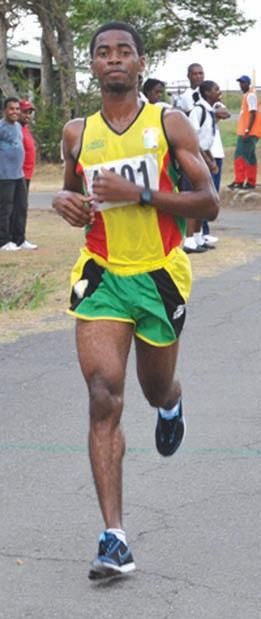
Andrea Foster was third in 42:06.76s while Carlissa Atkinson was fourth in 45:18.71 as Jevina Straker finished fifth in 45:06.13s. Meanwhile Grivon Grant won the boy’s juniors category with a time of 35:27.19s to top Ornesto Thomas was second in 35:57.53s while third place went to Colvis Saul
with a time of 36:13.05s. Shontel Hinds was able to win the girl’s junior first place position in a time of 45:14.56s with second place going to Mariah Mackenzie 46:19.81s. Third place went to Yolit Charles in 50:26.13s.
The veteran 40-55 males was won by Eon Archibald in 38:40.77s
while second place went to Lindon Hornson with a time of 42:30.51s. Kwame Bright was third in 42:32.05s. The winner of the men’s 55 years and over was won by Llewellyn Gardner in a time of 41:14.71s, finishing ahead of Ravi Purohit with a time of 49:16.03s. Maurice Fagundes was third in 50:36.28s. The veteran female was won by Alisha Fortune who finished with a time of 52:48.77s while Cryleen Phillips finished second in 54:07.12s. Carla Benjamin was third in 1hr 01 mins and 49s.
CEO of the Neal and Massy Group of Companies Deo Persaud related at the presentation ceremony held immediately after the event that the company is committed to hosting the fifth edition of the event next year as a few changes might be made with one being the name of the event. President of the Athletics Association of Guyana (AAG) Aubrey Hutson congratulated the athletes and urged them to remain committed to the sport.

Officer-in-Charge of Central Police
Station Sergeant Michael Newland has been for months in search of sponsorship for a promising opening Bastman, Shimroy Hetmyer.
Newland was on Friday finally able to secure a sponsor for the Guyanese and West Indies U-19 player. The pugnacious left handed opening batsman has already gone on to represent Guyana at the senior lev-
el and the West Indies U-19 on two occasions. At the age 17-years-old he represented Berbice and Guyana from U-15, U-17, U-19 and senior levels.
Since then Sergeant Newland had been seeking to assist the future West Indies opening batsman but the cop had to wait for a year. On Friday overseas-based Guyanese Krishna Appiah of Bronx New York and Ravi Etwaroo Chief Executive Officer (CEO) of Cricket Zone
and Trophy World of Castle
Hill Bronx New York handed over a number of gears to the player. The sports store is a dealer in all types of sports gear and clothing.
Newland who also captain’s the ‘B’ Division Cricket Team made the presentation the 18-year-old Hetmyer on behalf of the sponsors. According to him he is impressed by Hetmyer’s discipline. “Hetmyer has bright prospects for the future and has a far way to go. Despite
India have won two ODIs impressively and comprehensively - two more than they did on their last two tours outside Asia - but MS Dhoni has pointed out on both occasions that he wants more from his bowlers. There was nothing in the South African and New Zealand pitches for Dhoni’s spinners, which is a stark difference in the series so far, but it hasn’t missed Dhoni’s attention that England have been 53 for 0 after 10 overs and 75 for 0 after 17 in the two ODIs played so far.
It shouldn’t miss England’s attention either. They have thrown away two really good starts, kind of starts big hitters such as Eoin Morgan and Jos Buttler should thrive on. It would not be unfair to say, though, that they haven’t as much thrown them away as they have been snatched away from them. Both the slides featured a chokehold from the spinners, which resulted in silly shots. Not hitting a boundary between the 18th and the 34th over is damning, but more worrisome is the 40 dot balls between boundaries. It is a skill to work the spinners around into the gaps, but so far apart from Ian Bell no England batsman has suggested he can.
It is clear England are struggling against spin, and that can play tricks with your mind even when the ball is not turning. India will keep surrounding their batsmen with spinners: they have two full-time spinners, a pretty handy part-timer and at least one more to roll his arm over. They will keep rushing through their overs, time will keep running out even before England realise, and India will be hard to beat. Dhoni is as good as any with this kind of captaincy.
“We didn’t play the spin very well,” Alastair Cook said after Trent Bridge. “Obviously, we didn’t in Cardiff either. But they bowled well, and did turn it. Ashwin and Jadeja are very good at one-day cricket spin bowling. We had a few soft dismissals, and a few good balls as well. Every time you tried to build a partnership, you lost wickets, and that obviously keeps holding you back if you want to play aggressively. I think we [just] need to start playing better. I don’t think it’s so much the strategy of it. There are some good players there, who are not showing it.”
from these set pieces. One of those plans could be the early Powerplay.
Flow of innings Ever since it was introduced, the Powerplay has seldom been used before it becomes mandatory. Teams have found out it interferes with the flow of their innings, and they want it to arrive just before they are about to tee off in the last 10 overs. It is also like playing with fire; you can lose wickets while feeling obliged to go for runs in the Powerplay, which can leave you in rebuilding phase once it ends. Whereas if you take it in the 36th over, as is compulsory if not called for earlier, you have only 10 overs to go. You don’t need to rebuild during that phase. This fear of losing wickets has kept teams from maximising the possibilities: around 36th over, you are going to begin hitting out at any rate, why not get yourself five more overs of field restrictions somewhere in the middle?
The risk factor, however, often tips the scales in favour of convention. In England’s case here, though, there is a larger tactical use of the Powerplay. Dhoni likes to get rid of a few quick overs from Suresh Raina somewhere between the 15th and 20th over. It is also the time the England batsman are just coming to terms with spin. If they ask for the Powerplay then, England are basically asking Dhoni if he wants to risk continuing with Raina or bring back his quicks. It will not only delay the introduction of spin at both ends, but will also force Dhoni to use his lesser spinners in overs he doesn’t want to. It also means a longer early spell for at least one of India’s quicks, assuming Dhoni trusts R Ashwin to continue bowling into a Powerplay.
his achievement so far, no one has taken the time to assist him with sponsorship or any sort of assistance.”
Newland said he contacted Appiah and ask him for assistance. Meanwhile the sponsor had committed himself to assist with clothing and other cricketing gear. The cricketer’s father and GuySuCo Sports Officer, Gladstone Hetmyer expressed heartfelt appreciation on behalf of the entire family.
Struggle England might have good batsmen, but they will struggle against Dhoni and India as long as they don’t find batsmen who can milk the spinners for 80-90 runs for 20 overs without losing more than two wickets. It involves use of the feet and wrists to manoeuvre the ball either side of that short straight midwicket and cover. You can’t develop that skill overnight. England might need a quick fix. Cook might be right that overall strategy is not at fault, but they need an out-ofthe-box plan that veers India
South Africa did something similar in the 30th over in Johannesburg late last year when they forced Dhoni to split Jadeja and Raina, and had Mohit Sharma and Mohammed Shami coming back earlier than they would have wanted. They eventually got 34 for 2 from the Powerplay, but they had upset India’s plans and had set themselves up for a prolonged slog in the end. South Africa’s call came more from supreme confidence in their own game rather than fear of spin, but even here an early call for the Powerplay will set up a new and interesting set-piece. When asked after Trent Bridge if he had given any thought to calling for an early Powerplay, Cook didn’t say much, except that yes it had been a thought, but India had the fields up anyway. That’s different, though. With that field up, India have the option of sitting back if one boundary is struck. Not in a Powerplay. Cook ended his answer with, “Possibly.” It might well be a possibility, if it happens it should bring a new dimension to the game, but for that possibility to arrive Cook and Alex Hales will have to put together a good opening partnership third time in a row.

Commonwealth Games double med-
allist Kerron Stewart was the only Jamaican winner at the ISTAF IAAF World Challenge meet-
ing in Berlin, Germany on Sunday.
Days after a disappointing fifth place in the Diamond League meeting in Zurich that cost her the
Diamond trophy, Stewart bounced back to edge American Joanna Atkins to the tape, winning in 11.25 seconds (0.5m/s).
Atkins clocked 11.26 seconds for the runner up spot while another Jamaican Schillonie Calvert was fourth in 11.32 seconds, the same time as third place Jessica Young of the USA.
Commonwealth Games men’s shot put champion O’Dayne Richards has been busy competing all over Europe the last few weeks and was fourth in Berlin, with a best mark of 20.72m. Germany’s David Storl won in 21.41m, ahead of American Ryan Whiting21.06m and New Zealand’s Tomas Walsh- 20.77m. (CMC)

Arsene Wenger says Arsenal remain “active” in the transfer market, with plenty of movement expected across the country before Monday’s deadline.
Clubs in England and Scotland must complete any remaining deals by 23:00 BST, and Wenger is one manager under pressure to add to his squad. With Olivier Giroud injured, Gunners fans chanted for him to sign a striker during Sunday’s draw with Leicester. “We are very active - we are working hard to find a solution,” said Wenger.
“Nobody can predict what will happen in the next 24 hours.”
Transfers of the summer so far Premier League spending has already reached record levels this summer but several clubs still have work to do. The most recent analysis by financial analysts Deloitte showed that gross transfer spending by Premier League clubs this summer had reached £725m by Friday morning.
Since then QPR have completed the signing
of Reading goalkeeper Alex McCarthy, Leicester have bought QPR defender Danny Simpson and Chelsea have wrapped up a £10.5m deal for Loic Remy, also from QPR, to push that figure still higher.
Arsenal have been linked with a host of strikers since losing Giroud, chief among them Torino and Italy forward Alessio Cerci. However, any interest Wenger had in the 27-year-old came to an end on Sunday when Spanish champions Atletico Madrid agreed to sign the player on a three-year deal.
Arsenal’s need for fresh impetus up front was apparent in their 1-1 draw with newly-promoted Leicester, but Wenger is refusing to be rushed into any kneejerk deals. “The pressure to buy is always there,” he said. “But let’s not fool ourselves that the solution every time you don’t win is to buy a new player - it would be too easy.”
Aside from Wenger’s striker search, Manchester City, Manchester United and Liverpool are likely to be involved in lastminute deals. United strik-

Trinidadian Richard Thompson won the men’s 100 metres at the ISTAF athletics meeting on Sunday, as the Caribbean swept both sprints. Thompson, a dou-
ble silver medallist at the Beijing Olympics six years ago, clocked a pedestrian 10.15 seconds to cross the line ahead of American Dentarious Locke who was timed at 10.16 seconds, and
Trinidadian Keston Bledman who was third in 10.23.
Thompson’s time was well off his 9.82 seconds posted at the National Championships in Port of Spain back in June, which was then the fastest time in the world this year.
Jamaican Kerron Stewart, meanwhile, narrowly won the women’s 100 metres, beating American Joanna Atkins into second in a tight finish. Stewart, who has fond memories of Berlin with sprint relay gold at the 2009 World Championships, was timed at 11.25 while Atkins clocked 11.26. Another American, Jessica Young, was third in 11.32. In the women’s shot put, Trinidadian Cleopatra Borel clinched third place with a throw of 18.53 metres, as German Schwanitz Gerger took victory with 19.53m. The Berlin meeting was the 11th of the IAAF World Challenge series. (CMC)
President of the West Indies Cricket Board (WICB) Whycliffe ‘Dave’ Cameron is expressing optimism ahead of the revamped regional cricket set-up which should see the more players acquiring annual retainer contracts.
er Javier Hernandez is in line for a loan move to Real Madrid, while reports continue to link City with Monaco striker Radamel Falcao - who is also reportedly on Arsenal’s radar.
Any deal that might take Falcao to Etihad Stadium could depend on the future of Alvarao Negredo, who has been strongly linked with a loan move to Valencia.
Play mediaJump media playerMedia player helpOut of media player. Press enter to return or tab to continue. Liverpool boss Brendan Rodgers, meanwhile, said he might sign “one more” player before the deadline but added that it is more likely that players will leave. Midfielder Lucas Leiva is among those who could leave Anfield, with ex-Reds boss Rafael Benitez reportedly keen on taking him to Napoli. The biggest transfer fee paid by a British club so far this summer is Manchester United’s capture of Angel Di Maria from Real Madrid for £59.7m, while the busiest top-flight side have been West Brom with 11 new arrivals. (BBC Sport)
In lauding Melbourne Cricket Club for the successful staging of their cricket summer camp, Cameron used the platform to elaborate on the new professional dispensation. He declared that West Indies cricket is at an “exciting period” and that the professional system will replace the “amateur cricket” that was played amongst territorial teams.
“When England barred us from being a part of the county set-up we have not replaced that. In 1997, we tried the retainer system but we didn’t get the support of the entire region and that failed.
“We have now redoubled our efforts and again partnering with WIPA (West Indies Players Association), and in particular its leadership, we have been able to look at West Indies cricket and one thing we agree on is that we have to get West Indies cricket better,” he said, while speaking at the camp’s closing ceremony at Melbourne on Friday.
The new system will take effect tomorrow and will see the WICB hav-

ing six professional setups across the region which will hire a minimum of 105 cricketers annually. That number will amount from 15 players in each of the six territories, along with the 15 already on contracts at the West Indies level.
“We are just trying to set up a professional structure that will have our players working all the time, and for you to be a professional at anything you need a minimum of 10,000 hours,” Cameron told the Jamaica Observer. He continued:
“If you are on a retainer [contract], as a good player you should make a minimum of US $30,000 [per year] and as a West Indies player you could earn in excess of $2 million if you play in the Indian Premier League (IPL).
“That is actually bet-
ter than a student coming out of university at entry level. So we believe it is a reasonable income and with that kind of a making we will see the cricketing structure getting better going forward.” Cameron further explained that the professional structure will be similar to the Caribbean Premier League (CPL) and will see players drafted to represent foreign territories.
“This year a minimum of 10 players will be from Jamaica and the other five will be through a drafting system. Next year it will be the best 15 that Jamaica would like to sign. “That means you may not have more than 15 Jamaicans playing around the region, so there are more opportunities for Jamaicans. If you are good enough, then there is no reason why we shouldn’t have 20 or 30 guys plying their trade throughout the region, very similar to what is happening with the CPL,” he explained. The season will start in November and will have four-day cricket played in a home and away format, paving the way for a minimum of 10 games in the tournament.
The four-day tournament will then break in January to make way for the Super50 limited-overs tournament. The four-day competition will resume thereafter and culminate in March. (Jamaica Observer)



By TreisTon Joseph