

By Isahak BasIr
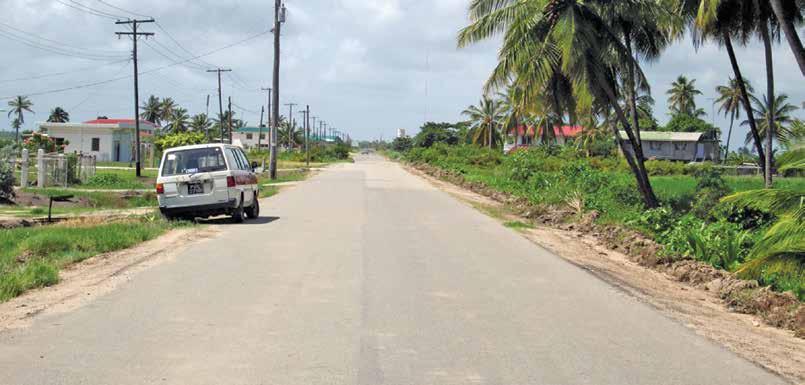
Three young men, Gussy Surrond, Jerry Gouveia, John Baharally, made the road link between Charity and Amazon Coffee Estate.
Charity road link is located from Pomeroon River to Dartmouth on the Essequibo Coast and was founded in 1908.
Prior to 1908, there was no road link from Essequibo to the Pomeroon River district, except through the Tapakuma lake and river or by sailing boat at sea to the Pomeroon River mouth. At that time Tapakuma had a Police Outpost, the Magistrates’ Court was at Macaseema and the Police Station at Marlborough in the lower Pomeroon.
Charity Coffee Estate was owned by the Gouveia’s and Amazon Coffee

Estate was owned by the Surrond’s. The Gouveia’s had a steam-driven coffee factory at Charity. The
area between Charity Back Dam and Darthmouth was a vast savannah of three feet black water, tall grass,

ing an old Dutch trench as they avoid thick vegetation and the imposing Crueda trees.
After much exhaustion in knee-deep water, they observed rising smoke about half a mile in a north east direction. Jerry and John lighted their ‘capstan’ (selfmade cigarette) and decided to trail the rising smoke. In less than one hour they came out at Bounty Hall, and with much anxiety they were received by several fanners in a plantain field. (There was no rice at the time in that area.)
The three pioneers were flocked by dozens of vil -

the administrative centre, land for school, a Catholic church, and all workers loggies for newcomers.
Very quickly the police station and court house were relocated at Charity; as well displaced indentured Indians migrated to upper Pomeroon.
As the citizens of Essequibo and Pomeroon, whose ancestors and our generation are the beneficiaries of this 1908 historical event, the Basir family erected a monument at the original spot where the three pioneers made this historic discovery.
We would like to invite
etay trees, and deep ponds infested with cuffum, watross, deers, bush-cow, alligator and wild ducks - a natural resort for hunting.
It was a bright Saturday morning in April 1908, when three pioneers ventured in to the savannah only hoping to hunt wild life, not knowing history was being created.
Their first ordeal was to cross the 15ft dam trench. The only large trees in the vicinity were tall bamboo trees. Four bamboos were fixed together to get over to the other side, hence the name ‘Bamboo Bridge’, which now identifies that area.
Gussy, John and Jerry wade through the savannah for hours, encounter-
lagers who learnt that a trail linking Essequibo and Pomeroon was discovered. Celebration took place in several villages and scores of villagers trace the trail to Charity. The news spread like “wild fire”.
The Colonial Governor Jredgeges Burk, having heard the news from sugar estate owners, deeded to purchase the two coffee estates for $8,000. Surveyors then made the straight line at Better Hope, where there was an old mud dam from Chaiztllear and the new road to Charity. That episode of new road saw the rapid development of the Pomeroon district.
When the Gouveia's sold their estate, they donated their main house for
your support and patriotism, now and in the future, to be part of the gathering every April to pay homage to these three pioneers.
When the road was declared opened at Charity in 1909, the three men were garlanded. Present were: Manson Gouveia, Stalbone Vanslyutman, Ranny Tang MS, Gaffooran Deshailos, Tacourdeen P Stolt, Sam Baharally Shoye, Lawrie P Singh, Reberio R Maharaj, FedUKst P Shgh, Garraway Benns, A1phonsos Terrils, Rodrigues Kairaatees, Durgas Brashintin (Sugar), C R Chan Dodds (Sugar), Gooby Bacchus Seymour (Sugar). (Research by Isahak Basir, CCH, former Member of Parliament. (Photos by Marco Basir)

By Hemraj maniram
Guyana is the only English-speaking country in South America, but English has been the official language for less than half the time Europeans occupied the country. The Dutch language was the main medium of communication for 232 years, from the time a group of Dutchmen sailed up the Pomeroon River and settled there, to 1812 when English replaced Dutch as the language used in the Court of Policy (Parliament). To this day, hundreds of villages have retained their original Dutch names like Uitvlugt, Vergenoegen and Zeeburg. Some present-day Guyanese have names like Westmaas, Amsterdam and Meertens.
No Guyanese citizen or visitor can escape visible and other reminders of our Dutch predecessors.
The ruins of a brick fort can still be seen on a little island where the Essequibo, Mazaruni and Cuyuni rivers meet. The original fort was a wooden structure built around 1600 by some Dutch traders who called it Kykover-al or "See-over-all" because it provided a commanding view of the three rivers. From 1627 the fort was controlled by the Dutch West India Company, a Hollandbased organization which was vested with the power to establish colonies and

which the Company's sisterorganization, the Dutch East India Company, had initially obtained from the East Indies.
Another notable landmark which continues to attract tourists to Guyana is the Dutch Fort Zeelandia on Fort Island in the Essequibo River. This brick fort, which still retains its main features, was built in 1743. The man responsible for its construction was Laurens Storm van Gravesande. As it turned out, Gravesande played a major role in Guyana's early development. He arrived first at Fort Kykover-al in 1738 to serve as
nationalities to take up land under his jurisdiction with tax-free concessions and other generous benefits. Englishmen rushed in from the West Indian islands and, together with Dutch newcomers, were granted parcels of fertile land along the East Bank of the Essequibo River, the West Coast of Demerara and then along both banks of the Demerara River. It didn't take long for estates to cover the Demerara landscape.
In 1750 Gravesande and his son Jonathan travelled to Holland and were received warmly by the directors of the Dutch West India Company. Jonathan was ap-

which monopolized Dutch trade in the New World. The Company appointed AdrianetzGroenewegel as its first Commander to administer Kyk-over-al. The wooden fort was replaced in the 1630s by a brick structure which also served as an administrative centre.
Guyanese farmers and consumers should know that it was Commander Groenewegel, along with his counterpart CornelisGoliat of Fort Nova Zeelandia in the Pomeroon River, who introduced orange, lemon and lime trees to the country from Southern Europe. They also brought in sugar-cane plants and plantain suckers
Secretary to the Commander, HermanusGelskerke.
Together, they decided to move the capital of Essequibo downriver to Fort Island in order to have ready access to more fertile land. Gravesande was appointed Commander (Governor) of Essequibo in 1743, following the death of Gelskerke.
Shortly after Fort Island became the capital, many Dutch planters relocated to the lower banks of the Essequibo River. They continued to cultivate cotton, annatto (a red dye which fetched a high price in Europe), citrus, coffee, ground provisions and sugar-cane. Gravesande encouraged planters of all
pointed the first Commander (Governor) of Demerara while the older Gravesande became Director-General of Demerara and Essequibo. Jonathan chose Borsselen Island in the Demerara River as his capital but died early, in 1761. Laurens Storm van Gravesande resigned as Director-General in 1772. He died three years later. The early Dutch planters laid the foundation for Guyana's sugar industry. They started cultivating sugar-cane on a small scale around 1636 near Kyk-over-al. With the passage of time sugar became the most important and profitable crop. The sugar industry has endured to this day
carry out road repairs could result in the forfeiture of a planter's entire estate.
Did the Dutch planters create Guyana's infrastructure and early market economy by themselves? Without the labour of African slaves sugar-cane and other largescale crops could not be planted and harvested, canals could not be dug, sea-walls and roads could not be built. The first batch of African slaves arrived at Fort Nova Zeelandia on the Pomeroon River from Angola in 1658. By the time the Dutch were finally forced to relinquish Essequibo, Demerara and Berbice in 1803, Africans accounted for the majority of the population. There were 110,000 Africans in Guyana, according to a census tak-
as one of Guyana's main foreign-currency earners.
In the 1740s, when Dutch sugar planters moved their estates from Kyk-over-al to other locations towards the coastal belt, they had to spend large sums of money and organize an army of manpower on sea defence, drainage and irrigation. The Guyana coastland is six feet below high-tide level and is vulnerable to flood-water from the sea. In addition, the planters had to combat water draining down from the highlands behind their estates and were threatened with flooding every rainy season. Faced with this dual agony, the Dutch planters devised a system of water control that is used up to this day.
They built a sea-dam at the front of their estates and a backdam behind the estates. To keep out water from the surrounding undrained lands they built sideline dams. They dug canals alongside the side-line dams to collect excess water from the estates through a network of smaller trenches. These side-line canals flowed towards the sea-dam where kokers or sluices were erected to control the outflow. Today, kokers stand like sentinels at strategic points along Guyana's lowlying coastal plain, offering round-the-clock protection to people, animals and property. The original sea-dams were later reinforced with concrete sea-walls. While the Dutch were masters at digging canals, they also built Guyana's main roads. Each planter was legally bound to build a public road in front of his plantation. Planters were also responsible for maintaining the roads. Failure to
bottles. The Dutch planters used to drink wine and beer freely at breakfast, lunch, dinner and late into the night. As many plantations stood on the banks of rivers, empty beer and wine bottles were simply thrown into the rivers. In other estates these bottles were discarded any which way. Dutch bottles are in great demand among tourists in Guyana, and brave youths continue to dive in the Essequibo, Demerara, Berbice, Canje and other rivers to search for these precious souvenirs.
Present-day Guyanese are more educated and enlightened than their nineteenth-century forefathers. East Indians, Portuguese and Chinese never laboured for Dutch plantation own-

en in 1817, i.e., seventeen years before the abolition of slavery and the introduction of Chinese, Portuguese and East Indians. While the system of slavery should never be condoned, it is useful to remember that the Dutch handed down a remarkable legacy in the form of wonderful human beings who now call themselves AfroGuyanese.
More than 195 years after the Dutch surrendered to the English, one can still see groups of adventurous and enterprising Guyanese retrieving and selling neverending quantities of Dutch
ers. Despite that, among the superstitious of all races, a Dutchman jumbie (ghost) is still believed to haunt many villages. And, according to folklore, Dutch jumbies are far more terrifying than other varieties of ghosts. Some people will avoid passing near old Dutch cemeteries at mid-day or midnight, fearing that "Dutchman go hold" them.
In life and in death, in the past and the present, those Dutch pioneers who made a whole country out of bush and swamp have left an indelible impression on us all.
(Photos by Marco Basir)

Micobie is situated approximately two miles downriver of the famous Tumatumari Falls found in the Potaro River, Region Eight. It is accessible by road via the Linden-Mabura road, Bartica- Potaro road or by aircraft to Mahdia then by road. It is an approximately ten-hour road trip.
Village history
In the 1800s, a family broke away from a community that was settled at Kangaruma, in the area now called Princeville, a satellite village of Campbell town in the vicinity of Mahdia. It was customary that farming and hunting grounds were the key reasons for seeking “new lands” for a more comfortable livelihood, since in that era there was hardly any form of income generating activities in comparison to present day. The persons from Kangaruma have traced their genealogy to Chenapou and Kopinang.
The Micobie community is made up of predominantly Patamona, the so-called relatives of the Akawaio, and indeed there are many similarities in language, diet, marriage rites and the practice of herbal medicine.
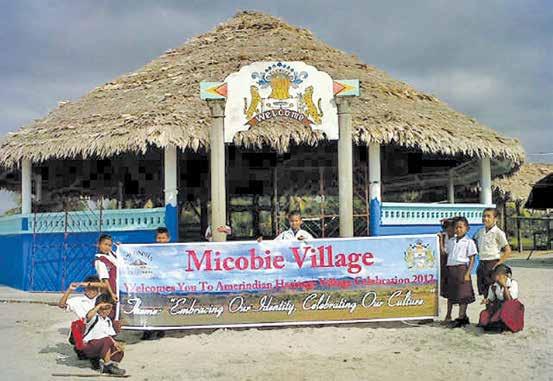
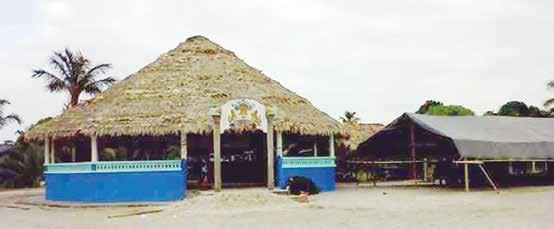
Micobie has been in existence since the 1800s when the Denham Bridge was being constructed. In fact, the workers on the bridge and some porknockers patronized the small community by purchasing their cassava bread. As a result, it was given the name ‘Cassava Hill’. In the 1960s, when captains were being elected to govern their community, a Mr Bennett, of
Arawak descent, was elected and he changed the name from Cassava Hill to New Foundout. Mr Braithwaite (also of Arawak descent) took over from. Bennett, and had a close working relationship with the Guyana Youth Corps, a paramilitary organization that was engaged in mining, agriculture and in the operations of the hydro-station which later gave way to the Guyana

National Service (GNS).
The population at Micobie was very small at that time and the GNS continued to purchase ground provisions and cassava bread from the community and about three members of the village joined the GNS. Origin of Micobie name
When Pierre Trudeau, then prime minister of Canada, visited Tumatumari, he met with the residents of lowly New Foundout and asked the origin of the name. Three of
the elders, Isaac Williams, Agnes Williams and Mr Roberts, explained that the original name for the village was “Maicopik”, after a small lizard that is prevalent in the area.
At a subsequent village meeting it was unanimously agreed that Cassava Hill/New Foundout eventually be given its rightful name Maicopik. The Official Gazette however, misspelled the term as “Micobie” and it has ever since been referred to as such.
The satellite village of Micobie is El Paso located on the right bank of the Potaro River below the Tumatumari Falls. The Aleluya religion (an indigenous religion) was also practiced here until the Anglican Church was introduced.
Micobie now has an approximate population of 360 persons. There is a primary school, and students qualifying for secondary would attend the nearby Mahdia Secondary School.
Due to its mineral and forest resources, Micobie attracted a lot of private investors, but no infrastructure or skills remained after the investors moved on. The residents themselves are now engaged in small scale mining and of course their traditional farming.
There is a spring, revered in the village, which provides potable water for its residents.
Micobie is governed by a village Toshao (female) and six councillors. The guidelines for effective governance of the village are outlined in the Amerindian Act 2006. In 2006, after lengthy consultations and accompanied with procedural bottlenecks, Micobie was awarded its Land Title by the government for 24 square miles of land. The Toshao at that time was Majuna Edwards, daughter of one of the elders, Mr Roberts. The present Toshao, Julie Johnson, is the granddaughter of Isaac Williams.
Until the late 1970s, Isaac Williams, the elder of the village, affectionately called Uncle Isaac, was one of the remaining piaimen of Region Eight, until he passed on. A piaiman is one that relies on his exclusive and in-depth traditional training in “high science” to cure his patients.
Micobie continues to thrive as a close-knit village and warmly welcomes visitors to explore its rich history. (Information by Ovid Williams and Ministry of Amerindian Affairs.
Photos by Deon Johnson)
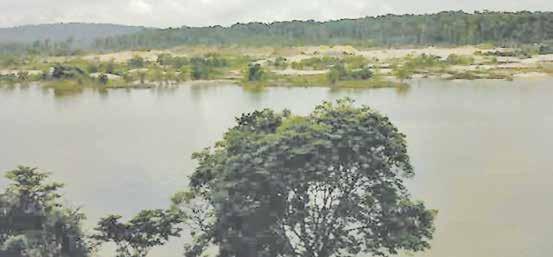
The legend of the Tumatumari Falls nearby Maicopik tells of ominous prophecy. Tuma is a popular meal for Amerindians, and consists of boiled meat with some hot peppers. When a family catches its meat it is usually shared among the villagers, and for the morning meal, the host family would shout, “Tuma Tuma,” inviting the neighbours. Legend has it that sometimes in the night (think moonless nights) the Tumatumari Falls would howl an eerie sound resembling the words “Tuma Tuma”. This was usually interpreted by the villagers as a bad omen, and there have been stories of natural disasters that followed such a howl, or someone would drown in the falls or river. That is how, originally, the falls got its name “Tuma Tumari”.
For about 20 percent of couples, there's no obvious reason why it's taking so long to conceive. This article looks beyond the usual suspects: stress, coffee, cigarettes, bad timing, blockages...and birthdays.
You have the universal blood type
First off: There's no big red flag here. Forty-four percent of us have type O blood, and most have no trouble conceiving. But a study at Yale University School of
with your doctor about a test such as the comet assay, which, Lewis says, measures the amount of DNA damage in individual sperm. (Since this type of testing is still considered experimental, many insurance companies won't cover the cost.) When more than 25 percent of the DNA is abnormal, fertility specialists usually recommend intracytoplasmic sperm injection (ICSI), a procedure that involves selecting sperm and injecting
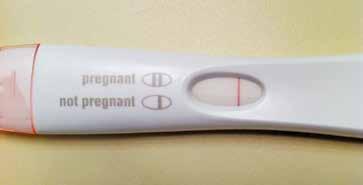
Medicine found that among female fertility patients in their 30s, those with type O were twice as likely as other blood types to have a hormone profile that made their ovaries seem older than their age. As a group, their FSH (follicle-stimulating hormone) levels more often passed a threshold (>10 mIU/ml) that suggests a lower egg reserve.
The lesson: "Blood type serves only as an alert—it's not a risk factor," stresses Lubna Pal, MD, the study's senior author and a researcher in reproductive endocrinology, who doesn't want healthy women to worry needlessly. For those with type O who have been struggling to conceive, she says, the best thing to do with this information is to weigh it with other factors known to reduce fertility. For instance, if you also smoke or your mother reached menopause at an early age, this finding might prompt you to adopt a healthier lifestyle and to talk to your doctor sooner than you might otherwise. Lastly, don't panic: Elevated FSH doesn't prevent you from getting pregnant. (Only levels higher than 20 mIU/ml are considered an indicator of infertility.)
It has been him all along (even if his initial tests came out okay)
For prospective dads, the usual fertility workup (sperm count, volume, concentration, motility and morphology) doesn't reveal the whole picture, says Sheena Lewis, a professor of reproductive medicine at Queen's University Belfast. Problem is, those tests don't detect sperm DNA damage, which Lewis and her colleagues pegged as the major culprit behind "idiopathic infertility" (when doctors have no clue why you're not pregnant yet). In their study, a striking 80 percent of cases with that diagnosis were resolved after testing for sperm DNA damage.
The lesson: Consult
or their cousin chemicals, which persist in the environment (although PCBs have been banned for decades). Traces of PCBs are nearly everywhere, but a major source is animal fat, where toxins can accumulate. (Beef and fish both contain PCBs, but beef-heavy diets are associated with more abnormal sperm and a 35 percent lower count and concentration. The difference may be that the omega-3 fats in fish are sperm-boosters.)
The lesson: Louis Buck says the best thing to do is to limit exposure by cutting away the fat from meat or fish (how to prepare fish to reduce PCBs) and eat fewer animal products overall. Regardless of diet or exposure, a delay doesn't mean doom: About 80 percent of the couples conceived within a year of trying.
it directly into the egg.
Your trusty water bottle is coded No. 3, No. 6 or No. 7...
And you eat the wrong canned tomatoes. Or touch too many cash register receipts. And use the wrong sex toys. Or otherwise have contact with—and absorb too much of—things that contain the estrogen-mimicking plastic-softening chemical BPA (Bisphenol A). In one investigation that took place at the Massachusetts General Hospital Fertility Center, patients with the highest BPA levels produced 24 percent fewer eggs than average; of those eggs, 27 percent fewer could be fertilized, and fewer embryos implanted. In another study, scientists exposed immature eggs to BPA; the higher the dose, the likelier those eggs were to degenerate or, oddly, act as if they were fertilized even though they weren't. The good news is that our bodies metabolize BPA rapidly, explains study author Russ Hauser, MD, MPH, ScD, a professor at Harvard School of Public Health. "Within 24 hours it can be excreted."
The lesson: We're exposed to many sources of BPA throughout the day— and levels constantly rise and fall with exposure, Hauser says. Keep your daily load as low as possible by following this list of things to avoid, and find BPA-free alternatives to those water bottles, cans...and, yes, that pocket rocket.
A common environmental chemical is the culprit Unfortunately, other hormone-altering chemicals—PCBs (polychlorinated biphenyls) and similar pollutants—linger in the body, says Germaine Louis Buck, PhD, at the National Institute of Child Health and Human Development. She and her colleagues found that a couple's odds of getting pregnant in any given month decreased by about 20 percent when either partner's blood tested for high levels of PCBs and/
deep pockets around the teeth breed bacteria, which enter the bloodstream and trigger inflammation—potentially reducing an embryo's chances of implantation. To make matters worse, gum disease in men is linked to poor sperm quality.
The lesson: Brush and floss regularly, and get dental check-ups. Keep up the regimen when you're pregnant; that same bacteriatriggered inflammation is associated with miscarriage, low birth rate and prema-
ture birth.
He has a very intimate relationship with his technology
Among some researchers, there’s a concern that electromagnetic radiation (EMR) may scramble a man's sperm, with the cell phone being a primary offender.
Several studies found a connection between sperm damage and the habit of carrying a cell phone in a pocket or hip belt, near the reproductive organs. Another study targeted that other indispensable EMR-emitting tool: the WiFi-enabled laptop
computer. Compared to nonusers, men who used laptops on their laps—for four hours with WiFi on—had 25 percent immobile sperm (vs. 14 percent), and 9 percent of the survivors had DNA damage (vs. 3 percent). (In case you're wondering, the researchers controlled for laptop heat, which we all know kills sperm.)
The lesson: Research is ongoing, but to be safe, keep laptops and cell phones away from privates. (www. oprah.com)
Your gums bleed when you brush
Do your gums bleed after you brush? Are they red and swollen? Periodontal (gum) disease delays a positive pregnancy test by two months or more, found an Australian study. While women with healthy mouths took an average of five months to conceive, those who had periodontal disease took a little over seven months. Non-Caucasian women who had it took over a year. Swollen gums and



By PetamBer Persaud
‘The Voice and Vision’ is about nature –the nature of man relationship to the environment…
You dance across the horizon in pantomime of shape and shadow.
to grant the planet a breath of life and save fragile earth from decay.
‘The Voice and Vision’ is about the nature of life and death and rebirth: ‘[s]uddenly we glimpse the maker’s plan/that humbles the spirit then sets it free’.
‘The Voice and Vision’ is about the nature of human relationship, especially the family unit: ‘[w]ho could hatch such a strange mismatch/the helpless cared by the unprepared’.
‘The Voice and Vision’ is about the nature of race relationship, the nature of citizen relationship to another country as in the poems, ‘The Plan’, ‘Frozen Tears’, and ‘At home in Toronto’.
‘The Voice and Vision’ is about contemporary musings mixed with folkloric elements as in the poem, ‘The waterfall’ incorporating the legend of Kaieteur, ‘a tragic dive of death’, with a description of the falls, ‘savage spectacle flooding the senses/drowning memory in a deluge of beauty’.
‘The Voice and Vision’ is about the nature of relationship between two art formsphotography and poetry.
The writer of this first collection of poems, Robert J. Fernandes, was able to deal with all these themes because by the time he wrote his first poem, in his forties, he had accumulated storehouses of images and memories through his photography and his experience. Experience acquired sojourning through the lowlands and highlands of Guyana; experience acquired during his travels overseas; and images that were looking for a new form of expression. That expression was poetry where he encountered ‘an unexpected adventure into the unfamiliar, a place where the imagination rules’…
Before going public with
his poetry, Fernandes’ work was a ‘closely guarded secret’. He credits the Upscale Open Mic Poetry forum for allowing him to share his work for the first time and was one of the factors influencing the publication.
Although the reasons given for dividing this collection of poems into three parts, an overriding influence is found in the author’s dedication which reads: ‘to my wife and children, [you] filled my life with beauty and meaning’. All the poems
the role of the reader by giving the reader the opportunity to concentrate on the ones of interest to them.
The reasons given for compiling this collection are varied and worthy of development due to their insightfulness, sincerity and inspiration.
‘Voice and Vision’ is a new voice added to the Guyanese conversation, deserving a hearing, and a new vision added to the Guyanese literary landscape, deserving attention.

have germinated from that dedication to family which added beauty and meaning to life. Family is important in this collection. For instance in the poem, ‘My reward’, which was written for the poet’s wife as ‘[p] roof of my journey and voices to pronounce my epitaph’. That ‘proof of journey’ could be found in pieces like ‘A Child is born’, ‘Reflections’, ‘Orinduik Lost’, among others.
The 50 poems in this volume were divided into sections titled ‘Nature’, ‘Humour’ and ‘The Human Condition’, but the poems could be read in any order for the writer understands
Here is a voice of a nature photographer, an environmentalist, a philosopher, a blender of words in Standard English and Creolese. Here is a vision to save the environment, to save the children, to save the family, to save the nation.
Responses to this author: telephone (592) 226-0065 or email: oraltradition2002@ yahoo.com
What’s happening:
• Now available, two new books by Basdeo Mangru: ‘Colonial Emigration from the Bengal Presidency’ and ‘Kanpur to Kolkata: Labour recruitment for the sugar colonies’.
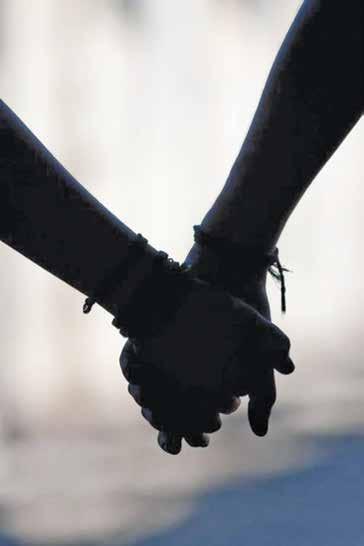
Losing someone with whom you’ve shared a close bond over a period of time can be devastating – whether it is a long-time best friend, a more recent good friend or even boyfriend/girlfriend. Giving your trust and affection as part of your investment in the friendship, and then seeing it break down, is never easy. Yet it is often a natural variation –a part of growing up and getting older – in our lives.
Just moving away, either out of the country or to another region of the country can affect a friendship. Despite the popularity of social media and email, separation would mean new social groups, new environments and differing schedules that could make your usual communication all but impossible. Phone calls, emails or Skype may keep you together but be realistic; they won’t take the place of regular head-to head chats at home or at that new bar or on those shopping trips or concerts together.
Sometimes our individual lives cause the loss. Many times, getting married or having children, even starting a new romantic relationship, could alter you, and the friendship grows apart. A single person and a married one may often have different priorities that limit the time they can engage with each other when compared to the times they were single together. It may reach the stage where an occasional phone call or special event are the only times you can catch up with each other. By then, new friends and circumstances may leave you both now more like acquaintances instead.
Other persons beside spouses or lovers are known to cause friendship break ups. A new relationship with a new acquaintance may trigger your break up if perhaps you find something distasteful about the newcomer’s character that your friend doesn’t. This could create uncertainty within your friendship as you begin to question the principles that you trusted you and your friend shared. It is hard to tell a friend a negative opinion when you see the bond he or she may be forming with the newcomer, as it could even be misconstrued as jealousy. This in turn can further stress your friendship, leading to the break up.
Betrayal or a major disagreement can also lead to the end of a friendship. In fact, you would even question whether there really was a friendship to begin with if your friend betrayed you, or you find the values you thought you shared aren’t there and were indeed, what led to the disagreement. At this point, you have two options: forgive or move on.
Then there are those friendships that evolve to become almost – well – parasitical. There is a well-known, humorous saying: “A friend in need is a bloody nuisance”. That’s the friend who always needs your help: he/she is usually drunk and always needs a hand; he/she is always whining about the last romantic affair and needs your unwavering support to always blame the other person for its ending; and he/she is always broke and you are always footing the bill. Last but certainly not least, that’s the friend who is always on you for loans that are never repaid. It may not have started out that way, and you may have always helped at first, but such neediness ruins any friendship eventually.
Friendships, though, even after break ups, have the ability to influence our lives forever. We are older and wiser with each friendship we have experienced and move on to another stage of our lives to other friendships. So don’t despair too much if you’ve just lost a friend, it can only make you wiser afterwards.


n 1 May 1993 Gail Ann Cummings gave birth to Andy Anthony Cummings at the Forth Wellington Hospital on the West Coast of Berbice. Andy attended the Belladrum Nursery School, then Number 29 Primary School, and went on to Belladrum Secondary School, where he successfully completed his secondary education. From a very young age Andy knew he wanted to pursue studies in the arts. This motivated him to attend the ER Burrowes School Of Art, where his major was Ceramic and minors were Textile Design and Textile Construction. But Andy’s dream was not only to be an artist, but a fashion designer. Completing art school in 2012, Andy entered the Guyana Model Search and Designer Portfolio competition, which he won. In 2013, he held the title of the Most Promising Designer for his collection ‘Blue Intensity’. He was honoured to see his designs on the cover of the Guyana Fashion Week Magazine. In 2014, Andy took a “big step” when he decided to be part of the Suriname Fashion Week – an unforgettable experience for the designer. It was even more exciting when he got the opportunity to represent Guyana at the Mission Catwalk competition in Jamaica, where he copped the second runner-up title. Enjoying successes and triumphing over challenges, Andy is “thankful to God for [his] creative power” and to share his passion on glamorous catwalks.
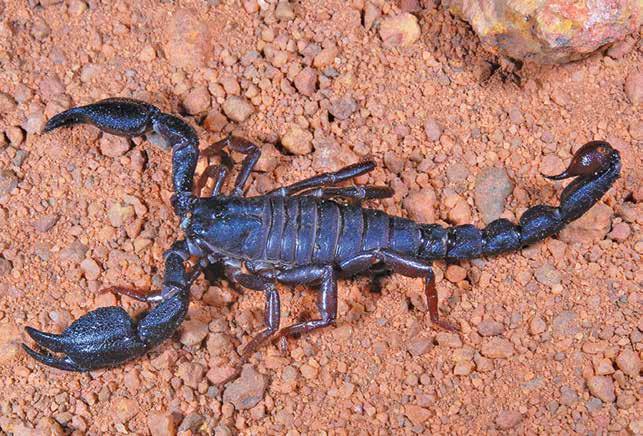
Scorpions, Scorpiones, are members of the class Arachnida and are closely related to spiders, mites, and ticks. They are commonly thought of as desert dwellers, but they also live in the Brazilian forests and Guyana. These hardy, adaptable arthropods have been around for hundreds of millions of years, and they are nothing if not survivors.
There are almost 2,000 scorpion species, but only 30 or 40 have strong enough poison to kill a person. The many types of venom are effectively tailored to their users' lifestyles, however, and are highly selected for effectiveness against that species' chosen prey.
Scientists aren't sure why, but scorpions are fluorescent under ultraviolet light.
Scorpions typically eat insects, but their diet can be extremely variable— another key to their survival in so many harsh locales. When food is scarce, the scorpion has an amazing ability to slow its metabolism to as little as onethird the typical rate for arthropods. This technique enables some species to use little oxygen and live on as little as a single insect per year. Yet even with lowered metabolism, the scorpion has the ability to spring quickly to the hunt when the opportunity presents itself—a gift that many hibernating species lack.
Such survival skills allow scorpions to live in some of the planet's toughest environments. Researchers have even frozen scorpions overnight, only to put them in the sun the next day and watch them thaw out and walk away. But there is one thing scorpions have a difficult time living without—soil. They are burrowing animals, so in areas of permafrost or heavy grasses, where loose soil is not available, scorpions may not be able to survive.
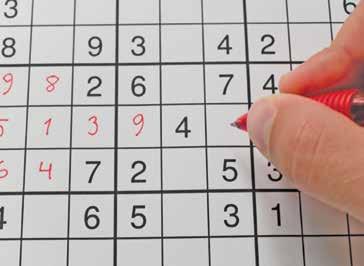
The objective of the game is to fill all the blank squares in a game with the correct numbers. Every row of 9 numbers must include all digits 1 through 9 in any order. Every column of 9 numbers must include all digits 1 through 9 in any order. Every 3 by 3 subsection of the 9 by 9 square must include all digits 1 through 9.
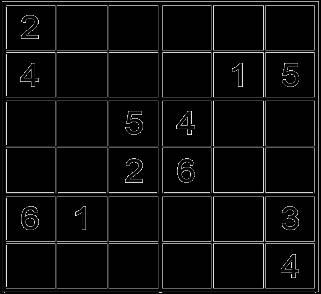
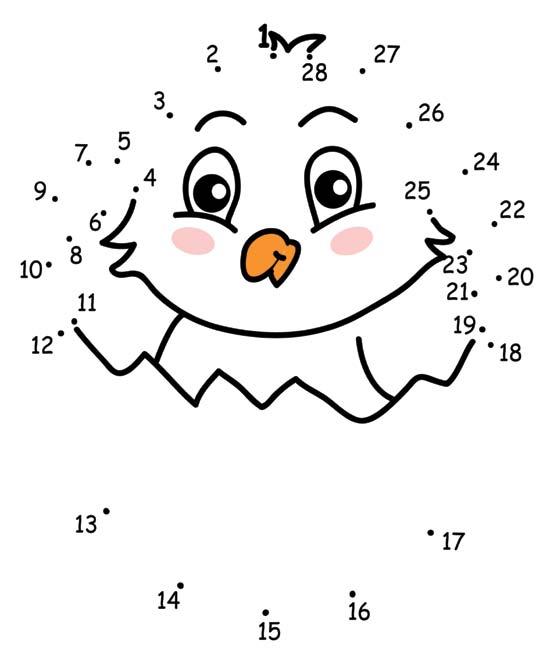
By Laurie Triefeldt
This mammal is about the size of a small rabbit. Covered in short, sharp spines, the solitary hedgehog has become a popular pet in some parts of the world. 17 species of hedgehog can be found in Europe, Asia and Africa.
Hedgehogs grow to about 9 inches (23 cm) long. Thousands of spiny quills protect the hedgehog from predators.
Hedgehogs are sometimes called pincushions with legs. They like to root around in hedges and undergrowth while snorting and grunting much like a pig or hog — which is why they are called hedgehogs.
Hedgehogs are nocturnal, meaning they sleep during the day and hunt at night. Their diet consists largely of insects, worms, centipedes, snails, bird eggs, frogs, snakes and mice, but they also feed on roots, grasses, berries and mushrooms. They can eat one-third of their body weight in an evening.
Hedgehogs are related to moles and shrews. They are native to Asia, Europe and Africa, and have been introduced in New Zealand. They live in many kinds of habitats, thriving in forests, deserts, savannas, scrublands and suburban gardens. Hedgehogs hibernate in cold weather. In deserts, they sleep through heat in a process called estivation. They are active all year round in temperate climates.
Large birds and carnivores like the badger are the hedgehog’s greatest enemies. Humans are also a threat to hedgehogs, as construction and agricultural activities often push hedgehogs out of their natural habitats.
European Hedgehogs are found in woodlands, farmlands and suburban areas throughout Europe. They are sometimes seen rooting around in gardens.
Hedgehogs have very poor eyesight. They rely on their senses of hearing and smell to find food.
The hedgehog has two large muscles that run down its back and are used to control its quills. When threatened or frightened, the hedgehog rolls itself into a prickly ball.
The African pygmy hedgehog is a domestic hybrid combination of the white-bellied hedgehog and the Algerian hedgehog. It was bred to be smaller and tamer than its wild cousins. This little critter weighs in at 1 to 1.5 pounds (0.5 to 0.7 kg) and grows to 6 to 8 inches (15 to 20 cm) long.
Hedgehogs prefer to live alone and usually get together with other hedgehogs only when it’s time to mate. Young are born 35 to 58 days after mating, depending on the species. Litters range in size from one to 11 babies, but three to four is average. Hedgehogs are born blind, with a membrane over their quills. The quills sprout two or three days after birth. Baby hedgehog spines eventually fall out and are replaced with adult spines. This is called “quilling.” Young hedgehogs leave the nest four to seven weeks after being born and are able to mate at about 10 weeks old.
A hedgehog’s quills are hollow and made of keratin, similar to human fingernails.
Scientific name: Erinaceus europaeus
Weight: 1 to 2 lb. (400 to 1,000 g)
Length: 7 to 9 in. (16 to 35 cm)
Life span: 4 to 7 years in the wild, or up to 10 years in captivity
Diet: Insectivorous/Omnivorous
Hedgehogs have 5,000 to 6,500 quills.
A hedgehog’s home range is 120 yards from its nest.
Hedgehogs share distant ancestry with shrews. When stimulated by a strong smell or taste, hedgehogs will self-anoint – this means they cover their prickles in foamy saliva. Why they do this is not known.
Unlike the porcupine's quills, hedgehog quills are not barbed. Like porcupines, hedgehogs do shed sometimes.
Hedgehogs chirp, hiss and growl if frightened or angry.
Hedgehogs are easily tamed, and some people keep them as useful pets, relying on them to get rid of insects and other pests.
Owning a hedgehog is restricted in some places, so you need to make sure they are legal to own where you live. Also, hedgehogs live a long time and require special care; adopting one as a pet should be carefully considered as a long-term commitment.
A pet hedgehog should always be treated gently, as a frightened hedgehog will roll into a ball and deploy its sharp quills — ouch! Hedgehogs need a large, clean cage, at least 4 square feet (0.37 square meters). Choose one without wire, as little hedgehog feet can get stuck in wire spaces. They also need a lot of exercise, so a running wheel is a must — remember to choose a solid one, not a wire one.
One of the most challenging aspects of keeping a pet hedgehog is making sure it gets a proper diet. Pet hedgehogs can be fed dry cat food, ferret food and cooked chicken. As a treat once or twice a week, you can feed your hedgehog mealworms, crickets, fruit or vegetables. And, of course, your hedgehog needs a fresh and plentiful source of water.
Beingpregnant doesn't mean you can't keep up with the trends and feel fashionable. The key to dressing modern and sexy during pregnancy is to pick out the trends you like and adapt them to your new body. Check out these tips to up your pregnancy style quotient.
Show some skin
If you're normally small-chested, pregnancy offers the best chance you'll ever have to forego the padded bras and flaunt cleavage, so take advantage of this fortuitous occasion and wear scoop-neck T-shirts or sweaters.
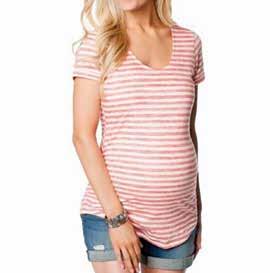
Go skinny
If you enjoyed wearing skinny jeans be-
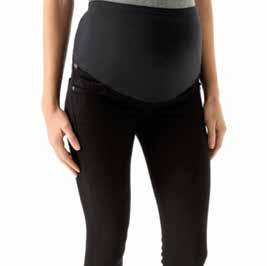
fore you were an expecting mama, don't be afraid to don tight-fitting pants now just because you're pregnant. Many maternity lines are now making stretchy, super-comfy (and chic!) skinny jeans and leather leggings that will fit and flaunt your new curves.
Choose snug over bulky
Reaching for bigger clothes to hide your size sounds like a good idea, but it only contributes to a bulky look. Instead, slim down your silhouette and emphasize the features that aren't expanding with snug-sleeved tops, skinnier pants, and button-down shirts or blazers (from your pre-pregnancy wardrobe) left unbuttoned. Try knits that stretch to fit your form -- they're sexy and feminine. If all else fails, break out a crisp men's dress shirt and pair it with leggings or jeans and a fitted T-shirt or tank underneath. This look is the perfect mix of sexy, modern, and classic style.
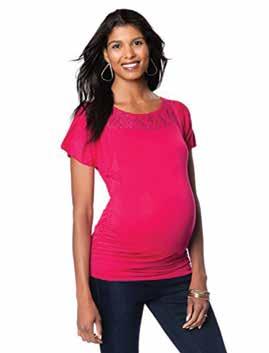
Don't limit yourself to black and neutral tones -- colour is an essential part of the modern maternity closet. You'll feel happier when you're wearing clothes that aren't drab. But, if you're really a colour-phobe (or if you're feeling budget-conscious), just throw a bright sweater around your shoul-

ders to complement an all-black outfit. Get decorative
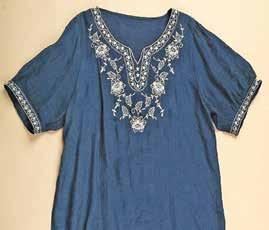
Perk up a staid wardrobe with just a few decorative elements, such as ruffled trims or embroidered or beaded accents. Just be sure to stick with things that you'll be able to wear more than once without feeling too conspicuous.
One of the easiest ways to add dimension and flare to an otherwise simple ensemble is to put on your favourite accessories and jewellery. Try long, dangling earrings and lariat necklaces to de-emphasize fullness in your face. Wear a patterned scarf in your hair, put a jewelled cuff on your wrist, or carry a chic handbag. Better yet, if you're not going to be on your feet all day, throw on some fun open-toe sandals or sling-backs. Sexy shoes can instantly perk up practically any outfit.

Choosing to dress slim will require that you give up on some of your current go-to pieces and adopt new shape-friendly styles, colours and combinations. Not to mention a change in mindset. Here are some tips to help you make better clothing choices for a slim look. The magic of verticality

Avoid contrasting blocks of colour. If you decide to wear a white shirt with dark trousers, layer something dark over the shirt (such as a blazer, cardigan or jacket) to avoid dividing your body in two halves.
Vertical or horizontal stripes? Going against mainstream opinion, don’t worry about the direction of the pattern but rather the intensity of any graphic. Keep your stripes thin and less perceptible, so eyes run through them quickly. Thicker, brighter and more noticeable stripes in any direction will make you look bigger.
Any horizontal feature will delay the viewer’s scanning process, so when it comes to obvious pockets, contrast belts, large buckles, patches, denim rips/distressing, embroidery and such, keep them to an absolute minimum. Think twice if pleated trousers, cargo pants, field jackets and the like are items you can’t be without.
Oversized shirts, t-shirts and knitwear are out of the
question. Dress your size, no matter which size it is at the moment.
A geometry lesson flashback: straight or slightly tapered cuts are the way to go when it comes to jeans, chinos and tailored bottoms. Their outline will draw right (or slightly acute) angles with the ground, which will promote a vertical, elongating (and slimming) perspective to your projection from the floor upwards.
Extra tip: achieved through a rather simple ironing technique, centre creases will enhance this effect and add a slimming, tailored detail to your trousers.
In terms of waistline, you need to consider your torso-tolegs proportion. If you wish for longer legs, opt for a higher rise and wear them around your waist, where they should be.
Avoid low-rise styles at all costs if you feel heavy at the moment – designed to sit lower on the hips, they are notorious for causing the dreaded ‘muffin top’ effect and/or large stomach overhangs.
The only piece of advice that really matters here is straightforward, but still not followed by many men: DRESS YOUR SIZE.
Seriously, don’t go bigger believing it will hide anything. Carefully consider arm length, chest size and shoulder width and do not settle for ill-fitting attire of any sort.
An elongated neck produces the vertical effect, while simultaneously helping to balance rounder face shapes.
With t-shirts and jumpers, go for v-necks, which give the appearance of length and naturally draw the eye downwards. If dressing formally, opt for rigid collar shirts rather than spread and look for edges that are as vertical as possible. Polo shirts with a slightly longer placket (leave a couple of buttons undone) are another great smart-casual option. Anything that creates a ‘v’ under your chin is highly rec-
ommended.
Layering is often used as a way of bulking out or widening a silhouette but it can just as effectively be used to narrow and lengthen.
When looking to achieve this effect, again, you should work the colours inward. For example, if a dark navy jacket/ blazer is worn over a sky blue shirt/tee the lighter hue will create a more prominent vertical line, thus helping to visually extend your torso.
Remember not to layer longer pieces underneath shorter ones as this will break up your vertical silhouette and therefore give the appearance of bulk around your waist.
Colour
Yes, black is slimming. However, it isn’t the only colour to do this job, and wearing too much black will make it obvious that you’re trying to hide your shape.
Don’t forget the fact that any dark colour absorbs light, and therefore you have the choice of navy, greys, burgundy, deep greens, etc.
Add lighter layers underneath all the darkness to brighten things up a little.


Sharon Leal is an American actress and singer. She is known for her roles in movies such as “Dreamgirls”, “Why Did I Get Married?”, “Why Did I Get Married Too?”, and her roles on the television shows “Legacy”, “Guiding Light”, “Boston Public”, and “Hellcats”. In 2014, she played the lead role in “Addicted”, an erotic thriller film.
According to gos-
sip site TMZ, Nick Cannon reportedly filed the divorce papers on 12 December 2014, just over a week after Mariah Carey - who split from the TV personality in the summer after six years of marriage - was said to have been discussing terms of her property settlement with her lawyers.
The gossip website believes the pair - who have three-year-old twins Monroe and Moroccan - have agreed on a deal but also noted Nick won't be entitled to any of the 44-year-old singer's earnings from her upcoming Las Vegas residency.
Mariah confirmed earlier this week she has signed up to headline the Colosseum at Caesar's Palace in Las Vegas and she is expected to receive more than $30 million for the run of gigs.
Mariah also revealed the Sin City crowd can expect to hear all 18 of her number one hits at her show.
She said: "I'm going to do my first ever residency in Vegas at Caesars. This is a special event for me.
"And again, I have to

hope that the fans will enjoy this cause I'm gonna be performing, which was kind of inspired by my album Number 1's, and this is now the updated version with 18 of them."
Nick, 34, recently took to Twitter to insist he will "never say anything negative" about his estranged wife and hopes they can both "move forward" this year.
He wrote: "I will never
say anything negative about @MariahCarey We are forever a family rooted in love.
"I am always an open book but Personal matters are just that 'Personal.' So please respect my family and respect the process."
"I have no problem being painted as the bad guy. I got tough skin. Keep going! I just pray we ALL can move forward in the new year."
(Glamour)

Chris Brown's probation in Rihanna assault case was revoked by a judge on Thursday, January 15. Los Angeles Superior Court
Judge James R. Brandlin allowed the "Turn Up the Music" singer to remain free at least until upcoming hearing on March 20.
The decision was made after the judge found Chris left Los Angeles county without court's permission to perform in San Jose. Back in December, the 25-yearold singer was ordered not to leave Los Angeles county without permission. He also failed to complete community service on time.
Chris' lawyer Mark Geragos said in court that James' office incorrectly informed the singer that he didn't need permission to go to his San Jose show. James accepted Mark's explanation but said Chris was responsible for following the terms of his probation. The judge added that Chris was supposed to complete 1,000 hours of community service by the end of January but still had 200 hours left.
James ordered probation officials to investigate if there were any issues involving Chris in a shooting incident during his show in San Jose which injured five people on Sunday, January 11.
The "Loyal" singer appeared in court with his mother and his girlfriend Karrueche Tran.
(AceShowbiz)
‘Ecstasy is the hardest drug I’ve
Gwyneth Paltrow admitted to trying ecstasy on "Watch What Happens Live" on Thursday night, January 15. The "Iron Man" actress made the revelation while being quizzed by Andy Cohen during the Plead the Fifth segment.
During the segment, Gwyneth was allowed to refuse to answer one of three personal questions asked by Andy. The first question was about a "frenemy" the "Shakespeare in Love" actress wrote about in an essay she posted back in 2009. Andy skipped over the question because the per
son wasn't famous.
The host then asked Gwyneth whether she would rather be stuck in an elevator with Jennifer Garner or Angelina Jolie. The 42-year-old actress then chose Angelina because she already knew and liked Jennifer and she would love to learn more about Brad Pitt's wife.
Andy then asked the third question to Gwyneth, "What is the hardest drug you've ever taken?" to which she replied with a
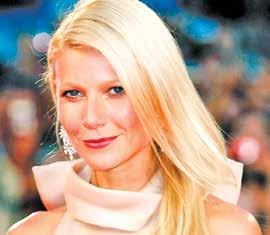
smile, "Ecstasy." Andy then said, "Very good. She didn't plead the fifth everybody."
Gwyneth was promoting her upcoming movie "Mortdecai". She stars along with Johnny Depp, Ewan McGregor, Olivia Munn, Paul Bettany and Jeff Goldblum. Directed by David Koepp, the action comedy flick is scheduled to hit U.S. theaters on January 23. (AceShowbiz)
Leonardo DiCaprio has fueled speculations that he is in a relationship with Rihanna after they were spotted partying together at a hotel on Wednesday night, January 14. In some photos obtained by Just Jared, the rumored couple was seen making separate entrances to Sunset Marquis Hotel in West Hollywood.
According to the site, Leonardo and RiRi were celebrating Kings of Leon's frontman Caleb Followill's birthday. The star of "The Wolf of Wall Street" was seen walking armin-arm with "Entourage" star Kevin Connolly while the "Umbrella" hitmaker was strolling alone.
Leonardo wore a black jacket, a pair of jean pants and black sneakers with white sole. RiRi, meanwhile, sported a white tee paired with loose jeans. Her long black hair
flew down her back. The "We Found Love" hitmaker completed her look with black heels.
Other celebrities like Taylor Swift, Harry Styles, Chris Martin and Garrett Hedlund also attended the party.
A source previously told TMZ that Leonardo and RiRi were "gettin' super steamy and even swapping spit" when they attended designer Nikki Erwin's birthday party at the Playboy Mansion on January 10. However, other sources denied the stars were kissing.
A second source told Us Weekly that RiRi "definitely did not make out with Leo and nothing went on." Another source told E! Online, "No one was making out. They are just friends. That's it... Maybe a little bit of friendly flirting but no scandal here." (AceShowbiz.com)
Ian Somerhalder and his girlfriend Nikki Reed are taking their relationship to the next level. The 36-year-old actor is engaged to the 26-year-old actress after six months of dating. "[Ian and Nikki]'re so happy," a source tells E! News.
The source adds, "They were crazy happy from the start. Their families love each other. It just feels really right." According to the source, Ian told Nikki that he had "been in love with [her] for years" long before they're dating.
A second source tells Us Weekly of Nikki, "She accepted with glee. She is madly in love." Another source claims, "They were friends before, the groundwork had been laid before. They had always been attracted to each other, but always in another relationship. It may seem quick, but they
Mindy Kaling famously said she would have married B.J. Novak if he had proposed when they were dating. But these days, the actress doesn't feel the same need to tie the knot – with anyone.
"When I was younger, I wanted so badly to be married and have kids in a rush," the Mindy Project star, 35, tells Good Housekeeping in its February issue, on newsstands Jan. 20.
"I loved my parents' relationship. The way my father was with my mother when she was dying was so moving. It was such devotion. I don't know that that will happen for me, but I like it."
In any case, she's more self-sufficient now.
"I don't need marriage," Kaling says. "I don't need anyone to take care of all my needs and desires. I can take care of them myself now."
On the topic of Novak, her former Office co-writer and onscreen love interest, Kaling says she makes an excep-
tion for him among her ex-boyfriends. "I'm definitely not in the friends-with-my-exes camp," she says. "But B.J. has the stamp for life as a friend. My mom loved him. He feels like family."
Kaling said last fall that she was seeing a few different guys, and now reveals her favorite part of dating.
"If I could relive the first three months of courtship over and over for the rest of my life, I would," she says. "Especially in winter, who doesn't like a nice heavy seven-course meal with lots of alcohol, then making out when you're a little tipsy and taking a cab home to fall asleep in the clothes you wore on the date? Wait. Actually that was, like, my whole 20s. And it was very fun."
She also talks about her mom, whom she was famously close with.
"In another life, I would have been a stylist," she says. "I love shopping. My mom loved fashion, too. I completely inherited that. When I was young, we would go to Neiman
knew it was right. They believe in the same things. They are dedicated to their work and helping others."
Nikki was spotted wearing two diamond rings on her right ring finger when accompanying Ian to a Golden Globes after-party hosted by InStyle and Warner Bros. on Sunday, January 11.
This will be the first marriage for Ian and the second for Nikki. The star of "The Vampire Diaries" previously dated his costar Nina Dobrev for three years before splitting in May 2013.
Nikki, meanwhile, was previously married to "American Idol" alum Paul McDonald in 2011. The "Twilight" actress filed for divorce from Paul in May 2014 and their divorce was finalized earlier this month. (AceShowbiz.com)


Shiv Pandit is an Indian actor and television host. Pandit made his big screen debut in 2011 with the critically and commercially successful Hindi film “Shaitan”. For this movie, he was nominated for the Filmfare Award for Best Male Debut. Soon after his Hindi film debut with “Shaitan”, he went on to debut as the lead actor in the Tamil film “Leelai”. He was also seen in Bollywood comedy, “Meet The Patels” (2014).
still remains 'fearful' in front of the camera
Amitabh Bachchan has revealed that he still feels a certain trepidation when facing the camera.
The actor was speaking at a press event for “Shamitabh” with director R Balki, Tamil superstar Dhanush and debutante Akshara Haasan.
"An actor only follows instructions," he explained. "No work is easier in life. People may think that one feels good in front of the camera. I have been working in the film industry for many years.
"Sometimes there remains a fear that what is the cameraman thinking of, what is the demand of the script and whether I will fulfil or not.
"But when the camera starts rolling, we forget

mother, father, brother or friends, we only remain actors and feel the character. Whatever has been instructed, we do that."
The actor portrays a "frustrated man" in the film, which is described as a story of two egos.
"It is the story of two egos, of how two people clash and nobody can be
successful," said Balki.
"Most people think they can do it alone, most people think they have done it all. It is not like that. Behind every successful person, there is a team."
R Balki had earlier directed “Paa” and “Cheeni Kum” with Bachchan. (Digital Spy)
Deepika Padukone opens up about personal battle with depression
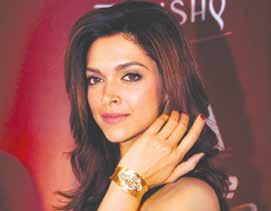
Deepika Padukone has revealed that she battled anxiety and depression last year.
In an interview with the Hindustan Times the actress revealed that she woke up one day in 2014 "feeling different".
"Every morning, it was a struggle to wake up, and shoot for ‘Happy New Year's’ climax. Most of HNY was shot through this phase. But before starting my next with Shoojit Sircar, I took a two-month break to recover mentally and physically," she explained.
"I spent time with my family in Bengaluru and was soon better. But, when I returned
to Mumbai, I heard about a friend committing suicide due to anxiety and depression. It was a huge blow."
The actress revealed she sought help from a psychiatrist friend and was initially "resistant" to taking medication on the belief that '"talking was enough".
"Being sad and being depressed are two different things," she continued. "Also, people going through depression don't look so, while someone sad will look sad.
"The most common reaction is, 'How can you be depressed? You have everything going for you. You are the supposed number one heroine and have a plush home, car, movies... What else do you want?'
"It's not about what you have or don't have. People talk about physical fitness, but mental health is equally important. I see people suffering, and their families feel a sense of shame about it, which doesn't help. One needs support and understanding," she added.
The Piku star said that today she is "much better".
Padukone earlier announced on Twitter that this year she will focus on creating awareness about mental illness. (Hindustan Times)
First life-size 3D printed model of Shah Rukh Khan unveiled
The world's first lifesize 3D printed model of Shah Rukh Khan has been unveiled.
The model is a special gift to Khan from Red Chillies, VFX and Autodesk India, and captures the actor in his signature pose.
Thanking his team for the gift, Khan said: "It is overwhelming how technology has gone forward. I am grateful to be a part of this amazing technology.
"This is outstanding and I am dying to show it to my kids. It's a silver and shiny statue of mine in my classic pose.
"I want to thank Keitan, Harry, the Red Chillies VFX team and the Autodesk team who have
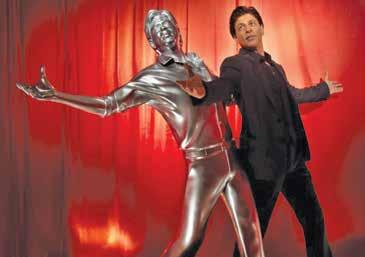
worked on it. It's the figure of work I have done for all these years."
This life-size model was designed in India and is the first of its kind in the world.
Hailed as a pioneer in
Bipasha
'I am taking break from horror films'
Bipasha Basu has revealed she will be starring in a family drama after the supernatural thriller “Alone”.
The 36-year-old, who has been dubbed the 'horror queen' of Bollywood after starring in back-to-back supernatural thrillers, said she is happy to take a break from the genre.
Basu told PTI: "I am finally taking a break from horror films. My next [film] is a family drama. I am really happy that I will not have to answer media that [ask] why I always do supernatural movies.
"The film is very emotional. I am excited about it. As of now, I can't divulge details about it."
The “Raaz” star said that she was initially hesitant about taking on the Bhushan Kumar-directed film.
"I initially didn't want to do Alone as the media is always after me for doing horror movies," she explained.
"I was exhausted of answering same

questions. But, once I read the script, I just couldn't say no to it. The love story in the film is the reason I said yes to it."
The actress said she will not accept frivolous roles in films as audiences prefer to see her portraying strong characters.
“Alone” also stars TV actor Karan Singh Grover who makes his Bollywood debut with the film. (PTI)
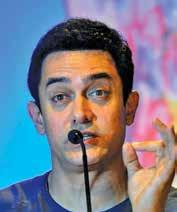
Aamir Khan to file criminal complaint over 'fabricated' interview
Aamir Khan is to file a criminal complaint over a 'fabricated' interview on religion.
Anand Desai, managing partner of DSK Legal, sent a legal notice to several Pakistani websites on Khan's behalf, saying that the actor was quoted erroneously.
He told PTI: "Mr Aamir Khan was shocked to find an interview attributed to him on several Pakistani websites in relation to his latest film ‘PK’.
"He has never given such an interview. It is clear-
Abhishek Bachchan has said he is excited to reunite with John Abraham for their next movie.
The “Happy New Year” star, who will reunite onscreen with Abraham for “Hera Pheri 3”, is looking forward to working with his "favourite co-star".
Bachchan told IANS: "I'm very excited. I call him John baba. He is one of my favourite co-stars.
"We were both in search of a good script because we wanted to work together after ‘Dhoom’ and ‘Dostana’. So we were happy with the
ly a fabrication by someone trying to impersonate him, done with the intent of drawing visitors to their website, and is defamatory
to our client.
"Today we sent legal notices on behalf of Mr Khan to the websites. The impersonation is a very serious infringement of our client's rights, and we will take legal recourse.
"Mr Khan will be filing a criminal complaint with the Cybercrime Cell of Mumbai Police after he returns to Mumbai."
“PK” has been at the centre of controversy, with some groups accusing the film of being anti-Hindu, sparking protests across India. (Digital Spy)
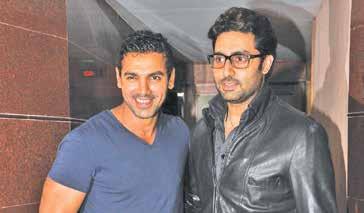
new script of ‘Hera Pheri 3’."
The 39-year-old star said he is "proud" to join the cast for the new film.
“Hera Pheri 3” also stars Paresh Rawal and Sunil
Shetty from the original films. It will be directed by Neeraj Vora with shooting scheduled to begin in March. (IANS)
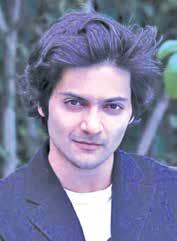
Ali Fazal: 'Audiences won't be disappointed by Fast and Furious role'
Ali Fazal has said his fans won't be disappointed with his performance in “Fast & Furious 7”.
The actor, who makes his Hollywood debut in the next instalment of the popular franchise, was participating in a drag race in Amby Valley City to promote the film.
developing film technologies in India, Red Chillies Entertainment won The Mobby Award 2014 for the Best Use of Digital Media in Marketing for “Happy New Year”. (Digital Spy)
He told IANS: "The Furious 7 producers, Universal Studios, had arranged the drag race as a part of the film's promotion in India.
"Audiences in India won't be disappointed by
the length of my role. I've enough footage to make my presence felt," he said.
Fazal, who was also approached for a role in US TV series “Homeland”, said he now regrets not taking on the role.
"I was offered a role in the TV series Homeland which I couldn't do, because the dates clashed with my film with the Bhatts –‘Khamoshiyan’. But I wish I had done it. Look at how well Nimrat Kaur got noticed due to the series," he added. (Digital Spy)
By Zenica DaBichan
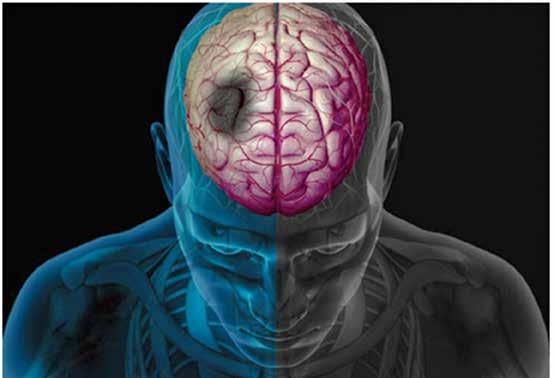
Astroke occurs when the supply of blood to the brain is either stopped or reduced. When this happens the brain is deprived of oxygen and nutrients which cause brain cells to die.
There are two kinds of stroke: the more common kind is caused by a blood clot that blocks or plugs a blood vessel in the brain and the other kind is caused by a blood vessel that bursts and bleeds into the brain.
Stroke is the fourth leading cause of death in the US, with one person dying every four minutes as a result.
Approximately 800,000 people have a stroke each year; about one every four sec-
onds. These statistics show that stroke is a very serious and common condition.
Risk factors for developing a stroke include:
• Being overweight or obese
• Physical inactivity
• Heavy or binge drinking
• Use of illicit drugs such as cocaine
• High blood pressure
• Cigarette smoking
• High cholesterol
• Diabetes
• Heart disease
How a person is affected by their stroke depends on where the stroke occurs in the brain and how much of the brain is damaged.
Common symptoms include:
• Sudden numbness or weakness of the face, arm or
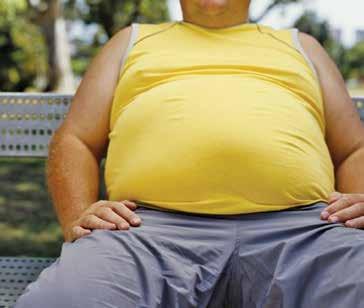
University of Cambridge researchers said about 676,000 deaths each year were down to inactivity, compared with 337,000 from carrying too much weight.
They concluded that getting everyone to do at least 20 minutes of brisk walking a day would have substantial benefits.
Experts said exercise was beneficial for people of any
leg (especially on one side of the body).
• Sudden confusion, trouble speaking or understanding speech.
• Sudden trouble seeing in one or both eyes.
• Sudden trouble walking, dizziness, loss of balance or coordination.
• Sudden severe headache with no known cause.
Stroke is a medical emergency so if you have any of these symptoms, you must get to a hospital quickly to begin treatment as soon as possible.
Preventing a stroke
• Quit smoking.
• Exercise regularly (minimum of 20 minutes, three times a week).
• Maintain a healthy body weight.
• Eat a mixed diet rich in fresh fruits and vegetables. Avoid fatty foods.
• Visit your doctor regularly to get your blood pressure, cholesterol and blood sugar tested.
If you are diagnosed with high blood pressure,
high cholesterol or diabetes, taking your medications as directed will go a long way to decrease your risk of developing a stroke. Medications are available that will decrease the risk of you suffering from another stroke. Also in
contact your doctor or nearest health centre for more information on how to access these services.
weight.
Obesity and inactivity often go hand in hand.
However, it is known that thin people have a higher risk of health problems if they are inactive. And obese people who exercise are in better health than those that do not.
The study, published in the American Journal of Clinical Nutrition, attempted to tease out the relative dangers of inactivity and obesity. Obese v inactive
Researchers followed 334,161 Europeans for 12 years. They assessed exercise levels and waistlines and recorded every death.
"The greatest risk [of an early death] was in those classed inactive, and that was consistent in normal
weight, overweight and obese people," one of the researchers, Prof Ulf Ekelund told BBC News.
He said eliminating inactivity in Europe would cut mortality rates by nearly 7.5%, or 676,000 deaths, but eliminating obesity would cut rates by just 3.6%.
Prof Ekelund added: "But I don't think it's a case of one or the other. We should also strive to reduce obesity, but I do think physical activity needs to be recognised as a very important public health strategy."
Prof Ekelund, who is based in Norway, is into cross country skiing and clocks up at least five hours of vigorous exercise each week.
However, he says all it
would need to transform health, is brisk walking.
"I think people need to consider their 24-hour day.
"Twenty minutes of physical activity, equivalent to a brisk walk, should be possible for most people to include on their way to or from work, or on lunch breaks, or in the evening instead of watching TV."
The diseases caused by inactivity and obesity were largely the same, such as cardiovascular disease. However, type 2 diabetes was more common with obesity. Tackle both
Commenting on the findings, Barbara Dinsdale, from the charity Heart Research UK, said: "This study once again reinforces the impor-
tance of being physically active, even when carrying excess weight.
"Changing your lifestyle is all good news for heart health, but physical activity is always easier to achieve and maintain without carrying the extra 'body baggage' of too much weight."
Prof John Ashton, president of the Faculty of Public Health, said changes were needed to make exercise easier.
"We need substantial investment in cycling infrastructure to make our streets safer.
"If more people cycled or walked to work or school, it would make a big difference in raising levels of physical activity." (BBC)
Is your nightly routine sabotaging your sleep?
Here’s what to avoid before hitting the sheets.
Don't: Finish the Emails Languishing in Your Drafts Folder
Researchers have found that before-bed exposure to the blue light from computers, tablets and smart phones suppresses melatonin levels, which can throw off your body clock as well as increase your risk of obesity.
Do: Log off at least one hour before bed, and set your alarm an hour earlier in the morning to catch up on work. You could also try dimming your screen as much as possible, or downloading a program like F.lux, which adjusts your computer's display to be a warmer color at night.
Don't: Pop the Wrong Pills
A stuffy nose keeps sleep at bay, but so does pseudoephedrine, the main ingredient in many OTC decon -
gestants (it's been known to cause insomnia).
Do: Breathe easy with a decongestant formulated specifically for nighttime use. These usually contain antihistamines, which have been known to make people drowsy.
Don't: Take a Hot Bath
It's true that a warm soak can help you fall asleep, but not if you're climbing out of the water immediately before climbing into bed. Here's why:
Your body temperature dips at night, starting at around two hours before sleep. A hot bath causes your temperature to rise and then cool down afterward, which will help you relax. It's this drop in body temperature that knocks you out, and the steeper the drop, the deeper you'll sleep.
Do: Pay attention to timing, which is key. Bathe too close to bed and your temperature will stay elevated,
keeping you on high alert. Make sure you're toweling off at least an hour before turning in.
Don't: Overeat
Research has found that going to bed with an uncomfortably full stomach can stimulate brain waves, which can result in nightmares—and the more unhealthy the food, the more disturbing the dreams.
Do: Thwart unpleas -
ant dreams--and unwanted pounds--by following the classic dieter's advice to chew small bites least 15 times before swallowing.
Don't: Decide to Get Something off Your Chest
Hold off until tomorrow to have it out with your sister about that annoying comment she made. Instead of feeling cathartic,
it's probably going to rile you up, and your churning mind will continue to keep you awake into the wee hours. Stress and overstimulation before bed are said to be the main causes of delayed sleeplessness, or "parasomnia."
Do: Declare the hour before bed to be your peaceful period, and avoid conversations that will rattle you. (www.oprah.com)




Crust:
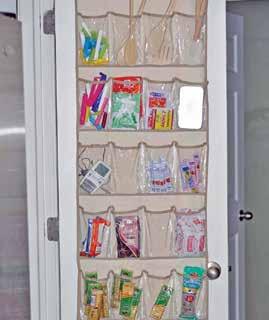
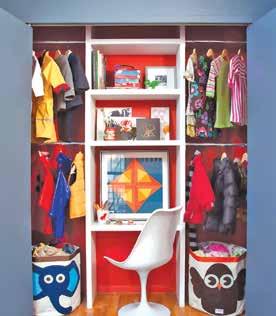
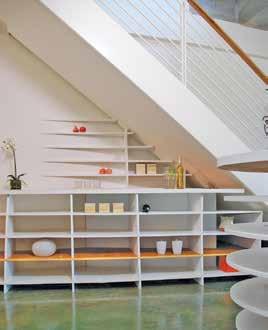
Lose the clutter and find peace of mind with these easy tips for creating an organised home.


Method:
To make the pastry: In a small bowl mix the flour and sugar together. Cut butter into small chunks then cut into flour using a fork or pastry cutter until it resembles coarse cornmeal. Next add egg yolks and water and mix to for the pastry. Once pastry comes together, flatten into a disk, wrap with cling wrap and refrigerate for ½ hour.
To make the filling: Place all ingredients in a bowl and mix with a fork to combine. Preheat oven to 350 degrees. Remove pastry from the fridge and on a floured surface, roll to 1/8 of an inch thickness. Using a biscuit cutter (or wide mouth glass) cut into 4-5 inch circles. Line a muffin pan with the pastry circles. Place the muffin pan into the oven and bake for 7 minutes. Remove from oven then fill each pastry shell with

until it’s about ¾ way filled. Return to oven and bake for 20-25 minutes or until golden brown. Remove from oven and allow to cool for 5 minutes before removing from pan. Cool completely before serving.
Ingredients:
Method:
In a small bowl, place flour, cinnamon, brown sugar and salt and mix to combine. Add warm water and stir until smooth. Add oil and vanilla and stir to mix in. Prepare a griddle with about one tablespoon of oil over high heat. When the oil is hot, add 1 tablespoon of the mixture in a circular motion, spreading it.

To
To
It goes up, but at the same time goes down. Up toward the sky, and down toward the ground. It's present tense and past tense too. Come for a ride, just me and you.
What is it?

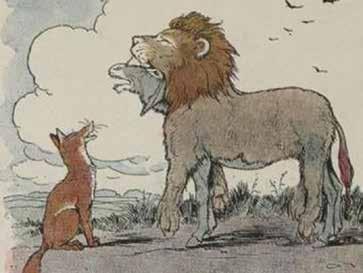
Adonkey found a lion's skin left in the forest by a hunter. He dressed himself in it, and amused himself by hiding in a thicket and rushing out suddenly at the animals who passed that way. All took to their heels the moment they saw him.
The donkey was so pleased to see the animals running away from him, just as if he were king lion himself, that he could not keep from expressing his de-
light by a loud, harsh bray. A fox, who ran with the rest, stopped short as soon as he heard the voice.
Approaching the donkey, he said with a laugh: "If you had kept your mouth shut you might have frightened me, too. But you gave yourself away with that silly bray."
Moral of the story: A fool may deceive by his dress and appearance, but his words will soon show what he really is.
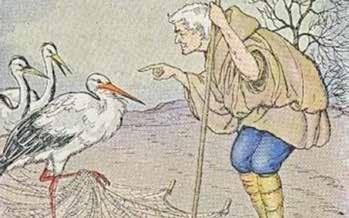
Astork of a very simple and trusting nature had been asked by a gay party of cranes to visit a field that had been newly planted. But the party ended dismally with all the birds entangled in the meshes of the farmer's net.
The stork begged the farmer to spare him.
"Please let me go," he pleaded. "I belong to the
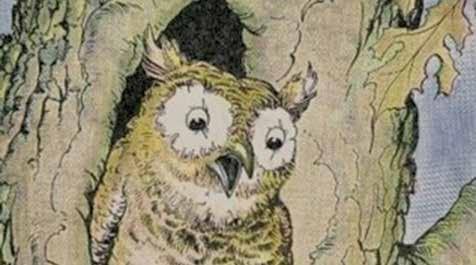
The owl always takes her sleep during the day. Then after sundown, when the rosy light fades from the sky and the shadows rise slowly through the wood, out she comes ruffling and blinking from the old hollow tree. Now her weird "hoo-hoo-hoo-oooo" echoes through the quiet wood, and she begins her hunt for the bugs and beetles, frogs and mice she likes so well to eat.
Now there was a certain old owl who had become very cross and hard to please as she grew older, especially if anything disturbed her daily slumbers. One warm summer afternoon as she dozed away in her den in the old oak tree, a grasshopper nearby began a joyous but very raspy song. Out popped the old owl's head from the opening in the tree that served her both for door and for window.
"Get away from here, sir," she said to the grasshopper. "Have you no manners? You should at least respect my age and leave me to sleep in quiet!"
But the grasshopper answered saucily that he had as much right to his place in
the sun as the owl had to her place in the old oak. Then he struck up a louder and still more rasping tune.
The wise old owl knew quite well that it would do no good to argue with the grasshopper, nor with anybody else for that matter. Besides, her eyes were not sharp enough by day to permit her to punish the grasshopper as he deserved. So she laid aside all hard words and spoke very kindly to him.
"Well sir," she said, "if I must stay awake, I am going to settle right down to enjoy your singing. Now that I think of it, I have a wonderful wine here, sent me from Olympus, of which I am told Apollo drinks before he sings to the high gods. Please come up and taste this delicious drink with me. I know it will make you sing like Apollo himself."
The foolish grasshopper was taken in by the owl's flattering words. Up he jumped to the owl's den, but as soon as he was near enough so the old owl could see him clearly, she pounced upon him and ate him up.
Moral of the story: Do not let flattery throw you off your guard against an enemy.
stork family who you know are honest and birds of good character. Besides, I did not know the cranes were going to steal."
"You may be a very good bird," answered the farmer, "but I caught you with the thieving cranes and you will have to share the same punishment with them."
Moral of the story: You are judged by the company you keep.
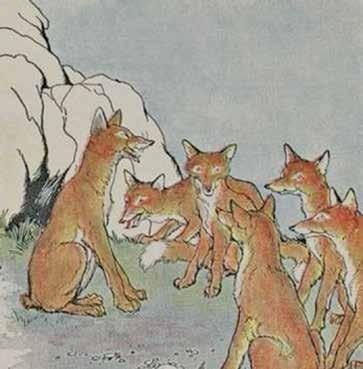
Afox that had been caught in a trap, succeeded at last, after much painful tugging, in getting away. But he had to leave his beautiful bushy tail behind him.
For a long time he kept away from the other foxes, for he knew well enough that they would all make fun of him and crack jokes and laugh behind his back. But it was hard for him to live alone, and at last he thought of a plan that would perhaps help him out of his trouble.
He called a meeting of all the foxes, saying that he had something of great importance to tell the tribe.
When they were all gathered together, the fox without a tail got up and made a long speech about those foxes who had come to harm because of their tails.
This one had been caught by hounds when his tail had become entangled in the hedge. That one had not been able to run fast enough because of the weight of his brush. Besides, it was well known, he said, that men hunt foxes simply for their tails, which they cut off as prizes of the hunt. With such proof of the danger and uselessness of having a tail, said master fox, he would advise every fox to cut it off, if he valued life and safety.
When he had finished talking, an old fox arose, and said, smiling: "Master fox, kindly turn around for a moment, and you shall have your answer."
When the poor fox without a tail turned around, there arose such a storm of jeers and hooting, that he saw how useless it was to try any longer to persuade the foxes to part with their tails.
Moral of the story: Do not listen to the advice of him who seeks to lower you to his own level.
(All stories are by Aesop, a Greek fabulist credited with a collection of stories known as Aesop's Fables.)
What's that fluttering in the breeze? It's just a piece of cloth that brings a nation to its knees.
What's that unfurling from a pole? It's just a piece of cloth That makes the guts of men grow bold.
What's that rising over the tent? It's just a piece of cloth that dares the coward relent.
What's that flying across a field? It's just a piece of cloth that will outlive the blood you bleed.
How can I possess such a cloth? Just ask for a flag my friend. Then blind your conscience to the end.
You’ll be greeted by a nice cup of coffee when you get to heaven and strains of angelic harmony.
But wouldn’t you be devastated if they only serve decaffeinated while from the percolators of hell your soul was assaulted by Satan’s fresh espresso smell?
When you see de rainbow you know God know wha he doingOne big smile across the skyI tell you God got style the man got style
When you see raincloud pass and de rainbow make a show I tell you is God doing limbo the man doing limbo
But sometimes you know when I see de rainbow so full of glow and curving like she bearing child I does want know if God ain’t a woman
If that is so the woman got style man she got style
Poems by John
Agard


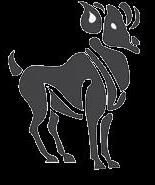
ARIES (March 21April 19)


TAURUS (April 20May 20)

(May 21June 20)

(June 21July 22)

LEO (July 23Aug. 22)

VIRGO (Aug. 23Sept. 22)

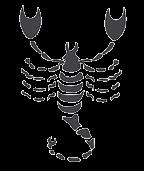
LIBRA (Sept. 23Oct. 23)

SCORPIO (Oct. 24Nov. 22)


SAGITTARIUS (Nov. 23Dec. 21)



(Jan. 20Feb. 19) (Dec. 22Jan. 19)


PISCES
(Feb. 20March 20)

Family matters will put you on edge. A creative project that will occupy your mind should be considered. A little downtime will do you good.
Lending or borrowing will work in your favor. Making extra cash is possible if you do your research in detail. A chance encounter will lead to a fulfilling partnership.
You have a trusting nature, but that doesn’t mean you should divulge personal information to an acquaintance. An unscrupulous character will work hard to appear likable and charming.
Don’t allow personal problems to interfere with your professional duties. Concentration and focus are vital, and lack of either will cause unhappy results. Do your own thing.
Give your self-confidence a lift. Take time for personal pleasures and physical or cosmetic improvements. A new outfit will put a spring in your step and a smile on your face.
Don’t let professional concerns cause you to neglect the people you are close to. Take time to do things with friends or family. Show the ones you love how much you care.
Travel and discovery will provide relief from the daily grind. Plan a day trip or visit a friend who inspires you in order to refresh your intellect and boost your morale.
Dreams can come true and money can be made. Consider turning something you enjoy doing into a marketable and lucrative enterprise. Get the information you need and start the ball rolling.
Let everyone know how much you can handle. Too many demands will wear you out and put a strain on your relationships and your ability to do a good job.
Pampering, relaxation and regeneration should be on your agenda. Doubt and confusion regarding personal or professional matters will lead to sleeplessness if you don’t put current situations in perspective.
Someone involved in your work will show interest in you. Tread carefully before you embark on a romantic journey. Innuendo and rumors can endanger your position and ruin your reputation.
Your desire for change will tempt you to invest in a risky venture. Do your homework and don’t part with your cash unless everything is aboveboard and in writing.
Apple's longawaited iPad Pro is rumoured to have gone into production, after a photo of a mould – purportedly used to manufacture the rear panel of the de -

Many people expected Apple to unveil a larger, business-focused version of the iPad at its press event in October 2014. Rumours at
ByTe
Gthe time suggested that the new tablet, dubbed the 'iPad Pro', would have a 12.9-inch screen and an A8X processor.
However, Apple made no mention of the device in
October, choosing instead to focus on its iPad Air and iPad mini ranges. The Wall Street Journal reported that Apple had pushed back production
of the device to allow its suppliers to focus on the iPhone 6 and 6 Plus.
Now a user on China's Weibo microblogging site has posted a photo of what appears to be a mould for the rear shell of the tablet, with an estimated display size of 12-13 inches.
The photo is simply labelled "iPad Pro".
The photo was reportedly taken at Apple manufacturer Foxconn's factory in China. Although the image is blurred, it does appear to show a faint impression of an Apple logo in the centre and perhaps a rear camera feature in a corner.
The picture is consis-
tent with leaks earlier this month, which suggest the new iPad will have dimensions of 305.3 x 220.8 x 7 millimeters and a 12.2-inch display. This is significantly bigger than the current generation of iPad Air, which has a 9.7-inch display.
Then again, the picture could be of a mould for
Apple's 12-inch MacBook Air, which is also rumoured to be in development.
Artist renditions of the new MacBook Air model based on information from sources within the company suggest the 12-inch computer will be slimmer than its predecessors, but sport the same 'tapered' design. (Telegraph)

erman researchers have built shoe-sized devices that harvest power from the act of walking.
The technology could be used to power wearable electronic sensors without the need for batteries.
There are two separate devices: a "shock harvester" that generates power when the heel strikes the ground and a "swing harvester" that produces power when the foot is swinging.
rent is generated.
The energy they generate is still relatively small - in the three to four milliWatt (mW) range at their peak.
That's not nearly enough to charge a smartphone, for example, which would typically require about 2,000 mW. But it is enough to power small sensors and transmitters, opening up a range of new applications.
The devices represent a trade-off
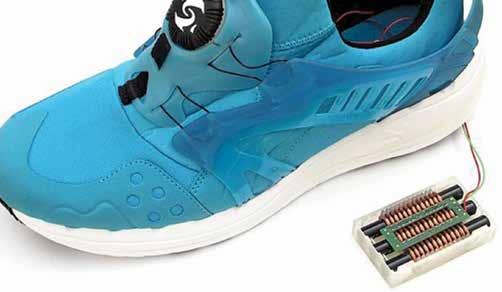
They could also form the basis of a self-lacing shoe for the elderly.
Details of the advance are outlined in the journal Smart Materials and Structures.
"We have tried to power a wireless transmitter and to power a simple sensor," said Klevis Ylli from HSG-IMIT, a research centre in Villingen-Schwenningen, Germany.
"One application we are working on is indoor navigation which means we have sensors within the shoe that measure the acceleration of the foot, the angular velocity - whether you're turning the foot or not - and the magnetic field.
"From the data from these sensors, you could calculate how far you have travelled and in which direction. So imagine a rescue unit walking into a building they don't know. They could then track which way they went on their handheld device."
Both energy harvesting devices generate power by exploiting the motion between magnets and coils.
As the magnetic field of a moving magnet passes by a stationary coil, a voltage is induced and an electric cur-
between power generation, size and other limiting factors. And Mr Ylli says his team's approach offers certain key advantages.
"Some approaches of the past for example have tried to use a lever underneath the shoe to power a gear box and an electric generator as used in some electric torches. They could generate up to 250 mW, but were huge, heavy and had parts protruding from the shoe," Mr Ylli told BBC News.
"Generated power scales with size, but if you want to be able to reasonably integrate such a device within a shoe sole, you have to work with strict constraints, like a small height and limited length of the device.
"We believe we have built comparatively small devices, considering the power output."
He said the swing harvester was developed with the intention of making a self-lacing shoe for the elderly. The shoe would detect when a user stepped into it and lace itself up, as well as open up again when required. The harvesting device would generate the energy for the closing mechanism. (BBC)

Google says its Translate app can now act as an interpreter, with the addition of a real-time voice-translation mode.
It said the updated app would automatically recognise languages being spoken and translate them.
The update, launched on Wednesday, also allowed users to instantly translate messages using their phone's camera.
But one academic said it would fail to understand the more complex linguistic tools.
"For basic things, it might be very useful. My mother, for example, does not speak any other languages, but loves travelling, so she could find her way around a town.
"But it is never going to pick up the nuances, the cultural references or the humour," said Ariane Bogain, a senior lecturer in modern foreign languages at the University of Northumbria.
Prior to the update, Google's app could translate spoken or typed phrases and repeat them out loud. But it worked phraseby-phrase, rather than in real time, and the pronunciations and rhythm of speech could sometimes be problematic.
Users of the new app can also use their phone's camera to instantly translate phrases, using the Word Lens feature, which works without a wi-fi or a data connection.
Google said: "The Translate app already lets you use camera mode to snap a photo of text and get a translation for it in 36 languages. Now, we're taking it to the next level and letting you instantly translate text using your camera.
"While using the Translate app, just point your camera at a sign or text and you'll see the translated text overlaid on your screen - even if you don't have an internet or data connec-
tion."
Google said users could also "tap the mic to get into voice translation mode, tap the mic again, and the Google Translate app will automatically recognise which of the two languages are being spoken, letting you have a more fluid conversation".
The company said the update took people "one step closer to turning [their smartphone] into a universal translator and to a world where language is no longer a barrier".
While she acknowledged the app's usefulness to holidaymakers struggling with the language, Ms Bogain said that major events, such as an EU summit, were not likely to begin using it.
She added that online translations conveyed the rough message - "but you are going to lose a lot in the translation".
Ms Bogain said: "One word can have various meanings, depending on the context, and I do not think that online translation tools are there yet.
"As lecturers, when we ask students to hand in translations, we can immediately spot who has used a translation tool because the phrasing is not natural. The message is roughly there, but something is lost.
"I do not think it is going to replace 15 years of training."
Other voice translation apps are already on the market, and Skype launched the function last month.
According to Google, more than 500 million people use its version every month to make more than one billion translations per day.
Google said the update would be available to both Android and iOS over the course of this week. (BBC)
Marjorie Letitia Broodhagen
Marjorie Letitia Broodhagen, AA, was born on 12 December 1912 in Georgetown. A devout Roman Catholic, she was educated at St. Joseph's High School and attended various art courses at Columbia University (1947-49), and in Italy (1955), Spain (1960), Mexico (1965) and Britain (1967).She also taught at St. Joseph's, Bishops' and St. Stanislaus High Schools.
Broodhagen began exhibiting her work in the 1930s and her first effort at arranging a women's exhibition was in 1967.She subsequently exhibited in Barbados, Jamaica and Trinidad and Tobago. Broodhagen was also the winner of the open competitions for the mural for the Bank of Guyana entitled Natural Resources (1968-69) and the stage curtains of the University of Guyana entitled Forest
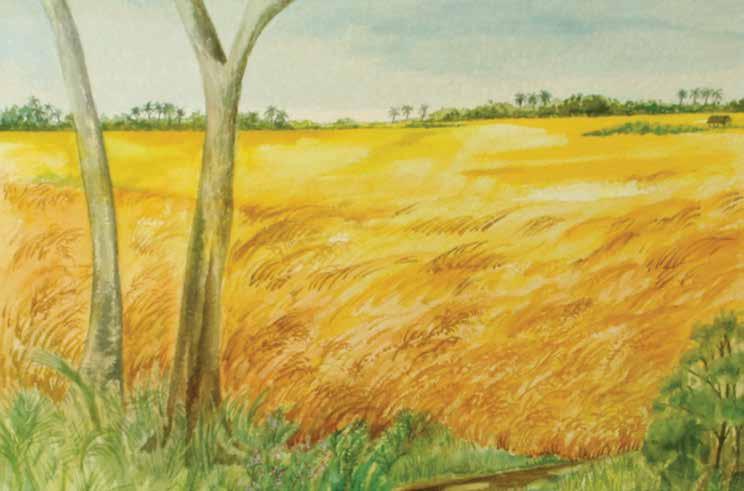


Fantasy (1969-1970).
The artist was a founding member and first president of the Guyana Women's Artists Association. She was also an accomplished prizewinning artist and an experienced and excellent teacher. As an artist, her work was large and wide. In the inaugural exhibition of the revived Guyana Women Artists Association exhibition in 1988, her section alone consisted of 50 pieces. Her work reflects Amerindian subjects, do-
mestic objects, animals, people, landscapes, flowers, seeds, fruits, local activities. This engagement with the life and things around her - while not blocking her access to wider subjects and trends - makes her as a truly Guyanese artist. As a member of the group of pioneer artists of the 1940s, she did much to establish the validity of the local life and landscape as subject matter for art.
Broodhagen's approach to painting was also varied ranging from the realistic
to the abstract, from variations of traditional western approaches to work which were influenced by oriental painting. She not only created paintings, but also did drawings, textiles and some ceramics. She worked in acrylics, oils, pen and ink, watercolour, crayons - all sort of media.
Marjorie Broodhagen was awarded the national honour of the Golden Arrow of Achievement (AA). She died on 23 May in Georgetown. (Cover photo : 'Lukanani and Lemons' 1967)

The Christ Church building, located in Waterloo Street in Georgetown, was erected in 1836 after several parishioners of the then just completed St George’s Cathedral were dissatisfied with the services being held at the cathedral. Appealing to the Bishop of Barbados, the group received his permission to build their own church, which was opened June 6, 1837, though it was not consecrated until Nov. 21, 1843 by Bishop Austin.
Permission was sought for the building to be situated on Parade Ground, but the group obtained two
land plots on Waterloo Street instead, where the building was constructed.
A Mr Bryer was appointed Pastor of the church on July 22, 1837, but died about a month later from yellow fever. He is buried on the church grounds. His successor, the Rev. Wm. Fox, M.A. of Trinity College, Dublin, carried out more work on the church over the years, constructing galleries in the west, north and south as well as at the east end of the original building. A tower and an organ were also added, but then construction stalled due to
insufficient funds, delaying consecration of the church until 1843.
More improvements were carried out on the church when Rev. Thomas Jordan Moulder erected a chancel in 1882. A stained glass pulpit was constructed behind the pulpit in 1914 in memory of Rev. Moulder.
The church also features a clock and a bell tower, while the church interior, including its walls, contains several tablets and items presented as gifts in memory of some of the more influential persons on the British colony at the time.
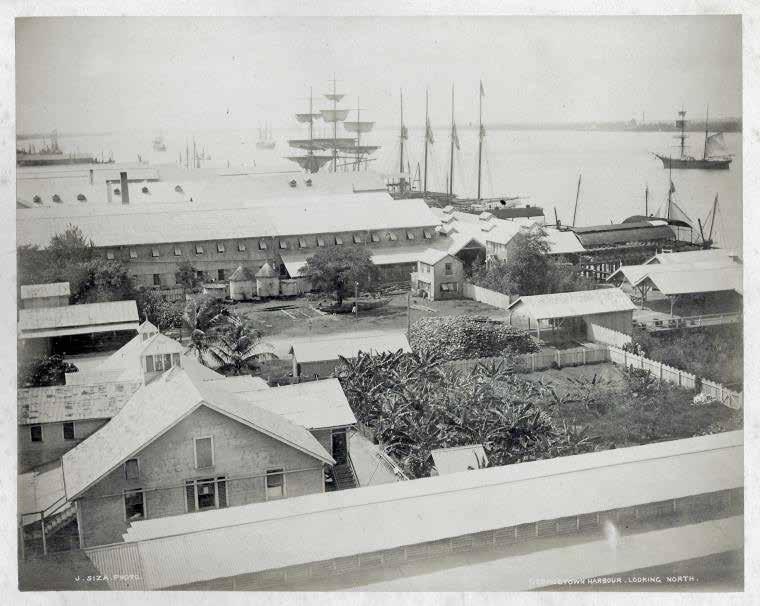
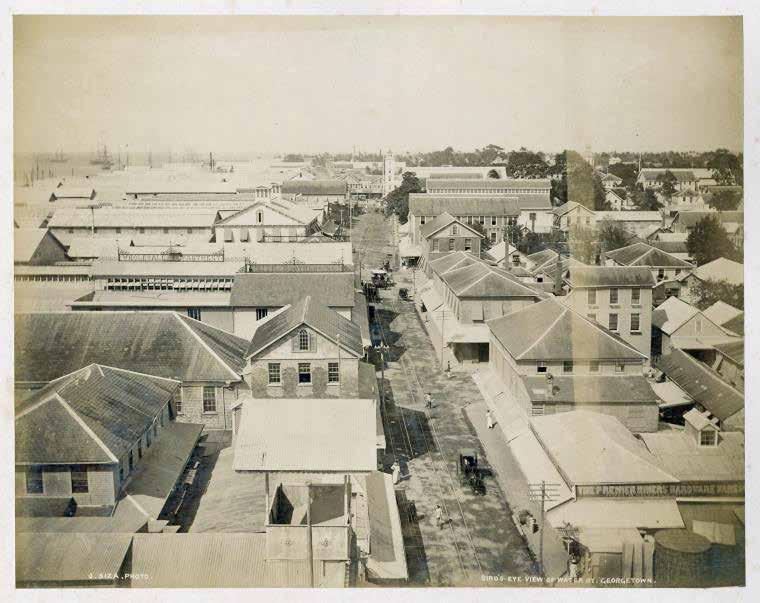
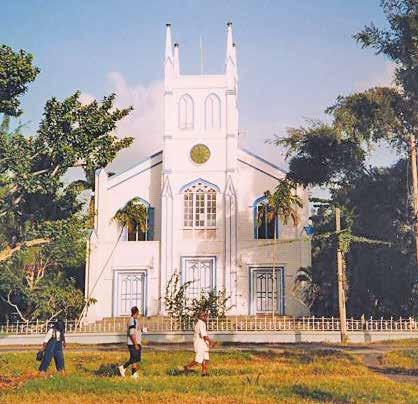
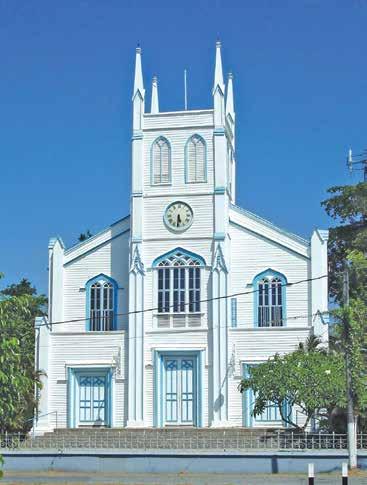

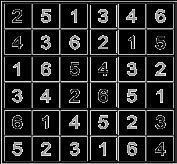
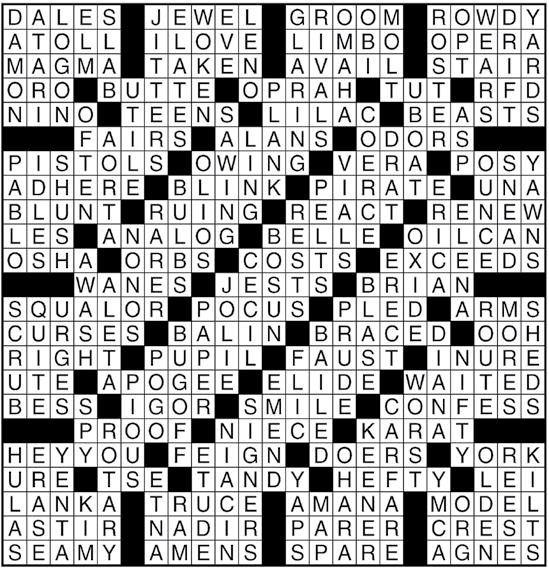
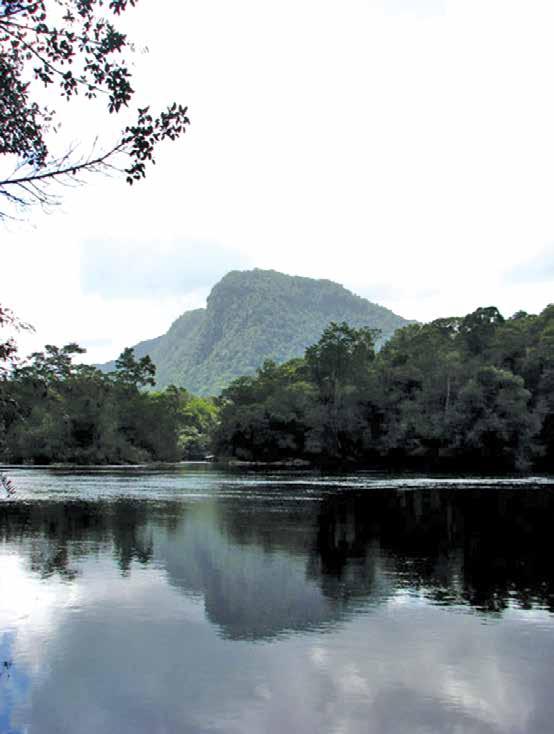
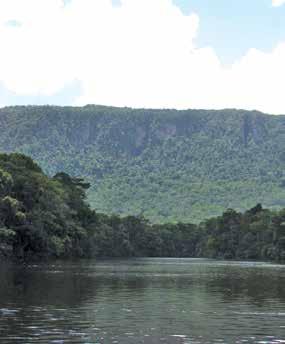
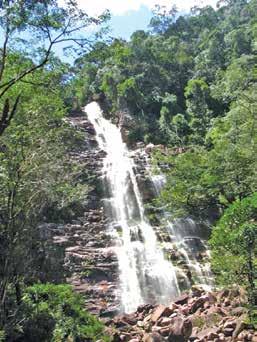
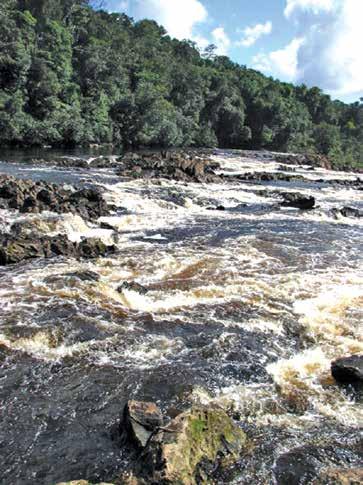
The source of the Potaro River is in the Mount Ayanganna area of the Pakaraima Mountains in the north Rupununi savannahs. This river flows into the Essequibo River.
Nine waterfalls stream along the Potaro River, most notable are Kaieteur Falls and Tumatumari
Falls. Below Kaieteur Falls lies Amatuk Falls and Waratuk Falls.
Chenapau is a small Amerindian village located in forested terrain along the Potaro River south of Kaieteur Falls. Menzies Landing, a small settlement that is a 20-minute walk upriver from Kaieteur Falls, is the main staging
area for upriver travel. Upriver from the falls, the Potaro plateau stretches out to the distant escarpment of the Pakaraima Mountains. This area is rich in diamonds and gold, while the mineral potarite is named for the Potaro where it was first discovered. (Photos by Nicholas Laughlin)

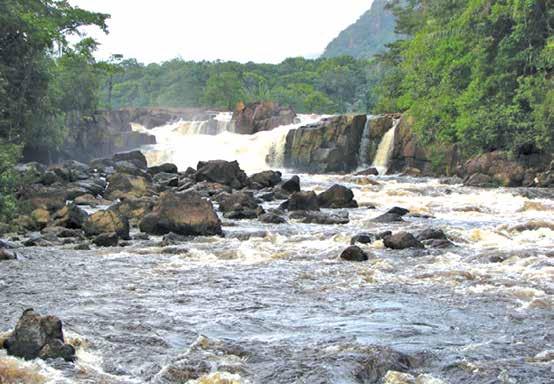
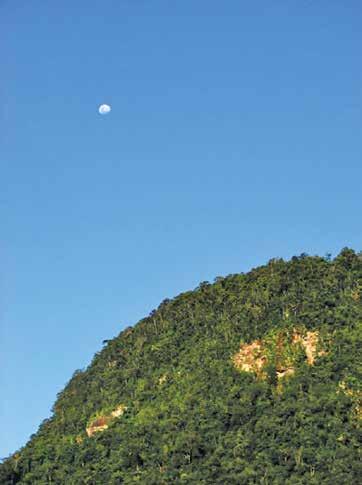
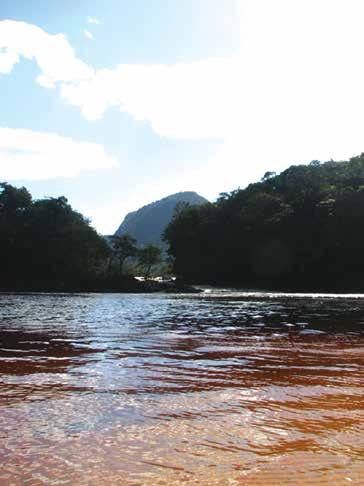
These dog pictures rely on a never-fail formula for joy: 1) Find an adorable pup. 2) Get it wet. 3) Watch it shake dry.



There's a place in Norway called Hell, and it freezes over almost every winter







The camper’s second opinion
Two campers are hiking in the woods when one is bitten on the rear end by a rattlesnake. “I’ll go into town for a doctor,” the other says. He runs ten miles to a small town and finds the only doctor delivering a baby.
“I can’t leave,” the doctor says. “But here’s what to do. Take a knife, cut a little X where the bite is, suck out the poison and spit it on the ground.”
The guy runs back to his friend, who is in agony. “What did the doctor say?” the victim cries.
“He says you’re gonna die.”
The one about the fishermen and the angel
Three guys are fishing when an angel appears.
The first guy says, “I’ve suffered from back pain for years. Can you help me?” The angel touches the man’s back, and he feels instant relief.
The second guy points to his thick glasses and begs for a cure for his poor eyesight. When the angel tosses the lenses into the lake, the man gains 20/20 vision.
As the angel turns to the third fellow, he instantly recoils and screams, “Don’t touch me! I’m on disability!”
Two doctors and an HMO manager die and line up together at the Pearly Gates. One doctor steps forward and tells St. Peter, “As a pediatric surgeon, I saved hundreds of children.” St. Peter lets him enter.
The next doctor says, “As a psychiatrist, I helped thousands of people live better lives.” St. Peter tells him to go ahead.
The last man says, “I was an HMO manager. I got countless families costeffective health care.”
St. Peter replies, “You may enter. But,” he adds, “you can only stay for three days. After that, you can go to hell.”
A doctor sent this note to a medical clinic: “Patient needs a referral for your office from me. I saw her for her ankle and would like you to run over it.”
Three fans were bemoaning the sorry state of their football team.
“I blame the general manager,” said the first fan. “If he signed better players, we’d be a great team.”
“I blame the players,” said the sec ond fan. “If they made more of an ef fort, we’d score some points.”
“I blame my parents,” said the third. “If I’d been born in Seattle, I’d be sup porting a decent team.”
“How many times have you commit ted suicide?”
“Were you alone or by yourself?”
killed?”
“Without saying anything, tell the jury what you did next.”
“Was that the same nose you broke as a child?”
“Now, doctor, isn’t it true that when a person dies in his sleep, he doesn’t know about it until the next morning?”
Drumming up a reason
A man vacations on a tropical island, and the first thing he hears is drums. He goes to the beach and hears the drums; he eats lunch, he hears the drums; he tries to sleep, he can’t—drums. Finally he storms over to the manager. “I’ve had it! Can’t you stop those drums?” he begs.
“No!” says the manager. “It’s very bad if the drums stop.”
“Why?”
“When the drums stop, the bass solo begins.”
More funny hashtags
#UnlikelySequels: Titanic 2 #failedchildrensbooktitles: The Very Hungry Tape Worm
#nicerfilmtitles: Snacks on a Plane
One wish
An angel appears at a faculty meeting and tells the dean, “In return for your unselfish and exemplary behaviour, the Lord will reward you with your choice of infinite wealth, wisdom, or beauty.”
“Give me infinite wisdom!” declares the dean, without hesitation.
“Done!” says the angel before disappearing in a cloud of smoke.
All heads now turn to the dean, who sits surrounded by a faint halo of light. “Well,” says a colleague, “say something brilliant.”
The dean stands and, with the poise of Socrates, opines, “I should have taken the money.”
“Was it you or your brother who was