GUYANA Berbice


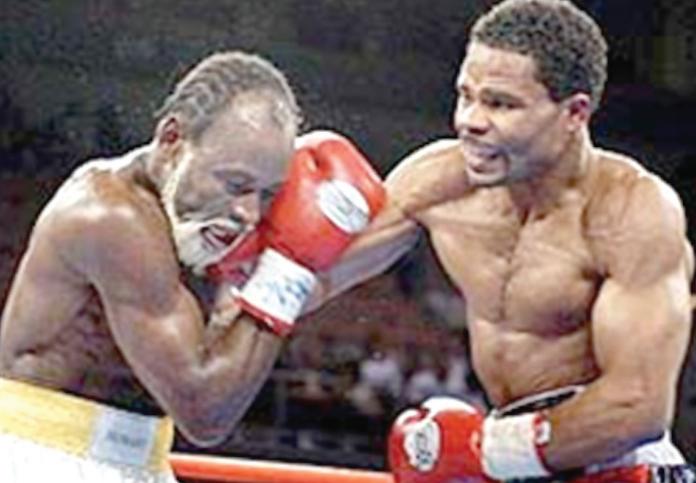
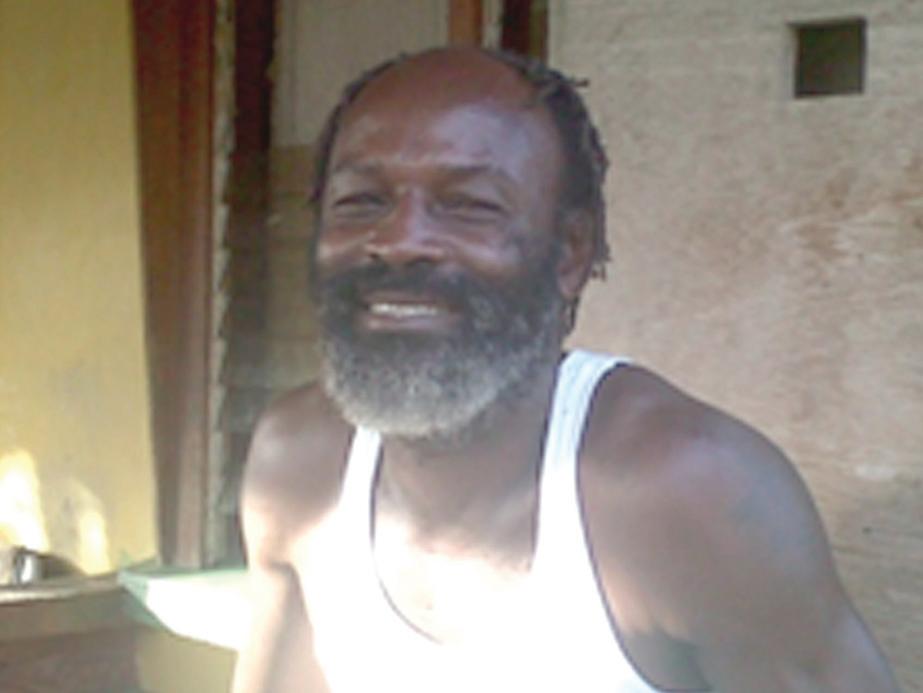
Howard Anthony Eastman, aka the “Battersea Bomber”, had become a household name around the world. Guyanese would remember him for his victorious bout against his first local opponent Denny Dalton, claiming the Guyanese middleweight title, and silencing former WBA World Welterweight Champion Andrew “Six head “Lewis. Leon Gilkes and Kevin Placide also felt the wrath of the unassuming champion, who had already secured several British belts.
In the United States of America, his opponents and victories were many. Some of his standout performances included his quest for the vacant WBA world title against two-time champion William Joppy in November, 2001 on a Lennox Lewis undercard in Las Vegas. And although that fight did not go in his favour, he decided to let it pass and “move on”. In February of 2005, Eastman suffered his second defeat to Bernard Hopkins, dubbed “The Executioner”. But no one was bothered by these losses, because Eastman had already established himself as a champion.
His portrayal of himself as an older man, sporting a white beard and hair, was quite distinctive and fans respected his individuality. His presence in the ring was outstanding and in 2006, he fiercely knocked out Richard Williams in the 12th round, reclaiming his British title in London. He had also thrashed Kenyaborn Evans Ashira in Dudley the following year. But these were not before he conquered Robert McCraken defending his European
title, dropping him in the 10th round a few years earlier. Whether he won or lost, Eastman’s demanding presence in the ring was never taken for granted. Having secured 46 wins from his total of 56 fights, Eastman’s streaks of victories and losses continued over time. His numerous travels around the globe registered him as one of the better fighters of all time.
But then he decided that it was time to return to the land of his birth. And although he continued flying in and out of Guyana to fight, his resettling here was probably one of the poorest choices he has ever made. It was here that the defending champion began his downward spiral.

No support Berbice Times caught up with Eastman at an Angoy’s Avenue residence. He lamented that he has not been receiving the kind of support due to him. He,
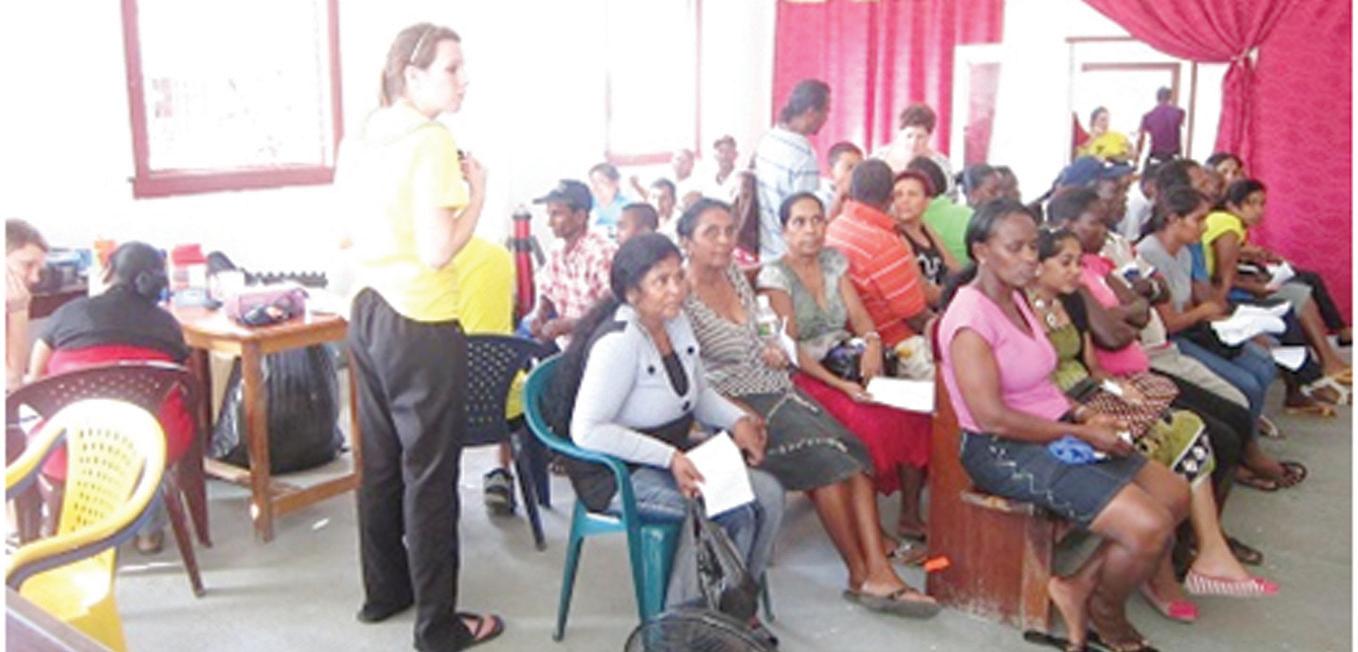
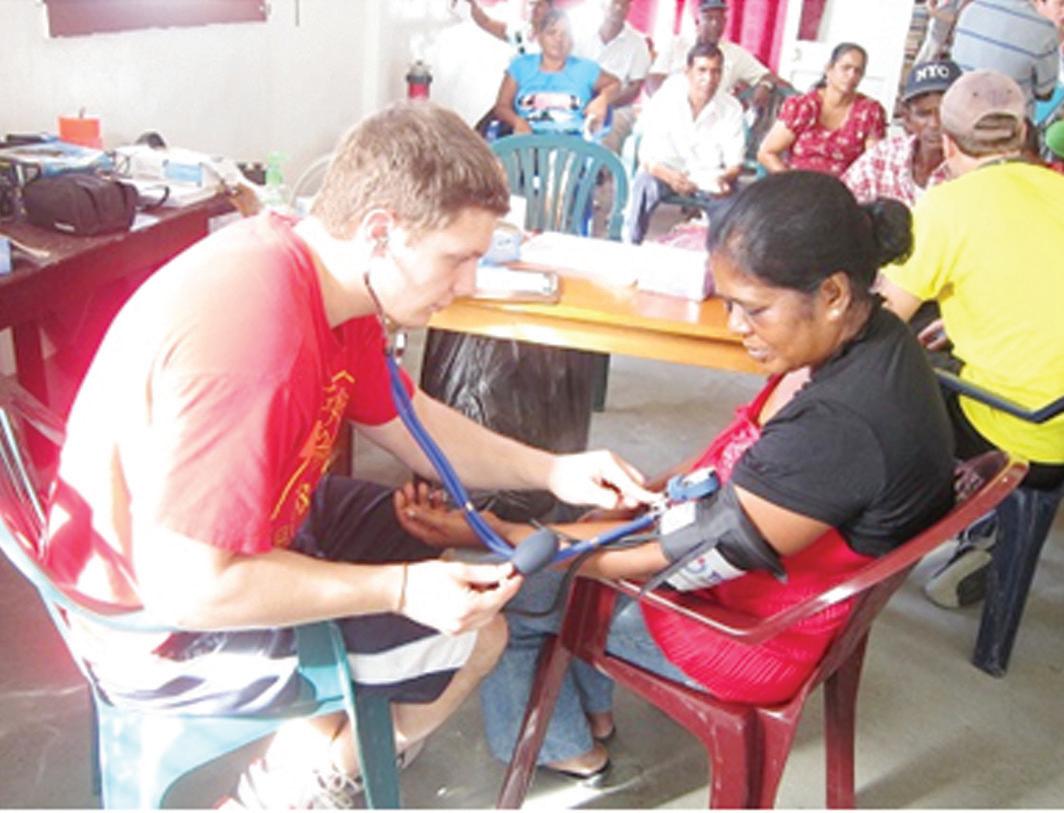
Hundreds of Berbicians benefitted from a medical outreach courtesy of the Association of Bible Churches in Guyana.
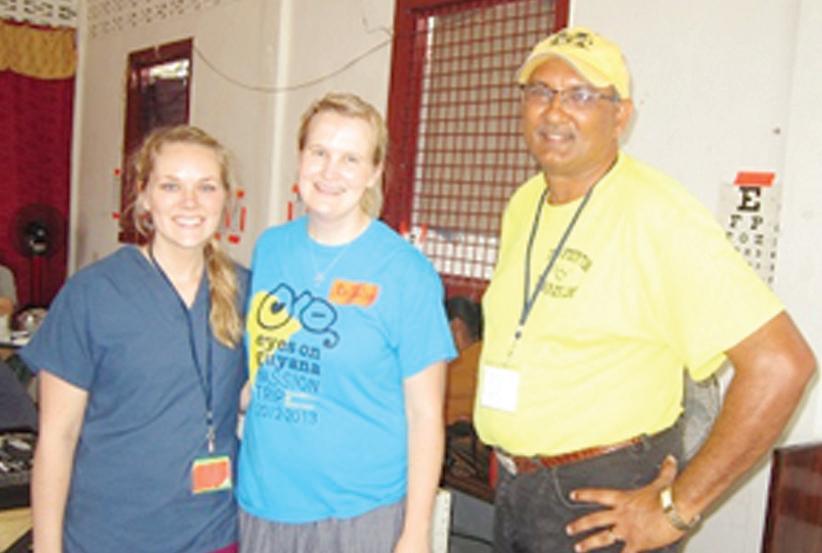
The outreach spearheaded by Pastor Andy Girwarnauth comprises a team of 17 U.S. doctors and specialists and is being held under the auspices of the Health Ministry. The outreach commenced on January 1 at Bush Lot Farm on the Corentyne. So far, over 300 residents from as far as Bath in Region Five and Crabwood Creek in Region Six have received treatment.
Pastor Girwarnauth told Berbice Times that his drive and passion are to help his country with health care and at the same time spread the
gospel. “My passion is not only to help people but to also show them the love of God in a more distinct way and this is a great way in which you can do it,” he posited. He disclosed that for over 12 years, his church has been
involved in bringing medical missionaries from the U.S. to Guyana and they have done outreaches from Kwakwani to Crabwood Creek and the entire West Berbice.
“We try to make sure the love is shared equally in vari-

ous places, that is, one of our dreams,” he said, pointing out that the team of doctors because of their love for God and Guyana, their expenses are covered. “We feed them well and work them hard,” he said.
Girwarnauth said that the motivation behind these outreaches is twofold: to assist those in dire need of good, quality health care while helping people to know that God loves and cares for them.
“From the church’s perspective, if we tell people about the love of God and do not show it, in one sense we will be hypocritical; so we are holding out both hands, one for the love of God and the other in a tangible way so that people can experience that love,” he emphasised. He said that these events are a collaborative effort with the government of Guyana and sanctioned by the Health Ministry. While extending his gratitude to the government, Pastor Girwarnauth said this would not only be beneficial to the country and its people, but it is something that the government has approved.
“We are all very grateful because the needs for health and spiritual cares are vital and if left to the government themselves, it would be impossible to take care of all of them, “he said.
Meanwhile, Dr Julie Hanson, an optometrist, who hails from northern Michigan in the U.S., said she has been involved in the missions in Guyana since 1999.
“I attended optometry school because I wanted to help people and this was offered and the first time I came I was still a student, I saw what a difference it
“Our goal is to present
made in Guyana as we were able to help people see and also help them to know about the love of Jesus Christ, which is even more important,” she said.
Residents were given health checks, including blood pressure and random blood sugar tests, they were also given health talks on HIV and abortion and eye testing, and prescription glasses were given where necessary. Medical supplies, prescription and sunglasses were donated by the Lions Club in the U.S. The medical outreaches are not restricted to any religion or ethnicity and no one was forced into anything.
Through his father, he was enrolled in a neighbourhood gym. His many local fights in England saw him copping the southern area’s light and middleweight championships, representing the community of Battersea. He fought, but maybe he did not fight hard enough. “England deprived me of a lot of things. It’s only those that feel it know it. What people see, all the glitter and glam, they do not see what goes behind that to make it possible. I have achieved a lot for England; I did a lot for them already. I can say they haven’t done a lot for me,” Eastman told Berbice Times
He chuckled after this comment, but his pain and disappointment were obvious. Eastman contended that he was short-changed in many of his “big fights”, including the one against Bernard Hopkins, preventing him from securing his world title. Despite his present situation, Eastman is confident “before I put down my gloves, I will win my world title”.
The boxing champ said when he returned to Guyana over nine years ago, he had in excess of $100 million. His plan was to give back to his homeland and he did this by establishing the Pocket Rocket Gym, a place where amateurs could go and unleash their hidden talent. Many sporting events were sponsored by Eastman, but according to him, he never made it known. He had established a mini mall in Pitt Street, New Amsterdam which crumbled not too long after.
Today, the 43-year-old Eastman moves around the streets of New Amsterdam on a bicycle, not the style one would expect a boxing champ to embrace. He practises the Rastafarian religion. And even though he built two houses, he has no fixed place of abode. He blames poor choices and bad management for his current predicament. “I invest a lot of money in my business. This came from people so close to me, it shocked me so much when I realised they got so close to me. They faked their way up to me then they ripped me off.” Eastman said persons that were entrusted with the responsibility of taking care of his business abused his trust. These included his wife, from whom he has separated. Eastman spends most of his time in his vegetable farm. He also sells clothes at an unoccupied
the gospel of Christ and the love of God in a tangible way. We are encouraged because we have been able to simply hold out the love of God to them,” Dr Hanson concluded. A dental team is slated to arrive in Guyana in March and will be holding outreaches in Fyrish.

roadside building. A few years ago he was incarcerated for allegedly having in his possession an illegal substance. He was later released, and according to him “they wasted my time and cause me to lose a lot of money”. He admits that he finds some kind of “peace” in his use of “substances”, pointing out that the many so-called friends who were there when he was doing well have all removed themselves. The “Battersea Bomber” said he has not giving up hope. He is slated to square off with Guyana’s super middleweight champion Derrick Richmond next month, hoping to make his mark. He has plans to return to his second home, England in the near future, since according to him, he is not ready to retire. Howard Anthony Eastman was born in New Amsterdam, Berbice on December 8, 1970. According to him, his childhood was not the best, but he still managed to overcome the odds.
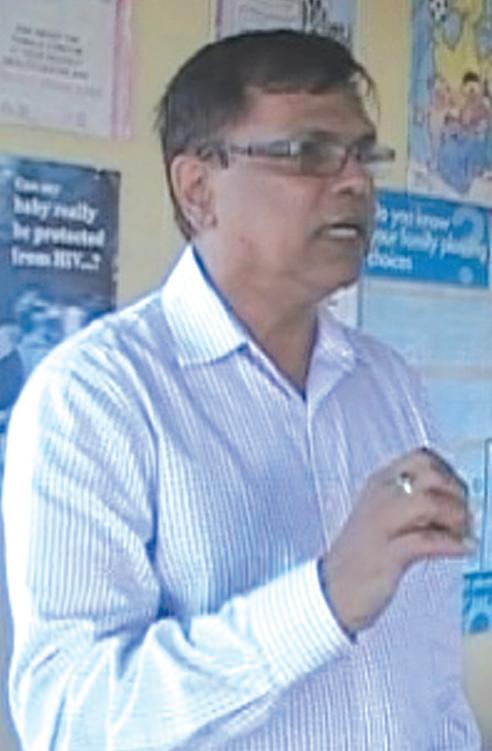
The Berbice Regional Health Authority (BRHA) is set to launch specialised geriatric services that will benefit the elderly across Berbice, as part of its commitment to optimising the health and well-being of seniors in the region.
This was disclosed by BRHA Chief Executive Officer Dr Vishwa Mahadeo during a year-end press briefing.” We are looking to commence this programme around mid January of 2014 where elderly persons ranging from 60 years and over will be beneficiaries of much-needed services,” he said.
Dr Mahadeo explained that every quarter elderly persons from different communities across Berbice will be brought together at a specific venue for a well-rounded programme inclusive of a hot meal, physical examination, medical treatment, and recreational activities designed to meet their physical, cultural, social, cognitive, emotional, and creative needs.
The regional health authority director noted that the elderly are not always given the respect due to them, but are faced with abuse and repulsion, sometimes the aged are even otracised. “They are made to feel useless, a burden to family, and often are cast off, avoided except on rare occasions of birthdays and Christmas morning,” he stated.
He stated that age is beautiful, age demands respect and dignity and the elderly are giants of the forest, wise, full of experience, worthy of our praise and adoration, hence

the need to implement a special and much-needed geriatric service for the elderly.
Dr Mahadeo also disclosed that despite the challenges and limitations faced by the BRHA, last year it was able to achieve its mandate in delivering quality health care to patients.
“Taking into consideration the severe shortage of medical supplies, rudeness of staff to patients, a couple of bad experience and a few other hiccups and discrepancies, we have had a relatively good year,” he said, adding that the large influx of Cuba-trained junior doctors at the institution has been of tremendous benefit at the primary health care level.
He said over the next 18 months, more doctors will be added to the staff.
“Over the year, we have done several reviews where we looked at our constraints and issues that we have not been able to deal with properly and come up with mechanisms on how to deal with it.
“We are hoping that in the new year with the addition of staff that we will be able to provide better health care and facility,” he pointed out.
Dr Mahadeo announced that in 2013 the authority touched on every single area in terms of infrastructural repairs and better working conditions for the staff.
“We have purchased more equipment and within a couple of weeks we should be having more ultrasound equipment so the backlog should go away, we have established the x-ray unit at Port Mourant Hospital and hopefully it will be operable by the end of January,” he said in highlighting a few of the improvements.
He also encouraged all stakeholders to cooperate and assist the BRHA in delivering quality and improved services. “We will continue to do our evaluations and we hope that users of the service will be open and frank and let us know where we are not meeting their expectations, so that we will be able to improve and meet the standards,” the CEO said.
Dr Mahadeo also noted that the New Amsterdam Blood Bank achieved its target of 1000 units of blood for the year 2013.

The Corentyne rice farmers who had planned to move to the courts last Monday to settle outstanding payments with a rice milling company have decided against such action, as they have begun receiving payments.
Guyana Rice Producers Association (RPA) President Leekha Rambrich, in an invited comment, told Berbice
Times that the Ancient County Investment Inc, the mill at the centre of the squabble, last Tuesday commenced paying rice farmers for paddy received for the first half of September 2013. Farmers received full payment for the first half of the month – a total of $16 million so far, but only 50 per cent of the payments due for the second half will be paid.
Farmers had, on December 27, converged at the mill’s entrance at Tarlogie Farm, Corentyne, hoping to meet with company executives to hear from them why they had not received payment for paddy supplied during the last crop, which ended in October.
However, no company representative was present to meet with them. The security guard had informed the gathering that “strict orders were given not to open the gate, as no business transaction would be conducted today”.
Rambrich said the company had later claimed that it was unaware of the meeting with the farmers and their representative, the RPA. He said this was untrue, because, at a meeting held the week before, an agreement was made to meet on the said date.
The milling company, when contacted by Berbice
Times confirmed that farmers have indeed begun receiving payments. However, that was all the information the company was willing to give at the time.
The RPA president disclosed that the rice farmers and the milling company had negotiated and had come to a mutual agreement that farmers would continue receiving payments on a weekly basis.
The farmers’ decision to move to court would have been fully supported by the Guyana Rice Development Board (GRDB) and the RPA. GRDB General Secretary and vice chairman of the both rice organisations, Dharamkumar Seeraj was displeased over the situation and promised that a recommendation would be put forth that the company be removed from the list of those millers exporting rice under the agreement with neighbouring Venezuela.
BY ANDREW CARMICHAEL
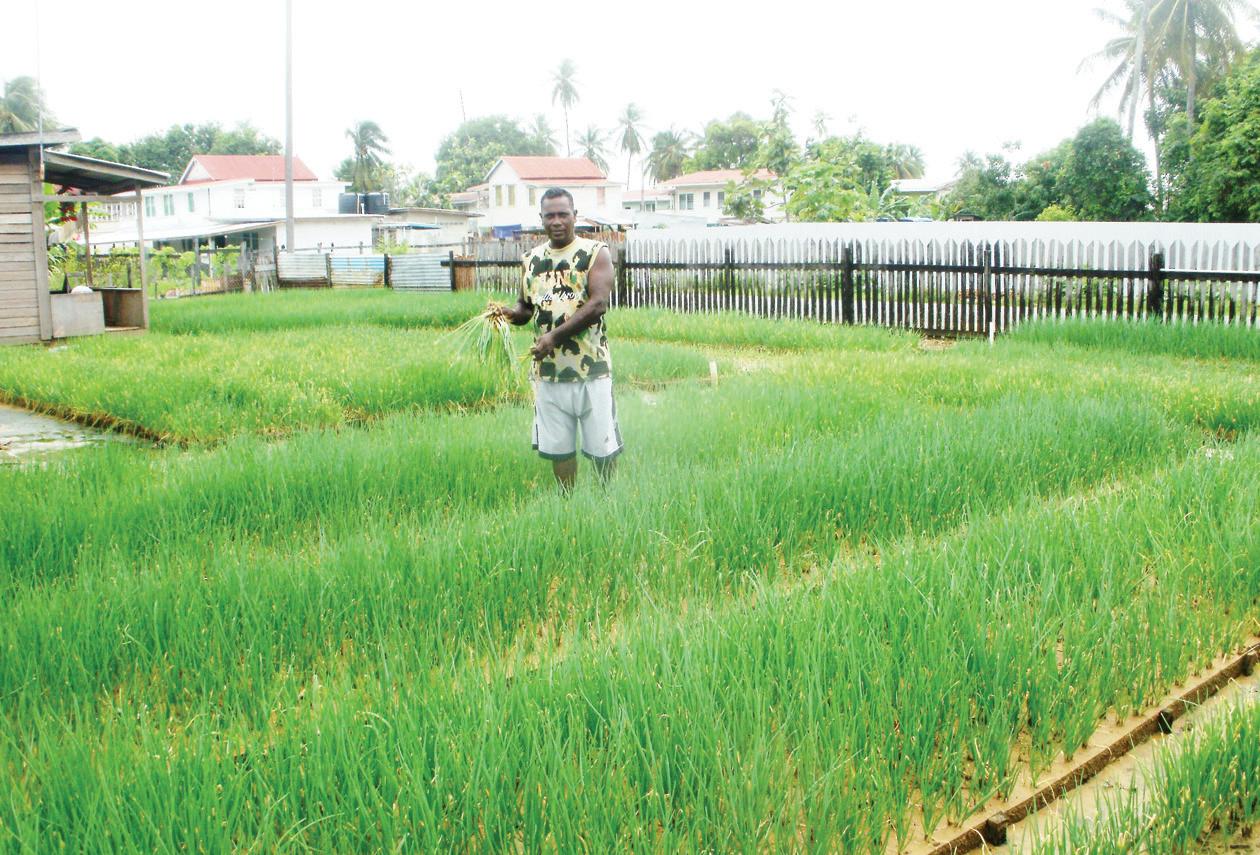
Situated on the West Coast of Berbice, the village of Bath Settlement is probably the most unique in Guyana in that more than half of the residents plant the same crop on a commercial basis and there is no conflict among them.
A trip through the village leaves one stunned as most of the residents have a garden in which they grow eschallot. These villagers could not be putting so much eschallot in their food. So what do they do with it? “We plant to sell. Everybody got a little garden at they sell it.”
Some persons have as little as seven beds (2 x 12 feet) of the onion type plant which is used as a mildflavoured seasoning, but it seems to be tradition that there is need to produce eschallot once one lives at Bath Settlement.
Tularam Dkharam was able to send his three children to school and pay all his bills with the money that he earned from the eschallot cultivation in his yard.
Turn To page 4



As the final minutes of the year approached, loud explosions were heard, dogs hid themselves, vehicle alarms went off, some rushed to church seconds before midnight, the bars emptied, telephones went unanswered at taxi services – the town of New Amsterdam became frighteningly still.
Minutes later, there were hugs being shared as church doors burst open to let strangers and regular congregation members out; almost everyone had their phone out, pressed against an ear, overloading the phone lines; the sky became bright as fireworks were repeatedly sent into the air; tears rolled down the faces of some – it was the start of a new year in the oldest town in Guyana.
After church, where did people go? Most refused to go home, some pretending that
they were waiting on taxis.
They stood in front of bars and other night spots for the next hour and then, as if signalled by a silent bell, there was a steady movement away from the town centre, with many making their way home.
The bars kept their doors open but no one went in. The popular hangout spots in the town were the most deserted.
Squib
As one woman came out of the Mission Chapel Church and as she got onto Main Street, a squib exploded next to her. Her reaction left many shocked. The explicit words could have been heard two streets away and over the loud music, which was coming from everywhere.
The Castle Night Club at Chapel Street was sur-

prisingly empty, especially since it offered an Old Year’s Night Ball with free admission. Persons were seen entering in groups of three and four, reappearing moments later. When asked, they all said that it was empty.
At the Apollo’s Lounge on Main Street, a few went to see whether the party would have picked up. It did not and only the less than 20 persons who wanted to spend time together, away from the crowd, stayed until shortly after 03:00h.
Fun, dancing
The Penguin Hotel and Diner annual Old Year’s Night Black and White Ball was also poorly attended. Sheets Night Club at Pitt Street took a small piece of the action, as several dozen attended its Jazz Session.
There were lots of fun and dancing, but soon after
the two o’clock hour, patrons wanted dancehall music and the party switched from a jazz session to a Saturday night dance, the only difference being the elegant dress that was evident.
At the Prisons Sport Club on Penitentiary Walk, an oldies session was held. The older folks attended. It was the number one Old Year’s event in the town as couples glided to the beats and rhythms of yesteryear. About 04:30h, the party became a soca session.
Many were wet with perspiration when they left as the sun started to appear for the first time in 2014.
Now as the 12th night approaches, promoters have not planned any 12th Night parties. They say people don’t have money. So it looks like the holidays are truly over and it’s back to regular life.
we all have friends and probably some great ones too. We should never lose touch with any of them, but for various reasons life sometimes gets in the way, and weeks turn into months and months turn into years, and we don’t see some of them.
However, we are sometimes able to go back and find some of our friends and re-establish contact with them. In my case, many still live in Berbice.

We should do our best to locate our friends, no matter where we are. Some would themselves relocate elsewhere and work as teachers, police officers, doctors and even religious leaders .
We often think hard about some of them and use every detail to track them down. Luckily, there now is the Internet, which is a wonderful resource that helps with the process.
However, one can only imagine how difficult it is to initiate the first contact again. We can be successful by sending a brief note reminding friends of who we are and asking if they are the right person.
In some cases, we can try something like: “I was talking to another friend and your name came up. I became excited, because it reminds me of how we have had a great time growing up and would love to make that reconnection again. I would love to catch up when you have a chance!”
One of the important things we should do is make regular contact, once the reconnection is made. We can send emails just so they know we are thinking of them and the odd times we can call as well. We should not wait for a special occasion, because this is what makes it more special.
And to the ones that are close by, we ought to try a regular get-together event whenever possible. We can make it a priority to stay in touch with as many friends as possible, especially the ones we grew up with, and some of them may very well be close by.
Once we take the time to inform them where we are, they may also make all efforts to stay in touch or even visit. Using the social networking sites to friends and posting recent pictures is a great way to stay connected, because sharing our lives regularly will keep our friendship alive once we have found each other again.
We all have had good and bad experiences with friends and we have different levels of relationships as well, but that is okay. The key point is honesty, acceptance and being open. We have to keep in mind that we all have our own lives to live, but at the same time connecting with the ones that we grew up with is a good way to reflect on our past, because, in some cases, it is the friends we grew up with who really shape who we have become.
According to the farmer, a 12 x 2 foot bed could give him almost 100 pounds of eschallot every six to seven weeks.
“You don’t have much work to do and the overhead is not much,” he said, pointing out that about 10 per cent of the bulbs from the harvest are used as seeds for the next crop.
Most economical plant
Dkharam believes that eschallot is one of the more economical plants to cultivate on a commercial basis. “We don’t really get pest apart from blight affecting them and there is a drug that you got to buy and spray. Once you spray like every week, they don’t bother the plant,” he said.
Residents explained that the trick behind having the
village produce almost all of the eschallot consumed in Guyana is the fact that eschallot is a perishable item, and as such, retailers will flock a community where they are sure that they will get the amount that they are going for.
“You see if you living in another village and you planting eschallot, nobody will come to buy because when somebody come to buy, say two or three hundred pounds and you don’t have it, they will have to go to another village,” he noted.
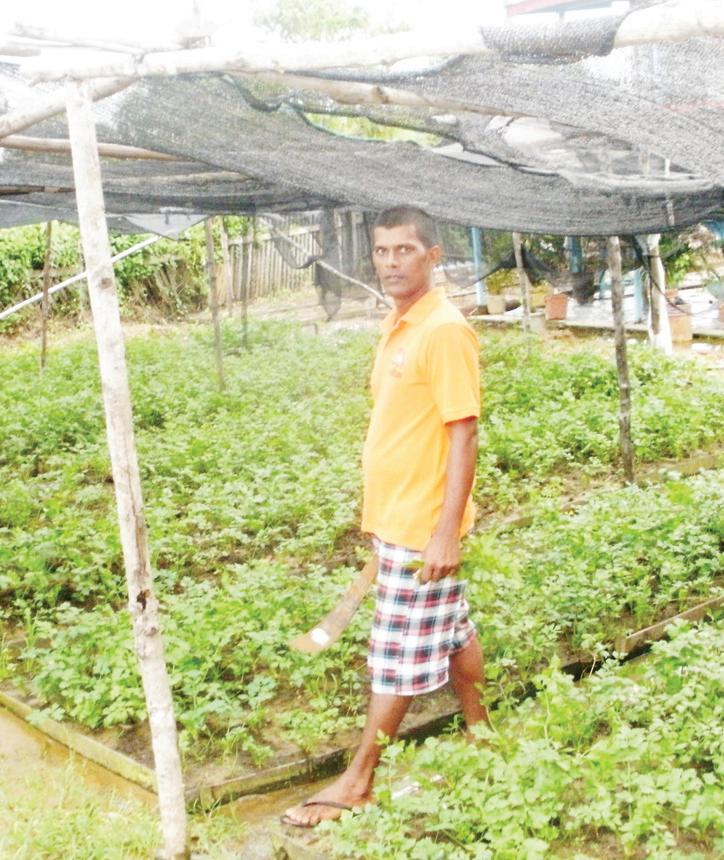
Eschallot is not the only plant Bath Settlement is famous for. Some resident have added the production of celery to their eschallot cultivation.
However, there is a difference in the returns and the investment. One of the
few who plant both eschallot and celery is Mahindra Persaud.
“The profit is bigger when you plant celery but you have to invest a lot of money,” he explained.
The farmer explained that a 12 x 2 foot plot of land could be cultivated with eschallot with a budget of $10,000 and within six weeks, one could start selling.
Depending on the price, the retailer is paying returns could be between $70,000 and $300,000.
On the other hand, when celery is cultivated on the same size plot, the initial investment is in excess of $150,000.
“You can’t count how much money you make be-
cause when it start to bear, you could reap for the whole year. Like now, eschallot $100 a pound, celery is $360 and if you reap now, by next week, you can reap again,” he said.
The residents say that if they take their produce to the Port Mourant, New Amsterdam and Bourda markets to sell to vendors, they are offered very low prices as against when the vendors come to them to make purchases.
“They know that if you go to sell them and they say that they paying $20 a pound, you have to take it because it wouldn’t last but when they come, they can’t offer you $20.”
The next time you enjoy a well-flavoured meal, think of Bath Settlement, the “home of eschallot”
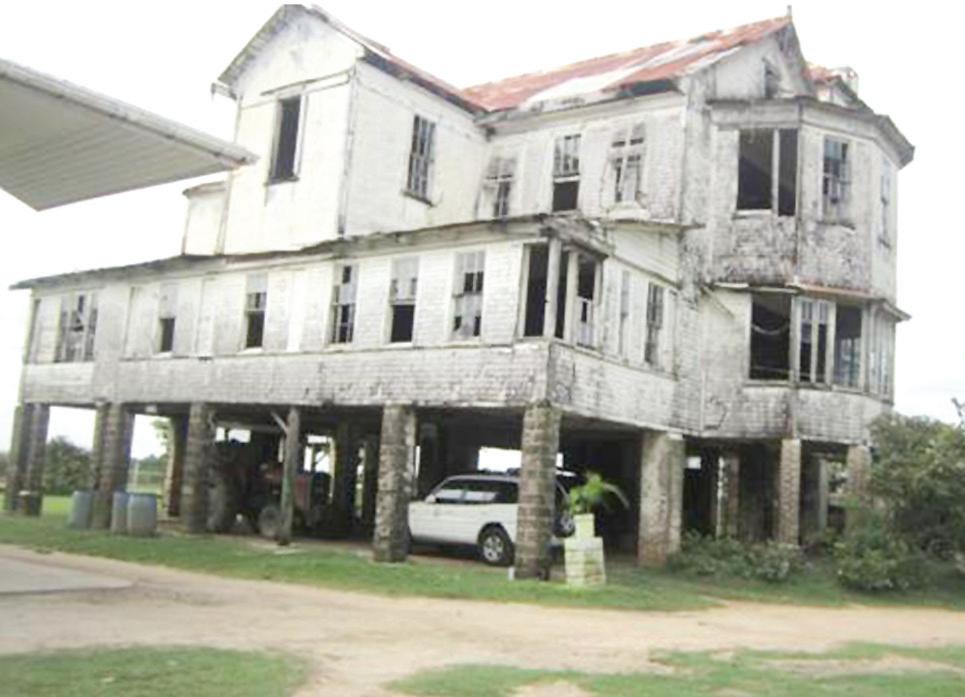
ADutch colonial building that for years stood as an attraction for travellers on the Corentyne could soon be demolished as the owner struggles to have it maintained with help from no one.
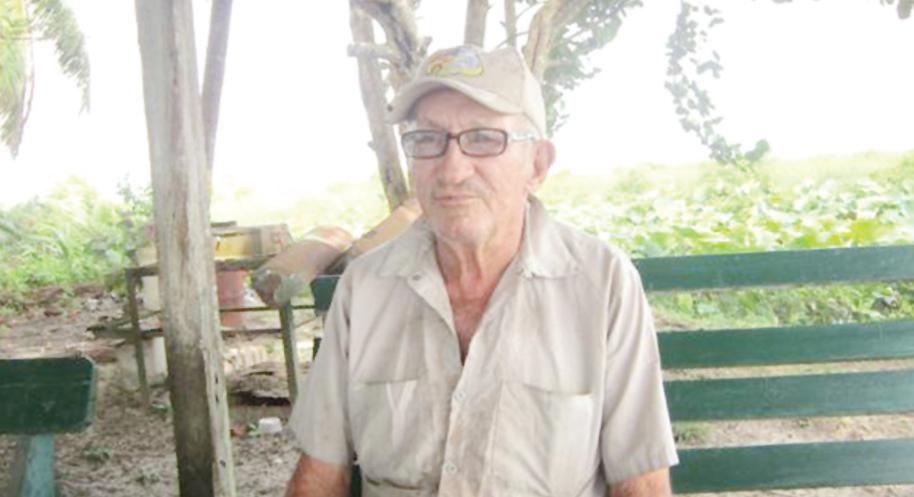
David Anthony Fraser, 76, who comes from Number 35 East Lothian, a quiet and secluded village in Berbice, situated along the Number 19 Public Road, is seriously contemplating demolishing the landmark that stood as a symbol of status for more than 100 years.
This once imposing and stately edifice situated about a quarter mile away from the public road was designed by a French architect and was constructed more than 102 years ago.
Features
It took nearly two years to be completed. It has three bedrooms, a dressing room, a magnificent dining hall where governors, including Sir David Rose would dine regularly and a servant’s quarter.
The house was originally built with 100 windows, but that would later become 99, after a Dutch governor ordered one of the windows be nailed down as no house should be more interesting than that of a governor. However, due to years of neglect, the building now lies in ruins.
Driving along the Number 19 Public Road, this large and impressive but dilapidated building is hard to miss and one would tend to crane their necks or even stop their vehicle to get a better view of the structure
that has always been of intrigue to travellers.
Maintenance
In an interview with Berbice Times , Fraser, who is the heir of the house, said because of the exorbitant cost of repairs, he was forced to leave it and construct another building adjacent to where he now lives with his family.
He disclosed that several persons from overseas had expressed interest in assisting with the repairs of the building, but that has fallen through.
“Many people came from the U.S. and visit the house, they said they will come back and help fix it but since the hurricane (Hurricane Katrina), nobody came back,” he said.
He told this publication that he recently met with the Regional Executive Officer Paul Ramrattan to discuss if there is any way possible the government through the regional administration can help in saving the landmark for future generations.
However, with the constraints of budget cuts and lack of finance, he is not optimistic that this would materialise.
Fraser said too that due to the rise in criminal activities in the area,
The Berbice River Bridge has been in the news much in the last few weeks. In the last five years, lots have been written as well. People who cross the bridge curse it.
Then they cross back. Cursing it again. It is a monstrosity, they say. It is ugly, they write.
But they cross the great Berbice River using the thing they curse.
Some of us have crossed the Whitestone Bridge and Yellow Stone Bridge and the Golden Gate Bridge.
Some of us have had escorted service up to the Twin Towers in Kuala Lumpur and walked across the tallest sky bridge in the world (still).
Many of us have crossed the bridge spanning Lake Ontario to get back and forth to and from Niagara Falls.
We have not cursed those. They are still there.
And many have said awful things about His Excellency, President Bharrat Jagdeo.
But if President Jagdeo did nothing except cause that bridge to be built, then he has done more than those who curse the bridge that they cross and re-cross.
Thank you, Bharrat, if I may be so bold to use the first name.
Did anyone notice, in-
he is now thinking of demolishing the structure as it is used as a safe haven for those bent on breaking the law.
Thieves
“Thieves are too numerous around here, especially since we are not equipped with GPL services and depends solely on our generator system, three times I have faced the barrel of a shotgun fearful for my life, but I must thank God to be alive,” he said.
He said the safety and well-being of his extended family is heavily on his mind as he believes that he does not have much time on Earth.
“I have a hunch that I will die this year and I want to know my family is safe from criminals,” he stated.
Fraser said that only recently, he was attacked by masked bandits but managed to ward them off with his licensed firearm.
While this historic building lies in ruin, Fraser is still hopeful that someone will be moved to help revive the structure.
This publication asked Fraser what it was like living in the house, and he replied tersely: “First class”!

cidentally, that American presidents are always referred to ceremoniously as Mr President?
Even former presidents: Ronald Reagan. George Bush. Bill Clinton. George W Bush. Protocol.
They may stand opposite us on a political divide, but protocol demands that kind of respect. Not here in Guyana.
We shall not get into the technicalities of who owns what and by how much and shares and such deep things regarding the Berbice River Bridge. It is too much for us simple Berbicians.
What we know is this: (1) That when we call and ask when the bridge is going to close, we get clear answers.
And, my goodness, al-
ways polite! Call Guyana Power and Light (GPL) or Guyana Water Inc (GWI) or University of Guyana (UG) and see what you get! And (2), the price to cross the Berbice River Bridge is high.
Then we read the toll will be lowered for SUVs, 50- and 30-seat buses, trucks with luxury time (Bar-B-Q grills and such), and recreational vehicles with boats hitched. Nice! But it does not make any difference to a person who has a job in East Berbice and she/he lives in West Berbice? People like teachers, nurses, police, and other similar people. No difference!
These teachers and students and police and others like them cannot buy recreational boats, 50-seater buses and Bar-B-Q grills. And cross with them. With their salaries, it is impossible.
There is a single parent who has to take her child to the public hospital in Georgetown. She is from, say, Number 57 Village. She cleans floors. Her child is ill and referred to the Georgetown hospital. She has to go with one of these minibus things or a taxi. She cannot buy an SUV!
Some Berbicians are not happy. Let us delay no more!

By Nafeeza
From 60 to 650,000 chickens, Deonarine
Arjune of D Arjune and Sons is a pioneer in the poultry industry in Berbice. Arjune started the poultry business back in 1980 when he used to buy and sell chicken from other people.
At peak times like the holiday season, he would not get a regular supply as people were selling out their stock to the highest bidder. As such, he
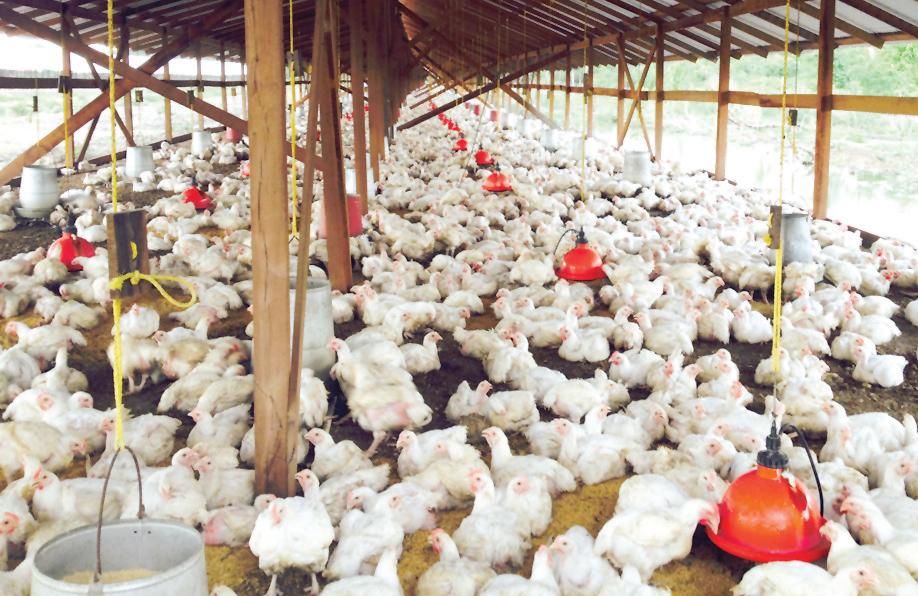
decided to rear his own chicken and started with 60, but all died as he did not know how to rear them.
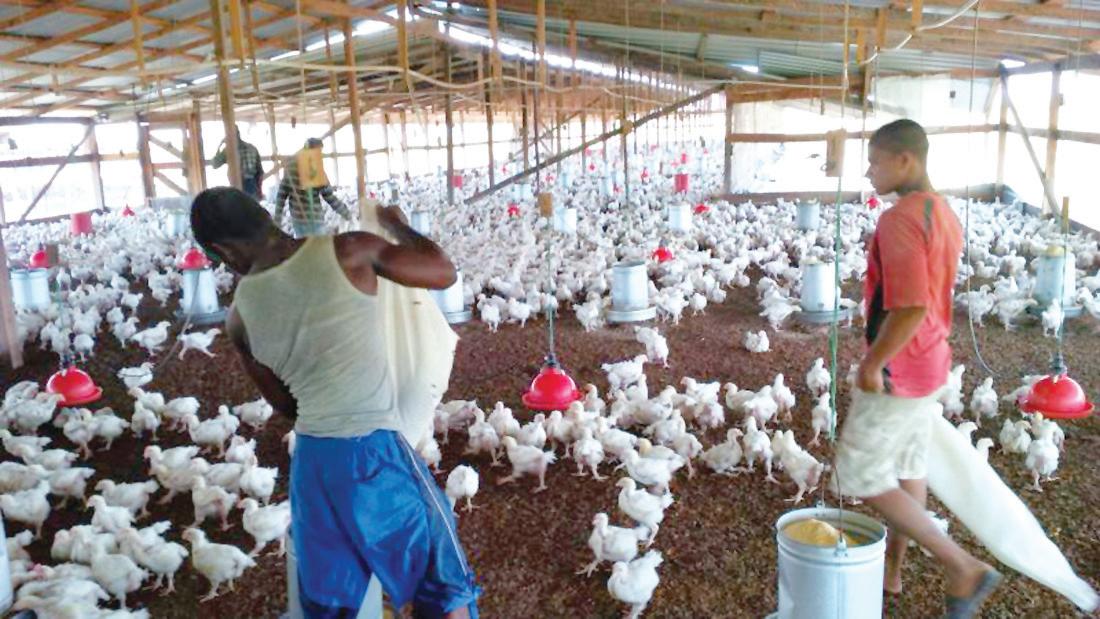
His current stock of 650,000 chickens was an investment he made alone as he built it from the ground without the assistance of anyone or loans.
According to Arjune, he likes to sleep well at nights and cannot go to bed knowing he owes someone, so he invests little by little and is proud of his accomplishments which he wants his family to carry on.
Rags to riches
Arjune is a real life rags to riches story that is often seen portrayed in the movies. He was 25 years old at the time when he started. His dad was a labourer at the Albion estate while his mom was a housewife.
It was his wife who stood by him as they made strides with each batch. There was no help from anyone then as he could not afford to hire help, but with each batch, he increased his stock.
Now 20 years later, he has 150 plus employees and 650,000 chickens, a farm that occupies over 1000 acres of land that he recently bought and is developing at the back of the Kilcoy/Chesney area.
His desire to rear chicken and make it affordable stems from his personal experience when he was just a child; he loved chicken, but his family
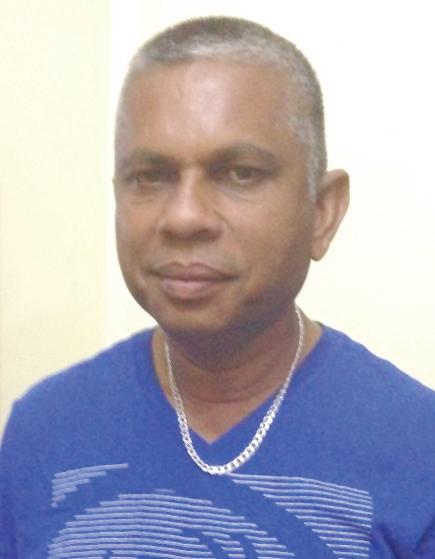
to a filtration system for clean water.
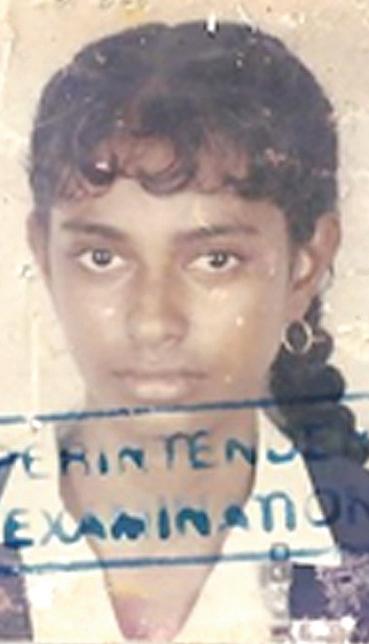
Madan Partabsingh breaks down every time he sees a photograph of his 16-year-old daughter.
She was closer to him than she was to her mother Bhojmattie.
The third of five children, Roshnie Partabsingh, known in the community of Warren, Number 19 Village, Corentyne as “Indira”, was writing the Caribbean Secondary Education Certificate (CSEC) examinations at the Berbice Educational Institute (BEI).
In fact, she had already written three of her six subjects. The morning of her demise, she would have written her fourth.
On the evening of June 6, 2009, Roshnie was reluctant to go to her neighbour’s house to sleep. The week before she told her mother and father that while sleeping, she felt a hand rubbing one of her thighs.
Upon waking up and rubbing her eyes, she saw the figure of a man, heading out through the darkness. It was dark because there was a bad circuit and the electricity went off. It was later fixed by a resident in the area.
When she told this to her 73-year-old neighbour whose company she kept, she was told that it was probably a dream.
like many others could not afford it at the time.
Chicken then was a luxury that was afforded only on special occasions and even then persons had to line up to get it. He pledged to himself that he wanted everyone to enjoy chicken and would make it affordable.
Pride
Arjune prides himself with the fact that an average person can go to any of his outlets and get a five-pound chicken for only $1000.
“From 1980 to now, I get more experience with the growing population; people are eating chicken, more so you have to meet the needs of the consumer as chicken is now served with a variety of dishes,” he told Berbice Times.
He recalled the time when people were only able to eat chicken once per month in some cases and at that time he wanted to make a change and decided to start by buying and selling chicken.
“I try not to sell chicken for more than $200 per pound. In order to do this, you have to have chicken in really large quantities to be able to still make it profitable, as there are certain costs that are fixed irrespective of how many chicken you rear.
“When I say $200 per pound, that price includes plucking, roasting if desired and cutting to whatever size is needed,” he said.
“When I started I had only one outlet where I sold chick-
en, that was the Belvedere location, now I have at Sheet Anchor, Rosignol, Bath Settlement and a new location opening soon at Strathspey,” Arjune noted.
Hope
He hopes to be a contract grower for Bounty Farm, the largest supplier of chicken in Guyana and with whom he shares a very good relationship.
Arjune is thankful for their assistance in providing advice and tips on getting the best possible yield. “I currently supply chicken to most of the fast food locations across Berbice and Bounty Farm if they need, as well as KFC from time to time, and all (my) chicken are Halaal,” he explained.
Arjune believes if he gets assistance from the government, he can expand and do a lot more to get the price of chicken down.
The businessman said he really needs help, noting that although the roads were recently redone, given the scope of his operations, he cannot traverse them as they are not built to withstand the amount of weight he needs to move.
He would be grateful for any concession he can get with electricity costs or duty exemptions on large generators, as well as vehicles.
Arjune already made a huge investment by contracting a Trinidadian firm to make six wells, which he plans to have interconnected
Currently, he has small filter but his biggest hurdle is access to his farm. He is also trying to get some feed from overseas to help boost the weight of his chickens, but had to abandon it because of the duties and import taxes.
“People prefer the local chicken because it’s fresh and tastes better; however, it’s very difficult to produce and maintain the prices unless you have quantity to subsidise the price,” he said.
His immediate plan for 2014 is to increase his capacity by 100,000 more chickens, taking it to 750,000 chickens, or one chicken to each member of the population, he said jokingly.
He said preparation for construction of a new pen has already been completed and actual construction will soon commence.
Ameer Ishmael
Meanwhile, another chicken supplier Ameer Ishmael of Fryish said the demand for chicken increases daily, as such; he tries to provide a service to cater for Berbicians.
Ishmael began his business in 2003 with some 6000 chickens and 11 years later, it has grown to over 140,000.
He sells over 15,000 chickens per week. Ishmael said he is comfortable with the amount he currently has and has no intention of expanding.
In addition to these major suppliers, there are several smaller poultry farmers across Berbice.
Roshnie, who was also a Sunday school teacher, insisted that it was not a dream and that it had indeed happened.
Budhia (only name given), called “Granny”, begged the teenager to come over, promising her that she would take care of her dinner and that she could also take a bath at her home. And so she went.
A few hours later, a loud cry rattled the stillness of the night. “Dutchie”, Budhia’s neighbour on the opposite side sounded the alarm, waking up the Partabsinghs just two houses away.
“Thief”
He was the first person Budhia called out to. Reliving the event, Madan said he was told by “Dutchie” that “thief deh in Budhia house”. The senior Partabsingh said he jumped over in his car and woke up his neighbours in the street.
He was unsure whether the “thief” had left and he did not want to go over alone. The girl’s father said he did not go upstairs; however, his wife Bhojmattie entered the house.
She said she was not prepared for the sight before her. Her daughter was lying face down. Bhojmattie said she turned her daughter over and saw her face soaked with blood, throat slit and underwear pulled down to her ankles. It was later revealed that the teenager was raped and murdered. Her hands were also broken.
Budhia, the main witness, had told the family and police that she was bound by her feet and hands and taken downstairs. It was there she shouted for her neighbour “Dutchie”.
Testimony
But at the preliminary inquiry sometime later, she recanted her testimony, saying that she did not see or know anything.
Partabsingh said it all seemed “fishy”, because that night again, electricity in that house went off. Despite the efforts of those who gathered, power was not restored. He said sometime later a switch was flicked and the electricity suddenly came on. He suspected that it had to be someone in the neighbourhood who committed the crime.
One suspect, Seenarine Ramnarine, called “Vicky”, was a frequent visitor to the Partabsinghs’ home. He was disliked by the teenager and had called her earlier in the day on her cellphone.
Apparently what was told to her on the phone was unbecoming because when her parents returned from work that afternoon, she had asked them to tell “Vicky” not to call the phone again. He was taken into police custody but was later released because of lack of evidence at the preliminary inquiry.
Another suspect was the caretaker of Budhia’s house. He was also questioned about the rape/murder but was released. Three months later, he committed suicide.
The Partabsinghs are sure that the killer of their daughter either lives among them or has moved away. Their suspicion towards “Granny” had also risen, since her testimony was unreliable.
She died a few years ago. It seems like their daughter’s murderer will never be brought to justice, since the main witness, Budhia, whom they believed knew more than she was actually telling, has died. The pain and suspense live on.
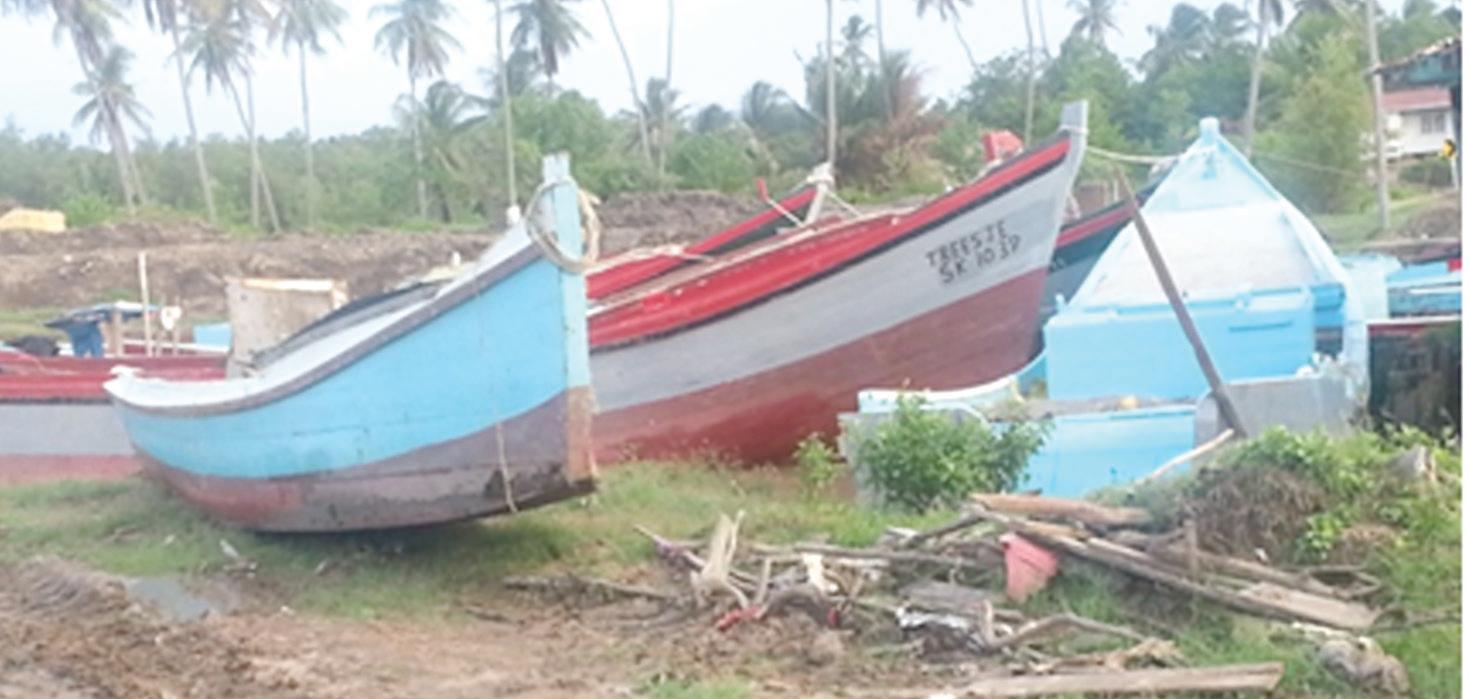
Unrelenting attacks from sea pirates have forced scores of Corentyne fishermen to drop their nets and abandon the business fearing for their lives, while lamenting poor protection from the authorities.
Rampant sea piracy has been an age-old problem on the Corentyne. Today, some of the fishermen have ventured into different fields of employment in order to support and sustain their family. They are adamant that some of the pirates are actually their fellow fishermen.
Bryan Daniels, who hails from Mon Repos, East Coast Demerara, but plies his trade at the Number 66 Fishing Complex on the Upper Corentyne, has been the captain of a fishing vessel for over 25 years.
Terrifying encounters
He told Berbice Times that he has had approximately 20 terrifying and risky encounters with pirates.
“Over 10 times pirates attack me, dem tie we up and beat we bad and take away all we fish, groceries and water, when they done, they bruck up the boat engine and left us tie up,” he said.
Daniels recalled one experience in February 2013 when his youngest son, who is only 16 years old, became a victim of piracy.
“It was day time and we see two boats coming so we think dem coming to ask for something because remember we nah get shop there to buy anything when we need, next thing we know them raise up, masked and with long, long guns,” he recalled.
He said pirates took away their entire catch, groceries, drinking water and gave them a hammer and order them to destroy their boat engine. He said they were forced to comply as they were fearful for their lives.
Daniels said they were then tied up with rope and threatened to be killed.
Another fisherman, Harry Singh of Number 43 Village said that because of piracy attacks, he was forced to quit fishing and turn to renting DVDs and selling a
small quantity of groceries in a makeshift shop in his yard.
“Dem attack us one night and beat we really bad, up to now me back and feet does hurt me and me so frightened me na go back fishing, we lucky dem left us alive,” he said.
Singh is of the view that if this pillaging on fisherfolk continues, the industry will suffer a downward spiral, pointing out that many are already turning to other sources of livelihood.
“This thing is terrible but what we can do? The whole industry is going down; this will impact all of us,” Singh posited. He, however, quickly pointed out that piracy attacks have diminished tremendously over the past months and is praying that it remains that way.
Rogue fishermen
In the meantime, fishermen acknowledged that not all attacks are carried out by pirates, but sometimes by their own colleagues. “Not always pirates doing the hijack and robbery... sometimes are our own fishermen doing it,” one fisherman said.
“When you see dem nah catch fish dem does go wear mask, take gun and hold up another boat man, tie dem up and take that boat and come attack us, so when we see them coming, we say that is our padna, next thing you know dem rob we,” the fisherman, who asked not to be named, said.
He is of the opinion that with stringent monitoring and intervention of the relevant authorities, the issue of piracy can be curbed.
According to reports, approximately seven fishermen are still listed as missing and feared dead, including two from Tain Port Mourant.
They all were married and their wives were left with the task of raising and providing for their children.
The recent move by the Agriculture Ministry to implement Vessel Monitoring Systems (VMS) on all marine vehicles to assist in curbing rampant piracy and other criminal activities at sea was welcomed by the Upper Corentyne fishermen.
Many said it is an excellent move and it will assist tremendously in alleviating the fears and disquiet of the fishermen while at sea and also their families at home.
The Bush Lot Health Centre Committee on Tuesday made a donation of a gas cooker equipped with gas cylinders and a water cooler to the Bush Lot Health Centre.
This donation was made possible through assistance from Poonai Bhigroog, Mohamed Mobeen and AINLIM.
The health centre provides services to over 1000 residents from Alness to Tarlogie and the kind gesture will assist the centre in providing hands on demonstration to pregnant and diabetic patients on how to prepare and cook a variety of healthy meals.
Speaking at the presentation, acting committee chairman Sydney Kennard commended the donors, saying that their commitment is a true meaning of love and concern for health care.
Medex of Bush Lot Health Centre, Premnauth Mathoor

thanked the committee for the much needed equipment.
He noted that the centre’s nutritional programme will be boosted as patients will gain knowledge from the six food groups. Pointing to the need for a water cooler, he said patients will be pleased to access pure fresh cool water. The committee also intends to tile the floor of the health facility and paint traffic signs on roads in the community.

The Sport Ministry is committed to upping its anti-doping strategies to secure Guyana’s image as a dignified player in the world of sport, regionally and internationally.
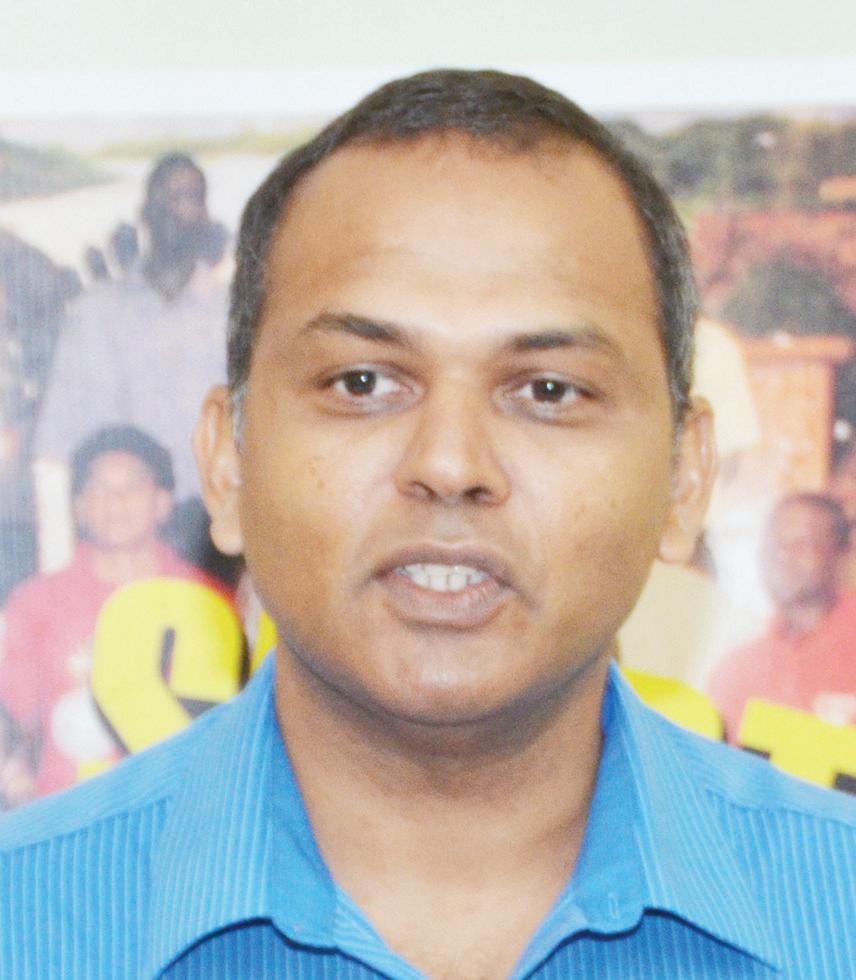
At a press conference Friday, Culture, Youth, and Sport Minister, Dr Frank Anthony expressed disappointment over Guyanese powerlifter Gumendra Shewdas failing a doping test administered by the World AntiDoping Agency (WADA).
Shewdas failed the in-competition doping control test, which was conducted in August 2013.
Dr Anthony noted that proper education with regard to prohibited substances is necessary, and added that his ministry will be conducting training sessions along with the Regional Anti-Doping Organisation (RADO) to educate sport officials, coaches, and athletes.

The ministry is currently in possession of the list of prohibited substances for sportsmen and women, which it will make available to sports associations and officials.
“We at the ministry, we are extremely disappointed, but we have to learn our lesson and move on, and the moving on means we have to be more rigid with our anti-doping measures in
Guyana, we have to do more educational sessions,” Minister Anthony said. Shewdas made his country proud after dominating the 2013 Sub Junior Powerlifting Championships. Subsequently, the Guyana Powerlifting Federation was informed officially by the International Powerlifting Federation of Shewdas’ failure to pass the doping test.
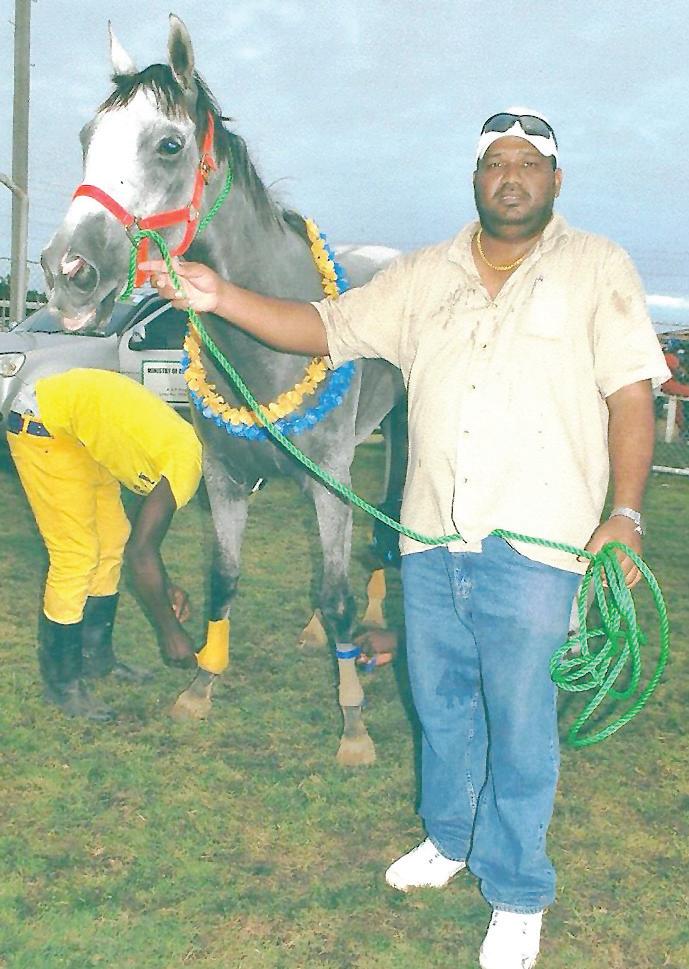
Guyana’s top racing horse “Score Is Even” may soon be racing in the twin-island republic of Trinidad. That is according to owner and trainer Dennis Deroop.
Speaking with Berbice Times, Deroop said his horse has proved that there is no local competition for it. The animal won its four last races and is the only A Class horse in Guyana.
Deroop, who has been in horse racing for the past 16 years, says that he trained several horses, but had not been able to produce a horse of “Score Is Even”’s calibre. The animal is running at an average of 12 seconds (00:12) per furlong.
Some of the other horses that the former regional vice chairman has trained and owned are “Science Gold”, “Simply Royal” and “First Lady”, all of which were champions. Deroop also had “Who So Ever” that created a name for itself and was one of the horses to watch, out of his stable.
“Score Is Even” is a U.S.bred horse. “I brought him in 2012 and by the end of the year, he had proven himself.”
The animal has won races at all the different distances, thus proving that he was not just a good sprinter.
Deroop said the late Senior Counsel Marcel Crawford encouraged him a week ago to take the animal overseas to race.
He said that he has taken that advice seriously, because “Score Is Even” is the fastest horse he has seen and his best time also matches that of “grade three horses in the USA”, while it is competitive in Trinidad.
“That was the last advice Marcel Crawford gave to me and said that he has never seen a horse run like this before.”
Deroop says that he is focusing on Trinidad where “Score Is Even” could earn US$50,000 from one race. Later on, he hopes to race the horse in Barbados and then Jamaica where the purse gets even bigger.
he New Amsterdam
TMultilateral School (NAMS) will miss the services of geography teacher Andrew Young who was also the school’s chess team coach.
Recently, the school took part in the Regional Inter School Chess tournament at the Tagore Memorial Secondary School, Number 63 Village, Corentyne, and copped four of the six prizes up for grabs. Young has since left the country.
Young was very instrumental in getting the players up to scratch and the school winning the overall tournament.
The importance of a good coach was evident when 2012 runner-up team Vryman’s Erven Secondary (VESS) failed to show at the champi-
onships and when host school Berbice High, in 2011, made no preparations until schools showed up to participate, and finished second to last.
Black Bush Secondary, thanks to the total involvement of the entire school, remains in the top echelon of chess in Berbice. The school lost its title to NAMS, but placed second at the 2013 championships.
Meanwhile, Orealla missed out on the 2013 tournament, because there was no room on the boat for the team to travel to the Corentyne Coast to participate in the championships.
Chess organiser Chris Ragunandan is currently making arrangements to have the students from the Amerindian community participate in a tournament.

West Indies selectors have called up three players to join the team in New Zealand for the two-match Twenty20 series.
Coach Ottis Gibson said that leg-spinner Samuel Badree, all-rounder Andre Russell and wicketkeeperbatsman Andre Fletcher are on their way from the Caribbean to join their team mates for the T20 matches.
Gibson confirmed the addition of the players during a post-match interview following the fourth One Day International (ODI) here last week.
“There are some guys coming in for the Twenty20s. There are three guys coming. Samuel Badree is on his way; Andre Russell is on his way and Andre Fletcher,” he said.
“They are coming in for the T20s. We are down to the bare-bones and we’ll have to look at integrating them into this mix-up and see how we go forward from there. They should be here in two days’ time.”
West Indies lost the fourth ODI by 58 runs under the Duckworth-Lewis method to give New Zealand a 2-1 lead in the five-match series. They were 134 for five in the 34th over in reply to the hosts’ 285 for six off their 50 overs.
West Indies are down to 12 fit players after seamer Ravi Rampaul suffered an injured finger while batting the nets on Friday.
This followed injuries to Marlon Samuels and Darren Sammy and the withdrawal of Darren Bravo due to personal reasons. “Ravi is a tough guy and I think when we get to Hamilton as long as there is no pain,” said Gibson.
“It’s his left hand so it would not affect his bowling that much. Obviously only his fielding comes into play and batting at the end − he bats at 11.”
He said that the team management is awaiting the results on Sammy but at the moment he is on the injured list. “We are still waiting for the results on Darren Sammy.
At the moment, he’s still limping around a bit so we’re not sure how he’s going to travel but he’s staying here with us a little longer. So, if it gets down to next week we still have 10 days. At the moment, he is on the injured list.”
The fifth and final ODI will be played in Hamilton on Wednesday (Tuesday afternoon Guyana time) followed by the two T20 matches on January 11 and 15. (CMC)