





The Polarcus, which arrived in Guyana a few days ago, will be used to carry out the seismic surveys (Carl Croker photo)



In its quest to discover oil in Guyana, Spanish oil exploration giant Repsol has invested US$35 million to carry out a 2D and 3D seismic survey in the Kanuku Block.
The surveys will begin offshore Guyana on Monday and is expected to be completed on December 9.
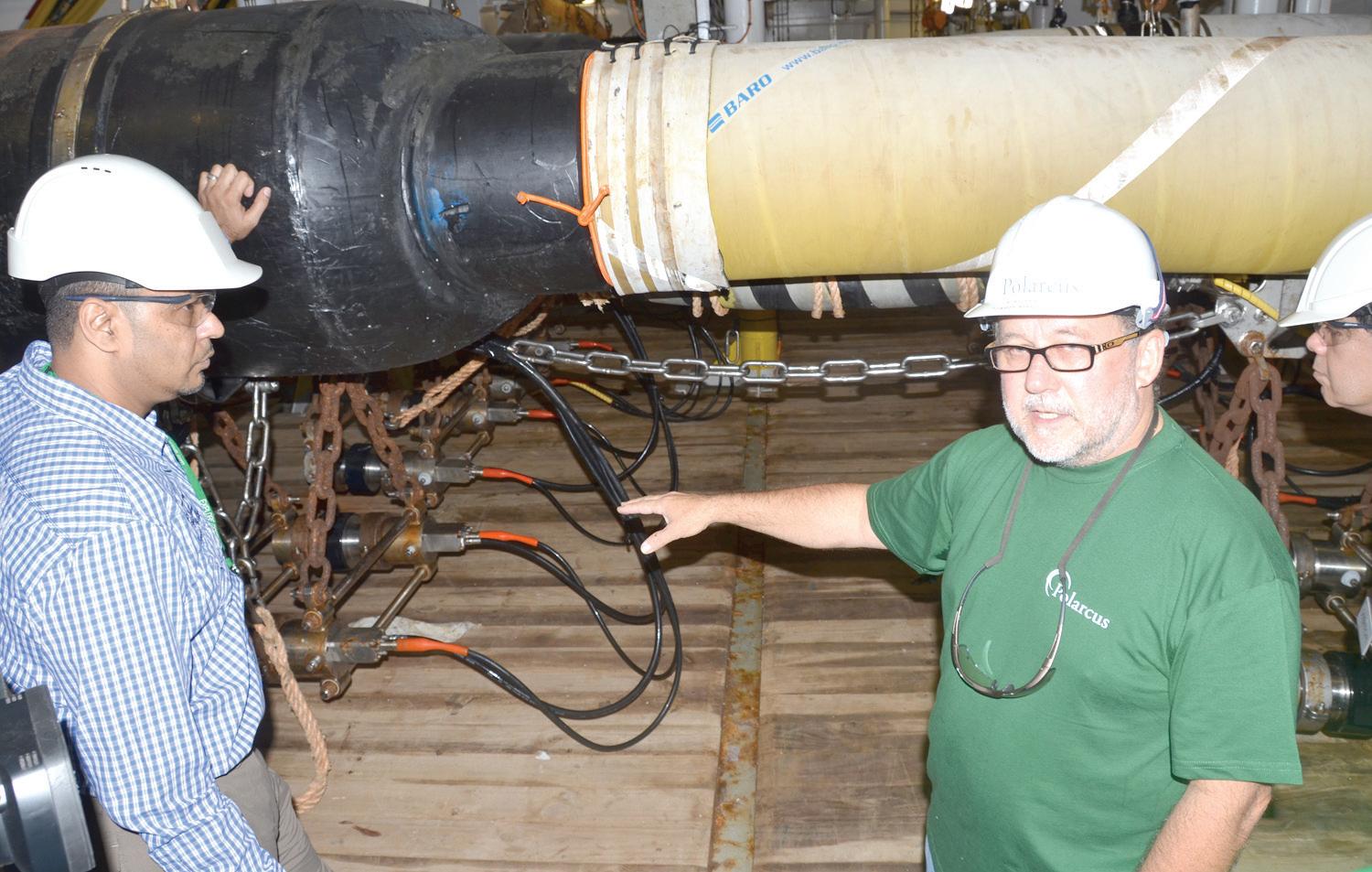
Seismic vessel, the Polarcus Asima, has been hired by the company to do the surveys. The vessel which arrived here three-days ago is outfitted with stateof-the-art equipment and manned by a crew of 58 competent persons.







During a tour of the vessel on Saturday, Repsol Atlantic Basins Exploration Manager Allan Kean said the company will take advantage of the old data shot in 2008 in the area, merge it with the new data gained and reprocess it altogether to hopefully get the highest imaging resolution possible so that it could identify the location most likely to have oil. After the final results, Repsol will then decide if it will invest another US$200 million to drill a well in the identified area.
Kean stated that it will take about nine months for the final processing of the data, adding that “by the end of next year 2014, we will know what direction we will be taking”.
He said this bit of information will help to make recommendations to the upper hierarchy of Repsol to determine whether to move forward. Repsol will also be receiving daily report on the progress of works from the Polarcus so that it can monitor developments.
One step closer
Meanwhile, Natural Resources and the Environment Minister Robert Persaud, who was present at the tour,

said the initiative is a step closer to discovering oil in Guyana, which studies have shown has a high possibility. The minister said he is happy that there is now mobilisation of the vessel, which he noted has some of the best technologies in the business.
“The key for us is seeing early action because with seismic examination and processing of the data, this will then inform whether or not to drill and where are the targets… we hope the time frame will be kept.”
He commended the company for moving rapidly in its pursuit, noting that the latest development has come shortly after the company signed another agreement with the Guyana government to commence drilling for oil and gas in the Kanaku Basin offshore Guyana.
Repsol’s new Petroleum Prospecting Licence and its accompanying Production Sharing Agreement signed in May covers an area approximately 6525 square kilometres within the sedimentary basin offshore Guyana, and approximately 100 miles seawards of the mouth of the Berbice River.
At the signing, Repsol representatives had expressed the company’s anxiousness to commence work and had highlighted that the first phase includes the new 2D and 3D marine seismic acquisition, to be followed by an exploration well in the second phase of the licence which has been granted for an initial period of four years.
In July 2012, Repsol had to halt works at its Jaguar-1 well in the Georgetown Block due to safety issues.





Sunday Times Editor: Tajeram Mohabir
Tel: 225-5128, 231-0397, 226-9921, 226-2102, 223-7230 or 223-7231. Fax: 225-5134
Mailing address:
238 Camp & Quamina Streets, Georgetown
Email: news@guyanatimesgy.com, sales@guyanatimesgy.com
Opposition Leader David Granger is reported to have stated that a “new political culture” is needed in Guyana. From his comments, he is evidently reacting to the gridlock that has developed in the National Assembly since the last general elections. More specifically he suggests that this “new political culture” should engender a “relationship among the three parties in the National Assembly to ensure that the dialogue that takes place is for the benefit of the whole people”.
On the surface, there is much that is commendable about Granger’s proposal and we are hoping that when the National Assembly reconvenes in a month’s time we will see whether he is serious. Up to now his actions have belied his asseveration. He mentioned the early initiative of President Donald Ramotar in establishing the “Tripartite Talks Mechanism” in which the leaders of the same three parties he cites met to dialogue on contentious issues.
The record of that mechanism is hardly encouraging on account of the intransigent posture adopted by first the Alliance For Change (AFC) and then Granger’s own A Partnership for National Unity (APNU).
In the first round of substantive talks surrounding budget 2012, the AFC went on a fishing expedition by demanding higher wages for public servants. For this blatant act of playing to the political gallery, he had to be reprimanded by the General Secretary of the Trades Union Congress (TUC) Lincoln Lewis.
The AFC soon withdrew and when APNU and the president struck a bargain on the equalisation of electricity tariffs for Linden in a quid pro quo for raising the old age pensions, they undercut APNU’s position and forced them into a tactical retreat. APNU and the AFC then inflicted massive cuts on the budget.
For this year’s budget, even though in the interregnum the chief justice had ruled that their prior budget cuts were unconstitutional, the opposition once again eschewed dialogue in the tripartite talks and repeated their cuts. What became obvious by then was that they were intent on practising a political culture that rejected the supremacy of the constitution, which made a sharp distinction between the functions of the executive and the legislature.
The opposition insisted that they must play a role in crafting the budget which is exclusively an executive function. As the chief justice ruled, if the executive were to lose this power, how else would it be able to execute the programme on the basis of which it won the executive?
The government has consistently invited the opposition to meet with the Finance Ministry’s budget team and to make their proposals, as other social sector representatives do. But this does not satisfy the opposition’s definition of a “new political culture”. In the last budget process, the APNU representative Carl Greenidge found any number of reasons for not attending the scheduled meetings.
In Granger’s present call for a “new political culture”, he disappointingly once again repeats his call for the opposition to usurp the executive budget-making authority. This time, he insists on the formation of a “tripartite budget committee” in which the three parties can “reach consensus” in crafting the budget. This will not do since it will simply confirm the executive’s abdication of its constitutional mandate.
But beyond the budget process, there was another opportunity for the opposition to demonstrate they were willing to place the best interest of the country before the lure of partisan politics. This opportunity presented itself when the Anti-Money Laundering and Countering the Financing of Terrorism (AMLCT) Bill came before the National Assembly.
The opposition had no substantive objections to any of the clauses in the bill, which had been demanded by the Caribbean Financial Action Task Force (CFATF), and which if not passed by last August, would cause our financial instructions to be blacklisted.
The “new political culture” of the opposition caused the bill to lapse. We await its new performative expression.
Dear Editor,
Any person vying to become leaders in any society ought to have a clear vision. One of our presidents, the late Dr Cheddi Jagan, saw the plight our citizens using the riverine transport sector.
In the early 1960s, then Premier Dr Jagan, had the foresight to order three ferries for the three counties. Essequibo got Malali, Berbice got Torani, and Demerara got Makouria. These large boats, transported farmers’ produce, goods for the business sector, cars, vans, cattle and
hundreds of passengers, including schoolchildren.
Still the opposition critics called it a waste of money and claimed Guyana was not ready for that. Perhaps, if they had power, then those vessels may have taken another 20 before becoming a reality.
A repeat circumstance is happening again in our dear country Guyana. This government has a clear vision, nearly US$200 million dollars can be saved by not importing fuel yearly. For the past 15 years, government has explored every possible avenue to har-
ness power from Guyana’s many waterfalls, thus reducing our dependence on fossil fuel for our electricity needs.
But the so-called experts in the opposition camp are claiming the Amalia Falls Hydro Electricity Project is too big for Guyana.
Our business sector, manufacturing sector, the private sector body, wider society, external bodies and banks are willing to bankroll this project, because it is good for our country.
I have seen the many consultations the govern-
ment, banks and the inventors had with the opposition A Partnership for National Unity/Alliance For Change (APNU/AFC), updating them with every question they asked. I want to feel that APNU and AFC are afraid of this project because the benefits the population will get and the recognition the People’s Progressive Party/ Civic (PPP/C) government will get from all sections of society may keep them out in the cold for a long time.
Yours sincerely,
R Setaram
Dear Editor,
It seems as though we are in a crisis. Everyone is pitching in when it comes to combating domestic violence, and in the last month or so, it is like the more we are becoming aware of the scourge, the more it is happening.
Apparently, no one is hitting any right key, and now the American University of Peace Studies is taking a hand. Maybe my little bit will provoke some new and deeper thinking.
I first thought of anger and how deadly deceptive this can be. It simply makes people totally irrational, especially when it reaches what we call the boiling point. William DeFoore, an anger-management writer, described anger as a pres-
sure cooker: “We can only apply pressure against our anger for a certain amount of time until it explodes.”
In terms of the body, when we get angry, the heart rate, arterial tension and testosterone production increase, cortisol (the stress hormone) decreases, and the left hemisphere of the brain becomes more stimulated. This is straightforward biology. In other words, we will do something when we get angry that we would not have normally done.
I think that this is where we need to do some work. It makes a lot of sense to avoid situations that can spur arguments and even practise the slow count to 10 or even the walk-away thing.
The other thing is the social level and this feeds es-
pecially on male egos. Those who experience anger explain its arousal as a result of “what has happened to them” and in most cases the described provocations occur immediately before the anger experience.
Such explanations confirm the illusion that anger has a discrete external cause. The angry persons usually find the cause of their anger in an intentional, personal, and controllable aspect of another person’s behaviour.
This calls for more than the proverbial rain check among the males. Check the cases of male assault and the reasons are all self-extenuation: the women did not cook; she was not faithful; she was flirtatious; she did not listen; or she came
back late. Our society has fed the notion that men must regulate women, and even the women have come to accept this.
First we have to delve into the mind and body and see how these are allowed expressions in society.
That is why we have the conflict of what is legal versus what is immoral and illicit-society condemns what law allows.
One example – nothing is illegal about drinking by females. But tell that to a man! So this contradiction must be resolved. The bottom line is that we must curb the scourge and we cannot wait and just theorise.
Yours faithfully, Ursula Scott

Dear Editor, It gets to be quite overbearing these days when reading about calculated attacks on women by their abusive spouses. Some men are habitual abusers.
Many men go on the run when they abuse women, but I hope that they will all be quickly brought to justice. Since we often cannot prevent the crime, we can
help bring legal punishment to bear in an effort to help women stop domestic violence
Kind regards, Trevon Marshall
Dear Editor, Guyana is placing continuous emphasis on young people when it comes to giving them that all-necessary second chance. A basic fact of life is that we will make mistakes, but that is no basis for chucking people aside.
Where the Youth Entrepreneurial Skills Training (YEST) programme is concerned, it has always been seeking to provide opportunities for youths to develop their talents in cultural activities, sports and confidence building, and entrepreneurial skills through practice in order that they
become well-rounded individuals.
A recent training programme covered areas that are most note-worthy: handicraft, plumbing, sheet metal work, catering, information technology, office administration, masonry, refrigeration, air conditioning, welding and fabrication.
YEST is doing its part and I hope that these graduates will do theirs. Over the six-month period of training, the students are usually engaged in 65 per cent practical and 35 per cent theoretical work.
They also have to do as-
sessments and examinations, constant projects and a final test. Those in need of counselling are also helped and with a few extracurricular activities.
If people don’t take advantage of opportunities, then you become the loser. It is time to stop this game of blaming government for erring young people.
There is free and quality education all the way through secondary. Then for those who fall off this trail, there is YEST.
Yours truly,
Vickram Mooniram

Dear Editor, A few afternoons ago, a taxi overtook me as I was biding my time awaiting a truck to clear a turn on the road.
I was bombed. The man just did not care what probably was coming from the opposite direction around the curve.
Basic traffic rules say that we must not overtake around turns and curves. The problem is that the few good drivers on the road have no way of nabbing the
erring ones. It is next to impossible to get the traffic department to curb something like this.
I mean how can the police back me, if I should report on drivers like this one. It is my word against that of the other driver.
I think that we need to enforce rules regarding maturity of people when it comes to driving taxis. I think of age and experience.
Even when these two aspects are adequately met, taxi drivers must be
schooled about the nature of life.
A life is not to be trivialised. I am aware of what obtains in many countries – commercial drivers, when they make any kind of accidents, have to answer to their employers. Why? The employers get charged as well. So to be preventive, potential drivers get a really tough screening.
Yours sincerely, Kasim Mohan
I commend the good work by police
Dear Editor, I am always in two minds when I read about narcotics in Guyana. The Police Narcotics Branch intercepted a quantity of cocaine in a shipment of ochroes destined for the U.S. at the Cheddi Jagan International Airport (CJIA). What should we as citizens make of this? Police were in fact monitoring the
scenario, and as expected, the boxes with the cocaine were neatly and innocently tucked away among other boxes that contained vegetables.
I get the impression then that this was really due to smart work, as narcotics dealers are not fools. They come up with very creative ways to do their dirty work. Police then must real-
ly be alert as well as street savvy. This particular bust tells me that there is no game-playing going on at the CJIA. I have heard all kinds of stories about how porous the customs and police are. So this is a good story for all Guyana.
Respectfully, Sohan Dasrat


Well I’ve finally done it. I’ve taken that big step – I’ve enrolled in university. I’m now a med student at UWI Mt Hope, Trinidad. And I’ve survived my first week here!
It’s been a lot to take in adapting to a new country with a culture that’s a bit different from Guyana’s. Their per capita GNP is three times larger than ours – and it shows! It’s a bit different hearing people all around me speaking in a different accent. And they have some dif ferent names for fruits and even some of the fishes over here, so that’s taking some getting used to. And learn ing new street names and places – I don’t think I even know all of the street names in Georgetown! I usual ly just say, “I’m at *insert landmark*”.
But I guess the biggest change for me to get used to is the living away from home part. Away from my fam ily, away from the friends I’ve made in Guyana. It’s like starting from scratch –a blank canvas. After being at the at the highest level of
“Home is the nicest word there is.” – Laura Ingalls Wilder

of Guyanese in med school overall here in Trinidad. I have my Guyana Amazon Warrior flag on my wall though!
But for the first time, I miss our QC uniform. A little bit. In high school I knew exactly what I’d be wearing the next day. Now I throw
But thank God for Skype and technology! At least I can still stay connected with my family, see them, and talk to them every day.

And of course, having lived in Guyana all my life, it’s really different being probably the only Guyanese in year one of med school –and only one of a handful
high school (Upper Six) I’m now starting from the bottom again, except this time I’m in a whole new country. And it’s the little things that are adding up and becoming the big things. I can’t sleep through my alarm and expect my mom or dad to dash up the stairs to my room to wake me up before I miss the bus. No more just and finding them neatly packed away in my drawers. But there’s that powerful feeling of independence and accomplishment when you manage to wake yourself up on time, when you mange to make your breakfast early enough, when you make it to class five minutes early with your hair neatly combed.

But this has just been the first week which has basically been just an orientation week familiarising us with what to expect from our classes and how to get around the massive complex. Next week the actual work begins. But Trinidad has been absolutely lovely so far. It’s a nice feeling waking up in the mornings to a view of the mountains from my bedroom window.
And also, I wish the new firstformers in Guyana all the best! They’re about to embark on some of the best years of their lives and they’ve already survived first week which, in some cases, can be one of the biggest hurdles.
There are three teaching approaches in the EDUCARE programme:
1. The indirect curricular approach
2. The indirect co-curricular approach
3. The direct approach
Indirect curricular approach: This approach is based on the premise that every subject has inherent values. The values are allowed to permeate the whole of the child’s learning environment. It requires the teacher to consider some important questions such as: “Am I teaching a subject or am I teaching children?” “What is my desired outcome?” “Is it only academic excellence or is it academic excellence, in addition to “good children?” The teacher chooses appropriate themes and learning activities which will provide opportunities for drawing out values, in addition to seizing upon incidents which may occur in class. In normal teaching, as every teacher knows, there is no dearth of classroom incidents which provide ample opportunities for drawing out values.
Indirect co-curricular approach: This approach encourages drawing out of values during co-curricular activities such as games, service projects, outings etc.
Direct approach: This approach requires a specific time to be set aside for a values lesson. The teaching of values lies within the social studies curriculum. It is important to understand therefore that the teacher is not being asked to teach a new subject. The direct approach employs five tried and well-tested techniques familiar to all teachers. These techniques provide the learning activities needed for developing the five human values and the five aspects of the personality.
1. Silent sitting: Time-wise, this constitutes a very small portion of the total session. It is an invaluable technique for stilling the agitations of the mind and it also allows access to the deeper level of mind, wherein is locked the intuitive faculty. Most major scientific breakthroughs have been the result of a flash of intuition. The technique of silent-sitting has also been shown to greatly improve the child’s ability to concentrate, to absorb the information provided and, above all, it allows the mind to contact its inherent level of inner peace.
2. Quotations: Quotations and poems learned in childhood are still remembered long after all else has been forgotten. It may not be the whole poem that we remember, but certainly the first stanza. Frequent repetition has firmly imprinted it on the subconscious mind. Quotations help to fix useful, value-oriented thoughts in the children’s mind. They are also necessary for counteracting unwholesome thoughts continually impacting them from the environment.
3. Group singing: Songs containing positive, elevating thoughts can produce fundamental changes in attitude. If the tune is melodious and ‘catchy’, the song will continue to play through the mind long after the class is over. There are also other benefits to be derived from group singing: When one sings as a group, there is need to keep in unison – to merge one’s identity with that of the others. It becomes a sharing. One becomes exhilarated and elevated, too, by the energy generated by those singing with one voice. Singing also helps to generate self-confidence; many shy children will forget themselves and sing joyfully and loudly as a group.
4. Story telling: a story well told can fire the imagination and awaken the desire to emulate. We should never under-estimate the power for good contained in a story, or for bad! If we are to capture the full attention of the children, it is important that we tell the story, not just read it. Use the voice imaginatively, varying the pitch, the tone and the expression, so as to bring the story to life. Hands, arms and sometimes puppets, can all help to intensify the effect and convey meaning. The story we choose should be relevant to us; if we, ourselves, find the story pointless or boring, then we will never be able to get it across to the children.
5. Group activities: These activities give children an opportunity to express themselves while, at the same time, learning to interact pleasantly with one another.
Knowing how to get on together is a social art that needs to be learned young. Role-play can be particularly useful. By getting the children to act-out various imaginary situations, they begin to think what their reactions would be in real life. Other activities are art, creative writing and service activities. Follow-up and life application is the activity that takes the value into the home.
Author: ISSE – W I For more info please call – (592) 226-2924, (592) 696-7344, (592) 642-1615.

Aboys’ night out turned tragic just after midnight on Friday when the car in which they were travelling crashed into a lantern pole while negotiating a turn at Crane Village, West Coast Demerara, leaving one dead and another in a critical state.
Asif Hussain, 29, of Lot 37-38 Independence Street, La Grange, West Bank Demerara, succumbed to his injuries at the West Demerara Regional Hospital (WDRH) while Masud Khan, 20, of Lot 4 Independence Street, La Grange, West Bank Demerara is in a critical state at the St Joseph Mercy Hospital.
According to information received, Hussain, a former Demerara Gold employee; Khan, a clerk attached to the Guyana Bank For Trade and Industry (GBTI) and two others went to a popular drinking spot on the West Coast of Demerara and were on their way home when the accident occurred.
The two other men are reportedly in custody at the Vreed-en-Hoop Police Station assisting with investigations. From all indications, the dead man was sitting in the front passenger’s seat of the motor car when the driver reportedly lost control and ended up driving into a lamp post.
Sad news
At the house of the dead man, his father, Sheik Hussain, told Guyana Times that he was at home when about 12:30h he received a call from one of his neighbours informing him that his only son was involved in an accident at Crane Turn.
He said that after receiving the call, his wife and daughters panicked and started to scream, but they broke down a few minutes later after another telephone call came in stating that his son was dead. The father stated that he did not go to the scene, but his daughters went.
From reports received, his son might have died on the spot, but was rushed to the WDRH where he was pronounced dead on arrival. The driver’s side of the Toyota Turbo was not damaged, but the left side of the vehicle was completely wrecked.
Sheik described his son as a peaceful person who likes to party. A police source told this newspaper that the men might have been under the influence of alcohol and were returning home after spending the night out drinking.
The source also believes that Hussain was sleeping at the time of the accident. This publication also understands that Khan was allegedly driving the motor car.
At Khan’s home, the father of the injured man claimed that he was not properly briefed on the accident, but his younger son who was at the scene told Guyana Times that the family will not be offering any comment to the media.
Transferred Khan was initially taken to the West Demerara Regional Hospital, but due to the seriousness of his injuries, he was transferred to the St Joseph Mercy Hospital.
Meanwhile, close friends of the dead man were in a state of shock when they woke up on Saturday morning to be greeted with the tragic news. Mark stated that it is less than a week after Hussain’s friend, Kirk Davis, was gunned down.
“Life is so unpredictable… only Tuesday night Kirk dead and now Asif… this is more than a lesson… You could be alive this moment and the next you are no more,” he said. Hussain is an ardent motor racing fan and loves to ride the super bikes.
His body is at the Ezekiel Funeral Home. He is survived by his parents and two sisters.

ANorth West District (NWD) man is battling for his life at the Georgetown Public Hospital after he was air-dashed to the city in the wee hours of Saturday morning from Mabaruma with a gaping wound to his trachea (windpipe).
Sherwin Smith, 36, also called “Ugly Man” of Kamaka was stabbed to his throat on Friday evening by another man during an argument over a “chicchic” board game.
Reports reaching Guyana Times revealed that Smith was operating his game board and won more than $100,000 from his attacker.
This newspaper also understands that about 20:30h, Smith
left the location he was stationed and was on his way to purchase dinner at the L&D Resort, Kamaka Landing, NWD when he was confronted by the angry man.
During the confrontation, the man attempted to rob Smith and a scuffle ensued, and the assailant whipped out a knife and stabbed Smith to the neck, causing severe injuries to his throat, more particularly his trachea. After committing the act, the attacker made good his escape and the police have since launched a probe into the incident.
However, Smith was rushed to the Mabaruma Hospital, but due to the seriousness of the injuries, the doctor on duty recommended that he be air-dashed
to Georgetown.
GPHC officials confirmed that the injured man arrived at the medical facility about 03:30h and was examined and taken immediately into the theatre to facilitate emergency surgery.
She noted that the doctors are working feverishly to restore him to some normalcy, noting that the next 24 hours will be critical. The trachea, she disclosed, is important for breathing and this far, Smith has been having difficulties in that respect.
Apart from that injury, he sustained other injuries about his body and is also been treated for those. A police source confirmed that the attacker is still on the run.
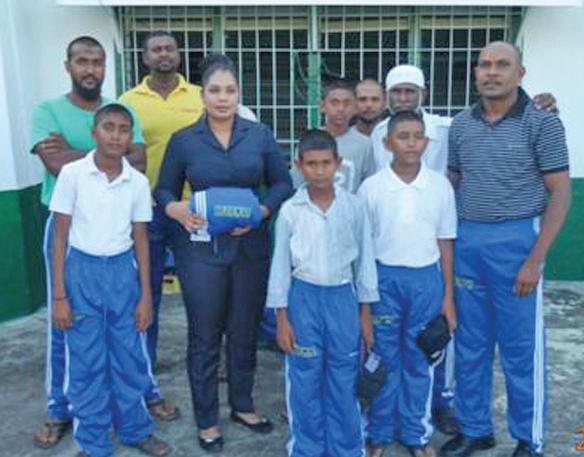
The Berbice Bridge Company Inc (BBCI) on Thursday donated 15 trousers to the Blairmont Sunatul Masjid cricket team following a request from the masjid.
The company in a release said it was privileged to have the opportunity to make a donation towards the masjid. The company decided to come on board mainly due to the fact that the masjid has started a youth movement dedicated to have youths off the streets and inculcate religion in their everyday activities.
The cricket team, which is a part of the youth movement, will create a pastime for youths, thereby keeping them away from drugs, crime and other illicit activities.
The BBCI does not only play the role of collecting tolls and facilitating vehicles crossing the Berbice River Bridge and vessels transiting through the retractor span and under the high span, but also discharges its corporate responsibilities.
In the past, the company has
sponsored many events that benefited communities on both the eastern and western sides of the bridge, and many other regions such as Georgetown, Linden, Parika and the hinterland.
This year, the company has received some 62 public relation requests thus far; 55 of which were approved. These include sponsorships of Mashramani 2013 events, horse racing events and donations of trophies to various nonprofit organisations and educational institutions.

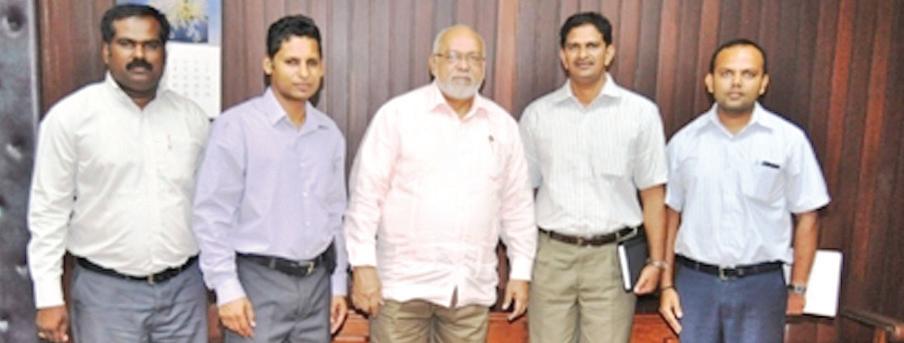
Afour-member technical team of specialists headed by The Energy and Resources Institute (TERI) Associate Director Dr G Rudra Narsimha Rao is in Guyana for three months to spearhead phase two of technical support to the Guyana government in the areas of climate change and energy.
Among the aspects they will be looking at are a best practice manual to promote energy management and conservation of rice mills, a technical study to improve sugar production, energy efficiency, investments in the Guyana Water Incorporated (GWI) and demand management and gasifier technology application for sawmills.
The initiative also includes guidance and recommendations on improving energy efficiency in buildings and street lighting, among others. In the pro-
cess, the team from Delhi, India will work with agencies such as the Guyana Rice Development Board (GRDB), the Guyana Energy Agency (GEA) and the Guyana Sugar Corporation (GuySuCo) and the brainstorming of collaboration with government and non-government sectors.
The team met President Donald Ramotar on Thursday for talks in the company of head of the Office of Climate Change Shyam Nokta, explaining energy and operational cost peculiarities in factory operations locally, and the importance of promoting energy management and conservation. Engagements between the Guyana government and TERI commenced in 2011 following a Memorandum of Understanding (MoU) aimed at providing support to Guyana’s climate initiatives and the Low Carbon
Development Strategy (LCDS).
March 2012 marked the first mission to Guyana where the focus was on assessing energy initiatives like solar energy for lighting, micro-hydro and improving energy efficiency in the different sectors of Guyana’s economy. The potential and suitability of biomass gasifiers and the provision of suitable technology were also examined.
TERI, an energy, environment and sustainable development research institute was established in 1974. Nobel Prize laureate and chairman of the InterGovernmental Panel on Climate Change (IPCC) Dr R K Pachauri is the head of the institution. Late last year, Dr Pachauri was installed chairman of Guyana’s well known international rainforest conservation, research and development centre, Iwokrama.


There’s the old folk saying, “Back to back... belly to belly. Ah doan give a damn, Ah done dead a’ready!” This rather pithily sums up the attitude of the U.S. toward Syria: it’s going to get militarily involved openly and it doesn’t matter what anyone says. At the G-20 meeting in Russia, the 19 other most powerful nations on earth – whose help it needs to get its economy in order – couldn’t get the U.S. to change its mind.
So you may ask, what’s the point of the Caribbean Community (Caricom) also adding its voice to the calls for moderation and diplomacy? Well, on one level, not much. While our 14 votes in the United Nations (UN) General Assembly sound formidable, that’s only a sideshow in the real power plays. That goes on in the UN Security Council. But here, there’s a Mexican standoff between the U.S. on one side and Russia and China on the other.
Now apart from the right to retaliate if another country attacks yours, international law only allows an attack with the Security Council’s say so. And there’s no “say so” on Syria because of Russia and China’s veto. But this doesn’t faze the U.S. They’ve appointed themselves judge and jury on this issue.
The Syrian regime has used chemical weapons, it has concluded, and this gives them the right to intervene. “Humanitarian” concerns are all that motivates its response. Right.
So the U.S. is going to do what the U.S. wants to do. And we ask again, what’s the point of Caricom’s urge for moderation? Well, for one, it shows that Caricom’s not as divided as in 1983 when half of the grouping “invited” the U.S. to invade Grenada. The most powerful nation on earth invading a speck in the Caribbean Sea with a population of 80,000!! The U.S.’s rationale was that the Cuban workers helping to build the airport in Grenada were actually military shock troops to challenge the U.S.!
The second point in Caricom’s response is poetic justice: the announcement was made in Grenada alongside Cuban representatives. And
included the call for the U.S. embargo on Cuba to be lifted and for that nation to be allowed back into the comity of hemispheric nations. But in this too, the U.S. will do what the U.S. will do.
However, there’s another old folk saying that might be appropriate: “time longer than twine”. It could be that as the U.S. trajectory of dominance takes an inevitable downward slide, it can’t help but flail away.
...AFC on conflict of interest
Do the jokers in the Alliance For Change (AFC) leadership really believe that this nonsense about issuing “guidelines” will satisfy the Guyanese people, who’re outraged about their blatant betrayal for their personal gains? What the episodes reveal is a distinct pattern of pathological character flaws that cannot be eradicated – even by an exorcist.
And we repeat – “episodes”. Don’t for a minute buy this nonsense about the scandal only being about Nigel Hughes. Every man-jack in the AFC is tainted by the tar of conflict of interest. But what makes the attempt at exculpation more cynical, as we’ve said before, is the enormous wriggle room they’ve left for themselves and their shenanigans. We’ve dealt with several of them already. But take a look at this one: “The leadership body may invite an AFC leader who has made disclosure of a material interest to offer technical or specialised opinions on a matter being deliberated, but that leader shall not exercise a vote or otherwise decide on the matter”. So the “interested” leader will give “disinterested” opinions? Sure. And there’s snow in hell.
...about students
The University of Guyana UG Senior Staff Association (UGSSA) is at its “schupidness” once again. Rather than worry about how they’re going to raise the standard of their teaching to their charges, they’re in full protest mode once again. Do they have any other setting?


September 8, 2013
The essence of Guyana’s unique tourism product continues to attract more visitors to these shores and they continue to cross our borders in large numbers, in anticipation of experiencing the taste, feel and sounds of our distinct culture.
As Guyana seeks to strengthen links with its South America and Caribbean neighbours, the influx of visitors’ hints at the growing popularity of Guyana as a prime tourism destination.
On Thursday, a contingent of 120 Surinamese tourists, comprising of Girl Scouts and visitors arrived in Guyana and will be occupied over the next few days as they participate in scheduled tours and additional cultural activities. Over the next week, those guests that arrived on the excursion organised by the Garage Tour Company of Suriname, will be experiencing the country’s rich cultural heritage; the many historical sites in Georgetown and the Essequibo Islands, the country’s flora and fauna, the exotic cuisines, along with the pulsating nighttime entertainment.
This particular tour com-

pany, owned and operated by V Prmnauth has been collaborating with the Tourism Ministry and has been bringing over 40 visitors in Guyana on a weekly basis; given this reality and the success of past partnerships, Guyana’s acting Tourism Minister Irfaan Ali has pledged to further cement this and other such relationships, to quadruple this amount by year-end.
With this aim in mind, the government has expanded its efforts to partner with even more Surinamese operators as they recognise that the lure of Destination Guyana is taking hold. “We recognise that Surinamese continue to find Guyana an attractive tourism destination and we are work-
ing with even more partners to intensify the volume of traffic,” Guyana Tourism Authority (GTA) Director Indranauth Haralsingh explained.
Plans
He further noted that even with an estimated 2000 Surinamese and Dutch residents crossing Guyana’s borders on a monthly basis, packages and programmes are currently being designed, along with the private sector to, increase this already impressive figure.
“We are looking to attract an additional 500 tourists on a monthly basis; to accomplish this, we will capitalise and tailor our packages surrounding very popular and renowned
Aevents, including GuyExpo 2013, the Rockstone Fish Festival, Diwali and Motor Racing, among others,” he explained.
With these events on the horizon, and the anticipated influx of visitors from around the world, the GTA director expressed optimism that the benefits to be derived will be immeasurable not only for Guyana, but every Guyanese in terms of transportation, fuel, hotels, restaurants and generated sales.
The drive to support local businesses has been strengthened by the tourism minister’s pledge to work along with the small hotels in an effort to boost occupancy; already there have been reports of smaller establishments operating at full capacity.
Additionally, GTA is working closely with Suriname at the Amazon Cooperation Treaty Organisation (ACTO) level and has established a tourism manual among Guyana, Suriname and Brazil to promote cross- border and multi -destination tourism.
Suriname is close to Guyana, and is a key partner and through ACTO, a Caribbean tourism trail of which Suriname and Brazil is a partner with Guyana has been established. (GTA)

Satiricus felt so very proud. There was so much controversy swirling around the KFC about who was “bought out” and who was not. But rather than dodging and weaving any longer (a month of that was enough) they’d decided to man up (well, Kaytee wasn’t around) and bite the bullet.
Satiricus didn’t mind no one took a fall and NoGel was back in harness without even a slap on his wrist. Imagine the courage of these men to come out with such strict guidelines for the future. The KFC was going to be pure like the driven snow.
Just that moment his wife’s niece Lilawatee, maid to the opposition, came up with a notebook, filched from the KFC. The cover was marked “HEARINGS on Clause 9”. The first page stated “clause 9”:
“Public disclosure by the party of any private material interest of an Alliance For Change (AFC) leader shall be decided on a case by case basis, after due consideration of confidentiality or third-party interest, and shall be made only with the consent of the said leader.”
Case 1: Against the Jhaat
Charge: Non-disclosure of material interest.
Panel: Naga Man, NoGel, Bush Doctor.
Naga Man: OK Jhaat. How come you didn’t tell we about the $10 million you get from the Indian company to block the Speciality Hospital?
Jhaat: (in a surly tone). Wasn’t $10 million.
Naga Man: (leaning forward) So how much you get?
Jhaat: Well it wasn’t as much as the $7 million you get for signing forms to move some people for the Berbice Bridge.
NoGel: The man was paid for a legal job.
There was no objection to bail put forward by the prosecution and Magistrate Judy Latchman granted such in the sum of $10,000. The matter was transferred to Court 10 for September 9.
U.S. citizen was on Friday placed on bail when he appeared at the Georgetown Magistrates’ Courts to answer to the charge of unlawful assault. It was alleged that on September 2 at East Ruimveldt, Karmin Reese unlawfully assaulted Omilita Grant, that is, she punched the virtual complainant in her back. She pleaded not guilty to the charge when it was read to her. Reese was unrepresented and told the court that she is a 47-year-old trauma nurse in the United States and is currently in Guyana because she has a court date with Grant on September 9 and will be leaving on September 10.

A36-year-old labourer from Lima on the Essequibo Coast was fined $30,000 and sentenced to two years imprisonment for possession of a utensil used to smoke cocaine.
Bachan Nautrhram appeared before Magistrate Sunil Scarce at the Suddie Magistrate Court where he pleaded guilty to the narcotic charge.
According to police report, on September 4, Nauthram was caught with the utensil in his pocket at Lima during a routine police patrol.
He begged the police to give him a chance, but was arrested and placed before the court.
After the charge was read to him by the said magistrate, he pleaded guilty. Nautrhram was not represented by an attorney.
Jhaat: I see where the breeze is blowing from. Which lawyer just out of law school would get $7 million for filling out some forms?
Bush Doctor: Brother Jhaat, no need to get nasty. And you also didn’t tell we about the $5 million you get from Baddam to stop the Marriott.
Jhaat: So did you tell we about all the campaign contributions you keep, according to Brother Yusif?
Bush Doctor: (all flustered). Listen is who we examining today? You know Yusif tell lie on me that I only buy bigan and charge for mutton.
NoGel: (lowering his voice two octaves) Yes, Brother Jhaat. We examining your non-disclosure of material interest today.
Jhaat: (Sputtering) Me?! Me?! You talking about me? After we save you ass on the US$5 million you get to push the Hydro? (Jhaat wiped away the saliva from his lips with the back of his hand.)
NoGel: (In a wounded tone) Brother Jhaat. You know I only took that to fund the uprising I was calling for.
Jhaat: Uprising me ass!! The only thing “uprising” is you bank account!
Naga Man: OK. OK. Alyou shut alyou so-and-so mouth. Clause 9 say we don’t have to make any of this public unless we agree. And I don’t agree.
Jhaat, NoGel, Bush Doctor: (in fervent tones) And we don’t agree!!
Naga Man: OK fellas. Hearing over. One for all and all for one!!

Sexually active women will soon have free access to visual inspection of the cervix, using acetic acid (VIA) testing at the Charity Oscar Joseph Hospital on the Essequibo Coast.
A new clinic was recently handed over to the Region Two administration by the Guyana Medical Relief (GMR).
The $5 million facility is the third of its kind to be built here by the GMR, a company located in Los Angeles, California, U.S.A.
GMR Chief Operations
Officer Sharir Chan said the clinic will assist young sexually active women to know their status early. He was pleased with the assistance and cooperation received from the Region Two administration during the execution of the project.
The clinic was constructed by Ramkarran Contracting Service and was completed
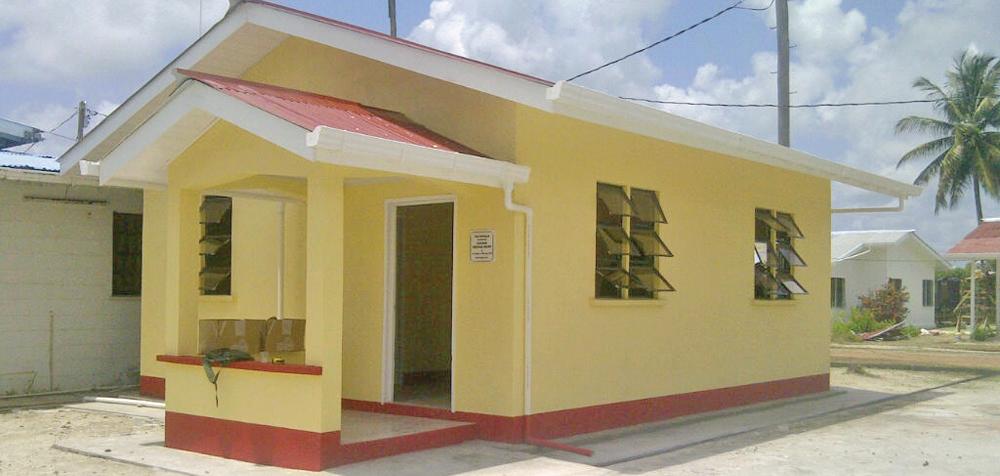
within the contract deadline.
The GMR enjoys a strong partnership with the Health Ministry and various stakeholders in the supplying of drugs free of cost to Guyana.
According to Chan, the organisation has been providing medicine and building medical facilities in Guyana for the past 20 years.
He said on a monthly basis, drugs are being supplied free of cost to several hospitals here, including the New Amsterdam, Suddie, Bartica,
Mahaicony, Mercy, Davis Memorial and Linden hospital.
Chan said thus far, over $US50 million worth in drugs has been sent to Guyana. The organisation has over the years also donated beds, sewage pumps and has built a mortuary at Mahaicony.
The company has also supplied over 70,000 pairs of shoes to children here, and Chan said, it will continue to reach out to the less fortunate.
Region Two Chairman
Parmanand Persaud thanked the organisation for the kind gesture, noting that the building is a “big achievement” for the region. The chairman said VIA service was being offered in Region Two, but at no designated building.
The regional chairman also used the opportunity to lobby the company for more help in terms of providing medical equipment and more medicine for the two hospitals in Region Two.
Doctor-in-charge of the Charity Oscar Joseph Hospital Afarah Khan also expressed gratitude to the GMR, pointing out that VIA testing will be done once per week once the requisite equipment are installed in the building.
She said the clinic will be targeting sexually active women between the ages of 18-55, and once diagnosed, patients will be referred to the Georgetown Public Hospital.
In keeping with maintaining government’s zero tolerance position on overruns on its contracts, junior Finance Minister Juan Edghill visited several projects that have looming deadlines in Regions Five and Six on Friday.
Construction of the Rose Hall pump station, Region Six is completed and the contractor is at present cleaning-up. This project has met its timeline.
“We are witnessing practically the completion of this pump station, this one, along with the one at Canje is part of a US$2 million investment and I am happy that among the many projects that we are visiting that we are seeing the completion of this pump station,” he stated.
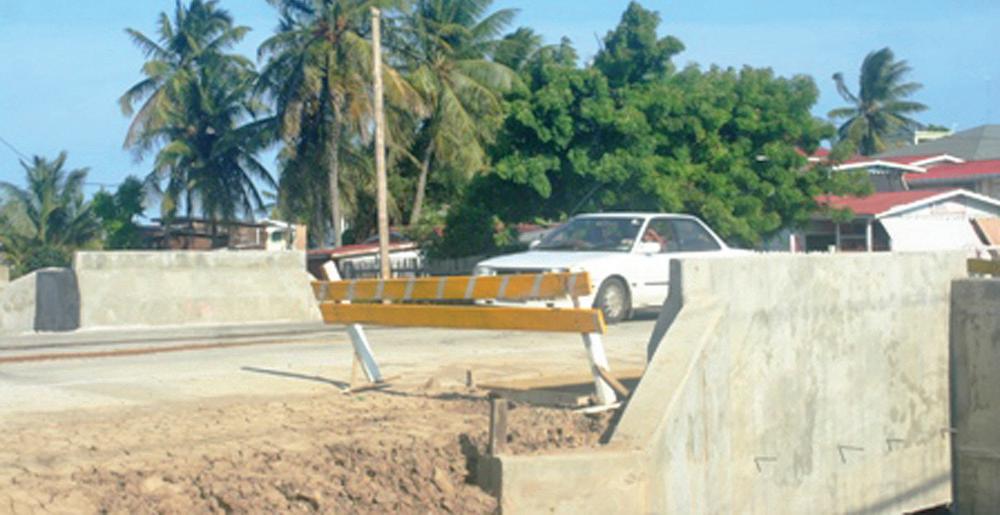
“It has been tested and it is a matter now of ensuring that the people of Rose Hall and the surrounding areas that were normally flooding, they would get the necessary relief. This is a significant investment to alleviate the suffering of farming communities here in the Berbice area,” Minister Edghill said at the

pump site at the Rose Hall outfall.
The pump station constructed was approved following residents’ request. It replaced a temporary mobile pump that would be placed in the area whenever there was heavy rainfall which resulted in flooding. The station will allow for the drainage of
both residential and farming communities in Rose Hall, Williamsburg and part of Port Mourant, as well as benefit GuySuCo’s lands.
The visit was not without blame being placed in some quarters when Minister Edghill reproached a few contractors for lagging behind on construction and for sloppy work.
When the minister visited the road construction and revetment work at East Canje, leading to the Canje pump station, he was told by the contractor that bad weather was to be blamed for the slow pace of work. Minister Edghill was firm that the contractor mobilise all equipment, and human resources and “get the work done” as it was seven months behind.


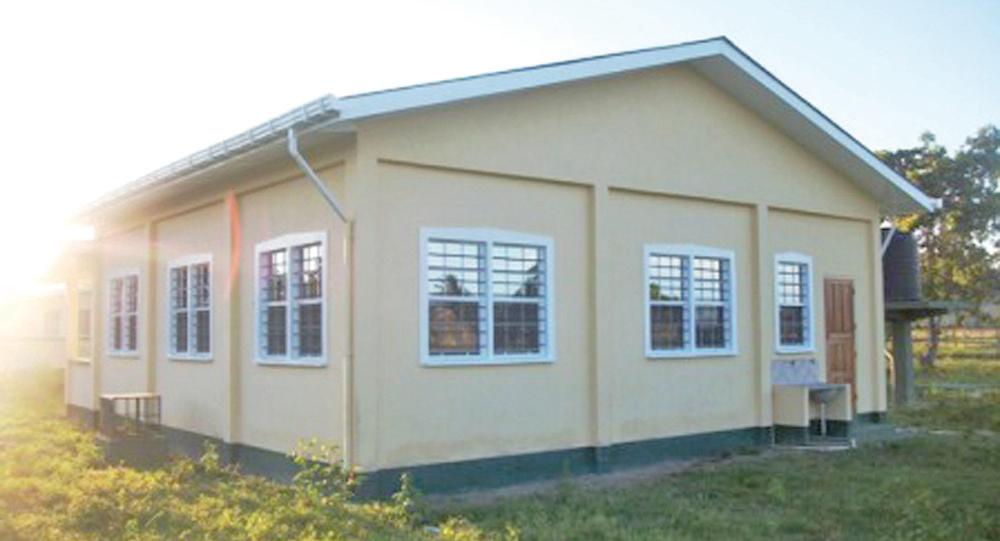
During a recent government outreach to Region Nine, three buildings were commissioned by Local Government and Regional Development Ministry
Permanent Secretary Collin Croal and another by Local Government and Regional Development Minister Ganga Persaud during a four-team visit to villages across the region.
Croal declared open the district development officer’s quarter and doctor’s quarter in the administrative compound in Karasabai Central, and the sanitary block at Tipuru Primary, while Minister Persaud commissioned the Sand Creek doctor’s quarter.
He urged officers at the commissioning of the district development officer’s quarter to work harder, and beyond the call of duty, now that they are being placed in a conducive environment. The building was constructed at a cost of $8.68 million.
Croal, speaking at the commissioning of the $3.59 million sanitary block at the Tipuru Primary School, highlighted that 59 students will now be benefiting from the new sanitary facilities.
“Children would be able to utilise the best facility as possible… We will continue to work as the government to make the
lives of our children much more competent and that as they access education, they receive the best,” Croal said.
At the opening of the $8.38 million doctor’s quarters in Karasabai, Croal said residents will benefit from the services of doctors stationed in the region. He added that residents also decided to provide a vehicle from the sub-district to service the health programme.
Meanwhile, the Sand Creek doctor’s quarters, built at a cost of over $8 million, will be provided with the services of suitable medical personnel whose responsibilities include being part of medical outreaches in the interior.
Minister Persaud at the commissioning expressed the hope that Sand Creek and other Deep South residents could benefit from a higher degree of medical expertise.
The minister expressed the hope that the medical personnel and the district development officer would provide the services necessary to serve the community. He also pointed out that the health post would make it possible for more frequent outreaches in the area.
Residents expressed their appreciation for the commissioning of the new buildings that would bring more benefits to them.






In the previous article, we discussed the general approaches to addressing climate change and learnt that actions are grouped under two broad headings: mitigation and adaptation.
This week, we will continue to explore such actions and learn more about the global and local frameworks for addressing climate change.
Climate change was identified as major global issue over the last couple of decades. In 1992, countries joined an international treaty, the United Nations Framework Convention on Climate Change (UNFCCC), to work together to consider what they could do to limit global temperature increases and the resulting climate change, and to cope with whatever impacts were, by then, inevitable.
By 1995, countries realised that emission reductions provisions in the convention were inadequate. To strengthen the global response to climate change, they adopted the Kyoto Protocol (KP) in Kyoto, Japan, on December 11, 1997. It was entered into force on February 16, 2005.
The KP legally binds developed countries to greenhouse gas (GHG) emission reduction targets. The protocol’s first commitment period started in 2008 and ended in 2012. The second commitment period began on January 1 and will end in 2020.
Under the protocol, countries must meet their targets primar-
ily through national measures. However, the protocol also offers them an additional means to meet their targets by way of three market-based mechanisms: international emissions trading, clean development mechanism (CDM) and joint implementation (JI).
There are now 195 parties to the UNFCCC and 192 parties to the Kyoto Protocol
The convention and protocol make special provisions for the specific needs and special circumstances of least developed and developing countries and apply the principle of “common but differentiated responsibilities” with regard to such countries. The principle recognises that the developed country parties should take the lead in combating climate change and the adverse effects thereof.
Therefore, many developing countries like Guyana and least developed parties (termed non-annex parties) that have ratified the protocol are not legally obligated to any emission reduction target at this stage.
The Conference of the Parties to the Convention (COP) is the “supreme body” of the convention, as it is its highest decision-making authority. Parties to the convention like Guyana meet regularly to take stock of progress in implementing their obligations under the convention, and to consider further actions to address the climate change threat.
Since the establishment of the UNFCCC, many mechanisms and initiatives to address climate change have been developed and implemented at the international, regional and local levels.
Guyana’s actions
Guyana established a commitment to work towards the reduction of the negative impacts of climate change by becoming a signatory to the UNFCCC in 1992, then ratifying the convention on November 17, 1994 and acceding
to the KP on August 5,, 2003.
The country has taken proactive steps to support the implementation of the convention. To enable effective coordination and implementation of climate change initiatives, the Office of Climate Change (OCC) was established within the Office of the President in 2009.
Guyana prepared its Initial and Second National Communication to the UNFCCC in 2002 and 2012 respectively. The preparation of the Third National Communication has been initiated. These reports provide a general status of key aspects related to climate change in Guyana, including an inventory of greenhouse gas (GhG), climate change vulnerability assessments, programmes containing measures to facilitate adequate adaptation and mitigation to climate change, an analysis of measures for GhG abatement and information related to the implementation of the UNFCCC.
Several other key studies, research and plans were prepared to address specific areas related to climate change.
Many sectors in the country have already begun to integrate

policies, legislations and programmes in line with addressing climate change. Some also have developed specific climate change initiatives.
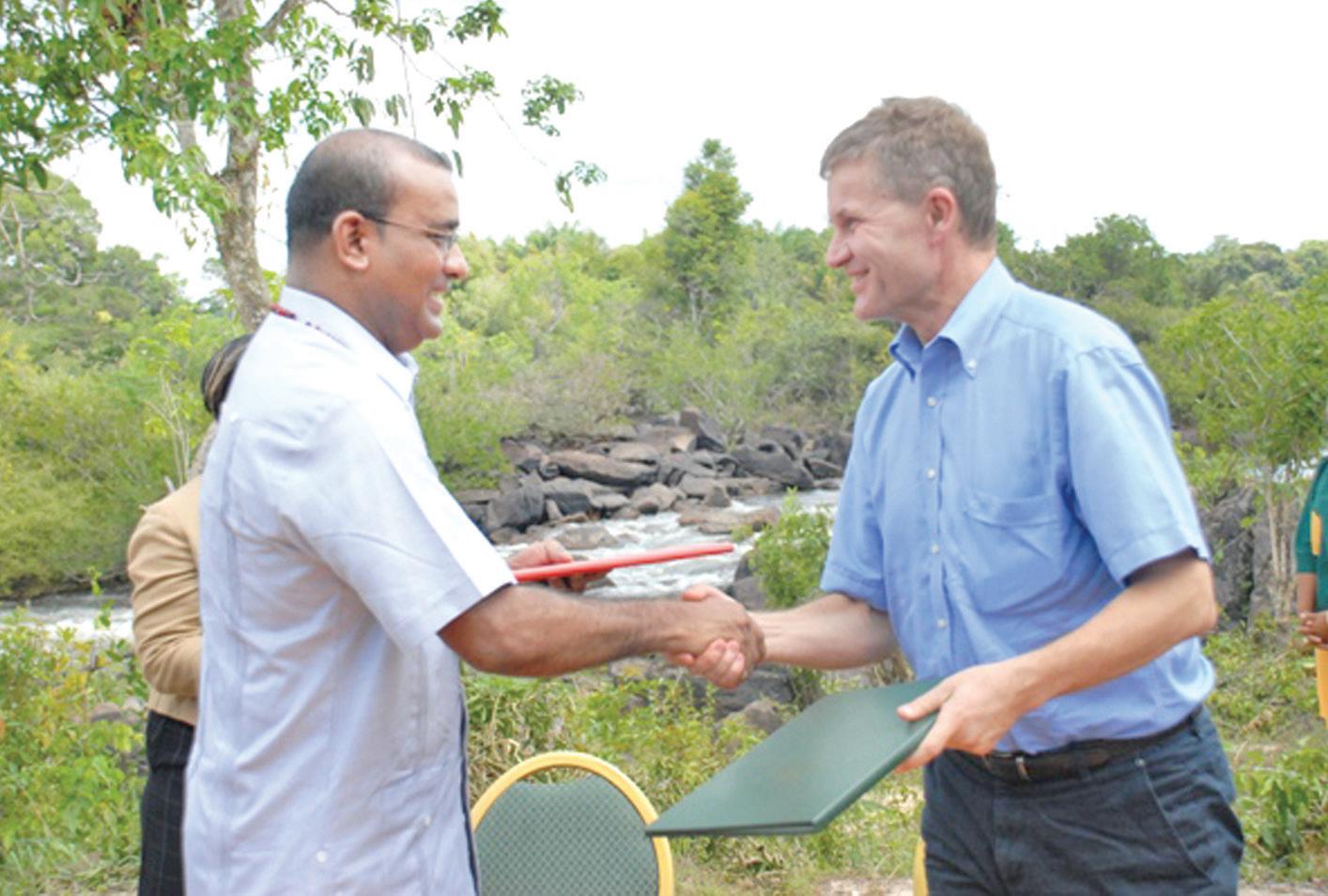
Guyana works along with many countries, institutes and groups to support capacity building for adaptation and mitigation to climate change. For example on November 9, 2009 a Memorandum of Understanding (MoU) between the governments of Norway and Guyana was signed regarding cooperation on issues related to the fight against climate change, in particular those concerning Reducing Emissions from Deforestation and Forest Degradation Plus (REDD+).
Norway has committed to providing Guyana up to US$250 million to 2015, depending on Guyana’s delivery
Considerable progress
Guyana has also made considerable progress internationally in negotiating its position on climate change through the UN and other major processes. Guyana has played a key role in the UNFCCC negotiations on REDD+, as well as in the inter-
im REDD+ partnerships. The country also works along with negotiating groups such as the Coalition for Rainforest Nations and the Alliance of Small Island States (AOSIS).
The most significant step taken to address climate change in Guyana is the development and implementation of the Low Carbon Development Strategy (LCDS), which was launched in June 2009. The strategy outlines Guyana’s approach to promoting economic development while at the same time addressing the issues associated with climate change. It articulates the country’s vision to transition towards a low carbon, green economy and provides the overarching framework for achieving Guyana’s long-term developmental goals, using nationally appropriate green growth strategies to achieve this transition.
Guyana has played and continues to play an important role in the global effort to combat climate change. Its LCDS and agreement with Norway have gained international recognition, and it is a leading example to other developing countries in demonstrating that the creation of a low carbon, climate resilient economy is possible, and serves as an example to other forest countries of how the world’s forests can be conserved without sacrificing the development aspirations of those who live in them.
In the next article, we will provide more details on the LCDS and other major climate change related initiatives in Guyana.
This article was prepared by the Office of Climate Change. For additional information, please contact the Office of Climate Change, Office of the President, Shiv Chanderpaul Drive, Georgetown on telephone number 592 2235205, email at info@lcds.gov.gy or visit the website www.lcds.gov.gy

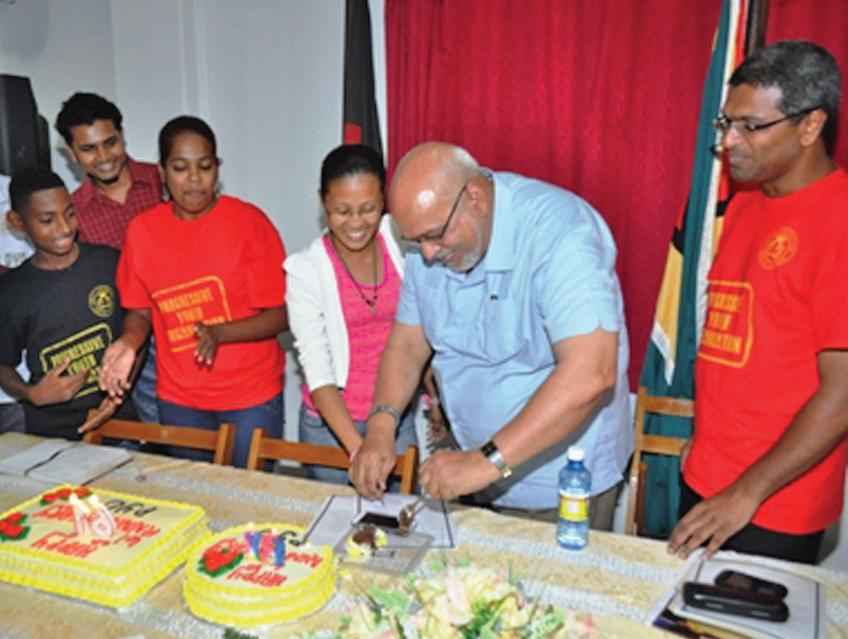
The contributions made by the Progressive Youth Organisation (PYO) were lauded by President Donald Ramotar during a function to mark the group’s 61st anniversary at Red House, Kingston on Friday.
The head of state recounted the history of how the ruling party’s youth arm was founded and the various struggles it faced during the decade, from being banned at one time to the lives such as those of Michael Forde and others lost in the fight for democracy over the past decades. The PYO’s membership was called on by the president to, “learn lessons from our history, learn your politics, know and understand the machinations of those who oppose development of our country”.
The participants were also urged to volunteer their services in various sectors and to encourage others to do so as it builds character. The president recalled that on a trip a few weeks ago to Rewa in the Rupununi Savannahs, he encountered
several foreigners who were volunteering in some of the communities. He noted that they all came from various nations to serve in Guyana and questioned why more educated Guyanese did not follow these examples.
President Ramotar urged the group’s members to remember, however, that much work needs to be done and said that they must remain vigilant every day as the fight to protect the nation’s democracy was an ongoing one.
The organisation was established in 1952, through a decision at the second party congress of the People's Progressive Party (PPP). This was done according to the president, “So that by time they came in to the party, they would have had political experience and they would have been able to understand political activities and politics itself to do some studying in that regard”. The name of the organisation at the time of its founding was the Pioneer Youth League of British Guiana, with Brindley Benn as the
secretary. In February 1953, the Pioneer Youth League became an affiliate of the World Federation of Democratic Youth before changing its name to the Progressive Youth Organisation.
Banned
It was recalled by the president, that soon after its founding, the organisation was banned along with several other organisations, but it still sprang up from time to time under names such as the Demerara Youth League and other different names to try and carry out its activities. This was a time, the president said, that members of the party were able to move about freely, hence the youth arm had a vital role to play in spreading its messages to supporters.
The period of the 1960s was viewed as another “glorious period for the PYO”, said the president, as it was a fight for political independence. “We were coming under tremendous attack from the colonial powers that be and the powers of the world at that time. Because of the cold war and the hysteria created about communism, they did not want to give independence under the PPP”.
The two other major political parties, he said worked closely with the then colonial powers to ensure this. “We came under a lot of attacks and that period in our history is still a period that we’re still studying, for us to learn from that.” He reminded those in attendance that the “PYO played a tremendous role in defending the party from many attacks”.

Zakiya Uzoma-Wadada, former member of the board of directors of the Caribbean Natural Resources Institute (CANARI), has received international recognition for her extraordinary dedication and years of hard work on sustainable land management.
Uzoma-Wadada has been selected by the United Nations Convention to Combat Desertification (UNCCD) Secretariat as a “Global Dryland Champion”. This programme acknowledges people who made outstanding contributions to efforts for achieving a land-degradation neutral world.
The selection is not an open or competition basis, but is made by the UNCCD executive secretary in consultation with those who are deeply involved in sustainable land management and the conventions. Zakiya was selected as one of the five people who will be recognised as the Global Dryland Champions this year. The recognition ceremony will take place at the high-level dinner hosted by the government of Namibia on September 23, during the 11th session of the Conference of the Parties (COP 11) to the UNCCD, to be held at the Windhoek Country Club Resort, in Windhoek, Namibia.
Zakiya has worked tirelessly in her native Trinidad and Tobago as well as across the Caribbean islands, promoting the importance of protecting natural resources in order to improve the wellbeing of who she calls her
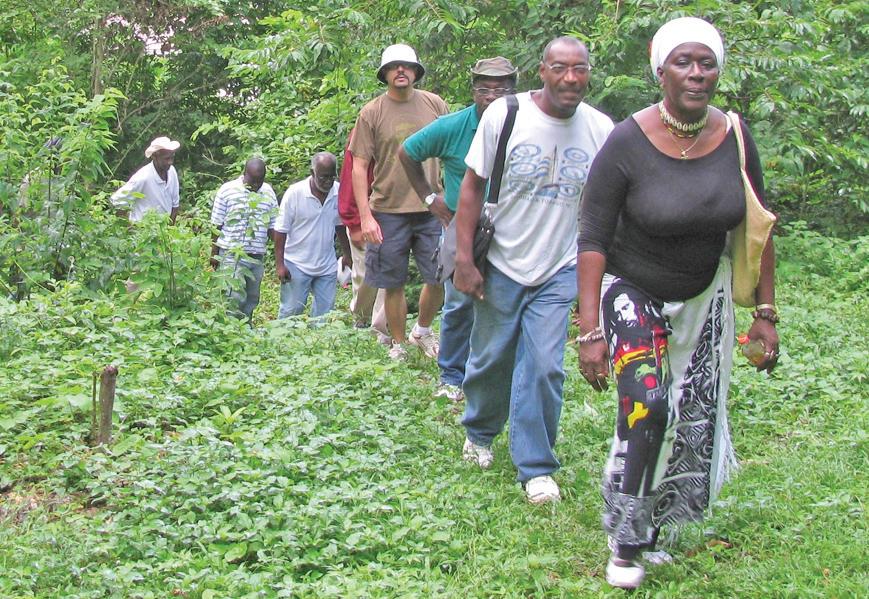
“Caribbean brothers and sisters”. She combines tremendous warmth of spirit with strong technical expertise and facilitation skills. She is equally comfortable working among farmers and rural women as she is among heads of state in international meetings where she passionately speaks out on Caribbean sustainable development issues.
Zakiya has been part of the CANARI family for many years, as she served as CANARI elected partner (director on the board) in the roles of secretary and treasurer from January 2008 until January 2013. She has also greatly contributed to the successful implementation of work under CANARI’s Rural Livelihoods programme. Zakiya is currently serving as a programme advisor for CANARI’s Civil Society and Governance programme, as she continues to provide strategic advice and guidance on
initiatives to engage rural communities in the Caribbean in natural resource management and the development of sustainable livelihoods.
Nicole Leotaud, CANARI’s executive director, certainly spoke on behalf of the board of directors, staff, associates, and programme advisors in the CANARI family, when she stated, “Zakiya, we are very proud of you! You will always be our champion.” The Caribbean Natural Resources Institute is a regional technical non-profit organisation which has been working in the islands of the Caribbean for more than 20 years. Its mission is to promote equitable participation and effective collaboration in managing natural resources critical to development. Its programmes focus on research, sharing and dissemination of lessons learned, capacity building and fostering regional partnerships.


Guyanese officials and their Brazilian counterparts are scheduled to meet for another round of talks this month at the level of the GuyanaBrazil Joint Commission on Infrastructure Development as both countries seek to expedite the process of deepening bilateral cooperation.
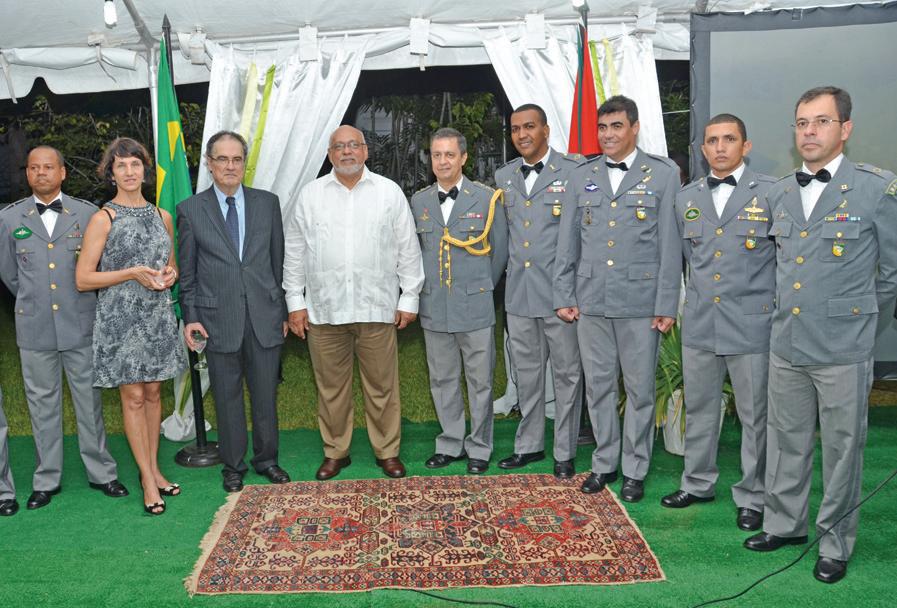
This was highlighted by Brazilian Ambassador to Guyana Luiz Seixas De Andrade during a reception to observe the 191st anniversary of the Federative Republic of Brazil, at the Brazilian Embassy on Friday evening.
The joint commission meeting will prioritise the move to pave the long stretch of road from Linden to Lethem, establish a deep water harbour and evaluate the possibilities of a hydropower plant to supply energy to both countries.
The first meeting of the Working Group on Infrastructural Projects was held in February after a Memorandum of Understanding (MoU) between Guyana’s Foreign Minister Carolyn RodriguesBirkett and the Brazil’s External Relations Minister Antonio Patriota that brought it into being in December last year.
The priority areas are
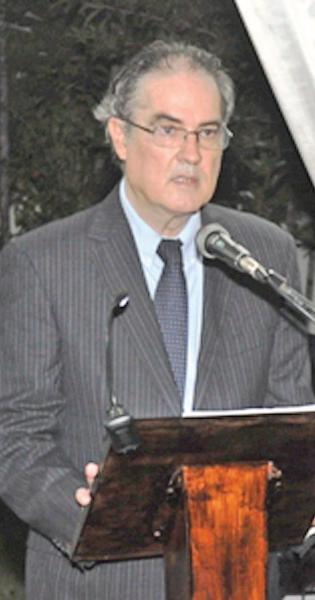
enhanced partnership between our two countries will not only increase the prosperity of our two peoples, but would also redound to the benefits of the region as a whole. Our infrastructure projects, while of national significance will form part of the wider South American physical integration programme,” President Ramotar said at the reception.
Improving the LindenLethem Road has been in the making since former Brazilian President Luis Inacio Lula Da Silva promised to support the effort when the bridge across the Takutu River separating the two countries was commissioned in 2009.
Deep water harbour
what both countries see as prerequisites to the opening up of new avenues to promote investment and build economic and trade relations between the two neighbouring countries.
The fulfillment of a commitment at the level of the working group to conclude proposals in July this year, relevant to implementing the major infrastructural projects was welcomed by President Ramotar.
“It is envisaged that this
A deepwater harbour and hydroelectricity were the other priority areas, the two countries had also agreed during bilateral discussions.
Having partnered in military, security, agriculture and aquaculture at the bilateral level and shared the same vision for development at the level of the Union of South American Nations (UNASUR), the Amazon Cooperation Treaty Organisation (ACTO) and the Community of Latin American and Caribbean

States (CELAC), both countries are optimistic about the future.
Guyana became an associate member of Mercusor, after signing a framework association agreement, and according to the Brazilian ambassador, this step will “certainly open more opportunities for the development of Guyana’s trade and economic ties with Brazil and with all other member states of the trading bloc”.
The Guyana government has promised to deepen its involvement in Mercusor, when President Ramotar met South American leaders at a summit in Brasilia last December. Mercusor is a regional trade agreement among Argentina, Brazil, Paraguay and Uruguay.
Guyana becoming an associate member was regarded by President Ramotar as natural progression of a broader, deeper integration of Guyana, not only for Mercusor member states, but also between Mercusor and the Caribbean Community.
The Guyanese head of state believes the agendas of both Caricom and Mercusor are inseparable and inextricably linked.
Optimistic that Guyana can achieve its development goals through alliances with other countries, President Ramotar is pleased with the significant advances that have been made between Guyana and Brazil within the last few years.

The Guyana Fashion Week (GFW) staged a major traffic stopper in downtown Georgetown on Friday evening as part of their celebration of World Water Week being observed between September 1 and 6.
Designers and models were consumed in the motorcade, showing off designers’ interpretations to the water campaign, promoting water, its protection and preservation.
Lorries, pick-up trucks, wagons and cars stretching over 30 vehicles drove through the streets of Georgetown to selected Caribbean music, with water spouting onto the onlookers who lined the streets to witness and participate in the activity.
This showcase was part of GFW’s ongoing mission to endorse the United Nation’s International Year of Water Cooperation.
GFW has partnered with the Natural Resources and the Environment Ministry
and its dynamic division, the Environment Protection Agency, to utilise the cultural industry to advance the cause of its mission statement.
“Every drop counts”, “Water is life... giving life to fashion”, “It saves U! Save it!”, “Stop water pollution”, “There is no life without water” and “Save water, give life” were some of the expressions that emblazoned the pathway leading to Square of the Revolution. The crescendo of their week of activities comes off at Seven Ponds, The Botanical Gardens at 16:00h today with “Still Waters run deep”. At that event on Sunday, the winners of the spoken word and photography competitions would be revealed. These competitions encouraged dialogue and deliberation at the national level, engaging participants of all walks of life as they contribute to the awareness campaign about the importance of water to life.

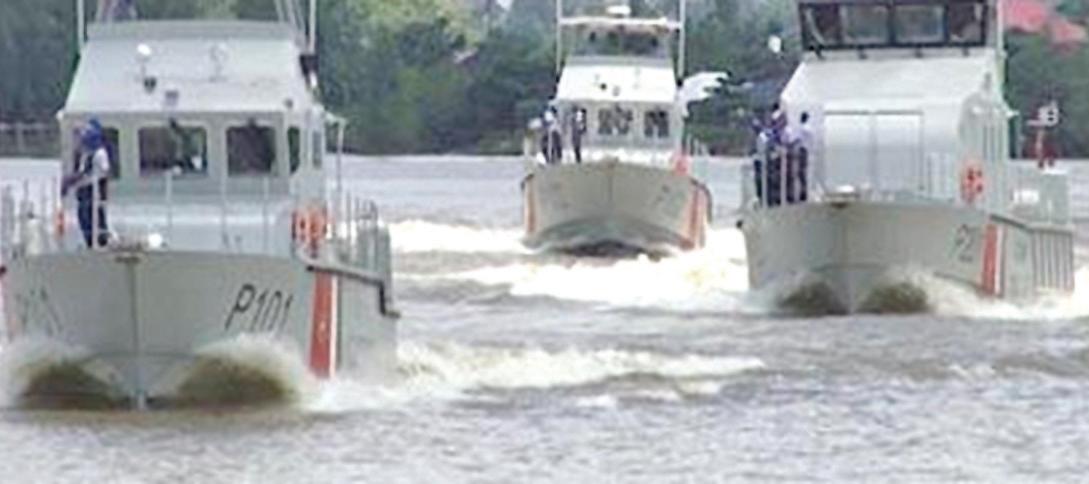
Suriname finally has a coast guard of which the government can be proud, said Vice President Robert Ameerali last Sunday, during the ceremonial inauguration of the Coast Guard service, which took over 20 years to be realised.
The objective is to protect Suriname’s territorial waters, defend its economic zone from illegal fishing, drug-trafficking and piracy and fight maritime crime activities, especially with the upsurge of piracy from neighbouring Guyana that has been terrorising Guyanese fishermen.
Guyanese fishermen have turned to Suriname for help. Just last week, four Guyanese pirates were arrested in Suriname waters in the Coronie area.
Kumar Doodnauth, former chairman of the Upper Corentyne Fishermen’s Coop Society told a local newspaper back in February “that the judicial system is very
weak in Guyana and even if the hijackers are caught –which rarely happens – the process can be compromised. If you talk to these fishermen, they are just fed up with the legal system – from the magistrate to the police – you getting harassed out there and when you come here, they also harass you.”
“We got a problem in this country, which everybody knows. If you are an investigating rank and you know that someone has been identified – somewhere down the line, someone is going to take a pay off – that’s what we got to deal with.”
Colonel Jerry Slijngaard, who heads government’s Coast Guard committee, said the vessels are barely sufficient to patrol Suriname’s territorial waters and combat maritime crime activities like piracy, but at least for now it is a start.
The patrol craft are fast, flexible and agile and equipped with the most modern technology. They
were manufactured by the French company OCEA at a cost of about US$23 million. They are FPB 98 type and FPB 72 type ships. The FPB 98 type is 32 metres in length and 6.3 metres wide. The FPB 72 type is 24 metres long. The vessels can reach speeds of 30 knots.
The Maritime Authority of Suriname (MAS) is currently training 16 students on how to conduct technical maintenance of the vessels with the help of OCEA that provided a trainer to help conduct a six-month course.
The Coast Guard will fall under the Internal Affairs Ministry of Suriname. The crew will come from soldiers who will be transferred from the Navy Unit of the National Army, and will form the initial Coast Guard staff.
The Coast Guard will soon get its own base on the banks of the Suriname River in Paramaribo, with posts at the borders with Guyana and French Guiana. (Caribbean News Now)
The Childcare and Protection Agency (CPA) and the Peace Corps organised the first annual Camp STOMP (Supportive Teamwork Opening Minds Positively) from August on Wednesday.
STOMP was a pilot summer camp that provided 30 adolescent boys between 14 to 17 years old living in residential care with an opportunity to develop good leadership skills, positive decision making abilities, healthy life skills, and short and long term goal projection.
Peace Corps Response Volunteer (PCRV) Melissa Trainor worked closely with CPA staff and the STOMP coordinating team in planning, implementing, monitoring, and evaluating the STOMP camp. In addition to the PCRV support, Peace Corps supported the camp by providing President’s Emergency Plan for AIDS Relief (PEPFAR) funds through the Volunteer Activity Support and Training (VAST) grant mechanism. To ensure the objectives were met successfully, the CPA collaborated with the Culture, Youth and Sport Ministry, the Guyana Defence Force, the Guyana Police Force, Habitat for Humanity, the Guyana Scouts Association, and the Burrowes School of Art.
The three-week camp had a number of objectives to support, empower, and educate adolescent boys. One of the objectives was to educate the adolescent boys engaged in risky behaviour (drug use and unsafe sex) on HIV/AIDS and prevention, through life skills training.
Campers participated in empowerment activities, such as a session on facing facts about HIV/AIDS, and training in communication skills, decision-making skills, and relationship skills. Camp facilitators used skill-building techniques to help the boys develop HIV/AIDS awareness materials.
Health bodies
Camp STOMP also used physical fitness exercises to teach the boys about the importance of maintaining healthy bodies. They participated in physical fitness activities such as military drills, sporting activities, swimming, and gym. Another objective of the camp was to foster relationships between the 30 adolescent boys and 10 male role models, to encourage healthy lifestyles choices. Through this mentorship programme, the boys had an opportunity to connect with a male role model offering the chance for the boys to dream and plan for a life beyond their current circumstances.
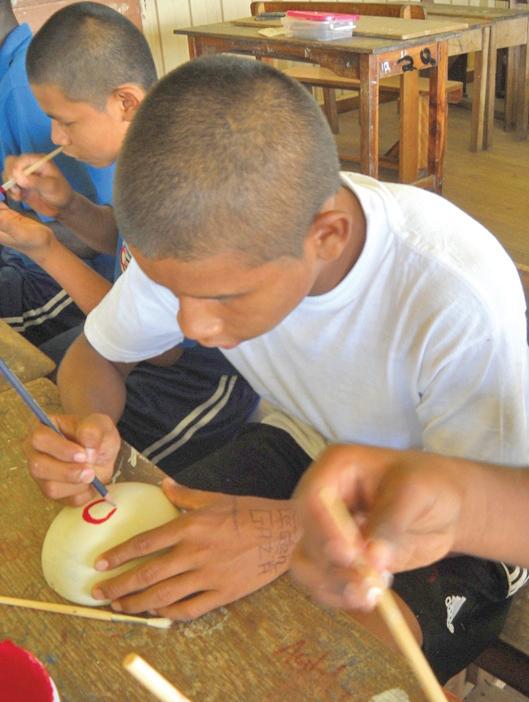
Mentors allowed for male bonding, offloading their fears, examining their risky behaviours, discussing their past experiences, and working towards finding a healthy and realistic solution with someone who has walked the path before.
Camp STOMP provided the adolescents with an opportunity to work on arts and crafts such as leather craft, painting, and tie dye. Campers also enjoyed some quality STOMP time, with a movie, a bonfire, storytelling, and skits. The camp came to a close with the Day of Challenge, or Hero Day, where campers participated in a drill display, a physical fitness challenge, an exhibition of the HIV/AIDS awareness materials, and a talent show.
The boys got to keep the items they created throughout the camp and each boy received a certificate of completion and a backpack donated by the U.S. embassy to Guyana. The CPA will continue to support the boys to ensure that the work facilitated over the three weeks will be sustained. It is hoped that another group of vulnerable boys will be able to benefit from the STOMP experience in 2014. The project may expand to include boys with similar backgrounds and experiences from the remaining 20 residential care facilities and potentially at risk boys from secondary schools. The CPA will also continue to request services and resources from external stakeholders including services, equipment, clothing and food.
By: yeaswantie Beekhoo
The American University of Research, a research and consultant institute, has embarked on a life changing initiative to sensitise the public on personal awareness of domestic and interpersonal violence.
Over the last months, psychologist Dr Eton Simon has been offering solutions to violence through lectures. These solutions incorporate the usage of life skill psychology (also known as applied psychology) and psychotherapy, which can be used to solve violence by helping the individual to be aware of the root
cause of their situation.
Assistant Professor, Curriculum Director Dr Yeaswantie Beekhoo and Project Officer Jennel Williams, along with students have been working together in structuring programmes to meet the needs of the Guyanese public.
The programmes are tailored to address issues such as mental health issues, including anger issues, which undoubtedly contribute to the root cause of violence.
To address the issue of violence, each individual needs to be aware of and take responsibility for the violence that we are encountering.

According to research estimates, at least one child, teenager, woman or man is a victim of domestic violence during his/her lifetime. Children and teenagers are being abused by parents and family members; women and men are being killed by a current or former partner.
Domestic violence is officially classified as “any incident of threatening behaviour, violence or abuse between young children, teenagers, parents, parents and children and adults who are, or have been in a relationship together, or between family members, regardless of gender or sexuality”.
We think of domestic violence as hitting, slapping and beating, but it can also include emotional abuse which affects mental health.
It is abuse, if your parents, partner or a family member threatens you; shoves or pushes you; makes you fear or physically hurts you; puts you down, or attempts to undermine your self-esteem; controls you, for example by stopping you from seeing your friends and family; and is jealous and possessive, such as being suspicious of your friendships and conversations on the telephone
To address the issues of abuse, we therefore recom-

mend effective life skill training, which we are pleased to inform the public that we are training interested persons to become life coaches, especially in the field of anger management.
The public is also welcomed to become members of our Anger Management Club, which we believe will help to reduce violence.
You do not have to wait for an emergency situation to contact us. You can contact Williams at email address acti.international@gmail. com or visit our office at 135 Sheriff and Fourth streets, Campbellville, Georgetown. Change starts with you.










CAPRICORN
(Dec. 22Jan. 19)
You’ll find it easier to deal with life’s many demands if you take better care of yourself. Working hard can be good, but not at the expense of your health.

(Jan. 20Feb. 19)
Look for new ways to use your skills. A change in the way you earn your living could prove to be a turning point. Aim to do your best.

(Feb.20March 20)
Take a look at interesting investments and pursue the one that seems the best. Reopen doors that may have been closed in the past, and you will prosper.

(March 21-April 19)
A partnership will be on shaky ground if you overreact. Question your reasoning before you take action. You should focus on personal improvement before you complain about others.

(April 20May 20)
Do something you enjoy or spend time with a person likely to make you laugh. Avoid stressful situations that can limit you physically or financially. Focus on success, not revenge.

(May 21June 20)
Do the legwork and find out all you can before pursuing someone or something that may not be as it appears. False information or perceptions will lead to disappointment.
By Bernice Bede Osol

(June 21July 22)
Don’t make personal changes that could alter your looks without serious thought. Take the path of least resistance until you know you can achieve positive results.

(July 23Aug. 22)

(Aug. 23Sept. 22)
Protect your reputation. Uncertainty regarding your status and personal relationships will cause confusion. Ask questions and let your intuition help you make the right choice. Choose love and equality. Get involved in something that challenges you. Someone you encounter will give you an interesting point of view concerning a project you are considering. Explore new friendships.

(Sept. 23Oct. 23)
Your charm will entice someone you want to get to know better. Make plans that will allow you to show off your smarts and skills, but refrain from overspending or overindulging.

(Oct. 24Nov. 22)
Draw from your varied and colourful experience and find a way to use your fund of knowledge to explore new avenues. An unusual idea will interest you.

(Nov. 23Dec. 21)
You should adapt to shifting trends and make the most of whatever situation you face. You will attract someone as spirited as you, who will want to travel down the same path. Make your journey count.

AccOmmODAtiON
Tourist villa apartments 1, 2 & 3
bedroom, long & short term, and car rental service. Phone: 227-2199, 227-2186


Dentures provided in 72 hours from as low as $4500. Contact Dr B Stuart, 209B Charlotte Street, Lacytown. Tel: 225-5034



Parfaite Harmonie $1M and $1.2M phone: 675-7292 Residential area between Charles & Peter Streets, Parika, EBE. Phone: 622-6971/6612289

Available: Fresh long-stemmed roses, fresh dried and silk floral arrangements, gift items, bridal boutiques and wreaths. Nesha’s Flowerland. 78 Church Street (opposite St George’s Cathedral). Tel: 227-3553/225-3315

Mixed breed pups. Phone: 253-3114, 692-0126
One 320 CL Excavator located at Mahdia; excellent working condition. Owner migrating, call 682-0365 or 614-1669
Gold Land, excellent investment. Priced to sell, call 682-0365, 6141669

Healthworld Holistic Centre: Psychotherapy available for all types of abnormal behaviors – addictions, emotional, suicidal, anger, relationship and sexual problems. Treatment of stress disorders, depression, fear, low self-esteem, insomnia, trauma, psychosomatic sicknesses, and children's disorders. We also conduct IQ evaluations and behavioral assessments. By appointments only. Clinic hours: 11:00 – 17:00h. Tel: 592-621-0552. Email:healthworldhc@gmail.com
Ayurvedic herbal treatment for all chronic genetical /none genetical and diseases, including, HIV, Cancer, diabetic, pregnancy, sexual (weakness) etc. Phone: 685- 3220.
Are you pouring on pounds? Then call Raul /Carol Wilson: 660-6818, 6415923, 216-3016, 216-3601 for your healthy eating package. Stay healthy and flexible with yoga. Phone: 693-2233




Optical. For Your Eyes Only, Look Better See Better. Phillip A Da Silva OD, Shannon L Da Silva OD, Natalie Da Silva OD. 248 South Road, Bourda. Phone: 227-3529, Linden: 444-6376, Corriverton: 339-3536,

Retired Engineer aged 66 would like to know a single female over the age of 50. Phone:

One business property, Lamaha Street. Phone: 669-3313, 231-4586, 695-4382. Properties for sale. Phone: 642-2116
1 large 5-bedroom house with business. Diamond. Phone: 627-3902
2-storey concrete house 32’x 55’, 4 bedrooms, block 8 Mon Repos, ECD, $35 million. Phone: 642-2116

Dutch healing and upliftment, for clearing of land, dredging and ground work (strictly interior operation). Phone: 6621247.
Repairs to LCD, LED, plasma, projection, CRT TV’s, microwave ovens, etc, ordering of circuit boards and hard to get spares, Abdul Electronics. Phone: 2250391
Greenes Electrical Contracting Services For all electrical services contact Greene Electrical Contracting Services, we specialize in phoneS & data, CATV, CCTV, intercoms, fiber optics, fire alarms, security systemS, SVC equipments, all other residential, industrial & commercial installation. Phone 223-0973, 618-3075 for safe & reliable services.


Professional Key Shop, 125 Carmichael Street, Georgetown. Phone: 2253923, mobile: 621-3249.
Divinations and cleansing of spiritual problems of all kinds. Powerful Ifá and Khemetian spiritual guards, pendants, crystals and rune stones to help you overcome problems with love, relationships, legal, sexual, pregnancy, business, sickness, jobs, enemies, work, money and many more. Call 10:00-16:00h on: +592690-1824. Email: anew-life@live.com

7-bedroom family/students/ individuals. Bungalow for long & short term rental (local & overseas guests), facilities included, vegetarian meals available. Contact BG Real Estate Agency on: 622-7079, 220-2130.
One office space for rent at 195A Camp St, Georgetown. Phone: 6173673, 677-0073
2 bonds with 30,000 and 15,000sq ft space, with offices and residence; 15 minutes from Georgetown, ample parking. Call 647-8077/613-0567
One house located in Lamaha Gardens, hot and cold water. Call 219-4535
2 modern apartments located in Campbellville, Georgetown, hot and cold water, self-contained rooms etc. Phone: 219-4535

One Honda Cappa (Yellow) ideal for taxi or private use. Leather seats and roof, reverse camera, DVD/TV/ CD player, mag rims. Also Motorola Base Radio with Antennae. HC series; immaculate condition; give away price $1.2M. Call 647-2491.
One black scooter for sale, excellent condition. Phone: 602-7277, for information.
One new Yamaha R1 Motorcycle 1000cc (candy red & black) recently registered 2013. Latest double exhaust, bug lights, immaculate condition. Give away price, call 647-2491


sunday, september 8, 2013






JEWANRAM’S REALTY: PALMYRA, CANJE (access road to Berbice Bridge) - $40M; BLGEZIGHT$25M; KITTY/KINGSTON - $25M; MC DOOM $20M; EARL’S COURT, LBI- $18M ANNANDALE (double lot)- $16M; PARIKA BEACH FRONT (408’ X 108’) - $9.5M; CANAL No 2 (next to conversancy) - $10M; LAND OF CANAAN - $10M per acre; SECTION ‘B’ NON PARIEL / GREENWICH PARK - $4M. 592227-1988/ 270-4470/ 623-6431/ 657-8887/ 626-5260. jewanalrealty@yahoo.com/ jewanalrealty@ gmail.com
JEWANRAM’S REALTY: EAST COAST (central location, huge building) - US$6000; GEORGETOWN$200M,$70M; LUSIGNAN (structure property) - $150M/ $40M; SOUTH RUIMVELDT (new semifurnished 4-apartment building) - $130M; HAPPY ACRES - $85M; DIAMOND - $75M/ $50M/ $25M ; KINGSTON - $70M; GUYSUCO/ CARICOM GARDENS - $65M/ $50M;BETTER HOPE/ BLYGEZIGHT - $60M/ $30M; LAMAHA STREET - $50M; RORAIMA TRUST, VERSAILLES, WBD - Gated community, Upscale property, fully furnished with new quality furniture/ appliances - $55M; ALBETTOWN - $45M/ $26M (2 properties); NEW MARKET STREET - $38M; MON REPOS - $40M, $30M, $20M; ECCLES BB - $35M; IMAX/ ENTERPRISE GARDENS - $20M / $10M; SECTION ‘B’NON PARIEL$35M$18M, $16M; ANNANDALE PUBLIC ROAD - $35M;VRYHEID’S LUST SOUTH -$30M; TIMERHRI (Going concern suitable for wildlife, farming, etc) - $25M; SECTION ‘C’ & ‘D’ ENTERPRISE - $25M, $18M. 227-1988/ 270-4470/ 6236431/ 657-8887/ 626-5260; jewanalrealty@yahoo.com/ jewanalrealty@gmail.com
TO LET
U.S. Secretary of State John Kerry has said the number of states ready to take military action against Syria’s government is in the “double digits”. Speaking in Paris, he said the world could not be “silent spectators to slaughter” after Syria’s alleged use of chemical weapons against its civilians.
The U.S. accuses President Bashar al-Assad’s forces of killing 1429 people in a gas attack on August 21. EU foreign ministers say there should be no action before a UN report.
French President Francois Hollande, a key ally for the U.S. on military action against Assad, has said he expects the preliminary UN report into the incident to be submitted at the end of next week.
A G20 summit in Russia failed to produce international agreement on military action, with U.S. President Barack Obama at odds with Russia’s President Vladimir Putin, who blames the gas attack on rebels.
Obama has said any military action will be “limited both in time and scope – designed to deter the Syrian government from gassing its own people again and degrade its ability to do so”.
Some 100,000 people have been killed in the twoand-a-half-year-old Syrian conflict, according to the UN.
“Munich moment” Kerry, who is in Europe for a four-day visit, met his French counterpart Laurent Fabius in Paris, where both men spoke of their determination to respond to the use of chemical weapons in Syria.
ey, drinking, also you can have all evil forces destroyed
as black
witchcraft, voodoo, obeyah, etc, and gives powerful protection. Private and confidential. Phone: 674-2112.
Spiritual work. Unite lovers, get rid of evil, enhance prosperity, good luck baths and charm bowu guards, etc. Phone: 220-0708, 6126417, 687-5653

JEWANRAM’S REALTY: Goedverwating (PRADOVILLE): US$5000/ US$1200; CARICOM/ GUYSUCO / UG GARDENSUS$4000, US$1500, US$1200; SUBRYANVILLE (Executive 3 bedrooms furnished property, parking, hot/cold etc) -US$3000,US$1800, US$1200; ECCLES‘AA’- US$2500/ US$1500; QUEENSTOWN (Executive 2 bedrooms apartment, A/C, hot/cold/Generator) – US$2000; GARNETT STREETUS$2000; BEL AIR PARK(with office)- US$2000; BEL AIR GARDENS – US$2000; MEADOW BROOK GARDENS - US$1500; GOOD HOPE, ECD - US$1000; KITTY (3 bedrooms upper furnished) – US$750; MON REPOS) - $100,000; DIAMOND (2 bedrooms lower): US$500; OGLE (2 bedroom upper) - $65,000/ (2 bedroom lower) - $55,000. BUSINESS: GEORGETOWN (3 storied commercial)-US$14,000/ US$10,000/US$3000; CARMICHAEL ST (business) - US$10,000/ $150,000/ $50,000; HIGH STREET: New Commercial Building –US$5000, US$3500; BLGEZIGHT (furnished for Residence & Office) - US$1500; PRASHAD NAGAR (semi-furnished)- $2,500. LAMAHA STREET - US$1500; HADFIELD STREET- US$800; SOUTH ROAD$90,000/ $80,000. 592-227-1988/ 270-4470/ 623-6431/ 657-8887/ 626-5260. jewanalrealty@yahoo. com/ jewanalrealty@gmail.com
Repeating a phrase he used earlier in the week, Kerry said the international community was facing a “Munich moment” – a reference to the policy of appeasement that failed to stop Nazi Germany in the 1930s.
“We in the United States know, and our French partners know, that this is not the time to be silent spectators to slaughter,” he said.
“This is the time to pursue a targeted and limited but clear and effective response that holds dictators like Bashar Assad responsible for the atrocities which they commit.”
“There are a number of countries, in the double digits, who are prepared to take military action,” Kerry said. This was more countries than could actually be used “in the kind of military action being contemplated”, he added.
Earlier, in the Lithuanian capital Vilnius, Kerry welcomed a statement on Syria by EU foreign ministers who were meeting there. (Excerpt from BBC News)
Zimbabwe, with a lead of 78 runs after the completion of the first innings, were set a challenging target of 342 to win after Younis Khan hit an unbeaten 200 in an impressive Pakistan rearguard.
Resuming at 13-1 on day five, spirits were still high, but they batted poorly and were skittled for just 120 in the 47th over of their innings on Saturday.
Fresh off a seven-wick-
et haul in the first innings, Saeed Ajmal (4-23 off 16.4 overs) cleaned up the tail, while fellow spinner Abdur Rehman (4-36 off 13) and leftarmer Junaid Khan (2-20 off 10) did the early damage.
Zimbabwe’s realistic hopes of victory were dashed inside the first 15 minutes of the day, as Hamilton Masakadza (one) and Vusi Sibanda (six) both perished to the bowling of Junaid.
Sikandar Raza (24) and
Pakistan 1st innings 249
Zimbabwe 1st innings 327
Pakistan 2nd innings 419-9 (declared)
Zimbabwe 2nd innings
(target: 342 runs)
TMK Mawoyo lbw b Saeed Ajmal 2
V Sibanda lbw b Junaid Khan 6
H Masakadza* c Azhar Ali
b Junaid Khan 1
Sikandar Raza c Azhar Ali
b Abdur Rehman 24
MN Waller c Rahat Ali
b Abdur Rehman 17
E Chigumbura c Mohammad Hafeez b Abdur Rehman 28
R Mutumbami† not out 16
P Utseya b Saeed Ajmal 0
SW Masakadza lbw
b Saeed Ajmal 0 T Panyangara lbw
b Abdur Rehman 6
TL Chatara lbw
b Saeed Ajmal 13
Extras (b-1, lb-5, nb-1) 7
Total (all out; 46.4 overs; 184 mins) 120
Fall of wickets: 1-13 (Mawoyo, 7.3 ov), 2-14 (H Masakadza, 8.5 ov), 3-19 (Sibanda, 10.2 ov), 4-49 (Waller, 23.3 ov), 5-58 (Sikandar Raza, 27.1 ov), 6-89 (Chigumbura, 33.4 ov), 7-90 (Utseya, 34.4 ov), 8-90 (SW Masakadza, 34.6 ov), 9-101 (Panyangara, 39.4 ov), 10-120 (Chatara, 46.4 ov) Bowling: Junaid Khan 10-320-2 (1-nb), Rahat Ali 7-1-350, Saeed Ajmal 16.4-5-23-4, Abdur Rehman 13-5-36-4
Malcolm Waller (17) momentarily steadied the ship, but a bowling change after drinks from Pakistan captain Misbah-ul-Haq would prove pivotal.
Misbah’s decision to introduce Rehman paid dividends after just three deliveries as Waller – one ball after hitting him for four – top-edged a sweep and was caught by Rahat Ali at square leg.
Raza followed suit shortly after, also falling to Rehman, and Zimbabwe were quickly reduced to 58-5.

The third annual Muslim Youth Organisation (MYO)/ Raf’s Variety Store InterJamaat 10/10 softball cricket competition started recently with several teams recording victories at two venues in the country.
The knockout competition is expected to continue today with more games at another two venues.
Below are the summarised scores from the games played to date.
Ejaaz Hatim 21).
At the Bath Settlement ground: Cotton Tree defeated D’Edward by two wickets. D’Edward 96-6 from 10 overs (Safraz Moheed 67, Fazil Subhan 2-18) Cotton Tree 97-8 from nine overs (Fazil Subhan 47, Nazim Mohamed 2-16, Fazil Mohamed 2-19).
Elton Chigumbura was one of three players to score a half-century in Zimbabwe’s first innings and he hit five fours in a 35-ball stay at the crease.
But his resistance was also ended by Rehman as he fell for 28.
In an extended opening session, Ajmal then came on and removed Prosper Utseya and Shingi Masakadza for ducks, while Tinashe Panyangara (six) became Rehman’s fourth victim.
And although the patient defence of Richmond Mutumbami (16 not out) remained unbroken, Ajmal sealed the match and capped off an outstanding individual performance when Tendai Chatara (13) was trapped lbw.
Ajmal’s match figures of 11-118 are the second-best of his Test career, while it is the fourth time he has taken 10 wickets in a match.
But Younis Khan was named the player of the match after his superb double century, as Pakistan took a 1-0 lead in the two-Test series. The second Test will begin in Harare on Tuesday. (www. sportsmax.com)
At the MYO ground: Queenstown defeated Old Mosque by 29 runs. Queenstown 109-7 from 10 overs (Riyaad Najab 33, Imran Ally 20, Latchman 2-25) Old Mosque 80-3 from 10 overs (Asif Baksh 28, Ferouze Ali 2-4, Javid Kayume 1-7).
At the MYO ground: Wales/Sisters Village defeated Blackenburg by eight wickets. Blackenburg 95-3 from 10 overs (Akram Samad 54) Wales/Sister’s Village 96-2 from eight overs (Fizul Khan 43, Sheik Hassan 32*, Ashraf Khan 1-20).
At the MYO ground, Farm A defeated Diamond/ Grove by nine wickets. Diamond/Grove 85-7 from 10 overs (Inzaman Mohamed 38*, Mansoor Khan 19, Sheldon Perch 1-5, Raul Reid 1-10) Farm A 88-1 from 6.1 overs (Aftab Bacchus 40*, Avinash Sookdeo 29).
At the MYO ground, Enmore defeated Success by seven wickets. Success 109-5 from 10 overs (Zahir Persaud 58, Wazir Majeed 2-15, Imran Ally 1-14) Enmore 110-3 from 8.1 overs (Ricardo Mahase 51*,
At the Bath Settlement ground: Cotton Tree defeated Blairmont by five wickets. Blairmont 85 all out in nine overs (Adrian Singh 15, Mobin Sugrim 10, Fazeer Ahmad 2-14, Wazid Subhan 2-16) Cotton Tree 86-5 from 8.1 overs (Shazam Yassin 16, Fazeer Ahmad 18, Adrian Singh 2-19). At the Bath Settlement ground: Fyrish Small Masjid defeated Cotton Tree by 57 runs. Fyrish Small Masjid 115-5 from 10 overs (Javid Mohamed 46, Shazam Mohamed 23, Imtiaz Ali 2-24, Wazid Subhan 1-9) Cotton Tree 58 all out from 7.3 overs (Shazam Rahim 23 runs, Shazeer Randasamy 4-3, Fazeer Bacchus 3-28). The competition will continue today with seven games at two venues. At the MYO ground, Farm B will take on Grove at 09:00 hours, MYO will face LBI at 10:30 hours, Windsor Forest and La Grange will clash at noon, New Mosque will challenge Non Pariel at 13:30 hours and Queenstown will tackle Masjid Al Manuwar at 15:00 hours. Over at the Wakenaam ground, Wakenaam A will square off with Leguan at 10:00 hours with the winner facing Wakenaam B at noon.


orld number one
WNovak Djokovic reached his fourth straight US Open final with a stunning five-set win over Stanislas Wawrinka in New York.
Djokovic came back from a set and a break down - as he had against the Swiss ninth seed at the Australian Open in January - to win 2-6 7-6 (7-4) 3-6 6-3 6-4.
The Serb, 26, will face Rafael Nadal in Monday’s final.
Djokovic has twice beaten Roger Federer in dramatic five-set US Open semi-finals, and on a hot afternoon at Flushing Meadows he once again ended Swiss hopes in thrilling style.
A brilliant match peaked with an incredible 21-minute game at 1-1 in the decider, which saw Wawrkina fight off five break points and both men pause at one point to take the rapturous applause of 23,000 spectators on Arthur Ashe Stadium.
Meanwhile, Nadal improved his perfect hard court record to 21-0, defeating

France’s Richard Gasquet, 6-4, 7-6, 6-2, inside Arthur Ashe Stadium.
The world number two will aim for his second US Open title and 13th Grand Slam Singles crown. It will be Nadal’s third appearance in the New York final, all of which have paired the Spaniard against his chief rival. Nadal defeated Djokovic in 2010 to complete his career Slam, while Djokovic rebounded in 2011 and claimed his only US Open title to date. For their careers, Djokovic holds a 3-2 edge in head-to-head Grand Slam finals against Nadal.
Eighth-seeded Gasquet was one of two players on Saturday afternoon appearing in their first US Open semi-final, along with Wawrinka of Switzerland. Unlike Wawrinka, who pushed Djokovic to the limit in five electric sets, the Frenchman had fewer answers for a locked-in Nadal, converting just one break point opportunity in the brisk two hour, 21-minute affair. (BBC sport)


SVettel headed team-mate Mark Webber as Red Bull secured a one-two in qualifying at the Italian Grand Prix.
Sauber’s Nico Hulkenberg took a surprise third as Ferrari’s Fernando
Alonso could only manage fifth behind team-mate Felipe Massa.
Mercedes driver Lewis Hamilton finished back in 12th, just ahead of Lotus’s Kimi Raikkonen.
It was the first time in 67 races that Hamilton has not
made it into the final part of qualifying.
Hamilton - who has been on pole for the last four races - ran wide out of the fast final Parabolica corner and bounced over the gravel on his first run in the second part of qualifying, but he blamed himself for the failure.
“I drove like an idiot,” Hamilton said. “It’s the worst I’ve driven for a long, long time. I’m just sorry for the team.” (BBC Sport)


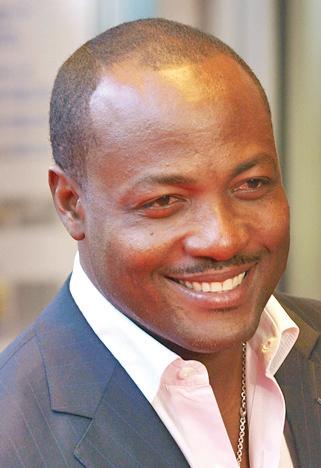
ans around the world
Fwill soon get a chance to see cricket legends such as Inzamam-ul-Haq, Brian Lara, Rahul Dravid, Shoaib Akhtar, Courtney Walsh, Graeme Hick and others in action at the T20 Clobi World Masters of Cricket Tournament in Barbados.
It has been learnt by The Express Tribune that the event will be played from November 1-10 and will be a four-nation competition between the West Indies, Pakistan, India and England.
For eligibility, the participants should be aged above 35 before the start of the tournament and they must have represented their respective countries in either Tests or One-Day Internationals.
All players will be required to follow the rules and regulations of their one-year contract in order to avoid legal complications that may lead to the cancellation of contracts.
Pakistan is looking to field a strong line-up that includes 1992 World Cup winning members as well.
The expected squad consists of Akhtar, Inzamam,
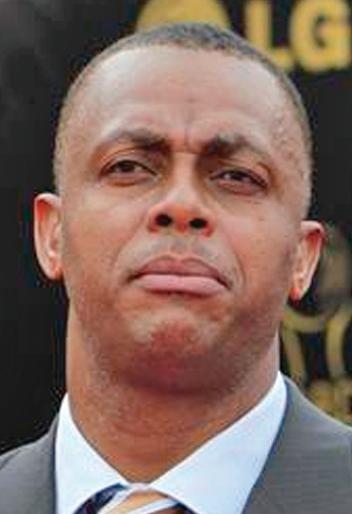
Mohammad Yousuf, Saqlain Mushtaq, Mushtaq Ahmad, Asif Mujtaba, Rava Navedul-Hasan, Rashid Latif, Shabbir Ahmad, Asim Kamal, Yasir Hameed, Arshad Khan, while the quartet of Moin Khan, Waqar Younis, Saeed Anwar and Azhar Mahmood will participate as per their availability.
Meanwhile, the West Indies squad is expected to feature Lara, Carl Hooper, Walsh, Curly Ambrose, Gordon Greenidge, Desmond Haynes, Floyd Reifer, Vasbert Drakes, Courtney Browne, Collis King, Ezra Mosley, Stuart Williams and Pedro Collins.
India is likely to be represented by Dravid, Robin Singh, Rahul Sanghui, Amay Khurhsiya, Pravin Amre, Narendra Herwani, Harvinder Singh, Viyay Dahiya, Iqbal Saddiqui, Abey Karuilla, Gagan Khoda and Sadagoppan Ramesh.
England is expected to field Paul Collingwood, Hick, Paul Nixon, Gladstone Small, Neil Fairbrother, Phil Defreitas, Devon Malcolm, Dean Headley, John Emburery, Glen Chapple, Mathew Maynard and Chris Schofield in the line-up. (windiescricket)
Saqlain Mushtaq said he was honoured to be invited to the Caribbean to train the current generation of West Indies spinners.
The former Pakistan off-spin master accepted an invitation from the West Indies Cricket Board and has been sharing his wisdom and understanding with current and emerging spinners at the Sagicor West Indies High Performance Centre, which is based on the campus of the University of the West Indies just a few kilometres outside of the Barbados capital of Bridgetown.
“It is a great honour for me because West Indies has such a great history in the game,” he told WICB Media.
“Many legends of the game have come from West Indies. There many cricketing knights, including Sir Garfield Sobers and Sir Vivian Richards, and there is also one of my great rivals, Brian Lara, so I am very excited about this opportunity.
“When (West Indies coach) Ottis Gibson called, I was more than happy to come to the Caribbean and share what I know with the young players. This is also a beautiful place to be with warm, friendly people.”
The crop of bowlers benefitting from Saqlain’s knowledge includes fellow off-spinner Shane Shillingford, West Indies teammates, left-arm spinner Veerasammy Permaul and leg-spinner Devendra Bishoo.
Saqlain said he was impressed with the players’ passion for the game, the deep interest in the art
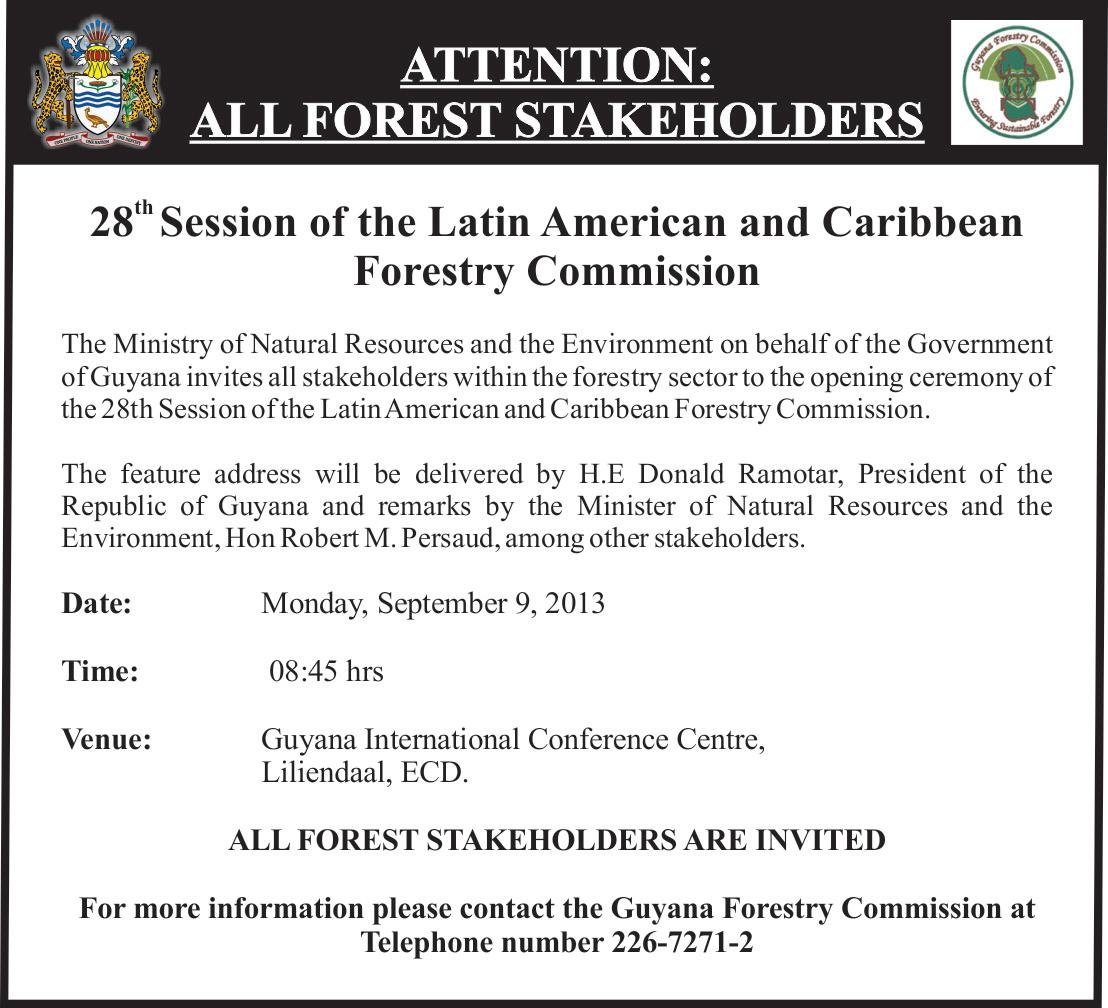
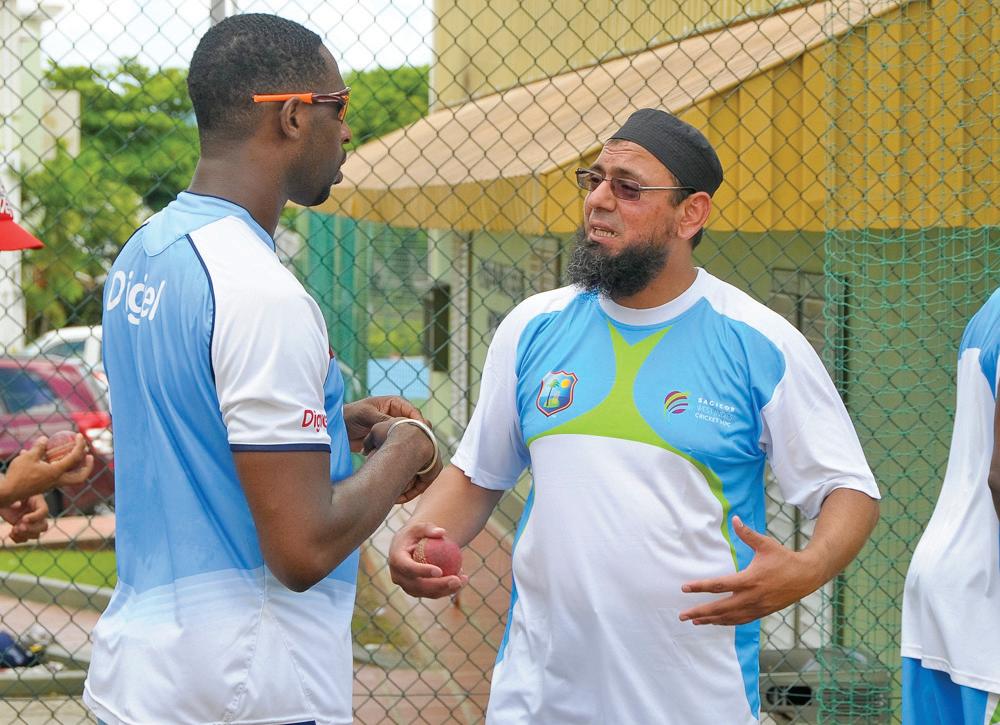
of spin bowling and their willingness to learn.
“We are working to improve the spin bowling reserves and I have seen a number of young players and a few that have played already for West Indies,” he said.
“There is a lot potential and there are all very talented and there is a lot of passion about the game – and my role is to make them more technically sound and tactically aware.”
He added: “We have also had discussions about how fit the spinner needs to be, how flexible the spinner needs to be, how they should take care of their body in particular their fingers.
“The players seem like they love to bowl spin. They have been bowling a lot of deliveries and they seem like they want to con-
tinue way past our cut-off time which is very, very good.”
Saqlain said though West Indies have produced a plethora of quality fast bowlers that have served them exceedingly well in the last 30 years, they have also produced quality spinners.
He hailed legendary fellow off-spinner Lance Gibbs, the first spinner to capture 300 Test wickets, and noted the achievements of pioneers like Sonny Ramadhin and Alf Valentine, whose names have been immortalised with the naming of the southern end of the Three Ws Oval on the UWI Cave Hill campus.
“The history is there, but looking at this group of players, they have the potential, but they have to work more and hard on perfecting their craft,” he
said.
“When I came into the Pakistan team, I had a number of role models, and this spin bowling clinic will help them to improve and learn a few new things.”
He said: “The relationship between the coach and the player is like body and soul. The coach is the soul and the player is the body. The coach must know the players from inside to out.
“Once the relationship between the coach and the player is strong, then you can get into the work and things will head in the right direction, but it all takes time.”
Saqlain, aged 36, played 49 Tests and 169 One-day Internationals for Pakistan between 1995 and 2004. He will spend three weeks working with the current crop of senior and emerging spin bowlers in the Caribbean. (windiescricket.com)
Tokyo has been chosen to host the 2020 Olympic and Paralympic Games ahead of Istanbul and Madrid.
The Japanese capital won a final round of voting by International Olympic Committee (IOC) members in Buenos Aires to beat Istanbul by 60-36 votes.
Madrid had earlier been eliminated in a first-round ballot.
The announcement was met with jubilant scenes in Japan, as Tokyo prepares to host the event for the first time since 1964.
When IOC president Jacques Rogge - who will retire after 12 years in the role on Tuesday - announced the winning city, the Tokyo delegation jumped to their feet in celebration and waved the Japan flag.
The decision means Tokyo will become the first Asian city to host the Games twice.
They had previously been awarded the event in 1940, but the Games were cancelled because of World War II.
The success of Tokyo’s bid
A number of them were overcome with emotion and wept, after two years of intense lobbying.
followed a personal address from Prime Minister Shinzo Abe during the presentation stage, in which he allayed fears over the crippled Fukushima nuclear plant 150 miles (240km) from the city by saying: “It has never done, and will never do any damage to Tokyo.” (BBC Sport)



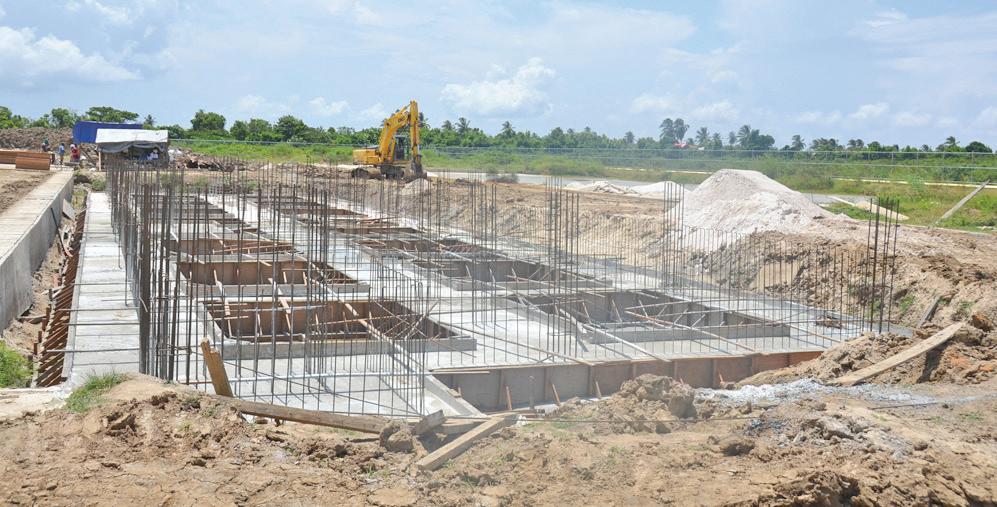
By Rajiv Bisnauth
The rubberised turf for the Synthetic track and field facility at Leonora, West Coast Demerara, has arrived in Guyana and installation should commence shortly with the aim of completion by November month end.
This is according to Deputy Permanent Secretary of the Sport Ministry, Steve Ninvalle, following a visit to the site
INSIDE TODAY’S SPORT
on Saturday. German company, BSW Regupol, is the supplier of the track and is also responsible for its installation.
The installation of the track and line marking is expected to be completed over a span of five weeks once there is favourable weather condition.
“The turf has been manufactured and is in Guyana. We have written to the German company BSW
Regupol and they should be in Guyana very shortly to lay the synthetic materials on the track,” Ninvalle informed.
He added, “However, the track can only be laid in continuous dry weather, so we were informed by the meteorological office that Guyana should experience some dry weather between mid-September to mid-November. We have informed BSW Regupol about the weather so they will be
here shortly.”
Project Manager of Design and Construction Service Limited, Patrick Pitt, said works under Phase II are moving apace. He said that the overall work is approximately 70 percent complete.
“Phase II- Lots 4 and 5has been terminated with the remaining four in its construction stage. The remaining sub project is yet to be tendered. Also the outstanding works under
Phase II- Lot 4 have been evaluated, quantified and re-tendered. All four Sub Lots have been awarded with Sub Lots 2 and 3 completed and Sub Lots 1 and 4 under construction phase. The outstanding works under Phase II– Lot 5 have been re-evaluated, quantified and submitted to the client into three Sub Lots and Phase II– Lot 6A is in the design stage,” Pitt disclosed.
Meanwhile, Ninvalle
indicated that despite the termination of two lots due to two delinquent contractors, he is satisfied with the progress made thus far. The project is divided into three Phases and twelve Lots. Phase I consists of one Lot, Phase II has seven Lots, while Phase III comprises three Lots. A total of G$560 million has been spent on the facility thus far. The estimated cost to complete the entire facility is US$5 million.


The Indian Arrival Committee (IAC) on Saturday afternoon honoured Guyana’s youngest world powerlifting champion, 18-yearold Gumendra Shewdas, with a monetary award of $500,000 and a plaque during a ceremony at the Tej Mohall Shopping Complex in Number 79 Village Corriverton, Berbice.
Also making a presentation to the star lifter at Saturday’s event was the Corriverton branch of the Guyana Bank for Trade and Industry (GBTI). The management and staff of Tej Mohall Shopping Complex also used the opportunity to recognise the monumental achievement of Shewdas.
Among those in attendance at the event was Natural Resources Minister, Robert Persaud, who is also the patron of the
IAC. In brief remarks, he applauded the efforts of the young Berbician.
Agriculture Minister Dr. Leslie Ramsammy, who has parliamentary responsibilities for Region Six, also graced the occasion, along with Secretary of the People’s Progressive Party and former chairman of Region Six, Zulfikar Mustapha.
Region Six chairman David Armogan applauded the IAC for the gesture and noted that other organisations in the region will also be honouring the Berbice hero, who has made all Guyanese proud.
The ceremony was also attended by Shewdas’ immediately family, officials of the IAC and members of the business community in Berbice.
Shewdas, who has earned the alias “Golden Boy”, re-
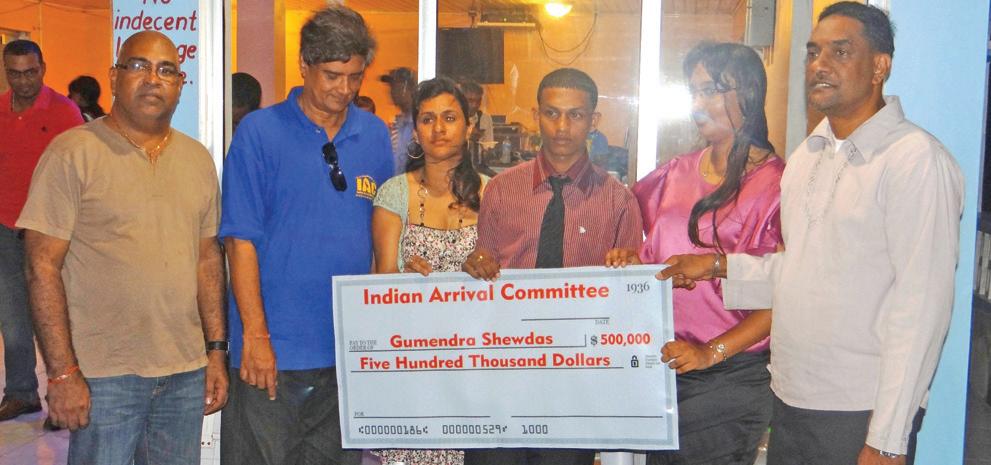
turned home a few weeks ago from the World Junior and Sub Junior Powerlifting Championships in Killeen, Texas, U.S.A, with a gold medal in the 53kg class. In the process, he became Guyana’s youngest world champion in any sport discipline.
Shewdas’ best squat of 180kg and bench press of 90kg were below U.S.A’s Dalton La Coe’s 182.5kg (squat), 105kg (bench press) heading into the deadlifts, but a huge lift of 205kg on his second attempt thrust the Guyanese into the lead. With Shewdas holding the psychological advantage, La Coe could only muster a lift of 137.5kg and failed twice at 192.5kg. Russia’s Alexei Kulakov was third with a total of 412.5kg.