2026 - 2027
2026 - 2027
Rooted in the Catholic faith and charism of Mercy, Gwynedd Mercy Academy High School educates, inspires, and empowers young women to be merciful in spirit, innovative in thought, and courageous in leadership.
WE BELIEVE IN THE SPIRIT OF MERCY
• Acknowledging God as our core of existence, we model our lives on Jesus Christ.
• Positive moral and Catholic values are fundamental to personal growth, social responsibility and global competency.
• Gwynedd’s foundation is built on the core values of compassion, justice, service, and respect for the dignity of all persons. These values are the charism of Catherine McAuley, the foundress of the Sisters of Mercy.
WE BELIEVE IN THE STRENGTH OF COMMUNITY
• Through ongoing service, the Gwynedd community fosters respect for the dignity of all persons.
• Students become competent, compassionate women in an enriched, balanced environment cultivated by positive role models.
• Faculty, in collaboration with parents, motivate and challenge each young woman to achieve her highest potential.
WE BELIEVE IN THE VALUE OF EDUCATION
• Participation in Mercy Education spans six countries and offers a global perspective to our students.
• Gwynedd develops and nurtures the whole person: intellectually, spiritually, morally, physically, emotionally, and socially.
• Educators inspire a fundamental love of life-long learning that requires reflection and action.
WE BELIEVE IN THE POWER OF WOMEN
• Each student succeeds in a supportive environment that encourages the development of her distinct abilities, talents, and interests.
• Gwynedd women are educated, inspired, and empowered by Mercy to effect change for the greater good.
• Through the global network of Mercy sisterhood, Gwynedd Alumnae advance the Mercy charism and offer opportunities for mentoring and paths to success in careers for all women.
Gwynedd Mercy Academy High School, founded in 1861, an independent Catholic college preparatory school for young women, is part of a long and rich history of education. While it is a member of a global network of schools, Mercy Education, the school’s roots are steeped in the educational ministry of Catherine McAuley, the foundress of the Sisters of Mercy. A visionary leader, Catherine McAuley was keenly aware that education is the key to empowering women to make a difference in the world and affect social change. This belief continues to inspire the core mission of Gwynedd Mercy Academy High School as it nurtures highly competent and deeply compassionate leaders ready to serve the needs of a twenty-first century world.
Preparing students for this important role necessitates the promotion of academic excellence in an environment that fosters the development of the whole person - spiritually, intellectually, physically, and emotionally. A complex, ever-changing, and diverse world requires educational programs at various levels (co-curricular and extra-curricular) which educate, inspire and empower each young woman to think critically, to act with compassion, and to recognize, affirm and respect both her unique abilities and talents as well as the talents and abilities of each and every person.
Our Core Values are the hallmarks of a Mercy Education. These are the ideals we stand up for and strive to live up to. We hold ourselves to these standards as an institution, as a community and as individuals. Each value is interconnected and necessary as we take Mercy into the world.
Mercy students, in the spirit of our foundress Catherine McAuley, are steadfastly determined to take Mercy into an interconnected world. Our shared sense of social consciousness is fortified by universal empathy and a conviction that all are worthy of God’s mercy. This deep awareness and compassion move us to take principled action and serve the needs of others.
Mercy students welcome the challenge of pursuing their full potential in a culture of excellence, critical thinking and curiosity. Their multifaceted journey builds character while it builds essential skills. Our holistic program expects engagement, a thirst for knowledge and personal responsibility, while preparing students to thrive for a lifetime.
Mercy students become living models of faith and forceful advocates for Gospel values. Grounded in our Catholic identity in the Mercy tradition, we welcome all faiths and are strengthened and shaped by these relationships. As we pursue a personal relationship with God, we strenuously follow Jesus Christ’s example of social justice, love and service.
Mercy students are poised to lead with their unique gifts. Prepared with an ethical and moral compass, we put Mercy values into action and work assertively for what is right. We’re equipped to make difficult choices, learn from our mistakes and develop high emotional intelligence. As an international community, we’re confident in our ability to make a positive difference and push for systemic change.
Mercy students honor the intrinsic value of the individual and recognize God’s presence in each person. We embrace a global vision and value differences of opinion, and are unafraid to confront hostile or hurtful attitudes. By standing up for those who can’t, we go beyond acceptance to help make sure everyone feels recognized and heard.
Compelled by Mercy
Educational Courage
Mathematics
Science
World Language
Compassion. Having concern for the needs of all, including those outside our immediate circle.
Empathy. Putting yourself in someone else’s shoes to understand their feelings and perspectives.
Responsibility to Serve. Fulfilling the duty to not just care about others, but to take action on their behalf.
Curiosity. Being open to other ways of seeing the world and exploring new ideas.
Personal Accountability. Staying disciplined in decision-making, proactive in correcting mistakes and self-motivated in our studies.
Critical Thinking. Gathering and objectively evaluating and analyzing information through reflection and reason.
Spirituality. Developing a personal relationship with a loving, merciful God, expressed in service and respecting other faiths.
Modeling of Jesus Christ & Catherine McAuley. Living life with abundant love, compassion, generosity and hospitality, demonstrating the strength of infinite mercy.
Ethical & Moral. Following a personal code based on Gospel values that guides action and choices.
Integrity. Standing up for or doing what’s right, including when it’s difficult or unpopular.
Lifelong Learning. Always learning something new, gaining skills and wanting to know more, in all walks of life.
Emotional Intelligence. Recognizing and welcoming emotions within ourselves and others to build resilience and healthy relationships.
Grace. Allowing others to be fully human without judgment, while honoring what is God-like within each person.
Advocate. Being a forceful defender, supporter and sometimes spokesperson for the values and people we hold dear.
Inclusivity. Going beyond tolerance to embrace diversity, while accepting and serving with open arms.
In accordance with Pennsylvania State requirements and Gwynedd Mercy Academy’s academic philosophy, each student must complete at least 24 credits in grades 9–12 to graduate. Credit is awarded at 1 credit for a full-year course and 0.5 credit for a semester course. Students must meet all core content requirements—including 4 credits each in Theology and English; 3 credits each in Social Studies, Mathematics, Science, and World Language (with 4 credits recommended in these areas); and additional required courses in Health, Art, Music, Computer Science.
Additional graduation requirements include participation in Fitness for Life/Physical Education and coursework in Communications, Leadership, and Personal Finance during grades 9-11, and the completion of Service Learning during 11th grade. While fulfilling these requirements, students in grades 10–12 select elective courses to reach the required 24 total credits.
Content
Theology
**Requirement begins with the class of 2030
***Requirement begins with the class of 2029
****Requirement begins with the class of 2028
*The Class of 2028 and beyond must complete 3 consecutive years of World Language. The Class of 2027 may still meet the former 2-year requirement, though 3–4 years are encouraged.
Level 1: Advanced Placement Courses* – Qualifying grades and department approval are prerequisites for Advanced Placement courses.
Level 2: Honors Courses – Qualifying grades and department approval are prerequisites for honors courses.
Level 3: Standard College Preparatory Courses –Department approval is sometimes required.
A student’s Grade Point Average is based on a 100-point scale as follows:
*Conversion table only shown through un-weighted grade of 80
A+ 98-100 4.3
A 94-97 4
A- 90-93 3.7
B+ 87-89 3.3
B 84-86 3
B- 80-83 2.7
C+ 77-79 2.3
C 74-76 2
C- 72-73 1.7
D 70-71 1.3
F 69 & below 0
A student’s Grade Point Average can be calculated at any time by using the conversion table above to determine the “weighted grade” for each course, adding these “weighted grades” together and then dividing by the total number of credits.
Because of the small and selective nature of the student body, Gwynedd Mercy Academy High School does not assign a specific rank to its students.
The Honor Roll reflects the performance of a student within a given level of courses. Honors are computed for major courses at the end of the first semester and the end of the year.
First Honors: Unweighted semester average of 93; No grade lower than 88
Second Honors: Unweighted semester average of 90; No grade lower than 85
Student-athletes interested in competing at the Division I or Division II collegiate level should become familiar with NCAA Eligibility Center requirements. NCAA requirements are outlined in detail at eligibilitycenter.org. Students who have any questions about these requirements or the registration process should contact their college counselor.
Standardized testing via College Board’s SAT Suite of Assessments is available to all students in Grades 10 – 12. Below is the list of tests offered, their timing during the school year, and associated grade levels.
Standardized Test Semester
PSAT 10 Spring Grade 10
Grade
PSAT/NMSQT Fall Grade 11
SAT School Day (optional) Spring Grade 11 Fall Grade 12
Students begin the course selection process during the second semester of each school year. All course placements are determined by a combination of successful completion of prerequisites, teacher or department recommendations, and student performance in academic subjects. These factors ensure that students are scheduled into courses that appropriately match their skills, readiness, and long-term academic goals.
Incoming 9th-grade students will be registered for their courses in the spring prior to entering high school. Placement for these students is based on the results of their entrance examination, their 7thand 8th-grade final grades, and their placement test results. Incoming 9th graders will also have the opportunity to request their world language choice during this registration process.
The availability of all courses listed in the Program of Studies is subject to change. Courses may not run in a given school year due to insufficient student enrollment, staffing limitations, or space constraints. If a course is canceled for any of these reasons, students will be notified, and every effort will be made to schedule them into one of their top alternate course selections. In cases where a student experiences a scheduling conflict the same process will apply. Counselors work closely with students to ensure that their finalized schedules reflect their interests and graduation requirements to the greatest extent possible.
Students and families are strongly encouraged to review all course prerequisites and recommendations before selecting classes. Prerequisites are based on unweighted report card grades. If a student has not met the listed prerequisites or has not received a teacher recommendation for a desired course, they should first speak directly with their current teacher to discuss readiness and available options. Following that conversation, students should meet with their school counselor for additional guidance, planning support, and clarification of course pathways.
If, after these steps, a student still wishes to enroll in a course for which they do not meet the requirements, they may meet with the Dean of Curriculum, Instruction, and Assessment to request a Course Override Form to be completed by the student and parent. Completed override requests will be reviewed by a committee, which will consider relevant information and academic data before issuing an approval or denial.
Full-year (1.0 credit) courses run for the entire school year and span both semesters, providing students with a full year of instruction in the subject. Semester courses (0.5 credit) run for only one term—either Semester 1 (S1) or Semester 2 (S2)—and are completed within that single semester. Students may take a different course in the opposite semester. Course listings indicate whether a course is a full-year or semester offering so students can plan their schedules accordingly.
Advanced Placement (AP) courses offer a nationally standardized, college-level curriculum, and students may have the opportunity to earn college credit based on their AP Exam score. Because colleges set their own score and credit policies, acceptance of AP credit is not guaranteed; students should consult their intended colleges or universities to understand how AP scores may be applied. Students enrolled in an AP course are required to take the AP Exam, which carries an associated fee.
Dual enrollment courses follow the partner college’s curriculum, and students may have the opportunity to earn transcripted college credit upon successful completion. Because colleges determine their own transfer policies, acceptance of dual enrollment credit is not guaranteed; students should consult their intended colleges or universities to understand how these credits may be applied. Enrollment in the dual enrollment credit option is optional and may involve tuition, fees, or textbook costs.
All prerequisites are based on unweighted report card grades.
111 Theology 9: Discovering Christ and Catholicism through Scripture
1 Credit Grade 9
During Freshman Theology, students will explore what it means to be a follower of Christ through Scripture. The first semester of this course contains a foundational overview of the Old Testament as the first part of the story of God’s redemption of His creation. During this study of the Old Testament, students explore and understand basic themes of the Biblical narrative. Students develop essential Bible study skills and use them in engaging ways throughout the semester. The study of the Old Testament gives students many opportunities to apply the powerful truths of the Catholic faith.
The second semester is a study of the New Testament including the Synoptic Gospels, the writings of John, the Acts of the Apostles, and the writings of Paul. Students will come to new understandings of the scripture through both prayer and study. The goal of this course is to integrate scripture into the lives of the students.
1 Credit Grade 10
The first semester of this course is designed to introduce students to the major events and doctrines in the history of the Catholic Church, as founded upon Christ and His apostles. This course will also examine the development of beliefs, customs, and practices of the Catholic Church as led by the Holy Spirit through the centuries.
The second semester of this course provides a historical overview and doctrinal examination of each of the Church’s seven sacraments along with an introduction to the theology of grace and the general principles of sacramental theology. Students will learn to encounter Christ through the sacraments, and special emphasis will be placed on the Eucharist, which is the “source and summit of the Christian life” (CCC 1324).
1 Credit Grade 11
This course seeks to provide students with an introduction to the fundamental principles of Catholic moral teachings and their application to contemporary moral issues, while also exploring the rich social teaching of the Church on political, economic, ethical, and cultural matters as they relate to the common good. The concepts of human dignity, conscience, freedom, personal and social responsibility, law, sin, and forgiveness will be examined through Scripture and the Church’s moral tradition, with emphasis on decision-making skills and how to answer Christ’s Gospel call to love and service.
Service-learning Requirements: Service-Learning is a method of teaching, learning, and reflecting that integrates academic coursework with meaningful, face-to-face service in the greater community, especially with those who are in need or on the margins of society. Students will select an agency or organization where they will participate in at least 20 hours of direct service. Students reflect on their experience both in a journal, which is due by March 1st, and by attending three separate reflection sessions with their peers through the year. Students engage in the circle of social action by first developing awareness through their service hours, then moving into analysis as they connect their experiences to issues of social justice through a research paper, and finally into advocacy as they consider ways to work toward systemic change, during the spring semester.
141
1 Credit Grade 12
This course is designed to provide students with a foundation in the basic concepts of Catholic spirituality and to teach them the fundamental principles of prayer, especially mental prayer, in order to prepare them for a “vital and personal relationship with the living and true God” (CCC 2558). This course examines the Christocentric, biblical, sacramental, ecclesial, and Marian aspects of spirituality and analyzes some of the major Catholic spiritual traditions. Through engagement with some of the great classics of Catholic spirituality, students will explore the lives and spiritual practices of the saints who shaped the major spiritual traditions.
145
Dual Enrollment Option
1 Credit Grade 12
This course is designed to provide students with a foundation in the basic concepts of Catholic spirituality and teach them the fundamental principles of prayer in order to prepare them for a “vital and personal relationship with the living and true God” (CCC 2558). Students will examine the Church’s teaching about the three major expressions of prayer, vocal, meditative, and contemplative, and they will be introduced to different prayer and devotional practices such as Eucharistic adoration, the rosary, the Divine Mercy chaplet, the Examen, lectio divina, visio divina, and the Liturgy of the Hours. This course will focus on the three stages of the spiritual life as a map for the spiritual journey, the lifelong process of ongoing personal conversion, the importance of living a sacramental life, and how to answer the universal call to holiness announced in Lumen Gentium at the Second Vatican Council to which all baptized Christians must respond.
This course will also consider the Christocentric, biblical, sacramental, ecclesial, and Marian aspects of spirituality and will explore some of the major Catholic spiritual traditions. Furthermore, through the reading of both primary and secondary sources, students will become acquainted with some of the great classics of Catholic spirituality such as St. Augustine’s Confessions, St. Catherine of Siena’s Dialogue, St. Ignatius of Loyola’s Spiritual Exercises, and St. Teresa of Avila’s Interior Castle as well as with their lives and spiritual practices.
Please note that this is a writing and discussion intensive course.
Prerequisite: Students who wish to be considered for placement into Honors Theology must complete an application and accompanying essay, available through the Theology Department; final placement is contingent upon review and approval by the department.
Note: Optional dual enrollment is available for this course with the School of Theological Studies at St. Charles Borromeo Seminary. The Seminary will grant three undergraduate level credits to any senior who completes this course with at least a grade of C or higher. An associated fee will be due upon the student’s registration for dual enrollment.
211
1 Credit Grade 9
In this course, students are challenged to grow as both responsive readers and effective writers. Students analyze essays, speeches, short stories, and novels as a basis for their focus on what it means to be a persuasive communicator. Fundamental writing skills are developed through the reinforcement of grammar and mechanics and the introduction of a well-rounded vocabulary. Course focus includes the recognition of literary terminology and devices; critical reading and analysis; research techniques, including an introduction to MLA formatting; and the examination of historical, cultural, and social contexts relevant to all readings. Ninth graders establish a writing portfolio that will serve as a collection of writing that reflects student growth over time and includes evidence of self-reflection.
210
1 Credit Grade 9
In this advanced course, students are challenged to hone their voices as effective writers and develop perspective as empathetic readers. An expansive study of literature is comprised of essays, speeches, short stories, contemporary and classic novels; independent reading preparation and presentation; and the utilization of literary and research techniques, including MLA style. Students will be encouraged to stretch their critical and analytical abilities examining the historical, cultural, and social contexts in connection to all readings. The ability to express oneself orally, and to work both independently and in small groups, are essential elements of the course. Ninth graders establish a writing portfolio that will serve as a collection of writing that reflects student growth over time and includes evidence of self-reflection.
Prerequisites: Student must demonstrate a high proficiency in the verbal, language, and reading sections of the Gwynedd Mercy Academy Entrance Exam to be offered placement.
1 Credit Grade 10
English 10 is focused on the main literary components that go into the creation of a literary text. The course focus will be on developing active reading, effective writing, and confident verbal communication skills. The class will include exposure to a variety of literary forms, including novels, short stories, speeches, and essays which explore diverse voices in literature. Throughout the year, students will develop active reading skills by analyzing the literary elements present in each work and examining how they help reinforce the central ideas of the text. Students will also practice finding and citing strong textual evidence to effectively support their analyses. Students will examine the tone, diction, and organization of various texts to continue development of their formal writing and research skills. Students will also add to their writing portfolios established in Freshman year to continue their reflections of growth. Additionally, students will be required to share their personal responses to the readings both in class and through online technologies as well as present an oral presentation each semester and submit an end-of-the-year research paper.
220 Honors English 10: Fantastic Texts and How to Read Them
1 Credit Grade 10
Honors English 10 is an advanced course focused on the main literary components that go into the creation of a literary text. The course focus will be on enhancing active reading, effective writing, developmental research, and confident verbal communication skills. This class will include exposure to a variety of literary forms, including novels, short stories, speeches, and essays which explore diverse voices in literature. The course is reading and writing intensive. Text selections and their supplements are carefully chosen to ensure a challenging experience for students. Throughout the year, students analyze literary elements present in each work and examine how they help reinforce the central ideas of the text. Students will also practice finding and citing strong textual evidence to effectively support their analyses. Students will examine the tone, diction, and organization of various texts to further inform and hone their formal writing and research skills. Students will also add to their writing portfolios established in Freshman year to continue their reflections of growth. Additionally, students will be required to share their personal responses to the readings both in class and through online technologies as well as complete an independent reading presentation and submit an end-of-the-year research paper.
Prerequisites: 90 or higher in Honors English 9; 95 or higher in English 9
232 English 11: Four Literary Forms
1 Credit Grade 11
In this course, students will study four modes of discourse—dramatic, poetic, narrative fiction, non-fiction— that have defined the English language from Shakespeare to Amanda Gorman. The purpose of this course is to understand the literary mechanisms that have shaped these modes of writing for hundreds of years. Students will read representative works that illustrate the fundamental characteristics of these modes, but they will also have the opportunity to create their own versions of some of these modes through a variety of project-based assessments. Additionally, students will give presentations, write expository essays, and engage in in-class writing assessments.
233 Honors English 11: Seven Types of Plot
1 Credit Grade 11
Honors English 11 invites students to explore the foundations of narrative by examining the seven major plot structures that have shaped literature for hundreds, even thousands of years. Through close reading, analytical writing, and creative projects, students will investigate how authors craft compelling stories using the seven classic plot archetypes: Overcoming the Monster, Rags to Riches, The Quest, Voyage and Return, Comedy, Tragedy, and Rebirth. Students will read a diverse selection of novels, plays, short stories, and even watch films, analyzing how plot interacts with character development, theme, and style. Emphasis will be placed on understanding narrative patterns not as rigid formulas but as flexible frameworks that writers adapt to reflect cultural values, psychological truths, and artistic innovation.
Prerequisites: 90 or higher in Honors English 10; 95 or higher in English 10
230 Advanced Placement English Language and Composition
1 Credit Grade 11
AP Language and Composition is a course open to Juniors who have demonstrated remarkable skill in the study of discursive prose, close reading, and rhetorical analysis. The purpose of the course is to examine two specific areas of written discourse: argumentation and rhetoric. Students enrolled in this course will experience a demanding curriculum that emphasizes quality writing and the value of effective communication. As students learn the nuances of the writer’s craft, they naturally discover their own unique voices in their writing, thus generating a genuine relationship between the writer and her writing. Students will read a variety of non-fiction texts that bear significance within their own social and cultural contexts.
Prerequisites: 95 or higher in Honors English 10; 98 or higher in English 10
Note: AP students are required to take the AP exam, and families will be responsible for any associated fees.
242 English 12: Contemporary Fiction, Non-Fiction, and Expository Writing
1 Credit Grade 12
English 12 is a course with two distinctive semester-long themes. During the first semester, students will study a variety of recently published works of non-fiction. Through close reading and class discussion, students will experience an introductory-level college course that prepares them to write across the curriculum.
During the second semester, we will transition into an exploration of contemporary fiction texts. Similarly, students will alter their writing to account to this genre and its use in college writing.
The final capstone project will be a Personal Interest Project (PIP) -- students will pursue an idea, problem, or project of their choosing and present their successes (or failures) in a comprehensive presentation.
241 Honors English 12: Detective Fiction and True Crime Narrative
1 Credit Grade 12
Honors English 12 is a course that will juxtapose two popular genres of writing: detective fiction and true crime. While the classic detective story often finds inspiration from actual events, authors have the liberty of creating fictional worlds that are grounded in the foundations of the genre.
True crime, however, is an ever-changing genre that now utilizes a variety of media to tell stories. Rather than read the splashy, sensationalist texts that previously dominated the market, students will explore texts that are meticulously researched and expertly written.
In this reading and writing intensive course, students will write analytically and engage in scholarly research.
Prerequisites: 90 or higher in Honors English 11; 95 or higher in English 11
240 Advanced Placement English Literature and Composition
1 Credit Grade 12
AP Literature and Composition is a course open to Seniors who have demonstrated remarkable skill in the study of discursive prose, close reading, and rhetorical analysis. The purpose of this course is to develop a deep understanding of the English language and to strengthen skills in reading analytically and critically while writing clearly and effectively. Students will concentrate on reading and analyzing discursive prose, poetry, and drama as well as writing critical essays. The goal of the course is divided into two components:
1. Read complex texts with a greater understanding of their literary values
2. Respond to their reading with sufficient richness and complexity of language that ultimately communicates their ideas in an effective manner
Students enrolled in this course will experience a demanding curriculum that emphasizes writing and the importance of effective communication.
Prerequisites: 90 or higher in AP Language; 95 or higher in Honors English 11; 98 or higher in English 11
Note: AP students are required to take the AP exam, and families will be responsible for any associated fees.

Graduation Requirements: Students must take 3 years of Social Studies with one World-focused, one US History-focused, and one US Government-focused course.
311 World Cultures
1 Credit Grade 9
A study of the geography, history, and cultures of regions around the world. Students will learn valuable reading, comprehension, and writing skills while studying the important societies of our world. The class takes students through regions of Africa, Asia, Europe, and the Americas. Students will examine the languages, religions, art, and traditions that define the cultures found within them. They will use a variety of resources, tools, and technology to deepen their understanding and achieve success. This course introduces students to the skills and concepts necessary to begin their study of history and provides them with the knowledge and opportunities to more fully understand and participate in the global community.
310 Honors World Cultures
1 Credit Grade 9
World Cultures is a study of the geography, history, and cultures of regions around the world. Students will learn valuable reading, comprehension, and writing skills while examining societies and cultures around the world. The class takes students through regions of Africa, Asia, Europe, and the Americas. In each region, students will explore concepts of language, religion, and cultural patterns along with current events. They will use a variety of resources, tools, and technology to deepen their understanding and achieve success. This course introduces students to the skills and concepts necessary to begin their study of social studies and provides them with the knowledge and opportunities to more fully understand and participate in the global community.
As an honors-level class, students will complete more complex readings and more frequent writing assignments. The class will take topics into more depth, therefore, students in this program must prepare to work independently, participate in focused class discussions, and share their ideas and insights through a variety of channels.
Prerequisites: Student must demonstrate a high proficiency in the verbal, language, and reading sections of the Gwynedd Mercy Academy Entrance Exam to be offered placement.
1 Credit Grades 10
In this course, students will study U.S. history from the American Revolution to recent decades. Through research, discussion, writing, and long-term projects, students will analyze a wide variety of social, political, economic, and cultural changes in American life. Topics will include the founding and expansion of the American republic, the spread of slavery and rise of sectionalism, the Civil War and Reconstruction, industrialization and innovation, immigration, imperialism, U.S. emergence as a world power, the world wars and the interwar period, the Cold War, the Civil Rights Movement, and important trends and developments since the 1970s. Students will learn not only historical facts, but how to analyze point of view, make connections between events, and assess the actions of American leaders over the past century. The course will require a great deal of participation from the students.
333 Honors Topics in United States History
1 Credit Grades 10
This course is a thematic survey of American historical, cultural, political, and social developments from the Revolution to the present. Topics of study include founding and expansion of the American republic, the spread of slavery and rise of sectionalism, the Civil War and Reconstruction, industrialization and innovation, immigration, imperialism, U.S. emergence as a world power, the world wars and the interwar period, the Cold War, the Civil Rights Movement, and important trends and developments since the 1970s. Students will learn how to evaluate primary and secondary sources and apply them as evidence in argument-based essays, discussions, and presentations. Students will further develop research methodology and critical thinking skills, place historical events in context, and relate the causes and effects of historical events to contemporary issues. Class discussions, essays, and a long-term research-and-writing project will assess students’ mastery of content and historical thinking skills.
Prerequisites: 94 or higher in World Cultures; 85 or higher in Honors World Cultures
330 Advanced Placement United States History
1 Credit Grades 10
Designed to provide students with the factual knowledge, historical thinking, and composition skills necessary to complete the Advanced Placement exam and prepare students for future college level courses. The program prepares students for intermediate and advanced college courses by making demands equivalent to those made by introductory college courses. This APUSH course will develop the skills necessary to arrive at conclusions on the basis of a well-informed judgment and to present reasons and evidence clearly and persuasively in essay format. This course begins with the Native Americans that lived on the land and goes through ideas of colonization, the creation of the United States post-Revolutionary War and through the various ages beyond including conflicts at home and abroad. The course will focus on the nine historical periods determined by the College Board.
Prerequisites: 94 or higher in Honors World Cultures; 85 or higher in AP Human Geography
Note: AP students are required to take the AP exam, and families will be responsible for any associated fees.
342 United States Government and Politics
1 Credit Grades 11
This course offers a foundational exploration of the United States political landscape, examining its historical evolution, established structures, and enduring principles across two centuries. Key areas covered include the constitutional foundations of the United States government, the workings of national governmental bodies, the roles of political parties, interest groups, and media, as well as the dynamics of political ideologies and actions. Additionally, civil rights, liberties, and public policy are examined. Through analysis of contemporary events, students will gain practical insights, applying theoretical frameworks to their everyday observations.
341 Honors United States Government and Politics
1 Credit Grades 11
This honors level American Government course offers an in-depth exploration of the U.S. political system, tracing its evolution, core principles, and cultural values across two centuries. Covered topics include the constitutional foundations of U.S. governance, the structure of national institutions, the roles of political groups like parties, interest groups, and media, along with an examination of political ideologies and behaviors. Additionally, students will explore concepts of civil rights and liberties. By examining current events, students will have the opportunity to apply theoretical frameworks to real-world situations, developing a deeper understanding of government and politics in the United States. The course demands a comprehensive understanding of the various institutions, groups, beliefs, and concepts shaping U.S. politics, with emphasis placed on historical research and analysis of relevant documents.
Prerequisites: 94 or higher in Topics in United States History; 85 or higher in Honors Topics in United States History
340 Advanced Placement United States Government and Politics
1 Credit Grades 11
This course is offered to students who wish to do college level work in U.S. Government and Politics. It is designed to give students an analytical perspective on government and politics in the United States. This course includes both the study of general concepts used to interpret U.S. politics and the analysis of politics of specific examples. It also requires familiarity with the various institutions, groups, beliefs, and ideas that constitute U.S. politics. Themes/topics include the constitutional underpinnings of the U.S. government; political beliefs and behaviors; political parties, interest groups, and mass media; institutions of the national government; public policy; and civil rights and civil liberties. Historical research and analysis of historical documents will be required as well as assigned summer readings. The course requires independent study by the student and extensive individual participation in group discussions.
Prerequisites: 94 or higher in Honors Topics in United States History; 85 or higher in AP United States History
Note: AP students are required to take the AP exam, and families will be responsible for any associated fees.
360 Advanced Placement Human Geography
1 Credit Grades 9 -12
Human geography examines the patterns and processes of human activity on Earth, using spatial data and analysis to answer geographic questions that apply to our world today. Topics introduced in this course include geographic inquiry, population and migration, cultural patterns and processes, political organization of space, development, and both agricultural and urban land use. Students are required to read collegelevel texts, understand, interpret, and analyze maps and other forms of spatial data, and think critically to solve problems. At this class’s completion, students will be able to interpret geospatial data and analyze the relationships among people, places, and human activities around the world.
Prerequisites: 94 or higher in Honors United States Government and Politics or Honors Topics in US History (current course); 85 or higher in AP United States Government or AP United States History (current course); Department approval based on placement test for grade 9
Note: AP students are required to take the AP exam, and families will be responsible for any associated fees.
350 Advanced Placement European History
1 Credit Grades 11, 12
In AP European History, students investigate significant events, individuals, developments, and processes from approximately 1450 to the present. Students develop and use the same skills, practices, and methods employed by historians: analyzing primary and secondary sources; developing historical arguments; making historical connections; and utilizing reasoning about comparison, causation, and continuity and change over time. The course also provides seven themes that students explore throughout the course in order to make connections among historical developments in different times and places: interaction of Europe and the world, economic and commercial development, cultural and intellectual development, states and other institutions of power, social organization and development, national and European identity, and technological and scientific innovations.
Prerequisites: 94 or higher in Honors United States Government or Honors Topics in U.S. History (current course); 85 or higher in AP United States Government or AP United States History (current course)
Note: AP students are required to take the AP exam, and families will be responsible for any associated fees.
387 Honors Nature and History
0.5 Credit
Grades 11, 12
How has the natural world shaped human cultures over time? How have humans in turn shaped and thought about nature? Students in this course will examine these questions about the past as a way to ponder the ecological quandaries of our own time. Key topics include the domestication of nonhuman species, the process of turning natural resources into commodities, the preservation of beautiful spaces and wild animals, the rise of modern environmentalism, and the ongoing history of climate change.
385 Honors Women in American Society
0.5 Credit Grades 11, 12
As the historian Laurel Thatcher Ulrich once wrote, “well-behaved women seldom make history.” Students in this course will explore American women—well-behaved and otherwise—who have shaped life in the United States from the colonial period to the present. Key topics include women’s labor in and out of the home, girl’s and women’s education, women as political actors and social activists, debates over women’s rights and freedoms, and shifting norms and assumptions about femininity and womanhood.
383
0.5 Credit
Grades 11, 12
Global Horizons provides students with a comprehensive understanding of global historical events, trends, and movements from the late 19th century to the present day, while incorporating the critical concerns of the Sisters of Mercy. Through an exploration of diverse cultures, political developments, social movements, and technological advancements, students will develop the analytical skills necessary to critically assess the impact of historical forces on the contemporary world. By the end of the course, students will understand the complexities of the modern world and be equipped with the skills and perspectives necessary to contribute positively to their communities, guided by the principles of the Sisters of Mercy.
363
0.5 Credit Grades 11, 12
This course is designed to explore the principles and theories of sociology. The course will cover topics such as culture, social institutions, collective behavior, social deviation, gender roles, and social stratification among others. Throughout this course, students will develop the skills to not only look at the dynamics surrounding them, but also understand how sociological principles work through the entire world. We will also discuss how the critical concerns fit into sociology.
381
1 credit Grades 11, 12
This course is designed for students seeking advanced study in Developmental Psychology. It provides an in-depth exploration of human thought, emotion, and behavior through major psychological perspectives, including psychoanalytic, biological, cognitive, behavioral, sociocultural, and humanistic approaches. Students will be introduced to essential vocabulary, foundational concepts, influential theorists, and key principles of psychology, as well as differing viewpoints on how these ideas can be interpreted and applied. Beyond academic content, students will be encouraged to develop greater self-awareness, emotional insight, and empathy, and to participate openly and thoughtfully in class discussions.
1 Credit Grades 11, 12
The AP Psychology course introduces students to the systematic and scientific study of human behavior and mental processes. While considering the studies that have shaped the field, students explore and apply psychological theories, key concepts, and phenomena associated with major units of study, including biological bases of behavior, cognition, development, learning, social psychology, personality, and mental and physical health. Throughout the course, students apply psychological concepts and employ psychological research methods and data interpretation to evaluate claims, consider evidence, and effectively communicate ideas.
Prerequisites: General Average of 94 or higher
Note: AP students are required to take the AP exam, and families will be responsible for any associated fees.
Standard math sequence is Algebra 1, Geometry, Algebra 2, Precalculus.
410 Math Lab
0.5 Credit Grade 9
This course is designed to strengthen and reinforce the essential concepts taught in CP Algebra 1 while providing a structured, supportive environment for students to build confidence and mastery. Through targeted instruction, small-group practice, and ongoing feedback, students develop foundational skills in equation solving, graphing, proportional reasoning, and mathematical problem solving. The course emphasizes applying algebraic thinking across multiple subjects, helping students understand how key concepts connect to real-world situations and other academic areas. By combining skill development, study strategies, and cross-curricular applications, this course equips students with the tools they need for success in CP Algebra 1 and future college-prep math pathways.
Prerequisite: Enrollment based on placement testing.
417 Algebra 1
1 Credit Grade 9
This course includes a study of real numbers, the coordinate plane, linear equations and inequalities, systems of linear equations and inequalities, exponential functions, polynomials, quadratic functions, radical functions, and data analysis and probability. Topics are taught with the aid of TI-84 Plus calculators and are framed in real-world applications.
414 Honors Algebra 1
1 Credit Grade 9
This course starts with a survey of previous algebraic skills and moves forward into advanced topics including real numbers, the coordinate plane, linear equations and inequalities, systems of linear equations and inequalities, exponential functions, polynomials, quadratic functions, radical functions, rational functions, and data analysis and probability. All topics in Intermediate Algebra will be covered in a more rigorous fashion than in the Algebra 1 course. Topics are taught with the aid of TI-84 Plus calculators and are framed in real-world applications.
Prerequisite: Enrollment based on placement testing.
421 Geometry
1 Credit Grades 10
This course is designed to help students understand the basic structure of Euclidean Geometry and develops spatial visualization and deductive reasoning skills. Topics include fundamental definitions and properties of lines, angles, polygons, and circles, congruence, similarity, methods of proof, area, volume, coordinate geometry and transformations. Emphasis is placed on logical reasoning and algebraic relationships in geometry. Topics are taught with the aid of TI-84 Plus calculators.
Prerequisites: Completion of Algebra 1.
420 Honors Geometry
1 Credit Grades 10
This course is designed to help students understand the basic structure of Euclidean Geometry and develops spatial visualization and deductive reasoning skills. Topics include fundamental definitions and properties of lines, angles, polygons, and circles, congruence, similarity, methods of proof, area, volume, coordinate geometry, constructions, and transformations. Emphasis is placed on logical reasoning and algebraic relationships in geometry. All topics in Honors Geometry will be covered in a more rigorous fashion than in the Geometry course. Topics are taught with the aid of TI-84 Plus calculators.
Prerequisites: 88 or higher in Honors Algebra 1; 96 or higher in Algebra 1
422 Summer Honors Geometry – Virtual 2026
1 Credit Rising Grades 10, 11
This course will follow the intense schedule of an Honors Geometry course and will include the study of relationships among lines, angles and polygons. The subjects of symmetry, congruence, coordinate geometry and right triangle trigonometry will be investigated with the use of the TI-84 Plus graphing calculator.
Dates/Time: 6 weeks: June 15-July 24, 2026 (excluding July 3 and 4)
Virtual Format: Monday-Friday, 8:30am-12:30pm (on Microsoft Teams). Fee required.
Credit: Upon successful completion of the virtual summer session of Honors Geometry, the student will receive one full credit for the course. The grade will be noted in Canvas and recorded on the student’s transcript.
Prerequisites: 88 or higher in Honors Algebra 1; 96 or higher in Algebra 1 or department approval
432 Algebra 2
1 Credit Grade 10
This course builds on the concepts learned in Algebra 1. It includes a study of data representation, linear and quadratic functions, linear and quadratic inequalities, systems of linear and quadratic equations and inequalities, polynomial functions, rational and radical functions, exponential and logarithmic functions, and probability. Real world applications are presented and discussed. A TI-84 Plus Calculator is used for this class.
Prerequisites: Completion of Algebra 1
431 Honors Algebra 2
1 Credit Grades 9, 10
This course is designed to provide a preparation for Honors Precalculus. It includes a study of data representation, linear and quadratic functions, linear and quadratic inequalities, systems of linear and quadratic equations and inequalities, polynomial functions, rational and radical functions, exponential and logarithmic functions, as well as introduce matrices. All topics in Honors Algebra 2 will be covered in a more rigorous fashion than in the Algebra 2 course. Topics are taught with the aid of the TI-84 Plus Calculators and are framed in real-world applications.
Prerequisites: 88 or higher in Honors Algebra 1 or 96 or higher in Algebra; Freshman enrollment based on placement testing.
444 Precalculus
1 Credit Grades 10, 11, 12
This course is a preparation for a variety of college mathematical courses. The topics include linear and quadratic functions and inequalities, systems of linear and quadratic equations and inequalities, matrices, polynomial functions, rational functions, exponential and logarithmic functions, trigonometric functions, trigonometric equations and triangle trigonometry. Appropriate applications are studied. A TI-84 Plus calculator is required.
Prerequisites: Completion of Algebra 2 and Geometry
443 Honors Precalculus
1 Credit Grades 10, 11, 12
This course combines the topics of trigonometry, algebra, and geometry in a comprehensive course designed to prepare students for continued study in Calculus. Emphasis is placed on understanding of concepts and sound mathematical reasoning as they pertain to problem solving. Topics include graphing, logarithms, polynomials and trigonometry. Students are required to have a TI-84 Plus graphing calculator.
Prerequisites: 88 or higher in Honors Algebra 2; 96 or higher in Algebra 2; Completion of Geometry
441 Honors Calculus
1 Credit Grades 11, 12
This course is for the student who would like preparation for a college-level Calculus course. Topics include limits, derivatives and their applications, and an introduction to integrals. This course requires a TI-84 Plus calculator.
Prerequisites: 80 or higher in Honors Precalculus; 85 or higher in Precalculus
440 Advanced Placement Calculus AB
1 Credit Grades 11, 12
This course offers a rigorous and in-depth study into the concepts of Calculus that would be comparable to a semester of college Calculus. The class follows a syllabus approved by the College Board for AP Calculus AB. Students will investigate the concepts of limits, derivatives and integrals as well as applications. Lessons will incorporate the use of the TI-84 Plus graphing calculator. Students are expected to sit for the AP Calculus Exam in May.
Prerequisites: 93 or higher in Honors Precalculus; 97 or higher in Precalculus
Note: AP students are required to take the AP exam, and families will be responsible for any associated fees.
438 Advanced Placement Calculus BC
1 Credit Grade 12
AP Calculus BC is designed to be the equivalent to both first and second-semester college calculus courses. Students enrolled in AP Calculus BC apply the content and skills learned in AP Calculus AB to parametrically defined curves, polar curves, and vector-valued functions; students develop additional integration techniques and applications; students explore the topics of sequences and series. Throughout the course, students cultivate their understanding of differential and integral calculus through engaging with real-world problems represented graphically, numerically, analytically, and verbally and using definitions and theorems to build arguments and justify conclusions as they explore concepts like change, limits, and the analysis of functions.
Prerequisites: Department Approval
Note: AP students are required to take the AP exam, and families will be responsible for any associated fees.
447 Honors Statistics
1 Credit Grade 11, 12
This is an elementary course in descriptive and inferential statistics designed to prepare students for a college-level statistics course. Topics include analysis of categorical and quantitative variables, regression and correlation, experimental design and surveying, probability, random variables, sampling distributions, constructing confidence intervals, significance testing and chi-squared tests. Students will use the TI-84 calculator extensively during investigations.
Prerequisites: Completion of Algebra 2
449 Advanced Placement Statistics
1 Credit Grades 11, 12
This course is designed to familiarize students with major concepts and tools for collecting, analyzing, and drawing conclusions from data. The topics for the course are divided into four major areas of study: exploratory analysis, planning a study, probability, and statistical inference. The AP Statistics course is equivalent to an introductory college course in statistics with extensive use of the TI-84 Calculator.
Prerequisites: Completion of or concurrent with Precalculus; 93 or higher in Honors Algebra 2; 90 or higher in Honors Precalculus; 95 or higher in Precalculus
Note: AP students are required to take the AP exam, and families will be responsible for any associated fees.
434 Honors Introduction to Engineering Design
1 Credit Grades 11, 12
This course is designed for students to create engineering designs and to solve complex problem-solving. The problems presented in this course will be solved individually and in teams using the project/problembased learning approach. Students will be researching, designing, developing, and communicating solutions to problems while using engineering CAD software.
As a STEM themed class, students develop critical thinking skills on all levels of study. Students will write or produce engineering reports, perform research, make presentations, and develop engineering patent notebooks and engineering portfolios of their CAD designs to broaden their understanding and reflect on the knowledge gained in class. In this process, students will learn to articulate and communicate effectively, engaging all in the learning process. Discussion and research will span current engineering technological advances. Guest alumnae engineering speakers will present on their professional challenges and career paths to broaden students’ perspectives on different engineering types.
Prerequisite: Completion of Algebra 2 and Geometry strongly recommended.
435 Honors Advanced Engineering Design
1 Credit Grade 12
This course expands on the knowledge previously gained in Introduction to Engineering Design class. Students will be continuing to enhance their established engineering skills, creative design, and troubleshooting to communicate solutions to problems using engineering CAD software. This course is geared for students wanting to pursue STEM-related majors in college. Students will complete a capstone project.
Prerequisites: Completion of Honors Introduction to Engineering Design
Students graduating in ‘27 and ‘28 must take a minimum of 3 years of laboratory science, including Biology and Chemistry. Starting with the class of ‘29, Biology, Chemistry, and Physics are required.
521
1 Credit Grade 9
Students discover science as inquiry as they investigate the nature of life on both the molecular and environmental levels. Topics such as biodiversity, the effect of human activity on the biosphere, cell structure and function, photosynthesis, cellular respiration, genetics, evolution, plants, and the human body are discussed in a way to enhance critical thinking skills and to provide associative skills for personal and social perspectives that may influence future decision making. Experiments support and enhance classroom discussion, as well as stimulate students to analyze and make assessments. Technology is utilized to provide animations, simulations, problem-solving activities, scientific processes and procedures, and virtual dissections. PowerPoint presentations and other apps are used in classroom lectures. The students will learn the skills necessary to write lab reports.
1 Credit Grade 9
Honors Biology expands upon the topics covered in General Biology class. Students explore how living things are constructed on a molecular level, investigating processes of photosynthesis, cellular respiration, and cellular activities that drive the cell cycle, as well as making comparative anatomy studies of human and other organisms. They assimilate how traits are inherited and how organisms evolved over time. Students gain an understanding of environmental processes, the impact of human activity on ecosystems, interdependent relationships between organisms and their environments, and the correlation between structures and functions in major human body systems. Interactive labs include dissections, organic chemistry, modeling, computer simulations, and genetic studies. This course prepares students for the SAT/ ACT and complies with the Next Generation Science Standards (NGSS). Completion of Honors Biology is a stepping stone towards enrollment in AP Biology.
Prerequisite: Student must demonstrate high proficiency in the quantitative, math, and reading sections of the Gwynedd Mercy Academy Entrance Exam to be offered placement.
1 Credit Grades 11, 12
This course brings content essential to support the basic themes and foundations of biology to the student. More than memorization of content, the value of learning comes from the ability to apply themes and patterns over many topics of biology. This curricular framework will advance critical thinking skills, utilizing inquiry and reasoning skills, designing experimental procedures and data collection, analyzing data, applying mathematical formulae, and connecting concepts in and across domains. Students practice establishing lines of evidence and use them to refine testable explanations and make predictions about natural phenomena. Each big idea, “enduring understanding,” is supported by underlying content and laboratory experiences.
Prerequisites: 93 or higher in Honors Biology and Honors Chemistry; 97 or higher in Biology and Chemistry; 88 or higher in prior AP Science courses; Completion of AP Chemistry is advantageous but not required. Completion of summer assignments.
Note: AP students are required to take the AP exam, and families will be responsible for any associated fees.
531 Chemistry
1 Credit Grades 10
Chemistry offers fundamental knowledge about the world in which we live. Coursework includes the study of structure of matter and the changes that matter can undergo. This course will also focus on the connection among observations, experimental data, and conceptual understanding. The course will stress the importance of descriptive and predictive abilities based on the understanding of concepts. Students will be expected to recognize patterns and make inferences from scientific data. Laboratory experiences are designed to support chemical concepts learned in class discussions. Students will develop laboratory skills, practice safe lab procedures, and refine writing techniques for lab reports. Technology will be used for molecular modeling, class communication, and to support concepts learned in class.
Prerequisite: Successful completion of Biology and Algebra 1
1 Credit Grades 10
This course is designed for students considering engineering, science, and pre-medical courses of undergraduate study. Course topics include atomic structure, molecular structure, states of matter, balanced chemical reactions, equilibrium, acids and bases, and oxidation-reduction. The students investigate the structure and properties of substances and the reactions by which one substance is converted to another. Emphasis will be given to problem solving and interpretation of scientific data. The course requires evaluation of scientific models based on pattern recognition, contradictions, and exceptions. The honors chemistry class is accelerated both in depth of detail and breadth of study. Students will develop laboratory techniques and refine writing for lab reports. Students must commit to daily review of class work.
Prerequisites: 90 or higher in Honors Biology and Honors Algebra; 95 or higher in Biology and Math
1 Credit Grades 11, 12
The AP Chemistry course is designed to be the equivalent of the general chemistry courses usually taken during the first college year (2 semesters of both Chemistry & Lab, 8 credits total). AP Chemistry is built around 9 units of study which include: Atomic Structure & Properties, Molecular & Ionic Compound Structure & Properties, Intermolecular Forces & Properties, Chemical Reactions, Kinetics, Thermodynamics, Equilibrium, Acids & Bases, and Applications of Thermodynamics. Students further cultivate their understanding of chemistry through inquiry-based lab investigations as they explore scale, proportion, quantity, structure & properties of substances, transformations, and energy. This course follows the Fall 2019 College Board redesign for Advanced Placement Chemistry.
Prerequisites: 93 or higher in Honors Chemistry; 97 or higher in Chemistry; Completion of or enrollment in Honors Precalculus or Calculus; Completion of summer assignments.
Note: AP students are required to take the AP exam, and families will be responsible for any associated fees.
541 Physics
1 Credit Grades 11, 12
Physics is the branch of science that studies matter and energy and how they interact. The topics in this course focus on the study of motion, forces, energy, waves, light, and electricity. Physics is less about the problems and more about using equations, laws, and theories to understand the world we live in. Fundamental concepts of physics will lead to investigations in the laboratory. Students will gain skills using laboratory apparatus and correct laboratory techniques and procedures to design and carry out long and short-term investigations using principles of the scientific method and use proper formats for reporting their findings.
Prerequisites: Biology, Chemistry and Algebra 1
540 Honors Physics
1 Credit Grades 11, 12
Students investigate the relationship between matter and energy and relate the fundamental laws that tie sciences together including the modern theory of special relativity. As a STEM-themed class, students evaluate the scientific principles of everyday phenomena as they apply the mathematical laws of physics to such phenomena. Students support analysis of lab data with evidence from equations and graphs. They draw assumptions from concepts, recognize patterns of concepts, and propose when and how to apply the concepts and laws they have learned in new situations. Students will devise mechanical models and present the principles of and demonstrate their action to the class.
Prerequisites: 90 or higher in Honors Chemistry; 95 or higher in College Preparatory Chemistry
Enrollment in Honors Precalculus, Precalculus, or Calculus
539 Advanced Placement Physics 1
1 Credit Grades 12
AP Physics is an algebra-based, introductory college-level physics course. It builds upon many of the concepts explored in Gwynedd’s Honors Physics and College-Prep Physics courses and explores new concepts too. Students will cultivate their understanding of physics through classroom study, in-class activity, and hands-on, inquiry-based laboratory work as they explore these content areas: Kinematics, Forces and Translational Dynamics, Work, Energy, and Power, Linear Momentum, Torque and Rotational Dynamics, Energy and Momentum of Rotating Systems, Oscillations, and Fluids. Time allowing, students will also have the opportunity to experience topics of their own choice beyond the remit of the AP exam.
Prerequisites: 93 or higher in Honors Physics; 97 or higher in Physics; Completion of Geometry
Note: AP students are required to take the AP exam, and families will be responsible for any associated fees.
543 Honors Anatomy and Physiology
1 Credit Grades 11, 12
Honors Anatomy and Physiology is a full-year science elective in which human anatomy and physiology are studied using a body systems approach, with an emphasis on the interrelationships between form and function as well as homeostasis. Laboratory activities, projects, dissections, clay modeling, diagrams, and clinical studies are provided to help students distinguish relationships between body systems both healthy and diseased. Comparative animal dissection is used to investigate similarities to human anatomical structures.
Prerequisites: 88 overall average in Biology & Chemistry
542 Forensic Science
1 Credit Grades 11, 12
The level of sophistication that forensic science has brought to criminal investigations is awesome. This lab course emphasizes scientific methodology while investigating the actual science concepts and technology utilized in crime solving. Topics range from gathering physical evidence at the crime scene, analyzing toxicology, blood, and DNA, to microscopic examination of hair, fibers, and fingerprints. Labs are designed to solve crime scene scenarios.
Prerequisites: Biology, Chemistry, and Algebra 1
556 Environmental Science
1 Credit Grades 11, 12
Environmental science explores the earth through the interconnectedness of biotic and abiotic factors and the influences they have on each other. Topics such as biodiversity; interdependence of organisms; air, land, and water resources; and human impacts on the environment are discussed to enhance critical thinking and evaluative responses to current issues facing our global society. Students use these skills to develop and hone their ecological perspective as they explore associations between the environment, other scientific concentrations of study, and practical applications in the real world. Experiments and independent research enhance classroom discussion and aim to increase overall knowledge of the environmental concerns for today, while providing students with opportunities to invest in their environmental future.
Prerequisites: Biology, Chemistry, and Algebra 1
555 Advanced Placement Environmental Science
1 Credit Grades 11, 12
The AP Environmental Science course is a project-based and interdisciplinary exploration of the field that is designed to promote a multifaceted approach to the subject at the college level. Students cultivate their understanding of the interrelationships of the natural world through inquiry-based lab investigations and field work as they explore concepts like the four Big Ideas: energy transfer, interactions between earth systems, interactions between different species and the environment, and sustainability.
Prerequisites: 90 or higher in Honors Biology and Honors Chemistry; 95 or higher in Biology and Chemistry; Completion of summer work
Note: AP students are required to take the AP exam, and families will be responsible for any associated fees.
1 Credit Grades 11, 12
This two-semester, introductory-level biotechnology course covers applications of biotechnology in varied industries, such as agriculture, pharmacy, medicine, and environmental remediation. The structure of DNA and RNA, the structure of the gene, and the central dogma of molecular biology (replication, transcription, translation, reverse-transcription) are covered at a foundational level. Laboratory activities introduce basic skills such as documentation, safety, pipetting, sterile technique, DNA-extraction, restriction of DNA, bacterial transformation, agarose-gel electrophoresis, PCR, and production and purification of proteins. Prefatory overview of reverse-transcriptase PCR (RT-PCR), gene chips, and emerging techniques like CRISPR-Cas9 is presented as time allows.
Prerequisites: 90 or higher in Honors Biology and Honors Chemistry; 95 or higher in Biology and Chemistry
1 Credit Grades 10, 11, 12
This course introduces students to the principles of materials science and manufacturing through hands-on exploration of modern fabrication and prototyping technologies. Students learn how material properties influence design decisions, manufacturing processes, and product performance while developing practical skills used in engineering and advanced manufacturing industries. Students will design, build, and test physical and electronic systems using additive manufacturing (3D printing), subtractive manufacturing with CNC machines, and traditional hand and power tools. The course also introduces basic electronics, including circuit design and microcontroller programming using Arduino, allowing students to integrate mechanical and electrical components into functional prototypes. Throughout the course, students apply STEM concepts such as measurement, data analysis, engineering design, and problem-solving real-world manufacturing challenges. Emphasis is placed on safety practices, tool operation, material selection, iterative design, and teamwork. By the end of the course, students will understand how products move from concept and material selection to fabrication and testing.
Prerequisites: Completion of Algebra 2 or concurrent enrollment in Algebra 2
Three to four consecutive years of language study are strongly encouraged. As of the 2024-2025 school year, 3 years of consecutive World Language study are required for graduation for the Class of 2028 and subsequent incoming classes. (The Class of 2027 may still fulfill the previously designated 2-year requirement, with 3-4 years strongly encouraged).
1 Credit
Spanish I is the initiation level of a four-year curriculum of language learning based on the Vista Higher Learning integrated program, Descubre 1! Students learn conversational and grammatical aspects of the target language which provide them with the basic tools they need to function in the Spanish-speaking world. Integrated technology and traditional materials provide a wide range of language experiences and authentic Hispanic culture in the classroom. This program utilizes an interactive communicative approach that leads to the application and analysis of language structures in real-life contexts. Students enrolled in the course are expected to actively participate throughout the class, as well as communicate in Spanish. In order to best facilitate the study of language and culture, the course content is taught in the target language.
1 Credit
Instruction in this course emphasizes application of grammar rules and an expansive vocabulary as the key to successful communication. In the second level, students continue to strengthen the usage of grammar and conversation enabling them to function in real-life situations. The students begin to express their own ideas through writing and speaking activities, while increasing their understanding of Hispanic culture. Students are exposed to a variety of reading strategies that increase their level of reading comprehension. Students enrolled in the course are expected to actively participate throughout the class, as well as communicate in Spanish. In order to best facilitate the study of language and culture, the course content is taught in the target language. The course is based on the Vista Higher Learning integrated program, Descubre 1!
Prerequisites: Successful completion of Spanish I; Department approval based on placement test
1 Credit
The Honors Spanish II course moves at a pace that addresses the accelerated learner. Emphasis is placed on the spoken language. The Honors student is challenged to improve her skills in speaking, writing, listening, and reading using the same program as in Spanish II. However, the Honors student brings strong grammar skills to this course so that the emphasis may be placed on expanding vocabulary and strengthening grammar, thus enabling the student to speak and write on a higher level. Students enrolled in the course are expected to actively participate throughout the class, as well as communicate in Spanish. In order to best facilitate the study of language and culture, the course content is taught in the target language. The course is based on the Vista Higher Learning integrated program, Descubre 1!
Prerequisites: 95 or higher in Spanish I; Department approval based on placement test
631 Spanish III
1 Credit
The mastery of all basic tenses and intermediate grammar structures along with expanding vocabulary is the basis of this course. Oral (speaking)/aural (listening) skills are practiced with the use of interactive technologies as well as oral assessments. Readings from the text expand the students’ knowledge of the culture of Spanish-speaking countries. Writing skills are developed through writing assignments and Spanish compositions. Students enrolled in the course are expected to actively participate throughout the class, as well as communicate in Spanish. In order to best facilitate the study of language and culture, the course content is taught in the target language. The course is based on the Vista Higher Learning integrated program, Descubre 2!
Prerequisites: Successful completion of Spanish II
630 Honors Spanish III
1 Credit
The Honors Spanish III course is a more intense and expanded study of Spanish III. Students master all basic and intermediate grammar tenses and are introduced to the advanced level of Spanish grammar. More complex levels of written communication are possible through writing assignments and Spanish compositions. Students improve reading skills and embrace Spanish culture by reading authentic Spanish texts. Students enrolled in the course are expected to actively participate throughout the class, as well as communicate in Spanish. In order to best facilitate the study of language and culture, the course content is taught in the target language. The course is based on the Vista Higher Learning integrated program, Descubre 2!
Prerequisites: 90 or higher in Honors Spanish II; 95 or higher in Spanish II and Department approval
641 Spanish IV
1 Credit
The course serves to review, expand, and enhance vocabulary and grammar in preparation for college-level courses. Students will work with online programs to strengthen listening and speaking skills, as well as continue their exploration of the culture of the Spanish-speaking world. Students enrolled in the course are expected to actively participate throughout the class, as well as communicate in Spanish. In order to best facilitate the study of language and culture, the course content is taught in the target language.
Prerequisites: Successful completion of Spanish III
640 Honors Spanish IV
1 Credit
Honors Spanish IV is an accelerated, intensive review of the previously learned grammar, as well as an expansion of the vocabulary used in everyday situations. The text for this course is a college-level intermediate text. Students respond orally and in writing to open-ended questions and prompts that require them to use their imagination, as well as their Spanish language skills acquired over their language study. Students also read stories, view videos, and write compositions all in the target language. Honors students take this class if they have strong grammar skills and wish to continue their study of Spanish in college. Students enrolled in the course are expected to actively participate throughout the class, as well as communicate in Spanish. In order to best facilitate the study of language and culture, the course content is taught in the target language.
Prerequisites: 90 or higher in Honors Spanish III; 95 or higher in Spanish III and Department approval
650 Advanced Placement Spanish Language and Culture
1 Credit
The AP Spanish course strives to promote both fluency and accuracy in language use and not to overemphasize grammatical accuracy at the expense of communication. In order to best facilitate the study of language and culture, the course is taught in the target language.
Prerequisites: 93 or higher in Honors Spanish III; 90 or higher in Honors Spanish IV; 95 or higher in Spanish IV and Department approval
Note: AP students are required to take the AP exam, and families will be responsible for any associated fees.
661 French I
1 Credit
French I is the first level of a four-year curriculum of language learning based on Vista Higher Learning’s D’Accord 1. Students learn conversational skills and the ability to express themselves in the target language, which provides them with the basic tools they need to function in the francophone world. This course integrates technology with traditional materials to provide a wide range of language experience and to help students authentically engage in francophone culture. With an interactive and communicative approach, students are asked to apply and analyze language structures in real-world contexts through speaking, listening, reading, and writing activities. Students enrolled in this course are expected to actively participate in lessons and make a conscious effort to communicate in French. To best facilitate the study of language and culture, the course content is taught primarily in the target language.
671 French II
1 Credit
French II is the second level of a four-year curriculum of language learning based on Vista Higher Learning’s D’Accord 1. Students continue to strengthen their usage of grammatical structures, conversational skills, and vocabulary, with a focus on real-world applications. They are also provided with tools to help them enhance their reading comprehension. Students continue to express themselves in the target culture and to increase their understanding of francophone culture through speaking, listening, reading, and writing activities. Students enrolled in this course are expected to actively participate in lessons and make a conscious effort to communicate in French. To best facilitate the study of language and culture, the course content is taught primarily in the target language.
Prerequisite: Successful completion of French 1; Department approval through placement test
670 Honors French II
1 Credit
Honors French II is the second level of a four-year curriculum of language learning based on Vista Higher Learning’s D’Accord 1. It moves at a pace that addresses the accelerated learner and challenges the students to expand their vocabulary, enhance their spoken French, and strengthen their usage of grammatical structures. The course focuses on real-world applications of the French language. Students enrolled in this course are expected to actively participate in lessons and make a conscious effort to communicate in French. To best facilitate the study of language and culture, the course content is taught primarily in the target language.
Prerequisites: 95 or higher in French 1; Department approval based on placement test
681 French III
1 Credit
French III is the third level of a four-year curriculum of language learning based on Vista Higher Learning’s D’Accord 2. Mastery of basic tenses and intermediate grammatical structures, an expanded vocabulary, and the ability to express themselves comfortably in the target language are the goals of this course. There is a focus on speaking and listening skills through interactive assignments and assessments. Reading activities from both the textbook and beyond provide an authentic way for students to engage in the target culture. Students enrolled in this course are expected to actively participate in lessons and make a conscious effort to communicate in French. To best facilitate the study of language and culture, the course content is taught primarily in the target language.
Prerequisites: Successful completion of French II
680 Honors French III
1 Credit
Honors French III is the third level of a four-year curriculum of language learning based on Vista Higher Learning’s D’Accord 2. It moves at a pace that addresses the accelerated learner and challenges the students to expand their vocabulary, enhance their spoken French, and strengthen their usage of grammatical structures. Students enrolled in this course will have and continue to build on their mastery of basic tenses and intermediate grammatical structures, an expanded vocabulary, and the ability to express themselves comfortably in the target language. There is a focus on speaking and listening skills through interactive assignments and assessments. Reading activities from both the textbook and beyond provide an authentic way for students to engage in the target culture. Students enrolled in this course are expected to actively participate in lessons and make a conscious effort to communicate in French. To best facilitate the study of language and culture, the course content is taught primarily in the target language.
Prerequisites: 90 or higher in Honors French II; 95 or higher in French II and Department approval
691 French IV
1 Credit
French IV is the final level of a four-year curriculum of language learning based on Vista Higher Learning’s D’Accord 3. This course seeks to review, expand, and enhance vocabulary and grammar in preparation for college-level courses. Students work collaboratively and independently to strengthen listening, speaking, reading, and writing skills through long- and short-term projects, writing assignments, and target language conversations. This course also offers the students the chance to engage with authentic target language literature on a more in-depth basis than in previous years. Students enrolled in this course are expected to actively participate in lessons and make a conscious effort to communicate in French. To best facilitate the study of language and culture, the course content is taught primarily in the target language.
Prerequisites: Successful completion of French III
690 Honors French IV
1 Credit
Honors French IV is the final level of a four-year curriculum of language learning based on Vista Higher Learning’s D’Accord 3. This course serves as an accelerated, intensive review of grammar and vocabulary in preparation for college-level courses. Students work collaboratively and independently to strengthen listening, speaking, reading, and writing skills through long- and short-term projects, writing assignments, and target language conversations. This course also offers the students the chance to engage with authentic target language literature on a more in-depth basis than in previous years. Students enrolled in this course are expected to actively participate in lessons and make a conscious effort to communicate in French. To best facilitate the study of language and culture, the course content is taught primarily in the target language.
Prerequisites: 90 or higher in Honors French III; 95 or higher in French III and Department approval
697 Advanced Placement French Language and Culture
1 Credit Grade 12
This AP French course strives to promote both fluency and accuracy in language use and not to overemphasize grammatical accuracy at the expense of communication. In order to best facilitate the study of language and culture, the course is taught in the target language.
Prerequisites: 93 or higher in Honors French III; 90 or higher in Honors French IV; 95 or higher in French IV and Department approval
Note: AP students are required to take the AP exam, and families will be responsible for any associated fees.

This course introduces students to an extensive amount of Latin vocabulary, grammar, and syntax to enable them to successfully translate adapted passages of classical Latin texts using the Latin for the New Millennium curriculum. Students will be able to read and speak words, phrases, and simple sentences through a combination of the traditional grammar-translation approach and comprehensible input/ acquisition-driven instruction. Students will practice various methods for translating, working individually, with partners, in small groups, and as an entire class. Students will use the language to gain a global perspective of ancient Roman culture: how it connects with other ancient cultures and modern cultures in areas such as language (e.g., derivatives, mottoes), mythology, religion, philosophy, social structure, political systems, technology, and art and architecture. Students will also explore texts as they relate to the Critical Concerns of the Sisters of Mercy - care for the earth, anti-racism, non-violence, immigration, and what women have achieved and how well they have equal opportunities for self-expression in society.
A natural continuation of Latin I, this course builds upon the concepts acquired in the first year and introduces the student to more complex vocabulary, grammar, syntax, and cultural concepts. Students will continue to read adapted passages from ancient Latin texts and complete the Latin for the New Millennium Level 1 text. Students will be using more of the comprehensible input/acquisition driven approach while still relying on the traditional grammar approach for more difficult concepts such as indirect statements. While students will continue to practice various methods for translating-- working individually, with partners, in small groups, and as an entire class—they will have greater freedom to choose the strategies that suit them best. Students will use the language to gain a global perspective of ancient Roman culture: how it connects with other ancient cultures and modern cultures in areas such as language (e.g., derivatives, mottoes), mythology, religion, philosophy, social structure, political systems, technology, and art and architecture. Students will also explore texts as they relate to the Critical Concerns of the Sisters of Mercy.
Prerequisites: Successful completion of Latin I
602 Honors Latin II
1 Credit
This course serves as a continuation of Latin I. Students will apply the concepts that they acquired in the first year and will learn more complex grammar and syntax. Students will follow the same story that they began in the first book of the Ecce Romani series. Cultural material will include the geography of the Roman world, prominent figures in Roman history, the heroes and monsters in Graeco-Roman mythology, and aspects of Roman life such as education, recreation, and entertainment. Students will also continue to recognize the presence of Latin in everyday use via thematic vocabulary, oral Latin, derivatives, and expressions, mottoes, and abbreviations. In this honors-level course, students will move at an accelerated pace and will be assessed in a manner by which they will hone their critical thinking skills.
Prerequisites: 93 or higher in Latin I
604 Latin III
1 Credit
Students will complete their study of grammar in preparation for translating authentic Latin texts by prose authors such as Eutropius, Cicero, Caesar, and Pliny the Younger using the Ecce Romani series. Students will translate texts while closely linking them to the cultural and political climate of the period to which they belong. Additional culture and civilization studies will include geography (notable cities, regions, mountains, rivers, and bodies of water in Italy and the ancient world), history (prominent persons and events from the Roman Republic and early Empire through the Julio-Claudian emperors), mythology (typical Roman and Italian deities and origins and transformations), and Roman life (calendar terms, religion, ceremonies).
Prerequisites: Successful completion of Latin II
1 Credit
Students will complete their study of grammar in preparation for translating authentic Latin texts by prose authors such as Eutropius, Cicero, Caesar, and Pliny the Younger using the Ecce Romani series. Students will translate texts while closely linking them to the cultural and political climate of the period to which they belong. Additionally, throughout the course, students will also create compositions in Latin and enhance their literary criticism skills through more in-depth analyses of texts. Culture and civilization studies will include geography (notable cities, regions, mountains, rivers, and bodies of water in Italy and the ancient world), history (prominent persons and events from the Roman Republic and early Empire through the JulioClaudian emperors), mythology (typical Roman and Italian deities and origins and transformations), and Roman life (calendar terms, religion, ceremonies).
Prerequisites: 90 or higher in Honors Latin II; 95 or higher in Latin II and Department approval
605 Honors Latin IV
1 Credit
This course provides students with the opportunity for a detailed reading of several of the major works of the major authors from the Golden and Silver age of ancient Rome including Caesar, Catullus, Cicero, Horace, Vergil, Ovid, and Pliny. In addition to analyzing grammar and syntax, students will explore rhetorical and figurative language, imagery and themes, and poetic meters. Students will be encouraged to connect the themes of the Latin texts with those in the modern world including gender and power issues; encountering pain and suffering; the plight of the refugee; the meaning and purpose of faith and the faith journey; human memory and memorialization; the conversion experience; and the complexity of human confession and communication. Students will be encouraged to apply their critical thinking skills to render their own interpretations as literary critics. Students will also learn to express their findings in a scholarly fashion through evaluation and citation of secondary sources in discussions, writing, and presentations. At times, students will choose which passages of the Latin authors they wish to study after which they will present their findings and interpretations to the class. Students will continue to explore texts as they relate to the Critical Concerns of the Sisters of Mercy.
Prerequisites: 90 or higher in Honors Latin III; 95 or higher in Latin III and Department approval
607 Honors Reclaiming the Female Voice in Greek Mythology
0.5 Credit Grade 12
For thousands of years, the stories of Greek and Roman mythology have been told through the voices of men—poets, playwrights, and artists who centered heroes like Odysseus, Achilles, and Perseus, while women remained footnotes, villains, or prizes to be won. But what happens when women take back these stories and tell them from their own perspectives?
In this semester-long course, students will explore how contemporary women writers, playwrights, composers, and artists are reimagining classical mythology through a feminist lens, giving voice to characters who were silenced, complexity to those who were villainized, and agency to those who were objectified. By comparing ancient source texts with modern adaptations, students will examine how these retellings challenge patriarchal narratives, reshape our understanding of classical literature, and speak powerfully to contemporary issues of gender, power, trauma, and identity.
Prerequisites: Successful completion of World Language requirement; 93 or higher in English course
740 Honors Accounting
1 Credit Grades 11, 12
In Honors Accounting, students learn the entire accounting cycle and keep the accounting records for a proprietorship and corporation. Students interpret and analyze business records using Microsoft Excel. Discussions of business ethics are integrated throughout the course, including the topics of creating a petty cash fund and cash control. Current events are routinely discussed, and students apply the global language of accounting using problem-solving and critical thinking. Students analyze balance sheets and income statements to determine why they should invest in a company or not. This course is beneficial for those students who are interested in majoring in any area of business in college or are undecided and want to explore the accounting field.
Prerequisite: GPA of 85 or higher.
737 Economics and Entrepreneurship
Dual Enrollment Option
Grades 11, 12
“Economics and Entrepreneurship” is a comprehensive course aimed at transforming students into future entrepreneurs as well as informed participants in the economic process. The first semester focuses on fundamental economic principles, marketing, and investment concepts, using real-world scenarios to introduce and apply these ideas. Students establish and manage their own investment corporation, putting their understanding of economics, marketing, and investments to the test. The second semester shifts towards fostering innovative business ideas and development strategies in team settings. Students enhance their creativity, communication, and design thinking skills, evolving into sophisticated entrepreneurial thinkers. They delve into real-world societal, global, and environmental issues, refining their problem-solving abilities and cross-cultural understanding. The course also nurtures an entrepreneurial mindset for future careers, teaching students effective personal branding, authentic networking, and influential leadership.
Note: An optional dual enrollment with the University of Delaware’s Horn Entrepreneurship program is
available. An associated fee will be due upon the student’s registration for dual enrollment.
705 Introduction to Coding, Robotics, and AI Literacy
0..5 Credit
Grade 9
This introductory course gives students a solid foundation in core computer science concepts and emerging technologies. Learners explore fundamental programming ideas: variables, iteration, and selection, while using online programming tools and trying hands-on robotics activities. The course also introduces artificial intelligence, what AI is, how it works at a conceptual level, and practical real-world applications. Students will also learn essential cybersecurity principles, including common online threats, safe practices, and the importance of data privacy. Finally, the course traces the history of computer science, highlighting key milestones and pioneers to show how the field has developed and shaped today’s technologies.
715 Digital Media
0.5 Credit
Grades 10, 11, 12
Students will engage in hands-on design practices, develop creative thinking strategies, and devise solutions to visual communication design challenges. This course familiarizes students with visual principles, essential software, and techniques that serve the basic designer needs. Students will develop applied creative projects and acquire technical skills to become adept at essential software, design principles and practices for future career applications. This will allow students to develop fluency in the principles of visual language to form a basis of aesthetic judgment and develop methods of analysis and inquiry for creative thinking. Students’ instudio practice combines with class critiques of work, 3D software tutorials, and supporting lectures.
714
0.5 Credit
Grades 10, 11, 12
This semester course serves as a foundation in three-dimensional visual design. It combines the study of the basic elements, principles, and practices of form and design in three dimensions with a series of hands-on problem-solving projects. Innovation is more than using technology, it is changing students’ ways of thinking to empower them to think critically and solve real-world problems. Every unit includes rigorous and handson activities centered around Gwynedd’s Innovation Technology including but not limited to VR Goggles, 3D Printing - Resin and Filament, and Beam Studio Flux Laser Cutting. Collaboration, team building, socialemotional learning, perseverance, and critical thinking are themes that run throughout the project-based learning. The course emphasizes technical skills while simultaneously developing the iterative process of
1 Credit Grades 10, 11, 12
AP Computer Science Principles introduces students to the foundational concepts of computer science and encourages them to explore the impact of computing and technology on the world. This course emphasizes creative problem-solving and real-world applications.
Students will delve into the creative aspects of programming, understand abstractions and algorithms, analyze large data sets, explore the Internet, address cybersecurity concerns, and evaluate the societal impacts of computing. The curriculum is designed to be rigorous and enriching, aiming to broaden participation in the field of computer science. The curriculum aligns with the Big Ideas outlined in the AP Course and Exam Description.
Prerequisites: 93 or higher in Algebra 1
Note: AP students are required to take the AP exam, and families will be responsible for any associated fees.
1 Credit Grades 11, 12
Students will explore fundamental concepts and tools of computer science through a focused study of a subset of the Java programming language. No prior knowledge of computer science is required. Throughout the course, students will engage in hands-on activities to design, write, and test computer programs aimed at solving problems and accomplishing tasks.
In addition to creating numerous programs over the year, students will undertake larger programming labs during the second semester. The curriculum aligns with the four units outlined in the AP Course and Exam Description.
Prerequisites: 93 or higher in Algebra 1
Note: AP students are required to take the AP exam, and families will be responsible for any associated fees.
0.5 Credit Grades 10, 11, 12
As artificial intelligence is reshaping every aspect of our world, this course prepares students to become thoughtful, effective, and ethical users of AI technologies. Instead of the technical focus found in the APlevel computer science courses, Emerging Technologies develops AI fluency—the ability to work effectively, efficiently, ethically, and safely within emerging modalities of human-AI interaction.
Students will engage in hands-on exploration of generative AI tools, machine learning concepts, and AI agents while developing critical competencies in delegation, description, discernment, and diligence. Through authentic projects and real-world applications, students will learn not only how to use AI tools but also when to use them, how to evaluate their outputs, and how to navigate the ethical complexities they present. This course emphasizes the distinctive human skills that complement AI capabilities—creativity, critical thinking, ethical reasoning, and contextual judgment. Students will emerge prepared to leverage AI as a thinking partner while maintaining agency, integrity, and responsibility in their work.
No programming experience required. This course focuses on understanding and applying AI technologies rather than building them from scratch.
802 Visual Arts Foundation 9
0.5 Credit Grade 9
Students will be introduced to a variety of art media and techniques. They will learn foundation concepts of composition and design. The art genres of still-life and landscape will be studied. Lessons include 2D and 3D projects; drawing, painting, and ceramics. Art history will be a component of class and homework material. Students will develop their technical skills, enhance their creative abilities, and grow in their awareness, understanding, and appreciation of visual art. Students will build beginner art portfolios.
805 Mixed Media Studio
1 Credit Grades 10, 11, 12
Students will explore a myriad of artmaking materials and techniques. 2-D and 3-D composition and design skills will be the focus of art making. Projects will reference historical traditions and alternative techniques with pencil, markers, charcoal, pastels, paint, clay, fibers, and collage. Studio work will include direct observation, abstraction, and conceptualization with a goal of developing a working understanding of theories of art through artmaking. Students will practice realistic presentation of subject matter, effective organization of the elements and principles of art, and vivid communication of moods, feelings, and ideas. Each student will be required to keep a sketchbook and portfolio for the year. Selected portfolio works will be exhibited during the Arts Festival. Students will develop a disciplined approach to craftswomanship and embrace the opportunity to explore ideas and concepts of their own expression.

Prerequisites: Successful completion of Visual Arts Foundation 9
816 Global Fiber Arts
1 Credit Grades 10, 11, 12
Students will learn about fiber arts techniques and traditions from around the world. Through art making with a variety of natural and synthetic fiber materials, students will understand the many cultural significances of fiber arts. Students will appreciate contemporary applications of materials that have been part of human functional and decorative arts globally since the beginning of time. Projects may include knotting & coiling, macrame, cross-stitch & embroidery, Batik dying, basic sewing, felt making, felt painting, weaving, quilting, knitting and crocheting, and fabric design & printing. Students will be required to keep a sketchbook and portfolio for the year. Selected portfolio works will be exhibited during the Arts Festival. Students will develop strong technical skills in fiber arts, and they will challenge their creative abilities. Students will also deepen their global awareness, understanding, and appreciation of our world. They will develop a creative voice that will allow them to contribute meaningfully to our world with a global perspective.
Prerequisites: Successful completion of Visual Arts Foundation 9
812 Honors Drawing and Painting
1 Credit Grades 10, 11, 12
Students will learn about the formal elements and principles of art. An extensive variety of art materials and techniques will be used in class. Students will accomplish projects using 2-D composition and design skills. The art genres of still-life, landscape, portrait, and figure will be explored in art making. Drawing and painting projects will be theory and art history based. Lessons will include pencil, charcoal, chalk pastel, oil pastel, acrylic, watercolor, and ink. An art history presentation that correlates to studio work is also part of the course requirements. Art history texts and resources will be used, and field trips to museums and exhibitions are required. Each student will be required to keep a sketchbook and portfolio for the year. Selected portfolio works will be exhibited during the Arts Festival. Students will develop strong technical skills in art making, and they will challenge their creative abilities. They will also deepen their awareness, understanding, and appreciation of visual art. Students will think critically about their own art, art history, and contemporary contexts.
Prerequisites: 84 or higher in most recent visual arts course and departmental approval
807 Ceramics and Sculpture
1 Credit Grades 11, 12
Students will learn about the formal elements and principles of art. Students will explore a myriad of building techniques and 3-D composition and design skills will be the focus of projects. Clay, glazes, and alternative surface finishes will be the main materials used in this course. Functional and decorative motifs will be explored in art making. Ceramic and sculpture projects will be theory and art history based. Lessons will include hand-building with coils and slabs, throwing on the pottery wheels, and additive and subtractive sculpture. Each student will be required to keep a sketchbook and portfolio for the year. Selected portfolio works will be exhibited during the Arts Festival. Students will develop strong technical skills in art making, and they will challenge their creative abilities. They will also deepen their awareness, understanding, and appreciation of visual art. Students will think critically about their own art, art history, and contemporary contexts.
Prerequisites: Successful completion of Visual Arts Foundation 9
817 Advanced Placement Art and Design
1 Credit Grade 12
AP Art and Design will introduce and reinforce advanced drawing and design techniques and concepts. Students will work in depth on technical skills and composition strategies with a variety of 2-D or 3-D media. They will develop and enhance their creativity and execute original artwork. Students will focus on a theme for portfolios that will be exhibited during the Arts Festival and submitted to the College Board for scoring. Art history texts and resources will be used, and several field trips to museums and exhibitions are required. Students will be required to maintain weekly sketchbook exercises. Art theory and art criticism-related assignments will be part of the coursework. An art history presentation that correlates to studio work is also part of the course requirements. Students will master their technical skills, define their creative voice, and own an artistic style. Students will think critically about their own art, art history, and contemporary contexts. This course is designed for students who are serious about art, or for those interested in pursuing an artrelated career and may possibly be applying to art and design schools. Students will be expected to spend at least six hours a week outside of class working in the art studio and/or at home on portfolio artwork and related assignments.
Prerequisites: 94 or higher in most recent visual arts course and departmental approval

Note: AP students are required to take the AP exam, and families will be responsible for any associated fees.
870 Foundations of Music
0.5 Credit Grade 9
This semester-long introductory course examines music as both an art form and a powerful cultural force. Students explore how music reflects human identity, communicates meaning across cultures, and shapes society from historical traditions to contemporary popular styles. The course develops foundational knowledge of musical elements—including rhythm, melody, harmony, texture, form, and dynamics—while strengthening critical listening and analytical skills. Students also engage in introductory digital audio production, learning to use a Digital Audio Workstation (DAW) to create original audio projects such as a Women in Music podcast and multi-track recordings. Through listening, discussion, and creative exploration, students gain a deeper understanding of how music is created, experienced, and evaluated in the modern world. No prior musical experience is required.
1 Credit Grades 10, 11, 12
Honors Integrated Music 1 is the first course in a rigorous, three-level sequence designed for students seeking a deeper, more analytical understanding of music. This course integrates three core areas of study: music theory, musicianship skills, and music history and literature.
Students develop a comprehensive working vocabulary of musical terms and symbols and apply these concepts across performance, analysis, and listening experiences. Foundational topics include pitch notation, rhythmic values, meter, key signatures, major and minor scales, intervals, and transposition. Emphasis is placed on developing strong aural skills through sight-singing, listening, and performance-based activities.
Theoretical concepts are reinforced through guided listening drawn from a broad range of musical styles and historical periods, score analysis, and hands-on application using music technology. Students regularly engage with laptops and MIDI keyboards to complete theory exercises and creative projects. Music technology–based assignments are incorporated throughout the year to support musical understanding and real-world application.
This honors-level course is recommended for motivated students with a strong musical background who are interested in advancing their musicianship and preparing for higher-level music study.
Prerequisites: A final average of 90 or higher in Introduction to Music; Demonstrated musical background through participation in a school ensemble (chorus, band, or orchestra) and/or private vocal or instrumental instruction
827 Honors Integrated Music Studies 2: Theory, History & Musicianship
1 Credit Grades 11, 12
Honors Integrated Music 2 is the second course in a three-year honors sequence designed for advanced music students. Building upon the skills and content introduced in Honors Music Theory and History I, this course further develops students’ understanding of intermediate and advanced music theory, musicianship, and aural skills, with an increased emphasis on harmonic analysis and score study.
Students examine the historical, social, and artistic influences that have shaped Western art music from the Classical era through the Modern era. The course integrates theoretical study with guided listening, score analysis, and performance-based applications. Students continue to compose and notate music using notation software, and complete music technology projects throughout the year that reflect the stylistic characteristics of the historical periods studied.
Prerequisites: Final average of 90 or higher in Honors Music Theory and History 1; Demonstrated musical background through participation in a school ensemble (chorus, band, or orchestra) and/or private vocal or instrumental instruction
829 Honors Integrated Music Studies 3: Theory, History & Musicianship
1 Credit Grade 12
Honors Integrated Music 3 is the culminating course in the honors music theory and history sequence. Designed for highly motivated and advanced music students, this course integrates advanced music theory, musicianship, and music history, with an emphasis on analytical thinking, creative application, and independent musical understanding.
The curriculum continues the theoretical progression from Honors Music Theory and History II, focusing on advanced skills such as melodic and harmonic dictation, figured bass and Roman numeral realization, composition of harmonically appropriate bass lines, and in-depth analysis of musical repertoire. Students engage in sight-singing in major and minor modes and in both simple and compound meters.
Historical study spans the Romantic era through contemporary music, with attention to stylistic developments, compositional techniques, and the cultural and artistic contexts of each period. Students learn to identify and analyze aural and visual features of common-practice tonality, including functional harmony in four-part texture, nonharmonic tones, seventh chords, cadence types, secondary dominants, modulation to closely related keys, formal structures, and compositional processes such as sequence and motivic development.
Prerequisites: Final average of 90 or higher in Honors Music 1 or Honors Music 2; Current or previous private vocal or instrumental study, or participation in a school ensemble
839 Guitar Lab
0.5 Credit Grades 10, 11, 12
Ever wanted to play guitar and record your own music? This course introduces students to the fundamentals of guitar performance while exploring the creative world of music technology and digital recording.
Students learn basic guitar technique, chord progressions, strumming and picking patterns, and how to read standard music notation and chord charts. Through solo and ensemble playing, students perform music in a variety of styles including rock, pop, folk, and contemporary music. The course integrates GarageBand and other recording software, allowing students to record performances, play along with professional backing tracks, and experiment with arranging and layering sound. Students gain hands-on experience learning how musicians collaborate in modern recording environments and how technology is used to create, edit, and produce music.
No prior guitar experience is required. This class is ideal for beginners as well as students interested in songwriting, music production, or performing in a modern music setting.
838 Piano Lab
0.5 credit Grades 10, 11, 12
Piano Lab is a hands-on, beginner-friendly course designed for students with little or no prior piano experience. This class introduces the fundamentals of piano technique, music reading, and musicianship in a supportive and creative learning environment.
Students learn proper keyboard technique, basic scales and chords, and how to read standard music notation while performing solo and ensemble repertoire in a variety of styles, including classical, pop, and contemporary music.
Piano Lab is ideal for students interested in learning a practical and versatile instrument, building foundational music skills, and exploring music through performance.
850 Honors Unlocking Broadway: Music, Story and Stage
0.5 Credit
Grades 10, 11, 12
From the bustling sounds of Tin Pan Alley to the dazzling spectacles of today’s Broadway blockbusters, this honors-level course explores the evolution of America’s most iconic theatrical tradition. Students will trace the history of Broadway musicals, examining how music, storytelling, and stagecraft have reflected—and shaped—American culture across the 20th and 21st centuries.
Through close study of landmark productions, influential composers and lyricists, and groundbreaking performers, we will uncover how Broadway has continually reinvented itself to capture the spirit of its time. Topics include the rise of the American musical, the Golden Age of Rodgers and Hammerstein, the innovations of Stephen Sondheim, the global impact of shows like Les Misérables and The Phantom of the Opera, and the contemporary voices redefining the stage in works such as Hamilton and Hadestown.
Students will engage with scripts, scores, recordings, and live performance analysis, while also considering the social, political, and economic forces that have shaped Broadway’s trajectory. By the end of the course,
participants will not only appreciate Broadway’s rich history but also understand its enduring role as a cultural mirror and creative force.
851 Honors From Swing to Swift: A Journey Through Pop and Jazz
0.5 Credit Grades 10, 11, 12
This honors-level course traces the vibrant evolution of American popular music, from the syncopated rhythms of the Swing Era to the chart-topping hits of Taylor Swift. Students will explore how jazz and pop have intertwined, diverged, and reinvented themselves across decades, reflecting cultural shifts, technological innovations, and changing tastes in society.
We will study the rise of big band jazz and its influence on early popular music, the birth of rock ’n’ roll, the Motown sound, and the global reach of pop icons from the Beatles to Beyoncé. Alongside these movements, we’ll examine jazz’s transformation through bebop, cool jazz, fusion, and contemporary crossovers, considering how improvisation and innovation have continually reshaped the genre.
Through listening sessions, score analysis, and critical discussion, students will uncover the artistry behind both jazz standards and pop anthems, while also investigating the social and political contexts that gave these sounds their power. By the end of the course, participants will understand how the interplay between jazz and pop has created a soundtrack to modern life.
855 Honors Behind the Mic: Music, Media and Studio Magic
0.5 Credit Grades 10, 11, 12
Audio Engineering invites students to step into the world of music production and discover the art and science behind recording sound. From exploring the fundamentals of acoustics to mastering microphone techniques, students will gain practical skills in capturing instruments and vocals with clarity and precision. Using industry-standard Digital Audio Workstations (DAWs) like GarageBand and Soundtrap, they’ll learn how to record, edit, and shape audio into polished tracks.
Along the way, students will sharpen their critical listening abilities and experiment with creative projects— recording live performances, building beats and samples, and enhancing recordings with digital effects.
By the end of the course, students will not only understand the technical side of audio but also develop the creative confidence to professionally record, edit, and produce music that resonates.
857 Honors Broadcast Production and Storytelling
0.5 Credit Grades 10, 11, 12
Broadcast Production & Storytelling immerses students in the dynamic world of video, audio, and journalism. Through hands-on studio and fieldwork, students will explore the art of visual storytelling by producing documentaries, news segments, educational videos, vlogs, and podcasts.
From concept to final cut, students will experience every stage of the production process:
• Crafting scripts and interview questions
• Capturing cinematic footage and speaking confidently on camera
• Applying professional post-production techniques in video and audio editing
Projects are not just classroom exercises—they’ll be showcased at school and community events and featured on GMA TV, Gwynedd’s official newscast. Working with industry-standard software in the Mac Lab, students will learn how to blend video and sound into compelling narratives that inform, inspire, and engage
By the end of the course, students will have the creative and technical skills to produce polished media projects that reflect both journalistic integrity and artistic vision.
935 Health 10: The Science Behind Recreational Drugs and Alcohol
0.25 Credit (Quarter Course)
Grade 10
This course introduces students to the physiological impacts of recreational drugs & alcohol. Special considerations are given to the different short-term & long-term effects of drugs ranging from prescription drugs to elicit drugs; the physiology of addiction; the social influence of drugs on market consumers; and tools to empower students to develop “party” tactics for future real-world situations. This course is a requirement for all 10th grade students.
937 Health 12: Staying Healthy (Inside and Out) in College
0.25 Credit (Quarter Course)
Grade 12
This course empowers students with essential knowledge about physical, mental, and emotional well-being for a thriving college experience. Through interactive sessions, students explore the impact of lifestyle choices on academic performance and social interactions. Topics include building resilience, fostering
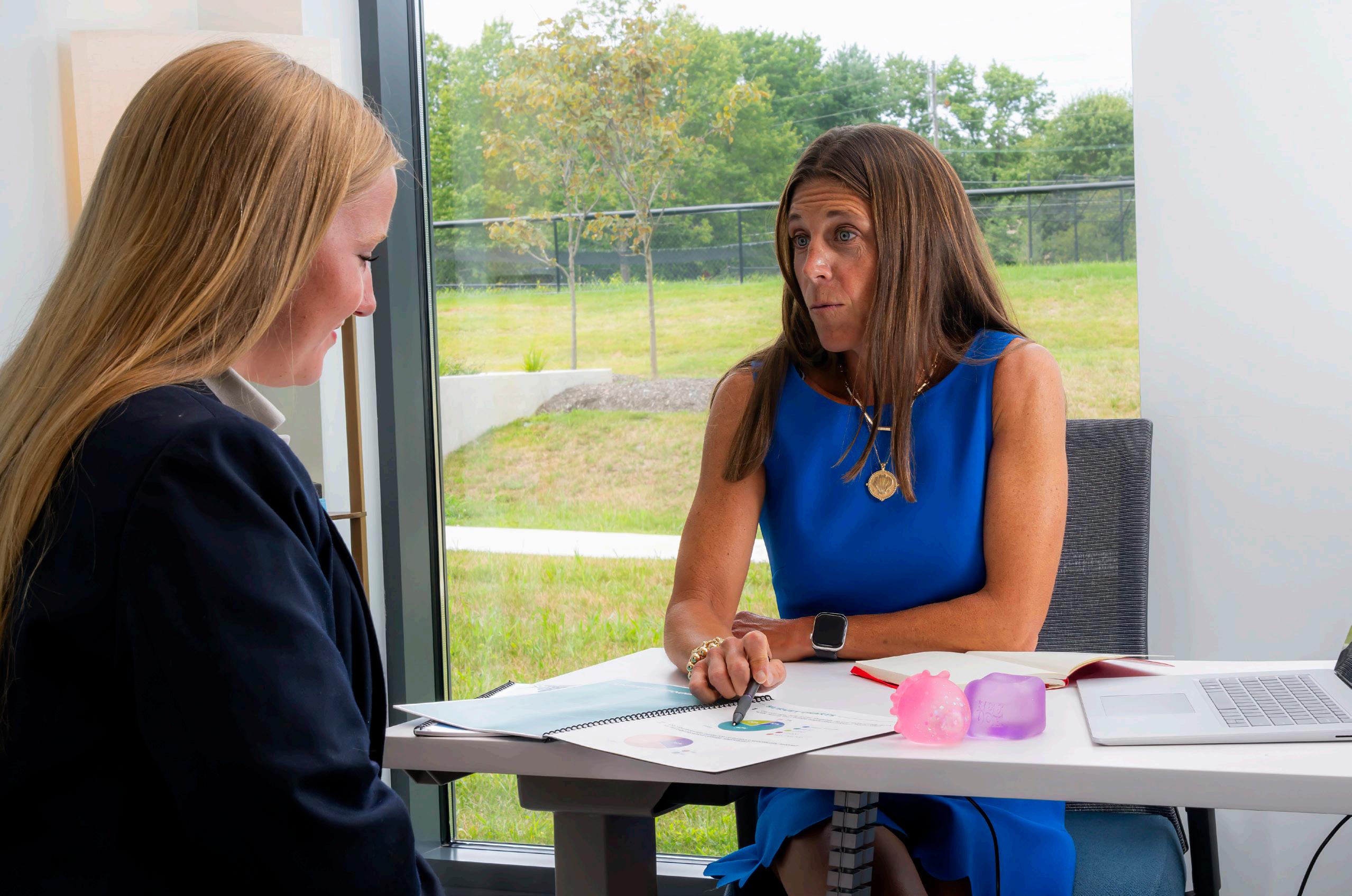
healthy relationships, and navigating challenges unique to college life. Engaging discussions and practical strategies aim to instill lifelong habits, ensuring students embark on their collegiate journey with the tools needed to prioritize and maintain holistic well-being. This course is a requirement for all 12th grade students.
0.5 Credit
Grade 10
This course develops engaged communication skills by treating communication as an active, collaborative process grounded in respect, empathy, and service to others. Students strengthen listening, speaking, writing, and digital communication skills while learning to interpret verbal and non-verbal cues, practice perspective-taking, and communicate with clarity and purpose. Through presentations, professional writing, phone and virtual interactions, and media literacy, learners adapt messages for diverse audiences and real-world contexts. Emphasis is placed on collaboration, constructive feedback, and relationship building, encouraging students to communicate in ways that reflect compassion, justice, and responsibility to their communities. By reflecting on personal strengths and growth areas, students develop the confidence and skills needed to communicate thoughtfully, lead with integrity, and contribute positively to school, community, and beyond.
0.5 Credit
Grade 11
This course develops design leadership skills by preparing students to guide ideas, people, and processes with confidence, creativity, and purpose. Students cultivate self-awareness, professional presence, and responsible decision-making while learning to lead teams with respect, empathy, and accountability. Through collaboration, networking, and stakeholder engagement, learners practice clear, persuasive communication and build trust through active listening and follow-through. The course introduces design thinking as a framework for addressing challenges in ways that honor diverse perspectives and promote thoughtful, ethical solutions. Emphasizing reflection, service-minded leadership, and integrity aligned with Mercy values, students grow as adaptable leaders equipped to inspire others, manage complexity, and contribute positively to their communities and future endeavors.
0.5 Credit
Grade 11
This required junior-year course provides students with essential financial knowledge and practical skills needed for college and adult life. Delivered virtually through the Arrupe Virtual Learning Program, the course introduces key personal finance topics such as budgeting, banking, credit and debt, saving and investing, student loans, taxes, and financial decision-making.
Students will be assigned to a designated study hall for one semester to complete the course. During this time, they will work independently in an online learning environment while receiving structured support from a faculty moderator. This scaffolded model is designed to help students build the time-management,
organization, self-advocacy, and digital learning skills necessary for success in future college-level virtual courses.
By the end of the course, students will be better prepared to make informed financial choices and to confidently engage in online learning experiences that mirror the expectations of postsecondary education.
As part of Gwynedd’s Wellness Curriculum, students need to meet the state physical education requirements. Gwynedd students are able to fulfill their physical education requirement in three ways: through the Fitness for Life program (held during the school day), through participation in Gwynedd Athletics, or through approved involvement in organized fitness activities unaffiliated with Gwynedd.
Specific details regarding the completion of Gwynedd’s physical education requirement are delineated below:
• Fitness for Life: Fitness for Life is a diverse fitness curriculum designed for students who are not engaged in Gwynedd Athletics or approved organized fitness programs. It supports our Wellness Wheel by offering community-building and mindfulness experiences such as racquet sports, intramural sports, and yoga. Freshmen, Sophomores and Juniors who do not participate in a Gwynedd Mercy Academy High School athletic team or an approved organized fitness program are required to complete 10 Fitness for Life sessions throughout the year. The program meets during Community Period.
• Gwynedd Athletics: For students who participate in school athletics, Gwynedd’s Administration will work with the Athletic Department to collect team lists and record the completion of PE/Fitness for student athletes.
• External Fitness Activities: Students who participate in organized fitness activities outside of Gwynedd Mercy Academy High School may be eligible to receive credit toward their Physical Education requirement. Approval must be obtained in advance from the Health/Physical Education Chairperson and the Dean of Curriculum, Instruction, and Assessment. With approval, students may count documented practice and competition hours from external teams or programs toward their Physical Education requirement, as long as the hours are completed during the school year. Each request is reviewed individually. Students who cannot provide sufficient documentation or do not meet the minimum hours will need to complete the remaining requirement through scheduled Fitness for Life activities. This option provides flexibility while recognizing students’ commitment to activities outside
Examples of outside sports and activities that may qualify include, but are not limited to: cheerleading, dance, rugby, crew/rowing, ice skating, squash, and fencing.
The Catherine Learning Program offers individualized support through a scheduled class and/or sessions, focusing on executive functioning skills such as organization, emotional regulation, and persistence. Students apply these strategies directly to their coursework with guidance from Learning Specialists in small group and one-on-one settings. Admission to the Catherine Learning Program is through admissions and referral processes, and the program is fee-based.
The Innovation Concentration Program and the Global Connections Program are both rigorous, application-based pathways that offer students enriched, multi-year experiences combining advanced coursework, experiential learning, and a culminating senior project. Each program supports highly motivated students who maintain strong academic standing, engage in required co-curricular activities, and meet regularly with a Program Chair as they develop and complete their research. Through internships, service, leadership, and specialized study, participants gain meaningful real-world experience