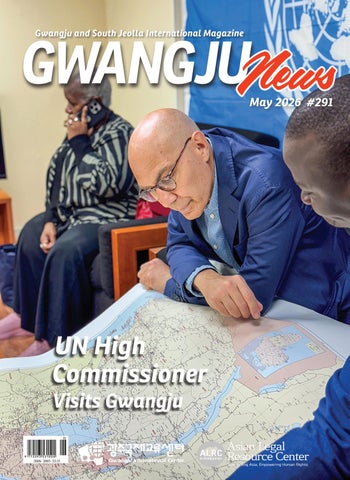
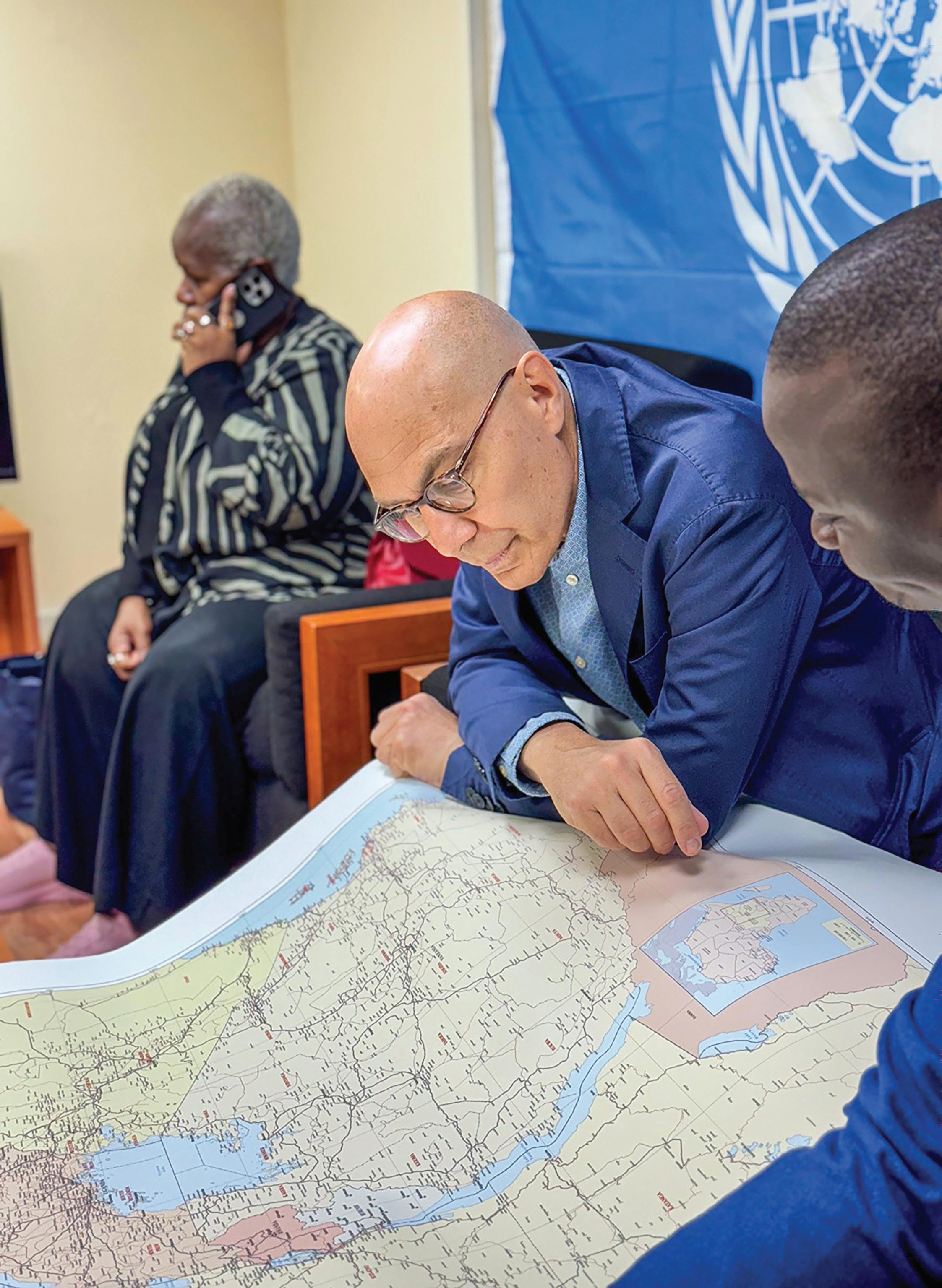
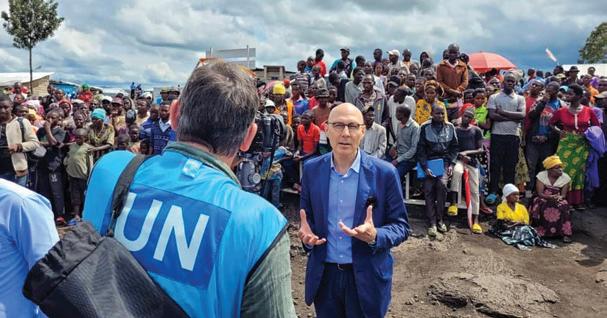
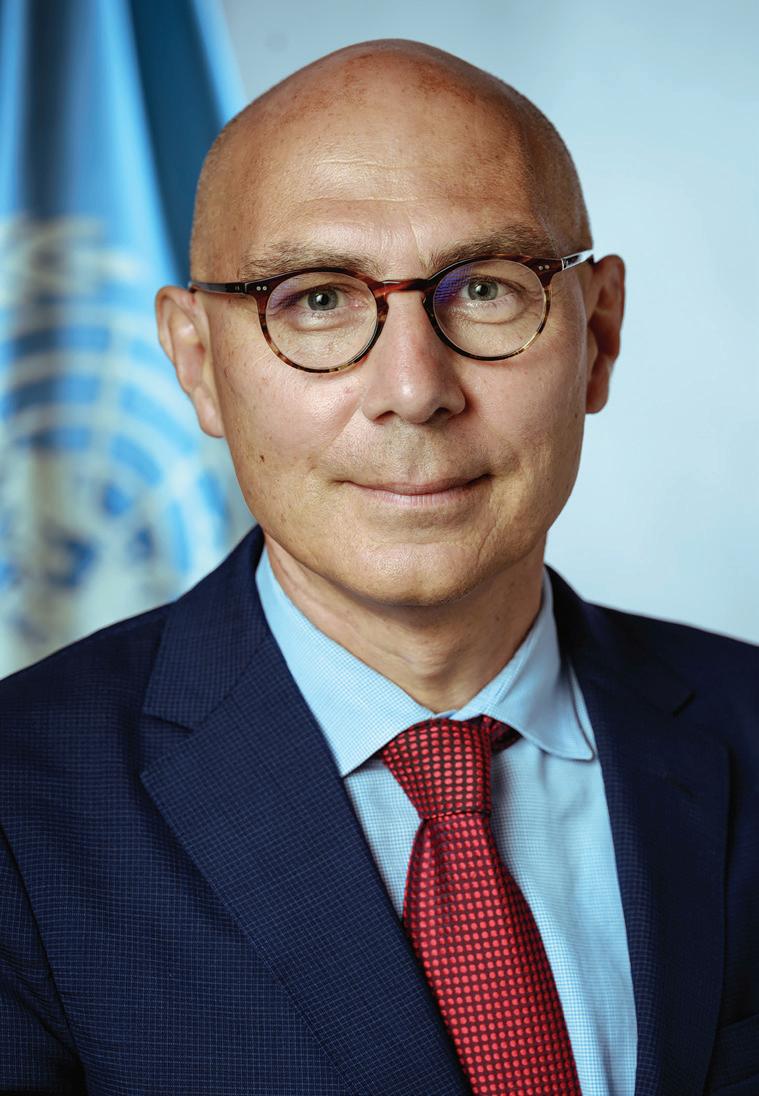
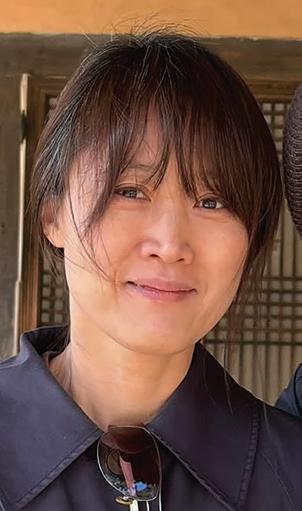
UN High Commissioner Volker Türk planning an official visit.
Courtesy of the UN Human Rights Office.
Publisher Dr. Shin Gyonggu
Editor-in-Chief & Copy-Editing Dr. David E. Shaffer
Layout Editor & Online Editor
Johanna Lezada
The Gwangju News is the first English monthly magazine for the general public to be published in Korea. First published in 2001, each monthly issue offers a wide range of topics – local, regional and beyond – of interest to our international residents as well as our local English-speaking community.
The Gwangju News is published by the Gwangju International Center: Jungang-ro 196-beon-gil 5 (Geumnam-ro 3-ga), Dong-gu, Gwangju 61475, South Korea
Tel: (+82)-62-226-2733
Fax: (+82)-62-226-2731
Website: www.gwangjunewsgic.com
Email: gwangjunews@gic.or.kr
Registration No 광주광역시 라 00145
ISSN 2093-5315
Registration Date: February 22, 2010
The Gwangju News is co-sponsored by the Asian Legal Resource Centre (ALRC) Korea
From the Editor
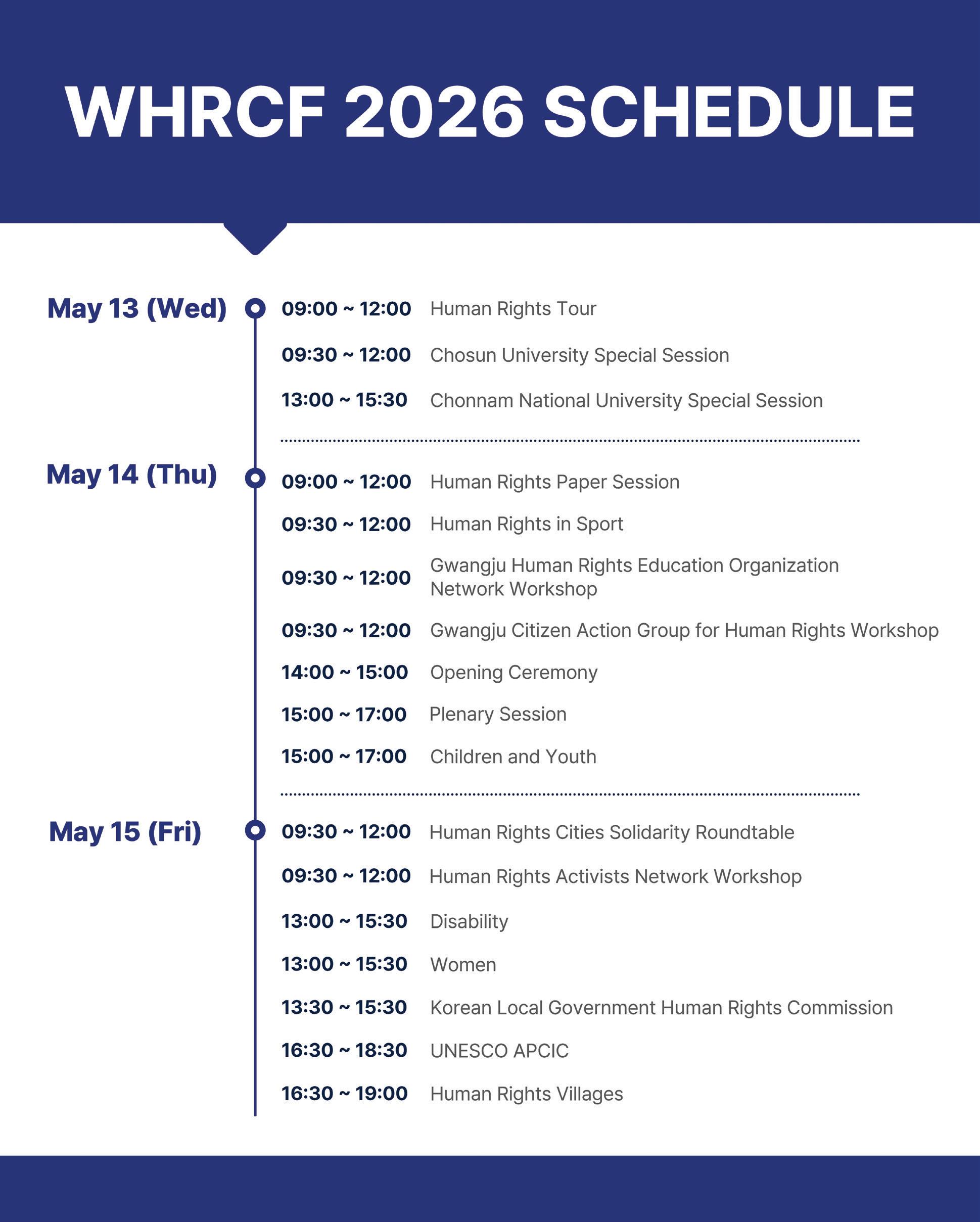
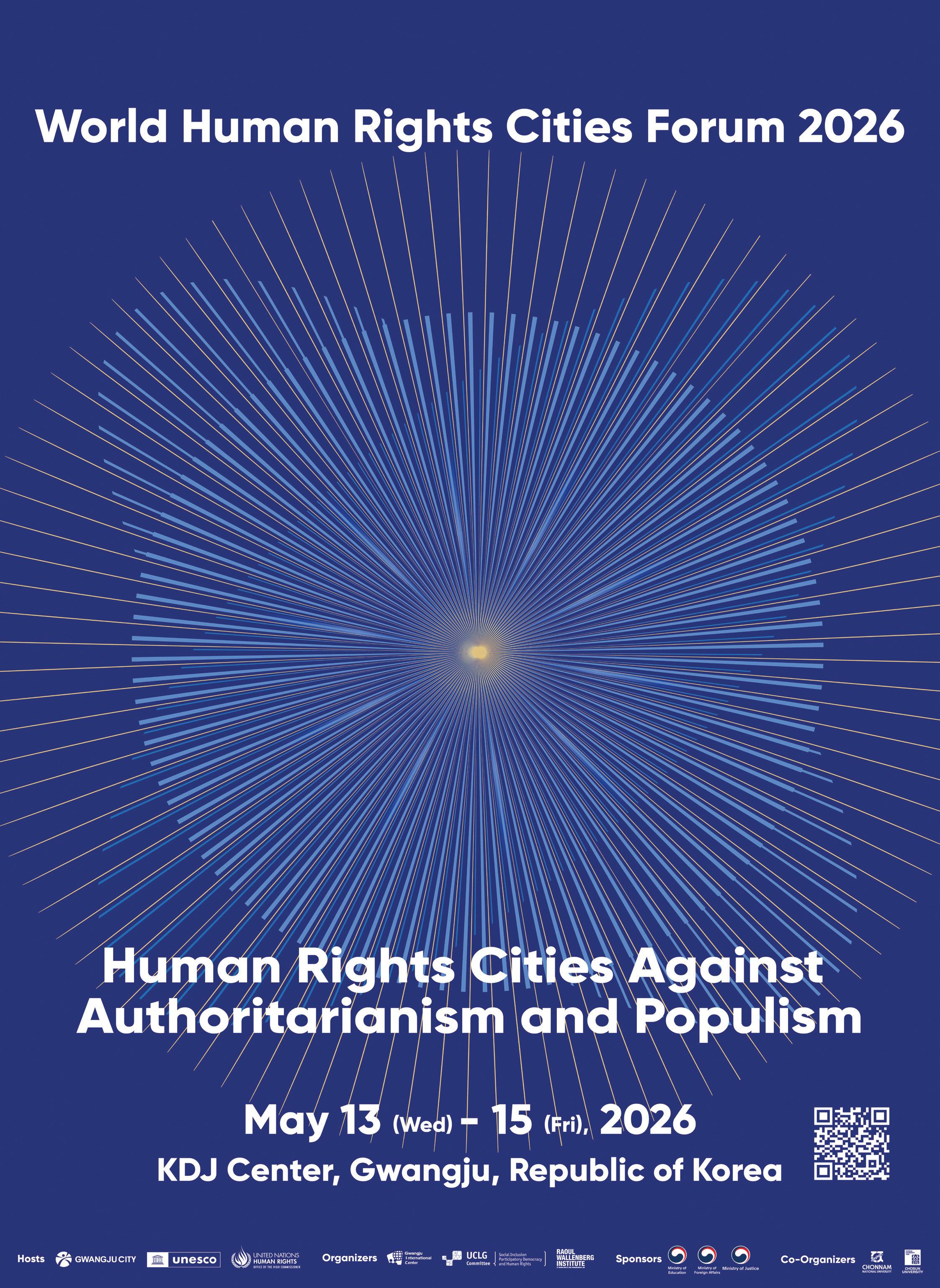
It’s May! The warmth of the weather that heralds in this month generates a sense of jubilance not duplicated elsewhere in the calendar. Hearing “May,” reminds us of the approaching Children’s Day and the coming of Buddha’s Birthday. It also reminds us of Gwangju’s largest international event of the year: the World Human Rights Cities Forum (WHRCF). And for Gwangju residents especially, it fortifies the Spirit of May – that courage, that passion, that enthusiasm, born of the May 18 (1980) Gwangju Uprising that has been in the vanguard of the struggle for democratization, human rights, and truth.
At the WHRCF (May 13–15), Gwangju is honored to welcome UN High Commissioner for Human Rights Volker Türk, who will be presenting the keynote address at the Forum. Prior to the event, the Gwangju News had the privilege of interviewing High Commissioner Türk and provide that interview as our cover feature (p. 8).
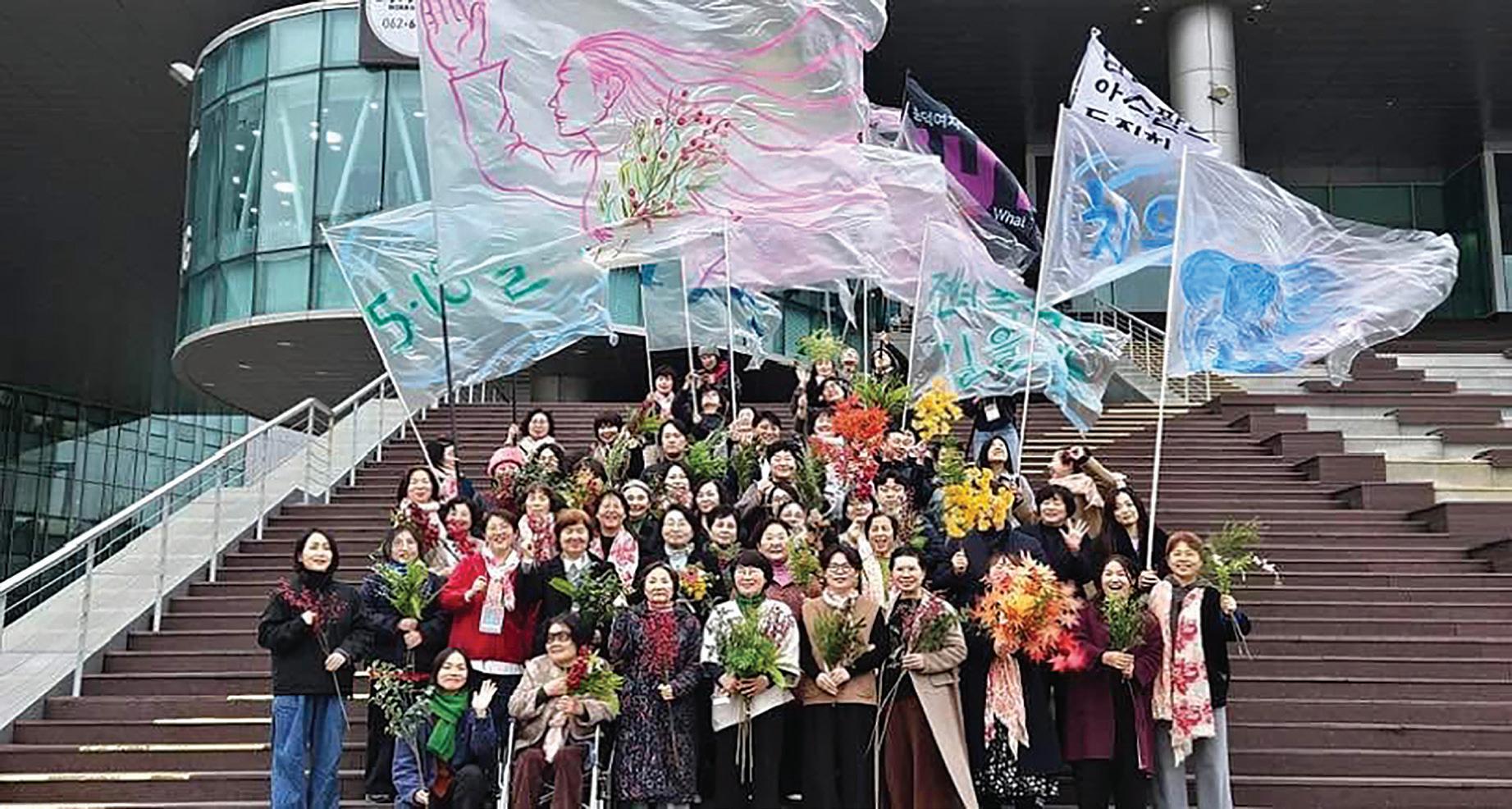
The “Spirit of May” is mentioned above, but in this issue, we more than just mention this spirit: we have an entire article on it, pointing out how Gwangju’s “May 18” still shapes Korea’s democracy (p. 13). We also focus on a newly launched association, Yeolmae, originating as a self-help group of women victimized by the Gwangju Uprising who now play an increasing role in the fight for justice and human rights (p. 17).
We bring you an additional article, “Half the Story,” that focuses on women, memory, and the unfinished history of May 18: “The truth is that, without women, much of what we ‘know’ about May 18 would not exist. It was through women’s testimonies that we came to understand the everyday practices that sustained the uprising” (p. 23). In commemorating May 18, the first CNU 5.18 Marathon was recently held. Read one first-time marathoner’s takeaways from the experience (p. 27).
The war with Iran moved us to get a first-hand view from the region. An expat Dubai resident relates their experience in “Living on the Edge of Conflict (p. 21). Also, very much under siege from military conflict is our environment. Read how serious this is in “Nature Under Attack” (p. 31).
This issue contains so much more: AI and the world order, allying anger, Buddha’s Birthday, café and book and art exhibition reviews, sports news, upcoming events calendar…
We hope you enjoy the pages of this May issue of the Gwangju News. Happy reading!
David E. Shaffer Editor-in-Chief Gwangju
News
& South Jeolla International Magazine
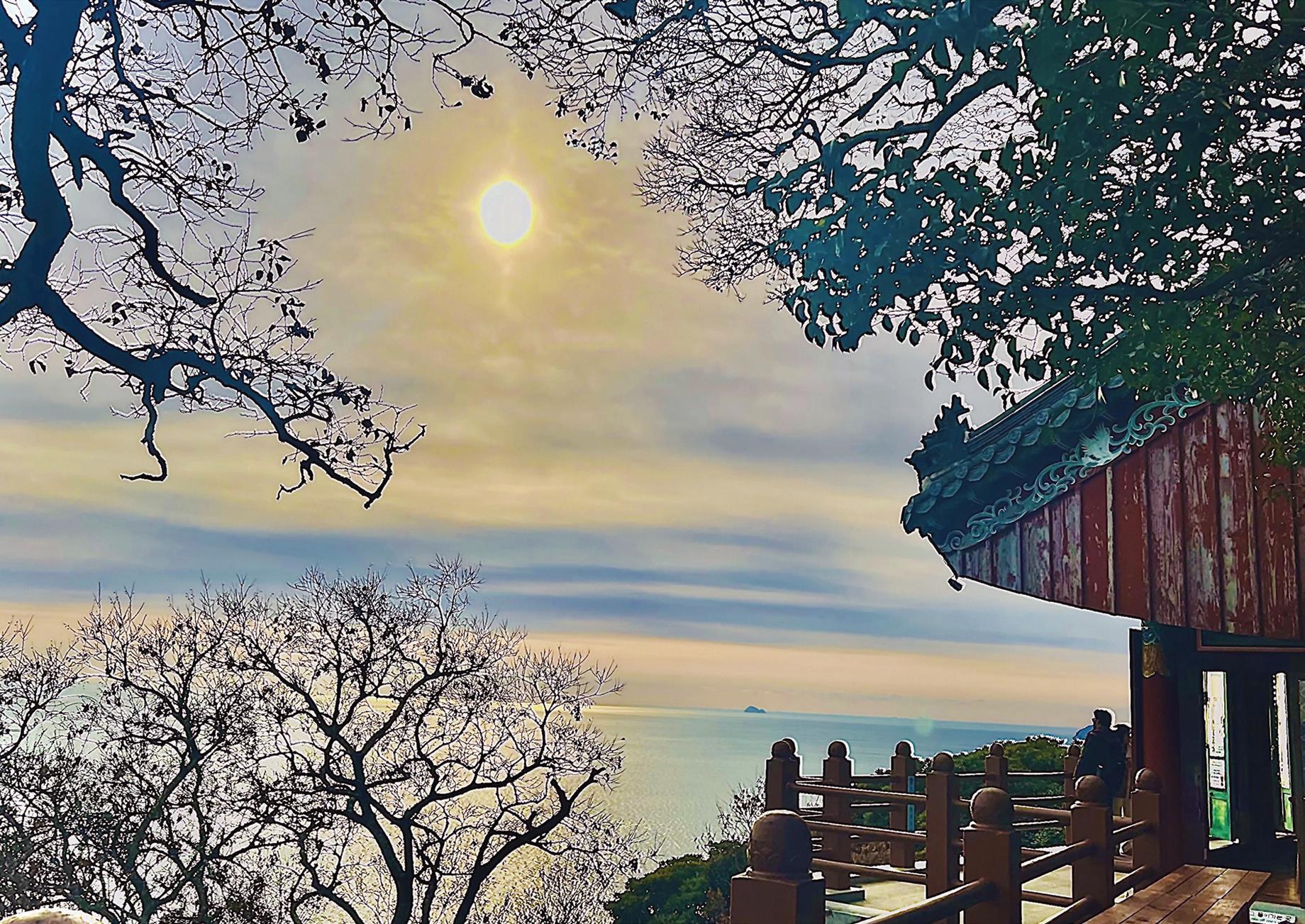
Whispers of a Coastal Temple
Each ripple carries a story, each shadow a forgotten chant. Here, between sea and sky, even silence feels sacred –as the temple whispers to the horizon, and the horizon softly replies, while above it all, the glowing sun watches in quiet grace.
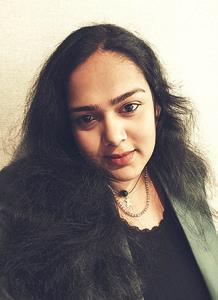
The Photographer
Neha Bisht is a native of India, pursuing her PhD at Chonnam National University. She loves to travel and likes capturing historic and scenic views in her memories.
Location: This photograph was shot at Hyangil-am, a hermitage at Impo village near Yeosu city in southeastern Jeonnam Province.
(Photo of the Month submissions are open to all readers: gwangjunews@gic.or.kr)
08 UN Human Rights High Commissioner Comes to Gwangju: Speaking at WHRCF 2026
13 The Spirit of May: How Gwangju’s 5.18 Still Shapes Korea’s Democracy
HUMAN RIGHTS
17 Remembering to Resist: Yeolmae and the Fight for Justice Ahead of WHRCF
GLOBAL FOCUS
21 Living at the Edge of Conflict: A Resident’s Account from Dubai During the US–Iran War
HISTORY & TRADITION
23 Half the Story: Women, Memory, and the Unfinished History of May 18
TRAVEL & DISCOVERY
25 From Gilgit-Baltistan to South Korea: A Nostalgic Sense of Home in Mountains and Seasons
COMMUNITY
27 1st CNU 5.18 Marathon: A Morning Run That Taught Me Consistency
29 Sister Cities: Cooperating Sister Cities – Gwangju and Changzhi
OUR PLANET
31 Nature Under Attack
SCIENCE & TECHNOLOGY
34 The Power of AI in Shaping the Future World Order
HEALTH & WELL-BEING
37 When Anger Becomes an Ally: Meet Scarlet
CULTURE & THE ARTS
39 Preparing for Buddha’s Birthday: History, Happenings, and Ways to Celebrate
42 The Calcuttan in Korea: I’ve Arrived!
45 Artists Emerging from Gwangju: An Interview with Kang Sooji & Lee Hayoung
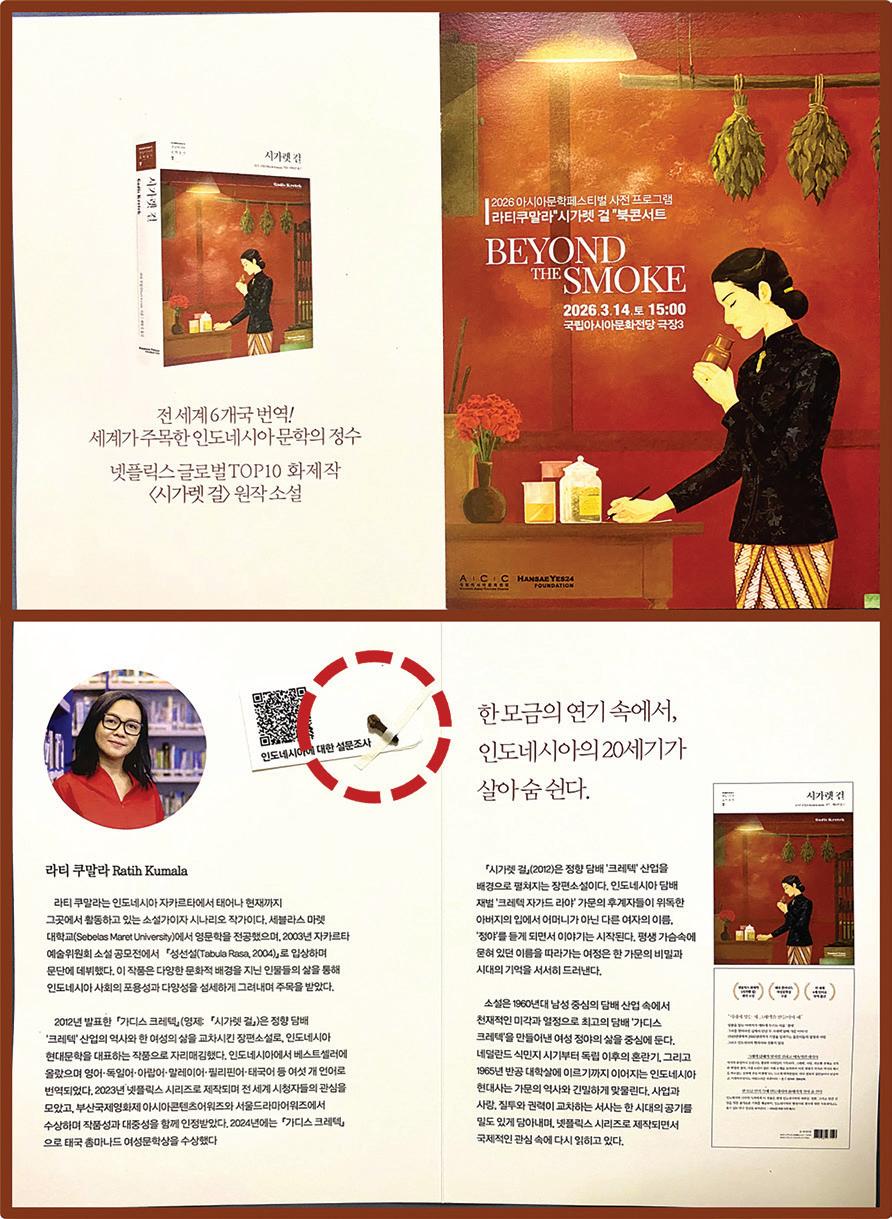
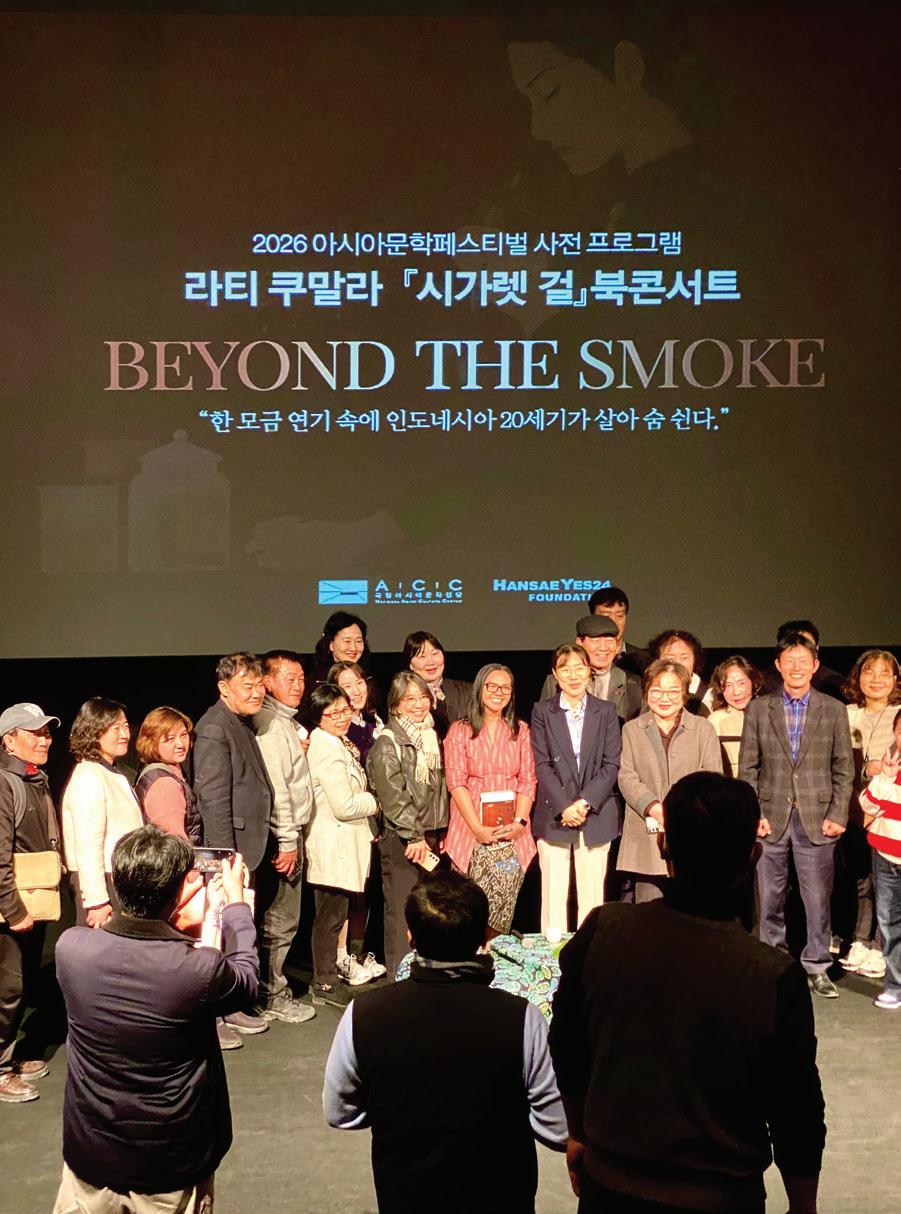
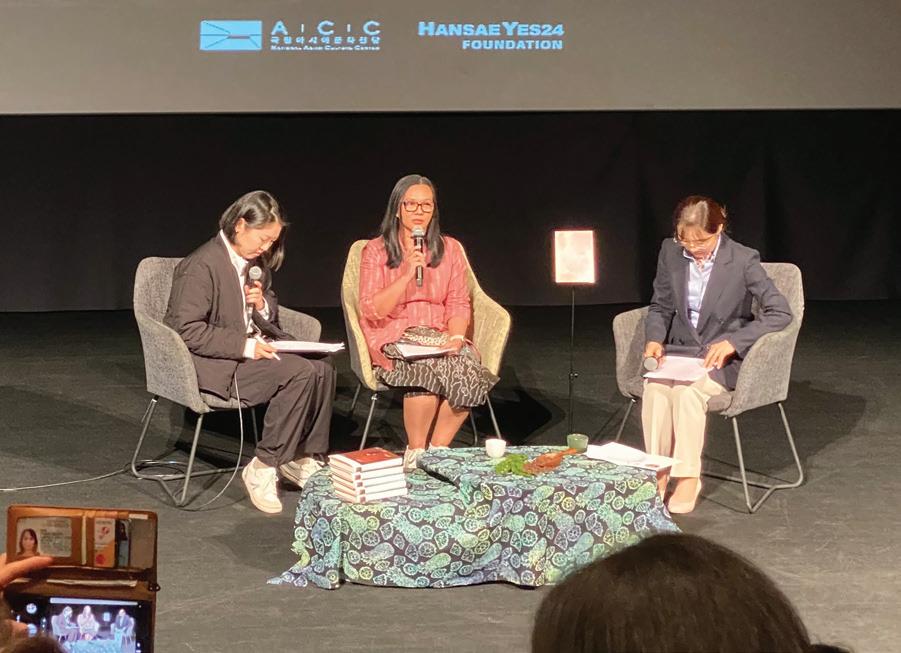
48 The Scent of Cloves: Indonesian Author Ratih Kumala Brings Cigarette Girl to Gwangju
FOOD & BEVERAGE
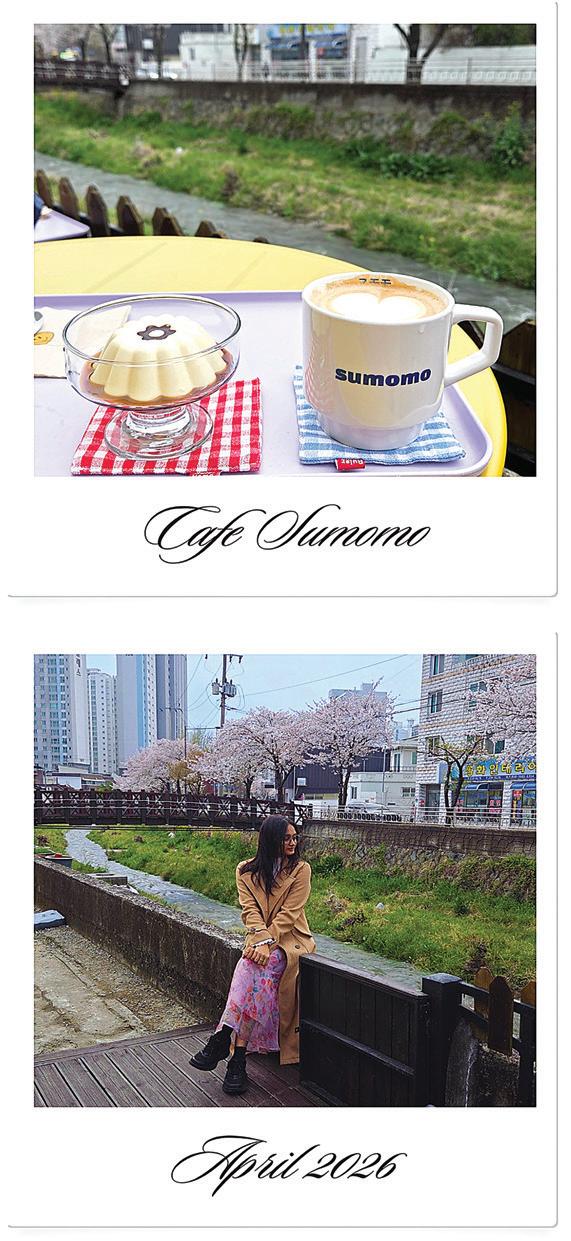
51 D’s Café Column: Café Sumomo – A Quiet Riverside Escape in Gwangju
SPORTS & ENTERTAINMENT
52 Sports Focus: Gwangju FC Under Financial and Integrity Scrutiny
54 Area Sports Round-Up
56 May Upcoming Events
The Spirit of May 18 at a Constitutional Crossroads Gwangju City News
Anarrow window has opened for South Korea to enshrine the spirit of May 18 in its constitutional preamble – and it may close before the anniversary itself arrives. With the June 3 nationwide local elections approaching, the National Assembly must pass a constitutional amendment between May 4 and 10 to allow a concurrent referendum. If that window is missed, the next realistic opportunity likely depends on the outcome of the 2028 general election.
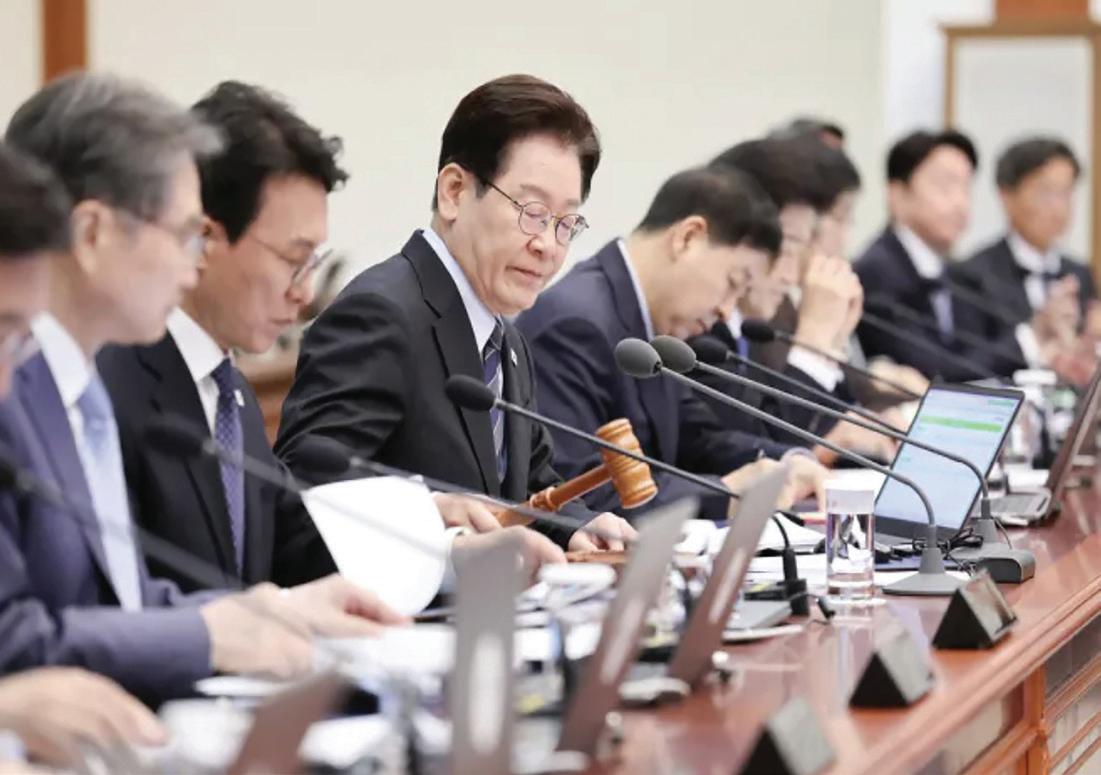
On April 6, six parliamentary parties – led by the ruling Democratic Party of Korea – formally submitted the amendment bill, signed by 187 lawmakers. President Lee Jae-myung approved the official promulgation notice, triggering a mandatory 20-day public announcement period under Article 129 of the Constitution. Under Article 130, a national referendum must follow within 30 days of the Assembly’s vote, making early May passage the only viable path to a June 3 referendum.
The proposed revision would expand the preamble to explicitly name the Buma Democratic Uprising and the May 18 Democratization Movement alongside the existing reference to the April 19 Revolution. It would also strengthen parliamentary oversight of presidential martial law declarations, requiring immediate National Assembly approval and rendering any unapproved declaration automatically void within 48 hours. Passage requires a two-thirds supermajority – at least 197 of 295 sitting members.
Gwangju’s Military Airport to Relocate to Muan
SouthKorea’s Ministry of National Defense officially designated Mangun-myeon in Muan County as the preliminary relocation site
for Gwangju’s military airport on April 2 – the first formal administrative step in a process that began 18 years ago. The announcement follows the formation of a six-party consultative body last year comprising key ministries and local governments, which issued a joint declaration in December confirming the relocation framework.
Under the agreed “contribution-for-transfer” model, Gwangju will fund and construct a new military airbase to hand over to the Defense Ministry, receiving the existing Gwangju Airport site in return. Muan County will receive over one trillion won in support funds. Final confirmation will require community impact assessments, public hearings, and a referendum among Muan residents, with majority approval triggering the county’s formal application to host the base. The process is expected to be driven by the inaugural mayor of the newly unified Jeonnam-Gwangju Special City, launching on July 1 following the June 3 local elections.
The relocation is the centerpiece of a sweeping overhaul of regional aviation infrastructure. Gwangju Airport currently serves as both a domestic hub and the home base of the Air Force’s 1st Fighter Wing, but faces hard limits on
Constitutional Amendment Public Notice approved by the National Assembly, April 6, 2026. (The Blue House)
Gwangju City News
growth due to noise complaints and urban height restrictions. International routes have already been transferred to Muan International Airport, with domestic operations continuing at Gwangju until the military transition is complete.
Muan International Airport is set for major upgrades, including runway extension to over 3,160 meters and a KTX rail link directly to the terminal that is due to open in 2027. Once the Gwangju Airport site is vacated, it will be redeveloped as the “Human Energy City,” featuring AI and mobility R&D clusters, urban parks, and cultural landmarks.
Jeonnam’s Medical School Moment Has Arrived
For the first time in the province’s history, a public medical school is no longer a dream – it is a plan with a deadline. After thirty years without one, Jeonnam is on track to open an integrated public medical school by 2027. The path was cleared earlier this year when Sunchon National University students narrowly voted to approve a landmark merger with Mokpo National University – 50.34 percent in favor – completing the final internal hurdle toward making it a reality.
The vote caps decades of regional frustration. Jeonnam, home to roughly 1.8 million people, has long lacked a public medical school of its own, fueling persistent shortages of physicians and specialist care outside major urban centers. For thirty years, the idea of a locally trained medical workforce remained largely aspirational.
The proposed model is structurally unusual: a single accredited university operating across two campuses, one in the eastern part of the province and one in the western. Each campus would anchor a 500-bed teaching hospital, and the combined student quota is targeted at up to 200 per year.
Gwangju Takes First Step in Opening Public Wedding Venues to Jeonnam Residents
With
the July 1 launch of the JeonnamGwangju Integrated Special City on the horizon, Gwangju is moving ahead of schedule on at least one front. Starting this May, the city is opening its public wedding venues to Jeonnam residents – the first concrete step toward shared public services across the two regions.
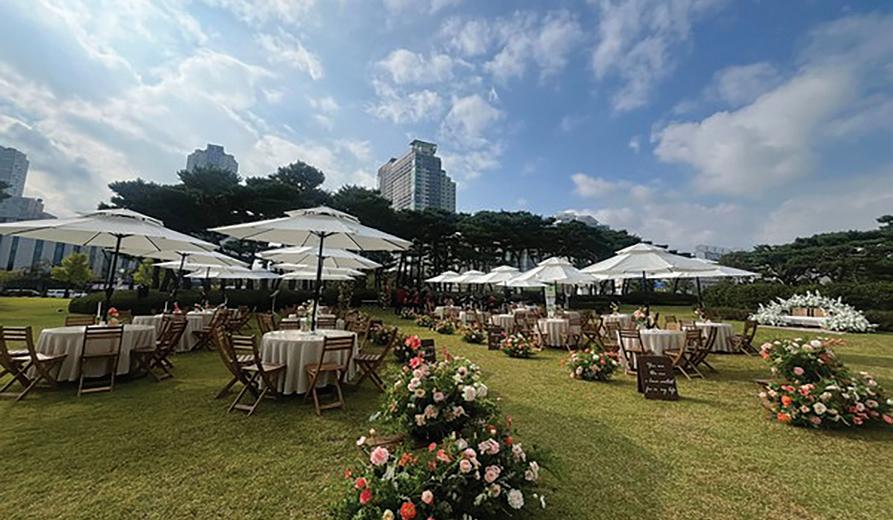
Gwangju has operated public wedding venues at its City Hall complex since last year, offering outdoor and indoor spaces under the name “Bitui Jeongwon” (Garden of Light). The grounds include a lawn area, a rose garden, and an indoor civic hall – all available for a flat fee of 10,000 won per day outdoors or per two-hour indoor session, with parking and utilities included. Eight couples used the venue last year; four more are booked for the first half of 2026. From May, any couple where at least one partner or one set of parents lives in Jeonnam province is eligible to apply.
Compiled by Amy Park.
Amy Park is the program officer for the Asian Legal Resource Center (ALRC Korea) based in Gwangju. For the 2026 World Human Rights Cities Forum, she is coordinating the UNESCO Asia-Pacific Coalition of Inclusive Cities (APCIC) session on behalf of ALRC Korea.
Gwangju Garden of Light, outdoor wedding space. (Gwangju City)
UN Human Rights High Commissioner Comes to Gwangju Speaking
at WHRCF 2026
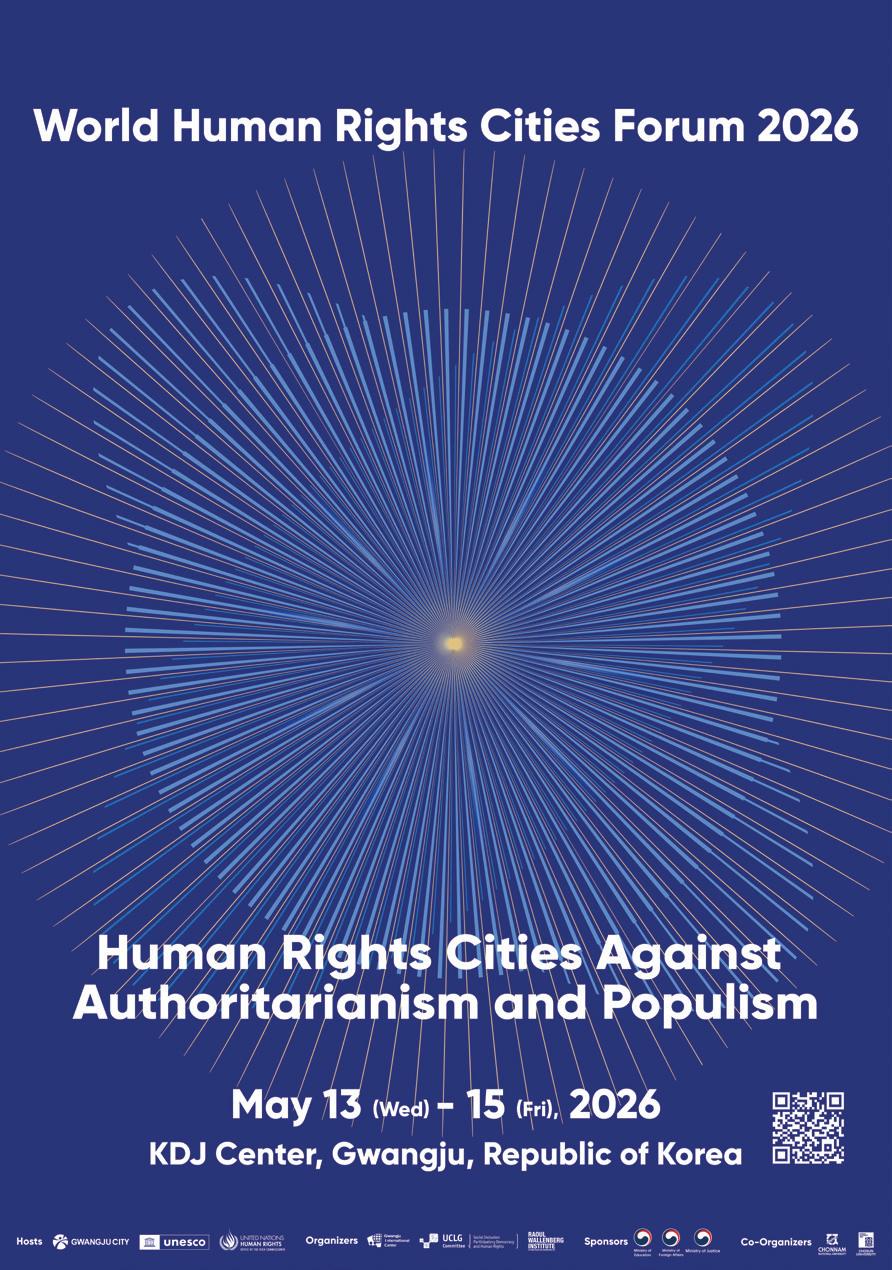
Volker Türk of Austria is the current United Nations High Commissioner for Human Rights. He is the keynote speaker at the 2026 World Human Rights Cities Forum – the first time for a UN high commissioner to attend the Forum in its 16-year history. The three-day Forum (May 13–15) opens under the theme Human Rights Cities Against Authoritarianism and Populism. The Gwangju News had the privilege of interviewing the High Commissioner prior to the opening of the conference and here brings you the contents of that in-depth interview — Editor
Gwangju News (GN): This is the first time for a UN high commissioner for human rights to attend the World Human Rights Cities Forum [WHRCF] in person. What considerations have led you to decide that 2026 was the right moment to come to Gwangju to give the opening keynote address?
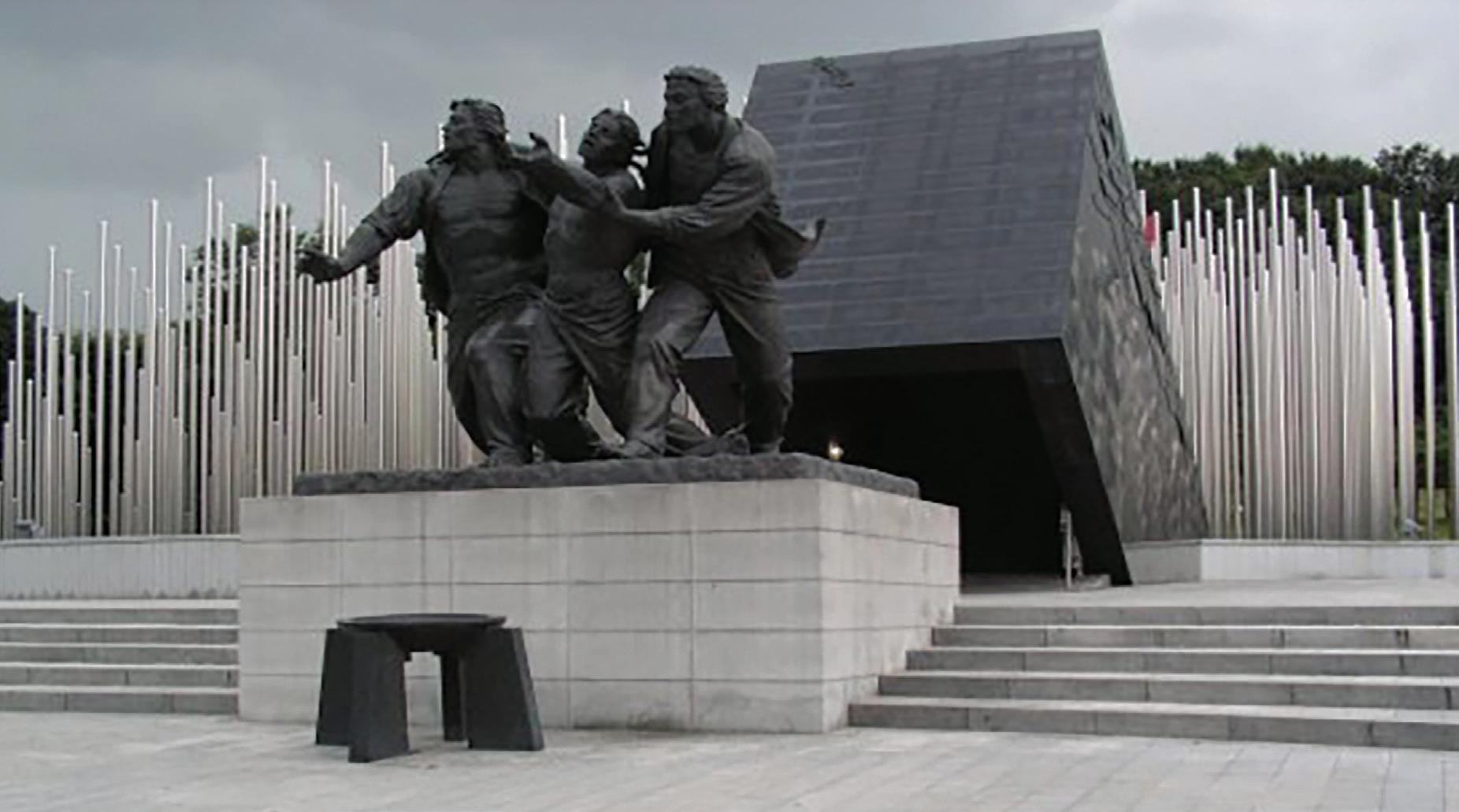
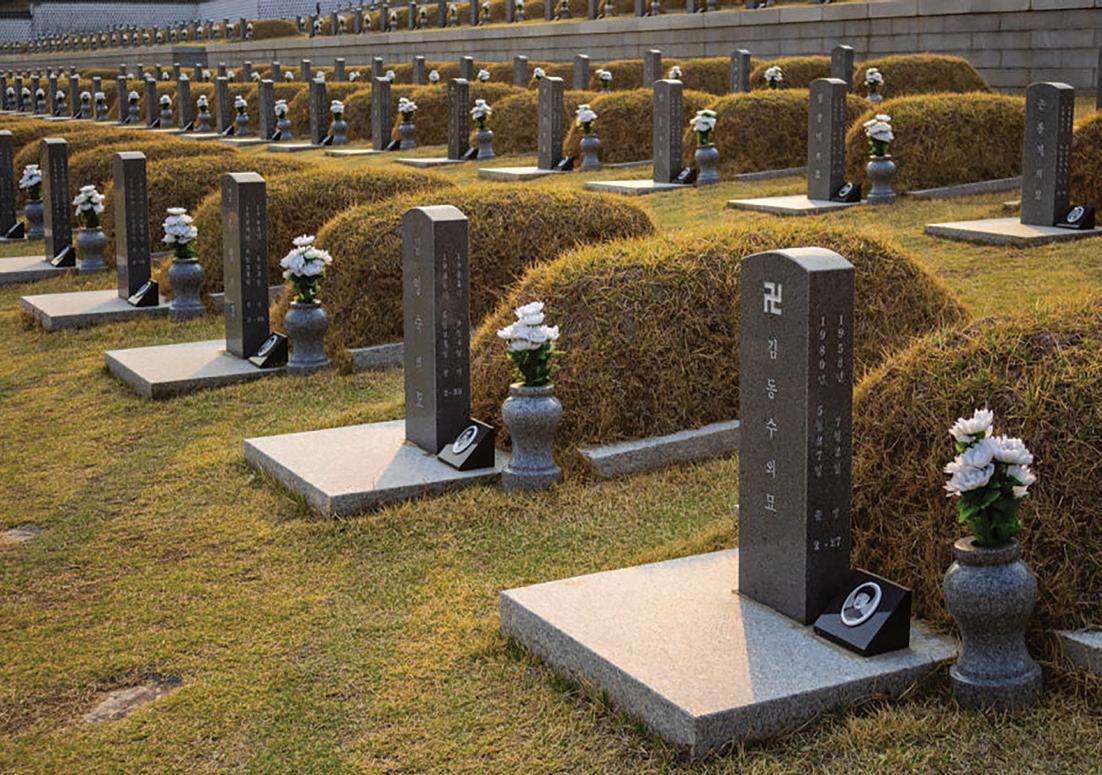
High Commissioner: It is indeed a deeply significant moment to be in Gwangju and join its citizens in reaffirming a shared commitment to democracy. I am scheduled to visit the May 18 National Cemetery, a powerful place of remembrance that bears witness to courage, dignity, and democratic resilience.
The National Cemetery commemorates those who lost their lives almost 50 years ago, during the May 18 Democratization Movement, when the people of Gwangju stood up to demand democracy, human rights, and an end to military rule. Their movement was met with brutal repression, resulting in the loss of hundreds of civilian lives, yet their sacrifice has become a lasting symbol of resistance to injustice and of the central role citizens and cities play in defending democratic values.
I would like to express my deep appreciation to the city of Gwangju for its commitment to promoting and protecting human rights, and for
its initiative in organizing this Forum since 2011. This way, the city has kept alive the Gwangju spirit, rooted in justice, democracy, human rights, solidarity, and community resilience, the very values embodied by its citizens in May 1980. This spirit has transcended national borders, inspiring movements for democracy, accountability, and human rights far beyond the Republic of Korea.
High Commissioner Volker Türk. (Courtesy of the UN Human Rights Office)
Today, Gwangju reminds us that cities are not only sites of economic and social life, but also vital guardians of democratic space. Human rights – in particular its principles of equality and participation – offer a coherent governance model for cities facing complexity and rapid change. They demonstrate that if cities are to be engines of shared prosperity rather than places of deepening inequality, human rights must be embedded not only in law, but in planning, budgeting, and everyday governance.
This is why human rights cities will be central to the Global Alliance for Human Rights that my Office will launch next month. The Alliance responds to today’s fragmentation by mobilizing the energy for human rights that exists at the local level and translating it into real improvements in people’s lives. As we move toward the Universal Declaration of Human Rights’ (UDHR) 80th anniversary in 2028, cities, building on partnerships like Gwangju, will be key to expanding a global network that puts human rights at the heart of urban life worldwide.
GN: Since 2020, OHCHR [the Office of the United Nations High Commissioner for Human Rights] and UNESCO have co-hosted the WHRCF. In practical terms, what does this joint engagement
say about the role you expect local governments and cities to play in the UN human rights system?
High Commissioner: Local governments and cities are critical actors in the human rights system, operating at the point where rights are most directly experienced. Through their daily engagement with communities, they address grievances, manage claims, address violations, and shape policies that determine whether human rights are realized in practice.
When access to rights is unequal, whether in education, employment, housing, digital connectivity, or public services, entire segments of society are prevented from fully contributing to economic and social life.
Cities feel this acutely. Inequality is not abstract. It appears in segregated neighborhoods, informal settlements, overcrowded schools, insecure jobs, and unequal access to transport and green space. These inequalities create parallel economies, some formal and thriving, others informal and precarious, weakening the city as an integrated socioeconomic system.
In this framework, local governments and cities are expected to play a critical role as frontline
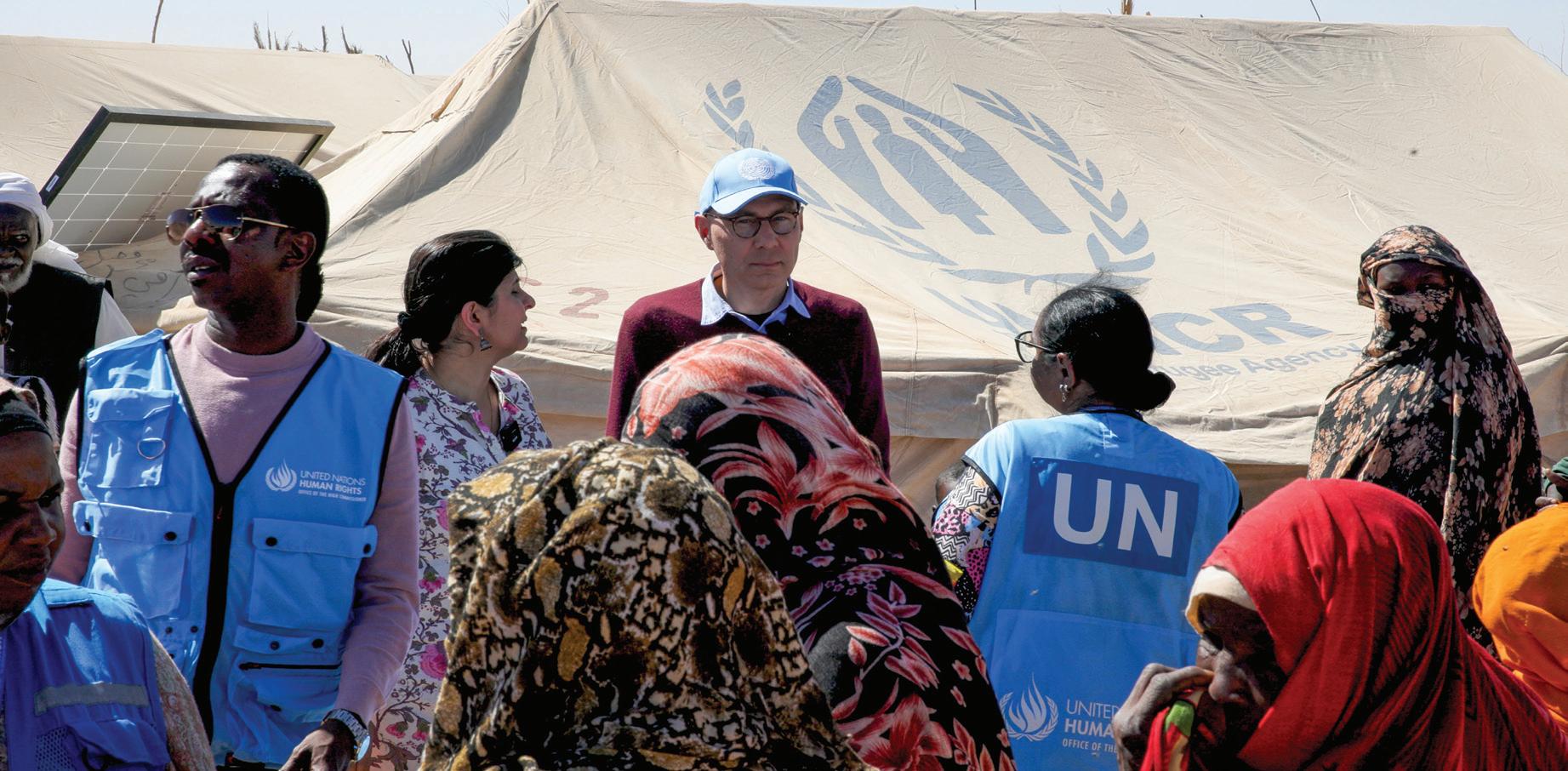
The High Commissioner visiting the Al Afad Internally Displaced Persons Camp, Sudan, January 2026. (Courtesy of the UN Human Rights Office)
implementers of international human rights standards, translating those into concrete policies, services, and outcomes at the local level. They are also key actors in identifying protection gaps; advancing economic, social, and cultural rights; and ensuring participation, inclusion, and accountability in decision-making that directly affects people’s daily lives.
Our collaboration with the World Human Rights Cities Forum and other national, regional, and international partners, reflects a shared conviction: that the global human rights system simply cannot deliver on its promises without strong, committed local governments at the table. Through the Forum, we are building genuine space for cities to learn from one another and to connect their work directly with international standards and appreciate their roles.
“Local governments and cities are critical actors in the human rights system, operating at the point where rights are most directly experienced.”
Our hope is that the Global Alliance for Human Rights will amplify and give further visibility to the critical work of this Forum by offering a cross-regional platform for cities, mayors, and local governments around the world to share experiences, good practices, and peer learning of how human rights have been integrated into city policies, planning, and budgeting for greater inclusion, equality, and participation for all.
GN: OHCHR’s work on local governments stresses their complementary responsibilities alongside states. In concrete terms, what distinguishes a city that genuinely integrates human rights into its laws, budgets, and institutions from one that refers to human rights mainly as a slogan?
High Commissioner: A human rights-based approach serves as a normative framework that guides all dimensions of local governance. It is the exact opposite of tokenism or sloganeering, and demands sustained political and financial commitment. It requires that development planning, policy formulation, budgeting, and implementation are explicitly anchored in international human rights law, including clearly defined rights, corresponding obligations, and accountability mechanisms. In practice, this means that local government processes are entrusted to respect, protect, and fulfill human rights at the local level, guided by core human rights principles of participation, nondiscrimination, transparency, and accountability, and oriented towards identifying and addressing structural inequalities.
Last year, together with United Cities and Local Governments, we published Guidance Framework for Creating a Human Rights City. It provides a roadmap to support cities in allocating resources, setting priorities, and adopting rights-based approaches to public service delivery, without discrimination.
What we look for are three layers of genuine integration. The first is political commitment, leadership, and legal foundations. A mayor or governing body can publicly declare the local government’s commitment to becoming a Human Rights City, but it can be further strengthened by adopting a local ordinance that embeds a human rights-based approach into all local laws, development plans, and public service delivery. Without that legal anchor, commitments remain largely symbolic.
The second layer is institutional structures. A human rights city will establish dedicated human rights structures and bodies within its administration and create mechanisms for accountability. It is also encouraged to set up a consultative participatory body to ensure the meaningful participation of civil society and diverse stakeholders.
The third layer is operational tools, which include a range of practical measures that cities and local authorities can adopt – from awareness-raising campaigns to developing a local human rights action plan and reporting to the United Nations human rights mechanisms – to ensure that they are protecting human rights through their daily actions and are meeting their human rights obligations.
GN: The WHRCF has produced instruments such as the Gwangju Guiding Principles for a Human Rights City (2014). How can OHCHR, together with local-government partners, help ensure that such local frameworks inform global guidance and become used more widely by cities and national governments?
High Commissioner: The Gwangju Guiding Principles expand the concept of human rights to the city, placing active local leadership at the center of human rights promotion and protection. We welcome other similar complementary approaches.
There are many ways we can help share this valuable knowledge and facilitate exchanges around the world.
This year, we plan to hold a Mayors’ Meeting in collaboration with our partners, bringing together local government leaders to share promising practices and tools. Events like this
are powerful opportunities to put Gwangju’s experience and principles in front of city leaders from very different places.
We are also hoping that the Guiding Principles can be brought forward in discussions at international human rights forums including at the Human Rights Council, during its discussion on local governments and human rights. That would be a meaningful step in further broadening their global standing. Additionally, we are developing a new practical and easy-to-use assessment tool for local governments to help them measure real progress in the human rights field.
GN: Many local authorities face tight budgets, political pressure, and growing mistrust from their residents. What forms of support – such as guidance, capacity-building, or partnerships – can the UN Human Rights Office realistically offer to mayors and local councils that want to advance human rights under these constraints?
High Commissioner: Our Office has been engaging with local and regional governments on human rights capacity-building for more than a decade, recognizing that cities are often the closest level of government to people’s daily lives and play a decisive role in the realization of rights.
Through sustained capacity-building initiatives, we support cities to strengthen their role
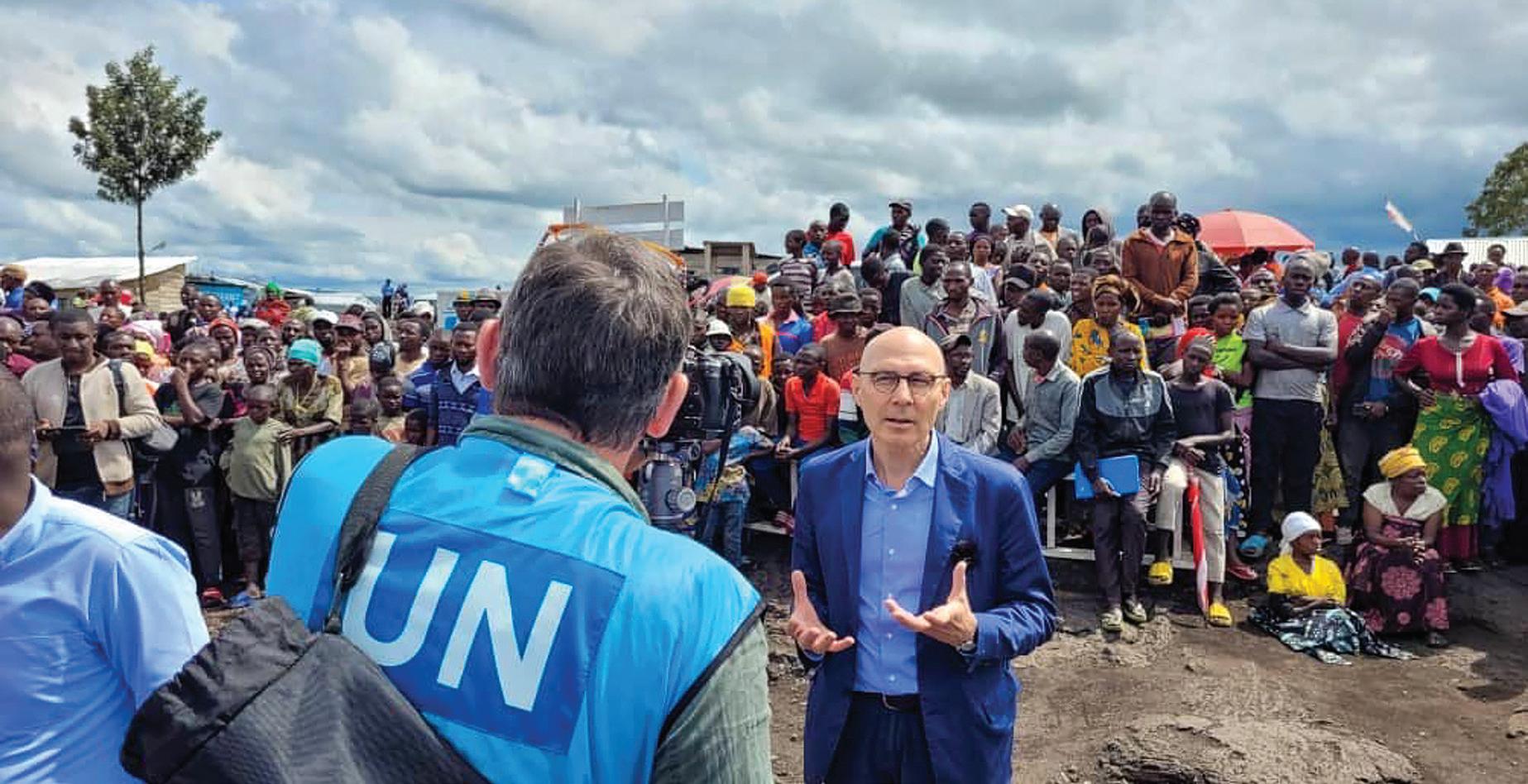
UN High Commissioner Türk on a fact-finding mission to the Democratic Republic of Congo, June 2025. (Courtesy of the UN Human Rights Office)
as duty-bearers and key implementers of international human rights norms and standards, particularly in the areas of economic, social, and cultural rights. Our approach focuses on embedding human rights into local policy-making, budgeting, and service delivery, so that cities are equipped to identify inequalities, address discrimination, and respond to the needs of those most at risk.
Last year, for example, we worked with nearly half of the county governments in Kenya on economic, social, and cultural rights; the SDGs [sustainable development goals]; and human rights budgeting. We have also delivered similar trainings for local government officials in countries as diverse as Kyrgyzstan, Turkmenistan, Bangladesh, Sri Lanka, and Pakistan. We have recently been piloting a human rights cities workbook with local governments in the Philippines.
To provide more comprehensive support, our Office offers global policy guidance, such as the Guidance Framework for Creating a Human Rights City. It is the first basic global framework designed to assist cities in integrating human rights into all aspects of local governance. We hope the guidance framework can support local leaders to allocate resources, set priorities, and adopt rights-based approaches to public service delivery.
We also facilitate peer learning by organizing events with partners. Last year, our Office held two meetings on local governments and human rights, bringing together mayors, city councilors, local government representatives, city networks, and experts to share good practices in building human rights cities, the realization of economic, social, and cultural rights at the local level. These have helped the integration of human rights-based approaches into budgeting and procurement implementing, implementation of the Guidance Framework for creating a human rights city, and engagement with the human rights mechanisms. The July meeting, organized with UCLG [United
Cities and Local Governments], gathered more than 60 participants from over 20 cities from across the world, while the online meeting in November collaborated with the Government of the ROK, UCLG, RWI [Raoul Wallenberg Institute], and the Geneva Academy to bring together more than 80 participants globally.
We also promote human rights monitoring and implementation through different human rights mechanisms. We encourage cities to actively engage with us through the Universal Periodic Review, treaty bodies, and special procedures, and to contribute to reporting and follow-up through national mechanisms for implementation, reporting, and follow-up, where such mechanisms exist. And to press governments to adopt them, where they have not yet been created.
Interviewed by Shin Gyonggu.
The Spirit of May How Gwangju’s 5.18 Still Shapes Korea’s Democracy
By Vibhanshu Maurya
Walk through the streets of Gwangju and one number appears again and again: “5.18.” It appears on memorial parks, museum walls, street banners, and civic events across the city. For residents of this southwestern Korean city, the number is more than a date. It represents a memory of sacrifice, a moral reference point, and a reminder of a moment when ordinary citizens stood up to defend democracy.
Visitors often ask a simple question: Why does an event from more than four decades ago still shape how Koreans think about democracy today?
The answer lies in the enduring legacy of the May 18 Democratic Movement, a turning point in South Korea’s modern history that transformed a local tragedy into a national symbol of democratic courage.
A City That Rose
The events of May 1980 unfolded during one of the most turbulent periods in South Korea’s political history. After years of authoritarian rule, the country was placed under expanded martial law by the military regime led by Major General Chun Doo-Hwan.
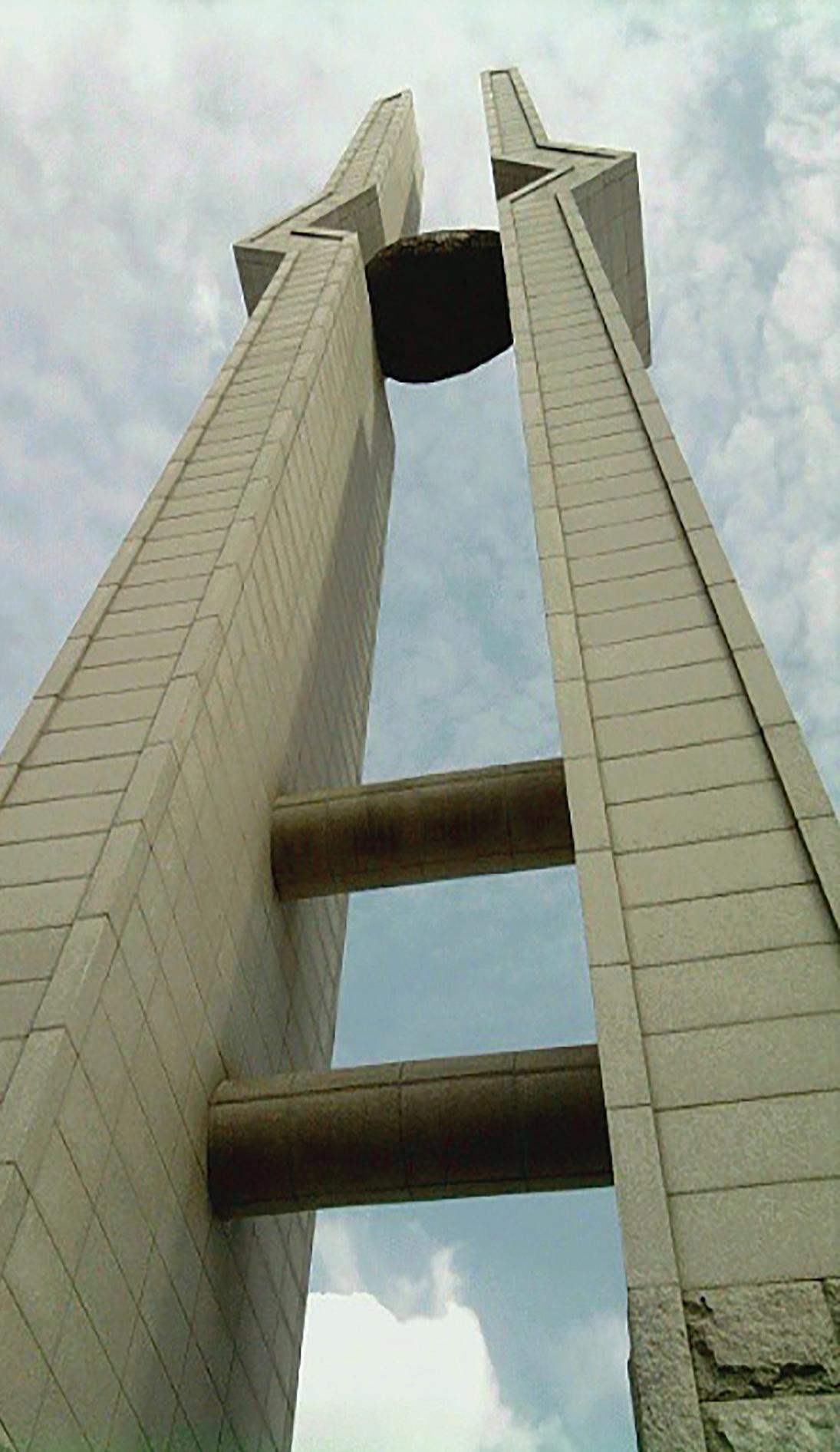
Universities were closed, political activities banned, and dissent suppressed. On May 18, students at Chonnam National University gathered to protest the closure of their campus and the tightening grip of military rule. Their demonstrations were met with brutal force as paratroopers were sent to disperse the crowds. May 18 Memorial Tower at the May 18th National Cemetery.
What began as a student protest quickly spread throughout the city. Citizens, taxi drivers, shopkeepers, office workers, and parents joined the demonstrations, outraged by reports of violence against students. As tensions escalated, Gwangju became the center of a broader civilian resistance. For several days, the city was effectively cut off from the rest of the country. The military eventually retook control, and hundreds of people were killed or injured.
For years afterward, the government suppressed the truth about what had happened. Only after South Korea began its transition toward democracy in the late 1980s did the full story of the uprising emerge. What had once been portrayed as a disturbance was gradually recognized as a powerful struggle for democratic freedom.
The Meaning of the “Spirit of May”
In South Korea, the phrase “Spirit of May” (o-wol jeongsin, 오월 정신) refers to the values that emerged from those days in Gwangju. At its core, the Spirit of May represents a belief that democracy depends on the courage and responsibility of ordinary citizens. It reflects a willingness to stand up for justice, even when the consequences are uncertain or dangerous.
The uprising also revealed an extraordinary sense of solidarity. During the crisis, residents supported one another in ways that transcended social divisions. Taxi drivers formed convoys to help protesters move around the city. Citizens donated food and medical supplies to injured demonstrators. People who had never met before suddenly found themselves united by a shared commitment to protecting their community. These experiences left a lasting moral imprint on Korean society.
Over time, the Spirit of May came to symbolize four key values: civic courage, solidarity, sacrifice, and moral resistance against authoritarian power. These ideals have since become woven into South Korea’s broader democratic identity.
From Tragedy to Transformation
Although the uprising was violently suppressed, its legacy did not fade. Instead, it became a powerful catalyst for South Korea’s democratization movement. The memory of Gwangju inspired activists, students, and citizens across the country who continued to push for political reform.
Seven years later, mass demonstrations erupted nationwide during the June Democratic Struggle. Millions of Koreans took to the streets demanding constitutional reforms and direct presidential elections. The protests forced the government to introduce sweeping democratic changes, marking the beginning of South Korea’s transition toward a modern democratic system. In this sense, the sacrifices of Gwangju helped shape the democratic institutions that exist in South Korea today.
A Culture of Civic Participation
The legacy of May 18 has also contributed to a distinctive feature of South Korean political culture: a strong tradition of civic participation. Public demonstrations are not unusual in Korea, but many of them are notable for their peaceful character and broad participation.
A striking example occurred in 2016–2017, when millions of citizens gathered in candlelight protests calling for the impeachment of thenpresident Park Geun-hye. Night after night, crowds filled central Seoul carrying candles and light sticks. Families attended together. Musicians performed, and citizens held signs calling for accountability and constitutional governance.
The demonstrations remained peaceful, and eventually the National Assembly voted to impeach the president, a decision later upheld by the Constitutional Court. Observers around the world praised the protests as a model of peaceful democratic action. For many Koreans, the candlelight movement echoed the lessons of Gwangju: that citizens have both the right and the responsibility to defend democratic institutions.
The Spirit of May in Today’s Korea
The influence of the Spirit of May continues to be visible in contemporary Korean politics. One recent example came during the political crisis of December 3, 2024, when the government attempted to impose martial law in response to escalating political tensions. The announcement triggered widespread concern about the potential erosion of democratic norms. Within hours, citizens began gathering in large numbers to voice opposition and demand that democratic procedures be respected.
The rapid mobilization of the public, along with strong responses from democratic institutions, led to the restoration of constitutional order. For many observers, the episode illustrated how deeply civic vigilance has become embedded in South Korean society. Some scholars even suggested that the peaceful public response demonstrated a democratic maturity shaped by decades of historical experience.
In discussions that followed the crisis, commentators noted that South Korean citizens had once again demonstrated a commitment to defending democratic principles. The idea that civic participation could serve as a safeguard for
democracy led to conversations about recognizing the Korean public’s actions on the global stage, including suggestions that citizens be considered collectively for the Nobel Peace Prize. While such recognition remains symbolic, the discussions highlighted how Korea’s democratic culture continues to attract international attention.
“Many scholars say the Spirit of May 18 teaches an important lesson: Democracy survives only when citizens care enough to protect it.”
Gwangju as a Global Symbol
Today, Gwangju has embraced its history and transformed it into a message for the world. The city now promotes itself as a center for democracy, human rights, and peace. Visitors from around the globe come to learn about the history of the uprising and its lessons for democratic societies.
One of the most significant memorial sites is the May 18 National Cemetery, where many
May 18 Memorial in Gwangju. (Bohemianvegan, [1])
victims of the uprising are buried. Each year, thousands of people, including national leaders and international visitors, gather there to honor those who lost their lives during the movement.
Building on this legacy, Gwangju has also transformed the painful memory of May 1980 into a platform for global dialogue on democracy and human rights. One example is the World Human Rights Cities Forum (WHRCF), an international gathering hosted annually in the city. Established in the spirit of the May 18 Democratic Movement, the forum brings together mayors, policymakers, activists, scholars, and international organizations to discuss how cities can promote and protect human rights in everyday governance. Participants from around the world share experiences on issues ranging from migration and social justice to climate change and digital rights. In this way, the legacy of May 18 extends beyond historical remembrance. It becomes a living platform for global cooperation, reinforcing Gwangju’s identity as a city committed not only to remembering democratic sacrifice but also to advancing human rights in the present.
The story of Gwangju has also gained recognition beyond Korea. Scholars, activists, and students study the uprising as an example of how citizen movements can influence democratic
transformation. The city regularly hosts international conferences on human rights and democracy, ensuring that the lessons of May 1980 continue to resonate globally.
“The strength of a democracy ultimately depends on the spirit of its citizens.”
A Living Legacy
More than four decades have passed since the events of May 18, yet the memory of those days remains deeply woven into South Korea’s democratic identity. For many Koreans, the Spirit of May is not simply about remembering the past. It is about recognizing the responsibility that comes with living in a democratic society.
The uprising reminds citizens that democratic institutions are not self-sustaining. They require vigilance, participation, and a willingness to stand up for fundamental values when those values are threatened. The legacy of Gwangju demonstrates that democracy is not only built through laws and elections but also through the moral courage of ordinary people.
As the story of May 18 continues to be shared with new generations, its message remains clear: The strength of a democracy ultimately depends on the spirit of its citizens.
The Author
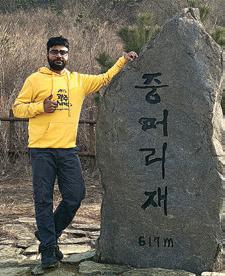
Vibhanshu Maurya, originally from India, is pursuing his PhD at CNU. He leads a vibrant lifestyle, driving his motorbike across the Korean Peninsula. He directed the Gwangju Hikers group and created podcasts that explored the challenges of residing in Korea and strategies for overcoming them.
Graves at the May 18 National Cemetery. (Sarah Pittman/GN)
Remembering to Resist Yeolmae and the Fight for Justice Ahead of WHRCF
By Luis Andrés
In the middle of this May, from May 13 to 15, Gwangju will once again host the World Human Rights Cities Forum (WHRCF). This year’s theme, Human Rights Cities Against Authoritarianism and Populism, feels particularly urgent in a time when democratic values are increasingly contested across the globe.
There may be no more fitting place for such a conversation than Gwangju. The city’s history is not only one of resistance, but of memory: of insisting that past violence is neither forgotten nor normalized. The legacy of the May 18 Democratic Uprising (1980) continues to shape how human rights are understood, practiced, and defended here.
Among the organizations carrying this legacy forward is Yeolmae, a recently established
association, formally founded in February 2026. Dedicated to supporting survivors of sexual violence, particularly those connected to the Gwangju Uprising, Yeolmae works at the intersection of memory, justice, and community. Their work reminds us that recognition is not only about the past but about building the conditions for dignity in the present.
Ahead of the WHRCF, Gwangju News spoke with Yoon Gyeong-hoe, administrative secretary of Yeolmae, about the organization’s mission, the role of recognition in confronting violence, and what this year’s forum represents in a rapidly shifting global context.
May 18 Yeolmae Foundation General Assembly at the Kim Daejung Convention Center, February 2, 2026. (Courtesy of Yeolmae)
Luis Andrés: Could you briefly introduce yourself and Yeolmae to our readers?
Yoon Gyeong-hoe: My name is Yoon Gyeonghoe, and I serve as the secretary of Yeolmae [Korean for “fruit,” “reward”], which represents opening the path to truth and healing for genderbased violence in historical contexts, with a focus on May 18.
Prior to this, I worked as an investigator in national truth commissions, where I was responsible for cases of sexual violence. In that role, I documented victims of state violence and worked toward uncovering the truth. It is through that process that one thing became very clear: Revealing the truth alone does not restore people’s lives. Even after documentation and judgment, survivors must still continue to endure and live with what happened to them.
Yeolmae began precisely from that realization. It started as a self-support group of survivors of sexual violence related to May 18, and I took on the role of secretary working alongside them. Based on that experience, we formally established the organization as a non-profit this February.
This was also a turning point for me. I moved from being someone who investigates and documents cases to someone who participates in what comes after truth: healing, restoration of dignity, just reparations, and the creation of social responsibility.
Luis Andrés: Yeolmae was formally established this year. What did this moment mean for the organization, and what has changed since becoming legally recognized?
Yoon Gyeong-hoe: Being formally established was not simply about gaining legal status; it was a shift in responsibility. While we were previously a self-help group of survivors giving testimony, we have now become an organization that asks: Which truths have been silenced, and will society publicly recognize and take responsibility for them?
Our structure has also expanded. What began as a group centered on survivors, investigators, and counselors now includes researchers, archivists, artists, and broader allies. This allows us to connect testimony with healing, documentation with public discourse, and advocacy with concrete issues such as reparations. Perhaps the most important change is in how we understand ourselves: We are no longer only responding to what has happened, but we are actively shaping what kind of society recognizes truth and takes responsibility for it.
Luis Andrés: Do you think Yeolmae could have emerged outside of Gwangju? What makes this city a particularly meaningful place for your work?
Yoon Gyeong-hoe: It is difficult to imagine Yeolmae emerging in the same form outside of Gwangju. Gwangju is not simply a place where violence occurred; it is a place where that violence has been continuously remembered, debated, and reinterpreted. The legacy of the May 18 Uprising has created an ethical and social foundation where questions of truth, responsibility, and dignity remain alive. In that sense, Yeolmae is not an exception but part of a longer historical process.
This city has taught us that memory is not passive; it is something that must be actively held onto. Without this sustained practice of memory, many forms of violence, especially
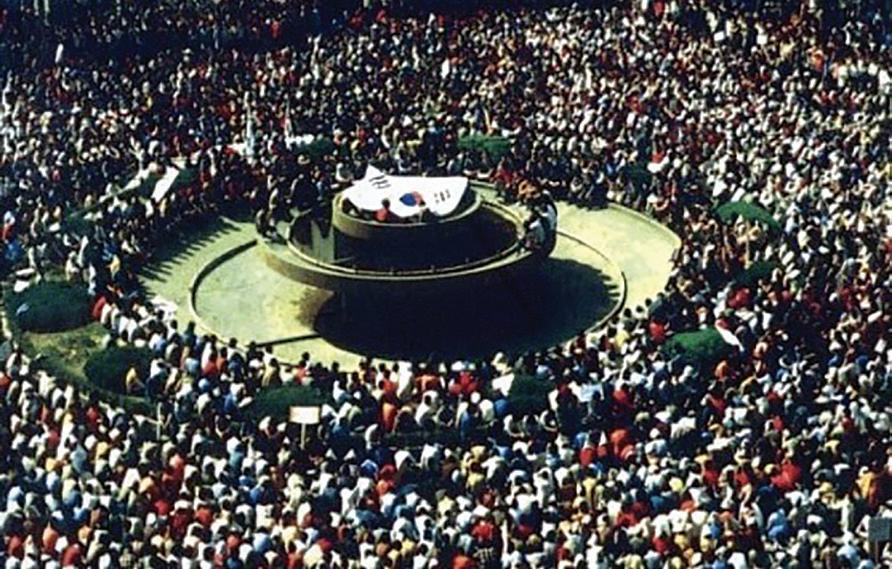
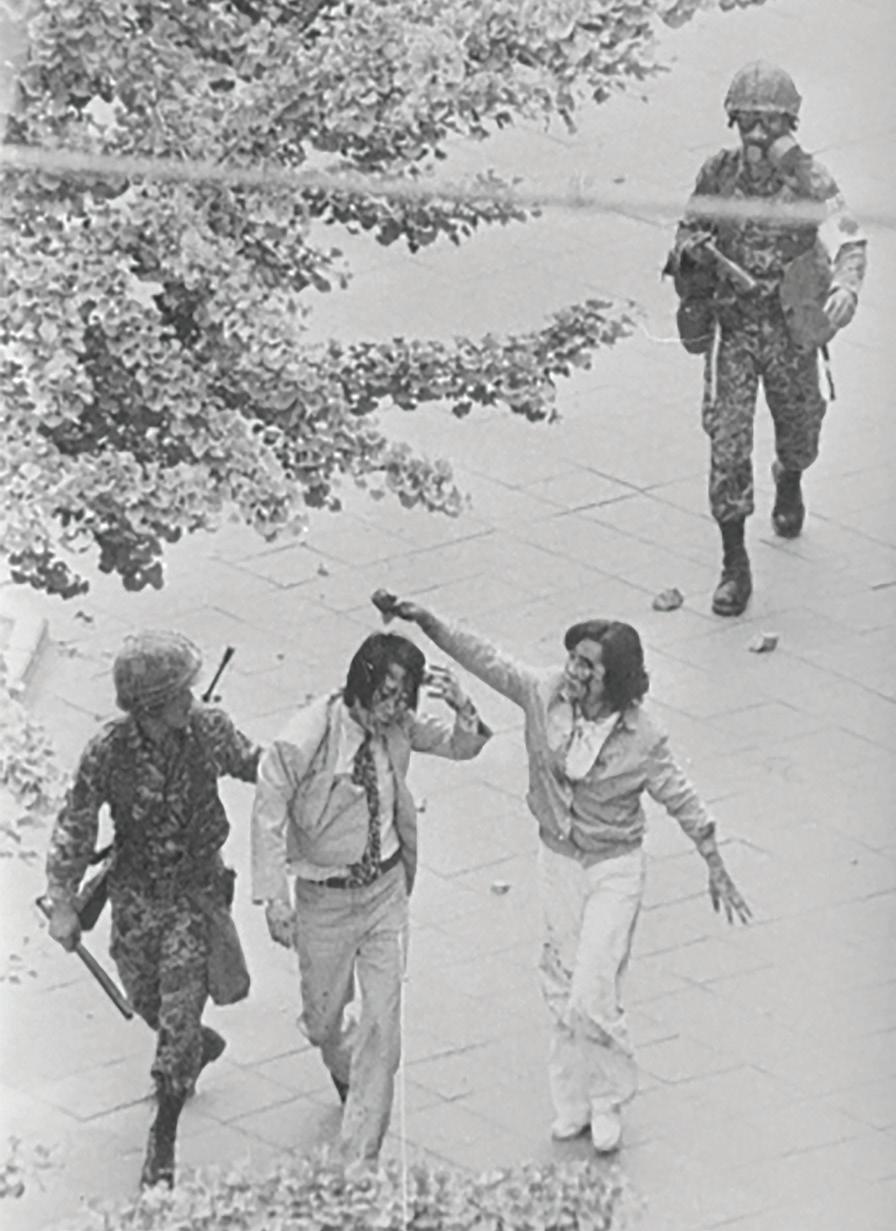
Democracy Square of Gwangju, May 1980. (Courtesy of Yeolmae)
sexual violence, would have remained unspoken and unrecognized.
Luis Andrés: In your work, you refer to the concept of “state violence.” Could you help our readers understand how the state can be implicated in cases of sexual violence?
Yoon Gyeong-hoe: Sexual violence is often understood as an individual crime. However, in many historical contexts, it is deeply embedded within structures of power.
In the case of the May 18 Uprising, sexual violence occurred within a system of state repression. This includes not only individual acts but also conditions such as military control, impunity, and enforced silence. Therefore, state violence does not only refer to direct acts by state agents. It also includes failures of truth-seeking, denial of facts, and the long-term neglect of survivors. When the state delays or avoids recognition and responsibility, the violence continues extended across time.
Luis Andrés: How does the protection of human rights relate to addressing sexual violence, and why is it important to approach this issue from a local or city-level perspective?
Yoon Gyeong-hoe: Sexual violence is a violation of human dignity. Addressing it is not only about punishment but about restoring the conditions that allow survivors to live with dignity.
“It is difficult to imagine Yeolmae emerging in the same form outside of Gwangju.”
While national institutions are important, recognition, support, and healing actually take place at the local level. The local community is where survivors live, where relationships are formed, and where memory is either sustained or erased. A local approach allows for responses that are more concrete, relational, and continuous. It connects policy with lived experience and ensures that survivors are not isolated but supported within a community.
Luis Andrés: Your work emphasizes the importance of recognition. Why is acknowledging past and present violence so crucial in the struggle for justice?
Yoon Gyeong-hoe: Recognition is often misunderstood as symbolic. In our experience, it
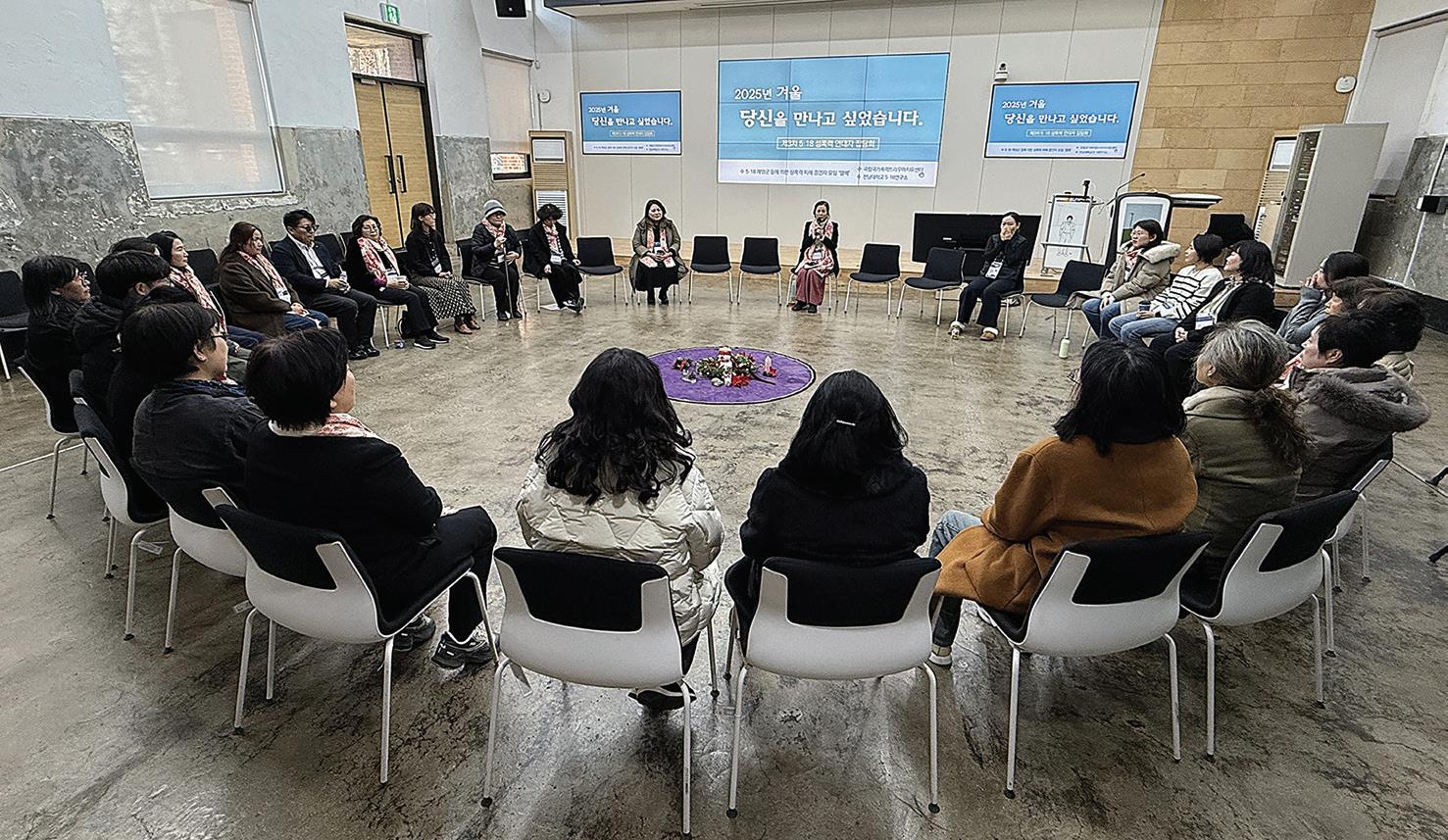
The 3rd May 18th Meeting of the Solidarity for Sexual Violence at Nam Joo Hall, Chonnam National University, December 12, 2025. (Courtesy of Yeolmae)
is a material and relational condition that makes justice possible. Without recognition, violence remains internalized and fragmented, leaving survivors to carry it alone. Recognition shifts that burden outward, transforming violence into a public issue and a matter of social responsibility. Recognition also transforms time itself.
When violence is acknowledged, it is no longer confined to the past; it becomes a present issue that society must respond to, repair, and learn from. A society that cannot publicly acknowledge and take responsibility for its most difficult truths will inevitably repeat them.
Luis Andrés: This year’s WHRCF focuses on authoritarianism and populism. In what ways do you see Yeolmae’s work contributing to this broader discussion?
Yoon Gyeong-hoe: Authoritarianism restricts citizens’ freedom and participation, controlling what truths can be spoken. Populism fragments society through emotional mobilization, pushing certain experiences to the margins. Yeolmae’s work exists at the intersection of these two phenomena. We bring forward experiences of sexual violence that have long been silenced, translating them into public language and positioning them as issues society must take responsibility for.
Sexual violence is often concealed in authoritarian contexts and marginalized in populist environments. Making these experiences visible is a way of redefining what can be spoken and what must no longer be erased. In this sense, our work is not only about the past; it is about protecting democracy itself. It concerns what can be said, and what truths a society is willing to take responsibility for.
Luis Andrés: Have you participated in the WHRCF before? What are your expectations for this year’s forum?
Yoon Gyeong-hoe: Although Yeolmae will not formally participate in this year’s forum, we have been a part of it before. In 2025, we introduced
our work during the WHRCF women’s session, The Gwangju Uprising and Women. At that time, we were still a self-support group, so it was more about sharing our concerns than making a formal presentation. During that session, we expressed our intention to establish a formal organization, and nine months later, we did. Because of that, we view this year’s forum with particular anticipation.
We hope the forum will elevate marginalized voices, such as survivors of gender-based violence in historical contexts, into meaningful discussions among researchers, activists, and policymakers. In the future, we also hope to participate directly, sharing our experiences and continuing these conversations within broader networks of solidarity.
Luis Andrés: What do you hope participants and Gwangju News readers take away from this year’s WHRCF?
Yoon Gyeong-hoe: I hope participants and readers clearly recognize that the resistance, solidarity, and sacrifice of Gwangju citizens in 1980, against the destruction of constitutional order, were the same forces that stopped the declaration of martial law on December 3, 2024.
At the center of that history is a form of giving toward future generations – an offering of one’s own life. That spirit became the foundation upon which democracy in Korea was built, and it continues to re-emerge in moments of crisis. I believe this spirit lives on as a constant decision: In May 1980, people defended the provincial office with nothing but their resolve. The meaning we give to that resolve is what shapes the choices we make today.
In 1980, human rights in Gwangju could not be separated from the sound of gunfire and military boots. That memory became active again during the martial law crisis in December 2024. The transmission of memory guided citizens’ choices, and ultimately became a form of responsibility to protect the community.
Living at the Edge of Conflict A Resident’s
Account
from Dubai During the US–Iran War
The brunch reservation was for one o’clock. The news alert arrived at half past twelve. Another escalation, another set of coordinates neither of us could place on a map without reaching for our phones. My husband read it aloud, we exchanged a look across the kitchen island, and then, almost guiltily, we went to brunch anyway. This is, I have come to understand, the defining psychological posture of expat life in Dubai in 2026: carrying the weight of the world in your pocket while the waiter refills your sparkling water.
I have lived in this city for four years. I came from Delhi for an IT job that paid three times what I was earning back home, and like most of the 3.5 million Indians in the UAE, I stayed back. I stayed for the tax-relaxed salary, for the ease, for the extraordinary cleanliness of a place where the metro arrives on time and the malls are cool even in July. I stayed because, over the years, Dubai stopped feeling like an assignment and started feeling like mine.
But the Middle East has a way of reminding you of its geography, no matter how hermetically
sealed your tower block. The tensions between the United States and Iran have been building for years, but the last several months have produced a different quality of anxiety – sharper, more personal. When missiles passed over the Gulf before, they were abstractions, happening to someone else’s sky. Now the conversations at school pickup have changed. The mothers – British, Indian, Filipino, Lebanese – share information in WhatsApp groups with a velocity and a seriousness that feels new. Emergency numbers. Embassy registration reminders. What to put in a go-bag, and whether a go-bag is alarmist or simply sensible.
The Particular Unease of the Indian Expat
Indians occupy a strange and specific position in this anxiety. We are, numerically, the largest expatriate community in the UAE. We are embedded in every sector: in finance, construction, hospitality, and medicine. Many of us have been here long enough to have built a life that is not obviously portable. My daughter was born in a hospital twenty minutes from where I am writing this. Her first words were in English
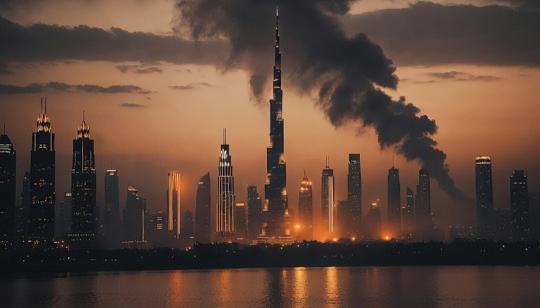
Dubai skyline. (GN with Grok AI)
and Hindi simultaneously. She thinks of Jumeirah as her neighborhood in a way that Cannaught Place, the neighborhood of my own childhood, never quite was for me.
When India’s Ministry of External Affairs issues advisories, we read them the way you read a doctor’s note: looking for reassurance between the official lines. The Indian government has been scrupulous in its neutrality, maintaining working relationships with both Washington and Tehran, and there is a particular relief that comes from holding an Indian passport in this region; it is not a document that makes you a target. But neutrality only protects you from politics. It does not protect you from a miscalculation, a stray trajectory, the kind of accident that history is full of.
What the City Tells You, and What It Doesn’t
The UAE government is extraordinarily good at calm. This is not cynicism; it is genuinely one of the city’s most sophisticated achievements. The communications are measured. The infrastructure of daily life continues without interruption. The financial markets have wobbled but held. There are no queues at petrol stations, no empty shelves. The fountains at the Dubai International Financial Centre still light up on schedule. And yet there is information that the city does not share with you. The military logistics. The backchannel diplomacy. The calculations being made at levels far above the brunch-and-metro daily life the rest of us inhabit. We are guests here, brilliantly hosted, mostly cherished, but guests nonetheless. And guests do not always get to know the full story of the house.
I spoke recently with a colleague, Joseph, who has worked in Dubai’s maritime sector for eight years, and he said something that stayed with me. “The thing about this city,” he said, “is that it was built on confidence. The confidence is real but it is also maintained. And in a crisis, you can’t always tell where the real ends and the maintained begins.” He is not leaving. Neither am I. But we are both paying attention in ways we weren’t before.
The Question We Don’t Ask Out Loud
There is a question that circulates, unspoken, in the Indian expat community: At what point do you go back? Not as defeat, most of us have stopped thinking of return as failure, but as a practical matter – the trigger that would move it from theoretical to real. Some people have a number: a specific escalation, a particular advisory level. Others discover, when pressed, that they don’t have a plan at all, that they have been living in the confidence of the city so completely that a contingency was never seriously worked out.
My mother calls from Delhi every few days now. She sends me news articles, sometimes days old, as though the recency is irrelevant and the content is what matters. She is not wrong. The content is “We are watching, we are worried, come home if it gets worse.” What “worse” means, for her, for me, for the city, is the thing none of us can quite define. So, we live in the space between normal and worse, the way people always have, with our brunch reservations and our WhatsApp groups and our children who think this city of light and ambition is simply, straightforwardly, where they live.
Last week my daughter asked me, with the directness of a ten-year-old who has absorbed the ambient tension without knowing its name, whether Dubai was safe. I told her it was. I told her that the city was very well run, that the leaders were careful people, and that we were far from where the trouble was. All of this is true. I believed it as I said it. I still do, mostly. But I was also, for a moment, aware of myself performing the same thing the city performs: the calm, the confidence, the maintenance of an unreality that is also, in its own way, the most practical thing available. You live here, or you don’t. And if you live here, you choose, each morning, to believe in the skyline.
The Author
The author is an Indian living in Dubai, United Arab Emirates. Due to restrictions on expat residents, they prefer to remain anonymous.
Half the Story
Women, Memory, and the Unfinished History of May 18
By Luis Andrés
May returns to Gwangju each year not as a simple commemoration but as a confrontation. It reminds us of the May 18 Democratic Uprising of 1980, not only as a national tragedy but as a defining moment in the global struggle for democracy.
In May 1980, state violence reached its peak in an attempt to silence a growing civic resistance. What began as student demonstrations quickly transformed into a city-wide uprising, met with military repression that left hundreds dead and many more injured, detained, or disappeared.
Today, the uprising stands as a symbol of resistance, dignity, and collective courage. And yet, even after decades of recognition, trials, pardons, films, and memorialization, the story we tell remains incomplete. That is because we are still not fully listening to women. Despite the institutionalization of memory around May 18, women’s experiences have often been reduced to brief mentions or footnotes in history books, if acknowledged at all.
In 2025, on the occasion of the 45th anniversary of the uprising, renewed efforts by scholars, activists, and local institutions have sought to bring forward voices that have long remained on the margins. One such example is the publication The Gwangju Uprising and Women (2025), compiled by the Gwangju Foundation for Women and Family, which seeks to incorporate women’s testimonies into the democratic memory of the city.
The truth is that, without women, much of what we “know” about May 18 would not exist. It was through women’s testimonies that we came to understand the everyday practices that sustained the uprising: the making and distribution of jumeok-bap (rice balls) for those on the frontlines, the care networks that emerged in the absence of state support, and the emotional labor of holding together a city under siege.
It was also through their voices that more uncomfortable truths surfaced: stories of retrieving bodies, tending to the wounded, and surviving trauma that extended far beyond physical violence. Among these are the longsilenced accounts of sexual violence suffered by both women and men, often buried under layers of stigma, shame, and social pressure.
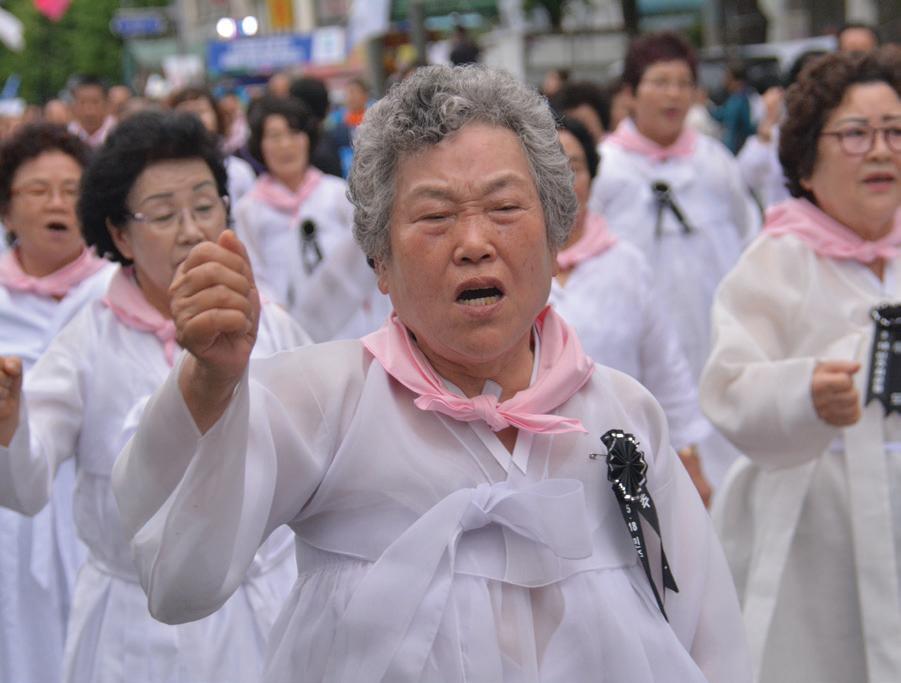
Relatives of those killed or wounded march for justice on the streets of Gwangju during a 5.18 commemoration. (Stephen Wunrow/Korean Quarterly, [1])
This article is not meant to retell the full history of May 18. Nor is it to diminish the sacrifices of those who fought and died. And it is certainly not to speak on behalf of the women who lived through it. Rather, it is an invitation to reconsider how we remember.
When we engage with women’s perspectives, such as those documented in recent compilations and testimonies, we begin to challenge the silence that was imposed on them for decades. We see that democracy was not only defended in the streets but also sustained in kitchens, hospitals, and hidden spaces of care and survival.
To remember May 18 without women is not only an omission; it is a distortion. History, when it excludes half of those who lived it, ceases to be a discipline grounded in truth. It becomes a fragmented narrative, shaped by visibility rather than reality. And in doing so, it risks betraying
Women were always there, taking care of the men up front. (5.18 Archives)
the very democratic values that the uprising sought to protect.
If we dare to complete the story, painful as it may be, through a reflexive lens grounded in empathy and mutual understanding, healing can begin. The May Mothers stand as one of the most powerful examples of this process of acknowledgment. Formed by women who were not always on the frontlines of direct confrontation with the military but who sustained the movement through care, nursing the wounded, preparing food, and writing signs, their presence remains a living reminder of the broader meaning of the May Uprising. Democracy, sustained across different spaces and roles, cannot exist without our mothers, sisters, daughters, and friends.
Another example has emerged more recently with the formalization of the Yeolmae association, highlighted in the Gwangju News [April 2026] by Jay Lee. Led by survivors of sexual violence, the association provides support while also advocating for recognition and justice. Acknowledging survivors not only as victims but as agents of resilience and activism, reframes their place within the democratic narrative. Their voices are not only part of the past: They are actively shaping a future that seeks to be free from gender-based violence.
If May 18 teaches us anything, it is that democracy is not built by a few visible heroes but by entire communities, seen and unseen. To honor that legacy today means more than remembrance: It means remembering differently.
The
Author
Luis Andrés González is a Mexican GKS scholar and master’s student in cultural anthropology at Chonnam National University. He advocates for LGBTQ+ rights and gender equality, and explores global affairs through pop culture. He is the founder of Erreizando, a digital magazine. Instagram: @luisin97 / @erreizando
[1] Korean Quarterly: www.koreanquarterly.org
From Gilgit Baltistan to South Korea A Nostalgic Sense of Home in Mountains and Seasons
By Arifa Batool
Moving to a new country brings both excitement and moments of reflection on home. Coming from the mountainous region of Gilgit-Baltistan in northern Pakistan, I was surprised to find a sense of familiarity in South Korea. The mountains and shifting seasons here often remind me of the landscapes I grew up with.
Finding Mountains Again in Gwangju
When I first arrived in Gwangju, the busy streets, tall buildings, and bright lights felt very different from home. Over time, I noticed Mudeung Mountain rising above the city, surrounded by smaller hills, trails, and quiet viewpoints. This
landscape reminded me of Gilgit-Baltistan, where K2 stands among the many peaks and valleys.
.
K2, located in Gilgit-Baltistan at 8,611 meters (28,251-ft.), is the world’s second-highest mountain, situated on the China–Pakistan border in the Karakoram Range. Across GilgitBaltistan, many smaller mountains form part of everyday life, from village paths to grazing fields. In Gwangju, Mudeung-san feels softer and easier to reach, yet it plays a similar role for the city. Walking along its trails often reminds me of the smaller peaks near K2 and the mountains back home. Although the scenery is different, both places give me the same feeling
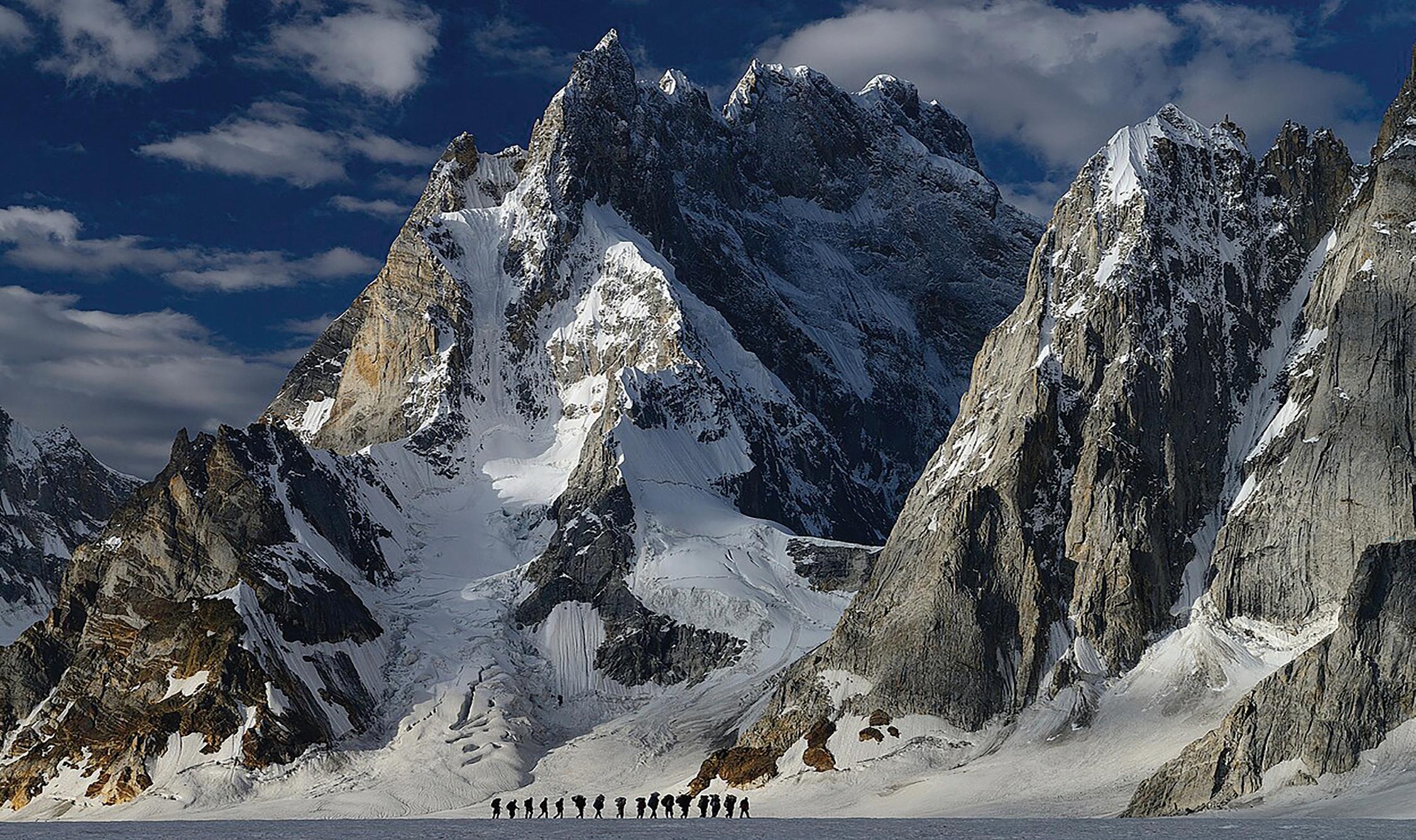
Mountains of Gilgit-Baltistan. (Vasiq Eqbal, [1])
of being surrounded by mountains that hold my memories.
Seasons in Two Countries
Living between Gilgit-Baltistan and Gwangju, I’ve discovered striking similarities in how the four seasons unfold, creating gentle bridges between my two homes.
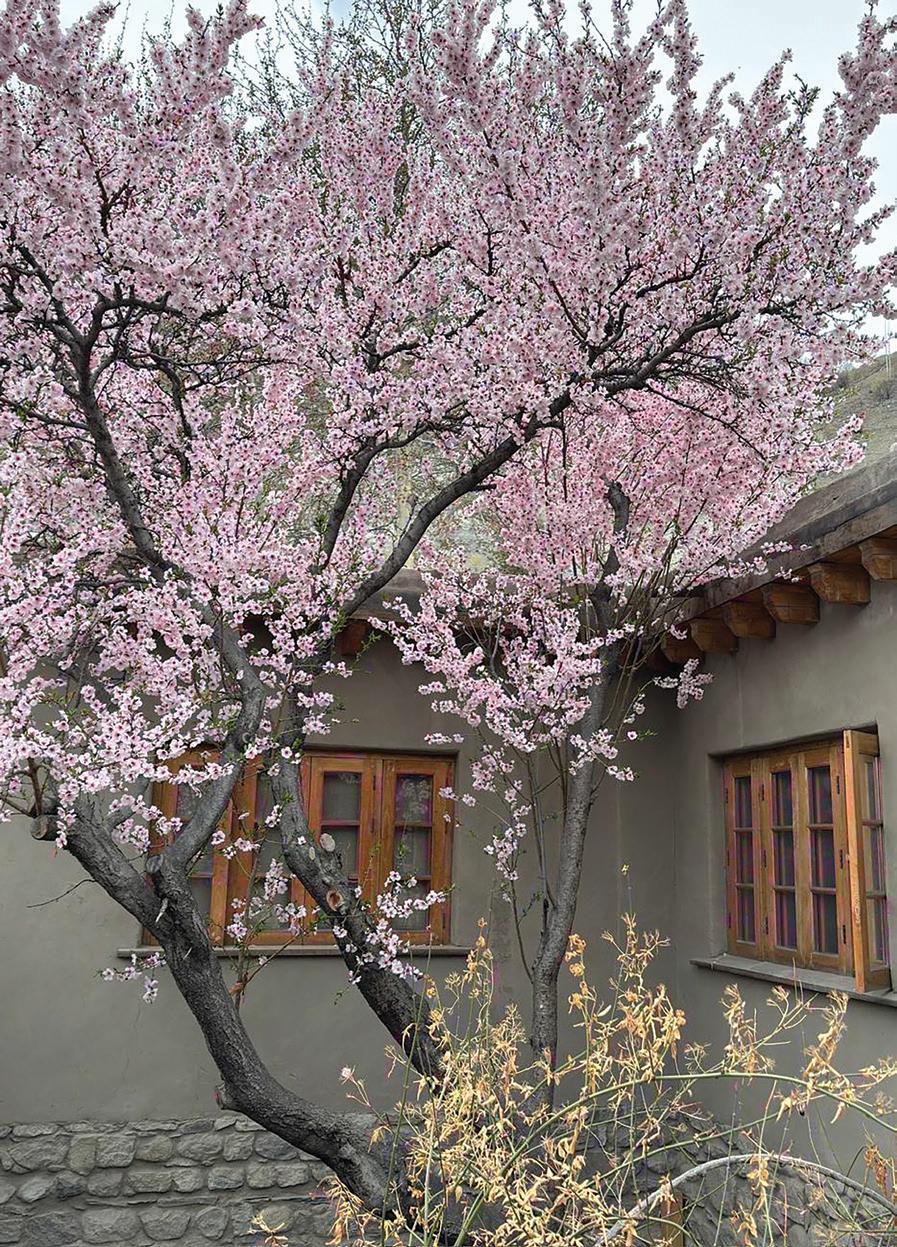
Spring awakens both places with soft blossoms, mild temperatures around 10–20°C, and fresh hope in the air. In Gilgit-Baltistan, apricot and cherry trees burst into pink and white along valley paths, drawing families outdoors to celebrate renewal. In Gwangju, cherry blossoms also appear lining riversides and streets, where people gather for picnics under falling petals. The light jackets, sweet scents, and sense of nature stirring feel identical.
Summer brings long, bright days and more outdoor life with warm highs of 25–35°C in both
regions. Gilgit-Baltistan’s green valleys buzz with children by water channels, families dry fruit on rooftops, and starry nights abound. Gwangju echoes this with lush parks buzzing with cicadas, friends sharing cold drinks after hill walks, and endless daylight for play. The joyful freedom and fresh produce connect the two summers seamlessly.
Autumn paints golden nostalgia with cooling temperatures of 10–25°C and crisp breezes. In my homeland, poplar trees glow yellow and orange as harvest ends, evoking time passing gently. Gwangju responds with intense maple leaves in red and gold, perfect for quiet strolls through campuses and parks. The falling foliage, soft light, and comfortable layers create the same bittersweet harmony.
Winter brings peaceful stillness and cozy togetherness, with cold snaps dipping to –10°C to 5°C in Gilgit-Baltistan and a milder –3°C to 3°C in Gwangju – both featuring snowfalls that hush the world. Heavy snow blankets peaks and villages back home, gathering families by fires for tea and stories. Gwangju offers lighter flurries, bare branches, and warm indoor gatherings with similar magic. In both, the chill fosters closeness, quiet beauty under fresh snow, and that comforting slowdown of life.
Living in Gwangju, I have learned that even far from Gilgit-Baltistan, small moments can feel like home. Though Gilgit-Baltistan and South Korea have differences, they share a quiet sense of belonging.
The Author
Arifa Batool is a researcher and writer based in Gwangju. An anthropologist by profession, she has published multiple research articles in her field. She has been living in Gwangju for a year, following several earlier visits. With a passion for exploring culture and community life, she enjoys documenting unique local experiences and uncovering hidden stories that connect history, art, and everyday life.
Apricot blossoms in Gilgit-Baltistan rival the cherry blossoms of Korea. (Pahardiii on Instagram)
1st CNU 5.18 Marathon A Morning Run That Taught Me Consistency
By Dhivyaa S. P.
No plan. No practice. No expectations. It started like any usual workday morning. I woke up, got ready, and followed my routine. But instead of heading to the university for research, I went for a run. I took part in the 1st CNU 5.18 Campus Marathon at Chonnam National University in Gwangju. It was a race dedicated to the spirit and memory of the Gwangju Uprising of 1980. And somehow, without preparation, I found myself at the starting line of the 10-kilometer race.
The event carried meaning even before the race began. There were two courses, each carefully designed with symbolism. The 5.18-kilometer course represented the May 18 movement, with a limited number of 518 runners to honor the date and its significance. The 10-kilometer course reflected the height of Mudeung-san, the mountain that stands over the city as a quiet witness to its history. Every number, every distance, felt intentional. It was not just about running. It was about remembering.
The atmosphere was electric from the very beginning. Runners gathered in waves, filling the campus with energy and anticipation. Shoes tapped against the pavement. Voices rose in excitement. As the clock approached 9 a.m., the crowd tightened, and the countdown began. In those final seconds, everything felt loud and alive. Then the signal came, and we started moving.
I began with a light jog, trying to keep a steady pace. At first, it felt manageable. The excitement carried me forward. But reality set in quickly. My legs grew heavy, and my breathing became
uneven. I realized almost immediately that I was not ready for this distance. Still, I kept going. I slowed down. Then I walked. Then I tried jogging again. It became a rhythm of effort and adjustment. My goal was simple: Just finish. It did not matter how long it took or where I placed. I just wanted to reach the end.
The 10-kilometer course took us beyond the campus and into the surrounding city streets. We passed intersections, landmarks, and familiar roads, now filled with runners instead of cars. The city felt different. Alive in a new way. Some runners moved fast and steady. Others slowed down, conserving energy. I found myself somewhere in between, pushing forward in small steps. There were moments when I wanted to stop, when my body resisted every movement. But the presence of others kept me going. There was a quiet sense of unity that made it easier to continue.
At some point during the race, I noticed something unexpected. Even though I was tired, I felt focused. My thoughts became simple. Step by step. Breath by breath. I was not thinking about work or stress. I was just there, in the moment, moving forward. I learned something small but meaningful: I could keep going even when I felt
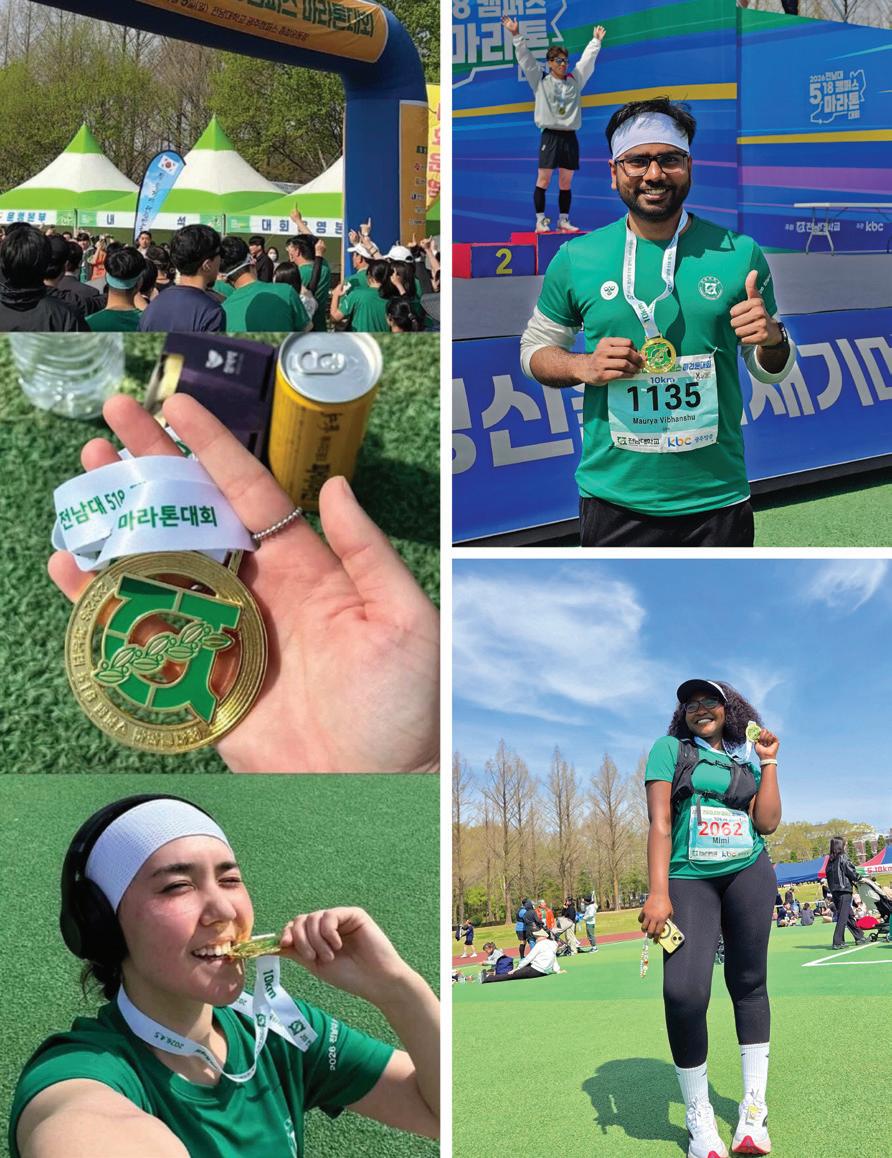
Finish-line energy of participants. (Daniyarova A., Maurya V., & N. K. Iyortsuun)
unprepared. I could slow down and still make progress.
The final stretch felt long. Every step required effort. But the finish line was there, and that was enough to keep me moving. When I finally crossed it, the feeling was quiet but powerful. I had done it! I had finished 10 kilometers without training, without a plan, and without giving up. That was enough.
After the race, we received our medals, along with an energy drink and rice cake. It was simple, but it felt earned. Around me, runners rested and reflected. Some sat quietly. Others laughed and shared stories. Everyone had pushed themselves in some way.
For Daniyarova Altynshash, this was her first race, and the experience stayed with her in a deeply emotional way. She described feeling an immediate sense of unity as soon as the race began. Surrounded by people moving toward the same goal, she felt connected and supported, even by strangers. What stood out most for her was not just the running, but the atmosphere. The energy of the crowd, the thoughtful organization, and the meaning behind the event made every moment feel special. Running through a campus tied to such important history gave her a sense of purpose beyond the physical effort. Despite the challenge, she felt calm and aware, fully present in the moment. For her, the race became more than movement. It became connection.
For Maurya Vibhanshu, the marathon began as a simple decision to break out of routine. He had been busy with work and had fallen out of the habit of exercise. When he heard about the event, he saw it as a chance to restart. He intended to train, and for a few days he did, but daily life quickly took over. When race day arrived, he felt unprepared and nervous, especially after signing up for the 10-kilometer course. At the start, he ran slowly, unsure of how far he could go. But after a few kilometers, he found a rhythm. He kept moving without stopping, focused on one goal: to finish within two hours. As he ran, he
realized how much he had neglected his physical health. The cheering groups along the route gave him energy, and crossing the finish line after just over an hour filled him with both exhaustion and pride. It was a moment of realization and achievement.
For Ngumimi Karen Iyortsuun, the race was a bold step into the unknown. It was her first time ever participating in a race, and choosing 10 kilometers felt like a serious challenge. She prepared for three weeks, unsure if it would be enough, but decided to show up anyway. On race day, the first few kilometers were difficult. Her body resisted, questioning every step. But she kept going. Around the halfway point, something changed. She found her rhythm and began to settle into the run. By the time she reached the finish line, she felt stronger than she had expected. The satisfaction was quiet but deep. For her, the race was not just physical. The meaning behind the event, tied to the history of Gwangju, added another layer. Running through those streets made the history feel real and present.
Looking back, the marathon was more than just a race. It was a reminder that you do not need perfect preparation to begin something meaningful. It was a reminder that showing up matters. That progress can be slow and still be real. Running through the campus and the city, surrounded by others, I felt connected not only to the moment but also to something larger.
That morning began like any other. Ordinary and predictable. But one small decision changed everything. I chose to run. I chose to step into something uncertain. And in doing so, I discovered something simple but deep. Sometimes, finishing is enough.
The Author
Dhivyaa believes that every action, no matter how small, contributes to a bigger change. She wishes, “May this May bring you lots of sunshine and blessings.” Up next: 2013 → 2026. Been Thirteen. Still rising.
Cooperating Sister Cities Gwangju and Changzhi
By Aoding Li
Located in Shanxi Province in northeastern China, Changzhi is a city known for its long history, rich cultural heritage, and distinctive regional traditions. Meanwhile, Gwangju, in South Korea is widely recognized as a center of culture arts and civic spirit. Although the two cities are somewhat distant from each other geographically, they share a steadily strengthening connection, built on mutual respect, cultural affinity, and institutional cooperation.
Inter-City Exchange
Changzhi and Gwangju have gradually developed a stable and multi-layered relationship since establishing friendly relations in 2012 and formalizing their sister-city partnership in 2014. Over the past decade-plus, exchanges across culture, economy, healthcare, education, and tourism have transformed symbolic friendship into practical collaboration. Through continuous interaction both cities have built trust, expanded cooperation, and created new opportunities for shared development.
In April of 2014, Gwangju Mayor Yoon Jang-hyun and his delegation visited Changzhi to facilitate cooperation in the tourism sector. The two cities signed a tourism exchange agreement to promote tourism through medical tourism and the exchange of other tourism-related resources and to encourage relevant companies and institutions to participate in tourism-related exhibitions.
Cultural exchange has also become one of the most visible and meaningful aspects of this partnership. In September 2024, a cultural delegation from Changzhi visited Gwangju to participate in the tenth China Culture Week, an important event that brings together artists, officials, students, and citizens. This program featured traditional opera, acrobatics, dance, and Shangdang Luozi, a unique storytelling performance rooted in local heritage. These performances allowed audiences in Gwangju to experience the vitality of Chinese intangible cultural heritage, while also offering a vivid introduction to the cultural identity of Changzhi.
Beyond stage performances, a variety of interactive activities including exhibitions,
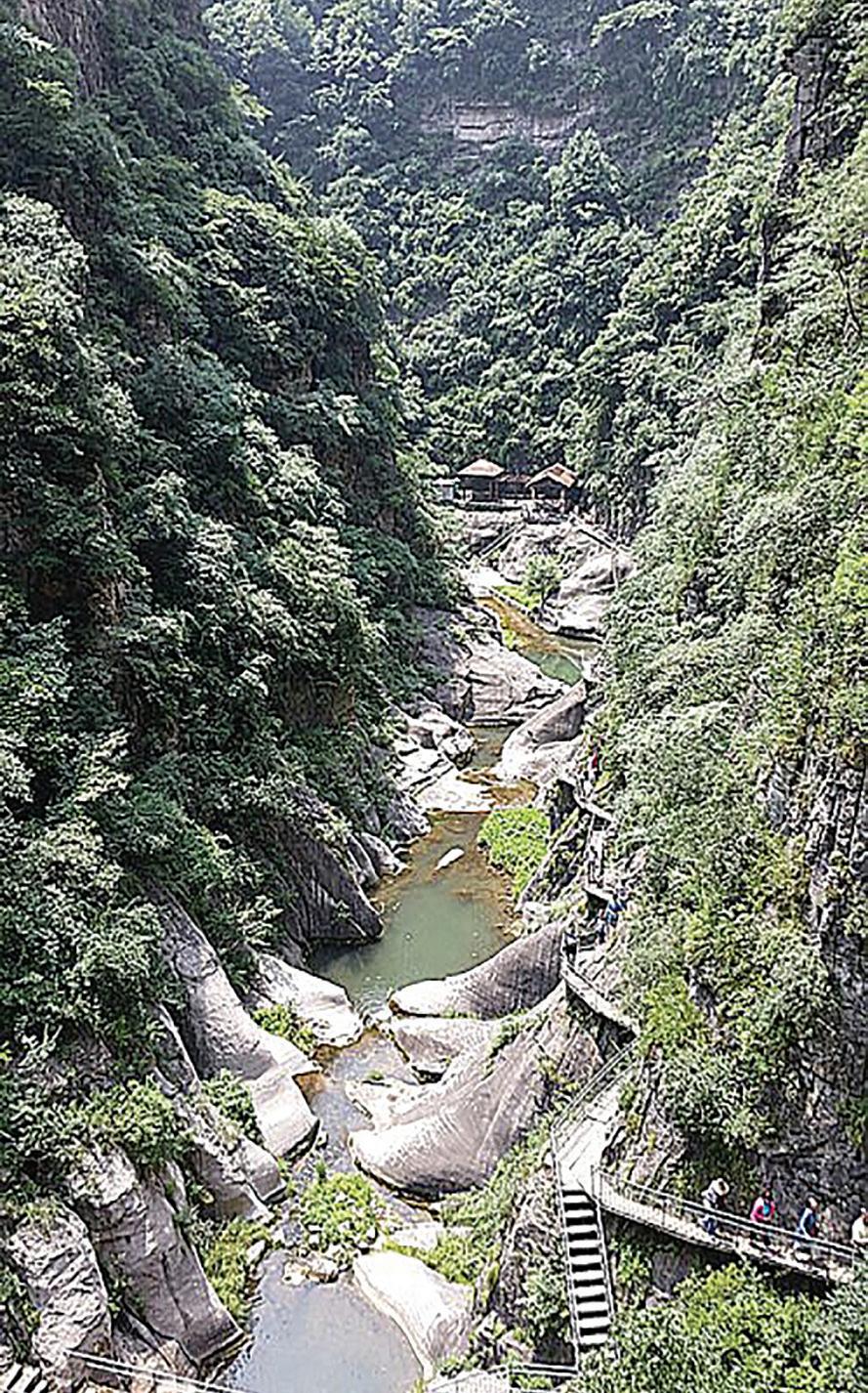
Taihang Grand Canyon, just east of the city. (Antigng, [1])
competitions, and forums have created opportunities for direct communication. Such formats transform cultural exchange into lived experience allowing people to connect through shared interests and emotions.
Introducing Changzhi
Changzhi is a city shaped by both history and landscape. The Shangdang region has long been considered a strategic and cultural crossroads in northern China. This city is characterized by dramatic natural scenery including cliffs, valleys, forests, and rivers. Among the most well-known scenic areas is Taihang Grand Canyon, which features steep cliffs, winding rivers, and lush vegetation, attracting visitors who enjoy hiking, photography, and outdoor exploration.
Changzhi also offers a rich culinary experience that reflects the broader traditions of northern China. Food here emphasizes wheat-based staples, bold flavors, and careful preparation techniques. Handmade noodles are a defining feature, especially knife-cut noodles, which are sliced from dough and directly immersed into boiling water, creating a unique texture, and are widely enjoyed and common in daily life. Local cuisine often incorporates vinegar, a hallmark of Shanxi cooking. In markets and small restaurants, visitors can experience authentic flavors that highlight freshness, simplicity, and craftsmanship.
Sharing meals plays an important social role, and for visitors from Korea, dining often becomes an easy and enjoyable way to engage with local culture and connect with people.
Complementary Relationship
Accessibility and connectivity also support the development of the sister-city relationship. Although there are no direct flights between Changzhi and Gwangju, convenient routes through major cities make travel relatively easy. More importantly, institutional frameworks such as government dialogue, cultural programs, business cooperation, and educational exchange ensure that interaction remains continuous and productive. Recent exchanges have highlighted a shared commitment to expanding cooperation in areas such as cultural industries, tourism development, and investment projects. Gwangju, with its strong focus on arts, creativity, and cultural policy, complements Changzhi, which offers abundant historical resources and emerging cultural potential. This complementary relationship creates opportunities for collaboration that can benefit both cities economically and culturally.
In a global context where cities increasingly seek partnerships to enhance competitiveness and cultural influence, the relationship between Changzhi and Gwangju demonstrates how sustained engagement can produce meaningful outcomes. It is no longer limited to ceremonial visits but has evolved into a platform for mutual learning, shared growth, and long-term cooperation in the future.
The Author
Li Aoding, originally from China, is a PhD student at Chonnam National University. She loves to live a vivid life and cares about lives. She has lived in South Korea for more than seven years, and she lives a happy life with four cats.
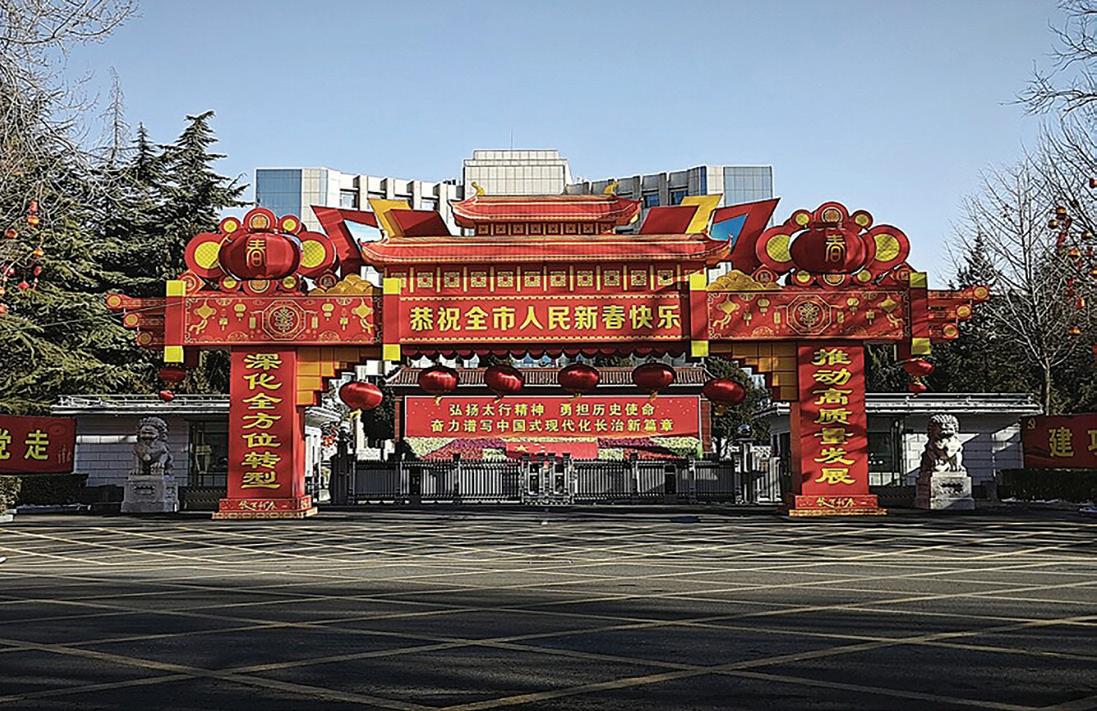
Changzhi government and party complex entrance. (1969社论, [1])
Nature Under Attack
By Siddhant K.
The hidden environmental catastrophe of modern warfare, from the steppes of Ukraine to the shores of Gaza.
When we speak of war, we usually speak of human suffering, of lives lost, families shattered, and cities reduced to rubble. But war has another casualty, one that cannot file a report, cast a vote, or give testimony before the international courts: the natural world. Soil, air, water, forests, wetlands, and the creatures that inhabit them are silently and systematically destroyed in every armed conflict. Today, with two of the largest wars in decades being in Ukraine and Gaza, alongside ongoing conflicts in Sudan, the Sahel, Myanmar, and Iran, the ecological toll of organized violence demands urgent attention.
This is not a secondary concern. According to the Conflict and Environment Observatory (CEOBS), a UN-accredited watchdog, the world’s militaries are responsible for an estimated 5.5% of all global greenhouse gas emissions, more than civil aviation and the shipping industry combined. Yet military emissions remain entirely
exempt from mandatory reporting under the Paris Agreement, a loophole that scientists increasingly describe as a “critical black hole” in global climate accounting. The world is currently experiencing its highest number of active conflicts since the Second World War, and the ecological price tag is staggering.
“If the world’s militaries were a country, they would have the fourth largest carbon footprint on Earth – larger than Russia’s.”
(Conflict and Environment Observatory, 2024)
Ukraine: A Continent’s Lungs at War
Russia’s full-scale invasion of Ukraine, launched in February 2022, represents the most ecologically devastating land war in Europe since the 1940s. Ukraine is a nation of extraordinary ecological
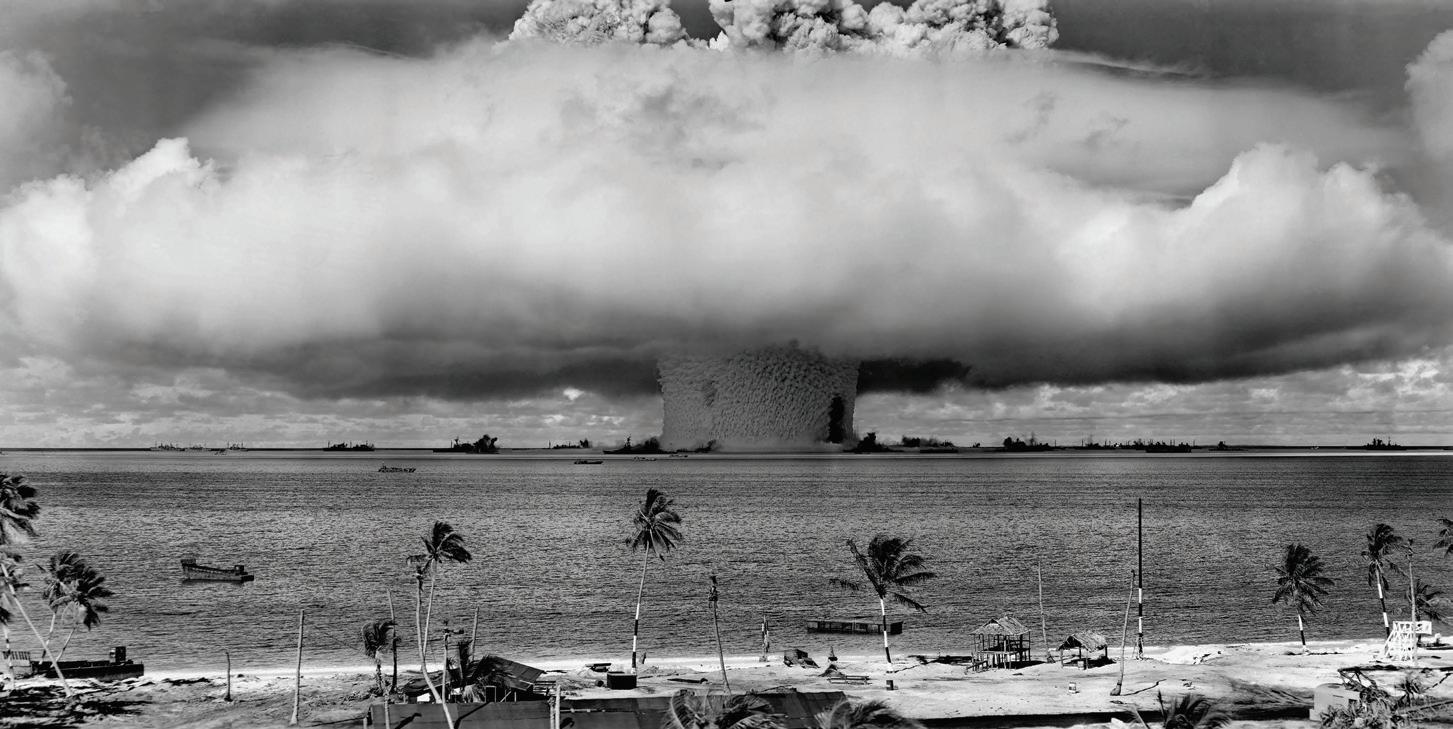
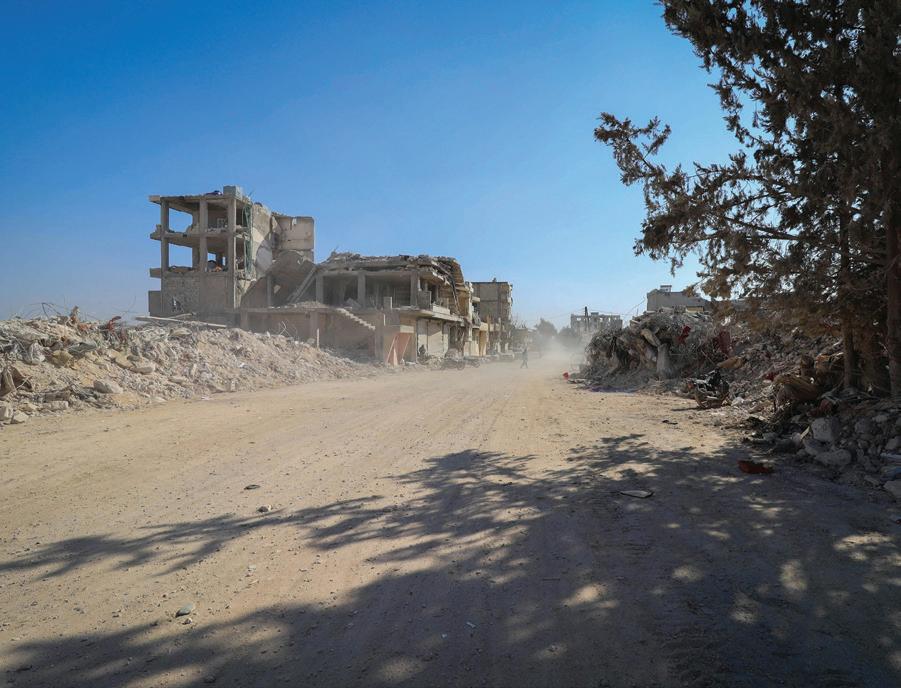
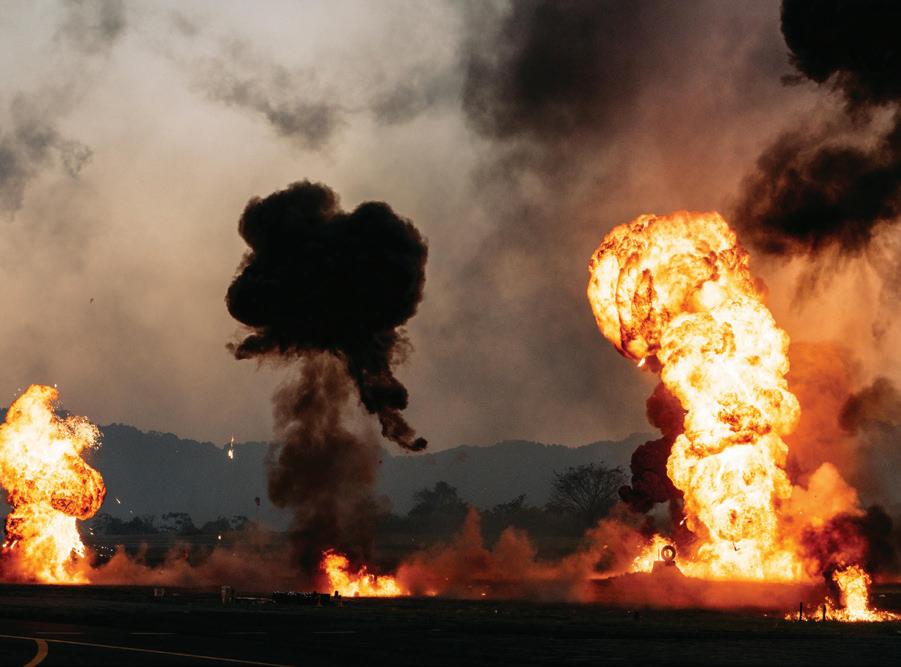
Explosion on the Marshall Islands.
significance: Though it covers just 6% of Europe’s land area, it harbors 35% of the continent’s biodiversity. The war is now threatening this disproportionate natural wealth at every level.
According to a 2024 peer-reviewed study published in Frontiers in Sustainable Resource Management, military operations have severely degraded Ukraine’s soil, air, water, and biodiversity through multiple simultaneous pathways. The detonation of explosives compacts soil and reduces its water absorption capacity, while the intensive use of military vehicles releases toxic elements, including lead, mercury, and arsenic, that penetrate the food chain. These heavy metals do not dissipate; they bind to soil particles and accumulate in plants, passing upward through every trophic level of the food chain.
Fire has been among the most visible and dramatic ecological consequences. According to a 2025 report from the European Commission’s Joint Research Centre, Ukraine suffered recordbreaking wildfires in 2024, with approximately 965,000 hectares burned, more than twice the area burned across the entire European Union combined in that same period. The majority of these fires occurred along the frontlines during periods of hot, dry weather, incinerating not only forests but also unique steppe and wetland ecosystems that had no fire-adapted ecology to recover from.
“Ukraine occupies 6% of Europe's land area but holds 35% of its biodiversity, and the war now threatens every part of that natural inheritance.”
The cumulative greenhouse gas burden of the Ukraine war is similarly alarming. Ukraine’s Ministry of Environment calculates that the mobilization, fighting, and reconstruction will produce approximately 175 million tons
of CO₂ equivalent, a figure comparable to the entire annual emissions of the Netherlands. This estimate encompasses direct military fuel combustion, emissions from fires, and the enormous quantities of steel and concrete required for rebuilding.
Gaza: Ecocide in a Coastal Strip
If Ukraine represents an ecological war of attrition across a vast landscape, the war in Gaza since October 2023 represents an environmental catastrophe compressed into an extraordinarily small and densely populated space. The Gaza Strip, 365 square kilometers, roughly the size of the city of Detroit, has been subjected to one of the most intense bombardments per unit area in documented military history, with consequences for the natural environment that may prove irreversible within human generational timescales.
In June 2024, the United Nations Environment Programme (UNEP) published its preliminary environmental assessment, concluding that the war had exposed the Gaza population to rapidly growing soil, water, and air pollution, with risks of irreversible damage to natural ecosystems. A follow-up assessment published later that year found that, by almost every measure, conditions had deteriorated dramatically: The volume of conflict-related debris had increased by 57% and
Ruins of city buildings. (Ahmed Akacha on Pexels)
now stands at over 40 million tons, twenty times greater than all debris generated by conflicts in Gaza since 2008. This rubble contains human remains, asbestos, unexploded ordnance, and a cocktail of hazardous industrial chemicals.
The agricultural landscape of Gaza has been effectively erased. By September 2024, UNOSAT and FAO satellite analysis found that 67% of all cropland had been damaged, including 71% of orchards and tree crops.
“80% of Gaza’s trees damaged or destroyed by January 2025, with losses exceeding 90% in the north.” (Kent State University satellite analysis)
Gaza’s coastal and marine ecosystems have also been devastated. The collapse of sewage treatment infrastructure has resulted in the discharge of at least 130,000 cubic meters of raw wastewater into the Mediterranean Sea every day. This effluent has contaminated much of the territory’s drinking water.
What the Science Demands
The ecological cost of modern warfare is not an unfortunate side-effect that can be minimized with better technology. It is a systemic and predictable consequence of armed conflict, one
that compounds over time and across borders. Dolphins washing up on the shores of Turkey and Bulgaria carry within them the acoustic trauma and heavy metal contamination of a war being fought hundreds of kilometers away. Fish kills in the Dnipro Delta affect the food security of communities far downstream. Raw sewage discharged into the Mediterranean from Gaza’s shattered treatment plants does not stop at any political boundary.
Scientists and international bodies are increasingly calling for a suite of urgent measures: mandatory and standardized reporting of military greenhouse gas emissions to the UNFCCC, the formal recognition of ecocide as an international crime, independent environmental monitoring in conflict zones, and the integration of ecological restoration planning into post-conflict reconstruction from the earliest stages. Ukraine's reconstruction, already estimated to require hundreds of billions of dollars, offers both an obligation and an opportunity to rebuild not only buildings and bridges, but soils, wetlands, forests, and the biodiversity they contain.
The task is immense, but the precedents are instructive. Decades after the end of the Vietnam War, parts of the Vietnamese landscape are still contaminated by dioxin from Agent Orange. The Kuwaiti oil fires of 1991 took years to extinguish and left a toxic legacy across the Gulf. The lesson is consistent: The environment does not recover by itself on the timescales that matter for human civilization. Recovery requires deliberate, funded, science-led intervention, and a political will that has so far been almost entirely absent.
The Author Siddhant Kumar is a geochemical oceanographer and researcher at TMBL at the Gwangju Institute of Science and Technology (GIST). His work focuses on marine minerals, sediment chemistry, and paleoenvironmental change. He is passionate about communicating ocean science to broader communities in Korea.
Fireball explosion. (Edu Raw on Pexels)
The Power of AI in Shaping the Future World Order
By Muhammad Umar Tahir
Afew nights ago, I was scrolling through my phone when I came across a video that immediately caught my attention. It showed a group of drones moving together in the sky. At first, it looked simple, almost like a normal swarm show. But then something interesting happened. The drones were not just flying; they were coordinating with each other. They moved in formation, changed direction together, and adjusted their positions in real time. It felt less like separate machines and more like a single system working as one.
Then I realized something even more surprising. If one drone stopped or got damaged, the others did not stop. They quickly adjusted in the same formation, and another drone took its place. The system continued without confusion, without delay. That is when it stopped feeling like a simple video. It started to feel like a glimpse of something bigger. It was not just a show. It was a scene of war, where these machines could be carrying weapons and making decisions in real time.
For a long time, we have thought of artificial intelligence as something that helps us in small ways. It writes messages, answers questions, and makes everyday tasks easier. It waits for us to give instructions, works only when we ask, and helps us.
But now, something is changing. AI is no longer just waiting. It is acting.
Today, machines are learning how to work together. They can share information, make
quick decisions, and respond to situations in real time. Systems like drones and mobile robots are no longer operating alone. They are connected, and they support each other. In many situations, they do not need constant human control. They can adjust, react, and continue on their own.
This kind of technology has already been used in serious situations. Systems are able to monitor, react, and even take action faster than humans can. In such environments, speed becomes the most important factor. The system that reacts faster gains the advantage. This is where things become more important to understand.
But speed is not the only change. Another important change is coordination. Machines can now share what they learn almost instantly. If one
(Freepik)
system finds a better way to do something, that knowledge can be used by others immediately. Humans take time to learn, practice, and improve. Machines connected through intelligent systems can improve much faster.
In the past, power depended on people, resources, and physical strength. Today, another factor is becoming just as important, and that is intelligence. Not just human intelligence, but machine intelligence.
A system that can learn faster, adjust quickly, and make better decisions will naturally move ahead. And slowly, this begins to shape how the world works. It is no longer only about how strong you are but how smart your systems are, how fast they respond, and how well they are connected.
We are also moving toward a world where decisions are supported by data. Systems can analyze large amounts of information and suggest actions in seconds. In many cases, humans may not even see all the data being processed. They only see the result. This creates a new kind of dependency on intelligent systems.
But this is only one side of the story. Because the same technology can also be used in a very different way. Imagine using this level of intelligence not for difficult situations but for improving everyday life.
In farming, AI systems can help farmers understand exactly what their crops need. Water, soil conditions, and weather can all be managed more carefully. This can help increase food production and reduce waste. Farming can become more predictable, more efficient, and less dependent on guesswork.
Machines can also explore places that are hard for humans to reach. Deep oceans, rough lands, and dangerous environments can be studied more safely. New resources can be discovered, and knowledge can grow. These discoveries can help
improve life in ways we do not fully understand yet.
Cities can become smarter. Traffic can move better, energy can be used more efficiently, and services can respond faster to people’s needs. Instead of reacting after problems happen, systems can act before problems grow.
In healthcare, AI can support doctors by analyzing large amounts of data. It can help detect problems early and suggest better treatments. This does not replace doctors, but it helps them make better decisions. In many cases, early detection can save lives.
Even beyond our planet, intelligent systems can explore places where humans cannot easily go. They can travel further and send back valuable information. They can help us understand environments that are currently beyond our reach.
“The technology that is becoming stronger is also becoming a source of power.”
In all these ways, AI is not taking away human ability. It is expanding it. It allows humans to go further, think deeper, and act faster. That is why this moment is so important. Because AI itself does not decide what it will be used for. It depends on us. The same system can be used in different ways. It can be used in difficult situations, and it can also be used for peaceful purposes and for the betterment of humanity.
At the same time, we also need to understand another important reality. The technology that is becoming stronger is also becoming a source of power. The one who is ahead in AI will not only have an advantage in difficult situations but
may also have better access to resources, stronger control over systems, and greater influence over decisions. This influence does not always appear in a direct way. It can be slow and quiet. Systems become more efficient, decisions become faster, and gradually control shifts toward those who have better technology.
This is where AI begins to connect with something even bigger. It is not only changing technology; it is slowly shaping the future world order. Until now, the world order has been influenced mainly by human strength, resources, and control. But now, artificial intelligence is becoming a major factor. The systems that are more intelligent, more advanced, and more connected can influence how decisions are made and how systems operate.
This means that the power of AI is not limited to one area. It can affect many aspects of life at the same time. From systems to resources, during both war and peace, from decisions to influence, everything can be connected through intelligent technologies.
And that is why the role of AI in shaping the future world order is becoming so important. The direction depends on human choice. At the same time, one thing is becoming clear: In the future, those who understand and use AI will move
forward faster. Those who ignore it may find it difficult to keep up. This applies to countries as well as individuals.
This is not something to fear. It is something to understand. Looking back at that video, it no longer feels like just a simple example. It feels like a small sign of a bigger change. A change where machines can work together, think faster, and act without waiting. The power of AI is not only in what it can do today; it is in what it is slowly becoming. And the future it shapes will depend on how we choose to use it.
Because in the end, the question is not whether AI will shape the future. It is already doing that.
The real question is how will we choose to use it, and who will be the ones using it?
The Author
Muhammad Umar Tahir is an electrical engineer pursuing his PhD in the Artificial Intelligence Convergence Department at Gwangju Institute of Science and Technology (GIST). He is interested in applying AI to healthcare devices, particularly in advancing medical imaging technologies and brain stimulation. Outside research, he enjoys exploring new places, meeting people, and exchanging ideas on how innovation can improve the quality of life.
(GN with Google Gemini)
When Anger Becomes an Ally Meet Scarlet
By Erva Ozkan
Scarlet was always there, though I never wanted her to be. She was never a friend to me. Whatever she said, I dismissed. I believed she had nothing worth hearing. At times, her voice felt overwhelming – filling the space, disrupting my calm. Perhaps, in some moments, she even pulled me away from danger. Other times, she felt too intense, too sharp. I couldn’t listen. Or maybe I simply didn’t want to. Still, she kept returning. She appeared when life felt unfair, when something didn’t sit right, when a quiet discomfort began to grow. I didn’t invite her, and yet there was no way to keep her out. She showed up again and again, especially in moments when something in me felt hurt or crossed.
For a long time, I saw her only as a disturbance –something to control, to silence, or to avoid. But one day, in a rare moment of stillness, I paused. Instead of pushing her away, I allowed myself to sit with her. And in that space, I realized that perhaps I could make room for her, too. That was the moment I decided to give her a name: Scarlet.
Scarlet was my anger.
Naming her did not make her disappear, but it changed how I met her. She was no longer just a reaction or a force I had to fight. She became something I could turn toward. And slowly, our relationship began to soften. The turning point came with a quiet question: What if my anger is trying to tell me something? That question opened a space I did not know I needed. Instead of reacting immediately, I began to listen – to her, to my anger, to what it was carrying beneath the surface. What once felt overwhelming began to feel meaningful.
“Fierce self-compassion is about listening deeply enough that we are willing to act on what we hear.”
Through this, I started to see that anger is not something personal to me alone. It is a shared human experience, though we each carry it differently. Yet, it is often misunderstood. In many environments – especially where calmness is associated with professionalism or maturity – anger is seen as something negative, something to suppress or avoid altogether. But anger is not random. It often emerges when something important has been touched – when our boundaries are crossed, when we are not heard, when we are treated in ways that do not reflect our worth. It can grow out of moments of unfairness, misinterpretation, or the quiet accumulation of unmet needs. Seen in this light, anger is not an enemy. It is a signal. It tells us that something matters, that something within us is asking for attention.
If anger is a signal, then the question is not how to get rid of it but how to respond to it.
Often, we try to calm it down as quickly as possible. We remind ourselves to stay patient, to remain composed, to not overreact. While these intentions may come from a good place, they can also create distance from what we are actually feeling. In trying to move away from anger, we may also move away from ourselves.
What Would Happen If…
What would happen if, instead, we met our anger with compassion? Not agreement, not indulgence, but compassion. To meet anger with compassion is to turn toward it with curiosity rather than judgment. It is to ask, gently, what is this anger protecting? what part of me feels hurt, unseen, or unsafe right now? In doing so, we begin to notice that anger often carries something more vulnerable beneath it – hurt, exhaustion, disappointment, or a quiet longing to be understood.
When that underlying layer is acknowledged, something begins to shift. The intensity of anger may soften, not because it disappears, but because it is finally being heard. In this way, anger becomes less of something we need to fight, and more of a doorway – one that allows us to come closer to ourselves
Compassion – Not Always Soft
Compassion is not always only soft; it can be fierce too. There are moments when anger is not just asking to be understood but asking us to act. Moments when something within us says, this is not okay, and asks us to respond. This is where fierce self-compassion comes in. There is a familiar image of a mother bear protecting her cub. When her cub is threatened, she does not pause to appear calm or agreeable. She becomes strong, alert, and, if necessary, fierce. From the outside, this may look like anger. But at its core, it is not aggression – it is protection. It is care in its most active form. In much the same way, our anger can carry that same protective energy.
Fierce self-compassion is not about soothing ourselves into silence. It is about listening deeply enough that we are willing to act on what we hear. It is the courage to say no when something does not feel right, to set boundaries when they are needed, to step away from what harms us, and to choose what supports us. It is the willingness to take ourselves seriously. In this form, anger is not destructive – it is purposeful.
It becomes a force that helps us stand for ourselves. It aligns us with our values. It reminds us that we are allowed to take up space, to protect our wellbeing, and to respond to what feels unjust, both within ourselves and in the world around us. This is not always easy. I am, after all, a messy human being. I experience anger in many areas of my life – at work, at the university, within relationships, and within myself. There are still moments when Scarlet feels too loud, too fast, too much. But now, when I sit with her – when I truly listen – I begin to understand.
She is not here to harm me. She is here to stand for me.
And when I listen, something soft follows. A sense of clarity. A quiet kind of peace. Perhaps anger is not something we need to silence, but something we can learn to understand and be an ally.
To all our Scarlets: Thank you for staying, even when we didn’t listen.
The
Author
Erva Ozkan is a human being exploring the human experience. Drawing on years abroad, she reflects on resilience, connection, and growth, sharing insights with humility and thoughtfulness while seeking to understand life’s challenges and joys. You can find more of her work on Instagram: @ervaozzkan
Image by GN with OpenAI.
Preparing for Buddha’s Birthday History, Happenings, and Ways to Celebrate
By Murdock O'Mooney
The Buddha is god for approximately 500 million people worldwide. Between 17–23% of South Koreans are followers, and this year, May 24 marks the Buddha’s birthday, or Seokga Tansin-il, which is a national holiday in Korea that is celebrated on the eighth day of the fourth lunar month. However, celebrations and festivities run from early April, all the way into the summer. The first hint that Seokga Tansin-il is near, is the sight of lotus lanterns hanging near temples and in civil spaces in early April. Seeing the lanterns undulate in the wind, reminds me of a famous Buddha quote: “If you want to fly, give up everything that weighs you down.”
Modern-day Buddhists prepare for Buddha’s birthday, or Vesak in Sanskrit, by cleaning and decorating their houses, and asking for purification and reprieve from their suffering. They will also visit temples, sometimes around dawn, and recite mantras and engage in intense meditation and prayer. It is also encouraged for devotees to do some type of charity, volunteering, or provide food to the hungry.
The Buddha began life as Prince Siddhartha Gautama and lived in the 5th and 6th centuries BCE. He was born in Lumbini, or modern-day Nepal, and at 29 years-old, left his father’s palace to begin his spiritual quest – an event known as “The Great Renunciation.” Upon seeing The Four Sights (an old person, a sick person, a corpse, and a wandering ascetic), he understood that life inherently entailed suffering and death, no matter a person’s status or wealth.
For the next six years, Siddhartha undertook his spiritual journey, studying under various teachers and mystics. However, as a wandering ascetic his body began to fail due to malnutrition, so he adopted a more balanced approach known as the “Middle Way” by accepting a bowl of milk and rice from a village girl named Sujata. Siddhartha then traveled to Bodh Gaya (modern-day Bihar, India) and sat beneath a pipal tree, now known as the Bodhi Tree.
There he meditated for 49 days and was tempted by the demon Mara, who used fear and desire to distract him. But the young seeker was steadfast
Stone sculpture of the monk Podae, the Laughing Buddha.
and as the morning star rose, he achieved enlightenment and became the Buddha. He spent the next 45 years traveling and teaching across northeastern India, eventually dying at age 80 in Kushinagar, India, around 400 BCE.
It took another 600 years or so for Buddhism to make its way to Korea, first being introduced around 372 CE during the Goguryeo Period, with the monk Sundo bringing scripture and images from the Qin Dynasty in China. Then, in 521 CE, the monk Ado-hwasong (also known as the “black monk,” or “traveler”) finally convinced the court of the Silla Kingdom to adopt Buddhism as its official religion. Thus began Buddhism’s tenure in Korea.
Without going into too much detail, believers follow the “Four Noble Truths.” Dukkha is the idea that life involves pain and dissatisfaction,
samudaya claims that suffering results from craving, nirodha asserts that one can end suffering by letting go of attachments, and magga is the idea that the way to end suffering is a guide to ethical living, meditation, and wisdom, known as the Eight-Fold Path.
South Korea is one of the best countries to experience Buddha’s Birthday celebrations and festivities. The country boasts 20,000 Buddhist temples of various sizes and quality, including 900–983 “traditional temples,” which are centuries old and located in remote mountainous regions. For the ultimate urban celebration of Buddha’s Birthday, partake in the multi-day Lotus Lantern Festival, or Yeondeung-hoe, which is celebrated in all major cities in Korea, including Gwangju. The festival was recognized by UNESCO as an Intangible Cultural Heritage of Humanity in 2020, but unofficially it dates back over 1200 years.
Lotus lanterns along a path.
Lotus lanterns lining a bridge.
Lanterns begin adorning temples and cities in early April, but the main parade is usually the third Saturday in May – for 2026, it’s May 16. In Seoul, this parade runs from 7:00–9:30 p.m. in the central part of the city along Jong-ro street. Before the parade, crowds gather at Dongguk University Stadium (a Buddhist university) for Eoulim Madang, or Dharma Ceremony and Cheer Rally. This event sees followers wearing hanbok and other traditional garb, and builds energy for the parade, which stretches along two kilometers from Dongdae-mun to Jonggak Station. There are hundreds of parade-goers that line the streets, as well as an afterparty where revelers dance and gather near the historic bell pavilion Bosin-gak.
Center. This event features DJ monks, such as “NewJeansNim,” meditation sessions with virtual reality headsets, scripture readings and panel discussions, and vendors selling Buddhist garments and accessories. The Expo is organized by the Jogye Order of Korean Buddhism and came about from the idea of “Think fresh, to bring in fresh believers.”
Maybe the best way to celebrate Buddha’s Birthday is to take a mindful walk, or hike, to a temple or a nature area in your locale. You can practice being mindful, compassionate, intentional, and consider how to apply some of Buddha’s wisdom to your own life. If you are in a transitional state, remember, “The mind is everything; what you think, you become.” If you are at odds with someone, consider, “Hatred does not cease by hatred, but only by love; this is the eternal rule,” and if you are looking for answers, understand, “Quiet the mind, and the soul will speak.” Happy Birthday, Buddha.
Sources Korean Buddhism. (2026, March 20). In Wikipedia. https:// en.wikipedia.org/wiki/Korean_Buddhism Lopez, D. S. (2024, January 20). Four noble truths Britannica. https://www.britannica.com/topic/FourNoble-Truths Religious Landscape and Change in East Asia. (2024, June 17). Pew Research Center. https://www.pewresearch. org/religion/2024/06/17/religious-landscape-andchange-in-east-asia/ Stueckert, H. (2024, April 22). The Lotus Lantern Festival event guide. The Soul of Seoul. https://thesoulofseoul. net/the-lotus-lantern-festival-event-guide/
The
Author
As a precursor to Buddha’s Birthday, Seoul also hosts the International Buddhist Expo, which runs during April 1–5 at the COEX Convention
Murdock O’Mooney is an educator and writer based in Albuquerque, New Mexico. He finds value in Buddha’s teachings and as “The Dude” in the film The Big Lebowski reminds us, when life gets too heavy, “Just take it easy, man.”
Photographs by the author.
Paper lotus lanterns hanging from a tree by an aging stone lantern.
I've Arrived!
By Reeti Roy
A Day in Hands, Honey, and Tile Roofs
I arrived in Seoul with the kind of expectations you carry in your palms, like fragile postcards from a place you’ve never been. I imagined a city of blinding glass, of hyper-speed efficiency, of streets moving faster than a heartbeat. Calcutta had taught me patience in motion, the careful alchemy of hand and eye, the poetry in mended things, but I assumed Korea would be different. I was wrong.
Seoul revealed itself slowly, in fragments, in alleys, in objects touched by people whose names were lost but whose care persisted. The city has hands. And those hands spoke a language my own city, my own history, understood.
SeMoCA: The Museum of Fragments That Speak
I began my day at the Seoul Museum of Craft Art, SeMoCA, a place perched on centuries of royal passage. Yet the ghosts here are younger too; the museum sits where Pungmoon Girls’ High School once thrived, where whispered lessons and hurried footsteps left traces in the floorboards. The city’s history layered itself like textile scraps underfoot.
The courtyard greeted me first. Sunlight fell through latticed trees, scattering gold across smooth stone paths. The faint scent of pine hung in the air, mingling with dust warmed by sun. A bird hopped across a low wall, paused mid-step, and I imagined it remembering the children who once ran here. The courtyard was quiet but not empty – alive with echoes of care.
Inside, I was drawn to the bojagi, Korean wrapping cloths stitched from silk and ramie
scraps. Each stitch felt like a heartbeat, a refusal to let memory fade. I thought of Calcutta’s kantha quilts, where rags are transformed into heirlooms by hands that refuse to rush. Each uneven thread, each puckered fold, was insistence made visible, persistence made delicate.
The museum hums with quiet rebellion. In a world hurtling toward disposable screens and fleeting stories, SeMoCA argues – without a word – that fragments matter, remnants are sacred. I traced my fingers along the glass, imagining the hands that pressed and stitched. Someone else’s footsteps echoed softly behind me; the floor creaked like a conversation.
Transported to a new world at Dotori Garden.
For a city like Gwangju, which thrives on art that asks questions, SeMoCA offers a similar radicality: Care itself is revolutionary, craft is philosophy, a needle can write the same poetry as a monument.
Arario Museum in Space: A Vertical Labyrinth
Just a few blocks away, Arario Museum in Space offered a different kind of stitch. If SeMoCA is a manifesto in fabric, Arario is a manifesto in charcoal brick. It was the studio of Kim Swoogeun, who understood that a building should feel like a garment draped over the human scale, hugged into the land.
The corridors were narrow; I had to turn my shoulders, twist my body. The stone stairs spiraled unexpectedly. Every landing revealed a secret courtyard, a splash of sunlight across raw brick. I thought of North Calcutta: labyrinthine houses with courtyards tucked into courtyards, unexpected corners that smell of wet stone and spice. Here, contemporary art did not hang on walls. It occupied the in-between, the gaps, the
spaces you almost step over. The 1970s concrete whispered to the Joseon-era roofs next door, a conversation that never ended.
I lingered in a room with a single sculpture, dark and shifting in the corner. The floor smelled faintly of cement and varnish. I crouched, circled, tilted my head to see the shadows fold into the angles. I remembered the hands that made it, the patience, the patience, the patience.
Dotori Garden: Forest and Honey
Five minutes from Arario, the city softened. Dotori Garden does not announce itself; it does not need to. You slip through a low wooden gate, past a courtyard where sunlight dances through leaves, the scent of polished wood and honeyed air wrapping around you.
This is a heterotopia: a forest inside a city, a house inside a garden, a space that keeps its own time. Blue-furred acorn mascots, Dotori and friends, perch on beams like guardians. The wooden floor creaks underfoot. I ordered a Greek yogurt bowl with honeycomb so thick it dripped like molten amber. Each bite felt like meditation, like permission to slow down.
Then came the acorn-shaped madeleines, small rebellions against the mass-produced. I watched
Giwa roof tiling. (mimikim, Pixabay)
Whimsy and color at Dotori Garden.
the sunlight shift across wooden beams, noticed the fine scratches of other visitors’ feet, smelled the faintest sweetness in the air. Dotori is about jeong, that Korean warmth that lingers in memory. For someone used to Gwangju’s Yangnim-dong, this place feels familiar: a sanctuary where the city breathes slower, where the pulse of care is tangible. I thought of Calcutta’s alleyway tea stalls, the walls crowded with years, the way a cup of chai tastes like history. Dotori is the Korean equivalent: modest, magical, human.
Audiences in rapt attention, understanding the relationship between art and fashion.
Bukchon-ro: Café, Conversation, and Curved Roofs
As the day waned, I wandered up Bukchon-ro. Charcoal-grey giwa roofs curved like sleeping tiled dragons. In Calcutta, we have the terracotta temples of Bishnupur, where the earth is baked into stories. In Seoul, the giwa does the same. Watching a master craftsman replace tiles, I understood “careful alchemy”: a beautifully inefficient process, an insistence that heritage matters more than efficiency.
A café appeared between a hanok residence and a small gallery. Inside, walls were whitewashed,
punctuated by photographs of artisans at work. The shelves held handmade ceramics, jars of honey from nearby mountains. I ordered a pourover and sat by the window, feeling the weight of the cup in my hands. It was bitter, it was alive, it was patient.
I watched sunlight bend across rooftops, imagined the conversations happening in neighboring hanok, felt the slow negotiation of past and present in every shadow and sip. I thought of Gwangju: how art refuses to be pretty, how it asks questions rather than offering answers. Here, Seoul asked the same questions, only in coffee, roofs, and light.
Hands as Maps
Why does this matter? Because whether in Calcutta, Gwangju, or Seoul, the story is the same: hands that make, hands that care, hands that stitch the world together. Gwangju prizes art for its questions. SeMoCA prizes craft for its insistence. Dotori Garden and the Bukchon café prize presence and patience.
Across these cities, the heartbeat persists: Making is living, care is revolution, hands are our most honest map. The smallest stitch, the slowest sip, the quietest footprint on a wooden floor carries the weight of worlds. In that remembering, I traced my own city onto this one and found Calcutta and Seoul unexpectedly, gloriously entwined.
The Author
Reeti Roy is a writer and creative entrepreneur exploring material, memory, art, identity and social justice across India, the UK, and South Korea. Trained in social anthropology at the London School of Economics and Political Science, she is spending 2026 at Yonsei University to deepen her engagement with Korean language and culture.
Photographs by the author.
Artists Emerging from Gwangju An Interview with Kang Sooji & Lee Hayoung
By Luis Andrés & Ame Min-Venditti
“Eat well, fight well,” in Der Giftpilz (Courtesy of the artists)
During February and March, the Asian Culture Center hosted “ACC Next: Emerging Asian Artists,” an exhibition designed to spotlight individuals and collectives shaping the future of Asian art. Featuring both Korean and international artists, it brought together a wide range of media, from video and sound to installations and performance.
Among them, Gwangju-based artists Kang Sooji and Lee Hayoung presented two works that, at first glance, seem to belong to entirely different worlds: Fandom-ing Democracy and Der Giftpilz. One recreates the aesthetics of a K-pop birthday café; the other cultivates mushrooms on books tied to histories of resistance. And yet, together, they form a shared inquiry into how people connect, organize, and endure.
Fandom-ing Democracy takes the form of a birthday café – complete with photocards, lightsticks, flowers, cake, and music – dedicated to members of a fictional idol group, Kisses. Through this familiar and almost playful setting, the work reframes fandom as something more than entertainment: a structure of collective
feeling, coordination, and ultimately, political potential.
Meanwhile, Der Giftpilz draws an unexpected parallel between mushrooms and contemporary systems of circulation. Just as fungi grow through neglected spaces and form vast underground networks, the artists compare their spread to Korea’s highly efficient delivery systems: fast, connected, and often invisible.
Speaking with the artists, it becomes clear that these are not simply metaphors. They are ways of understanding how ordinary people move, gather, and sustain one another, especially in moments of crisis.
Luis: How does it feel to be recognized as emerging artists in Asia and to present your work in Gwangju?
Sooji: Among the five participating artists or teams, we are the only ones based in Gwangju. Many people, including our peers, often say that to pursue “real art,” you have to move to Seoul. But every time we hear that, we find ourselves asking whether there might be stories that can only be
told from Gwangju. Through this exhibition, and by seeing how audiences have responded to our work, we have gained confidence that this belief is not wrong.
Ame: What were the main inspirations behind your exhibitions? Did each work begin from a different starting point?
Hayoung: Because this exhibition focused on emerging artists, it was important for us to present works that clearly reflect our practice. Fandom-ing Democracy, which draws from our experiences in public squares after the 2024 martial law, and Der Giftpilz, which builds on our ongoing research into memory and commemoration, complement each other in that sense. Although they begin from very different points, K-pop fandom and mushrooms grown on books, both works trace the stories of ordinary people who have tried to make the world a better place.
Luis: In Fandom-ing Democracy, Kisses is the name of a fictional idol group. What does that name represent?
Hayoung: During the protests against the martial law declaration, we were struck by how people referred to protestors wrapped in silver thermal blankets, even in heavy snow, as the “Kisses
Brigade,” because they resembled Hershey’s Kisses chocolates. Watching them stand their ground, we felt a mixture of gratitude, guilt, sadness, and anger. We imagined a fictional idol group as a way of “fandom-ing” those emotions, and we chose the name “Kisses,” inspired by that moment.
Ame: In Der Giftpilz, you compare mushrooms with delivery services. Why that connection?
Sooji: While working on the piece, we visited many sites of protest. In most cases, police were present, and access was restricted by barriers. What stood out to us was that delivery workers were almost the only ones who could move freely across these boundaries. That made us think about delivery systems as one of the fastest and most pervasive ways that things circulate today, capable of reaching anywhere. From there, we began to imagine delivery itself as a potential tool of resistance: a system that could nourish today’s so-called “poisonous mushrooms.”
Luis: In that regard, the phrase “Eat Well, Fight Well” appears as a powerful statement. What does it mean to you?
Hayoung: We first encountered that phrase in a photograph documenting a protest by laidoff workers. Later, we heard similar expressions in many places, like “let’s eat first,” or “you have to eat to keep fighting.” We were deeply moved by scenes of people cooking together or sharing meals in solidarity. It made us realize that the force that sustains resistance may come less from grand ideologies and more from these small, concrete acts. For us, “Eat well, fight well” reflects the belief that caring for one another and sustaining everyday life can itself be an act of resistance.
⁂ If food sustains resistance, connection sustains movement. Across both works, Kang and Lee return to a shared question: How do people come together, especially when their forms of connection are dismissed as trivial?
Ame: Your work connects fungi, fandom, and community. How do these ideas intersect?
Mushrooms that grow in books, in Der Giftpilz. (Courtesy of the artists)
Culture & The Arts
Hayoung: At first, fungi and K-pop fandom seem completely unrelated. But in many ways, they are similar. Both exist everywhere, spread quickly, and are connected through networks that are not easily visible. More importantly, both are often dismissed as insignificant or even undesirable. Through our work, we wanted to highlight the potential of these overlooked forms of connection.
Luis: In Gwangju, May is deeply tied to memory, democracy, and civic resistance. How does your work engage with that context?
Sooji: When we talk about events like May 18, we are less interested in how many people died or how brutal the violence was, and more interested in how ordinary people cared for and saved one another. Rather than turning certain figures into heroes, we want to listen to stories of people who made choices they believed were right in their own positions.
For example, beyond the armed citizen militias, we are drawn to less visible acts, like grandmothers who gave bloodied students clothes to change into when they sought refuge. We hope our work allows people to feel those choices and emotions, and to connect them to the present.
Luis: Across both works, what do you hope audiences take with them?
Sooji: We hope people can feel that the power to change the world comes from the resilient hope and solidarity built by ordinary people.
Hayoung: In Fandom-ing Democracy, we wanted to invite everyone, even those unfamiliar with fandom culture, into the space as “fans of democracy.” And in Der Giftpilz, we wanted to create a space where stories of people treated as “poisonous” can still be heard and supported. As one phrase in the work suggests, “It’s okay to be called a poisonous mushroom.” What matters is that we continue to love what we value.
⁂ Their work does not simply revisit histories of resistance; it reshapes how they are felt.
Ame: Looking ahead, what can we expect next?
Sooji: In May, we will present both works again in different spaces and formats. Fandoming Democracy is planned to be shown at the Jeonil Building and Der Giftpilz at G.MAP. We will publish the details on our Instagram: @kangsoojileehayoung
Hayoung: We are also working between Gwangju and Hongdong Village, a rural community centered on shared living through agriculture. This year, we began farming collectively with local residents, and we are preparing a project based on that experience.
Sooji: We want to continue exploring how everyday experiences connect people and how those connections can grow into broader forms of solidarity.
The Interviewers
Luis Andrés González is a Mexican GKS scholar and master’s student in cultural anthropology at Chonnam National University. He advocates for LGBTQ+ rights and gender equality, and explores global affairs through pop culture. He is the founder of Erreizando, a digital magazine. Instagram: @luisin97 / @erreizando
Ame Min-Venditti is a Korean-American scholar, artist, and PhD candidate in sustainability at Arizona State University. Their work traces water as a living, relational force across hydrosocial territories, weaving personal narrative, Indigenous and local knowledges, and critical approaches to infrastructure, memory, and environmental change. Web: min-venditti. com
“Kisses, thank you for giving birth to democracy.” In Fandom-ing Democracy. (Courtesy of the artists)
The Scent of Cloves Indonesian Author Ratih Kumala Brings Cigarette Girl to Gwangju
By Vibhanshu Maurya
The scent of cloves greeted visitors even before they entered Theater 3 at the Asian Culture Center (ACC). At a welcome table outside the venue, small piles of cloves and leaves were arranged beside pamphlets and tickets for the afternoon’s book concert. Inside each pamphlet, organizers had attached a single clove – an invitation for visitors to experience the fragrance that lies at the heart of Indonesian author Ratih Kumala’s celebrated novel Cigarette Girl
The carefully designed sensory detail set the tone for Beyond the Smoke, a book concert held on March 14 as part of the pre-programming for the 2026 Asia Literature Festival at the ACC. The event introduced Korean audiences to Kumala’s internationally acclaimed novel, originally titled Gadis Kretek, which blends romance, family history, and the cultural significance of Indonesia’s clove cigarette industry.
Visitors arriving early were greeted by cheerful organizers distributing informational pamphlets about the author and her work. Even before stepping into the theater, the gentle aroma of cloves lingered in the air, subtly connecting guests to the world of the novel.
Inside the theater, warm lighting illuminated a simple stage setup: three chairs arranged around a low table decorated with cloves and leaves. Several copies of Cigarette Girl were stacked neatly beside the microphones. The thoughtful arrangement reflected the themes of the novel while creating an intimate atmosphere for the discussion.
By the time the event began at 3 p.m., more than a hundred attendees had gathered in the hall. The audience consisted largely of readers in their forties and older, many appearing excited and curious to hear from the Indonesian author. Though the hall was not completely full, the crowd filled much of the seating area and listened attentively throughout the program.
Ratih Kumala entered the stage wearing a traditional batik outfit – a modern interpretation
Visitors received informational pamphlets, each attached with a real clove to evoke the aroma central to Ratih Kumala’s novel Cigarette Girl
of Javanese attire consisting of a kebaya-style top and batik cloth skirt. She was joined by a Korean host and a translator who helped convey the conversation between the Indonesian author and the Korean-speaking audience. The audience welcomed her with warm applause as the discussion began.
First published in 2012, Cigarette Girl quickly gained recognition for its unique storytelling and vivid portrayal of Indonesian social history. The novel follows the story of Dasiyah, a woman whose remarkable talent for blending cloves and tobacco transforms a family’s kretek cigarette business while entangling her life in a complex web of romance, rivalry, and historical change.
For Kumala, however, the origins of the story were deeply personal. “My grandfather was a clove cigarette (kretek) businessman back in the 1960s and 1970s in a small town in Central Java,” she explained in an interview after the event. “He used his house as a home industry where he kept piles of tobacco leaves. Every day, workers – mostly women – would hand-roll each stick of kretek skillfully. This memory became the basic idea of my novel.”
The novel also became a way for Kumala to explore her own family history. “This is also my way to get to know the root of my family from my mother’s side,” she said.
Kretek cigarettes themselves carry deep cultural and economic significance in Indonesia. Made from a mixture of tobacco and cloves, they have long been associated with the country’s social and industrial life. “Kretek cigarettes are something very common in Indonesia,” Kumala said. “But many of us do not realize their real meaning. Kretek has been a very big industry in Indonesia – one that drives the economy – and in one era it was even used in political campaigns to gain people’s trust and votes.”
Through Cigarette Girl, Kumala hopes to introduce international readers to these aspects of Indonesian culture. “I hope the novel gives
Korean readers a glimpse of Indonesia,” she said. “We have diverse cultures and customs that are interesting themes for fiction.”
The event also included a screening of the trailer from the Netflix adaptation of Cigarette Girl, which premiered in November 2023. The series has introduced the story to a global audience, drawing new attention to the novel and Indonesian literature more broadly.
For Kumala, seeing her work adapted into a visual medium has been both exciting and emotional. “I have mixed feelings,” she said. “Of course, I’m happy and proud that the story is now reaching a wider global audience. The series even converted viewers who once only liked watching movies into readers of the novel.”
At the same time, she acknowledged that adaptations require authors to share their stories with other creative voices. “I used to be the only
Audience members gather with Ratih Kumala (center) for photos after the discussion. The author stayed to sign books and speak with readers following the event.
person who owned it – I am its mother,” she said with a smile. “But now the family is getting bigger. It has aunties and uncles who care about it as well.”
During the event’s question-and-answer session, audience members asked about Kumala’s writing process, the historical background of the novel, and the relationship between literature and television storytelling. Despite the language barrier, the discussion felt lively and engaging, with many attendees raising their hands to ask questions.
Kumala herself seemed pleasantly surprised by the enthusiasm of the Korean audience. “It was really nice,” she later reflected. “I was actually surprised that so many people were very active during the Q&A session. Many of them raised their hands to ask questions, but unfortunately, we had limited time.”
One question even touched on the author’s outfit during the event. “Someone asked about the clothes I was wearing,” she said with a laugh. “It was a modern take on traditional Javanese clothing – a kebaya top and batik cloth.”
The visit also carried a personal connection for the author. It was her second time visiting Gwangju, and she expressed interest in exploring the city further. “I hope I’ll be able to come back again,” she said. “I haven’t had enough time to
explore the city yet – especially because I read Human Acts, the novel by Han Kang.”
Events like this reflect the broader mission of the Asia Literature Festival: to connect readers with diverse voices from across Asia and encourage cultural exchange through storytelling. Although Indonesian and Korean cultures may appear different at first glance, Kumala believes readers will find common ground in the universal themes of her novel. “Even though we come from different cultural backgrounds,” she said, “I’m sure Korean readers will find familiarity in the story’s themes – family drama, romance, and the search for one’s roots.”
As the formal discussion ended, the atmosphere shifted into a more relaxed gathering. Audience members lined up for book signings and photographs, while others approached the stage to speak briefly with the author. Kumala greeted visitors warmly, signing copies of the novel, posing for selfies, and chatting casually with readers. Small groups gathered for photos, capturing the moment of meeting the writer behind a story that has traveled from Indonesia to readers around the world.
Slowly, the audience began to leave the theater. Yet even as the event concluded, the faint scent of cloves lingered in the air – a subtle reminder of the cultural world that had been shared that afternoon. For a few hours in Gwangju, the aroma of cloves carried the story of Indonesia across borders, showing how literature can connect histories, cultures, and readers far beyond where a story begins.
The Author
Vibhanshu Maurya, originally from India, is pursuing his PhD at CNU. He leads a vibrant lifestyle, driving his motorbike across the Korean Peninsula. He directed the Gwangju Hikers group and created podcasts that explored the challenges of residing in Korea and strategies for overcoming them.
Photographs by the author.
Indonesian author Ratih Kumala (center) speaks during the Beyond the Smoke book concert at the Asian Culture Center in Gwangju, joined by a Korean host and translator.
Café Sumomo
A Quiet Riverside Escape in Gwangju
By Dhivyaa S. P.
I’ve been waiting to visit this café during spring for the past two years. And finally, this year, I checked that bucket-list item.
Tucked beside a gentle stream in Gwangju, Café Sumomo feels like a hidden pause in the middle of a busy life. Not too far. Not too loud. Just the right kind of escape.
I visited on a breezy Saturday evening. Spring was in full swing, but the air still carried a slight chill. The kind that makes you reach for something warm. Inside, every seat was taken. The cold wind had everyone convinced to stay cozy indoors. But outside, something better was waiting.
The outdoor seating opened onto a quiet view of the stream. A bridge stood in the distance. There was a calm rhythm to everything. The sound of flowing water in the background. The soft hum of conversations. The cool breeze brushing past. It felt like a pause. A small break from routine stress.
I ordered a vanilla latte and a pudding. Simple, but perfect for the moment. The latte was warm and comforting. The pudding was the highlight. Soft, smooth, and delicate. It melted in the mouth almost instantly, leaving behind a light sweetness.
The café offers both indoor and outdoor seating. Indoors, the space is cozy, especially during colder months. There are playful decor touches inspired by Studio Ghibli characters, which add charm to the space. But outdoors is where this café truly shines.
I would recommend visiting from spring through autumn if you want to enjoy the view. During winter, indoor seating is the better option.
One thing to keep in mind: It gets crowded. When I visited, a group had to wait for more than thirty minutes. If you want to skip the wait, takeaway is a great option. Grab your drink and walk along the river. The experience is just as good, maybe even better.
The café is in Sotae-dong, about 750 meters from Hakdong-Jeungsimsa Station, Exit 4. There is also alley parking available nearby, including a public parking lot near Hongnim Bridge.
Open from 11 a.m. to 8 p.m., this riverside café offers more than just coffee. It offers a moment. A breath. A quiet kind of happiness you do not realize you needed until you find it.
The Author
Dhivyaa is drawn to Korea’s café culture, often finding comfort in quiet corners where she can reflect, observe, or simply get lost in her research over a warm drink. Photographs courtesy of the author.
Outside Café Sumomo.
Gwangju FC Under Financial and Integrity Scrutiny
By Zhang Jiuzhou (Julius)
Gwangju FC is facing mounting scrutiny over its financial sustainability and internal governance, as newly reviewed accounts reveal deep structural weaknesses despite recent efforts to stabilize operations. According to an analysis of the club’s 2025 financial statements obtained by Kukmin Daily, Gwangju reported total equity of minus 2.631 billion won as of year-end 2025. While this marks an improvement over minus 4.122 billion won in 2024, the club remains in a state of full capital impairment, with liabilities continuing to exceed assets. Over the past three years, cumulative losses tied to core football operations alone have reached 35.1 billion won.
“The club’s financial model has struggled to generate sustainable independent revenue.”
The figures are particularly striking given that Gwangju receives approximately 10 billion won annually in subsidies from the Gwangju Metropolitan Government. Despite this public support, the club’s financial model has struggled to generate sustainable independent revenue. Analysts point to a fragile commercial structure as the root cause. Even while competing in K League 1, Gwangju’s marketing performance lags significantly behind peers. Its advertising revenue stood at just 1.68 billion won – roughly
30 percent of that recorded by Incheon United, a team playing in the lower-tier K League 2.
A club official acknowledged the challenges, stating that early-stage participation in financial sustainability programs, coupled with borrowing and operating losses, had reduced total capital. “We have established and are implementing a phased surplus plan,” the official said, adding that Gwangju achieved a net profit of 1.5 billion won in 2025 and reduced cash outflows by repaying debt.
However, that reported surplus appears to rely heavily on non-recurring measures. Transfer income is projected to have more than doubled year-on-year, reaching 4.218 billion won in 2025,
Gwangju FC’s club crest. (Gwangju FC)
while operating costs were cut by over 3.4 billion won, dropping from 17.1 billion to 13.63 billion won. These savings were largely driven by the departure of key players, a move that has left noticeable gaps in both attack and defense.
The sporting consequences have been immediate. With limited squad depth, the club has been forced to promote youth players aggressively, including fielding teenagers born as recently as 2009. While this reflects a commitment to development, it also underscores the constraints imposed by financial realities.
Beyond the balance sheet, the club is now confronting allegations that raise broader concerns about governance. The K League is currently investigating a complaint filed by the parent of a youth player who claims a club official demanded payment in exchange for a professional contract.
According to the complaint submitted to the league’s integrity center, the parent alleged that a scout suggested a payment of 100 million won as a “development fund” in return for promotion to the senior team, or alternatively 60 million won as a transfer-related fee. The parent claims to have ultimately paid the latter amount, arguing that such fees were arbitrarily determined without objective standards. The complaint further alleges that the process took place with prior knowledge of individuals within the club’s leadership. The accuser has indicated that
supporting evidence will be provided as part of the investigation.
In response, Gwangju FC issued an official statement confirming that it is verifying the facts. “We are closely reviewing whether these claims could be interpreted as linking financial payments to player opportunities,” the club said. It also announced the formation of an internal investigation committee and confirmed that the official in question has been relieved of their duties.
“Financial instability and questions over transparency are converging.”
A senior club representative emphasized that Gwangju FC “is not an organization where money is exchanged for player selection,” pledging a thorough review of the circumstances and any potential misjudgments. The club also stated that it will reassess its entire youth development and recruitment system in light of the allegations.
As the investigation unfolds, Gwangju FC finds itself at a critical juncture. Financial instability and questions over transparency are converging at a time when the club is already navigating competitive and structural challenges. How it responds – both in restoring trust and rebuilding a sustainable model – may prove decisive for its future in Korean football.
The Author
Zhang Jiuzhou (Julius) is from Harbin, China. He began writing in 2022 and has contributed to the Chinese media in Gwangju. Julius currently serves at a sports data company and is pursuing a master’s degree in media and communications. He is also responsible for the Chinese Students Association at Chonnam National University. (Alexa/Pixabay)
Area Sports Round-Up
Baseball – Soccer – Volleyball
By Zhang Jiuzhou (Julius)
Dale Delivers as Tigers Find New Shortstop Anchor
Few roles on the field carry as much defensive responsibility as shortstop. When longtime infield cornerstone Park Chan-ho left the Kia Tigers on a high-value free-agent deal last winter, unease quickly spread among fans in Gwangju. That concern, however, has since turned into optimism – driven by an unexpected breakthrough.
Seeking to fill a crucial void, manager Lee Bumho made a bold decision by signing Australian infielder Jarryd Dale under the league’s newly introduced Asian player quota. Compared to his predecessor, Dale arrived on a modest contract, accompanied by skepticism about whether he could handle such a demanding role.
Those doubts grew stronger during spring training, as Dale struggled offensively and posted a batting average just over .100 in exhibition play. Once the regular season got underway, however, the narrative changed quickly. On April 11, facing the Hanhwa Eagles, Dale extended his hitting streak to 11 straight games, setting a new franchise record for consecutive hits to begin a Tigers career.
Currently batting above .300 with an OPS north of .800, Dale has established himself as a dependable leadoff option. His discipline at the plate has stood out in particular, with more walks than strikeouts – an indicator of both patience and a refined hitting approach.
Lee Bum-ho has consistently pointed to mindset as the most impressive aspect of Dale’s performance. His focus in the batter’s box and determination to get on base have injected energy into the clubhouse, while also setting a standard for his teammates.
In a sport often shaped by reputation and financial investment, Dale’s emergence highlights how impact can come from unexpected sources. For the Tigers, their calculated gamble at shortstop is fast becoming one of the season’s most compelling success stories.
Teen Prodigy Signals New Era for Gwangju FC
Amid a period of transition, Gwangju FC has placed its faith in youth – and few decisions illustrate this more clearly than the signing of teenage midfielder Park Sung-hyun. At just 16 years old, Park has already made history as the youngest player to join the club on a semi-
Jarryd Dale in action during a recent game. (Kia Tigers)
professional contract. His debut appearance on April 4 against Gangwon FC further cemented his place in the record books, making him the youngest player to feature in Korea’s promotionrelegation era.
Despite his age, Park has shown flashes of maturity beyond his years. Known for his creativity and vision as an attacking midfielder, he has drawn praise for his ability to orchestrate play and inject energy into the attack.
His rise has been closely watched since 2021, when he gained national attention through a football audition program and earned a spot in its Best XI. Since then, his steady development has positioned him as one of the club’s most promising prospects. “I’m grateful for the opportunity,” Park said upon signing. “I want to repay the club’s trust and show a positive attitude as the youngest member of the team.”
For Gwangju, currently navigating squad limitations and structural changes, Park represents more than just potential – he symbolizes a long-term vision built on nurturing homegrown talent.
Uncertain Future Clouds AI Peppers’ Home Base
While developments on the field continue, uncertainty off the court has cast a shadow over the AI Peppers. Founded in 2021, the club signed a five-year agreement with the city of Gwangju to use Yeomju Gymnasium as its home venue, a deal set to run through May this year. However, with the parent company now seeking a sale, the team’s future – both in ownership and location – has become increasingly unclear.
Negotiations over a contract extension were originally expected to conclude by mid-April, but progress has stalled. Reports suggest that if a buyer cannot be secured, the possibility of dissolution cannot be ruled out. At the same time, several local governments have reportedly
expressed interest in hosting the team, raising the prospect of relocation.
The Gwangju municipal government is actively working to keep the club in the city, exploring options including facilitating a takeover. Officials have emphasized the importance of retaining the region’s only professional winter sports team.
Season-ending thank-you poster released by the AI Peppers. (AI Peppers)
The stakes are significant. Gwangju has previously lost professional franchises, including the Gwangju Flamans in 2000 and the Shinsegae Coolcat in 2006. Another departure would represent a further blow to the city’s sporting landscape. One city official stated, “We are continuing discussions to ensure the club remains in Gwangju, and we are working to identify a company willing to acquire the team.”
As the deadline approaches, the future of the AI Peppers remains uncertain – leaving fans to hope that stability can be restored both on and off the court.
The Author
Zhang Jiuzhou (Julius) is a dedicated follower of Gwangju’s sports scene. He regularly attends games of the Kia Tigers, Gwangju FC, and AI Peppers, and closely observes the unique identity and competitive spirit each team brings to the city. He hopes to see all three clubs continue to grow sustainably and attract even more supporters.
May Upcoming Events
PLAYS & MUSICALS
The Play: “I Love You, Mom”
Dates: May 2–3 (Sat. & Sun.)
Times: May 2 (Sat.): 2:00 p.m. & 6:00 p.m.
May 3 (Sun.): 2:00 p.m.
Venue: May 18 Memorial Cultural Center, Democracy Hall
Overview: A heartwarming and critically acclaimed play that has touched audiences worldwide, from Los Angeles to Sydney. “I Love You, Mom” is the Grand Prize winner of the 2025 Chuncheon Theater Festival, delivering a deeply moving story about the eternal bond and sacrifice between a mother and her son.
Children
“
’
s Animal Puppet Show:
Bustling Zoo
”
Dates: May 3, 10, 17, 24, 31 (Sundays)
Time: 2:00–2:50 p.m.
Venue: Gwangju National Science Museum, Main Building 1F, Sangsang Hall
Admission: 1,000 won for all ages. Arrive at least 30 minutes early; reserved seating held until 20 minutes before showtime.
Overview: A lively puppet show where charming animal characters come to life – inviting young audiences into a world of wonder, laughter, and discovery.
Gwangju City Theater Company:
“The Girls”
Dates: May 7–9 (Thu.–Sat.)
Times: May 7: 7:30 p.m.
May 8: 2:00 p.m. & 7:30 p.m.
May 9: 4:00 p.m. & 7:30 p.m.
Duration: 90 minutes (No intermission)
Venue: Gwangju Arts Center, Small Theater
Tickets & Info: Yes24; 062-415-1820
Overview: Based on the powerful novel by Gwangjubased author Moon Soon-tae, the play “The Girls” tells a poignant story deeply rooted in the history and soul of the region. Produced by Gwangju City Drama Company, this production explores themes of resilience, memory, and the shared lives of women through a compelling narrative.
CONCERTS
Gwangju City Changgeuk Troupe: “Pungryu in Gwangju”
Dates/Venues: May 2 (Sat.) 4:00 p.m. / Suwan Lake Park, Gwangsan-gu*
May 9 (Sat.) 4 p.m. / Yangsan Lake Park, Buk-gu*
*Subject to cancellation in case of rain.
Tickets & Info: Free seats; 062-526-0363
Overview: Experience the vibrant energy of Korean heritage with the Gwangju City Changgeuk Troupe. This outdoor concert series, “Pungnyu in Gwangju,” invites the public to enjoy a soulful afternoon of traditional performing arts in the city’s beautiful parks.
Gwangju City Opera’s 21st Regular Performance: Concert Opera “Carmen”
Date: May 16 (Sat.)
Time: 7:00 p.m.
Duration: 80 minutes
Venue: ACC, Art Theater 2
Ages: 6 and up
Tickets & Info: Yes24; 062-613-8241
Overview: This production reimagines Bizet’s masterpiece, focusing on its most passionate arias and dramatic highlights in an intimate, powerful concert format.
2026 Kim Chang-wan Band National Tour, Season 4: “Haru”
Date: May 9 (Sat.)
Time: 6:00 p.m.
Duration: 120 minutes
Venue: 5.18 Memorial Culture Center,
Democracy Hall
Tickets & Info: Ticketlink; 1811-8202
Overview: The performance features a diverse setlist that blends brand-new tracks with legendary Sanulrim classics and the band’s signature high-energy hits. Fans can expect a full, live experience delivered by all members of the Kim Chang-wan Band under the leadership of the iconic frontman himself.
Overview: A cinematic illusion spectacle by South Korea’s top illusionist, Lee Eun-gyeol. “Meta” redefines magic through a groundbreaking fusion of art and reality.
ART EXHIBITIONS
IHAM Campus Polish Poster Collection: “Silence, That Quiet Shout”
Venue: ACC Creative Culture Center Complex, Exhibition Hall 1
Tickets & Info: 99 Ticket, Nol, Naver, or Kakao
Overview: A rare encounter with the Polish Poster School – the movement that transformed world graphic design in the 1950s and 60s, and whose collection has drawn international acclaim, including praise from The New York Times, now comes to the ACC. Coined by Jan Lenica, the Polish Poster School forged a singular visual language at the crossroads of socialism and liberalism, leaving behind not mere decoration but a living record of resistance through images.
Venue: ACC Creative Culture Center Complex, Exhibition Hall 2
Admission: Free to all ages
Overview: Using moving images as apparatus, this exhibition reconstructs the history and collective sensibility of communities through the interwoven processes of documentation, representation, and rewriting.
ACC Newst (New+Artist)
Exhibition – The 2nd of 4
Sequential Teams: Lim Soobum, Ha Seung-wan Present “Aberrant Bones”
Overview: An exhibition that examines new possibilities and future directions for Asia, drawing on the diverse perspectives and creative imagination of contemporary Asian artists.
Boseong Dahyang Festival: The Promise of a Thousand Years of Tea Growing EXHIBITIONS & FESTIVALS
Overview: Held annually at Boseong’s iconic tea fields during the new tea harvest season, the Dahyang Festival invites visitors to slow down and reconnect with nature. At its heart are the timeless rituals of picking, making, and drinking one’s own tea, alongside green tea therapy amid the lush green scenery. The festival extends beyond tea itself, offering eco-tourism trails, traditional hanok stays, and campnics through the Steeped in Boseong program, complemented by cultural exhibitions, competitions, jazz and classical performances, handson workshops, and a World Tea Botanical Garden.
2026 Pre Wando International Seaweed Exhibition
Dates: May 2–7 (Sat.–Thu.)
Location: Wando Beach Park & Marine Healing Center, Wando, Jeonnam
Overview: Once dismissed in the West as mere “seaweed,” Korea’s marine algae has emerged as a global powerhouse – now exported to over 120 countries, recognized by Le Monde as one of humanity’s six future food resources.
The 2026 Pre Exhibition serves as both a strategic rehearsal and public declaration: Wando, Korea’s largest seaweed producer, with annual output exceeding 800,000 tons, is positioning itself as the world’s leading hub for seaweed industry and blue carbon policy.
The 16th Gokseong World Rose Festival: Rose at Sixteen –Excitement, Growth, Change
Dates: May 22–31 (Fri.–Sun.)
Location: Seomjin-gang
Train Village
Admission: Adults ₩5,000 / Children & Seniors
₩4,500 (Group discounts available for 30+ adults or 15+ children & seniors)
Overview: Set within a rose garden featuring 1,004 varieties of rare European roses, this festival transforms Gokseong’s landmark venue into a spectacular floral celebration.
Compiled by Amy Park.
Amy Park is the program officer for the Asian Legal Resource Center (ALRC Korea) based in Gwangju. For the 2026 World Human Rights Cities Forum, she is coordinating the UNESCO Asia-Pacific Coalition of Inclusive Cities (APCIC) session on behalf of ALRC Korea.