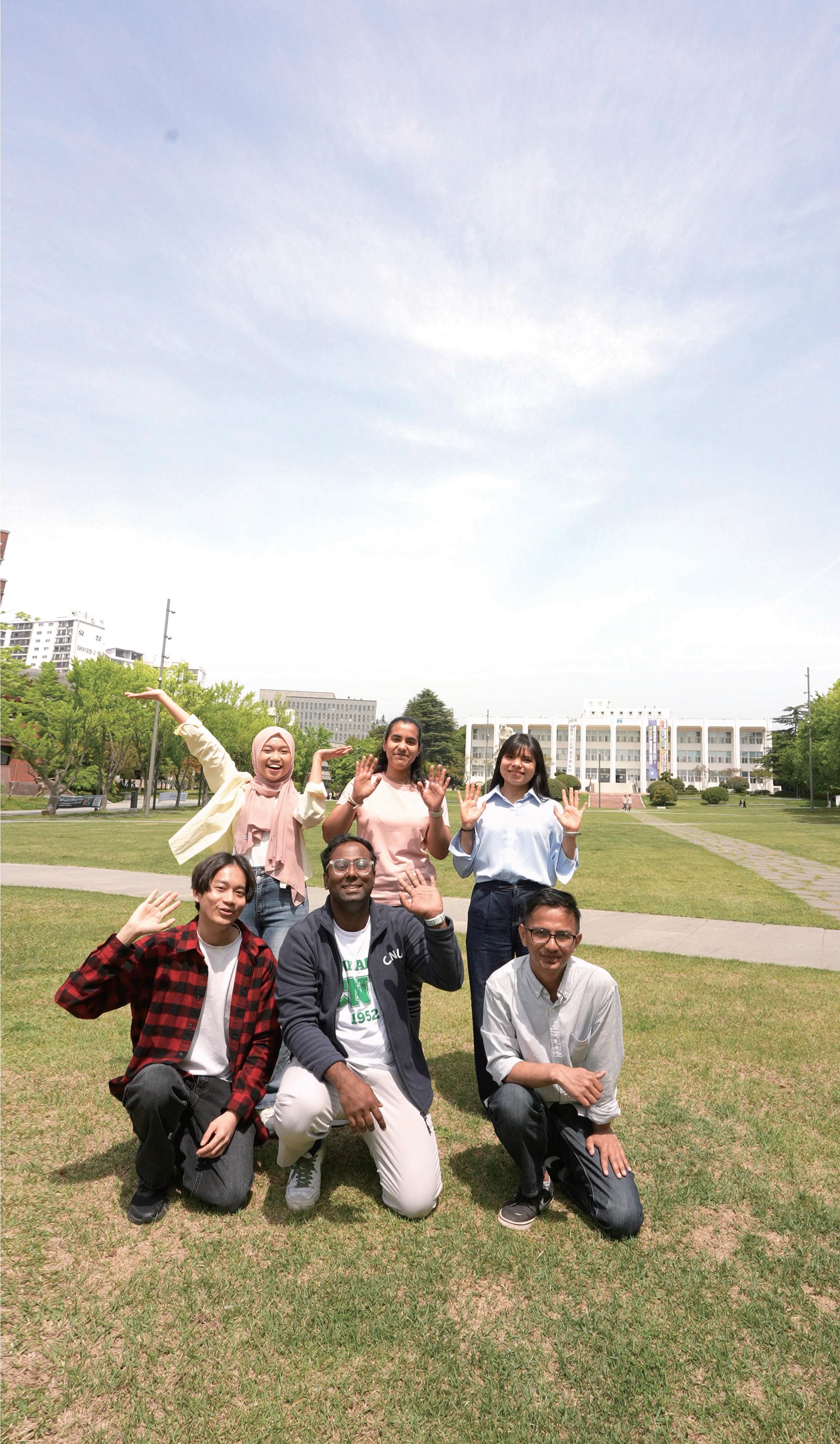
The Gwangju News is the first English monthly magazine for the general public in Korea, first published in 2001. Each monthly issue covers local and regional issues, with a focus on the roles and activities of the international residents and local English-speaking communities.
The Gwangju News is published by the Gwangju International Center: Jungang-ro 196-beon-gil 5 (Geumnam-ro 3-ga), Dong-gu, Gwangju 61475, South Korea
Tel: (+82)-62-226-2733
Fax: (+82)-62-226-2731
Website: www.gwangjunewsgic.com
Email: gwangjunews@gic.or.kr
Registration No 광주광역시 라 00145
ISSN 2093-5315
Registration Date: February 22, 2010
The Gwangju News is co-sponsored by Asian Legal Resource Centre (ALRC) Korea
From the Editor
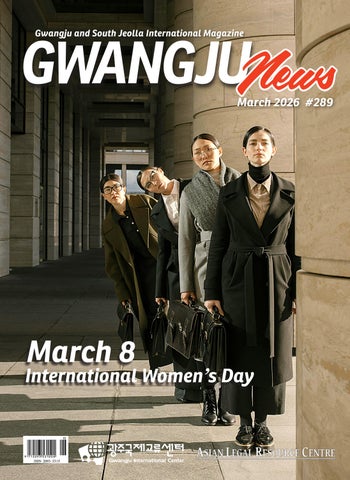
This month’s cover of the Gwangju News celebrates International Women’s Day – March 8. You may wonder why a regional magazine such as ours would mark an occasion that is obviously global in nature. The reasons are many. To begin with, the rapid expansion of IT and the internet has transformed the local into the “glocal,” where the global and the local increasingly intersect. In Gwangju and Jeollanam-do (the local), the number of women from non-Korean backgrounds (the global) is both significant and growing. Even more significant is the glocal makeup of our readership.
A large proportion of our magazine’s writers are also women, and many of them come from international backgrounds. Their voices enrich our pages month after month – contributors from India, Indonesia, China, Vietnam, Algeria, Mexico, and the Philippines, alongside those from Korea. We also have female contributors based in Ukraine, Australia, the Philippines, the U.K., and the U.S. With such a vital and international community of women shaping our publication, we would clearly be remiss not to celebrate International Women’s Day. Men, your time will come in November.
Our feature this issue appropriately focuses on International Women’s Day, usually considered a respectful, courteous observance. But the article points out that the day “was born from protest, labor struggles, and violence against women who dared to demand dignity in a system designed to exploit them.” Accompanying our feature is an article on the young Korean woman most closely associated with the March 1st Movement of 1919 – a woman who dared to publicly call for Korean independence from colonial rule, a woman unwavering in that conviction until her death in the oppressor’s prison. That young martyr was Yu Gwan-sun. She was seventeen.
To begin our new Human Rights column, we present an essay declaring that “Freedom Without Responsibility Is Not Democracy.” Upcoming articles in this column will feature World Human Rights Cities Forum speakers among many others.
If you think we have had a cold winter here in Korea, you will feel warm in comparison to the icy cold hardship that the civilians of Ukraine are experiencing due to their neighboring belligerent [see Global Focus].
And there is so much more of interest, including Gwangju’s international sister cities, winter fun in Yeosu and Busan, yellow dust, reviews, more nuclear power, art, sports, essays, kimchi, and an in-depth interview with our publisher/GIC director. Enjoy!
David E. Shaffer Editor-in-Chief Gwangju News
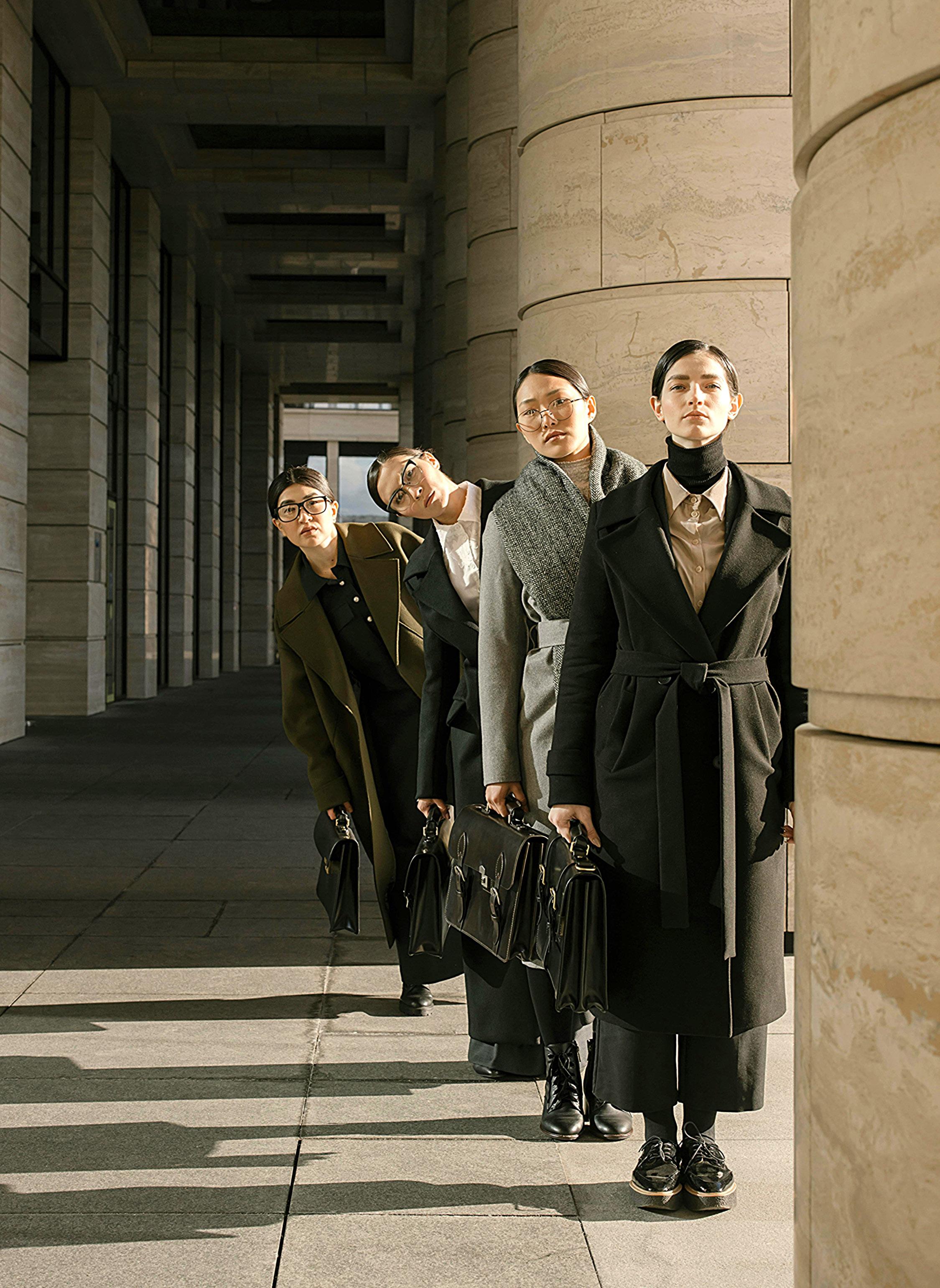
Cover Photo Cottonbro Studio
Gwangju & South Jeolla International Magazine
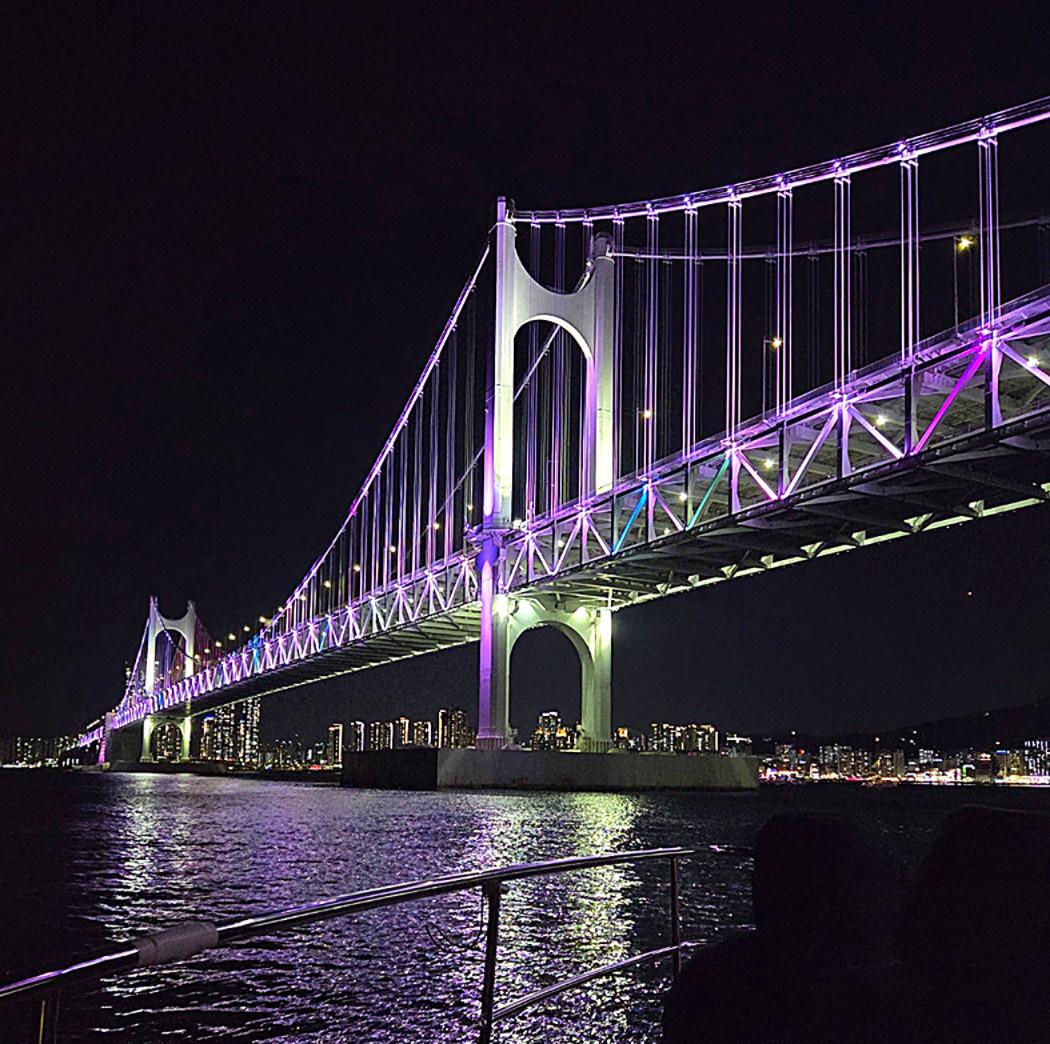
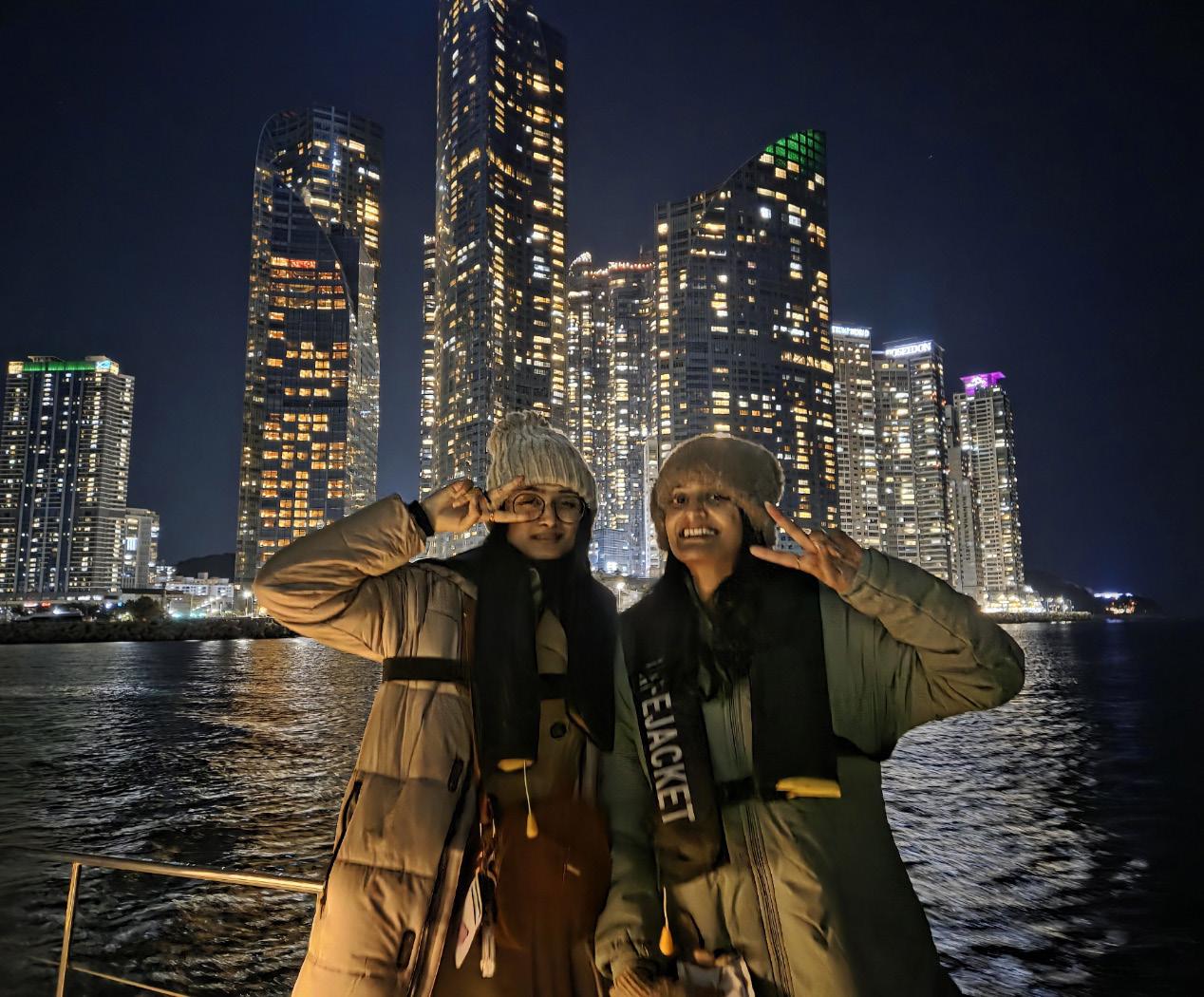
Nighttime Yacht Tour
Night lights shining bright on land, in the sky, above the sea. A cool breeze, a faint smile and a moment of contentment.
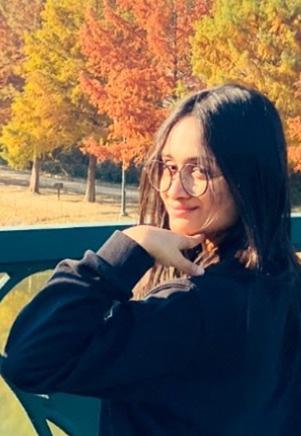
The Photographer
Dhivyaa S. P. is a writer for the Gwangju News. To know more about her and her work, flip through the pages and check out her articles.
Photo: Gwangalli Bridge, Busan, midwinter view.
(Photo of the Month submissions are open to all readers: gwangjunews@gic.or.kr)
CONTENTS March 2026 ISSUE 289
03 From the Editor 04 Photo of the Month 06 Gwangju City News
09 International Women’s Day: Why March 8 Still Matters... And Why It Makes Some People Uncomfortable
HUMAN RIGHTS
12 Freedom Without Responsibility Is Not Democracy: The Shadow of 5.18 Distortion and U.S. Section 230
HISTORY & TRADITION
14 Yu Gwan-sun: The March 1st Movement Female Leader
16 Refuge at Yeoseo Island: A Wartime Recollection
GLOBAL FOCUS
18 Winter in Ukraine: Survival Instead of Celebration
TRAVEL & DISCOVERY
20 Exploring Korea: A Winter Escape to Yeosu – 3D Art, Speed, and Midnight Roads
23 Between Arrival and Goodbye: How Smart Planning Made Our Busan Trip Effortless COMMUNITY
25 Sister Cities: City-to-City Cooperation – Guangzhou and Gwangju
28 Sister Cities: Cities as Global Actors –The Medan-Gwangju Partnership
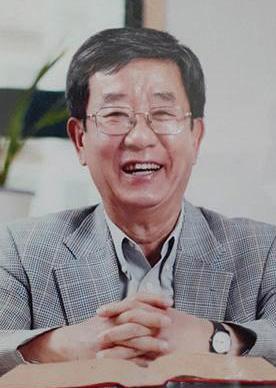
30 Inside the Gwangju News: Publisher and GIC Director – Dr. Shin Gyonggu
TEACHING & LEARNING
36 Unique Alternative Education: Meet Dalkkum Art School
OUR PLANET
38 Yellow Dust in the Age of Climate Change: What the Skies over Gwangju Tell Us
40 The Environment: More Nuclear Power Plants?
SCIENCE & TECHNOLOGY
42 AI and the Future of Digital Browsing: When the Internet Begins to Operate Autonomously
CULTURE & THE ARTS
44 Across Cultures and Canvases: Vincent Mcindoe’s Luminous Vision
48 Movie Review: I Can Speak – A Survivor’s Testimony
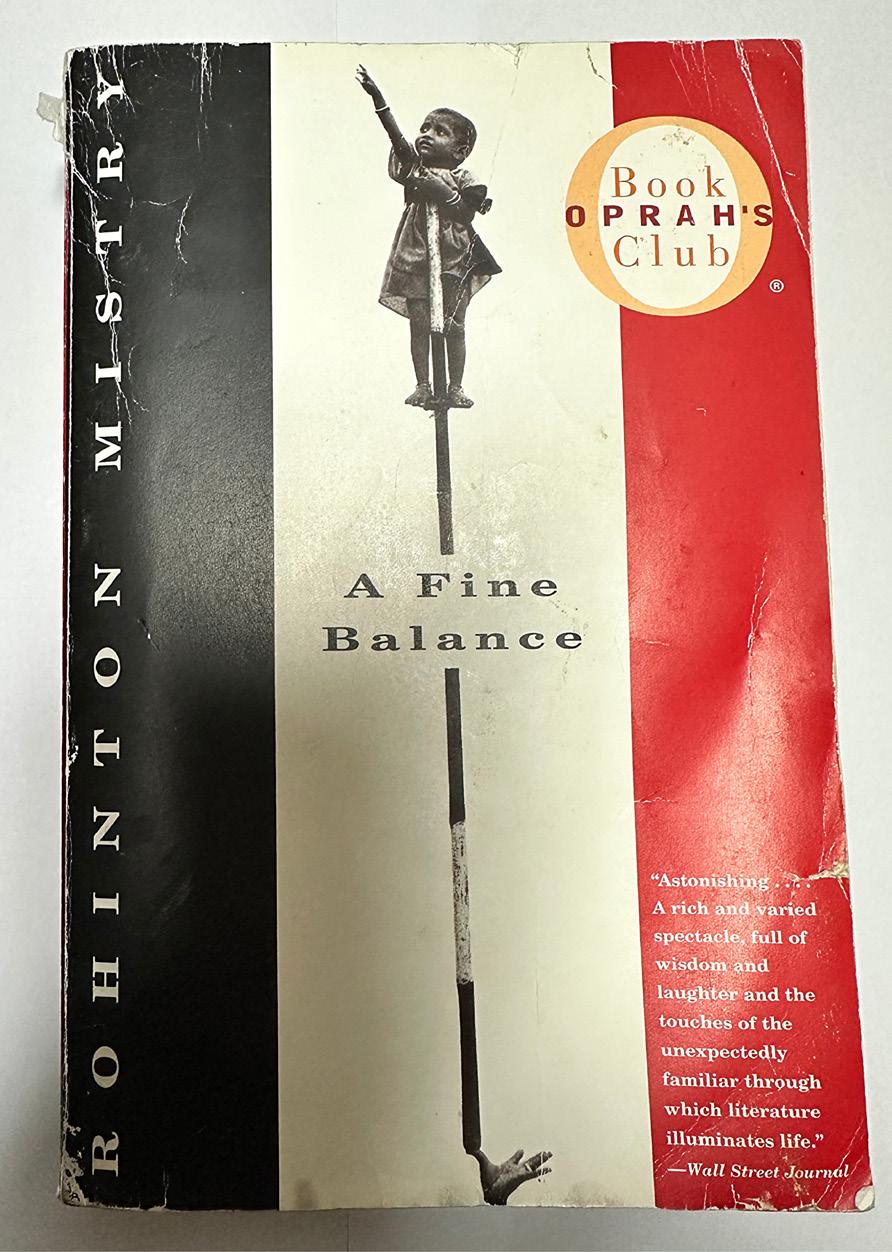
50 Book Review: A Fine Balance
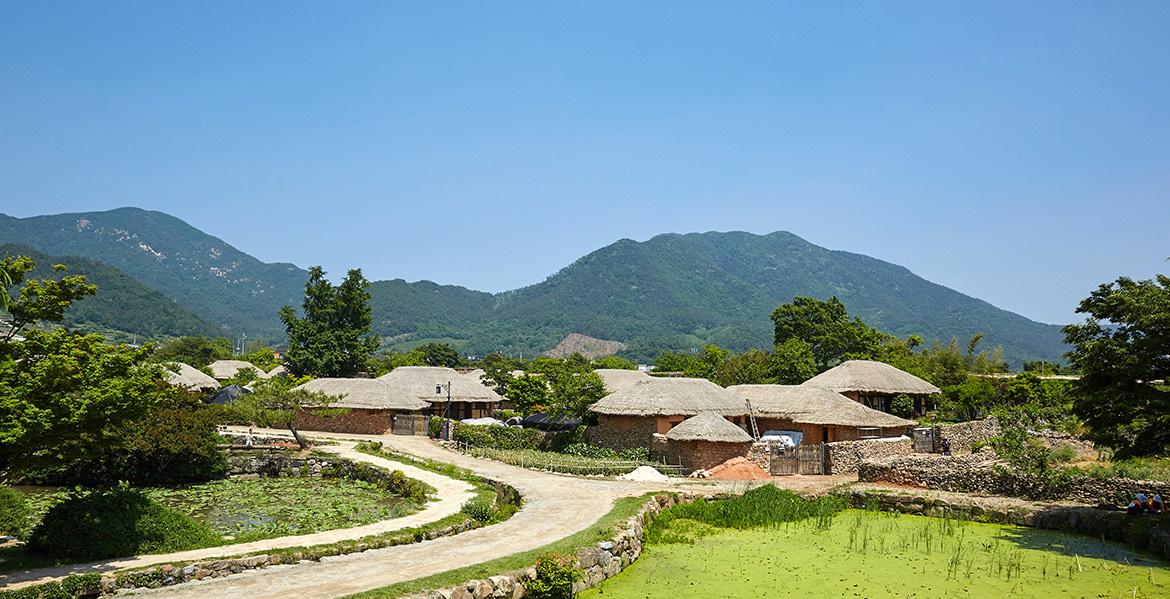
52 Ponderings & Contemplations: Thinking of My Hometown
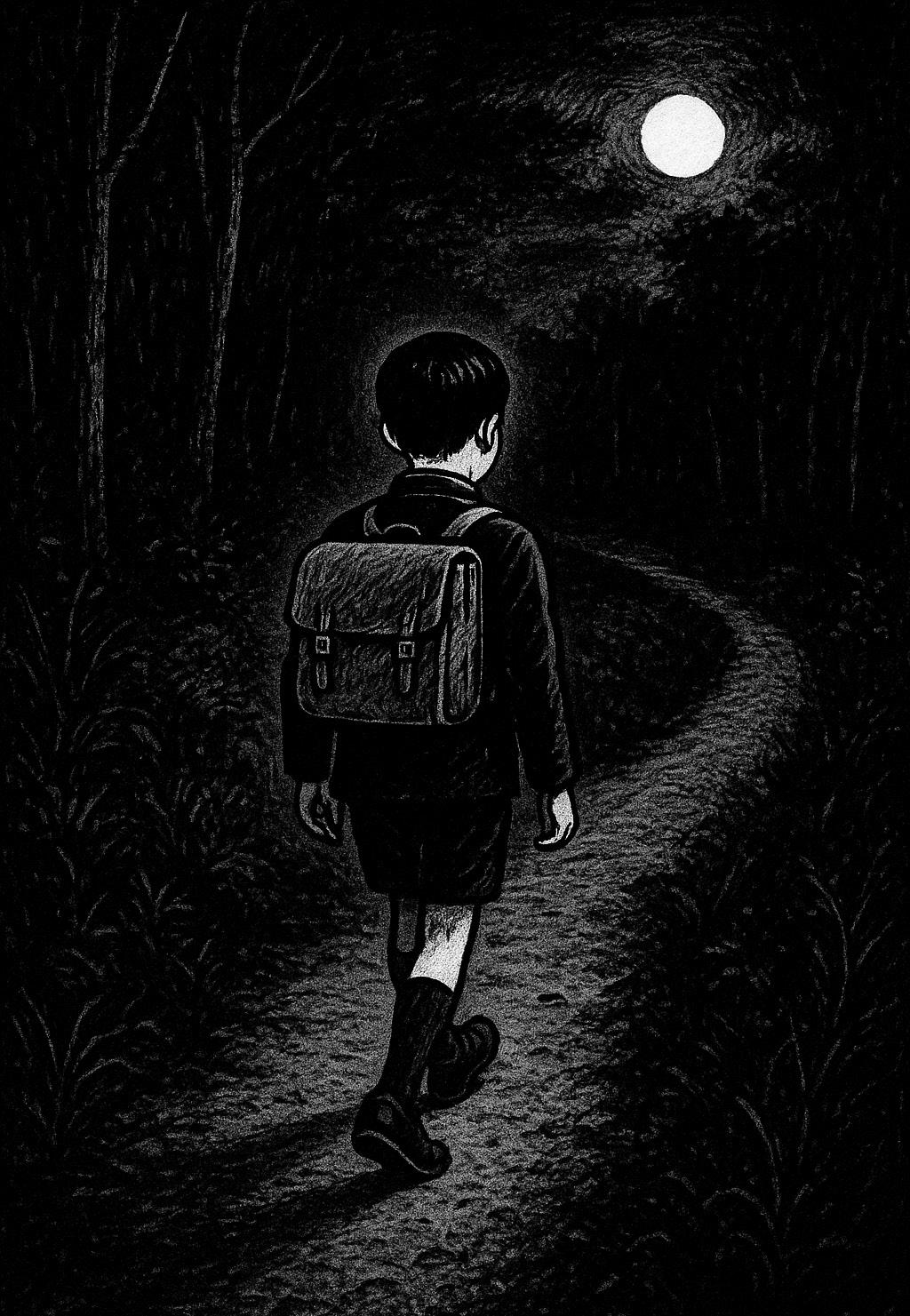
55 Essay: The Keeper of the Scars –Observing Light and Shadows
FOOD & BEVERAGE
57 Kimchi: Food, Art Form, Spirit of a Nation
59 D’s Café Column: This March, Let Me Take You to My Favorite Café
SPORTS & ENTERTAINMENT
60 Sports Focus: Na Sung-bum Embraces Defining Season as Kia Tigers Look Ahead to 2026
62 Area Sports Round-Up
64 March Upcoming Events
Gwangju City News
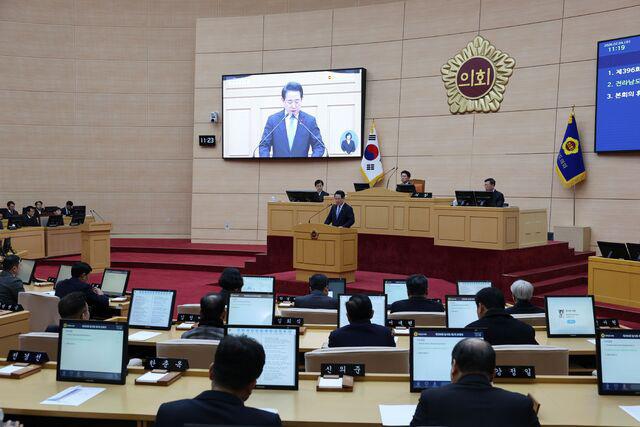
Integrated Jeonnam-Gwangju Special City Launches in July
Administrative Roadmap Finalized
Gwangju Metropolitan City and Jeollanamdo (Jeonnam Province) have officially confirmed the launch of the Jeonnam-Gwangju Integrated Special City on July 1, 2026. This administrative merger is a strategic response to the rapid demographic shift, as Gwangju’s population fell below the 1.4 million mark in late 2025 and more than half of Jeonnam’s districts are now classified as high-risk zones for local extinction. By combining their administrative borders, the new entity will boast a population of approximately 3.16 million and a regional GDP of 150 trillion won (approx. 103.3 billion USD). This move positions the region as the thirdlargest economic bloc in non-metropolitan South Korea, aimed at securing greater autonomy and national funding to balance the overwhelming growth of the Seoul metropolitan area.
Economic Synergy with a 25 Trillion Won Budget
The economic impact of the merger is most evident in its consolidated fiscal power. When the 7.7-trillion-won budget of Gwangju is combined with Jeonnam’s 12.7-trillion-won budget, and bolstered by the central government’s recently pledged 5-trillion-won annual integration
incentive, the special city’s total annual budget is expected to reach 25 trillion won. This capital will be concentrated on fostering a mega industrial cluster that links Gwangju’s expertise in artificial intelligence and future mobility with Jeonnam’s infrastructure in energy, aerospace, and maritime tourism. Key projects, such as the expansion of Energy Valley centered in Naju and the Gwangju–Naju wide-area railway, are expected to see accelerated execution under the unified administrative framework.
Integrated Special City Roadmap in Full Motion
Following the passage of the Special Act in February, the first half of the year is to be dedicated to rapid operational execution. In March, the Joint Integration Preparation Group officially launches to establish the foundational administrative framework, including organizational structures, personnel systems, and the final location of the integrated headquarters. While the ensuing presidential decrees and ordinances are being finalized, the path is clear for the June 3rd inaugural election. Voters will elect the first special mayor and the unified local assembly, leading to the historic official launch of the new administrative system on July 1, 2026.
Regional Strategy Divergence Within Honam: Jeonnam and Jeonbuk
While Gwangju and Jeollanam-do (Jeonnam) move toward full administrative integration, Jeollabuk-do (Jeonbuk) continues its independent path as a special autonomous province. This dual-track dynamic within the Honam region creates two distinct models: a 3.2 million-strong integrated special city here in the south and a specialized autonomous
The Jeonnam Provincial Council passes the integrated special city bill. (Jeonnam Provincial Council)
Gwangju City News
province of 1.7 million people to the north. Jeonbuk has strategically focused on securing practical benefits by communicating directly with the central government to obtain regulatory exceptions tailored to its specific industrial needs.
(Source:
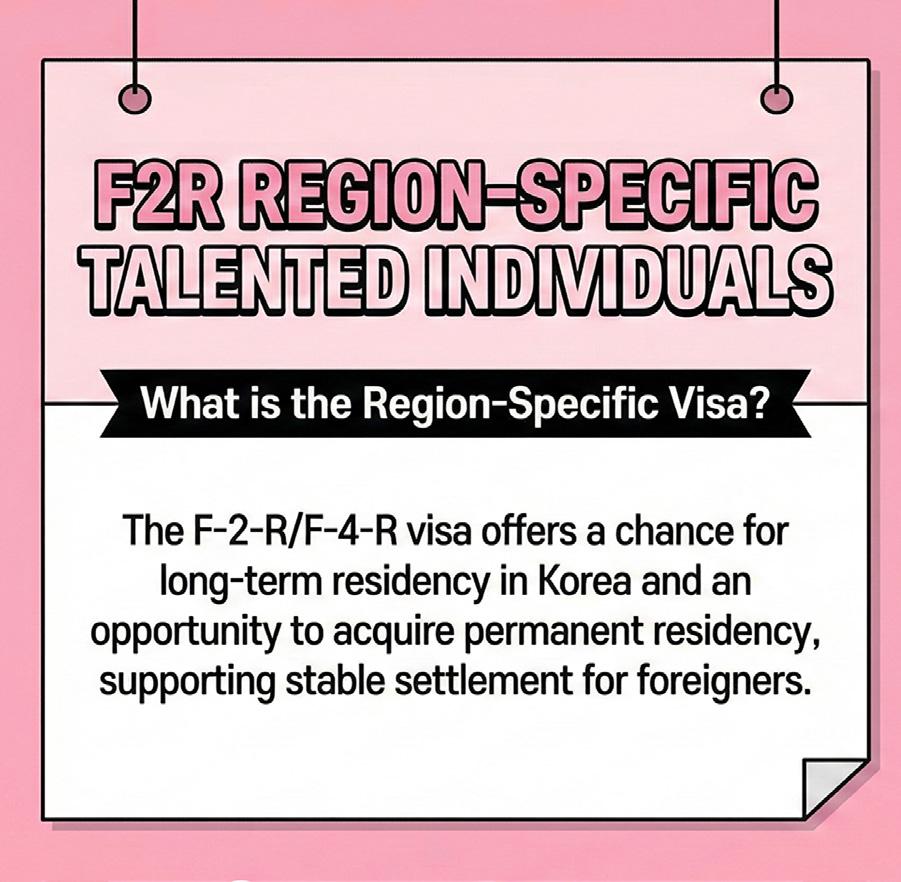
A primary example of Jeonbuk’s proactive strategy is the early adoption of the Regional Specialized Visa (F-2-R) initiative. By focusing on workforce supply for major industrial hubs like the Saemangeum secondary battery cluster and agri-bio sectors, Jeonbuk has already begun to see tangible benefits.
In contrast to Jeonbuk’s established operations, the Jeonnam-Gwangju Integrated Special City is currently laying the legal groundwork to secure specialized visa services. The recently proposed special act seeks to establish a framework for a Global Open Campus vision, designed to support high-tech and essential regional sectors, including AI, future mobility, and smart rural development. If the proposed act passes the legislative process, the integrated special city is highly likely to secure unique administrative exceptions for visa management.
Expansion of Gwangju’s Regional Visa Program
TheGwangju Metropolitan Government is taking a decisive step toward addressing labor shortages in its core automotive industry by quadrupling the recruitment quota for its regional visa pilot program. This significant expansion, recently highlighted as a landmark achievement during the G-RISE (Sustainable Regional University Innovation System) Festa performance sharing meeting, follows an official approval from the Ministry of Justice to increase the international student capacity from 60 to 240. The move signals a transition toward a regionally led innovation model where the city of Gwangju and local universities collaborate to cultivate a global workforce tailored for Gwangju’s hightech ecosystem.
The expansion is grounded in the high performance of the initial pilot program, which was a central theme at the G-RISE Festa. Last year’s pilot at Seoyoung University achieved a remarkable 95% fulfillment rate, successfully attracting 57 students from nations such as Uzbekistan, Vietnam, Bangladesh, China, and Sri Lanka. Based on this proven track record, the Ministry of Justice approved the participation of two additional institutions – Donggang University and Chosun College of Science and Technology – joining Seoyoung University to offer specialized tracks in AI-integrated future automotive technology, mobility, and mechanical convergence.
One of the most impactful policy changes presented at the performance sharing session is the drastic reduction of the financial guarantee (bank balance certificate) requirement for the D-2 student visa. To lower the entry barrier for talented global youth, the required amount has been halved from 16 million won to 8 million won. This strategic financial easing is complemented by mandatory scholarships covering at least 30
Jeonnam Province. Infographic: GN with Gemini.)
Gwangju City News
percent of tuition and the provision of stable on-campus housing, ensuring that international students can focus on their technical training without excessive financial strain.
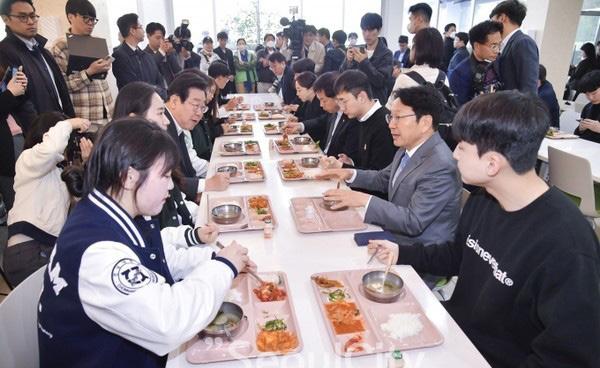
From Warm Breakfast to Safety Net: Gwangju Expands “Simply Given” Initiative
Gwangju Metropolitan City is broadening its social welfare horizons by integrating local success with visionary national policies. The journey toward ensuring basic food rights for all began with Mayor Kang Gijung’s 1,000 Won Breakfast program, which has provided a dignified and affordable start to the day for university students. Building on this local foundation, Gwangju is now actively implementing and expanding the “Simply Given” (Geunyang Deurim) food support policy, an initiative originally conceptualized and championed by President Lee Jae-myung. This policy reflects a shared commitment to a welfare state where no one suffers from hunger due to bureaucratic barriers.
As the city continues to strengthen its GwangjuStyle Integrated Care system, the expansion of the Simply Given program serves as a vital safety net against economic instability. The city plans to increase the number of these accessible centers across all districts by the first half of 2026. This expansion ensures that help will always be within reach.
The Simply Given program operates on a noquestions-asked basis to provide immediate relief to any resident facing a sudden crisis. At designated community centers and food markets, individuals can receive up to 20,000 won worth of essential items per visit. The selection includes daily necessities and staples such as ramen, instant rice, and canned goods, allowing those in need to maintain their health and dignity without the immediate burden of proving their financial status. This “support first, administration later” approach ensures that help reaches the most vulnerable people as quickly as possible.
Beyond providing immediate sustenance, the program is designed to be a bridge to long-term stability and self-sufficiency. While the first visit is focused on emergency food assistance, the second visit introduces a comprehensive counseling system.
Currently, the government is conducting a fivemonth pilot program that runs from December 2025 through April 2026 to refine the delivery system and assess local needs. Following this initial phase, the Simply Given initiative will officially transition into a full-scale, regular project starting in May 2026. As part of this rollout, Gwangju City has committed to establishing 25 dedicated corners across its five districts by the first half of 2026. As of March 2026, the Simply Given service is provided at selected central hubs in each district, with plans to expand to 25 neighborhood locations throughout Gwangju by the first half of this year.
Compiled by Amy Park.
Amy Park is a program officer for Asian Legal Resource Center (ALRC Korea) based in Gwangju. She helps build the organization’s foundation and supports new efforts in human rights advocacy and resource sharing.
Breakfast with Mayor Kang, 2023. (Gwangju City)
International Women’s Day
Why March 8 Still Matters…
And Why It Makes Some People Uncomfortable
By Luis Andrés
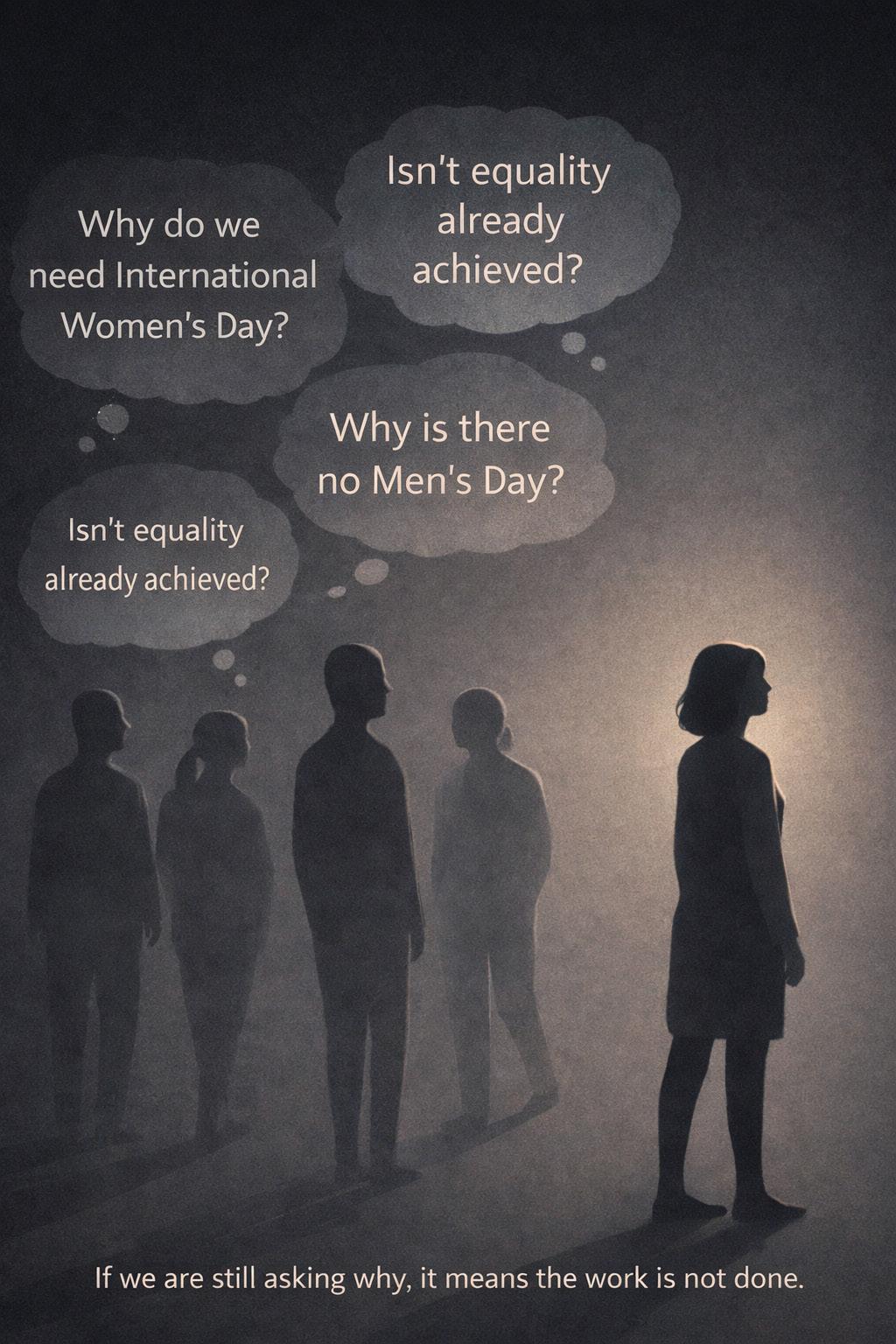
Every year on March 8, the same questions come back: “Why do we need International Women’s Day?” “Why is there no Men’s Day?” “Isn’t equality already achieved?” The fact that these questions are still asked is precisely why International Women’s Day (IWD) continues to matter.
Officially recognized by the United Nations in 1977, IWD is often treated today as a symbolic date. Women receive a bouquet of flowers, a social media post, a polite celebration. But its origins are anything but polite. International Women’s
Day was born from protest, labor struggles, and violence against women who dared to demand dignity in a system designed to exploit them.
At the beginning of the 20th century, women entered the workforce under brutal conditions: low wages, long hours, and no protections. In 1911, the Triangle Shirtwaist Factory fire in New York killed 146 workers, mostly young immigrant women, who were locked inside their workplace to prevent “unauthorized breaks.” Some died from the flames. Others jumped from windows
(GN with OpenAI)
(GN with OpenAI)
in desperation. Their deaths became a turning point, fueling international labor and women’s movements across Europe and the Americas.
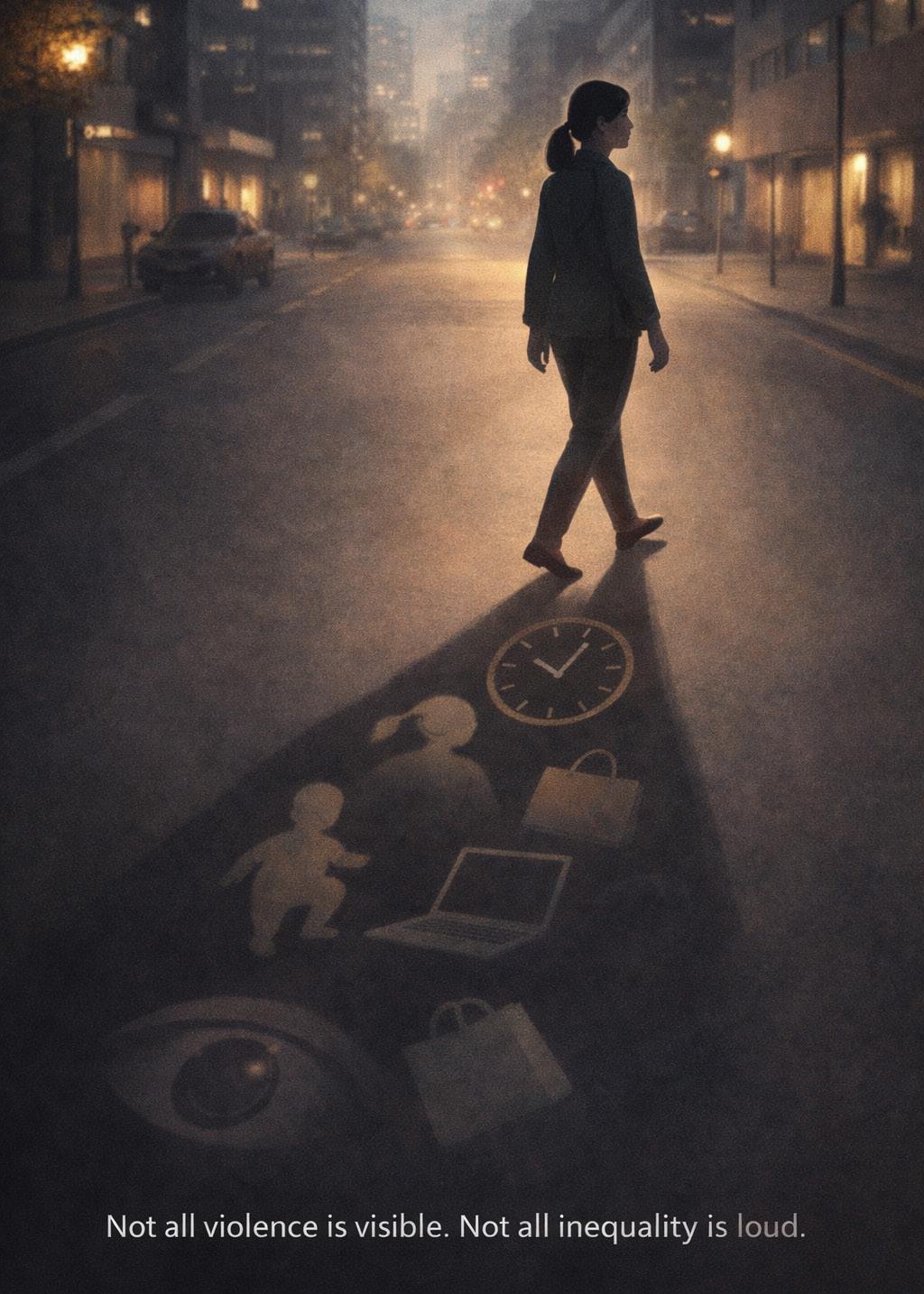
This is the part we often forget: IWD exists because women were dying and continue to die or otherwise struggle. In fact, violence against women does not always appear as a tragedy on the evening news. More often, it exists quietly: in unpaid care work, in fear while commuting, in careers stalled by motherhood penalties, in silence chosen for survival. Gender violence is not only about death; it is about limitation. It is about lives lived smaller than they could be.
Over time, the struggle has expanded. Women have fought for the right to vote, for maternity leave, for equal pay, for childcare, and for protection from sexual and domestic violence. These should not be distant ideals or political slogans, but real material conditions for women everywhere. They shape whether women can live safely, freely, and with autonomy.
Around the world, March 8 looks different depending on local realities. In Latin America, for example, IWD has become deeply connected to protests against femicide. In 2018, women
organized an International Women’s Strike to make visible a brutal reality: On average, eleven women were being killed every day in the region because of their gender. Women stopped working, both paid and unpaid, to show what society would look like without them. Offices closed. Schools slowed down. Homes stopped functioning. The message was clear: Women’s labor sustains the world, and their absence is impossible to ignore.
“International Women’s Day is not about reversing inequality. It is about dismantling it.”
South Korea may not experience gender-based killings on the same scale, but that does not mean it is free from gender violence. On the contrary, the country faces serious challenges that often go unspoken. South Korea has the largest gender pay gap among OECD countries, with women earning around 30 percent less than men for comparable work. Digital sex crimes, including illegal filming and AI-generated sexual deepfakes
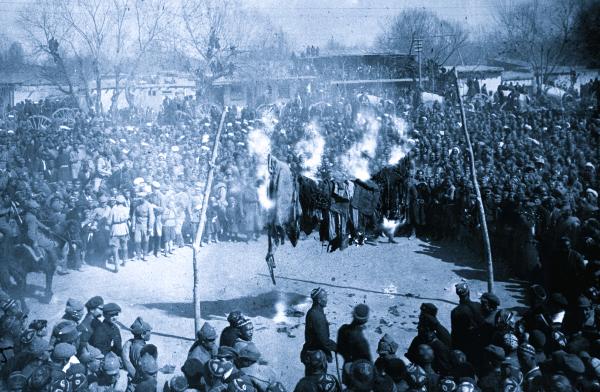
A veil-burning ceremony in Andijan, Uzbekistan, on International Women’s Day in 1927.
of real women, are among the most common forms of violent crime, and their psychological and social consequences are devastating.
What makes this situation even more alarming is the widespread backlash against feminism itself. In South Korea, feminism is frequently portrayed as radical, aggressive, or “anti-men.” This narrative deliberately distorts what feminism actually is: a political struggle against gender-based violence. By framing feminism as dangerous, anti-feminist discourse discourages efforts to address economic injustice, sexual violence, and structural discrimination, often with the support of male-dominated political spaces. And yes, masculinity is not limited to men; women, too, can reproduce violent and exclusionary systems.
So, what about International Men’s Day? Men do suffer from violence, mental health crises, and social pressure, often imposed by other men and by rigid ideas of masculinity. Recognizing this is also important, that is why International Men’s Day exists on November 19 focusing on positive male role models and healthier forms of masculinity. But IWD is not about competing commemorations. It exists because the historical and ongoing burden of gender-based oppression has disproportionately fallen on women – and continues to do so.
Gender justice has also transformed men’s lives in ways that are rarely acknowledged. Paternity leave allows fathers to build emotional bonds once denied to them. Planned parenthood reduces economic and emotional pressure on families. Dual-income households offer stability and partnership rather than dependency. These advances are not threats. They are collective gains.
The relevance of IWD should not be overlooked in Gwangju, either – not only for the global reasons already mentioned but also because of the city’s own history. Gwangju’s democratic legacy is often told through images of resistance and sacrifice, but it is also a history of care, organization, and persistence, roles disproportionately carried by
women. From those who mobilized, healed, and sustained the May 18 movement, to contemporary writers like Han Kang, and to immigrant women sustaining families and communities today, women have been central to the city’s moral and civic fabric.
International Women’s Day is not about reversing inequality. It is about dismantling it. March 8 is not a celebration because the work is done. It is a reminder because it is not. And until gender justice is no longer a demand but a reality, International Women’s Day will remain necessary… uncomfortable questions and all.
cultural anthropology
National University. He advocates for LGBTQ+ rights and gender equality, and explores global affairs through pop culture. He is the founder of Erreizando, a digital magazine. Instagram: @luisin97 / @erreizando
The Author Luis Andrés González is a Mexican GKS scholar and master’s student in
at Chonnam
Poster for Women’s Day, March 8, 1914, demanding voting rights for women. (Karl Maria Stadler, 1888–1943)
Freedom Without Responsibility Is Not Democracy
The Shadow of 5.18 Distortion and U.S. Section 230
The United States has long championed freedom of expression as a core value of democracy – a principle that deserves profound respect. However, according to a newspaper report (The Hankyoreh, January 1, 2026), the U.S. government has publicly voiced “significant concerns” regarding South Korea’s moves to strengthen online regulations, stating they could “undermine freedom of expression and disadvantage U.S.-based digital platform companies.”
At first glance, this stance of defending free speech appears principled and legitimate. Yet, if such an attitude relies solely on “market forces and autonomy” while ignoring the reality of systematic historical distortion and hate speech proliferating across digital platforms, it is less a defense of freedom and more a deferral of responsibility.
The gravity of this reality was confirmed through data at a recent National Assembly forum. On
November 5, 2025, the Citizens’ Coalition for Democratic Media and the May 18 Memorial Foundation held a session titled “Results of 5.18 Media Monitoring and Discussion.” The findings revealed that expressions distorting or disparaging the May 18 movement are spreading through portal news comments in a repetitive and organized manner. Reported under the headline “Hate Comments Against 5.18 Peaked During Yoon Suk Yeol’s December 3 Insurrection,” the news highlighted that a significant number of distorting comments bypassed automated filters. Consequently, the burden of monitoring and taking action fell excessively on the shoulders of reporting citizens (Ohmynews, November 5, 2025).
Algorithms prioritize anger and provocative content, while platforms maintain their traffic and profits under a guise of neutrality. In this structure, freedom of expression no longer serves as a shield for the vulnerable; instead, it functions as a license to disseminate falsehoods and hatred.
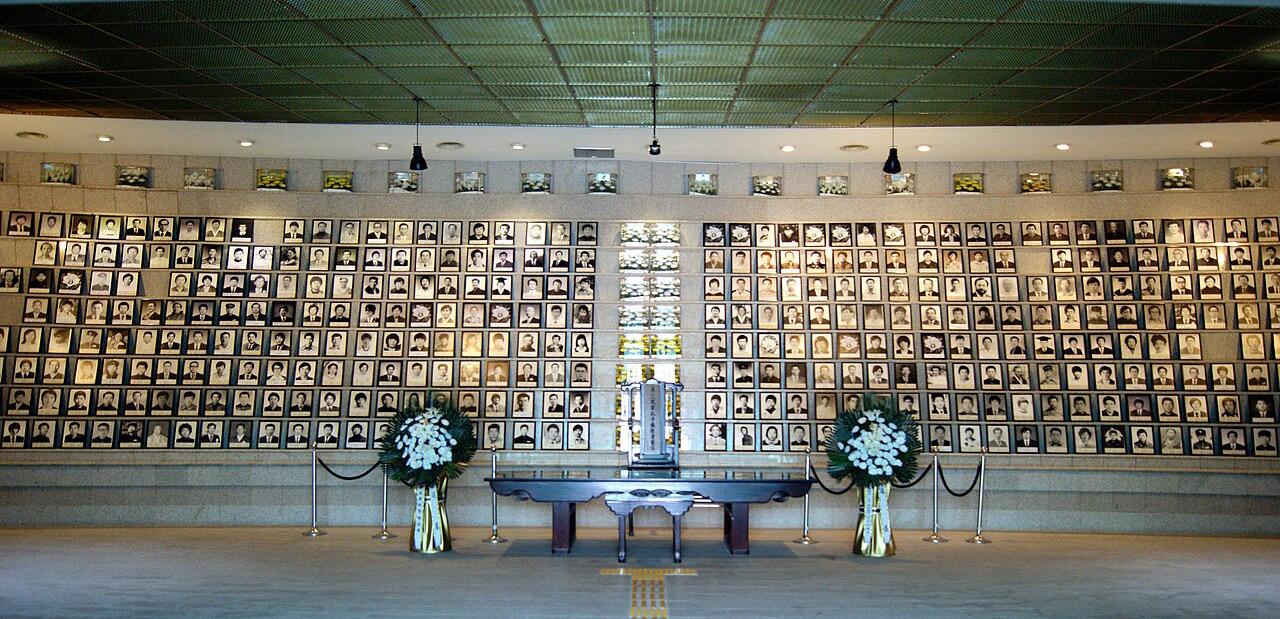
Memorial Hall in the May 18th National Cemetery where Gwangju Uprising victims' bodies were buried. (Schlarpi, CC BY-SA 3.0)
At this juncture, the implications of Section 230 are decisive. A key provision of the U.S. Communications Decency Act of 1996, Section 230 stipulates that online platforms should not be treated as the “publisher” or “speaker” of user-generated content (47 U.S.C. §230). This provision was introduced in the early days of the internet to protect emerging industries from excessive legal liability. Today, however, the internet industry has fully matured. For the now-colossal platform corporations, such legal safeguards grant an excessive concentration of power, leading to numerous adverse effects.
The problem lies in the fact that this immunity under Section 230 remains almost entirely intact today, applied broadly even to giant platforms that actively amplify content through recommendation, ranking, and re-exposure algorithms. Platforms are no longer neutral bulletin boards. By deciding what is visible and what is buried, they have become a pillar of public power that reshapes public opinion and collective memory.
Nevertheless, Section 230 continues to treat them as “neutral intermediaries,” maintaining a high threshold for accountability. As a result, victims and bereaved families of state violence, such as those of the May 18 movement, are left virtually defenseless against repeated distortion, mockery, and secondary victimization in digital spaces.
Crucially, May 18 is not a matter of mere opinion or interpretation. It is an established historical fact, solidified through legislation, investigation, and judicial rulings; it is the very foundation of South Korean democracy. To package its denial as “controversial speech” and leave it unaddressed is not an expansion of freedom, but an erosion of democracy. Data has already proven that relying on self-regulation is a failed experiment.
The debate surrounding Section 230 is often oversimplified as a conflict between censorship and freedom. However, what is required in addressing the distortion of May 18 is not
prior censorship. Rather, it is the minimum “duty of care”: accountability for algorithmic amplification, deterrents against repetitive harm, warnings, exposure limits, and swift remedies for victims. This is not about prohibiting expression; it is about risk management to protect democracy.
Freedom becomes a strength for democracy only when it stands alongside responsibility. Recognizing the public nature of platforms and readjusting the scope of immunity in areas where historical denial and collective human rights violations occur is not censorship – it is a prerequisite for maintaining democracy. The discourse in South Korean society is already pointing in this direction.
What is needed now is neither silence nor unlimited immunity. Freedom accompanied by responsibility – That is the minimum condition for democracy.
References
1. The Hankyoreh. (2026, January 1). “US voices ‘significant concerns’ about new Korean regulations on digital platforms.” This article reports on the U.S. government’s official stance regarding South Korea’s digital platform regulations. https://english.hani.co.kr/arti/english_ edition/e_international/1237781.html
2. Ohmynews. (2025, November 11). “Results of 5.18 Media Monitoring and Discussion.” National Assembly Forum, co-hosted by the Citizens’ Coalition for Democratic Media and the May 18 Memorial Foundation. The data presented here highlights the organized spread of hate speech and distortion on portal news platforms. https:// news.nate.com/view/20251105n35950
3. 47 U.S.C. § 230. Section 230 of the Communications Decency Act of 1996. This U.S. federal law provides immunity to online platforms from liability for content posted by third-party users. https://www.law.cornell. edu/uscode/text/47/230
The Author
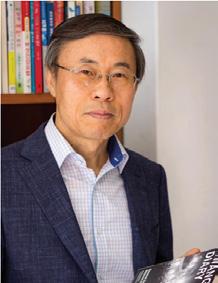
Jay Lee, director of ALRC Korea, is a Gwangju Uprising survivor and co-author of the UNESCO-listed Gwangju Diary For 46 years, he has documented the truth as a researcher and activist to advance democratic values.
Yu Gwan-sun
The March 1st Movement Female Leader
By Luis Andrés
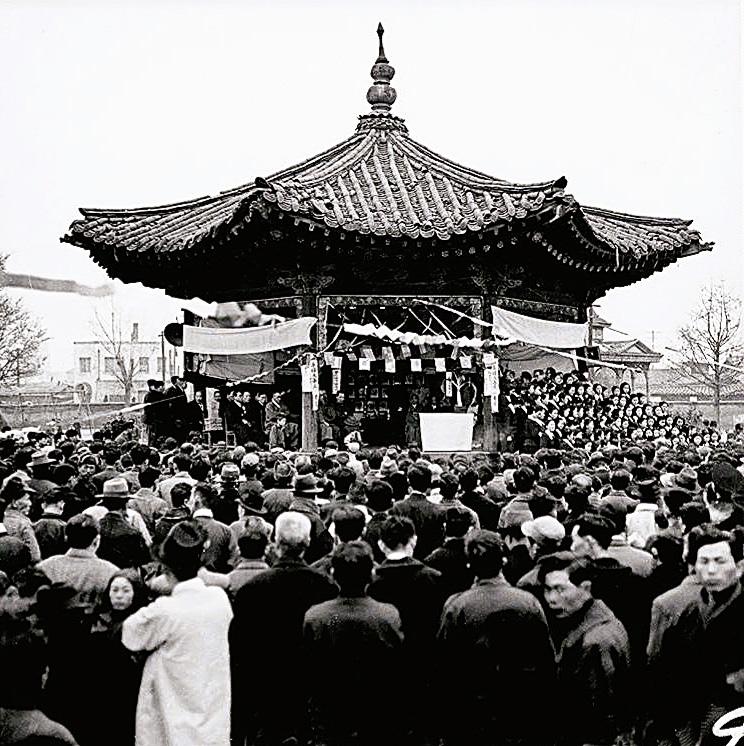
March 1 marks one of the most significant national holidays in South Korea. Known as Samil-jeol, it commemorates the March 1st Movement of 1919: a nationwide, civilian-led uprising that challenged Japanese colonial rule through mass demonstrations, petitions, and a bold declaration of independence.
For international readers, it may resemble other anti-colonial movements of the early twentieth century. Yet what makes March 1st especially powerful is not only its political impact but its moral foundation: a push for liberation voiced primarily through non-violent resistance.
As March also hosts International Women’s Day, revisiting Samil-jeol offers a meaningful opportunity to remember that Korea’s independence movement was not led solely by politicians or male intellectuals. It was also carried forward by students, teachers, workers, and young women. Among them, one name continues to resonate across generations: Yu Gwan-sun.
For historical context, it is important to note that the Korean Peninsula was formally annexed by Japan in 1910. What followed was not merely political occupation but an attempt at cultural erasure. Korean language education was restricted, Japanese names and customs were imposed, and economic systems were reorganized to serve the colonial center. Any form of political, cultural, or symbolic dissent was met with severe repression.
At the same time, new political ideas began to circulate among educated Koreans. Influenced by
international discourses on self-determination, democracy, and national sovereignty –particularly those emerging after World War One – Korean intellectuals and students drafted a Declaration of Independence, which was read publicly on March 1, 1919.
The Japanese response was immediate and brutal. Organizers were arrested, publications were banned, and protests were violently suppressed. However, by then, the flame had irreversibly been
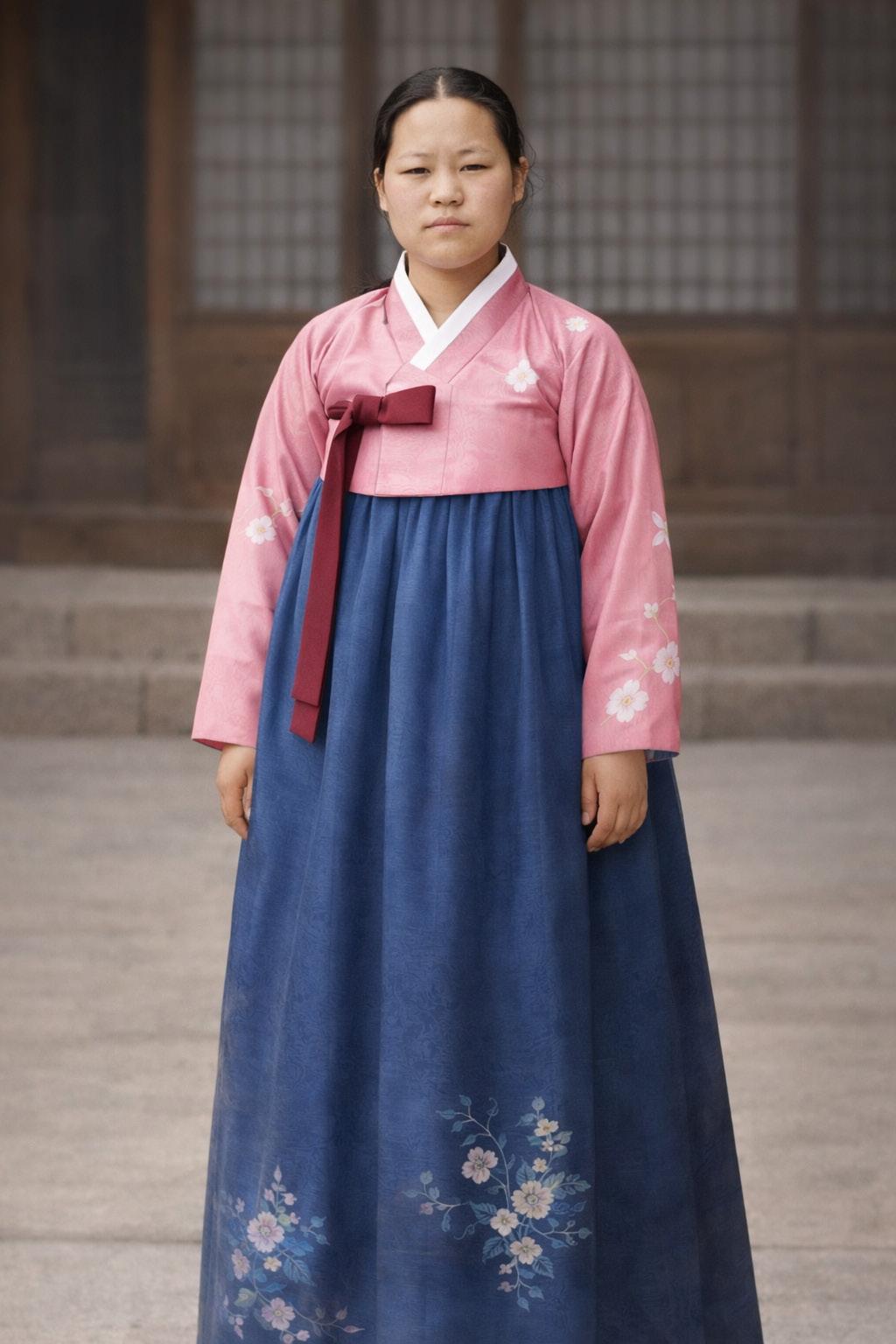
Yu Gwan-sun in hanbok. (GN with OpenAI)
lit. The independence movement had spread beyond elites and into the streets, markets, and villages across the peninsula.
After the public reading of the Declaration of Independence and the violent crackdown on protests in Seoul, Yu Gwan-sun returned to her hometown. She was only sixteen years old, a student at Ewha Womans University (then Ewha Hakdang). Yet, despite her young age, she continued to disseminate the ideas of selfdetermination and democracy by publicly reading the Declaration of Independence and organizing local resistance.
She played a central role in what is now known as the Aunae Market demonstration, which was met with severe violence. Dozens were killed, including Yu’s own parents.
Yu Gwan-sun was arrested and subjected to repeated torture. Colonial authorities sought to force her to renounce her beliefs and betray the independence movement. She refused. She refused to apologize. She refused to be silenced. She died in prison in 1920, at the age of seventeen.
Yu Gwan-sun’s story is, on one hand, unbearably tragic. On the other, in Korea, her legacy is not framed through victimhood alone. She is
remembered as a symbol of agency and moral courage. She is remembered as a young woman who understood that resistance does not require physical power, only clarity of conviction.
Remembering Yu Gwan-sun during March should not be a mere coincidence linking Korean history with International Women’s Day. It should be an act of continued reflection and responsibility. Her life stands at the intersection of struggles that remain deeply relevant today: colonial domination, gendered expectations, youth activism, and the cost of speaking out.
In a global context where women’s political participation remains uneven, and where protest is often criminalized or dismissed, Yu’s story reminds us that history is shaped not only by leaders, but by those who refuse to accept injustice as normal.
March 1 is often described as a foundation stone of modern Korean democracy. International Women’s Day, meanwhile, asks us to reflect on who is remembered and how. Placing Yu Gwansun at the center of this conversation is not symbolic coincidence; it is historical honesty.
Unfortunately, Yu Gwan-sun did not live to see liberation. But her refusal to submit became part of the moral groundwork that made it possible. And that, perhaps, is the quiet power of March: remembering that freedom is often first imagined and defended by those who have the least to lose, except their silence.
The Author
Luis Andrés González is a Mexican GKS scholar and master’s student in cultural anthropology at Chonnam National University. He advocates for LGBTQ+ rights and gender equality, and explores global affairs through pop culture. He is the founder of Erreizando, a digital magazine. Instagram: @luisin97 / @erreizando
The 35th anniversary of Samil-jeol in Tapgol Park, Seoul, 1954.
Refuge at Yeoseo Island A Wartime Recollection
By Young B. Choi
Many years have passed. Yet the stories my parents have told me about their wartime flight during the Korean War remain vivid in my mind, like scenes from an old film that refuse to fade. Time has softened some details, but the fear, desperation, and miraculous moments of survival are etched indelibly into memory. Drawing upon these fragments, I attempt here to record the days when my parents’ lives – and the fate of our family – hung in the balance.
As news spread that the North Korean People’s Army was advancing southward, fear crept into every village. Those who believed the world was about to change turned cruel overnight, committing unspeakable acts against innocent neighbors. Ordinary people, guilty of nothing, clutched their children’s hands and searched desperately for somewhere – anywhere – safe. Nights passed without sleep as villagers strained their ears for the sound of approaching boots.
At that time, my father, Choi Hyung-Oh, was serving as a police officer in Wando, the large island county just off the southern coast of Jeollanam-do. One day, word came through the emergency line that Gwangju had fallen. The enemy was advancing toward the southern shoreline with terrifying speed. There was no time left to hesitate. My father immediately set out to secure a vessel for civilian evacuation, persuading a captain through the night. Then, quietly but urgently, he spread word throughout the village: “Take only what you must. Put the children on board first.”
His voice was firm, but beneath it lay an overwhelming urgency – an urgency to save not only his own family but the entire community. The village descended into chaos. Children cried,
elders hesitated over belongings they could not bear to abandon, families clung to one another in fear of being separated. My mother later recalled that one woman, in her panic, ran barefoot toward the boat with a bundle on her back – only to discover later that she had wrapped a pillow instead of her baby. War strips human reason with merciless efficiency.
Packed tightly aboard the refugee boat, my mother suddenly felt the onset of labor pains. The sea was rough; fear froze the faces around her. Then the captain’s desperate announcement echoed across the deck: “Is there a doctor on board? If there is a doctor on board, please come forward!”
After a moment of silence, a miracle occurred: A man raised his hand. As it turned out, he was a physician and an acquaintance of my mother’s maternal uncle. In that unfamiliar boat, among refugees fleeing death, a new life was born. Amid gunfire and screams, the cry of a newborn rang out – a testament to life’s stubborn insistence on continuing. That baby was my second older sister.
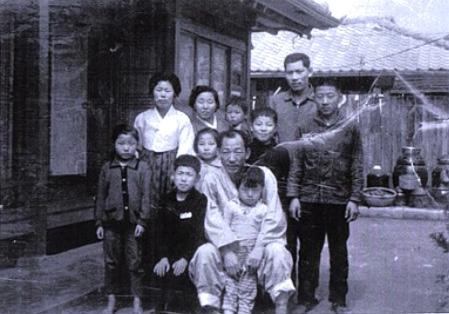
The Choi family. The author is in his father’s arms, 1965. (Kim Jae-Yeol)
For years, our elders would fondly call her “the child born on a refugee boat.”
But the danger was far from over. Suddenly, friendly aircraft appeared overhead and, mistaking the refugee ship for an enemy vessel, opened fire. Bullets tore across the water. In terror, people leaped into the sea. At that moment, my father stood at the bow, waving a flag with all his might to signal that the ship carried civilians. His arms ached as he waved again and again. After several more shots, the attack finally ceased. My mother, clutching her newborn, had not moved from the deck.
“How could you be so fearless?” the captain later asked her.
“How could I jump into the sea while holding my baby?” she replied.
Her words revealed a quiet, unyielding resolve.
After ensuring that the villagers and his family were safely aboard, my father immediately turned back toward Wando Harbor in a small police patrol boat. His superior had already fled to Busan. With only one trusted colleague, my father engaged enemy forces who had entered Wando. Known by the nickname “The Tiger of Mudeung Mountain,” he was a man of imposing stature and fearless resolve. During the firefight, his companion was shot in the lower abdomen and began bleeding profusely. My father pressed his foot firmly against the wound to stop the bleeding while steering their boat to safety. That night, the sea was dark and unforgiving, and the boundary between life and death razor-thin.
After hours at sea, the refugee boat finally reached Yeoseo Island – a tiny, remote island some 40 kilometers southeast of Wando, midway between Wando and Jeju-do, difficult to access, and barely marked on maps. Its isolation became a blessing, saving hundreds of lives. When the refugees arrived, island residents emerged in disbelief.
“What kind of disaster has struck the mainland?” The islanders, who had lived in peace for over 250
years, welcomed the refugees with open hearts. As a woman who had just given birth, my mother received special care. Each day, she was served seaweed soup made with freshly harvested wild seaweed and just-caught cutlassfish. Though the unfamiliar preparation was difficult to eat at first, the warmth and sincerity of the islanders sustained her.
Without proper postpartum care, my mother suffered greatly from complications. Still, when the war situation later improved, the family returned to Wando, where she and my father were reunited in a moment nothing short of miraculous. At that time, we were a family of five. In the years that followed, more children were born until we became a family of ten, with four sons and four daughters. Every one of those lives rests upon the choices made and the miracles granted during that desperate flight.
I have heard that in Wando there stands a monument erected by grateful residents to honor my father’s actions. To my shame as a son, I have yet to visit it. After the war, my father was promoted as Wando’s chief of police, serving once again the very people he had saved. They welcomed him with tears, remembering the daring “Great Escape” he had led.
Such tragedy must never be repeated. Fratricidal war leaves wounds that do not heal with time. As I finally set these memories down in writing, recalling the painful stories my parents once told me, I find myself reflecting deeply on the future and destiny of our nation. Survival may have been a matter of chance, but remembering and recording these stories is the responsibility of those who remain.
The Author
Young B. Choi is a professor of information systems technology at Regent University, USA. Dr. Choi has published 33 books, autobiographical essays, critiques of Gani Choi Rip's classical poetry, a biography of Dosan Ahn Chang-Ho, John Steinbeck book reviews, and writings in the fields of cybersecurity and AI.
Winter in Ukraine Survival Instead of Celebration
By Andriievska Anastasiia
For most people around the world, winter is one of the happiest seasons of the year – a time for holidays, vacations, and celebrating winter traditions with family. Snow and cold usually add a special, cozy atmosphere. The same used to be true for Ukrainians. Christmas, one of the most important holidays, has always been a time when families gathered together for a festive dinner. But once again, Russia has reminded the world of its presence – through missile strikes and drone attacks. This is not only about “ruining the holiday spirit”; it is about constant danger and survival.
This winter, for the first time in many years, Ukraine is experiencing truly severe cold: Temperatures drop to –20ºC or even –30ºC, with constant snowfall. For many countries, this might seem like a perfect winter. For Ukrainians, however, it is a harsh reality. In the 21st century, it is impossible to live without electricity. Almost everything depends on it – cooking, heating homes, communication, internet access, and everyday appliances. At the same time, Russia has repeatedly targeted Ukraine’s critical
infrastructure, especially thermal power plants. As a result, since autumn, scheduled power outages have been introduced across the country. With the beginning of winter, the situation has worsened dramatically. After heavy shelling, many cities and towns are left without electricity for a full day or even longer.
This leads to devastating consequences: no heating – apartment temperatures drop to 10ºC degrees, sometimes even to 5ºC; food spoilage –refrigerators stop working, frozen food thaws and goes bad; cooking becomes impossible because many homes rely entirely on electric stoves. At the same time, due to the lack of heating, pipes burst, causing even more problems for residents.
Food supply has also become a serious challenge. Without electricity, stores struggle to keep products refrigerated. Not all businesses can afford generators, so many shops simply close during outages. As a result, food quality deteriorates, and stores or producers are forced to lower prices and sell at a loss just to prevent their goods from being wasted. Electricity shortages
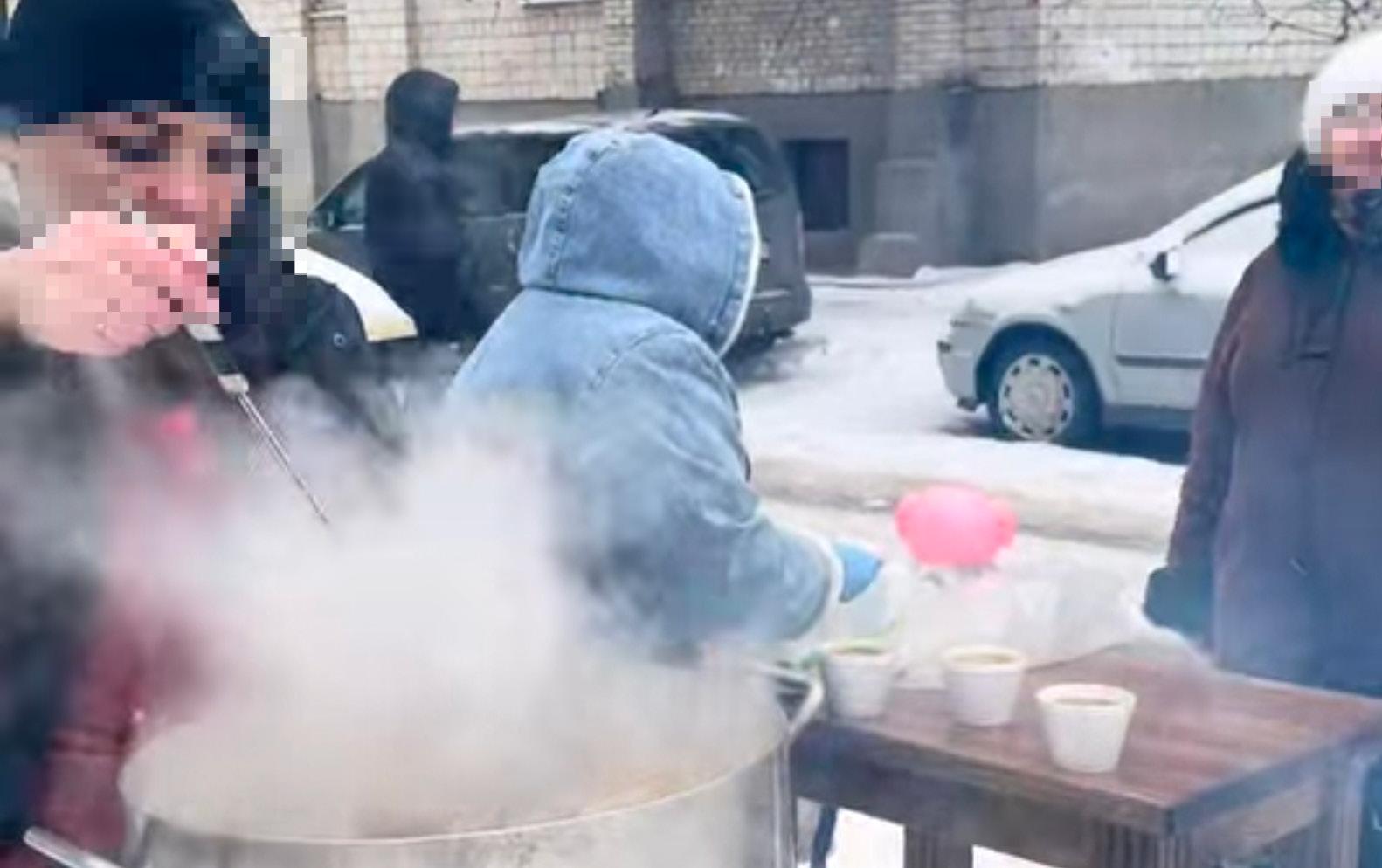
A restaurant in Vinnytsia provides free hot meals during blackouts.
also affect water supply and sewage systems. Water freezes in pipes and cannot reach homes. In some places, Ukrainians light fires near water reservoirs just to thaw the water so people can get at least some access to it.
Schools are switching to remote learning because classrooms cannot be heated to acceptable temperatures. But studying at home is often impossible as well: Children cannot join online lessons due to dead phones, internet connection being poor or non-existent, and homes being freezing cold. The same applies to work: Employees simply cannot work in cold offices.
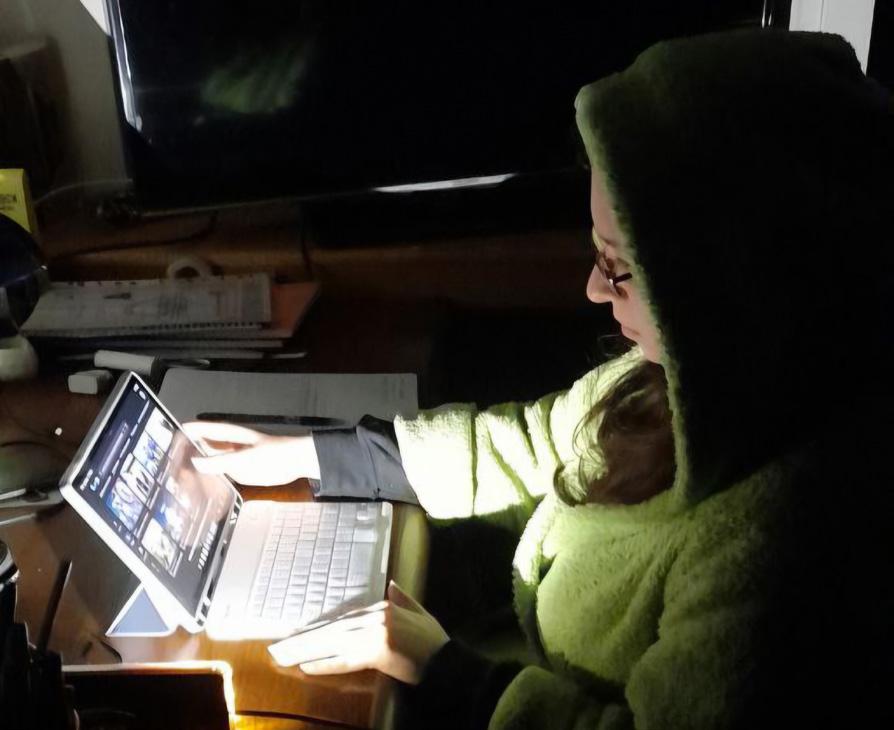
I live in Ukraine myself; this is my homeland, and life is extremely difficult right now. Under more normal circumstances, we used to have electricity for about six hours a day at best. But after recent attacks in January, emergency outages were added on top of scheduled ones, making the situation unpredictable. In my city, we had no electricity for almost two days. The temperature in our apartment dropped to around 10°C. We wear several layers of warm clothing, but even that does not always help. Communication has also become a major challenge. It was difficult not only to text someone but even to make a phone call just to say, “I’m alive and I’m okay.” In frontline regions, the situation with communication is even worse.
Due to power outages, it is almost impossible to go somewhere to eat; only places with generators remain open, and there are very few of them. Reaching them is another challenge, as roads are covered in ice and often impassable. Fortunately, our apartment has gas, which allows us to cook or heat food and make hot tea. This became our only real source of warmth and comfort during this difficult period. My younger brother, who is seven years old, studied remotely for some time. As a family, we searched around the apartment for any signal so he could attend his online classes.
Yet, despite everything, Ukrainians remain brave, compassionate, and united. People take out their thawed food and cook outdoors, sharing meals with neighbors or anyone in need. Some post notices saying they have gas and can help heat food or prepare hot drinks in thermoses. Caring Ukrainians build shelters for stray cats and dogs so they can eat and rest in warmer conditions. Because of the extreme weather and lack of heat and electricity, “Points of Invincibility” are opening across cities and villages. These are places where people can warm up, charge their devices, and rest. They now operate 24/7 so that even during curfew hours, people can escape their freezing homes.
This is one of the most difficult periods of the full-scale war started by Russia. But Ukrainians have always been known for their free spirit and courage. Despite all hardships, Ukrainians will endure again and again, no matter what happens. Even without stable electricity or internet, I am writing this article so that as many people as possible can learn about the reality of life in Ukraine today. Because together, we are united –and unbreakable.
The Author
Andriievska Anastasiia was a Global Korea Scholarship student from Vinnytsia, Ukraine, studying in Korea in 2024 and 2025. Now back home, she is an active Ukrainian and international volunteer.
Photographs courtesy of the author.
Anastasiia, author of this article, works on the article text while living in today’s Ukrainian reality – just like thousands upon thousands of Ukrainians across the country.
A Winter Escape to Yeosu 3D Art, Speed, and Midnight Roads
By Neha Bisht
On my Exploring Korea bucket list, there was always something a little crazy reserved for peak winter, and this Yeosu trip turned out to be exactly that. Like most of our adventures, it began before sunrise – with alarms ringing, sleepy eyes, and the ritual of stuffing bags with homemade food, extra socks, gloves, and layers we hoped would be enough for the cold. Of course, no trip is complete without a small disaster. One of my friends simply refused to wake up. Calls went unanswered, patience ran
thin, and finally we had to send another friend to her room on a rescue mission. We left almost two hours later than planned, but oddly enough, the delay didn’t dampen our spirits. The excitement of a winter adventure has its own stubborn warmth.
As we drove, the weather decided to put on a show. Snow began to fall midway through the journey, turning the roads, trees, and distant mountains into soft shades of white. The cold grew sharper, but the view felt unreal – like driving through
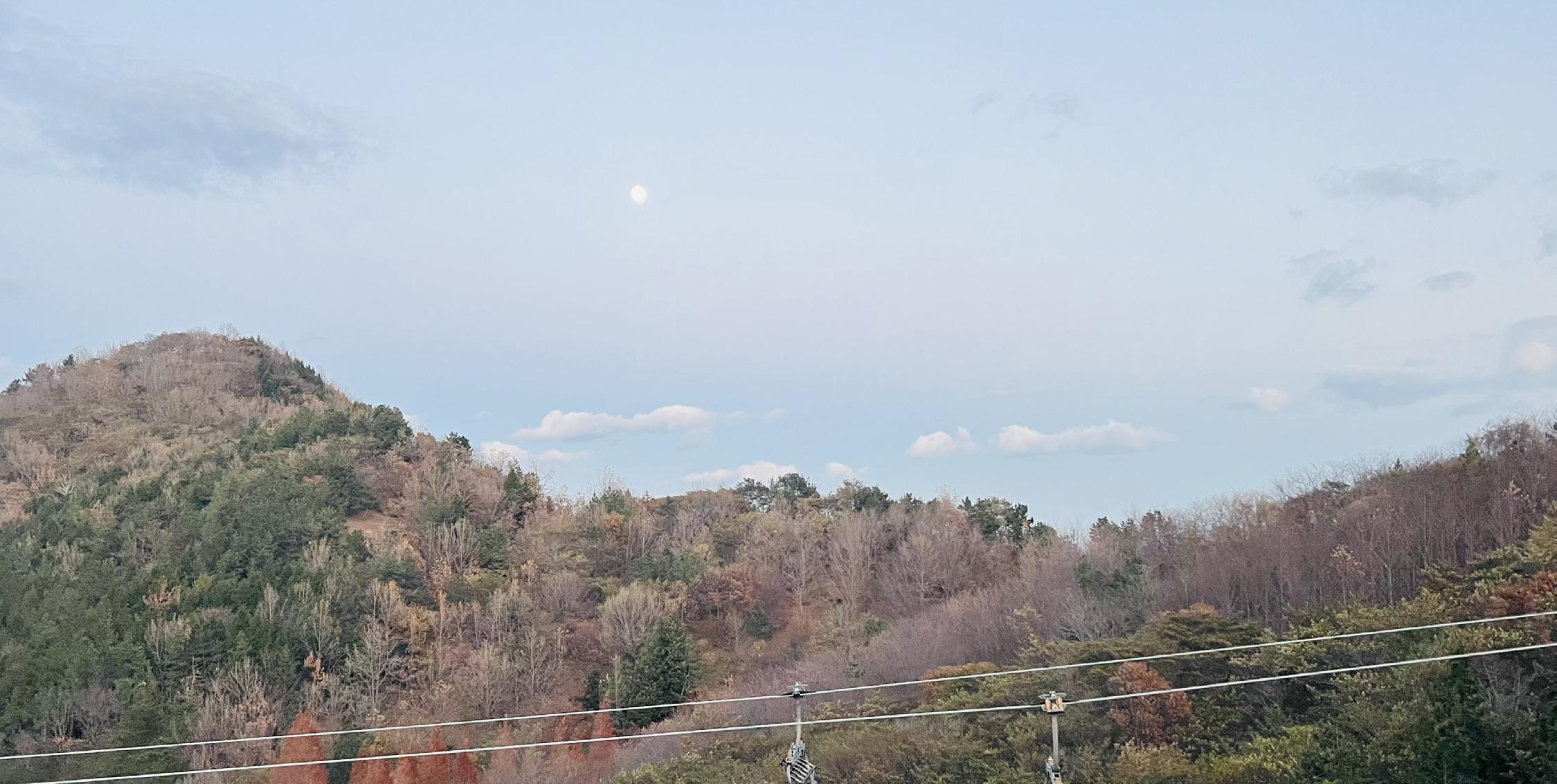
The winter moon hanging quietly over the cold U World sky.
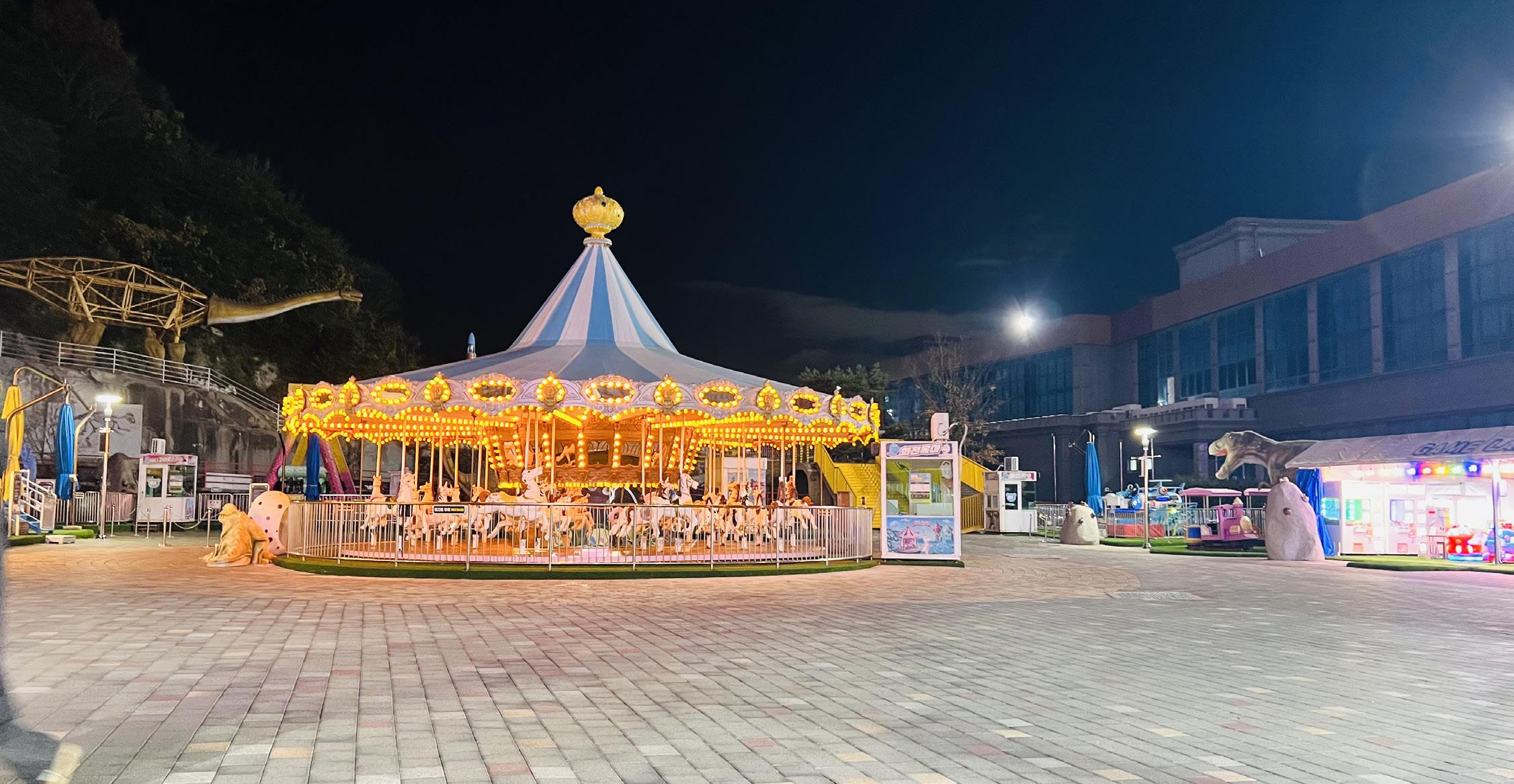
An almost-empty amusement park, glowing softly in the winter night.
a moving postcard. For a while, everything looked heavenly. By the time we reached Yeosu, though, the snow had quietly stopped, and the sun returned, as if winter had decided to give us a brief truce.
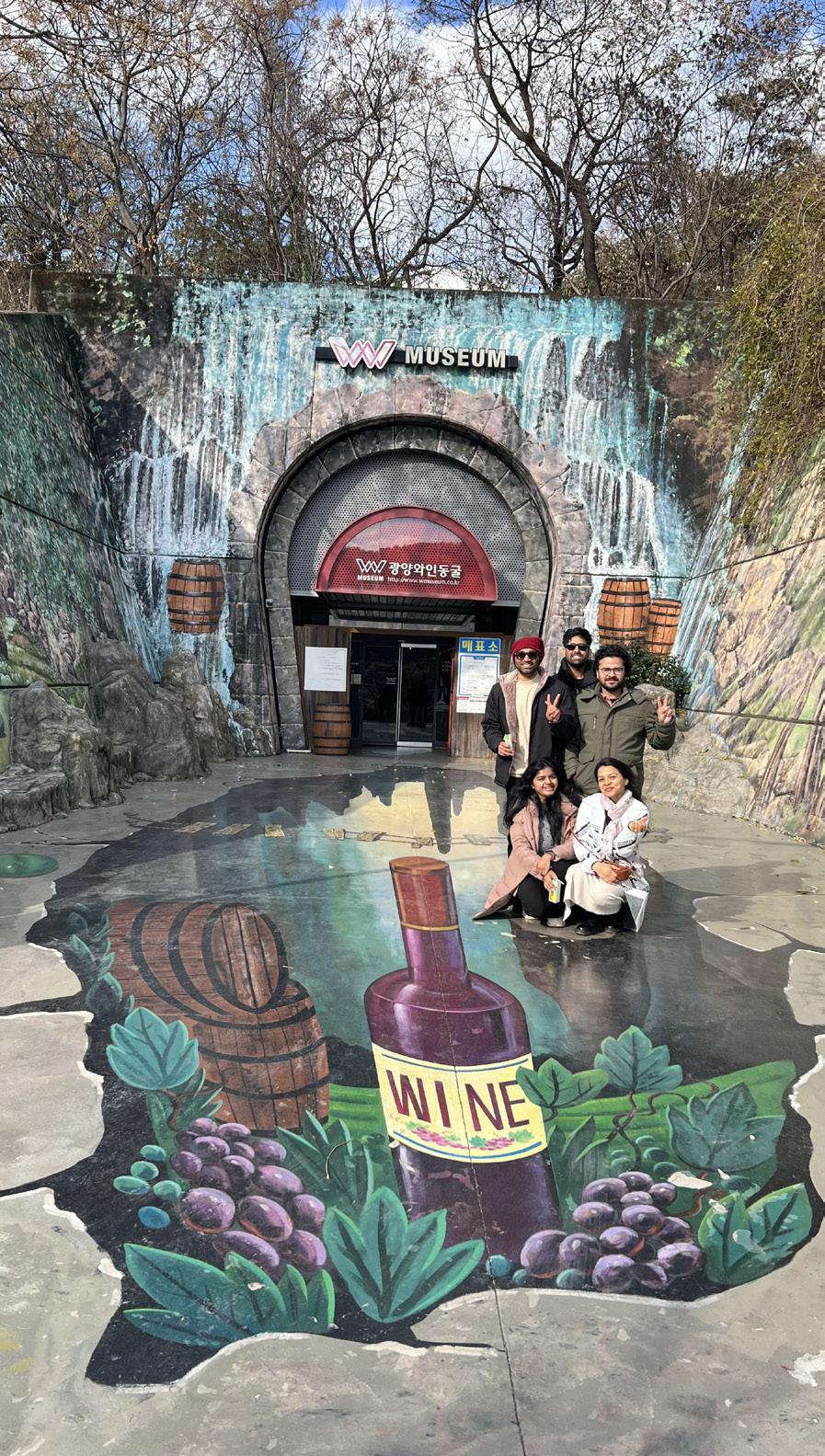
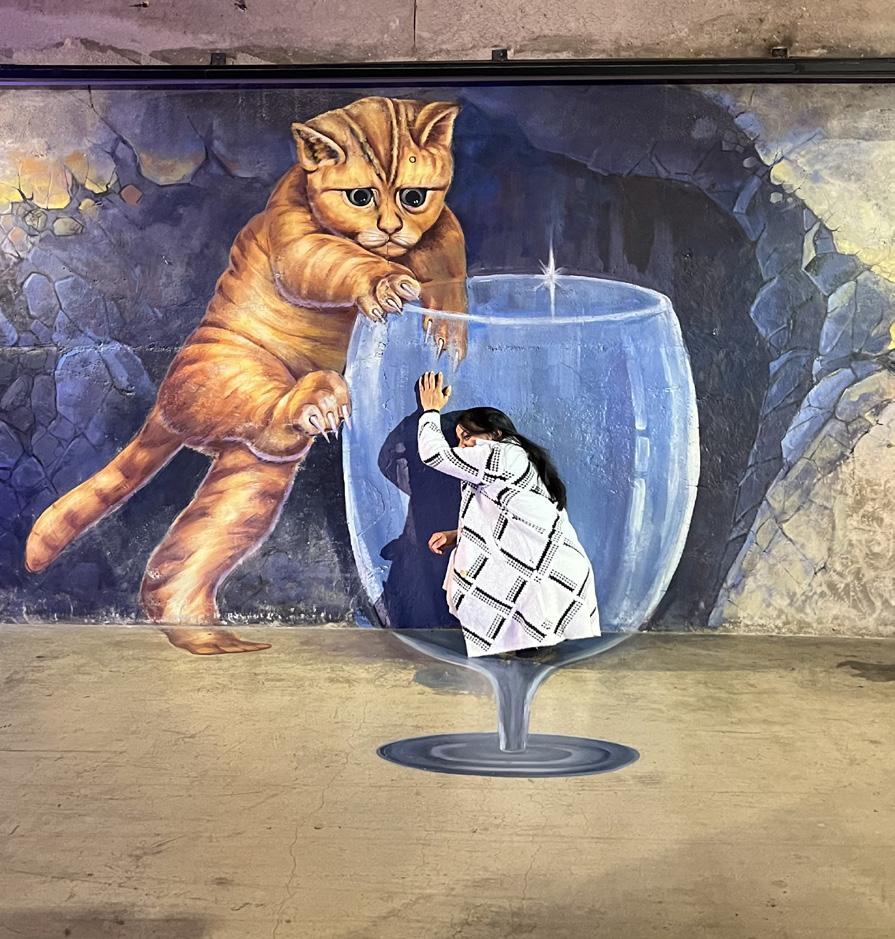
We arrived at the Gwangyang wine cave (W Museum, 광양와인동굴) after traveling about two and a half hours, and because it was peak winter, the place was almost deserted. At first, the silence made us wonder if it was even open, but once inside, we realized it was just unusually peaceful. With no crowd around, we lingered, taking pictures right from the entrance, enjoying the rare feeling of having a tourist spot almost to ourselves. Inside, the museum surprised us with interactive spaces: 3D paintings perfect for playful photos, and a digital museum filled with lights, mirrors, and visual effects that felt immersive and slightly surreal. It didn’t feel like rushing through exhibits; it felt like wandering freely. Near the exit counter, wines produced at a nearby local winery were beautifully displayed, adding a quiet reminder that Yeosu’s wine culture lives not just in exhibits but in the region itself.
After exploring, we settled into the museum’s seating area and opened our packed lunch. Eating familiar food in a quiet corner of a wine museum, surrounded by winter stillness, felt oddly comforting. Once we were done with lunch, we headed toward our next destination: U World Luge Theme Park Yeosu.
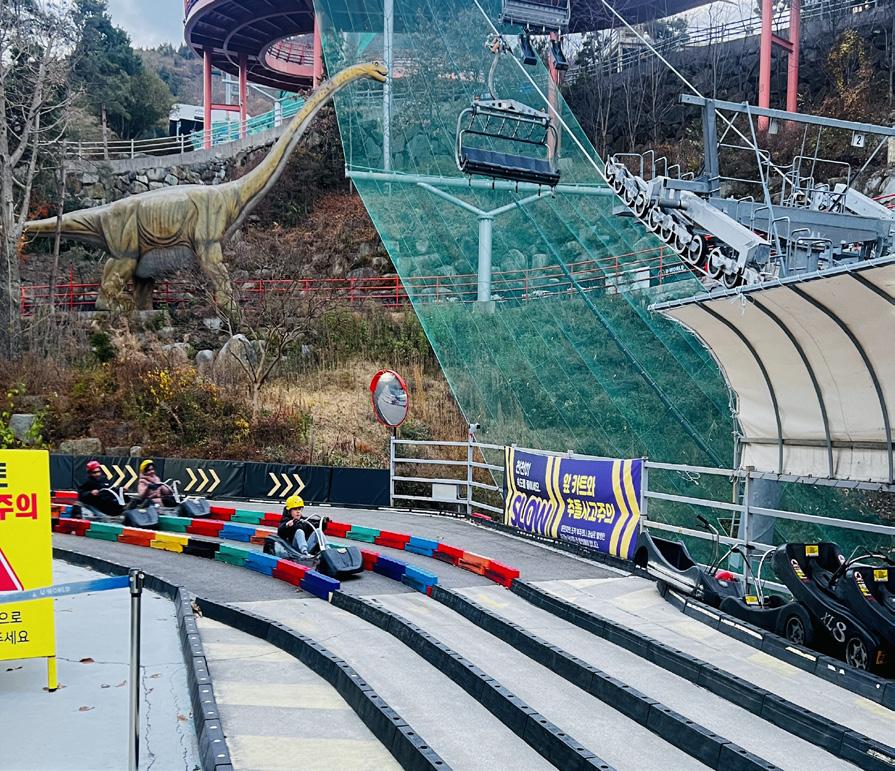
By the time we reached U World, it was already around 4:00 p.m. The place offered plenty of attractions – luge and lift rides, an outdoor amusement park, gliders, themed zones, and indoor games – but we focused on what we were most excited about. We bought tickets for the luge and lift, along with access to the outdoor amusement park. The luge was first. Each person got four rounds, and naturally, we turned it into a race. It was my first time, and with zero experience handling slopes, I came in last every single round. My friends laughed endlessly while I tried to defend myself, but honestly, it was hard
not to laugh along with them. The wind was brutal – our hands froze even inside gloves – but we pushed through all four rounds, cheeks numb and eyes watering from the cold.
Winter doesn’t forgive mistakes, but it rewards courage with unforgettable moments.
Completely frozen, we rushed to the café inside the park for hot coffee and warm drinks. Slowly, feeling returned to our fingers. From the café’s rooftop terrace, the view was stunning. The sky had cleared, and the moon hung bright and calm above the surrounding mountains. The moon and the evening mixed with icy breezes, inviting
Posing with 3D art at the Yeosu Wine Museum entrance.
us to stay longer despite the cold. We took photos, soaked in the quiet beauty, and admired U World glowing gently below us.
But winter has limits, and ours were quickly reached. We hurried back indoors to warm up properly before heading out again to the outdoor amusement park. It was nearly empty, which made it feel like the park belonged to us. We tried a few rides – simple swings, boats, rolling and dancing cars – and laughed like children, free of a constraining crowd. With no one around, we posed at photo zones, teased each other endlessly, and enjoyed the rare freedom of doing silly things without feeling watched. Soon enough, it was closing time, and we left the park with cold noses and warm hearts.
Dinner time had arrived, but winter nights in Yeosu are quiet. We drove toward a nearby beach hoping to explore more, only to find most shops and restaurants already closed. The temperature kept dropping, convincing us it was finally time to head back. We had dinner at an open restaurant, then began our drive back to Gwangju.
The night drive was its own kind of magic. Empty roads stretched ahead, the countryside lay silent,
and at times we passed through dark forests with no streetlights at all. It felt peaceful and slightly scary – one of those winter nights that reminds you how cold can transform busy roads into calm, almost lonely spaces.
Winter has a way of slowing the world down, turning noise into silence.
When we finally reached Gwangju, the trip ended the best way possible – with hot Indian tea at my place. One by one, my friends left for their homes, exhaustion settling in after a long day of cold, laughter, and travel. Wrapped in warm blankets later that night, I felt grateful. Tired, frozen, and happy, we had collected yet another memory –one more winter day added quietly, beautifully, to our lives.
Note: More details about the W Museum and the U World Luge Theme Park can be visited at http:// www.wmuseum.co.kr/ and http://u-world.kr/
The Author
Neha Bisht is a native of India, pursuing her PhD research at Chonnam National University’s School of Materials Science and Engineering. She loves to meet new people and make new friends. Neha endeavors to contribute to the well-being of society in whatever way she can.
Photographs courtesy of Neha Bisht.
The cat trying to save me – 3D art doing its magic.
Racing down the luge track, determined to win (and not crash).
Between Arrival and Goodbye
How Smart Planning Made Our Busan Trip Effortless
By Dhivyaa S. P.
What if your friend or a family member was coming to South Korea and you had to be their travel guide?! It sounds exciting, but it is not easy. With a limited stay and countless hidden gems across the country, choosing the perfect spots can feel overwhelming.
Last year, I found myself in exactly this situation. My best friend from India came to Korea. It was her first international trip and, more importantly, someone was finally visiting me in what has become my second home. I was beyond excited to show her around. Instead of getting into a detailed itinerary, I want to talk about the part where planning became easier, smarter, and far less time consuming.
According to her schedule, we had three days and two nights in Busan. Is that enough for someone who traveled over 4,700 kilometers to truly experience the city?! Probably not, but I wanted her to experience as much as possible without overspending. While checking travel packages on Klook, my go-to travel and experience platform, we came across the Visit Busan Pass. And honestly, it changed everything.
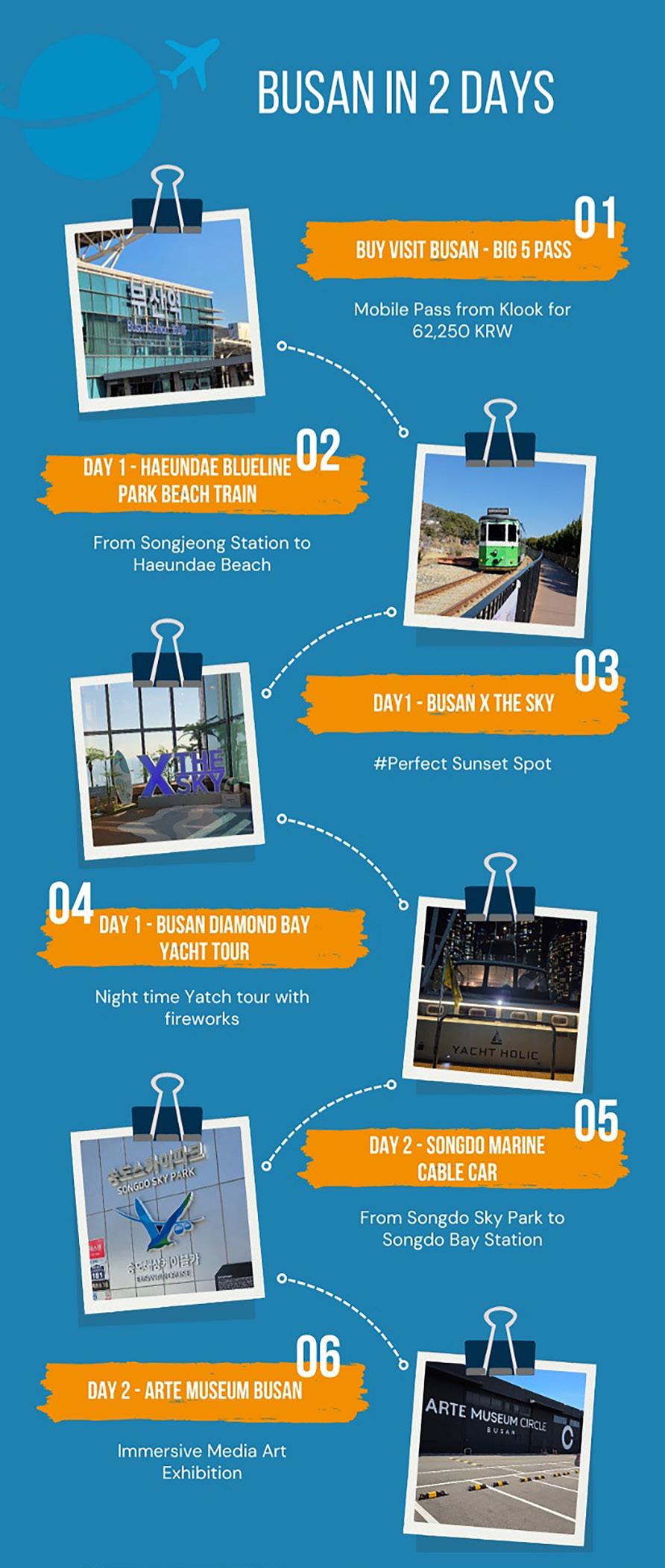
The Visit Busan Pass is a sightseeing pass designed for travelers who want to explore Busan efficiently. It allows free or discounted entry to major attractions across the city, helping visitors save both time and money. The pass comes in different formats, including time-based passes and a selection-based option. We chose the Big 5 Pass, which allows entry to five attractions in total. This pass lets you select two attractions from the Purple category, also known as Group A, and three attractions from the Blue category, or Group B. The Purple category includes premium
Our Visit Busan Pass timeline.
experiences and landmark attractions, while the Blue category focuses on popular cultural spots, museums, and scenic activities.
We took an early morning KTX from Seoul to Busan and dropped our luggage at our accommodation near Nampo Station. That area is wonderful, and this was my second time staying there. After settling in, we started our trip with a visit to the iconic Haedong Yonggung Temple. From that moment on, the Visit Busan Pass proved its value.
We paid 62,250 won for the Big 5 Pass and were able to visit five attractions without any additional cost. From the Purple category, we chose “Busan X the Sky” and “Busan Diamond Yacht Tour.” From the Blue category, we selected Haeundae Blue Line Park, Songdo Marine Cable Car, and Arte Museum Busan.
This pass helped me show her a wide range of Busan experiences in just two days. On the third day, she explored Gamcheon Culture Village, visited popular cafés, and wandered around the city at her own pace. Meanwhile, I stayed back at the hotel trying to finish my research article.
This is my friend’s honest opinion on the pass: “The Visit Busan Big 5 Pass made everything seamless and stress-free. Buying this pass online saved us a lot of time, letting us focus on experiences rather than waiting in queues for the tickets and the hassle of using credit cards or cash as a foreigner. As a tourist, it felt like the smartest and most memorable way to explore the highlights of Busan. From the calm noon ride on the Haeundae Blue Line Park train, watching the vast sealine, and sceneries, and walking between a couple of stops; to watching the sky turn orange and gold at Busan X the Sky at sunset; to riding the yacht at night, mesmerized by the fireworks near the bridge adding a magical touch; every moment felt perfectly timed.
“The best part was that the pass was valid for 180 days, so there was no rush to squeeze everything
into a tight schedule. We could plan Busan for just two to three days and still cover all five attractions at a relaxed, leisurely pace and also include other destinations of interest. Having that flexibility made the experience far more enjoyable, letting us slow down and truly soak in each place instead of hopping from one spot to another.”
If we had visited all these places without the pass, it would have cost us 127,000 won. Using the Visit Busan Pass, we saved almost 51 percent.
So, the next time a friend or family member visits you in Korea, I would 100 percent recommend taking advantage of the Visit Busan Pass. It makes traveling easier, more affordable, and much more enjoyable when time is limited.
The Author Dhivyaa believes that every action, no matter how small, contributes to a bigger change. March arrives with a new semester and the urge to learn something unfamiliar, maybe even agriculture. Up next: Ancient Roots, Innovative Rhythm, Art, Narrative, Global Voice!
Photographs and graphic by the author.
Me. My best friend. And the yacht.
City-to-City Cooperation Guangzhou and Gwangju
By Li Aoding
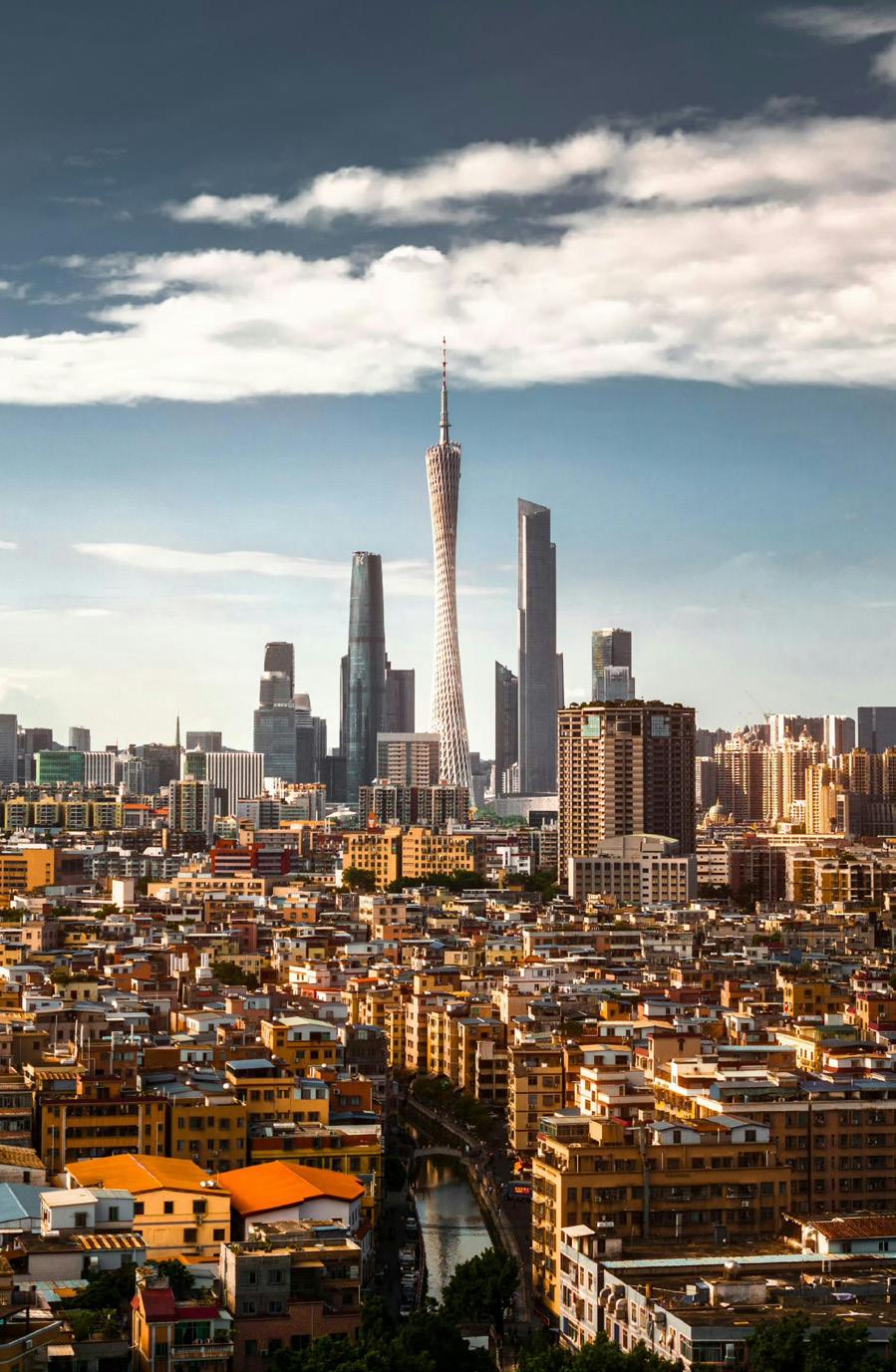
Located in the heart of the Pearl River Delta of southeast China, Guangzhou is the capital of Guangdong Province and one of China’s most influential commercial and innovationoriented cities. Guangzhou and Gwangju (South Korea) share more than just a friendly relationship; they share a striking linguistic resemblance: In Chinese pronunciation, “Guangzhou” (广州) and “Gwangju” (光州) sound remarkably similar, and both contain the Chinese character meaning “region” (州).
This “same-sounding” connection has often been seen as a feature for mutual affinity. It offers a memorable cultural entry-point into a partnership that has been institutionalized for decades. In 1996, the two cities officially signed a sister-city agreement, laying a stable foundation for long-term cooperation. Over time, that framework has evolved from symbolic friendship into more practical, multi-layered collaboration. From December 8 to 11, 2023, Guangzhou’s Huangpu District and Gwangju’s Seo-gu (West District) held a ceremony to sign a friendly exchange agreement, extending the sister-city spirit from the municipal level to district-to-district collaboration – often where policy experimentation, community exchange, and project implementation move fastest.
The political language of this relationship has also carried an uncommon sense of warmth. In 2019, Gwangju Mayor Lee Yong-seob observed that the two cities were not only similar in name but close in relationship, mirroring the broader trend of deepening Korea–China exchanges. He captured the spirit of the sister-city partnership with a vivid line: “In hardship, you reach out a helping hand; and in joy, you cheer for each other.” In 2023, Gwangju Mayor Kang Gi-jung voiced a forward-looking expectation that the two cities would further strengthen exchanges in culture and tourism – a reminder that sistercity ties ultimately gain legitimacy not only through agreements, but through citizens’ lived experiences.
Academic Exchange
Academic exchange is one of the most promising areas for deepening this connection. On August
Guangzhou, China. (Hawk Bond on Unsplash)
11, 2025, a study group from Chonnam National University visited Guangzhou University for academic exchange, demonstrating how universities can act as “engines” of sister-city cooperation. Through seminars, campus visits, faculty–student dialogue, and cross-cultural discussion, such programs cultivate long-term networks of trust. They also support a shared future: Students who meet through exchange may later become researchers, entrepreneurs, and public leaders who continue the relationship in new forms.
Beyond bilateral programs, the cooperation horizon is also widening into tri- and multiparty coordination: In 2025, Guangzhou’s Hunan University worked closely with Gwangsan-gu of Gwangju and the Panyu District of Guangzhou to advance multi-field exchanges and, through attracting international students, jointly promote regional economic vitality.
Sports Friendlies
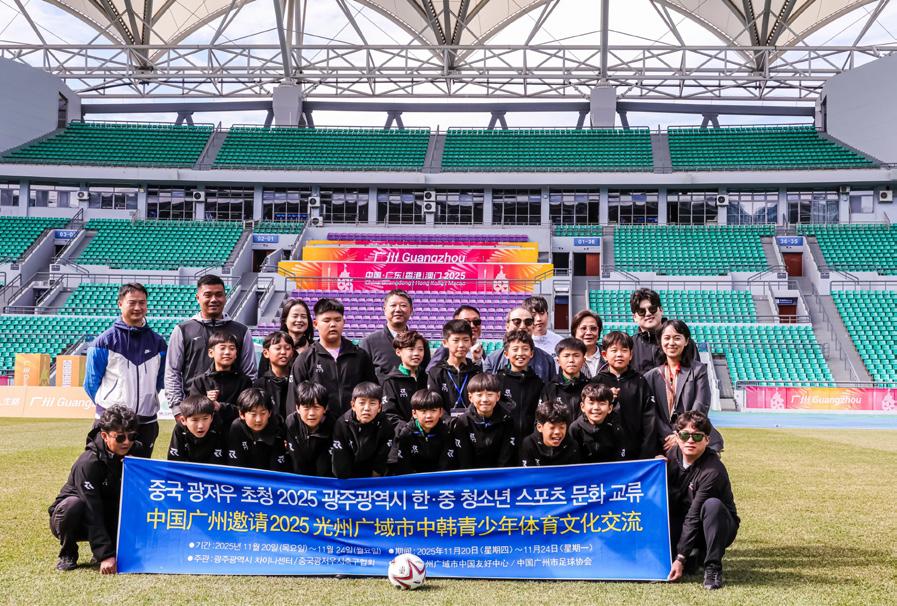
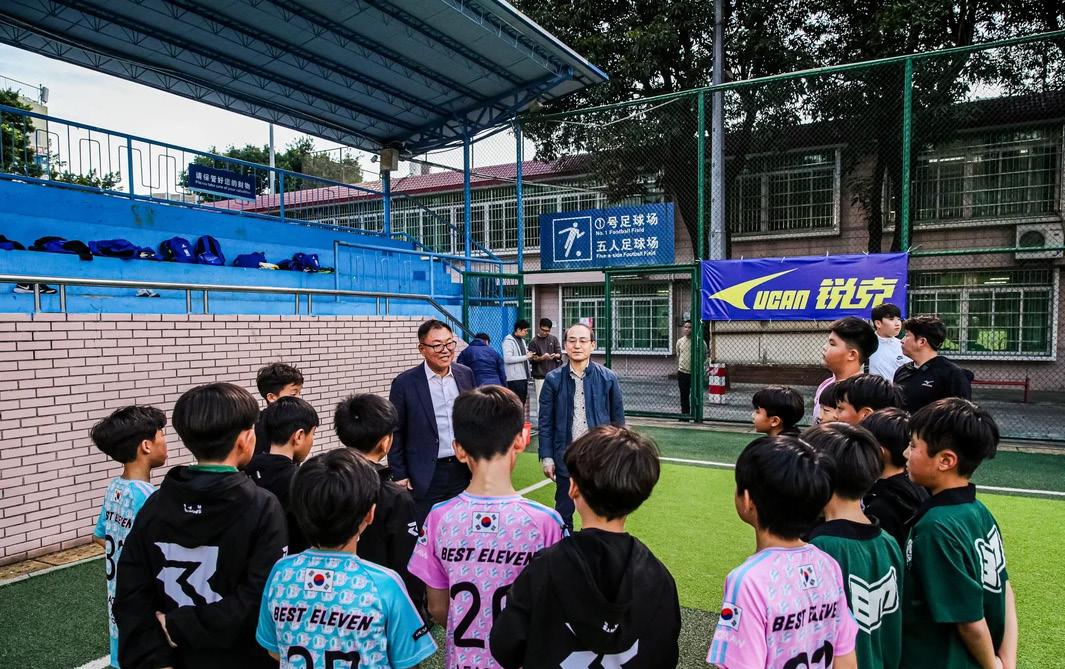
Sports, too, has emerged as a powerful civic connector that can translate goodwill into immediate, memorable encounters. As special international guests of the 2025 Sui–Hong Kong–Macao Football Carnival, the Gwangju youth football team visited Guangzhou from November 20 to 24, engaging Guangzhou’s youth in friendly matches, joint training, and cultural study activities. The program not only embodied the event’s “Greater Bay Area + international” character, but also offered an accessible, high-
participation format for strengthening city-tocity friendship – one handshake after a match at a time.
Historical Gateway
For centuries, Guangzhou has served as a gateway between China and the outside world, shaped by trade, migration, and cultural exchange. Today, that openness is reinforced by a comprehensive transportation network and strong economic capacity. Guangzhou is widely recognized for advanced manufacturing, automobiles, biomedicine, artificial intelligence, modern services, and a robust exhibition and trade economy. In the broader imagination of global manufacturing, Guangzhou also stands as an important part of the “world factory” landscape, with dense supply chains and strong production-to-export capabilities that connect it to international markets.
Guangzhou’s identity is inseparable from its long history and distinct Lingnan culture. With a city history of over two thousand years, Guangzhou has deep roots in the Maritime Silk Road tradition, where commerce and multicultural contact helped form a practical, inclusive urban character. The city’s constructed environment reflects this continuity: Traditional arcaded streets and Xiguan residences preserve everyday textures of old Guangzhou, while the modern skyline along the Pearl River signals a confident, global-facing metropolis. The city is at its best when these layers are seen together – where heritage is not frozen in time but continues to coexist with modernization.
Cultural Experiences
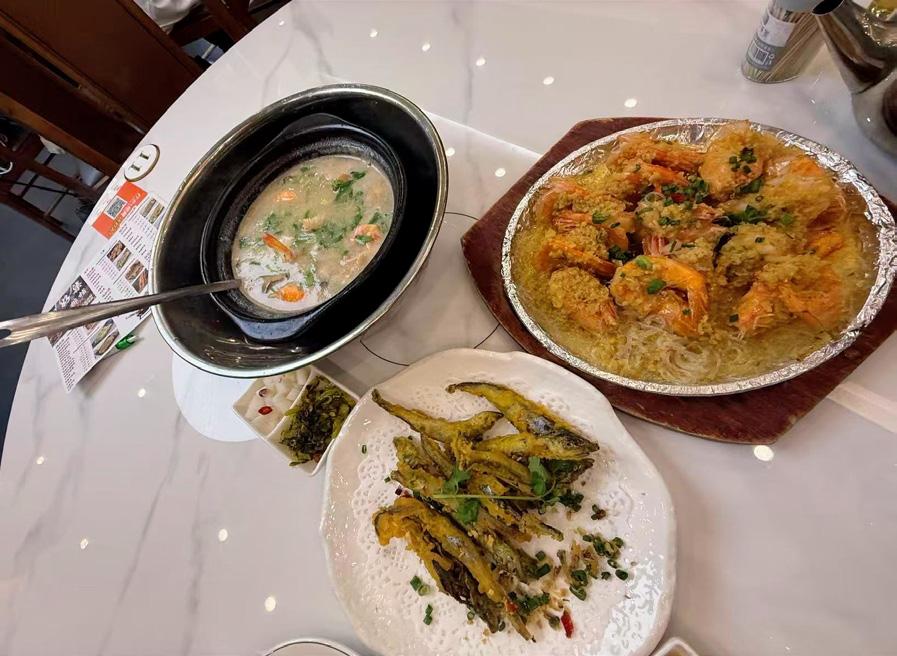
Food culture is one of Guangzhou’s most recognizable “languages.” It is often the quickest way for visitors to feel the city’s warmth. Cantonese cuisine is famous for highlighting freshness, natural flavor, and precise technique. The rhythm of daily life is closely tied to eating, especially through the tradition of “morning tea” (dim sum). Classic dishes such as shrimp dumplings, barbecued pork buns, rice noodle rolls, wonton
The Gwangju delegation at the 2025 Guangzhou Invitational Youth Football Tournament. (FUN_L)
noodles, and roast goose are more than popular foods – they are a living cultural system carried by tea houses, markets, and neighborhood restaurants. For Korean visitors, Guangzhou’s culinary world frequently becomes an easy bridge for conversation and shared experience, turning cultural exchange into something immediate and enjoyable.
Beyond dining, Guangzhou offers a broad cultural and urban experience. Museums, historical sites, and traditional neighborhoods provide windows into Lingnan folk customs and the city’s role as a southern trade hub. At the same time, modern public spaces, riverfront development, and landmark architecture demonstrate how Guangzhou continuously remakes itself. This balance of historical depth paired with a forwardlooking mindset helps explain why the city has remained influential across so many eras.
Connectivity
Connectivity is another key reason Guangzhou functions well as a partner city. From Gwangju (KWJ) to Guangzhou (CAN), the main and fastest option is to fly. There are direct or connecting routes covering a distance of a little over 1,800 kilometers. Travelers can also fly first to Seoul and then take an international flight onward to Guangzhou. The ability to travel conveniently and to host large-scale international activities makes exchanges more frequent and cooperation easier to sustain. In sister-city relationships, such
practical conditions often matter as much as goodwill because they turn symbolic friendship into repeatable interaction.
Relationships Matter
In an era when cities compete for talent, innovation capacity, and cultural influence, sister-city partnerships matter most when they produce repeatable cooperation mechanisms and shared opportunities. Guangzhou’s industrial and innovative ecosystem can complement Gwangju’s strengths in culture, arts, and humanistic values. Meanwhile, district-level agreements, university exchanges, youth programs, and sports events provide practical platforms where collaboration can be tested, scaled, and sustained. From a name that sounds alike to a relationship that continues to grow closer, Guangzhou and Gwangju are demonstrating how city diplomacy, when anchored in institutions yet animated by citizens, can remain resilient, relevant, and futureoriented.
than seven years, and she lives a happy life with four cats.
The Author Li Aoding, originally from China, is a PhD student at CNU. She loves to live a vivid life and cares about lives. She has lived in South Korea for more
The Gwangju team receiving instructions from their coach at the 2025 Guangzhou Invitational Youth Football Tournament. (FUN_L)
Cities as Global Actors
The Medan–Gwangju Partnership
By A. Ayuningsih
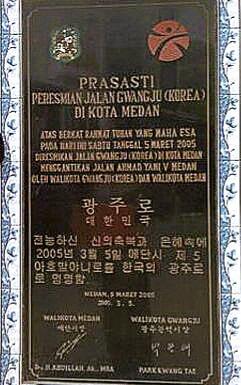
Iwas casually scrolling through Instagram when something unexpected caught my attention: a street in Medan bearing the name of a Korean city: Gwangju. Known as “Gwangju Street,” the name felt both familiar and puzzling. According to the inscription, the street was officially named in 2005. That small detail sparked a larger question in my mind: How did a city in Indonesia come to commemorate a city in South Korea through its urban landscape?
Curious, I began to search for its story. What I found was not merely a naming decision but a symbolic gesture rooted in an international collaboration between Medan and Gwangju, one known as a “sister-city partnership.” More than an administrative agreement, the program represents a form of city-to-city diplomacy, where cultural exchange, mutual learning, and shared values are expressed not only through policy but also through everyday spaces such as streets, schools, and public memory. This program was established in 1997, when the
mayor of Medan at that time, Bachtiar Djafar, and the mayor of Gwangju, Song Eon-Jong, signed the memorandum of understanding (MOU) for sister-city cooperation. The cooperation focuses on education, culture, technology, and economic development.
Over nearly three decades, this relationship has produced a wide range of concrete programs. In the environmental sector, Gwangju sent policy advisory teams to Medan in 2016 and 2018, conducting workshops, sharing environmental policies, and providing technical advice on waste management systems. Gwangju also invited Medan officials and companies to the 10th International Climate and Environment Fair at the Kim Daejung Convention Center, reinforcing knowledge exchange in sustainable urban development.
Educational exchange has been another enduring pillar. Since 1999, student exchange programs have been conducted annually on a reciprocal
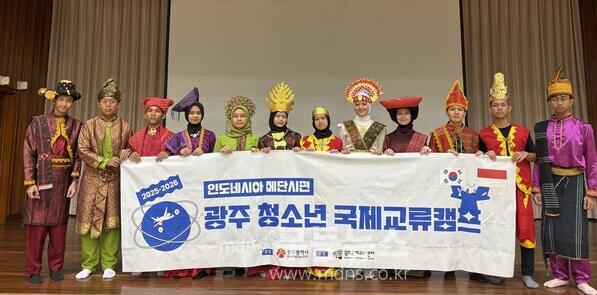
Student exchange participants from Medan as part of the 2025 Medan–Gwangju sister-city program. (Gwangju Youth Intl. Exchange Camp)
basis, involving high school and university students from both cities. While students from Medan gain exposure to Korean education and culture, students from Gwangju are equally introduced to Southeast Asian perspectives, local traditions, and social realities in Medan. These encounters quietly shape how young people in both cities understand the world beyond their national borders.
The partnership has expanded into economic cooperation. In June 2022, representatives of the Gwangju City Government visited Petisah Market to explore retail and market-sector collaboration. In March 2024, the partnership further expanded into energy and environmental investment, including initiatives related to carbon emissions reduction, waste management, and clean water provision.
Yet, the longevity of a sister-city relationship and the number of programs conducted do not automatically guarantee depth or inclusiveness. The broader public often remains unaware of the partnership’s existence or benefits. Medan’s Gwangju Street highlights this gap. Although it stands as a visible symbol of international cooperation, its historical context and significance are rarely communicated to the public. As a result, even casual observers, myself included, may encounter the name without understanding the sister-city relationship it represents.
Thinking back to how easily I once looked past Gwangju Street in Medan without knowing its meaning, I realize how distant the sistercity program can feel from everyday life. If this partnership is to remain relevant, it cannot live only through official visits or ceremonial agreements. It needs to be felt at ground level, through schools that tell the story behind the name, markets that become spaces of cultural exchange, environmental groups that collaborate across cities, and creative communities that translate diplomacy into shared experiences. With simple efforts like public signage, small exhibitions, or digital storytelling, places like Gwangju Street could invite questions rather than indifference. In this way, the sister-city
relationship would no longer exist merely as a symbol I once overlooked but as a living connection woven into the city’s daily rhythm.
Looking ahead, future cooperation would benefit from closer attention to how these initiatives are experienced by residents in both cities. When international collaboration is anchored in everyday urban life, the sister-city relationship becomes more than a record of past agreements; it becomes a living partnership. In this sense, Gwangju Street should not only remind Medan of its international ties but also reflect a relationship in which both cities continue to learn from one another, asking how global friendship can remain meaningful for the people who live within it.
Author A. Ayuningsih is a graduate student seeking to express the concerns she observes in her surroundings. She hopes that her words may raise awareness and offer a meaningful contribution to the broader community and society in which she lives.
The
A street-side inscription marking the inauguration of Gwangju Street in Medan, symbolizing the Medan–Gwangju sister-city partnership. (Yeni Susantay)
Inside the Gwangju News Publisher and GIC Director: Dr. Shin Gyonggu
Dr. Shin Gyonggu is the perennial publisher of the Gwangju News, but that is merely one of his myriad tasks. He has headed the Gwangju International Center (GIC) since its inception in 1999, when the center consisted of just him and one staffer at a desk in the corner of another’s office. Since then, the GIC has expanded in size and programs, and has recently begun operating a second center: the Gwangju International Residents Center (GIRC). Dr. Shin is known widely in the Gwangju community by both Korean and expat residents, but there is much about him that they may not know. Through the following interview, we delve more deeply into the works and ways of Dr. Shin Gyonggu. — Ed.
Gwangju News (GN): Thank you for making the time for this interview; I know how busy you are. To begin the interview, could you tell us about your early years? I don’t believe you grew up in Gwangju.
Dr. Shin: I was born in Seoul on a freezing night in early 1948. That is why my name includes the syllable “Gyong” which is from the Chinese character for “capital city” (京). I do not know when, but my parents moved to Jincheon in Chungbuk Province soon after my birth. Jincheon was recorded as my birthplace. I was brought up in a poor rural village. Some aspects of my young life many people do not realize existed at that time in Korea: I wore straw shoes. I experienced eating pine tree bark. I liked ssuk-beomul (mugwort rice cakes), which were made with rice flour mixed with boiled mugwort leaves and eaten due to the extreme lack of food.
I walked about an hour to my elementary school every day. I used to love the clouds that covered the burning sun in summer. I loved the thick snow-covered fields because it allowed me to run to school over the frozen morning snow before the day allowed it to melt.
My parents wanted me to work at home instead of entering middle school. However, I was allowed to entered middle school with an entrance fee waiver, as I had ranked first on the entrance exam. I still remember my exam number: 281.
I entered the agricultural high school in town since my mother wanted me to be under her supervision. It was the most difficult time in my life. I was physically weak, but I continued to do my studies whenever possible in the classroom and on the so-called “practice farmland,” where the students were exploited as free labor. I was beaten severely whenever my homeroom teacher found excuses to punish me, since I did not pay attention to the agriculture subjects. I collapsed several times due to malnutrition and consider it a miracle that I survived.
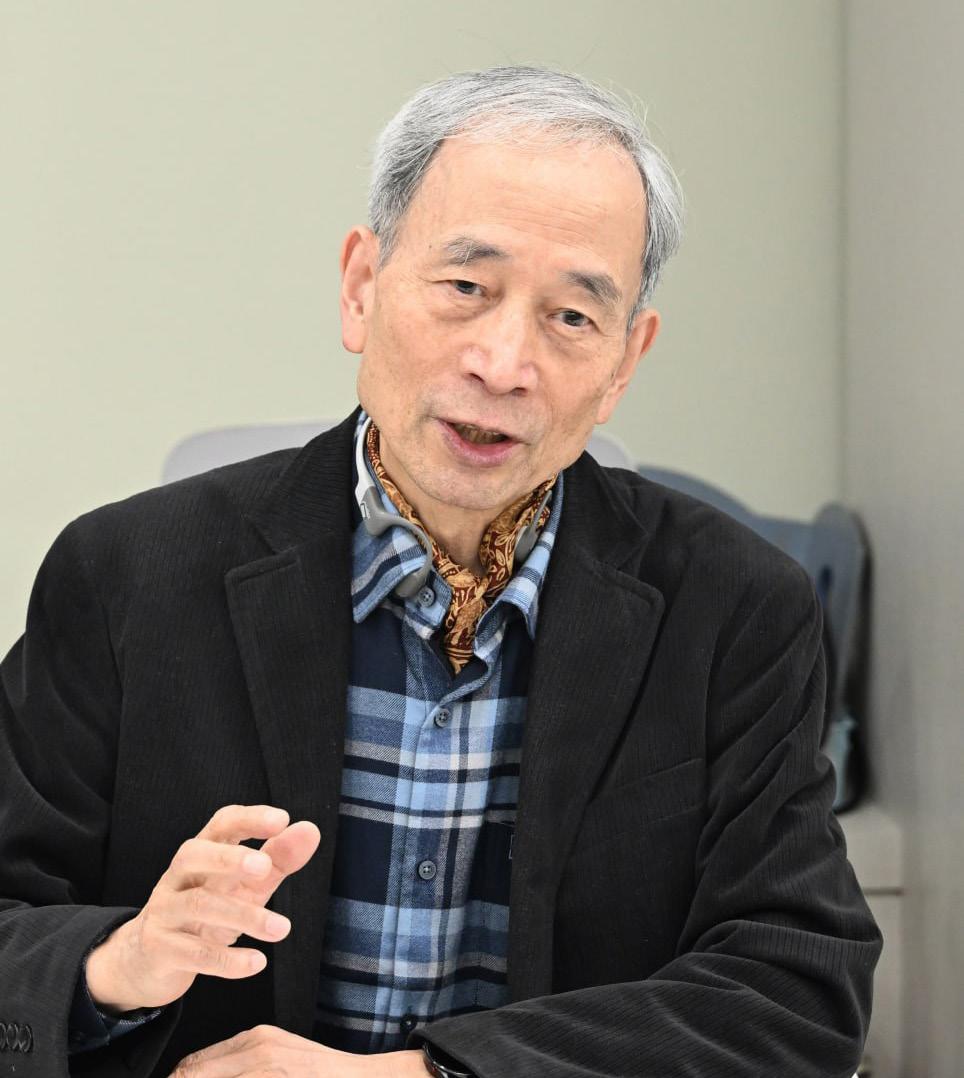
An interview with Mudeung Daily in March 2025.
My work helped me to get a full scholarship from a small university funded and managed by a Presbyterian mission foundation. My student peers used to make fun at me: “How is it that an agriculture high school graduate entered the English Department?” I enjoyed the gentle and harmonious environment. Most students used honorific speech to each other, whether younger or older. I still vividly remember the harmony produced by all the students at the weekly chapel service. My health was very poor, but I began to slowly get stronger from then on, and still now. My current health is the best in my whole life. My participation on the student council back then was an invaluable experience for me to understand the group dynamics of society.
GN: You grew up in Chungbuk Province. What was it that brought you to Gwangju to put down your roots here?
Dr. Shin: After college graduation, I came to the Gwangju Airbase as a second lieutenant in the ROK Air Force in 1971. My job was to teach English to student pilots. This assignment changed the course of my entire life. I was lucky to meet and marry a music teacher here. I finished my MA degree at Chonnam National University. I was given a son. Now, I consider Gwangju as my second hometown, and more important than my first.
GN: You also studied in the United States. How would you characterize your time there?
Dr. Shin: I applied to enter the University of Texas for their doctoral degree program in 1979. I chose UT because its tuition was the lowest at about 200 dollars a semester. The living cost was also low. While studying there, I was invited to teach at Chonnam National University in 1981. The military government at the time planned to drastically increase university student population as a way to garner public support for the government. As a result, the need for college professors was exploding.
I was reluctant to come back to Korea, since I had not finished my intended degree. But I
was strongly advised to accept the invitation immediately when the position became available. I came back in 1981, and I finished my doctoral degree at Jeonbuk National University in 1985. The topic of my dissertation was linear phrase structural grammar, which I still believe to be the correct theory. We process sentences from left to right in a linear way, whether in English or in Korea, or whether the word order is SVO [subject–verb–object] or SOV. I recently found that LLMs process information in a linear way.
GN: When I first met you, you were a young professor who was to go on to have a long and very successful career at Chonnam National University [CNU]. What do you consider to be your most notable or most satisfying accomplishments there as a professor and as an administrator?
Dr. Shin: I will list not one but three. In 1984, I began to publish the Chonnam Tribune, the university’s English magazine, with computer editing. Student editors of other universities invited the Tribune’s student editor to their schools for them to learn about the process. I am sure this was the first computer-based editing among all Korean magazines and newspapers.
I started a self-supporting English language program at the university in 1991. The number of staff increased from three to 40, including 25 instructors, international and Korean. The budget for the CNU Language Center exploded from 30 million won in 1991 to more than 1 billion in 1996, when I left the center. I wanted to provide language skills for my students who were suffering from regional discrimination. Many graduates told me that they succeeded in getting jobs thanks to their English proficiency developed through the CNU Language Center. Most other Korean universities, however, quickly followed suit.
In 2008, I was invited to work as the first dean of the International Affairs Office. I accepted the post on the condition that I would serve in the position for at least four years. I knew that I could not achieve any significant result in a
one- or two-year term, which is common in most Korean universities. I started a freshman English camp in January and February. Through English, I wanted to raise the students’ consciousness of the world, including democracy, human rights, the environment, social responsibility, resistance to conformity, financial management, and family life. I was very happy that their language skills improved significantly while dealing with these social issues. They also developed very close friendships in the camp. The camp continued till 2017.
I also developed the International Summer School in 2009 with four professors and ten students from international partner universities. I invited more than 10 professors and 80 students from overseas in 2012.
In the degree programs, there were 450 international students when I started in 2008, and that increased to more than 1,000 in 2012. More than half of them were graduate students. Also, when I started, the one- to two-semester exchange program had 13 inbound international exchange students and 23 outbound Korean students in fall semester 2008, and that was expected to expand to 130 inbound and 150 outbound exchange students for the 2013 spring semester when I finished my duties in December 2012.
The face of the campus was quite uniform until 2010, since most of the international students were from China. But it began to look more international in August 2011 with diverse international students from all over the world. Nothing would have happened if I had served in the position for only one or two years, which is a common practice in Korean government universities. I retired two months after completing my tenure as dean.
GN: And while you were still a professor at Chonnam, you were appointed as the director of the newly established Gwangju International Center, the GIC. How did that come about?
Dr. Shin: It was, in fact, an appointment, since there was no established system at the time. The City of Gwangju asked Kwangju Citizens Solidarity, one of the most active citizen groups in the 1990s, to establish the center, with the promise that they would provide financial support. Solidarity failed to find anyone with English language skills. I made the grand mistake of accepting the recommendation to be the director. I expected that others would come after me, as that was customary on campus. The city gave us 30 million won, which was substantial support. But the money was only for projects, not for salary. My coordinator managed to use only 20 million won of the budget, so our support was reduced to 20 million for the next year! I began to struggle with time management and deficit management. The yearly deficit was mostly 20 million until 2010 and even more until 2016. I never asked anybody including the city government for help, and I found nobody willing to succeed me as the GIC director.
GN: What was the mission of the GIC back in 1999 when it was first established?
Dr. Shin: It was a broad mission: The GIC aimed to promote international exchanges in culture and business while promoting the spirit of Gwangju. We did not have the budget or human resources to do so. We did not get engaged in international exchange of culture or business. We soon removed those two missions.
GN: And here it is, 2026. How has the mission of the GIC changed or expanded in that span of a quarter century?
Dr. Shin: The GIC has changed its mission and goals according to the needs of the community and within its financial capability and the human resources available. We simplified the mission to “promoting an inclusive community in Gwangju,” which is supported by three GIC teams: the International Team, the External Support Team, and the International Residents Team. The International Team has three
coordinators promoting exchange projects with Gwangju’s partner cities. The External Support Team, with four coordinators, has managed the World Human Rights Cities Forum each year. We are proud that the Forum has been co-hosted by UNESCO and the UN Human Rights High Commissioner’s Office (OHCHR) since 2020. The team is also engaged in the training project for local government officials of the cities in the Asia-Pacific region with the support of and funding by KOICA. The International Residents Team was newly created from the International Team in 2024 to support international residents through the Gwangju International Residents Center (GIRC). It has a separate office about 12 kilometers away from the GIC, which is located in downtown. The GIRC is fully financed by the local and central governments.
The GIC is a civic organization, independent of the city government. It has grown mainly with the support of citizen members and membership fees. Most of the projects have been managed by volunteer members and funded with membership fees. Many of the projects, however, have recently begun to be dependent on funding by City Hall, especially since the Covid 19 pandemic. And since the pandemic, the number of fee-paying members continues to decrease. The number of members before the pandemic peaked at 13,000 one year, but it is now less than 8,000. The membership contribution peaked at 140 million,
but it also decreased to 80 million last year. City government-funded projects now account for 80 percent of our operating budget. The GIC began with only one full-time coordinator. Now, as of the end of 2025, it has 16 full-time paid staff members.
GN: What accomplishments of the GIC are you most proud of?
Dr. Shin: The most important achievement of the GIC is the fact that it has been an important and unique channel for international and local residents to connect with each other. Many international residents have told me that they felt secure living in Gwangju, since they knew that the GIC was available if they needed help, even though they don’t visit the GIC office regularly. However, its influence has diminished with the changes in society. More platforms and channels are emerging, both on- and off-line. Diverse forms of communities are being created without needing GIC support. We are now discussing a new direction of the GIC.
I would like to mention the following projects that have contributed most significantly to the development of the GIC. However, many of them are now less active or inactive:
1. The Gwangju News, as the first English monthly in Korea for the general public, in 2001.
2. The GIC Saturday Talk, which used to attract
Dr. Shin was the only international speaker at the 2023 Human Rights Festival of Indonesia.
around 50 to 100 attendees to its meetings. I feel disappointed that it couldn’t be revived after the Covid 19 pandemic.
3. Korean classes, which started for the first time in Gwangju, in 2000. They are now losing popularity due to the free classes available at the GIRC and due to more courses being offered by other organizations, including universities.
4. The GIC Tour, led by Warren Parson, attracted many international residents. It was discontinued after it lost its tour guide due to his relocation to Daegu.
5. Gwangju International Community Day, which started in 1995. It is one of the first international community festivals in Korea, but a budget cut terminated it in May 2025.
GN: One of the projects of the GIC that you just mentioned is the Gwangju News, which you are the publisher of. In your assessment, how well has it done in contributing to the community?
Dr. Shin: The Gwangju News has been quite instrumental in channeling international residents from being outsiders into active, supportive members of the community. It has served as an open window to the city for information-seeking international residents, especially those new to Gwangju and Korea. And through its operations, an English language database has been created on Gwangju and South Jeolla Province.
Local residents have told me how proud they have felt to see the Gwangju News available on the bookstand at the airport. Due to the Gwangju News’s popularity, other major cities have begun publishing their own English magazine.
Print media is no longer as popular as it was in the 2000s, due to the proliferation of English language social media and internet information. However, I feel that there is still an important role for print media, such as the Gwangju News, in our daily lives. I am disappointed that City Hall decided to eliminate funding for our magazine in 2025. My hope is that as the financial situation of the city improves, we will again be able to provide the
public with a print version of the Gwangju News, as well as the digital version that is continually available. Anyone can access the magazine at Gwangju News Online and as a flipbook on the Issuu website by searching “Gwangju News.” Years and years of back issues are also available at both sites. With its online availability, the Gwangju News is not only an important asset to Gwangju and Korea residents but to those anywhere in the world who are interested in Gwangju-related, Korea-related, and even the international topics that the publication covers.
GN: You seem to quite frequently be out of the country on business. Could you share with us some of the projects that pull you away from the GIC office?
Dr. Shin: I have been invited to give presentations for UN OHCHR, UNESCO, and in countries like Indonesia, Mongolia, Mexico, Brazil, Austria, France, Spain, Italy, Sweden, Mozambique, and South Africa, mostly to represent the City of Gwangju as a human rights city. I have also given online presentations even more often. I have sometimes been asked to lead a group of city officials to cities or to international organizations to promote partnerships with Gwangju. Some trips are supported. For some others, I pay when I consider the meetings important for international networking. I often travel with my wife when the trip is not funded by the city government.
GN: I know how busy you are, but I will ask anyway: What do you do in any free time that you might have? I do know that you are a member of the GIC Citizen Choir…
Dr. Shin: I enjoy singing with the GIC Citizen Choir, which meets from 10:00 to 12:00 every Saturday. It offers an annual concert in October. I also sing with my wife at home, separately and as a duet, inviting a pianist twice a week. Every Saturday afternoon at the GIC, I join the Toastmasters meetings. And I enjoy sitting in on the Gwangju News’s monthly editorial meetings, though the writing projects I accept from the editor-in-chief are at times burdensome. I regret
that I cannot always complete these projects on time. I have been busy with management of our two centers, attendings meetings, and keeping up with email correspondence with our international network. From time to time, I have to work through the night. I often feel overwhelmed by all these obligations, but I also consider it my privilege to be so busy at my age, which was 78 in February.
GN: What might your bucket list include?
Dr. Shin: I’ve never had a personal bucket list. I simply enjoy all job-related challenges. If I were to tell you what I would like to accomplish, this would be that list:
• I would like to make the most of the GIC’s capability in providing bright opportunities for the people in Gwangju, local and international, especially for young people. You will see the result of my plan for this in a couple years.
• I also would like to procure enough budget to again produce a print version of the Gwangju News.
• I want to find more opportunities for the GIC Citizen Choir to perform internationally and to invite choir groups from partner cities to sing with us in Gwangju.
GN: You retired from your university position 13 years ago. When are you planning to retire from your work at the GIC?
Dr. Shin: I said that I don’t have a bucket list. Nor do I have the plan to retire. I will continue to work as long as my health allows me to. I was extremely weak when I was young. However, I now feel healthier each year than I did the year before. It is a waste of my personal resources, or even a crime, for me to stop working for our community before my health decides to stop me.
GN: What benefits do you feel you have received to compensate for your sacrifices in time and in monetary resources?
Dr. Shin: I am a migrant to Gwangju from another part of Korea. I have no relatives or school alumni here. I feel limitlessly grateful that I was given the opportunity to marry here, to teach here, and to serve the community here. I feel indebted to the many people who participated at the 1980 Gwangju Uprising and to the activists who carried out the long march toward democracy in Korea’s 20th century. I am trying to pay back my debt to the community with whatever little I have to offer.
GN: In wrapping up this interview, do you have any final words for our readership?
Dr. Shin: Yes, I would like our readers to use this magazine, the Gwangju News, as a channel for participation in addition to being a reader: to be a writer, to use it for personal career development, to organize a Gwangju News reading club, to use the GIC and Gwangju News as a means to become an active member of the community, and to use the GIC as a platform for creativity.
GN: Well, I would like to thank you, Dr. Shin, for this extensive interview that you have provided for us, for your guidance as publisher of the Gwangju News, for your long-term direction of the GIC, and for your selfless service to the community.
Interviewed by David Shaffer Photographs courtesy of Shin Gyonggu.
Dr. Shin in Japan singing a duet at his wife’s concert, April 2011.
Unique Alternative Education
Meet Dalkkum Art School
By Yousra Feriel Drioua
In a country where education is often defined by numbers, Dalkkum Art School in Seoul operates on a different premise. Founded in 2018 in Seoul’s Gangbuk District, Dalkkum Art School (달꿈예술학교) is a non-accredited alternative school that accepts only one student at a time. The model was not designed to be radical for its own sake. It emerged, instead, from a question its founder, Ryu Han-seung (류한승), could not let go of: What happens to that one child who falls completely outside the system?
South Korea is no stranger to alternative education. By the time Dalkkum was established, more than 500 alternative schools already existed across the country. Yet many of them, Ryu observed, had begun to resemble the system they were meant to challenge, replicating schedules, evaluations, and institutional priorities shaped by exams and efficiency.
Dalkkum’s starting point was different. The school was not created because someone wanted to build a school, but because its founder encountered a single student, pushed out of public education,
isolated by rules designed to preserve the group rather than protect the individual. “In systems designed to maintain groups, evaluation is formed by the majority,” Ryu conveyed. “In such a structure, the weight of ‘one person’ becomes too unnoticed, and losing one rarely becomes an issue.”
Choosing to Remain Outside the System
Dalkkum operates as a non-accredited school by choice. In South Korea, accredited alternative schools receive government recognition and funding but must meet standardized requirements, class size, curriculum structure, and reporting. Dalkkum says this would compromise its core principle: absolute flexibility around one student’s needs.
Remaining outside the system comes with costs. Students do not automatically receive formal academic credentials, and the school receives no public funding. Instead, Dalkkum supports students individually through alternative pathways such as equivalency exams, portfoliobased learning, or gradual re-entry into
Graduation ceremony as Dalkkum Art School.
education or training when possible. Despite these constraints, the school has seen tangible outcomes. Among its graduates are students who were once told their ambitions were unrealistic: One is now working as a musical theatre performer; another is studying nursing; another, still in elementary school, is pursuing environmental work focused on endangered species. For Dalkkum, these outcomes are not framed as success stories in the conventional sense but as evidence that being seen as “one” can change a trajectory.
Education as Daily Companionship
Education at Dalkkum is free. This, too, is deliberate. Ryu describes it as a way to dismantle transactional thinking, especially for students already shaped by competition. Funding comes from modest café profits, private donations, and a rotating network of volunteer teachers who share the school’s philosophy.
The model is fragile. When volunteers leave, activity slows. When no student is present, the school waits. Yet Dalkkum has survived precisely because of this vulnerability, sustained by people drawn to the idea that one person is worth building a school around. Ryu also resists being described as a principal or sole teacher. “What matters most,” he says, “is not teaching but eating together, walking home together, being present in ordinary moments.” He compares his role to leveling in coffee brewing: the quiet but essential step that ensures balance.
Rather than positioning himself above students, Ryu aims to stand beside them. In a system where “normality” is often treated as the baseline, Dalkkum treats ordinary daily life as something worth restoring. “The specialness of being ‘ordinary,’” he reflects, “is equal to the absolute value of one life.”
The Art and Community Philosophy
Art is central to Dalkkum but not in the way most art schools define it. Here, art is a tool, but it’s one that carries profound meaning. It is nondirective and non-verbal, allowing interpretation
without instruction. “We don’t call those things art,” the founder says. “We call people art.” True art, he explains, is dynamic, formed between people.
In this environment, healing happens quietly. Without being directed or taught, people pass through the space – children and elders, disabled and non-disabled, volunteers, baristas, neighbors, even animals wandering by – and change occurs without announcement.
At the entrance of Dalkkum Art School is a café; Café Koum is open to anyone. This was intentional. In South Korea, cafés are ubiquitous, but also deeply social: places where people linger, talk, and cross paths. Dalkkum’s café is designed as the opposite of a purpose-driven institutional space. There is no separate entrance for students and staff, no visual barrier between school and neighborhood. Children, elderly residents, volunteers, baristas, guests, and even passersby move through the same narrow space. Classes, when not in session, give way to community programs. The school does not occupy space permanently; it circulates it.
After years of operating on the margins, the founder says what he has learned is simple: gratitude. Not for recognition or praise, but for the courage of those who walked through the door when they had nowhere else to go.
Institutions, Ryu reflects, are always slower than human reality. Systems follow life; they rarely lead it. For now, Dalkkum chooses not to fight the system directly, but to protect its founding principle, “the dignity of one existence,” and trust that, eventually, the system will catch up.
The Author
Yousra Feriel Drioua is a freelance writer and activist with an MA in media communication and journalism. She’s an Algerian citizen residing in South Korea and aspires to be someone of benefit to society. In her free time, she’s a barista! Instagram: @myyigli
Photograph courtesy of Dalkkum Art School.
Yellow Dust in the Age of Climate Change
What the Skies over Gwangju Tell Us
By Siddhant K.
The skies over Gwangju have always been a canvas of seasons: the crisp blue of autumn, the vibrant cherry blossoms of spring, the dramatic monsoon grays. But in recent years, a different hue has intruded more often, a hazy, ochre yellow that settles like a veil over the city. This is hwangsa, or “yellow dust,” a natural phenomenon that carries far more than sand from distant deserts. Today, it arrives with an urgent story about climate change, human vulnerability, and the quiet resilience of communities like ours.
Yellow dust, also known as “Asian dust,” begins thousands of kilometers away in the arid expanses of the Gobi Desert, Inner Mongolia, and other dry regions of China and Mongolia. Strong winds lift fine particles of soil, silt, and sand into the atmosphere, where they travel on prevailing westerlies across the continent. By the time they reach the Korean Peninsula, these plumes can blanket cities in a fine, yellowish haze that reduces visibility, coats everything in grit, and lingers for days. Satellite images capture the scale: vast rivers of dust stretching across borders, a reminder that nature knows no boundaries.
Historically, yellow dust has been documented since ancient times, records from the Silla Kingdom describe “dirt rain” as early as the
second century. But modern industrialization, deforestation, and desertification have amplified its reach and frequency. The dust now often carries not just natural particles but also pollutants, heavy metals, and allergens from human activity.
For generations, yellow dust was a springtime visitor, peaking in March and April. Families in Gwangju would joke about the “yellow season” while stocking up on masks and keeping children indoors. But recent years tell a different story. In 2025, major dust events struck in March, with warnings issued as dust from the Gobi swept across the peninsula, pushing air quality to “very bad” levels in many regions. Even more striking, “winter yellow sand” has become more common. Once rare, these offseason incursions now appear during warmer-than-usual cold months. In early 2026, high levels of fine dust and yellow sand blanketed the country in January, linked by scientists to warmer conditions in Mongolia and northern China that allow dust to mobilize outside traditional seasons.
This shift aligns with broader climate trends: Rising temperatures weaken the cold air flows that once dispersed pollutants and extend the window for dust storms. Desertification
Seoul shrouded in fine dust, 2017. (Pngtree.com)
Gobi Desert dust storm. (NASA Science)
in source regions, driven partly by changing precipitation and land use, feeds the cycle. While some long-term studies show a decline in overall dust frequency due to greening efforts in China, recent surges highlight how climate variability can override progress in the short term.
When yellow dust descends on Gwangju, it transforms daily life in subtle but profound ways. The air thickens, eyes sting, throats itch. Parents keep children away from playgrounds in Damyang or the parks along the Yeongsan River. Elderly residents, already managing respiratory conditions, feel the weight most acutely, hospital visits for asthma exacerbations rise. Outdoor markets quiet, soccer games are cancelled, and the city’s normally lively streets take on an eerie hush. The health impacts are well documented: Elevated PM10 and PM2.5 particles from dust can trigger respiratory illnesses, cardiovascular strain, and even long-term risks like lung cancer. Vulnerable groups – children, seniors, those with pre-existing conditions – face the highest burden. Mental health suffers too; the constant haze fosters anxiety and isolation, as people retreat indoors.
In Gwangju, where community bonds are strong, these events test that resilience. Families share tips on air purifiers, neighbors check on elders, and local pharmacies see lines for KF94
masks. Yet the frustration is palpable: Why must distant deserts and global warming dictate our children’s playtime or our grandparents’ comfort? Environmentally, the dust affects more than air. It deposits on crops, soil, and waterways, carrying pollutants that accumulate over time. In a region like Jeollanam-do, known for its agriculture, this adds another layer of worry for farmers already facing climate pressures.
The good news is that solutions exist. China has planted billions of trees to combat desertification, with South Korea supporting joint efforts. International cooperation on dust monitoring and emission reductions is growing. Locally, Gwangju residents can protect themselves with masks on bad days, use air quality apps, and advocate for cleaner energy policies. But the deeper answer lies in addressing climate change itself. Reducing greenhouse gases globally will help stabilize weather patterns and slow desert expansion. Every small action, energy conservation, supporting green initiatives, contributes.
As the dust settles, it leaves a reminder: We are connected across borders and generations. In Gwangju, under a yellow-tinged sky, we breathe the same air as herders in Mongolia and city dwellers in Beijing. Protecting that air means protecting each other. The phenomenon may be ancient, but its current intensity is a modern call to action, one we cannot ignore.
Reference
Han, J., Dai, H., & Gu, Z. (2021). Sandstorms and desertification in Mongolia, an example of future climate events: A review. Environmental Chemistry Letters, 19(6), 4063–4073.
The Author
Siddhant Kumar is a geochemical oceanographer and researcher at TMBL at the Gwangju Institute of Science and Technology (GIST). His work focuses on marine minerals, sediment chemistry, and paleoenvironmental change. He is passionate about communicating ocean science to broader communities in Korea.
Mongolian temperature changes, observed and projected. (Han et al., 2021)
More Nuclear Power Plants?
By Chung Hyunhwa
AI technology is calling for massively higher electricity needs. The estimation for the electricity needed to run the data centers is skyrocketing in the statistics. Based on a recent survey, to read what people think about more nuclear power plants, the Ministry of Climate, Energy, and Environment announced that two more nuclear reactors and one SMR (small modular reactor) were planned. A lot of people were shocked at the speed of the decision made on such a serious and disputatious matter.
The Ministry has stated that the rigidity, the greatest problem of nuclear power, is being addressed through the development of flexible operation technology. Under current regulations, output reduction during periods of energy oversupply cannot exceed 20 percent and may not be carried out more than 20 times per year. According to the Ministry, however, technologies are under development that would allow as much as 30 percent output reduction by 2027 and even 50 percent reduction by 2032. At present, because of this rigidity and for safety reasons, nuclear power plants function as baseload power sources and operate at a fairly constant utilization rate in the mid-80 percent range of their full generation capacity.
South Korea’s share of renewable energy currently stands at around 10 percent, which is still low, and the government aims to raise it to 30 percent by 2030. If, as planned, 100 gigawatts of renewable energy capacity is added, along with two additional nuclear reactors and one SMR, preventing blackouts caused by oversupply will become a new and significant challenge. Flexible operation is a technology still under development, and there is not a commercially operating SMR worldwide, so the rapid decision the Ministry
of Climate, Energy, and Environment made to expand nuclear power without sufficient social consensus is being criticized, especially for citing poorly designed surveys to create the impression that the majority of the public supports nuclear energy.
The primary reason I oppose additional nuclear power plants is the absence of permanent facilities for nuclear waste disposal, especially as interim storage sites are approaching their limits at some plants. Currently, the number of operating nuclear reactors stands at 94 in the United States, 58 in China, 56 in France, 29 in Russia, and 26 in South Korea. Yet remarkably, Finland is the only country that has built a permanent highlevel radioactive waste repository. When reactor density is considered in relation to land area, South Korea ranks the highest by far. Shouldn’t Korea build a permanent disposal facility before proceeding with further nuclear plans? In an earlier article I wrote for the Gwangju News titled “Look Up? Or Don’t Look Up?” [July 2022], I likened the current situation to living in a house without a toilet. While technologies for recycling
Source: Korea Hydro and Nuclear Power, 2025, Q3. (GN with NotebookLM)
nuclear waste do exist, they are not effective enough to be considered true solutions.
The second reason is economic feasibility. Even if flexible operation technology is commercialized by 2038 – when 32 reactors, including newly built ones and refurbished aging plants, are expected to be in operation – the reality is that these expensive facilities would only be operating at reduced capacity, while operating at full capacity is safer and more cost-effective. This would inevitably raise the cost of electricity generated by nuclear power. SMRs, too, are more expensive than conventional nuclear reactors due to the lack of economies of scale. Nuclear power plants also take far longer to build than renewable energy facilities. Even if construction begins now without major issues, completion is not expected until around 2038. Meanwhile, AI technologies are advancing rapidly, and it is possible that the future energy demand could differ significantly from current projections.
The third reason is that all nuclear fuel must be imported, which means nuclear power does not contribute to energy self-sufficiency. This is a factor that can significantly affect national sovereignty, making it prudent to reduce reliance on such energy sources and instead prioritize power generation methods with lower import dependency. Some argue that renewable energy also depends heavily on China, but this is a fundamentally different issue. Korea possesses the relevant renewable energy technologies but cannot match the price competitiveness of Chinese products – a situation shared by countries worldwide. Nuclear fuel imports, however, are not a matter of technology but a sensitive geopolitical and diplomatic issue.
Finally, there is the issue of fairness. Local communities already resist renewable energy projects, feeling that they are being asked to make sacrifices for the electricity consumed in the major metropolitan areas. Is not the case of nuclear power plants even more serious, since nuclear power plants inherently carry potential radiation risks for those residing near the plants?
Someone once said that the metropolitan region is colonizing the provinces, and it is difficult to find a convincing rebuttal. While AI industries may represent the future and building the necessary infrastructure at the right time may be essential for Korea’s survival, do we have the right to ask anyone to sacrifice for that?
On February 5, 2026, 154 civil society organizations declared an anti-nuclear campaign, stating that the government has failed in electricity demand management and has demonstrated incompetence in its industrial policy, while pushing nuclear power – the most dangerous and undemocratic form of energy generation – which constitutes structural violence by sacrificing local communities. These organizations demanded the immediate dismissal of the Minister of Climate, Energy, and Environment; the cancellation of plans for new nuclear power plants; and the establishment of a national power supply plan centered on the expansion of renewable energy and a decentralized, regionally distributed power system. The groups also called for direct dialogue with the president.
For all these reasons, I believe Korea should try harder to find alternate solutions before deciding to build more nuclear power plants. Even at this very moment, the efficiency of renewable energy is improving rapidly in general, and energy storage systems are rapidly diversifying in terms of technological options, becoming more widespread, more affordable, and safer to solve the intermittency and variability of renewable energy. In this sense, this plan for new nuclear power plants should be reconsidered. Haste may make waste.
The
Author
Chung Hyunhwa, a native of Gwangju, recently worked for a local horticultural company. She led the international eco-hike group Gwangju Hikers at the GIC in 2020 and 2021. Previously, she taught English at Yantai American School and Yantai Korean School in China and worked in school administration at Branksome Hall Asia in Jeju. She holds a master’s degree in TESOL from TCNJ in the U.S. and is licensed to teach Korean. She loves plants, birds, and repurposing items creatively.
AI and the Future of Digital Browsing
When the Internet Begins to Operate Autonomously
By Muhammad Umar Tahir
Acouple of weeks ago, on a fine Saturday morning, I was sitting with a regular cup of tea, enjoying a fresh start to the day. In the background, I could hear my wife speaking casually to her phone AI assistant. At first, I didn’t pay much attention. It sounded like routine conversation, nothing unusual. She was telling her mobile AI assistant that she wanted to bake a traditional sweet cake, around one pound in size, with cream on top. She asked it to find all the required ingredients from online grocery stores, compare prices, check reviews for quality, add everything to the cart, and place the order, making sure the delivery would arrive within a day.
I assumed she was simply experimenting with one of those AI features people often try. But the next morning, when I opened the door, all the ingredients were neatly delivered to our apartment, in front of the door. I inquired about that grocery order. She smiled and said she had done everything without typing a single word. No searching, no scrolling, no switching between apps or tabs. Just one spoken instruction. That moment stayed with me. It was simple, practical, and quietly powerful. And yes, for me, it was genuinely surprising. Isn’t it for you?
We often talk about artificial intelligence as something futuristic, complex, or distant from everyday life. But the truth is, it has already started blending into our routines in ways that feel almost natural. Over the past few months, the pace of change has been astonishing. New tools and systems are appearing that do not just assist us but actively work on our behalf. One of the most interesting developments is happening in a place we all use daily: the internet browser.
Recently, new types of browsers have emerged that can browse the internet by themselves. Much like the browser you regularly use – Google Chrome, Microsoft Edge, etc. – but with a major difference of autonomous browsing features like Atlas (currently available on macOS) or Comet (launched for iOS, Android, Windows, and macOS). You don’t need to open tabs, search for websites, or read through pages anymore. These browsers can navigate the web independently in real-time. They open websites, read through content, extract relevant information, and present it to you in a clear and organized way, just on your one instruction. If you ask them to sign up for any website or service, they can fill out the information on your behalf. If you assign any task regarding browsing, they complete it without constant supervision.
What makes this especially fascinating is that this is only the beginning. These are early versions, still learning, still improving. Yet even now, this is the birth of a completely new form of the internet. An internet that does not require constant manual effort. An internet that
(GN with Nano Banana AI)
understands intent rather than keywords. An internet that browses anything on the internet by itself. An internet where your imagination or wish becomes a command, and the system takes care of the rest without your manual effort, which was required for conventional browsing.
Think about how much of your daily online activity happens inside a browser. Shopping, research, booking tickets, reading and replying to emails, planning tours, managing documents, filling out forms, posting on social media, etc. A large portion of this can already be automated. In the coming years, that number will only grow. It is not difficult to imagine a future, perhaps as early as 2027 or 2028, where most routine online tasks, almost 90 percent of them, will be handled automatically. Manual browsing will soon become part of history and vanish from our everyday internet use.
AI assistants are already moving in this direction. Instead of opening dozens of tabs and reading everything yourself, you simply describe your goal. Maybe you want to learn a new topic, plan a business idea, or prepare for a trip. The assistant searches, compares, summarizes, and organizes information for you. It feels less like using a tool and more like working with a personal coworker who never gets tired, remembers context, and can move seamlessly across websites and applications.
Travel planning is a good example. Rather than searching for flights, comparing prices, checking reviews, booking accommodation, and creating an itinerary step by step, you can describe your ideal trip in a single request. The system can compare transport options, book tickets for you, suggest or book accommodations, summarize local attractions, and even help you plan your daily schedule. All of this happens quietly in the autonomous browser, while you sit back and enjoy your snacks, also saving time and mental effort.
On a more practical level, many everyday digital tasks can already be automated. Reading emails, drafting replies, adding reminders to
your calendar, managing appointments, and organizing files in cloud storage. Forms can be filled, surveys completed, and multiple tabs opened or closed with a simple command. Even if you vaguely remember opening a webpage weeks ago, you can describe it, and the system can find and open the tab again for you – digital magic!
With all this convenience, however, there is another side to consider. Privacy becomes a serious concern when AI systems have access to large portions of our digital lives. To act on our behalf, these tools often need permission to read data, store preferences, and remember patterns. This makes it essential to use them wisely. Not every task needs full access. Being mindful about permissions and understanding what data is shared can help protect sensitive information.
Like any powerful technology, AI browsing tools are neither entirely good nor entirely bad. Their impact depends on how they are used. When used thoughtfully, they can reduce stress, save time, and allow people to focus on creativity, decision-making, and meaningful work rather than repetitive tasks.
Looking back at that quiet Saturday morning, what struck me most was not the technology itself but how seamlessly it fit into daily life. No learning curve, no complexity, just a conversation and a result. That is where the future of browsing seems to be heading. The internet will run through your imagination, browse itself autonomously, no manual typing, no clicking. And perhaps, a new relationship between the internet and your brain, a wonderful interface.
The
Author Muhammad Umar Tahir is an electrical engineer pursuing his PhD in the Artificial Intelligence Convergence Department at Gwangju Institute of Science and Technology (GIST). He is interested in applying AI to healthcare devices, particularly in advancing medical imaging technologies and brain stimulation. Outside research, he enjoys exploring new places, meeting people, and exchanging ideas on how innovation can improve the quality of life.
Across Cultures and Canvases
Vincent Mcindoe’s Luminous Vision
By Reeti Roy
Imet Vincent by sheer accident – the kind of serendipity that only travel seems able to organize. A taxi in Seoul had dropped me at the wrong location, somewhere I could not recognize, and while trying to make sense of the unfamiliar street names, I stepped into the nearest building to gather myself. It turned out to be a small, sunlit gallery. I had planned to walk straight back out, but a single painting on the far wall pulled me in. It depicted the game of cricket with a kind of tender humor, the stance of the batsman caught in mid-motion, the ball suspended as if time itself had paused to admire it. Cricket is so inseparable from my childhood in India that encountering it in Korea felt almost uncanny. It made me instantly curious about the artist who created it.
As I stood there studying the work, Vincent appeared beside me, soft spoken, warm, and slightly amused that someone recognized the subject so quickly. We began to talk and what should have been a brief exchange unfolded into a long, generous conversation. He told me about his influences and the way he holds multiple cultures in dialogue as he paints. I shared how strange and lovely it felt to find a piece of home in a place I had arrived at by mistake. The randomness of the moment, the quiet intimacy of the gallery, and the unexpected familiarity of that cricket scene stayed with me long after I left. This piece grew out of that encounter, born from a wrong turn, an open door, and a painting that reminded me that art often finds us precisely when we are lost.
Born in Brantford, Canada, in 1962, Mcindoe is a contemporary artist whose practice moves fluidly between fine art and illustration, shaped
by a life lived across continents. Educated at the Ontario College of Art and Design (1981–1985), and earlier in England and Scotland, Mcindoe developed a rigorous technical foundation alongside a deep sensitivity to painterly tradition. He began his career as an illustrator, working with major international clients including Time, Allure, BMW, and Marvel Studios – an experience that honed his precision, narrative instinct, and stylistic versatility.
Now based in South Korea, Mcindoe’s fine-art practice draws on a wide range of influences, including Bauhaus graphic principles, the Belle Époque, and early Korean and Chinese painting traditions. His work is marked by bold composition, rich color, and a quiet emotional resonance, often engaging themes of memory, nostalgia, love, loss, and interior life.
Vincent Mcindoe, Canadian artist in Korea.
Interview with Vincent Mcindoe
Reeti Roy (RR): How have your Canadian roots influenced your art, and what has living in South Korea brought to your creative perspective?
Vincent Mcindoe: My Canadian roots have always informed my practice. Growing up in Canada, I was surrounded by strong traditions of landscape painting, which had a lasting impact on me from an early age. That foundation naturally led to an interest in contemporary artists such as Jean-Paul Riopelle, who became a major influence. Living in South Korea has not altered my creative perspective so much as deepened it. The pace of life here has given me more time for reflection, sustained studio work, and far fewer distractions.
RR: Could you share how your education shaped your early artistic endeavors?
Vincent Mcindoe: My education played a critical role in shaping my artistic direction. Early on, I studied in England and Scotland, where a few key schools were instrumental – particularly in introducing me to oil painting at a young stage. After returning to Canada, I spent a significant period influenced by my mother’s disciplined approach to drawing and her strong work ethic. I later attended the Ontario College of Art, which proved to be truly transformative. It was an immersive environment that exposed me to the full breadth of artistic ideas, practices, and possibilities.
RR: Your work spans both fine art and commercial illustration. How do you balance these two worlds, and do they inform each other?
Vincent Mcindoe: My practice spans both commercial and fine art, and I find genuine satisfaction in working across these two spheres. Commercial art gave me a strong technical foundation and a sense of discipline that continues to inform my studio practice. I manage this balance by responding to commercial projects as they arise, while dedicating my remaining time to gallery-focused work. Painting for exhibitions remains my primary focus, but commercial assignments keep my practice energized, sharpen
my time management, and reinforce precision and discipline.
RR: Which of your exhibitions stands out most to you, and why?
Vincent Mcindoe: I’ve participated in many exhibitions, but KIAF Seoul stands out most consistently due to the overall quality of the fair. Held annually, KIAF brings together top international and Korean artists, and I find it invaluable to spend time there – slowly and attentively – taking in the work.
RR: You’ve mentioned that daily experiences influence your art. How does this manifest in your work?
Vincent Mcindoe: Art is not something separate from my life; it is a way of life. I’m constantly observing, collecting impressions, and drawing from everyday experiences: family, friendships, and daily events. These fragments of emotion and experience are reassembled in my work through a deeply personal lens.
RR: How did you develop your painterly style and use of pastiche?
Vincent Mcindoe: My painterly approach to illustration and use of pastiche emerged naturally from the demands of commercial work. There was a need to work fluently across many styles,
and I developed the technical ability to do so – whether referencing Van Gogh, Da Vinci, or highly detailed, airbrushed realism. Given enough time, I’m able to work convincingly in a wide range of styles.
RR: How do graphic influences shape your work?
Vincent Mcindoe: My graphic sensibility is heavily influenced by Bauhaus principles and the Belle Époque. This influence is particularly evident in my fine art practice, where strong composition, bold color, and deep blacks play a crucial role. These graphic elements are central to my visual language and working process.
RR: How do multicultural experiences influence your art?
Vincent Mcindoe: Living in Korea has naturally introduced a multicultural dimension into my work. Both viewers and I have noticed subtle echoes of early Korean and Chinese painting traditions – particularly in my use of line and brushwork – filtering into my practice over time.
RR: How do you think about color and composition?
Vincent Mcindoe: Color and composition are deeply personal choices for me. I don’t consciously feel influenced in one direction or another; these decisions come intuitively.
RR: Can you share a personal experience that shaped your artistic direction?
Vincent Mcindoe: My work often serves as a record of where I’ve been. During the time I lived in Greece for a year and a half, for example, the influence of that place became quite pronounced – both visually and emotionally – resulting in work that felt more introspective and reflective.
RR: What emotions do you hope to evoke in viewers?
Vincent Mcindoe: I aim for my work to invite engagement. I frequently draw on a sense of nostalgia to establish an emotional connection with the viewer, and more often than not, that connection comes through.
RR: Is there a medium you feel most connected to?
Vincent Mcindoe: I primarily work with oil paint and rarely stray far from it. I’m deeply connected to the medium – the texture, physicality, and depth of color – and it remains central to my practice.
RR: How does it feel to see your work resonate more widely?
Vincent Mcindoe: Lately, my work has been resonating more strongly, and I’ve noticed a growing level of interest. While that provides encouragement and momentum, my drive has always been internal. I’m constantly working, regardless of external response.
RR: How have different countries shaped your artistic identity?
Vincent Mcindoe: Although I’ve worked in only a few different countries, my core working methods haven’t changed. That said, living in Korea has created a stronger personal connection than I can easily explain. I genuinely enjoy being here and feel grounded in the environment.
RR: Are you exploring new mediums or directions?
Vincent Mcindoe: I’m always pushing my work forward. Illustration continues to energize me – it
carries more pressure, but I enjoy that challenge. Recently, I’ve been experimenting with new materials, including glass and small sculptural works using copper wire embedded into Jeju stone. Some experiments succeed, others don’t, but that process is essential.
RR: Are there new galleries or art fairs you aspire to?
Vincent Mcindoe: For now, I’m content focusing locally, though I recognize the need to expand further. I’m beginning to look more seriously at participating in additional international art fairs.
RR: What dream collaborations or projects do you envision?
Vincent Mcindoe: In terms of illustration, I’ve accomplished most of the brand collaborations I once aspired to. Looking ahead, I’m drawn to larger, more experiential projects – ideally for global brands – that incorporate architectural elements, three-dimensional design, or animation.
RR: What upcoming projects excite you most?
Vincent Mcindoe: One of the most exciting projects I’m currently involved in is a collaboration with a Korean company that has given me considerable creative freedom. They support experimentation – printing on glass, testing unconventional techniques – and accept that not everything will succeed. That openness has led to some promising and unexpected results.
RR: How do you sustain your passion and work ethic?
Vincent Mcindoe: Yes, my relationship with my work borders on obsessive. I tend to work long hours, often late into the night, and I have to be mindful of maintaining balance – eating well, sleeping, and taking care of myself. The work is consuming, but it’s also deeply fulfilling.
The journey from a wrong turn in Seoul to this deep dive into Vincent Mcindoe’s practice is a testament to the quiet power of art to bridge
cultural distances and create unexpected points of connection. His work – a vibrant and incisive dialogue between introspection, technique, and the subtle graphic echoes – invites viewers to pause and recognize universal emotions within the framework of his highly personal canvases. Through the discipline of his commercial background and the reflective freedom of his visual art, Mcindoe reminds us that some of the most profound discoveries, whether in life or on canvas, often begin with a moment of happenstance or serendipity.
Relevant Links
Vincent Mcindoe website: https://vincemcindoe. wixsite.com/artist
Reeti Roy is a writer, cultural commentator, and creative entrepreneur whose work explores memory, art, identity, and social justice. She holds a BA in English literature from Jadavpur University and an MSc in social anthropology from the London School of Economics. Her essays and criticism have appeared in numerous publications, including Korean media. In September 2025, she had several international engagements in South Korea, including as keynote speaker at KOTE, Insa-dong, and at the Yeosu Egg Gallery.
I Can Speak A Survivor’s Testimony
By Farrukh Anique
During the Second World War, Japanese soldiers abducted large numbers of underage girls from Korea, China, the Philippines, Taiwan, and other places, forcing them to satisfy the sexual demands of the military. History has come to know these ill-fated girls as “comfort women.” In Korean, they are called wian-bu (위안부). I Can Speak is the story of one such victim, written with inspiration drawn from the real-life figure Lee Yong-soo.
Lee Yong-soo was born in 1928. At just sixteen, she was kidnapped from a riverbank and taken to Taiwan. There, she, along with many other girls, was subjected not only to repeated sexual assault, but also to arbitrary physical torture inflicted at will by Japanese soldiers. Lee Yong-soo has said she was preyed upon by multiple soldiers in a single day, and that even illness or menstruation did not spare her. When the war ended and she finally returned home, her own family could not recognize her. Somewhere within herself, she kept blaming herself for what had been done to her, and those deep psychological wounds slowly stripped her of her sense of identity. She never married and lived a life marked by solitude.
In 1992, another victim, another wian-bu, shared her story on television. Hearing it gave Lee Yong-soo courage. At sixty-four, she found the strength, for the first time, to bring her own story before the world. She said, “I felt I was nothing. I never spoke about it, and no one ever asked me about it. Before I heard that woman speak on TV, it was as if I didn’t even exist.”
After that, Lee Yong-soo was invited widely to conferences and public forums. On major stages across the world, she recounted the atrocities committed not only against her, but against
countless other girls. She demanded that Japan’s Prime Minister Abe face the survivors with a clear, unambiguous apology. Abe did offer words of “apologies and remorse” in official phrasing, yet his politics repeatedly strained against the fuller truth, questioning coercion and narrowing responsibility in ways that left many survivors feeling unheard.
The film draws its core material from the lives of Lee Yong-soo and many other comfort women, though it also adds fictional color, something the medium demands. The central character is an elderly woman named Na Ok-bun: a grandmotherly figure who, at an age meant for mischief and laughter, witnessed darkness beyond what you or I can easily imagine. Those shadows reshaped her from within, to the point that she
Official poster for I Can Speak. (Lotte Entertainment / Little Big Pictures)
seemed to forget how to express love. She wished well for everyone around her, yet the bitterness poured into her by a tormented past would not loosen its grip. And so, in her neighborhood, she became known as a sharp-tongued, prickly old woman, ending up painfully alone.
At the age of seventy, she sets out on a journey to learn English. She explains that a translator once twisted a comfort woman’s words, presenting them as if the girls had gone there willingly for money. After hearing this, she makes a vow: She will learn English, so that if life ever gives her a chance to speak, she will deliver her truth in her own words, without anyone cutting, reshaping, or stealing her meaning.
All that labor, all that late-blooming resolve, finally earns her what history once denied her: a stage big enough for the world to hear. She stands there, composed, dignified, and unmistakably brave, and meets the gaze of those who wronged her, or at least of those who still insist on defending them. In that moment, she is no longer speaking only for herself. She becomes the voice of the girls who never got the chance, and she forces the world to look directly at what was done.
When the film turns serious, the direction leans into performance-forward staging: tighter closeups, longer holds on faces, and more restrained blocking. The camera becomes less playful and more “listening,” which puts maximum load on Na Moon Hee, the lead actress’ micro-expressions and vocal control. This structural pivot can feel engineered rather than seamless, but the craft choice is coherent: Make the viewer feel the floor drop out the moment Park Min-jae, her English teacher and friend – and perhaps the audience as well – understands what’s really at stake.
Many scenes are so charged with emotion that anyone with a living heart could be brought to tears. Two moments, seemingly simple, stayed with me.
In one scene, Na sits at her mother’s grave, asking for permission: “Mother, I promised you I would
never tell anyone this secret. But now the time has come to break that promise. Forgive me.” That scene brims with unvarnished feeling –nothing forced, nothing performed for effect, just raw emotion delivered cleanly and true. The frightened, shame-struck child within her, once sheltered by a mother’s careful love, stands on the edge of growing up at last. But before she can step forward, there is one last thing she must do. That scene isn’t about an apology to her mother; it is a farewell to that little girl she has carried for so long.
In another scene, Na Ok-bun’s closest friend confronts her with quiet anguish: “You never told me. All these years, you carried this pain alone.” The friend collapses into her arms, sobbing. For a long while she cries alone; Na’s eyes remain dry, sealed shut by something older than words. And then, suddenly, a dam breaks: The knot she had tied, at her mother’s urging, around her grief snaps at last, and she begins to weep uncontrollably. That was simple yet very powerful.
Even if a child narrowly escapes a single catastrophe, that moment can imprint itself on their personality for life. Now imagine a thirteenyear-old girl, enduring that catastrophe not once but many times a day, for years, and then spending an entire lifetime unable even to utter it aloud. How many shards of her identity must that have left behind?
If you want a very brief glimpse of the horrors and atrocities wars carry in their wake, this film is a good watch.
The Author
Farrukh Anique is a PhD student immersed in mechanical engineering at Chonnam National University. Originally from Pakistan, he’s not all about gears and equations though. He’s got a real love for the performing arts, culture, literature, and languages. He is an amateur theater actor, a short-story writer, and he speaks five languages. In his spare time, he dives into Korean culture and history, soaking up the vibrant traditions and stories that spark his curiosity. Oh, and he absolutely loves strawberries.
A Fine Balance
Reviewed by Michael Attard
A Fine Balance
By Rohinton Mistry
603 pages, Vantage, 1995
The story takes place in India, beginning in the years immediately prior to Indian independence from Britain in 1947 and ends in 1984, shortly after the assassination of India’s prime minister Indira Gandi. The book is fiction but is a scathing critique of Indian politics and culture during those years. Characters are trapped within the horrors of injustice and the repugnant stickiness of the superstitious Indian caste system. Rohinton Mistry does not use his author’s prerogative to include poetic justice within his story. Instead, he has chosen to leave us soiled by atrocities and imbibed with the total despair of the characters’ souls.
At the start, there is hope. A Hindu father and member of the lower caste, the “untouchables,” has sent his two sons to live and train to be tailors with a Muslim friend named Ashraf. The father hopes that his sons will be able to break free from the unending cycle of misery and humiliation. Everyone knew that this rejection of “the occupation preordained for his present incarnation” was dangerous, but the father went ahead with his plan. For a time, their life situation does improve. Eventually the younger son, Narayan, returns to his village and becomes a spokesman for the untouchables. He marries, has a family, and sends his son, Om, to live and train as a tailor with his brother, Ishvar, and the family’s Muslim friend. But Narayan is brutally murdered after he complains about not being allowed to vote. Subsequently, his parents, wife, and two daughters are also murdered, burned
alive in their home. After this, “Ashraf kept the shop closed, crushed by the helplessness he felt.” He and his wife “did not dare console Om or Ishvar – what words were there for such a loss, and for an injustice so immense? The best they could do was weep with them.”
Throughout the book the author employs no euphemisms. There is no softening of the
Cover of A Fine Balance. (Attard)
brutality to appease the weak senses of the reader. The writer allows the monstrous acts to scream.
Also, as the story begins, Dina is a young girl, under her older brother’s care, after the death of her father. She has an independent spirit but not much good luck. As she grows up and struggles to support herself, she meets Ishvar and Om, the uncle and nephew tailors. The three of them enter into a business arrangement, where, especially in the beginning, there is plenty of mistrust. But it allows them to stay one step ahead of poverty. Much of the underlying story revolves around the evolving respect they develop for each other, born from unindoctrinated human decency.
A fourth character is Maneck, a 17-year-old student who comes to live in Dina’s home as a boarder. He and Om are about the same age and become friends. Their distinctively different backgrounds should have precluded any type of friendship, but the innocent spirit of their youth fills the moat between them.
There is a wealth of other characters who are well developed by the author. Depending upon who they are, they elicit feelings of affection, suspicion, pity, fear, or loathing. But they are all pragmatic in the ways they play the cards that life has dealt them. The characters have a genuineness that keeps the story rolling along for all 600 pages.
The four main characters are searching for a better life and are willing to be honest and hardworking to achieve their goals. But a corrupted and heartless system stymies them on all fronts. At Maneck’s university, “their president promised that, one by one, they would weed out all the evils of the campus: nepotism in staff hiring, bribery for admissions, sale of examination papers, special privileges for politicians’ families… The list was long but the rot went deep.” But virtually nothing ever got done, other than the murder of student protestors, like Maneck’s good friend.
The uncle and nephew tailors always fared worse. From being rounded up for political rallies,
forced labor, and sterilization to the flattening of their slum home, their resilience is a testament to the human spirit. The author captures human nature’s innate will to live and the ability to support the psych with humor. On one particular day, the tailors had invited Manack to their home for dinner. But then came the demolition, causing Om to laugh “mirthlessly about telling him the dinner was off – cancelled due to the unexpected disappearance of their house.”
Generally, the writing is prosaic, which is quite appropriate for the story. But the author regularly illustrates his talent for seeing the world in different dimensions. Immediately after the tailors had become homeless, their work began to suffer. Dina noticed this. “The stitches were no longer articulated gracefully in long, elegant sentences but spat out fitfully, like phlegm from congested lungs.”
As the characters separate to go their own ways, temporarily they think, there is a rekindling of hope that all might end well. But here it seems, the title, A Fine Balance, comes into play. When things are finely balanced, it only takes a small event to upset the order of things. As such, there never really is the attainment of a climax. Conflict is not resolved, and there certainly is no dramatic turning point where goals are achieved. The characters and the reader are left where they have fallen to.
Some reviewers have criticized the author’s wide judgement of Indian society as too negative. On the contrary, I say the author has fully captured the complexity of human experience. When injustice robs the soul of hope, it is not possible to repair the despair.
The Reviewer
Michael Attard is a Canadian citizen but has lived in Gwangju for over twenty years. He has taught English as a second language in academies and within the public school system. He is officially retired and spends time reading, writing, hiking, and spending time with friends.
Thinking of My Hometown
By Park Nahm-Sheik
Let me start by saying that I happen to hail from Gwangju-Jeonnam. I am but an old geezer in love with my hometown. Homesickness may be to blame for this incurable craze of mine. Though it may not be altogether rational, this nostalgia does strike a chord in the deepest crooks of my heart.
I often find myself on a trip down memory lane as it relates to my teens. For the first year of middle school, I was renting a coffin cubicle in a rundown shanty in the middle of an infamous red-light district located atop a hill in Seo-dong of Gwangju’s Nam-gu. The place was just outside a park, sandwiched between Wolsan-dong, Sadong, and Bullo-dong. The housing available there was on the affordable side, suited to people of limited means like me.
The room I was renting was inside a pocket of poverty. Women there, young and not so young,
were engaged in a do-or-die struggle for existence, offering themselves for sale 24/7. They were out there earning a living for a fair-sized household, each of them with six to seven family members on their hands.
One vantage point of my life amid this pit of poverty was that the place was in the vicinity of an urban park. I could slip into the wooded park just like that at any time of my choice. It was my privilege to wander here and there beneath the canopy of the wooded area whenever the urge struck. I appreciated the peace, quiet, and solitude of this park.
A traditional Korean archery range was right next to my humble abode there. Well-to-do archery aficionados flocked to the range to hone their skills. Those waiting on them were normally everyday people from the bottommost rungs of the income ladder in the community. I thus had a
(National Folk Museum)
window unto a gaping gulf between the haves and have-nots of the era in Korean society at large.
Overshadowing this side of my life was an exasperating struggle with hunger in a pitchblack tunnel of poverty with no end in sight. My first meal of the day was always just a thin gruel of bran. And I did not usually get to savor anything like a solid meal for lunch, either. Even the evening meal was anything but square.
My surroundings back then were as miserable as could be. They were close to hell on earth. No stretch of the imagination is intended here. The red-light-district chapter of my life came to an end when I relocated to Hwasun.
This Hwasun chapter of my life got underway in earnest toward the end of my first year of middle school and lasted well into the midsummer of the following year. Every day now started in the wee hours, around four in the morning. I had a quick bite to eat for breakfast at about five a.m. Then I hurriedly left home for the railway station some two kilometers away to catch the Gwangju-bound train departing at about six in the morning. Trudging the bumpy road in the darkness of early dawn did not come easy.
The train ride to Gwangju took an hour or so. I got back home by train too, so the round-trip commute took the better part of two hours daily. Interestingly, most male students boarded the car that was last but one in the train. Officially set aside for girl students only, this car was supposedly off limits to their male counterparts.
Be that as it may, most boys gave a wide berth to the car designated specifically for themselves, which was at the tail end of the train. They did everything in their power to keep their distance from that car bringing up the train’s rear. Under these circumstances, the last car of the train ended up being unoccupied most of the time. As a result, I was free to exploit it any way I chose to. I was eventually able to co-opt it as my private study space.
As a side note, trains back then were often out of service overnight due to circumstances beyond the railroad’s control. Leftist guerillas (aka “night visitors”) were on the loose, lurking on pitch-black wooded trails. Until well into the second half of the last century, much of our local countryside was the abode of those night guests. They were the law everywhere, especially with the cover of darkness to support them.
Real-life dangers like this notwithstanding, we often had miles to negotiate while still on the far side of the Neorit-jae pass. We had to navigate the bulk of this steep trail, already buried in layer upon layer of utter blackness.
I had no alternative but to brave this path at grave risk. Most of all, I had to watch out for a guerrilla encounter that I could have the misfortune of running into on the trail. No wonder, we often thought twice about venturing through this riskriddled blackness. Sometimes we resorted to
(GN with OpenAI)
asking around if some roadside household would kindly shelter us overnight.
After I finished high school in 1958, I could not afford to go on to college. The three years of 1959, 1960, and 1961 thus comprised a kind of gap between high school and college for me. I turned this period into an opportunity to make plans for what to do with myself in college and thereafter. I made up my mind to polish up on my English. This was in keeping with my intention to make English the ultimate lifeline for myself and my family. I decided to make use of this stretch of time to set aside enough wherewithal for a BA degree in English literature.
In college, I had several English language experts to shepherd me along. They included Professors Shin Sang-soon, Kim Seung-gyu, Kim Jeongsu, and Myeong Noh-geun. Sarah Barry, John Lynton, and a few other Protestant missionaries operating in and around Gwangju and Suncheon also lent a helping hand. Speakers of English from elsewhere came to visit from time to time.
I also came in touch with native speakers of a few other languages at informal get-togethers sponsored by the Gwangju Bahai Center in Dongmyeong-dong. The venue was the residence of John McHenry, who was then a visiting professor of English at Chosun University. A native of Chicago, he was Midwestern nice. Among the invited speakers at the Center were Professor Dale Enger of Donga University in Busan and a few Bahais from Iran. I can still hear their distinctive Iranian accent ringing in my ear. Their English accent was tinted with clear traces of their mother tongue Farsi.
At the Bahai Center, I volunteered as a live-in guide cum interpreter/translator. I offered this service free of charge. I didn’t dare ask for any material compensation – opportunity to practice my English was compensation enough.
Before closing this essay, I should like to thank my hometown for the love and warmth with which it has harbored and nurtured me ever since
my birth there on January 16, 1940. I love my hometown as it is. As they say, “Home is where the heart is,” and “East, west, home’s best.” Had it not been for you, my dear hometown, I wouldn’t have been able to grow into who and what I am today.
I am grateful to my alma mater, Chonnam National University, for being just around the corner, not too far from my home on the outskirts of Gwangju. In fact, it was within easy walking distance of home (about three quarters of an hour). It was not that much of a distance to cover to school and back in that era.
If not for you, my beloved alma mater, even a BA degree might have been out of my reach. I wouldn’t have been able to afford to go to any place far away for the degree. I simply didn’t have the means to leave home and stay away for an extended period. I suspect that there is no separating a person from their place of birth. As they say, geography may indeed be destiny for everyone, me included.
Incidentally, what served to render my hometown of Hwasun still dearer to me was that, by and by, I grew fond of the daily chores there – especially of gathering firewood for the household. What was particularly alluring about this chore may have been the fresh smell of pine trees in the forest that kept (re)activating my sensitive nostrils. I was also proud of the role I was playing in keeping my family afloat, persevering through the severest weather of old man winter.
Ah, thinking of my hometown, and the scent of pine.
The Author
Park Nahm-Sheik is a native of Gwangju. After graduating from Chonnam National University, he went on to receive a master’s degree at the University of Hawaii and a PhD (applied linguistics) at Georgetown University, both in the U.S. Upon completing an illustrious career at Seoul National University, Prof. Park served as president of the International Graduate School of English.
The Keeper of the Scars Observing Light and Shadows
By Reeti Roy
The flight from Incheon to Changi was a slow-motion shedding. By the time the plane descended over the sprawl of salt marshes, banking into the thick, charcoal-scented Calcutta air – the kind that doesn’t just surround you but inhabits you – I had left everything behind. I carried the silence of my life in Seoul like a bruised fruit, tucked between layers in my suitcase, hoping the humidity would not undo it.
In Seoul, I had lived in an oktap-bang (옥탑방, rooftop studio), a glass-walled box perched atop a traditional teahouse in Seochon. To get home, I would pass the scent of steeping ginger and scorched buckwheat, climbing a narrow wooden staircase that groaned under the weight of secrets. From the rooftop, I could see the gray-tiled roofs stretching toward the jagged silhouette of Bugaksan. The ancient stone of the fortress wall traced the spine of the mountain like a sentinel – a reminder that even the earth was guarded, held behind a line.
Jinwoo and I practiced an “almost love” with geometric precision. In those hours, the city lights below blurred into a second sky, and we existed in our own orbit. His eyes mirrored the cold Seoul stars as he dissected the architecture of his own constraints.
Even a dignified love, when it has nowhere to settle, becomes dead weight. It is a garden you can admire but cannot enter. You build walls around your own heart to preserve the view and to protect yourself from unseen thorns, lest they tear your veins.
I remember the first time he looked out from that rooftop toward the mountain. He seemed almost
absurd there, sharp in his charcoal suit against the weathered wood and herb-scented air. He stood silently until life began to fray at the edges, enough for me to see the person beneath the carefully composed exterior.
“Life leaves marks,” he said, staring at the neon reflection in the window below. “You just learn to inhabit the ruins.”
Then came the cat.
He was a tuxedo shorthair, black-and-white, a formal presence whose life had already been mapped by old violences – a shredded ear, a hairless ridge running across his flank like a
(GN with OpenAI)
jagged tectonic plate. Three houses down, they called him Finesse, his Sunday name – a version the world could accept.
When he appeared on my balcony in Calcutta, he became Phanush (fire lantern). A hollow, flickering light, drifting on the heat of his own survival. He came not for what was easy but for the quiet presence that allowed him to exist as he was – fragile, flickering, incomplete.
In being their sanctuary, I did not find peace. I found a crack. The “almost love” and the corners of our lives are not failures; they are high-order sanctuaries. They are the spaces where truth can be ugly, where the mind can rest without performing “fine.” In Seoul, I had deceived myself, believing recognition without claiming was the highest form of intimacy. In the humid streets of Calcutta, the lie fell apart. To care for someone alongside the life that already claims them is to become the Keeper of the Scars. I was the space where Jinwoo’s invisible fractures could ache openly. I was the place where Phanush could flicker. I was the quiet, unfurnished corner of a life already full.
One night, the cat moved restlessly in his sleep. I reached for a Snickers bar. I thought about Jinwoo, likely at a distant dinner table, performing composure. The longing was not for chocolate. It was for witnessing and holding space – an understanding, a care that required nothing but presence.
I stayed still. “To love a thing is to let it remain unbroken in your presence,” I whispered. To hold Phanush would deny him his own sky. To claim Jinwoo would force him into a mask he did not need to wear. I ate the chocolate and watched. The sovereign eyes of Phanush acknowledged the unspoken pact. Then he drifted into the Calcutta night – a paper lantern returning to a life that knew only Finesse.
Days later, my mind betrayed me with clarity: a gallery opening in Seoul. Jinwoo stood beside a woman whose smile formed a closed circle.
Beautiful, composed. Her hand rested in quiet claim. He appeared complete. Finesse.
Down the lane, a familiar call echoed. “Beral, beral, tumi kothay gele?” (Cat, cat, where’d you go?)
Phanush stirred in the chair, then gave a long, sovereign look – a silent agreement. He would return to his ceramic bowl. He would return to being whole. Then he vanished through the grille.
I looked at the empty chair. My heart remained cracked, but light filtered through the break. I was not a secret or a mistake. I was the sanctuary where the light was right, where scars – visible and hidden – could finally breathe. I was the one who saw the wreckage and called it a sky. I was the Keeper of the Scars, and the Watcher of the Stars. In this city, in this heat, it felt more than enough.
The Author Reeti Roy is a writer and cultural observer based in India. She explores human connections, urban life, and crosscultural experiences through essays, travel writing, and personal narratives, often weaving in themes of sanctuary, observation, and emotional landscapes.
(GN with OpenAI)
Kimchi
Food, Art Form, Spirit of a Nation
By Murdock O’Mooney
Few words evoke images of Korea more strongly than the word kimchi. For those unfamiliar, kimchi is a fermented vegetable (usually radishes, cabbage, or cucumbers) that is similar to sauerkraut, but spicier and infinitely more varied and interesting on the palate. Kimchi is the national dish of Korea and has been instrumental in helping establish K-food as a serious player on the global food scene. Nutritionally, kimchi is a superfood and a probiotic powerhouse, containing roughly 10 billion colony-forming units (CFU) of lactic acid bacteria per gram, which is higher than most yogurts.
Kimchi itself is simple: It’s a vegetable, soaked in salt water, spiced, and aged to perfection. Of course, there is almost infinite variation within that simple formula. Some kimchi is young, while others are old; some contain oysters, shrimp, or mackerel, while others are vegetarian. Baek kimchi (“white kimchi”) and mul kimchi (“water kimchi”) are mild and refreshing and made without red chili powder. Conversely, Gyeongsan kimchi is some of the oldest and spiciest available, with a few contemporary chefs incorporating ghost peppers into the formula (aka “bhut jolokia”) for an extra dose of spice. It’s safe to say that whatever your gastronomical fancy, there’s a kimchi for you.
While kimchi might be simple, the cultural phenomena surrounding the dish is anything but. Park Shin-ja, a competitor at the 2019 Gwangju World Kimchi Championships, told Aririang News that “kimchi contains the spirit of our nation,” and “It’s not only our culture, but a form of art.” Park was competing for the coveted title of
“kimchi master,” a very significant accolade that includes the President’s Award and three million won in prize money.
The kimchi masters are the official keepers of the sacred dish, often sign lucrative food manufacturing deals and operate successful restaurants. Kimchi is so loved by Koreans that in 2008, Korea’s first astronaut, Yi So-yeon, took a special “space-friendly” kimchi to the International Space Station. That’s dedication!
There are also over 200 types of kimchi common on dinner tables around the world, with Korea’s kimchi economy being valued between USD 5–7 billion per year. And while these statistics are impressive, possibly the most endearing aspect of kimchi is how universal it is in Korea, and in a country often embroiled in disputes over social inequity and classism, kimchi remains
Putting chili paste onto cabbage leaves. (Huiyeon Kim on Unsplash)
the great equalizer, as everyone from paupers to kings is a fan of the dish. In fact, according to a 2023 Chosun Daily article, 90 percent of South Koreans own a kimchi refrigerator and although declining, 22–43 percent still make their kimchi at home, the old-school way.
My wife’s family still makes their kimchi at home, usually sometime after Chuseok and before the Lunar New Year. In the old days, cabbage was soaked in the bathtub, but now it’s done in large plastic containers. The multi-day process usually involves the women of a family sitting together on tarps, wearing dish gloves, and adding red chili paste to cabbage leaves. The precious vegetables will then be stored in a kimchi refrigerator, or underground in an earthen pot, until ready. The women might complain about the task, but from an outsider’s perspective it seems like a precious time to rekindle bonds and catch up with family.
The earliest mention of kimchi in Korea was during the Three Kingdoms Period, circa 57 BCE. At that time, the dish was described as vegetables soaked in salt brine to survive the winter. This was known as chimchae (“sunken vegetables”). The kimchi we are familiar with today incorporates chili powder, or gochugaru, which originated from Portuguese traders and was introduced to Korea via the Japanese during the 1592 Imjin War.
As beloved as it is, even kimchi isn’t without controversy. In a 2005 academic article, researchers at Seoul National University claimed that kimchi could possibly cure bird flu, and a more recent 2014 article suggested it might help protect against Ebola. While the health benefits of kimchi are undeniable, there is no evidence it can prevent or cure serious diseases.
More recently a 2020 article in The Guardian highlighted the social media feud between South Korea and China over the origins of kimchi, with China claiming pao cai (a pickled vegetable dish common in Sichuan cuisine) as the original kimchi. A Korean netizen accused China of “trying to take over the world” and called the Chinese claim “absurd,” while a Chinese netizen
said, “Even the pronunciation of ‘kimchi’ originated from Chinese, what else is there to say?” It’s worth noting that the majority of the international community recognizes kimchi as being of Korean origin. Some other lesser-known but entertaining facts about kimchi is the use of it in place of “cheese!” when taking photos in Korea. Gwangju is also home to the World Kimchi Institute, and you can also visit Gwangju Kimchi Town in Nam-gu if you are so inclined.
There’s a lot to say about kimchi. Overall, it’s healthy, fresh, and versatile, which I love. I also like the fact that it keeps well (sometimes for years!); is highly varied and customizable; and can be grilled, fried, dried, boiled, baked, or eaten raw. One of my favorite kimchi dishes is kimchi tuna fried rice, or kimchi chamchi bokkeumbap When the kimchi is crunchy and a little burnt, it takes on a savory taste and helps cut through the saltiness of the tuna. Add gochu-jang (and maybe some Tabasco for a Western twist) and you’ve got one delicious kimchi dish. However, as the popular Korean saying goes, “If you have only kimchi and rice, you have a meal.”
Sources
Arirang News. (2018, October 25). “Kimchi connects us all.”.. 2018 Gwangju World Kimchi Festival presents the traditional dish. YouTube. https://www.youtube. com/watch?v=rGwu9rgfoEk Cain, G. (2016, July 30). Can kimchi cure Ebola? Agence France-Presse. https://www.theworld.org/ stories/2016/07/30/can-kimchi-cure-ebola Hwang, J. (2023, March 31). Koreans no longer make kimchi at home. The Chosun Daily. https:// www.chosun.com/english/national-en/2023/03/31/ LT65IM6CK4FHIVDYIKT47MAZM4/ McCurry, J. (2020, November 30). “Stealing our culture”: South Koreans upset after China claims kimchi as its own. The Guardian. https://www.theguardian.com/ world/2020/dec/01/stealing-our-culture-south-koreansupset-after-china-claims-kimchi-as-its-own Surya, R., & Nugroho, D. (2023). “Kimchi throughout millennia: A narrative review on the early and modern history of kimchi.” Journal of Ethnic Foods, 10(1), 1–17. https://doi.org/10.1186/s42779-023-00171-w
The Author Murdock O’Mooney is an educator and writer based in Albuquerque, New Mexico, USA. He lived in Gwangju, and worked at Chosun University, from 2015 to 2022. He’s interested in geopolitics, education, and trying to help build a more just world.
This March, Let Me Take You to My Favorite Café
By Dhivyaa S. P.
As the cold slowly drifts away and the trees begin to wake, March always feels like a rebirth to me.
This March, I find myself thinking about a café my friend introduced me to last year, also in March. Located by the intersection near the Bukgu Office, this café quickly became special to me for more than just its coffee.
We visited it on our favorite K-pop artist’s birthday. And that alone made the experience unforgettable. Why?! Because the music played in this café is entirely based on customer playlist requests. Yes, customers choose the music. It was my first time ever being in a café like that, and it instantly won my heart.
A little about the space itself. High stools lined the counter, while tables comfortably seated groups of two to six. There were plants everywhere, real ones, and each table had a small, cute flower bouquet. The lighting was warm, and the wooden interior gave the place a cozy, calm atmosphere that made you want to stay longer.
They have signature coffee options that are a must-try. However, I was deep in my matcha era back then, so that is what I ordered. But after just one sip of their signature coffee, I had to order
it anyway, on top of my matcha. Needless to say, since we visited in the evening, sleep was not an option that night.
Frank Coffee, the café’s signature drink, is a lattebased coffee topped with a layer of cream. Simple, rich, and comforting.
My favorite part, though, was choosing our own playlist. You can pick up a playlist request sheet, or simply ask the staff if you can’t find one. You write down three songs and hand it in at the counter while placing your order.
Since we were there to celebrate our favorite artist’s birthday, our song choices reflected exactly that. However, one song I requested was from an older album, and the staff played the newer album version instead. I guess being specific really matters.
Overall, it was a day well spent.
Ending this with a simple wish. Happy birthday to my favorite artist!!!
Oh, and I almost forgot to mention the name. Though I am sure many of you already know it. The café is Frank Coffin Bar. They have a lot of locations; however, I visited the branch below.
Dhivyaa is drawn to Korea’s café culture, often finding comfort in quiet corners where she can reflect, observe, or simply get lost in her research over a warm drink.
Photograph by the author.
Entrance to Frank Coffin Bar.
Na Sung-bum Embraces Defining Season as Kia Tigers Look Ahead to 2026
By Zhang Jiuzhou (Julius)
As the spiritual leader and captain of the Kia Tigers, Na Sung-bum enters the 2026 season with a sense of resolve stronger than ever. Over the past several years, the club’s marquee hitter has struggled to stay healthy, with recurring injuries
preventing him from consistently displaying his full potential. Rather than diminishing his role, that frustration has sharpened his determination to deliver for the team.
Na’s six-year free-agent contract, worth 15 billion won, is now two-thirds complete and set to expire after the 2027 season. From a purely statistical standpoint, his performance has fallen short of expectations, with the notable exception of 2022, when he played all 144 games, hit .320, and recorded 21 home runs and 97 RBIs. Since 2023, however, hamstring and calf injuries have gradually pushed him out of the spotlight.
“With the introduction of Asian player slots and the arrival of Japanese pitchers, the level of competition will only rise.”
The 2025 season was particularly difficult. Limited by a lingering calf injury, Na appeared in only 82 games, posting a .268 batting average with 10 home runs and 36 RBIs. His WAR (wins above replacement) dropped to 2.07, and his once league-leading OPS (on base plus slugging) declined to .825. A visible loss of lower-body balance affected both his offense and defense,
Na Sung-bum during spring training. (Kia Tigers)
underscoring how much his game depends on physical stability.
“It feels like I joined Kia just the other day, but suddenly four years have passed,” Na said during spring training. “I really want to perform well this year and keep it going. Honestly, I don’t want to hear comments about age – that I’m struggling because I’m getting older. I need to find my form again. It’s not that I haven’t been focused; I just feel my performance has been average, and I want to prove I can do better.”
“During the preseason, Na made it clear that he wants to return to regular defensive duties.”
That desire has translated into concrete goals. During the preseason, Na made it clear that he wants to return to regular defensive duties. “The moment I can’t play defense anymore, retirement isn’t far off,” he said. Rather than settling into a designated hitter role, he has set his sights on playing more than 120 games as a full-time right fielder. To support that ambition, he focused on improving his physical condition in the offseason, incorporating Pilates to increase flexibility and shedding three kilograms.
Manager Lee Bum-ho has indicated that Na will primarily be used as a designated hitter this season, a plan Na has publicly accepted with gratitude. At the same time, he acknowledged concerns that transitioning away from defense could disrupt his rhythm. While he understands the team’s needs and respects the coaching staff’s decision, Na remains intent on demonstrating that he can still contribute defensively when called upon.
The challenge ahead extends beyond individual roles. “All winter, I spent a lot of time reflecting
and organizing my thoughts,” Na said. “Every team feels stronger than last season. With the introduction of Asian player slots and the arrival of Japanese pitchers, the level of competition will only rise. That should make the league more exciting for fans. This season will feel like a completely new experience, and I hope it’s better than the last.”
As captain, Na has also taken on the responsibility of integrating new faces into the clubhouse. He expressed high expectations for Jarryd Dale and Harold Castro, both of whom joined the Tigers recently. “They’re both pretty quiet,” he noted. “I’m not naturally someone who talks a lot either, but I try to start conversations so they can settle in faster. They haven’t built strong connections with the team yet, so helping them adjust is part of my job.”
Na’s return to form is widely seen as pivotal for Kia. While other players are expected to fill the void left by veterans such as Choi Hyung-woo and Park Chan-ho, Na himself must shoulder much of the responsibility previously carried by Choi. Judging by the team’s preparation and Na’s renewed commitment, the Tigers believe they are moving in the right direction.
For Na Sung-bum, the 2026 season is not simply another year on the schedule. It is a defining chapter – one in which health, leadership, and legacy converge as he seeks to reaffirm his place at the heart of the Kia Tigers.
The Author
Zhang Jiuzhou (Julius) is from Harbin, China. He began writing in 2022 and has contributed to the Chinese media in Gwangju. Julius currently serves at a sports data company and is pursuing a master’s degree in media and communications. He is also responsible for the Chinese Students Association at Chonnam National University.
Area Sports Round-Up
Baseball – Soccer – Volleyball
By Zhang Jiuzhou (Julius)
Kia Tigers Bet on Defensive Evolution for 2026 Season
The Kia Tigers are entering the 2026 season with a clear objective: redefining their identity through defensive stability rather than offensive firepower.
One of the key additions to the team is Asian import Jarryd Dale, a young but experienced infielder who has competed across Australia, Japan, and the United States. Head Coach Lee Bum-ho praised Dale’s solid fundamentals at shortstop and believes his offensive profile is well suited to a leadoff role. Lee projected Dale to post a batting average between .260 and .270 while contributing around 15 home runs.
On the international stage, Dale’s credentials were further validated on February 6, when final rosters for the World Baseball Classic (WBC) were announced. Alongside Kia star Kim Doyeong, Dale was named to his national team, highlighting the Tigers’ growing presence beyond the KBO.
While position players drew attention, pitcher James Naile stood out for a different reason –his candor. Rather than expressing confidence ahead of the new season, Naile openly admitted dissatisfaction with his recent pitching form. “Even the best pitchers can’t be perfect every day,” he said, emphasizing that true competitiveness lies in performing well even when conditions are less than ideal.
Naile, widely regarded as one of the KBO’s top pitchers over the past two seasons, continues to chase improvement. He revealed ongoing adjustments to his lower-body mechanics, aiming to increase velocity while sustaining endurance on the mound.
With closer Cho Sang-woo retained and the bullpen reinforced, Kia has already secured its defensive backbone. Whether the Tigers can now complete their transformation – from a team built on offensive output to one defined by run prevention – remains the central question heading into spring.
The KBO announced on February 4 that Kia will open its 2026 exhibition schedule with a twogame series against the SSG Landers on March 12 at Gwangju Kia Champions Field, offering an early glimpse into this evolving identity.
Gwangju FC Turns to Familiar Hands as Lee Jeong-kyu Takes Helm
Gwangju FC has opted for continuity over overhaul, appointing Lee Jeong-kyu as the club’s eighth head coach following the departure of Lee Jung-hyo at the conclusion of the 2025 season.
Jarryd Dale discusses tactics with teammates. (Kia Tigers)
Lee Jeong-kyu is no stranger to the club. Serving as an assistant coach from 2022 to 2024, he was deeply involved in some of Gwangju’s most successful chapters: the 2022 K League 2 title, a third-place finish in K League 1 in 2023, and a run to the AFC Champions League Elite quarterfinals in the 2024–25 season. Few candidates possessed a deeper understanding of the club’s identity and culture.
During the current training camp, Lee has repeatedly emphasized the concept of “thinking football.” Rather than imposing rigid tactical instructions, he encourages players to read situations independently and find their own solutions on the pitch.
Players are gradually adjusting to the shift. Team captain Ahn Young-gyu acknowledged early difficulties, noting that the abundance of new ideas initially posed challenges. “But the players are adapting step by step,” he said. “We’re improving together.”
While pressure inevitably accompanies change, the mood within the squad suggests a collective commitment to growth – one rooted in reflection and shared responsibility rather than commandand-control football.
AI Peppers Find Momentum Amid Questions Over Park’s Role
AIPeppers secured a commanding 3–0 victory over Hyundai Engineering and Construction on February 4 in the fifth round of
the V-League, offering a timely boost to a team seeking consistency.
Head Coach Chang So-yun credited the win to confidence and atmosphere rather than tactics alone. “The players entered the match believing in themselves,” she said at the post-match press conference. “Our positive head-to-head record helped, and we played without pressure, overcoming challenges as they came.”
Foreign hitter Zoe Weatherington delivered a standout performance with 30 points and four blocks. Chang highlighted Weatherington’s game intelligence, noting her ability to read directions accurately and execute tactics with minimal instruction. “She reduces the burden on the middle blockers, even when opponents vary their approach,” the coach explained.
In contrast, veteran outside hitter Park Jeong-ah endured a difficult night, scoring her first point only in the third set and finishing with an attack success rate of just 5.56 percent. Yet Chang was quick to defend her continued inclusion in the starting lineup.
“Park Jeong-ah contributes far more than what appears on the stat sheet,” Chang said. “Her role in dealing with foreign attackers and providing backcourt support is critical. Her value to the team is unmistakable.”
For the AI Peppers, the victory offered not only points but reassurance: reassurance that progress, while uneven, remains possible through trust, patience, and steady development.
The Author
Zhang Jiuzhou (Julius) is a dedicated follower of Gwangju’s sports scene. He regularly attends games of the Kia Tigers, Gwangju FC, and AI Peppers, and closely observes the unique identity and competitive spirit each team brings to the city. He hopes to see all three clubs continue to grow sustainably and attract even more supporters.
Lee Jeong-kyu gives instructions from the sidelines during his time as an assistant coach with Gwangju FC. (Gwangju FC)
March Upcoming Events
K-POP CONCERTS
Sing Again 4: National Tour Concert
Date: March 21 (Sat.)
Times: 2:00, 7:00 p.m.
Duration: 120 minutes
Age: Ages 8 and up
Venue: Kim Daejung Convention Center, Multipurpose Hall
2026 Choi Hyun-woo’s “Aphantasia”: Blockbuster Illusion Show
Dates: March 21–22 (Sat.–Sun.)
Times: Sat. 3:00, 5:00 p.m.; Sun. 2:00, 6:00 p.m.
Duration: 120 minutes
Age: 14 years and older
• Middle/High School Students: Student ID or documents verifying date of birth.
• College/Graduate Students: Physical or mobile student ID.
• Under 14: Attendees under the age of 14 will strictly be denied entry, even with a valid ticket. Refunds, exchanges, or cancellations due to age restrictions are not permitted.
Venue: May 18 Memorial Cultural Center, Democracy Hall
Ticketing: ticketlink.co.kr Inquiries: 1688-6675
A Heartwarming Magic Show for
Children
Date: March 7 (Sat.)
Times: 11:00 a.m., 1:00, 3:00 p.m.
Duration: 55 minutes
Age: 2 years and older
• One ticket per person: both parents and children must have a ticket.
• Please prepare your own baby booster if necessary.
Venue: Gwangju Design Promotion Center, Event Hall
• One ticket per person; both parents and children must have tickets.
• Please prepare your own baby seat/booster if necessary.
Venue: Gwangju May 18 Memorial Cultural Center, Democracy Hall
Ticketing: nol.interpark.com
Inquiries: 070-7807-0701
GUIDED BALLET SHOWCASE
ACC Brunch Concert+ Seoul Ballet Theater’s “Invitation to Ballet”
Date: March 25 (Wed.)
Times: 11:00 a.m., 7:30 p.m.
Duration: 80 minutes
Age: 7 years and older
Venue: National Asia Culture Center, Arts Theater, Theater 2
Ticketing: nol.interpark.com
Inquiry: 1899-5566
Notice: 2026 Operational Changes
• Brunch service will no longer be provided.
• Ticket holders receive 10–15% off at nearby partner restaurants and cafes.
• Check the ticketing site or ACC homepage for a list of partner venues.
Compiled by Amy Park.
Amy Park is a program officer for Asian Legal Resource Center (ALRC Korea) based in Gwangju. She helps build the organization’s foundation and supports new efforts in human rights advocacy and resource sharing.
Chonnam National University Graduate School of Business
Key Highlights
100% English Instruction
Global Field Study: On-site learning at overseas partner universities (Expenses mostly covered by GSB)
Admission Schedule
No Thesis Required: Focus on practical learning (45 credits for graduation)
Dual Degree Program: Earn two degrees from the CNU and the University of Missouri-St. Louis (USA)
Flexible Schedule: Day and evening classes available for diverse needs
Generous Scholarship Support: Comprehensive tuition support and TA positions for international students
Application Period: April 20 – May 22, 2026
How to Apply: Visit the link below or scan the QR code � https://mba.jnu.ac.kr/mba_eng/15104/subview.do