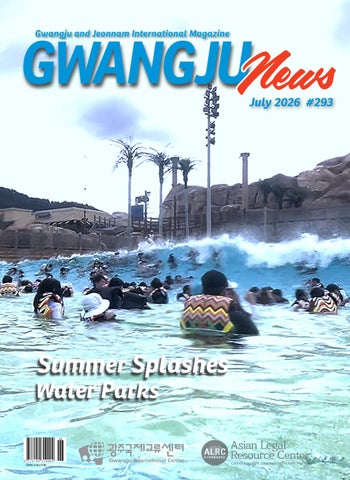
Summer Splashes Water Parks



Gwangju & South Jeolla International Magazine
Gwangju & South Jeolla International Magazine

July 2026, Issue 293
Published: July 1, 2026
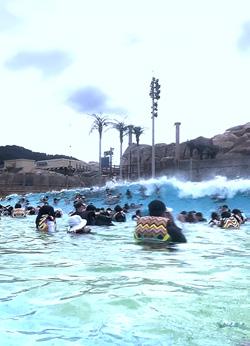
Cover Image
Lotte Water Park in Gimhae.
Courtesy of Neha Bisht.
Publisher Dr. Shin Gyonggu
Editor-in-Chief & Copy-Editing Dr. David E. Shaffer
Layout Editor & Online Editor Johanna
Lezada
The Gwangju News is the first English monthly magazine for the general public in Korea, first published in 2001. Each monthly issue covers local and regional issues, with a focus on the roles and activities of the international residents and local English-speaking communities.
Copyright ©2026 by the Gwangju International Center. All rights reserved. No part of this publication covered by this copyright may be reproduced in any form or by any means –graphic, electronic, mechanical, photocopying, recording, or otherwise – without the written consent of the publisher.
The Gwangju News is published by the Gwangju International Center: Jungang-ro 196-beon-gil 5 (Geumnam-ro 3-ga), Dong-gu, Gwangju 61475, South Korea
Tel: (+82)-62-226-2733
Fax: (+82)-62-226-2731
Website: www.gwangjunewsgic.com
Email: gwangjunews@gic.or.kr
Registration No 광주광역시 라 00145
ISSN: 3140-3190 (online)
Registration Date: February 22, 2010
The Gwangju News is co-sponsored by Asian Legal Resource Centre (ALRC) Korea
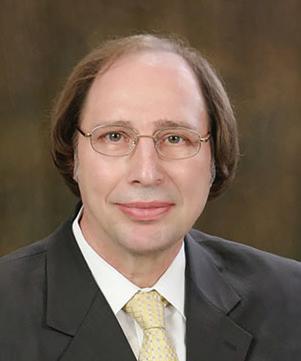
Welcome to July, the beginning of the second half of the year. My, how time flies. It seems like only yesterday that we were experiencing subzero temperatures, and now before us is the impending swelter of summer heat. How can we beat that heat without relocating to Iceland? One great option is Korea’s splendid water parks! South Korea features over two dozen major, world-class water parks in addition to countless smaller resorts. Our cover feature for this issue highlights water parks and brings you a firsthand account of visits to two of them (see “Beating the Heat, Korean Style: Two Unforgettable Water Park Escapes”).
In our Human Rights section, we feature an article/interview with a prominent voice at this year’s recently concluded World Human Rights Cities Forum: Pitikan Sitthidej, the Commissioner for Human Rights in Thailand. Our second article in this section concerns Starbucks’ May 18 “Tank Day” promotion. One Gwangju resident writes about the callousness of that debacle.
In our Community section, you won’t want to miss our article on Gwangju’s sister city San Antonio, Texas, arguably the most vibrant of Gwangju’s sister-city relationships. As we are highlighting 25 years of the Gwangju News this year, we bring you an invited article, “2001: A Place Odyssey,” by Julian Warmington, an early Gwangju News writer and editor. This month’s “Inside the Gwangju News” column spotlights one of our current writers, Vibhanshu Maurya.
We have for you an article on what’s new in the world of renewable energy. And we have for you another article on what’s new in the world of generative AI tools. In the world of art, we have for you a Park Yeonhee exhibition that is new in the way that it connects to Korea’s icons of the past.
This issue’s two movie reviews and one book review all depict regrettable situations, but two of them have happy endings. Which one does not: The Land of Morning Calm, or The Pursuit of Happyness, or The War That Saved My Life?
We are reviving our Music section with two short articles on K-pop: one on the planned biggest-ever K-pop festival in all of South Korea, and the other on a K-pop boy band that includes two North Koreans. And as always, there’s so much more in this issue than there is room to mention: sports, upcoming events, F–2 visas, and more. Enjoy.
David E. Shaffer
Editor-in-Chief Gwangju News
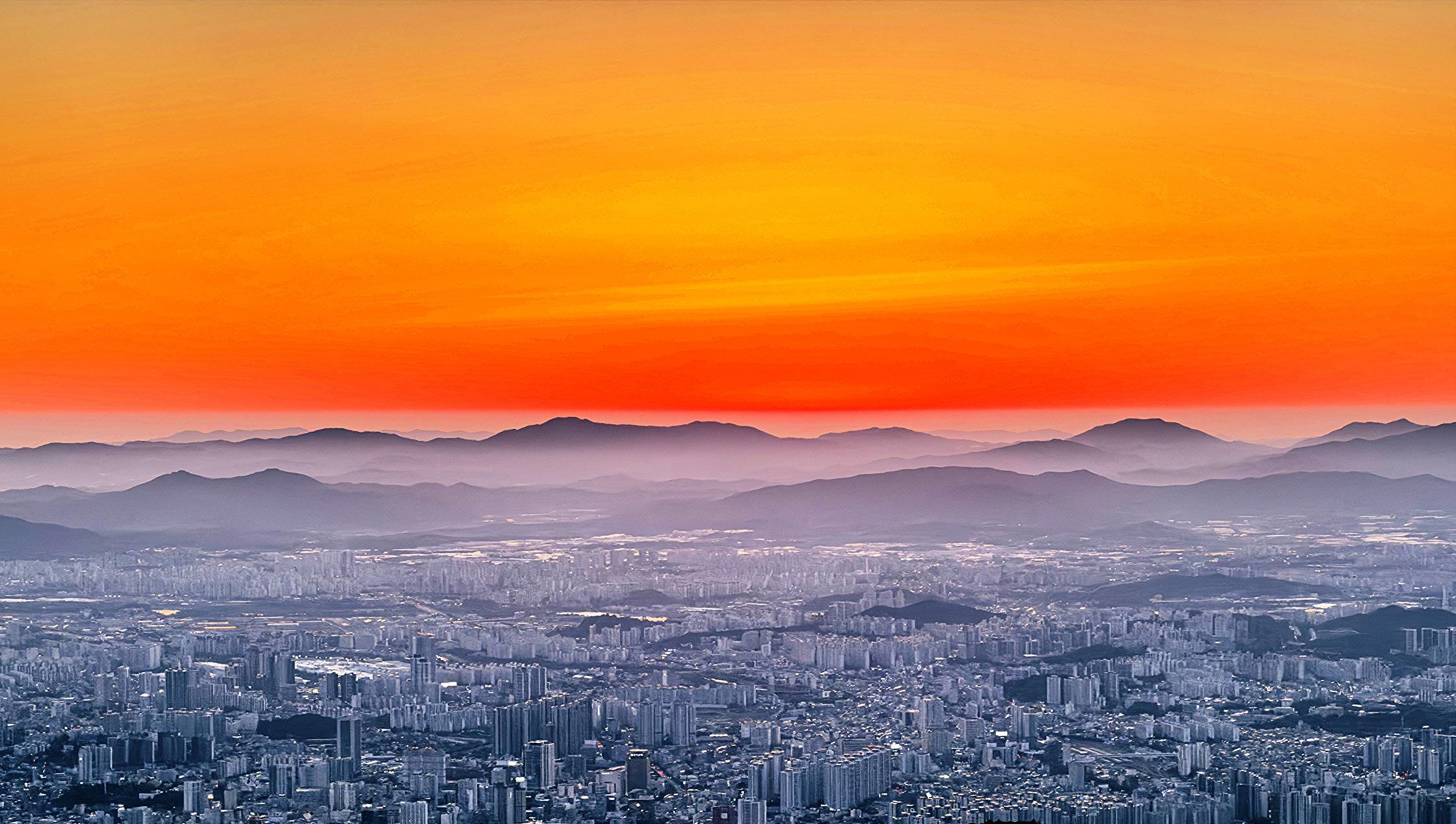
As amber dusk spills over Mudeung Mountain’s crest, mist softens the distant ranges. The lights of Gwangju unfurl like a quiet breath, glowing tenderly beneath the fading sky.
The Photographer
Wang Hao is from China. He is currently a PhD student at Gwangju’s Honam University, a member of the Gwangju International Student Supporters (GISS), and a photographer affiliated with CSVA, a Starlight IP Collective in China.
Capture Info: This photo was taken on May 30, 2026, at Mudeung Mountain National Park in Gwangju. The specific shooting location was Chung-bong (Middle Peak). Focal length: 100 mm, ISO: 64 F2.8, Shutter: 1/125.
(Photo of the Month submissions are open to all readers: gwangjunews@gic.or.kr)
41 The Environment: What’s New in the World of Renewable Energy? SCIENCE
43 The New Generation of AI Tools: A Glimpse into the Future

Lessons from a May in Gwangju: A Conversation with Pitikan Sitthidej on Human Rights, Regional Challenges, and International
CULTURE & THE ARTS
46 Art Exhibition: Five Peaks, No Rules – A Conversation with the Past
51 The Calcuttan in Korea: The Ghosts and the Kinetic
55 Movie Review: The Land of Morning Calm – The Shape of What Remains
58 Movie Review: The Pursuit of Happyness – Learning the Art of Hopeful Survival
60 Book Review: The War That Saved My Life
62 Poetry: Divine Silence FOOD & BEVERAGE
63 D’s Café Column: Mi Mill – A Cozy Café with Naturally Fermented Bread SPORTS & ENTERTAINMENT
64 Music: K-Pop Group Features Defectors from North Korea
65
Music: Biggest-Ever K-Pop Festival in South Korea Planned
66 Sports Focus: Bullpen Revival Powers Kia’s Climb Up the Standings
68 Area Sports Round-Up
71 July Upcoming Events
The Jeonnam (Jeollanam-do) and Gwangju regions have launched a historic administrative merger on July 1, marking the creation of the country’s first-ever unified special city. The milestone reunites two entities that were separated forty years ago when Gwangju was elevated to a directly-governed metropolitan city in 1986 – a division that shaped the region's political and administrative landscape for four decades.
Encompassing 3.2 million people and twelve percent of the nation’s territory, this superregional entity significantly elevates the region’s political standing and confers upon the new mayoralty a cabinet-level status equivalent to that of the mayor of Seoul. With key development rights, administrative licensing powers, and exemptions from preliminary feasibility studies transferred from the central government, the unified city can now swiftly pursue customized public policies and secure national budget funds.
At the helm of this monumental shift, Mayor Min Hyung-bae – elected with over 80 percent of the vote – begins his official tenure guided by two governing pillars: growth and citizen sovereignty. Rejecting top-down bureaucratic approaches, the administration is establishing a citizen-sovereign government where residents participate in designing public policies from conception to implementation. This consensus-driven leadership will serve as the primary mechanism to resolve internal frictions, including the location of the integrated government complex and equitable budget distribution between metropolitan centers and rural communities, with a three-zone, balanced arrangement and rotating regional deputy mayors already proposed.

Economically, the newly created unified special city aims to build a massive ultra-regional ecosystem by blending Gwangju's advanced artificial intelligence and cultural assets with Jeonnam’s robust renewable energy and semiconductor infrastructure. This industrial foundation is designed to create quality employment and stem the outflow of young talent from the region, supported by a comprehensive mega-transportation network connecting all major regional hubs within a single hour.
On the social and environmental fronts, the city is implementing progressive structural frameworks. To address critical gaps in regional healthcare access, the administration will establish an integrated, distributed medical school model jointly operating across regional universities. Financially, the city will deploy twenty trillion won in special-purpose grants over four years, with 80 percent earmarked for investment attraction and the remainder split between talent development and social safety nets, alongside expanded local tax transfers to fund a pioneering basic income framework. Embracing a sustainable future, the city will also construct a green, circular RE100 ecosystem to build a carbon-neutral metropolis, positioning the unified city as a national model for balanced development beyond the capital region.
Thespecial metropolitan city government announced that three regional specialized high schools – Gwangju Technical High School, Dongil Future Science High School, and a selected high school from the Jeonnam region – have been officially chosen for the Ministry of Education’s 2026 Covenant-Based Specialized High School Project. Following the recent historic merger establishing the unified metropolitan framework,
this project expands its regional footprint to build a comprehensive vocational pipeline. This national initiative forms powerful alliances among local governments, education offices, industry leaders, and universities to ensure high school graduates successfully transition from local employment to permanent regional settlement.
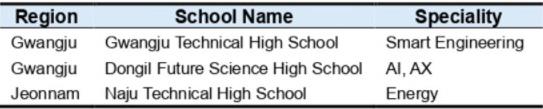
Each selected school will receive up to 4.5 billion won in national funding over the next five years to aggressively redesign curricula, restructure academic departments, upgrade advanced laboratory environments, and expand collaborative industry–academia programs. Gwangju Technical High School will lead training in the smart manufacturing sector by focusing on automated facilities and AI-based manufacturing technologies. Dongil Future Science High School will foster specialists in digital transformation, future mobility, and semiconductors, while the newly added Jeonnam institution will cultivate technical talent tailored directly to the broader region’s strategic industries.
Local authorities attribute this major administrative milestone to a cohesive governance body established earlier to support regional high school graduates, a strategy that aligned perfectly with national policy goals. Leadership from across the newly integrated administrative and educational branches personally participated in the rigorous evaluation process to demonstrate an unyielding institutional commitment. Moving forward, the regional education office will implement a phased rollout encompassing advanced practice lab construction and curriculum design, supported by separate,
supplementary funding linked through the local Meister High School framework.
Government and education officials highly praised the breakthrough, calling the selection of the three schools a vital turning point for regional vocational education to grow hand-inhand with key strategic sectors. They pledged aggressive, unified administrative support to ensure all three institutions successfully solidify their positions as central hubs for developing the highly skilled technical talent needed to drive the newly expanded local economy.
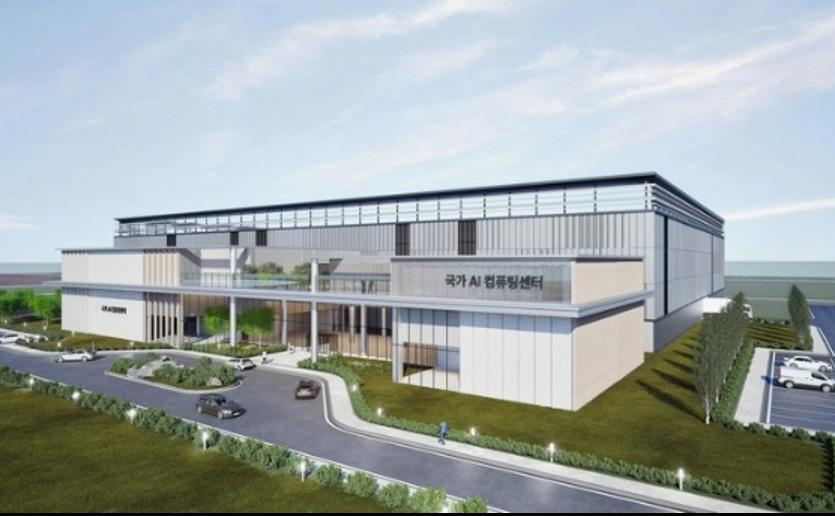
Jeonnamhas achieved a major milestone in its bid to become a global high-tech hub, as the newly formed special purpose company for the National Artificial Intelligence Computing Center has officially chosen Haenam as its permanent headquarters. Despite strong initial pushback to place the corporate headquarters in the Seoul metropolitan area for client accessibility, the province successfully anchored the entity to the actual data center site in Haenam. The corporate body will set up its temporary operations in the SolaSeaDo Promotion Hall
in Sanim-myeon, Haenam, before moving into the state-of-the-art facility upon its completion. This decision ensures that Jeonnam will not just host the physical infrastructure but will serve as the administrative and strategic brain of South Korea’s next-generation AI foundation.
The multi-billion won project represents a monumental partnership between the public sector and top-tier tech giants, bringing immense economic weight to the region. Samsung SDS leads the venture as the largest shareholder with a 30 percent stake, while the central government holds 29 percent, and Naver Cloud holds another 26.1 percent. Other major conglomerates –Samsung C&T, Kakao, Samsung Electronics, and KT – are also participating as equity investors. By drawing these industry leaders directly to Haenam, Jeonnam positions itself at the very forefront of the nation’s digital economy, bridging the regional digital divide and creating a brandnew technological ecosystem in the southwestern region.
The regional development of the SolaSeaDo district is set to accelerate rapidly as construction is scheduled to break ground this July or August. Final administrative licensing and power grid impact assessments have already been successfully cleared, allowing the province to avoid the power supply challenges frequently faced by metropolitan data centers. Local development is further boosted as Boseong Construction, an active participant in the broader regional SolaSeaDo development project, is strongly positioned alongside Samsung C&T to handle the construction phase. With a clear target completion date set for 2028, the project will immediately drive regional construction jobs and boost the local economy during the third quarter of this year.
Once fully operational, the Haenam center will house fifteen thousand of Nvidia’s most advanced
graphics processing units, which were secured by the government following the Asia-Pacific Economic Cooperation summit. The facility is slated to feature Nvidia’s highly anticipated nextgeneration Vera Rubin chips, making Jeonnam the home of one of the most powerful computing infrastructures in Asia. Provincial officials view this center as a definitive game-changer that will transform Jeonnam from a traditionally agricultural and maritime region into a core pillar of the national defense, space, and artificial intelligence industries.
The organizing committee for the 2026 Yeosu World Island Exhibition has entered its most critical phase, with only a couple of months remaining until the September grand opening. Executive Director Kim Jong-gi confirmed that construction at the main Jinmo District venue in Dolsan has advanced significantly past the 73 percent completion mark reported last month, entering its final weeks of structural handover and solidifying absolute confidence in the event’s success.
The physical landscape of the main venue has transformed dramatically over the weeks. The signature open cultural space is now fully complete, offering panoramic coastline views for upcoming major performances. Structural steel frameworks for the landmark Theme Island pavilion are entirely erected, and the structural
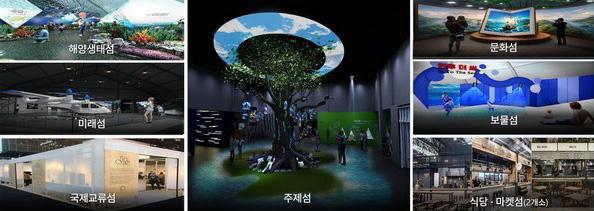
installation of the eight thematic exhibition halls is complete. Curators and tech teams have officially moved indoors to install advanced media systems, keeping the infrastructure strictly on track for full completion ahead of August pilot operations.
These halls are currently being outfitted to merge cutting-edge technology with maritime nature under the theme Connecting Islands, Sea, and the Future. The Theme Island pavilion is finalizing an immersive media tunnel and a massive symbolic tree sculpture, complemented by an outdoor LED media facade. Specialized spaces like the Marine Eco-Island and Future Island pavilions will feature digital aquariums for protected species, real-world Urban Air Mobility models, and hydrogen-powered vessels. Cultural exhibits from thirty nations are also being assembled alongside interactive marine augmented-reality experiences for families.
The finalized programming schedule for the 61day exhibition features 133 performances, kicking off on opening day with a creative musical inspired by the local Sinjikki mermaid legend of Geomun Island. The lineup features K-pop festivals, public concerts, and traditional maritime folklore from fifteen countries during the dedicated Island Friends Day. Simultaneously, the Yeosu Expo
Site will host global academic events like the International Island Forum and the World Island Cities General Assembly, alongside 27 peripheral events including the 3rd Jeonnam World Gimbap and Salt Festival.
A defining feature of this exhibition is its expansion onto real, inhabited islands. On the island of Gaedo, local communities have finalized 16 immersion programs including coastal camping, arts festivals, and outdoor wellness activities. Geumodo will offer 21 specialized itineraries, showcasing its famous Bireong-gil coastal cliff pathways through stamp tours and native culinary storytelling. Tailored accommodation and dining packages are fully organized, allowing visitors to stay overnight in local villages and experience authentic meals made entirely from indigenous island ingredients.
To maximize attendance, Jeonnam Province and Yeosu City have activated extensive logistical and financial incentives. Passenger ferry fares across six major island routes have been slashed by 50 percent. Under regional travel initiatives, tourists will receive substantial local currency rebates on island lodging and dining, while nonlocal visitors can get up to half of their expenses reimbursed. Furthermore, 29 public buses across 16 island routes are now operating entirely free
of charge, supported by up to 60 weekend shuttle buses and ongoing negotiations to increase KTX train frequencies from Seoul.
Marking this critical countdown milestone, the committee has launched an aggressive promotional campaign across all media channels. Following the online inauguration of 2,026 promotional ambassadors, a nationwide social media push is in full swing. On the streets of Yeosu, public buses wrapped with the official mascot, Daseomi, and flag-bearing taxis are building local momentum, backed by shortform video contests and mobile promotional booths traveling to major metropolitan hubs. Organizers emphasize that with structural heavy lifting finished, the focus has shifted entirely to perfecting an unforgettable visitor experience.
Asthe newly elected mayor of JeonnamGwangju Special City officially assumes office this July 1, the mega-regional integration transitions into a governing reality. This historic launch coincides with the region's intense backlash against Starbucks Korea’s controversial May 18 marketing campaign, which local critics argued mocked the historic democratization movement. In response, the newly integrated administrative regions have mobilized a synchronized strategy, demonstrating that the unified metropolitan vision operates seamlessly to defend its historical dignity.
Gwangju continues to anchor the economic response by enforcing strict corporate accountability measures, a stance heavily driven by the political transition. Prior to taking office, newly elected Mayor Min Hyung-bae condemned the corporate event as an arrogant disaster rather than a mistake. This political friction has cast a significant shadow over Shinsegae
Group’s 4.2-trillion-won regional investment portfolio, which now falls under the permitting purview of the new leadership. Public outrage has fueled widespread petitions demanding a freeze on Shinsegae flagship projects, including the 2.9-trillion-won “The Great Gwangju” expansion and the 1.3-trillion-won “Grand Starfield Gwangju,” putting the group’s scheduled late-2026 groundbreakings under unprecedented scrutiny.
Simultaneously, Jeonnam has sustained the cultural front through a robust educational and preventative framework designed to fortify regional identity. The Jeonnam Provincial Office of Education countered the corporate narrative by expanding democratic and human rights education initiatives for the summer term. By ramping up youth-centered historical tours of regional resistance sites and broadening the curriculum surrounding state-sponsored violence, Jeonnam transforms a public relations disaster into systemic educational reform, ensuring that the collective memory of the unified territory remains resilient.
Viewed from the desk of the newly inaugurated leadership, these actions reveal a sophisticated division of labor within the unified special city. While Gwangju utilizes administrative leverage to scrutinize major corporate investments and enforce economic boycotts, Jeonnam secures the generational high ground through long-term educational supports. This coordinated approach signals to the rest of South Korea that the Jeonnam-Gwangju Unified Special City begins its official tenure with an unyielding commitment to defending its historical legacy.
Amy Park is a content producer and the program officer for the ALRC Korea, based in Gwangju. She helps build the organization’s foundation and supports new efforts in human rights advocacy and resource sharing.
By Neha Bisht
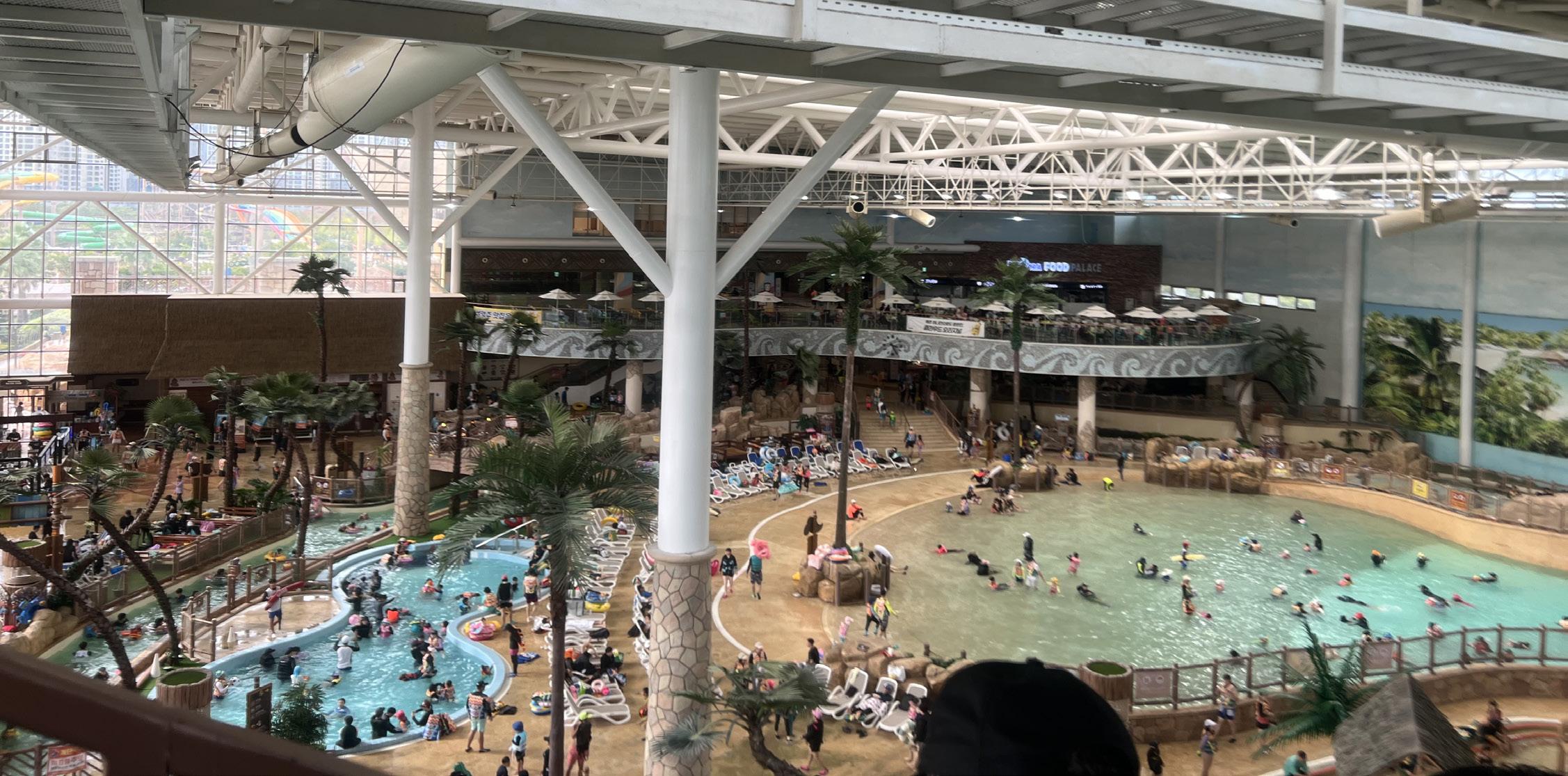
As the summer sun blazes across South Korea, bringing soaring temperatures and humid days, families and groups of friends begin searching for the perfect escape from the heat. Fortunately, the country is home to world-class water parks that offer the ideal combination of adventure, relaxation, and entertainment. From giant wave pools and thrilling water slides to relaxing spa facilities and family-friendly attractions, these destinations promise unforgettable experiences for visitors of all ages.
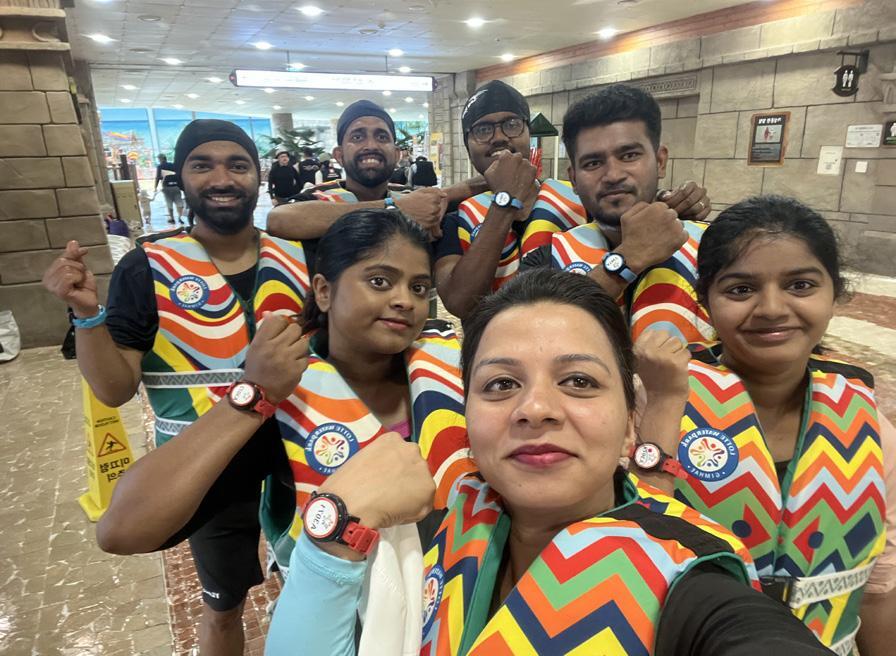
For me and my friends, the answer to beating the summer heat was simple: Pack our swimsuits, sunscreen, and a sense of adventure, and set out to explore two of South Korea’s most popular
water destinations: Lotte Water Park Gimhae and High1 Water World. Although we visited these two water parks during different summers, each trip offered its own unique experiences and unforgettable memories. What followed was a collection of exciting summer adventures filled with exhilarating rides, refreshing pools, scenic surroundings, endless laughter, and moments that we continue to cherish long after those summers have passed.
Our journey to Lotte Water Park Gimhae began the way many modern adventures do: with Instagram reels, Google searches, and Naver reviews. After gathering a group of enthusiastic
friends, we rented a car, packed snacks for the road, and headed toward South Korea’s largest water park.
Since we visited during a public holiday, the entrance was packed with visitors. Despite the crowds, I was immediately impressed by how efficiently everything was organized. From ticket collection to locker facilities and putting on a life jacket, every step was systematic and user-friendly. Visitors first store their shoes in dedicated lockers before moving their other belongings into larger storage lockers. Each locker is connected to a convenient wristband key, making it easy to access personal items throughout the day.
After changing into our swimwear in the spotless changing rooms, we entered a tropical world inspired by Polynesian islands. The park is divided into indoor and outdoor zones, offering attractions for visitors of all ages.
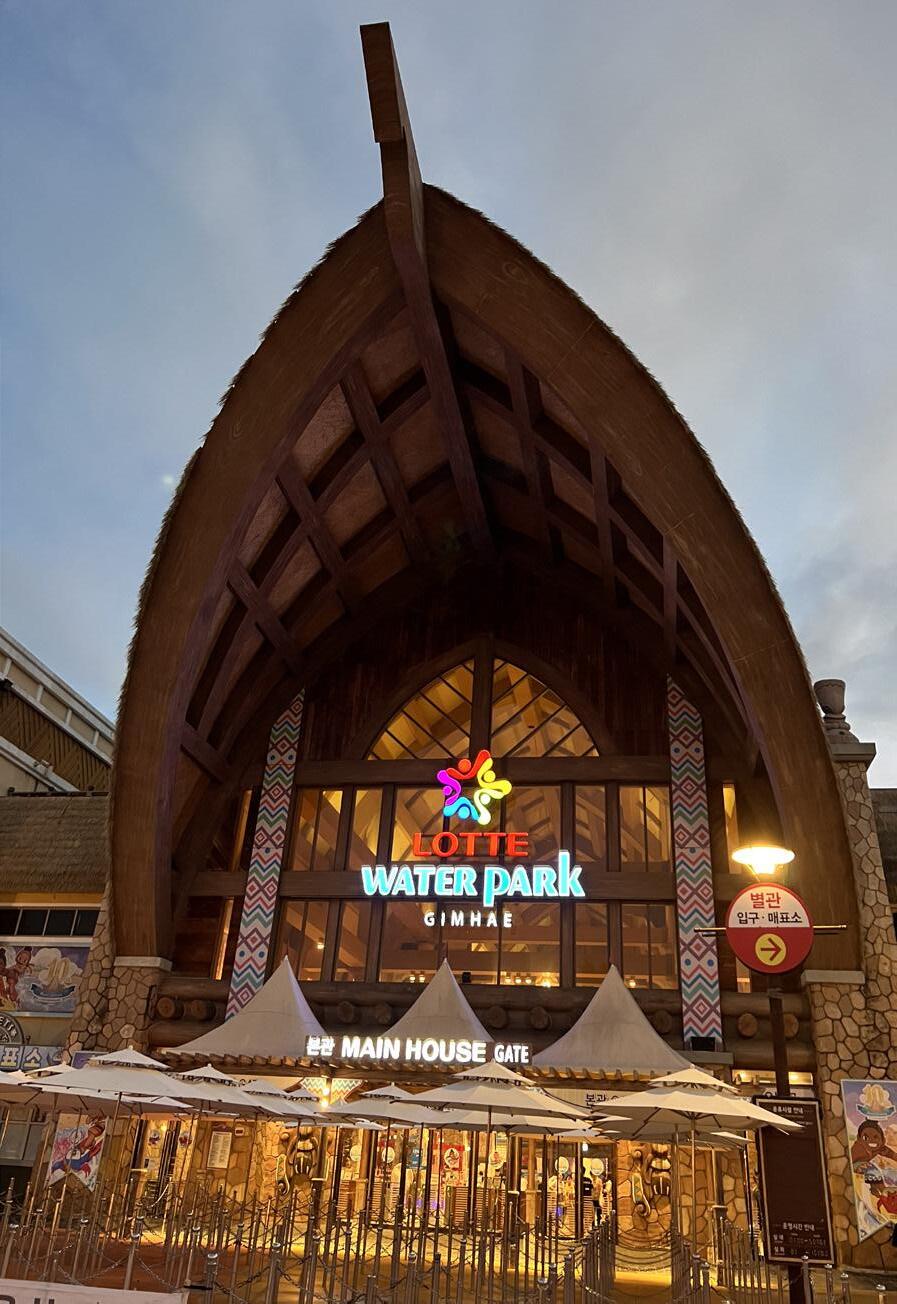
Outside, the excitement reaches another level. Thrill seekers can challenge themselves on the Water Coaster, Giant Boomerango, Racing Slide, Jet Slide, Torrent River, and Rafting Slide. One of the park’s biggest attractions is the Giant Wave, Korea’s largest wave pool, where visitors can experience powerful ocean-like waves while staying safely within the park.
The indoor area’s featured attractions included Tiki River, Tiki Wave, Tiki Aqua Flex, toddler pools, play pools, healing spa pools, and various body and tube slides. Families with young children especially enjoy Tiki Aqua Flex, an interactive water playground filled with colorful slides, climbing structures, water cannons, and giant tipping buckets. The dedicated children’s areas ensure that younger visitors can safely enjoy the park while parents relax nearby.
Although we couldn’t try every ride due to long queues and a few attractions being closed for maintenance, we spent hours in the Giant Wave pool, cooling off under the blazing summer sun. Thankfully, I had brought a waterproof phone pouch, allowing me to capture countless photos and videos without worrying about water damage.
One of my favorite experiences was relaxing in the indoor healing spa pools. After hours of walking and swimming, sitting in warm water while powerful jets massaged our backs and
feet felt incredibly refreshing. It was the perfect balance between adventure and relaxation.
The park also features a spacious food plaza with a wide range of dining options, from Korean dishes to burgers, snacks, desserts, and coffee. Our group eventually settled down with burgers and drinks, sharing stories, laughing about our reactions on the rides, and simply enjoying each other’s company.
What impressed me most was the attention to detail in the facilities. The shower rooms were equipped with shampoo, body wash, hot water, and plastic bags for wet clothes. Dressing rooms provided hair dryers, moisturizers, combs, and other basic amenities. While visitors may still prefer bringing their own skincare and beauty products, the facilities reflected the high standard of service that Korean leisure destinations are known for.
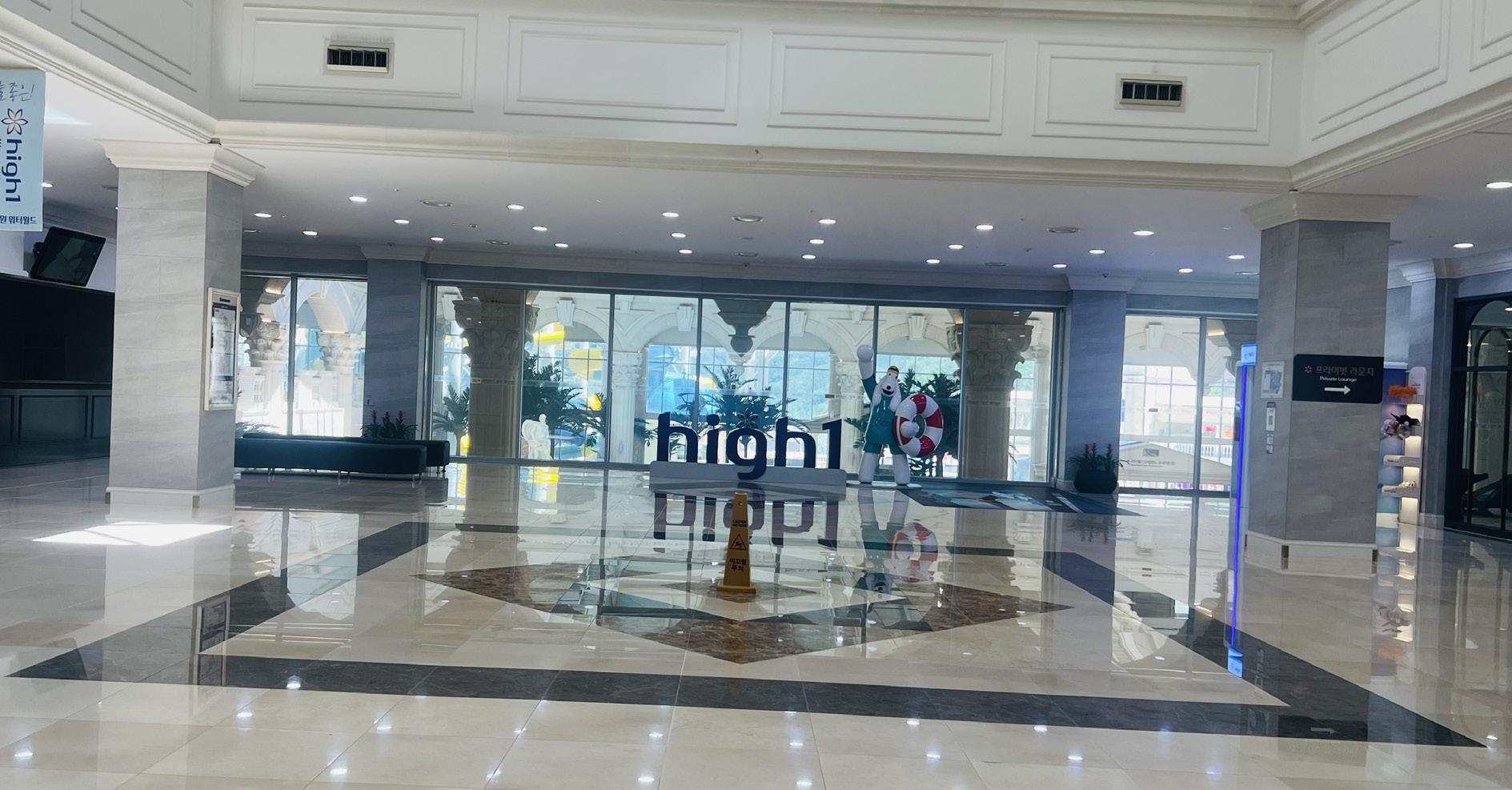
While Lotte Water Park offered the atmosphere of a tropical island vacation, my experience at High1 Water World was completely different yet equally memorable. Located within High1 Resort in the beautiful mountain region of Gangwon Province, the water park combines exciting attractions with
the breathtaking scenery of the Baekdu-daegan mountain range, creating a refreshing retreat away from the busy cities.
Unlike conventional water parks, High1 Water World feels more like a mountain resort where adventure and relaxation coexist. As High1 Resort is located quite far from Gwangju, careful time management is essential if you want to fully enjoy everything the water park has to offer. Our group made the trip as part of a summer getaway, but due to travel time and scheduling constraints, we were only able to explore a few rides and spend time in the pool and spa areas. Nevertheless, the experience was highly enjoyable.
One of the things that stood out most was the excellent maintenance of the facilities and the well-organized visitor system. Every step, from entry procedures to locker usage and facility access, was clearly guided by staff and signboards. The resort also features a medical dispensary for emergencies, providing visitors with an added sense of safety and comfort.
Around the pool zones, many families and groups had set up small resting areas and cabanas, creating a unique atmosphere that felt like an indoor beach camping experience. Watching people relax beside the pools while enjoying the
cool indoor environment offered a refreshing escape from the intense summer heat outside.
The park is divided into three distinct areas: the Family Zone, Island Zone, and Poseidon Zone – each catering to different age groups and interests. The Family Zone is designed for visitors of all ages and features attractions such as the Body Slide, Tube Slide, Swing Star, and the famous Glass Pool, one of Korea's most unique indoor swimming pools. Its transparent structure creates a memorable swimming experience and serves as a popular photo spot for visitors.
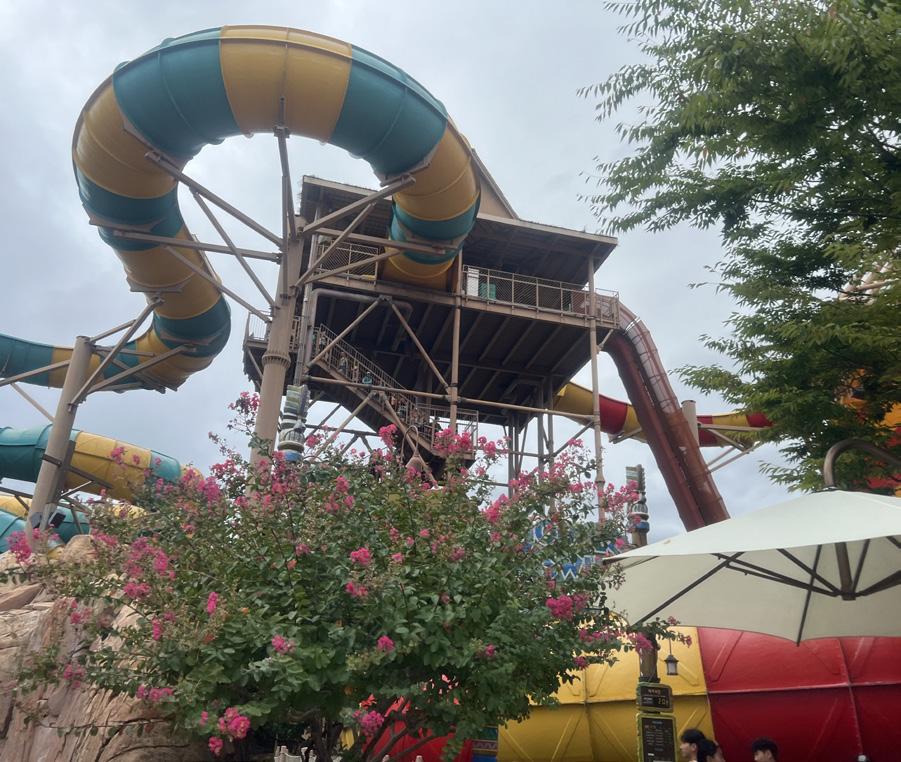
Families with children are naturally drawn to the Island Zone, where interactive water playgrounds, mini slides, climbing structures, water guns, and giant tipping buckets provide endless entertainment. The lively atmosphere makes it easy to spend hours enjoying the attractions while watching children explore and play.
For visitors seeking more excitement, the Poseidon Zone offers some of the park’s most thrilling attractions. The powerful wave pool recreates the feeling of being at the beach, while rides such as the Poseidon Blaster deliver fastpaced excitement accompanied by spectacular views of the surrounding mountains.
What truly distinguishes High1 Water World is its emphasis on wellness and relaxation. Heated spa pools and relaxation facilities allow visitors to unwind while taking in panoramic mountain views. The combination of fresh mountain air, warm water, and peaceful surroundings creates an atmosphere that feels worlds away from the hustle and bustle of everyday life.
Although Lotte Water Park Gimhae and High1 Water World offer very different experiences, both perfectly capture the spirit of summer in South Korea. Lotte Water Park delivers a vibrant tropical atmosphere filled with thrilling rides, giant wave pools, family attractions, and modern facilities, while High1 Water World offers a unique blend of water adventures, mountain scenery, and wellness experiences.
Whether you’re planning a family outing, a road trip with friends, or simply looking for a way to escape the summer heat, these destinations promise unforgettable memories. From racing down exhilarating slides and floating through giant wave pools to relaxing in soothing spa waters and sharing laughter with friends, South Korea’s water parks offer far more than just a place to cool off – they provide the perfect setting for a summer adventure worth remembering.

Note: For ticket price and timing of the water parks please visit https://waterpark.lotteworld.com/, https:// www.high1.com/eng/contents.do?key=2707
The Author
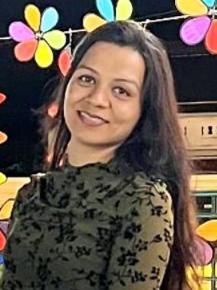
Neha Bisht is a native of India, pursuing her PhD research at Chonnam National University’s School of Materials Science and Engineering. She loves to meet new people and make new friends. Neha endeavors to contribute to the well-being of society in whatever way she can. Photographs courtesy of the author.
By Luis Andrés
During the World Human Rights Cities Forum in Gwangju, the city welcomed voices from around the world committed to advancing human dignity and democratic values. Among them was Pitikan Sitthidej, the Commissioner for Human Rights in Thailand. Throughout the Forum, she did not simply participate as a representative delivering institutional remarks. She actively attended discussions, listened to debates, and engaged with conversations that connected local experiences to global human rights challenges.
Human rights work in Thailand exists within a complex political and social environment. Discussions surrounding freedom of expression, institutional reform, and democratic participation continue to shape public debate. During exchanges held throughout the Forum, Thailand participants themselves reflected on ongoing challenges faced by activists and civil society organizations.
Among the issues raised by international observers and human rights advocates is Thailand’s lèsemajesté legislation, which criminalizes certain forms of criticism directed toward the monarchy and has generated longstanding debate regarding freedom of expression and political rights. At the same time, Thailand also navigates broader social and political pressures, including domestic polarization and regional tensions that increasingly shape conversations on rights and governance across Southeast Asia.
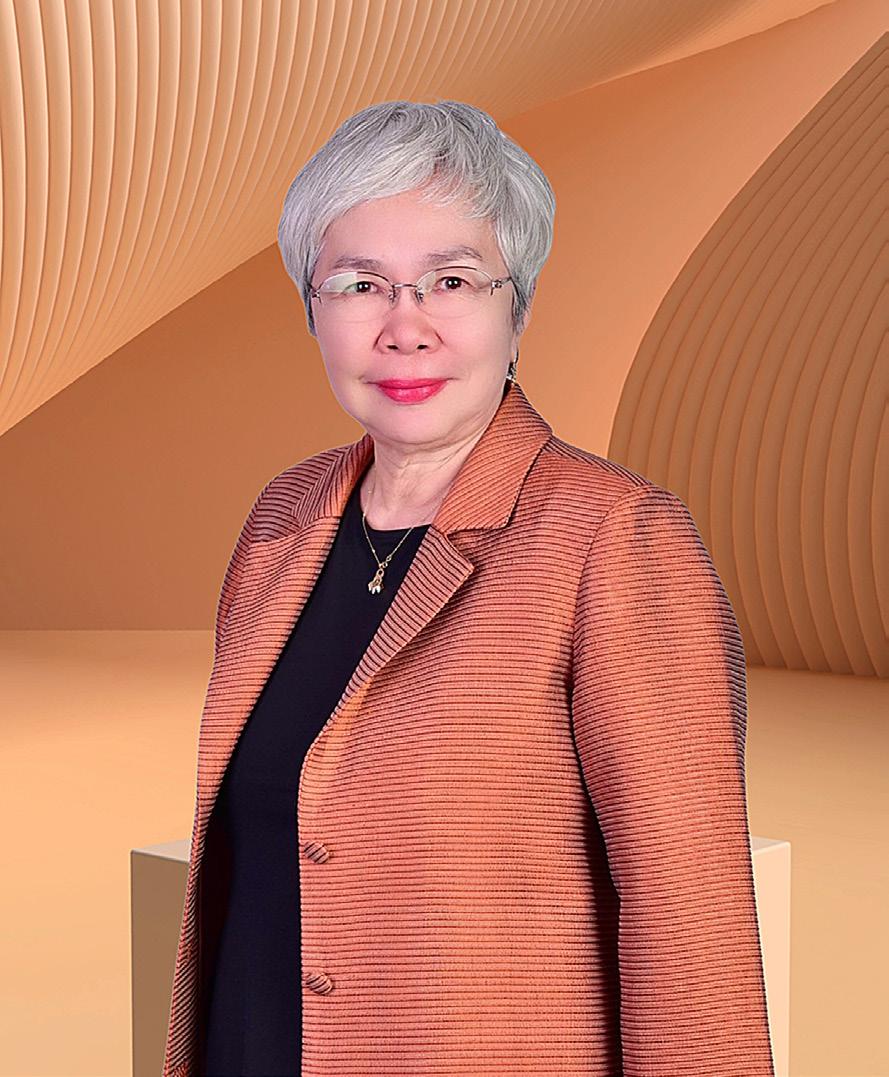
Yet Thailand also represents an example of important social transformation. Earlier this year, the country became the first nation in Southeast Asia to legalize same-sex marriage, marking a historic development for LGBTQ+ rights in the region. And this is just one example. But progress and challenges coexist simultaneously, illustrating that advances in human rights are rarely linear.
Gwangju, a city internationally recognized for its democratic legacy and commitment to human
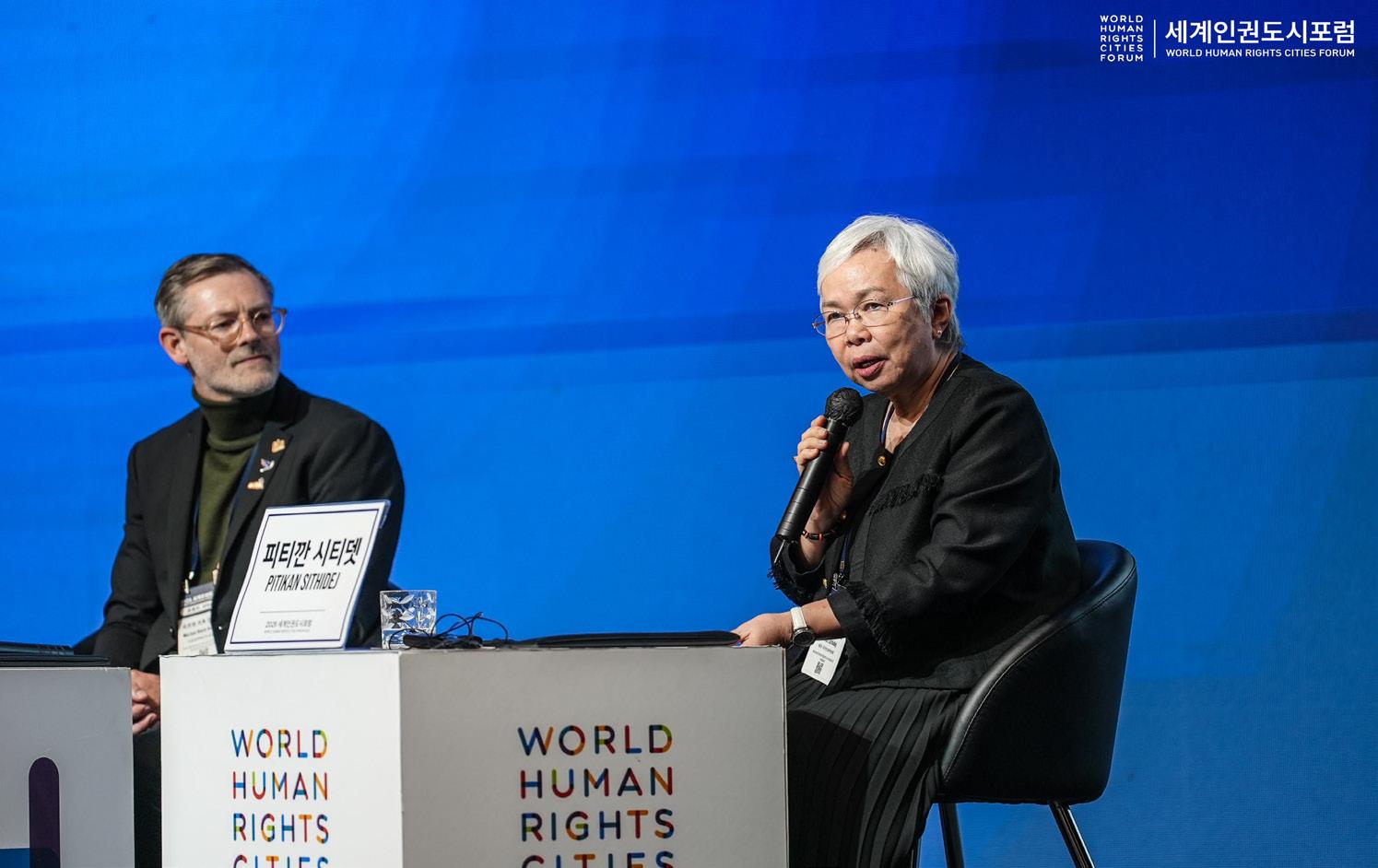
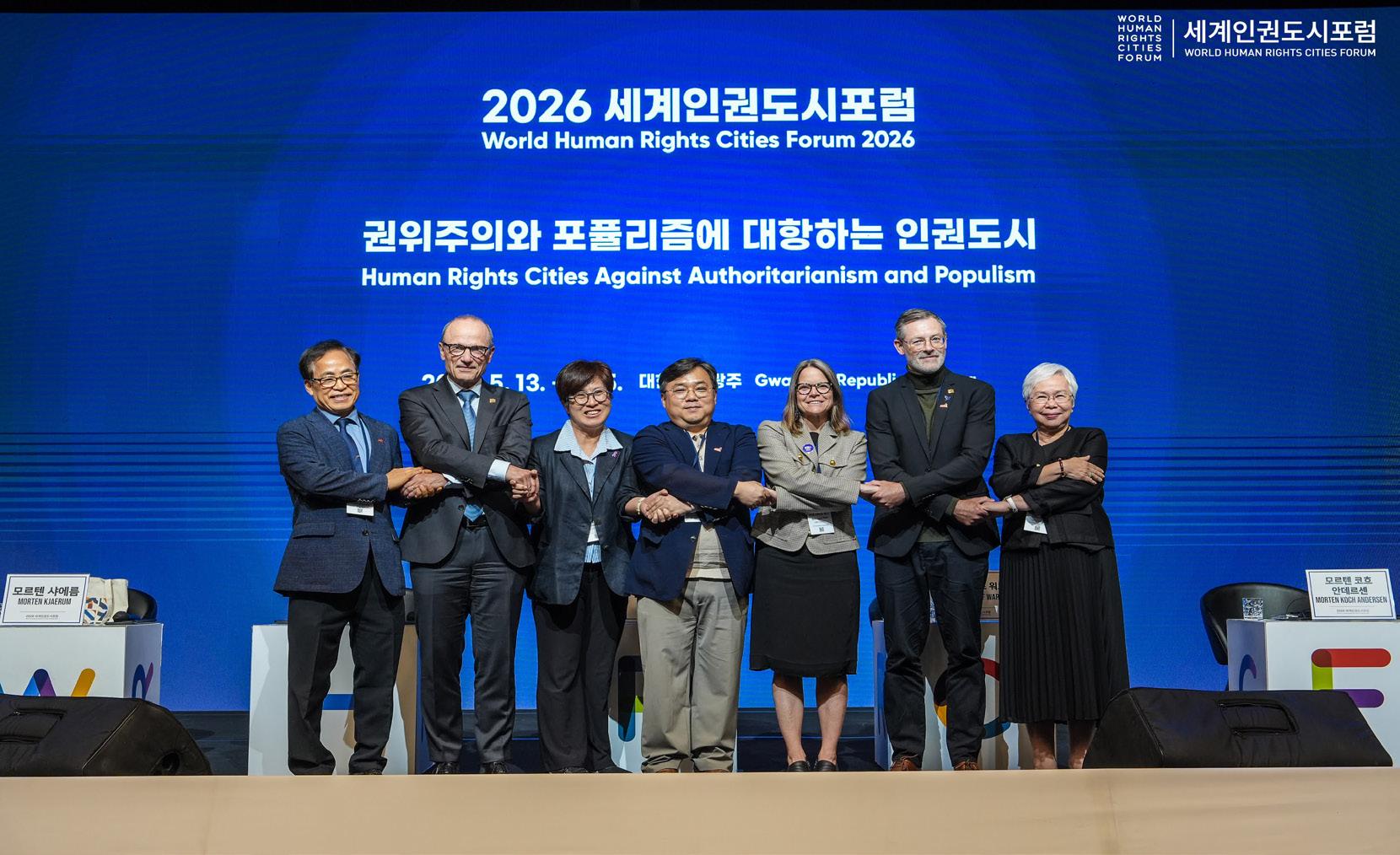
Commissioner Sitthidej speaking during a WHRCF panel discussion. (Courtesy of WHRCF)
rights, offered a unique space to reflect upon these realities. Taking this context into consideration, I wanted to ask Commissioner Sitthidej a few questions. What follows are those questions and the Commissioner’s in-depth responses.
Luis Andrés: Gwangju is internationally recognized as a human rights city and as a symbol of democratic struggle. From your perspective, why are human rights cities important in advancing human dignity and democratic values globally?
Commissioner Sitthidej: I believe human rights cities genuinely improve people’s quality of life. They are a people-centered approach to advancing human dignity and democratic values, because they translate human rights principles from policy into real, tangible outcomes in the spaces closest to people’s lives: at the city and local level.
On the dimension of human dignity, a human rights city is grounded in non-discrimination, equality, the protection of vulnerable groups, and accountability in city governance and public service delivery, making rights something every person can access and experience in daily life. On the dimension of democracy, it rests on meaningful participation, access to information, and transparency, all of which strengthen
democracy from the grassroots and help restore public trust in the state. Furthermore, the city is where local government shifts its role from a mere implementer of policy to an active driver of human rights: whether people can truly access their rights – like public services, safe transport, housing, the environment, and education –depends largely on governance at the city level.
Luis Andrés: During the Forum, you actively attended discussions and listened to participants from many different backgrounds. Were there any conversations or experiences in Gwangju that particularly resonated with you?
Commissioner Sitthidej: In the National Human Rights Commission of Thailand (NHRCT), we regard the people of Gwangju’s struggle for democracy as a landmark moment in the world’s history of human rights and democracy. What is most striking is how ordinary citizens, students, and the younger generation of that time stood together for democratic values with profound sacrifice. This is therefore not only South Korea’s history but a vital lesson for all humanity: that human rights and democracy are never won easily; they require courage, perseverance, and the cooperation of every sector to safeguard.
Another point we admire is how South Korean society has been able to learn from the wounds
of its past, developing mechanisms for remedy, truth-telling, and remembrance, and holding the event as a shared lesson for society reflecting the importance of truth, justice, and remembrance in building a sustainable democracy. For Thailand, Gwangju is also an inspiration: a reminder that respect for human rights, the rule of law, and opening space for peaceful public participation are the essential foundations of a democratic society. Listening to people’s voices with respect for human dignity helps reduce conflict and leads toward a society that is peaceful, just, and sustainable.
“International cooperation and exchange are vital to strengthening human rights protection.”
Beyond this, from listening to and exchanging experiences with representatives from various countries, we see the situation of women human rights defenders in Indonesia as one that reflects a major challenge facing democratic societies today, particularly the pressure of deeply rooted patriarchal structures, the use of law as a tool to harass those who voice their views and defend human rights, and the sexual violence and social stigma directed at women defenders. This is deeply troubling, because it not only undermines freedom of expression and public participation, but also creates a climate of fear in which many women cannot exercise their rights safely and equally.
We therefore strongly support the proposal that cities and public agencies should establish gendersensitive complaint mechanisms and create spaces for participation in which people can genuinely help shape policy. Because meaningful participation is not merely about being heard, it must give people real decision-making power to jointly set the direction of social development. Luis Andrés: Thailand faces a complex human
rights environment involving discussions on freedom of expression, democratic participation, and institutional challenges. From your perspective, what are currently the most important human rights priorities for Thailand?
Commissioner Sitthidej: Today, Thailand is working to ensure that human rights are understood not merely as the protection of specific, isolated rights, but as a matter of building trust, fairness, and peaceful coexistence. In setting out human rights priorities for Thailand, at least five areas stand out as ones that must be advanced in parallel.
First, protecting freedom of expression and democratic participation, which form the foundation of a democratic society. Opening space for citizens, academics, the media, youth, and civil society to express their views in good faith and without fear helps reduce conflict and builds the culture of listening that democracy requires.
Second, ensuring a justice process that respects human dignity, particularly in arrest, detention, prosecution, and imprisonment, consistent with international human rights standards, including the prevention of torture, cruel treatment, and discrimination.
Third, reducing inequality and protecting economic, social, and cultural rights. Human rights are not limited to political freedoms; they also include access to education, public health, housing, a healthy environment, and fair economic opportunity, especially for vulnerable groups such as children, older persons, persons with disabilities, migrant workers, ethnic groups, and low-income communities.
Fourth, responding to human rights challenges in the digital age, from personal data and digital surveillance to disinformation, online hate speech, and the use of artificial intelligence. Both the public and private sectors must develop regulatory mechanisms that balance security and safety with people’s rights and freedoms.
Fifth, cultivating a culture of human rights in the everyday life of Thai society. The protection of rights becomes sustainable not through laws or independent institutions alone, but through a shared understanding that human dignity, diversity, and non-discrimination are fundamental values everyone must respect.
From the perspective of the National Human Rights Commission, human rights are not an obstacle to security or development; they are an essential condition for a society that is stable, just, and trusted by the international community. Striking the right balance between rights and freedoms, the rule of law, and the public interest is therefore a vital task that all sectors must continue to advance together.
Luis Andrés: Thailand has also experienced important social transformations in recent years, including progress regarding LGBTQ+ rights. How do you evaluate recent developments, and what areas still require further work?
Commissioner Sitthidej: Thailand has made significant progress on human rights, particularly on the rights of people of diverse sexual orientations and gender identities, reflecting change at the level of law, policy, and broader social attitudes. The advancement of genderequality legislation, the opening of public space for greater acceptance of diversity, and the role of civil society and the younger generation are all positive signs that Thai society is moving toward a more inclusive respect for human dignity.
Despite this progress, several challenges remain that Thailand must continue to address in earnest. Foremost is making equality real in everyday life: in schools, workplaces, the public health system, and the judicial process. From the perspective of the National Human Rights Commission, the most important progress lies not merely in new laws or measures, but in the fact that society is beginning to recognize that every person deserves equal rights and treatment, free from discrimination based on their gender identity or way of life. This principle sits at the
heart of international human rights and is consistent with the principle of equality under the Constitution and in so fostering ongoing public understanding.
Change in human rights becomes sustainable not through legal mechanisms alone but through a culture of respect for difference, freedom from stigma, and acceptance of diversity. Promoting the rights of LGBTQ+ people is not the concern of any single group; it is a key measure of how much a society values human dignity, equality, and democracy. Thailand’s progress here is therefore a process in which all sectors take part to build a society where everyone can live safely, with dignity, and with equal respect for their humanity.
Beyond progress on LGBTQ+ rights, Thailand faces another major transition: becoming a “fully aged society,” with varying intensity across regions. This shift has direct implications for health-service policy, long-term care for people in conditions of dependency, age-friendly urban design, and managing the economic impact of a shrinking working-age population. In response, the NHRCT has continued to advance the rights of older persons, affirming them as full rights-holders, promoting their autonomy and dignity in daily life, and preventing age-based discrimination.
The Commission also sees Thailand’s membership of the UN Human Rights Council for the 2025–2027 term as an important opportunity to advance an international instrument on the rights of older persons. The NHRCT is scheduled to attend the first session of the Intergovernmental Working Group on the Human Rights of Older Persons (IGWG) in July 2026 in Geneva to help shape an appropriate draft convention that would close legal gaps on key issues such as adequate income, the ability to age in place with quality of life, and preparedness across all generations.
Luis Andrés: Participants during the Forum also mentioned challenges related to conflict and security, including tensions in southern
Thailand. At the same time, regional dynamics, including relations with neighboring countries such as Cambodia, continue to shape Southeast Asia. From a human rights perspective, how can institutions balance security concerns while protecting rights and democratic principles?
Commissioner Sitthidej: As the National Human Rights Commission, we believe that security and human rights should not be seen as being in conflict; rather, they must move forward together. Building lasting peace and stability must rest on respect for human dignity, the rule of law, and democratic principles.
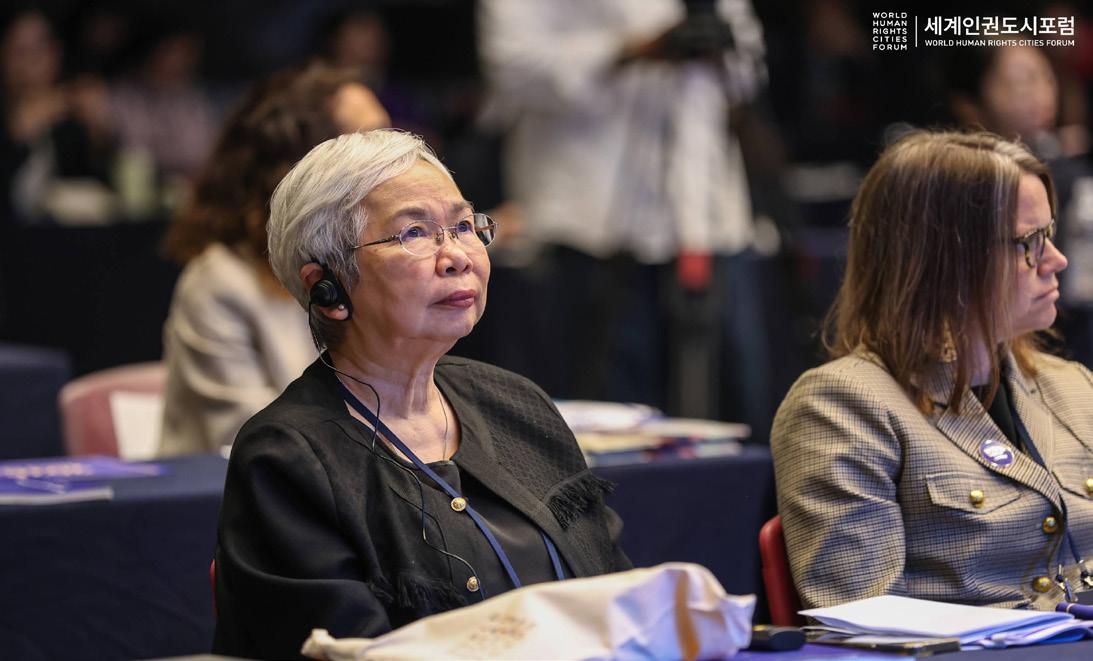
Commissioner Sitthidej participating in the World Human Rights Cities Forum. (Courtesy of WHRCF)
In situations of conflict or heightened security tension, the state has a duty to protect the safety of its people; yet, at the same time, the exercise of state power must remain within the framework of the law and international human rights standards. Any security measure should be grounded in the principles of necessity and proportionality, with effective checks and balances to prevent human rights violations. A sustainable solution requires emphasis on building trust alongside listening to people’s voices, peaceful dialogue, respect for international law, and attention to the human rights impact on the public. Because peace cannot be built on security measures alone, it must rest on social justice and the protection of human rights as its essential foundation.
Ultimately, a strong democratic society is measured not only by its ability to confront
threats, but also by its ability to protect the rights and freedoms of its people, even in times of security challenge, for human rights and democratic principles are the essential foundation of lasting peace and security.
Luis Andrés: Human rights institutions often operate in contexts where social expectations, political realities, and institutional constraints coexist. How do international cooperation and dialogue contribute to strengthening human rights protections in these environments?
Commissioner Sitthidej: International cooperation and exchange are vital to strengthening human rights protection, especially where national human rights institutions (NHRI) must work amid public expectations, institutional constraints, and complex political contexts. Such cooperation opens space for mutual learning: Each country faces different challenges, yet all share the goal of protecting people’s rights, and exchanging good practices, lessons learned, and effective mechanisms helps institutions build capacity and adapt approaches to their own context. It also helps establish shared human rights standards and reinforce universal principles, like the rule of law, equality, nondiscrimination, and public participation, which remain a compass for an NHRI’s work even under political constraints or security challenges.
For Thailand, engaging in international and regional forums is an important chance to reflect on its progress, challenges, and efforts, and to affirm that protecting human rights is not any one country’s task but a shared responsibility of the global community. Since 2025, the NHRCT has continued its international human rights work, cooperating with networks at the global, regional, and sub-regional levels through meetings and activities that track key developments, exchange good practices, and reinforce its role as an independent institution under the Paris Principles. It has also monitored Thailand’s compliance with international obligations through mechanisms, attending and observing treaty body reviews, and most recently, preparing
and submitting an Alternative Report to Thailand’s fourth-cycle Universal Periodic Review (UPR) in April 2026. The NHRCT engages with UN agencies, international organizations, NGOs, and diplomatic missions on issues spanning civil and political rights; economic, social, and cultural rights; the rights of vulnerable groups; and digital and technology rights, drawing on diverse cooperation mechanisms to advance and protect human rights in Thailand in line with international standards.
Luis Andrés: As a woman working in international human rights leadership, what experiences or perspectives have shaped the way you approach your work?
Commissioner Sitthidej: Having worked at both the national level and in international forums, I have come to believe in the power of national and international networks to reinforce and support one another. These experiences have shaped how I think and how I work, particularly in work that demands firmness in principle and empathy for people at the same time.
Over the years, I have listened to the stories of many people – women, children, ethnic groups, detainees, victims of crime, and others in vulnerable situations – many of whom have faced inequality, discrimination, or various forms of violence. These experiences have taught me that
protecting human rights is not only a matter of laws or policy mechanisms, but of listening with understanding and truly respecting human dignity. My work has therefore aimed not merely at solving isolated problems but at creating safe spaces, giving people the chance to be heard, and promoting the participation of all sectors, especially those too often overlooked.
At the same time, working in a leadership role has taught me that strength does not mean confrontation alone. It also lies in the ability to build cooperation across sectors, to communicate constructively, and to bring together people of differing views so they can talk on a basis of mutual respect. I also believe that a greater role for women in policy arenas and decisionmaking is essential to advancing democratic society and protecting human rights because it makes policymaking more diverse, inclusive, and attentive to the impact on people across every dimension, whether gender equality, economic and social rights, safety of life, or access to justice.
Luis Andrés: For younger generations across Asia who want to contribute to human rights and democratic values, especially in environments where advocacy can be difficult, what message would you like to share?
Commissioner Sitthidej: My message to the younger generation is this: Your energy matters
Commissioner Sitthidej with fellow panelists at WHRCF 2026. (Courtesy of WHRCF)
enormously to the future of human rights, democracy, and a society that respects human dignity. In many contexts, speaking out or working on human rights may meet constraints, pressure, or challenges, yet the voice and participation of young people always carry value and meaning.
I also hope you will believe that promoting human rights is not confined to large-scale movements; it can begin with small things in everyday life: respecting difference, refusing to discriminate, listening to diverse views, protecting those who are bullied, or using facts and reason constructively in how we speak to society. These are the very foundations of a democratic culture. Young people also have a vital role in harnessing technology, creativity, and the power of social networks to deepen understanding and awareness of human rights.
And even when change comes slowly, every voice, every effort, and every action grounded in justice and humanity helps move society forward. Because the future of human rights and democracy will grow through the power of the younger generation.
Luis Andrés: Finally, looking toward the future, what kind of legacy or long-term contribution would you hope your work can leave behind?
Commissioner Sitthidej: As a national human rights commissioner, I hope my work has not been merely about resolving individual cases, but about helping to address systemic and structural problems, and about helping to root a culture of human rights deeply in Thai society and the wider region. That is, a society in which people recognize that human rights are neither remote nor the concern of only a few, but a basic principle bound up with everyone's daily life, whether the right to human dignity, equality, freedom of expression, access to justice, or the right to social and political participation.
I also hope that working alongside state agencies has helped make public institutions and
mechanisms more transparent, accountable, and responsive to people’s voices, especially vulnerable groups and those too often overlooked. Because sustainable human rights protection must rest on participation, trust, and equal access to justice.
In concrete terms, my work has placed particular emphasis on building a sustainable system to prevent torture, driving serious enforcement of the Prevention and Suppression of Torture and Enforced Disappearance Act B.E. 2565 (2022), developing preventive monitoring of places of detention, and pressing for Thailand to accede to the Optional Protocol (OPCAT) to protect the dignity of persons in custody. This has gone hand in hand with promoting the rule of law in the criminal justice process, reducing inequality and discrimination, and safeguarding the right to bail and the presumption of innocence. I have also encouraged the business sector to move beyond the traditional notion of corporate social responsibility toward respecting human rights and conducting comprehensive human rights due diligence across the supply chain, in line with the UN Guiding Principles on Business and Human Rights (UNGP).
I also helped initiate the concept of “Human Rights Cities” together with the Bangkok metropolitan administration, expanding it to the provinces, using human rights principles as the framework for people-centered city governance and development. My hope is that these foundations will be carried forward to bear concrete and lasting results.

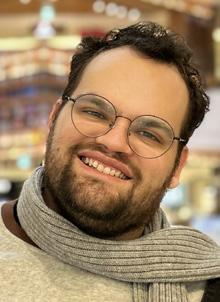
The Author Luis Andrés González is a Mexican GKS scholar and master’s student in cultural anthropology at Chonnam National University. He advocates for LGBTQ+ rights and gender equality, and explores global affairs through pop culture. He is the founder of Erreizando, a digital magazine. Instagram: @luisin97 / @erreizando
By Kim Jongbun
On the evening of June 2, I walked into a Starbucks near the waterfront – not to order a drink but to request a refund. I recovered the remaining cash from two store cards on the spot; the balance from my app, I was told, would take a few days to process. As I stepped outside, the night breeze touched my face. I turned toward the sea and called out, “Goodbye, Starbucks”!
“In Gwangju, a tank is never a neutral symbol. It is the living embodiment of state violence.”

I am someone who lived through May 1980. Certain images from that time refuse to leave me. On May 15 of that year, at a rally in front of Seoul Station protesting Chun Doo-hwan's military dictatorship, I stayed with those who opposed the order to disperse. Chased into the alleyways of Sogong-dong, I was caught. I cannot forget the eyes of the officer who struck me: large, bloodshot eyes flashing beneath a combat helmet. Nor can I forget the long corridor on the 12th floor of Hanyang Apartments in Apgujeong, where I was taken after being apprehended on a warrant. Looking down from that height, I thought, “Should I jump rather than be taken?” The fear of that moment has never left me.
Following, there was the military tribunal held at the Capital Defense Command just days before Christmas 1980; it remains in my memory as a gray, indistinct haze. These are memories I will carry for the rest of my life, and I only experienced May 1980 as a 23-year-old student in Seoul. How many more painful memories must those in Gwangju carry – those who survived the massacre itself?
In Gwangju, a tank is not merely military equipment. It is the symbol of state power turned against its own people – a symbol of the terror that crushed democracy. When armored vehicles occupied the streets and gun barrels were aimed at civilians, the people of Gwangju were no longer citizens to be protected. They had become targets of suppression and slaughter.

Communication - Harmony - Solidarity. The slogan and logo of the Gwangju-Jeonnam Democracy Movement Comrades Assocication of which Kim Jongbun is co-representative. Founded in 2009, the association is made up of democracy activists and democratic movement figures who fought against Korea’s authoritarian dictatorships and continue to preserve the “Spirit of May.”
When I learned that Starbucks had run a campaign called “Tank Day,” using military vehicle imagery as a marketing tool, I felt terror, rage, betrayal, and pain. It revealed an ignorance of Gwangju’s history and its wounds, and a chilling indifference toward those who gave their lives for democracy. Some argue that the company had no political intent – that it was simply a consumer engagement event. Jeong Yong-jin, CEO of Starbucks Korea, called it “inappropriate marketing” and acknowledged that “the responsibility is not light,” yet added that “people may think differently.” It was an apology without sincerity. In Gwangju, a tank is never a neutral symbol. It is the living embodiment of state violence, still vivid in the memory of countless people. Using tanks as marketing material in Gwangju is no different from running a promotional event in Germany
built around Nazi imagery. It is pouring salt into an open wound.
“May 18 is not a regional incident. It is the foundation of South Korean democracy.”
May 18 is not a regional incident. It is the foundation of South Korean democracy – a struggle in which countless people shed blood for the freedoms and rights we exercise today. Any company operating in this city has a basic obligation to understand the historical memory and social sensibilities of this community. Marketing that ignores local history ultimately forfeits public trust. To turn symbols of state violence into commercial entertainment is incompatible with any genuine commitment to human rights.
As a person of merit recognized under the May 18 Democratization Movement, I cannot dismiss this as a careless mistake. It has forced me to confront how readily our society forgets history, and how quickly the memory of suffering is reduced to a marketing opportunity. That is why I have chosen to leave behind a brand I once loved. Say NO to Starbucks. The boycott of a Starbucks without historical sensitivity will continue.
The Author
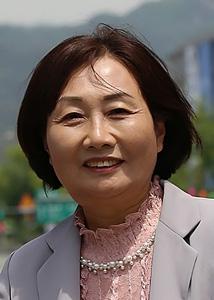
Kim Jongbun is co-representative of the Gwangju-Jeonnam Democracy Movement Comrades Association as well as former director of Women and Family Policy for the Jeonnam Provincial Government.
By Murdock O'Mooney
According to writer Isadora James, “A sister is a gift to the heart, a friend to the spirit, and a golden thread to the meaning of life.” Gwangju is lucky enough to have seven official sister cities, with San Antonio being the second oldest behind Tianan, Taiwan (1968). Like Gwangju, San Antonio has a controversial past, is completely unique, and is known as a place where people died in the name of liberty and freedom. And although half a world away from each other, these two cities have more in common than one might think.
San Antonio and Gwangju became sister cities on February 4, 1982, with the relationship rooted in the concept of political transition and democratization. After May 18 (1980), the Gwangju Uprising, Gwangju was seeking to rebrand itself, and San Antonio was quick to offer support, even planting trees in honor of the victims of May 18. Both cities also adorn the coveted UNESCO Creative Cities title: Gwangju for media arts and San Antonio for gastronomy.
I first visited San Antonio a couple of years ago, although I’ve been a fan of the five-time NBA champion San Antonio Spurs since childhood. The San Antonio metro area is home to almost 3 million people, while the city proper has a population of 1.5 million. It’s a youthful metropolis with the median age of just 34 years old with 15% of the population being foreign born, the majority coming from Mexico. The broader demographics are 65% Hispanic, 23% White, 6% Black, and 3% Asian. The city has beautifully blended architecture, with modern buildings next to Spanish colonial structures that are hundreds of years old.
San Antonio is the seventh largest city in the USA and the second largest in Texas behind Houston. Like Gwangju, San Antonio is known for its amazing cuisine, and it is the birthplace of Tex-Mex, which combines the culinary traditions of Mexico and the United States. It’s a flavorful cuisine with lots of chili, cheese, beans, tortillas, ground beef, and zesty ingredients such as fresh
salsas, avocados, lemons, and limes. San Antonio is also credited as the birthplace of the Frito pie, which combines crunchy corn chips (usually Fritos brand) with chili and cheese. Saltgrass Steak House on the river walk is a good choice for anyone wanting to indulge in some Texas beef, and Landry’s Seafood House downtown, although pricey, offers excellent Gulf Coast cuisine.
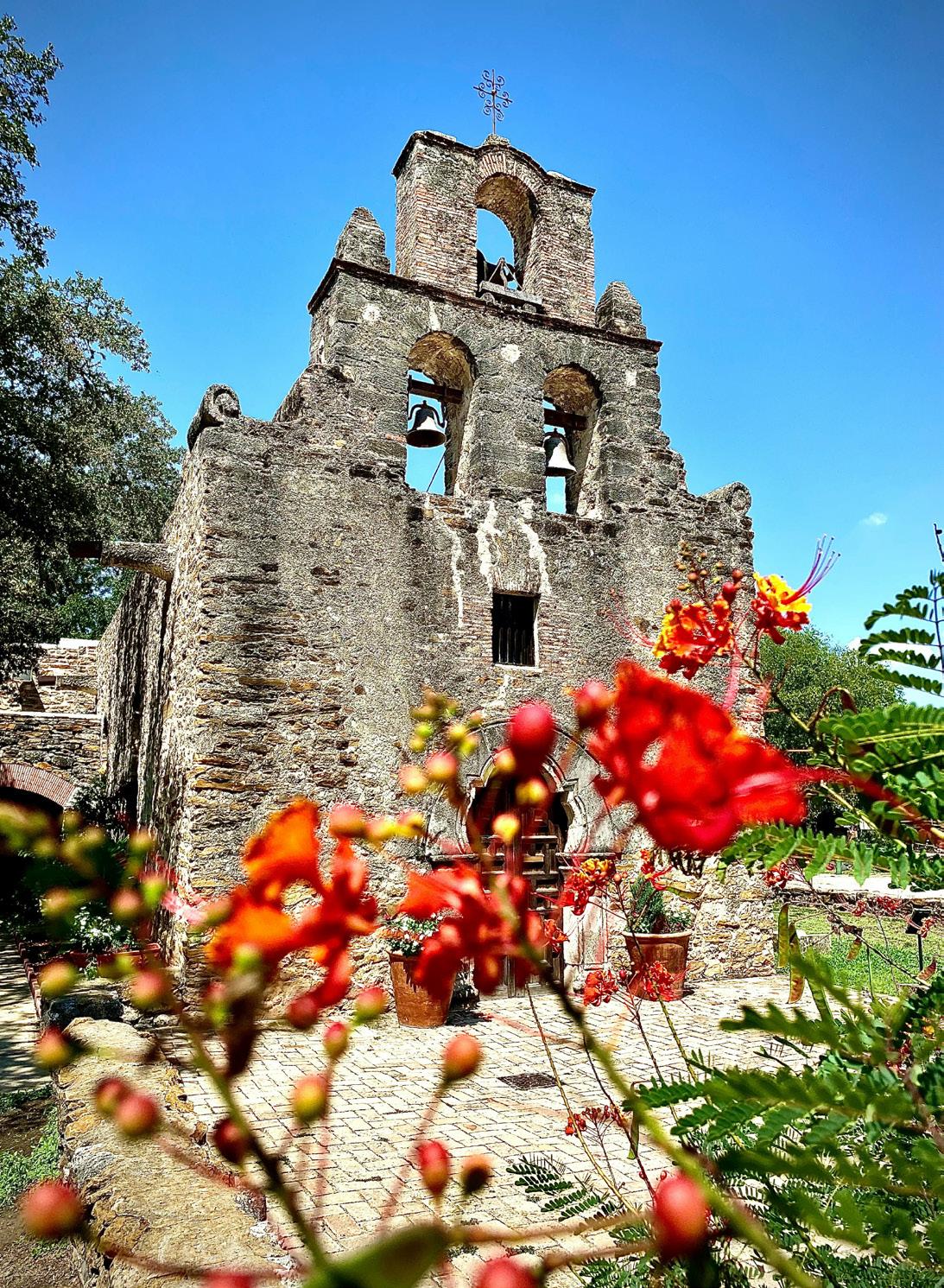
Of course, no visit to San Antonio is complete without seeing the Alamo. It’s a former Spanish Catholic mission and the site of the Battle of the Alamo, which took place in 1836 during the Mexican–American War when Texas, then a territory of Mexico, sought independence. Roughly 260 Texan volunteers held the fort for 13 days against thousands of Mexican troops led by General Santa Anna. The fort eventually fell and some weeks later, when the Texans defeated the Mexican Army at the Battle of San Jacinto, “Remember the Alamo!” was their battle cry.
This legacy has earned San Antonio the nickname “Military City, USA.”
In 2022 the San Antonio mayor Ron Nirenberg visited Gwangju to celebrate the 40th anniversary
of the sister-city bond. He gave an address noting that “Gwangju has played an important role on the global stage in promoting human rights and democracy,” and met with Gwangju Mayor Kang Gi-jung to discuss AI, cybersecurity, and climate change. Mayor Nirenberg also had business leaders in his entourage, such as the CEO of Port San Antonio (a massive tech and cybersecurity innovation hub) who met with Gwangju leaders as part of the so-called “e-sports diplomacy.”
Also in 2022, San Antonio hosted a major art exhibition titled Our Step, Our Hope: Sister Cities: Gwangju to San Antonio, which featured works from the Gwangju Museum of Art as well as a screening of the Gwangju inspired film Taxi Driver, which was shown at Mission Marquee Plaza to help educate Texans on the May 18 Democratic Uprising.
San Antonio also features a traditional Soswaewon garden, like the one just outside of Gwangju, which is from the Joseon Period and is meant to preserve and celebrate Korea’s natural beauty. It was assembled by Gwangju artisans in Denman Estate Park. In response, San Antonio artist Cakky Brawley installed a massive light sculpture at Gwangju’s Kim Daejung Convention Center.

Both cities also feature Streets of Friendship with San Antonio having a Gwangju Pavilion, also located at Denman Estate Park.
Other fun facts about San Antonio include American president Theodore Roosevelt recruiting some of his famous Rough Riders warriors at the downtown Menger Hotel in 1898, and the city holding the Guinness World Record for the tallest pair of cowboy boots, which stand 13 meters high and weigh an incredible 5,000 kilograms. San Antonio also boasts America’s first all-digital library, Bibliotech, which opened in 2013, and has the largest Mexican market outside of Mexico in Historic Market Square. It has over 100 vendors, and has been operating since the 1700s. You can find everything from a cowboy hat and boots to souvenirs and Frito pie at the market, which serves as a testament to San Antonio’s diversity and cultural richness.
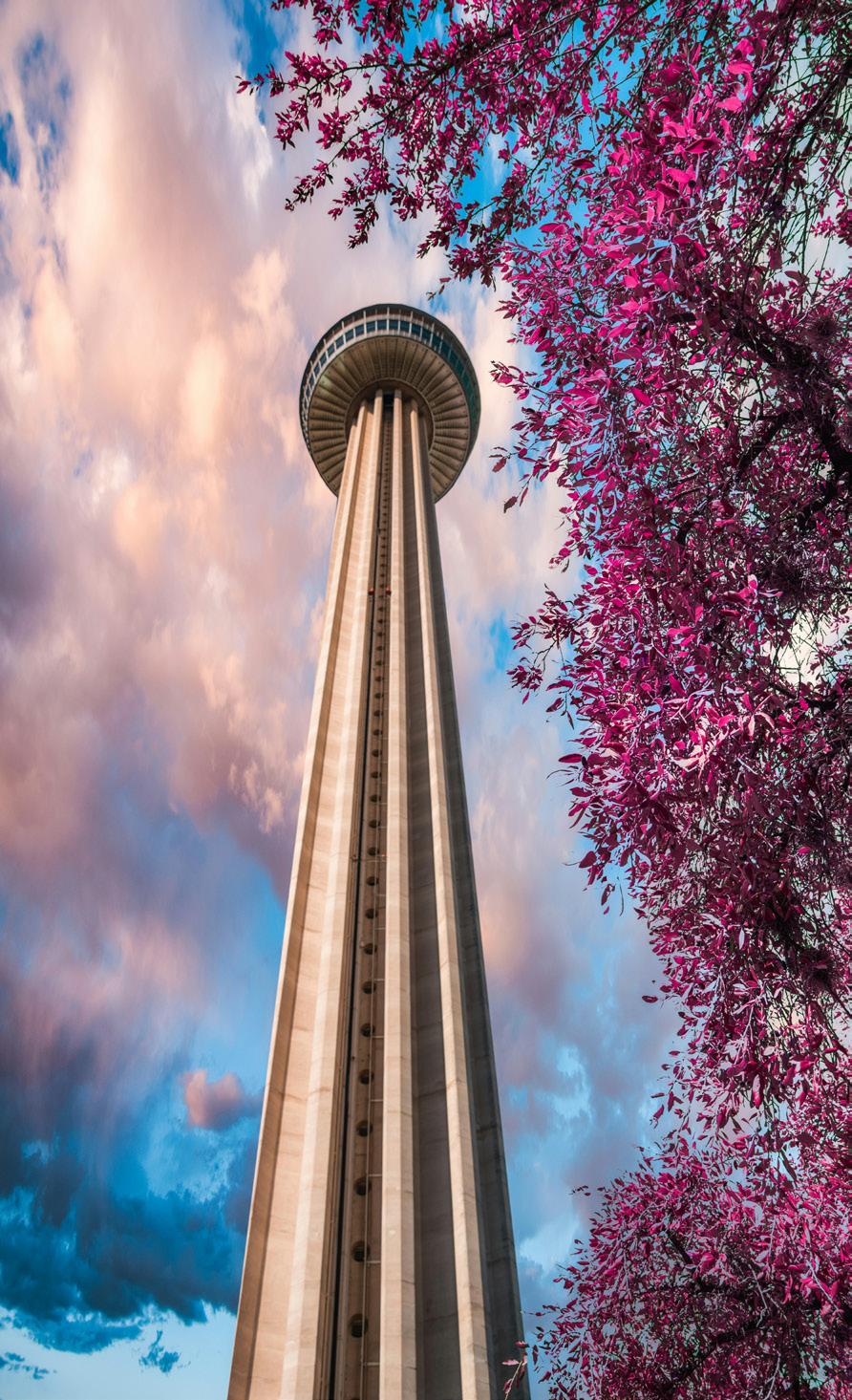
Tower of the Americas. (Justin Wolff via Unsplash)
Both Gwangju and San Antonio have multiple UNESCO designations, with San Antonio’s Alamo and four other missions forming a UNESCO Heritage Site – the only such designation in Texas. San Antonio also features the San Fernando Cathedral, which is the oldest continuously used cathedral in Texas, dating back to 1738. Getting around San Antonio can be entertainment in itself, with the various riverboat taxis and vintage buses available. Or take the elevator to the top of the Tower of the Americas for a view of the city from nearly 200 meters in the air.
Gwangju and San Antonio’s sister-city bond seems as strong as ever, and if you get the chance, I would recommend visiting Military City, USA. Like Gwangju, San Antonio is tough, steadfast, and demands respect. And as American author Mark Twain once lamented, “There are only four unique cities in America: Boston, New Orleans, San Francisco, and San Antonio.”
Hernandez, E., & Medina, A. (May 6, 2020). 20 random San Antonio facts you may not know about. KSAT. https:// www.ksat.com/news/local/2020/05/06/20-random-sanantonio-facts-you-may-not-know-about/
Gwangju–San Antonio Sister City Agreement. (n.d.). San Antonio Economic Development Department, City of San Antonio. https://www.sa.gov/files/assets/main/v/1/ edd/documents/sister-cities/gwangju-south-korea/ gwangju-sanantoniosistercityagreement.pdf
Gwangju News Staff. (2023, November 1). Sister-city mayor of San Antonio, Ron Nirenberg, Visits Gwangju. Gwangju News. https://gwangjunewsgic.com/features/ sister-city-mayor-of-san-antonio-ron-nirenberg-visitsgwangju/
Memorandum of Understanding (MOU) 2019. (2019). San Antonio Economic Development Department, City of San Antonio. https://www.sa.gov/files/assets/main/v/1/ edd/documents/sister-cities/gwangju-south-korea/ mou-2019.pdf
Williams, C. (2022, September 13). Our step, our hope: Sister cities – Gwangju to San Antonio. The Paisano https://paisano-online.com/30631/arts-life/our-stepour-hope-sister-cities-gwangju-to-san-antonio/
Murdock O’Mooney is an educator and writer based in Albuquerque, New Mexico. He is a native of the American Southwest, loves Tex-Mex cuisine, and sticks to the credo: ”Don't mess with Texas.”
By Dhivyaa S. P.
Why does the F-2 visa matter?
For many foreign residents in Korea, the F-2 visa is an important step toward a more stable life. It is called a resident visa. It is usually for people who have built a real base in Korea, such as skilled workers, professionals, investors, long-term residents, or people who meet special point-system rules.
There isn’t just a single path to obtaining an F-2 visa. Different people can reach it from different visa types. The best route depends on your current visa, your work, your income, your Korean language ability, your period of stay, and your record in Korea.
From Student Visas: Many students start with a D-2 student visa or D-4 trainee visa. After
graduation, they usually move to a professional work visa, such as E-1 to E-7, and later apply for an F-2 after meeting the requirements. Some students may qualify more directly through the point system if they have strong Korean ability, education, income, and other needed points.
From Job Seeker Visa: The D-10 visa is for job seekers, start-up preparers, and high-tech interns. Most D-10 holders first need to get a qualified job and change to a work visa. Start-up applicants may move from D-10 to D-8 before applying for an F-2 or permanent residence.
From Professional Work Visas: E-1 to E-7 visa holders have one of the clearest routes to an F-2. They may apply through the point system or as long-term residents after several years of legal stay. Stable income, tax records, Korean language
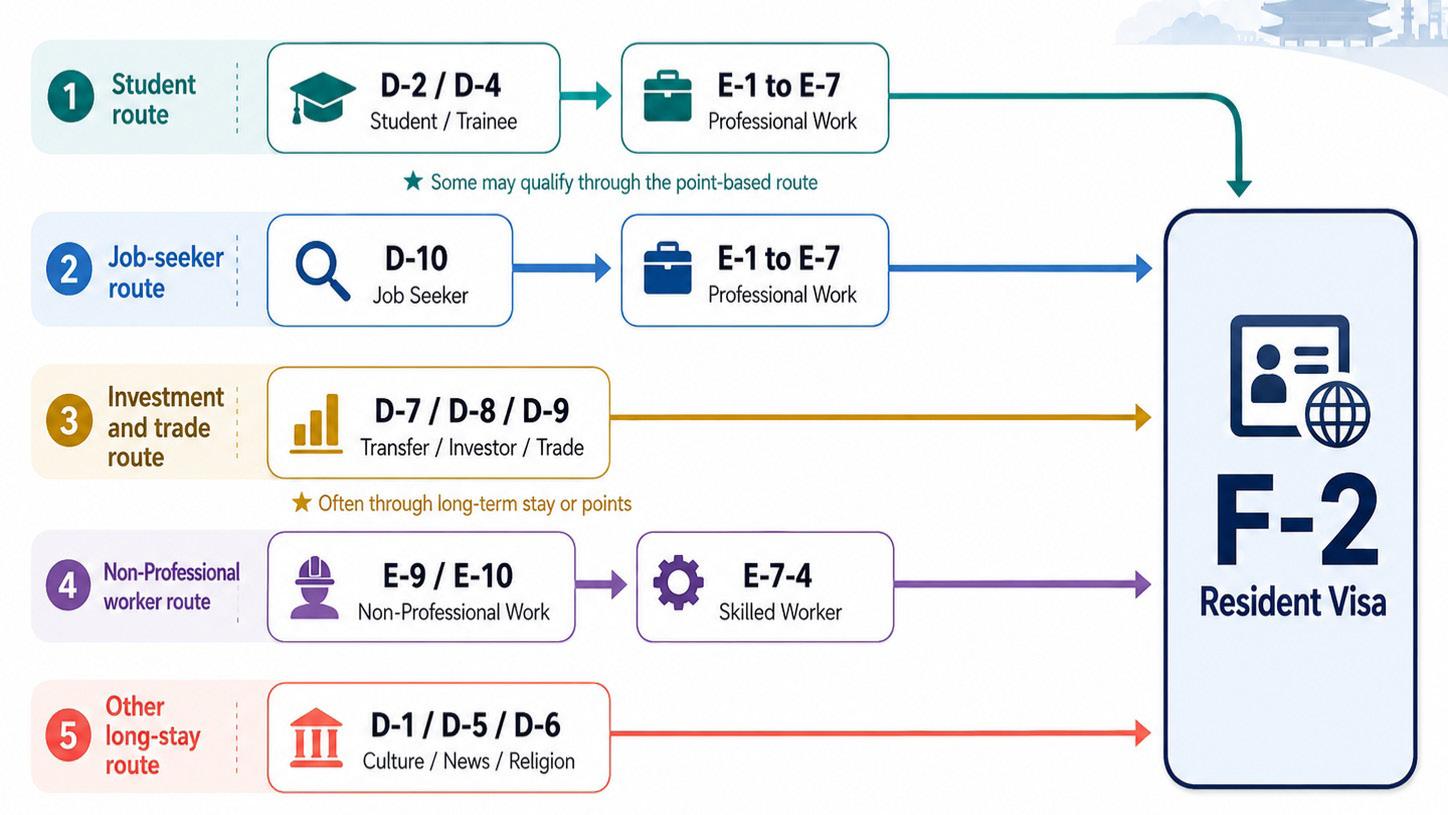
ability, and a clean immigration record are important.
From Investment and Trade Visas: D-7, D-8, and D-9 visa holders may also apply for an F-2 through points or long-term residence. These visas include company transferees, investors, entrepreneurs, and trade workers. Investors may have separate routes depending on investment amount and employment conditions.
From Non-Professional Work Visas: For E-9 and E-10 workers, the path is usually longer. They often need to change first to E-7-4 skilled worker status. After that, they may apply for F-2 status if they meet the stay, income, and point requirements.
From Other Long-Stay Visas: D-1, D-5, and D-6 visa holders may qualify as long-term residents. In most cases, Korea looks at legal stay, good conduct, financial ability, and basic knowledge of Korean society.
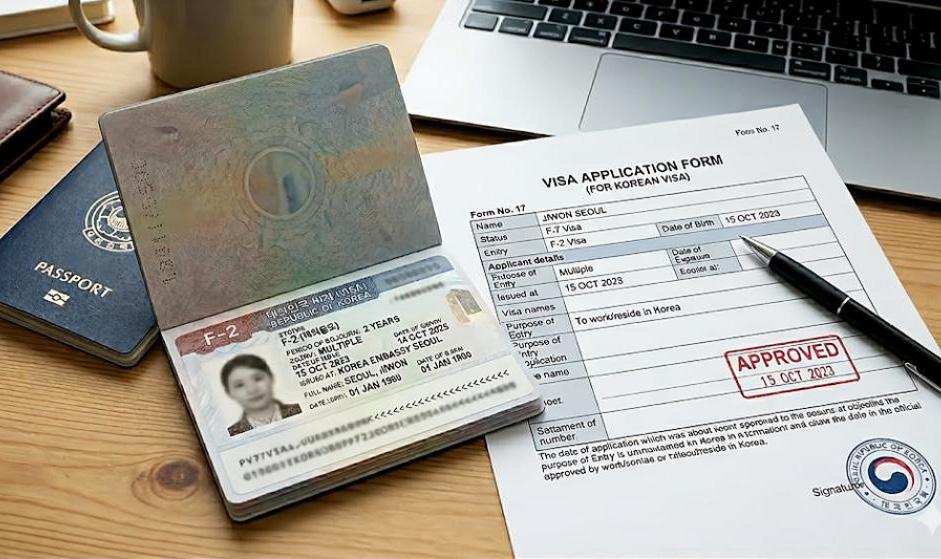
My F-2 journey started as a GKS-G student. After completing my master’s degree in Korea, I was recommended by NIIED as an outstanding talent. That recommendation made my case stronger and gave my application a clear direction. Being from a Korean War participating country also helped with points, but the most important part was not nationality alone. It was the combination of study in Korea, recommendation, documents, and total score.
The document preparation was the most stressful part. I had to get a TB test from one of the approved hospitals and submit a criminal background certificate from my home country with an apostille. Among all the documents, the criminal background certificate took the longest time to prepare, so I would strongly advise future applicants to start that first. For points, I received credit for my age, Korean degree, NIIED recommendation, Korean War participating country category, and volunteer
work. Volunteering was especially important because I had done it for three years. For each year, I needed to show at least 50 hours of volunteer work to count it for points. Students who are planning ahead can use the 1365 volunteer website and keep proper records from the beginning.
Getting an F-2 visa while I was still a student felt exciting, but it also came with some surprises. One of the first changes I noticed was health insurance. As a student, I was used to a certain level of payment and support. After changing to an F-2, my insurance situation became different, and the monthly cost could increase depending on income, status, and household situation. It reminded me that a better visa can also bring more adult responsibilities.
The biggest change was mental. On a student visa, I felt like I was still temporary. After receiving my F-2, I felt that Korea was becoming a more serious long-term home. This was a good feeling, but also a little heavy. I had more freedom to work and plan my future, but I also had to understand that every benefit comes with responsibility.
The Author Dhivyaa believes that every action, no matter how small, contributes to a bigger change. Up Next: Fitness Life.
By Vibhanshu Maurya
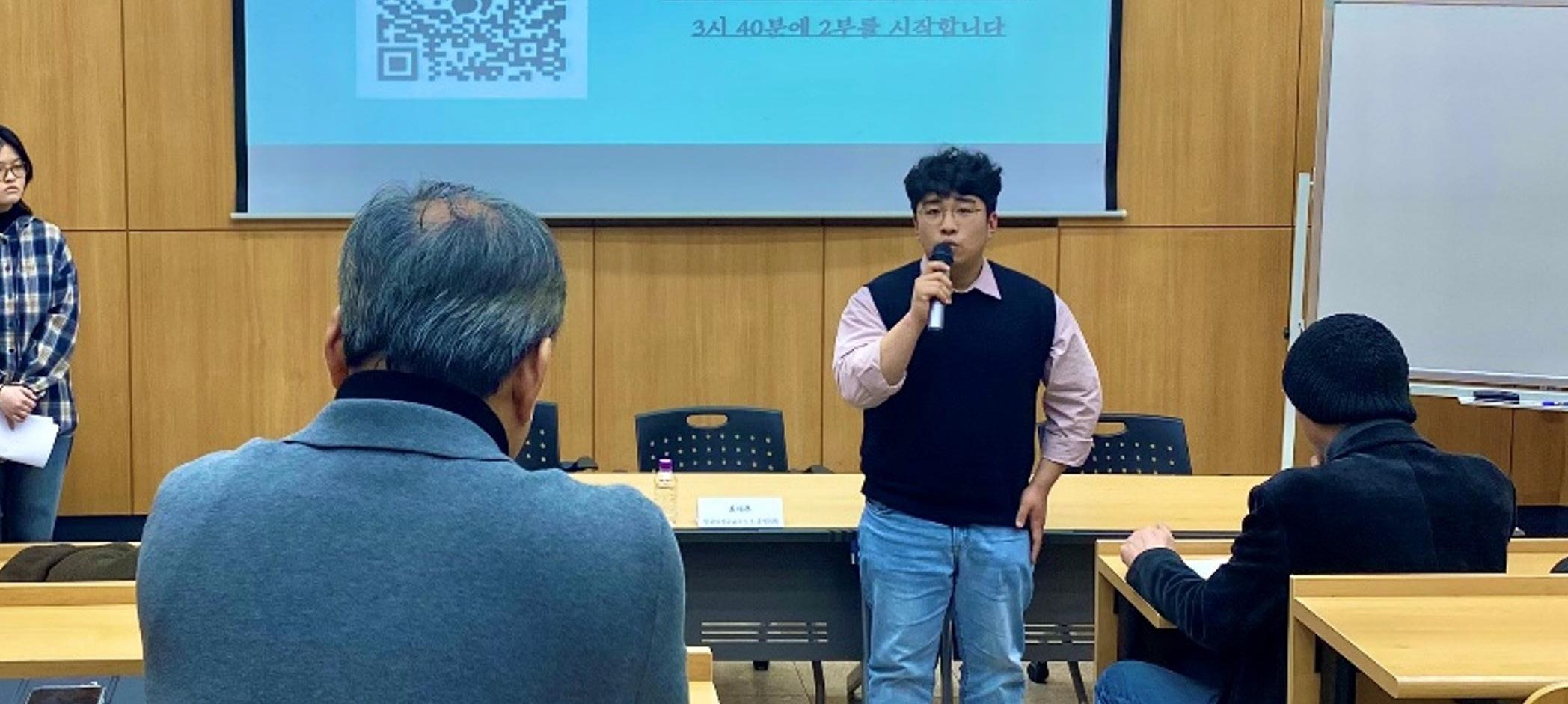
On April 10, 2026, a seminar hall in the College of Social Sciences at Chonnam National University (CNU) became the setting for a conversation that is often avoided in academic spaces.
The event, titled Learning–Labor–Exploitation: What Suppresses Graduate Student Workers, was organized by the Yongbong Editorial Committee in collaboration with the National Graduate Employee Union. What unfolded over the course of the afternoon was not a typical academic seminar but an open and, at times, deeply emotional dialogue about the realities of graduate student life, particularly the pressures, vulnerabilities, and structural gaps that often remain unspoken.
I participated in the symposium as an invited speaker, presenting on the topic “Beyond Incidents: Systematic Challenges Faced by International Graduate Students.” While the discussion covered multiple perspectives, one message became clear: Recent tragedies involving graduate students are not isolated events but reflections of deeper systemic issues.
The symposium was shaped by the backdrop of two recent cases: one in 2024 involving an international student and another in 2025 involving a Korean graduate student. Both incidents resulted in the loss of young lives, and both raised difficult questions about the pressures within academic environments. While details of such cases are complex and sensitive, speakers at the event emphasized that these tragedies should not be understood solely as individual or personal failures. Instead, they urged a broader perspective
– one that considers working conditions, academic culture, and support systems.
A particularly significant development discussed during the symposium was the recognition of the 2025 case as an occupational death. This classification marked an important shift: It framed the incident not only as a personal matter but as one connected to workplace conditions and systemic responsibility. For many participants, this recognition was seen as a step toward acknowledging the realities of graduate students’ working environments.
One of the central themes that emerged during the discussion was the ambiguous position of graduate students within the academic system. Graduate students are often described as learners, yet they simultaneously contribute significantly
to research output, lab operations, and academic projects. They carry responsibilities similar to those of employees but without always receiving the same level of protection, recognition, or clarity regarding their rights.
This dual identity – being both a student and a worker, yet not fully either – creates a structural gap. As one speaker from the Graduate Employee Union emphasized, “Graduate students should be recognized as workers, not just as students. This applies to international students as well.” The implication of this perspective is significant. Recognizing graduate students as workers would not only clarify their role but also strengthen the framework for addressing issues related to working conditions, communication, and accountability.
While the symposium addressed graduate student life more broadly, the experience of international students emerged as a particularly important dimension. International students often navigate multiple layers of adjustment simultaneously: a new academic system, a different language, unfamiliar cultural norms, and varying expectations regarding communication and hierarchy. These factors can create additional
challenges, especially when it comes to seeking support or expressing concerns.
In many cases, systems and support structures that are clear to domestic students may not be as accessible or transparent to those from abroad. This can lead to hesitation, misunderstanding, or silence in situations where communication is critical. These challenges are not unique to Korea; they are part of a broader global pattern. However, as several speakers noted, acknowledging these gaps is the first step toward addressing them.
Beyond the structural discussions and policy perspectives, the symposium was marked by moments of profound human emotion. One such moment came when the elder brother of the Korean graduate student who died in 2025 addressed the audience. Holding a photo album of his younger brother, he spoke briefly in Korean. A translated portion of his words resonated deeply with those present:
“I thought… why couldn’t my brother tell anyone about his pressure? I hope everyone can tell their story here.”
After the session, I had the opportunity to speak with him and look through the photographs
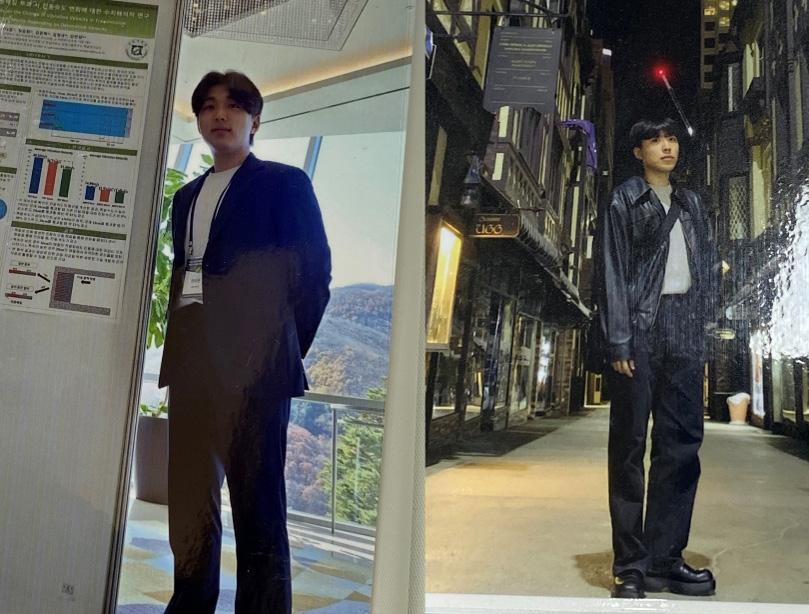
he carried. They showed a young man smiling, traveling, attending conferences, living what appeared to be an active and hopeful life. It was a powerful reminder that behind every statistic or case discussed in policy terms, there are individuals – people with aspirations, relationships, and futures.
“What unfolded … was a … deeply emotional dialogue about the realities of graduate student life.”
Another recurring theme throughout the symposium was the role of communication – and the lack of it. Several speakers highlighted how academic culture, hierarchical structures, and implicit expectations can create environments where it becomes difficult for students to speak openly. In some cases, differences in communication styles, particularly in multicultural settings, can lead to misunderstandings that escalate over time.
When combined with power dynamics inherent in advisor–student relationships, these gaps can discourage individuals from voicing concerns, even when they experience significant stress. As one presenter noted, many of these situations should be understood through a workplace perspective, where communication, structure, and clearly defined roles are essential for wellbeing and productivity.
Importantly, participants in the symposium emphasized that these challenges are not confined to a single institution or country. Issues related to graduate student well-being, labor recognition, and academic pressure have been reported in universities worldwide, albeit in different forms. At the same time, this global context presents an opportunity.
Countries like Korea, which have demonstrated leadership in areas such as technology, education, and innovation, are also well-positioned to lead in developing more supportive and transparent academic systems. Such systems would not eliminate all challenges, but they could significantly reduce risks by addressing issues earlier, before they escalate into crises.
The discussions at CNU underscored the importance of structural change: clearer reporting mechanisms, better communication channels, and greater recognition of graduate students’ roles. However, structural improvements often take time. In the meantime, several speakers and participants highlighted a more immediate and human response: looking out for one another.
In academic environments where individuals are often deeply focused on their work, it is easy to overlook signs of stress or isolation in those around us. Yet, as the symposium reminded its audience, small acts – checking in on a colleague, having a conversation, offering support – can make a meaningful difference.
The title of my talk, “Beyond Incidents,” reflects a shift in perspective, from reacting to individual events to understanding the systems that shape them. If there is one takeaway from the symposium, it is this: Addressing these issues requires both structural awareness and human attentiveness. Recognizing the systemic nature of the problem is essential. But equally important is ensuring that, within these systems, individuals do not feel alone. Because sometimes, before systems change, change begins with people.
The Author
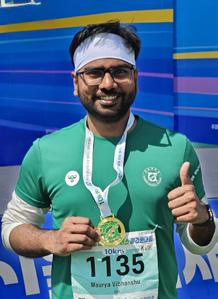
Vibhanshu Maurya, originally from India, is pursuing his PhD at CNU. Living in Korea for several years has given him a deep interest in international student life, academic culture, and the importance of supportive communities during the graduate school journey.
Each month, this column spotlights one of our regular contributors to the Gwangju News, giving readers a chance to learn more about the diverse voices behind the magazine. These writer profiles take the form of interviews, offering a window into their talents, perspectives, and stories. For this issue, we talked with Vibhanshu Maurya. — Editor
Gwangju News (GN): Thank you, Vibhanshu, for finding the time for this interview. Our readers, as well as myself, know you mainly through your writings for the Gwangju News. So, could you give us some background information on who Vibhanshu Maurya is?
Vibhanshu: I am from Prayagraj, India, and I am currently pursuing a PhD in mechanical engineering at Chonnam National University. My research focuses on soft, electricity-conducting gel materials for energy storage, sensors, and soft electronics. Before Korea, I studied materials science and engineering at IIT Kharagpur and spent time as a DAAD research fellow in Dresden,
Germany. Outside the lab, I like observing people, places, and systems carefully. That is probably why science, writing, travel, and interviews all feel connected to me. They are different ways of asking, “What is really happening beneath the surface?”
GN: What was it that brought you from India to Korea for your international studies when there are so many countries to choose from?
Vibhanshu: A few years ago, if you asked many Indians what came to mind when they heard “Korea,” the first thought would probably be North Korea and Kim Jong Un. South Korea was not really on my list when I began applying for
PhD positions. Since I had spent almost a year as a researcher in Germany, my first preference was to return to Europe. But around 2021, many countries had closed or restricted their borders because of COVID-19. While waiting for responses from professors, seniors already pursuing PhDs in Korea suggested that I apply here. Later, I learned more about South Korea and became attracted to its strong research culture, rapid technological growth, and serious work in materials science and engineering. Korea slowly moved from being an unexpected option to the place where I began a new chapter.
“Outside the lab, I like observing people, places, and systems carefully.”
want to write something sensational. I wanted it to be careful, respectful, and useful. Behind every tragic incident are human beings, families, friends, and systems that need to be examined. Universities are places of learning, but they should also be places of care.
GN: How, and why, did you get involved in writing for the Gwangju News?
Vibhanshu: I saw the Gwangju News as a bridge between communities. As an international student, I felt that many foreign residents’ experiences remain invisible unless someone writes them down. I started contributing because I wanted to document those experiences clearly and humanely. Writing also helped me understand Gwangju better. When you write about a place, you stop being only a resident and become a listener.
GN: You wrote an article on graduate student deaths at Chonnam National University that I thought was extremely well researched and extremely well presented. Could you give us some insight into your motive for penning that article [September 2025]?
Vibhanshu: That article came from sadness and responsibility. As a graduate student, I know how isolating academic life can become, especially for international students far from family. I did not
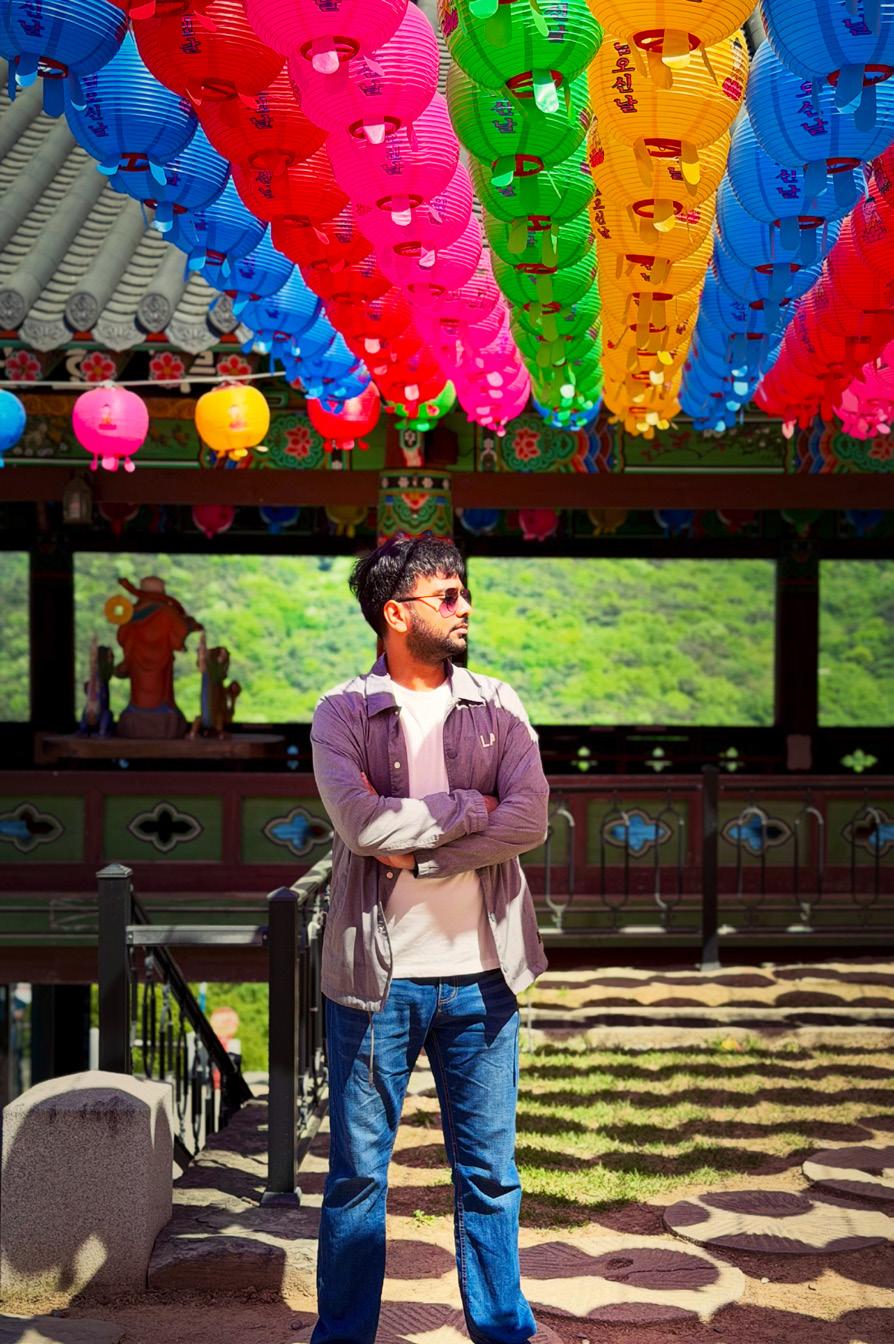
GN: Until recently, you hosted a podcast. Could you tell us about your motivation behind that?
Vibhanshu: The podcast began from curiosity and loneliness. I wanted to talk with foreigners who had lived in Korea for a long time and ask about their real journey beyond the polished image people often see online. Many come with dreams but also face language barriers, cultural distance, career uncertainty, and emotional struggles. I wanted to create honest conversations where people could share what helped them
survive and what they wished they had known earlier.
GN: You also led a hiking group in Gwangju for quite some time. How did that come about?
“I want to travel across Korea more slowly, listening to local stories rather than only visiting famous places.”
Vibhanshu: Yes, I led a group called Gwangju Hikers for almost one and a half years. It was a simple but meaningful way to bring foreigners and Koreans together outdoors. We hiked, talked, shared snacks, and discovered the mountains around Gwangju. These days, I am not organizing regularly because of time limitations, but I remember that period very fondly. It taught me that community can begin with a trail, a few people, and a shared willingness to walk together.
GN: And you’re a motorcyclist! Where has that two-wheeler taken you – both physically and emotionally?
Vibhanshu: Physically, it has taken me through quiet roads around and beyond Gwangju, to temples, mountains, riversides, beaches, and small towns I might never have noticed by bus or train. Emotionally, it has given me freedom. During difficult periods in my PhD, riding helped me breathe. On a motorcycle, you are exposed to the weather, the road, and your own thoughts. You cannot overthink too much. You have to be fully present.
GN: What do you see yourself doing in, say, five years from now? And where might you be doing it?
Vibhanshu: I hope to work at the intersection of science, communication, and community. Professionally, I want to continue with soft materials, wearable electronics, or bio-inspired devices, either in academia or industry. At the same time, I do not want to lose writing. I want to keep explaining science simply and telling stories about people whose experiences are often overlooked. I am open about where: Korea, Europe, India, or anywhere that lets me grow scientifically and personally.
GN: I imagine you have a bucket list. What items might be at the top of that list?
Vibhanshu: I want to finish my PhD with work I can truly be proud of. I want to travel across Korea more slowly, listening to local stories rather than only visiting famous places. I also hope to publish a book about my PhD journey, sharing practical lessons and honest experiences. Another dream is to create a space where international students can find guidance, friendship, and emotional support. And someday, I would love to take a long motorcycle trip across beautiful parts of Asia.
GN: What has living in Gwangju taught you?
Vibhanshu: Gwangju has taught me that a city does not need to be the biggest or loudest to shape a person deeply. It has taught me slowness, resilience, and the value of community. I have met people here who helped me in small but unforgettable ways. I have also seen how international residents can feel welcomed and isolated at the same time. That contradiction has shaped much of my writing.
GN: Thank you, Vibhanshu, for allowing our readers to get to know you better! We hope to learn even more about you through future articles that you contribute to the Gwangju News!
Interviewed by David Shaffer. Photographs courtesy of the author.
By Julian Warmington
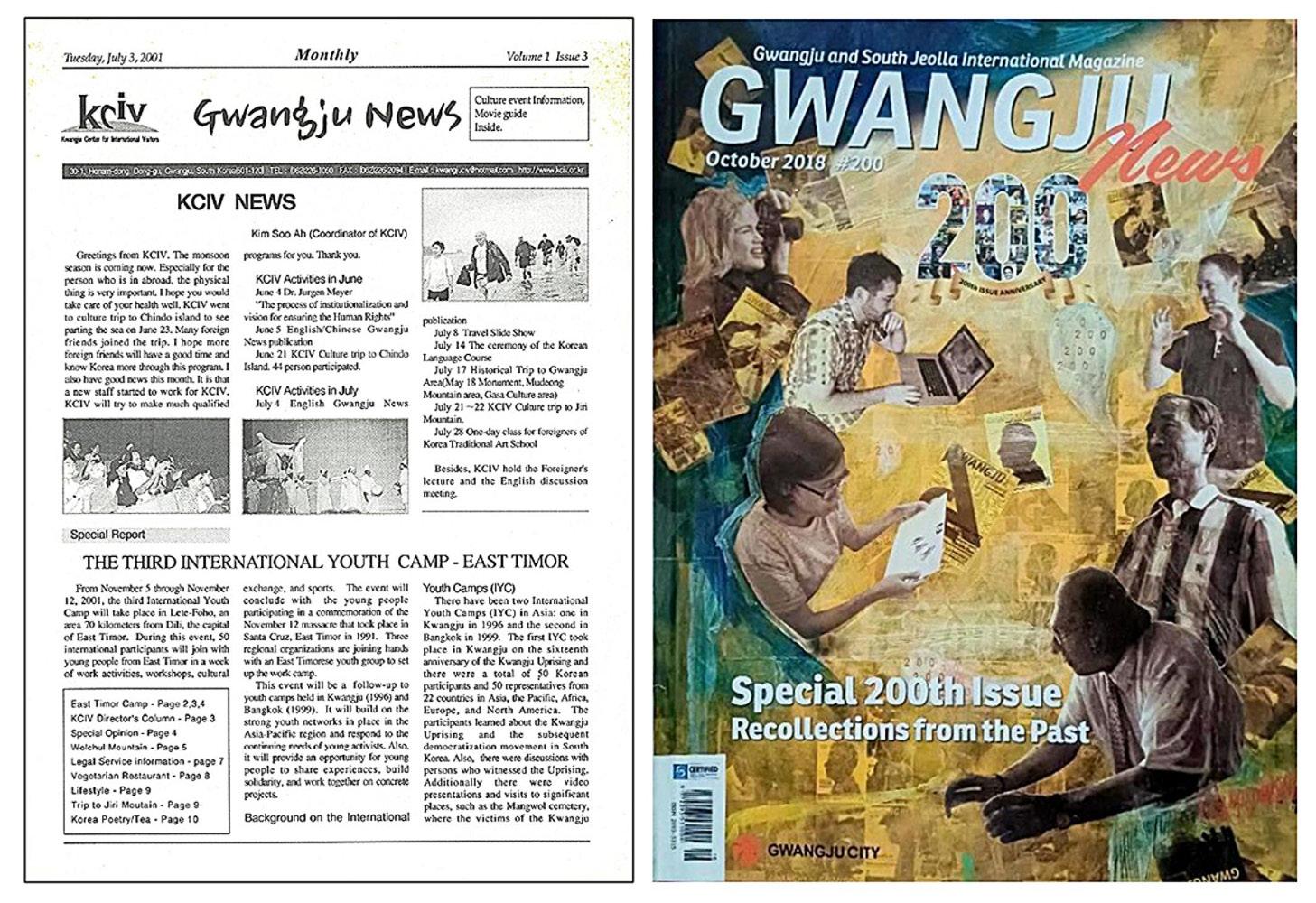
In 2001, everything was different. Desktop computers were expensive, cigarettes cheap, cell phones black and white, and tiny flip phones were cool. The mighty Daewoo Tico ruled the unruly streets of South Korea.
There were about three espresso coffee shops in the whole country. Every café menu listed the same four items. Cities smelled of stale cigarette smoke – especially in PC rooms. Shrek emerged from the silver screen alongside JSA: Joint Security Area.
Meanwhile, in a dark, dusty office somewhere above Geumnam Street, a lone Chinese language graduate found herself trying to write a newsletter in her third language, for a proposed
“community” of English speakers living around Gwangju. The small office she staffed was that of the then two-year-old Gwangju International Center (GIC), and the newsletter was named the Gwangju News
The new organization mostly ran inexpensive Korean language lessons and offered weekend trips to idyllic, historical spots around the province. Random foreigners wandered through the NGO’s quiet doorway. Some were social refugees: strangers in a strange land seeking connection outside the stench of a pub and the social gaze of a church.
The Chinese language grad sweet-talked some English language speakers to help with that
worrisome task she was charged with: the Gwangju News. I joined the group just after it started.
The first issues were aspirational even for what was literally just a newsletter: a single sheet of A3 paper, black and white, folded into quarters. It included two or three brief paragraphs about people in the organization alongside random facts on Gwangju and the surrounding province.
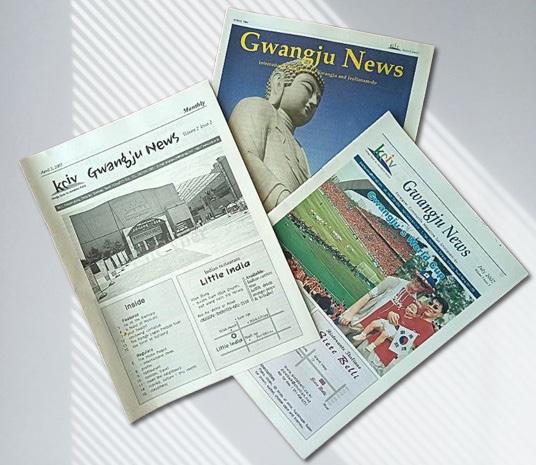
Early issues
Our group met to brainstorm story ideas and encourage each other to volunteer to write fresh articles.
Then, one day at the start of the year, a GIC board member loaned the group a first-generation digital camera. It took four AA batteries to take four photographs before the batteries would need replacing. New stories sometimes had photos of people with their eyes closed, blinking at the flash, if you didn’t have spare batteries to take another shot or two.
Still though, that camera was a catalyst. It was more than just symbolic. It was a sign: a sign of trust in people, of faith in ability to cooperate, and of encouragement to get out and use it. And,
it also really was cutting-edge tech for the time. Batteries were cheap. Suddenly, it amped the potential for that newsletter right up to ten.
Some people wanted to use the camera; others wanted to pose for it. Some wanted to write descriptions of life around town; others to talk. People volunteered to write or introduce someone who had a story. Moving to compact magazine format seemed logical.
To fill out pages, there was always something new happening and fascinating people to meet, from Korea and beyond. One was Lee Jae-eui whose kind eyes and slender shoulders told almost as much as his book describes of being caught up within the May 18 maelstrom.
For those of us new to the land, interviews with local artists, store owners, students all had revealing stories to share with insights into the culture, and the text also helped English language students read their reality in the language while learning about the variety of immigrants around the city.
A group of young male Mexican engineers found themselves designing and building the subway line. Young brides from Southeast Asia married local farmers. Farm and factory laborers came downtown to buy international phone call cards and imported foods on their half day off. Others were hired implants for sports teams, or traveling sales reps. One lanky older British rocker bloke was a journalist from The Japan Times who had come to Korea to survey stadiums, bars, and cafés before the co-hosted Korea–Japan World Cup the next year.
The 2002 World Cup had a huge influence on South Korea well before the first kickoff, and technology was also changing fast with the new century. By the end of 2001, new digital cameras were available in Shinsegae Department Store and elsewhere in Seoul. They needed only two
AA batteries! They could take dozens more photos! Two whole megapixels! They came with a 2-inch, 64-MB memory card! And a 1.5-inch digital monitor display!
More important were the people though. The British guy wrote about the new stadium looking like a massive UFO parked for the night with its lights on. Friends and buddies were cajoled into proofreading. The genteel retired linguistics professor Shin Sang-soon wrote a regular column explaining his favorite quirky language expressions and historical events.
And then there was the kind local business owner listening to the enthusiastic business student as she over-explained the novel concept of Gwangju News as a budding magazine, even after they’d already agreed to buy advertising space; she was so dedicated to reciting her pitch accurately that she didn’t realize she’d already made the sale!
Café and bar owners provided countertop corners where freshly published, thin black-and-white “magazines” would be placed. In the coming months, they’d have more pages to fill them out. Then, more copies were printed. And soon, the front cover had color: black, white, and red!
The magazine was on a roll.
It was amazing to watch the effect of hosting a few games of soccer for the 2002 World Cup on Korean culture. The Gwangju News dressed up in its best for it too: The new year saw more pages, a larger format, growing the team of volunteers, a new used computer in the office, and full color!
Bouncing on Geumnam Street in a wall-to-wall sea of ecstatic citizens wearing the national team’s red, chanting and singing the night away, was probably the single most exciting event of shared community in twenty years on the peninsula.
But finding folks to work with, creating teams, figuring out organizational strategies, and
together building publishing processes – seeing a genuine community form through shared interests and shared information within a lasting “hard copy” document offering functionality and beauty – all of it was deeply rewarding.
I thank the GIC for its faith in and support for the community, in which the Gwangju News has played a significant role over the years. And I extend congratulations to all who have been involved in the planning, the writing, the editing, and the development of the Gwangju News as it celebrates 25 years of service to the community.
is a teacher from Aotearoa
Zealand. He taught at Korean universities for 20 years. He lived in Gwangju for ten years, loving the food, the family of black squirrels in the Jisan-dong forest, and cycling down Mudeung Mountain at night. Julian was also an early writer, editor, and promoter of the Gwangju News
By Park Nahm-Sheik
It’s my privilege to call Gwangju home. It’s the abode of my genuine home and hearth. It’s where I’m most comfortable. It’s where I feel the pleasantest and happiest even when I am physically exhausted. It’s apparently where my Dr. Quiet resides and rests round the clock, as does Dr. Merryman.
Every time we talk about hearth, we are instantly reminded of a fireplace or a stove near or around which we can afford to enjoy snuggling up close to each other sitting side by side for lazy and/ or idle chats with family, friends, neighbors, etc., etc. Such a cozy setting rarely comes free of charge, however. It always demands some steep dues from each of its beneficiaries.
So, as for home and hearth to become a reality for everybody involved, we may need a very vigilant and honest caretaking staff posted on an incessant lookout 24/7 over a long, long period of time. We must make sure that nothing, no matter how seemingly insignificant, is ever allowed to fall through the cracks.
Fortunately for us here in the Gwangju-Jeonnam region, we are blessed with well-qualified and highly loyal personnel already in place working under the guidance of Dr. Shin Gyonggu, director of the Gwangju International Center (the GIC). Surprisingly, he is a native son of neither Gwangju nor Jeonnam. He is a transplant from Jincheon in North Chungcheong Province. Yet, he has done far more for the local community than most of us braggarts. Shall we take this occasion to thank the township of Jincheon for this priceless gem of a gift to Gwangju-Jeonnam so tidily wrapped up in the vibrant persona of Dr. Shin.
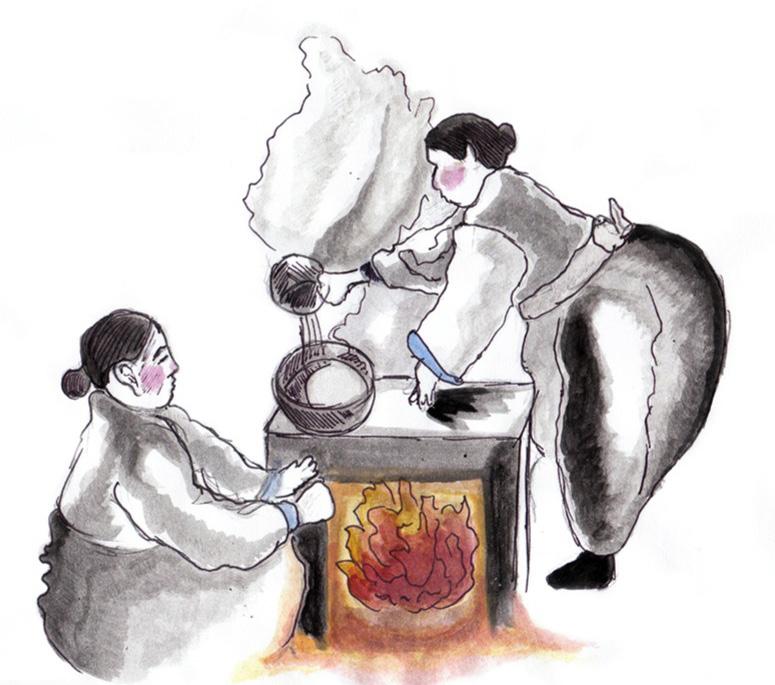
Although I am a Gwangju-Jeonnam native myself, born and raised in a farming village not that far removed from Hwasun, I have not done as much for the region as Dr. Shin has. And I do feel kind of ashamed to admit that to be the case. But truth is truth. Besides, I am proud of Dr. Shin being a true and tried friend to my hometown and to myself as well.
By way of closing, shall we all rise and give three cheers to our dear home and hearth in GwangjuJeonnam and to the Gwangju International Center and its hardworking staff!
The Author
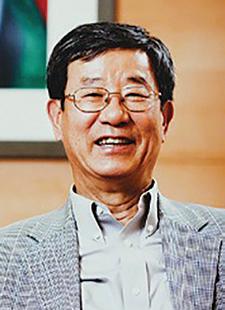
Park Nahm-Sheik is a native of Gwangju. After graduating from Chonnam National University, he went on to receive a master’s degree at the University of Hawaii and a PhD (applied linguistics) at Georgetown University, both in the U.S. Upon completing an illustrious career at Seoul National University, Prof. Park served as president of the International Graduate School of English.
By Jacqueline L. Becerra
As summer progresses into July, a sweltering heat engulfs the lush greenery surrounding Chonnam National University (CNU), where the buzzing of dragonflies can be heard across Yongji pond, and the haze of strong sunrays reflects off the steep terrain. Even in the midst of such stifling weather, campus is bustling with students, staff, and residents. You might see several tours for visiting students in the Korean summer program, and among them will be a small group in the Critical Language Scholarship (CLS) program. I should know, this time three years ago, I was part of it, heaving in the humid summer air as the blare of a microphone guided us through the campus.
CNU is no stranger to scholarship programs, like that of the Global Korean Scholarship (GKS) program, but even for those around Gwangju, not much is known about CLS. To give a quick rundown, the scholarship is organized by the U.S. Department of State, given only to current U.S. undergraduate and graduate students to study languages deemed critical to the United States’ national security and economic prosperity.¹ Within a variety of languages, Korean holds a spot, requiring applicants to have a year of prior study. Apart from the selective ten percent acceptance, this program is known for its rigorous language study, claiming that the program is equivalent to one year of language study packed into eight weeks.¹ In essence, the scholarship is an immersive experience that promises immense language growth within the program’s duration.
When I applied for the scholarship back then, I knew that the recipients would participate in structured lectures, group excursions, and live on campus with CNU students. Yet, while this program was outlined in detail on paper, it went beyond what I imagined. As a sort of love letter for
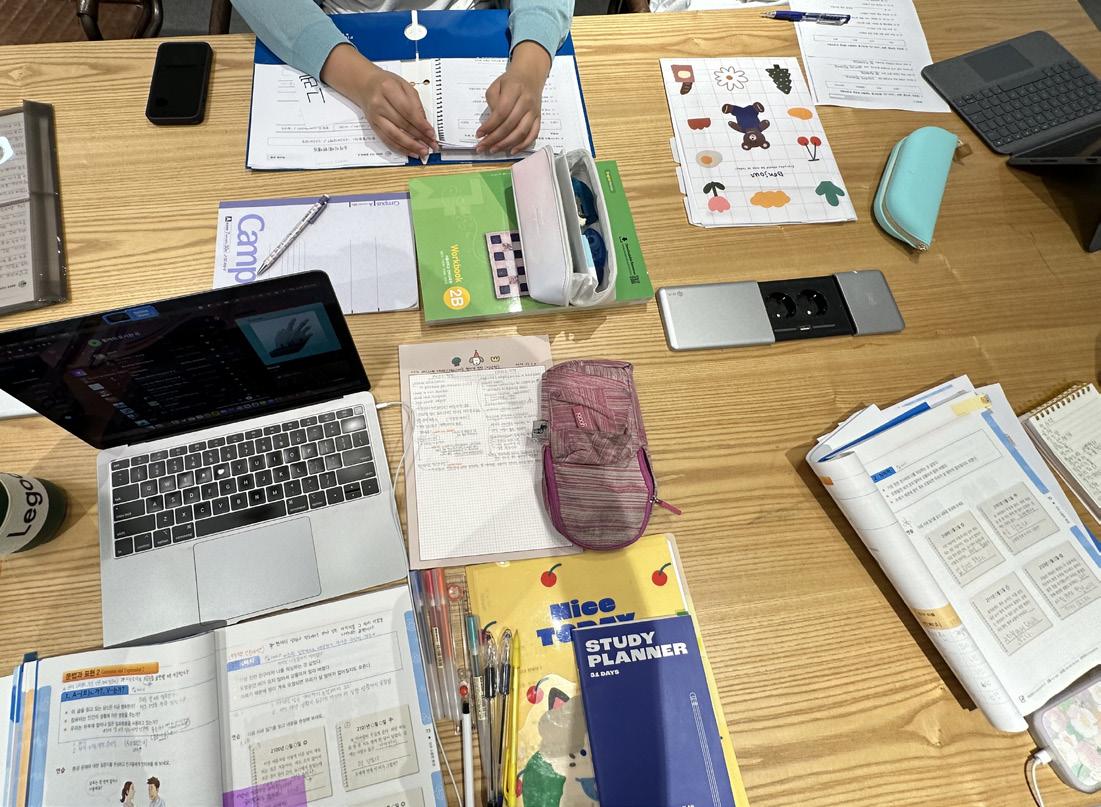
this city and a reflection on my CLS experience, now as an alumnus, I hope to encapsulate those cherished summer memories here.
Since 2015, CNU has primarily hosted the CLS Korean recipients. However, three years later, CLS organized and sorted successful applicants between two program sites: Chonnam National University and Pusan National University.² After a brutal period of waiting through the initial round and semi-finalist stage for CLS, I got my acceptance email, receiving my placement in Gwangju. However, I had no idea what to expect: I didn’t know anything about Gwangju. I had been to Korea and traveled to Busan before, but never to Gwangju. And the more I asked my Korean peers about it, the less I felt I knew.
At the time, my image of Gwangju was characterized as primarily having good food and being in the countryside. Even now, when I mention that I stayed in Gwangju, the first
few comments I receive are always along the lines of “What did you even do there?” or “Why Gwangju?” While I, too, began to develop those same thoughts back then, having no insider information about Gwangju, I decided to have zero expectations. I would learn what Gwangju had when I got there, and I had a whole summer to find out.
After a twelve-hour plane ride and a nearly fivehour bus ride from Incheon, we finally arrived in Gwangju. Over the next few days, we crossed CNU’s campus, took part in orientation and soon committed ourselves to the language policy: to use only our target language, Korean, during the program. While we were immersed in Korean simply by being in Korea, this pledge made us commit to maximizing our language abilities. We weren’t simply studying Korean; we were living in it. Thus, classes were fully in Korean, as were most of our interactions after that. Each CLS recipient was paired with a Korean roommate and a language partner, both being current CNU students who were assigned certain missions or tasks with us, such as visiting their families.
It was clear early on that this program was structured for language growth; for three hours every weekday, we were in the classroom studying grammar and other materials. Apart from lectures and regular exams, there were also mandatory one-on-one office hour consultations with our professors. Yet, in spite of all the intense coursework, I found that I learned more outside the classroom. Those hours in class certainly gave me the grammar patterns and lexical itenms I needed, but as I spoke every day, my crippling perfectionism subsided, and the hesitation to be wrong slowly dissipated. At last, I had found my voice, perhaps plagued by errors and awkwardness, but I was finally comfortable speaking Korean.
Through the program, all of us in our cohort discovered local spots, went on excursions to different areas in Jeollanam-do, and formed
lifelong bonds with each other. Thus, what I found in Gwangju was community, friendships, and my voice. CLS allowed me the opportunity to fully immerse myself in Korean culture, and specifically that of Gwangju’s. And regardless of how short the program was, I became fond of this city’s rich history, the strength and kindness of its people, and indeed its exquisite food. While I first had uncertainty, I took the leap to come here and was given a temporary home to always return to.
“That summer was transformative for all of us at the cohort.”
That summer was transformative for all of us in the cohort. Despite it now being a memory from three years ago, many of us continue to study the language, with some of us working in Korea or studying here. We’ve also kept in contact with our language partners and roommates, retaining the ties we have to this city. As for me, though I live near Seoul, I always find myself coming back to Gwangju whenever I can. People might say there’s not much to do here, and while it is no megacity like Seoul, it has its own charm; you just need to keep an open mind and be willing to explore what it has to offer.
This year’s cohort, having arrived in mid-June, will continue the program through next month until August 14. For more information on the CLS Korean program, refer to www.clscholarship. org/languages/korean.
Sources
¹ Critical Language Scholarship. (n.d.). CLS program. https:// clscholarship.org/about ² Critical Language Scholarship. (n.d.). The Korean language https://clscholarship.org/languages/korean
The Author
Jacqueline Becerra is a past Critical Language Scholarship recipient at Chonnam National University and reminisces back on those memories of humid summer nights. Through her writing at the Gwangju News, she wishes to convey the same fondness the city gave to her.
By Chung Hyunhwa
Energy supply is often cited as the biggest challenge in the AI era. It is believed that with AI, we will soon be able to more rapidly solve the pressing issues we face in various sectors, but can we afford the power that would be required to do the solving? Is it possible to achieve net-zero carbon while using AI to assist us? Energy needs are great, but we still need safe and clean energy in these times of climate crises. There are advocates of nuclear energy who consider it to be the answer, as renewable energy has a big problem with intermittency. True, the sun does not always shine, and wind does not always blow. Let’s examine whether we are any closer to overcoming these challenges today.
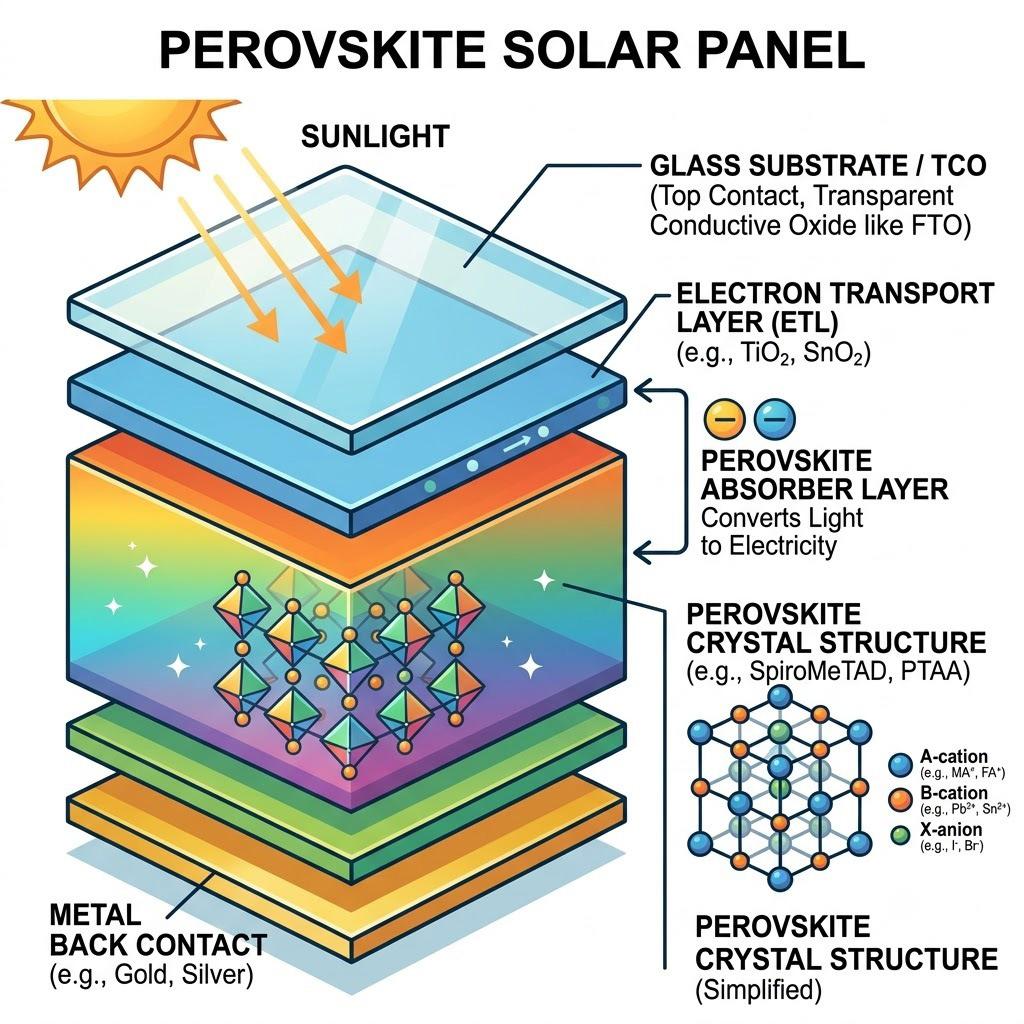
(GN with Google Gemini)
Solar panels consist mainly of a glass surface covering a silicon layer that generates electricity from captured sunlight. Just a few years ago, solar panels converted only about 17 percent of sunlight into electricity. Now the majority of solar panels on the market are already at 21 to 24 percent efficiency. The maximum efficiency of silicon solar panels is known to be 27 percent, which was believed to be the limit until the breakthrough tandem cell technology was introduced. Tandem panels are multi-layered with different materials, and panels using silicon and a mineral named perovskite are in the spotlight. These panels are made by adding perovskite to the ordinary silicon layer. They absorb blue light, which silicon alone cannot absorb and thus generate more electricity. Theoretical efficiency is expected to be 44 percent, and is currently at 33 percent. Although durability still needs improvement, this breakthrough could be a game-changer in the history of solar energy.
Wind power systems are often found on top of mountains, on the seashore, or in the sea near the coastline. Because of limited land availability, more turbines are being installed offshore, but it is not always easy to fix the system to the seabed, especially when the turbines are far from dry land. New floating-platform technology makes installation easier and faster. The wind turbines sit on buoyant platforms anchored to the seabed
with flexible mooring lines. Ship-building companies and marine engineering companies are collaborating on this.

To deal with the intermittency of renewable energy, storing leftover energy is the way to go. Energy storage systems (ESSs) often use highperformance lithium-iron-phosphate (LFP) batteries that are safer and cheaper than nickelcobalt-manganese (NCM) batteries, but there are also thermal and mechanical systems as well. One thermal system is the liquid air storage system, which exploits the volume difference of air between its liquid and gaseous states. Using the leftover electricity, air is compressed to become liquid at the low temperature of –196°C to be stored in thermal energy storage tanks, and when there is a need for power generation, the compressed liquified air is warmed to expand its volume by 700 times. The pressure from the expanding air turns the turbine to generate electricity.
Another thermal method is the sand battery system, which stores energy as heat in sand and later uses that heat to generate electricity. An example of the mechanical storage method is pumped hydropower. Using leftover electricity, water is pumped into a dam at a higher altitude, and the water pumped up is used for hydropower
generation. Hydrogen should be counted as another method of storing energy. Using leftover electricity, water is separated into hydrogen and oxygen. The hydrogen is collected in tanks and can be used for generating electricity using catalysts without requiring combustion.
Generating and storing energy matter, but using the energy efficiently also matters greatly. Smart grids and virtual power plants (VPPs) are what make this possible. Smart grids are two-way electricity networks that use digital meters and sensors, while the old system was only one-way energy distribution. In addition, AI-driven VPPs can coordinate all those scattered small-scale power generation facilities and storage sites, or even parked electric vehicles, connected to the grids to work like one big power plant. These maximize the efficiency in energy consumption.
Honestly, I once also thought nuclear energy in the form of SMRs (small modular reactors) could become a perfect energy source, but I soon learned they still have technical challenges to overcome. SMRs cannot be built as cheaply as regular-sized nuclear power plants. Therefore, if SMRs are ever built, they are built only for specific purposes, such as for the places where no other energy sources are suitable. I am glad to know new renewable energy technologies are quickly evolving. I believe in human collaborative intelligence to drive progress toward economical, clean, and safe energy solutions.
Chung Hyunhwa, a native of Gwangju, recently worked for a local horticultural company. She led the international ecohike group Gwangju Hikers at the GIC in 2020 and 2021. Previously, she taught English at Yantai American School and Yantai Korean School in China and worked in school administration at Branksome Hall Asia in Jeju. She holds a master’s degree in TESOL from TCNJ in the U.S. and has a license to teach Korean. She loves plants, birds, dogs, and repurposing items creatively.
By Muhammad Umar Tahir
Afew weeks ago, I was sitting with a friend when he made an interesting request. Knowing my interest in artificial intelligence, he asked, “Why don’t you introduce some of the newest AI tools in your next article? People always hear about AI, but most of them don’t know what the latest tools can actually do.”
At first, I thought it would be easy. I would simply collect a list of newly launched AI tools and share them. However, the more I looked into it, the more difficult the task became. New AI tools are being released almost every week. Some focus on productivity, some on creativity, some on education, and others on automation. By the time one tool becomes popular, an updated version or an entirely new competitor has already appeared.
That is why this article is not an attempt to identify the single “best” AI tool. In a field that changes this quickly, today’s best tool may be replaced tomorrow. Instead, I would like to share a selection of recently launched AI tools that caught my attention. These may not be the “best” in their categories but they are among the most recent, offering a glimpse into where technology is heading.
One thing became very clear while exploring these tools: Artificial intelligence is no longer limited to answering questions in a chat window. It is gradually becoming a digital coworker. Some tools can create videos; others can compose music, design presentations, repair damaged files, analyze documents, manage tasks, or even

perform actions on our behalf. Looking at these developments, it feels as if we are witnessing the early stages of a major technological shift.
One category that is growing rapidly is AI assistants that can work alongside us. Tools such as Gemini Spark, Skygen, Workspace Agents ChatGPT, KiloClaw, and Workflows Mistral are designed to do much more than respond to prompts. They can organize tasks, connect with different applications, automate workflows, and help manage complex projects. Instead of asking AI a question and receiving an answer, users can increasingly assign objectives and allow the systems to complete multiple steps independently.
Another fascinating trend is the rise of creative AI tools. Not long ago, creating a professional video, animation, or music track required specialized software and years of experience. Today, tools such as Dreamina, Miraga AI, Gemini Omni, ChatGPT Images 2.0, BeatMV, AniJam AI, Google Flow Music, and Stable Audio 3.0 are making creative production more accessible than ever. A single user can transform an idea into an image, a video, an animation, or even a complete music composition within minutes.
Some of these tools feel almost magical. Miraga AI can transform a single photo into a realistic video sequence. BeatMV can analyze a song and automatically create a synchronized music video. AniJam AI can manage large parts of the animation process, from story concepts to final scenes. What once required an entire production team can now begin with a simple text prompt.
At the same time, a new generation of reasoning models is pushing AI capabilities even further. Models such as GPT-5.5 Instant, Claude Opus 4.8, Mistral Medium 3.5, DeepSeek V4, and MAI-Thinking-1 are designed to reason more effectively, follow complex instructions, and reduce errors. These systems are not simply retrieving information. They are increasingly capable of analyzing problems, generating solutions, and assisting with sophisticated tasks in research, coding, education, and business.
Beyond productivity and creativity, many new AI tools are solving practical everyday problems. Wondershare Recoverit helps recover deleted or damaged files. Wondershare Repairit can repair corrupted videos, photographs, audio recordings, and documents. FridgeSnap AI can analyze a picture of the contents of a refrigerator and suggest meals based on available ingredients. CalBye AI can estimate calories and nutritional values from a simple photograph of food.
These examples may seem small compared to advanced AI models, but they highlight an important point. Artificial intelligence is becoming useful in ordinary daily situations. It is moving beyond research laboratories and technology companies and becoming part of everyday life.
Another interesting development is the emergence of tools designed specifically for professionals. Capafy allows developers to add specialized skills to AI agents. HubSpot AEO helps businesses understand how AI systems perceive their brands. Cuey allows users to compare responses from multiple AI models side by side. EaseMate AI combines multiple leading models into a single platform for studying, working, and creating.
What surprised me most while exploring these tools was not any individual feature. It was the speed of progress. Only a few years ago, most AI discussions focused on whether machines could generate text. Today, the conversation has shifted toward autonomous agents, multimodal systems, intelligent assistants, advanced video generation, music creation, and real-time translation.
One of the most interesting aspects of these new AI tools is that they are not designed for a single type of user. A few years ago, advanced AI systems were mainly used by researchers, software developers, and technology companies. Today, that situation is changing rapidly. Students are using AI to summarize long documents, explain difficult concepts, and help them study more efficiently. Teachers are experimenting with AI-generated lesson plans and educational materials. Small business owners are creating marketing content, advertisements, and presentations without needing large teams or expensive software.
Content creators are perhaps experiencing one of the biggest transformations. In the past, producing a professional-quality video often required cameras, editing software, graphic designers, voice artists, and significant time. Today, a creator can generate images, videos, music, subtitles, and even translations using AI-powered tools. The barrier to creativity has become lower than ever before. A single person can now accomplish tasks that previously required an entire team.
The workplace is also evolving. Many professionals are beginning to use AI not only for writing emails or generating reports, but for managing complete workflows. AI assistants can organize schedules, summarize meetings, analyze documents, and automate repetitive tasks. Instead of replacing people, many of these tools are acting as digital coworkers that help employees focus on more important work. The relationship between humans and machines is gradually shifting from simple interaction to collaboration.
Another area that is changing rapidly is communication. Tools such as Palabra.ai demonstrate how language barriers may become less significant in the future. Imagine attending an international conference where participants speak different languages, yet everyone understands each other almost instantly. Such technologies have the potential to bring people closer together and create new opportunities for global collaboration.
At the same time, these developments raise important questions. If AI becomes capable of creating images, videos, music, software, presentations, and even business strategies, what skills will become most valuable in the future? Perhaps technical knowledge alone will no longer be enough. Creativity, critical thinking, judgment, and the ability to ask meaningful questions may become even more important. After all, though AI can generate answers, humans still decide which questions are worth asking.
Another observation that stood out to me while exploring these tools is how quickly expectations are changing. Just a few years ago, people were amazed when an AI system could generate a paragraph of text. Today, users expect AI to understand documents, generate videos, create animations, manage workflows, analyze data, and communicate naturally. What seemed impossible yesterday often becomes normal tomorrow. This rapid pace of progress is one of the defining characteristics of the current AI era.
Looking back at my friend’s question, I realize that asking “What is the best new AI tool?” may no longer be the right question. New tools appear so quickly that any answer may become outdated within months.
Perhaps a better question is this: As AI tools continue to grow more powerful, more autonomous, and more creative, how will we choose to use them? Because the future may not belong to those who simply use artificial intelligence. It may belong to those who learn how to work alongside AI.
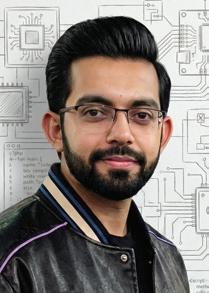
The Author Muhammad Umar Tahir is an electrical engineer pursuing his PhD in the Artificial Intelligence Convergence Department at Gwangju Institute of Science and Technology (GIST). He is interested in applying AI to healthcare devices, particularly in advancing medical imaging technologies and brain stimulation.
By Reeti Roy
To stand before the Ilwol-obongdo, the folding screen known as the “Painting of the Sun, Moon, and Five Peaks,” is to encounter one of the most quietly powerful visual structures of the Joseon Dynasty. If you have ever wandered through a Korean palace, you will recognize it instantly: five mountains rising in symmetrical formation, twin celestial discs suspended above them, stylized waves churning below, and pine trees that appear forever caught between stillness and motion. The screen is beautiful, but beauty was never its primary purpose.
Placed behind the king’s throne, the Eojwa; it functioned as a cosmological stage set. The composition was never meant to stand alone. It became complete only when the king took his seat before it, occupying the invisible point where heaven and earth met. The mountains promised stability, the sun and moon promised cosmic balance, and together they suggested that as long as these elements remained in harmony, the kingdom itself would endure.
In this traditional setting, the “self” was defined by a royal title. But in her recent exhibition Five Peaks, No Rules, artist Park Yeonhee begins to gently dismantle this architectural certainty. She invites a different kind of occupant to the center: the sovereign self, no longer defined by a kingdom, but by the quiet authority of an individual’s internal world.
Encountering the exhibition feels strangely similar to walking through a Korean city whose foundations remain ancient while its daily life pulses with restless modern energy. The structure
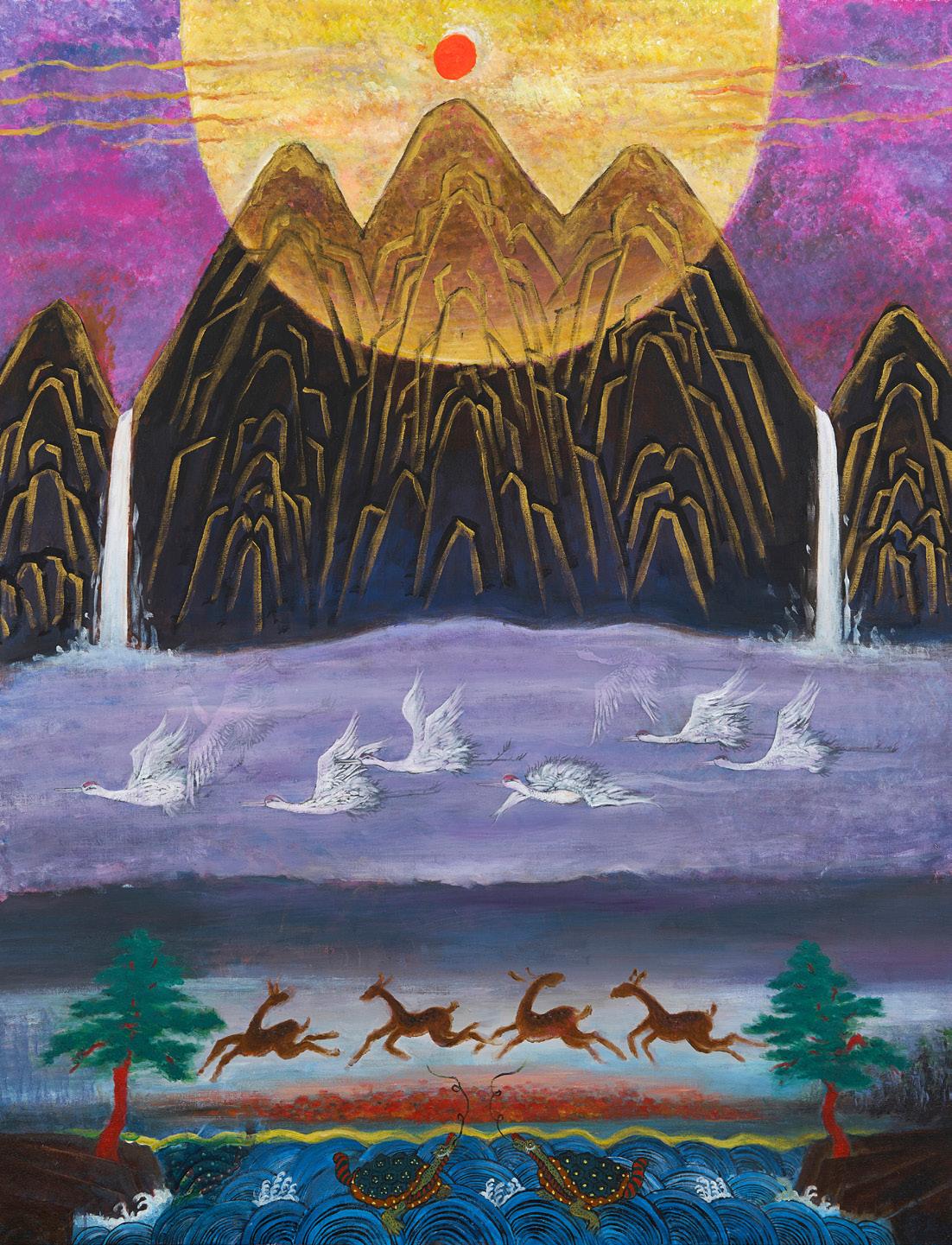
is familiar. The symbols are recognizable. Yet the emotional climate within the space has shifted.
Anyone who has spent time in cities like Seoul or Gwangju knows this sensation well. You turn a corner and suddenly find yourself looking at a glass tower reflecting the tiled roof of a centuriesold building. The past does not disappear; it simply learns how to coexist with the present.
Park’s paintings seem to operate in precisely that space of coexistence.
In traditional depictions of the Ilwol-obongdo, every element carries symbolic weight. The five mountains represent the stability of the kingdom; the red sun and white moon embody a complementary duality: king and queen, yin and yang, presence and reflection. Even the pine trees and stylized waves are visual assurances of continuity.
Park Yeonhee keeps this structure intact. Her canvases still anchor themselves around the five peaks, which remain firmly positioned at the center of the composition. But what happens within that structure is far less predictable. Colors migrate. Surfaces fracture. Symbols emerge and dissolve. What once served as a declaration of political order begins to feel like a map of an interior landscape.
The mountains become less about territory and more about orientation. In her own reflections on the work, Park suggests that the sun represents a source of self-generated light, the self striving to remain centered, while the moon reflects the presence of others: friendships, relationships, and the shifting constellation of human connections that surround an individual life.
It is a subtle but meaningful shift. Where the traditional screen projected the stability of a kingdom, Park’s version begins to chart the fragile equilibrium of a human being. The sovereign self here is not about power over others; it is about the internal agency required to remain whole.
To understand why this reinterpretation feels so natural, one must look briefly at the broader history of Korean painting, particularly the world of minhwa, often translated as “Korean folk painting.” Minhwa developed outside the rigid conventions of court art during the Joseon
period. Created by anonymous painters, these works took many of the same cultural symbols and reimagined them with humor and warmth. In many ways, minhwa democratized the visual language of power.
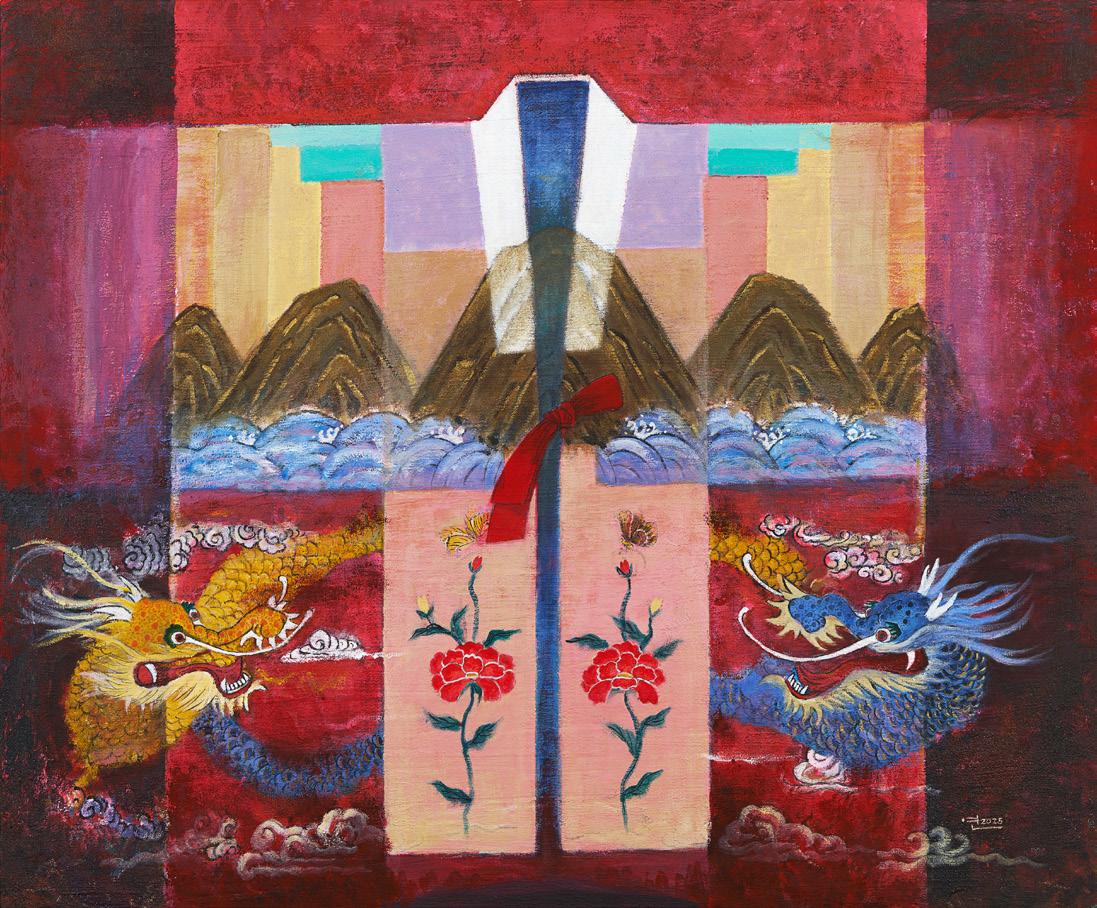
Park Yeonhee’s practice feels like a contemporary extension of that tradition. She refers to one aspect of her process as the “everlayer.” The term describes a technique in which paint is applied repeatedly and then partially removed, leaving behind faint traces of earlier stages. What remains visible on the canvas is not a single finished image but the accumulated memory of multiple images layered across time. The effect is surprisingly architectural.
Standing before these paintings, one begins to sense that the surface behaves less like a flat plane and more like a cross-section of a city wall. Earlier layers remain embedded within the material, occasionally resurfacing through cracks or shifts in texture. For someone who spends much of her time thinking about cities, this layering feels instantly recognizable. Urban landscapes rarely erase their histories completely. They absorb them.
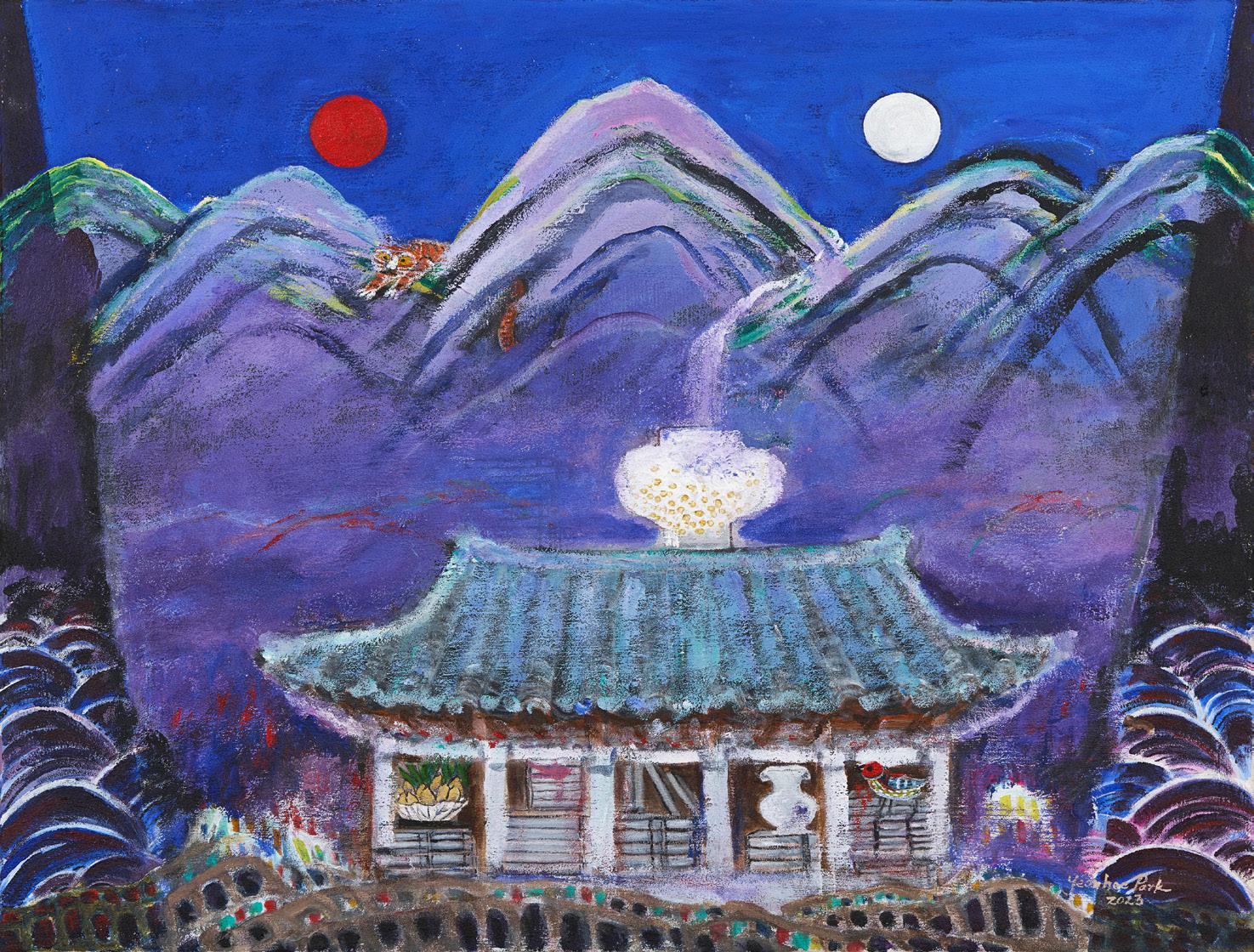
The same principle seems to govern Park’s canvases. Fragments of traditional motifs, tigers, deer, jars, appear briefly before dissolving into new configurations. Each layer interacts with the one beneath it, creating a quiet dialogue between inheritance and invention.
The title of the exhibition carries its own gentle provocation. Within the strict visual grammar of the Ilwol-obongdo, every detail once followed an established order. Symmetry was expected. Colors adhered to convention.
By naming the series Five Peaks, No Rules, Park does not reject the tradition. Instead, she reveals that rules only exist when there is a structure strong enough to support them. The five peaks remain at the center of her compositions. They function almost like a gravitational field. Around them, everything else becomes fluid.
The result is not chaos but a different kind of balance. It suggests that tradition does not dictate a single interpretation of the past. Instead, it offers
a framework within which the sovereign self can unfold many interpretations simultaneously. Seen this way, the subtitle “No Rules” begins to feel less rebellious and more liberating.
As someone who often thinks about cities as living archives, places where memory accumulates quietly beneath everyday movement, I find Park’s work deeply resonant. A city, after all, is not simply a collection of buildings. It is a layered negotiation between permanence and change. Streets shift, populations evolve, new structures rise, yet certain coordinates remain fixed. The five peaks in Park’s paintings function almost like those coordinates.
In smaller works such as “Garden of the Five Peaks,” the monumental royal symbol shrinks into something more intimate. The mountains no longer dominate the composition. Instead, they appear as elements within a private landscape, less like imperial monuments and more like landmarks within a personal garden. It is a small shift in scale, but it carries a profound
implication. The cosmic order once reserved for kings becomes something an individual can inhabit, reshape, and carry within their own life.
Returning to the Center
Park Yeonhee’s work ultimately reminds us that tradition is not a static inheritance. It behaves more like a set of coordinates, points that help us orient ourselves even as the terrain around them continues to evolve.
The mountains stand still. The sun and moon keep their positions. Yet the person who sits before them, the one who completes the composition, is always changing. And so, inevitably, is the world that unfolds around them.
Park’s work suggests that we are all, in a sense, sitting on that throne, navigating the layers of our own history, and claiming the right to define the view.
In addition to being able to view, reflect, and interpret Park Yeonhee’s Five Peaks, No Rules exhibition, I was fortunate enough to be able to interview the artist. The heart of that interview follows.
Reeti: If you were to describe this exhibition in one sentence, how would you introduce it?
Artist Park: This exhibition explores the world of “everlayer,” a contemporary reinterpretation of the symbolic imagery of traditional minhwa folk painting. It captures moments when different times and memories overlap within a single canvas.
Reeti: In your work, what does “layer” mean?
Artist Park: Everlayer in my work refers to the overlapping of time, memory, and emotion. It represents a state in which the past and the present coexist within the same space.
Reeti: Why did you choose traditional Korean minhwa as your artistic language?
Artist Park: Minhwa is a symbolic language that
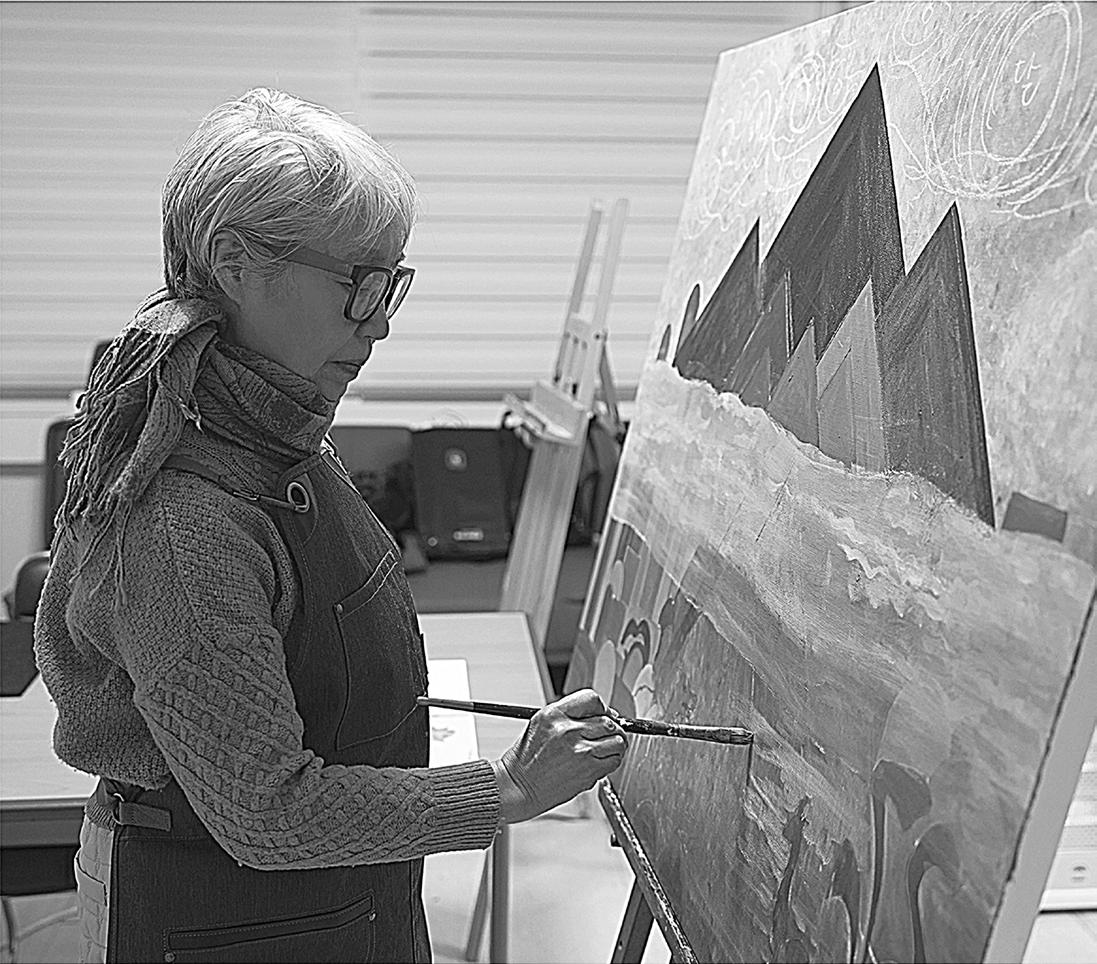
contains a deep philosophy of everyday life. From the moment I first encountered it, I was drawn to that philosophy. I felt that by integrating minhwa with the materials and compositional approaches of Western painting, tradition could move beyond the past and come alive again in a contemporary language. This belief continues to guide my work as I expand minhwa through a modern sensibility.
Reeti: Why do symbols like the five peaks and jars appear so often in your work?
Artist Park: For me, the five peaks serve as the fundamental structure on which all symbols are placed. Elements such as jars, deer, and tigers exist within this order, and as they overlap, they create another world.
In traditional paintings, the five peaks appear behind the king, symbolizing royal authority. In my work, however, the five peaks function as a stage where the layered world unfolds. The jar in my paintings represents the viewer’s world, or a vessel that holds memories. Animals such as dragons, phoenixes, tigers, turtles, and fish traditionally appear as auspicious symbols and embody human desires and aspirations.
Ultimately, by borrowing these traditional symbols, I seek to express the desires, memories, and structures of existence that shape our lives today, interpreted through a contemporary sensibility.

Reeti: What does it mean to reinterpret tradition in a contemporary way?
Artist Park: A contemporary interpretation does not mean mere reproduction. Instead, it means allowing tradition to be reawakened through the sensibility of our time. For me it is not about restoring the past but about expanding it. The concept of everlayer in my work can be understood as one such expansion.
Reeti: What is your working process like?
Artist Park: First, I establish the concept of what I want to express. Then, I select symbols from minhwa that can best represent that idea. The next step is to arrange these symbols in balance upon the fundamental structure of the five peaks.
Most importantly I build up layers of paint dozens of times. I also stamp or scrape the surface using tools other than a brush. Through this process a sense of balance begins to emerge from what first appears to be disorder. Because layers continue to accumulate over time my work always remains in a state of becoming and is never completely finished.
Reeti: Is there a particular work in this exhibition that you feel especially attached to?
Artist Park: Above all “The Time of Everlayer” and “One World, Two Ways.” I believe these two works express the concept of everlayer most clearly. In particular “One World, Two Ways” invites viewers to reflect on how the same subject can be interpreted differently depending on one’s perspective, even within the same space.
Reeti: What direction do you see your work taking in the future?
Artist Park: I feel that I need to continue researching the intersection between tradition and the contemporary. Going forward, I hope to expand the Everlayer series and create even deeper layers within my work. Through this process, I hope my work can become a space where viewers encounter their own memories and perspectives.
Through this dialogue between the inherited past and the fluid present, Five Peaks, No Rules does more than simply modernize an ancient aesthetic. Park Yeonhee successfully untethers the sacred geography of the Joseon court, offering it instead as a sanctuary for the contemporary soul. In her hands, the majestic canvas of the five peaks is no longer a rigid symbol of royal command but an open invitation for each of us to step forward, claim our own inner landscape, and quietly rule from within.
Five Peaks, No Rules, a solo exhibition by Park Yeonhee, was presented from February 25 to March 2, 2026. All photographs courtesy of the artist.
The Author
Reeti Roy is a cultural commentator and art critic who writes extensively about contemporary Asian art, urban landscapes, and the intersection of tradition and modernity. Her essays explore how art and urban spaces shape contemporary identity.
By Reeti Roy
In Calcutta, where I am from, we inherit a certain faith of the mind. Not loudly, not as doctrine, but quietly, through habit. In the way we listen, in the way we are taught to admire, in the way a well-formed sentence or a certain kind of education begins to stand in for something larger than itself. The ability to hold a room through thought alone is not merely an accomplishment. It is, in some sense, an assurance – that if someone can think well, they will live well. That if they can speak beautifully, they will also, inevitably, “arrive.”
I arrived in Seoul carrying that faith of the mind with me, almost unconsciously, like a second language I did not know I was fluent in. It has been, since then, gently and persistently undone.
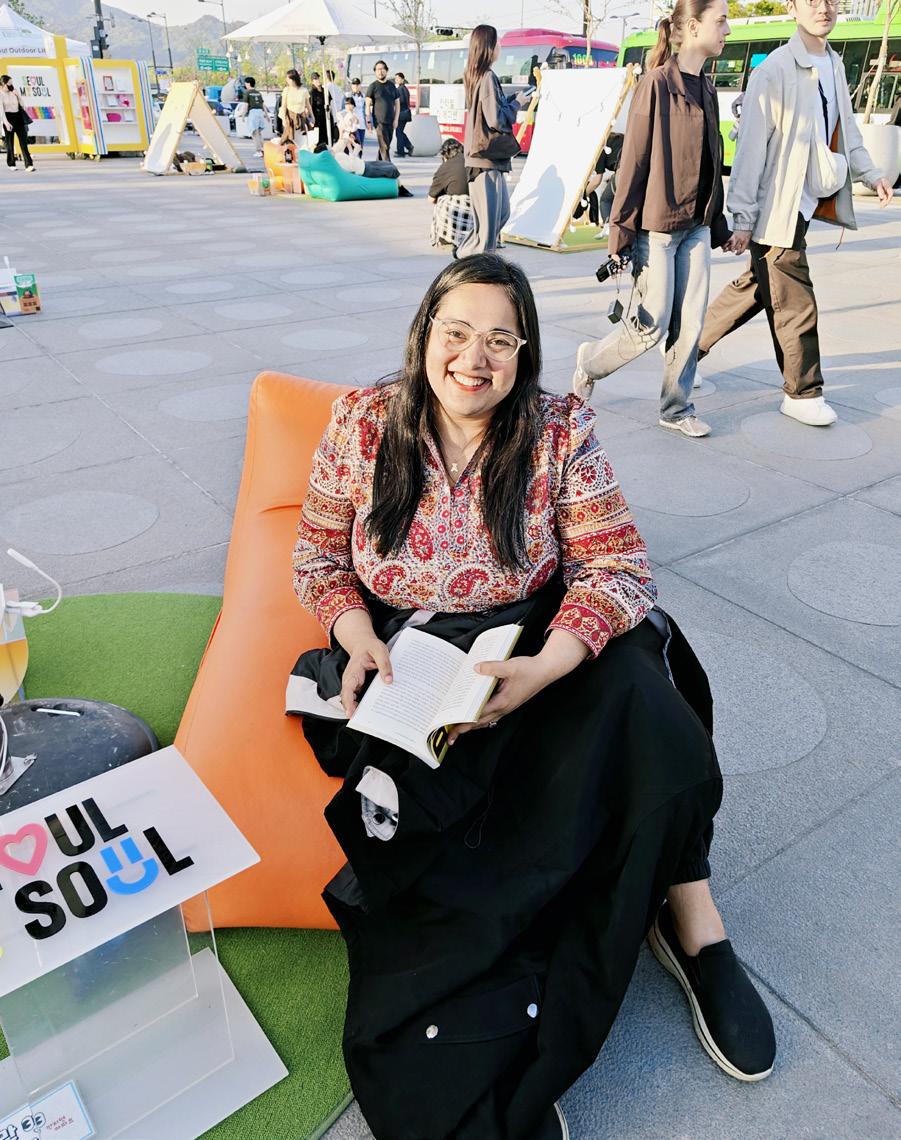
There are two men in this story, though neither of them ever quite enters it in the way I once expected they might. The first is what I have come to think of as a credentialed academic. Precise, articulate, careful with language in a way that signals both training and restraint. When we first spoke, we spoke for hours, the kind of conversation that feels less like an accident and more like a construction. It had shape, movement, a sense of shared intellectual ground that is rare enough to feel significant when it appears.
Seven months later, we have still not met. What exists instead is a trail of messages that are, in themselves, almost faultless. Gracious, measured, always oriented toward a future encounter: “It would be lovely.” “I am looking forward to it.” “Let us find a time.”
And yet, the future remains exactly that. Something deferred, something that holds its form without ever becoming real. There is always a reason, never dramatic, never even particularly inconvenient, just sufficient enough to prevent the moment from arriving.
At some point, without me quite noticing when it happened, the language begins to lose its weight. Not because it changes, but because it does not. I find that I cannot recall the content of what he has said, only the structure of it. The promise of presence without its fulfilment. A series of sentences that gesture toward something that never quite materializes. He lives, I realize, in a future tense that never quite becomes the present.
The second man exists in a different register altogether. There was no careful calibration here, no measured pacing. Only intensity. Conversations that unfolded quickly and with a
kind of emotional velocity that can be mistaken, in the moment, for inevitability.
We spoke as if something had already been decided. And yet, nothing was. Because intensity, I am beginning to understand, does not necessarily move forward. It can remain suspended, complete within itself, requiring no translation into action.
Between the two of them, what remains is not quite disappointment, and certainly not heartbreak. It is something quieter and more difficult to name. The experience of something that almost becomes real, and then does not.
This is not, finally, a story about men, though they appear in it. It is a story about leaving. When I left Calcutta, I did not simply change cities. I stepped out of a world in which I was held in ways that I had not fully understood until they were no longer immediately available to me.
– My mother, who reads my silences with an accuracy that still unsettles me.
– My four cats, who have never required language to understand me, only proximity.
– My brother, who worries without saying so, whose concern exists as a quiet constant rather than a spoken one.
– My little nephew and niece, who tell me to bring back ramyeon, who insist that I should have a good time, who perform their excitement with such care that it almost conceals what sits just beneath it. They do not say that they miss me. They come very close, and then stop, their voices shifting in that small, unmistakable way that reveals what is being held back.
There are moments here, in the stillness that follows a long day, when the question arrives without warning: Why did I leave a life so full of love to come to a city where I know no one? It is not a question that demands an answer so much as one that marks a transition. Because here, I am learning to live without the immediate
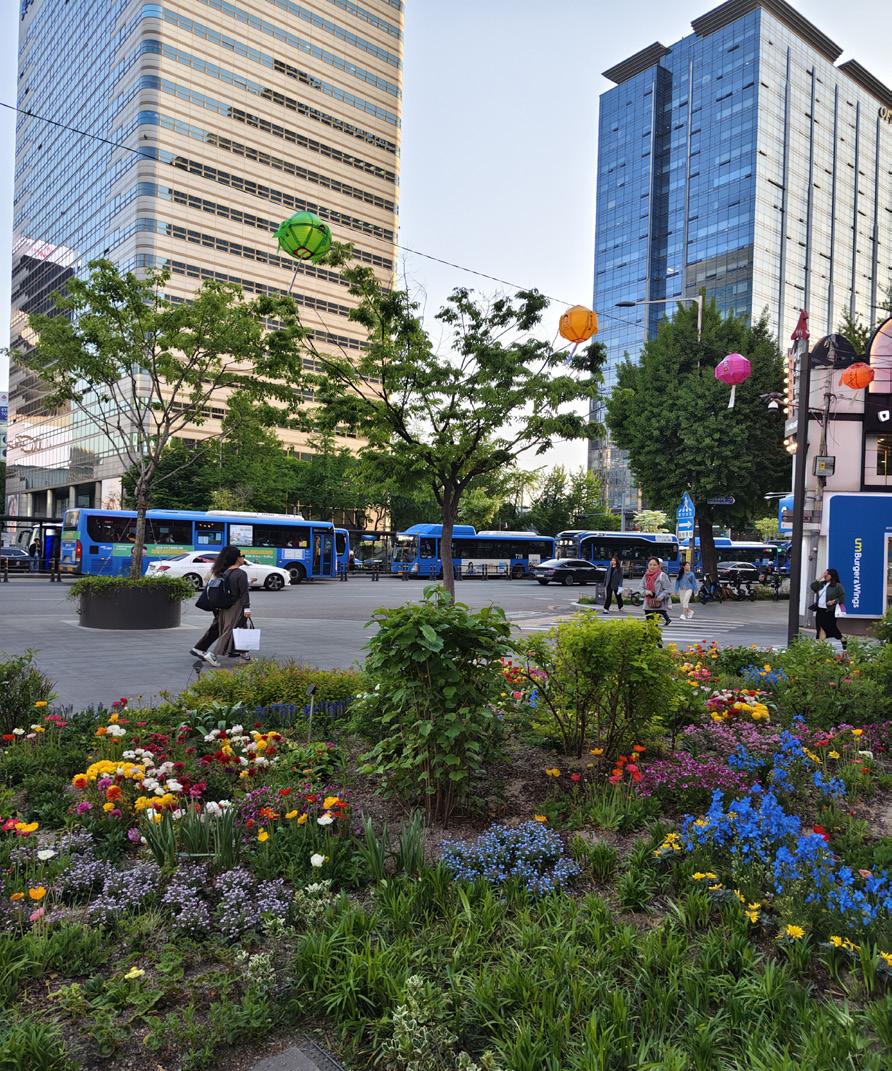
recognition that once structured my days. To think in one language, speak in another, and feel in something that does not yet fully belong to either.
There are days when even the air feels unfamiliar. The fine yellow dust settles quietly, insistently, reminding me that the body, too, must negotiate its place in a new environment. And beneath all of this, something I had not encountered before in quite this way: the absence of an emotional anchor. Not loneliness, exactly. Something more suspended than that.
What I encounter instead is a form of social grace that is difficult to translate directly. It is warm, attentive, careful in its politeness, and yet it does not always arrive in the way I expect it to. It does not reject. But it does not quite choose either.
And yet, while certain connections remain suspended, the city itself resists that same distance.
Seoul, I am discovering, is a place that touches back. Not dramatically, not in ways that announce themselves but in small, precise gestures that accumulate into something unexpectedly steady.
– A flight attendant who reaches out, without hesitation or commentary, and places a bandage where it is needed.
– A young man at a samgyeopsal restaurant who stands over the grill with complete attention, turning the meat at exactly the right moment, placing it on my plate with a quiet assurance that does not require explanation.
And then, at my university, during a routine fire drill, I find myself next to a firefighter. There is no shared vocabulary, no introduction. Only the immediacy of the task. He takes my hand to guide it. Adjusts my grip. Shows me, through touch, what needs to be done.
It is a brief moment. And yet, it is entirely present. I realize, with a clarity that feels almost physical, that my body registers this differently. I remember the pressure. The steadiness. Nothing in my body remembers the Korean sentences I have been reading for months. The body does not archive intention. It archives contact.
When he says, softly, that I have done well, it lands not as praise, but as recognition.
There is, alongside this, another form of presence that I had not anticipated. In my classroom, my teachers are 친절합니다 – kind. I have learnt, slowly and with some hesitation, to say it aloud: 선생님이 친절합니다. It is a simple sentence: “My teacher is kind.” And yet, it seems to contain more than I first understood. Not just kindness as a quality, but as a way of being present. A way of noticing without intrusion, of encouraging without performance.
They place stickers in my workbook when I get something right. They circle my Hangul strokes carefully, not only to correct but to encourage, to signal that the effort itself is visible. In a space
where I am often aware of what I cannot yet say, they do not withdraw from that limitation. They remain with it. It is a quiet kind of generosity. One that does not rely on language to assert itself.
And all the while, the city moves on another register entirely. I am here at a moment when BTS have returned, and there is a sense, difficult to define but easy to feel, that something larger is unfolding alongside the ordinary. It appears in fragments. In the sudden presence of purple lights, in music that slips out into the street from passing cars or open doors, in the low hum of collective anticipation that moves through the city without needing to announce itself.
At some point, without trying to, I begin to recognize words before I fully understand them: 자 어서 내 손을 잡아 (Come on, take my hand). It is a phrase I have already learned elsewhere. Not
in a song, but in the quiet choreography of this city. In the firm guidance of a firefighter’s grip. In the instinctive steadiness of a stranger who does not hesitate.
It is possible, here, to be living a life that feels intensely private while being surrounded by something unmistakably public. To hold both without contradiction.
What I am learning here is not what I expected to learn: that presence is not always articulated. That care is not always declared. That the ability to speak beautifully does not necessarily extend to the ability to arrive.
I am learning, slowly, to distrust language that does not move toward action. To recognize that some people inhabit the future as a way of avoiding the present. And to understand that a brief moment of contact can carry a weight that no amount of intention can replicate.
There is, now, a clarity that does not feel dramatic, only settled. On one side, men who speak in futures, who construct possibilities that remain suspended in language. On the other, a city that continues, quietly and persistently, to meet me in the present.
In Calcutta, I learned to trust the mind. In Seoul, I am learning to trust something simpler: the hand that does not hesitate.
Reeti Roy is a cultural commentator and the founder of Aglet Ink. A graduate of Jadavpur University and the London School of Economics, she is currently based between Korea and India, investigating Indo-Korean social architectures through an anthropological lens.
Photographs courtesy of the author.
By Farrukh Anique
In 2024, insurance fraud worth US$870,000 was committed in Korea, roughly half of it carried out through forged medical documents. This film’s story is, on its surface, built on that very subject. It shows a small village on Korea’s eastern coast. The village’s scant population is made up of a handful of fishermen. They put out to sea in their old battered boats and return with two or three baskets of small fish or crabs, which their women dry and sell, and this is the whole of their livelihood. They are fighting for survival against a changing age.
How the village came to this brink of ruin is never revealed, but by the time the film begins, the village is already drawing its final breaths. To all appearances, every household still lights its hearth, still finds two meals a day. Yet whoever you meet in this village wears a sunken face and is ready to snap at the slightest provocation. Nearly all the village’s young have left for the big cities, and the bent backs of their aged parents can no longer carry even their own weight. Those young who could not leave for the city are so crushed beneath the burden of their own failure that their spines are stooped lower than the old folks’.
The film’s title carries the word “calm,” which usually means peace and contentment. But once you watch the film, you understand that “calm” does not yield that meaning here. Here it means stillness and hush. The kind of stillness one often feels in the moments just before death – the kind of silence whose screams can be heard far and wide. At the village’s edge lies the boundless sea, yet everyone is gripped by a strange suffocation. It seems as though each time the waves strike the shore and recede, they carry a little more of the
village away with them, and now the village is all but finished.
A small community center is the only place where laughter can still be heard. The old women sit there at their leisure playing cards and passing on the village’s news to one another. Step into the community center and the village seems like one large family, where everyone shares each other’s griefs and sorrows. Perhaps this community center is the last refuge for these forsaken souls.
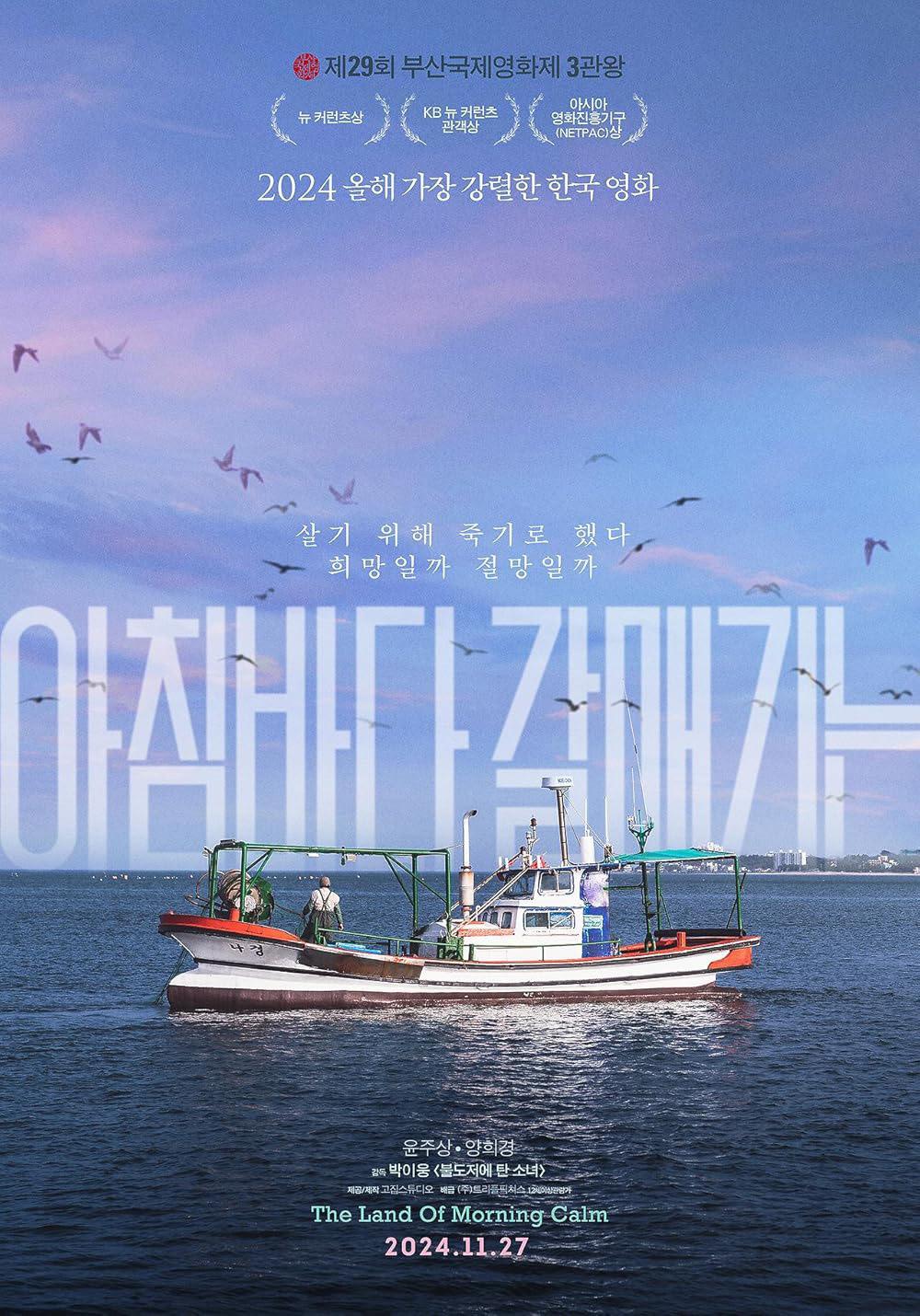
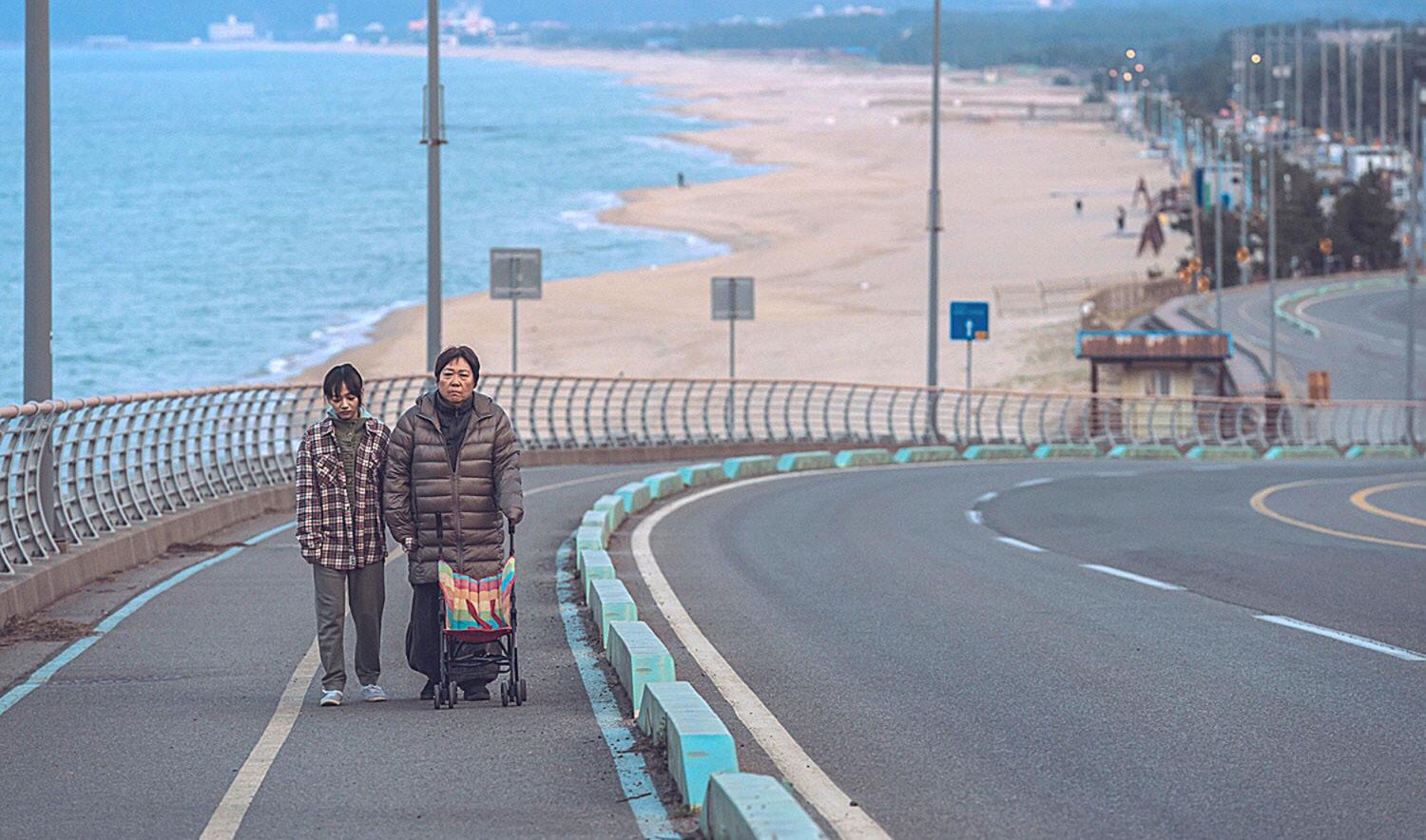
It is then that an old fisherman's apprentice – a man who curses himself day and night over his failure – says to his master one day that he has no future in this village. I have bought myself an insurance policy, he says, and I want all the money to go, after my death, to my Vietnamese wife and my old mother. He tells him, “One night, I will slip quietly out of the village, and afterward, you will tell the villagers that your apprentice fell from his boat and drowned.” The master agrees to play his part in his apprentice’s foolish scheme. Perhaps he wished that the chance to escape this village in his own youth; the chance he had let slip had now been granted by fate to his apprentice, and so he ought to stand by him.
When, in the dead of night, the old fisherman comes to report to the police that his apprentice has fallen into the sea, a storm breaks over the village. The whole village gathers. And calamity falls upon the apprentice’s mother and his wife as well. A team of specialist divers is summoned from the city, and the search begins for the body of a man who, miles away in a small room of some anonymous city hotel, lies staring at a telephone.
The film moves a little slowly, but then, do our own lives not move just so? Does life move swiftly
for a mother whose only support has drowned in the sea, his body never even recovered? For a wife who loses her sole protector in a foreign land, where old men leer at her – men whose tongue she cannot even speak? Does her life not come to a standstill? And the despairing old fisherman who, with each passing moment, feels himself condemned before the stony gaze of a frail mother – can even his breath be called life?
There is a great deal in this film. So many themes have been folded into so brief a film that it is, in truth, worthy of admiration. This is not a thriller in which the police are shown investigating a mysterious disappearance. It is, rather, a layerupon-layer tale of emotion that turns each of its characters inside out, the way mothers turn their children’s white uniforms inside out to hang and dry on the wash line. A son and husband who is willing to go to strange, extreme lengths to fulfill his duty. A mother who sits frozen as a statue on the shore until late into the freezing, marrownumbing night, on nothing but the hope that any moment now some uniformed man will step off a boat and bring her the glad tidings that can never come true. A wife whose husband’s death has, in a single day, made her a widow and a stranger on borrowed soil cannot even raise a lament. For a
lament can only be raised in one’s mother tongue, and who was there to understand hers? A master whose faltering legs can no longer bear the weight of the guilt he is steeped in – a guilt that all the soju in the village’s little tavern cannot drown. Middleaged policemen and sea divers who cannot meet the frail old woman’s eyes, men in whose lives this was perhaps the biggest case of all, and the very one they failed to solve. And, oblivious to the anguish of all these, the insurance-company and administrative officers and clerks seated in warm offices and comfortable cars, their hands bound by the red tape of files that pass endlessly across their desks.
I usually close by writing of one or two scenes that stay with me. But what is one to do when every single scene of this film cuts at the liver and wracks the soul? The apprentice, taking his leave of the master, sits at his feet and bows to him in prostration – and the master gives him a slap, lifts him up, and says, “Gosaeng-haet-da” (well done). No greater words than these can pass a master's lips for an apprentice, and least of all, when the master is straining with all his might to hold back his own tears.
There is a mother who receives word that her son has become the prey of the very sea that, for decades, had been the sustainer of the whole village. Think on it. Imagine it. Those who are mothers, place yourselves, for a moment, in this mother’s stead. What would you do? Weep? Cry out? Pull your own hair? Collapse to the ground? Would all of this be a sufficient response to such a loss? Surely not. And yet this seventy-year-old actress pours into fifteen or twenty seconds an anguish greater than the viewer can hold.
Nowhere does the director, Park Ri-woong, push the film into manufactured tragedy, nor does he conjure needless sensation. The piercing silence, the imperceptible fatigue, and the heavy, burdened pace of life in a dying village build so gradually toward such intensity that the central event – the disappearance – recedes into the background,
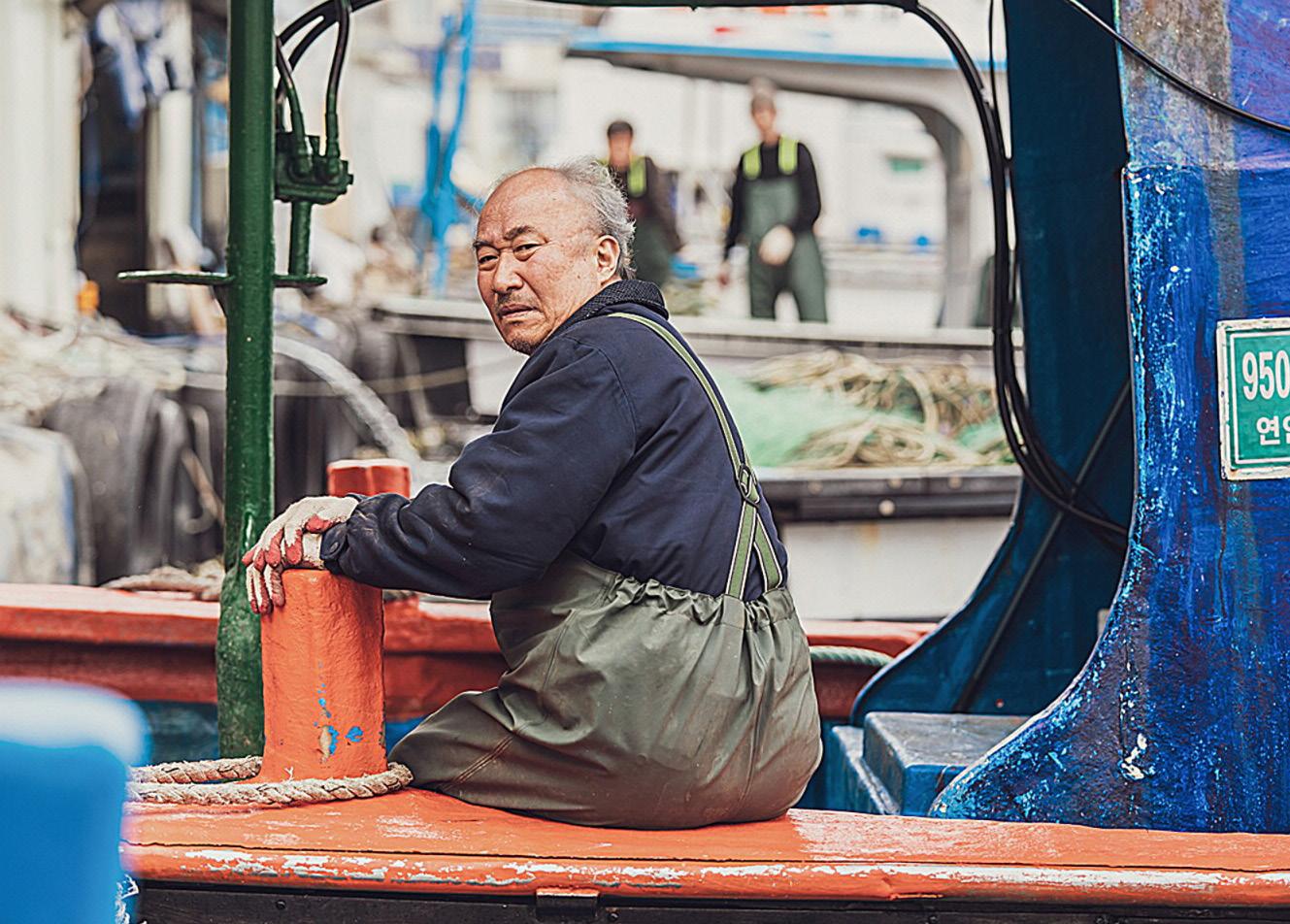
and the story’s true emotional reality begins to unfold without the least exaggeration. It is this same restraint that gives the actors their fullest room here. The characters do not shout out their sorrow; they carry it in their withered faces and their lifeless bodies. The two elderly characters, especially, seem to gather into themselves not merely their own private deprivation but the collective defeat of the entire village.
The film’s real virtue lies precisely in this: that it nowhere inflates anything, but instead trusts in the substance of its story, and lays bare before us, with the greatest ease, the cruelty, the despair, and the grief hidden within it. By the end, it feels as though what has gone missing is not a single man, but perhaps the village’s last lamp – which flared up in one full, vivid surge of brightness, and then went out.
The Author
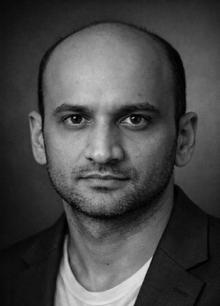
Farrukh Anique, originally from Pakistan, is a PhD student at Chonnam National University. He’s got a real love for the performing arts, culture, literature, and languages. In his spare time, he dives into Korean culture and history, and stories that spark his curiosity. Oh, and he absolutely loves strawberries. Email: farrukh.ask@gmail.com
By Tabbu Shaikh
At first glance, “happyness” is merely a misspelling on a daycare wall – a careless orthographical error painted over a place meant to nurture the future. Yet, by the end of Gabriele Muccino’s masterpiece, that misplaced “y” in “happiness” becomes a profound, universal symbol of life’s inherent imperfections. The spelling as “happyness” reflects the human condition itself: It is fundamentally flawed, deeply asymmetrical, and stubbornly irregular. It is akin to a moon covered in craters and scars –beautiful not because it is flawless, but because it has endured the violent bombardment of the cosmos and still manages to shine.
The Pursuit of Happyness is far more than a movie; it is a raw, visceral, emotional bridge that connects the audience to the harrowing, unforgiving, yet ultimately hopeful, journey of Chris Gardner and his young son, Christopher.
his savings, his apartment, his partner, and his financial dignity. Yet, as the final credits roll, the film does something far more important than merely depressing us: It awakens the soul.
The film teaches us a difficult truth: that happiness is rarely a passive gift bestowed by fate; it is a prize won in the trenches. It is something that must be chased with every ounce of one’s spirit. We see Chris Gardner running – literally and figuratively – through the streets of San Francisco. He runs against time, against poverty, and against a world trying to steal his dignity. He reminds us that even when you are at “zero,” you must still give your absolute best.
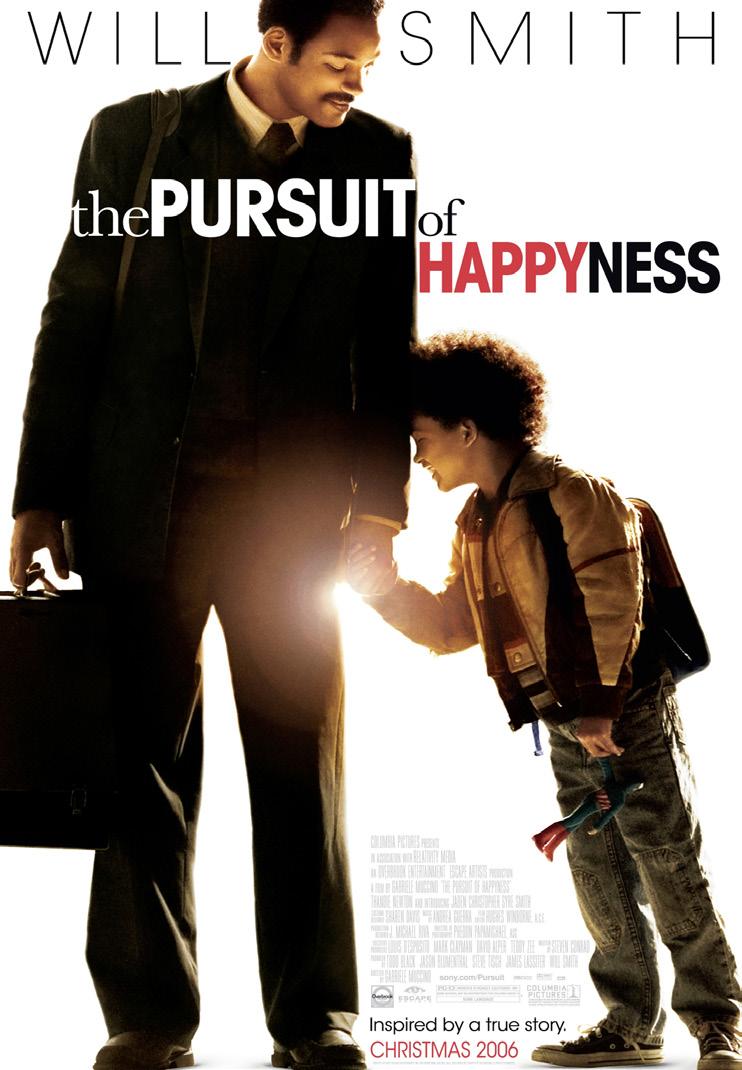
The story is intentionally not an easy watch. As the first act unfolds, it actively disturbs the mind, forcing us to sit uncomfortably with the crushing, suffocating weight of systemic poverty. We watch a man do everything “right” – work hard, pitch products, maintain an optimistic smile – only to be systematically stripped of
The film’s emotional anchor is the infamous subway bathroom scene – a sequence that stands as one of the most heartbreaking moments in cinematic history. Locked inside a public restroom, a father and son seek refuge from the cold night. To shield his five-year-old son from the devastating reality that they are homeless, Chris uses the power of imagination, pretending that his bone-scanning apparatus is a “time machine” that has transported them back to the era of dinosaurs. At that time, those tears of Chris Gardner break us from the inside out.
Exhausted by long shelter lines and blistered feet, Chris’s armor finally breaks. Yet, he proves that “smooth seas do not make skillful sailors.” In that moment, he shows what truly makes him a great father – not money, but his absolute refusal to let a cruel world crush his son’s happiness.
Perhaps the most hard-hitting and quietly tragic element of the film is the forced maturity of young Christopher (played with profound innocence by Jaden Smith). In a world where childhood should be an unbothered fairytale of toys, playgrounds, and chocolates, Christopher is forced by circumstance to grow up in the margins. He does not throw tantrums when told they must leave their motel room. Maturity at such a delicate age feels like a curse. He implicitly understands the silent, heavy weight of his father’s empty pockets. When he tells his father, “You’re a good papa,” it is a hauntingly beautiful realization.
The climax of The Pursuit of Happyness brings us face-to-face with what can only be described as “a frozen tear.” For months, Chris has walked through the freezing breeze of poverty, rejection, and exhaustion. He could not afford to cry; crying takes energy, and crying implies defeat. His tears were frozen solid by the sheer force of will, locked behind a dam of survival instinct. But when he is finally called into the boardroom and told to wear a shirt again “because tomorrow’s going to be your first day,” the dam breaks. Walking out into the crowded San Francisco Street, surrounded by a sea of oblivious businessmen, Chris begins to clap his hands together, and the tears finally flow.
Locked in the cold breeze of life, denied the chance to flow…
Walking this long, difficult path alone… The heart questions, yet the feet move on. A frozen tear in your mind waiting to flow… Yet even ice remembers warmth, a whisper of sun, a trembling hope. And when the heart grows brave enough to loosen what it held too long…
The tear will soften, fall gently to the earth… To cherish a new blossom and teach you how to live again.
For every frozen sorrow must melt someday, And the long, dark winter will eventually give a way. Your struggle story is not where the book will stay… It is just a success story in the making, waiting for its day.

Everyone smiles at the climax, but the collective smile of the audience is for far more than just a corporate job offered or a steady paycheck. It is a celebratory sigh of relief for the beginning of a new era for a father and his son. It is the validation that their suffering was not meaningless.
The Pursuit of Happyness remains a must-watch “feel-good film” yet grounded masterpiece for every generation. It stands as a monumental cinematic reminder that our current stories of struggle are not permanent tragedies – eventually, they are simple success stories in the making.
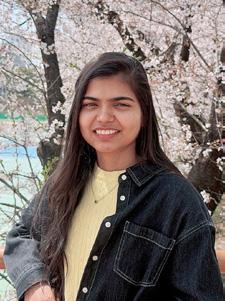
Tabbu Shaikh is an international student from India. She has traveled from India to South Korea for the Spring Exchange Program 2026 at Chonnam National University in Gwangju. Being a research student, she is deeply immersed in research work but actively seeks inspiration in the world of nature, capturing those moments through the lens of a poetess.
Poster Credit: The Pursuit of Happyness, 2006. (IMDb) Above Image: T. Shaikh with Samsung Galaxy AI Photo Assist. From luancabj/TMDB
Reviewed by Michael Attard
By Kimberly Brubaker Bradley 316 pages, Dial Books for Young Readers, 2015
The War That Saved My Life, is a Newbery Honor Book. The intended audience is adolescents. The storyline and themes of such books may be easy to understand, but it does not follow that the story is any less interesting, entertaining, insightful, or the prose weaker than in any other novel. And this is certainly true of this book by Kimberly Brubacher Bradley.
Ada, our heroine and protagonist, is ten years old, and she is the narrator of the story. This first-person narration enables the reader to more concisely comprehend the thinking of a ten-yearold, reducing the chance of adult misperception. Additionally, plenty of dialogue keeps the reader tethered to what is of most importance to children.
We meet Ada in London, England, in 1939. She lives with her brother Jamie, who is six years old, and her abusive mother. It is clear that the mother is the antagonist. She is a woman superstitiously obsessed with the misfortune of Ada having been born with a club foot. The mother, referred to as “Mam,” has never allowed Ada to go out, meaning that Ada has not attended school. The mother’s explanation for this is “You think I want the world seeing my shame?”
Ada gains some knowledge of the world from Jamie, and from sitting on a chair by the window. She even learns a bit about a few of the people she sees, waving to some of those who pass by regularly. They in turn have been led to believe that Ada is a simpleton. But all is about to change when word comes that the children living in London will be evacuated because of
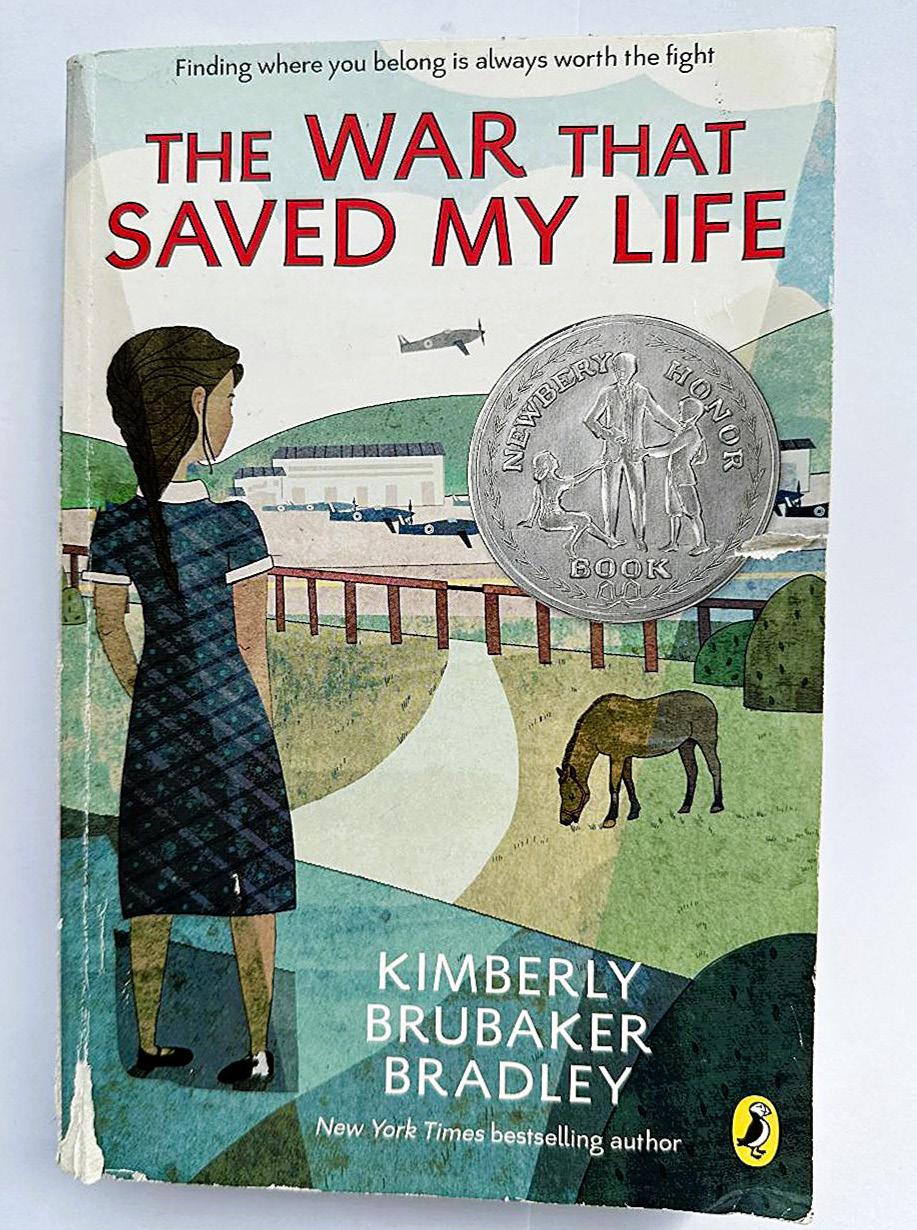
the inevitable beginning of World War Two. Ada asks, “What about me?”
Mam replies, “Course not. They’re sending kids to live with nice people. Who’d want you? Nobody, that’s who. Nice people don’t want to look at that foot.” Secretly and with help, Ada, along with Jamie, does manage to get away. It is true that they are the last two children to be placed, and it is also the case that Miss Susan Smith is coerced into taking them, but they are out of dangerous London and away from Mam. No one knew what their future would be.
A major theme underlying the daily events is the development of trust that Ada has in Susan Smith and herself. Ada has a strong will, but her reluctance to believe that anyone would be willing to help her and accept her for who and what she is – a girl with a club foot – inhibits her from opening up to people and precludes happiness. For Ada, anything that seemed too good to be true, probably wasn’t true. She says, “I knew that Susan wasn’t real. Or, if she was a tiny bit real, sometimes, at the very best, she was only temporary.”
“A major theme underlying the daily events is the development of trust that Ada has in Susan Smith and herself.”
Young brother Jamie has not escaped the psychological problems created by his plight either. He becomes homesick and a bed wetter. Susan realizes that something is up at school with Jamie. His teacher has interpreted his lefthandedness as a sign of the devil and has tied his left wrist to his chair. Susan puts an end to this, and when Jamie adopts a scruffy cat, expressly against Susan’s wishes, the bed wetting ceases.
A soft and touching, almost magical, element of the story involves Ada’s relationship with a pony named Butter. While Susan cares for the pony, its real owner has died, and thus Butter, much like Ada, is alone. The pony provides Ada with unconditional friendship. Metaphorically, Butter is a pathway, a link to healthy human relationships. As Ada gallops away atop the pony, her fears dissipate, and she becomes acquainted with her own inner strength.
In the material world, the war does arrive. Ada’s village gets a close-up look at the war when soldiers from the evacuation at Dunkirk arrive. As the Battle of Britain begins, so do the falling bombs. On the street, “gaps showed in the rows of buildings like missing teeth.” As a historical point, generally, child evacuees from London were not sent to towns near the English Channel, as per the story. Rather they were evacuated north of London and inland.
While the war affects their daily lives from rations to a bomb shelter built in the yard, the greater impending confrontation is going to be with Mam. Mam has not answered any of Susan’s letters, but she knows where Ada and Jamie are. As the reader can easily deduce from the title, there is a happy ending, but the author has left it to the very end before assuring the reader that this is so.
The coming and going of other characters integrated into Ada’s life serve to weave the days together. From Stephen, the boy from home, the elderly blind colonel, and Grimes the caretaker to Doctor Graham, who says that Ada’s foot can be fixed, Ada learns that it is indeed a broad world. More importantly, she realizes that there is a place for her on this planet, and that that place will be as much determined by her as others and circumstances.

The Reviewer
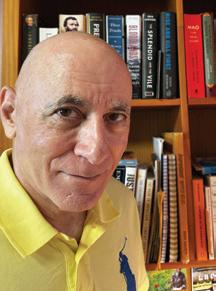
Michael Attard is a Canadian citizen but has lived in Gwangju for over twenty years. He has taught English as a second language in academies and within the public school system. He is officially retired and spends time reading, writing, hiking, and spending time with friends.
Listening to silence is listening to God while breathing. Since the beginning of everything, there had been a possessed peace, then the eruption of words. What was I before sound? Pre-form – set me free! Take me back to the world of silence, into a formless shape, and take off the chains of my mortal body. Take me to infinity.

The Author
Tamara Pantović is a Montenegrin poet, essayist, and archaeologist. As an authentic voice of contemporary Montenegrin literature, she focuses on the themes of identity, loss, and inner strength. Tamara actively publishes in English on the All Poetry site under the penname besherat (https://allpoetry-classic.com/besherat).
(Graphic: GN with Microsoft Copilot)
By Dhivyaa S. P.
Tucked away in Gwangju’s Yongbong-dong area of Buk-gu, Mi Mill is a small and cozy café that feels calm from the moment you arrive. It is a nice place to study quietly, spend time alone, or meet a friend without too much noise. Unlike many busy cafés, Mi Mill has a peaceful atmosphere, which makes it easy to sit for a while and enjoy your drink or food.
The most special thing about Mi Mill is its bread. The café does not use yeast in the bread-making process. Instead, it uses natural fermentation starter and rice yogurt made from fermented rice nuruk. According to the sign outside the café, the dough is also fermented at a low temperature for 18 hours. This gives the bread a healthier and more natural taste. For people who are interested in handmade food or healthier bakery options, this makes the café stand out.
Mi Mill also offers sandwiches, bagels, croissants, and coffee. When I visited, there was an event for sandwich and Americano sets, as well as a morning discount for hot or iced Americano. These small deals make it a good stop for breakfast or a light meal. The café feels especially suitable for a slow morning, when you want something simple, warm, and comforting.
The owner was also very kind and friendly, which made the visit feel even warmer. She explained that the bread-making process is inspired by European-style bread, where slow fermentation is important for deeper flavor and better texture.
Another charming part of Mi Mill is the handmade items inside the shop. They sell handcrafted products, including embroidery items, which gives the café a personal and artistic feeling. It does not feel like a regular chain café.
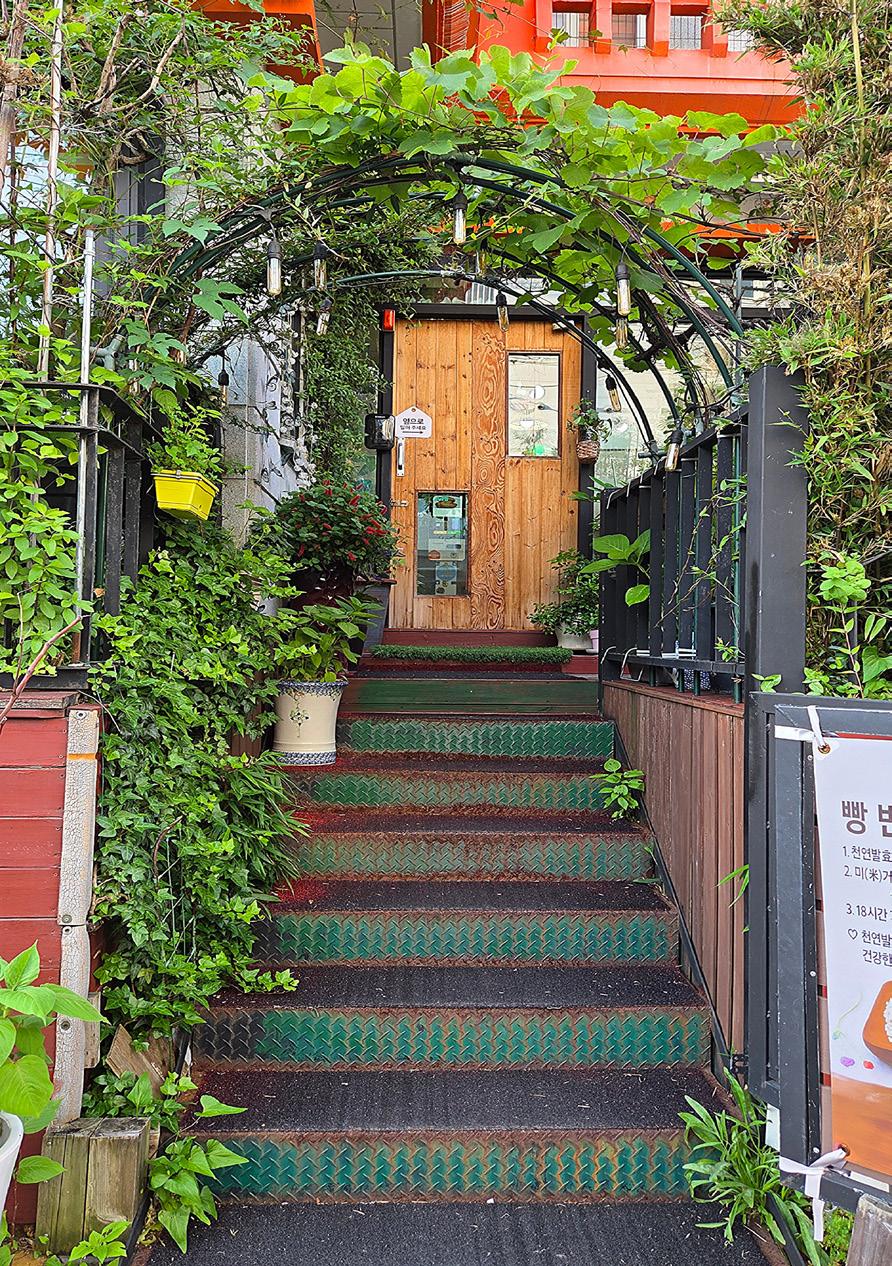
Instead, it feels like a place made with care, from the bread to the decoration.
Overall, Mi Mill is a lovely café for anyone looking for a quiet space in Gwangju. Its naturally fermented bread, cozy mood, and handmade details make it memorable. If you enjoy calm cafés with character, Mi Mill is worth visiting.
57-26 Yongbong-dong Buk-gu, Gwangju
Open: Tue. – Sun. 9 a.m. – 9 p.m. Closed on Mondays.
Website: https://naver.me/FVbdBYhZ
Instagram: @mimil0453
The Author
Dhivyaa is drawn to Korea’s café culture, often finding comfort in quiet corners where she can reflect, observe, or simply get lost in her research over a warm drink. Photograph by the author.
By Paul Singh
Boyband 1Verse is the first group to have two members who have defected from North Korea. The group comprises Hyuk, Seok, Kenny, Nathan and Aito. Previously known as SB Boyz, they were formed by the record label and entertainment agency Singing Beetle. The group’s name, 1Verse (pronounced “universe”), means that each member brings a unique experience or life story to the group to form a unified “universe of sound,” and their fandom’s name is 5TARZ.
Yu Hyuk came from one of the poorest provinces of North Korea, North Hamgyeong, which is situated in the northeast bordering both China and Russia. Before escaping, he was begging on the streets and running errands for North Korean soldiers. He also sold foraged mushrooms and had to steal food. From all of this, he had very little room to dream, as his focus was on survival.
The other member of the band who is also a North Korean defector is Kim Seok. He lived in Ryanggang Province, which also borders China. He saw some of the rare videos of K-pop groups while growing up from SD memory cards and USB thumb drives that were smuggled into the country. He also imitated their hairstyles, cool expressions, and outfits.
At 19 years old, after receiving a message from his relatives who had already defected to the South, he finally made the decision to defect himself. Prior to becoming a K-pop singer, Seok used to play soccer back in the North, and after he defected to the South, he even dreamed of becoming a professional footballer. But to adjust to his new life, he had to give up his dreams of playing soccer. Both band members were complete beginners to the music scene but pushed through so many hours and hours of training and with so
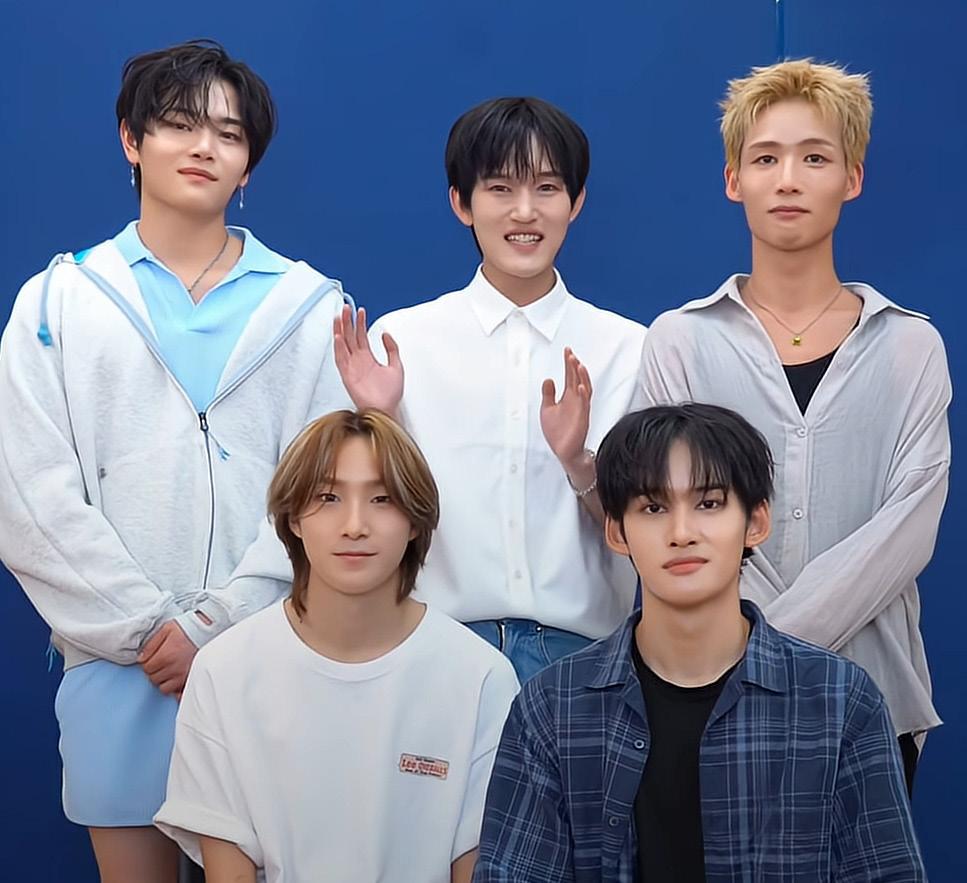
much determination that their music producer Michelle Cho, founder and CEO of Singing Beetle, thought they were overdoing it.
The band has a pretty diverse lineup, with two of the members being Asian-American and the other from Japan. Kenny is Chinese-American from Los Angeles, California, and Nathan is Laotian-Thai-American, originally from Bentonville, Arkansas. Aito, a former trainee with SM Entertainment, is from Japan.
On Spotify 1Verse’s most famous song is “Multiverse,” which has 1,723,815 listens, followed by “Shattered,” which has both a Korean and English version, has 1,534,599 listens. Both are on their first single album, The 1st Verse. The boyband has toured over eight countries in North America and Europe.
1Verse’s most recent activities include the release of their single album WABIF (Wide awake before I fall) in January of this year, followed by their ongoing Shattered World Tour across North America and Europe.
Author
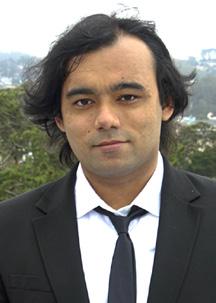
Paul Singh is a British-American journalist who recently graduated from San Francisco State University with his bachelor’s in journalism. He specializes in the music scene in South Korea. In his free time, Paul loves to play the guitar and bass.
[1] CC BY 4.0, https://commons.wikimedia.org/w/ index.php?curid=186856637
By Paul Singh
South Korea is planning its biggest K-pop festival, which will be announced by the nation’s four biggest K-pop agencies: Hybe, SM Entertainment, YG Entertainment, and JYP Entertainment, known as the “Big Four.”
This spectacle, called the Nol Festival, is expecting to combine K-pop, EDM, rock, and pop – all in one place. Some of the lineup for the festival includes girl groups like Nmixx and Hearts2Hearts, and artists like Lee Mujin, Woodz, and Ha Sung-woon. In addition, Nol will also feature R&B group g.o.d, alternative rock band Nell, and rappers Haon and Nowimyoung. Along with the South Korean artists, Nol will also feature Norwegian DJ, Alan Walker.
The Big Four will also participate in the music division of the Presidential Committee for Popular Culture Exchange describing this event
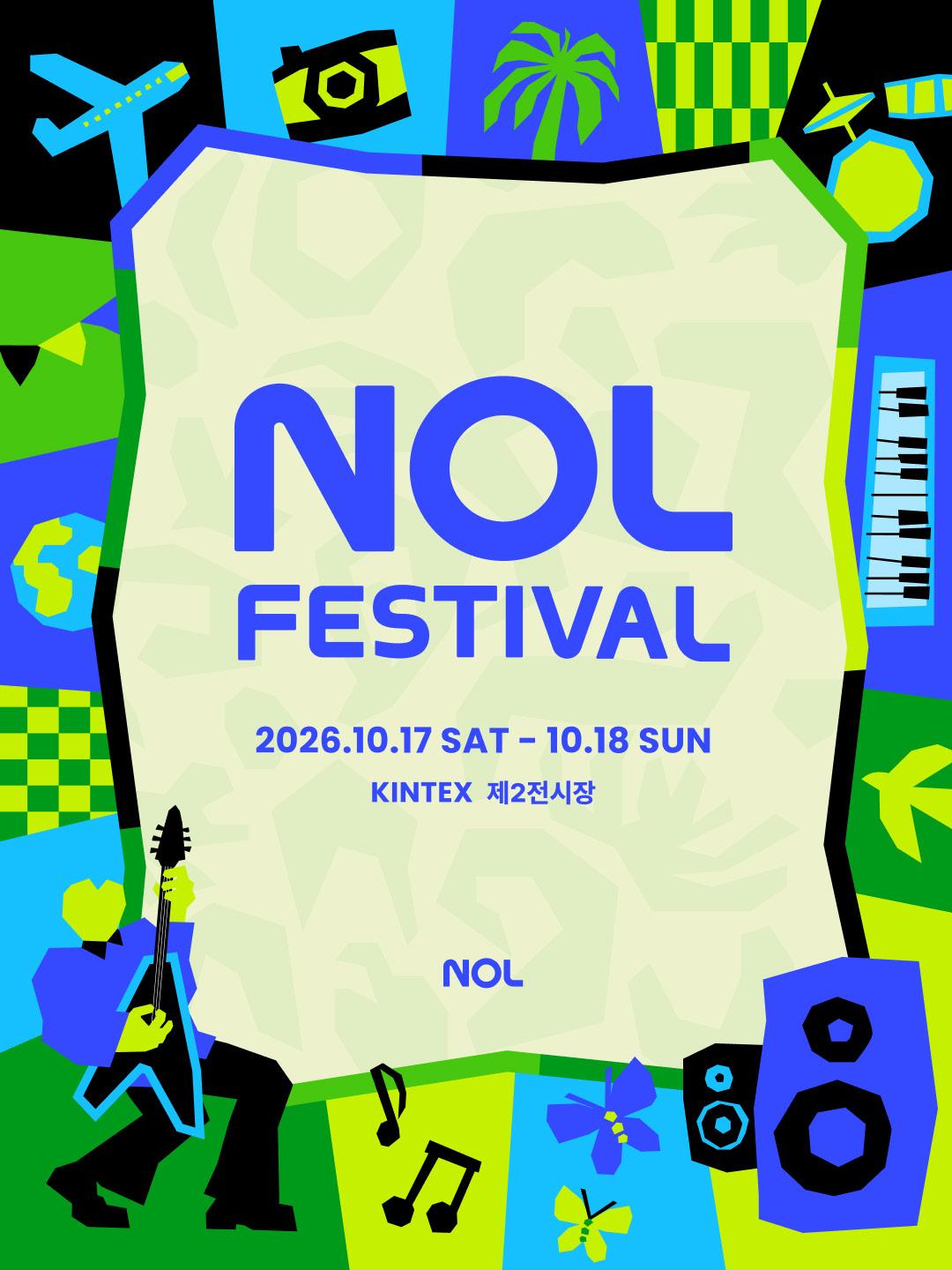
as a joint venture that is a “model for collaboration designed to explore new possibilities for Korean culture’s expansion, including K-pop, in global markets.” According to The Korea Times, “They said procedures to establish a corporate body are currently under way but emphasized that detailed business plans and operational methods have not yet been finalized.”
The founder of JYP Entertainment said that the festival will take place on October 17–18 in Goyang, a city northeast of Seoul, at their KINTEX Exhibition Center. There is an expected 100,000 visitors over the festival weekend. JYP Entertainment is also involved in discussions with the government’s Popular Culture Exchange Committee to look for new ways to grow K-pop’s global presence through industry-wide cooperation instead of individual company projects.
The Korea Herald reports, “‘Nol has connected various leisure experiences online, including travel, performances, and aviation services,’ Nol Universe CEO Lee Cheol-woong said. ‘Now we want to expand that value into an offline festival where customers can directly experience and enjoy the brand together.’”
Most of the festival will be free except for special tickets to guarantee an attendee’s spot for a specific artist. Ticket application and ticket details are scheduled for a June 8 release date.
Paul Singh is a British-American journalist who recently graduated from San Francisco State University with his bachelor’s in journalism. He specializes in the music scene in South Korea. In his free time, Paul loves to play the guitar and bass.
By Zhang Jiuzhou (Julius)
Just a month into the 2026 KBO season, concerns surrounding the Kia Tigers appeared all too familiar. The starting rotation was inconsistent, the bullpen struggled to protect leads, and memories of last season’s collapse remained fresh. Yet since early May, the Tigers have emerged as one of the league’s hottest teams, and the biggest reason behind their resurgence has been the dramatic turnaround of the relief corps.
The contrast between the rotation and bullpen has been striking. In May, Kia’s starters posted a 4.82 ERA, ranking seventh in the league. Ace foreign pitchers James Naile and Adam Oller both experienced periods of inconsistency, preventing the rotation from establishing dominance. The bullpen, however, carried the team through difficult stretches. Kia relievers combined for a league-best 2.75 ERA during the month, preserving narrow leads and helping the
Tigers win a series of comeback victories and close contests.
That development represents a remarkable reversal from a year ago. During the 2025 season, Kia’s bullpen was one of the weakest units in the league, posting a 5.22 ERA that ranked ninth among ten clubs. The Tigers also suffered 21 blown saves, and their inability to close out games was widely viewed as one of the major reasons the defending champions fell from first place in 2024 to eighth place the following year.
The warning signs returned early this season. Closer Jung Hai-young struggled badly out of the gate, recording a 16.88 ERA through his first four appearances, while veteran reliever Jeon Sang-hyeon was sidelined by injury. Through the opening 11 games, Kia’s bullpen ERA ballooned to 7.34, creating fears that another disappointing season might be unfolding.

Instead, the turning point arrived on April 11 when second-year right-hander Sung Yeong-tak was entrusted with the closer role. From that point through June 7, Kia’s bullpen posted a league-leading 3.23 ERA. In just six weeks, a unit that had looked unstable became one of the most dependable relief groups in the KBO.
Sung has been at the center of that transformation. After appearing in 45 games as a rookie last season, he spent the offseason improving both his velocity and stamina. The role changed, but the results improved even further. Through June 9, Sung had compiled a 2–1 record with nine saves and three holds while posting a remarkable 1.32 ERA over 27⅓ innings. His emergence provided exactly the stability the Tigers desperately needed at the back end of games.
Jung Hai-young’s rebound has also played a significant role. After his demotion to the Futures League, the former closer returned with improved velocity and confidence. Manager Lee Bum-ho noted that Jung’s fastball increased by three to four kilometers per hour following a brief reset period. Since returning, Jung has looked far more comfortable in seventh- and eighth-inning situations, where the pressure is less concentrated than in the closer role.
Jung himself credited a subtle mechanical adjustment for his improvement. By lowering his target point during delivery, he regained command and consistency. The progress was evident on May 24 against the SSG Landers, when he successfully closed out a victory and became the youngest pitcher in KBO history to reach 150 career saves.
The bullpen’s depth has been equally important. Han Jae-seung, Choi Ji-min, and Lee Hyungbeom have provided reliable middle relief throughout the season. Han has significantly improved his control, nearly cutting his walk rate in half compared to last year. Choi has delivered far more consistent performances than he did in 2025, while Lee has bounced back from last season’s struggles to post a sparkling 1.50 ERA.
Perhaps the most encouraging development has been the resurgence of Cho Sang-woo. After an inconsistent 2025 campaign, Kia re-signed him to a two-year contract worth 1.5 billion won. The investment is already paying dividends. Through June 9, Cho owned a 1.69 ERA with eight holds across 30 appearances, excelling in the critical bridge innings before the closer enters the game.
The Tigers also addressed bullpen concerns aggressively during the offseason. Veteran lefthander Kim Beom-su was signed to a three-year deal worth 2 billion won, while Hong Geonhui joined on a one-year contract valued at 700 million won. The club also selected Lee Taeyang in the second round of the draft, and lefthander Kwak Do-gyu has recently returned after recovering from elbow surgery.
What makes Kia’s current bullpen even more impressive is that it may not yet be operating at full strength. Jeon Sang-hyeon, Lee Jun-young, Lee Tae-yang, and Hong Geon-hui are all working their way back and remain candidates to contribute later in the season. Their eventual returns could further strengthen a relief corps that has already become one of the club’s greatest assets.
After climbing into fourth place late last month, the Tigers have remained firmly in the middle of the playoff race. With a bullpen that has transformed from liability to strength, their ambitions are beginning to extend beyond merely staying competitive. If the current trend continues, Kia may soon shift its focus from chasing a postseason berth to challenging the league’s top contenders.
The Author
Zhang Jiuzhou (Julius) is from Harbin, China. He began writing in 2022 and has contributed to the Chinese media in Gwangju. Julius currently serves at a sports data company and is pursuing a master’s degree in media and communications. He is also responsible for the Chinese Students Association at Chonnam National University.
By Zhang Jiuzhou (Julius)
Kia Makes Midseason Change in Asian Player Slot
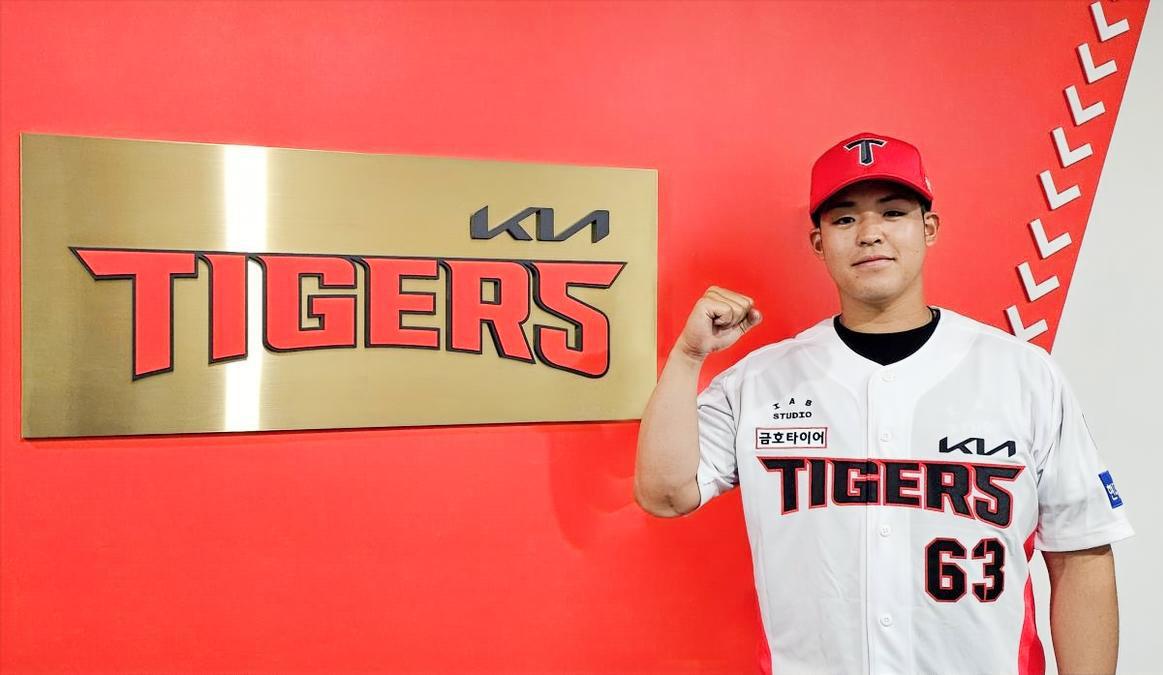
TheKia Tigers became the first KBO club to make a significant adjustment to their Asian player quota strategy, releasing Australian infielder Jarryd Dale on May 26 and replacing him with Japanese right-hander Keisho Shirakawa.
When the Tigers signed Dale before the season, they took a unique approach. While the other nine KBO teams used their Asian player slots to strengthen their pitching staffs, Kia chose to address the departure of former shortstop Park Chan-ho. The club believed Dale could provide stability at one of the most important defensive positions on the field.
The experiment, however, failed to produce the desired results. Dale batted .256 with one home run and six RBIs in 34 games, while struggling defensively. His nine errors were among the highest totals in the league, and concerns about his reliability at shortstop continued to grow. After being demoted to the Futures League on
May 11, he was ultimately released before the season reached its midpoint.
To fill the vacancy, Kia turned to a familiar face. On May 28, the club announced the signing of Shirakawa to a contract worth up to $100,000, including a $20,000 signing bonus, a $40,000 salary, and $40,000 in incentives.
Shirakawa is no stranger to Korean baseball. After beginning his professional career in Japan’s independent leagues, he joined the SSG Landers as an injury replacement player during the 2024 season before later spending time with the Doosan Bears. Although he posted a modest 4–5 record with a 5.65 ERA across 12 appearances that year, he gained valuable experience in the KBO environment.
Kia officials believe that familiarity could prove important. Unlike many foreign newcomers, Shirakawa already understands the league and its hitters. The Tigers also value his versatility, viewing him as a pitcher capable of contributing both as a starter and as a bullpen option.
As Kia continues its push up the standings, the club hopes the roster change will provide additional depth and flexibility to a pitching staff that has become one of its biggest strengths in recent matches.
After15 matches, Gwangju FC finds itself in unfamiliar territory at the bottom of the K

League 1 table. The club has collected just seven points from one win, four draws, and ten losses, leaving management with little choice but to seek significant reinforcements during the summer transfer window.
The first move came on May 30, when Gwangju announced the signing of Dutch center back Teun van Grunsven. Standing 194 centimeters tall, the 25-year-old defender arrives from Dutch seconddivision side FC Den Bosch and is expected to strengthen a back line that has struggled throughout the campaign. The club hopes van Grunsven can replicate the impact once made by former Dutch defender Timo Letschert, who became one of the league’s most effective center backs during the 2023 season.
Defensive issues, however, are only part of the problem. Gwangju has also lacked a consistent goal-scoring threat. While the team has often created promising attacking opportunities, poor finishing has repeatedly prevented it from converting chances into results. To address this issue, the club has secured the signing of Australian striker John Iredale.
Iredale brings considerable international experience. After making his professional debut with Sydney FC, he moved to Europe and spent
several years playing in Germany with Wolfsburg II, Paderborn, and Wehen Wiesbaden. During the 2022–23 season, he helped Wiesbaden earn promotion to the 2. Bundesliga. He later represented the Australian national team and scored once in two international appearances.
Most recently, Iredale played for Seoul E-Land, where he adapted quickly to Korean football. The 188-centimeter striker scored 10 goals and added two assists despite missing time through injury. His performances convinced Gwangju manager Lee Jeong-kyu that he possesses the quality to succeed in K League 1.
The connection between player and coach also played a role. Lee worked with Iredale during his time at Seoul E-Land and personally encouraged him to join Gwangju’s rebuilding effort.
The additional registration period opens on July 9, allowing both van Grunsven and Iredale to become eligible for selection beginning with Gwangju’s July 11 match against Pohang Steelers.
With the K League season currently paused due to the 2026 FIFA World Cup qualifying schedule, Gwangju now has an opportunity to regroup. The club hopes its summer additions can provide the spark needed to launch a second-half revival.
Anewchapter has officially begun for the women’s volleyball club formerly known as the AI Peppers. After months of uncertainty surrounding the team’s future, global media platform Soop has completed its acquisition of the club and announced on June 4 that the team will compete under the new name Soop Supers (Stylized as “SOOP SuperS”).
The new identity reflects the organization’s vision of bringing together players with different strengths and personalities, much like the diverse community found on the Soop platform itself. Club officials stated that the name symbolizes cooperation, growth, and the shared effort of players and supporters in building the team’s future.
Soop also made its first major sporting decision by appointing Kim Se-jin as the club’s inaugural head coach. One of the most recognizable figures in Korean volleyball, Kim enjoyed a distinguished playing career as an opposite hitter before becoming a successful coach. He previously guided Samsung Bluefangs through one of the most dominant periods in Korean volleyball history and remains one of the sport’s most respected figures. Soop executives expressed confidence that Kim’s experience would be invaluable during the club’s transition period, particularly as it works to establish a new organizational structure and competitive identity.
Despite the optimism surrounding the rebranding, several important questions remain unresolved. The club has yet to finalize its home city, determine its training schedule, and complete various administrative procedures associated with the ownership transition. The future of the team’s connection to Gwangju remains a particularly important issue. Local government officials have expressed their desire to keep the franchise in the city and are reportedly communicating with Soop regarding long-term support and cooperation.
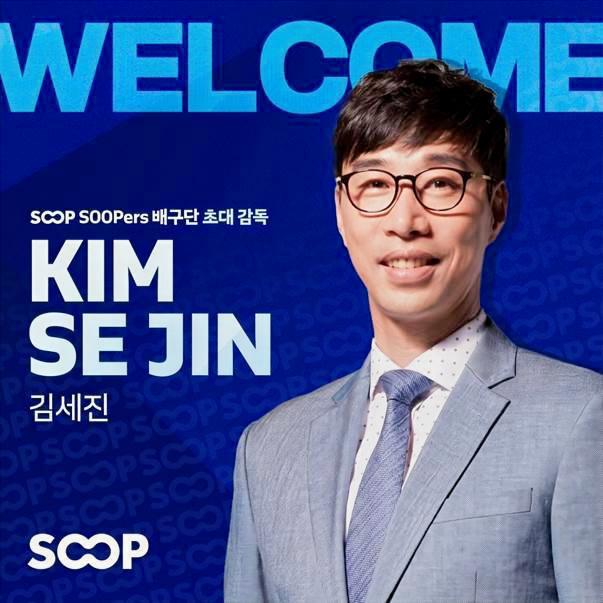
For now, players continue individual training programs while awaiting further instructions from the organization. Once the acquisition process receives final approval from the Korean Volleyball Federation (KOVO), the formal restructuring of the club is expected to accelerate.
The team may have a new owner, a new name, and a new coach, but its biggest challenge remains unchanged: transforming promise into sustained success on the court.
The Author Zhang Jiuzhou (Julius) is a dedicated follower of Gwangju’s sports scene. He regularly attends games of the Kia Tigers, Gwangju FC, and AI Peppers, and closely observes the unique identity and competitive spirit each team brings to the city. He hopes to see all three clubs continue to grow sustainably and attract even more supporters.
Dates: July 11 & 12 (Sat. & Sun.)
Times: Sat. 11:00 a.m. & 7:30 p.m. Sun. 2:00 p.m.
Venue: ACC Children’s Cultural Center, Children’s Theater
Admission: Ages 5 and up, Ages 6–8 recommended
Tickets & Info: ACC Foundation homepage, 1899-5566
Overview: A whimsical world unfolding at the end of a clown’s tightrope and on sophisticated machinery through Tightrope Performance and Sudden Start.
Traveling Play Series: Oscar and Grandma Rose
Date: July 25 (Sat)
Time: 5:00 p.m.
Venue: ACC, Art Theater 2
Tickets & Info: Yes24, Gwangju Arts Center 062-415-1820
Overview: A heartwarming and humorous touring play based on Eric-Emmanuel Schmitt’s novel about a terminal boy who learns to live his final 12 days to the fullest – each day representing ten years – by writing letters to God.

Dates: July 3 & 5 (Sat. & Sun.)
Times: Fri. 11:00 a.m. / Sat. 11:00 a.m., 3:00 p.m. / Sun. 2:00 p.m.
Venue: ACC Children's Theater
Admission: Neurodiversity children aged 6 to 10
Tickets & Info: ACC Foundation homepage, 1899-5566
Overview: An interactive performance where children and dancers co-create art in real time. Transforming the stage into an open playground without fixed rules, this immersive experience invites young audience members to roam freely, interact with objects, and express themselves through movement and sound.
Date: July 16 (Thu.)
Time: 7:30 p.m.
Duration: 90 minutes
Venue: Gwangju Arts Center, Grand Theater
Tickets & Info: ticket.gjart.kr, 062-613-8243
Overview: Conducted by Park Seung-hee, this performance honors the legendary master singer Lim Bang-ul (1904–1961) and features a diverse lineup of guest artists, including a soprano, a pansori singer, and traditional instrumentalists.


Date: July 19 (Sun.)
Time: 6 p.m.
Duration: 120 minutes
Venue: Gwangju Arts Center, Grand Theater
Tickets & Info: Ticketlink, Good Choice 1833-4581
Overview: This nostalgic two-hour performance offers audiences a musical time travel through the legendary ballad singer’s iconic hits, and enduring voice.
’s “Greek and Roman Mythology Meets Classical Music”
Date: July 29 (Wed.)
Times: 11:00 a.m. & 7:30 p.m.
Venue: ACC, Art Theater 2
Ages: 7 and up
Tickets & Info: Advance reservations (ACC website); 1899-5566
Overview: Discover the beauty of Gyeonggi Minyo this June with Shin Seung-tae as he delivers a masterful performance of traditional Korean folk songs at the Asian Culture Center.
“
”
Dates: July 11 & 12 (Sat. & Sun.)
Times: Sat. 3:00 p.m., 7:00 p.m.
Sun. 2:00 p.m., 6:00 p.m.
Duration: 100 minutes
Venue: ACC, Art Theater 2
Tickets & Info: ACC Foundation homepage, 1899-5566
Overview: A deeply moving play depicting the protagonists’ wounds and reconciliation.
“
”
Dates: May 28 – August 23
Times: (Tue.–Sun.)
10:00 a.m. – 6:00 p.m., (Wed. & Sat.) 10:00 a.m. – 8:00 p.m. (Closed every Monday)
Venue: ACC Creative Culture Center Complex, Exhibition Hall 6
Admission: Free to all ages
Overview: The 7th Jameel Prize exhibition, "Moving Images," is an international touring exhibition, showcasing innovative digital and video works that reinterpret Islamic culture, history, and contemporary society.
”
Dates: May 14 (Thu.) –August 23 (Sun.)
Times: (Tue.–Sun.)
10:00 a.m. – 6:00 p.m., (Wed. & Sat.) 10:00 a.m. – 8:00 p.m. (Closed every Monday)
Venue: ACC, Creative Culture Center Complex, Exhibition Halls 3 & 4
Participating Artists: 30+ artists from across Asia and beyond, including Latif Mohidin and Georgette Chen.
Overview: Starting with Lee Ungno’s ink drawings, this exhibition explores #Cosmo, #Asia, and #People to reimagine humanity in a planetary age. It bridges cosmological mystery and non-Western sensibility to move beyond anthropocentrism, awakening our capacity to dream differently.
Dates: March 19 –September 27
Times: (Tue.–Sun.)
10:00 a.m. – 6:00 p.m., (Wed. & Sat.) 10:00 a.m. – 8:00 p.m. (Closed every Monday)
Venue: ACC Creative Culture Center Complex, Exhibition Hall 2
Admission: Free to all ages
Overview: Using moving images as apparatus, this exhibition reconstructs the history and collective sensibility of communities through the interwoven processes of documentation, representation, and rewriting.
Dates: May 16 – July 19
Time: (Tue.–Sun.) 10:00 a.m. – 6:00 p.m., (Wed. & Sat.)
10:00 a.m. – 8:00 p.m. (Closed every Monday)
Venue: ACC, Creative Culture Center Complex, Exhibition Hall 5
Overview: Inspired by The Giver, this exhibition explores the shift toward a machine-led memory culture, where media acts as a precise and colossal transmitter of shared human history beyond the limits of emotion.
Dates: April 23 – October 5
Times: (Tue.–Sun.)
10:00 a.m. – 6:00 p.m., (Wed. & Sat.) 10:00 a.m. – 8:00 p.m. (Closed every Monday)
Venue: ACC, N:NEWS
Inquiries: 070-8834-1113
Overview: With 110,000 cumulative visitors in Seoul and Busan, Steidl Publishing House steadfastly upholds the passion and craftsmanship for paper books.
Amy Park is a content producer and the program officer for the ALRC Korea, based in Gwangju. She helps build the organization’s foundation and supports new efforts in human rights advocacy and resource sharing.