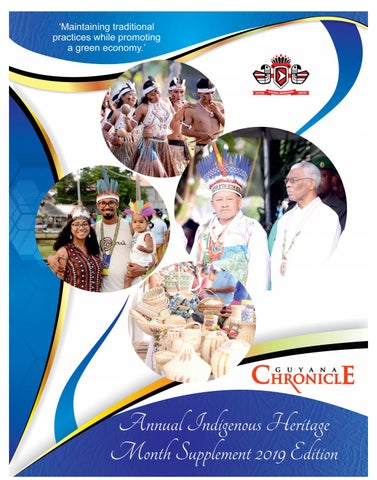
2
Guyana Chronicle, Thursday September 26, 2019
Bridging hinterland with coastland …President commissions $186.3M hinterland tertiary students dorm …aimed at reducing disparities between through education
By Svetlana Marshall PRESIDENT David Granger commissioned a $186.3M Tertiary Students’ Dormitory at Liliendaal on July 15th as his government continues to reduce the disparities between the hinterland and coastland through education. The multimillion-dollar state-of-the-art facility was built to accommodate 120 students – 64 males and 56 females – from the hinterland, who are pursuing tertiary education in various fields at institutions in Georgetown. In his address which followed the dedication of the building by The Right Reverend Charles Davidson,
President David Granger
Bishop of Guyana, President Granger said the establishment of the Tertiary Students’
Dormitory was in keeping with the 10-Point Plan of Action for Hinterland Development, which he had laid out at the 2015 Conference of the National Toshaos’ Council. The Head of State explained that the ‘Plan of Action’wais aimed at reducing inequality between residents of the hinterland and the rest of country by eradicating poverty, promoting employment and economic prosperity and by enhancing access to public services. “The Plan of Action has guided Government’s actions to empower hinterland residents through education, employment, economic enterprises, energy, infrastructure, land rights, poverty-reduction, public
President David Granger and Minister within the Ministry of Indigenous Peoples’ Affairs, Valerie Garrido-Lowe assisting Minister of State Dawn Hastings-Williams in the cutting the ribbon – a symbolic gesture to mark the opening of the Tertiary Students Dormitory. Also in photo are Minister of Education, Nicolette Henry; Minister of Social Cohesion, Dr. George Norton; and Vice President and Minister of Indigenous Peoples’ Affairs, Sydney Allicock among other officials.
services and cultural development,” he noted. For the A Partnership for National Unity + Alliance for Change (APNU+AFC) Government, education is the surest and swiftest way to reduce inequality, because, as an equalizer, it helps to unlock increased economic opportunities for citizens. As such, the Administration has placed significant attention on ensuring there is access to quality education. Noting
dation,” President Granger said. He noted that accommodation is being improved by the provision of accommodation for students, and the opening of the $186.3M dormitory facility at Liliendaal is an excellent example of Government’s commitment to providing access to education by making accommodation readily available. “The establishment of this tertiary education dormi-
institutions,” the President added. Dormitories have been constructed at 19 locations across nine regions, and as a result, more hinterland students are benefiting from educational services that are not accessible in their communities. However, President Granger said he looks forward to the day when every regional capital town – Anna Regina, Bartica, Lethem, Mabaruma and Mahdia – will
One of the rooms inside the multimillion dollar dorm
that education is an entitlement, President Granger said, however, that it could only be realized if every child has access to primary and secondary education; attends school and attains the ultimate objectives of education by completing his or her schooling. “Guyana’s education policy emphasizes the three ‘A’s – ‘A’ for access; ‘A’ for attendance and ‘A’ for attainment. This means that every child must be assured of access to school; must be enabled to attend school and be equipped with the knowledge to attain a satisfactory standard of education. The opening of this dormitory adds a fourth ‘A’ – accommo-
tory attests to Government’s commitment to improving educational opportunities for hinterland students. It reflects our intention to ensure a more equal society by reducing the disparities between the hinterland and coastland through education,” President Granger told the government and non-governmental officials and students who gathered to witness the commissioning of the dorm. “Government, through the Ministry of Indigenous Peoples’ Affairs has done well to make this facility available. It will ensure a more conducive environment for hinterland students attending the University of Guyana and other tertiary
establish a first-class college to enable hinterland students to enjoy the best secondary and, later, tertiary education within their communities. He assured those present that, that day will come. ACADEMIC REVOLUTION Minister within the Ministry of Indigenous Peoples’ Affairs, Valerie Garrido-Lowe, in giving a detailed overview of the project, said the $186.3M modern facility will create an academic and vocational revolution in the lives of indigenous and hinterland peoples throughout the country. “This is not just a building. It is a vessel – an open-
Guyana Chronicle, Thursday September 26, 2019 ing –that will allow for the economic and social transformation of indigenous communities by indigenous and hinterland people, across Guyana. Such is the vision of a caring and thoughtful Government led by a caring and thoughtful leader. This is testimony to the fact that your Government is committed to creating a “real-time” development environment for our people, thereby departing from the past trend of giving “handouts” and making us dependent instead,” Minister Garrido-Lowe said. Noting that human capital development is a ‘front burner’ subject of any Government’s agenda, the Minister said she is pleased that the APNU+AFC Government has placed significant resources into the development of the Education Sector. Garrido-Lowe said the opening of the dorm is an indication that more indigenous youths can be trained in various skill and academic areas as they seek to develop and transform the very villages from which they come. Noting that Guyana is at the cusp of economic transformation, one based on a shift in paradigm into a green state, the Junior Indigenous Peoples’ Affairs Minister said such development requires innovative thinkers that would help the country to pursue technological advancements that are eco-friendly and cost-efficient. “With oil proceeds imminent, our economy will be stimulated and more industries will be required to service the needs of the country. This is where the expertise and knowledge will be needed as jobs will be made available, albeit, on a more competitive basis. We recognize that our communities need more input and expertise. We need more educators, health workers, civil engineers, geologists, botanists, anthropologists, professional agriculturists, food scientists, and business people. We need to nurture and develop professions that will push the Green State Development Strategy into actuality,” Minister Garrido-Lowe said. The Minister explained that, for far too long, the quest to access higher education by persons living in the hinterland has proven to be extremely challenging, especially as it relates to living accommodation in Georgetown. “Those who would have attempted this hurdle would tell you of the painstaking challenges they would have met living with guardians when they were otherwise fortunate to be given a scholarship to pursue studies on the coastland. Some of the stories were indeed troubling, and in some cases, unbearable to the extent that many had to abort their studies and head back home to their respective communities.
Students from the hinterland regions, who are undertaking studies on the coast on their own accord, are said to be paying between twenty-five (25) to forty-five (45) thousand dollars per month for small spaces – just to complete their studies,” Minister Garrido-Lowe detailed. While Government cannot promise accommodation for all at this time, the Minister assured those present that the Tertiary Students’ Dormitory will allow 120 students to pursue tertiary education. This will be a continuous cycle which will positively impact the lives of 215 indigenous communities countrywide, Minister Garrido-Lowe added. To open up greater opportunities to indigenous students, the Minister said her team is consulting with tertiary institutions such as: Carnegie School of Home Economics, Guyana School of Agriculture (GSA), Government Technical Institute (GTI), Guyana Industrial Training Centre (GITC), Burrows School of Arts, the Board of Industrial Training (BIT) and even the University of Guyana (UG). Currently, 26 students are attending some of these institutions and are being accommodated, in the meantime, at the Indigenous hostel. The Tertiary Students’ Dormitory will be opened ahead of the start of the new academic year 2019/2020. Vice President and Minister of Indigenous Peoples’ Affairs, Sydney Allicock said while the President’s 10-Point Plan was developed and made public in 2015, today it is bearing fruits. With just four years in Government, Minister Allicock said Government has taken active steps to address several developmental issues but said: “everything takes time.” He said Government is committed to the country’s development and is ready to partner with all to foster that development. Minister of State, Dawn Hastings-Williams; Minister of Education, Nicolette Henry; Minister of Social Cohesion, Dr. George Norton; and Minister within the Ministry of Social Protection Keith Scott were among the officials present at the commissioning ceremony.
3
The Tertiary Students Dormitory
4
Guyana Chronicle, Thursday September 26, 2019
Indigenous craft is unique, made with a touch of love and hours of hard work Farmer Mackernan Albert is a resident of the remote village of Paruima, Upper Mazaruni in Region Seven (CuyuniMazaruni) and he was one of the many people, who journeyed from their respective villages across Guyana to participate in the Indigenous Heritage celebrations at Sophia Exhibition Site, earlier this month. He had on display and for sale his craft products, all hand-made and very creative pieces which took a long time to complete. Albert told the Guyana Chronicle that his rain sticks and chains were best sellers this year, since it was almost sold out. This talented indigenous man also made warashee, arrow and bows of which he proudly displayed at the Amerindian Village during the food and craft exhibition which was held form September 1 to 6, 2019. “All my craft pieces are hand-made and it involves a lot of time and effort because everything has to be sourced from the surrounding and prepared before you can use it to make craft. I use the feathers of birds to make chains, wood and wood products and beads from plants and trees are also used to create lovely pieces of Amerindian jewellery and craft products,” Albert said. He related that although farming is his main source of income back home whatever time he has he would use it wisely to make things and this year he had to come up with more eye-catching pieces because he wanted his products to sell.
Mackernan Albert and his unique chains young lady, who is pursuing studies at University of Guyana. He added that the place is very nice and quiet to live and the people are welcoming and religious and lead a very simple life which is punctuated with hard work. Paruima Village lies on the western side of Guyana and is the only Arecuna-speaking community with the population of about 800. The Guyana Chronicle also met a Viola Johannis, who hails from Moraikobai and
Rudio Albert, son of Mackernan Albert with the warashee he made Albert added that with the time and effort he put into making craft doesn’t compensate him but it is a hobby he enjoys, that’s why
The home-made warrap (sugar cane juice) which was on sale the prices are reasonable. He also had some arrow and bows in two sizes, which were hand-made as well and he even demonstrated how to use it. Albert told the Guyana Chronicle that the use of arrow and bow in his village is serious business because he uses it to hunt and they shoot to kill, aiming for the neck or stomach. He explained that when he is hunting wild cows he would have to use the metal arrow and bow because that animal is tough and for the arrow to be effective in the kill it has to be durable. But back home, Albert is a regular farmer where he has crops of cabbage and kidney beans, The hand-made all organic since the chains soil is very fertile and doesn’t require any manure or artificial products to promote growth. “Life in Paruima Village is not easy because it is very remote making it very expensive to travel by air so sometimes we use the boat and it takes a day to get to Kamarang. The air fare one-way is $35,000 per person and we can hardly afford that so we hardly ever visit the city,” he said. Albert told this newspaper that he is the father of two, a young man, who is a teacher and was with him that day to assist and a
Mackernan Albert’s rain sticks had a very interesting product on display and for sale at the Amerindian Village at Sophia. The product is home-made and is called warrap (pure cane juice) from local sugar cane which has to be stored and cured for 21 days before it is bottled. It was on sale for $600 and $1200 per bottle and was a big ‘hit’ among city people, who visited the food and craft exhibition, earlier this month. There too, was Maria Taylor, who hails from Annai, Rupununi and had her handmade craft and other products on Some beaded chains sale. made by A unique Maria Taylor piece on sale was the hand-made TURN TO PAGE
6►
Guyana Chronicle, Thursday September 26, 2019
5
Life-long dream St. Ignatius top CSEC student dreamt of bringing recognition to the school since she was a little girl By Vanessa Braithwaite "I ALWAYS loved school, that's how I was since I was a child. If something went wrong in the morning and mommy would say ‘You have to stay home,’ I would cry and say I want to go, that's how much I loved school," young Amisha Daphne Ramdin said. It was this very love that fueled this St Ignatius Secondary School 2019 top CSEC performer’s passion to succeed thus enabling her to be 14th top performer in the entire country. With 15 Grade Ones and 5 Grade Twos, Ramdin also achieved the titles of top student for Region Nine and the entire hinterland district. This was the first time that a St Ignatius student received such high honours. For Ramdin, this record-breaking performance was not a fluke because she is naturally intelligent, but it was also a well-thought-out plan made five years ago when she entered secondary school and a well-executed mission made possible through dedication, determination, discipline, overwhelming support and availability of resources needed to succeed. When Ramdin's mother decided to keep her at St Ignatius, though she secured a spot at St Joseph High when she sat the National Grade Six Assessment (NGSA), she decided that St Ignatius would become an equal performer to any high ranking city school when it came time for her to write CSEC. She aimed to remove the stigma attached to not only St Ignatius Secondary but all hinterland schools, as low performing schools and to show the rest of the country that despite not having equal opportunities as those on the coastland, all it takes to succeed is a mind that wants to succeed. "I did it because I wanted to change that whole ideology that we are ‘behind God's back’ and we can’t be as good as the coastland students. Despite limitations, you know you can do it because you want to," she said. Describing her challenges, Ramdin explained, " We always had challenges, not being exposed to television, only recently we got internet, we don't have all the library material and if we do have a library, we don't have all that amount of books. We don't have all the institutions we can go to and so on, but we had to make do with what we have," she said. The provision of an Information Communication Technology (ICT) hub at the school, made possible by the Ministry of Public Telecommunications, Ramdin explained, was a lifesaver that allowed students to participate in active research and to complete School-Based Assessments (SBAs). The old African adage is “It takes a village to raise a child but in Ramdin's case, it took a
village to educate a child. Her village was the St Ignatius school compound in which she grew up. She resided with her mother and stepfather who are both teachers at the school. Most of her teachers were her neighbours all her life and when she related that she wanted to do the unimaginable: write 20 subjects, they never discouraged her. "They were a major part in my success. They always believed in me, encouraging me always. When I pitched the idea of wanting to do 20 subjects and though it was never done before here, not once did anybody doubt my ability. They always believed in me and pushed me,” she said. A student writing so many subjects was an experience not only for Ramdin but for the entire school, as systems had to be put in place to accommodate her. This was most challenging for her, she said, and very difficult for the teachers to handle but they stuck through with her. Time management and balancing subjects were her biggest headache. She had subjects clashing, SBAs due on the same day and the pressure to give each subject significant study time was mounting up. Despite all that, it all worked out for Ramdin and she proved her point; that St Ignatius can succeed beyond measures. Her advice to incoming students is, "[Do] not push yourself too hard to please outsiders but do as much as you can handle. You can believe in yourself, nothing is impossible, you can do anything if you put your mind to it, just study hard and display determination." Keep time, she further advised, for extracurricular activities, as this would ensure you leave school as a well-rounded person. Throughout the five years, Ramdin participated in several extra-curricular activities ranging from sports, debating and dancing. Ramdin will be attending Queen's College to pursue Caribbean Advanced Proficiency Examination (CAPE) and she aspires to be a surgeon.
Amisha Ramdin
ily
Amisha Ramdin and her fam
6
Guyana Chronicle, Thursday September 26, 2019
Government contributing
positively to Quarrie's development By Vanessa Braithwaite DESPITE being a small village in the Central Rupununi district, with a population of approximately 286 Indigenous people, Senior Council of Quarrie, Phillip Baretto, and other village residents have expressed high praise to the government for not overlooking them and ensuring that they too, benefit from the good life promised by President David Granger. Baretto posited that he is very optimistic about the future of his people and the development of the village, particularly in the areas of agriculture and tourism. "There are a lot of developments taking place; infrastructure, farming and tourism....the Central Government is very helpful to our community, for me personally, I would like to thank the government for putting in so much into a small community like ours," he said. Rather than to let these opportunities pass by, the residents have ingeniously decided upon a way to ensure these provisions are exploited and maximum benefits are derived for each household.
Quarrie SC Phillip Baretto
The rice production at Quarrie
"We have formed a Coop; Quarrie Eco-Tourism and Agriculture Cooperative limited, I am a member of it and we have about 25 registered members," Baretto related. The idea of a cooperative was birthed after the Hinterland Employment Youth Services, (HEYS) beneficiaries, pitched eco-tourism as their business venture. The
aim is to exploit the tourism gems that are available in the township. One of the main gems is the Quarrie waterfall. Recently the National Drainage and Irrigation Authority (NDIA), dug a water catchment in the community, to aid in its agricultural development, but the ingenuity of the residents has pushed
The water catchment at Quarrie
them to derive a twofold benefit from the catchment: water for agriculture and water for tourism. The reflection of the sky into the water, giving it a blue 'beachlike' colour, will allow visitors to have a feel of the 'Islands' in the Rupununi. "The main objective is that people come and visit the falls, we also have a mini cattle ranch. We can carry our visitors there and right now.....we want to push this because we see that it will create jobs for our people, it will bring in a flow of money. We will find people who will stay in the village rather than to go out to the village to look for work, so we are moving in that direction," the SC said. The villagers are presently constructing a multi-purpose building where we can use the room for craft making and catering for our visitors.
This has been made possible through a $14 M grant from the Ministry of Social Protection that will be used to accommodate tourists. In addition to tourism, agriculture is also reaping many benefits in Quarrie. Along with the water catchment project, the Guyana Rice Development Board (GRDB), has also embarked on a rice farming project in the community; the first of its kind, to make available an alternative staple for farmers, in addition to cassava, when the dry season does not allow for its high production. "We have an acre plus of rice cultivation there now. At the first try we see this could be done, so it is like an experience for us, and I want to believe this will help in our staple food, it will help the cassava because normally, we does only use the cassava as a staple diet and we see now
the rice will come in and we are hoping next year, we will have a bigger production and I am seeing that happening," Baretto posited. The water catchment is also boosting agriculture since it is making available water for farmers during the dry season. Many times, as long as one year long, there is no rainfall in the Rupununi district. " The water catchment is very important because, in the dry season, our cows have to go far to look for water, so with this water catchment, our cows will remain close so we can monitor them and the farmers too don't have to go and look for water, so that has been a very great help to our community," he said. Barretto expresses great appreciation for the provisions made available to Quarrie, as he said it has significantly improved the livelihood of his people. FROM PAGE
2
Indigenous craft is unique ...
grater which was customised and made out wood and zinc with a perfect polish finish at a cost of $2000. Taylor said the product is pricy because it is effective for grating any fruits or vegetables for cooking purposes and also excellent for dry coconuts which is used to make piwari and cassava bread. Taylor made hand woven cotton hammocks and dresses which was spun by hand and was on sale. She noted that the cotton is grown on their farm especially for that purpose. This gifted Amerindian woman also made some bead-
Mackernan Albert demonstrating how to shoot and arrow and bow ed and colourful chains and it is good for many things inbands of which she made cluding itching and animal bites. Everything talks time some sales. “The crab oil is pure and to make especially the craft it takes a while to make and products,� she said.
Guyana Chronicle, Thursday September 26, 2019
7
When Lethem became a Town A defining moment for all of Region Nine
By Vanessa Braithwaite
I
T WAS only on October 21, 2016, that Lethem became a town. To the newly-sworn-in Council, the residents and other officials, this was a prestigious achievement for Region Nine (Upper Takutu-Upper Essequibo). For Phillip Duncan, however, a man who can be considered a chief cornerstone in the Rupununi District, it was the realisation of a dream he had 55 years ago, and for him, the joys of the declaration of township sank in a little deeper. The 76-year-old community leader, who, through his many political titles, selfless service, spotless reputation and plain old love in his heart, is described as a political father of yesteryear and an earlier catalyst for change in the Region Nine district. It was at that very defining moment that Duncan did not regret being brave enough to respectfully decline the request of his service as a Member of Parliament by former President Linden Forbes Burnham in 1964. He was only 21 years old at the time. In reminiscing on the start of a very fulfilling and satisfying political career, Duncan said that he had no idea what he was going to do but just couldn’t say no. “I didn’t know what it was to be a Member of Parliament. They just said, ‘Phillip come; we want you to be Member of Parliament.’ I didn’t even know the date I was born at that time, because the Roman Catholics used to have a baptismal paper, but that was not sufficient to say well you were born on this date. But most of my struggle is that I didn’t know English well; it wasn’t my first language,” he reflected. It was President Burnham who brought him to reality on how important his new appointment was. “He said to me, ‘Parliament is a High Court of Guyana; it makes laws and amends laws. You are a member of that Court.’ I didn’t know the importance, but I had to fall into the system,” Duncan related. FIRST THINGS FIRST Mr. Duncan was the only Indigenous MP at that time, and rather than focus on his limitations, he used his strengths to help his people. His first goal was to perfect his English so that he can raise at the level of the National Assembly the issues and concerns of his fellow Wapishan Peoples, and by the same token translate for political figures what his people were saying during com-
munity meetings in Region Nine. Knowing that he was not in possession of a real birth certificate, Duncan pursued a verification process to
a lot of things to be straightened,” Mr. Duncan said, “but it cannot be straightened in one day or one year. It would take years.” THE QUIET LIFE Now that he is retired, Mr. Duncan says, he is beginning to enjoy the quiet life in
Phillip Duncan
ascertain his date of birth. He also began to do the same for his fellow Indigenous brothers and sisters who were in the same predicament as he. Being a servant of his community brought him high praise and many rewards. And in 1966, he was appointed Parliamentary Secretary for Amerindian Affairs. Some seven years later, he was appointed Minister of State for Region Nine, and no sooner had he settled down at that job than he was made Minister of Amerindian Affairs. That was in 1977. He feels the thing that helped him reach the pinnacle of his political career the most was his coming to realise that service to the people came first. WITHOUT FEAR OR FAVOUR His mission was to represent the residents of Region Nine, and he did so without fear or favour, even though he grew up at a time when tribal rivalry was encouraged. He pushed for the development of the Region at many forums, and says that he is finally seeing progress at the doorstep of his people, with the APNU-AFC Government. “There is progress with APNU-AFC,” the veteran politician said. “We see roads building; health centres. The training of Amerindian personnel; the efforts being made to identify Amerindian Lands, and of cohesion, so that we can live as One Nation.” And while there is so much more to be achieved where the issue of Amerindian land titling and other privileges that are democratically theirs are concerned, he is optimistic that they will be achieved once the current administration is at the helm of the government. “There are
Lethem with his wife of 53 years. He is also into spreading the Word of God, and serves as a Commissioner of Oaths and Affidavits. A former member of the Rupununi Rehabilitation Committee and the Board of Directors of the Guyana School of Agriculture, Mr.
Duncan is also a National Awardee, having been conferred the Golden Arrow of Achievement (A.A.). Looking back on a life of service not only as a politician but as a son of the soil, he is urging other Amerindian youths to make themselves available for
service. Though they may not have all the qualifications, he believes that it is the genuine desire to serve that matters. “I went without knowing what it meant to be a representative of the people, but I was able to represent, because I loved what I was doing,” he said.
8
Guyana Chronicle, Thursday September 26, 2019
North Rupununi village prepares for 2019 celebrations By Alva Solomon HILE the sun-baked the grass from above Wowetta that late August morning, senior citizen Elestine Joseph stirred the pot of ‘tuma’ as the villagers were seen hammering, matting and nailing together the stalls in preparation for the celebrations. Wowetta will this September was the host village of at least two events for this year’s annual heritage celebrations; its mini- celebrations which were held mid-month and a larger event called the ‘Annai Five villages’ celebrations hosted on the weekend of September 20. “We work in groups,” village councillor Bertie Xavier told the Guyana Chronicle days before the highly-anticipated month of celebrations began. The villagers were preparing the environs of the benab for the events. He said that the village is rich in its self-help efforts and this was evident as the young and the old, woman and man, and even the little children all chipped-in to ensure the stalls and other aspects of preparations were in working order for the events. Xavier said that the
W
the internet, WiFi and so for our advancement,” he said. The soft-spoken Xavier noted that the village will be using its presidential grant to establish a permanent village kitchen to add to its capacity to assist those in need. The Wowetta Women’s Group, which has been working on a farine processing project, is another means through which the village generates income. At the moment, a part at the plant has broken down and the village is
Residents engaged in self-help work
Elestine Joseph was cooking ‘fish-tuma’ when this publication visited the village Annai Five villages event covers a collaboration of presentations, cultural and other traditional displays from groups from the villages of Kwatamang, Annai Central, Rupertee, Surama and of course, Wowettta. Development measures Xavier said that the village of Wowetta has seen development over the years and he noted that villagers are looking forward to the launch of a government Information Communication Technology (ICT) project which he noted will vastly advance the capacity of Wowetta. “The government has promised to install the ICT project here and many are waiting to make use of
As regards life at Wowetta, Elestine Joseph said the village is quiet and peaceful. She is the mother of five, including a young son who lives with her and her husband. She said that like most villagers, the family farms for a living, noting that they plant cassava and make products for sale from the tuber. “We get market right here,” she said, as she stirred the pot of fish she was cooking for those partaking in the
Men from the villages erect the frame for one of the sheds where the stalls were expected to be built
A young man cuts a palm which was later used to make the roof of one of the sheds near the benab
Village councillor, Bertie Xavier
awaiting a Brazilian team to examine and remedy the problem. In terms of education, Wowetta’s students have performed well at this year’s Caribbean Secondary Education Certificate (CSEC) examination and one of the top performers has already indicated that she will be teaching at the primary school at the village as she contributes to the village’s development. Xavier said too that he was also accepted by Cyril Potter College of Education (CPCE) and he looks forward to commencing the teacher’s training programme and returning to the area to contribute to its development.
self-help project. Joseph said she visited Georgetown once- many moons ago- but she noted that she prefers to spend her days at Wowetta, since she has grown accustomed to lifestyle in the village. The word ‘Wowetta’ is of Makushi origin and was originally termed ‘Awetta’ which signifies weather. The village was aptly named after a prolonged dry spell many decades ago. A total of 417 persons live in the village and during the heritage celebrations, Xavier said that the number of persons visiting the area usually surpasses triple the total population of the village.
An elderly resident plaits a rope which he later used to thatch the roof of one of the sheds near the village benab
This little lad was ensuring the posts for the fence around the village benab were aligned properly
Guyana Chronicle, Thursday September 26, 2019
9
In search of Aranaputa’s 'Ice Falls' By Alva Solomon HAT August afternoon the sunlight was piercing hot and after stopping at the Oasis Restaurant at Annai, the suggestion by persons nearby to look for Aranaputa’s Ice Falls drew some curiosity. We rode around Annai the entire morning searching for people and stories about this part of the North Rupununi and while the dusty roadways of the flatlands there are breath-taking when viewed with the mountainous features in the background, the dust on one’s skin was another story to write. Earlier that morning, my plans to visit the five villages which make up Annai hit a snag since I could not find transportation to move around. After networking at Annai Central, a nurse suggested I speak with a woman who had just parked her motorcycle nearby. After speaking with the woman, she agreed to take me and I was off to start the day in the blistering heat on the dusty roadways. During the trips to and from the villages, the lady mentioned that she fell with her motorcycle, a few times. This was not encouraging but since she seemed very careful, which included riding at a moderate pace, we persisted with stops along the way, including at the Bina Hill Institute where the sun’s heat appeared to be at its hottest. We stopped around 14:00hrs at the famous Oasis for lunch and while chatting, the falls came into the conversation. The woman had no idea where to find it so I called another contact who gave some directions. She said we should head north towards Lethem and when nearing the bridge leading to the village of Yakarinta, we should look for a track on the left. The Pakaraima Mountain Inn is in that vicinity. But just as we were preparing to go in search of the waterfall, a brief shower of rain hindered our plans at least by half of an hour. It stopped raining for a few minutes before continuing in lighter showers. As it continued to rain lightly, we decided we could not wait any longer and sped off in search of our destination.
T
TRAFFIC JAM On our way there, we encountered a slight traffic jam in the form of herds of cows at different locations along the way taking up the entire width and shoulders of the road so that they blocked our path. The lady honked her horn a few times and this proved effective, as the animals understood they needed to give way. We continued along the way, chatting about the Rupununi and how people live. A few times I dreamt about living in this part of Guyana but I would wake up whenever we encountered the cows. The woman was very resourceful and knowledgeable about her homeland. Soon, in the middle of our conversations, we realised we were close to the bridge on the turn at Yakarinta. Our directions were that we should look for the track on the left but, there were several tracks on the left. We rode up some more and soon we were at the bridge on the turn. The woman was careful in her biking skills but, recalling how many times she said she fell, I hopped-off the motorcycle each time we needed to turn around or cross a bridge. We then headed back in search of the track at the side of the road. As we scoured for the track, I looked up at the hills at the side of the road and thought about
how beautiful the landscape is in this part of the country. It was a geographical masterpiece of flatlands with mountains at its sides, and there I was in search of a waterfall. After deciding that we found the track, we rode inwards to the forested lands adjoining a mountain. ROCKS AND A DRIED-UP WATERWAY After some 10 minutes, we reached what appeared to be a waterway, but it was dried –up. We saw several rocks in the feature and we figured this was going to lead us to the waterfall. We saw a few cigarette butts, discarded drink bottles and a few old clothes and this suggested we were near our destination. As we walked, we stopped a few times to listen to the sounds of water and soon, we finally heard the sound of falling water in the distance. At this point, the task of climbing the hill called for more energy since the rocks grew frequent and the elevation was now increasing. Then, there it was, water gushing over the rocks and into a pond below. I clambered up to the sides of the small feature, in search of its source. However, when I looked up, I realised the elevation was becoming steeper and I considered that if I fell, the only cushion I had were the rocks below. So I cautiously made a 180-degree turn and headed back down the sides of the waterfall. Schools of fish were in the pond while a fireside and cooking utensils were evidence that persons frequented the waterfall. I decided to put down my camera and head for the water and it was a welcoming feeling as the cool Rupununi water felt good that hot afternoon. I thought, maybe this was why they called it “Ice Falls.” Residents noted that the waterfall has been there for ages and was positioned close to where a farm may have been. It was noted too that the water’s source was a spring at the top of the mountain. This time of the year, the Rupununi is usually dry, hence the water was heading in another direction downhill from the falls. This also explained why we saw no water on our way up. Residents also noted that the waterfall is ripe for a tourism-oriented project since it is accessible within minutes of the public road between Lethem and Annai. Fading light and the fall As is the case with most Hinterland areas, when one is in a forested area, the light fades quickly and as 17:00hrs neared, we decided to leave. We clambered onto the motorbike and just as we were preparing the leave, the bike got stuck on a small tree root. I realised the back wheel was being hampered by the root and so I decided to hop-off. But as I was in the process of doing so, the woman decided to go full throttle. Seconds later, I was on the ground. It was the laugh of the afternoon and the woman was happy that it was not her who fell down this time. It was also the first time I ever had a calamity on my Hinterland trips. But the joy of finding the waterfall overlapped the fall.
ndition
g the wet weather co
The waterfall durin
W a te r tr ic k of the wate le s a t th e s id e rfall. As th e dry weather is ta k Rupununi, th ing effect in the e water has ea sight of gushing sed
l
waterfal
ads to the
hich le The road w
A small po
nd of wat
er at the t
op of the w
aterfall
10
Guyana Chronicle, Thursday September 26, 2019
Eco-tourism, an economic breakthrough for Kumu
The Kumu waterfall By Vanessa Braithwaite he lens of the most exTenough pensive camera is not to capture the sce-
nic beauty of Kumu, a Central Rupununi satellite village of St. Ignatius. Such awe-inspiring and picturesque beauty call for the clock hands to stop moving, that is, until the mind properly consumes and is satisfied with the scenery of the majestic Kanuku mountains, punching the clouds of Rupununi blue sky with its thrusting peaks. It is not everyday someone gazes upon spreading savannahs, interrupted by grazing heads of cattle, unbothered by the chorus of the grass making coherent music with the birds' chirps and the flirting winds. This is a recipe for meditation;
for healing from all of the anxieties of life. While this priceless beauty may be under appreciated by some, the villagers of Kumu and by extension the Rupununi see it every day. But it is the feedback from visitors that have motivated them to exploit their touristic gems for the betterment of the people. Kumu's beauty makes the village very rich but to convert this richness into reality, a plan must be implemented and executed. With Guyana being the leading ecotourism destination in the world, ‘Kumunians’ are now on a mission to transform their village into a leading eco-tourism destination for Central Rupununi. It has many advantages of doing so. These were highlighted by the villages'
Senior Council, Odelia Francis, who said that Kumu is one of the closest village to Lethem and it takes approximately 15-20 minutes to drive there. Visitors can indulge in the most sought after Kumu Waterfalls, which assessorizes the foot of the Kanuku Mountains. The 50-mile multiple layers ,fall is one of the villages keen attractions and gives tourists the perfect opportunity to cool down from the blazing Rupununi sun, especially in the dry season. After speaking through the forest and mountainous terrain of Kumu, it finally rests at the Takatu River. In addition, as part of the project, the villagers are planning to build cabins in the mountains for tourists to spend the night after climbing the Schumburgk's
Peak, the tallest mountain in the Kanuku range, in Central Rupununi. Tourists up for the challenge, hike the 3,500 feet Peak. The top of the mountain is the habitat of the rare Cock-of-therock and other exotic birds. They can also gaze upon the surrounding villages as well as Lethem and as far as Normandy, Brazil. Another attraction in Kumu is the tiger print rock which is told to be the rock the tiger uses to eat his prey and leaves his print there, every time. Rather than to rely on subsistence farming as the only means of livelihood, Francis believes that the communal economic projects are the way to go. With the products already handed to them by nature, this project would not need much capital to shoot off, but sim-
Schumburgk’s Peak of the Kanuku Mountain Range near Kumu
Senior Council Odelia Francis
ply villagers who are visionaries and who are willing to cooperate. In addition to farming, Kumu, as most hinterland villages, has benefited from a plethora of government funded projects and four youths still have thriving businesses from the Hinterland Employment Youth Service (HEYS). Keeping the Macushi language alive Francis related that her main concern is keeping the Macushi language alive since most elders have died, without passing on the language to the next generation. Fortunately, she knows limited Macushi and has started lessons with the youths and younger children. "If you gather all the people in this community, you will see it is like one age we have, everyone is around 35 and the children cannot speak Macushi, so what I did over
the holiday is put them together and started teaching them the little that I know," she said, boasting that they were able to catch on and when this publication visited the village, the children were practising a Macushi song for their heritage celebrations. Francis believes that for Kumu to stay alive, Macushi must stay alive and the language must be presented to the tourists for them to have a first- hand view of the villages' history and culture. Kumu is a quiet, closeknit village of approximately 400 residents .The name Kumu is derived from the Makushi word ‘Kumua’ – a vine used to make ‘nibi’ and other indigenous craft. Kumu was the only village where this vine was found. However, years ago, a fire caused the entire stretch of a hill bearing the vine to burn.
Guyana Chronicle, Thursday September 26, 2019
‘You have to be tough to be in this industry’ –– Young broadcaster reflects on 16-year career By Wendella Davidson ICHELLA Abraham-Ali, who holds the position of ReM gional Radio Manager and Production Manager, Radio at the National Communications Network (NCN), views the
establishing of radio stations in the hinterland as a “big deal”, as it seeks to inject new life to the residents of those areas. Abraham-Ali is originally from Nappi Village, located at the foot of the Kanuku Mountains in Central Rupununi. It is the home village of the first balata craftsman, George Tancredo, and where the world’s largest bird of prey the Harpy Eagle can be found. Abraham-Ali, who has already chalked up 16 years of service, said she at one time wanted `to throw in the towel’ on her career, but had a change of heart with the opportunities that have opened up for persons with the same mindset as hers. “I was ready for retirement but when regional radio came, I got a new lease on life, as I can help to spot and nurture new talents in persons like myself,“ she told the Guyana Chronicle during an exclusive interview. Abraham-Ali’s dad Michael Abraham, AA, an Arawak, died 18 weeks ago. He was originally from Moruca- a community in the North West District and married, Eleanor, who is of East Indian ancestry and hailed from Corriverton, on the Corentyne. Her parents were both teachers in college when they met and subsequently moved to the Nappi Village, where they both continued their teaching career at the primary school. While her mom retired as a head-teacher, her dad who also held the position as headmaster became engrossed in politics. The closely-knit Roman Catholic family that included three boys and five girls who enjoyed outdoor fun, swimming and a limited amount of farming. According to the broadcaster, she was schooled at Nappi Primary where, upon writing the then Common Entrance Examination, she was awarded a government scholarship to attend the Saint Stanislaus College in the city. She spent five years at the school, wrote the Caribbean Examination Council (CXC), then went over to St Joseph High where she wrote the Caribbean Advanced Proficiency Examination (CAPE). It was in 2000 while contemplating the next move after the examination, Abraham-Ali said her attention was drawn to a Guyana Broadcasting Corporation (GBC) audition call for interested persons to try out to become broadcasters. She recalled feeling a bit intimidated, when as a frail-looking girl she turned up at the GBC High Street location, to find about 300 people waiting in the lobby to be auditioned. She said she drew courage and confidence from the fact that she had gained some exposure while volunteering, just after leaving school, with the Catholic Standard. The Catholic Standard is a weekly newspaper of the Roman Catholic Diocese of Georgetown, and the only religious newspaper in Guyana. However, while she tried her hand at writing her niche was for the creative process of being on the radio. Abraham-Ali related that when she received a notice from the GBC to attend a second audition that only had 20 people, she surmised that she must have been doing something right. Subsequently, she got a third call and was surprised to find that there were only five others. RECRUITED FROM AUDITION All six at the final audition were eventually selected to join the corporation as trainee announcers, which was basically the start of Abraham-Ali’s career with radio. She fondly remembered it was the then General Manager Fazil Azeez, who handed her the `Letter of Employment’. Abraham-Ali reasoned that the pull factor during the final audition that probably determined her being qualified for the job may have been an `ad lib’ on a topic of interest where she spoke on growing up in the Rupununi. “When I was selected I was surprised and excited, also definitely intimidated, as the GBC had a standard. I just about 17 years old and sitting daily in a newsroom while observing popular broadcasters in the likes of Fazil Azeez, Margaret Lawrence, Phyllis Jackson, Rovin Deodat, Ron Robinson, Ulita Anthony, Sydney James, Matthew Allen, and Pancho Carew who I briefly worked with, operate with utter professionalism was and is still memorable,” she said. “It is an honour at this point in my career, to still be working with Rovin Deodat, Margaret Lawrence, Phyllis Jackson and Ron Robinson, those who, when I started [working] were my bosses. We now work as colleagues at NCN.” TRAINING AND DEVELOPMENT Abraham-Ali pointed out that her training as a broadcaster entailed interviewing, broadcasting, news presentation, outside broadcast and all the elements that make broadcasting what is,
along with doing attachments in all sections of the corporation, including finance. “It was a three-month learning curve and I was full of zeal and confidence, I was open-minded, I wanted to go on everything [assignment] they were sending me, and was happy when one of my seniors couldn’t be on the job as I was able to get into that hot seat, “ she added. According to her, “D-finitely being an Indigenous person helped, as I was ablealong with Merano Issacs and Debra Francis, some of the other indigenous broadcasters who were in radio at the time- to bring that part of our society to the people,” she said. “We used our shifts, our spaces, our slots and individual experiences to bring the hinterland to the people. My limited experience was at Central Rupununi but that alone was appealing, as people got to know about the Kanuku mountains, the savannahs, about fishing and farming, the rainforest, the fruits and the way of life of the Indigenous peoples through the programming … at that time the reach of radio is not as it is now, there are three radio stations sited in the Rupununi.” MAKING HER COMMUNITY PROUD Continuing, Abraham-Ali said she tried her utmost to make her community and family proud of her, but noted that on her sixth month of working, her enthusiasm was deflated with a damning `Letter to the Editor’ that was very critical of her work. Recalling the particular event, she said while she is sure she cried when the article was brought to her attention, so critical it was, that the now 16-year veteran broadcaster remarked that while she was hurt, it did not break her, it taught her instead among other things, to always double-check information before sharing. YOU HAVE TO BE TOUGH ”You have to be tough in this industry. There are people who will not approve of what you are doing, even now there are people who do not appreciate what I do. They say I am over-emphasising about the indigenous people, but my aim is to showcase and get all of Guyana to appreciate our Indigenous people and what they do, just as we do with all of Guyana,” she added. In a quest to further her studies, Abraham-Ali was awarded a scholarship from the Public Service Ministry (PSM) to pursue a Diploma in Communication at the University of Guyana. She recalled lending some assistance to have the communications curriculum modified. Married in 2003 Abraham-Ali remembered being heavily pregnant when she wrote the final examination at the university to obtain her degree. It was just three days after that she gave birth to her first child, a girl, whom she named Tatyana. Abraham-Ali has, throughout her career, been exposed to both local and international training, in addition to having a wide range of coverage of state visits, pageants, elections, fires, prison breaks. She had her first break at emceeing in 2016 at a Guyana Folk Festival function in New York and a similar event in Canada in 2018. Although she now functions mostly in the capacity of an administrator, she said with her experience, particularly in the capacity as Regional Radio manager, her goal is to give back to her country and its people, more importantly to those in the hinterland. “[I always look forward to] going back to my home village and other interior and hinterland regions, and through radio, give of my skills and talent to help build capacity, and bring out the talent and skill in persons who may eventually exceed what I have done as a broadcaster, to have the same platform to become better. It is a pleasure finding the talents and the people who share the same curiosity as I did, nurturing them and helping them on their journey to become radio announcers as well,” she said. A part-time lecturer at the University of Guyana she also serves on the Board of Directors of President’s College, with a special interest in the welfare of hinterland students who are resident there.
11
12
Guyana Chronicle, Thursday September 26, 2019
Hinterland students make their mark at 2019 CSEC
…scholarship initiative, other measures paying off By Vishani Ragobeer IN a field of top performers usually exclusively dominated by students from the coastland, a few Hinterland students have forced their way to cement their names, and their communities, in the history books. Amisha Ramdin, who is a Region Nine girl and a student of the St. Ignatius
Secondary School, was one of this year’s top performers. This young girl wrote 20 subjects, securing 15 Grade One passes and 5 Grade two passes. When the Guyana Chronicle spoke to her on Wednesday, she was overjoyed but also just a bit tired, since everyone in her community wanted to congratulate her either by phone call or by
coming to see her. It was no worries, however, since she related that her endeavours were mainly for them. “I wanted people to recognise my community and my region, and not just see [us] as the ‘others’,” Ramdin explained. “I am happy that I was able to put my region on the map.” Detailing her preparation regime for her endeavours in
20 subjects, the St. Ignatius girl simply recounted that she ensured that she attended all her classes, did extra research in addition to the content she was taught. And she even half-joked that she made sure that she had enough sleep and enough to eat at all times. The young Ramdin also highlighted that her mother and baby brother were always there to comfort her or give
Alex Abraham and his mother Vivian Abraham
Amisha Ramdin from the St. Ignatius Secondary school [DPI photo]
Keisha Jaisingh, from the Sarswatie Vidya Niketan School
her that extra nod of support, while her Headmistress and her entire community egged her on to cross that finish line. But even aside from her academic pursuits, the young girl has blazed the trail as an all-rounder as well. Last year, she was part of the annual Youth Parliament which allows students to lend their voices to topical national issues. Aside from that, she highlighted that she took part in yearly Mashramani activities, debating, and even sports (which, by the way, she was not particularly excellent at). Moving forward, the young girl intends on studying medicine and one day becoming a surgeon. Amisha’s success is one instance of what the current administration has been pushing for. Just last month, President David Granger commissioned a $186.3M Tertiary Students’ Dormitory at Liliendaal as his government continues to reduce the disparities between the hinterland and coastland through education. In addition to this, there is the Hinterland Scholarship initiative which was developed to assist and motivate students to aspire their educational, social and cultural potentials. Here, students from the Hinterland regions are provided with assistance to further their education. Presently 608 students are enrolled in the programme across all ten administrative
regions. It is this initiative that helped to propel this year’s second place performer, Alex Abraham, to his success. The young boy hails from the Karaburi Primary School in Region One, and had secured a spot at St. Roses High School. Abraham’s mother, Vivian Abraham, who was at the time in the interior on vacation, gave some insights over the past few years. According to her, when her son got a ‘top school’ in ‘GT’ she decided to move from Region One and make a living as an educator in Region Four. Alex was awarded one of the Hinterland Scholarships, and so she had some support, but eventually, she said that expenses and the cost of lessons eventually doubled the cost of their rent. Transitioning here also made her a bit fearful for her son’s safety, particularly when he was out late going to the internet cafe to get his assignments done or out at lessons. “I feel very elated and I must say I am thankful to God for grace and mercy because it wasn’t that easy but I had faith that he would do it. He was determined and I had no choice but to support him,” Vivian said. Keisha Jaisingh, from the Sarswatie Vidya Niketan School, is another student of indigenous heritage who excelled. She hails from St. Cuthbert’s Mission and secured 16 Grade one passes this year.
Guyana Chronicle, Thursday September 26, 2019
13
The people of Orealla Their way of life
By Michel Outridge OREALLA is a place of interesting people, some are curious; some silent and observant and others warm and welcoming.
Gloria Cruickshank, co-owner of the guesthouse
The Pepperpot Magazine encountered Gloria Cruickshank, the co-owner of the only guesthouse in Orealla. “This guesthouse is my husband’s but I assist him with the daily management of the place and ensure everything is in place to accommodate guests,” she said. Cruickshank added that since their place is the only guest house in the village they try to accommodate all visitors with the seven rooms they have. The mother of five told the Pepperpot Magazine that the guesthouse was her husband’s idea and she is there to support him.
in my shop and it brings in an income,” she said. The mother of two stated that she was born and grew up in Orealla and it is the only place she knows and will spend the rest of her life there because it is the life she is comfortable with. Even though her two daughters are grown- one of whom is married and lives outside the village - she would make visits but prefers her life in Orealla, where it is good and quiet. “Living here is nice but you have to work or do something to maintain yourself because you cannot sit and do nothing and
Millie Hendricks (Delano Williams photos)
I have a lot to do because I am always making things to sell,” Hendricks said. She explained that in that village the youths occupy their free time with cricket and football and their team would compete with others from time to time. Hendricks added that apart
The only guesthouse in Orealla
“I am originally from Region Two but settled here about 30 years ago and now this is home for me. I find life here good. It’s a simple, peaceful life, if you like that, this is the place to be,” she said. In addition to running the guesthouse in her spare time, Cruickshank reported that she makes craft tokens, such as jewel boxes, hand fans among other things from tibisri and would sell it to visitors. The Pepperpot Magazine also met a pleasant and friendly young woman, who operates a shop in the community. This woman is Millie Hendricks, a resident who lives by the riverside and has her shop in front of her house. “I does rear my own chickens and do other things like making things like snacks to sell
from sports activities the youths are also a part of the Hinterland Employment and Youth Service (HEYS) programme where they are taught life skills for their future endeavours and all training and activities are done at the village Benab. “Apart from my little shop, I have a house which I rent to visitors to make their stay comfortable and the place is equipped with stove and all amenities so visitors can prepare their own meals or I can cook for them,” Hendricks said. This Orealla resident stated that in September annually, which is designated Indigenous Heritage Month, they usually have a lot of activities which attract a lot of visitors. In Orealla there is a two-storey concrete building which houses the primary and second-
ary department school, a river ambulance which caters for emergencies and patients are taken to the nearest hospital that is, Corriverton Public Hospital. There is a health centre manned by the in-house doctor, which changes every six months and a police station with ranks, who change every three months. Orealla has a dormitory
The Orealla Benab
which houses volunteers teachers and other officials, who visit the community. The place has four Information and Communications Technology (ICT) hubs which are located at the health centre, the school, the radio station and
the police station. The village is run by a Toshao and a Village Council which comprises of residents and is home to about 1,000 people including children, the population is made of a mixture of East Indians, Africans and
Amerindians. Orealla is 50 miles south of Crabwood Creek, Corentyne, Berbice in Region Six on the Corentyne River and overlooks neighbouring Suriname.
14
Guyana Chronicle, Thursday September 26, 2019
Indigenous Heritage Month Scenes
President David Granger (on podium) reviews the Guard-of-Honour, alongside Prime Minister Moses Nagamootoo (left); Ministers of Indigenous Peoples’ Affairs, Sydney Allicock (second from right) and Valerie Garrido-Lowe (right) during the launch of Indigenous Heritage month at the Sophia Exhibition complex. (Samuel Maughn photo)
Athletes from the Barima-Waini region pose with Minister Of Indigenous Peoples Affairs, Sydney Allicock and Junior Minister of Indigenous Peoples Affairs , Valerie Garrido-Lowe.
President David Granger as he arrived at the village of River’s View for the annual heritage village celebrations.
The Region One male football team which won the football finals of the annual heritage games which was played last Sunday at the Everest Ground.
The Surama Cultural Group performing a dance during the launch of Indigenous Heritage Month (Samuel Maughn photo)
Minister Of Indigenous Peoples Affairs, Sydney Allicock (Second left) and Junior Minister of Indigenous Peoples Affairs , Valerie Garrido-Lowe (right) pose with the female football winners, the Paimowak Warriors, at annual heritage games played last Sunday at the Everest Ground.
This little lad was one of several children who performed at the heritage village at Sophia during the launch of indigenous heritage month celebrations earlier this month.
Craft items which were on display at the heritage village at the Sophia Exhibition complex earlier this month.
Delegates of this year’s Indigenous Heritage Month pageant during the sashing ceremony at the Everest Ground last weekend. The pageant is set to be hosted at the National Cultural Centre on September 28, 2019.
Guyana Chronicle, Thursday September 26, 2019
15
Caiman House, an oasis of benefits at
Yupukari
By Michelle Outridge
Caiman House at Yupukari, Central Rupununi, Region Nine was the brainchild of a social worker and her husband, who visited the area in 2001. That social worker, Alice Layton Taylor and her hus-
guage books in the library, as well as films, puzzles, toys, maps and globes, art and classroom supplies, all aimed at developing stronger foundation skills for education. Wabbani Project Coordinator, Shamir Khan told the Guyana Chronicle that Caiman House is an eco-lodge with nine rooms with a rustic setting for visitors and offers ongoing programmes for residents of Yupukari. He related that Wabbani (life is handmade) is a product of Caiman House which provide jobs for locals. Meanwhile, Harold Barnabas, also of the Wabbani
Project Coordinator of Wabbani, Shamir Khan. band Peter Taylor, a tropical ecologist, did field study of the black caiman at Yupukari. Along with their four year old son, Rafe, the trio journeyed to the Region Nine (Upper Takutu-Upper Essequibo) for the very first time back in 2001. In 2005, the villagers built the public library and field station, dubbed "Caiman House Field Station" after Peter Taylor's research, which was also based in Yupukari, and they also renovated the school buildings through community service to install the classroom libraries. There are four libraries in Yupukari, three of them are classroom libraries: one each in the nursery school and the two primary school buildings — there is no high school. The fourth is the public library, staffed by three full-time librarian-trainees, with six internet-enabled laptops and a book collection for all ages. There are about 6,500 hand-picked English lan-
Harold Barnabas of Wabbani. project, said he is an employee and they make cupboard doors from clay and wood. He related that Wabbani makes hand-made cupboard doors with mucuru, a plant which grows in swampy area in the interior as well as, clay and wood, that of the Itaballi specie. Barnabas was within a group of exhibitors at the Indigenous Heritage Village at Sophia Exhibition Site earlier this month. The group had their work on display and described their sales as very good since the response was overwhelming; they happen to spark the interest in many, who visited. He told the Guyana Chronicle that collectively about 40 residents of Yupukari are employed by Wab-
bani. “The products used are environmentally friendly and we teach our youths in the community to make craft and these products, which is expected to last 15 years once housed indoors. We have been working long with this product and we aim to preserve our culture, create jobs, and empower our people by providing employment for them,” he said. Wabbani is a décor company with a social mission to connect remote artisans with customers. Our products are handmade, culturally-authentic add-ons that fit the exact specifications of IKEA furnishings. “We preserve threatened cultures and habitats, support artisan livelihoods, and share revenue with the maker communities that share their arts with us,” Barnabas said. The panels are made from a bamboo-like reed that grows very tall and abundant in several species, known locally as mucuru. Access to plastic bags, basins and buckets has accelerated the decline of basketry skills within households. It’s rare to meet a skilled weaver under 30 years old. As agribusinesses move into the Rupununi, they look for the wet lowlands where mucuru grows to plant rice commercially (which necessitates herbicides, pesticides and chemical fertilizers). The land is washed every rainy season into the rivers – the Rupununi River rises as much as 30 feet and overflows. Keeping the savannas chemical-free (or not) impacts the whole riverine ecosystem: one of the most diverse fish habitats on earth. So monetizing wetlands via basketry does double-duty as a way to protect them from pollution. The panel designs are based on traditional flatwalled basket forms, such as square baskets, flat baskets and mats.
Caiman House
A weaver of Yupukari Village.
Wabbani products
16
Guyana Chronicle, Thursday September 26, 2019
St Ignatius takes the spotlight as Region Nine heritage village 2019 By Vanessa Braithwaite NESTLED neatly between the walls of the Kanuku mountain range is one of the largest Indigenous villages in Central Rupununi St. Ignatius has grown in strength and might, mimicking its mountainous guardians, standing at attention around it, giving the beautiful horizon that accessorises its skies a firm but peaceful handshake. Its awe-inspiringg beauty comprises of savannahs spreading its wings like the exotic birds
taking residence in its skies, overlooking the torrential waterfall that further pacifies its uninterrupted panoramic beauty. St Ignatius' population now stands at 1,800 and these residents, with their gracious smiles and hospitable spirit, create lasting memories for visitors. Though it is the closest village to the township of Lethem, St Ignatius managed to remain a cradle for its indigenous culture, which is also reflected in its satellite villages: Kumu and Quarrie. Its population consists of a mixture of
tribes. Of late, several Brazilians also took up residence in the village. As history has it, the village was formed in 1909. At that time, it had a few family houses around the area. Farming and hunting were the only economic activities. Father Kerry Elwes was also a Jesuit Priest who came to establish a nation to the Amerindians of the Rupununi. The spot chosen was Ariwa – a Makushi word which is a name of a particular fish – which is located on the right bank of the Takatutu Riveron the Brazilian border. The missionaries established a base and dedicated it to the founder of the Jesuits and became known as St. Ignatius mission. The village's Toshao, Dennis Benedict, related, that while many residents have sought non-traditional means of earning in Lethem, the older folks continue along the line of farming, hunting and fishing, for a livelihood. The spirit of cooperativeness is also very present in St. Ignatius with several communal projects, aimed at financially and socially empowering the residents, contributing positively to the villages' economy. These include the Community Development Programme (CDP) village ranch which currently boasts 87 heads of cattle, the Helping Hand Women's Group which processes and packages cashew and parched nuts, peanut butter amongst other things. "They get a lot of demand for the products, schools, army, business people and so on," Toshao Benedict related. He is also specifically pleased with the infrastructural development and the various programmes benefiting St Ignatius, which no doubt bring a form of modernisation to the community. Infrastructure upgrades such as roads, bridges, water wells; community services such as a health centre, schools, a multi-purposee building; agricultural services through the National Agricultural Research Extension Programme (NAREI) among others are con-
tributing to the improvement in the standard of living of residents. As in any village, St Ignatius has its plights and Toshao Benedict related that social ills such as domestic violence, teenage pregnancy and school dropouts are rampant but strides are being made, through social programmes to curb these phenomena. The Ministry of Indigenous Peoples' Affairs through its Hinterland Employment Youth Service (HEYS), and the Ministry of Social Protection through its Sustainable Livelihood and Entrepreneurial Development (SLED), among other internationally funded programmes, have created avenues for youths to be empowered. Some have since established businesses in art and craft, concrete block making and clay brick making; the latter being a dominant feature in St. Ignatius, given the availability of the aggregate at village creeks. St. Ignatius is also eyeing a lucrative tourism industry since a plethora of tourism gems are available in its satellite villages. These include waterfalls at Kumu and Quarrie and the Schomburgk's Peak at Kumu, which attracts scores of tourists every year, from Lethem, especially during rodeo season. The 3,500-foot peak is the highest point in the Kanuku ranges in Central Rupununi. It is the habitat of the rare Cock-of-the-Rock and those enthusiastic enough to climb to the top can have a heavenly view of Lethem and other surrounding villages as far as Normandy, Brazil. One of the hallmarks of St. Ignatius is the giant benab standing tall in the centre of the village. This year, the benab will host the Region Nine Heritage celebration and the village is expected to have an influx of over 4,000 persons. At this year's Caribbean Secondary Education Council (CSEC), the St. Ignatius Secondary created history, with the top student securing 16 Grades Ones and 4 Grade Twos. Her name is Amisha Daphne Ramdin.