
Never backing down: Women march forward for equal rights
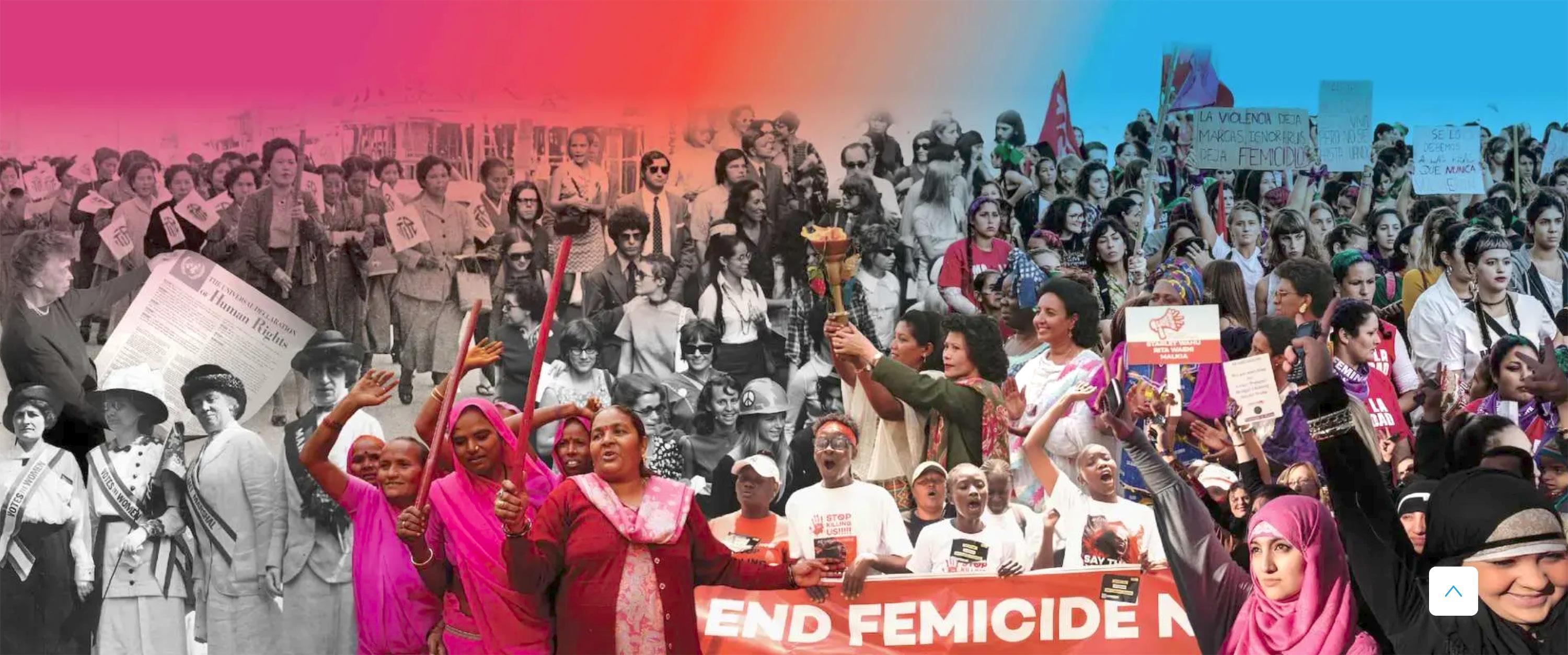
FOR centuries, women have fought for equal rights, opportunities, and freedom. From the suffragists to digital activists, each generation has pushed boundaries, shattered barriers, and refused to step back. Behind every policy change and legal victory there have been fearless feminists organising, protesting, and demanding action.
The world today is more equal for women and girls than ever before — but progress is still too slow, too fragile, and too uneven. Every 10 minutes, a woman is murdered by someone in her own family.
Women’s representation in the labour force has remained unchanged for decades. Women and girls contribute the least to climate change and yet suffer the worst consequences. And at this pace, a girl born today
will be 40 years old before women hold as many seats in parliament as men. In 1995, world leaders committed to gender equality with the Beijing Declaration and Platform for Action, a groundbreaking plan that set bold goals for women’s rights.
Two decades later, the Sustainable Development Goals (SDGs) reinforced that commitment with a looming 2030 deadline.
We cannot afford any setbacks. We cannot wait another 30 years to fulfil the pledge for equality. On 8 March, International Wom-
en’s Day, we march forward for ALL women and girls.
The United Nations (UN), through UN Women, has outlined major milestones in the global struggle for women’s rights in a historical timeline.
According to the UN body, the timeline traces
the movement for gender equality back to 1848, when the first organised women’s rights convention was held in Seneca Falls in the United States, marking a pivotal moment in the campaign for women’s suffrage and broader civil rights.
The timeline highlights
several defining moments, including the early 20th-century expansion of women’s voting rights in many countries and the adoption of international agreements aimed at protecting women’s rights.
More recent developments highlighted in the timeline include global campaigns against gender-based violence and renewed commitments by countries to achieve gender equality under the Sustainable Development Goals.
The UN notes that while progress has been made over the decades, the timeline demonstrates that the fight for equal rights has been long and continues today, driven by generations of women advocating for justice, representation and opportunity.
Editor’s note: This article was rewritten and summarised from information published by UN Women.
A historic first and a lasting impact: GCCI’s President cementing stronger, more influential private sector body
By Shamar Meusa
PRESIDENT
of the
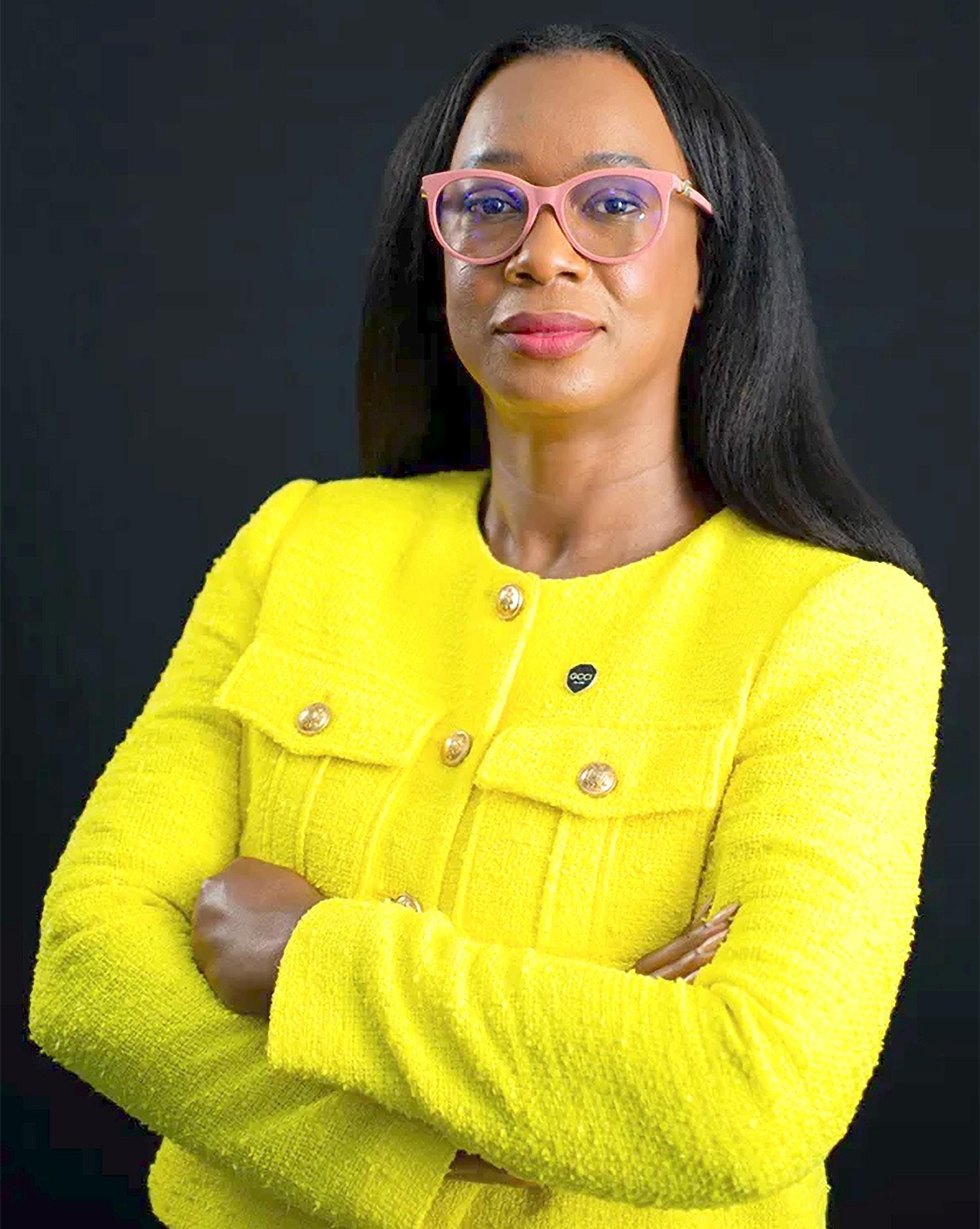
Georgetown Chamber of Commerce and Industry (GCCI) Kathy Smith has wasted little time making her mark since being elected as the organisation’s first female president.
With a clear focus on empowering women-led businesses and strengthening micro, small, and medium enterprises (MSMEs), Smith has been pursuing an ambitious agenda aimed at expanding opportunities and building stronger partnerships across sectors.
Smith’s election in 2025
tives, like the Ministry of Agriculture, which has been supporting the Chamber’s centre for women, and providing training in agro-processing, teaching them to better understand packaging, branding, and standards of products among other things.
She also highlighted opportunities created through the establishment of shade houses, an initiative led by President Dr. Irfaan Ali, which focuses on supporting single-parent women in business to establish their own infrastructure.
Networking has also been a central part of Smith’s vision for the Chamber. She
marked a historic milestone for the Chamber, as it was the first time in its 136-year history that a woman had been elected to lead the organisation.
“Over the months, I was able to increase our engagement with the government. I think from the president to various ministers, I’ve been really opening this space for women, and providing initiatives for women that we at the private sector can collaborate on,” she shared during an exclusive interview with the Guyana Chronicle.
Reflecting on her tenure thus far, Kathy has been able to significantly increase representation for women-led businesses while also strengthening the Chamber’s engagement with the government and other partners.
Through these collaborations, she said, many government ministries have supported various initia -
Thus far, some measure of progress has been made, as the micro women’s learning and training centre was established and commissioned last October, and has been focusing on agro-processing, which, she noted, has helped participants become more competent within their respective business sectors.
And while that has been the initial focus, she revealed that by the end of this month, the Chamber hopes to of -
ficially launch training in soft skills such as branding, negotiation, and business planning, among other critical areas.
“So, the Chamber is doing quite a few things; we have been doing for women because representation is needed. You know, women are more encouraged when they see somebody who looks like them and understands what it takes,” she noted. Smith also reflected
on her recent interactions with women entrepreneurs, many of whom she described as innovative and highly capable, noting that some are still finding the confidence to step forward.
Drawing from her own experiences and conversations with women in business, Smith said she always tries to leave them with a simple but powerful reminder.
“Don’t wait to feel com-
pletely ready; it makes no sense. You would never feel that you’re completely ready; you’ll never feel that you’re completely qualified.
You’ll never feel completely certain; you would never. But you just have to take the next step; you just have to take the next step and invest in yourself, because once you invest in yourself, you’re going to realise that it’s getting a bit easier,” she encouraged.
explained that several events have been organised to bring women with institutional knowledge and professional experience together with emerging entrepreneurs.
“So, those are some of the things I pushed for this year. What I want is to leave the Chamber in a stronger and more influential manner,” she said. Kathy’s vision for the Chamber goes beyond its simply being known as the country’s oldest and largest private sector organisation and becoming a hub that consistently creates value and tangible benefits for its membership.
Upon assuming leadership of the organisation, Smith had told members of the media that she hoped to establish some programmes that support women and women-led businesses being trained in financial literacy, digital marketing, and negotiation.
GCCI’s President, Kathy Smith
Rejection, resilience and a fulbright dream: Keishann’s inspiring journey
By Faith Greene
REJECTION is never the end, sometimes it’s a redirection to a better opportunity or path and, for 33-year-old Guyanese Fulbright Scholar Keishann Griffith-Melville, this aphorism proved true.
Now a psychotherapist and founder of Mental Health Matters Counselling and Consultancy, there was a time when Keishann was unsure where her proverbial cards would fall.
Sharing her story of strength, determination and courage, the young scholar recalled being at the pinnacle of adolescence, just about 16-years-old and trying to piece together her future.
“I just remembered having this moment where I said, ‘I need to get this figured out. Like, who am I? What do I like?’ And a lot of the answers that I gave myself pointed back to just having a passion for people; for help-
ing people, for counseling people, for uplifting people, and I realised, it feels like the field I should be headed towards would be mental health.”
This was at a time when mental health awareness and psychology were extremely taboo topics not commonly spoken of in Guyana.
In 2020 during the onset of the COVID-19 pandemic, Keishann started creating mental health educational videos on YouTube, helping persons to understand that having a mental illness was not something to be ashamed of.
She started offering services to persons after receiving messages from viewers, asking where they could receive support. This led to her pursuing a Degree in Psychology and the later development of her therapy and consultancy business; a shift from her previous studies in Communications at the University of Guyana.
TRIAL AND ERROR
In 2021, Keishann applied to the University of Texas, and was accepted, but had no clue as to where she would get funding from, but in that same year, the young woman suffered from a major illness, and was formally diagnosed with a neurological disorder known as Arnold-Chiari Malformation and syringomyelia- Type 1.
“I had become so ill that I couldn’t swallow, I had lost vocal cord function. So, my vocal cords were paralyzed. I couldn’t breathe properly; essentially all the things that are supposed to help you live were basically all the things that affected my neurological functioning. So, I had to ultimately get emergency surgery and the funding that I was actually seeking for school had to end up going towards the emergency surgery,” she said.
The following year, she applied for another scholarship and was placed on

the reserve list, leaving her unable to pursue her studies at that time.
Undeterred, Keishann applied for two more scholarships but faced rejection once
again. Although discouraged, a part of her refused to let go of her dreams. Determined to try one last time, she applied for a Fulbright scholarship and, this time, she was ac-
cepted. Now pursuing her Masters of Science in Applied Cognition and Neuroscience at the University of Texas, at Dallas USA. Keishann is expected to graduate in May 2027.
NEUROSCIENCE AND MENTAL HEALTH
With nearly a year behind her, Keishann describes the Texas campus as a vibrant melting pot of cultures, ideas and perspectives.
Yet, like many students navigating the demands of graduate studies, there are moments when the pressure feels overwhelming.
During those times, she finds solace in quiet corners of the campus; places she has come to rely on for calm and reflection.
Pursuing her Master’s degree, Keishann explained that studying neuroscience is a natural extension of her work as a psychotherapist. The field allows her to TURN TO PAGE 5A
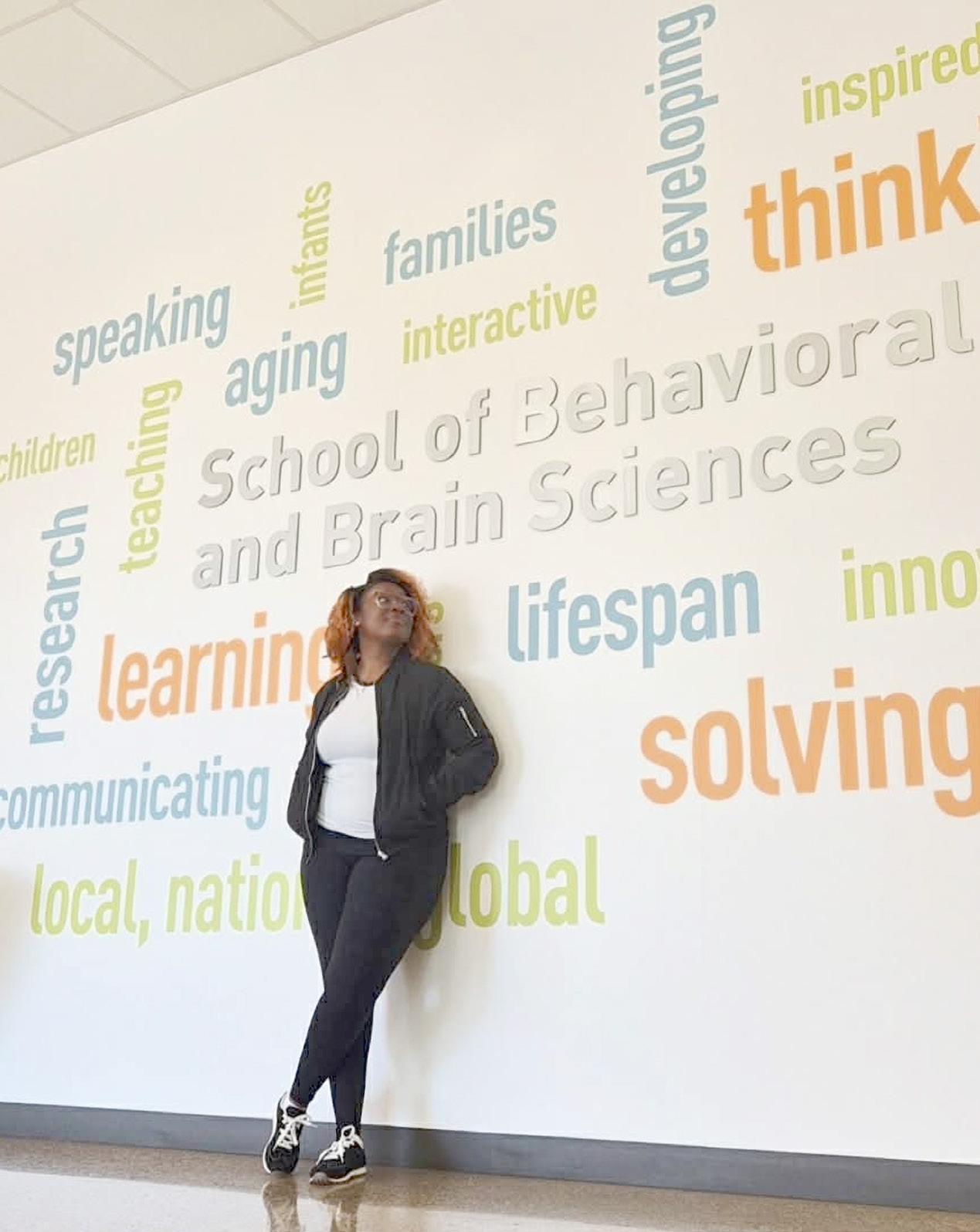
Keishann Griffith-Melville
FROM PAGE 4A
Rejection, resilience and a fulbright dream...
deepen her understanding of how the brain functions and how its complex processes influence the rest of the body.
What fascinates her most, she said, is the ability to look beyond outward behaviour and social patterns. Neuroscience gives her the opportunity to examine the brain itself, helping her better understand what may be happening beneath the surface. Insights that she hopes will ultimately allow her to support others more effectively.
“I think it’s an amazing field, and I would love to see it grow and be establish in Guyana, because I know it would really help in both the fields of neurology and it would also help in mental health,” she said.
Aside from her academic pursuits, she hopes to raise awareness of her disorder, and hopefully establish an organisation that offers treatment and educates Guyanese on Arnold-Chiari Malformation and syringomyelia and other similar neurological disorders.
International Women’s Day
IN 2026, the Clerical & Commercial Workers Union marked International Women’s Day, joining women worldwide in rallies to advocate for greater social and economic independence.
March 8th is celebrated by the Trade Union Movement as International Working Women’s Day, highlighting the theme: “Rights. Justice Action. For ALL Women and Girls”
Violence against women continues to be a significant problem across the globe and is particularly concerning in Guyana. This issue is not limited to public spaces; it frequently occurs within homes, where domestic violence impacts the physical and mental health of everyone involved.
The consequences extend beyond immediate harm, as such violence prevents women from exercising their fundamental rights. It limits their ability to participate in the workforce, support their families, and pursue a life of health and longevity without fear. Addressing violence against women is essential to ensuring that all women can fully enjoy their basic rights and live free from the threat of harm.
The conversation around gender equality continues to be a central focus in our society. We are often reminded of the importance of ensuring that women have the same
rights and opportunities as human beings. Despite these ongoing discussions, there remain serious challenges affecting women’s health and well-being. Troubling statistics, such as those related to maternal mortality, highlight the urgent need to address these disparities and work toward a future where women can enjoy true equality in every aspect of life.
International Women’s Day is not only a celebration of women’s achievements but also a critical reminder of the persistent inequalities they face. Across the globe, and in our own communities, women continue to encounter significant obstacles to equality. The fact remains that women are disproportionately affected by health crises such as HIV/ AIDS, are more vulnerable to the impacts of climate change, and are at a higher risk of living in poverty.
Furthermore, gender-based violence continues to be a harsh reality for many, limiting women’s opportunities and undermining their rights. Addressing these ongoing challenges is essential to achieving true equality for all women and girls.
Yours faithfully, Sherwood Clarke General Secretary Clerical & Commercial Workers’ Union

Beyond the balance sheets: Who is Ishwari Glasgow ?
-- the woman who turned humble beginnings into high returns
By Naomi Parris
AT first glance, the title ‘Director of Finance and Administration’ at a major international airport might suggest a career shaped by privilege, polished boardrooms, and elite academies.
In the case of Ishwari Glasgow, however, the reality is far more grounded, and far more inspiring. Her journey began not in corporate circles, but in the modest surroundings of Timehri where discipline, faith, and determination quietly laid the foundation for a remarkable professional ascent.
Now approaching 39, Ishwari has spent more than two decades at the Cheddi Jagan International airport (CJIA), rising through the ranks from a shy, temporary data entry clerk to a central figure in the organisation’s leadership and day to day operations.
“I’m going to be 39 years old in a couple of months.
I’m still pretty young, but I came from very humble beginnings. I have been living in Timehri for as long I can remember,” she shared during an interview with this magazine.
EARLY LIFE AND EDUCATION
Ishwari is the eldest of three siblings. Her childhood was shaped by humble circumstances and parents who did not themselves have the chance to complete secondary school.
Yet, despite their limited formal education, her parents built a small family business that sustained the household and funded their children’s schooling. Education was not presented as an option but as a necessity and a responsibility.
Ishwari began her education at Timehri Primary School, later sitting the common entrance examination now knonw as the Nation-
al Grade Six Assessment (NGSA) and moving on to Covent Garden Secondary School. There, she entered the business stream and discovered what would become a lifelong professional passion: finance and accounting.
The structure, logic, and clarity of balancing debits and credits appealed strongly to her, and supportive teachers nurtured this early interest. “Finance has always been something that I have been passionate about since I was in the torrid farm and I started to do principles of accounts,” she said.
After secondary school, she pursued further training in accounting and business. She completed computer courses at Global Technology, studied at the Accountancy Training Centre on New Market Street, and advanced from CAT (Certified Accounting Technician) studies to ACCA-level work.
Her academic achievements culminated in a master’s degree in business administration from the University of Bedfordshire, alongside a series of professional programmes. Additional training in aviation law, leadership, and development deepened her expertise.
TIMID
Timid and unsure of her voice, a 17-year-old Ishwari walked into the airport as a temporary data entry clerk back in 2005.
As a very young woman in a formal, male-dominated environment, she felt the full weight of scrutiny and expectation. Yet, even then, certain strengths emerged.
She recalled hand-writing a job application on the spot in the personnel manager’s office, completing it swiftly and confidently. Writing, like numbers, has always been one of her natural talents.
“I remember sitting in the [office] of the personnel manager… and I wrote; it was handwritten, my application, and I remember handing it to him, and he read it, and he looked at me with some amusement, because I think he could not have believed that I sat there in about five to seven minutes and I wrote that application.”
Within six to eight months, a vacancy opened, and she was confirmed as a permanent employee. From there, she moved steadily through the finance department, taking on a variety of roles: payments, payroll, statistics and more.
Each position added another layer of technical experience and organisational understanding. She was promoted to supervisor, then accountant, and eventually finance manager, before stepping into her current leadership role as Director of Finance and Administration.
A DIVERSE AND DEMANDING LEADERSHIP ROLE
Today, Ishwari’s portfolio spans three major departments: Finance, Human Resources, and Commercial. The Commercial arm functions as the airport’s marketing and concessions unit, overseeing duty-free shops and a range of tenants and operators on the premises.
It is a heavy workload, not only in volume but in variety. The role is far removed from the traditional image of an accountant tucked away with spreadsheets. Instead, it demands strategic thinking, people management, and the courage to take difficult decisions.
Her work is now primarily administrative and leadership-focused. She is responsible for setting direction and overseeing operations. One of the most challenging aspects, she notes, is the obligation to correct staff when they are wrong. Many people are resistant to criticism, even when it is constructive and necessary. In Human Resources, she also takes on the particularly unpleasant duties of discipline, including suspensions and terminations where required.
From time to time, when the CEO is away, Ishwari is called upon to act in his capacity, representing the organisation at the highest levels.
“My journey has been so rewarding. It hasn’t been without its challenges, but I never thought that I would have been here for so long. And I guess one of the rea-
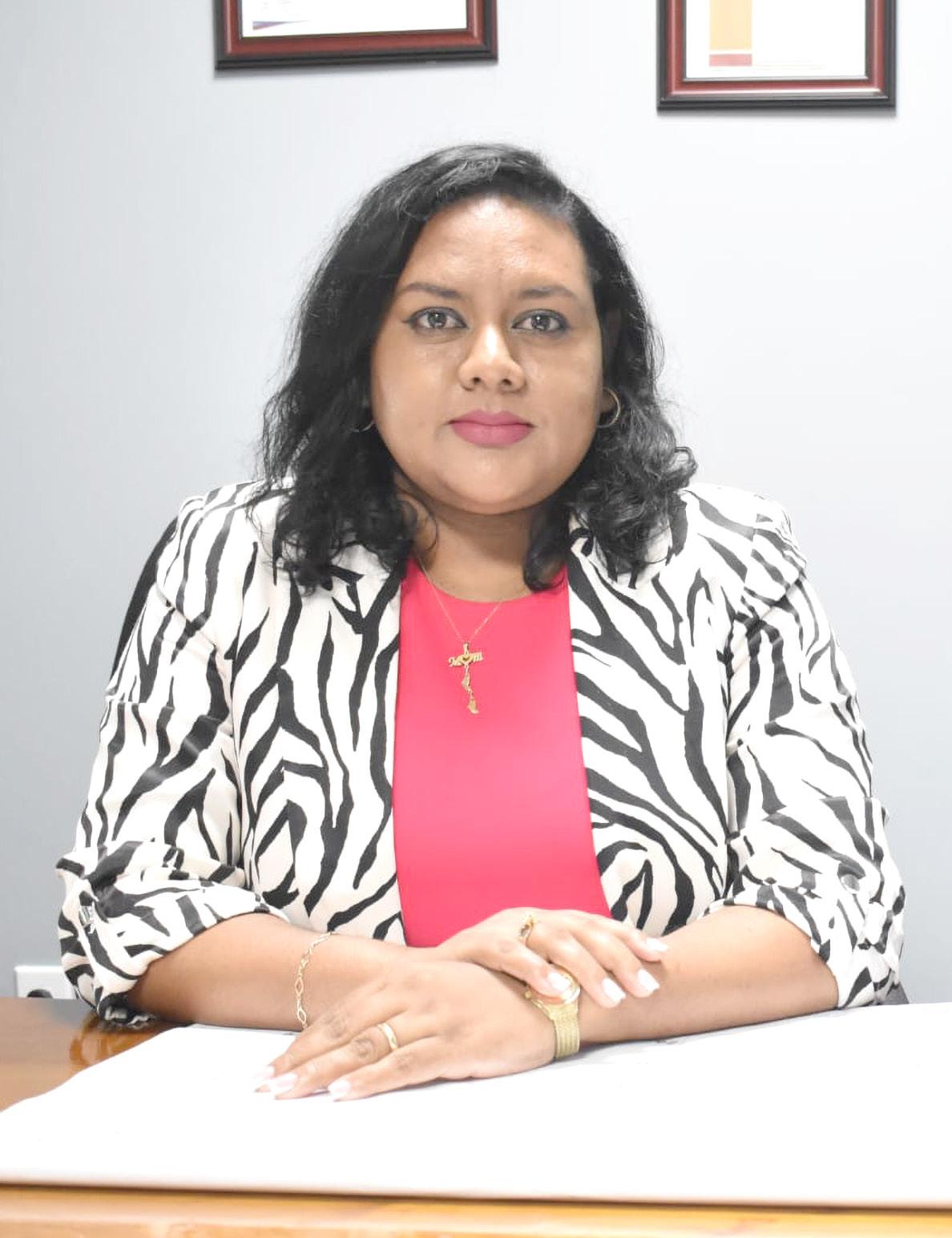
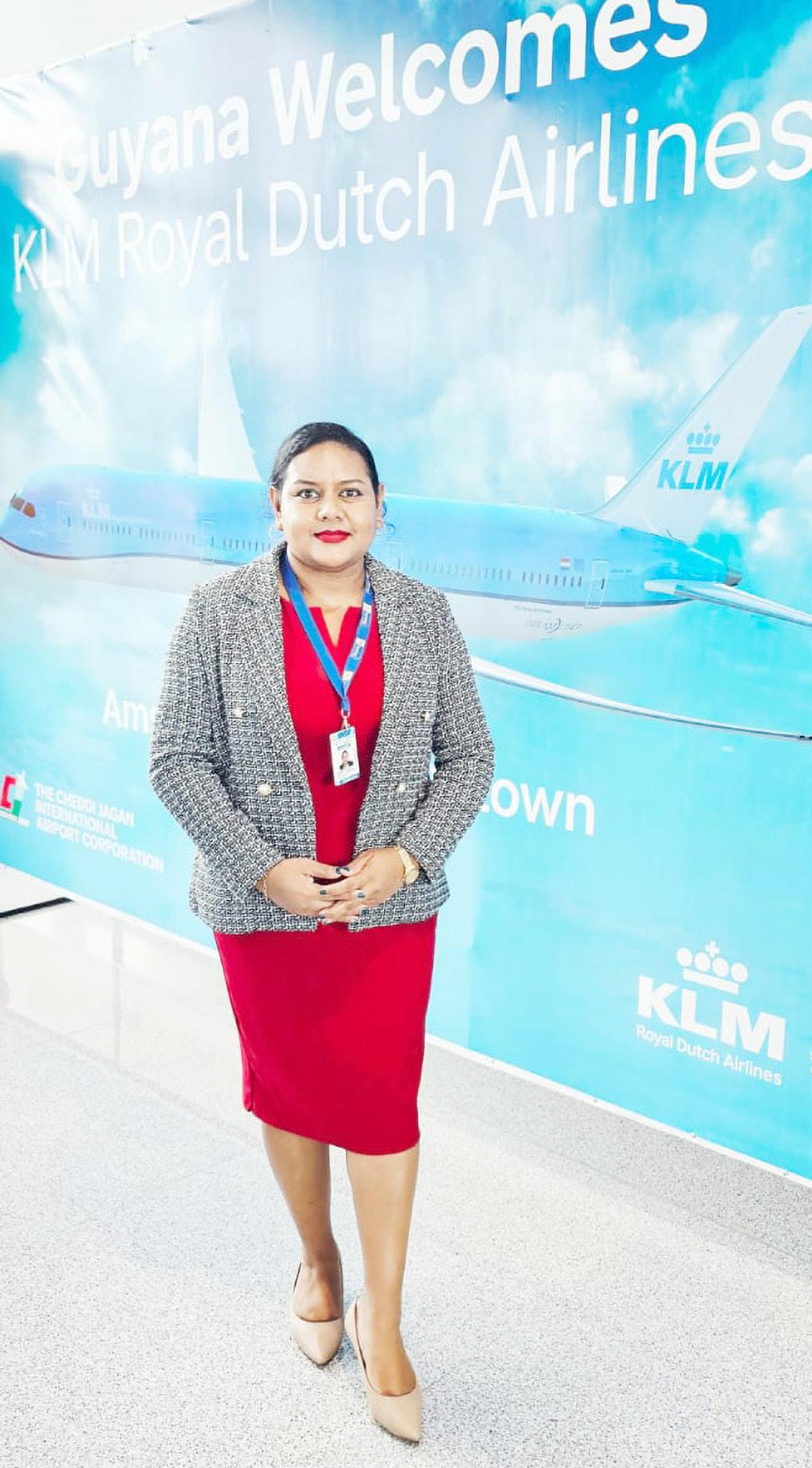
Glasgow, CJIA’ s Director of Finance
sons why I’m still here is because the job has afforded me with opportunities for growth and development. And apart from that, I do quite enjoy what I do, and I love my job,” Glasgow said.
FAITH, CHARACTER, AND GENDERED CHALLENGES
At the heart of Ishwari’s journey lies a quiet but unwavering Christian faith.
Church life has been central to her development, not only spiritually but professionally.
Her faith also shapes how she approaches pressure. She views challenges as akin to the refining of gold and diamonds; the greater the pressure, the greater the potential for strength and clarity of character. Difficult meetings, contentious decisions, and moments of doubts are, for her, opportunities for growth rather than reasons to retreat.
“The job is not without its challenges, but I do believe that those challenges have helped me to become stronger,” she said adding:
“I’m Christian, and church too has helped to mold me in my professional journey, because, as I said, I was very timid. Nobody could have gotten me to do public speaking, but attending church over the years, being exposed and being placed to do things like convening, as we would call it, those things have helped me
with public speaking.” Glasgow, like many, has not been spared the subtle and sometimes overt questioning of her legitimacy. She has encountered persons who, through their behaviour if not their words, appear to doubt whether she deserves her position, particularly when they have been in the sector for decades and she is comparatively young. Despite this, she remains firm, professional, and measured. She sees herself as a woman of integrity, unafraid to share a candid professional opinion, even when it is unwelcome.
Ishwari urges young professionals, especially women, to aim beyond conventional limits. For her, it is no longer enough to aim for the sky; one should aim for the stars. She believes deeply in the power of determination, disciplined work, and self-belief, regardless of background.
“I always say, as women, our work is never done. Even whether you’re single, living by yourself, or you’re married and you have kids or work is never done. There’s always something to get done, and oftentimes we’re the first to rise and the last to go to bed. And I do believe that with determination, we can achieve whatever it is we want,” she said.
Ishwari
To achieve justice, we need more women in justice
DESPITE women’s increased engagement in public life, they remain significantly underrepresented in decision-making positions. In fact, a relatively small number of women have been, or are part of, the judiciary, particularly at senior judicial leadership positions.
Women’s representation in the judiciary is key to ensuring that courts represent their citizens, address their concerns and hand down sound judgments. By their mere presence, women judges enhance the legitimacy of courts, sending a powerful signal that they are open and accessible to those who seek recourse to justice.
The entry of women judges into spaces from which they had historically been excluded has been a positive step in the direc -
tion of judiciaries being perceived as being more transparent, inclusive, and representative of the people whose lives they affect.
By marking the day, we will reaffirm our commitment to develop and implement appropriate and effective national strategies and plans for the advancement of women in judicial justice systems and institutions at the leadership, managerial and other levels. Join us in celebrating this International Day of Women Judges to promote the full and equal participation of women at all levels of the judiciary, to celebrate the progress that has been made and raise awareness about the challenges ahead!
WOMEN JUDGES HOLDING THE LINE
The International Asso-
ciation of Women Judges, UNDP and UN Women, are organising an event that brings together women judges and gender equality experts to examine strategies for expanding women’s leadership in justice systems worldwide. The event will also explore how the Gender Justice Platform — the partnership framework between UNDP and UN Women — supports women’s leadership in justice through institutional reforms, regional judicial networks, and data-driven accountability mechanisms.
Women judges and the achievement of gender equality
The representation of women in the judiciary is significant for many reasons. In addition to ensuring that the legal system is developed with all of society in
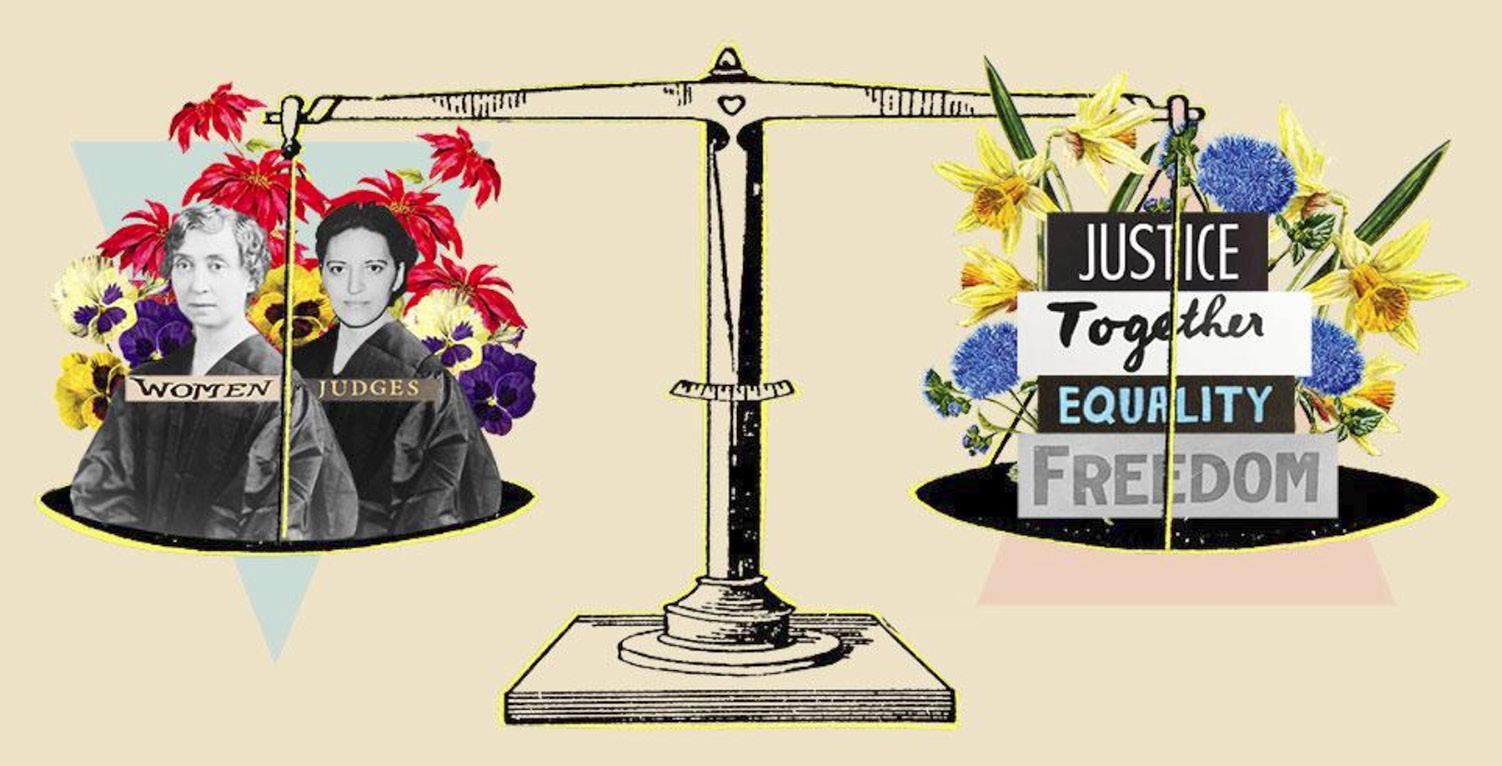
mind, it also inspires the next generation of female judges and motivates them to achieve their goals.
Women in the criminal justice system can act as agents of change and contribute to greater accountability. Women judges bring different perspectives and experiences, strengthening judicial systems. Women in leadership roles help disrupt networks of collusion, striking a blow against corruption.
Women’s representation in law enforcement and judicial institutions has been linked to more effective, victim-centred responses to crime.
By investing in women’s
advancement and women justice leaders, we can help ensure that justice is better served and that women and all members of our societies are met with fairness and equality before the law, for the benefit of all.
Only through the active participation of women, on equal terms with men, at all levels of decision-making, we’ll be able to achieve sustainable development, peace and democracy.
The Global Judicial Integrity Network, Integrity Through the Recognition of Women Judges
Within the United Nations, the Global Judicial Integrity Network of the United Nations Office on
Drugs and Crime brings together women judges, judges, and judicial systems from around the world to share experiences and develop solutions that strengthen integrity in justice. Through peer exchange and global dialogue, it has highlighted the importance of greater representation of women in the judiciary, contributing—together with several Member States—to the momentum that led to the establishment of the International Day of Women Judges.
The Network continues to promote gender equality and access to justice by supporting concrete measures and ongoing learning among judicial systems.
(UNITED NATIONS)

Remembering the first women of indentureship
ON the occasion of the observances of this year’s Women’s History Month and International Women’s Day, I would like to pay homage to the women who came on board The Hesperus and The Whitby, which landed in Guyana on May 5th 1838.
There was a total of 14 women and 21 children ages 12 and under who disembarked.
The embarkation list for the Hesperus showed only five women not listed by name but as a line items against the men who travelled with their wives. However, the disembarkation log named six women getting off the ship.
Three of the women and their husbands were sent to John and Henry Moss Plantation, Anna Regina and two women and their husbands, as well as the sixth woman who travelled alone, were sent to John Gladstone,
Vreed-en-Hoop Plantations.
While all of the women and children were not indentured, at least one woman on Gladstone Vreed-en-hoop plantation was working together with the men; she was most likely the woman who travelled alone.
Also, on the Hesperus there were apparently two unaccompanied 13-year-old boys (Govind, from Nepal and Pulti or Puttee from Bankura, West Bengal) who were registered as indentured immigrants to Gladstone and were to be paid four rupees per month. Upon disembarking, those two young boys were shown as ages 17 and 14, respectively.
With regards to the Whitby, seven women were named on the embarkation list together with their husbands, however, the disembarkation list showed eight women got off the ship. Six of the women were sent to Highbury Plantation, Ber -
bice (John Cameron) with their husbands; and two were sent to Bellevue, Demerara (James Matthews); one with her husband and four-yearold son as well as the woman who travelled alone. With regards to the eighth woman - Sudney – whose name was not on the embarkation list and no husband was shown for her; but apparently had a child, possibly her daughter Nunneedy (age eight). Shortly after their arrival on Bellevue plantation, eightyear-old Nunneedy was brutally raped and murdered. The rapist(s)/murderer(s) were never found.
There were also eight boys between the ages of 1415; seven of the boys were indentured to John Cameron and were paid £7 per month, while the eighth boy was indentured to James Matthews and paid four rupees per month. It seemed that these boys also travelled alone since it is not clear that they
were accompanied by their fathers.
Of Jeebun and Boodoo’s four children, three of them were girls ages 12, 10 and 7, their fourth child was an infant (the gender was no given).
Sometime after their arrival on John Cameron Highbury Plantation, one of their fellow jahaji, listed as Dummto Ram on the embarkation list (the disembarkation list showed his name as Anunto Ram (who was the head sirdar) age 28 from Cuttack, Orissa; he was married to apparently the oldest daughter of the couple.
This trend of marrying off younger girls to much older men continued for years during the period of indentureship.
Women in India, for the most part, were/are regarded as property of their fathers, brothers or husbands. During the period of indentureship, when recruiting women, the
emigration agent and arkatis had the added responsibility of getting the approval of their husbands or fathers; and only when or if “no one claimed her” then she was allowed to emigrate. Unfortunately, many women were deceived and others even kidnapped and taken to recruitment depots.
In the beginning of indentureship and several years into the system, the ‘recruitment machinery’ in India was set up in a male dominated hierarchical pyramid with the emigration agent at the top and the tentacles of the arkattis and sardars or chokedars spread out at the bottom.
This mechanism changed when a few females were ‘hired’ as ‘sadarins’ to try and recruit more women. The extra money that each woman brought in for the sardars and sardarins was the sole motivation for them to employ various forms of trickery to ensnare many of the women.
Interestingly, it was the general assumption by the white officials in India as well as a number of Christian priests, including one from India who lived in Guyana for a number of decadesReverend HPV Bronkhurst – that all of the single or unattached women who boarded the ships were of ill-repute. This was/is very damning and misleading to put such a deceitful label on those girls and women, who, for all intents and purposes, were very pious and chaste, who were willfully misled into signing up to go to a far off land under false promises.
The Indian Emigrant was a monthly journal published in Madras; it focused particularly on the rampant abuses in the recruitment of female labour. In 1914, Miss Dudley, who was a Methodist Missionary (stationed in Fiji for a number of years) and a fierce opponent of indentureship, TURN TO PAGE 11A

Remembering the first women of...
penned a letter to the publication which highlighted ways in which many women were duped into labour recruitment depots.
She claimed that one woman told her that she had quarreled with her husband and in anger tried to run away from her mother-in-law’s house to her mother’s house.
On the way, a man, after questioning her, told her that he would show her the way; instead, he took her to a recruitment depot.
Another woman said her husband went to work in another location and he sent word for her to follow him; on the way a man said he knew her husband and that he would take her to him; she was also taken to a depot. In another incident, a young girl was asked by her neighbour to accompany her to see the Muharram festival, whilst there she was deceived by a recruiter into going to a depot.
Another woman told Miss Dudley that she was on her way to a bathing ghat and on her way she was misled by a woman and taken to a depot.
Once the women and young girls arrived at the depot they were told that they cannot go back home until they repay the recruiters for the food and other travel expenses incurred on the way to the depot. Some may have paid but the majority were unable to do so; those were forced to sign the indentured contract since they had no other choice.
Also, some of the women who were recruited may have abandoned violent or much older husbands, or fled from poverty after the demise of their husbands and were at the mercy of their in-laws.
Those women were adventurous enough to seek their fortunes in an unknown land. Unfortunately, we will never know the full extent the deliberate and devious acts perpetuated by the arkatis may have led to several families being broken up due to the women being forced to leave their husbands and child or children behind at home to toil in the cane fields in Guyana.
While there is a voluminous body of work on the indentureship system as a whole, there is a dearth of writings on the overall contribution and impact the presence of the indentured and non-indentured women made on the plantations not only in providing labour in the field,
but also in ensuring a level of stability in the family life. They were also the gatekeepers of traditions (especially celebrations surrounding marriage, childbirth and religious festivals). Many of the traditions continued throughout the period of indentureship and some even persisted to this day.
For many of the women, their work and role on the plantation and in the home were largely overlooked.
While women had no voice or will of their own, the indentured women had little choice but to juggle the qua-
FROM PAGE 10A
druple work load of: (1) low wage-field labour; (2) household duties; (3) being a wife; and (4) a mother; the latter three being unpaid labour.
Many of the indentured women continued to work even after the expiration of their contracts and even today women are engaged not only in field work but in almost all occupations as well.
In addition, the women were subjected to sexual and physical abuse (both at the hands of their white Managers/overseers as well as their spouses). Such abuse oftentimes led to the senseless
murder of a number of women at the hands of jealous spouses on suspicions/accusations of infidelity. Despite everything they were forced to endure, they persisted in carving out a life for themselves and their family.
I pay my humble tribute
and gratitude to those 14 pioneering women who laid the foundation for the rest of the women who came after them.
Sincerely, Bibi Halima Khanam
Editor’s Note: All research for this ar-
ticle was conducted by the author. Any personal views or interpretations expressed in this piece are solely those of the author and do not necessarily reflect the views or editorial position of the Guyana Chronicle.
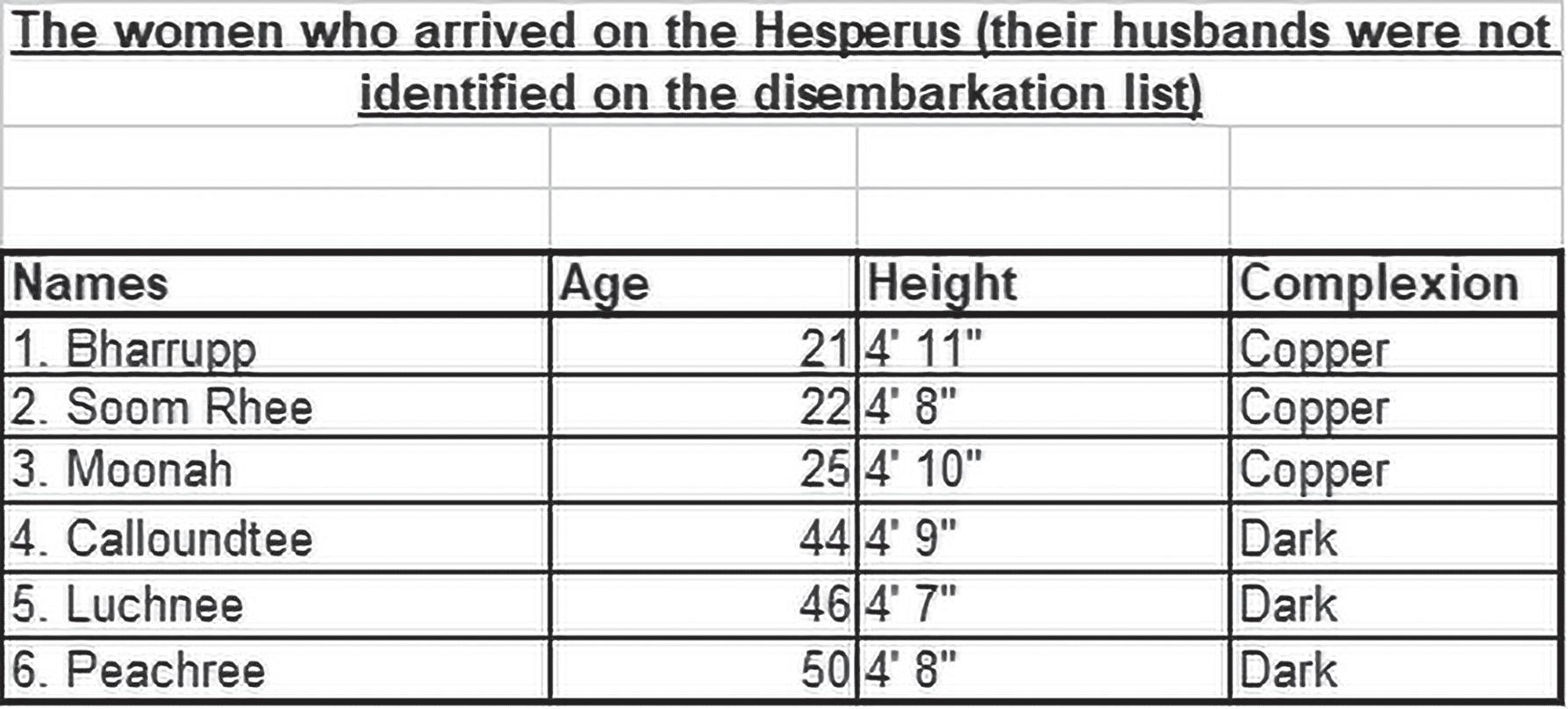
From the above, one can observe the vast discrepancies of the biodata of the immigrants on the Hesperus when comparing the information on the embarkation list against that on the disembarkation list
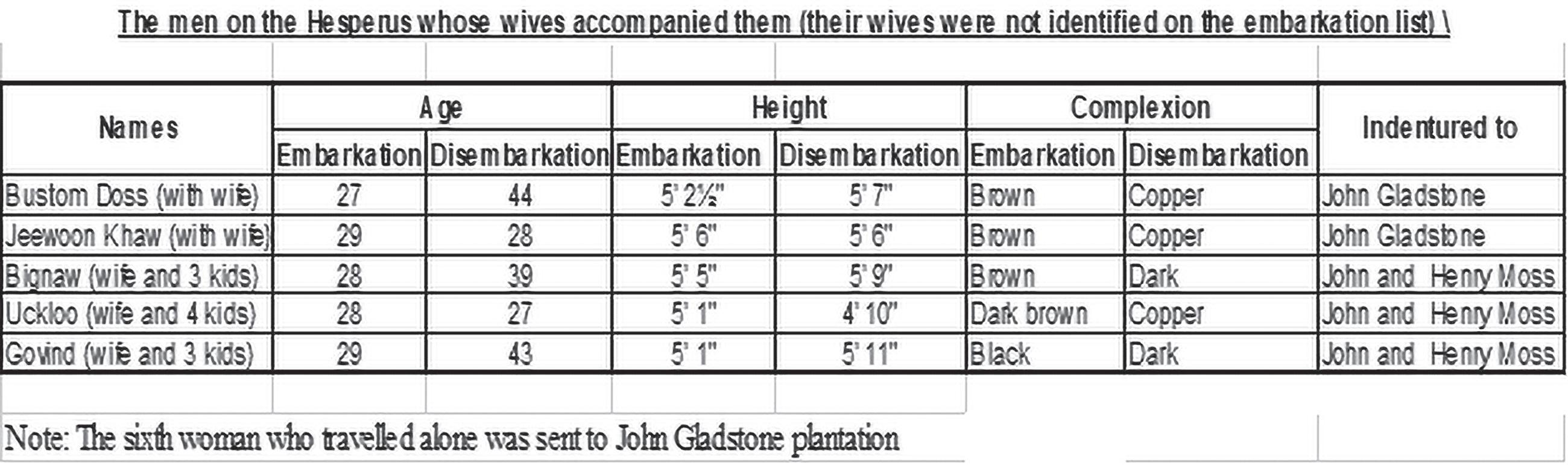
Going by the ages shown on the disembarkation list, a few of the women appeared to be much older than their respective husbands, which was very unusual. Looking at the biodata overall, it appears as if one set of immigrants boarded the vessel and a totally different set disembarked
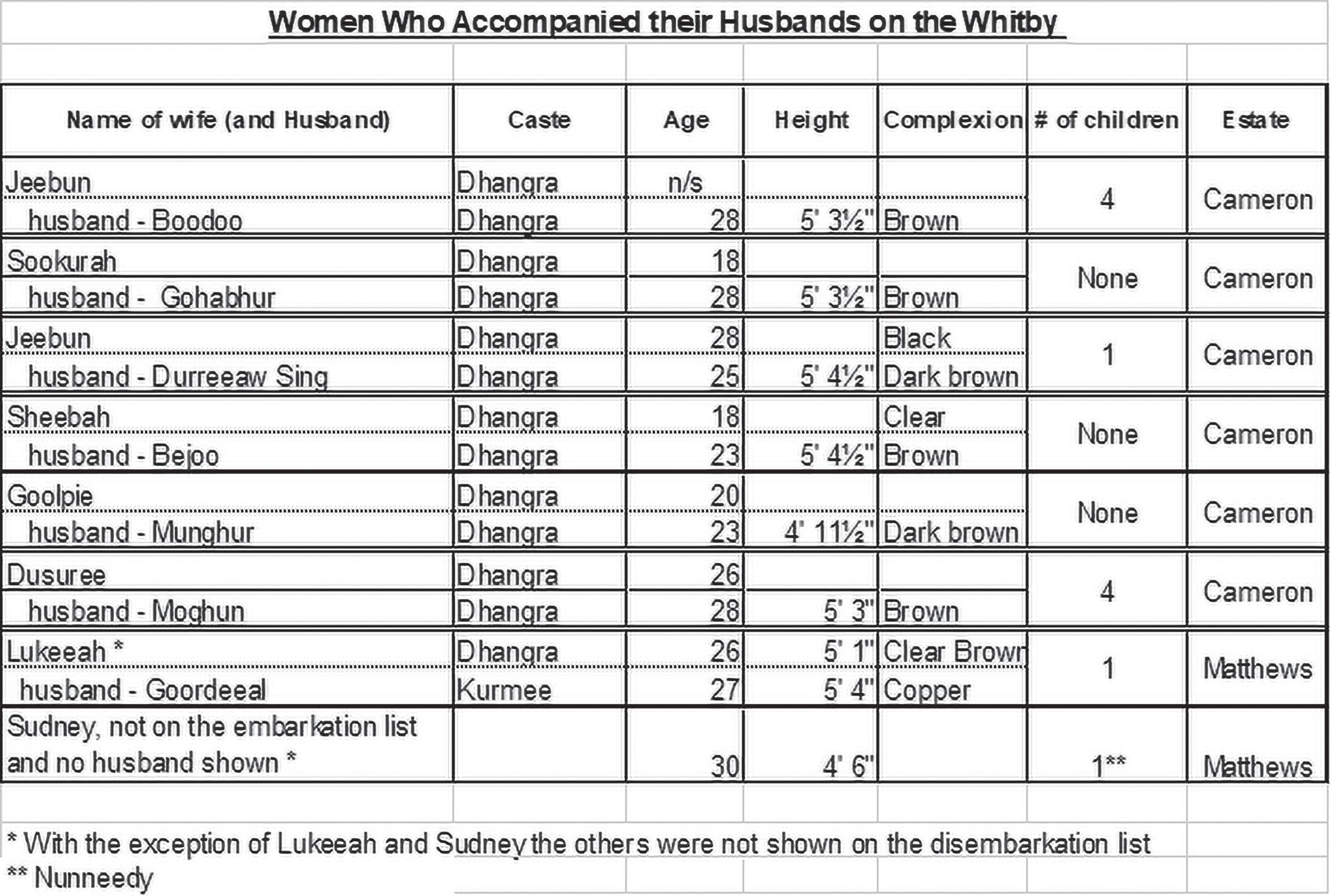
International Women’s Day Message Empowering Women, Transforming Communities
AS we join the global community in celebrating International Women’s Day, Humanitarian Mission Guyana Inc. proudly honors the strength, resilience, and extraordinary potential of the women of Guyana.
Today is not only a celebration of women’s achievements, but also a powerful reminder of the continued work required to ensure equal opportunity, dignity, and empowerment for every woman and girl.
While we celebrate women every day, this occasion provides a special moment to reflect and recommit to meaningful action.
At Humanitarian Mission Guyana Inc., we firmly believe that when a woman is empowered, a family is strengthened, a community is uplifted, and a nation progresses.
Our mission has consistently focused on creating pathways for transformation, particularly for ordinary women who simply need
access to opportunity in order to rise.
Over the many years of service at HMGI, women have not only been beneficiaries of our programmes, they have been the driving force behind our success. Women have served as instructors, co-ordinators, mentors, administrators, and volunteers, dedicating their time, knowledge, and compassion to uplift others.
Through their leadership and commitment, hundreds of students have been trained in areas such as cooking, pastry-making and baking, cake decorating, cosmetology, computer literacy, and small business development.
Women at HMGI have helped to shape and strengthen our programmes, ensuring that they remain practical, relevant, and impactful. Many of our female graduates have gone on to start small businesses, gain meaningful employment, and become mentors in their own right, creating a power-
ful cycle of empowerment. Their dedication has contributed significantly to building stronger families and more resilient communities across Guyana.
Many women within our communities continue to face significant challenges, including financial hardship, limited access to education, single parenthood, and social barriers. Yet, within each woman lies remarkable potential.
Through our training and development programmes, we work to unlock that potential by equipping women with practical skills, confidence, and the necessary resources to build sustainable and independent lives. No woman should feel left behind because of her circumstances.
Our vocational training initiatives, life-skills classes, small business development guidance, and empowerment workshops provide practical tools for income generation and self-reliance. Beyond technical instruction,
we place strong emphasis on personal growth, leadership development, and confidence building. True transformation is not only about earning—it is about believing in one’s own worth and capability.
We encourage every woman to take advantage of opportunities for education and personal development. Numerous programmes offered by the Government and other organisations are designed to support women in training, entrepreneurship, and academic advancement. We urge women to actively seek out these resources, apply with confidence, and step boldly into spaces that may have once seemed beyond reach. Education remains one of the most powerful tools for lasting success.
We have witnessed firsthand the ripple effect of empowering women. A mother who gains a skill gains the ability to provide greater stability for her children. A woman who starts her own business becomes a role mod-
el within her community. A woman who rediscovers her confidence becomes a voice of encouragement and advocacy for others.
In his International Women’s Day message, Suresh Sugrim, Secretary/CEO of Humanitarian Mission Guyana Inc., stated: “On this special occasion, I extend heartfelt greetings to all the women of Guyana.
Your strength, sacrifice, resilience, and dedication continue to inspire us every day. At Humanitarian Mission Guyana Inc., we remain committed to creating opportunities that empower women through education, skills training, and personal development.
I encourage every woman to believe in her potential, embrace the opportunities available through the Government and various organisations, and take bold steps toward transformation. When women are empowered, families flourish and our nation grows stronger.”
This International Women’s Day, we celebrate not only the women we serve, but also the women who have built, sustained, and strengthened HMGI over the years. Their leadership, hard work, and unwavering commitment stand as a testament to what women can achieve when given opportunity and support.
The message of International Women’s Day calls us to action. At Humanitarian Mission Guyana Inc., our commitment remains unwavering: to continue training, mentoring, and uplifting women across Guyana so they can transform not only their own lives, but generations to come.
When women rise, Guyana rises.
Happy International Women’s Day.
Humanitarian Mission Guyana Inc. 14-26 Area Q, Ankerville, Port Mourant Corentyne, Berbice.
Women encouraged to shape spaces where they can thrive
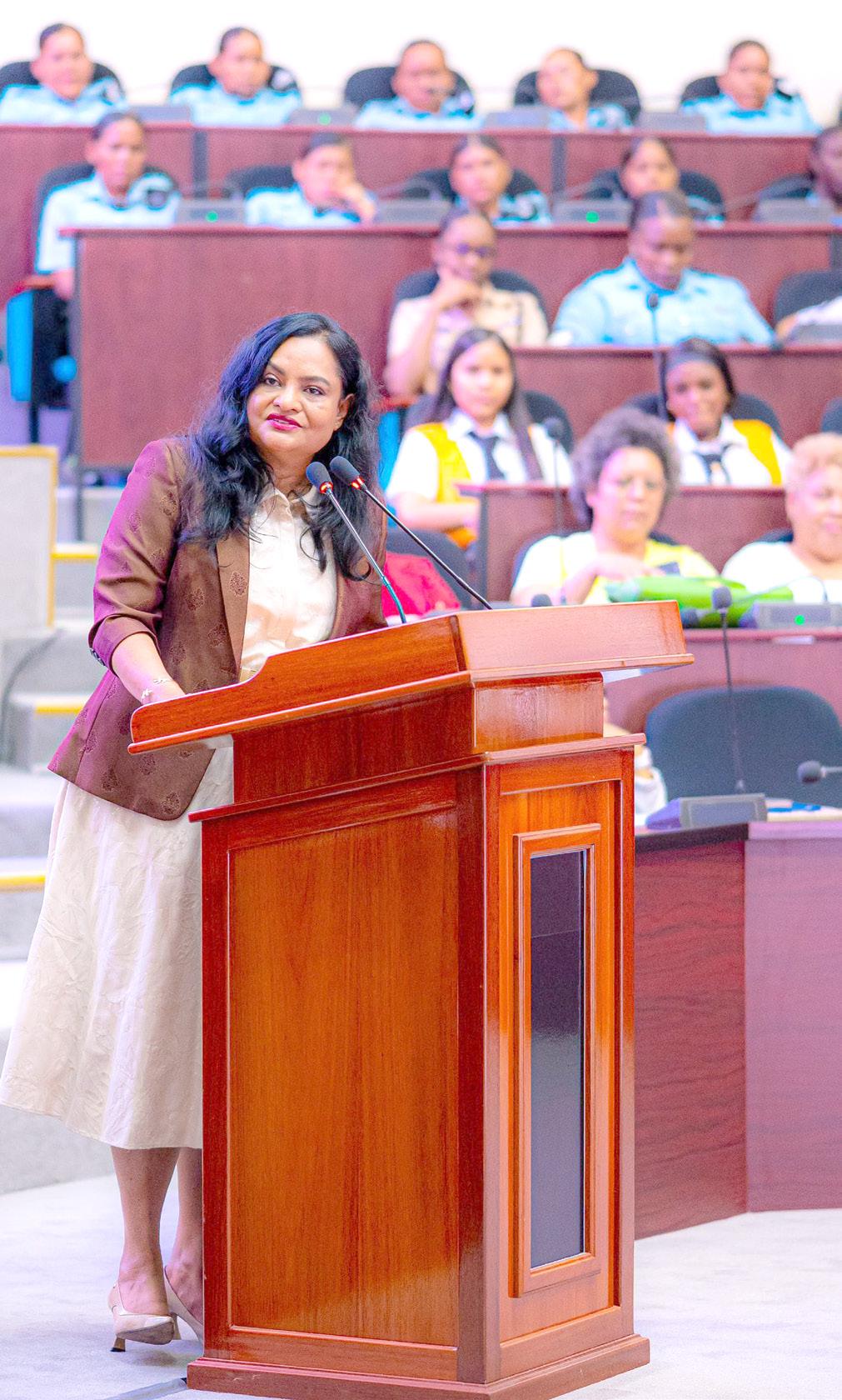
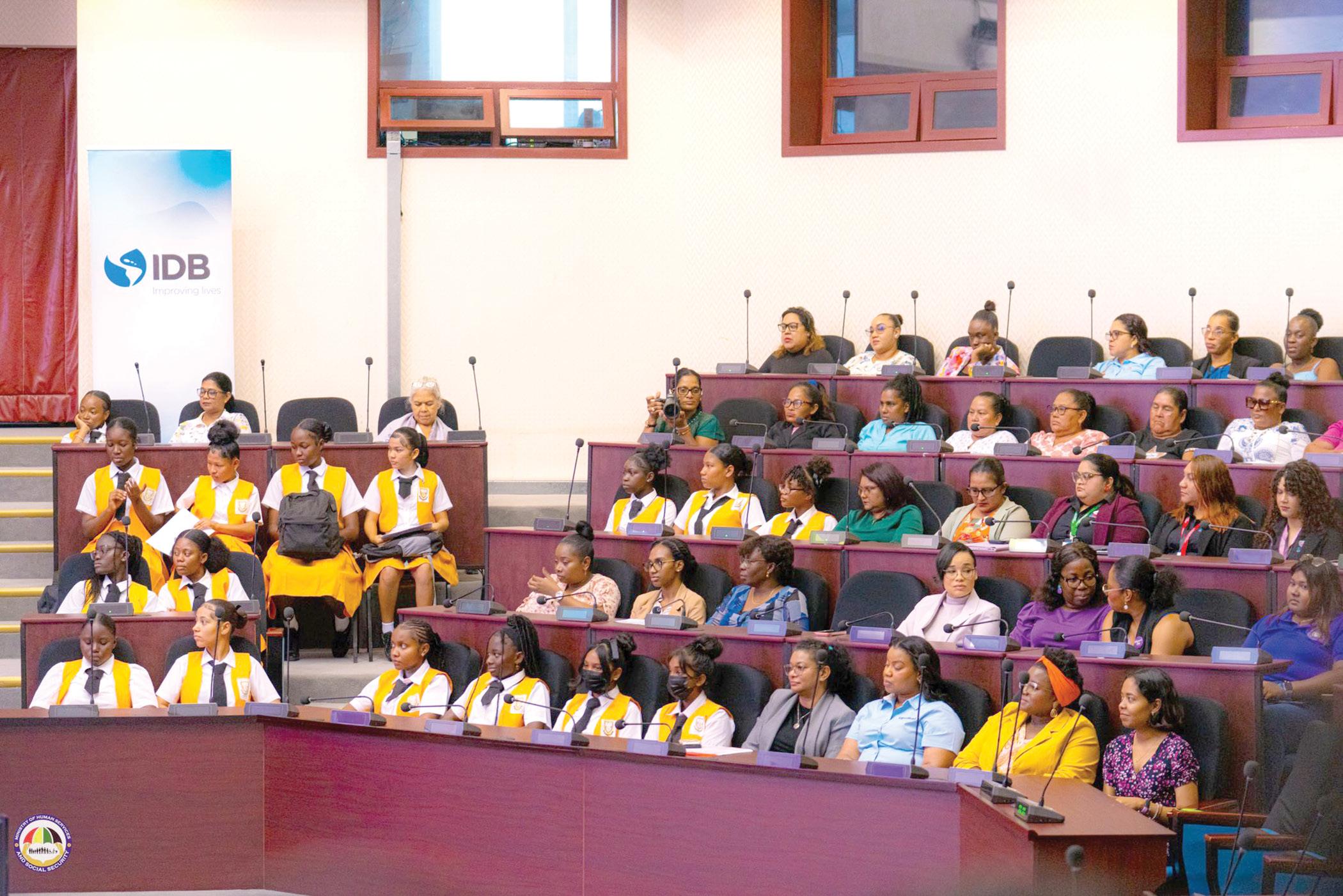
MINISTER of Human Services and Social Security, Dr. Vindhya Persaud, last Friday opened a Women’s Conference at the Arthur Chung Conference Centre, which was attended by teenage girls and women of all ages.
The minister, in her remarks, said that the government is determined to ensure that equality and equity are not things that are dreamed of, or that are elusive but, instead, are lived realities.
Minister Persaud stated proudly that in Guyana, there has been an enabling, empowering environment that pays keen attention to dismantling the barriers that prevent women from occupying the seats of decision-making, and more importantly, the seats that will take them from a state of dependence to independence, financially or otherwise.
Instead, many have opted to delay their dreams because there were no childcare options available to them. The Human Services Minister asserted that for us in Guyana, that will change soon, as the government continues to roll out initiatives as part of the ‘care economy.’
These initiatives include the development of centres for day and night care, catering to women who work in the traditional and non-traditional working hours.
“With the concept of day and night care and the merging of early childhood development, we’ve established centres, again that’s a new concept but we’ve gone further than that with a $1.2 billion investment
The minister emphasised that for a long time, the concept of care for others has mattered to women deeply and because of this, many have not been able to realise their dreams of having a career or pursuing academia.
by the Government of Guyana where the Government of Guyana will directly co-invest with the woman out there who does not only want to access childcare but wants to provide childcare. We are working on an ambitious plan of having home-based and community-based centres led by consortiums of women to
provide the service of childcare and also to provide a safe space for children.”
This, she posited, is complemented by the government’s plan to have the Guyana Development Bank allow women to access interest-free loans to a cap of $3 million, and preferential rates to $7 million.
Moreover, Dr. Persaud
pledged the continuation of programmes to train and place women in every space, through institutions like the Board of Industrial Training, and partners like Nations Incorporated.
Encouraging attendees to use their voices to speak up for others, and to create spaces for women, the minister said women are no
longer “battering down the door to have a space”, we are in those spaces.
Women, she said, need to redesign, reimagine, and create these spaces to ensure their voices, perspectives and what they want to achieve become the kind of realities that are seen as daily occurrences.
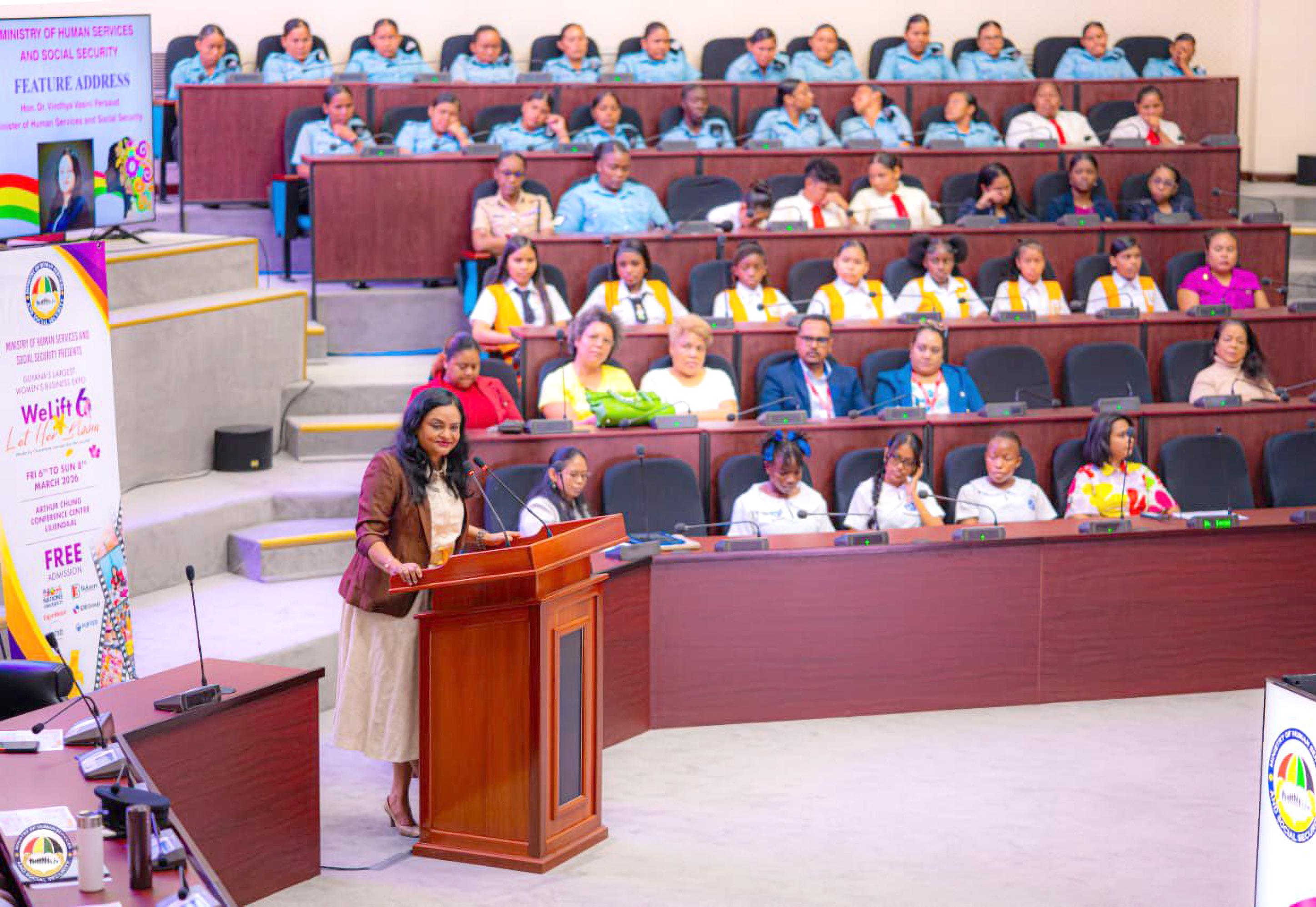
Minister Vindhya Persaud delivering remarks on Friday (Photo: Ministry of Humar Services and Social Security/Facebook)
Lewks GY: Same Service, Better Quality, Bigger space
By Faith Greene
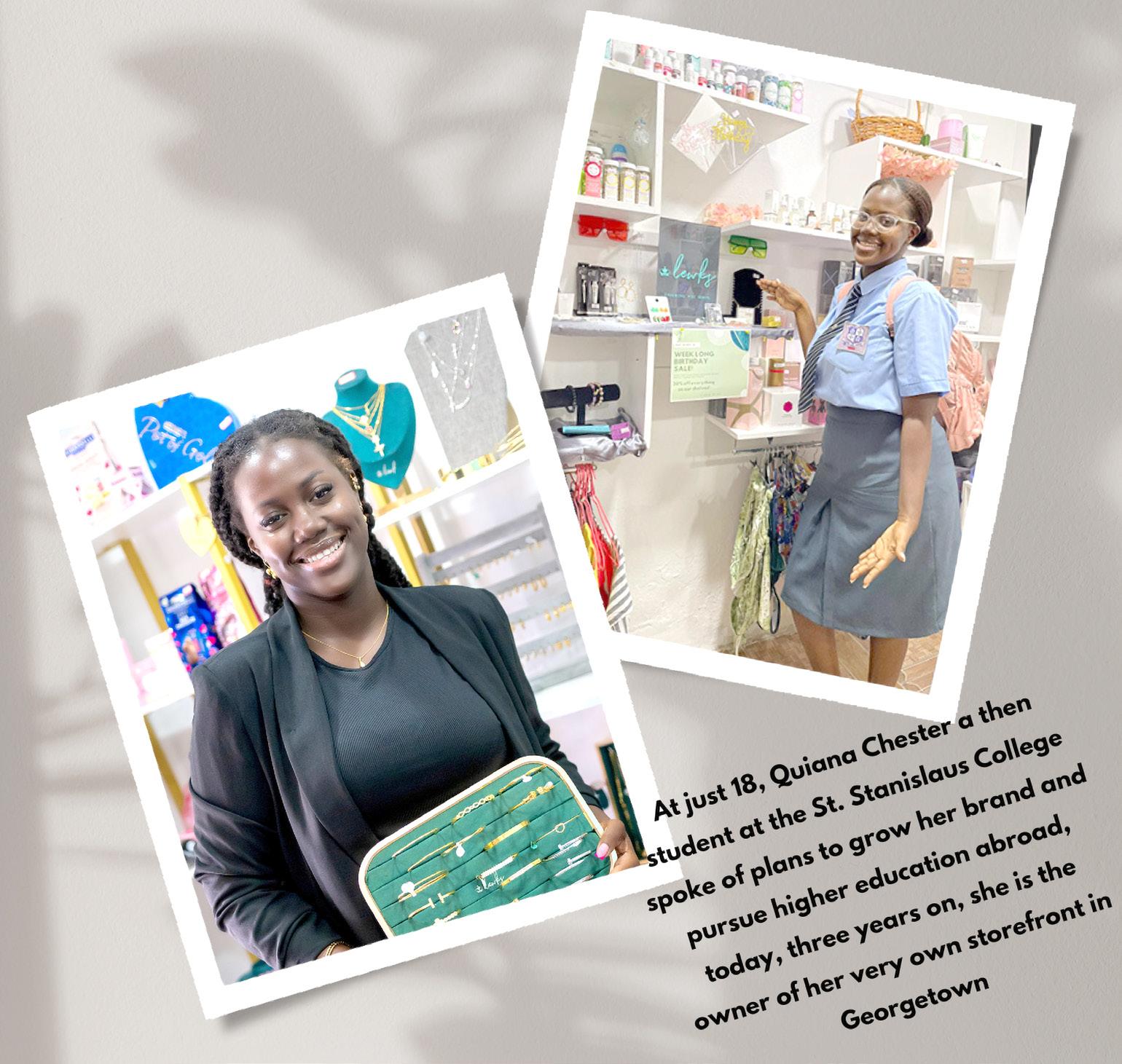
THREE years ago, Quiana Chester was an ambitious teenager with a dream and a small shelf of jewellery in a shared retail space. At just 18, she spoke of plans to grow her brand and pursue higher education abroad.
Today, at 22, the young entrepreneur is not only pursuing a university degree but has also transformed her business, Lewks GY, into a growing brand with a physical storefront in Georgetown.
to, she would have not been able to support herself.
She opted to pursue her studies locally through the Guyana Online Academy of Learning (GOAL), where she is now working towards a Criminal Psychology Degree.
While building her academic portfolio, she continues to nurture her small business, refining her products and offering exciting and immersive experiences with the launch of a charm bar, which allows customers to create personalised and memorable pieces of jewellery.
RESTARTING
For Chester, this stage of her life represents something deeper than business growth. It is, in her words, a process of reflection and renewal.
Describing the phase she is currently navigating, Quiana said she is “restarting.”
“There’s so much that I thought I knew and there’s so many things that I realized. I’ve been repeating a cycle and even though I know that certain things don’t work I would still repeat that cycle both in my personal life and in my business life. So, I’m
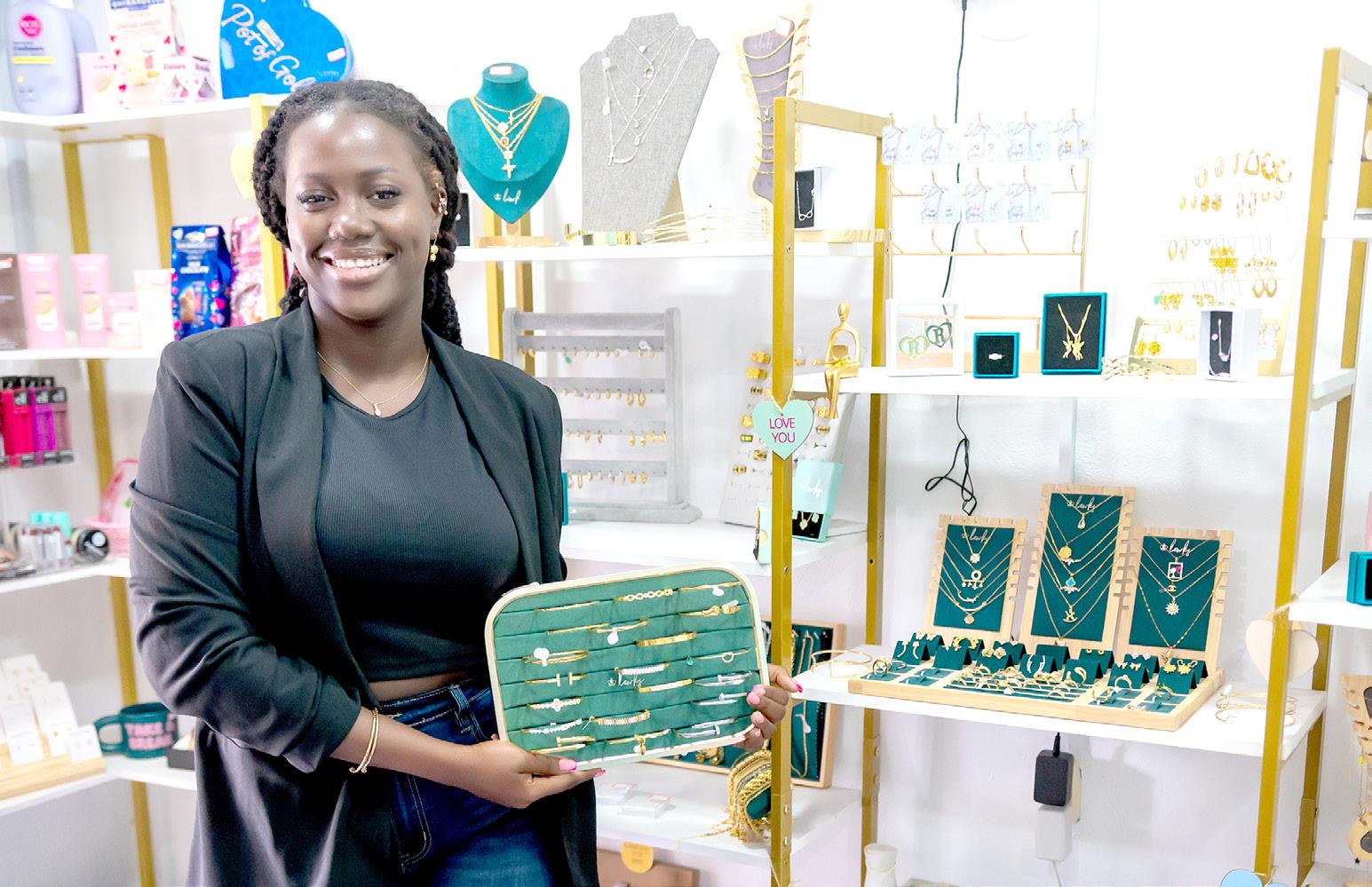
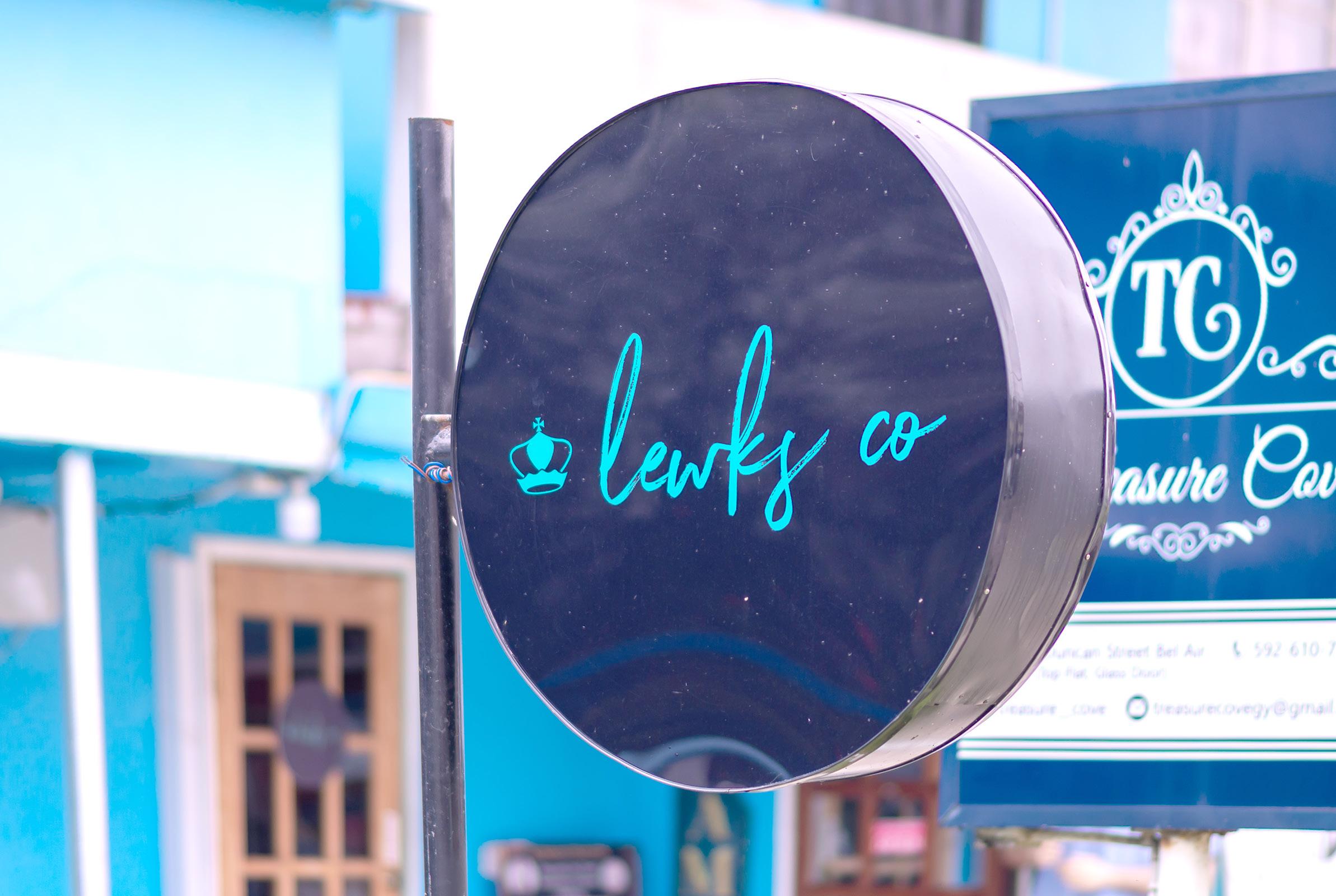
Located at 105 Duncan Street, Lewks officially opened its doors last year, offering non-tarnish and water-resistant jewellery designed to remain stylish and durable while still being accessible at affordable prices. The store marks a significant milestone for Chester, whose business began modestly with just a single shelf inside a collaborative retail space.
“I needed more space,” the young entrepreneur shared. “There’s not much creative freedom [through collab spaces], so I knew that I wanted my own space. I started looking for spaces in 2023, but I didn’t get any luck until the very last month of 2024 because the rent market is very steep. I felt like it was like around the world experience, because I started here in a collab space and I just ended up getting a store location here.”
Reflecting on her journey, Quiana said she had wanted to study forensic psychology initially and had applied to some universities in the United Kingdom and while she was accepted into 80 per cent of the universities she applied
“I started offering sterling silver. At first, it was a mix of costume jewellery and stainless steel. I eliminated costume jewellery because I realized that my audience is looking for things that they can bathe in. They’re looking for basic pieces. I’m actually going back to the basics.
I’m going back to everyday jewellery and that includes sterling stainless and, I just started with moissanite.”
Behind the displays and curated collections, Chester also plays an active role in crafting some of the pieces herself, particularly those made from stainless steel.
Creating jewellery by hand can be time-consuming, she explained, but it remains a meaningful part of the business. “If I have to sit an hour to make one thing, I’m going sit and ensure that it’s done well. I also involve my customers a lot in the creative process even though they would like me to have full creative freedom; so, a lot of times when people come, people don’t want to come to the charm bar and, that’s one way that I have to be actively involved in my business.”
really restarting and I’m going back as I said; going back to basics I’m going back to what I’m known for and I’m sticking to that because it works,” she explained.
Encouraging other young women, Quiana encouraged, “if you truly believe that something is going to work-and you know yourself better
than anyone-- it is going to work; and to be aware of who you’re telling your business ideas to because some people never dare to dream, so they’re going to crush your dream the moment you speak it.”
She added: “If you believe in yourself enough definitely go ahead and watch who you’re telling… don’t try to seek advice from someone who you don’t want your life to be like.”
At just 18, Quiana Chester, a then-student at the St. Stanislaus College, spoke of plans to grow her brand and pursue higher education abroad. Today, three years on, she is the owner of her very own storefront in Georgetown. Located at
Duncan Street, Lewks officially opened