Sunday, June 23, 2019
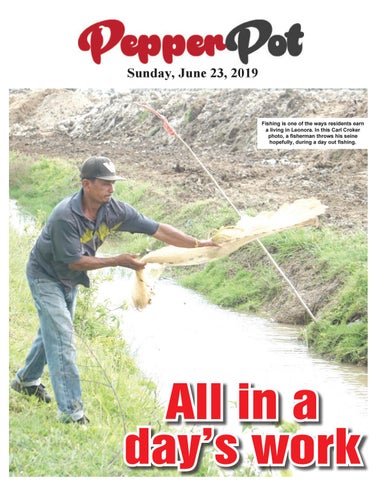
Fishing is one of the ways residents earn a living in Leonora. In this Carl Croker photo, a fisherman throws his seine hopefully, during a day out fishing.
All in a day’s work
II
Chronicle Pepperpot June 23, 2019
The Historic Ghanaian state visit still a talking point By Francis Quamina Farrier THE recent state visit by the Ghanaian Head-of-State, His Excellency President Nana Akufo-Addo, remains a talking point two weeks after. It’s been quite a while since Guyana has hosted a Head-of-State from Africa. Those of a certain age can look back to the mid-1970s when there were so many state visits that at least two overlapped; the simultaneous visits by the Prime Minister of Canada, Pierre Tuedor and the President of Zambia, Kenneth Kaunda. During that period, there were also state visits to Guyana by the Prime Minister of India, Indira Gandhi; the President of Tanzania, Julius Nyerere; the President of Nigeria, Yakuba Gowan; the Prime Minister of Sri Lanka Sirimavo Bandaranaike; the President of Liberia, William Tolbert; the President of Botswana, Sir Seretse Khama and o t h ers. G u y a n a ’ s President Forbes Burnham extended invitations to the Leaders of many countries which had bilateral benefits with (so-called) third world
tries,
Marriott and delivered a very short verbal “AKWAABA” (Welcome) to the visiting Head-of-State in my capacity as a private Guyanese Citizen who had visited Ghana on three occasions. All three of those visits were very enjoyable. As a journalist, I have written many articles about Ghana in the print media, as well as on television, over the past decade. As such, I had a special interest in the state visit by the Ghanaian President. In fact, one of my articles which was written three years ago, had the headline, “Why I like the new President of Ghana”. One of the reasons which I gave was his instructions to his Party members and supporters not to engage in any protests or violence when he lost the 2012 General Elections. During the visit of the Ghanaian President to Guyana, I was present at only two of his many engagements; The Wreath-Laying Ceremony at the Non-Aligned Monument Garden in Georgetown, and the Meet-andGreet at the Guyana Marriott Hotel. I n this feature article, I a m focusing on some o f the comments
counworking to-
Farrier, wearing a Ghana “Year of Return” t-shirt, photographed with the Ghanaian President
gether for their mutual benefits. The Non-Aligned Movement which was established in 1961, had a membership of 120 States, Guyana and Ghana being two of them. Towards the end of the 20th century and the early years of the 21st century, there were very few Heads-of-State visiting Guyana in comparison to the 1970s. This recent State visit by President Akufo-Addo was relatively short - just about 36 hours – was packed with a wide range of events. However, the 75-year-old president stood up admirably to the packed itinerary which would have challenged a younger man half his age. His flight arrived at the Cheddi Jagan International Airport after midnight on June 11. There was a Ceremony which included a 21-gun salute, followed by the 26-mile car ride into the city. President David Granger was at the Airport to welcome his honoured guest and accompanied him to the Marriott in Georgetown. I was at the Guyana
and observations by the average Guyanese about the State Visit. First, the pre-clean-up of the Non-Aligned Monument Garden. Some years after its establishment, it became a bedroom, if you will, for vagrants. There was the case when a vagrant actually vandalised one of the four busts of the Founding Fathers of the Non-Aligned Movement; President Kwame Nkrumah. It was removed by the City Council and kept on the floor of the City Police Headquarters in the City Hall Compound. I took video footage of that and showed it in one of my news items on the VCT Evening News. The bust was later repaired and replaced in the Monument Garden. CLEAN UP Even with that experience, vandals were still using the NonAligned Monument Garden as their bedroom. Some would lie on the pavement to its west, impeding the smooth flow of pedestrians. From
His Excellency President Nana Akufo-Addo and other dignitaries at the Non-Aligned Monument Garden (Photo by Francis Q. Farrier)
June 5, 2019, a massive make-over on the Garden was undertaken by City Hall. Even the tiles of the walkway were removed and replaced with brand new tiles. The trees were pruned. The work was swift and impressive. Both Mayor Ubraj Narine and Cleansing Officer Walter Narine were on hand to supervise the work. The same was the case with the 1763 Monument at the eastern end of Brickdam. All that work drew varying comments from citizens. “Well, we must have more state visits,” was one which I heard repeatedly. “Why aren’t our Monuments better cared for?” was another. “There was that big Clean-up in 2015, but the city was returning to garbage,” was another comment I over-heard. The visiting President and his team interacted with a wide cross-section of the Guyanese, including the Government and the business sector, making visits to BANKS DIH Ltd., and Demerara Distillers Ltd., to observe aspects of their production. I have to say that while in Ghana, I enjoyed Guinness which is brewed in the city of Kumasi. Guinness is also brewed here in Guyana at BANKS DIH Limited. MEET AND GREET The Meet-and-Greet which was held at the Guyana Marriott was the other event which I attended. Guyanese of African Heritage, in particular, turned out in their numbers. However, that event drew criticisms from some citizens because they were not invited. Some Rastafarians expressed their disappointment at not receiving an official invitation. An individual who, if invited to that Meet-andGreet would have made a terrific International Public Relations input beneficial to Guyana, is Mr Lawrence Lachmansingh who spent a three year Tour of Duty with the UNDP in Ghana. While in that West African country, he did a most heroic act which I had written about. The headline is, “Guyanese Saves Ghanaian from Drowning.” Lawrence Lachmansingh and
his family were relaxing on the bank of a river when a young man got into difficulties. Risking his own life, Lachmansingh dived into the water and pulled the young man to safety. How nice it would have been if Lawrence Lachmansingh was present at that Meet-and-Greet at the Marriott, and President Nana Akufo-Addo had the opportunity to thank him in person for saving the life of that Ghanaian young man, who has since been married and now a father! One of the benefits of the State Visit by the Ghanaian President is the waver of Visa requirements for Guyanese citizens visiting Ghana. For my own visits, my Visa came with a US$60 fee. There will now be that money in my pocket for more travels within Ghana on my next visit. There is also the plan for direct flights between Guyana and Ghana, which is a distance of about 2,000 miles less than between Ghana and the USA; and of course, much less flying time and less costly airfare. The first engagement of the vis-
iting President was a Wreath Laying ceremony at the Non-Aligned Monument in Georgetown. Mayor Ubraj Narine and Chief Cleansing Officer Walter Narine and their Teams must be congratulated for a job well done in making that location as presentable as it has become once again. Arriving mid-morning on June 11, at the location as the sun shone down in all its glory, President Nana Afuko-Addo looked rested and ready for a full day of activities; which in fact, was the case. After laying the wreath, he moved around the Monument Garden, interacting with students and adults who were present to welcome him. Two years ago, I wrote a feature article which had the Headline, “Why I like the new President of Ghana”. One of the reasons which I did not mention in that article, was his charm. Having observed him at the NonAligned Monument, and how he was interacting with both youths and adults, I can now add that reason: his charm.
This wheelchair-bound Guyanese youth was at the Non-Aligned Monument to welcome the Ghanaian President
Chronicle Pepperpot June 23, 2019
A brighter Leonora
III
Leonora Diagnostic Hospital gets new health centre A SPANKING new health centre with all modern conveniences and officially declared open last Monday, was the most recent accomplishment in a series of services and facilities made available to the Leonora Diagnostic Hospital and designed specifically to benefit people seeking medical services at that institution, which falls within the Essequibo Islands/West Demerara region. This is according to Regional Information Officer Ganesh Mahipaul, in an exclusive interview with the Pepperpot Magazine. And indeed, for the Leonora Diagnostic Hospital, there have been some significant infrastructural developments lately, all with the comfort, recovery and improved health of patients in mind. Citing some examples, Mahipaul pointed to
Sabita, a nursing assistant with a natural love for her profession.
and Vive la Force and Lanaballi. Additionally, in order to enhance the security at complexes and other facilities, several guard huts have been constructed. At the Leonora Diagnostic Centre, there was an extension to the health centre, as well as a new maternity wing, likewise at Den Amstel and Upper Bonasika, Morashee and Lanaballi, catering to the needs of a larger number of patients. There have also been extensions and rehabilitation of living quarters, as well as doctors’ residences at the Leonora Diagnostic Centre and the Boat Landing at Upper Bonasika to allow residents and others easy ingress and egress to the community. And in order to enhance the security at complexes and other facilities, several guard huts have been constructed. There was also an extension to the X-Ray Emergency Unit at the Leonora Diagnostic Centre. Mahipaul disclosed that all the developments outlined were undertaken and accomplished between 2016 and 2019.
Nurse Kesharie Courtman at work in the new Leonora Health Centre
the rebuilding of the roadway from the Leonora Public Road to the seawall revetment outside of the health centre; the building of a new parking lot utilising asphalt and concrete. This facility was constructed, catering for commuters including hospital staff and the mobile public. The Leonora Diagnostic Hospital has also benefitted from extensions to the Dental, X-ray, Emergency and Out Patient Units, as well as an Optical Centre and an advanced storage facility for pharmaceuticals, in addition to the Prevention-of-Mother-to-Child-Transmission (PMTCT) Clinic. Other significant infrastructural developments include a new state-of-the-art Early Childhood Development Centre, built specifically for pre-school children. There is also a bridge which is currently being constructed outside the hospital. Mahipaul disclosed that a large quantity of medical equipment was purchased for the West Demerara Regional Hospital, and by extension, the other hospitals within the region. These include anaesthesia, ventilator, a portable extra unit, aqua plastic sterilisers; orthopaedic operating and recovery room beds. In the West Demerara /Essequibo Islands, we have seen the construction of sanitary blocks; health centres at Vergenoegen; at Greenidge Park; at Sandhils up the Demerara River; incinerators, a furnace at Des Kindren, Morashee, Karia Karia
A pharmacist at work at the Leonora Diagnostic Centre
“These are things that were done on the basis of us coming to the office. We recognised that not much was done within the health sector [by the previous government] to cater for people’s well-being and providing the service of ensuring that health is the primary focus of our nation. So what we did, was to ensure that we catered to provide the facilities, the extension to them so that the doctors, nurses and patients alike can feel comfortable,” he said. Mahipaul said it was not a ‘one off’, but was sustained with the interest of every community within the region in mind. Continuing, he said: “In the field of health, in Region Number Three – Essequibo Islands/West Demerara, we have seen the construction of sanitary blocks at health centres such as Sand Hills up the Demerara River; Vergenoegen, Greenwich Park, incinerators, furnace, likewise at De Kendren, Morashee, Karia Karia. Turn to page VII►►►
IV
Chronicle Pepperpot June 23, 2019
The Budding Biologist How a young student found his passion By Marissa V. Foster TWENTY-ONE-YEAR- OLD Andre Surendre is the only son for his parents, Annette and Rajendra. He was born and raised in the small town of Rose Hall on the Corentyne in the East Berbice- Corentyne region. His childhood was mostly spent with his mom revising notes every day after school. Annette is a firm believer that education can solve any problem and Andre was always rewarded with a game console whenever he performed well at exams. “In high school, I obtained 84 percent in the end-of-term exams, and remedial classes were offered to those students that performed poorly,” he explained, “My mom pranked me that my school called and said I needed to sit in the remedial class as well. I was sad, because that meant less time on my new gaming system, but I really enjoyed the class and made great friendships that are going strong until now. I owe all of
my successes to my mom, who placed that value of education in me.” Andre attended the J.C. Chandisingh Secondary School, where he secured 12 subjects at the Caribbean Secondary Education Certificate (CSEC) in 2014, after which he applied for a job at every possible outlet he could find. Unfortunately, his efforts were futile. Andre was either not experienced or he did not have the required business subjects. In 2015, he was granted a scholarship to attend the University of Guyana and applied for the Associate Degree in Biology at the Berbice Campus. The main goal for him was to become a medical doctor; however, as we can all tell, it changed. It changed after he sat in on his first zoology course. “In this course, we were exposed to all the types of animals and we were required to perform toad and frog dissection. I was the surgeon for this exercise,” said Surendre. He took a liking to animals. When he was in the third year, he was recruited as a research assistant for Oper-
Andre Surendre
ation Wallacea (an international organisation that monitors the world’s biodiversity) at the Iwokrama Rainforest Conservation Centre , and worked with Ms. Hannah O’ Sullivan (Herpetologist, London). He saw her drive and how passionate she was about teaching others about Herpetology; it was here when his love for amphibians and reptiles developed more and after one month in the forest. He absolutely fell in love with these two groups of animals and is now aspiring to be a herpetologist. Currently, he is a final-year biology student at UG and is also the president of the newly established Biology Club. This aspiring herpetologist is also passionate about volunteerism; it extended and led him to become the lead volunteer in the Office for Undergraduate Research. It gave him the opportunity to present his undergraduate dissertation to other students at the Berbice and Turkeyen Campuses. Surendre is also a Student Representative for the University of Guyana Students’ Society (Berbice), where he voices students’ concerns at campus board meetings and ensures that students’ well-being on campus is met. As if his studious hands aren’t already overflowing with work, he also utilises his time by tutoring students in his field of studies. He’s quite impassioned about sharing knowledge to others in any way possible, and this pushed him to be a lab demonstrator at the Johns’ Campus Science Centre, where he mentors Biology students. He stressed that he is a field biologist as he prefers to camp in the forest and stay up in the nights looking for wildlife, rather than sitting in a lab mixing chemicals together. His biggest challenge in life was losing his father while he was out in the Iwokrama forest, collecting data for his project for a month. He overcame this adversity just by knowing the person he was, his love for nature and travel, learning about new customs and food. Andre explained by saying, “He was ready to relive his life through mine. I’m appreciative of the memories we made together, making burgers and calling them Krabby pattie because I was a picky eater; our trips to French Guiana and Suriname definitely instilled the love for adventure in me. He taught me life values and I hope one day I can grow to be at least half the man he was,” he said. Andre’s advice to everyone reading his story is, “Work hard! I can’t stress this enough … you have to work hard and study-and know that when you do well, it’s because you worked hard, not luck.” He stressed on his enlightenment for prospective biology students by saying, “Be confident in yourself. You know what you are capable of, and you
Andre Surendre participating at Iwokrama as a Research Assistant for Operation Wallacea (OpWall).
are almost certainly more capable than you think. Treasure good mentors wherever you find them, because they make you even better. I am lucky to have great lecturers during my journey throughout academia. Volunteer and network. Always volunteer in seminars and workshops, you never know who’s watching and this will give you the opportunity to network with different people from various disciplines. It was through volunteering I got to network with scientists across the globe and recruited a supervisor for my undergraduate thesis. Lastly, don’t forget to have fun, but also be prepared to love your work!” His goal is to be a conservation biologist with a focus on herpetology, given the high need to protect the animals in the world from going extinct. Andre hopes to pursue a Master’s Degree abroad at Vrije Universiteit Brussel in Belgium and he would like to return to Guyana afterwards to lecture at the University of Guyana. By doing this, he hopes to inspire others as well and teach them the importance of conservation of biodiversity.
Chronicle Pepperpot June 23, 2019
V
Andyville’s signboard
CDC Chairman Michael Greene
Transforming Andyville
Residents welcome electricity By Vanessa Braithwaite FOLLOWING the provision of electricity to their community last March, the residents of Andyville, a small community located in Wismar, Linden, are now saving hundreds of thousands of dollars which formerly was expended on gasoline for generators and kerosene for lamps, as well as on candles. This money is now being used to transform their community and to improve their standard of living. After fighting for the electrification of their community for over three years, this was finally made a reality on March 9 and at the commissioning ceremony. The residents were reminded by Minister of Public Infrastructure ( MoPI) David Patterson, that the David Granger-led administration is not interested in giving ‘handouts’, but instead is concerned with the development of its citizens and therefore will go into every nook and cranny to empower residents. Chairman of Anydyville Community Development Council (CDC), Michael Greene, told this publication on Wednesday that testimonies from residents all proclaim that within the last four months, their lives have been improved, since more money is coming into the home to prepare more nutritious meals; to provide a better education for children; to purchase clothing and other necessities; and to enjoy a social life. This he described as bringing the good life promised by the coalition government, to residents of Andyville. “The residents are benefitting a great lot, the money can now be used to send the children to school, to put in the home, to buy stuff that was needed,” he said, and for that the community is thankful to the government for bringing an end to a plight they had suffered for over two decades. Doing the calculations, Greene said that a household can now save up to $2000 per day and for those who operated small shops, they can save up to $5, 000. One shop owner, he said, spent $5, 000 a day on gasoline to power the shop and home generator and that amount was not even enough for 24 hours. “She told me most days is $5, 000 a day she used to spend on gasoline and most nights she still had to sleep in the dark, because it never use
to take her into the night,” he related. In addition to individual and household benefits, Greene said that communally, Andyville is also benefitting from the development, as the residents are now in a better position to contribute to community projects, as the aim is to transform the community into a model community in Linden. Several community projects have already started and now are reaching fruition, with the boost in contributions from residents. Presently, the community is constructing another signboard and beautifying the community’s entrance, all in an effort to improve its aesthetics. The CDC is also transforming the community’s creek (One Koker), into a tourism destination on the Wismar shore, which will also be a means of generating funds. “We already start building a benab around the creek, plus we have other attractions there because we want to make it a place where persons can come and relax and have fun,” one resident said. Next month, a grand fundraising activity is slated for the 13th and 14th of July, which includes a fair, a day of sports and other activities. Proceeds from those events will be used to commence the construction of an Information and Communication Technology (ICT) hub and a play centre for children, amongst other things. The fair will also be used to showcase community projects such as art and craft, etc. Andyville’s electricity project was funded by the MoPI to the tune of $14 million. It was completed by the Linden Electricity Incorporated (LEI), but was handed over to the Linden Utility Services Co-op Society Limited (LUSCSL), which now manages the community’s affairs in this regard. Andyville has over 300 households. The community is over 23 years old. Now that the community has received electricity, the residents are now hoping for water to run directly into their homes --- since the community has only three standpipes available --- as well as for the community to be regularised. In 2017, the Guyana Water Incorporated (GWI) installed the three standpipes to ease the residents’ burden of purchasing and fetching water from a creek. The CDC continues to engage all parties involved, including the Guyana Lands and Survey Commission and the GWI in this regard.
VI
Chronicle Pepperpot June 23, 2019
Guyanese Girls Rock continues to honour and recognise women in the diaspora By Tracey Khan THE Guyanese Girls Rock Foundation (GGRF) is a global empowerment movement created to celebrate Guyanese women and girls who are leaders and accomplished achievers. This all-women space gives girls from a small country like Guyana even more hope and drive that they too can achieve what was once seen as unattainable, as it is demonstrated by females from similar backgrounds and circumstances defying the odds and achieving national and international recognition. The platform was created by New York-based Guyanese
Cloyette Harris-Stoute as a blog in 2012 to showcase the progress that Guyanese girls of birth and descent are making around the world, but it quickly grew and is now looked at as the premier website for all things ‘Guyanese Girl’. For the second year, the Guyanese Girls Rock Foundation Inc will honour several women from the Guyanese community with its ‘Women of Influence’ awards during its annual Honours & Awards Luncheon. The organisation is raising funds to support its Young Women’s Leadership Academy and will also award scholarships to two college-bound participants of the programme. “So once the young women get to the 12th grade, the grad-
Founder/President Cloyette Harris – Stoute
uate out of that programme and they are eligible to apply for one of two scholarships: a Merrick scholarship and a technology scholarship for US$1,000 each; so we will be giving away those scholarships as well at the event,” Harris-Stoute said. In January 2019, GGRF welcomed the second class of students to its Young Women Leadership Academy; a 12-week Saturday programme for high school girls that focuses on three key areas: building identity, developing self-confidence and developing leadership skills. “This event is to celebrate the accomplishment of Guyanese and we are everywhere and we have a large population in Queens, in the diaspora in general and we don’t just celebrate the women in New Yor, but wherever they are doing great things,” Harris-Stoute told the Pepperpot Magazine. This elegant red-carpet affair will take place in the Venetian Room at Antun’s of Queens Village, New York and the doors will be opened at 12:00hrs; this will be followed by the awards ceremony at 13:00 hrs. Attendees will be treated to a beautiful buffet lunch and entertainment and tickets cost US$75 and must be bought in advance. Persons can contact the foundation on guyanesegirlsrock.org, Facebook or Instagram @gtgirlsrock @guaynesegirlsrock for more information on the event. “I am a proud Guyanese woman and I just feel like we need to celebrate our own, because other cultures do it; just shine the spotlight on the positives, because there are so many misconceptions on Guyana and Guyanese people as a whole, so I just want people to see some of the talents that we have, that we are bringing to the diaspora in our women…we have some brilliant, talented women and we want to show them that we see you and we appreciate you,” she said. She also explained that they are two different entities under one umbrella, Guyanese Girls Rock. com the empowerment platform and Guyanese Girls Roc.org, which is the non-profit platform and both need the support of Guyanese all over the world. “You can support us by making a donation, you can volunteer, you can come to our leadership programme if you’re a woman in a position of leadership and you want to give back, you want to share your story, you want to teach a class or do a workshop; please reach out and let us know and we will be happy to have you.”
Chronicle Pepperpot June 23, 2019 ◄◄◄ From page III
“Basically, we did not want them to run away with the idea that all is well, because it is not easy to fix an entire health department or an education department or an agriculture department … It’s not easy, but at least we are stepping in the right direction of ensuring that we first provide the necessary amenities and facilities, and necessary additional things
VII The new Leonara Health Centre (Carl Croker photos)
that they need to maximise their skills. You can be a trained doctor, but if you don’t have the equipment to give you the excellent results, then you will be judged as a bad doctor, and we don’t want that. We want to ensure that you have the equipment that would ensure you get that good result that you’re looking for, and when you get the result, the
patients must leave, saying that: ‘The doctors and nurses treated me well!’ and by extension, the government has provided us with a service,” he said. Mahipaul believes that if there is a cultural change – that is, how the service providers communicate with the persons to whom they are providing the service ,
then that can take us a far way in restoring people’s health. He concluded, “There are times when you don’t have the medication, but sometimes if you let that person leave [the health facility] with a smile, with a nice, simple word from the hospital, they would have solved a reasonable percentage of the problem.”
VIII
Chronicle Pepperpot June 23, 2019
Chronicle Pepperpot June 23, 2019
Persons who attended the Charity drive
We will continue to serve Guyanese Chico non-profit organisation reaches out
A nurse from the Suddie Public Hospital checking a patient’s blood pressure
By Indrawattie Natram FOUNDER of the Chico non-profit organisation in New Jersey, Padmini Doobay, said that the organisation will continue to provide selfless and humanitarian service to Guyanese. Doobay, during an interview with Pepperpot Magazine, said that the organisation has been reaching out to Guyanese since 2011 and will continue to do so. She was at the time speaking at a charity drive hosted in Region Two at the Good Hope/ Pomona Neighbourhood Democratic Council (NDC) recently. At the outreach, hundreds of residents within the Good Hope to Suddie district benefitted from a free medical outreach. According to the founder of the non-profit organisation Mrs. Doobay, she was happy to extend the services to the community. Doobay, who is an overseas-based Guyanese living in New Jersey, said that the outreach was planned with the vision of providing a free medical check-up, clothing, eyewear and school supplies to residents. Doobay mentioned that she was a registered nurse in the United States of America and as such, she wanted to give back her services to the community. She then reached out to the Suddie Public Hospital and Spring Garden Mandir in making the charity drive a success. “I am delighted to come back to Guyana
to render my services and to assist in whatever way I can. It gives me pleasure to see the smiles on the children’s faces, it’s the best feeling, “ Doobay said. During the outreach, persons received free cholesterol, blood sugar and blood pressure testing. Children were the beneficiaries of school supplies and clothing. Prior to the outreach, the non-profit organisation had sent in three barrels of items to be distributed to residents. Doobay said that the organisation’s outreach in Essequibo was a grand success and she thanked all the major stakeholders for assisting. Secretary of the Spring Garden Mandir, Ravin Sharma, extended gratitude to the Chico organisation on behalf of residents. Sharma said that he could have seen the smiles of many children who received hampers. She added that persons as far as Supenaam Creek benefitted from the fruitful venture. The woman added that each person received shampoos and bath towels, which he described as a very kind gesture. One of the beneficiaries, Savi Dabraj, said that she was happy she attended. Dabraj said that it is nice when persons can come back and serve their community; she thanked the organisation for reaching out as well. A similar outreach was conducted at Machicony Creek by the organisation as well. The Chico non-profit organisation was formed in June 2013 by Sedesh and Padmini Doobay.
IX
Some of the children who benefitted
X
Chronicle Pepperpot June 23, 2019
Judging the colonial police force of ethnic marginalisation -From history rather than agenda THERE was no separate police force in the ancient world. Policing was done by the army and their departments, mostly by those regiments designated for the inhouse protection of borders, towns and cities. In colonial British Guiana, the first decision to create an Afro-colonial group was in 1796, the Rangers. This decision was made after the 1795 Maroon war between the Stabroek colonial forces and the feared Maroons of Boerasirie. The Stabroek forces were defeated and they retreated. Major McCreagh recognised that the white militia had no interest in engaging the Maroons in a bush fight and were more inclined to conduct a treaty, resorted to recruiting some 400 slaves (most likely new to the colony) who would gain their freedom through military service. They were referred to as ‘The Demerara South American Rangers,’ but possibly only 100 of them were trained, when, through urgency, with the help of the Amerindians (Caribs) these troops were immediately committed to engaging the Maroons, Emancipation magazine #3 1995. This was the first deployment of the non-white population of Stabroek under British administration deployed as a military body. But they would not be the last. According to the British Military historian Sir Fortescue, the British army was severely depleted in the Haitian expedition-see Black Jacobins by C.L.R. James. The West-India Regiments of the English Afro-Caribbean were incorporated as early as 1798 to sustain British military needs; they were deployed in the 1823 Demerara insurrection, the regiments here at that time were from other Caribbean colonies, mainly Barbadian, the West Indian Regiment were also a part of WWI for further reading of its, at times turbulent history, see-The Empty Sleeve by Brian Dyde. The concept of an organisation-trained institution to maintain civilian adherence to the law was born in England. The police force came into being, following Sir Robert Peel’s Police Bill in the early 1830s, and like their counterparts in the colonies much later, constables were unarmed, except for a baton and whistle. The first semblance of a police force in British Guiana was drawn from the trained South American Rangers who joined the force in the mid-1800s were ex-soldiers and hailed from Berbice. Quote; “ By 1819 the police establishment of Demerara and Essequibo consisted of the First and second
Fiscals, a drossart, a cipier and seven dieneers; then in 1821, 12 night guards existed. In 1825 a separate category of ‘nightly watchmen’ was employed. The establishment of Demerara and Essequibo comprised seven dienaars and 12 night guards under the command of each Fiscal, while in Georgetown the establishment was 18 night watchmen for the business section; nine being on duty every alternate night. One dienaar was attached to the jail, two to the Fiscal’s office, two were in constant readiness for orders, and one attended Court of Justice and Court of Policy.” See-History of Policing in Guyana by John Campbell, B.A [ Dieneers-servants, Fiscalfinancial official]. Damon of La Belle Alliance was the last enslaved African to conduct a peaceful protest against the plantocracy against the four years of apprenticeship. Damon was executed by Governor Carmichael Smyth for protesting and raising symbolic flags of independence in the yard of the Public Buildings post-emancipation 1834, and severe punishments were carried out against his brethren. Post-emancipation British Guiana was by no means a place of social calm. The colony was plagued by joblessness, low wages, clustered living and unhygienic impositions. These conditions as a consequence led to the necessity for an extended lunatic asylum, a Leprosy Asylum and a Tuberculosis Hospital. Crime was an issue among the unemployed; this is how the definition of Centipede for groups of the urban population emerged to describe a frustrated, stressed, streetwise and physically tough attitude type; George Street was even called Centipede Alley. Post-emancipation permitted the swift inclusion of Africans (apprentices) into the early police force, as breaking and entering on the waterfront had become a problem. There is a popular photograph of a young woman said to be a mid-1800s ‘Tiger Bay’ resident, with a caption from that time that states, “She was remembered by a former Sheriff of Demerara as a match for any three policemen and...a terror to the neighbourhood.” This extraordinary portrait was displayed at a local exhibition in 1879. I have known women like this in the 70s: Norma Sargeant, Yvonne, Corn Hero, Annabelle, among others. Thus, the policeman of the 19th century in the maintenance of law and order had to be a physically imposing and capable person; yet there are records of policemen stabbed by resisting lawbreakers
and killed and injured by protestors during that period, and there were constant protests. It is amazing that with the availability of existing records of that period that any , in this case, the current ‘Guyana Times’ and a post by my colleague Malcolm Harripaul on social media have alleged racial marginalisation of East Indians on the grounds of race by both the colonial and post-independence authorities in the early and later police force recruitment procedures. Those articles are not rooted on efforts of research and cross-research, and thus this article, though constructed within limited space, but with source material references, was necessary to be written. Quote- “In 1885, quite a number of East Indians joined the force. Out of 157 ranks enlisted that year, 58 were East Indians, several of them were recommended by the immigration Agent- General or Sub-Agent. Many of those were recorded among the 133 illiterates shown in Table 1. [which also includes other ethnic groups, including European; my inclusion] But not all Indians recruited during this period were illiterate, for some of them including PC 338 Khewajbush a Calcutta labourer and 331 Bhagwant, a Brahmin could have read and written. It also appeared that some of the illiterates learned to read and write while in the force, and a few pretended not to know how to do so on enlistment: among such cases on record was that of PC 483 Kallo, who was recorded as being illiterate on joining in 1884, but who was in 1887 found guilty of a breach of discipline by writing directly to the Inspector-General.
Several of the illiterate Indians withdrew at their own request, but many rallied. A remarkable case was that of PC 462 Hackim, an illiterate labourer from Calcutta. He joined the force in 1888 as a third- class constable, was promoted second class in 1892, first class on probation in 1894, unpaid L/Cpl. 1896, Cpl. 1898, Lance Sergeant on probation 1899, Sergeant in 1900, Lance Sergeant Major on probation in 1902 and Sergeant Major in 1903 at the age of 42.” The History of Policing in Guyana by John Campbell, B. A, no attempt at any document directed at the history of the joint services in any area could be understood and honestly presented without the task of clearing a path through the time pockets of both the uniformed and social period records. We owe the efforts and special innate skills of Policeman/Anthropologist John Campbell for his contribution to the national pool of knowledge on behalf of the police force. In closing, I wish to summarise the May 18, 1885 address by Inspector-General Cox to indentured recruits, (from the same text) he insisted on the ability to understand English, or not be in the police force, must be willing to arrest members of one’s own race, must keep away from having your own way with opium, ganja and tobacco, and he insisted that “Police duty and rum cannot go together.” For any honest analyst of this subject and its varied angles, John Campbell’s contribution is inescapable, and I must emphasise the need for the creation of the much needed Heritage Commission in the near future.
Chronicle Pepperpot June 23, 2019
XI
Alternative ways to heal will deter you from feeling helpless or hopeless. Challenge your negative thoughts. There are many types of counselling therapies that aim to do just this but if necessary,
I’VE always told those who reach out to me to seek professional help as it is always the best way to treat mental illness and maintain good mental health. However, I’m aware and acknowledge that many people do not have access to mental health professionals or even health professionals in general. A 2014 World Health Organization report determined that over 70 percent of our population live in rural areas and have difficulty accessing health care. Therefore, I’m going to discuss some basic tips that you can do on your own, which will better your mental health. While professional help is ideal, behaviour and lifestyle changes can actually go a long way in bettering mental health. I’ll start with the basics; eating well, sleeping well and exercise. These are the fundamentals of good mental health and without them, one has little hope of good well-being. We all know that sluggish feeling after eating unhealthy food or just too much food. This is because food, especially poor food greatly affects our mood. The trick is to eat foods with high omega- 3 fatty acids such as eggs or tuna and folic acids such as spinach and avocado. These types of food are known as serotonin (feel-good chemicals in the brain) enhancers and have been shown to decrease the likelihood of depression. Other tips include regular eating times, being prepared with meal plans for the week and never skipping meals as keeping your blood sugar level stable will also stabilise your mood. I hope we all already know that exercise produces feelgood chemicals call endorphins, which are like natural anti-depressants. Some people get anxious when exercise is mentioned, it doesn’t mean you have to join a gym or run a marathon; any physical activity which increases your heart rate can be considered exercise. You can dance or just go for a long walk. Overall well-being also requires good and restful sleep. Lack of sleep causes low energy and mood changes. These three things (eating well, sleeping well and exercise) are fundamentals because they strongly influence each other. One is more likely to exercise if they eat and sleep well. Restful sleep is more likely to come if there was exercise or high energy in the day etc. Simply get into a comfortable routine. Mental illness can strip away the structure from your life, where one day disappears into the next. Setting a gentle daily schedule can help you get back on track. Set small and realistic goals. When suffering from mental illness, many often feel as though they cannot accomplish anything. Proving yourself wrong on (at least) a weekly basis
I believe you can challenge yourself and do it on your own. Turn to page XXVIII ►►►
ocus F XII
Chronicle Pepperpot June 23, 2019
on the Village The journey from Georgetown to Region One
MV Kimbia
With the re-commissioning of the vessel, which is now outfitted with a brand new complete marine-propelled engine and electrical wiring system, the journey has been reduced from 28 hours to 20 hours. The MV Kimbia has all modern facilities, including flat-screen televisions, new seating accommodation, water dispensers, and washroom area with a shower for both men and women, refuse bins and other amenities. THE JOURNEY ON MV KIMBIA The voyage was undertaken by this reporter and photographer Delano Williams; it started at about 19:30hrs on June 14, 2019. The vessel arrived at its destination on June 15, 2019, at around 16:00hrs after stopping at the T&HD Wharf at Morawhanna to offload goods and some passengers. T&HD Marine Superintendent Derrick Erskine (Delano Williams photos)
By Michel Outridge THE newly re-commissioned MV Kimbia is bridging the gap between Georgetown to Region One (Barima-Waini) by providing a reliable service. The vessel, which has been in existence for more than 38 years, was renovated at a cost of $488 million and has been in service for 20 years. This ship was re-commissioned on May 2, 2019, and plies the route from Port Georgetown (Transport and Harbours Department [T&HD] Goods Wharf on Water Street) to Kumaka, Region One. Previously, this route was serviced by both the MV Lady Northcote and MV Barima. The MV Kimbia had been out of operation since 2015. This vessel is captained by Gordon Kingston, who has about 30 years’ experience and comes with a wealth of knowledge of the happenings at sea.
Passenger, Henry Matthews
The overnight journey on board the vessel was quite an experience. We were accommodated in the captain’s cabin, which is outfitted with a flat screen television, a built-in cot and a couch, a toilet and bath. The captain and his crew of 13 were very cooperative and ensured we were chaperoned around the vessel at all times and catered to
Goods being loaded into the hull of the ship before it sets sail.
Passenger, Maria La Rose
our needs on board the vessel. This journey is not an easy one and is undertaken by villagers of Mabaruma, business people taking up large quantities of goods and people from other riverine areas who are accustomed to the overnight trip. The ship was laden in its cargo hold according to its certified capacity and the goods on board included, onion, garlic, potatoes, rice, cooking gas, mattresses, watermelons, ground provisions, frozen chicken, cooking oil, toilet paper, household items and crates of other goods. The passengers included men, women, children and a puppy. Most people boarded the ship days before to secure a spot to tie their hammocks and to get good seats. Even though there is the seating area, some passengers opted to get comfortable by using their own mattresses and making their beds on the floor of the ship. The MV Kimbia left the T&HD Goods Wharf at Water Street, Georgetown, after which it entered the Demerara River into the Essequibo River, then into the Atlantic Ocean. The ship sailed to the Barima River then to Waini Point into Mora Passage, then into the Aruka River; its journey then ended at the Kumaka waterfront.
PASSENGERS’ TAKE The Pepperpot Magazine spoke to passengers, who commented on their journey via the MV Kimbia. “They call me ‘Clive,’ but my real name is Henry Matthews. I am a resident of the city, but I do business at Kumaka,” one resident said. “I take up clothes, cosmetics and other goods such as ground provisions to sell at Kumaka Market. It is not my first trip, I have been going to that location for the past 47 years, but this is the first trip since the ship was renovated. I think the service is better and I will pass the overnight trip by reading and see how I can make myself comfortable,
Passenger Anthony Singh.
given the confined space on board. I am used to this kind of travelling, so I will overcome.” Another passenger, Maria La Rose, stated that she is a seasoned traveller on the vessel. She was with her three-year-old daughter and they were in their hammock in the seating accommodation area of the ship. Meanwhile, Edward Grant told the Pepperpot Magazine that it is his very first time on the vessel and he was trying to cope. He had a hammock like most passengers and was
Passengers on the MV Kimbia during its 20-hour journey to Kumaka, Region One.
Chronicle Pepperpot June 23, 2019 going to Mabaruma to visit relatives and to see the place. “I am not pleased about the waiting time, though. I was told to come to board the ship for 13:00hrs on June 14, 2019, and the boat left until 19:30hrs that night; so the time you have to spend waiting is very tiring for me,” he said. Grant was expected to return via the MV Kimbia on June 22, 2019. Anthony Singh, who hails from Berbice, reported that it was his third time on the ferry and that he goes up there to do business and usually stays for some time. “I does take up some goods, fuh do meh lil hustle and I sit here and will pass the time by watching a few movies, plus the boat do up nice and so,” Anthony Singh said. Julia Antonio, who was travelling alone, quickly made friends with her fellow travellers on board the vessel and was up for a friendly chat. She told the Pepperpot Magazine that she was not feeling seasick, because she is accustomed to the long boat journey to her hometown of Mabaruma. “I find since the boat fix up nice, things are better to make us, the passengers, comfortable and it is good so far, since I can watch television in a comfortable chair,” she said. Doodnauth Singh, a first-time passenger, stated that the journey was comfortable for him, given the boat’s renovation and from Mabaruma he is headed to Port Kaituma. “This journey wasn’t bad at all … I am happy to reach my destination,” he said. A few others complained about the poor service and the waiting time, but one man, in particular, said that in his travels via the various vessels for more than 20 years, nothing has changed. THE MAN AT THE WHEEL The man at the wheel of the MV Kimbia, Captain Gordon Kingston, has more than 30 years’ experience at sea as a captain on the various ferries of the T&HD. He oversees the crew of 13 and the journey from Port Georgetown to Mabaruma, Region One, is calculated and always on course. Kingston said that from the time the ship leaves, it depends on several factors such as the tidal conditions, the wind and water current for the arrival time to be known. The captain noted that the ferry is inclined to the elements of travel and almost every crew member can control the ship with his supervision. At the time, an ordinary seaman was at the wheel, but the course of the ship was calculated via the Global Positioning System (GPS). “I would set the course with the use of the GPS for accuracy on speed over ground and speed of the vessel, everything is indicated on satellite. The course is (345); 70.1 nautical miles, given we are laden to the certified capacity, the speed is about right,” Kingston
XIII tamper with the electrical and pipe systems; but we work with the resources we have as a team,” Bourne said.
said. In the event of an emergency and for motion sickness on board the vessel, the captain stated that all crew members are first-aid trained and can deal with certain situations if the need arises. “This job is about all hands on deck and it is a team effort to keep this ship sailing and all passengers safe from one point to another,” Captain Kingston said.
ferry, because when the boat is rocking as it cuts through the waves, it will rock from side to side, causing you to feel sick.” He stated that life on the vessel entails long hours of work and ‘ship life’ is tough, but it is a home away from home and the crew members have to cooperate as one unit to keep the ship sailing. Bourne noted that the job is challenging as
Doodnauth Singh.
Julia Antonio
LIFE ON BOARD THE MV KIMBIA The Pepperpot Magazine also spoke to a crew member, the Third Engineer, Jemel Bourne, who related that his job is to ensure the engines are working well during the entire journey and to assist around the ship. “We have three engineers in total on board the ferry and we work on a shift system, that is, a four-hour each, then you can get a couple of hours of rest to go at it again. Being on board this ship is not easy, you have to like it because you eat, sleep and work on this vessel, as a way of life and no matter how long you are at sea, when you reach a certain point you tend to get seasick,” he said. “I have been at this job as an engineer for the past 12 years, but this is my second time at sea and I can never get used to this kind of travel via the
well, since some passengers do not adhere to basic safety rules on board the vessel. “Some people not accustomed to keeping things in place, they leave the ship really dirty; we have to clean up after this trip ends and it is not a pretty sight; you will be amazed to see what some people leave behind this journey and it is unfair to us,” Bourne said. He pointed out that they try to make passengers as comfortable as possible, since the journey is so long but some folks are just not willing to cooperate. With the renovated MV Kimbia, Bourne said she is going much faster and is in a better shape altogether, but they need the cooperation of passengers to maintain the vessel. “Some folks come two days to board this ship before it set sail and they tie their hammocks all over this boat and do not care if they
The four vehicles on board the MV Kimbia.
T&HD MARINE SECTION The Transport and Harbours Department (T&HD) Marine Superintendent Derrick Erskine told the Pepperpot Magazine that as part of his job description, he is responsible for the operation of all vessels of T&HD. He has to ensure all vessels are adequately manned and are efficiently run, so that they can satisfy their mandate which is providing reliable and efficient ferry service to all riverain areas and outlying regions. Erskine added that T&HD has seven serviceable ferries and they are: the MV Sabanto, the MV Kanawan, the MV Malai, the MV Canawaima, the MV Kimbia, the MV Barima, the MB Sandaka; and the Lady Northcote, which is down right now in dry dock. “I have been in the profession for more than 40 years, but I was in the Guyana Defence Force (GDF) Coast Guard originally and retired as Lieutenant-Commander of the Coast Guard. I have been at T&HD for the past four years. I find it good you know and it is no different from the army, just have to apply yourself. It is just some disciplinary actions vary. Other than that, it is quite the same for me,” Erskine said. He is the only marine superintendent who is in charge of nine captains and the ferries. “As long as you have a love for the job, the sea, you will find a way to cope because, at sea, it is not an easy job, it is challenging and calls for a lot of dedication. If you like travelling, then go for it, you gain experience and it teaches you the way of life because you have to live, cook and feed yourself on board. There is no mommy and daddy to take care of you there and it makes you a better person. It brings you together cohesively because it brings people together of different walks of life and you interact with them and work as such, it brings about camaraderie,” Erskine said. He stated that the MV Kimbia was renovated about a month ago and the travel time has been from 18 to 20 hours, depending on the tidal conditions from Port Georgetown T&HD Goods Wharf to Morawhanna then to Kumaka, Region One (Barima-Waini). “She is more comfortable and carries more load (cargo), she takes more cargo than passengers plying that route because the area is very remote. The fare is $2000, while airfare is $20,500 one-way. People utilise the ferry because it is economical but challenging for coastlanders, but riverine people are accustomed to the fatigues of the long hours of river travel,” he said. Erskine added that in the army you have to be away from home a lot, but with T&HD he is at home more now than he ever was back then.
Watermelon time!
XIV
Life in Mabaruma
Chronicle Pepperpot June 23, 2019
Yvonne Patricia Hercules, a resident of Mabaruma
YVONNE Patricia Hercules is a retired headmistress of Mabaruma Primary School, who was in the teaching profession for 32 years and says that the community is on the move since being made into a town. The 72-year-old resident of Mabaruma told the Pepperpot Magazine that long before the place attained township status, there has always been a hive of activities, causing the population to grow with the increased movement of people and businesses. Hercules related that they have schools from nursery to secondary and spend 32 years at Mabaruma Primary School and was lucky to remain at that school for those years. “I born in the Waini River, Region One [Barima-Waini], but came to Mabaruma when I was five years old and attended Mabaruma Primary School. At that time it was known as St. Joseph RC, the Roman Catholic School,” she said. Hercules stated that after she completed Teachers’ Training College, she taught at the Mabaruma Primary School, the very school at which she was a pupil. “ I was lucky after completing my studies, even though I was placed at a school in the city, I fought ‘tooth and nail’ to get to come back here,” Hercules said. The senior citizen pointed out that she wanted to return to her village and serve the community and that she did for 32 years and today, she feels good about it. “At that time, I was living further [sic] down the road. I got married a little before going to the teachers’ college. I took up residence in our family house when I came back and I still live in this house because I wanted to stay here all these years,” she said. Hercules told the Pepperpot Magazine that after she retired from teaching in 1992, that is, more than 20 years ago, she went into politics for five years and held the post of regional chairman during that period until she exited the political arena. “I felt there was a need for me to do my own thing and today, I do basically whatever I want since I have the time for such activities like cutting my own grass, sewing, attending
church and related events, plus I make homemade ice cream from local fruits in the community to sell at Kumaka Market,” Hercules said. The pensioner added that she retired from teaching at age 46 and she is active and feels that is what keeps her motivated. Hercules explained that with the children all grown up and living their lives elsewhere, it is just she and her husband and
(Carl Croker photos)
she has to keep going, but she has enough to do. She also dabbles in dressmaking, a hobby she has been interested in since the age of 13. She had been pulling a lot of late nights doing chores and spending hours in dressmaking during her days at home. OPPORTUNITIES In detailing the opportunities of pupils in that region, Hercules said education-wise they have grown in that children are Turn to page XV►►►
Chronicle Pepperpot June 23, 2019
XV
◄◄◄ From page XIV
making the most of their schooling from nursery to secondary. She disclosed that they are competing at both primary and secondary levels with their counterparts in the various regions and have excelled and are attending high schools in the city. Hercules added that they have produced excellent students, who have gone on to the University of Guyana and other tertiary institutions to further their education. She reported that the region continues to excel in terms of education, since more schools are being established and children are given more opportunities to perform at their full potential. “Some return, some stay on out there for various reasons. I mean, I don’t blame them because some want to do more tertiary education and so on,” she said. She describes life in Mabaruma as ‘never having a dull moment, because there is so much to do and there is just one of her. Hercules related that there is no non-governmental organisation (NGO) input into that community, noting there is a need for skills training for youths to be gainfully employed, since some are not academically inclined. She stated that some folk in the community are employed in government offices and the schools, while a few are dressmakers and others are self-employed.
A love for service From cooking to delivering babies on board the MV Kimbia meals of choice for passengers. “I do all the cooking in this canteen where we sell snacks such as plantain chips, biscuits, beverages and foods like cook-up-rice, vegetables, chowmein, fish and chicken and chips. I also prepare vegetarian foods for non-meat eaters and whatever else is requested by passengers,” she said. Although Smith did not receive any formal training in cooking she can meet the demands of customers in the preparation of almost any meal. “I grew up in a house where cooking was a ‘big thing,’ so I learned quickly and was able to handle myself in a kitchen and I cook for a lot of people including, ministers and others,” Smith said. As regards the long journey via the ferry,
Margaret Smith on board the MV Kimbia in her small kitchen in the canteen (Delano Williams photos)
FOR the past 22 years, Margaret Smith has been preparing meals for passengers on board the Transport and Harbours Department (T&HD) MV Kimbia, where she is in charge of the canteen. This spritely and energetic lady is always up for a ‘gaff’ and given her effervescent personality, she is quite pleased to provide a service to the people by preparing sumptuous meals and snacks while on board the vessel. Smith, who is 64 years old, got started when she was asked by regional officials to prepare meals and when it was time for her to leave they didn’t want her to. “I started through the region. They asked me to do a job for them within the region and when it was time to leave, it was a problem. May 10, 2019, marks 22 years I been on this ship cooking in the canteen,” Smith said. The mild-mannered Smith has two helpers in the canteen, but she is the cook and whenever the ship sets sail she is there to prepare
Smith said that most passengers know what they are in for and they come prepared to endure the trip. “I really don’t have to do this job, but I do it because I like to provide a proper service to people on this ship, because they didn’t have such a service before and it is my duty to satisfy customers,” Smith said. She explained that at her age she should not be on a ship working, but she is accustomed to hard work and does not mind being in charge of the ship’s canteen at all, since it gives her something worthwhile to do, that is, serving people. “I am humble and I like to see people well fed and that gives me the will to continue and I really like it,” Smith said. On board the MV Kimbia, Smith is also
hailed as a hero, because she assisted crew members in the safe delivery of two babies on two separate occasions. “Well they had nobody that could have done it and they call upon me to assist and I did my best to help. Right on this boat, we get a room upstairs and we deliver the baby, but on the last occasion I couldn’t end it, even though I started the process,” she said. The second birth was a difficult one, where the mother went into labour since about 23:00hrs that night, but she advised the crew members to allow the mother to rest that evening and the baby was delivered at 07:00hrs the following morning. She was happy to report that both babies and their mothers are doing well.
MV Kimbia moored at the Kumaka stelling
XVI
Chronicle Pepperpot June 23, 2019
The working women of Mabaruma WHILE in Mabaruma, hers is one of the first faces you will see at the Broomes Airstrip, since she is the agent in charge of bookings for Sky West Charter Service. Rosalinda Yahya, called “Nunica,” is a resident of Mabaruma and has been working with Sky West Charter Service for about 10 years. “I would make bookings from out of Mabaruma to Ogle with the use of Trans Guyana carriers and we fly every day,” she said. Yahya added that the job is a 24-hour one and there is no such thing as a day-off, but it keeps her going beyond the call of duty
because at times some customers would call in the ‘dead of the night’ for emergencies, or to simply make a booking. “I meet a lot of people. Some are difficult because we have a contract with the Ministry of Public Health and sometimes we have patients who are in dire need of medical attention. As such, we have to fly them out at the earliest, but some passengers who are not ill don’t want to flex. They do not want to allow that sick person to board the plane to the city, to get to a hospital for medical attention,” Yahya said. She explained that usually, they would
Broomes Hotel on Broomes Hill, Mabaruma
take off the last two passengers who have booked to give the sick person preference. “Another thing here too is that we have the shortest airstrip in Guyana and we have a smaller ‘payload,’ so we are hoping we can have the airstrip extended to accommodate more weight and bigger planes. Only cargo and tri-lander aircraft land here and they only take 2,000 pounds out of here with the 13 and 20 seaters. For incoming flights, we cater for 200 pounds per person as it relates to weight for passengers,” Yahya said. Meanwhile, as it relates to the airstrip facility which was recently renovated, she explained that although the edifice is adequate, there is a constant power outage. “We get blackout from 05:00hrs to 11:00hrs, then in the night again, so with this unstable power supply it is a great inconvenience for us,” she explained. Yahya told the Pepperpot Magazine that being born and raised in that community, she feels at home although she had a life in the city where she used to work with the Forestry Commission. She returned home after her father passed and now with her mother and siblings away, she is home alone, but doesn’t mind, since her job keeps her busy. BROOMES HOTEL Zeanni Broomes is another hardworking woman in Mabaruma. She manages the family hotel in that community. Broomes is an all-rounder at her father’s hotel on Broomes Hill, Mabaruma, where she is the cook, the cleaner and just about everything else, while also being a full-time mother to a young boy. “I returned here from the city in 2013, because I wanted to take a break when I couldn’t fully cope with taking care of a child and having a full-time job at Air Services since it was a shift system,” she said. “I came home and never get a chance to return to that life. Even though there are a lot of advantages of living in Georgetown where most of my friends are, I find solace here in my hometown. At times, I could do with a change of environment and I would go to town, but my life is here now and I help out with this business with my father by my side,” Broomes said. She added that the Broomes Hotel has
Rosalinda “Nuncia” Yahya
been in the family for generations and it was once a two-storey wooden building which is still standing- then they constructed a two-flat concrete edifice which has 21 self-contained rooms. Broomes Hotel provides full-time employment for eight staffers, and offers a catering service; the kitchen is open until 22:00hrs and there is an outdoor bar which is open until late depending on customers’ attendance. Broomes reported that business is good in that community, but with the fuel shortage, the power company there is rationing the electricity supply and there are constant blackouts. As such, they have to use a generator which incurs a cost to purchase fuel, but their objective is to make guests comfortable during the stay at the hotel.
Chronicle Pepperpot June 23, 2019
XVII
BUSH MEDICINES SAFER WITH CONTROLS TODAY Western Medicine is regarded worldwide as the most effective system of physical healing. This was not always the case. In the Middle Ages, Eastern medicines, medical techniques and doctors were regarded as far more effective and sophisticated than which existed in the West. During the Crusades, for instance, when King Richard the Lion Heart was ill and on the verge of death, Salahudin, the Kurdish Muslim general who was fighting Richard, sent him his personal physician whose treatment was able to restore Richard to health. The Eastern Civilizations had developed their own complete systems of medicine which influenced each other and whose pharmacopoeias were all based largely on flora. The main systems in the ancient world were the Arab System, the Chinese System and the Ayurvedic System in India. and they were all respected worldwide and had numerous successes. But with the great scientific progress in the 19th and 20th centuries and with the detailed study of the human body. Western Medicine deservedly earned a universal trust and acceptability which none questioned. From about the middle of the last century, however, the Western Scientific community recognized the validity of the Eastern Systems and that much could be learnt from them in enriching their own System. Thus many Ayurvedic herbs and spices were rigorously tested and analysed and found to be medicinally helpful. Among these were turmeric, ginger, black pepper, cinnamon, neem and other herbs came to be adopted in secondary Western pharmacopoeia, And so have techniques such as Yoga and Acupuncture. In Guyana, Western Medicine has continued to predominate, and the population have an unshakable belief in it. Yet, underground, there has always existed a body of folk medicines called by various names such as “bush medicines”, “tree medicines” and “alternative medicines” which drew its source from the medicines and medical practices used by the Amerindian peoples, and the African and Indian slaves and indentured labourers who populated the country between the 16th and 19th centuries. This corpus of folk medicines and practices has a wide clientele who use both Western as well as “bush medicines’ as they are generically called. These bush medicines could be obtained everywhere but especially in the markets. These vendors were immortalized in the “Weed song” sung by Bill Rogers in the 1920s where he names some of the bushes sold: Man peeyaba, woman peeyaba Taan-taan fall back and granny backbone Bitter tally, lime leaf and turu Putagee Bumba, Conga Lana and twelve o’clock broom Miniroot, gullyroot and the ocean iron weed ... If one visits the Stabroek and Bourda markets, the vendors are still there, but the names they use for their bushes are less colourful than a century ago when Bill Rogers sung. The vendors sell various herbal teas for various disorders as well as specific bushes to cure specific diseases such as blood pressures, early breast cancer, diabetes, kidney and urinary problems, digestive problems, fevers, pains and so on.. The bushes on offer would include carilla bush, sweet sage, saijan seeds, mint, toyo, lemon grass, sour grass, pear leaf, sweet broom, various kinds of barks like capadilla for sexual prowess. Almost all vendors now have mixtures or extracts of the various bushes bottled. Over the years, several persons have organized groups of bush medicine practitioners and bush medicine vendors into groups but the most well-known is the ‘Guyana Association for Alternative Medicine Institute’ run by Dr Iamei Aomathi and an Amerindian group known as Medicine from Trees. Despite individuals claiming that they have been cured or relieved from many diseases by bush medicines, no comprehensive research has been done into how many people have been cured over a specific period, the type of diseases, the actual bush used, periods used, etc. Accordingly, using bush medicine could be a risk to health since the user would lack basic knowledge of many things he/she should know about the bush. before ingesting it. In the last quarter of last year, Dr Joseph Haynes, a wellknown practitioner of both Western and Alternative Medicine, gave an interview to one of the dailies. After emphatically
reminding that most of the drugs in the world were formulated from plants, he spoke of some of the pitfalls of using bush medicines without proper direction and controls: “You don’t use bush like that and call it medicine. .all persons practising bush medicine must be trained, certified and monitored so that the right dosage, age group and other criteria are considered . . . we don’t know under what conditions these medicines are prepared; we don’t know the water they use to extract the drug from whatever bush they are using; we don’t know the combination of how many leaves they are using. . . And further, we don’ t have regulations in place that would have
had the medicine tested, certified and proven that it will work for whatever condition it is said it will work for”. In other words, there is a risk in using bush medicines in the present uncontrolled conditions. There is certainly an immediate need for some Regulation of the bush medicine trade. Far more fundamentally, there is a need for scientific research into the drugs the bushes contain, the methods of extraction, the quantities to be used by a patient and the effects on the patient. before Government were to give its recognition and imprimatur on bushes and bush medicine practitioners.
XVIII
Chronicle Pepperpot June 23, 2019
FILES E S A C COURT
Appellate Court freed convicted robber because of bad identification Robber identified by means of gold tooth By George Barclay
IN 1975 a married couple was on a sight-seeing exhibition in Le Repentir Cemetery when the wife was attacked and robbed of her wristwatch and gold finger ring by a gold-toothed robber. Later at a police identification parade, that gold-toothed robber was identified to be Vibert Hodge. He was subsequently arrested and charged, tried, convicted and was sentenced to prison. Dissatisfied with the decision, the prisoner represented by lawyer Malcolm Taharally, appealed to the Guyana Court of Appeal. The state was represented by Mr Nandram Kissoon, a Senior State Counsel (who later became a Justice of Appeal). The appellant complained to the Appellate Court that since he was the only man on parade with gold teeth, he considered himself wrongly identified at an identification parade which was unfairly conducted. The appellate court constituted by Chancellor J.O.F. Haynes, with Justices of Appeal VIctor Crane and Keith Massiah, heard the appeal which lasted three days. They allowed the appeal and set aside the conviction and sentence, after finding that the identification parade at which the prisoner was identified was unfairly con-
ducted. The facts of the case disclosed that the appellant, armed with a knife, attacked and robbed one Violet Ramadan of a wristwatch and a finger-ring. When removing the ring he opened his mouth as if to bite her finger to get it off; it was then that she saw he was wearing a gold tooth. Some five weeks later, Ramadan identified the accused at an identification parade as the robber. At the trial, there were three different versions as to how the appellant was identified at the parade. The first was given by Violet Ramadan, who said she identified him initially by his appearance, but in order to make doubly sure, she asked him to open his mouth. The second was by Inspector Troyer who conducted the parade. Troyer said Ramadan asked him to cause the men on parade to open their mouths, and that when they did so, she then touched the accused on his shoulder. The third version, which was given by the accused, was substantially the same as that given by Inspector Troyer, with this difference: that whereas Troyer said that there were others with gold teeth, the accused insisted he was the only man on parade with gold teeth, which meant he was urging that the parade was unfairly conducted, in that
he was identified solely by his gold tooth. The Appellate Court found that In his summing up the trial judge did not bring to the jury’s attention the apparent conflict between Ramadan’s and Inspector Troyer’s evidence, nor the fact that Troyer’s evidence that the accused was identified after he had opened his mouth, tended to support the evidence of the accused. The judge merely left it to the jury to find as a question of fact, if they were minded to believe Ramadan and Troyer, whether the identification parade had been properly conducted. The accused also said in defence that the charge against him was a trumped-up one, that he had been “framed” by the police because he and the policeman who charged him had an altercation over a girlfriend, and that the policeman threatened “to throw the book at him.” Nothing was said about this important aspect of the defence to the jury, the Appellate Court had found. The Appellate Court held : (1) That the apparent conflict between Ramadan and Troyer’s evidence should have been pointed out to the jury, who ought to have been advised to be cautious about accepting Ramadan’s testimony that she had primarily identified the accused apart from his gold teeth. (2) The jury should have been told that if they accepted Troyer’s evidence, then Ramadan’s identification at the parade was unsatisfactory; hence, they should attach little weight to her identification in court. (3) The jury should have been directed that if they believed that the accused was the only man on parade with gold teeth, the parade would have been unfairly conducted and they should attach little weight to it. (4) The defence was not properly left to the jury. The accused was alleging oppression and victimisation on the part of the police and the judge should have told the jury to acquit, if they believed this was so. (5) The trial judge was in error when he allowed the accused after conviction to plead to six other charges forming the subject of five outstanding indictable offences, with a view to having them taken into consideration and to proceed to sentence him in respect of those charges. (6) The correct procedure is for the judge merely to ask the accused whether he admits his guilt on the outstanding offences. The accused must be sentenced only once, i.e., in respect of the offence for which he was tried and found guilty. The idea of taking other offences into consideration is merely to measure the appropriate sentence. The Appellate Court allowed the appeal and set aside the conviction and sentences.
Delivering the judgment of the Court, Justice of Appeal Mr. Keith Massiah had said: “The appellant was indicted with and convicted of robbery under arms, contrary to section 222 © of the Criminal Law (Offences) Act Chapter 8:01. The allegation of the State was that while armed with a knife, he had robbed one Violet Ramadan of a wristwatch and a ring. There was evidence that while she was in Le Repentir Cemetery with her husband on March 30, 1975 , at about 4.15 p.m., the appellant went up to her, placed a knife to her chest , pulled her wristwatch from her left hand and opened his mouth as if to bite her finger to get off the ring . Ramadan told him not to bite her and in fear handed the ring to him. “Five weeks later, on May 4, 1975, at an identification parade conducted at Ruimveldt Police Station, Ramadan identified the appellant as the person who had taken her watch and ring. Counsel for the appellant contended in this court, as the appellant had complained in the court below, that the identification parade was unfairly conducted. “At the trial, three different versions were given as to how the appellant came; to be identified. Ramadan said that she identified the appellant and they asked him to open his mouth “to be doubly sure” and that “the gold teeth in (his) mouth made (her) doubly sure”. Inspector Hubert Troyer, who conducted the identification parade, said something different. He testified that Ramadan “looked at the parade and asked (him) to cause the men on the parade to open their mouths” and that when they did so, Ramadan “then touched the accused on his shoulder”. The appellant, in his statement from the dock , said that the men on parade were first asked to show their teeth and that he was the only man who had gold teeth. He was clearly saying that he was identified by his gold teeth. “The sum total of Ramadan’s evidence on this issue is that she identified the appellant partly by his gold teeth, whereas Troyer’s evidence suggests that she identified him wholly by them. What must be noted , is that Troyer’s version was the same as the appellant’s, save that whereas the appellant claimed that he was the only person on the parade with gold teeth. Troyer said that there were others. After citing a number of similar cases in which the Court of Appeal had allowed appeals and quashed the convictions, justice of Appeal Massiah, who later became Chancellor of the Judiciary, allowed the appeal, quashed and set aside the conviction and sentence. Chancellor Haynes and Justice of Appeal Crane concurred.
Chronicle Pepperpot June 23, 2019
XIX
Should I extract?
I decided to deal with this topic, which, incidentally I am writing in Honolulu, Hawaii where I am attending the American Dental Association’s annual meeting, whereby a Continuing Education (CE) course treats with the socio-economic impact of widespread extractions in a population similar to ours. Like any so-called underdeveloped country, extractions constitute the major procedure performed in all our government dental clinics. But do these patients know enough of what it entails? Now, extractions are performed for a wide variety of reasons. Of the six reasons that justify when a tooth should be extracted, toothache is not one of them. I know that sounds unbelievable but it is true. One of the major functions of a dentist is saving teeth and not extracting them. However, if the tooth’s crown is destroyed significantly by chronic decay, insufficient tooth structure remaining would then prevent restoration and therefore extraction is the only option. Extractions of impacted or problematic wisdom teeth are routinely removed, as well as some permanent teeth to make space for orthodontic treatment (straightening of teeth). There are other reasons a tooth is extracted such as supernumeraries (extra teeth), “riders”, retained baby teeth, etc. Extractions are often categorised as “simple” or “surgical”. Simple extractions are performed on all teeth that are visible in the mouth, usually under local anaesthetic, and require only the use of instruments to elevate and/or grasp the visible portion of the tooth. Typically the tooth is lifted using an elevator, and subsequently using forceps, rocked back and forth until it is loosened from the alveolar bone, before being removed from the socket. Surgical extractions involve the removal of teeth that cannot be easily accessed, either because it has been broken or decayed under the gum line or because it has not erupted. What dentists dread the most is when such a tooth has bulbous roots. Imagine taking a light bulb out of sand in comparison with taking it out of wood. So, in a surgical extraction, the dentist makes an incision in the gum to reach the tooth and may also require the removal of overlying bone tissue with a drill. After the tooth is removed, a blood clot will usually form in the socket. Occasionally this clot can be dislodged, resulting in a condition called dry socket which is known as alveolar osteitis. The patient would suffer from terrible “after pain”. This is not uncommon and occurs almost exclusively after extraction of lower molars due to their lesser blood supply than their upper counterparts. Certain factors contribute to its development, such as age, smoking, birth control, extent of surgery performed to extract the tooth, duration of time the extraction site was surgically exposed, and various others. Dry sockets prolong the healing process and usually cause severe pain and discomfort. Most of the common pain relievers do not ease the suffering. The treatment for this condition is usually managed by your dentist. At times infections occur, although relatively rare. In these cases antibiotics may be prescribed. Occasionally, the dentist decides that prophylactic medication is preferred depending on the oral health propensity of the patient. The dentist has a variety of means at his/her disposal to address excessive bleeding, However, it is important to note that small amounts of blood mixed in the saliva after extractions are normal--even up to 48 hours after extraction. Swelling may occur which is often dictated by the amount of surgery peformed to extract a tooth (e.g. surgical insult to the tissues both hard and soft surrounding a tooth). There are instances in which this can occur when extracting upper molars in some patients. The maxillary sinus is right above the roots of upper molars and premolars. There is a bony floor of the sinus dividing the tooth socket from the sinus itself. This bone can range from thick to thin from tooth to tooth and from patient to patient. In some cases it is absent and the root is in fact in the sinus. At other times, this bone may be removed with the tooth, or may be perforated during surgical extractions. The doctor typically mentions this risk to patients, based on evaluation of x-rays showing the relationship of the tooth to the sinus. It
is important to note that the sinus cavity is lined with a membrane called the Sniderian membrane, which may or may not be perforated. If this membrane is exposed after an extraction, but is intact, a “sinus exposed” has occurred. If the membrane is perforated, however, it is a “sinus communication”. These two conditions are treated differently. In the event of a sinus communication, the dentist may decide to let it heal on its own or may need to surgically obtain primary closure, depending on the size of the exposure as well as the likelihood of the patient to heal. In both cases, a resorbable material called “gelfoam” is typically placed in the extraction site to promote clotting and serve as a framework for closure. Patients are typically provided with prescriptions for antibiotics that cover sinus bacterial flora, decongestents,
as well as careful instructions to follow during the healing period. Nerve injury is primarily an issue with the extraction of third molars, however, it can technically occur with the extraction of any tooth should the nerve be in close proximity to the surgical site. Two nerves are typically of concern, and are found in duplicate (one left and one right side). The inferior alveolar nerve, enters the mandible at the mandibular foramen and exits the mandible at the sides of the chin from the mental foramen. This nerve supplies sensation to the lower teeth on the right or left half of the dental arch, as well as sense of touch to the right or left half of the chin and lower lip. Then there is the lingual nerve (one right and one left side). Damage to these may affect sensation to the tongue.
XX
Chronicle Pepperpot June 23, 2019
Chronicle Pepperpot June 23, 2019
XXI
XXII
Chronicle Pepperpot June 23, 2019
Chronicle Pepperpot June 23, 2019
XXIII
Why the rave over yoga?
YOGA is an ancient physical, mental and spiritual practice that originated in India. I’d say that over the past few years, yoga has become increasingly popular and more widely practised as a mechanism to improve healthy lifestyles. The word ‘yoga’ is derived from Sanskrit (the ancient language of India) and means “to join or to unite”, symbolising the union of body and consciousness. And yoga, since time immemorial, has been revered as the sacred art and science geared at uniting the body and mind to attain self-realisation. Yoga is also divided into eight “limbs”, which represent different levels of engagement in the practice. The eight limbs, as explained by the Seattle Yoga group are: Yama, which involves the attitudes toward the environment; Niyama, the attitudes toward oneself; Asana, the phys-
ical postures and stretches done; Pranayama, the restraint or expansion of the breath practised; Pratyahara, the withdrawal of the senses; Dharana, the concentration required; Dhyana, meditation; and finally, Samadhi, a spiritual connection which involves a meditative consciousness. It sounds a bit complicated, or even intense, but I can say it isn’t so. Last Sunday, for the third year in a row, I visited a yoga session organised by the Indian High Commission as part of its fifth annual International Day of Yoga at the Everest Cricket Club, Georgetown. This event, which usually attracted about a hundred persons or so, featured presentations on yoga- including different postures, stretches and of course, breathing techniques. And this time around, I decided to give the art form a try (sort of). Now for additional context, maybe a few weeks ago,
when I thought about yoga, I thought of it as just another way of exercising. For me, it was perhaps a less strenuous form of exercising (which is more appealing than working out in, let’s say, the gym) that could still be effective. But when you give yoga a chance, it’s actually a lot more than that. Yoga Instructor from the Indian High Commission, Angela Patil led a full session. This session focused primarily on the Asana, Pranayama, Dharana and Dhyana limbs (the others do require a bit more time, effort and concentration). And for about 20 minutes we were led through yoga elements beginning with simple breathing exercises to prepare the body, and gradually increasing to various postures and stretches. Patil explained that the aim of the gentle exercises was to allow persons to allow their mind, body, and spirit to become aligned in a more
peaceful state. This is in an attempt to allow for focus to be given to promoting physical health, but also to relieve some tension and stress from the body. And I could, quite literally, feel some sense of calmness wash over me as I followed Patil’s instructions. In fact, studies from the Harvard Medical School show that yoga has been studied and proven to have many benefits for physical and mental health. “The scientific study of yoga demonstrates that mental and physical health are not just closely allied, but are essentially equivalent,” a 2018 article in the school’s medical journal stated. “The evidence is growing that yoga practice is a relatively low-risk, highyield approach to improving overall health.” With this in mind, and from my sole experience, I really believe that yoga is just one of those that can be quite beneficial if you give it
a chance. And I also believe that many persons, not just in Guyana but across the world, are cognisant of this; maybe that’s a reason why the United Nations even declared an annual observance for it. Another session in observance of the International Day of Yoga will be held at the Indian Arrival Monument, Palmyra, Berbice, today. This event will begin at 10:00hrs.
Aside from that, there are classes offered a few days of the week at the Swami Vivekananda Cultural Centre (SVCC). Even further afield, in 2019, you already know that there no shortage of Youtube gurus with a litany of videos geared at guiding you through the artform-- but as usual, you just gotta find that’s the most practical.
Your friendly neighbourhood programmer & painter I F y o u asked her what she thinks of herself, she’ll tell you that she’s just “your friendly neighbourhood programmer and painter”. She’s no Peter Parker, but she is quite animated and can take a jab at her own web-slinging. That’s Renuka Persaud, a 19-year-old with a love for art and bringing her art to life. She told the Pepperpot that she has been painting and drawing since she was a young girl; it’s just one of those things that always felt “right” for her. And through encouragement from her parents, she kept up traditional painting as a hobby throughout her formative years. For her, art always felt like the ‘freest’ form of expression, since there was just to limits to what she could create. It was like whatever her mind would imagine, her hands and fingers would work in some way to conjure that. And it just worked well that she’s a huge fan of books (especially Harry Potter and science fiction), old films and nature-- the possibilities for her creative scope could be widened. Her six dogs, you could say, also provide her with inspiration-- when they’re not playing around with the paints on their own!
“To me, art, specifically painting, seems to transcend language, in that anyone can understand a visual, regardless of what language they speak,” she said. “Art can be unifying but it can also have unique meanings for each individual, and that’s one of the reasons why I love it and keep practising it.” Eventually, Persaud began fiddling around with digital art. In fact, she shared that she started to try out digital painting when she 17 (barely two years ago), and later progressed to two-dimensional animation. Whether it’s digital or traditional art, you can quite literally, tell the amount of work she puts in to make each piece a masterpiece. She took a total of 54 hours to create an intricate acrylic tiger on canvas and took about a month (during her leisure time- for the most part) to create a short animation for Machel Montano’s Toco Loco. For Renuka also, she draws inspiration for the very many creative Guyanese youth and seasoned creators. She highlighted that sometimes she’s just blown away by the sheer talent found here. At the same time, she expressed a bit of concern that there aren’t too many
avenues for artists to promote their own art or even garner much recognition and support. One thing she would definitely like to see is a few more galleries or just places where artists would just be able to promote their work, and even earn a few dollars too. “Understandably, building and maintaining galleries would be costly and take some time but for now I think the local art scene can be improved by having more large scale public exhibitions, especially for young creators, in order for them to build confidence in their abilities and get external and unbiased feedback outside of their network of family and friends,” she opined. And speaking from personal experience, she highlighted that public exhibitions can be very encouraging (once you get over the initial reservations of putting your work on display, that is). For the time being, however, on her own, Renuka will continue practising art in her leisure (and maybe not so leisure) time. And aside from that, in a few months, she will be heading off to the University of South Florida to continue studying Computer Science with the aim of becoming a Software Engineer.
Renuka Persaud
XXIV
Chronicle Pepperpot June 23, 2019
Breaking the stigma of mental health
Dr. Tomica Daniels-Williamson, Family Medicine Specialist.
Ms. Shinelle Bayrd, Founder and President of the Wellness Centre.
ANXIETY, loss of energy, feelings of guilt or hopelessness, thoughts of self-harm or suicide, these are all symptoms of depression, known globally as the most common mental health condition. Fortunately, the Government of Guyana, through the Ministry of Public Health and the Mental Health Unit has implemented a holistic approach to target and treat persons silently working through mental health challenges. In a brave first for Government in Action, Ms. Shama tells us her story of recovery from an isolating depression that she, at first, did not realise she was struggling with. Disclaimer: For confidentiality purposes, the true identity of Ms. Shama has been withheld.
pression and other mental health conditions, but avoid seeking out treatment because of negative stigma. “Generally… mental health is usually associated with stigma and discrimination and I think the whole Guyanese population [thinks] if you have [a] mental health condition, automatically it means that you’re mad, failing to realise that mental health encompasses a whole variety of conditions. It could be anxiety, bipolar disorder, depression… So, I think the whole barrier to persons coming to talk about mental health issues is that they’re afraid of the stigma attached [to] mental health conditions. They’re afraid of being cast aside by society, even by their own family members. They’re afraid of losing their jobs,” she said. Dr. Daniels-Williamson refuted the misinformation that mental health patients are not deserving of human rights. “So, the change needs to start, first, with us. We need to educate the public that these persons, they’re still humans. They still have rights. Just like how I have a right to work and learn. I have a right to an education. These persons have the same rights. So, that’s a very important barrier, I think, the stigma and the discrimination linked to mental health conditions,” she said. Dr. Daniels-Williamson has also participated in the World Health Organisation’s (WHO) Mental Health Gap Action Programme (mhGAP), which trains medical professionals to better handle mental health conditions in countries where resources are sometimes scarce. The specialty-specific education, she says, allows her and her staff to welcome all patients without judgement. “Since [I’ve been] here, we’ve been edifying staff. We do health talks frequently. I address this topic frequently, so, my staff is well aware. Some of my staff were also trained under the mhGAP programme so
FROM DIAGNOSIS TO RECOVERY Ms. Shama: “I met Dr. [Tomica Daniels-Williamson] when I started coming to the clinic… I’m a diabetic, so, I joined the clinic [and] I had suffered [a] stroke about six years ago and from then I just [felt] down… I didn’t consider myself a depressed patient. I didn’t think it was depression [that] had me. I thought [it was the] the stroke that had me down, but it wasn’t… It’s not something to be ashamed of.” Were it not for her doctor’s attentiveness to her case, Ms. Shama might have gone undiagnosed. Ms. Shama: “She [said] that I have many symptoms of depression, so, she started treating me for that… She prescribed some tablets for me, one every night… Now I’m more outgoing. Before I [did not] want to go anywhere. I [did not] want to see people, but now, when my daughter tells me, ‘mommy, let [us] go [for a walk,]’ I would go. Before… I never used to go. I never wanted to go… [Depression] is real, yes… without Dr. [Daniels-Williamson telling me] that I had depression, I might have continued living
Posters on depression, the most common mental health condition in the world. This is a small sample of the Ministry of Public Health’s Mental Health Unit’s awareness campaign.
the same way and being the same type of person.” Ms. Shama encouraged those who recognise a change in their behaviour to be open to a diagnosis, which, after all, only properly categorises what a person is feeling and maps the way forward to recovery. Ms. Shama: “I consider myself well-recovered from it… It’s not something to be ashamed of. It’s a real sickness, but take your medication and you will survive it. There was a time in my life where I was feeling down, down, down, but after medication, I don’t
feel that way… I started coming to this clinic about three years [ago] and the first doctor I saw was Dr. [Daniels-Williamson] and she was very patient with me. That, I have to thank her for. When Dr. [Daniels-Williams] told me about the depression, I wasn’t ashamed of it.” ADVOCATES FOR MENTAL HEALTH Family Medicine Specialist, Dr. Tomica Daniels-Williamson diagnosed and treated Ms. Shama and while this case is considered a triumph, Dr. Williamson explained that, sadly; some persons exhibit symptoms of de-
Chronicle Pepperpot June 23, 2019 dents struggling with mental health conditions, like Attention Deficit Hyperactivity Disorder (ADHD) had been seen as ‘bad’ students. With the right instruction however, educators can learn the symptoms of these conditions and begin helping their students, rather than punishing them. In a push to catch mental health patients at the community level, the Mental Health Unit, in collaboration with The Wellness Centre and S.A.V.E Guyana, has begun training support group leaders, who will target persons struggling with self-harm and substance abuse throughout the country. This initiative, Dr. Richmond-Thomas says, will be up and running by mid-July. Ms. Shinelle Bayrd of the Wellness Centre, which is providing financial support for the workshops, created the organisation with the intent of raising mental health awareness. “The figures that I… received from the Mental Health Unit as it relates to the youth mental health is startling. So, I needed to create something to help fix that problem. Being a youth myself… I said that that would be the perfect thing for me to get into,” she said. Ms. Bayrd also posited that the mental health advocates need to be deliberate in their attempts to shatter the stigma.
persons are aware and they’re encouraged to be an advocate for these individuals. They understand that these persons can come and they understand the peculiarities that are associated with these mental health conditions. So, we make no hesitations to see these persons. I’m a key person here at the [Grove] Health Centre that deals with these issues. Whenever I’m available… I deal with them right away. So, there are no issues with seeing these [patients],” she said. While the Ministry welcomes increased treatment and recovery of mental health patients, institutionalisation is the last option. Head of the Mental Health Unit, Dr. Util Richmond-Thomas explains the Unit’s vision for mental healthcare in Guyana. “My role [includes] governance and standard setting and surveillance of all the mental health programmes that are going on in the country. We [also] have to create our own programmes according to the needs of the population and also according to the international standards,” Dr. Richmond-Thomas said. Community-based care, she explained helps the patient maintain a sense of normalcy. “At the moment we’re in the process of transitioning from institutional care to community-based mental health. So, it means that we have to beef-up the capacity of primary healthcare and the community facilities to take care of patients at the primary healthcare level in an adequate fashion rather than hospitalising them at the National Psychiatric Hospital. Worldwide, countries are moving away from that kind of model because we find that it is a waste of resources and more than 70 per cent of the patients can be managed at the primary healthcare level on an outpatient basis and it is much better for the patient because there are better patient outcomes. Their lives are not disrupted… and they do much better when they are closer to their family and friends that they love and they can go to work, go to school… We’re moving toward that level,” she said. Dr. Thomas stressed that early diagnosis is crucial in preventing the mental health conditions from progressing to a level where institutionalisation is necessary. “Right now, the Mental Health Unit is training the doctors in primary healthcare to treat all the major and most common mental health issues. So, when the patient presents to primary healthcare, these doctors are there and they are diagnosing and they are managing those patients and they are getting them in the very early stages. We have seen a lot of progress there because even as we speak, the admissions to the psychiatric ward at the Georgetown Public Hospital [have] decreased significantly. So far, we’ve trained more than 300 healthcare workers and more than 150 doctors. So, they are out in the communities at their various posts and… detecting and treating mental illnesses in their early stages,” she said. STRENGTH IN UNITY The Unit’s robust awareness campaign can be particularly helpful in the classroom setting. For example, in the past, stu-
XXV “People in Guyana, they really and truly don’t understand mental health. The minute you say you have a mental health illness, they immediately label you as mad or crazy, when, in fact, it’s much… deeper than that. So, I think we really and truly need to break that barrier [and] end that stigma… We can’t just talk the talk, but we need to walk the walk in terms of providing the support. So, yes, we’re raising the awareness, but we’re also backing it up by helping those [who] truly need [help] and the support groups are, in my opinion, the perfect way to start that process,” she said. There is help available for those to whom symptoms described and stories told in this week’s edition of Government in Action sound familiar. The Government of Guyana, through the Ministry of Public Health and the Mental Health Unit has come alongside all Guyanese to uplift those who are quietly combating mental health conditions. You too are deserving of the good life promised to all Guyanese, which includes sound mind, body, and spirit. The Mental Health Unit is a sub-department of the Ministry of Public Health. They are located at 252 Quamina Street, South Cummingsburg, Georgetown and can be reached via telephone at 226-1405 and 226-1407.
XXVI
Chronicle Pepperpot June 23, 2019
#SupportCreativity
By Subraj Singh
‘Black Leopard, Red Wolf’ by Marlon James LOOK, I think that Marlon James is an absolute genius. I believe that he has managed to bring some much-needed attention back to Caribbean literature. He has won the Man Booker Prize and he may very well win the Nobel Prize a few years from now, for all we know. The point that I am trying to get across is that the man is a brilliant
writer who has created some staggering literary works. His “The Book of Night Women” remains one of my favourite books of all time and it continues to inspire my writing to this day. However, I think that sometimes there can be a lot of pressure for a stellar writer to produce work that is always good. Arundhati Roy, for example,
“Black Leopard, Red Wolf” by Marlon James, Riverhead Books, 2019 – Image via: Goodreads
wrote the astounding “The God of Small Things,” only to follow it up all these years later with the disappointing, “The Ministry of Utmost Happiness.” Even the best writers, it seems, can be allowed one moment where they do not do their very best work. For me, this moment for Marlon James comes in the form of his fantasy novel, “Black Leopard, Red Wolf,” which is meant to be the first in a trilogy. Others have praised “Black Leopard, Red Wolf” and found much to love about it. I was excited when the book was first announced, especially since it was described as an “African ‘Game of Thrones’” with similar political intrigue and use of a fantasy framework. I bought the book soon after its release earlier this year and I have been trying to read it since then. I have officially given up, without having made it halfway through the text and I have now moved on to other novels. It is simply too arduous of a task to continue trying to read the novel. The best parts of the book are definitely the elements that come from African culture, religion, and folklore. This is undoubtedly due to the rich tapestry of fantasy that weaves itself around Africa – the same tapestry that shoots through the African diaspora all around the world. Yet, despite the wealth of material that can be found in African culture, the various elements are only now beginning to find a ‘mainstream’ audience, with works like “Black Panther” and writers like Nnedi Okorafor paving the way. Indeed, Michael B. Jordan, the actor who plays Killmonger in the “Black Panther” film has taken up the onscreen adaptation of James’ novel, which is exciting because it presents another opportunity for more elements of African culture to find its way to the ‘mainstream.’ Turn to page XXVIII►►►
Chronicle Pepperpot June 23, 2019
XXVII
THE LIVING SOIL: BACTERIA
BACTERIA are tiny, one-celled organisms – generally 4/100,000 of an inch wide and sometimes longer in length. What bacteria lack in size, they make up in numbers. A teaspoon of productive soil generally contains between 100 million and 1 billion bacteria. A ton of microscopic bacteria may be active in each acre of soil. Bacteria fall into four functional groups. Most are decomposers that consume simple carbon compounds, such as root exudates and fresh plant litter. By this process, bacteria convert energy in soil organic matter into forms useful to the rest of the organisms in the soil food web. A number of decomposers can break down pesticides and pollutants in soil. Decomposers are especially important in immobilising, or retaining, nutrients in their cells, thus preventing the loss of nutrients, such as nitrogen, from the rooting zone. A second group of bacteria are the mutualists that form partnerships with plants. The most well-known of these are the nitrogen-fixing bacteria. The third group of bacteria is the pathogens. Bacterial pathogensh include Xymomonas and Erwinia species, and species of Agrobacterium that cause gall formation in plants. A fourth group, called lithotrophs or chemoautotrophs, obtains its energy from compounds of nitrogen, sulfur, iron or hydrogen instead of from carbon compounds. Some of these species are important to nitrogen cycling and degradation of pollutants. WHAT DOES BACTERIA DO? Bacteria from all four groups perform important services related to water dynamics, nutrient cycling, and disease suppression. Some bacteria affect water movement by producing substances that help bind soil particles into small aggregates. Stable aggregates improve water infiltration and the soil’s water-holding ability. In a diverse bacterial community, many organisms will compete with disease-causing organisms in roots and on aboveground surfaces of plants. A FEW IMPORTANT BACTERIA Nitrogen-fixing bacteria form symbiotic associations with the roots of legumes like clover and lupine, and trees such as alder and
locust. Visible nodules are created where bacteria infect a growing root hair. The plant supplies simple carbon compounds to the bacteria, and the bacteria convert nitrogen (N2) from air into a form the plant host can use. When leaves or roots from the host plant decompose, soil nitrogen increases in the surrounding area. Nitrifying bacteria change ammonium (NH4+) to nitrite (NO2-) then to nitrate (NO3) – a preferred form of nitrogen for grasses and most row crops. Nitrate is leached more easily from the soil, so some farmers use nitrification inhibitors to reduce the activity of one type of nitrifying bacteria. Nitrifying bacteria are suppressed in forest soils, so that most of the nitrogen remains as ammonium. Denitrifying bacteria convert nitrate to nitrogen (N2) or nitrous oxide (N2O) gas. Denitrifiers are anaerobic, meaning they are active where oxygen is absent, such as in saturated soils or inside soil aggregates. Actinomycetes are a large group of bacteria that grow as hyphae like fungi. They are responsible for the characteristically “earthy” smell of freshly turned, healthy soil. Actinomycetes decompose a wide array of substrates, but are especially important in degrading recalcitrant (hard-to-decompose) compounds, such as chitin and cellulose, and are active at high pH levels. Fungi are more important in degrading these compounds at low pH. A number of antibiotics are produced by actinomycetes such as Streptomyces. WHERE ARE BACTERIA? Various species of bacteria thrive on different food sources and in different microenvironments. In general, bacteria are more competitive when labile (easy-to-metabolise) substrates are present. This includes fresh, young plant residue and the compounds found near living roots. Bacteria are especially concentrated in the rhizosphere, the narrow region next to and in the root. There is evidence that plants produce certain types of root exudates to encourage the growth of protective bacteria. Bacteria alter the soil environment to the extent that the soil environment will favour certain plant communities over others. Before plants can become established on fresh sediments, the bacterial community must establish first, starting with photosynthetic bacteria. These fix atmospheric nitrogen and carbon, produce organic matter, and immobilise enough nitrogen and other nutrients to initiate nitrogen cycling processes in the young soil. Then, early successional plant species can grow. As the plant community is established, different types of organic matter enter the soil and change the type of food available to bacteria. In turn, the altered bacterial community changes soil structure and the environment for plants. Some researchers think it may be possible to control the plant species in a place by managing the soil bacteria community.
XXVIII
Chronicle Pepperpot June 23, 2019 ◄◄◄ From page XXVI
Perhaps, this translation from page to screen will make the more complex aspects of James’ work more easily understandable and, therefore, enrich the viewing audience in a way that has made some of the reading audience incapable of appreciating everything that is meant to be appreciated in “Black Leopard, Red Wolf.” Onscreen, and following in the footsteps of several other fantasy-adventure films and TV shows, the magic and beauty of the book – with its witches, lightning birds, vampires that hang upside down from trees in the forest, and demons that hang upside down from the ceiling – will be more thoroughly enjoyed. The sword and sorcery plot, too, with its myriad number of characters is also exciting but ultimately becomes too overpowering, too exhausting, and too overwhelming to truly enjoy through a reading experience. James’ skills do shine through in isolated moments, where the work is not clouded by too much of any number of literary or storytelling elements that the author forces into the book. The descriptions of the supernatural, for example, and the sexual dynamics between several characters are rendered in impressive and interesting ways. Yet, sadly, these were not enough to maintain my interest. I think with fantasy novels, there must be some distinction between the central storyline and main characters and all others in order for the reader to become truly invested in what is being relayed. Otherwise, the main story becomes subsumed in various sub-plots and minor characters and the whole thing becomes an exercise in excess as an art form. The only writer I can think of right now who has successfully broken this rule is George R. R. Martin, whose “A Song of Ice and Fire” series is told from the viewpoints of multiple characters. However, even this situation is turning into one that can easily cave in, at least based on the last two books in the series so far, and I’m as eager for Martin to finish writing his series so I can observe how he ties up all his loose ends as much as I am excited to see who sits on the Iron Throne. In any case, coming back to James’ book, I think it has a story – one that is placed in an important and fresh context, especially in terms of fantasy. However, the end result has failed, for me, to live up to the extraordinary expectations that I have come to expect from a writer as talented as Marlon James. ◄◄◄ From page XI
Challenge any negative thoughts with logic and self – compassion. For example, you may feel that you are unloved but is there real evidence for that? You may feel anxious about an upcoming situation but do you have reason to believe that it will go that way? Has it ever happened before? Try deep breathing or mindfulness when upset. Many of us have access to the internet and there are many examples of these online. If you do not, deep breathing exercises are a fast and efficient way of slowing your heart rate and pulse; of calming down- for both the mind and body. There are many variations with a common one being breathe in through the mouth for five seconds, hold for three and out through the mouth for five seconds. You can repeat this as many times as you see fit. Avoid alcohol and other drugs. Many drugs, especially alcohol and marijuana (weed), are depressant drugs which means over time, they largely contribute to mental health issues. Adopt healthy coping skills. These are the behaviours you undertake when sad or angry. In these situations, do you drink, smoke, scream or practice any other unhealthy method of coping? Try new and healthy ways of dealing such as exercise or deep breathing. One study said that the average person takes 60 days to break old habits and form new ones; it may be tough at first but hang in there. Adopt time management strategies. Many feel overwhelmed and underachieved when there are too many commitments at once. This can greatly worsen symptoms of mental illness. Make realistic daily or weekly to do lists and focus on one task at a time. Go outside more! Simple exposure to sunlight increases Vitamin D levels which is known to boast mood. Don’t forget that sunscreen though! This may seem silly but spend time with animals. There have been numerous studies which have determined that due to the love and companionship which accompany them, time with animals decrease the chances of both depression and anxiety. These things may all sound simple but that’s the beauty of it, right? Why not try anything if it’s easy, accessible and free AND aids in better mental health? Thanking you for reading. Please keep sending any topics you’d like to talk about to caitlinvieira@gmail.com Suicide Prevention Helpline numbers: 223-0001, 223-0009, 623-4444, 600-7896. Say Yes to Life and No to Drugs! Always
Chronicle Pepperpot June 23, 2019
XXIX
Is the Coconut our national fruit?
set-up. In the most cliché ways, people all over the world associate coconuts with the Caribbean and I have been trying to find a deeper link. Maybe, the versatility of the plant and its many uses, reflect the collective culture of the Region’s people as well. From the implementation of the ‘Coconut industry development in the Caribbean’ in the nine CARIFORUM
A bunch of young coconuts
COCO, water-nut, the tropical nut--whatever nickname you may call it--coconut is no stranger to Guyanese. No matter where you go in our country, even in the most urbanised parts, you will find coconut trees. Almost every part of the coconut tree is useful. The branches can be used to make brooms that can be found in every-- if not all Guyanese households--and eye-catching craft items. The ‘flesh’ or white inside of the nut can be used to make a dairy substitute for milk that we would use to make mouth-watering cook-up rice, metemgee, sugarcake, fat top, etc. We can also make coconut flour from the flesh. Everyone’s favourite is perhaps the water that the young nut produces. It certainly is my favourite drink! Coconut
oil is not only used for cooking, but can also be used in your hair and skin-care routines. Not only can the leaves be made into craft items, but the hard shells of old nuts as well. Bowls, ornaments, fridge magnets and keychains are just a few items that locals make out of the shell. Its use is not as popular, but the coconut husk of old nuts can also be made into rope and also scrubbers for showering. Have you ever seen the Umana Yana? While its roof is made of palm branches, the same can be done with coconut branches as well. The dried branches of the coconut tree can be skilfully put together to make thatched roofs. Even the flower is used to make traditional medicines and the wood ‘catches’ a nice fire for your outside fireside
Picture showing Lady Coco
countries, an initiative under CARDI and International Trade Centre, to the Coconut Festival hosted in Guyana and the unveiled Lady Coco statue are examples of the investment Guyana and the Caribbean currently places on the industry. The growing numbers of coconut estates and exportation/local sales of coconut-related products are examples of why we should appreciate and encourage
more investments. While there may not be a national fruit, the ‘riches’ we receive from this plant says otherwise. After the fall of most sugar estates, Guyana had a ‘coconut epiphany.’ If you travel across the country, you will find many private land owners planting dwarf coconut trees, perhaps to catch up with the time and realisation that there is so much more
to this tree than meets the eye. I encourage you all the support local businesses with coconut initiatives and encourage the conversation of its wide usage. Guyanese tend to overlook the coconut tree, but next time you see coconut confectioneries, soaps, oils or even when enjoying your cook-up rice— know it is from Guyana’s very own tree of life --- the coconut tree.
XXX
Chronicle Pepperpot June 23, 2019
EPA meets the public THE Constitution of Guyana recognises the right of every person to an environment that is not harmful to his or her health or well-being and the duty of every citizen to participate in activities designed to improve the environment and protect the health of the nation*. The Environmental Protection Agency as the country’s lead regulatory agency has the responsibility to ensure that the public is informed about environmental issues and promote public participation in matters of environmental management and biodiversity conservation. To this end, the EPA hosted a two day meet the public event which was held on Water Street in front of Republic Bank. This event was specially organised, in recognition of the fact that most of the Agency’s business is conducted with business persons and complainants. In addition, the meet the public event is part of the Agency’s extended 23rd anniversary and World Environment Day celebrations. People visiting the booth were given the opportunity to learn more about the Agency and interact with officers from the various programme areas. If you missed the chance to interact with officers from the EPA in person, do feel free to contact us online: Website: www.epa.guyana.org Email: epa@epaguyana.org Facebook: EPA Guyana Instagram: epagyig YouTube: *https://observatoriop10.cepal.org/en/instruments/constitution-co-operative-republic-guyana You can share your ideas and questions by sending letters to: “Our Earth, Our Environment”, C/O ECEA Programme, Environmental Protection Agency, Ganges Street, Sophia, Georgetown, or email us at: eit.epaguyana@gmail.com or follow us on Facebook and Instagram.
Chronicle Pepperpot June 23, 2019
GUM
XXXI
s d r a w A d n a r e n in D
Beyond the Runway with Dr. Sonia Noel ... Inspiring lives through fashion
LAST Saturday I was invited to the Guyana Unity Movement (GUM) Gala Fundraiser and Black Tie Affair at Glenn’s Terrace. A number of outstanding Guyanese men and women were presented with awards from GUM. It was an honour to present an award to Andre Noble, investor and owner of Universal Hall Rental, the Fish Shop and other businesses in the community. Attorney Cheddi B Jagan II Esq. (grandson of the late Cheddi Jagan) who was another honoree, was seated at the same table with me. I admired how humble and friendly he was and I can see him achieving even more amazing things in the future. The other honorees were Vishnu Mahadeo, Doris Rodney, Krista Martines, Backyard Café, Caribbean Power Jam Radio, Linda Holder, Danielle Covington, Stanley Springer Beverley Joseph and Brian K Roberts, CEO/Founder of Honest Illusions Multimedia. It is a great feeling when Guyanese in and out of Guyana doing positive things and influencing lives. I must commend founder of GUM and team for continuing to make a difference and acknowledging people who make a difference. In her speech she said
“The theme for the Gala is ‘Small Business Excellence.’ Small business owners face a multitude of challenges each year: government regulations, the economy, cash flow, growth vs. quality, employees, and sometimes it seems the government’s collar is around their necks. Yet, most persevere with a welcoming smile, because they realise how they respond to their challenges could change their game. The honorees were recognised for their contributions to the diaspora, Guyana and beyond and for withstanding the daily challenges of owning a small business.” The MC was Ervin Washington, who is also a member of GUM. Former GDF Chief of Staff Gary Best was presented with a special award presented by Five Star Ret Gen
Schwartz, who has the highest rank by any Guyanese in the US Army. Consul General Barbara Atherly was among the distinguished guests. The event was well attending and provided a sophisticated ambience. My favourite part was the dancing and I danced as if no one was watching. I had not danced like that for a while and totally enjoyed it. These are the little things that make life interesting. I am looking forward to the week ahead with two events in Brooklyn and one in Harlem. If you are in the neighbourhood, join us for these inspiring events. For more info, email as we continue to celebrate this beautiful journey called life BEYOND THE RUNWAY.
XXXII
Chronicle Pepperpot June 23, 2019
Sunday, June 23, 2019 - 09:00hrs
Chronicle Pepperpot June 23, 2019
An absolute love for dogs
Lisa Singh tending her seven dogs while out on a walk near the revetment under reconstruction (Carl Croker photo)
By Shirley Thomas SEVEN dogs taken for walks, sharing one navigation circle and one lead. Have you ever tried managing seven dogs while maintaining a firm grip on them all at the same time during afternoon walks? Meet Lisa Singh, who will tell you all about it. However she manages to do it – your guess is as good as mine! But picture someone having seven frisky and ferocious little dogs, snapping and snarling simultaneously at everything around them, but being navigated all at the same time by their master on a bicycle, trying desperately to keep them at bay. And talk about someone with an absolute love for dogs – just wait until you see her. Lisa Singh, who lives at Leonora, is the proud owner of the seven dogs and daily takes them for afternoon walks around Leonora. Caring and compassionate, she dedicates most of her time and attention to keeping the dogs clean, well fed and absolutely out of harm’s way. Her routine includes bathing and grooming them, cooking for them, feeding them and taking them for walks around the block. And believe it or not – it takes strong arms to control or restrain them when they really get going. What a perfect manifestation of love for dogs. Cute as they might appear, there is nothing compromising about these dogs, so you’d better keep your distance like the schoolchildren who go to ‘Grannie’s shop near the Leonora sea revetment to get their afternoon snacks. Lisa, a simple but petite young woman, has been rearing these dogs for the last three years. Even though she is still not sure of their breed, she is still mindful of having them procreate and raising quite a pedigree.
XXXIII
XXXIV
Chronicle Pepperpot June 23, 2019
Chronicle Pepperpot June 23, 2019
XXXV
XXXVI
Chronicle Pepperpot June 23, 2019
Chronicle Pepperpot June 23, 2019
XXXVII
XXXVIII
Chronicle Pepperpot June 23, 2019
Chronicle Pepperpot June 23, 2019
XXXIX
XL
Chronicle Pepperpot June 23, 2019
Chronicle Pepperpot June 23, 2019
XLI
XLII
Chronicle Pepperpot June 23, 2019
Chronicle Pepperpot June 23, 2019
XLIII
XLIV
Chronicle Pepperpot June 23, 2019
Chronicle Pepperpot June 23, 2019
XLV
English
XLVI
STUDY SUCCESS Dear Student, It is not necessarily true, even if you believe it, that some authorities tell exam-
inees that the examiner is forced to mark their extra responses and acknowledge only the best. Examination papers are timed; and safe reasoning suggests that those who use given time to answer more questions than are required cannot, in
any way, do justice to their responses. Use allotted time wisely on legitimate responses. Time management is a very important factor in getting better examination results. Be wise. Love you.
Chronicle Pepperpot June 23, 2019
THOUGHT FOR THE DAY And naked to the hangman’s noose The morning clocks will ring A neck that God made for other use Than strangling in a string. A.E. HOUSMAN (1859-1936)
THE PASSAGE The short story It was a cold September evening. My linen cuffs flapped uncontrollably in a biting wind baring its white teeth as snow. The sun had long since set, and all was quiet on the sea. A cold mist had settled around the bay, sending a sharp chill down my spine. I continued to row; I had seen worse. I could still hear the voice ringing through my head. “This is it, son. Either you’re ready or you are not.” I was ready. The fire in my lantern flickered as another wind blew across the bay carrying more frightening sounds from the distance. I gripped my father’s pendant for reassurance, clenching the jade cross and willing myself to be strong. I was ready. No one dared to go on such a night. Ever since the coast guard had shown us out, no one dared go fishing even if it was for a big fish; I mean a big fish, a legend, and a monster! But it wasn’t a fish anyone in my family was willing to kill. It was an ancient fish, and it had, in a distant time, saved one of my ancestors from being swallowed by the sea. Now, I had survived many boating trips before, but what happened next would become a remarkable memory for the rest of my life. As I shifted in my; I could feel it. Something was wrong. I shifted once more and that’s when I heard it. The wind blew ahead against my face, the cold stinging my eyes. Rushing water all around me – a storm! It had come slowly at first. I had not thought much of it, but now it was at its nastiest, and I was in the middle of it! The waves crashed against my boat like hail pounding on a window. I was violently thrown back and forth in my boat! I turned to the side. How close was I to the rocky shore? Another wave hit….. I woke the next morning on an unfamiliar shore, not knowing where I was. I felt something cold around my neck – the pendant! How had it been retrieved? How had I survived? The Fish. The family fish had saved my family again. I still don’t know how I obtained the pendant or where I had to go, for that is another story. Looking at the Passage 1. Descriptive language to sets the scene for the story. 2. The story is told from a first-person point of view. Readers learn about the narrator from what he thinks and experiences. 3. There is suspense by foreshadowing something dangerous. 4. Sentences are varied in structure and length, making a suspenseful story-conflict. 5. Details are vivid and tension make the
reader want to now more of the happening. GRAMMAR Another step towards better writing Here are some uses of the hyphen: 1. Use a hyphen in the syllabication or words overrunning the line. 2. Use a hyphen in the following types of compound words: a) Compound cardinal and ordinal numbers: four hundred and fifty-four. b) Fractions used as adjectives: four-fifth majority. [Note: four-fifth majority (fraction used as adjective) BUT four fifth of the voters] one-half liter but one half of a liter one-third loaf but one third of a loaf c) Compound direct adjectives (including coined ones): an all’s well-that-endswell laugh (compound direct adjective); a worse-than-ever happening d) Compounds of a noun and a prepositional phrase: daughter-in-law e) Compounds ending in a proper noun: un-Biblical; mid-December f) Compound titles containing vice, ex, or elect: vice-chairman; ex-husband, elder-elect g) Compounds beginning with the prefix self: self-service; self-centered; self-explanatory h) Special compounds: beat-up; catchup; shut-in If two or more words have the same base, hyphenate them like this: The firstand-second place winners. i) Compounds in which mispronunciation might result otherwise: pre-existence; anti-immune; re-read Use a hyphen to show the omission of a connection word: chapters 4-15; 13th and 14th centuries; June 20-25 Practice and Application Supply hyphens where the are needed in the following exercises. Identify each type of compound word. 1. Sandy won first place; Unice was runner up. 2. The new chairman was elected by a one ninth majority. 3. The stakeholder insisted on eighty two participants for the new housing programme. 4. His I don’t care attitude exasperated his step mother, and Uncle Kinsley in particular. 5. Many persons disliked the new house master until she did something in their favour: blocked an anti social law. 6. He is the leader elect. 7. More than one ex communicant helped to build the church.
Chronicle Pepperpot June 23, 2019
Custard icicles
INGREDIENTS 1 can evaporated milk 2 can water ( the same milk can ( 1/8 of a 3 ounce packet of Custard Powder ( half of a quarter pkt ) 1/2 pound sugar Icicle bags 1. in a pot heat the 1 can evaporated milk and 1 can water 2. dilute the custard powder in the other can water, add sugar and the essence 3. mix well and add to the water and milk mixture on stove. 4. mix well and bring to a boil 5. as soon as it comes to a boil remove from stove and let cool 6. once cooled off, fill into bags using a funnel, remember to leave enough room to tie the bags after filling them. 7. freeze and enjoy
XLVII
XLVIII
Chronicle Pepperpot June 23, 2019